The Hyundai Staria Camper Van shows off an adventurous side and while it’s not likely to leave its home market of Korea, the coolest MPV just got even cooler.
Camper vans are popular in Europe, where people pack their families into these portable houses and make the most of the gorgeous countryside. If you don’t believe us, next time there’s a European cycle race on TV, take note of how many camper vans are parked on the side of the road…
The Hyundai Staria is one of the coolest vans to make landfall in SA. Those futuristic looks are backed by a well thought-out interior, plenty of gadgets and an aggressive price tag that makes everything else in that segment seem pricey. As it stands, Hyundai South Africa offers its Staria in both family bus and Staria Multicab application, with a panel van expected to touchdown in 2022.
Meet the 2023 Hyundai Staria Lounge Camper, to give it its full name. With its 9/11 seat configuration adjusted, it has been redesigned to seat just 4 people, with the back seats being able to fold flat to make space for a large air mattress. It has a small 36-litre fridge, its own water supply in a 40- and 70-litre tank, a small sink and a shower.
There’s an electronically-controlled pop-up tent in the roof that’s probably for children only and for those perfect summer evenings, a deployable awning with LED lights. At the rear, there’s a deployable table for those picnics. If you’re worried about draining the vehicle’s battery, there’s external power connectivity.
Engines on offer for the Hyundai Staria Camper range from the 2.2-litre turbocharged diesel 4-cylinder, the same as the one we get for the SA market as well as a 3.5-litre naturally-aspirated petrol V6.
Rivals? Well, this corner of the market is dominated by one vehicle, the Volkswagen California, a vehicle which we’ve had some experience with. It’s cool, but that price of R1.3 million feels a bit steep.
The Ferrari 296 GTS is the latest creation to come from the Maranello-based firm boasting a retractable hardtop and V6 hybrid power with no less than 610 kW!
The 296 GTS (which is an acronym for Gran Turismo Spider) weighs in at just 1 540 kg, 70 kg more than its 296 GTB stablemate but unlike its coupe counterpart, it features a retractable hardtop roof that takes just 14 seconds to open and close at speeds up to 40 kph.
That weight gain, however, is dulled by the powerful hybrid powertrain that lurks behind the driver, comprising of a high-revving 494kW 3.0.litre V6 petrol engine in combination with an electric motor that combines to produce a tantalising 610 kW and 740 Nm while also offering 25 km of electric range using a 7.45 kWh battery.
Can the Ferrari 296 perform? Hell yes, it can!
The 296 GTS boasts mega hybrid power and its performance is mightily impressive, on paper that is…
Using Ferarri’s 8-speed automatic transmission, zero to 100 kph takes 2.9-seconds, on to 200 kph in 7.6 seconds and it even breaches 300 kph before maxing out at somewhere around 330kph. Warp speed. Electric driving pulls in the reigns to a leisurely 135 kph top speed.
How much do you need to save to buy the Ferarri 296 GTS?
Well, buyers can expect to pay approximately $350 000 which is roughly R5.3-million at current exchange rates. Better start saving then…
The Mercedes-Benz EQS range has expanded with the introduction of a 7-seater luxury SUV derivative.
The Mercedes-Benz EQS was revealed as an all-electric luxury sedan. Featuring futuristic styling and a bristling array of tech, the EQS looks to be the electric alternative to the Mercedes-Benz S-Class. Think of this then as an ultra-luxury Mercedes-Benz GLS.
Now Mercedes-Benz has shown off the EQS SUV. From what we can see, there are two powertrains on offer. Starting off the range is the EQS 450+, with the headline act being the EQS 580 4Matic. Outputs on both derivatives are impressive. The rear axle mounted motor summons 264 kW and 568 Nm in the 450+, with the flagship model delivering 400 kW and 858 Nm, with power going to both axles.
Physically, this is a big vehicle at just over 5 metres long and it shares the wheelbase of 3.2 metres with the EQS sedan. Being flagship models, the array of technology and gadgetry is borderline overwhelming. There are massive screens on offer, with rear passengers benefitting from their own rear-seat entertainment.
Performance figures were not given and the only range info on offer was a claimed of 600 km. The EQS sedan is said to offer 770 km of range, presumably due to its aerodynamics. Both EQS SUV models will go from 10-80% in just 30 minutes when connected to a DC fast charger, with a maximum charging rate of 200 kW.
Mercedes-Benz says the new 7-seater EQS SUV will go on sale in the US market before the end of 2022. Mercedes-Benz South Africa has big electric plans for 2022, with the EQA, EQB and EQS sedan touching down this year.
Following hot on the heels of its fast-selling, smaller sibling, the Tiggo 4 Pro, Chery’s new flagship model – the Tiggo 8 Pro – seems to offer unbeatable value for money at the price, but does the 7-seater live up to the hype?
We like: Build quality, luxury specification, smart design, value for money
We don’t like: Head- and legroom restricted in the 3rd row, overly firm ride, lacks power (in some instances)
Perceptions of Chinese cars have changed from cheap to genuinely attractive, value-for-money offerings.
It’s fair to say that Great Wall Motors’ SUV sub-brand, Haval, has done a lot in recent years to change South African consumers’ perceptions of Chinese-made vehicles. No longer merely competing on price, that marque’s offerings are now regarded as genuinely attractive options, regardless of how much they cost. Haval’s fellow Chinese (and rival) brand Chery’s immediate traction in the market can at least partly be attributed to that change of market perception… and it’s keen to cash in even more! So, with its smaller Tiggo 4 Pro already selling in significant numbers, Chery decided to bring forward the launch of its flagship Tiggo 8 Pro model, tested here.
The Tiggo 8 Pro 2022 is a handsomely styled crossover that seems to compete in several categories! On the one hand, it is priced to rival mainstream 5-seat medium SUVs such as the Haval H6, Mazda CX-5 and Toyota RAV4, but it does so not only by having a lengthy specification sheet and attractive price in its armoury – it also offers a 3rd row of seats. This brings us to the second group of vehicles the Tiggo 8 Pro competes with, the other similarly sized 7-seat crossovers that are priced a good R170k-odd higher. And finally, at a stretch, you can also see the Tiggo 8 Pro as a cut-price, alternative to the Korean 7-seat crossovers (Kia Sorento and Hyundai Santa Fe), but it is notably smaller, particularly at the rear.
Size- and packaging-wise, the Chery’s most logical rivals are, however, the Tiguan Allspace and 5008, but it’s a lot cheaper than its Volkswagen and Peugeot rivals, plus it comes with a lot more features. Is this the bargain of the year?
With 7 seats and fully loaded in terms of modern tech, the Tiggo 8 Pro warrants a spot on your shortlist.
We tested the top-spec Executive derivative of the Tiggo 8 Pro and it’s certainly an eye-catching, stylish machine. It rides on dual-tone 18-inch wheels and has particularly attractive LED head- and taillight detailing. At the front, the so-called “starry night” grille endows it with plenty of presence. It’s also worth noting the impressive build quality of the vehicle – there is no aspect of the Tiggo 8 Pro that feels insubstantial.
A smidge shorter than the Tiguan Allspace, but a couple of centimetres wider and taller, the Tiggo 8 Pro’s wheelbase (at 2 710mm) is, however, notably shorter than those of its rivals. This has an impact on its interior packaging – to some degree – but more on that later.
Open the tailgate (electrically operated; you can set its opening height) and if all (7) seats are taken, only 193 litres of packing space is available. Bear in mind, however, that this is a drawback of most 7-seaters of this size. At least you’ll still be able to get three-or-so soft bags in there. A hidden compartment in the boot floor doesn’t reveal more space, but rather houses the luggage cover when it’s not in use. A space-saver spare wheel is located underneath the vehicle.
If you fold down the 3rd row of seats, you have a nice, large flat surface to work with (total space is quoted as 892 litres) and, if you fold the 2nd row down as well, the Tiggo 8 Pro boasts a vast and flat load area that can hold 1 930 litres, which is slightly more than the Tiguan Allspace, but also slightly less than what is offered by the Peugeot 5008.
The 3 rows of seats are all spacious save for some headroom issues for taller passengers in the 3rd row.
It has to be said that in terms of design, Chery was really at the top of its game when its designers created the Tiggo 8 Pro’s cabin. It boasts (by some measure) the most upmarket finishes in its segment and the choice of materials is superb – on this Executive derivative, you get lovely brown leather with a diamond stitch pattern, LED ambient lighting and soft-touch plastics everywhere.
When seated behind the ‘wheel, you’ll find plenty of adjustment on offer from the steering column and driver’s seat (electric) to find a comfortable driving position. Move to the 2nd row and you can adjust your legroom to either maximise your own stretch-out space or to give the third-row occupants (who’d be seated directly behind you) a little more legroom. Second-row passengers can also adjust their backrest angles, but we did find the Tiggo 8 Pro’s cabin a tad narrow for seating adults three-abreast. While it beats its segment rivals for vehicle width, it is worth noting that it is narrower than a 5-seater Haval H6, for example.
Finally, moving to the 3rd row (which is easy enough: you just pull a lever to tilt/slide the 2nd-row seat forward) and the Tiggo 8 Pro offers sufficient space for kids or smaller adults on shorter trips. A 1.8-metres-tall adult’s head will touch the roof lining in the back, however, and if a person of that height needs to be accommodated in comfort, the second row will have to be moved forward by quite a large distance. Still, the Chery’s no worse than the competition in that regard…
Performance and Efficiency
Fuel efficiency is something that will require your full attention in order to keep running costs down in the Tiggo 8 Pro.
Like its 2 main rivals, the Tiggo 8 Pro is powered by what appears, at first glance, to be a relatively small turbopetrol engine (given the vehicle’s size). In the Chery’s case, power comes from a 1.6-litre turbopetrol that delivers 145 kW at 5 500 rpm and 290 Nm of torque from 2 000 to 4 400 rpm. These output figures actually trounce what is offered by the aforementioned Volkswagen and Peugeot, so Chery’s claim that its flagship is actually faster from standstill to 100 kph (8.9 seconds) than its main rivals can be taken quite seriously. The engine is mated with a slick-shifting 7-speed dual-clutch transmission.
Out on the road, the Tiggo 8 Pro initially impresses with its responsiveness (there are 3 drive modes to choose from), and the engine and gearbox combination works well. You won’t need the Sport mode and, in Eco mode, the throttle response is simply too blunt. For most driving conditions, then, the Tiggo 8 Pro should be sufficiently powerful – at least for the school run, popping to the shops and so on, it is more than responsive enough. It is only when heavily loaded and when cruising at higher speeds, that you may find the Chery somewhat out of puff when you, for example, want to overtake vehicles at or near the national speed limit.
Fuel consumption depends very much on driving style. We found the Tiggo 8 Pro to be relatively efficient when driven with fuel efficiency top of mind – expect a figure of around 8.5- to 9 L/100 km in that scenario (Chery claims 7 L/100 km). The consumption figure does climb quite steeply, however, when you’re using the Tiggo 8 Pro as a fully occupied family vehicle and stab at the throttle too often. For the record, we averaged just over 10 L/100 km during our test period.
Comfort and Features
Apple Carplay and Android Auto are fully functional.
Chery has taken a Lexus-like approach when it comes to speccing its vehicles. There are no option boxes to tick, and so this flagship Executive derivative has (just about) all the mod cons. But let’s talk about its ride control and NVH (noise, vibration and harshness) performance first…
This is a relatively firm-riding vehicle and, in our opinion, the suspension’s perhaps too firm. On poor surfaces, the ride can feel unsettled, but as is to be expected, it does improve at speed and when the vehicle’s laden with passengers and/or cargo. On the plus side, the firmness also makes the Tiggo 8 Pro feel quite confident in the corners, with stable body control and nicely weighted steering imparting a feeling of safety.
As is the case with the Tiggo 4 Pro, we again noted slightly higher than expected levels of wind- and road noise and, again, we suspect that the vast panoramic sunroof (and roof rails) might be to blame.
Speaking of which… the sunroof can be opened via the Chery’s advanced voice control system – it’s a neat party trick that never ceases to impress those experiencing this Chinese brand’s “comeback vehicles” for the first time.
Meanwhile, the Tiggo 8 Pro’s very premium looking (and feeling) cabin is a revelation at the price. The fascia boasts no fewer than 3 digital displays, with two of them being of the touch-sensitive variety. Fronting the driver is a crisp digital dashboard with interesting graphics (the colours/layouts change as you toggle between drive modes). The screen located at the centre on top of the fascia is the main control unit for the Tiggo 8 Pro’s infotainment, camera and safety systems.
It is also here where Apple CarPlay or Android Auto displays. The Tiggo 8 Pro has two USB outlets in the front of the cabin (underneath the armrest) and one for the 2nd-row passengers. A wireless charging pad is located underneath the transmission tunnel. This Executive derivative also features an impressive Sony audio system as standard, as well as LED ambient lighting.
The leather seats on the Tiggo 8 feature what appears to be high quality, soft leather.
Delve deeper into the various sub-menus and you’ll find a staggering level of adjustability. You can, for example, adjust the lane-departure system’s sensitivity or choose to switch some of the active safety features off (they can be a bit intrusive at first). While the Tiggo 8 Pro can’t quite match the very advanced layer of safety features offered by the Haval H6, it comes pretty close with systems such as automatic emergency braking, rear collision warning and active cruise control.
We’ve become quite spoiled by the Chinese brands when it comes to camera systems, and the Tiggo 8 Pro is no exception, with a comprehensive surround-view 2D/3D system that offers a number of different camera angles.
The second touchscreen is perhaps more of a “wow” feature than a truly useful one. Located just ahead of the transmission lever (and, therefore, it’s slightly awkward to access), it allows you to change the climate control settings in a more “visual” manner. But it appears even Chery acknowledges that the digital interface is a bit of a faff to use, which is why the firm’s included alternative, physical buttons for adjusting cabin temperature and fan speed next to the lever.
What’s missing? We don’t think it would be fair to criticise the Tiggo 8 Pro for lacking in any features, considering what it comes equipped with, as standard, at the price. If we had to nitpick, front-seat heating would be welcome…
Price and After-Sales Support
The Chery Tiggo 8 Pro Executive is priced at R546 900 (April 2022) and, to reiterate, there are no option boxes to tick. The warranty (5 years/150 000 km) is a good one, and then there is also Chery’s now well-publicised 10-years/1 000 000 km engine warranty (provided you’re the first owner and the car has always been serviced by Chery). The service plan itself is a little “stingy”, only covering the first 5 years or 60 000km (the latter being more likely).
Verdict
No longer brushed aside, the Chery Tiggo 8 is a worthy contender, at a better price than its rivals.
The most impressive aspect of the Chery Tiggo 8 Pro is not that it offers better value for money than the Tiguan Allspace and Peugeot 5008 (because it is R170k cheaper), but that it arguably would deserve serious consideration, even if it was priced similarly to its competitors. This is a deeply impressive offering, beautifully finished and with few major flaws. If you’re looking for a luxurious crossover with occasional 7-seat flexibility, it simply must feature on your shortlist.
The head of Volkswagen in North America says the idea of an electric bakkie represents the “chance of a lifetime”, confirming the German automaker is “actively looking at” creating such a vehicle.
A high-ranking Volkswagen executive has confirmed the company is “actively” considering the option of building an all-electric bakkie, suggesting the segment is ripe for “some new ideas”.
Volkswagen Group of America CEO Scott Keogh told Business Insider a battery-powered pick-up is “something we’re actively looking at”, but added there was “nothing to actually report now”.
In the United States, Ford offers an all-electric F-150 dubbed the Lightning, while Chevrolet is poised to launch a battery-powered Silverado. Keogh’s comments suggest VW wants a piece of that growing pie.
“I think it’s the chance of a lifetime in this segment because electrification gives you a reset moment. It gives you a chance to bring some, let’s say, alternatives and some new ideas into this great segment,” he explained.
“I think a buyer would historically say, ‘I buy F-150, I buy Ram, I buy Silverado’. Now they might be saying, ‘I’m going to buy an electric one’. That reset moment gives a competitive chance to come in, whether it’s Rivian or whether it’s us.”
Of course, Ford owns a stake in Rivian (which builds the all-electric R1T bakkie), and Volkswagen has a strategic alliance with the Blue Oval brand. VW may well leverage its relationship with Ford to gain access to this platform, particularly should it wish to create a full-size pick-up to battle the likes of the aforementioned F-150 Lightning in the United States.
There is, however, also the option of creating a more compact electric bakkie based on the upcoming second-generation Amarok, which in turn shares its platform with the new Ranger. Ford is thought to be planning both hybrid and fully electric versions of its latest Ranger, so this represents another opportunity for VW.
Finally, Volkswagen may also go the route of building an electric bakkie on its own MEB platform, though that would mean such a vehicle would be unibody (rather than ladder frame) in construction. Time will tell…
Range Rover Velar Lineup Revised for 2022
The Range Rover Velar line-up has been rejigged to include greener derivatives and customers can look forward to the re-launch of the popular Velar Edition.
The Range Rover Velar is positioned between the Evoque and Sport, and Jaguar Land Rover SAs says the revision will see 13 models hit showroom floors from the second half of 2022.
Of these 13 models that will go on sale, there will be plug-in and mild hybrid Velars, giving customers a greener and more efficient option.
Also of interest is Jaguar Land Rover confirming the reintroduction of the popular Velar Edition. This special edition includes the full Velar paint palette, a black contrasting roof, Black Pack, as well as 20-inch gloss black alloy wheels. There’s also a panoramic roof as well as privacy glass.
As far as engines go, the Range Rover Velar will be offered with an assortment of powertrains ranging from 4-cylinder to 6-cylinder. Both petrol and diesel engines will be offered. The P400e plug-in hybrid produces 297 kW and 640 Nm from a combination of petrol and electric power. Impressively, a 0-100 kph of just 5.4 seconds.
There’s a 17.1 kWh lithium-ion battery positioned under the floor which can be charged to 80% in just 30 minutes, depending on charger speed. There’s a pure electric range of 53 km, and fuel consumption claim of 2.2 L/100 km.
There’s also mild-hybrid tech for the 3.0-litre straight-6 engine, and this motor punches out 250 kW and 480 Nm. This will be one of the quicker models offered, boasting a 0-100 kph time of just 6.3 seconds.
For the diesel fans, there’ll be an array of oil burners on offer, including the new-generation 4-cylinder Ingenium with 147 kW and a 221 kW 6-cylinder.
The Range Rover Velar cabin features the new JLR Pivi Pro infotainment system, which we’ve experienced in many other products, such as the Jaguar F-Pace.
Range Rover has also fitted the Velar range with technologies like active road noise cancellation tech, as well as cabin air purification and advanced driving assistance tech.
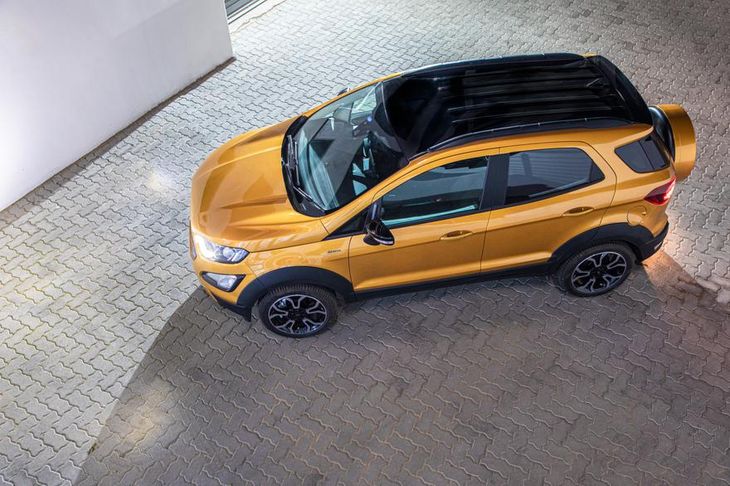
There’ll be more details and pricing when the Range Rover Velar hits SA showrooms in the second half of 2022.
The Hyundai Ioniq 5 EV has been announced as the 2022 World Car of the Year!
The winners of the World Car of the Year competition has been announced at the 2022 New York International Motor Show.
Hyundai’s Ioniq 5 electric vehicle scooped not one but three awards including the World Car of the Year, World Electric Vehicle of the Year and the World Car Design category.
The Ioniq 5 bested the Kia EV6 and Ford Mustang Mach E to take the overall win. In the World Electric Vehicle of the Year, the Ioniq 5 pipped the Audi e-tron GT and the Mercedes-Benz EQS to take top honours. The Audi e-tron GT and Kia EV6 were no match for the Ioniq 5 in the Word Car Design category.
Other category winners include the Mercedes-EQS in the World Luxury Car category and the Toyota Yaris Cross claiming the World Urban Car category.
“We are truly honoured to receive these prestigious awards, which recognize the talent and hard work of all our people and business partners at Hyundai Motor Company,” said Jaehoon Chang, President and CEO of Hyundai Motor Company.
The competition’s format sees a jury of 102 automotive journalists from 33 countries select their finalists via a secret ballot. Our very own Hannes Oosthuizen is one such judge.
Refreshed Renault Oroch Bakkie Debuts with Turbo Power
An updated version of the Renault Oroch baby bakkie has been revealed in South America, complete with the option of a turbocharged petrol engine. Here’s what we know…
Renault has unwrapped a refreshed version of its Oroch in Brazil, handing its Duster-based bakkie – which has long been in the planning for a South African introduction – updated exterior styling, more interior technology and the option of a turbocharged engine.
As before, the baby double-cab bakkie is unibody in construction, featuring MacPherson struts up front and a multilink suspension arrangement at the rear. The wheelbase is unchanged at 2 829 mm, while the load bay measures 1 175 mm wide and 1 350 mm deep. The Oroch’s load capacity is 680 kg.
The 89 kW/159 Nm naturally aspirated 1.6-litre petrol is carried over to the base and mid-tier models, though gains a new six-speed manual transmission which Renault claims improves acceleration.
The refreshed Oroch drops the Duster moniker from its name.
The flagship derivative, meanwhile, upgrades to a turbocharged 1.3-litre petrol engine, here generating 125 kW and 270 Nm (the latter between 1 600 and 3 750 rpm). This Spanish-built powerplant is, of course, the unit developed by the Renault-Nissan-Mitsubishi Alliance in partnership with Daimler and here drives the front axle through a continuously variable transmission (CVT). Thanks to forced induction, the top-spec version of the updated Oroch is able to complete the 0-100 km/h sprint in a claimed 9.8 seconds before running out of puff at 189 km/h.
Renault describes the cabin as “completely new”, featuring a redesigned dashboard (boasting “greater perceived quality”) and upgraded seat finishes. The instrument panel gains a centrally sited digital speedometer, while the steering wheel is also new, with a brushed finish and backlit buttons.
Mid- and top-spec versions furthermore upgrade to an 8-inch touchscreen system with wireless connectivity to smartphones through Android Auto and Apple CarPlay. They also receive electrically adjustable side mirrors and rear parking sensors.
Will the Renault Oroch bakkie come to South Africa?
The double-cab Oroch is based on the original Duster rather than the latest generation of the SUV.
Renault South Africa has been endeavouring to bring the Duster Oroch bakkie to local shores since at least 2016. According to Renault SA, the latest information is that the Oroch is still “in the planning” for a local introduction in the first quarter of 2023.
While that’s by no means a confirmation – and it’s a line we’ve heard a number of times over the past few years – it at least suggests the company remains committed to the Oroch despite having earlier thrown in the towel on the larger (Navara-based) Alaskan.
When pushed for a little more detail, Renault SA told Cars.co.za it was aiming to bring in the double-cab version. The four-door Duster Oroch has been in production since 2015. In 2020, the single-cab Dacia Duster Pick-Up 4×4 was launched in Romania, based on the current-generation Duster.
By contrast, the double-cab Oroch offered in South American nations such as Brazil is based on the first-generation Duster. Of course, the main stumbling block to the Duster-based bakkie’s arrival on local shores is the distinct lack of global demand for a right-hand-drive version. Other than South Africa, the only Renault division to make any sort of public appeal for right-hand-drive development is the Boulogne-Billancourt-based automaker’s distributor in Australia.
Should the Oroch finally make its way onto South African roads (be it with four doors or two), it would provide a desperately needed alternative to the Nissan NP200, which has had the small-bakkie segment all to itself since the local demise of the likes of the Chevrolet Utility, Fiat Strada and Ford Bantam. We can only hope 2023 will be the year Renault SA finally gets its way…
Could your Hilux park like a Yaris?
All double-cab bakkies have a flaw, but it’s one that could easily be remedied…
The “luxury” double-cab has become South Africa’s family vehicle of choice. Evidence supporting this statement is abundant – the Toyota Hilux continues to be the local market’s most popular vehicle.
With the disappearance of traditional sedans and hatchbacks, the double-cab bakkie is now a tremendously popular urban family vehicle. Which, to be honest, is not what it was ever designed to be.
Trace the origin story of the Hilux – those first solid-front-axle double cabs were all about getting work crews to inhospitable locations; they were most certainly NOT meant to serve in school lift clubs. Suffice to say family-use demands have shaped the specifications of South African bakkies, but several foundational issues remain.
The Volkswagen Amarok demonstrated that passenger-car switchgear and cabin design could create a more liveable interior. The Wolfsburg-based brand also championed more intelligent automatic transmissions for greater driving comfort in urban environments. Even the most creative and colourful descriptions fail to capture the awfulness of those 1st-generation 4-speed automatic double-cab bakkie transmissions.
This is what bakkies were engineered to do, but few of them seem to venture far from the tarmac these days.
The problem with a bakkie as a passenger vehicle
Select any of the latest double-cab bakkies in our market and you’ll find reasonable seat comfort, comprehensive safety systems and automatic transmissions that do their utmost to shift gears in such a way that it won’t test your neck strength. But there are two noteworthy problems that all bakkie engineering teams have failed to address: parking and understeer.
Bakkies are growing larger with each generation. The original Toyota double-cab was 370 mm shorter than the current four-door Hilux. Parking bays and urban infrastructure haven’t changed much since the 1980s. And all the parking sensors and field-of-view cameras in the world don’t help trim a gargantuan turning circle.
Double-cab bakkies have become longer and now do most of their mileage in cities, although they remain designed for work and operating off-road. This makes them genuinely awful vehicles to navigate around any parking infrastructure. But there is a solution… and it’s one that could make double-cab bakkies a lot easier to drive and park around town – and safer (at freeway speeds).
A rear-axle steering system doing its job to “virtually'”shorten the new S-Class’ wheelbase.
The technology is proven – and hardly new
Mercedes-Benz might have failed dramatically with its X-Class bakkie, but the S-Class grand saloon remains the benchmark luxury car, not least a technology showcase for the entire automotive industry. And, as with all other vehicles, the S-Class has grown larger with each generation – which has increased the likelihood of bumper scuffs and embarrassing multi-turn parking manoeuvres for wealthy customers who, as we know, are incredibly image-conscious.
Aware that its S-Class customers demand not to be embarrassed by low-speed driving issues, Mercedes-Benz engineers have equipped the Three-pointed Star’s halo model with 4-wheel steering. It is hardly a new technology. Japanese car companies offered it as long ago as the 1980s.
In sympathy with customers trying to survive the parkers’ hell that is Paris, Renault added 4-wheel steering to its Laguna back in 2008. That technology would come to South Africa with the very beautiful – and rare – Laguna Coupe, in 2010.
Honda had rear-wheel steering on its 1988-model-year Prelude.
It makes so much sense on a large vehicle
Broadly speaking, there was never much of a need for four-wheel-steering in a country with abundant parking. But nudging a Mercedes-Benz A-Class into a Sandton City or V&A Waterfront parking bay is unlikely to cause as much anxiety as doing the same with a double-cab bakkie.
As more urban families home a bakkie, they have little choice but to become reacquainted with the art of 3-point-turning. Four-wheel steering might be superfluous and cost-prohibitive for South African compact crossover and hatchback buyers, where some skill and anticipation will solve most parking issues. But even the most confident driver has been humbled into multiturn choreography by a double-cab.
Adding four-wheel steering would dramatically reduce a double cab’s turning circle – a frustration most owners have to tolerate daily. It would make these large family vehicles much less taxing to drive, considering their owners’ daily routines.
Some steering at the rear has a huge influence
To what extent could four-wheel steering reduce a bakkie’s turning circle? The benchmark figure is 22%. And that’s a lot if you consider the tiny margins for error when you need to park in minuscule parking bays and on congested streets.
Beyond the low-speed manoeuvring benefits, four-wheel steering can make vehicles more stable at higher speeds. This is especially true when executing an emergency lane change – a driving intervention that is often the undoing of any double-cab design.
Bakkies have inherently poor weight distribution, making them prone to severe understeer. Where a balanced performance car or hot hatchback has close to 50/50 weight distribution, most double cabs are very unbalanced, with between 60-70% of their weight on the front axle. And that means they’re prone to exhibit pretty severe understeer when you pile into corners in a hurry.
Four-wheel steering can angle the rear wheels in the same direction as the steering wheel is turning and, in doing so, reduce understeer.
If four-wheel steering offers significant driving benefits, why hasn’t it become an option on double-cab bakkies? That’s a good question, because the system isn’t that complicated.
GMC’s huge American bakkies, showed what can be done with four-wheel steering.
What would you pay to have your Hilux turn like a Yaris?
In 2002, GM introduced Quadrasteer on its large bakkies. The system employed active tie-in rods to counter-angle the rear wheels by up to 15-degrees at low speeds, dramatically reducing the turning circle. By 2005, it was discontinued.
And why? The Quadrasteer option added 136 kg of weight, but, more importantly, it was enormously expensive. In South African equivalent pricing, Quadrasteer was a R56 000 option in 2002, which would be R160 000 in 2022 money.
GM eventually discounted Quadrasteer to R10 000 in its final production year (2005), which inflates to R28 000 in today’s money. And for the sake of argument, that price is an average option or trim upgrade on most double-cab bakkies.
Fail in 2002… but a win in 2022?
The weight penalty and prohibitive cost were tabled as issues that forced GM to kill its Quadrasteer option. But in truth, bakkie customers don’t have a problem with either weight or cost when it relates to optional extras.
If you scrutinise the specification sheet and options list of any new double-cab range, you will invariably find a variety of marginally pointless extras, all of which add cost and weight. And demand for double-cabs and all their associated accessories remain immense… with the average double-cab bakkie being a R700 000 vehicle, a theoretical R30 000 four-wheel-steering option would be very fairly priced.
Imagine a new Hilux with the turning circle and low-speed driving agility of a Yaris. Now that, rather than silly graphics, nudge bars, roller shutters etc (which can’t improve the double-cab driving experience), would be an extra worth having!
Refreshed 2023 Hyundai Palisade Announced
Meet the updated 2023 Hyundai Palisade, which was revealed at the 2022 New York International Auto Show.
What you see here is the facelifted 2023 Hyundai Palisade and you’re probably thinking the SA market has only just received this model (Sept 2021), so why a facelift so soon?
Well, the Palisade has actually been on sale in overseas markets since 2018, so by car standards, its due for an update. The changes are substantial, both inside and out.
Starting off with the exterior, the updated Palisade gains a new visual look with design elements taken from the brand’s current style guide. This means a big and bold grille on the nose, with some revised headlamps and daytime running lights. There’s a new colour on offer, as well as new 20-inch alloy wheels.
Inside, the cabin gets a nip and tuck, with updated technology, improved seating arrangements and enhancements to the assisted driving tech. The infotainment screen is now 12 inches in size, up from 10.25 inches and there are redesigned climate control vents. There’s a more modern 4-spoke steering wheel, new dashboard and new gauges. A digital rearview mirror with a feed from the rear passengers makes its debut.
Hyundai says the driver’s seat now features expandable air chambers for additional comfort, while the third-row passengers get heated seats. The second row gets ventilated seats, improved headrests as well as new armrests.
The technology is worth a mention, and small things like more powerful USB ports and wireless charging as well as an in-car wifi hotspot will find favour among passengers.
There are now 9 airbags, enhanced forward collision avoidance and highway driving assistance, with remote smart parking assist making its debut.
As far as engines are concered, the US market retains its 3.8-litre V6 petrol which has outputs of 217 kW and 355 Nm, and this reaches the wheels via an 8-speed automatic gearbox. There’s no mention of the 2.2-litre turbocharged diesel powertrain that is currently on duty in the South African market.