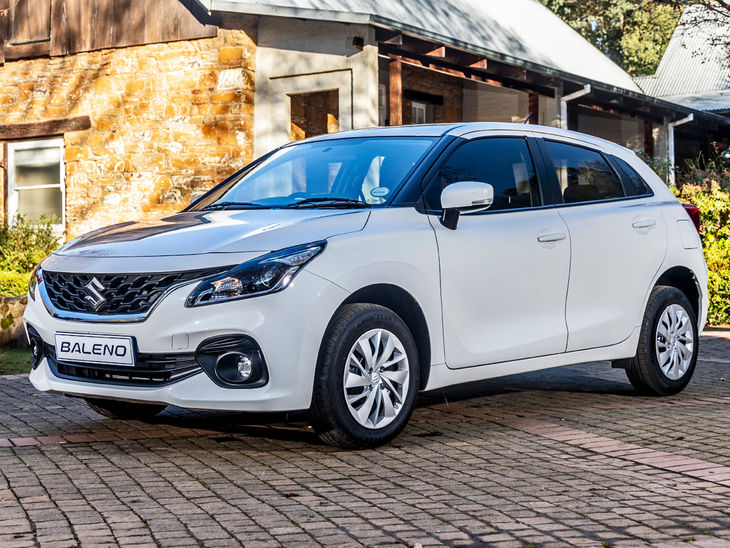
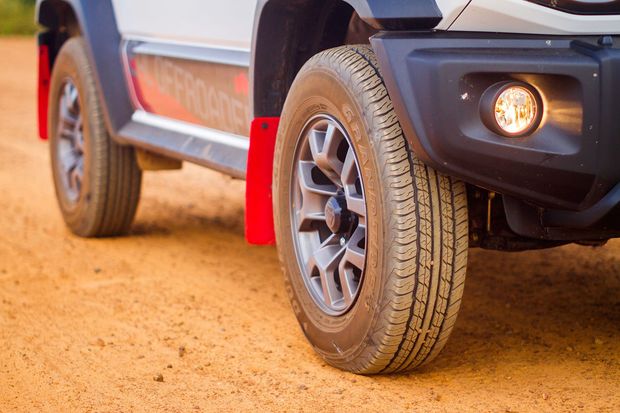
The facelifted Suzuki Baleno has touched down in South Africa, heading to dealers just as its Toyota twin – the Starlet – hits the market. And the starting price is slightly lower than before…
Suzuki Auto South Africa has revealed pricing for its facelifted Baleno hatchback range, which grows from three derivatives to four. The announcement comes mere days after the closely related updated Toyota Starlet went on sale locally.
As a reminder, the Starlet (which is known as the Glanza in India) is effectively a rebadged Baleno, and rolls off the same Maruti Suzuki assembly line in India. Since its introduction in SA, the Starlet has outsold the model on which it’s based by quite some margin.
Suzuki will no doubt be hoping to claw back a little segment share with its refreshed Baleno, dropping the range’s starting price some R2 000 despite adding extra standard equipment and a larger engine (the GLX derivatives, meanwhile, are R5 000 and R10 000 more expensive than before, respectively). That drops the starting price to R225 900, or a mere R300 below that of its twin (for the record, the five-strong Starlet range runs from R226 200 to R313 300).
Like the Starlet, the Baleno upgrades from the old naturally aspirated 1.4-litre, four-cylinder petrol engine to a 1.5-litre unit that does duty in the likes of the Vitara Brezza and Ertiga. This K15B powerplant generates 77 kW and 138 Nm (respective increases of 9 kW and 8 Nm), delivered to the front axle via either a five-speed manual gearbox (rated at 5.4 L/100 km) or a four-speed automatic transmission (sipping at a claimed 5.7 L/100 km).
As before, the Baleno range includes two trim levels (as opposed to the Starlet’s three) – GL and GLX – though the aforementioned automatic cog-swapper is now also available in conjunction with the entry-level grade.
A look at the refreshed Suzuki Baleno’s specifications
Suzuki Auto SA says it has added “even more” equipment to both the GL and GLX trim levels. The GL, for example, gains a 7-inch touchscreen infotainment system, Apple CarPlay and Android Auto, a reversing camera (with rear parking sensors), a trio of USB ports, automatic climate control (with rear air vents), cruise control, a leather-trimmed steering wheel and LED front foglamps.
The GLX spec sheet, meanwhile, includes a digital head-up display, full 360-degree view camera (featuring four external cameras), a 9-inch touchscreen infotainment system, automatic LED projector headlamps, LED daytime running lights, a 2-inch full-colour vehicle information display, keyless entry (with push-button start), an electrochromatic rearview mirror and 16-inch alloy wheels.
Suzuki Auto SA says it will release more details at the media launch at the end of the first week of June 2022.
How much does the facelifted Suzuki Baleno cost in South Africa?
Baleno 1.5 GL – R225 900
Baleno 1.5 GL AT – R245 900
Baleno 1.5 GLX – R275 900
Baleno 1.5 GLX AT – R295 900
The refreshed Baleno ships standard with Suzuki’s 5-year/200 000 km “promotional” warranty as well as a 4-year/60 000 km service plan (with intervals of 15 000 km) and an anti-corrosion warranty of 6 years (unlimited kilometres).
Podcast: Can you road trip across South Africa in an EV?
South Africans love to travel by road. Many of us have fond memories of family trips to holiday destinations, or to visit family across the country. But with the motoring world increasingly heading over to electrification, will we still be able to travel across our beautiful country in our electric vehicles?
Winstone Jordaan, MD of Gridcars, along with his team, has been spearheading the electrification of South Africa’s road network. If you’ve seen a fast charger somewhere along the N1, N2, N3 or N4, it’s most likely a GridCars charger
We were delighted to be joined by Winstone in our Cape Town podcast studio for a lengthy chat, hosted by our video guy Ciro De Siena.
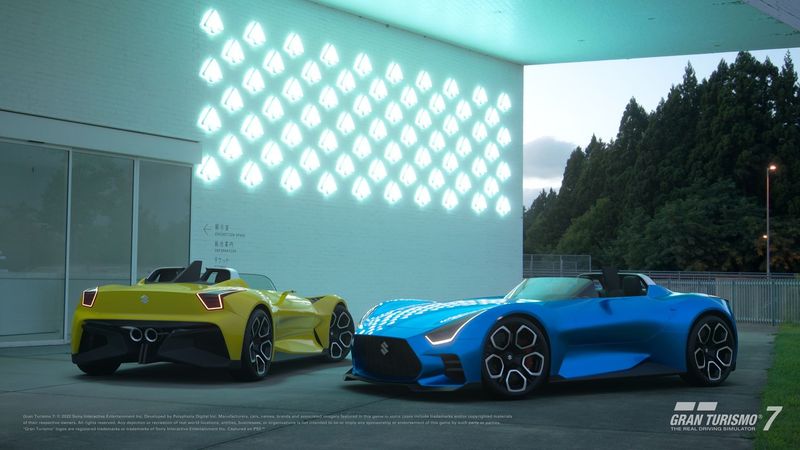
Suzuki has considerable experience in both cars and bikes, and while this concept you see here is for the virtual world, we know that the brand is capable of making such a vehicle. This is the Suzuki Vision Gran Turismo Concept!
The Gran Turismo video game franchise has substantial marketing power. So much so, car companies are designing vehicles specifically for the Playstation title.
Joining the likes of Jaguar and Mazda, and many more over the years, comes the Suzuki Vision Gran Turismo concept. It’s an all-wheel-drive roadster that blends the high-revving happiness of the Hayabusa motorbike engine with a trio of electric motors.
Visually, it looks like a Suzuki Swift Sport without a roof, and is a strict two-seater. Suzuki’s designers said they were inspired by the 90’s era Suzuki Cappuccino, which does explain the cute proportions somewhat.
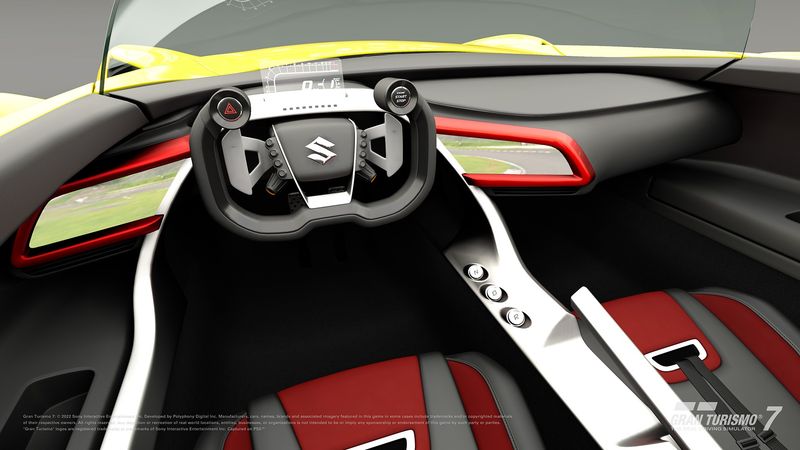
Inside, there’s a basic layout with a sporty yoke steering wheel and gearshift paddles and he side mirrors have been replaced by cameras.
The real treat is the engine and while it’s virtual and sadly not likely to be seen in real life, it should please Gran Turismo players. There’s a mid-mounted 1.3-litre 4-cylinder petrol engine from the Hayabusa and thanks to 3 electric motors (two at the front, one at the rear), a total combined output of 318 kW and 610 Nm is on offer. Paired with a kerb weight of just 970 kg, the Suzuki Vision Gran Turismo should be pretty fast.
Sadly, this fun-looking concept is to remain in the digital realm and is being rolled out in the latest round of updates for the Sony Playstation 5 title. We hope that Suzuki does take the plunge and make a real one, just for fun! Please, Suzuki, just do it…
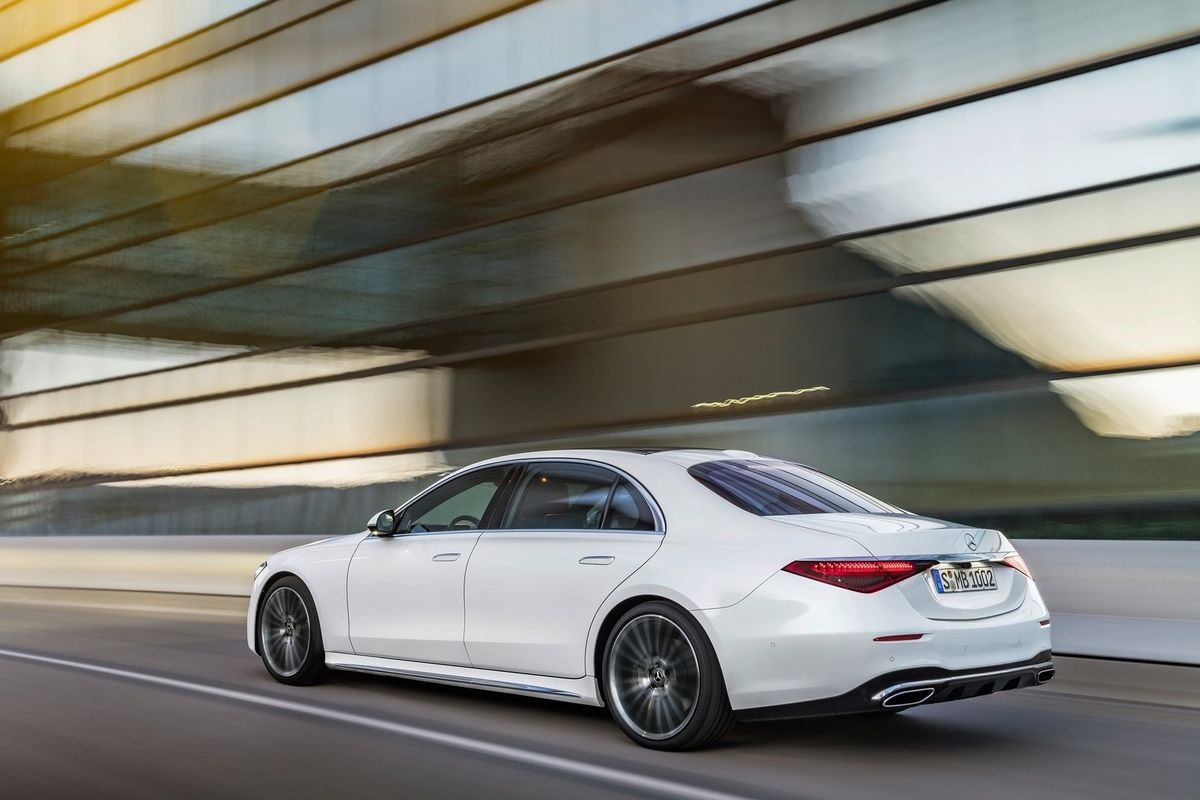
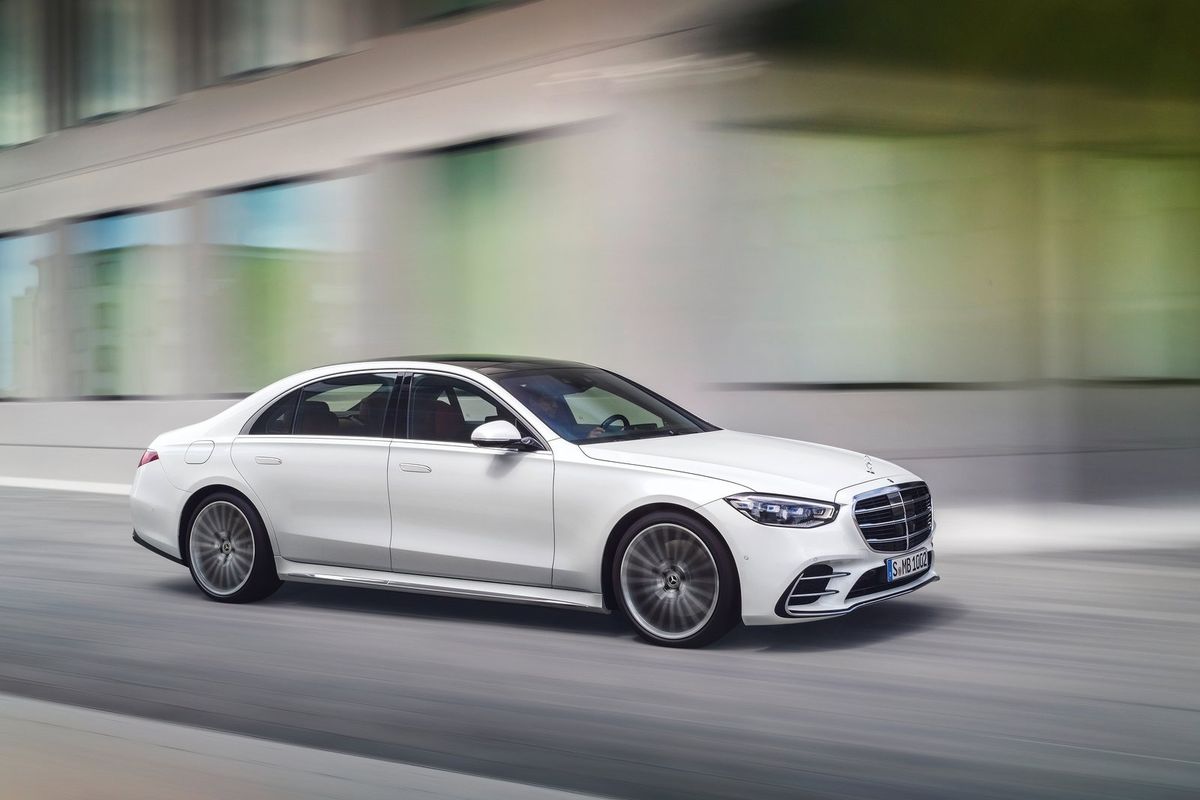
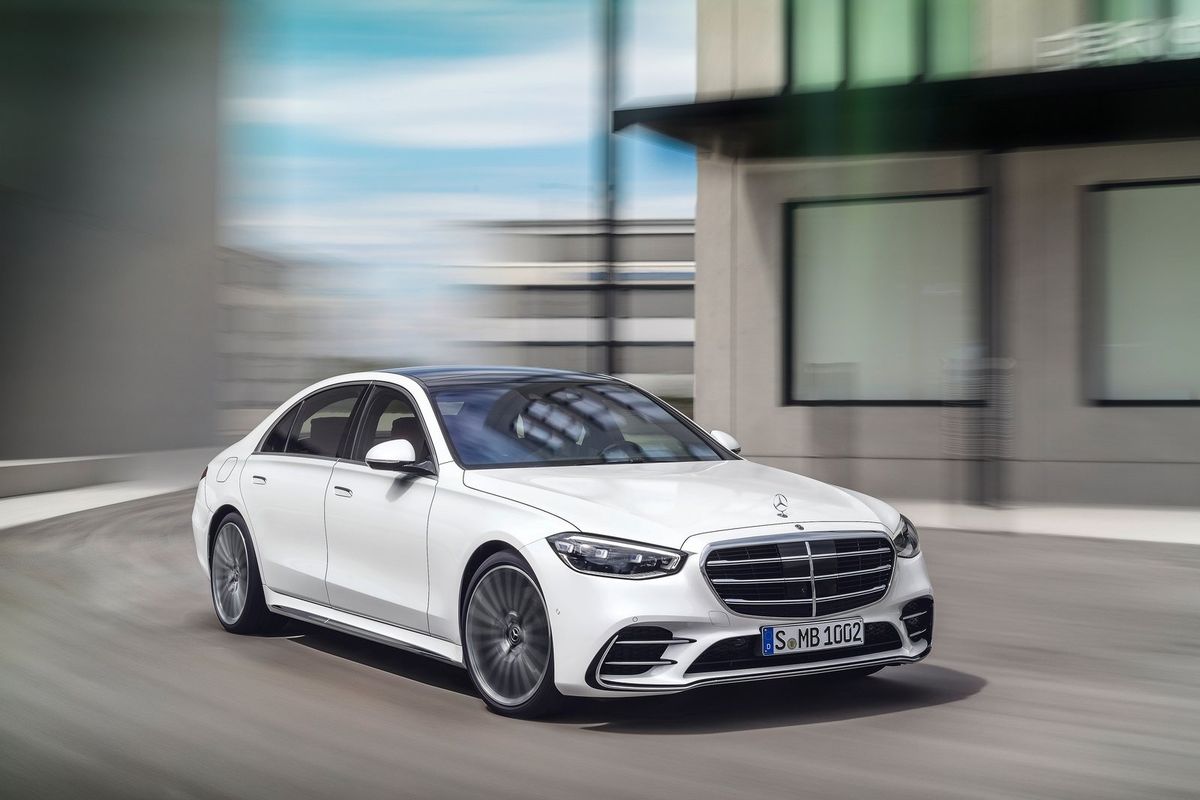
When it comes to the ultimate expression of luxury motoring, very few cars can hold a candle to the Mercedes-Benz S-Class. The Three-pointed Star’s W223-generation first-class sedan, which was unveiled almost two years ago, has now been launched in the Republic. Has it been worth the wait? Read on…
The arrival of a brand-new Mercedes-Benz S-Class is not something that occurs very often, but when it does, you absolutely should take notice. See, the S-Class is the flagship of the Three-Pointed Star’s passenger-car lineup and, therefore, it’s likely at the very top of its segment and certainly a showcase of the Sindelfingen-based brand’s most cutting-edge technology. If a user experience-, connectivity-, luxury- or safety technology is to debut, it’ll appear in the S-Class first.
You’re probably thinking that this 7th-generation S-Class isn’t that new and you’d be right. It was unveiled in 2020 and earmarked to arrive in Mzansi last year (2021), but yet another wave of the Covid-19 pandemic, allied with the motor industry-wide shortage of semiconductors, scuppered Mercedes-Benz South Africa plans. A few pre-ordered units have made already made their way to customers, however.
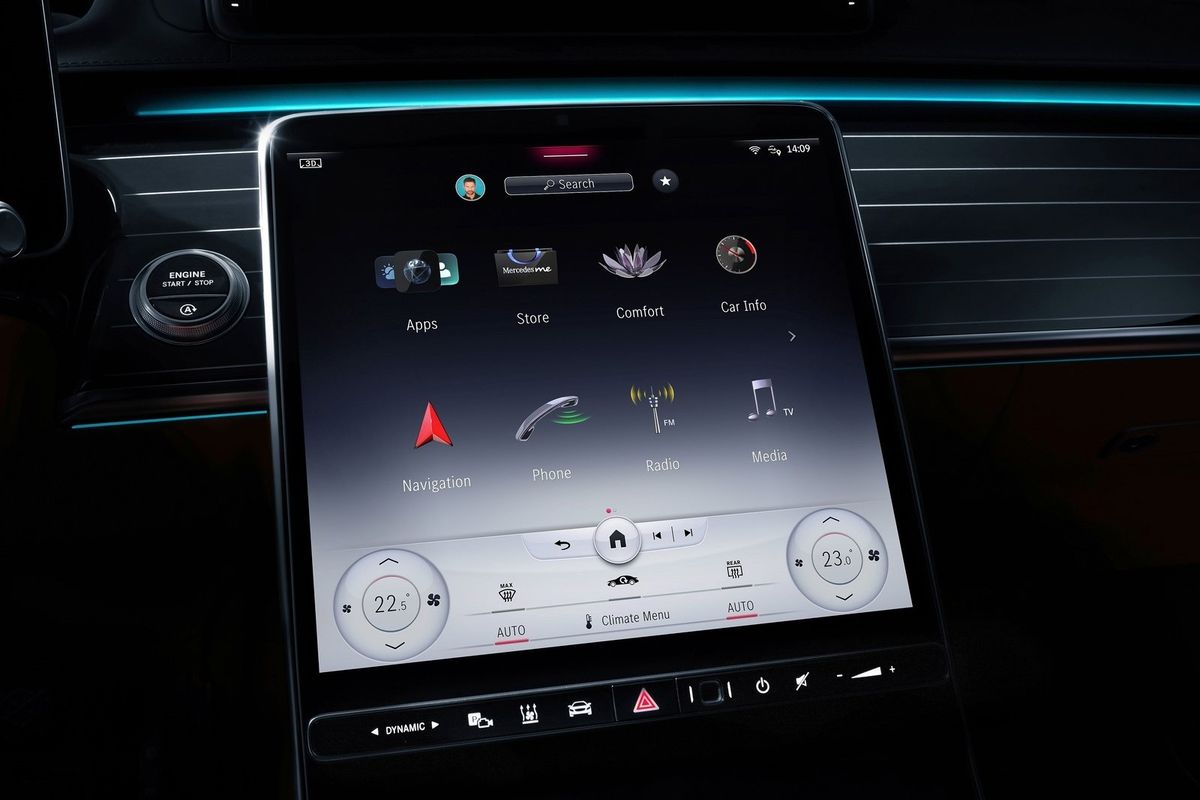
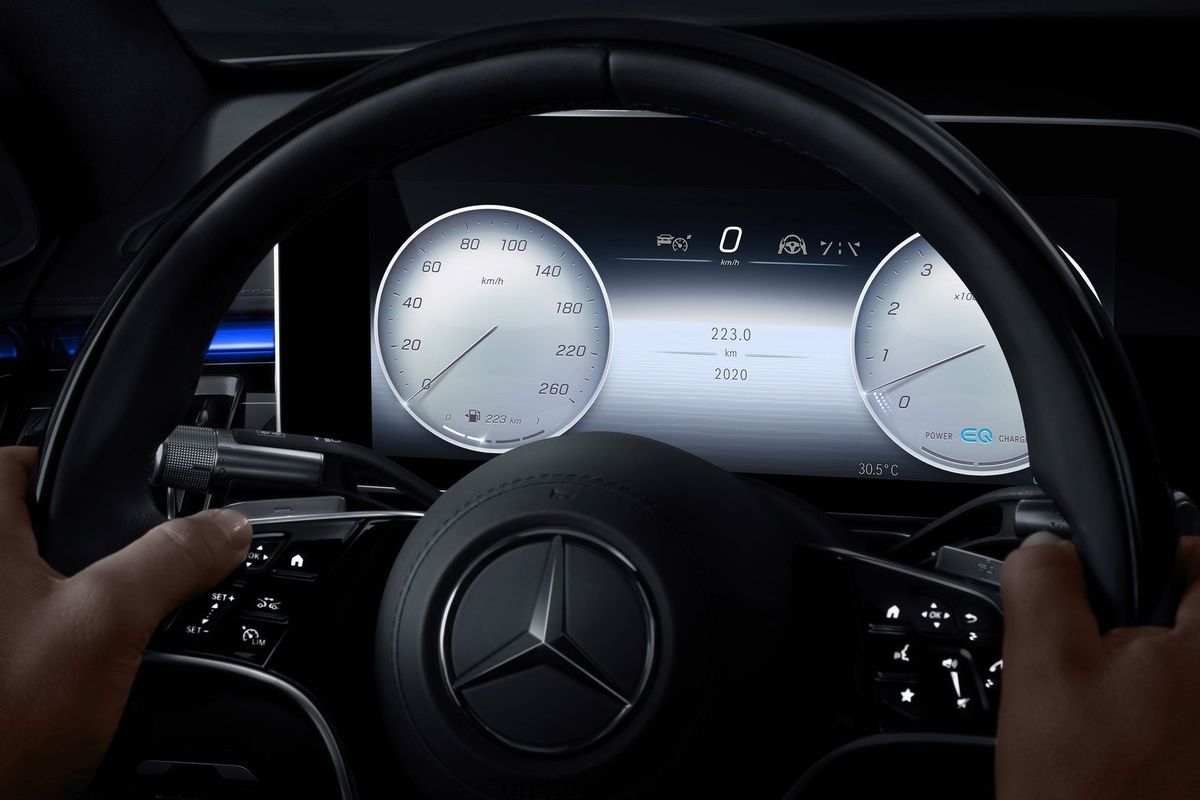
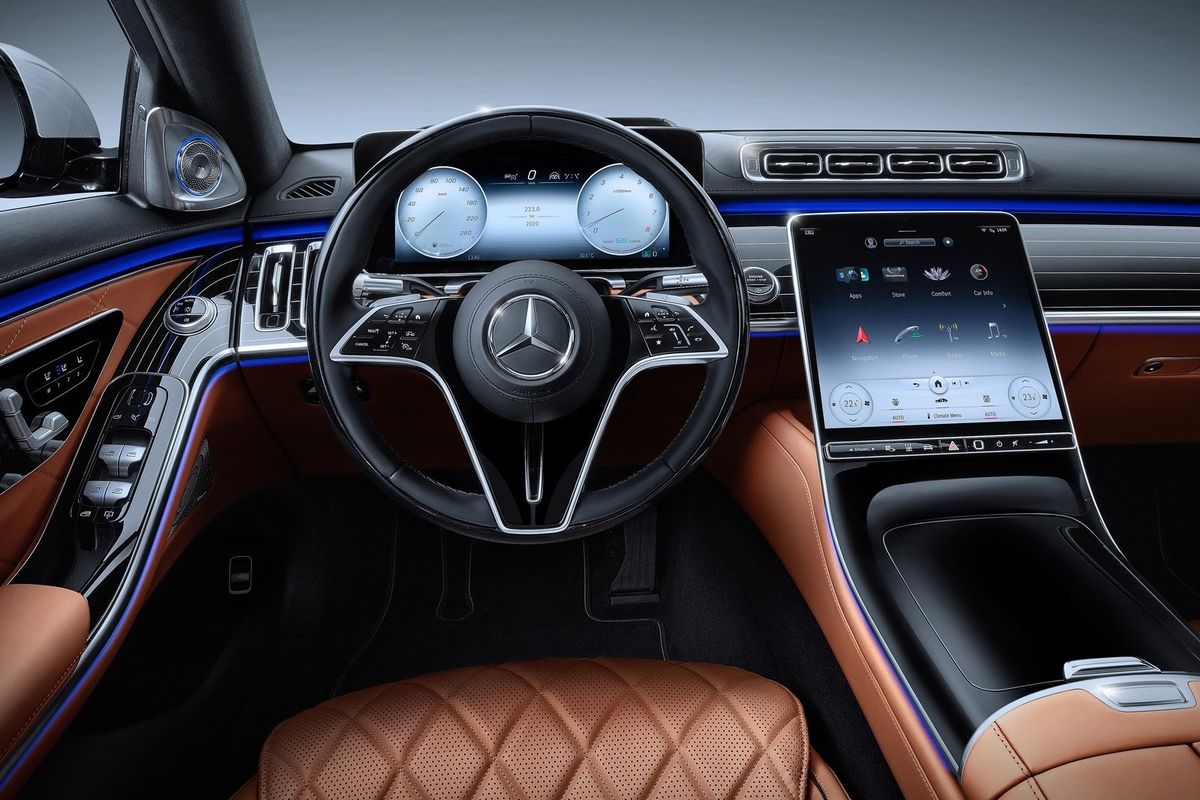
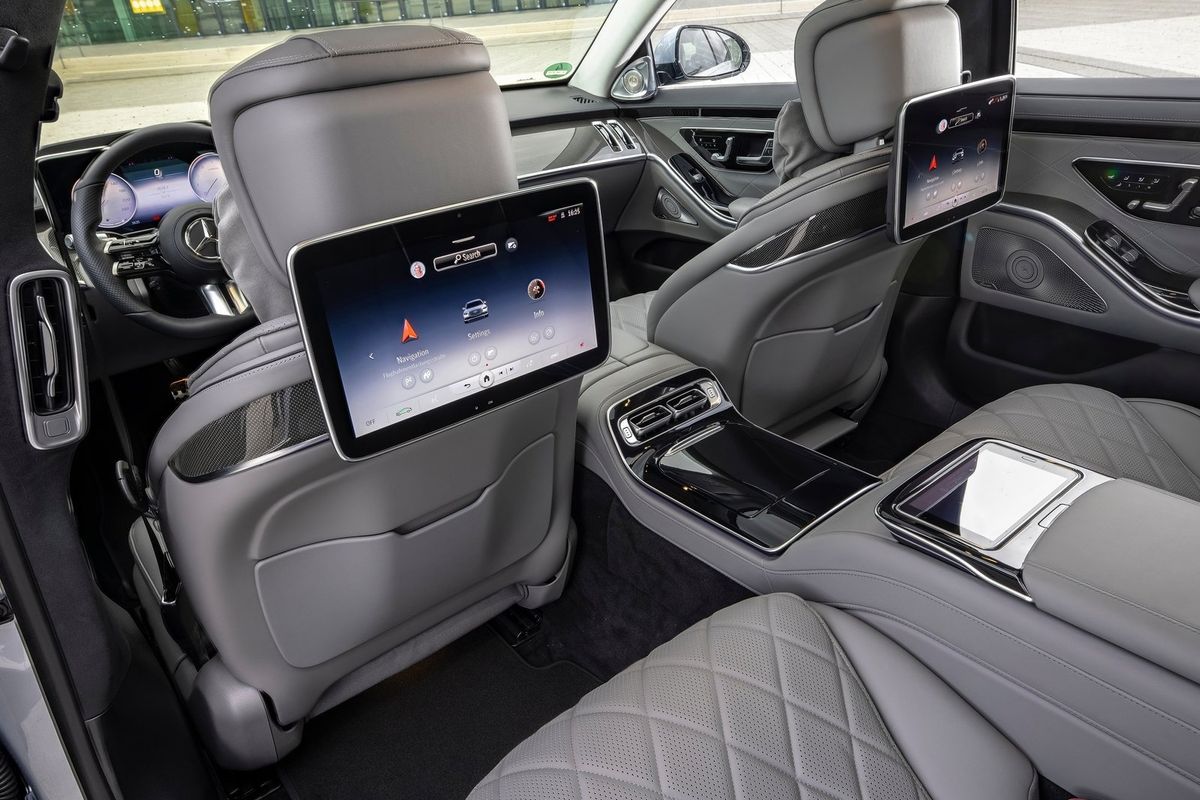
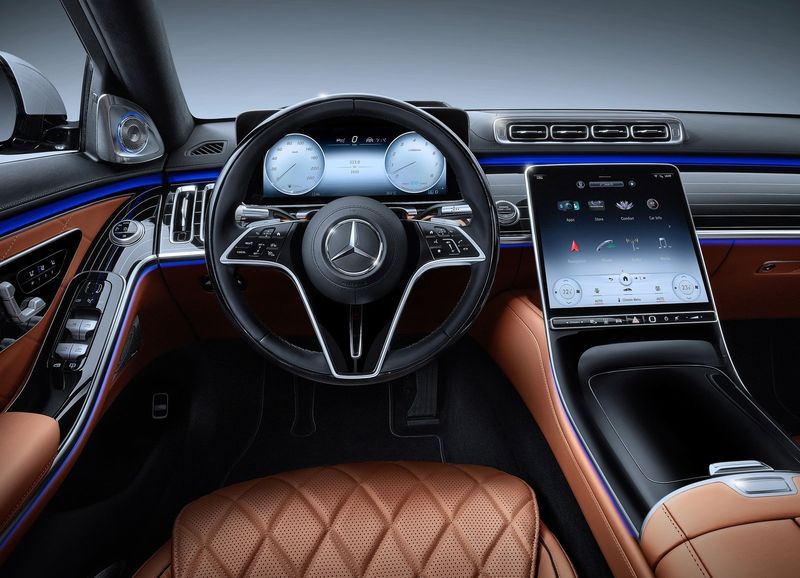
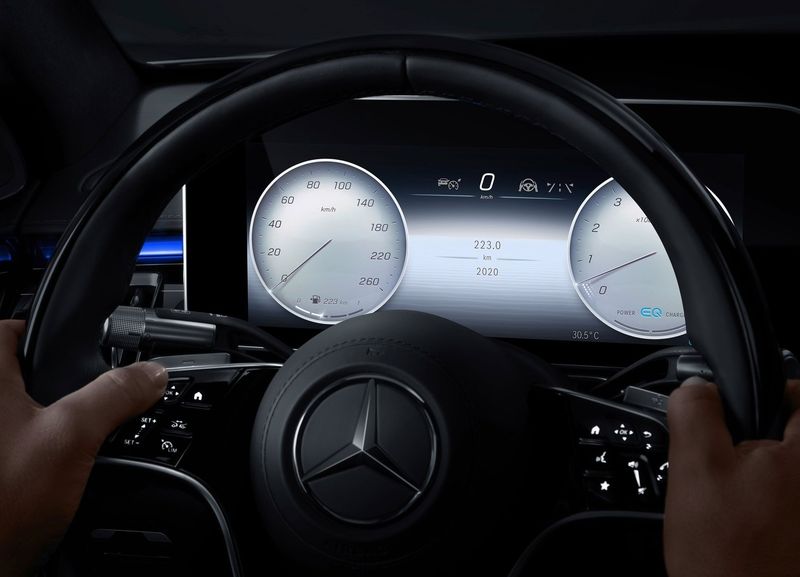
The S-Class’ large digital instrument panel and infotainment screen will get people talking.
S-Class line-up in SA
Now, in 2022, Mercedes-Benz SA has adjusted the S-Class line-up, with the S400d making way for an S350d, which is now the entry-point to the range, and introduced the Mercedes-Maybach portfolio, but more on that in a bit.
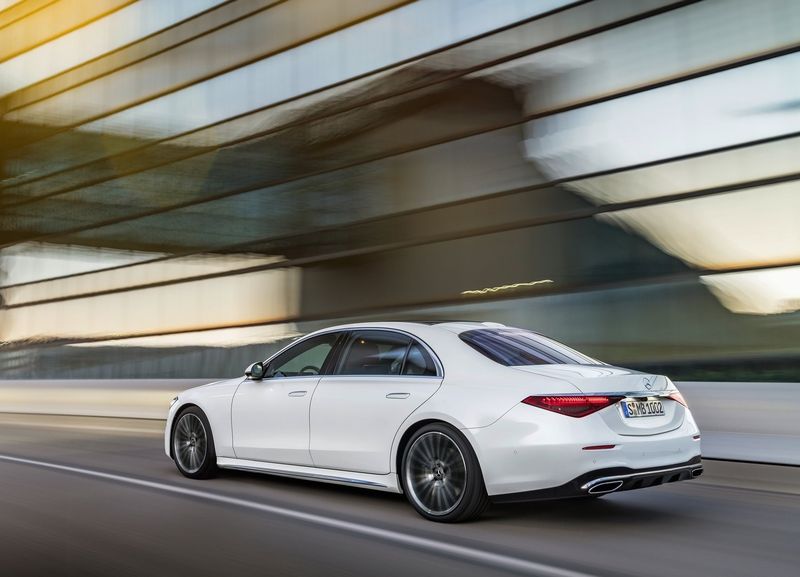
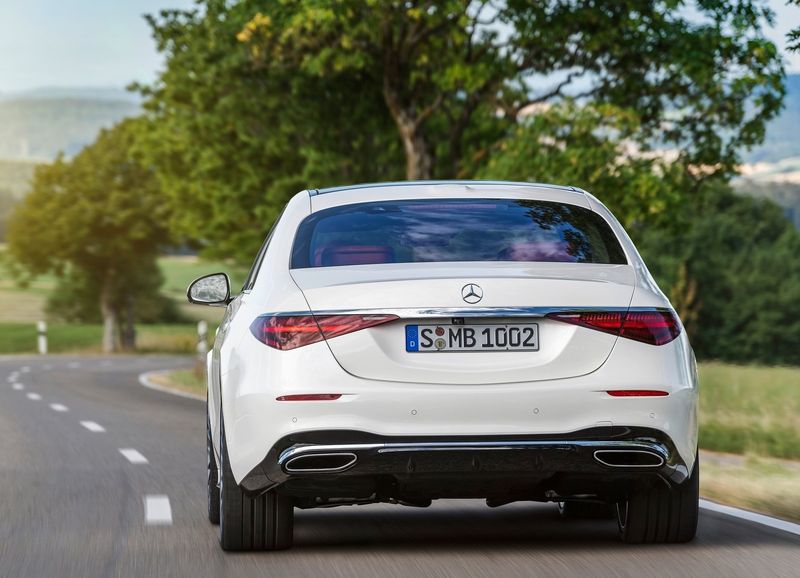
Unsurprisingly, the new S-Class is a behemoth. Its overall length stretches beyond 5 metres and, compared with the previous-generation model, the newcomer is longer, wider and higher.
The S-Class is available in S350d and S500 derivatives, with the former’s 3.0-litre 6-cylinder turbodiesel engine producing 210 kW and 600 Nm, while the latter’s 3.0-litre 6-cylinder turbopetrol motor develops 320 kW and 520 Nm. Both derivatives are rear-wheel driven and feature 9-speed automatic transmissions.
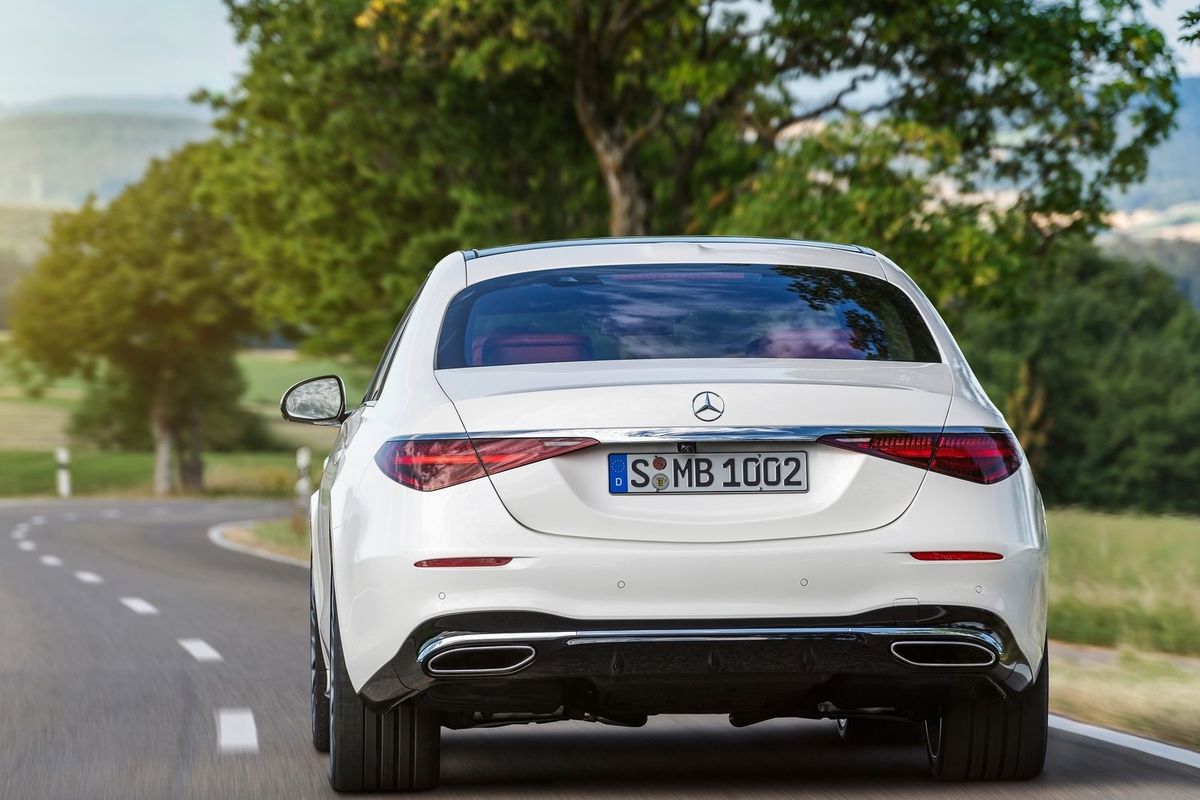
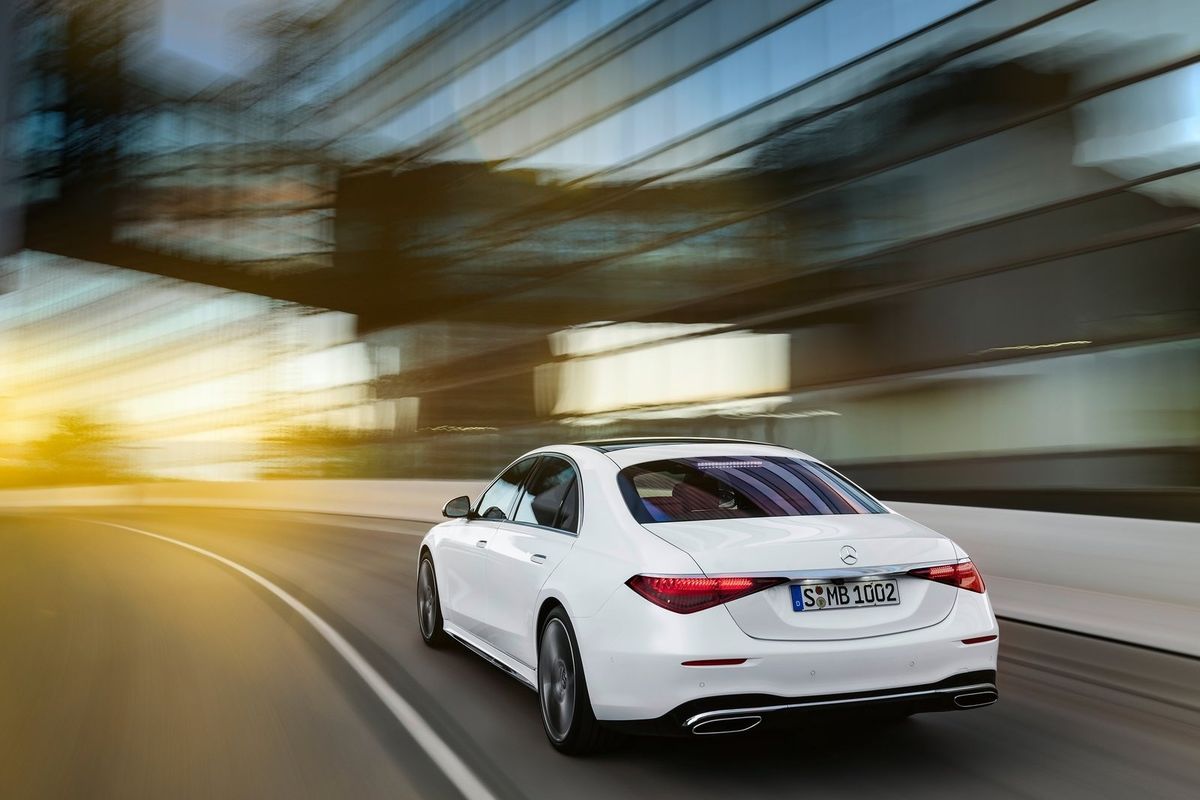
Conservative styling, but not without some interesting details.
What’s the new S-Class like to drive?
You’d be forgiven for assuming that something as large and heavy as a Mercedes-Benz S-Class would be ungainly to drive, but the stately Benz does a great job of hiding its bulk – and heft. The secret to the W223’s relative wieldiness is its revised Modular Rear Architecture which, combined with the wizardry of the adaptive air suspension setup, delivers a level of body control that beggars belief.
The “Big S” is happiest when thrusting its way along a freeway, but the manner in which it glides over the asphalt (of widely divergent grades of quality, because… South Africa) is sensational. The clever steering setup means that the saloon is wholly unintimidating to drive; you won’t feel as if you’re piloting a container ship through the Suez Canal! The driving experience is whisper-quiet; abundant sound insulation and superb refinement ensure the cabin remains relaxingly hushed.
A driver’s vantage doesn’t get more futuristic and luxurious than this!
Even if you make the S350d’s turbodiesel engine work a little harder (by merely leaning on the Benz’s long pedal), that typical diesel-motor clatter that you’d expect to hear is virtually imperceptible. It’s a remarkable feat of NVH suppression.
There is, of course, an even better way to experience the S-Class and that’s by lounging on the cossetting rear bench while letting someone chauffeur you to your destination. Within a few minutes of getting comfy, and playing with all the toys, you’ll realise that driving is actually a chore. If you aspire to experience the finest things in life (heck, who doesn’t?), don’t daydream about being able to afford an S-Class… Aim to acquire the ‘Benz and have your own personal driver.
The S-Class is a joy to drive, but rear passengers will be more than happy to be chauffeured.
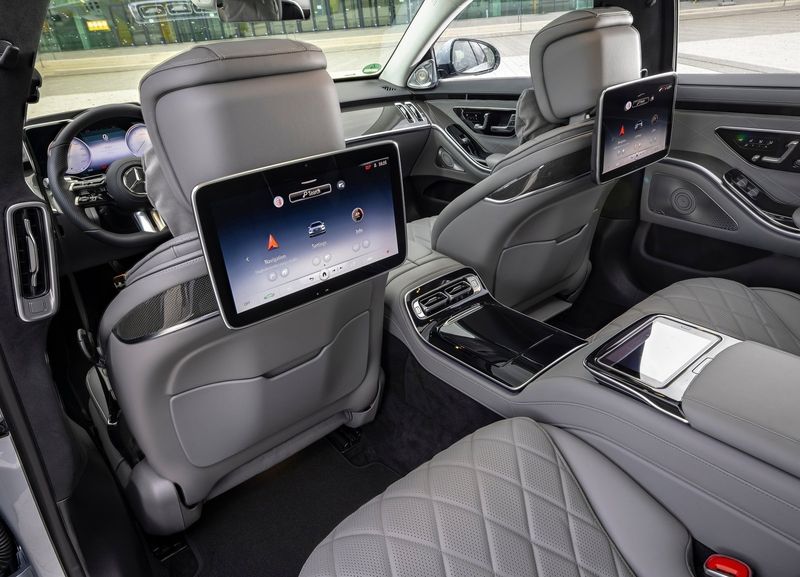
The serenity of sitting in the back of the S-Class (with its privacy blinds drawn) and receiving a heated massage while you watch your favourite TV show on the in-car screen is unparalleled – if that’s not the most relaxing form of on-road transport, then what is? Has your cup of coffee gone cold? Place it in the holder, which will warm it up for you. Has your bottle of imported sparkling water lost its chill? The Benz can cool it for you too.
The return of Mercedes-Maybach
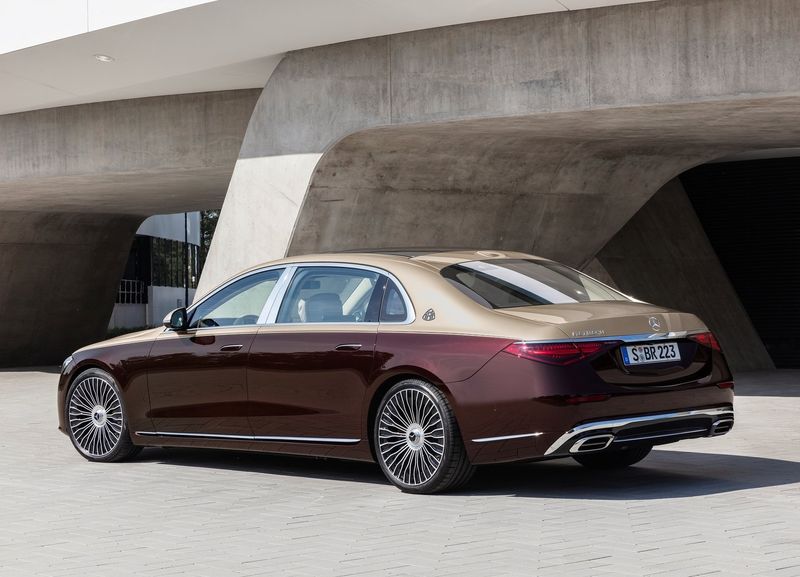
The real reason we spent time with Mercedes-Benz SA this week was to get a preview of the all-new Mercedes-Maybach. There are two derivatives: the 4.0-litre V8 turbo-powered S580 4Matic (370 kW/700 Nm) and the 6.0-litre V12-powered S680 4Matic (450 kW/900 Nm). The initial stock has been snapped up – in fact, the Maybach sedan range is sold out for 2022, but there will be more vehicles coming soon and a demo unit is available for prospective buyers to experience.
So, what is a Mercedes-Maybach? Well, if the standard S-Class isn’t quite opulent enough to satisfy you, then the Maybach treatment promises ultra-luxury and prestige in abundance.
“Mercedes-Maybach is the quintessential luxury brand reflecting the impeccable craftsmanship and with that the superior exclusivity and finesse of its products,” says Mark Raine, co-CEO and Executive Director of Mercedes-Benz South Africa, “the new Mercedes-Maybach S-Class is synonymous with a one-of-a-kind ultimate luxury experience reserved for only a privileged chosen few.”
For a start, the Mercedes-Maybach S-Class boasts a longer wheelbase, with the additional 180mm resulting in even more legroom for the aft occupants. For the first time, the rear doors can be opened at the push of an interior button and passengers benefit from cool tech such as active noise cancellation, which neutralises outside noise to create an eerily-quiet cabin. Rear passengers get heated, cooled and massaging seats, which can recline flat (yes, they become beds).
The options list is obviously extensive. The Executive Rear Package features tray tables, more wood trim, as well as a champagne fridge with matching glasses. There are no fewer than 5 infotainment screens, as well as a removable tablet.
The Maybach range enhances the already comprehensive S-Class lineup.
How much does the new Mercedes-Benz S-Class range cost in SA?
Mercedes- Benz S350d
R2 330 000
Mercedes-Benz S500
R2 492 000
Mercedes-Maybach S580 4Matic
R3 507 000
Mercedes-Maybach S680 4Matic
R4 454 000
All S-Class derivatives come with a 2-year/unlimited km warranty and a 5-year/100 000 km maintenance plan.
Summary
During our short drive, the S-Class delivered refinement in spades.
Our very brief drive in the new Mercedes-Benz S-Class was tantalising indeed. A new vehicle that is as effortlessly sophisticated, lavishly equipped and technologically complex as this Benz’s does not cross our paths very often. Suffice to say we’ll need to spend much more time with the W223 to do a full review, but a quick scroll through the 2nd-generation MBUX infotainment system, for example, highlighted the interface’s ease of use and clear layout. Progress is inexorable!
However, the W223’s refined ride and serene cabin impressed us even more. Unless you’re considering a Bentley or Rolls-Royce, there’s no other first-class sedan that delivers such an exceptional blend of comfort, features and refinement.
We’re keen to spend more time with the all-new Mercedes-Benz S-Class to discover all of its technology, especially the plethora of highly-advanced semi-autonomous driving systems. Watch this space.
Mercedes-Benz to Kill Manual Gearbox Globally in 2023
Though you’ll struggle to find a new Mercedes-Benz sporting a manual gearbox in SA today, the option remains in some parts of the world. But that’ll change in 2023, when the firm officially pulls the plug on three-pedal cars…
Mercedes-Benz will officially phase out the manual gearbox in 2023, thereafter offering only automatic transmissions globally.
Although the Stuttgart-based firm’s local passenger-car line-up is already devoid of three-pedal models, seven of the derivatives in the latest 14-strong Vito range still ship with six-speed manual cog-swappers. The since-discontinued Mercedes-Benz X-Class, meanwhile, was also available in South Africa with a clutch pedal.
A Mercedes-Benz spokesperson confirmed to German publication Automobilewoche the company would phase out manual models globally next year.
“With increasing electrification, we see that customer demand is shifting towards electric mobility components, batteries and [partial] electric drive systems,” the spokesman told Automobilewoche, adding Mercedes-Benz would “gradually no longer offer manual transmissions”.
In some European markets, certain derivatives in the A-Class, B-Class and CLA line-ups can still be ordered with three pedals, while only automatic Mercedes-Benz models have been available in the United States since 2011.
Back in October 2020, Mercedes-Benz’s global research and development chief made it clear the end of the manual gearbox was near, saying such transmissions would be “eliminated”. Now, that time has just about arrived…
Rethink your vehicle type to counter record fuel costs
In a time of record fuel prices, are you driving the right kind of vehicle? When you’re looking to conserve as much fuel as possible, the shape and stature of your ride really matter.
Government levies its favourite kind of tax on fuel. Why? Because as long as there are motor vehicles travelling on our roads, fuel-tax revenue will top up the Treasury’s coffers. There is no way that you, the motorist, can’t avoid fuel tax.
Do you know that petrol and diesel prices have doubled in the past five years? Today, fuel prices are nightmarish… and they are about to get even worse. The brief respite government offered (with a softening of its fuel levy) will lapse in June.
Alarming? Without a doubt. If your vehicle is paid up, its associated costs (provided you are within the ownership shielding of a warranty and maintenance plan) are mostly fixed: insurance and licencing. But the price of the energy required to power that vehicle has escalated drastically.
Imagine if your car-loan instalments nearly doubled… You’d never tolerate that and probably trade in the vehicle for something much cheaper. But with fuel, you have to pay the mandated price. Unless you brew your own biodiesel, there is no possibility of using “more affordable” fuel.
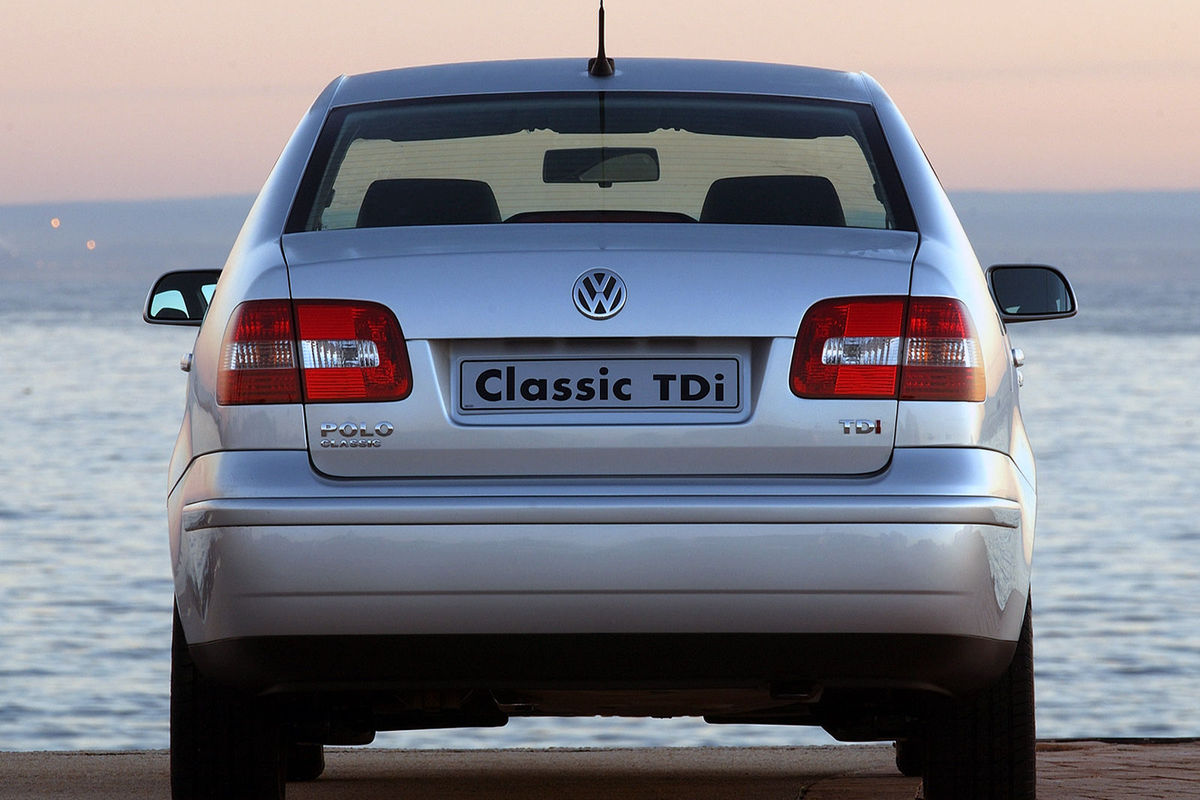
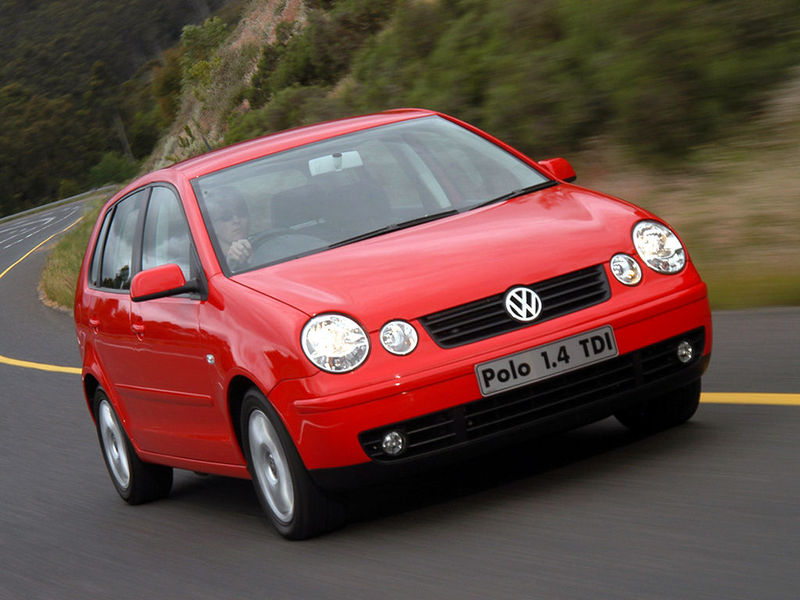
Not many modern compact cars could best a 4th-generation Polo TDi sedan in terms of real-world fuel consumption.
Affordable diesel economy has disappeared
Suffice to say there’s little you can do about escalating fuel prices. However, record fuel prices really ought to influence your thinking about the kind of vehicle you choose to drive…
Middle- and lower-income drivers are most exposed to fuel-price pain… and there aren’t all that many highly fuel-efficient cars in the new-vehicle market that are offered below the average SA new-vehicle purchase price of R380 000.
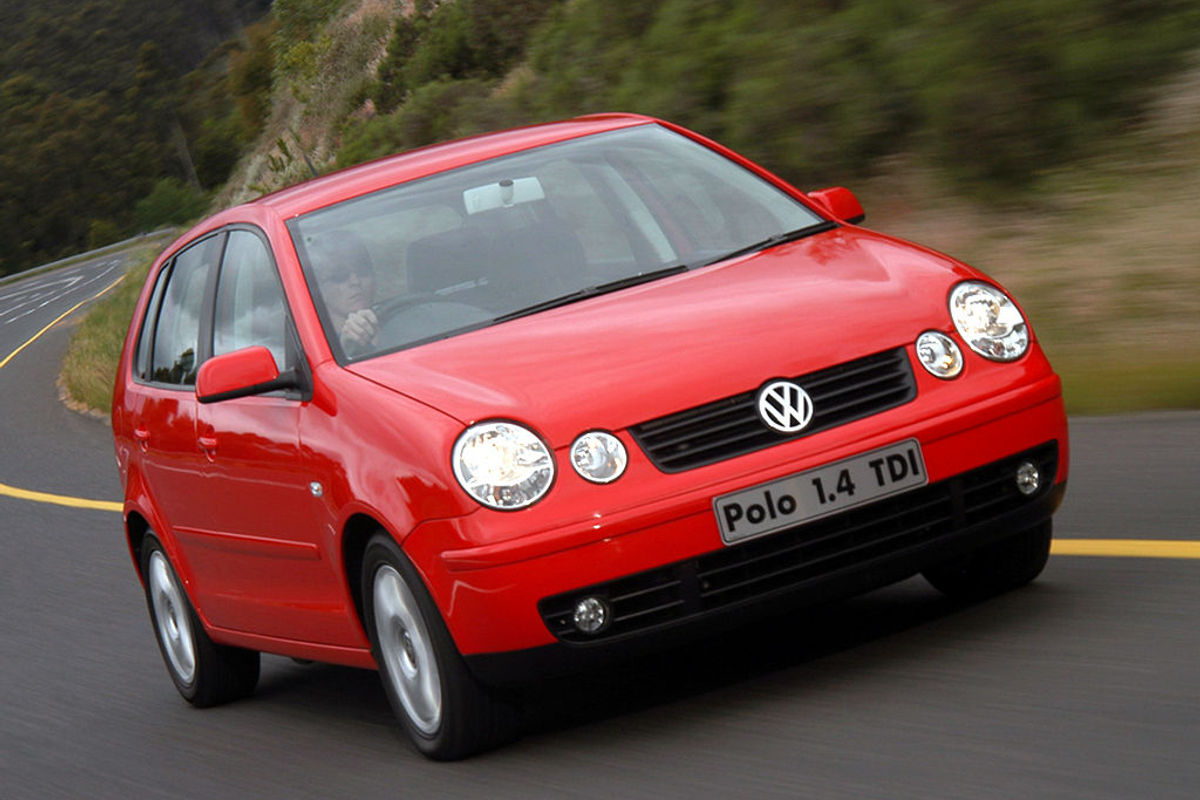
Diesel is dead. And that’s a pity. Those who are old enough to remember those Volkswagen Polo turbodiesels of the early 2000s will recall their excellent compromise of performance and economy. Even Hyundai had a value-oriented diesel hatchback offering, the Getz. Such compact hatchback turbodiesels offered the best efficiency blend: reasonable aerodynamics, low weight and pint-sized diesel engines.
After VW’s emissions-testing transgression – “Dieselgate” – diesel motors have disappeared from most compact passenger cars. Not even VW, which popularised affordable diesel hatchbacks and sedans in South Africa, offers one anymore.
The problem is that small turbodiesels have been replaced by even smaller turbopetrols, which aren’t that light on fuel. In many markets, the 1.0-litre 3 cylinder motor has been an engineering solution to meeting emission regulations, but it is not the most efficient design for balancing performance and economy. It might work in a European city, where speeds are low. But in South Africa, where distances are greater and speeds are higher, those tiny petrol engines aren’t frugal.
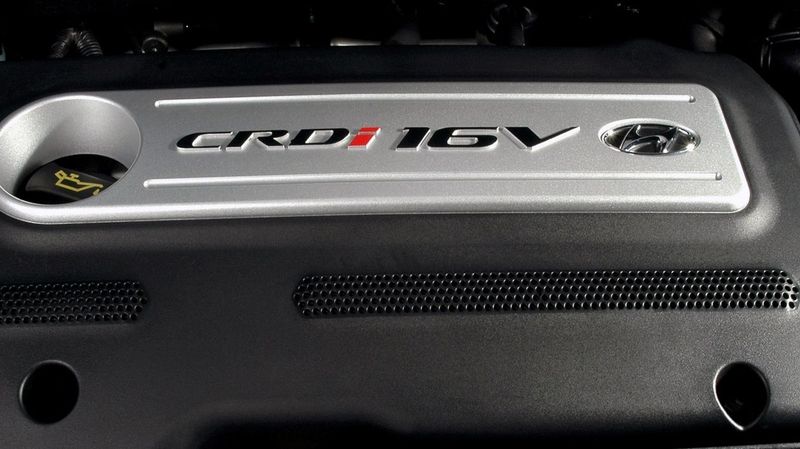
Korean compact hatch build quality (and features) allied with turbodiesel power? It would be a great combination to counter 2022 fuel prices.
Small turbopetrol engines aren’t that light on fuel
Scrutinise the consumption of a 1.0-litre turbopetrol car when it’s driven using average to moderately high throttle inputs – you’re likely to see that its fuel consumption is higher than those of larger legacy 4-cylinder turbodiesel engines.
Small-capacity 3-cylinder turbopetrol engines (also known as “triples”) require very aggressive engine mapping and lots of boost pressure to avoid lethargic throttle responses. And you pay for the configuration in fuel consumption. The simple fuel physics is that diesel fuel has more energy than petrol. Therefore, a similarly configured turbodiesel engine will be lighter on fuel, when driven along the same route – and with a matching speed profile, as a turbopetrol.
The other issue working against the dream of milder consumption in a time of fuel price madness is aerodynamic drag.
Stop-start and (theoretically clever) fuel-combustion efficiency might make a difference when you’re stuck in traffic. But the moment that the vehicle’s wheels are rolling, an invisible force requires energy to overcome: aerodynamic drag. It’s an oft-unrecognised reality that buyers don’t think of when they select vehicles. Many drivers only notice the detrimental effect of drag when they attach something to their vehicles’ roof racks, after which fuel consumption invariably worsens.
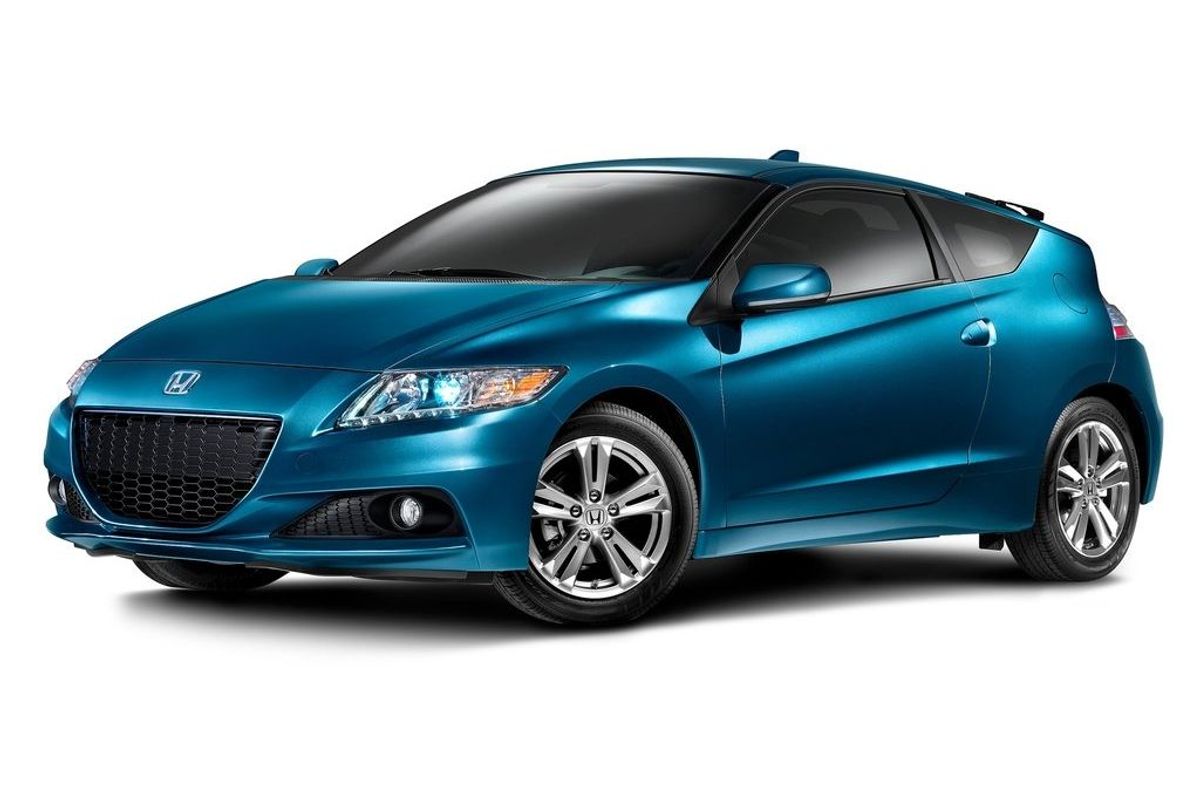
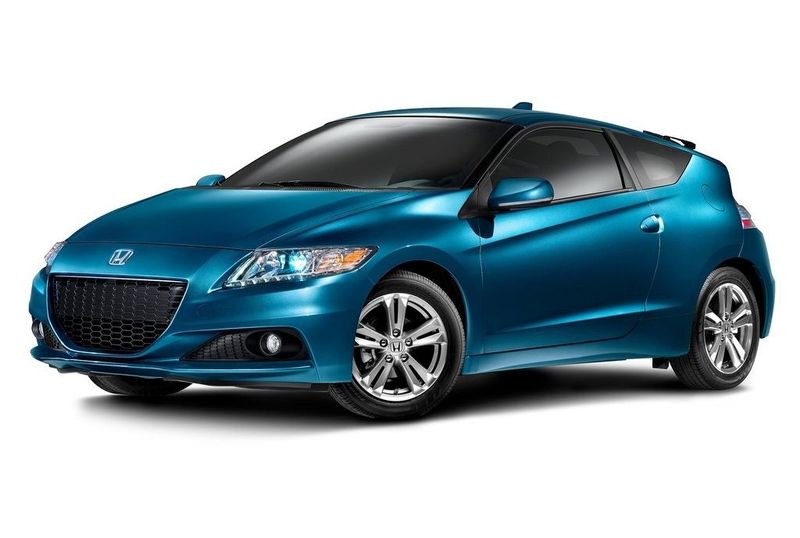
Honda’s discontinued CR-Z proved the concept of an aerodynamically optimised mild hybrid.
With every passing kilometre, you pay for that crossover look
The truth is that your vehicle’s aerodynamic profile matters. A lot. And the selection of affordable cars with sleek aerodynamics has become frustratingly thin. It’s a development that can be directly attributed to the crossover craze.
By design, any crossover is less aerodynamic than the hatchback it is related to (based upon). Once you increase a vehicle’s height, its drag coefficient worsens. The sacrifice in fuel consumption between a Volkswagen Polo and CrossPolo, or a Suzuki Celerio and Ignis may seem trivial, but considering how crazy fuel prices are at the moment, it all adds up.
Then there’s the issue of utility. A crossover might offer marginally better gravel-road driving ability than the hatchback it shares a platform with, but how often do you use that ability? Remember, you pay for compromised aerodynamics with each and every kilometre that you drive. Is that worth the price for a few hundred kilometres of gravel-road driving a year?
For reference, our Government – and most automotive industry professionals – anticipate that the average South African motorist will drive about 30 000 km in a year. How many of those kilometres do you need the additional ride height of a crossover for? Not many. But for all of those kilometres that you will drive in your vehicle with its raised ride height, your wallet will be lightened further by the burden of greater aerodynamic drag.
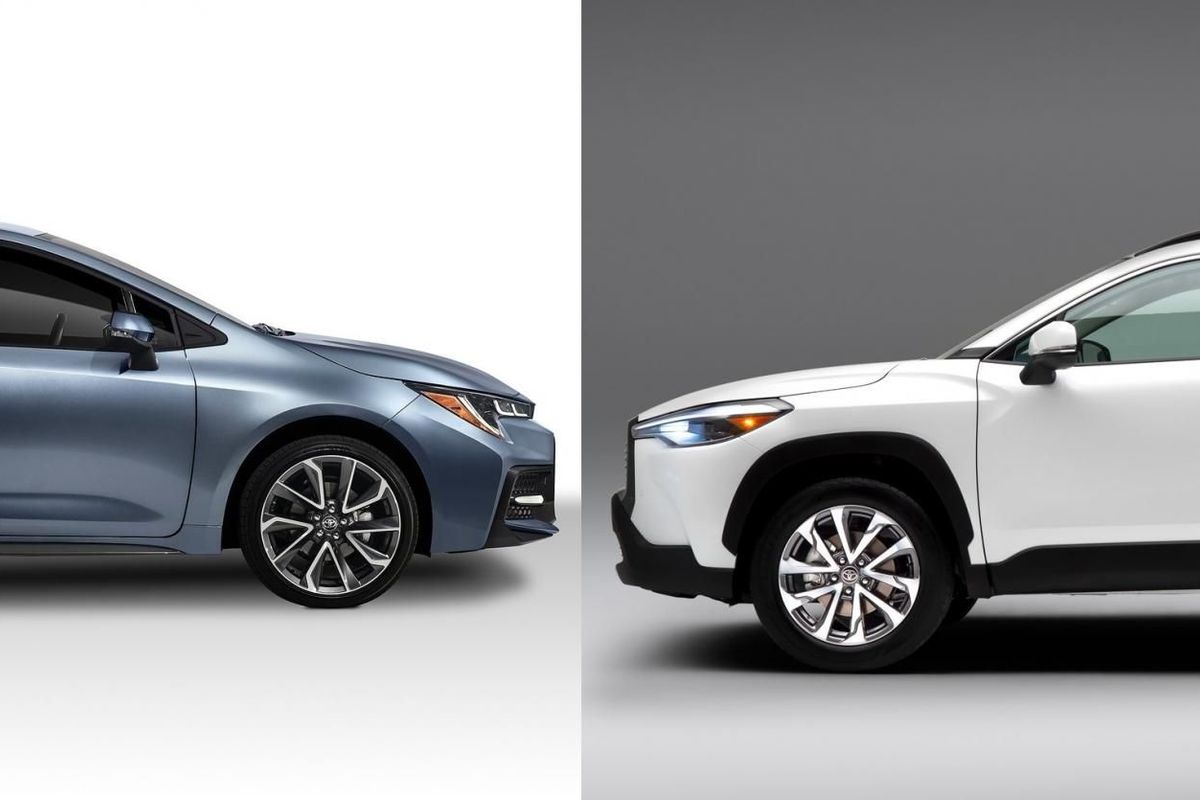
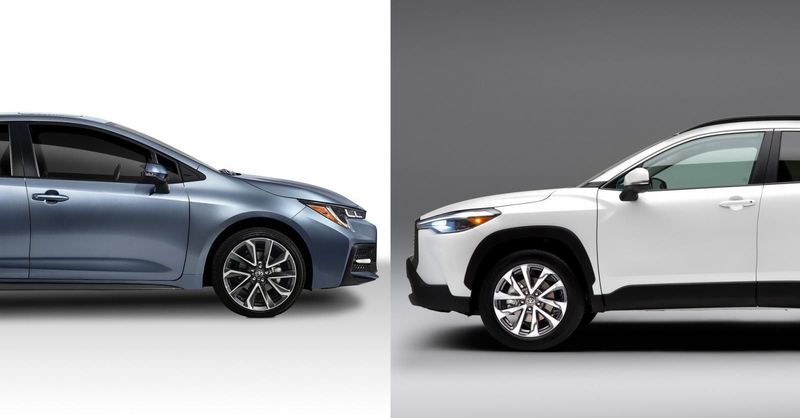
Toyota’s Corolla platform offers hybridisation. But not everyone needs a petrol-electric hybrid crossover in the local market.
Where are the hybrid hatches?
What is the ideal fuel-sipper vehicle configuration for average South Africans? The lightweight turbodiesel hatchback is no more, but could petrol-electric hybrids be the alternative? Possibly.
Ironically, the one brand that never offered affordable turbodiesel hatchbacks provides the alternative. Toyota’s brought hybrid technology to a broader spectrum of buyers than any other brand, and with a measure of affordability.
The powertrain efficiency of the Corolla Cross hybrid is real, but it would be even better without the additional aerodynamic drag that comes part and parcel with a crossover configuration. Imagine the Corolla Cross hybrid powertrain in Toyota’s Corolla hatchback, instead of the 1.2-litre turbopetrol motor… The closest you’ll get to that is the Corolla sedan hybrid.
A vehicle similar to VW’s first local compact hatch turbodiesel would work a treat.
Small, light and simple
What should you do? Well, buy the lightest and lowest car you can, provided it satisfies your passenger comfort and load space requirements, of course. Unless you have to do significant gravel travelling each month, a hatchback is always smarter money, in terms of the total cost of ownership, than its crossover equivalent.
The market has moved so dramatically to crossovers that many buyers struggle to find a hatchback or sedan that offers excellent value for money. In truth, a crossover is superfluous for vehicle owners who are honest about their urban driving routine, rather than imagining adventurous gravel-travel weekends that will almost never happen.
What most South African vehicle owners need now, are affordable hybrids that aren’t crossovers. Failing that, you are best off buying the smallest car you need, preferably powered by a naturally-aspirated engine…
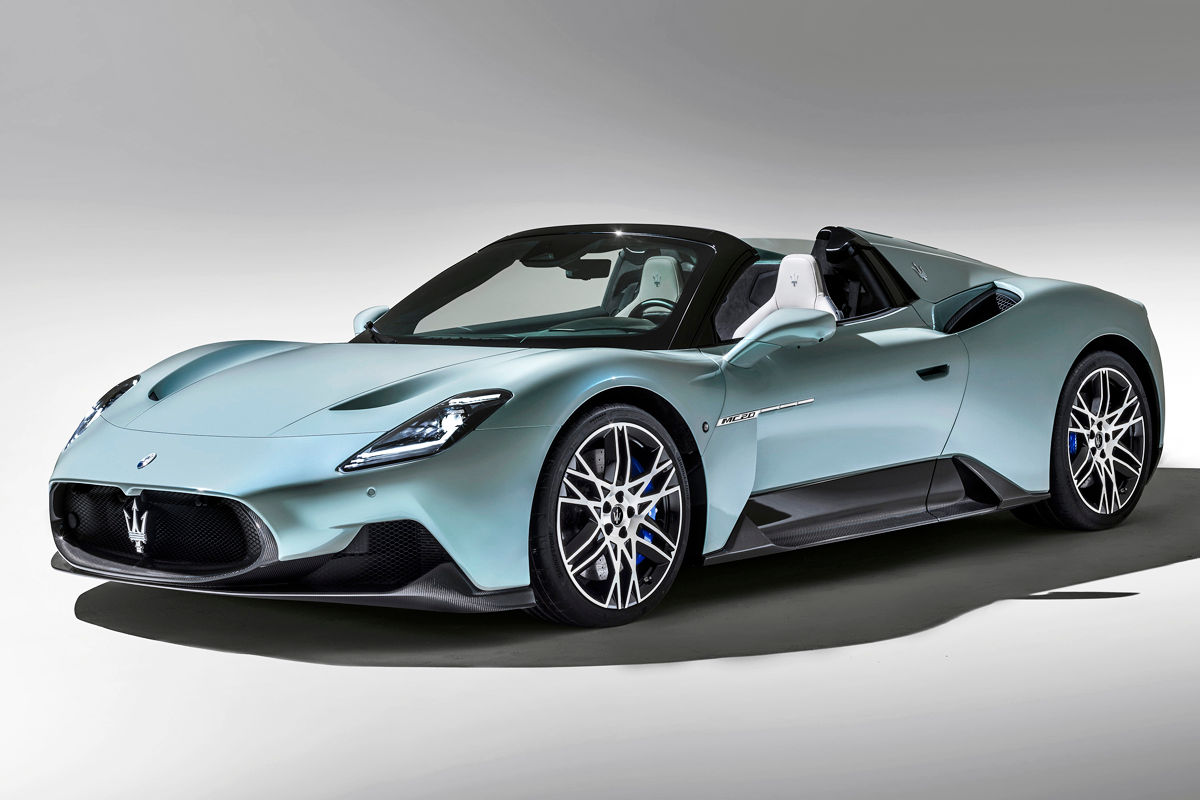
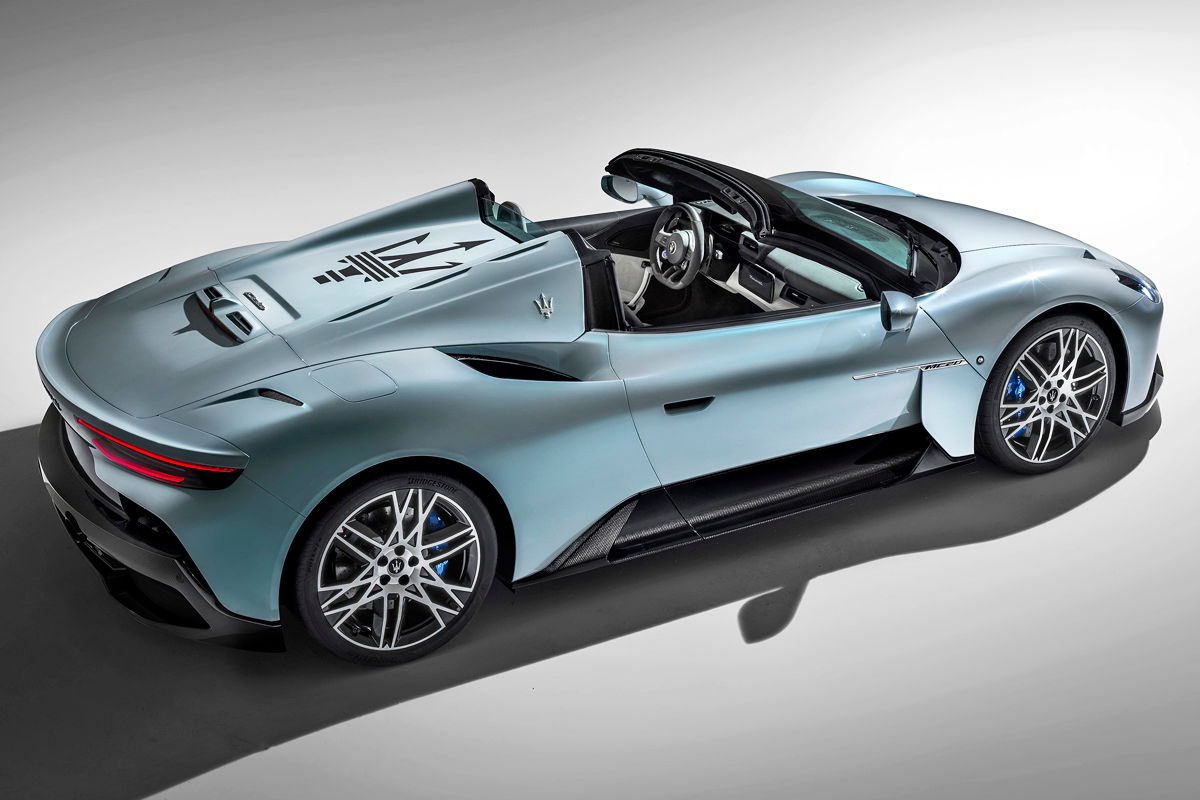
New Maserati MC20 Cielo Revealed With Retractable Glass Roof
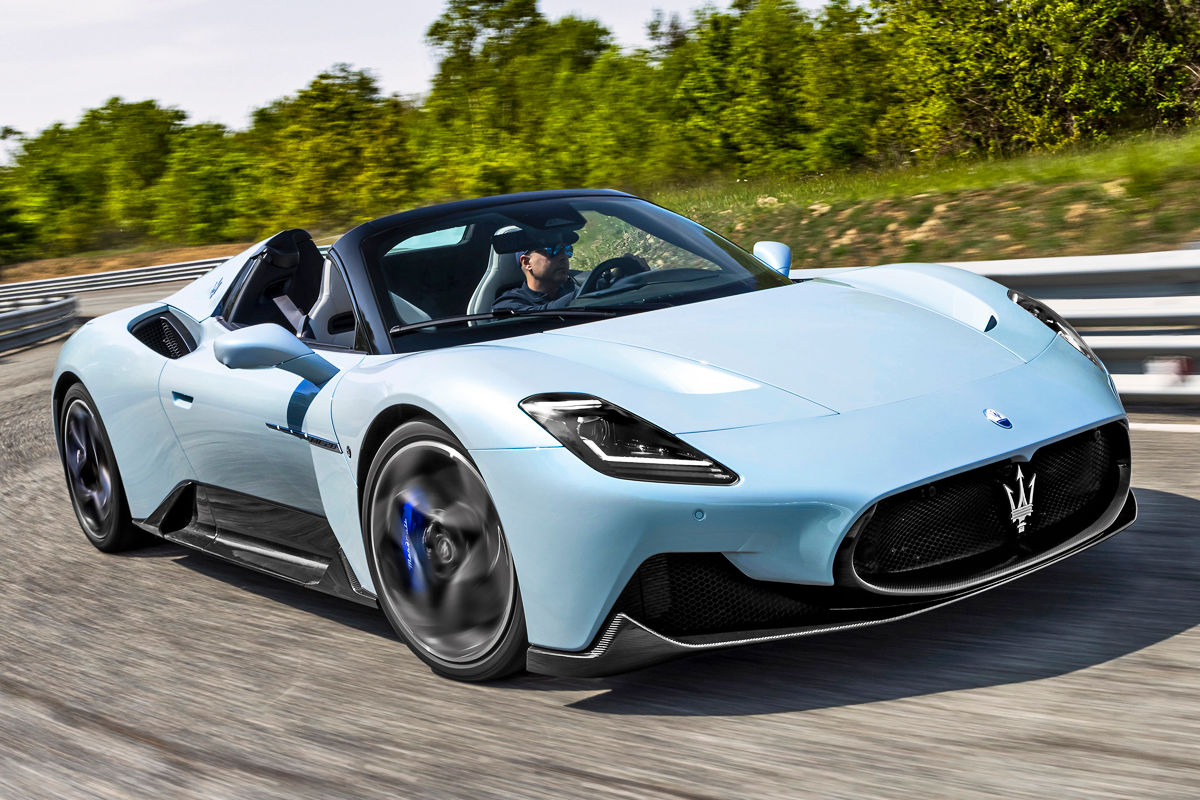
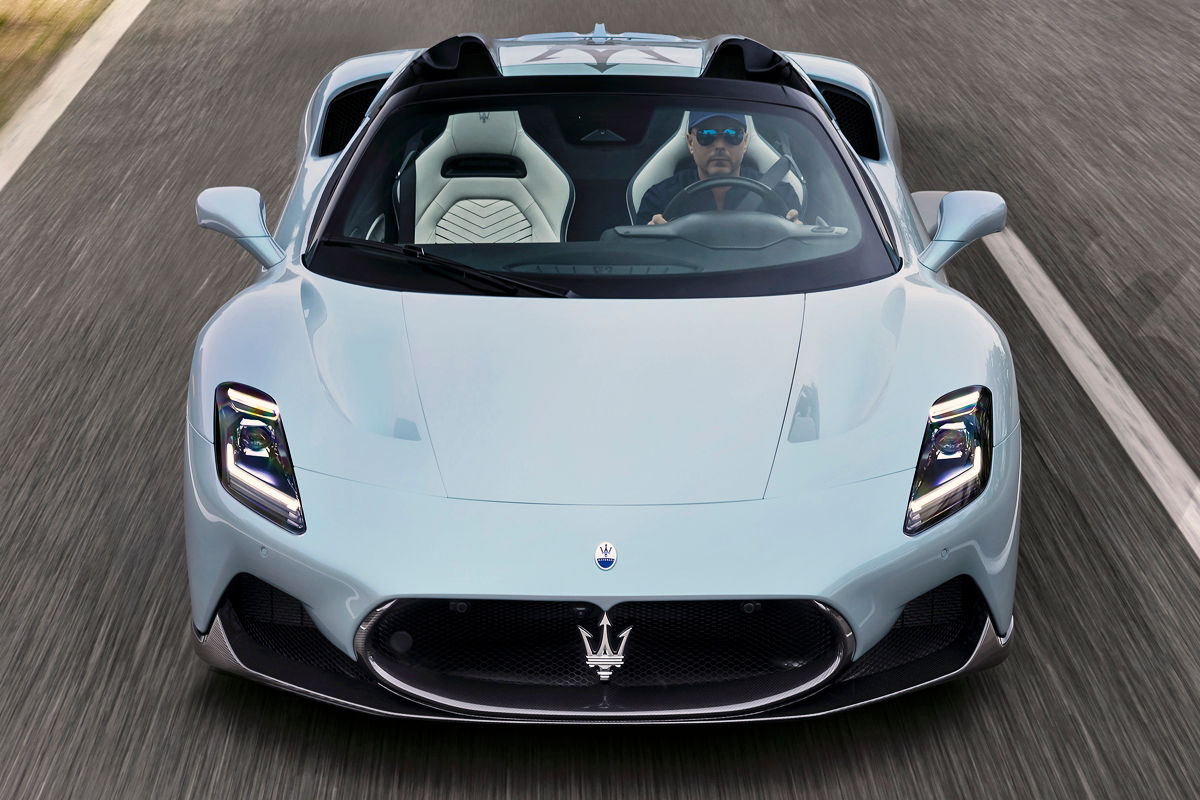
Remember the Maserati MC20 revealed almost two years back? Well, the Italian company has now released a spyder version, complete with a retractable glass roof. Meet the new MC20 Cielo…
When Maserati unwrapped its MC20 “super sports car” back in September 2020, there were already murmurings of a spyder model (as well as a fully electric version) being in development. Now, the spyder has finally arrived, and it’s called the MC20 Cielo.
What’s in a name? Well, the Italian word “Cielo” translates to “sky”, which Maserati says highlights the fact this is a model “devoted to driving pleasure in the great outdoors”.
The MC20 Cielo employs the same mid-mounted, twin-turbo 3.0-litre V6 Nettuno petrol engine as its coupé sibling, producing a heady 463 kW and 730 Nm (delivered to the rear axle courtesy of an 8-speed dual-clutch transmission). Expect a 0-100 kph time of around 3.0 seconds.
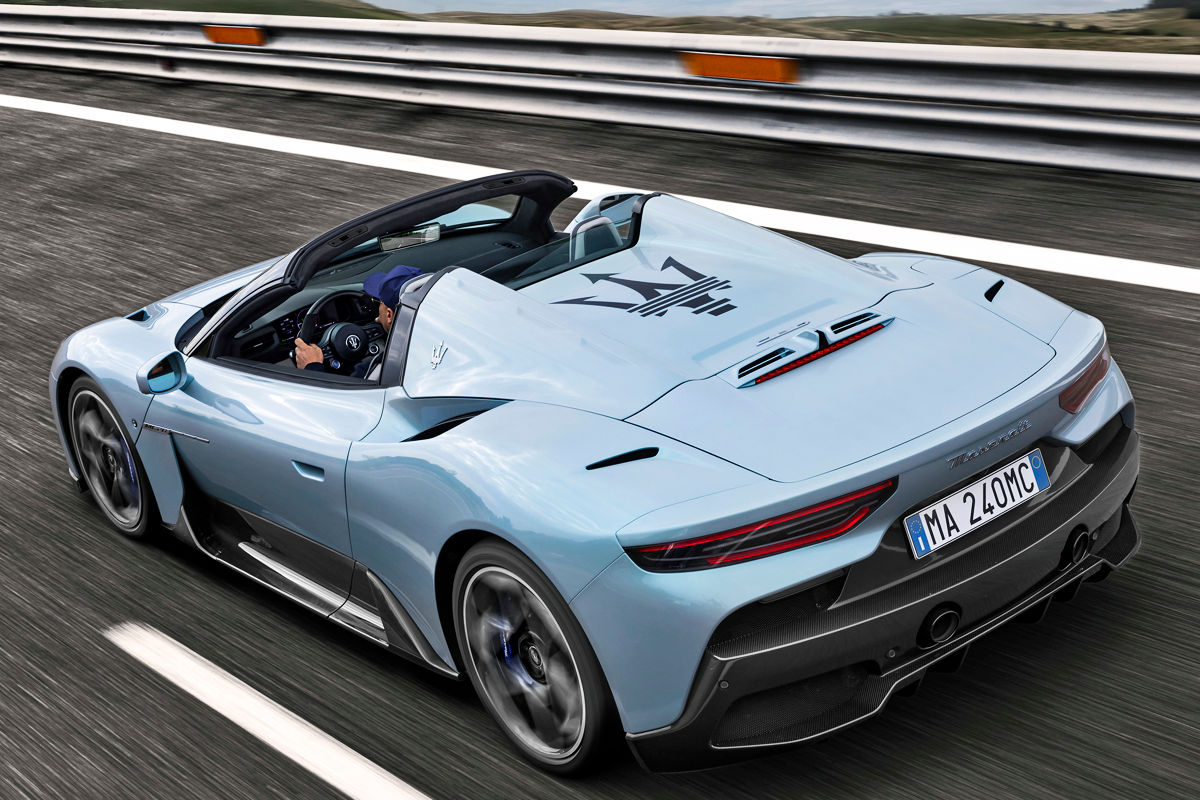
However, the MC20 Cielo is set apart by what the Modena-based firm describes as a “specification unique to the segment”: a retractable glass roof featuring Polymer-Dispersed Liquid Crystal technology that allows it to be transformed from clear to opaque at the touch of a button. Nifty stuff.
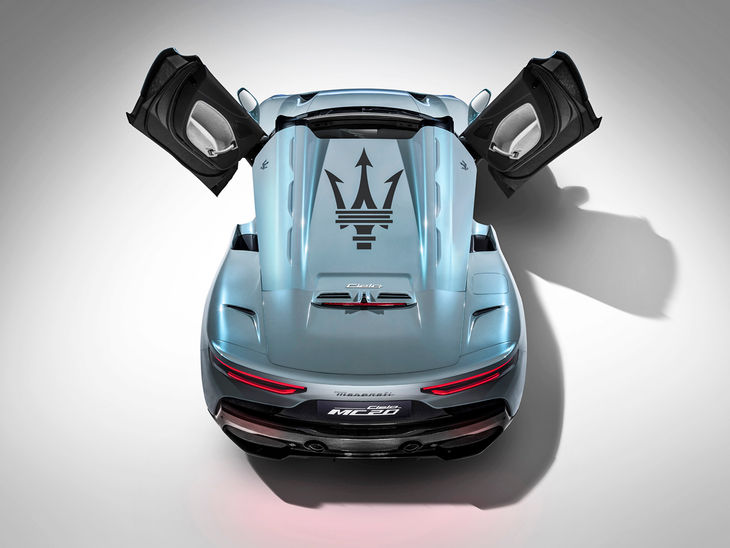
The butterfly doors familiar from the coupé carry over to the MC20 Cielo.
Maserati claims the roof is “best in class” in terms of its thermal insulation, while its opening and closing speeds come in at a handy 12 seconds each. According to the automaker, the fancy roof gubbins add just 65 kg to the spyder’s overall mass, while the carbon-fibre chassis “guarantees uncompromising torsional rigidity”.
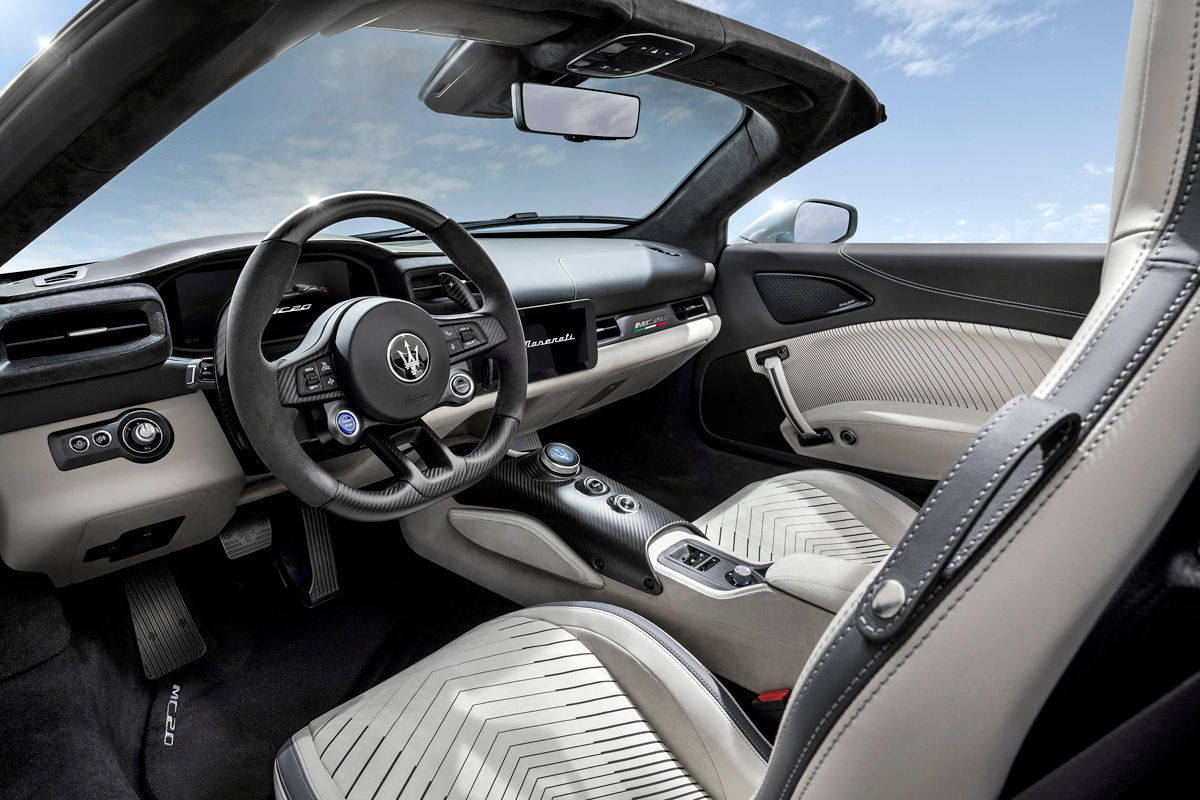
Interestingly, the butterfly doors remain, while the launch version features a new three-layer metallic paint colour known as “Acquamarina” (and shown in the accompanying images). In addition to various safety systems already employed by the coupé, the MC20 Cielo adds items such as autonomous emergency braking, traffic-sign information and a new 360° camera (which will surely be rolled out to the coupé soon enough).
The MC20 Cielo furthermore gains a version of the optional High Premium Sonus Faber audio system “specifically optimised” to fit the unique acoustic and positioning needs of the spyder’s cabin.
No word yet on whether the MC20 Cielo is destined for South Africa, but considering a few units of the coupé were set aside for our market, we wouldn’t be surprised if the same applied to the spyder.
Mazda CX-3 (2022) Review
The Mazda CX-3 has been facelifted and updated, seemingly for the last time in this model’s product cycle. Also introduced to the line-up is a flagship 2.0 Hikari derivative, which is the subject of this review. Is the CX-3 still a leading small crossover/compact family car, or has the segment moved on? Let’s find out.
Eyeing out the Mazda CX-3? This review will help you make an informed buying decision!
We like: Still an attractive car, engaging to drive, good safety and convenience features
We don’t like: Impractical small load bay, starting to feel its age, expensive
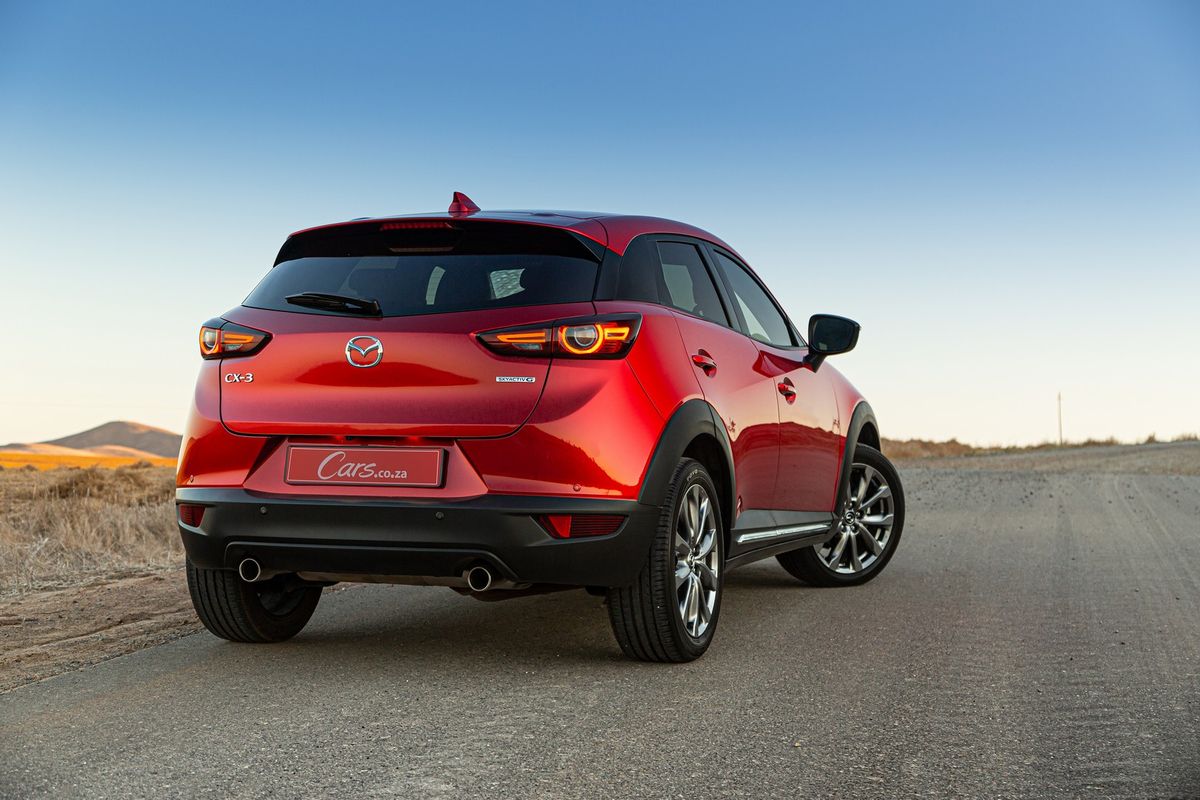
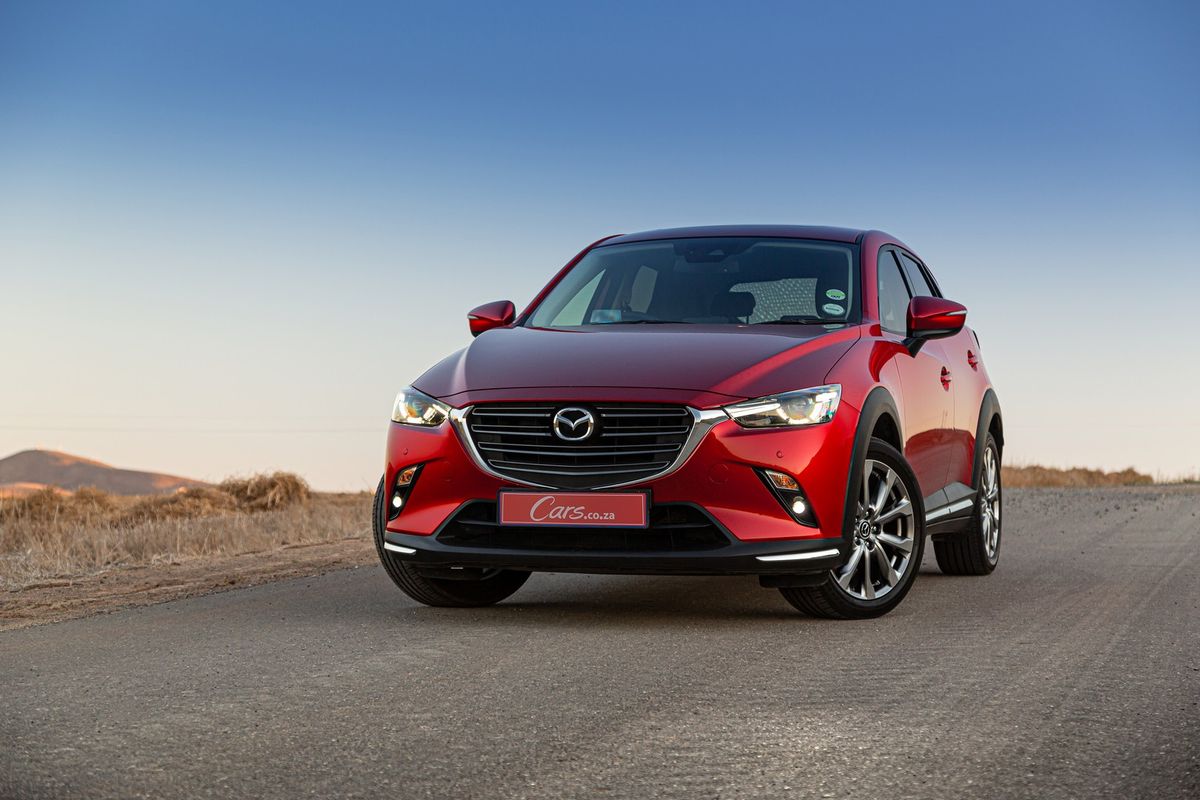
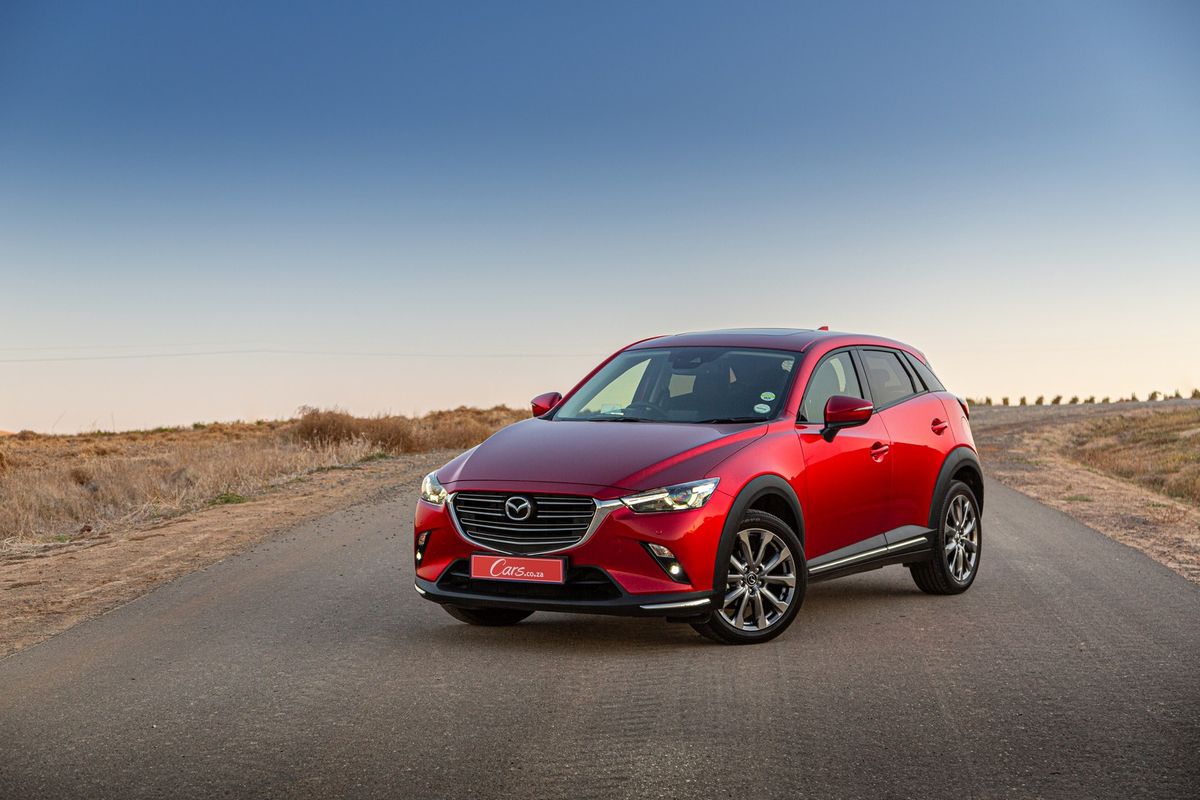
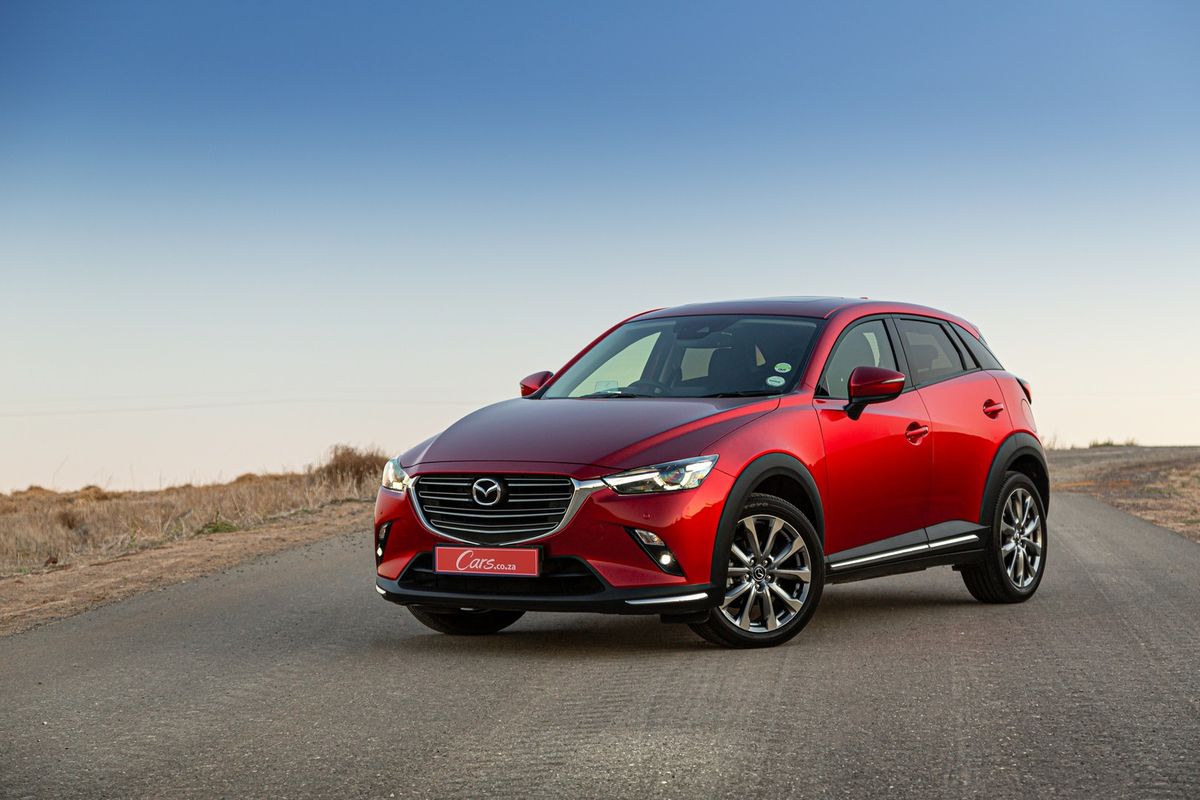
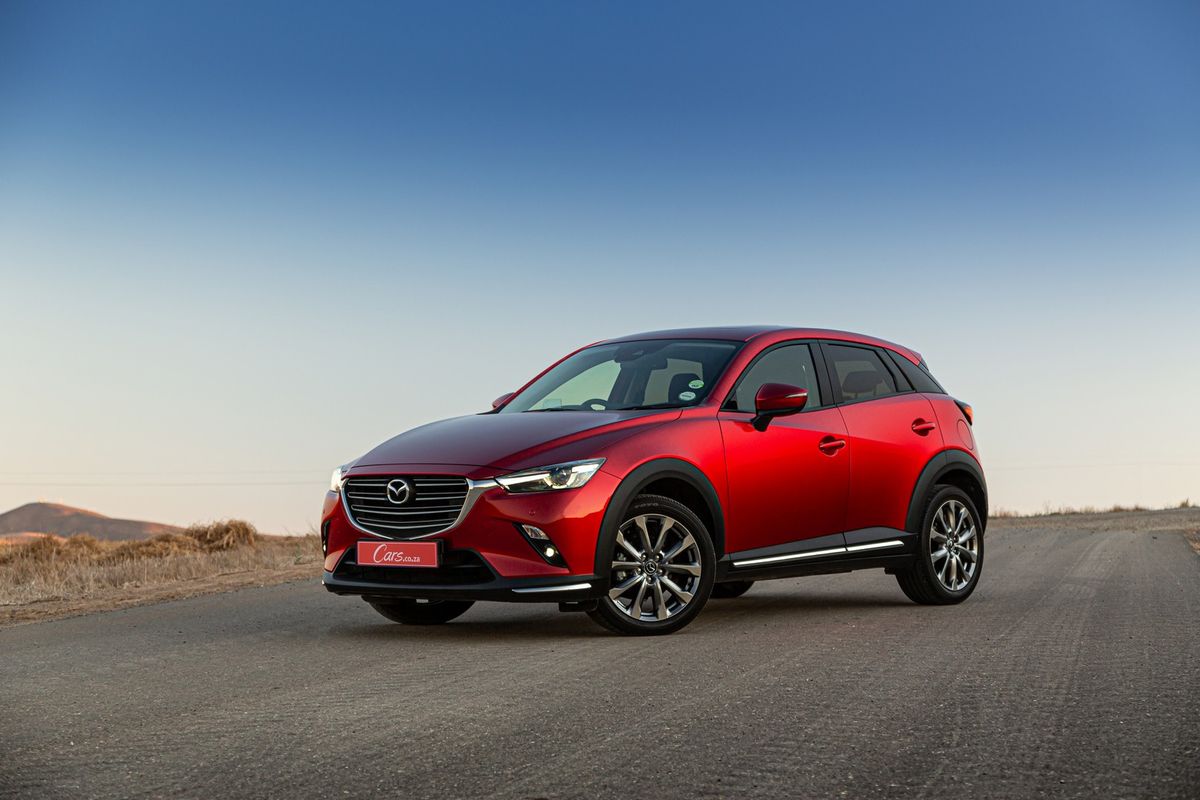
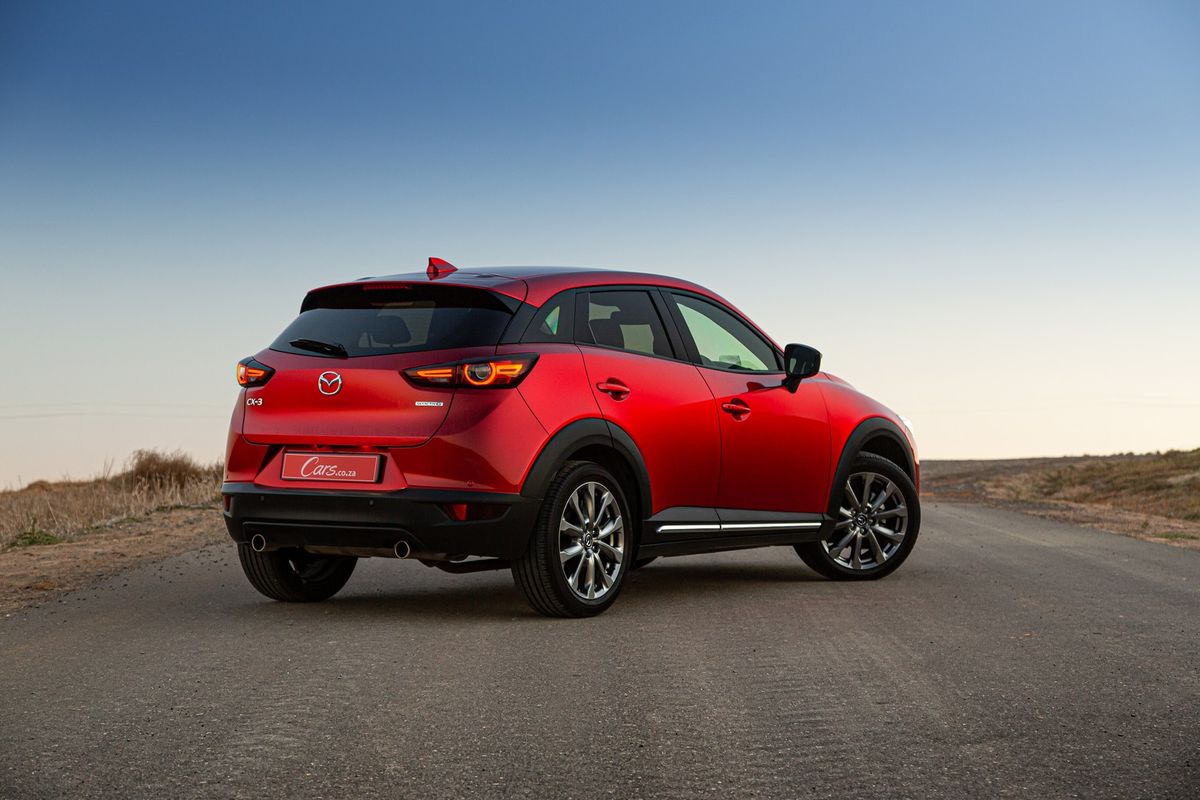
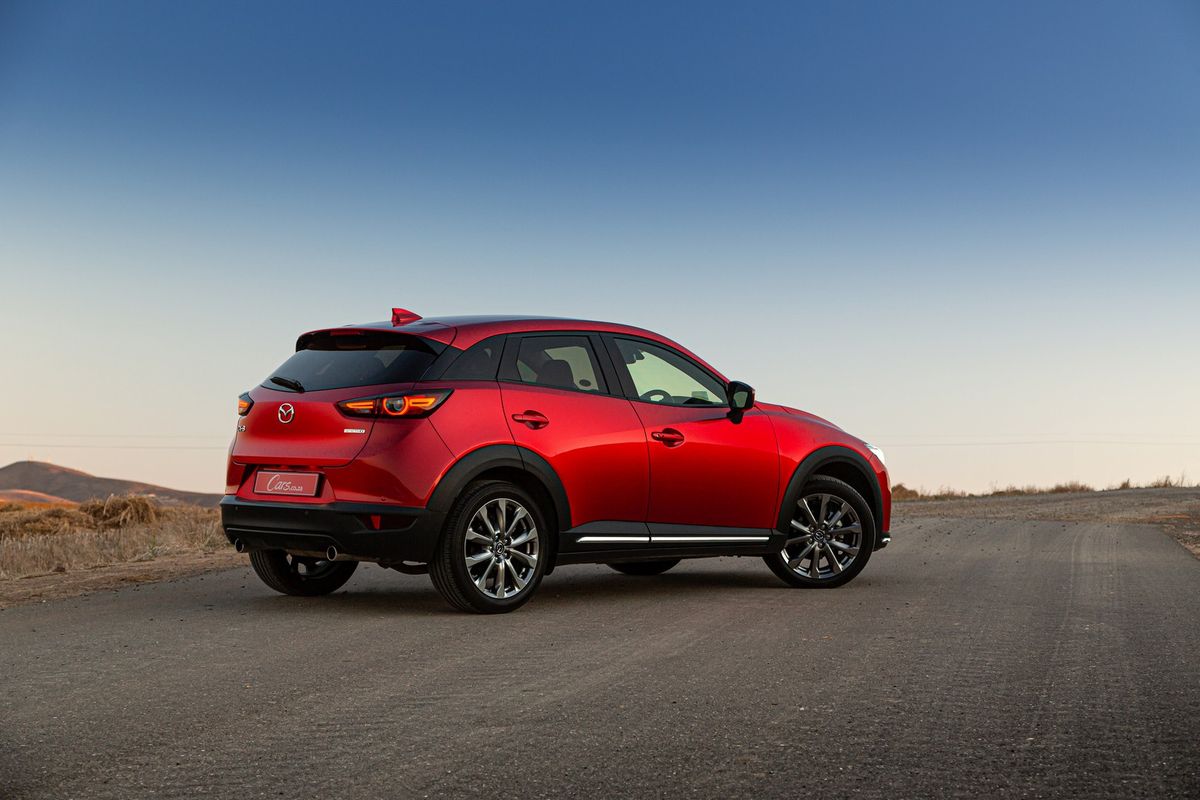
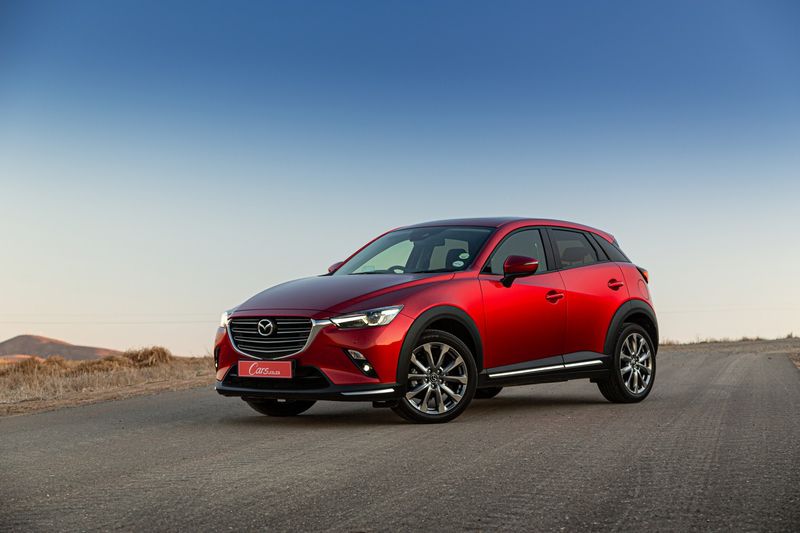
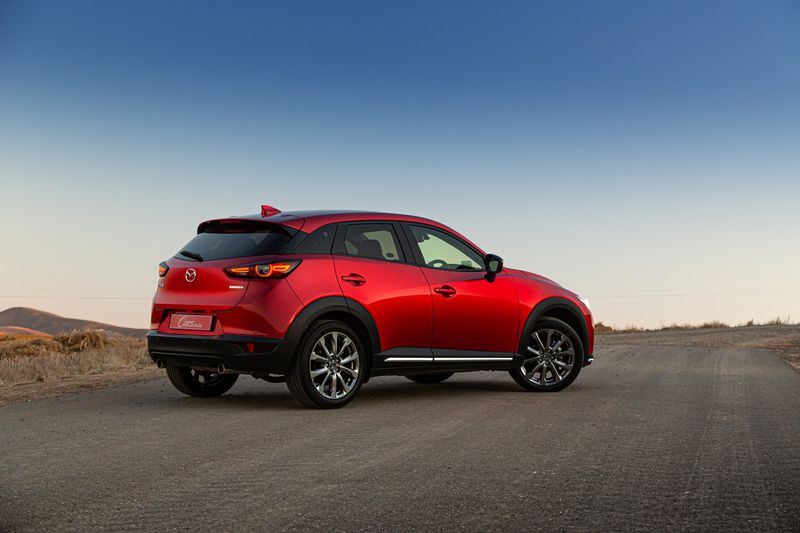
Although the Mazda CX-3 has been on the market for 7 years, its exterior design is still very attractive.
Mazda appears to be evolving into an “SUV brand” quite quickly. While the Japanese firm rolls out a slew of new CX models, it’s worth revisiting the entry-point to its crossover range – the CX-3. Market trends suggest customers are foregoing B- and C-segment hatches in favour of their high-riding siblings, which is why the Mazda2 and Mazda3 are sadly falling by the wayside; you’ll now find those models’ customers in the CX-3 or CX-30.
The CX-3 has been around for a while (this author was present at the model’s introduction in November 2015), but, like most of Mazda’s products, the compact family car’s product cycle has been extended through the introduction of numerous update programmes over the years.
The most recent upgrade included a bigger infotainment screen (from 7- to 8-inch), rear seatbelt warnings, as well as a wireless charging pad. As for the flagship Hikari derivative, it now comes with a comprehensive array of advanced safety tech, but more about that later.
At this lofty price point (just north of R500k – in May 2022), there’s a tremendous variety of models to choose from. The Korean brigade is well represented with Hyundai offering the Venue, Kona and Creta, while Kia offers the Sonet and Seltos. Volkswagen’s line-up will soon comprise the T-Cross, Taigo and T-Roc. You could also consider the cool Opel Mokka.
Of course, you’d be foolish to forget about the very keenly priced Haval Jolion and H6, plus the latest Chery Tiggo 4 Pro and Tiggo 7 Pro appear to offer commendable value. Interestingly, for the price of this flagship CX-3 (R509 000), you could also get into a newer, more spacious CX-30…
The top-of-the-range 2.0 Hikari derivative features adaptive LED headlamps as standard.
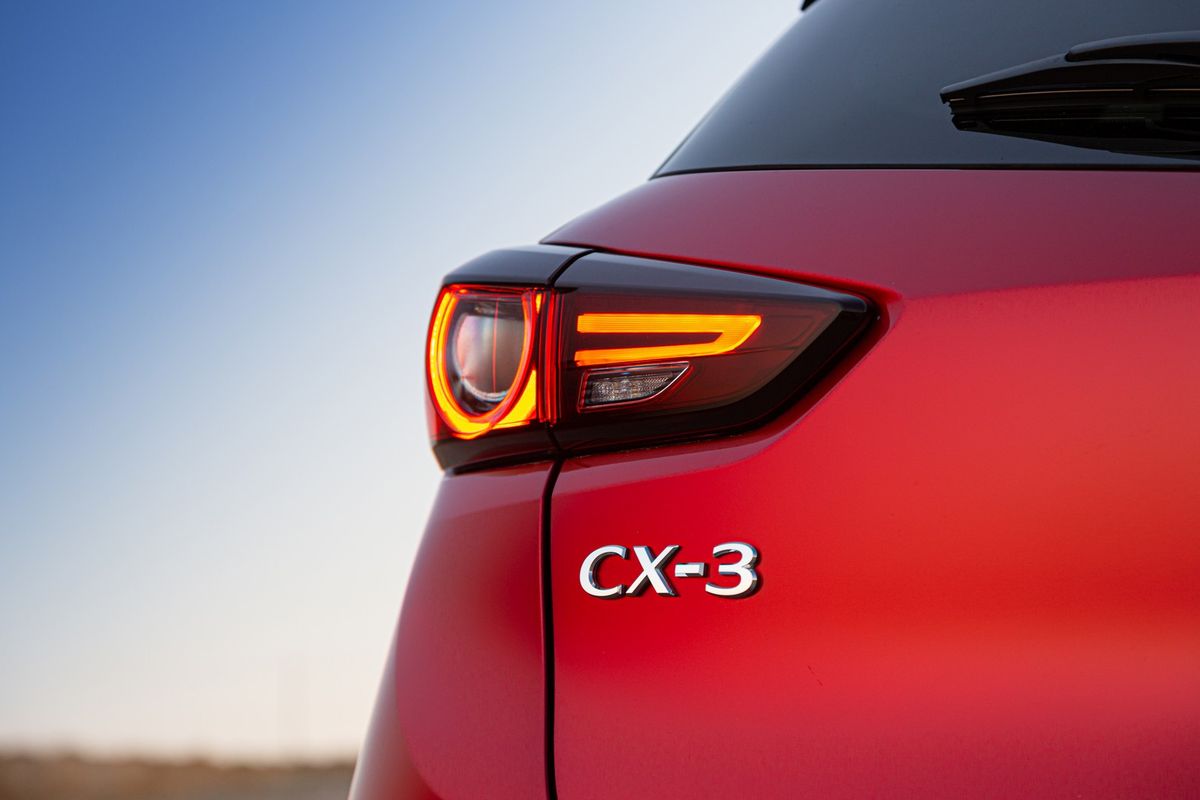
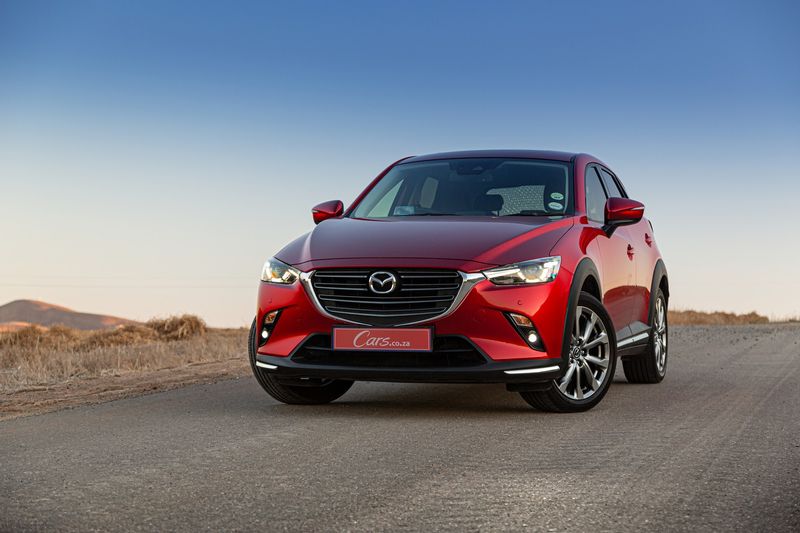
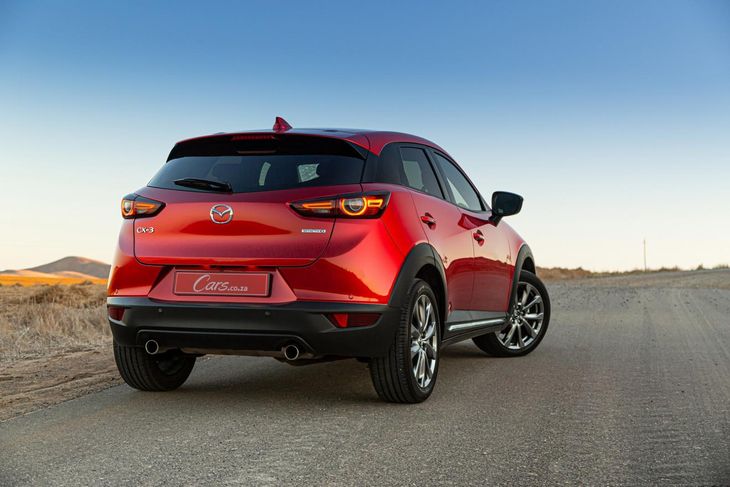
Like so many of Mazda’s models, the CX-3’s design has dated remarkably well – it still looks reasonably fresh, but we feel it needs the right – preferably metallic – exterior finish to “pop”. We’d recommend Soul Red (in which the test unit was finished); it’s simply sensational.
Compared with some newer rivals, the CX-3 wasn’t styled to resemble a shrunken SUV – it presents as a “hatchback on stilts”, which, given its 155-mm ground clearance, is what it is.
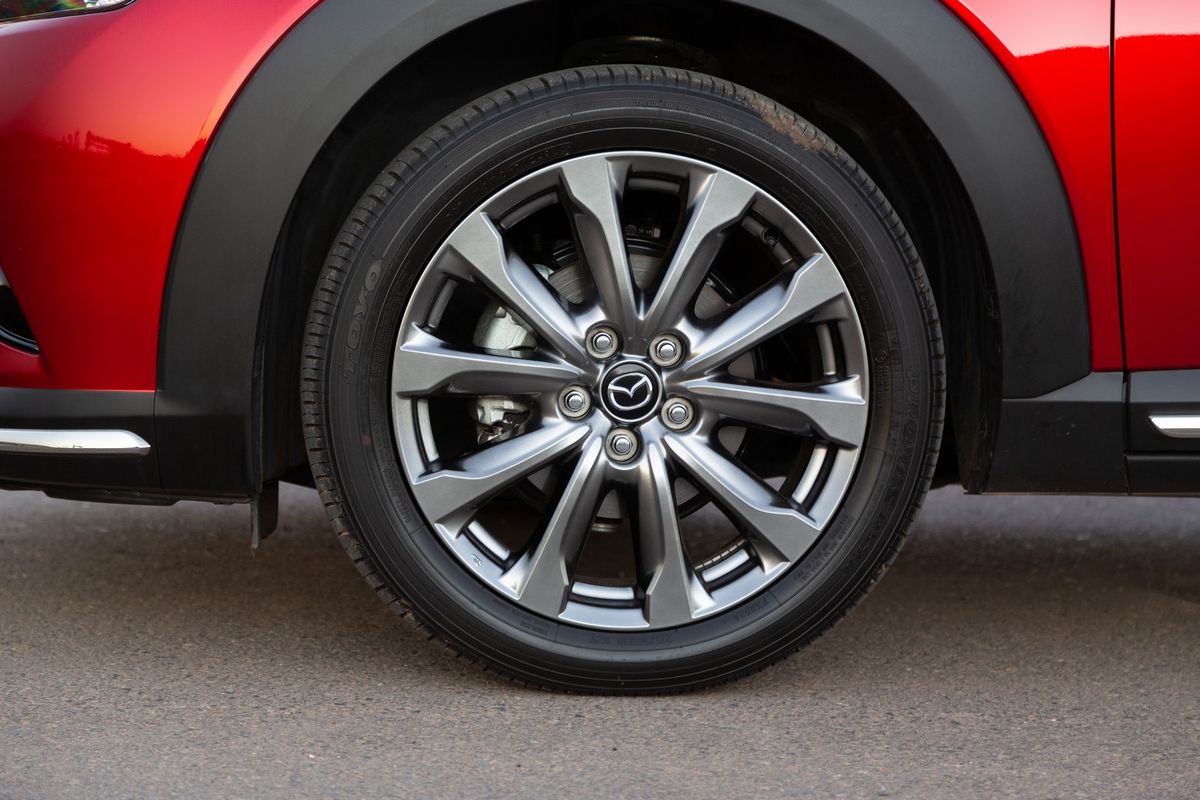
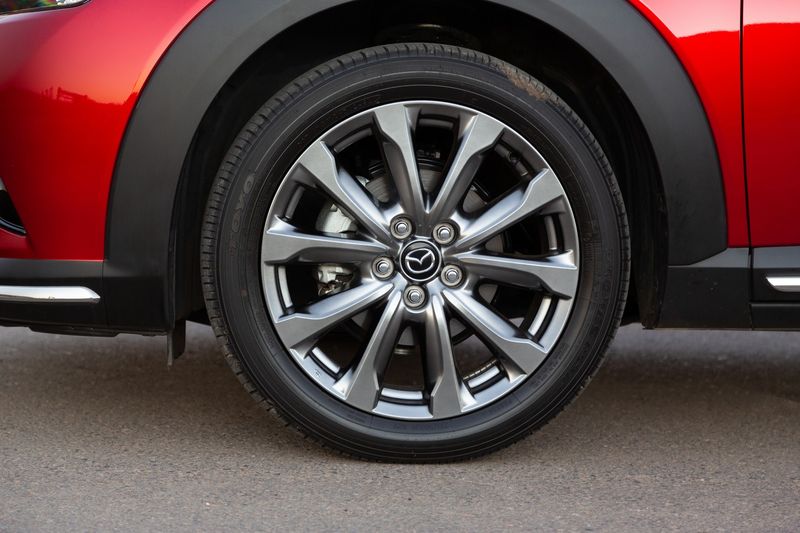
In Hikari trim, you get quite a few extras that distinguish your top-rung CX-3 from its lesser siblings. These include eye-catching 18-inch alloy wheels and adaptive LED headlamps.
From a packaging point of view, the CX-3’s 246-litre load bay is its biggest drawback.
Interior features and Practicality
Mazda doesn’t skimp in terms of standard features. Even the entry-level Active comes equipped with niceties such as cruise control, electric parking brake, push-button start, USB ports and so forth.
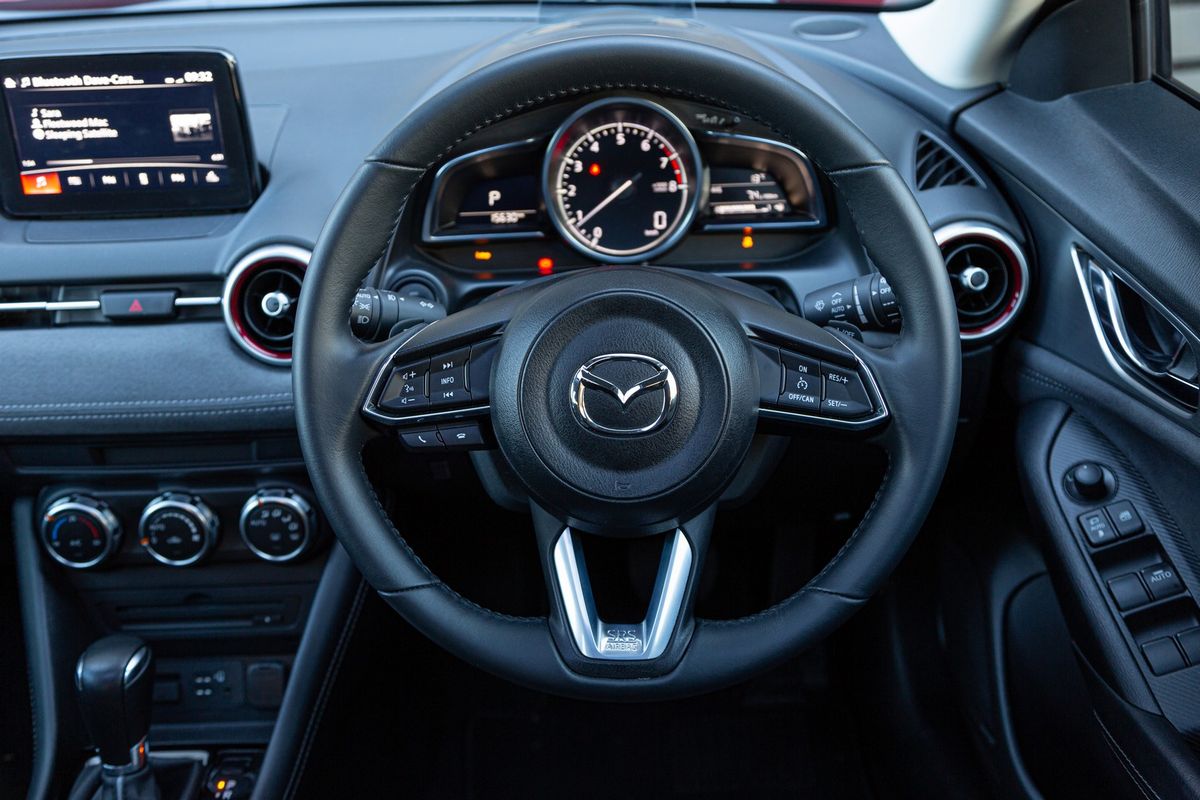
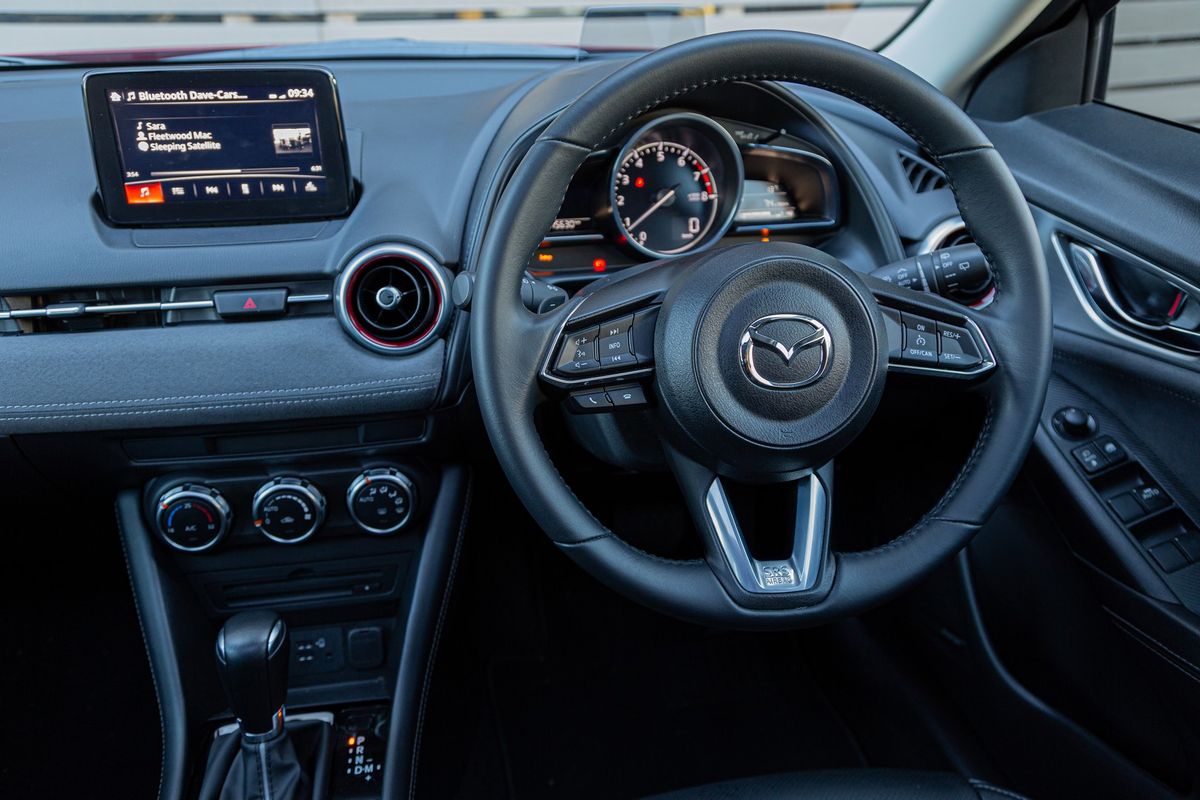
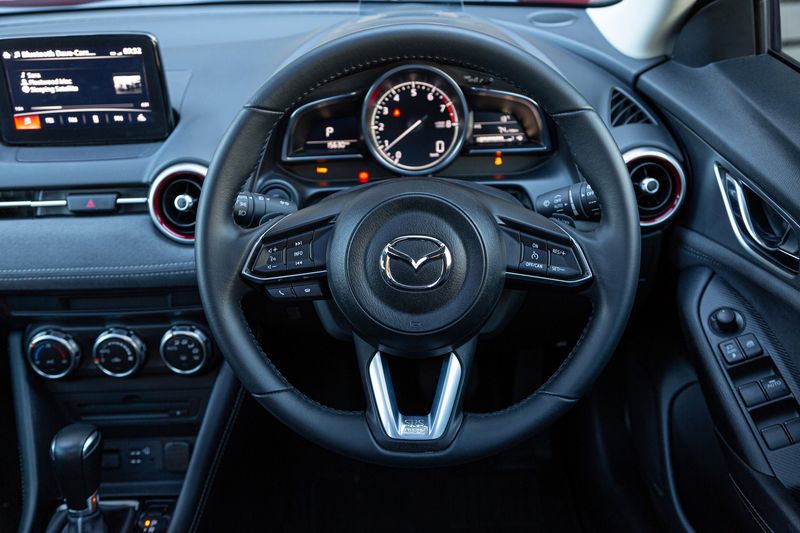
The CX-3’s instrumentation and fascia layout betray the model’s advanced years, yet the build quality is still top-notch.
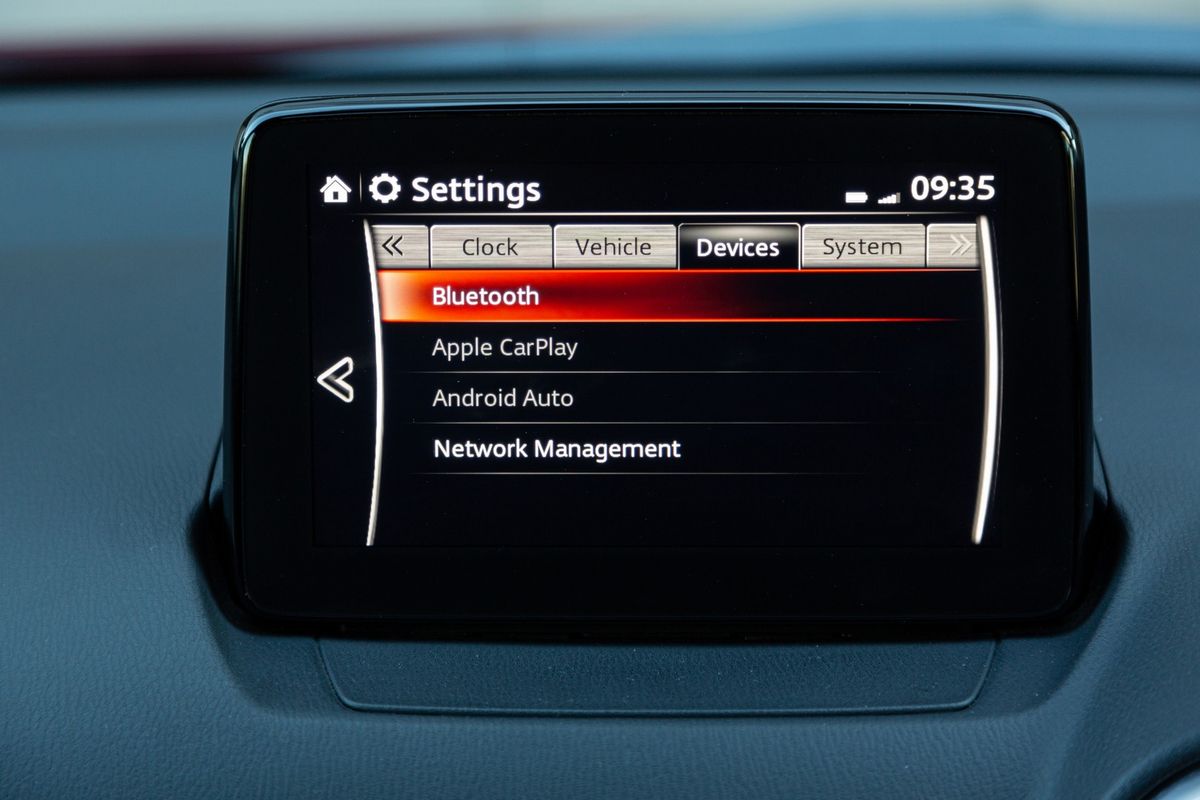
In flagship 2.0 Hikari guise, however, it’s easier to mention what features are left out than which ones are fitted, but we’ll list the most major standard features here: leather trim, sunroof, head-up display, 7-speaker Bose audio system (Apple CarPlay and Android Auto compatible with two USB ports), reverse-view camera, as well as front/rear parking sensors.
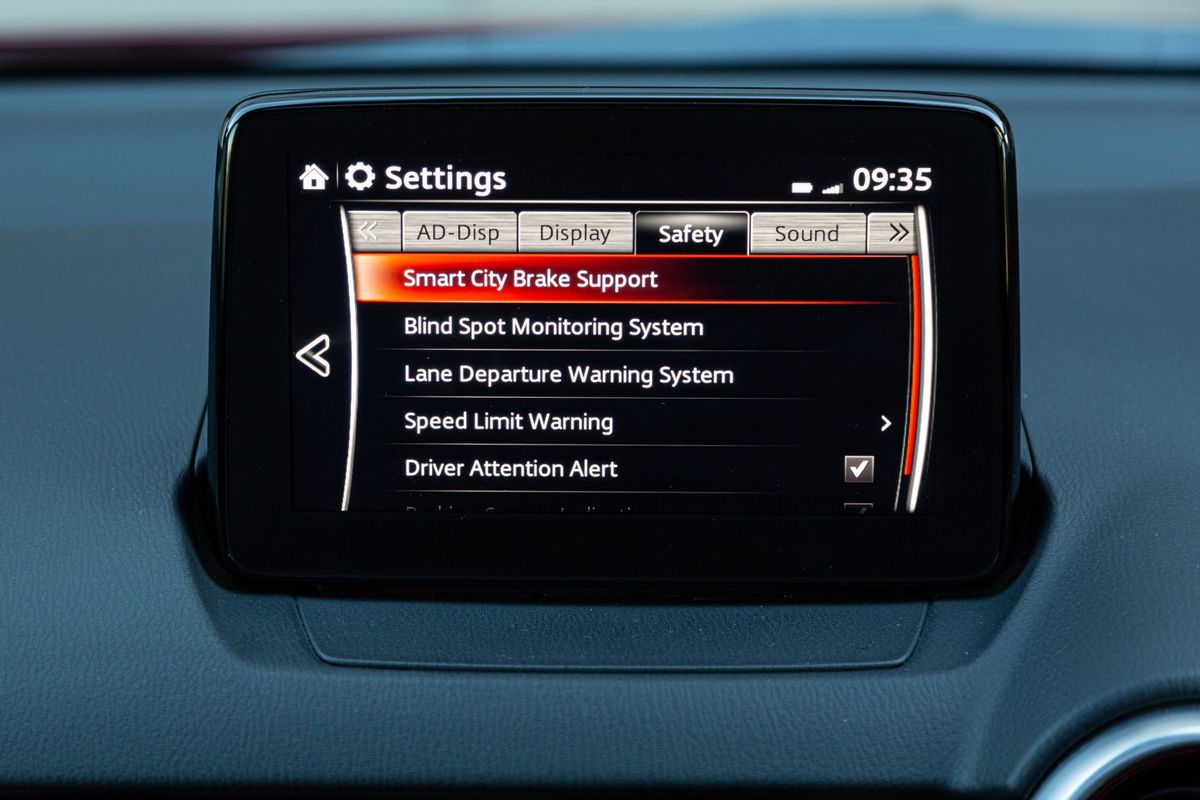
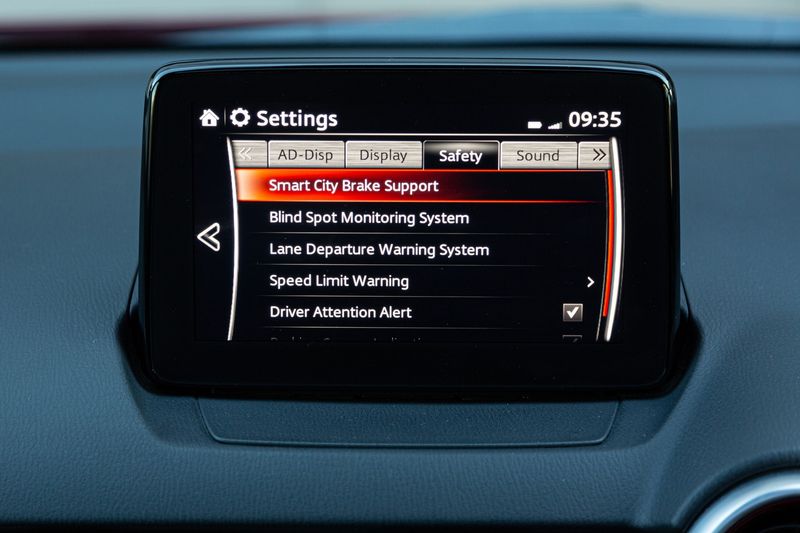
Meanwhile, the comprehensive safety package includes (but is not limited to) blind-spot monitoring, rear cross-traffic alert, lane-departure warning and smart city brake.
The 2.0 Hikari derivative is pricey (at R509 000 – in May 2022), but its advanced safety equipment set it apart.
At low speeds (between 4 and 30 kph), the latter can detect a risk of collision, warn the driver and prepare the braking system to deliver maximum stopping power when the driver brakes.
If the driver does not take evasive action, smart city brake simultaneously applies braking effort and reduces engine output to avoid a collision – or reduce the severity of an impact.
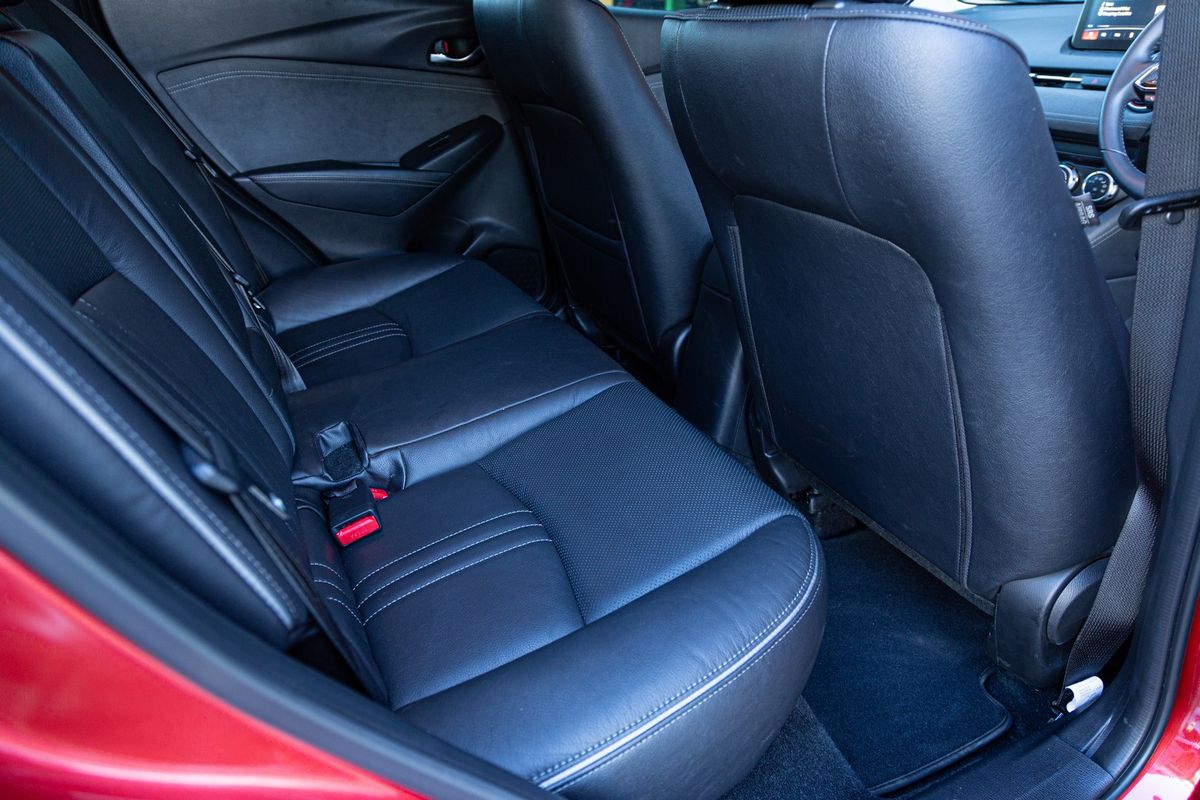
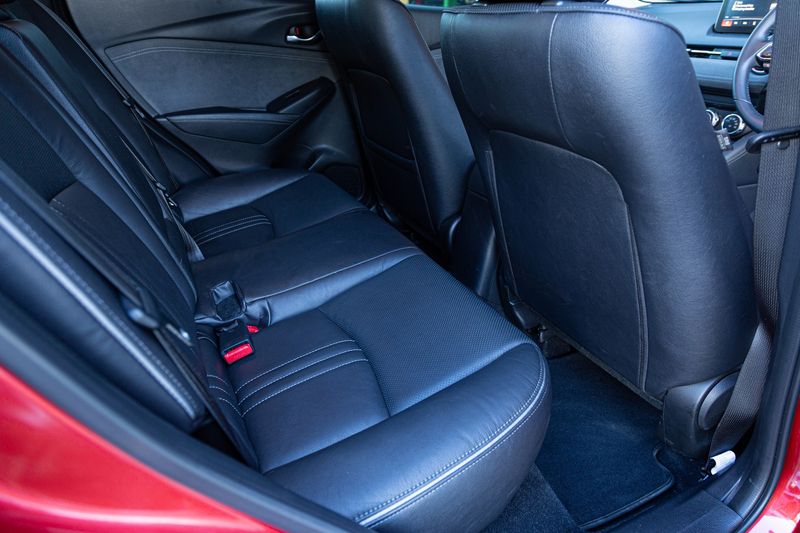
Rear legroom is tight, it’s only acceptable if the rear occupants are small children.
As far as practicality in concerned, the CX-3 is one of the smaller models in its segment and it shows in the snug interior packaging. The load bay has a claimed capacity of just 264 litres (although you can fold the rear seatback down) and it won’t hold a family-sized cooler box on account of its low height. And, unless you’re transporting children, rear legroom is limited.
Performance and Efficiency
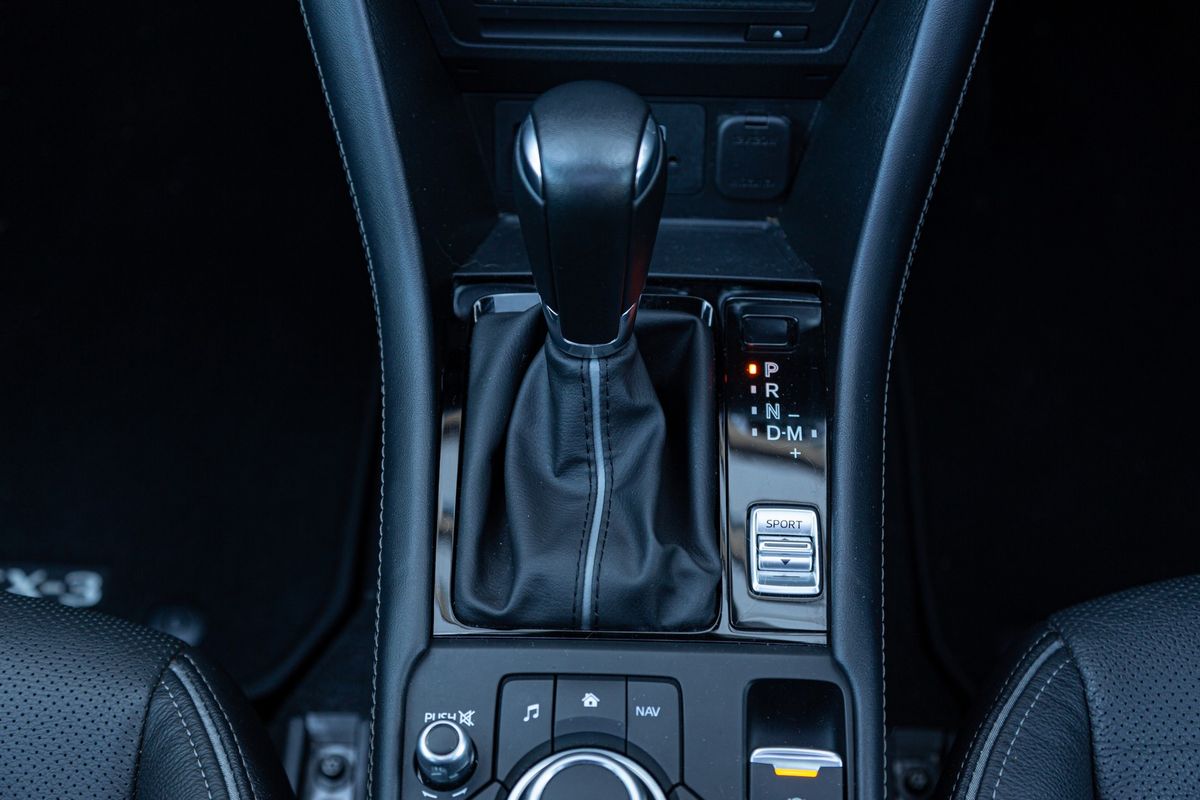
As with other petrol-engined Mazda products on the local market, the CX-3 utilises a direct injection naturally aspirated (non-turbocharged) 4-cylinder engine. The Hikari derivative’s 2.0-litre unit produces peak outputs of 115 kW and 206 Nm, which seem reasonably potent. Power is directed to the model’s front wheels via a 6-speed torque-converter automatic ‘box.
In the past, a 2.0-litre engine would have given a small crossover a clear advantage; in the age of turbocharging, it no longer does.
Now, while the CX-3’s proven engine/transmission combination is likely to prove very reliable, its performance is rather… workmanlike. Perhaps we’ve become accustomed to the low-end urge of turbocharged motors, but the less powerful 1.2-litre 3-cylinder turbopetrol in the Opel Mokka, for example, feels way more energetic – plus it offers a bit more torque. In fact, almost all the Mazda’s segment rivals feel a bit more engaging and punchier to drive.
The engine tends to get quite vocal as it reaches the upper end of its rev range… and it’s not a pleasant noise. It makes the CX-3 sound as if it’s struggling, even though it’s not lethargic. Mazda says it’ll hit 100 kph from standstill in just under 10 seconds, which is about on par for this segment.
The CX-3’s torque-converter-type automatic transmission shifts slickly, but if you want more performance from the Mazda’s drivetrain, don’t expect eager responses.
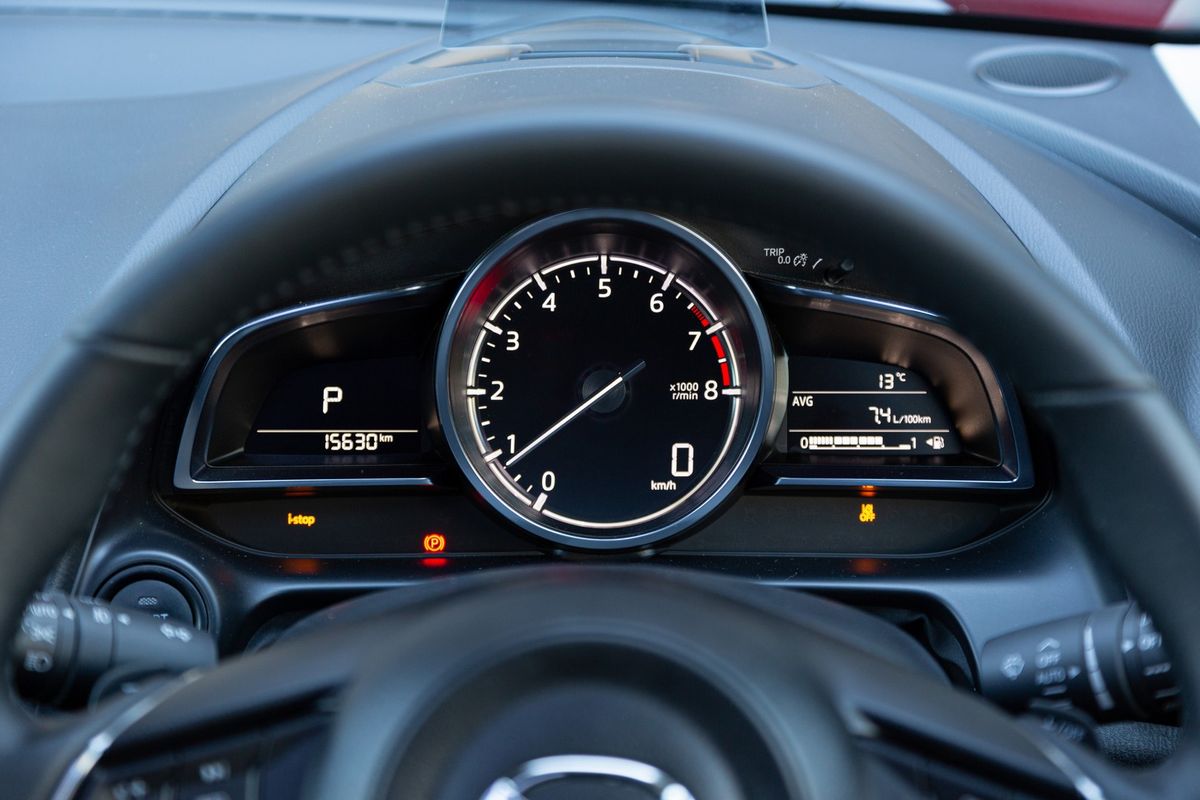
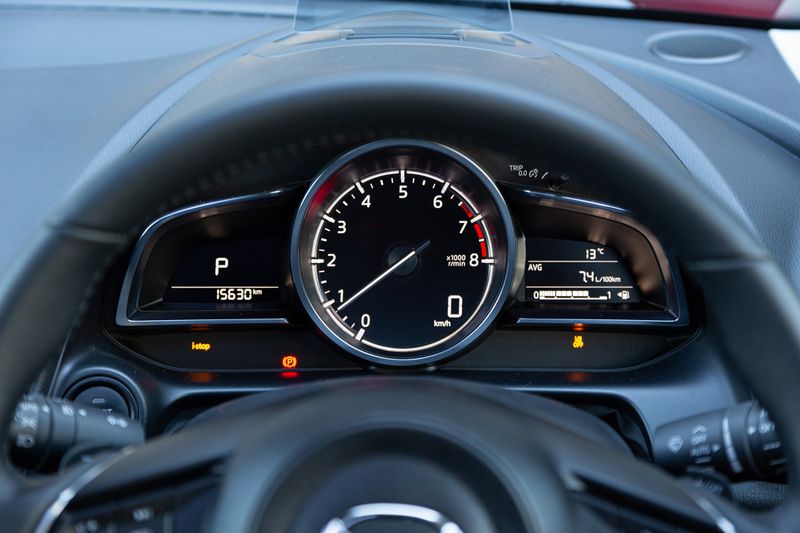
To the 2.0 Hikari’s credit, however, the test unit indicated an average fuel consumption of 7.4 L/100 km, which, if not highly frugal, compared well with the claimed figure (6.7 L/100 km).
Handling Ability and Ride Quality
It’s a pity that a product that is as sporty-looking as the CX-3 doesn’t have a more engaging drivetrain. Granted, compact family cars are usually unexciting to drive, but considering Mazda’s long-held brand philosophy (to build fun-to-drive cars), it’s a bit of a letdown.
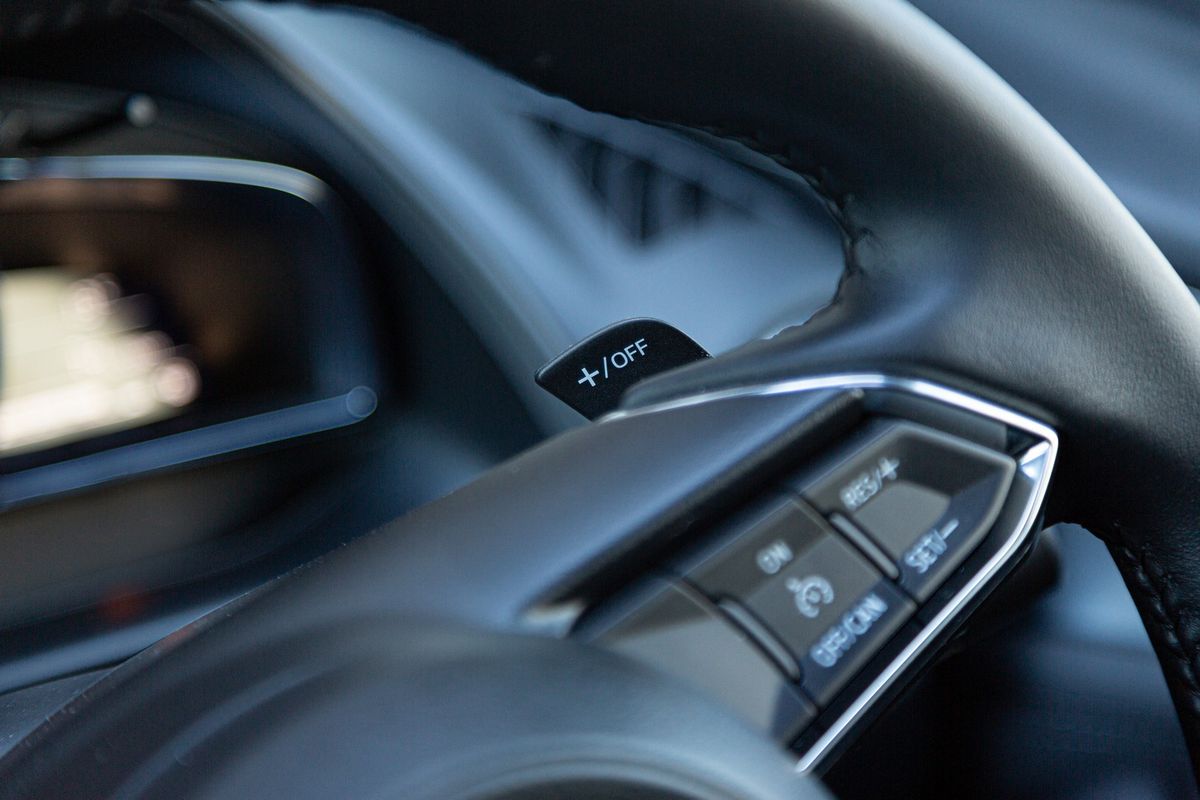
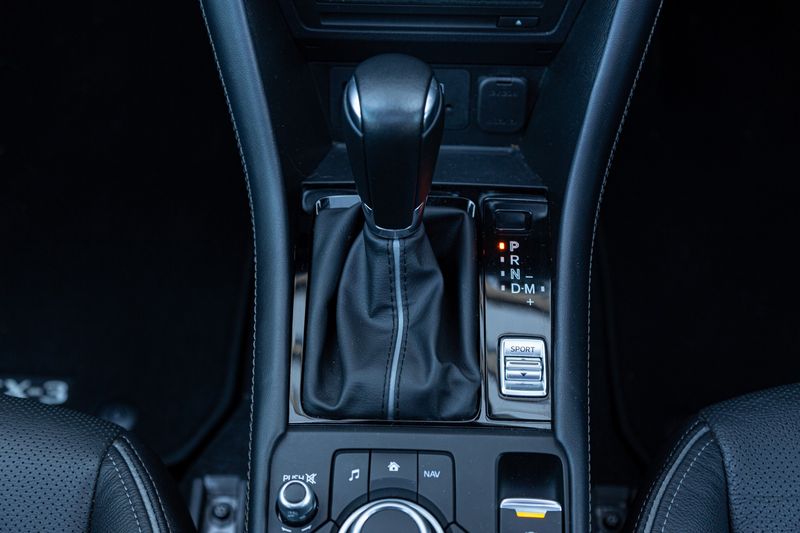
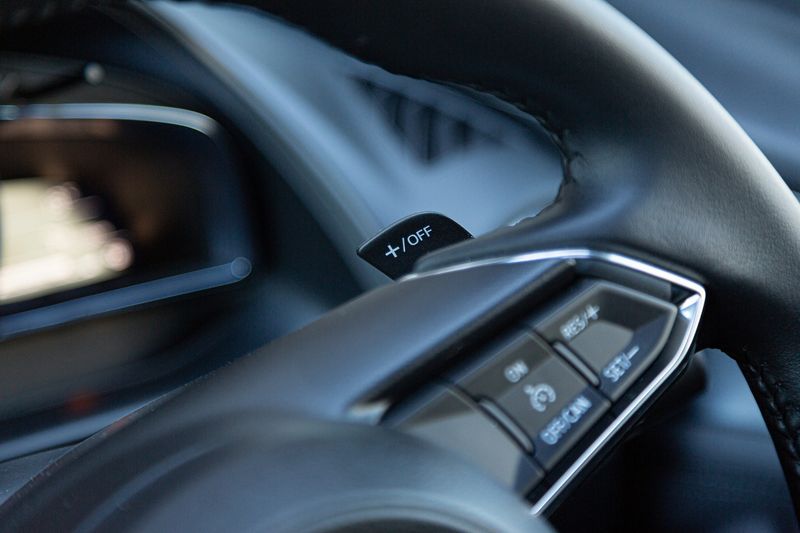
If you want more driver engagement, you can utilise the steering wheel-mounted paddles to actuate manual gear shifts.
The 2.0 Hikari does redeem itself in the steering-, handling- and ride quality stakes, however. It tips the scales at just under 1 300 kg and feels sufficiently planted and wieldy. Like all of Mazda’s passenger cars, the steering setup is admirable – drivers are likely to appreciate the light and direct feel. There are gearshift paddles located on the ‘wheel, which are nice to use.
The ride quality is fair too. Despite the fitment of sporty 18-inch wheels, the suspension strikes a good balance between sportiness and ride comfort (the profiles of 215/50 R18 tyres aren’t too low – which means that their sidewalls offer a little more absorbency, or “give”, when traversing potholes). Therefore, those who will use the Mazda on the daily commute (the overwhelming majority of owners, we suspect) will find it adequately refined and forgivingly damped.
The top-of-the-range Mazda CX-3 comes fitted with 18-inch alloy wheels shod with .
Price and after-sales support
Prices of the Mazda CX-3 derivatives start from R373 400 and go up to R509 300, for this flagship 2.0 Hikari derivative. The vehicle is sold with a 3-year/unlimited km warranty and a 3-year/unlimited km service plan.
The flagship Mazda CX-3 has its merits, but it competes with its newer, roomier CX-30 sibling on price.
The CX-3 has had a good run over the past 7 years; we’ve tested it on a few occasions and know of several owners who adore the compact family Mazda (despite its known practical shortcomings). It’s interesting to note that the model has been discontinued in Europe and the ‘States; rumours abound that an all-new 2nd-gen model will be unveiled later this year.
Compared to the market it entered in 2015, the CX-3 now competes with a glut of smartly packaged small crossovers, many of which are laced with features and attractively priced.
While the Mazda’s 2.0-litre naturally aspirated engine is old-school, it’s not a deal-breaker, but the limited luggage space and lofty asking price of the 2.0 Hikari (R509 000 – in May 2022) are drawbacks, considering what else is on the market. This derivative’s added safety features are nice-to-haves in this segment, but buyers are looking for value first and foremost.
The CX-3 is simply too small and too expensive to best the current crop of fashionable and turbocharged compact family cars. If you can get an excellent deal on a demo unit, it’s worth a look, but, the newer and bigger CX-30 just makes far more sense at a similar price point. Also, consider one of the many models featured in the 2022 Crossovers Buyer’s Guide.
Frequently Asked Questions
Is the Mazda CX-3 still sold new in South Africa?
The Mazda CX-3 was officially discontinued in South Africa in the first quarter of 2024. While it may still be available as a new vehicle on some dealership floors until stock is sold out, it is primarily available on the used car market.
What engine was used in the Mazda CX-3 in South Africa?
The Mazda CX-3 in South Africa was powered by a 2.0-litre, naturally aspirated Skyactiv-G petrol engine. It produced 115 kW of power and 206 Nm of torque, and was available with both a 6-speed manual and a 6-speed automatic transmission.
What are the key features of the Mazda CX-3’s interior?
The Mazda CX-3 was known for its stylish and well-built interior. Key features included a MZD Connect infotainment system with a rotary dial controller, a head-up display on higher-end models, and high-quality materials, giving it an upmarket feel.
What are the main competitors of the Mazda CX-3?
The Mazda CX-3 competed in the compact crossover segment against rivals such as the Hyundai Creta, Toyota C-HR, and Volkswagen T-Cross. It was praised for its sharp handling and premium design.
8 Used Performance Car Bargains for the Price of a BMW 2 Series
New cars are wonderful but in case you haven’t noticed, they’ve become hellishly expensive, especially if you want some meaty performance. However, if you want ultimate performance bang for your buck then the used market has so much to offer! We list 8 used performance bargains to consider under R800 000!
If our clickbaity headline caught your attention and you asked yourself why the BMW 2 Series is being dragged into this fray, then, welcome!
Allow me to set the scene for you. Not too long ago, I reviewed the new BMW 220i M Sport for Cars.co.za (you can read the review here). The new 2 Series is a great driver’s car but the 220i ultimately lacks the necessary engine punch to properly exploit its capable chassis.
For the record, a new BMW 220i M Sport is currently priced at R772 590, before options, and offers 135 kW and 300 Nm from its 2.0-litre turbopetrol engine. Quite frankly, that’s a lot of money to pay for comparatively droll engine outputs. Even the pricey Volkswagen Golf GTI offers much more grunt for less money!
With that said, the BMW 2 Series is not the only product to suffer from this high price, low-performance syndrome — it’s happening across the new vehicle market!
However, there is one superpower that every car buyer has at his or her disposal and that is the power of choice!
As new car prices soar ever further beyond financial reach and into the realm of dreams, you can choose to consider a plethora of options available to you in the used car market and it’s here where you can find significantly more performance and kerb appeal for your money and in some cases, you will even have some change left over to buy ice-cream for your family and maybe even another car!
Cars.co.za currently has over 66 500 used cars for sale and in this article we list just 8 used performance bargains for you to consider (there are many, many more), all priced under R800k. More so, every car listed here has significantly more power and performance on offer than our guinea pig, the BMW 220i M Sport! Sorry, BMW…
Please feel free to browse used cars on Cars.co.za and share your ultimate performance bargain with us on Twitter, Facebook or Instagram!
8 Used Performance Car Bargains For Sale on Cars.co.za
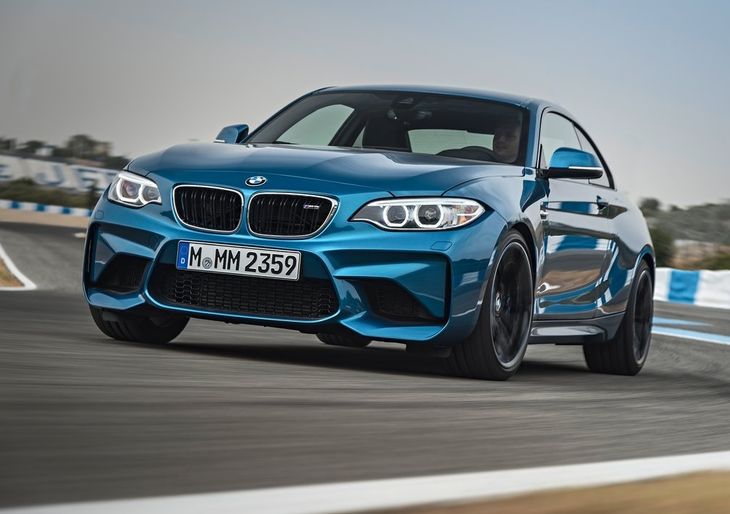
BMW M2 Coupe
This is a lifeline for the BMW lovers out there and if you want a scintillating driver’s car, this is it! For the same money as a brand new BMW 220i M Sport, you can step into a used BMW M2 Coupe!
BMW fans can also consider cars such as the M3, M4 and M5, so there’s certainly lots of choice available in this price range.
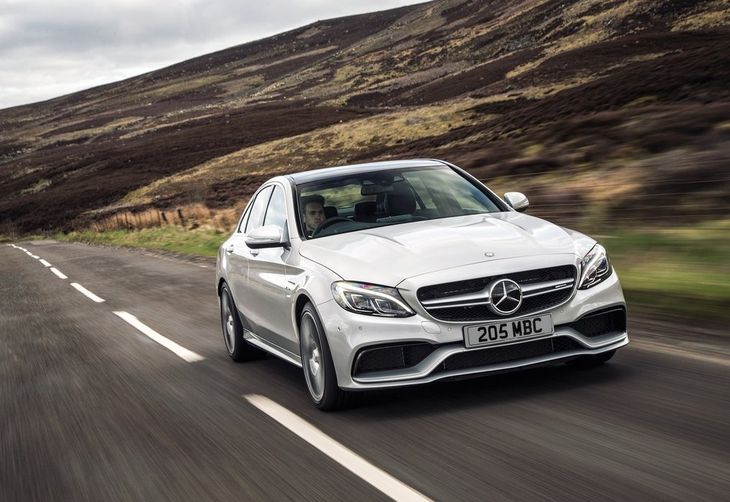
While we wait in anticipation for the new AMG C63 to come to market, you might want to consider a used Mercedes-AMG C63 V8 bruiser. Other options to consider include the Mercedes-AMG E 63, SL and SLK.
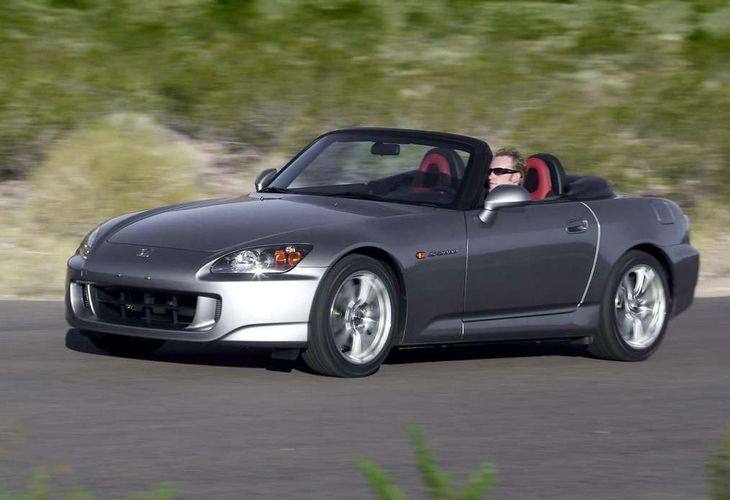
For something a little different (and cheaper) you might want to consider the Honda S2000. It’s a highly sought after modern classic and finding a clean and unmolested S2000 isn’t easy, but they are out there! Make sure to read our in-depth Honda S2000 Buyer’s Guide for everything you need to know about buying and owning an S2000.
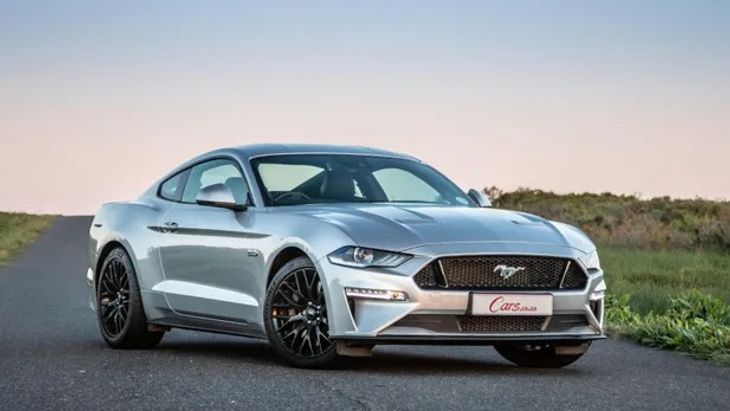
The Ford Mustang is a popular sports car choice the world over and if you are keen to go this route, be sure to opt for the V8-powered Mustang for maximum thrill and kerb appeal.
The rising price of fuel not only eats into disposable income – it pushes up the costs of goods and services. Driving battery-electric cars is a sure-fire way to avoid “the forecourts”, but they’re prohibitively expensive… Fortunately, there are several highly fuel-efficient small-capacity petrol and hybrid cars on the new-vehicle market!
PARTNERED CONTENT
Adopting a frugal driving style can dramatically improve your vehicle’s fuel consumption and, therefore, save you a considerable amount of money, but driving a vehicle that is inherently light on fuel is another way to reduce your monthly fuel bill. For the benefit of motorists who cannot afford to purchase a battery-electric vehicle, motus.cars, supported by Motus Ford (previously Imperial Ford), brings you a list of the 30 most fuel-efficient petrol cars (under R500 000) in the SA new-vehicle market.
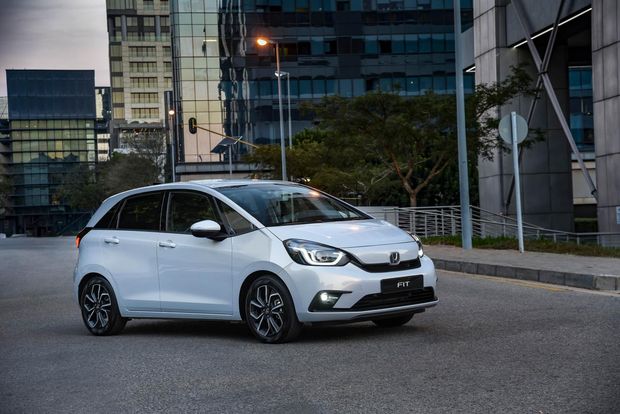
The new Honda Fit (previously Jazz) is cheap to run in petrol or hybrid guise.
Pathways to lower consumption
The motor industry has become obsessed with “efficiency” as it manages its transition from internal-combustion engines (ICE) to all-electric propulsion. However, “efficiency” is not a new concept; manufacturers have been endeavouring to lower fuel consumption ever since governments began instituting emissions standards in the Nineties. As a rule of thumb, smaller vehicles tend to be more fuel-efficient than their larger counterparts because they have comparatively low kerb weights and are fitted with smaller-capacity engines, let alone fewer features (all of which add bulk), as well as narrower tyres. Conversely, the bigger and heavier a car is, the larger its engine and the higher its fuel consumptions tend to be.
There is a case to be made to upgrade to a modern car just because it’s statistically likely to be more fuel-efficient than its immediate predecessors. Modern small cars aren’t just “econoboxes”; they utilise some of the latest engine technology – several of them have small-capacity motors with turbocharging (it enables them to deliver what torque they produce at low revs), but quite a few of them are still naturally aspirated. Non-turbo engines tend to feature on cars that cost less than, or just over, R200 000 (from new) in our list, such as (but not limited to) the Renault Kwid and Triber, 5 of the Suzuki models we’ve listed, Honda Amaze and Ballade, Hyundai Grand i10, Kia Picanto and the Toyota Agya.
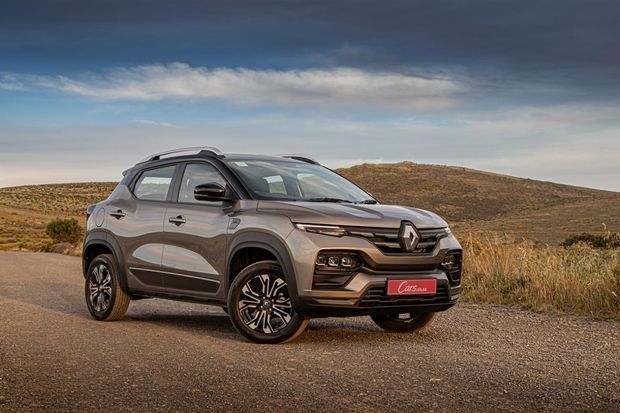
The Renault Kiger (and its Nissan Magnite cousin) utilise small-capacity turbocharged engines.
As for the small-capacity turbocharged engines, they feature on most compact hatchbacks on this Top 30 list, but also on several of the compact family cars, such as the Ford EcoSport, Volkswagen T-Cross, Renault Kiger and Nissan Magnite.
But how do bigger vehicles, such as the Toyota Corolla and Corolla Cross, boast admirably low claimed consumption figures of 3.5- and 4.3 L/100 km? Until recently, the answer would have been: “they’re probably turbodiesels”. But no, whereas diesel engines are likely to remain the powerplants of choice for bakkies and off-roaders, they’ve fallen out of favour for passenger cars because of concern over the particulates they emit (over and above other harmful gases).
Instead, the Toyota Corolla 1.8 Hybrid XS, Toyota Corolla Cross 1.8 Hybrid XS and the Honda Fit Hybrid employ hybrid technology, which combines an internal combustion engine with an electric motor mated with a high-voltage battery, which has a particularly high energy density to facilitate more rapid self-charging. These models rely on electric power for executing pull-aways, creeping along in congested traffic and, if necessary, supplementing the petrol engine’s propulsion.
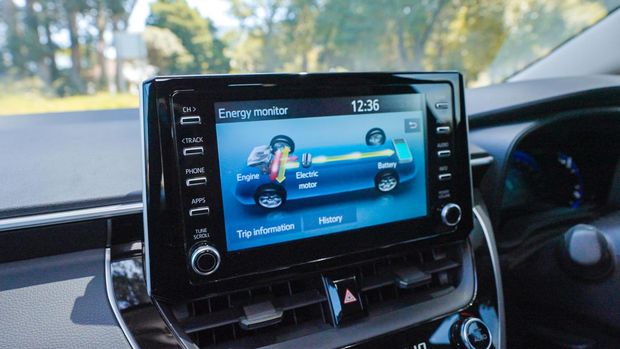
The Eco readout on the Corolla Hybrid’s infotainment screen shows the flow of energy in the power unit.
They’re conventional hybrids (not plug-ins, of which there are quite a few on the market – but they’re far more expensive than R500k), which means their batteries are replenished only by harvesting kinetic energy (regenerative braking). To put it simply, when a hybrid car coasts it uses its own momentum through the drivetrain to spin a generator that generates electricity, which, in turn, feeds into the high-voltage hybrid battery. It’s like free petrol, or, more accurately, free energy.
The recent spate of fuel-price increases has only increased consumer interest in “electrified vehicles”. In many overseas markets, hybrids are the most popular derivatives (in terms of sales) in their respective model ranges and, until recently, Toyota, which has promoted petrol-electric technology since it launched the pioneering Prius two decades ago, has sold as many hybrid versions of the new Toyota Corolla Cross as it has of conventionally powered derivatives…
Seeing as it may take a while before battery-electric vehicles (with no combustion engine element) will become a common sight on South African roads (due to a number of factors), “hybrid” seems to be the efficiency tech in the ascendancy.
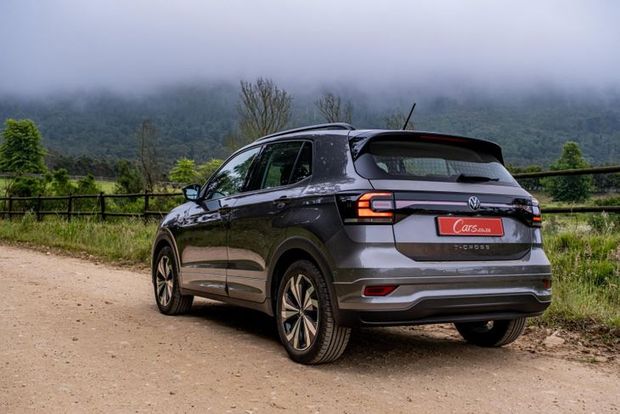
The Volkswagen T-Cross 1.0TSI 70kW Comfortline is the 10th-most efficient petrol car.
Top 30 fuel-efficient petrol cars under R500k
This list was compiled in May 2022. Figures are determined by manufacturers’ claimed fuel consumption figures and, for the sake of brevity, we’ve only listed the most affordable version of each model.
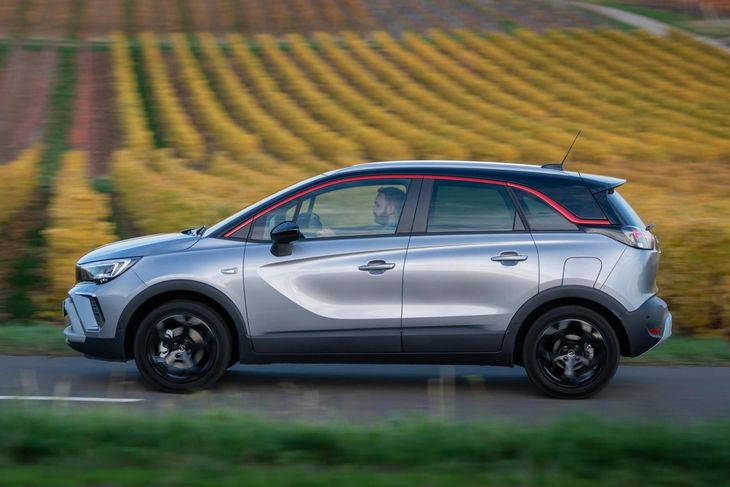
The Opel Crossland 1.2 people-mover has a claimed consumption of only 5.1 L/100 km.
Practical ways to save fuel
Don’t let it idle – Drive off immediately after starting the car in the morning. Do not let it idle for any length of time, especially when the engine is below normal operating temperature. This will reduce the amount of time the engine has to inhale the over-rich fuel mixture required for starting and idling. Such a mixture is wasteful and contaminates the oil to such an extent that prolonged idling can ruin an engine. Go slow at first, to allow the engine, gearbox and final drive to warm up.
Go with the flow – Drive at a reasonable pace in town. Stay with the traffic, because if you slow down too much you will not only be an obstruction but you may also have to change down to a lower gear. A lower gear usually, but not always, means your vehicle will use more fuel.
Easy on the throttle – Accelerate slowly and use the lower gears when you start from a speed below 1 500 rpm to avoid over-stressing the engine. Large throttle openings will obviously increase the fuel flow rate.
If you stick to the speed limit you will avoid incurring fines – and excessive fuel consumption.
Drive (slightly) slower – Reduce your habitual cruising speed by 10 kph. This will result in a measurable drop in fuel consumption because the air resistance increases dramatically with an increase in speed.
Anticipate the traffic – Try to brake as little as possible. Braking converts the car’s momentum into heat energy. When you accelerate again the engine has to supply the lost energy to get the vehicle back up to speed again.
Avoid roof racks and trailers – Carry excess luggage inside the car as much as possible. A roof rack or a trailer increases the air resistance dramatically but an increase in weight only increases the amount of fuel being used by a significant amount while you accelerate, not while you’re cruising.
Remember to check your car’s tyre pressures regularly.
Check your tyre pressures every two weeks – Soft tyres not only have a negative effect on fuel consumption but are also a major cause of blowouts.
Look after your car – Have your car serviced regularly to ensure it is in optimal working condition.
Keep score – A record of fuel consumption using the tank-full to tank-full method is a good way to remind yourself about saving fuel. This system works fairly well if you do not let the pump attendant trickle fuel in after the automatic pump was activated. Investigate any unreasonable change in fuel consumption.
Windows shut – Driving with open windows or activating the air-con will increase your fuel consumption by a few per cent but you must be fanatic about reducing consumption to drive like that.