Hyundai Grand Creta Review – A great family car or a compromised SUV?
Looking for a family car on a budget, but with 7 seats? We dig down into the details of the new Hyundai Grand Creta
The Hyundai Grand Creta occupies a curious place on the local market. Thanks to its 7-seat configuration, it doesn’t really have any direct rivals; the Tiguan AllSpace is quite a lot more expensive, the Renault Triber is significantly cheaper, and MPVs such as the Suzuki Ertiga and Toyota Rumion are in a completely different segment.
And then there is the outlier which is proving very popular, the Chery Tiggo 8 Pro, which is roughly the same price but on the surface at least, represents “a lot more car” for your money
In this review, our video guy Ciro De Siena tries to make sense of this package from the successful Korean brand.
We take a detailed tour of the pricing and specification for the Grand Creta, a tour of the cabin, the middle row of seats and the third row of seats, as well as highlight a major issue with the boot space.
We also compare the two engines available in the range and the two trim levels, as well as detail the relevant fuel consumption.
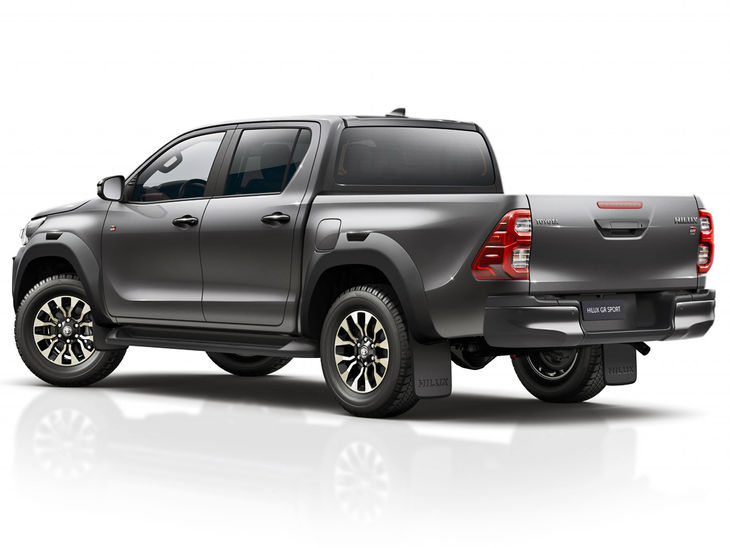
Don’t Expect a Full-Fat GR Hilux Soon, Says Toyota Exec
Do Hilux buyers really want a high-performance Hilux variant that would go toe-to-toe with the new petrol-powered Ford Ranger Raptor V6? A high-ranking Toyota executive says the answer is no … for now.
The head of Toyota’s commercial-vehicle division in the United Kingdom says customers simply aren’t calling for a high-performance, full-fat GR version of the Hilux positioned to take on the new Ford Ranger Raptor.
The flagship Raptor that tops the Blue Oval brand’s new Ranger line-up employs a twin-turbocharged 3.0-litre V6 EcoBoost petrol engine worth up to 292 kW and 583 Nm (depending on the market). The most powerful Hilux, meanwhile, is the new GR Sport, which in SA-spec form is set to generate uprated peak outputs of 165 kW and 550 Nm from its 2.8-litre, four-cylinder turbodiesel heart.
Gareth Matthews, Toyota GB Light Commercial Vehicles manager, told Auto Express the Hilux GR Sport would remain the flagship derivative for the foreseeable future, saying customers are not “complaining that the 2.8-litre diesel is underpowered”.
“There isn’t a good enough case for us to look beyond that for a performance version. The GR Sport has the looks that customers want while still having the right payload weight, so we’re meeting the demands of performance fans there,” Matthews explained.
If Toyota were to build a GR Hilux (perhaps using the 3.3-litre turbodiesel from the Land Cruiser 300 as a base), it’d surely come only with the next generation of the popular Japanese bakkie, which is still a few years away.
The executive furthermore suggested Toyota had no plans to ditch diesel as the Hilux’s primary fuel source, despite plenty of industry buzz about upcoming hybrid and fully electric bakkies.
“It’s difficult to move away from diesel, because of the payload weights and towing capacity that’s needed for a pickup. For us, full electric doesn’t meet that requirement yet, while heavier vehicles are turning more towards fuel-cell technology, which could be a better alternative,” Matthews told the publication.
As a reminder, the new Hilux GR Sport that is expected to hit the South African market later in 2022 will likely ship standard with various upgraded suspension components, a raft of styling updates (inside and out) and choice powertrain tweaks to push the engine’s outputs to the aforementioned figures (up 15 kW and 50 Nm).
Volkswagen Golf 8 R 20 Years Is The Most Powerful Yet
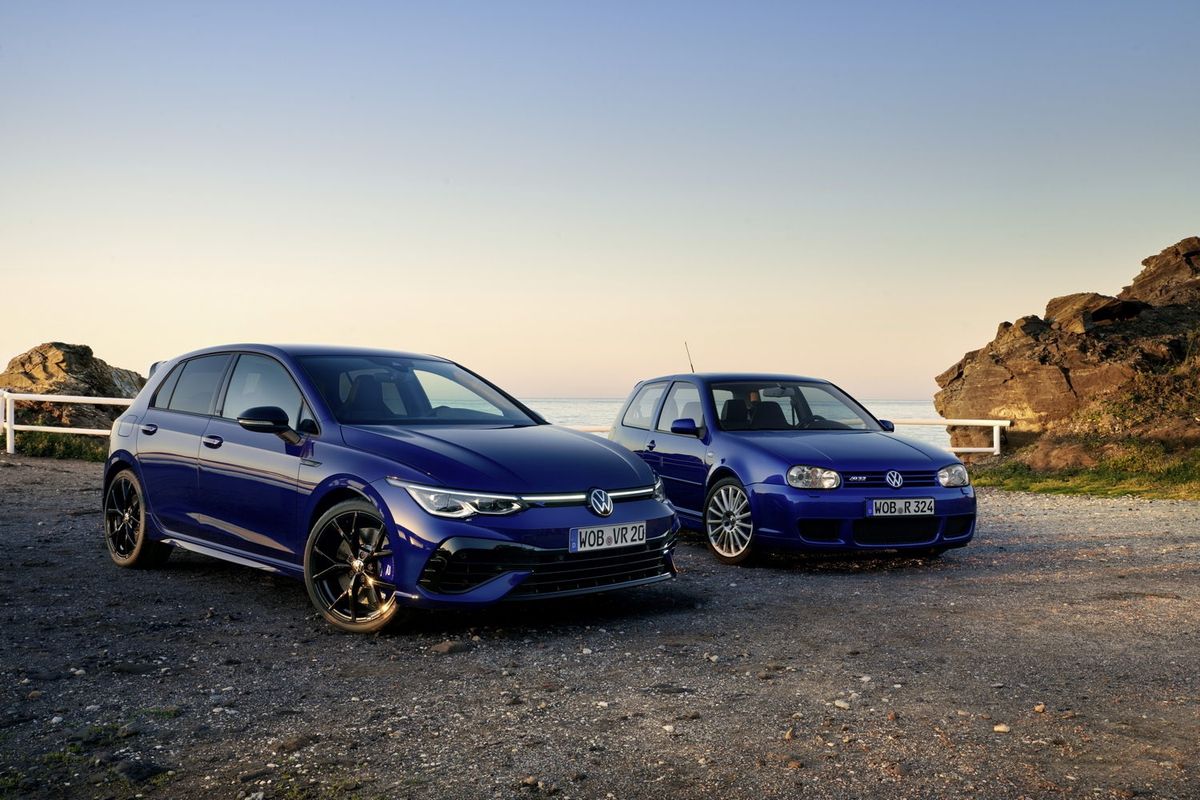
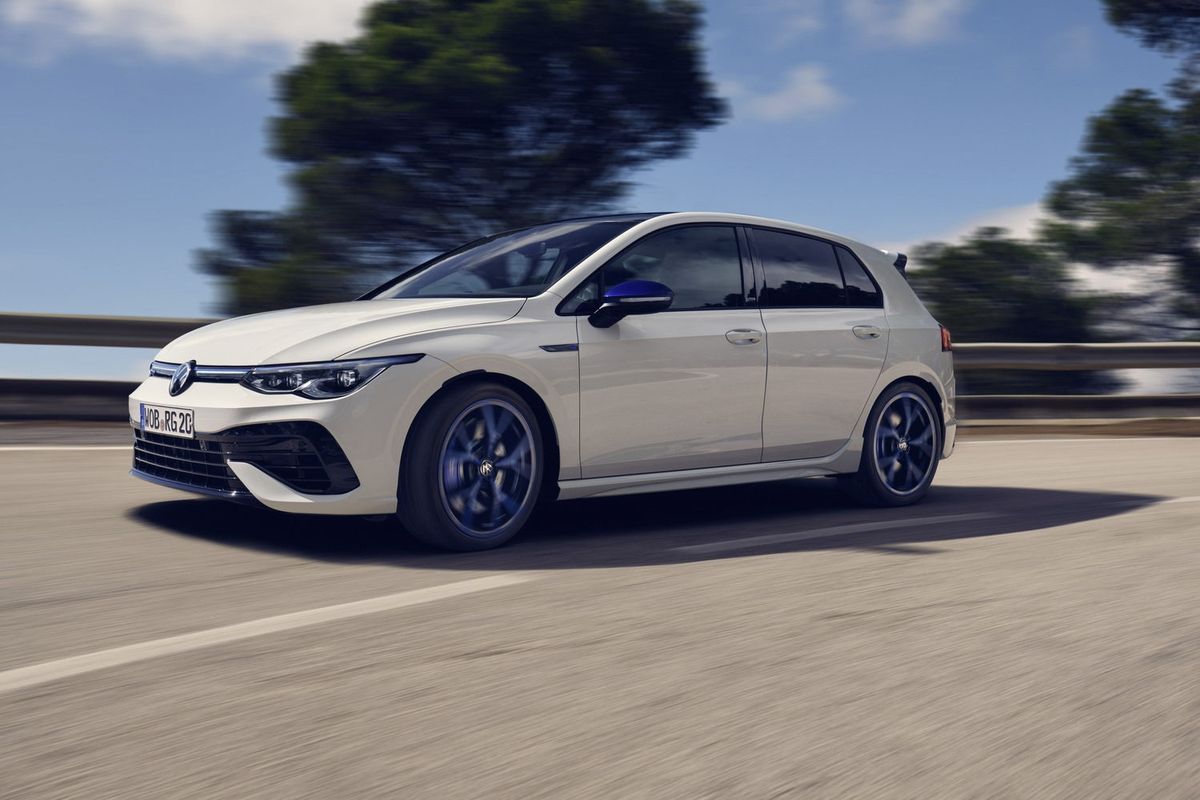
To celebrate 20 years of Golf R, Volkswagen has built the most powerful Golf ever. Meet the Volkswagen Golf 8 R 20 Years.
It’s crazy to think that 20 years have passed since the first 6-cylinder powered Golf made its debut back in 2002. It was quick, with around 180 kW driving all 4 wheels and popular too, with Volkswagen claiming that it sold three times the number it had planned. Since then, more than 260 000 Golf R models have been sold around the world. To celebrate, Volkswagen has made the most powerful Golf R yet and the simple teaser campaign had us puzzled.
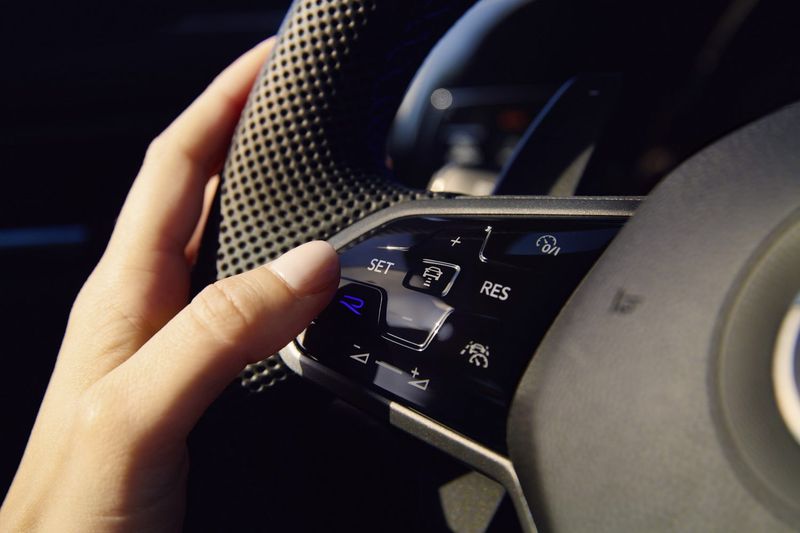
The 2.0-litre turbocharged 4-cylinder outputs have been increased, going from 230 kW and 420 Nm, to a mighty 245 kW. It appears torque stays the same. It’s not just about the power though as Volkswagen has fitted the car with something called Emotion Start, which is likely to upset those who live around you first thing in the morning. Turn the key and enjoy what Volkswagen calls “heightens the anticipation of a typical R driving experience.”
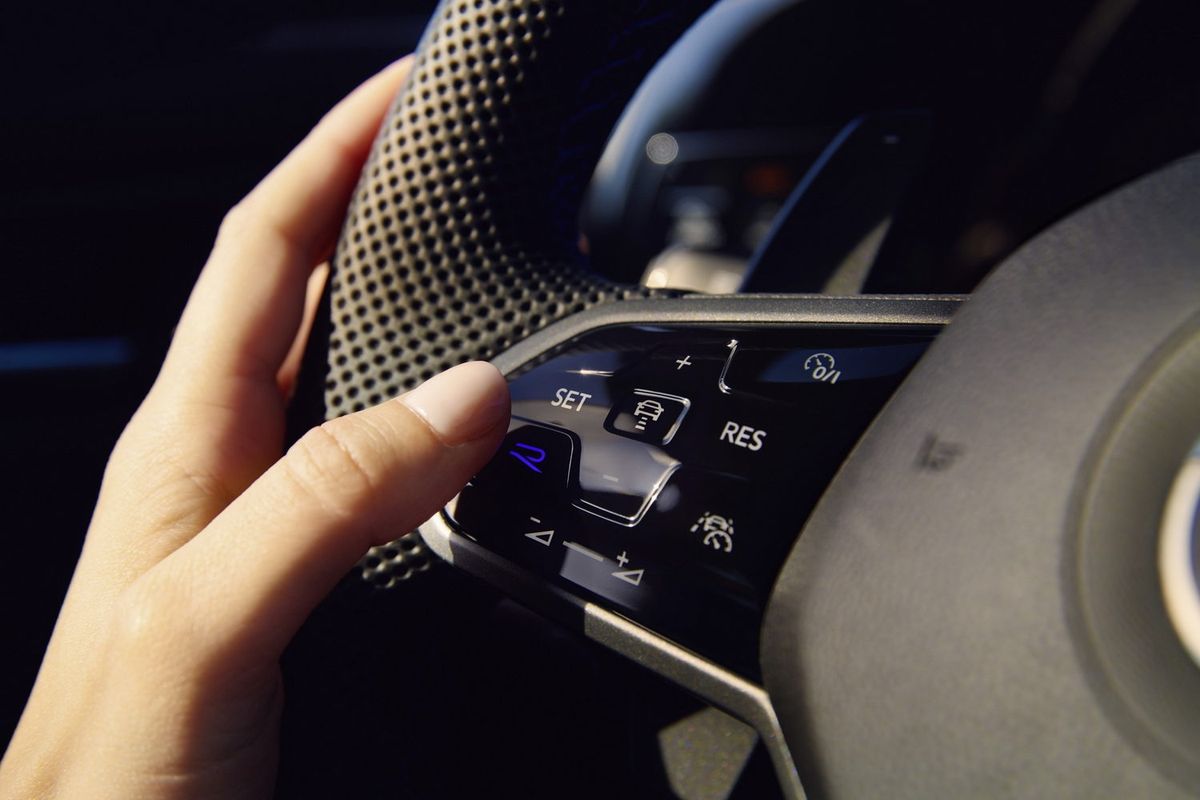
The quick-shifting DSG transmission has been reprogrammed to deliver a bit more physical involvement. Pull the gearshift paddle to change up in one of the Sport modes and Volkswagen says the gearchange will be more engaging. We suspect this means it’ll give a satisfying feel, like a bolt-action rifle. There’s also a tweak to the engine’s turbo that is said to keep it preloaded to allow for faster power development and acceleration.
The standard Golf R is good for a 4.7 second run to 100 kph, and while performance figures for the Golf 8 R 20 Years have yet to be announced, we reckon it’s probably down to 4.5 seconds.
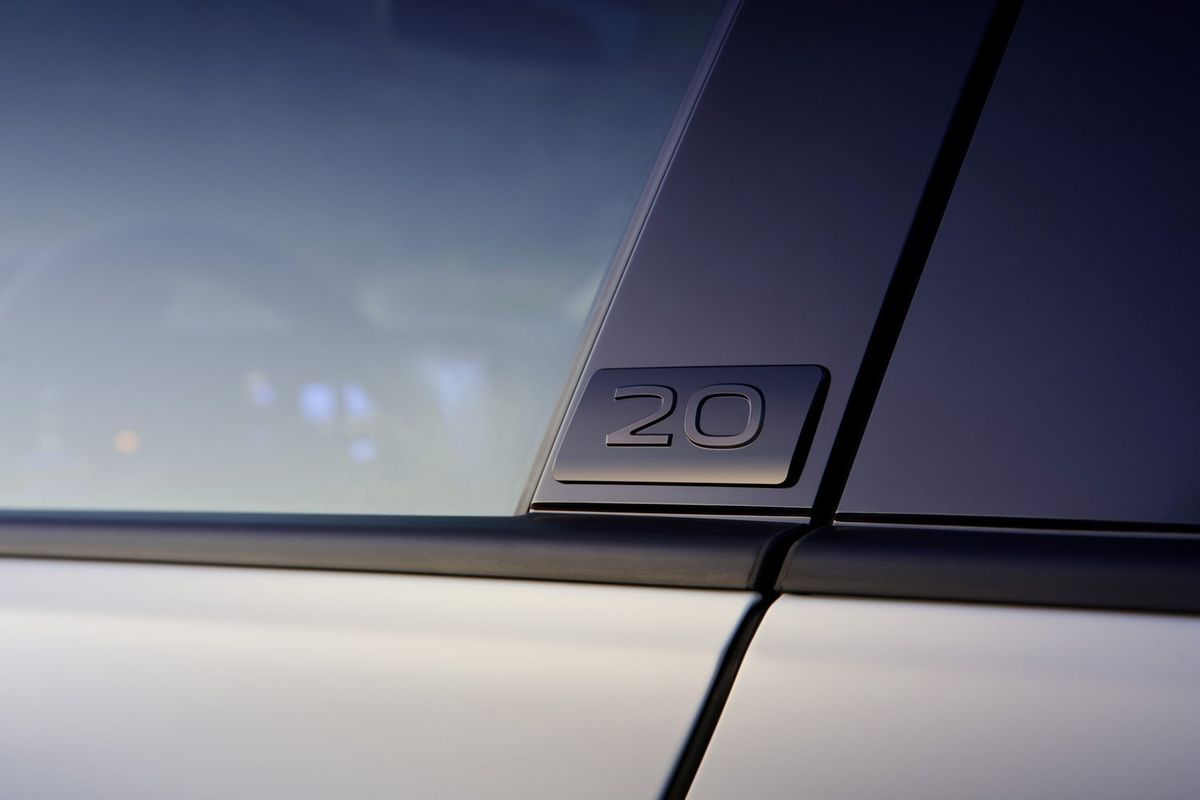
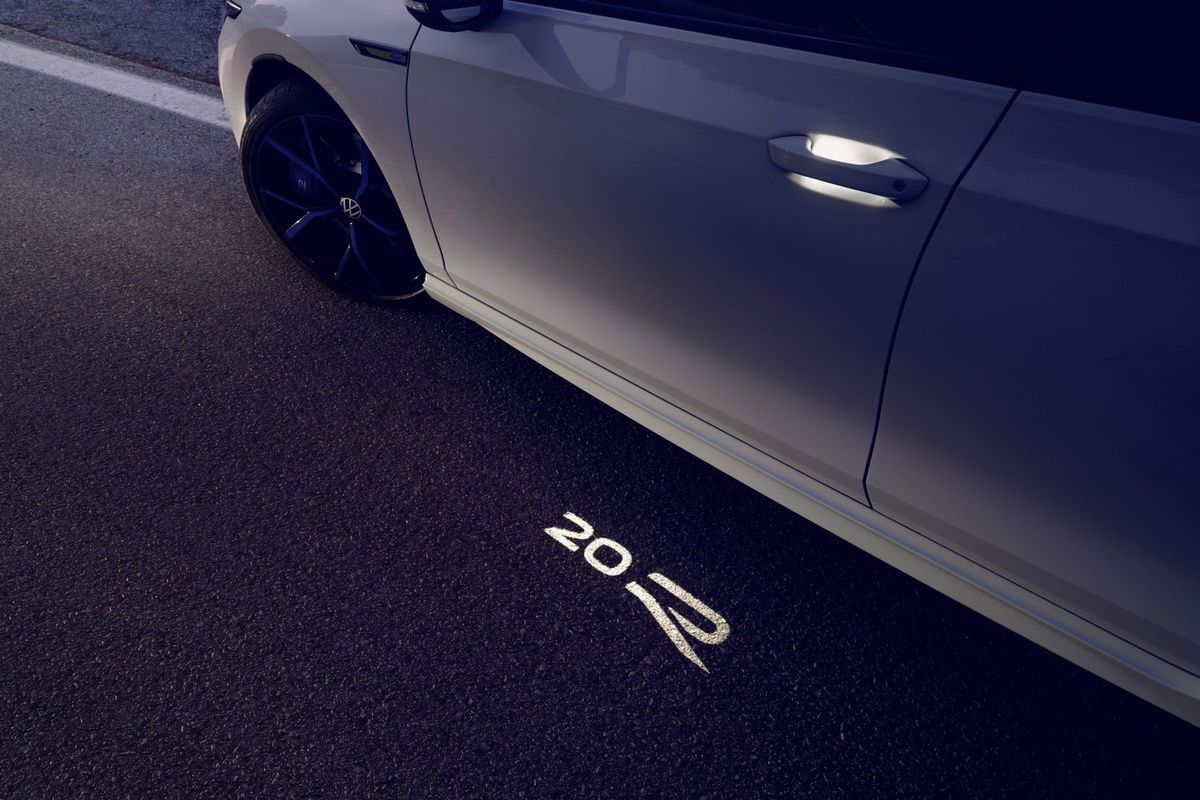
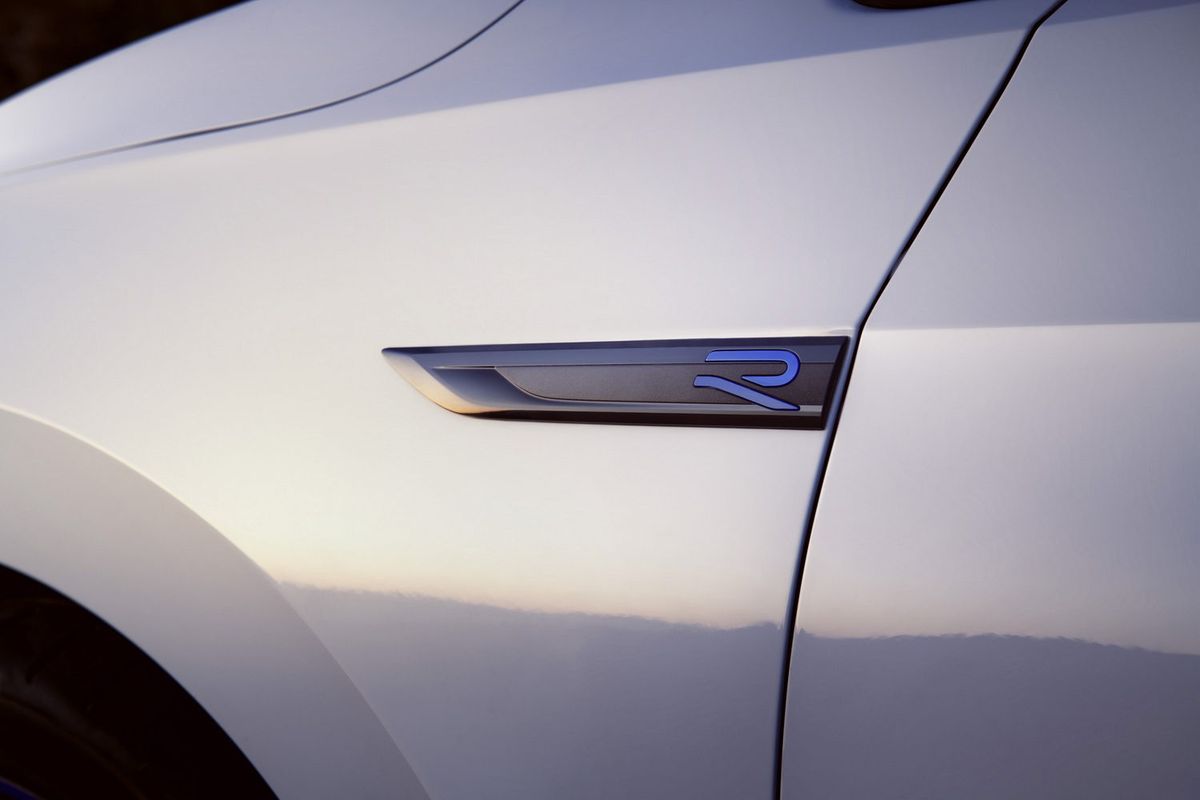
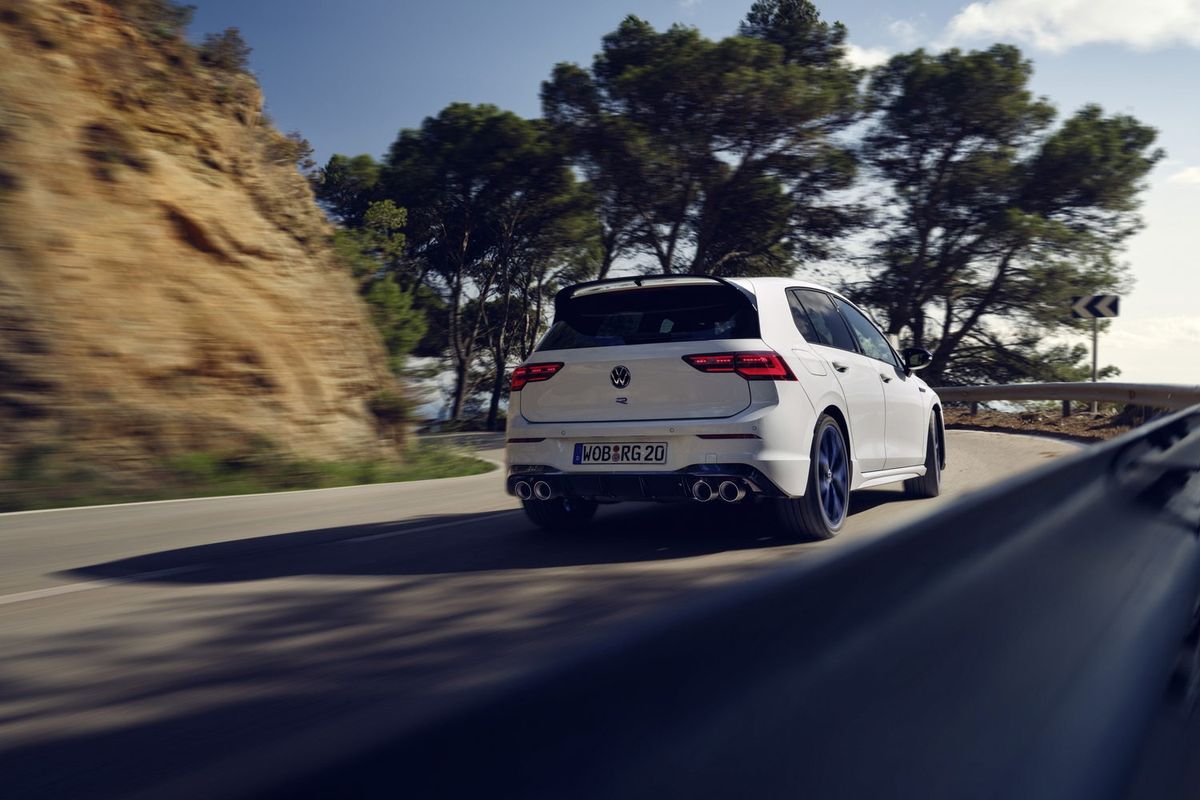
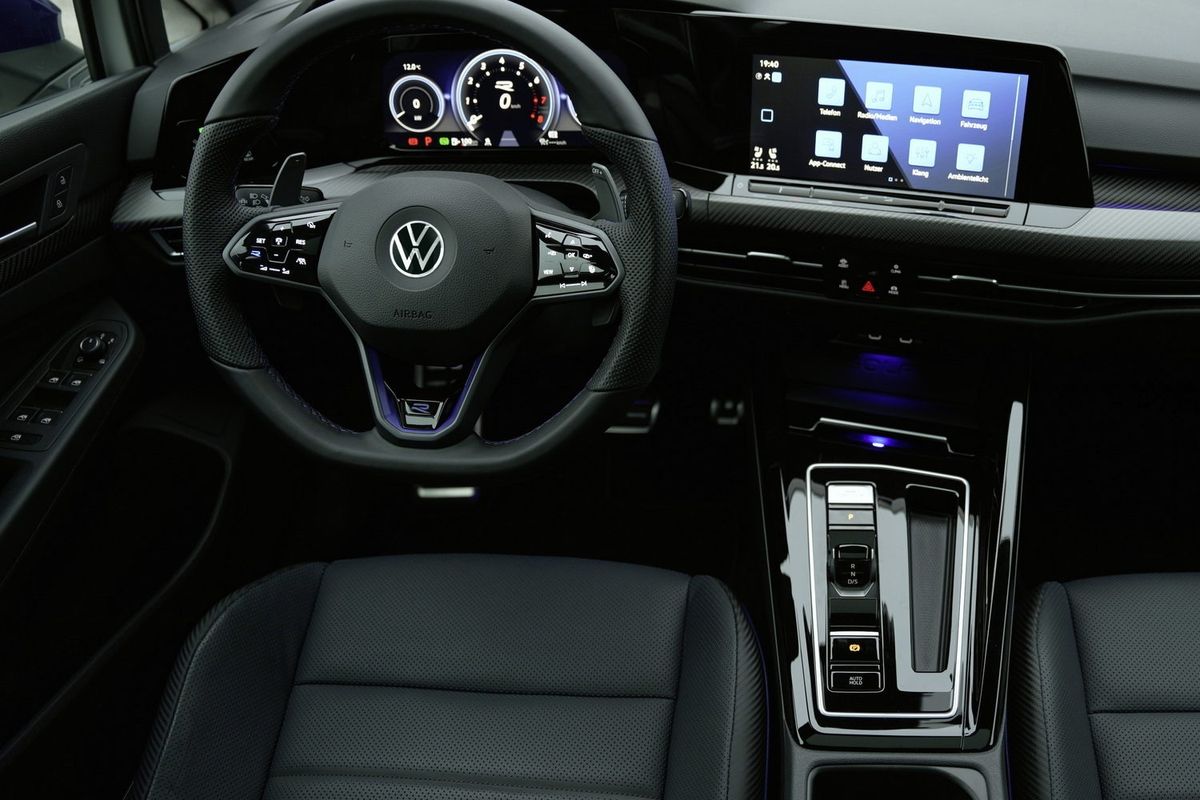
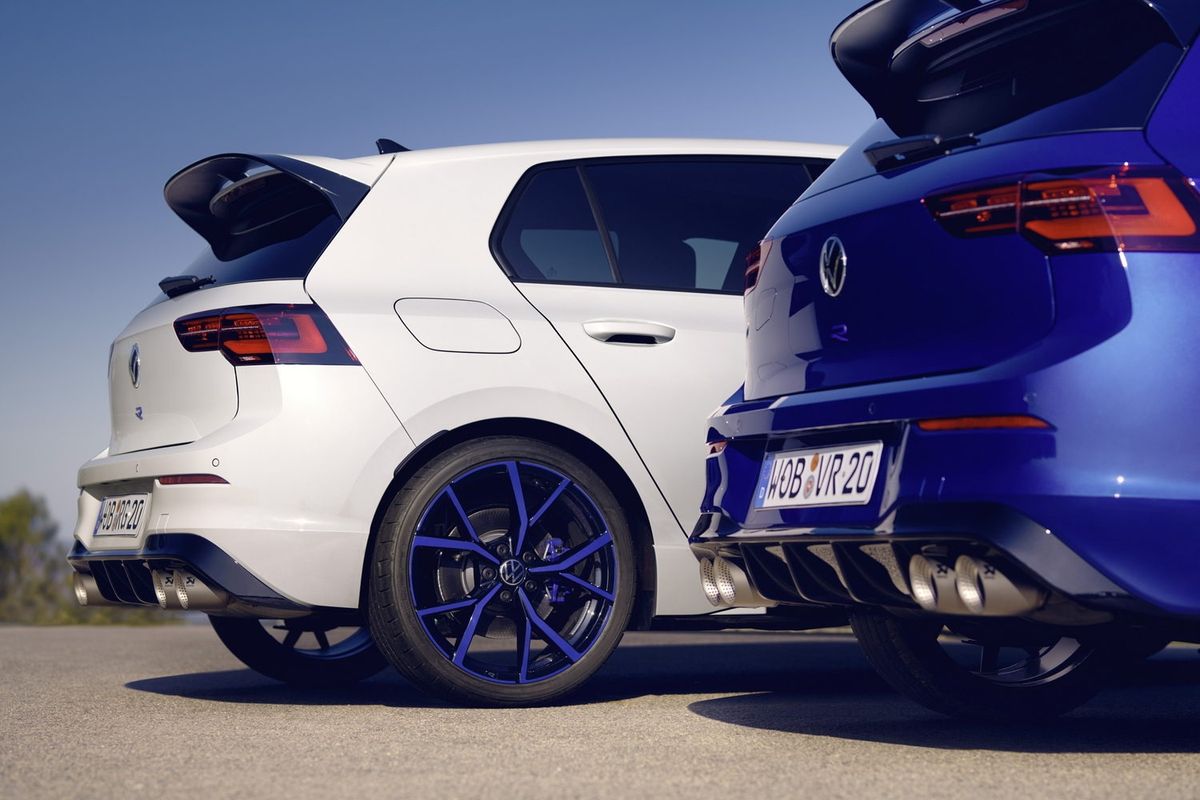
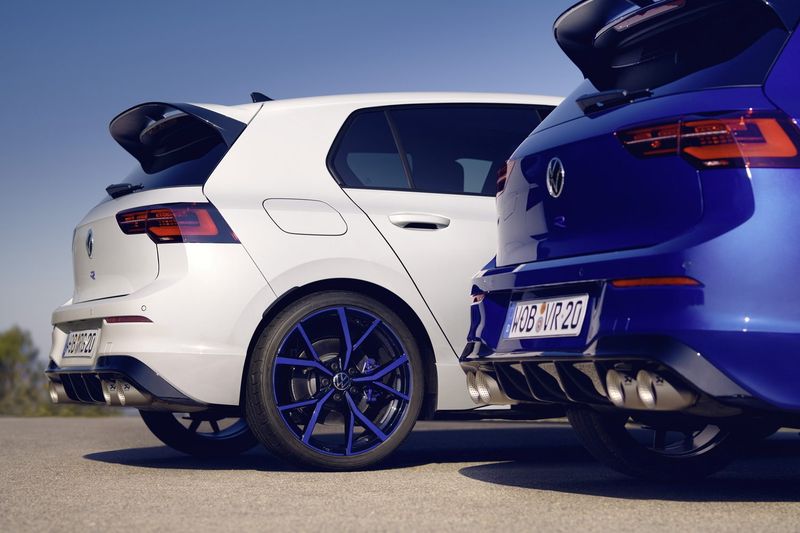
Visually, you get a more aggressive spoiler on the roof, 19-inch Estoril wheels finished in blue, subtle 20 badges, not so subtle blue R badges, while the cabin gets carbon-fibre trim and a subtle blue R badge on the steering wheel
The standard Volkswagen Golf 8 R is expected to touch down in South Africa in the 3rd quarter of 2022.
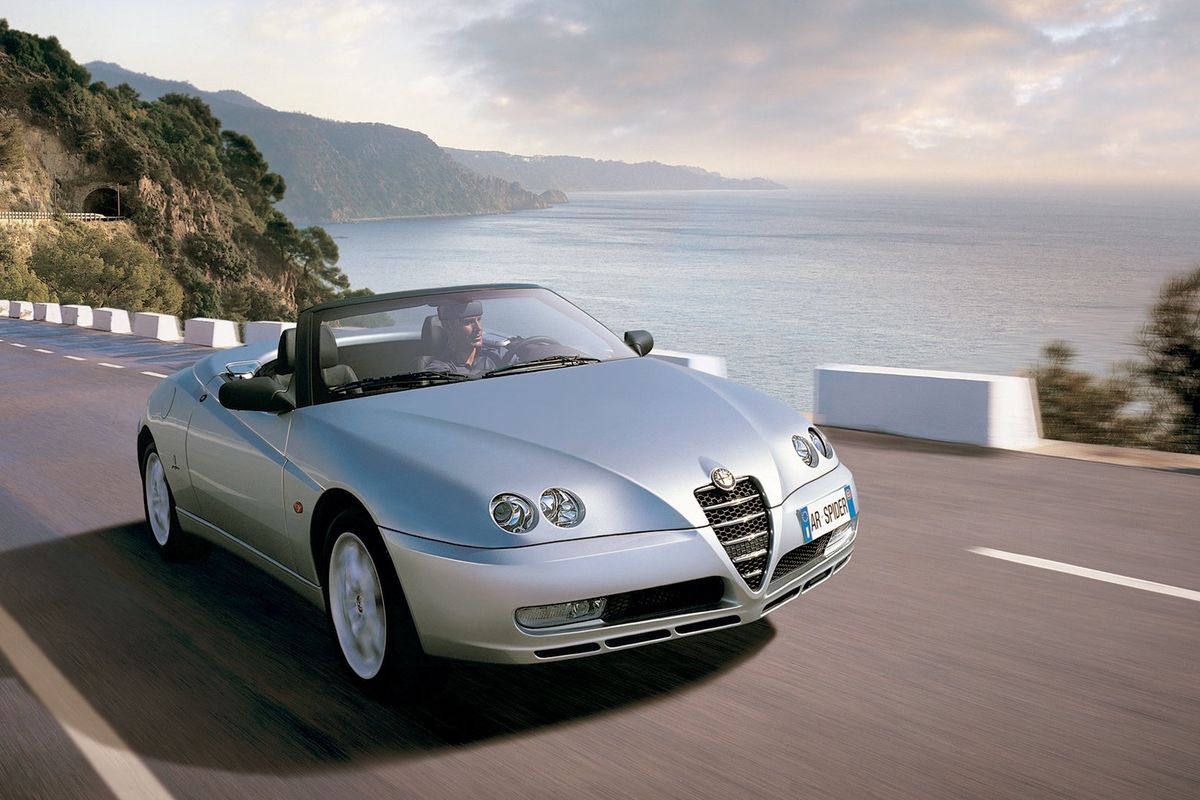
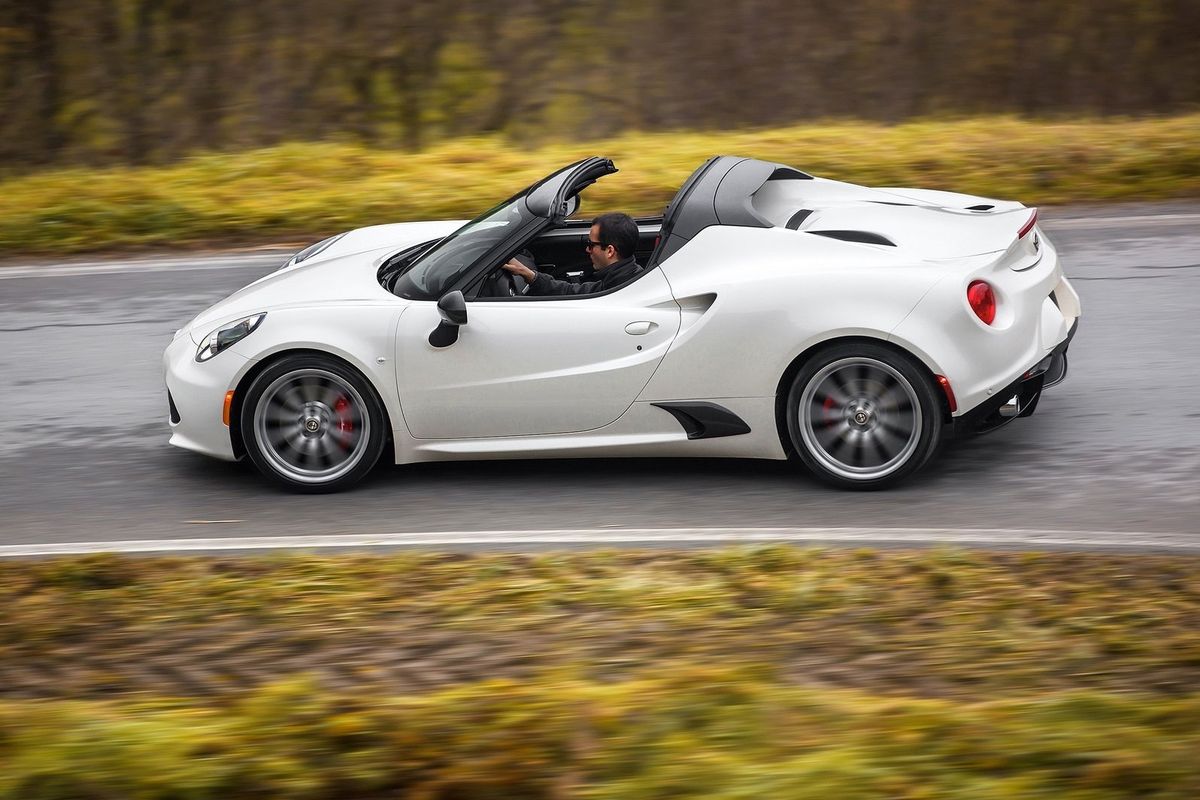
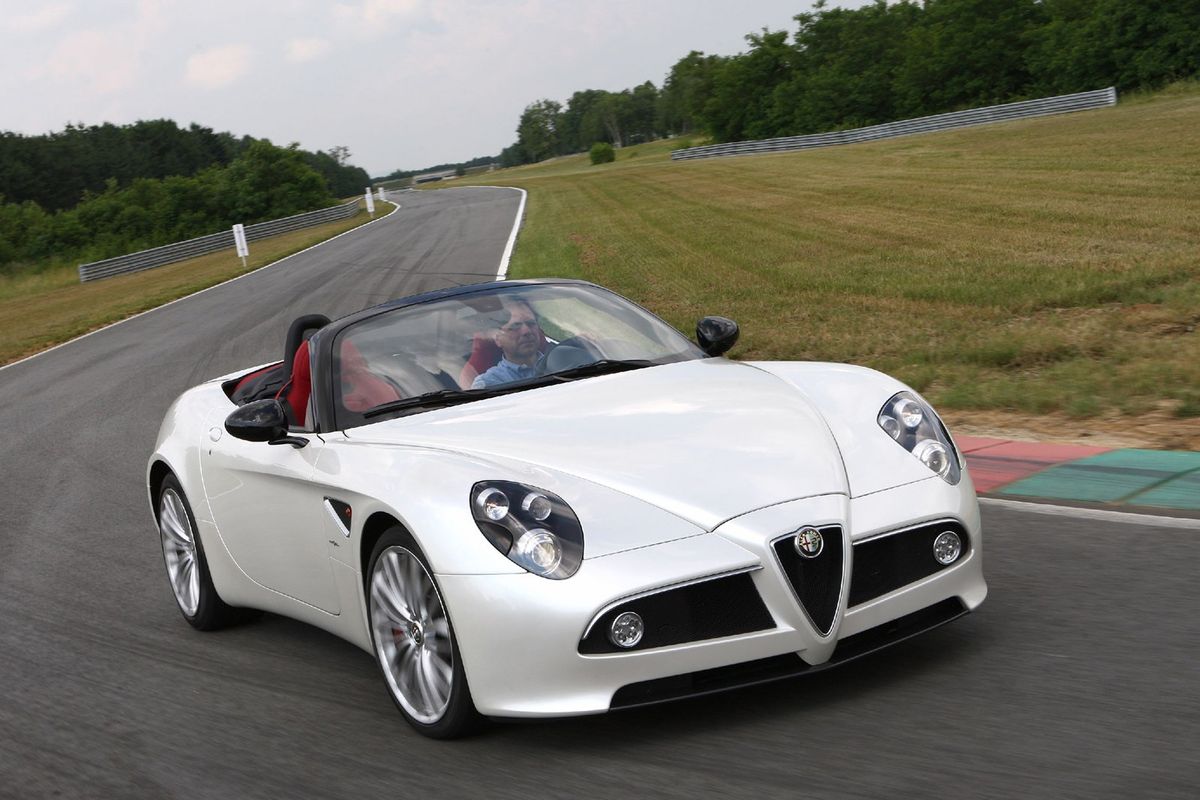
Alfa boss confirms work has begun on a modern take on the iconic Alfa Romeo Convertible. The catch? It will be electric.
During an interview with Auto Express, the current Alfa CEO Jean-Philippe Imparato highlighted the brand’s recovery plan for the next few years. It’s critical to note that desirable and ‘fun’ products can’t be produced until there are some volume products.
While Giulia and Stelvio are good products, they hardly sell in big numbers. The Alfa Romeo Tonale smaller SUV was recently revealed and there’s hope that it can snatch sales from the likes of the X1/Q2/GLA. The Italian brand is also looking at a B-segment SUV that will be revealed next year. Right now, the Alfa boss is trying to build a sustainable and successful product base.
“We have to act from now. Tonale is first, then there will be more (cars coming) in 2023 and 2024. And then, between 2025 and 2026 we can ask, ‘Where are we?’ The conclusion will be that we are sustainable, that we exist in three regions in the world, and that we are known for our performance and quality.” said Imparato. “But we will think about doing it [Duetto] far before then. I will not tell you an exact date, but it will be far before.”
So, what do we know about the all-new Alfa Romeo Convertible? There will only be electric powertrains and the product will make use of the soon-to-be-launched Stellantis electric platform dubbed STLA. It’s available in three size options, but Alfa will use the two biggest options. There will be battery sizes of 87 kWh and 104 kWh, and electric motors will offer outputs ranging from 125 kW to 180 kW. Rear-wheel and all-wheel drive options are on the table.
Despite many attempts at revitalising Alfa Romeo, it appears that under the guidance of Stellantis, we may have progress. We’ll be watching closely!
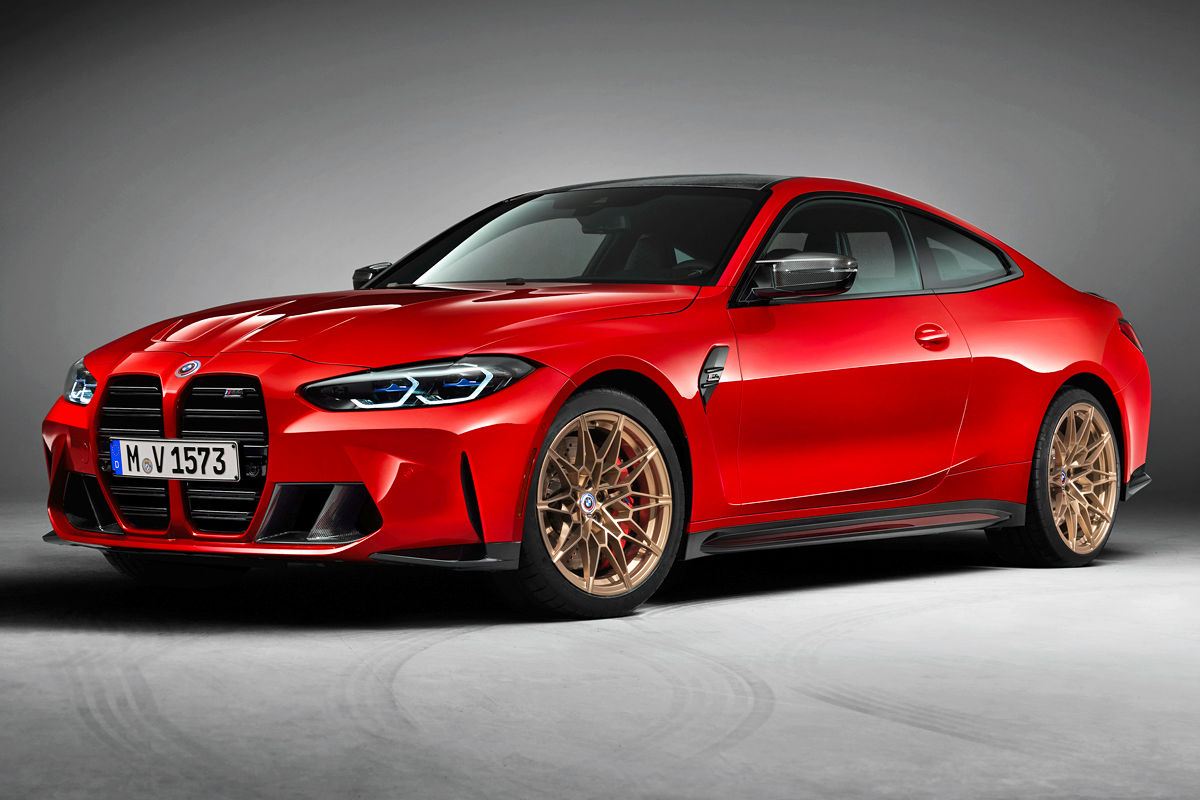
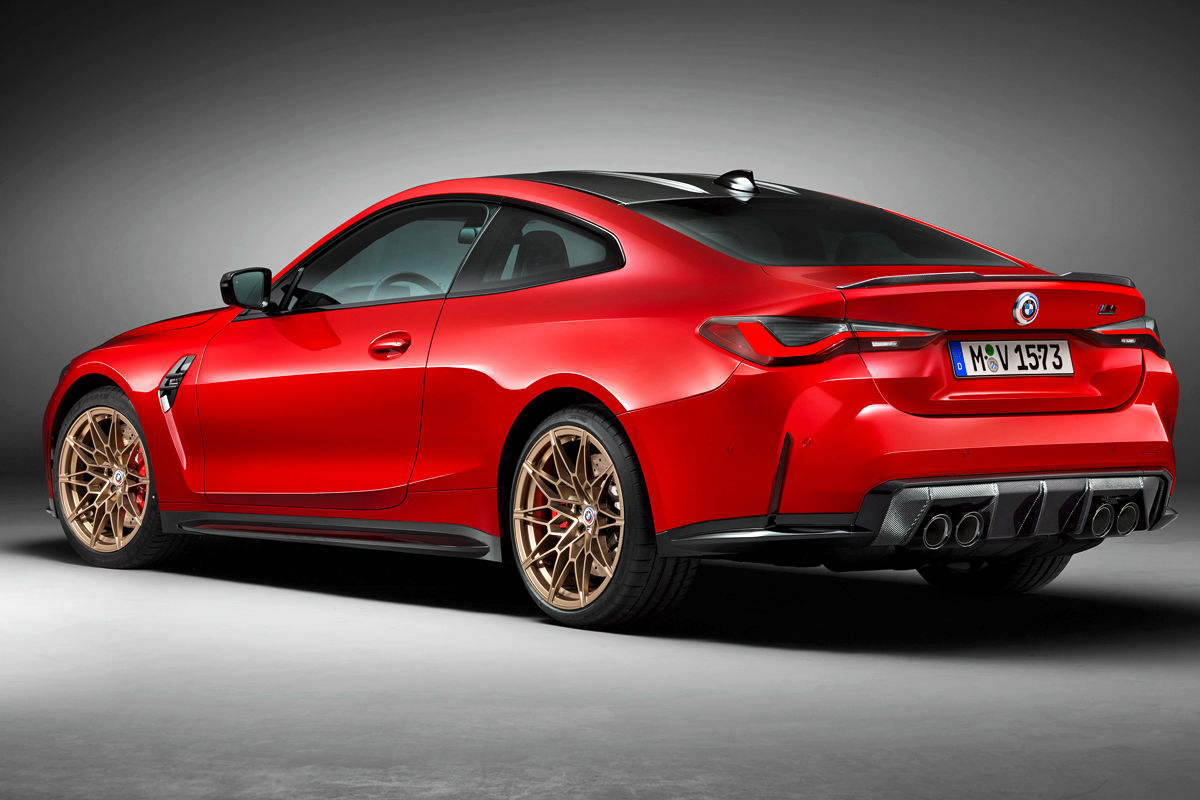
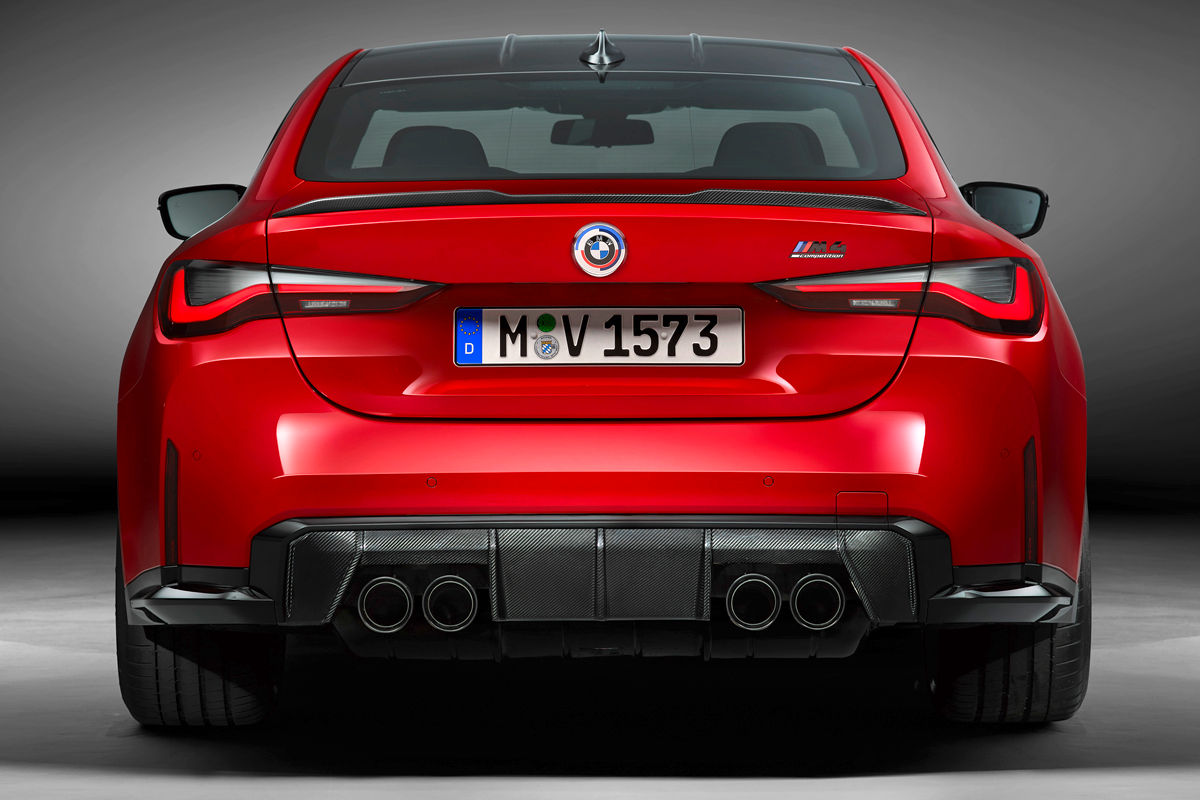
BMW has revealed the new M4 50 Jahre Edition, a special version of the M4 Competition conceived to celebrate – you guessed it – 50 years of the M division. Just 5 units are destined for South Africa…
The BMW M division recently unwrapped the new M4 CSL to mark 50 years of existence. But the performance division’s anniversary celebrations are by no means over, with the M3 Touring also on the horizon. Now the new M4 50 Jahre Edition has also hit the scene.
Interestingly, the Munich-based automaker has actually revealed 50 Jahre editions of both the M3 sedan and M4 coupé, though only the latter has been earmarked for South Africa (the M3 version was “designed exclusively for the US and Canadian automotive markets”, says BMW). In fact, just 5 units of the two-door model will make their way to our shores.
First things first, there are no changes to the oily bits. That means the M4 50 Jahre Edition’s twin-turbo 3.0-litre inline-six makes the same 375 kW and 650 Nm as the Competition model on which it’s based. Power goes to all four wheels (only xDrive versions of this special model will come to SA) through an 8-speed M Steptronic automatic transmission.
As a result, the vital statistics are unchanged. BMW claims the M4 50 Jahre Edition will reach 100 kph from standstill in 3.5 seconds, before topping out at 290 kph.
So, what makes a BMW M4 50 Jahre Edition special?
BMW says exterior paint-colour options for the newcomer include “style-defining” hues from the history of BMW M, complemented by M forged wheels in a “similarly exclusive colour scheme” along with “striking accents” in the cabin.
The paint colours on the table are Carbon Black, Macao Blue, Brands Hatch Grey, Imola Red and San Marino Blue. The 19-inch M forged wheels on the front axle and 20-inch items at the rear feature a double-spoke design, available for the first time in Orbit Grey Matt or Gold Bronze matt. All 5 units set aside for South Africa, however, will be finished in San Marino Blue with Gold Bronze matt wheels.
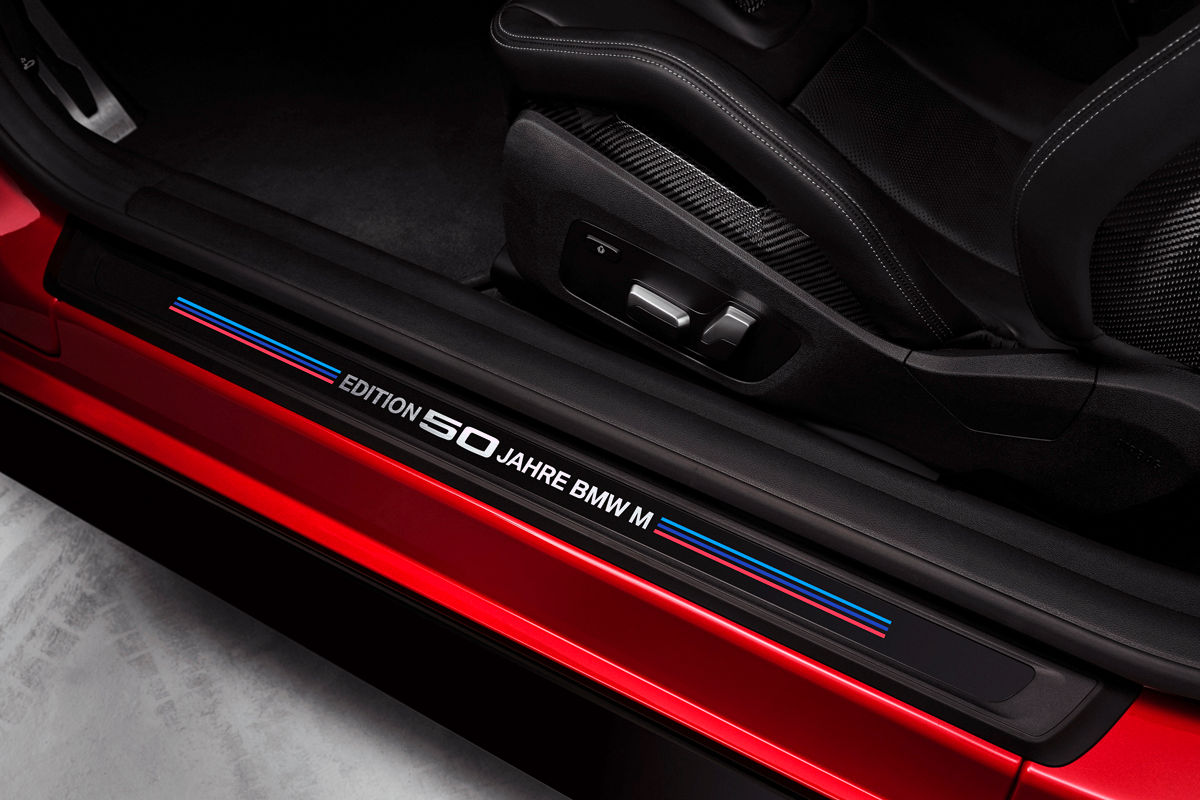
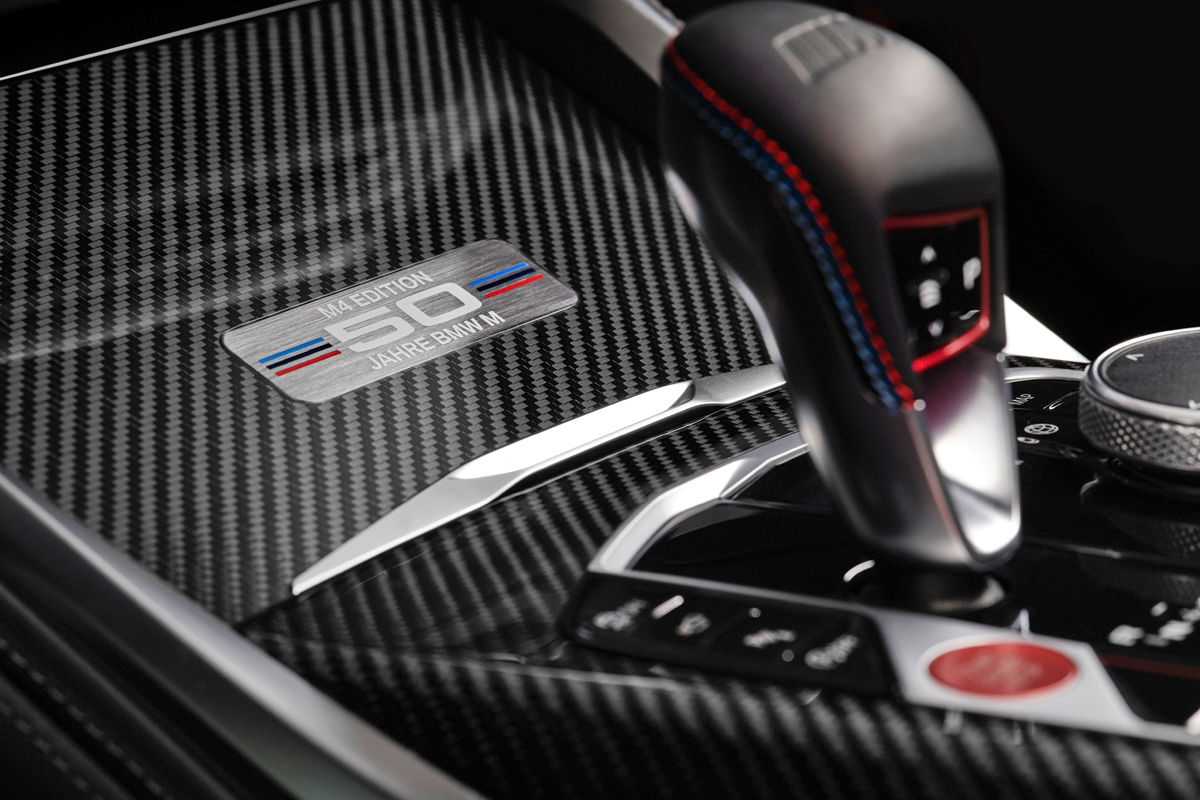
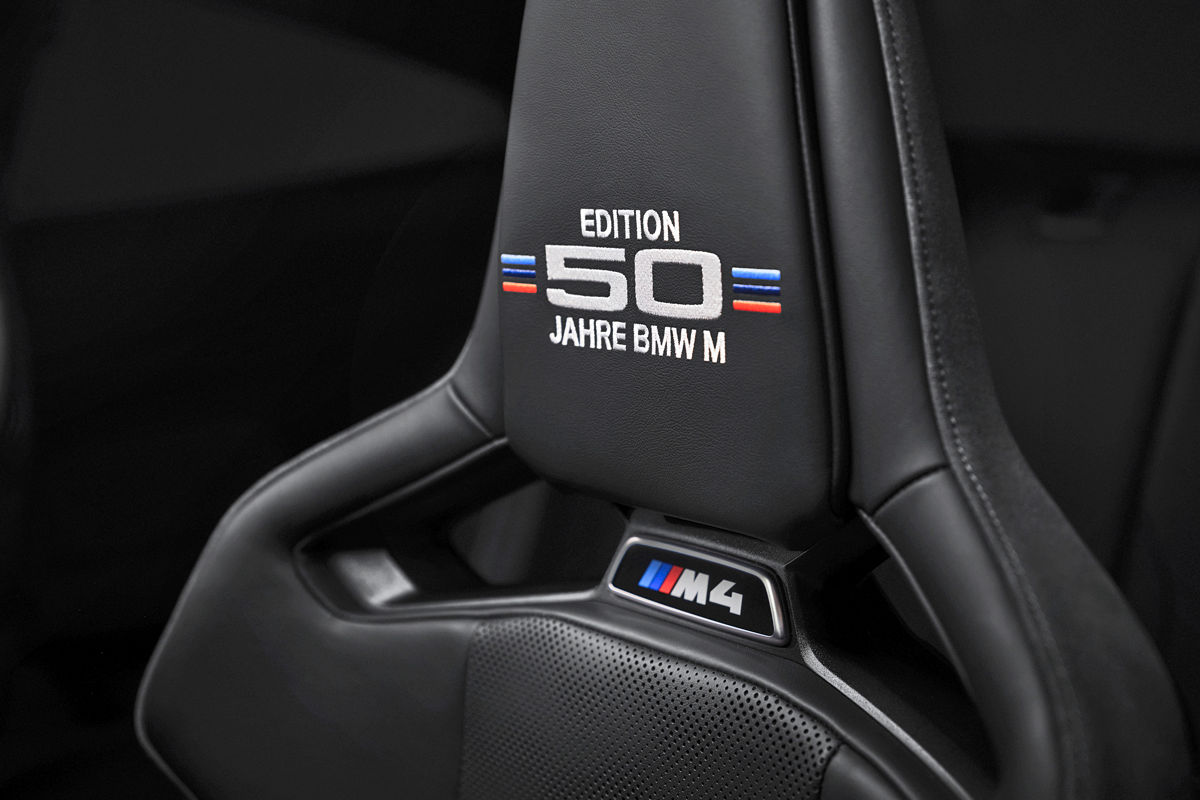
Inside, you’ll find special touches such as door sill panels bearing the lettering “Edition 50 Jahre BMW M”, along with a metal plaque on the centre console with the lettering “M4 Edition 50 Jahre BMW M” and a corresponding imprint on the headrests of the M carbon bucket seats up front.
BMW Group South Africa has yet to announce when these 5 units will touch down, but we’ll keep our eyes peeled and ears to the ground…
Mercedes-Benz Takes Aim at Ultra Luxury Market
Mercedes-Benz aims to become a “dedicated pure-play luxury car company” and will strategically target higher profitability by elevating its product portfolio and securing its place in the Electric Vehicle (EV) market.
It’s a fascinating time for car manufacturers. With the global electric mobility movement well underway, the survival and success of any car brand will depend on its ability to adapt to dynamic market conditions and, perhaps more critically, how each brand decides to position itself in a fast-changing mobility ecosystem.
For Mercedes-Benz, the ambition is to become the world’s most valuable luxury car brand and to do this, the firm has announced that it will recalibrate its product portfolio and allocate up to 75% of its investments into producing products that will return the largest profits.
More profit in ultra luxury cars
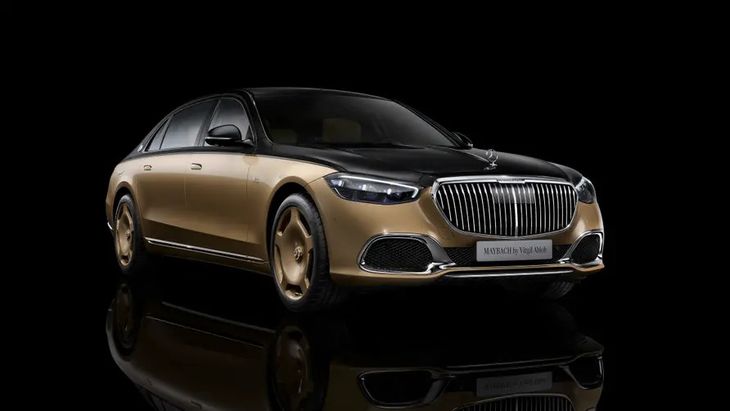
Exclusive models such as the Limited Edition Maybach S-Class by Virgil Abloh will help Mercedes-Benz achieve its goal of becoming the world’s most valuable luxury car brand.
Mercedes-Benz has divided its business into 3 key luxury offerings including High-End Luxury, Core Luxury and Entry Luxury.
To meet its strategic goals, Mercedes-Benz will focus on its Top-End Luxury vehicle portfolio which is expected to see its sales share increase by up to 60% by 2026. This includes products in both the Mercedes-AMG stable and the Mercedes-Maybach product line as well as all-electric Mercedes-EQ products such as the EQS and EQS SUV. The S-Class, G-Glass and GLS product ranges and all limited edition and exclusive collaboration vehicles are also included in this product segment.
The Mercedes-Maybach product range is set to expand with the arrival of the EQS SUV in 2023 as well as an ultra-luxurious Mercedes-Maybach SL, which is soon expected to be previewed in concept form. Also, a notable collector’s car to come in limited numbers is the Limited Edition Maybach S-Class by Virgil Abloh. Only 150 will be made to honour the late designer’s talents. More so, further ultra-exclusive vehicles will also be offered in the new “Mythos Series” which will see low-volume, high-worth vehicles come to market with even greater luxury and exclusivity.
The firm’s Core Luxury segment includes the C-Class and E-Class sedans as well as their SUV counterparts. This segment is important because this is a high-volume segment and the firm will look to fast-track electrification. The new E-Class is due in 2023 and will set the course for this segment while a new EQE SUV is due to be revealed later this year.
As for the Entry Luxury segment, which includes the A-Class (hatchback and sedan), B-Class (MPV), CLA (sedan and shooting brake) and the GLA and GLB crossovers, Mercedes-Benz says it will cut the range down from 7 models to 4. It’s not yet clear which vehicles will be discontinued but the remaining models will receive a technological boost with the new, forthcoming MB.OS (Mercedes-Benz Operating System) which is expected to be launched in 2024.
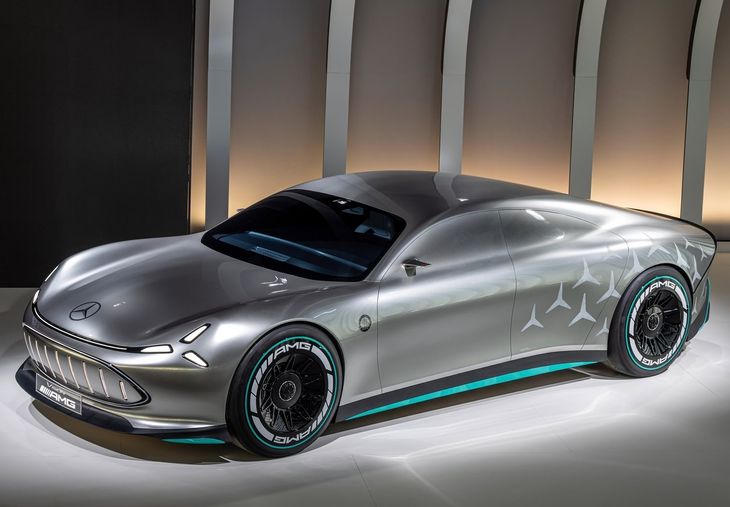
The Vision AMG concept previews the forthcoming high-performance electric future of Mercedes-AMG.
As for Mercedes-AMG, an exciting electric future awaits with the dedicated AMG.EA platform to underpin all future AMG models. The latest Vision AMG Concept offers a glimpse of what’s coming in 2025.
VW Citi Golf 1.8i Review – Is this the best Citi Golf (Mk1) ever put on sale?
We were honoured when the owner of this rare machine contacted us and offered us a drive in his pride and joy, a 2007 Volkswagen Citi Golf 1.8i. Watch the video!
But the VW Golf 1.8i has some history. Before the launch of this production run, Volkswagen South Africa released the 1.8R, and over the years, there have been many different versions to the story as to how these two models are related.
In this video, Ciro does his best to relay his understanding of the history of the car, as well as take it out for a shakedown on some of Gauteng’s best backroads, which are similar to the Western Cape’s worst backroads.
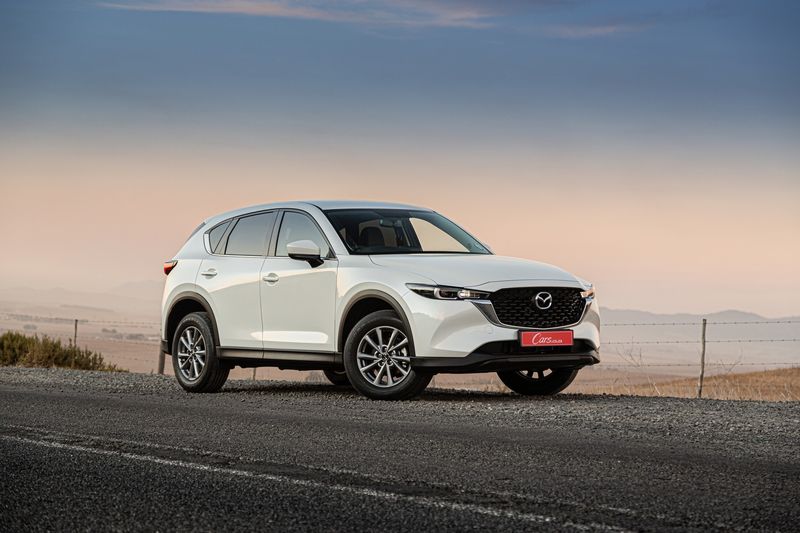
The Mazda CX-5 has been facelifted yet again, but this is probably the last iteration of the brand’s current-gen medium SUV. Is it still a class leader… or should you wait for the all-new model?
Looking to buy a Mazda CX-5? This review will help you make an informed buying decision.
We like: Well finished, good value, refined and engaging to drive
We don’t like: Improvements aren’t extensive, mediocre powertrain
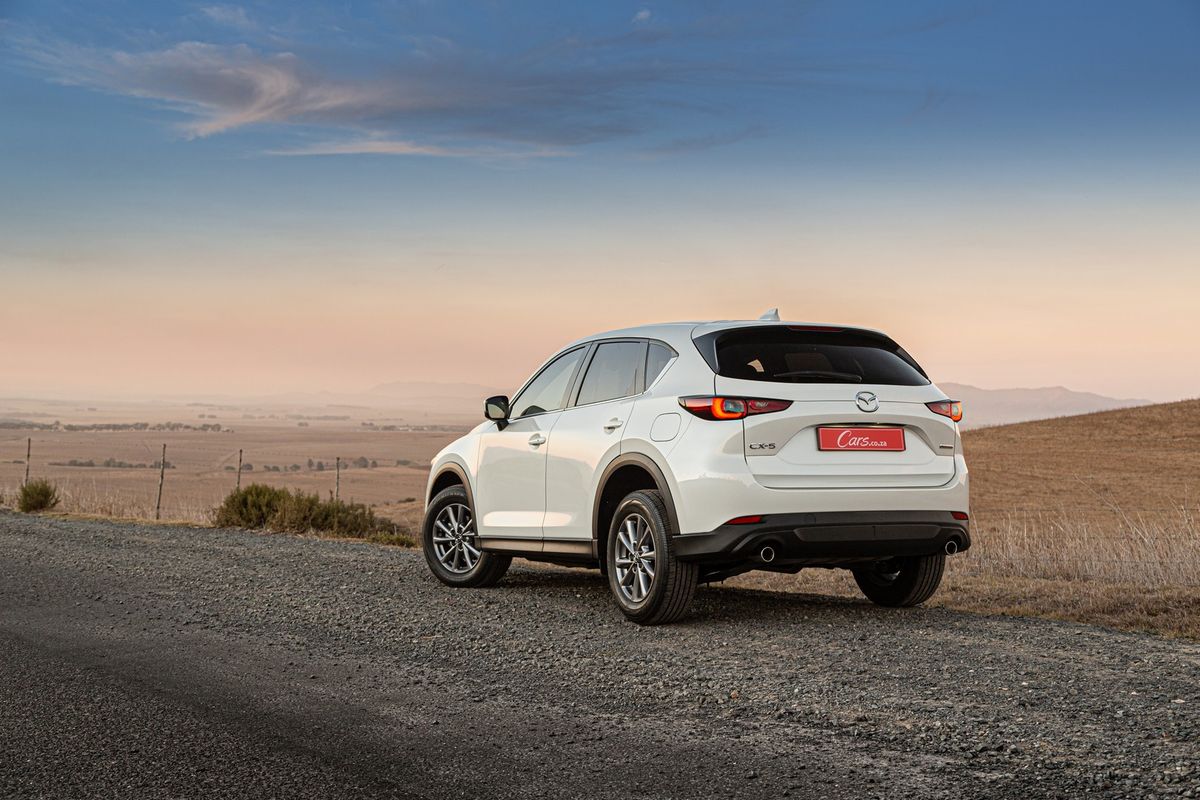
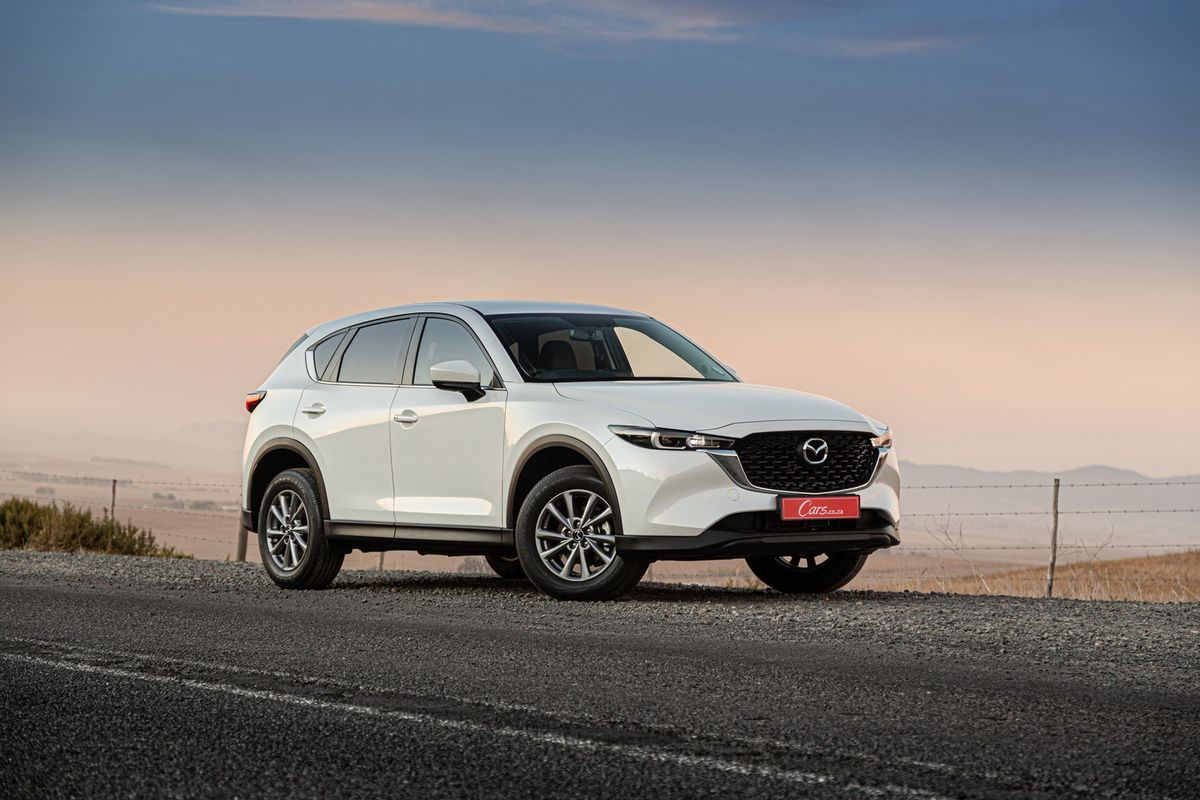
When it was launched in 2017, the KF-generation Mazda CX-5 instantly became the best-looking model in the family-car segment.
The CX-5 is one of Mazda’s best offerings, but that’s not a throwaway statement… The Hiroshima-based brand’s family car has won its category in the Cars.co.za Consumer Awards twice (in the 2018 and 2020 programmes) and was a finalist in the 2021 instalment.
We’d argue that the 2nd-generation CX-5 wears its years extraordinarily well. Granted, this model was launched only 5 years ago, but it was essentially an evolution of the 1st-generation (KE) model that debuted in 2012. In the face of new entrants to the segment and updates to top-selling models, the CX-5 still offers good value and tallies up commendable sales figures.
Mazda’s family car faces formidable opposition, though. Some of its rivals are all-new (such as the head-turning Hyundai Tucson and its Kia Sportage cousin, as well as the keenly-priced Haval H6 and Chery Tiggo 8 Pro) – or have been significantly revised during the past year.
The Volkswagen Tiguan falls into the latter category. Even in pre-facelift guise, it was a commendable product. Now, it’s even better, but it comes with a rather lofty price tag – its entry-level 1.4TSI 110kWis pricier than the CX-5’s top-spec 2.0-litre derivative! Another option is the Toyota RAV4, which was recently repositioned to offer more upmarket finishes and, importantly, hybrid powertrains. However, the most affordable version costs R625k.
Other alternatives include the Subaru Forester, with its good off-road capability and safety tech, the spacious, feature-packed Renault Koleos and the stylish, underrated Peugeot 3008.
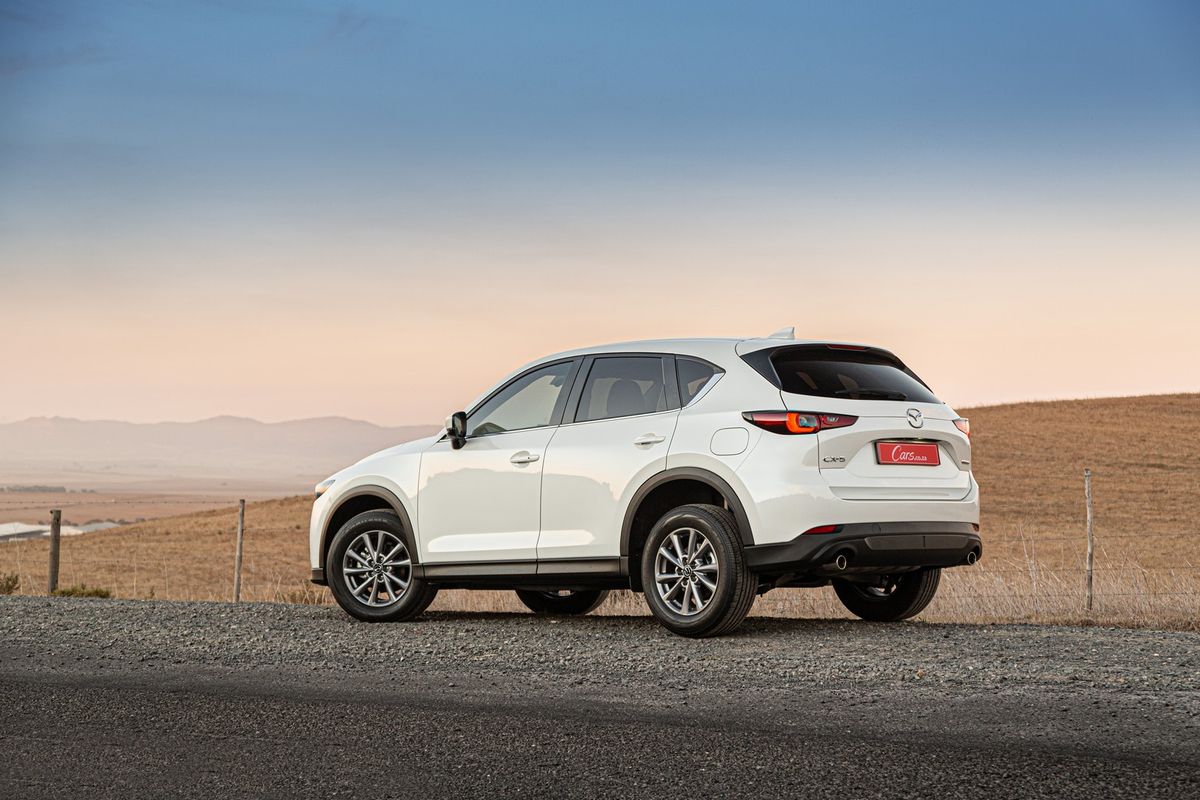
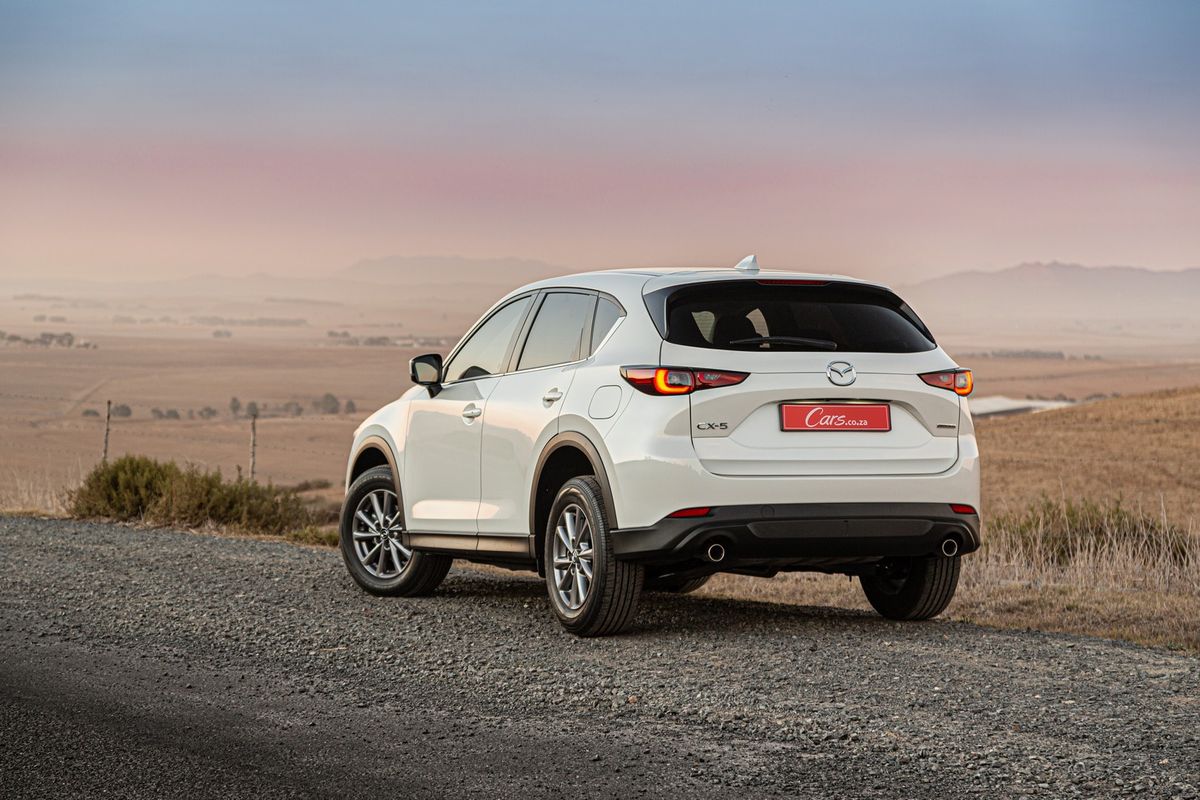
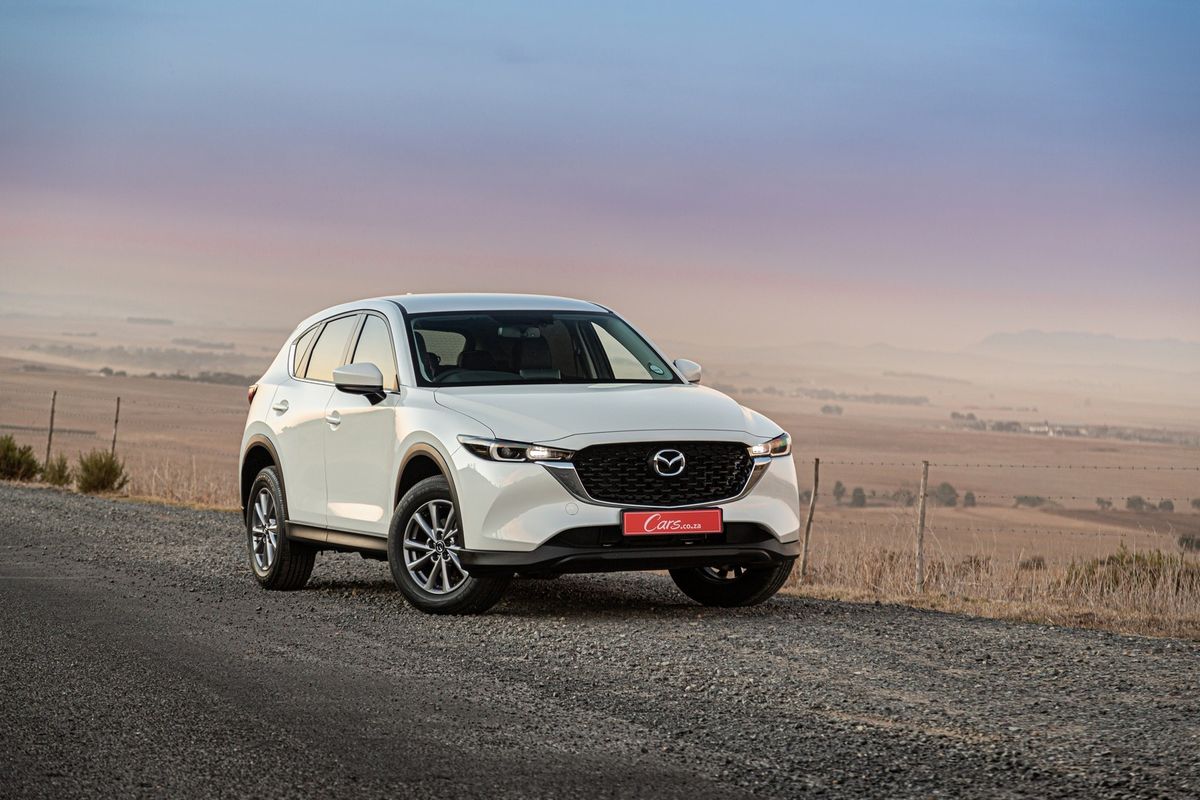
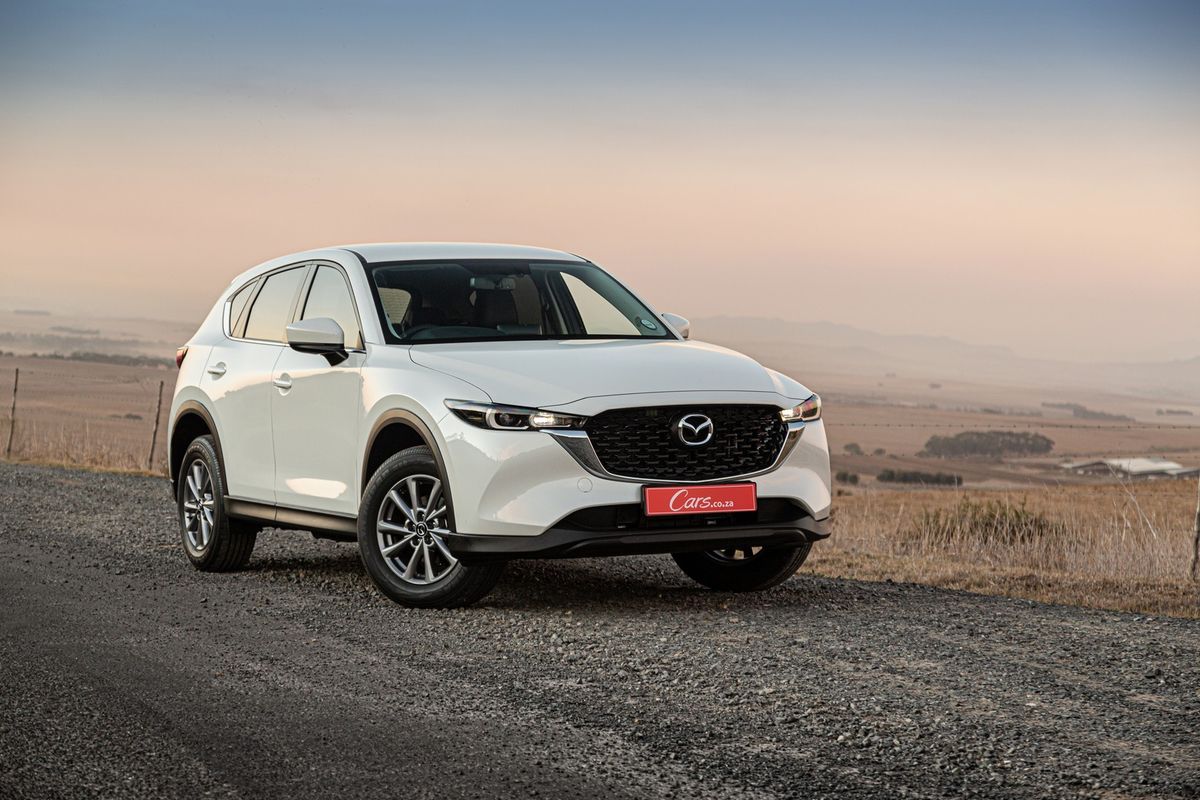
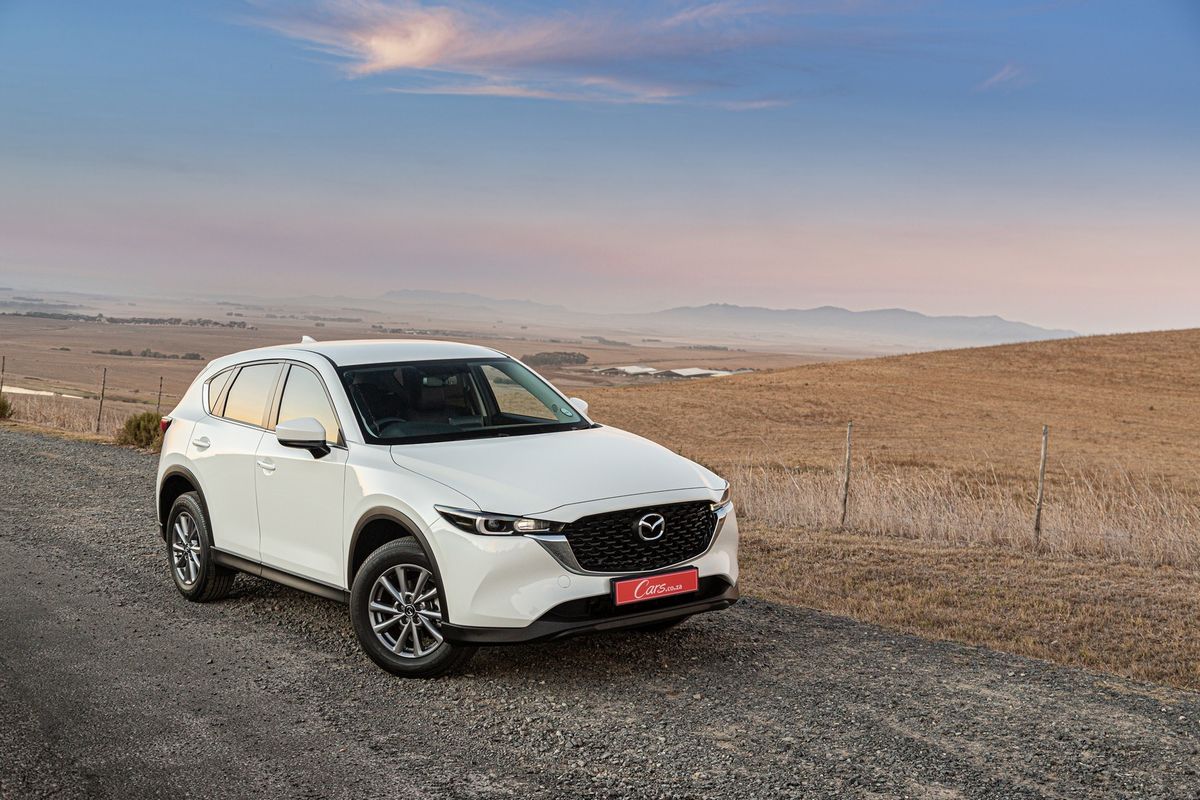
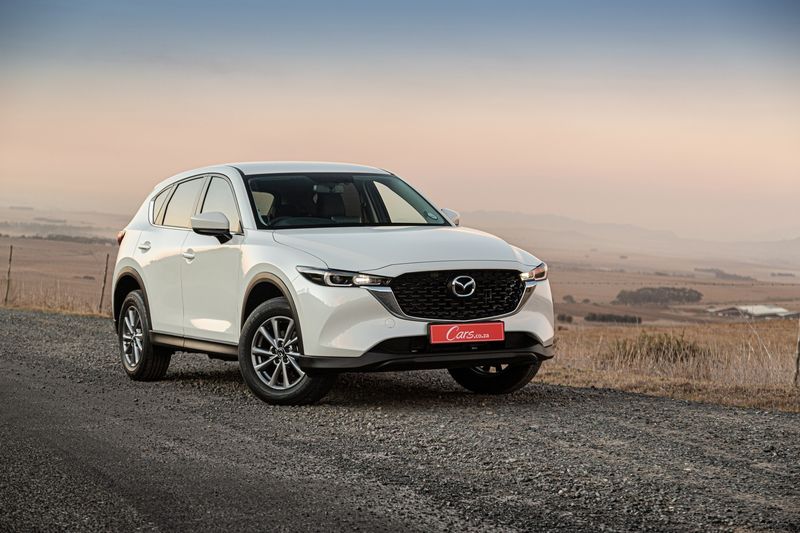
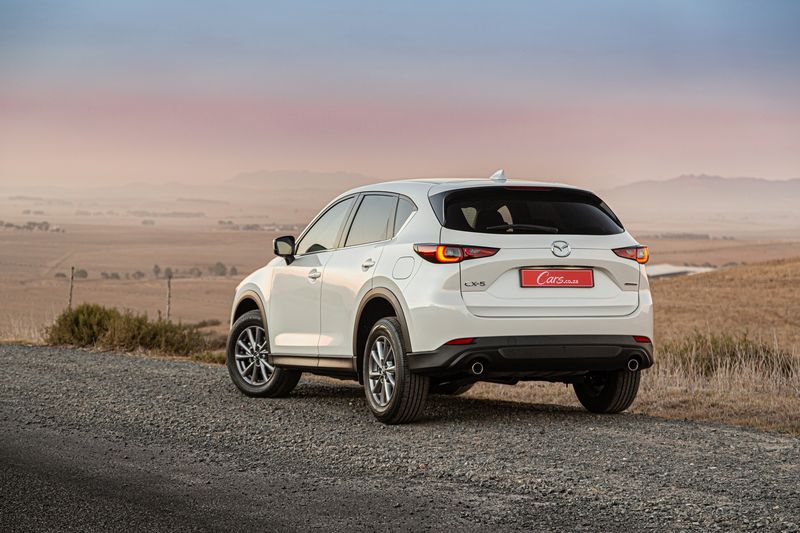
The 2.0 Dynamic auto was finished in Snowflake White, which is slightly more punchy than an appliance-white finish.
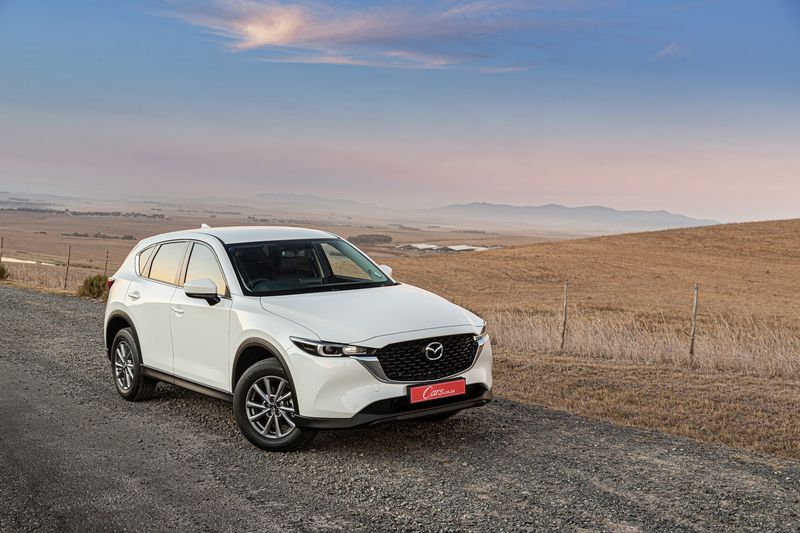
It’s said that a resolved car design will always age well and although we’d stop short of saying the Mazda CX-5 is a timeless beauty, it still looks handsome even if the test unit was clad in a somewhat boring Snowflake White finish. The Soul Red and other metallic finishes are more popular, and a copper-like hue named Zircon Sand is new for the 2022 model year.
This is likely to be the last version of this generation CX-5 that will be offered in South Africa and there’s a slightly larger all-new CX-60 model, which features a new platform and inline-6 cylinder engines (among others), that’s coming to our market in the near future.
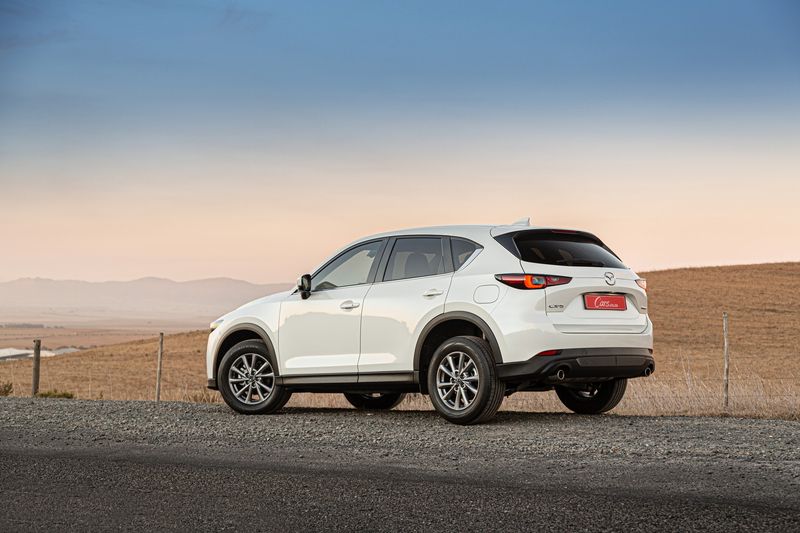
Exterior revisions to the Mazda CX-5 are limited to reshaped bumpers and new LED light clusters.
Mazda’s model-update strategy tends to focus on introducing smaller, incremental changes. For 2022, the Hiroshima-based brand has slightly updated the CX-5’s bumpers, as well as its headlight and tailgate clusters, while under-the-skin changes include an updated damping control structure and increased frame rigidity to lessen road noise and suppress vibrations.
If you want a bit more “look at me” factor, consider the 2.0 Carbon Edition, which costs an extra R72k (May 2022), but has bigger alloy wheels and some tasteful red stitching inside.
Interior execution and features
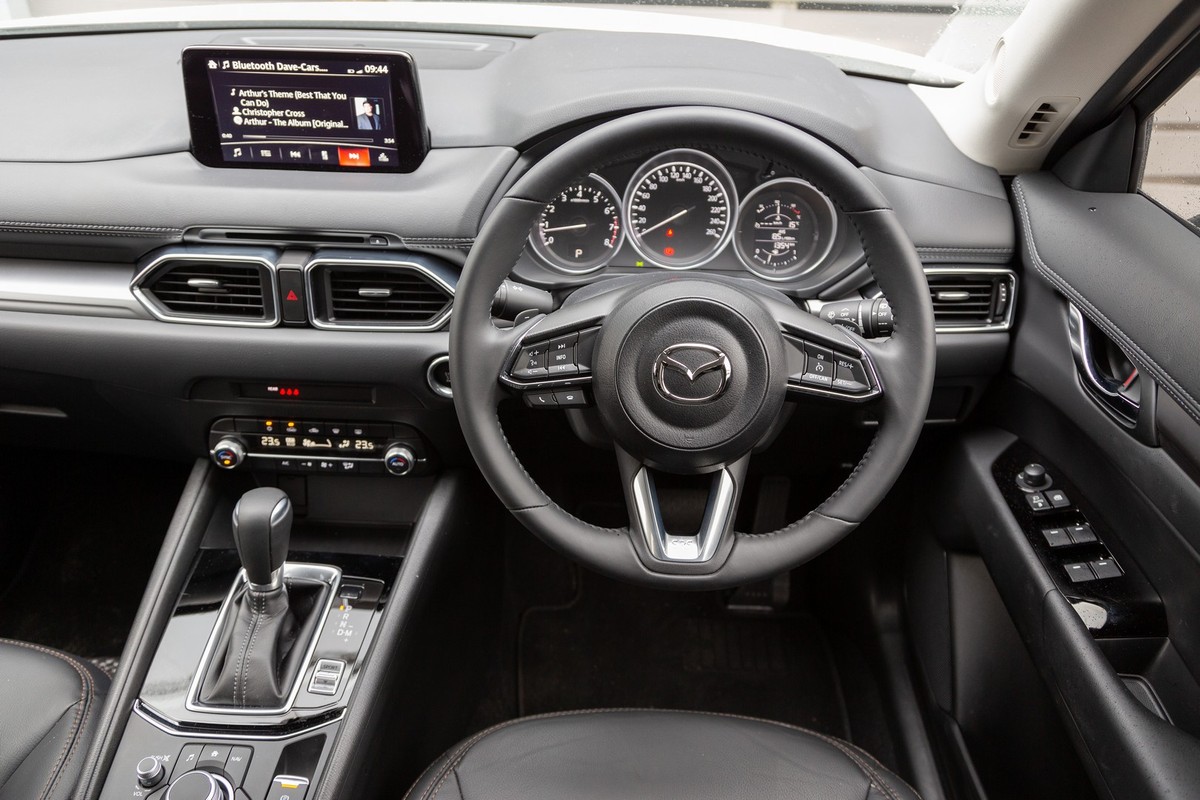
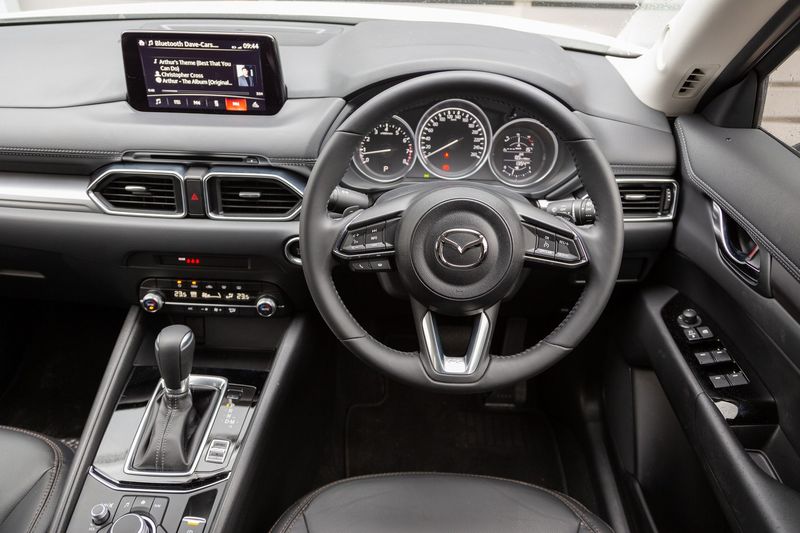
Speaking of the cabin, we’re big fans of Mazda’s interiors. Not only do they feel solid, well-finished and look elegant, but there’s something refreshing about the CX-5’s minimalist fascia; it bucks the trend, which is to have an oversized tablet affixed to the dashboard!
A clean and minimalist cabin design that’s elegant, solidly built and well finished.
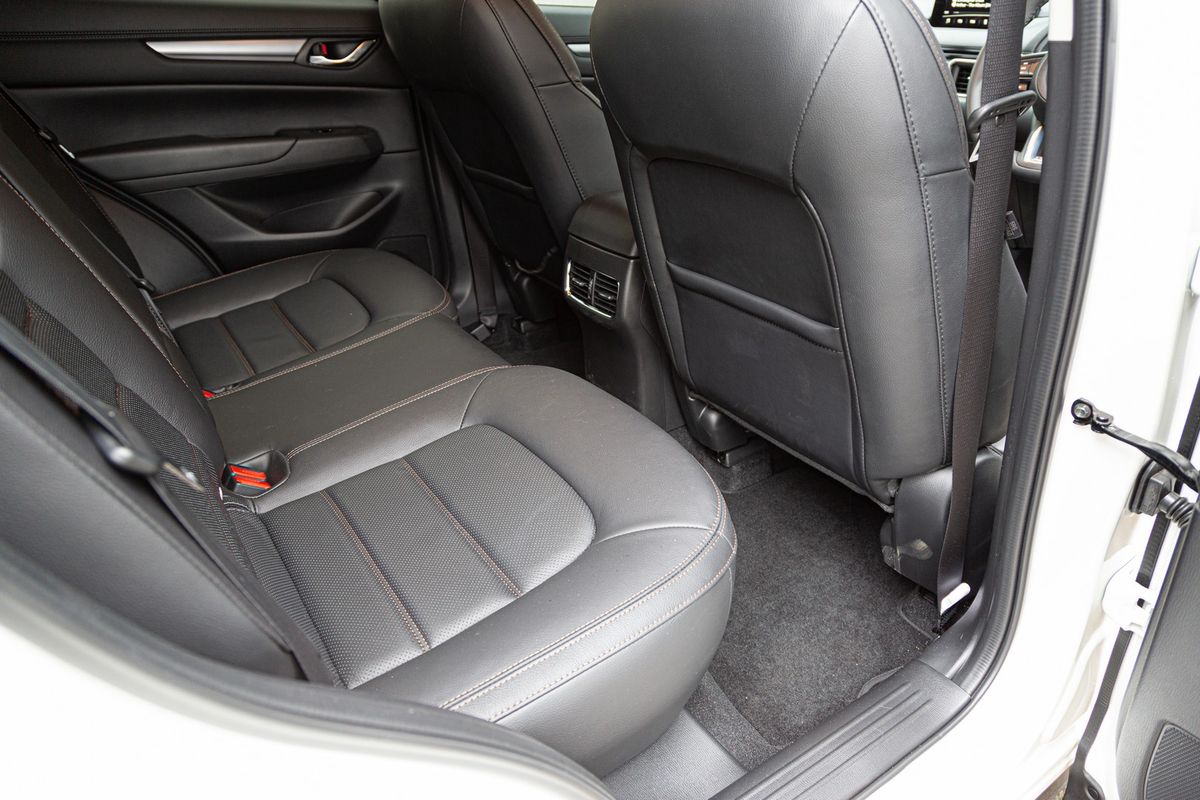
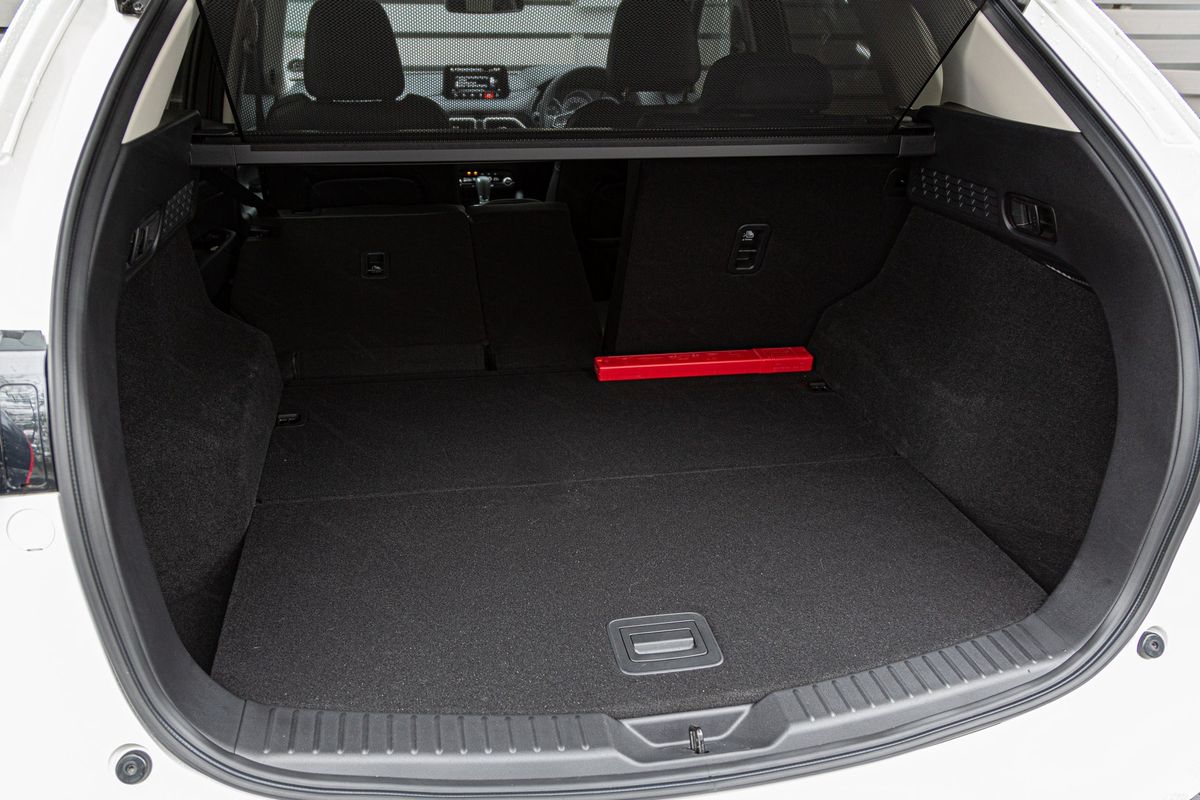
With a claimed luggage capacity of 442 litres, the Mazda CX-5 comes close to class honours in terms of practicality, although it ultimately trails the Toyota RAV4 in that respect. We found the load-bay aperture generous enough to easily load larger items (such as golf clubs) and if you need even more space, you can fold the rear seats in a 40/20/40 configuration to free up 1 914 litres. Rear head- and legroom are acceptable for average-sized adults.
Although high-end derivatives come in luxurious Individual and Akera trim grades, the Dynamic spec arguably offers better “bang for your buck”. On top of the already fair Active trim, you get goodies such as keyless entry, black leather, auto-folding mirrors, ‘shift paddles, 17-inch alloys and an 8-way electrically adjustable driver’s seat with lumbar support.
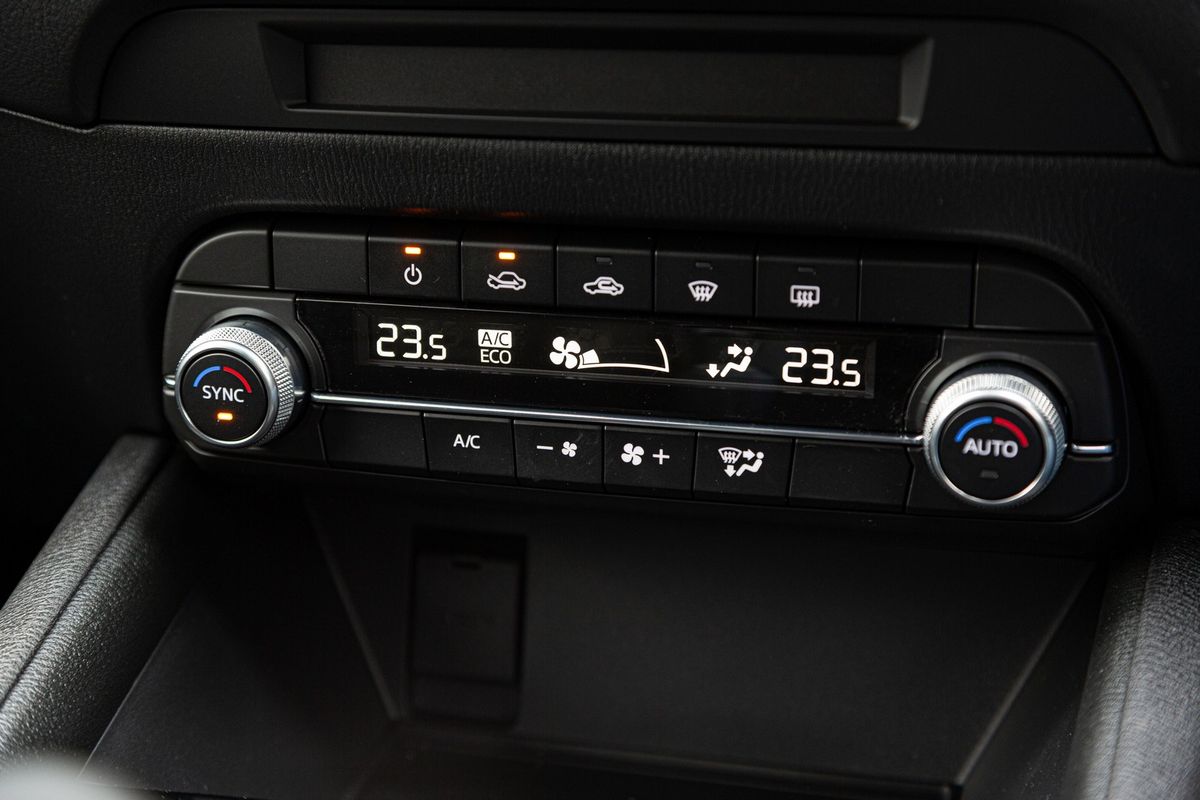
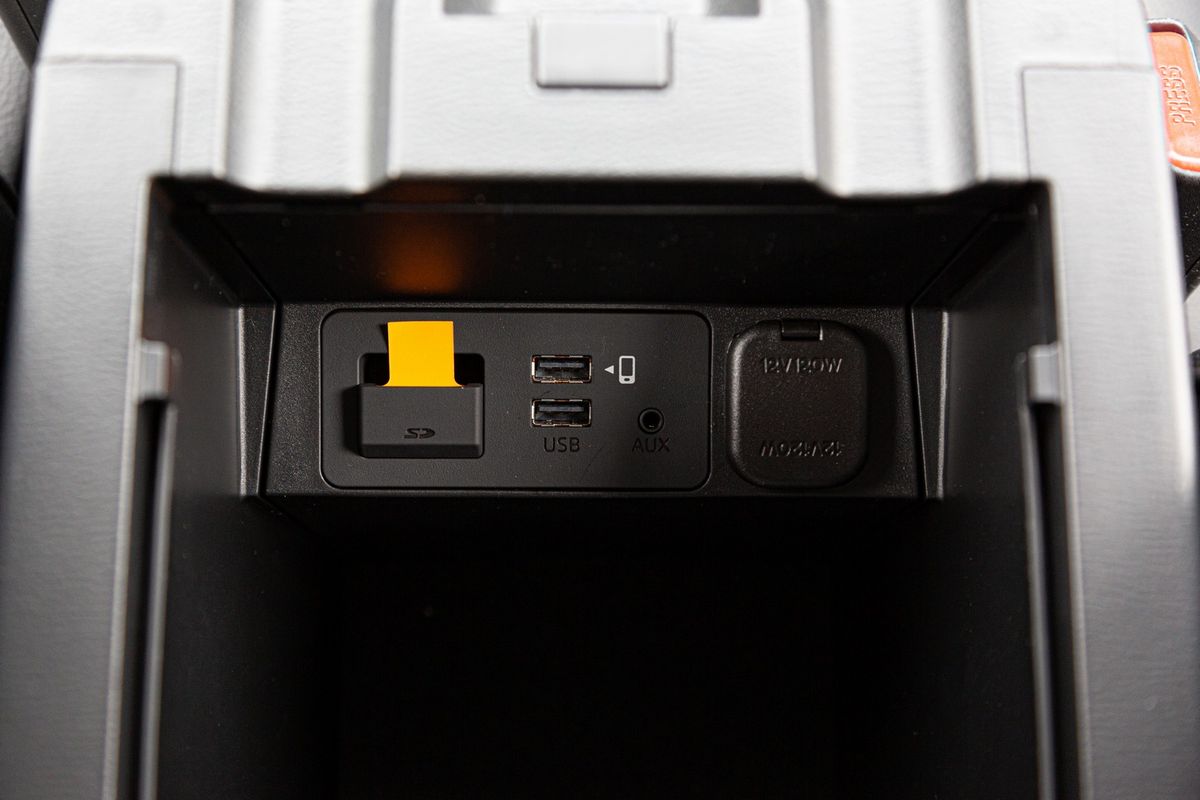
The 2.0 Dynamic’s list of standard features includes nice-to-haves such as push-button start, a reverse-view camera, dual-zone climate control, USB ports in the centre armrest, Bluetooth telephony and audio streaming, auto wipers and auto lights. Hah, it even has a CD player!
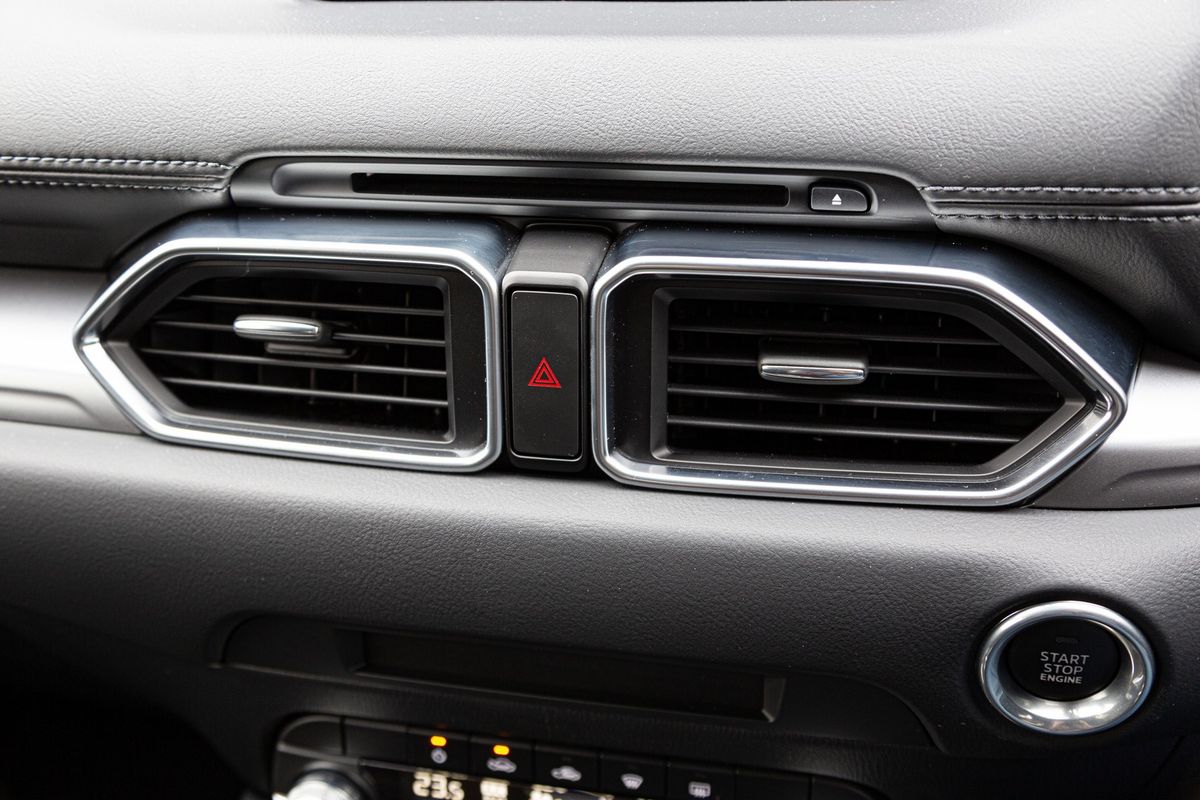
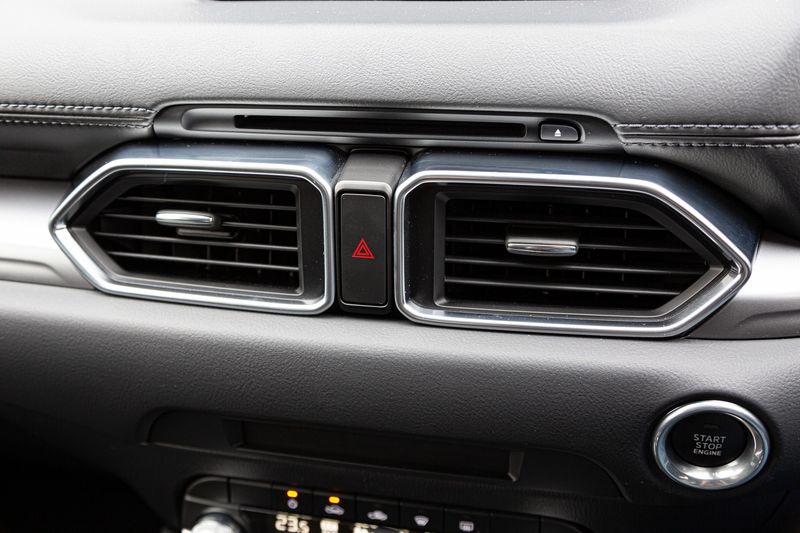
What’s that slot above the centre ventilation outlets? That, young people, is a slot for a CD!
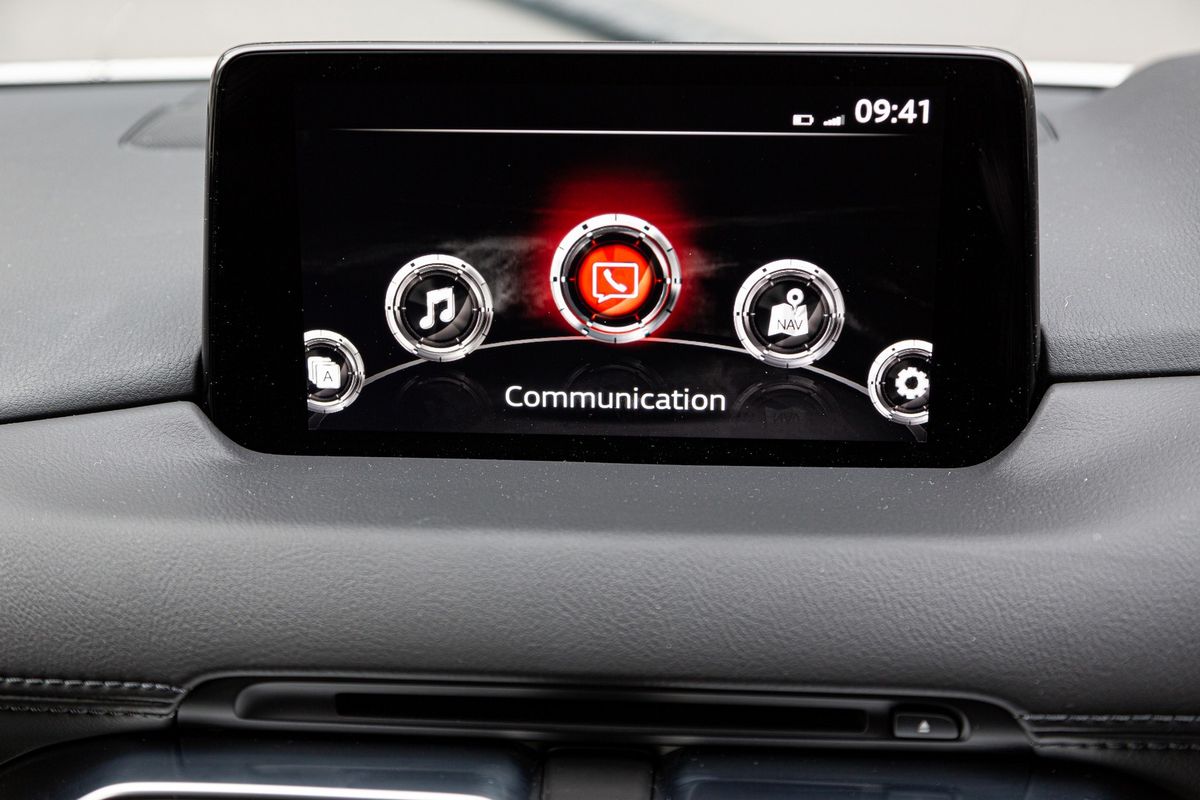
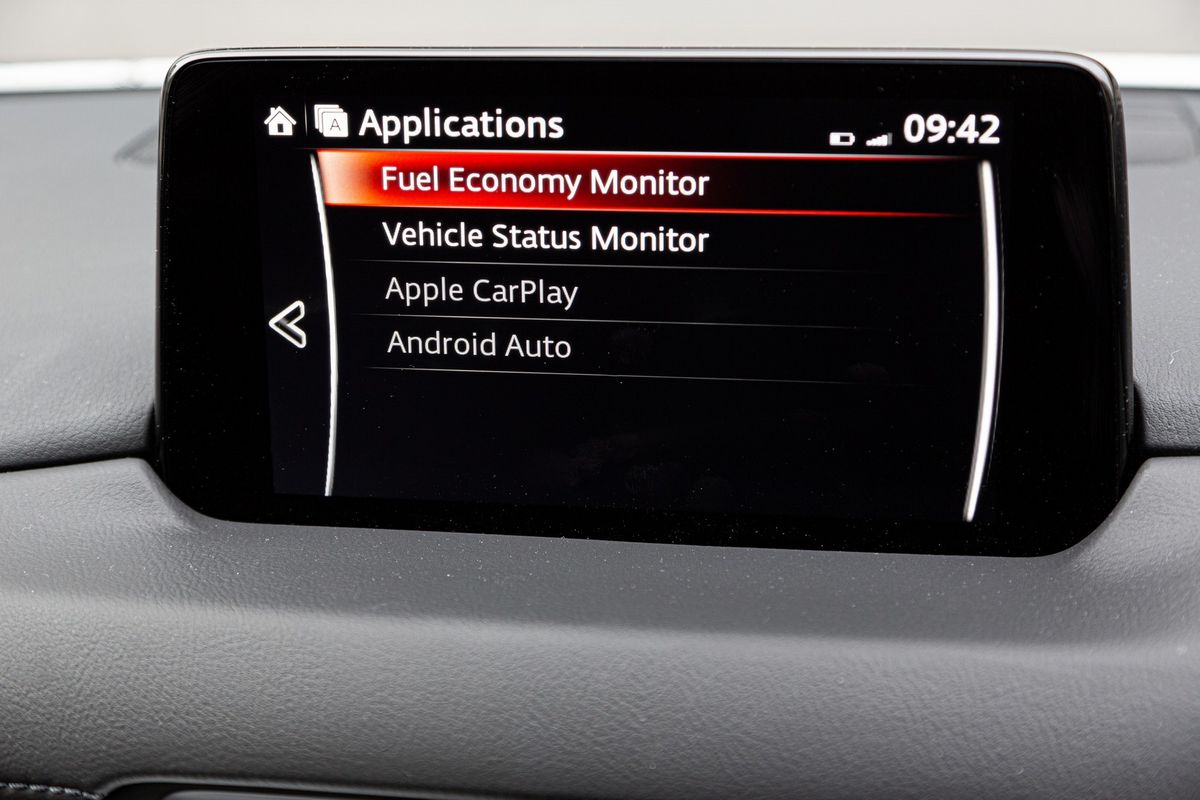
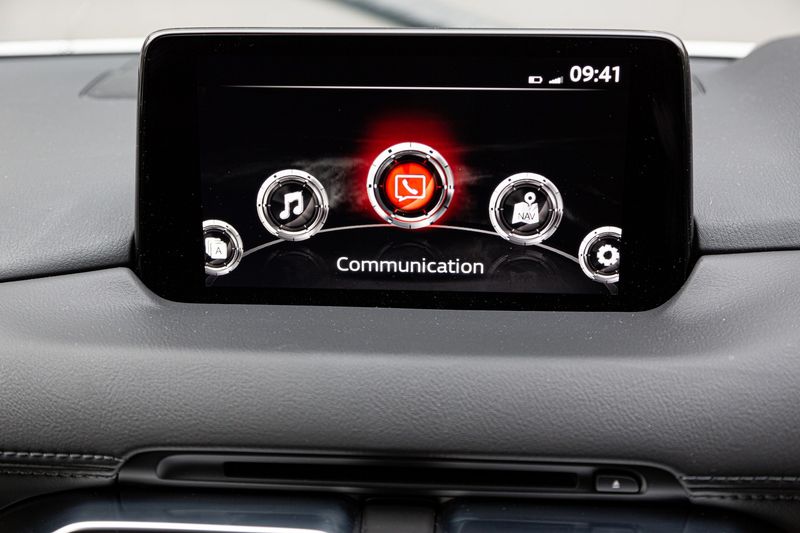
The infotainment system offers navigation, but you’ll need to buy an SD card with maps loaded to make use of the function. Therefore, we suggest that you rather plug in your smartphone to activate Apple Carplay or Android Auto and use Waze/Google Maps.
Performance and Efficiency
Whereas most manufacturers utilise smaller-capacity turbocharged engines in their family cars, Mazda has persisted with a naturally aspirated petrol engine with a high compression ratio. The Japanese brand has refined its SkyActiv technology to conform with ever-stricter emission regulations and the 2.0 Dynamic’s 121 kW/213 Nm 2.0-litre naturally aspirated 4-cylinder petrol engine drives the front wheels via a 6-speed automatic transmission.
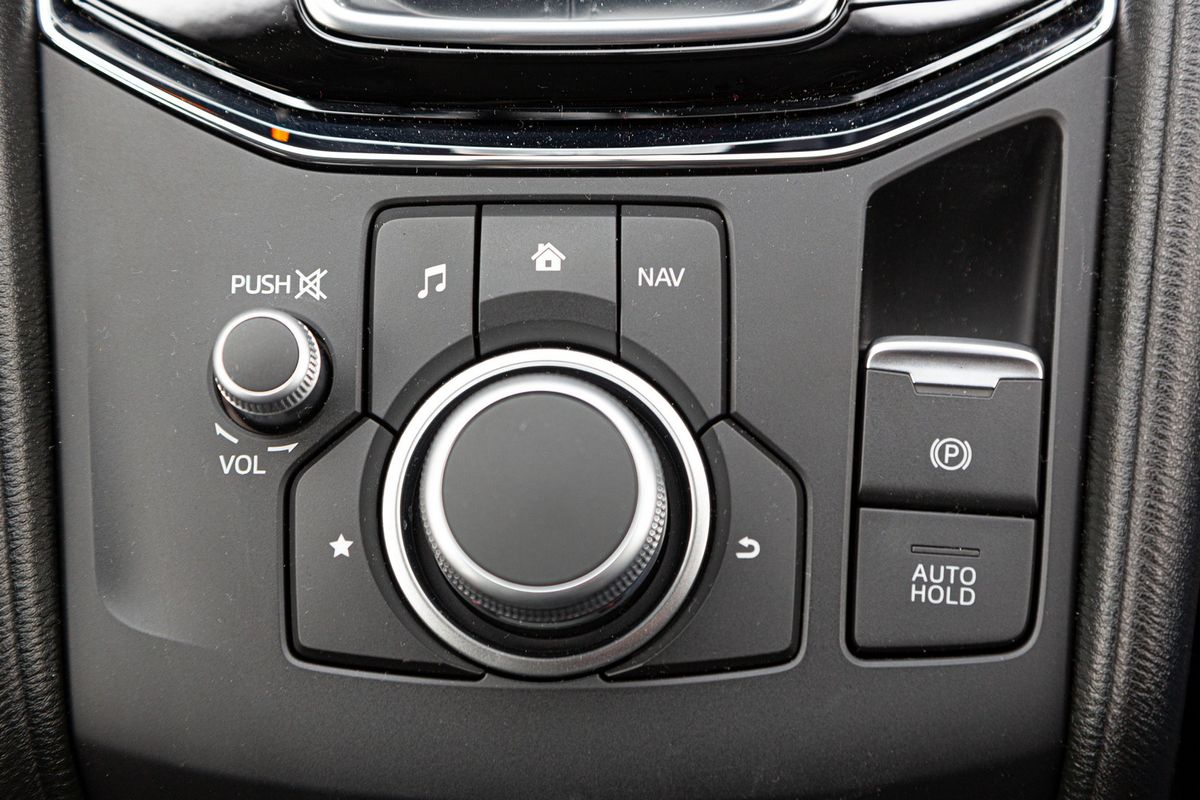
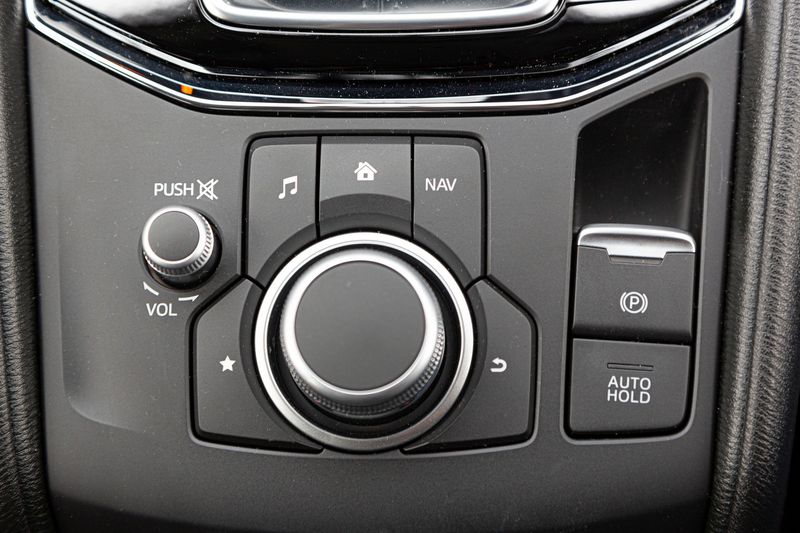
This rotary dial controls your infotainment system. The layout is simple, but works well.
Mazda claims this derivative can sprint from zero to 100 kph in 10.4 seconds, which suggests that it’s not the most energetic performer. However, the CX-5’s power delivery is about fair; the engine doesn’t mind being revved, but it does sound a bit strained as it nears the redline.
We also noticed the automatic transmission was quite eager to hook a lower gear (to make the most of the middling torque, which is produced relatively high in the rev range – 4 000 rpm).
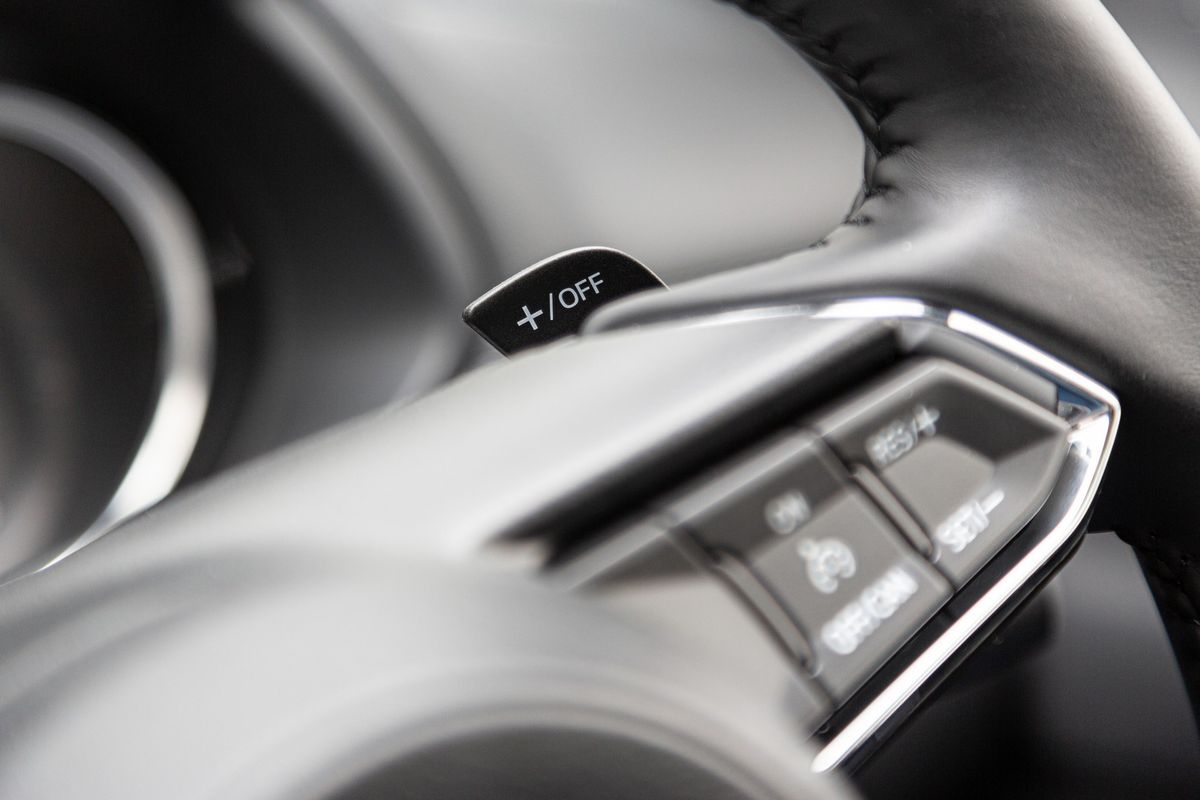
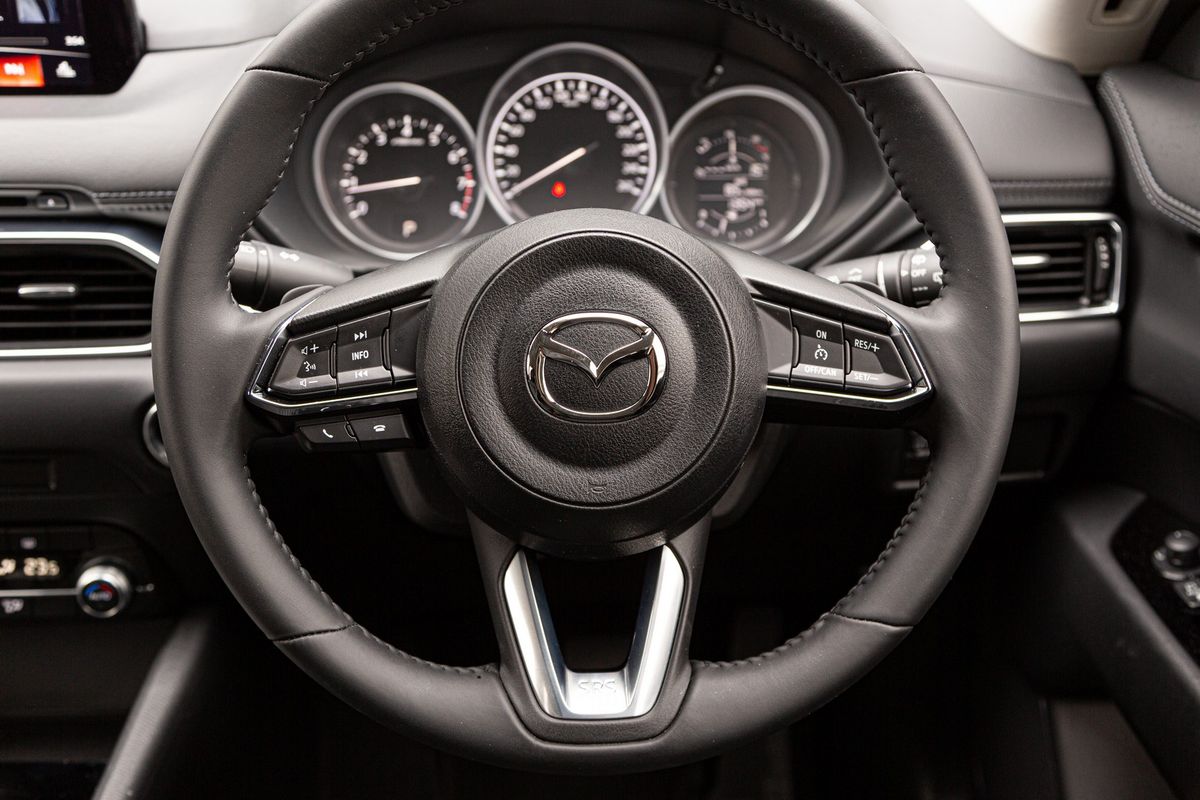
If you’d prefer to occasionally actuate manual shifts, you can make use of the steering wheel-mounted paddles. They provide a bit more engagement/involvement and are pleasant to use. There’s a Sport mode too, but it didn’t seem to adjust anything other than delaying upshifts.
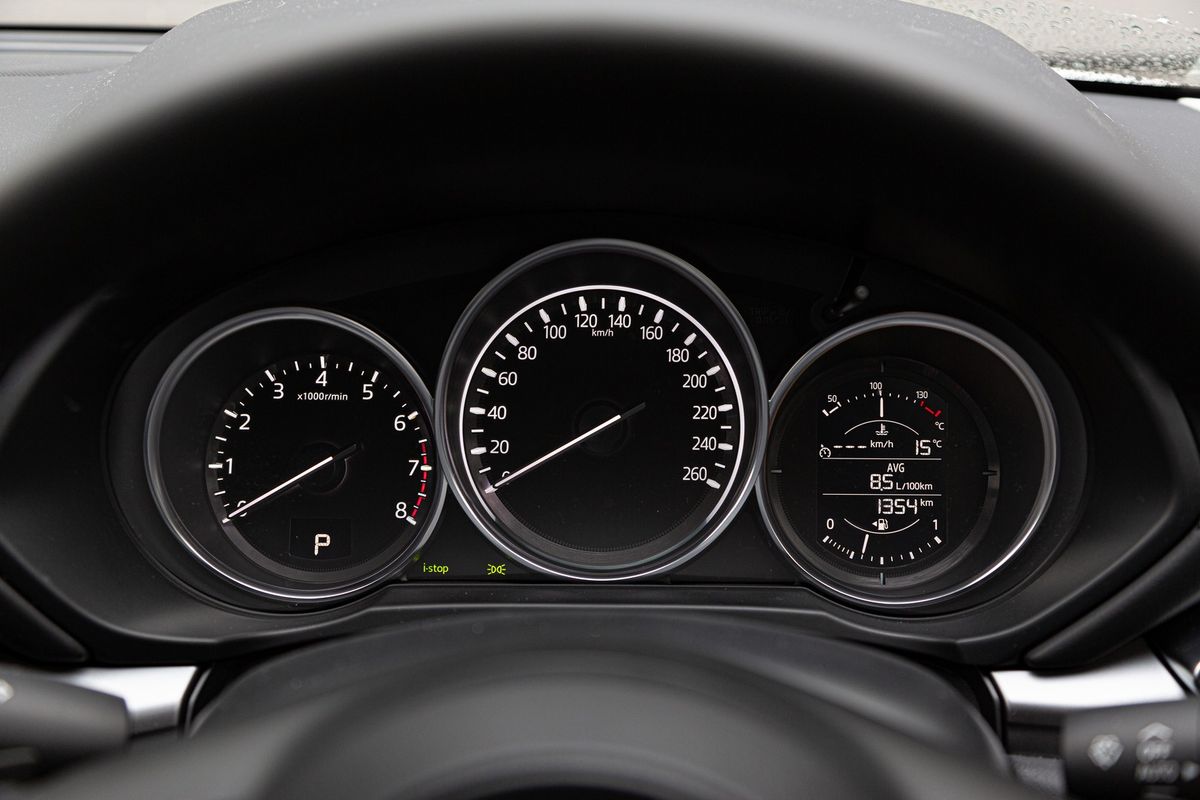
Meanwhile, the 2.0 Dynamic’s claimed fuel consumption is 6.9 L/100 km, but that’s a bit optimistic. Despite our best efforts, we couldn’t get the indicated average under 8 L/100 km, but that’s still a reasonable return for a family car that we tested mostly on urban roads.
Handling Ability and Ride Quality
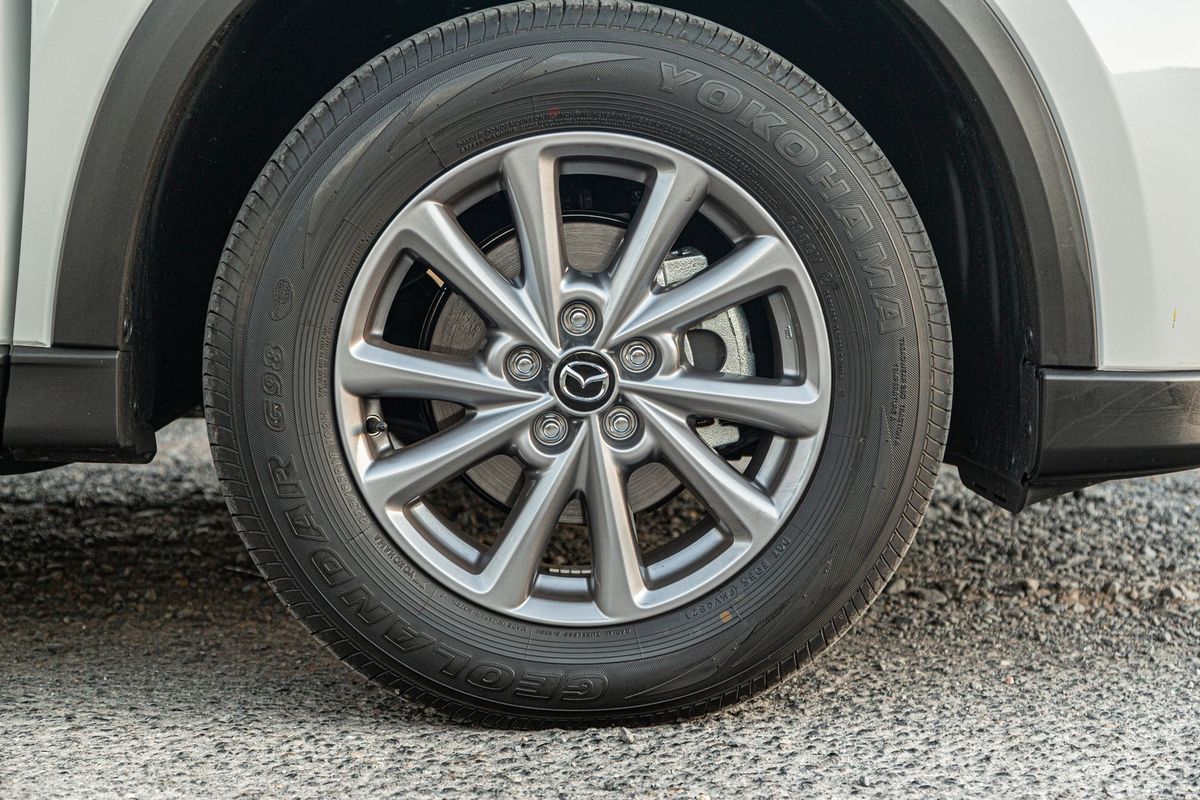
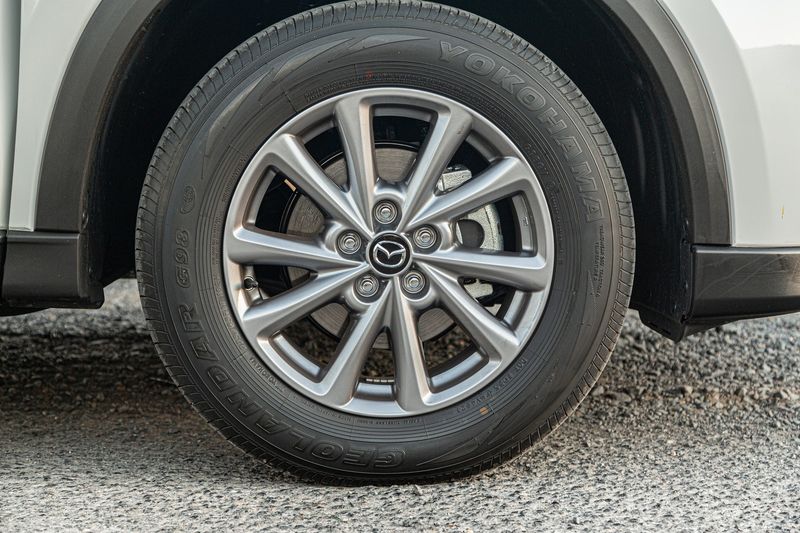
Higher-profile 17-inch tyres aid on-road comfort and refinement.
The Mazda CX-5’s driving experience remains very satisfying. In fact, we’d go as far as to say it’s one of the more dynamic (non-performance-oriented) medium SUVs to pilot. In past reviews, we’ve ascribed this to a quick and precise steering setup that’s not overly assisted and allied with confidence-inspiring front-end grip – the 2022 model is no different.
The 2.0 Dynamic is genuinely fun to drive, which is not something you can say of family mobiles such as the aforementioned Tucson or RAV4. Mind you, the Tiguan’s reasonably engaging too.
We’ve also suggested that the Mazda’s suspension can feel a bit firm, but in Dynamic spec (with 17-inch alloys wrapped in higher-profile rubber), the ride comfort was a bit better. Those chunkier tyres will be a boon on poor quality roads – they can take more punishment.
The infotainment system adopts a minimalist approach.
Have the mechanical updates enhanced what was already a refined model? We’d be lying if we said we could feel a notable difference, but to be fair, the bar was set extremely high. If you’re not driving too enthusiastically, the CX-5’s cabin is one of the quietest in its class.
Price and after-sales support
The Mazda CX-5 range starts from R493 100 and goes up to R731 900. The 2.0 Dynamic retails for R540 400, which includes a 3-year/unlimited km warranty and a 3-year/unlimited km service plan.
This is likely to be the final incarnation of the current-gen CX-5, but it still has much to offer.
It seems as if Mazda is determined to keep making small tweaks to its models in a bid to extend their product cycles. But then, this (the KF-generation) CX-5 has only been around for 5 years and continues to deliver excellent quality, refined driving manners and value for money, irrespective of which engine-transmission combo or trim level you may choose.
Should you buy one? For all its positive traits, the Mazda CX-5 can now be considered as a model that’s “among the best” as opposed to “at the top”, but that’s okay as rumours suggest an all-new model will be revealed before the end of 2022 (even though the brand seems to be focusing on its more luxurious “10” models, such as the CX-50, CX-60 etc. right now)
Our question to you is this: Are you prepared to wait for the all-new model, which will undoubtedly come with a substantial price increase? If not, well, there’s nothing much wrong with this current-gen CX-5, which, in 2.0 Dynamic guise, is priced quite competitively.
Frequently Asked Questions
What engines are available in the Mazda CX-5 in South Africa?
In South Africa, the Mazda CX-5 is primarily offered with a 2.0-litre, naturally aspirated Skyactiv-G petrol engine, which produces 121 kW of power and 213 Nm of torque. This engine is paired with a 6-speed automatic transmission. There are also models with a 2.5-litre petrol engine that deliver 143 kW and 258 Nm of torque, as well as a 2.2-litre turbodiesel variant in some higher-spec models.
What is the safety rating of the Mazda CX-5?
The Mazda CX-5 has a 5-star safety rating from Euro NCAP. It is equipped with a comprehensive set of safety features, including multiple airbags, ABS with EBD, Dynamic Stability Control (DSC), and a range of advanced driver-assistance systems in higher-end models, such as Blind Spot Monitoring (BSM), Lane-keep Assist (LKA), and Smart City Brake Support (SCBS).
Does the Mazda CX-5 come with a warranty and service plan in South Africa?
Yes, all new Mazda CX-5 models in South Africa come standard with a 5-year/unlimited-kilometre warranty, a 5-year/unlimited-kilometre service plan, and 5-year/unlimited-kilometre roadside assistance.
Is the Mazda CX-5 a good family SUV?
The Mazda CX-5 is widely regarded as a good family SUV. It offers a spacious and high-quality interior, a comfortable ride, and a practical boot. Its strong safety ratings and advanced features make it a secure choice for families, while its stylish design and refined driving dynamics make it a popular and compelling option in its segment.
Cheapest Automatic Cars in South Africa for Under R200k (2022)
Looking for a chilled drive on a shoestring? We list the new, affordable automatic cars available in South Africa for under R200k.
Sit back, relax and let the car do the work! Automatic cars have much to offer, especially if you live and travel within the confines of the city. Not only are automatic cars easier to drive but they also take the stress out of changing gears continuously, particularly if you crawl through traffic jams on a regular basis. Advances in transmission technology have also led to improvements in fuel efficiency, to the point where some small automatic cars are actually more efficient than their manual siblings.
To make your life easier, we have created a list of the cheapest small automatic cars currently on sale in South Africa, all of which are currently priced under R200k.
Please note that the BAIC D20 has not been tested by Cars.co.za and we are therefore can’t include it in this list or recommend it.
Pricing is accurate as of September 2021.
Cheap Automatic Cars in SA for Under R200k
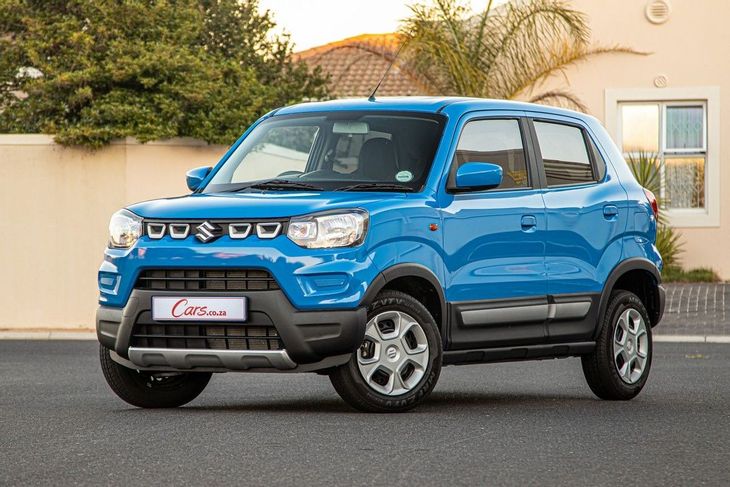
Suzuki S-Presso GL+ Automatic / S-Edition – From R175 900
Since its local arrival in early 2020, the Suzuki S-Presso is now a common sight on our roads. Buyers looking for an automatic S-Presso can choose between the GL+ (R175 900) or the range-topping S-Edition (R184 900). Under the bonnet you will find a naturally-aspirated, 3-cylinder, 1.0-litre petrol engine offering 50 kW and 90 Nm and comes mated with a 5-speed automated manual transmission. In terms of fuel efficiency, The S-Presso is hard to beat with a claimed figure of 4.9 L/100km.
Key features:
Safety: Driver and passenger airbag, ABS with EBD
Interior: 7-inch infotainment touchscreen with Android Auto/Apple CarPlay, Bluetooth and USB support
Space: Load bay measures 239 litres (claimed)
Service and warranty: The S-Presso is sold with a 2-year/30 000km service plan and a 5-year/200 000 km warranty.
Estimated monthly payment: From R3 363 over 60 months with 10% deposit and 10% interest
Verdict: The quirky Suzuki S-Presso offers a charming mix of standard features and practicality. Due to its low kerb weight, it feels nippy and agile to drive but owners at higher altitudes are likely to experience a significant reduction in performance when fully loaded with passengers and luggage. Note that overtaking will also require some forward planning to execute safely. Suzuki is also well-known for its reliability and generally delivers excellent after-sales service. The notable 5-year/200 000 km warranty should also give buyers some added peace of mind.
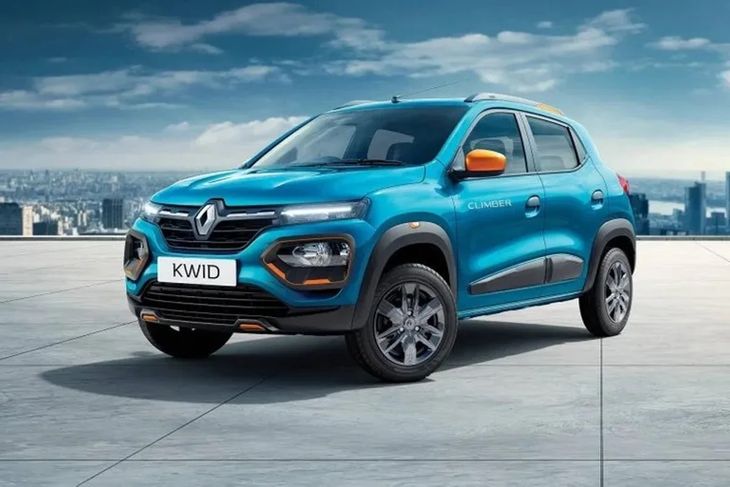
Renault introduced a revamped Kwid to market in 2019 and buyers seeking an affordable small automatic car for under R200k have the Kwid Dynamique automatic to consider from R190 400. The Kwid is powered by the familiar 3-cylinder, 1.0-litre petrol engine that offers 50 kW and 91 Nm of torque and is equipped with an Automated Manual Transmission (AMT). Renault claims that the AMT version is more fuel-efficient than the manual with a claimed consumption figure of 4.4 L/100 km, making it the most fuel-efficient (claimed) car on this list.
Key features
Safety: Driver and passenger airbag, ABS
Interior: 8-inch touchscreen infotainment system with Android Auto/Apple CarPlay, Bluetooth and USB support
Space: Boot space measures 279 litres
Service and warranty: 5-year/150 000km warranty
Estimated monthly payment: From R3 641 over 60 months with 10% deposit and 10% interest
Verdict: We previously tested the Kwid automatic and found its AMT to be lurchy and too compromised. To drive the Kwid AMT smoothly takes as much concentration as it would in a manual car, so why bother? Furthermore, the integral hill-hold function of a normal (torque-converter-type) automatic is also missing in the Kwid, so when pulling away on upward slopes you have to use the handbrake or brakes to avoid rolling back (again, similar to driving a manual car).
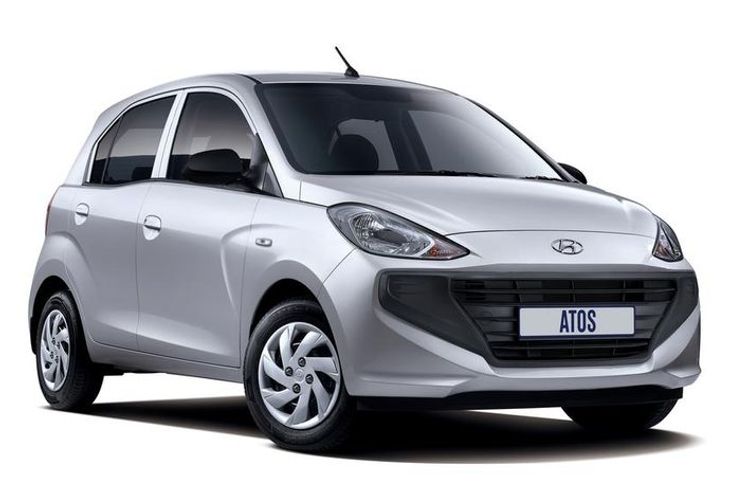
The engine under the bonnet is the familiar 1.1-litre, 4-cylinder unit mustering outputs of 50 kW and 99 Nm. The AMT-equipped Atos carries a claimed fuel consumption figure of 5.9 L/100km which will appeal to buyers who are looking to save money at the pumps.
Key features:
Safety: 2 airbags, ABS with EBD
Interior: 7-inch touchscreen infotainment, air conditioning, mounted steering wheel controls, multi-information display, Bluetooth, USB/Aux ports and electric windows.
Space: Load capacity at 235 litres
Service and warranty: 5-year/150 000 km vehicle warranty, 7-year/200 000 drivetrain warranty and 1-year/15 000km service plan.
Estimated monthly payment: R3 727 over 60 months with 10% deposit and 10% interest
Verdict:The Hyundai Atos represents decent value for money and is backed by a strong brand reputation while also offering good levels of refinement in this segment. Hyundai’s comprehensive warranty will also add further peace of mind.
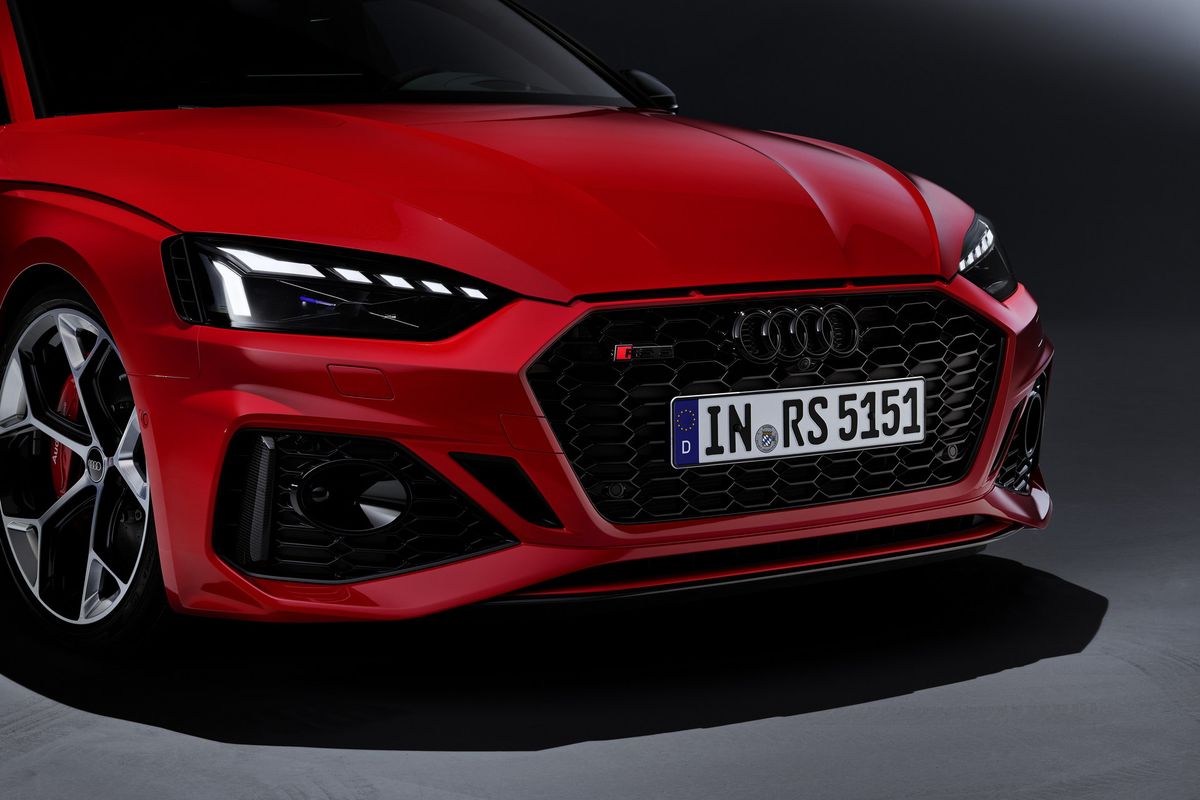
If you’re wanting a bit more performance and engagement from your Audi, the Audi RS Competition packages for the RS4 and RS5 have been announced.
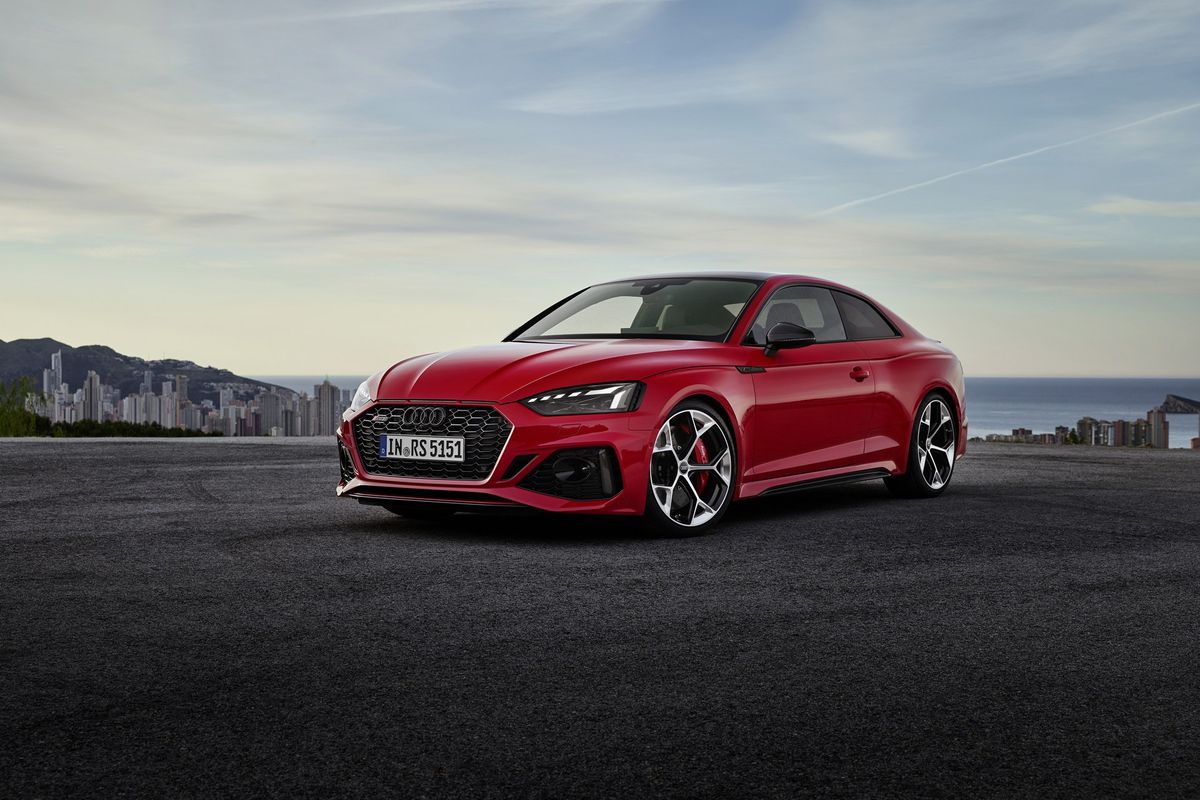
The Audi RS4 and RS5 aren’t exactly slow or boring to drive quickly, but with the Audi RS Competition packages, there’s more fun to be had.
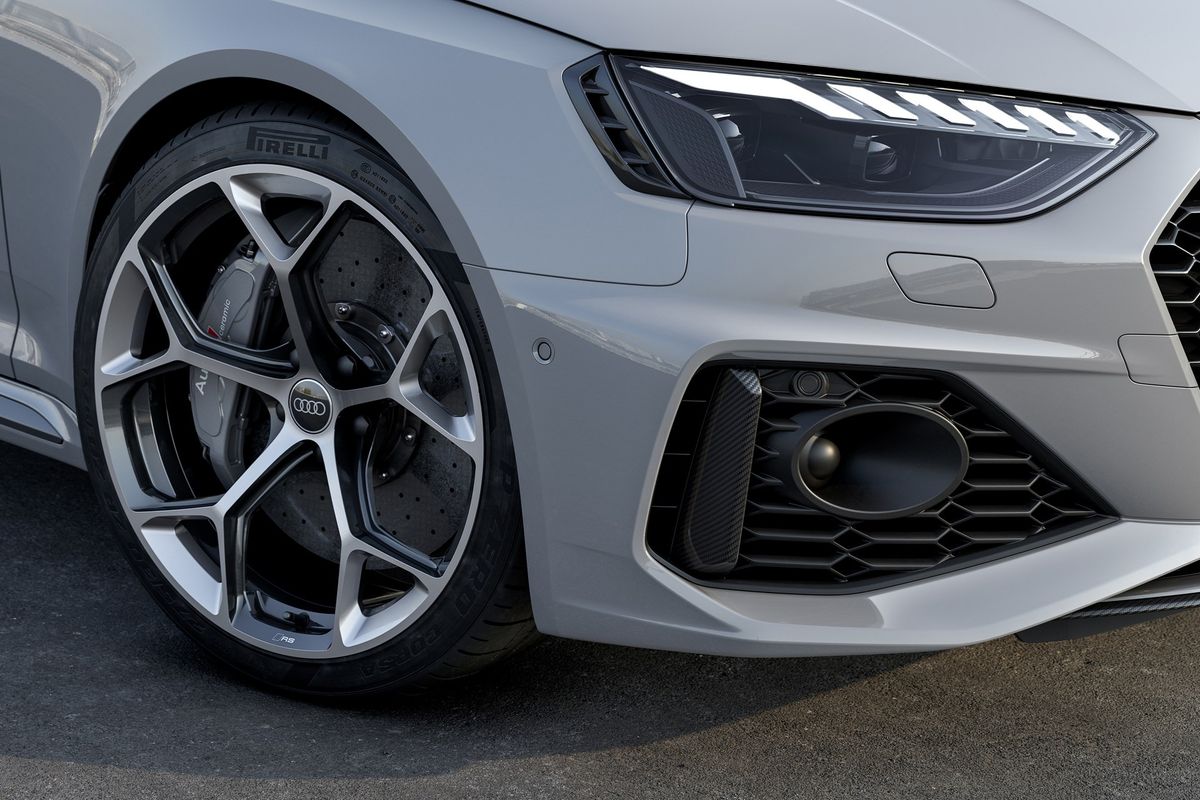
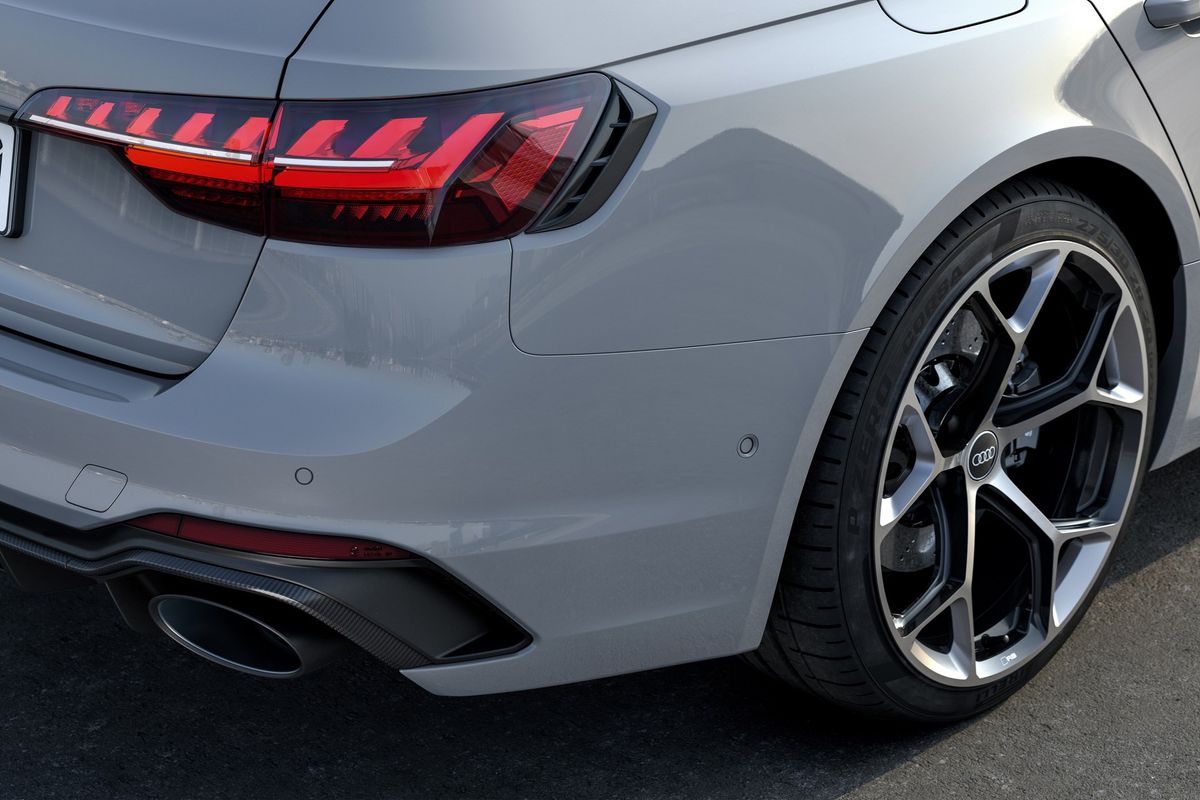
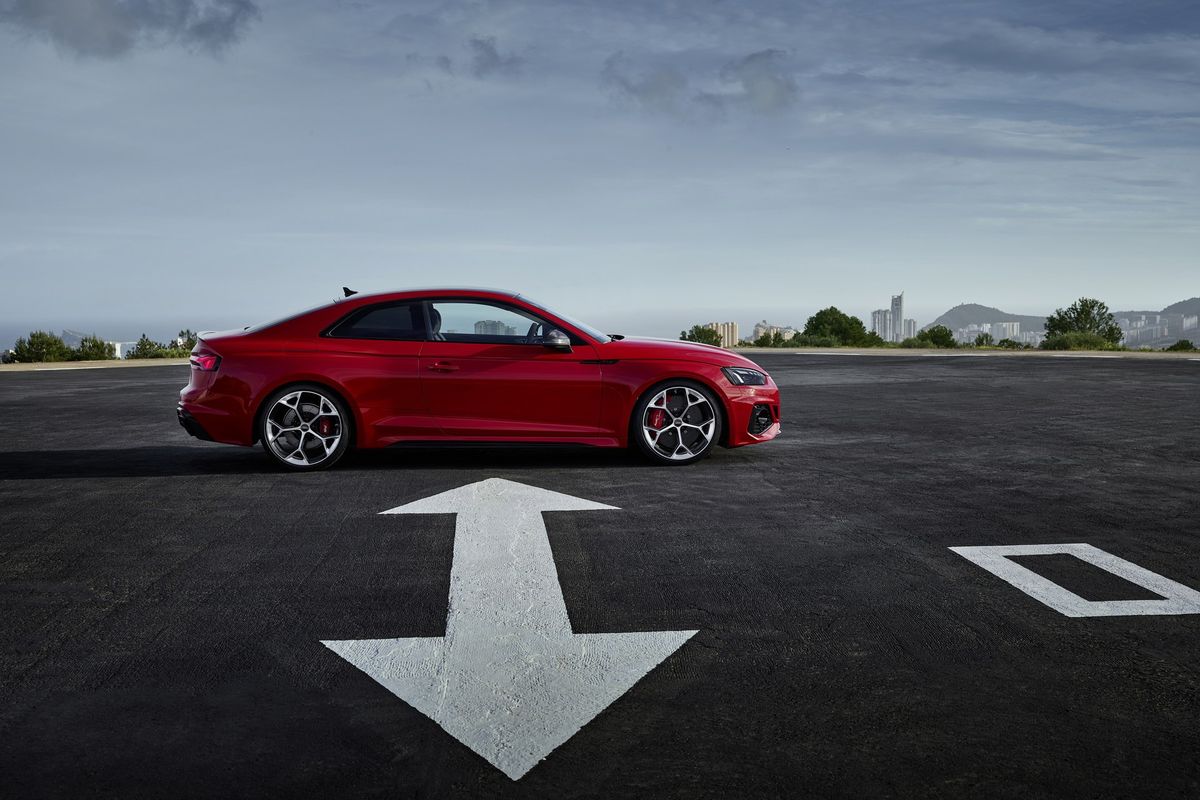
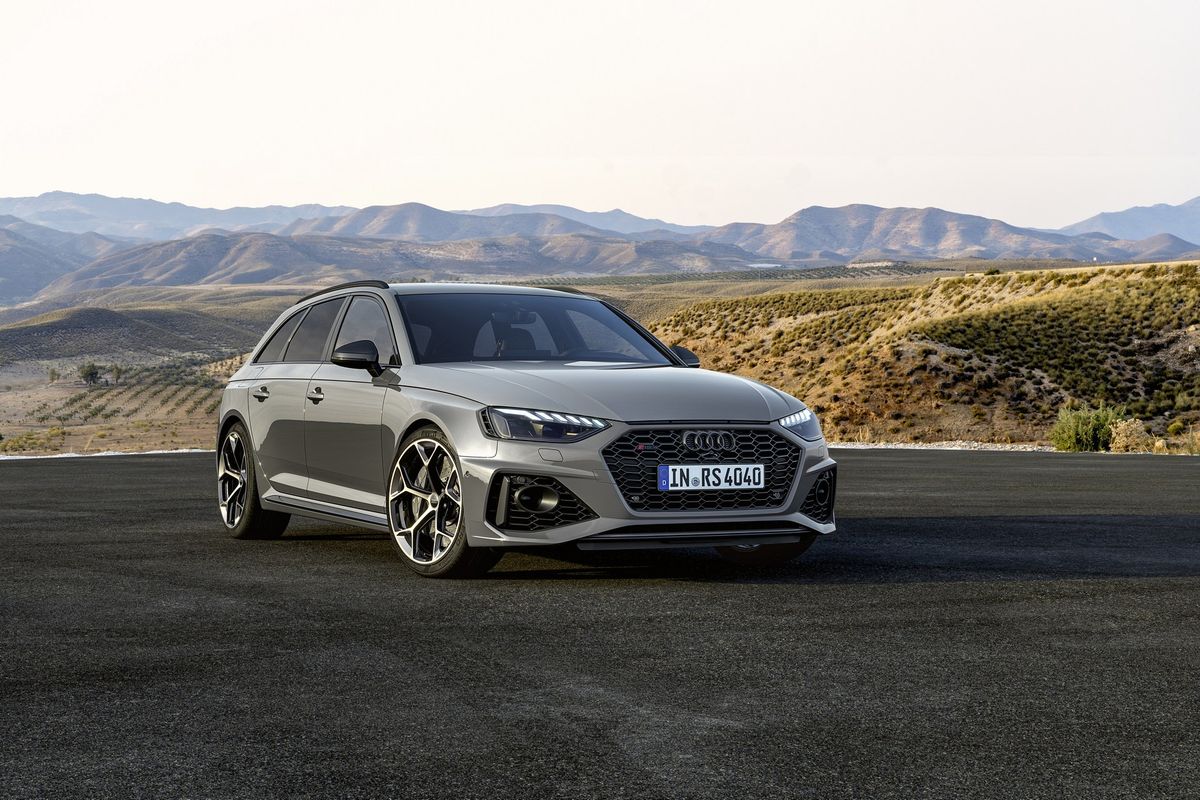
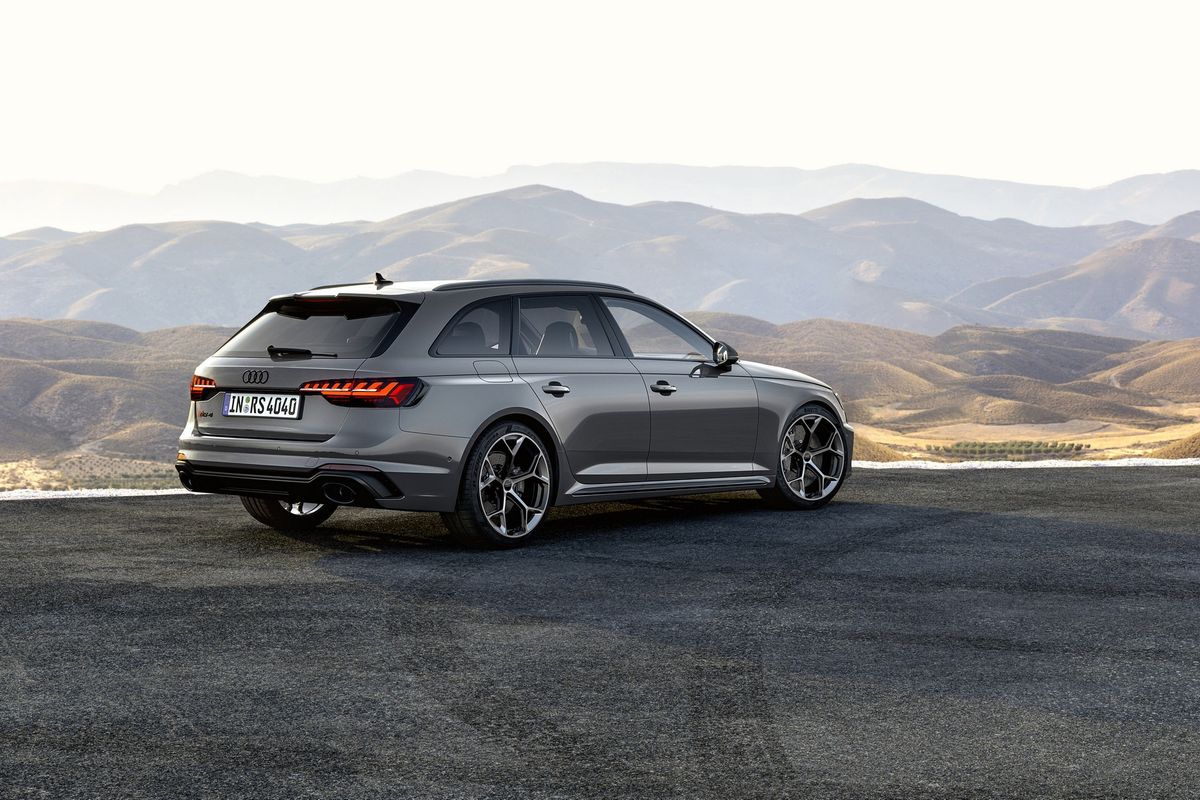
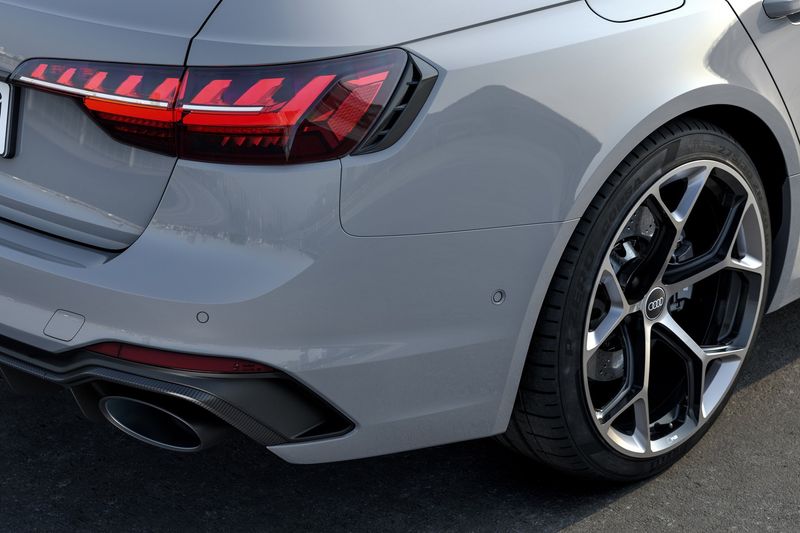
The Audi RS Competition and Competition Plus packages improve the handling, bring more noise to the party and are slightly quicker to 100 kph. There are also some nice tasty visual upgrades to let people know your Audi is a bit more special.
As far as suspension upgrades go, there are now manually-adjustable RS sport suspension pro coilovers which lower the car by 10 mm, higher spring rates, three-way adjustable dampers and stiffer stabilizers.
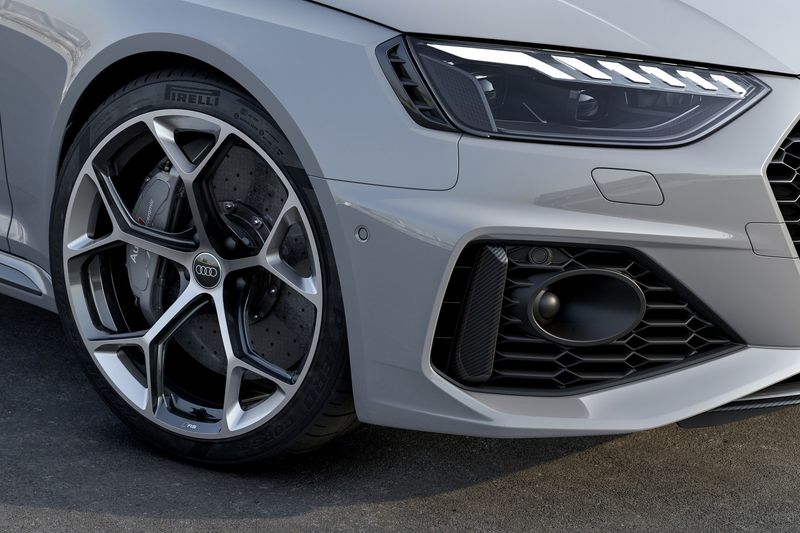
Audi has also added the quattro sports differential, retuned the ABS and fitted a fixed steering ratio of 1:13:1. The uprated RS ceramic brakes are claimed to improved braking distance and customers can spec special Pirelli Corsa P Zero rubber. There are also tweaks to the exhaust, which are now finished in matte black and you should be able to hear that V6 rumble more prominently.
Engine power has not been changed and the 2.9-litre twin-turbocharged V6 continues to deliver 331 kW and 600 Nm. Thanks to revisions to the gearbox software, the Audi RS4 shaves 0.2 seconds off of its 0-100 kph time. It’ll now do the same sprint in just 3.9 seconds, while the RS5 is good for 0-100 kph in 3.8 seconds. All products now have a top speed of 290 kph.
You’ll be able to spot the newcomer with its fresh 20-inch alloy wheels, glossy black badges and the carbon matte optics package, which includes an abundance of carbon matte goodies.
We reached out to Audi South Africa who confirmed the Audi RS Competition packages are under consideration for our market.