Why Mazda SA’s most expensive car is also its best seller
Against the norm, Mazda Southern Africa’s largest and most expensive passenger vehicle is also comfortably its strongest seller. So, why is this the case and what does it mean for the brand?
Typically, a mainstream automaker’s volume driver in South Africa’s passenger-vehicle space is a relatively affordable, fairly compact car. The Swift light hatchback, for example, powered Suzuki’s recent run of monthly sales records. In Volkswagen’s case, the Polo Vivo plays that role, while the Urban Cruiser routinely tops Toyota’s passenger-vehicle sales chart.
However, it’s an entirely different story for Mazda Southern Africa. Curiously, the Fuchū-based firm’s local division relies heavily on the CX-5 – its largest and most expensive passenger vehicle, topping out at a heady R742 900. Month in and month out, the elegantly styled crossover is the brand’s most popular model locally (and by some margin, too).
A closer look at Mazda CX-5 sales in 2022 so far
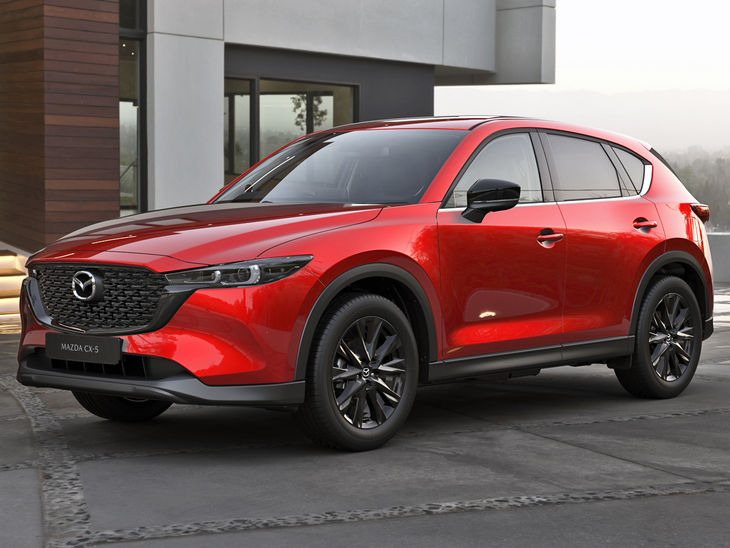
Mazda launched the lightly refreshed CX-5 in South Africa earlier in 2022.
In order to illustrate just how dependent Mazda’s local distributor is on the CX-5, we whipped out a calculator and tallied up the brand’s individual model sales for the first eight months of 2022. Year to date, 1 563 units of the CX-5 have been registered in SA, translating to a monthly average of around 200 units and representing a hefty 44% of the company’s total passenger-vehicle sales in that time. It was Mazda’s top seller every single month.
While that sort of volume doesn’t look overly impressive when compared with the nation’s most popular vehicles, it’s far more than Mazda’s other – smaller and less expensive – products managed to achieve. For instance, over the same period, the Mazda2 attracted 805 sales, while the CX-3 finished on 647 units. The CX-30, meanwhile, settled for 320 registrations, with the Mazda3 hatchback bringing up the rear with just 213 units (the MX-5, of course, quietly skipped the country some time back).
Is the CX-5 excelling or are other Mazda models underperforming?
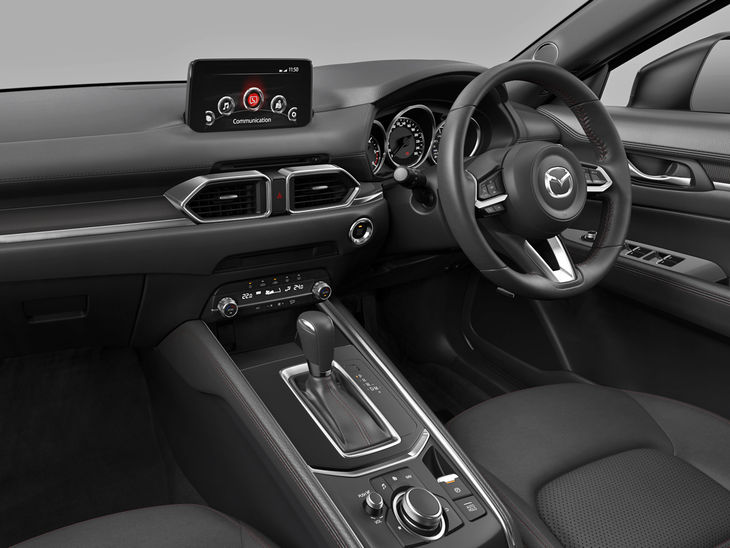
The CX-5’s refreshingly uncluttered facia is a highlight of the cabin design.
So, to the inevitable question: is this peculiar phenomenon down to the CX-5 shining particularly brightly or other Mazda passenger vehicles simply underachieving? In short, the answer seems to include a bit of both. Let’s first take a look at a couple of the CX-5’s direct rivals in order to provide some context to its recent performance. From the start of January to the end of August 2022, Volkswagen registered 1 518 units of the Tiguan (so, 45 units behind the Mazda) and Toyota sold 1 173 examples of the RAV4 (390 units off the CX-5’s pace).
Sure, global supply constraints likely played some role in these figures, but they nevertheless suggest the CX-5 continues to stand strong in its segment. This is despite the fact this second generation of the crossover launched in South Africa more than five years ago and has benefited from only the most minor of updates since. Of course, it certainly helps the KF-generation CX-5 is a particularly compelling vehicle, offering a stylish exterior design, a refined (not to mention relatively engaging, for a crossover) driving experience and a refreshingly uncluttered, classy cabin. There’s a reason it was the highest-ranking Mazda (in 21st place) on the list of the world’s best-selling vehicles of 2021, after all.
At least a portion of the CX-5’s local sales success could be attributed to the fact the range includes a turbodiesel option, something neither of the aforementioned Tiguan and RAV4 line-ups offer (the TDI version of the former still hasn’t arrived in SA while Toyota’s crossover ditched oil-burning engines globally with the shift to the current generation). Still, it’s interesting SA buyers don’t seem perturbed by the lack of forced induction in the rest of the CX-5 portfolio, which comprises naturally aspirated 2.0- and 2.5-litre petrol mills.
What about the rest of the Mazda line-up?
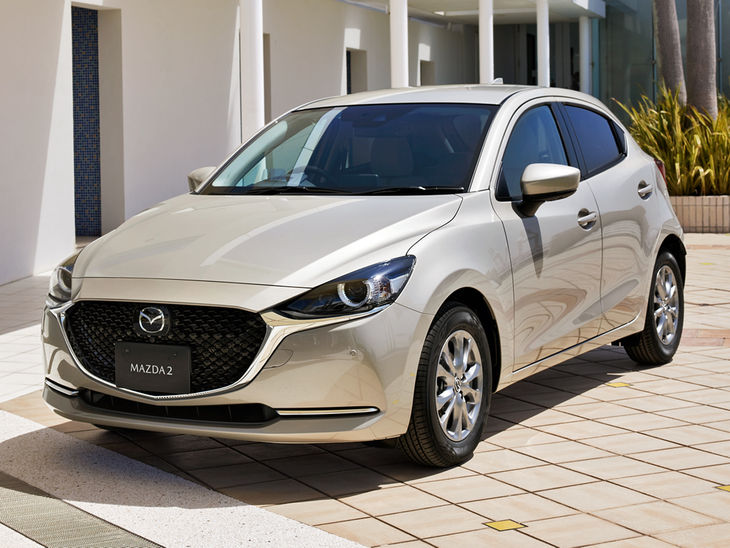
Despite being Mazda’s smallest, least expensive model, the Mazda2 is easily outsold by the CX-5 in SA.
So, why are the CX-5’s less expensive, more compact siblings struggling by comparison? Well, while the Mazda2 is a fundamentally sound hatchback boasting solid build quality and plenty of standard kit, it’s particularly long in tooth, with this generation having debuted locally way back in early 2015 (before being lightly facelifted late in 2019). It’s similarly priced to far newer, traditionally more popular models such as the Hyundai i20 but also undercut by rivals like the Kia Rio. Then there’s the Volkswagen Polo effect.
It’s a similar case with the ageing CX-3, which rides on the same platform as the Mazda2 and likewise hit the local scene back in 2015. Although it gained updates in 2018 and 2021, the small crossover tumbled down the pecking order as the sub-compact segment became increasingly densely populated. Though it certainly has its merits, there’s no escaping the fact the CX-3 lacks the practicality (both in terms of rear legroom and luggage capacity) offered by most competitors.
The CX-3 is furthermore available exclusively with an atmospheric 2.0-litre petrol engine (as opposed to a downsized turbo mill) and is priced fairly optimistically – particularly in flagship Hikari guise – in a segment that’s all about value. Interestingly, this vehicle has been discontinued in a number of major overseas markets in favour of the CX-30.
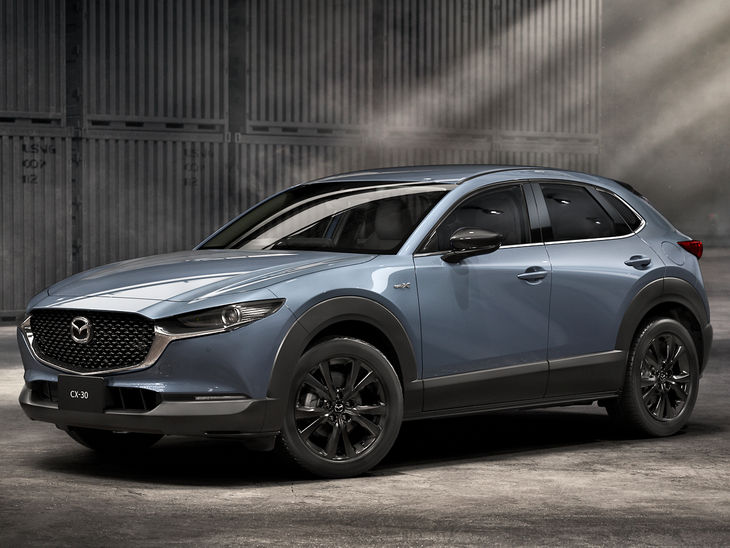
Though certainly a stylish thing, the CX-30 is priced far too closely to the larger CX-5.
Of course, the CX-30 touched down in South Africa at the start of 2021 but hasn’t been terribly well received by local buyers. This is surely down to its rather curious positioning; it remains priced inexplicably close to the CX-5, with many potential buyers likely opting for the larger model for not much more money (at launch in January of that year, the CX-30 Active and Dynamic models were a mere R100 less expensive than the equivalently specced CX-5 versions).
Then there’s the Mazda3 hatch (remember, the sedan body style was scrapped locally late in 2021), which – again – lacks the option of a turbocharged engine. Still, it’s worth mentioning the Mazda3 is something of a victim of the family hatchback segment’s general decline as well as its maker’s decision to move it upmarket (pushing the price skywards in the process). Interestingly, Mazda SA actually forecast a significant dip in sales for this generation at launch in 2019, saying it expected the CX-30 to offset this shortfall.
The impact on Mazda SA’s overall sales performance
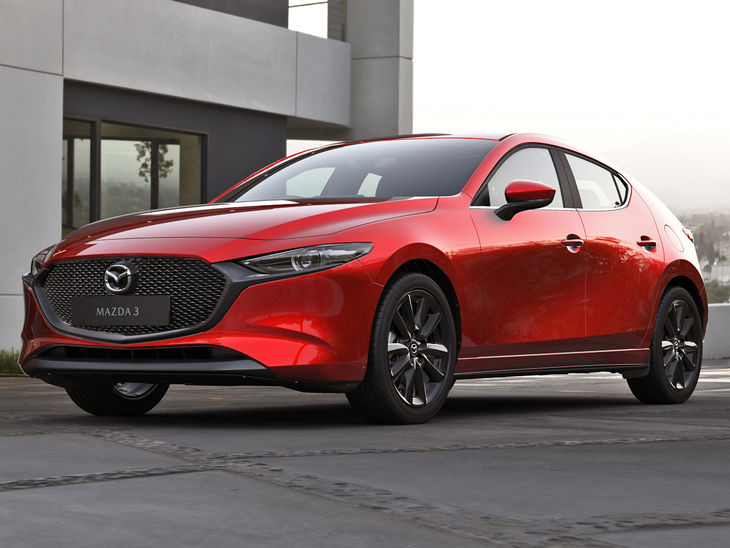
Once a top seller for the brand locally, the Mazda3 is year-to-date its least popular passenger vehicle.
In August 2022, Mazda registered 445 vehicles (including a mere four examples of the BT-50), seeing it rank all the way down in 17th on the list of South Africa’s top-selling manufacturers. In the same month five years ago in a similarly sized market, the Jujiro Matsuda-founded brand placed ninth with a far healthier 1 161 sales.
Although it’d again be easy to point to global production and supply constraints as a key factor in this marked regression, virtually every automaker has been grappling with this reality, and there’s no hiding the fact Mazda’s market share in Mzansi has shrunk. That, of course, has us drawing parallels with the similarly curious case of Honda Motor Southern Africa, which we examined earlier this year. It’s also worth bearing in mind that, like its fellow Japanese brand, Mazda’s pricing strategy – which is in part informed by the fact it’s a pure importer rather than a local manufacturer – has surely played a meaningful role in its local sales slowdown.
Where to from here for Mazda Southern Africa?
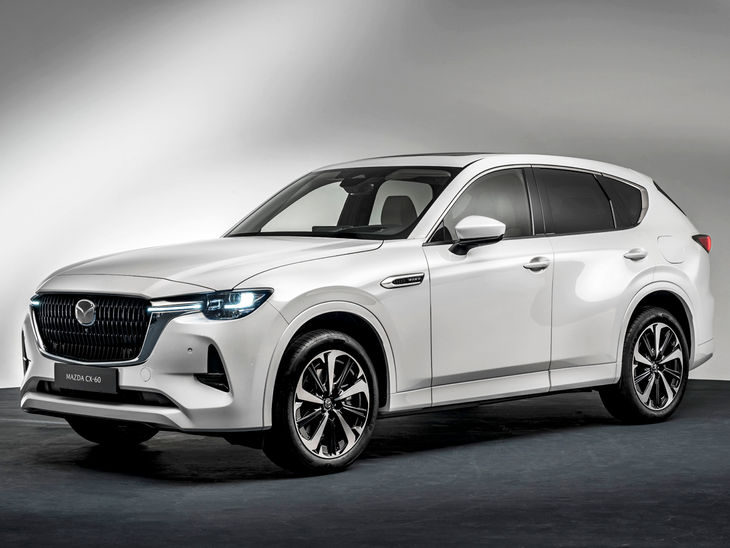
New Mazda models such as the CX-60 are scheduled to launch in SA, but they’ll be pricey.
As fascinating and unusual as it is that the company’s largest, most expensive model is simultaneously its most popular, we suspect this will change in the relatively near future. Unfortunately, it won’t be because Mazda SA has introduced a raft of more affordable vehicles; it simply doesn’t have such arrows in its global quiver, with the brand moving further upmarket with each new model reveal.
Instead, it will simply be a case of the CX-5 surrendering its role as Mazda SA’s priciest model. Yes, the 102-year-old manufacturer has plans to expand its crossover line-up in South Africa, listing the CX-60, CX-70, CX-80 and CX-90 – all based on the new rear-wheel-drive platform – as “potential options” for introduction into the local market. Naturally, each one would be more expensive than the CX-5.
Though we’ve concentrated on sales figures here, we should point out automakers tend to prioritise profit margins over pure volume, an approach that is surely driving Mazda’s latest global strategy. Nevertheless, it’s interesting an anything-but-budget nameplate that long preceded the brand’s gradual shift upmarket is still responsible for the bulk of its sales, both locally and worldwide. And, from where we’re sitting, that’s not going to change any time soon.
Related content
New vehicle sales in South Africa: August 2022