If the latest data from the Central Energy Fund is anything to go by, motorists can look forward to the price of petrol coming down. Diesel however is likely to go up.
The Central Energy Fund constantly assesses the price of both petrol and diesel, and based on the latest data, it looks like motorists could get some relief as the price of petrol could come down. It will come as a relief to many as it seems like the price of fuel has been increasing every single month.
However, diesel users are not so lucky, as the Central Energy Fund is suggesting that an increase is on the cards based on the current forecast. Right, so as the numbers stand, petrol could come down by 12 cents per litre. Sadly, increases of between 92c/l and 98c/l for diesel inland, increases of between 88c/l and 94c/l for diesel at the coast, increases of between 79c/l and 82c/l for illuminating paraffin
In early April 2022, the SA Minister of Finance, Enoch Godongwana, announced interventions to help bring relief to consumers and the wider industry. The General Fuel Levy is temporarily slashed by R1.50 per litre from Wednesday, 6 April 2022 to 31 May 2022. The General Fuel Levy for petrol will be reduced from the current R3.85 per litre to R2.35 per litre while the R3.70 levy for diesel will be reduced to R2.20 per litre.
The price of fuel is affected by the global oil price and the current exchange rate. With the Russia – Ukraine conflict and recent poor performance from the Rand against the US Dollar, expect further increases over the next few months.
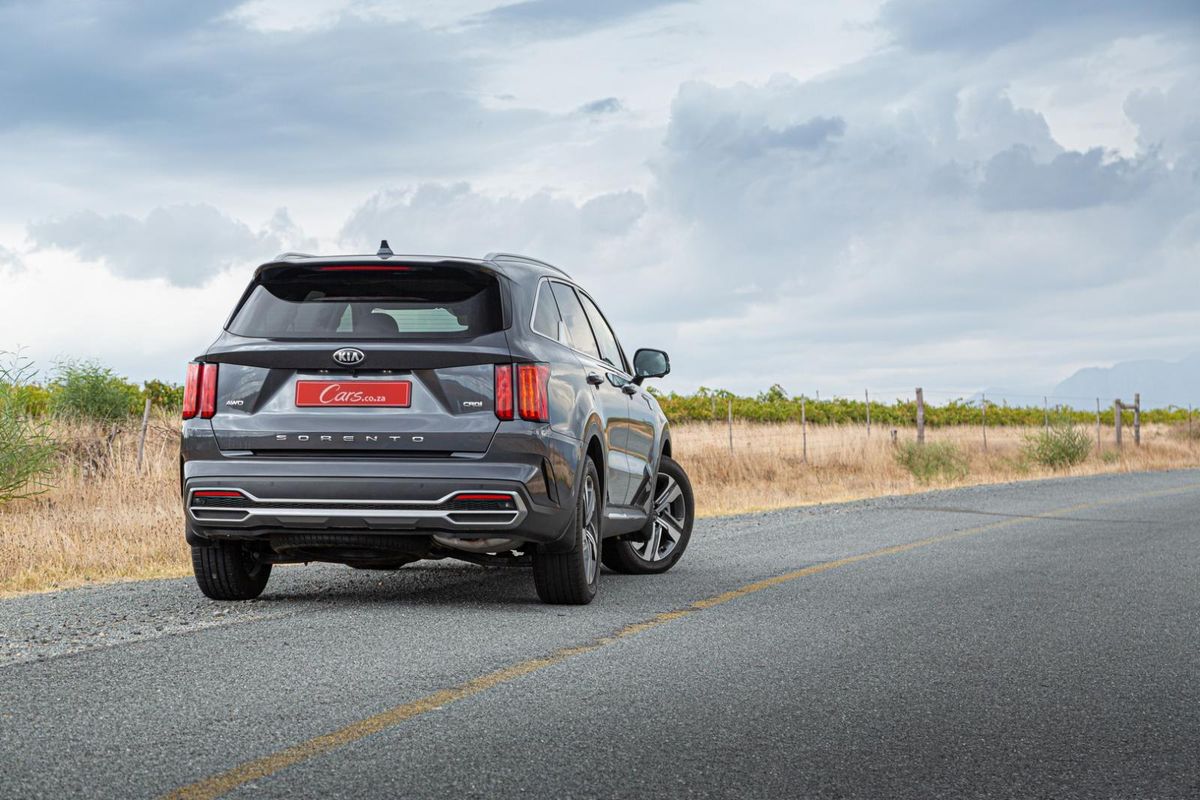
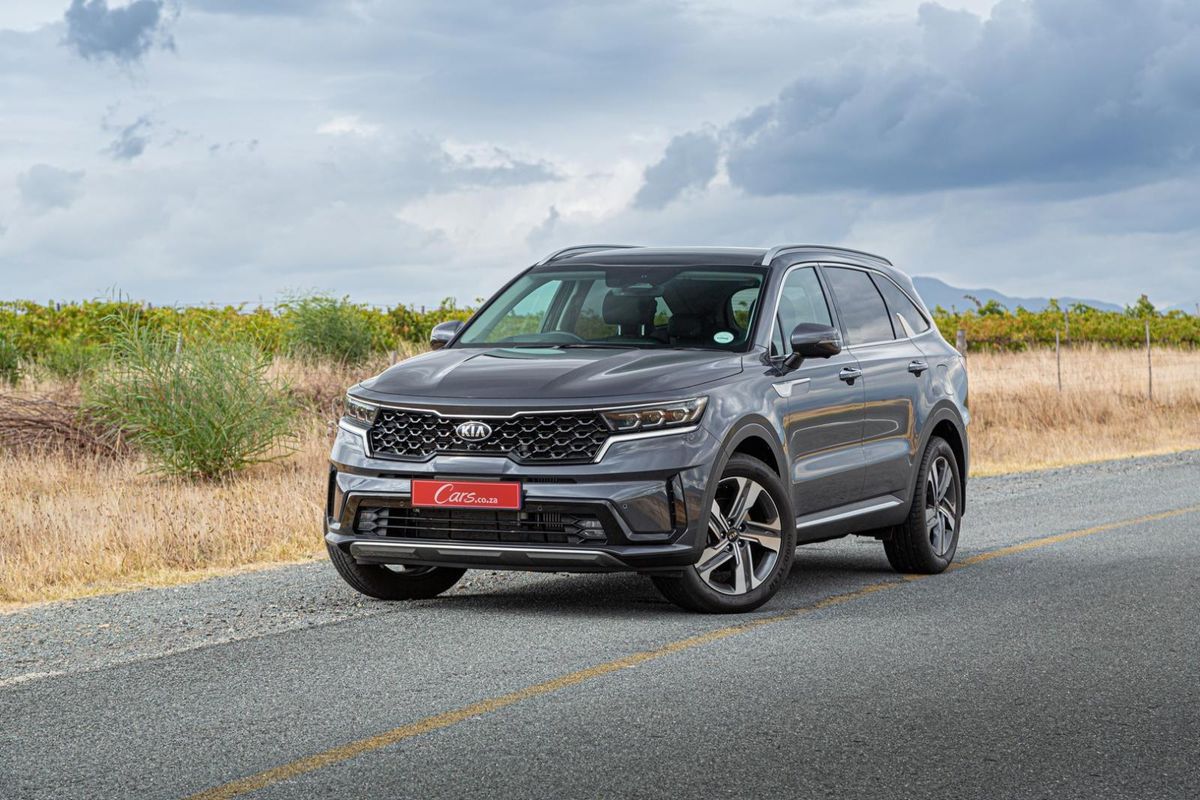
The Kia Sorento bridges the gap between an MPV and an SUV, but this latest version also pushes the model upmarket with added refinement, a more capable drivetrain and the latest safety features. South African consumers have tended to overlook 7-seater family cars that aren’t produced by the market’s premium brands – could this Korean offering change their minds?
We like: Powertrain’s performance/efficiency balance, excellent practicality and generous specification
We don’t like: Not an off-road-oriented family vehicle (which South Africans tend to prefer)
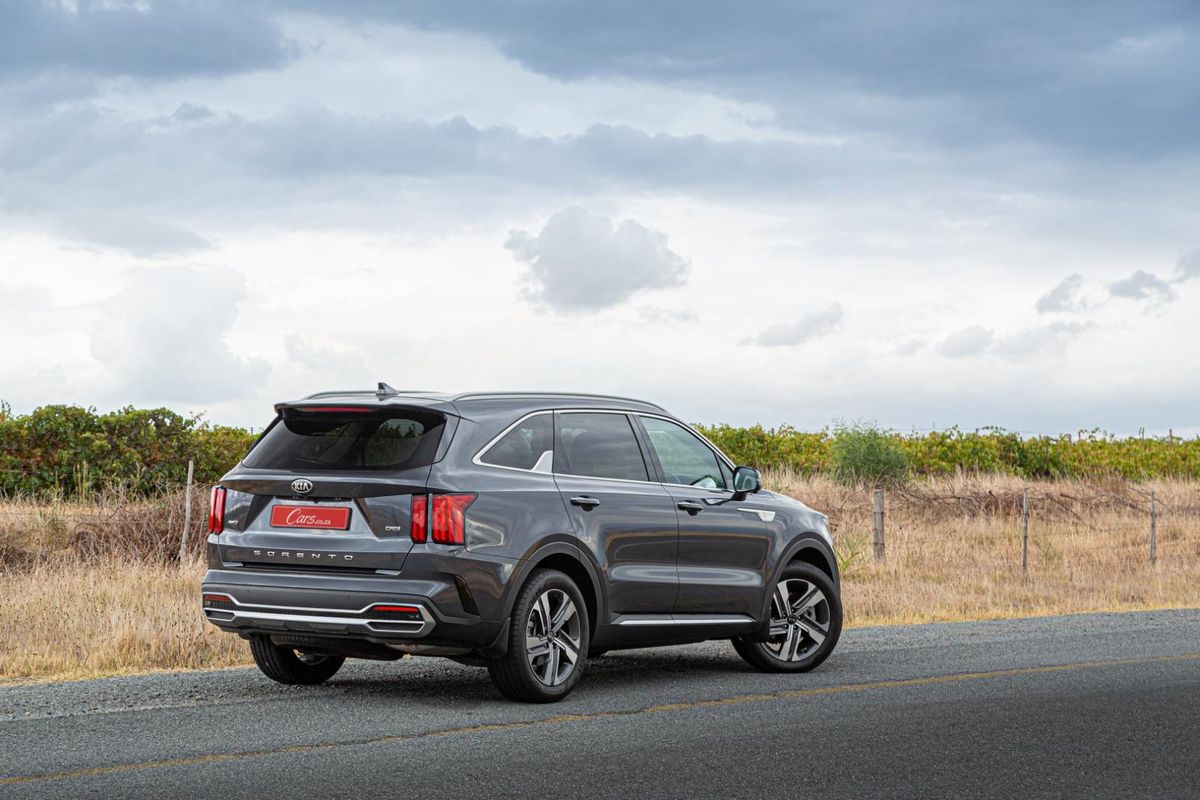
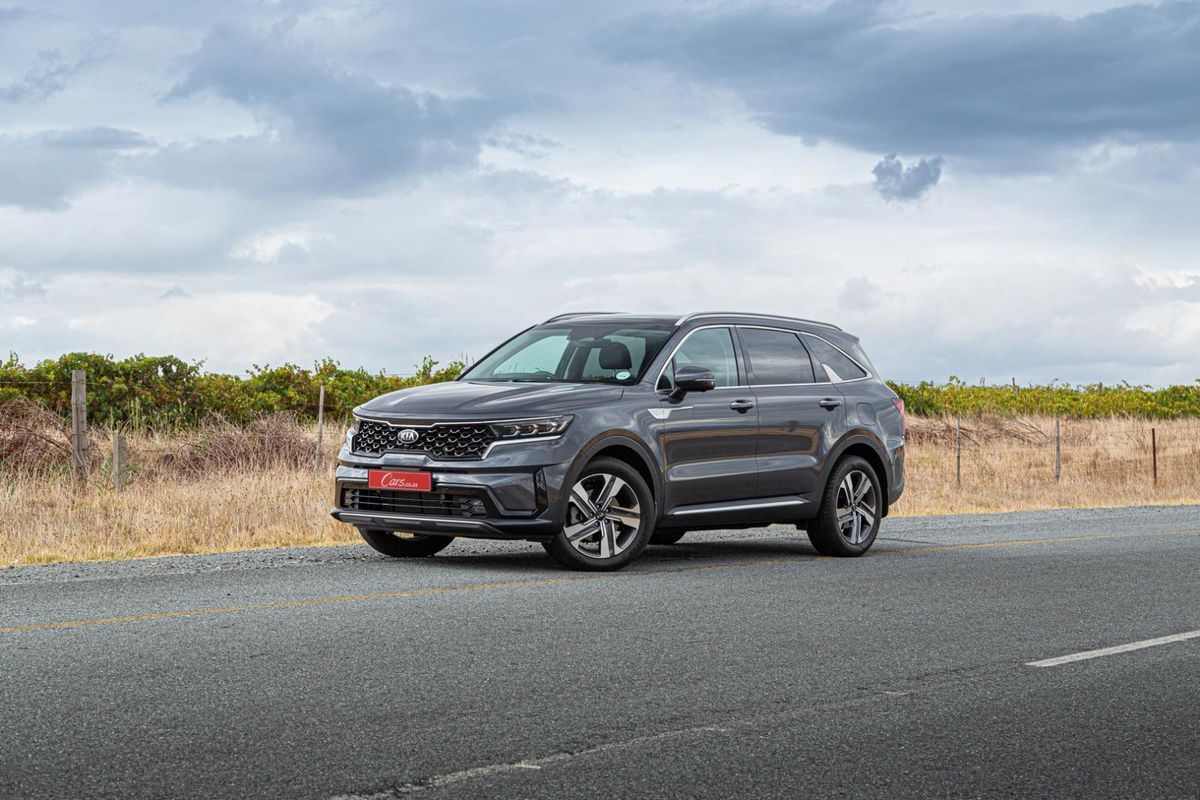
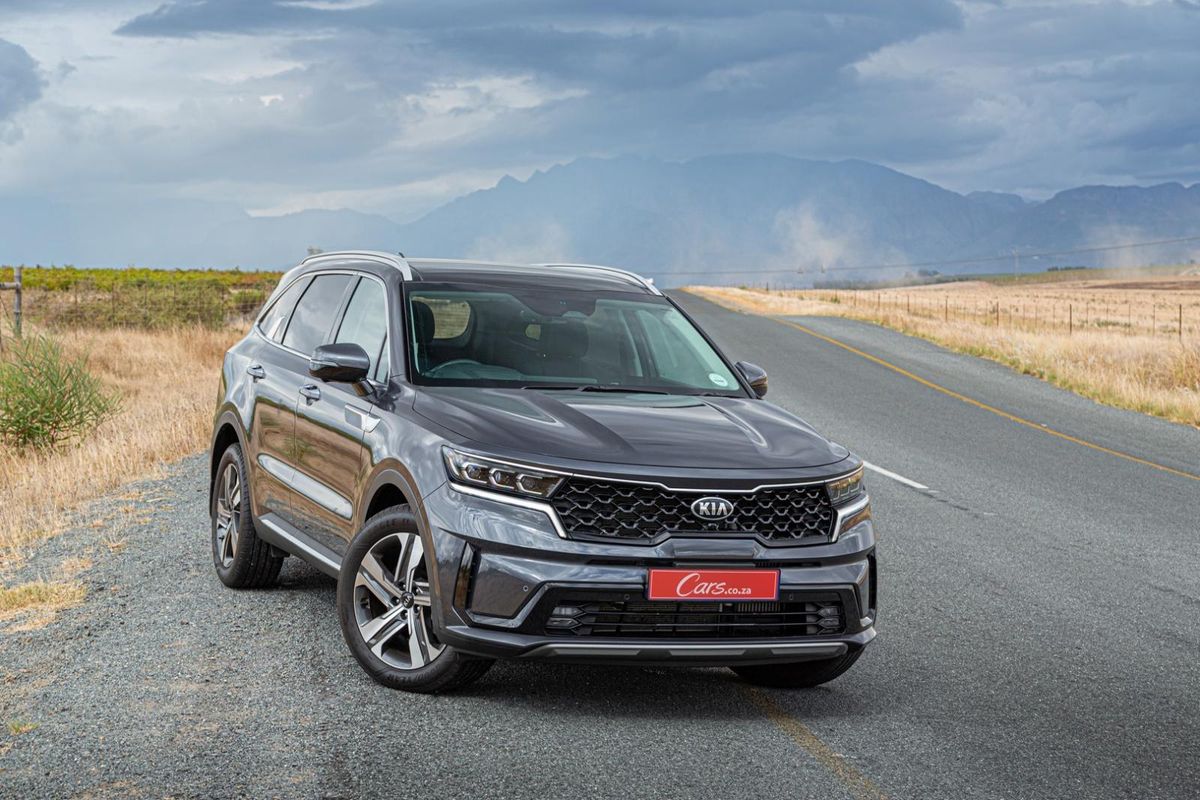
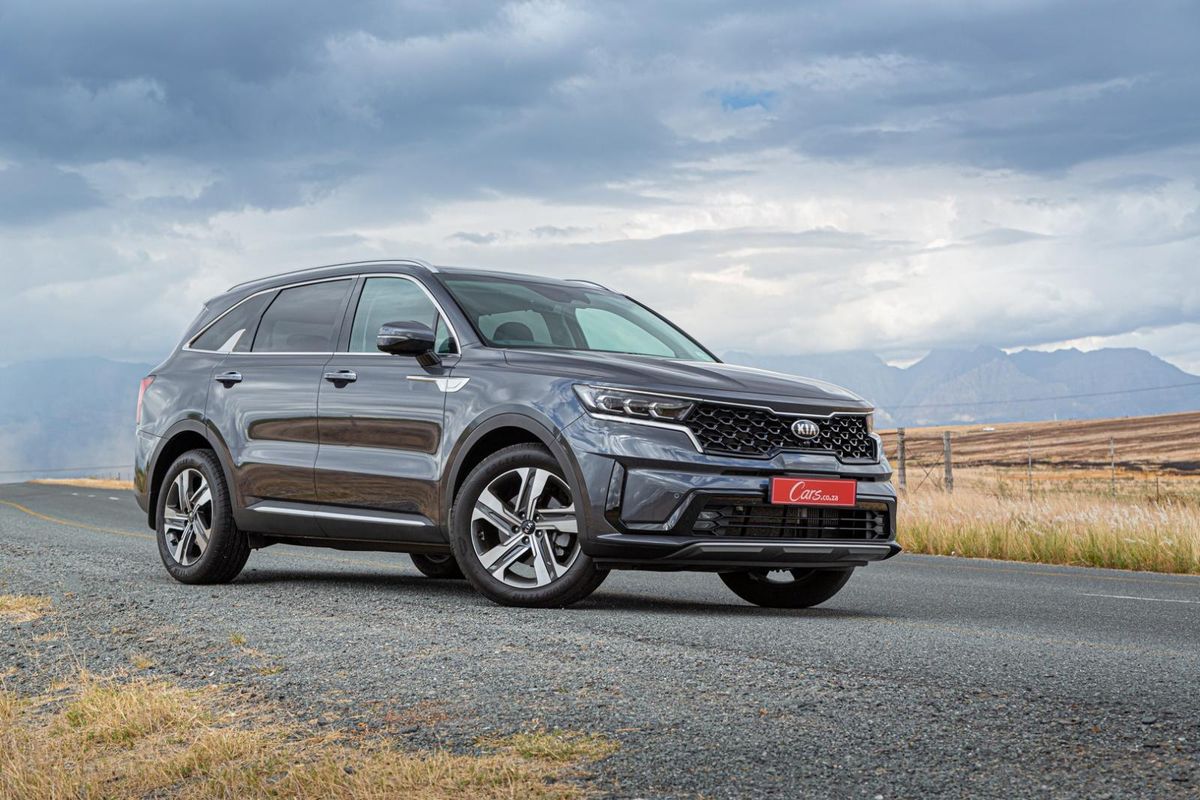
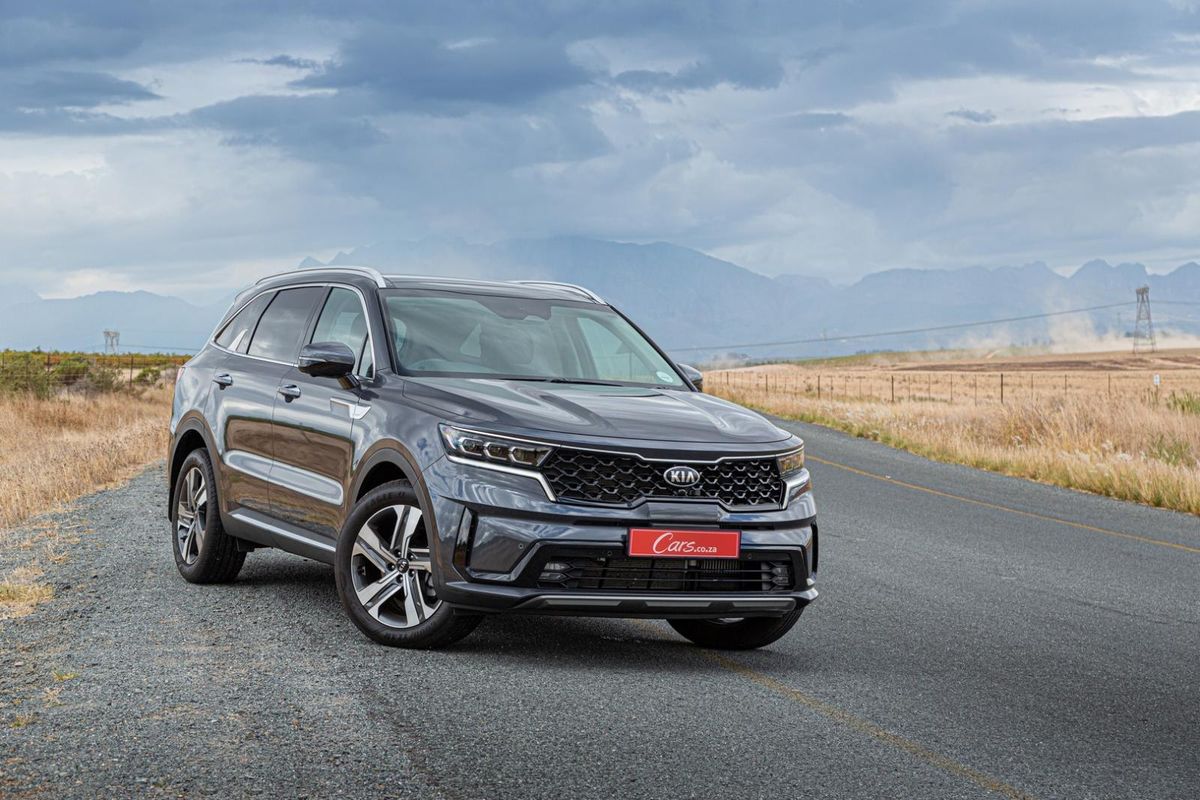
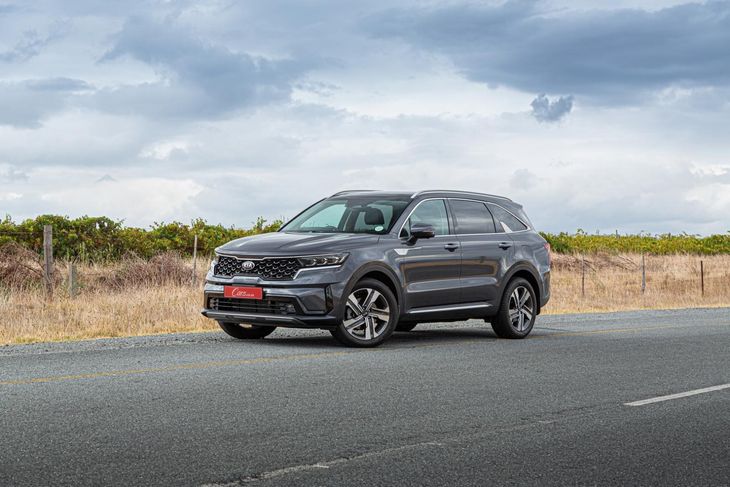
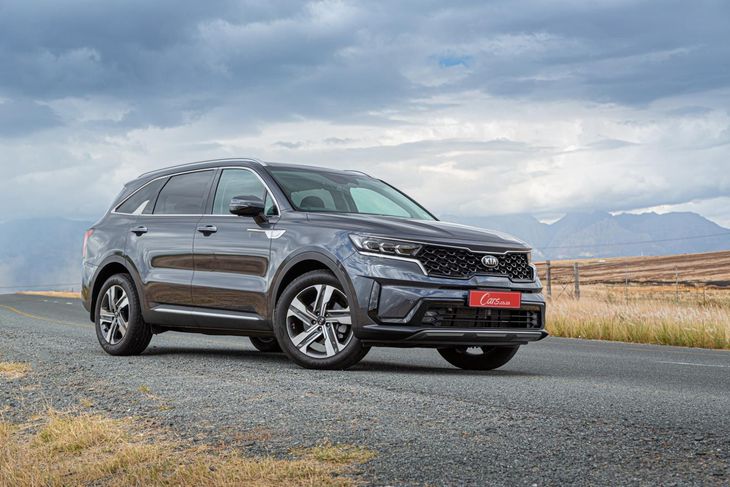
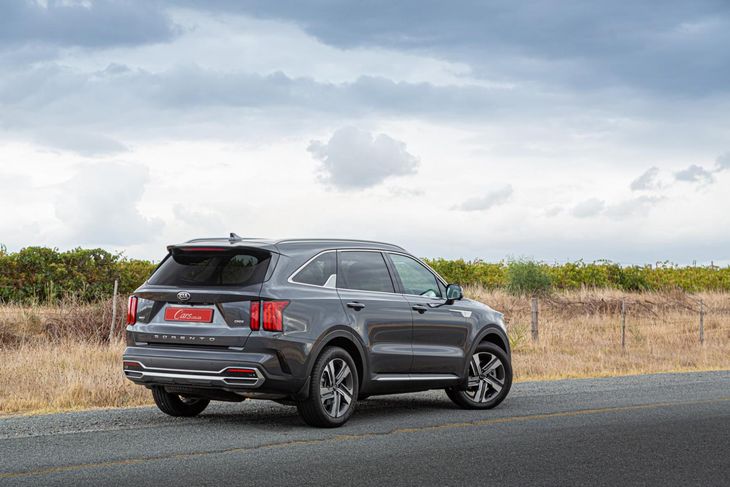
The new Sorento’s more squared-off, American-market-influenced design stands out in the segment.
The Kia Sorento sits in a tricky section of the South African new-vehicle market. It’s a large, 7-seater SUV with all-wheel drive (AWD), but it doesn’t offer the kind of outright off-road capability that outdoorsy South Africans believe they require to venture into the bundu (which explains why bakkie-based Adventure SUVs, especially the Toyota Fortuner, are so popular); the Kia also doesn’t have a badge on the nose that implies your social status is ahead of the curve…
This has led to the Korean model being somewhat of an underdog in its segment and the same can be said of its cousin, the Hyundai Sante Fe, with which the Sorento shares a platform. The Santa Fe actually runs the same drivetrain and seating configuration (7 seats), but there are a few differences in terms of the models’ interior space and ground clearance – compare them here.
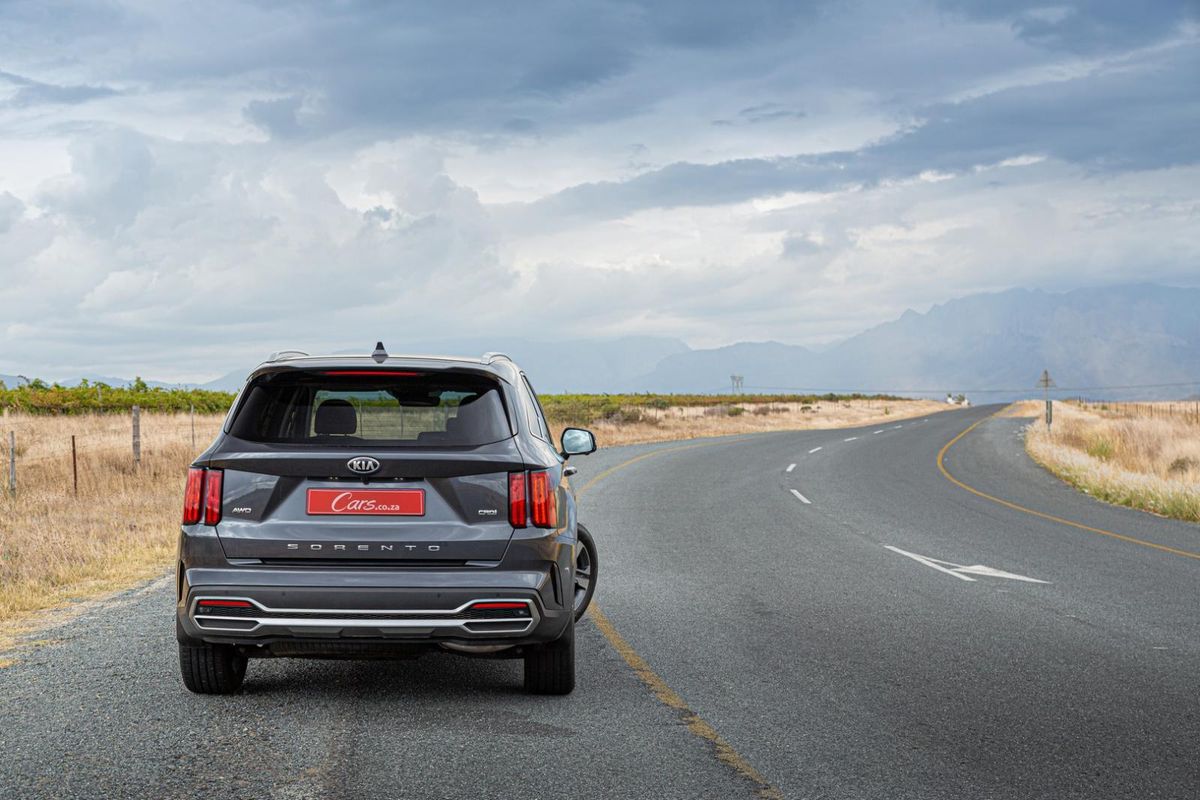
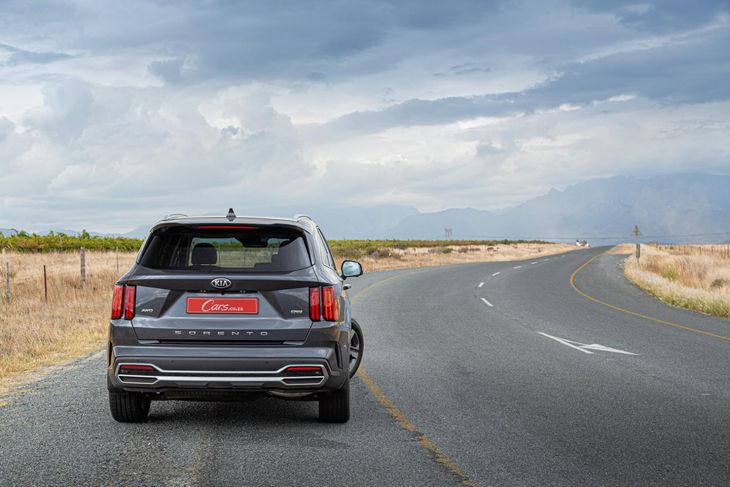
The biggest advancement of the 4th-generation model over its predecessor has to be the former’s eye-catching exterior design. The bland and understated Sorento is gone, it has been replaced with this Americanised design that boasts a bold face with a squared-off rear end in a (suitably bulky-looking) SUV shape. It makes a statement, even when parked next to the aforementioned German executive SUVs it is often passed over for.
How the Kia Sorento fares in terms of…
Practicality
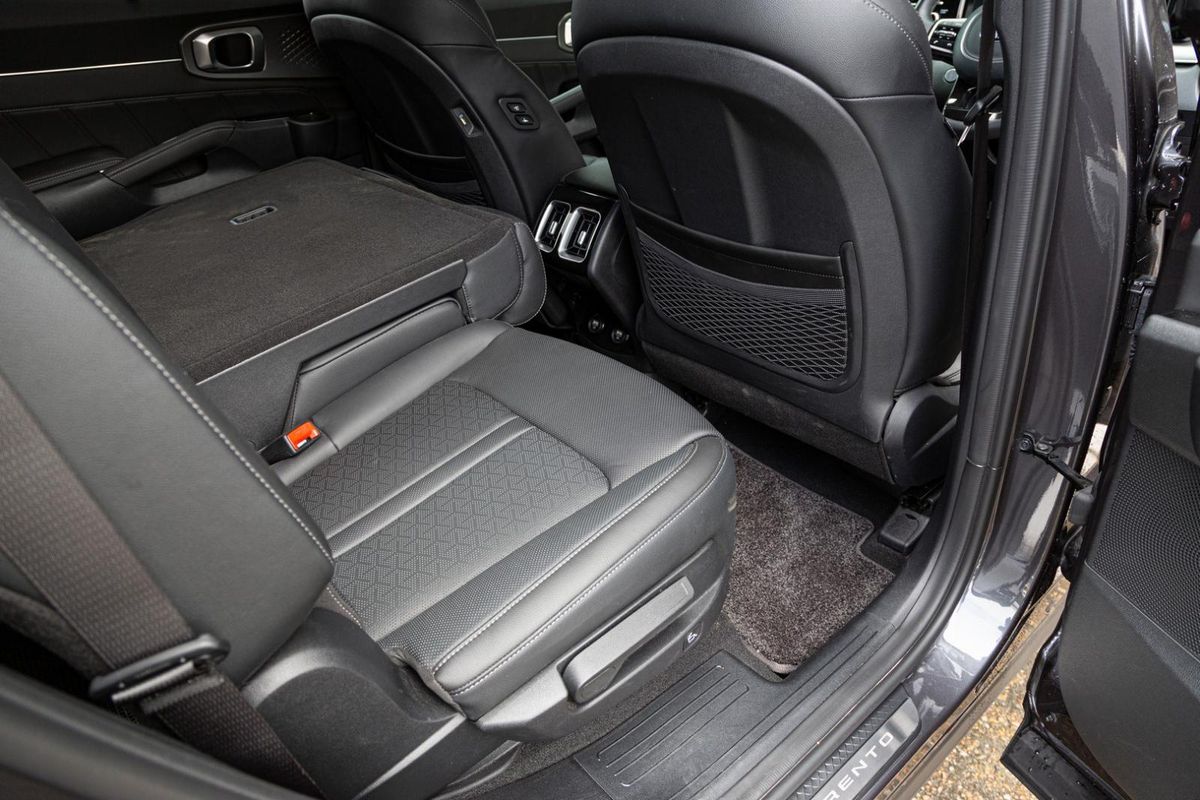
Plenty of rear legroom along with options to slide and recline the rear seats.
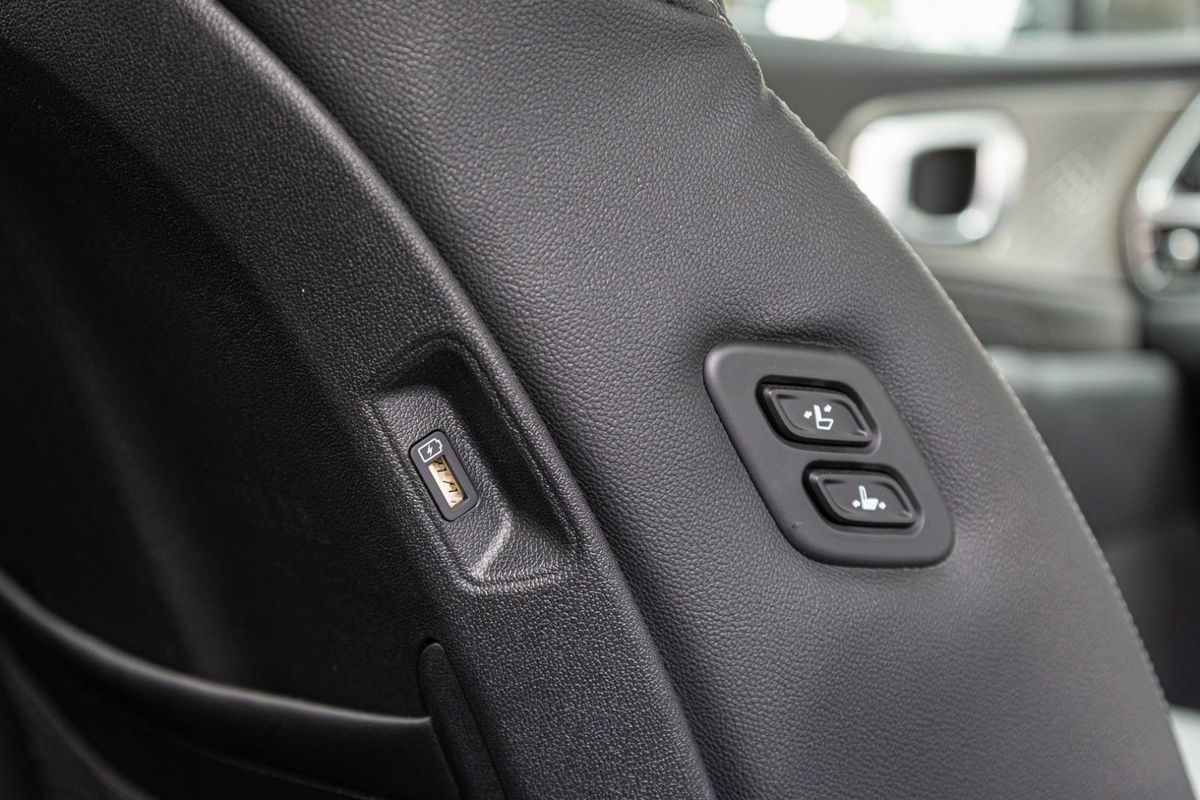
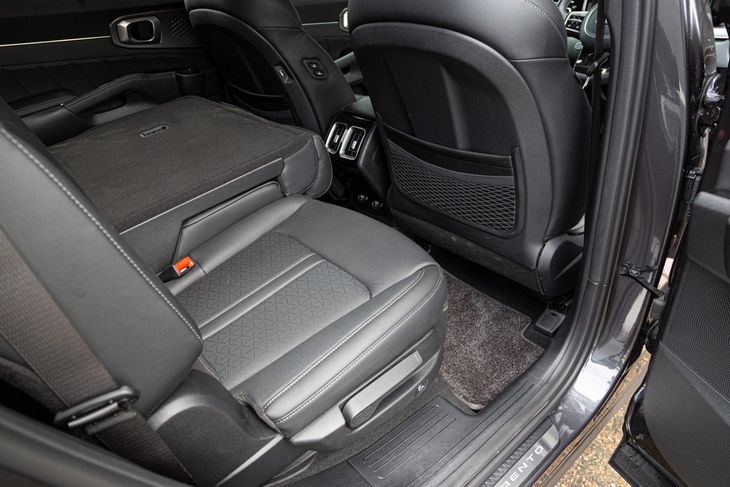
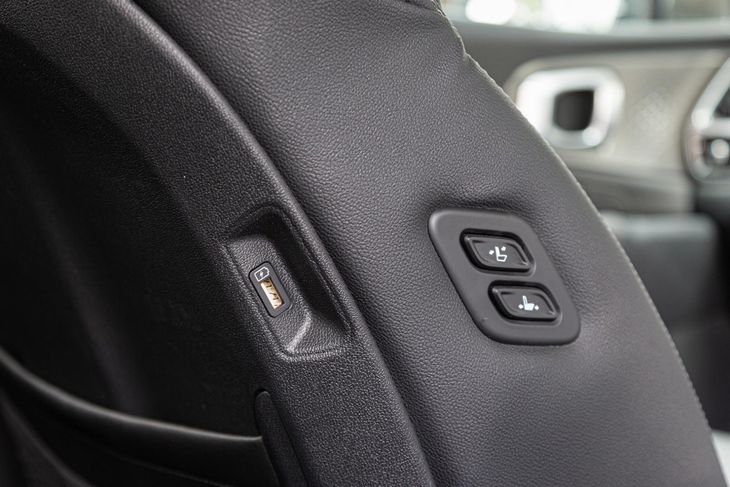
The Sorento is eminently practical! It’s a big SUV that can easily seat 7 people and offers reasonable luggage space, even when all seats are in use (in most cases, it’s likely to be used as a 5-seater – with a huge load bay). Folding the seats down is a cinch – you can fold the middle row flat with a lever next to the seat cushion or use buttons (located on the side of the backrest) to electronically fold and slide the row forward to provide easier ingress for the rearmost occupants.
In the large 7-seater SUV segment, the question South Africans tend to ask is: “Why not a Fortuner?” Considering the Toyota’s sales domination, it’s the answer to most people’s needs. So what advantages does the Kia offer in terms of practicality over a bakkie-based SUV? The Sorento is 4 810 mm long – just 15 mm longer than a Fortuner. Its wheelbase measures 2 815 mm, versus the 2 745 mm of its Japanese rival. Width also favours the Korean with 1 900 mm versus 1 835 mm, and while the Fortuner wins in terms of height (1 835 mm versus 1 700 mm), most of this disparity is accounted for by the difference in the models’ ground clearance… the Kia sits much lower (176 mm) than the Toyota (279 mm).
The 2nd-row can be electrically adjusted to ease access to the 3rd row. A USB is provided to charge the rearmost passengers’ devices.
Because of the Sorento’s superior dimensions, it offers better occupant space and greater load capacity than the Fortuner and that’s before you compare the Kia’s more car-like ride quality with that of the bakkie-based Toyota, which we’ll get to later. The Kia is even a little bigger than the Santa Fe inside, but probably not discernably so (their spec sheets suggest that the former has the advantage of a few extra millimetres here and there).
If you intend on towing big trailers (over 2.5 tonnes) the ladder-frame-based Fortuner is the more capable with a maximum tow capacity of 3.3 tonnes, but you’ll find most boats and even caravans are under the Kia’s 2.5-tonne max capacity.
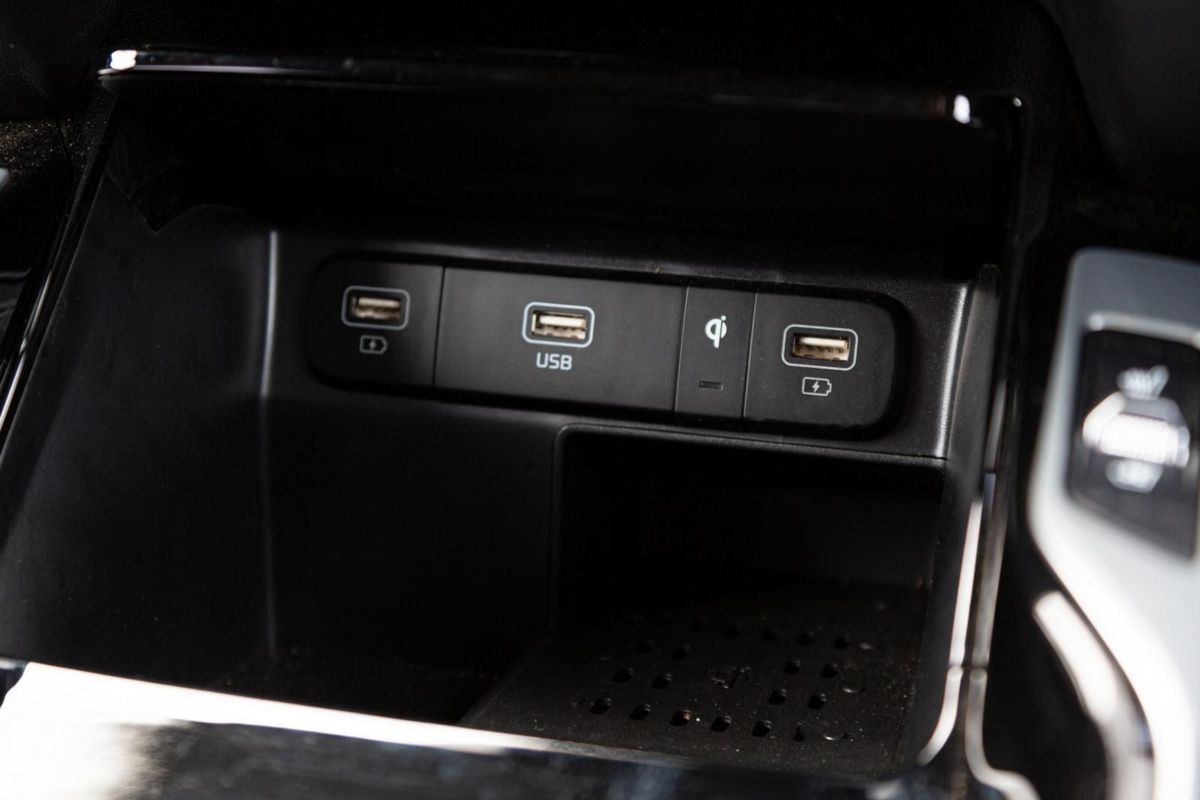
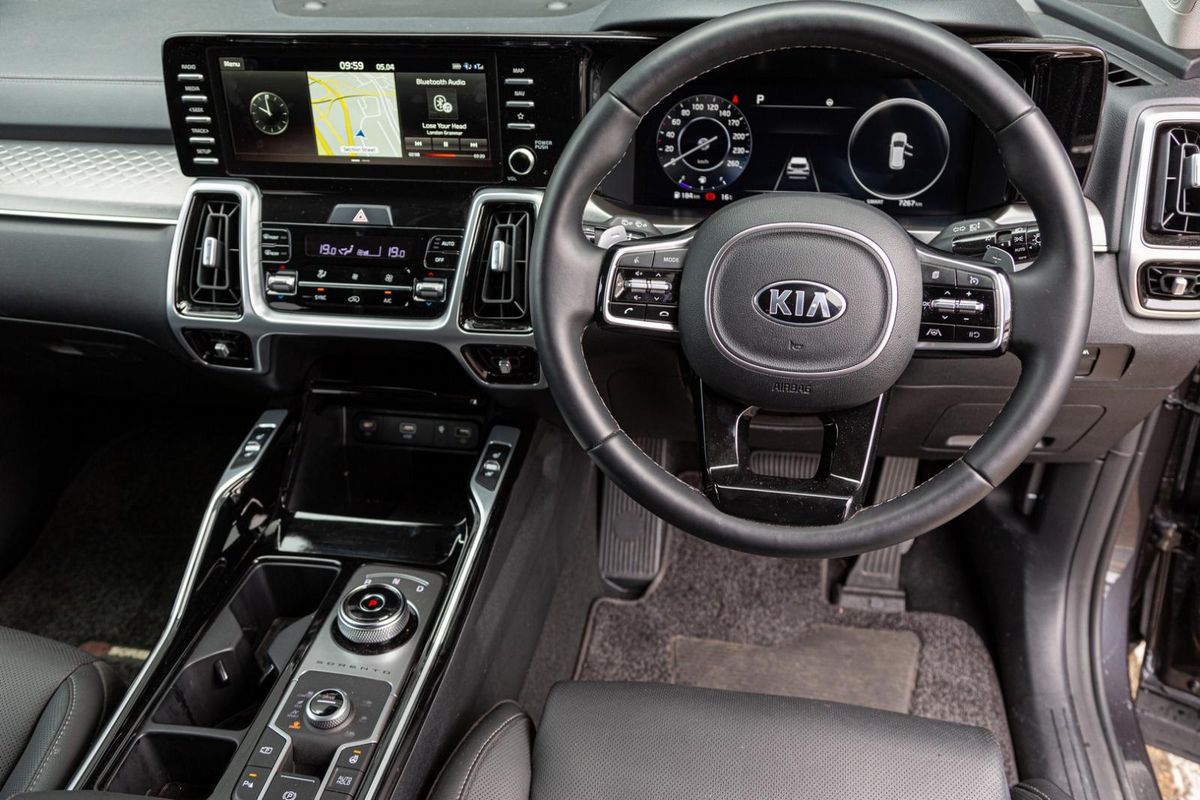
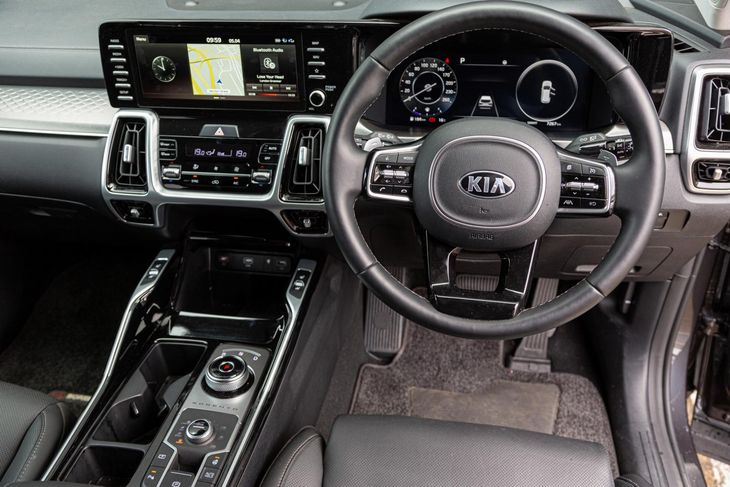
As for interior practicality, the central tunnel provides a lot of storage spaces, including 2 large drinks holders and a separate storage bin behind them. There is also a wireless charging space in front of the transmission selector to place your phone, while the door pockets (both front and rear) are large enough to hold 750-ml bottles with space beside them for other oddments.
Ride comfort
A big SUV that prioritises passenger comfort and cabin quietness above handling and suppleness.
This new-generation platform that underpins the Sorento heralds notable improvements. The SUV is quieter inside, feels steadier on the road and has better steering weight than it did before. That’s not to say it’s turned into a sportier SUV… Kia understands its target market demands comfort above any other vehicle characteristics. For a big vehicle, the Sorento feels quite easy to wield in the city (as opposed to an oversized “big rig” that seems oversized for its surroundings).
Suspension wise, the Sorento rides comfortably. The damping’s on the softer side, so you can expect a little more body roll than in a premium-badged equivalent model, but its ride is more forgiving over mixed surfaces. Over awkward bumps (such as manhole covers or expansion joints), it may knock or jolt a little more than expected, with the intrusions noticeable from within the cabin. It’s not something that upsets the overall ride quality, just something to expect and prepare for.
Meanwhile, the Kia’s chunky looks (it was designed to look perfectly at home on American freeways, we’d assume) telegraphs its handling characteristics. It’s not ponderous in the corners, but it does not “seek out apexes” either. Granted, you’re unlikely to want to carve up a mountain pass in the Sorento and that’s probably for the best, considering it feels a bit out of its depth when swaying from side to side. Still, it’s certainly better than its predecessor in this department.
Drivetrain refinement
The 2.2-litre turbodiesel and 8-speed auto transmission are an excellent combination.
The Sorento uses a 2.2-litre 4-cylinder turbodiesel engine in the South African market. The motor delivers peak outputs of 148 kW and 400 Nm of torque and is paired with an 8-speed dual-clutch (automatic) transmission. This aspect of the package is very underrated, because the 2.2 CRDi AWD SXL accelerates smoothly and shifts gears with precision. Suffice to say this is probably the best drivetrain configuration you’re likely to find in an SUV (of this size) at under R1 million.
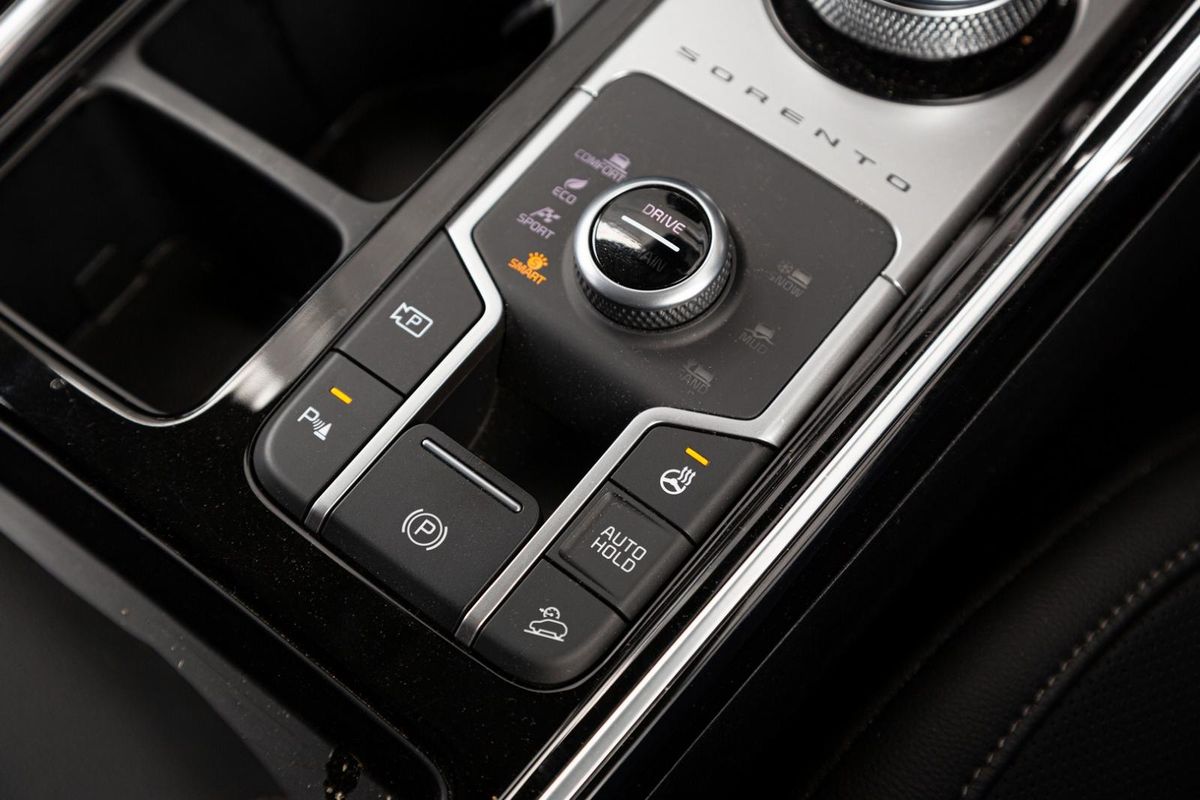
The engine always feels up to the task, irrespective of whether the Kia’s loaded up with people and their things or trundling on the daily commute. You can flit between drive modes via the rotary selector (located behind the transmission selector on the centre console), but for most situations, Comfort seems to be the most suitable mode. Smart mode adjusts the power delivery and transmission’s shift pattern based on your driving style, so you might find that more reactive to use, but Sport mode felt a bit too frantic for a family-friendly SUV and Eco mode seemed to dull the throttle response excessively.
All-wheel-drive modes are also available on the same selector via a downward press. You can then cycle through Snow, Mud and Sand modes, each of which will adjust the traction control system to best cope with the conditions selected. With only 176 mm of ground clearance, there’s not much in the way of serious off-roading that the Sorento will manage, but providing you don’t have to drive over obstacles, the 4×4 system will do its best to keep you unstuck.
Safety equipment & tech setup
The Sorento is specced up with plenty of passive safety features and a competent infotainment system.
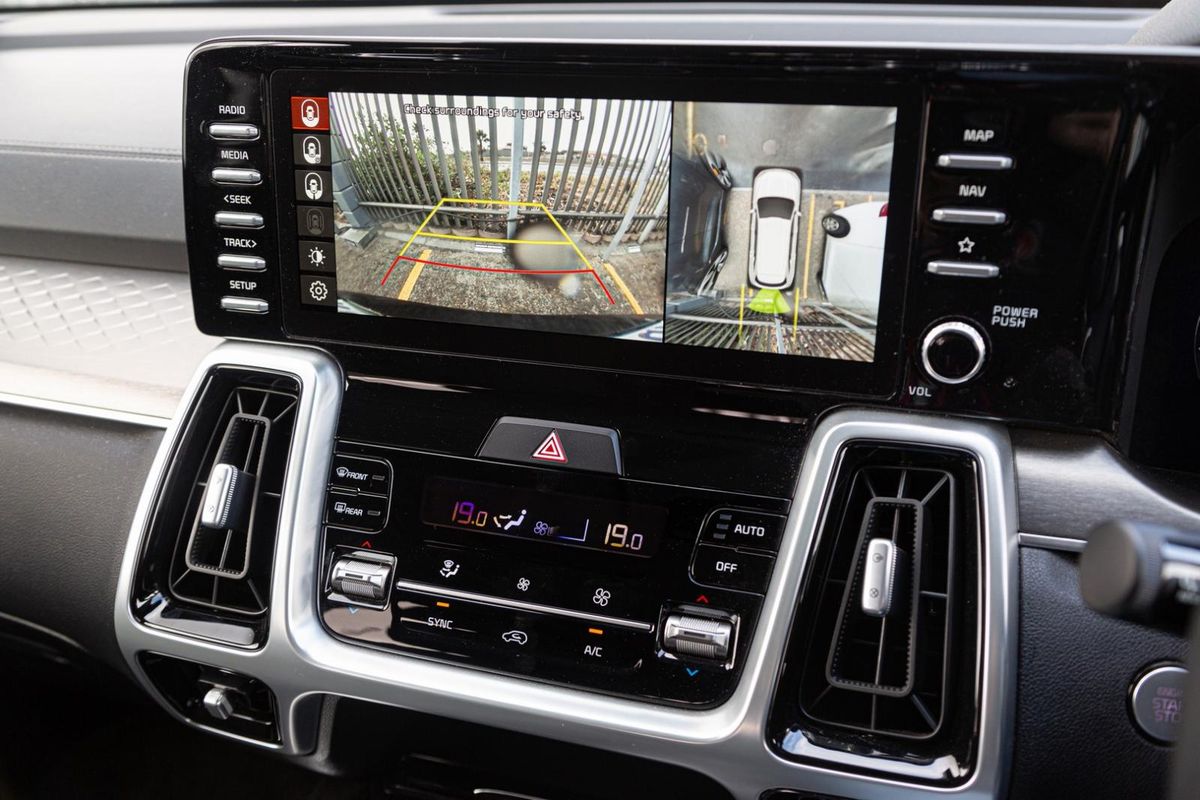
The test unit that was availed to us was the top-spec SXL derivative, that’s to say that its specification is as high as Kia offers in any model in SA – the 2.2 CRDi AWD SXL has excellent levels of safety equipment, for example. The standard array of 6 airbags, traction control and ABS and EBD are compulsory in this segment, but passive safety systems include lane-keeping assist, blind-spot monitor and adaptive cruise control. With such a big vehicle and Mzansi’s relatively narrow lanes, we found the lane-keeping assist a bit overeager to intervene, but it can be switched off when not required. Front and rear PDC is standard, as is a surround-view camera system.
As for the tech features, the Sorento is packed with standard features, but, to be fair, you’d expect that from a car that retails for about R1 million. You’ll probably want to weigh it up spec-for-spec against the equivalent Santa Fe derivative to see which features meet your requirements best – you can do that using our comparison tool here.
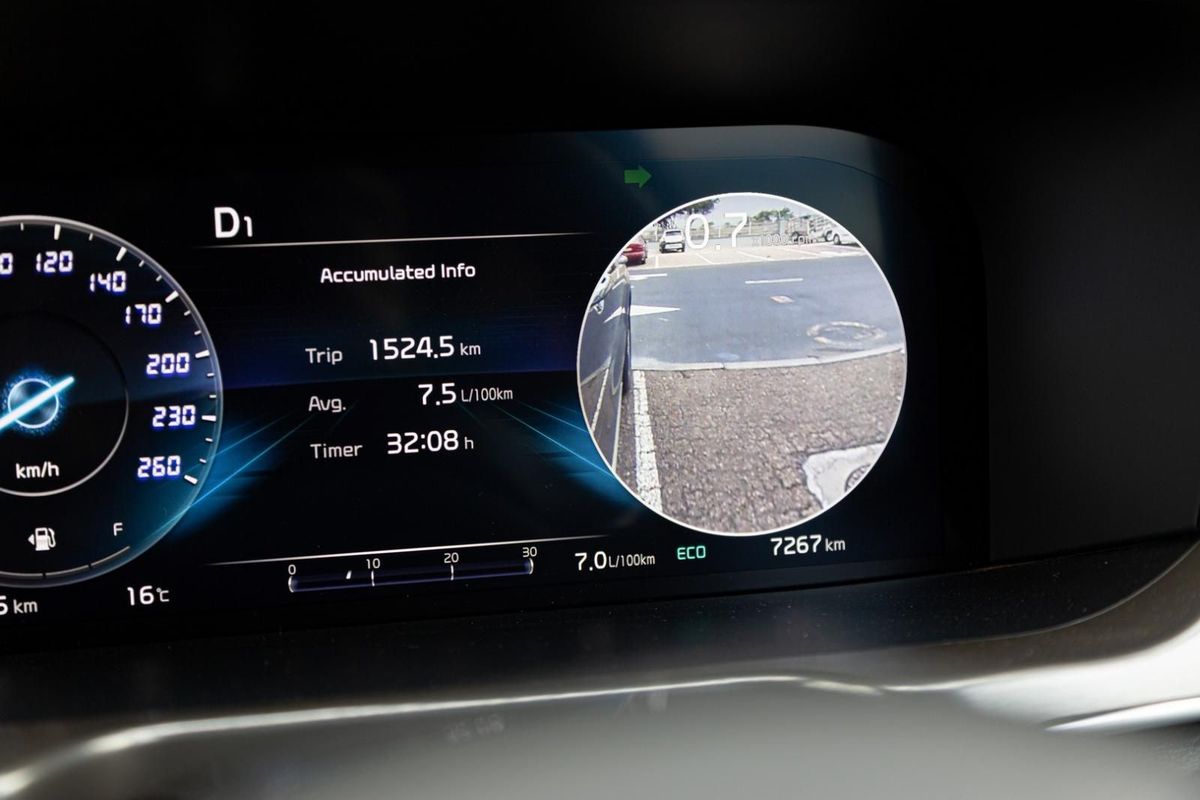
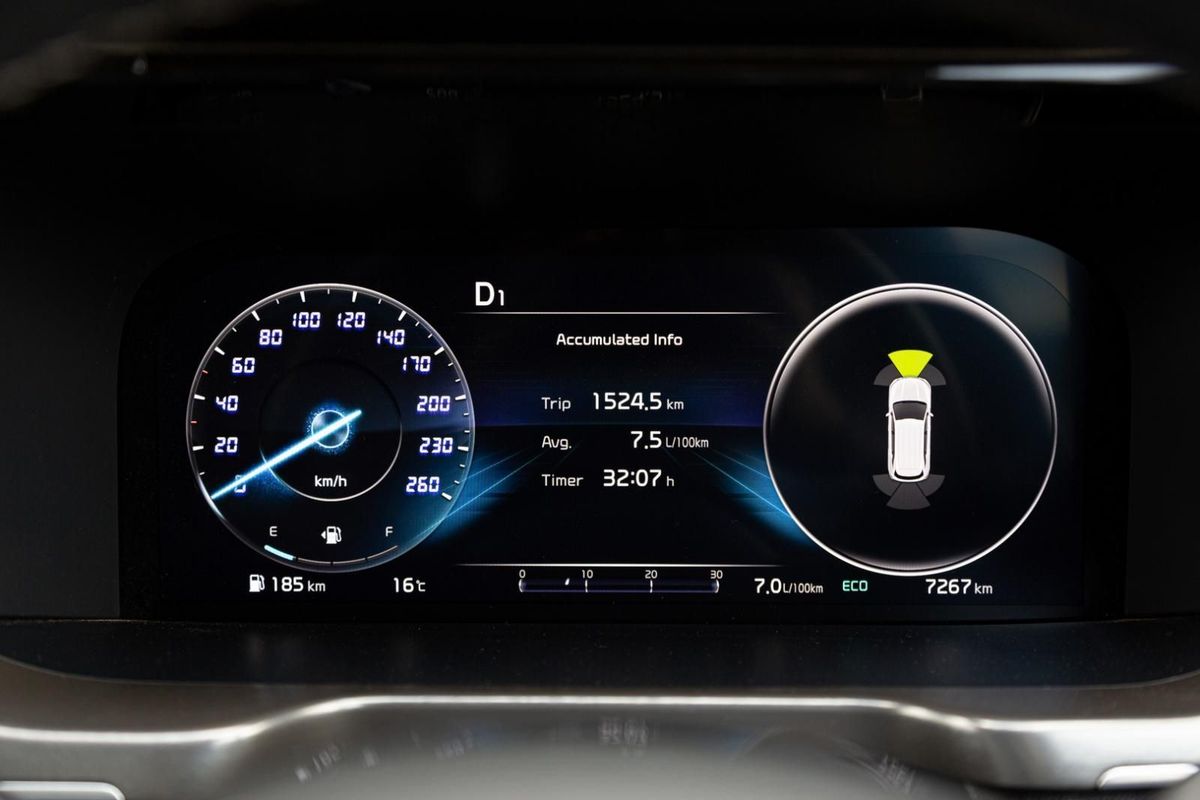
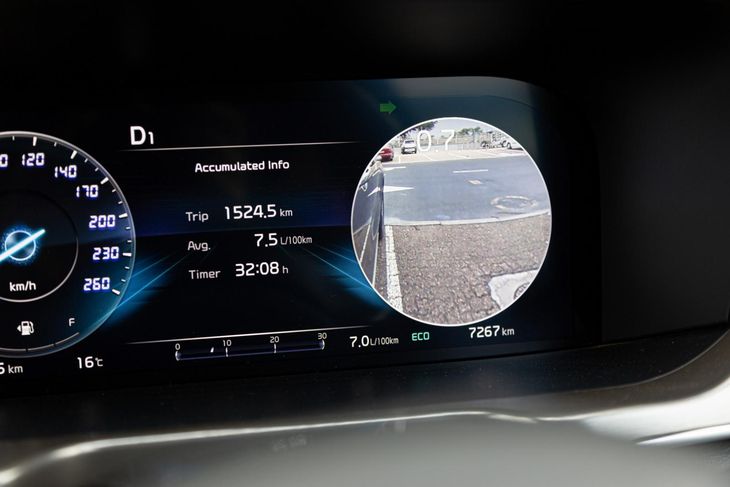
The Sorento’s all-digital instrument cluster offers a side-reverse view to take some stress out of lane-change manoeuvres.
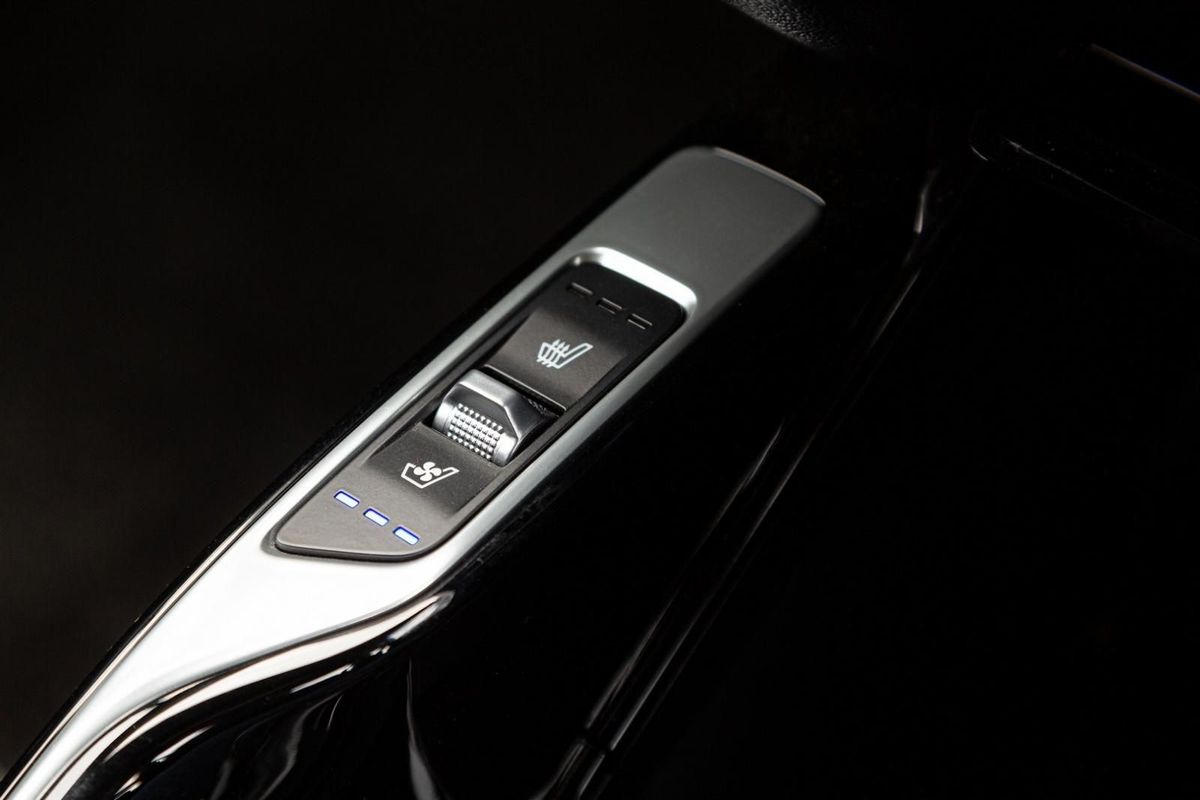
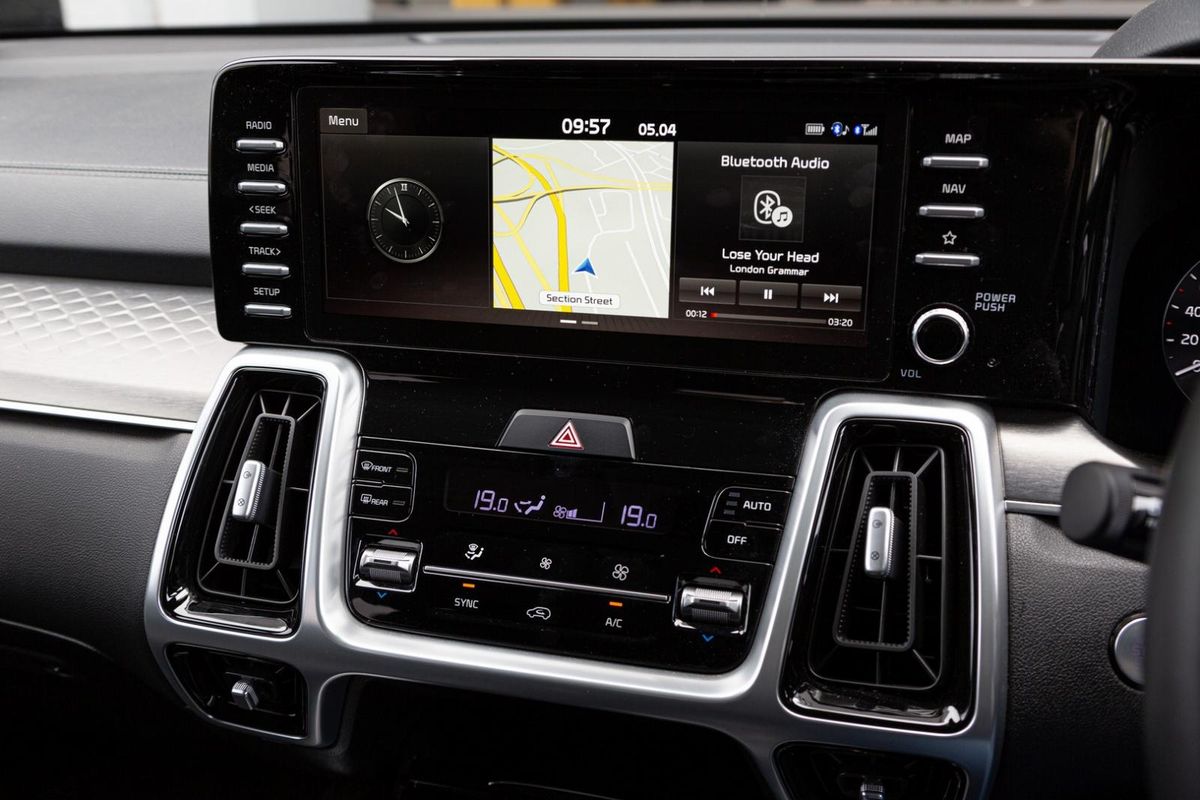
The touchscreen infotainment system (flanked by handy manual shortcut buttons) dominates the centre of the fascia, but other than using the native menu system to adjust car settings once in a while, we wirelessly connected via Android Auto or Apple Carplay and used our phone apps for navigation and communication, which works seamlessly. The heated and cooled seats are a nice touch for those hot months in summer and cold winter days too. You’ll also find an abundance of USB ports with 3 up front, 4 in the rear and another 2 in the final row, so there’s no chance of a device running flat… unless you forget your cables at home.
Kia Sorento pricing and after-sales support
The Kia Sorento is sold with a 5-year/unlimited km warranty (including roadside assistance) and a 6-year/90 000 km maintenance plan.
2.2 CRDi 7-Seater EX+ 2WD 8DCT
R809 995
2.2 CRDi 7-Seater EX+ AWD 8DCT
R849 995
2.2 CRDi 7-Seater SX AWD 8DCT
R914 995
2.2 CRDi 7-Seater SXL AWD 8DCT
R988 995
Verdict
The Sorento is the perfect family car for most family excursions unless you need a serious off-roader.
The Kia Sorento certainly has a more distinctive appearance than the outgoing model… The majority of our testers felt the newcomer looked quite fetching in a “fills a parking bay rather amply” kind of way. It’s also better to drive and more practical than the previous-gen model. There’s loads of interior space for 7 passengers and the engine and transmission combination is a highlight, considering the motor’s relatively small capacity.
What’s more, the 2.2 CRDi AWD SXL is packed with several standard features that are only available on the options lists of European machinery at a similar price point. However, the Kia is most likely to vie for sales with off-road-oriented, bakkie-based Adventure SUVs. The Toyota Fortuner, Ford Everest and Isuzu MU-X are its primary rivals, but we think the Sorento offers far better road manners and a more comfortable ride – in a thoroughly modern, luxurious package.
It can’t however, match the aforementioned competitors in the off-roading department, so that needs to be taken into account if you really need a pukka 4×4. But for the purposes of travelling to and from the overwhelming majority of family holiday destinations in South Africa, the Sorento’s probably more than capable of traversing unsealed road surfaces. Given its superior sophistication compared to cab-on-chassis vehicles, Kia’s 7-seater offers good value for money.
Future of BMW’s Small FWD Models ‘Under Review’
A fresh report out of Europe suggests the future of small, front-wheel-drive BMW models hangs in the balance. Here’s a look at why that’s the case…
The automotive industry is in the midst of a seismic shift, particularly in European markets, where electrification has taken centre stage. There are, of course, bound to be casualties and BMW’s small, front-wheel-drive models may be among them.
According to a BMW source speaking to Autocar, the future of any next-generation compact models from Munich is very much “under review”. It all goes back to the development costs associated with a replacement for the UKL platform that underpins everything from the 1 Series (which is due a facelift soon) and 2 Series Gran Coupé to the outgoing Mini range.
The British publication claims ever-tightening emissions regulations in Europe will mean any potential successor to the UKL architecture will need to be capable of accommodating plug-in hybrid gubbins with a set minimum all-electric range. As things stand, this sort of technology tends to require a larger, more expensive platform.
“There are a number of issues to consider. Firstly, the size of UKL makes electrification harder because the potential size of a battery is restricted,” the source told Autocar.
“Secondly, the scale of UKL is an issue. [Cars based on it] sell in very low volumes in the US. The biggest potential market is probably China, in the smaller cities, but there they only want a sedan rather than a hatchback. But the volumes are quite good and such a car is important as ‘my first BMW’. If we left that market, we would be giving the market share away to rivals,” the source added.
As the publication points out, Audi has already confirmed its current-generation A1 hatchback and Q2 crossover will be discontinued at the end of their respective lifecycles, proving just how difficult it is to build small, premium electrified (never mind fully electric) vehicles with low enough price tags and large enough margins. Time will tell whether or not the likes of the 1 Series will join these two Audi models…
2022 Hyundai Tucson Review – Will it continue to be a South African favourite?
The 4th-generation Hyundai Tucson has gone on sale in South Africa. With an excellent sales record in a hotly-contested segment, the Tucson is one of SA’s favourite SUVs. Ciro de Siena gets behind the wheel of the latest version.
Hyundai’s Tucson, also known for a while as the iX35, is now in its fourth generation and has found a home on many South African driveways over the years. So, will this latest incarnation remain a South African favourite? We sent Ciro De Siena all the way to Hout Bay to find out.
In this review, Ciro takes a very detailed look at the different trim levels available in the 2022 Tucson range, namely the Premium, Executive and Elite, and takes you, our dear audience, on a detailed tour of which options you’ll find in each variant.
We also take a detailed look at the cabin, tech features, back seat features and a good look at the boot/load area. Ciro takes us through the engine options and gives advice on which one to pick.
It’s Official: Proton is Coming Back to South Africa
Remember Proton? Well, the Malaysian automaker has confirmed it will return to South Africa later in 2022 after a decade-long hiatus. Here’s which models are coming first…
Proton is set to return to South Africa in September 2022, with the Combined Motor Holdings (CMH) Group having been appointed as the Malaysian brand’s local distributor.
Sales of Proton vehicles – over the years, the range included the Saga, Savvy, Satria Neo, Gen2, Persona and Arena bakkie – ceased in South Africa in 2012. But the company is heading back to local shores and says it’s “bullish about its sales prospects in South Africa”.
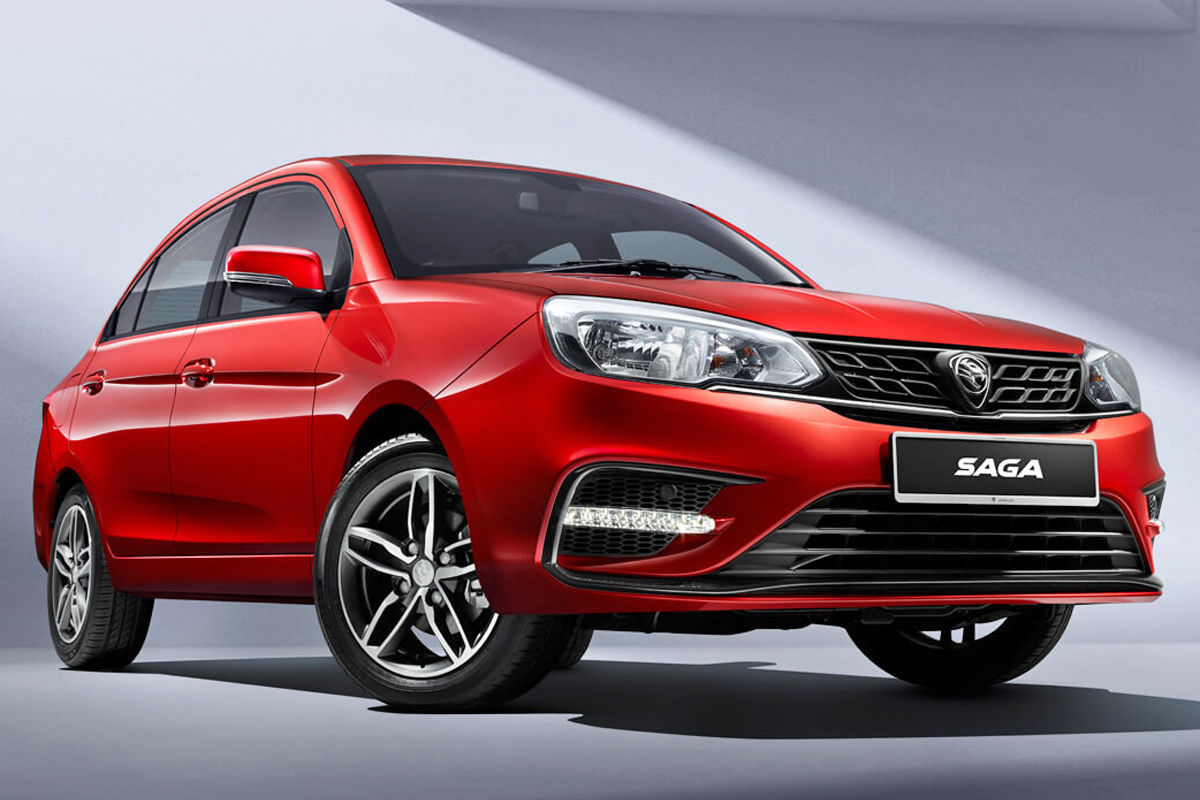
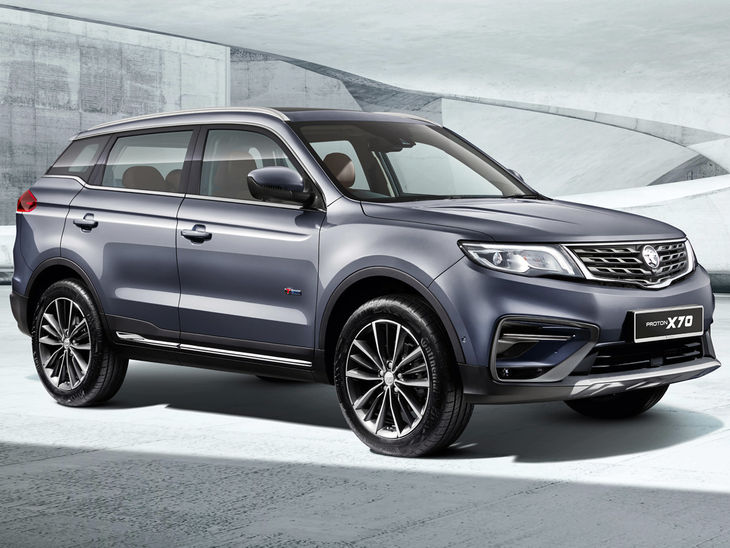
Having signed an agreement to appoint the CMH Group as its distributor in SA, Proton sales will recommence with the X50 and X70 in September, according to the company’s press site. The Saga saloon will follow thereafter.
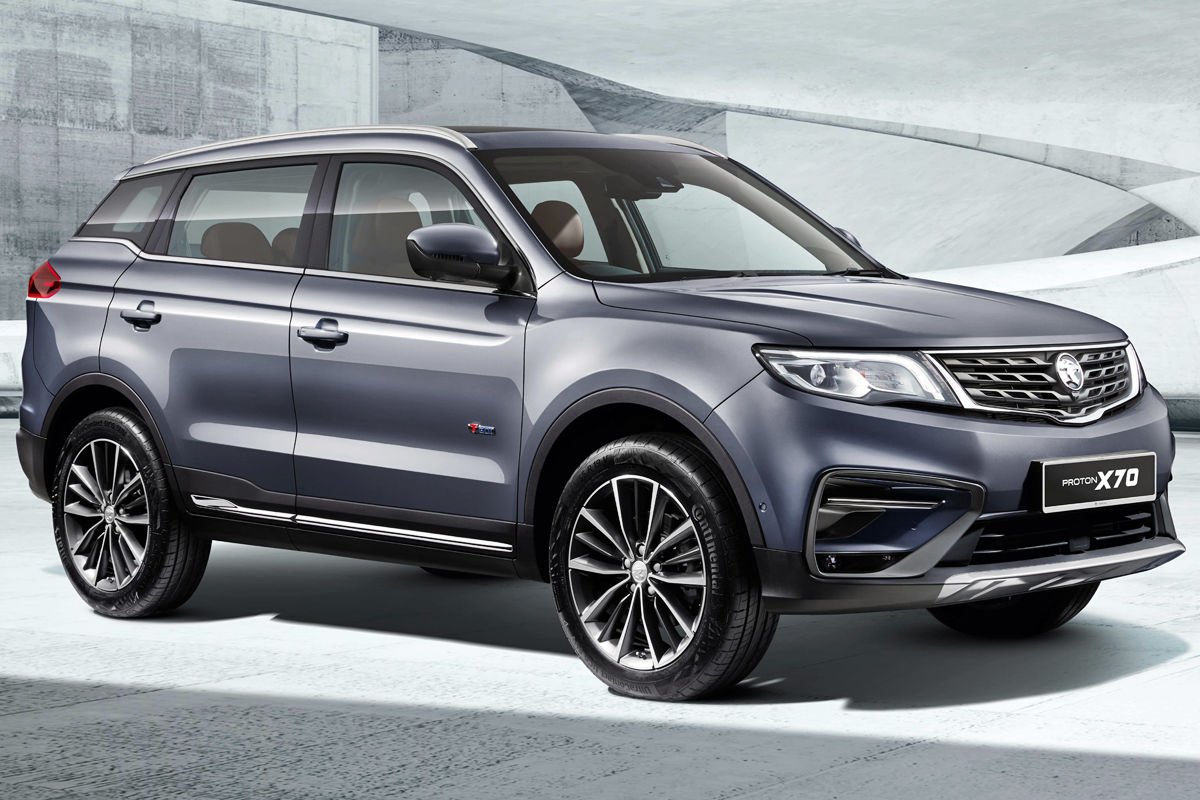
The X50 is a subcompact crossover based on the Geely Binyue (Chinese firm Geely Holdings purchased a majority stake in Proton back in 2017). The X70, meanwhile, is positioned one segment higher, and is closely related to the Geely Boyue. Finally, the latest version of the Saga takes the form of a budget sedan. Engine options, specifications and local pricing will be revealed closer to the brand’s official relaunch.
The X70 is currently Proton’s largest crossover and is slated to arrive in SA in September 2022.
Proton says it is “projecting strong sales” in South Africa in the final few months of 2022, setting itself a target of “more than doubling” its volume in 2023. It says its total export sales from Malaysia in the first quarter of 2022 grew by 175% year on year, with that figure “expected to increase as the company takes aim at growing export sales by more than 300%” by the end of 2022.
In addition to its Malaysian operations, the automaker has knocked-down (KD) assembly facilities in Pakistan, Kenya and Bangladesh, with Sri Lanka set to join in the second half of 2022. Proton currently exports vehicles to 13 markets, with South Africa set to be the 14th.
“We are exploiting the strength of our new products, our brand and even the links Malaysia has with other countries to establish a foothold in many new markets. This is then bolstered by establishing KD operations where possible, which also helps to grow local economies,” said Steven Xu, Director of International Sales at Proton.
“Our new model range offers advanced features that are on par with many competitors from other brands and in many of our markets. The Proton X50 and Proton X70 sit near the top of their class in terms of specifications yet are sold at prices equivalent to or less than their direct rivals. This helps to draw in the upper echelon of local car buyers and helps build brand equity in these markets, making it easier for our other products to then be accepted in the future,” added Xu.
As a reminder, CMH commenced trading operations in 1976 following the merger of various retail motor dealerships in South Africa. In 1987, the holding company listed on the JSE.
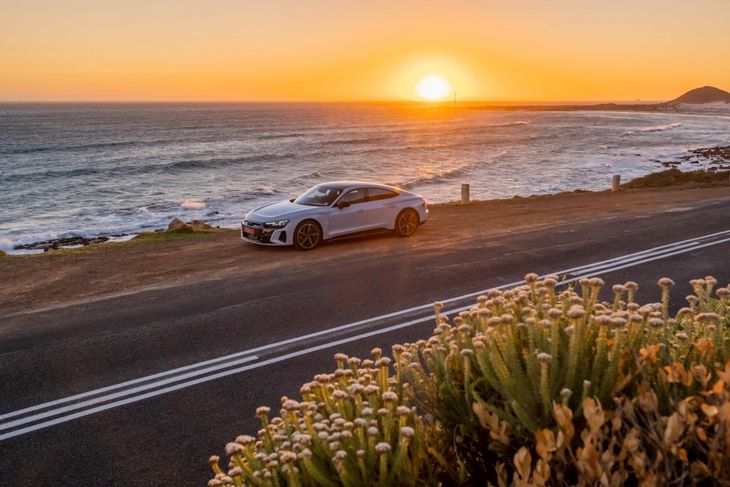
Audi e-tron GT: 24 Hours With Audi’s Flagship EV
While we are licking our chops to drive the range-topping e-tron GT RS (soon hopefully), Cars.co.za Journalist, Gero Lilleike, spent just 24 hours with the “baby” e-tron GT to get a taste of what Audi’s flagship electric Grand Turismo has to offer.
When you get a sliver of a chance to drive the Audi e-tron GT, you take it, even if it’s just for 1 day.
Electric Vehicles (EVs) are very much a rare sight on South African roads but Audi’s local EV offensive has seen no less than 6 new electric e-tron derivatives come to market this year and with other brands such as Mini, Volvo, Jaguar, BMW, Porsche and soon, Mercedes-Benz, offering premium EV products locally, you will start to see more EVs blitzing around Mzansi very soon.
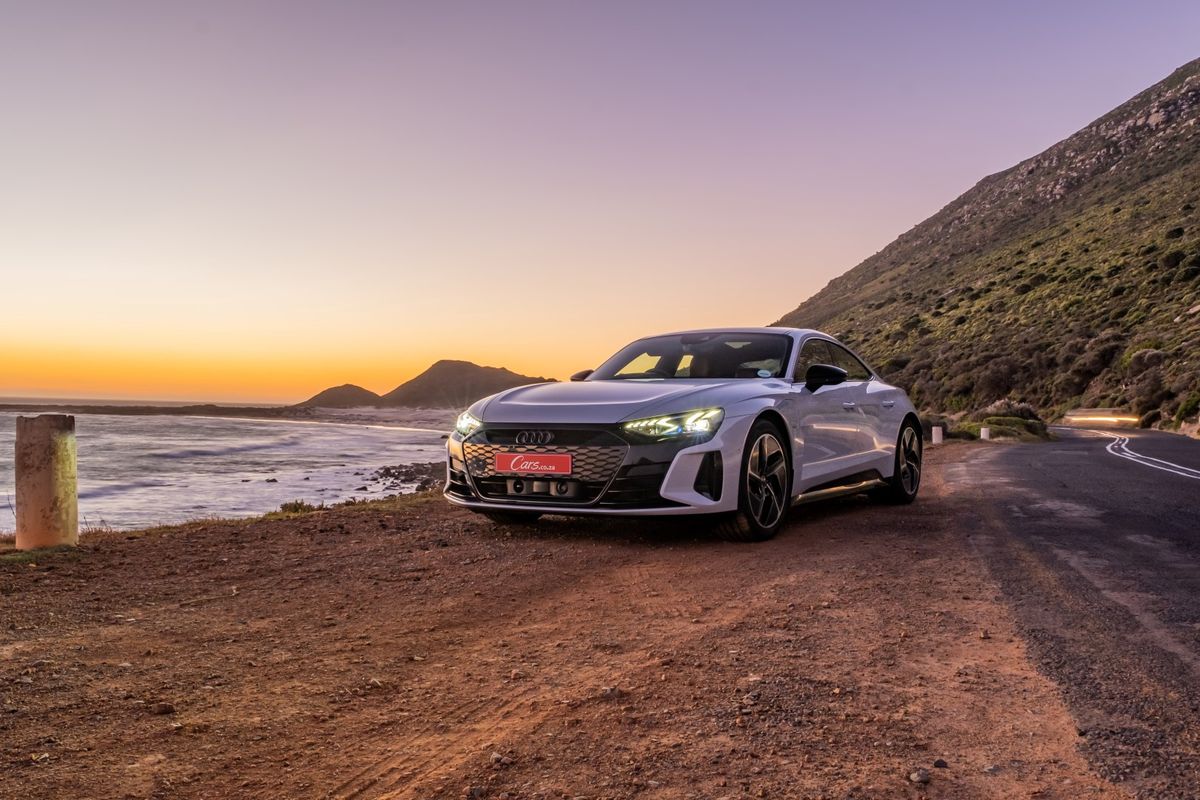
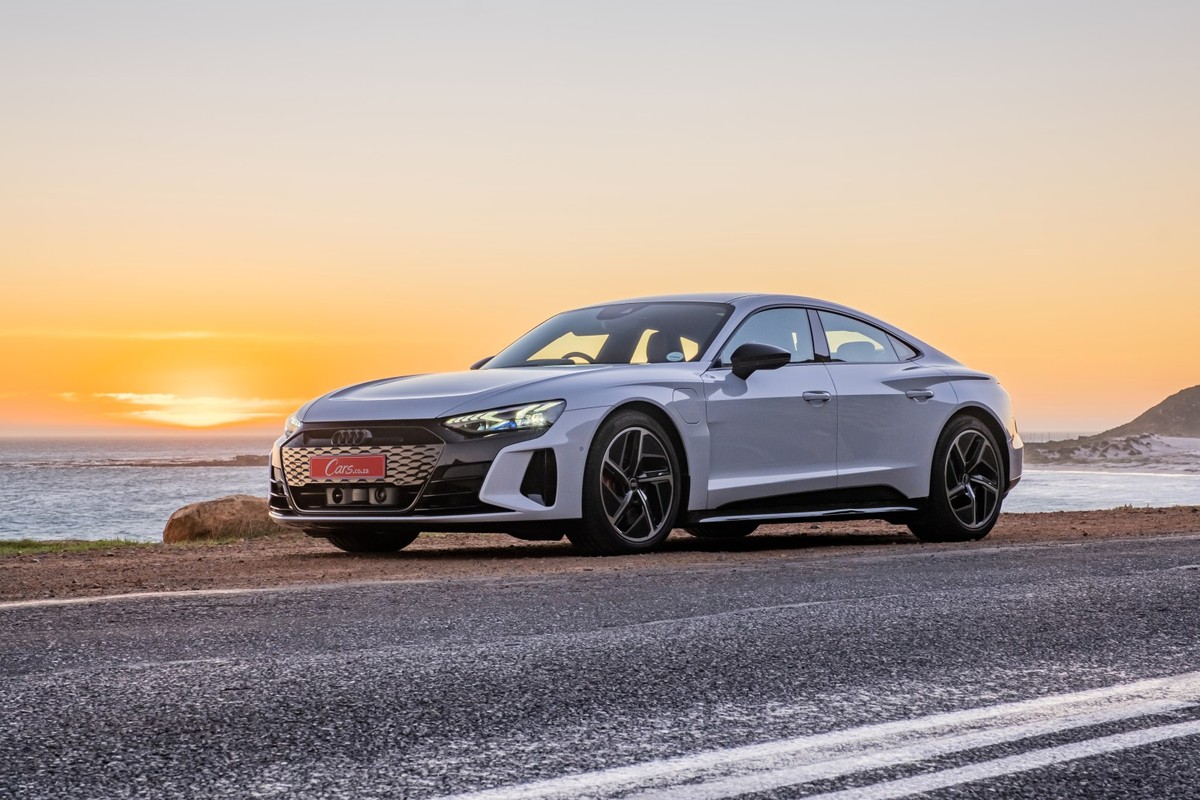
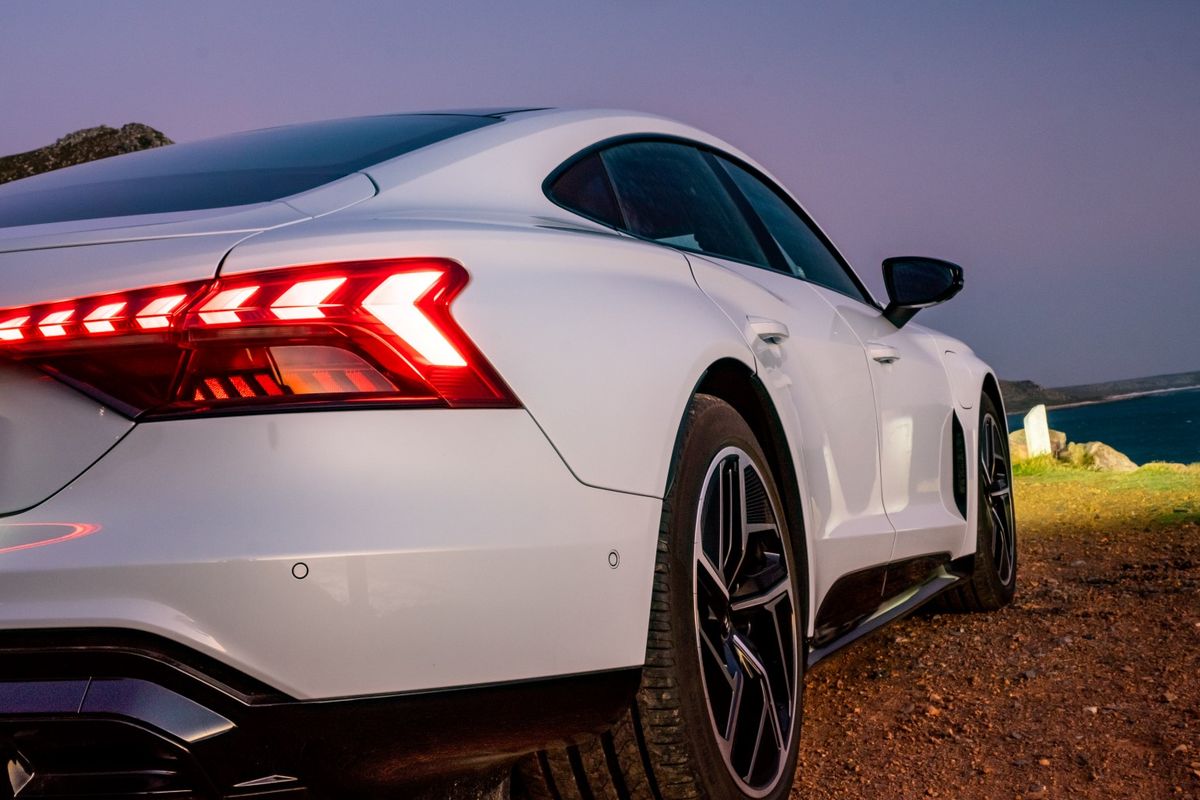
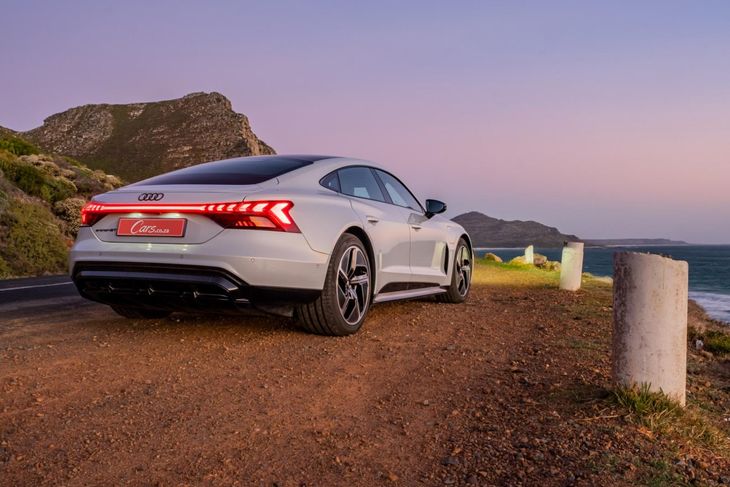
Perched at the summit of the Ingolstadt-based firm’s electric product range is the e-tron GT, a shapely and undeniably sexy electric sports car that shares its underpinnings with the Porsche Taycan. The e-tron GT was also recently announced as the 2022 World Performance Car of the Year while also being a finalist in the World Electric Vehicle of the Year and World Car Design of the Year. So then, the e-tron GT has a lot going for it…
Like most South Africans, I’m admittedly “wet behind the ears” when it comes to EVs but I’ve been fortunate to briefly drive the Porsche Taycan as well as Audi’s e-tron SUV in both Sportback and 55 guise. Now though, I was excited to experience Audi’s flagship e-tron GT!
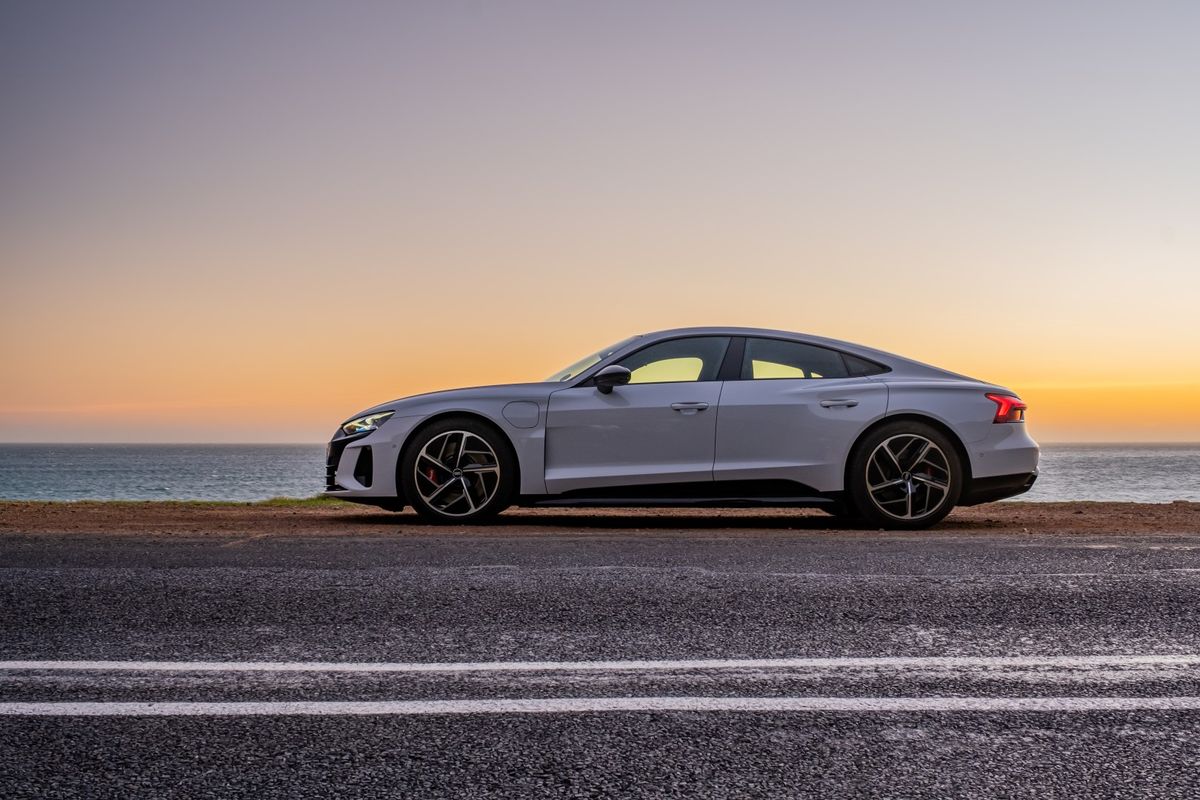
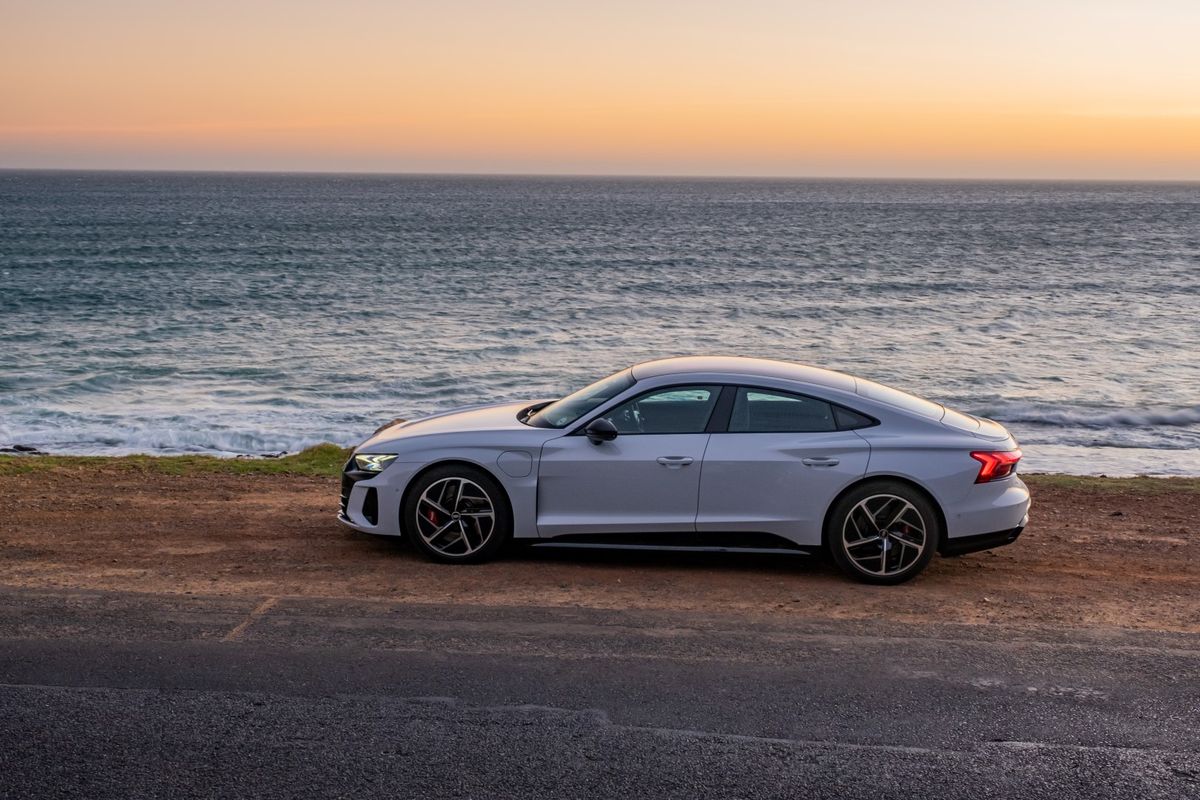
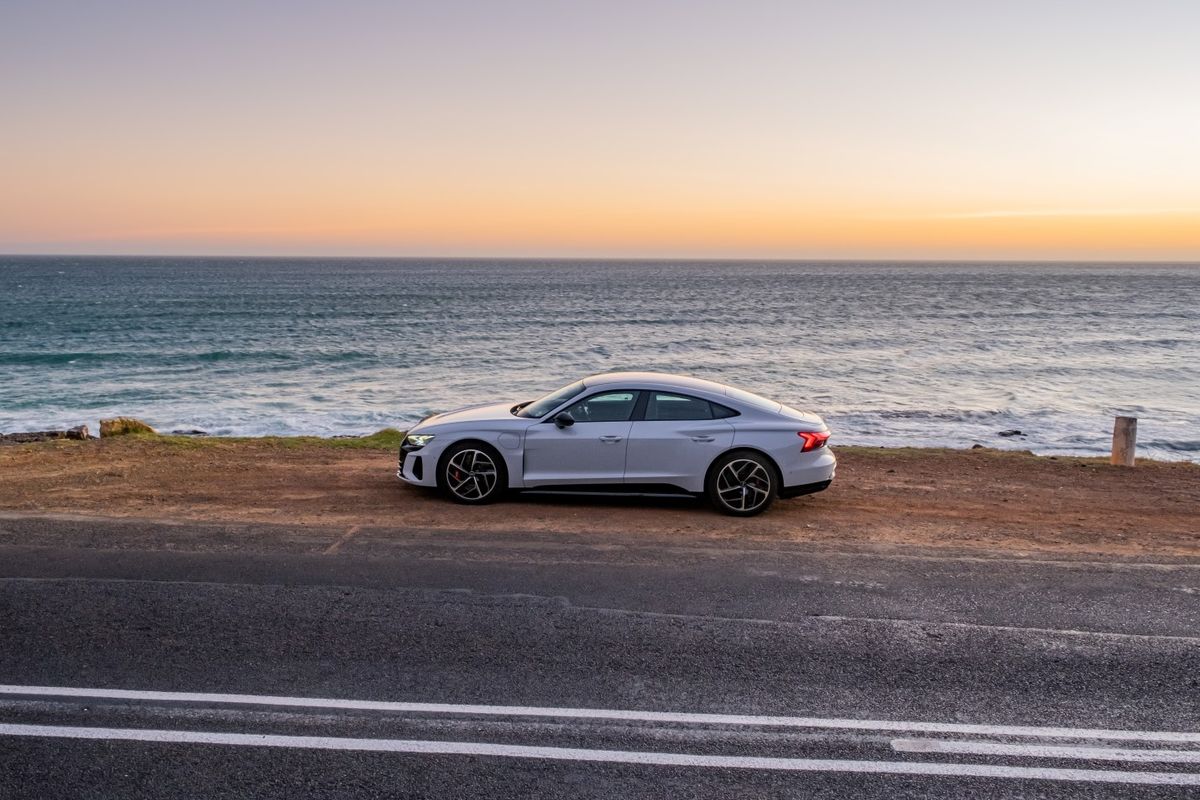
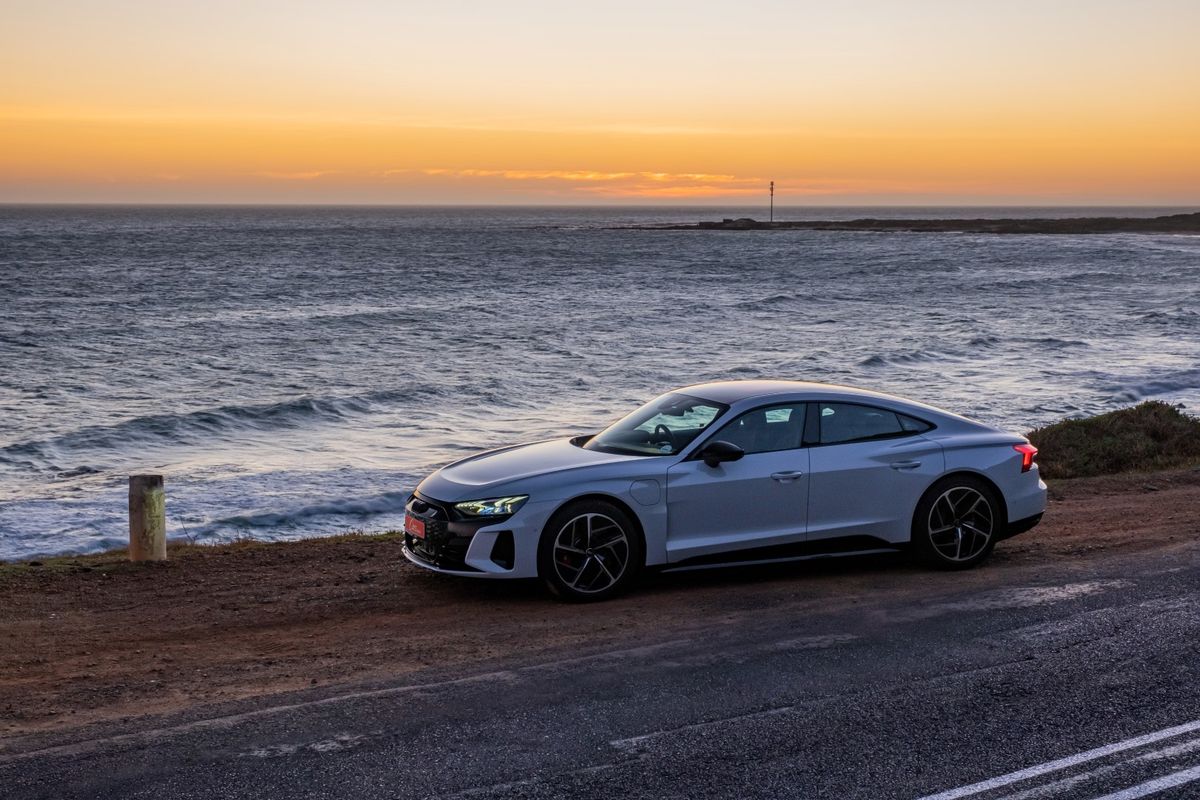
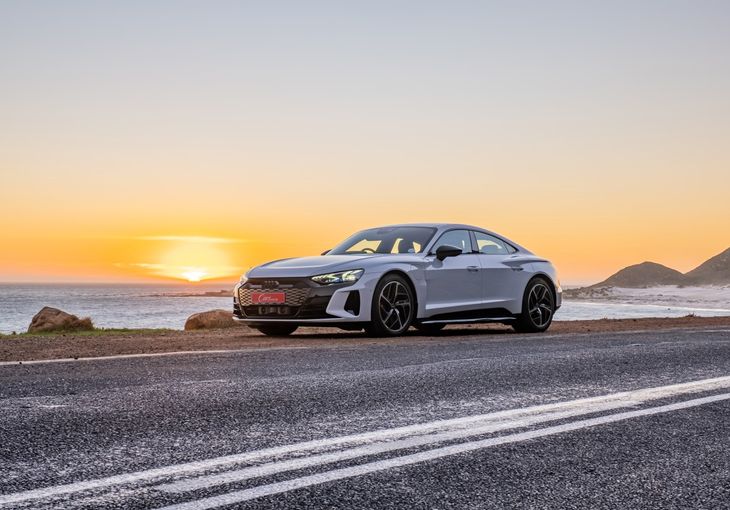
When the e-tron GT was revealed back in 2021, its styling execution arrested the world and now it stood before me, finished in an understated Suzuka Grey metallic body colour and riding on aerodynamic, 20-inch module-style wheels. But before I get could get this test underway, I needed to charge it up…
Charge & Go
With more charging infrastructure being installed, the e-tron GT can be charged easily and enjoyed more often on roads like this.
I had a fair amount of distance to cover in the e-tron GT and with only 180 km charge (thanks to my colleagues draining the battery), I needed to get some more electric juice into the 93.4 kWh battery which would, in theory, give me a range of over well over 400 km. In fact, Audi claims an electric range of between 433-472 km (WLTP) for the base e-tron GT.
Charging your EV is something that you will have to grapple with and by downloading the PlugShare app, you will make your life much easier!
PlugShare will show you available charging stations nearest to you and you will be able to plan your trips using the app. I decided to use Audi’s newly installed 75 kW EV charger at Audi Century City for a faster charge. Thankfully, I had the charging station all to myself and I didn’t have to wait to use it.
Of course, if you purchase an Audi EV, you can have a home charger installed for your convenience. Charging at home makes the most sense as it will be cheaper (see charging costs below) and you won’t ever have to wait in a queue to charge your EV. Charging your EV at home is much like charging your smartphone. You come home from work, plug in for the night and charge up and you’ll be ready to go in the morning. Many people are concerned about Eskom load-shedding but if you consider that you aren’t likely to be charging from empty and that your typical night-time charging cycle will be up to 12 hours long, load-shedding is unlikely to hamper your charge significantly.
Even so, if you find yourself out and about and in need of some charge, then the PlugShare app will be a handy tool. Earlier this year, Audi announced its partnership with GridCars to install up to 70 charge connectors at 33 new public charging sites across South Africa. The partnership will result in 4 ultra-fast 150kW DC charging stations being installed along the N1, N2, N3 and N4 highways which will allow for 340 km charge to be obtained in about 30 minutes as well as 5 80kW (DC) chargers and 24 22 kW (AC) charging stations. This increased charging infrastructure will not only improve charging efficiency but will also help to alleviate range anxiety, especially on those longer journeys.
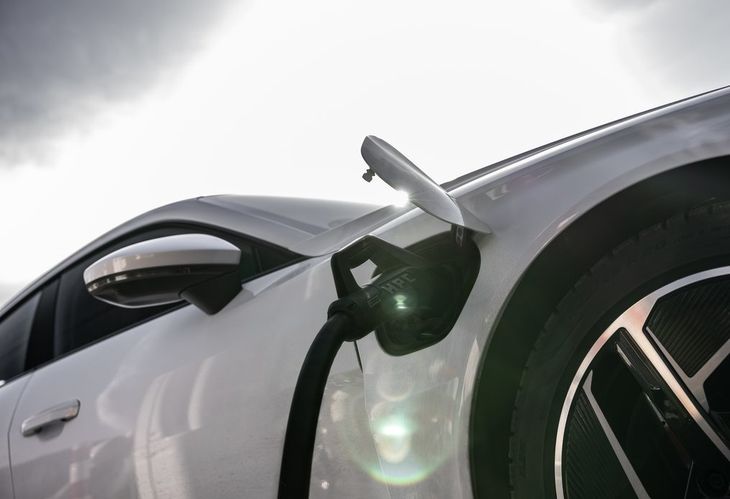
The e-tron GT has 2 charging ports on either side of the front flanks, one for Direct Current (DC) charging and one for Alternate Current (AC) charging. In no time at all, I was plugged into the DC charger, tapped the charge card and that was it, charging started! 180 km to full charge would take about 50 minutes, enough time to take a walk a drink some coffee!
How much does charging cost?
Charging your e-tron GT (or any EV) will be the cheapest when done at home.
Your EV charging cost will be the cheapest when charging at home and the cost might vary betwen R2 and R2.50 per kWh which means you can expect to pay roughly R233 to charge the e-tron GT’s 93 kWh battery from zero to full charge, which is significantly cheaper than filling an equivalent Internal Combustion Engine (ICE) vehicle with petrol or diesel.
If you use public charging stations to charge your EV, you can expect to pay anywhere between R3.50 and R6.00 per kWh with fast chargers being the most expensive. Audi’s 75 kW DC charger at Century City costs about R5.80 per kWh, which means a full charge will cost roughly R540, which is still close to half of what you would get out of a similarly-powered ICE engine considering current fuel prices.
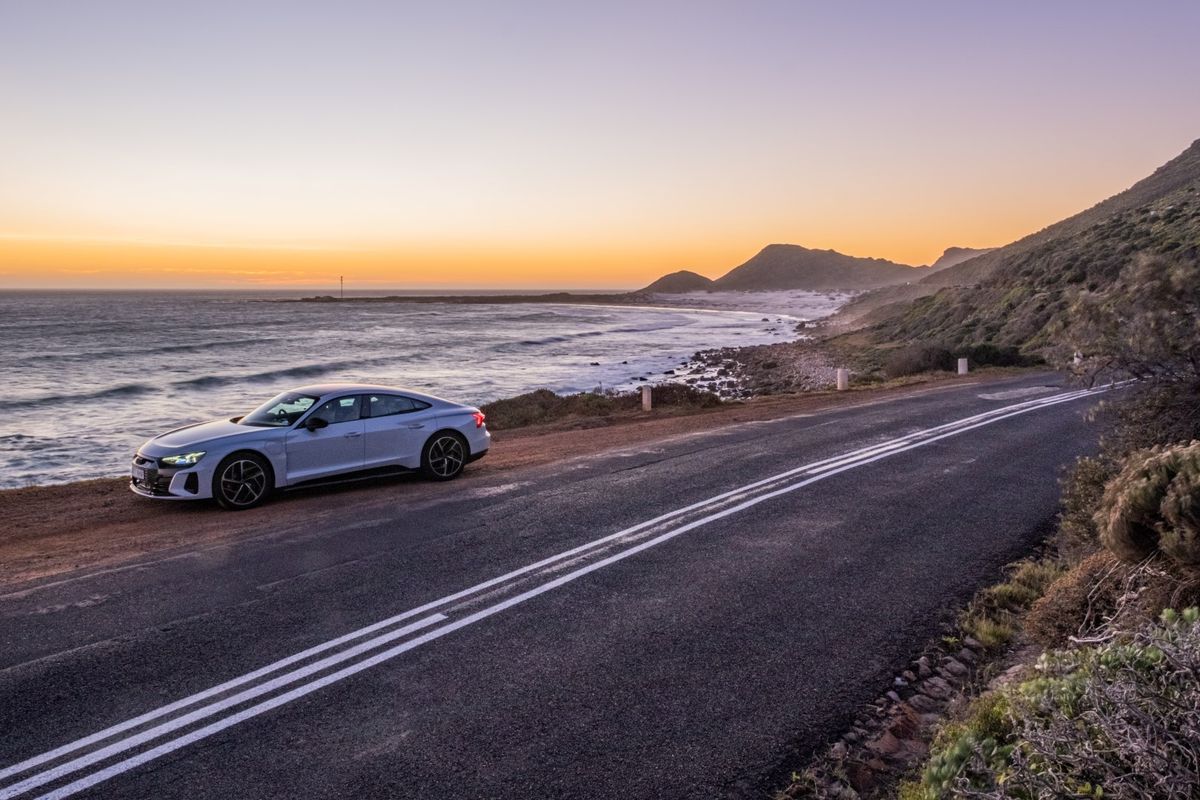
With the battery fully charged, I pointed the Audi e-tron GT towards Cape Town’s South peninsula. The roads in this part of the world snake around the mountains and Atlantic ocean, making for an exceptionally scenic drive and with minimal traffic, it was a perfect opportunity to test the Audi e-tron GT’s performance capability.
Whoosh, Whoosh and Away
The Audi e-tron GT offers strong acceleration off the line and delivers excellent levels of driving comfort.
In its base form, the “baby” e-tron GT quattro produces no less than 350 kW and 630 Nm with 2 electric motors (one over each axle) and is capable of sprinting from the zero to 100 kph dash in 4.5 seconds using a 2-speed automatic transmission, which by electric standards, isn’t particularly earth-shattering. Outputs can, however, boost to 390 kW and 640 Nm for 2.5 seconds when executing launch control and a 4.1-second sprint to 100kph is possible.
Of course, if you opt for the range-topping e-tron GT RS, outputs increase to a heady 440 kW and 830 Nm while shaving the zero to 100 kph sprint time down to a scintillating 3.3 seconds.
Nonetheless, it’s the way in which the e-tron GT quattro unleashes its performance that is most impressive.
From standstill and at full-bore acceleration, the e-tron GT winds up with an audible electric whoosh and gathers furious pace at a rate that will leave you gobsmacked. Acceleration is instant and intense but it all takes place in relative silence and without much drama which can leave you feeling somewhat underwhelmed.
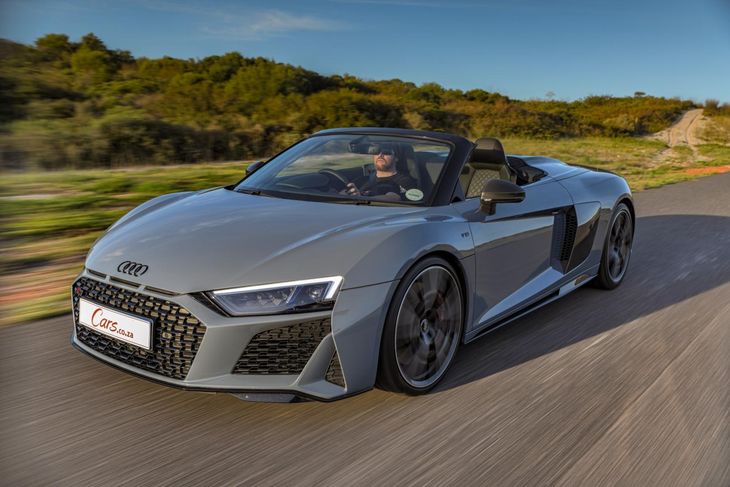
ICE vs EV? It’s a debate worth having! The Audi R8 V10 Spyder delivers all the thrills.
As a way of comparison, not too long ago I drove Audi’s R8 V10 quattro Spyder with 449 kW and 560 Nm and its performance delivery is far more visceral. The appeal of a 5.2-litre V10 screaming behind you as you attack the horizon will never get old and that drama and feeling is something that electric cars, the e-tron GT included, simply lack.
Even so, the e-tron GT is fantastically refined to drive on the road and it can easily be used for the daily commute. The e-tron GT’s road manners are impeccable and even though it weighs in at around 2 350 kg, that heft is not immediately apparent. In fact, it adopts an overtly sporty disposition. The steering setup is sharp, direct and communicative and the e-tron GT feels surprisingly agile and nimble when cornering at speed. You’d be forgiven for thinking that you are driving something much lighter!
Driving like a bat out of hell will deplete the e-tron GT’s range much faster and managing your electric range does become a bit of a game. The e-tron GT forces you to adapt your driving style to get the most distance out of the battery. For example, driving uphill will sap more energy but this energy can be mostly recouped when coasting on downhills through brake energy recuperation. In addition to automatic energy recuperation, the driver can also manually recoup energy by pulling both steering-wheel paddles simultaneously to win back some charge. Driving for efficiency does add a level of enjoyment to the drive and it’s something that’s more often than not overlooked when driving a conventional ICE car.
Provided that the Audi e-tron GT has sufficient charge along its route, it would be utterly fantastic to embark on a long-distance, continent crushing road trip in this car. I will keep dreaming, maybe it will be possible, just maybe…
What’s the Audi e-tron GT’s interior like?
The e-tron GT’s cabin is familiar and offers all the comfort and tech you might need. Be prepared to tick a few option boxes though.
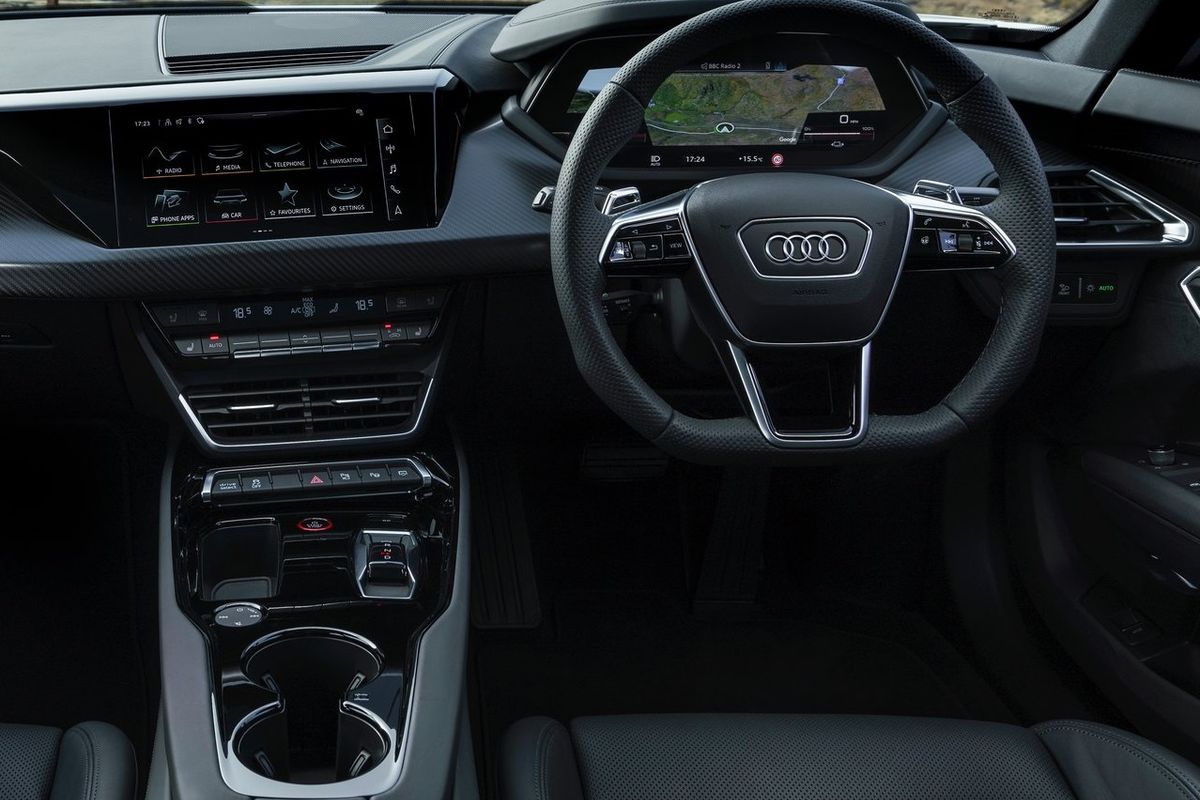
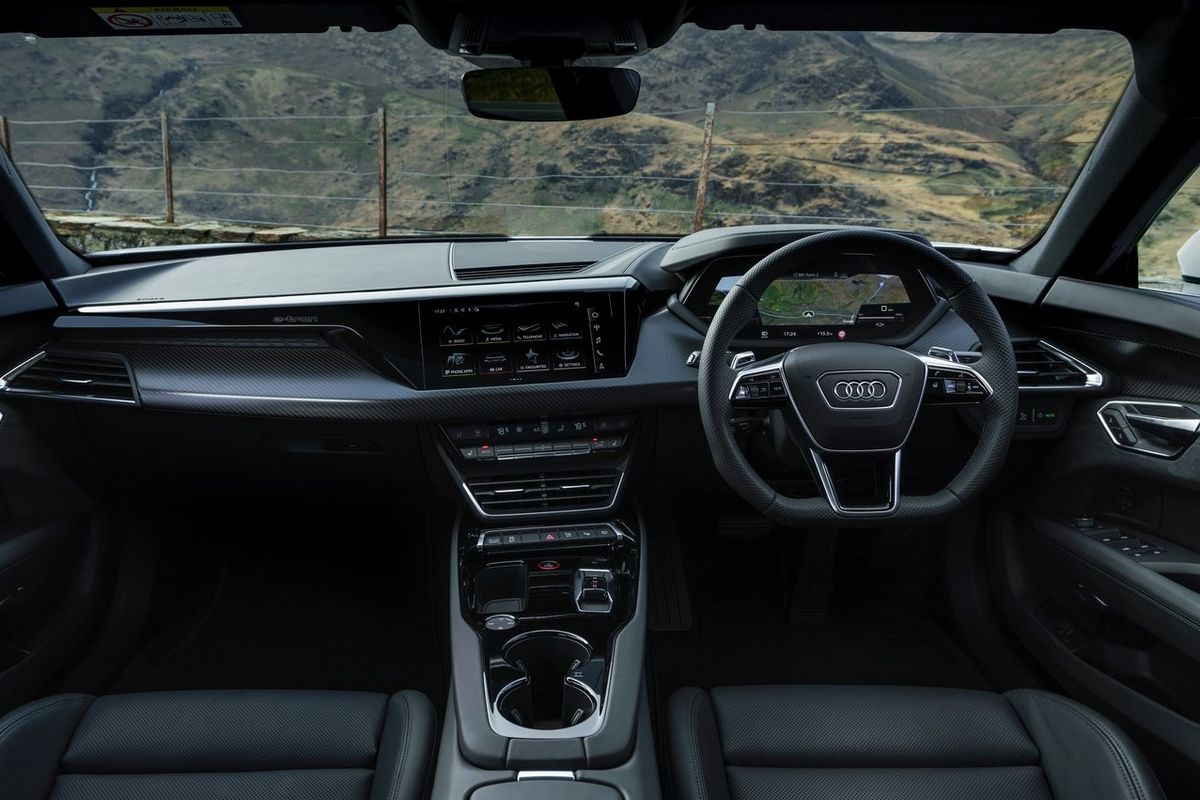
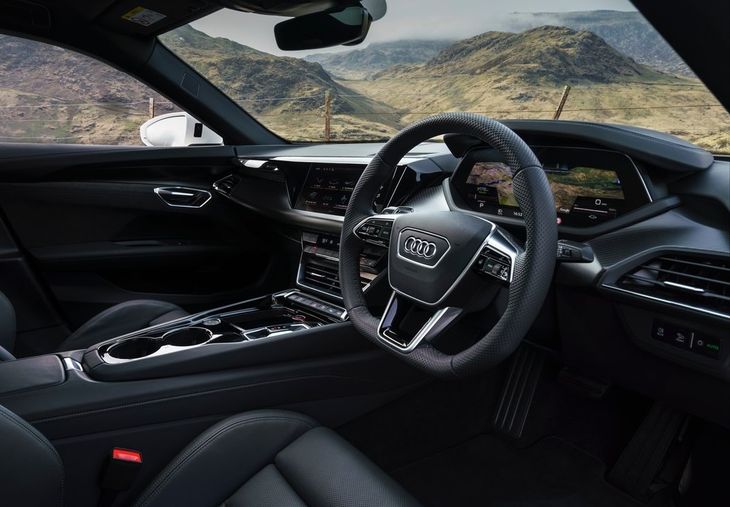
Audi is really good at nailing interior execution and the cabin of the e-tron GT is no different. The interior layout and design is very much familiar from what you’d see in a conventional Audi. Depending on your opinion, that could be seen as a criticism as it can be argued that Audi’s flagship EV’s interior execution is too demure, perhaps not “special” enough and there may be some truth to that.
Even so, luxury, technology and comfort features abound inside e-tron GT (if you are prepared to pay for them). The large central touchscreen is angled towards the driver and it provides all the functionality you would expect including Apple CarPlay/Android Auto connectivity, telephony and all the vehicle-related information menus. Audi’s Virtual Cockpit is also fitted which can easily be configured using the steering-mounted controls.
Aiding the sportiness inside the cabin are the optional Sports Seats Pro which cost about R77 800, but they are exceptionally comfortable and well-bolstered to support you as you put the e-tron GT through its paces. Rear passenger space is adequate but not necessarily generous and the rear seatbacks can be folded down in a 60:40 configuration should you ever need to transport longer items and the load bay size is claimed at 405 litres.
What does the Audi e-tron GT cost in South Africa?
Like most EVs currently on sale in SA, the e-tron GT is a luxury that most can’t afford. But if you can, this is marvellous technology on wheels.
The Audi e-tron GT quattro is priced from R2 715 000. Audi does offer a wide range of optional features for the e-tron GT and the example on test here is priced at roughly R3 054 100.
The range-topping Audi e-tron GT RS is priced from R3 300 000.
The e-tron GT is sold with a 1-year/unlimited km vehicle warranty as well as an 8-year/160 000km battery warranty and a 5-year/100 000km maintenance plan.
You helped us donate over R250k to Gift of the Givers in aid of the KZN Floods
We’d like to thank you for being part of the Cars.co.za community. Just by supporting our Youtube channel, you have helped us donate R255 000 to Gift of the Givers in aid of KwaZulu-Natal flood disaster relief.
Our Youtube channel receives millions of views every year, and Cars.co.za is paid by Youtube every month for the adverts that are watched on our channel. Cars.co.za’s Head of Video, Ciro de Siena, travelled to Durban to visit the Provincial Command Centre for the search-and-rescue disaster response (located at Virginia Airport). Once there, he was honoured to meet Dr Imtiaz Sooliman – the founder of the Gift of the Givers Foundation – announce the donation and gain insight to the massive effort underway.
With tens of thousands of KwaZulu-Natal inhabitants still reeling from the widespread destruction and tragic loss of life caused by the devastating floods and mudslides that affected the province this month, Government and NGOs are working around the clock to find those who are missing, repair crucial infrastructure and provide humanitarian aid. One of the NGOs at the forefront of the relief effort is the Gift of the Givers Foundation, which does incredible work throughout our nation. Cars.co.za – South Africa’s leading motoring portal – appreciates the critical role of the Foundation and, in light of the recent tragedy in KwaZulu-Natal – is proud to support Gift of the Givers again.
Last year, Cars.co.za supported the Foundation with a donation that assisted in the distribution of blankets, care packages and soup kitchen supplies to the hard-hit Western Cape towns of Touws River and Riversonderend, and now the company has announced it will be donating R255 000 to Gift of the Givers to assist in KZN flood-relief efforts. As was the case last year, Cars.co.za will be donating all its YouTube revenue from the 2021/22 financial year to the Gift of the Givers Foundation, which means that the popular channel’s viewers have directly contributed to making the donation possible.
“Before COVID-19 arrived on our shores, we had advertising switched off on our YouTube channel to give our viewers the best possible entertainment experience,” explains Hannes Oosthuizen, Consumer Experience Manager of Cars.co.za. “However, when it became clear that the revenue generated by the channel could be used for good, we switched it on, and since then all our Youtube revenue has been donated to the Gift of the Givers Foundation, this year to the amount of R255 000. We thank our viewers for their support, as it is their views that have translated into this donation,” he concludes.
If you would like to donate directly to the Gift of the Givers, here are their details:
Account Name: Gift of the Givers Bank: Standard Bank Branch: Pietermaritzburg Account number: 052137228 Branch Code 057525
Experiencing the Incredible Beauty of Lesotho in the Suzuki Jimny
What’s better than driving the uber-cool Suzuki Jimny? Joining some other Jimnys and driving through the breathtaking scenery of Lesotho!
Suzuki South Africa invited us to travel through Lesotho in the Suzuki Jimny. This 4 day adventure took us through some breathtaking Lesotho landscape. We traversed up Sani Pass and visited the Maletsunyane Falls in the Semonkong region.
It was a great experience and these little adventure ready vehicles took us up the steep passes and through the rocky river crossings with ease. Lesotho is a very underrated travel location and we would highly recommend a visit to the beautiful Lesotho.
Ducktail Returns! 405 kW Porsche 911 Sport Classic Revealed
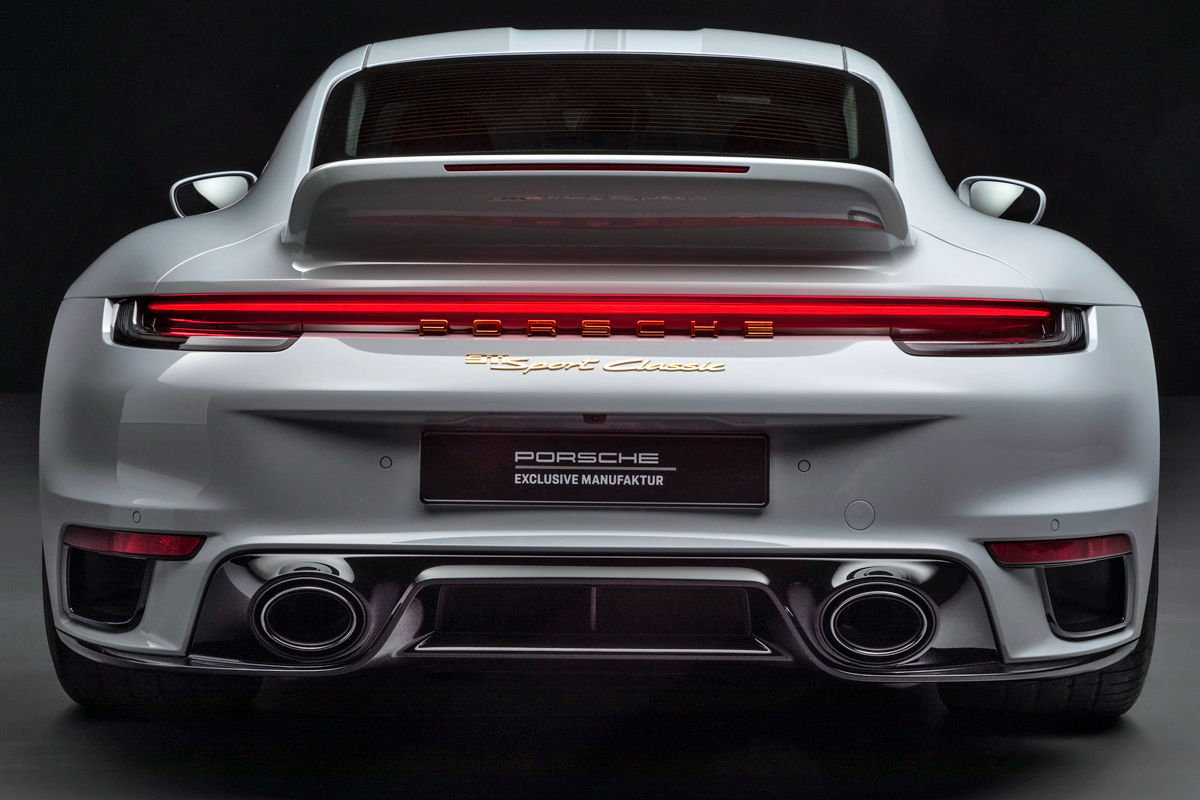
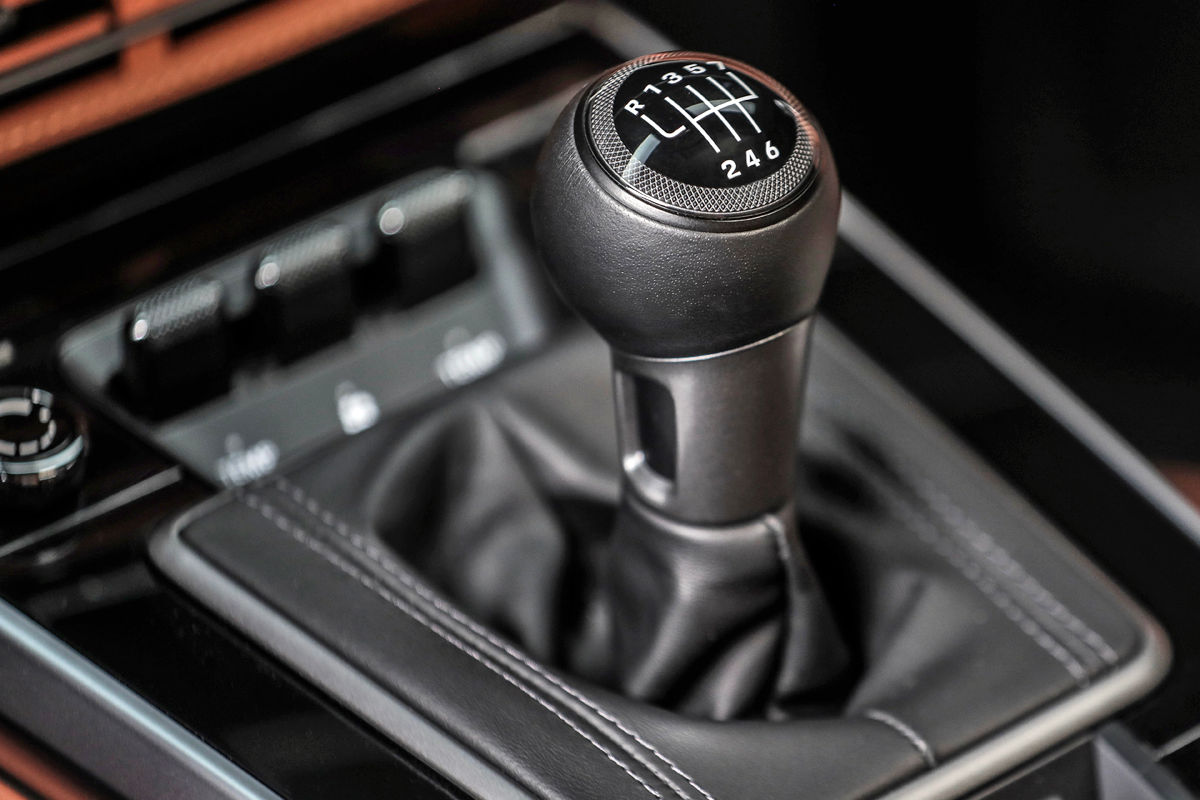
The new Porsche 911 Sport Classic arrives as a retro-styled model featuring 405 kW (directed to the rear axle), a 7-speed manual gearbox and that famous ducktail spoiler…
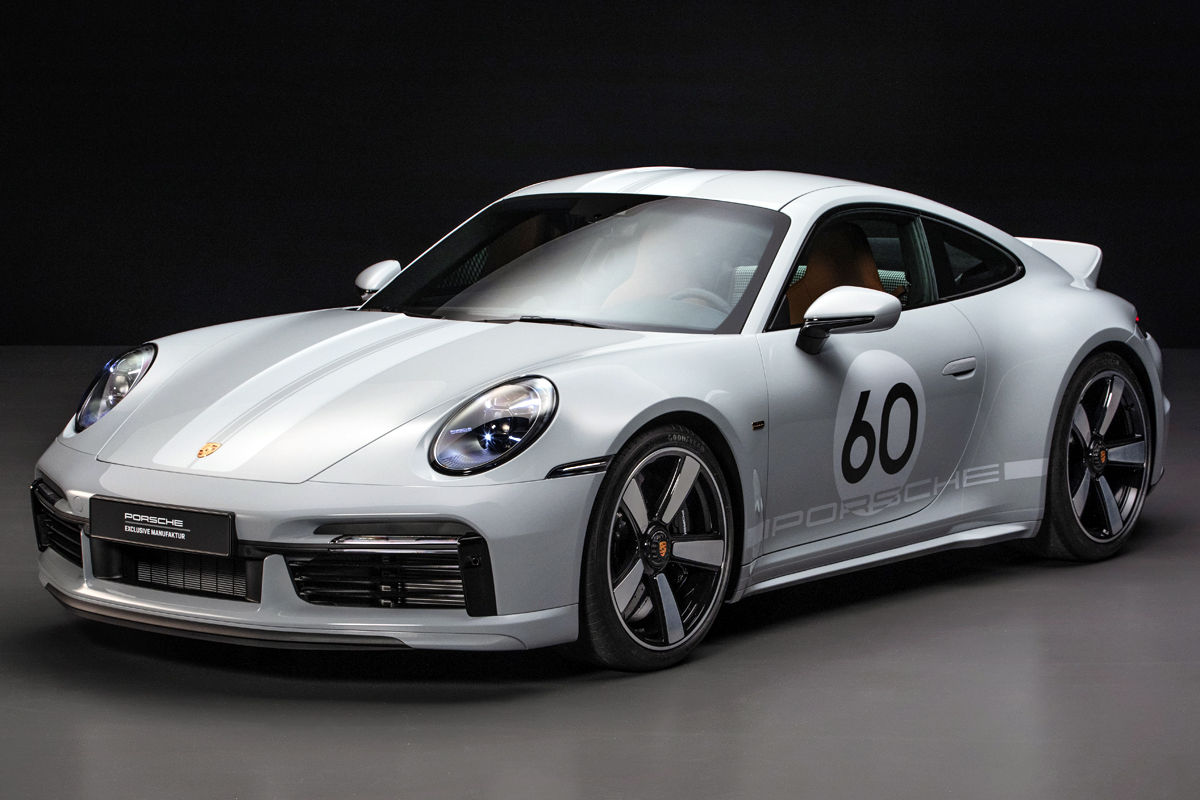
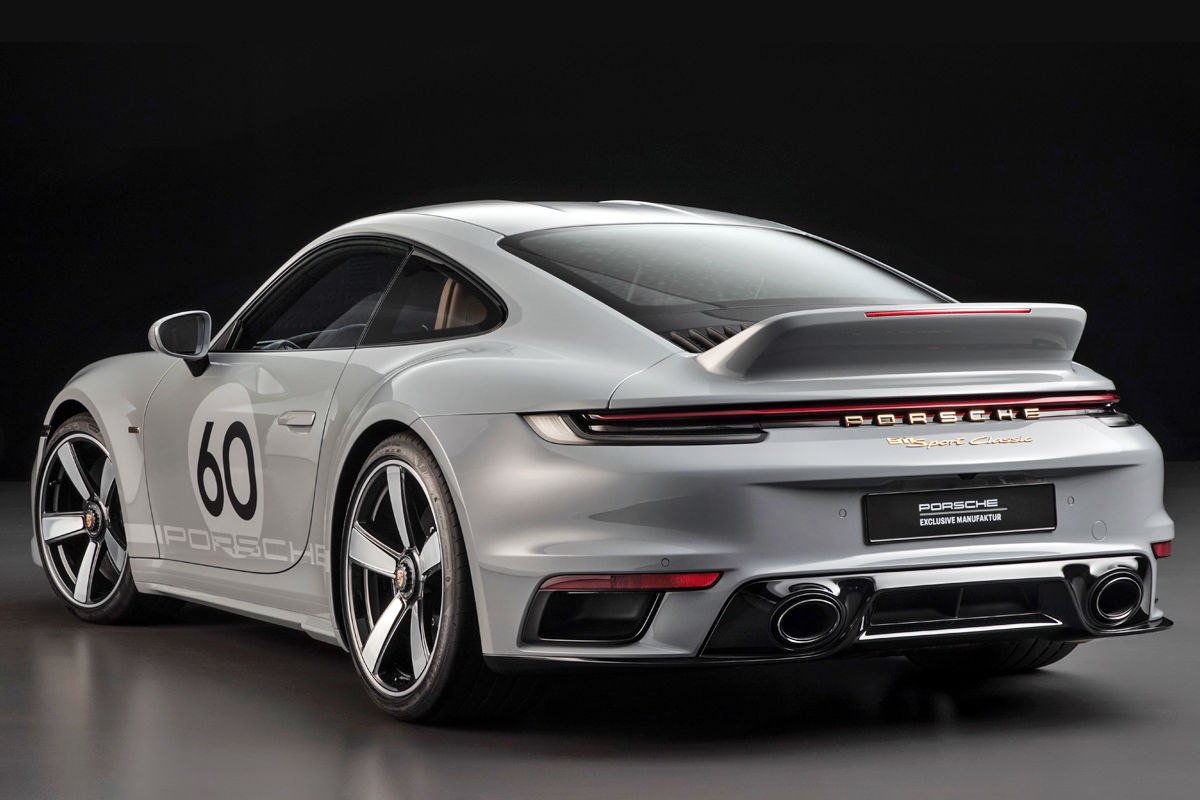
Porsche has whipped the covers off its new 911 Sport Classic, a limited-edition 992-generation model paying homage to the 1972 911 Carrera RS 2.7.
Arriving as the second member of the Zuffenhausen-based firm’s Heritage Design range after the 911 Targa 4S Heritage Design Edition revealed in 2020, the new 911 Sport Classic benefits from far more than a mere sticker pack or two.
In fact, thanks to its 405 kW version of the 911 Turbo’s twin-turbo 3.7-litre flat-six engine, it’s the most powerful manual-equipped 911 available today. And unlike the aforementioned 911 Turbo, the Sport Classic model ships standard with a 7-speed manual cog-swapper (complete with an auto-blip function) and rear-wheel drive.
The suspension arrangement, meanwhile, borrows elements from both the 911 Turbo and the 911 GTS, and includes the Porsche Active Suspension Management (PASM) and sports set-up (resulting in a 10 mm drop in ride height) as standard. In addition, the German automaker says this variant’s sports exhaust system has been “specially tailored” for an even more emotive aural experience.
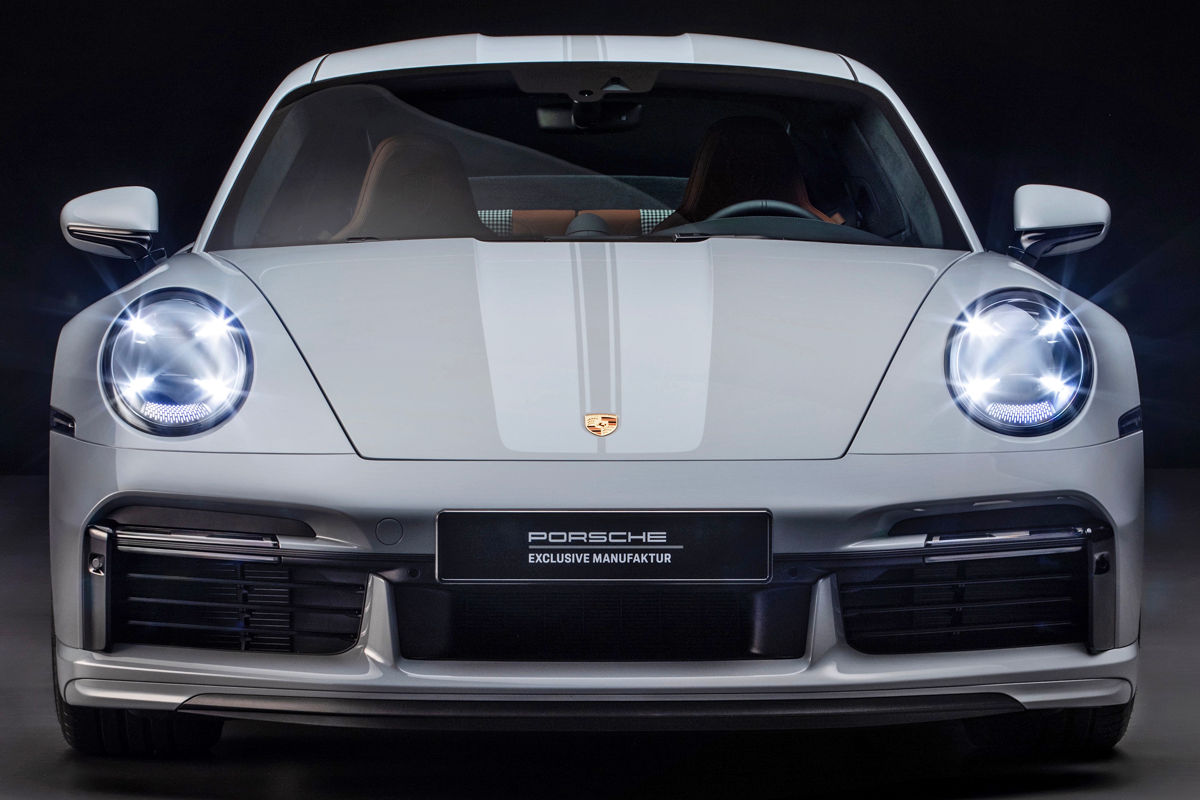
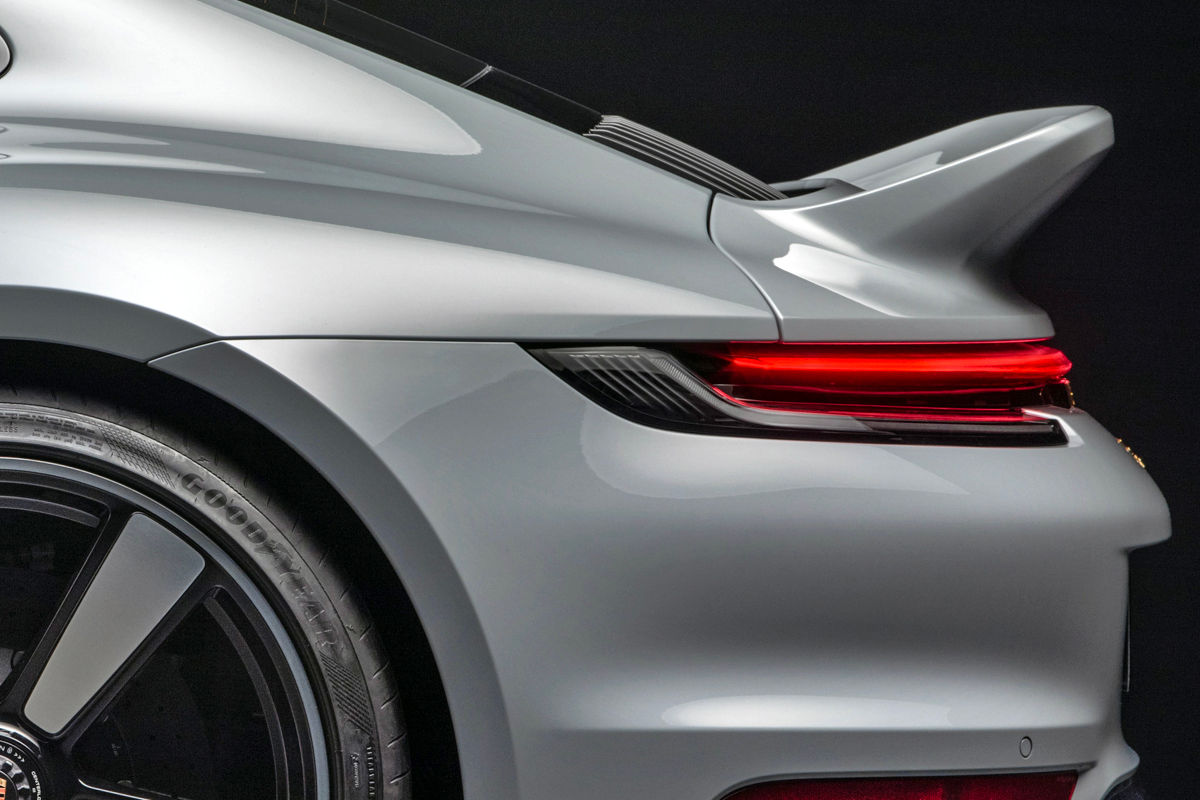
The 911 Sport Classic – the second time Porsche has used this name after the 997-based version launched in 2009 – is easily identifiable thanks to its wide body, double-bubble roof and fixed rear spoiler in the style of the ducktail Carrera RS 2.7. The launch vehicle is shown in Sport Grey Metallic paintwork, which Porsche says was inspired by the Fashion Grey hue applied to the original Porsche 356.
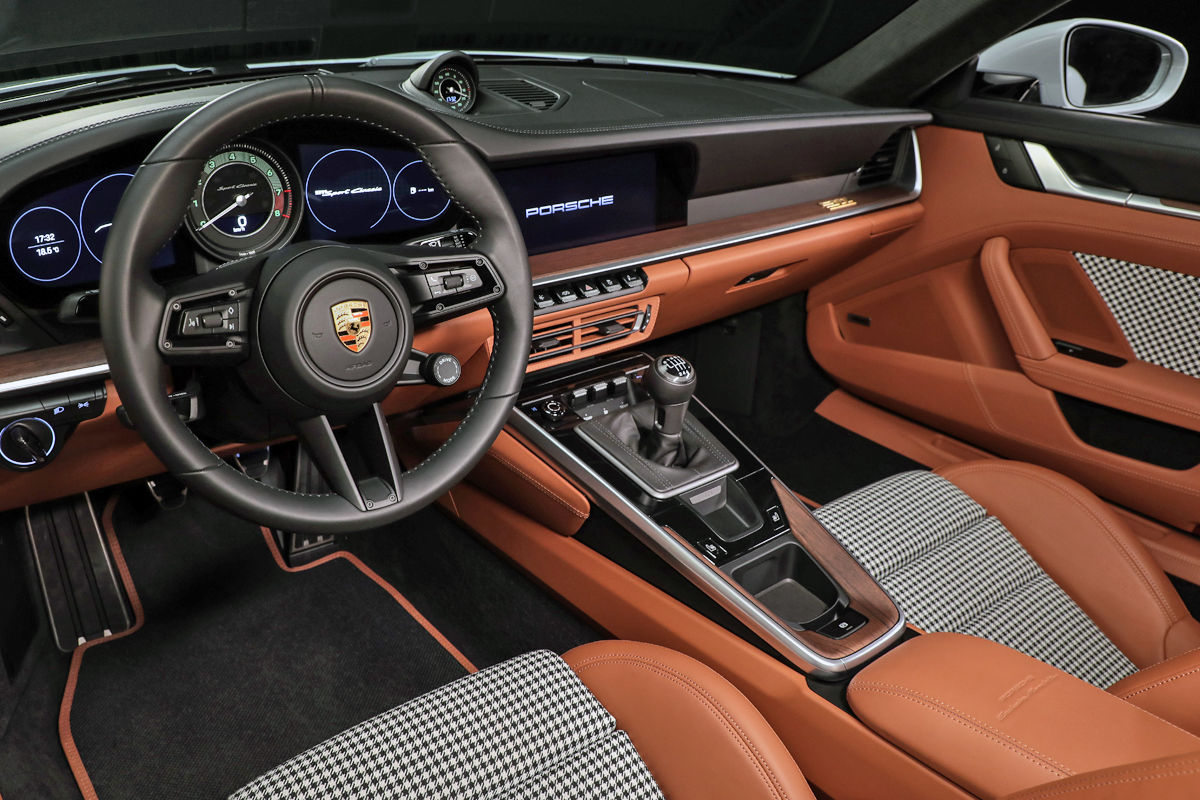
Still, if grey’s not your colour, the new 911 Sport Classic will also be available in Black, Agate Grey Metallic and Gentian Blue Metallic (while there’s always the option of providing a colour sample for Porsche to match). Twin stripes, meanwhile, are painted on the bonnet, roof and rear spoiler. Inside, you’ll find a Pepita pattern on the door panels and seat centres, along with plenty of two-tone (Black and Classic Cognac) semi-aniline leather upholstery.
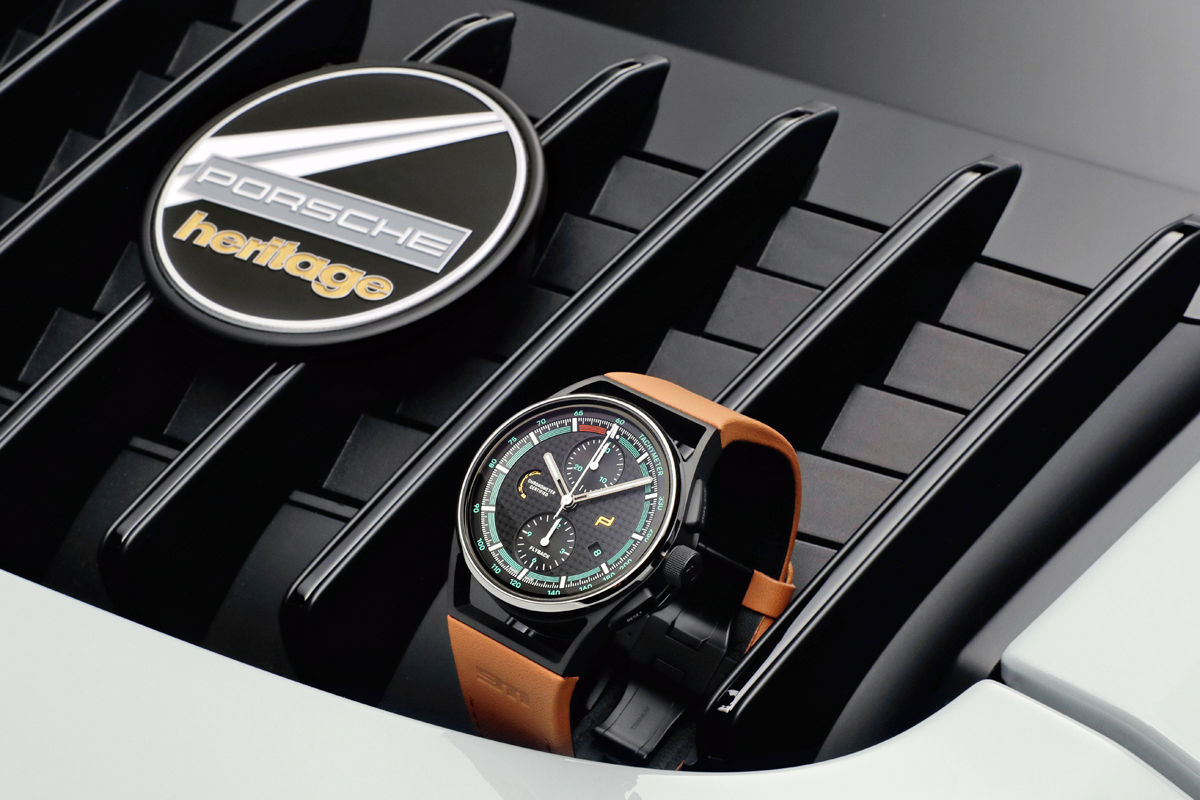
Porsche plans to build just 1 250 examples of this limited-edition model, each one available with an exclusive chronograph that picks up on the 911 Sport Classic’s various design details.
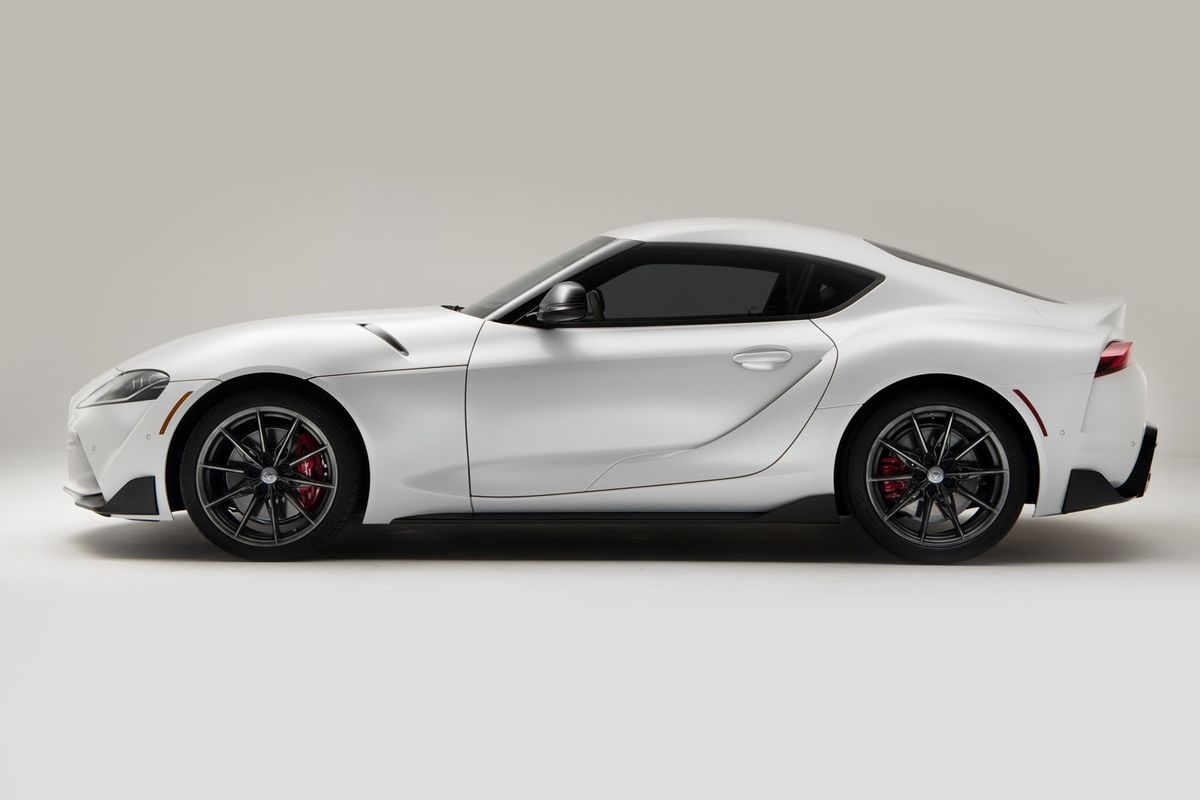
Toyota Supra Manual Goes Official
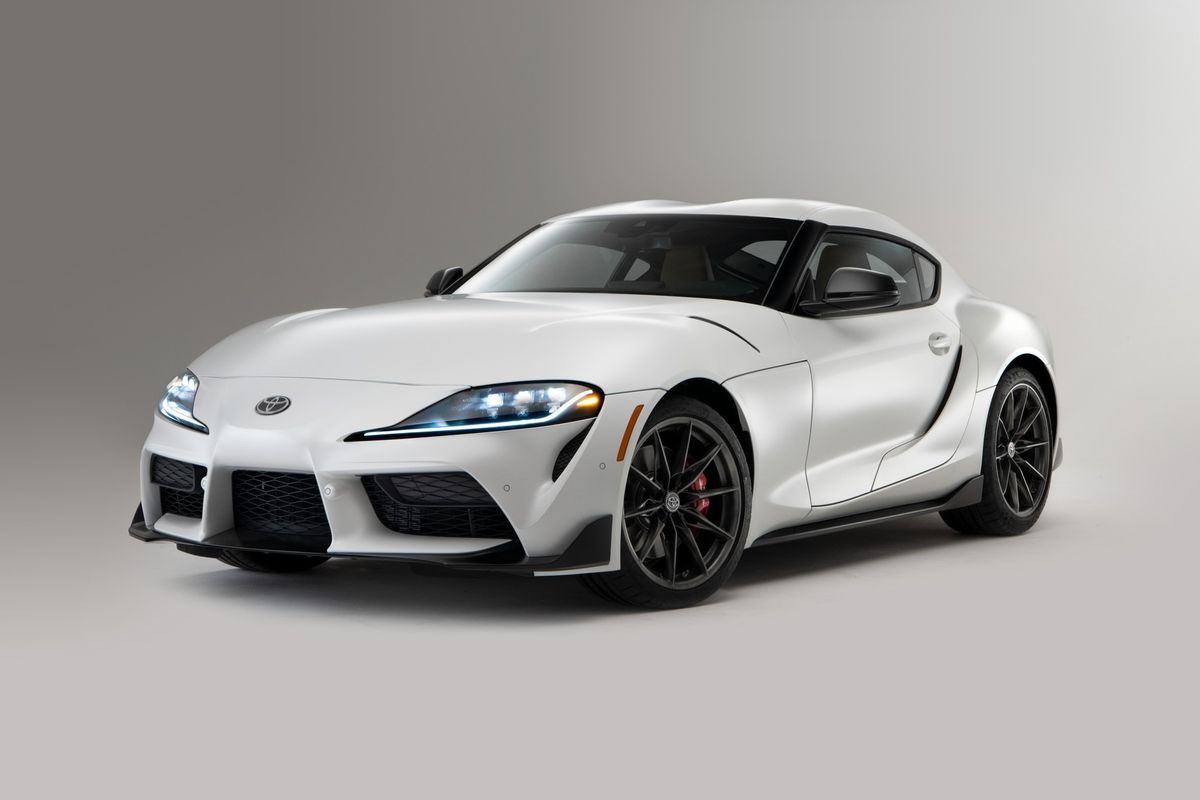
The Toyota Supra manual derivative has been officially announced, along with some updates for the 2023 model year.
The return of the iconic Supra nameplate has been quite the story for Toyota. From its co-development story with the BMW Z4, its performance, to its dashing good looks, its fair to say that the latest generation Supra is one complete package. However, enthusiasts were a bit disappointed to hear that it would be offered in automatic form only.
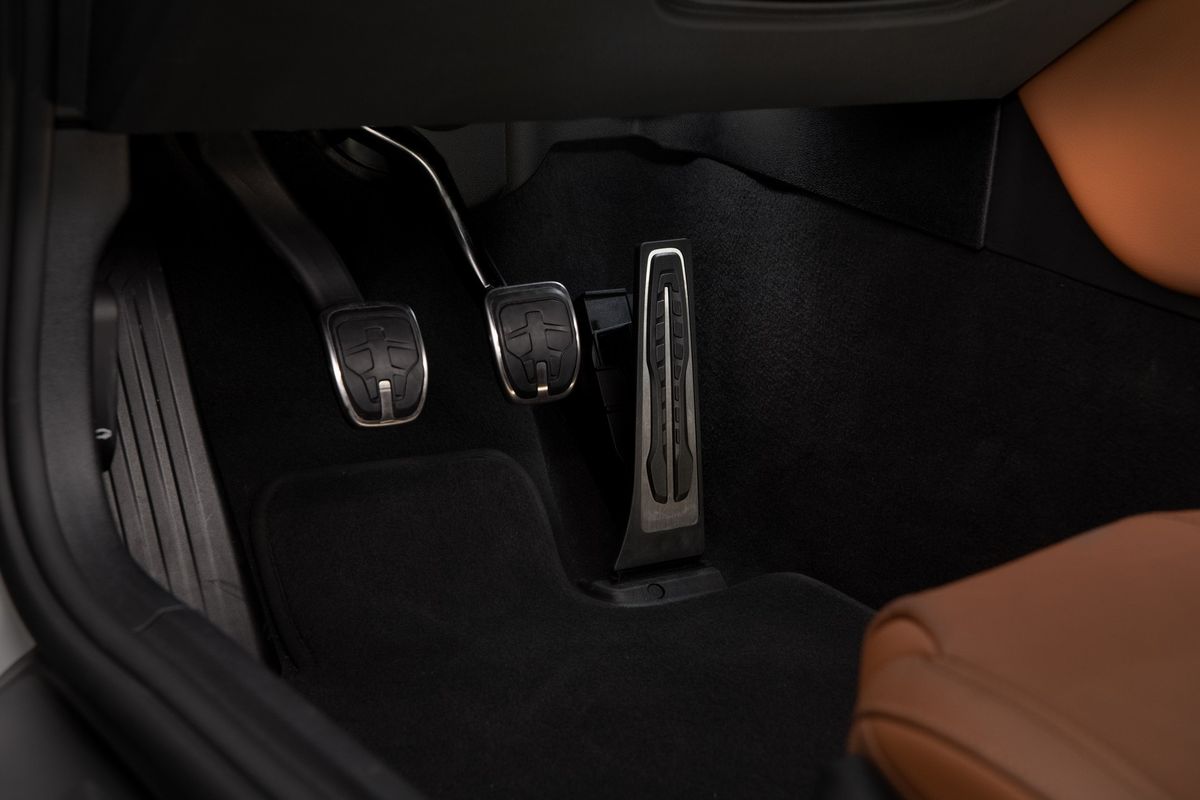
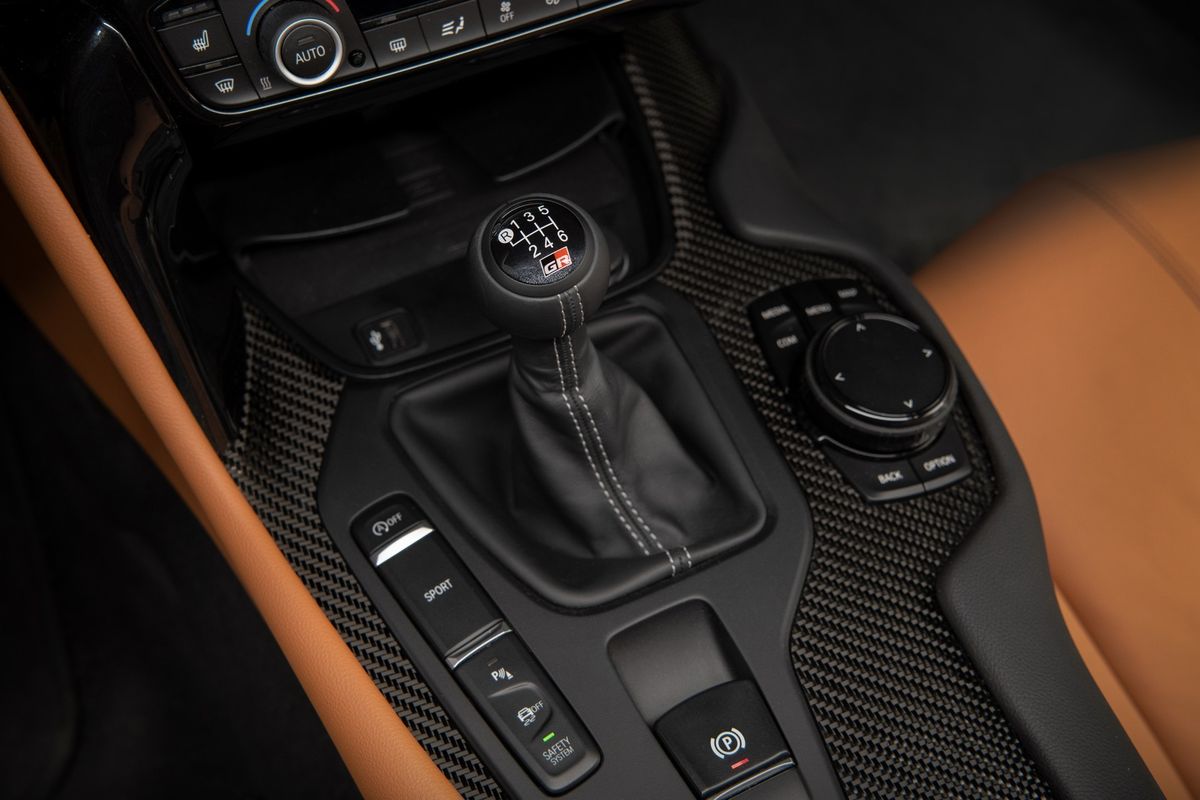
Granted, the 8-speed ZF is a terrific gearbox, perfectly mimicking the responsiveness of a dual-clutch transmission, but enthusiasts really wanted is a three-pedal stick setup. So, for the 2023 model year, the Toyota Supra manual has joined the range. We suspect the reveal for the flagship GRMN Supra may take place this year, promising supercar levels of pace.
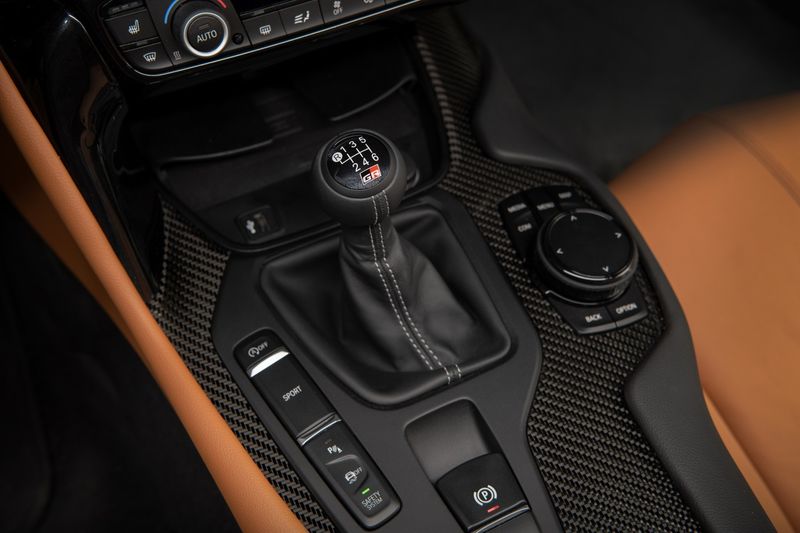
Paired to the BMW-sourced B58 3.0-litre 6-cylinder with 285 kW and 497 Nm is a new six-speed manual gearbox that Toyota claims has been specifically engineered for the Supra. Toyota says its “engineering team modified an existing transmission housing, driveshaft and gear set and removed elements that were not required, such as the acoustic package, which reduced weight.” A large diameter clutch with a reinforced diaphragm spring has also been fitted.
This is not just a case of bolting in a clutch and gearbox, as the Toyota Supra manual now has a shortened final drive ratio for improved in-gear acceleration feel, recalibrated stability control, enhanced Track mode for easier drifting and gearbox rev-matching software.
The Toyota Supra Manual also benefits from a raft of updates applied to the range. These include traction/stability control updates, retuned suspension, revised shock absorbers for better balance and comfort, an active rear differential, as well as a revised power steering setup.
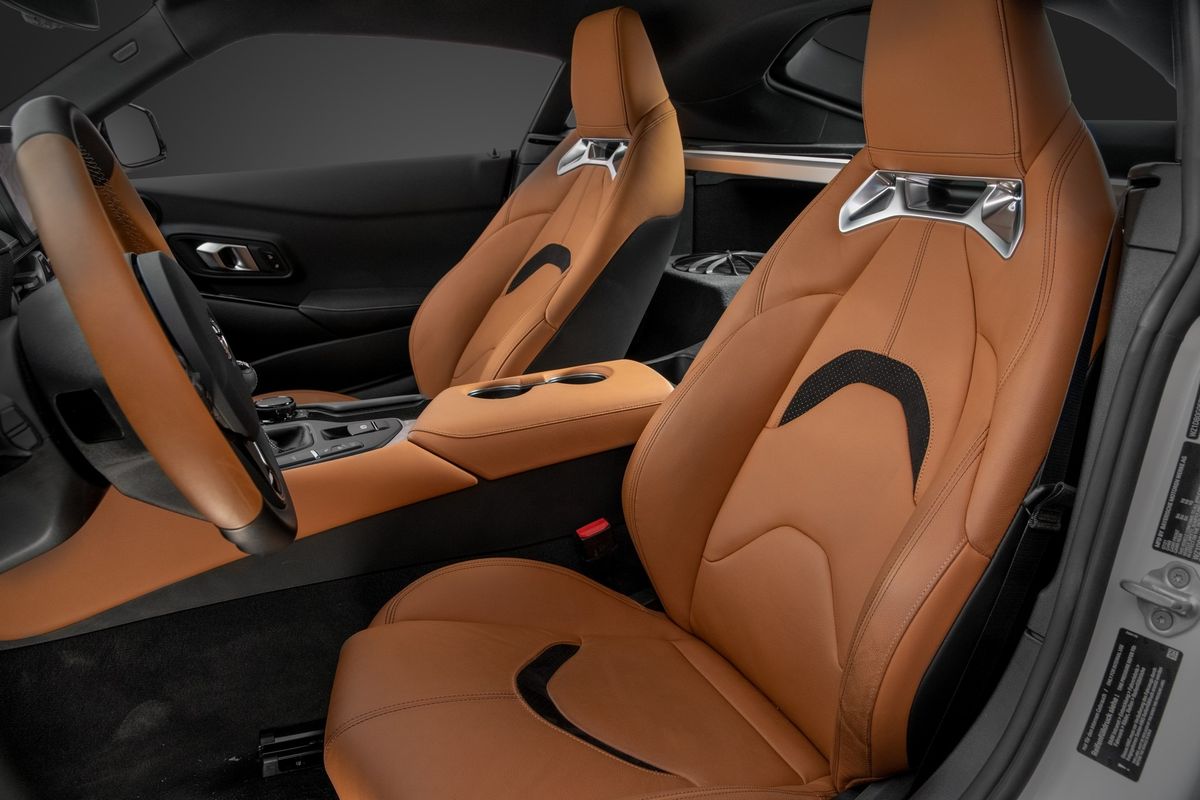
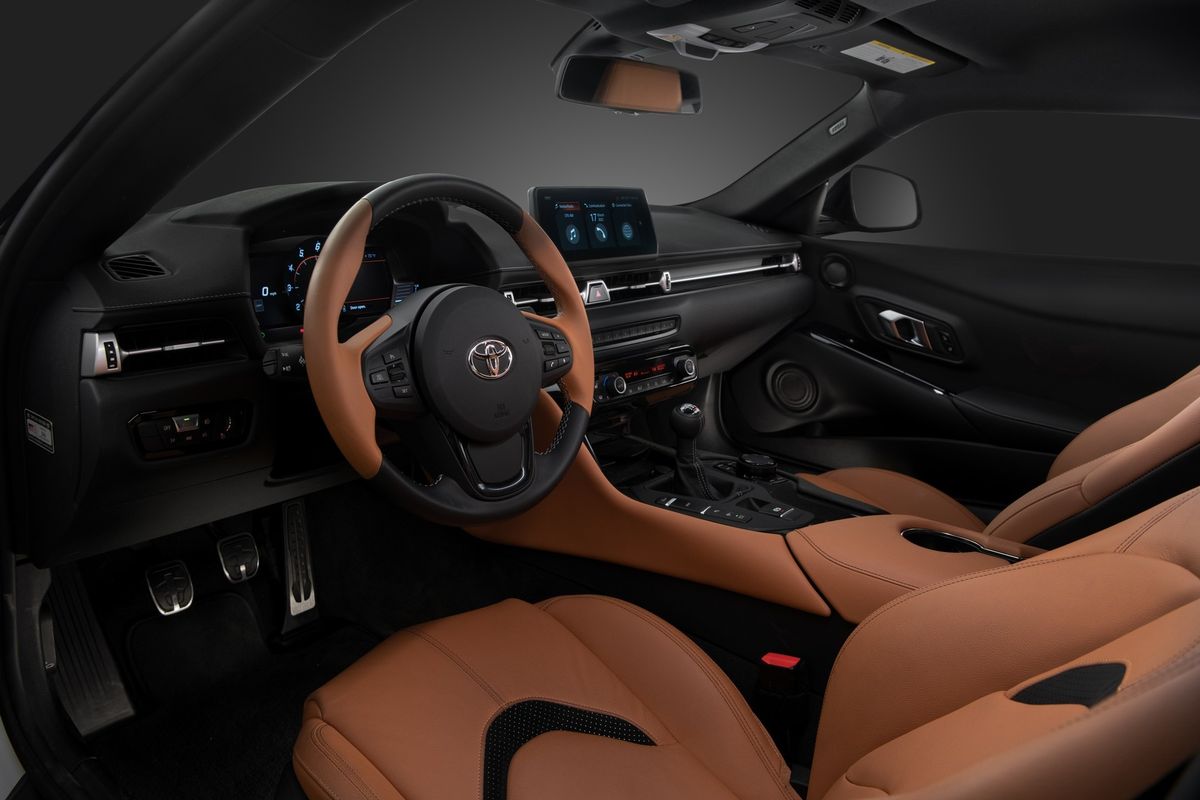
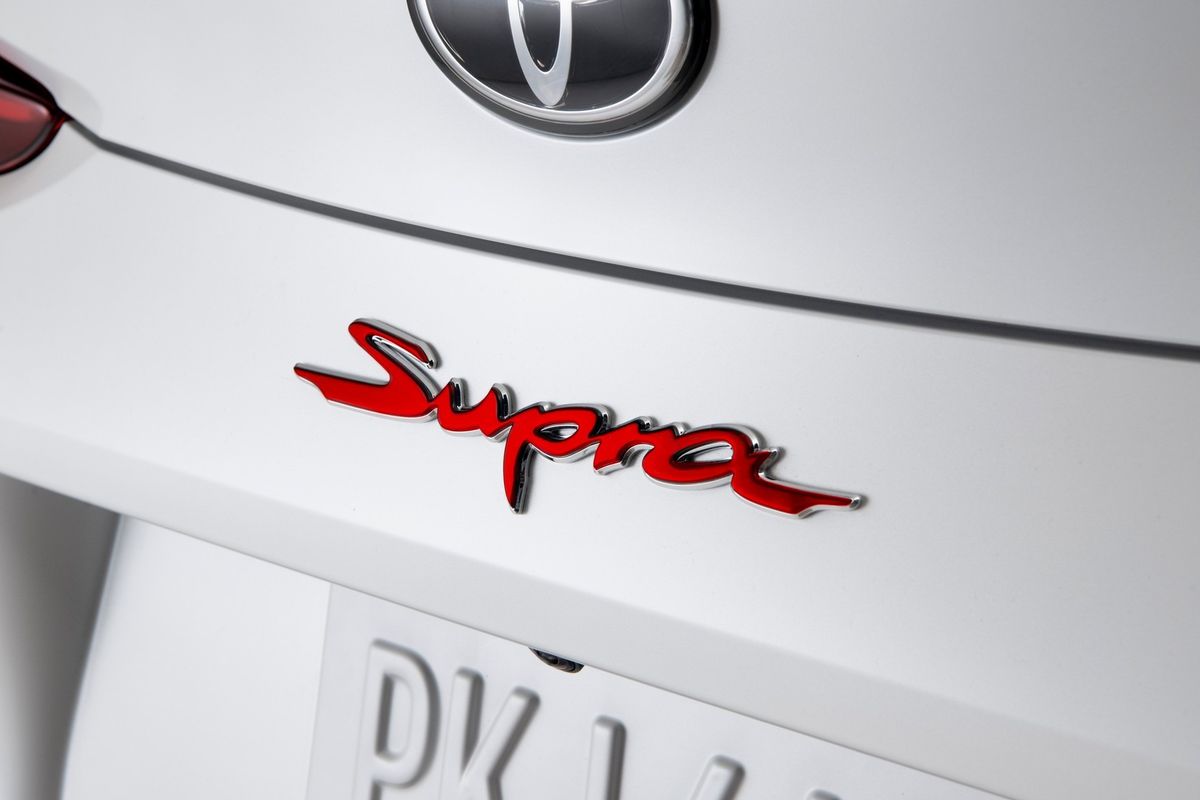
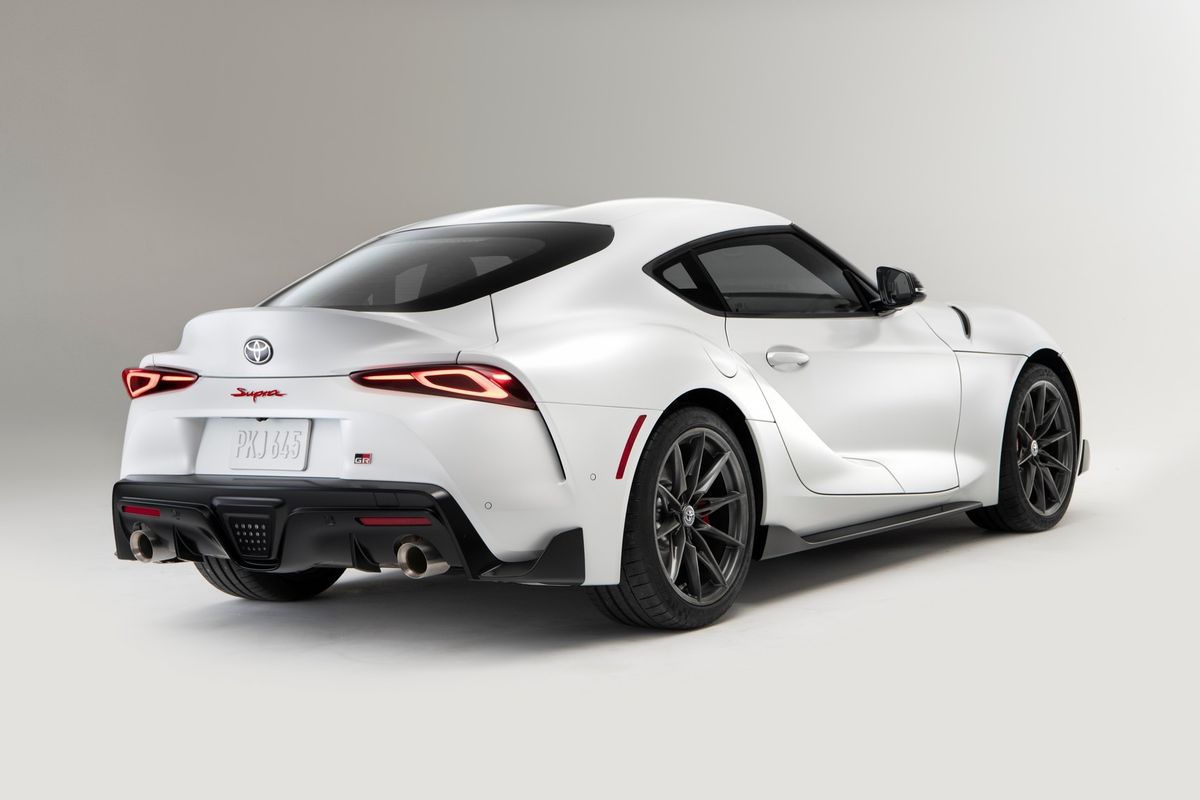
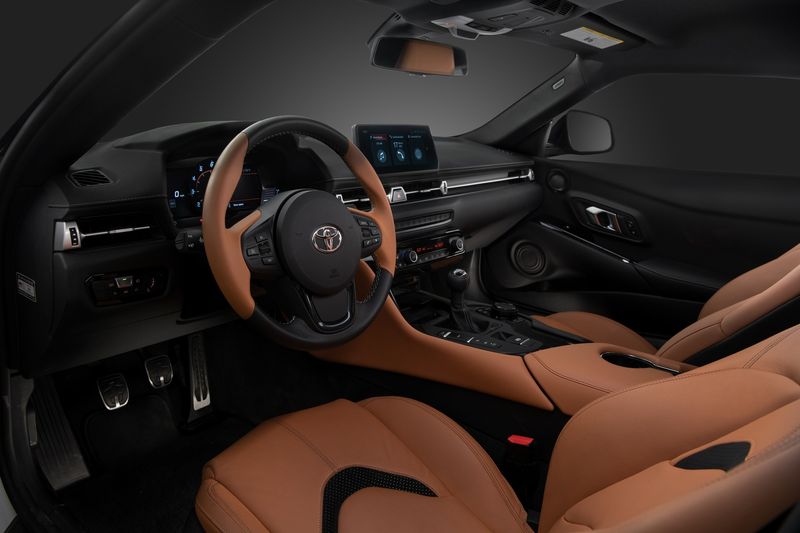
There’ll be a special model called the A91-MT Edition that will be finished in Matte White or CU Later Gray, with red detailing and 19-inch forged wheels. A red Supra badge is a nice touch, we think. Inside, the cabin gets special leather sports seats, Alcantara-wrapped gearshifter, and a 12-speaker audio system from JBL.
The updated Toyota Supra model line-up will debut at The Festival of Motoring, taking place at Kyalami Grand Prix Circuit in August 2022. Dealer ordering will open in May, with sales commencing in Q3. Both Auto and Manual 3.0T variants will be offered with pricing announced soon.