Aston Martin DBX707 (2022) Launch Review
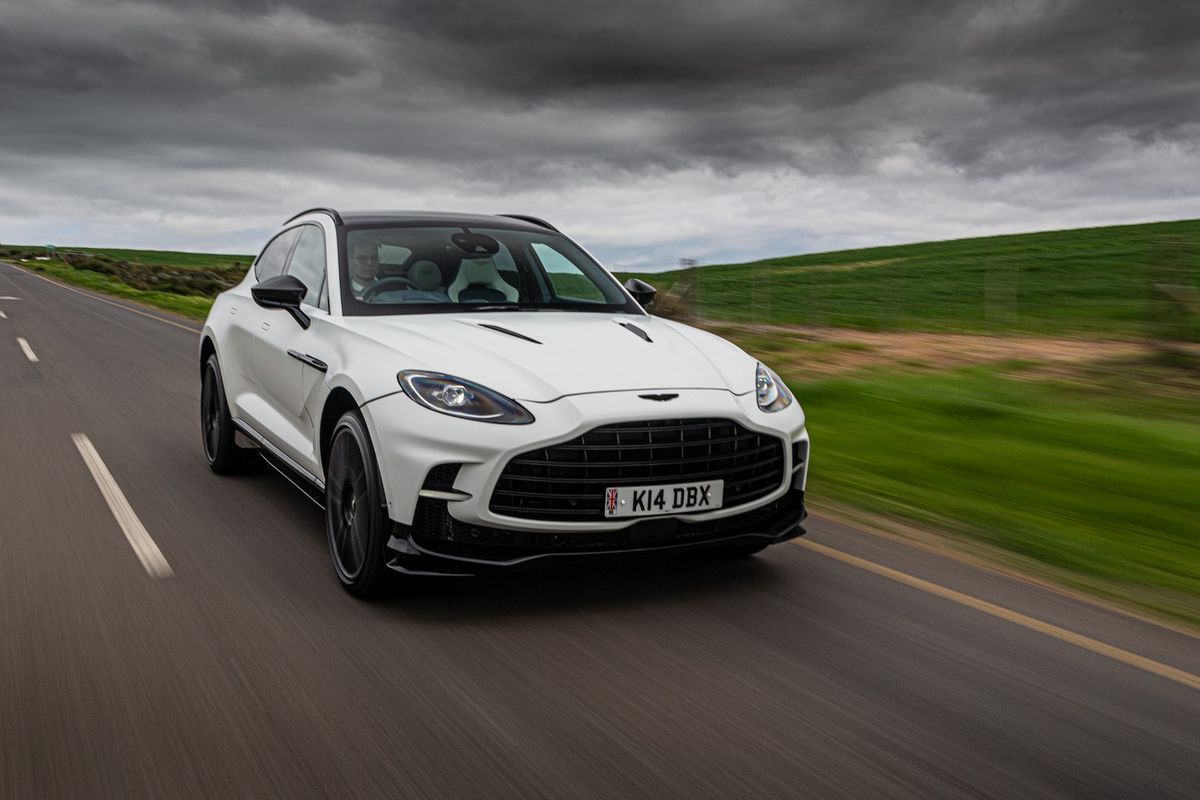
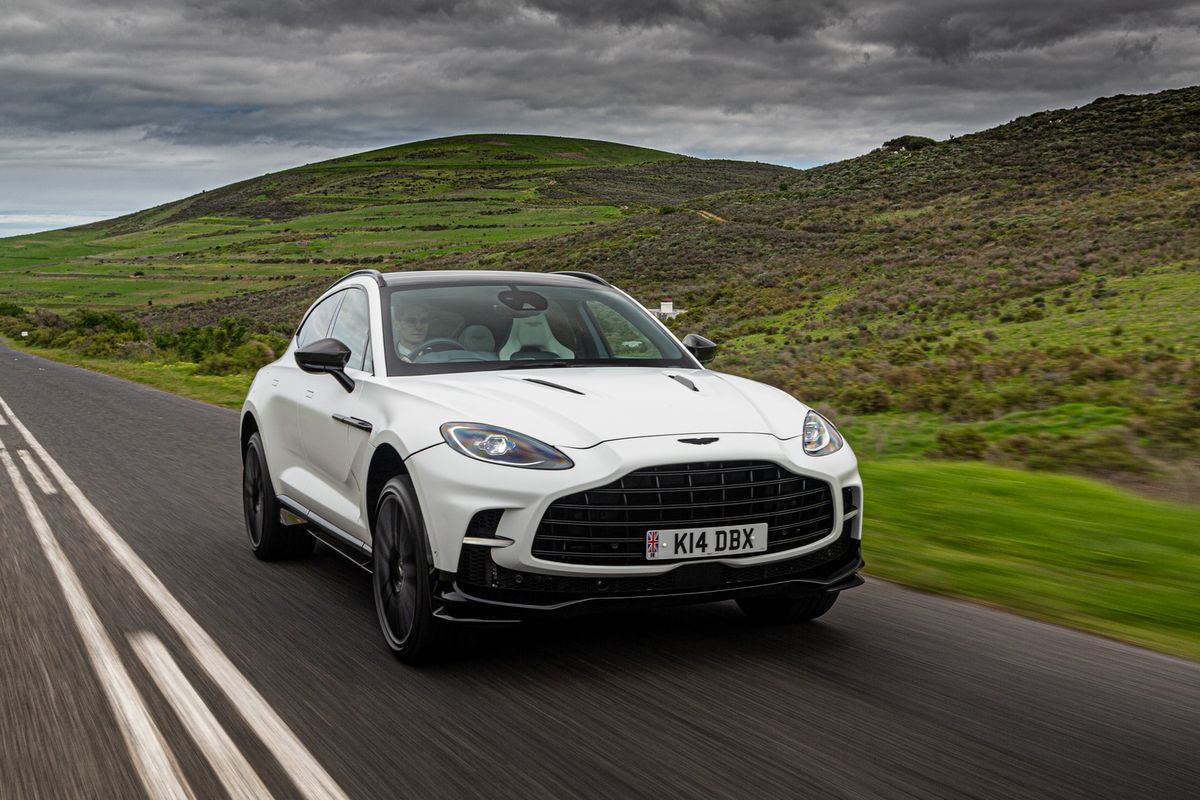
The Aston Martin DBX707 – touted as “the world’s most powerful SUV” – is now available in South Africa. We had a quick drive in a pre-production unit before it headed back to the UK.
“Please ignore the panel gaps, this is a pre-production unit and will be heading back to the UK soon”, says the Aston Martin DBX707’s chaperone. We know things are about to get serious when a test unit arrives at our office accompanied by a handler!
This example of the Gaydon-based firm’s 520 kW/900 Nm performance SUV wears British ‘plates because it’s in the Republic temporarily. Aston Martin’s local importer, Daytona, has been demonstrating the DBX707 to prospective buyers, as well as the automotive media.
We were only afforded a few hours with this machine – the apex version of the DBX (not a special edition) – and we weren’t going to pass up a chance to find out just how special it is.
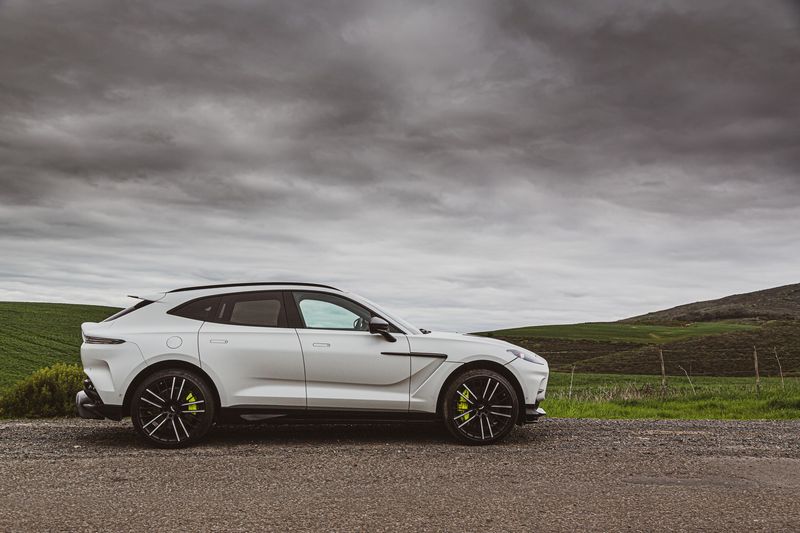
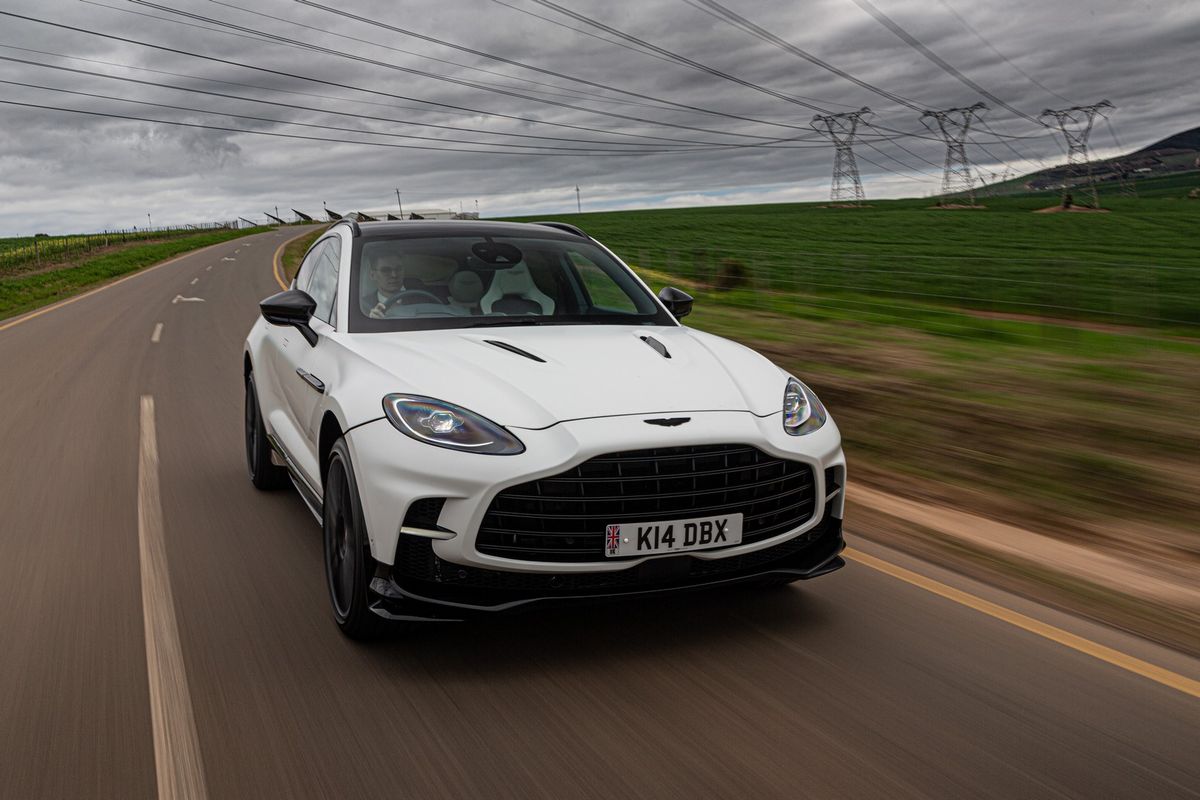
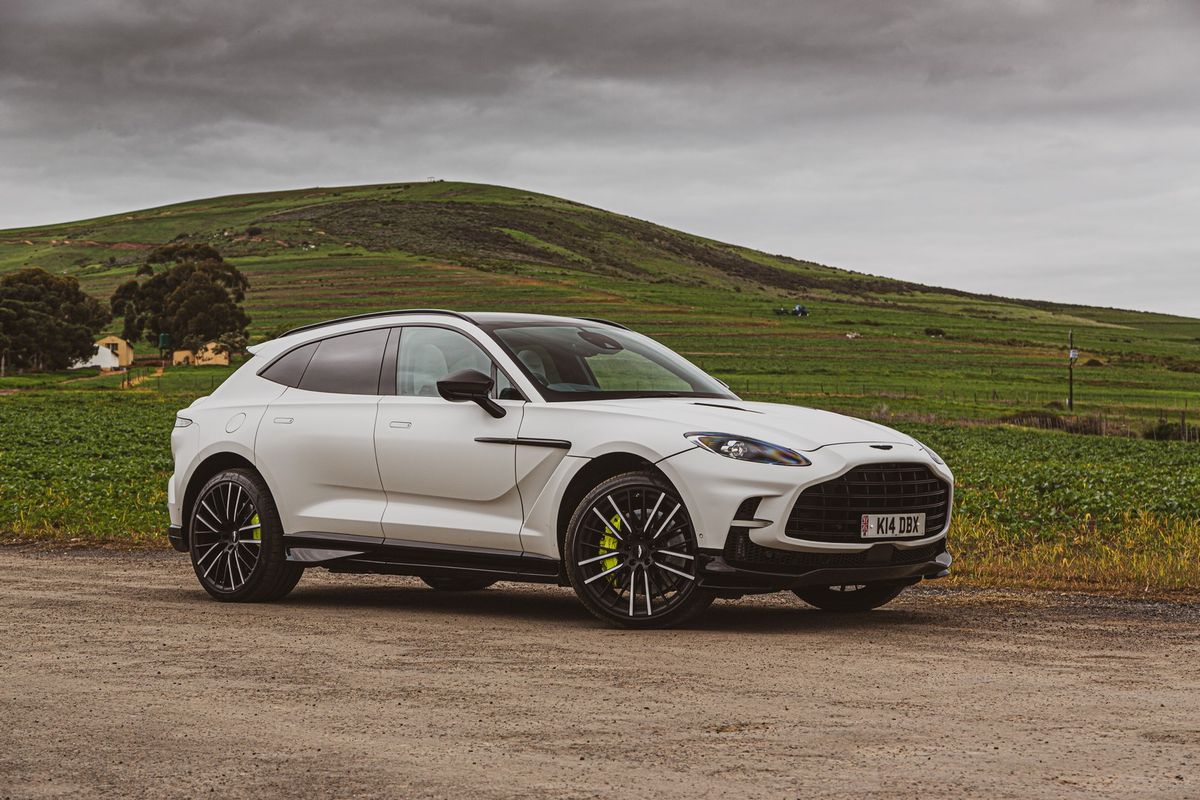
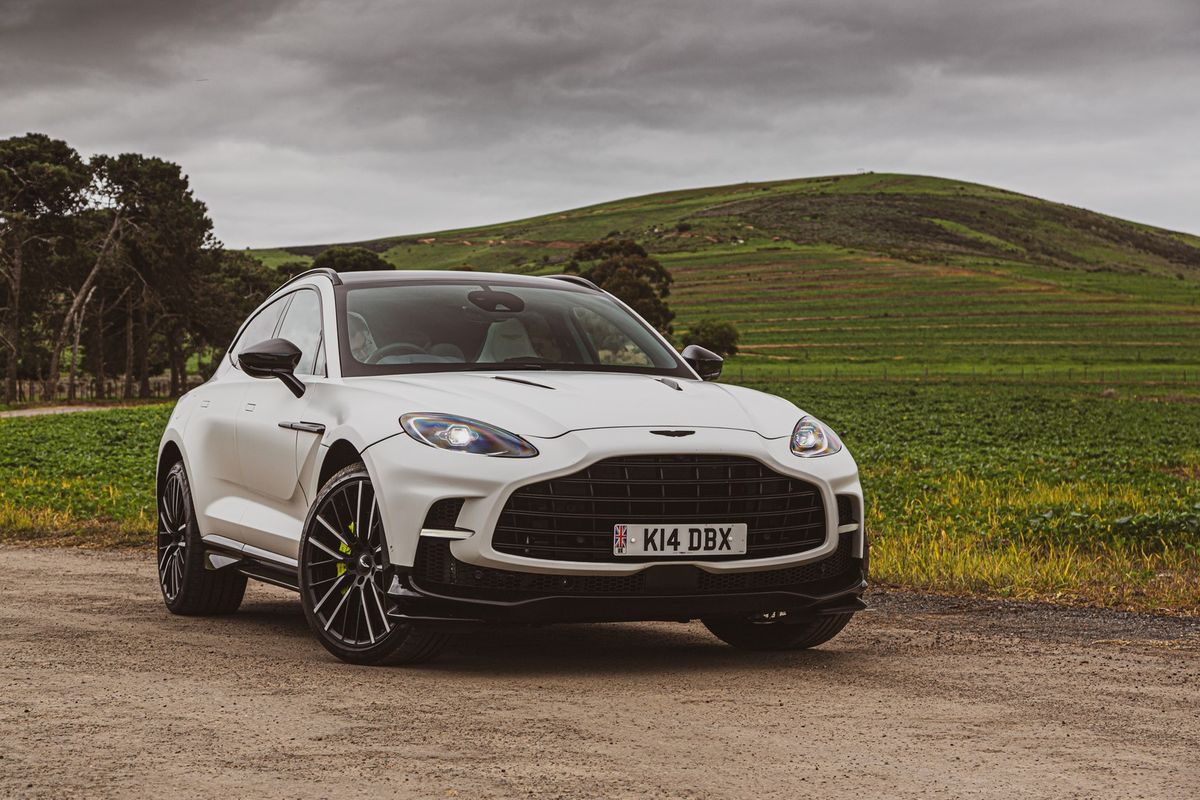
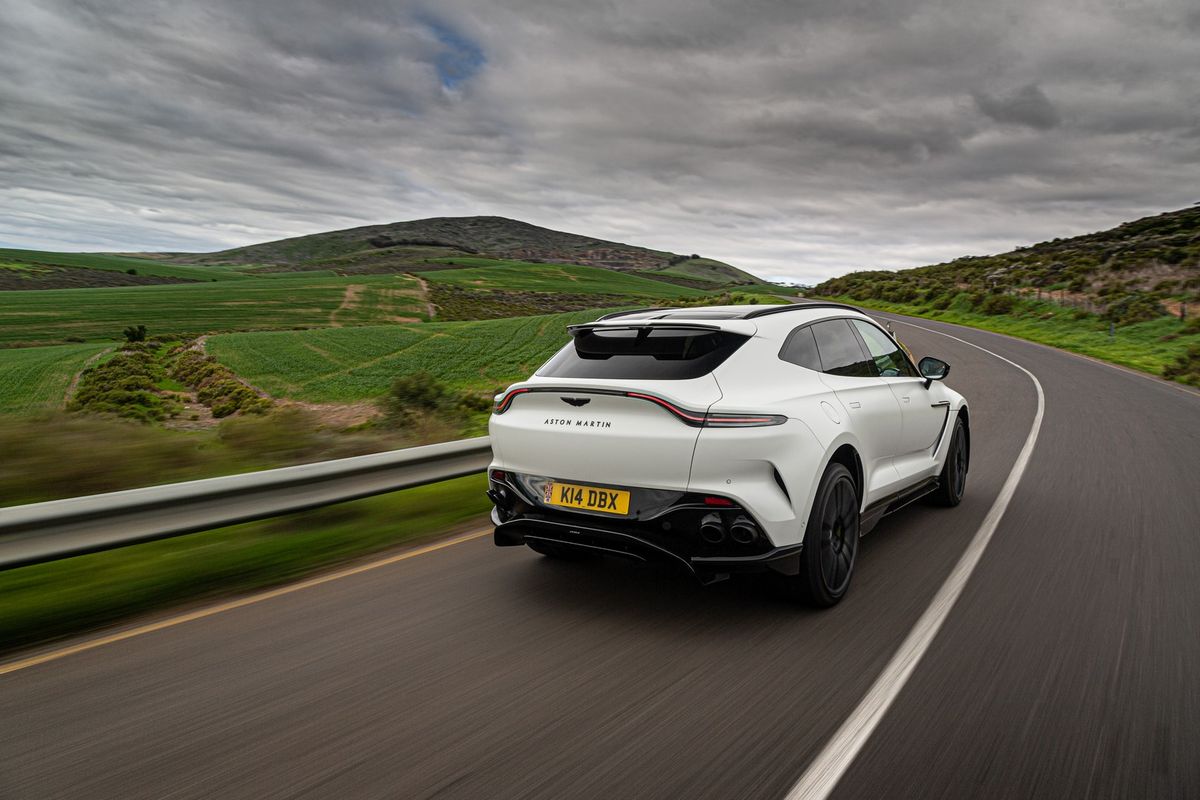
The DBX707’s stance is interesting yet purposeful.
What’s on offer?
The DBX707 is a substantially upgraded version of Aston Martin’s first SUV. While the idea of traditional sportscar brands bringing SUVs to market may not still sit well with purists, the reality is that, for high-net-worth customers, the prestige of supercar ownership is not enough – they want comfort and practicality too, which is why even Ferrari will unveil an SUV soon.
Statistics show the Urus is Lamborghini’s most popular model, the Bentayga has helped Bentley record excellent financial growth and sales of the Cayenne and Macan outnumber those of Porsche’s sportscar models. While Aston Martin is going through a tough time, the brand hopes that brisk sales of the DBX and its DBX707 sibling will help it steady the ship.
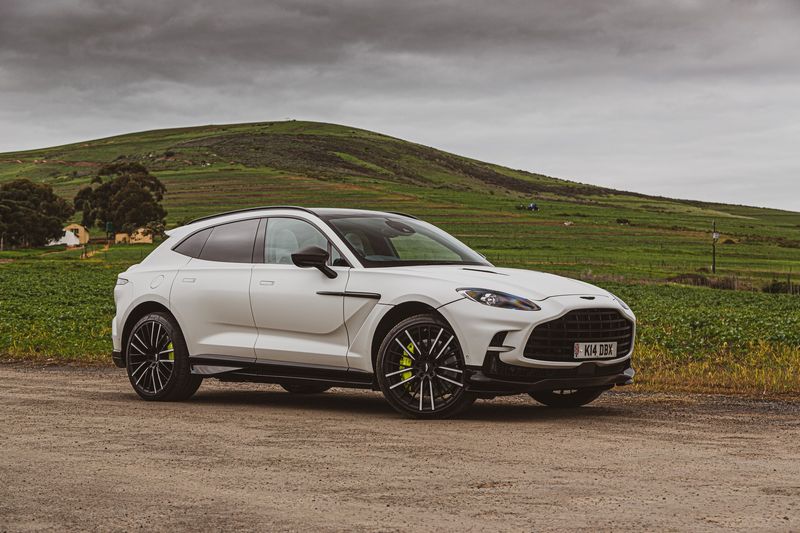
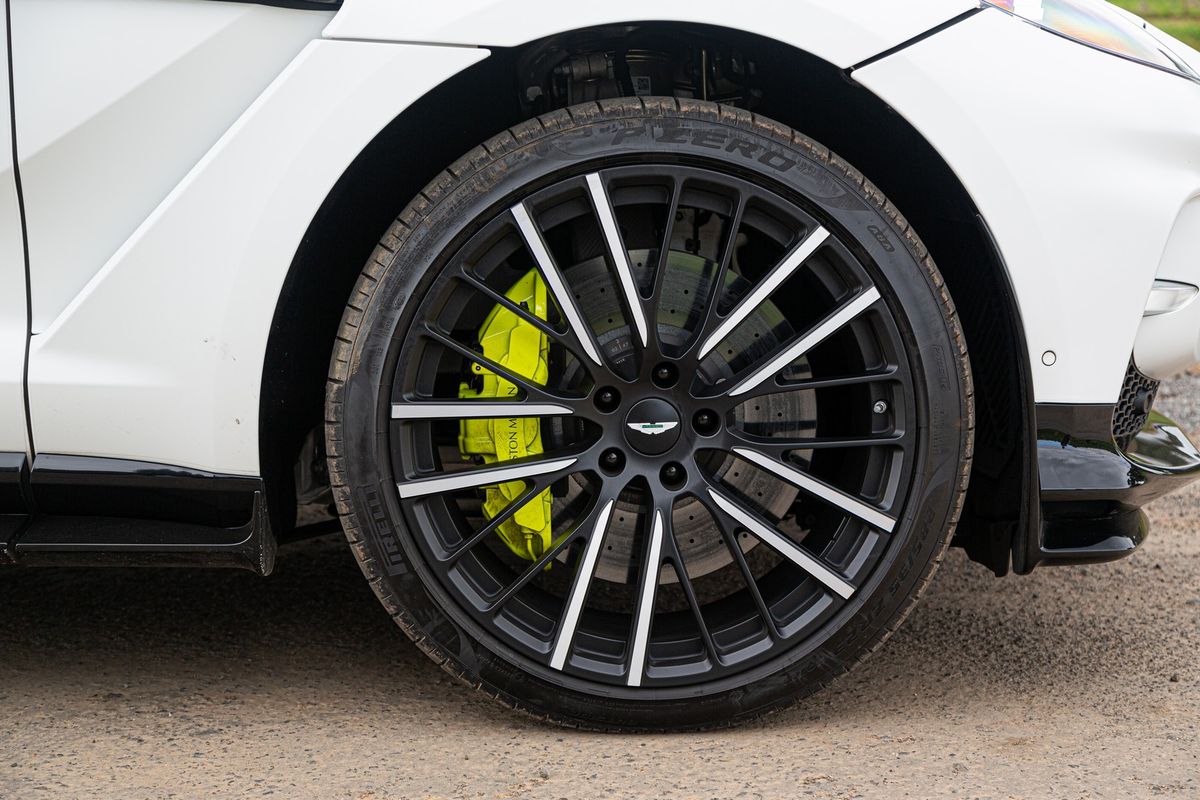
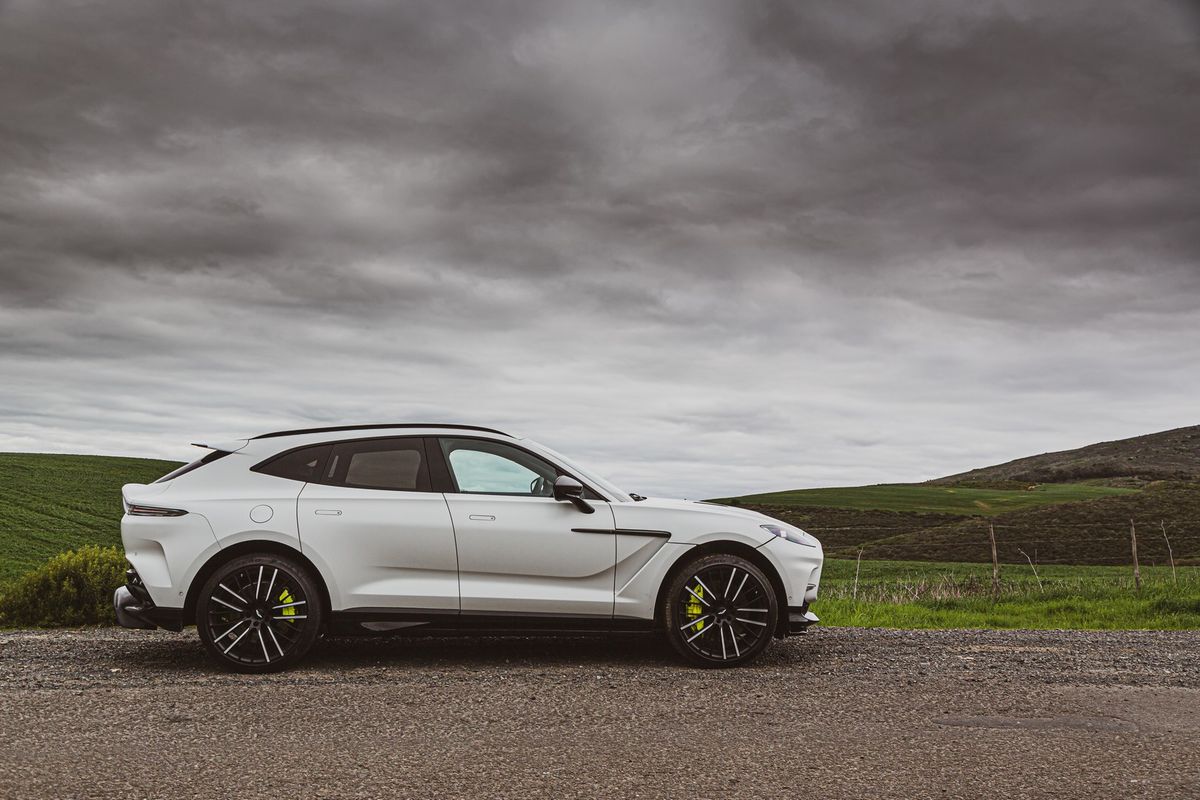
Monster 23-inch wheels and lumo green brake callipers are a sign of intent!
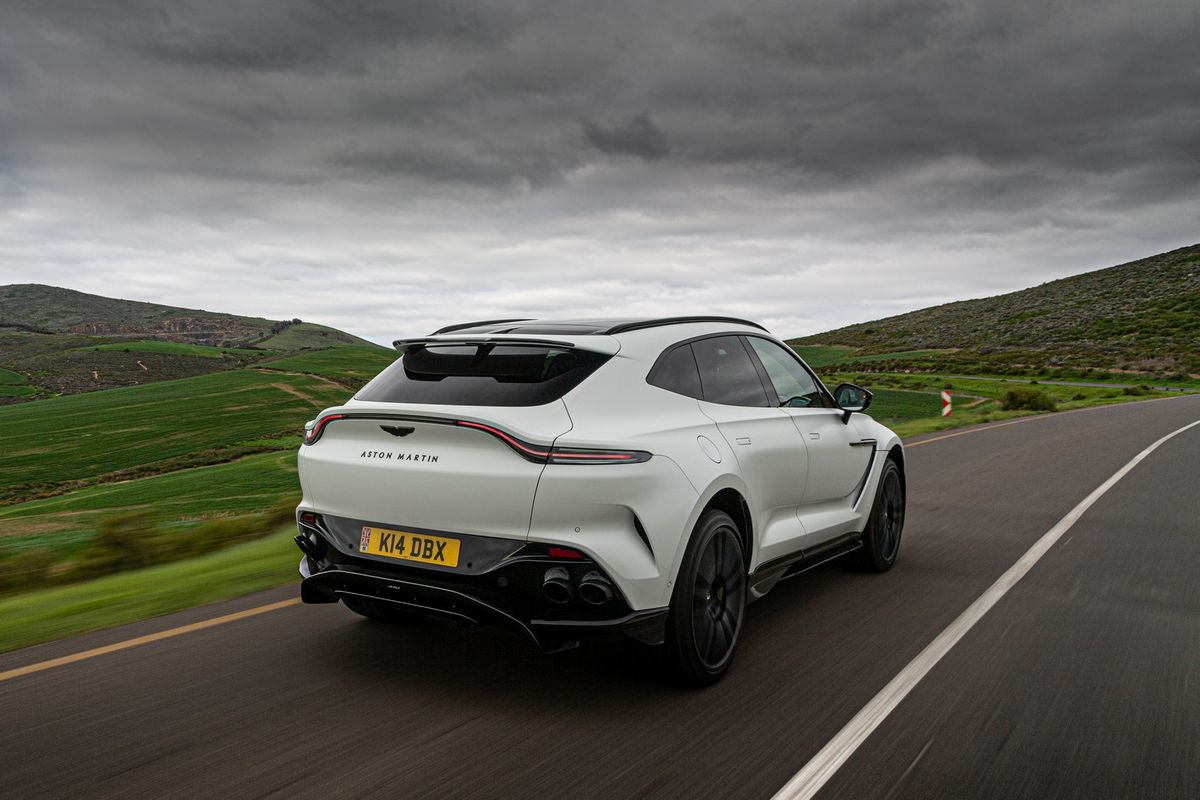
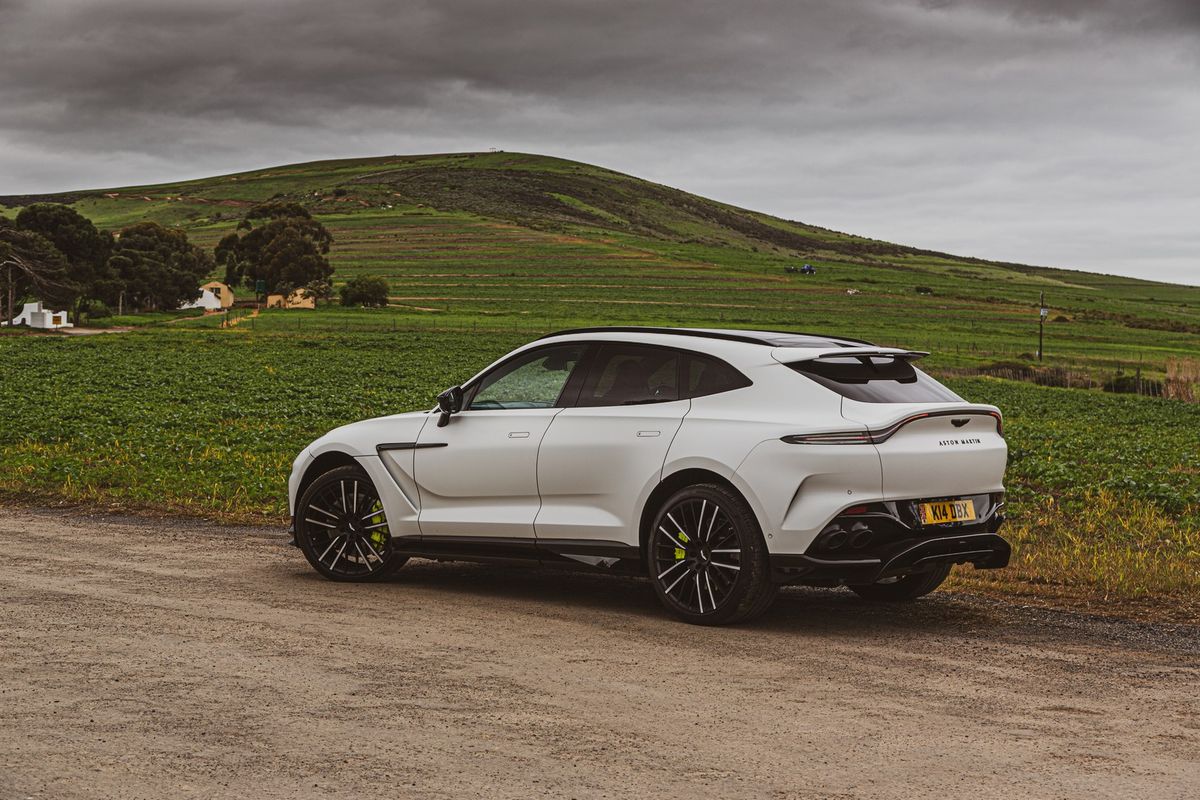
While most exotic brands’ SUV offerings admittedly fail to match the visual drama of their super- and hypercar counterparts, the DBX is more than a blinged- and bulked-up SUV… Its appearance is purposefully bold; its grille resembles a gaping mouth, while the tailgate design is unusual and thought-provoking; this model looks more like a fastback than an off-roader.
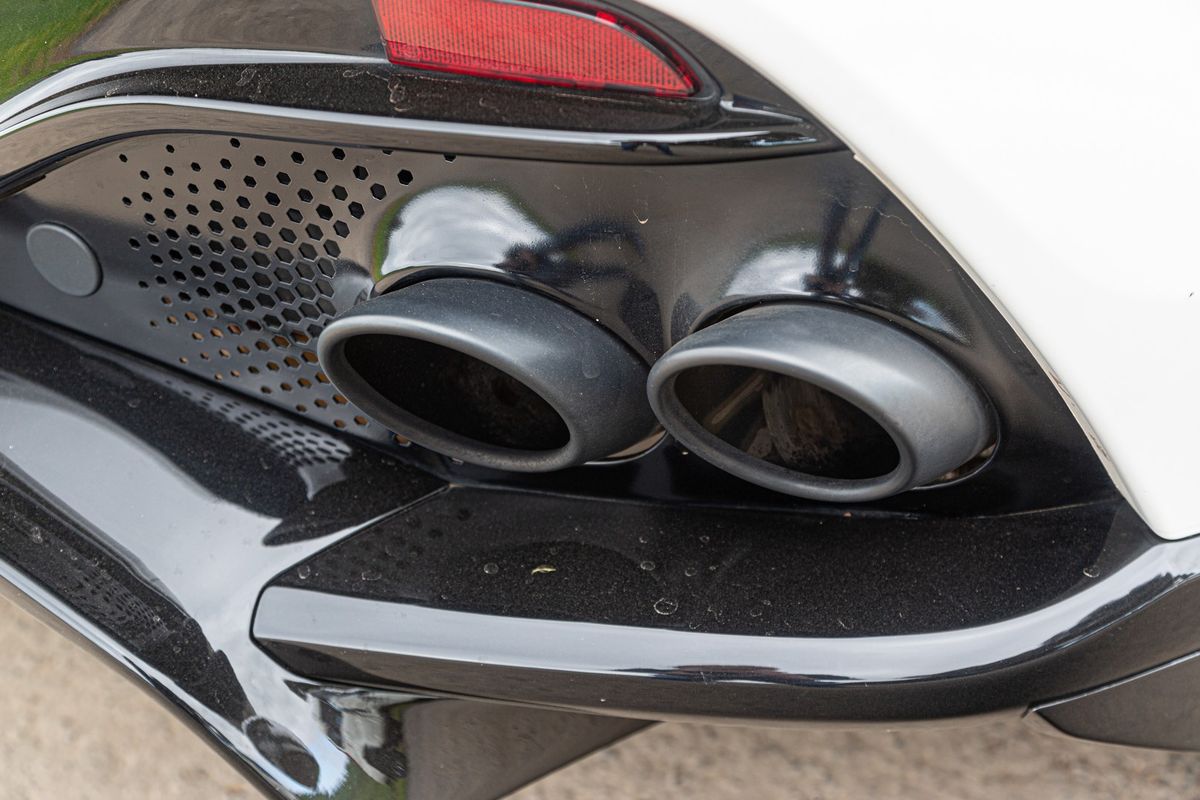
When I leaned out of the tracking vehicle’s window to photograph the DBX707, I got the chance to hear that mighty 4.0-litre biturbo V8 petrol engine from the outside. Even in the tamest drive mode, the Aston releases delicious snarls from its quad exhausts and, when the driver lifts off the throttle after a burst of acceleration, the turbos emit glorious whooshes.
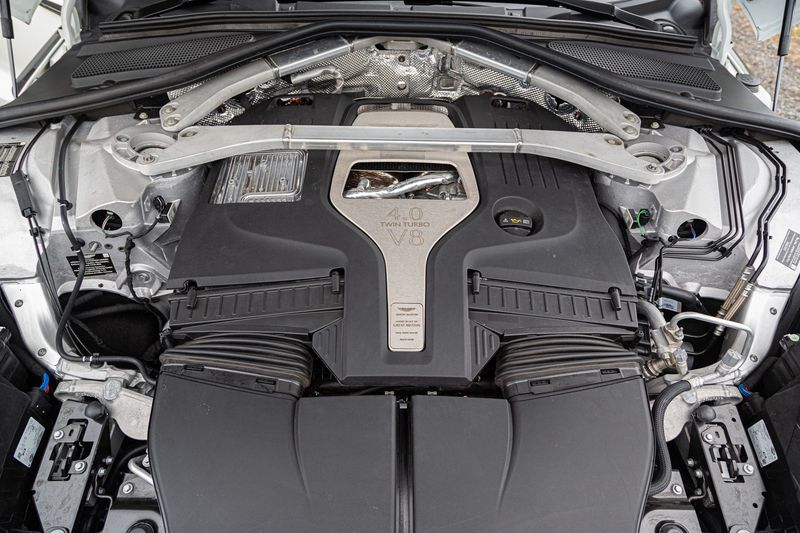
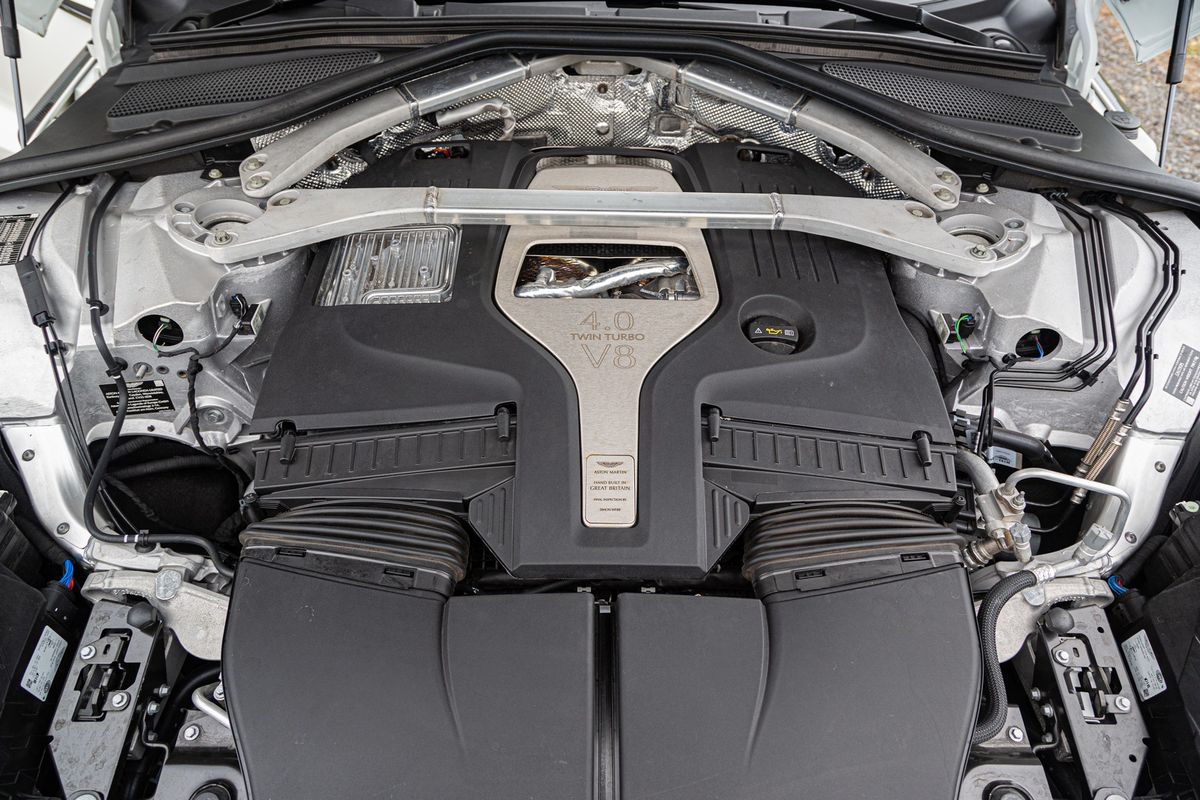
AMG-built but Aston Martin refined.
Officially, it’s the same 4.0-litre biturbo V8 that can be found in numerous Mercedes-AMG products. In case you don’t know, Mercedes-Benz has been supplying Aston Martin with AMG powerplants (as part of a wider-ranging technical agreement) since 2013. However, the M177’s outputs have been substantially cranked up in the DBX707 – Aston Martin has added bigger ball-bearing turbochargers and retuned the ECU to deliver eye-opening peak outputs of over 500 kW and 900 Nm.
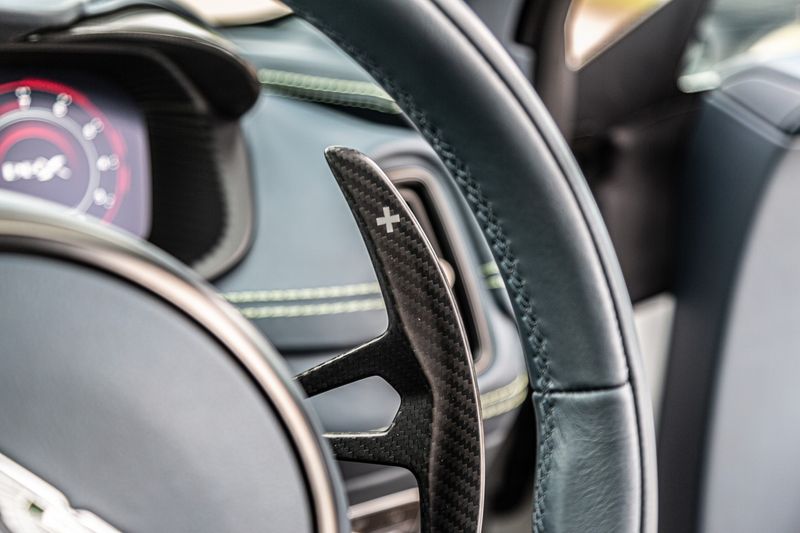
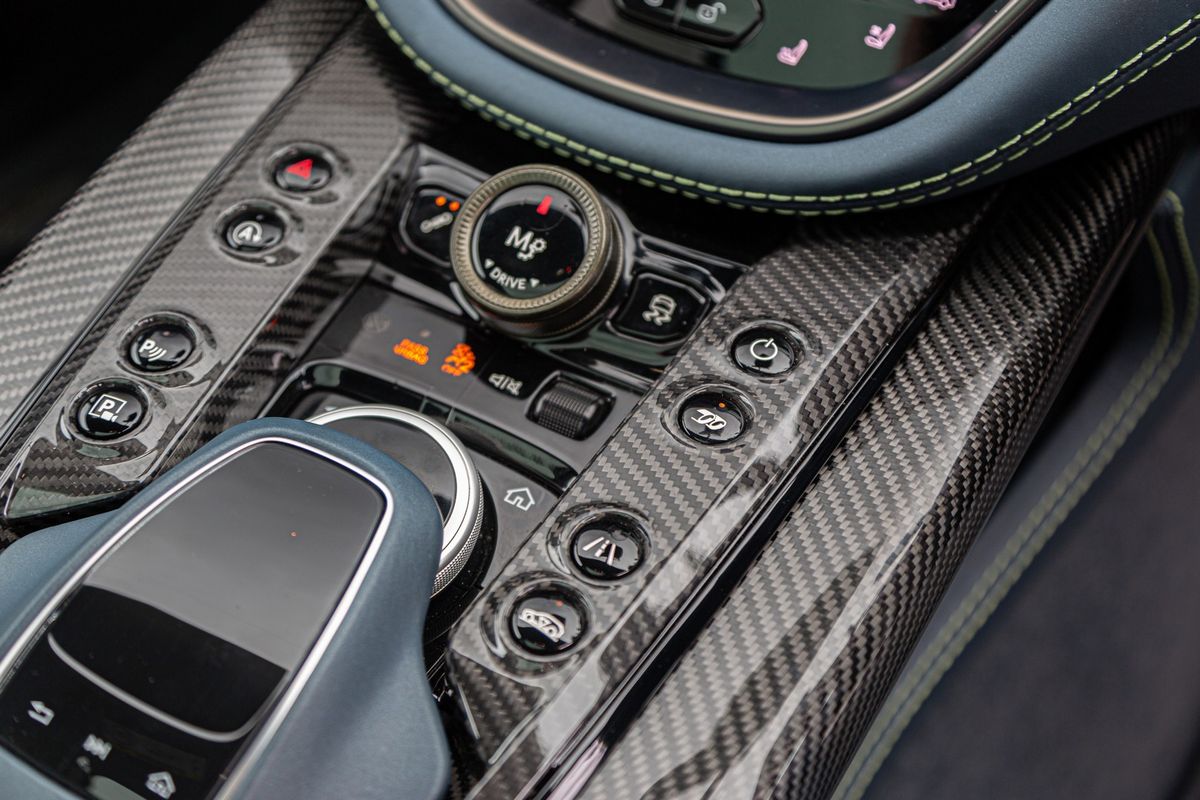
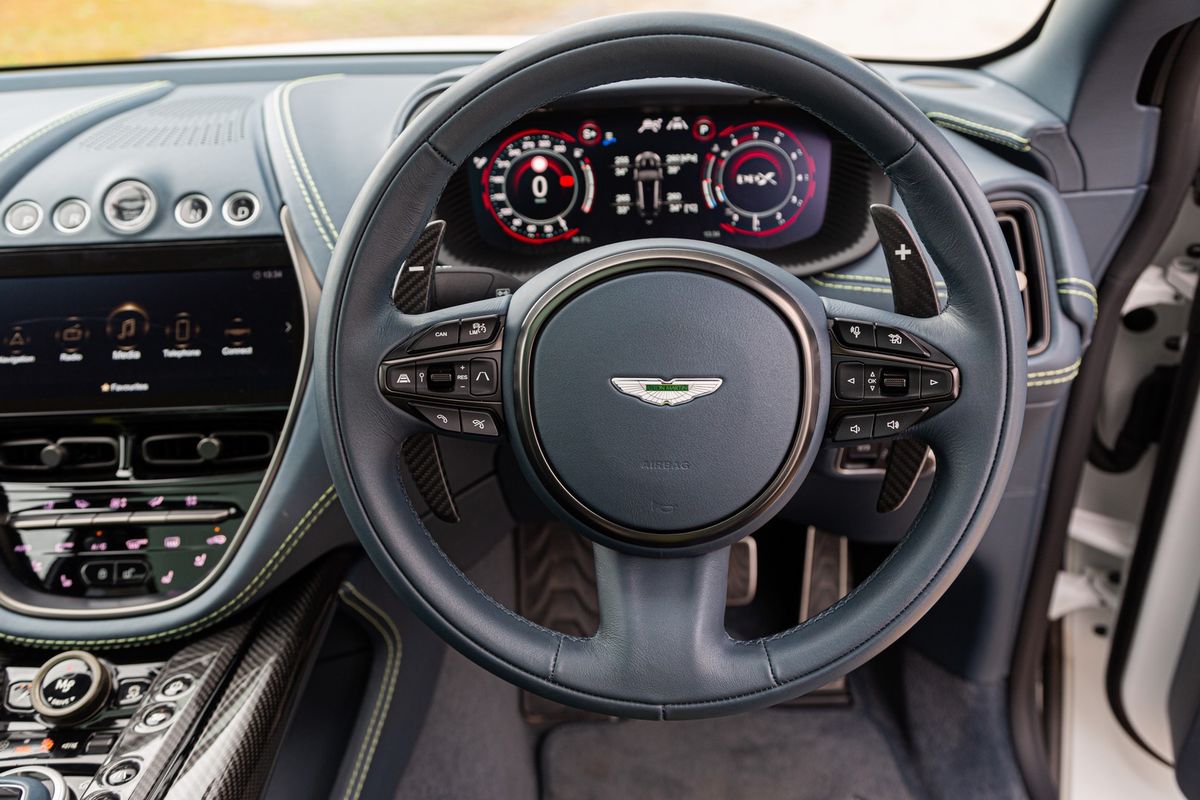
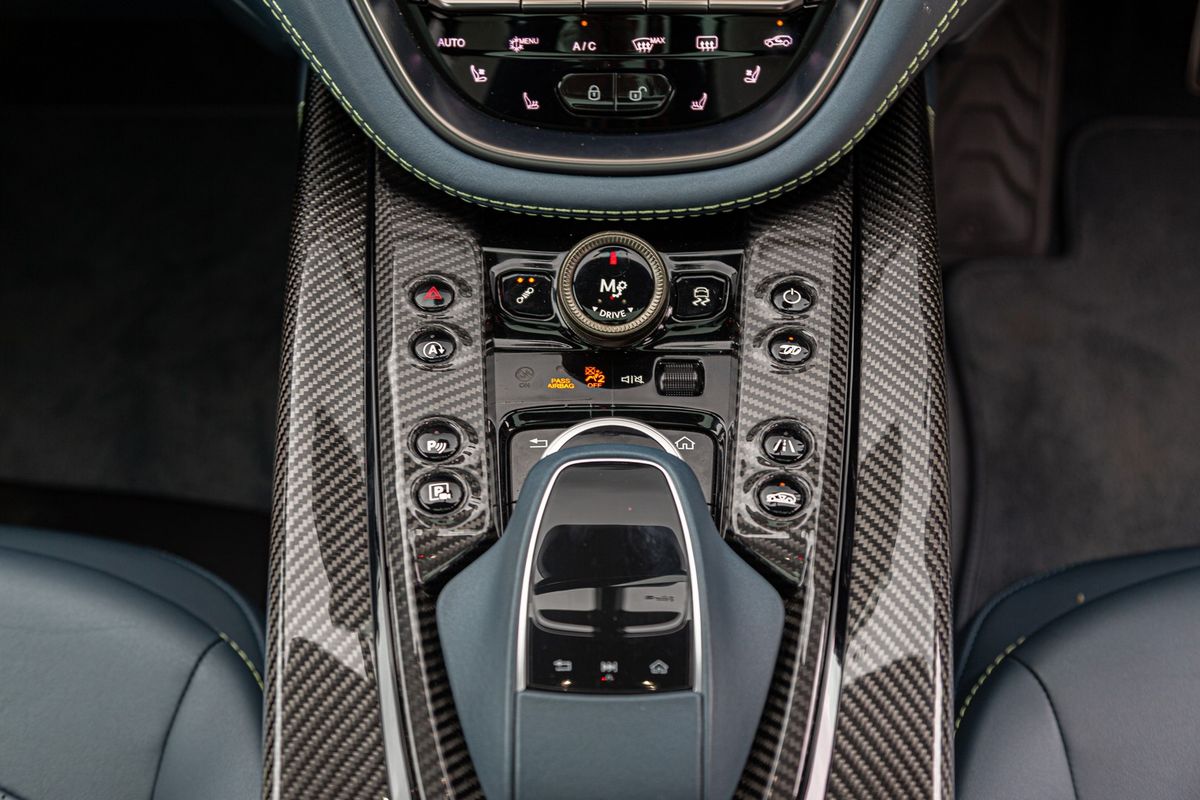
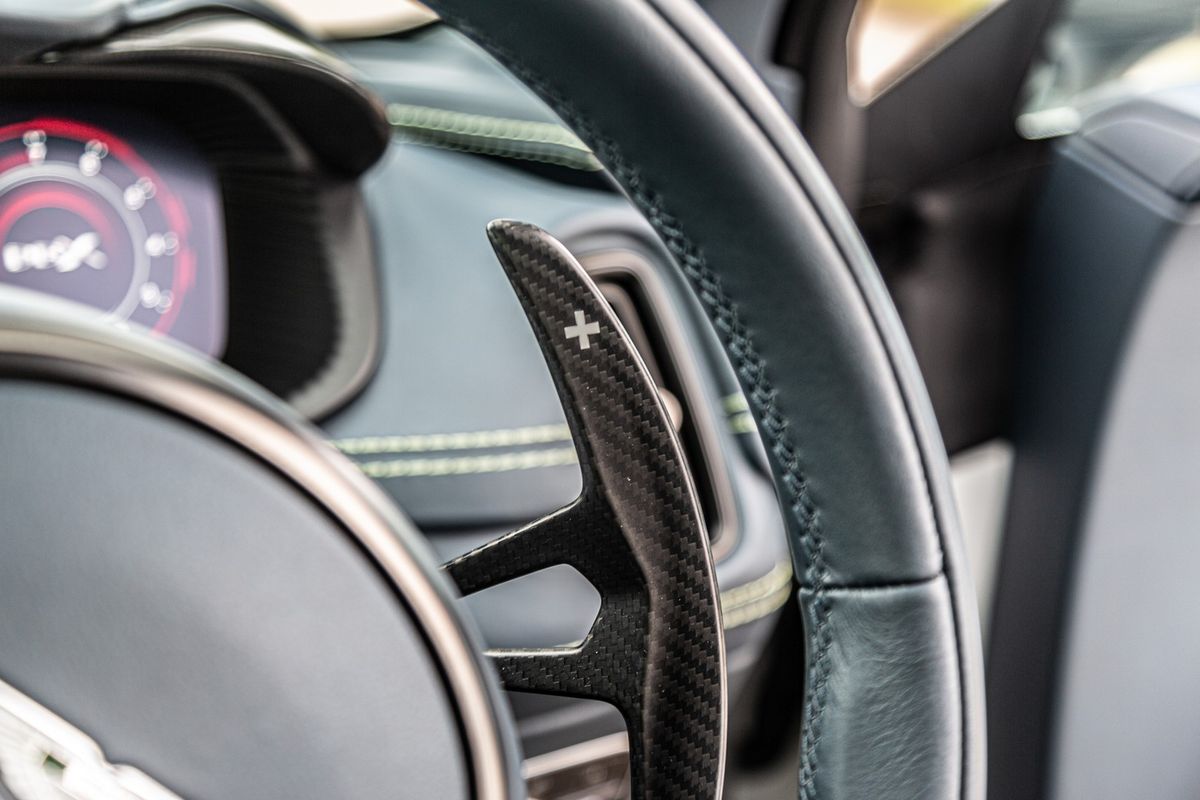
A carbon fibre shift paddle of the AMG-sourced 9-speed automatic transmission. These have a lovely tactile action and feel.
A wet-clutch 9-speed automatic transmission (also sourced from Mercedes-AMG) shuffles all that twist to all 4 of the DBX707’s wheels; in fact, Aston Martin says the SUV can apportion 100% of its torque to the rear axle if needed. Performance? The 0-100 kph sprint is claimed to be smashed in 3.3 sec and the Aston will run to a top speed of 310 kph.
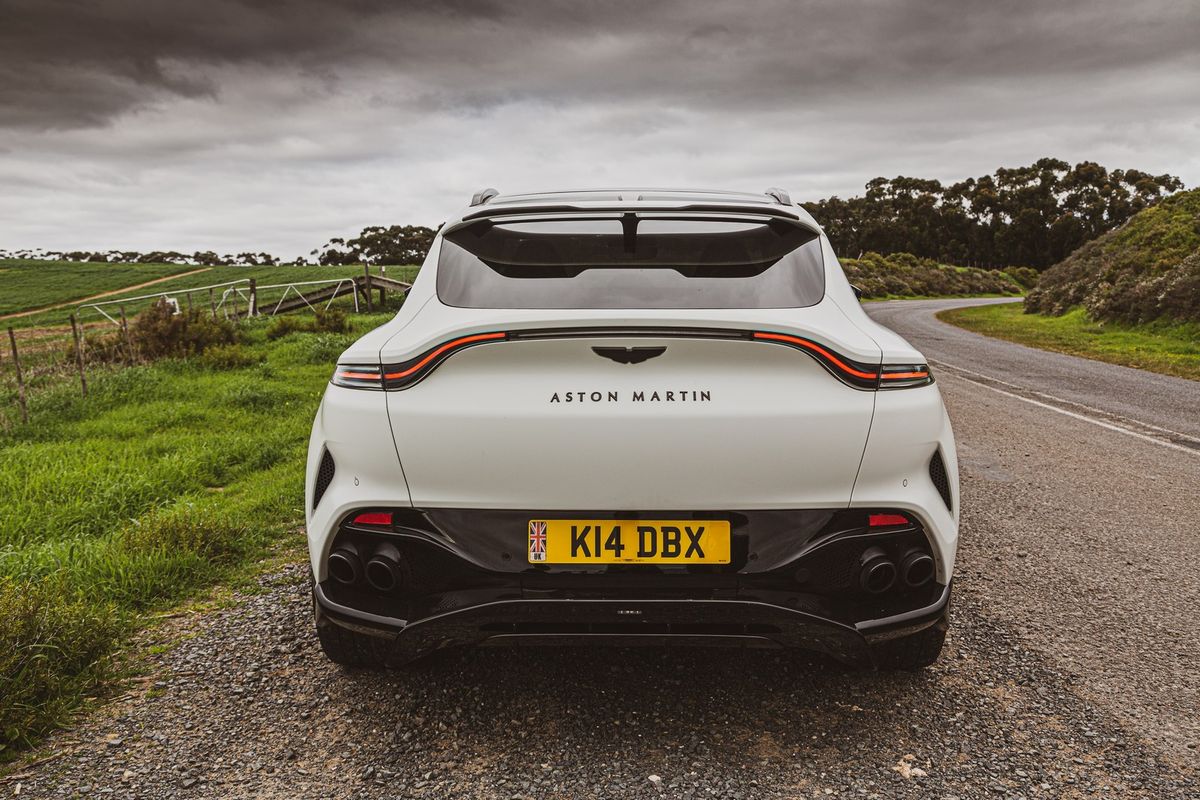
Make no mistake: this is not merely a DBX with a more powerful engine – the entire package has been improved substantially. For example, a launch control function has been added, upgrades have been applied to the aerodynamics (note the fitment of a huge diffuser), braking and suspension, while the gear ratios have been shortened and the chassis dynamics retuned.
What’s it like to drive?
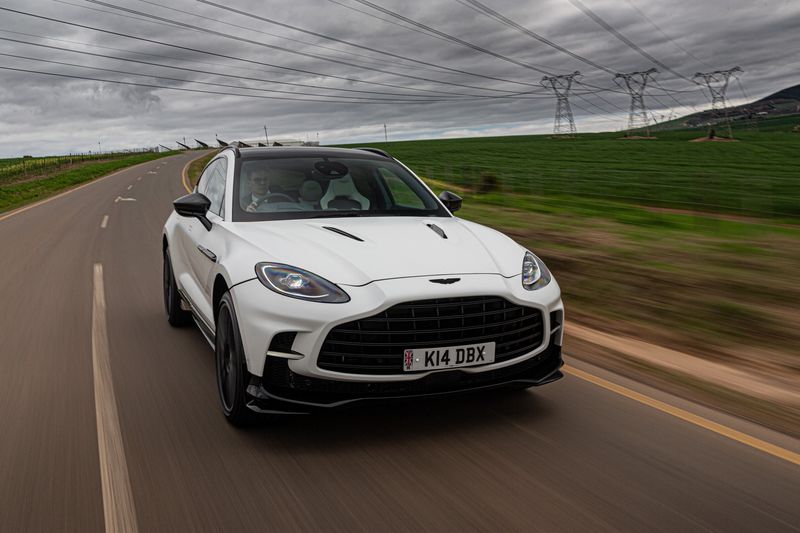
Eye-opening and outrageous pace is the order of the day in the DBX707
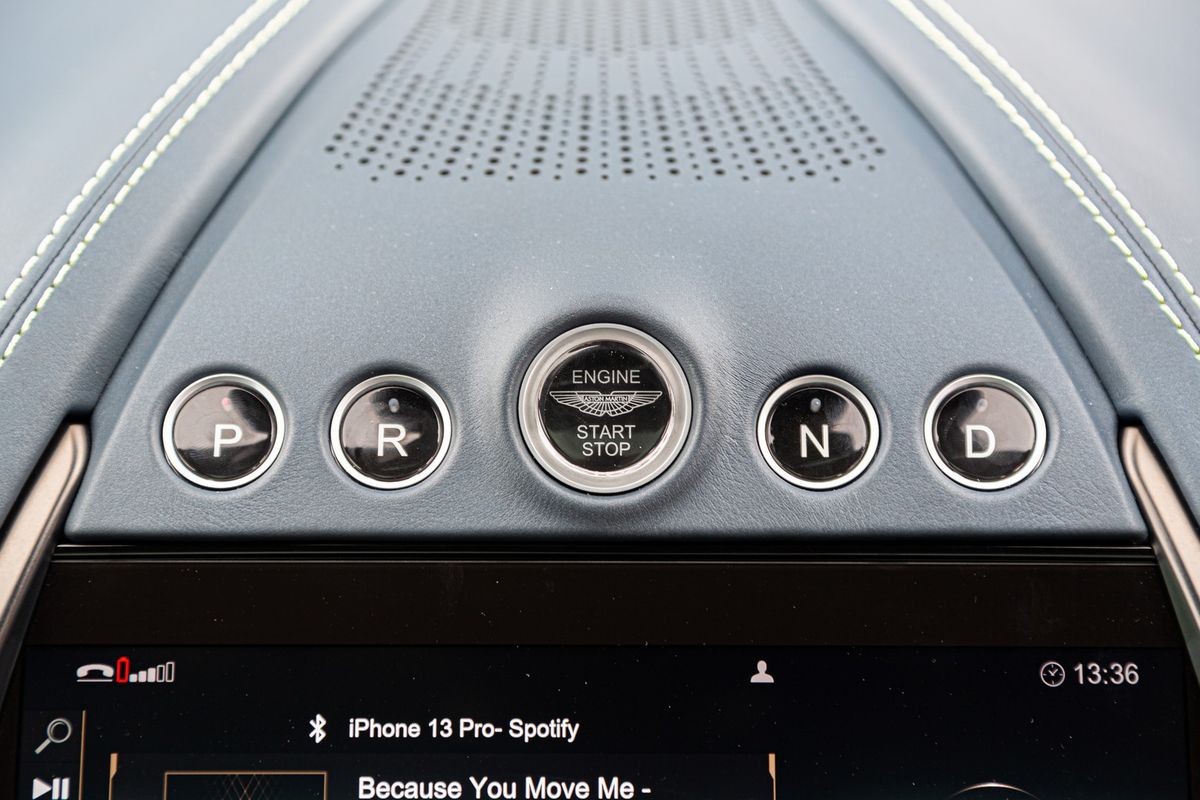
Once the photoshoot was finished, it was time to drive the Aston. When you push the start button in the middle of the fascia, the engine will fire up but, if you pull one of the gearshift paddles at the same time, everyone in your vicinity will know you’ve started one muscular motor.
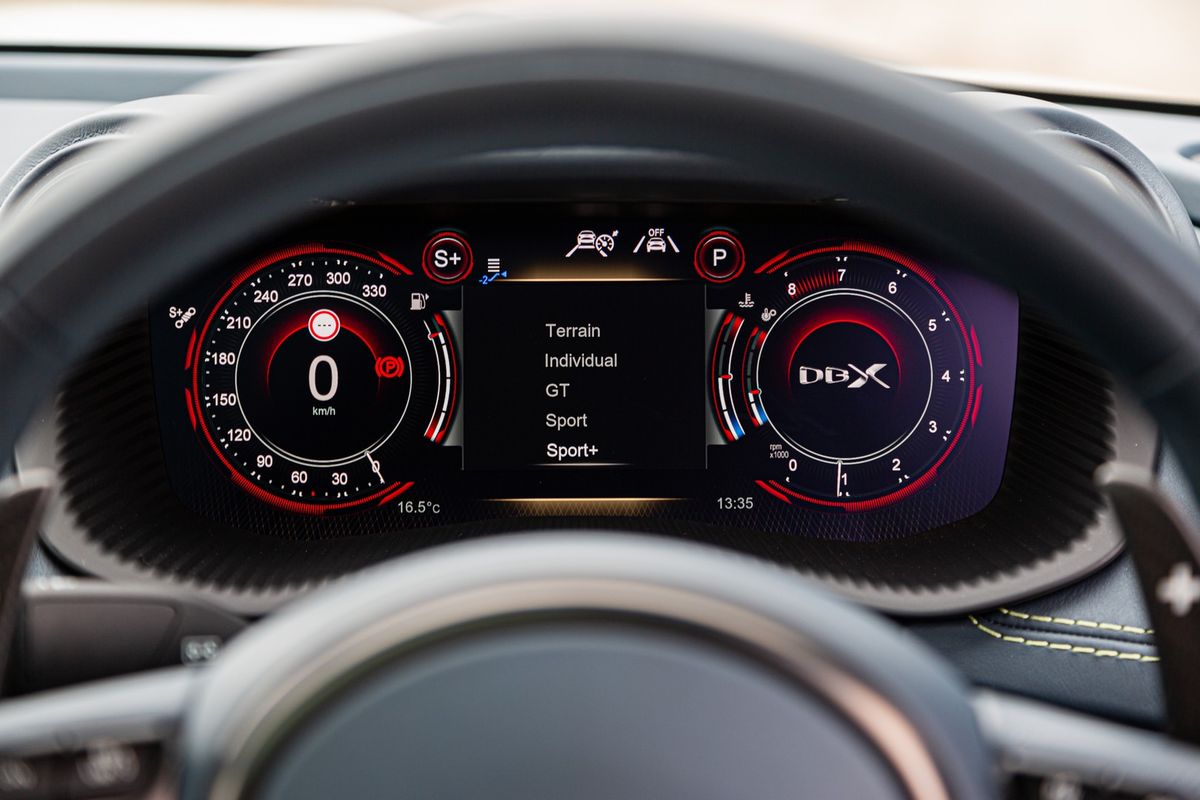
First things first… the obligatory acceleration test. Once the DBX707’s sportiest drive mode has been engaged, all you need to do to illuminate the launch control icon on the Aston’s digital instrument cluster is plant your left foot on the brake pedal and do the same with your right foot on the accelerator pedal. Then comes the call: “Go when you’re ready”.
Well, I was never ready for that ballistic take-off! With all four 23-inch tyres providing grip, the DBX707 doesn’t hesitate for a split second; it launches off the line like a bolt of lightning and positively spears towards the horizon. That claim of 3.3 sec for the 0-to-100-kph dash feels quite accurate and, for something that tips the scales at 2.2 tonnes, the DBX707 its blindingly fast. The noise emanating from the V8 motor is something else too.
Does it all turn into jelly when the Aston Martin’s made to corner at heady velocities? No, the DBX707 may weigh 2.2 tonnes and yes, many other overpowered SUV behemoths feel imprecise and overwhelmed by their sheer bulk when tasked to perform dynamically…
Yet the DBX707 hides its weight remarkably well – just imagine you’re in a high-riding hatchback. Of course if you’re careless, you’re reminded of the inescapable laws of physics, but this wasn’t something I was keen to explore in depth, given this car’s R5-million price tag and the fact that Aston Martin would not be pleased to hear that its test unit had been binned.
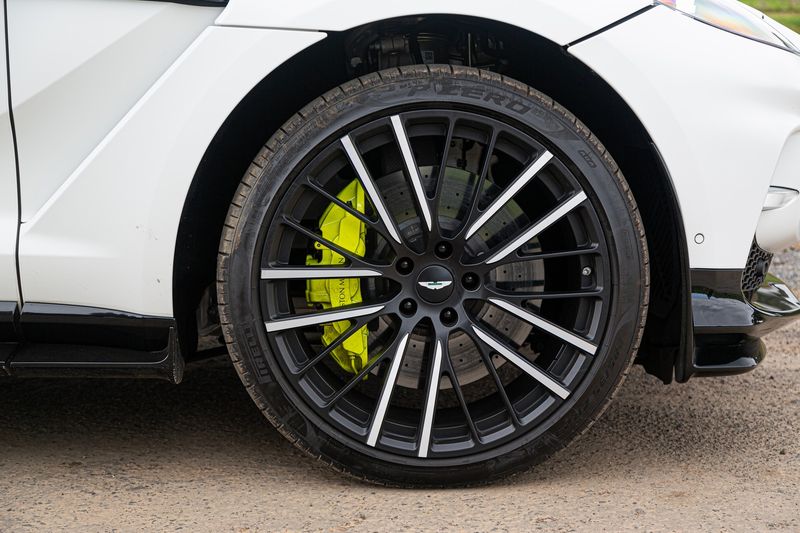
The ceramic brakes offer mega stopping power.
The secret to the Aston Martin’s corner-carving talents lies in its clever active anti-roll bars, which work non-stop, irrespective of speed and the drive mode you’ve selected. By keeping body roll in check, the vehicle can corner with a rather flat, almost sportscar-like, attitude.
With its Sports+ and manual gearshift modes engaged, the DBX707 proved remarkably responsive to driver inputs – for what it is, it darted into (and exited) corners with almost effortless agility. Despite being fitted with gargantuan (23-inch) wheels, the ride quality was even tempered, which we attribute to the tweaked chassis and 3-chamber air suspension.
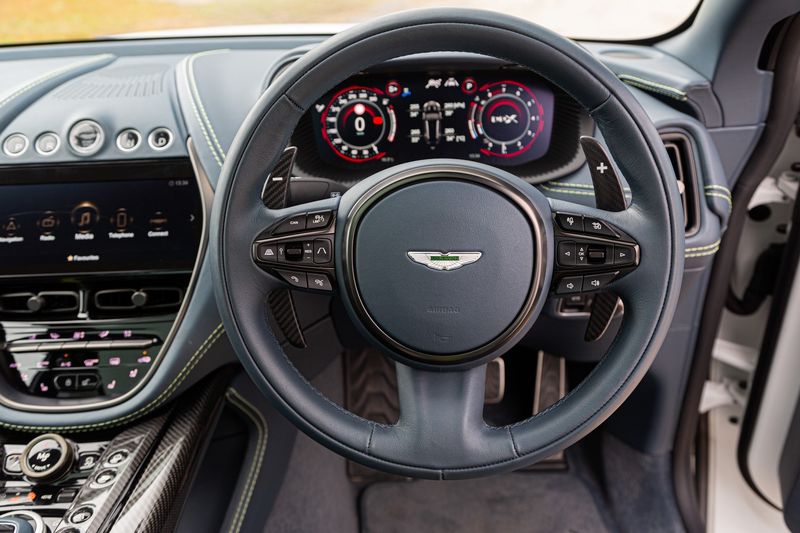
An upmarket cabin is expected at this price point and the DBX707 delivers.
Depending on which drive mode you’ve selected, the car can raise and lower its ride height automatically. Braking power is immense, courtesy of the monstrous ceramic discs on duty, and the steering is as direct and well-weighted as you’d expect of an Aston Martin product.
When its default GT mode is engaged, the DBX707 is a crushingly capable open-road cruiser. Overtaking is effortless, with most of the 900 Nm just a flex of your right foot away, but there is a smidgeon of turbo lag, which is to be expected, given the size of the blowers.
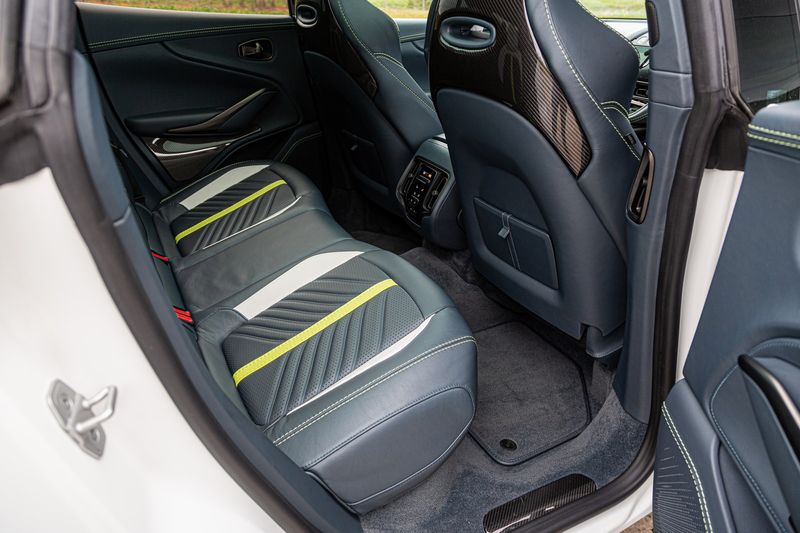
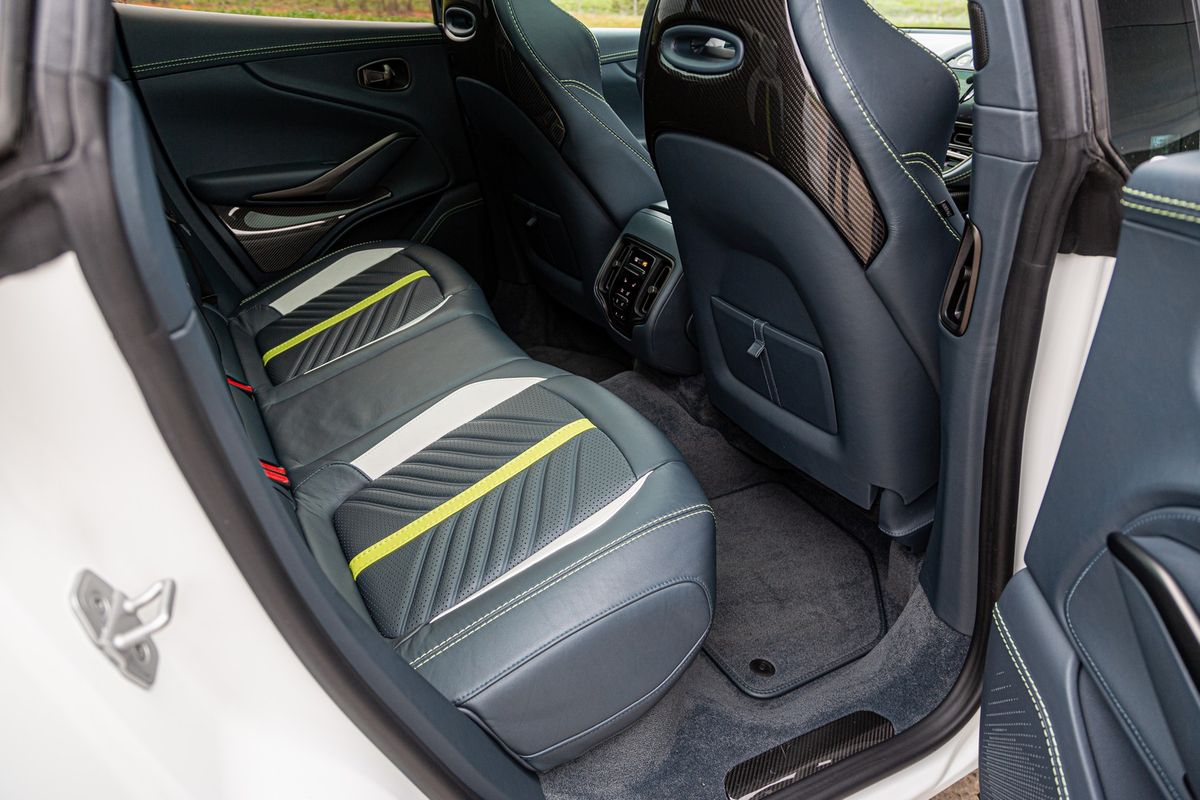
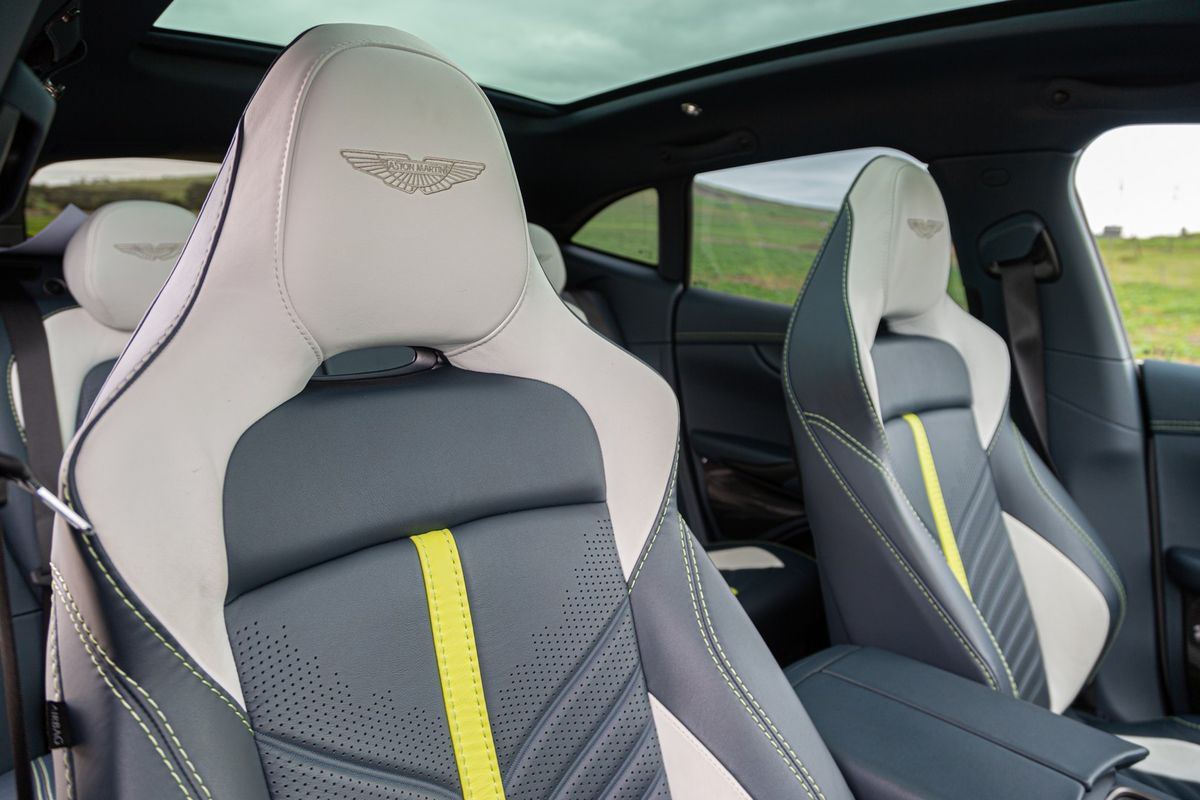
The DBX707 cabin is spacious and luxurious. Four adults in here with ease.
But can it “do family stuff” like any good SUV? Yes! Absolutely. Rear space is adequate for two tall adults and the load bay will easily swallow two sets of golf clubs. The cabin, with its lavish swathes of leather and carbon fibre, feels and smells – upmarket. The front seats not only look gorgeous, but are very supportive and offer 16-way adjustability, plus heating.
The standard features list is comprehensive, but you can dive into the Q Collection (yes, the customisation division is named after a character in the James Bond films) and specify things like the Halo package, which incorporates green brake callipers, stripey seats and other items.
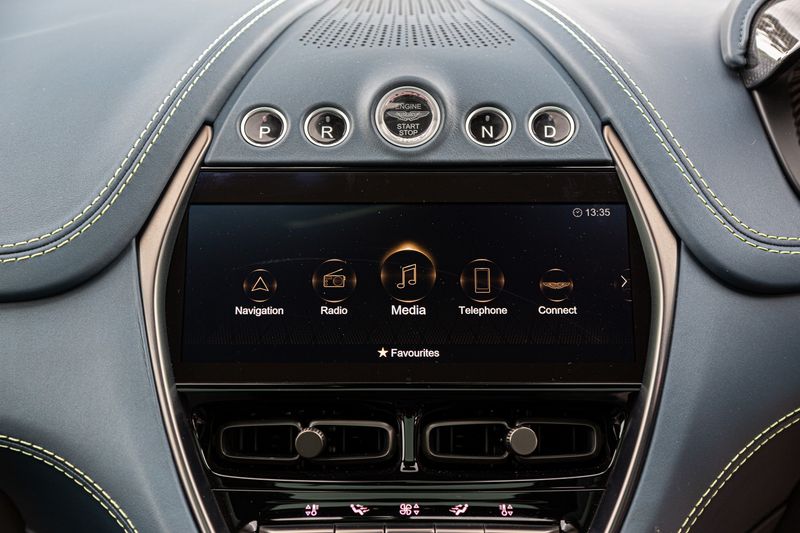
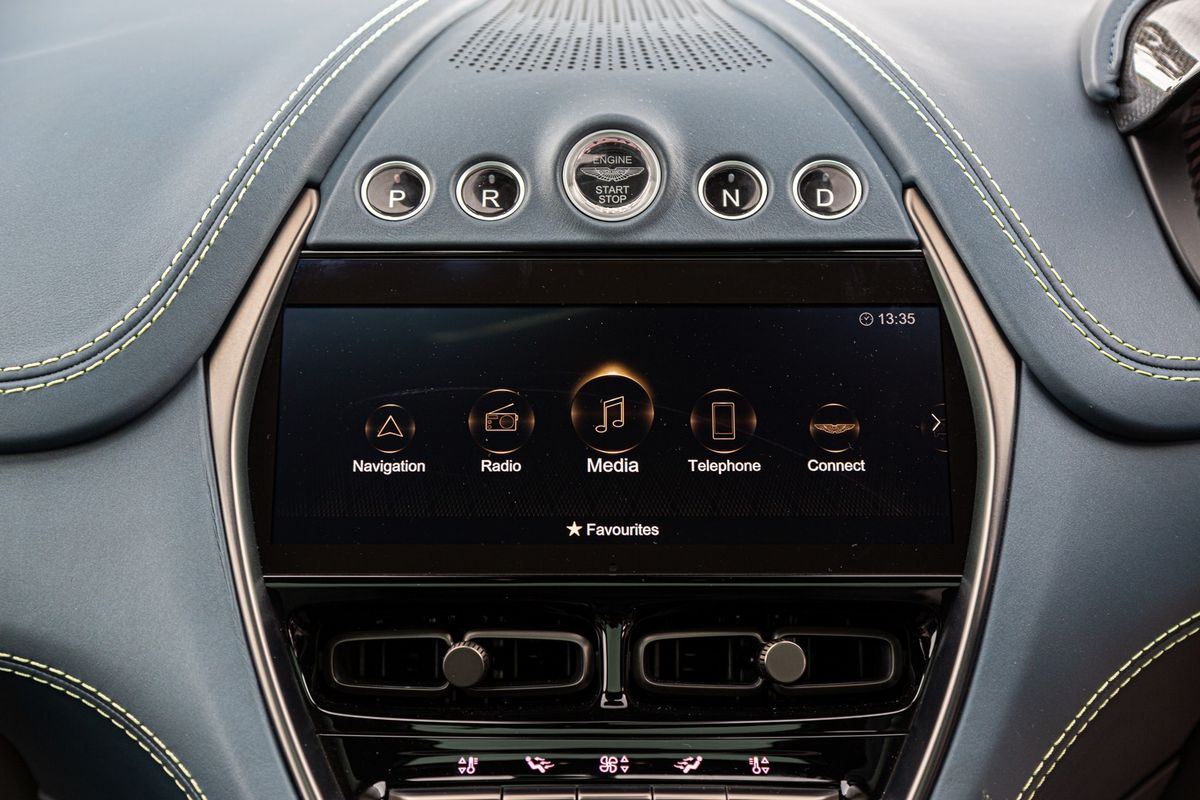
The infotainment system is functional, but no denying that its from a Mercedes-Benz.
Gripes? Well, the infotainment system is little more than a reskinned Mercedes-Benz unit, but that’s not a deal-breaker unless you’ve owned a string of Stuttgart’s products prior to taking delivery. Then there’s the pricing structure. With the standard DBX V8 coming in at R4.3 million and the DBX707 costing “just” R500k more, we can’t help but feel a tad sorry for those who bought the base version. This is the one to get, hands down.
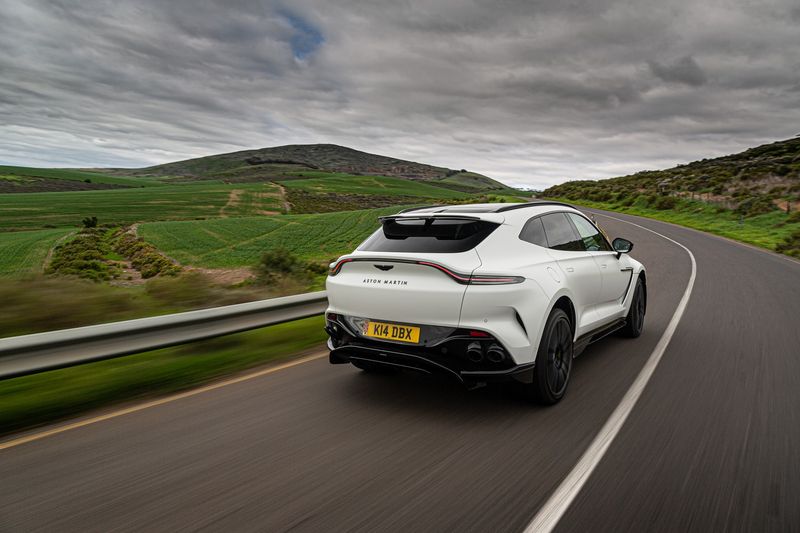
It’s fast and it drives extraordinarily well. We think Aston Martin has nailed it with the DBX707.
How much does the Aston Martin DBX707 cost in South Africa?
| Aston Martin DBX V8 | R4 300 000 |
| Aston Martin DBX707 | R4 800 000 |
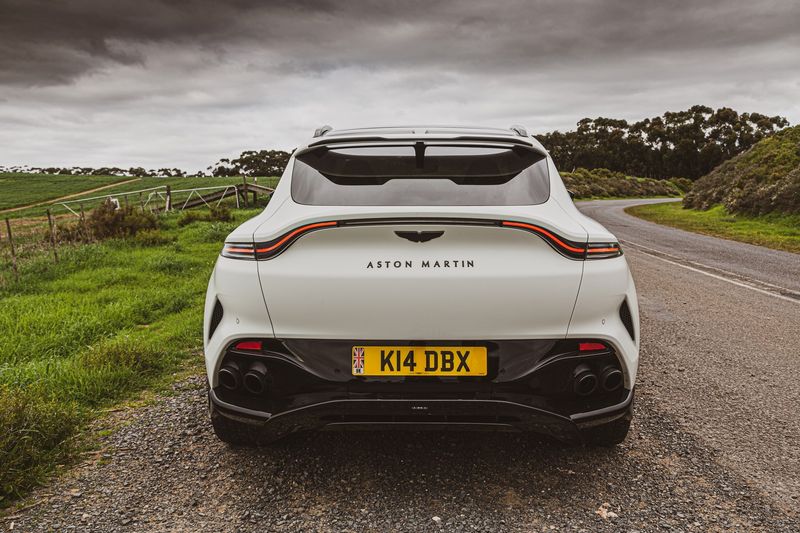
The view most road users will see, complete with quad exhausts and a rear diffuser
Summary
As far as speed dating goes, this was an eye-opening encounter with arguably one of the most entertaining super SUVs on sale. Rivals? Well, the duo from the Volkswagen Group (in the forms of the Urus and the Porsche Cayenne Turbo GT) offer similar performance for a bit less money and it would be rude to forget the most powerful Bentley Bentayga – the Speed.
However, the biggest drawcard of an Aston Martin is the fact that it is an Aston Martin. There’s something alluring and oh-so-classy about the quintessentially British brand, and the DBX707 represents an excellent product that delivers superb driving thrills and in-car luxury in abundance. If it takes a performance SUV to keep Aston Martin afloat, then we’re all for it.