Pricing for the all-electric BMW iX3 SUV has been announced ahead of the vehicle launching in SA. Here’s how much you can expect to pay for it.
The locally-built BMW X3 has been quite the success story for the Bavarian carmaker, but as European brands start transitioning to electrification, it was only a matter of time before mainstream electric models came to our shores. We’re not talking about uniquely styled anomalies like the i3 and i8, which have their place, of course, but rather your run-of-the-mill family SUVs that have swapped out a petrol/diesel motor for an electric powertrain.
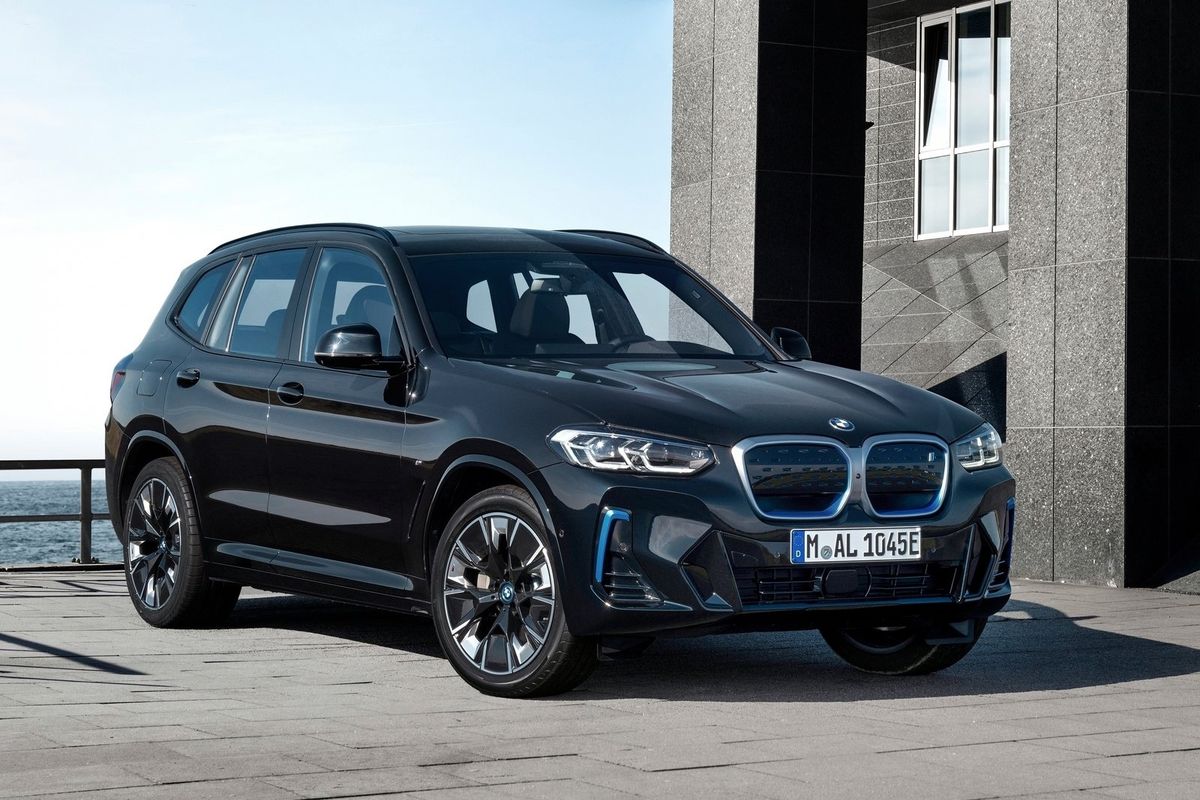
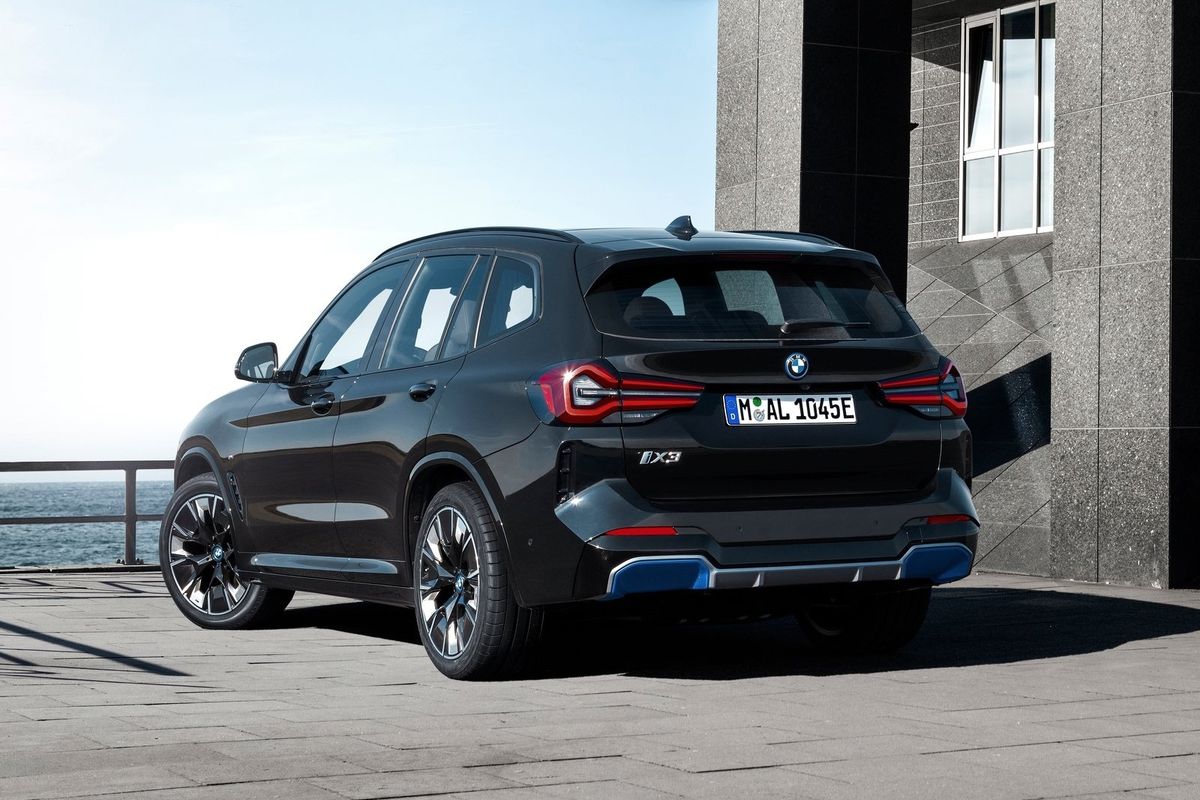
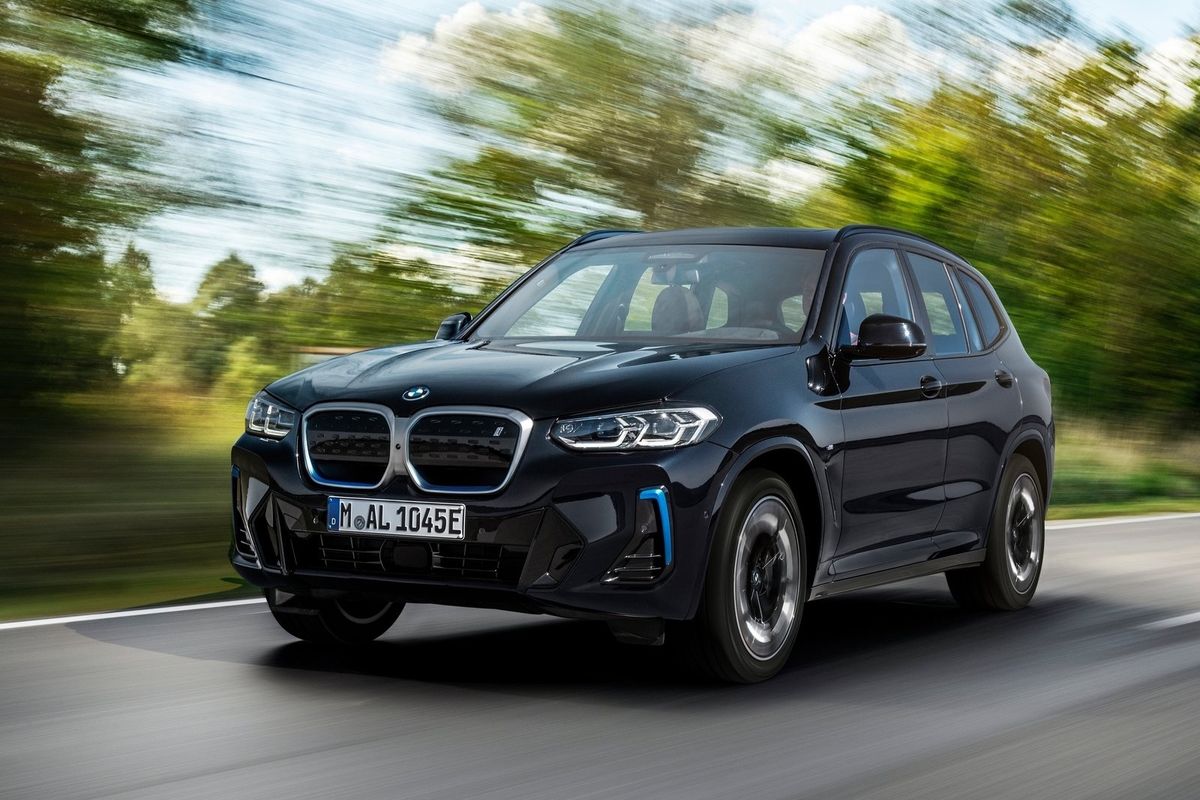
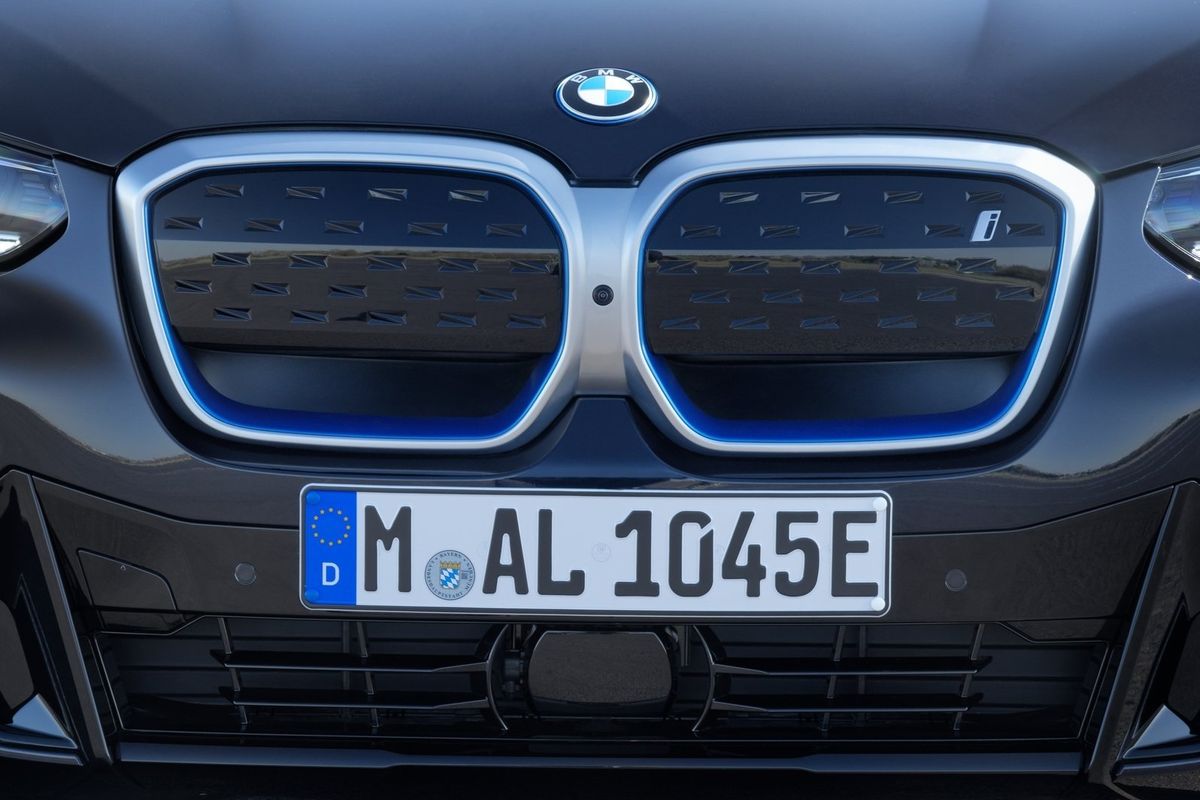
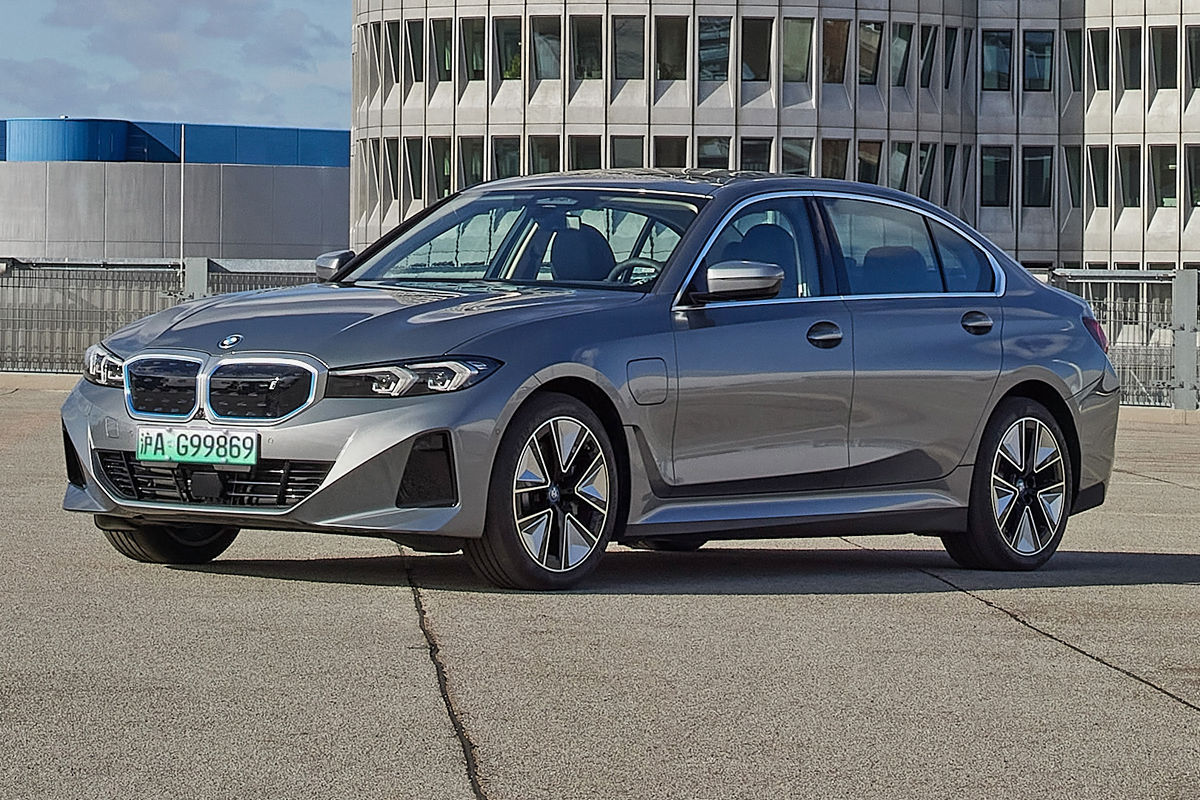
What you see here looks like your normal BMW X3, but it’s actually the all-new and all-electric BMW iX3. Subtle styling touches like the closed grille, aerodynamic wheels and discrete iX3 badging let you know this is the electric version.
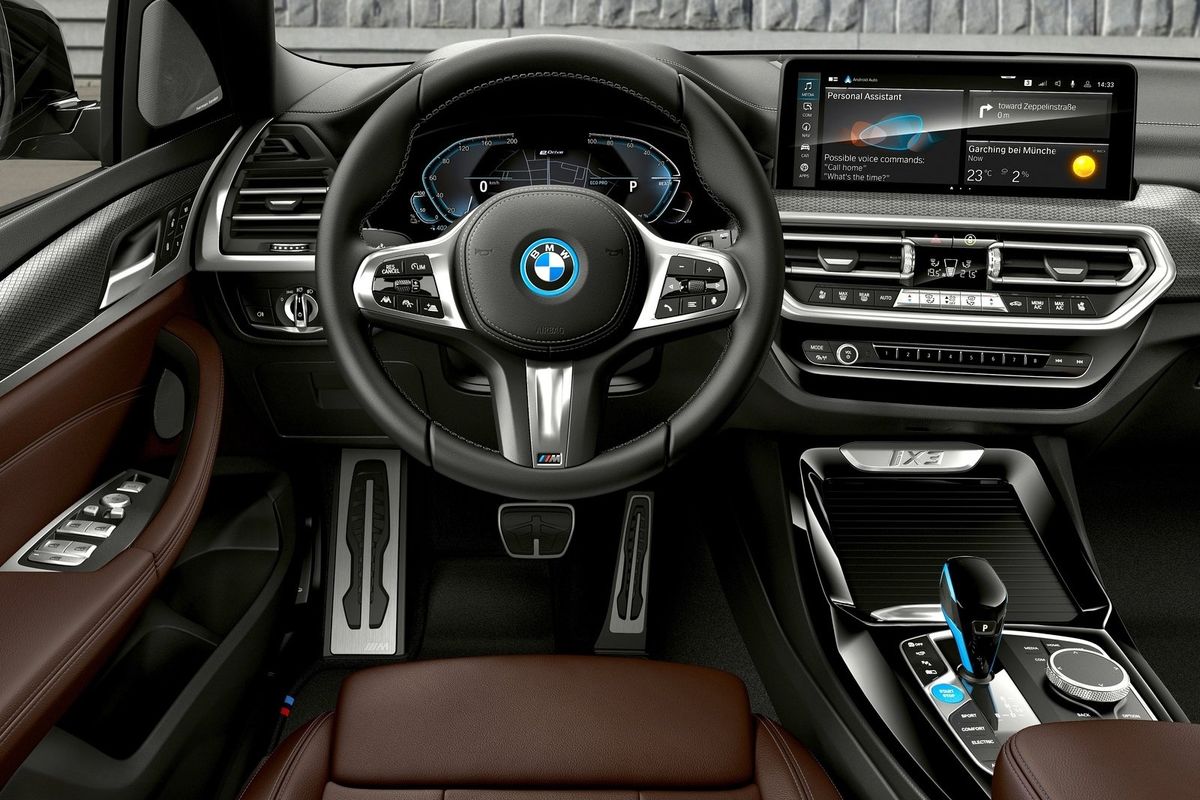
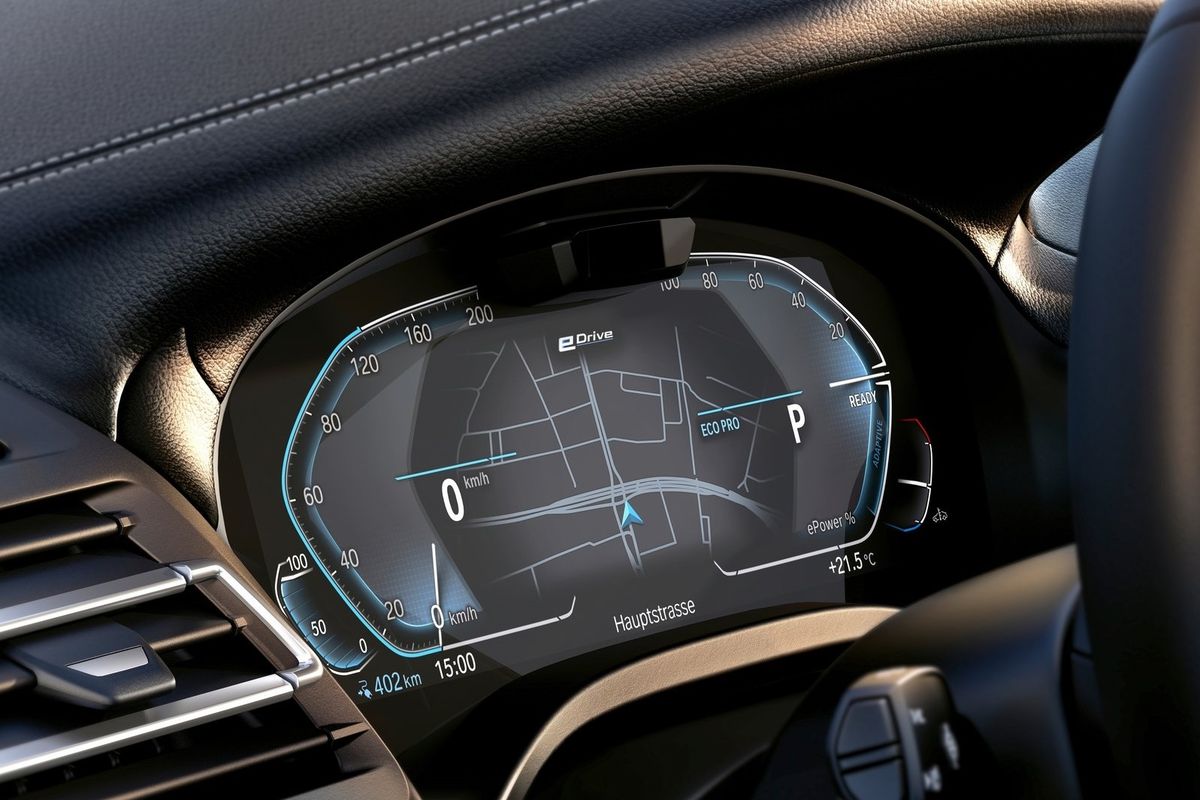
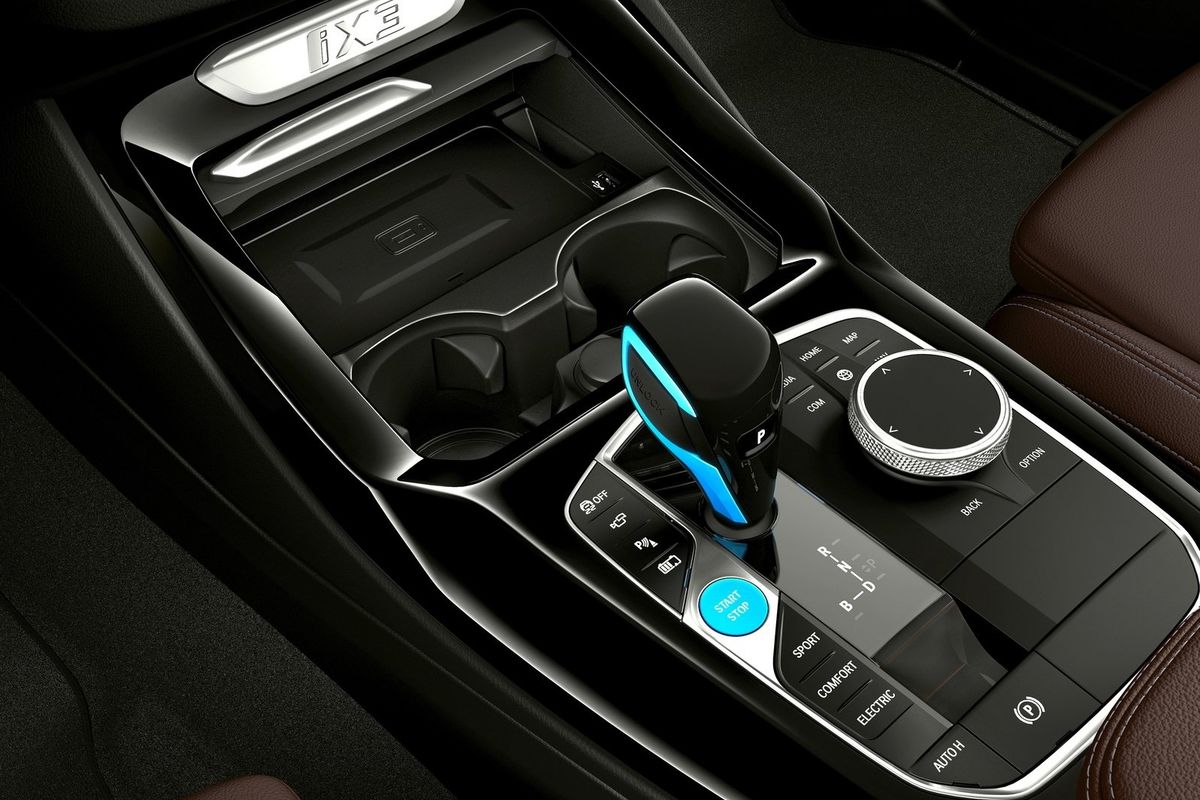
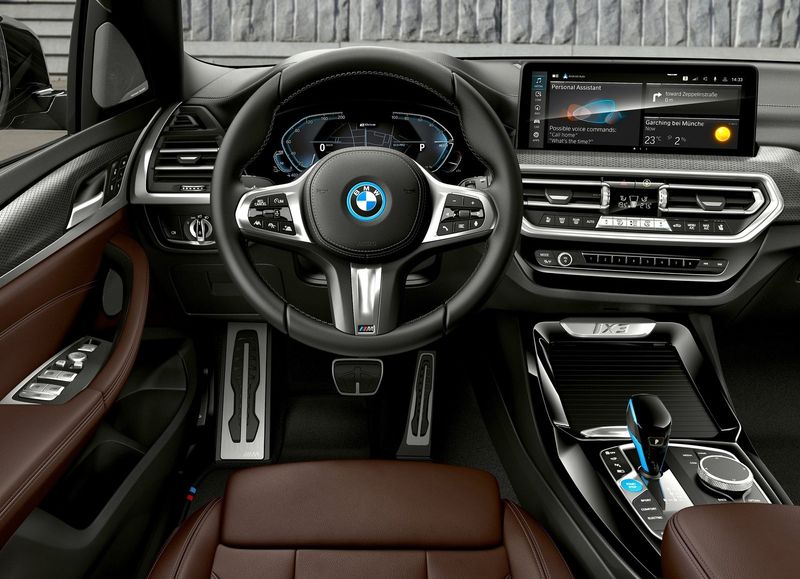
Inside, the cabin gets unique styling touches like a blue start/stop button and blue detailing on the gear selector.
Powering the 2022 BMW iX3 is an electric motor that’s packaged with the gearbox and electronics in one single housing. Outputs are rated at 210 kW and 400 Nm, and BMW says its updated iX3 is good for a 0-100 kph of just 6.8 seconds and a top speed of 180 kph.
Power consumption is said to be 18.9 – 21.6 kWh/100 km and the vehicle has a range of 440-505 km based on the WLTP cycle, thanks to an 80 kWh battery. Fast-charging is available and a 10-minute charge from a 150 kW charger will give you around 100 km of range.
At this stage, specification details are not yet available, but we can see from the BMW SA price list that the model sold in our market will come with an M Sport kit. We’ll update our story when we receive the specs from BMW SA, but given its pricing, we expect it to come fully loaded with BMW Head-Up Display and Harman Kardon Surround Sound System to name but a few.
Although the Peugeot Landtrek double cab is unlikely to win over Toyota Hilux and Ford Ranger loyalists, it does pose a notable threat to other bakkies, including the popular GWM P-Series. Does the newcomer offer the right mix of style, performance, practicality and value? Gero Lilleike takes a closer look at Peugeot’s new Chinese-built double-cab contender…
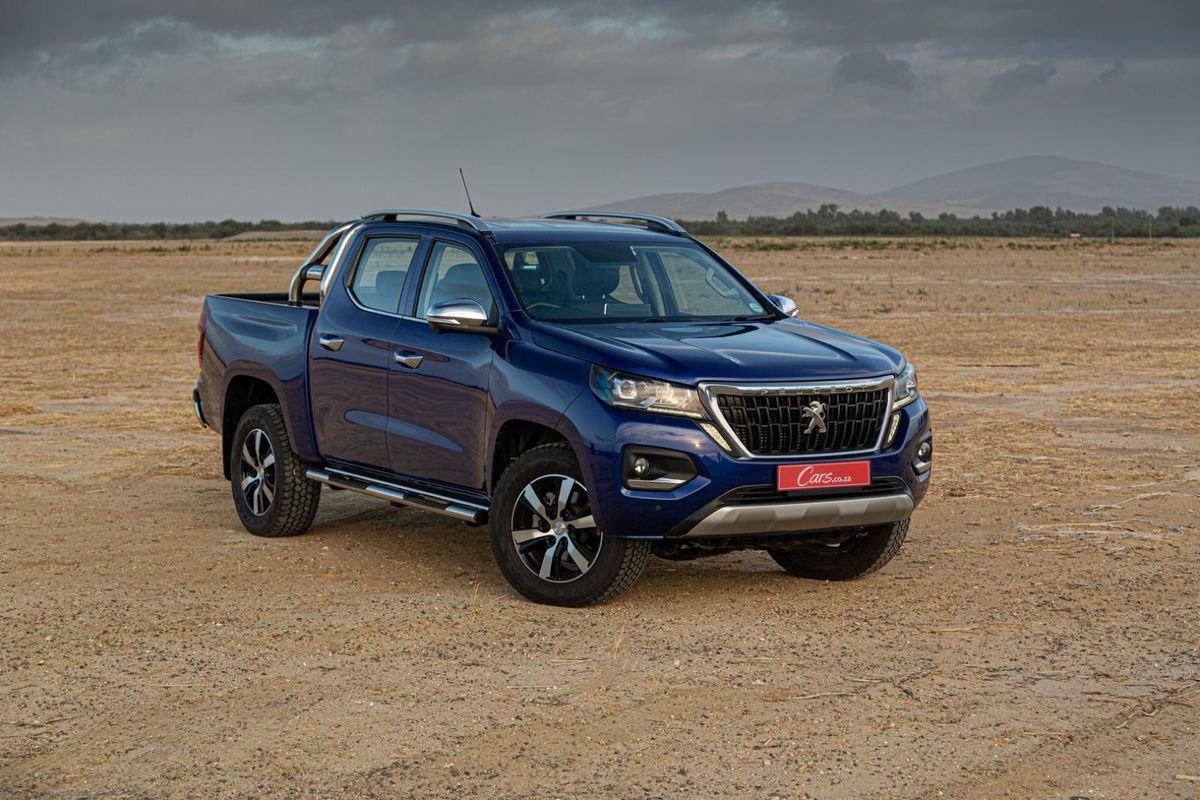
The Landtrek is a Chinese-built bakkie that takes design cues from Peugeot’s passenger-car range.
Peugeot hasn’t produced a bakkie before, has it? Yes, it has – and not just one. Some of you may be surprised to learn that the Landtrek is not Peugeot’s first foray into the pick-up market. In fact, Peugeot has an extensive bakkie legacy that stretches back as far as 1938 – anoraks might remember the 202, 403, 404 and 504 bakkies that served as workhorses throughout Africa.
The modern Landtrek double-cab bakkie, however, has Chinese underpinnings. This stems from a joint venture between Peugeot and Changan Automobile, which gave rise to a brand known as Kaicene. The Peugeot Landtrek is effectively a rebadged version of the China-only Kaicene F70 bakkie, but importantly, it incorporates a generous dollop of the selfsame design flair that has made the French brand’s passenger cars so appealing.
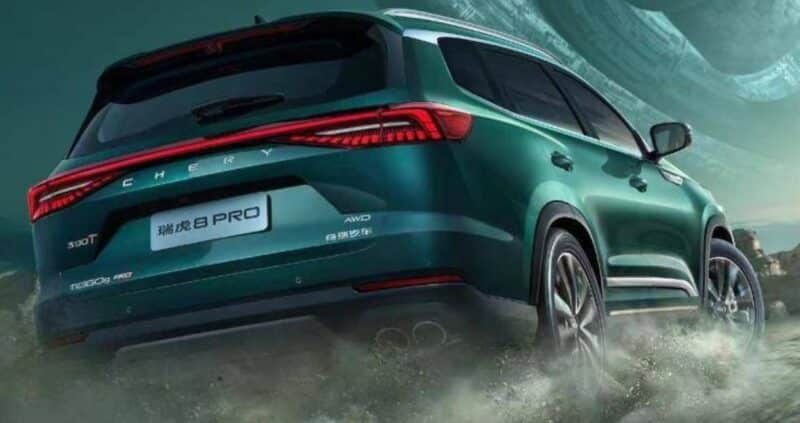
Chinese-built passenger vehicles have come a long way since they were introduced in the South African market in the mid-2000s. As we have witnessed in recent years, offerings such as the GWM P-Series, Haval’s Jolion and H6 and more recently, Chery’s Tiggo 4 Pro and 8 Pro SUVs, are proving that Chinese brands and their products are now either on par with – or even better than – some of their rivals from Europe, the US, Japan and Korea.
The Landtrek enters a hugely competitive segment in South Africa, where the Toyota Hilux and Ford Ranger (of which a new model is expected in a few months’ time) grab the, um, lion’s share of sales. Peugeot, therefore, has the unenviable task of convincing brand-loyal (or, to put it another way, risk-averse) buyers to spend their money on a largely unproven French-badged Chinese bakkie. Does the Landtrek have what it takes to achieve the “unthinkable”? Let’s find out!
How it performs in terms of…
Kerb Appeal
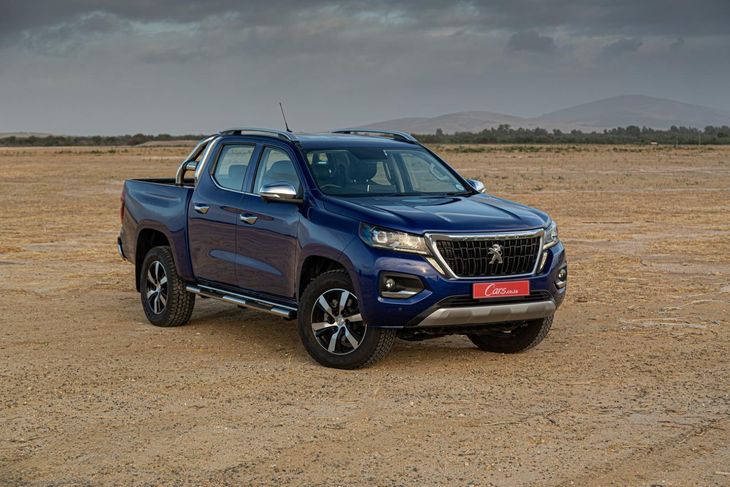
The Landtrek has a muscular stance and buyers can enhance the look with a range of optional accessories.
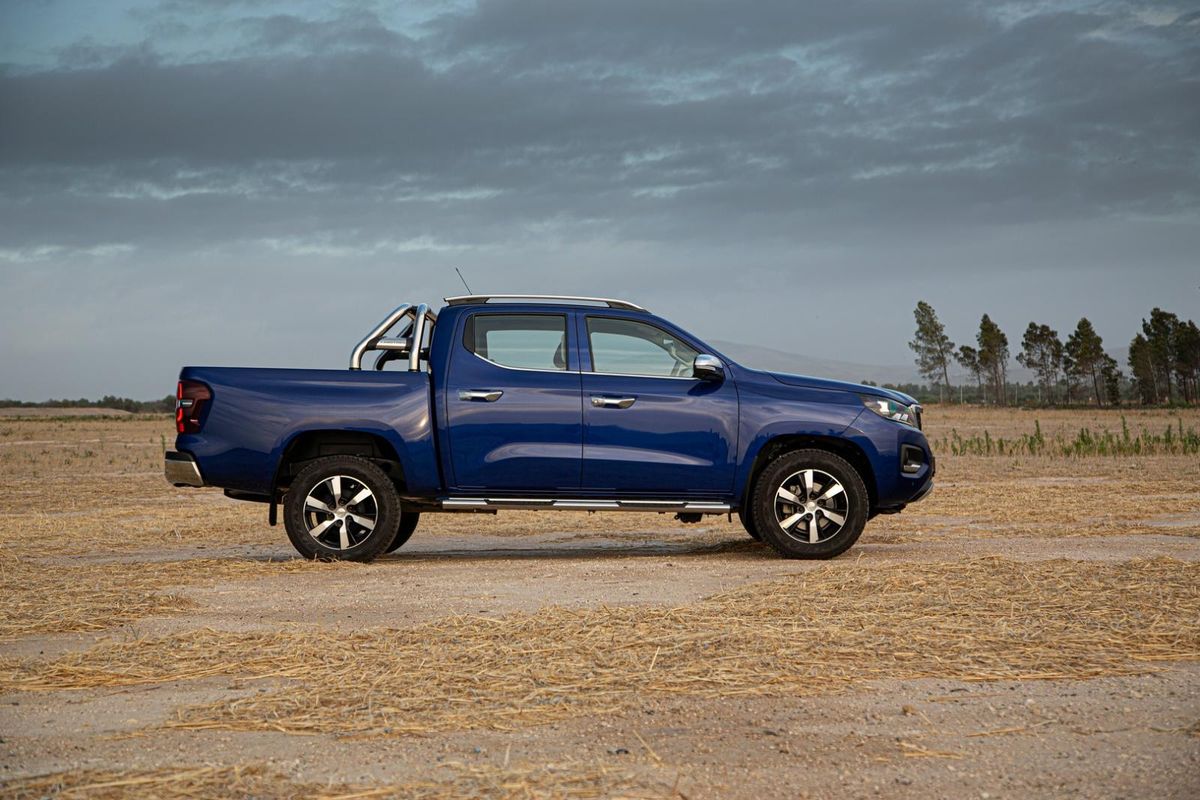
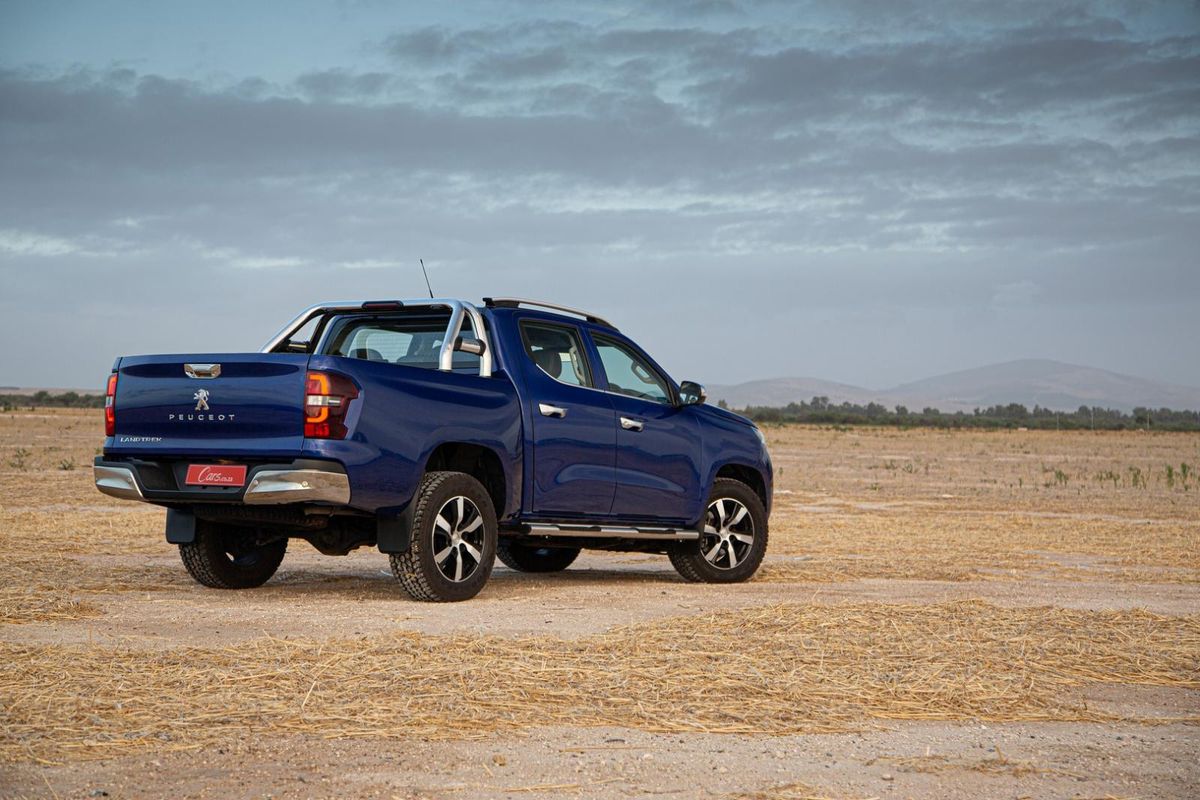
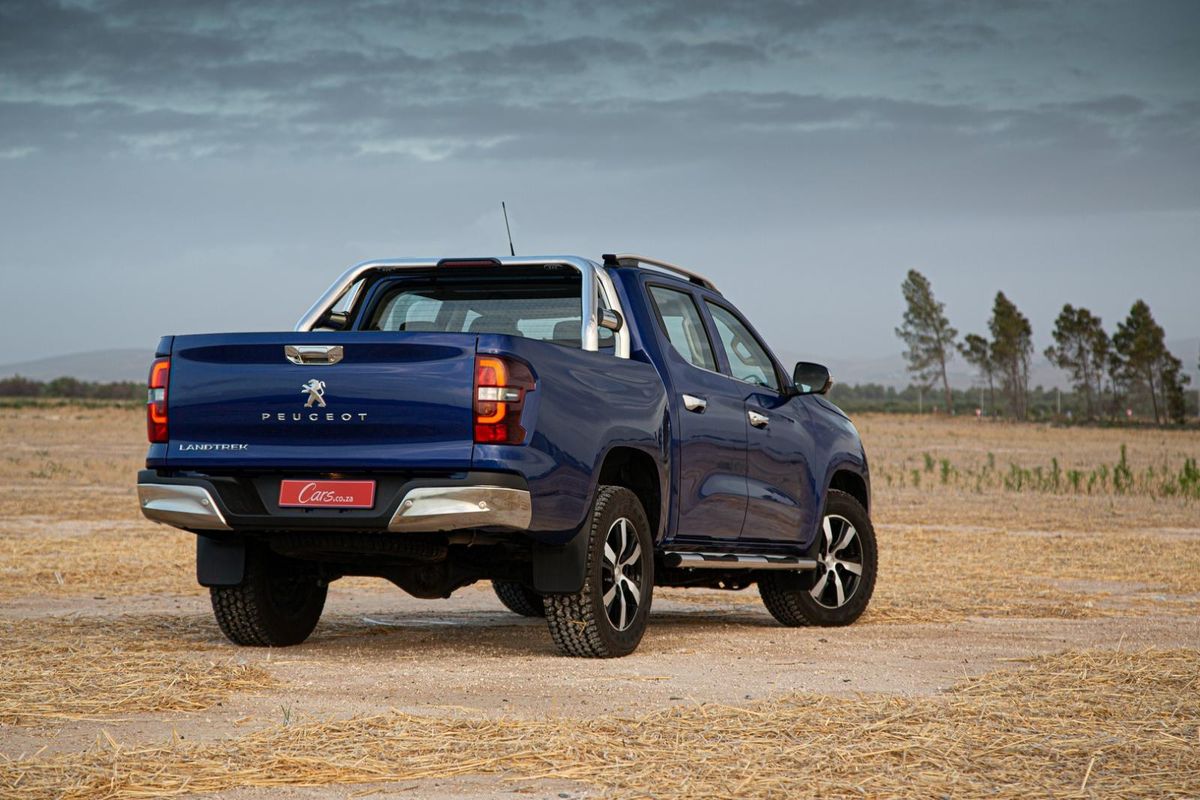
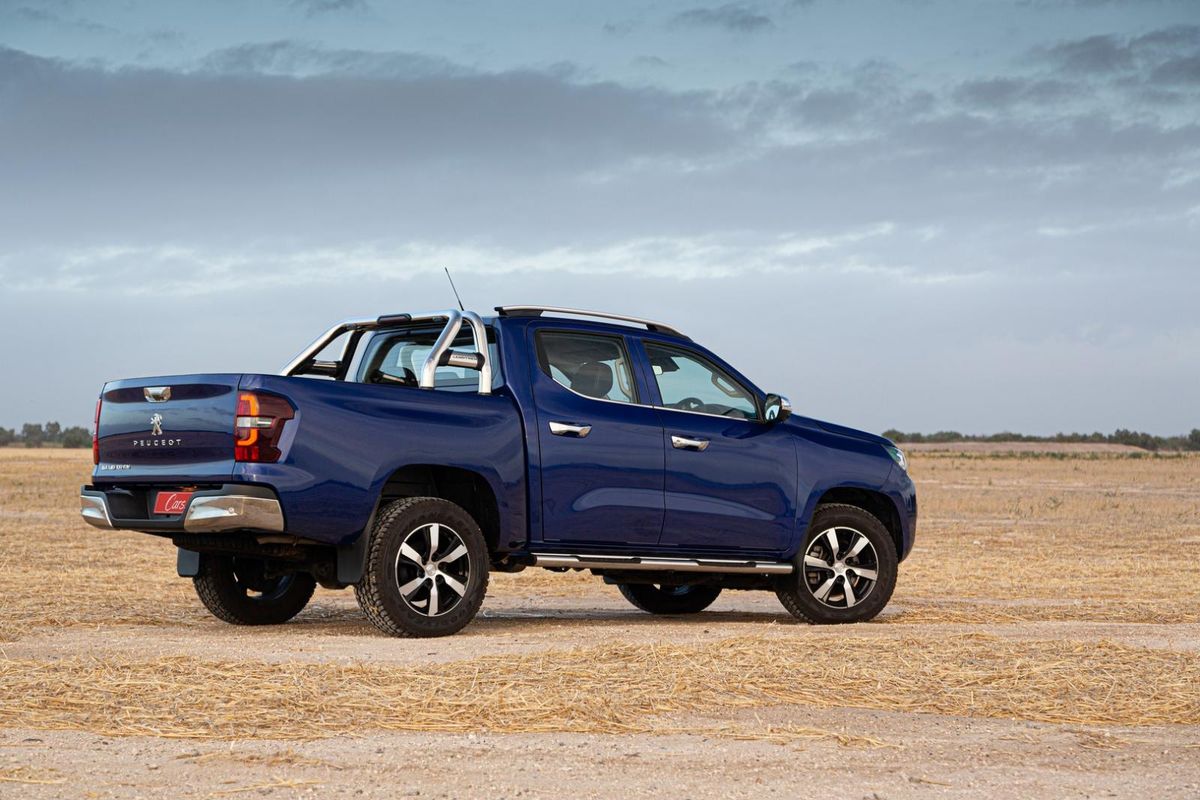
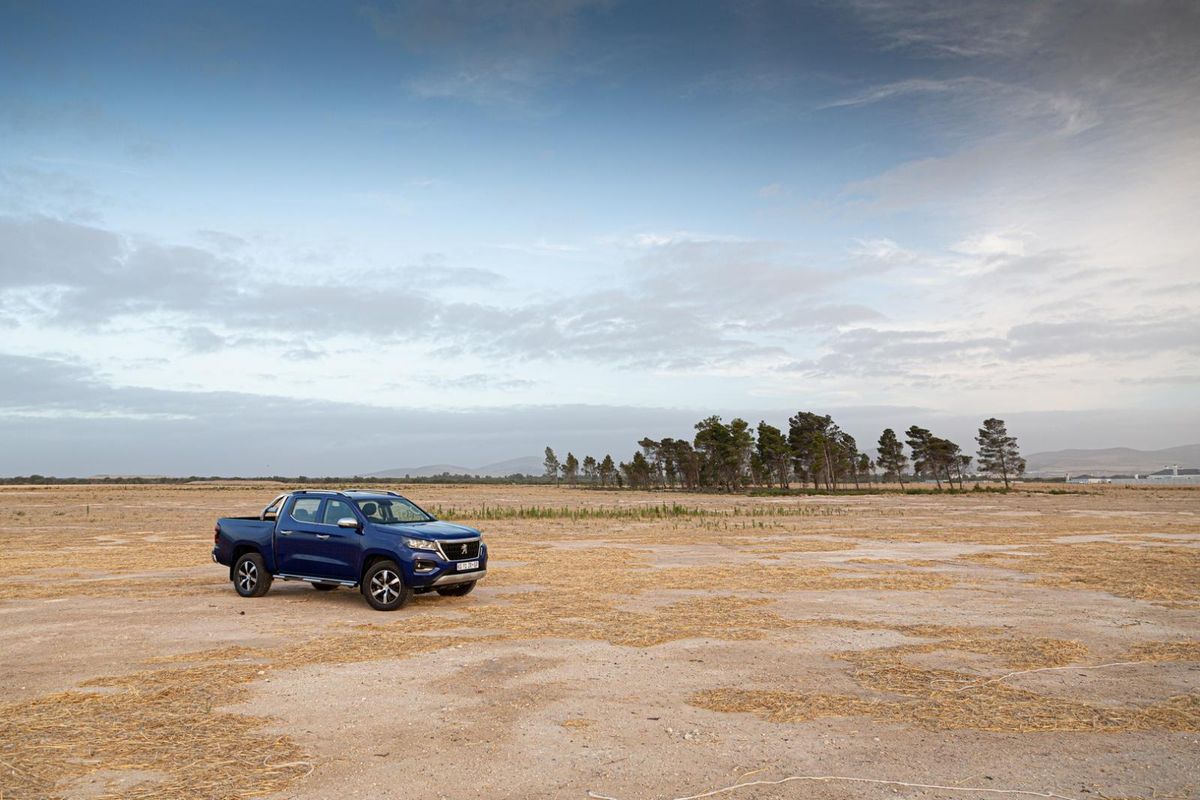
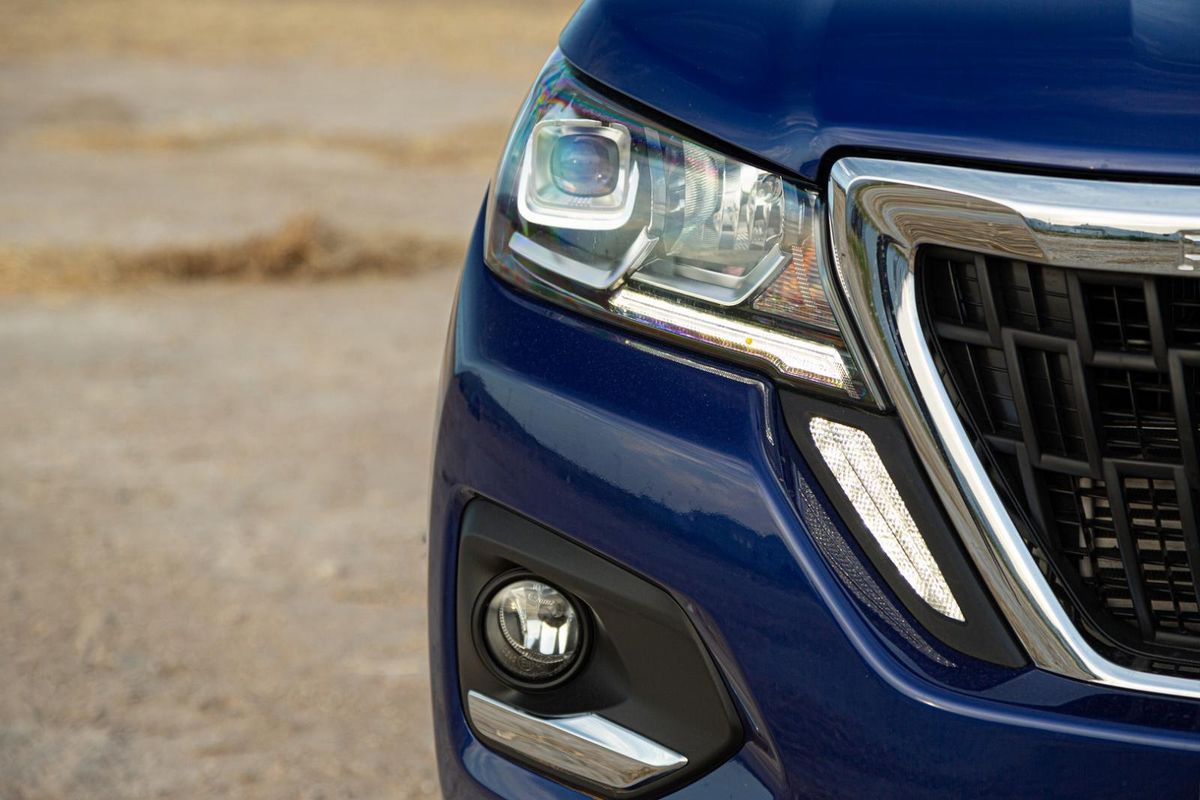
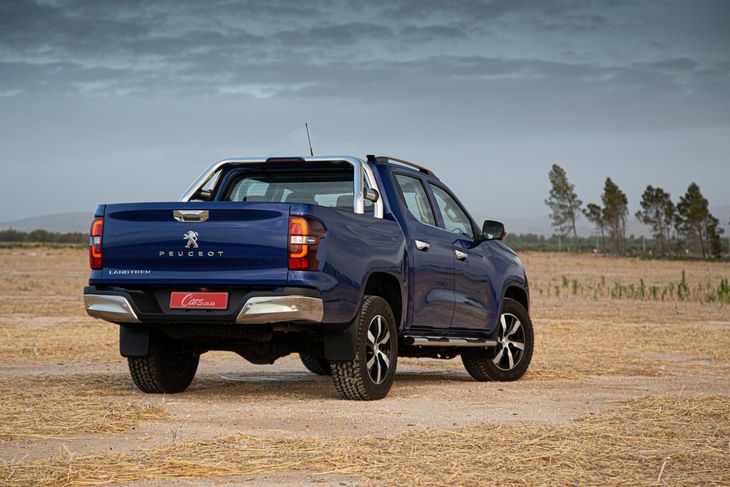
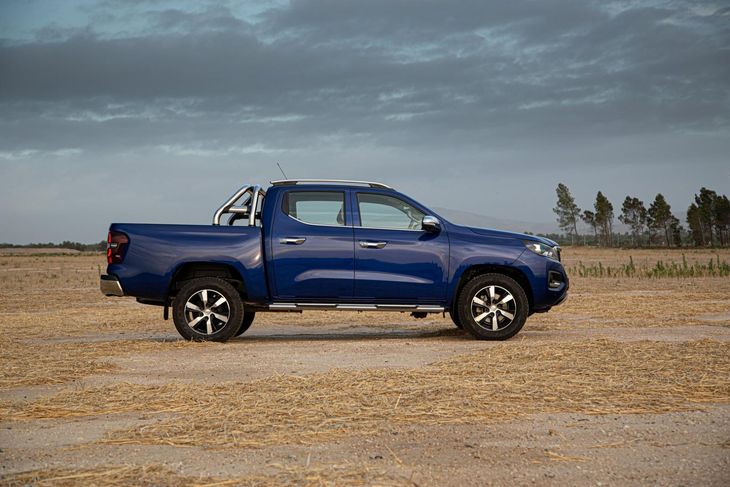
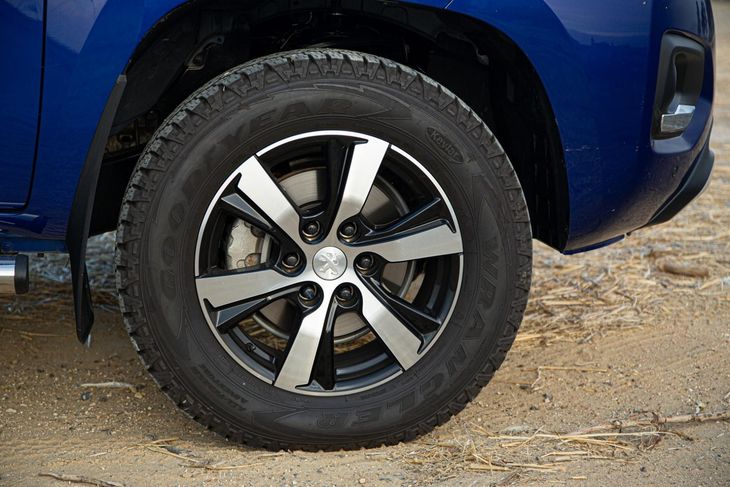
In the metal, the Peugeot Landtrek exudes a “large and in charge” demeanour and it certainly appears to be a burly contender in this segment. With its bulging bodywork, the Landtrek stands tall and wide and looks resplendent in its deep Magnetic Blue paint finish. The muscular front end is defined by a large grille (emblazoned with a prominent Peugeot badge), which is framed with a flashy chrome surround and flanked by LED headlights. The combination of the Landtrek’s sheer size and design drew much attention from onlookers – many of them appeared fascinated by the sight of the French firm’s lion emblem on a double-cab bakkie. We think it’s a strong and attractive-looking product from Peugeot.
It’s worth knowing that Peugeot does offer a selection of optional accessories, such as additional LED lighting, bull bar, roll bar, tonneau cover, hardtop cover, snorkel, wheel-arch cladding, bumper protection, roof bars and so forth, should you wish to beef up the kerb appeal (and, in some cases, enhance the overall practicality) of the bakkie.
Even so, it’s debatable whether the Landtrek looks better than other bakkies in this segment, but, seeing that design is subjective, you can decide for yourself whether you like the look of the Landtrek, or not.
Performance and Efficiency
The Landtrek’s engine performance is middling, but it’s still good enough to compete with its main rival, the GWM P-Series.
The powertrain is arguably the most vital component of a purpose-built product (such as a double-cab bakkie) and the Peugeot Landtrek’s small-capacity diesel powerplant — a 1.9-litre 4-cylinder turbodiesel engine that produces 110 kW and 350 Nm of torque, isn’t particularly punchy compared with what else is offered in the market. If you consider that the outgoing Ford Ranger’s 2.0-litre single-turbodiesel engine develops 132 kW and 420 Nm, then, at this price point, the Landtrek’s on-paper outputs are likely to disappoint – and may even deter – some potential buyers. Even the GWM P-Series’ middling (also 2.0-litre) turbodiesel motor has more oomph (120 kW/400 Nm)!
In its defence, the Landtrek’s on-road performance is better than what its outputs suggest, but it’s still best described as “average”… Peugeot’s newcomer ultimately lacks the outright pulling power offered by some of its bigger-engined rivals.
At start-up, the Landtrek’s engine does have an agricultural diesel um, roar, to it (which is not uncommon in this segment) and noticeable turbo-lag translates to tardy acceleration from a standstill, but matters do improve somewhat as the Landtrek gathers pace. The Landtrek’s overtaking ability is fairly good and, for the most part, the bakkie cruises comfortably and effortlessly on the highway.
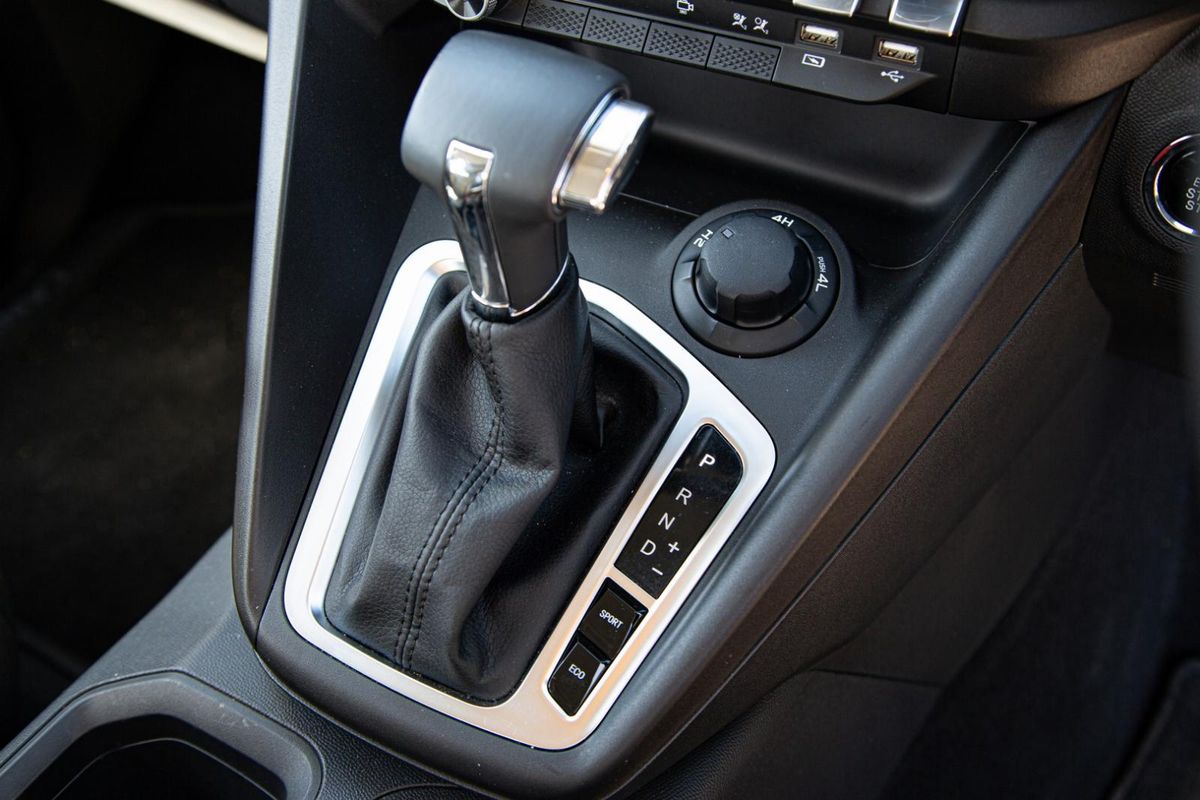
At times, particularly under harder acceleration, the 6-speed automatic transmission does struggle to find the appropriate gear (it “hunts”) and while the ‘box is generally good at changing cogs in general driving conditions, it’s not as decisive- and smooth-shifting as those of its rivals. A Sport drive mode, which perks up the throttle response and modifies the transmission’s shift pattern to maximise performance, is also available – it will also be useful in offroading scenarios. If you wish to save fuel, there’s also an Eco drive mode that dulls the throttle feel and transmission responses to optimise fuel consumption.
On the subject of fuel consumption, Peugeot claims a combined-cycle figure of 9.1 L/100km and our test returned around 9.8 L/100km, which is just about on par with its rivals.
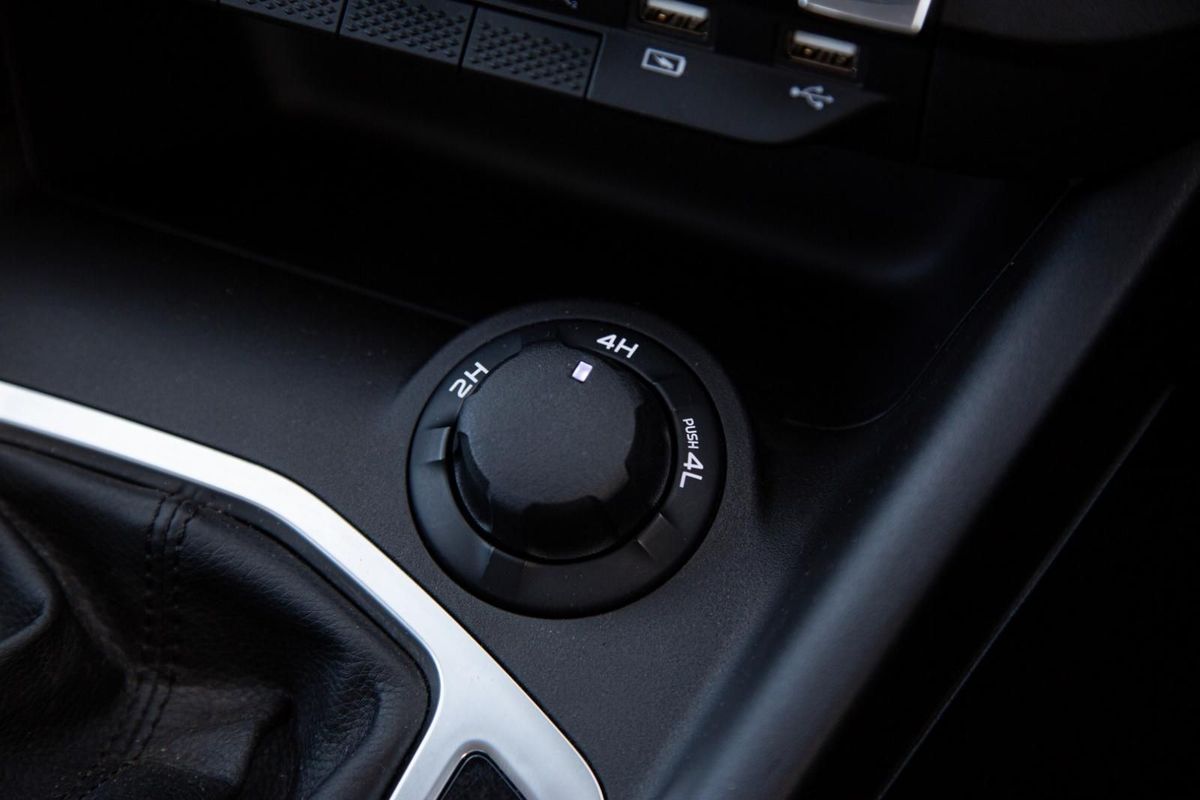
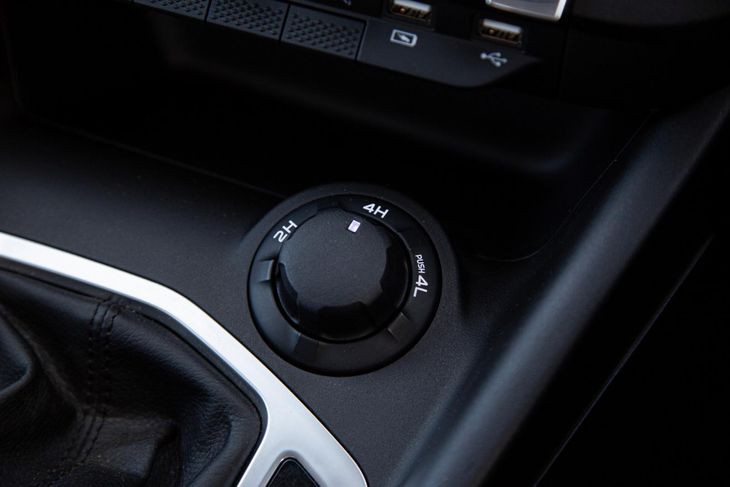
The Landtrek 4Action 4×4 is equipped with an offroad dial for easy on-the-fly use.
As far as off-road performance is concerned, our test period was too short to put the Landtrek through its paces on a tough 4×4 course, let alone against one or more of its rivals. We did, however, test Landtrek’s 4×4 capability at the local launch and found it to be fairly competent in this regard.
With a flood of new double-cab bakkies coming to market this year (Isuzu D-Max, Ford Ranger, VW Amarok), a full-scale double-cab 4×4 bakkie comparative test – to determine how all the players in this segment stack up against each other –is on the cards for the near future. We look forward to giving the Landtrek a proper 4×4 shakedown soon!
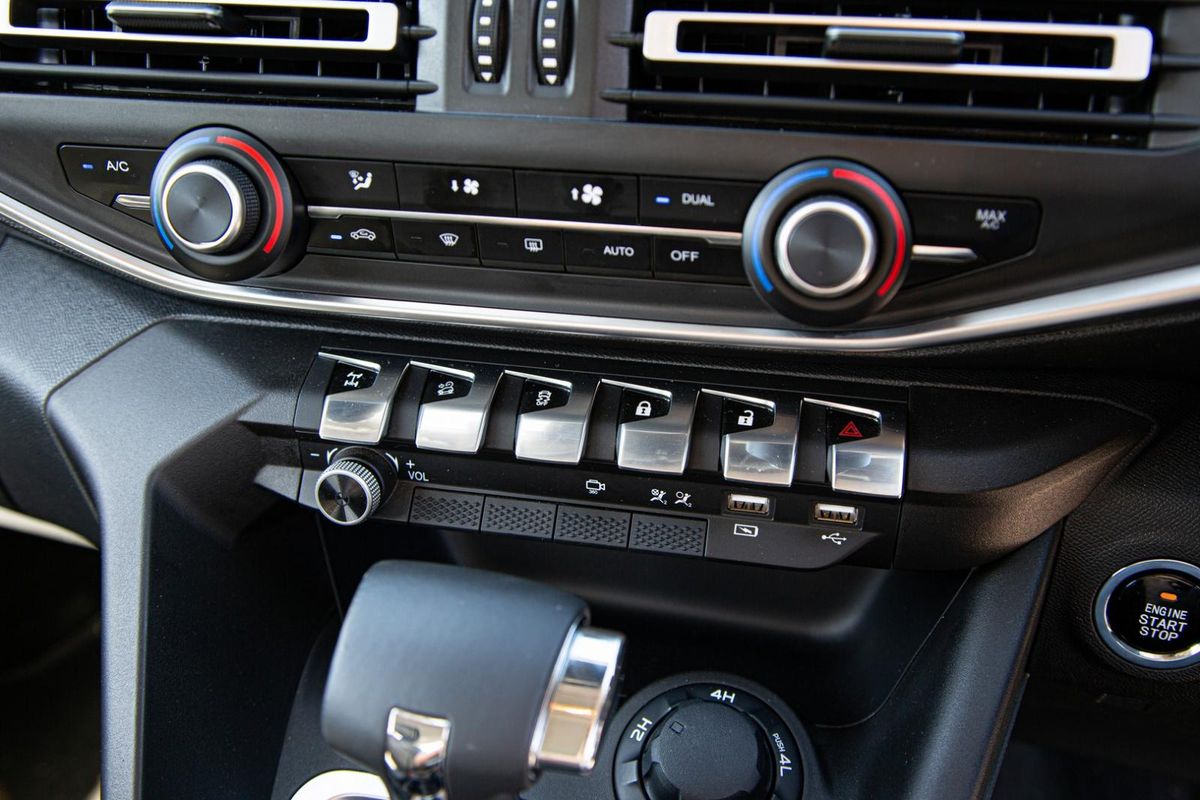
Like most of its rivals, the Landrek 4Action 4×4 is equipped with a shift-on-the-fly off-road dial that allows the driver to switch from 2H (rear-wheel-drive) to 4H (four-wheel drive) and 4L (low range) to tackle tough terrain. Moreover, a rear diff lock can be activated at the push of a button should you require maximum traction to contend with a tricky off-road obstacle. It’s also worth noting that the Landtrek boasts a useful ground clearance of 235 mm, as well as a wading depth of 600 mm, both of which are likely to be sufficient for the average weekend bush-whacking mission.
Ride and Handling
The Landtrek’s ride comfort is on par with most of its rivals in this segment, but it’s not class-leading.
We drove the Landrek on tar and gravel roads and found that while the test unit offered satisfactory levels of ride comfort on those surfaces (at least to satisfy the majority of family-car buyers, we’d say), it wasn’t quite class-leading in that regard. As is the case with the majority of bakkies on the market, the Peugeot’s rear leaf-sprung suspension is prone to jiggling when the bakkie traverses uneven road surfaces, which is most noticeable when the load bin is unladen, but the ride does settle somewhat when there’s a modest load on the back. It’s worth noting that Noise Vibration and Harshness (NVH) suppression is admirable, which ultimately contributes to a more refined driving experience.
Steering feel is positive with a light motion, which is useful in urban driving situations, but it’s worth noting that the ‘wheel is quite responsive to inputs too – at least by double-cab bakkie standards. As such, the Landtrek exhibits driving qualities that one would typically experience in an SUV, which is certainly a good thing for a humble bakkie.
Practicality
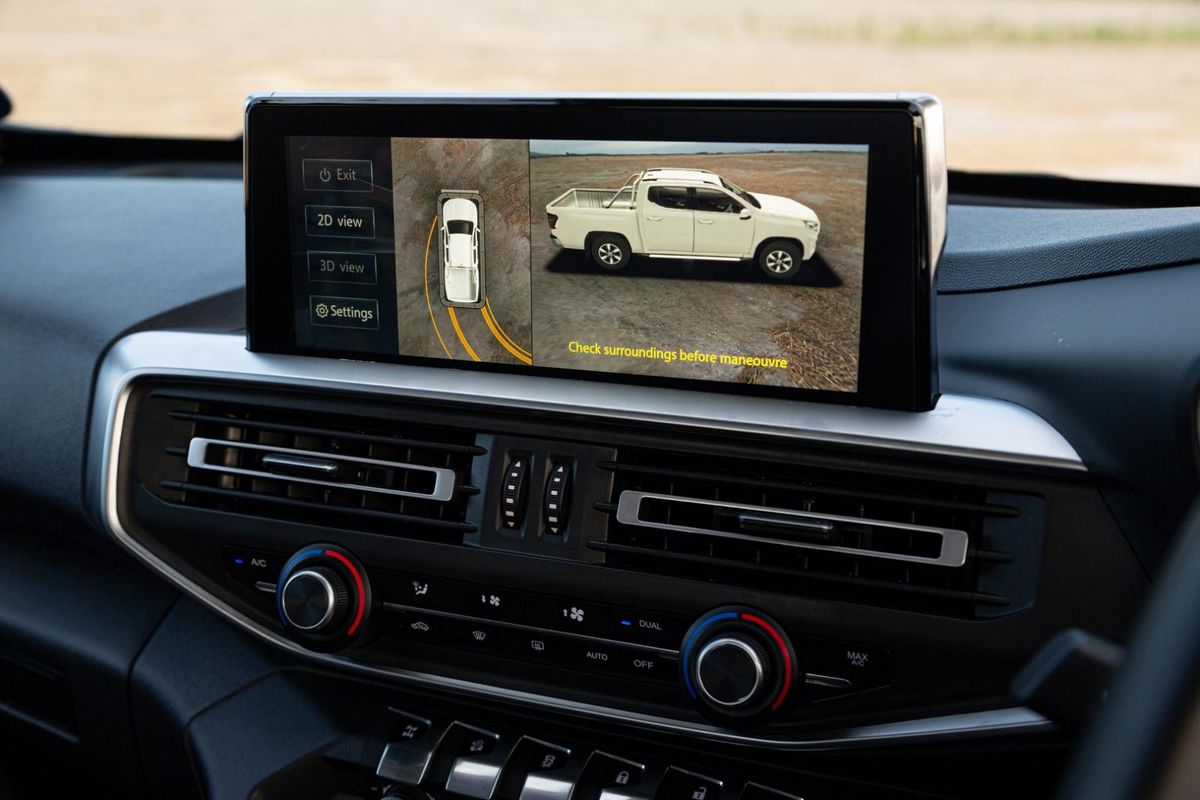
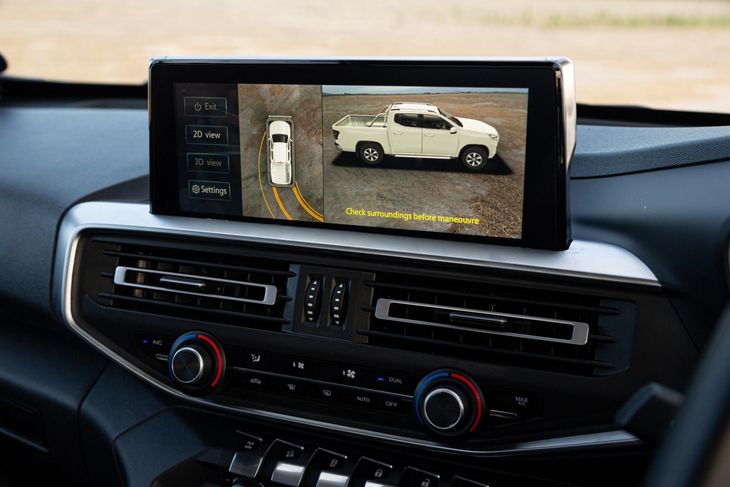
The 360-degree camera is a major highlight and is hugely beneficial for manoeuvring in tight spaces or in offroad situations.
Most double-cab bakkies are, by their very nature, a trifle cumbersome to manoeuvre in tight spaces (by virtue of their extended dimensions and large turning circles). The Landtrek is no exception; Cape Town’s narrow, congested streets proved a constant challenge for the French bakkie and its driver. However, Peugeot has equipped the Landtrek with an effective (and arguably segment-leading) 360-degree camera system, which made parking manoeuvres much easier.
The camera view is clear and sharp and the driver can toggle between different views to scan their surroundings. This feature is also hugely beneficial if you are off-roading, when you can use it to effectively identify objects/obstacles to avoid. At slow speeds and when the indicator is on, the camera system displays a kerb view (so that you can avoid bashing your wheels) as well as active guidelines (when reversing) to indicate your direction of travel as you execute the manoeuvre.
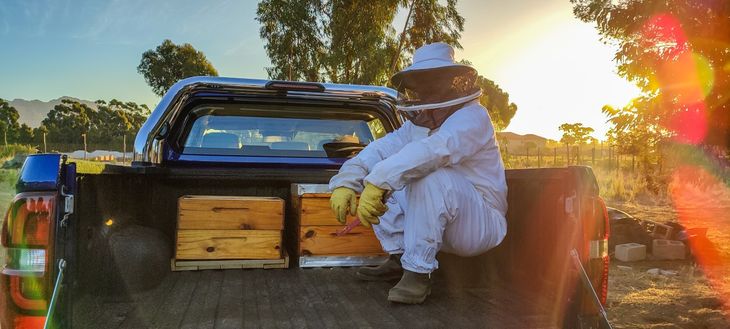
With a spacious and deep load bay, the Landtrek is ready to work when you are.
As far as loading and towing are concerned, the Landtrek has a maximum tow capacity (braked) of 3 000 kg and a payload capacity up to 1 050 kg! The load bin has a rubberised coating and Peugeot claims it’s the biggest “bak” in the segment with a useful depth of 500 mm. As a beekeeper, the tester used the Landtrek on a honey-harvesting expedition, where the double cab proved particularly useful at transporting big and bulky bee boxes and equipment. It’s worth noting that there’s a useful 12V socket in the load bin, but keep in mind that the base of the tailgate is high off the ground, so lifting heavy items onto the back does require some extra elbow grease, as they say.
The Landtrek’s passenger-carrying capability is average at best. Rear legroom is fairly tight (taller passengers will almost certainly complain), but there’s little amiss in terms of seat comfort fore or aft (if there are kids seated at the back).
Interior execution and features
The Landtrek’s interior is not only impressive in terms of design and fit-and-finish, but it’s also very comfortable.
This is the highlight of the Landtrek package – the French newcomer has one of the most comfortable and aesthetically-pleasing cabins in its segment. Granted, the interior is dominated by harder plastics (the only soft-touch material is located on the door armrests), but it’s important to mention that the materials don’t look or feel cheap.
The fascia has a neat, sophisticated design that would not look out of place on a basic unibody SUV. Plus, not only is perceived build quality very good, but the standard specification sheet is nothing short of comprehensive. The electrically-adjusted (front) leather seats are well-bolstered (with lumbar support) and offer supreme levels of comfort – they are not too hard and not too soft, just perfect!
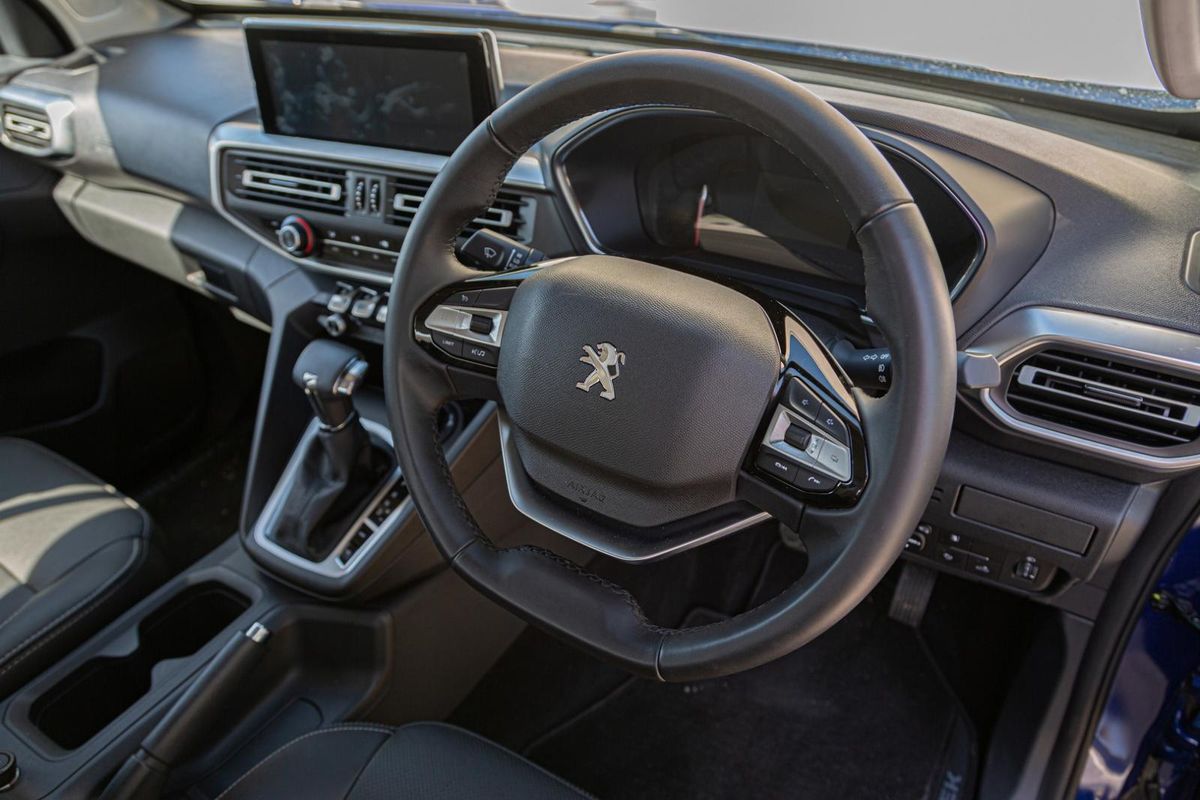
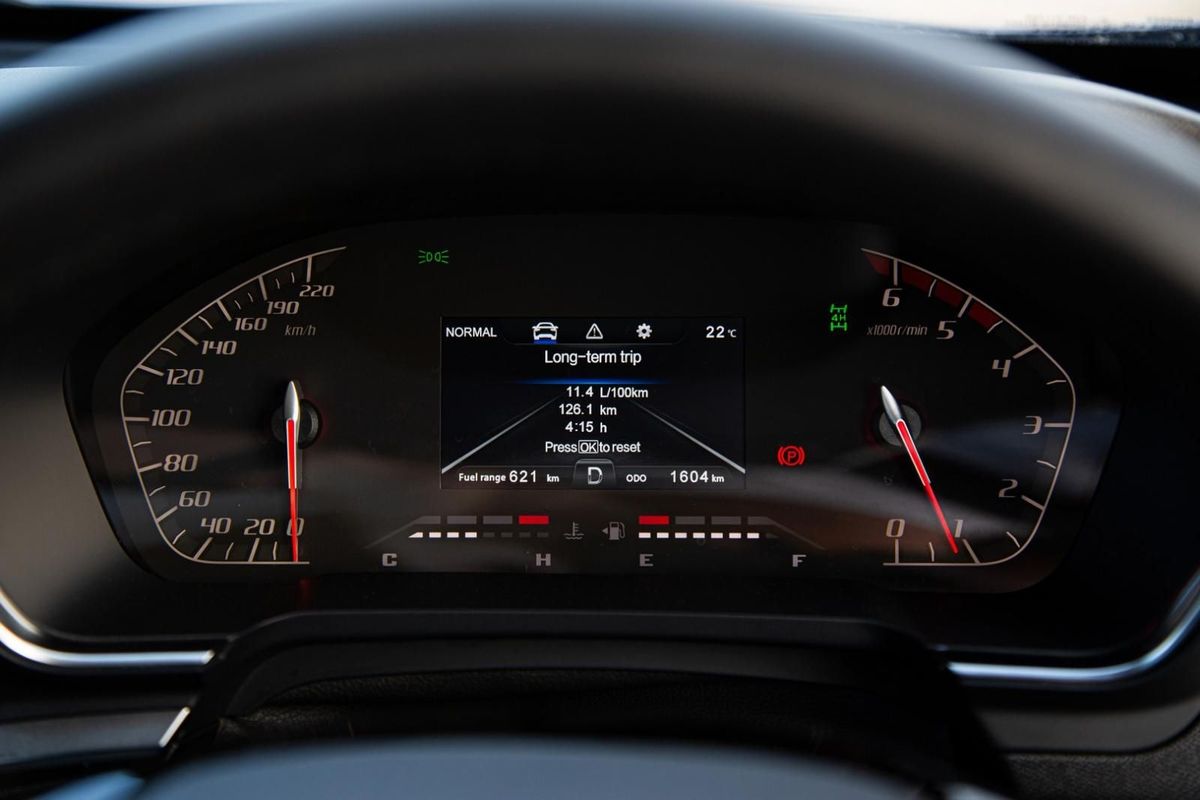
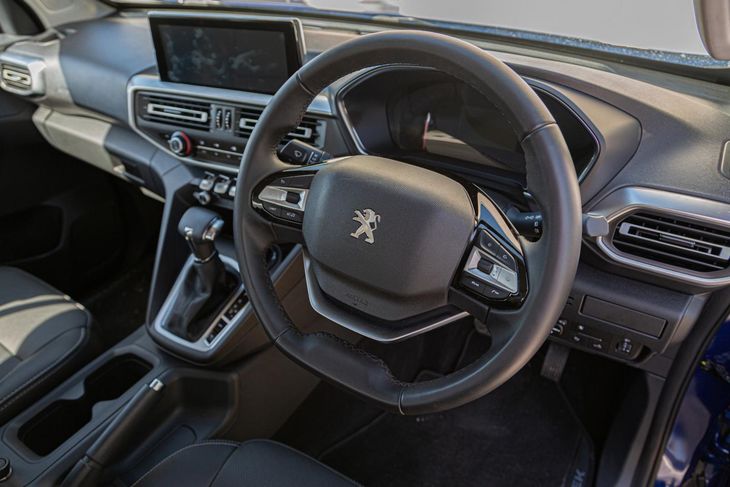
The thick-rimmed leather-wrapped multifunction steering wheel, which is similar to the one in the Peugeot 3008, is also very impressive. Sadly though, Peugeot’s latest i-Cockpit instrument cluster doesn’t feature in the Landtrek, but the sporty-looking analogue cluster with a central digital display does an adequate job of relaying vital information to the driver. Cruise control is standard but, unfortunately, adaptive cruise control is not offered.
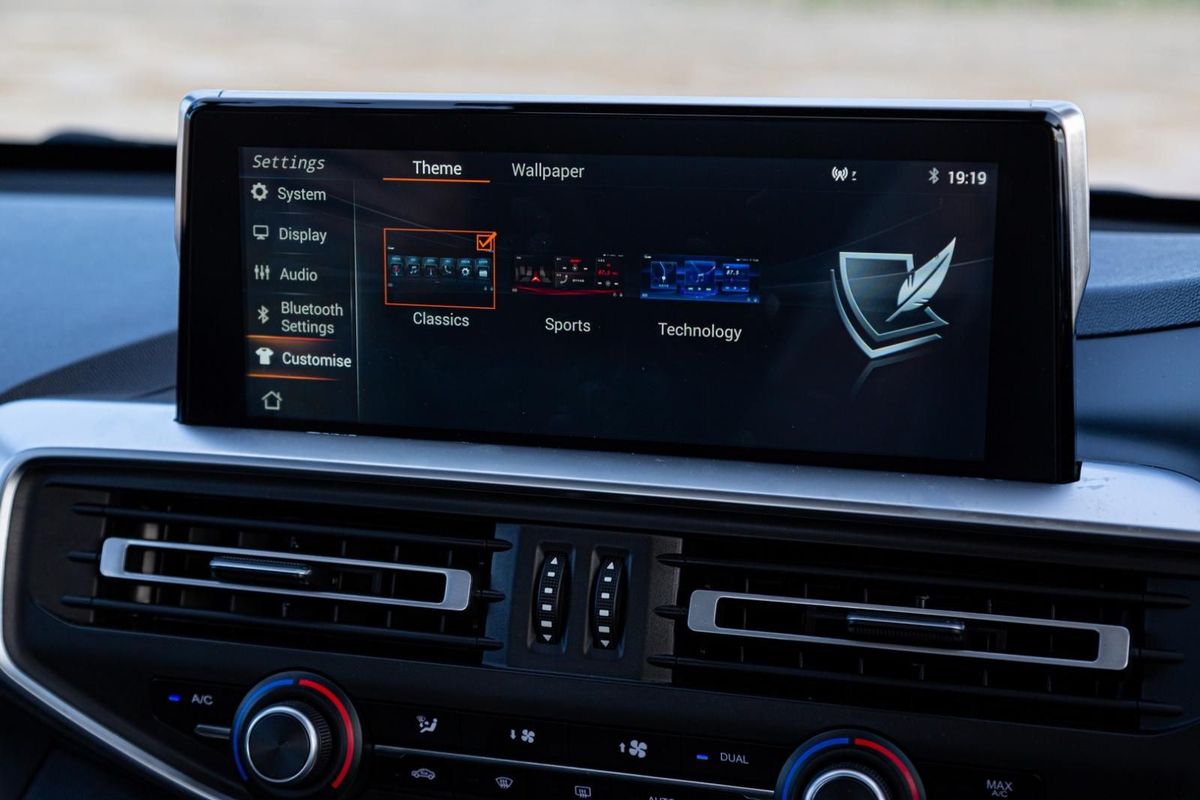
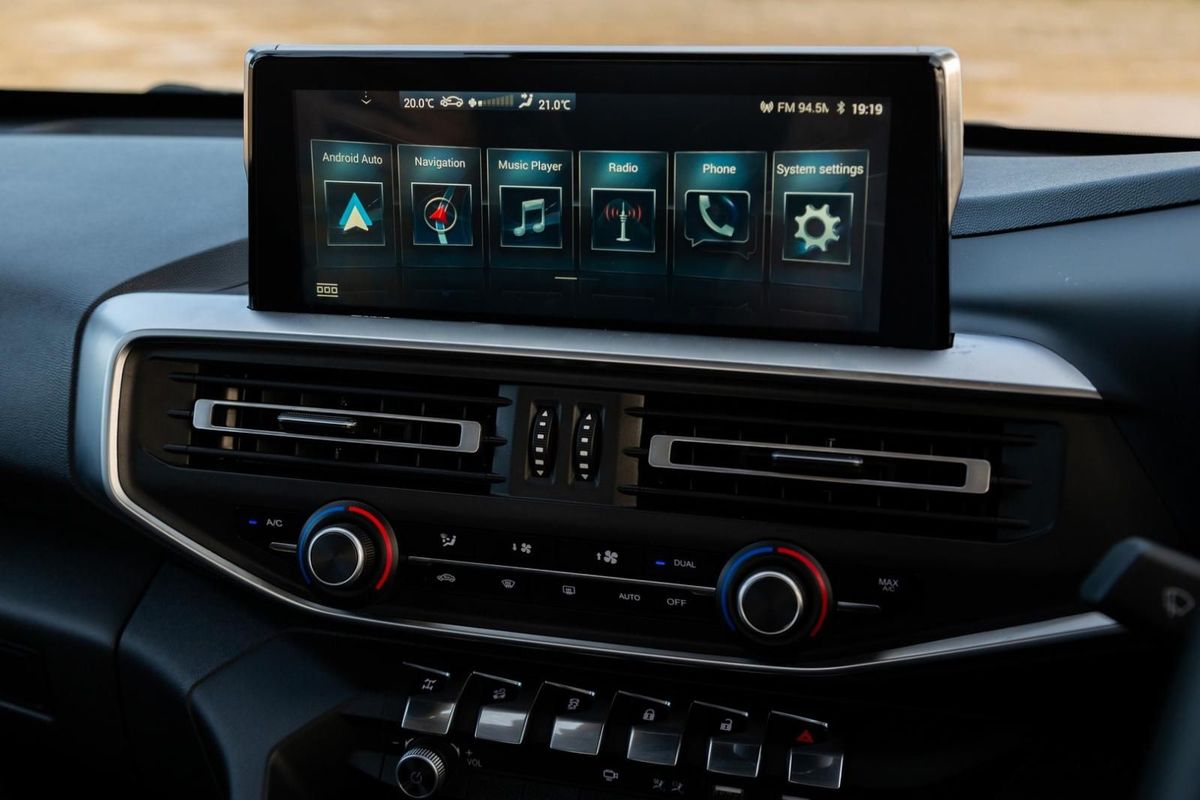
The infotainment system’s layout is legible and easy to navigate.
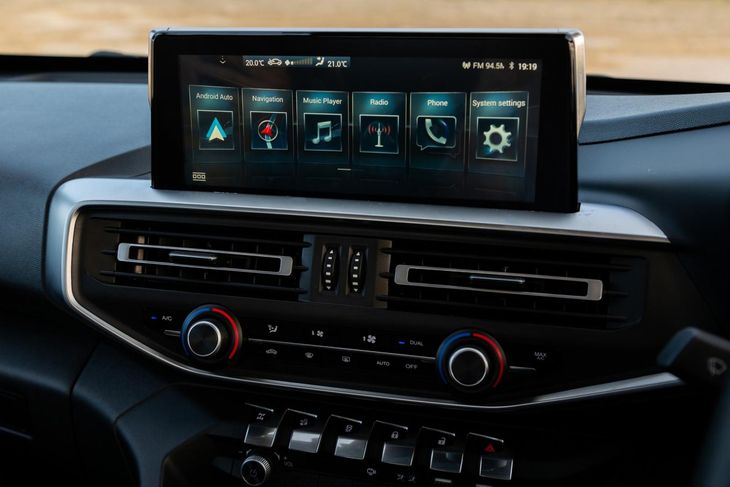
The Peugeot’s 10-inch touchscreen infotainment system has been transplanted from the Peugeot 5008 and is equipped with integrated navigation, as well as Apple CarPlay and Android Auto capability. The system’s menus are easy to navigate and we think it’s one of the better infotainment systems currently on offer in the bakkie market. There are three USB ports – two in the front of the cabin and one for rear passengers.
Safety features for the Landtrek include a total of 6 airbags, ABS with EBD, electronic stability control with traction control, brake assist, hill descent control, front and rear park distance control sensors, lane-departure warning, lane-keeping assist, trailer sway control and tyre-pressure monitoring.
Overall, the Landtrek’s cabin is well-equipped and will satisfy the needs of most buyers in this segment.
Price and after-sales support
The Peugeot Landtrek 1.9TD 4Action 4×4 is priced from R669 900 and is sold with a 5-year/100 000 km warranty and a 5-year/100 000 km service plan. The Landrek 1.9TD Allure 4×2 is priced from R579 900.
If you are considering the GWM P-Series, the Peugeot Landtrek is a worthy alternative.
The Peugeot Landtrek both hits, and misses, the mark. While it scores highly in terms of kerb appeal, a smart interior execution and standard feature value, the Landtrek also lacks that little bit of extra punch that potential buyers (many of who will also be considering crossovers or medium SUVs) will be looking for at this price point. So where does that leave the French bakkie?
Well, a fairly solid case can be made for the Landtrek if you consider current trends and you’re honest about what you will usually be using the bakkie for. You see, many double-cabs are bought as status symbols that spend more time hopping pavements than going on off-road trips or doing serious workhorse chores. With that said, if you plan on towing boats, horse carts or caravans quite often, you might want to look elsewhere for a bakkie that has more power and torque to achieve those goals comfortably. But, if you just want an average-performing, good-looking double-cab with most of the features you could want at a fairly reasonable price point, then perhaps the Landtrek deserves a closer look.
The bakkie segment is a notoriously tough nut to crack, as many brands have found. Even so, relative success is not entirely impossible to achieve for the boldly-styled Peugeot, especially given the pricing bracket in which it finds itself.
The Landtrek is unlikely to steal many sales from the venerable Toyota Hilux or Ford Ranger, but it undoubtedly takes square aim at the GWM P-Series. We single out the P-Series because it also is a relatively new-to-the-market bakkie that trades on its handsome looks (as does the new Mazda BT-50, which is also a head-turner), but the GWM also offers particularly generous specification at the top end of its range. By offering exceptional value, the P-Series has managed to win over buyers who can’t quite afford top-end Hilux or Ranger derivatives… and its sales success has been nothing short of astounding. With the arrival of the Landtrek, buyers at this end of the market will have some more thinking to do…
Even in its base Allure 4×2 trim (R579 900), the Landtrek makes a strong buying proposition (if you don’t need 4×4 ability) thanks to its raft of stock features. However, there is an R85k (April 2022) price difference between the range-topping 4×4 derivatives of the Landtrek and P-Series and, while their standard specifications are well-matched, the latter does offer stronger engine outputs. As far as kerb appeal and interior execution are concerned, the Peugeot arguably pips the GWM, but those aspects are subjective – and probably not dealbreakers. It’s up to you to decide if those attributes justify the premium that the Landtrek 1.9TD 4Action 4×4 demands over the P-Series 2.0TD double cab LT 4×4.
Still, if you are looking at buying the P-Series then you should also have the Landtrek on your shortlist before making your final buying decision. The Landtrek may surprise you and, price-wise, there might even be some wriggle room.
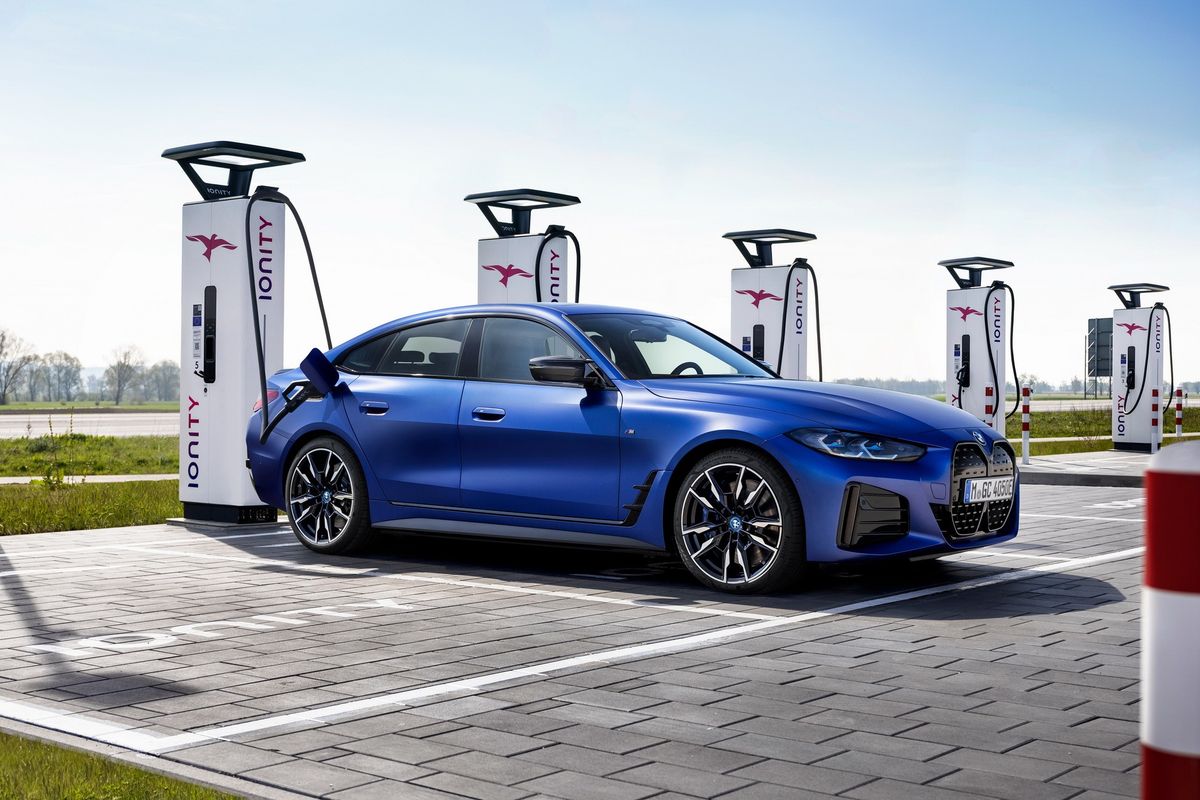
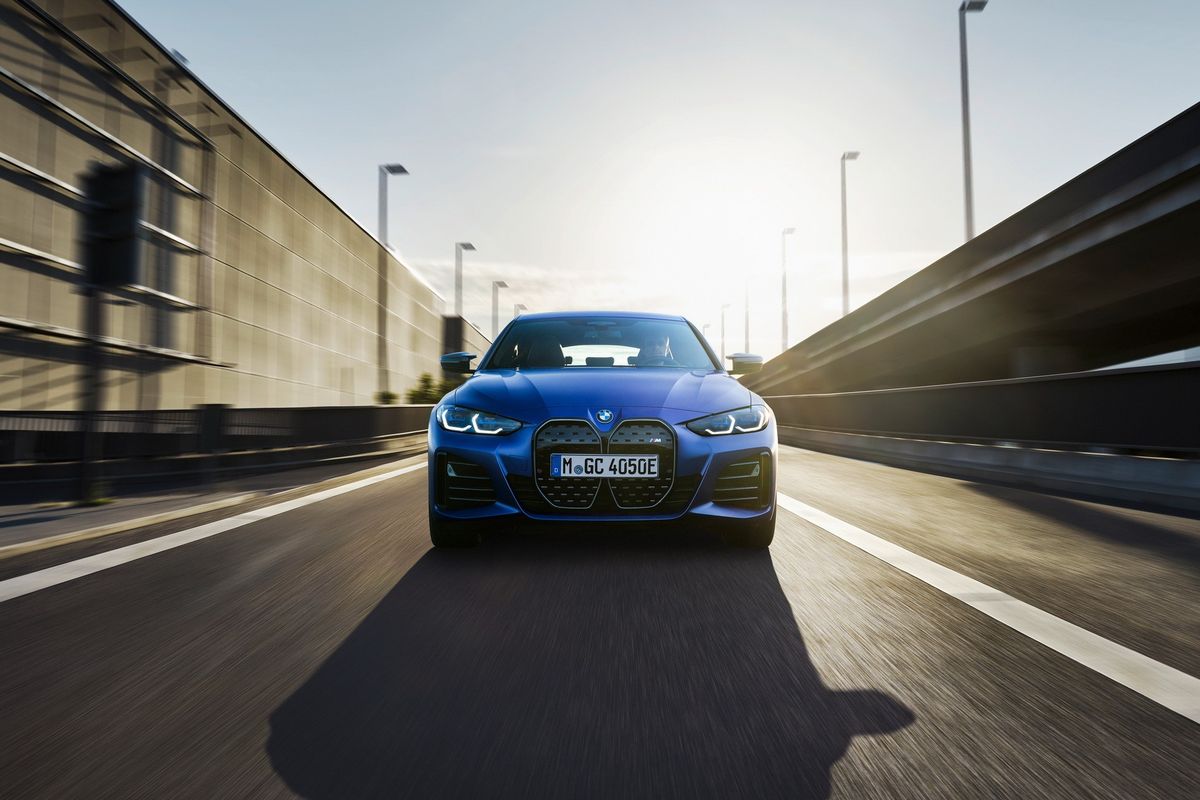
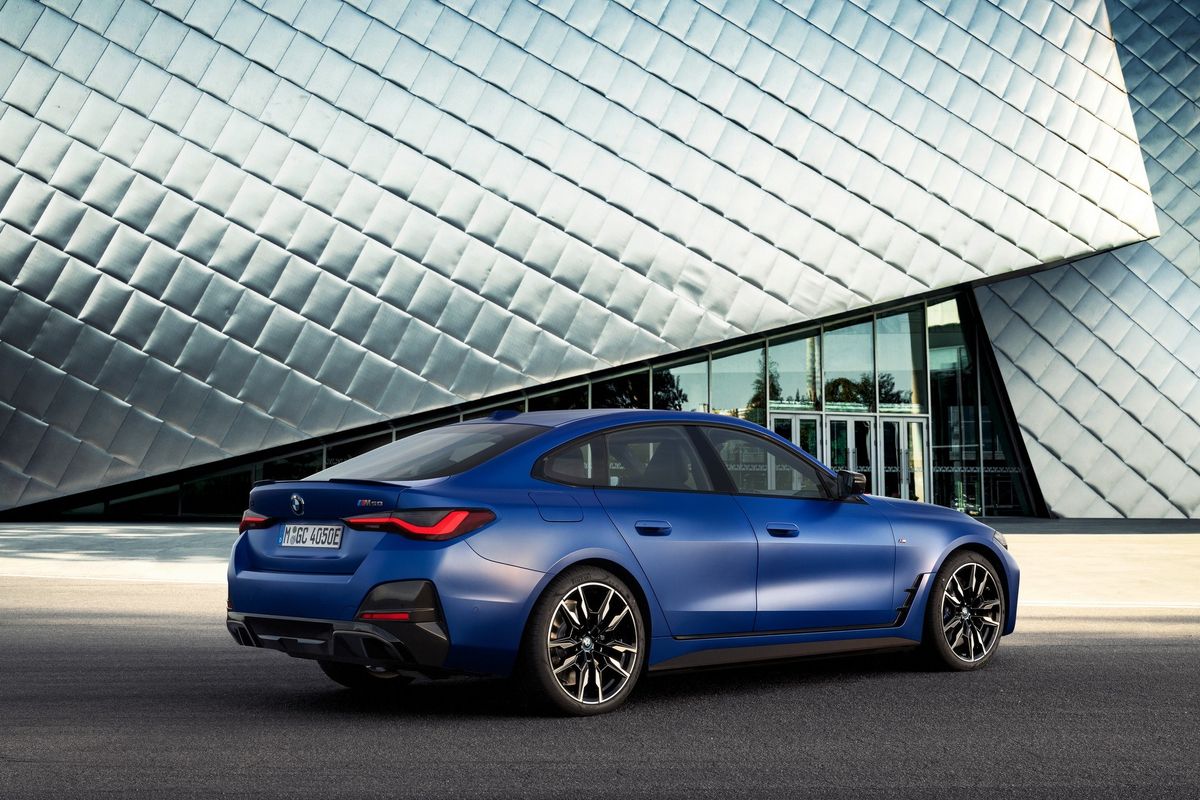
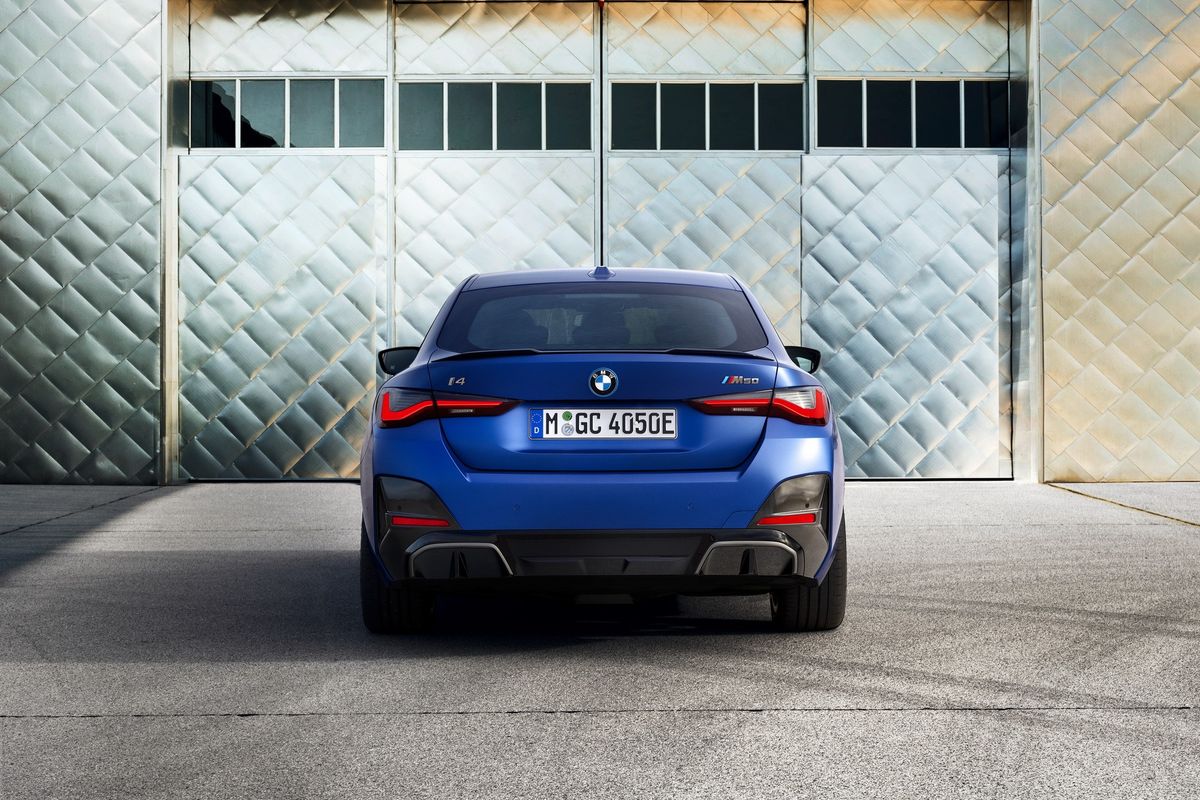
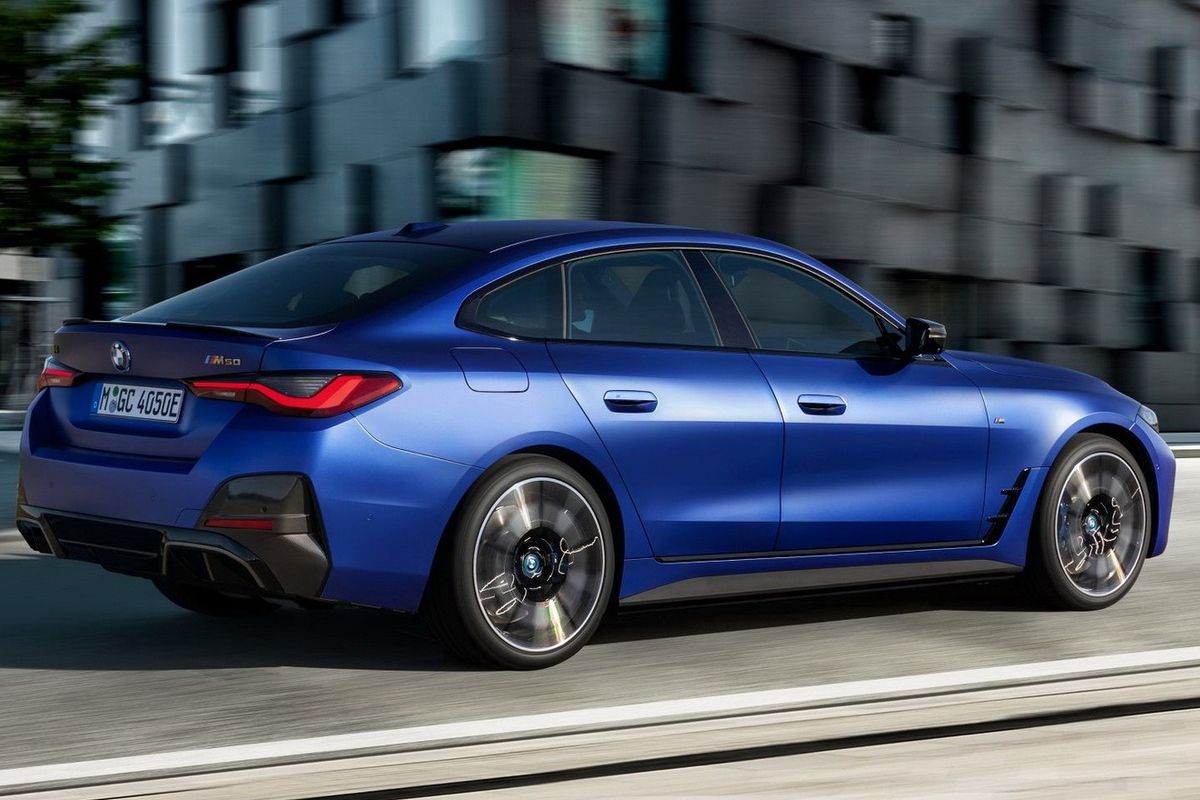
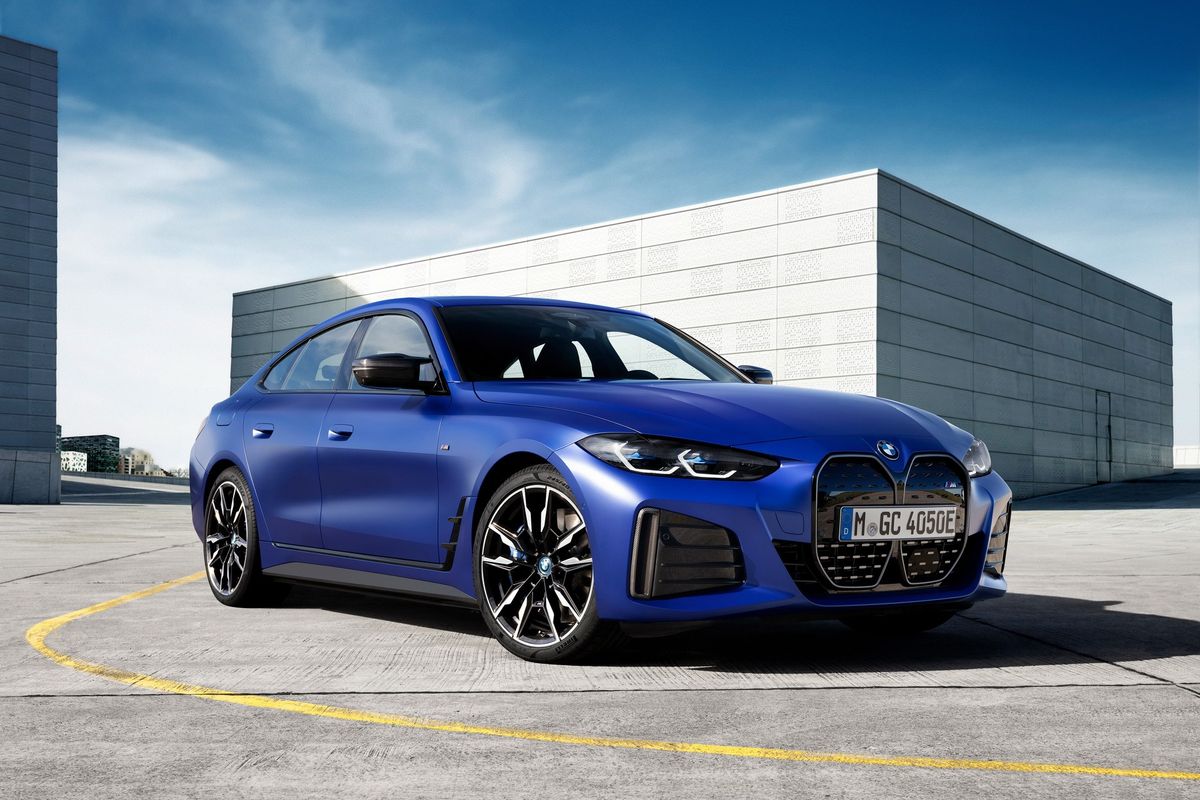
The BMW i4 M50 is the first electric M car ever produced and the performance stats are impressive. Here’s how much you can expect to pay for this electric sports model.
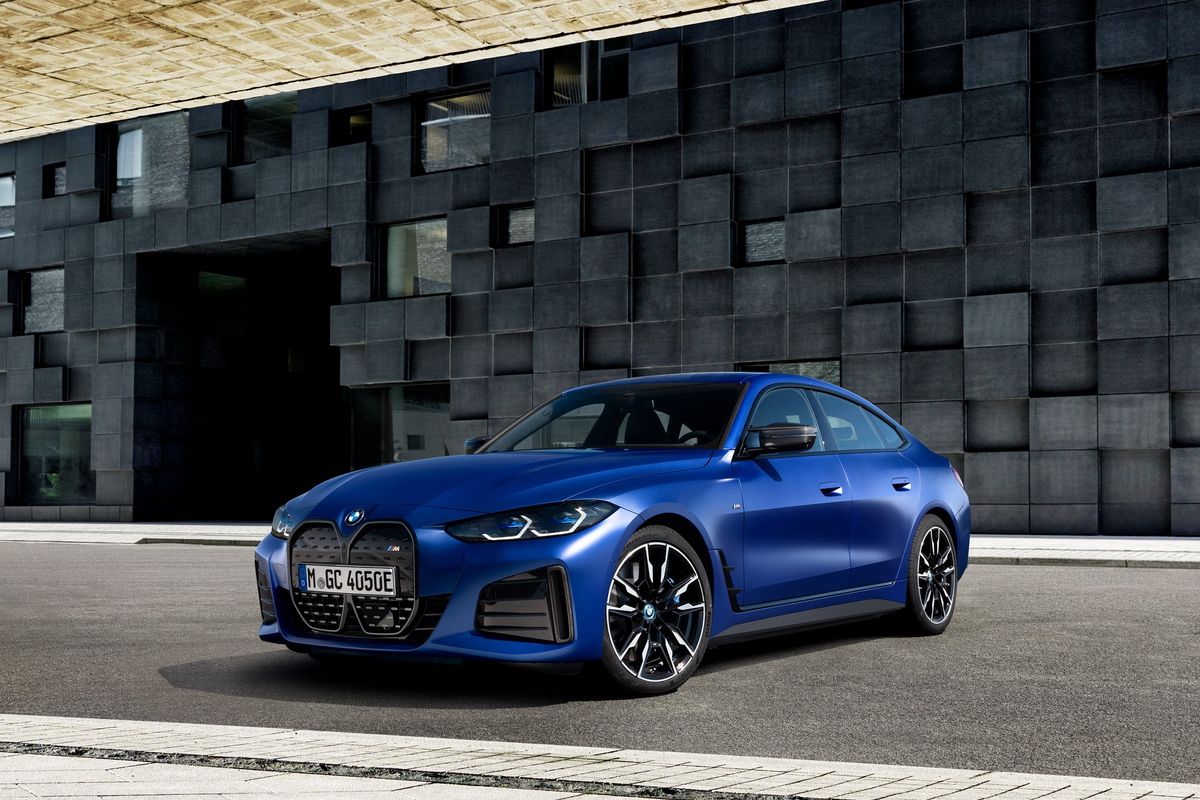
Could you say the new BMW i4 M50 is the best of the electric i and performance M in one product? Irrespective of the answer, there’s no denying the significance of the BMW i4 M50 being the first electric offering from the M division.
Of course, being a product from the M division it’ll need to have the performance credentials and the numbers don’t disappoint. The two electric motors summon 400 kW and 795 Nm, giving it a claimed 0-100 kph in just 3.9 seconds and a top speed of 225 kph. These numbers are on par with the rear-wheel-drive BMW M3 Competition, which does 0-100 kph in 3.9 seconds, but has a higher top speed and a higher price tag at R1 860 000.
Range is said to be 465-510 km from an 83.9 kWh battery according to the latest BMW SA price list and the vehicle supports fast charging, with BMW claiming just 1.38 hours for 0-80% when plugged into DC. Interestingly, the international press release claims 395 km of range, so we’ll be sure to confirm which is the more accurate distance.
The vehicle features all-wheel drive, adaptive M suspension, specially designed anti-roll bars and an additional spring strut tower brace in the front end, along with variable sport steering, M Sport brakes and 19-inch standard M light-alloy wheels. The configurator has yet to go live on BMW SA’s website, but we’d assume there’s the option for larger wheels.
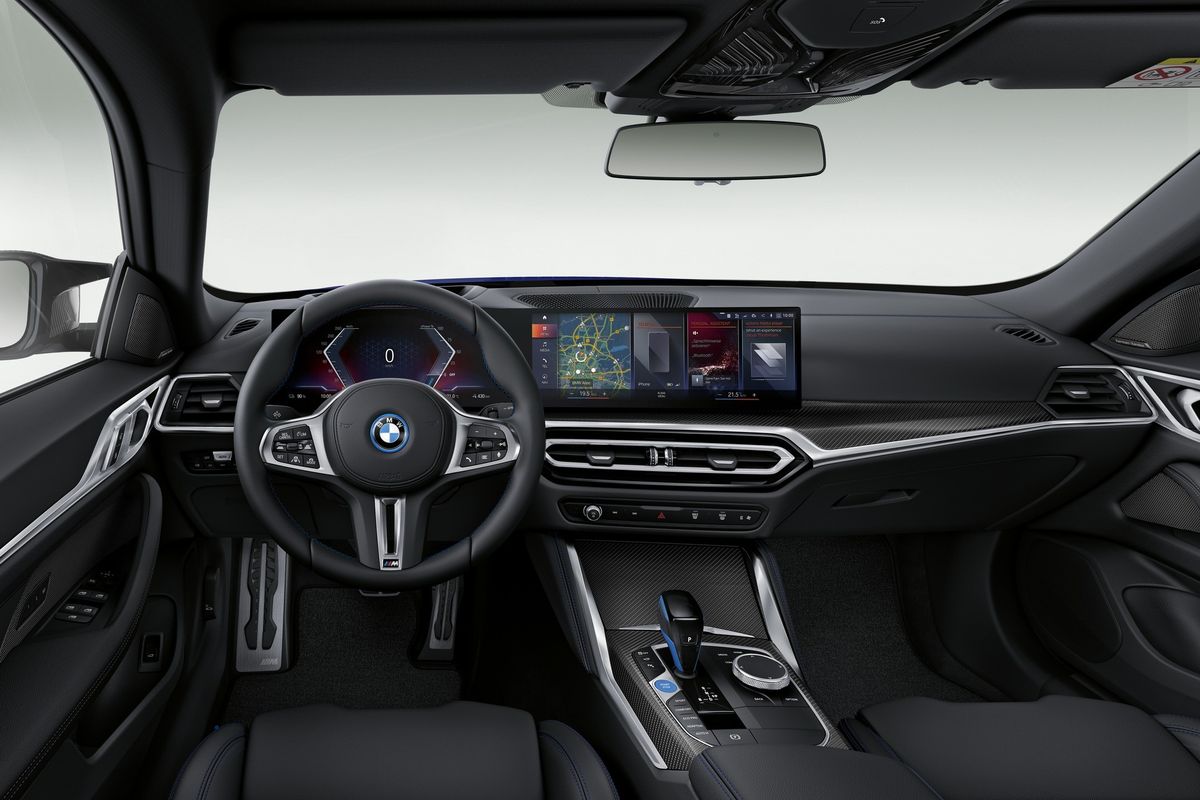
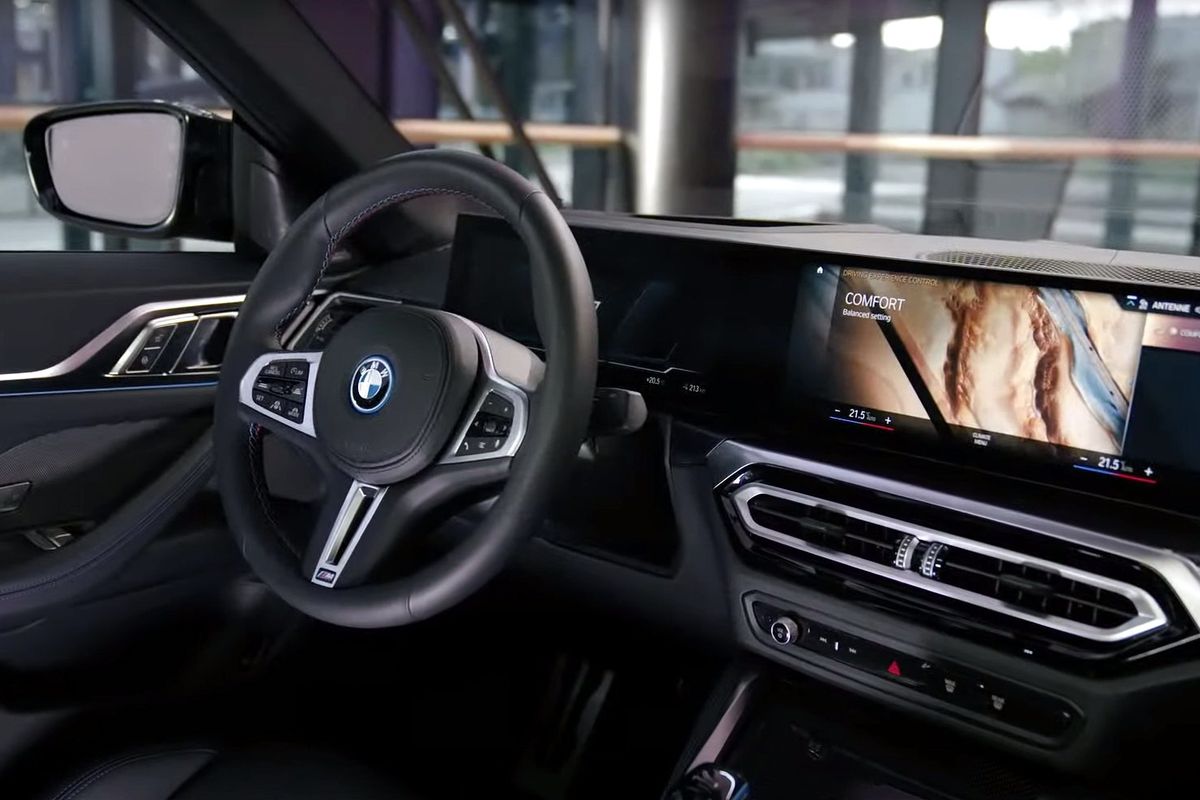
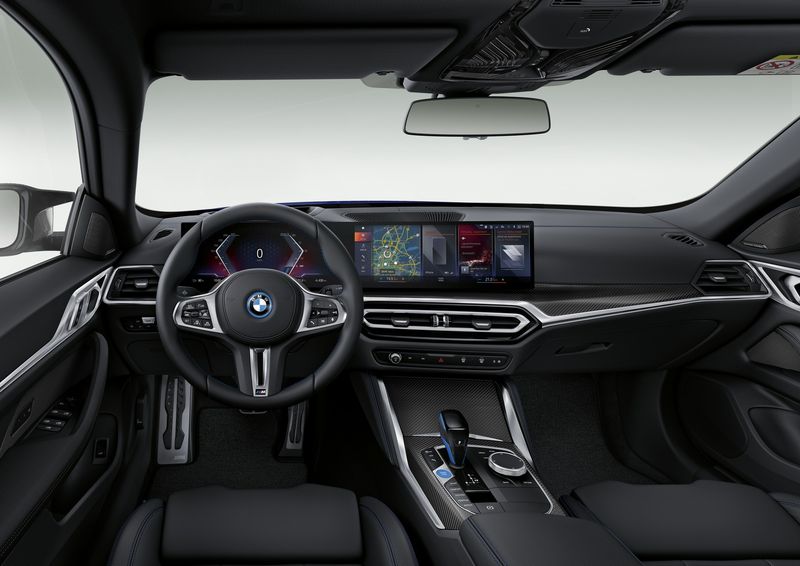
The cabin features both the new curved screen and infotainment system as that in the BMW iX and there are sporty touches dotted around the cabin, like the M Sport steering wheel and sporty seats.
New Chery Tiggo 8 Pro Review – 7-seater luxury SUV for a bargain price?
It’s the video you’ve been asking for! We get behind the wheel of the all-new Chery Tiggo 8 Pro. Is it worth looking into? Ashley Oldfield takes you through the pros and cons of the new Chery Tiggo 8 Pro in this extensive and detailed video review.
Following the success of the Chinese brand Haval in South Africa, Chery have enthusiastically entered our market with two offerings.
The first, the Tiggo 4 Pro, which we reviewed here, has been on sale for a few months now and seems to be selling well. The second is this, the Tiggo 8 Pro, a 7-seat SUV with attractive styling and a particularly appealing interior.
The Tiggo 8 Pro enters a crowded market where cars such as the Haval H6, Mazda CX-5, Toyota Rav4 and Hyundai Tucson all enjoy strong sales numbers. But with a remarkably low price and strong warranty, is the new offering from the Chinese newcomer enough to woo local buyers?
In this review, our race-ace Ashley Oldfield steps in for Ciro De Siena and tries to answer all your questions about the new Chery Tiggo 8 Pro.
BMW i3 Badge Reassigned to First Fully Electric 3 Series
BMW has officially unveiled the first fully electric version of its 3 Series, somewhat confusingly handing the battery-powered sedan the i3 badge. For the time being, it’s for China only…
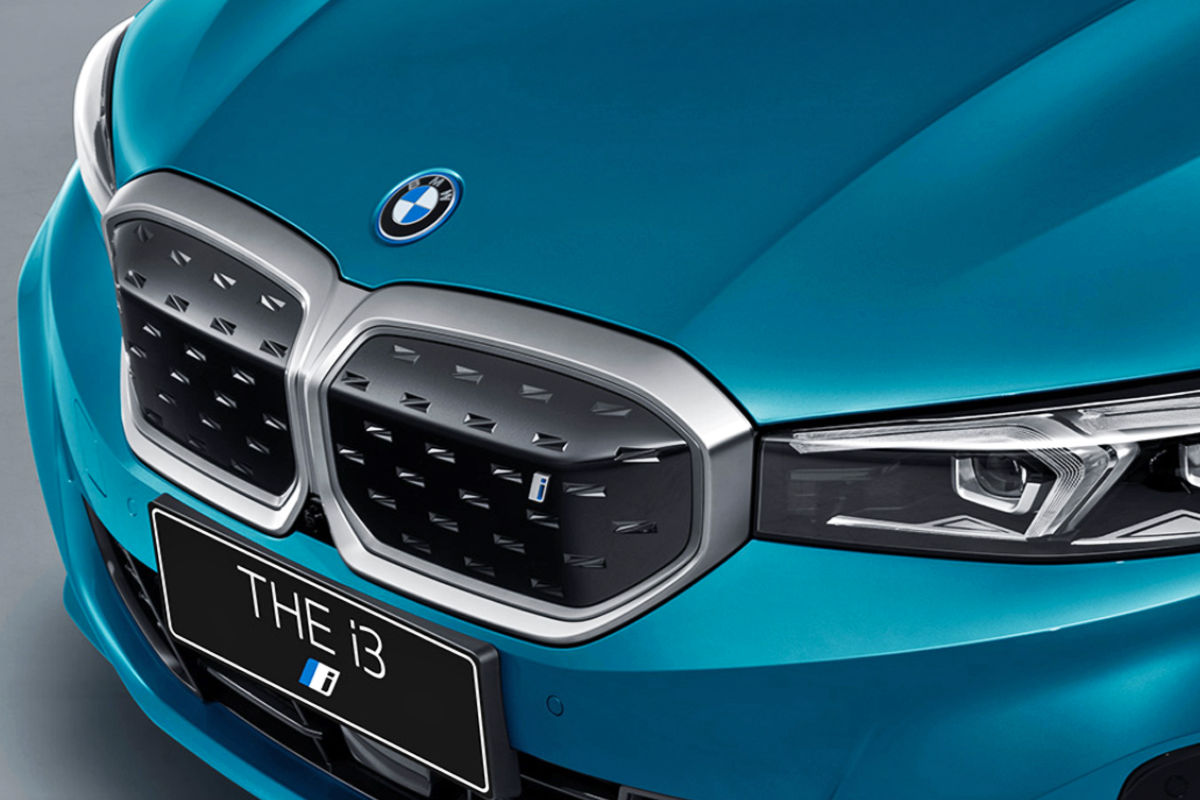
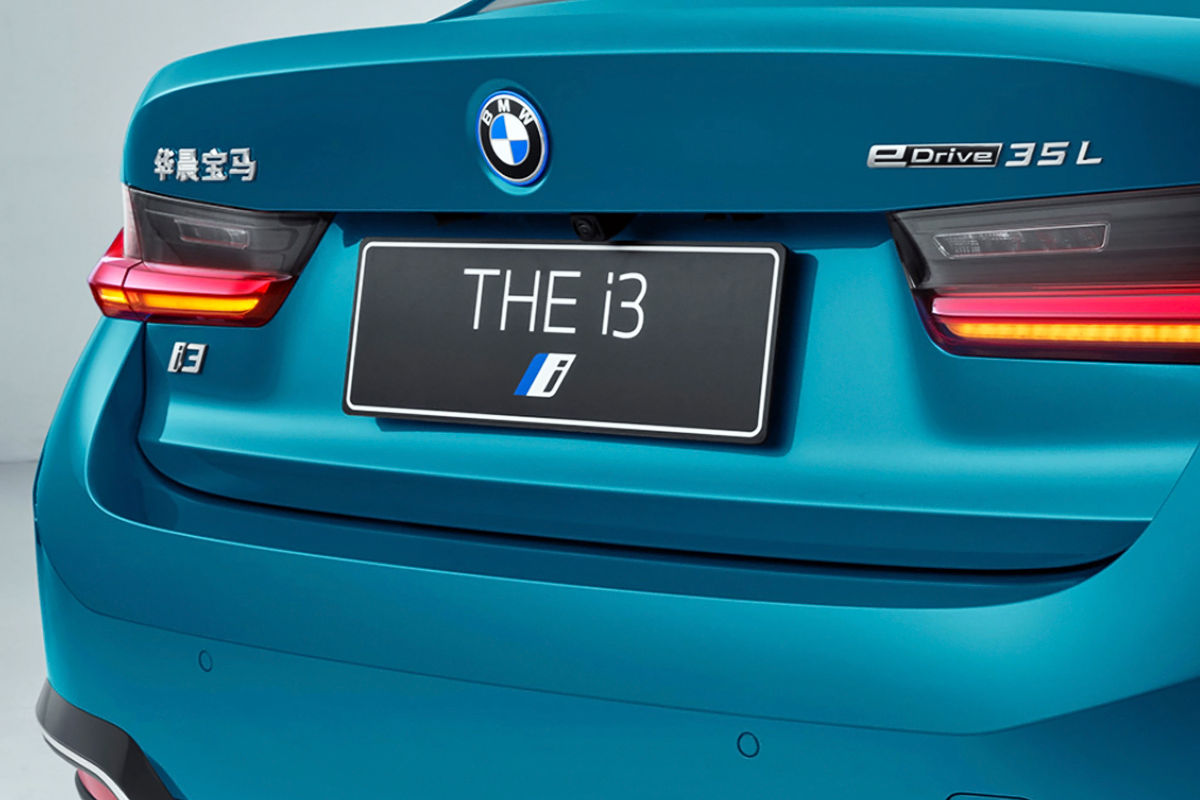
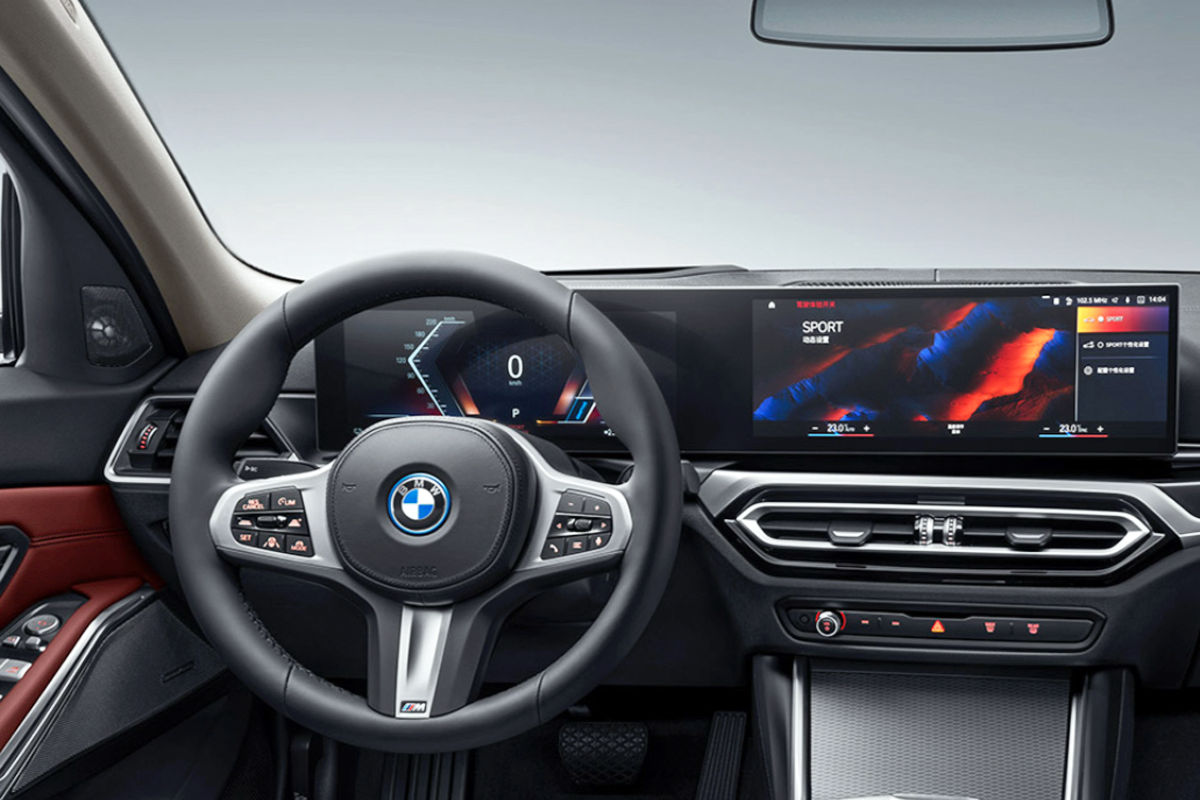
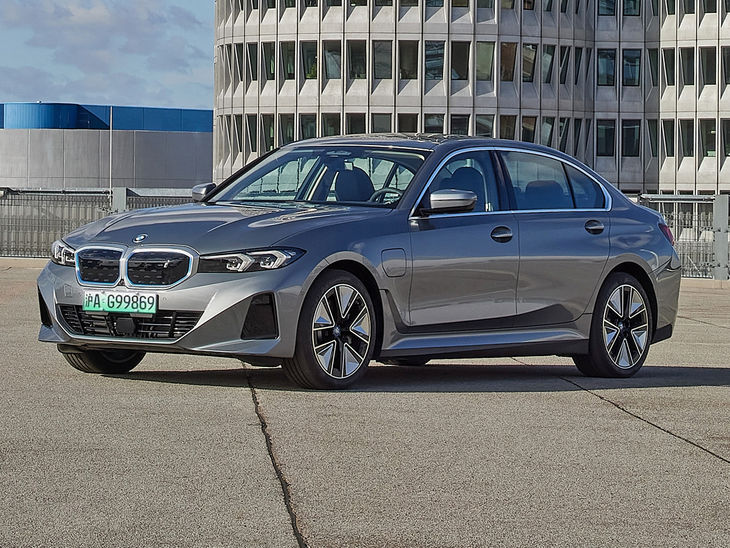
What you’re looking at here is the new BMW i3. Confused? We don’t blame you. The Munich-based firm has opted to transfer the i3 moniker from its quirky electric hatchback to the first battery-powered version of the 3 Series sedan.
The new BMW i3 eDrive35L (which we actually first saw late in 2021 thanks to a leak) will be assembled at the BMW Brilliance Automotive plant in Shenyang and is billed as a model “exclusively for the Chinese market”. However, we certainly wouldn’t be surprised if a global version – likely sporting a standard rather than long wheelbase – is unveiled in the months ahead.
Scheduled to officially hit the Chinese market in May 2022, the i3 eDrive35L furthermore previews styling changes that will likely be rolled out to the upcoming facelifted version of the standard G20-generation 3 Series.
China’s long-wheelbase i3 sedan previews styling tweaks set to be applied to the facelifted 3 Series.
With an extra 110 mm between its axles (for a total of 2 966 mm) compared with the standard version of the premium compact sedan, the i3 eDrive35L features what BMW describes as a “premium rear-seat experience”. It measures 4 872 mm from nose to tail, making it 163 mm longer than the combustion-engined 3 Series offered in South Africa, and features luggage space of 410 litres (70 litres down on the standard sedan, likely thanks to its integrated battery pack).
So, what sort of powertrain does the newcomer employ? Well, the i3 eDrive35L uses the latest electric gubbins from the German automaker, borrowing components from the likes of the iX3, i4 and iX. The result is a peak power output of 210 kW, with maximum twisting force coming in at 400 Nm.
According to BMW, that’s enough for a 6.2-second 0-100 km/h sprint, with the 70.3 kWh battery (featuring a net capacity of 66.1 kWh) offering a claimed range of 526 km. The automaker says the i3 eDrive35L’s battery pack can be charged from 10 to 80% in 35 minutes when using a fast charger. Just short of 100 km of range can be added by plugging in to such a system for 10 minutes.
Though the original i3 hatchback has been discontinued in some markets, it is expected to remain in production until at least July 2022. In South Africa, the i3 hatch is still available, with the local range comprising four derivatives (two of which employ range-extending combustion engines), with pricing bookends of R754 200 and R914 000.
The Chery Tiggo 8 Pro facelift has been revealed for the China market. Here’s what’s new.
The biggest model offered by Chery is the Tiggo 8 Pro and while it’s still a fresh arrival on our shores with a launch back in February 2022, it has just been facelifted in China.
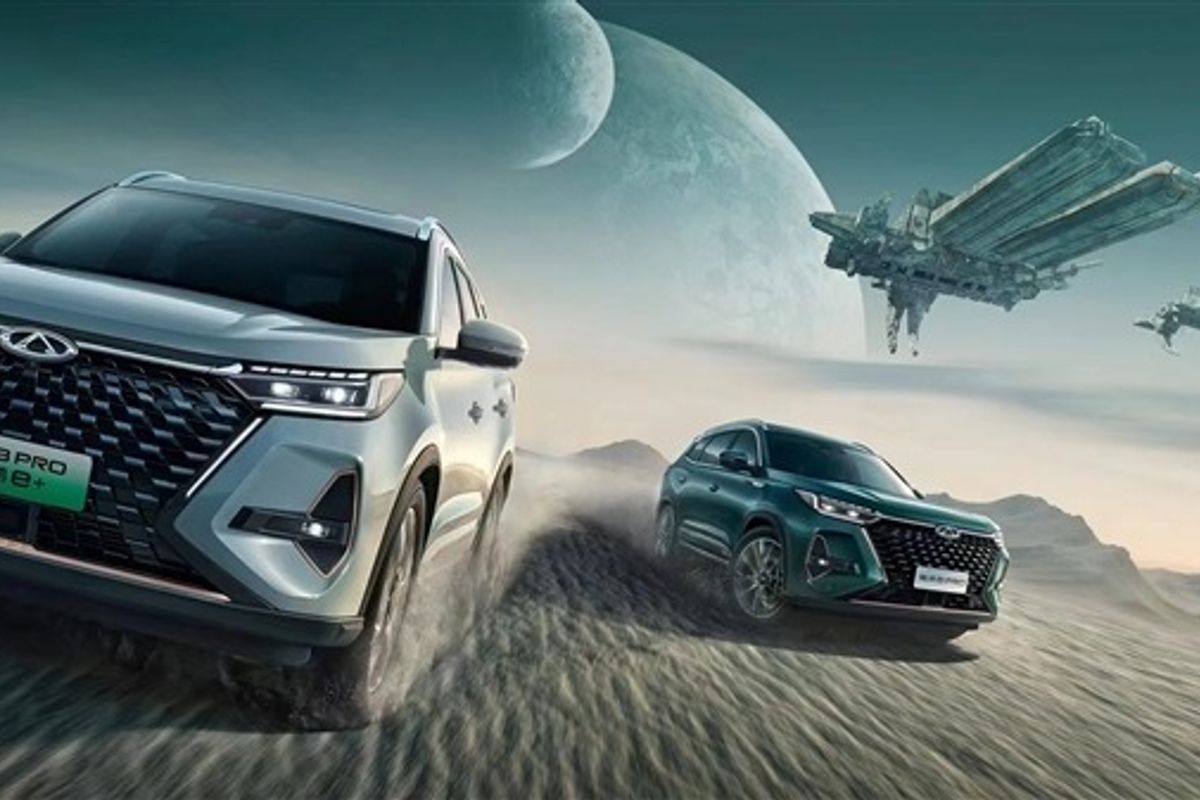
As a reminder, the Chery Tiggo 8 Pro might be new to South Africa, but it’s been around for some time in its homeland. The Chinese brand has released images and details of the Chery Tiggo 8 Pro facelift as well as a new plug-in hybrid derivative called the Tiggo 8 Pro Kunpeng e+.
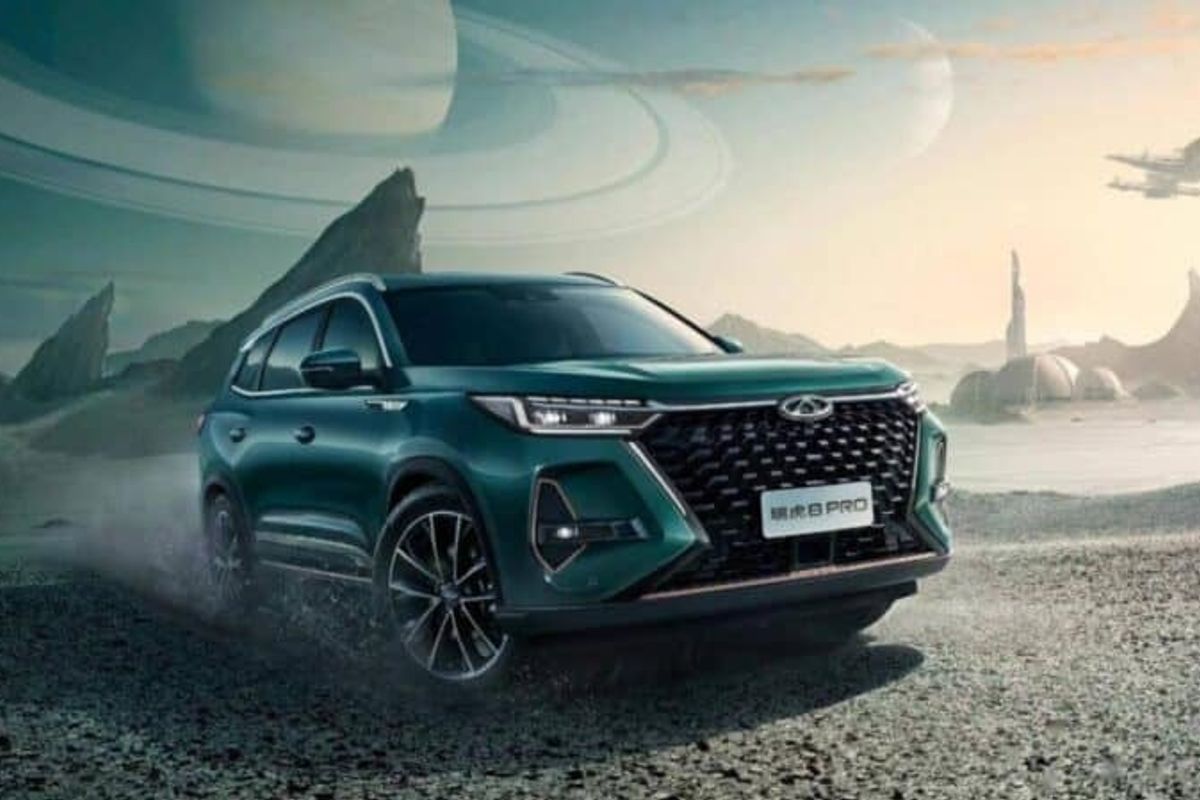
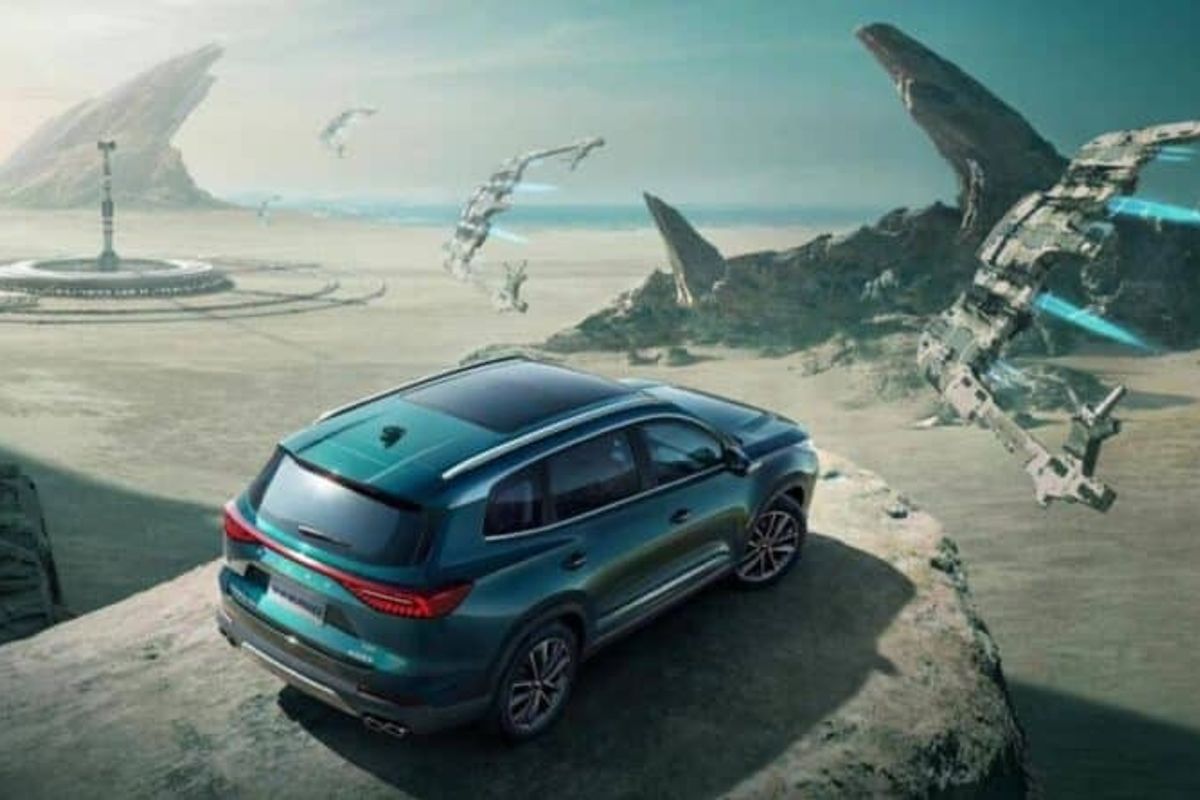
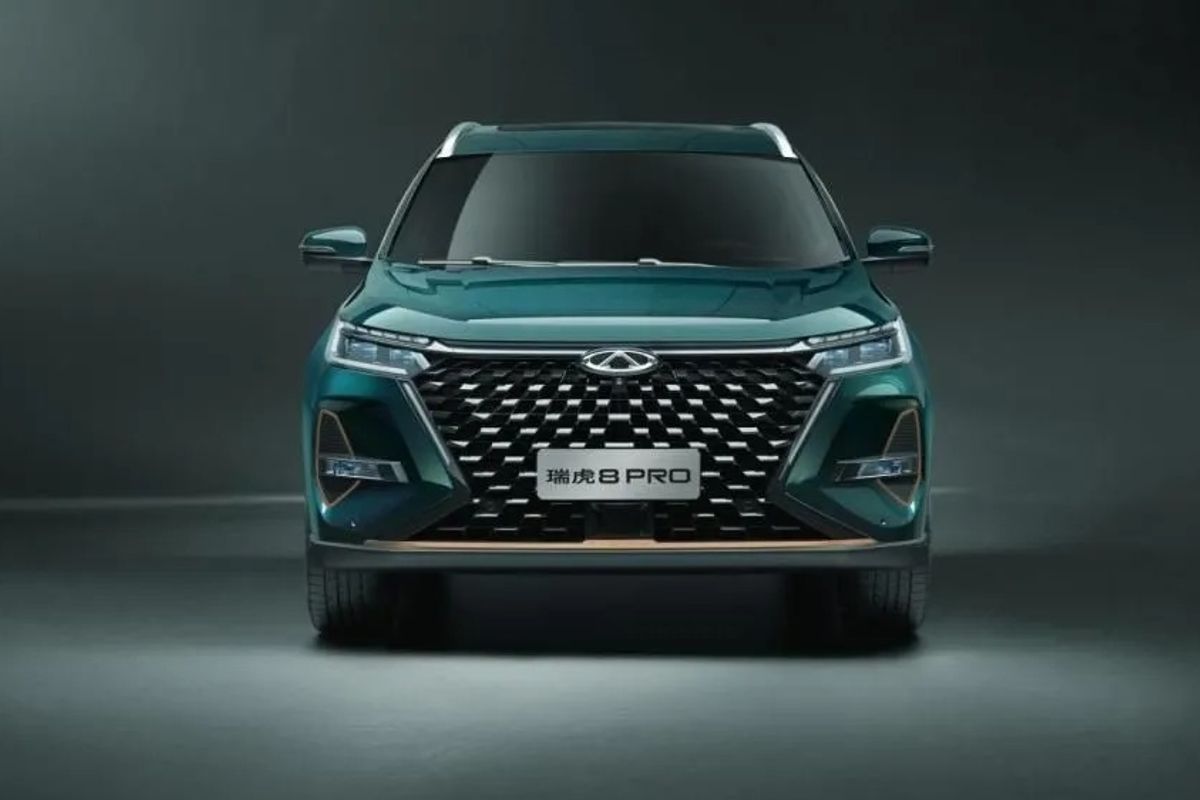
At first glance, you can see the front end has been substantially revised, with a bolder and bigger grille on display. There’s a big Lexus feel about it, giving some idea of where Chery is positioning its latest offering. There’s lots of chrome detailing on the X-shaped grille and the headlights have been given a redesign.
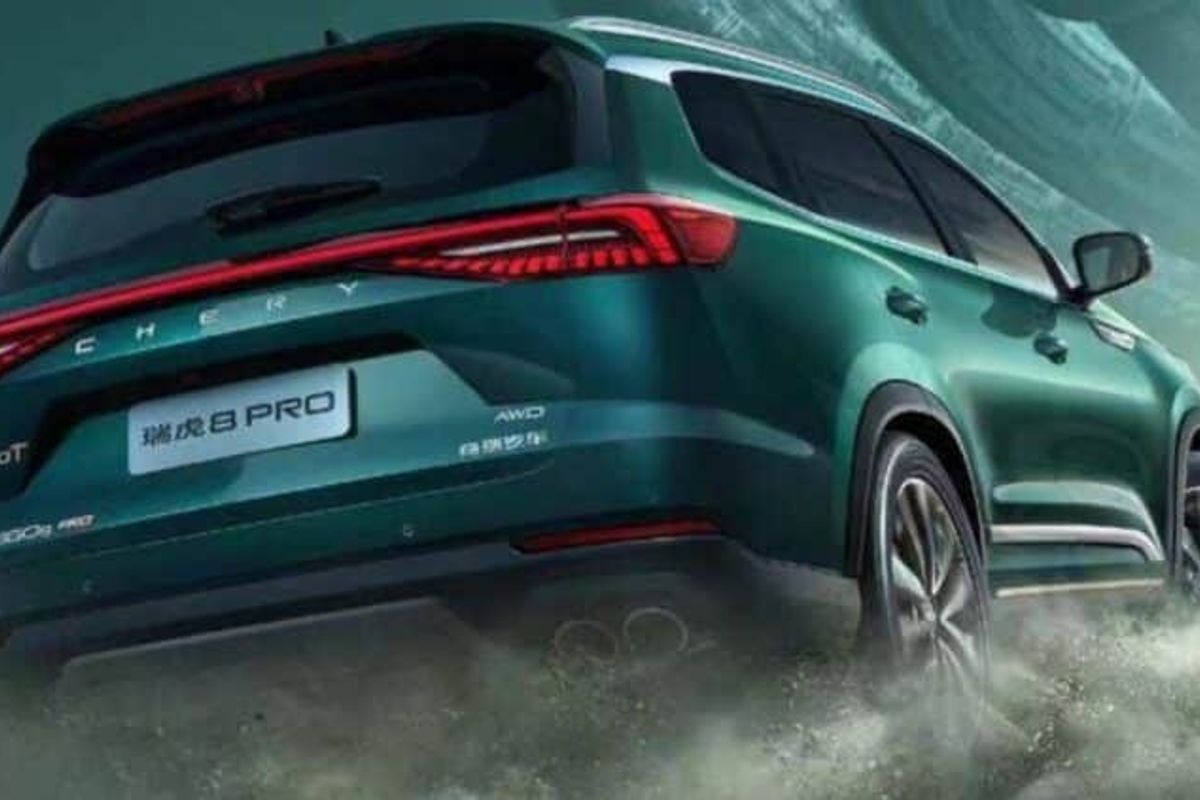
Physically, the new model is 4 745 mm long and 1 860 mm wide, with a height and wheelbase of 1 745 mm and 2 710 mm respectively. There’s a sporty theme going on with nice-looking alloy wheels and twin exhausts at the rear to emphasise the sportiness.
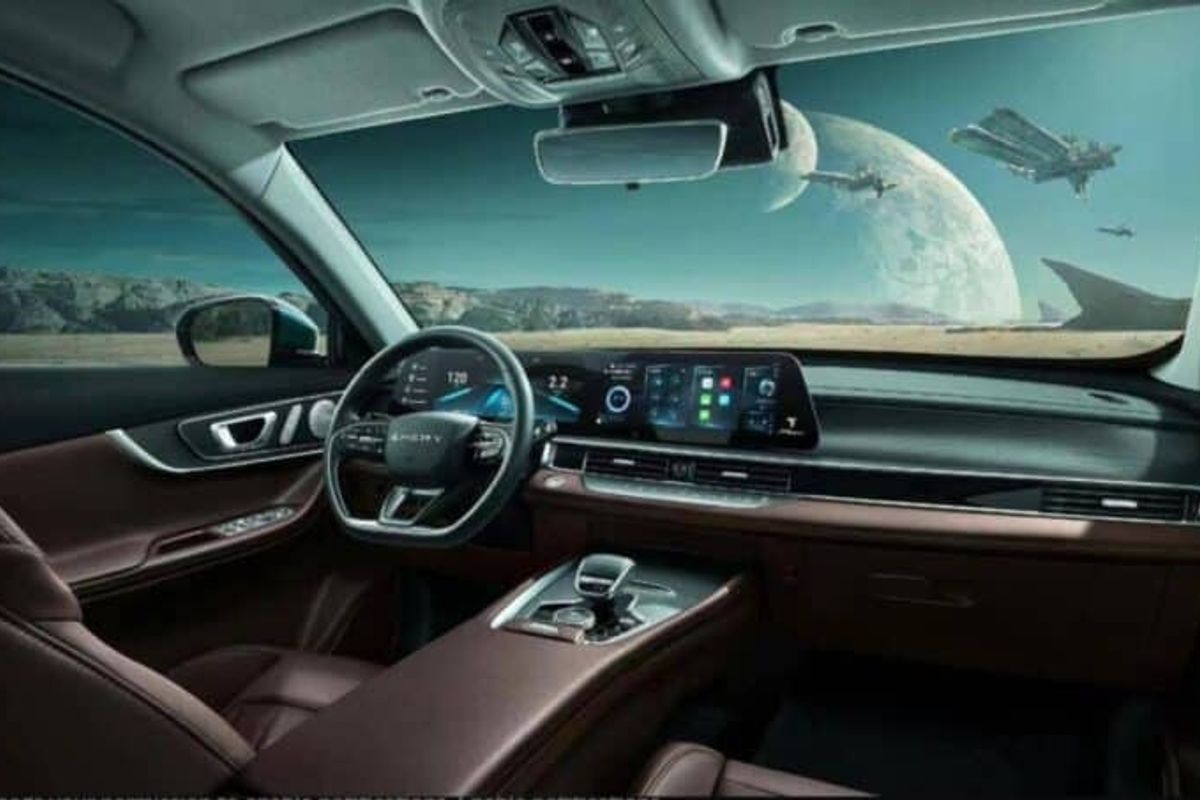
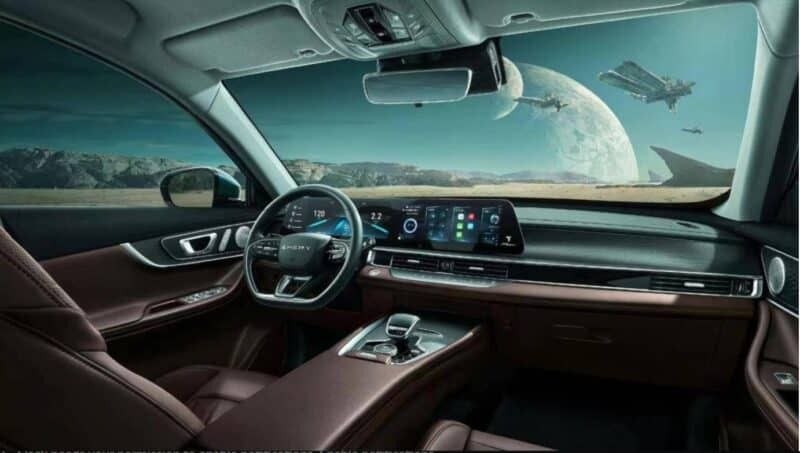
The cabin receives the most changes with a 24.6-inch dual-screen layout. There’s a 10-speaker surround sound system from Sony once again. Chery has added a new head-up display system that has speed, advanced driver systems, navigation, and phone functionality built-in.
It appears the turbopetrol engines have been carried over, with 1.6-litre and 2.0-litre options available. The South African-spec Chery Tiggo 8 Pro makes do with the former and our initial impressions suggest it’s up to the task of moving the 7-seater around.
The Kungpeng e+ derivative has an interesting powertrain. Unlike its conventionally-powered siblings, this features a compact 1.5-litre turbo petrol, paired to two electric motors. These are positioned on each axle, giving its all-wheel drive capability. The claims are extraordinary with an economy claim of 1L/100 km and 100 km pure electric range from a 19.27 kWh battery. Again, the gearbox is sourced from ZF.
There are some smart driving modes too, like single-motor pure electric, dual-motor pure electric, direct engine drive, parallel drive, parking charging, and driving charging.
Chery Tiggo 8 Pro facelift in SA?
Given the relative newness of both the Chery brand and Tiggo product lines, we suspect we’re not going to see the Chery Tiggo 8 Pro facelift in SA any time soon. However, South African fans of the Chery brand can expect to see the Tiggo 7 Pro touch down around the middle of 2022.
Wish BMW Made an M4 Gran Coupé? Alpina Has You Covered
BMW seemingly has no plans to give its 4 Series Gran Coupé the full-blown M treatment. Alpina’s new 364 kW B4 Gran Coupé, however, looks like a decidedly worthy substitute…
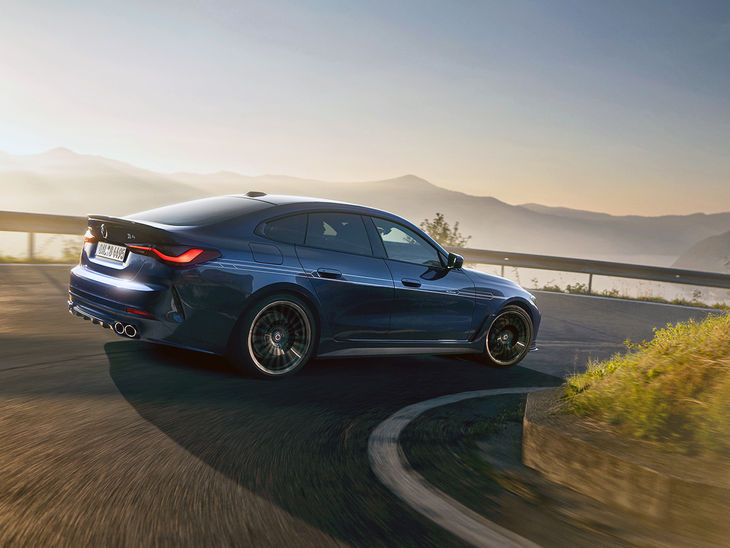
The covers have come off the new Alpina B4 Gran Coupé, which is based on the 4 Series Gran Coupé and is the first model revealed by the small-series manufacturer since the BMW Group announced its acquisition of the rights to the Buchloe-based brand.
From what we can tell, the B4 Gran Coupé is derived from the Munich-based automaker’s M440i xDrive model. Of course, the twin-turbocharged 3.0-litre straight-six petrol engine has been suitably fettled, taking peak outputs from the standard 285 kW and 500 Nm to a healthier 364 kW and 730 Nm.
That maximum power is delivered to all four wheels via a specially adapted ZF 8-speed automatic transmission and isn’t far off the official three-door M4 Competition’s 375 kW figure, endowing the B4 Gran Coupé with a claimed 0-100 km/h sprint time of 3.7 seconds (two-tenths ahead of the rear-wheel-drive M4 and two-tenths behind the all-paw version). Top speed, meanwhile, is pegged at an M4-beating 301 km/h.
In addition to a sport exhaust system, the Alpina sport suspension kit ships standard on this four-door model, adding a bespoke spring and damper configuration as well as bringing a negative camber of 1.25° at the front axle. The firm claims these tweaks allow the B4 Gran Coupé to “master challenging road conditions with ease”, excel in “dynamic driving manoeuvres” and remain “composed at high speeds”.
The B4 Gran Coupé benefits from a thoroughly overhauled suspension system.
With that heady top speed unlocked, the braking system has also been upgraded, with 4-piston fixed callipers and 395 mm discs fitted at the front complemented by floating callipers with 345 mm discs at the rear. A high-performance braking system with drilled lightweight composite discs is also available as an option.
All the usual understated Alpina styling cues are present and correct, from the various aerodynamic body components to a subtly reinterpreted version of the Alpina Classic 20-spoke, 20-inch alloy wheels (complete with wider custom Pirelli P Zero tyres at the rear). Inside, you’ll find the requisite Alpina production plaque with an individual build number as well as a hand-stitched Lavalina leather finish for the steering wheel.
Earlier in March 2022, the BMW Group announced it had acquired the rights to the Alpina brand in an attempt to “secure the future” of the small-series manufacturer as the industry continues its rapid shift towards electromobility. The existing long-standing cooperation agreement between the two companies is expected to run until the end of 2025, with Alpina likely to retain its focus on combustion-engined BMW models until then. Thereafter, BMW says the cooperation will continue “but in a different form”.
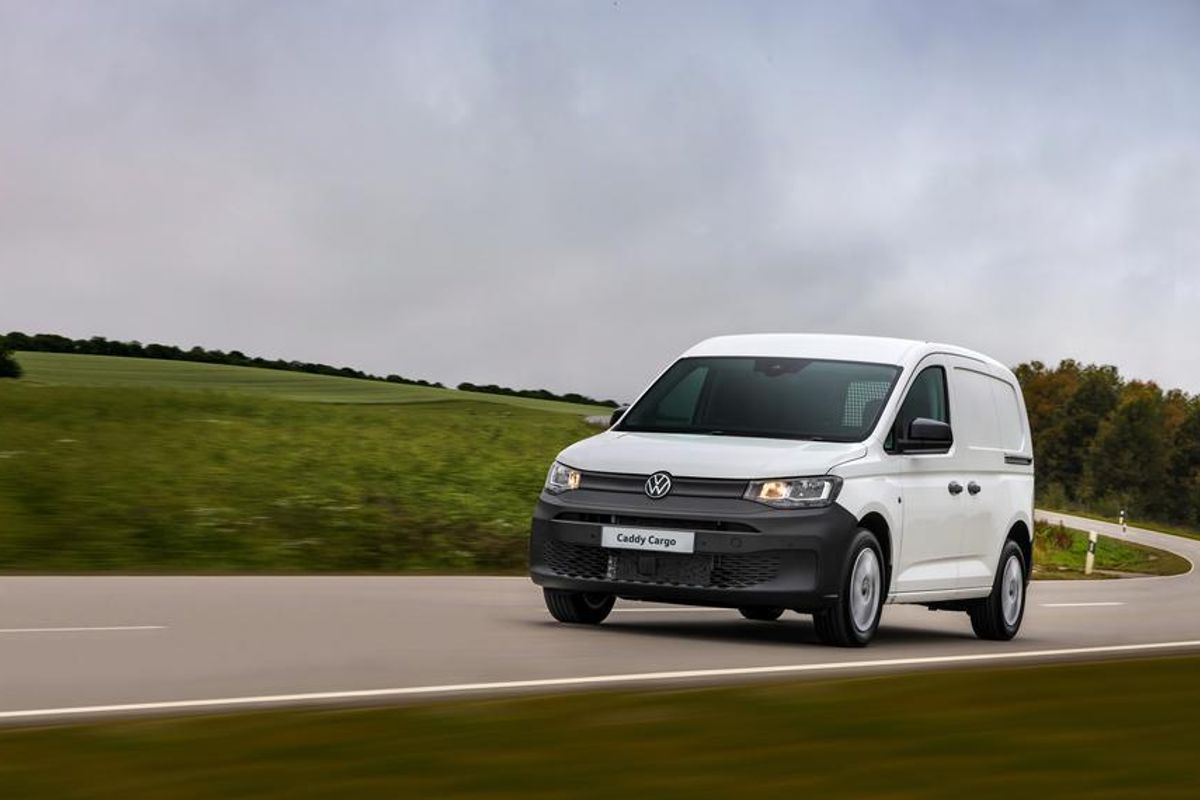
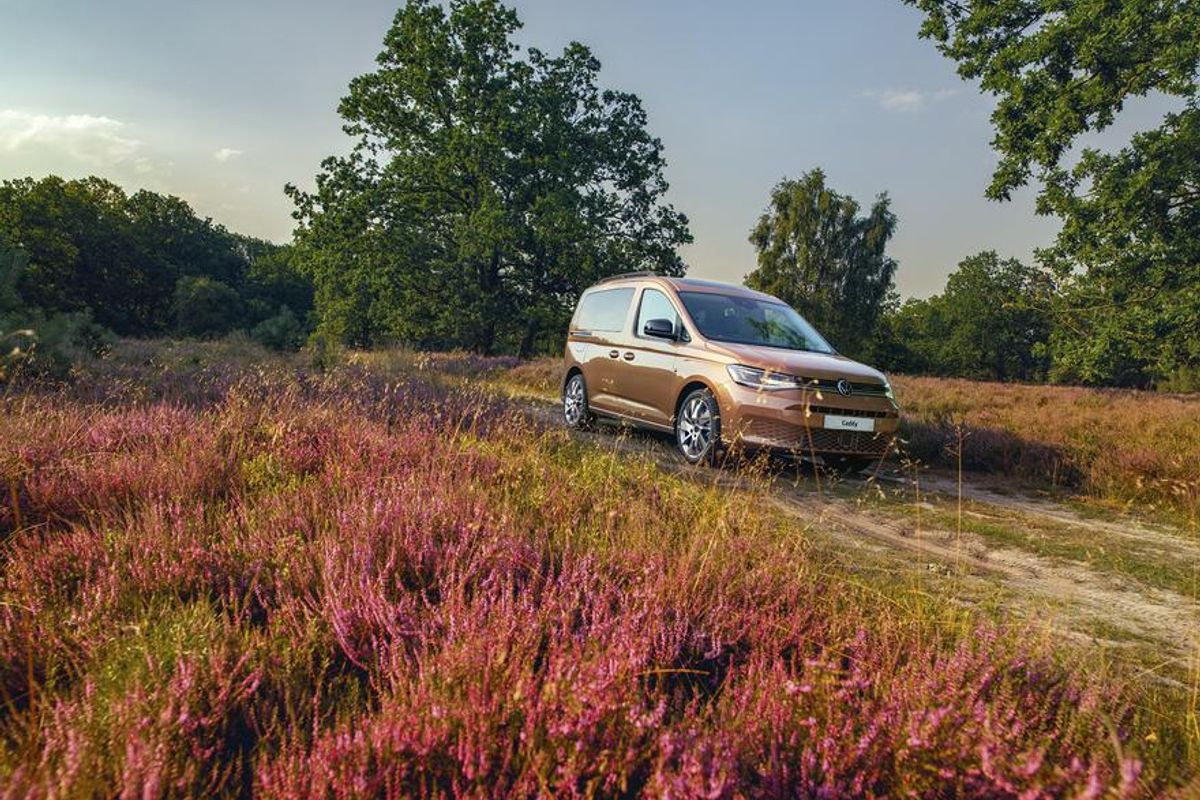
Volkswagen has launched the new Caddy MPV in South Africa! See specification and pricing details below!
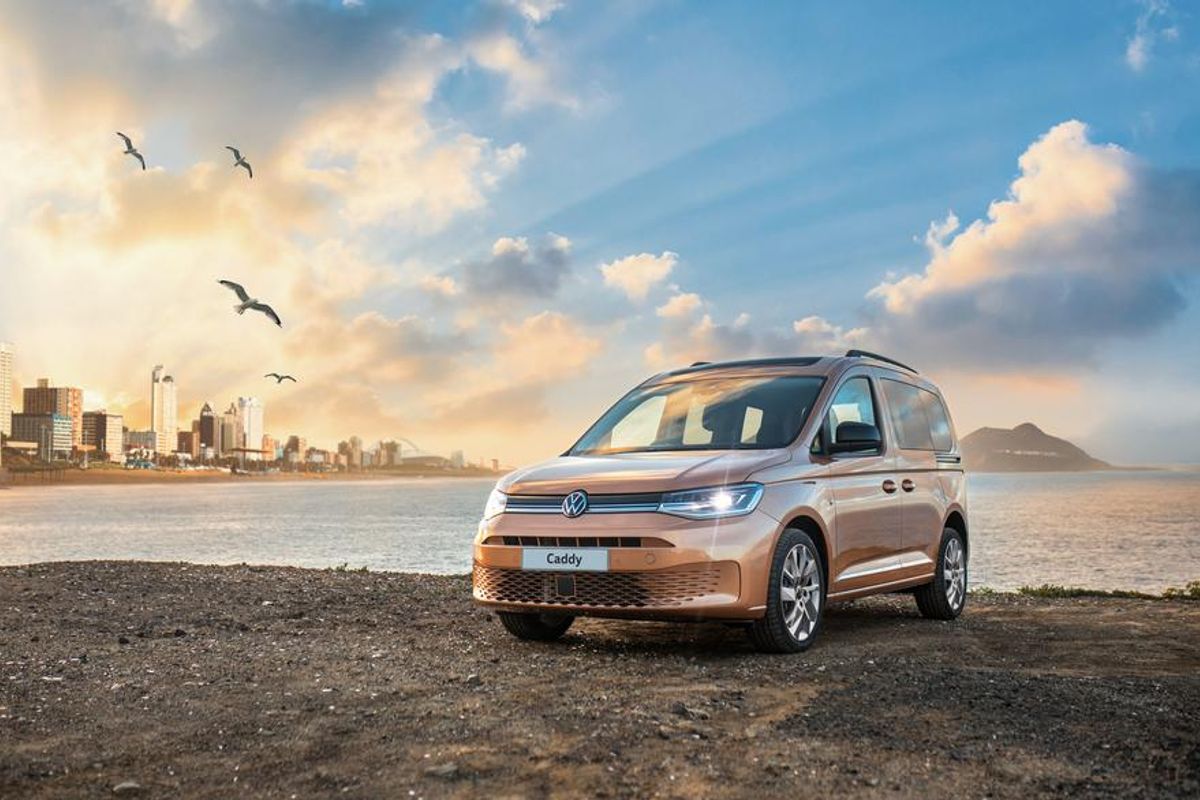
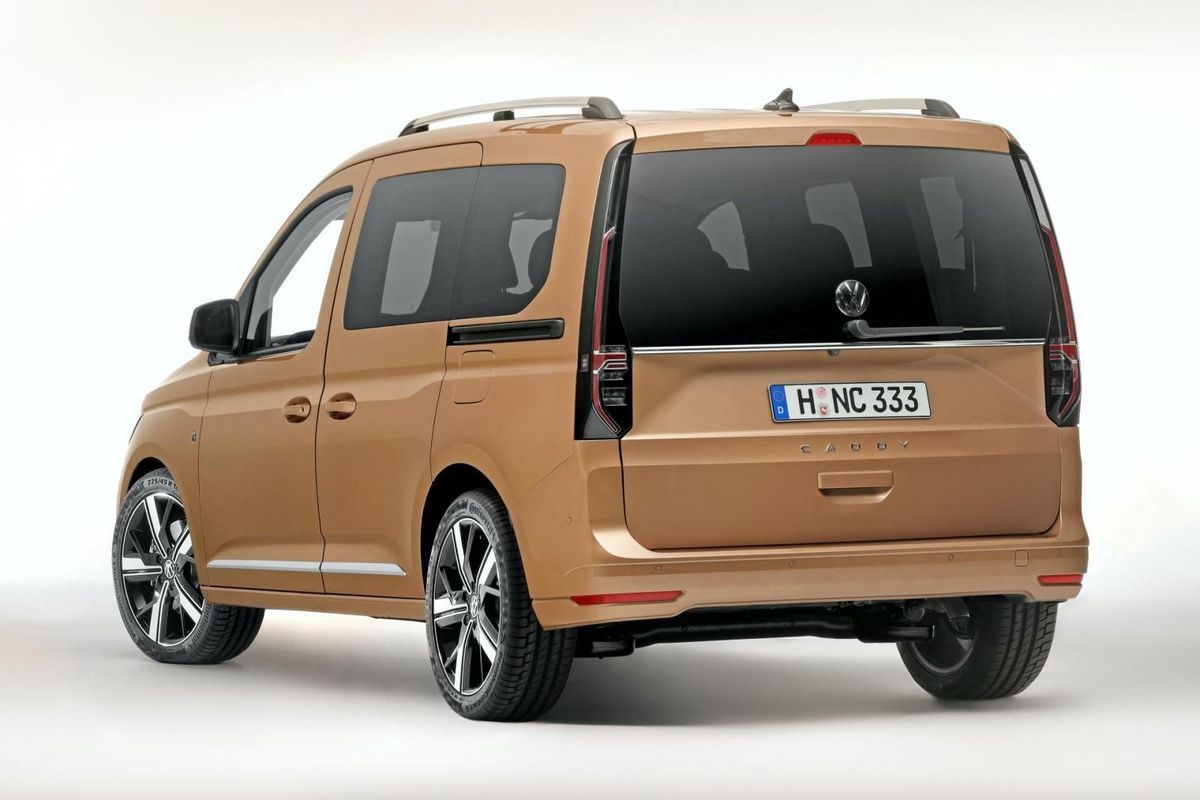
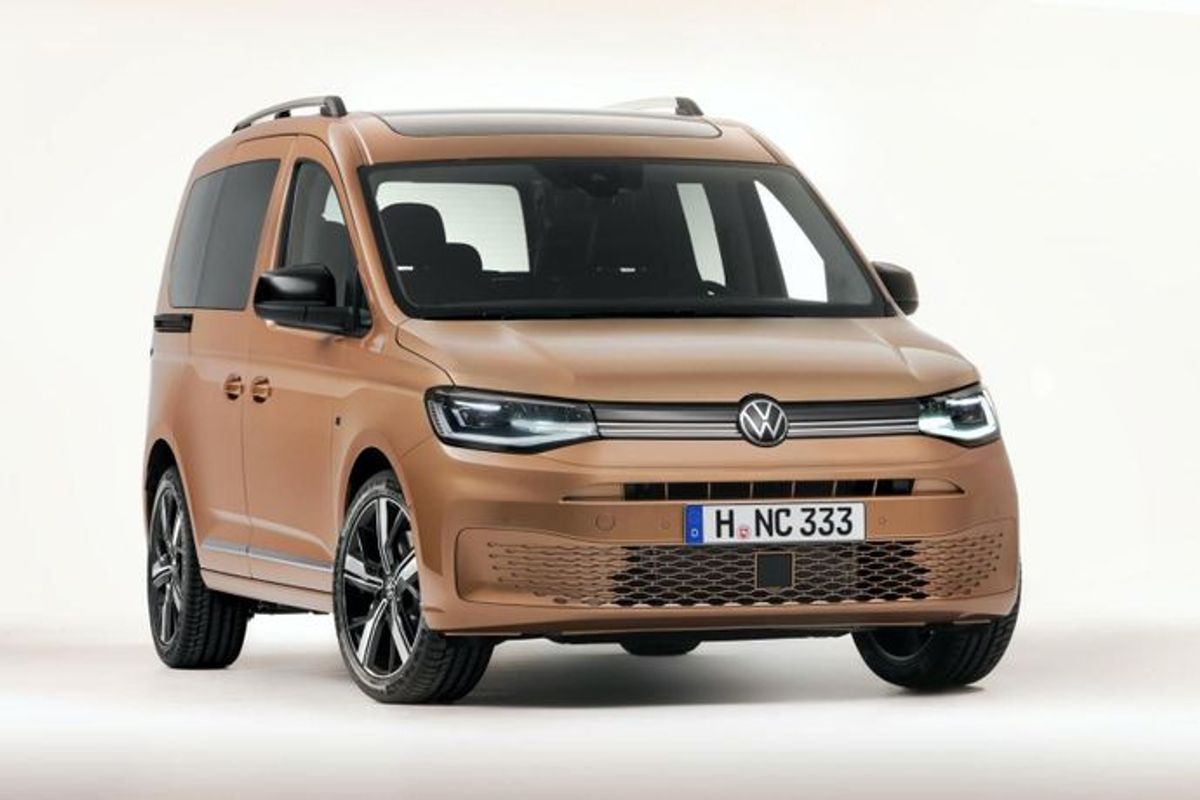
The Volkswagen Caddy serves as both a family MPV or cargo-hauling business vehicle and the new 5th-generation Caddy is now available to buy in South Africa.
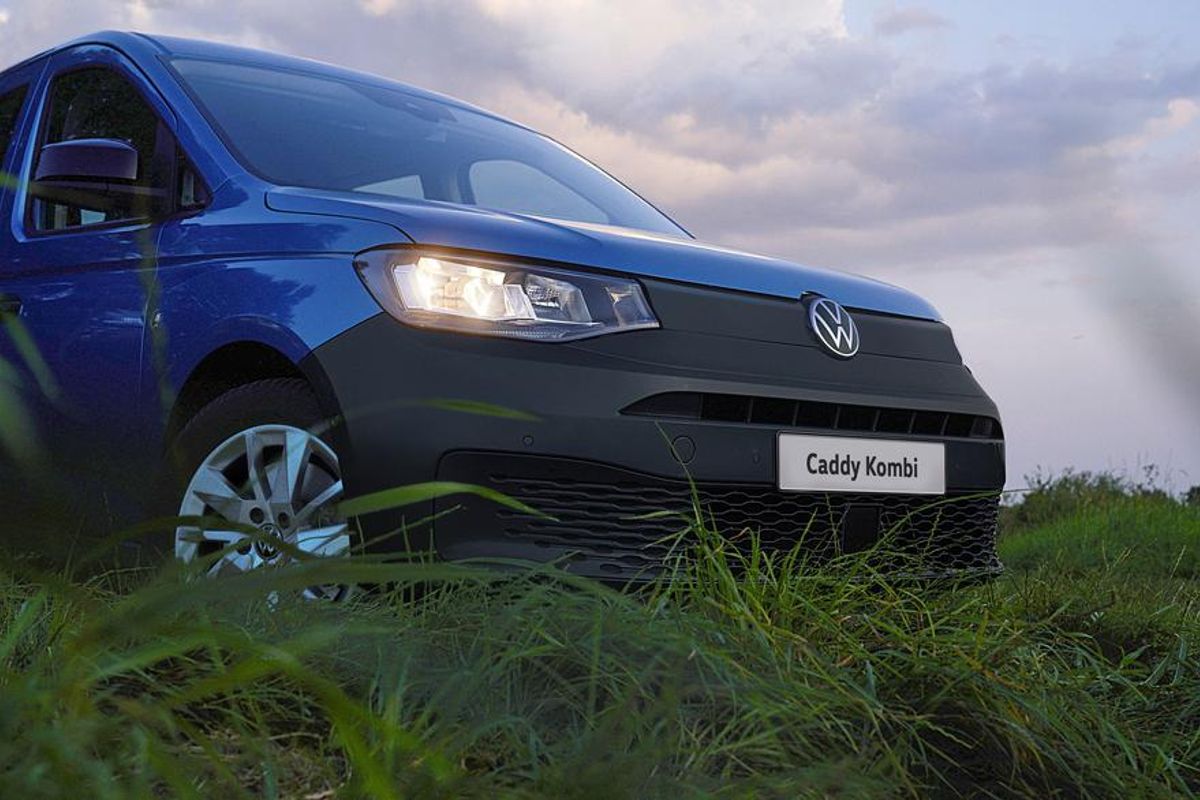
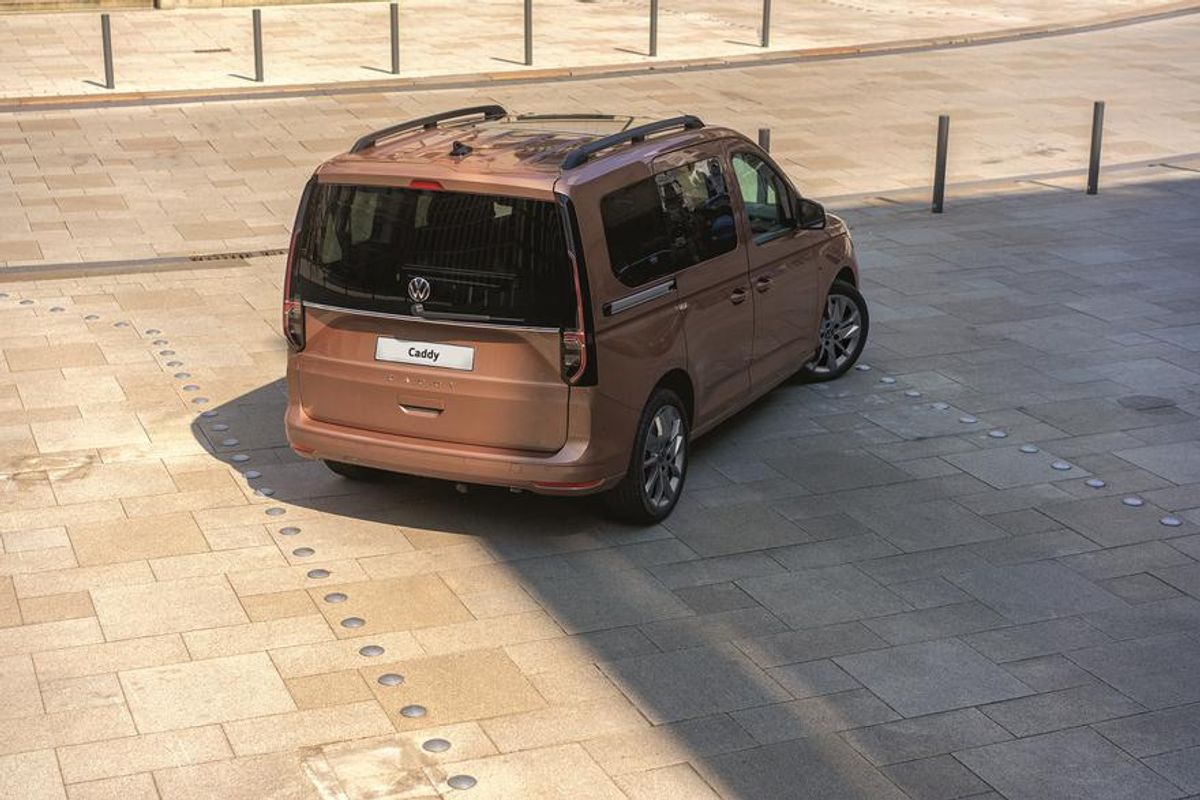
The Caddy is built on Volkswagen’s highly scalable MQB platform and rather than re-designing the wheel for its new Caddy, Volkswagen design approach is more evolutionary. The face of the new Caddy and the grille in particular is much slimmer than before with newly-designed LED headlights and a honeycomb mesh design for the lower grille completing the front-end design. The Caddy’s rear end gets slim vertical LED headlights. The Caddy is offered with either a single large tailgate or dual rear doors as well as single or double side sliding doors. These doors can also be opened or closed electrically if you wish. Optional features include a panoramic sunroof, removable tow bar and 16-inch Wien alloy wheels. A total of 12 body colours are available to buyers.
The Caddy is now offered with a new naming convention including Caddy, Caddy Maxi, Caddy Kombi, Caddy Maxi Kombi, Caddy Cargo and Caddy Maxi Cargo.
The short wheelbase Caddy has seating for 5 passengers while the long-wheelbase Caddy Maxi is a 7-seater. As for the Caddy Kombi, it can be used as both a personal leisure vehicle or as a work vehicle and is offered in both short-wheelbase (7-seater) and long-wheelbase (5-seater/optional 7-seater) configurations, Seats can be removed to make more space and both feature easy-access sliding doors.
The short wheelbase Caddy Cargo and long-wheelbase Caddy Maxi Cargo will serve your business needs with loading space of 3.1m3 and 3.7m3 respectively and up to 6 lashing rings make it possible to secure your load. If you are looking for a stylish panel van to haul goods, or people, the new Caddy is probably a good bet.
The Caddy’s interior has been redesigned and infotainment screens will range from between 6.5-inches to 10-inches and Volkswagen’s Digital Cockpit are on the options list. A new multifunction steering wheel and automatic transmission lever are fitted and the new ergonomic seats should provide higher levels of comfort. Keyless Access also features alongside a host of driver assistance systems including Travel Assist adaptive cruise control, Trailer Assist and Side Assist with Rear Traffic Alert.
Engines for the new VW Caddy
The new Caddy is available with a petrol or diesel engine. The 1.6-litre petrol engine develops 81 kW and 152 Nm of torque and will be mated with a 6-speed manual transmission. Volkswagen claims 7.3L/100km for this engine and it can be had in the Caddy, Caddy Kombi (SWB) and Caddy Cargo (SWB).
As for the diesel engine, it’s a 2.0-litre turbodiesel engine with 81 kW and 300 Nm of torque and it’s also paired to a 6-speed manual transmission and carries a claimed fuel consumption figure of 5.5 L/100km. It’s offered in the Caddy, Caddy Maxi (LWB), Caddy Kombi (SWB), Caddy Cargo (SWB) and Caddy Maxi Cargo (LWB).
How much does the Volkswagen Caddy Cost in South Africa?
The new VW Caddy is sold with a 3-year / 120 000km warranty while the Caddy Kombi, Caddy Maxi Kombi, Caddy Cargo and Caddy Maxi Cargo come standard with a 2-year / unlimited-kilometre warranty. The entire Volkswagen Caddy range also comes standard with a 12-year anti-corrosion warranty. The service interval is 15 000 kilometres.
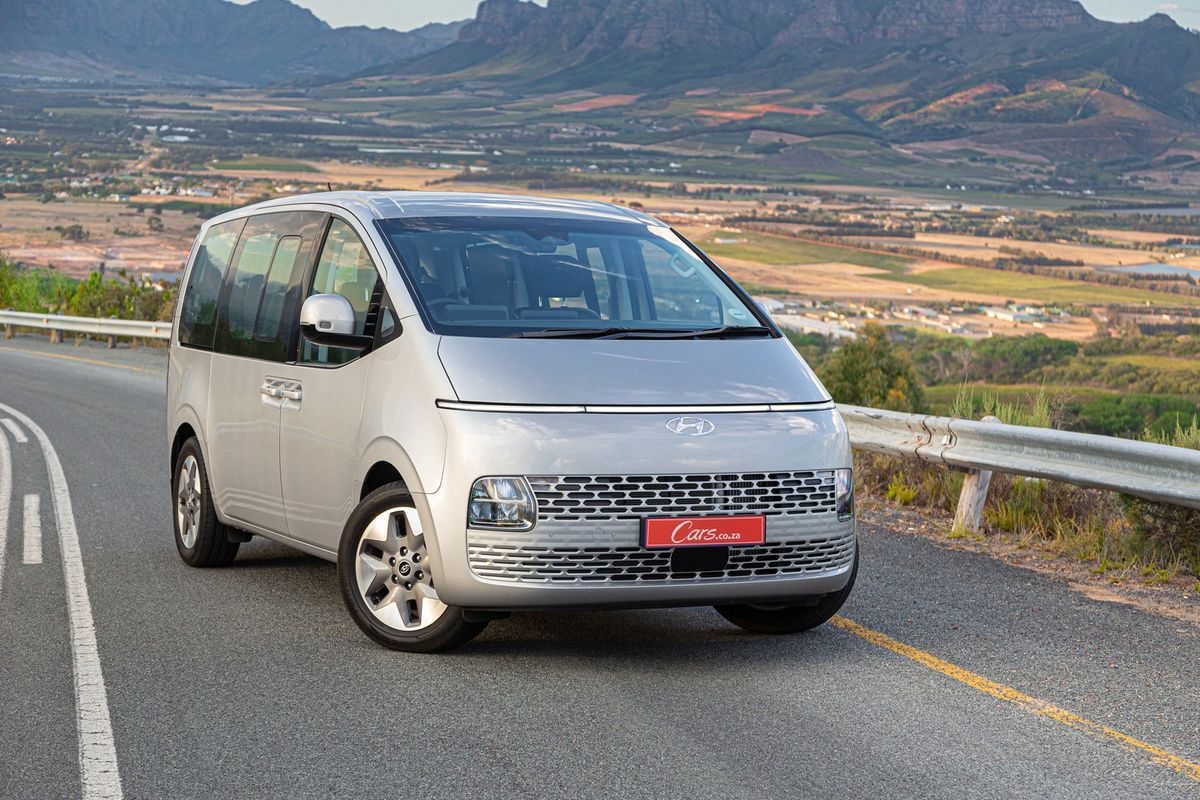
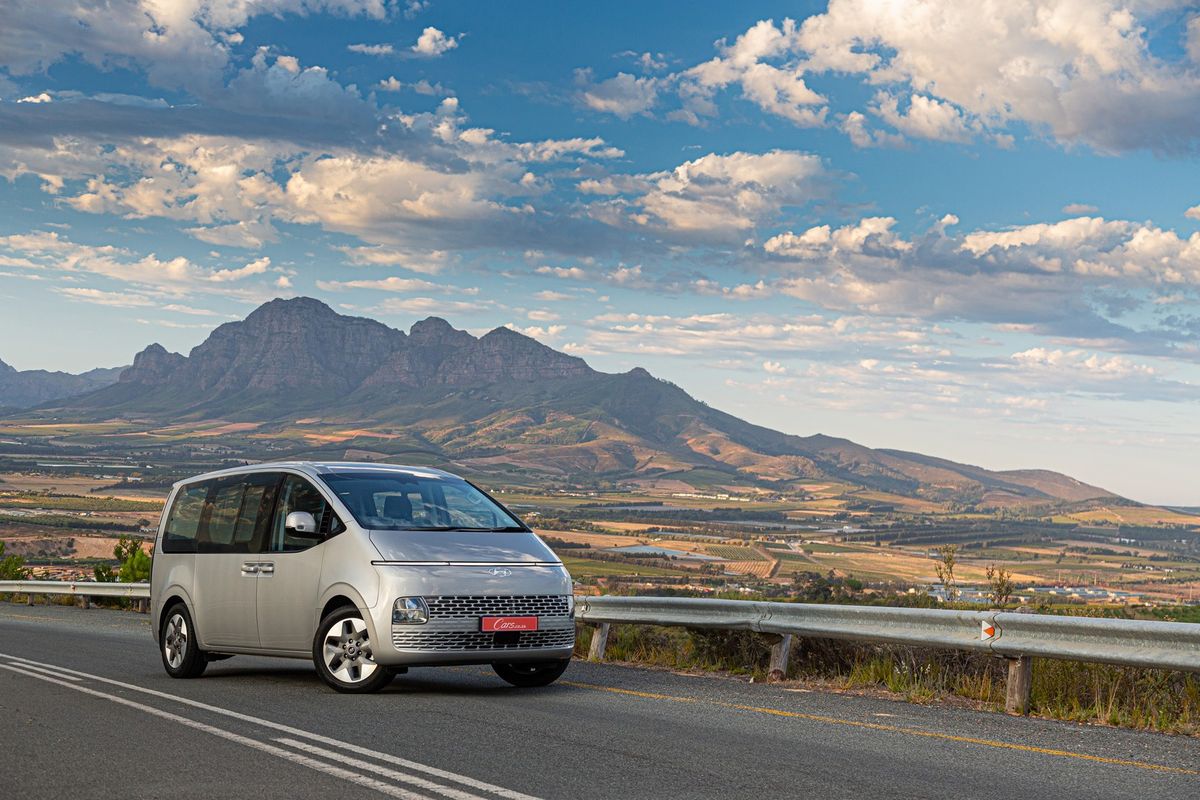
The Hyundai Staria has started quite a few conversations thanks to its futuristic styling, but is it actually a good people-mover? We’ve spent a few thousand kilometres behind its ‘wheel.
We like: Space and packaging, strong engine with good economy, semi-autonomous technology, value for money
We don’t like: Controversial styling won’t please everyone, some cheap plastics around the central cluster
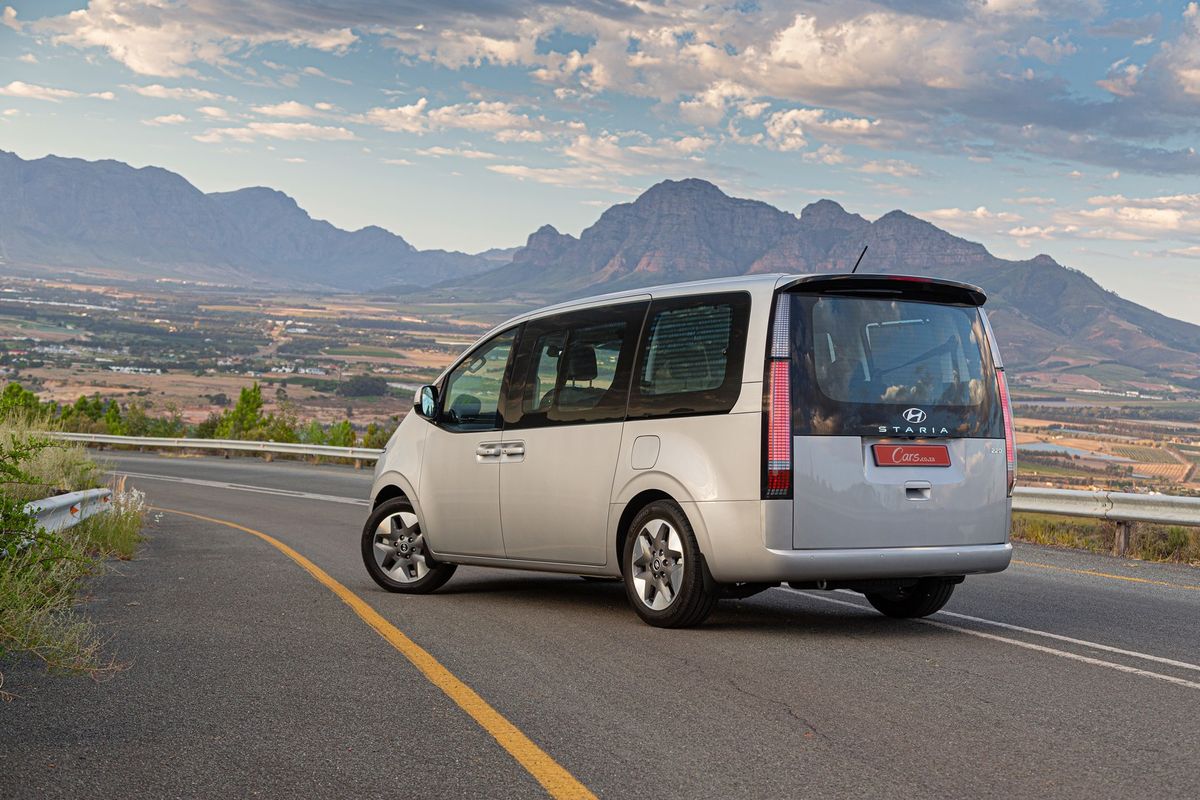
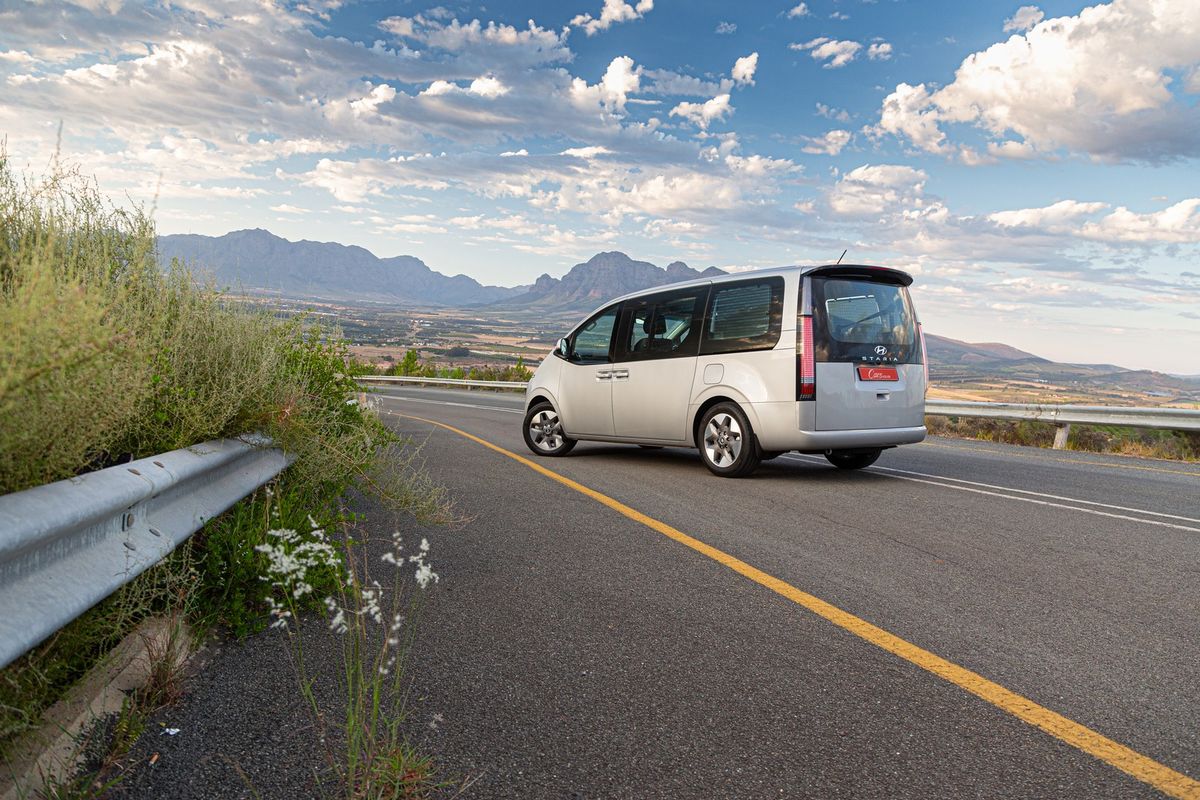
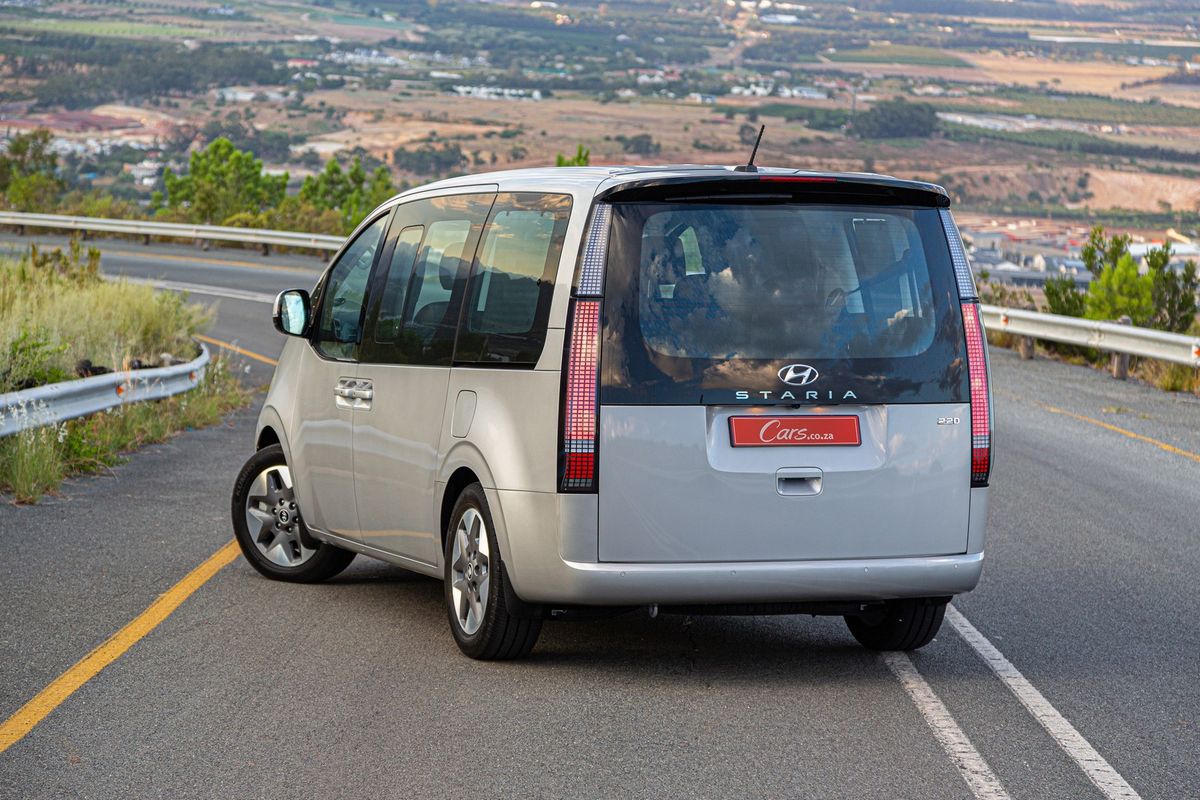
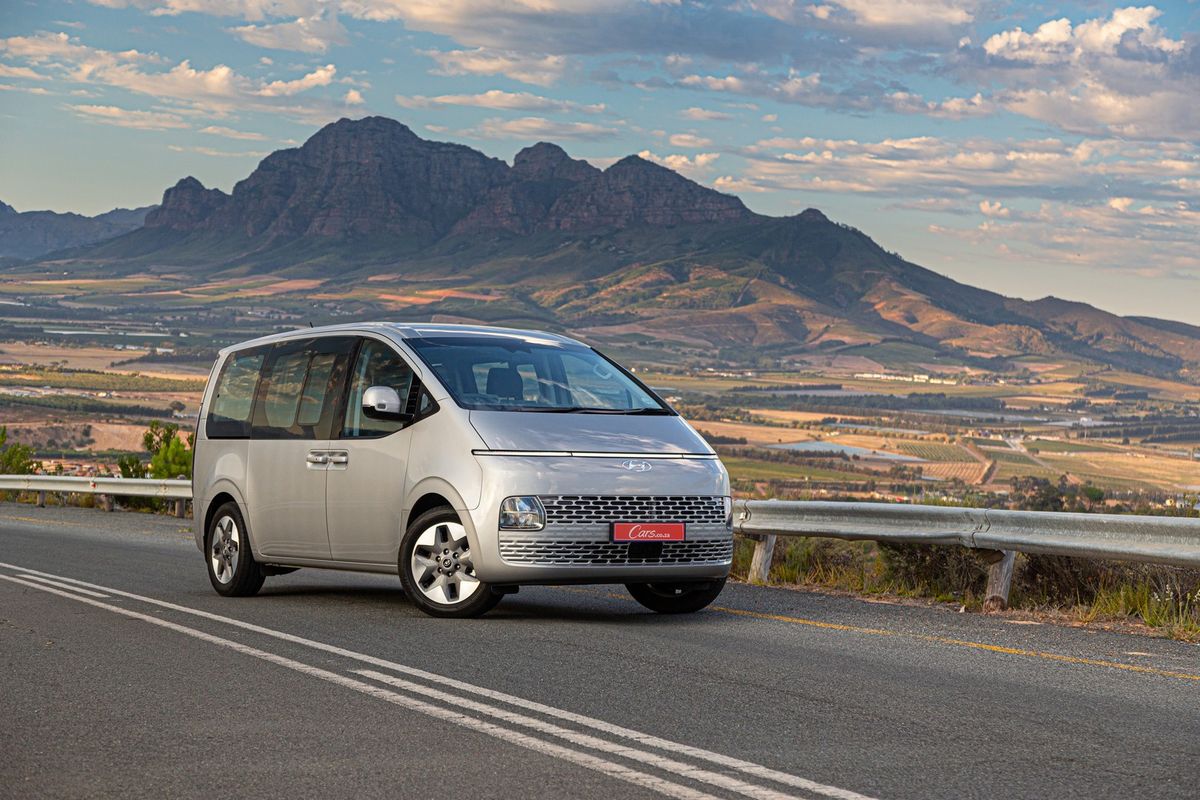
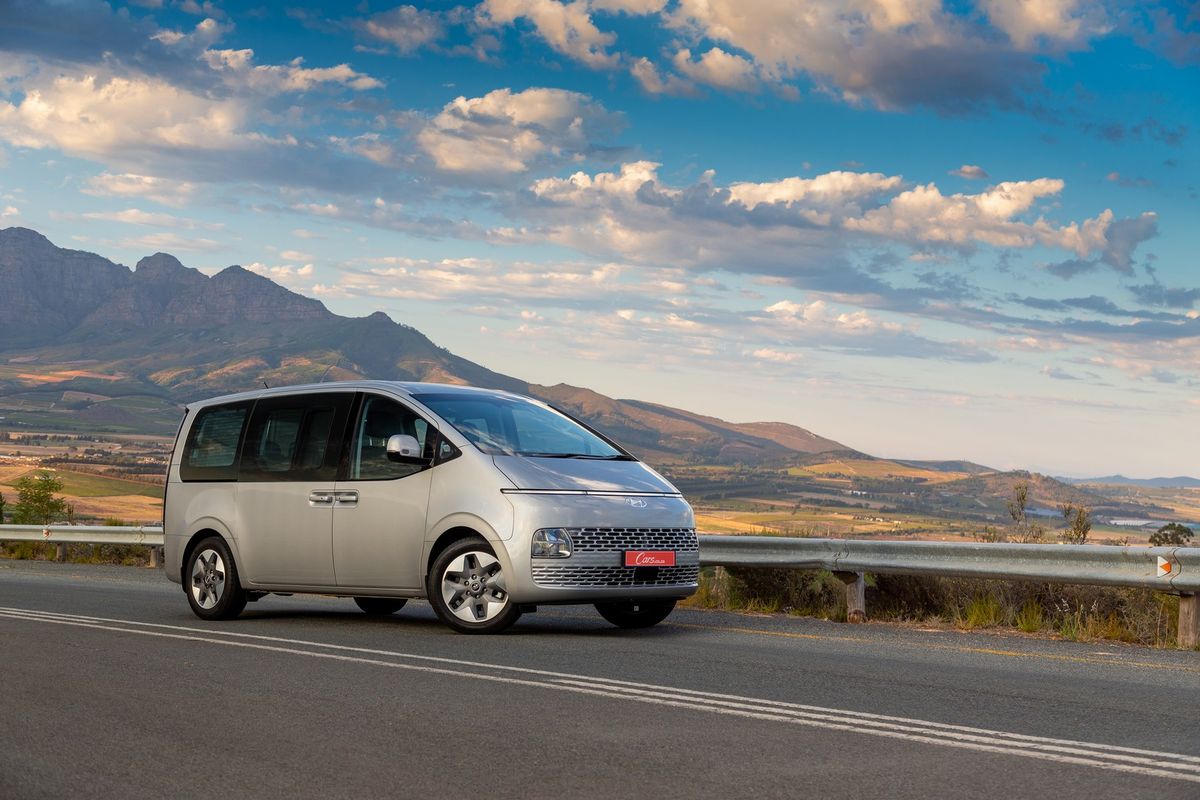
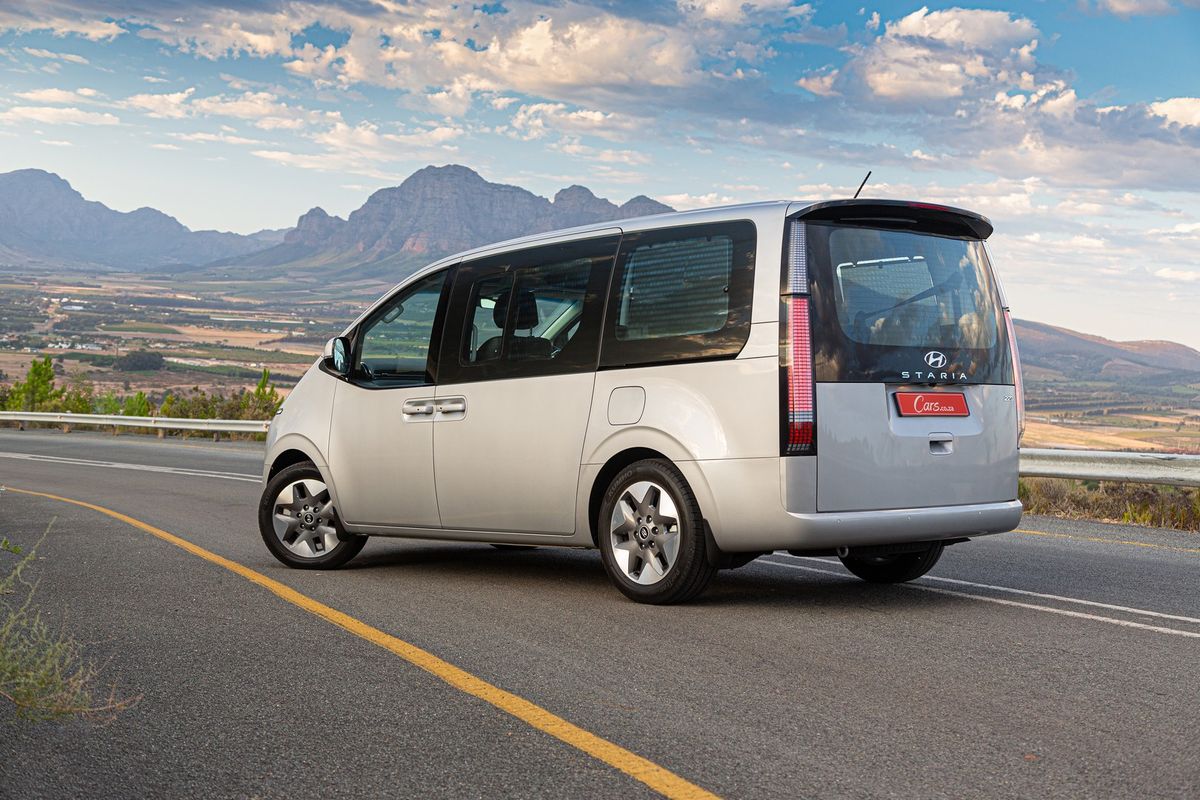
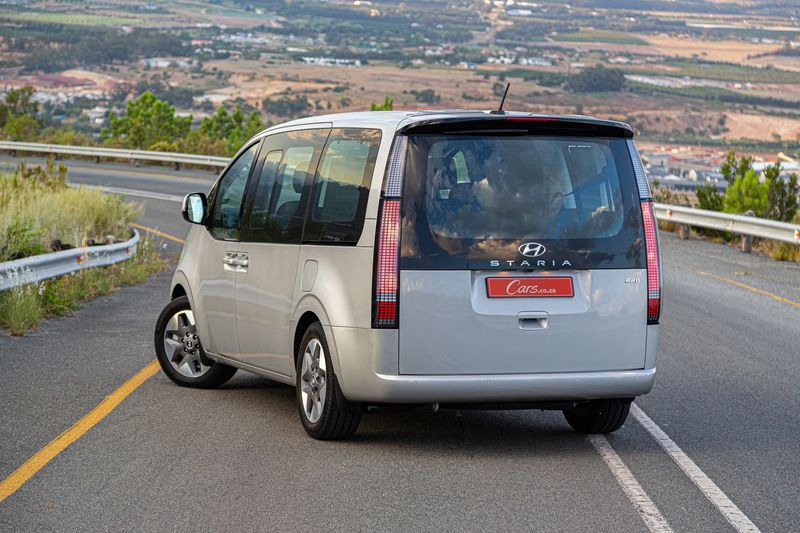
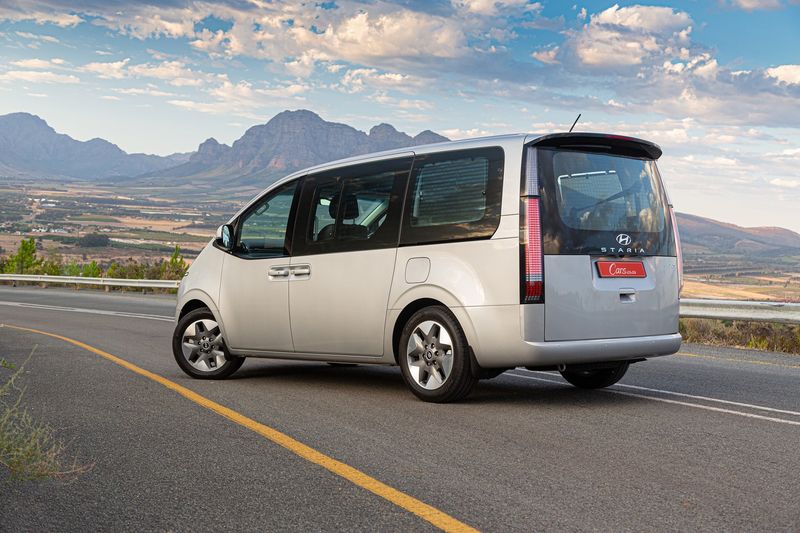
The rear aspect of the Hyundai Staria isn’t as aesthetically challenging as its front-end design, but those tail-light clusters seem to go on forever.
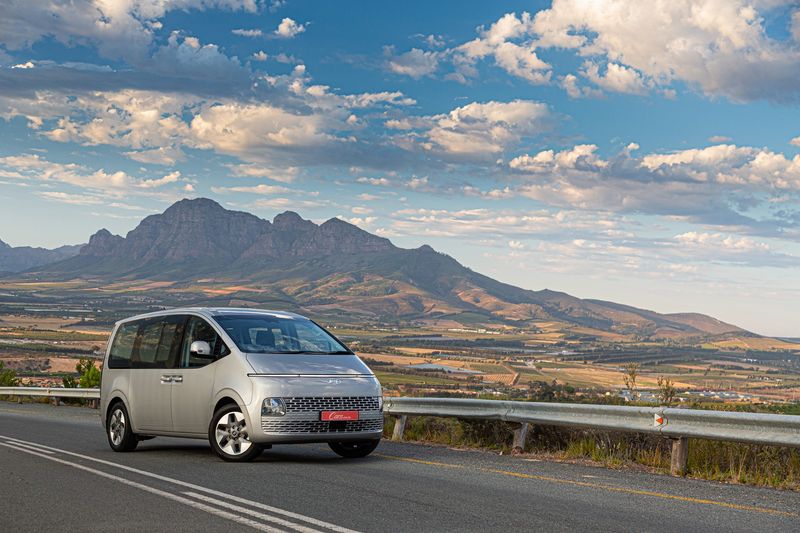
Compared with its predecessor (the now-discontinued H1), the new Staria is a revelation. From a stylistic point of view, the H1 and Staria are chalk and cheese. The H1 was a typical van-based minibus that prioritised practicality and value for money, but the Staria is styled to make heads turn and its cabin is equipped with some special touches to make the model more family-orientated, or, to put it another way, less LCV-like.
With the Staria, Hyundai hopes to snatch more than a few sales away from the likes of the Volkswagen T6.1 range and the Mercedes-Benz V-Class family. Its predecessor, the H1, was the segment leader by quite some margin, so the Staria has some big shoes to fill.
Despite the segment taking a dip in sales over the past few years, it appears the demise of the large family bus has been put on hold. Multiple new entries have been added to the segment and the Hyundai Staria competes with its fellow countryman – the Kia Carnival, as well as the Opel Zafira and the Ford Tourneo Custom.
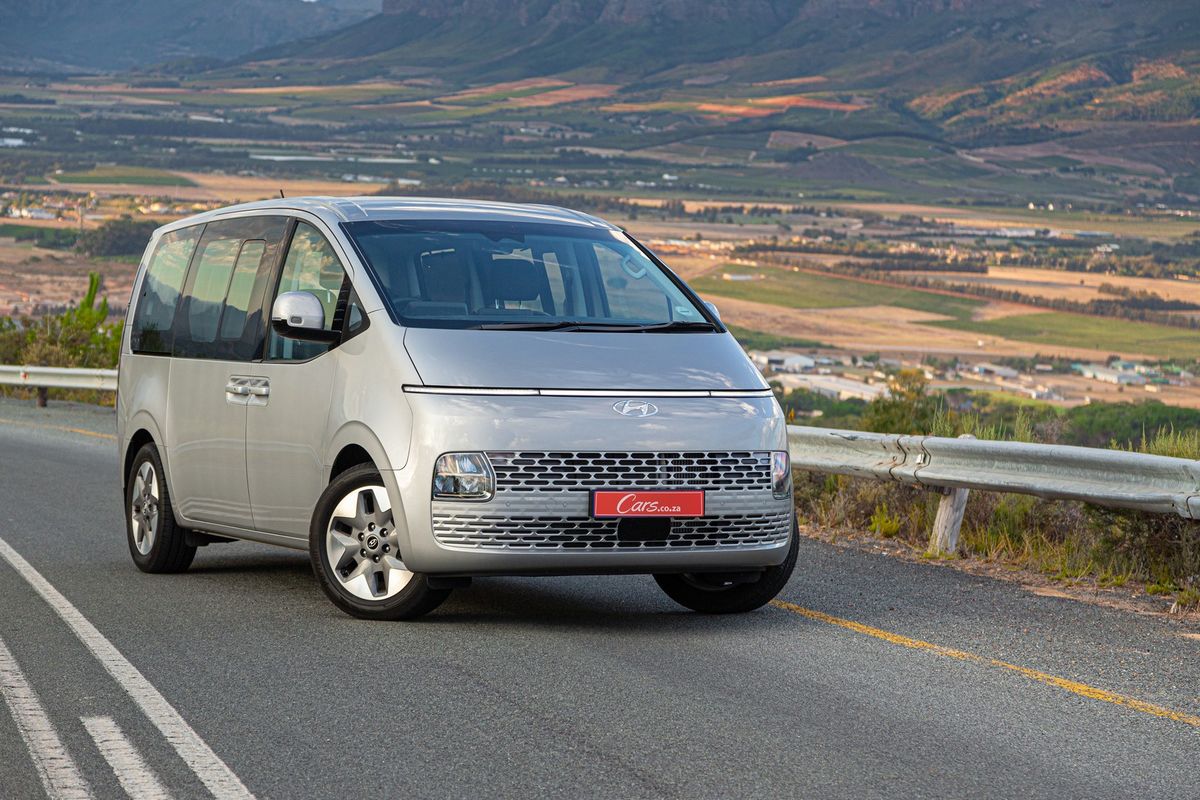
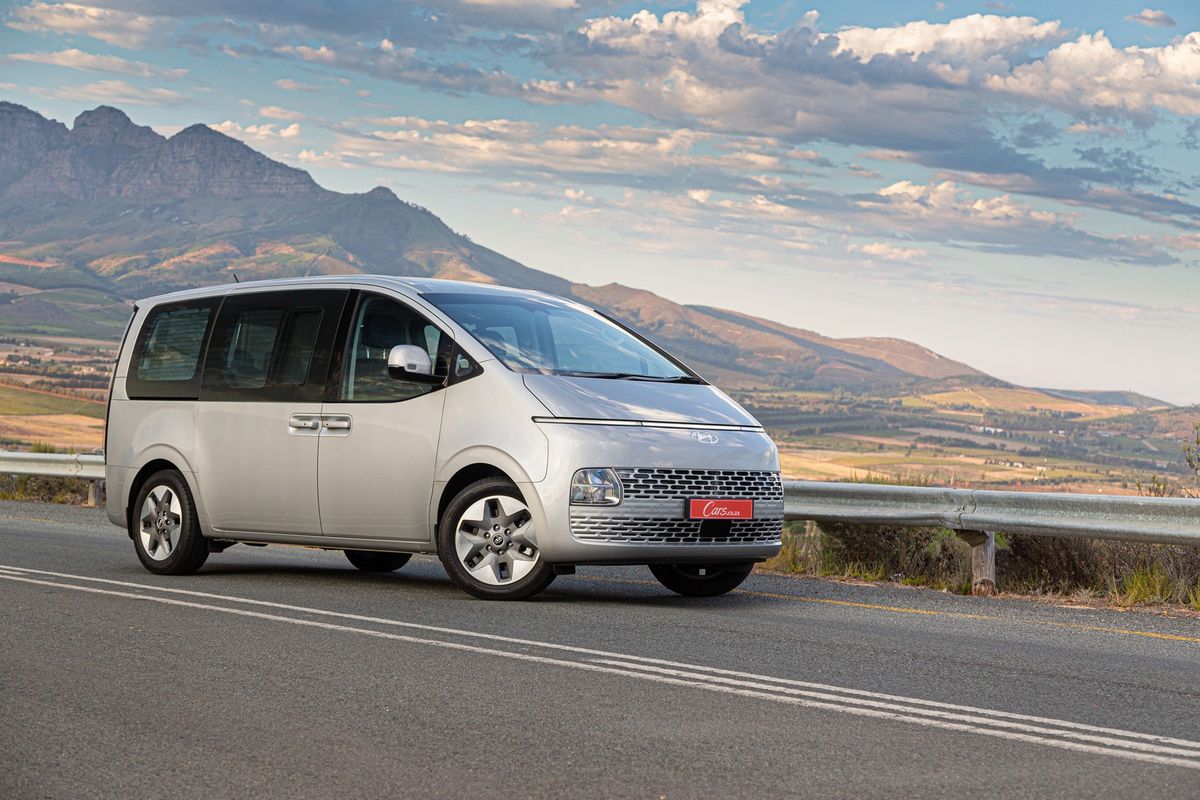
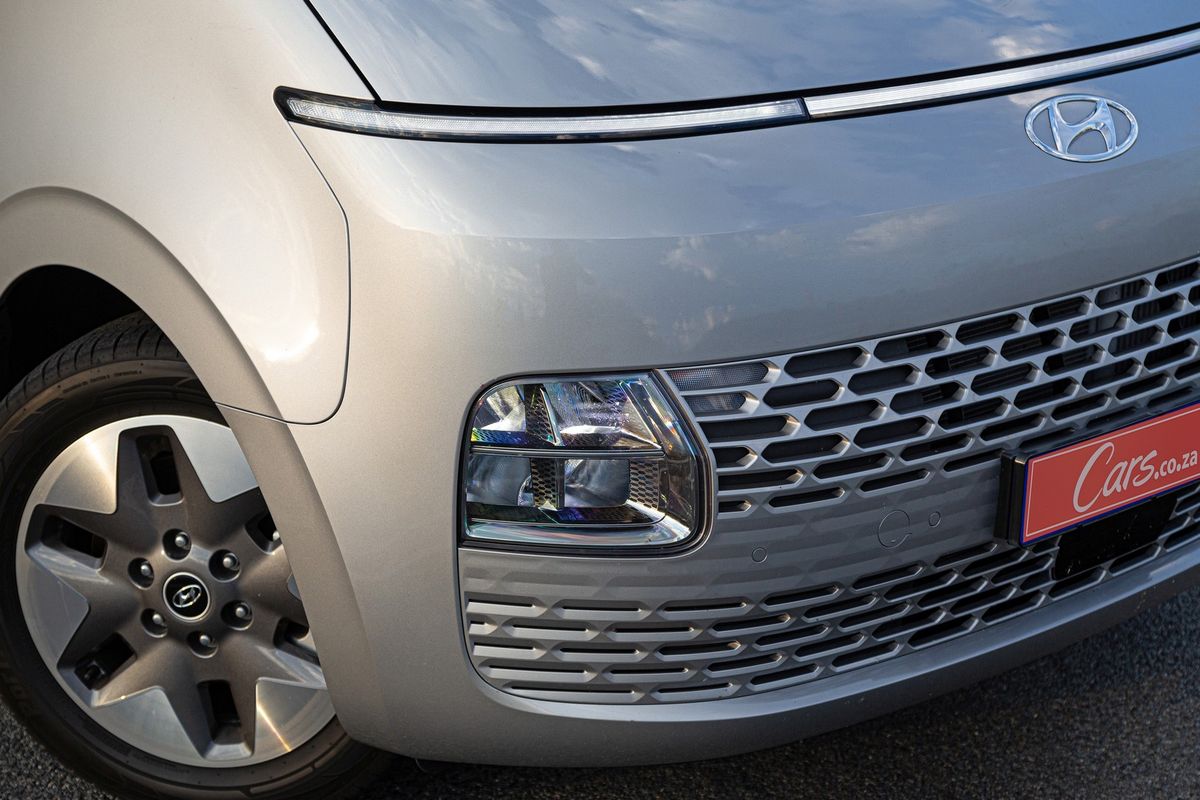
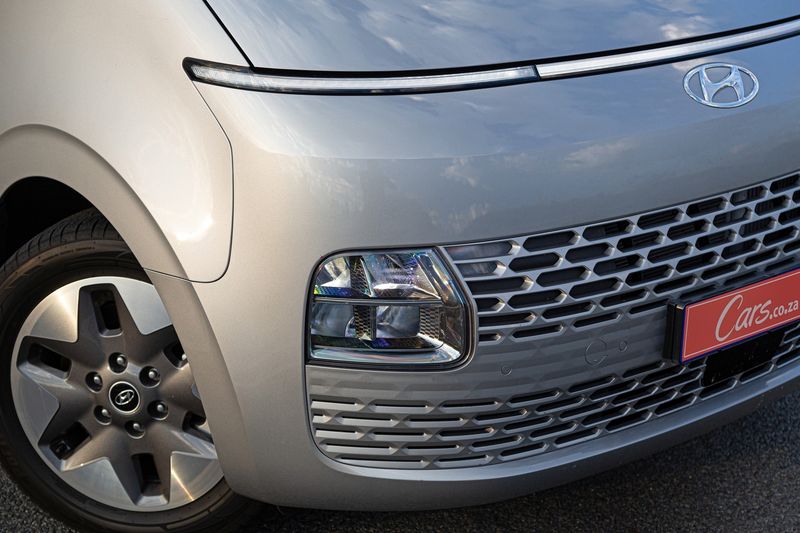
If you think of an 8-seater MPV, “cool” is hardly the first word that comes to mind. This segment has always moved metal on the grounds of practicality, number of seats, operating costs and other rational criteria. But just look at the Staria, it’s designed to turn heads and evoke an emotional response in onlookers! The minibus’ bold frontal aspect takes cues from futuristic vehicles as seen in sci-fi flicks such as Robocop and Star Wars. If the Staria was available in maroon, it would have Iron Man’s face. The rear end sports dramatic vertical LED tail-lights with a black lattice (grid) pattern.
The combined headlight and indicator clusters are positioned in the bumper.
At night, the Staria can be distinguished by a large horizontal light bar that spans the upper edge of the front bumper, but that is just the model’s lighting signature – the headlights are mounted in the bumper along with the indicators. Meanwhile, when those rear-light clusters are illuminated, they remind us of the exhaust ports of a Starfleet shuttlecraft (okay, we promise that’s the last geeky sci-fi reference).
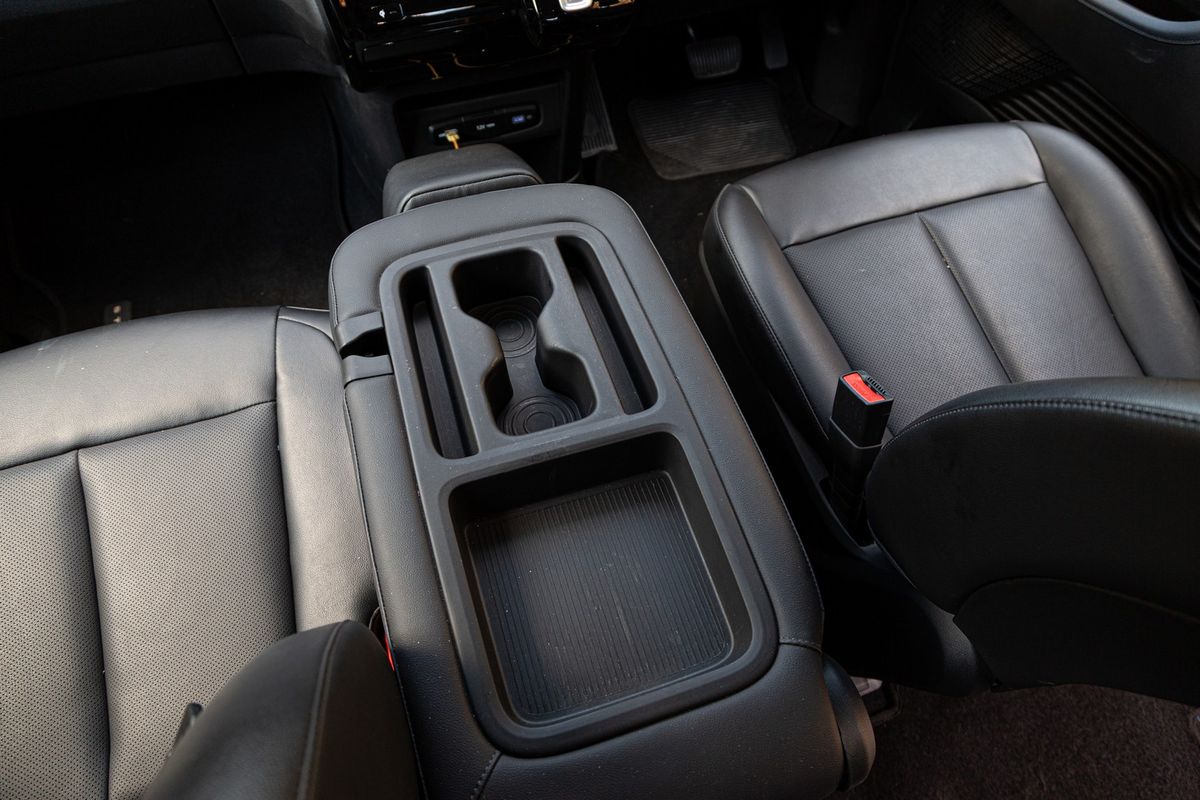
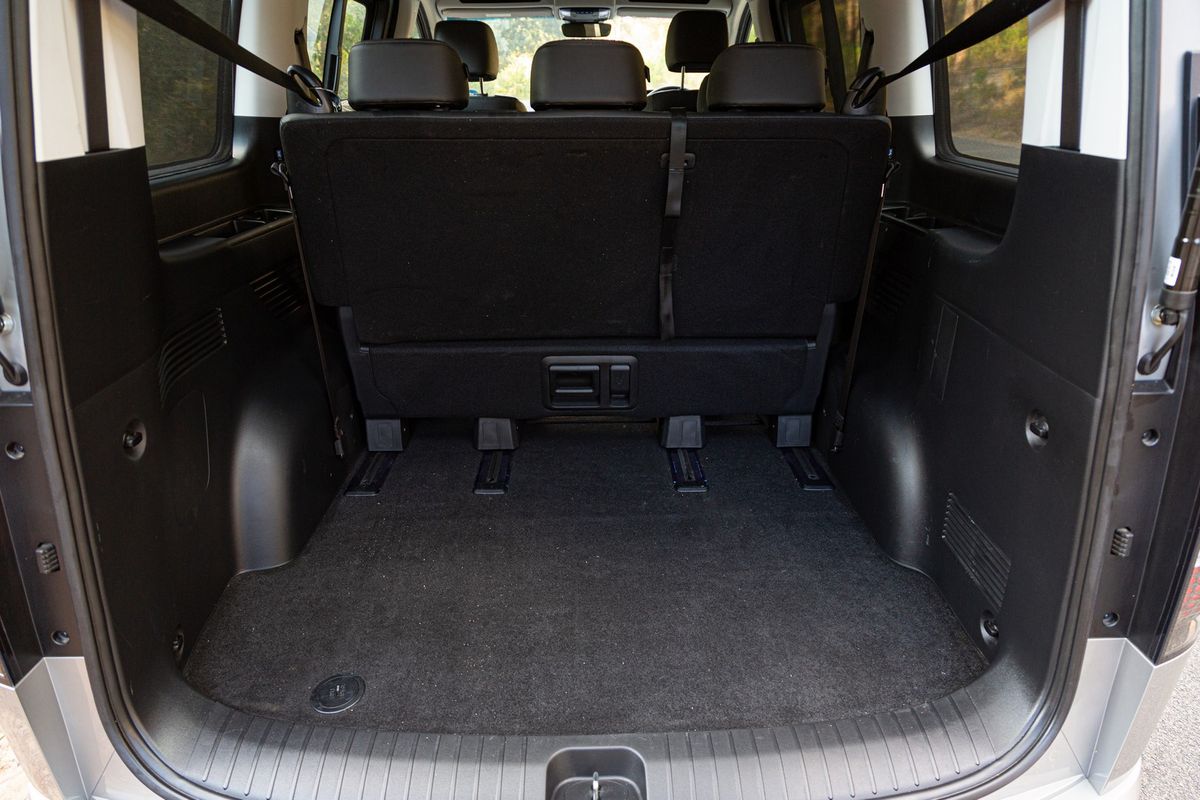
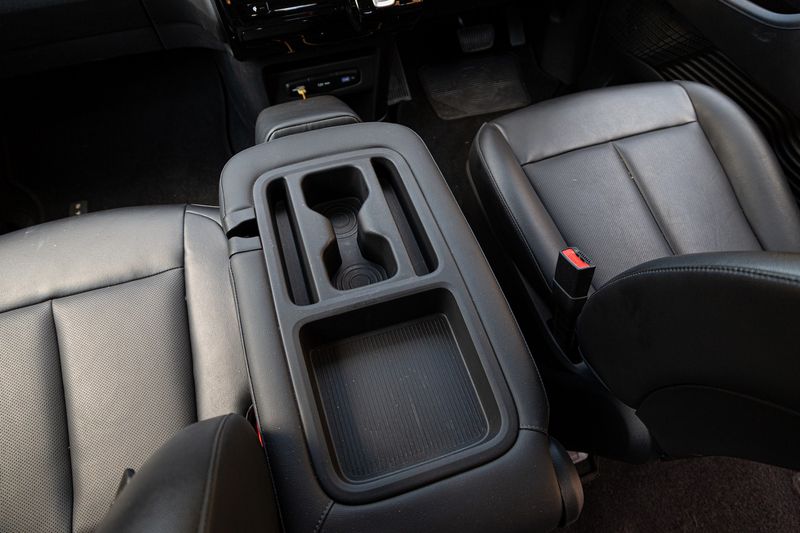
Besides, the Staria’s true strength lies in its interior packaging. The Staria’s configured to be a 9-seater (in a 3-3-3 setup), but that’s only for when you need to transport the maximum number of occupants; we preferred to fold down the middle seat in the front row and utilise the back of the seat to hold drinks upright and store keys, phones and all kinds of odds and ends (see below).
The backrest of the middle seat in the front row provides a nifty storage solution!
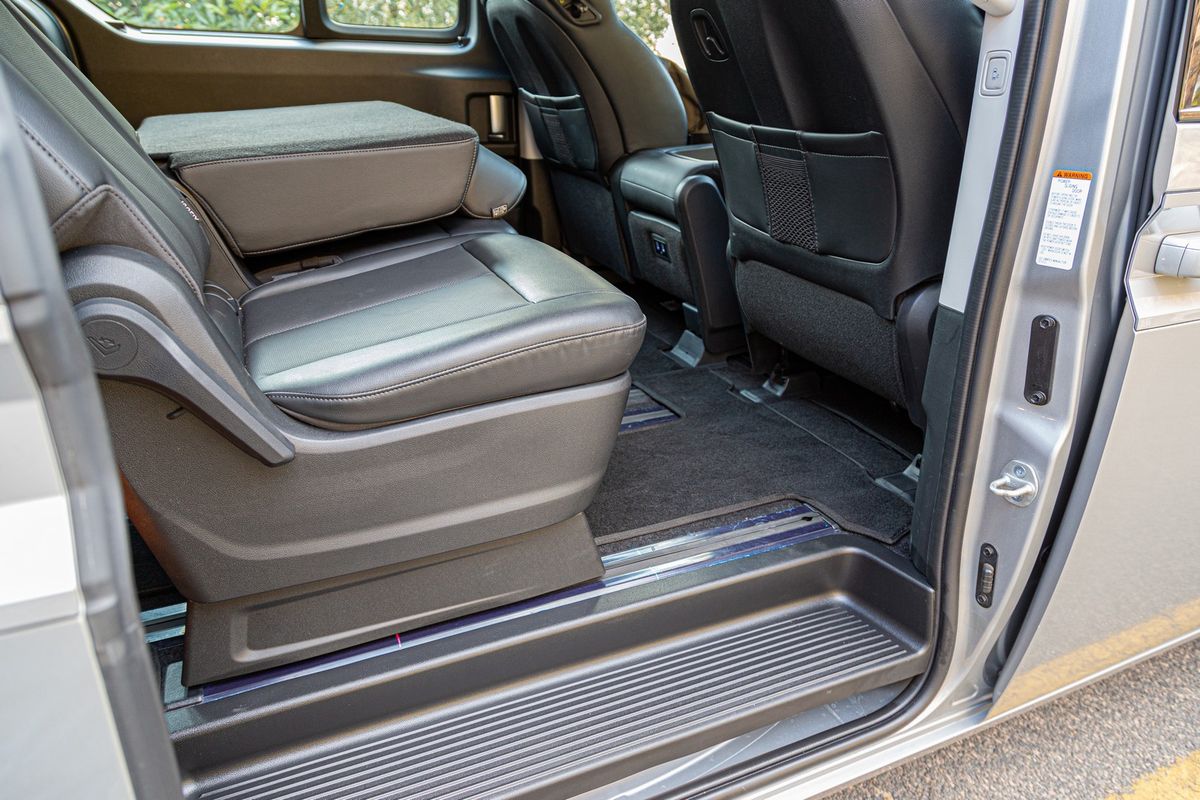
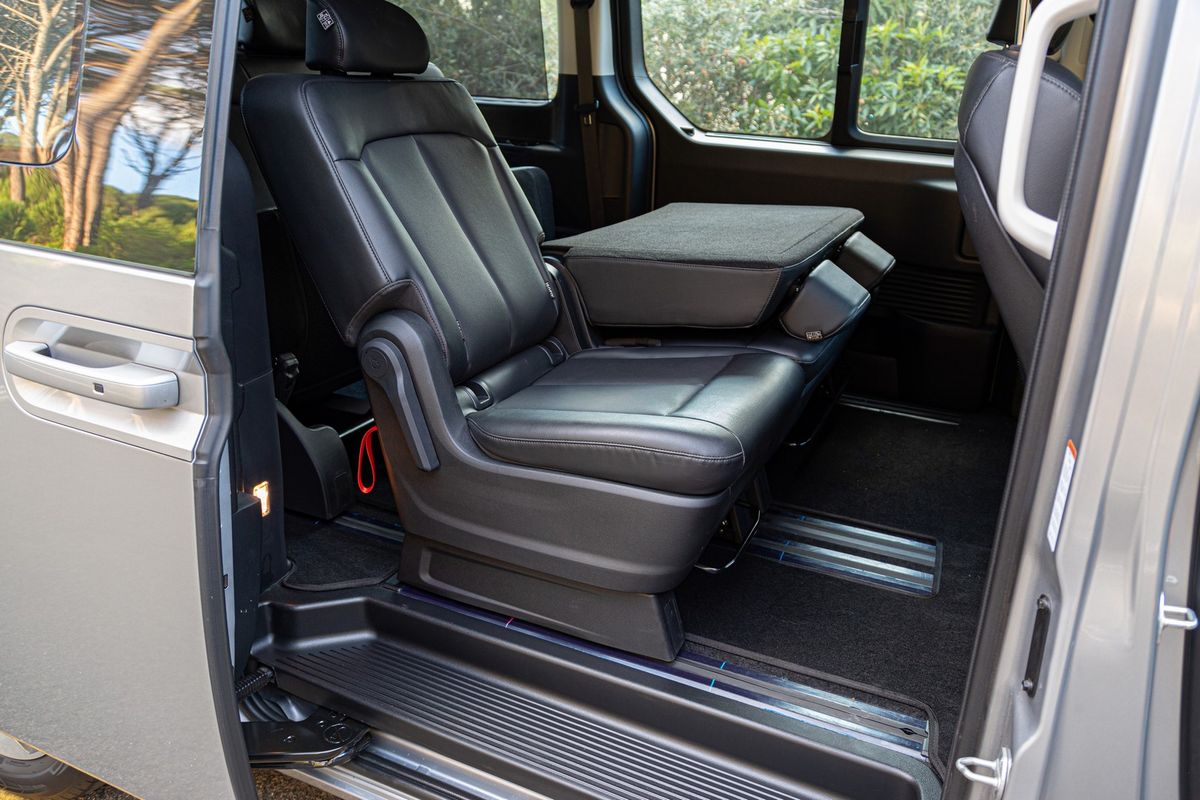
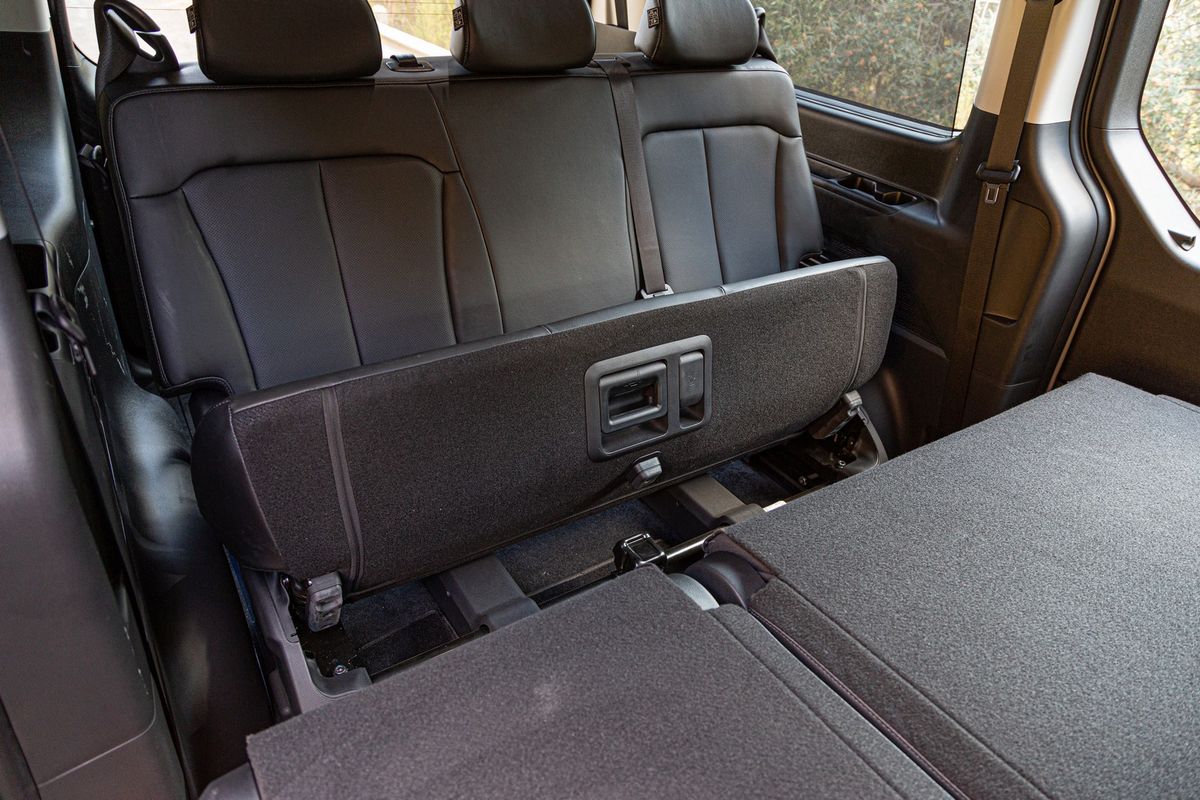
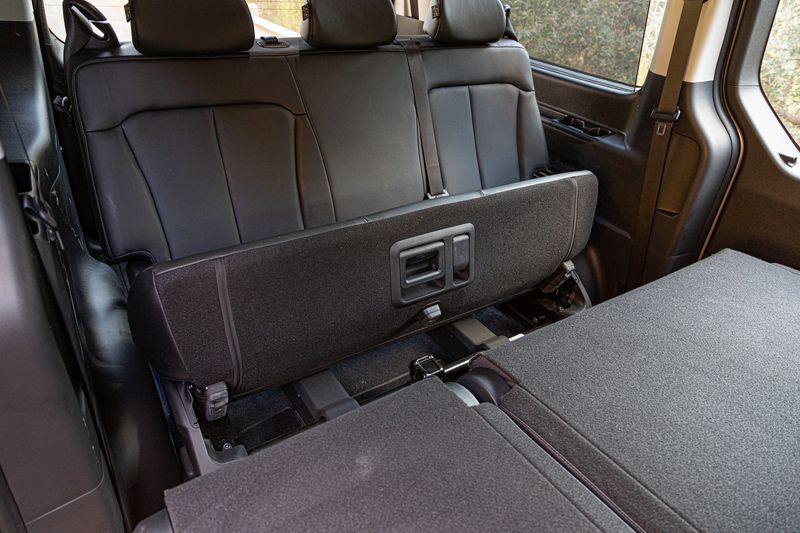
The 2nd and 3rd row of seats are mounted on rails, so you can slide them fore and aft to suit your needs. Thanks to those rails, if you’re about to transport lanky (or just fussy) passengers, you can free up generous legroom and, if you need to haul more cargo than usual, enhance the capacity of the (already generously sized) load bay.
The 2nd row of seats can fold down, while the 3rd row can be pushed forward to increase boot space.
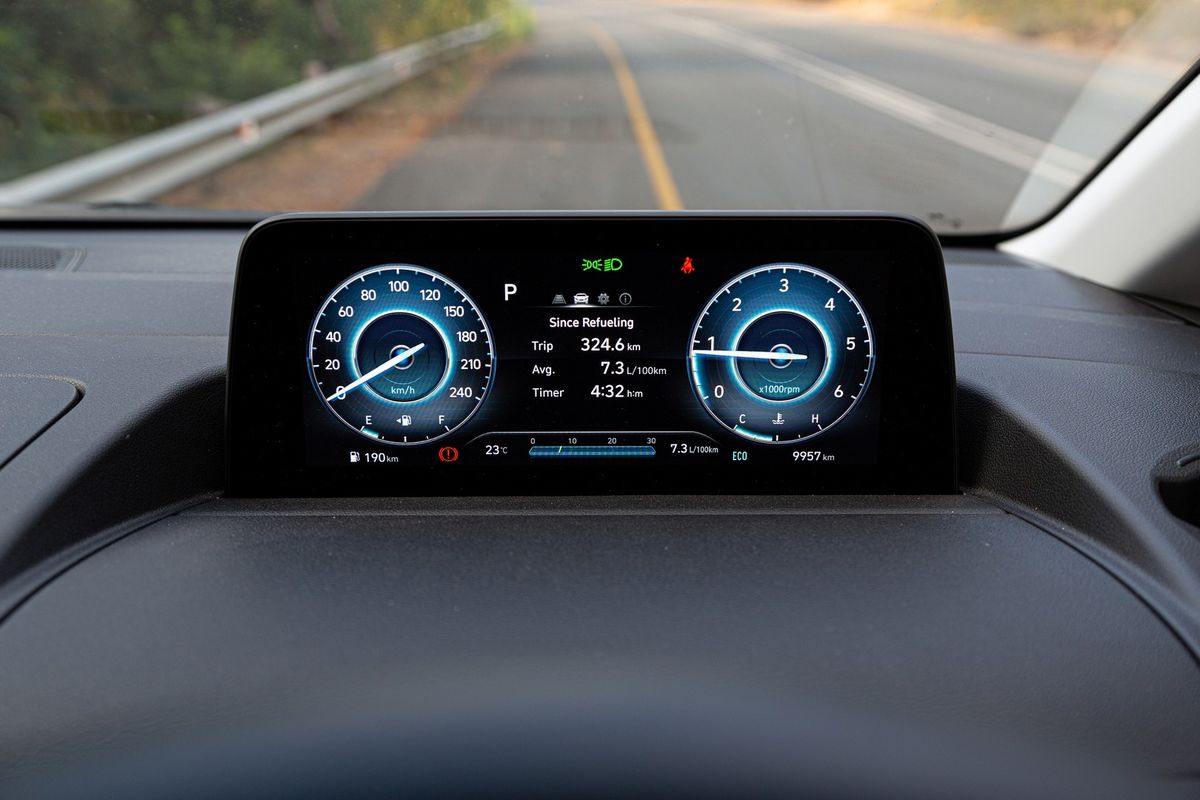
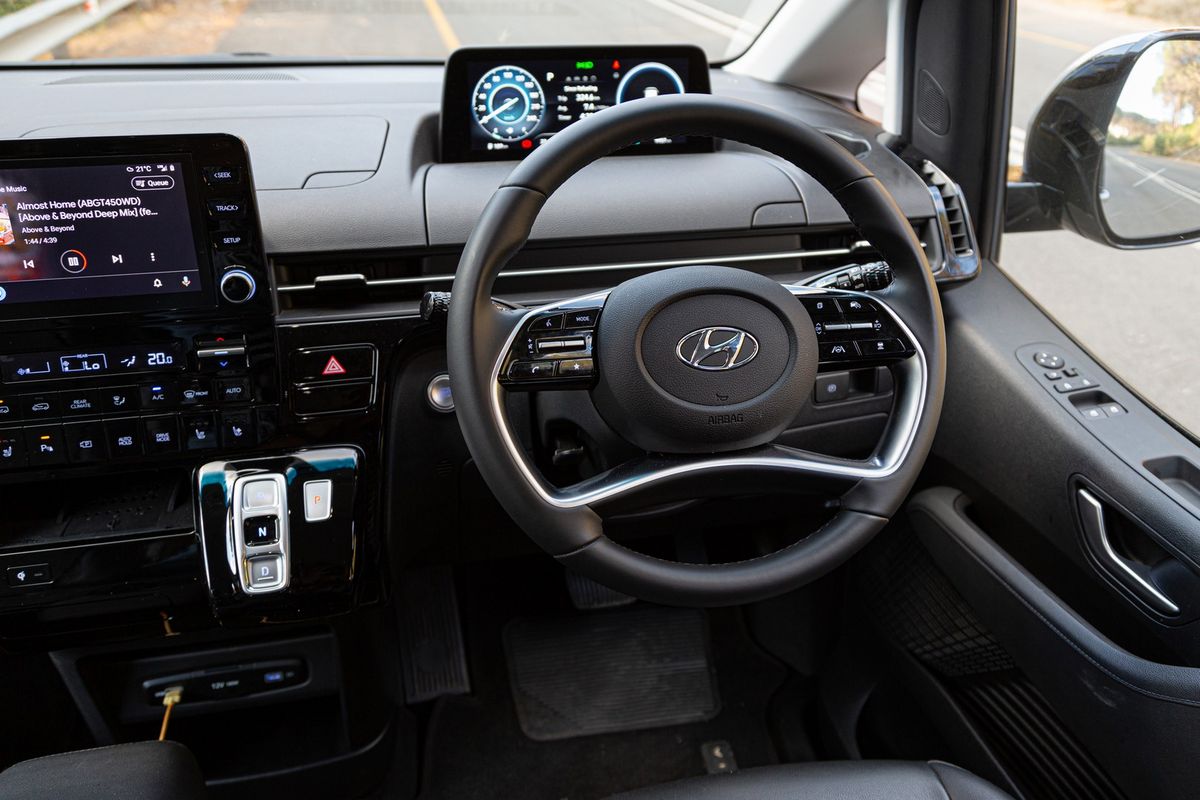
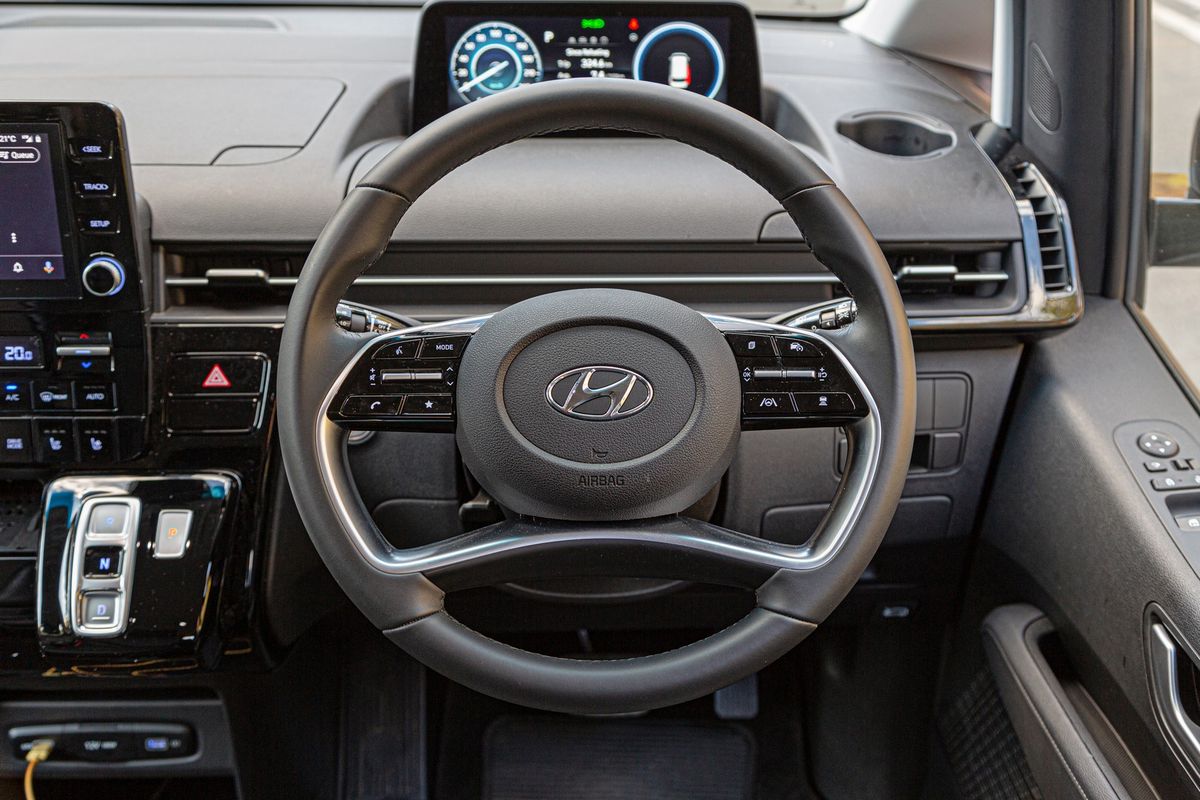
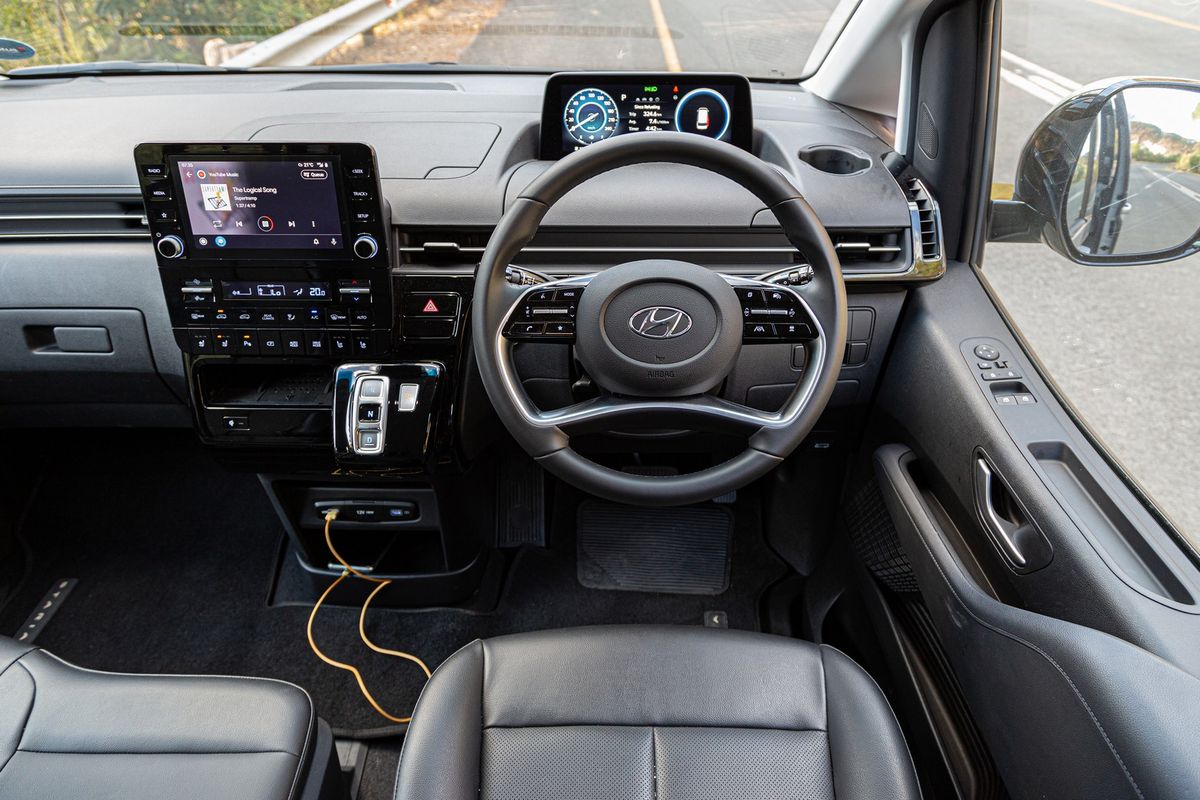
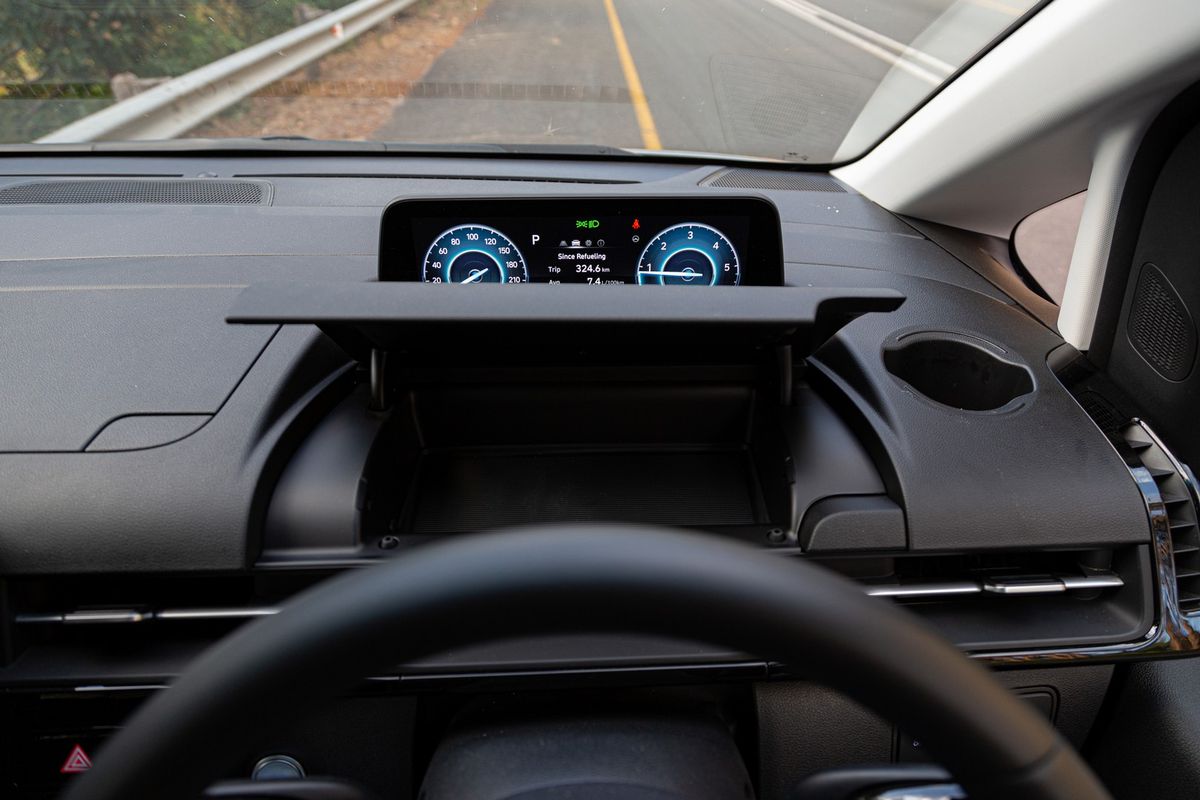
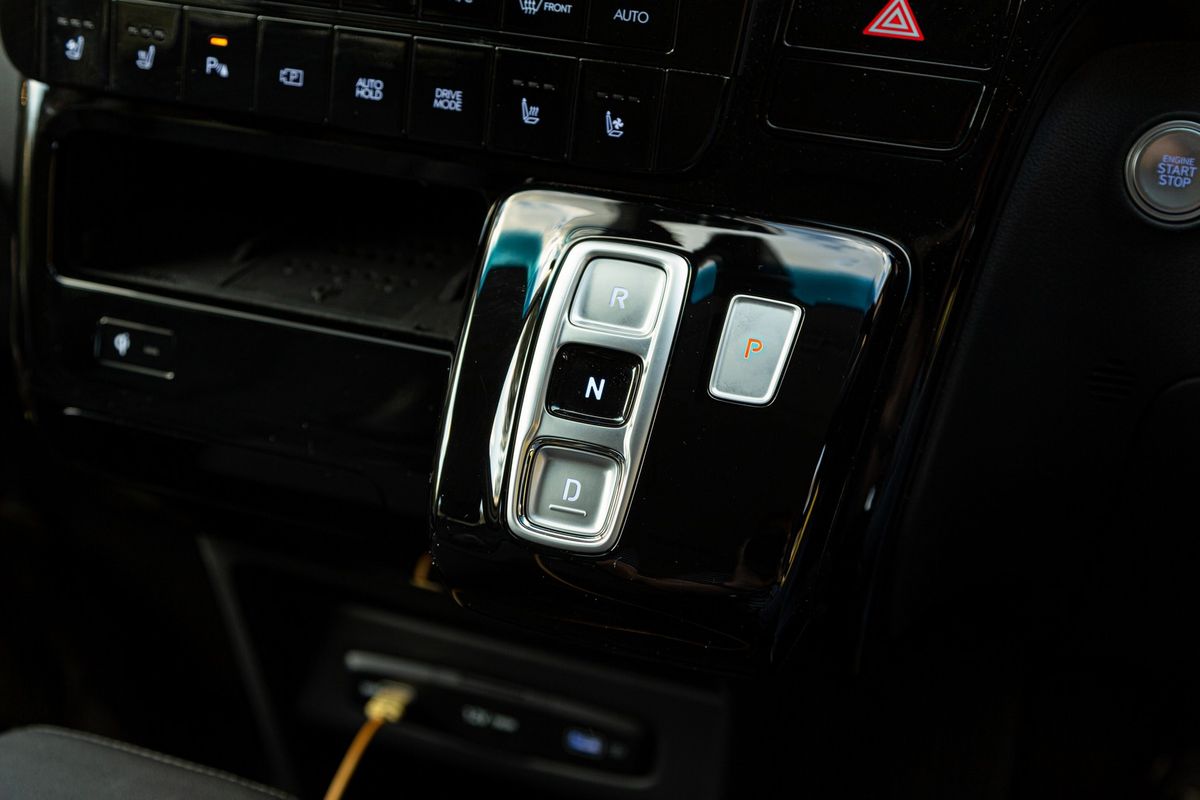
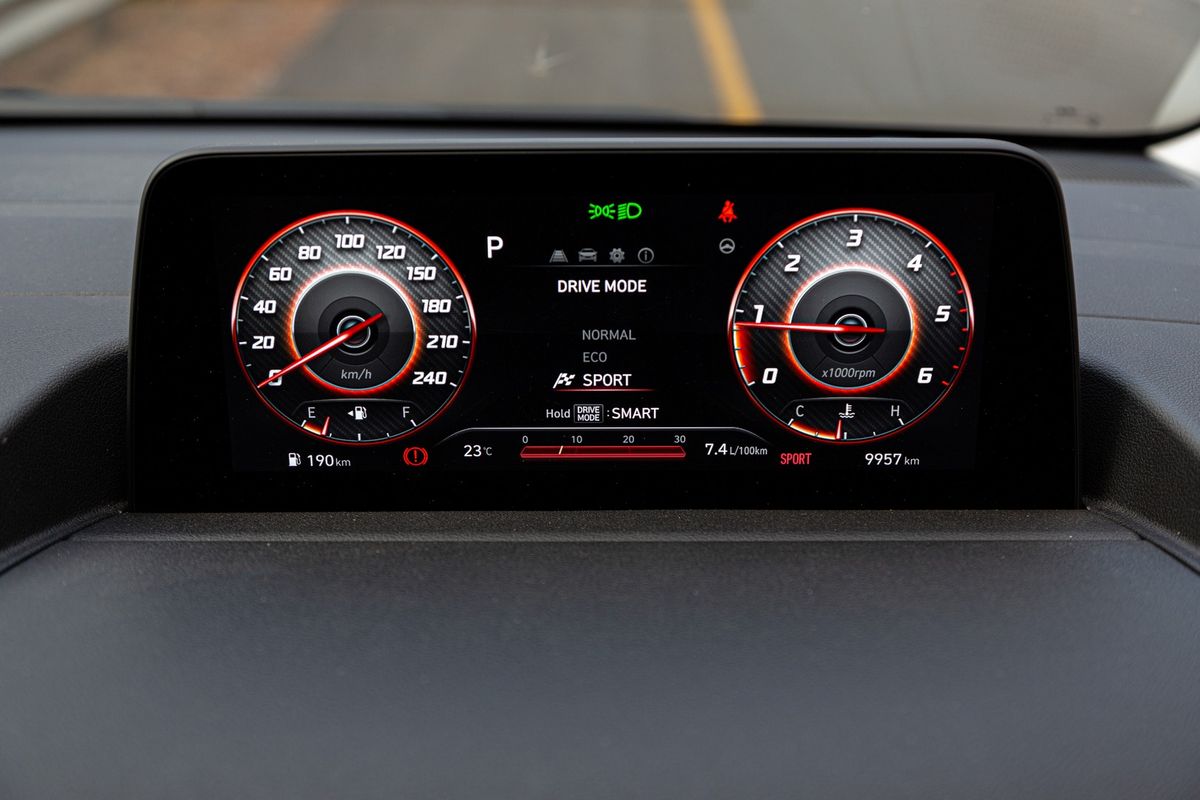
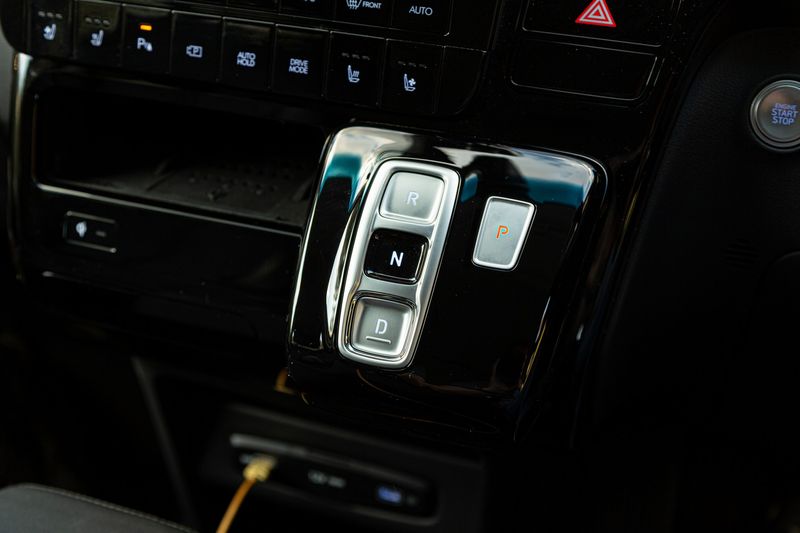
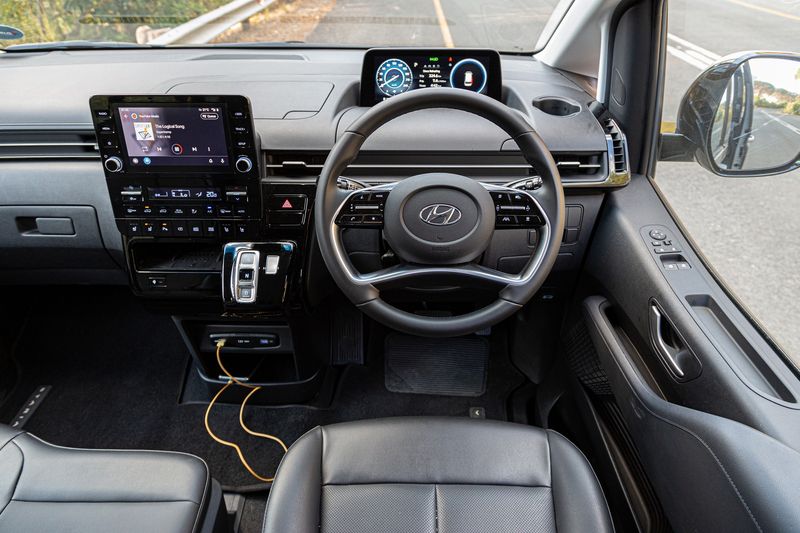
As expected, the driving position is high – it feels as if you climb up into the cabin (although it’s not as much of an ascent as when you need to ingress a ladder-frame-based large SUV). Visibility out of the cabin is excellent, with huge windows enhancing the airiness of the already spacious interior. From the driver’s point of view, the digital instrument cluster is refreshingly minimalist and there’s a simple drive-by-wire button arrangement instead of a traditional transmission lever, which makes the fascia seem more expansive. Simply put your foot on the brake, press D (to select drive) and away you go.
As is the case in the Palisade premium SUV, the Staria has a transmission console. So simple, so uncluttered.
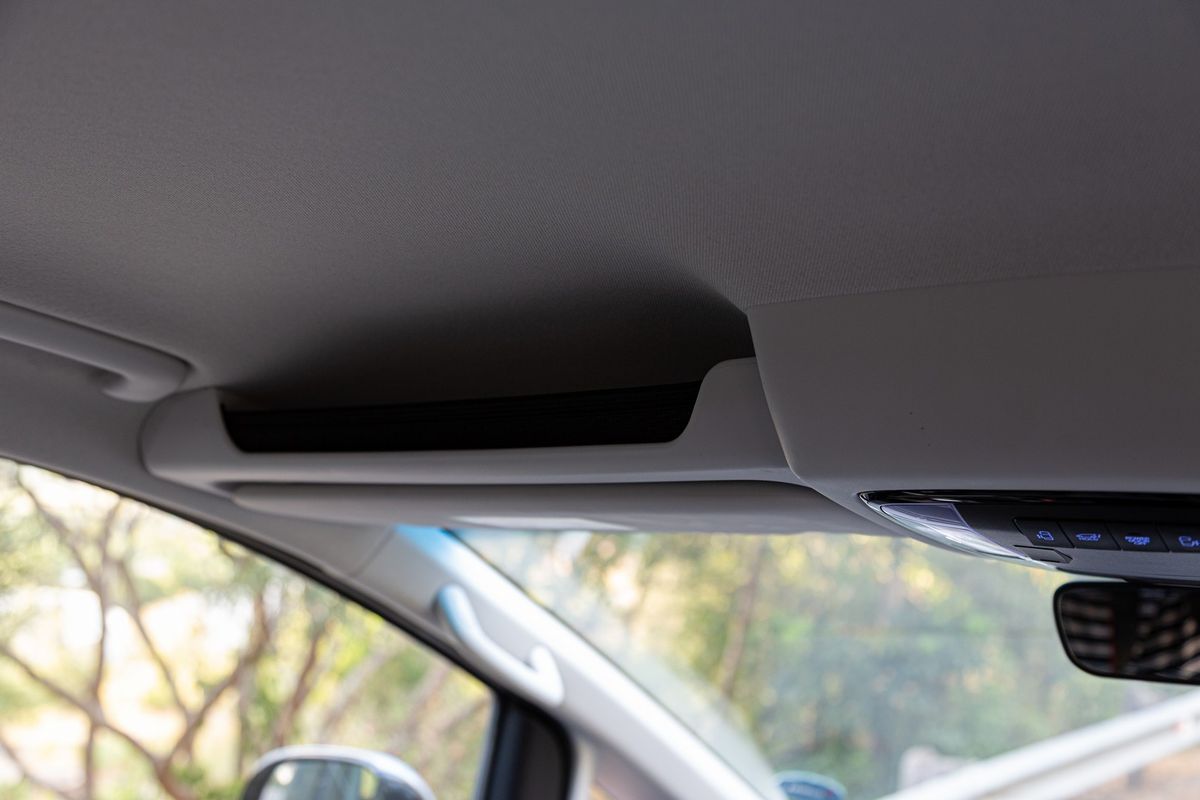
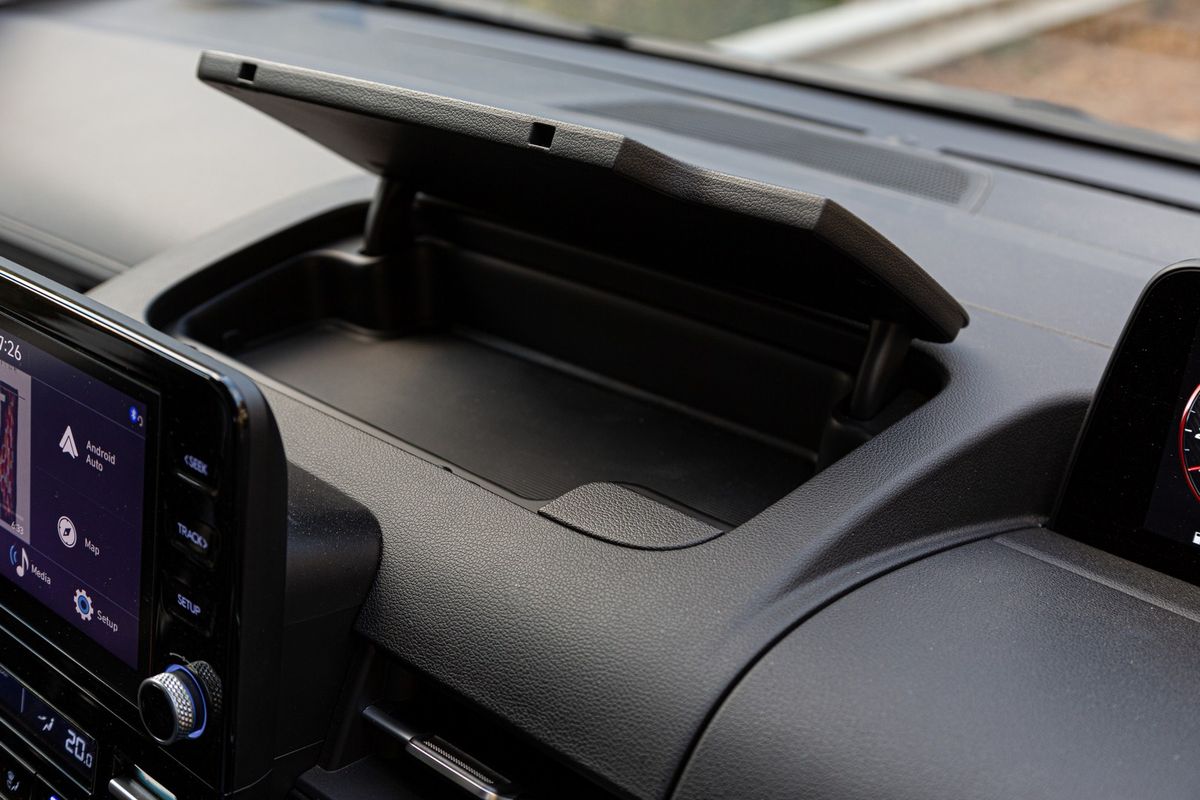
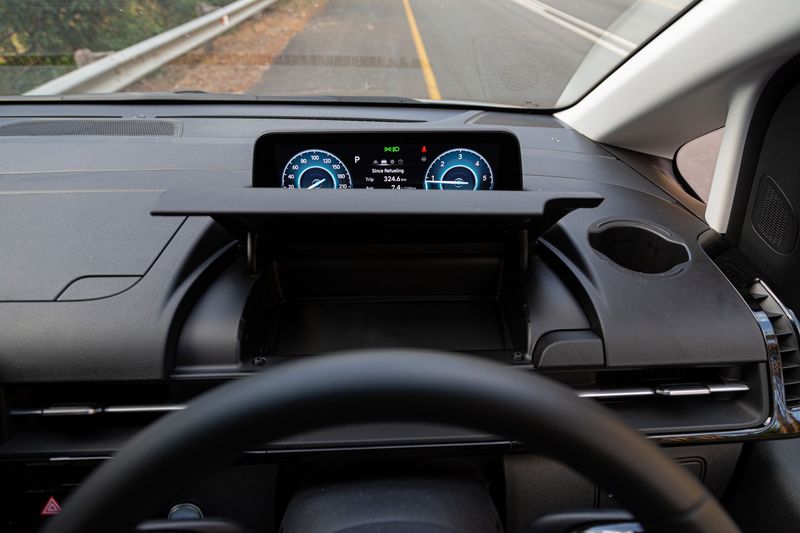
The multitude of in-cab storage spaces impressed us most. There’s simply a bin and a pocket for everything. The dashboard has not one, but two storage bins, which we used to store our road-trip snacks, plus overhead storage bins (positioned behind the sun visors) are provided for the driver and front passenger.
The oddments bin in front of the steering wheel is for occasional use (when the vehicle’s stationary).
Performance and Efficiency
Underneath the Staria’s aerodynamically sculpted nose lies a 2.2-litre 4-cylinder turbo-diesel engine that produces 130 kW and 430 Nm. Power goes to the front wheels via an 8-speed automatic transmission. The engine does emit some of that typical diesel clatter, but once you’re inside the Staria’s cabin (and the minibus is on the move), the cabin is quite hushed and well insulated from engine-, road- and wind noise. We would have liked some form of manual override for the transmission (for the odd occasion when you may want to boss the pre-programmed shift pattern), but, to be fair, the ‘box does a good job on its own with smooth, responsive ‘shifts when you need to summon brisk overtaking acceleration.
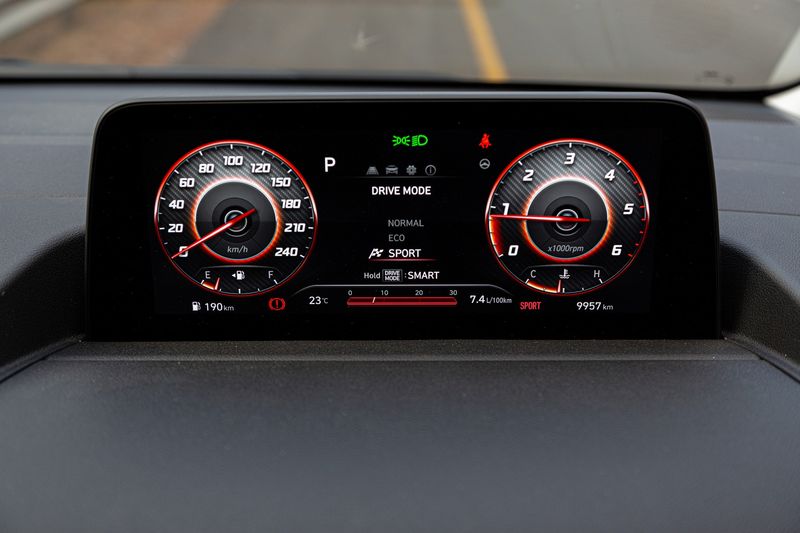
When you’re in a rush to “get the kids to the game on time”, you may engage a Sport drive mode in the Staria.
The Staria also comes with some well-mapped drive modes – and yes, although this is a practical MPV, you can feel the differences between the settings. Each of them coincides with a distinct colour theme on the digital dashboard. Comfort, Eco, Sport and Smart+ are self-explanatory; Sport makes the engine a bit more responsive and tends to delay upshifts a little, Eco dials things back considerably for a relaxed trip, while Smart+ conveniently does all the thinking work for you.
We did not hustle the Staria along, but the fuel consumption was really good. Hyundai claims 8.7 L/100 km for the combined cycle, but we saw the Staria sipped under 8 L/100 km – at some point in the test, the figure dropped to 7.3 L/100 km.
Comfort and Features
The array of standard equipment on the Hyundai Staria is generous and what’s even more impressive is that this Elite derivative’s spec is comprehensive… even though it’s not the top-of-the-range derivative. If full-house spec is what you’re looking for, the Luxury version boasts even more nice-to-haves, such as heated/ventilated seats for all passengers, a panoramic glass roof, a swivelling seating arrangement for the 2nd and 3rd row, as well as a Bose audio system.
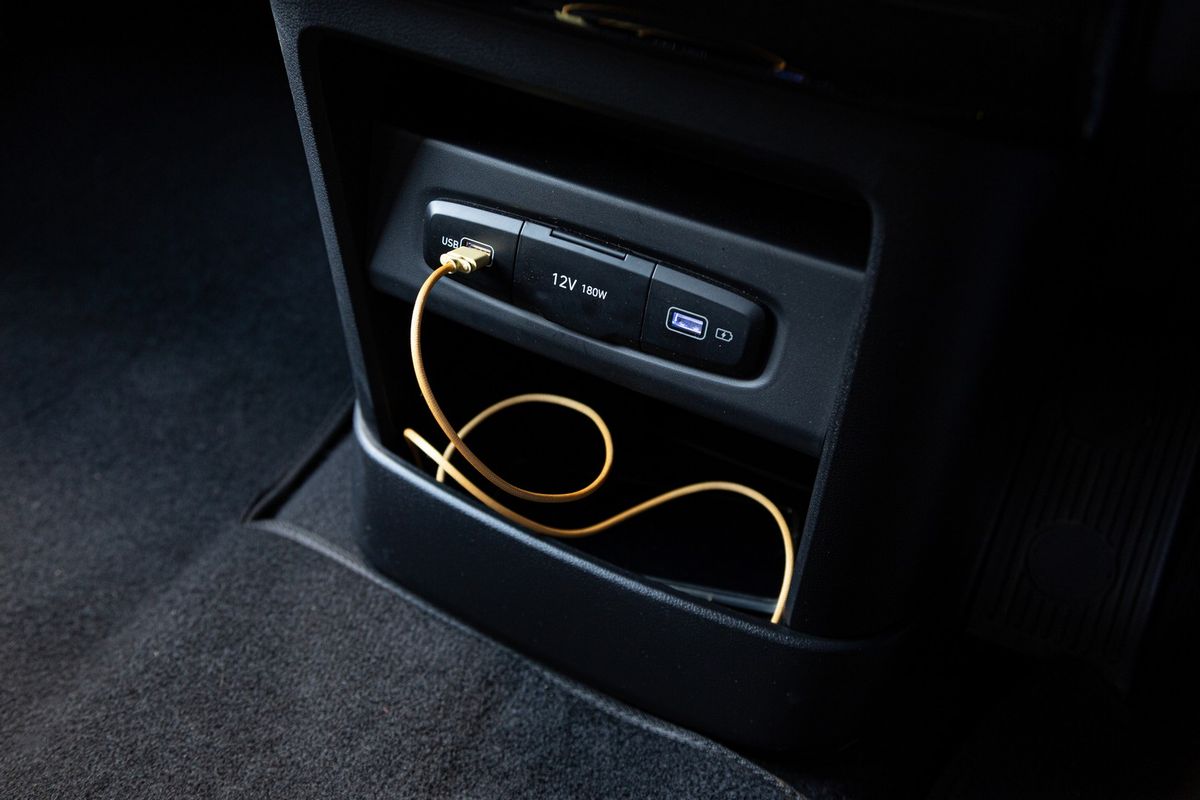
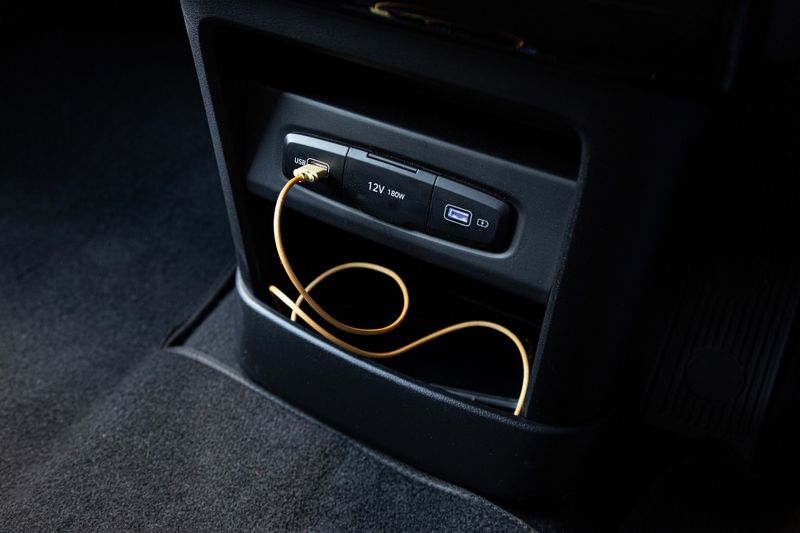
Rear passengers benefit from a pair of USB ports and a 12V power outlet.
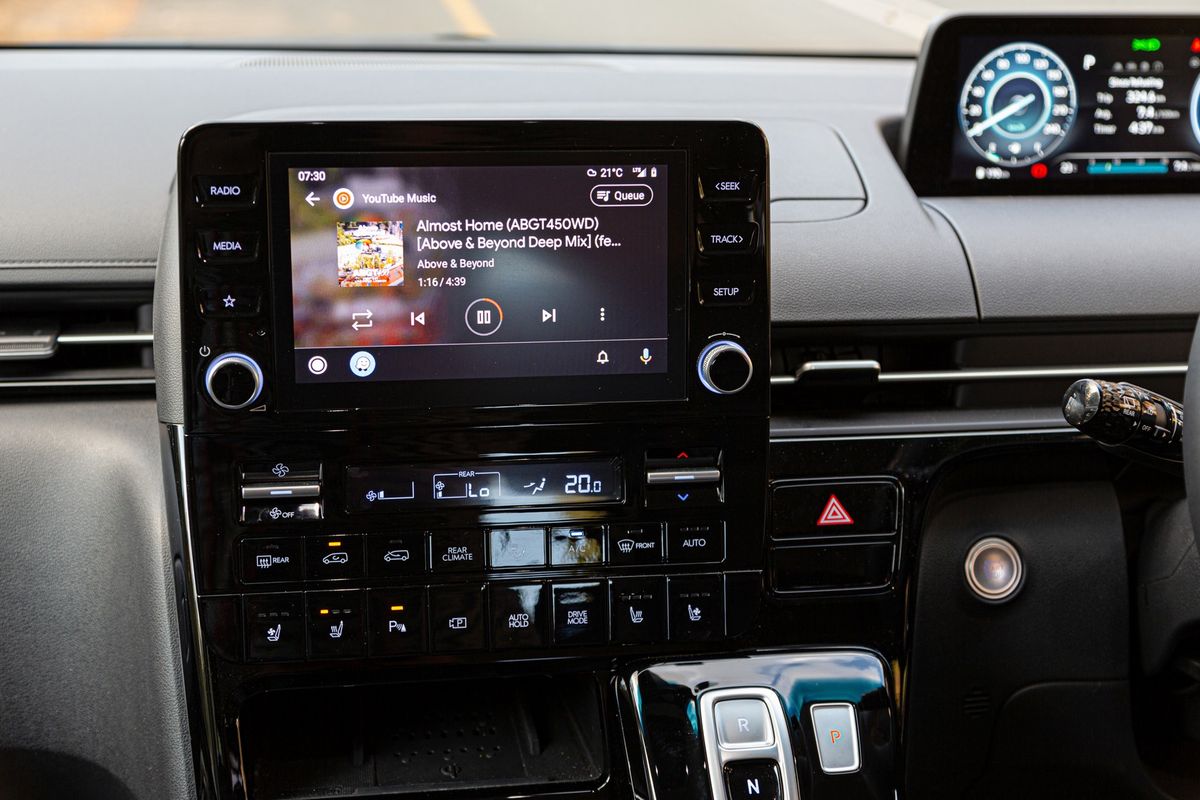
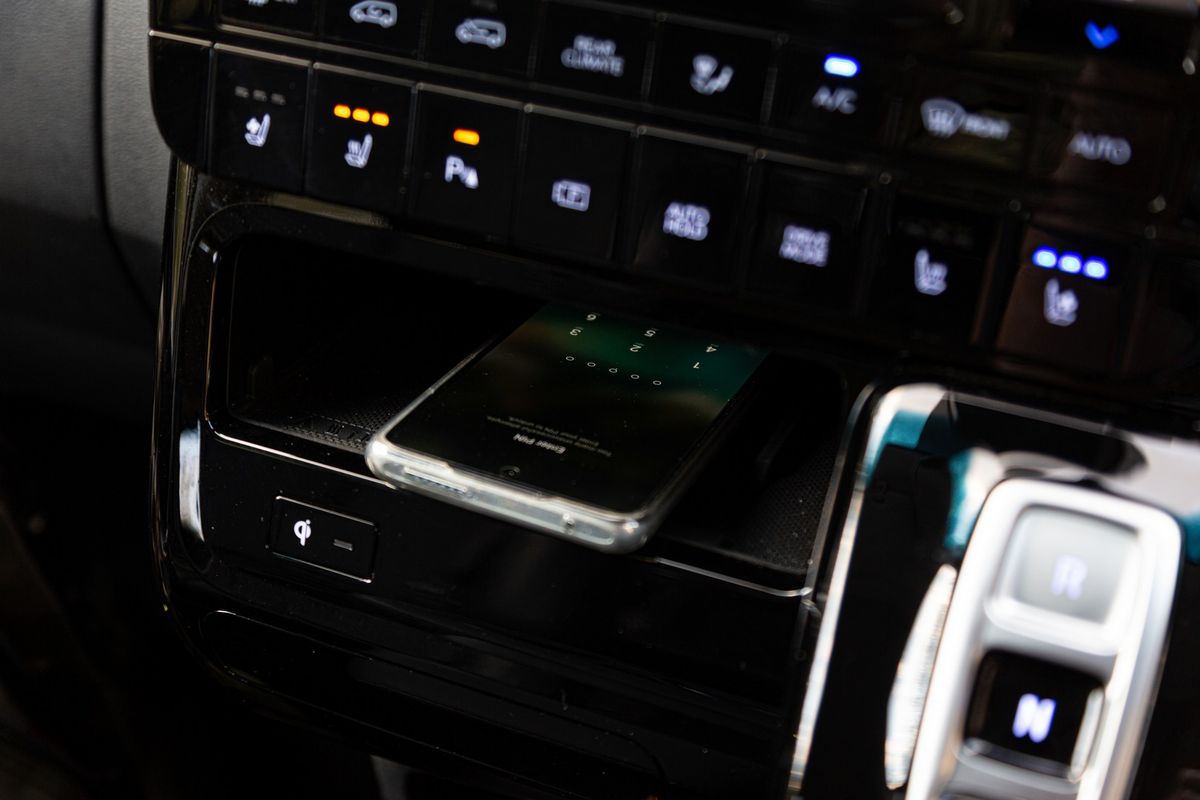
Back to the Elite derivative and for the tech fundis, you’ll be pleased to read that there are USB ports for all three rows, a wireless charging pad, as well as Apple CarPlay and Android Auto connectivity. The infotainment system works well, but the glossy black plastic felt a touch cheap; it was an anomaly, given that the rest of the interior felt reasonably upmarket and well screwed together.
Both the driver and passenger get heated and ventilated seats, the latter being a nice-to-have on a sweltering hot day in South Africa. The tailgate and the sliding doors operate automatically, you can open/close them at the touch of a button.
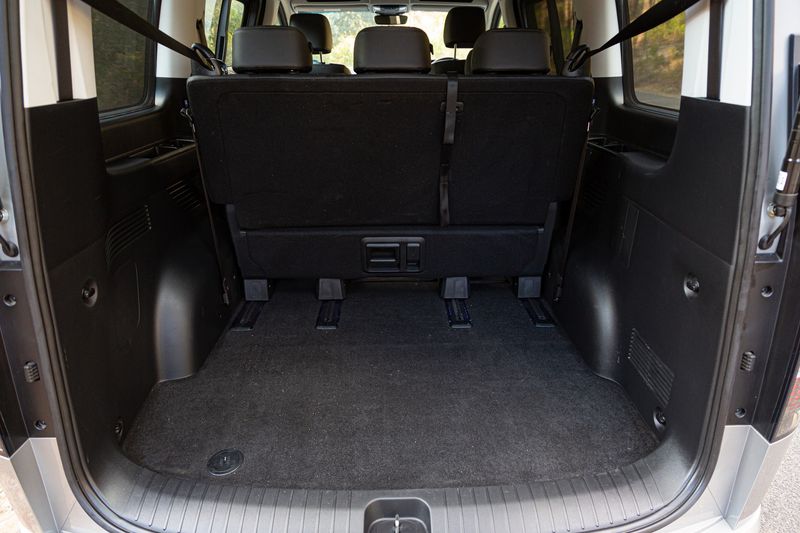
The load bay is capacious. Note the 3rd row of seats can be moved forward and backwards.
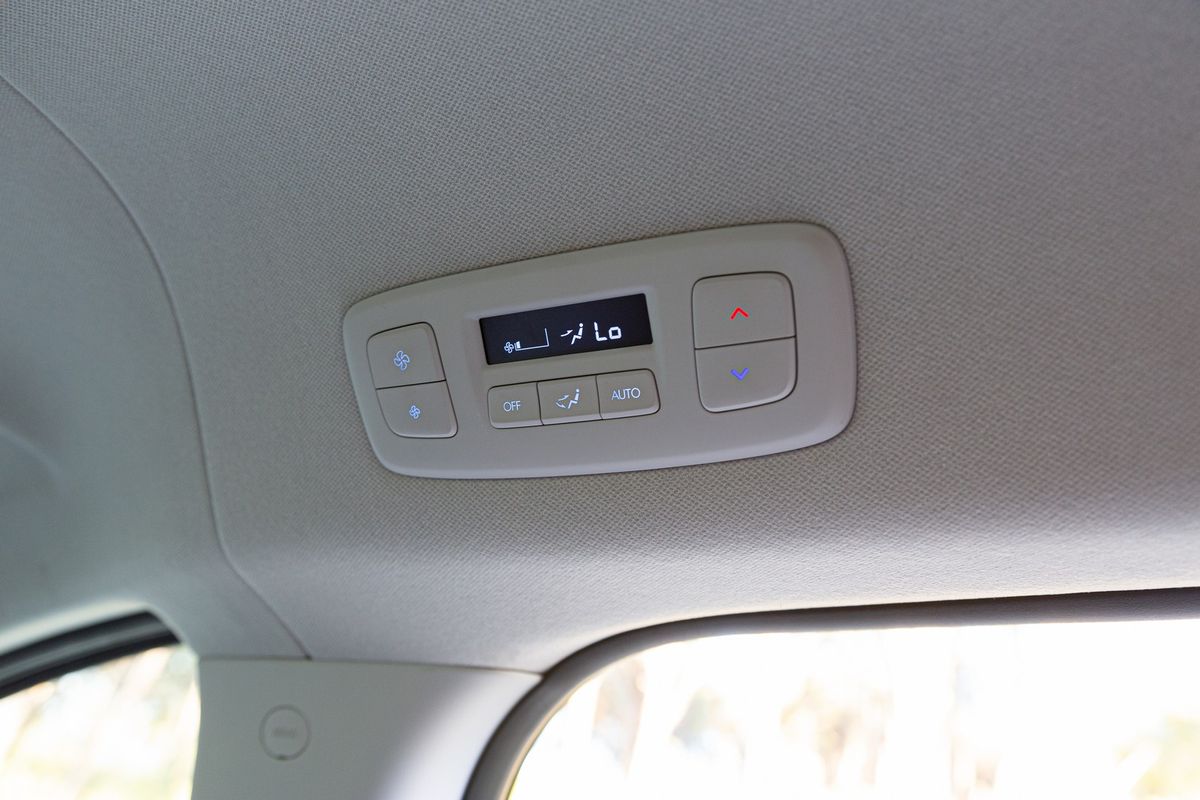
We did notice the Staria’s electrically powered tailgate had this annoying habit of closing automatically less than a minute after it had been opened (either manually or via the remote key fob); believe us: it’s a source of irritation when you need to pack/unpack several items in one go. Thankfully, there’s a switch in the load bay that will override that (safety) function. There are privacy blinds for the second and third rows of seats and rear ventilation controls as well.
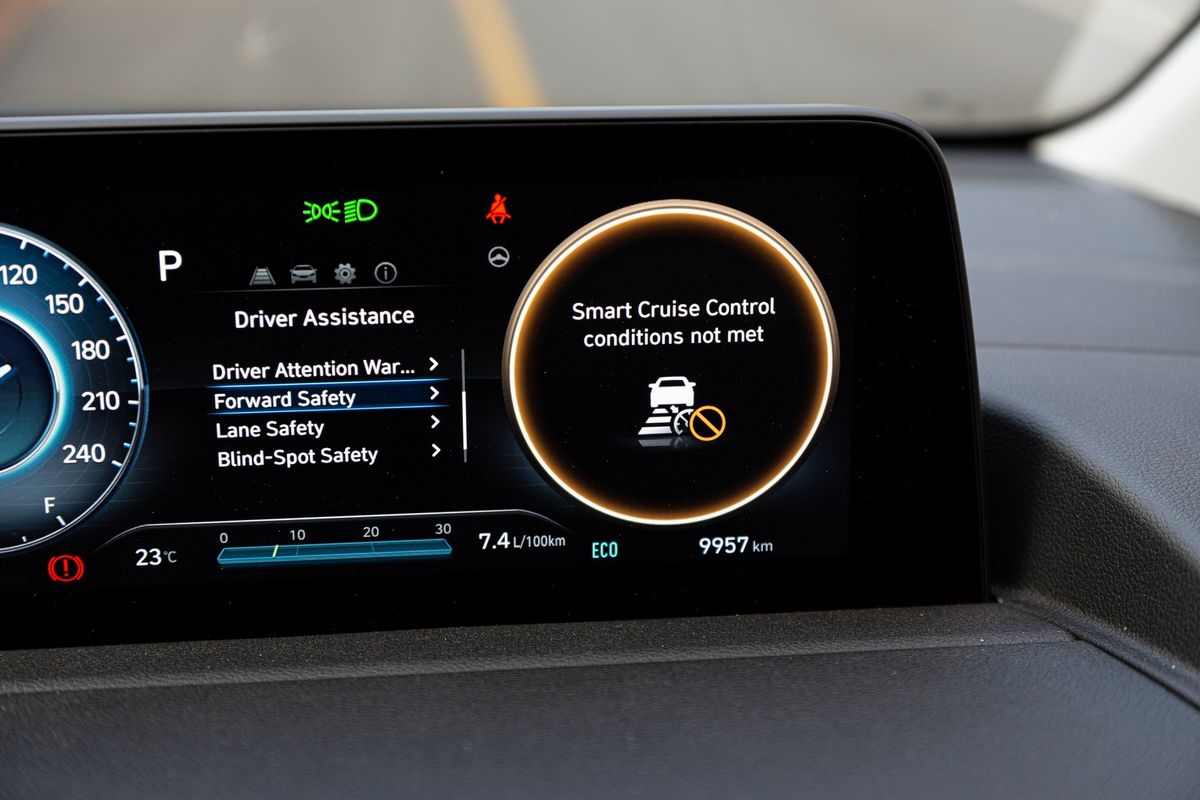
In terms of safety, the Hyundai Staria ticks the boxes for passive and active features. There’s also a degree of semi-autonomous capability, with radar-guided cruise control, lane-keeping and active steering assist. With all three systems engaged on the national highway, the Staria was able to stay in its lane while observing a safe following distance. The vehicle will also automatically brake if it feels a collision is imminent and the driver has not reacted quickly enough.
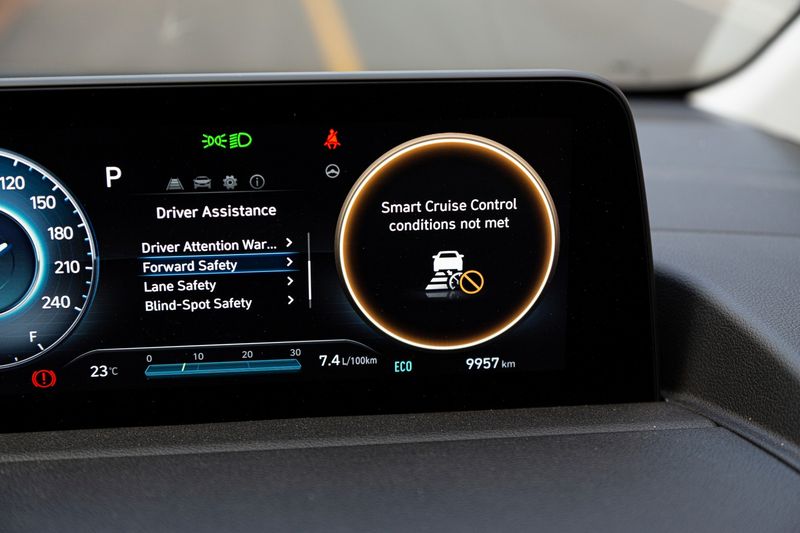
Smart cruise control (deactivated here because the Staria was not moving) takes so much drudgery out of long-haul driving.
Passengers who are unaware of how the Smart Cruise Control function works might be initially alarmed when they see you take your hands off the ‘wheel (to reach for a snack), but the Staria’s autonomous driving tech works beautifully. It surreptitiously adapts the Hyundai’s road speed to that of vehicles travelling ahead of it and subtly keeps the vehicle from wandering out of its lane. Don’t worry, the vehicle will sound an alert if your hands are off the ‘wheel for more than a few seconds, so keep at least one hand on the tiller at all times. Other noteworthy safety features include tyre-pressure sensors, parking sensors, blind-spot monitoring, a reverse camera with cross-traffic alert and 6 airbags.
Everything is logically and clearly laid out in the Staria’s cabin
Ride and Handling
Beyond those futuristic looks lies not an antiquated ladder-frame chassis, but a platform shared with the Hyundai Santa Fe and Palisade, both of which are thoroughly modern unibody SUVs. This means that, unlike its H1 predecessor, the Staria feels notably more car-like and, therefore, more luxurious to drive. The minibus’ driving experience genuinely evokes a feeling of comfort and refinement. If we had to nit-pick, we’d say the 18-inch wheels/tyres emit a hint of road noise.
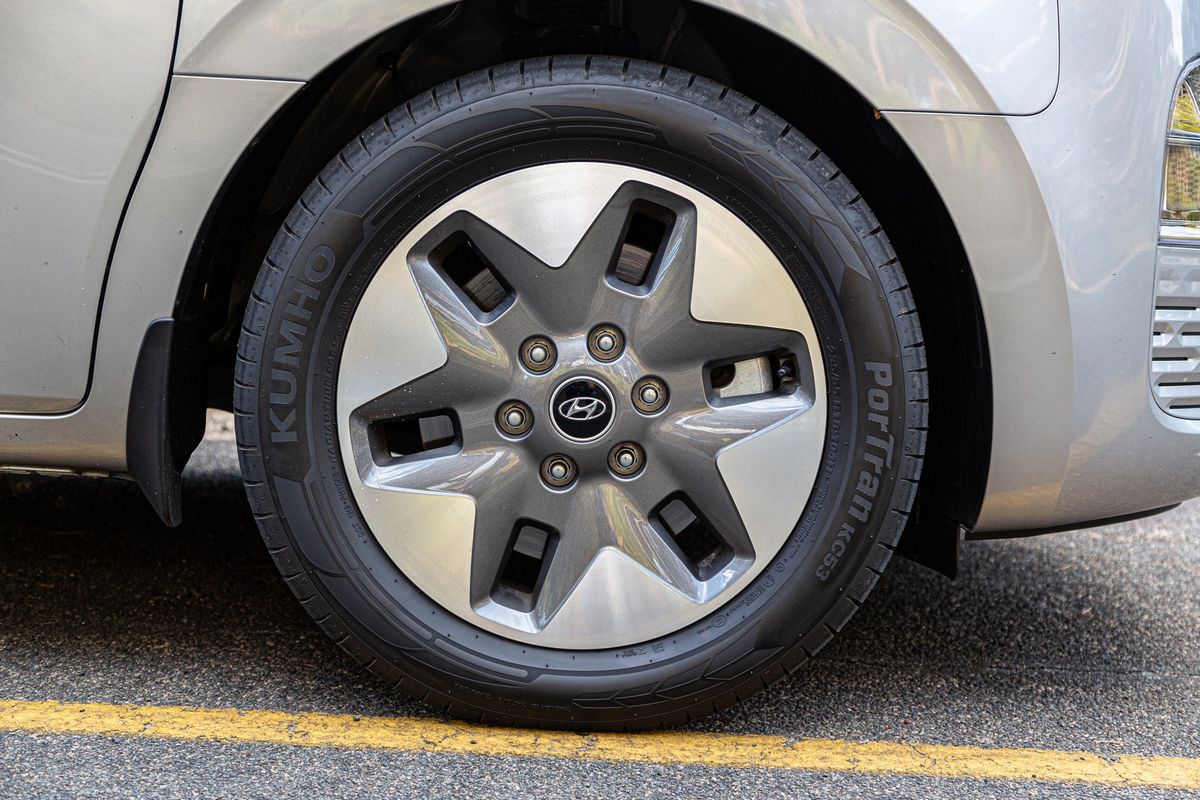
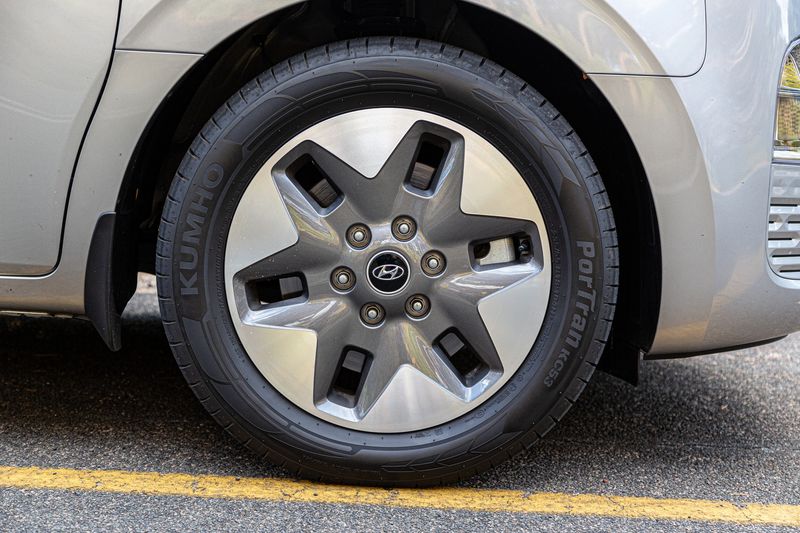
The Staria 2.2D Elite rides on handsome 18-inch alloys.
Due to its large proportions (a 5-metre length is not insignificant), you’d think it would be a challenge to manoeuvre the Staria on parking lots and in the confines of the city. However, the combination of light and quick steering, not to forget the convenience of exterior-view cameras and parking sensors, makes it a lot wieldier than you’d expect a 9-seater bus to be.
The ride quality is fair, with the Hyundai’s suspension absorbing most of the road imperfections easily. The longer wheelbase arguably helped to smooth out some of the undulations too, as did the plump 235/55 R18 Kumho tyres. In fact, the only reminder we had that we were driving a large vehicle was when we had to execute an emergency stop – unsurprisingly, a minibus takes a bit longer to scrub off speed than a crossover! Thankfully the brakes proved well up to the task.
Price and after-sales support
The Hyundai Staria 2.2D Elite retails R959 900, which includes a 7-year/200 000 km manufacturer warranty, a 6-year/90 000 km service plan a 7-year/150 000 km roadside-assistance plan.
Verdict
Space-age styling aside, the generously-equipped 2.2D Elite (the 2nd most expensive offering in the 5-variant Staria line-up), is an accomplished people-mover. If your family are fanatical cyclists or surfers, then this could be the vehicle for you. Look, the derivative costs just under R1 million – for a little more money, you can also get an 8-seater Palisade, which is a “big-rig” SUV – a more practical alternative is arguably the 5-seat Staria Multicab (with its enormous load bay).
But, if you must have a 8- or 9-seater, should you buy the Staria 2.2D Elite? People-movers have never been regarded cool and/or desirable – until now. The Staria takes the MPV concept and modernises it, without compromising on the basic functionality and practicality. If you’re determined to have an all-encompassing family bus that comes significantly cheaper than the established players from Volkswagen and Mercedes-Benz, then this model should be on your shortlist.
[helpful]
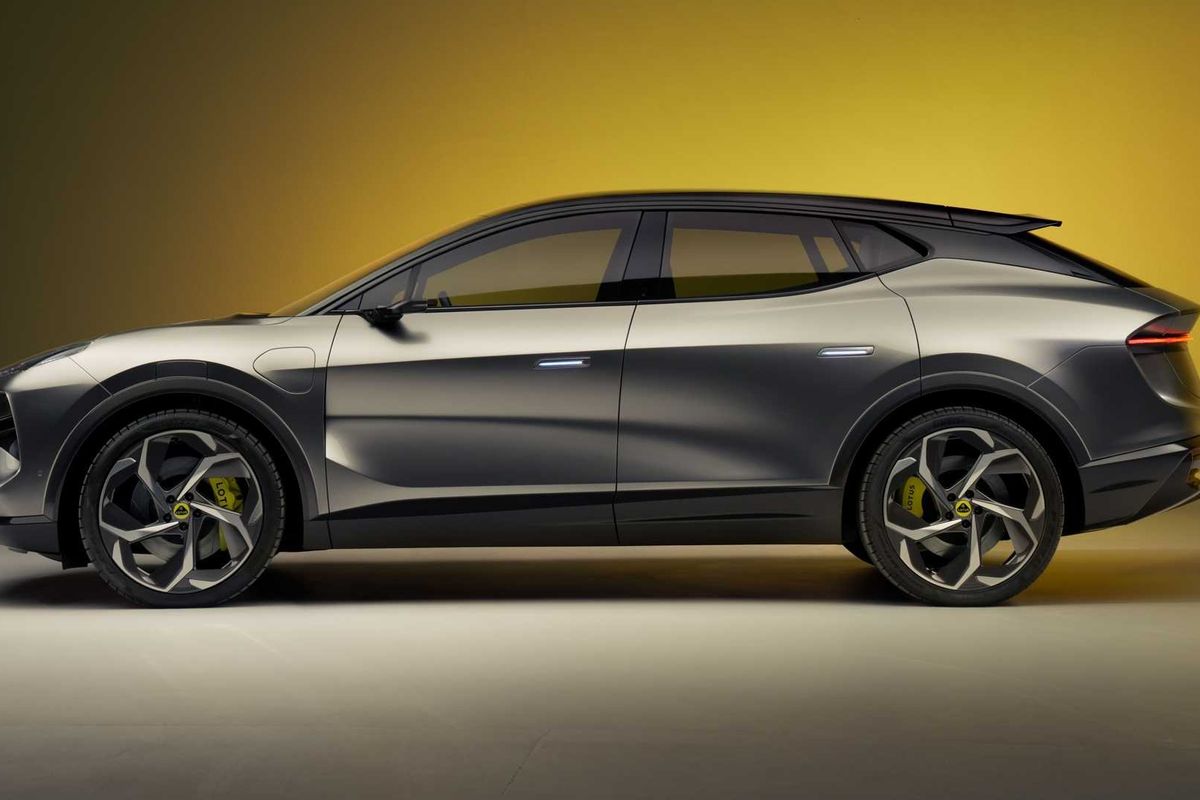
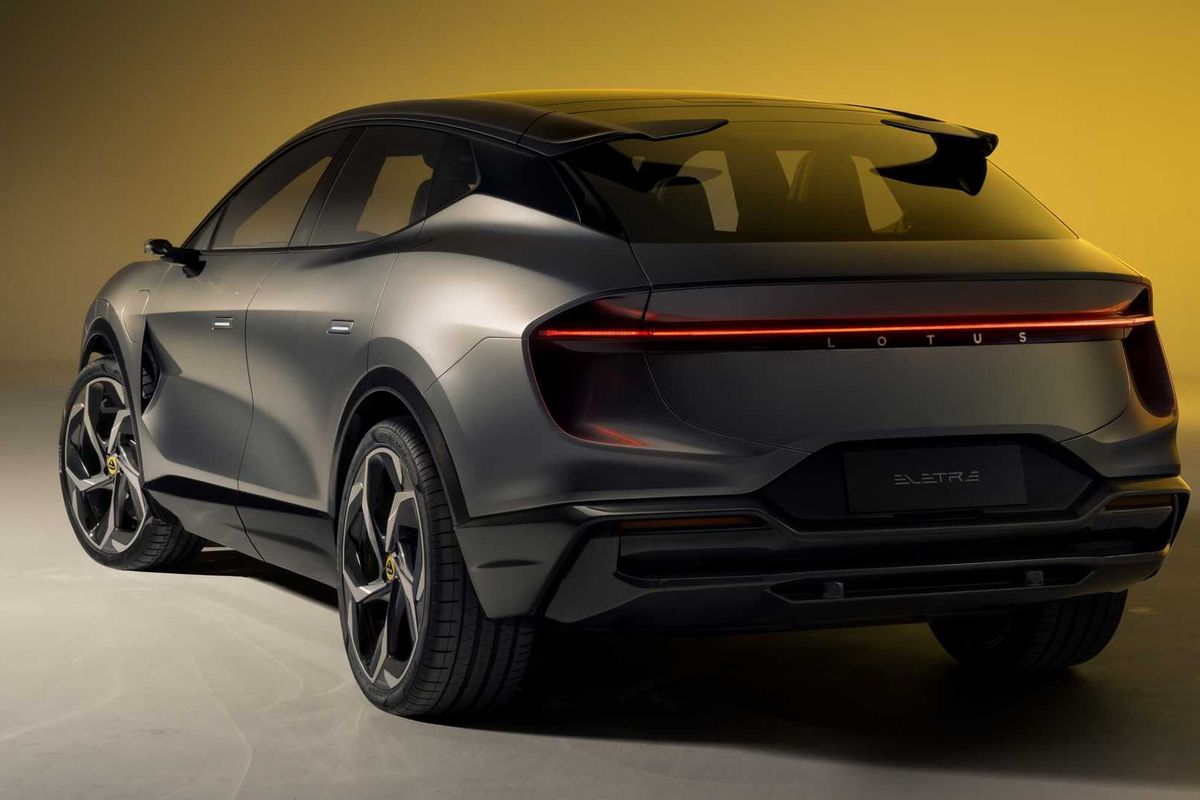
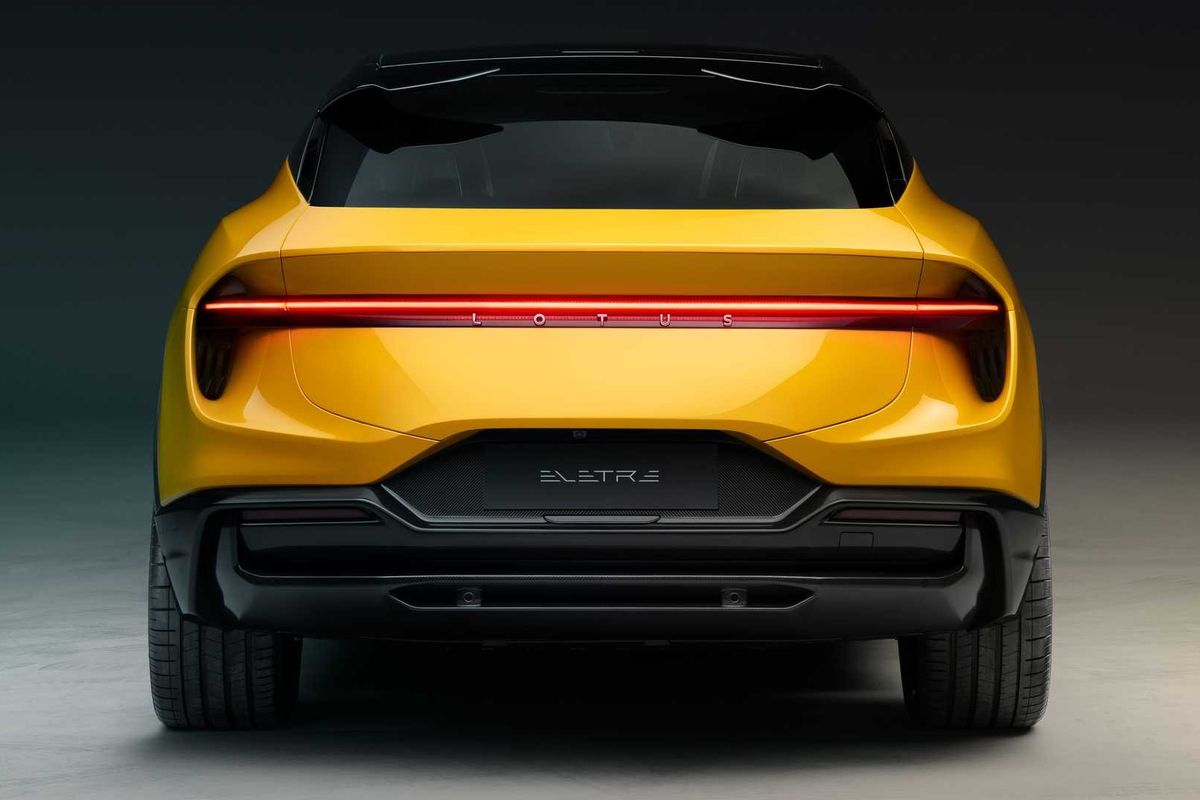
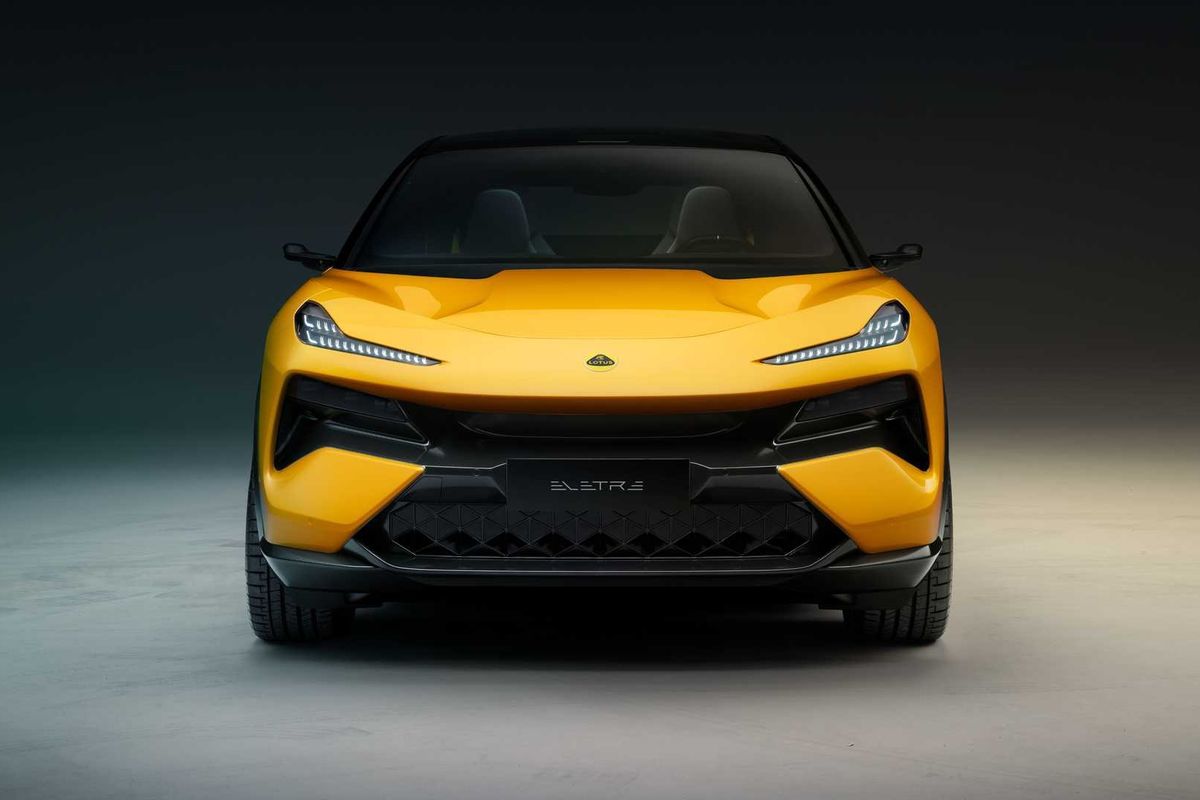
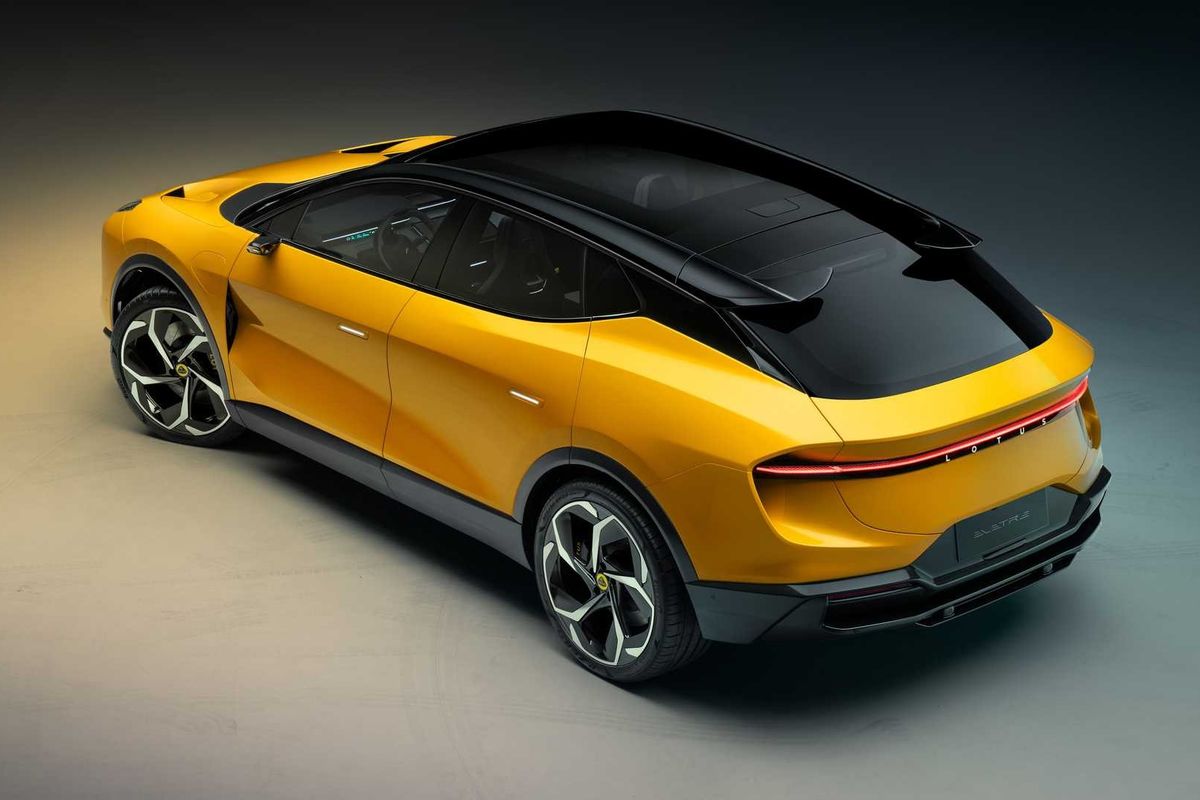
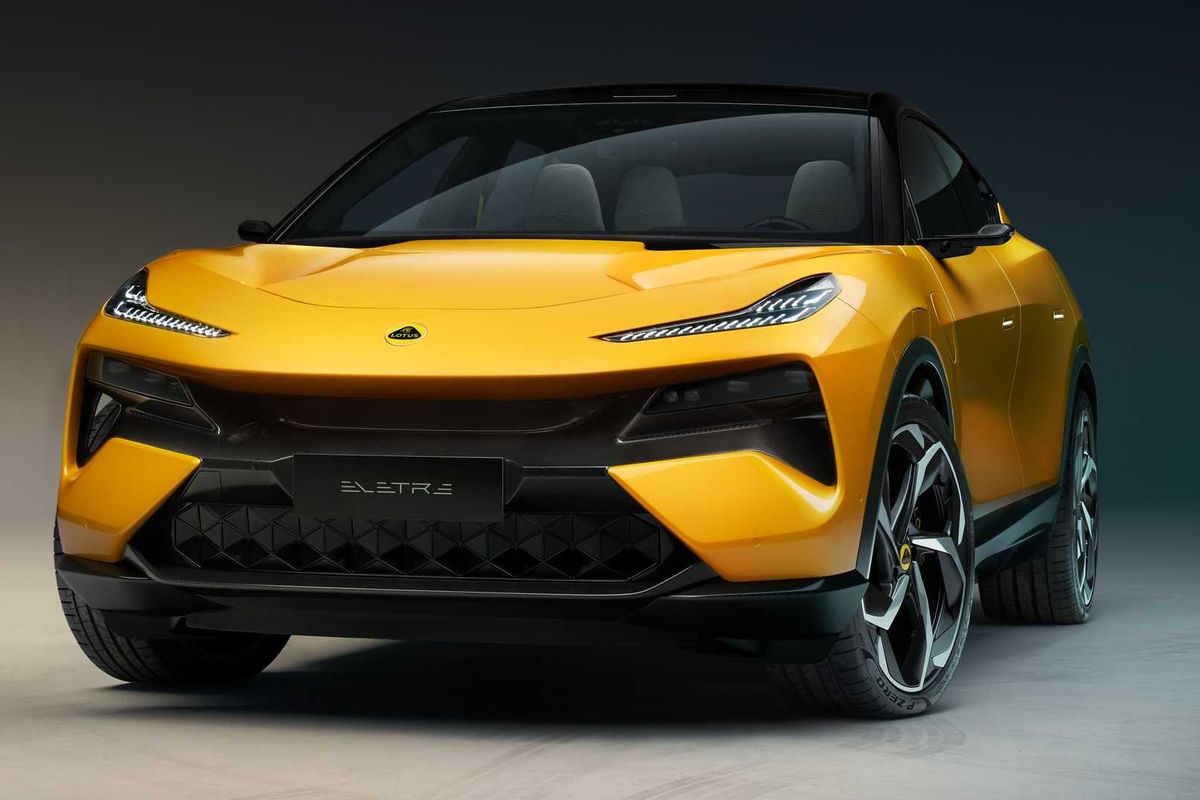
Lotus Eletre Unveiled with 447 kW
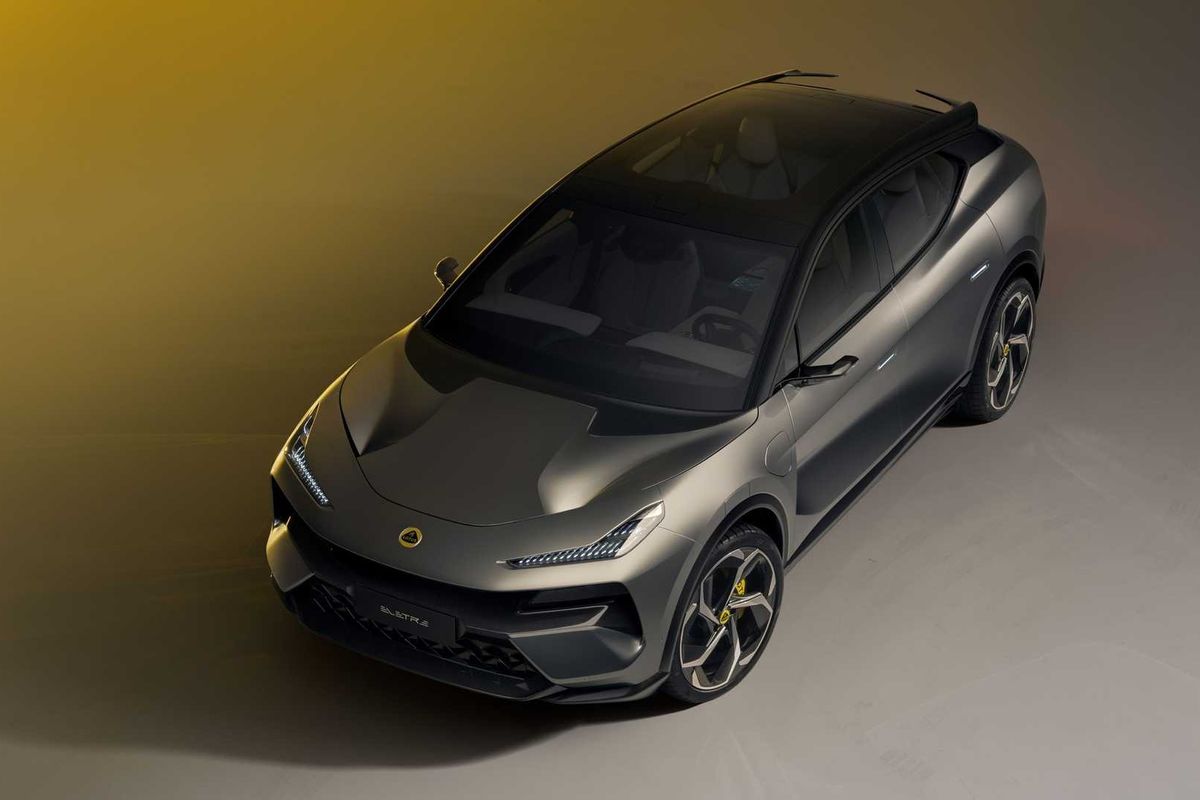
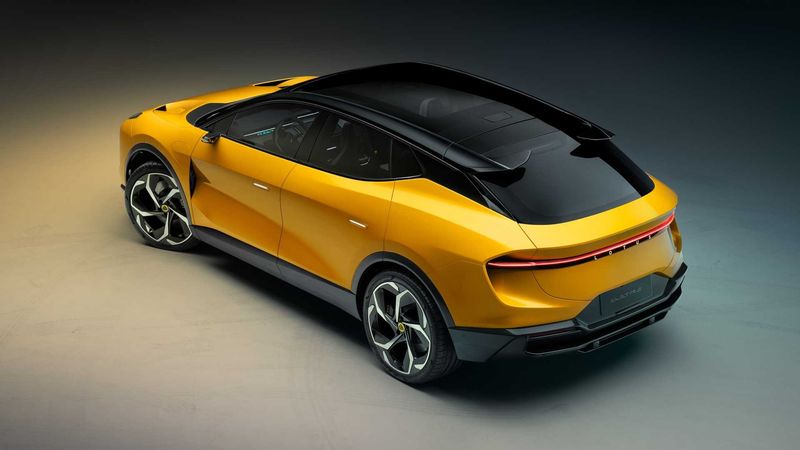
This is the Lotus Eletre, an all-electric sports SUV packing 447 kW and a claimed 0-100 kph time of under 3 seconds.
Lotus is the brand known for its light and agile sportscars. Products like the Exige and Elise have won many fans over the past decade, but its heritage stretches way further back. Lotus Esprit Turbo, anyone?
Thing is, sportscars don’t bring in the big money and carmakers have to resort to more mainstream models to fund the fun stuff. Porsche is the textbook example here, with the Macan and Cayenne offering luxury and practicality. Sales of these pay for the 911, Cayman and Boxster.
Lotus hopes to follow a similar model here and with the deep pockets offered by parent company Geely (who also owns Volvo, it may have the capital to pull it off. Impressively, the Lotus Eletre went from announcement to production reality in a short period of time, much quicker than the traditional process.
Eletre can be defined as ‘coming to life’ in some Eastern European languages and is the first model in a new chapter of electrification for the brand. There will be four EVs by 2025. Lotus claims Eletre will have the spirit of a traditional sports car but with the practicality of a crossover.
Under the skin is the new Electric Premium Architecture platform from Lotus and the numbers make for impressive reading. There’ll be a few derivatives, but with outputs from 447 kW, it’s not going to be slow. A claim of under 3 seconds to 100 kph and a top speed of 260 kph should make this one quick machine.
The battery capacity is just over 100 kWh and it supports fast charging. A range of 600 km is claimed, and you can get 400 km of range in just 20 minutes. Other noteworthy technical elements include air suspension with active ride height adjustment, rear-axle steering and active anti-roll bars.
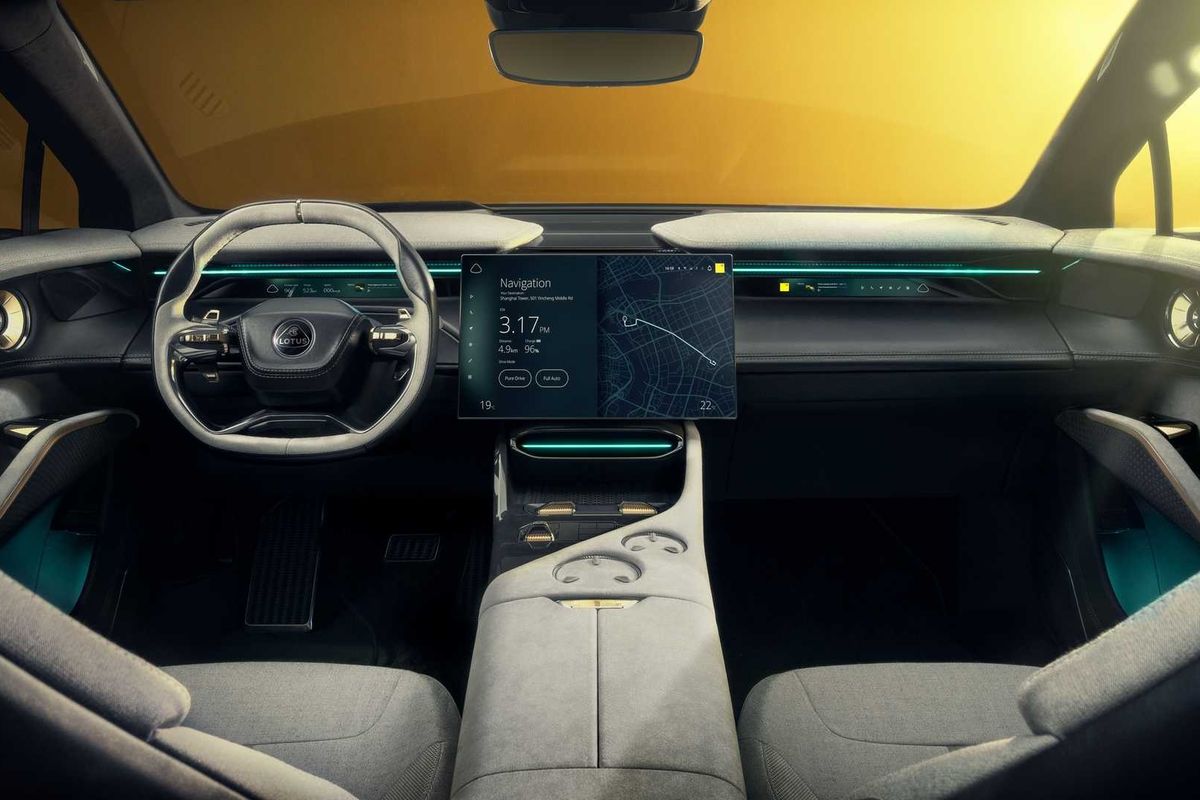
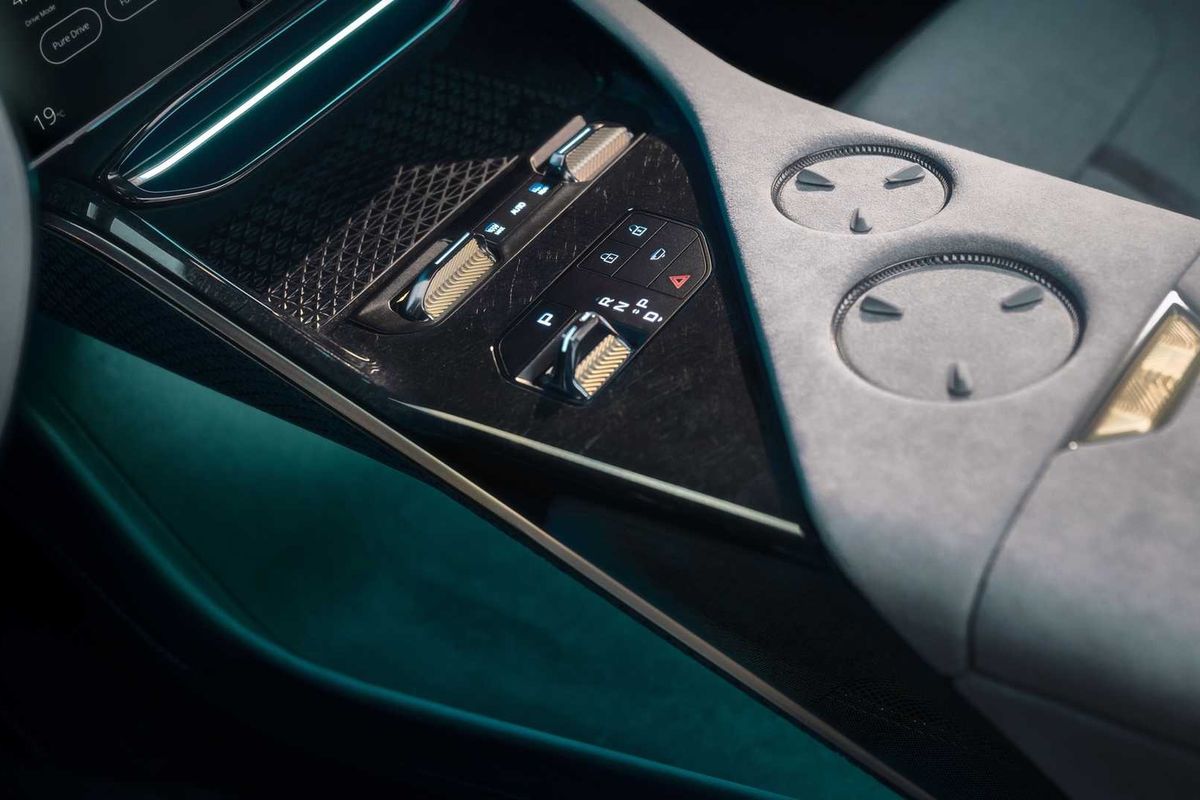
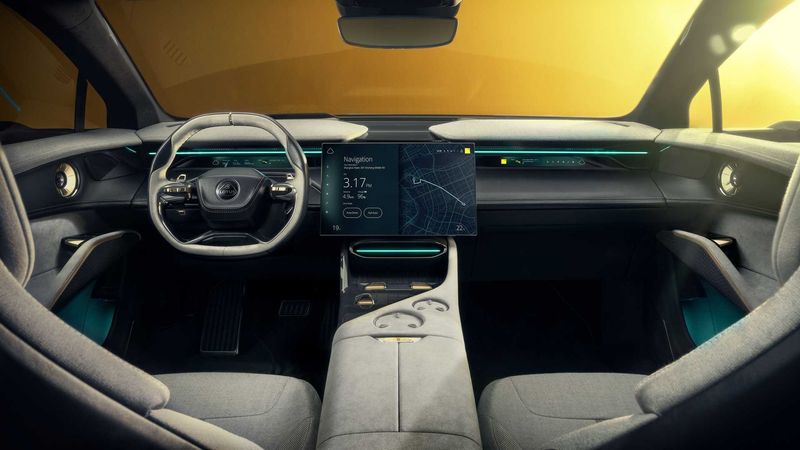
The cabin looks impressive and futuristic and the new Lotus Eletre will feature an augmented-reality heads-up display. There’s also a fair amount of semi-autonomous driving tech with 4 lidar sensors and cameras as side mirrors. There’s also support for over-the-air updates.
Lotus will build the Eletre at a new factory in Wuhan, China, with customers getting their cars in 2023.