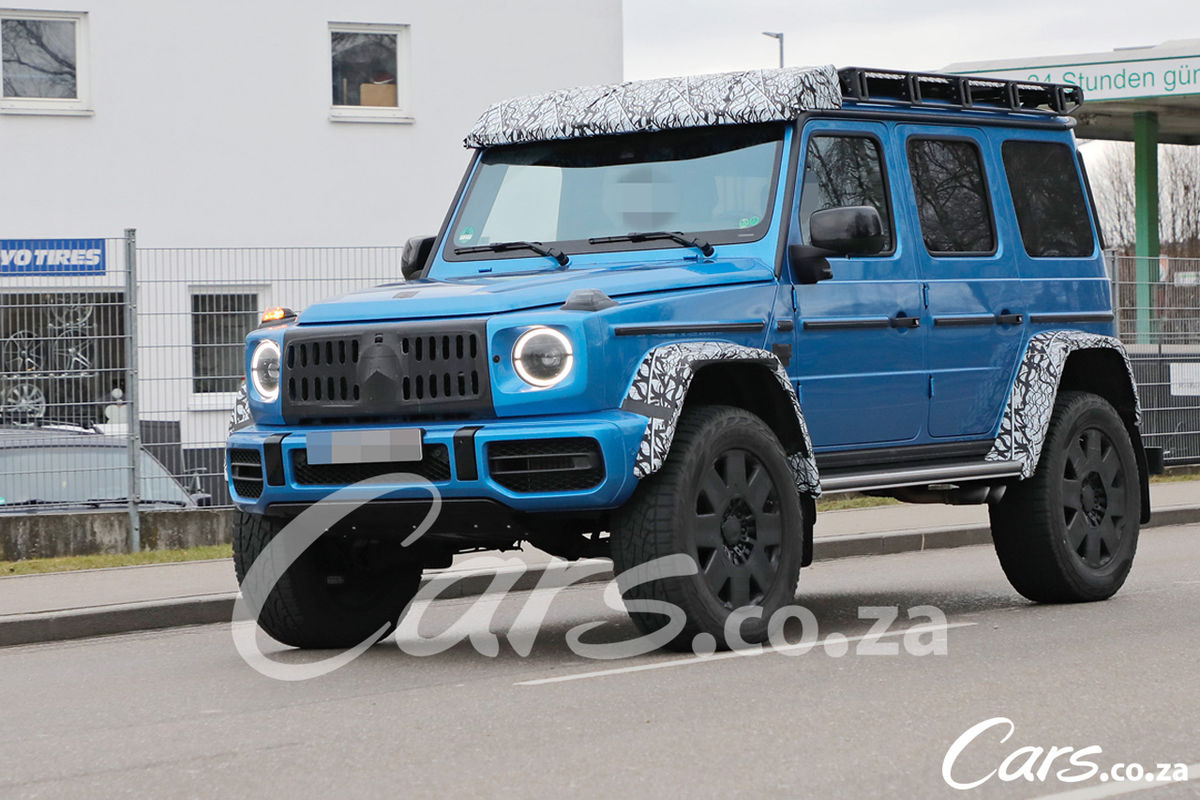
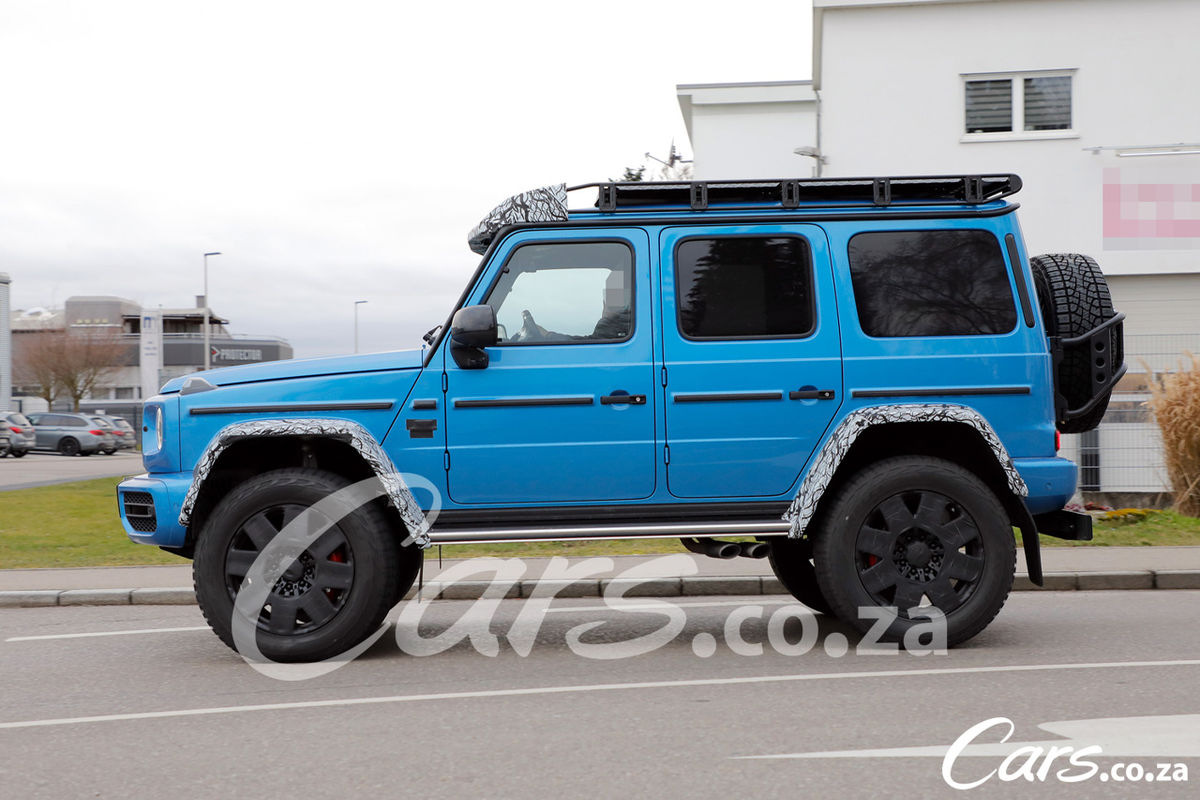
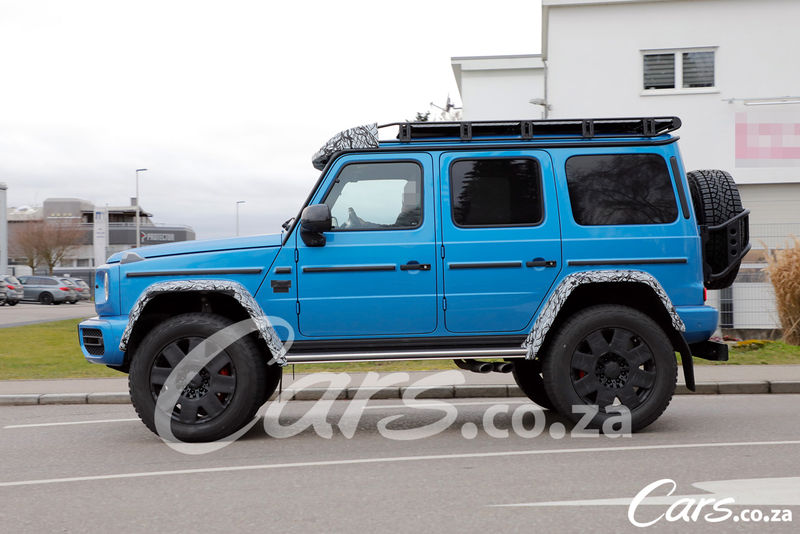
More spy shots of the Mercedes-Benz G-Class G4x4² have emerged.
Picture credit: S. Baldauf/SB-Medien. We have paid for these photos and at the photographer’s request, have watermarked them.
We’ve been waiting quite some time for this special version of the Mercedes-Benz G-Class to make an appearance. In fact, the first spy shots of the G4x4² were sent to us back in March 2020! We assume the pandemic and the subsequent pausing of life as we know it were the key reasons behind this model’s delay.
As a reminder, the G4x4² is not your average G-Class SUV. It features enhanced ground clearance thanks to porthole axles, uprated suspension, larger wheels and plenty of accessories, like ladders and roofracks.
While it’s not going to feature an electric powertrain, unlike the Mercedes-Benz EQG Concept, petrolheads will be pleased to know that it still will feature a thundering V8 turbo petrol engine.
Recently, two G4x4² prototypes were spotted in the winter testing areas of Scandinavia and Germany. The eccentric colours remind us of the special Mercedes-Benz G-Class Crazy Colour Editions, where customers could choose from vibrant shades for their vehicles. Could Mercedes-Benz be contemplating a revisit for the 2022 Mercedes-AMG G4x4² ?
We also noticed that the blue prototype featured a camouflaged grille and other details, possibly suggesting a mild facelift is on the cards for the rest of the G-Class range. The current generation model was revealed back in 2018 and has had some very minor updates since then, and by rights, a facelift model should be due in the next 18 months or so.
We’ve had considerable time with the current-shape G-Class and we think the G400d offers the best bang-for-buck value in the range. The AMG version is crazy and thoroughly entertaining, but would you ever take it offroad? Unlikely, which is why we’d err towards the diesel model.
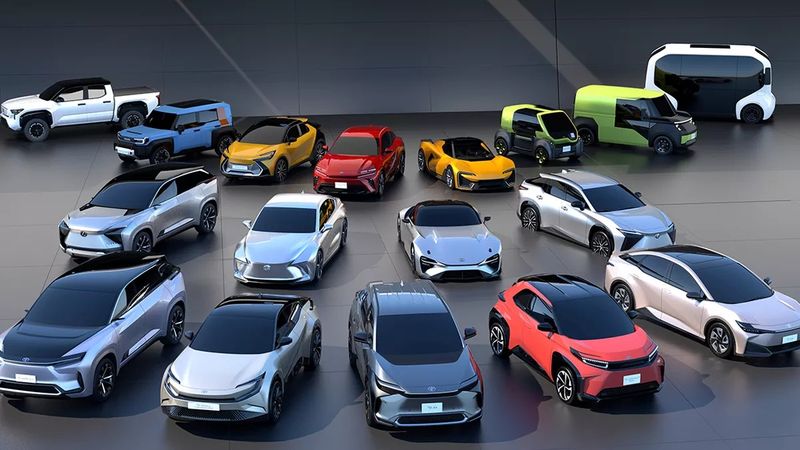
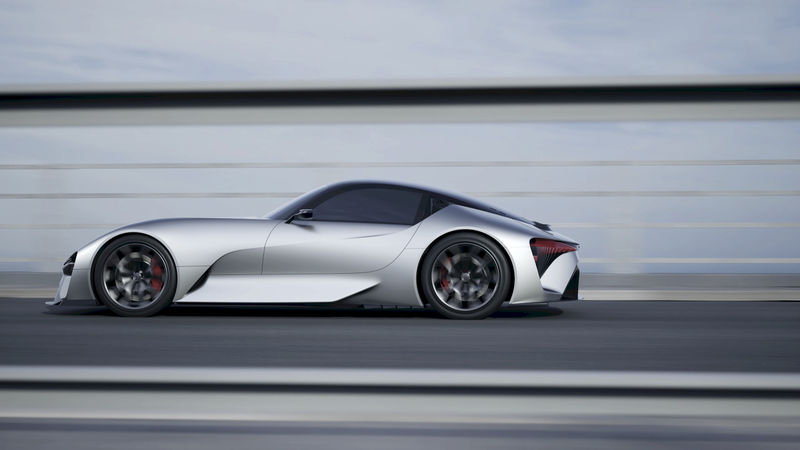
It was quite a startling announcement from the brand, which could be accused of lagging behind when it came to electrifying its future product lines. It wasn’t just Toyota in the mix either, with a few of the cars featuring the distinct Lexus logo.
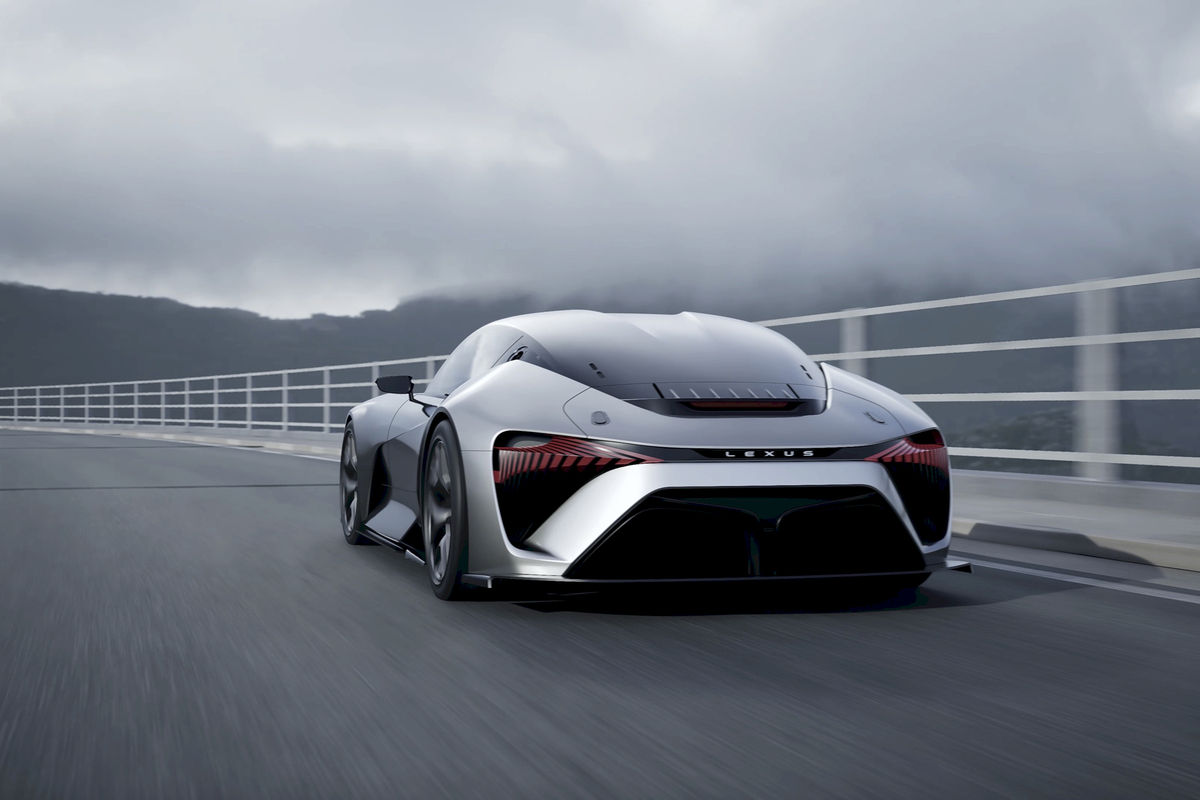
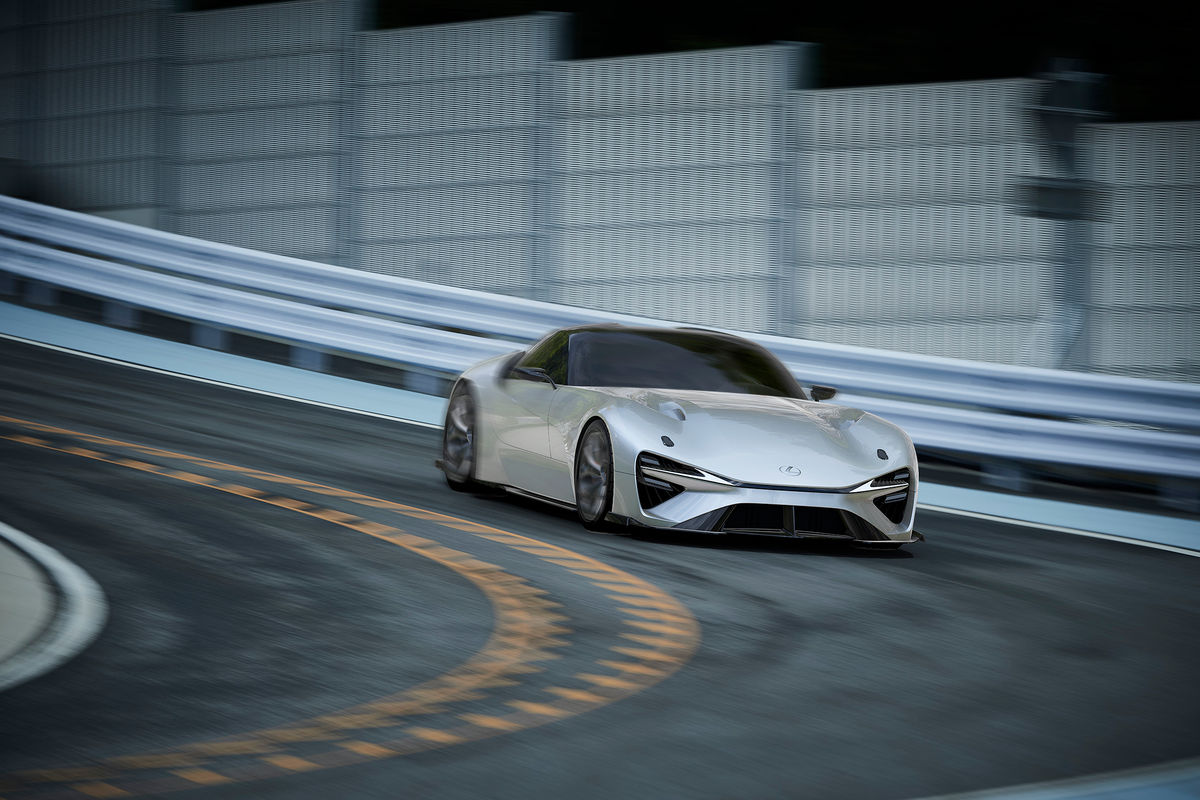
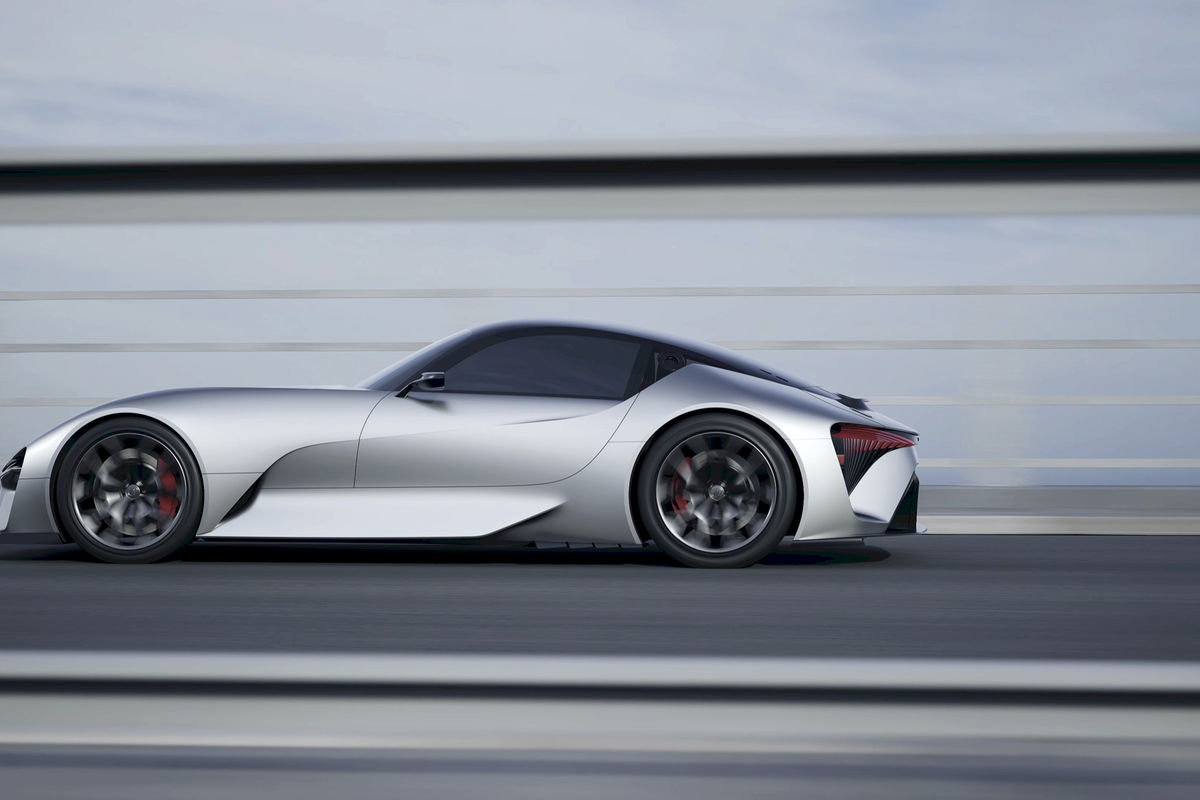
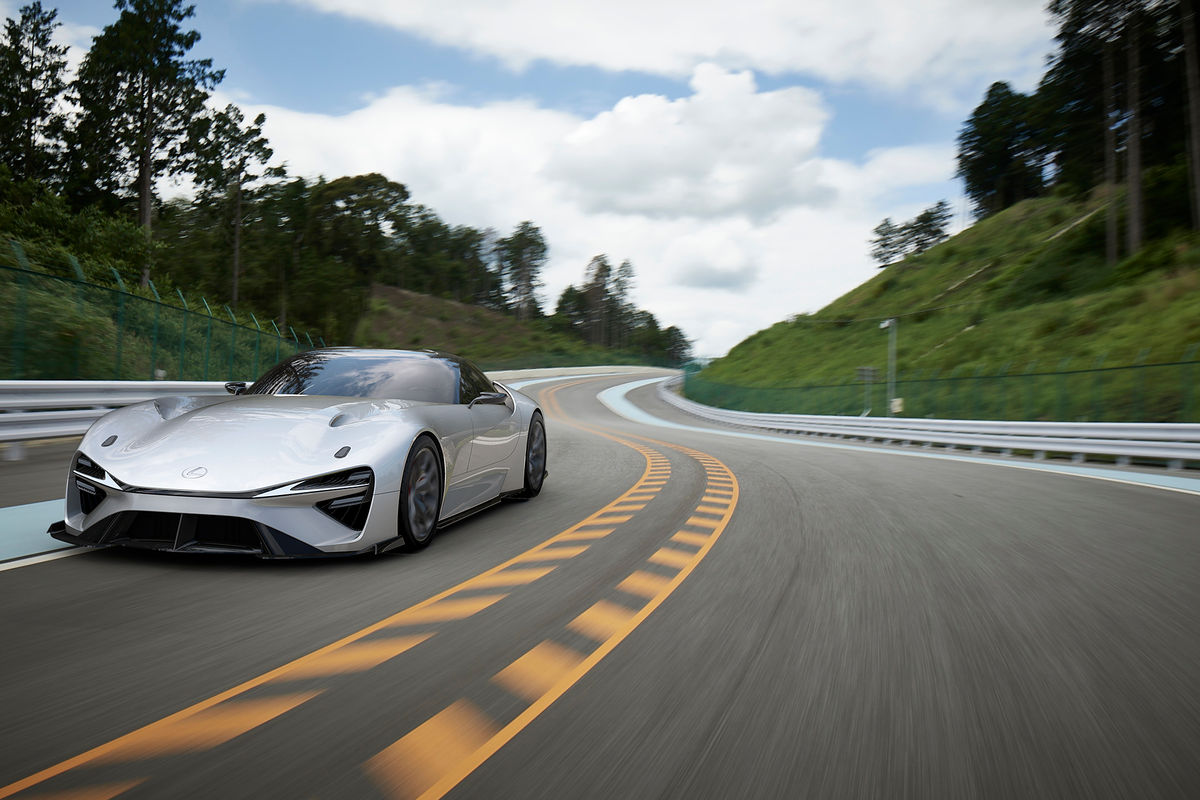
Now the luxury arm from Japan has shared a bit more info on one of the prettier and more interesting of the electric car concepts.
Officially, the new Lexus Electric Sportscar will form part of a new line-up of electrified vehicles which will launch by 2030. There are some interesting nuggets of information amongst the fluff, like “…increase the joy of driving for all of its customers.” That sounds promising!
Lexus does make mention of arguably the most iconic vehicle to come from its stable and says this new model ” symbolises the future of the Lexus brand while also reviving the spirit of the iconic Lexus LFA.”
Performance stats look impressive, with a 0-100 kph claimed sprint time in the low 2-second bracket and a cruising range of over 700 km. Solid-state battery technology has been mentioned, but let’s see how feasible they are.
The Lexus Electric Sportscar is one of three BEVs coming from Japan in the next few years. There will also be the Lexus RZ 450 e, which is the brand’s first fully electric vehicle as well as the Sedan Carousel, which is an electrified sedan.
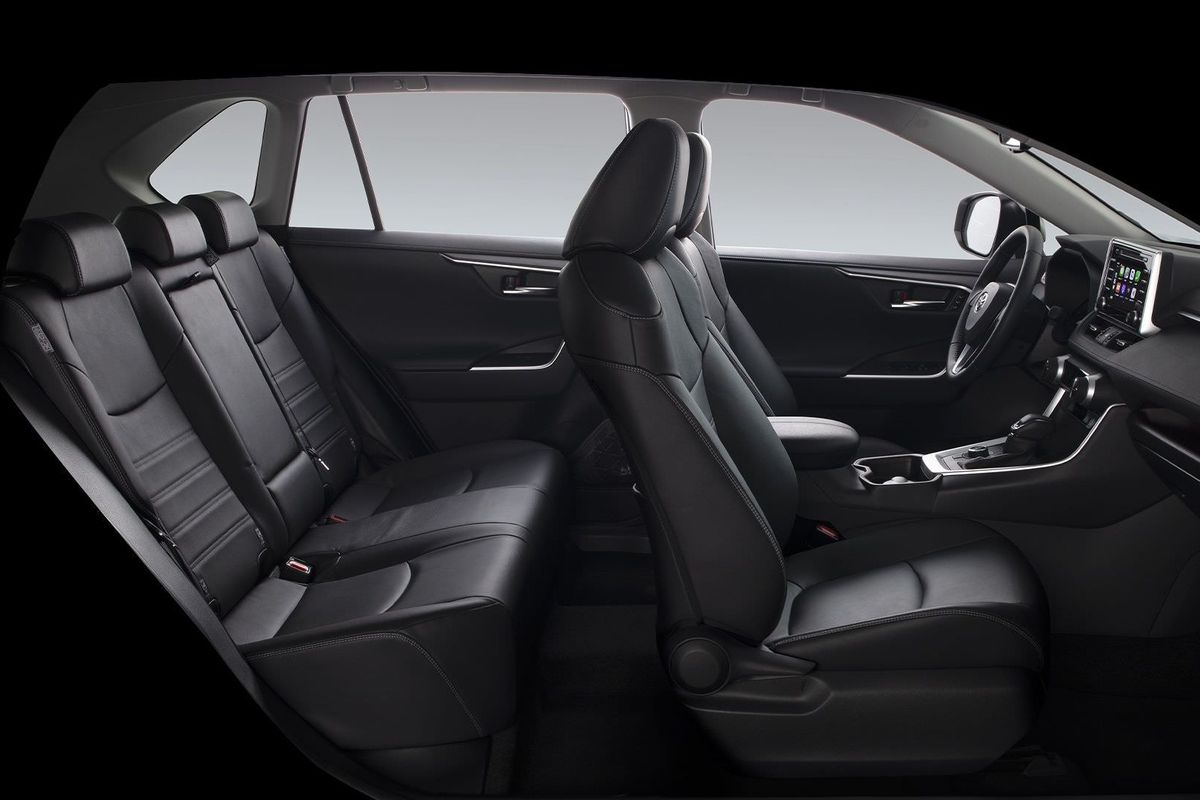
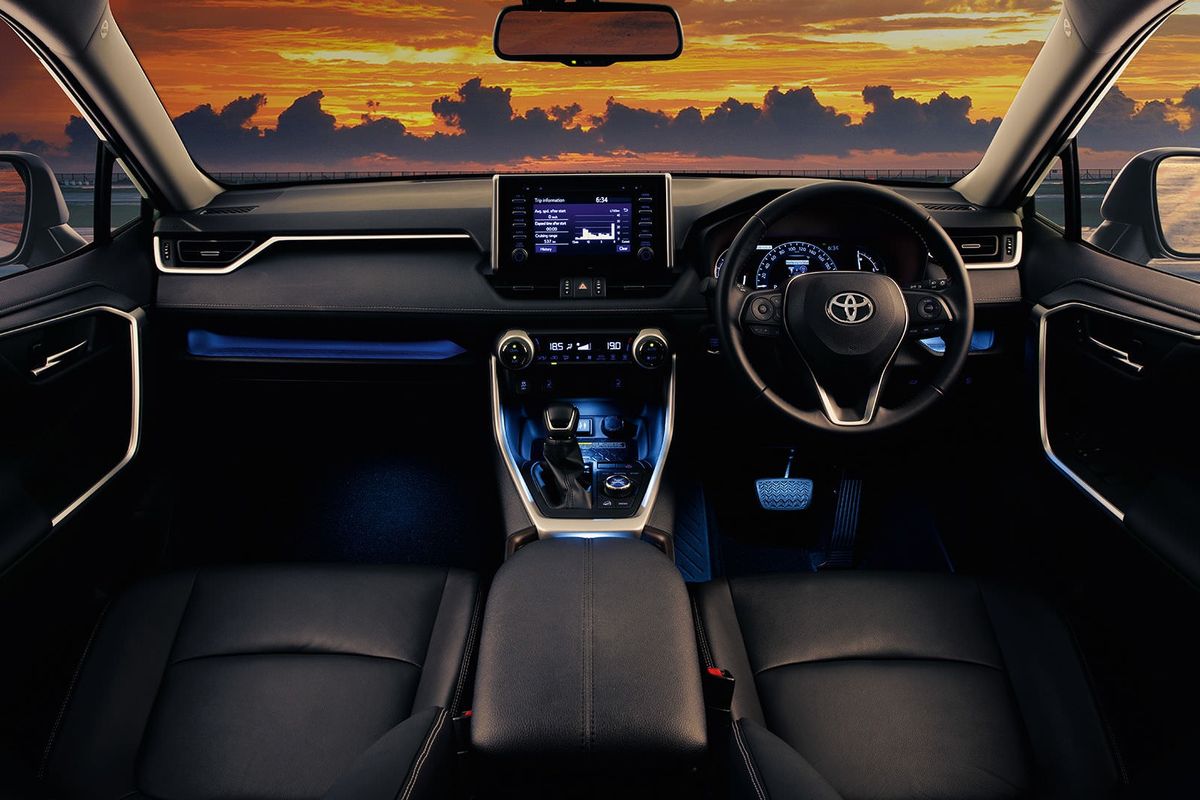
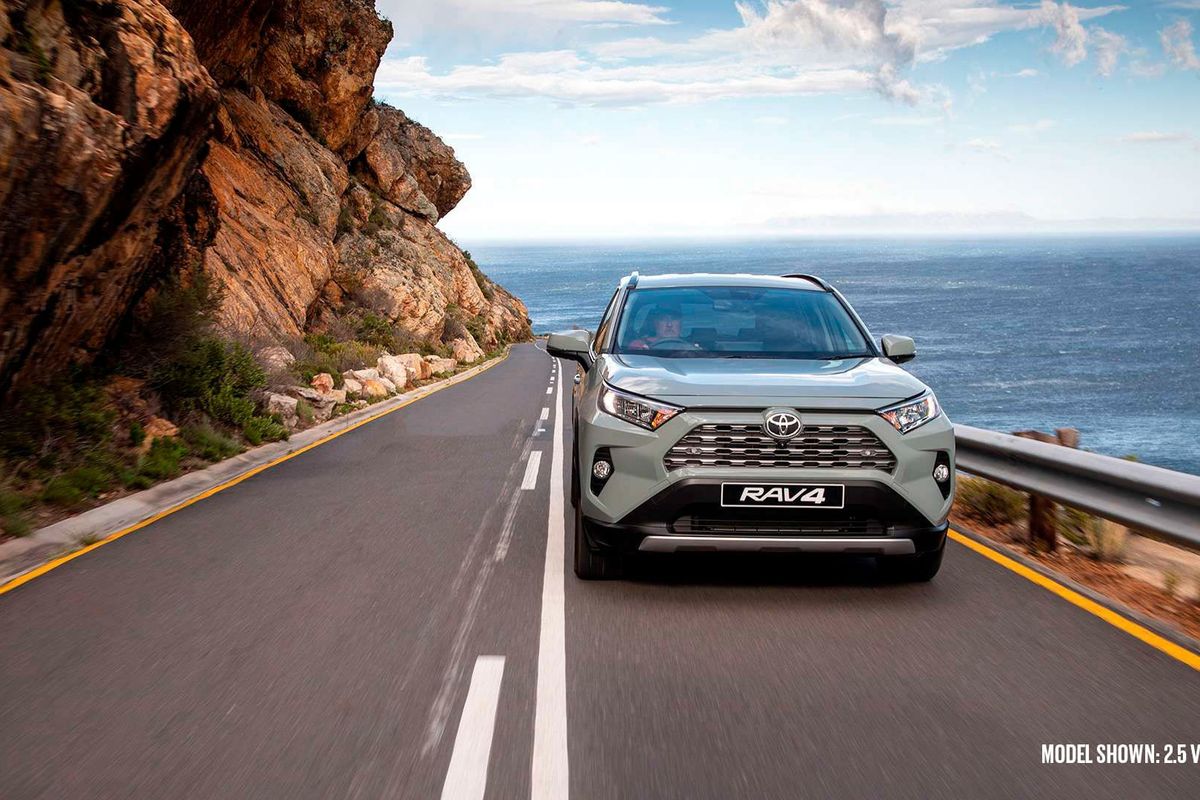
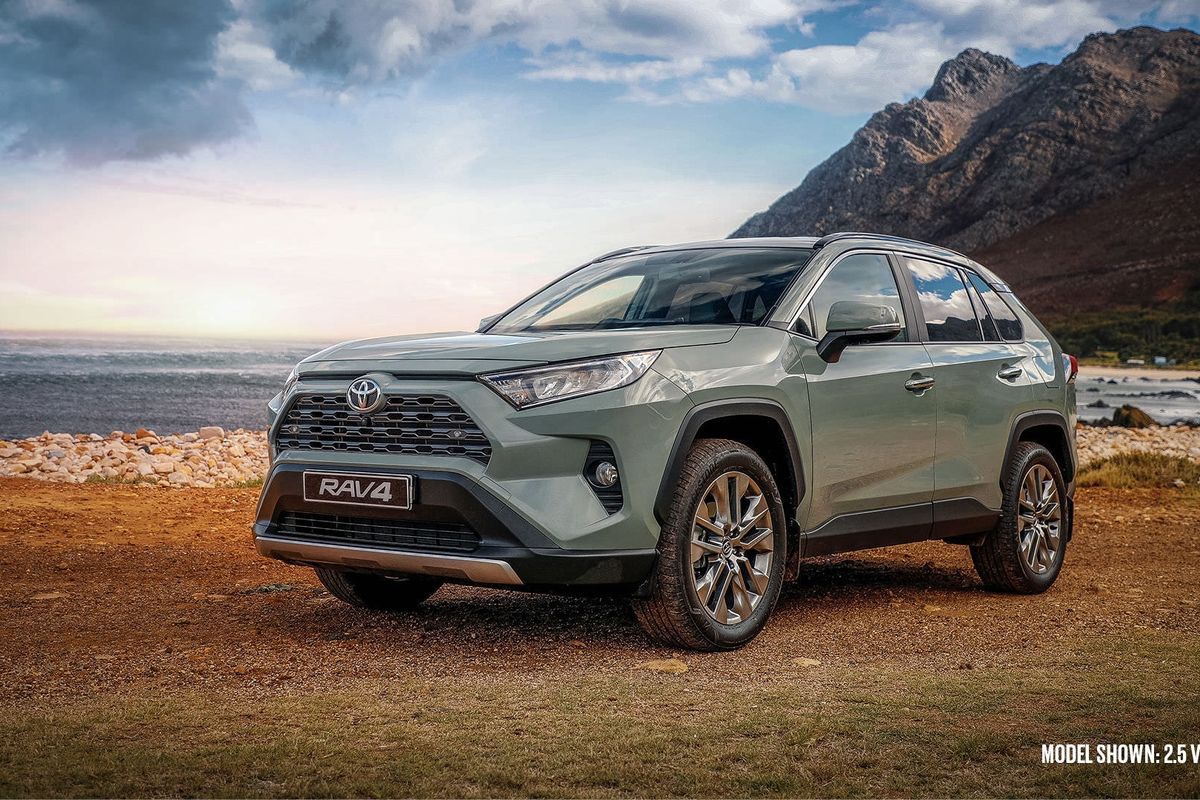
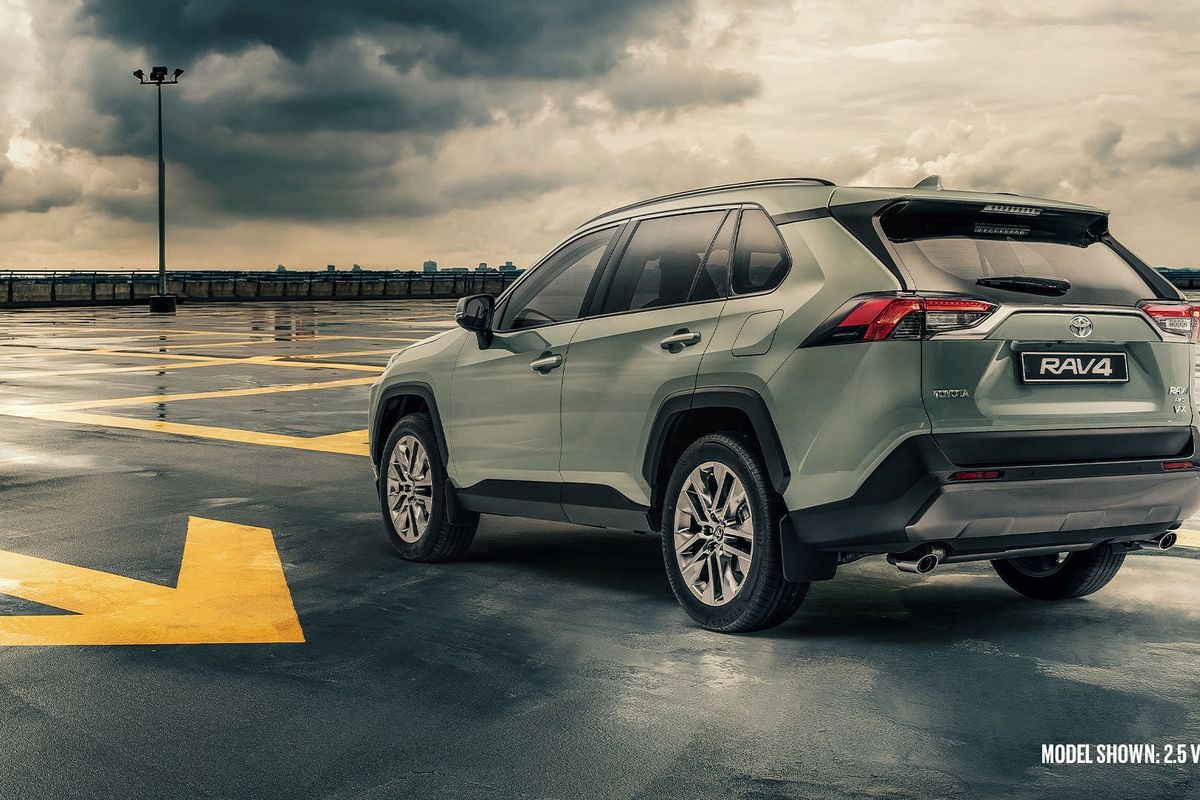
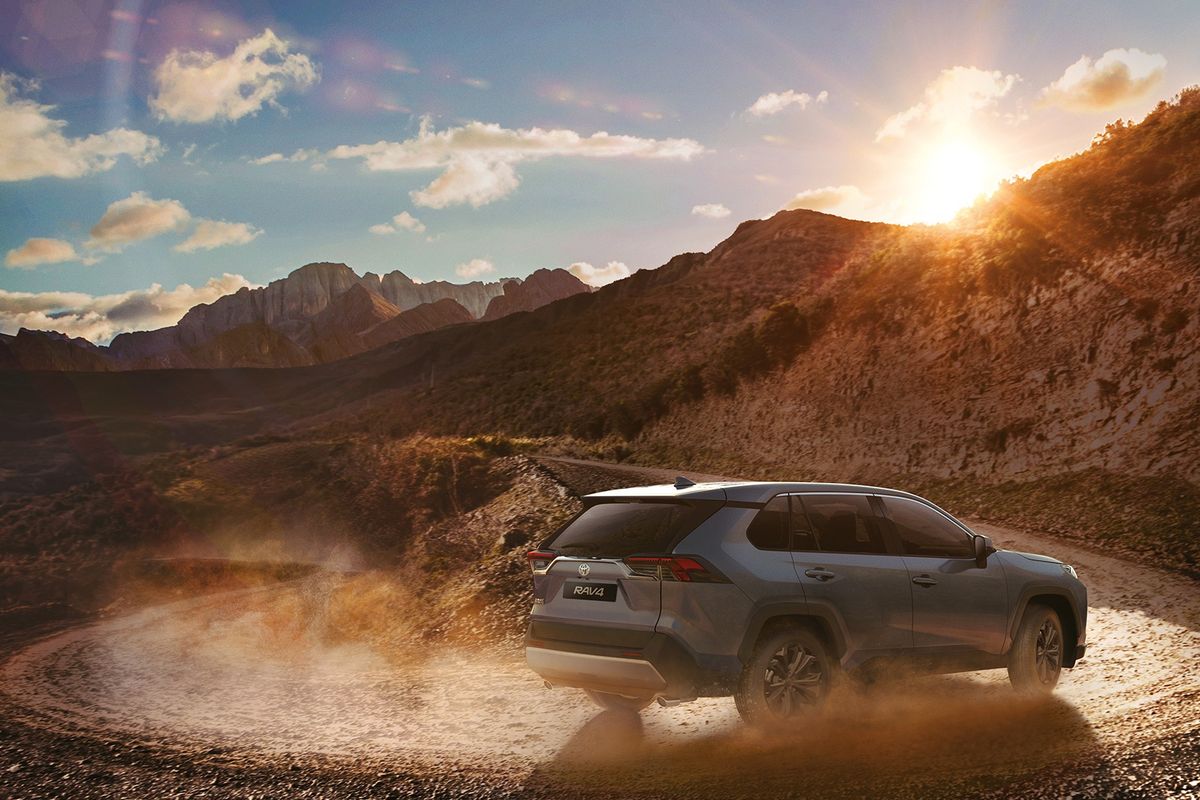
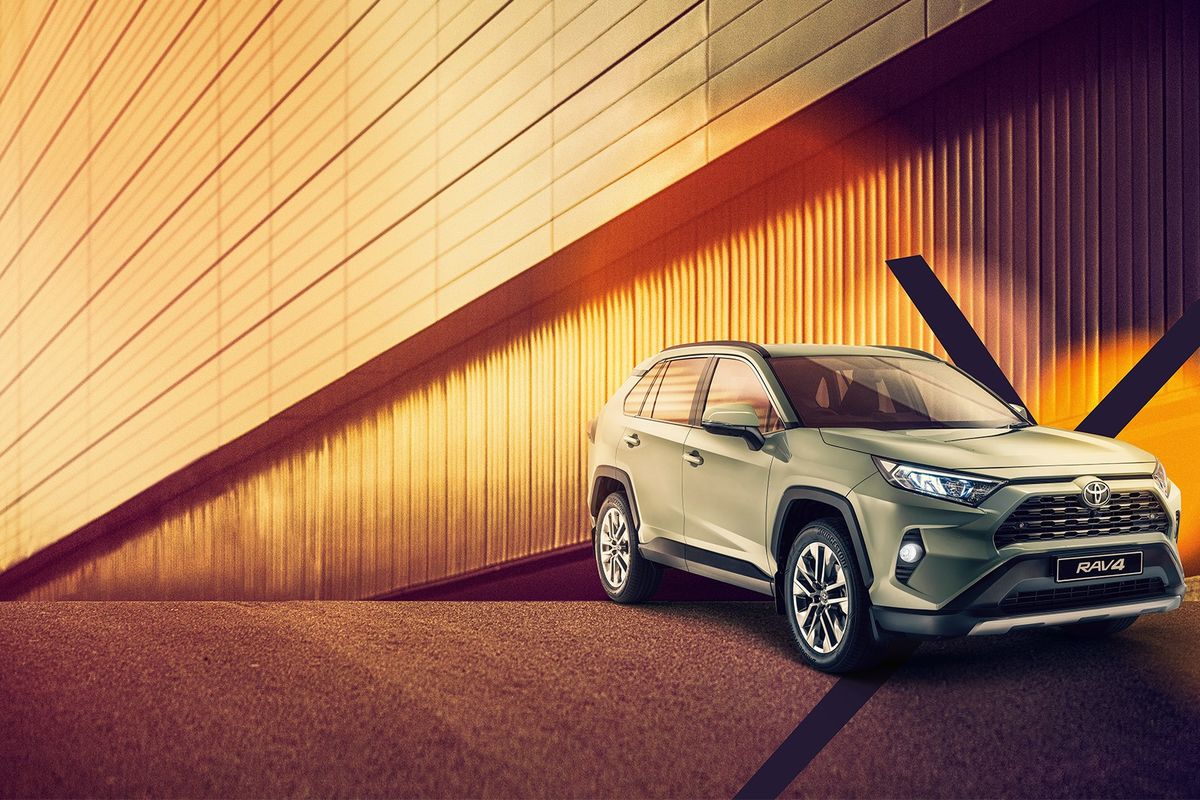
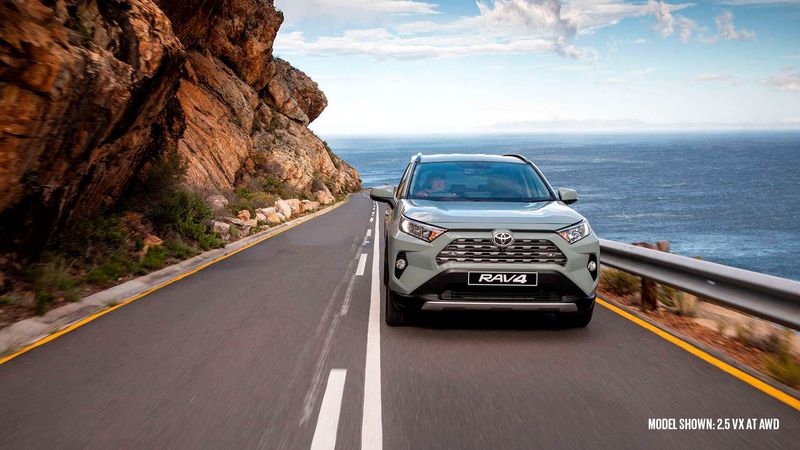
The Toyota RAV4 range has been rejigged for 2022 and we have uncovered pricing. Here’s how much you can expect to pay, plus what has changed.
The current-shape Toyota RAV4 range has been given a shuffle with the lower specced GX models falling away and the introduction of further top-spec VX grades. With the shift in strategy, this has meant the price entry to the RAV4 range has increased.
Interestingly, there’s now a gap between the top-spec Toyota Corolla Cross at R450k and the entry-level RAV4 at R606k. Could there be place for another model in there? Or will we see the Corolla Cross range expand further? We do know that a Corolla Cross GR Sport is on the way…
With this pricing structure, we also see the RAV4 move into Fortuner territory, which begs the question, how much offroading do you plan to do and how many seats do you need?
Engines and Gearboxes
There are three engines on offer. Kicking off the range is a 2.0-litre naturally-aspirated 4-cylinder with 127 kW and 203 Nm, and this is paired to a CVT. If you’re wanting more power, the 2.5-litre naturally-aspirated 4-cylinder has outputs of 152 kW and 243 Nm, and that comes with an automatic gearbox.
Finally, there’s a hybrid offered, which summons 131 kW and 221 Nm from a 2.5-litre naturally-aspirated 4-cylinder. There’s also an electric motor in the mix, bringing total power to 163 kW. This model features a CVT and is said to consume just 4.8 L/100 km.
The 2.0 has a claimed fuel consumption of 6.5 L/100 km (6.7 L/100 km for the all-wheel-drive model) while the 2.5 is a touch thirstier at 7.3 L/100 km.
Trim Levels
GX-R
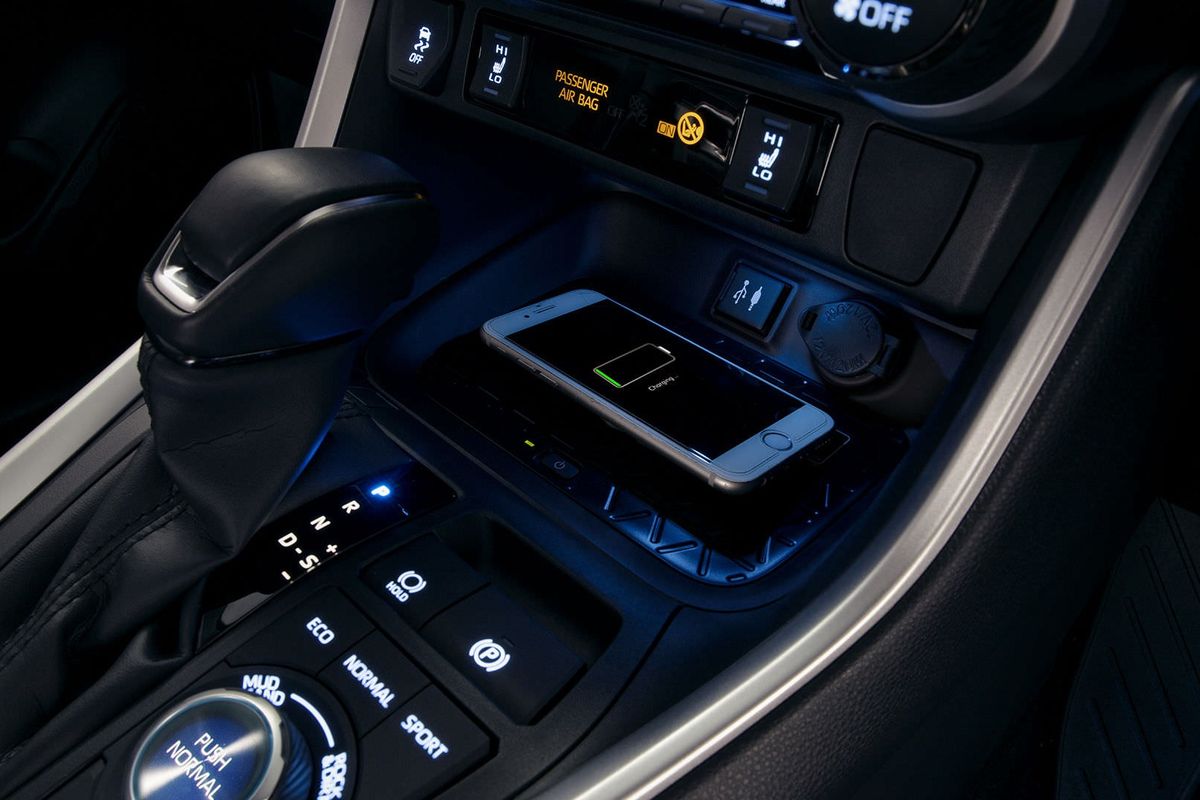
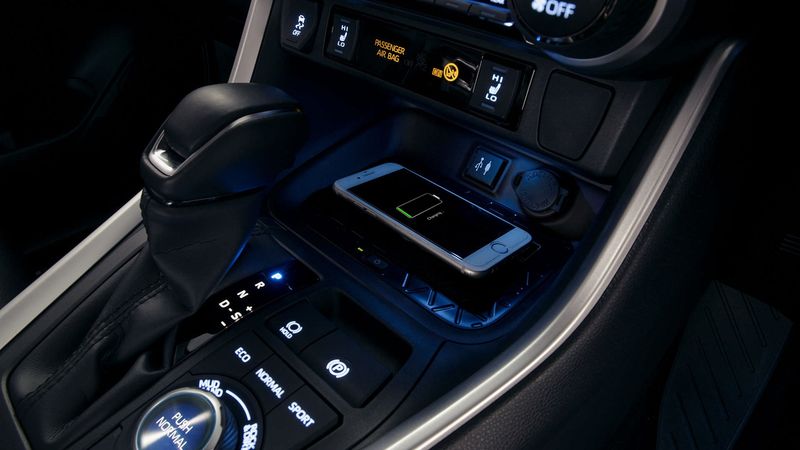
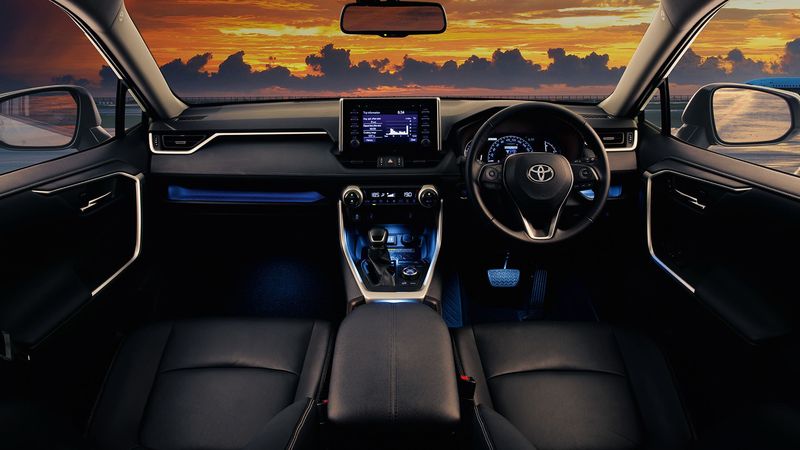
Cruise control Auto dual-zone climate control Toyota Display Audio Reverse camera Bluetooth Power adjustment for driver seat Heated seats All around one-touch electric windows Steering wheel buttons (audio, phone, cruise control, voice command, info) Five USB ports Wireless charger Android Auto/Apple Carplay Toyota Connect Colour-coded door handles LED fog lights + headlights with auto leveling Auto rain-sensing wipers 18-inch wheels Partial leather trim Rear park distance control 7 airbags Stability control
VX
Above content, plus the following:
Power adjustment for driver + passenger with driver memory Steering wheel buttons (Above + lane departure, adaptive cruise) Chrome door handles LED headlights have auto high beam Power-assisted tailgate Mirrors with blind-spot monitoring 19-inch wheels Digital rearview mirror Front and rear park distance control
How much does the Toyota RAV4 cost in South Africa?
The updated Toyota RAV4 range is sold with a 6 Services / 90 000 km service plan with intervals every 12 months / 15 000 km and a 3-year / 100 000 km warranty.
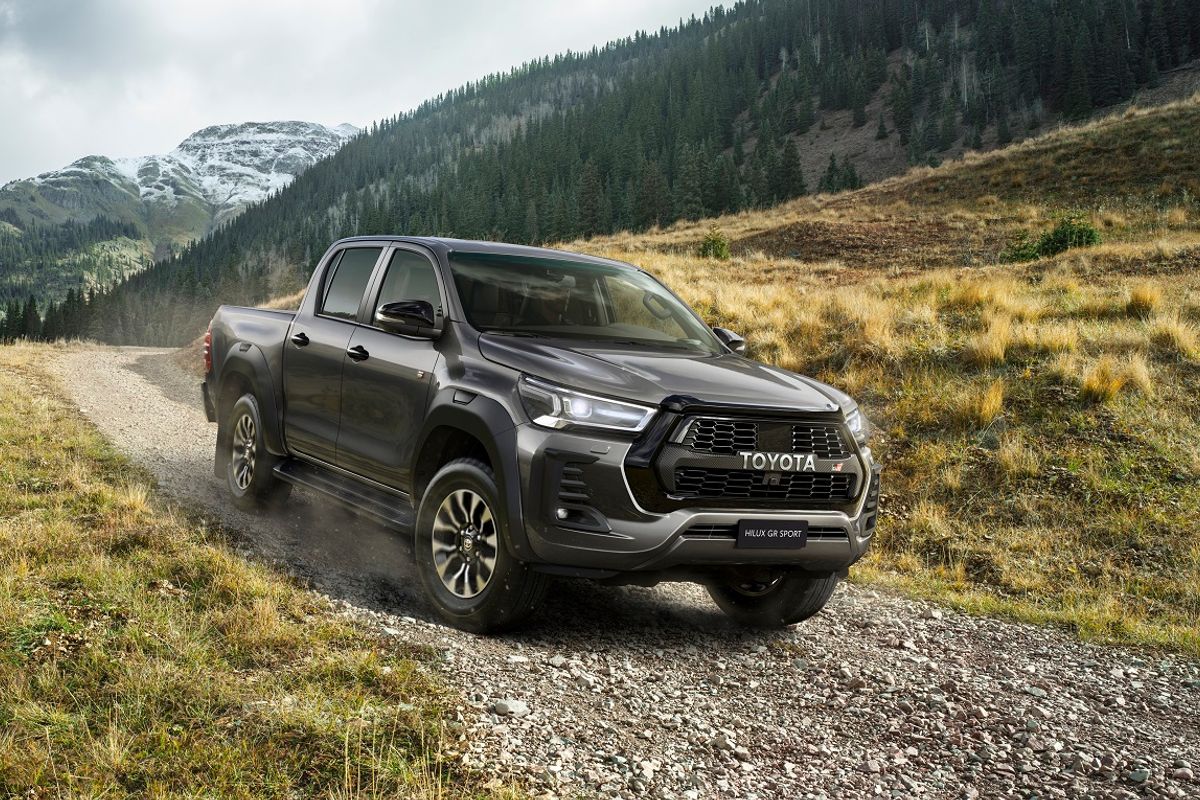
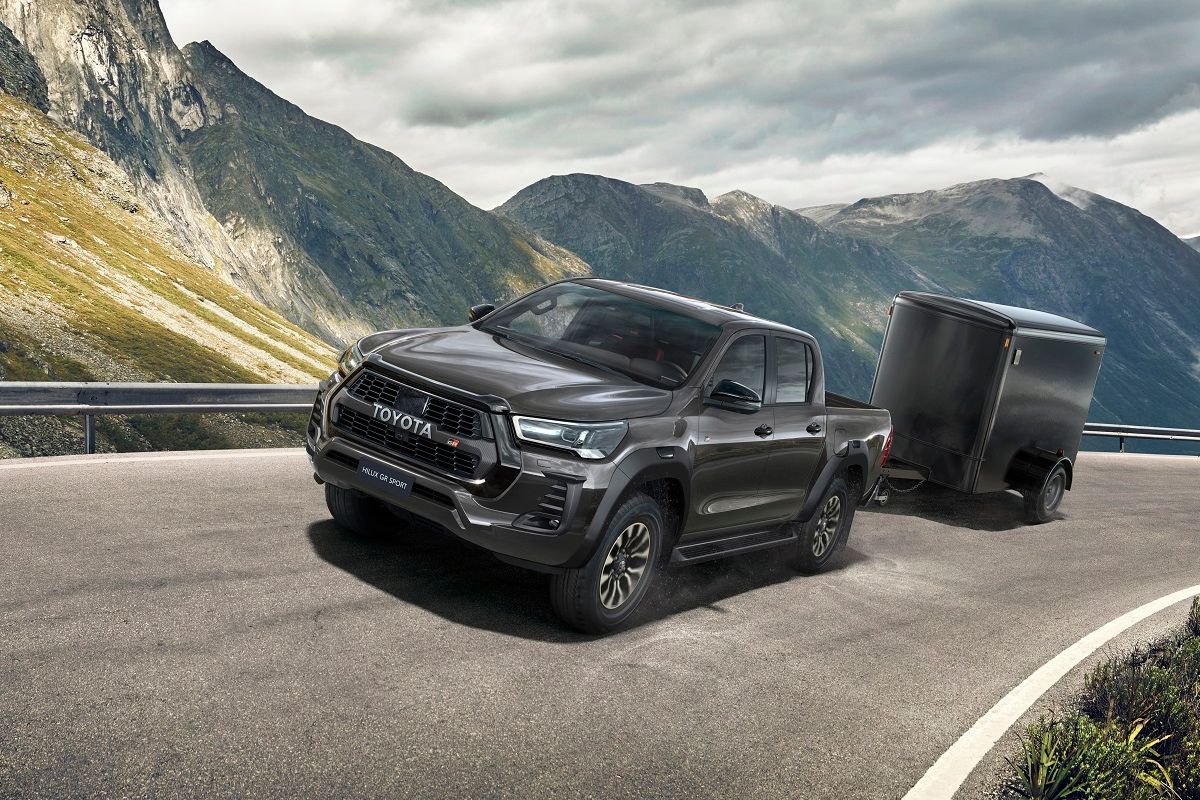
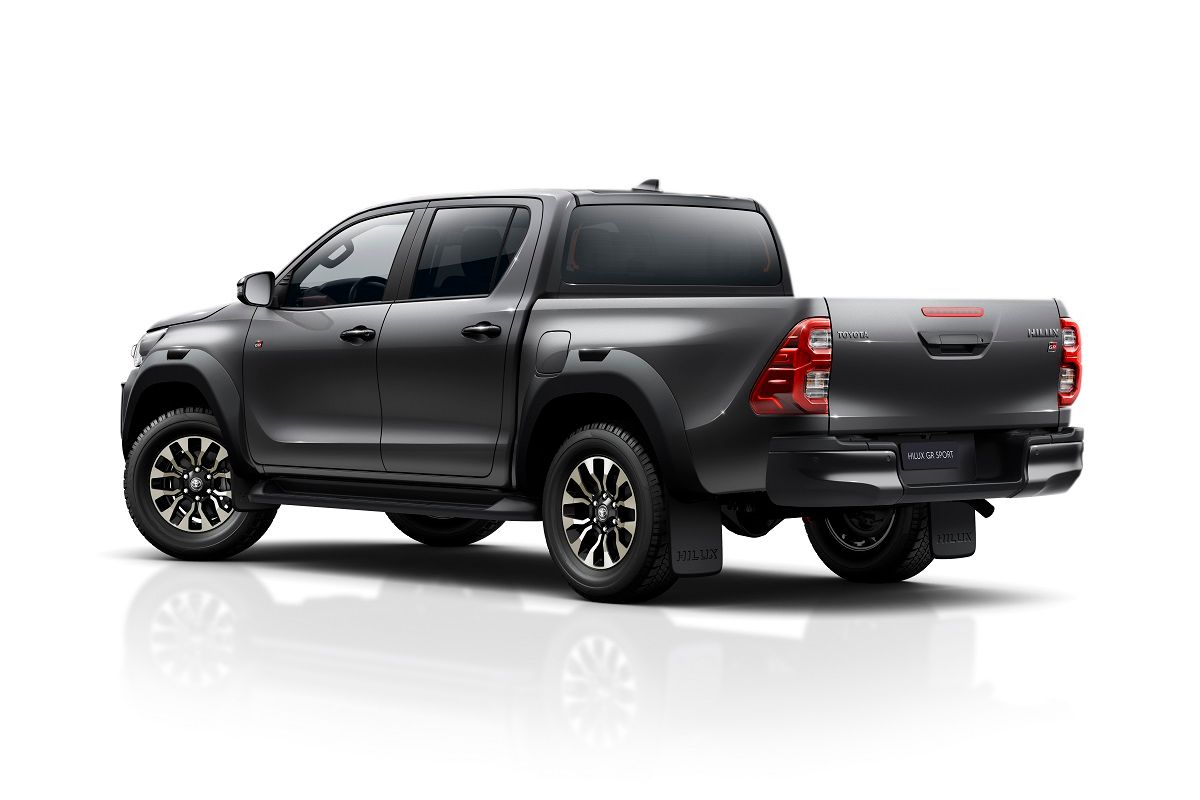
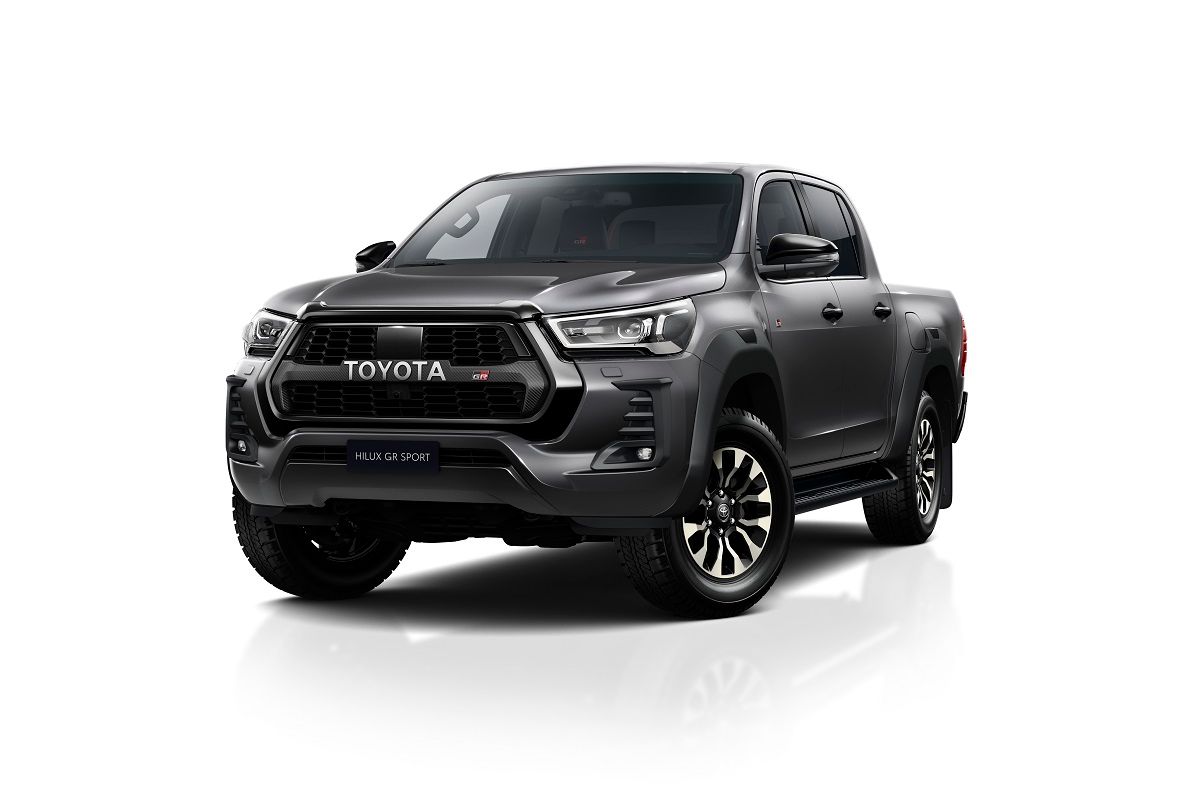
Toyota SA will introduce the facelifted Hilux GR Sport soon. Not only does it draw inspiration from the firm’s Gazoo Racing division – the new-look GR Sport derivative will be the most powerful series-produced Hilux that the Prospecton-based firm has sold in our market.
Toyota is always keen to point out its Dakar successes with the Hilux and this tough offroad race serves as the inspiration for the all-new Toyota Hilux GR Sport.
The popular bakkie has never been slack in the offroad department, but the Toyota Hilux GR Sport is more capable. There’s an upgraded suspension system featuring monotube shock absorbers, new front springs, automatic limited-slip differential, and active traction control. There are also upgrades to the vibration and noise countermeasures.
Toyota claims these upgrades “deliver significant improvements in handling characteristics, including steering effort and steering angle response, straight-line performance, a flat ride and reassuring roll and rear grip feel.”
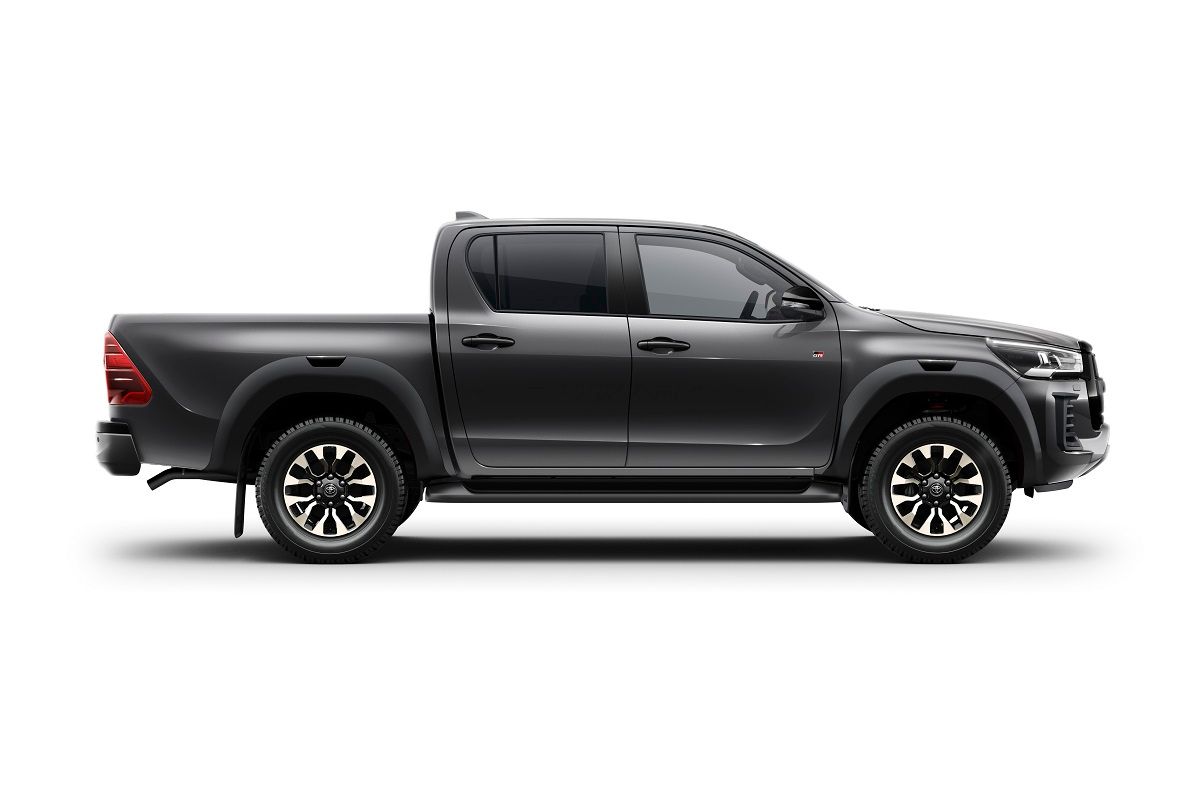
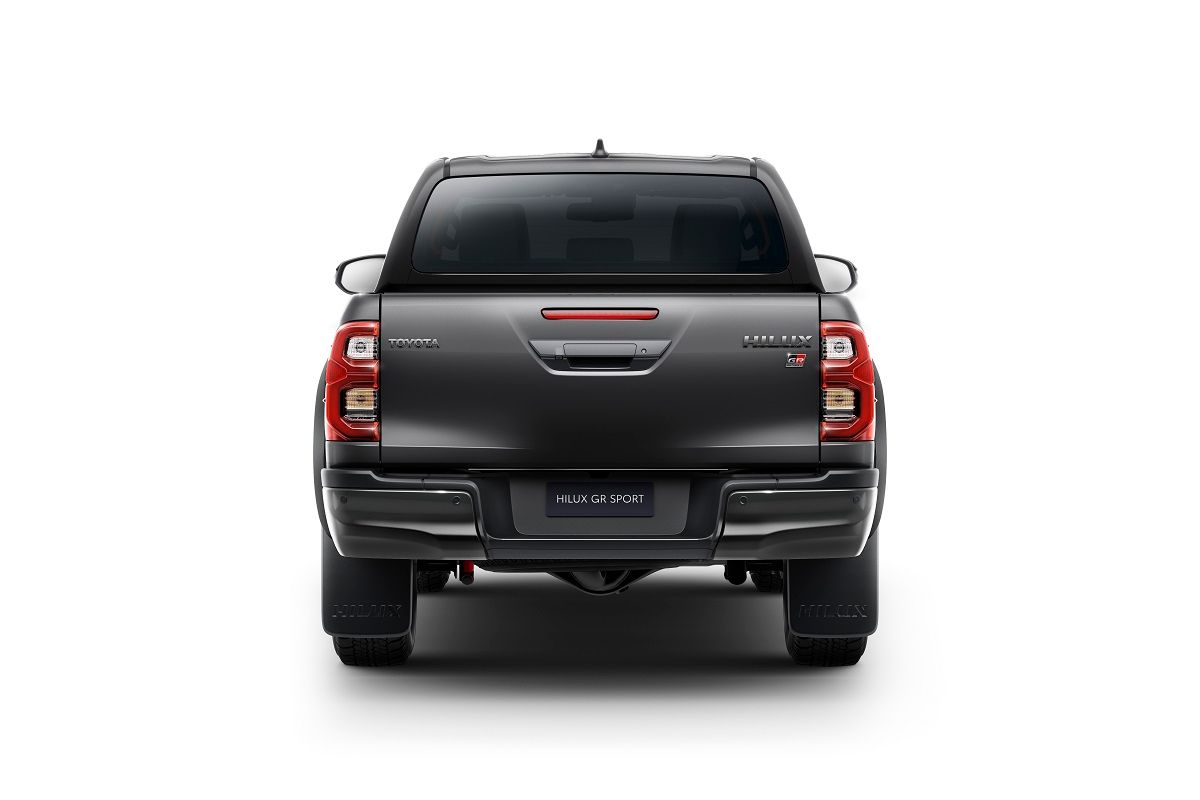
As far as visual changes go, the Toyota Hilux GR Sport features a black front grille with G-pattern mesh and a classic-looking Toyota emblem. There are new larger front fog light surrounds, 17-inch alloy wheels which are black and machined and wrapped in all-terrain tyres. There is black detailing on the side-mirror casings, side steps, tailgate handle and over-fenders. The shocks and springs are finished in red and there are subtle GR Sport badges. It’s more subtle than the Thai-built wild Revo Hilux shown in 2021.
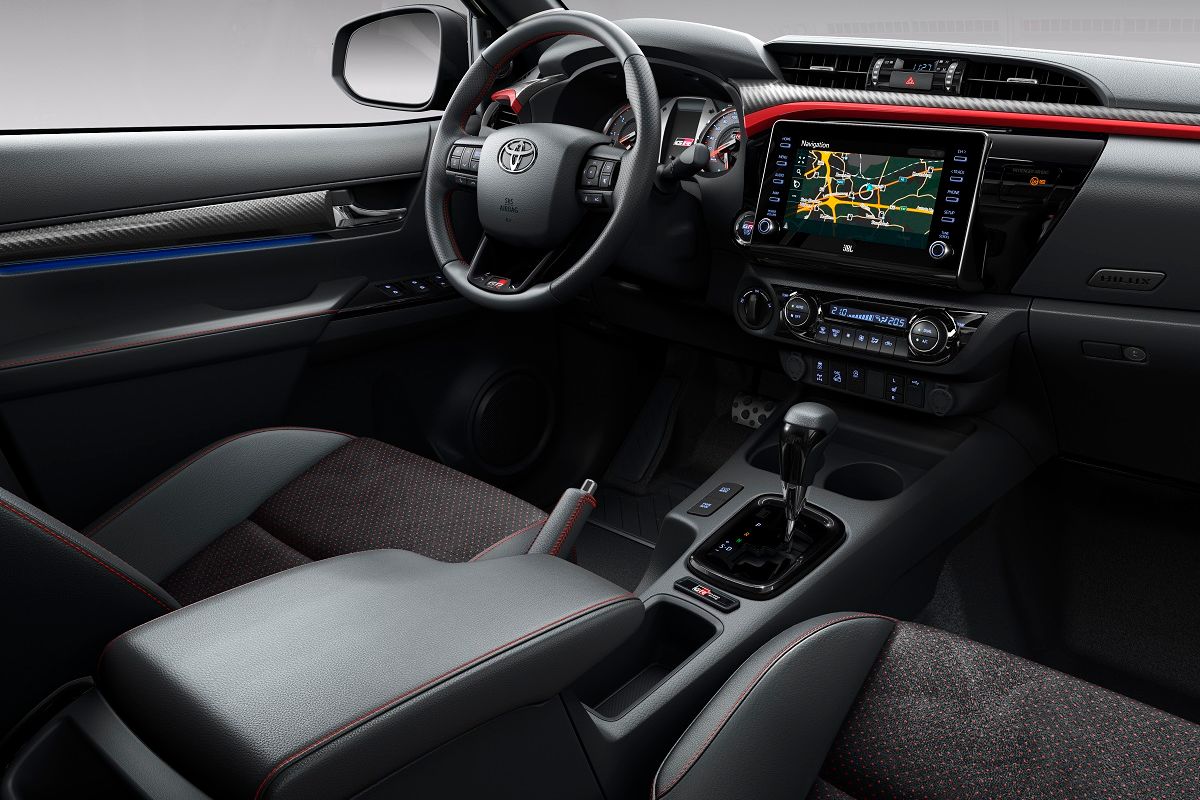
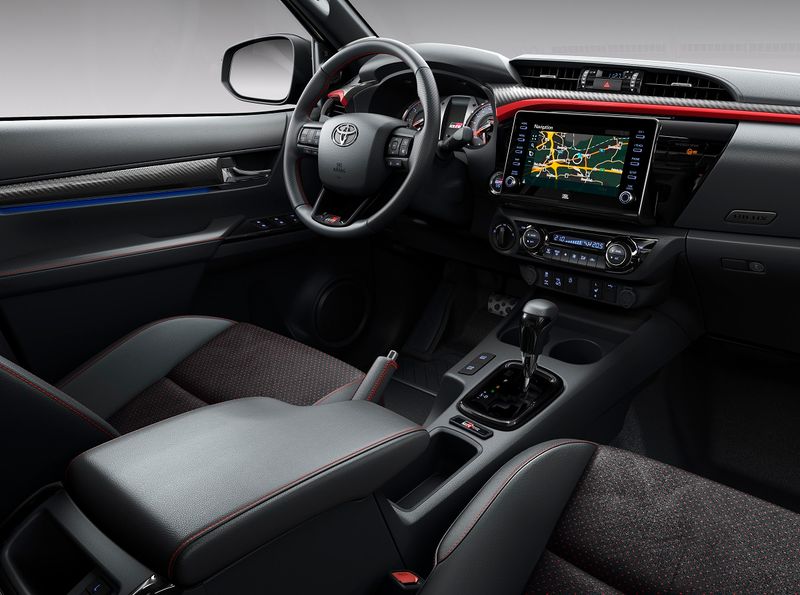
Inside, the cabin gains sports seats finished in black leather and synthetic suede with red perforations and contrast stitching. There’s GR Sport branding on the seats, carpets, starter button and dashboard graphics. There are also aluminium pedals, carbon fibre-style trim and a red insert across the dashboard.
Now if you’re expecting an engine upgrade, remember this is a GR Sport model, not a pure GR so the focus here is on a sportier drive and look. The current 2.8 engine offers plenty of go in any case with 150 kW and 500 Nm, paired to a 6-speed automatic gearbox.
Interestingly, the SA-spec Toyota Hilux GR Sport will break this hierarchy by offering a touch more power and torque. With outputs of 165 kW and 550 Nm, this GR Sport will be the most powerful Hilux offered locally. As it stands, the flagship model puts out 150 kW and 500 Nm.
When will the Toyota Hilux GR Sport go on sale?
Toyota Europe confirmed the new Hilux GR Sport will be hitting European markets in the middle of 2022. Toyota South Africa said it would be launching the Hilux GR Sport before the middle of 2022 and we’ll have more info closer to its launch.
Twin-turbo V12 Toyota Quantum! Is this the world’s Maddest Minibus?
A twin-turbocharged V12 Toyota Quantum. That’s not something you’ll hear very often.
When James Redelinghuis wanted to build a marketing vehicle for his company, he wanted to build something out of this world. And after spending some time with his creation, there is no doubt in our mind that he achieved his goal.
What you’re about to watch is one man’s mission to build the world’s maddest minibus. With a styling kit imported from Japan, the Quantum needed the go to match the show.
And so James imported a rare Toyota V12 engine. It’s not widely known that Toyota even made a V12, as it was sold almost exclusively in the Japanese domestic market, and instead of being fitted to a sports car, it was exclusively used in the Century, an ultra-luxury sedan.
And naturally aspirated just wouldn’t suffice, so James set about installing two turbochargers.
We’re immensely pleased to bring this special one-off creation to you on our channel. Let us know what you think of it in the comments below, plus it is also for sale.
Huge thank you to Munnik’s Performance Centre for lending us their awesome workshop to shoot in. Check them out here.
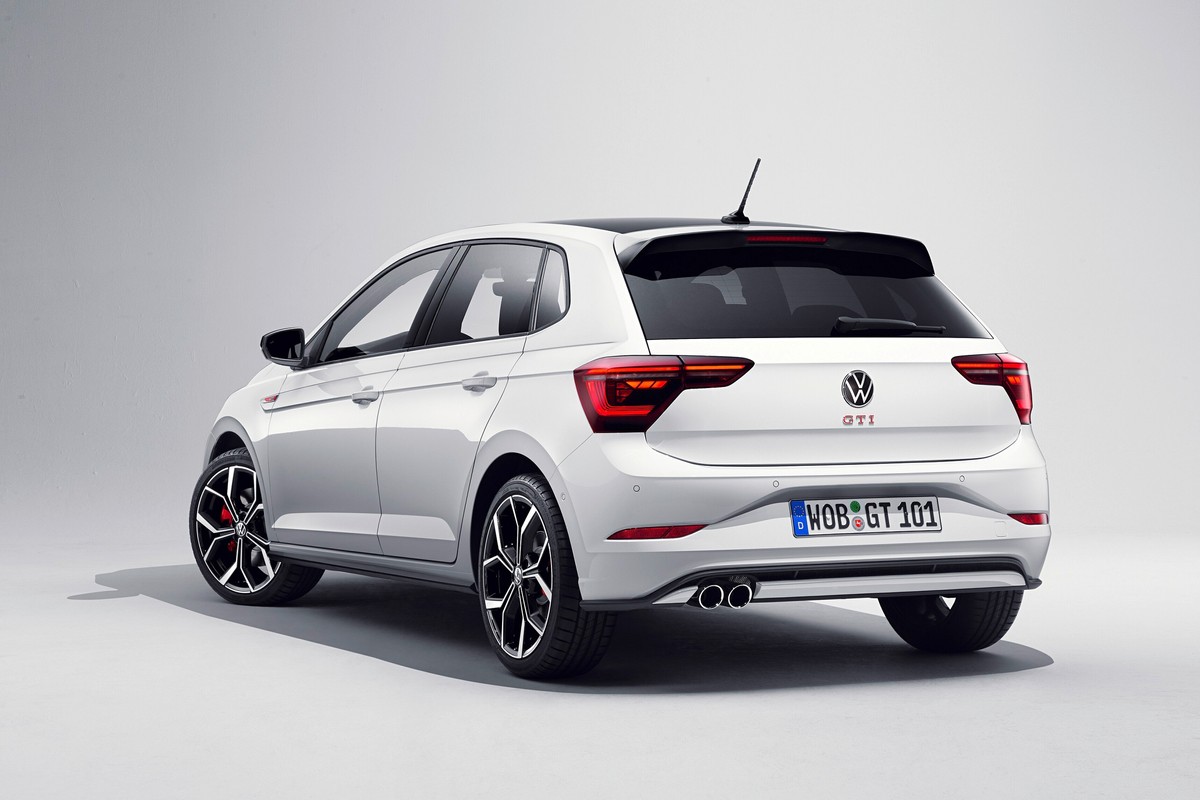
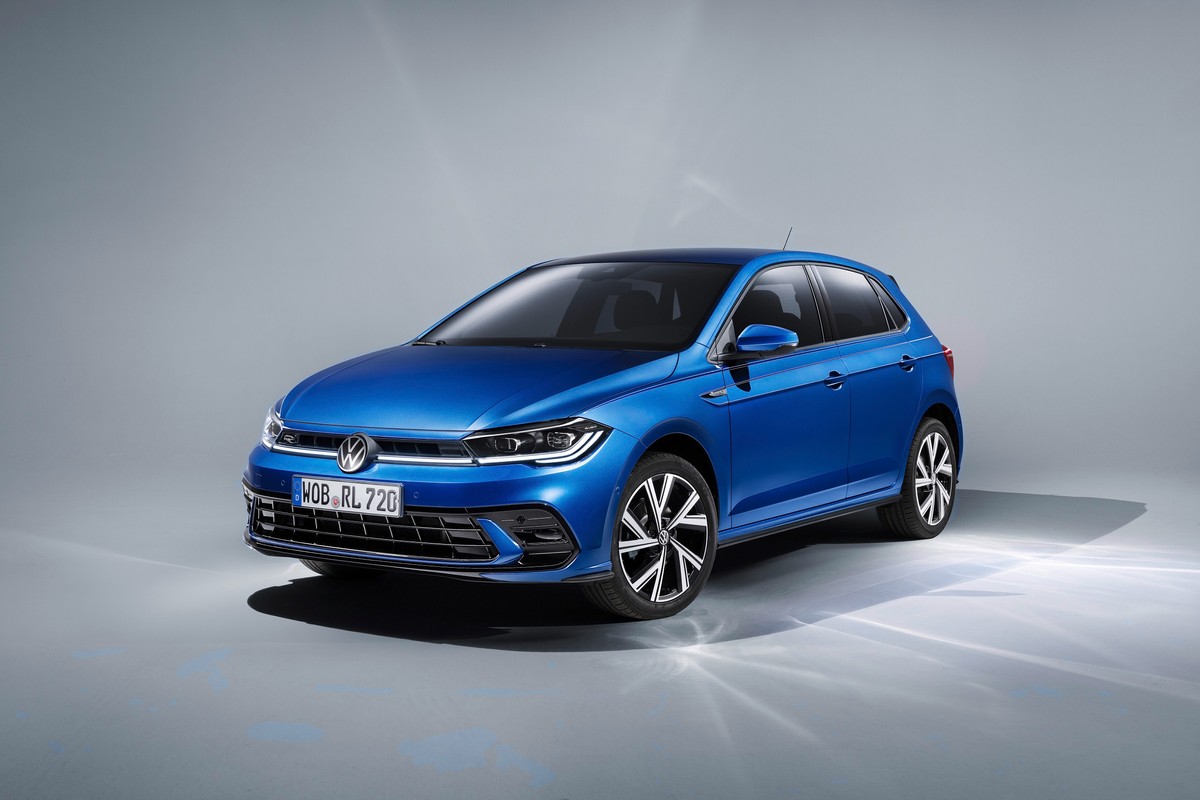
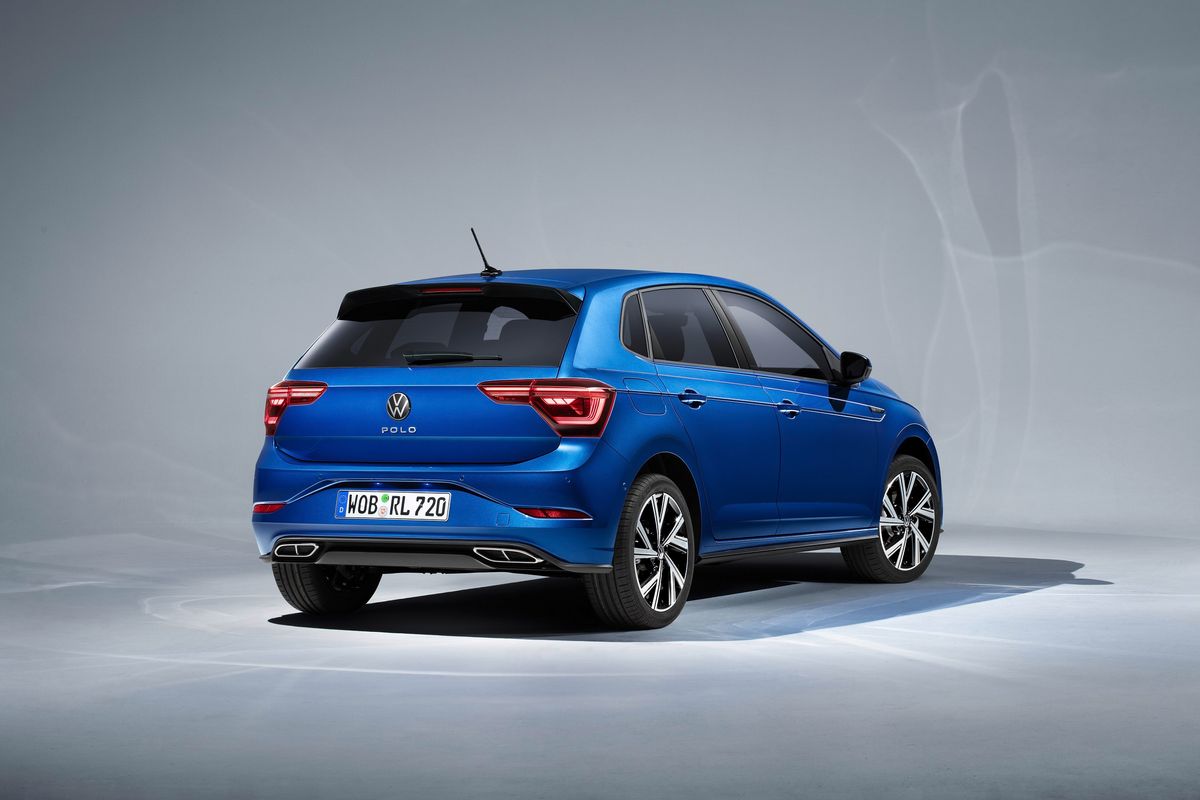
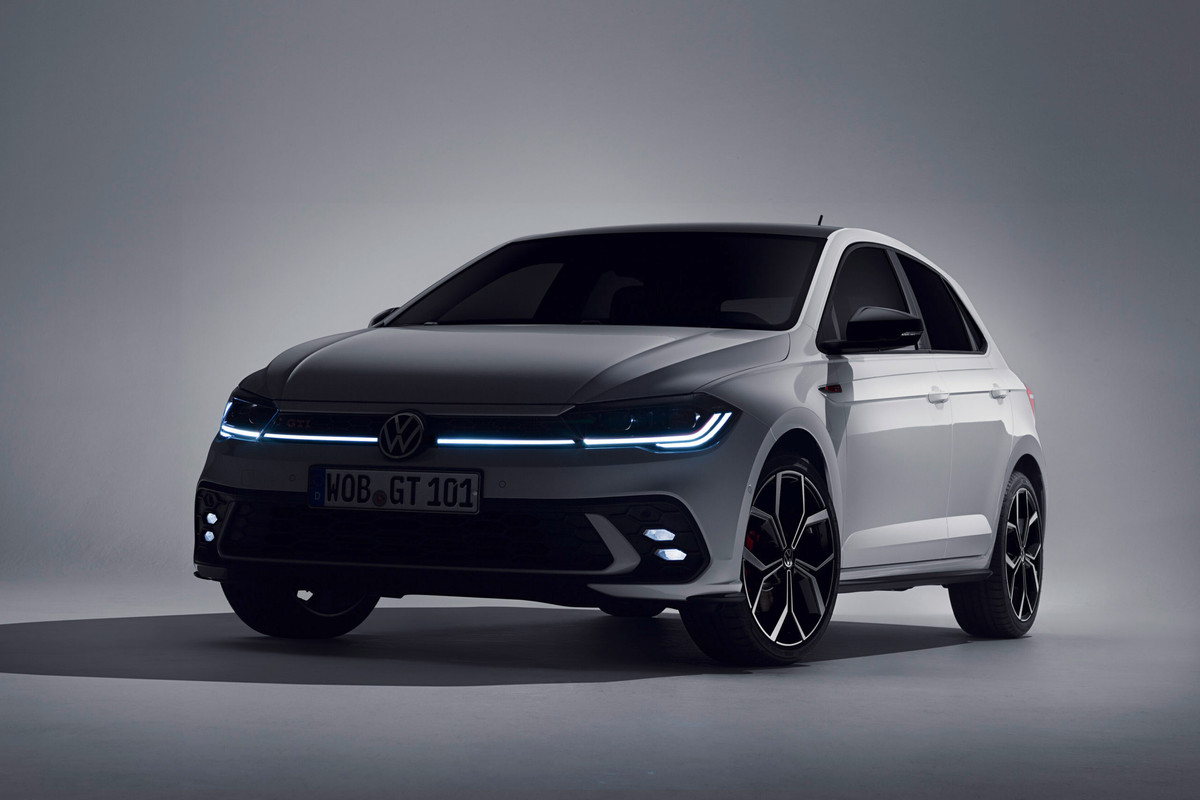
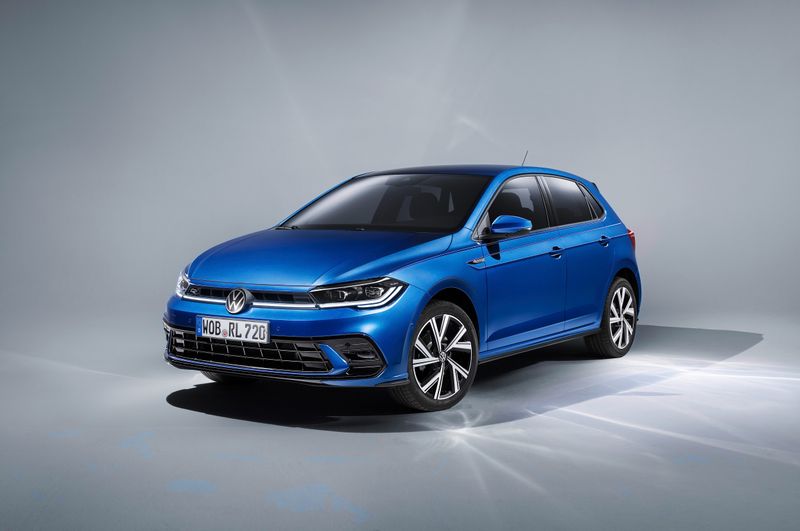
The facelifted 2022 Volkswagen Polo will be officially launching in South Africa next week! Herewith specifications and pricing details for the ever-popular new VW Polo.
The Volkswagen Polo is one of VWSA’s bread-and-butter products and it’s crucial the new model continues to be the success story over the past 25 years. Mind you, Volkswagen’s SUV range are in a good space and 2022 will see the introduction of the Volkswagen Taigo – a compact SUV smaller than the T-Cross.
“The Volkswagen Polo is South Africa’s second best-selling passenger car after the Polo Vivo. In 2021, 16 454 Polos have been sold in the local market which translates to a share of 22.6% in the A0 Hatch segment,” said Steffen Knapp, Head of the Volkswagen Passenger Car Brand.
It is assembled at VW’s facility in Kariega (formerly Uitenhage) and is an important source of employment in the area. These SA-built Polos are also for the export market, with over 80% leaving the factory for the international market. As it stands, over 78 000 units of this 6th-gen Polo have been sold in SA since its debut back in 2018.
2022 Volkswagen Polo – What’s New?
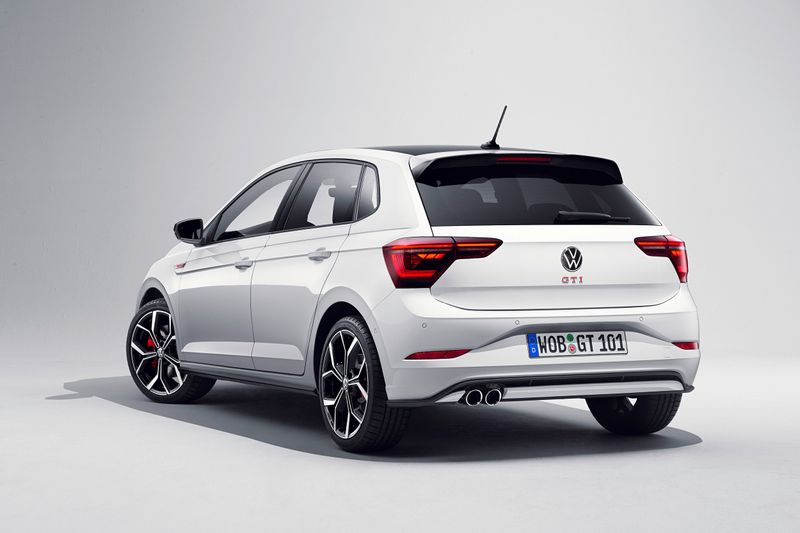
Visually, you’ll be able to spot the newcomer with its revised design. There’s a new front end, complete with redesigned headlights featuring LED technology, like the lightbar that stretches inwards from the lights to the badge. The rear light cluster gets a completely new look too making the facelift easy to spot. Customers will have the choice of 8 exterior colours including 3 new ones (Ascot Grey, Vibrant Violet and Smoky Grey).
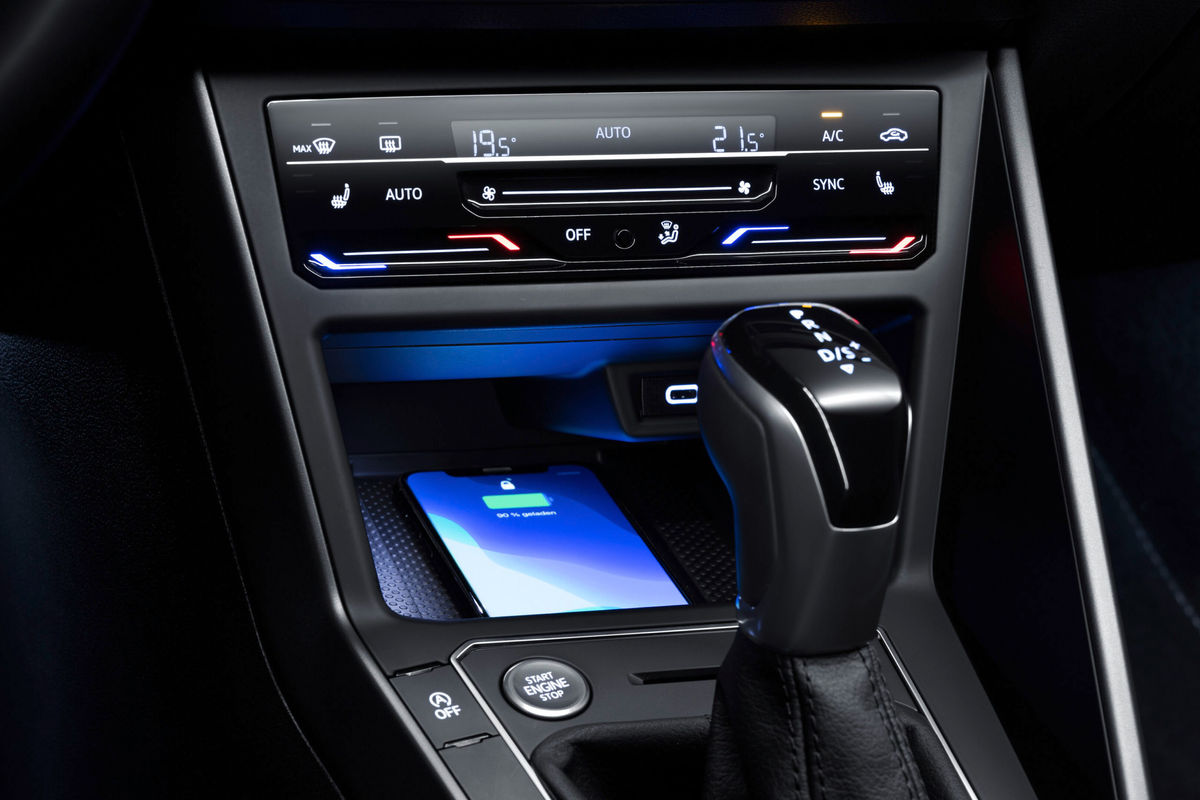
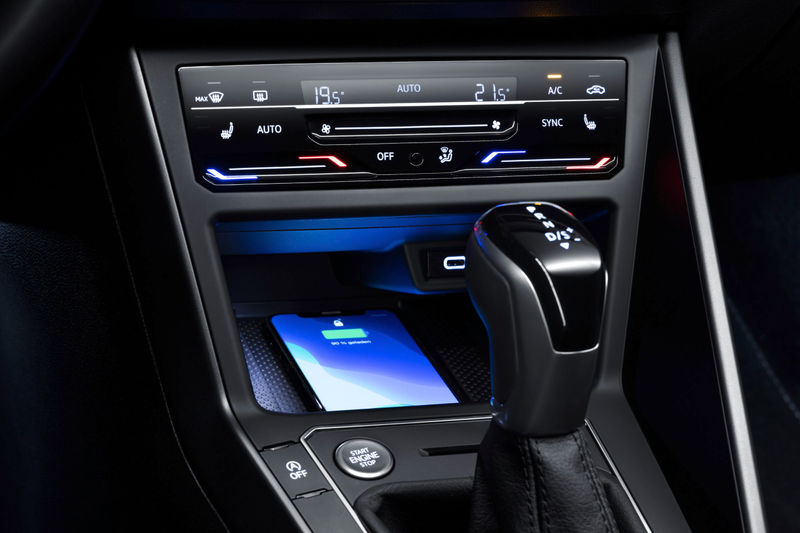
Inside, the Volkswagen Polo’s cabin has been given a makeover, with the redesigned multifunction steering wheel, updated infotainment system and wireless App-Connect (which is available as an option). There’s now touch functionality on the higher spec models that replace buttons and knobs.
Three infotainment systems are on offer:
Composition Colour (6.5-inch display – standard in 70 kW and 85 kW Polo and Life)
Composition Media (8-inch display – standard in the 85 kW R-Line and GTI)
Discover Media (8 inches with navigation, wireless app-connect, voice control, wireless mobile charging, digital cockpit – optional on Life, R-Line, GTI)
For the first time, the Volkswagen Polo 2022 gains IQ.Drive tech as an option. These semi-autonomous driving features include adaptive cruise control, lane assist and the brand says “the Polo brakes, accelerates and steers automatically within the system limits” when it is activated. The Polo is also offered with Front Assist and Pedestrian Monitoring.
Levels of Trim
The updated Volkswagen Polo adopts the brand’s current naming strategy, so your Trendline/Comfortline/Highline have been ditched in favour of: Polo version (base model), Polo Life (mid-level) and R-Line (premium).
Polo (previously Trendline)
LED headlights LED tail lights New multifunction steering wheel 14-inch steel wheels App-Connect Composition Colour Bluetooth Electric, heated exterior mirrors Electric windows Door handles/mirrors in exterior colour Fabric trim Options include 15-inch Essex alloys and smoker’s package
Polo Life (previously Comfortline)
15-inch Essex alloy wheels Centre armrest with USB-C port Leather trim on steering wheel/gear knob Uprated fabric trim Options include a panoramic sunroof, 16-inch Torsby wheels, Composition Media, Discover Media, Rearview camera, Comfort Park package, Safety Package for manual, Safety Package for DSG, keyless entry, smokers package, NCAP Package.
Polo R-Line (previously a package option on the Comfortline and Highline)
R-Line bodykit 16-inch Valencia alloy wheels 2-zone climatronic aircon Composition media with wireless phone charging R-Line fabric seats Options include a pano roof, 17-inch Bergamo alloy wheels, LED matric headlights, Discover Media, beats sound system, rearview camera, Comfort Park package, Safety Package, NCAP package, keyless entry, smokers package to name but a few.
Polo GTI
Volkswagen SA confirmed its 2022 Polo GTI will also be launched at the same time as the updated Polo. It’s the sportiest model in the range and comes to market with a 2.0-litre turbocharged engine producing 147 kW and 320 Nm. Volkswagen says its Polo GTI is good for a 0-100 kph in just 6.7 seconds and thanks to its sporty suspension, will offer the most engaging drive in the Polo range. Customers will have just 4 colours to choose from; Pure White, Deep Black Pearl Effect, Kings Red Metallic and Reef Blue Metallic.
Standard features in the new Polo GTI are the two-zone climatronic air conditioning, IQ. Light LED matrix headlights, 17-inch Milton Keynes alloy wheels and the Composition Media system with inductive mobile charging. Optional features in the Polo GTI include the panoramic sunroof, Deep Iron Grey dashboard trim, 18-inch Faro alloy wheels, Discover Media System, ‘beats’ sound system, leather seat package, Rear view Camera, Comfort Park Package, Safety Package, ‘stop-and-go’ Speed Limiter and Lane Assist, Pedestrian Monitoring and Front Assist), NCAP Package, keyless entry and a smoker’s package.
2022 Volkswagen Polo Engine Lineup
We’ve already touched on the GTI’s engine, but what about the rest of the range? Volkswagen has confirmed the engines for this updated Polo and there will be 3 turbocharged petrol motors on offer.
Kicking off the range is a 1.0-litre turbocharged 3 cylinder which produces 70 kW and 175 Nm. This is paired to a 5-speed manual gearbox and is available in the Polo and Polo Life.
Next up is the 1.0-litre turbocharged 3 cylinder which has more power. It has 85 kW and 200 Nm, and a 7-speed dual-clutch gearbox is on offer. This powertrain is in the Polo Life and Polo R-Line models.
The third engine obviously is the GTI 2.0 Turbocharged motor.
The Jetta’s Chinese twin has received many styling upgrades and cabin refinements in preparation of its Beijing Auto Show debut.
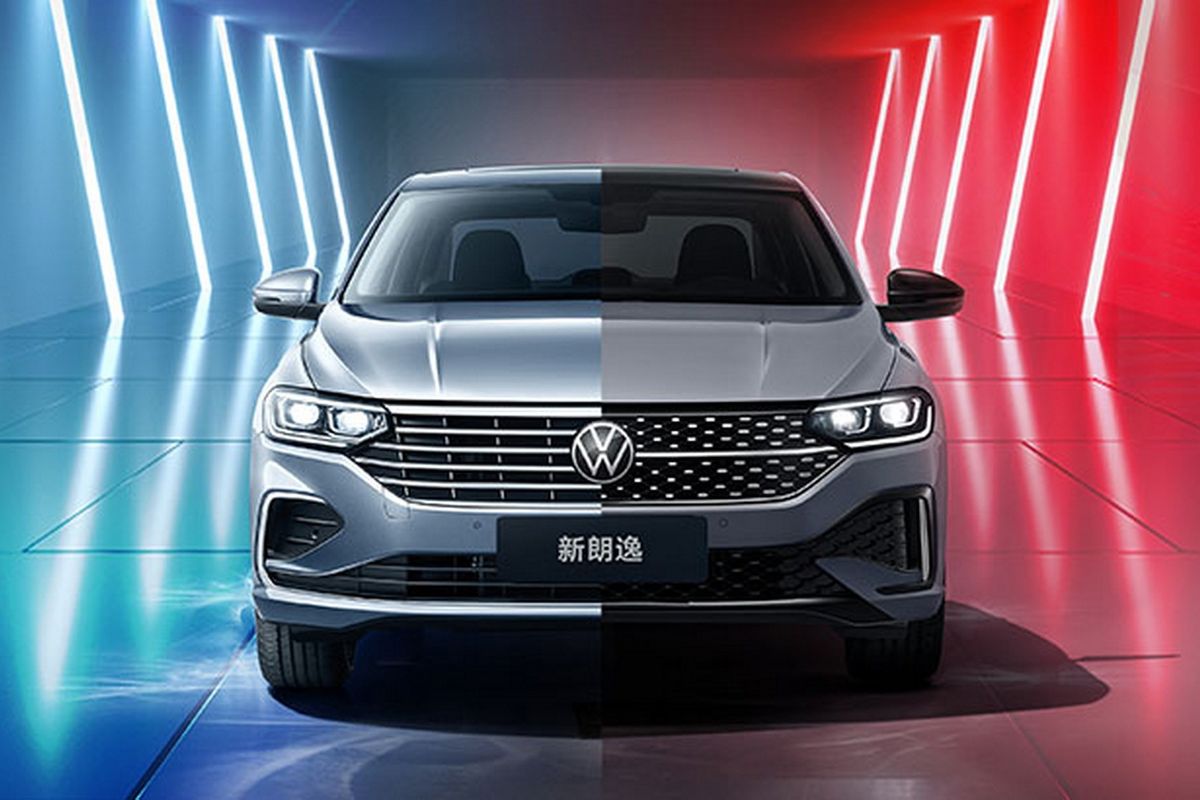
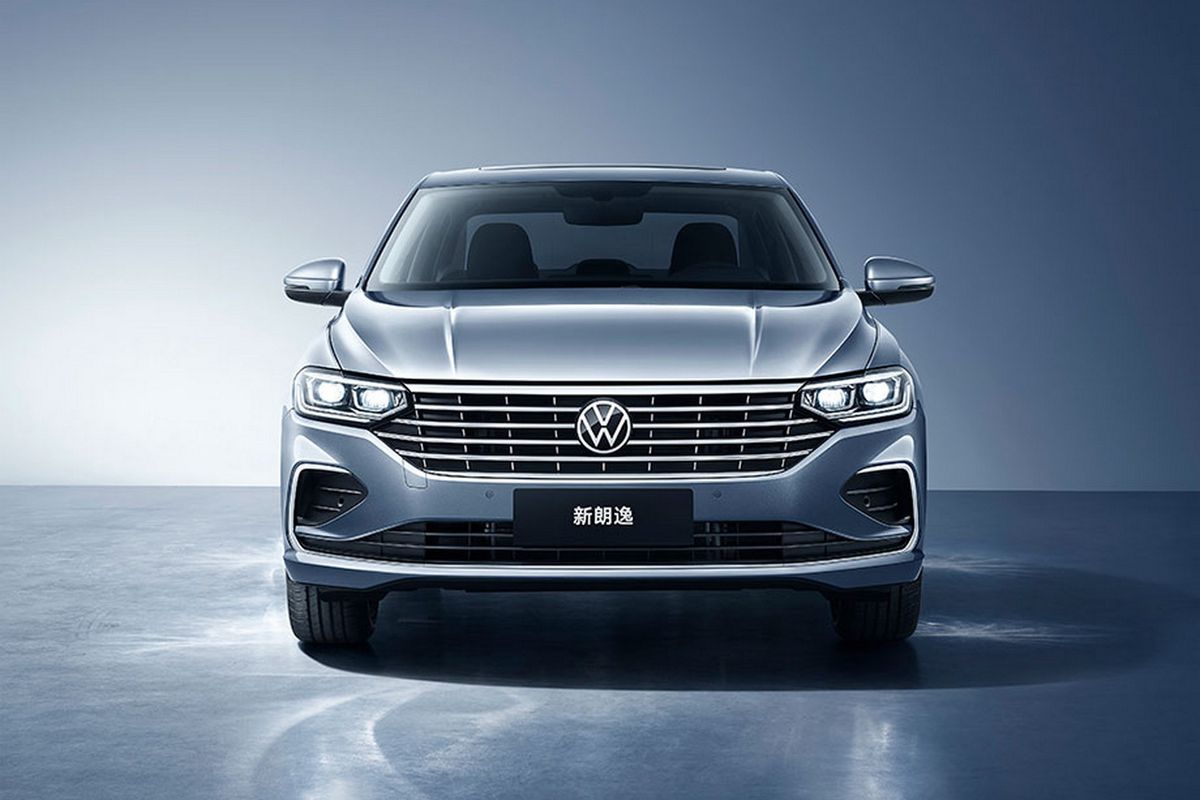
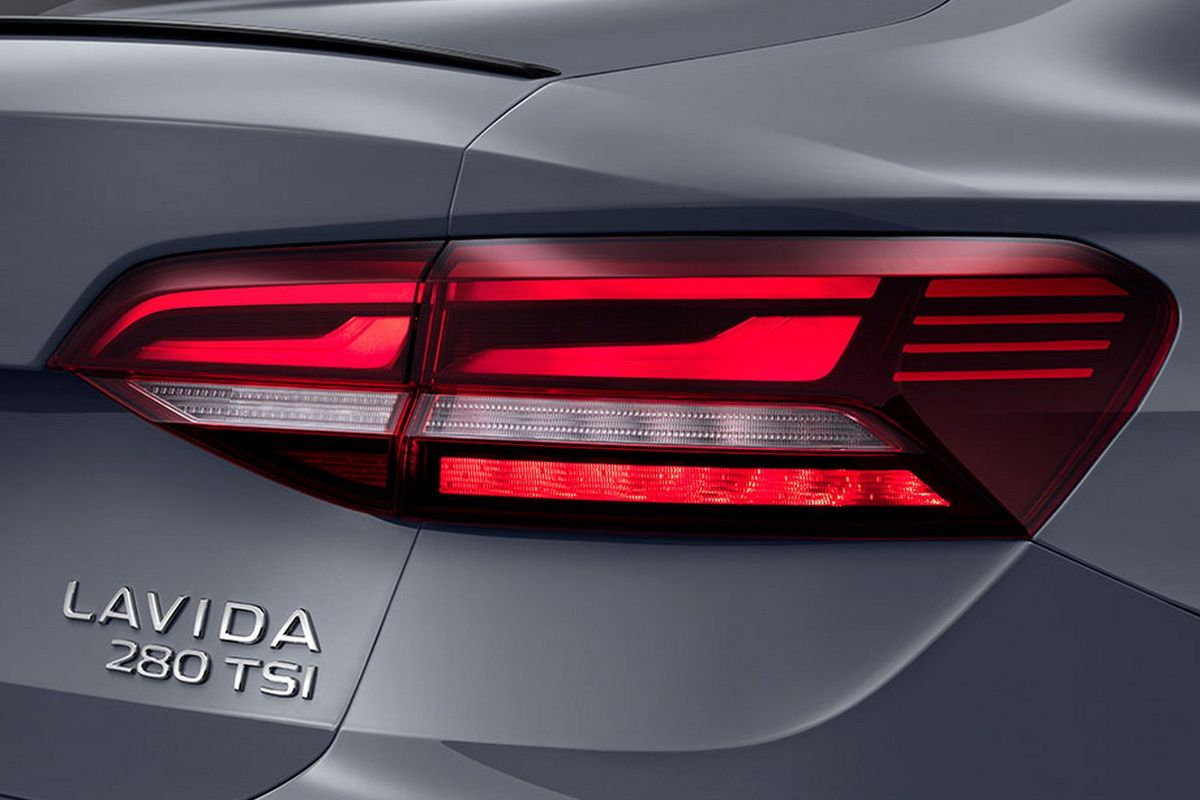
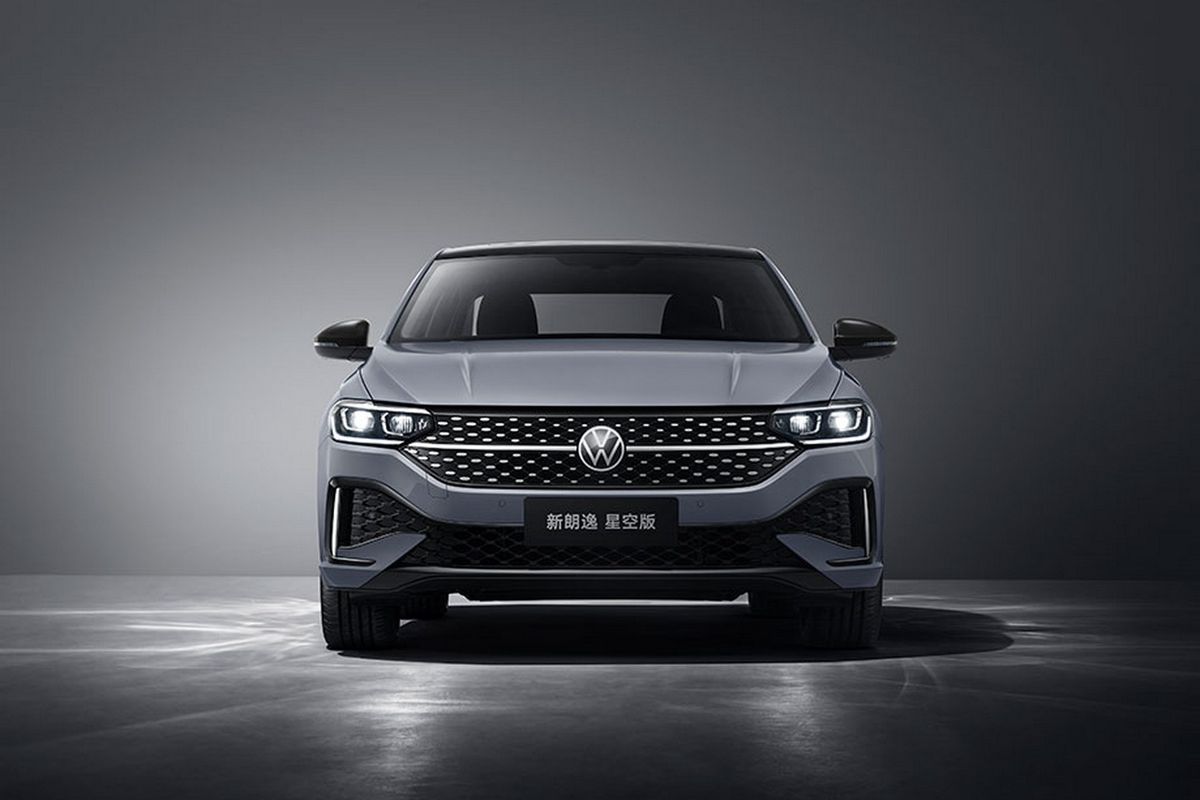
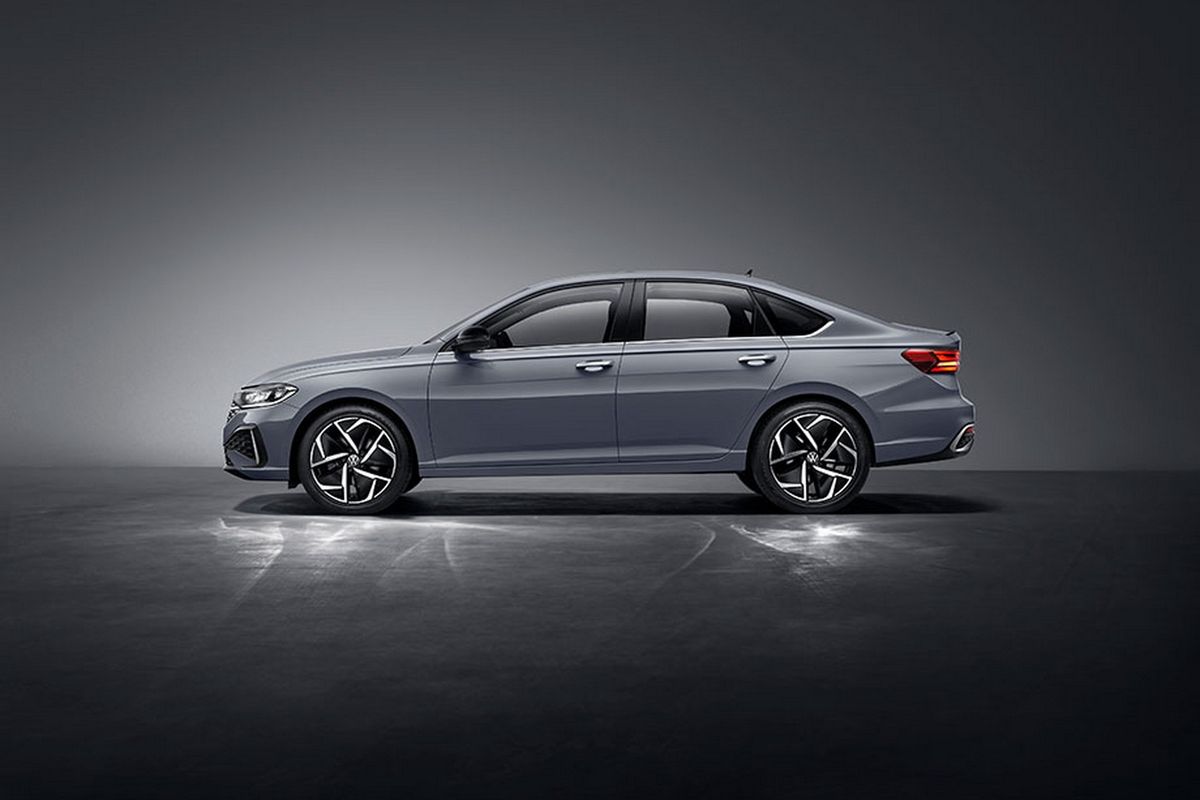
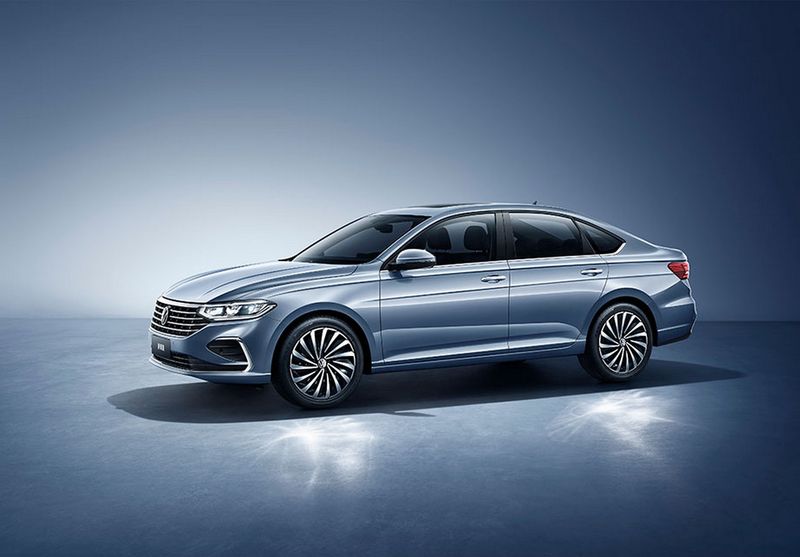
A joint venture between SAIC and VW, the Lavida is a mid-sized sedan, built on the proven MQB platform. Sitting atop VW’s overengineered chassis is bodywork that now includes larger bumper intakes and typical of a Chinese market vehicle – an abundance of chrome garnishing around the front.
VW is offering two grille options with Lavida. The one is a traditional version, with horizontal slats, while the other is more reminiscent of something you’d see on a Mercedes-Benz A- or C-Class, with a single horizontal slat holding the VW badge in place. This ‘Star edition’ grille has a distribution of small rectangles set against a black background, supposedly replicating stars on a clear night.
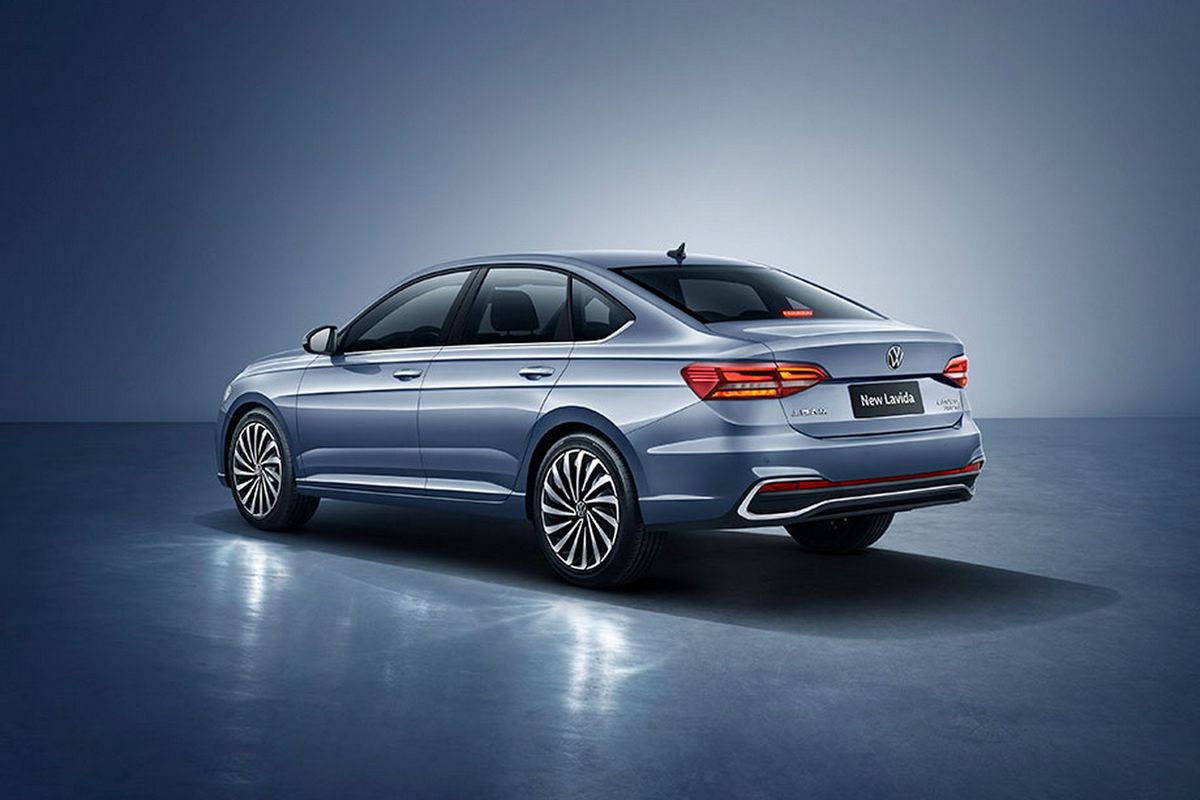
Designed have applied a similar updated LED light diode treatment to Lavida’s rear taillamps and there is even a trace of integrated spoiler lip, on the boot lid.
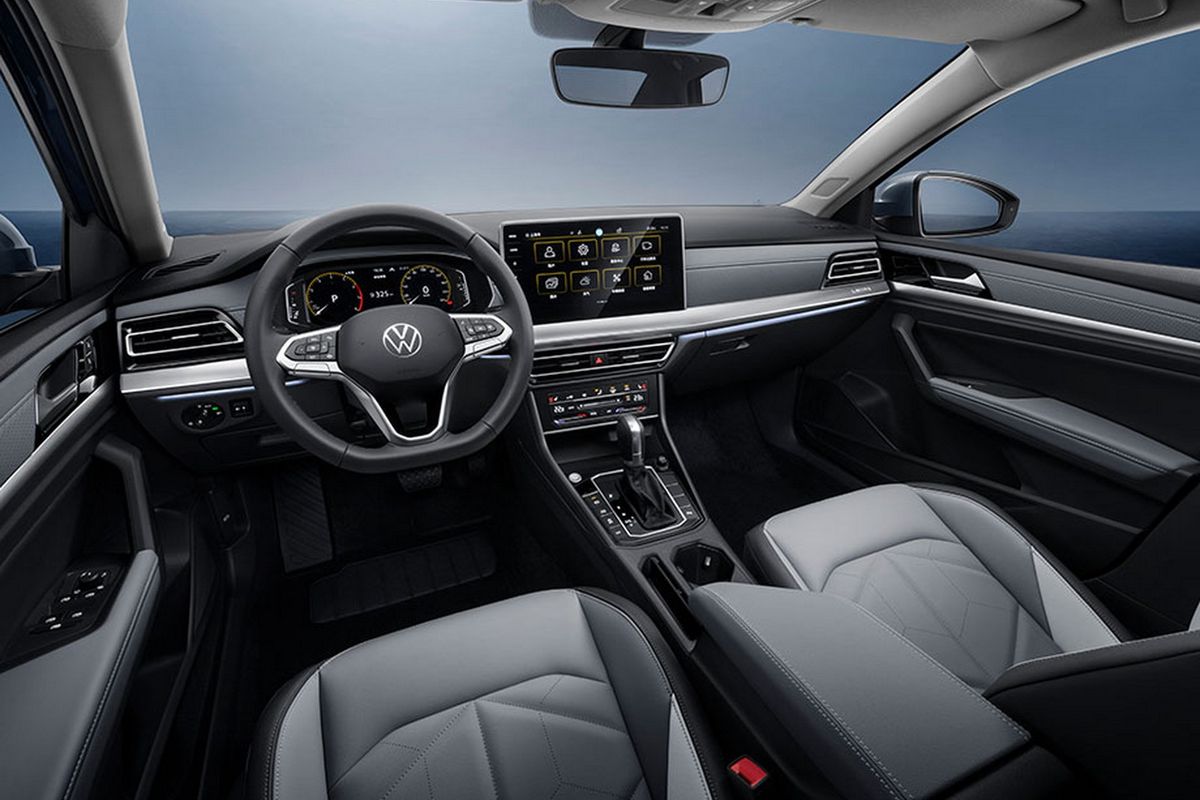
Cabin architecture benefits from a larger floating touchscreen, to navigate the infotainment functions, and some optional red accents and trim stitching.
High-speed cruising performance is of negligible importance in China, and engine specification is unconfirmed.
A confident deduction can be made from the ‘280TSI’ badging, that VW’s 1.4-litre TSI engine is being used, in a 110 kW/250 Nm state of tune. VW’s nomenclature strategy in China indicates status, by numerals, instead of any correspondence to power output – in either horsepower or kilowatts.
Drive will be to the front wheels via VW’s slick-shifting seven-speed DSG transmission.
Would the Lavida be popular in South Africa? Possibly. But for those local VW brand fans who prefer a boot to a tailgate, a new version of the Polo sedan will become available later this year.
Remember Smart? Well, an all-new electric Smart #1 is due to launch in 2022.
Smart #1. That’s the new naming convention being ushered in by the revamped Smart brand which is a result of a joint venture between German powerhouse, Mercedes-Benz and Chinese automotive juggernaut, Geely.
Smart dropped off South African new car listings in 2019 and while the Smart ForTwo city car and slightly more practical Smart ForFour had charm and loads of cuteness, they were pricey and never really won the hearts of local car buyers.
In 2018, Smart made its intentions known to become an Electric Vehicle (EV) brand and in 2020 the $849-million joint venture was announced with Mercedes-Benz being responsible for design while Geely champions engineering and production in China.
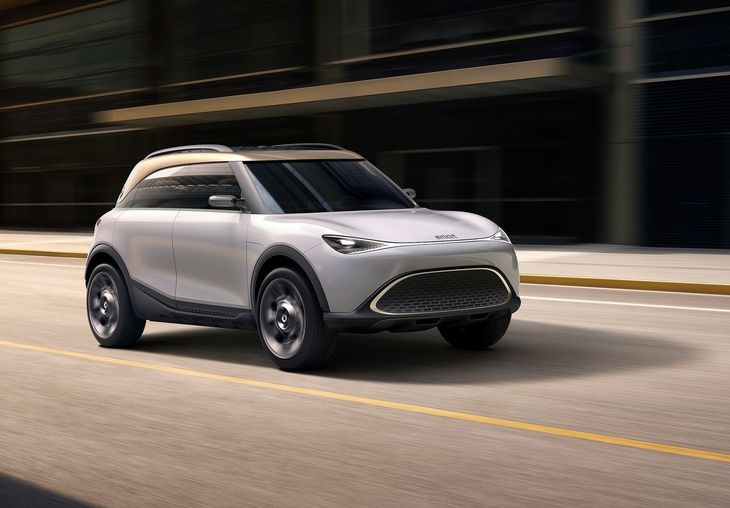
The Concept #1 forms the basis for the new Smart #1 due this year.
The Smart #1, therefore, represents a new start for Smart and the #1 is expected to be fully revealed later this year.
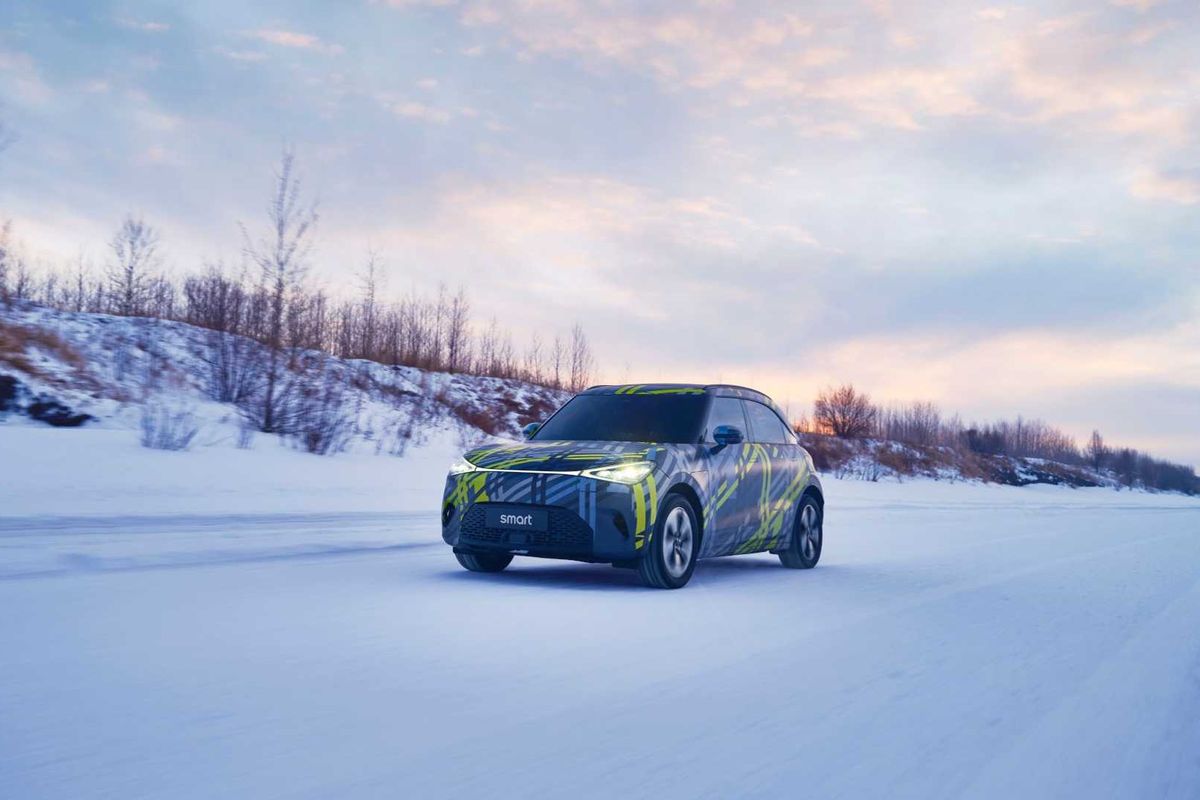
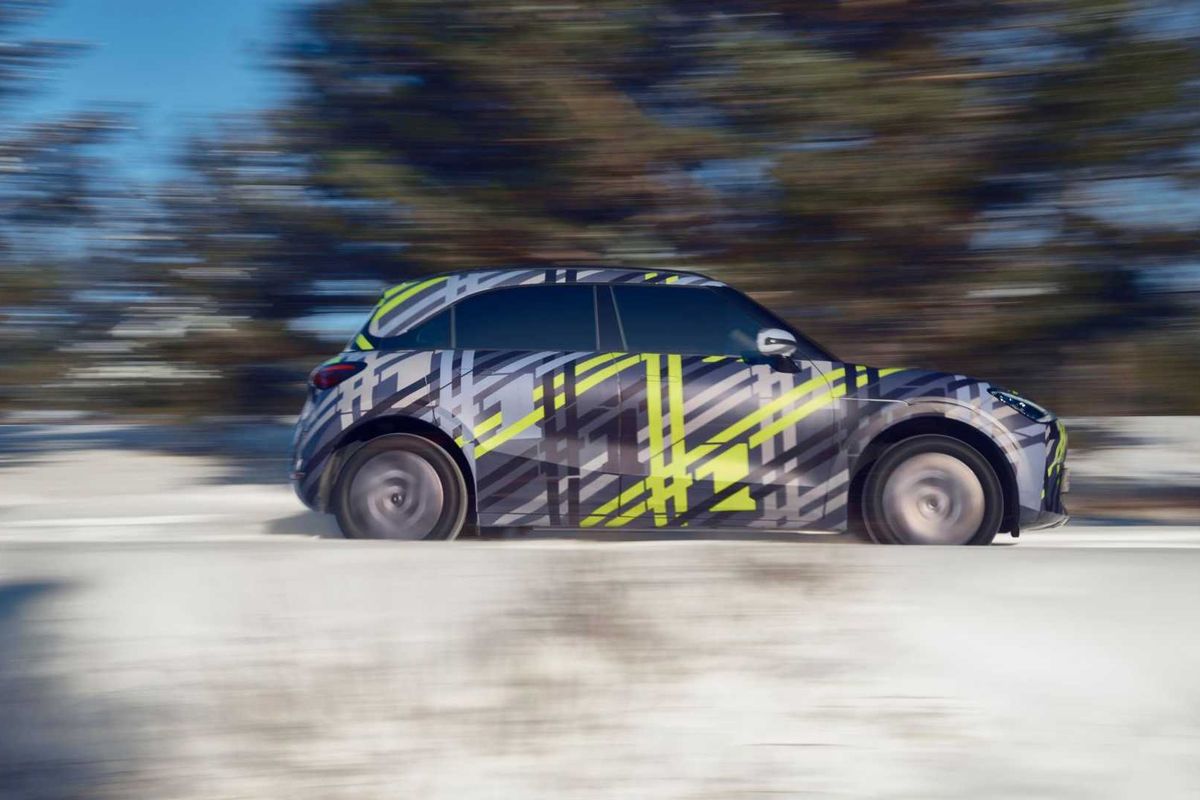
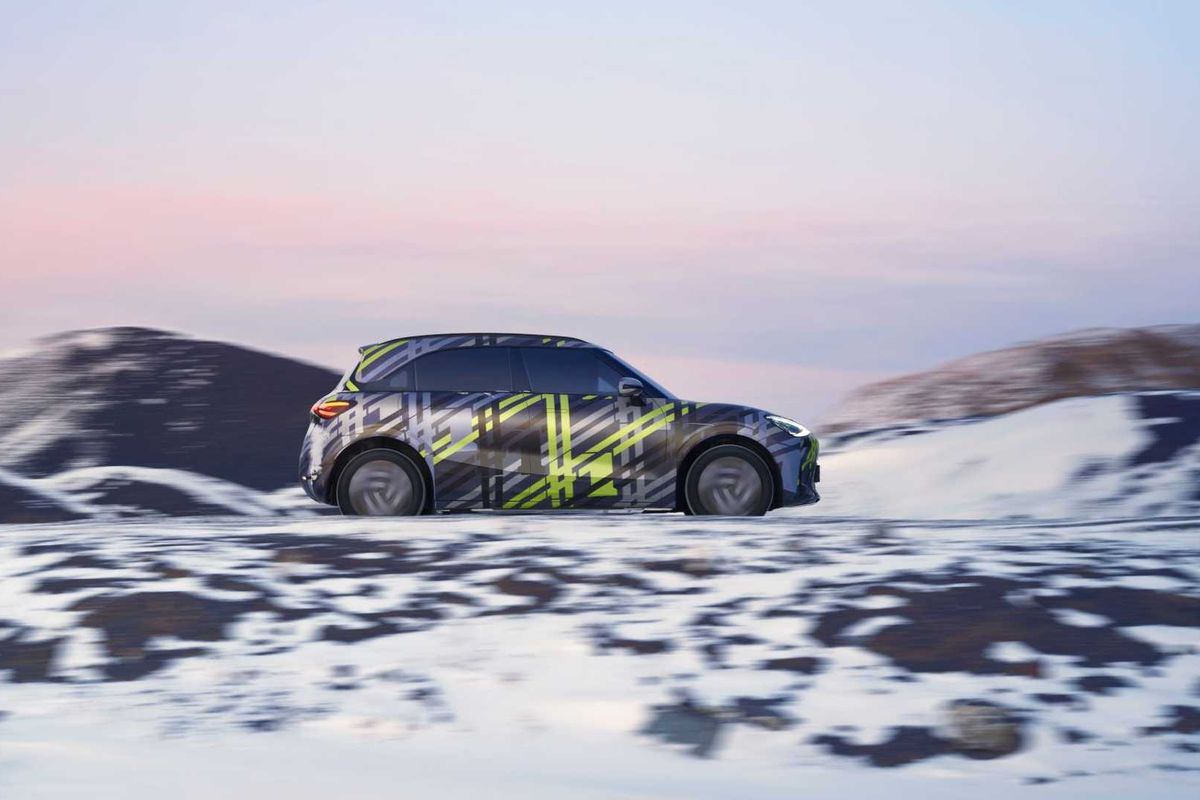
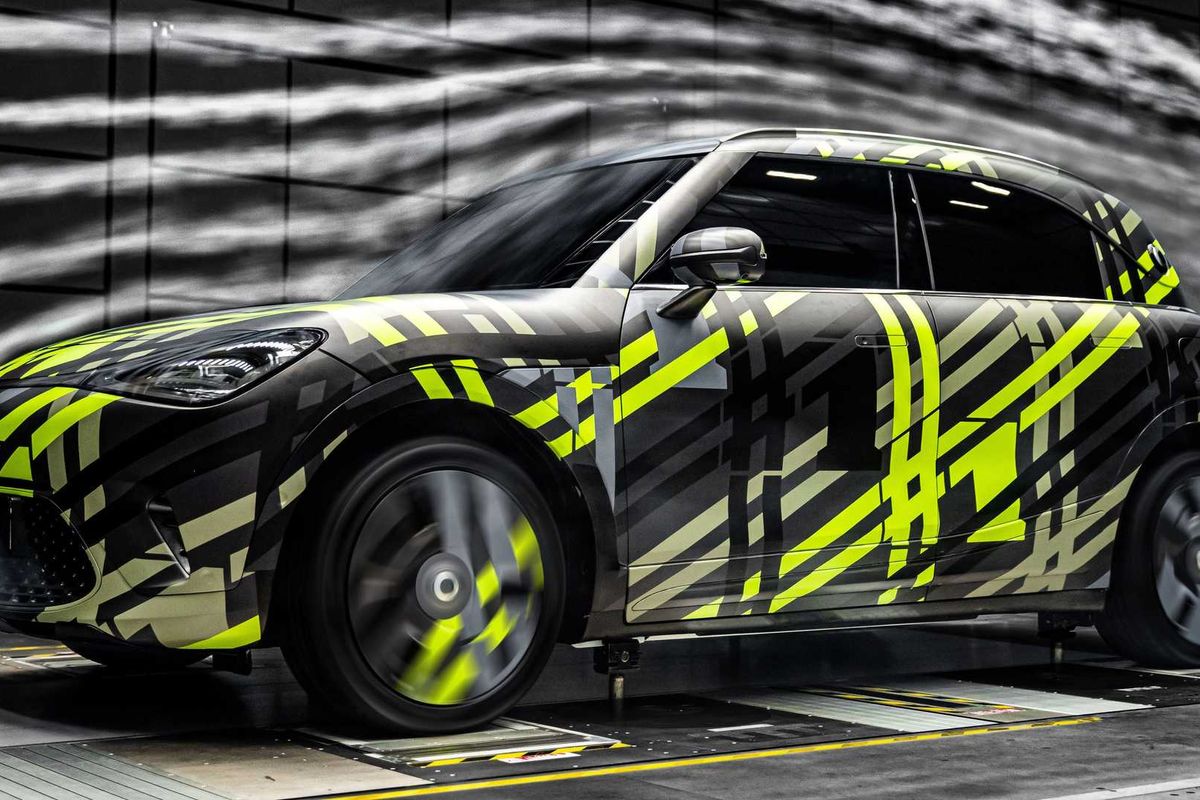
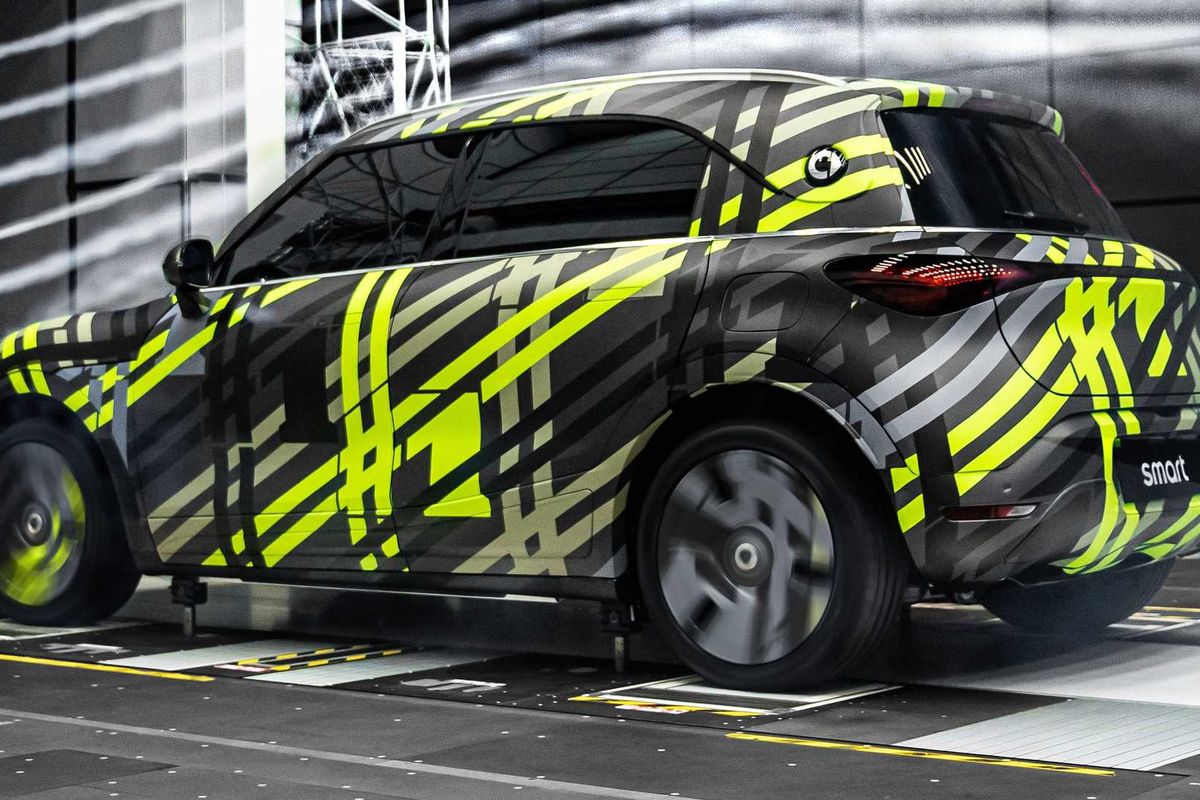
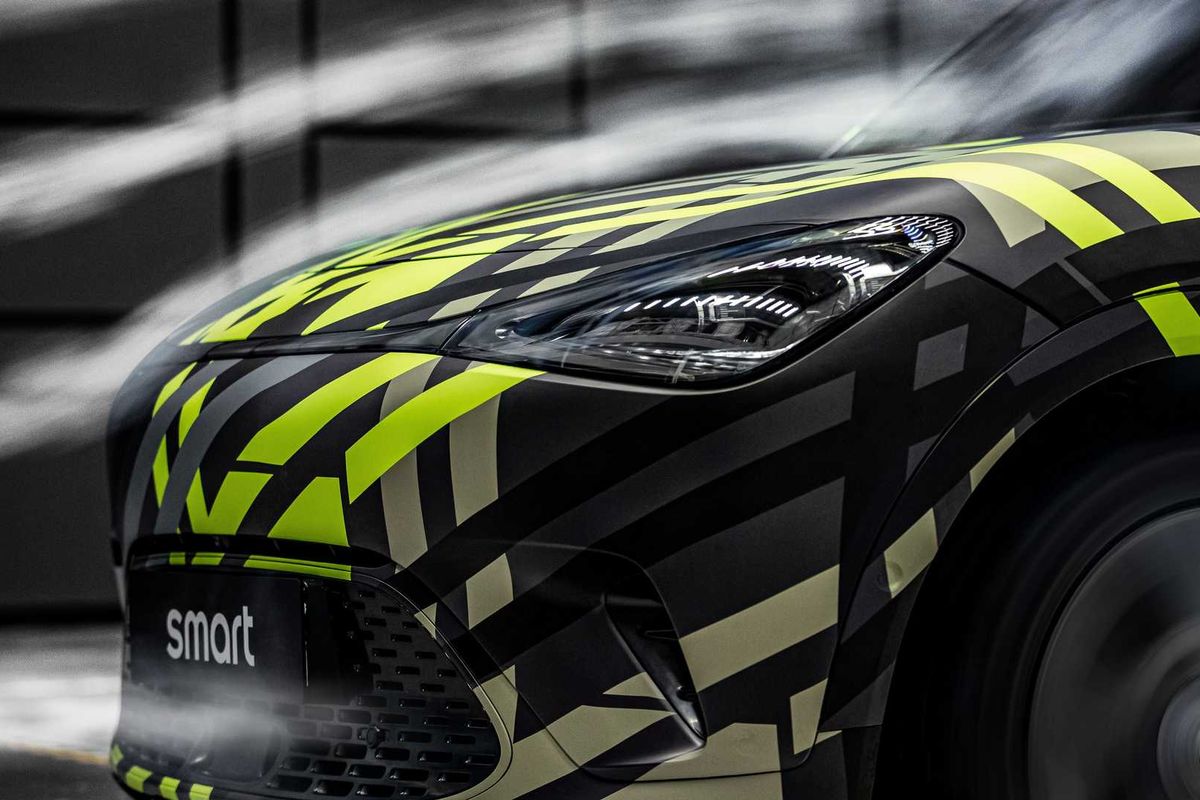
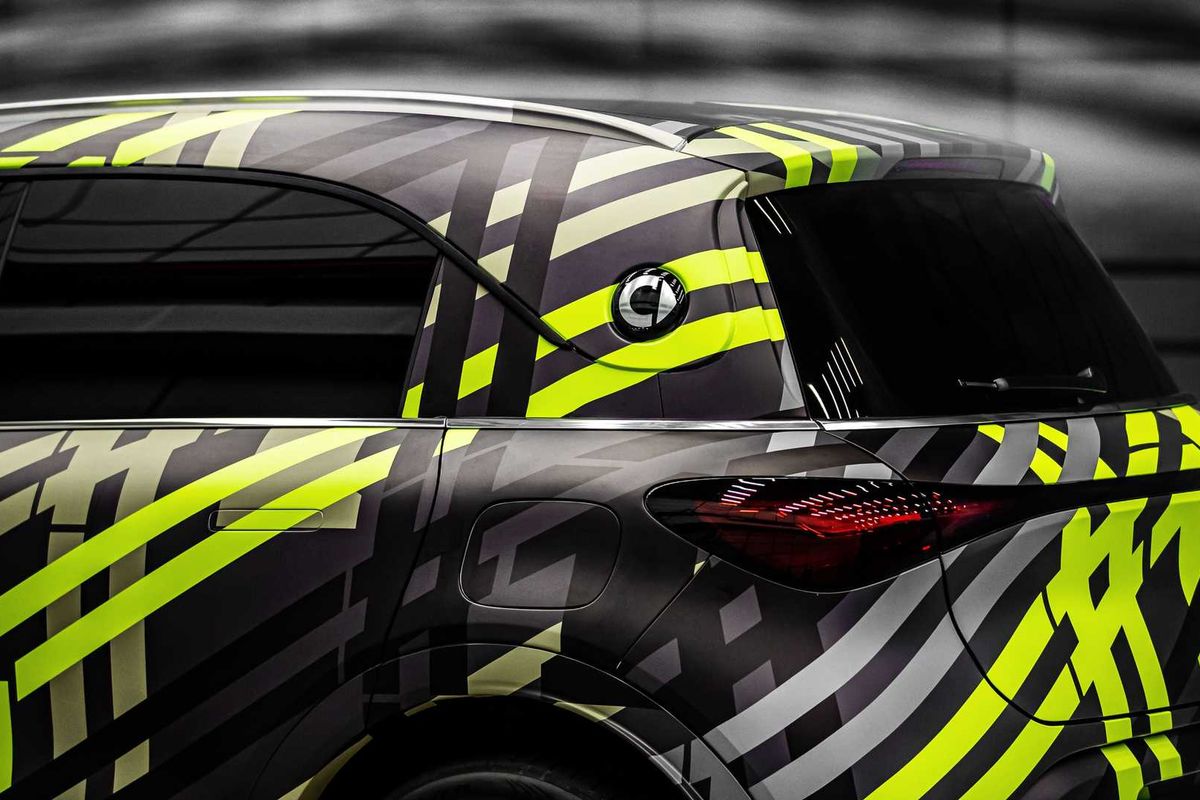
The images you see here show the 5-door, all-electric Smart #1 crossover wearing a colourful camouflage but they provide enough detail to imagine what the final production version might look like. The Smart #1 is based on the Concept #1 which was shown at IAA in Munich, Germany, in 2021 and measured 4 290 mm long, 1 910 mm wide and 1 700 mm tall, which is comparable to the size of a Mini Countryman.
The Smart #1 will be produced on the Geely Sustainable Experience Architecture but the exact electric powertrain details are not yet known.
The Smart #1 is said to have an impressive drag coefficient of 0.29 and features active grille shutters as well as flush door handles with ice-breaking functionality, the latter of which will be useful for icy European winters.
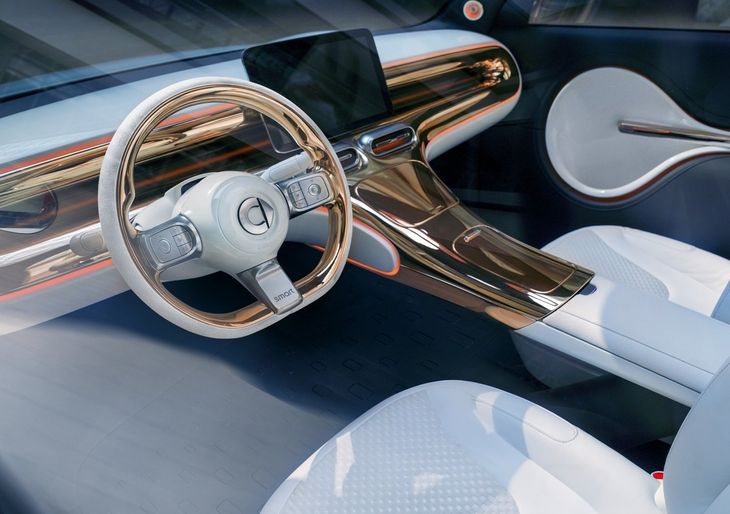
As far as the interior is concerned, the Smart #1 is expected to have a minimalist interior design and while it’s likely to share cues from the Concept #1, it’s not expected to be as flamboyant in its execution. A large central infotainment system measuring 12.8-inches is likely.
The interior of the Concept #1 provides hints of what the Smart #1 might offer, but with a more conventional execution.
The Smart #1 will later be joined by a larger model and it would be logical to assume that it will be called #2, but time will tell. The Smart #1 is earmarked for sale in China and Europe.
We will keep you updated as soon as more details are revealed.
These Nissan Bakkie Concepts show what’s possible when engineers are given free reign. We’re in love!
The 2022 Chicago Auto Show hasn’t produced much ground-breaking car news, but we came across these Nissan bakkie concepts and we’re smitten.
Based on the new Frontier, these three Nissan bakkie concepts each have their own identity. Sadly, the Nissan Frontier is not offered in South Africa, but we do have the rather good-looking and surprisingly refined updated Nissan Navara on showroom floors. The new Navara is quite a big leap as far as comfort and driving refinement are concerned.
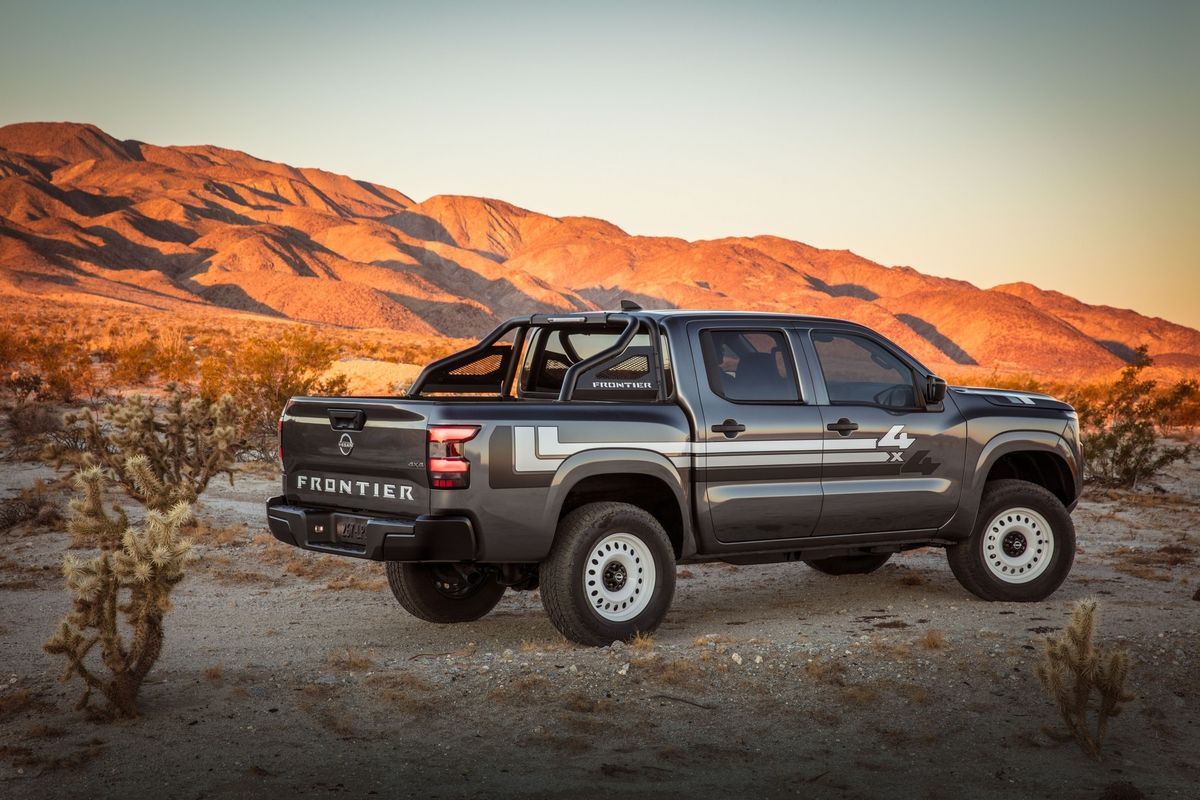
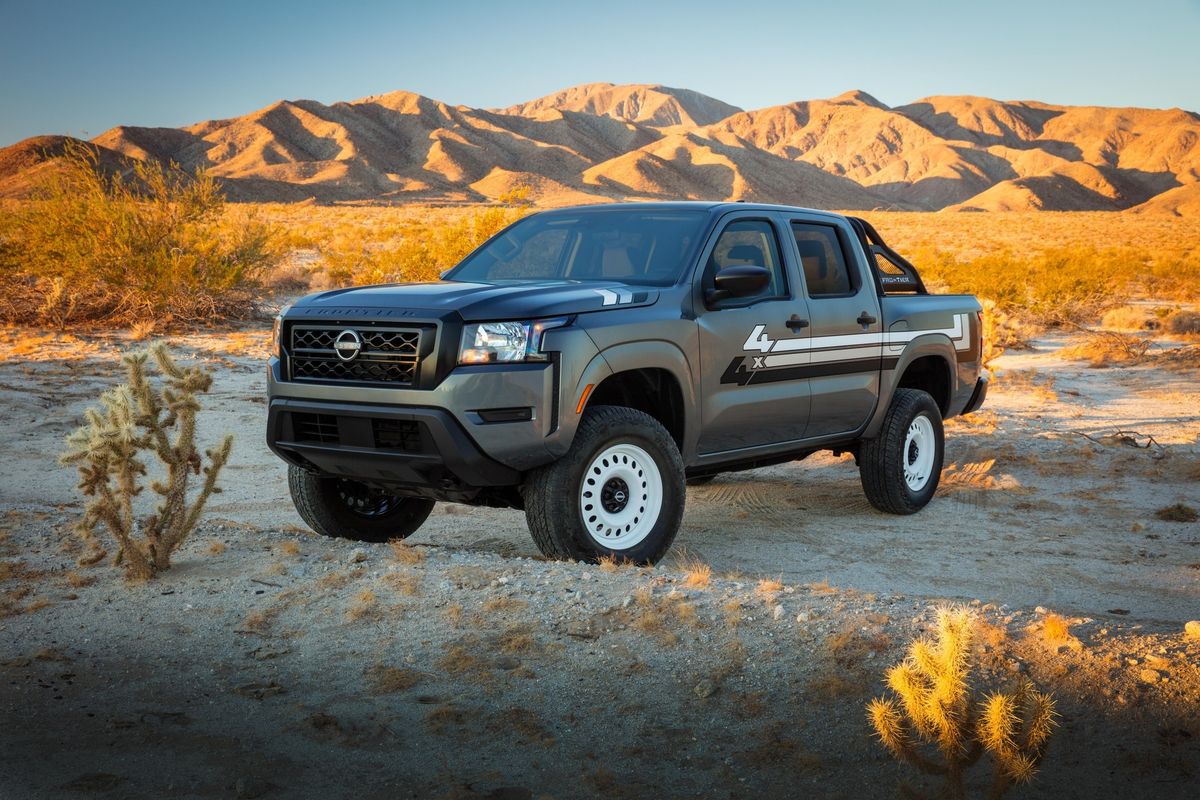
The first Frontier concept is the Project 72X Frontier. By using the Crew Cab S 4×4 derivative as a base, this retro-looking bakkie has been created as a modern-day version of the Datsun 720 truck that made its debut back in 1979.
The heritage vibes are strong, with a simple exterior paint job, with retro-style decaled and white steel wheels. Nissan has given this model a lift kit for additional clearance and we love the old-school cool look.
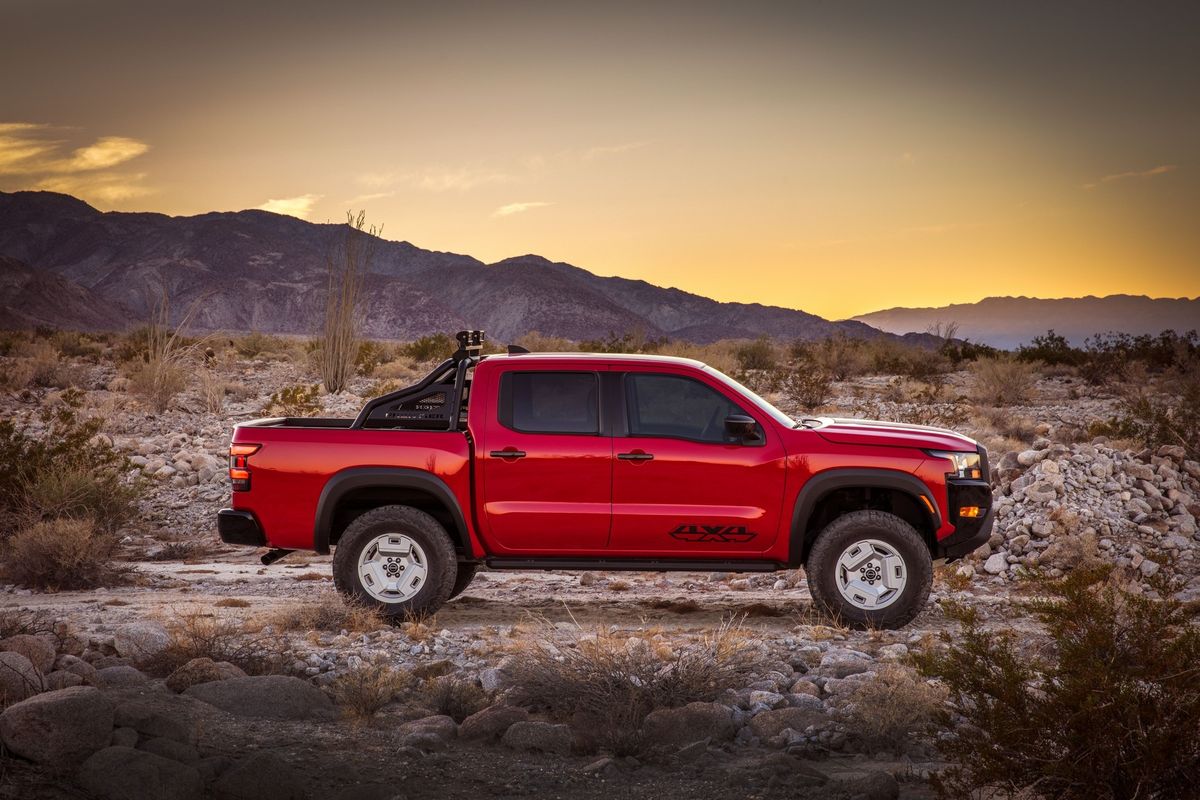
Next up is the Project Hardbody Frontier Concept, which begun as a standard 2022 Frontier Crew Cab SV 4×4. It looks fairly standard, but Nissan has given it a 3-inch lift kit, adjustable upper control arms, fender flares, block-style alloy wheels with 33-inch tyres, sports bar, decals and a 10-inch rectangular LED light bar.
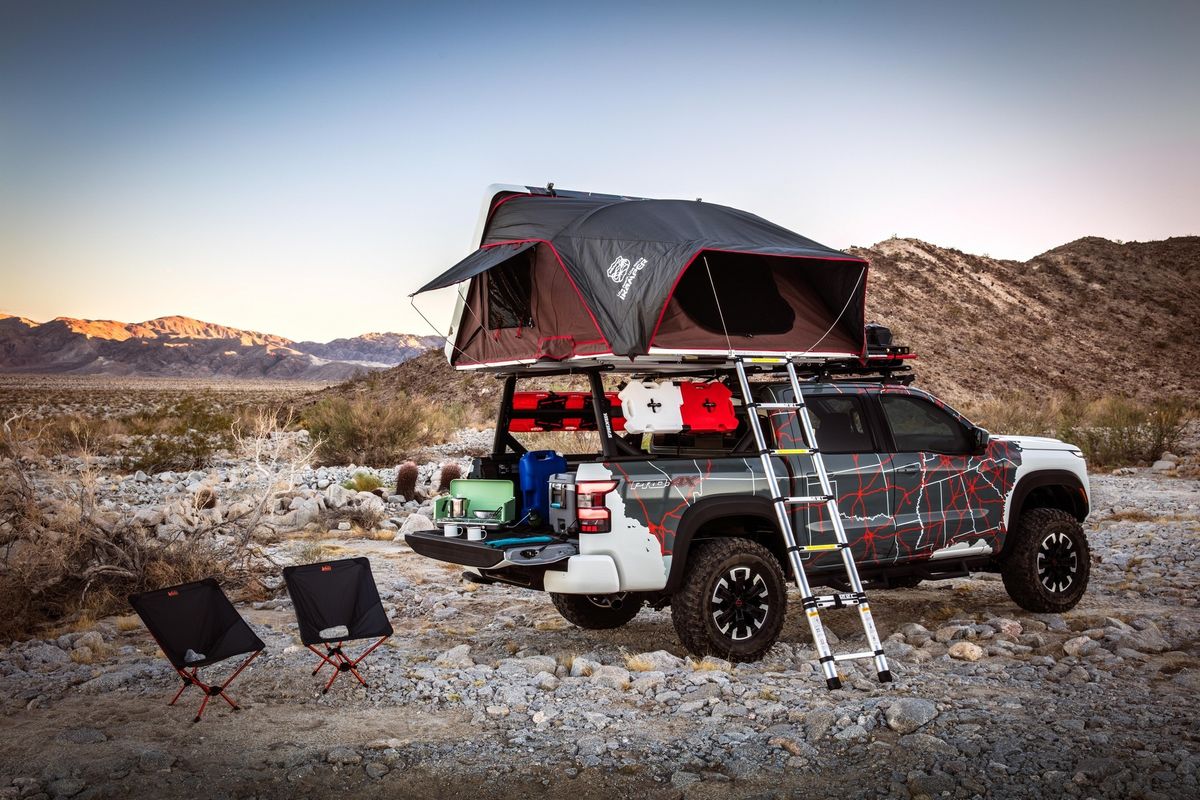
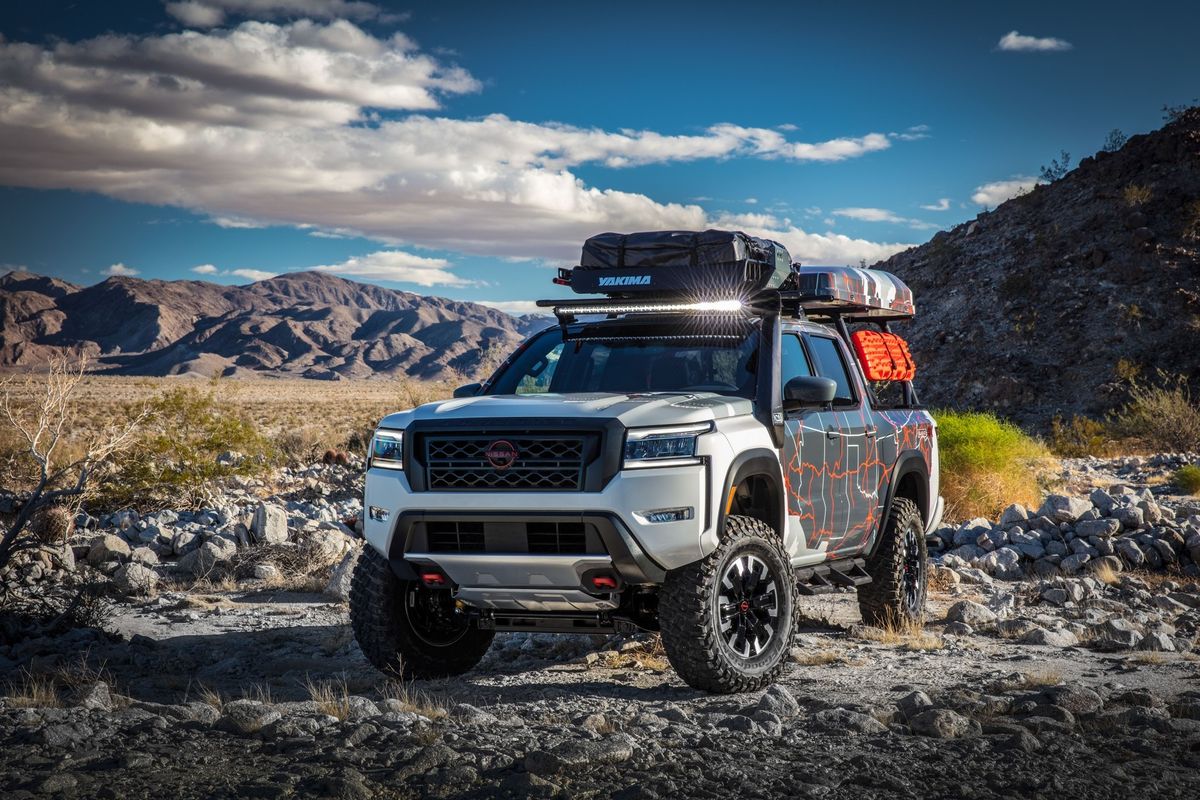
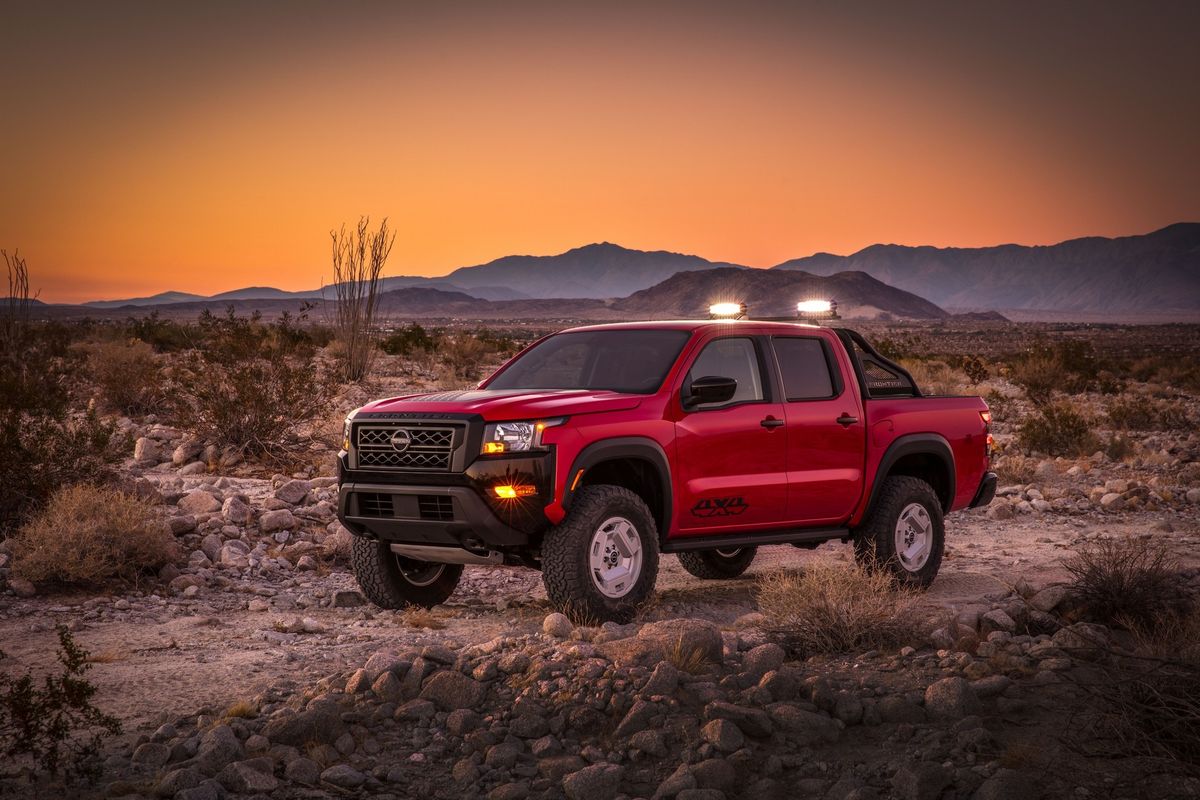
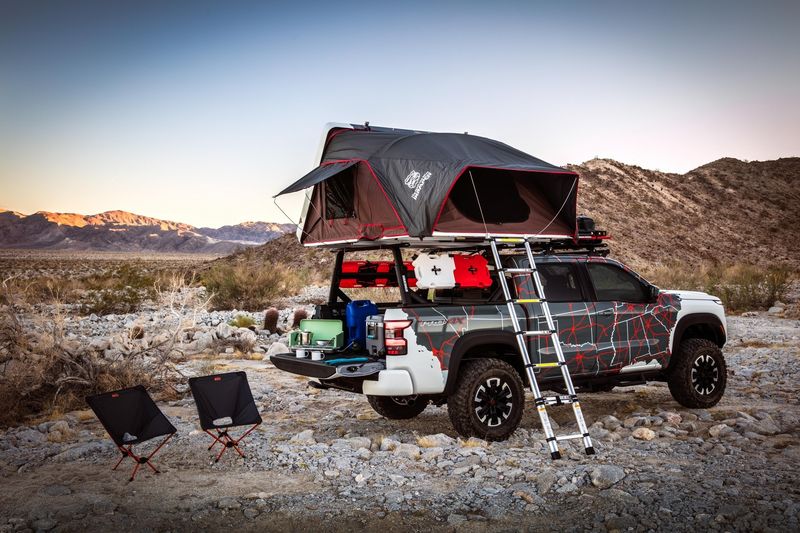
Finally, the piece de resistance for the Nissan bakkie concepts. This is the Project Adventure and it looks ready to do some serious overlanding. Under the skin is a monster 5-inch lift kit, 34-inch special mud tyres, carbon fiber snorkel while Nissan has accessorised it with a Yakima bed rack setup, Yakima Loadwarrior roof basket, sky tent and an uprated Kicker audio system.
As far as hardcore overlanding bakkies go, we think the Nissan Project Adventure is one of the most impressive. Right, who wants to drive one to the middle of nowhere for an adventure?
It’s the end of the small Audi as we know it as the A1 and Q2 won’t be replaced.
Aspiration into the Audi brand will become a lot more challenging in the future. As reported in an interview with the Handelsblatt, the German automaker’s CEO, Markus Duesmann, has confirmed that Audi will discontinue the A1 and Q2.
Audi recognises the cost of its shift to electrification. Smaller platforms and lower prices don’t have the margin tojustify electrification, making battery-powered A1s and Q2s an impossibility.
For Audi, the decision is to go upmarket, sacrificing its popular entry-level models such as A1 and Q2. This will come as a disappointment for those who saw A1 and Q2 as attainable and might challenge Audi regarding young customers.
A1 and Q2 enabled Audi to capture a more comprehensive age demographic in its customer base. Discontinuing these models, and focussing on more expensive vehicles, will undoubtedly alter the Audi age demographic in terms of ownership.
In the historical context, A1 and Q2’s deletion from the company’s product portfolio will also see it decuple from a historical small car history.
An example of Audi’s small-car excellence was A2, a significant and revolutionary vehicle predating A1. It is a pity that the company is now strategising to bundle all its technology and resources into larger platforms.
What is also telling about this latest Audi strategic model realignment is that affordable electric cars will not happen anytime soon.
Audi’s last internal-combustion model will launch in 2026, and it is targeting 2030 as the date for a full-electric vehicle portfolio.