The new Kia Sorento has arrived in South Africa! See specification and pricing details below!
Kia’s new 4th-generation flagship Sorento SUV has arrived in Mzansi bringing with it higher levels of classy sophistication and luxury, a clear departure from its unashamedly utilitarian roots.
Gary Scott, CEO of Kia South Africa, commented “The Sorento’s evolution over the last two decades echoes that of the Kia brand as a whole. While the car was initially launched in 2002 as a utilitarian all-terrain vehicle, the fourth-generation Sorento has been transformed into something altogether more desirable, and representing the perfect balance between premium quality features and value for money.”
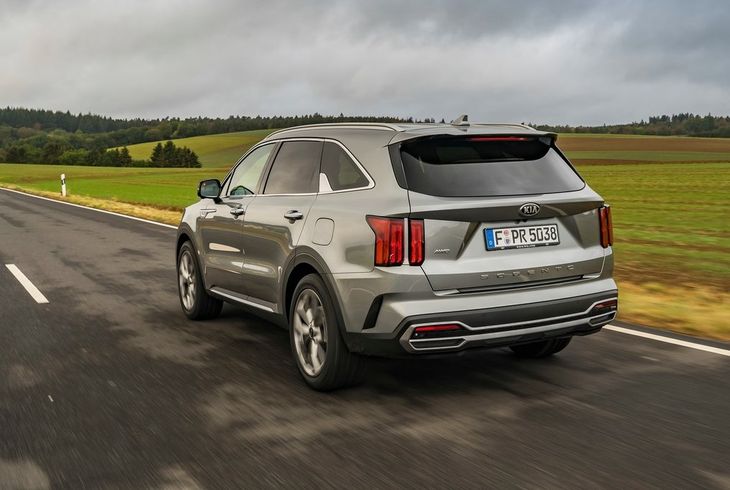
The new Sorento features a much bolder and more elegant exterior design with its bodywork featuring sharp lines and creases that lend the SUV a more cutting-edge look Kia’s ‘tiger-nose’ grille has been reinterpreted on the Sorento which flows into the LED headlights which feature a ‘tiger eyeline’ LED daytime running lights.
The new Sorento stands 4 810 mm in length, 1 900 mm wide and boasts a 35 mm longer wheelbase at 2 815 mm.
A total of 10 body colours will be offered to buyers and the new Sorento rides on either 18- or 19-inch alloy wheels depending on the derivative.
Modernised, high-tech cabin for new Kia Sorento
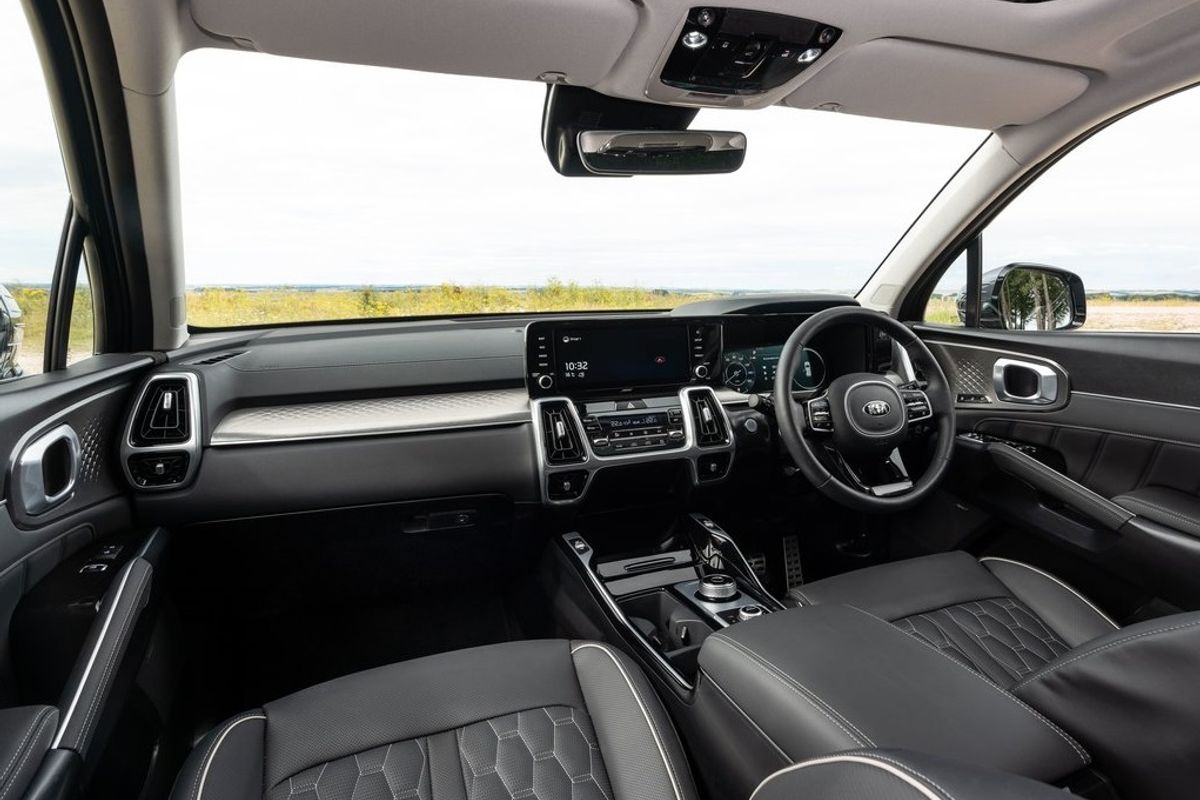
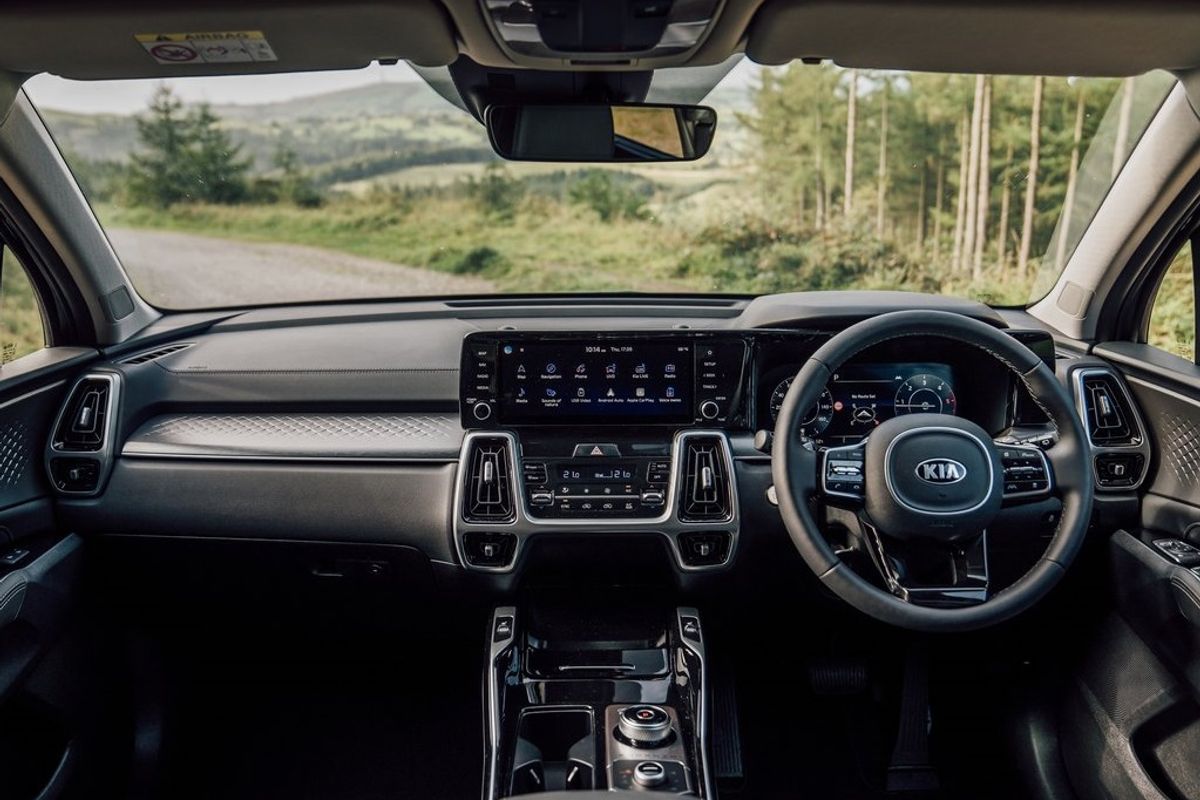
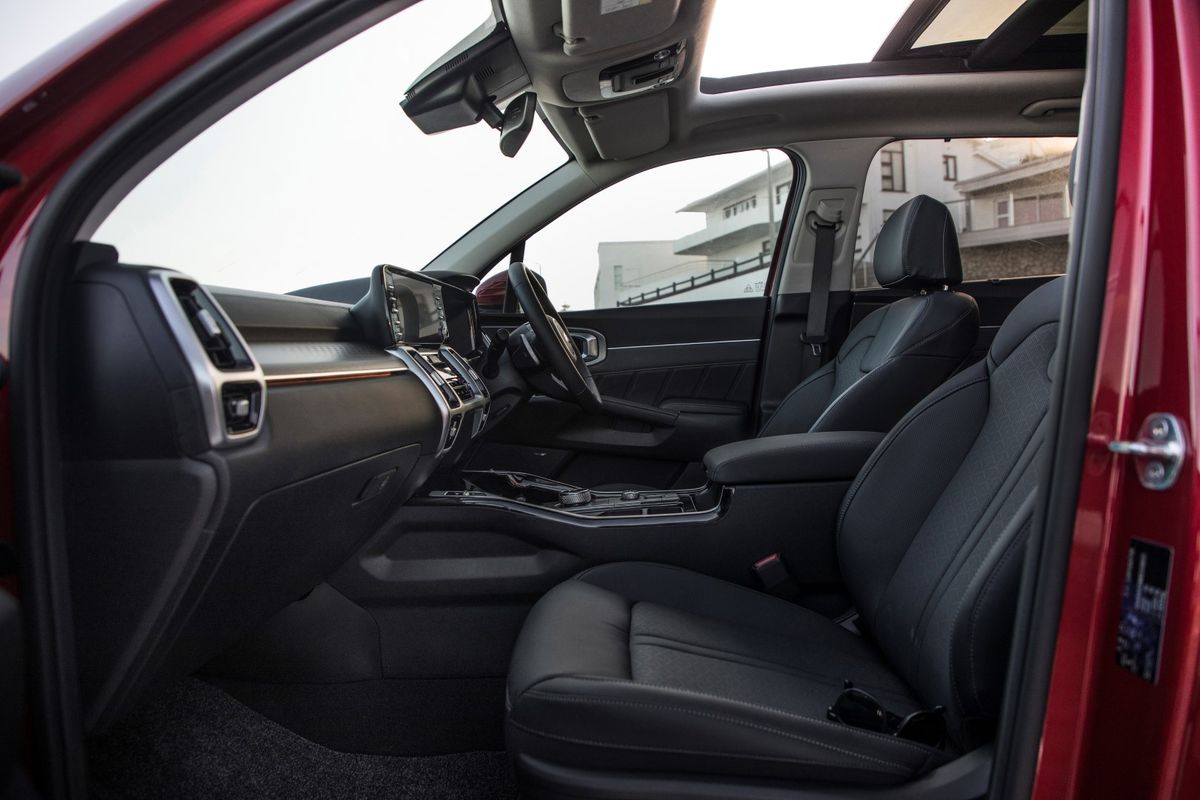
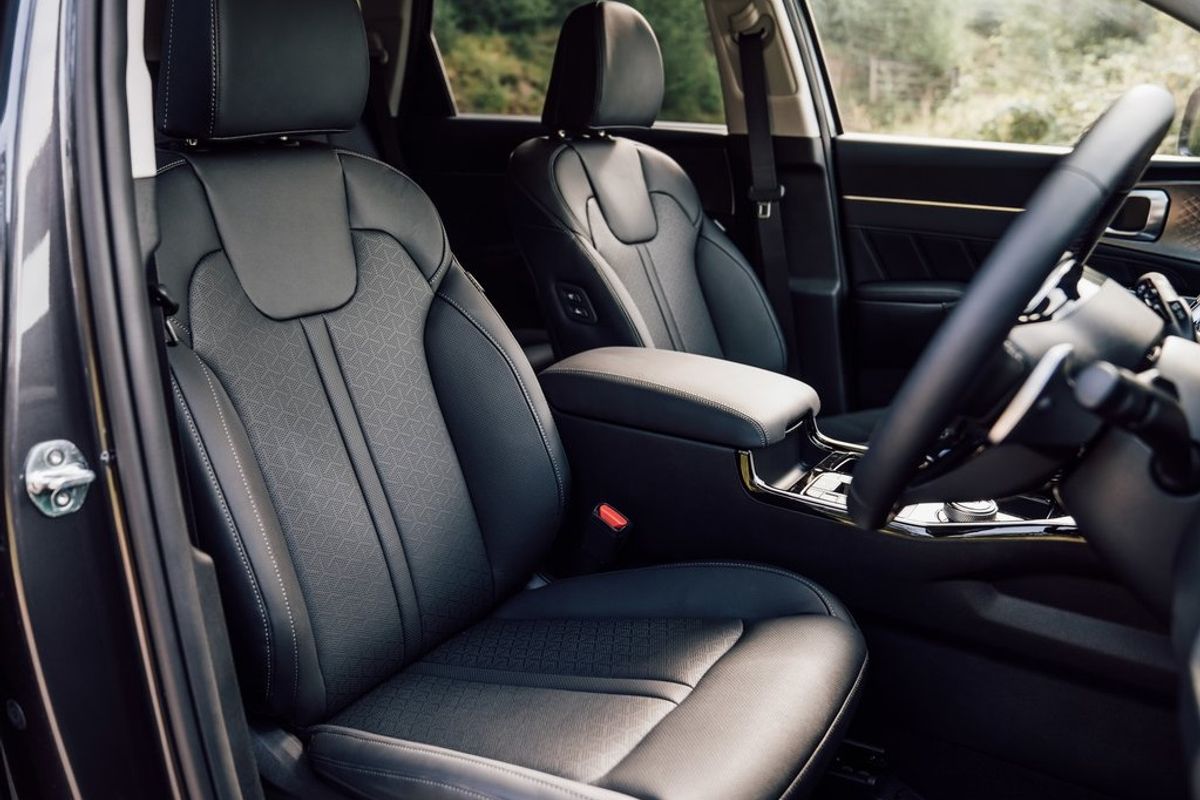
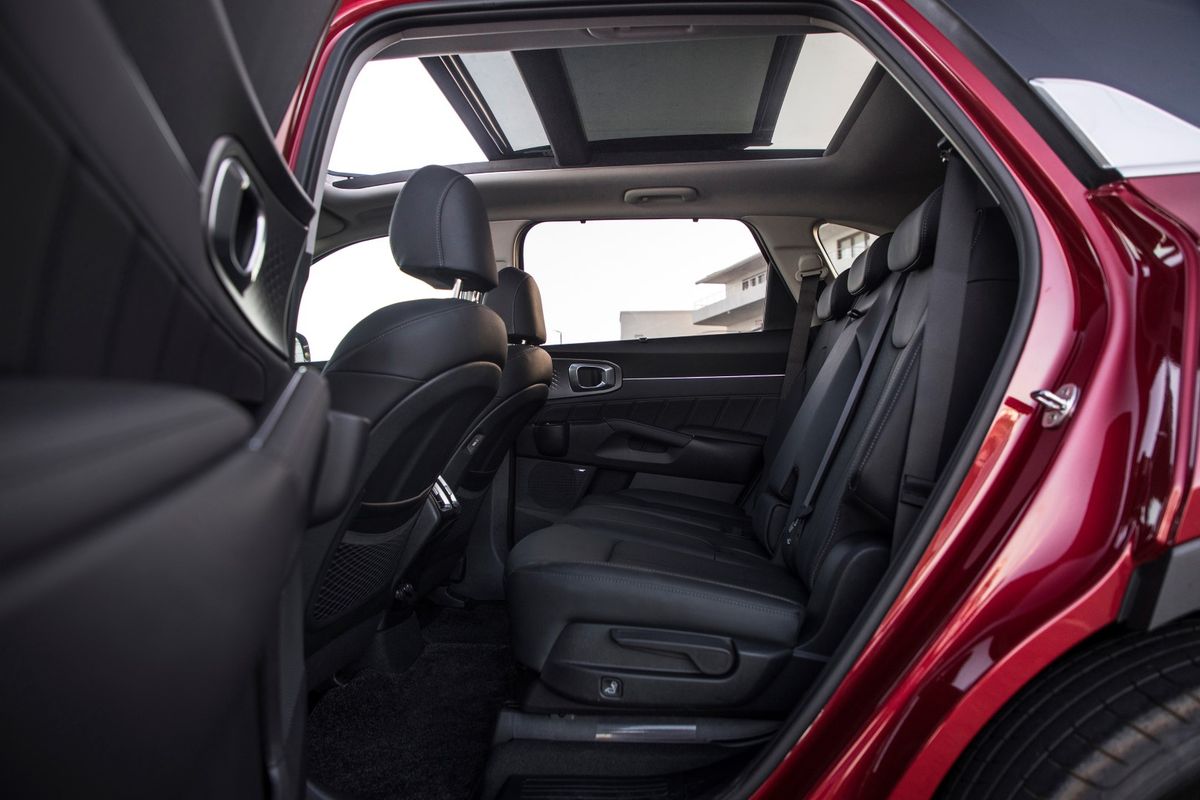
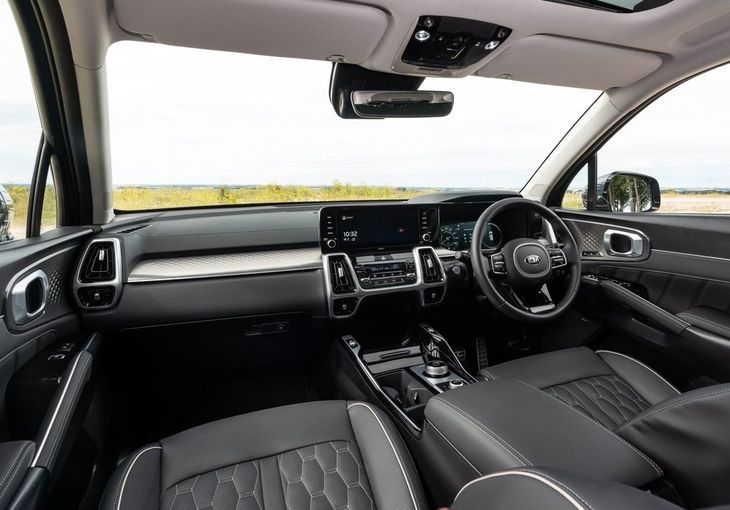
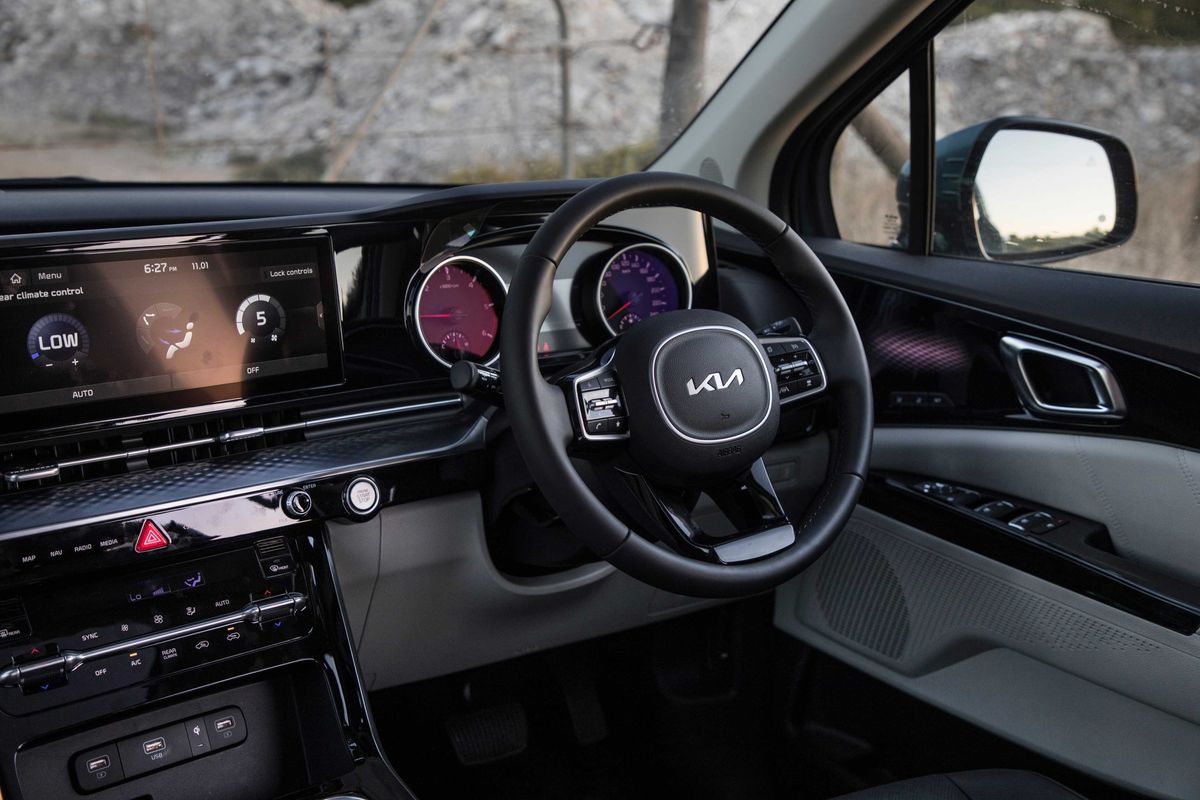
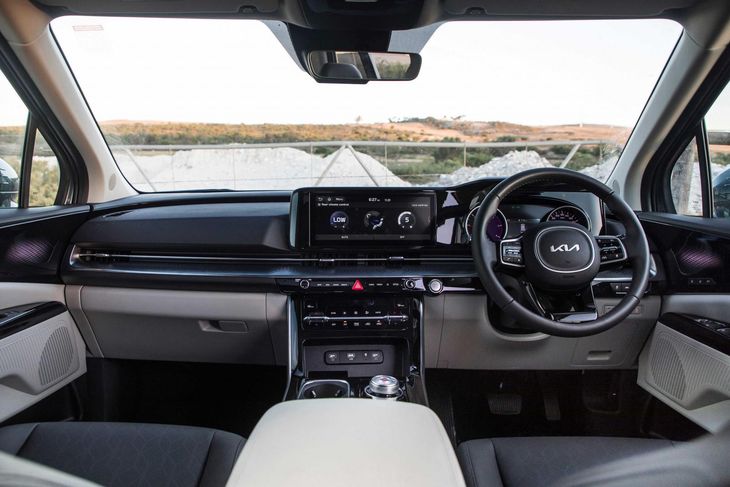
Kia has clearly gone upmarket with the design and execution of the new Sorento’s cabin which is fitted with quality finishes and laden with technology. The cabin blends metallic trim, embossed satin-effect surfaces and black leather upholstery.
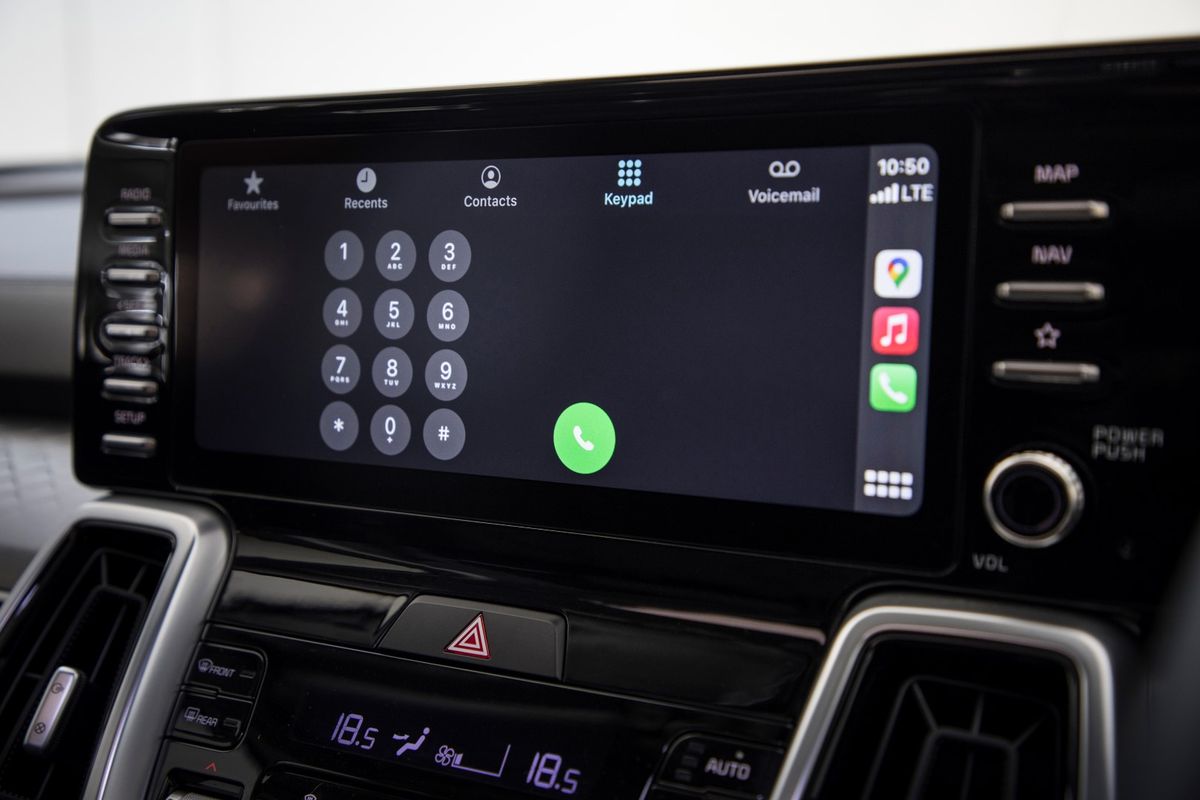
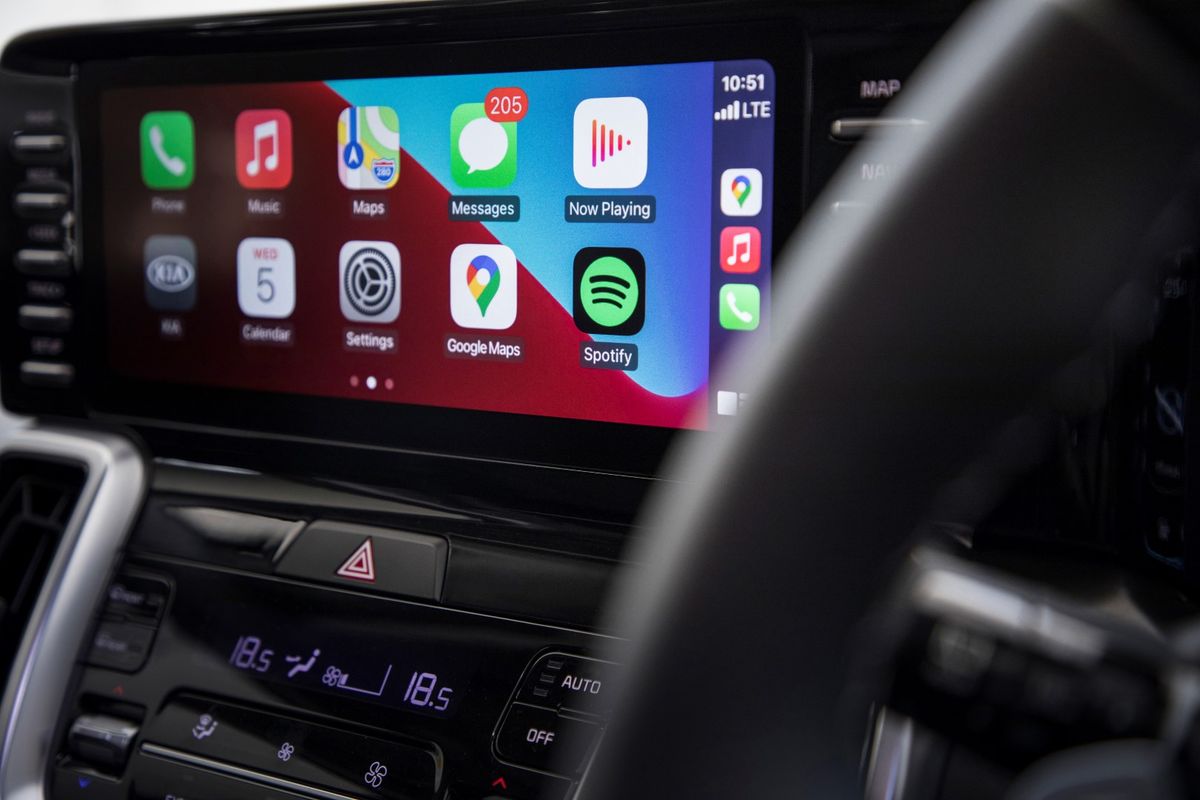
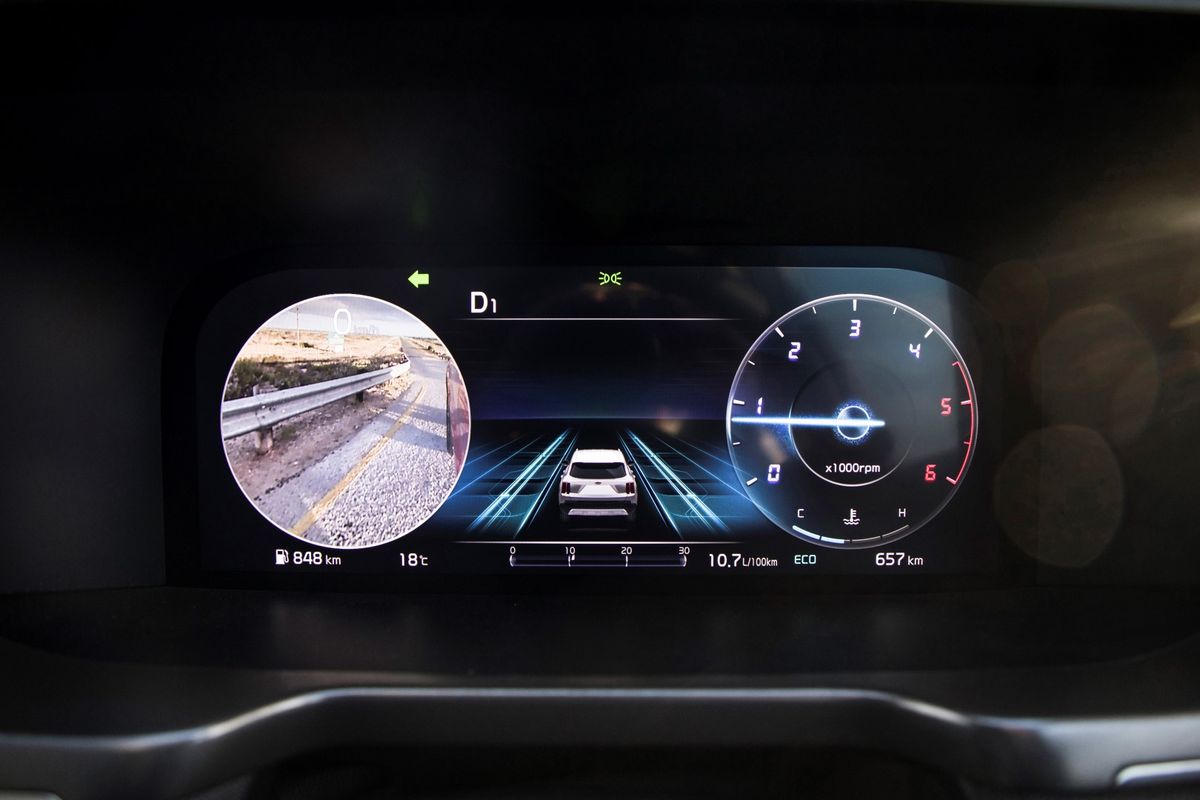
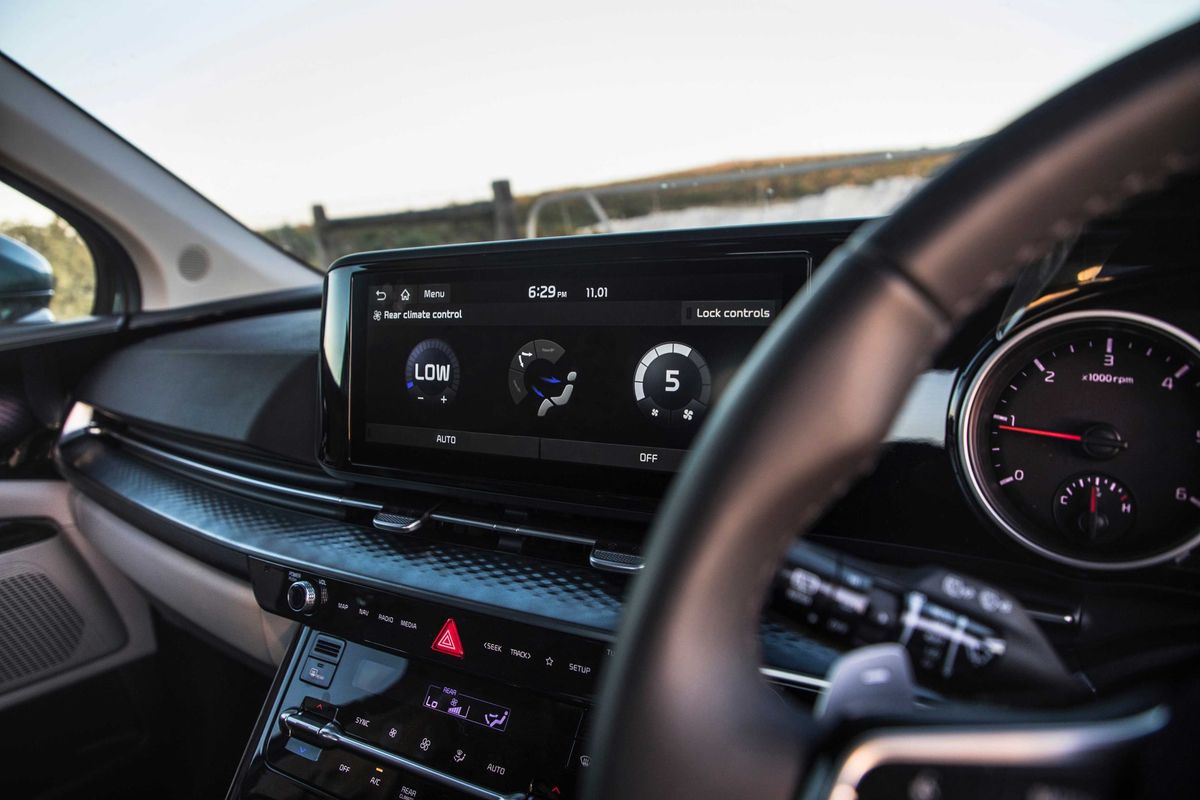
The dashboard is home to 2 side-by-side digital displays including a 12.3-inch digital instrument cluster as well as a 10.25-inch touchscreen infotainment system with integrated navigation and Apple CarPlay and Android Auto functionality. Up to 2 smartphones can be connected via Bluetooth at the same time. A head-up display is also available. The infotainment system is controlled with new haptic buttons, the same used to control the climate control system. Other nice-to-have features include mood lighting, a wireless smartphone charger and a BOSE surround sound system.
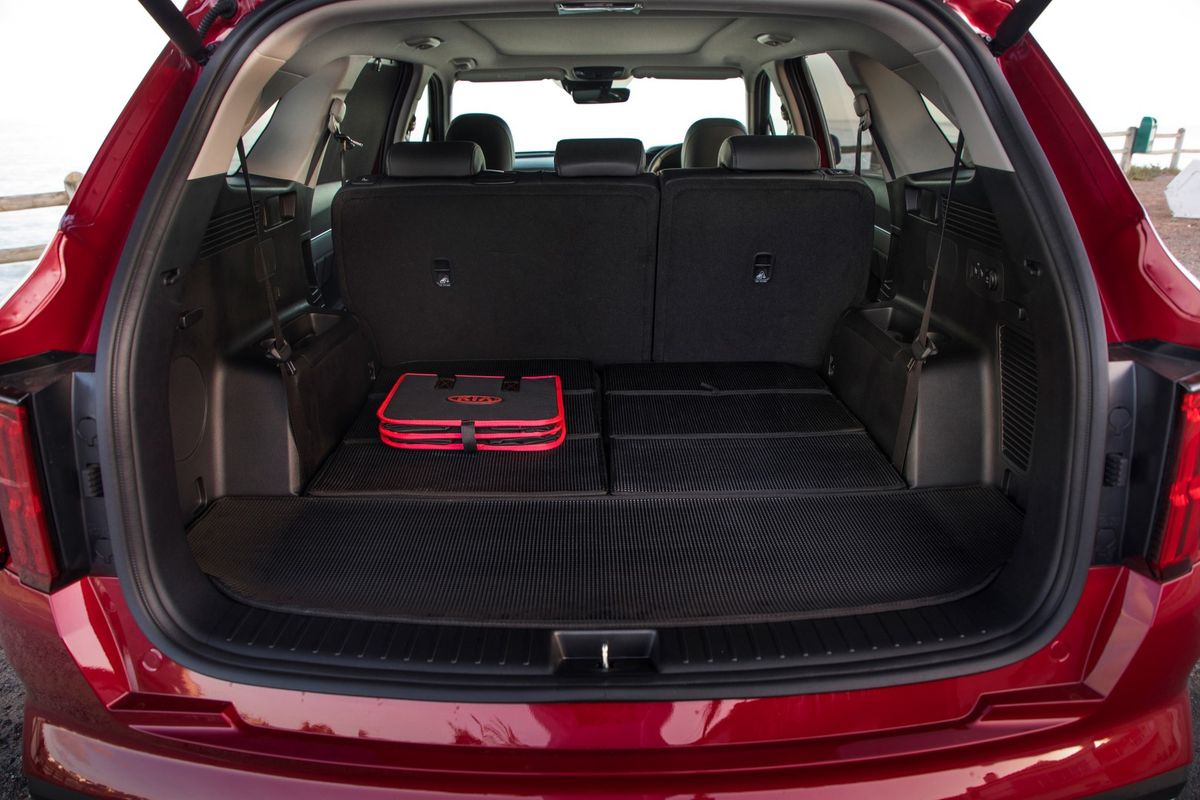
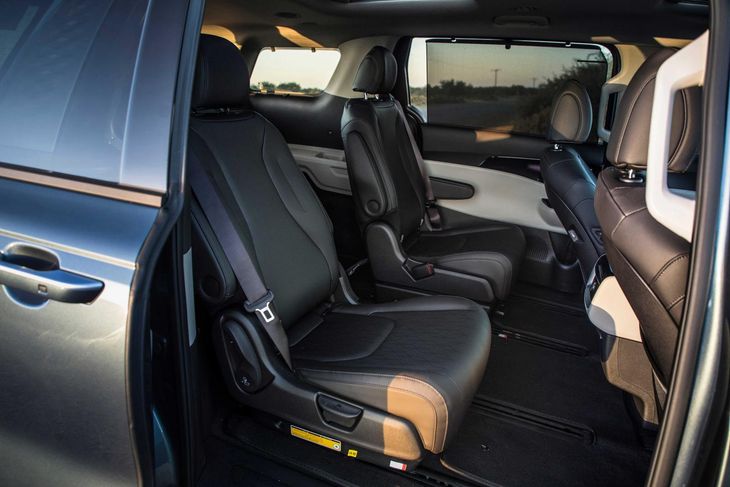
The Sorento can seat up to 7 passengers and when the third row is stowed, load space is claimed at a generous 821 litres. Owed to its larger footprint, the new Sorento offers higher levels of leg-, head- and shoulder room for passengers. The second-row seats can slide up to 45 mm forward if needed.
What engine powers the new Kia Sorento?
The new Kia Sorento employs a new 4-cylinder, 2.2-litre ‘SmartStream’ turbodiesel engine, the same found in the new Kia Carnival. It offers 148 kW and 440 Nm of torque and comes paired with Kia’s 8-speed wet dual-clutch automatic transmission.
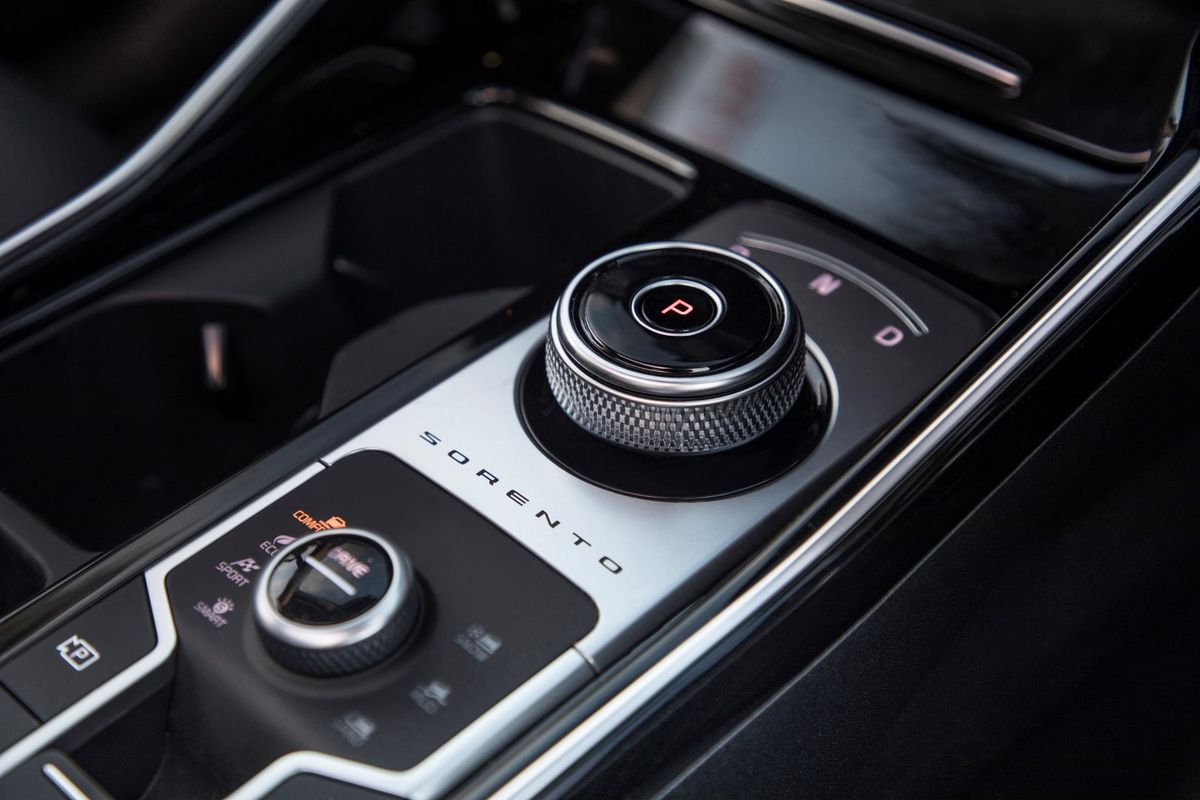
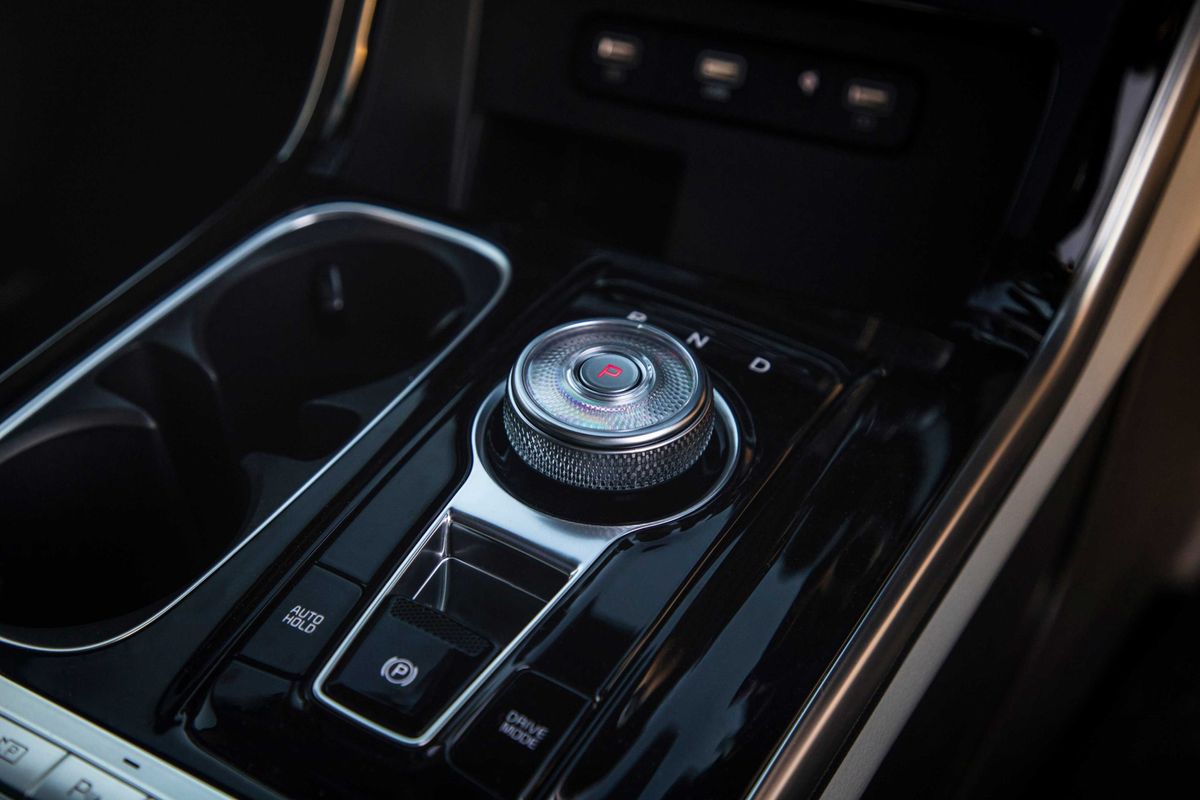
The Sorento all-wheel-drive derivatives will for the first time feature a new Terrain Mode which enhances the Sorento’s performance in mud, snow and sand. The driver can easily switch modes using the Terrain dial in the centre console.
In terms of driver assistance features and depending on specification, the new Kia Sorento is equipped with Kia’s Kia’s Advanced Driver Assistance Systems (ADAS) which includes features such as Forward Collision-Avoidance Assist (FCA) technology with pedestrian, cyclist and vehicle detection, Blindspot View Monitor (BVM), Around View Monitor (AVM) and
Blindspot Collision Avoidance Assist (BCA), Smart Cruise Control (SCC), Lane Following
Assist (LFA) and Driver Attention Warning (DAW).
A total of 6 airbags are standard as is Kia’s Vehicle Stability Management (VSM) and Electronic Stability Control.
New Kia Sorento: Specification Details
The new Kia Sorento is available in 3 trim levels. The entry point is the Sorento EX+ available in both 2WD and 4WD layouts. The mid-spec SX AWD derivative and range-topping SXL AWD specification complete the range.
See key specifications for each trim level below!
Sorento EX+
• 8,0” touchscreen infotainment with Apple CarPlay and Android Auto
• Automatic dual-zone climate control
• Auto lights and wipers
• Auto-folding, heated side mirrors
• Drive Mode Select and Terrain Mode Select (AWD derivative)
• Rear sunshade blinds
• Electrically adjustable front seats with lumbar support
• Electric tailgate operation
• Leather trim
• LED headlamps
• Smart Entry with push-button start
• PDC front and rear with rear-view camera
• 18” aluminium alloy wheels
• 6 airbags
• ESC plus Hill-start Assist Control
• Downhill Brake Control
• Trailer Stability Assist
Sorento SX AWD
The Sorento SX AWD adds the following features:
• 10.25” touchscreen infotainment with Apple CarPlay and Android Auto
• 12.3” TFT Supervision instrument cluster
• Heated steering wheel
• Heated and ventilated front seats
• Mood Lamp
• Wireless smartphone charging
• 19” aluminium alloy wheels
• Rear Seat Check Alert
• Driver Attention Alert
• Rear Cross Traffic Alert
• Forward Collision-Avoidance Assist
• Lane Following Assist
• Lane Keeping Assist
• Blindspot Collision-Avoidance Assist
• Blindspot Monitor
• Around View Monitor
Sorento SXL AWD
The Sorento SXL AWD builds on the specification offered in the SX AWD and is additionally equipped with:
• Driver Memory Power Seat with cushion extension
• BOSE surround sound with 12 speakers
• Dual LED headlamps (high and low beam)
• LED rear combination lamps
• Head-up display
• Panoramic sunroof
• Smart Cruise Control
How much does the new Kia Sorento cost in South Africa?
Sorento 2.2 CRDi 7-Seater EX+ 2WD 8DCT – R809 995
Sorento 2.2 CRDi 7-Seater EX+ AWD 8DCT – R849 995
Sorento 2.2 CRDi 7-Seater SX AWD 8DCT – R914 995
Sorento 2.2 CRDi 7-Seater SXL AWD 8DCT – R988 995
The Kia Sorento is sold with a 5-year/unlimited km warranty (including roadside assistance) and a 6-year/90 000km maintenance plan.
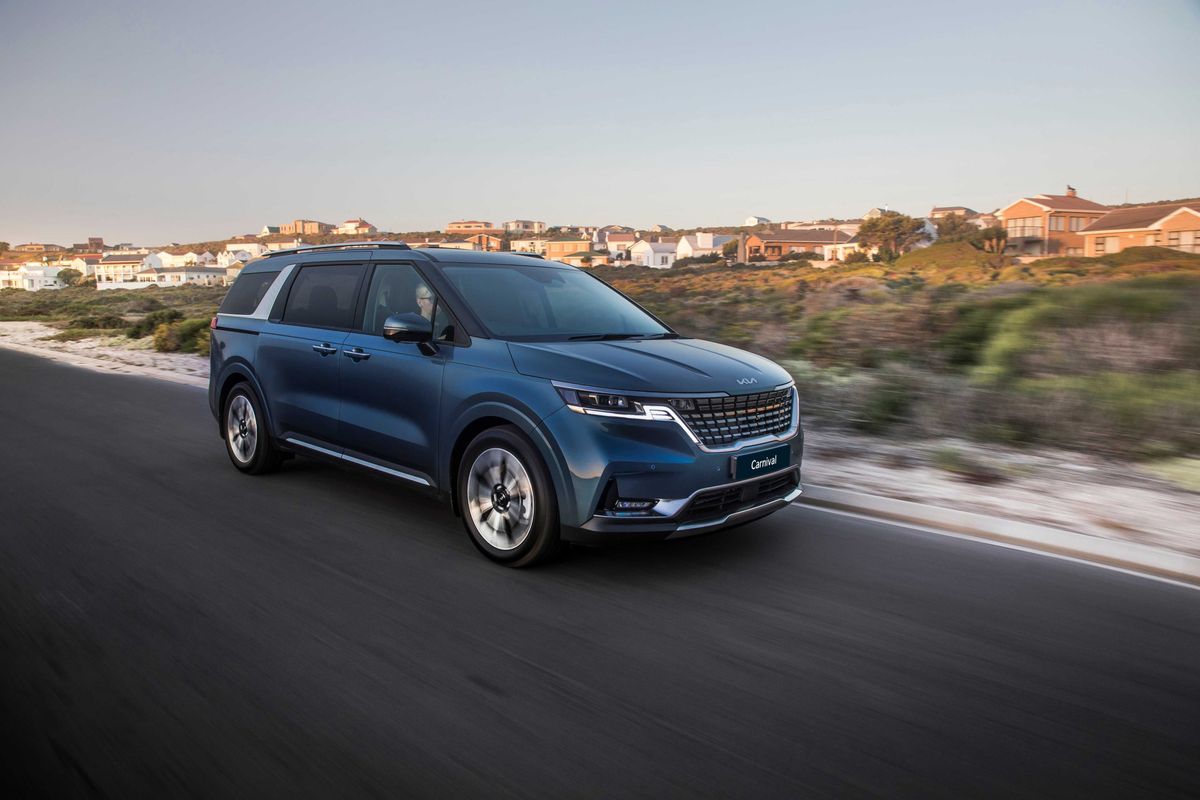
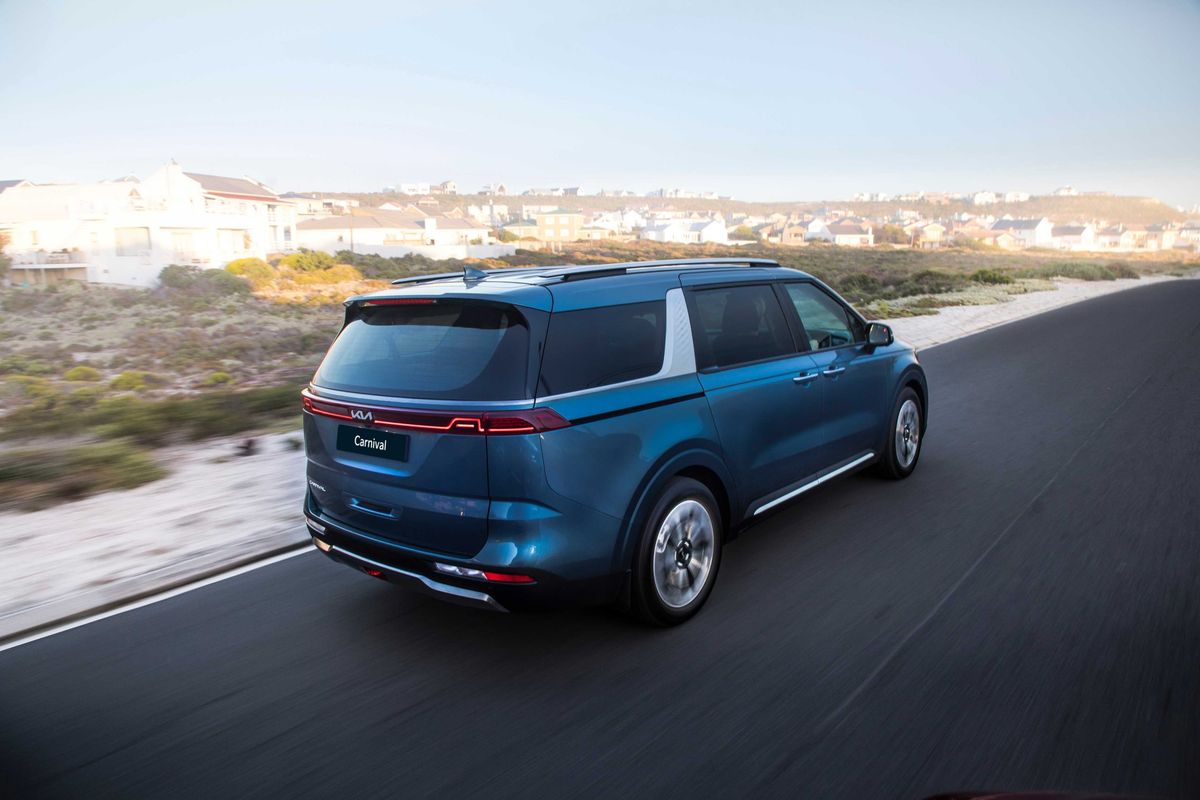
The new Kia Carnival luxury MPV has arrived in South Africa! See specification and pricing details below!
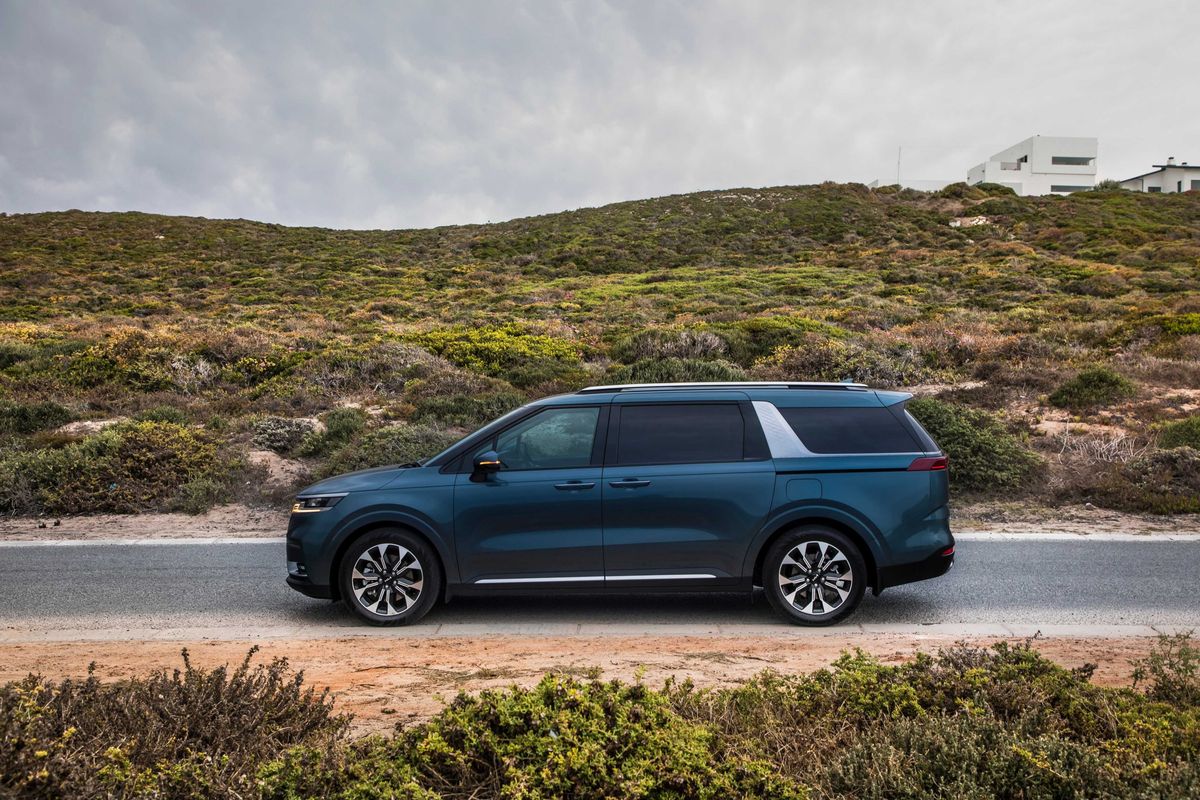
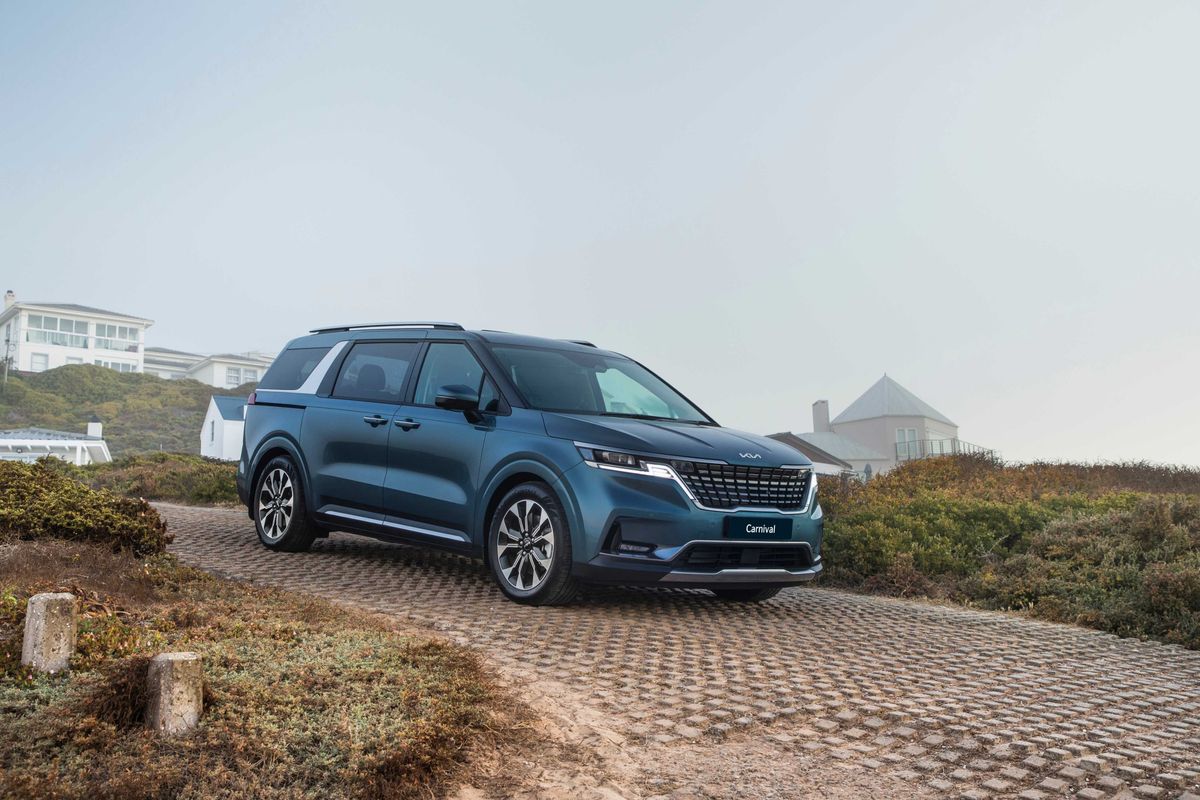
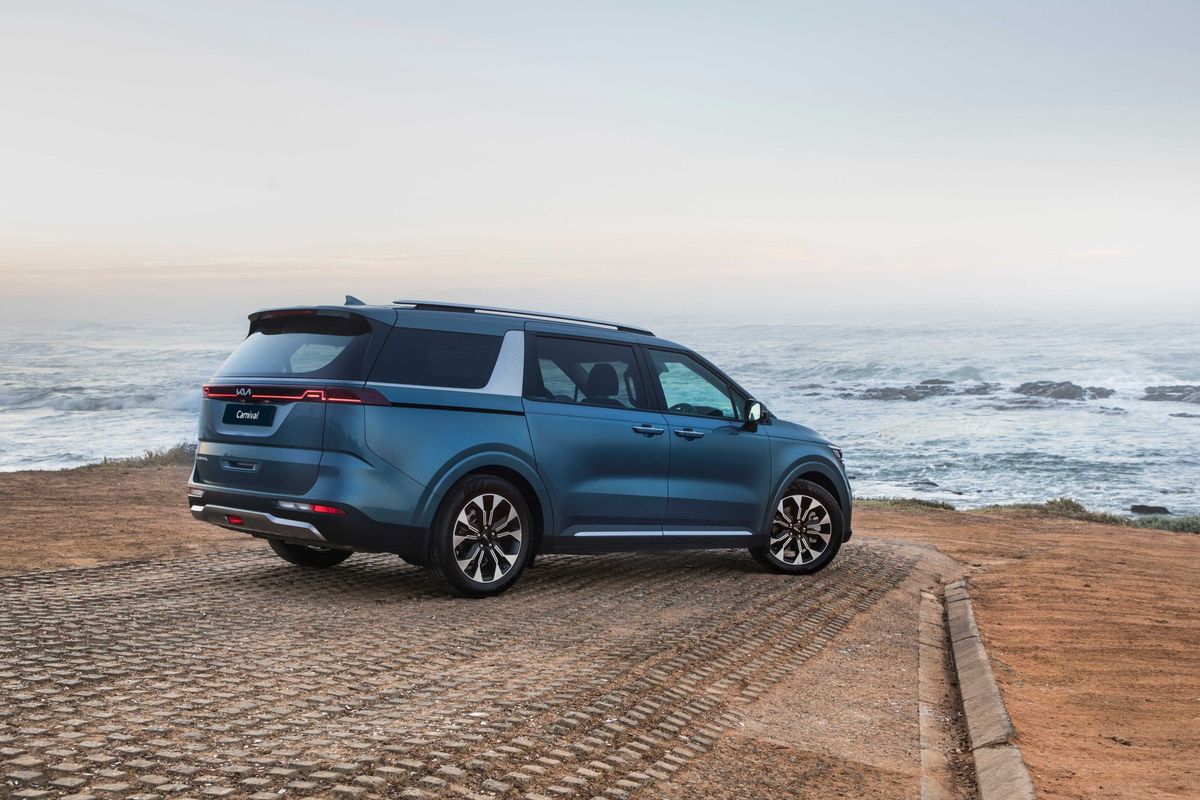
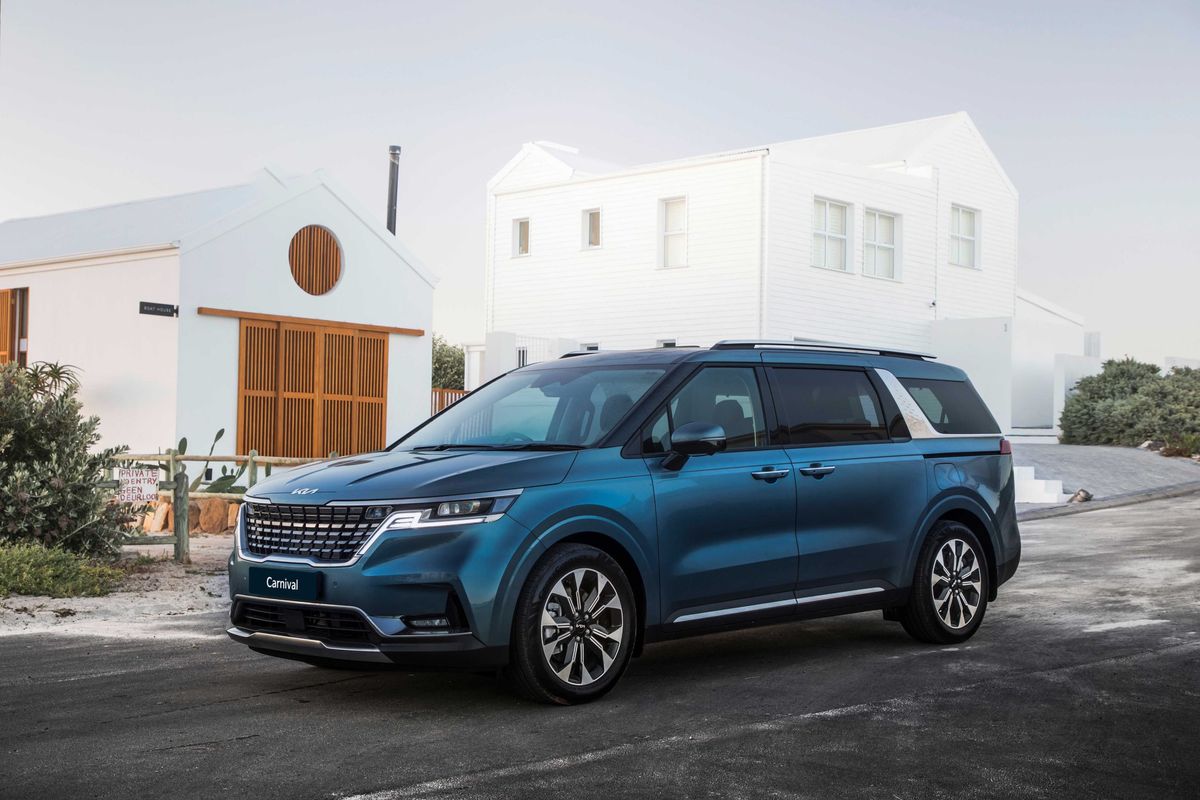
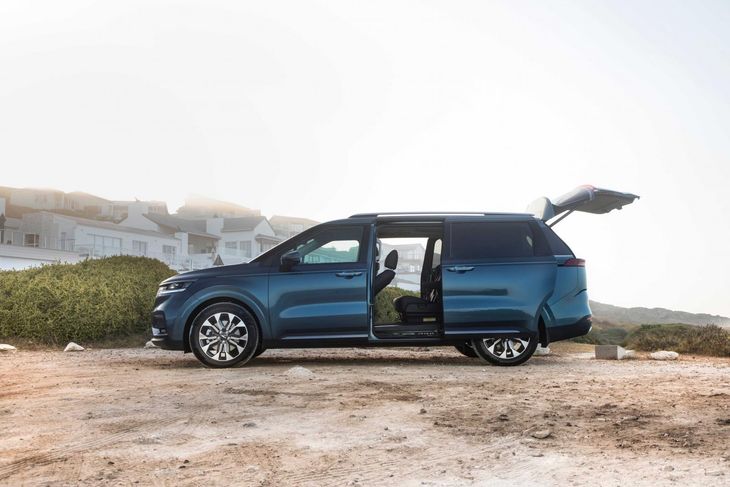
There’s a new luxury family mover in town and it’s called the Kia Carnival. The Carnival replaces the Grand Sedona in Kia’s local lineup boasting a luxurious cabin, a new diesel engine and a swathe of driver assistance features.
Carnival is bigger and more practical
The Carnival is built on Kia’s third-generation N3 platform, the same which also underpins the new Sorento SUV which has also now arrived in South Africa. Compared with the outgoing Grand Sedona, the Carnival is 40mm longer, 10 mm wider and 35 mm taller. Designed in Kia’s California design studio, the Carnival draws inspiration from Kia’s current SUV range (Sorento, Seltos, Sonet) and offers 3 rows of seating for either 7 or 8 passengers.
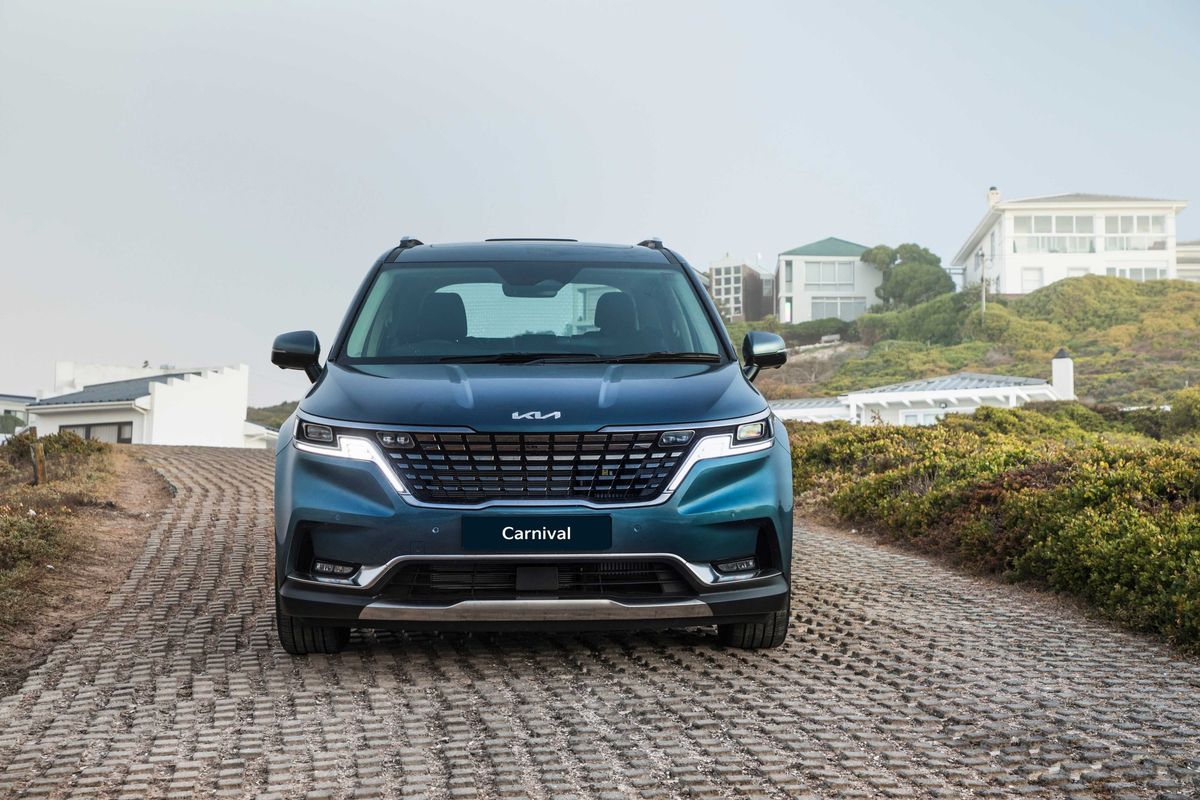
The Carnival wears Kia’s bold ‘tiger nose’ grille’ which is flanked by LED headlights while the bonnet lines give the Carnival a unique look. The Carnival rides on either 18- or 19-inch wheels.
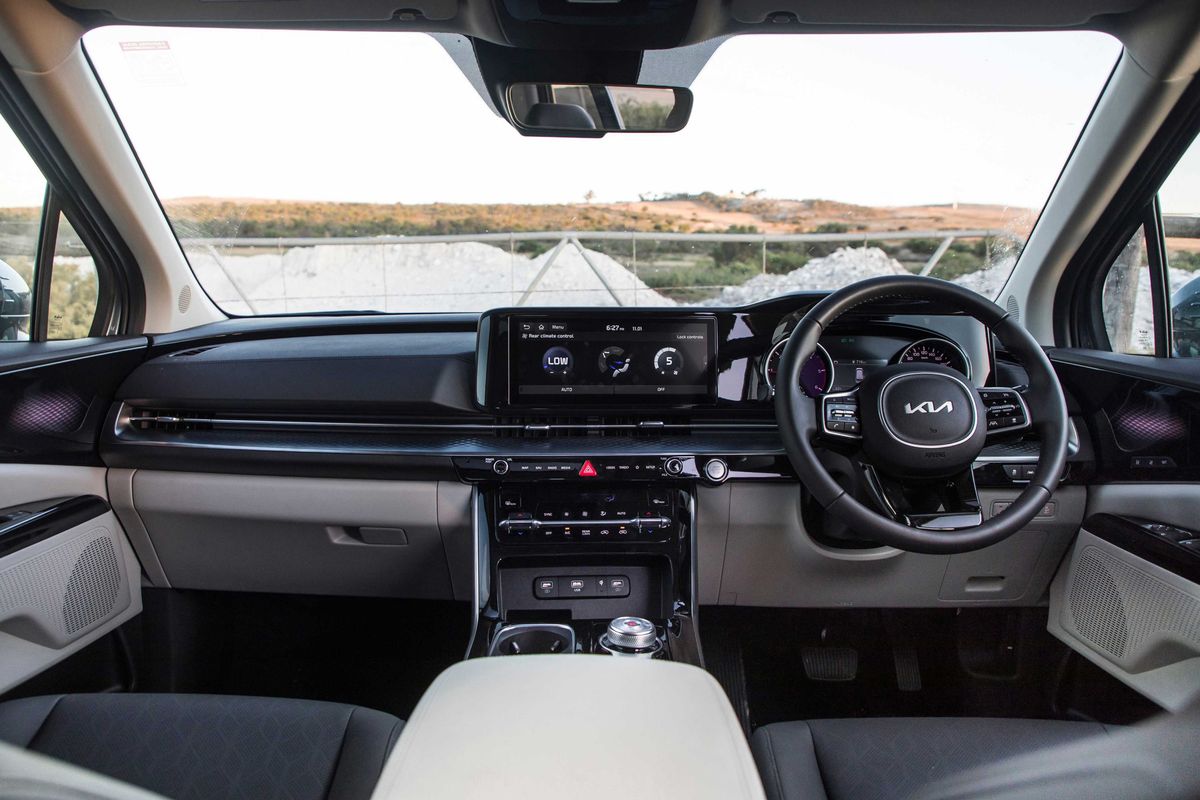
The interior features a slick, sophisticated appearance. The central fascia features gloss black finishes and chrome garnish runs the width of the dashboard, imparting a sense of spaciousness. Two-tone leather upholstery is fitted as standard.
As far as practicality is concerned, with all seats in place, load space is claimed at 1 139 litres and with the second row removed and the third row stowed, space increases to a very useful 4 110 litres. The 7-seater Carnival is fitted with 2 individual second-row seats while the 8-seater Carnival gains ‘Slide Flex’ seating which allows for multiple configurations including a sliding second-row centre seat which can also be used as a table. Other useful and practical features include a hands-free electric sliding side door with a Smart Key and an electronic liftgate with auto-close functionality.
The front-wheel-drive Kia Carnival is equipped with a ‘SmartStream’ 2.2-litre turbodiesel engine that delivers 148 kW and 440 Nm of torque and is paired with an 8-speed automatic transmission.
As far as driver assistance features are concerned, the Kia Carnival (in SX Lmited and SXL guise) offers features such as Forward Collision Avoidance Assist (FCA), Blindspot Collision Avoidance Assist (BCA), Rear Cross Traffic Alert, Lane Keeping Assist (LKA) with Lane Following Assist (LFA), Blindspot View Monitor (BVM), Smart Cruise Control (SCC) and an Around View Monitor (AVM).
“The Kia Carnival is here to disrupt a staid segment and proves once again what is possible when conventions are shattered. With its SUV-like character, Carnival delivers a combination of premium design and features, intelligent packaging, and an abundance of innovation in safety and technology at a price that packs a value punch” says Gary Scott, CEO of Kia South Africa.
Kia Carnival Specification Details
Buyers will be able to choose from 4 derivatives including the entry EX trim, mid-spec EX+, SX Limited and the range-topping SXL derivative. See specification for each trim level below.
Kia Carnival EX
• 8,0” touchscreen infotainment with Apple CarPlay and Android Auto
• Front and rear adjustable air-conditioning
• Auto light control
• Auto-folding side mirrors
• Overhead console lamps
• 4 USB ports
• Drive Mode Select
• Electrically adjustable driver’s seat with lumbar support
• Leather trim
• LED headlamps
• PDC front and rear
• 18” aluminium alloy wheels
• 7 airbags
• ESC plus Hill-start Assist Control
Kia Carnival EX+ adds
• 8 seats (2+3+3 configuration)
• Smart Entry with push-button start
• Powered sliding side doors
• Electric tailgate
• Remote rear door and tailgate opening on key
• Remote start on key
• Electro-chromatic rear-view mirror
• Front and rear adjustable automatic climate control
• Rear sunshade blinds
• Paddle shifters
• 7 USB ports
Kia Carnival SX Limited builds on EX+ with the following features:
• 19” aluminium alloy wheels
• Heated and ventilated front seats
• Electrically adjustable front seats with lumbar support
• Smart Cruise Control
• LED front fog lights
• Dual LED headlamps (high and low beam)
• Dual tilt and slide sunroofs
• Wireless smartphone charging
• 12.3” touchscreen infotainment with Apple CarPlay and Android Auto
• Rear LED combination lamps
• Skid plates front and rear
• Around View Monitor
• Rear Cross Traffic Alert
• Blindspot Collision-Avoidance Assist
• Blindspot Monitor
• Lane Following Assist
• Lane Keeping Assist
• Forward Collision-Avoidance Assist
The range-topping Carnival SXL will join the range in March 2022 and will feature the following features over and above what’s offered in the limited-edition SX Limited:
• 12.3” TFT Supervision instrument cluster
• BOSE surround sound with 12 speakers
How much does the Kia Carnival Cost in South Africa?
Tips to get the best Vehicle Finance deal at your Dealership
Most car buyers arrange vehicle finance through their dealership. Who is getting the better deal here – you or the dealership? Here is an explanation of the what the dealer will do and why they are so keen to do it! Plus tips to make sure you get the best car finance deal out there.
When you are buying a car from a dealership, the dealer will be keen to help you arrange vehicle finance to fund the purchase. Almost every dealership has a Finance Manager who needs to have particular qualifications to hold that job. There’s no doubt about it… using a dealer to arrange your car finance is certainly the easiest and most convenient way to do things.
Let’s be frank here, though… The reason your dealer is keen to help you arrange a car loan is that they get a commission from the bank for doing it and this commission is invaluable to dealerships.
Before you get too nervous about this, just remember that the thing the dealer wants above all is to sell that car quickly for as much profit as possible. That is priority number one. At the moment, in our Covid world, only about 30% of car finance applications are approved and the Finance Manager will know every trick in the book to try to squeeze you into that car (I mean financially squeeze your bank balance into the finance deal – if you have to physically squeeze yourself into the car perhaps consider a bigger vehicle!). The Finance Manager will work hard to get you an approved deal and this is valuable to you.
There are a number of different types of car financing available. Most are called ‘instalment sale agreements’ but they come in different flavours. There is vanilla but you can add choc chips (Balloon payments) or go low-fat (Deposits) or strawberry (Fixed Interest rates). Nowadays there are really exotic flavours like Lemon & Poppy Seed (Leasing) and Salted Caramel (Guaranteed Future Value) there are flavours to suit all tastes and the typical menu can be studied in the article below.
Submitting your vehicle finance application to all the Banks….
The Finance Manager will send your vehicle finance application to get a quote from all the different banks. Smaller dealers may only work with 1 or 2 banks but larger, well-established dealers will work with ALL the banks, which is to say the Finance Manager will send the quote to 4 or more different lenders. This is good for you as it will save you a ton of work but your first check should be that the Finance Manager is actually doing this.
The respective banks can offer very different Interest rates, Balloons, Deposits, etc… Remember to Look at this closely and the Finance Manager will have the experience to give you advice on the best option for you but it is best to do your own homework as well.
Not all banks offer the same commission to the Dealer. You should enquire about this because you want to be sure that the dealer is making the right decision for you as a customer and is not influenced by commission they might get from the bank.
Until surprisingly recently, the Finance Manager could actually alter your quote after it comes back from the bank and change, for example, the interest rate, in order to give themselves better commission. The big banks, quite rightly, now have many rules in place these days to limit this behaviour – but it can still happen – so be careful and ask questions!
Helping you settle your existing Vehicle Finance Deal
If you owe more money on your current car than its trade-in value then this account will need to be settled as part of the process of buying your new car (the difference/”shortfall” will need to be refinanced).
Unsurprisingly then, your current finance deal is often a big reason why you can’t always buy a new car when you want to. Your dealer can be an invaluable guide if settling your existing deal becomes a complication to your next vehicle purchase… plus they do the paperwork for you.
Rule # 1 here is to make sure you are getting the best price for your trade in – nowadays there are many great options available. Alternatively, you can ask your bank to write off the problematic part of your existing deal based on your good looks and winning personality – but I don’t rate your chances with that option!
When you are buying a car, sometimes you want some extra stuff. Maybe things like a towbar or canopy for your bakkie. When you are sitting with the dealer’s Finance Manager, they may talk to you about optional service plans or warranties that you can also purchase along with the car.
When you buy these at the same time as the vehicle, the dealer’s Finance Manager can often include these into the deal and get them financed by the bank. Some of these products are expensive and you don’t have the cash sitting around to buy them. Including them into the car finance deal and paying them off along with the monthly installments for the car can be useful.
The rule here is to check your vehicle finance agreement closely to make sure you fully understand everything you are paying for. You would not be the first person to pay for some sneaky product that they didn’t realise was there.
Paperwork Hell!
Buying a car involves a lot of paperwork! The bank will ask you to provide a copy of your ID, present proof of your income and sign contracts and other documents. The vehicle will need to be registered in your name (“the owner”), although the bank will be the “titleholder” – the list of tasks goes on and on. If you use the dealership’s finance manager, they will happily do all of this on your behalf. You will make your life easier here if you pull together your ID document, 3 months payslips and 3 months bank statements beforehand.
Car Finance Approved or Declined?
At the start of this article, I mentioned that only 30% of vehicle finance applications are ultimately approved. That means that most of the people who walk into a dealership walk out empty-handed. When buying cars, there is nothing more important than your credit profile. It is the secret sauce that makes everything taste better.
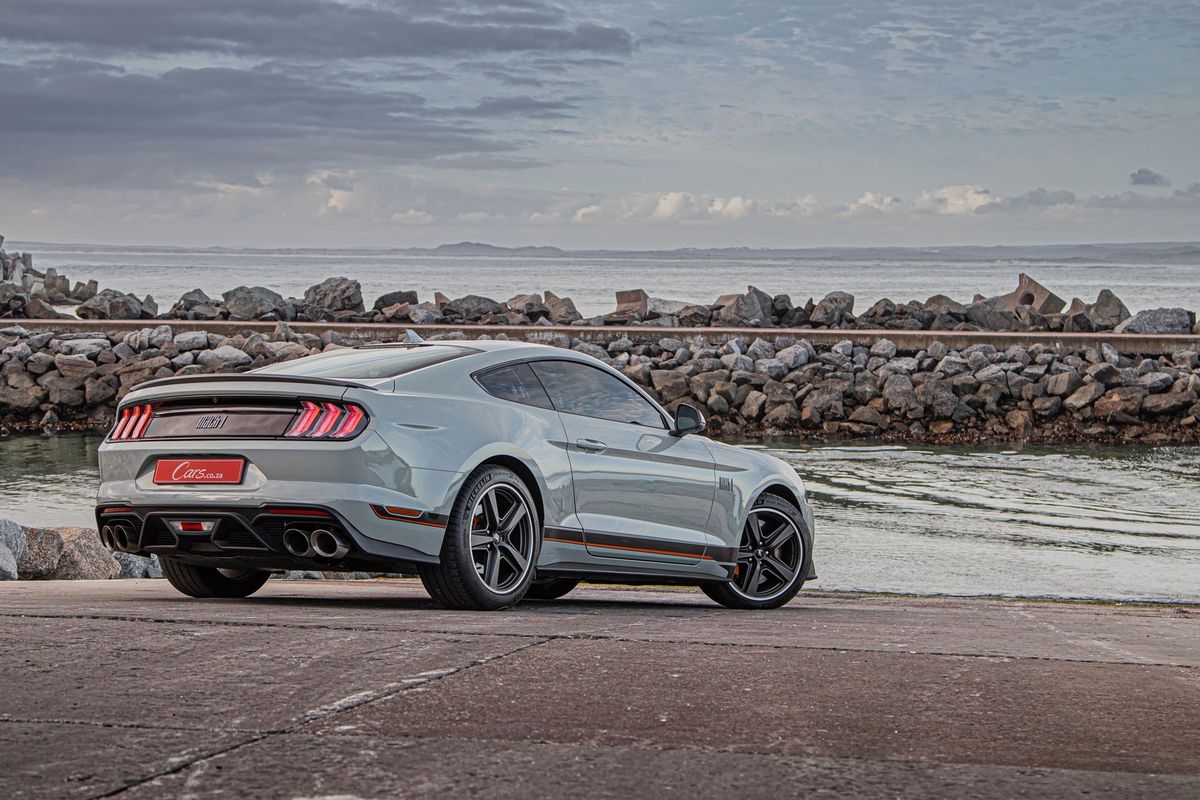
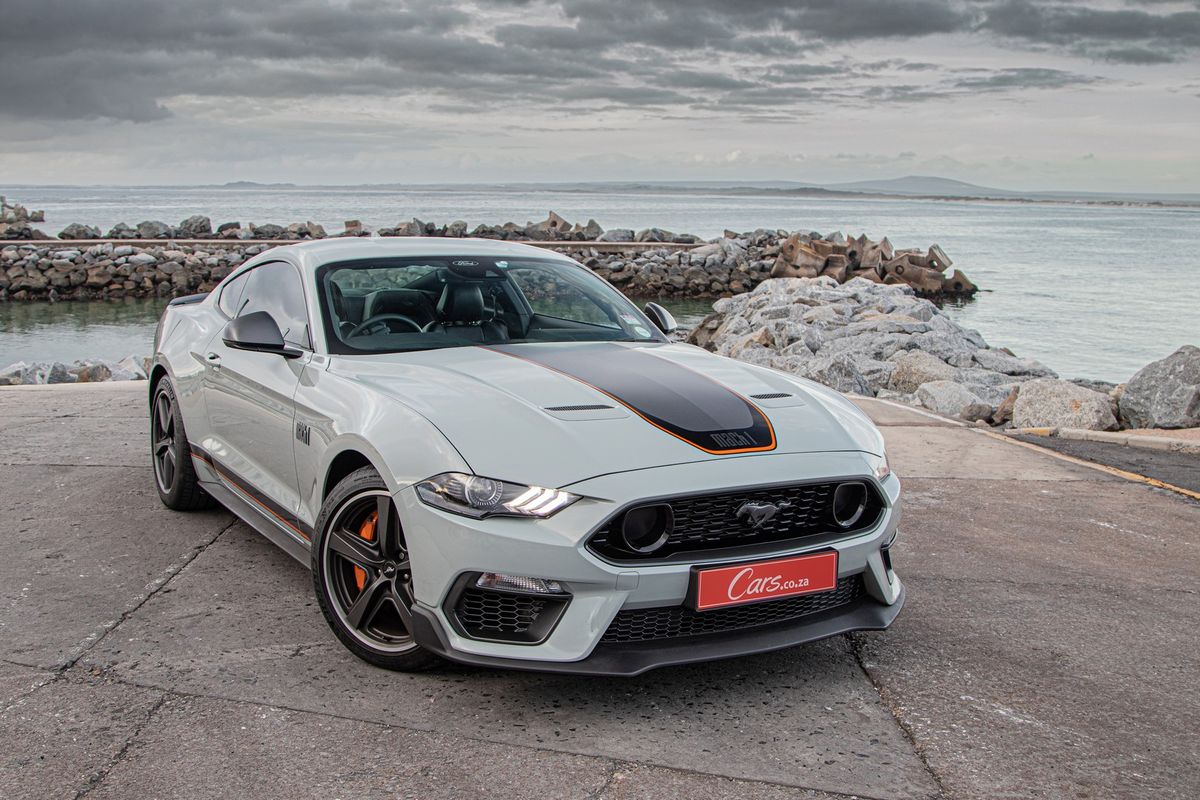
The Ford Mustang Mach 1 takes the muscle-car concept to another level. With a performance-focused suspension, more powerful engine and badass looks, the Mach 1 represents something very near to petrolhead nirvana, writes David Taylor.
The back story here is a simple one. The invitation to drive the Ford Mustang Mach 1 arrived in my email inbox. It’s one of those opportunities that doesn’t come along every day, so instinctively, you drop everything and RSVP. I was quite keen to get behind the wheel of the Mach 1 – the marketing material suggested it was optimised for handling and would, therefore, be a sharper driving tool compared with the standard GT. It sounded promising and the best part was the event was to take place in the Western Cape – which is renowned for offering largely (if not entirely) unpotholed scenic driving roads.
It was not to be, however, because someone very close to me tested positive for Covid-19 a mere 3 days before the event and, because I’m a responsible citizen, I asked a colleague to substitute me while I stayed at home. I was gutted. Perhaps it was a sign, as the event was marred by rainy weather and, those in attendance couldn’t put the newcomer to the test at anything near an appropriate pace.
So, when the opportunity arose a few months later to have another go and take the Mustang Mach 1 for a weekend, I jumped at the chance. “Lightning does not strike twice,” or at least so the saying goes. The Mustang badge is something that Ford takes very seriously. So much so, in fact, that you’ll struggle to find a Ford Oval anywhere on – or in – the brand’s iconic pony car.
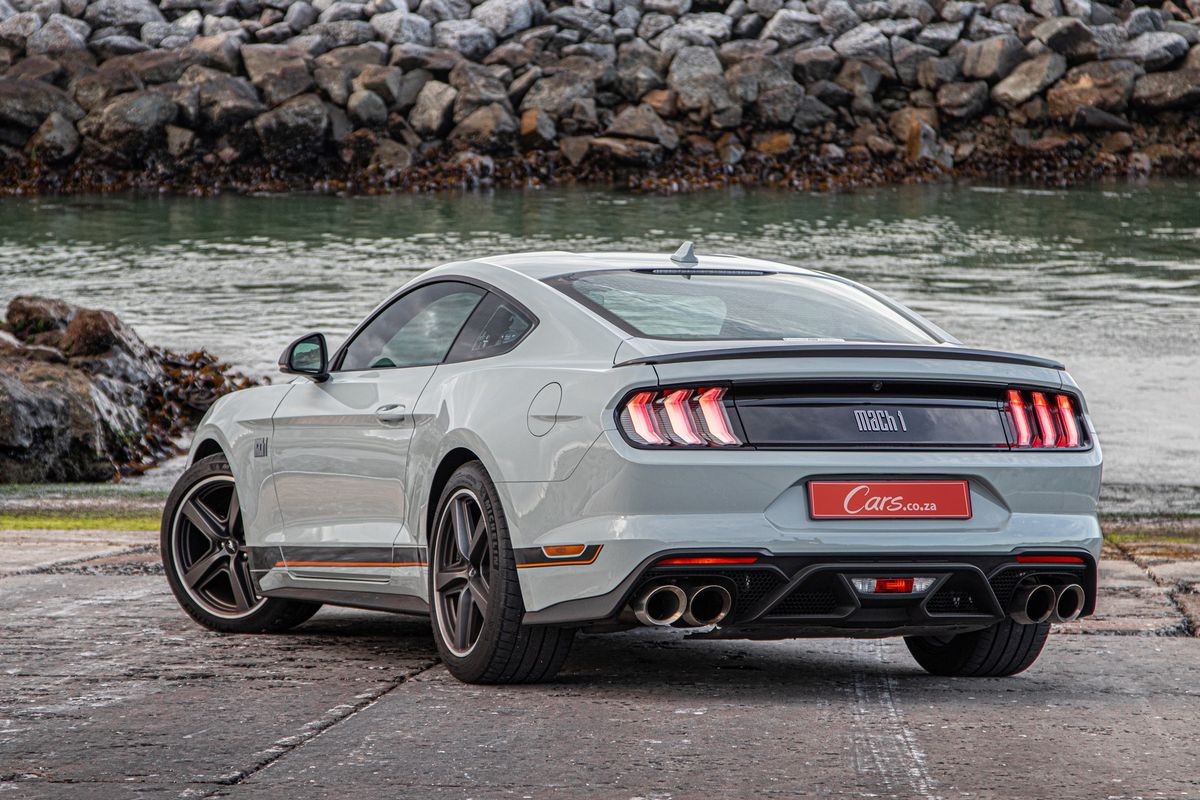
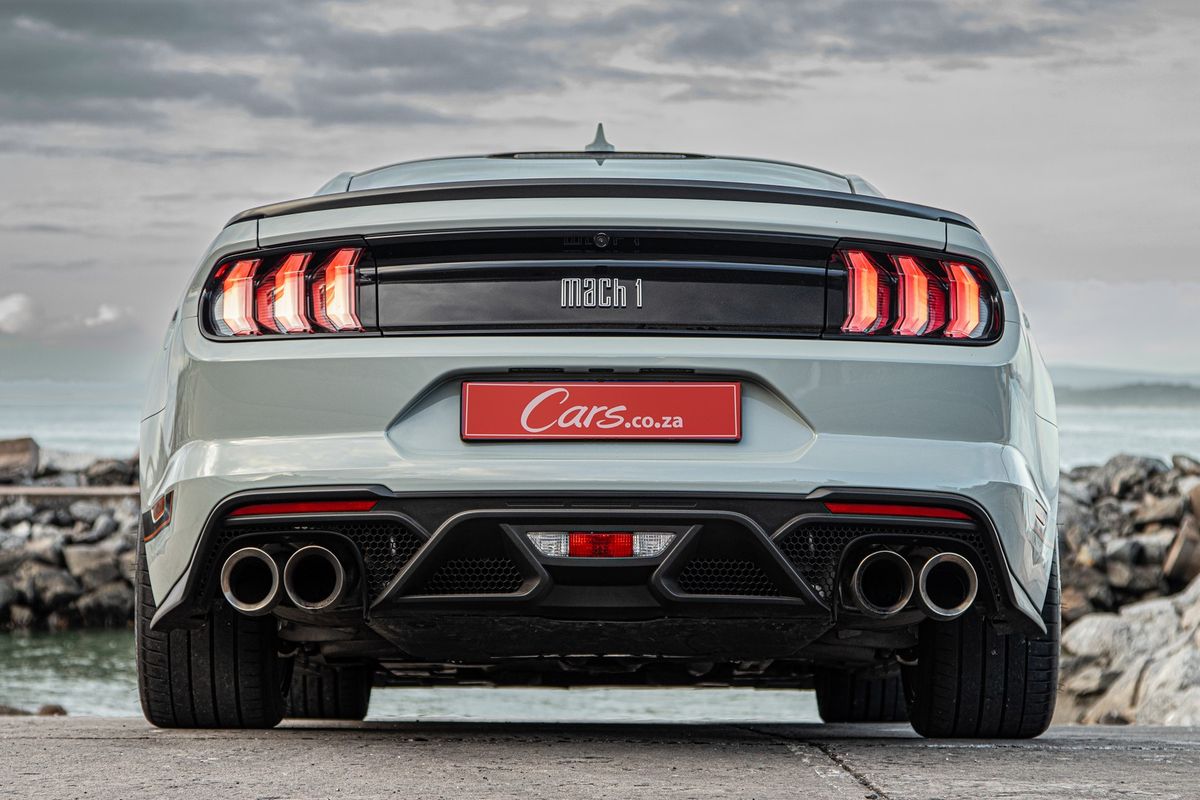
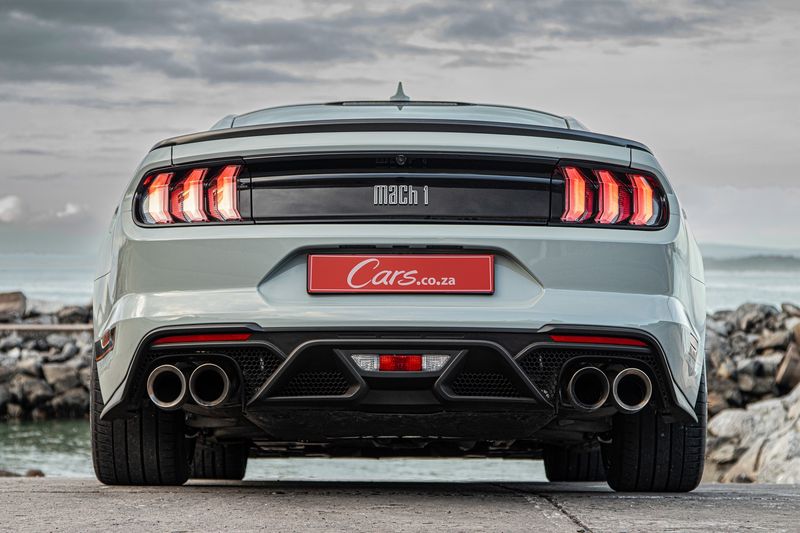
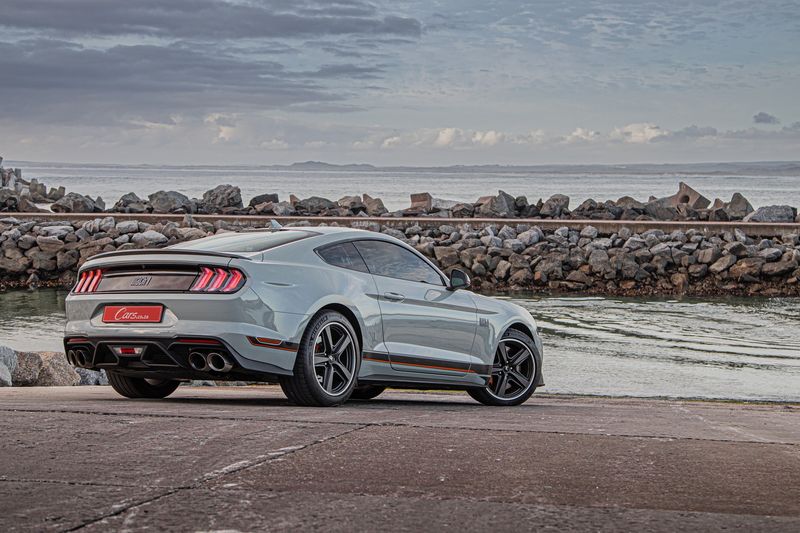
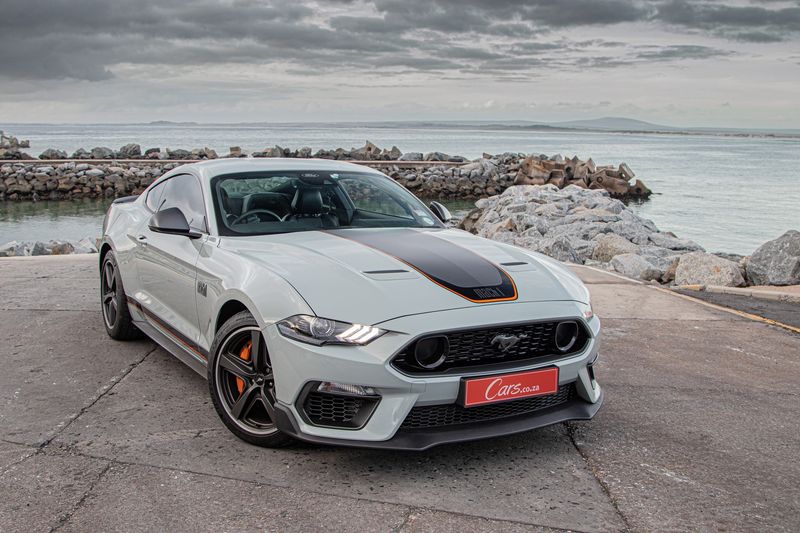
Quad pipes, grey paint, Mach 1 badge… Coolness dialled up to 11!
I’ve had considerable experience with the Ford Mustang since it was launched in the Republic back in 2016. The subsequent facelifted model introduced the new 10-speed automatic transmission, as well as the special Bullitt version. Now there’s the Mach 1, which takes the standard Mustang V8 recipe and adds more power, better aerodynamics, uprated suspension and some retro-styled good looks.
In 2021, the Mustang was the world’s best-selling sportscar (for the 2nd consecutive year) and the best-selling sports coupe for the 6th year in a row. The Mustang is greater than the sum of its parts. There are faster cars, there are better-built cars, but nothing’s quite as cool as a Mustang. My wife is not a car person, but she’ll tell you straight away the Mustang is one of her favourites. You get the picture.
The Mustang Mach 1 has quite a few rivals. At this price point, you could get yourself into a BMW M440i xDrive, a Toyota Supra or an Audi TT RS – all of which offer commendable performance, but would any onlooker look twice at those cars? See, here’s the thing about the Mustang – and it’s something which we’ve noted before: these muscle cars get loads of attention, which is something to bear in mind.
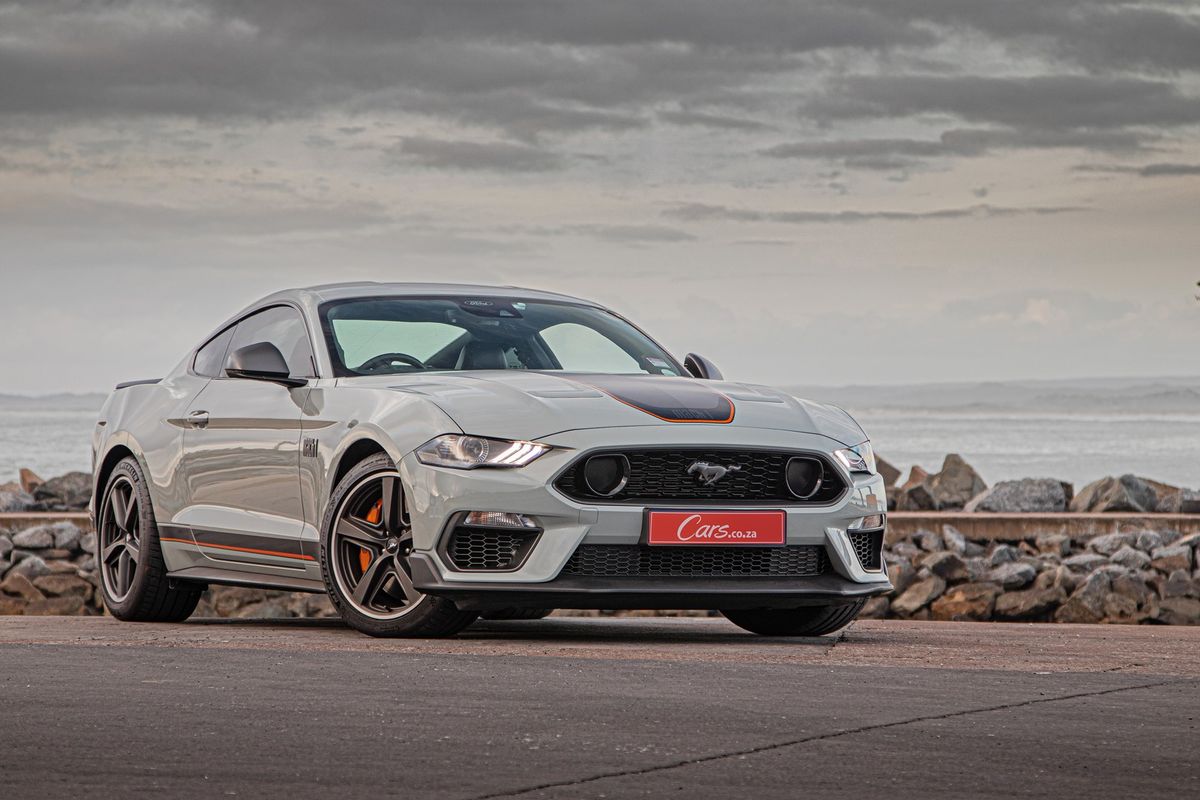
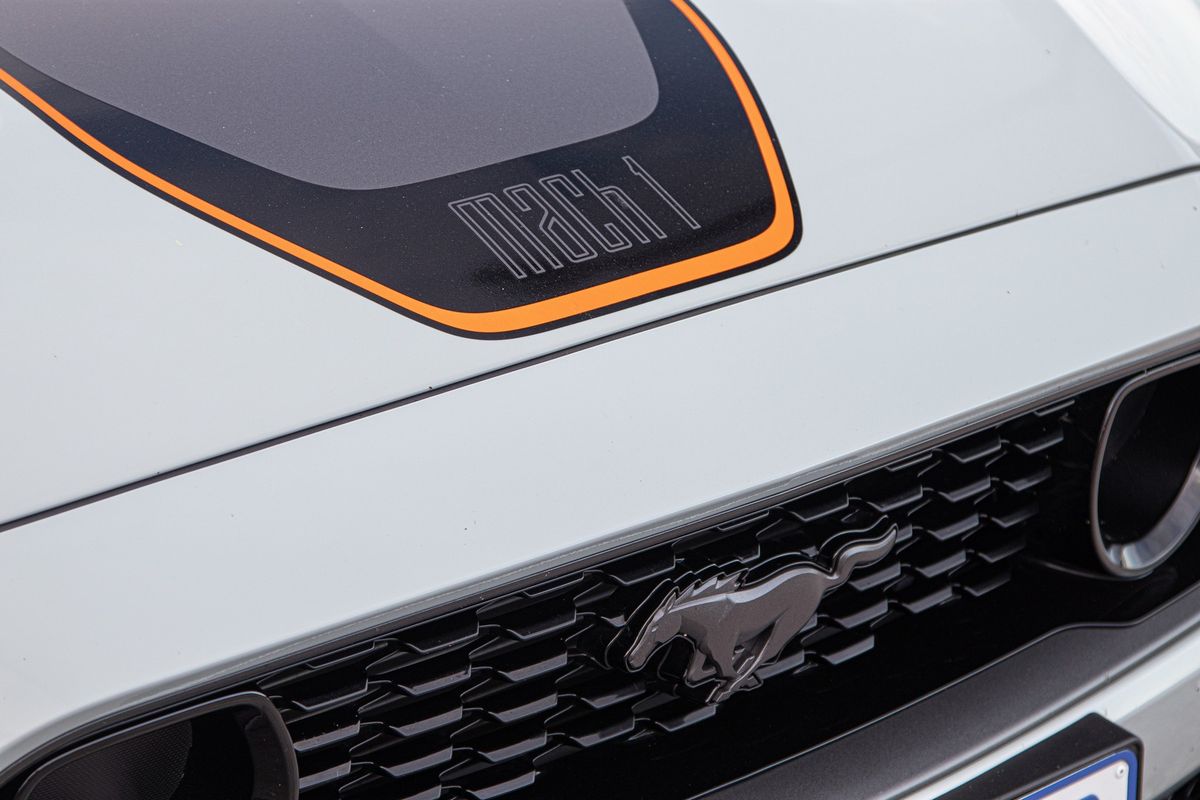
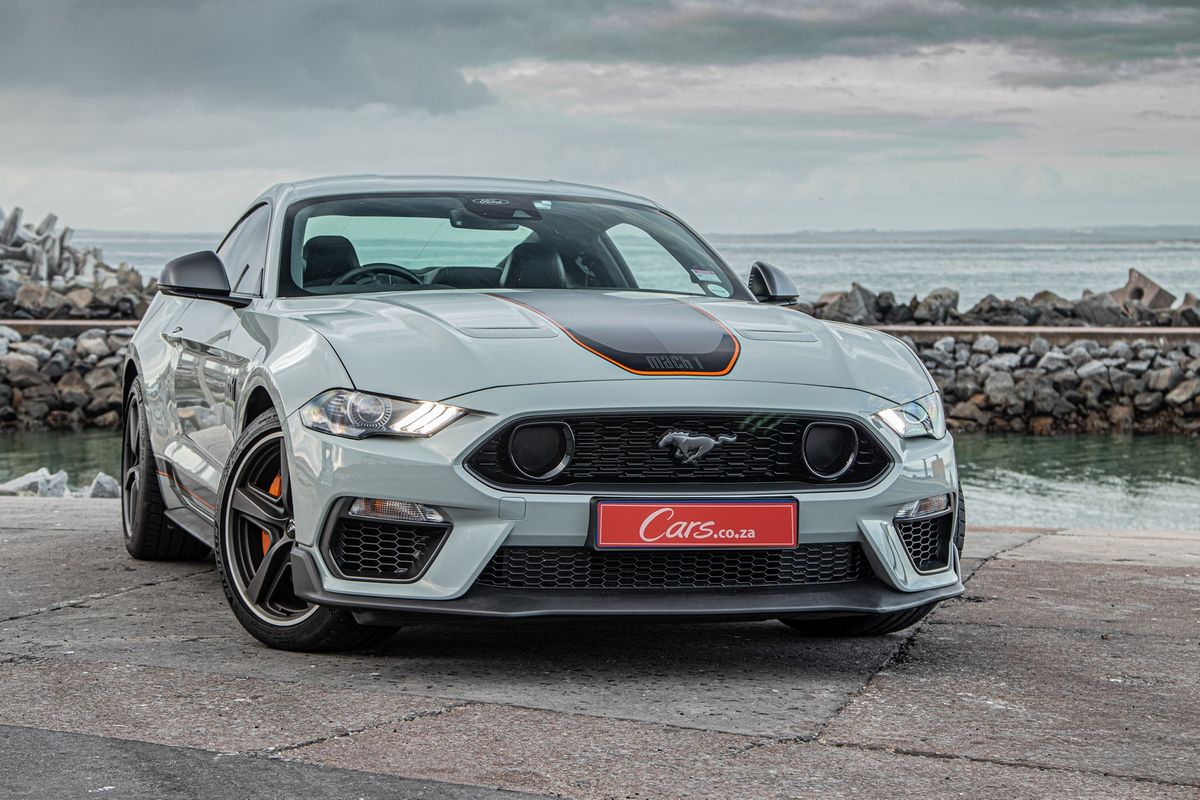
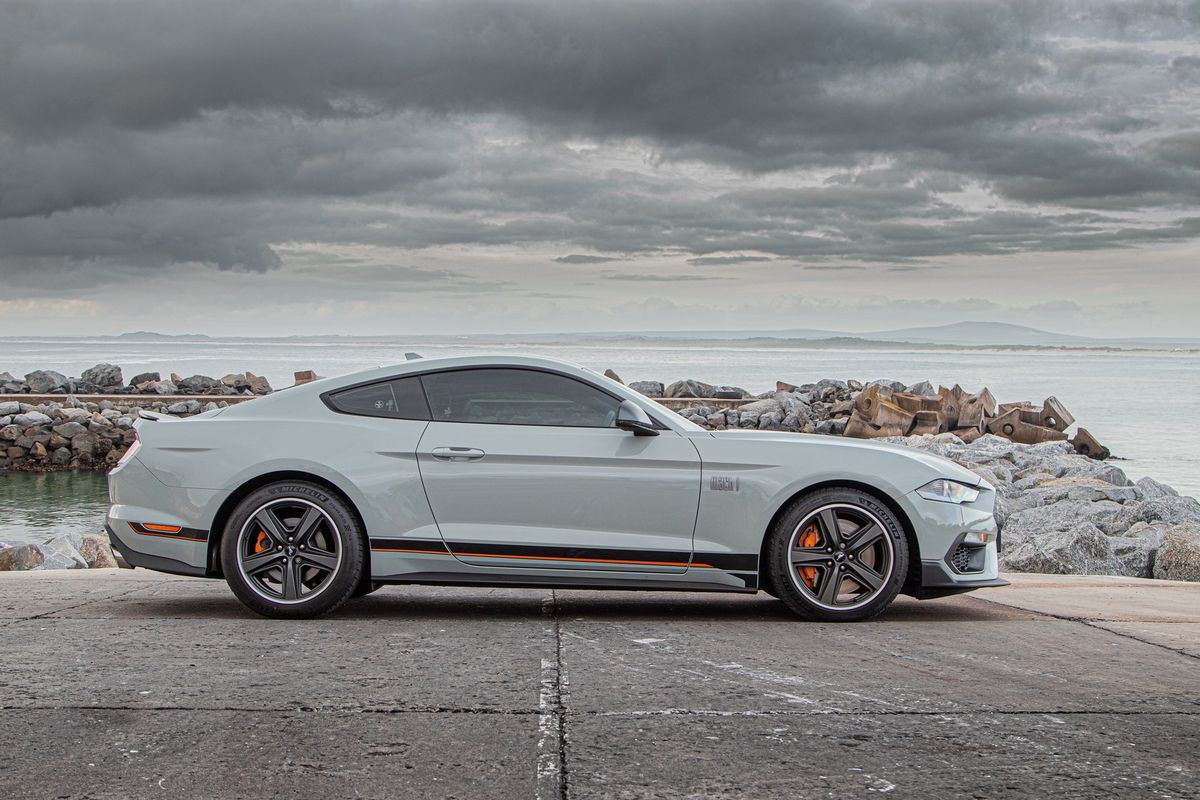
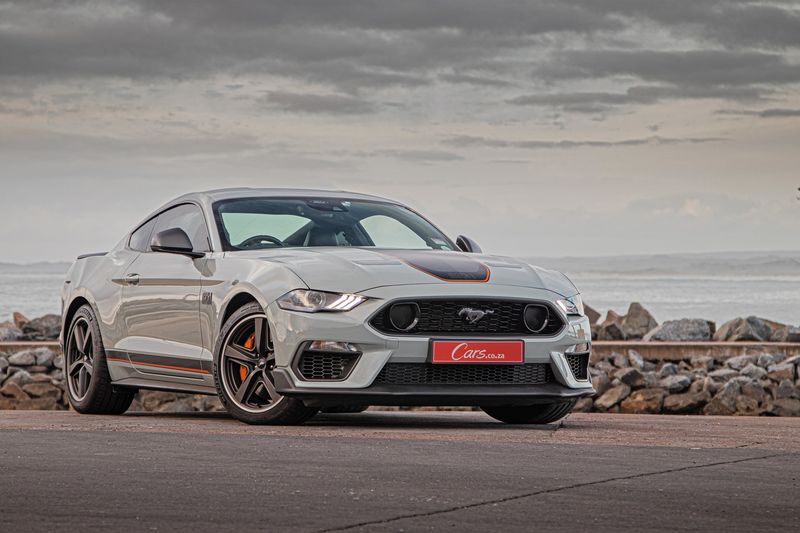
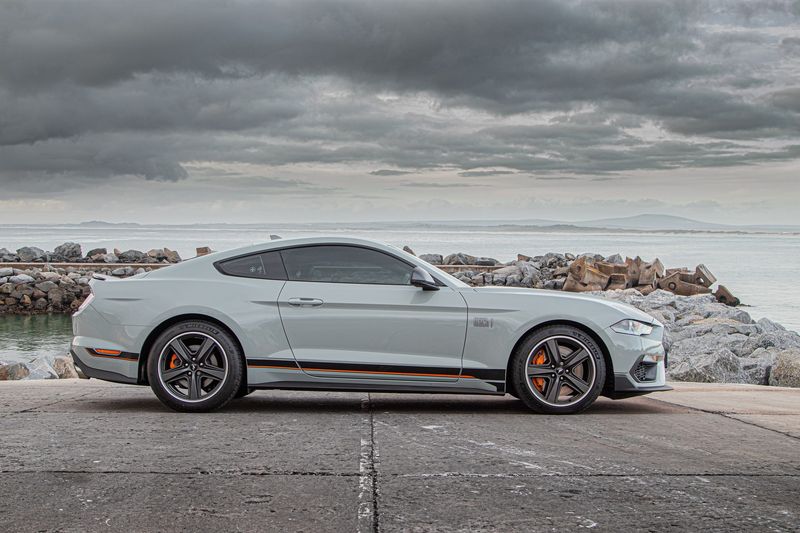
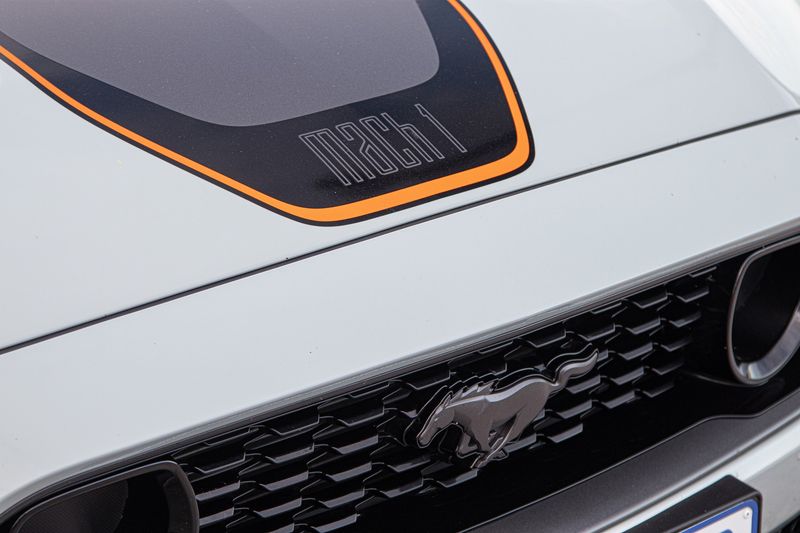
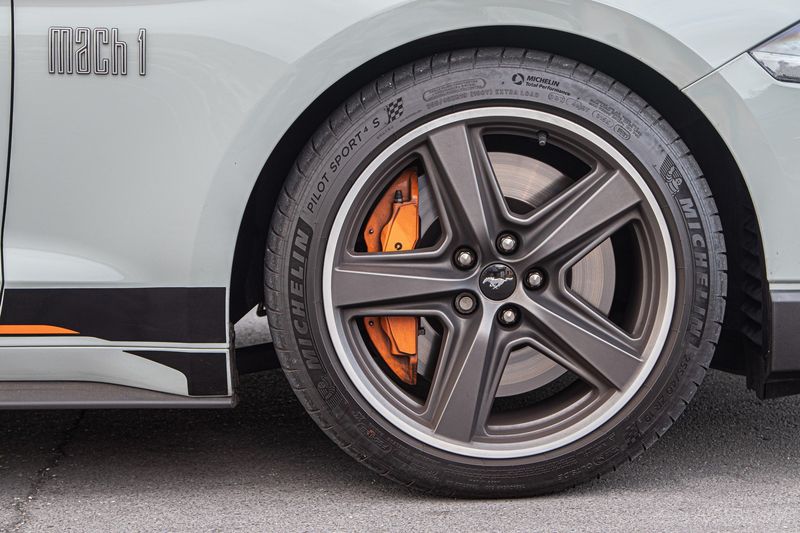
While the Mach 1 retains all the traditional Mustang styling cues, such as an excessive number of pony logos, a long, sloping bonnet, a gaping grille and large-bore exhaust ends, it features a number of unique details that set it apart. For starters, there’s that colour. While some markets gave customers a choice, the SA-spec Mustang Mach 1 is only available in metallic Fighter Jet grey, with black and orange detailing. There’s a fantastic bonnet stripe, stripes down the flanks, a unique grille and orange brake callipers. There are plenty of Mach 1 badges too; they remind you this is no ordinary ‘Stang.
Mach 1 and Mustang badges abound.
The notion that the Mustang is nothing more than a loud and unsophisticated brute that can’t corner confidently has well and truly been dispelled. Even in standard trim, the Mustang GT offers some driving thrills, but this car ups the ante. The Mach 1 stirs the senses liberally, which means that even if you’re not a self-styled performance-driving fundi, you can still appreciate the Mach 1 for what it is.
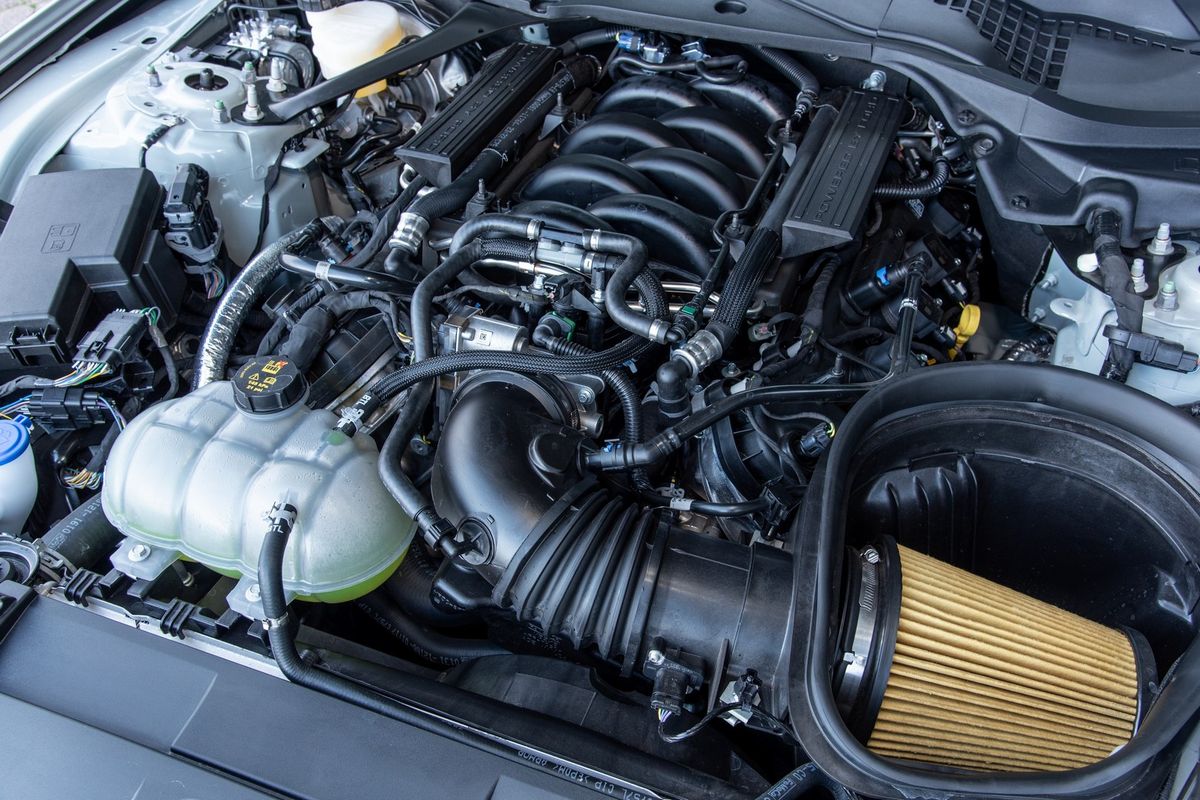
Stab the start button and the 5.0-litre V8 fires to life. It’s magically old-school (no fancy turbocharging here) and the noise it emits is, well, epic. Granted, Ford does offer a trick exhaust that opens and closes flaps based on the drive mode you’ve selected – there’s even a Good Neighbour Mode that’ll ensure your local Karen won’t clutch her pearls and phone the chairman of the body corporate every morning.
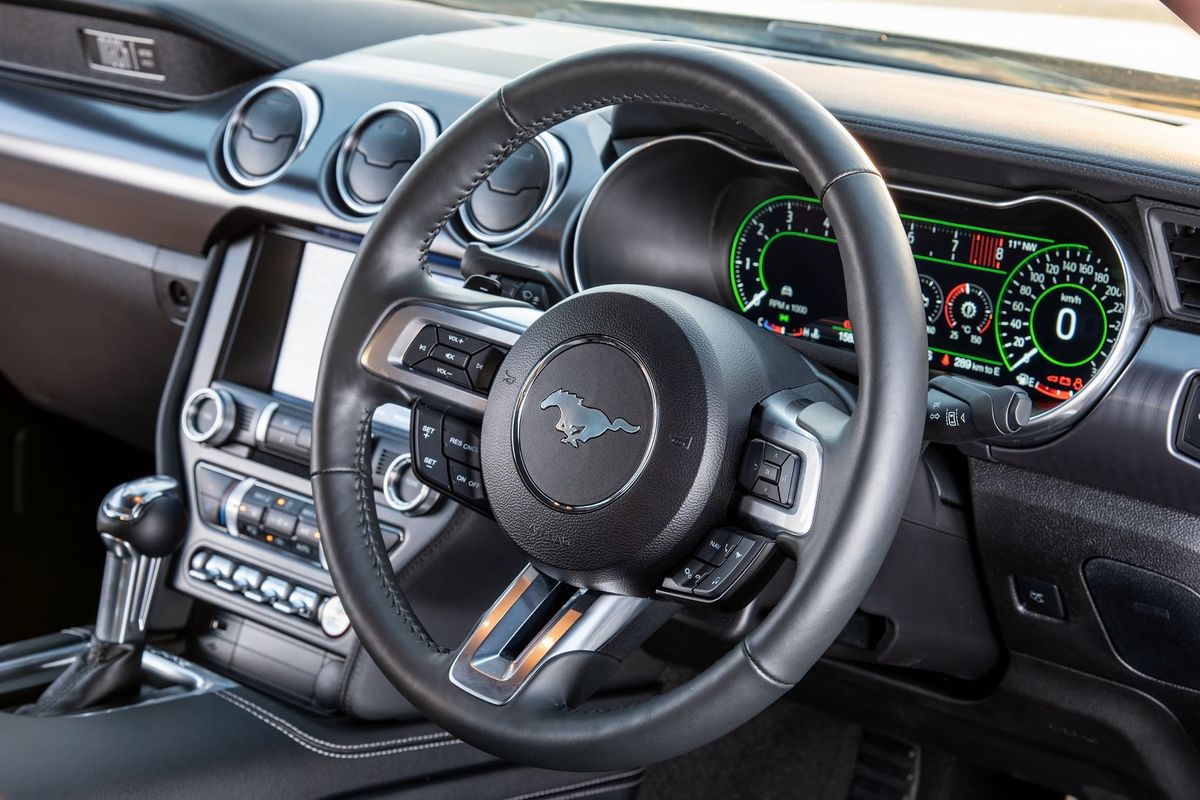
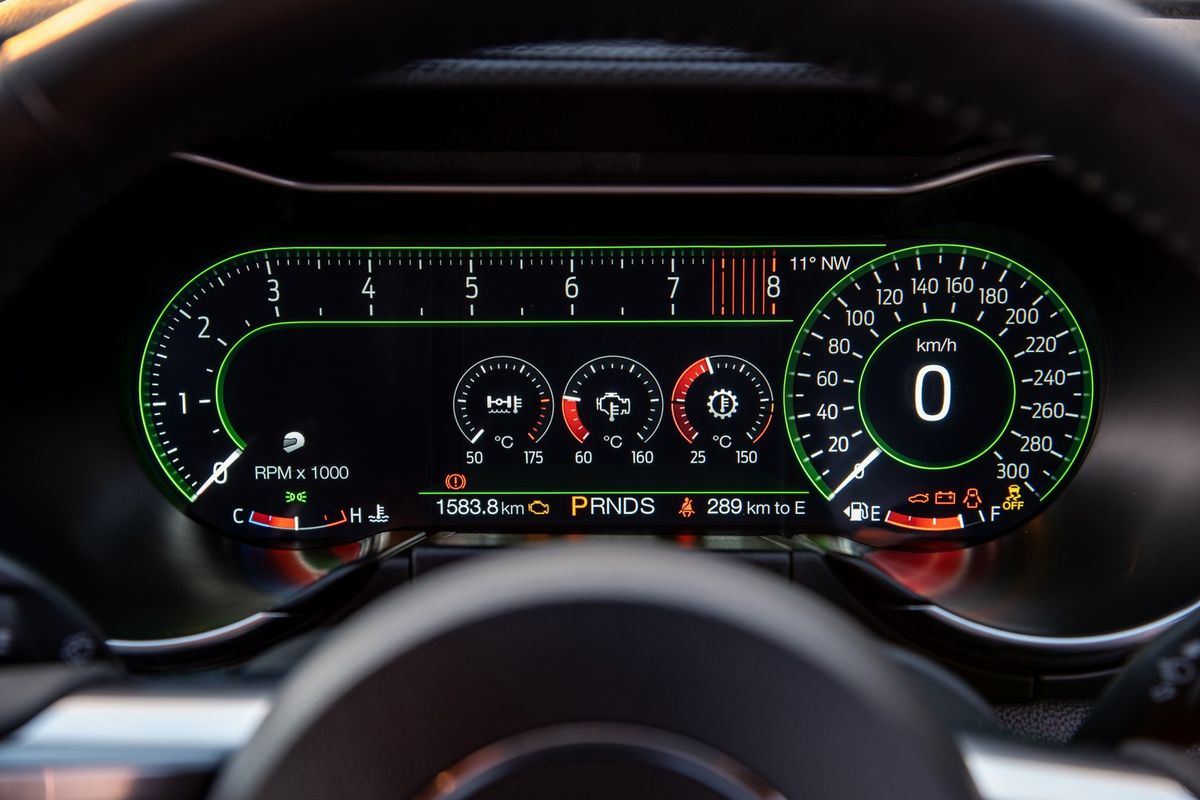
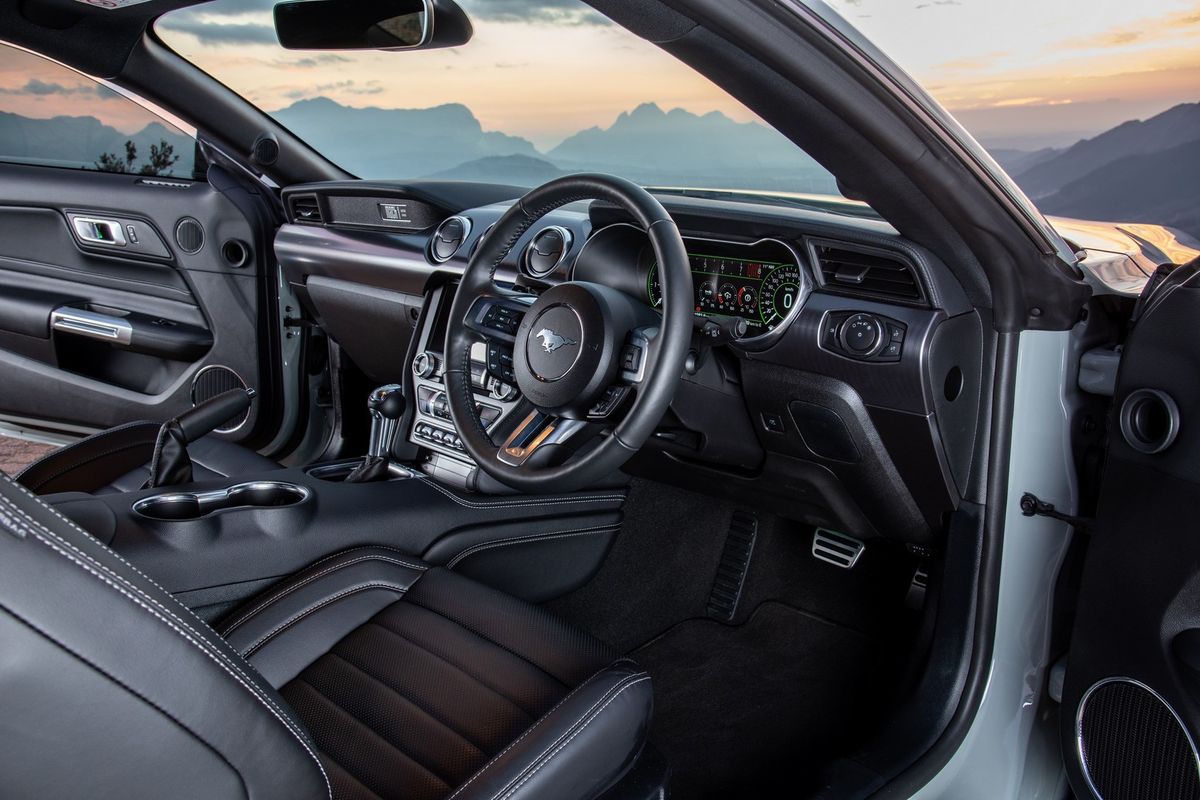
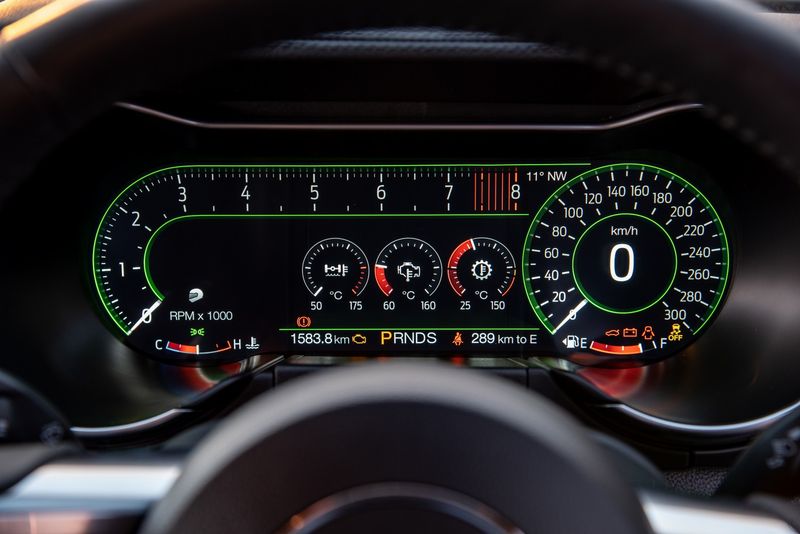
With the weatherman forecasting 2 days of sunshine followed by rain, we hit the road. While the car’s power delivery is old-school, the cabin is quite the opposite. The digital dashboard is a masterpiece –it’s capable of displaying every piece of info you’d ever need in a multitude of ways and colours. Info overload? Coming right up. Want a minimalist setup instead? It’s just a few button-pushes away.
One of the many digital dashboard views.
There are multiple drive modes on offer that change the nature of the engine response, suspension setup, steering wheel feel and exhaust note. You can also choose between drag-strip-, wet weather- and burnout modes, the latter of which lets you generate expensive plumes of smoke as you incinerate perfectly good Michelins. You’ll do one burnout just to try it, then cry when you need to replace the boots.
Ford never skimps on features in the Mustang and, given that this is the flagship version, plenty of gadgets and gizmos are fitted. The driver and passenger leather seats are both heated and cooled, there’s a great Bang & Olufsen sound system (in case you ever get tired of listening to THAT V8), as well as a fancy infotainment system that allows for hands-free connectivity, to name but a few goodies.
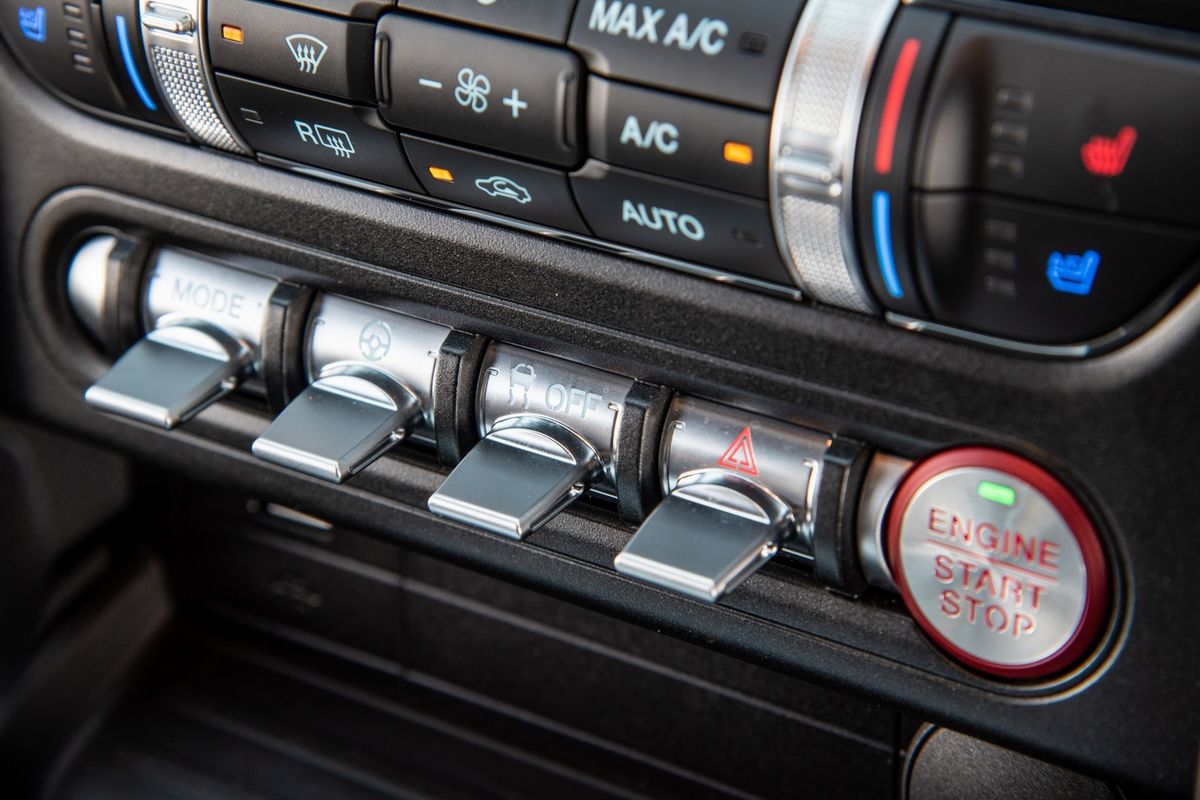
While these toys are nice-to-have features, the manner in which they’re executed and applied is another story. Yes, I loved the old-school style switches, but they feel extremely fragile. Closer inspection showed some poorly finished trim on the inside of the boot, while some of the interior panels felt a bit, um, rudimentary. They’d be perfectly fine in a Fiesta or a Ranger, but a flagship Mustang? No.
These look old-school-looking switches feel great, but feel fragile.
Having said that, my irritation with the cheap-feeling plastics was quickly forgotten the moment I stabbed the start button and the V8 fired up (click here to have a listen). I’d carefully engaged Sport+ mode before the engine cranked over (so as to ensure that the Mach 1 would be starting cold with its quartet of exhaust ends well and truly open).
The sound of a Mustang Mach 1’s V8 idling is the audio equivalent of sinking into a hot bath. It’s not as outrageous as those cacophonies generated by the forced-induction V8s in the BMW M5 Competition or the Jaguar F-Pace SVR, for example, but it offers plenty of warmth and soul. Ford claims the Mustang Mach 1 serves up 338 kW and 529 Nm, which is a touch more than the standard GT musters.
Customers had the option of either a 10-speed automatic or a 6-speed manual gearbox, the former being the more logical and sensible choice. If you are a purist and want the “real deal muscle-car experience”, then seek out Mach 1 with a manual gearbox, but don’t complain when you’re left with a left calf muscle that’s double the size of your right.
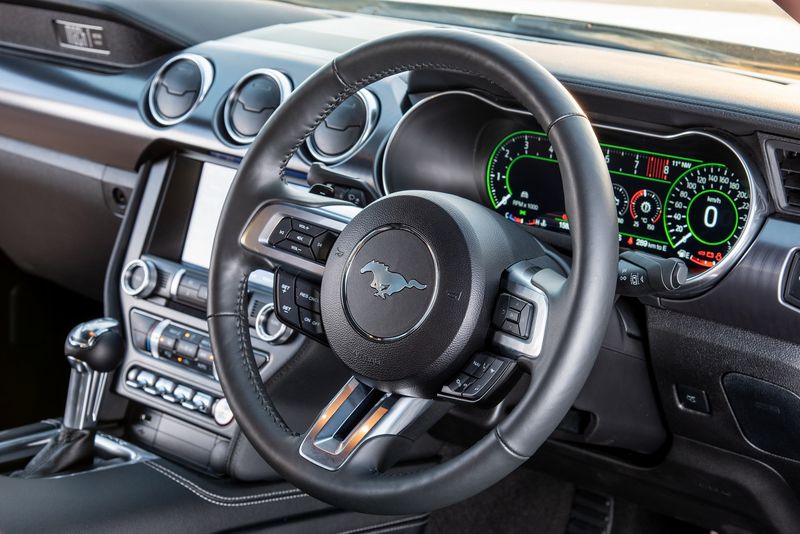
The award for most buttons on a steering wheel goes to the Mustang.
Now, while the automatic transmission is the sensible choice, it’s not necessarily the best ‘box. Perhaps I’ve been spoilt by the quick-shifting decisive autos found in German products, but this 10-speed unit feels lethargic, which blunts the overall driving experience. Things improve if you take over and make extensive use of the steering wheel gearshift paddles, but I feel there are just too many gears in there.
When you cruise up to a slower vehicle on a national road, for example, and want to execute a quick overtaking manoeuvre, you have to be mindful when you’re driving in manual-shift mode and (probably) in 10th (top) gear. When you depress the accelerator pedal… nothing much happens. Pull the left shift paddle (to shift down to 9th) and, again, the powertrain doesn’t react with much urgency. If you change down once more, more vigorous acceleration will ensue, but if you try to force snap downshifts, the ‘box will hesitate – it’s just something you have to be aware of. Upshifts, thankfully, are much snappier.
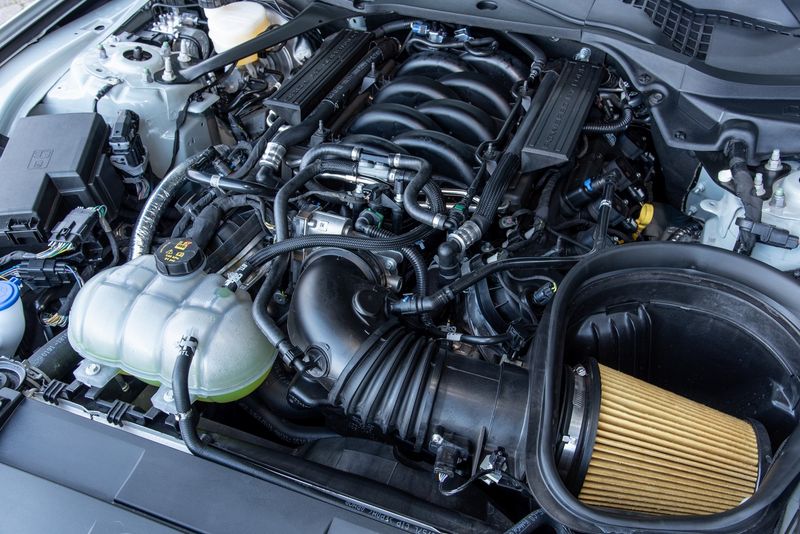
The 5.0-litre Coyote V8 generates a soulful soundtrack.
When I really wanted to put the Mach 1 through its paces, I enjoyed changing gears early and getting the Mustang into its 3rd and 4th ratios, after which I could relish fully “opening that throttle” to utilise all of the wonderfully rev-happy V8’s flexibility. There’s no lag here, just pure clean power delivery all the way to just over 7 000 rpm. Suffice to say the Ford feels as eager as its claimed 0-100 kph of 4.4 sec suggests. The noise is a delicious blend of engine induction snarl and exhaust thunder – it’s a beautiful aural tribute to the burning of fossil fuel. Enjoy it while it lasts, folks, cars like this are on death row.
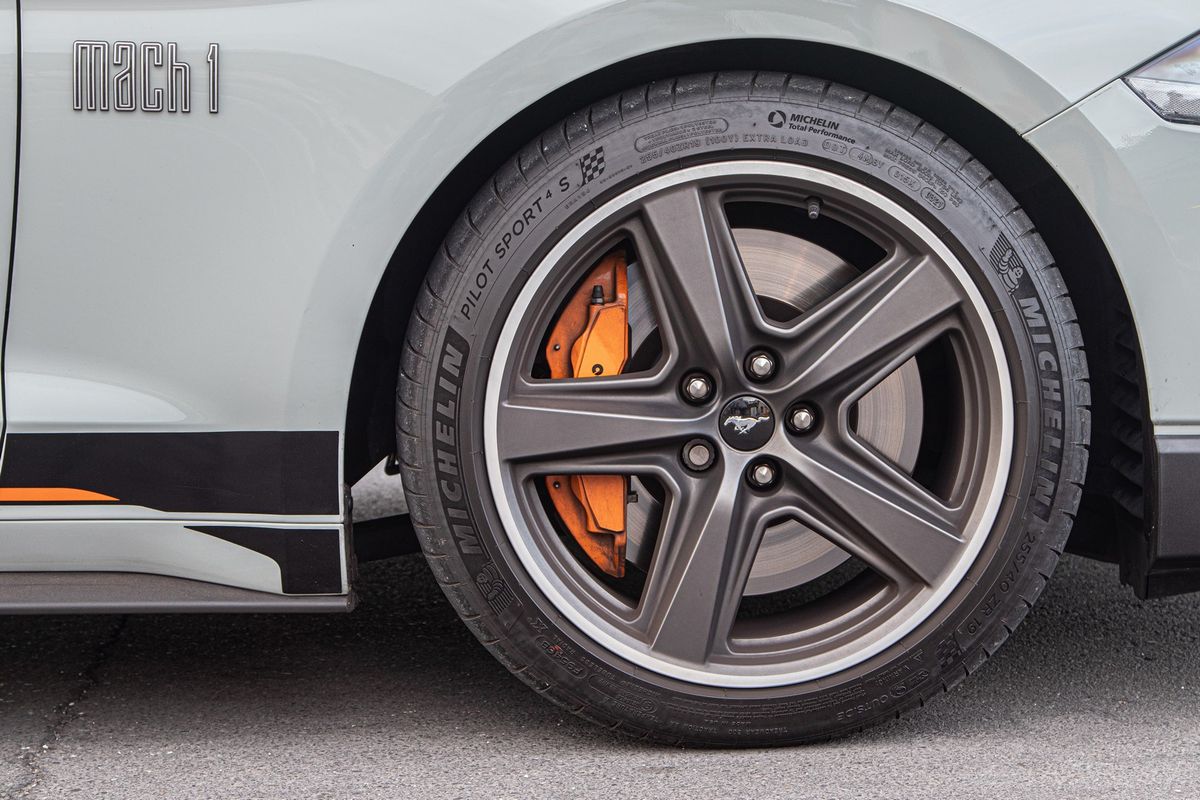
The Mach 1 is quick enough on the straights, but what about those purported handling upgrades? This limited-edition derivative gets a bespoke power-steering setup and a MagneRide adjustable suspension tune, as well as stiffer front springs, plus there are extensive parts lifted straight from the Shelby GT350. Finally, excellent Michelin Pilot Sport 4s are on duty at each corner of the car.
Brembo brakes and Michelin Pilot Sport tyres are a winning combination.
Do the performance-spec tyres make a difference? Yes, and how. What’s more, the Mach 1 feels more planted and stable on the road; it rolls less in corners and there’s a bit more in the way of driver engagement (a measure of feedback of what the front wheels are up to) through the steering wheel. There’s still that lumbering big-car feel, however, which can be a bit disconcerting as you charge from corner to corner. A glance at the specs suggests the Mustang “likes the burgers”; it weighs 1 832 kg, which is 337 kg heavier than a Toyota Supra. Thankfully, the massive Brembo brakes are excellent.
While the car’s skillset has been honed and refined, it’s still capable of getting up to all kinds of shenanigans – in other words, the rear end will step out if you provoke – or overcook – it. I’d also say that the reworked MagneRide suspension worked wonders – not only did the Mustang handle more sharply, but its legendary ride comfort did not suffer as a consequence.
With everything dialled back into Comfort mode, the Mustang Mach 1 can soak up most bumps and ruts, and it makes for an eminently competent cruiser. Mind you, the standard GT Fastback can offer you 80% of the abilities of the Mach 1, but it’s neither as loud – nor as exclusive – as this car.
One of the coolest cars. Get one while you can.
Summary
If you’re shopping for a sportscar that costs just over R1 million, there are myriad excellent coupes to choose from. If you include low-mileage used cars in your search, you could even get into an exotic, such as a Porsche. A Cayman sounds tempting – doesn’t it? – but no one will look at you twice as you cruise into Camps Bay on a Sunday. The Mustang Mach 1, by contrast, will draw plenty of attention.
The Mach 1 completely dispels the notion that American muscle cars are nothing more than bloated straight-line performance machines. It incorporates commendable handling enhancements and, in my humble opinion, is the most engaging and focused “pony car” available in the Republic.
So, should you buy one? Well, here’s the kicker. Even if you wanted to acquire a new Mach 1, you can’t – Ford Motor Company of Southern Africa says that its entire allocation (90 new units) is already spoken for. However, a quick glance at Cars.co.za listings at the time of writing shows a handful of Mustang Mach 1s, Bullitts and an assortment of hardcore Shelby and Roush variants are for sale.
If you’re prepared to do your research and spend time to find a clean example of a Mustang that would suit your needs and personality, we feel that you could get your hands on a very special performance offering that will turn heads quite unlike anything else. Of the current prices are anything to go by, the Mach 1 is destined to become a future classic. Start your search for a Mustang here. You’re welcome.
Audi brings 150kW charging to SA
Audi adding many more chargers – for all to use.
Electric cars have arrived in South Africa. Finally. But charging infrastructure remains a problem.
And as the electric vehicle fleet grows, a lagging charging infrastructure could trigger ownership frustration. Not the kind of frustration any brand wants with the calibre of customers able to afford any of the current electric vehicles – all of which, are rather expensive.
More charging stations, with greater potency, are crucial in absorbing the demand from new electric vehicle owners in South Africa. Customers don’t want to wait an unreasonable time to recharge, and with most local electric vehicle sales being luxury cars with large batteries, high-capacity chargers are necessary regarding convenience.
Four of the 33 new chargers in this project between Audi and GridCars will be of the 150 kW configuration. And all the chargers will be open for multi-brand vehicle use.
Although the final locations are unconfirmed, the four 150 kW units will be placed along highway routes. A 150 kW charger can replenish approximately 340 km of battery range in only half an hour.
To support these four high-capacity 150 kW chargers, there will also be five 80 kW stations, strategically placed on the country’s most used highway routes. GridCars and Audi have not confirmed the location of four of those five, but we do know that one will be at Richmond, on the N1 between Johannesburg and Cape Town.
In half an hour, the 80 kW chargers have adequate energy flow to add 185 km of driving range to an electric vehicle.
For those electric vehicle owners who are more concerned about commuting convenience than inter-provincial travel, Audi will be adding 24 charging stations of 22 kW capacity. Again, exact locations are not detailed, but Audi does say they will be placed at ‘public lifestyle and recreational venues across the country’.
The 22 kW charging adds 100 km of range, in an hour. This makes sense if those drivers visiting a lifestyle venue are going there for a specific activity or eating experience, which is nearly always more than an hour in duration.
There will be just 12 examples of the BMW M760Li Final V12. Is this the end of the V12 petrol engine?
We’re sceptical as we’ve reported the demise of the V12 petrol engine for BMW and Mercedes-Benz for quite some time and every time we hear that the engine is finished, along comes a new model.
BMW USA is producing 12 of these 7 Series limousines and they’ll be fitted with unique badges, colours and wheels. The lucky owners will be able to customise to their heart’s content and can choose from any BMW Individual paint for their V12.
The cabin will feature a special plaque with “1 of 12” and the engine cover will feature ‘The final V12’. Speaking of engine, we’re going to miss that 6.6-litre V12 with twin turbochargers. Producing 430 kW and 850 Nm, the BMW M760Li V12 was good for a 0-100 kph of just 3.8 seconds – not bad for a 2.3 ton limousine. Some markets even got a 448 kW model, which shaved the 0-100 kph down to 3.6 seconds.
Given that this is a special edition of a flagship model, the standard list of equipment is all-encompassing with every conceivable feature as standard. BMW’s Driving Assistance Professional Package is standard, as is the Luxury Rear Seating Package. There’s a panoramic LED roof, adaptive Laserlight headlights and a Bowers & Wilkins sound system.
Customers will also get a special trophy that celebrates their vehicle and BMW says it will not be selling openly, but rather seek out the clients who have a track record of purchasing V12 BMWs.
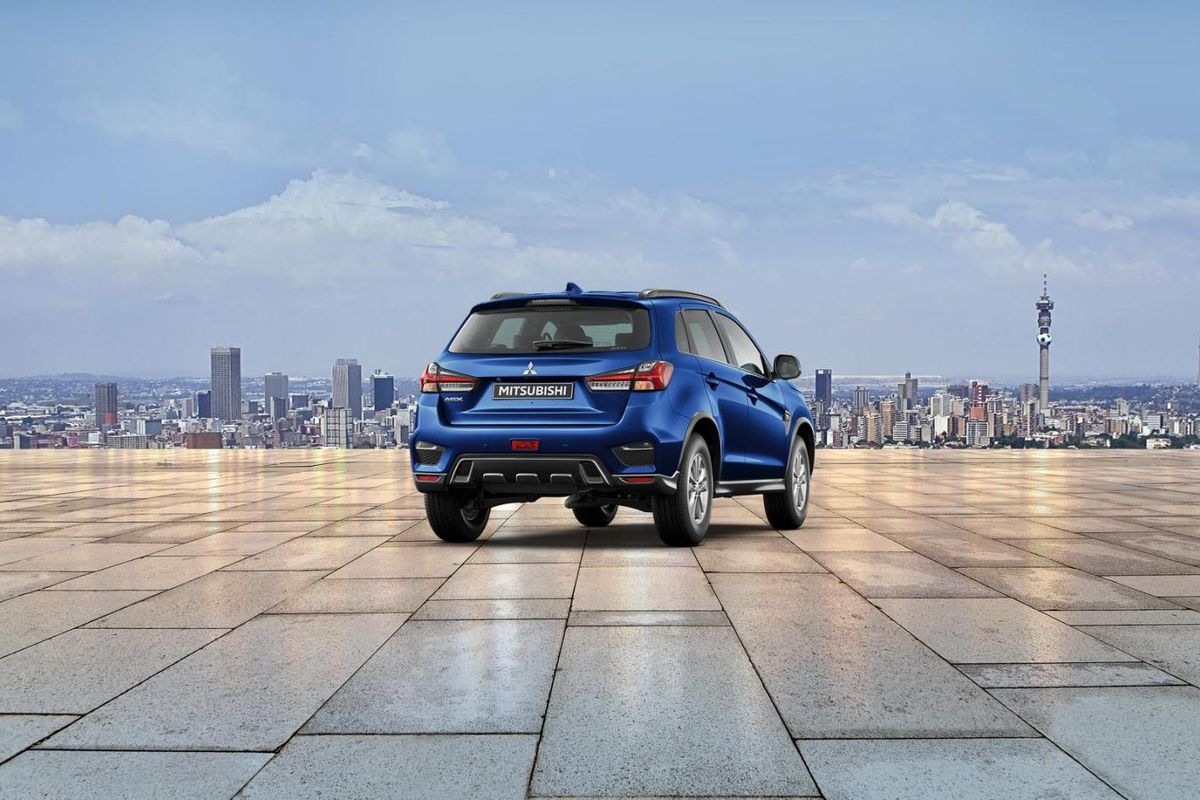
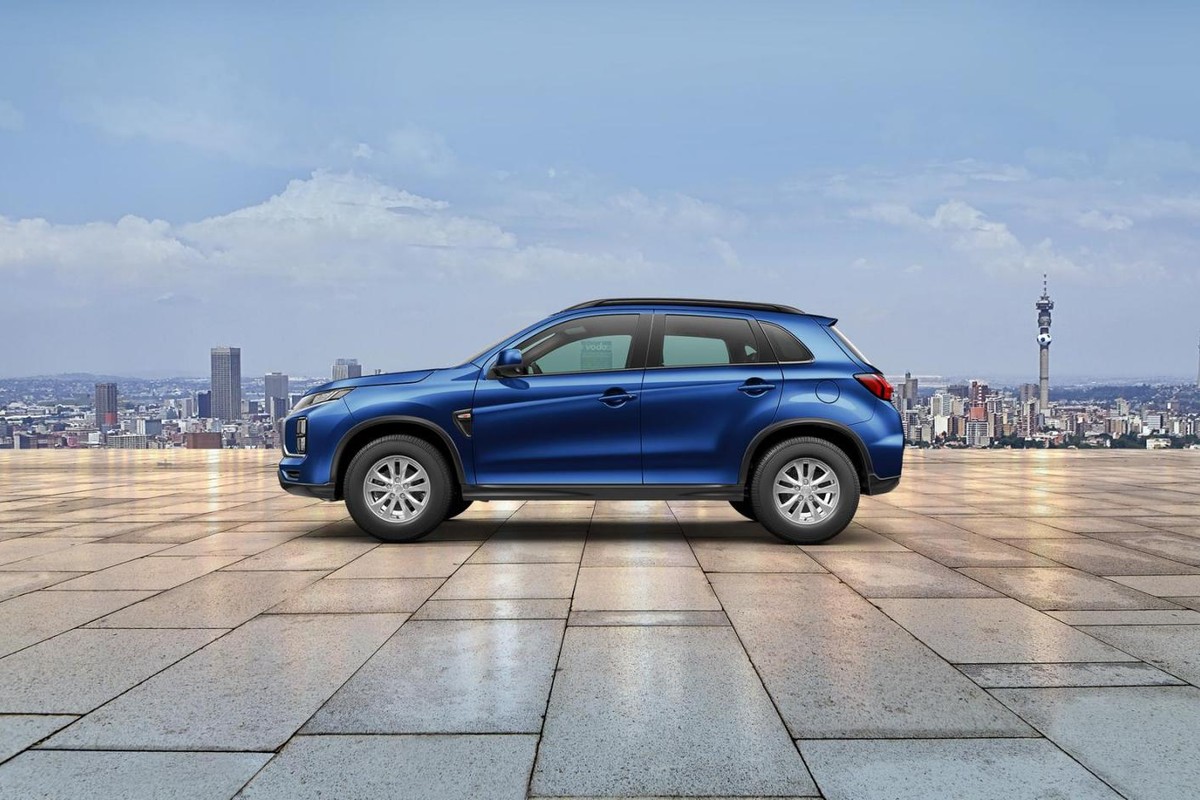
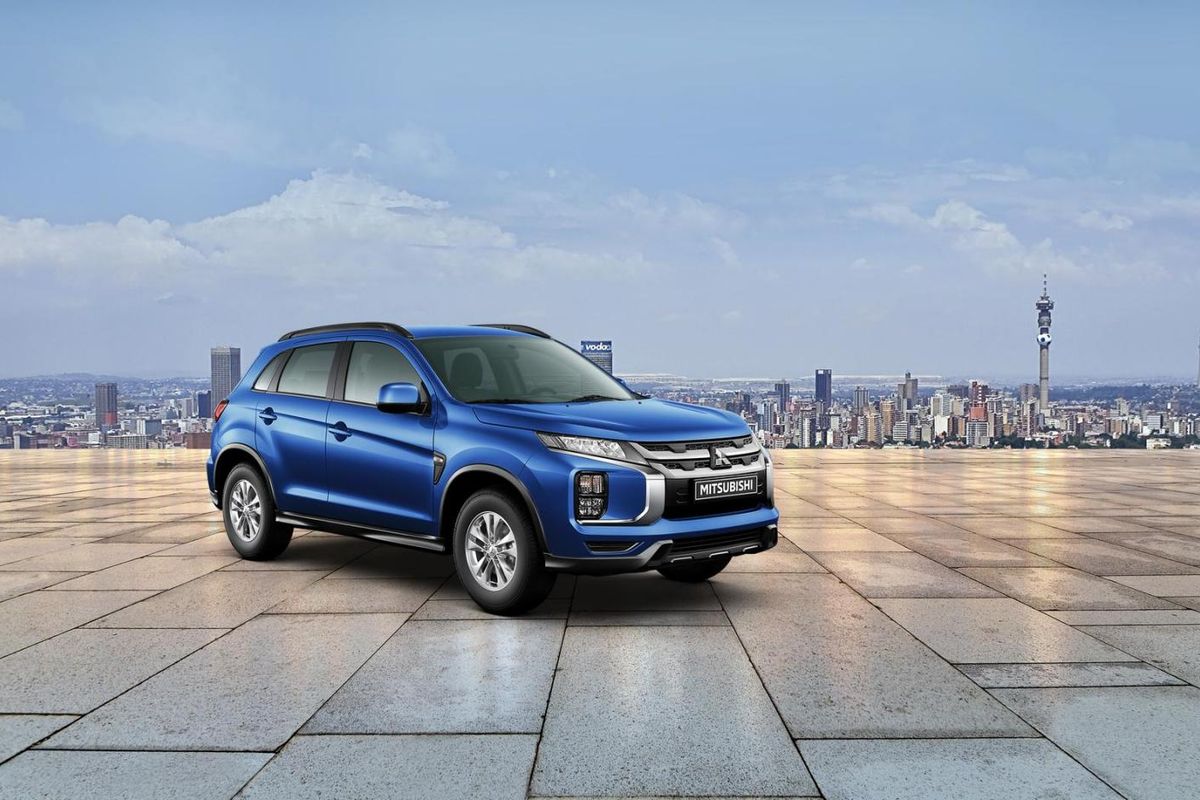
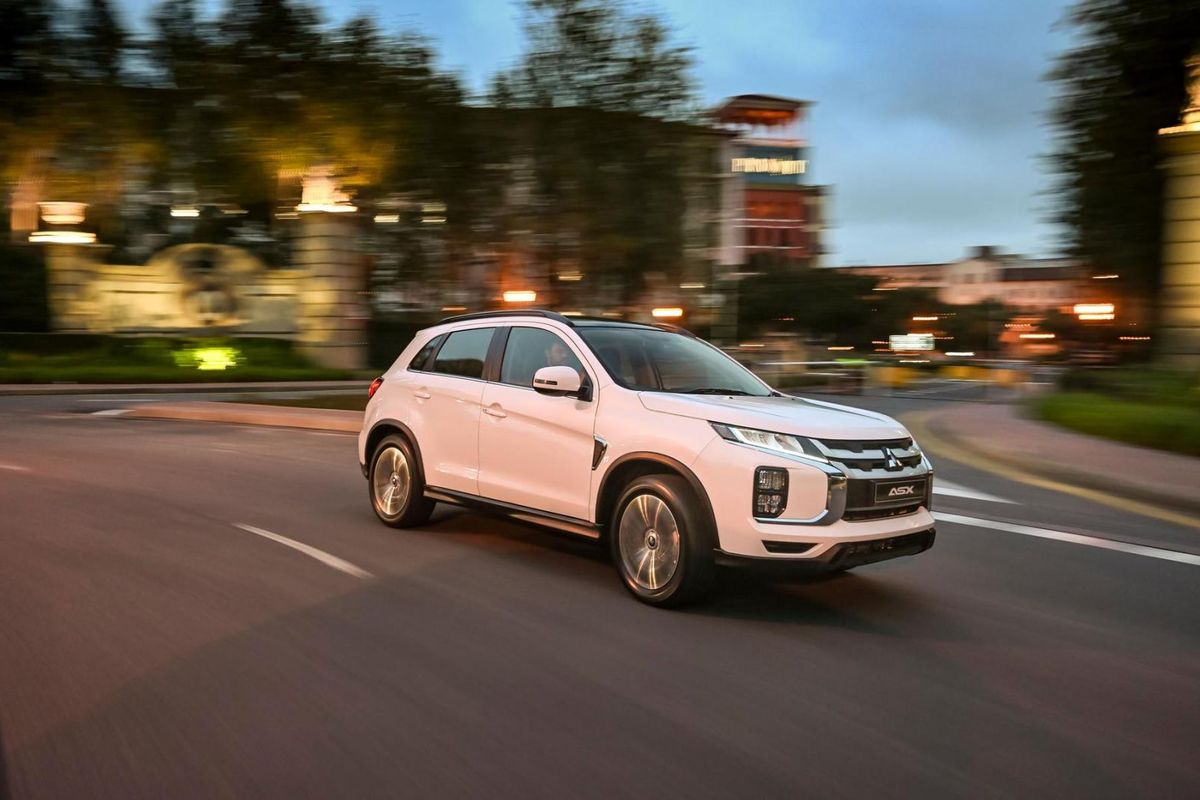
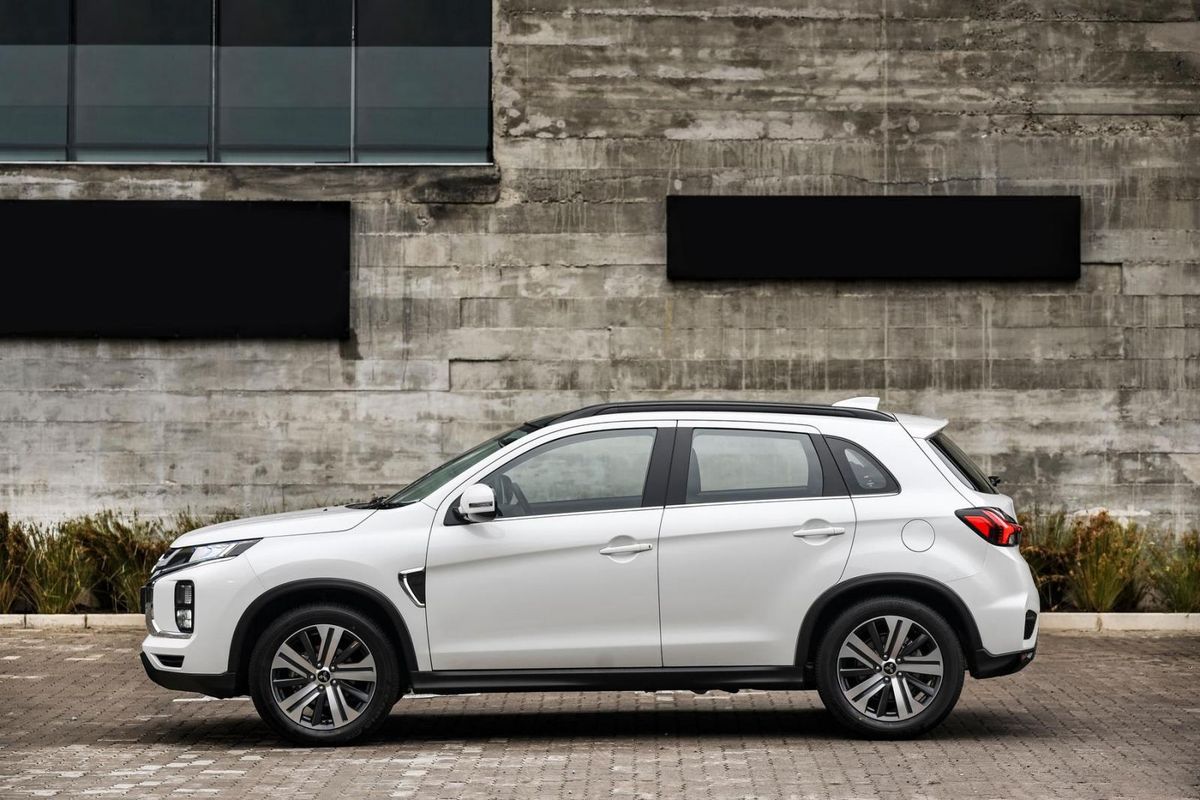
Mitsubishi South Africa has updated its local ASX compact SUV range with the addition of a new entry-level ES derivative with a focus on value. See pricing and specification details below!
The ASX has been around since 2011 and has since found more than 9 300 homes in South Africa making it the most popular model in Mitsubishi’s local stable. The ASX has also undergone numerous updates in the last decade but this latest update adds an entry-level ES specification to the range which slots in below the existing ASX offering which is now known as the LS specification.
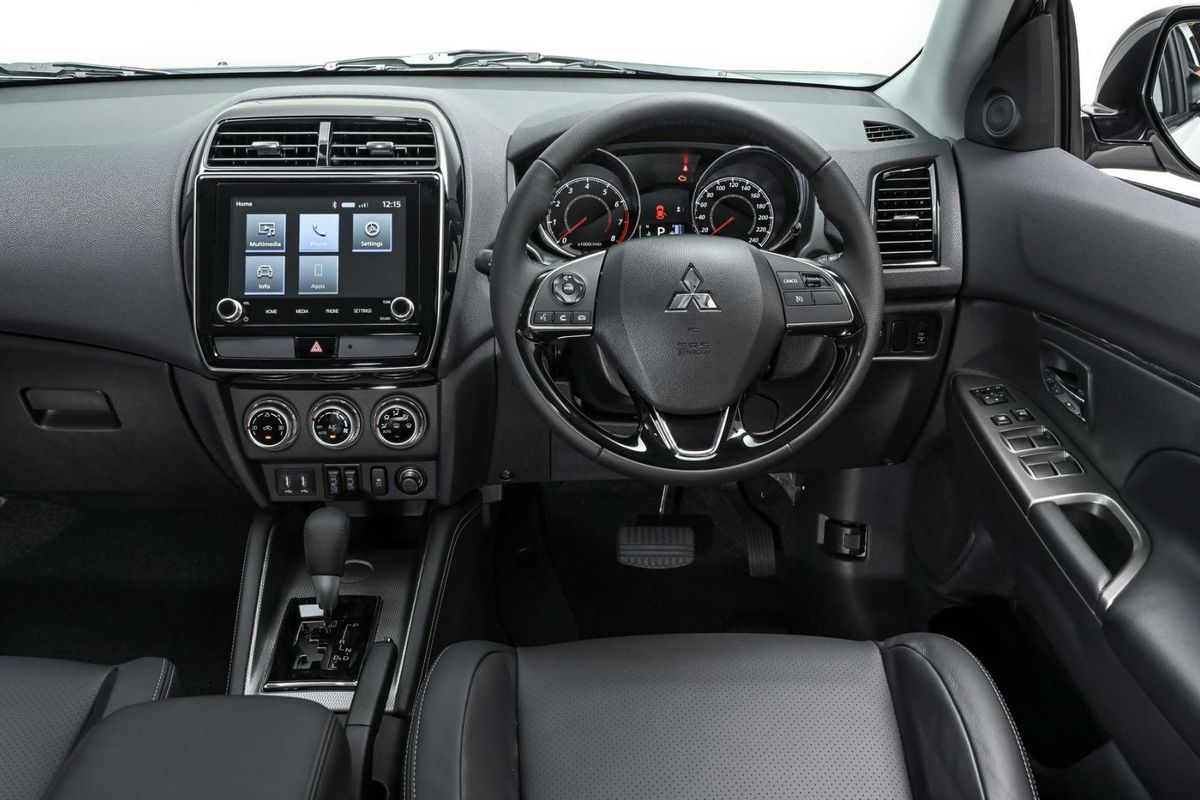
Key specification features for the new ASX ES derivatives include LED headlights and taillights as well as LED Daytime Running Lights (DRLs), keyless entry, electric windows, fabric upholstery, manual air conditioning, cruise control, radio/CD player, USB connectivity as well as Bluetooth and voice control. Customers can also have a touchscreen infotainment system fitted as an option that offers Android Auto and Apple CarPlay functionality.
As far as practicality is concerned, the ASX offers 406 litres of load space and the rear seats can fold in a 60:40 split to increase loading space to a claimed 1 206 litres.
The Mitsubishi ASX is powered by the familiar naturally-aspirated 2.0-litre petrol engine with 110 kW and 197 Nm. Buyers can choose between a 5-speed manual or CVT for ES and LS specifications. For those who will be towing, the ASX has a maximum braked tow limit of 1.260 kg for the manual transmission and 750 kg braked capacity for the CVT derivatives.
Safety features include rear park distance control, hill start assist, electronic stability control with traction control and ABS with EBD and up to 7 airbags (3 in ES derivatives).
Local buyers can also expect to see a limited edition ASX Aspire come to market at the end of March 2022 boasting visual and technological enhancements.
How much does the Mitsubishi ASX cost in South Africa?
ASX 2.0 ES Manual – R369 995
ASX 2.0 ES CVT – R389 995
ASX 2.0 LS Manual – R419 995
ASX 2.0 LS CVT – R439 995
The Mitsubishi ASX is sold with a 3-year/100 000km warranty, 3-year/60 000km service plan and a 3-year/unlimited mileage roadside assistance.
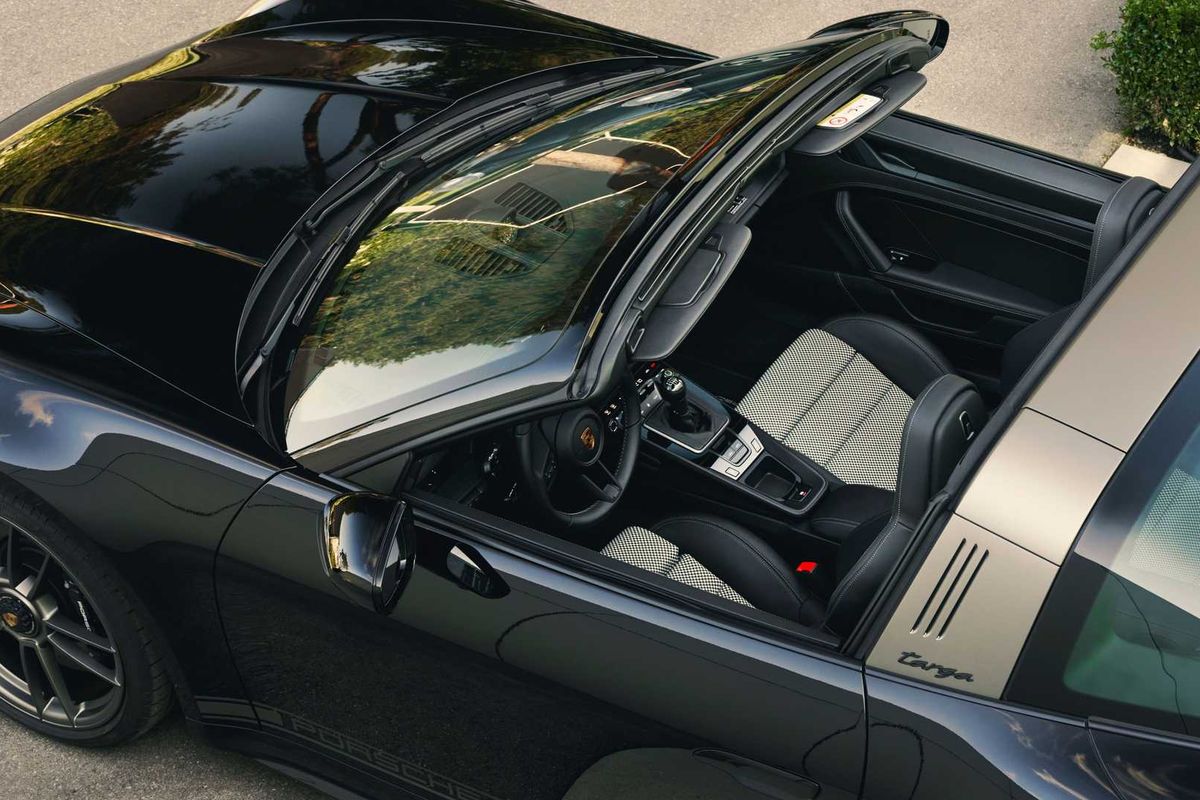
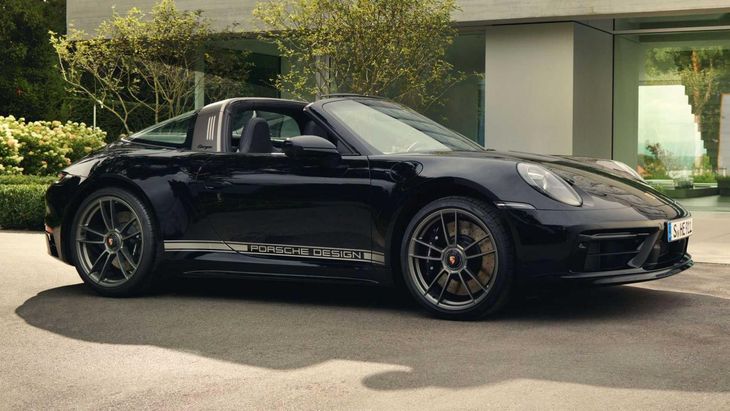
Porsche 911 Edition 50Y Porsche Design – Price for SA
Porsche Design, the Stuttgart firm’s lifestyle brand, is marking its 50th Anniversary this year and to celebrate, a very special and rare Porsche 911 Edition 50Y Porsche Design is being offered to customers, including South Africa.
Keen to own a rare Porsche 911 Edition 50Y Porsche Design? Well, you’d better make your intentions known as only 750 units will be built for customers worldwide.
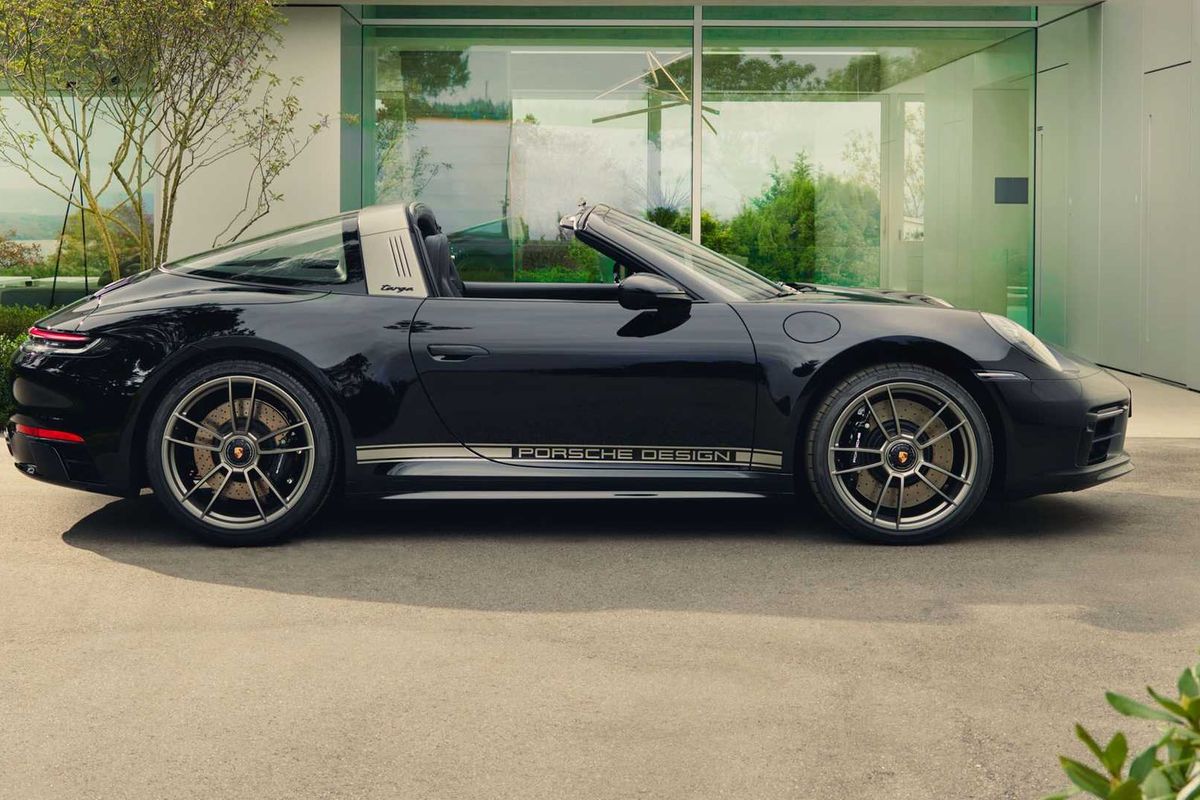
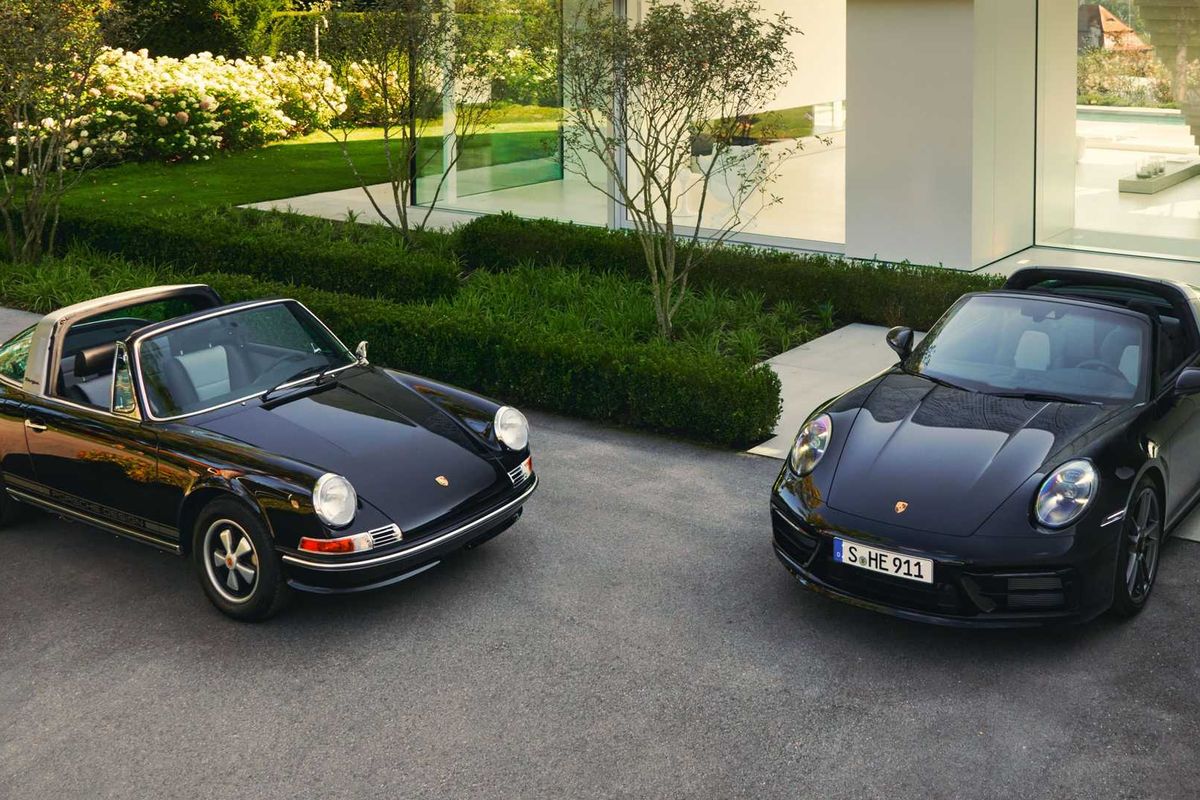
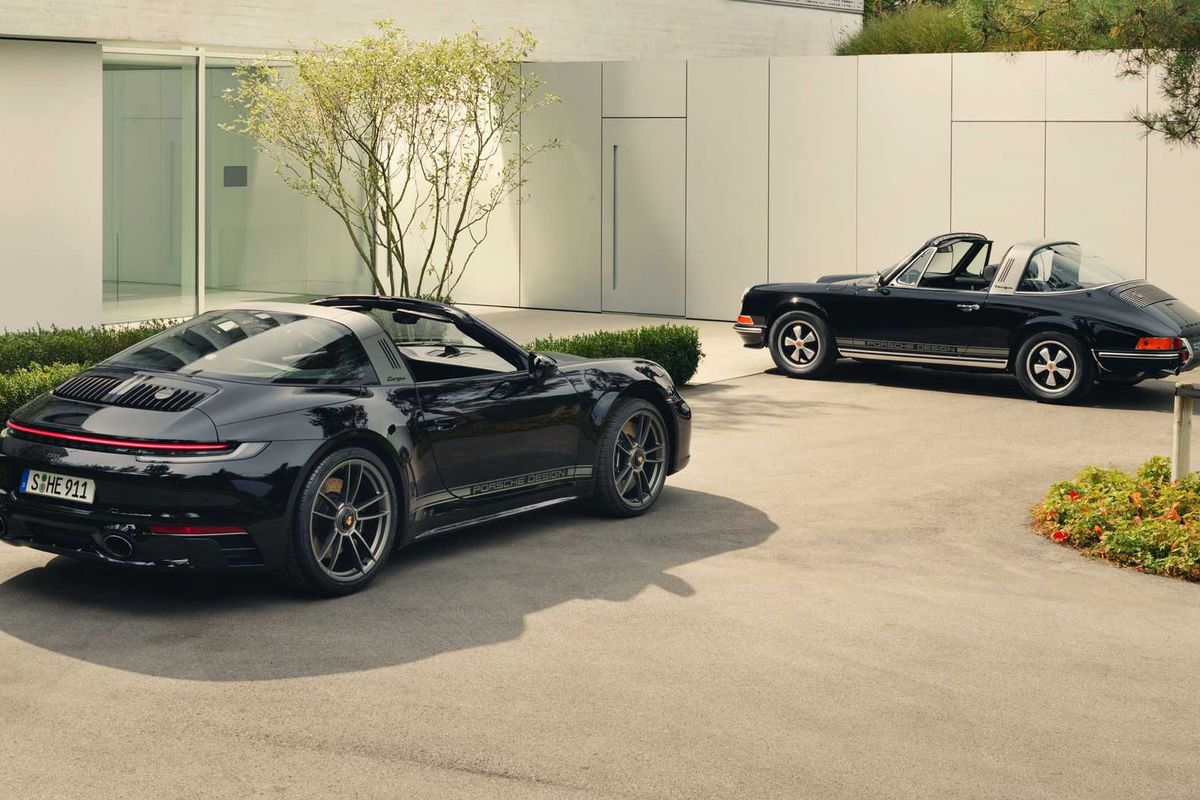
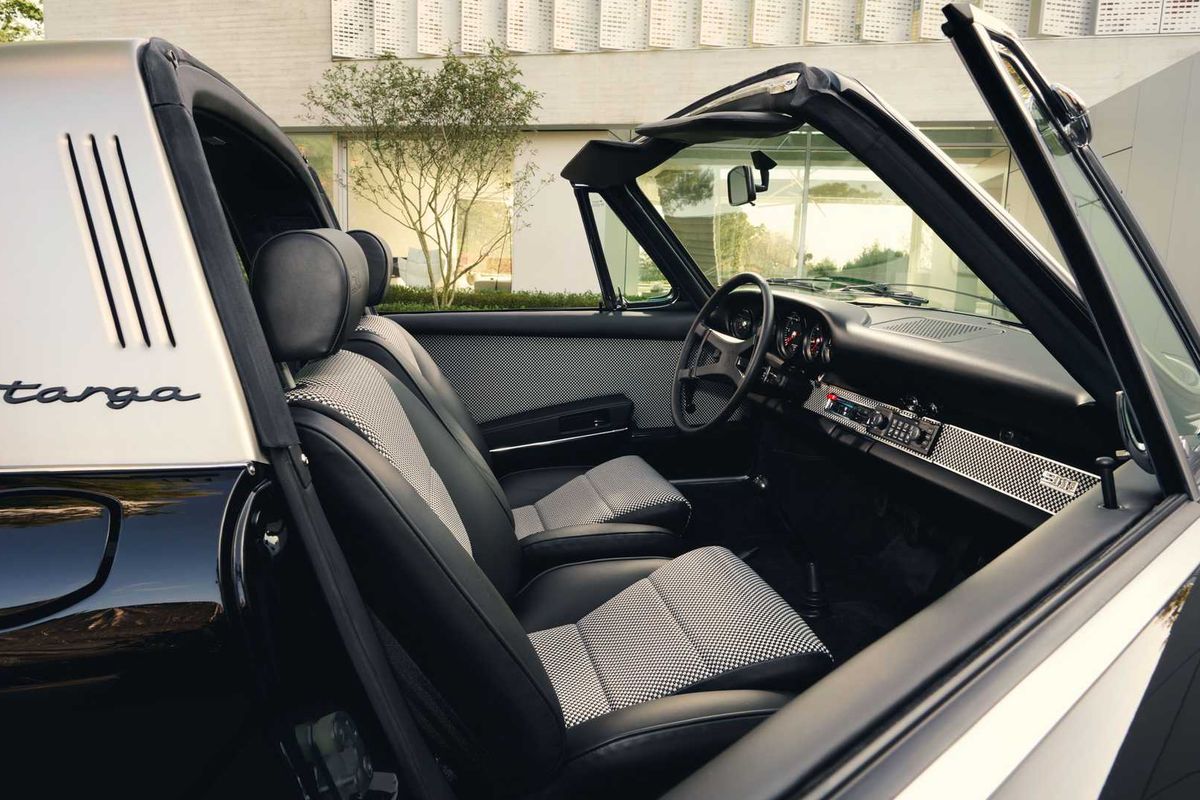
The Porsche 911 Targa 4 GTS serves as the base for this creation and draws inspiration from the 1972 Porsche 911 S 2.4 Targa (restored by Porsche Classic), the same year Porsche Design was established.
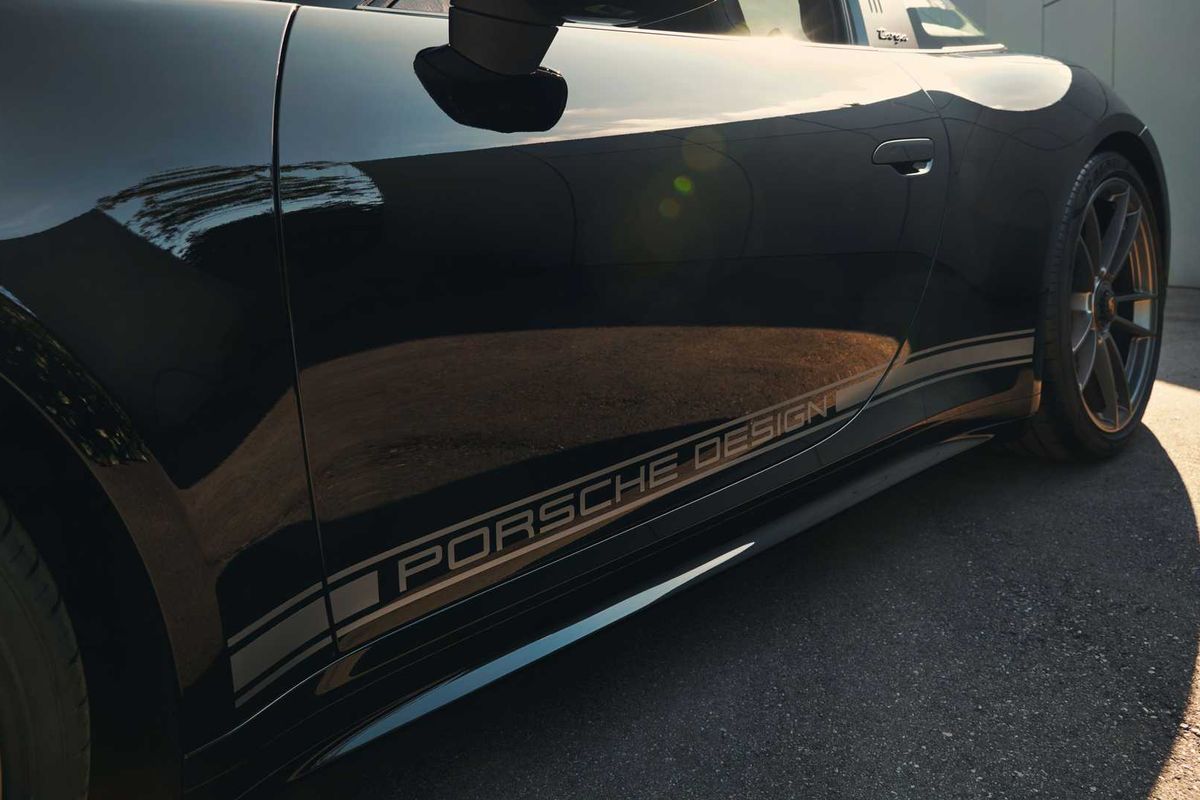
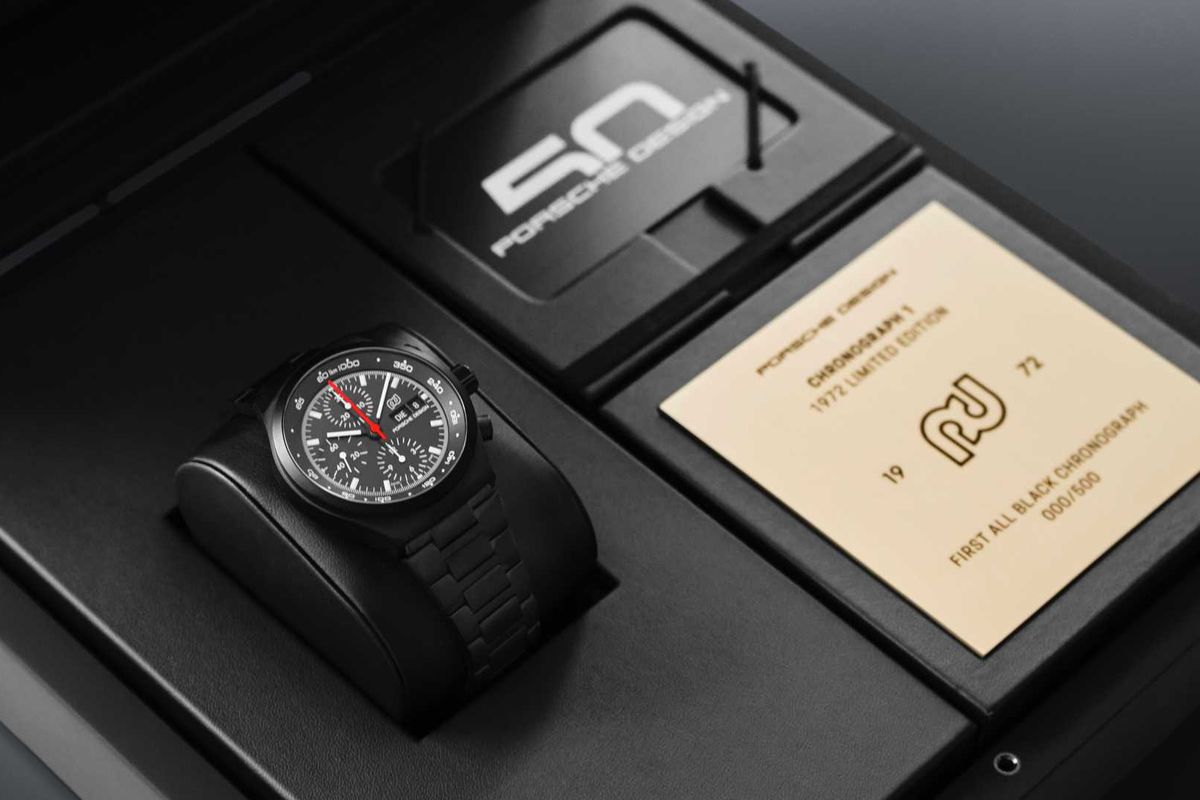
More so, the 2 cars share the same colour scheme based on the legendary Chronograph 1 watch designed by Professor Ferdinand Alexander Porsche in 1972. The interior and exterior is therefore dominated by a black colour scheme.
Only 750 units of this Porsche 911 Edition 50 Years Porsche Design will be produced worldwide.
The Porsche 911 Edition 50Y Porsche Design features a Satin Platinum Targa bar and Porsche Design logos and badging makes it clear that is no ordinary 911 Targa.
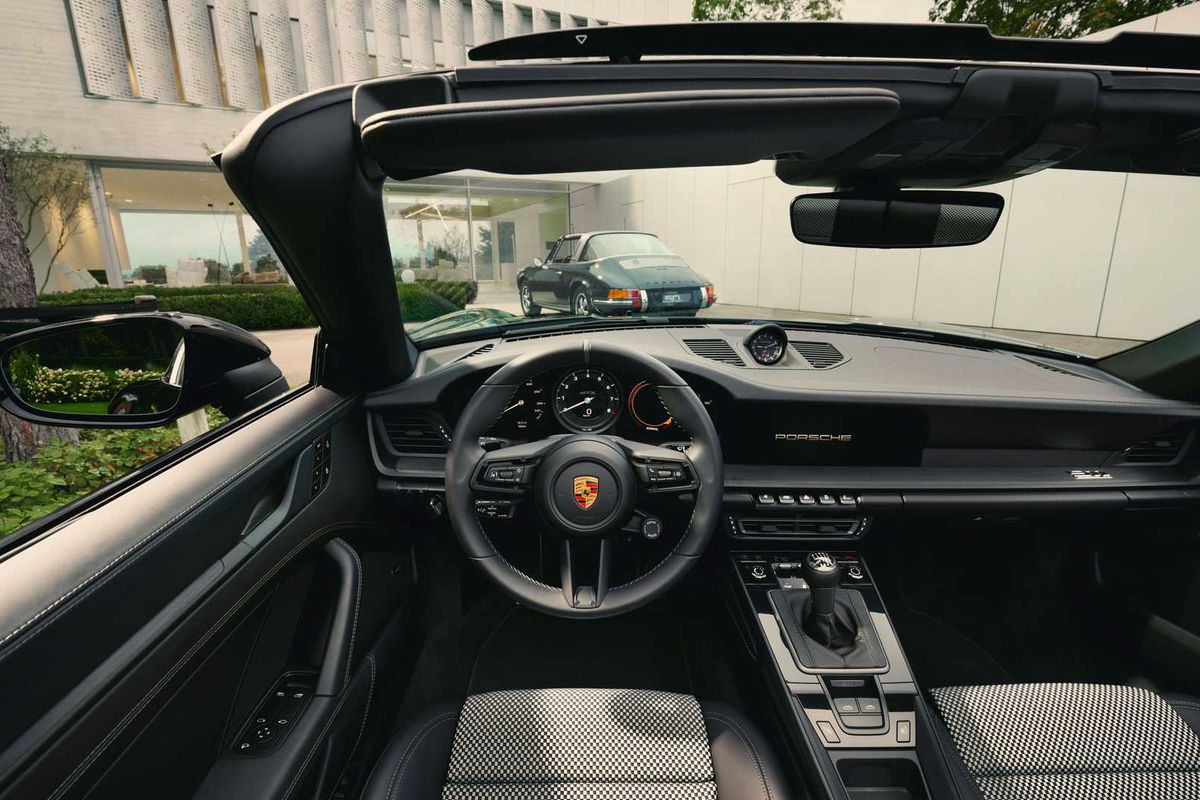
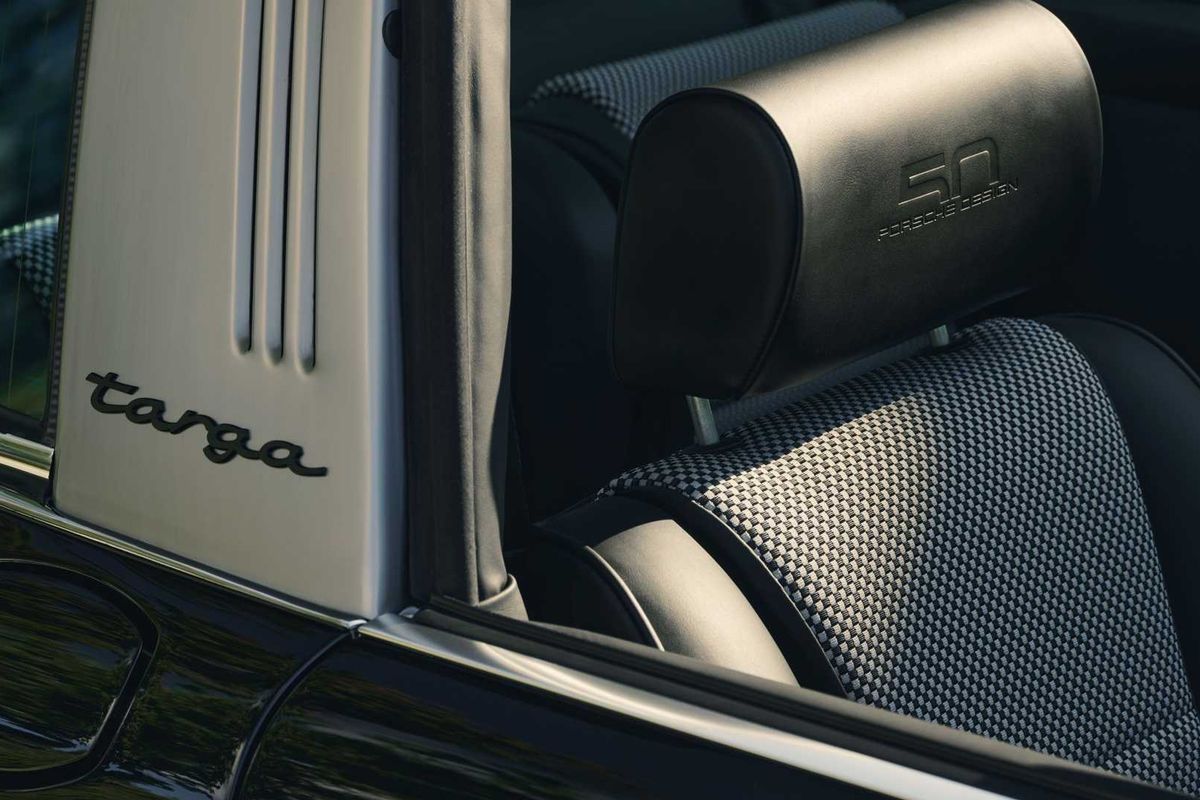
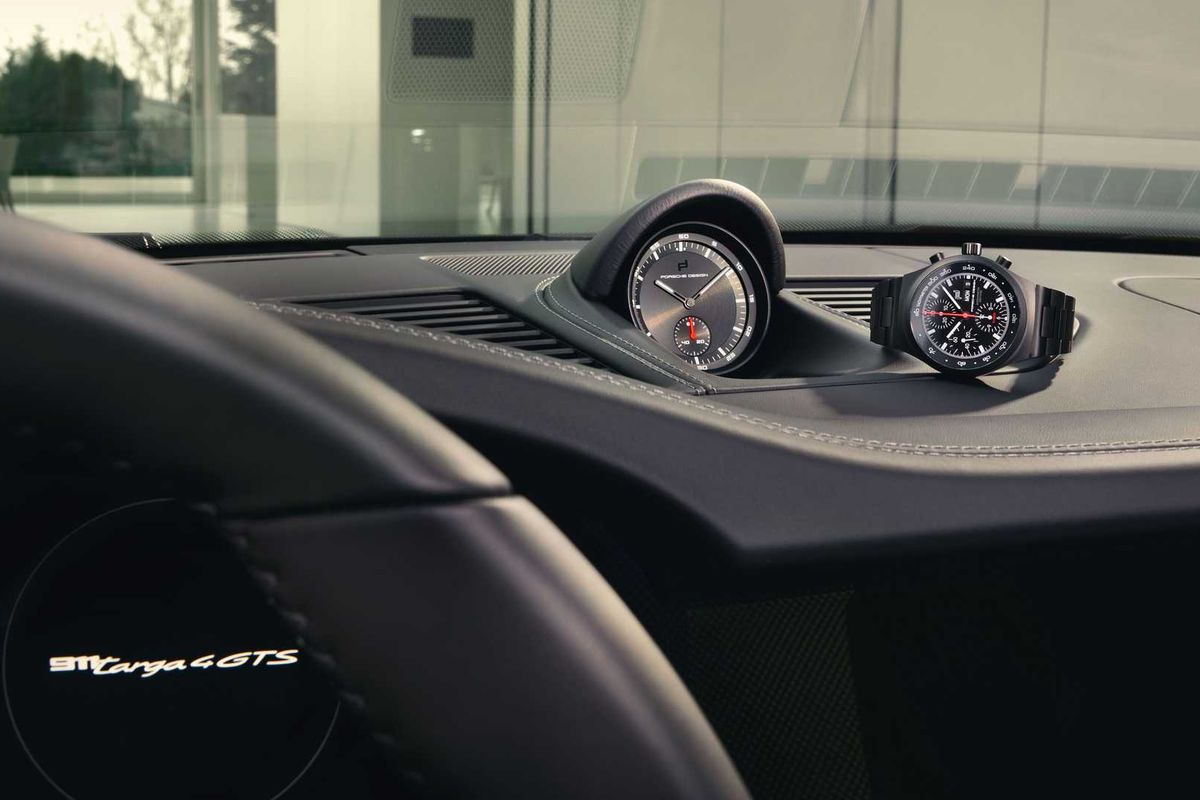
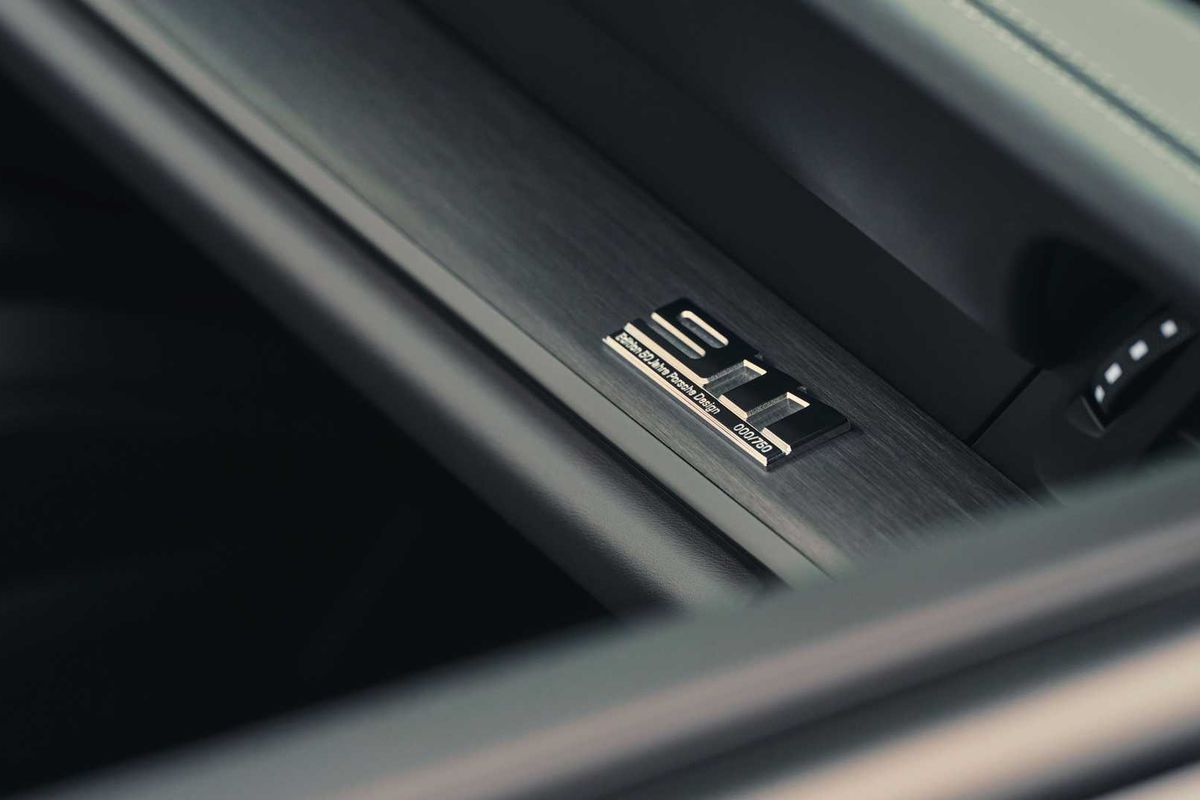
Inside, the Black and Cool Grey Sport-Tex seats (18-way adjustable) are finished in a classic checkered pattern while the headrests feature a 50 Years Porsche Design logo. Other special details include a silver plaque mounted on the dashboard highlighting the vehicle’s production number and the centre console lid features Ferdinand Alexander Porsche’s signature. The Porsche Design Subsecond Clock also features a red second hand and the seatbelts and centre mark on the steering wheel are finished in slate grey.
The Porsche 911 Edition 50Y Porsche Design is powered by the firm’s familiar flat-six 3.0-litre twin-turbocharged engine producing 352 kW and 569 Nm of torque. An 8-speed dual-clutch transmission is offered as standard but customers can also opt for a 7-speed manual shifter at no additional cost.
If that’s not enough, each car will also come with a Chronograph 1 – 911 50 Years of Porsche Design watch and fans of the brand can also purchase a Chronograph 1 -1972 Limited Edition of which only 500 units will be made.
Porsche will also be hosting a special anniversary exhibition at the Porsche Museum as of 19 January 2022.
How much will the Porsche 911 Edition 50Y Porsche Design cost in South Africa?
Diesel is rapidly disappearing in the European product matrix.
In new luxury vehicles, Rudolf Diesel’s engine technology might soon become a rarity.
Once the industry darling in terms of powertrain, turbodiesels are being rapidly displaced in most passenger car segments. The latest data from Europe is a stark indication of how swiftly this change is happening.
Europeans have for decades been the most loyal turbodiesel customers, preferring the diesel engine configuration to petrol. With generous government incentives and diesel fuel subsidies, the ownership benefits of running a turbodiesel vehicle were many.
Since the diesel emissions crisis in North America, regulators have hurried to undo most of the incentives for diesel vehicle ownership in Europe. And that also influences South Africa, which sources most of its luxury turbodiesel vehicles, from Europe.
What do the numbers indicate? According to data from Schmidt Automotive, European diesel sales have now been surpassed by EVs. And those numbers electric numbers aren’t hybrids, they are pure electric vehicles.
Pure electric powertrain sales in Europe reached just over 20% in December, passing the 19% of diesels. And the diesel numbers include diesel-hybrids – although those are very much a niche product.
With customers demanding more pure electric vehicles, and fewer diesels, product planners will react accordingly. And that means fewer luxury SUVs and sedans, with diesel engines. Say goodbye to those German luxury cars with V6- and V8 turbodiesels that managed to provide a terrific balance of performance and economy.
In absolute terms, the South African market is very different due to the proportional size of our bakkie and rugged SUV segment. The bakkie and ladder-frame SUV market is dominated by diesel in South Africa, yet both those vehicle classes are negligible in Europe.
Powertrain choices for double-cab bakkie and SUV owners, especially locally produced vehicles, won’t be under pressure. Diesel engines will prevail for many more years.
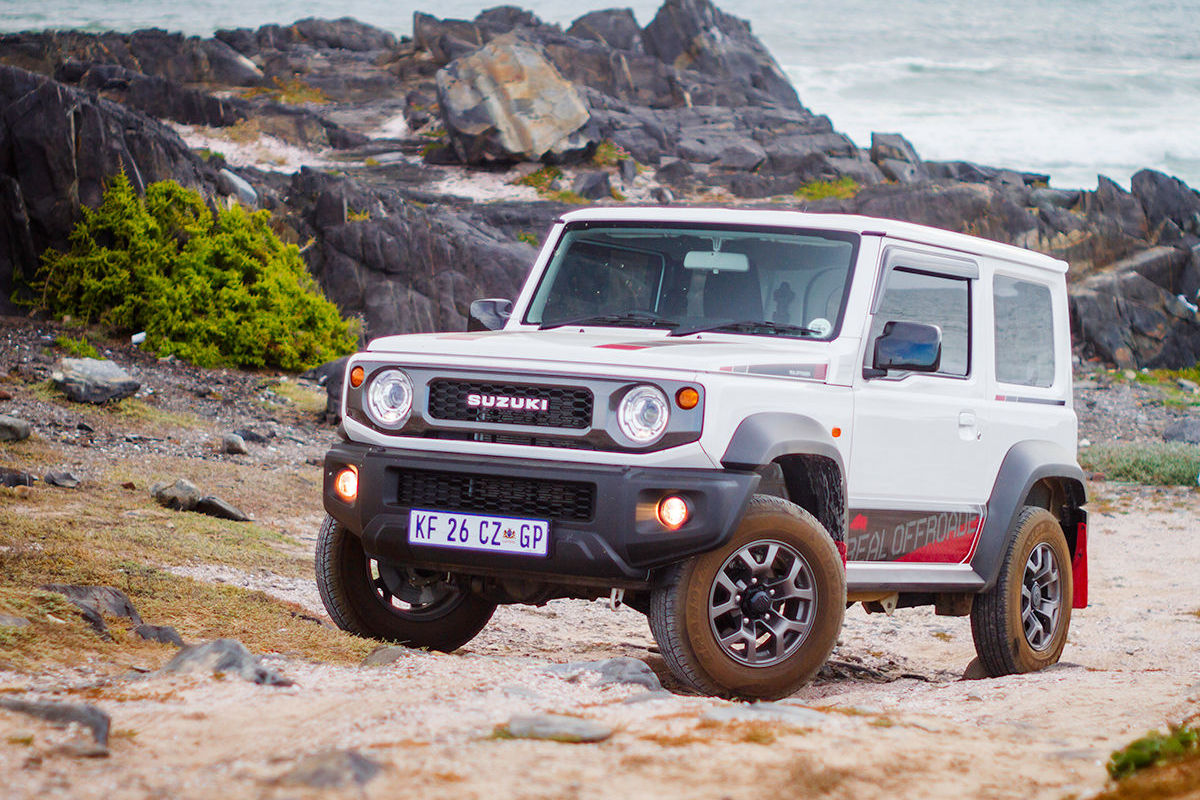
Small, simple – and broadly adored by all. But what is it like to live with Suzuki’s tiny 4×4 in a Big Sky country?Let’s take a look at Jimny’s strengths and weaknesses.
Allow me a meerkat automotive metaphor. Everyone adores the meerkat. Fearless. Family-oriented. But you wouldn’t really want one as a pet. And, in some way, it’s a similar scenario with Suzuki’s Jimny.
Nobody pours any scorn on Suzuki’s tiny 4×4. Land Rover and Land Cruiser owners respectfully acknowledge Jimny drivers in traffic and fellow owners wave at you (a Defender tradition – now passed on to Suzuki Jimny owners).
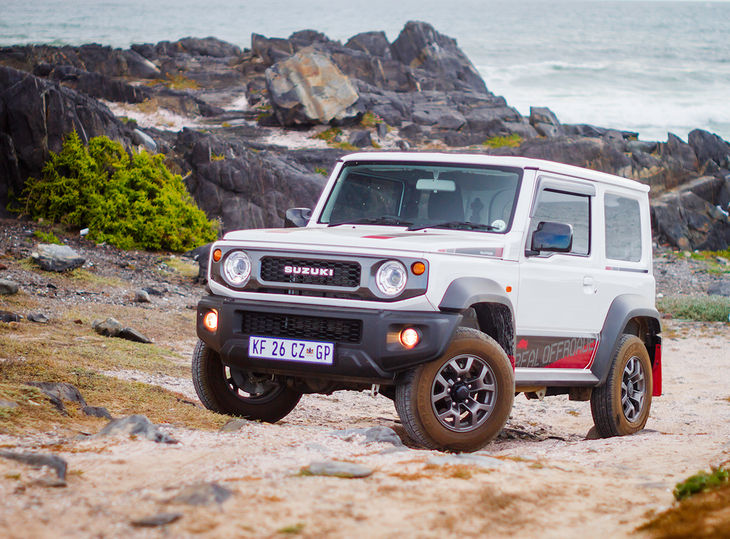
The Jimny’s adulation is universal and not difficult to understand. It is designed to look cute – but not at the cost of its core competency. Everyone knows that beyond its charming Kei-car proportions, the diminutive Suzuki offers genuine off-road ability and durability.
Suzuki’s Jimny is a complete antithesis to the crossover vehicle segment. Crossovers are made to look as if they have genuine all-terrain ability, but they certainly don’t – it’s a woefully dishonest image.
But the Jimny isn’t perfect – as I discovered, after spending the festive season with one. It does some things very well… and other things, very poorly, so the Jimny certainly has its problems.
I have notable experience with these little Suzuki off-roaders. Some years ago, I ran a Jimny manual for nearly a year. It was an experience textured with frustration and reward… and not in equal measure.
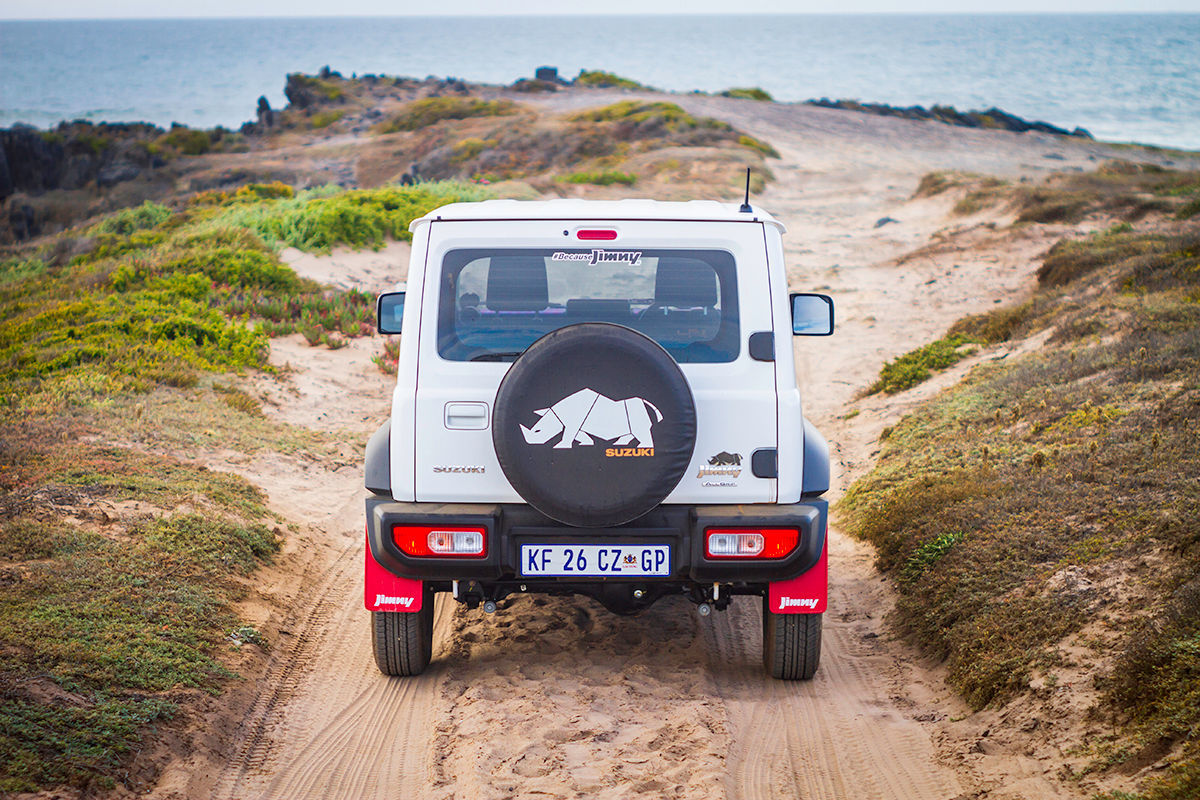
There is no other vehicle this small, that can get to remote vantage points.
Good in the city – but terrible between cities
The Jimny might have a new design and more potent powertrain, but it hasn’t really grown. Those Japanese Kei-car roots remain in place.
At only 3.48 metres in length, it is a tiny vehicle. Combine those city-car dimensions with 210 mm of ground clearance and Jimny becomes a vehicle that is unrivalled in any urban driving environment. Forget about the Smart Fortwo or even Suzuki’s Celerio. The Jimny has Messi-like agility, which you use to effortlessly navigate through any inner city.
Suzuki’s lilliputian 4×4 is terrific at flowing in and out of the most challenging parallel parking spots. It might not have rear parking sensors or a reverse-view camera, but you have such a great all-round field of view that electronic parking aids are hardly necessary.
When you venture onto crumbling urban roads or even need to roll over some pavement infrastructure to make a turn, the Jimny’s long-travel suspension works a charm. With most compact city cars, bumpers and side sills are scratched or dinged to ruin when the pavement becomes a necessary part of your driving or parking experience… not so in this Suzuki!
The Jimny is wonderful at very low speeds, such as on a short journey to the store or coffee shop. However, any trip that requires highway driving exposes its weaknesses. The Kei-car size, modest engine specification and a very troubled aerodynamic profile become very apparent at speeds approaching 120 kph.
I assumed Suzuki’s 75 kW 1.5-litre engine would drastically improve the asthmatic cruising performance I remember from the previous-generation Jimny. I was wrong. The truth is, you can’t journey in the far right lane of any dual-carriage road or highway with confidence. You can try, but the fuel-consumption consequences are severe.
There is no question that a 4-speed automatic transmission might work fine for driving duties under 80 kph, but the lack of a 5th or 6th ratio limits the Jimny’s acceleration spectrum to around 120 kph.
With a kerb weight that’s half of those of its rivals, the Jimny is a delight to place and navigate in off-road terrain.
On any longish journey that involved highway driving, the Jimny was a chore to pilot. The steering wanders, which is not unusual for a ladder-frame-based vehicle with a short wheelbase and high centre of gravity, but it’s made a lot worse if you live in a city with potent wind climatology.
The Jimny has a lot of proportional side surface area in relation to its wheelbase and ride height. In strong winds, it requires assertive steering responses and anticipation when driving at highway speeds.
I don’t know how you solve Jimny’s highway cruising issues. Kei cars were never designed to do 120 kph – that’s just not a thing, in Japan.
Although the Jimny is now a global product (and a very successful one), one must remain mindful of where it comes from and the experiences of those Suzuki engineers and product planners that developed the diminutive off-roader. They commute in Hamamatsu – they are highly unlikely to undertake journeys comparable to Johannesburg to Cape Town via the N1.
The current Jimny might be nearly 19% more powerful than its predecessor, but it needs even more power to overcome the drag created by that near-vertical windscreen, short roofline and blunt rear.
I imagined how much better the Jimny would be with about 85 kW of power, but that in itself creates another issue. This is a vehicle with very low cornering limits. You edge your way through roundabouts. The slightest tightening of steering angle or increase in throttle input generates tyre screech.
Simply put, the Jimny’s uncompromised compact off-roader platform isn’t reconcilable with more potent highway cruising performance. The need to develop enhanced traffic awareness and frequently change lanes are part of the ownership destiny with any Jimny. To compensate for its lack of lane assist or blind-spot monitoring, it has an even better and more reliable solution: enormous wing mirrors.
Despite being a tiny vehicle, the Jimny has wing mirrors that would not look out of place on a Land Cruiser 79 double-cab bakkie. And that means each time you need to dive into the slower lane there is no anxiety in doing so, a quick glance at that massive left-wing mirror will give you complete lane-changing confidence.
Large and heavy objects fit securely in the back. But normal luggage can slide around, a lot.
It’s not a family vehicle
For solo adventurers and couples, the Jimny has a usable cabin architecture. It helps if you have sober comfort expectations, too.
Its seats are underpadded and not shaped to the best ergonomic standards. Especially those rear seats – which aren’t suitable for anything beyond an hour’s driving for most passengers.
Suzuki’s interior designers have done some clever things with Jimny’s available seat manipulation. The front passenger seat can be folded flat and slide way forward to create a sleeping surface. It’s genius and true to Jimny’s purpose as an occasional overnight venue for overlanding adventurers.
With the rear seats in place, there is so little cargo space, Suzuki’s doesn’t even bother to equip the Jimny with a parcel shelf.
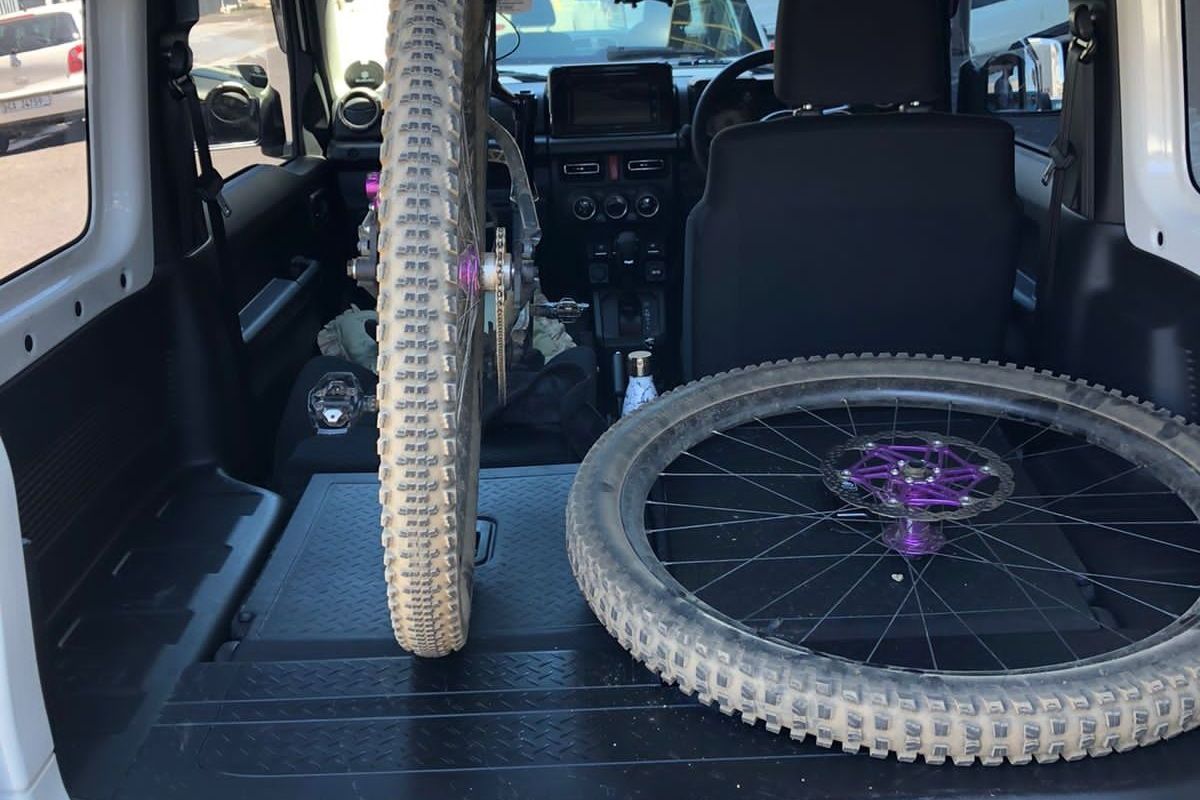
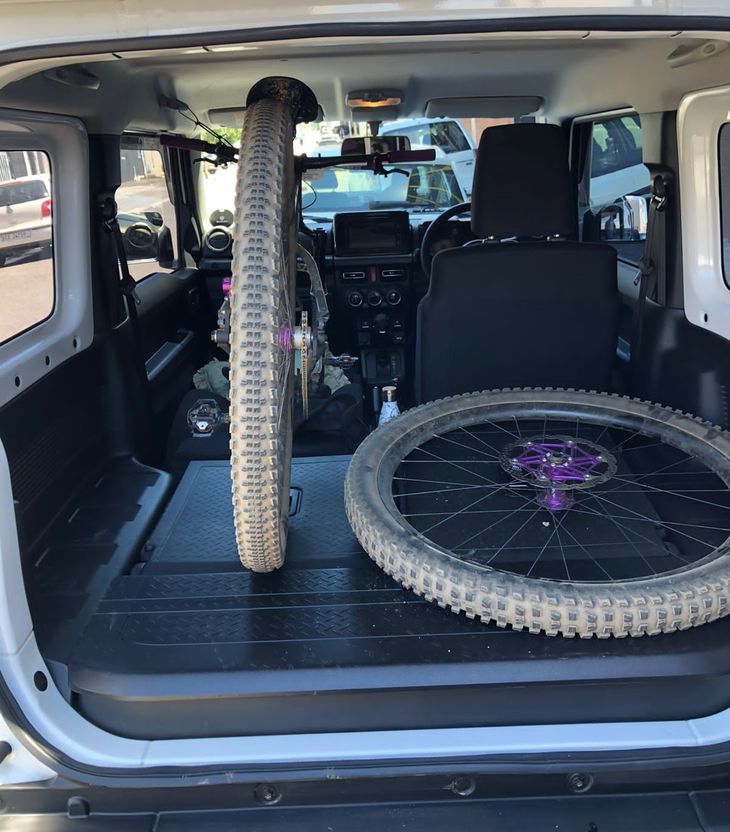
Carrying mountain bikes inside? Not really a great idea.
For a vehicle that triggers so much anti-FOMO and instils a sense of adventure, the Jimny can be heartbreakingly frustrating to load up. I dislike external racks. And although Jimny’s roof gutters (yes, it has roof gutters), make it very convenient to mount a roof rack, that only exacerbates its centre of gravity instability and aerodynamic drag issues.
Your best option is having those rear seats permanently folded down, which creates a hard plastic-lined flat load surface. It’s not grippy, though, which means that cargo tends to slide around annoyingly.
I admire those Jimny owners who tour Botswana and Namibia in their vehicles. They deserve all the conscientious packing accolades.
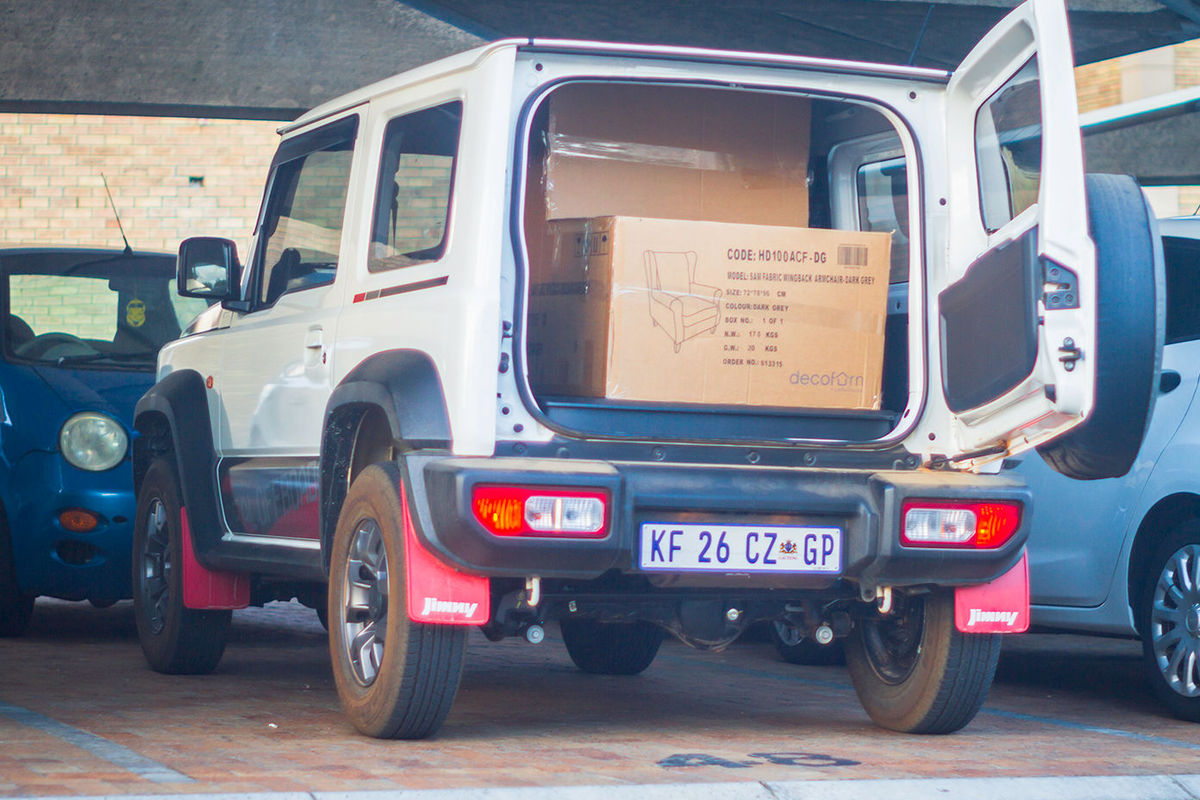
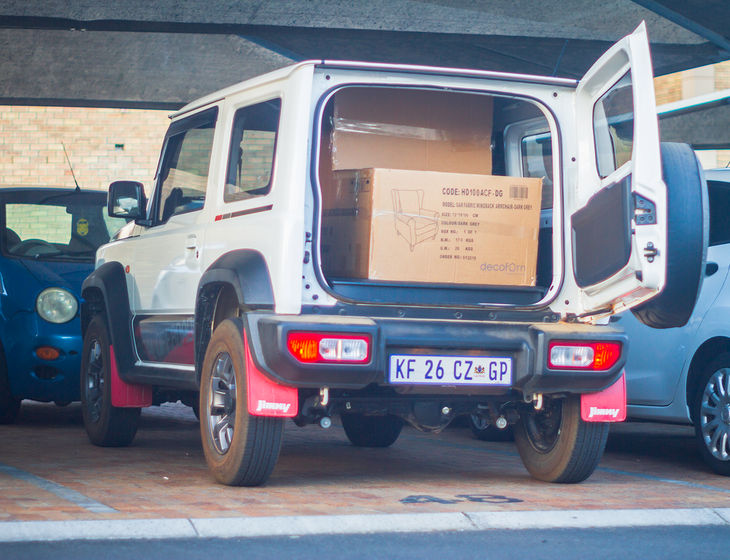
Despite often frustrating my ambitions relating to the transportation of mountain bikes or people, the Jimny deserves credit for its blockiness, however. Thanks to its very square proportions, you can fit quite a large furniture box in the back of a Jimny, which isn’t that easy with many compact crossovers that have tapered rooflines.
When you look at the Jimny from this perspective. You realise that it is most definitely not aerodynamic.
Small vehicle – big fuel numbers
After a year of significant fuel price increases, some may look upon the Jimny as an adventure vehicle with more tolerable costs regarding its fuel economy. But that’s a misplaced perception. You’ll never get close to Suzuki’s claim of 6.8L/100 km for Jimny fuel consumption.
The Jimny might be small and light, but it’s no fuel fairy. Not even nearly. We averaged 8.5L/100 km and most of that was due to Jimny’s poor aerodynamics.
If the automatic transmission had 5 or 6 speeds, instead of only 4, that would help reduce the fuel burden a bit, but the most debilitating influence on Jimny’s mileage is its boxy shape, especially at cruising speeds.
Would a turbodiesel engine be better? Possibly. But nearly 9L/100 km is the kind of real-world consumption that edges toward that of a mid-sized turbodiesel SUV.
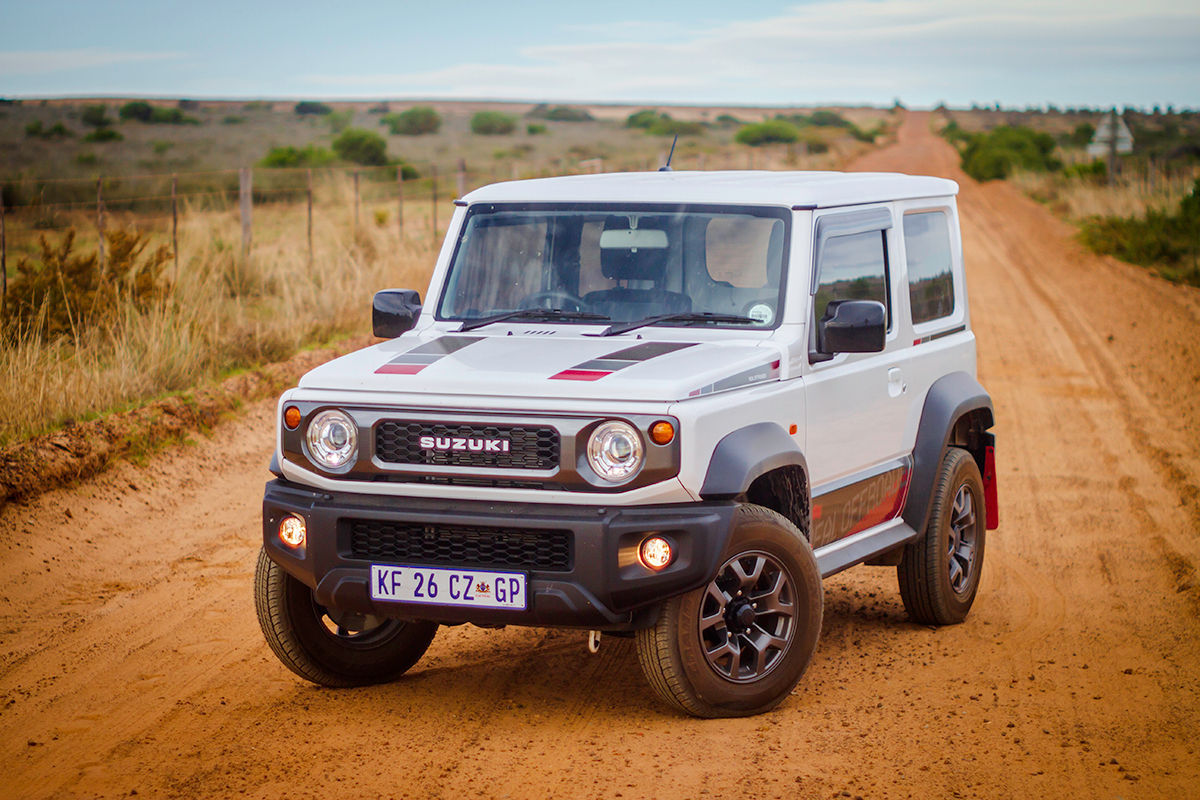
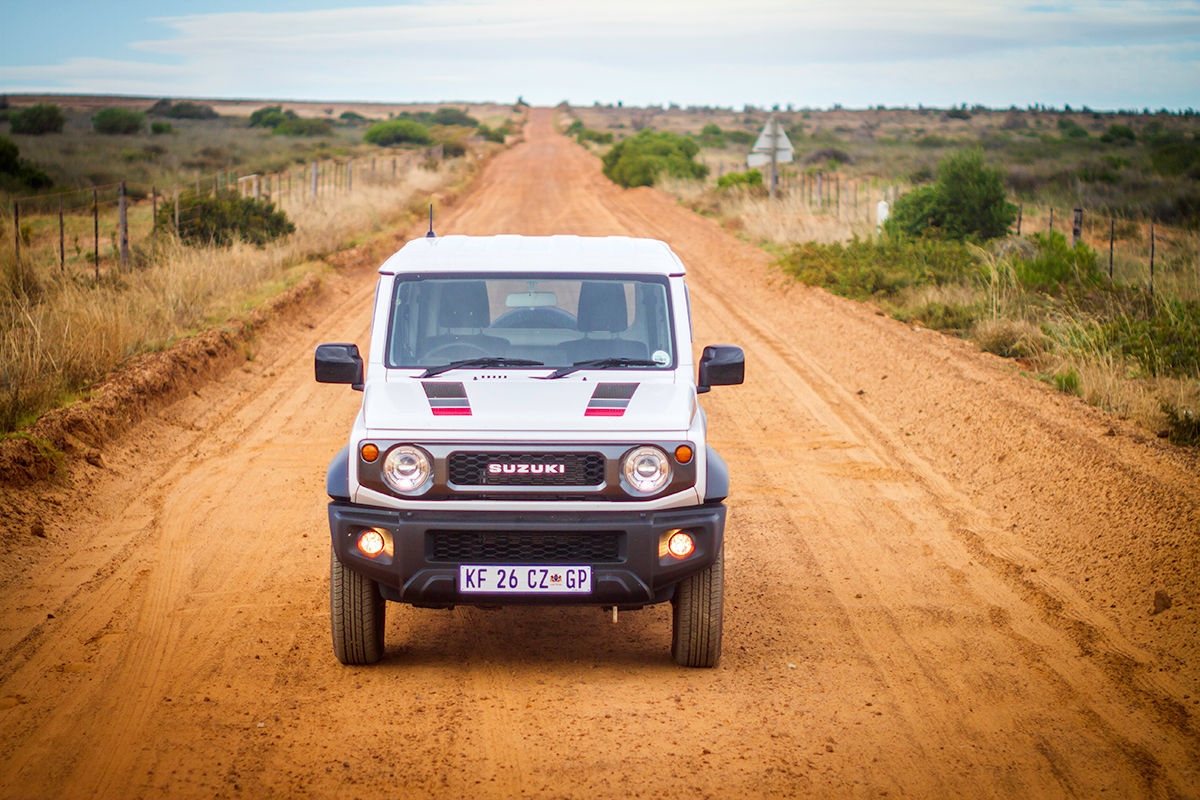
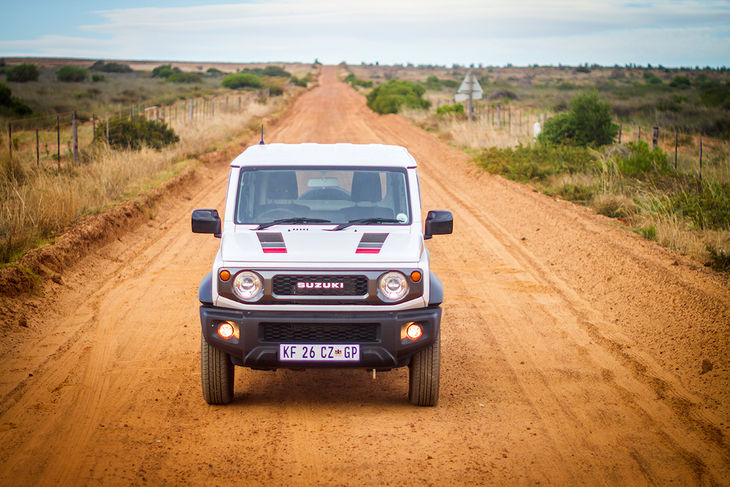
Heritage grille. Ready for adventure. Try and resist the charm. You’ll fail.
Why does everyone else like it so much?
The rap sheet is long: too small inside to function as a passenger vehicle; too slow for confident highway cruising and too heavy on fuel, considering its weight, engine specification and performance.
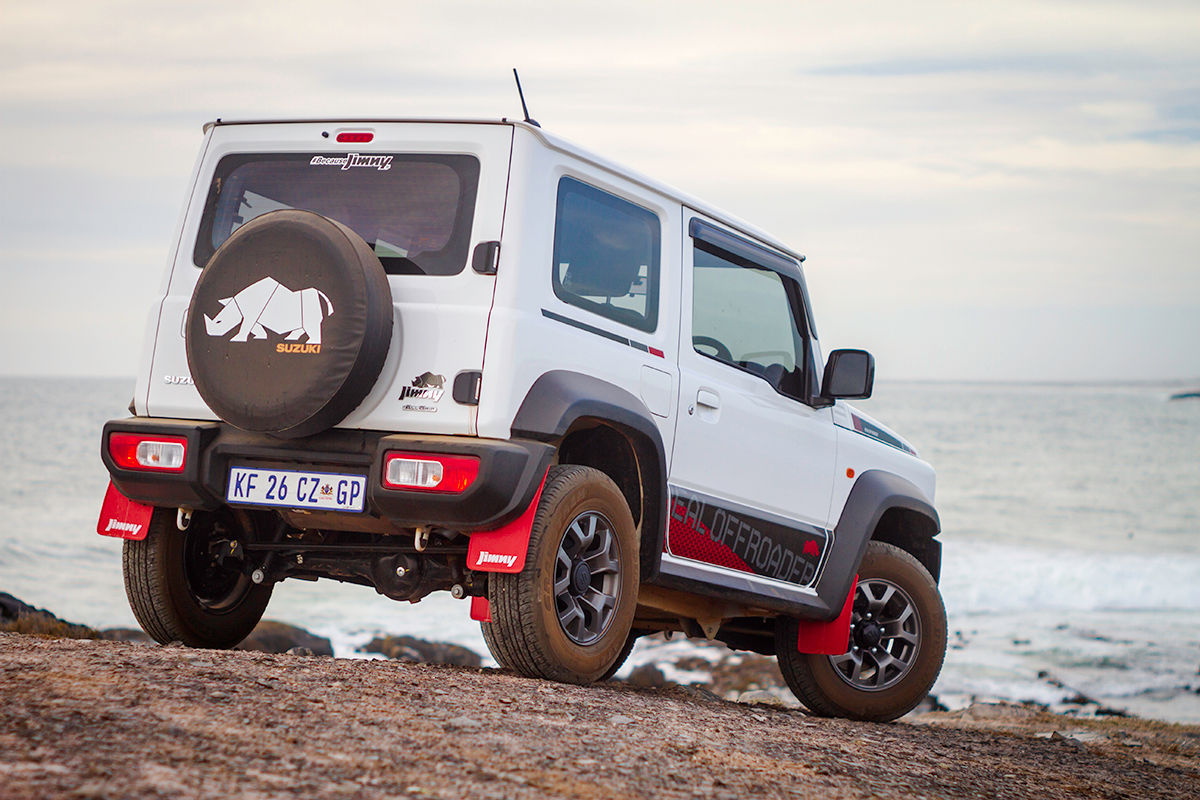
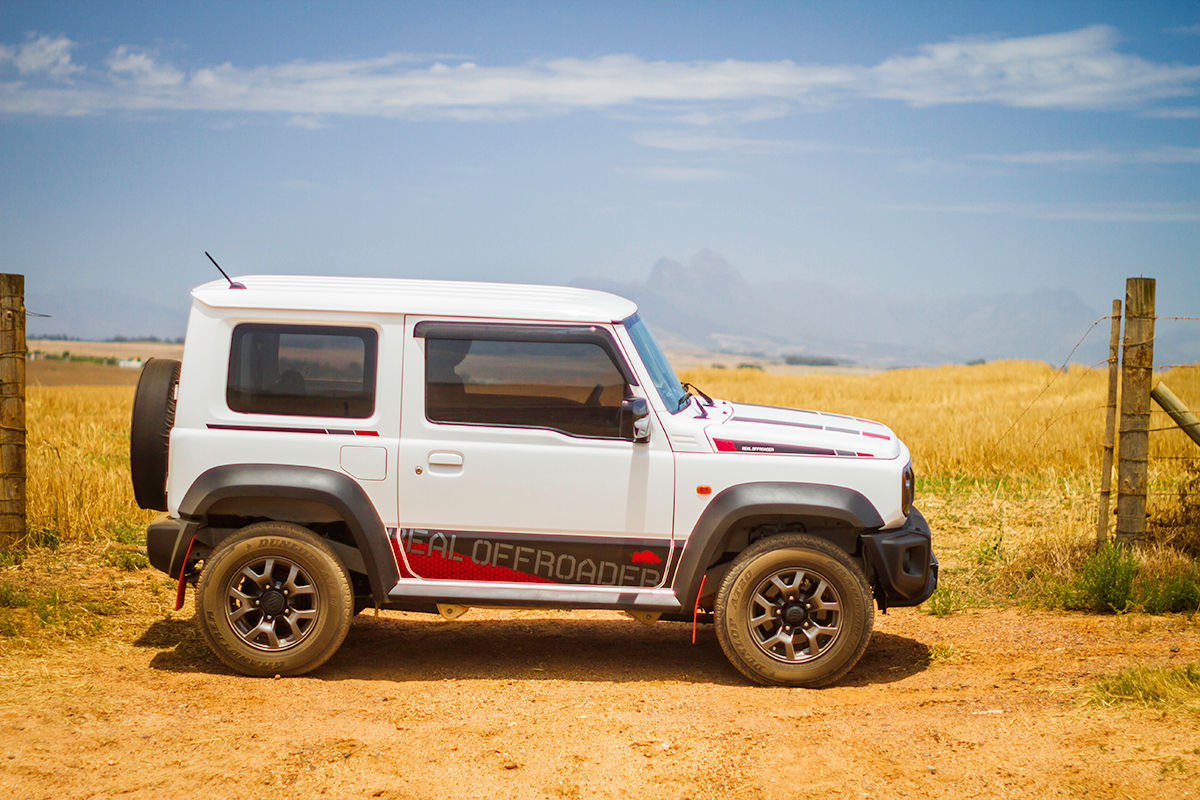
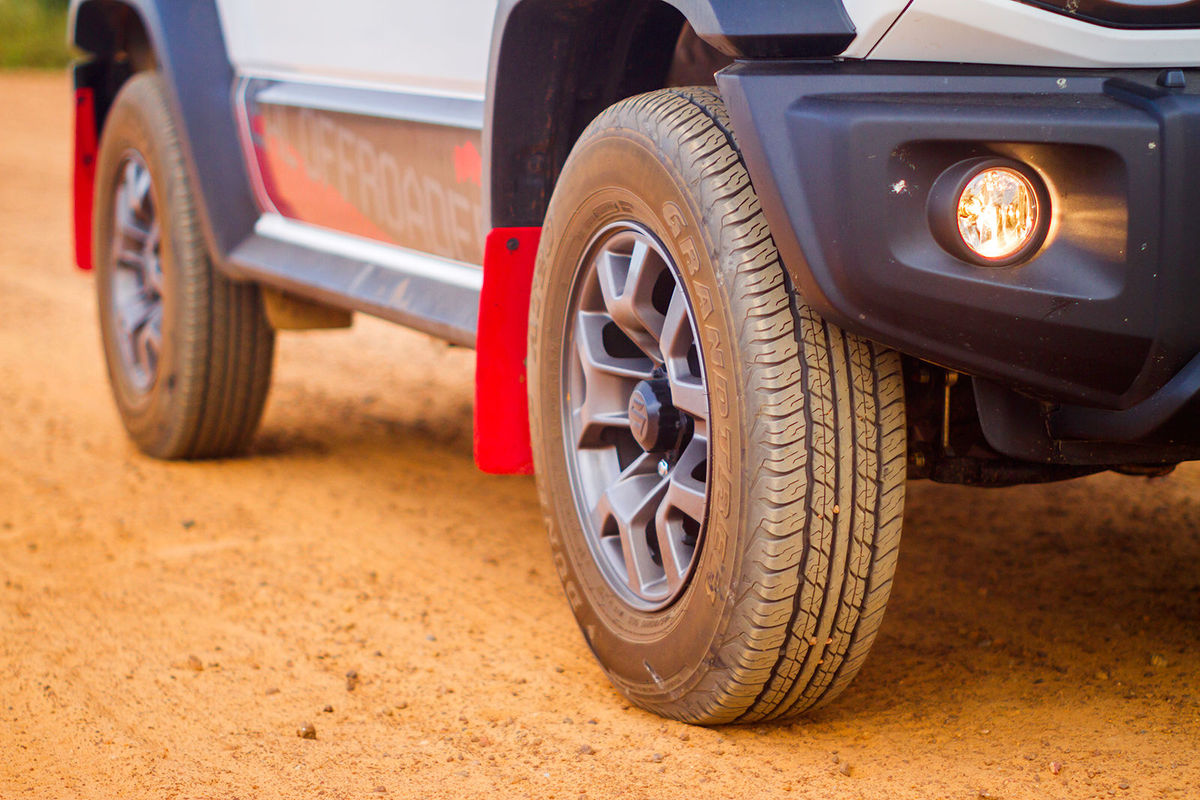
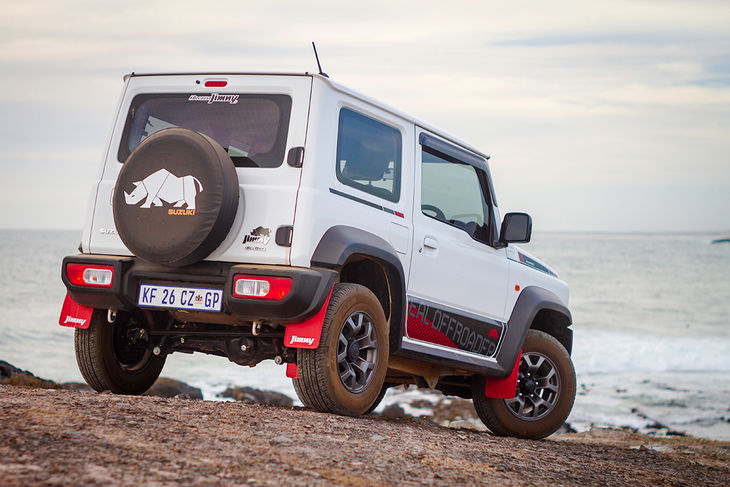
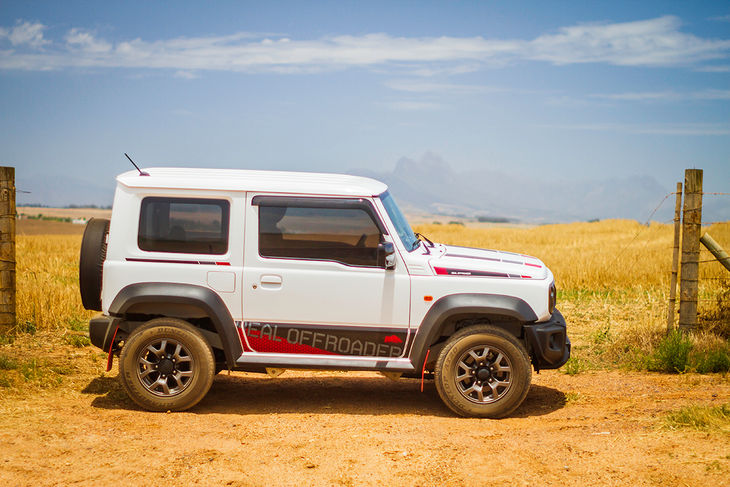
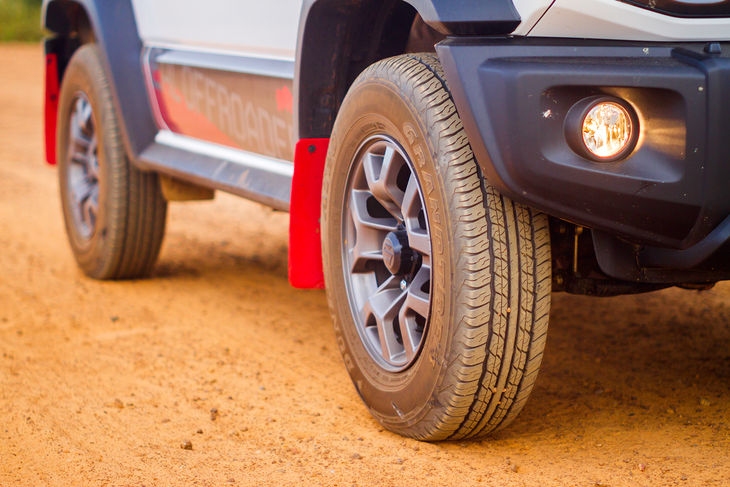
The Jimny has all these issues, so why did people give the Jimny envious glances during the vacation season, when I was driving it? Could it have been those red 1990s WRC heritage mud-flaps? Maybe.
The reality is that Jimny is one of the very few double-take vehicles still in production… and that is a concept worth explaining.
Fewer and fewer cars make me look back at them once I have completed a locked-up journey and walked to my venue. I found myself irrationally staring at the Jimny from my apartment’s living room window. Or from inside a coffee shop. Part of the deeper charm, I guess, is that you drive a Jimny, instead of being insulated from the driving experience – which is the case with most modern cars.
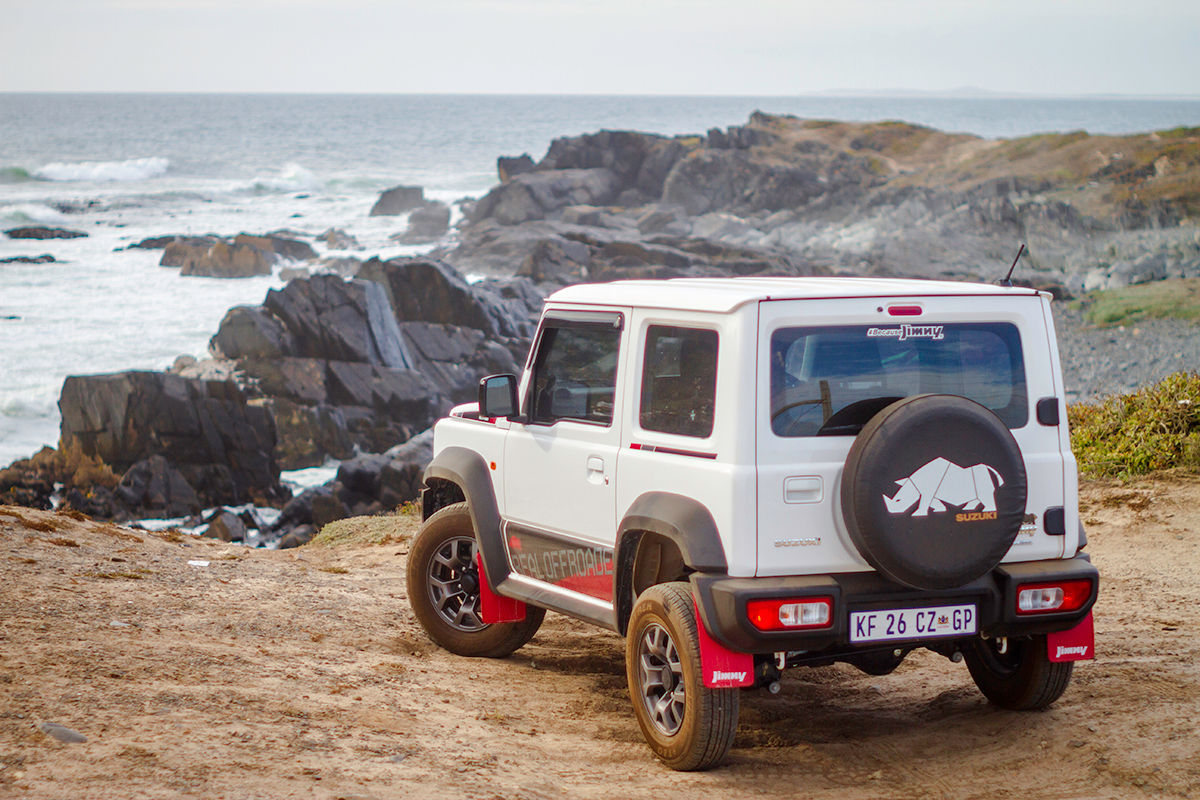
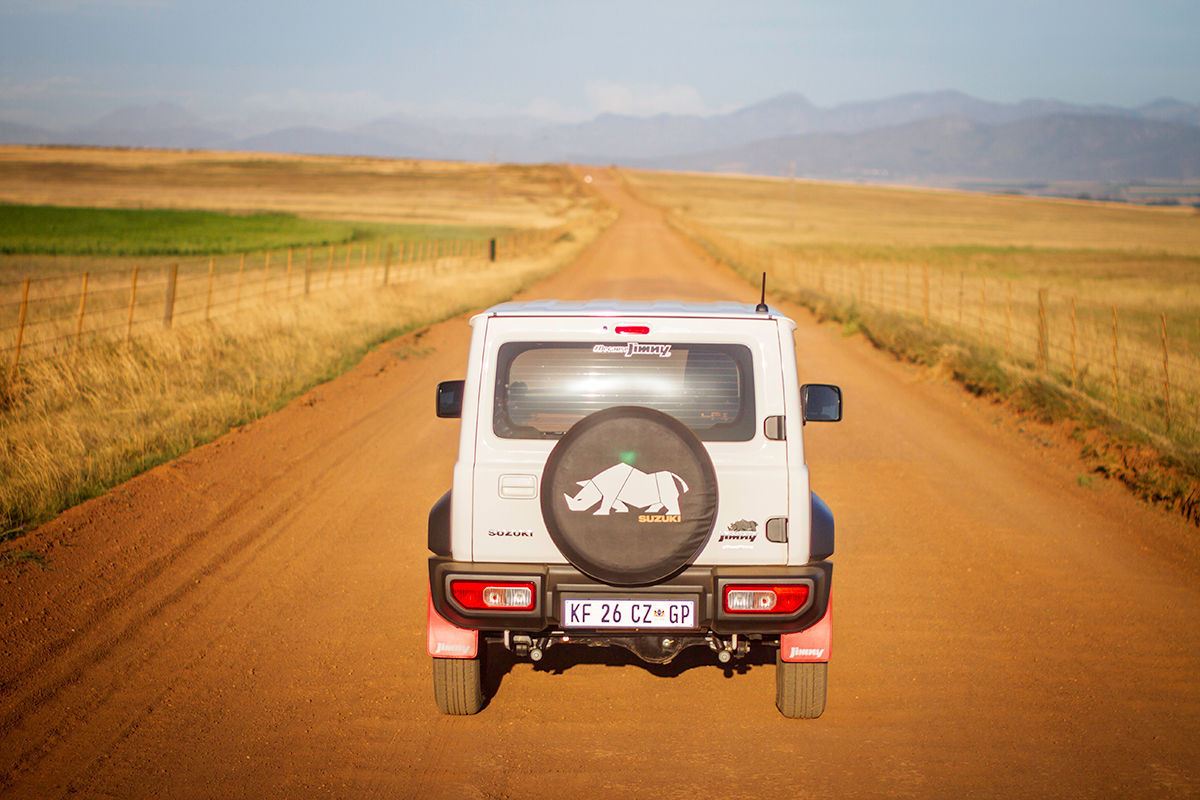
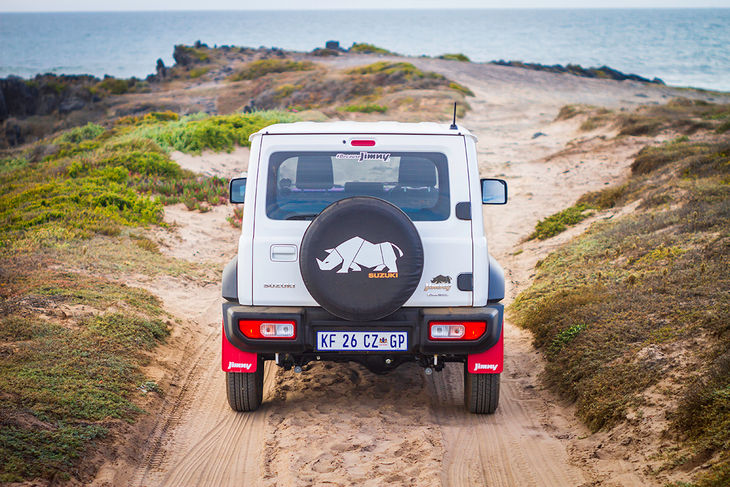
Rhino graphics might be a sensitive issue locally. But they are true to Jimny’s marketing heritage. Red mud-flaps? Terrific.
Buying advice – Is the Jimny worth its price?
The Jimny isn’t cheap and, for many consumers, a compromised crossover will be a much more practical option. Most new compact crossovers will be much better at highway driving and should roll along mild gravel roads without bother. Crossovers in the Jimny’s price range will also have usable rear seats, not to mention a useful cargo area.
But crossovers are about compromise. The Jimny isn’t. Its off-road potential is limitless, although long-range desert driving can require some careful planning due to its heavy fuel consumption/tiny tank.
If you intend to buy one to make a statement, don’t do it – there are more sensible ways to spend your money. However, suppose you commit to planning a few long weekends away each year, during which you will navigate into some properly challenging terrain. In that case, the Jimny is a terrifically analogue adventure driving experience.
There is something to be said for a 4×4 that makes you part of the terrain conquest – as opposed to being merely a passenger and allowing traction control systems, huge tyres and a flood of torque to roll you over technical off-road terrain.
The family vehicle caveat is very real. I had passengers that were only 1.5-metres tall in the back, and they complained about seating comfort after only a few minutes. If you don’t have kids and want to use Jimny as an all-conquering urban runabout, it excels in that role. But this remains a two-passenger vehicle – something worth remembering.
Tyres are much smaller and narrower than other low-range enabled 4x4s. And a lot cheaper to replace.
At R377 900, the Jimny 1.5i GLX automatic is not a bargain, but, if you consider the total ownership experience, it is a value proposition. You’d need to spend double or triple that price to acquire a vehicle of matching off-road ability (unless you can deal with the harshness of a Mahindra Thar).
Jimnys are highly durable, with a low threshold of electronic complexity. Mechanically, the engine is relatively unstressed, too. Interestingly, the design change from centre console buttons to a traditional floor-mounted low-range shifter has made the latest Jimny even more reliable.
Deeply annoying at times, but also deeply rewarding as a long-term ownership experience – with excellent residual value – the Jimny is a forever vehicle… something that will last generations and generate many unforgettable adventures. And those are ownership values that can’t be applied to many of today’s new vehicles…