Not dead yet! Decade-old Ford EcoSport outsells fresher Indian-built rivals
Ford’s EcoSport is long in the tooth and its future unclear, so it shouldn’t be a strong seller, should it? Well, South African buyers seem to disagree.
The BK-generation Ford EcoSport was revealed a full decade ago, before hitting the South African market a year later. Locally, the small Fiesta-based crossover quickly skipped up the sales charts, endearing itself to South Africans with its compact exterior dimensions, penchant for fuel efficiency and attractive entry price (back in 2013, you could have one for R199 000).
Over time, the EcoSport supplanted the Fiesta and Figo as the Blue Oval brand’s most consistent volume driver in the passenger-vehicle space, playing a crucial support role to the popular light-commercial Ranger. Thing is, the little crossover has been afforded just a single major update (along with a smattering of minor tweaks and an obligatory special-edition variant) over the past 10 or so years, with its mid-cycle refresh having rolled around in 2018.
Today, the landscape in this part of the market looks markedly different, having since erupted with pint-sized, high-riding competitors, most of which are imported from India (and are a little more compact at around four metres long). In addition, the EcoSport’s local future seems somewhat uncertain since the Chennai plant from which base-spec derivatives are sourced is currently winding down its operations, with the doors scheduled to shut in the second quarter of 2022.
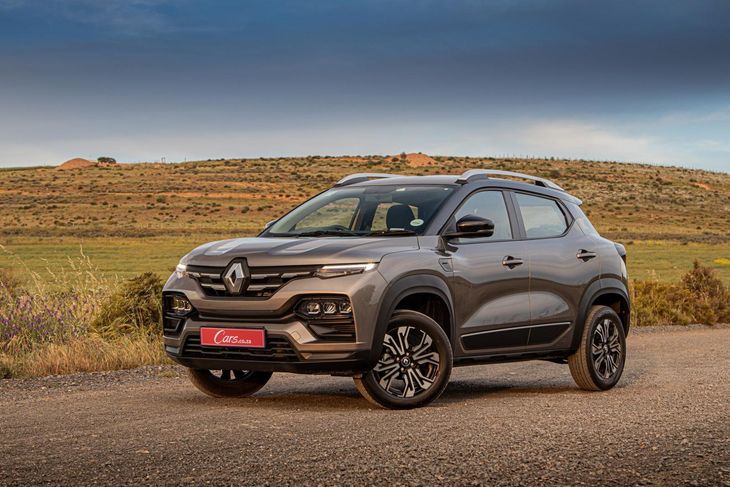
The Renault Kiger and Nissan Magnite appear to have risen to the top of the segment’s sales charts.
So, with more – not to mention exceedingly fresher – competitors than ever and a starting price that’s crept to the wrong side of R300 000, one might think EcoSport sales would falter. Based on December 2021’s sales statistics, the opposite is in fact the case. Ford registered as many as 765 units of the EcoSport during the month (up 135 units on November’s figures), which was enough to make it the sixth best-selling passenger car in the country. That’s no mean feat.
Sifting through Naamsa’s detailed sales figures and picking out its slightly smaller rivals shipped over from India, we see the closest competitor was the Nissan Magnite (679 units), which couldn’t quite match the EcoSport despite boasting a lower starting price of R269 800. The Renault Kiger – which is closely related to the aforementioned Magnite but starts at just R204 900 thanks to the option of a lower-spec powertrain – ended the month on 555 units.
Toyota’s Urban Cruiser was next on 488 units, slipping slightly from a strong effort of 699 units in November but just managing to keep its nose ahead of the Hyundai Venue (482 units). The Kia Sonet range – which is tipped to grow with the addition of 1.0T derivatives and perhaps even a new flagship GT Line trim level at some point in 2022 – ended the month on 360 units. Suzuki’s Vitara Brezza wasn’t far behind, finishing on 332 units. The Honda WR-V, meanwhile, could muster only 38 units, while Mahindra registered a mere two examples of its XUV300.
What about rivals originating from countries other than India? Well, the Spanish-built Volkswagen T-Cross found 766 owners (yes, one more than the EcoSport) in the final month of 2021, while the giant-killing Jolion from China contributed 390 registrations to Haval’s cause.
We should point out, of course, that Ford’s local division currently sources its EcoSport units from two plants. The Ambiente variants fitted with Ford’s atmospheric 1.5-litre three-pot come from the soon-to-be-shuttered Chennai facility, while the mid- and top-spec Trend and Titanium derivatives powered by the brand’s 1.0-litre turbo-triple engine are shipped in from Romania.
So, what does the future hold for this ageing product? Well, a local Ford spokesperson confirmed to us the EcoSport would “remain on sale in South Africa throughout 2022”, which would suggest the company has at least secured some additional stock from the ill-fated Indian plant and will continue to import units from Europe, too. Don’t be surprised to see the EcoSport outperforming its more youthful rivals on the sales charts for a few more months yet.
Ford EcoSport versus Indian-built rivals in December 2021
1. Ford EcoSport – 765 units
2. Nissan Magnite – 679 units
3. Renault Kiger – 555 units
4. Toyota Urban Cruiser – 488 units
5. Hyundai Venue – 482 units
6. Kia Sonet – 360 units
7. Suzuki Vitara Brezza – 332 units
8. Honda WR-V – 38 units
9. Mahindra XUV300 – 2 units
BMW X3 M40i: A Real-World Review
The X3 is produced right here in South Africa and while we’ve sampled various derivatives of BMW’s recently revised executive SUV, there’s nothing quite like an extended test to really get to grips with a vehicle. To that end, David Taylor spent a few weeks with the 3.0-litre inline-6 turbopetrol-engined M40i.
We are usually afforded 7 to 14 days to review a vehicle, during which time members of our team take brief turns to assess a test unit (as well as film and photograph it); believe it or not, it’s easy to miss some of the car’s finer nuances/details. However, end-of-year breaks avail us with opportunities to drive vehicles on irregular routes and for greater distances – we’ve had some illuminating experiences!
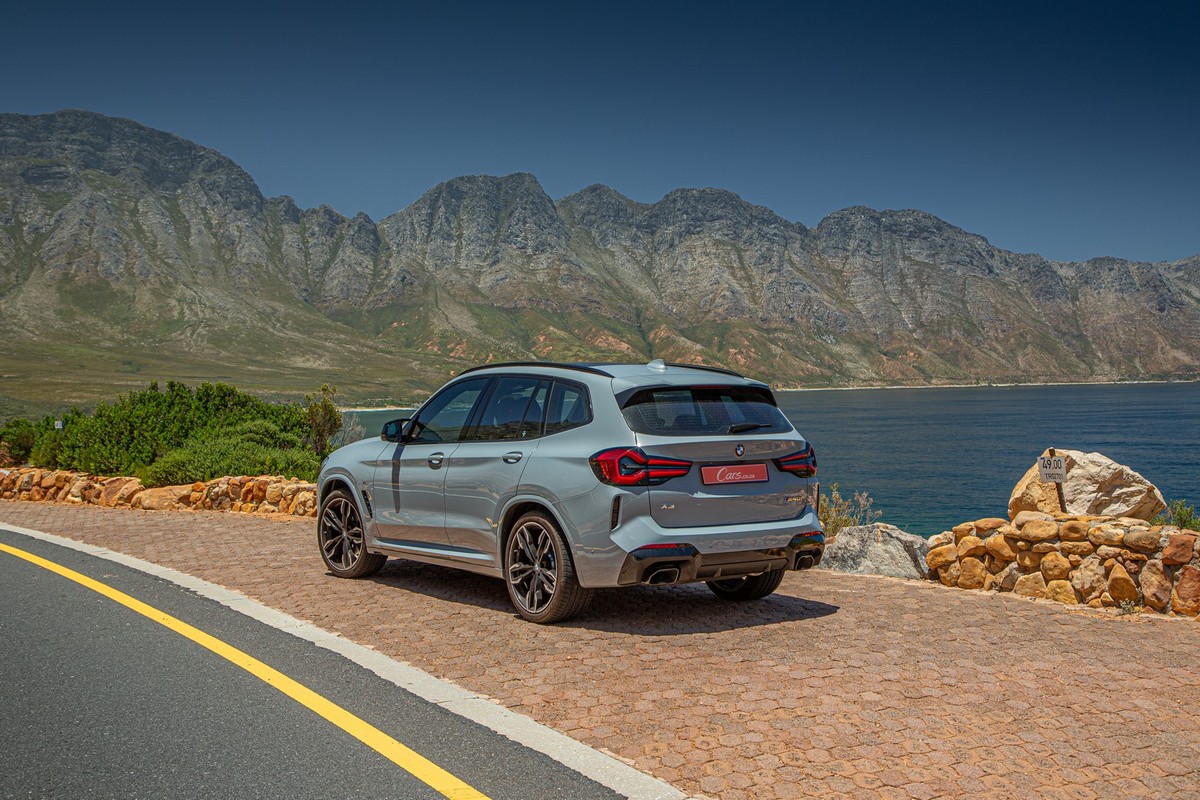
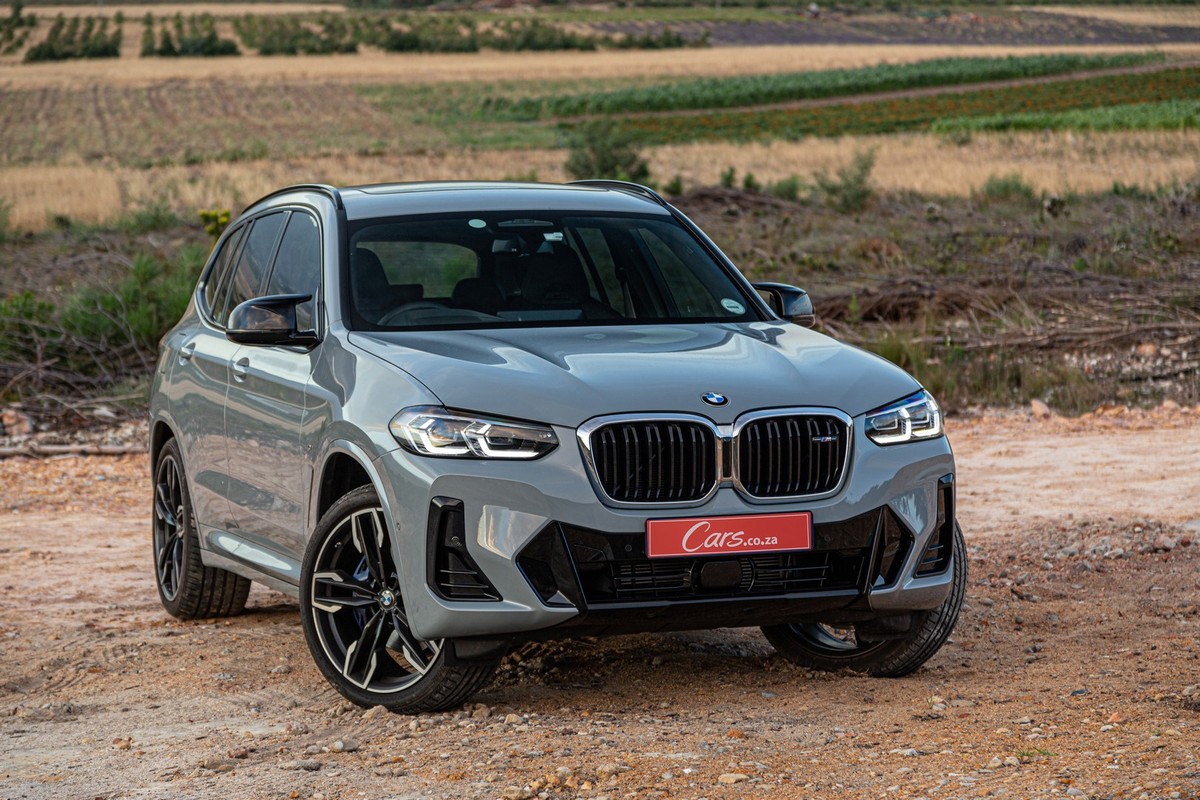
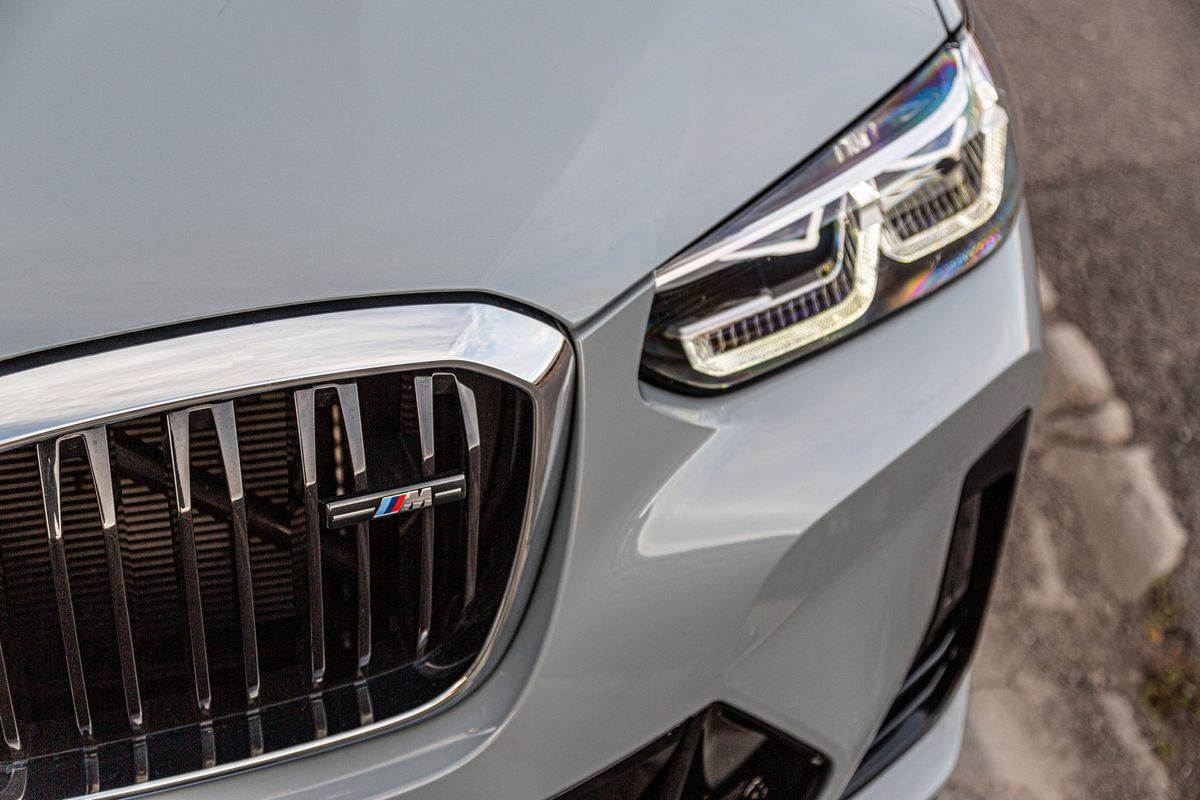
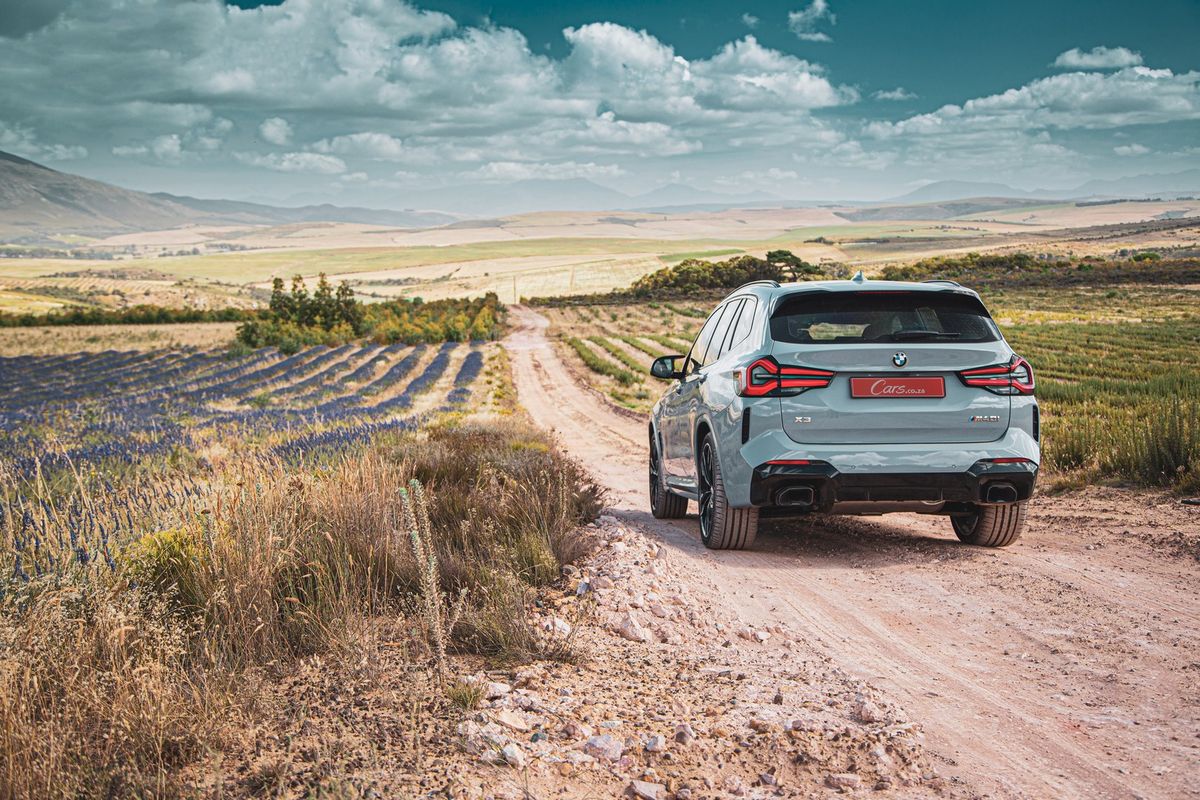
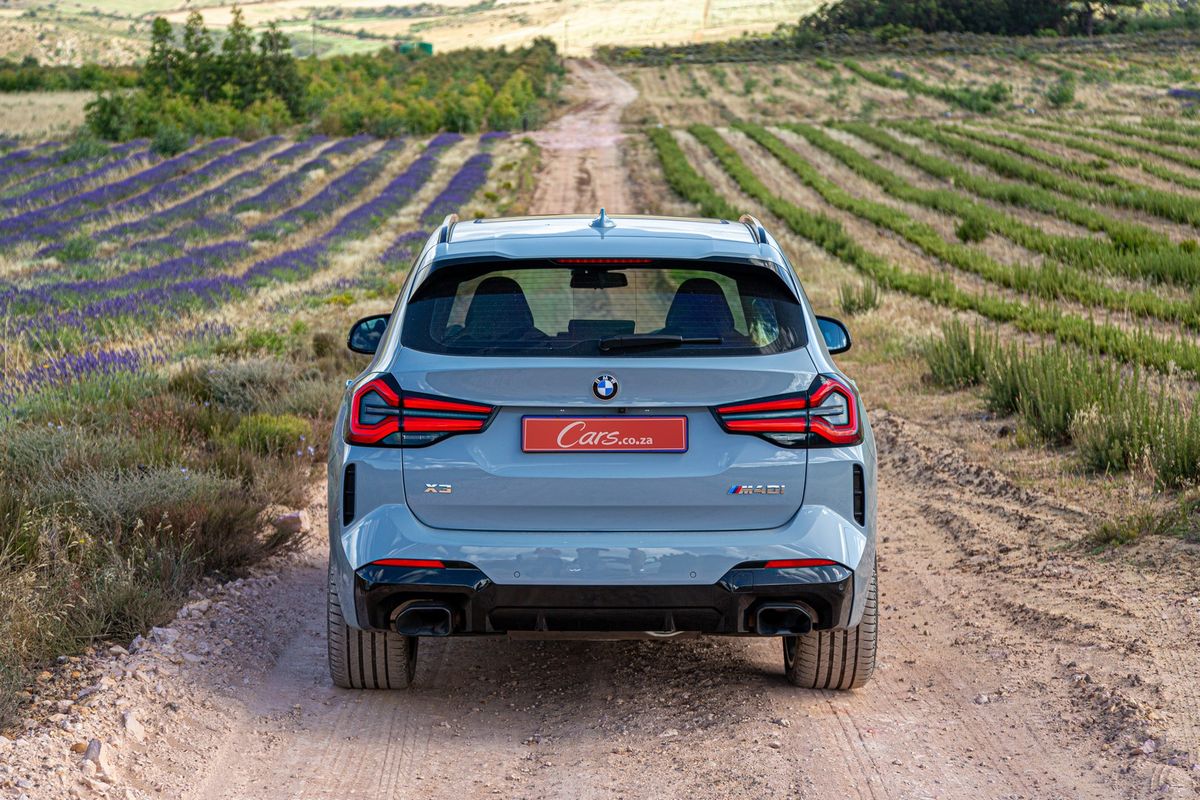
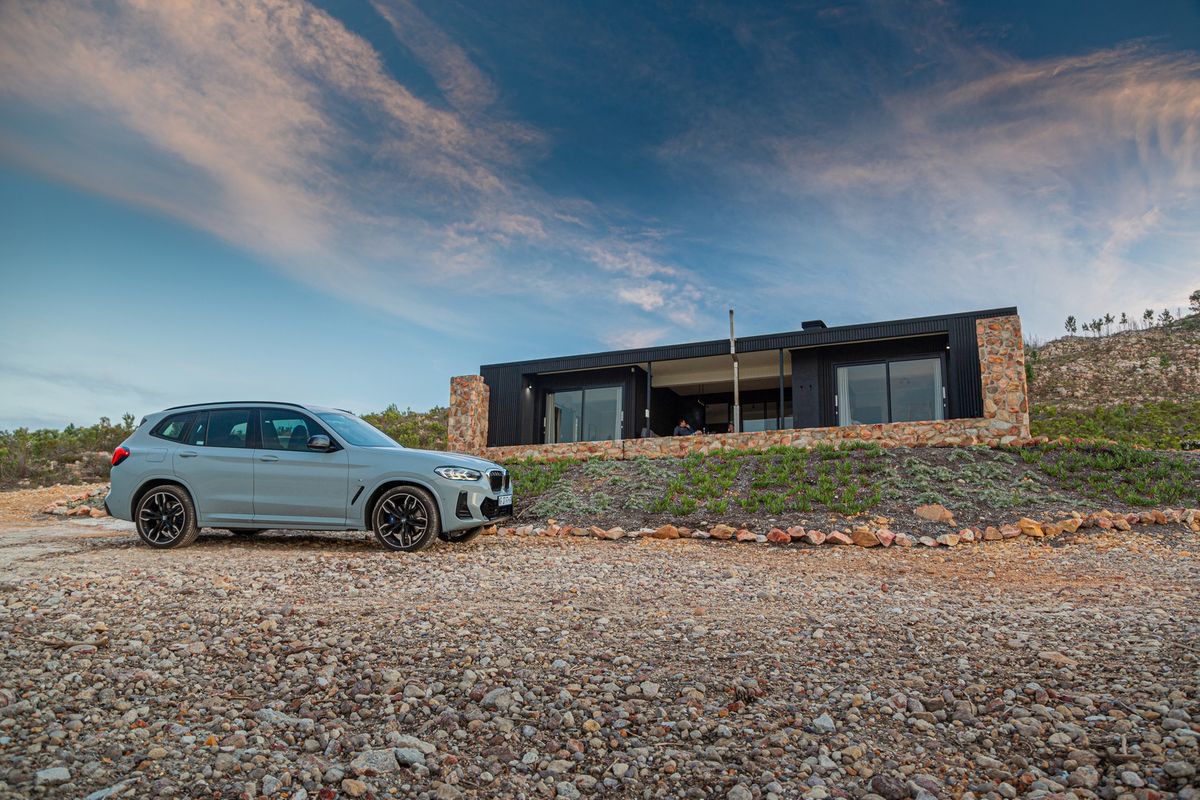
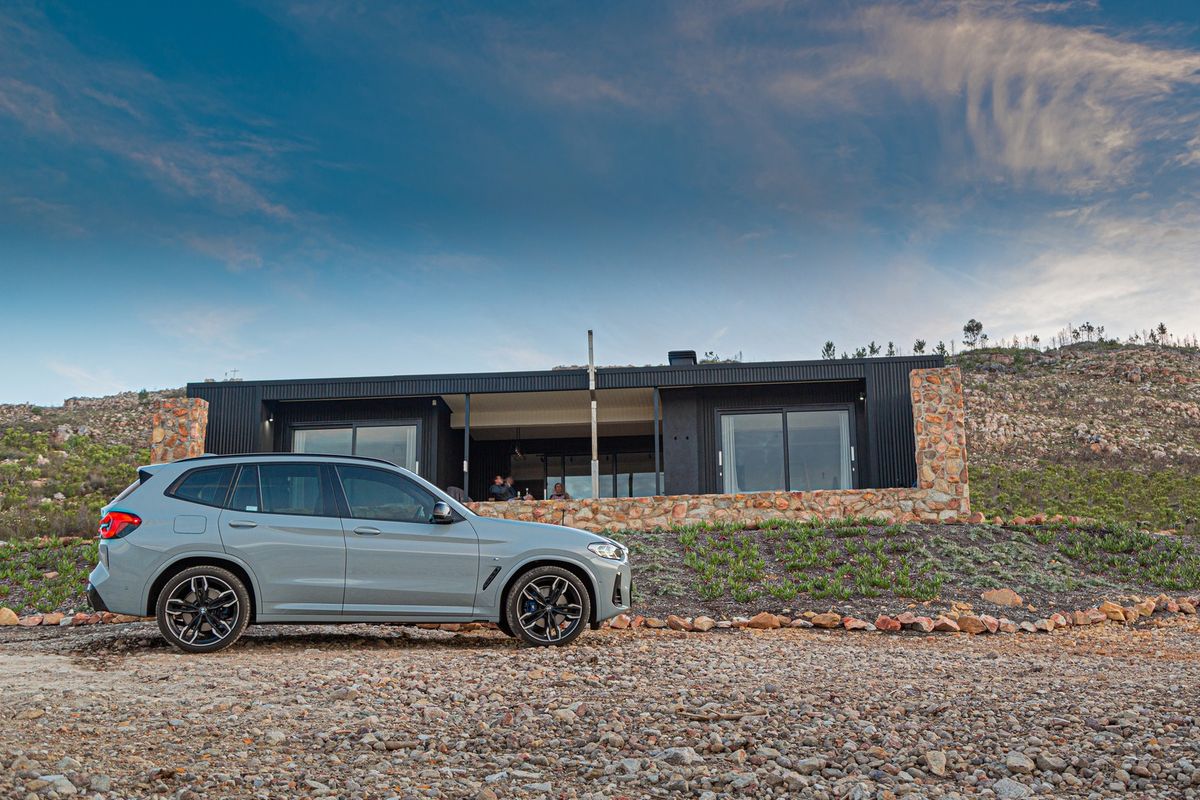
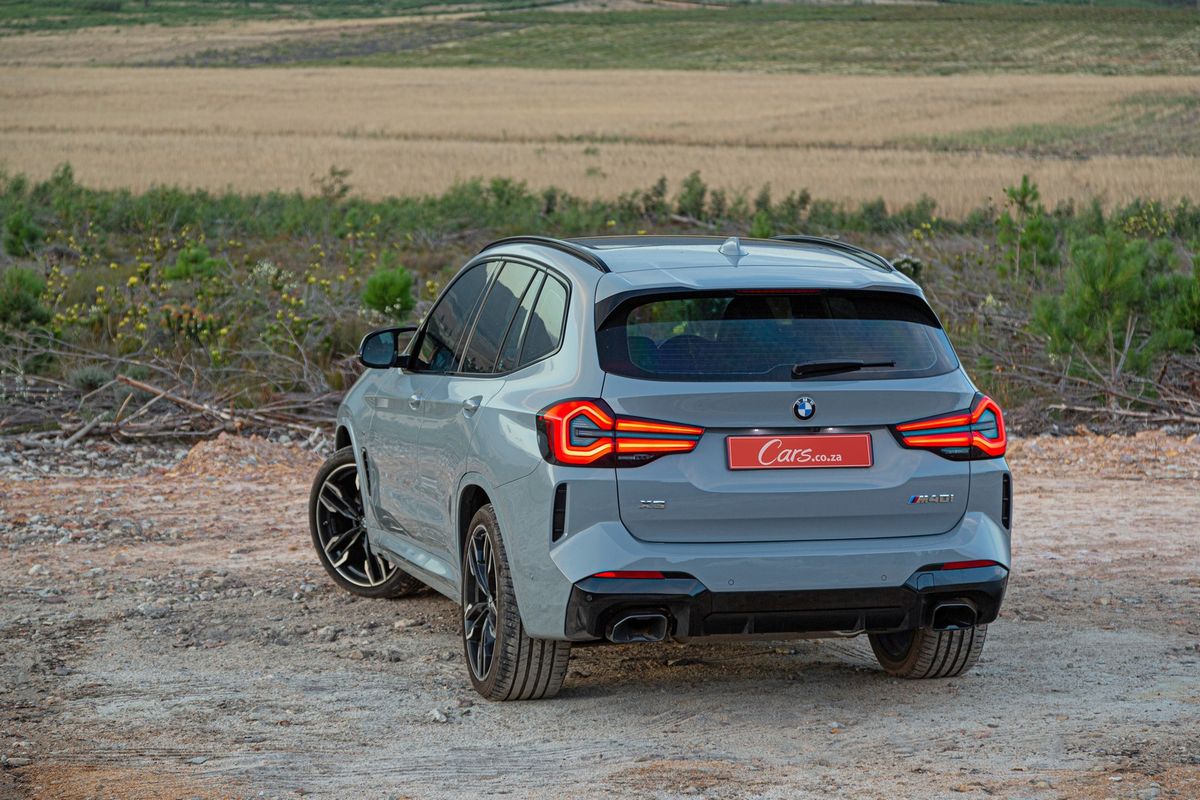
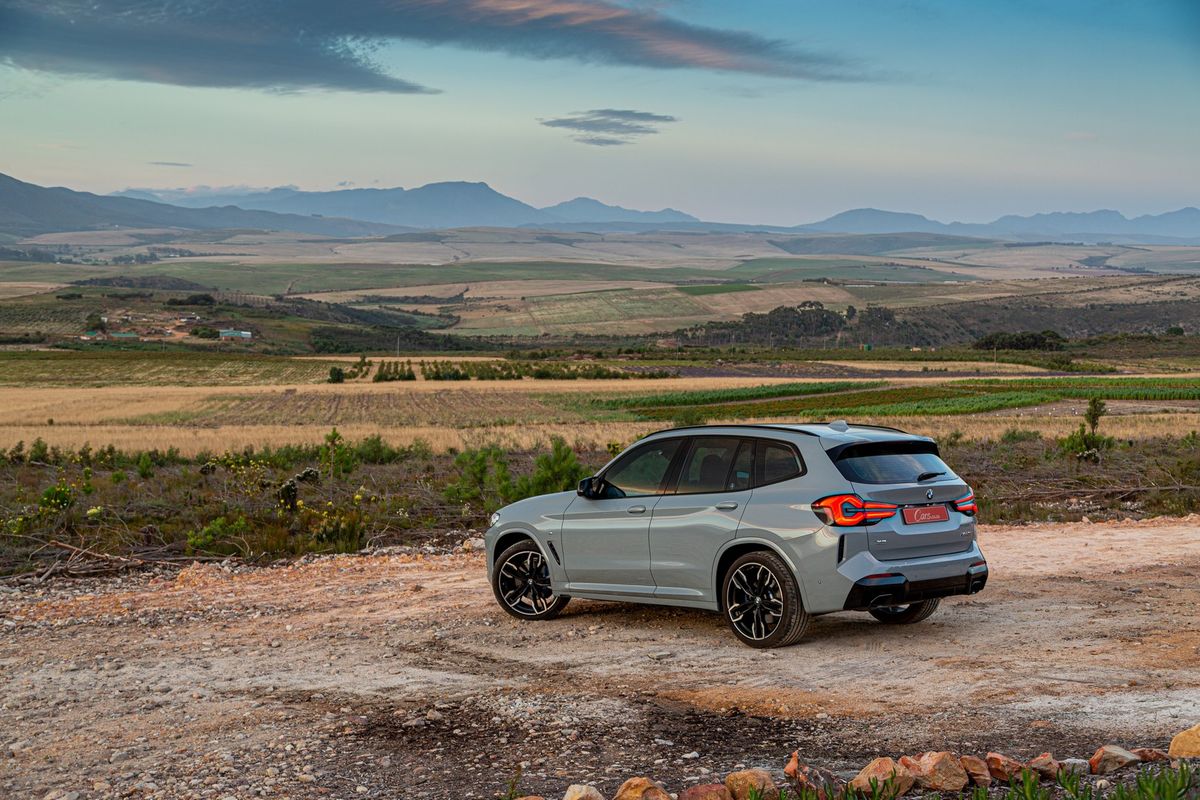
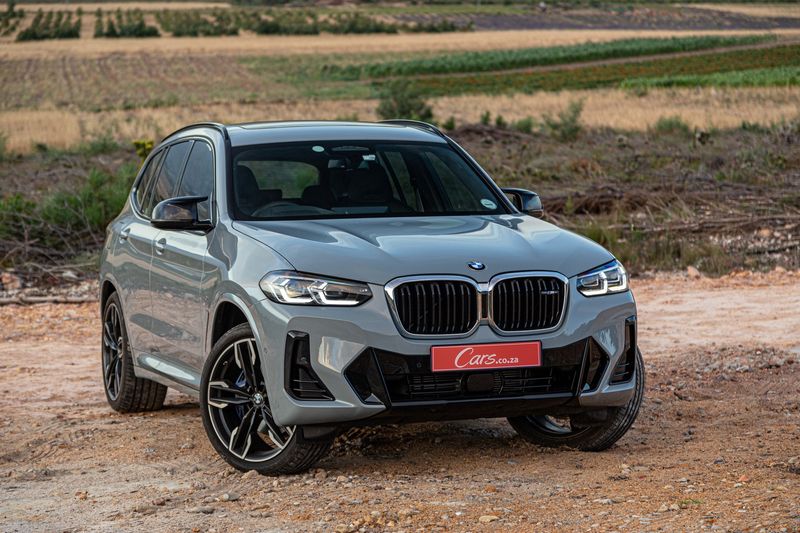
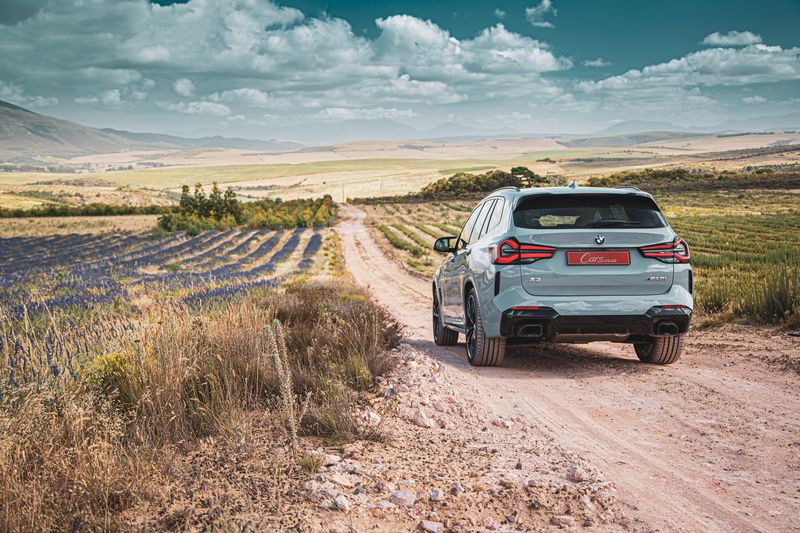
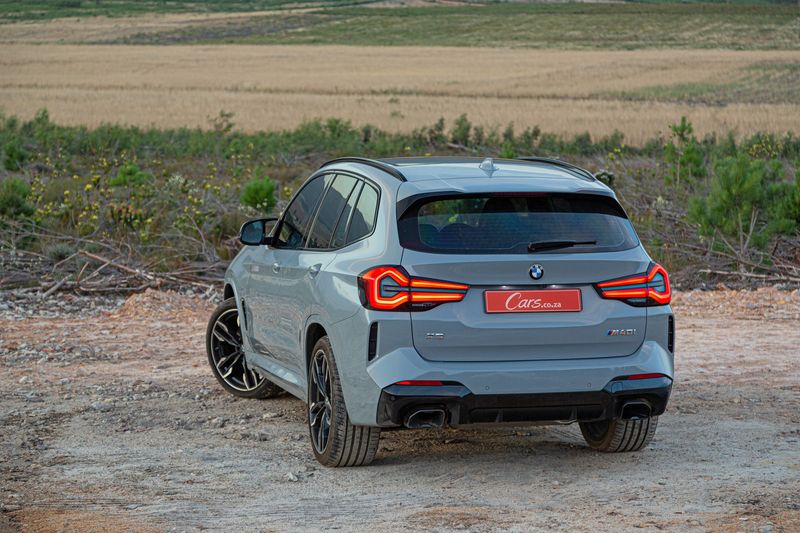
For this test, BMW supplied us with an X3 M40i, which looked striking in its Brooklyn Grey finish – it complements the brand’s performance-orientated derivatives well and drew many positive responses from onlookers during our journey. Grey hues are still very much in vogue; Audi Sport favours Nardo Grey for some of its sportier models. The 21-inch bi-colour wheels really look the part too and add to the vehicle’s kerb presence. There’s no mistaking the M40i for anything else in the range, thanks to its subtle M badges on the grille, flanks and rear… and don’t forget those trademark big-bore exhaust ends!
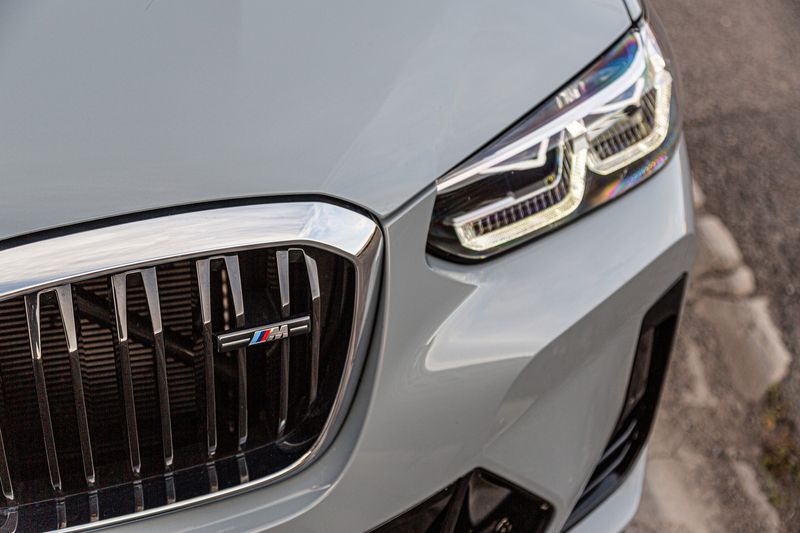
The BMW M40i’s dark grille finish contrasted beautifully with its Brooklyn Grey paint finish.
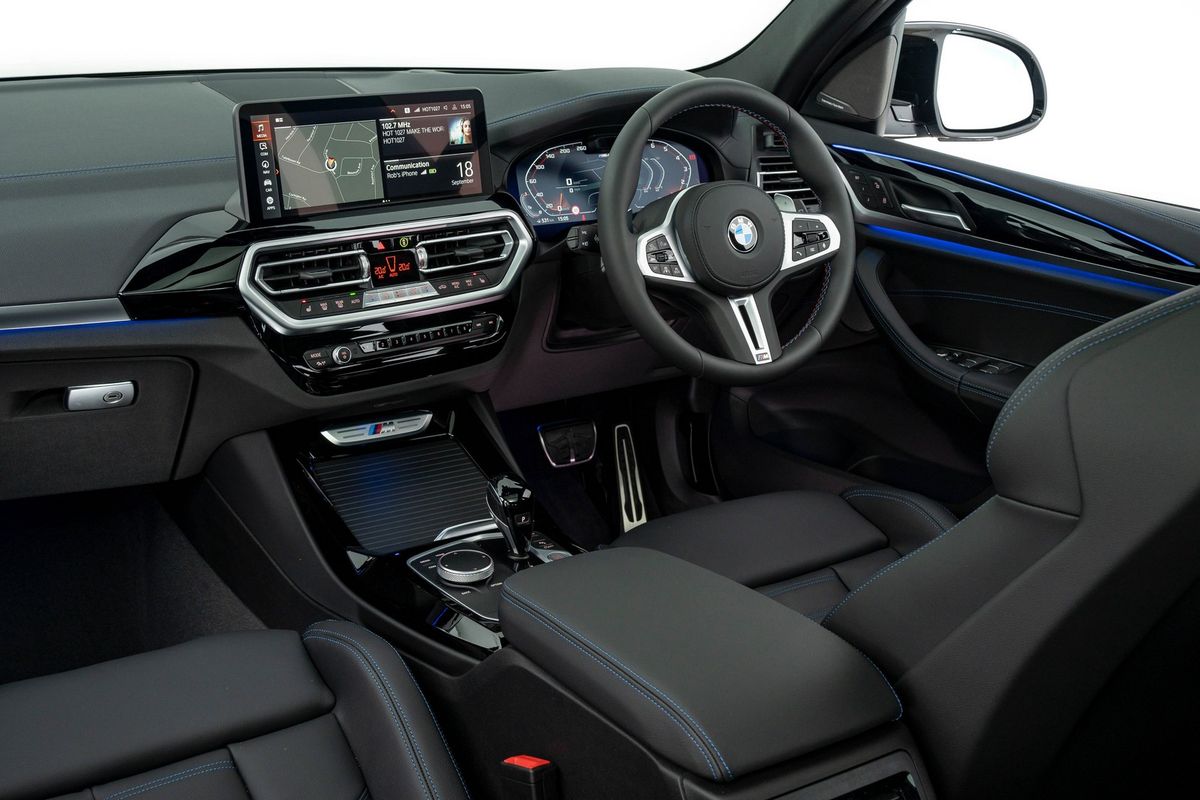
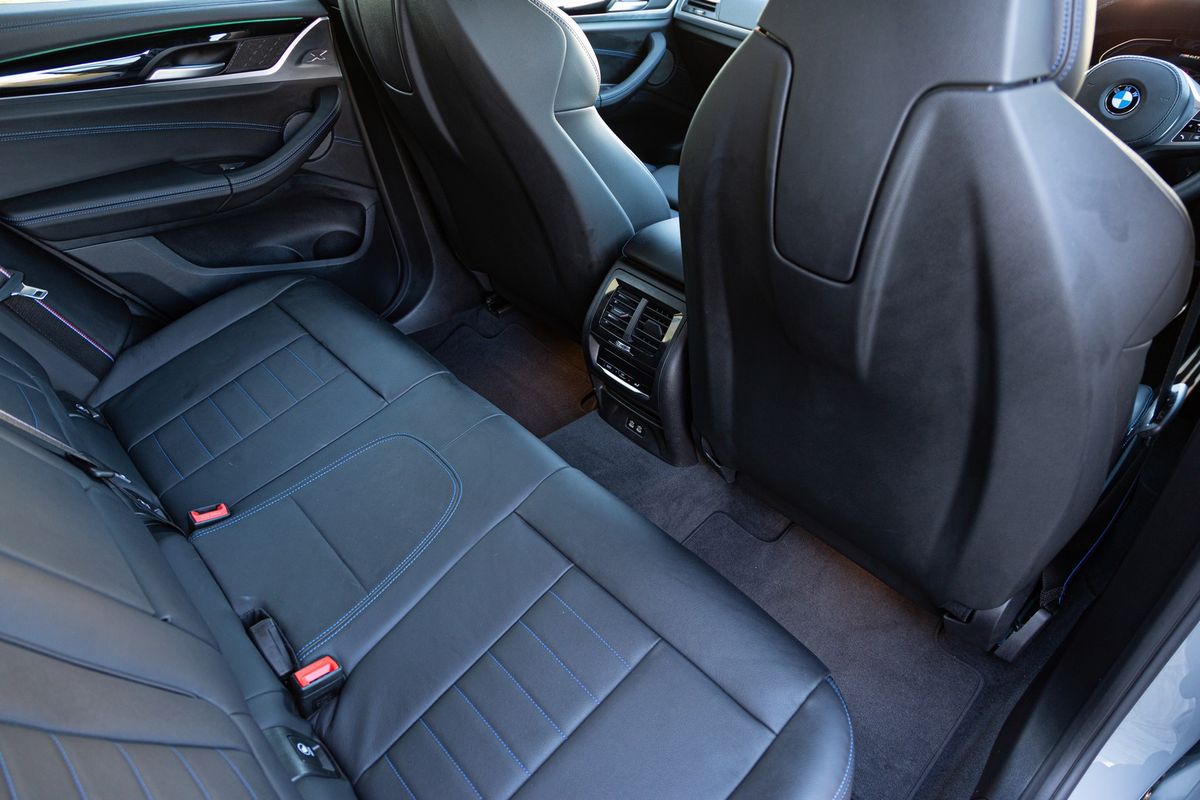
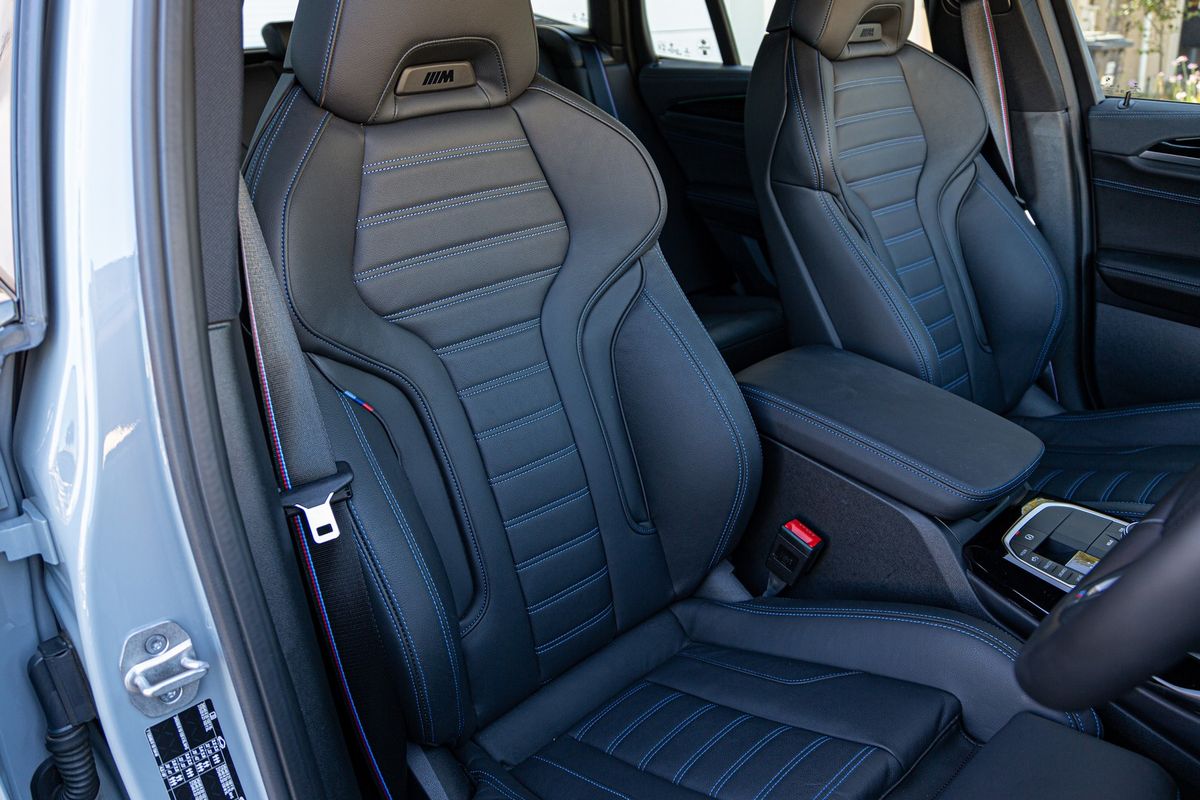
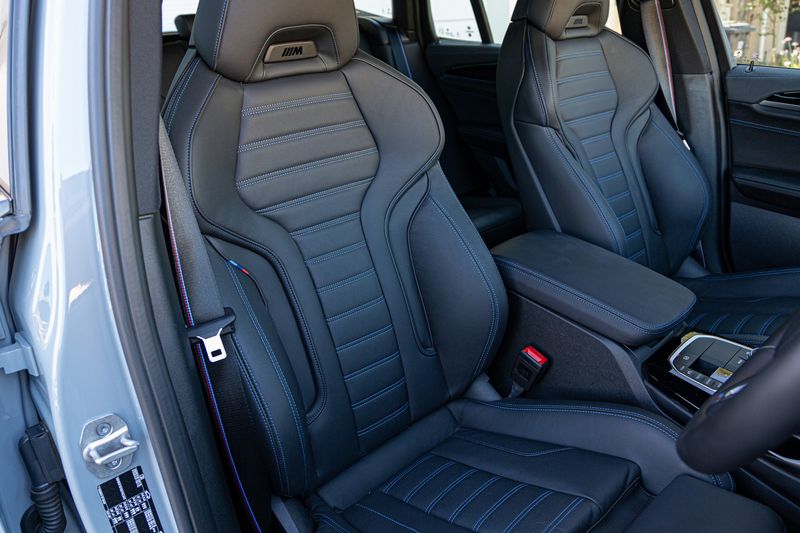
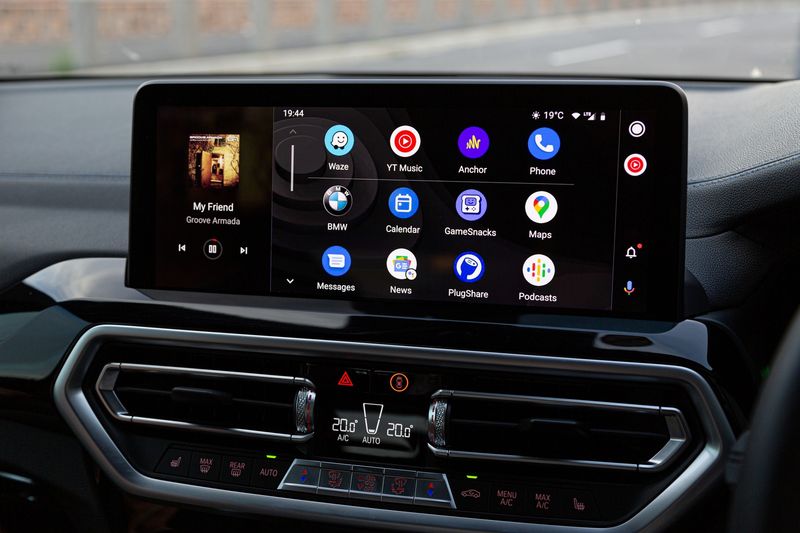
Inside, the M40i offers a great blend of sportiness and luxury. Our unit featured the standard black sport seats, with blue contrast-stitching, a black M logo embedded in each of the front headrests, as well as M-branded seat belts. Meanwhile, the updated X3’s infotainment system offers expanded functionality – it now supports both wireless Android Auto compatibility and over-the-air software upgrades.
Does this derivative successfully bridge the gap between the (forgive us, BMW) run-of-the-mill X3 derivatives and the performance-focused X3 M Competition flagship? Can it justify its lofty list price? We travelled more than 1 900 km in the BMW X3 M40i on a mixture of road surfaces… and herewith our findings.
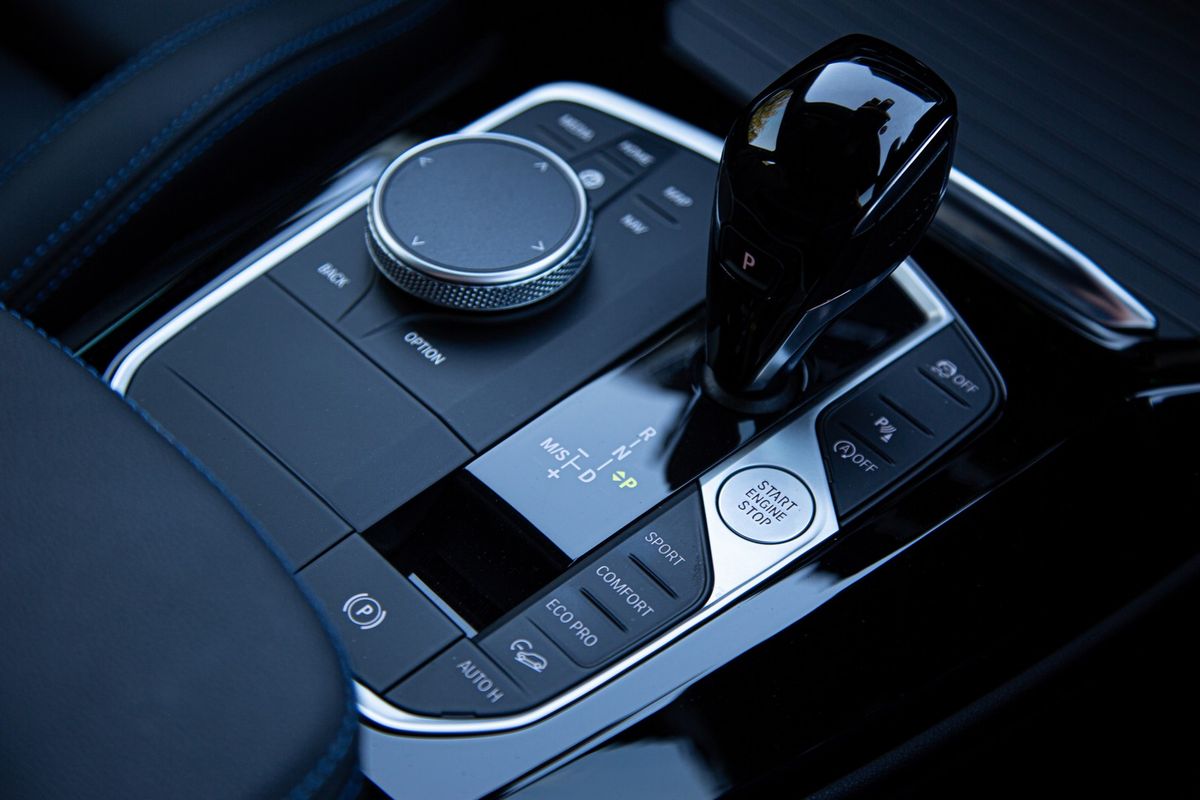
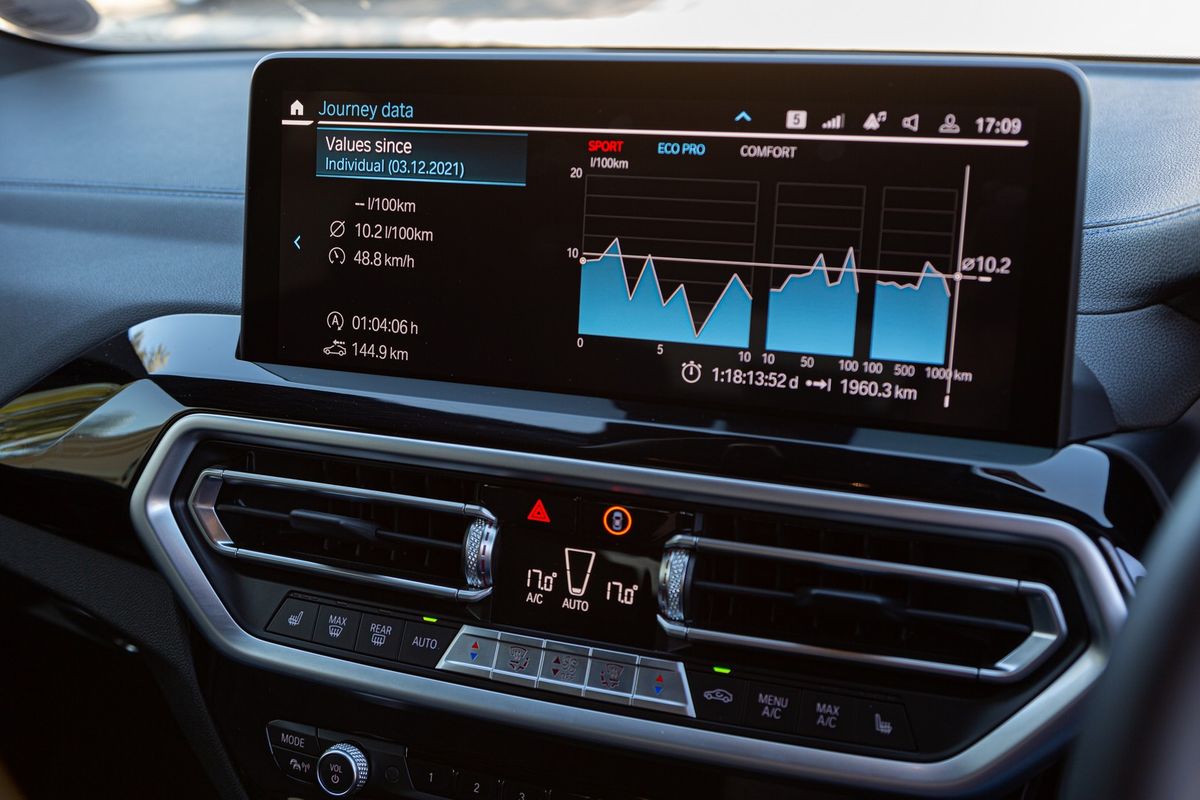
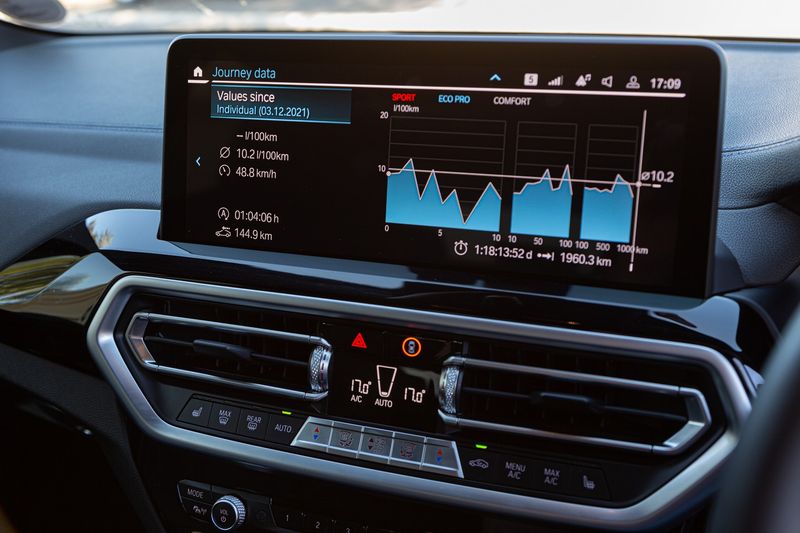
An overall consumption figure of 10.2 L/100 km. For the vast majority of our time with the X3 M40i, we drove it in Eco Pro mode.
Things We Like about BMW X3 M40i
That glorious engine and engaging driving experience
The M40i’s 3.0-litre inline-6 turbopetrol motor is a legendary powerplant and it’s easy to see why – the single-turbo motor’s 285 kW and 500 Nm translate into stunning performance. BMW claims the M40i can accelerate from 0-100 kph in 4.5 sec and a quick test of the launch-control function (in conjunction with a smartphone app) suggested the Bimmer can comfortably eclipse 100 kph in under 5 sec.
The BMW’s a rapid machine, yes, but the sheer flexibility of the powertrain is arguably the most impressive part of the package – the 8-speed automatic transmission is smartly calibrated with the engine’s power/torque delivery. As a result, there’s minimal lag and maximum aural satisfaction as the revs climb. Even when turbocharged, BMW’s inline-6 is one of the motoring world’s greatest sounding motors.
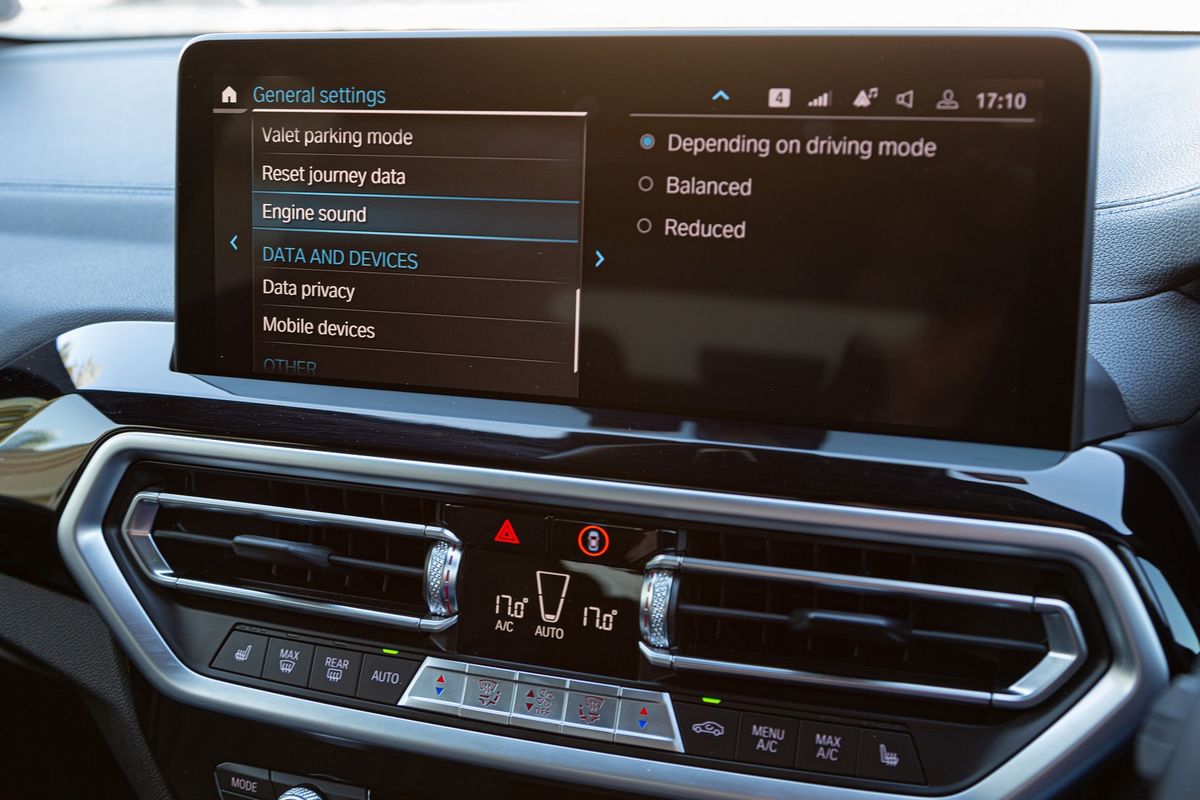
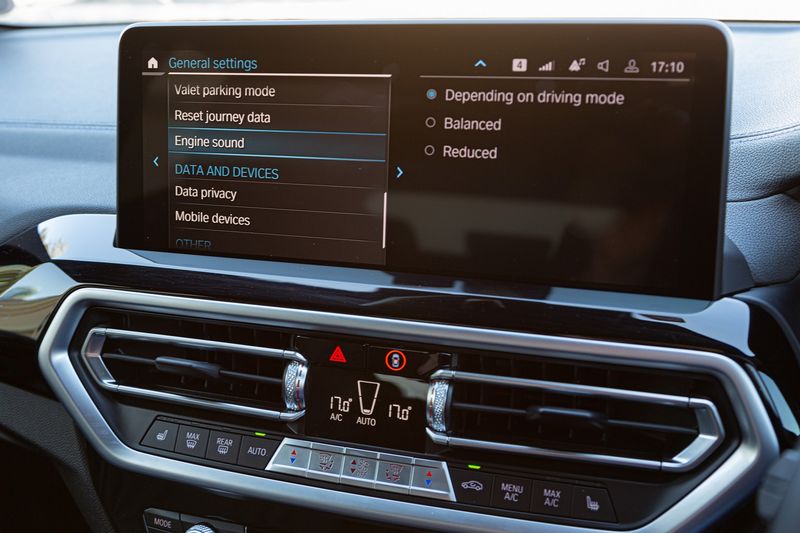
By selecting the Reduced engine sound setting, the exhaust note is not nearly as vociferous as it could be.
If the inline-6’s induction howl doesn’t grab you, the charismatic exhaust pops will, but during its first few days in our test fleet, the Bimmer sounded rather subdued, even when its Sport drive mode was engaged. How so? We trawled through the iDrive menus to see if a setting was dialling out all of that aural goodness. Indeed it was – once the Reduced setting had been unchecked and replaced with Depending on Driving Mode, normal service resumed. There was much relief – the M40i had been far too quiet for our liking; for a while, we suspected European noise regulations had muzzled the M40i.
As for the driving experience, the X3 is not purported to be a sportscar… it’s more of a spacious, practical luxury family car with a sporty bent. However, the M40i certainly has a wider range of talents than its lesser siblings, especially in terms of dynamism. It delivers quite astonishing in-gear acceleration and performs 80-120 kph overtaking manoeuvres with little effort – even in its most relaxed settings.
These sporty front seats look good and offer a good balance of comfort and support.
The X3 M40i features adaptive suspension, which means the damping can be firmed up for a more engaging drive, or softened, should the road surface deteriorate badly. Given our weekend sojourns on some gravel roads, we did think the overall setup was rather firm. But, if you spend the majority of your time driving on asphalt, you’ll enjoy how this family SUV mimics a sportscar when you’re in a hurry.
We did bear in mind that this is a sizeable family SUV – the laws of physics still apply, but we came away impressed with how well the M40i handled. The xDrive system works well and, should you decide to make the Bimmer take a few corners at a heady pace, there is no shortage of grip available. It’s not quite as involving as, say, an M340i, but there’s enough to keep the average enthusiast entertained.
The tech and connectivity
The slick-looking BMW Operating System 7 heralds new levels of connectivity for the X3.
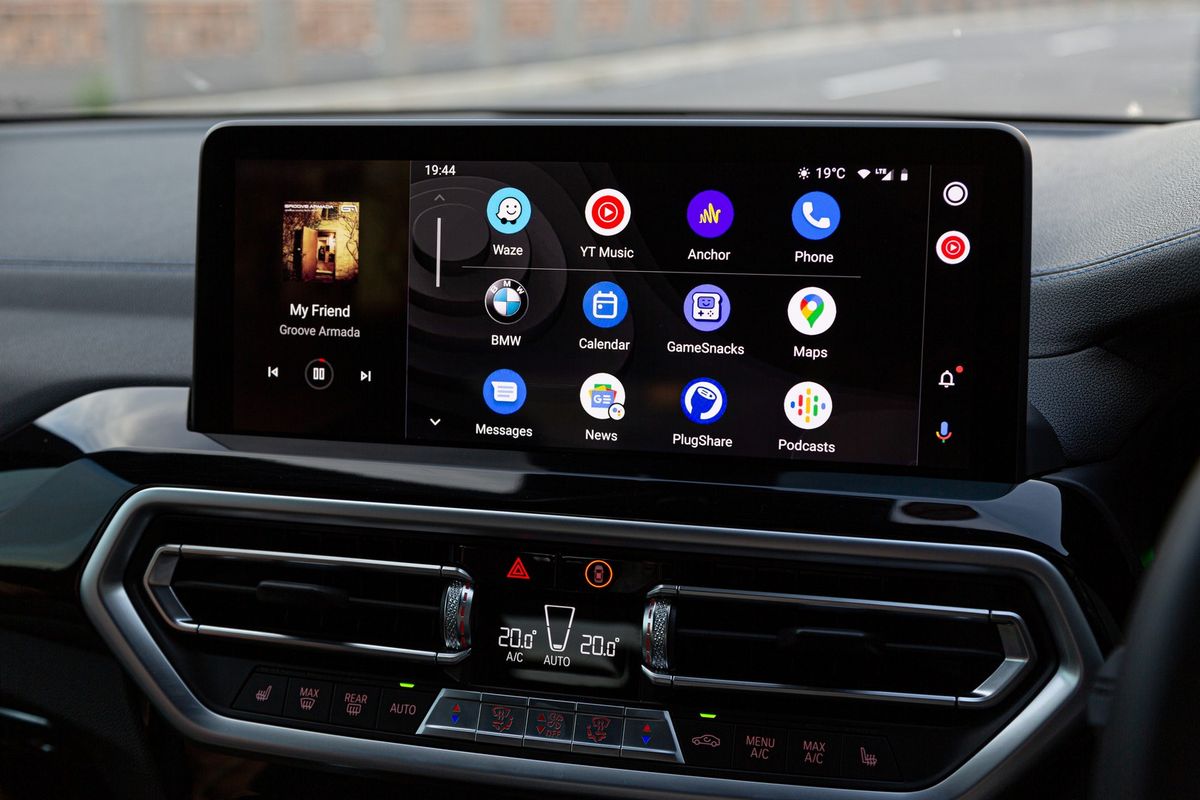
The recent LCI update saw the introduction of a number of firsts in the X3. The M40i features a large (12.3-inch) new touchscreen infotainment system powered by the slick-looking BMW Operating System 7. Its interface has a refreshingly clean and easy-to-use layout, the functionality of which is enhanced by the rather smart voice-control system known as “Hey BMW”.
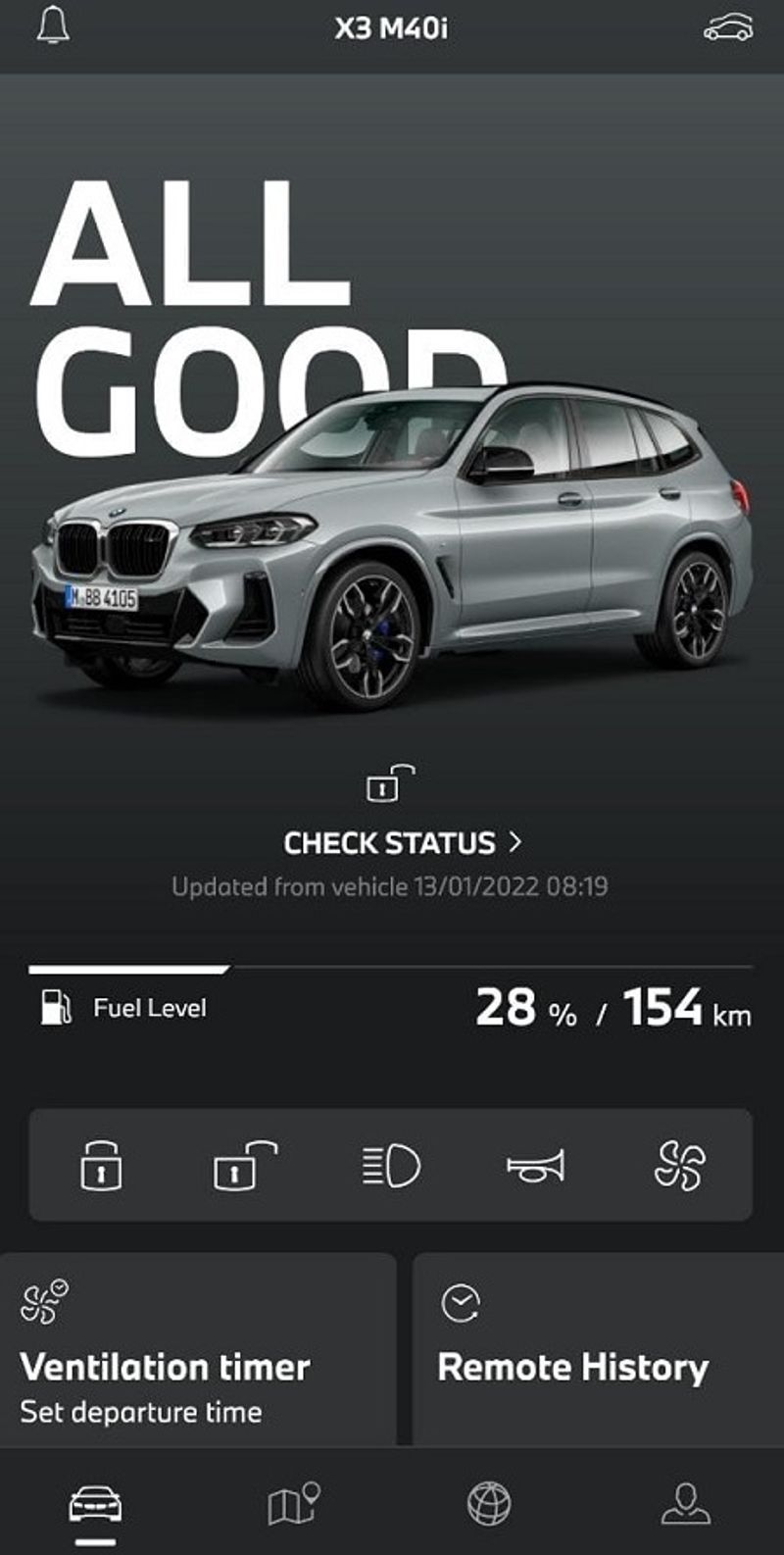
Meanwhile, wireless Android Auto has debuted in BMW’s executive SUV – it joins Apple CarPlay as a (virtual) must-have feature for the digitally-savvy generation. In the M40i, numerous USB ports are provided, as well as a wireless charging pad (at the front), but note that larger devices won’t necessarily fit in the latter. We also had a chance to test the MyBMW app during the BMW’s tenure in our fleet.
We used the app to remotely unlock the M40i, toggle its climate control settings and even locate the vehicle… For example, if you cannot find the BMW in a big parking lot, you can use the app to sound the hooter and flash the lights – it’s nice to have. Even now, with BMW Fleet services having collected the vehicle, we can see exactly where it is (we’re rather tempted to “sound the horn” from 50 km away).
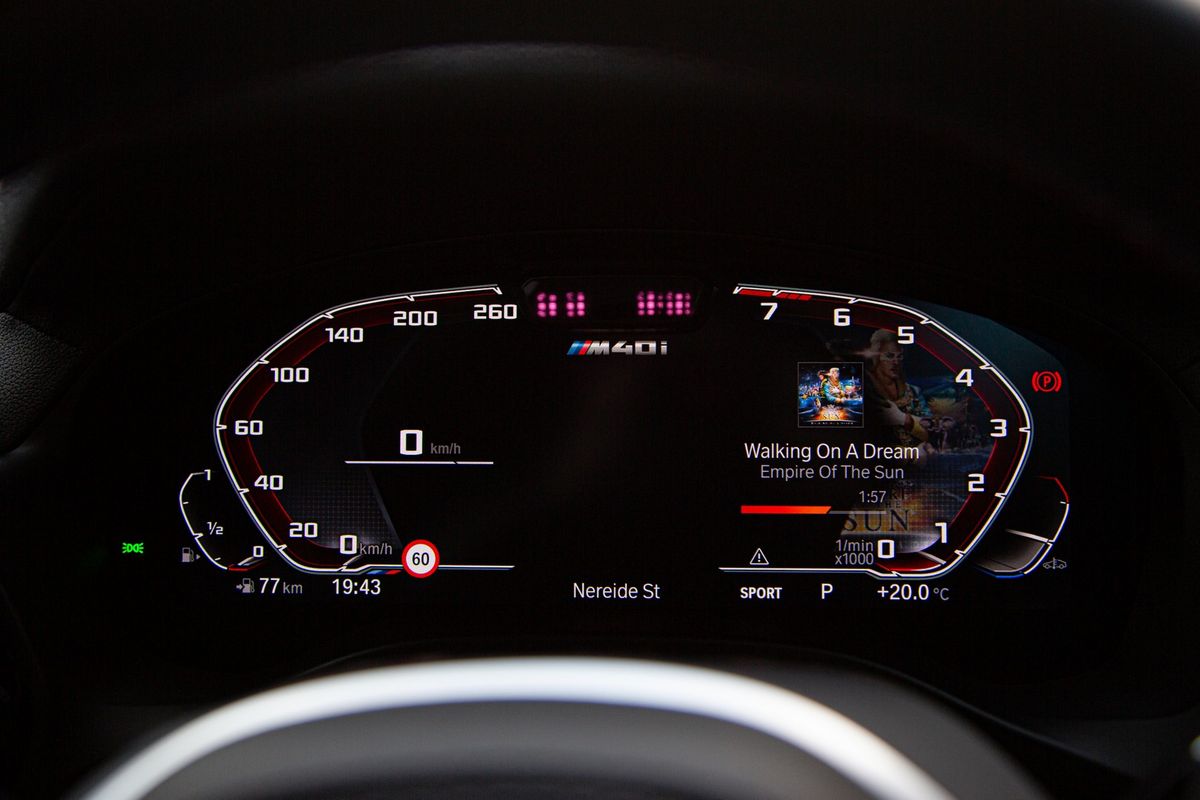
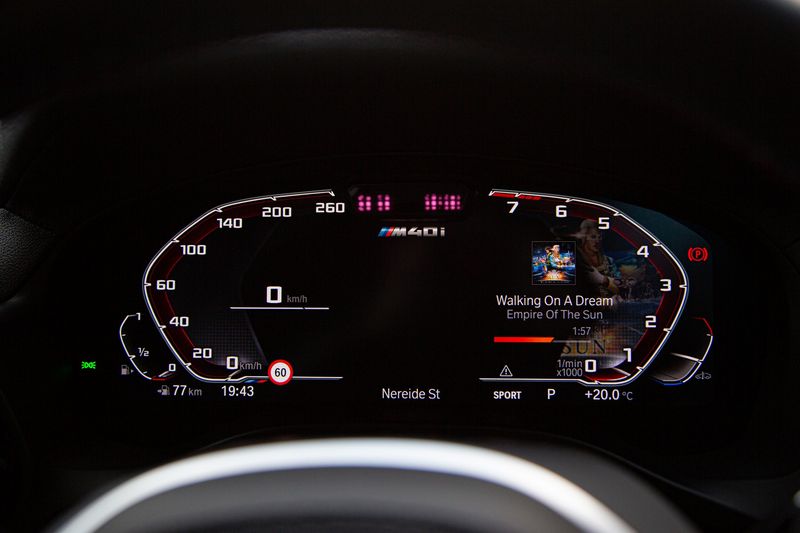
The BMW Live Cockpit Professional (shown below), which is what the Bavarian marque calls its digital instrument panel, is an upmarket addition and replaces the partial analogue dial setup from the pre-facelift model. The layout of the instrument panel changes depending on which drive mode you’ve selected; the display scheme features gentle blue highlighting in Eco and purposeful red accents in Sport.
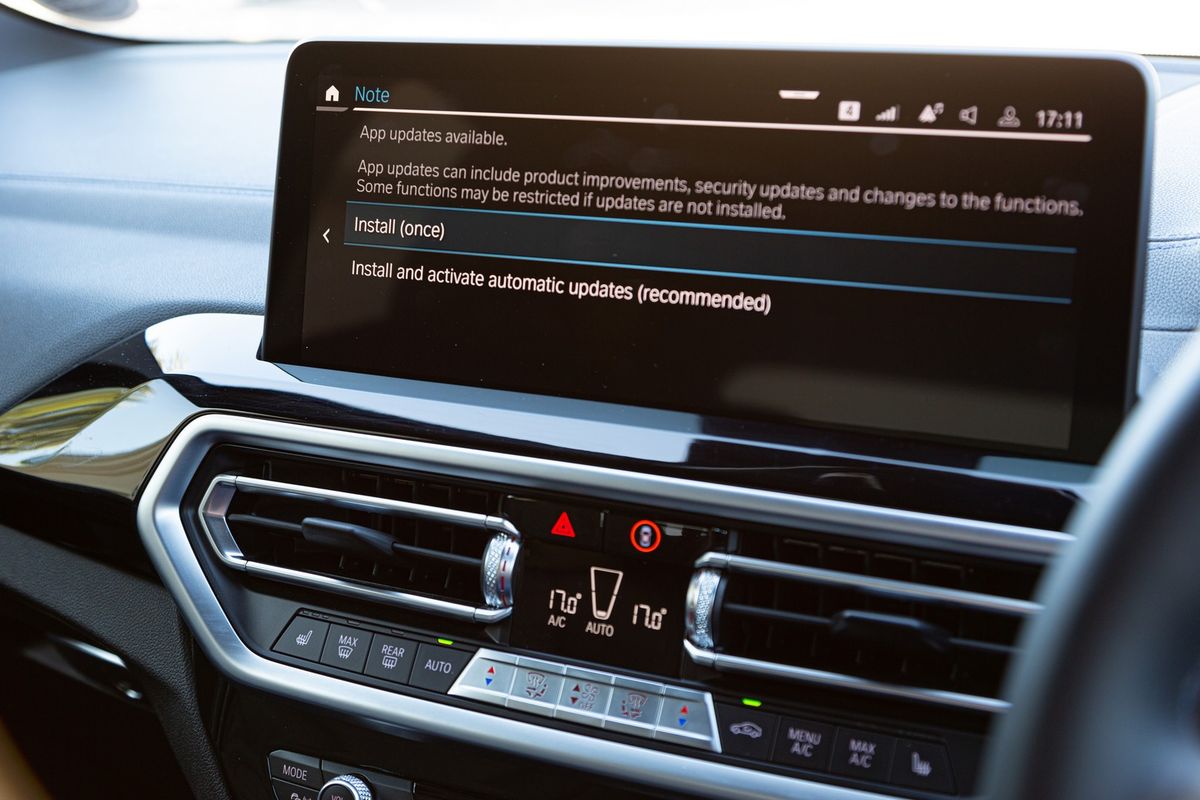
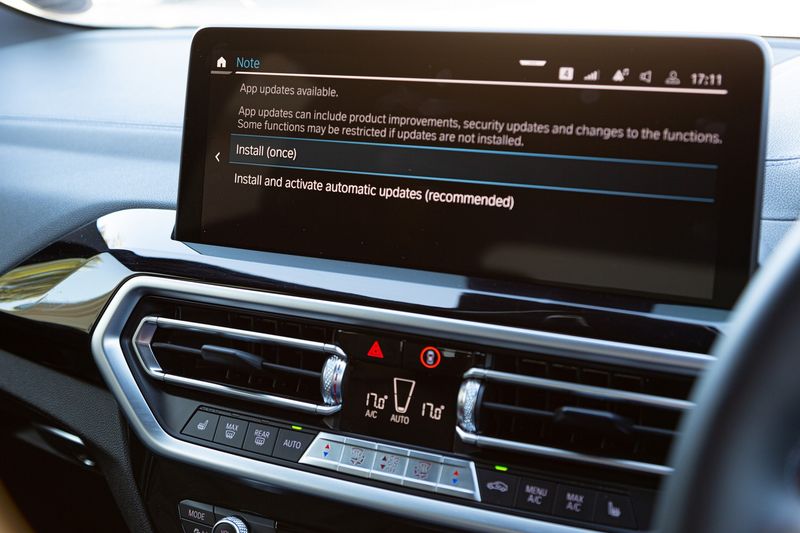
The infotainment system allows for over-the-air updates, which means you don’t have to manually update the car’s “firmware” by downloading a file from the internet and installing it via a portable storage device… at the very least, you won’t need to visit the dealer’s workshop to “get updated”. These range from software upgrades of various in-car systems to new content and even “Easter eggs”. We received 2 video clips from BMW via the infotainment screen – one wished us Happy Holidays and the other was a Happy New Year message. The updates don’t take long, but only happen when the car’s parked.
The infotainment system will alert you when over-the-air updates are available from BMW.
As befitting a vehicle at this end of the market, the M40i comes standard with Driving Assistant Professional, which incorporates, inter alia, active cruise control, lane-keeping assist and steering assist.
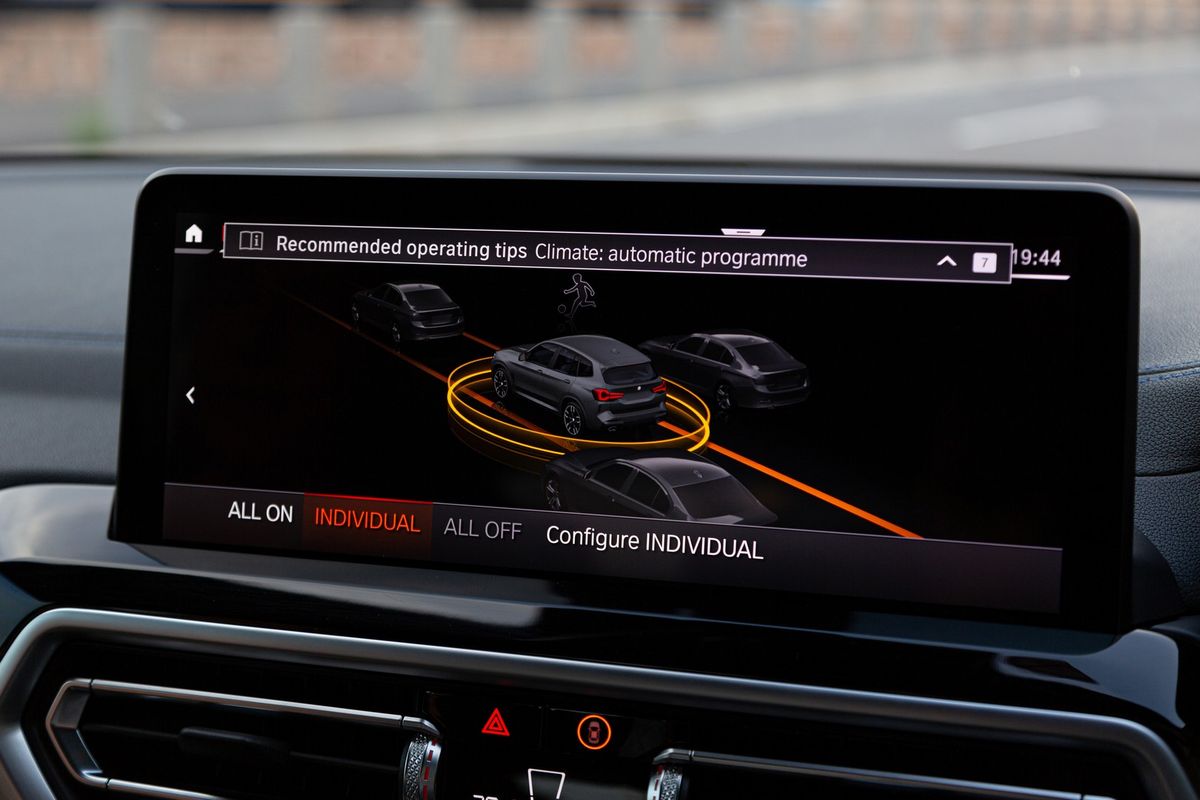
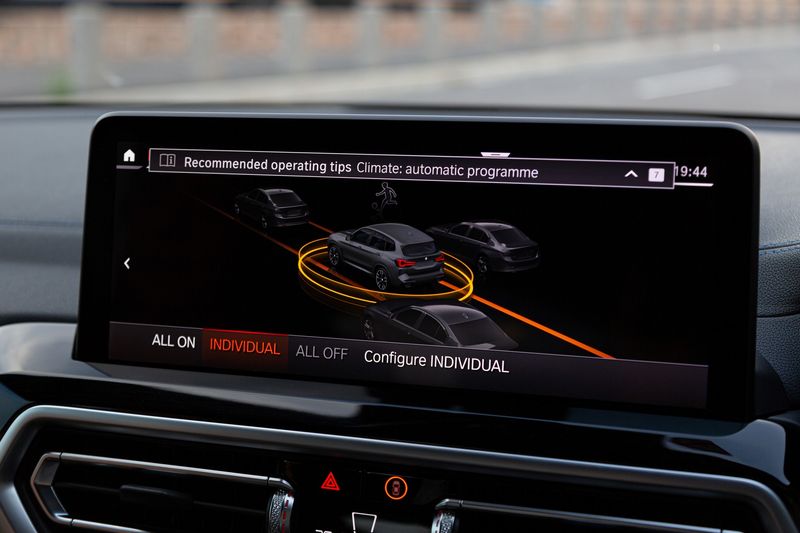
The systems work well, but we did find the lane-keeping assist a little too intrusive. On one occasion, when we were driving on a dual-carriageway and moved over to let a motorbike past, the car nudged itself back into the middle of the lane. If we weren’t expecting it, the correction could have been a little startling. Fortunately, you can dial back the intensity of the system while keeping vital safety features (like emergency auto brake) active. Given that a bumper bashing is the most common kind of accident, this tech will intervene if the vehicle in front of you suddenly stops and you don’t react in time.
You can adjust the intensity of the safety systems’ interventions, plus the car is always keen to throw tips your way to improve your user experience.
Value for money
“R1.5 million seems a lot for a family SUV.” Armchair critics will say you could buy a bigger BMW X5 30d for about the same price, but the M40i is not meant to appeal to conventional luxury-car buyers.
A quick glance at the M40i’s rivals, courtesy of the Cars.co.za Comparison tool, suggests the Bimmer goes up directly against the Audi SQ5 – which is comparatively cheaper, but also slower and not as liberally equipped – as well as the Mercedes-AMG GLC 43. The Benz, for its part, offers similar performance to its Bavarian rival, but is quite long in the tooth. If you’re performance-oriented, the Porsche argument comes into play, with the Macan GTS costing a touch more money, but packing 324 kW. Despite its power advantage, the GTS’ claimed performance figures are on-par with those of the X3.
The M40i is hardly keenly-priced, but its standard specification is not meagre.
So, what do you get for your R1 415 042 (as standard, January 2022) in terms of standard features? Contrary to the past practice of offering basic cars with extensive options lists, German premium brands are switching to “subscription models” that enable buyers to effectively activate some features on their cars and use them as long as they like – it’s a way for manufacturers to reduce complexity and save buyers from paying for features that they will hardly ever use… BMW claims its new X3 range sees “the complexity of the equipment lines and optional extras has deliberately been reduced by 30%”.
The X3 M40i trim comes liberally equipped with a delicious Harman Kardon audio system, wireless phone charging, USB ports for the rear passengers, heated seats, head-up display, panoramic roof, reclining rear seats, tyre pressure sensors, adaptive dampers, parking sensors, parking cameras and the previously mentioned safety tech. All that connectivity/app integration is also included.
So, what options are available for this derivative? A quick look at the online configurator suggests that you can spec the BMW Laserlights (R16 500), a heated steering wheel (R3 050), front and rear heated seats (R6 100), BMW Gesture Control (R4 000), Parking Assist Plus (R7 200) as well as red-calipered M Sport brakes (R6 600).
The X3 M40i was a consummate long-distance cruiser, but we wished the indicated consumption figure could be closer to the manufacturer’s claim.
Dislikes?
During its tenure in our test fleet, the X3 M40i performed impressively, but a few things warranted criticism. Apart from the previously mentioned firm ride quality, we noted a heavier-than-expected fuel consumption. Granted, if you’re shopping for a R1.5-million luxury car, the petrol price is unlikely to be a major factor, but we did sense that the Bimmer emptied its 65-litre tank faster than we thought it would. Interestingly, BMW claims an optimal range of 730 km, but we were lucky if we got around 550 km from a full tank. After 1 960 km, the trip computer indicated 10.2 L/100 km (claim: 8.9 L/100 km).
The BMW M40i produces more than enough performance to justify its sporty packaging and on-road presence.
Buying Advice
The great thing about the recently revised BMW X3 range is that there’s a powertrain to suit virtually every need. If you’re after the most extreme performance, BMW offers the X3 M Competition, which delivers sportscars-rivalling pace. If frugality and long-haul comfort are what you’re after, one of the turbodiesel derivatives should fit the bill nicely. Plus, if all-wheel-drive capability is not a must-have, the sDrive18d with its 2.0-litre turbodiesel motor (and a claimed optimal range of 1 308 km from a full tank) is a tempting proposition indeed; you could get one, with a few options added, for under R1 million.
Noble Makes Return with M500 Supercar
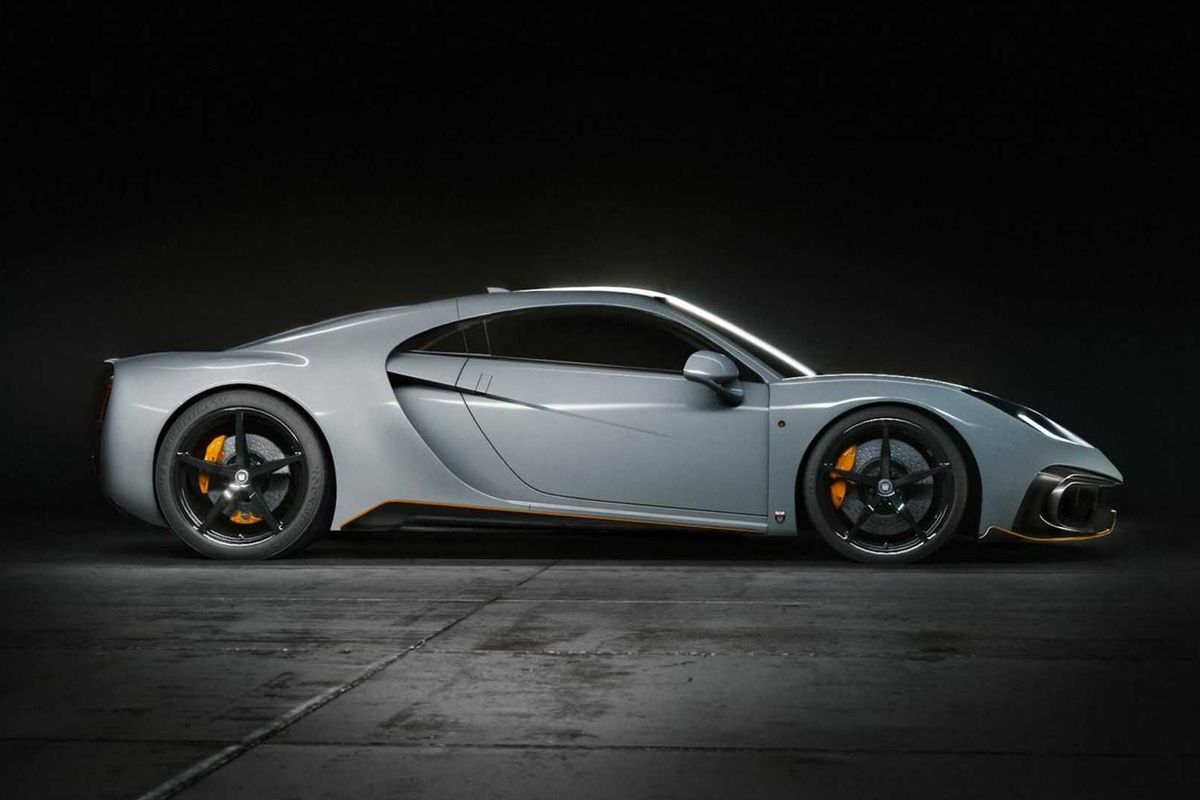
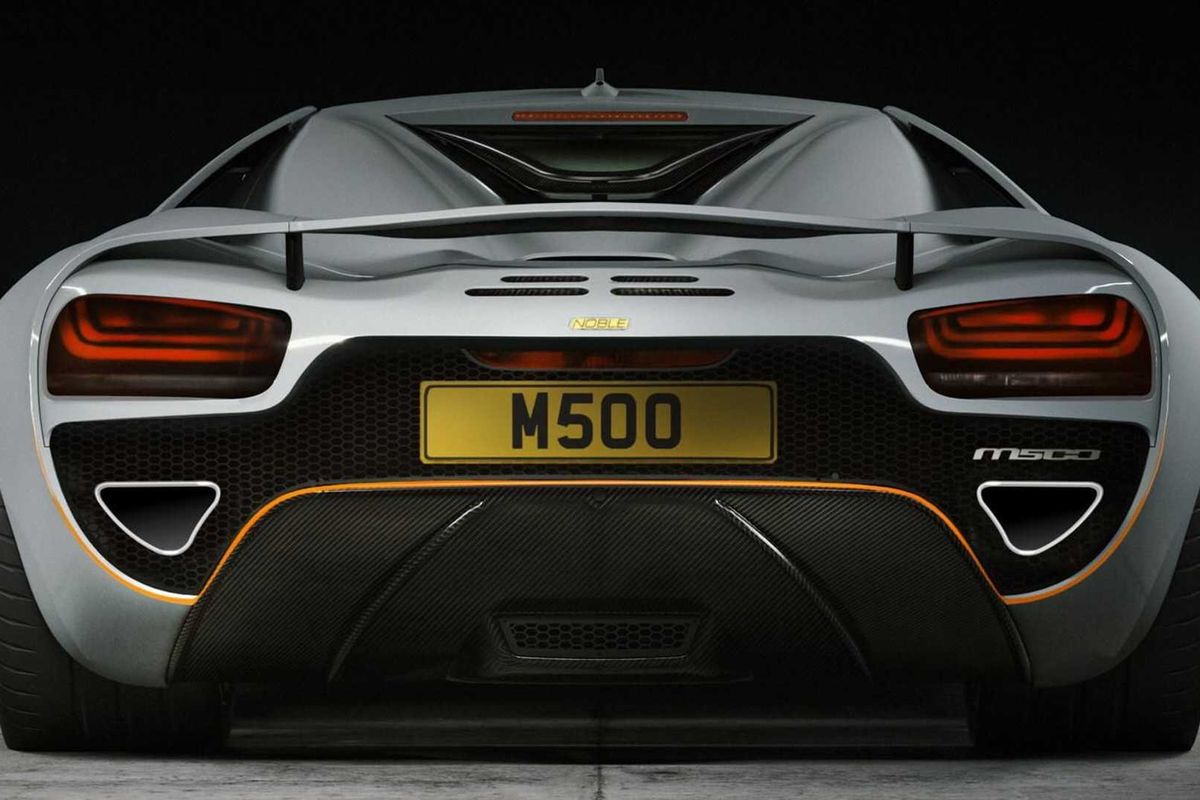
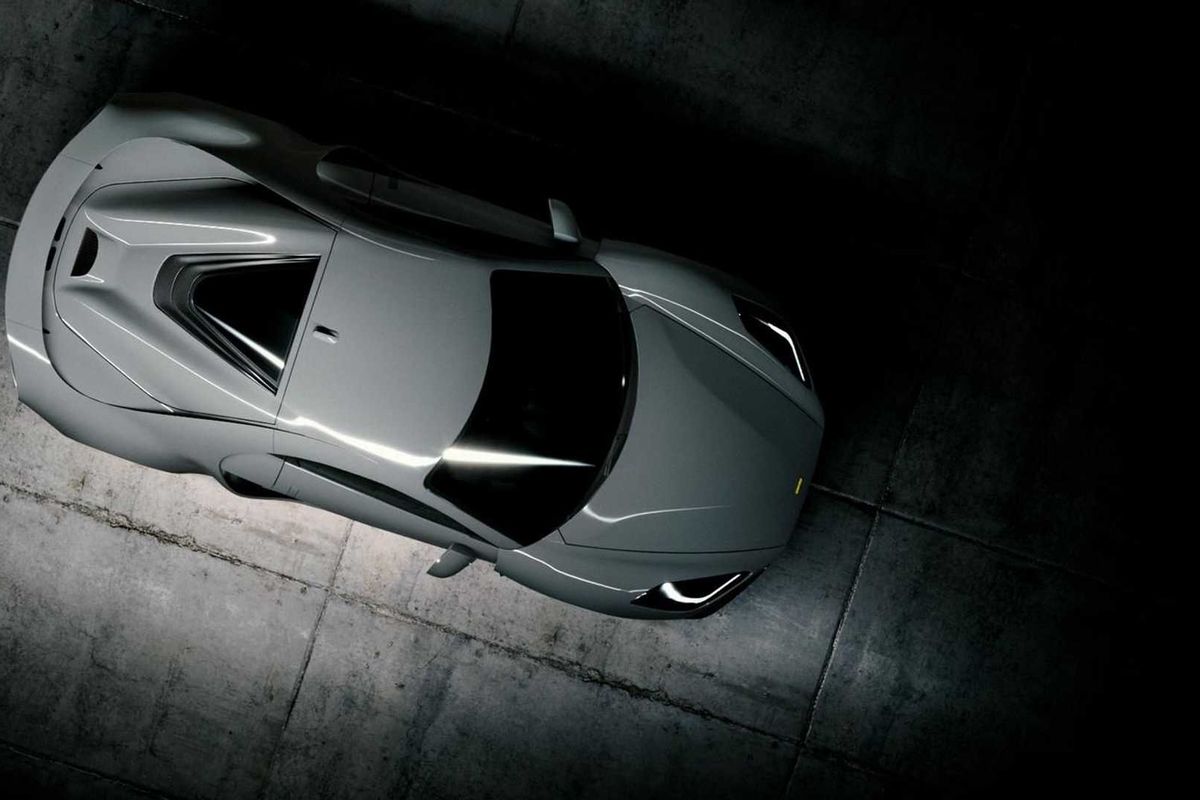
Small-scale British supercar maker, Noble, is preparing to bring its new M500 supercar to market in 2022.
Based in Leicester, UK, Noble Automotive is perhaps not as widely publicised as other supercar makers such as Ferrari, Lamborghini or McLaren but the small British firm has a strong reputation for remaining true to driving purity and the forthcoming M500 will be no different.
Since 2009, Noble produced the M600 supercar boasting a twin-turbocharged 4.4-litre Yamaha V8 engine that produced maximum outputs of 485 kW and 819 Nm of torque and with a Graziano 6-speed manual transmission driving the rear wheels. Production of the M600 ended in 2018.
At 2018 Goodwood Festival of Speed, Nobel showed the M500 concept supercar, essentially a ‘baby M600’ and a working prototype, pictured here, is currently undergoing testing. Nobel is hoping to have first customer deliveries before the end of 2022 with a target production of 50 units per annum.
The rear-wheel-drive Noble M500 2-seater, mid-engined supercar will be powered by Ford’s twin-turbocharged 3.5-litre V6 engine, the same that powers the Ford GT, and will offer around 410 kW and 813 Nm of torque and will also employ the Graziano 6-speed manual transmission with a metal gate.
The tubular steel chassis is 70% derived from the M600 and while both the M600 and M500 share the same length, the M500 is slightly wider. The M500 features a double-wishbone suspension with coilover springs and passive dampers all around. The steering is hydraulically-assisted but no ABS or airbags will be fitted to the M500, which is a rarity in this day and age.
The target weight for the M500 is roughly 1 250 kg and if that is achieved, it will feature a tantalising power-to-weight ratio that could give the Maserati MC20 and the Porsche 911 Turbo S a solid run down the drag strip.
Also, while official pricing has not yet been confirmed, Noble is aiming to bring the M500 to market for roughly £150,000 or approximately R3.2 million which would make it very competitively priced against its rival offerings.
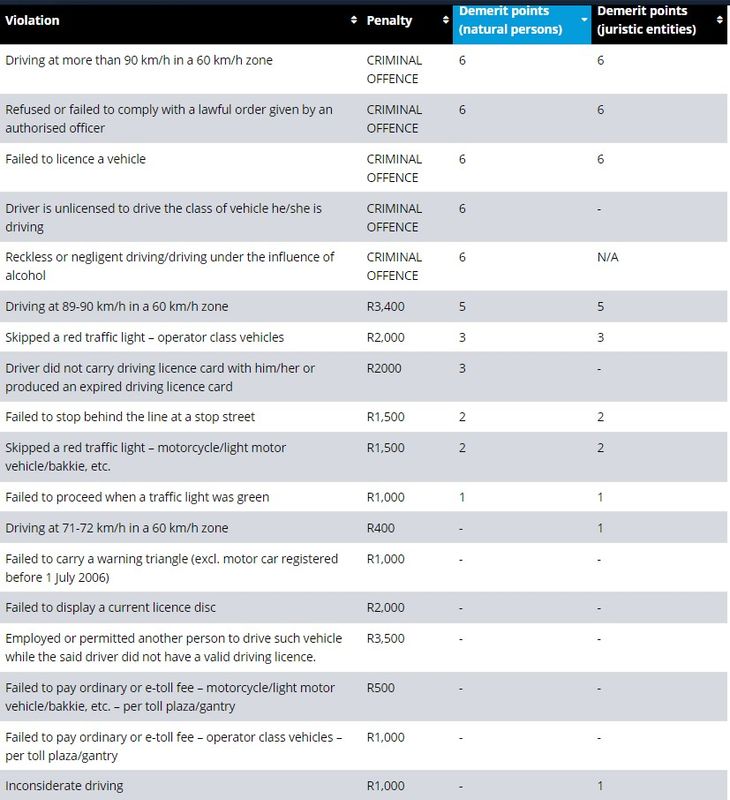
The implementation of the Administrative Adjudication of Road Traffic Offences (AARTO) act will be rolled out in phases according to Minister of Transport, Fikile Mbalula, with the Points Demerit System scheduled to be introduced in 2022.
Update: As of 13th January 2022, many SA news websites are reporting that the AARTO Amendment Act has been declared unconstitutional and invalid. SA motorists can relax as the demerit system has basically been postponed indefinitely.
Many South Africans (including Cars.co.za), were under the impression that AARTO would come into effect on 1 July 2021, but this isn’t the case. Earlier this year it was reported that the AARTO act might be delayed due a forensic investigation into alleged maladministration at the Road Traffic Infringement Agency (RTIA) and its CEO and Registrar, Japh Chuwe, has, along with other senior managers, since been suspended.
It’s now been announced that the Department of Transport will adopt a phased approach to the implementation of AARTO but the Automobile Association (AA) believes that further delays could be on the cards.
“Transport Minister Fikile Mbalula announced a phased-in approach to the roll-out of AARTO but these phases can really only be implemented once the regulations are finalised and enacted. This process may delay the final implementation of the system scheduled for July 2022. Today’s communication, though, should have been made weeks ago as many people believed it was coming into force today. Despite this, we at least have a better roadmap going forward, but much of that relies on the finalisation of the regulations which must happen before any meaningful roll-out can occur,” said the AA.
AARTO roll-out phased announced
The 4 phases for the rollout of the AARTO act as announced by Fikile Mbalula are as follows:
Phase 1 – Present to 30 September 2021: 7 AARTO outlets established nationally and eNATIS will be enabled to collect AARTO payments. A motorist education campaign will also be implemented.
Phase 2 – 1 October 2021 to 31 December 2021: 67 local metropolitan authorities expected to ‘come online’ for AARTO processing. Adjudication process and Appeals Tribunal to start functioning. 18 additional AARTO outlets will be established.
Phase 3 – 1 January 2022 to 30 June 2022: 144 municipal areas to be added to the AARTO system.
Phase 4 – 1 July 2022: Introduction of the Points Demerit System as well as the rehabilitation programme for repeat offenders which is regarded as the backbone of AARTO.
AARTO has been criticised for not wholly promoting road safety but is rather a mechanism to generate revenue and while the AA supports the introduction of a points demerit system, the body recognises that legislation alone is not enough to alter poor driving behaviour in South Africa.
“South Africa’s annual road fatality rates are among the highest in the world per capita and amount to a national crisis. Legislation such as AARTO can only assist in reducing these numbers if there is proper implementation and effective law enforcement that supports it. For us, more attention must be given to the root causes of poor road safety, rather than simply introducing a system without consideration of the capacity of traffic law enforcement and other state services to implement it. Doing this will also speed up the process of achieving better road safety in our country,” said the AA.
What is the Points Demerit System and how will it work?
The proposed points demerit system is very similar to what is already used in several European countries. Essentially, points are added onto motorists’ licences if they commit a road offence. Once the motorist has reached a certain number of points, the licence can be suspended and if the motorist continues to commit offences, the licence can be taken away or effectively cancelled.
The law for the points system was signed in September 1998 as part of the Administrative Adjudication of Road Traffic Offences (AARTO) Act 46 of 1998.
The amendments include the removal of the courts from the AARTO process which is to be replaced by a dedicated Road Traffic Infringement Authority, which is to be largely funded by traffic fine revenue. Transgressors will be required to make written representations to the authority while the bill also makes provision for an Appeals Tribunal, allowing for motorists to challenge infringements within 30 days. If these options are not exercised within the required time frame, the issuing of a driver’s license or vehicle license disc will be blocked and demerit points imposed.
What this means is that if you do not pay your traffic fines, you may be blocked from renewing your driving and vehicle licences. Previously, documents had to be sent via registered mail, but this bill now means that documents can be served by email with reminders over WhatsApp and SMS. Frustratingly, the option for motorists to challenge the prosecution in court has been removed.
The Points Demerit System will work as follows:
– Each driver starts off with zero points.
– Points are allocated according to infringements or offences committed (there are different values for different infringements and offences)
– Points are incurred (allocated) on the date a penalty (fine) is paid or when the person is convicted of the offence (as the case may be)
– Operators receive points separately from their drivers (ie a transport company receives points allocated to the operator’s permit)
– When you have more than 12 points, the licence (and/or operator card) is suspended with effect from 32 days after the maximum points have been reached. 3 suspensions will result in the cancellation of the license.
– The suspension period is calculated in months equal to the number of points exceeding 12, multiplied by three (or such number as may be prescribed by the Minister of Transport)
– The number of points (demerits) added will depend on the severity of the offence
– The driver/operator may apply for the return of the license on expiry of the suspension (disqualification) period
– A driver/operator who is disqualified for the third time will permanently lose the license/operator card and will have to reapply for testing and issue (as if a first time license/operator applicant) after expiry of the disqualification period.
– Demerit points will be reduced (for all persons/operators) at a flat rate of one point per every 3 months (or as otherwise prescribed), except in the case where the evidence points to the fact that the process has been deliberately delayed to obtain a reduction in points.
How Many Points Can You Earn
These are just a few examples of infringement, the bill contains over 2 600 charges which drivers can be held to account. You can find a draft of the regulations here.
Will It Work?
The points system is not a bad one and it’ll quickly send a message to those flouting the law. The key issue, as ever, is enforcement and getting the visible policing out on the roads to catch the offenders. Do you think the points system will have any effect on stemming the carnage on South Africa’s roads?
Spy Shots: 2024 BMW M5
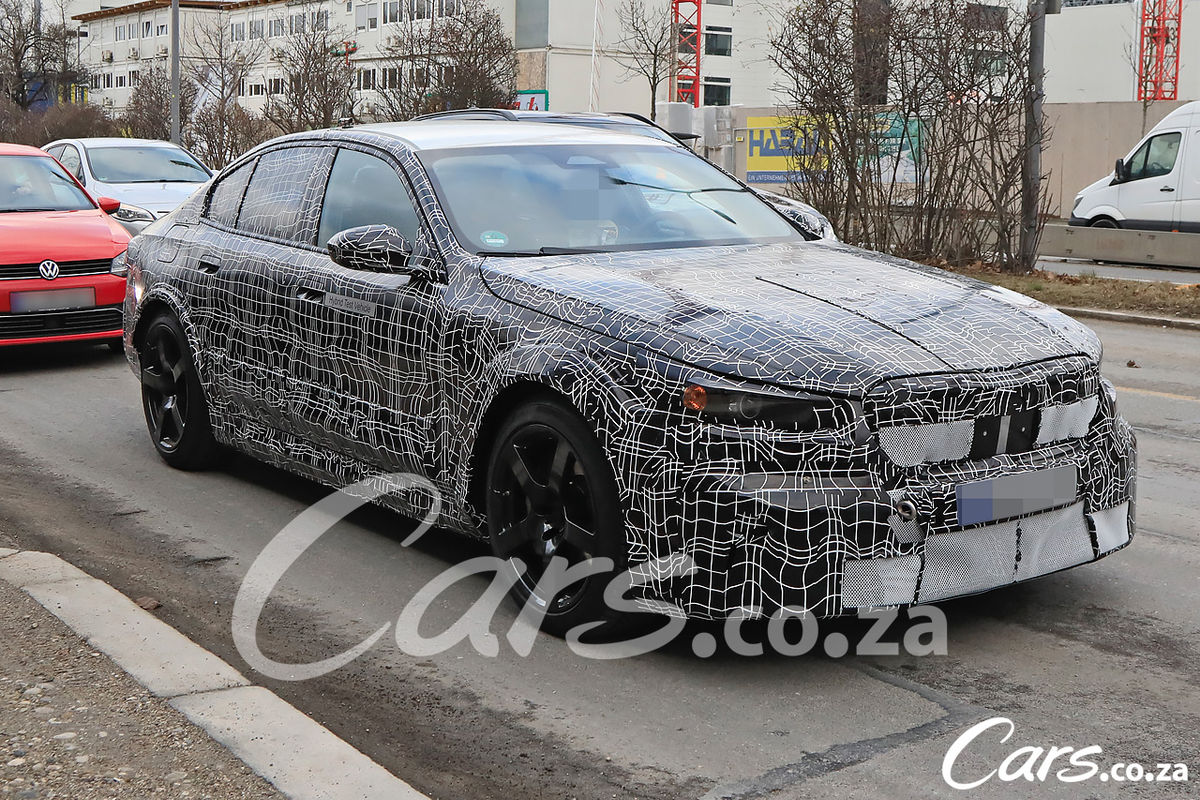
The 2024 BMW M5 has been spotted on the roads. With an all-new V8 hybrid powertrain, the new performance flagship sedan should be both fast and efficient.
Picture credit: S. Baldauf/SB-Medien. We have paid for these photos and at the photographer’s request, have watermarked them.
Rumours of the death of the performance sedan have been greatly exaggerated as the 2024 BMW M5 has been spotted out in public, albeit camouflaged.
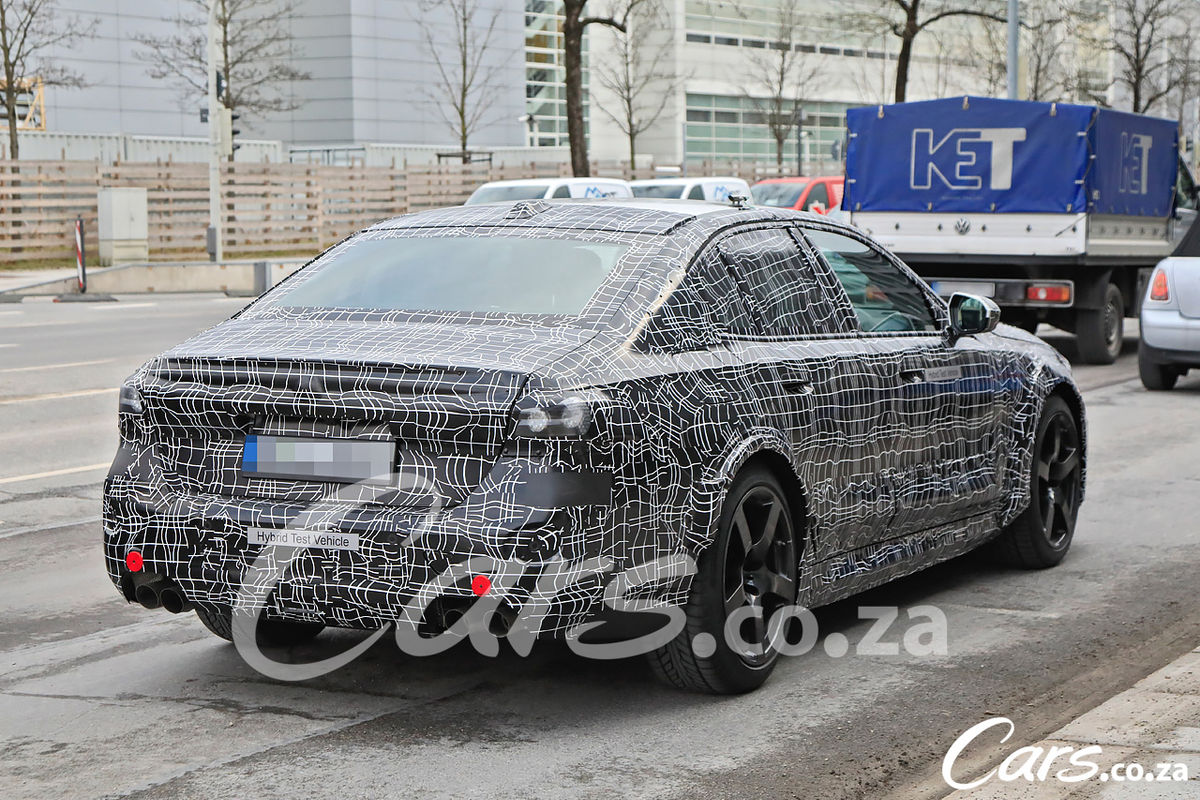
It is still early days as our spy photographers say the all-new BMW M5 will appear in 2024, with the standard 5 Series sedan hitting the market in 2023. The tell-tale cues are all there, big wheels with ventilated brakes as well as the trademark 4-exhaust setup at the rear.
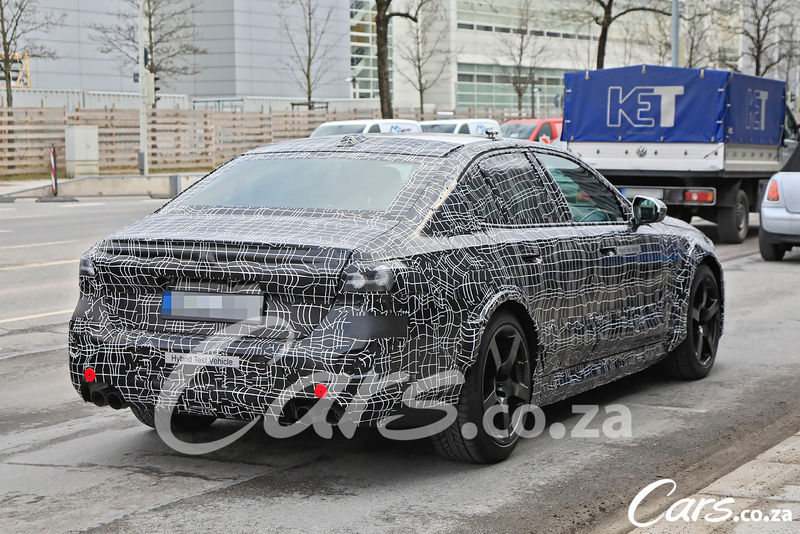
Keen-eyed spotters will notice the ‘hybrid test vehicle’ sticker on the door, and that gives us some idea of what the new 2024 BMW M5 will be powered by. The BMW Concept XM press release made mention of an electrified V8 engine that boasted staggering outputs of 550 kW and 1 000 Nm. There’s talk of a pure electric range of up to 80 km too.
Going over the 500 kW mark means that this all-new model comfortably outguns the current hardcore BMW M5 CS with its 467 kW and 750 Nm, and we reckon it should be able to get to 100 kph in just under 3 seconds. The key factor here will be weight and while the BMW M5 is a large sedan, the hybrid tech and battery will add substantial weight.
There is also a rumour that the next BMW M5 will also be offered in a pure electric setup that will be pitched as a Tesla Model S rival, but we’re not convinced as the carmaker will be building on its i brand. There’s already a flagship BMW iX M60 which has just been announced.
The new BMW 5 Series could be revealed before the end of 2022.
Mitsubishi has an extraordinary legacy of performance cars, the most famous of which were evolutions of the Lancer sedan.
These giant-killing Lancer Evos were developed and marketed under the Ralliart sub-brand, and Mitsubishi is struggling to keep that name relevant.
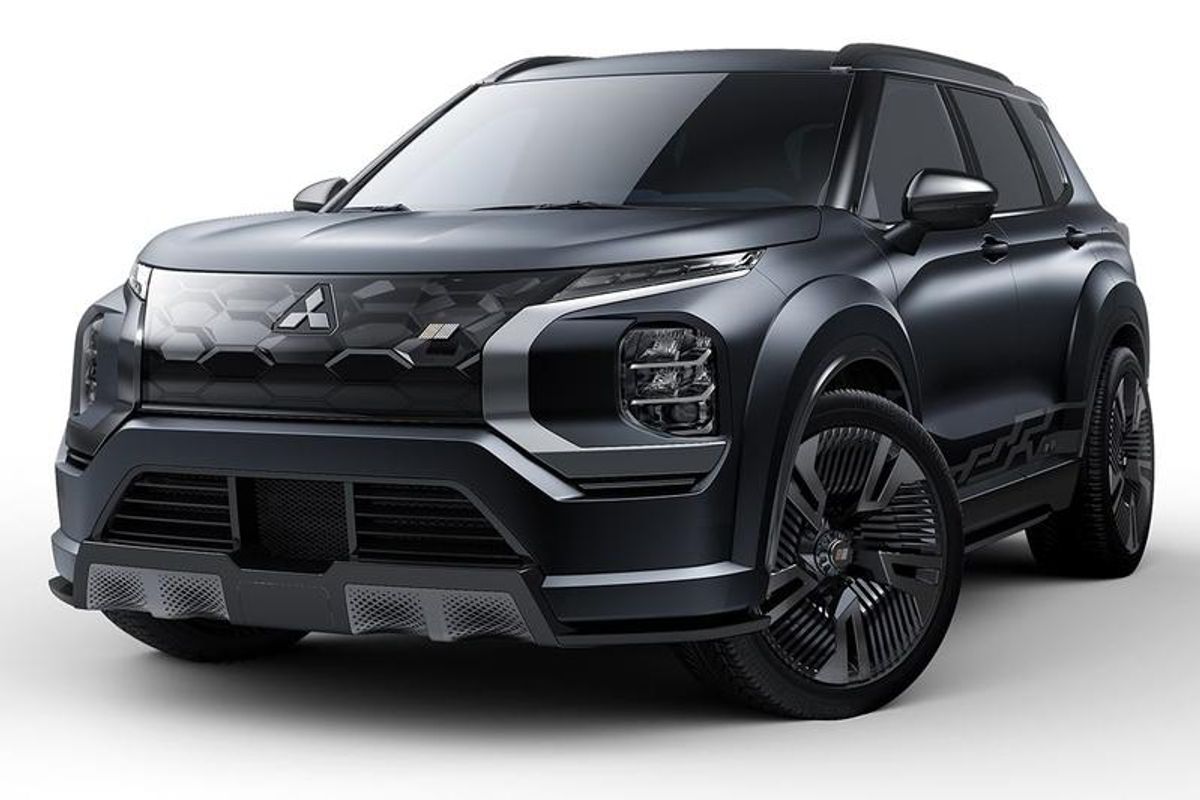
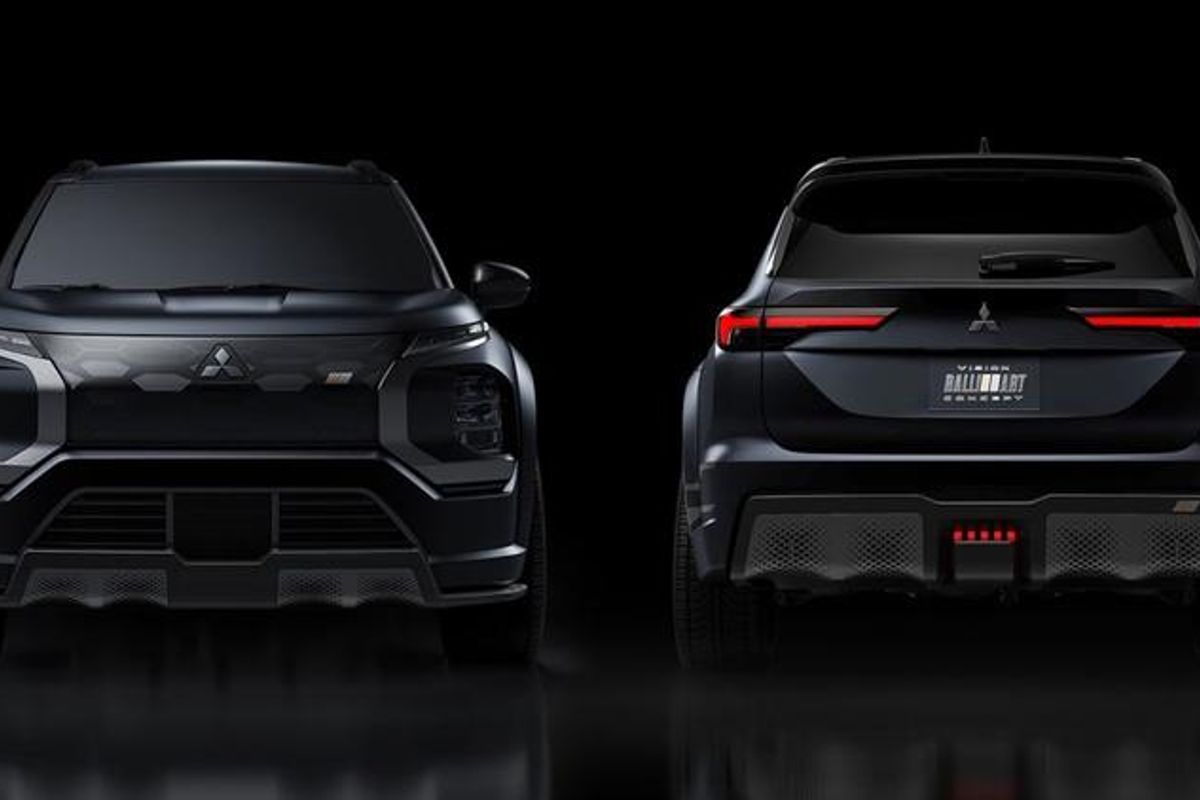
The latest offering from Mitsubishi is the Vision Ralliart Concept, which looks very purposeful, but remains an Outlander – in reality.
Where Ralliart was once a byword for trick differentials and outrageous turbocharged engines, the sub-brand is now simply a cosmetic presence on Mitsubishis.
The Vision Ralliart Concept is distinguished by huge 22-inch wheels, which hide larger brake discs and 6-pot callipers. Why an Outlander would need massive wheels (which debit ride quality) and a significant brake upgrade, remain a mystery.
To accommodate those enormous wheels, the Vision Ralliart Concept features bolder wheel arches. Mitsubishi claims the larger wheels and tyres enhance cornering grip, but they will also increase rolling resistance. Not ideal on a PHEV, such as the Outlander.
Beyond the wheel wells, Mitsubishi has finished the Vision Ralliart Concept with some lower bumper reshaping, front and rear, and a sealed-off front grille. Signature Ralliart styling details, such as scarlet mudflaps, are disappointingly absent on this new Vision Ralliart Concept.
The strategy with Ralliart appears to be a repositioning, from limited-edition Mitsubishi performance vehicles to a role as an in-house accessories brand for Triton. It will be a difficult sell for historic Mitsubishi Lancer Evo followers.
It also creates a marketing problem for Mitsubishi, which no longer competes in rallying, but wishes to continue using the Ralliart moniker.
BMW has claimed the leading sales position in the premium segment after achieving record global sales results in 2021.
BMW Group (BMW, Mini, Rolls-Royce) has rocked the sales charts in 2021 with a total of 2 521 525 units delivered resulting in 8.4% year-on-year sales growth. BMW alone delivered 2 213 795 units to customers, representing year-on-year growth of 9.1%, making the Bavarian firm the sales leader in the global premium segment.
But that’s not all. BMW has been forging ahead with its electrification strategy and for 2021, BMW reports that electric sales more than doubled to 103 855 units! More so, BMW is optimistic about its sales prospects in 2022 and the firm will aim to further expand on its EV success and will look to more than double EV sales in 2022.
“Despite supply bottlenecks and the continuing coronavirus pandemic: We achieved a strong sales performance in 2021, thanks to a powerful operational performance and stellar product line-up. Our brands reported numerous all-time best sales results around the globe – spearheaded by the BMW brand, which is number one in the global premium segment. With more than 100,000 fully-electric vehicles sold last year, ramping up electromobility was our clear focus” said Pieter Nota, member of the Board of Management of BMW AG responsible for Customer, Brands, Sales.
It’s worthwhile noting that 13% (37 939 units) of BMW and Mini vehicles sold worldwide in 2021 were EVs. In Europe alone, BMW and Mini achieved 23% (225 415 unite) EV sales.
The BMW iX3 achieved 37 939 worldwide sales while the BMW i3’s sales performance grew by 5.4% with 28 216 units delivered to customers. The Mini Electric also posted impressive results with global sales of 34 851 units.
Late in 2021 BMW launched the iX and the i4 and in 2022 the firm will welcome all-electric version of the 7 Series and X1 while a high volume electric 5 Series is expected in 2023. Over the next 10 years, BMW aims to sell roughly 10 million EVs!
Rolls-Royce will be an all-electric brand by 2030 and so will Mini.
Rolls-Royce posted its highest ever sales result in 2021 with a 48.7% year-on-year increase with 5 586 units delivered worldwide. The Ghost, Cullinan and all Black Badge derivatives proved to be hugely popular in China, the Americas and the Asia-Pacific region. The first all-electric Rolls-Royce Spectre is due for market introduction in Q4 2023.
BMW M Also Posts Record Sales
BMW’s M performance arm also reported all-time global record sales results with 163 542 M vehicles reaching customers in 2021 and representing an increase of 13.4%. The new BMW M3 and M4 were standout performers while sales of the X5 M and X6 M also boomed. The X3 M40i and X7 M50i also proved popular as did the 4 Series Coupe. In 2022, BMW expects the iX M60 and the i4 M50 to make positive sales contributions.
BMW EVs for SA in 2022
BMW will be introducing the iX3 SUV and i4 sedan in South Africa in the second quarter of 2022.
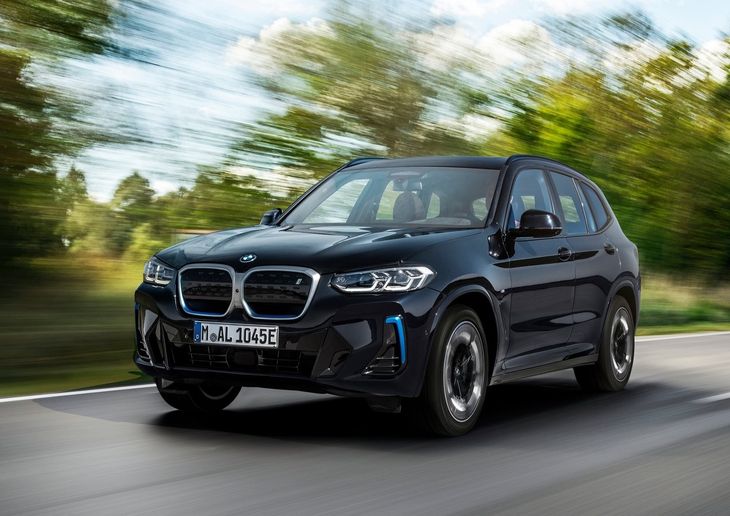
The iX3 is essentially an electrified version of the firm’s popular X3 SUV. Powering the 2022 BMW iX3 is an electric motor that’s packaged with the gearbox and electronics in one single housing. Outputs are rated at 210 kW and 400 Nm, and BMW says its updated iX3 is good for a 0-100 kph of just 6.8 seconds. Power consumption is said to be 18.9 – 18.5 kWh/100 km and the vehicle has a range of 460 km based on the WLTP cycle. Fast-charging is available and a 10-minute charge from a 150 kW charger will give you around 100 km of range.
As for the i4 eDrive40 sedan, it will offer 250 Nm and 430 Nm with a claimed range of around 483 km using an 83.9 kWh battery and a zero to 100 kph sprint time of about 5.9 seconds. There is a possibility that BMW will offer an i4 M50 derivative with at least 400 kW and a zero to 100kph sprint capability of 3.9 seconds but with a reduced range of 394 km.
10 best-selling bakkies in South Africa: December 2021
We’ve laid our paws on detailed Naamsa figures and picked out the country’s best-selling bakkies for the month. Here’s what you need to know!
While the year-on-year sales performance of South Africa’s total new vehicle market fell 3.5% in December 2021, the decline was a little more aggressive in the light-commercial space at 16.6%. This part of the market, of course, is dominated by bakkies, with a handful of dropside workhorses and commercial vans thrown in for good measure.
Here, we’ll concentrate on exactly how the individual players in the traditional bakkie market fared in the final month of 2021. We’ve combed through the statistics to identify the models that proved most popular with local buyers as well as those that found themselves languishing at the very foot of the table.
Predictably, the venerable Toyota Hilux was the strongest-selling bakkie in December, with 2 426 units registered. The Prospecton-built Hilux finished 2021 with a considerable tally of 36 085 units, again making it the country’s top-selling vehicle by quite some margin. With a new flagship GR-S version set to hit the market towards the middle of the year, the Hilux’s crushing dominance shows no signs of abating.
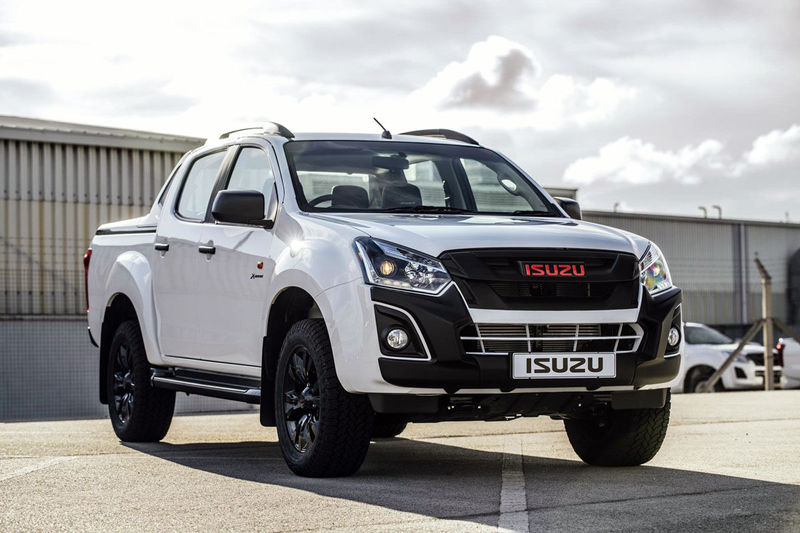
Despite a new model being just a few months away, the old D-Max continues to sell well.
Despite its advanced age and the fact a new-generation version is scheduled to (finally!) launch in the second quarter of 2022, the Struandale-produced Isuzu D-Max snaffled second spot for the second month on the trot, with its total of 1 247 units putting it 318 sales ahead of the third-placed Ford Ranger, which ended the month on lower-than-usual 929 units. It’s worth noting the current Ranger will soldier on until late in 2022, when the new version (complete with V6 power) is expected to start rolling off the upgraded Silverton line for the local market.
GWM’s P-Series (724 units) continued its strong run, again grabbing an impressive fourth place, while the Nissan NP200 – long the sole surviving half-tonne bakkie on the local market and thus virtually unchallenged in its sub-segment – moved up one spot to fifth with a solid 565 units.
Meanwhile, the facelifted Nissan Navara (477 units) fell one place to sixth, with the Rosslyn-built bakkie ending up just a handful of units ahead of the seventh-placed Mahindra Pik Up (463 units). Toyota’s evergreen Land Cruiser 79 range – which now includes a pair of 70th Anniversary Edition derivatives – was eighth with 163 units, pushing the recently upgraded GWM Steed (138 units) down to ninth.
The Volkswagen Amarok – which will be replaced by an as-yet-unrevealed second-generation model based on the new Ranger and likewise produced right here in South Africa – rounded out the top 10 with 124 examples registered.
Best of the rest in December 2021
So, what about the bit-part players? Well, the Mahindra Bolero found 52 buyers in December. Peugeot registered 38 units of its Landtrek in what was the Chinese-built bakkie’s first full month on sale, enough to put it just ahead of the often-overlooked Mitsubishi Triton (32). The Mazda BT-50, meanwhile, continued to disappoint on the sales charts, with the imported D-Max-based bakkie settling for a mere 14 units for the month.
Export winners in December 2021
While the Ranger found itself quite some way off the pace in terms of local sales in the final month of 2021, its export figure of 5 093 units wasn’t far behind the Hilux’s tally of 5 771 units. The D-Max (292) was third in the export race, ahead of the facelifted Navara (232). Interestingly, Nissan also shipped off 158 examples of its Hardbody – a model that has since been discontinued locally – during the month.
10 best-selling bakkies in South Africa for December 2021
1. Toyota Hilux – 2 426 units
2. Isuzu D-Max – 1 247 units
3. Ford Ranger – 929 units
4. GWM P-Series – 724 units
5. Nissan NP200 – 565 units
6. Nissan Navara – 477 units
7. Mahindra Pik Up – 463 units
8. Toyota Land Cruiser 79 – 163 units
9. GWM Steed – 138 units
10. Volkswagen Amarok – 124 units
Eleksa CityBug is the Cheapest EV in SA, but is 4kW enough?
Following successful homologation, the Eleksa CityBug is now the cheapest Electric Vehicle (EV) you can buy in South Africa.
The year 2022 will be an important one for the introduction of new Electric Vehicle (EV) products in South Africa. Luxury brands such as Audi, BMW and Mercedes-Benz will be welcoming a flurry of new EV products to the local market and by the end of the year, South African buyers will, for the first time ever, have the luxury to choose from a much wider range of EVs.
However, all of these forthcoming luxury EVs, as well as the EVs currently on sale in South Africa (including the Porsche Taycan, Jaguar I-Pace, Volvo XC40 Recharge, BMW i3 and Mini Cooper SE), will all have one thing in common — hefty price tags.
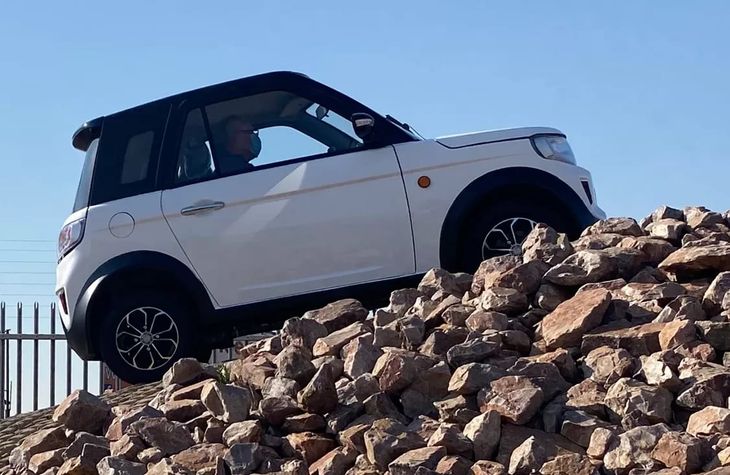
The Chinese-built Eleksa CityBug, however, bucks the trend and is now the cheapest EV you can buy in South Africa with a retail price of R230 000. It’s also the weakest EV you can buy as it’s powered by a 4kW electric motor and 9kWh battery that delivers a useable range of 100 km which can be extended to 200km upon request.
The CityBug isn’t likely to blow your hair back either as its top speed is rated at 60 kph. Charging from empty to full charge will take roughly 6 hours using a standard 220V home socket. More so, Eleksa says that the cost of charging is roughly 15c/km, the equivalent of about R15 for a full charge.
The Eleksa CityBug is ideal for city use and is squarely aimed at the short distance delivery market which is currently predominantly served by scooters.
So, what do you get for your money?
Well, the Eleksa CityBug measures 2 960 mm long, 1 480 mm wide and 1 520 mm tall. It has 2 doors with seating for 4 passengers. Load-carrying capacity is rated at 300 kg.
Other notable features include 12-inch alloy wheels, artificial leather upholstery with contrasting stitching, an android-based tablet infotainment system with Bluetooth and Android Auto and Apple CarPlay connectivity, sound system, reverse camera, USB ports, air conditioning and electric windows.
Eleksa has been selling other electric products such as scooters, bikes, trikes, ATV’s, mobility vehicles and work vehicles for 6 years in South Africa and the CityBug joined its local offering in 2021 with first customers taking delivery in December 2021.
The Eleksa CityBug is also on sale in other markets including Germany, the UK, Spain and Uruguay.
We spoke to Eleksa spokesperson, Philip Geyser, who confirmed the local availability of the CityBug as well considerable interest from local businesses. Geyser also highlighted Eleksa’s intent to bring new affordable EVs to South Africa in 2022, including a small electric bakkie (expected in May 2022) as well as a small family SUV (expected in November 2022).
We have already seen the Eleksa CityBug in use in South Africa and we wouldn’t be surprised if it becomes a more common sight in months to come. Watch this space!
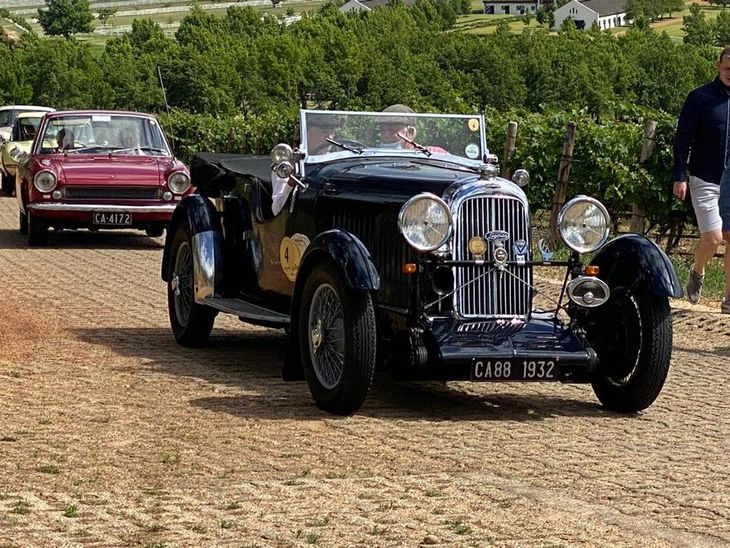
Inspired by “the most beautiful race in the world”, the Mille Miglia, the Cape 1000 is a new classic car event that will take place in the Western Cape in March 2022. Only 60 cars will be selected to take part, so if you think you have a car worthy of the Cape 1000, then here’s what you need to know!
If you’re a dyed-in-the-wool petrolhead, then the name “Mille Miglia” will immediately stir emotions. This storied 1 000-mile race took place in Italy from 1927 to 1957, and helped cement iconic names such as Tazio Nuvolari and Stirling Moss in our memories of motorsport’s golden era. The spirit of the “Mille Miglia” actually still thrives to this day. Since 1977 it has been run as an historic rally that attracts some 350 high-profile entrants annually, all in cars manufactured between the original racing years. The event is so admired, that so-called “tribute” races have popped up around the world, in places such as Japan, the United States, Dubai and now, for the first time, in South Africa, with the announcement of the Cape 1000.
With the most incredible scenery and roads that the Western Cape has to offer, it is the obvious location for a similar road rally that pays tribute to “the most beautiful race in the world.” The event will be run in partnership with SCL Travel and Cars.co.za.
“We are excited to be paying tribute to such an incredible part of motorsport history right here in the fair Cape,” says Dave Alexander, Route Convenor. “With some of the best and rarest motor vehicles taking part, it should be quite a spectacle!”
“Classic car culture is alive and kicking in South Africa,” added Hannes Oosthuizen, Consumer Experience Manager at Cars.co.za. “We are thrilled to partner with the Cape 1000’s organisers, and look forward to bringing all the glamour and excitement to our audiences, across all our platforms, including Youtube. We are also excited to confirm that we will be participating – and documenting the journey – in the Cape 1000 with our freshly restored Ford Capri Perana!”
Cape 1000 organiser, Ross Crichton, commented, “For this inaugural 1000 Mile Tribute event we decided on a limit of 60 cars, and I’m pleased to announce that just about half of those available slots have already been snapped up!”
The event, which takes place from 8-13 March 2022, will be run over the course of four days (five nights). It will include grand touring, regularity stages and non-competitive track events. Entries are limited to certain brands, models and by invitation or application (and subject to approval by the admissions committee to ensure a line-up of top-end entrants).
The categories are;
1927-1957: Mille Miglia Specific
Pre-1976: Classic
1977-1996: Modern Classic
1997-2021: Sports
“Based on the feedback thus far, we anticipate a stellar line-up of rare and exotic vehicles, ranging from cars nearly 90 years old, to more recent, modern classics,” says Crichton. It promises to be quite a fantastic sight when the 60 entrants leave the starting point at the V&A Waterfront in Cape Town in March next year”, he adds. He encourages owners who are unsure about the eligibility of their cars to get in touch.
Some of the Mille Miglia Class cars already confirmed include a super-rare 1961 Mercedes-Benz 300 SL Roadster, a 1955 Jaguar XK140 OTS, 1974 Porsche 911 2.7 RS as well as an iconic 1990 Ferrari F40. Other entrants from the Franschhoek Motor Museum could include a Bristol 401, a 1957 MGA, 1956 Triumph TR3 and 1934 MG K-Type.
Beneficiaries of the Cape 1000 include the Motorsport Legends Benevolent Fund and QuadPara Association of South Africa (QASA).