Dutch Land Rover Defender specialists, Heritage Customs, plan to transform the iconic Defender SUV into a convertible.
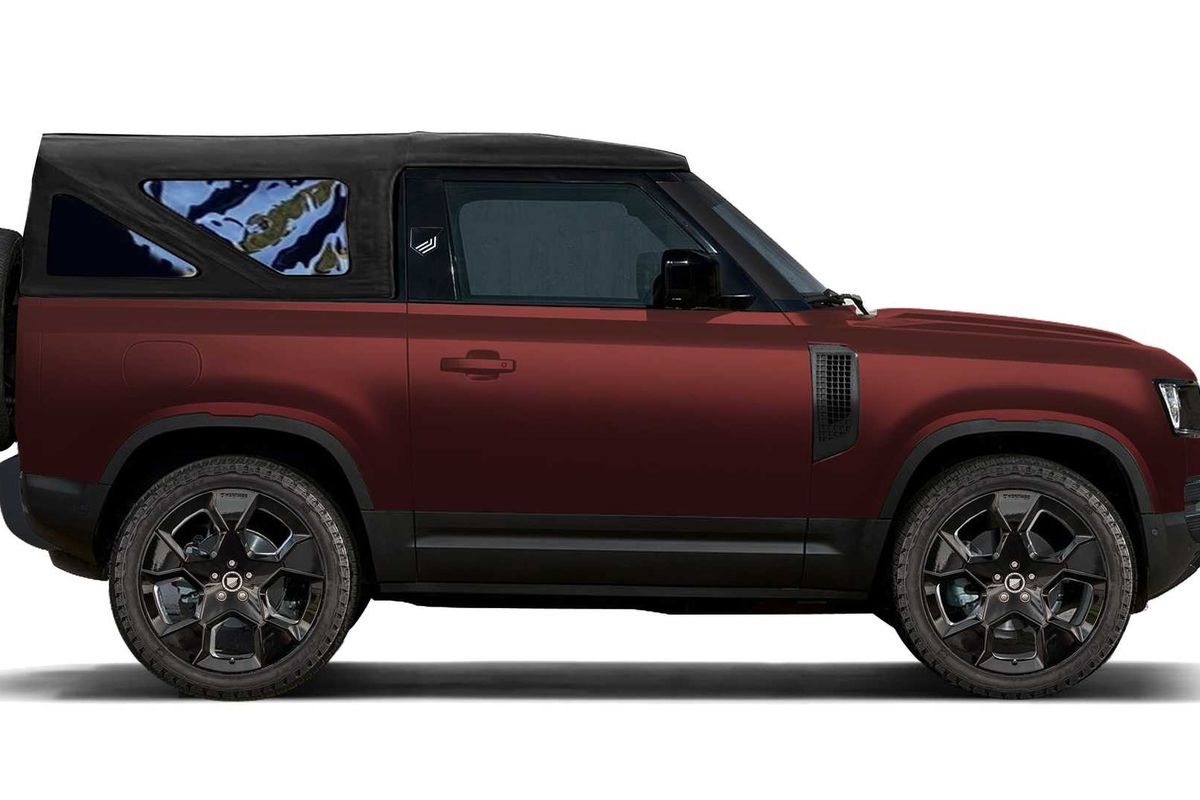
If you seek a cabriolet version of the new Land Rover Defender, then perhaps Heritage Customs based in the Netherlands can be of assistance.
The firm reportedly plans to chop the top off the Defender in 2022. Five examples will be produced and the conversion will be called the Defender Valiance Convertible.
The renderings you see here provide some indication of what the Defender Valiance Convertible will look like.
Various colour combinations will be offered too such as Côte d’Azur with a Cognac Brown soft-top roof, copper interior trim accents and riding on 22-inch white-walled wheels. For those wanting something more classic, perhaps Solihull Sand will do with its light green body, grey bumpers and Sand Beige soft top. Kokkini Paralia combines a matte red body finish with black bumpers and black fabric roof.
The Valiance Convertible treatment appears to be cosmetic only and powertrain upgrades aren’t likely.
Do you like the idea of a convertible Land Rover Defender?
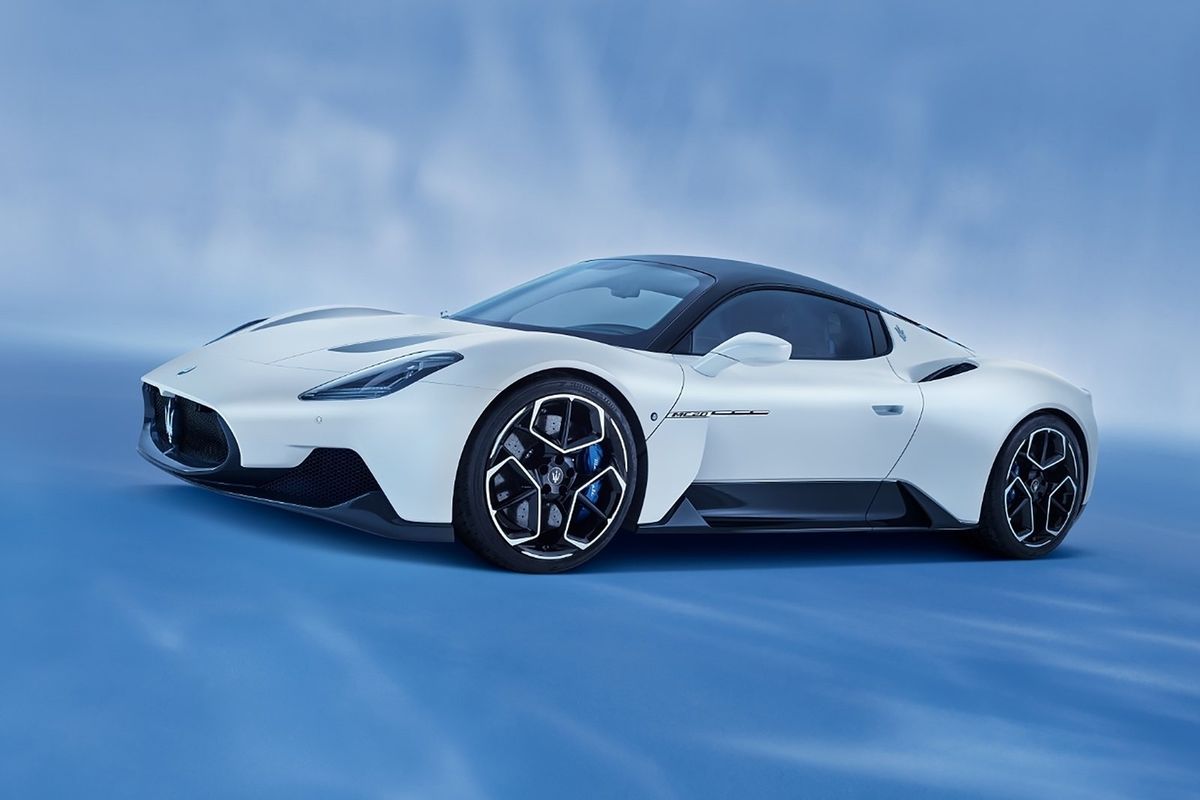
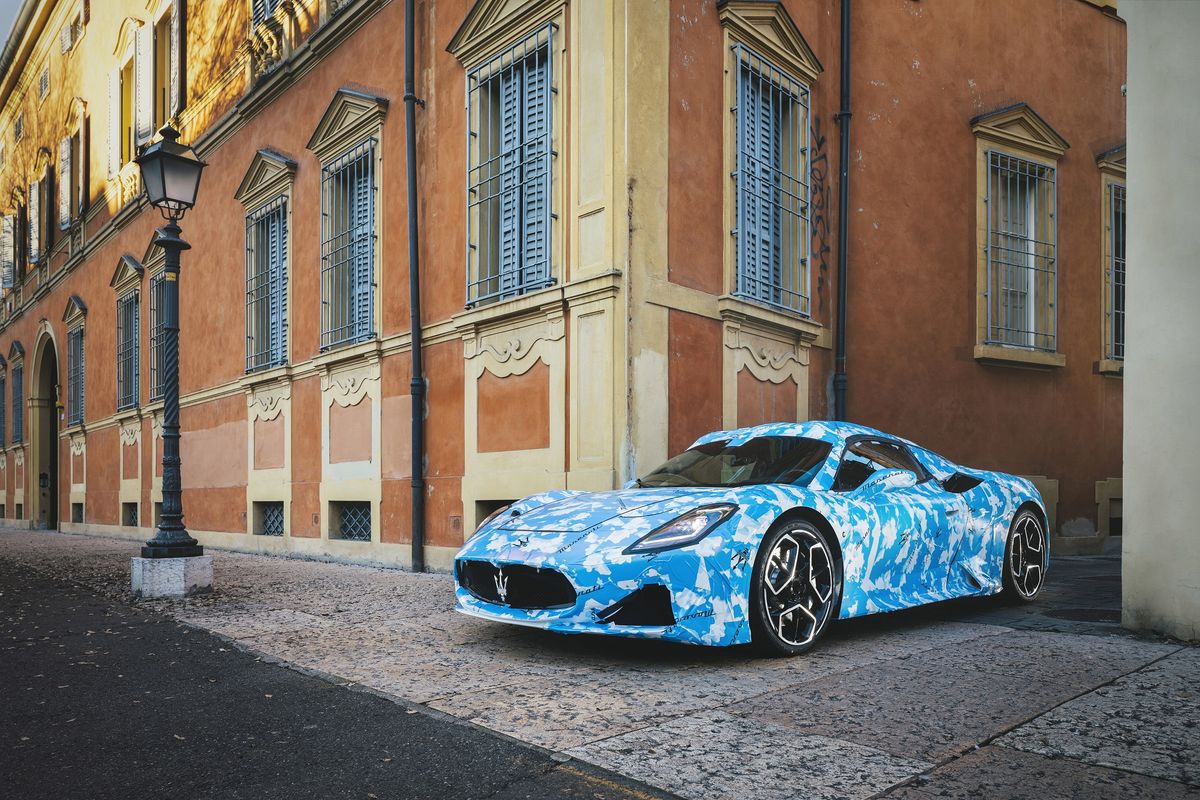
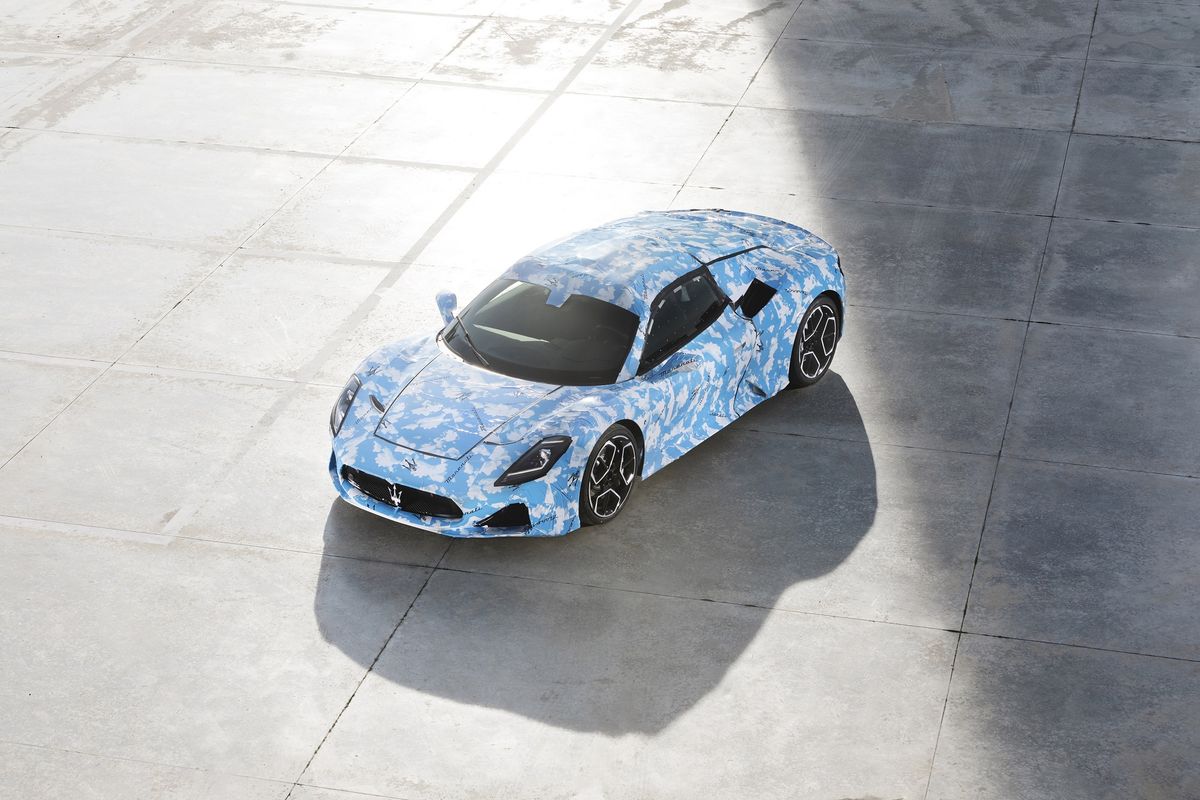
Despite the supercar convertible market shrinking over the years, Maserati will be making a drop-top version of its MC20. Here’s what we know about the all-new Maserati MC20 Convertible.
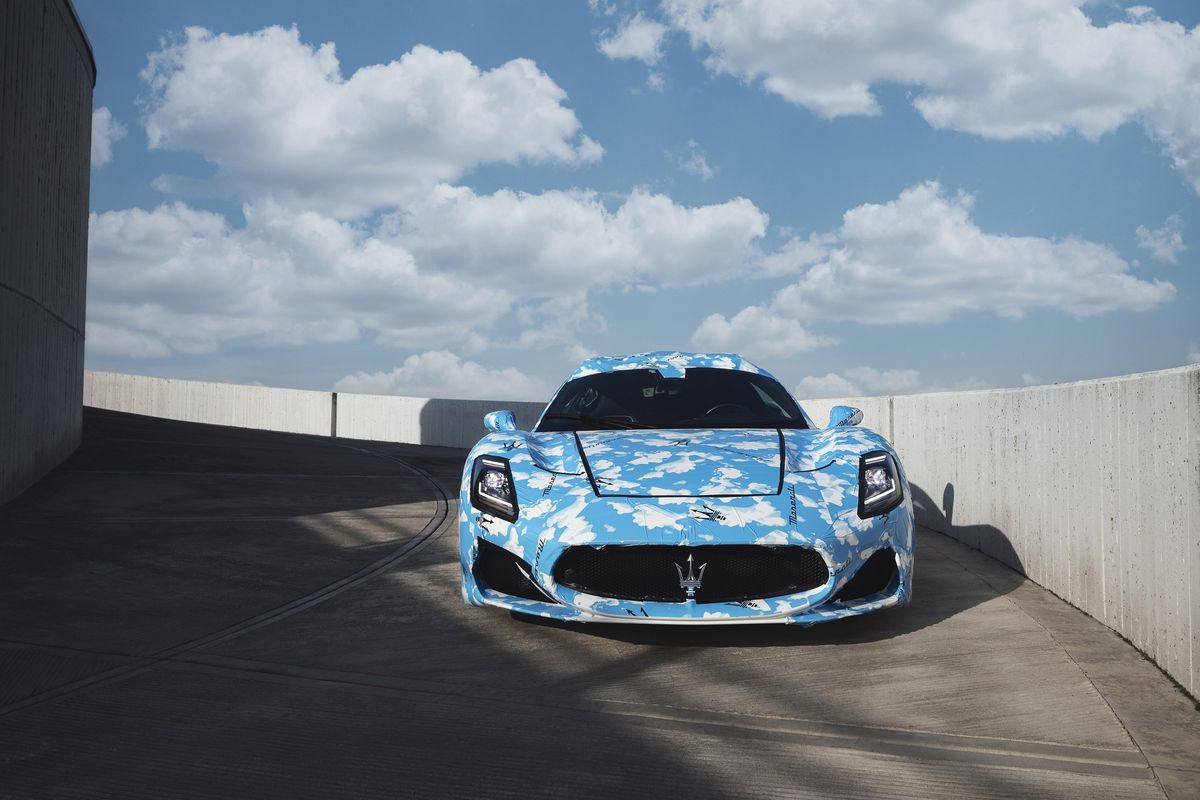
Accompanied by what’s possibly one of the world’s shortest press releases, were a series of images showing off a camouflaged car. Maserati claims that what you see here is the first prototype of the MC20 Convertible.
The Maserati MC20 Convertible will be the second model to come from the MC20 family, with the third being an all-electric derivative.
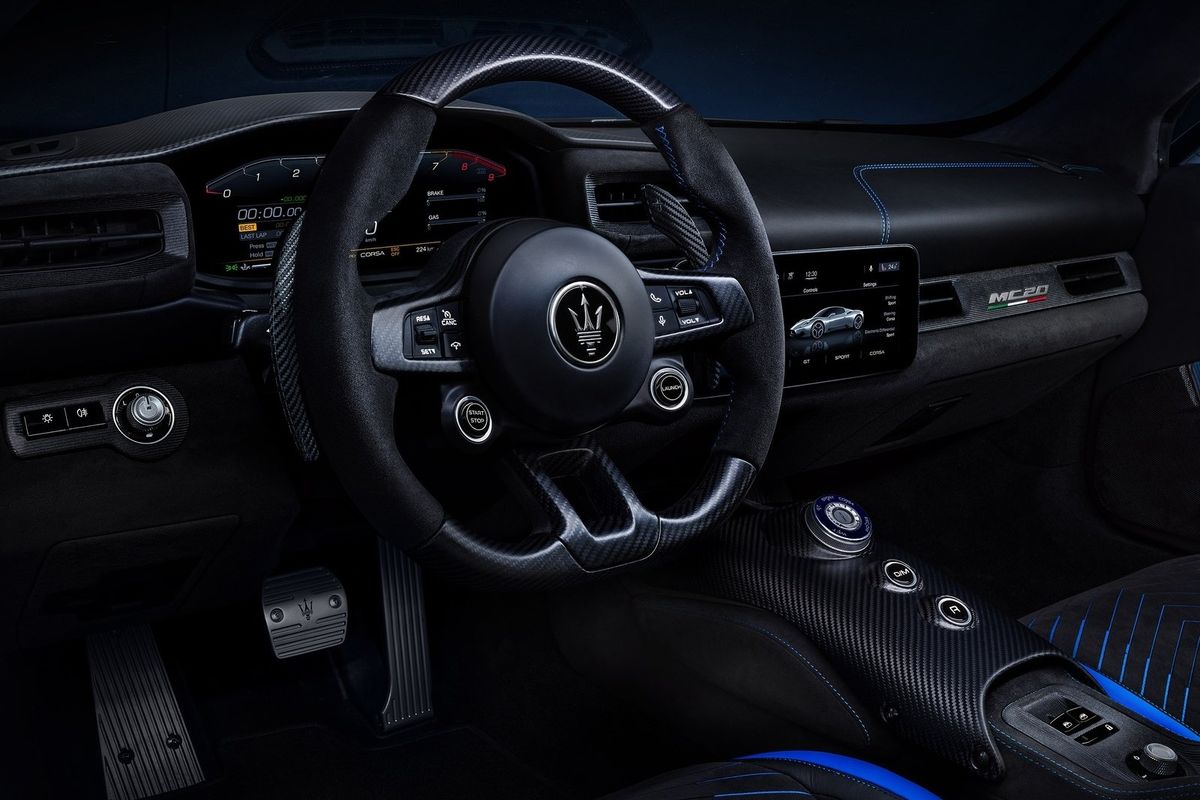
As a reminder, the Maserati MC20 is powered by Maserati’s first in-house-designed engine in 20 years, the new carbon fibre-tubbed and butterfly-doored MC20 is powered by a twin-turbo 3.0-litre V6. It utilises its lightweight body and advanced aerodynamics to accelerate from standstill to 100 kph in less than 2.9 sec and on to a top speed of 325 kph using an 8-speed wet dual-clutch transmission.
Total outputs are pegged at 463 kW at 7 500 rpm and 730 Nm of torque from 3 000 to 5 500 rpm. We’re yet to have a drive, but the new Maserati MC20 will be touching down in SA in 2022. Top Gear calls it “a highly engaging and authentic supercar that also slips surprisingly persuasively into elegant GT mode” so consider us excited.
While we all love supercars (who doesn’t?), the associated compromises can heavily dent the experience. No-one likes a back-breakingly firm ride and looking like a contortionist getting in and out.
Expect to see the MC20 Convertible revealed sometime in 2022.
BMW M Division’s new halo car rings the division bell.
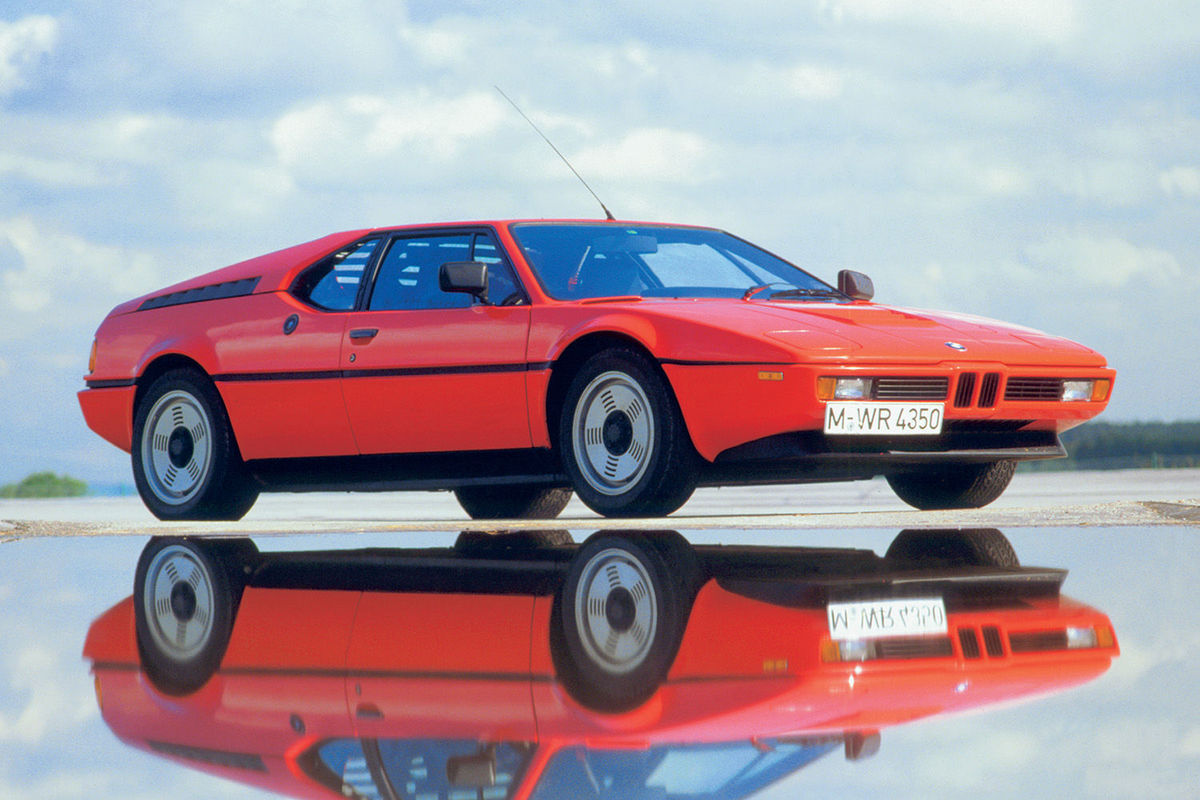
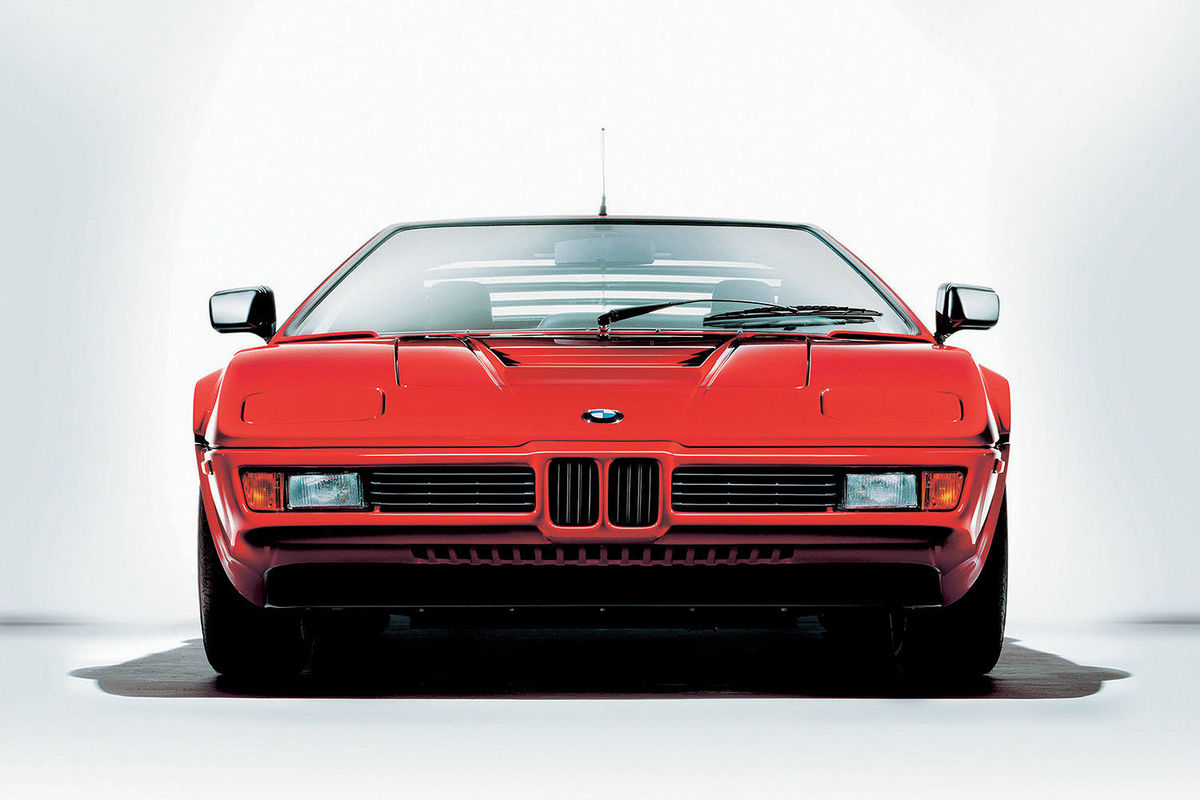
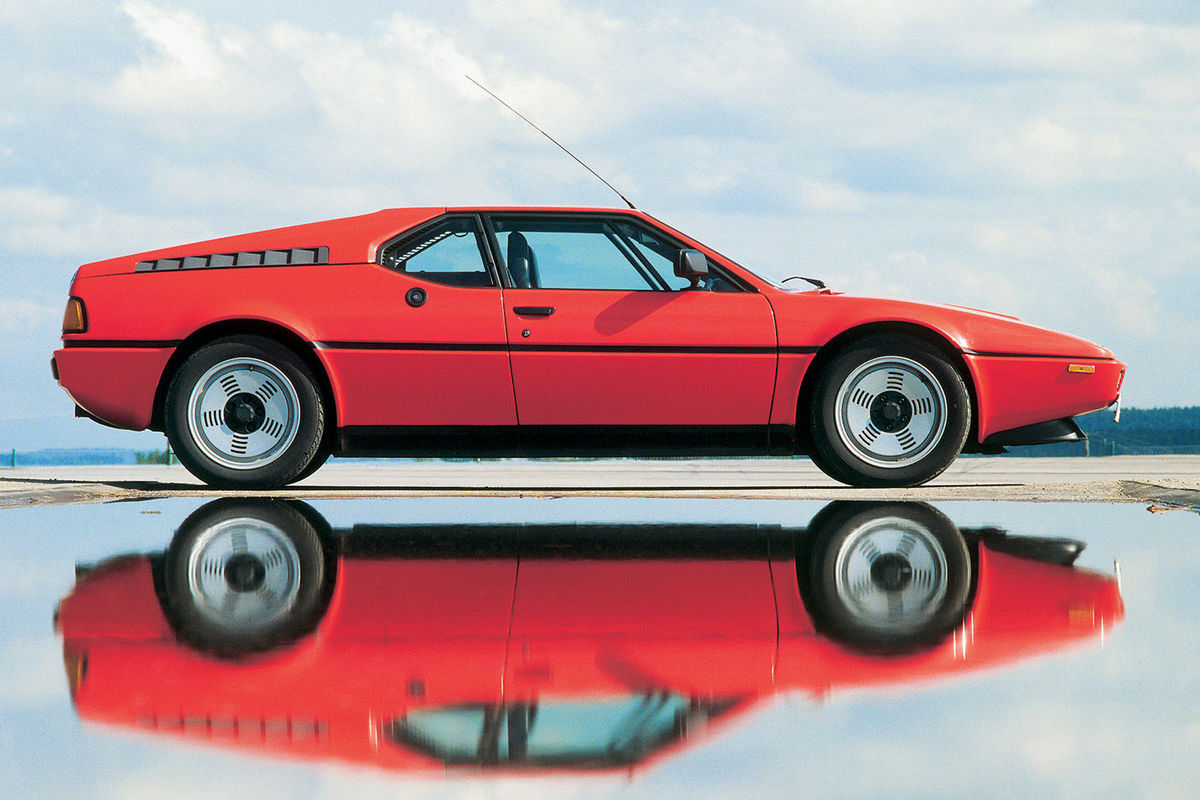
When they ship the next tranche of recorded human history data files off into outer space, may I propose that, under the section entitled “Automobile – sub-section Supercars”, they include the BMW M1 alongside the McLaren F1 and the Gordon Murray Automotive’s T.50. Before you set a Twitter mob on me, however, allow me to explain.
It’s not that the BMW M1 was blindingly fast, or achingly beautiful – although in fairness, it was both pretty and sufficiently quick in its heyday – it is just that few cars can match its legacy as the progenitor of such a prolific line of hugely desirable performance offspring. As the machine that started the M-car Empire, the BMW M1 is halo-car royalty.
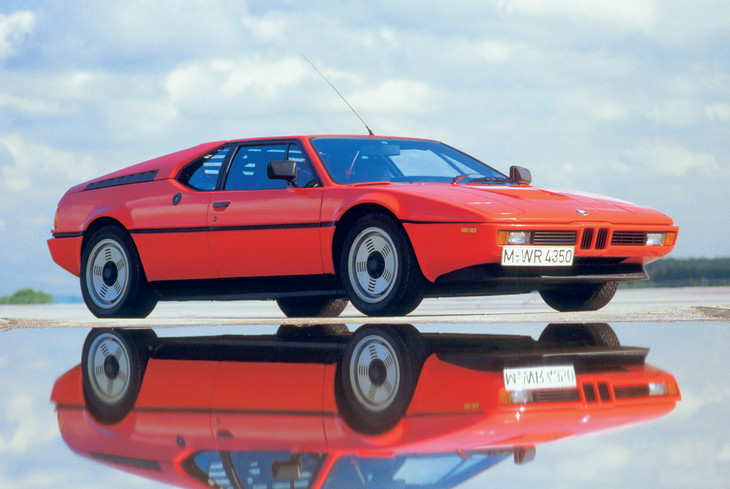
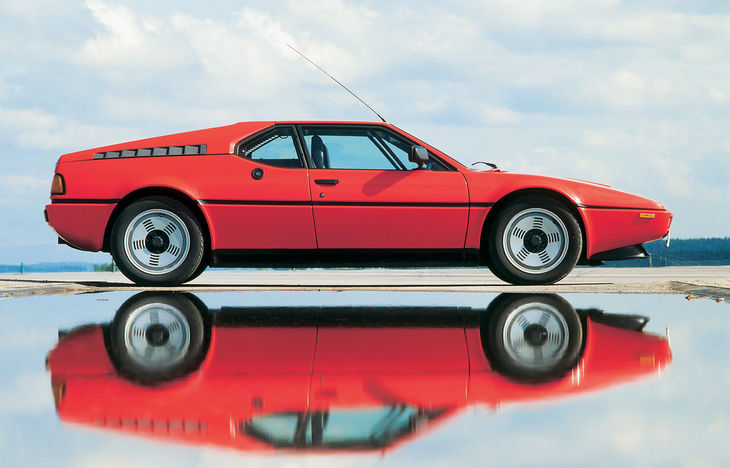
The original BMW halo car, the M1 is still a sight to behold 40 years down the line.
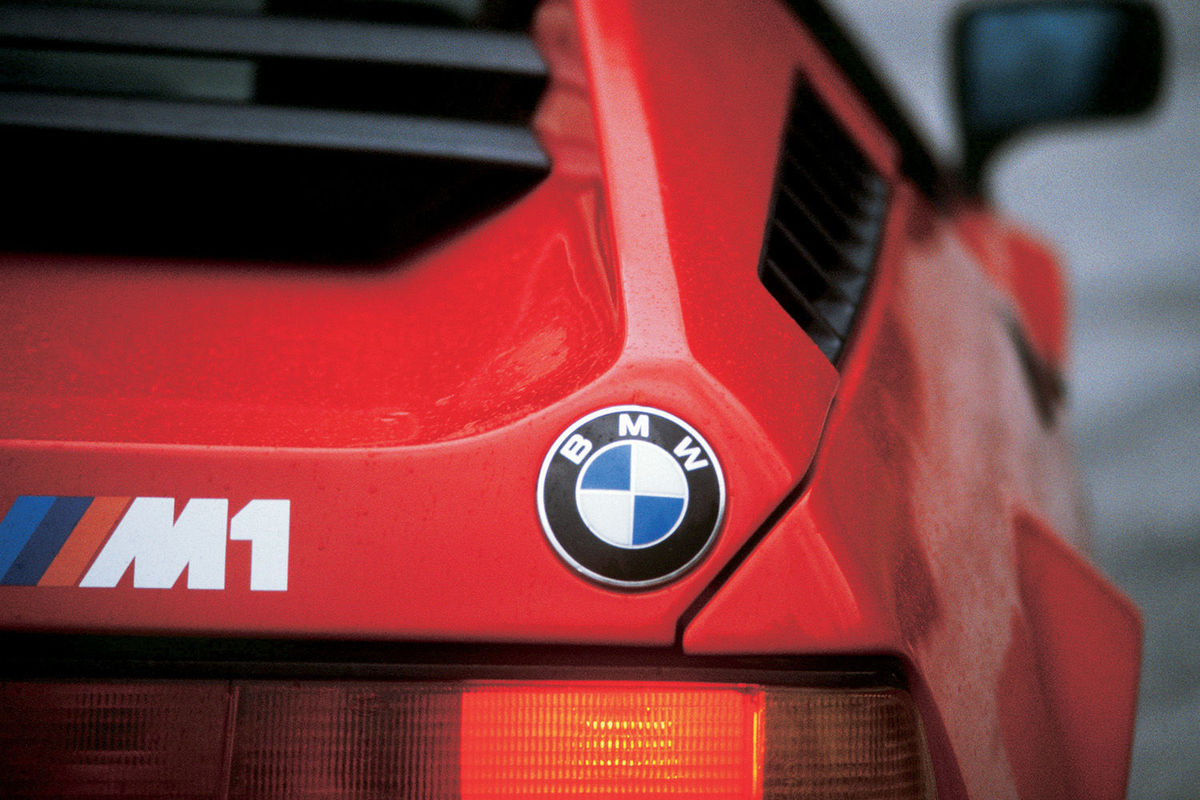
Just look at it! It’s clear Giorgetto Giugiaro’s 1970s folded-paper design language forms the basis, but as ever, it’s the proportions and the details that deliver the excitement: the low nose, dinky kidneys, pop-up headlights, heavily raked windscreen, vented C-pillars, louvred rear screen and those signature sink-strainer rims. The Paul Rosche and Martin Braungart-engineered M88 3.5-litre 24-valve inline-6 motor was a masterpiece. That same engine also powered the M635CSi and the first M5 – two of BMW’s most successful and influential cars of the 1980s. As a machine designed for pure driving pleasure, the M1 was so significant that BMW decorated its rump with two blue-and-white propeller badges instead of the usual one.
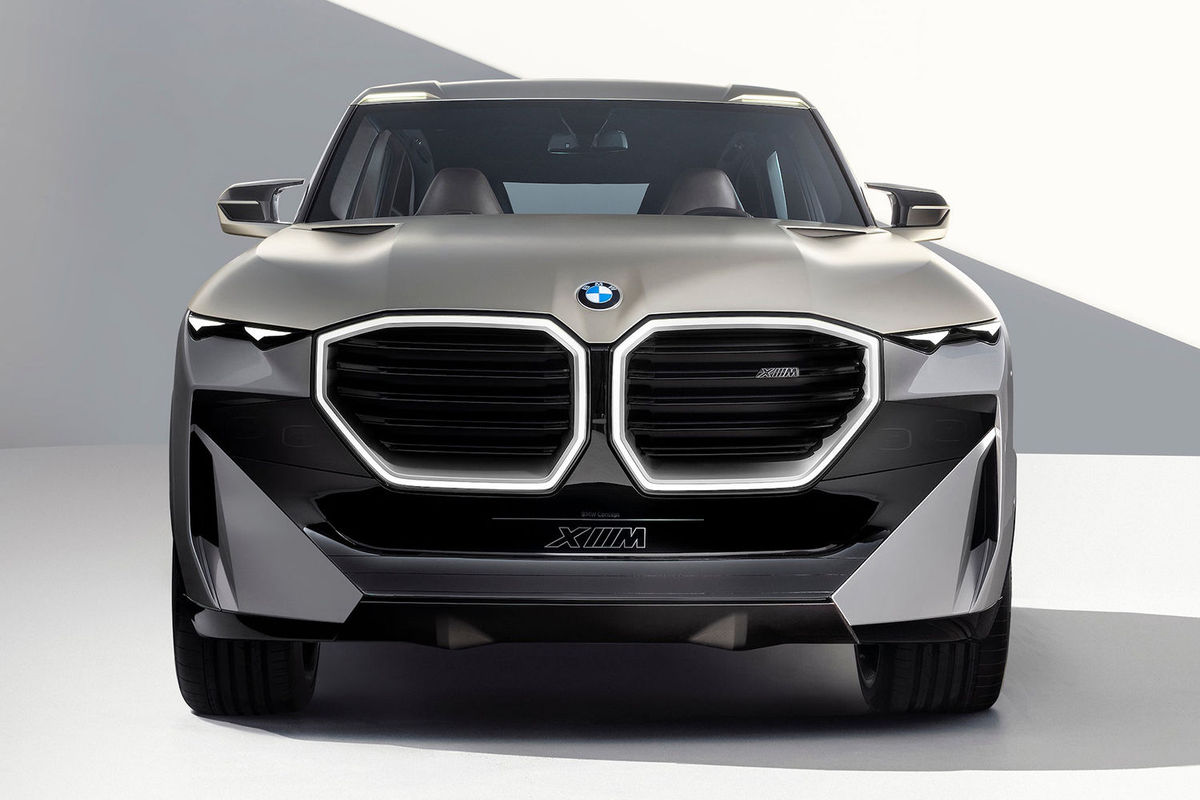
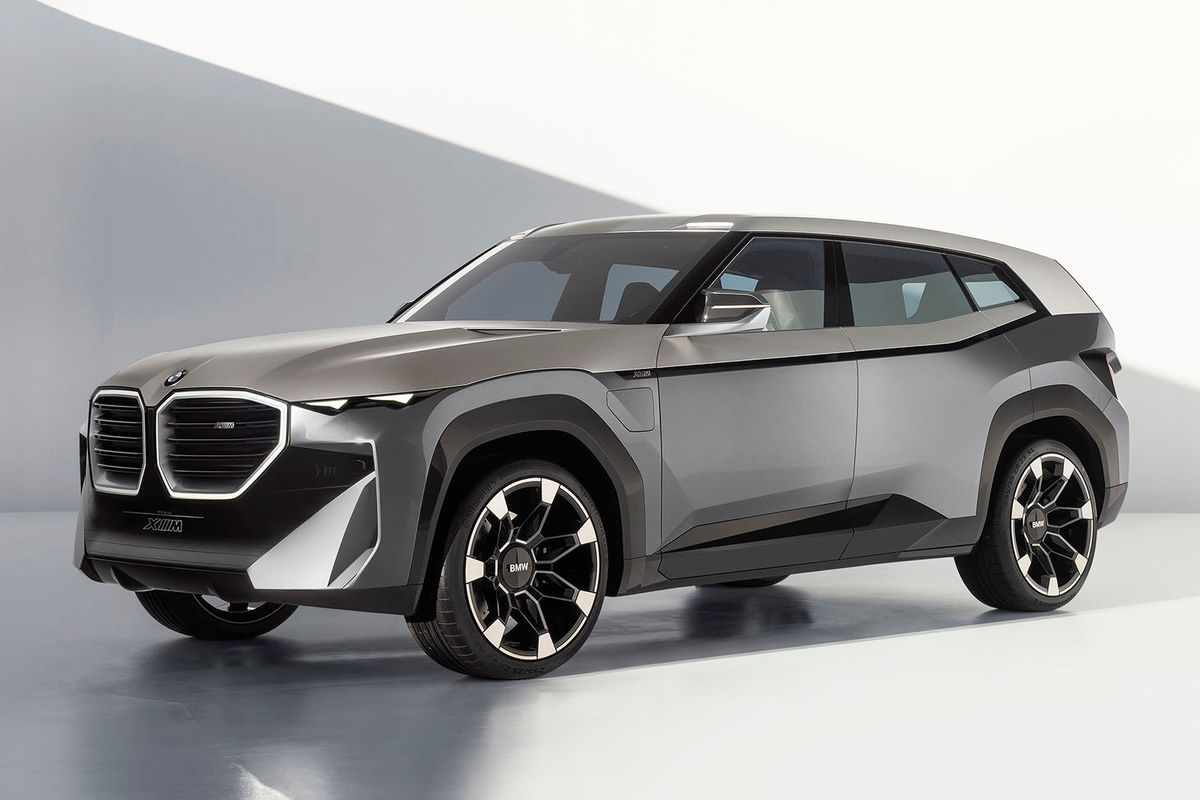
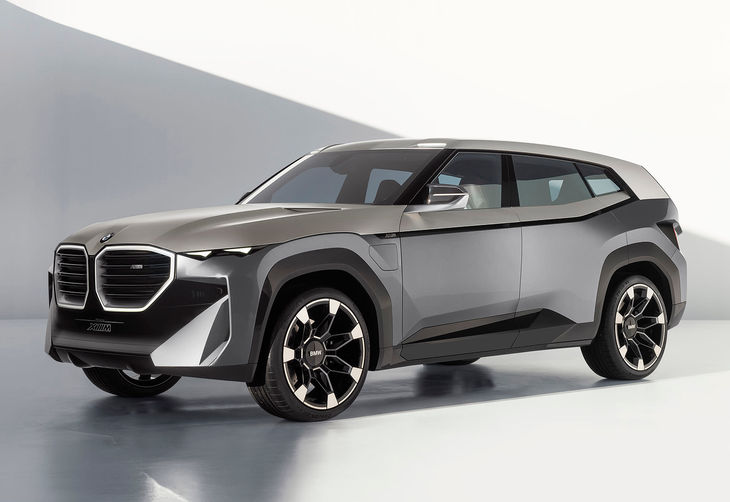
Poring over the design of this patriarch of all BMW sports machines, you get a sense of the way things were, and the way things should be. Sadly though, it appears BMW does not agree. You see, there’s a new M-car in play and it’s so disruptive it’s tearing a hole in the space-time continuum. It’s called the BMW Concept XM and it has me deeply vexed.
A change in design themes or a deliberate shock and awe tactic?
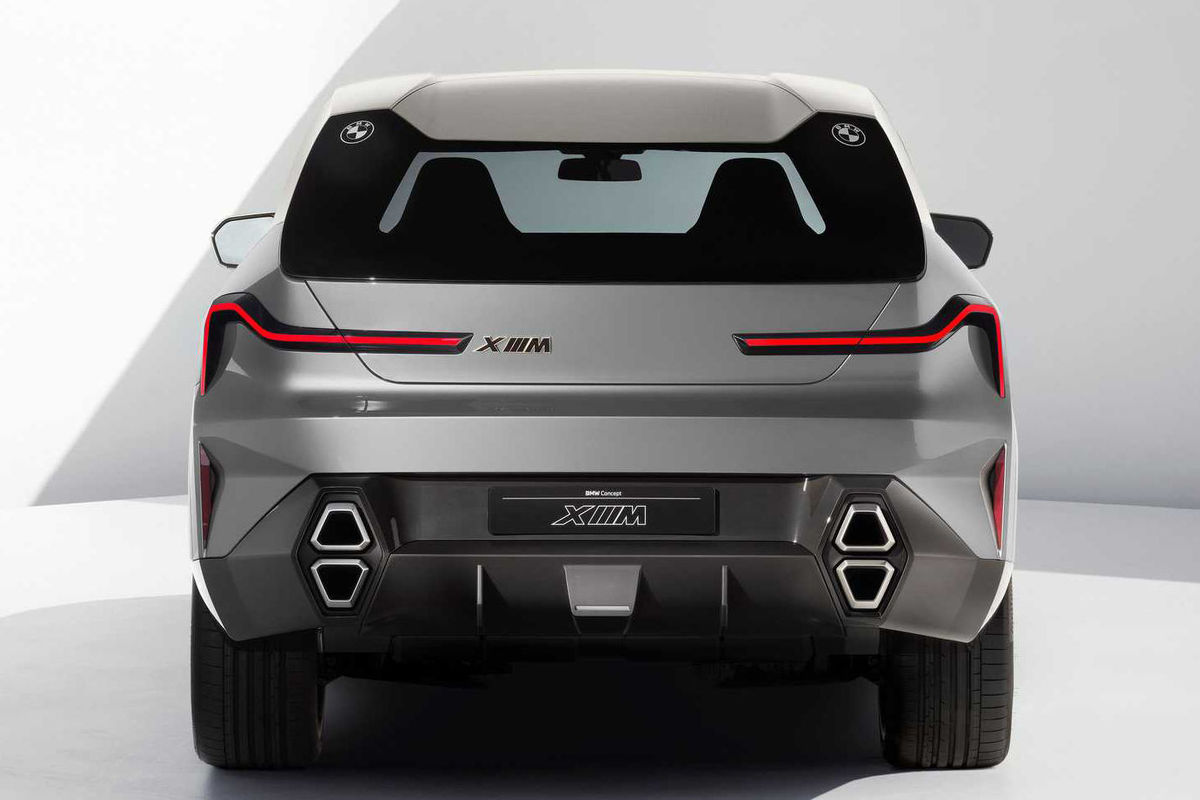
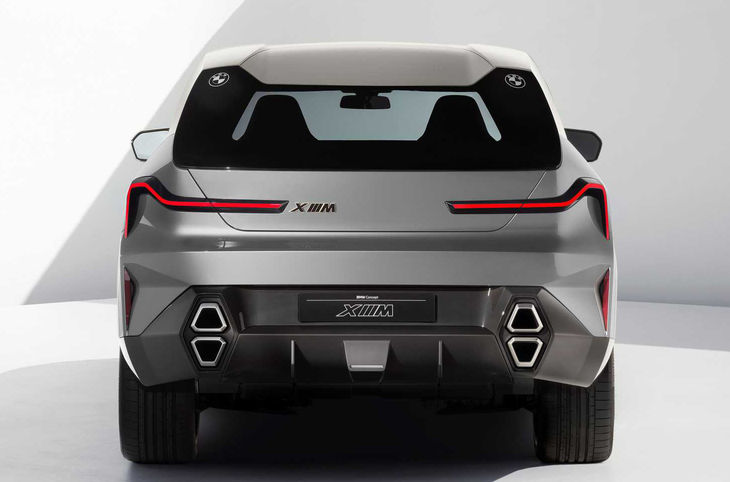
It’s like the Tesla Cyber(dump)truck happening all over again. Here’s another new design that purports to be futuristic, but riffs off a 40-year-old car instead. Whereas the Cybertruck might as well have been a DeLorean pickup, the Concept XM wears two badges on a rear end that is clearly styled to channel the distinctive flying buttresses of the M1. Sporting two BMW roundels was perfectly correct on the 2008 M1 Hommage and again on the astonishing 2019 BMW Vision M Next, but seeing them on the eyeball-assaulting behemoth that is the Concept XM is sacrilege. That’s like Mercedes-Benz unveiling a next-gen Gelandewagen Coupe with gullwing doors and then announcing that it channels the 300SL!
The heritage-sullying silliness of twin badges on a monolithic SUV would be a fraction more palatable if the vehicle had been styled to beguile. But no, it has not.
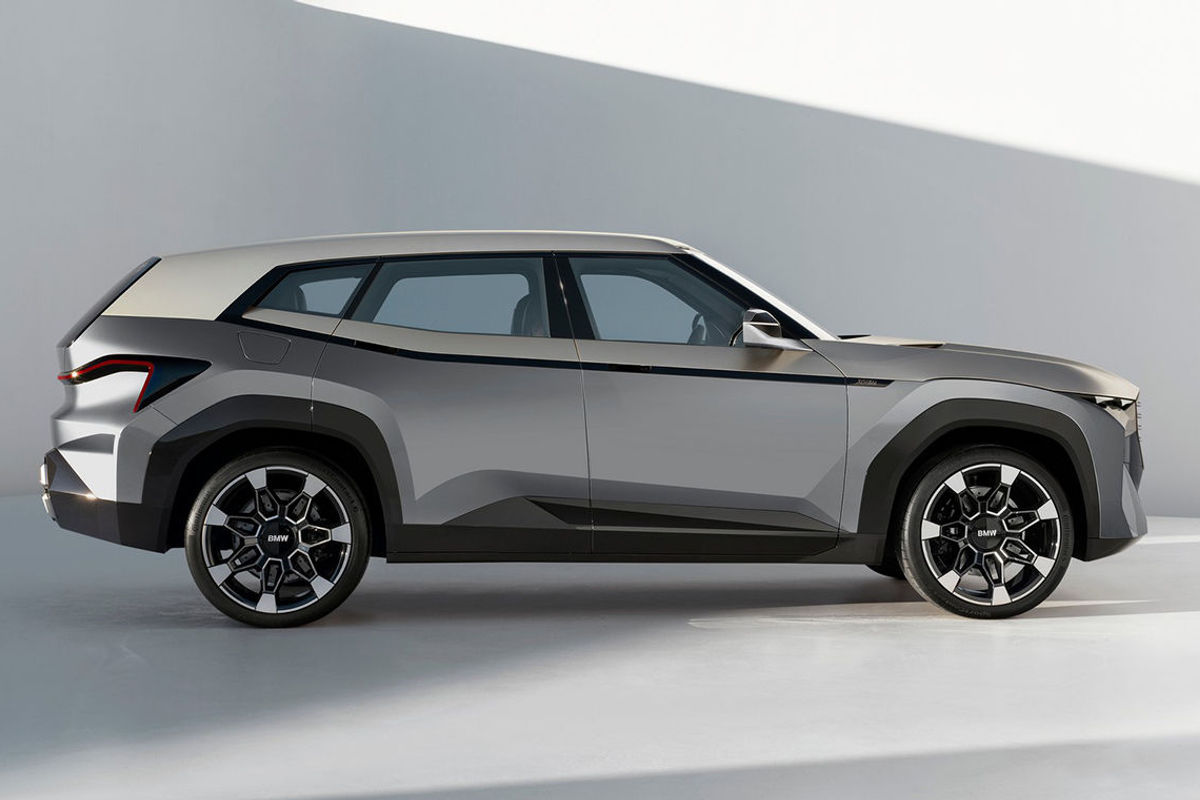
Visually incomprehensible from every angle, the Concept XM is an utterly graceless mishmash of conflicting lines, unhappy proportions and exaggerated details. Just look at the size of those kidneys! Bizarrely, it appears to be both chiselled and fat at the same time – like some sort of low-polygon hippopotamus.
Two propellor badges on the rear end, just like the M1…
What happened to BMW’s once-perfect grasp of the balance between elegant restraint and sporting intent? 2002, 3.0 CSL, E24 6 Series (the 1st generation), E38 7 Series… I could go on, but they all struck that balance beautifully. Even the mighty E30 M3 with its blistered arches, deep front spoiler, side skirts and be-winged boot lid managed to project a deeply desirable level of stylish menace.
Just about every production model that BMW has released over the last 4 decades has stuck, in varying degrees, to the trusted recipe of twin-headlight, double-kidney grille, a continuous rising beltline and Hofmeister kink. Even the excursions into “flame surfacing” and coffin boots (from the Chris Bangle era), while mildly disturbing at first, didn’t stab at your eyes as this Concept XM does.
What’s most puzzling is these designers actually know what they are doing. BMW’s design team contains some of the finest talent around, meaning this is a conscious effort not just to paint outside the lines, but to paint on another canvas altogether. Restraint has been cast off, the once-sacrosanct boundaries have been breached. Right or wrong, the legacy of Wilhelm Hofmeister, Paul Bracq and Claus Luthe is being cancelled right before our eyes.
Good design doesn’t require constant explanation.
I have so many questions: Should design be led by marketing department clinics, or by artists? Is it okay to plaster halo heritage cues onto inappropriate new models? Is there really no such thing as universal beauty, or at least something close to that? Has BMW deliberately designed this vehicle to jar and provoke… or is it merely a product of a globally shifting customer base with wildly diverse tastes?
Great design does not need to be justified. I’m convinced BMW will be justifying this for years.
So, with this monstrosity of a design masquerading as M Division’s new halo car, is this the end of the M-car as we have known it? Or more crucially: Is this M-pire Down?
I will leave you with these lyrics from English Goth rockers, The Sisters of Mercy…
I hear the roar of a big machine Two worlds and in between Hot metal and methedrine I hear empire down
The BMW M3 and M4 duo equipped with iDrive 7 operating system will be updated Over-The-Air (OTA).
There’s no need to take your BMW M3 or M4 to your nearest dealership for a software update as BMW will automatically initiate update version 21-07 using Over-The-Air technology for vehicles using the iDrive 7 operating system.
For starters, don’t be alarmed if you notice that your M3 or M4 sounds different because BMW has enhanced the engine start sound entering the cabin via the speakers and BMW says that owners “will be inspired by a refinement of the sound when starting the engine.”
Furthermore, M3/M4 Competition models equipped with an 8-speed automatic transmission will benefit from “clearer audio confirmation of gear changes and changes in shifting loads.”
Other major updates include enhanced Lane Departure Warning that can detect narrow unmarked roads, updated navigation that’s better at detecting congestion, enhanced audio and personalisation for the BMW News app and for music streamers, updated features for Spotify and Sirius XM Pandora.
If you own a new BMW M3 or M4 Competition, let us know if you are happy with the OTA updates and even send us a clip of your new startup sound!
Mercedes-Benz has beefed up the safety specification for the Vito van in South Africa.
The Vito is 25 years old this year and the latest update to come from Mercedes-Benz includes the addition of Blind Spot Assist. Other safety and driver assistance features offered for the Vito include Active Distance Assist Distronic, Active Brake Assist, digital rearview mirror, Crosswind Assist and Attention Assist.
Buyers have 3 body styles to choose from including Panel Van, Mixto or Tourer.
What engines are on offer for the Vito?
Depending on the type of Vito you decide to go for, the Vito is powered by a 1.6-litre turbodiesel engine with 84 kW and 270 Nm of torque on offer or it can be had with a more powerful 2.1-litre turbodiesel engine with either 100 kW and 330 Nm or 120 kW and 380 Nm. A 6-speed manual or 7-speed automatic transmission is also offered.
The top-of-the-ranger Vito 119 Tourer Select, however, offers 140 kW and 440 Nm from its 2.1-litre turbodiesel engine.
What is the price for the Mercedes-Benz Vito in South Africa?
Vito 111 CDI Panel Van – R573 041
Vito 114 CDI Panel Van – R597 056
Vito 116 CDI Panel Van – R677 085
Vito 111 CDI Mixto – R668 489
Vito 116 CDI Mixto – R895 584
Vito 111 CDI Tourer (Base) – R630 667
Vito 111 CDI Tourer Pro – R771 647
Vito 114 CDI Tourer Pro – R803 921
Vito 116 CDI Tourer Pro – R911 432
Vito 116 CDI Tourer Select – R1 081 227
Vito 119 CDI Tourer Select – R1 117 792
The Vito is sold with a 2-year/unlimited km warranty and a 5-year/100 000km ServiceCare BestBasic service contract.
Given its high asking price and South Africans’ (shall we say) hesitance to take up EVs, Jaguar’s I-Pace is a rare sight on our roads. A few months ago, the British marque launched an updated version, but unless you’re already an I-Pace owner, you are unlikely to notice the changes…
We like: Potent performance, improved charging performance, updated infotainment, ride quality, real-world range
We don’t like: Lack of luggage space (with spare wheel fitted), charging port only on left side of the car
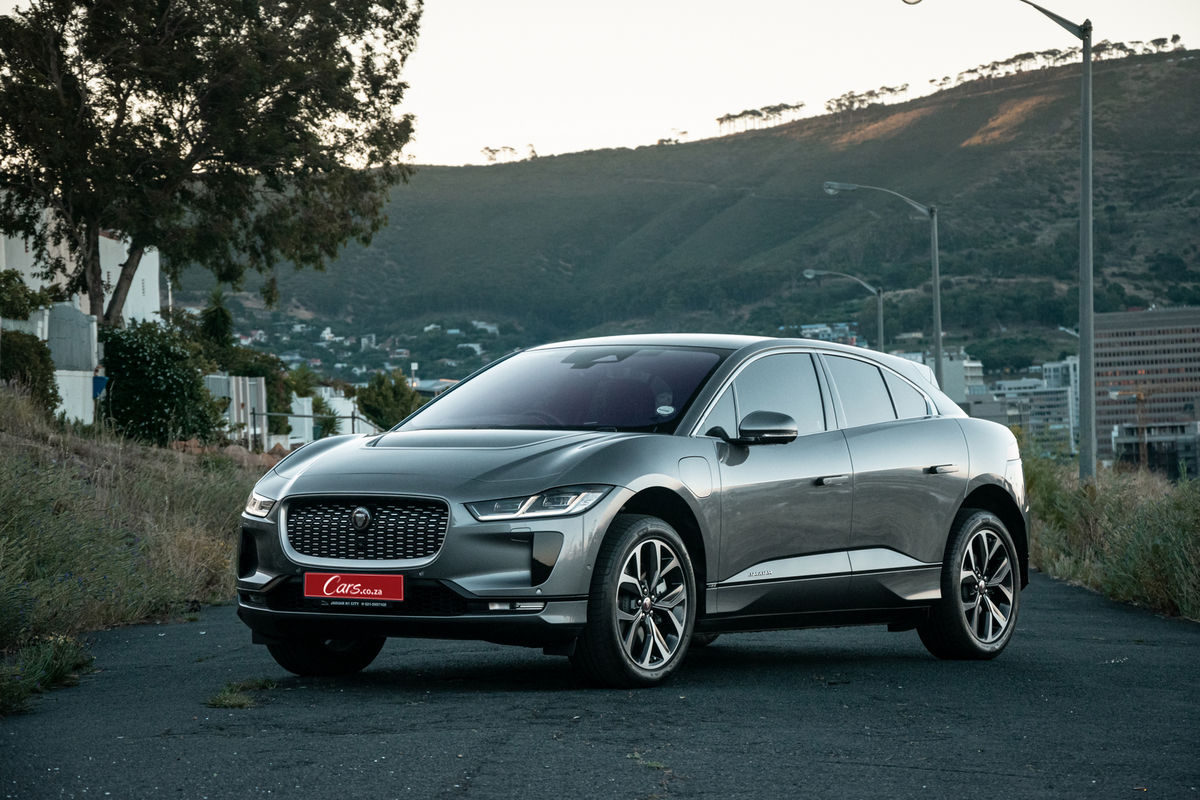
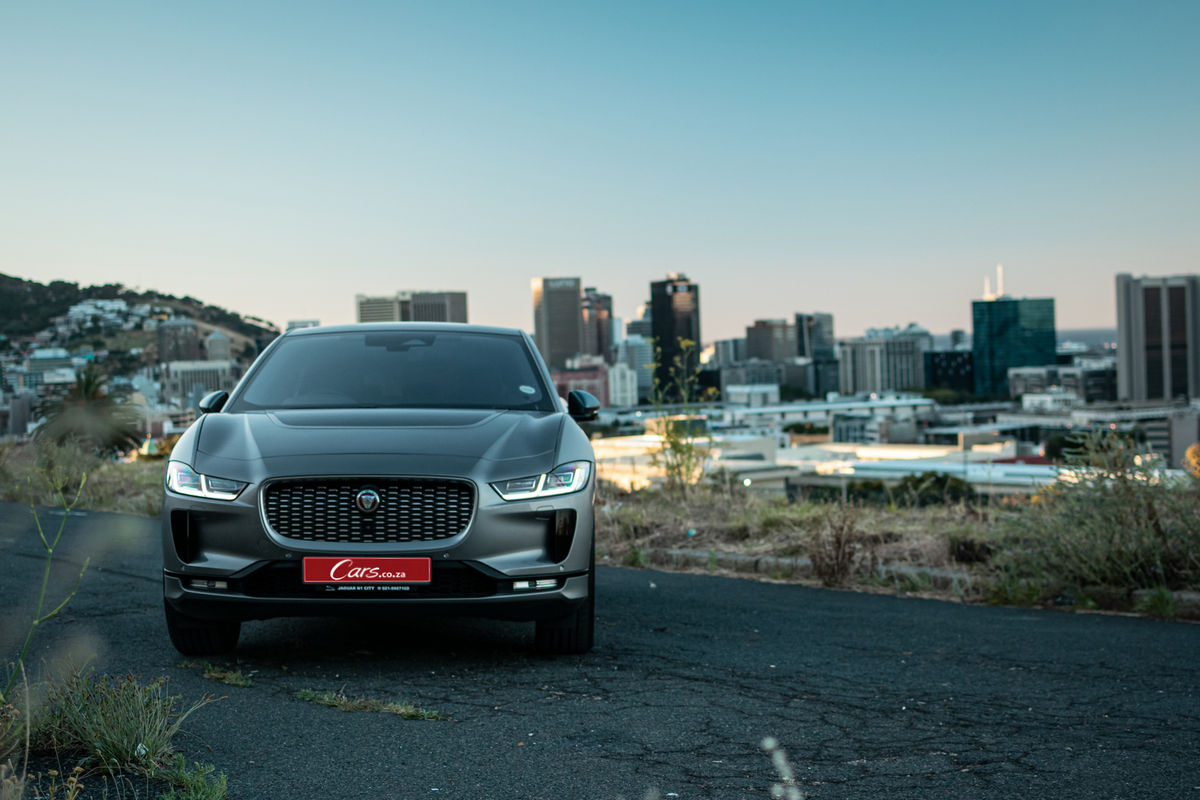
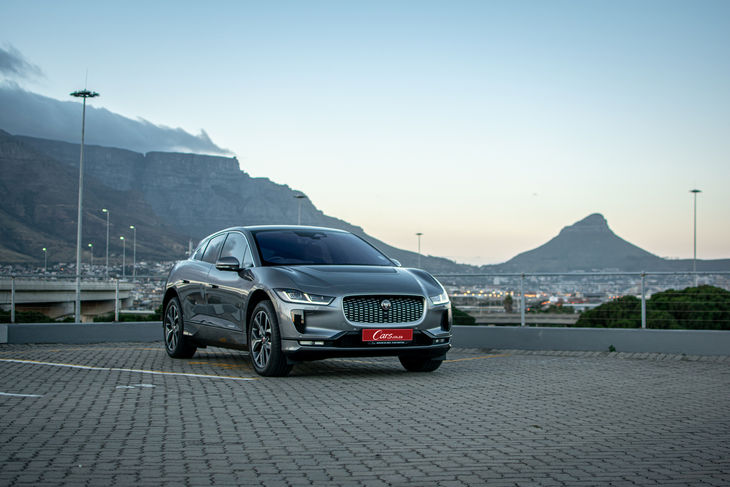
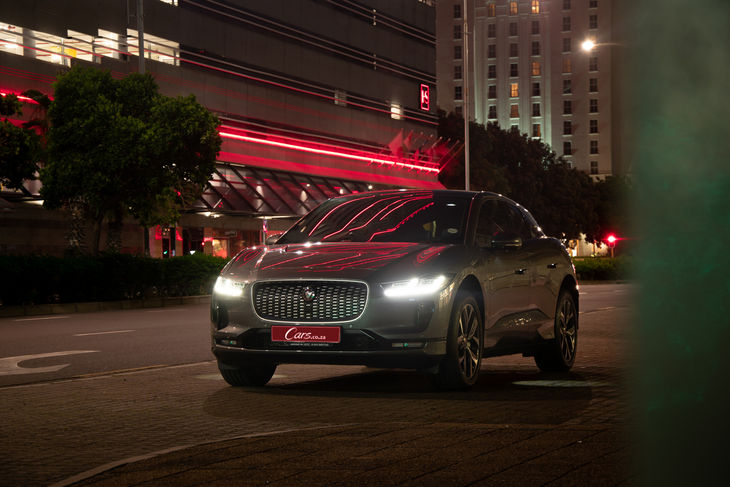
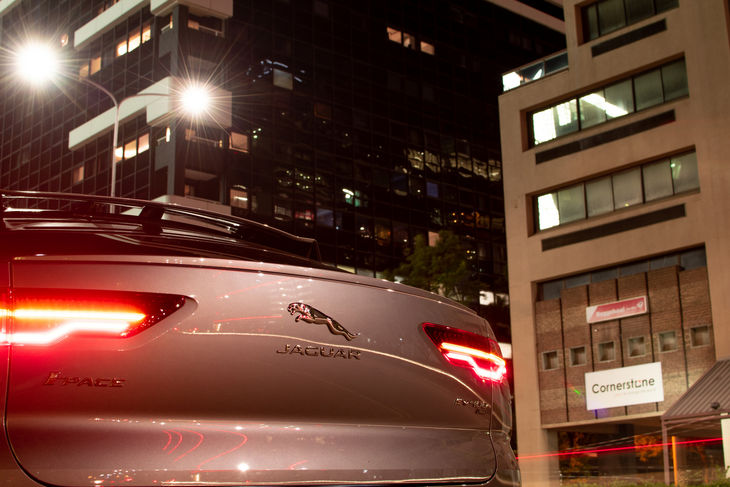
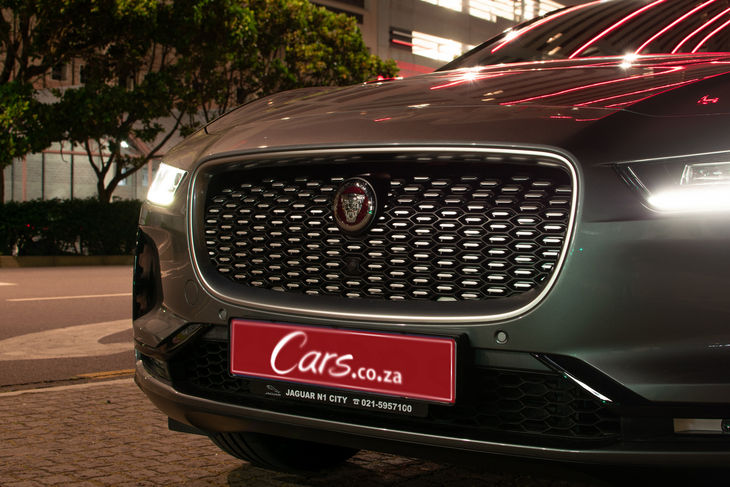
The only way to distinguish between the early and updated I-Pace (from the outside) is by the latter’s revised grille.
What’s new on the Jaguar I-Pace?
Launched in South Africa late in 2018, the Jaguar I-Pace has been somewhat of a trailblazer for battery electric vehicles (BEVs) in the Republic – if largely due to the absence of all-electric alternatives in the luxury medium-SUV category… That’s set to change soon – both BMW (iX) and Audi (e-tron and e-tron Sportback) have lined up similarly sized dedicated battery-electric vehicles for the local market.
So, to make sure that the 2019 World Car of the Year-winning Jaguar remains at the forefront of what is shaping up to become a fierce battle in the marketplace – and soon, Jaguar Land Rover (JLR) has made some changes to the I-Pace. From an aesthetic point of view, there aren’t any major updates (note the slightly altered grille), but the BEV’s infotainment system has been renewed, it now charges faster, plus improved driver assistance technologies have been introduced. Essentially, they’re subtle but significant tweaks to make sure the Jaguar stays at the cutting edge of the, umm, cutting edge.
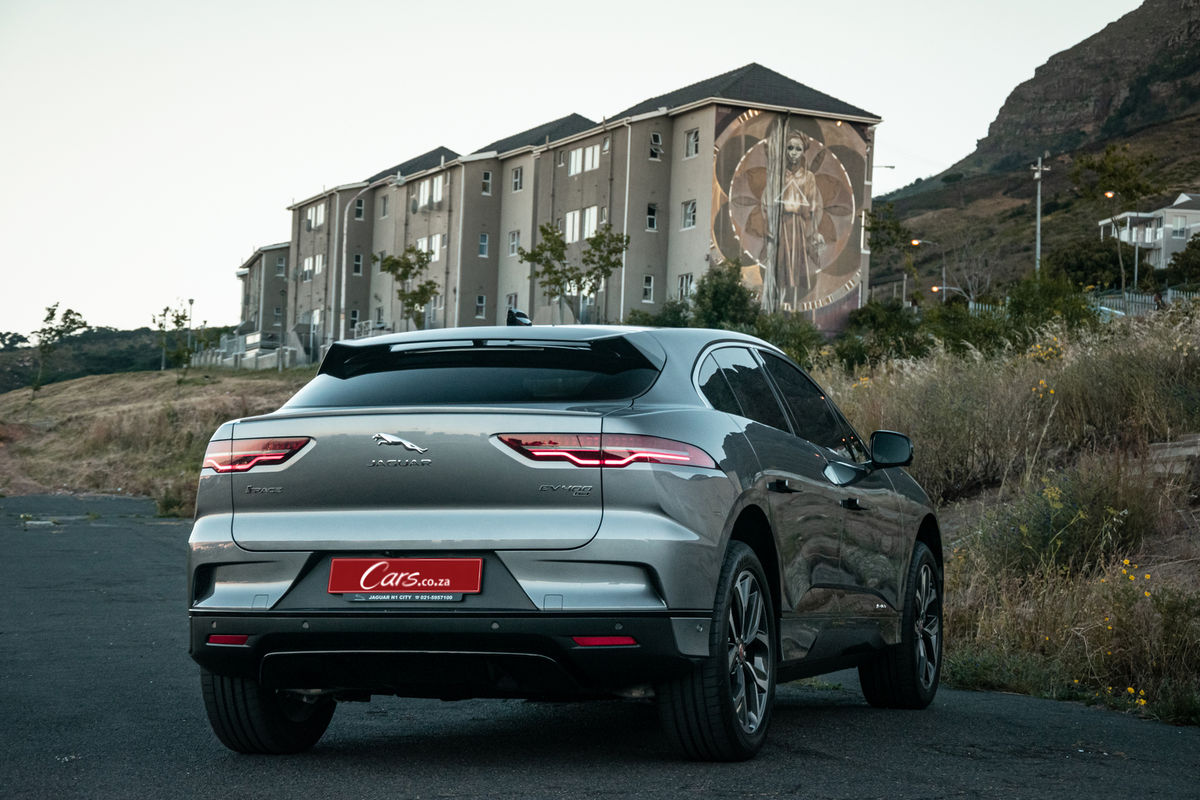
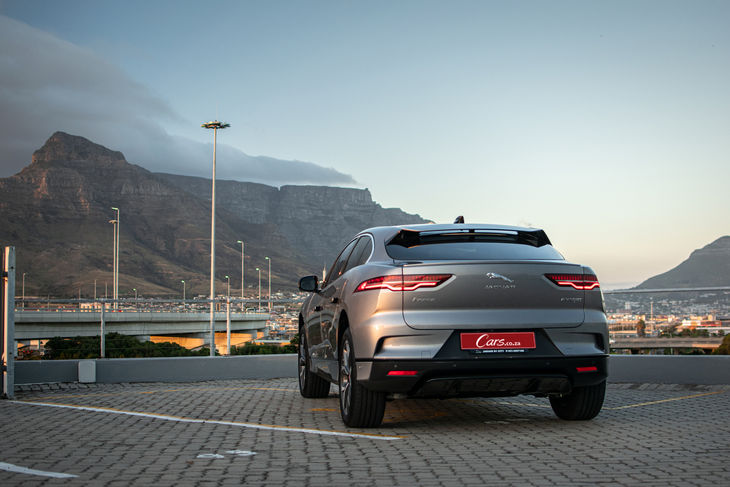
The I-Pace’s rear aspect is very crossover like; it’s a trend that continues with BEVs such as the Kia EV6 and Hyundai Ionic 5.
How the Jaguar I-Pace fares in terms of…
Design & Packaging
Since there aren’t any noteworthy exterior styling tweaks to speak of, the main talking point here is probably that Jaguar now offers only one variant of the I-Pace in South Africa; the Conventry-based brand calls this derivative the “Limited Edition” on its commercial website, but our specification-providing service Duoporta refers to it as the “S Black”.
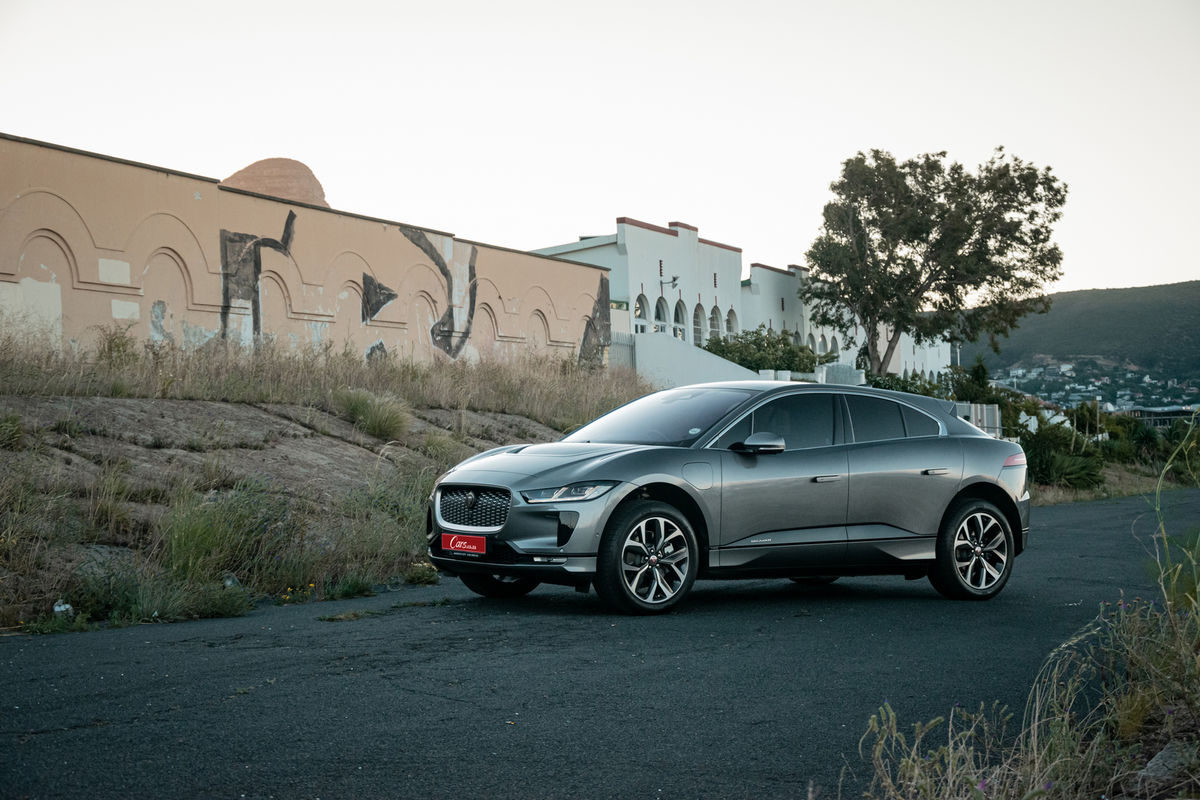
Whatever you may prefer to call it, the I-Pace has an undeniably eye-catching design, particularly because it seems to straddle genres. It looks too swoopy and low to be a traditional SUV, yet it’s a high-riding vehicle and its tailgate certainly has a little “edge” to it. Think Audi’s “Sportback” design language and you’re probably on the right track. By pure chance, we had a pre-launch example of Audi’s new e-tron Sportback on test at the same time, and most of the team members felt the Audi was by far the more “muscular”-looking car, but the Jaguar has a more distinctive look and is arguably more elegant.
The I-Pace is shorter, but wider and lower, than its Audi and BMW rivals.
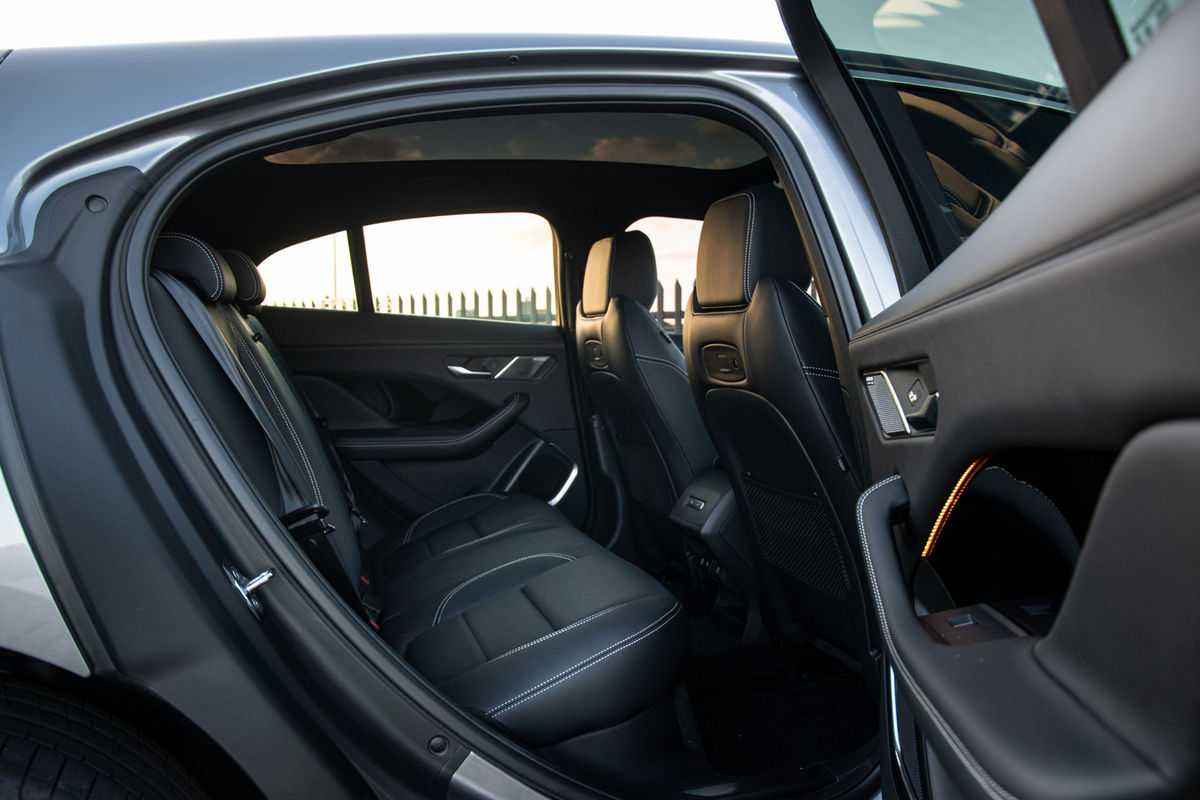
Interestingly, the I-Pace is a fair bit shorter than the e-tron and iX, but wider and lower than its German rivals, which lends it a more hunkered-down appearance by comparison. That doesn’t mean it’s cramped inside, however – its BEV packaging, which positions the battery pack more efficiently than in ICE-based vehicles, certainly helps, plus the Jaguar’s wheelbase is actually longer than the Audi’s and just shy of the BMW’s. This means rear legroom is good. For the driver, the severe slope of the windscreen and the design of the fascia endows the I-Pace with a much sportier “feel” from behind the ‘wheel.
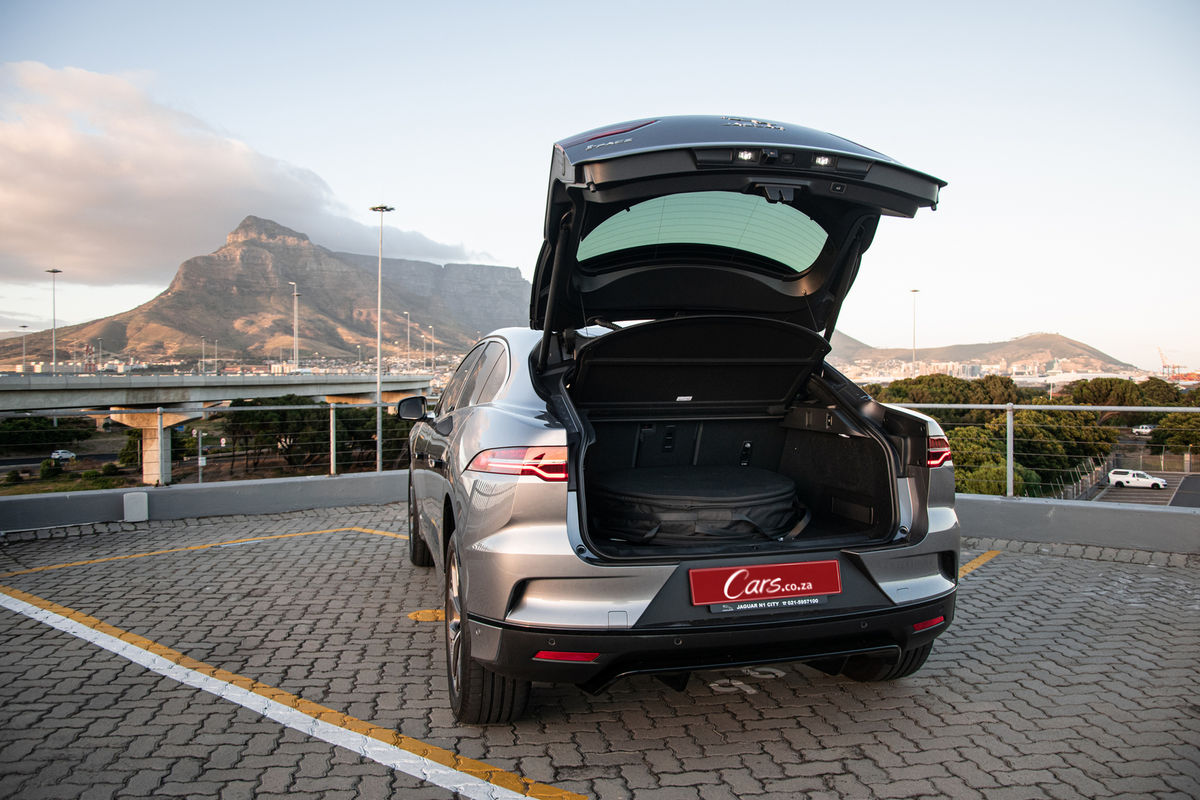
One of our main concerns with the I-Pace concerns its load bay. When you open the tailgate, you’ll find a bulky (albeit neatly wrapped) full-size spare wheel strapped down to the boot floor, which obviously impinges on packing space. Of course, you can remove the spare wheel (a back-straining exercise), but then you’re left with no spare… and the I-Pace can’t ride on Run-Flat tyres, due to its hefty weight.
The Jaguar’s swoopier styling also reduces overall practicality to some degree (compared with its Audi and BMW rivals), as its cabin offers significantly less packing space with the rear seats folded down.
Although the I-Pace cuts a fine figure, its load bay’s practicality is limited due to the fitment of a full-size spare wheel.
Performance & Efficiency
Right, so considering that its claimed 0-to-100 kph time is a mere 4.8 seconds, it’s obvious that the I-Pace is fast. It’s also worth remembering that this is a 2.2-tonne SUV! One soon becomes accustomed to one-pedal driving, particularly when the Jaguar’s regenerative braking is set to its most intensive setting (for maximum energy harvesting when coasting). What takes longer to get used to, however, is the glut of instantaneous torque (and acceleration) that’s at your disposal when you need to execute overtaking manoeuvres. In fact, you have to be wary that you don’t end up driving into cars in front of you!
More importantly, perhaps, is the I-Pace’s range, efficiency and charging speed. Jaguar claims an optimal range of around 470 km and, based on our experience during the test period, we don’t doubt the claim, though range anxiety obviously sets in pretty quickly once the remaining range dips below, say, 100 km.
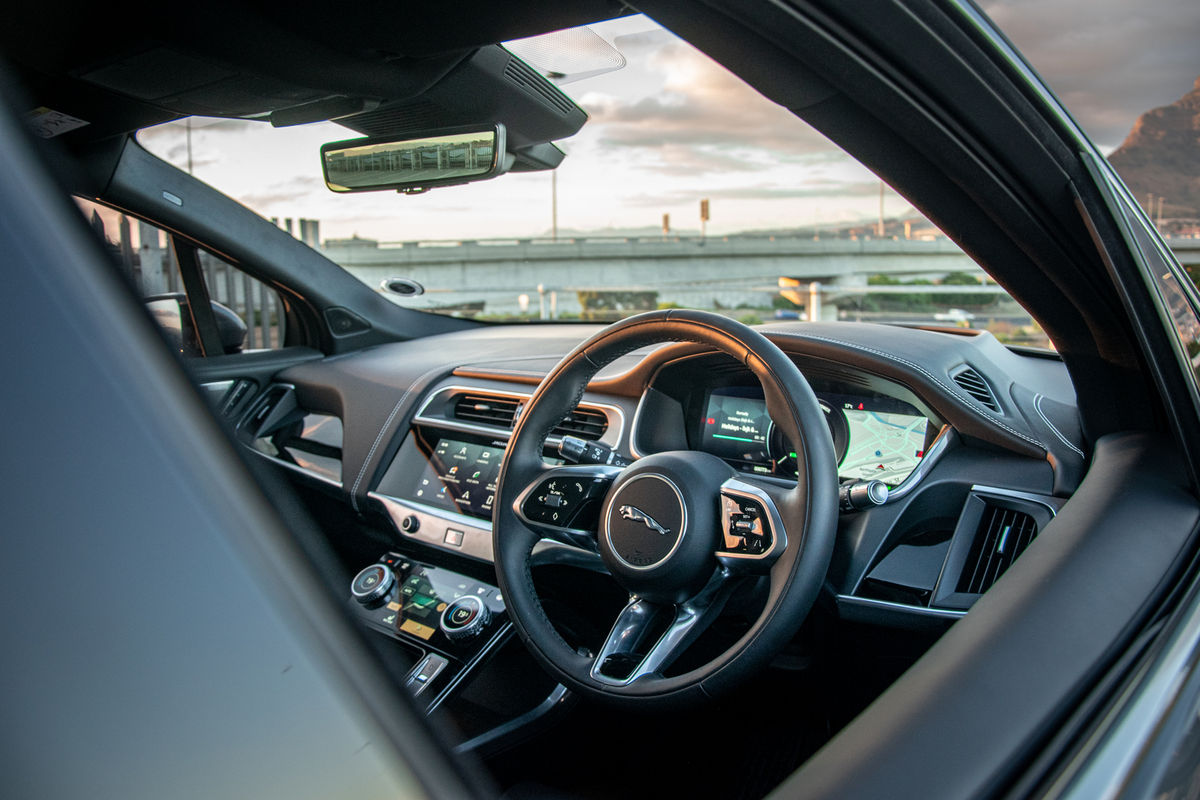
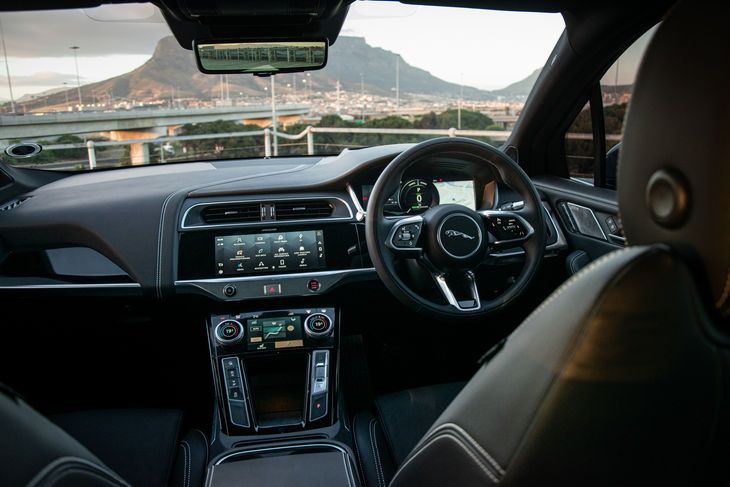
The I-Pace’s cabin is awash with tech, yet the fascia design and driving position are sporty in typical Jaguar fashion.
The EV-charging network in South Africa is growing steadily, and we made use of a Jaguar-branded Gridcars station at Willowbridge Mall in Cape Town. The experience highlighted a few aspects of EV ownership (both good and bad). Firstly, had both spots had been taken, we would’ve been in a bit of bother… but there are already apps available that make it possible to avoid such a scenario. With 27% left on the range meter, we plugged in the I-Pace and went shopping. We came back about 2 and a half hours later to find the car fully charged (it was a 55-kW charger).
This was indeed impressive, but less impressive was the fact that there is only one charge port on the car (on the left), so you may find yourself wrestling with a fairly hefty cable to get to the “other side” of the car, when it’s not possible to park nose-first to the right of the charging station, for example. By comparison, Audi’s e-tron models have charge ports on both sides.
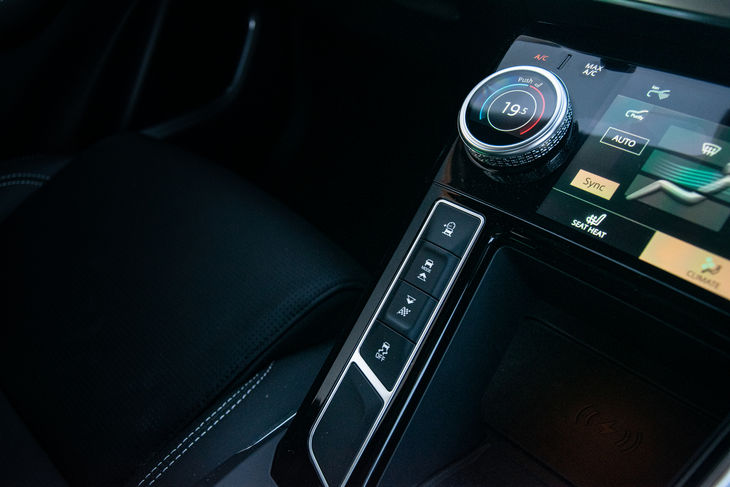
Drivers can use the 2nd and 3rd buttons on the upright to adjust the brake-regeneration and drive modes respectively.
All that said, in all likelihood, most I-Pace owners will own or rent a house with a garage equipped with a 3-phase power outlet. This new updated I-Pace comes with an onboard 11-kW charger as standard, so owners with a 3-phase electricity supply at home can now fully charge their vehicles in only 8.6 hours (when using an 11-kW wall box).
If you only have access to single-phase electricity, you can continue using 7-kW wall boxes and fully recharge the Jaguar in 12.75 hours (which adds approximately 35 km per charging hour). Remember, you’re unlikely to run the battery down to zero every day, so you’d probably only be topping up at night-time.
The I-Pace has a supple ride quality on most road surfaces, at most speeds.
Ride & Handling
Riding on optional 20-inch wheels shod with tyres that have significant (relatively thick) “sidewalls”, the I-Pace delivers a supple ride on most road surfaces, at most speeds. A passive coil-sprung suspension is standard, but for an additional R17 300, you can specify Active (adaptive) Suspension, which, in turn, adds Adaptive Dynamics.
While you can’t ever get away from the fact that this is a bulky, heavy machine, the I-Pace handles and steers well; it always instils a sense of security and control. Once you’ve mastered the art of one-pedal driving, you can get into quite a nice rhythm of fast driving with this big quasi-SUV.
The steering has pleasing weighting to it and, as per usual, the JLR engineers have nailed that thing driving enthusiasts adore so much: “control harmonisation”. What we mean by that is that the amount of effort required to elicit a response from the steering, brakes or engine is “harmonised”, so, generally in line with exactly what you were expecting. It’s a triumph.
Perhaps parking should not fall into the Ride and Handling section, but it’s worth noting that you can get a self-park function for the I-Pace, at an extra charge of R18 300.
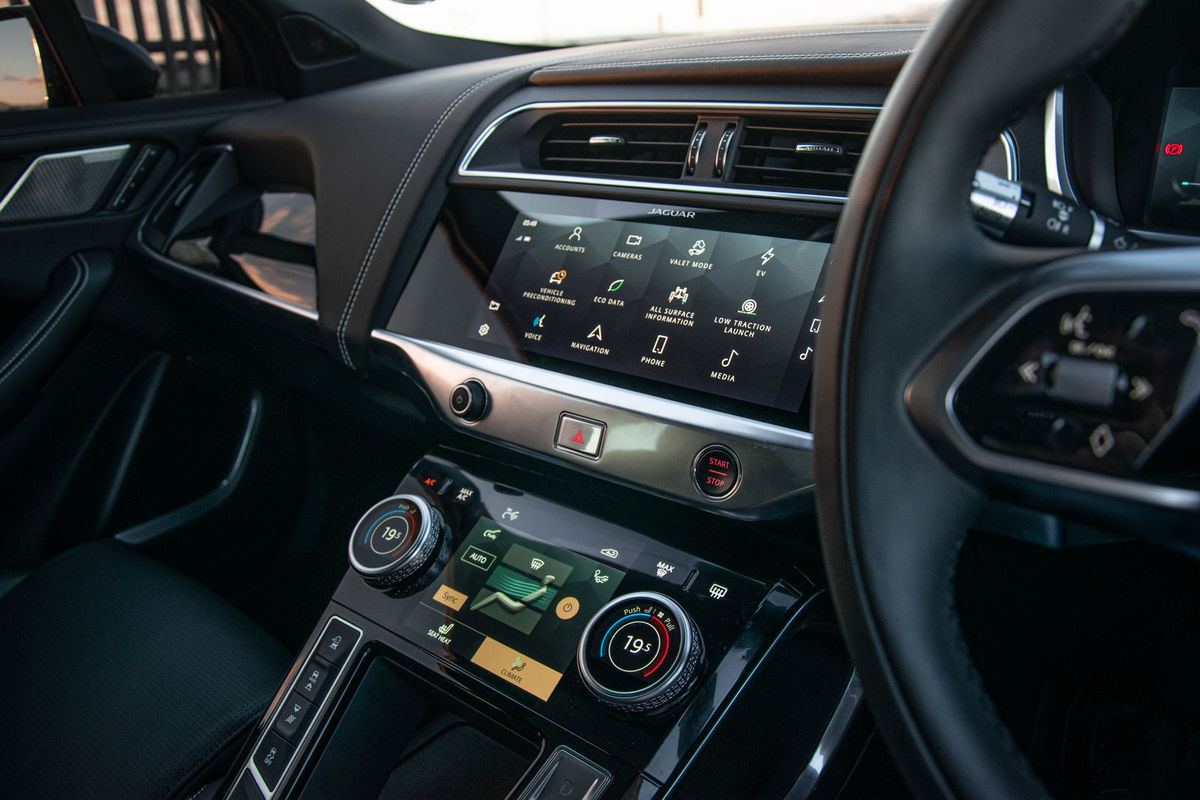
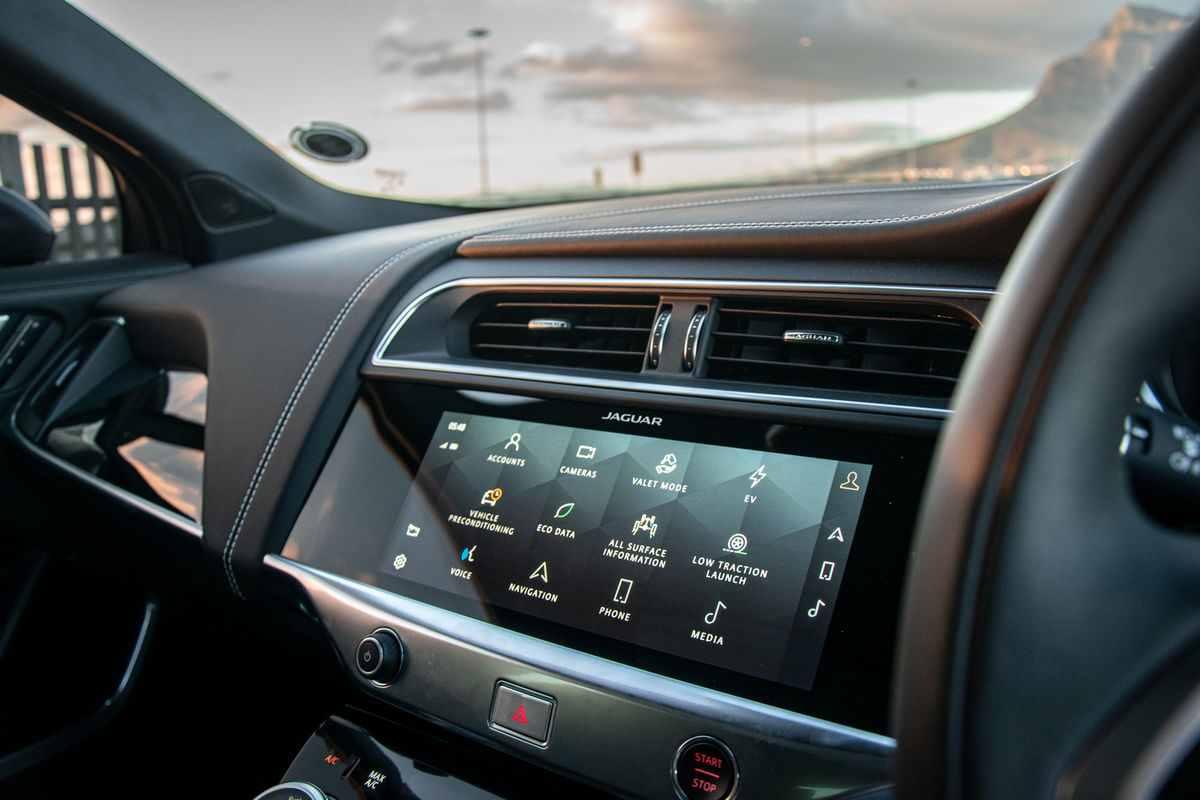
Jaguar’s new Pivi Pro system is easier to use and faster-reacting than older-generation infotainment systems.
Comfort & Safety features
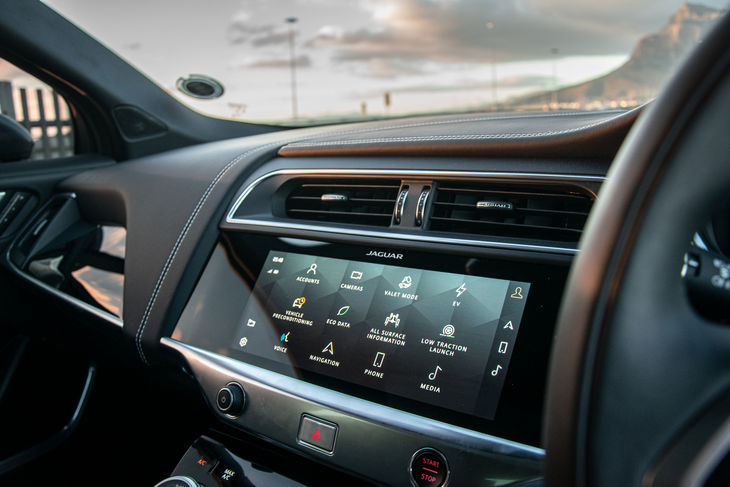
Right, so this is where Jaguar has rung quite a number of changes. The updated I-Pace comes with the marque’s so-called new Pivi Pro infotainment system. It features a very crisp, high-definition 12.3-inch instrument cluster, as well as 10- and 5-inch upper and lower digital touchscreens/panels, replete with haptic feedback. It’s a very easy-to-use system, with logical menus and, what’s more, there are a number of practical improvements… For example, it has its own backup battery to ensure that the navigation function’s initialisation is pretty much immediate.
The standard features list is fairly comprehensive, as you’d hope (considering the car costs R2 million), but nevertheless, there are still some add-on options you can choose from. Having to pay R2 000 extra to be availed with a wireless charging pad for your smartphone, however, is just cheeky.
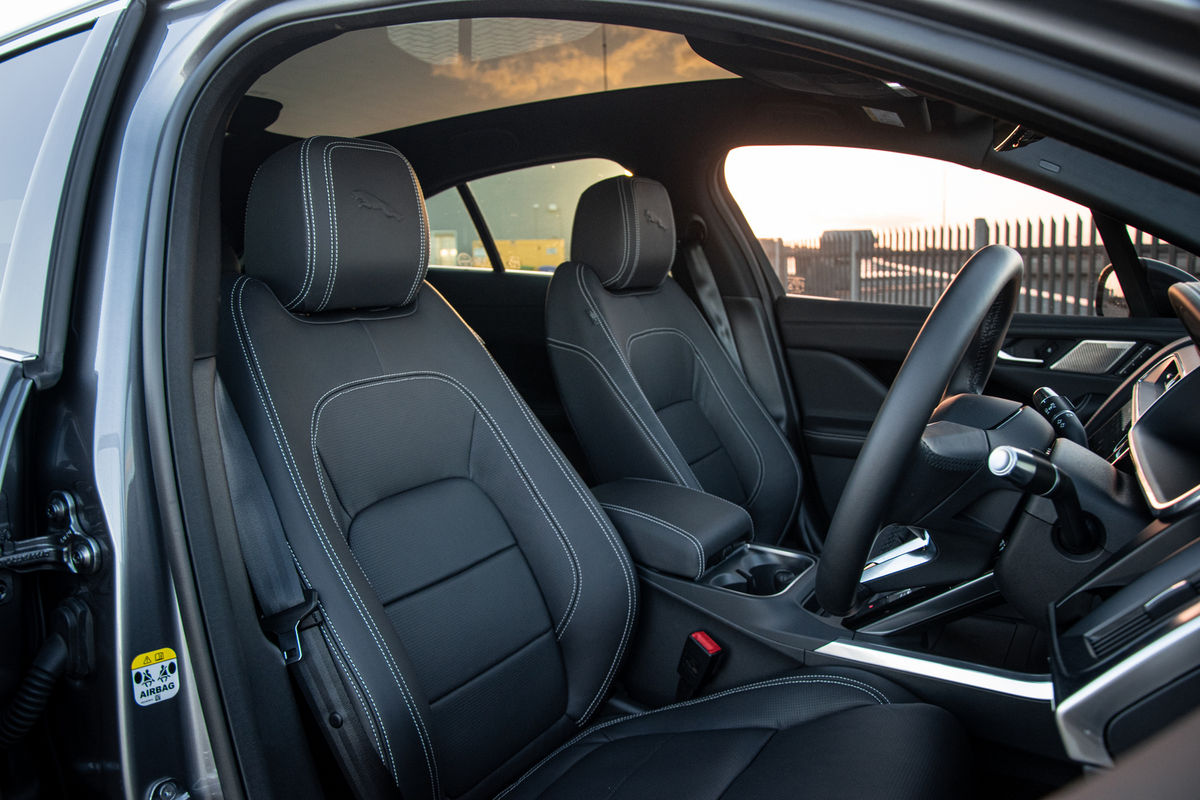
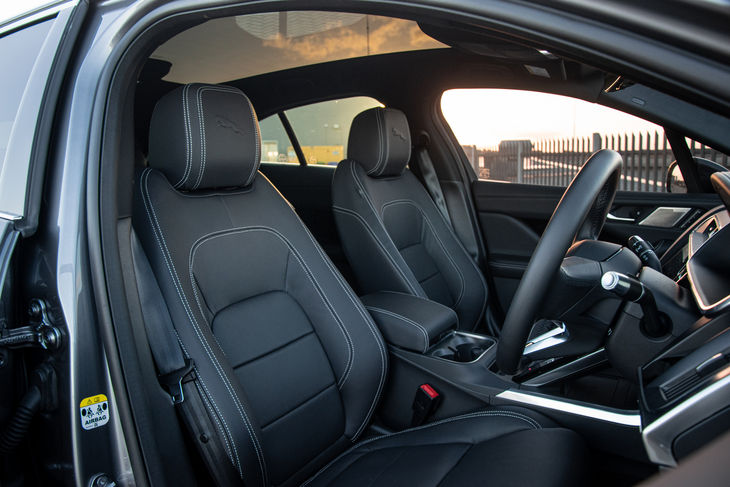
The I-Pace’s shapely front seats offer a good balance between comfort and support.
What you do get as standard is dual-zone climate control, a heated steering wheel, head-up display (HUD), voice control, Apple CarPlay/Android Auto connectivity, adaptive cruise control with steering assist, rear cross-traffic alert, a powered tailgate and much more.
Another nice touch is the new 3D Surround Camera system (R15 000 extra), which gives you a handy high-definition 360-degree view of the vehicle. The I-Pace can now also be ordered with the ClearSight rear-view camera that substitutes the traditional rear-view mirror, although you can flick back to the normal mirror view should you find the camera’s aspect distracting. The ClearSight is a R8 700 option.
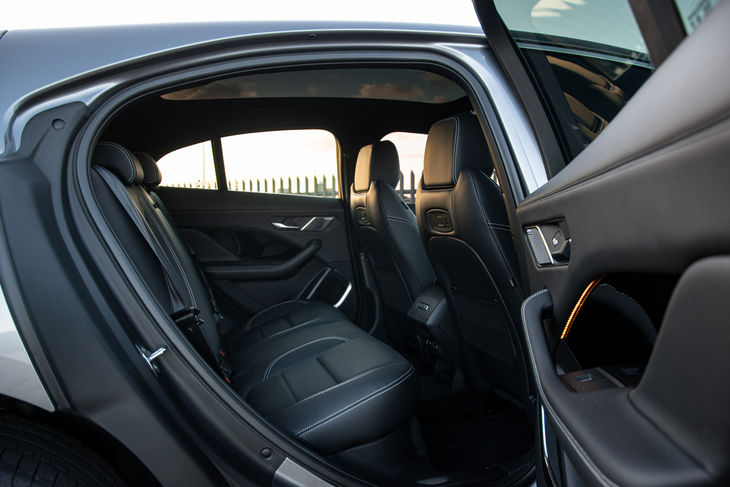
Don’t be fooled by the I-Pace’s somewhat stubby appearance; leg legroom is quite generous.
Price and after-sales support
The Jaguar I-Pace is available in 1 trim level only and is priced at R1 999 900 (December 2021). There are, however, a variety of options to choose from (see some of those under Comfort & Safety features). Included in the price is an 8-year/160 000 km battery warranty and the standard Jaguar Care plan, which includes a 5-year/100 000 km (whichever comes first) warranty and servicing cover.
Verdict
While the changes that Jaguar Land Rover have applied to the I-Pace are subtle (also including advanced cabin-air filtration and enhanced software-over-the-air update functionality), the Coventry-based brand’s BEV remains an interesting option for early-adopters, even in the face of new competition from other premium (German) brands. Its most serious new rival appears to be the e-tron Sportback, which is also a sporty-looking battery-electric SUV. Even though the Jaguar is the older product of the two, it still competes (even trounces, in some respects), its new German rival. So, in summary, the I-Pace is still in the running, and very strongly so. Plus, with the addition of some new competitors, consumers now, finally, have that ultimate of luxuries in this segment… a wealth of choice.
As Audi shifts to electrification, the road for the naturally-aspirated V10-powered Audi R8 is coming to an end, but the supercar will go out with a bang!
Death by electrocution. That’s the fate of the potent R8. The Audi R8 supercar as we know it is reaching the end of its lifecycle and the next generation will be electrified.
That means petrolheads will be saying goodbye to the current naturally aspirated 5.2-litre V10 engine that produces a hair-raising 449 kW and 560 Nm. For those who need to be reminded, the R8 is capable of accelerating from zero to 100 kph in 3.2 seconds and reaching a top speed of 330 kph. The next-generation electric R8, however, will surely be faster.
But before the next generation arrives, Audi will reportedly prepare a hardcore R8 that will serve as the swansong for the Ingolstadt firm’s pinnacle supercar.
This was confirmed by Audi’s RS Sport Managing Director, Sebastian Grams, who commented What I can say is that we have plans to do more. There will definitely be more to come on this generation of R8 platform. And as you can see from the R8 with rear-wheel drive, we are trying to bring ‘fun-to-drive’ to the front [of what we do]”
“What we are doing is trying to make the most out of the [car’s] life cycle. At the moment people are enjoying the R8 and we have a lot of sales. But I can tell you we have enough ideas for the future” he said.
The hardcore R8 is expected to be revealed in the first half 2022 and we will keep you informed as soon as more information becomes available.
Mandla Mdakane – South Africa’s GTC Racing Driver shares his story (and blasts around the track!)
SA racing driver Mandla Mdakane sits down with Ciro De Siena to discuss all things motorsport!
Mandla Mdakane has been racing since the age of 4, and now occupies a seat in South Africa’s hotly contested GTC racing series with the Toyota Gazoo Racing team.
In this interview with Ciro De Siena, he shares his past, present, and future. The road to racing success is a long one and Mdakane has simply never given up.
Having raced all over the world, he now calls Johannesburg home and tours around the country with his team and racing partner Michael van Rooyen, taking on the best SA has to offer.
Check out Mdakane on Instagram here and do yourself a favour, get to a GTC race in 2022, you won’t be disappointed.
For more information on South Africa’s GTC Racing Championship, see here: http://gtcafrica.co.za
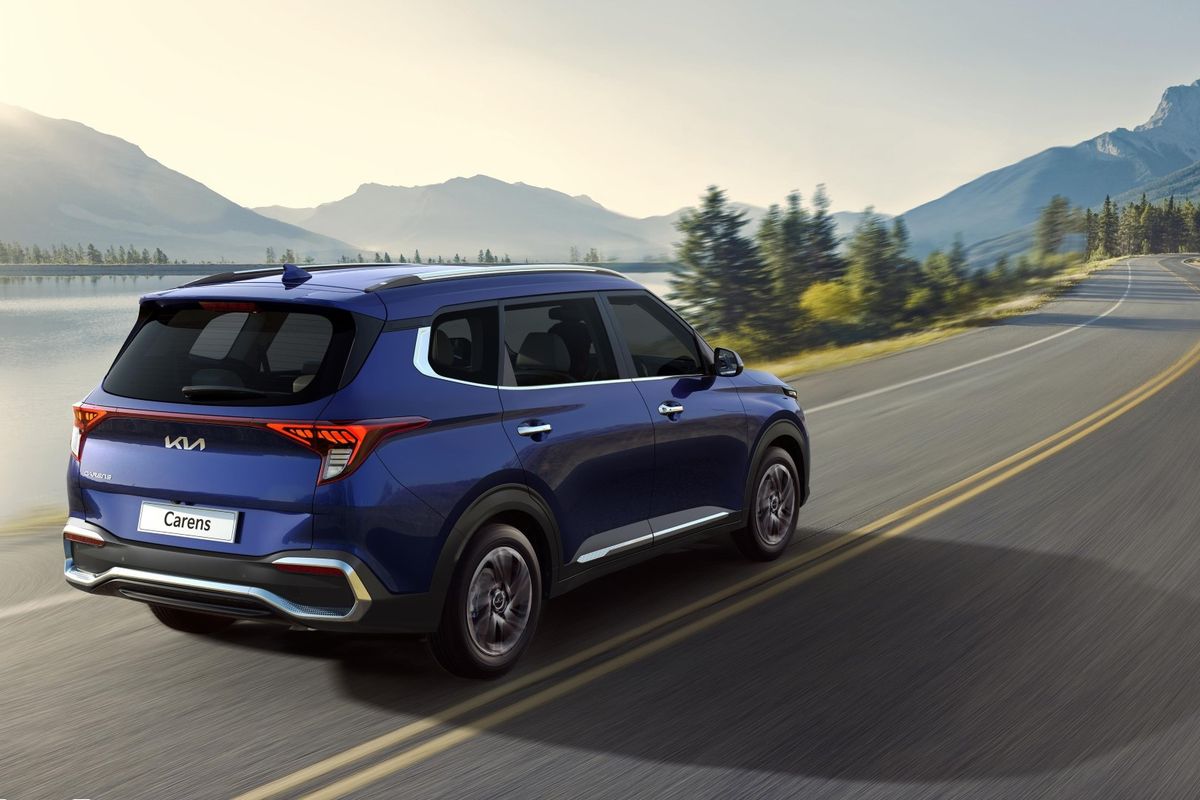
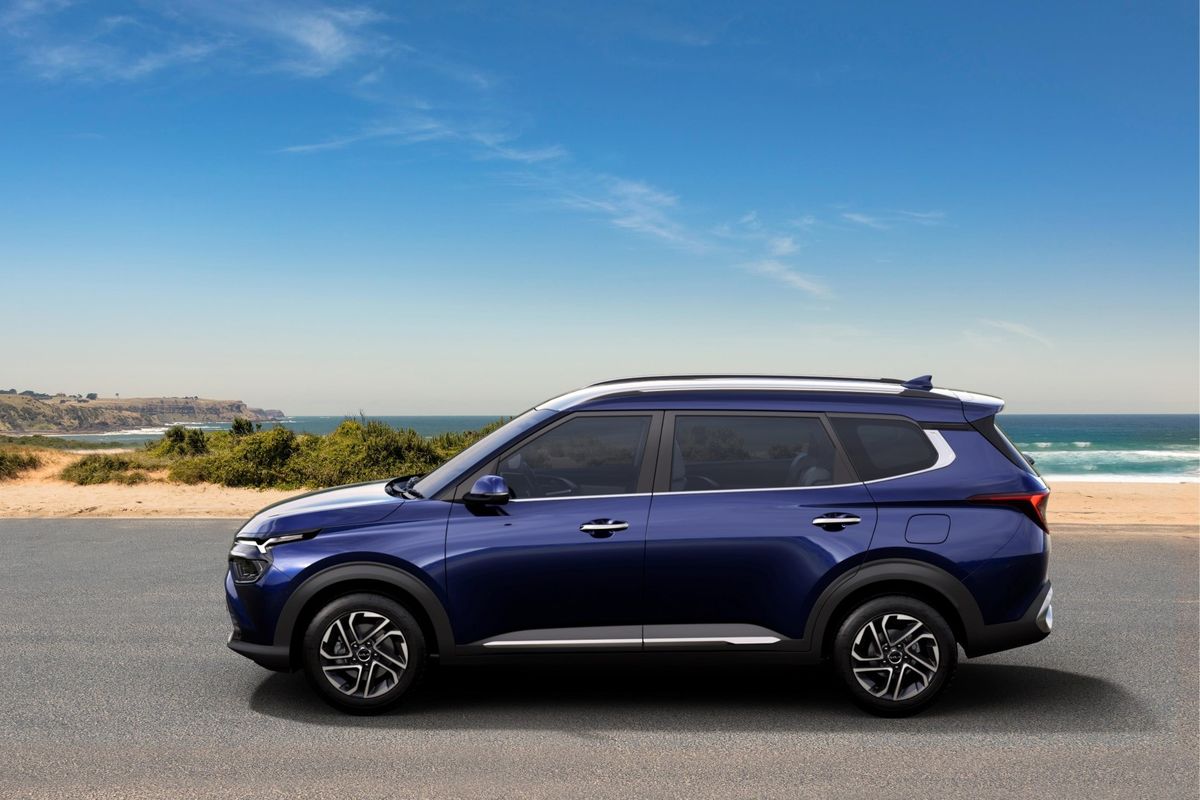
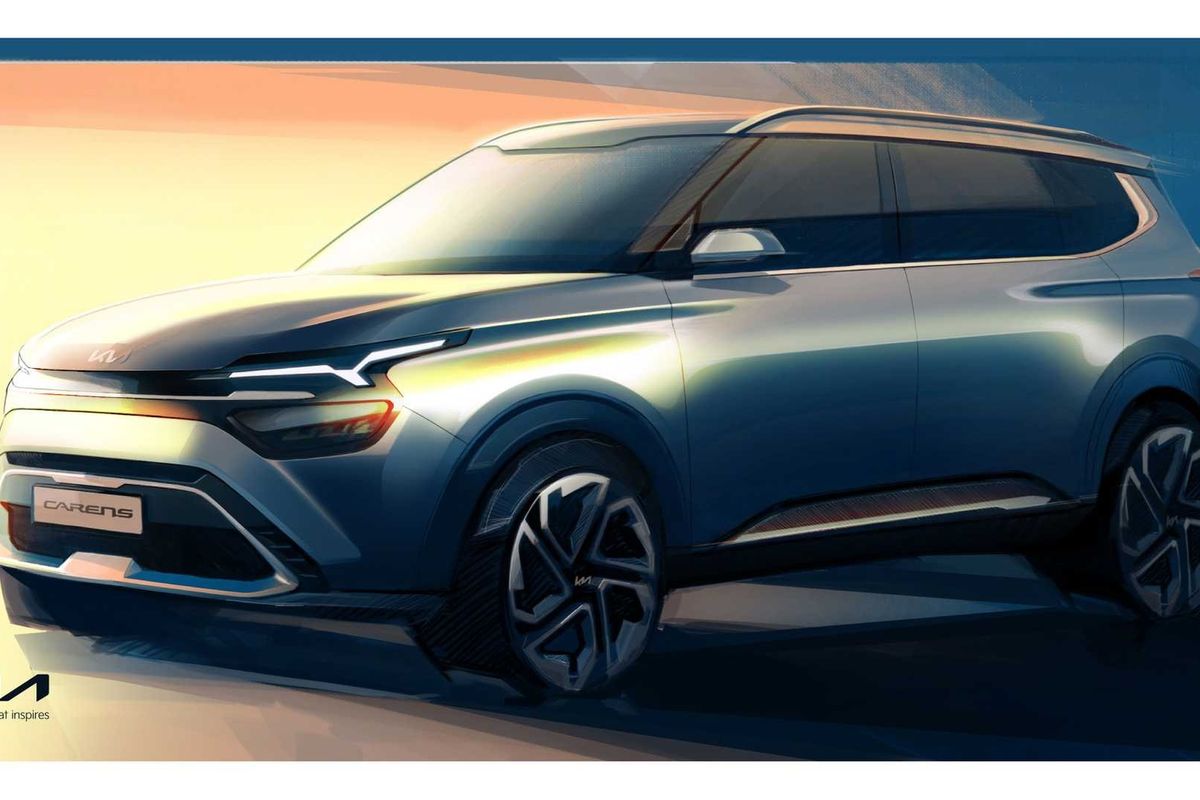
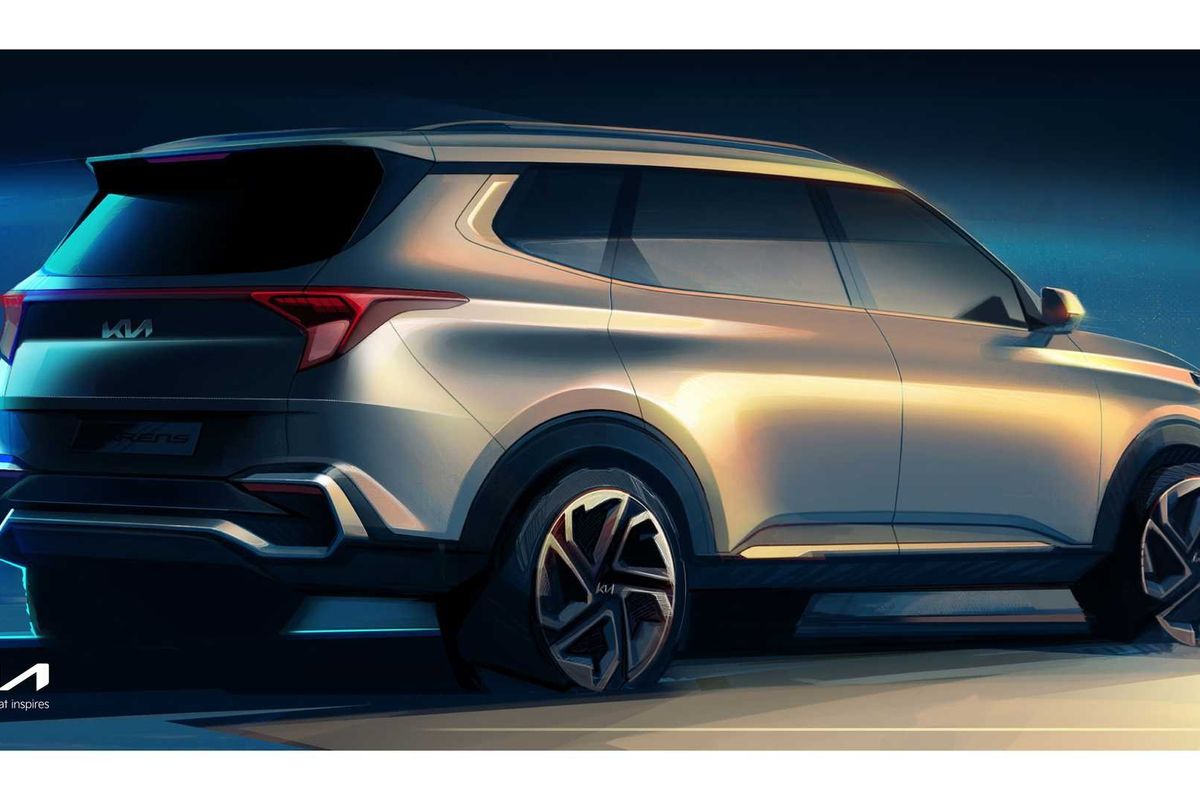
The brand-new Kia Carens has been revealed it has morphed into something that looks rather good!
Remember the Kia Carens? It was a sensible multi-purpose vehicle but this segment is on the decline as customers are opting more for the SUV body style.
Kia South Africa will be launching its flagship Carnival MPV (as well as the new Kia Sorento) in SA early in 2022, so it’s clear that despite the shift, there’s still a market for a well-thought-out minivan. Don’t call it an MPV though, as Kia prefers the Grand Utility Vehicle classification.
Back to the Kia Carens, it’s now been fully revealed in India and this new 4th-generation model looks like it has similar styling to that of the all-new Sportage and resembles a crossover. You could even say there’s an element of the old Kia Soul to its overall shape and incorporates Kia’s latest ‘Opposites United’ design language
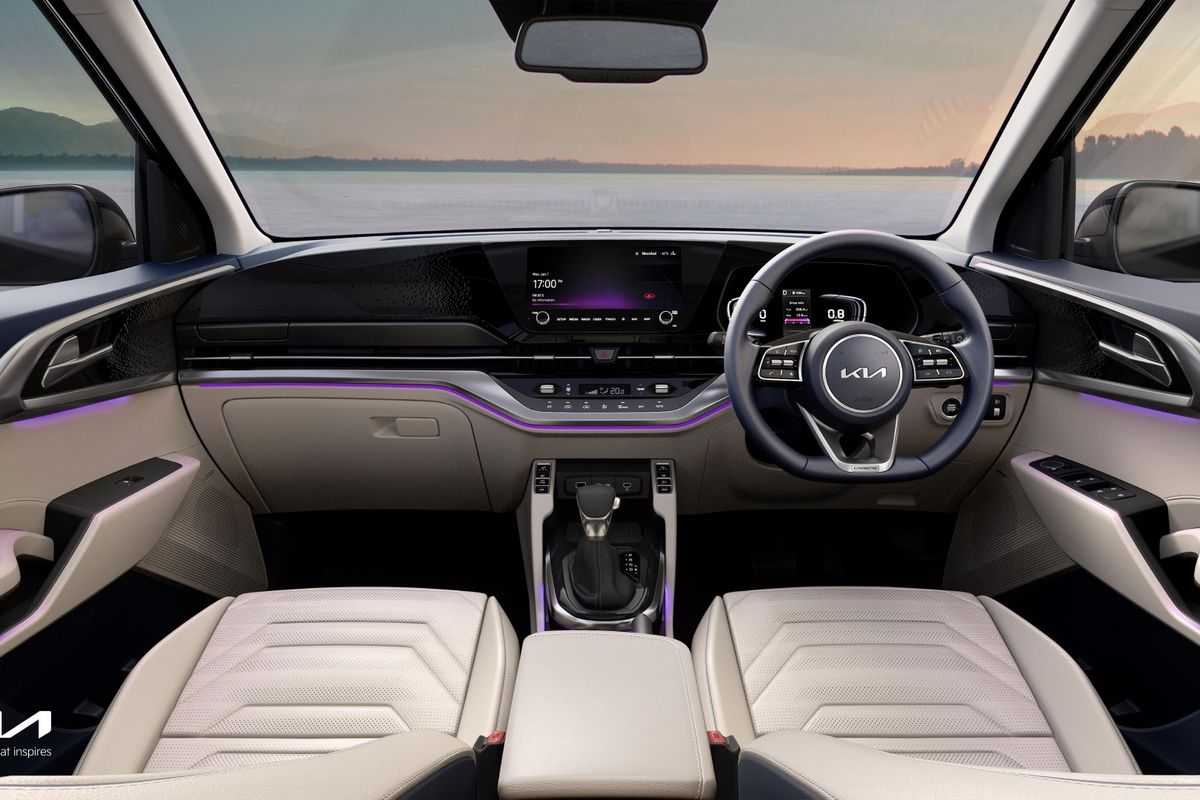
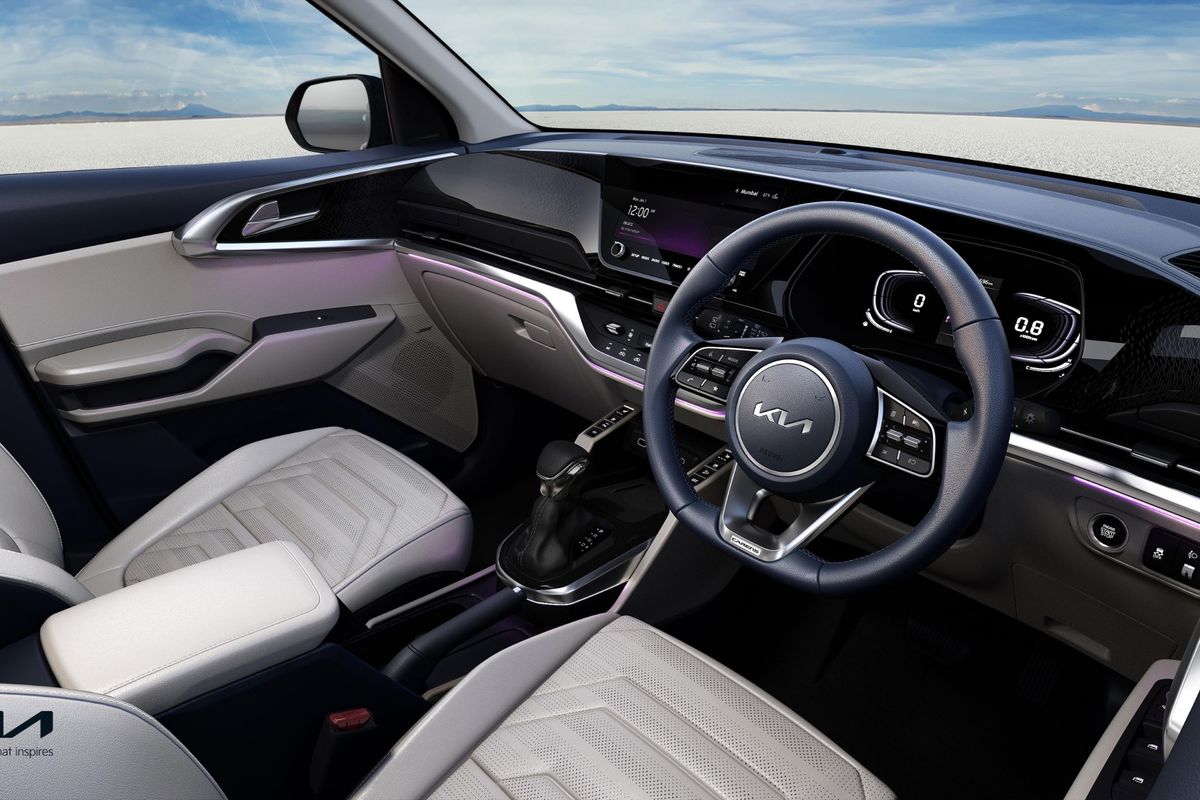
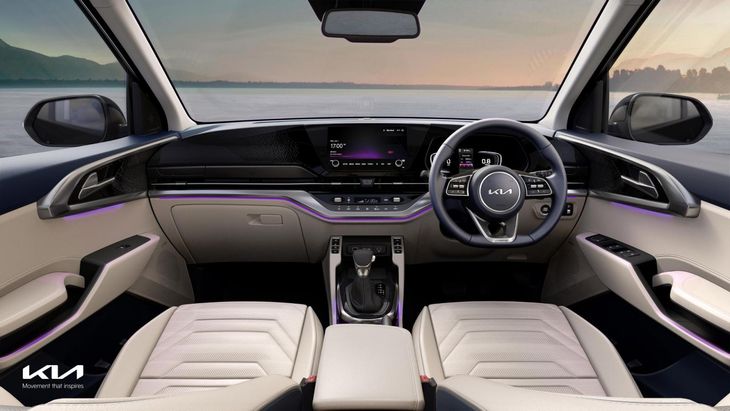
The Carens’ cabin is decisively modern and upmarket in look and feel.
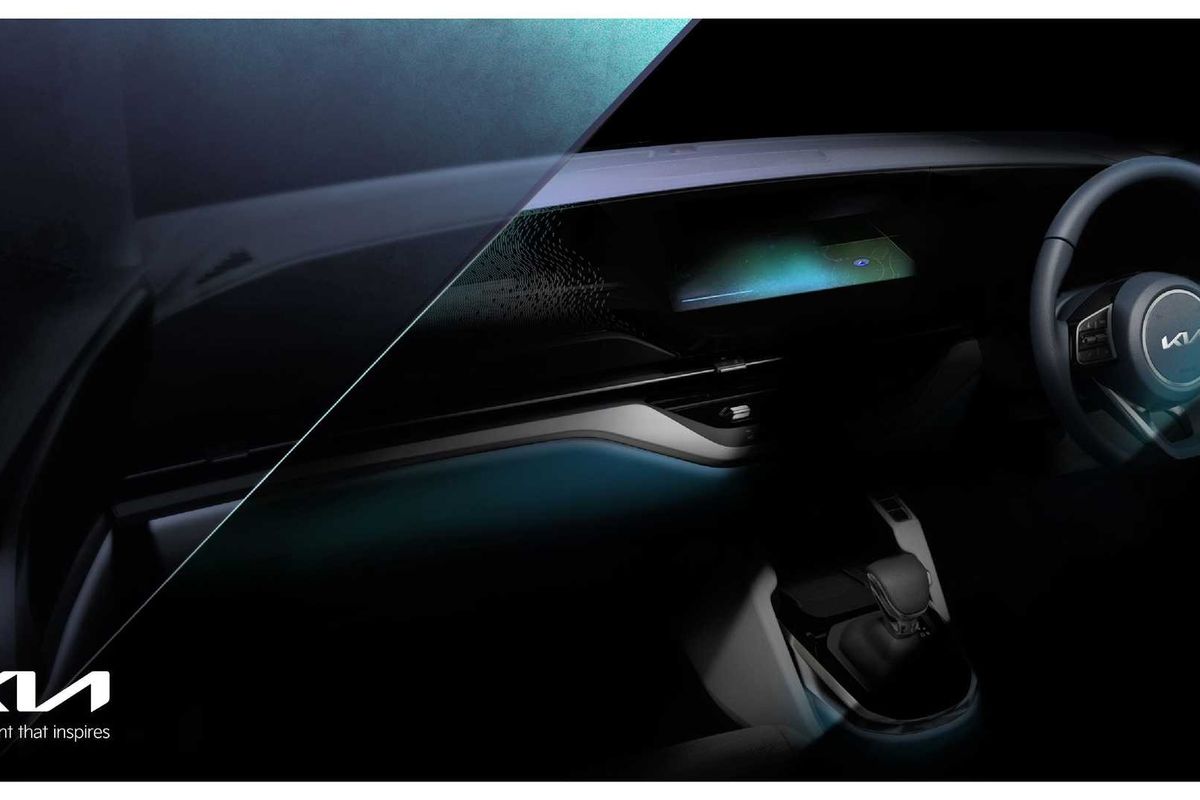
The interior features a new-look digital dashboard stretching across the cabin, which includes the driver’s display and 10.25-inch infotainment system in one slick piece of hardware. The system is powered by the latest generation Kia Connect which allows for system updates Over-The-Air. A BOSE sound system with 8 speakers is also fitted and the cabin ambience is enhanced with a choice of 64 mood lighting colours.
As far as seating and practicality goes, the Carens can seat up to 7 passengers and the second row can be tumbled forward electronically and the seats can recline and slide forwards and backwards as needed while the third row can be folded into the boot floor to optimise load space. Cooling cupholders, retractable folding tables and under-seat storage trays are also fitted. A large SkyLight sunroom further adds to the airiness in the cabin while a Smart Pure Air Purifier keeps the cabin air clean.
On the safety front, the Carens is equipped with Kia’s Hi-Secure Safety Package which includes 6 airbags, Electronic Stability Control (ESC), Vehicle Stability Management (VSM), Hill-Assist Control (HAC), Downhill Brake Control (DBC), Brake Assist System (BAS) and a Tyre Pressure Monitoring System.
What engines are offered on the Kia Carens?
The Kia Carens is powered by the same engines used in the Kia Seltos, a model we’re rather fond of. That means a naturally-aspirated 1.6-litre petrol engine is offered with 96 kW and 151 Nm or a turbocharged 1.4-litre petrol engine with 103 kW and 242 Nm. A 1.5-litre turbodiesel is also offered with 86 kW and 250 Nm. Transmissions include a 6-speed manual, 7-speed dual-clutch (for the 1.4-litre turbopetrol and a 6-speed automatic.
The Indian car industry is booming and the SA market receives many models from the sub-continent. The Kia Sonet and Seltos are both from India, as are the Hyundai i20 and Creta. Nearly all products in Suzuki’s portfolio are also assembled in India. Even so, the Kia Carens is currently under consideration but its introduction has not yet been confirmed.
Do you want to see the new Carens in South Africa?
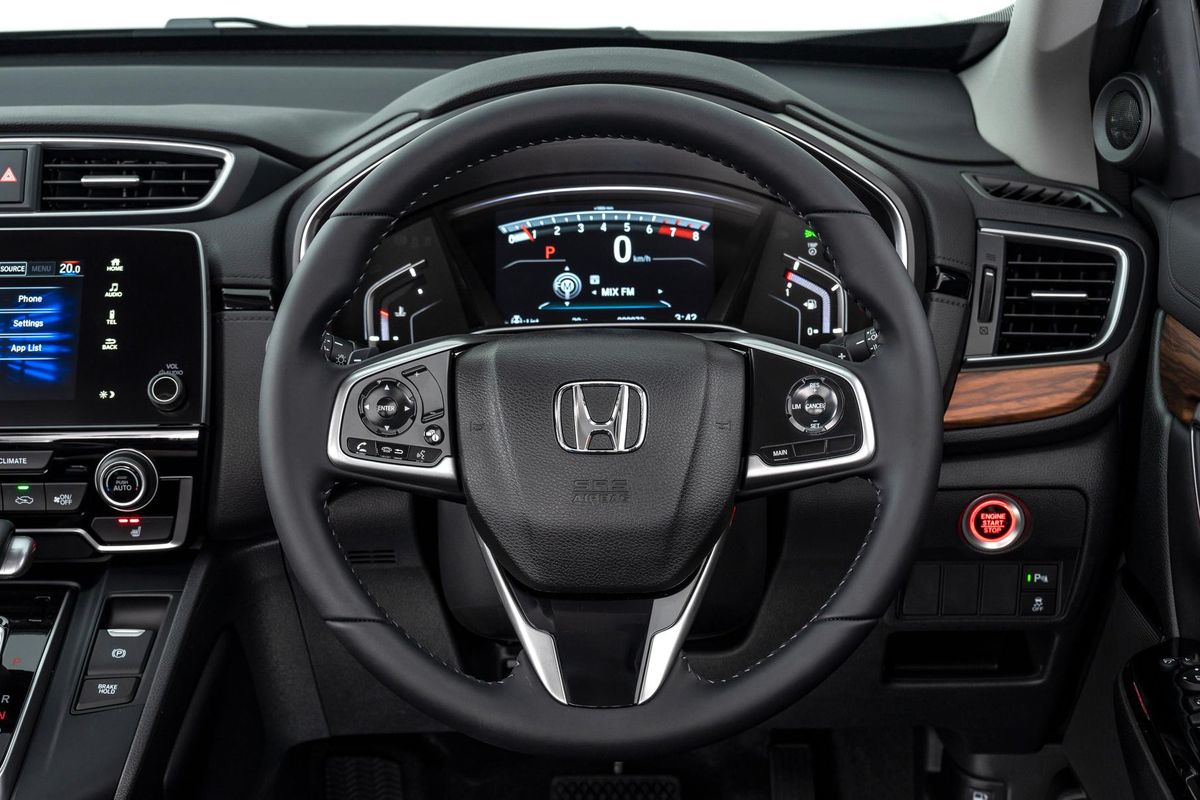
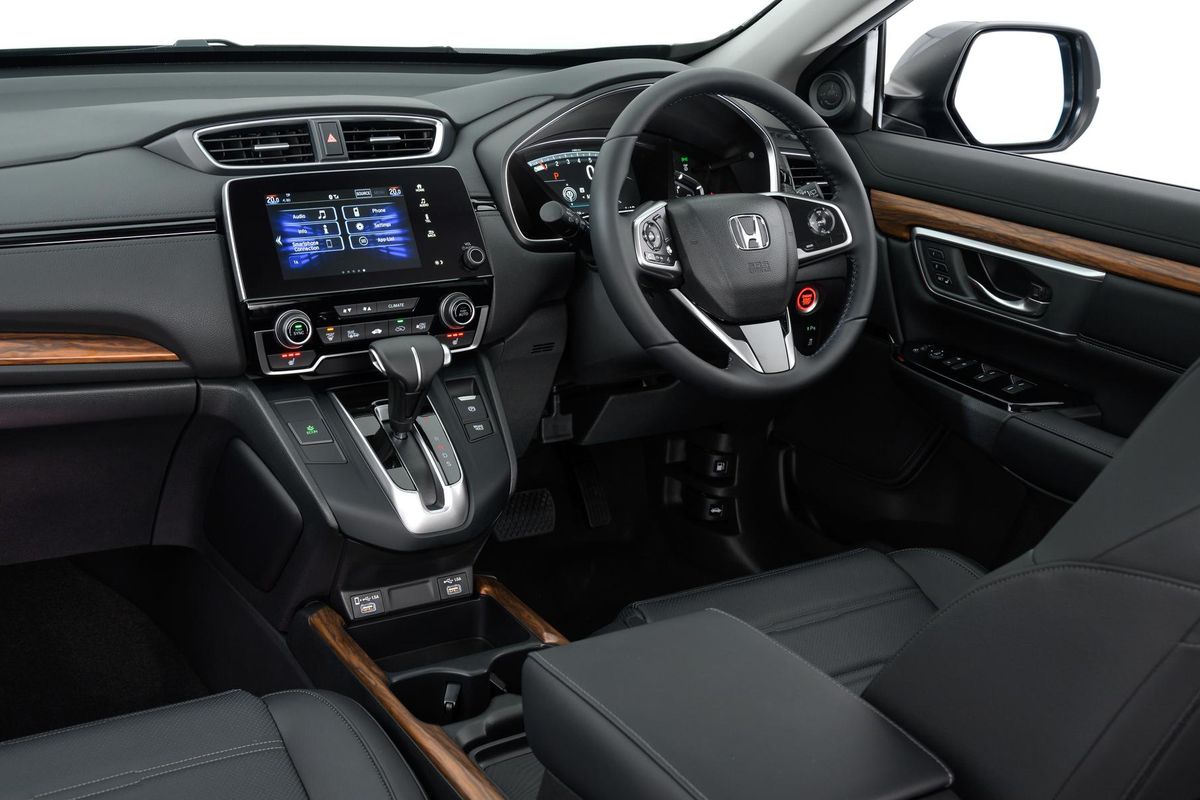
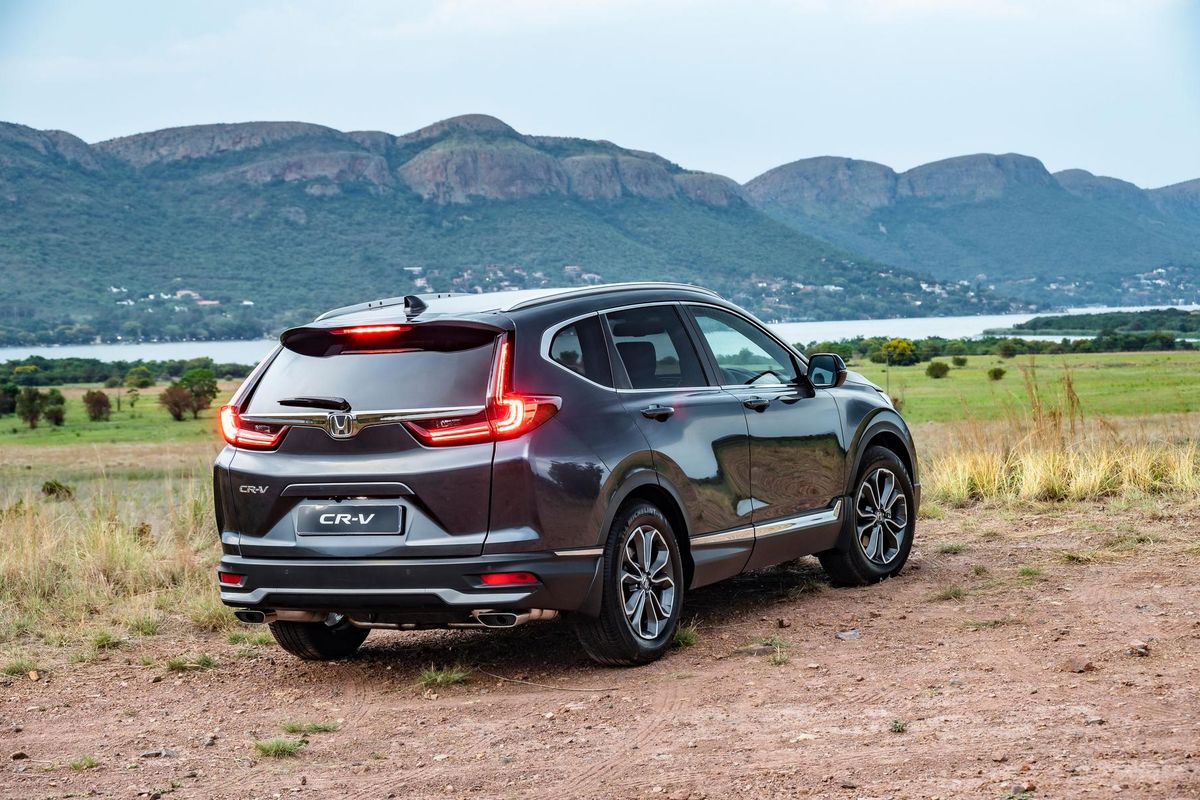
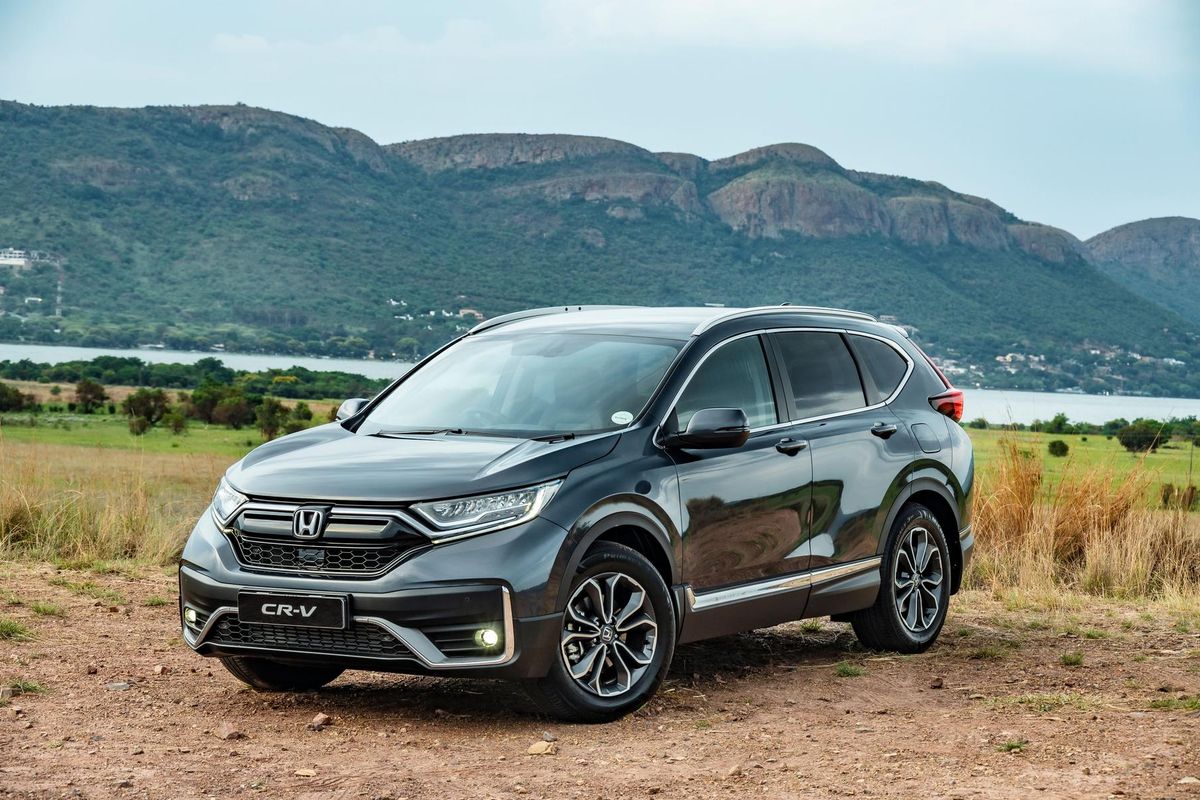
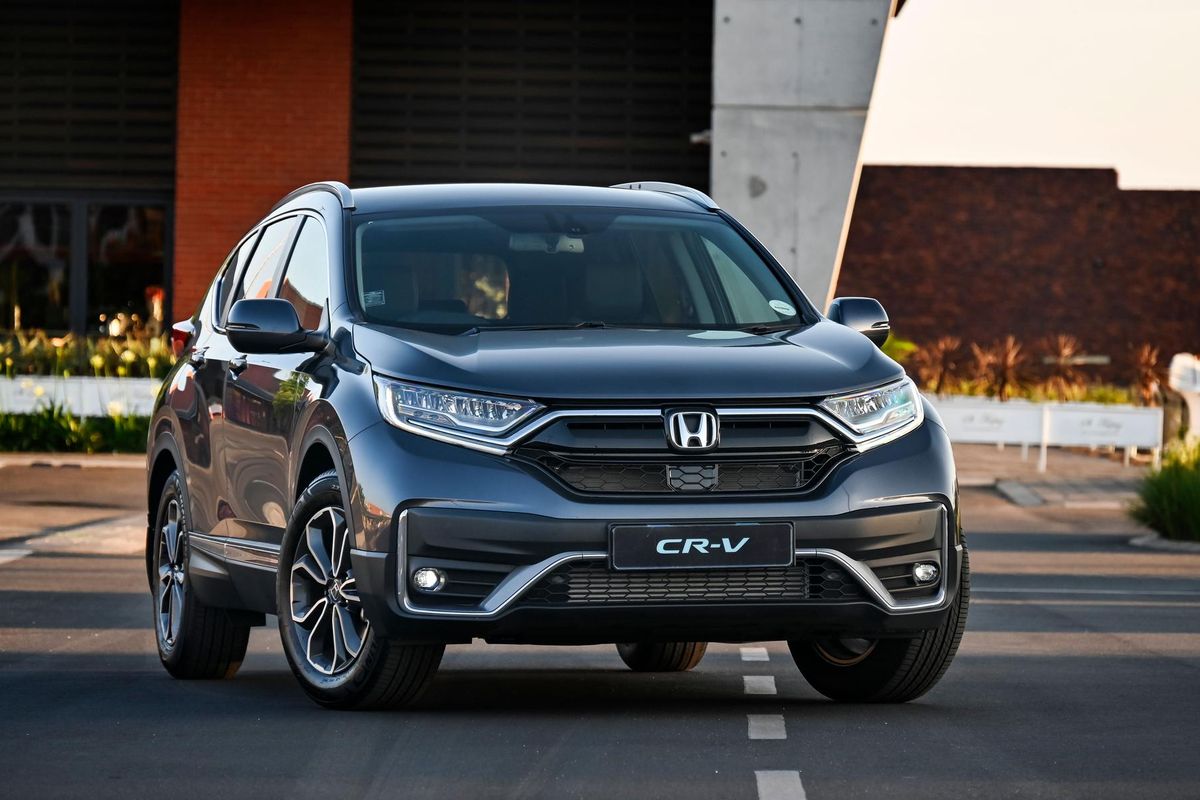
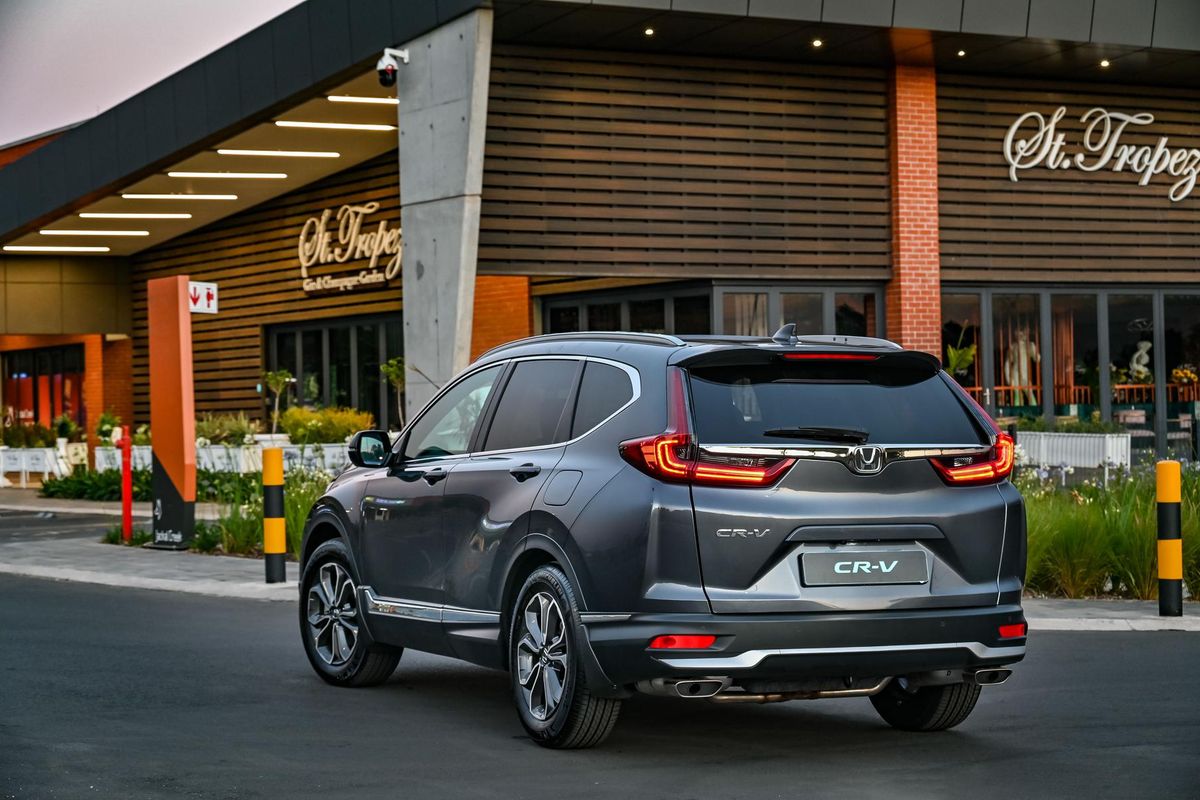
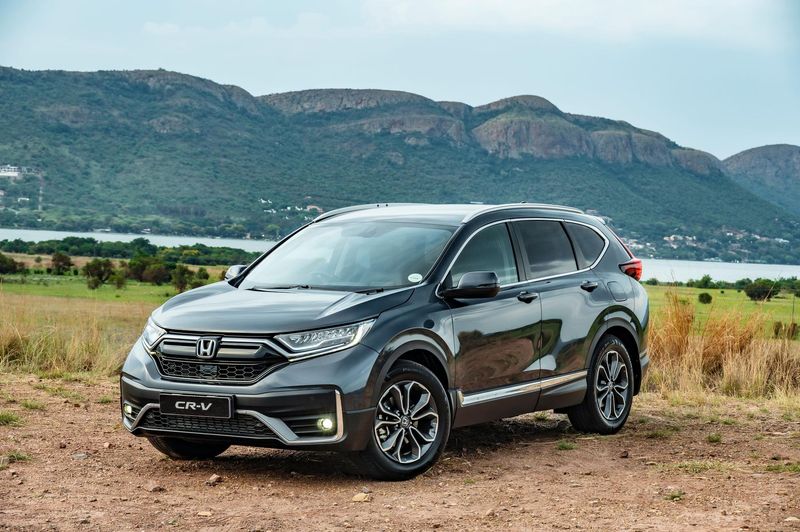
The Honda CR-V has been given an update for 2021. Here’s what’s changed, what’s on offer and how much you can expect to pay. test4
Since its debut in SA more than 20 years ago, the Honda CR-V has proven popular. It could be regarded as one of the early pioneers of the SUV segment, when it and the Toyota RAV-4 were one of the few SUVs offered.
Now for 2021, the Honda CR-V has been given an update. Visually, the front and rear bumpers have been redesigned to give it a more aggressive look. There are new-loko slimline headlights with integrated daytime running lights, while the rear gets inverted LED taillight clusters. The 1.5T models get twin exhaust pipes for a sporty look.
Honda SA will be offering the updated Honda CR-V in a four-model lineup, with two engines and different spec levels.
There are two drivetrain options for the upgraded CR-V. The 2.0-litre naturally-aspirated petrol engine delivers 113 kW and 189 Nm, and power goes to the front wheels via a CVT.
The second engine is a 1.5-litre turbocharged petrol engine that produces 140 kW and 240 Nm. It too features front-wheel drive and a CVT.
Levels of trim
Honda CR-V 2.0 Comfort CVT
17-inch alloy wheels Aluminium-look front and rear scuff plates Aluminium roof rails Cloth upholstery 5-inch full colour display 4-speaker audio Bluetooth connectivity USB/aux input Dual-zone climate control Rear park sensors Electrically adjustable exterior mirrors. Multi-function steering wheel Dual front, dual side, curtain airbags ABS brakes with EBD Hill start assist Vehicle stability assist
Honda CR-V 2.0 Elegance CVT
Leather upholstery 7-inch audio Apple CarPlay/Android Auto 8-speaker audio Additional USB in the front Rear passenger USB HMDI port 8-way electrically adjustable seat for the driver 4-way electrically adjustable seat for the passenger Heated seats for the front Park distance control (Front and Rear) Leather-trimmed steering wheel Gearshift paddles Audo windscreen wipers
Honda CR-V 1.5T Executive CVT
18-inch alloy wheels LED headlights which are auto levelling Keyless entry Push-button start
Honda CR-V 1.5T Exclusive CVT
19-inch alloy wheels LED front fog lamps Leather upholstery Integrated satellite navigation Electrically-operated tailgate Tyre pressure monitoring Honda Advanced Driver Assist Systems (forward collision, lane-keeping assist, adaptive cruise control etc) Auto high beam headlights Panoramic sunroof All-wheel drive
How much does the updated Honda CR-V cost in SA?
2.0L FWD Comfort CVT R556 100
2.0L FWD Elegance CVT R617 900
1.5T FWD Executive CVT R699 900
1.5L AWD Exclusive CVT R796 300
The range is backed by a comprehensive five-year/200 000 km warranty, as well as a five-year/90 000 km service plan with a three-year AA Road Assist package. Intervals are 15 000 km for the 2.0-litre models, and 10 000 km for the 1.5-litre turbo variants.