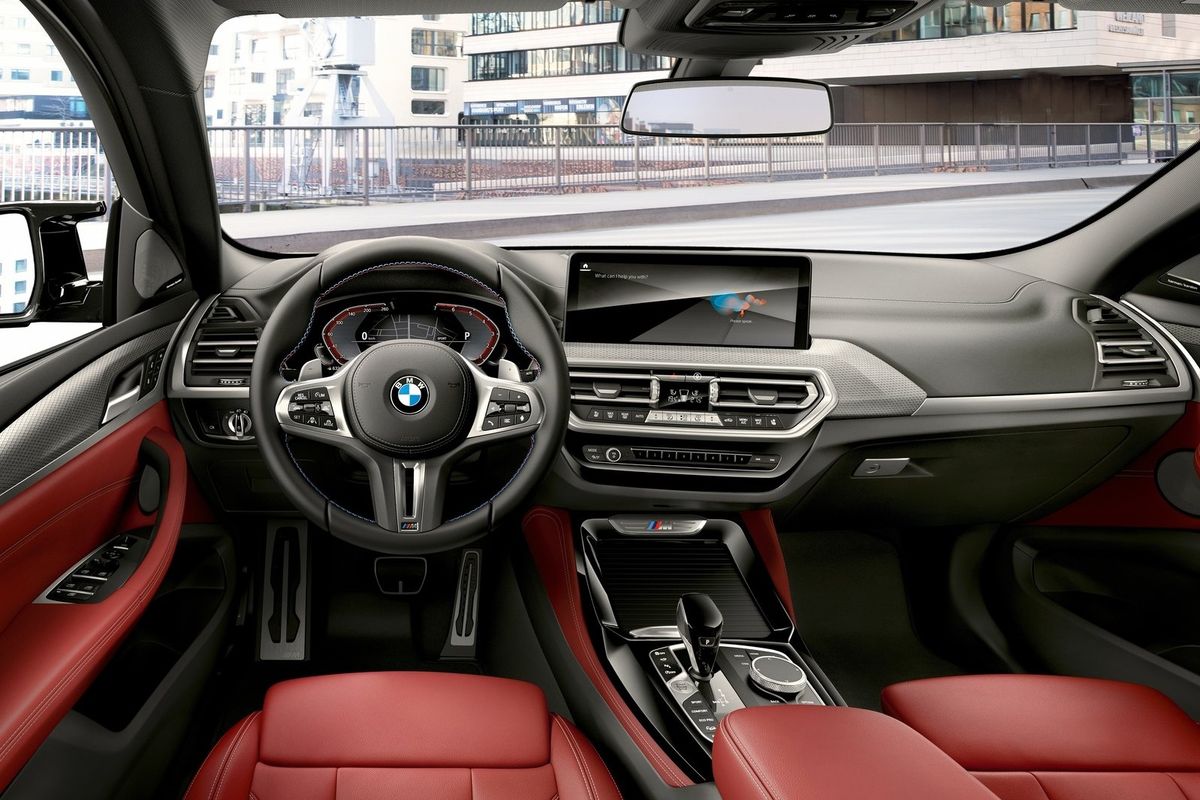
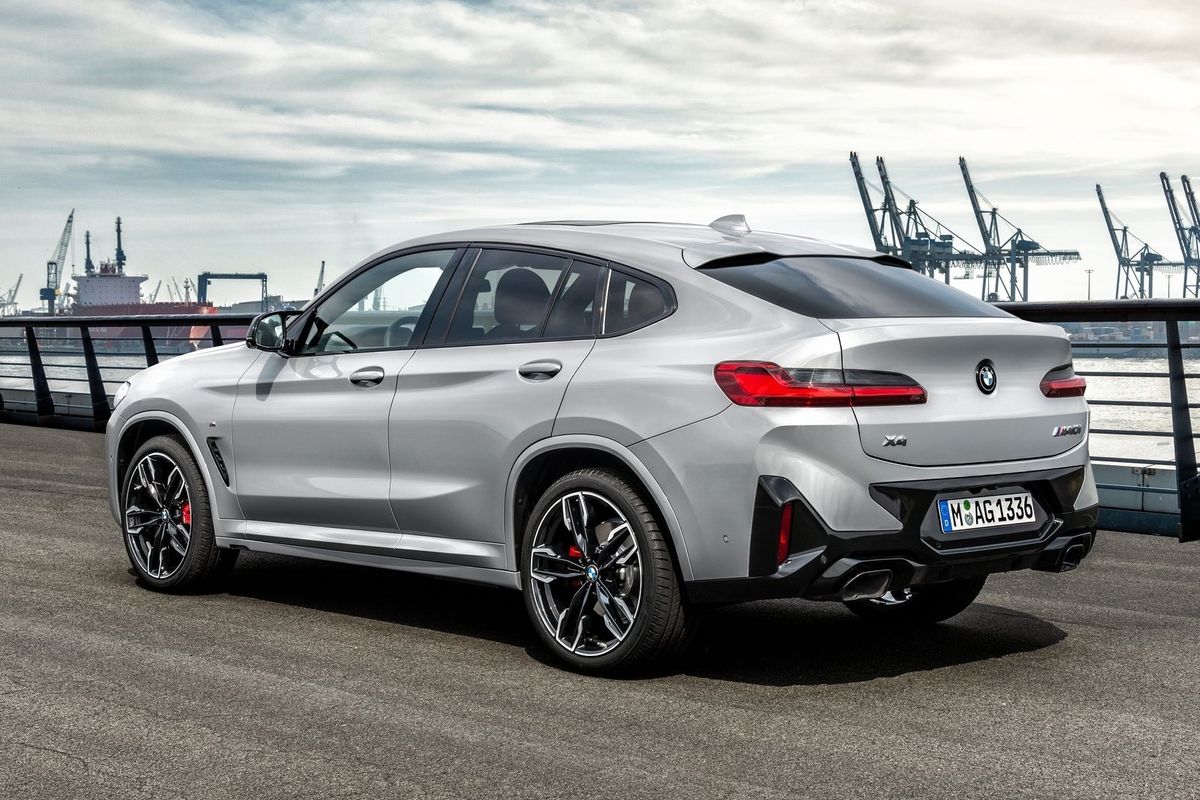
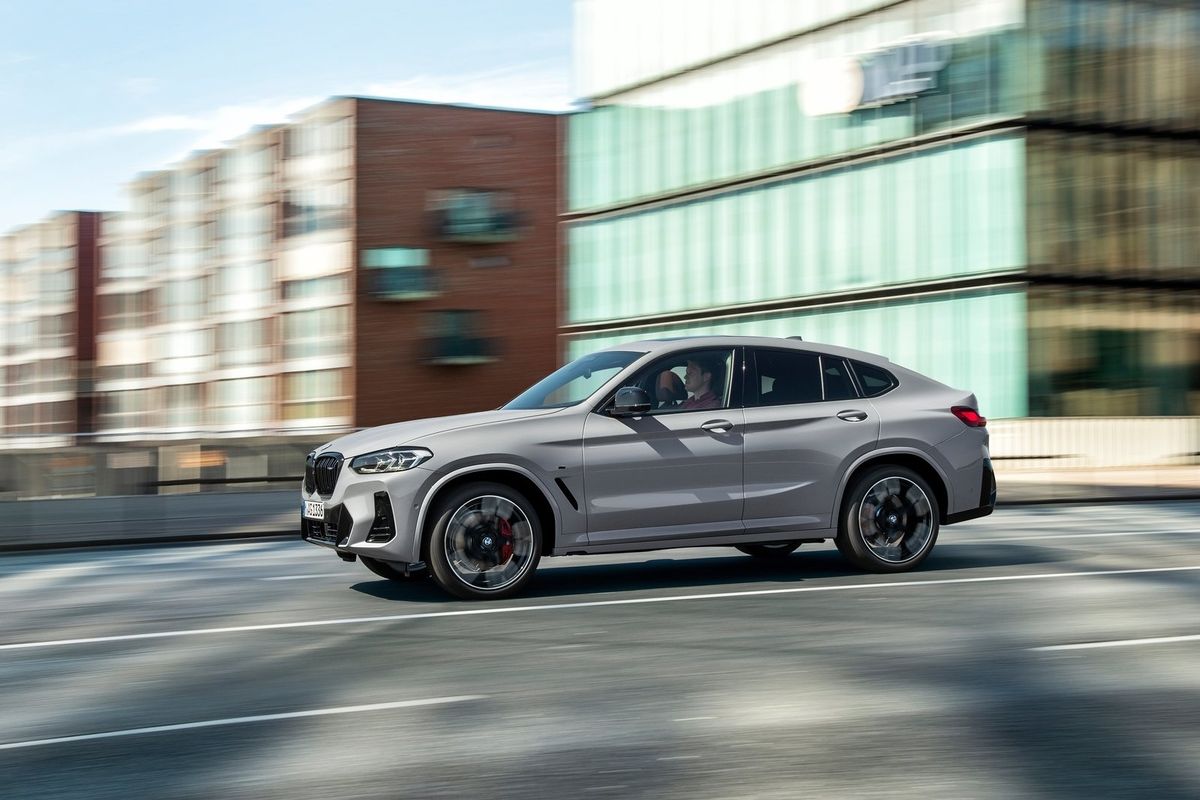
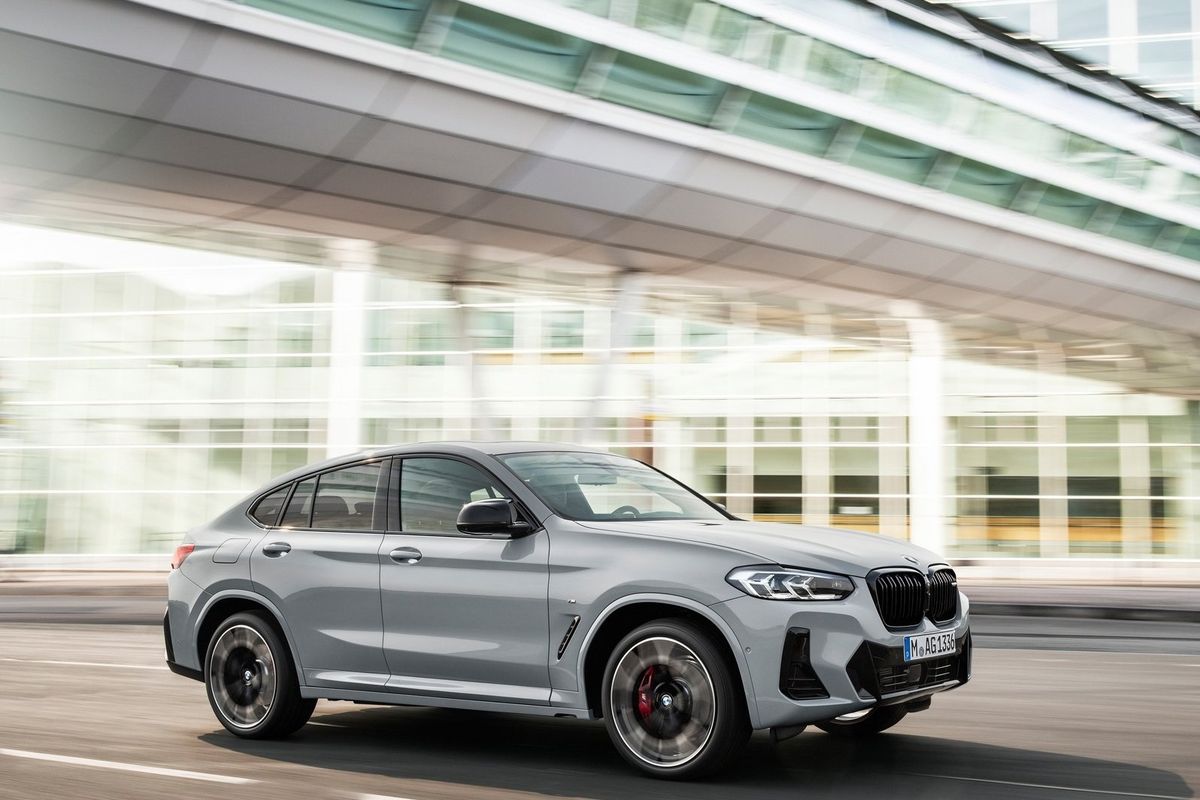
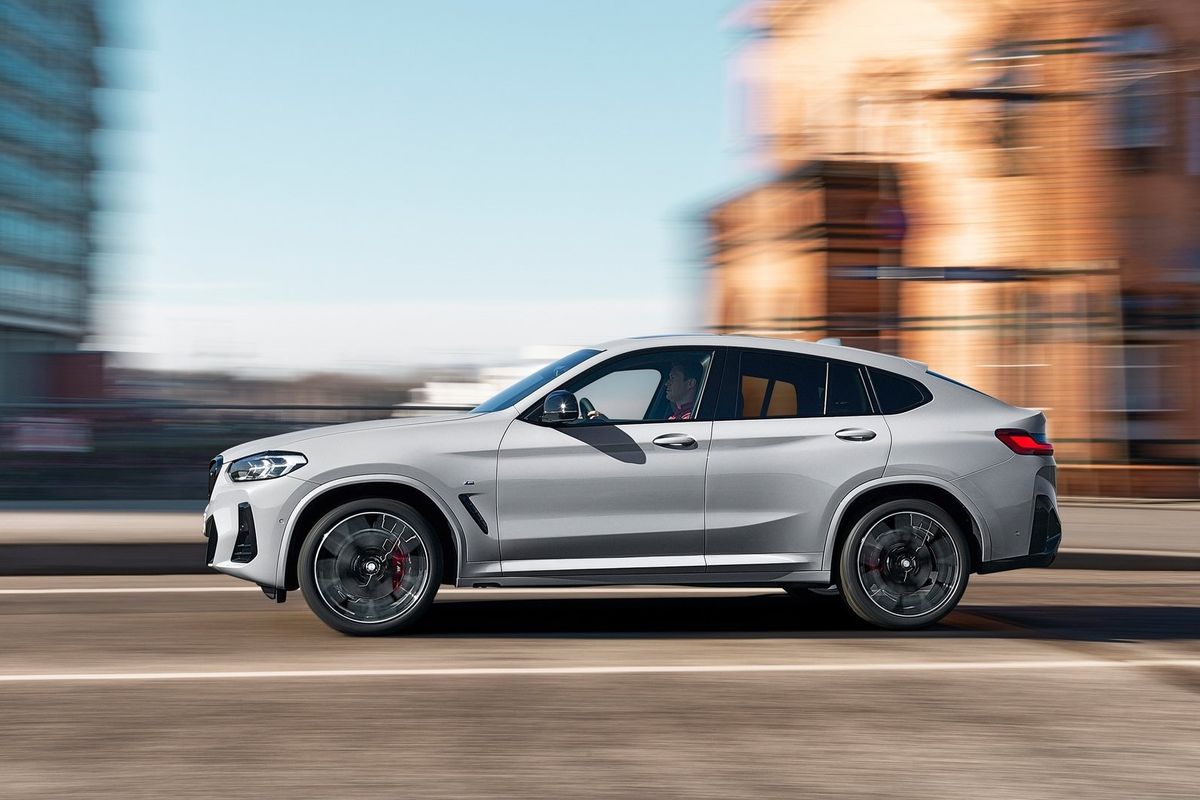
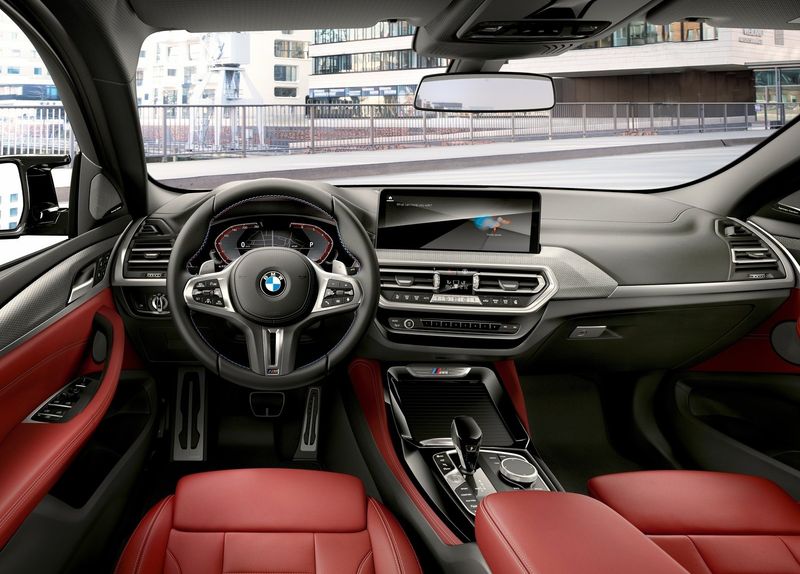
BMW M celebrates its 50th anniversary in 2022 and to celebrate, there will be a cool retro logo offered for BMW M and M Performance products.
Prepare the birthday celebrations as the 24th May 2022 marks 50 years of M GmbH. To mark the occasion, BMW will be offering a very cool-looking retro logo for new M and M Performance customers. This logo will be available on the vehicle nose, rear bumper as well as the wheels. Inspired by the classic BMW Motorsport logo, this emblem is unmistakably BMW, but stands out.
“With the classic ‘BMW Motorsport’ emblem, we would like to share our joy about the anniversary of BMW M GmbH with the fans of the brand,” says Franciscus van Meel, Chairman of the Board of Management of BMW M GmbH. “We have a great year ahead of us, which will be celebrated with unique product highlights and exciting performances. The M has long been considered the strongest letter in the world, and in our company’s anniversary year it is stronger than ever.”
The German performance brand also confirmed that 50 of its iconic and historically significant M paint colours will be made available on some models in 2022.
The performance division of BMW is having a good run, with yet another sales record in 2021 in the crosshairs. The M division has a diverse arsenal of performance vehicles currently on sale, ranging from the BMW M135i xDrive in the hatchback segment, to the mighty M8 Competition in the grand tourer segment. Let’s not forget the incredible performance offered by the M SUV range either.
In 2022, BMW M will be launching the M3 Touring (station wagon), a very special BMW M4 coupe (which we suspect is the BMW M4 CSL) and work is well underway on the all-new BMW M2 coupe. With electrification in mind, BMW M is also planning its first electrified high-performance vehicle in the history of the brand.
Other M 50 year celebrations include many events, with headliners like the Concorso d’Eleganza Villa d’Este on Lake Como in Northern Italy, followed by the Goodwood Festival of Speed in Great Britain and the Concours d’Elegance in Pebble Beach, California and with such an illustrious motorsport history, the 24-hour race at the Nürburgring.
BMW South Africa confirmed it will be offering this new logo to its customers from the 2nd quarter of 2022.
The two Korean companies use similar tech, so where is the Kia double-cab?
Global automakers are navigating very uncertain times. Resources are being poured into electric vehicles, but the real revenues remain with more traditional products. Like bakkies.
The tasty profits and low battery powertrain expectations in the bakkie market appeal to many product development teams. Brands that would never consider a bakkie, are pivoting into the double-cab space.
Some have failed. Most noticeably, Mercedes-Benz. But with lots of cash on hand and robust R&D structures, the Koreans are finally embarking upon a double-cab product initiative of their own.
Hyundai has been first, as one would expect from Korea’s largest automotive company. The Santa Cruz double-cab looks great and is based on the Tucson SUV platform, making it nearly perfect in configuration and purpose, as a lifestyle bakkie.
But as most things Hyundai are also Kia, why is the latter not marketing a bakkie, yet? This is an excellent question, as the two brands use the same components and platforms.
Although that would mean a unibody platform, with the Telluride using an adapted version of Kia’s Sorento platform, the sacrifice in loadability would be offset by passenger comfort and ride quality.
A Kia bakkie would seem such a logical product evolution. But news from Australia indicates that it won’t be happening. Soon.
Kia’s Australian boss, Damian Meredith, has been trying to convince the company’s Korean CEO of the double-cab product merits. But although Kia recognizes demand, a bakkie project doesn’t appear to have momentum.
Speaking to the Australian media outlet, CarsGuide, Meredith admitted as much. “We haven’t had any definitive answer from Kia headquarters.”
The truth is that Hyundai’s Santa Cruz bakkie was developed and configured before the pandemic or chip crisis.
In a constrained supply chain world, where the focus for Kia is on expanding its electric vehicle offering, a double-cab bakkie is not quite the product priority. Although many South African fans of the brand, wish it was.
The Hyundai Santa Cruz has received quite a lot of adoration from SA bakkie fans
It’s always exciting to sample a brand new car, but it’s a rare and special experience to drive an entirely new brand of car. South Africans now have an extra badge to choose from when shopping for new wheels and it belongs to Chery. It’s not the Chinese brand’s first foray into the local market, but it may as well be…
You may vaguely remember the brand’s name from the late 2000s. The McCarthy dealer group (now known as Bidvest Automotive) used to distribute Chery in South Africa back then, but while the brand’s products were quite competitively priced, they weren’t particularly well-made – or attractive. The Daewoo Matiz clone (known as the QQ) and Tiggo crossover failed to impress and Chery left our market.
Having driven the new Tiggo 4 Pro, I can assure you, however, that today’s Chery models make the QQ seem like it was built in the late 1800s. It’s astonishing how far this brand has come in just 12 years.
The Tiggo 4 Pro looks like an excellent offering in the segment, let’s see how it will perform on the sales charts.
If you don’t read much further, all you need to know is that the Tiggo 4 Pro is an impressive product that’s offered at a relatively impressive price point. To put the model in context, it is roughly the size of a Suzuki Vitara Brezza or Toyota Urban Cruiser, Kia Sonet, Hyundai Venue, VW T-Cross and Nissan Magnite. Chery intends to steal sales from all of them… and I feel they have the right recipe for success.
The car simply feels like a quality product in all aspects. For example, it offers a particularly impressive ride quality. On the launch route, we traversed some truly shocking roads in the Hartbeespoort Dam area, but not at the cost of occupant comfort… the Tiggo dealt with rough road surfaces with remarkable composure. The cabin is well insulated too – there’s little road- or wind noise intrusion to speak of.
How does the Chery Tiggo 4 Pro perform?
The Tiggo is only front-wheel-drive, but its raised ride height is a boon on dirt roads (and when wading through standing water).
The Tiggo 4 Pro’s continuously variable automatic transmission (CVT) was a highlight and I think it’s quite possibly the first time I’ve praised a “gearless” drivetrain, which often labours when fitted to gutless budget cars. Not so in the case of Chery’s newcomer – it is tuned particularly well and avoids droning like most CVTs I’ve experienced. It seems to know what you want to do ahead of time and prepares itself accordingly. Interestingly, you can flick the transmission lever into manual mode, which gives the driver access to 9 (yes, 9) pre-programmed digital “steps”. There are no shift paddles to use, so you have to tap the gear lever up and down to flick through the “steps”. I gave it a go, but the action seemed a bit superfluous… the CVT is so accomplished in automatic mode, I left it to its own devices.
Two engines are available across the range’s 5 derivatives: a 1.5-litre naturally aspirated petrol and a 1.5-litre turbocharged petrol unit. I only had the opportunity to drive the turbocharged version, but I was suitably impressed with its pulling power. Overtaking was relatively easy and, if I had to be picky, the engine was a little gruff at high revs, but not enough to be bothersome.
The indicated fuel consumption was 10 L/100 km at the conclusion of our test route, which isn’t ideal for a car this size; however, our test unit had barely 64 km on the odometer. I suspect that the Tiggo 4 Pro’s average consumption would improve as the engine loosens up after a brief run-in period… and besides, most commuters tend to adopt more conservative driving styles than motoring journalists!
What’s the Chery Tiggo 4 Pro like inside?
The upmarket interior with leather trim and red striping (SE derivative only) appears well above the quality of market competitors.
The cabin is, well, well-appointed. All Tiggo 4 Pro variants are fitted as standard with a large 10.25-inch touchscreen infotainment system, which sits proud of the fascia, as well as a fully digital instrument cluster (instead of a binnacle filled with analogue dials). The screen resolution is of high quality and helps to make the interior feel particularly modern. Android Auto and Apple Carplay are supported too.
The quality of materials and soft-touch panels around the interior look and feel premium, as does the leather-trimmed steering wheel and seats. The Chery press release does not make mention of cloth upholstery, so I assume leather (or, at the very least, imitation leather) is fitted as standard on the Elite and SE derivatives. I can quite confidently say that the Tiggo 4 Pro has the best interior in its segment.
The load bay seems rather capacious too. I anticipate it could even be sufficient to accommodate a family of four’s luggage for a weekend away. The rear seatback can fold down in a 60/40 split if needed.
The entry-level Urban derivative is listed at R269 900, but details on that spec level are scarce and, from what I could tell, all of the vehicles on the press launch were the Elite SE (Special Edition) – it certainly seems as if the fledgling Chery SA wanted to put its best foot forward. The price jumps up to R359 900 for this Special Edition, which includes larger 17-inch wheels, various exterior and interior accents, a sunroof, 6 airbags (including curtain airbags), a tyre pressure monitoring system, interior ambient lighting, puddle lights, LED headlights and taillights, plus a larger digital instrument cluster.
Chery has set up over 30 dealerships in South Africa.
For a returning brand, Chery has made sure to put sufficient after-sales support in place. All Tiggo 4 Pros come with a 5-year/150 000 km warranty, a 5-year/60 000 km service plan and 5 years’ roadside assistance (provided by the AA). However, on top of that, when the manufacturer warranty ends, the balance of a 10-year/1 000 000 km engine warranty should still apply. Yes, a 1-million-km engine warranty. However, there is a catch: the extended warranty will only apply if the car still belongs to the original owner (who purchased the car from new) and if the car had been serviced at Chery dealers.
On the topic of dealers, just over 30 dealerships are in place from launch. The network covers most of the country’s major metros and the majority of outlets are located in Gauteng.
Summary of the Tiggo 4 Pro
With the Tiggo 4 Pro, Chery has introduced a real fighter in the small crossover/compact family car segment. Whereas recent newcomers such as the Nissan Magnite and Renault Kiger have left us feeling a trifle underwhelmed, the Tiggo 4 Pro seems a better product at a similar price. The outlier in this segment is the Haval Jolion, which is a larger car than the Chery and available at the same price points.
Ultimately, a wider selection to choose from is good for the consumer and, given the perceived quality of the new Tiggo 4 Pro, if you are in the market for a “baby SUV” at this price point, I don’t think you can ignore this newcomer. Chery will be hoping to emulate the incredible success of Haval, another Chinese brand, in this market. With the Tiggo 4 Pro, the new brand is certainly off to a promising start.
Chery Tiggo 4 Pro – prices in South Africa (Nov 2021)
1.5 Urban (5MT)
R269 900
1.5 Comfort (CVT 9SPD)
R299 900
1.5 Elite (6MT)
R319 900
1.5 Elite (CVT 9 SPD)
R349 900
1.5 Elite SE (CVT 9SPD)
R359 900
Toyota Hiace Ses’fikile Safety Enhanced
Toyota has beefed up the safety specification for its Hiace Ses’fikile people mover in South Africa.
Millions of South Africans rely on taxi’s to get to and from work every single day and many of these taxis are indeed the locally-produced Toyota Hiace Ses’fikile.
Earlier this year, Toyota fitted a driver guard on the Hiace Ses’fikile and now safety specification has been further enhanced with the fitment of Vehicle Stability Control (VSC) as well as Brake Assist (BA) and Hill Assist Control (HAC) and Traction Control (TRC). In addition to the Anti-lock Braking System (ABS), an Emergency Brake signal has also been included as well as a new hooter design which is said to be more durable.
How much does the Toyota Hiace Ses’fikile cost in South Africa? (November 2021)
Hiace Ses’fikile 2.7 16-seater – R478 500
Hiace Ses’fikile 2.5 Diesel 16-seater – R508 300
The Toyota Hiace Hiace Ses’fikile is sold with a 3-year/100 000 km warranty and a 6-services/60 000 km service plan and service intervals are set as 12-months/10 000 km. Additional service plans and warranty upgrades are also available to buyers.
It’s a Race! BMW 128ti versus Toyota GR Yaris on the Quarter-Mile
Watch Ciro de Siena and Ashley Oldfield charge down the quarter-mile strip in the BMW 128ti and the Toyota GR Yaris. Who wins? Watch now!
The Toyota GR Yaris has turned the hot hatch market on its head with its incredible 1.6-litre 3-cylinder turbo engine, all-wheel drive and 6-speed manual gearbox. Very few cars are this engaging and fast!
The BMW 128ti represents a new avenue for the German brand, mixing a turbocharged 4-cylinder turbocharged petrol engine with front-wheel drive.
That GR Yaris with Ashley Oldfield behind the wheel is going to be incredibly quick off the line, does Ciro de Siena in the BMW 128ti stand a chance?
The all-new 2023 Ford Ranger has been revealed and while all eyes are on the striking XLT and Wildtrak models, we wonder what the entry-level model will look like. Wonder no more!
The new 2023 Ford Ranger looks to be one very impressive offering. Combining modern fresh looks with what appears to be one of the most digitally advanced cabins, the new Ranger is sure to take the market by storm when it touches down in 2022.
Ford South Africa says the order books open in the 2nd quarter of 2022 and while the engine and derivatives are yet to be confirmed, we do know that the engines on offer range from the 2.0-litre single turbo and 2.0-litre bi-turbo diesels, as well as a 2.3-litre turbocharged 4-cylinder petrol motor.
The big headline news as far as engines go is the confirmation from Ford that a 3.0-litre turbocharged V6 diesel will make its debut in the Ranger. Whether the SA market will get this engine remains to be seen.
The interior we have seen in the Wildtrak and XLT press images has impressed us. There’s a huge focus on digitalisation and the huge talking point will be the inclusion of a portrait-orientated oversized infotainment screen with Ford’s SYNC4. We’re yet to see it in the metal, but so far, the Wildtrak and XLT look tantalising.
It’s all very well lusting after the flagship luxury models, but in the case of double-cab bakkies, they’re expecting to fulfil both lifestyle and commercial roles. What about the workhorse aspect of the all-new Ford Ranger? While there’s been virtually no coverage of the single-cab or entry-level Ranger derivatives, a deep-dive into the various Ford media websites turned up some images.
Visually, the entry-level Ranger workhorses loses the fancy daytime running lights and alloy wheels, and receive a simplified version of the new grille. Interestingly, there are no images of the interior and we’re left wondering if the cabin will also receive the new large infotainment system or make do with a basic system.
It’s too early to say what engines will be offered either and if you can recall correctly, the predecessor made do with the older 2.2-litre 4-cylinder turbodiesel motor while its upmarket siblings had the new-generation 2.0-litre powertrain.
Ford has confirmed its all-new Ranger will be built in South Africa at the Blue Oval’s facility in Silverton, Pretoria and customers can start ordering the new bakkie in the 2nd quarter of 2022.
A new range-topping JAC T8 double-cab bakkie has been introduced to the South African market. See specification and pricing details below…
Chinese commercial vehicle manufacturer, JAC, has bolstered its current T8 double-cab bakkie offering with a new range-topping, leisure-orientated T8 powered by a 2.0-litre turbodiesel engine with 104 kW and 320 Nm and is now available in either 4×2 or 4×4 guise and is mated with a 6-speed manual transmission.
“The T8 double-cab is the bestseller in our product stable. With its powerful new 2.0-litre turbo-diesel powerplant, it definitely will increase our share of this competitive market segment,” says Karl-Heinz Göbel, Chief Executive Officer of JAC Motors South Africa.
What standard features are offered on the JAC T8?
As far as standard features are concerned, the newcomer rides on two-tone 18-inch alloy wheels and the interior is equipped with comfort and convenience features such as a multi-function steering wheel, adjustable steering column, cruise control, air-conditioner, leather seats and electric windows. A multi-information display instrument cluster, a reverse camera, rear park distance sensors, remote keyless entry and central locking with automatic locking doors is also part of the standard kit.
In terms of infotainment, the JAC T8 is equipped with a 9.0-inch infotainment touchscreen with Android Auto and Apple CarPlay functionality as well as Bluetooth.
On the safety front, 2 front airbags are fitted along with Anti-lock Braking System (ABS), Electronic Brake-force Distribution (EBD), Brake Override System (BOS), Hydraulic Brake Assist (HBA), Electronic Stability Control (ESC) Traction Control System (TCS), Hill-start Hold Control (HHC) and a Tyre Pressure Monitoring System (TPMS).
Can the JAC T8 go offroad?
Yes, it can. With its BorgWarner ESOF electronically-controlled time-sharing four-wheel-drive system, the T8 4×4 allows the driver to switch between 2H and 4H at speeds up to 80 kph and 4L can also be engaged when stationary to tackle rough terrain. An electronically controlled differential lock is also fitted.
Ground clearance is at 220mm and the T8 has an approach angle of 29.6⁰, a break-over angle of 23.5⁰ and a departure angle of 22.4⁰.
Also, the T8 has a payload of 900 kg and a braked tow rating of 2 000kg.
How much does the JAC T8 Cost in South Africa
T8 2.0L CTi 4×2 Lux – R412 400
T8 2.0L CTi 4×4 Lux – R462 400
The JAC T8 is sold with a 5-year/150 000km warranty and a 5-year/60 000 km service plan.
The next-generation Ford Ranger has finally been unveiled. Here’s what we know about the Blue Oval’s newcomer, which, like its predecessor, will be built in South Africa.
“With Ranger, we’ve had a big extended family for decades,” said Jim Farley, the Ford Motor Company’s president and CEO. “This truck has always been a trusted partner to small business owners, farmers, families, adventurers, commercial fleets – and so many more – in more than 180 markets around the world. And with the new Ranger, this is our moment to deliver… not just a product our customers will love, but an always-on experience that will help us build strong and lasting relationships with them. This is the mid-sized truck people will want to own and experience.”
The all-new Ford Ranger will be built at the Ford Motor Company of Southern Africa’s assembly plant in Silverton, Pretoria, as well as in Thailand, for the global market. Interestingly, the new Ranger project was spearheaded by Ford’s Product Development Centre in Australia. Australia is a bakkie-crazy nation (as we are) and, in case you didn’t know it, the outgoing Ranger was, by and large, developed Down Under as well. Ford claims to have tapped into its current ownership base and conducted more than 5 000 interviews and customer workshops to try to understand the market’s needs and expectations.
2023 Ford Ranger Design
The teaser images did a good job of concealing the new model’s finer exterior details, because the production-ready design certainly looks fresh and contemporary. Pictured here are the mid-range XLT, rugged Sport and luxurious Wildtrak derivatives of the new range. There are design elements that were borrowed from the rest of the Ford pickup range, including the front-wheel-drive Maverick and the darling of the North American market – the F-150. The front is characterised by an aggressive grille, C-shaped headlights (with matrix LED headlight technology, for the first time) and daytime running lights.
The bodywork features plenty of creases and lines, all of which gives the new Ranger a muscular stance, while the bakkie’s rear end shows off newly-designed tail-light clusters. The cabin is where the new Ranger really shines, however. The interior architecture is dominated by a smart-looking portrait-oriented infotainment system, which is underpinned by Ford SYNC4 technology.
The newcomer’s fascia appears far less cluttered than before… Ford has effectively done away with many buttons by migrating some controls into the bakkie’s infotainment touchscreen (functions such as the 4×4 modes and climate control are now integrated here). What’s more, a full 360-degree camera system is now available and, thanks to an embedded modem, the bakkie supports over-the-air updates.
Under the sheet metal, the all-new Ford Ranger rides on the 3rd generation of the T6 platform. The wheelbase is 50 mm longer and the track is 50 mm wider compared with those of the outgoing model. The new-look front end structure allows for more space in the engine bay, which means a bigger engine is in the offing… Ford has confirmed that a 3.0-litre V6 turbodiesel will be offered in the new Ranger.
Other engines on offer include the single-turbo diesel and bi-turbo diesel 2.0-litre 4-cylinder motors, which are produced in Ford Motor Company of Southern Africa’s factory in Gqeberha. The next-gen Ranger will also be available with the 2.3-litre EcoBoost 4-cylinder turbopetrol engine. As far as transmissions are concerned, the current bakkie’s 10-speed automatic transmission has been updated, but Ford will also offer a 6-speed manual gearbox. At this stage, Ford has not shared engine outputs or claimed performance figures… and we also don’t have info on what’s earmarked for the local market.
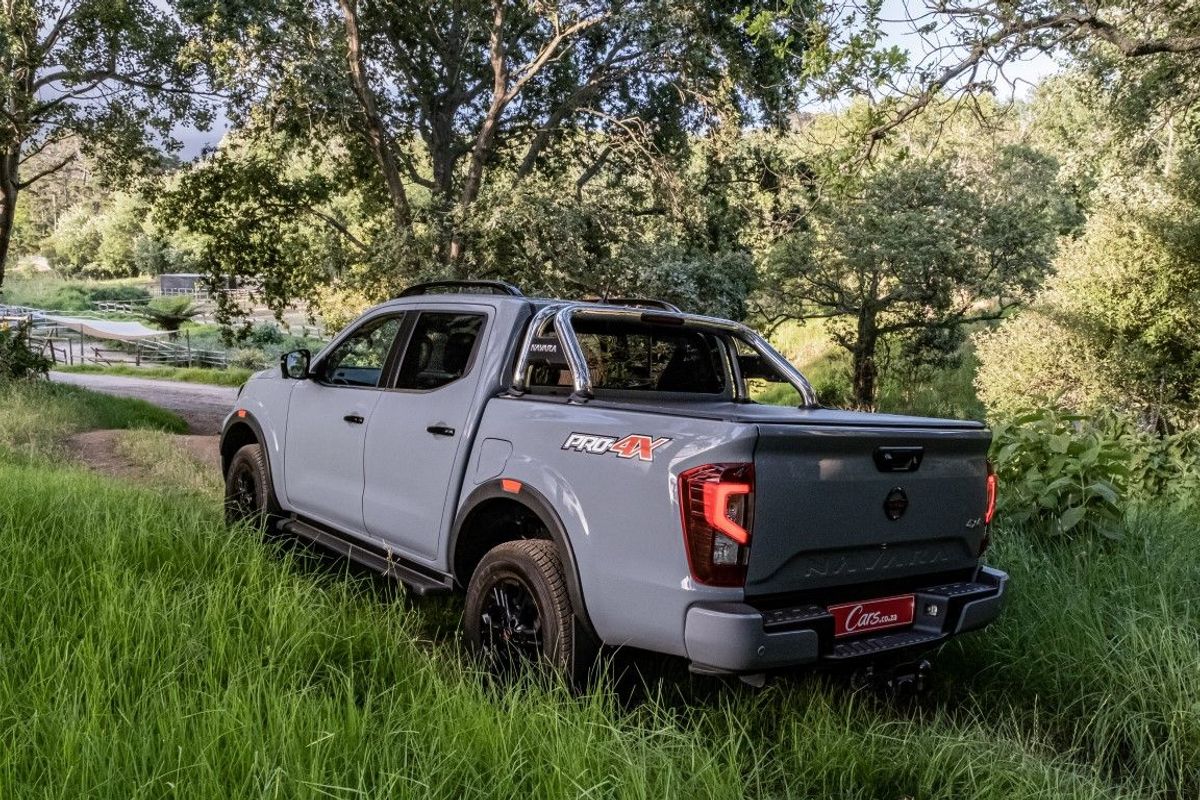
Other noteworthy mechanical developments range from the repositioning of the front wheels, which have been brought forward and pushed outward by 50 mm for a better approach angle and off-road wheel articulation, to shifting the rear dampers to improve the ride quality. Customers will have a choice of two 4×4 systems: the traditional shift-on-the-fly setup, as well as a permanent 4×4 system.
Other really cool touches on the new Ford Ranger include the integrated side-step behind the rear wheels that allow for easier access into the load bay, the widened load bay, which is claimed to accommodate a sheet of plywood or a full-size pallet. It comes equipped with additional tie-down points and the tailgate doubles up as a workbench, replete with an integrated ruler and clamp pockets.
For those who like to accessorise their bakkie (and many buyers do), Ford says customers will be able to personalise their vehicles with “almost 600 fully factory-backed work, urban and adventure accessories, depending on the market. These accessories include those developed in collaboration with global off-road icon, ARB 4×4 Accessories.”
South African Availability
The new Ford Ranger will be launched in South Africa in 2022 with order books opening in the 2nd quarter. The local model’s engine lineup and outputs, as well as derivatives, will be shared closer to the launch. There was no mention of the next-gen Ranger Raptor, but we’re sure it’s in the pipeline… there will undoubtedly be more info about the range’s flagship in the coming months.
The latest version of the Lexus ES has touched down in South Africa. Here’s how much it costs, plus what’s on offer.
With three decades of success and over 2.3 million sales under its belt, the 7th generation Lexus ES has been launched in South Africa. Lexus claims its new ES is more spacious, quieter and safer than ever before, and despite its SUV products outnumbering its sedan offerings, the brand reckons the ES will still garner more than a few sales.
Lexus South Africa will be offering the Lexus ES in three model grades: ES 250 EX, ES 300 hybrid EX and ES 300 hybrid SE. Customers have the choice of three new colours for the range: Sonic Iridium, Sonic Chrome, and Graphite Black.
There are two engines on offer for the new Lexus ES. The ES 2550 features a naturally-aspirated 2.5-litre 4-cylinder petrol engine paired to an 8-speed automatic. Outputs of 152 kW and 243 Nm are touted, with a claimed acceleration and fuel economy of 9.1 seconds to 100 kph and 6.6 L/100 km respectively. The ES 300h range features the 4th-generation version of the self-charging hybrid system and it delivers a total outputs of 160 kW while consuming just 4.6 L/100 km. It has a claimed acceleration time of 8.9 seconds to 100 kph.
Levels of trim
Being a Lexus, the level of standard equipment is generous and there are no optional extras. Keyless smart entry, a moonroof, twin-front and twin-rear USB-C ports, DAB+ digital radio and Apple CarPlay/Android Auto connectivity are standard across the range.
ES EX
17-inch wheels 10-speaker audio system Blind spot monitoring Rear-view camera Park distance control All-speed active cruise control
ES SE
18-inch wheels 10-way adjustable driver’s seat Heated steering wheel Heated front seats Mark Levinson 17 Speaker audio Lexus Safety System (Lane Departure Alert, Pre-Crash System, Lane Keep Assist, LED Adaptive high-beam assist)
How much does the new Lexus ES cost in South Africa?
The 2021 Lexus ES comes standard with a 7-year/105 000km warranty and full maintenance plan. Service intervals are every 15 000 km or alternatively once a year.
ES 250 EX R719 400 ES 300h EX R774 400 ES 300h SE R948 400
In South Africa, SUVs and bakkies are popular with adventurers, campers and the Overlanding fraternity. So, when a capacious Volkswagen Crafter commercial vehicle arrived for testing at Cars.co.za recently, Dieter Pey put it to work as an “alternative” Overlanding vehicle…
Countless Europeans and Americans love vans, especially large ones, like the Crafter. Why? Because many of those enthusiasts live the so-called “Van Life”, which is to say it’s a lifestyle, not something they do occasionally. Van Life involves taking a large van and converting it into a portable home or an Overlanding rig. They use these vans to travel through – and explore – countries/states. Said van is equipped with everything you need to live out of, including build beds, a mini kitchen, built-in cupboards and, sometimes, even a mini bathroom. Indeed, “Van Lifers” sell their homes to live out of their vans.
Could the Crafter be an SUV?
Setting up camp in Langebaan, replete with a hammock. The quad bike stayed inside overnight.
This Volkswagen Crafter gave me the idea to experiment with “Van Life” here in South Africa, over a weekend. I enjoy camping and am involved with the Overlanding community, so I often get to see the amazing Overlanding builds we get here and the tons of custom modifications that are made to the vehicles. As stated above, here in the Republic we tend to use bakkies equipped with canopies and SUVs as the base vehicles for Overlanding builds. Now, if you thought a Toyota Fortuner has lots of packing space or that a Volkswagen Amarok is a large bakkie, then you should check the size of this Crafter!
The Crafter offers so much space inside its cab and load area. These types of vehicles are usually employed as delivery vans in South Africa, but I understand why Americans use them as “Overlanding” vehicles… Let’s start with the cabin – it feels like a bus when you climb (yes, you literally climb) into it. It has 3 seats in the front row and, no, it is not cramped when there are 3 people seated. As for packing space, there are myriad cubbies and compartments for you to (mis)place your items. I have to say, it was very nice to have many places to pack things, especially on the roof shelf, above the windscreen.
The interior is very basic; the multitude of blank buttons and the aftermarket radio suggest you do get more luxurious Crafter derivatives, or that there are quite a few extras you could add. The load bay/hold is absolutely massive! It is just bare metal with 3 doors to access the load bay: 2 swing doors at the back and then a sliding door on the passenger side. There are some very handy anchor points in the back to restrain items (stop them from sliding around). The stark load bay does, however, offer many attachment points to add/modify panels to your personal preference – perfect for a “Van Life” conversion.
This Crafter’s dimensions have their drawbacks, though. The van is extremely tall, so you cannot fit in underground parking garages and you have to be very careful when driving underneath tree branches and through entrance gates. This derivative also doesn’t have PDC or a reverse-view camera, let alone a rear-view mirror, which makes reverse manoeuvres tricky to execute. There is a solid backboard right behind the seats, so when reversing out of parking bays, you can’t see if there are oncoming cars. PDC is an option, as is Park Assist, which will automatically parallel park the Crafter for you.
What’s the Crafter like to drive?
The Crafter’s cabin architecture looks quite car-like, but its driving position is more, um, bus-like.
To its credit, the Crafter feels stable on the road (for a commercial vehicle) and its steering is reasonably accurate; it comes with safety features such as ABS, EBD, traction- and stability control as standard.
Now, as for my weekend-long “Van Life” experiment… I decided to pack all my camping equipment along with my quad bike, full riding kit and camera equipment. After everything was packed and strapped down, I realised I’d only used half of the space that was available in the van… Indeed, the VW’s load bay is literally cavernous! I then headed to Langebaan where I would spend the night at a local campsite.
The Crafter is surprisingly well suited to cruising. It has 4Motion all-wheel drive with a diff-lock, so you can travel on gravel roads and rougher terrain without worrying that you’d get stuck. The van’s top speed was limited to 100 kph, which made the journey drag, but considering the Crafter only has 103 kW and 340 Nm of torque on tap, perhaps it wouldn’t be able to travel much faster than that…
Camping inside
The 2.5 tonnes of loading space in the Crafter should be more than enough for whatever activities you have planned.
When I arrived in Langebaan, I wanted to sleep in the Crafter, but because I was travelling solo I did not want to leave anything outside. My solution was to hang my hammock in the load area. I strapped my hammock from one corner to the opposite corner of the Crafter’s load bay – it was the perfect length. I lay in the hammock and watched the sunset over the Langebaan Lagoon through the side sliding door.
I also slept in the hammock that night, with all my gear stored around me in the Crafter’s “belly”. I was, of course, sheltered from the wind and elements and, because the Crafter was locked, I felt safe and secure. The Volkswagen doesn’t have motion sensors in the back, so the alarm did not go off at some ungodly hour, which tends to happen when you sleep in a car.
When I woke up the following morning, I could get dressed in privacy in the back of the Crafter, as the load bay has no windows. It also makes it nice and dark when you feel like “sleeping in”. I had a shower at the campsite, tossed all my detritus in the back of the van (and left the hammock up). Before departing for the town of Langebaan (where I would have breakfast), I simply closed the bay doors and drove off. I had virtually nothing to pack up, which (in my opinion) beats conventional camping, where you can easily spend an entire morning repacking your gear and numerous belongings into your vehicle.
The Crafter’s load bay seems to be well insulated (whether by accident or design, I don’t know), so when you’re driving around, you tend to forget that there are items stored in the rear. You don’t hear or feel the cargo shifting around when you’re driving and, best of all, it’s hidden from prying eyes, so it’s quite safe when you park in a public space… In theory, at least.
Loading up the Crafter
With a few modifications and DIY, you could transform the Crafter into a handy Overlander.
After breakfast, I stopped at a quarry to unload the quad bike. The low loading height made it very easy to load/unload the quad without ramps. The Crafter has a load capacity of up to 2.5 tonnes, which is more than enough to accommodate quite a few quad bikes! The side door makes it easier to remove items without needing to wade through the whole van’s contents to retrieve something right at the back.
This trip made me realise that camping with an SUV or bakkie, in an Overlanding sense, is a labour of love. There are so many loose items that you need to pack up into a small space before you can leave. The Crafter has so much space, it is like living in a lock-up-and-go apartment. There is not much that needs to be packed up (not least the tent) and no need to pack super tightly as there’s so much space!
I understand why “Van Life” is such a popular pursuit in other parts of the world. This Crafter was stock standard – I had just brought some camping equipment with me – but, if you spend some money and build a few useful items into the load bay, which would serve as the living area, the capacious van could be quite inhabitable. The Crafter’s fuel economy was good and it was comfortable to travel in.
Bakkie and SUV prices are on the rise, plus Overlanding equipment is expensive, so this Crafter, which is listed at R643 400 new, before options (about the same price as the Toyota Fortuner 2.4GD-6 4×4) could be transformed into a nifty travelling vehicle – depending on how much you can spend on having the vehicle professionally outfitted… or do some of the work yourself. Just food for thought.