Honda has revealed the swansong for the second-generation NSX. The Honda NXS Type S boasts more power and better overall performance. Only 350 units will be made.
The second coming of Honda’s NSX supercar, has not replicated the success of its original.
When the first-generation NSX was launched, the Japanese car industry was in its ascendancy. NSX was symbolic of that and had the measure of some European rivals.
The second-generation NSX has been less of a purist’s car. Much heavier, and complicated, the hybridized 3.5-litre bi-turbo drivetrain has struggled to compete with similarly priced performance cars.
Now though, Honda’s engineers hope to enliven the NSX’s image, and legacy, with a limited-edition NSX Type S. Only 350 of these NSXs will be built before the NSX nameplate goes into retirement.
More power for Honda NSX Type S
Now equipped with turbochargers from the NSX GT3 Evo race car, engineers have worked at extracting more power from the 3.5-litre V6 hybrid drivetrain which employs 3 electric motors to now produce 427 kW and 667 Nm of torque which is some 20 kW and 22 Nm more than the standard NSX.
The 9-speed dual transmission’s shift response has been sharpened by some 50% on the upshifts and now features Rapid Downshift Mode to initiate on-the-boil downshifts.
The NSX’s SH-AWD torque vectoring system and its Integrated Dynamics System have been retuned to deliver better handling and cornering performance.
The most significant issue impacting NSX’s appeal remains its 1 725 kg kerb weight but customers can opt for Lightweight Packages that include carbon-ceramic brakes, carbon fibre engine cover and interior carbon fibre finishes all contributing to a weight loss of 26.2 kg.
The NSX Type S will wear the Acura badge in the US where 300 units will be sold. The remaining 50 units will be sold in Japan and in other select markets.
The definitive supercar is making a comeback… of sorts. Lamborghini was planning to unveil its re-imagined Countach at the upcoming Pebble Beach Concours d’Elegance, but images of the Aventador-based special edition were leaked on the internet overnight. Take a look!
The St’Agata-based marque has launched some of the most evocative nameplates in the motoring world, but even though it sells more performance SUVs (the Urus) than mid-engined super- and hypercars these days, Lamborghini and arch-rival Ferrari made “supercar” part of the automotive lexicon in the Seventies and Eighties – long before Koenigsegg, McLaren, Pagani, Porsche and others either existed or had the audacity to build such models.
Although the Miura was the world’s first supercar, the Countach is the most iconic Lamborghini model. The wedge-shaped supercar, which defined the brand for two decades, was superseded by the Diablo in 1990.
Although Lamborgihi’s subsequent mid-engined supercars have all featured similar proportions and styling drama to the Countach, its name has remained dormant. Until now.
Despite the brand underdoing challenges, including how to disengage from its legacy V12 engines, Lamborghini is looking to the past to secure its future. And that means a Countach revival.
Lamborghini has teased some new Countach images after confirming the nameplate’s return earlier this week. Although details on the new car are mostly cryptic, it will feature some of the last naturally-aspirated V12s assembled by Lamborghini. The LPI800-4 badging suggests the Countach will produce 800 metric horsepower (589 kW) from its 6.5-litre V12 engine. All four wheels will be driven via a 7-speed automated manual gearbox.
It’s not an all-new car, but a special-edition naming exercise using the Aventador architecture. However, its design elements hark back to the heyday of 1980s supercar design, including a sharply-plunging nose, square headlamps, cooling louvres over the 3-quarter lights and narrow rear screen, air intakes atop the rear fenders, elaborate side intakes, as well as a pinched rear deck with 6 hexagonal LED tail lights, a kicked-up diffuser and 4 exhaust tips.
Reviving a name with the gravitas of Countach is a gamble for Lamborghini and something that would have been unthinkable a few years ago.
But in a time of significant disruption for the Italian supercar industry, Lamborghini shows no holy cows exist anymore, to secure the future of the raging bull brand.
The updated iterations of the Alfa Romeo Giulia sports sedan and Stelvio SUV have arrived in South Africa. See what’s changed as well as what you can expect to pay for the latest models below…
The Alfa Romeo Giulia competes in a shrinking segment where it rivals the likes of the BMW 3 Series, Mercedes-Benz C-Class and Audi A4. Nonetheless, the updated Giulia is now available in South Africa!
More so, the Italian firm also welcomes an updated Stelvio SUV to market which goes up against rivals such as the Mercedes-Benz GLC, BMW X3, Audi Q5 and Jaguar F-Pace to name a few…
Key features and changes
This update excludes any changes to the familiar engine offerings which means that the Giulia retains its 2.0-litre turbopetrol engine with 147 kW and 330 Nm in the Giulia Veloce as well as the 375 kW / 600 Nm 2.9-litre turbocharged V6 engine in the range-topping Giulia Quadrifoglio, the latter of which claims an admirable zero to 100 kph sprint time of 3.9 seconds.
Similarly, the Stelvio retains its turbocharged 2.0-litre petrol engine with 206 kW and 400 Nm as well as the aforementioned thumping 2.9-litre turbocharged V6 with 375 kW and 600 Nm. An 8-speed automatic transmission is standard for both models.
While exterior styling has remained mostly unchanged, the interior of Giulia and Stelvio gain an 8.8-inch infotainment system with Apple CarPlay and Android Auto capability. Tactile quality has also improved with a material mix of carbon fibre, leather and Alcantara.
The update also includes rear USB ports, cargo net, passive entry, wireless smartphone charging pad, 8-way electrically-adjustable seats with driver memory and 4-way lumbar support.
In terms of driver assistance features, both models gain a Driver Assistance Pack which includes automatic high-beam assist, active blind spot assist, lane-keeping assist, driver attention alert and interior/exterior electrochromic mirrors with automatic dimming.
How much does the Alfa Romeo Giulia Cost in South Africa?
2021 VW Golf 8 GTI Review – Meet the new Vrrr-pah!
The new VW Golf 8 GTI has finally arrived in South Africa! Join Ciro De Siena as he takes you for a drive in the new Golf 8 GTI around the Aldo Scribante Race Circuit in the Eastern Cape. Watch the video!
It’s been a long wait for the new VW Golf 8 GTI to go on sale in South Africa but GTI fans can now rejoice that the wait is finally over.
Local buyers can pre-order the new Golf GTI right now at a launch price of R669 300. The model will officially go on sale as of 1 September 2021.
The Golf 8 GTI employs a 2.0-litre turbopetrol engine with 180 kW and 370 Nm and comes paired with a 7-speed dual-clutch transmission. Zero to 100 kph is claimed at 6.4 seconds.
Audi’s RS-model offensive is in full swing. The RS4 is only available as a station wagon (as it was before its facelift), but will that limit the model’s prospects in a country known for “antistationwagonism”? We took the RS4 Avant on a week-long trip to the Overberg to find out how practical the performance ‘wagon really is.
We like: A ‘wagon just feels more “special” than a sedan or coupe, everyday performance, practicality.
We don’t like: Overly firm ride quality and insufficient ground clearance for driving on gravel roads.
20-inch wheels are now standard on the Audi RS4 Avant.
The RS4 Avant has undergone a mid-lifecycle update, of which the primary focus was to freshen up the appearance of the Ingolstadt-based brand’s performance ‘wagon. Audi redesigned the model’s grille, headlamps and front bumper to give it a more attractive – and muscular – kerb presence; when viewed from head-on, the RS4 seems to glare down the road in a menacing way. The puffed-out wheel arches bolster the ‘wagon’s musclebound physique and the car hunkers down on standard 20-inch alloys. A pair of oval “cannon barrels”, linked by a functional diffuser, protrudes from the rear. All of this is affixed to a practical station wagon body, which, at the time of writing, seemed to appeal to car enthusiasts and -nostalgists only. The Audi looks right from every angle – something that can’t be said of its rivals…
ICYMI: Ciro De Siena investigated “antistationwagonism” a few years ago. Watch his report here.
How the RS4 Avant fares in terms of…
Performance
Dual cannons jut out at the back and produce a bassy howl when the RS4 Avant is revved hard.
Mechanically, the RS4 hasn’t undergone much of a change from the outgoing model. The Porsche-developed 2.9-litre turbopetrol V6 under its bonnet still develops peak outputs of 331 kW and 600 Nm of torque, which seems comparatively low compared with the BMW M3 Competition and the Mercedes-AMG C63 S, which produce 375 kW/650 Nm and 375 kW/700 Nm respectively. At this point, however, the Teutonic trio has extracted more performance from their sports executive flagships than we’ll ever need. Now it’s just a daft game of top trumps for the manufacturers; more power is not better.
Besides, the RS4 is more than fast enough (its claimed to bolt from 0 to 100 kph in 3.9 sec) and, thanks to quattro all-wheel drive, you’re likely to achieve that time on almost all sealed road surfaces time and again (unless the road is wet or the ‘wagon’s tyres have been ruined as a result of repeated punishing use). The sound the V6 emits as it spins up the rev range is a bassy howl that is neither overly loud nor supplemented with unnatural pops on the overrun or bangs at upshifts. It’s a clean, natural sound – while many of us still pine for the old 4.2-litre V8 rumble, its replacement still gets the juices flowing.
The Audi’s 8-speed ZF automatic transmission, meanwhile, seamlessly files through its ratios and, if you prefer, you can actuate gear shifts manually via the perfectly placed paddles mounted at the back of the sports steering wheel. Each shift is accompanied by a slight thud in the back as another helping of maximum torque gets fed through the transmission.
To reiterate, there’s more power available than you will ever need (outside of a race circuit). Executing overtaking manoeuvres is a pleasure – the RS4 can zip past slower vehicles in lightning-quick time.
Handling
On a wet day like this, you’ll be glad for permanent all-wheel-drive and safety-first understeer.
It seems that Audi’s focus for the RS4 was to offer ample usable performance and predictable (neutral) handling. This may be a station wagon, but it still does the business when roads get twisty. The front end is eager to hunt down apexes and when you feed in the power, the Avant’s rear stays glued to the road. If you want a squirmy, on-the-edge-of-adhesion driving experience, the Audi might not be to your liking – it corners as if it’s running on rails (as the saying goes) and the powertrain is so instantly responsive to throttle inputs that the lusty V6 under the bonnet feels more super- than turbocharged.
If you’re brave enough to push the Audi to its limits, the package’s weaknesses will present themselves. Weight is always an issue in a big car and, given the RS4’s 1.7-tonne kerb weight, you can feel the effect of that heft when the ‘wagon is tasked with changing direction quickly. It takes a moment for body roll to settle, which delays the point at which you feel confident to stab the accelerator pedal again.
Bearing in mind that the Audi is a family-oriented estate car (albeit a very rapid one that’s also styled like a sportscar), RS4 Avant it’s fun to drive and wring all accessible performance from, provided the road does not get too tight and squiggly. Our test unit came with the optional Dynamic Steering (R18 000), which adjusts the weighting and speed of the steering depending on your driving style (it feels lighter and faster in slow cities, but heavier and more progressive at higher speeds). It can take some getting used to and feels unnatural at times, but it’s an option you – don’t have to spec if you don’t like it.
There is a downside to having a ‘wagon that’s performance-based and looks this aggressive, replete with minimal ground clearance… If you have to traverse a section of dirt road to get to dog-walking parks or access the public areas of wine farms, it’s a bit of a fuss to avoid incurring inevitable scrapes to the underbody. Maybe an “RS4 Allroad” would present the perfect blend of performance and practicality?
Interior tech and comfort
One of the last remaining Audi’s using the infotainment system atop the dashboard rather than the newer, integrated screen.
Stepping into the RS4 feels like a bit of a time warp compared to climbing aboard the futuristic interiors of other (obviously newer) Audi models on the market. The RS4’s infotainment screen, for example, sits atop the dashboard; newer Audis have touchscreens built into their fascias with new software and menu layouts. The A4 and Q2 probably are the only current Audis that still have the old screen setup.
Aside from that, the RS4 still feels decidedly plush inside. It can be argued that Audi does the best job of producing car interiors that feel luxurious without skimping on material quality; the Avant’s cabin appears more, let’s say “effortlessly upmarket” than those of comparable (on price) BMW, Jaguar, Lexus, Mercedes-Benz and Volvo models.
As can be expected, the Audi’s leather-trimmed front seats are very supportive and comfortable on long trips, but it’s the simple things that the Ingolstadt-based firm does that give the ‘wagon’s interior an upmarket feel. Here are a few examples: thick carpeting in the boot, Alcantara stitched into the doors and the dimpled leather trim on the rim of the steering wheel. The only poor touchpoint is the “carbon fibre” inserts on the fascia and transmission tunnel, which are clearly plastic substitutes. Many manufacturers are guilty of using “carbon fibre-look” trim though, so Audi shouldn’t be singled out for that.
In terms of connectivity, a few options need to be ticked to bring the Audi up to modern standards. Audi Phone Box (R6 200) allows for wireless charging and a signal boost by using the shark-fin antenna, while USB ports can be added for rear passengers (R1 200). The infotainment system is Apple Carplay and Android Auto compatible via cable, wireless connection will only be available on the next-gen car.
Pricing and after-sales support
Virtual cockpit allows you to customise what is displayed in the instrument cluster.
Audi’s current range of RS cars is particularly enticing at pricing that undercuts BMW M and Mercedes-AMG offerings by some margin. The RS4 Avant retails for R1 296 000, whereas our test unit (with options included) was specced to R1 569 400. The Audi is sold with a 1-year/unlimited km warranty and a 5-year/100 000 km maintenance plan, both of which can be upgraded via Audi Driveplan options.
Verdict
The RS4 Avant is arguably the sports sedan/wagon with the most usable performance in the new-vehicle market.
It would appear that the power-obsessed era of motoring, in which well-monied performance enthusiasts crave ever-faster acceleration and preposterously high peak engine outputs, is coming to an end, but it’s not over yet. In light of that, the Audi RS4 Avant offers a comparatively prudent balance of usable performance and desirable looks in body shape (a ‘wagon) that is sure to stand out in South Africa.
There’s not much to be said about the differences between the pre- and post-facelift RS4 Avant models, bar the aforementioned styling changes, but it needs to be noted that the Audi’s asking price hasn’t escalated as steeply as those of its rivals. What you get is a sure-footed, all-wheel-drive luxury performance wagon that offers surfeit “longitudinal performance” without all the “lateral excitement” of going sideways, which so-called drivers’ cars are widely lauded for. It’s still good fun to drive on twisty roads and offers easier access to all its performance than its rear-wheel-drive rivals from BMW and Benz.
At the time of writing (August 2021), the Audi undercut its direct competition (the all-wheel-drive BMW M3 Competition M xDrive) by more than R600k, which makes it a bit of a performance bargain.
Spy Shots: 2021 Mercedes-Benz G4x4
The new 2021 Mercedes-Benz G-Class G4x4 Squared has been spied undergoing testing yet again, perhaps for the last time before it’s fully revealed. The most hardcore iteration of the Gelandewagen is on the way!
Picture credit: S. Baldauf/SB-Medien. We have paid for these photos and at the photographer’s request, have watermarked them.
The Mercedes-Benz G-Class is one very capable offroader, but what if you wanted even more? Mercedes-Benz introduced the G500 4×4 Squared as a short-wheelbase SUV complete with monster tyres and huge ground clearance back in 2015. Now it appears there’s a replacement on the cards and it’s expected to be revealed at the Munich Motor Show in September 2021
This is not the first time we’re seeing this model (last year’s spy shots can be seen in the gallery below) but these latest photos show the offroader wearing a military-like paint job. There’s not much camouflage to hide the bodywork which indicates that its full reveal is imminent.
The Mercedes-Benz G hardly needed improvements to its offroad capability with the 3 differential setup, but the G4X4 Squared introduced portal axles as well as 450 mm of ground clearance. As you can see, it stands high off the ground has also been properly accessorised, with a roof rack, ladder and a spare wheel mounted on the tailgate. Given how Land Rover is offering a complete array of accessories for its new Defender, we think Mercedes-Benz is determined to keep pace in this department.
In terms of engines, we think AMG will be called to supply one of its 4.0-litre biturbo V8 units, which will power all 4 wheels through a 9-speed automatic transmission. Watch this space!
Two cars in one – from Audi – the brand that knows how to do it best.
Audi might be powering toward an electrified future, but the brand still draws much inspiration from its storied past.
In preparation for the exclusive Pebble Beach concourse this month, Audi has created a radical new battery-powered concept vehicle. It is called the Skysphere and although that sounds like a James Bond movie title, this Audi is a modern interpretation of the brand’s gorgeous 1937 Horch roadster.
Despite the electric drive configuration, Audi’s designers have opted to create a classic long-nose design with Skysphere. It is awash in new design details, showcasing where the brand could be heading with its future styling.
With its internal combustion vehicles, Audi has been one of the champions of oversized grille design, and Skysphere could indicate how the brand is planning to keep a robust identity when the grille becomes non-functional with electric vehicles.
The most impressive technical feature of this Skysphere is its adaptive wheelbase. This allows the car to transform from a hugely stable high-speed cruiser to a nimble city sportscar, at the touch of a button.
Actuators behind the front wheels can shorten the wheelbase by 250 mm, by moving the fore axle rearwards.
Outrageous cabin design sees no animal materials being used. The Skysphere is finished with vegan leather and microfibre everywhere, so if you drop your Smartphone inside, it will probably be cleaner when you pick it up.
Powering the Skysphere is an 80 kWh battery pack, delivering 465 kW. Audi has not claimed a mass rating for the Skysphere, but says the car should be good for 500 km of range and capable of 0-100 kph in only 4 seconds.
Production likelihood? Low. But you can expect to see some of the more minor design elements eventually translating into Audi’s future passenger cars. However, that adaptive wheelbase function could be too heavy, complex and costly to ever become a reality.
Jaguar has introduced a thoroughly updated F-Pace luxury SUV to South Africa with enhanced styling technology and drivetrain choice. See specification and pricing details below.
The Jaguar F-Pace is a striking offering in the luxury SUV segment and the model has now received a thorough update to keep it fighting fit to take on rivals such as the BMW X3, Mercedes-Benz GLC and Audi Q5, to name a few.
What’s changed?
The F-Pace’s styling has been refined but the bigger changes are found inside.
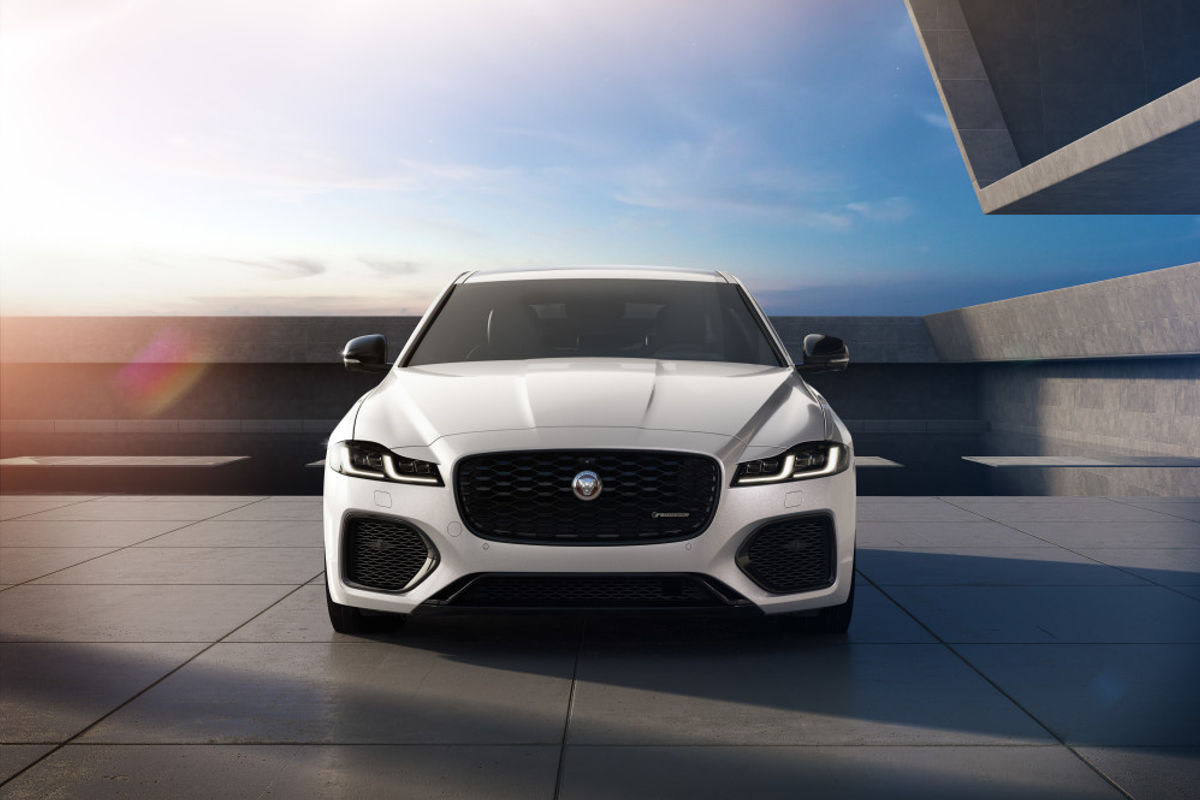
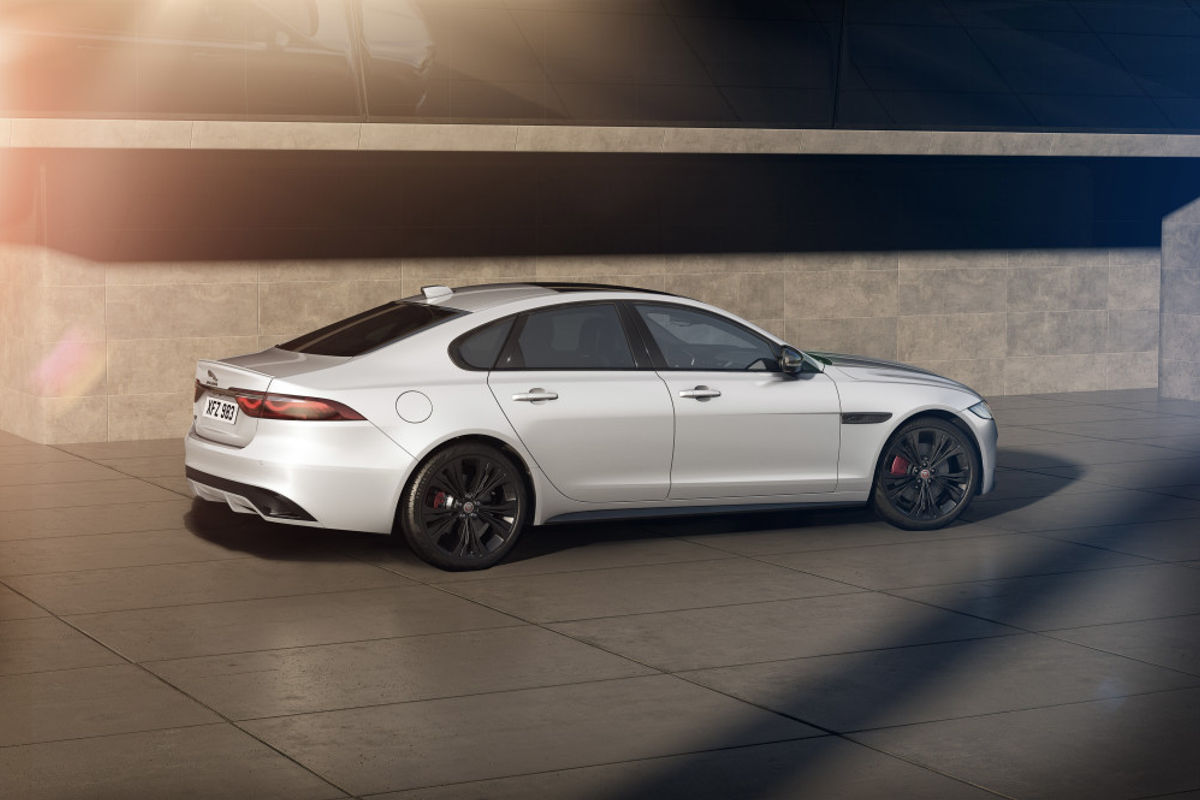
Lots has changed! Starting with the styling, the F-Pace wears a newly sculpted bonnet with a wider power bulge and ‘diamond’ detailing is seen on the grille while the iconic Leaper is seen at the side fender vents. The F-Pace also gains new slim, Premium LED headlights with ‘Double-J’ daytime running lights while Pixel LED technology is optional. If you have a keen eye, you might notice that the air intakes in the front bumper have been revised. At the rear, the new slimline taillights feature the Jaguar’s double-chicane graphic along with a revised rear bumper and restyled tailgate.
Buyers can also opt for a Black Exterior Pack which adds a host of gloss black elements
Moving inside, the F-Pace benefits from an updated interior design including a new centre console with wireless charging, new door casings with 360-degree grab handles, new seat designs with wider cushions and additional massage functions. Air quality in the cabin can be optimised with the optional Cabin Air Ionisation and Cabin Air Purification Plus system.
Perhaps the biggest change is the presence of a new centrally-mounted 11.4-inch curved-glass HD Pivi Pro touchscreen finished in a magnesium alloy casing. The new screen is some 48% larger than the outgoing 10-inch unit and now features a simplified menu layout that provides access to up to 90% of common tasks in 2 taps or less. The system is compatible with Android Auto and Apple Carplay and up to 2 smartphones can be connected simultaneously. The driver now also has access to a 12.3-inch HD Interactive Driver Display which can be configured according to preference.
The new system includes Software-Over-The-Air (SOTA) capability, ensuring that software updates are conducted seamlessly without having to visit a dealership. Connectivity is made possible with embedded dual-sim technology with 2 LTE modems.
Other enhancements to the F-Pace include Active Road Noise Cancellation technology, second-generation Activity Key and Jaguar’s latest 3D Surround Camera technology.
In terms of driver assistance, the F-Pace now offers Adaptive Cruise Control with Steering Assist and a Clear Exit Monitor which alerts front and rear occupants to an approaching car or cyclist when opening a door to exit the vehicle.
What engines are available for the Jaguar F-Pace?
A total of 5 powertrain choices are offered for the F-Pace in South Africa.
The F-Pace is available with a choice of 2 diesel engines and 3 petrol engines, all offered with intelligent all-wheel drive and 8-speed automatic transmission.
The diesel range starts with a new-generation 2.0-litre turbodiesel engine (D200) with either 147 kW and 430 Nm while a larger and more powerful 3.0-litre, 6-cylinder (D300) turbodiesel engine offers 221 kW and 700 Nm.
On the petrol front, buyers can opt for a 2.0-litre (P250) Ingenium engine with 184 kW and 365 Nm or the new P400 with a 3.0-litre, 6-cylinder turbopetrol engine with 294 kW and 550 Nm. The P400 boasts a mild-hybrid system with an electric supercharger, twin-scroll turbocharger and Continuously Variable Valve Lift which contributes to enhanced performance and efficiency.
Lastly, the F-Pace can be had as a Plug-in Hybrid Electric Vehicle (PHEV) featuring a 2.0-litre petrol engine and 105 kW electric motor to produce a combined output of 297 kW and 640 Nm. The F-Pace PHEV is equipped with a 17.1 kWh lithium-ion battery which allows for an all-electric range of 53 km. Using a 32 kW DC fast charger, zero to 80% charge can be achieved in 30 minutes while a 7kW domestic wall box will charge zero to 8-% in about 1 hour 40 minutes.
How much does the Jaguar F-Pace cost in South Africa?
Prices include VAT but exclude CO2 tax.
F-PACE D200 – R1 122 500
F-PACE D300 – R1 233 200
F-PACE P250 – R1 214 500
F-PACE P400 – R1 239 400
F-PACE P400e -R1 610 100
F-PACE D200 R-Dynamic – R1 190 500
F-PACE D300 R-Dynamic – R1 301 000
F-PACE P250 R-Dynamic – R1 282 400
F-PACE P400 R-Dynamic – R1 307 300
F-PACE P400e R-Dynamic – R1 672 700
F-PACE D200 R-Dynamic Black – R1 176 600
F-PACE D300 R-Dynamic Black – R1 287 100
F-PACE P250 R-Dynamic Black – R1 268 500
The Jaguar F-Pace is sold with a 5-year/100 000 km warranty and maintenance plan.
The German carmaker has shared details of its updated 2022 BMW iX3, which is basically an all-electric version of the X3 SUV.
Whether we like it or not, the electric car era marches on and BMW SA has confirmed its 2022 BMW iX3 will be arriving in South Africa in the first quarter of 2022. The BMW X3, on which the iX3 is based, is the first BMW model that’s available in either petrol, diesel, plug-in hybrid and electric guise.
The all-electric BMW iX3 was first revealed in the middle of 2020 and while it was initially earmarked for an SA introduction, that appears to have fallen away in favour of the updated 2022 BMW iX3. The updates are significant and while visually, there’s only the smallest of changes with fresh design accents on the nose, a larger kidney grille, revised headlights and 3D LED rear lights. Inside, there’s a new 12.3-inch dashboard, new control panel for the gear selector, new sport seats and customers can give their iX3 the M Sport package.
Internationally, there are 2 trim levels to choose from: Inspiring and Impressive. We’ll have to wait for early 2022 to see what the SA-spec BMW iX3 comes with.
Inspiring Metallic paintwork, adaptive suspension, automatic tailgate operation, a panoramic glass roof, electrically adjustable seats, a sport leather steering wheel, a storage package and a three-zone automatic climate control system with pre-heating and pre-conditioning function.
Impressive The above content, plus acoustic glazing, BMW Head-Up Display, Harman Kardon Surround Sound System and BMW IconicSounds Electric.
The vehicle also comes with impressive levels of semi-autonomous safety kit, which falls under BMW’s Driving Assistant Professional. Tech includes Steering and Lane Control Assistant, Active Cruise Control with Stop&Go function, automatic Speed Limit Assist and route monitoring, along with Parking Assistant with Reversing Assist Camera and Reversing Assistant.
Powering the 2022 BMW iX3 is an electric motor that’s packaged with the gearbox and electronics in one single housing. Outputs are rated at 210 kW and 400 Nm, and BMW says its updated iX3 is good for a 0-100 kph of just 6.8 seconds. Power consumption is said to be 18.9 – 18.5 kWh/100 km and the vehicle has a range of 460 km based on the WLTP cycle. Fast-charging is available and a 10-minute charge from a 150 kW charger will give you around 100 km of range.
When is the 2022 BMW iX3 coming to SA?
The updated BMW iX3 will be touching down in the first quarter of 2022.
The new Volkswagen Golf 8 GTI is due to officially go on sale from 1 September 2021! Below we have Golf 8 GTI pricing and specifications.
The 8th generation of the iconic hatchback will be in Volkswagen showrooms very soon and following the online reveal last month, Volkswagen will be launching the new Golf 8 GTI to the media this week before the model officially goes on sale from 1 September 2021.
With over 14 252 sales of the current generation in SA alone, it’s easy to see why the GTI 7 and 7.5 have been popular. Blending performance, premium features and practicality into one stylish package, the GTI may not have been the fastest and most enthralling to drive, but it did more things right than its competitors.
What will the new Volkswagen Golf 8 GTI offer?
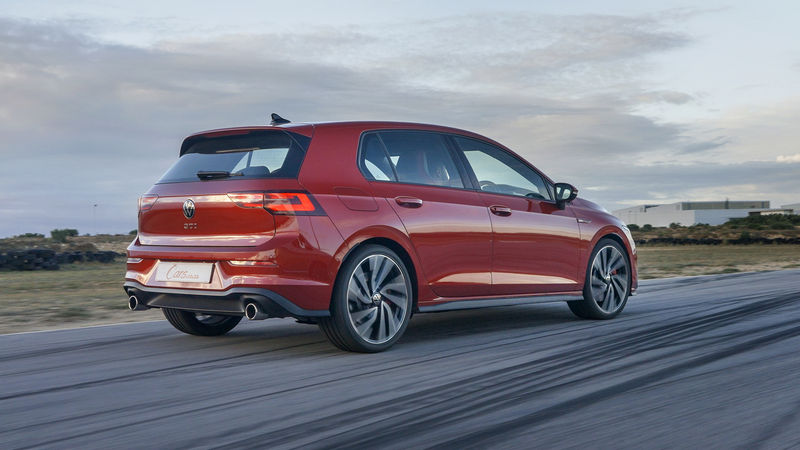
The all-new Volkswagen Golf 8 GTI will feature a 2.0-litre turbocharged petrol engine that produces more power. Outputs of 180 kW and 370 Nm are quoted, and this is paired to a 7-speed dual-clutch transmission. Performance is brisk, with a claimed 0-100 kph time of just 6.4 seconds. There’ll be just one GTI Golf 8 derivative on sale and standard features including 18-inch Richmond alloy wheels, Lights and Vision Package including high-beam control light assist, Climatronic air conditioning, heated leather-wrapped multi-function sports steering wheel with touch control and shifting paddles, GTI Vienna leather seats, keyless locking and starting system, Composition Media Radio, multi-colour InnoVision Cockpit, App-Connect, Cruise Control with speed limiter, Park Distance Control, mobile phone interface with inductive charging function as well as 30-colour ambient lighting.
The options list is substantial and we have no doubt customers will be making those ticks. There are things like the ever-popular panoramic sunroof (R13 050), mechanically swivelling trailer hitch, IQ Light: LED Matrix Headlights (R10 000), Black Styling Package with black 18-inch Bergamo alloy wheels (R8 000), Head-up Display, Adaptive chassis control including driving profile selection (R14 800), smokers package, 19-inch Adelaide alloy wheels (R10 400), Harmon Kardon sound system (R11 400), Discover Pro Radio ( R16 100 – Satellite Navigation, USB, Wireless App-Connect and Voice Control), Park Assist (parallel parking assistant), Rear Assist with a rearview camera R4 000), Blind spot monitor (Rear Traffic Alert and Lane Assist including Electronically Folding Mirrors), Travel Assist (R11 100- Lane Assist with Adaptive Cruise Control) and Adaptive cruise control with Front Assist and Autonomous Emergency Braking (R9 500).
As far as colours go, there are 3 solid exterior hues (Pure White, Urano Grey, and Moonstone Grey), 4 metallics (Dolphin Grey, Atlantic Blue, Kings Red and Reflex Silver) and 2 pearlescent options (Deep Black Pearl and Oryx White Pearl).
How much does the new VW Golf 8 GTI cost in South Africa?
Pre-orders for the new VW Golf 8 GTI are now open with the launch price starting at R669 300. The Golf GTI will be sold with a 3-year/120 000 km warranty and a 5 year/ 90 000km EasyDrive Service Plan and a 12-year anti-corrosion warranty. Services are scheduled at every 15 000km.