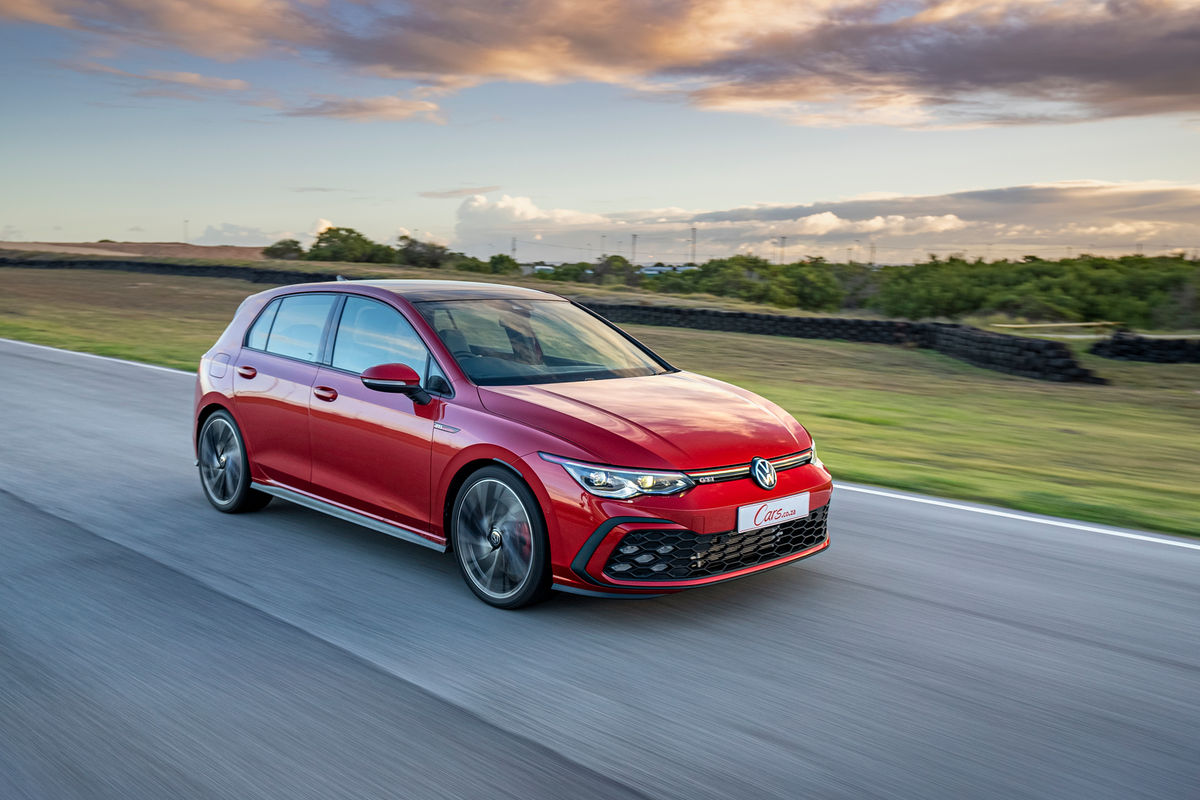
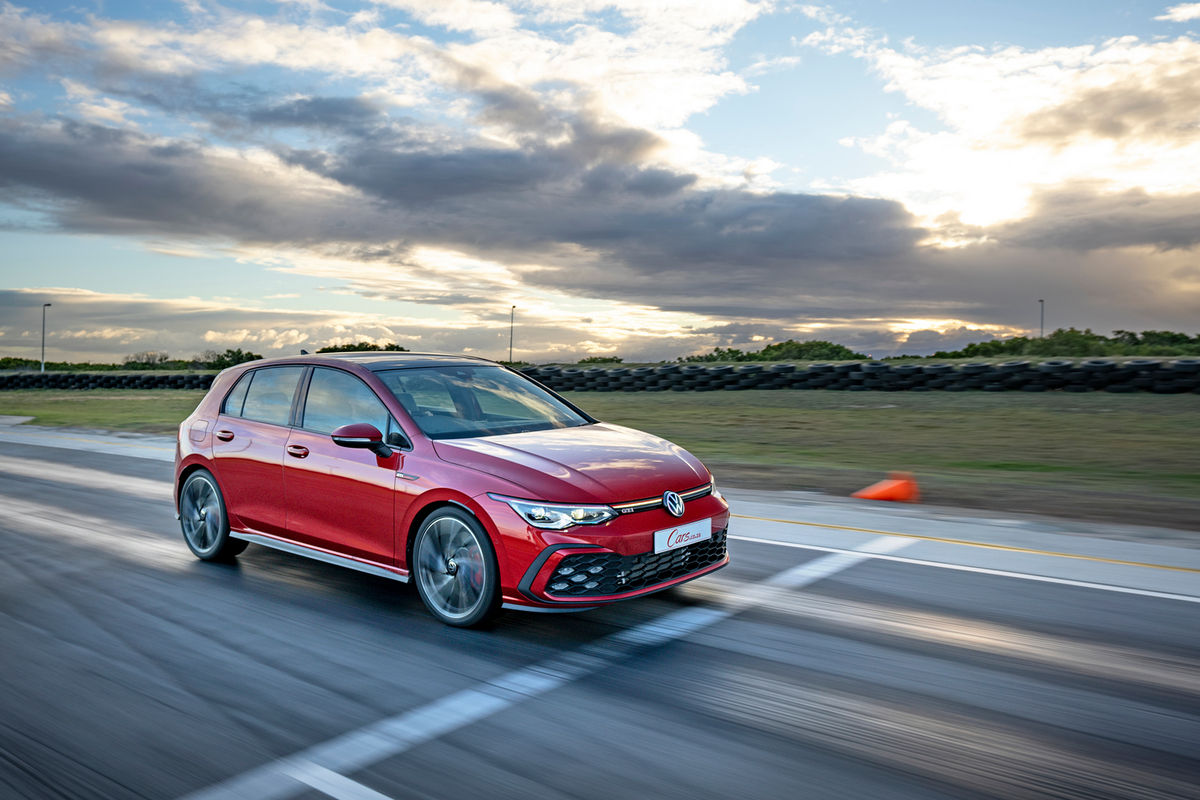
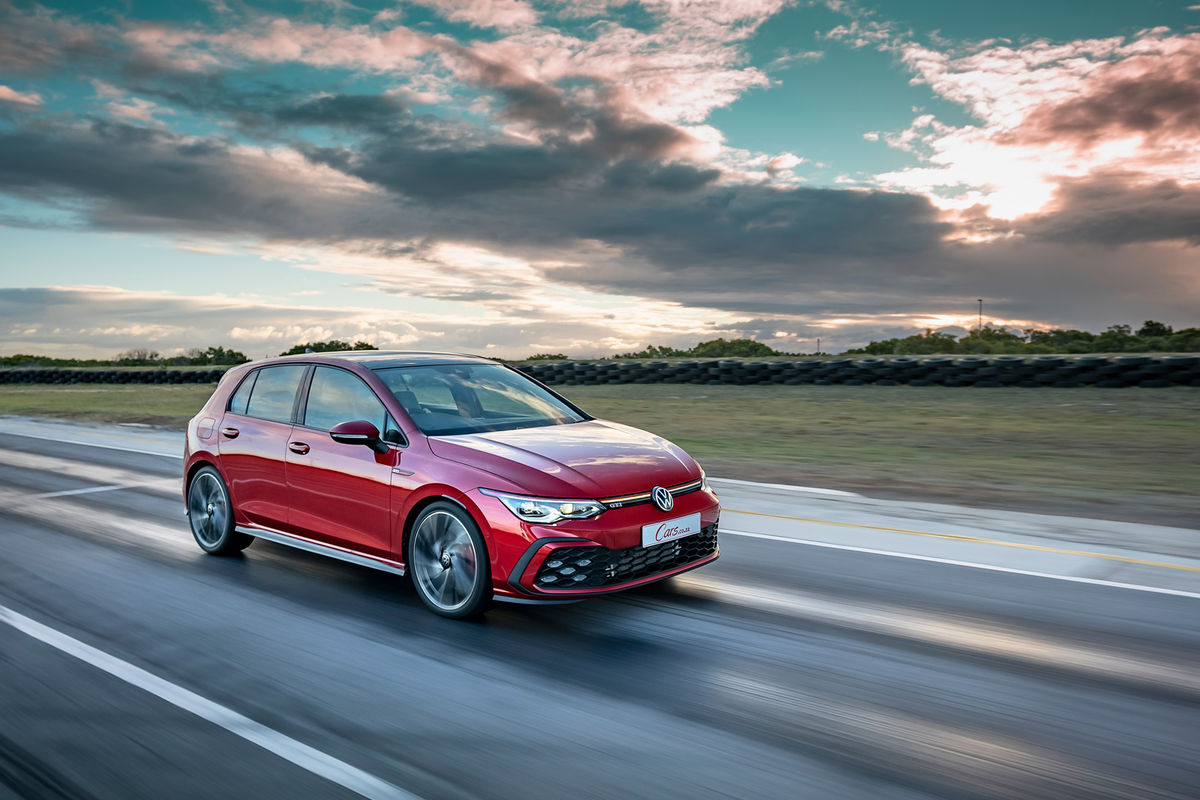
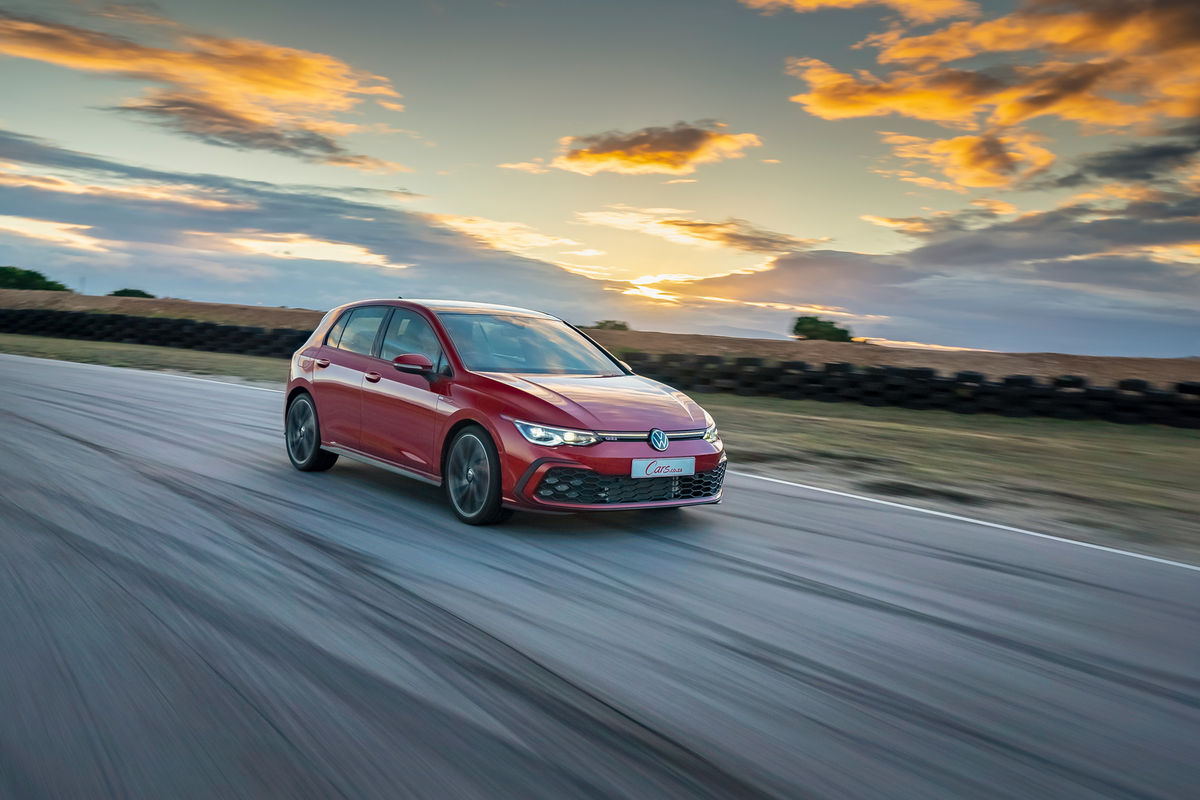
New VW Taigo Revealed, Coming to SA in 2022 

After seeing all the revealing spy shots, the new VW Taigo is now in production and it’s expected to reach South Africa in 2022. 

What to expect from the Taigo and for the latest updates check this article out.

The cat’s out the bag, meet the new VW Taigo! 

We’ve previously seen spy shots showing a near-production Taigo but Volkswagen’s new small crossover is official. 

The Spanish-built VW Taigo is based on the Brazil-built VW Nivus and differentiates itself from Volkswagen’s T-Cross with a stylish coupe-like silhouette. It stands 4 600 mm long, 1 700 mm wide and 1 490 mm tall with a wheelbase of 2 566 mm. 

The Taigo also gains features typically found on high-grade models such as Volkwagen’s IQ.Light LED matrix headlights, the latest third generation MIB3 9.2-inch infotainment system, wireless App connect, wireless charging and the brand’s familiar digital cockpit. The cabin itself lifted from the Nivus but it’s all familiar Volkswagen fair. The images you see here show the range-topping Taigo R Line which looks very nice indeed. 

A host of driver assistance features are also on offer including a surround-view monitor, front assist with emergency braking, lane departure warning and the optional IQ-Drive Travel Assist which enables semi-automated driving up to speeds of 210 kph. 

new VW Taigo
The Taigo’s interior is familiar from other VW products and comes equipped with the firm’s latest digital technology. 

What engines are offered on the new VW Taigo?

The new VW Taigo will be powered by a 1.0-litre, 3-cylinder petrol engine with either 70 kW /175 Nm or 85 kW /200 Nm on tap while a range-topping 110 kW / 250 Nm 1.5-litre turbopetrol engine will also find its way under the bonnet of the Taigo. 

The front wheels will be driven via either a 6-speed manual or 7-speed dual-clutch transmission.  

As for local availability, Volkswagen earlier this year confirmed that the Taigo will be offered locally in 2022 and local specification and pricing will become available closer to launch. 

With Toyota gearing up to produce the forthcoming Corolla Cross in South Africa, it’s entirely conceivable that the Taigo could be built locally at Volkswagen’s Uitenhage production facility in Gqeberha at some point in the future.

Buy a Volkswagen on Cars.co.za

Related Content   

New Volkswagen Taigo – What To Expect 

Should VW build Taigo in SA?

New VW Golf 8 GTI Launch Price in SA Announced

2021 Volkswagen Polo GTI Unveiled with 152 kW

VW California Coast Review: Is this the Ultimate Family Car?

Chinese brand Chery returns to SA

Can Chery go sub-premium in SA?

In the years between 2007-2010, South Africa enjoyed an incredible spate of Chinese brand introductions.

Most of these were simply aged Japanese bakkie platforms, sold as new, on the cheap. With the local market at record strength during this time, the demand was there.

But as customers discovered that these Chinese bakkies were not quite as durable as Japanese legacy products, and lacking credible aftersales support, the Chinese brands folded. Dramatically.

The only Chinese car company that has navigated local market expectations with credibility, has been GWM. Its latest P-Series bakkie is a serious bit of kit and the Haval SUV and crossover ranges, sell very well.

But now, one of the departed Chinese brands is making a return. Chery is aiming to meaningfully engage with the local market by September this year, as a more agile local entity (it won’t use a distributor but will enter as Chery SA standalone).


Chery Tiggo interior looks as modern as any other family SUV. Exterior featured above.

There is no question that Chery has more to offer than Tiggo. Product strategists at Chery have observed the success of GMW, with its Haval sub-brand, and must believe that South African buyers are now finally willing to pay more, for the latest-generation Chinese vehicles.

The brand is expected to initially launch with the Tiggo 2 and Tiggo 8, the number represents the size of the vehicle. The Tiggo 2 is about the same size as a Kia Seltos/Hyundai Creta and powered by a 1.5-litre naturally aspirated engine (78 kW/135 Nm). There’s a choice of a 5-speed manual or a 4-speed auto, not particularly advanced but expect it to be priced keenly.

The Tiggo 8 is a family SUV sized vehicle in the vein of the CX-5/Haval H6/Tiguan. Several engines are available (we’ll have to see what we are offered locally) all of which feature petrol and turbocharging. A 1.5-turbopetrol develops 108 kW and 210 Nm, then a 1.6-turbopetrol offers 147 kW and 290 Nm while a 2.0-turbopetrol produces 190 kW and 350 Nm. The 1.5 makes use of a 6-speed dual-clutch gearbox while the other 2 units use a 7-speed dual-clutch ‘box.

What will make a difference for Chery, beyond Tiggo? Exeed and Jetour. The names might be odd, but the product is a world beyond Tiggo. While we don’t know the exact product lineup yet, here’s what we know about those 2 cars.

Chery’s Exeed is a very convincing crossover, about the size of a Rav4. It uses a platform jointly developed with esteemed Austro-Canadian automotive supplier, Magna, and is powered by a choice of 1.5- or 1.6-litre turbopetrol engines.

The 1.6-litre version is available in all-wheel drive, and with 145 kW and 290 Nm, should make a decent drive, even at Highveld altitudes.

Both the front- and all-wheel drive Exeed variants use a seven-speed dual-clutch transmission and there is a long-wheelbase option, with third-row seating.

The Jetour is a slightly bigger seven-seater, which oddly, is only configured as a front-wheel drive. Despite its size, the Jetour uses a similar range of 1.5- and 1.6-litre turbopetrol engines, although there is the option of a six-speed manual gearbox, on the base version.

These new Cherys offer progressive styling, loads of kit and better finish than any Chinese vehicle from a decade ago.

The only issue, as is the case with Haval, would be an absence of diesel engine options.

Chery Exceed VX
Top spec VX Exceed is about the same size as a Toyota Rav4.

Related content

China’s stealthy progress – what it bodes for SA

Chery’s new VX 7-seater SUV

Bowler Defender is Ready to Rally

We know the new Land Rover Defender is one very capable offering, but what happens if you want to take it rallying? Bowler Motors will be doing just that and has revealed its new race weapon.

Bowler Motors has a stellar track record when it comes to modifying Land Rover products for high-performance offroad usage. Jaguar Land Rover was so impressed with the efforts over the years, it formed a brand partnership with Bowler Motors in 2012 and landed up acquiring the entire company in 2019 and it now forms part of SVO (Special Vehicle Operations).

The Bowler Defender Challenge uses a Defender 90 with a 221 kW 2.0-litre turbo 4-cylinder petrol engine as a base. Bowler strips the standard car out and fits a full roll cage, reinforced underbody, cranks up the suspension, bolts on offroad 18-inch rally wheels, and an assortment of other goodies.

The suspension is special. Designed in collaboration with Fox, it increases the ride height by 25mm. Being a race car the vehicle features electrical cut-offs, fire protection, race seats, carbon fibre paddle shifters and some ergonomic tweaks like a repositioned gear selector.

The body shell has been stiffened, the doors are trimmed and the front gets a revised bumper to allow for more cooling airflow as well as the fitment of additional headlights.

This very cool-looking Bowler Defender will be taking part in the Bowler Defender Challenge, a 7-race series in the United Kingdom. Price? A cool £99 500 (R2 million at the time of writing), but this price includes the race car, entry into the racing series as well as event support. Land Rover is also offering training, series logistics and more.

Bowler Defender

Further Reading

Land Rover Defender 90 Specs & Price

Land Rover Defender V8 Price Announced

Land Rover Defender vs Toyota Land Cruiser Prado

Gorgeous McLaren 765LT Spider Unleashed

The new McLaren 765LT Spider combines powerful performance with drop-top ability, making it perhaps one of the most tantalising convertible offerings currently on the market. 

It’s been a little over a year since the Woking-based firm revealed its leaner and meaner 765LT (LongTail) Coupe. Now, the McLaren 765LT Spider has been unleashed! 

It’s powered by the same twin-turbocharged 4.0-litre V8 that’s found in the coupe with immense outputs of 563 kW and 800 Nm of torque.  As you can imagine, those numbers produce mega performance and McLaren claims no less than 2.8 seconds to go from zero to 100 kph and just 7.2 seconds to reach 200kph.

The McLaren 765LT Spider is equipped with a 7-speed dual-clutch transmission that’s said to deliver 15% faster in-gear acceleration than the already impressive 720S.  

Lightweight design for McLaren 765LT Spider  

McLaren 765LT Spider
The 765LT Spider only weighs 49 kg more than its coupe sibling. 

The ability of the McLaren 765LT Spider is realised with its lightweight carbon fibre MonoCage II-S. The structure incorporates the electrically operated one-piece Retractable Hard Top (RHT) which can be lowered or raised in just 11 seconds at speeds up to 50 kph. 

The 765LT Spider is only 49 kg heavier than its coupe sibling with a DIN weight of 1 388kg, making it 80 kg lighter than the 720S. In fact, McLaren claims a convertible class-leading power-to-weight-ration of 440 kW per ton! 

Other weight-saving measures include a titanium exhaust system which is 40% lighter than a steel equivalent, F1-grade transmission materials and thinner glass. In terms of aerodynamics, the 765LT Spider features the same front splitter, front floor, side skirts, front and rear bumpers and rear diffuser as the 765LT Coupe but the active rear wing is calibrated to accommodate the roof up/down positions. Downforce is claimed to be 25% better than the 720S. 

The 765LT Spider features a wider front track width and lower front ride height and is fitted with lightweight 10-spoke forged alloy wheels shod with Pirelli P Zero Trofeo R tyres. The model also gains bespoke LT springs and dampers and unique software programming for the linked-hydraulic Proactive Chassis Control II suspension.   

The interior is inspired by motorsport and features carbon-fibre racing seats, carbon fibre centre tunnel and an exposed carbon fibre floor and lightweight Alcantara finishes. 

Like the 765LT Coupe (all sold out), only 765 examples of the 765LT Spider will be built to customer order. 2021 production is already sold out…

Buy a McLaren on Cars.co.za

Related Content

McLaren Reveals 500 kW Artura Hybrid Supercar

McLaren Announces New Electrified Platform

McLaren Speedtail Secrets Revealed [w/video]

Hyundai Santa Fe (2021) Review

It’s fair to say that, to date, the Hyundai Santa Fe has not fulfilled its potential in the South African market – primarily because of local consumers’ predilection for cheaper, pure off-roaders such as the Toyota Fortuner. Could the recent facelift to the Korean model, which, to be fair, incorporates far more significant updates than the usual cosmetic tweaks and detail upgrades, enable the Santa Fe to finally make a notable impact on the sales charts?

We like: Cabin refinement, ride quality, space and practicality.

We don’t like: 3rd-row seats quite tight, perhaps too luxurious for serious off-roading

Fast Facts

  • Model Tested: Hyundai Santa Fe 2.2D 4WD Elite
  • Price as tested: R869 500 (July 2021)
  • Power unit: 2.2-litre 4-cylinder turbodiesel
  • Power/Torque: 148 kW/440 Nm
  • Transmission: 8-speed automatic
  • Fuel economy: 7.9 L/100 km (claimed)
  • Load space: 332/1 032/ 2 041 litres

What is it?

It’s rare that a facelift model incorporates a change of platform, but Hyundai has given its Santa Fe fresh underpinnings so that it aligns with its all-new Kia Sorento sibling, which, at the time this review was written, hadn’t arrived in Mzansi yet. It’s an all-encompassing facelift, in fact – this test unit felt like an entirely new car with an updated engine, more modern platform and a vastly reconfigured interior.

It was hard to fault the pre-facelift model, aside from the fact that South African buyers tend to favour more affordable and versatile bakkie-based SUVs such as the Toyota Fortuner and Ford Everest, even though – as luxury family vehicles – they cannot match the plushness or overall sophistication of the Korean offering. This “updated” Santa Fe lifts its game with even more premium finishes and comfort-oriented upgrades, but at a price point that straddles its bakkie-based Adventure SUV rivals and the outright Executive- and Premium SUVs, which all seem to start at R1 million nowadays.

How the Santa Fe fares in terms of…

Engine and performance

Hyundai Santa Fe - front
Under the bonnet is an improved 2.2-litre turbodiesel engine.

Under the bonnet of the Santa Fe is a familiar (but updated) version of its predecessor’s 2.2-litre 4-cylinder turbodiesel engine. The powerplant comes with a slight increase in power (6 kW) taking it up to 148 kW, while peak torque remains unchanged at 440 Nm. A new 8-speed dual-clutch automatic transmission has been installed, which performs impressively, with quick response times and smooth shifts. The engine feels well-suited to the 7-seater’s packaging and offers both adequate overtaking acceleration and acceptable efficiency…

Indeed, the powertrain update has focused on improving the Santa Fe’s fuel consumption – Hyundai claims an average of 7.9 L/100 km, but the test unit’s indicated figure settled at 7.7 L/100 km during its 2-week tenure in our fleet. You can reasonably expect even better returns once the turbodiesel has loosened up a bit more and unlike us, you apply maximum throttle sparingly.

There are 4 driving modes (Comfort, Eco, Sport and Smart). Sport mode makes the 2.2D 4WD Elite rather excitable (the throttle response is ultra-sensitive and the ‘box shifts too aggressively), so we mostly switched between Comfort and Smart (the latter automatically adjusts powertrain settings based on the software’s analysis of your driving style), which gave the best balance for everyday driving.

There are off-road modes too (Snow, Mud and Sand), which make it easier to negotiate tricky terrain in the Hyundai by adjusting the vehicle’s traction control settings and all-wheel-drive characteristics to ensure torque is directed to the wheels that can make the best use of it (depending on the prevailing low-grip driving circumstances).

The performance figures are in line with the likes of the new Fortuner 2.8GD-6 4×4 VX and the Everest 2.0Bi-Turbo 4WD Limited, but the Santa Fe’s kerb weight is some 380 kg less than the Toyota’s and a significant 636 kg lighter than the Ford, so it feels more energetic in cut-and-thrust traffic, more long-legged on the open road and, ultimately, uses far less fuel than its bakkie-based Adventure SUV rivals. The Hyundai’s towing limits (750 kg for an unbraked trailer and 2 500 kg for a braked trailer) are admittedly slightly less than the 3-tonne maximum ratings of the Toyota and Ford.

Interior and Practicality

Hyundai Santa Fe - interior
Inside, the materials are soft-touch with tight shut lines.

The Santa Fe is offered as a conventional 7-seater with the ability to fold the 2nd- and 3rd-row seats flat. If practicality is a top priority, the Santa Fe is an outright winner. With all the seats up, you still get 332 litres of cargo space in the load bay, which is more than you get in a Land Rover Discovery, although 3rd-row passengers are likely to feel a little squashed in – the rear bench is best suited for small children. In 5-seater mode, the luggage capacity expands to 1 032 litres and, with all the seats down, you get a massive 2 041 litres of load space (very similar to the biggest bakkie-SUV, the Everest).

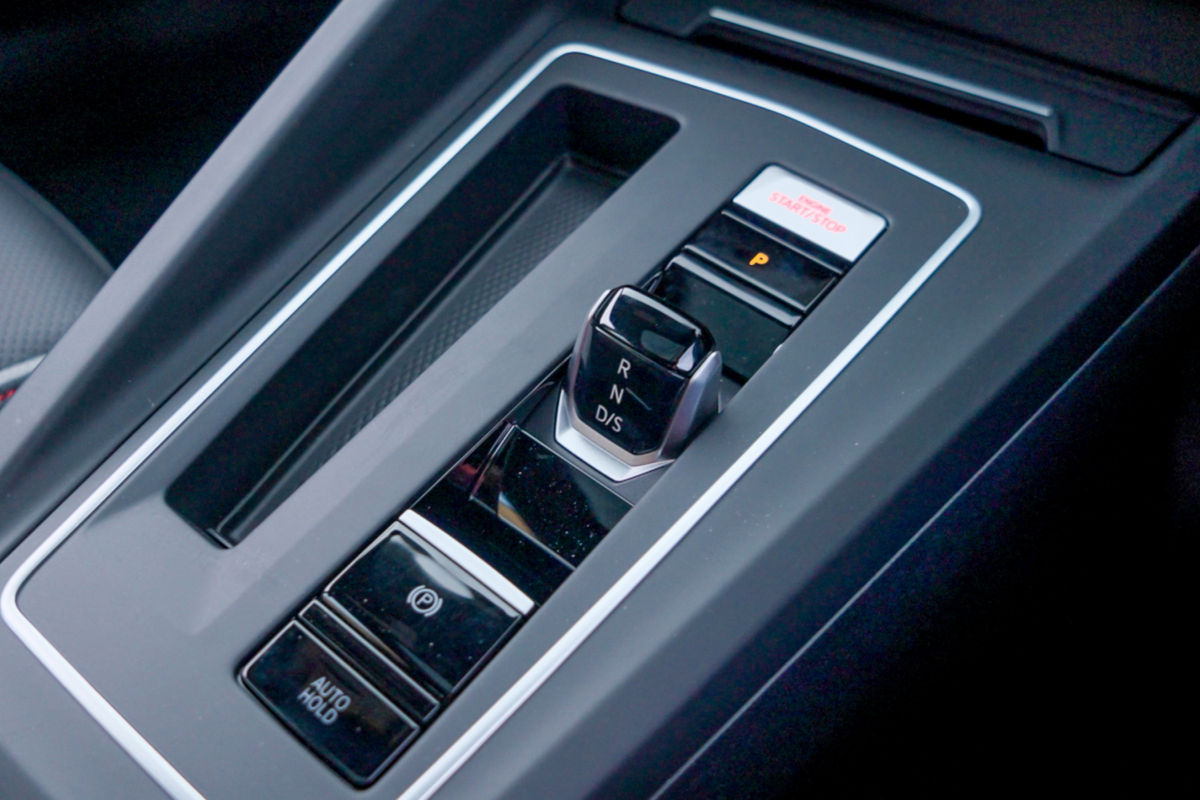
Meanwhile, the Hyundai’s interior has had a major revamp as part of the model’s facelift; the first update you’re likely to spot is the omission of a conventional transmission lever (it’s been replaced with dashboard-mounted selector buttons). The entire centre console has been shifted forward to form a slanted panel that’s more ergonomically positioned. What’s more, it offers extra storage space and a larger storage bin under the armrest. There’s a storage shelf under this panel, where you’ll find 2 USB ports and a 12V socket. There are 2 more USB ports in the rear (the total number of USB ports is 5).

Hyundai Santa Fe - centre
The transmission lever has been replaced with an L-shaped console that takes up less valuable storage room.

Leather is standard across the range, but the 2.2D 4WD Elite derivative features heated and cooled fronts in addition to electric adjustment for both driver and passenger. The seats are liberally padded and, consequently, very comfortable to occupy on long journeys. The whole ambience of the cabin is that of a luxury SUV: the shut lines are tight and the majority of the plastic surfaces are of the soft-touch variety. The Santa Fe might not have quilted leather everywhere, but there’s certainly enough of it to make the cabin feel special. What’s more, a panoramic sunroof is standard on the Elite version.

The 8-inch infotainment system sits atop the dashboard and is operated via touch with a few shortcut keys around the frame. It supports Apple Carplay and Android Auto screen-mirroring technology, while a clever wireless charging recess allows you to prop your phone up vertically in a slot just in front of the cupholders.

Driving comfort

Hyundai Santa Fe - Side
The 4×4-capable Elite gets extra ground clearance (205 mm), but it might be too “nice” to send through the real rough stuff.

It’s easy to tell that Hyundai has improved the sound insulation in the Santa Fe’s cabin. It’s extremely quiet with only a hint of wind and tyre noise at 120 kph. The steering is light (but responsive) and the Hyundai has decent road manners in the twisties. It’s not a sporty SUV by any means – it undeniably favours comfort over performance – but that’s probably what the model’s target market would prefer.

On gravel roads, the quietness in the cabin silences some of the knocks that the pliant suspension has to endure, but the Santa Fe appears to be capable of delivering a comfortable ride quality over the rough stuff too. It’s not going to negotiate a graded off-road course and the 205 mm of ground clearance is some way short of the Fortuner (279 mm) and Everest’s (225 mm), but the 7-seater’s more than adequate for every other occasion. After all, the Hyundai is certainly far more comfortable to drive (and be transported in) on the tarmac than the bakkie-based SUVs, which is a major boon.

Safety features

The Adventure SUV segment is no longer short-changed in terms of safety systems. The Santa Fe has had to keep up and now includes blind-spot monitoring, reverse parking collision avoidance, safe exit (warns you of approaching vehicles when trying to open the doors), front and rear parking sensors, a reverse-view camera and, for off-road driving assistance, hill-descent control and hill-start assistance.

Cruise control is available, but it would be good to see Hyundai offer adaptive cruise control, even just as an option. A total of 6 airbags are fitted as standard and the usual suite of ABS, EBD and stability control are all present and correct.

Pricing and after-sales support

There are currently only 2 Hyundai Santa Fe derivatives to choose from, the 2-wheel-drive Executive that’s priced at R769 500 and the 4-wheel-drive Elite at R869 500.

Hyundai has a particularly long warranty, which includes a 5-year/150 000 km cover on the vehicle and 7-year/200 000 km on the drivetrain. A 6-year/90 000 km service plan is included.

Verdict

Hyundai Santa Fe - rear
The Santa Fe is very nearly the perfect family SUV.

Just as the pre-facelift Santa Fe was difficult to fault, the vast array of updates to this model have only made the Hyundai more difficult to criticise. At its price point, not many SUVs offer this level of driving comfort with 7-seater capability and this much luggage space. It’s very nearly the perfect family SUV apart from its lack of pukka off-road credentials. To be fair, it’s most likely good enough for any family adventure off the beaten track, other than those where a low-range transfer case would be a pre-requisite. It is certainly well worth a look if you’re shopping at the top end of the bakkie-based SUV market.

Related content:

Hyundai Santa Fe (2021) Specs & Price

Hyundai Santa Fe (2021) Launch Review
Toyota Fortuner (2021) Review

Toyota Fortuner (2020) Specs & Price

Ford Everest Sport (2021) Launch Review
Ford Everest Sport (2021) Specs and Price

Land Rover V8 Defender SVR in the works? 

While we eagerly wait for the arrival of the V8-powered Defender in South Africa, there’s news of a more powerful V8 Defender SVR in the works which could pack 447 kW! 

Earlier this year, Land Rover revealed its new Defender V8 featuring a supercharged 5.0-litre V8 engine with 368 kW and 625 Nm of torque and capable of running from zero to 100 kph in 5.2 seconds using an 8-speed automatic transmission. The good news is that it will be offered in South Africa in 2021!

While those numbers are mightily impressive, American magazine, MotorTrend, reckons that Land Rover is working on a potent V8-powered Defender SVR that will be tuned to deliver at least 447 kW from a BMW-sourced 4.4-litre twin-turbocharged V8! More so, the Defender SVR is expected to come to market in both 90 and 110 configurations and is likely to feature a remapped ZF transmission as well as uprated brakes and suspension to match its performance intent. 

The Land Rover Defender SVR is expected to be revealed in the near future and we will keep you informed as soon as official information becomes available. 

The new Defender is proving to be hugely popular in South Africa and these powerful V8 derivatives will surely find favour with buyers who want to make a bold statement. Do you want to see the Defender SVR in SouthAfrica? 

Buy a Land Rover Defender on Cars.co.za?

Related Content

All-new Land Rover Defender Video Review

Land Rover Defender V8 Officially Unveiled

Land Rover Defender 90 (2021) Specs & Price in SA

Land Rover Defender SVX On The Way? 

New Names for Next-Gen Electric Volvos 

Electric Volvos of the future will be named differently than their outgoing combustion-engined stablemates. Volvo’s shift into the electric age will reportedly be marked with a distinct change in the Swedish firm’s model naming conventions. 

Volvo is drawing a line in the sand as it enters the age of electric cars and it will mark the shift with a change in how it names its models. 

Earlier this year, the Gothenburg-based luxury car manufacturer announced its intention to become an all-electric brand by 2030 and with all its electric models to be exclusively available online. Internal combustion engines are dying a noisy death and electric mobility is the future! 

In an interview with Autocar, Volvo’s CEO, Hakan Samuelsson, confirmed that the next generation of electric Volvo models won’t follow the familiar alphanumeric naming convention that we are used to i.e. XC40, XC60, XC90, for example. Instead, and unlike other luxury brands, such as BMW (iX), Mercedes-Benz (EQ) and Volkswagen (ID),  ew electric Volvos will feature a phonetic name with more meaning and character. 

“If you look at cars today, all of them are very ‘engineeredly’ named: XC, T8, All-Wheel-Drive, double-overhead cams – it’s all specification on the rear of many cars. We’re talking about a totally new architecture, a new-generation of born-electric, all-electric cars with central computing,” Samuelsson said. “It’s good and clear to mark that this is a new beginning, and that’s why we’re not going to have numbers and letters, an engineering type of name. We’re going to give them a name as you give a newborn child a name.”

Even though the Recharge nomenclature, as seen on the forthcoming XC40 Recharge (which is due to arrive in SA in August 2021) still combines the model name upon which it’s based, Volvo’s forthcoming all-new electric flagship SUV is expected to receive a phonetic name. 

This new electric flagship SUV, codenamed XC100, will be built on a new EV platform that will spawn future electric Volvos and its name will mark the beginning of a new electric era for Volvo. 

The recent reveal of the Concept Recharge was a significant one in that it highlights what to expect in terms of the packaging of future electric cars from Volvo and it’s totally conceivable that the brand’s next flagship electric SUV will be used to set the bar in terms of technology and design which will undoubtedly filter down into every other electric Volvo model that comes to market. 

The jury is out on what the new electric premium SUV will be named. The Volvo Förstfödda perhaps?

What would you call it? 

Buy a Volvo on Cars.co.za

SsangYong trying to get it right with J100

Better look, for future SsangYong SUV.

There was a time, when the SsangYong Musso, threatened to become an alternative to mainstream luxury off-road vehicles.

It had a Mercedes-Benz drivetrain, and that gave it an advantage, in principle, over its Japanese rivals. Over time, SsangYong has not prevailed, but that has not kept it from trying.

The forgotten Korean brand is now preparing to launch a new SUV in 2022. This will be the fulfilment of SsangYong’s J100 project.

And yes, that codename is peculiarly similar to the Land Rover DC100 concept, which eventually became the new-generation Defender.

SsangYong is desperate to regain market share in the SUV market, where it has legacy, but has not converted that to profits, even as the segment has boomed.

From the concept sketches, it is clear, that this new J100 vehicle will be dramatically styled. Whenever the idea of adventurous design and SsangYong is mentioned in the same sentence, there is the risk of things going awry – illustrated by vehicles such as the Stavic, Rodius and Kyron.

The J100 isn’t going to be a shock and awe design job. SsangYong has clearly been influenced by Land Rover, in its ambitions with the J100.

Although the grille is recognisably SsangYong, those slim headlamps are very similar in profile and execution to the Evoque.

Extended wheel arches indicate a wider rear track and what looks like a side-hinged swing tailgate, instead of a lift-back configuration for the cargo area.

The Land Rover influence is telling in the rear of this J100, too, with its taillights reminiscent of the current Range Rover Vogue.

SsangYong has not committed to any details about powertrain, but if the engineering team can render this J100 concept to reality, without going all Actyon on it, this could be a potentially successful SsangYong.

Related content

Comparison: Land Rover Defender vs Toyota Prado

Hyundai Palisade (2021) International Launch Review
Mazda BT-50 (2021) International Launch Review

The new Mazda BT-50 has been launched in South Africa, a year before local production of the bakkie on which it is based, the new Isuzu D-Max, will commence in Port Elizabeth. Could that be a crucial advantage for one of the market’s most underappreciated double-cabs? We drove the newcomer in Sydney.

The new-generation Mazda BT-50 is the most Japanese that this Japanese bakkie has ever been; after decades of being a Ford Ranger clone, the Hiroshima-based marque’s double-cab is now based on the next iteration of the Isuzu D-Max. The previous version, which was built at Ford’s Silverton plant at the beginning of its product cycle (pre-facelift), never received substantial marketing support from the Blue Oval, largely because the global partnership between the US and Japanese brands dissolved in 2014 (which was when Mazda Southern Africa was established as an independent subsidiary).


As a Mazda-flavoured execution of the Isuzu D-Max, the BT-50 is handsome, upmarket and, importantly, sufficiently distinctive.

In the meantime, the Ranger firmly established itself as South Africa’s 2nd-favourite bakkie. By virtue of being based on the Ford, the previous BT-50 should’ve sold in greater numbers than it did. But then, the BT-50 had a trio of impediments: Mazda SA focused its marketing efforts on newer, sharply-styled and smartly-packaged hatchbacks and SUVs; the bakkie’s styling was distinctive, yes, but utterly divisive (and that matters, even in the pick-up market), plus buyers seemed to believe that if you want a square-jawed, designer-stubble-sporting Ranger, well, you’d buy one – not a reskinned copy.

An effective restyling exercise…

Well, with the Ford Ranger about a year away from being replaced, the new-gen BT-50, of which Mazda SA has now launched 4 derivatives in the local market, offers something fresh and eye-catching. Again, Mazda’s double cab is merely styled differently to its distant D-Max cousin, but, as we’ll explain later, its packaging suggests Mazda is all too aware the BT-50 needs to be more than a bakkie – rather think of it as a family-car substitute that offers reasonable refinement, luxury and practicality. What’s more, its character, if not the sheer embodiment of Zoom-Zoom, is more Mazda-like than before.


Top-of-the-range BT-50s feature chrome-look detailing, silver-coloured running boards and bold 18-inch alloys. 

There was a time when describing a bakkie as “handsome” or “striking” could get one banned from a braai, but the new Thai-made Mazda BT-50 undeniably cuts a fine figure. There are elements of the Mazda’s Kodo design language in the sweeping crease lines that flow from the grille to the side mirrors, as well as the pinched waistline (above the running boards), while the defined shoulder lines align with the load bed and the tops of the tail-light clusters feature the brand’s signature circular motif.

The bakkie shown here resembles the South African market’s 3.0TD double cab Dynamic and 3.0TD double cab 4×4 Individual automatic derivatives, which feature chrome-look grilles, -side mirrors (auto-folding and heated) and handles in combination with silver running boards and 18-inch alloys. That’s not to say the entry-level 1.9-litre turbodiesel versions (1.9TD double cab Active and 1.9TD double cab Active auto – both 4×2) look like workhorse bakkies – they have black grilles, colour-coded mirrors and handles, plus 17-inch rims, but are also equipped with LED headlamps (with DRLs) and fog lamps.


The Mazda’s switchgear is identical to that of the new Isuzu D-Max (even the steering wheel design), but it’s undeniably smart. 

The Isuzu underpinnings are particularly apparent in the Mazda’s spacious interior; the bakkies’ switchgear, instrumentation and steering wheels are identical, but their fascias are different, with the former having rectangular centre vents and the latter triangular ones. Nonetheless, the cabin execution is plain but smart, with a soft-touch finish to the edge of the dash’, as well as tasteful applications of piano black and chrome-look trim. Although electric windows, a 4.2-inch multi-info display and a reverse-view camera (including rear PDC) are standard, the seats are trimmed in cloth – there’s no leather option.

The 1.9TD Active derivatives each features a polyurethane multifunction steering wheel, a 7-inch touchscreen infotainment and a 6-speaker audio system (with wireless Apple CarPlay-, but plug-in Android Auto compatibility), which sits in the same frame as the 9-inch one fitted to the 3.0TD Dynamic and 3.0TD 4×4 Individual, it just has a black border around it­. The HVAC knobs and fresh air/recirculation slider in the 1.9TDs are also pure pick-up fair, but the higher-spec 3.0TD versions, by comparison, feature piano-key buttons for the dual-zone climate control console, keyless entry (with push-button start), rain-sensing wipers, auto headlamp levelling, a leather-wrapped steering wheel and -transmission lever, front parking sensors, 2 additional speakers and a rear centre armrest with cupholders.


In its most luxurious spec, the BT-50 features automatic climate control and a 9-inch touchscreen infotainment system.

The front seats are sufficiently comfy and supportive (the driver’s seat is 6-way adjustable – including lumbar on the Dynamic and Individual spec), the steering column is reach- and rake adjustable and, to Mazda’s credit, most of the cabin’s finishes feel substantial and hard-wearing, plus the controls are well-weighted. The author did find the driver’s footwell a bit cramped (on the manual version he drove) and missed having a lined footrest, as opposed to the carpeted half-ledge in the leftmost corner of the ‘well. What’s more, the centre console’s cupholders were a little too deep for regular-sized cups of takeaway coffee, the top glovebox lid didn’t click into place assuredly and the front-door trims didn’t line up exactly with the edge of the dashboard. That, however, concludes the interior critique…

And it gets better… The new BT-50 doesn’t sell its rear occupants short. Aft passengers usually need to endure a hard bench, a bolt-upright backrest and minimum space in “double-cab land”, but the Mazda bakkie offers reasonable leg- and headroom; the 1.88-metre-tall tester could easily sit behind the driver’s seat (as it was set up for him). Other conveniences include separate ventilation outlets, a fast-charging USB port, a fold-out armrest (on the 3.0TD derivatives), 3 adjustable headrests and a bottle holder in each of the rear-door linings.

The bench can also tumble forward in a 60:40 split if you’d like to free up more luggage capacity, plus there’s a lidded hidey-hole in the carpeted underfloor.


For once, rear occupants aren’t shortchanged in a double cab, they’re afforded good leg- and headroom in the new BT-50.

In terms of practicality, the new BT-50 has a payload of just over 1 tonne, while its load tray is 1 571-mm long, 1 530-mm wide (with 1 120 mm between the wheel wells) and 490-mm deep, plus it comes outfitted with a quartet of tie-down loops. Many buyers will undoubtedly specify a rubber lining, tonneau cover and roll bar. The stated towing capacity is 750 kg and 3 500 kg (for braked trailers).

Improved on-road refinement

All of which brings us to the on-road refinement of the newcomer, which is, in a word, admirable. At the national speed limit (110 kph in Australia), the Mazda’s cabin was virtually creak- and rattle-free, with just a slight flutter emanating from the side mirrors. The 3.0TD Dynamic and 3.0TD 4×4 Individual‘s motor is said to be substantially reworked from the current D-Max’s 3.0-litre turbodiesel (including a revised block, head, internals and injection system) and slightly down on power and torque compared with the outgoing bakkie’s Ford-supplied 3.2-litre 5-cylinder powerplant. It still sounds like a pukka Isuzu mill – especially at startup – and the 140-kW motor remains a mite clattery up to the early 1 000-rpm range. As before, it doesn’t like being revved hard.


Even if the new 3.0-litre turbodiesel motor is less powerful than its Ford-sourced predecessor, it’s refined and more efficient.

Bear in mind that, notwithstanding the fondness many in the bakkie fraternity have for that old 3.2-litre motor, we found it notably thirstier than its manufacturer’s claim during extended reviews (of the Ford Ranger Wildtrak, for example). The new 3.0-litre turbodiesel engine, while no fireball, is reasonably tractable by comparison: peak torque of 450 Nm is available from 1 600 to 2 600 rpm, but 400 Nm of that between 1 400 and 3 250 rpm, and, best of all, we saw an encouraging indicated consumption figure of just over 9 L/100 km during our test drive (Mazda claims an average of 8.0 L/100 km).

The ride quality was a bit of a mixed bag, but the roads on our test route (a mix of rural, suburban and urban) were far from perfect. At freeway speeds, the Mazda has a relaxed, loping gait; the suspension suppresses bumps… but doesn’t quite neutralise them. Then, at lower speeds, the bakkie’s rear end can still feel a little jittery on rippled/uneven surfaces, but by double-cab standards, it’s quite fair.

What about its Mazda-ness?

What impressed us most about the auto cruise control-equipped new Mazda BT-50’s demeanour was its sheer easy-to-drive nature, which is a happy coincidence for Mazda, which endeavours to offer driver engagement in all its products. The bakkie’s steering, for example, has improved by leaps and bounds. The ‘wheel is pleasantly weighted, but not vague; turn-in is true and positive, even if a bit slow by family-car standards, the high-riding bakkie eases into bends with a predictable amount of roll and stops sufficiently sharply too.


The ride quality of the BT-50 is on the firm side of pliant on dirt roads, but the bakkie’s steering and road-holding inspire confidence.

Although the 1st gear on the manual-shift version was quite short, the ‘box shifted positively and the clutch was easy to modulate, even in thick Sydney traffic. We anticipate most buyers will opt for the 6-speed automatic transmission, which features in 3 out of the 4 local derivatives. We traversed a short section of dirt road in the Royal National Park (on the outskirts of the city) and even tried out the hill-descent-control and shift-on-the-fly 4×4 on a slippery downhill slope, where the BT-50 behaved just as expected. However, while we were driving the bakkie back to its depot, we realised something else…

Many of the BT-50’s most impressive features aren’t visible to the naked eye. The Mazda’s suite of safety systems, for example, moves the game forward for the bakkie segment; in an LCV-based vehicle that will be entrusted with transporting your precious family, that’s noteworthy.


The integral stereoscopic camera system enables a host of active safety features on the BT-50.

First, the good news… all Mazda BT-50 derivatives in the South African market feature 7 airbags (dual front-, -side, curtain ‘bags, plus one for the driver’s knee), ISOfix child-seat anchor points, ABS with EBD, brake-override accelerator, hill descent control, hill launch assist and rollover mitigation systems. That’s a fair number of features, certainly, but the safety suite could have been more generous…

Because in Australia, all versions of the BT-50 employ sensors and a stereoscopic camera system to offer auto emergency braking (AEB), including pedestrian- and cyclist detection, speed-sign recognition turn assist (to dissuade you from turning into the path of oncoming traffic) and forward-collision warning, which is in addition to blind-spot monitoring and rear cross-traffic alert. Granted, if Mazda had opted to fit those features on the bakkies destined for the South African market (provided the gizmos were compatible with our road network, of course) it would have pushed up the new line-up’s asking prices.

As if having access to wireless Apple CarPlay in an otherwise humble bakkie wasn’t enough to blow your mind, wait until you feel the Mazda’s active lane-keeping assistance system make small course corrections through the steering wheel (it works between 60 kph and 130 kph). Oh well, fingers crossed that at least some of those driver-assist systems will feature in local-spec BT-50s one day!


As the double cab entrenches itself as a popular family car in the South African market, the Mazda’s sophistication is a big plus. 

Summary

It’s no secret Isuzu SA had to delay the launch of the next-gen D-Max until 2022. In the meantime, the Port Elizabeth-based subsidiary of the Japanese brand has conducted a development programme to tailor the new bakkie’s construction, suspension and other components for our market. Given that Isuzu will build the bakkie in several guises – for various types of customers – that stands to reason.

By virtue of arriving in Mzansi ahead of its D-Max cousin, the new BT-50 will certainly appeal to owners of older Isuzu D-Max models, who feel they can no longer delay the replacement of their current bakkies. Some prospective buyers may also be wary of buying a bakkie that will be superseded in the next year or so (Ford Ranger and Volkswagen Amarok); they might consider the Mazda strongly.

Apart from being much more handsomely styled than its predecessor, the new BT-50 offers appreciably more appeal for buyers who want the practicality and looks of a bakkie, but ultimately utilise their vehicles as family cars. A 4-door pick-up will never be able to match the sophistication of a unibody SUV, but Mazda’s newcomer demonstrates that “leisure double-cab” standards are rising rapidly.

We will soon pit the flagship Mazda BT-50 3.0TD 4×4 Individual against a number of its (also top-spec) rivals in a multi-bakkie shootout to crown South Africa’s best bakkie. Watch this space.

ICYMI: Mazda BT-50 (2021) Specs & Price

Price of Mazda BT-50 (2021) in South Africa

1.9 Active Manual 4×2 R611 900
1.9 Active Automatic 4×2 R647 900
3.0 Dynamic Automatic 4×2 R759 400
3.0 Individual Automatic 4×4 R794 400

Prices include a 3-year/unlimited-kilometre service plan, 3-year/unlimited-kilometre warranty and 3-year/unlimited-kilometre roadside assistance.

Volkswagen Amarok W580X Announced

The Volkswagen Amarok W580X is probably the last Amarok to be revealed before the all-new model debuts.

The Volkswagen Amarok has been around since 2010 and it will be replaced by a vehicle that’s a result of Volkswagen and Ford collaborating together. The best part of this news is this vehicle will be assembled in Ford’s facility in South Africa.

But, before we say our farewells, Volkswagen Australia is not going to let the Amarok retire quietly. It has paired with Aussie engineering specialists Walkinshaw again to create a special edition. We’ve covered the Amarok W580S before, but that setup was focused more on-road performance.

What you see is the Volkswagen Amarok W580X which takes the competent package and gives it a bit more offroad capability. The suspension lift kit improves the ground clearance and there’s been work done to the suspension with MTB twin-tube dampers, and the vehicle comes with custom bash plates and rock sliders.

To further enhance its offroad capability is underbody protection, breathers and Walkinshaw will even supply a snorkel as an option if you’re feeling really adventurous. The Volkswagen Amarok W580X also features 18-inch alloy wheels wrapped in all-terrain tyres, wheel arch extensions, new-look front grill and the cabin gains some new Walkinshaw-branded seat trim.

Under the bonnet is a 190 kW and 580 Nm 3.0-litre turbodiesel V6 motor, paired to an 8-speed automatic transmission. Given these big numbers for a double-cab bakkie, we think Walkinshaw did the right thing by not touching the motor – it’s already fast enough.

Volkswagen Amarok W580X Availability

Australian customers will get the Volkswagen Amarok W580X in limited numbers in April 2022, which then begs the question, will South Africa get a farewell Amarok special edition too?

Further Reading

Volkswagen Amarok latest prices

Volkswagen Amarok 190 kW Launch Review

Armoured Volkswagen Amarok by SVI

Volkswagen Amarok 190 kW Video Review