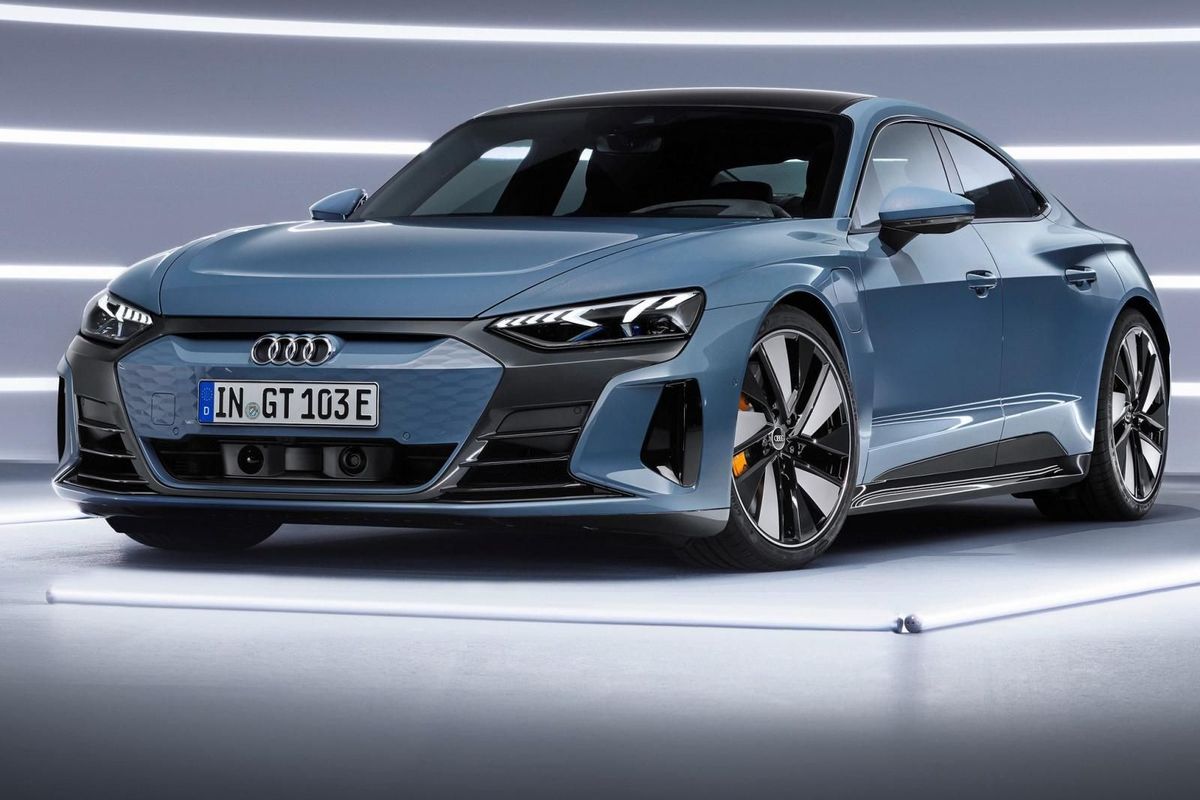
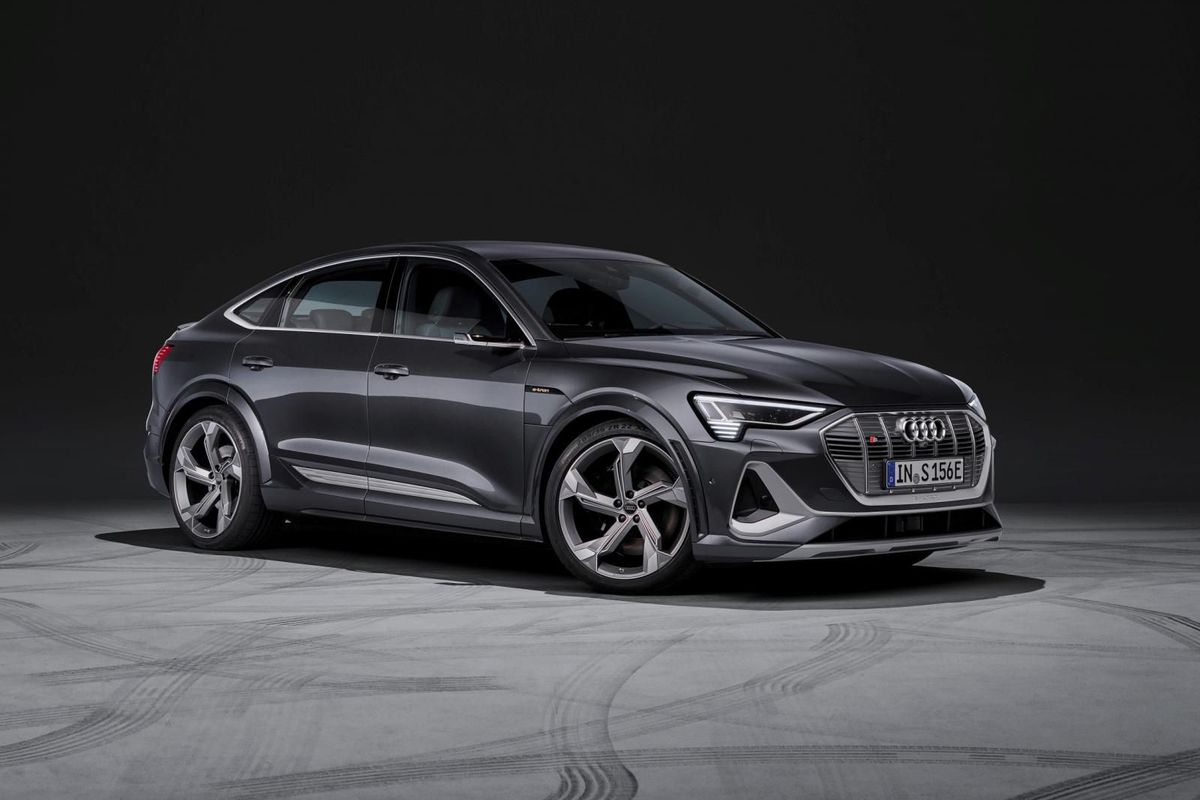
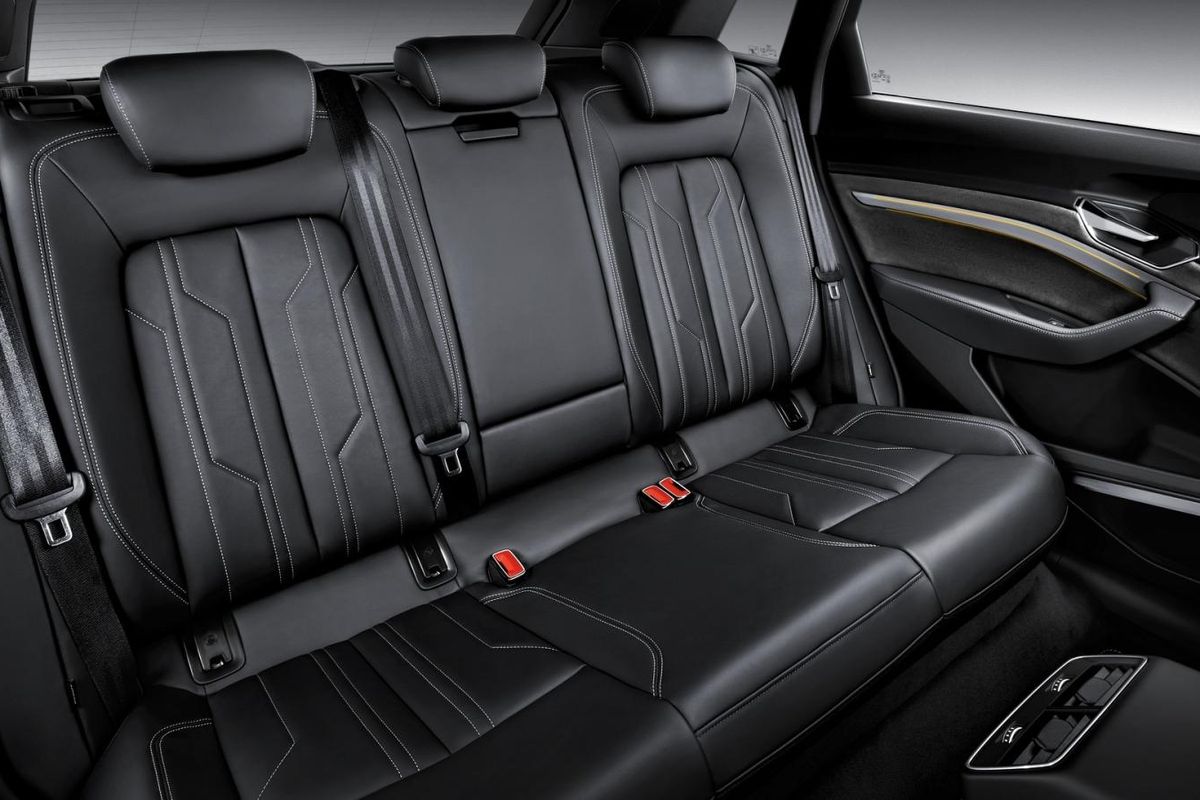
Audi South Africa wants to lead the local high-performance EV market and will offer no fewer than half a dozen e-tron models in Mzansi from early next year.
Electrical-vehicle sales and demand might be negligible in South Africa, but that is not stopping Audi. The German brand has heavily invested in electric vehicle architecture, and it boasts an impressive array of potent battery-powered vehicles.
Although local incentives and energy policies make South Africa a challenging destination market for any electrified vehicle range, Audi has committed to 2022 being its tipping-point year. Many would have expected Audi to test customer adoption trends with a single electric vehicle offering, but Audi South Africa CEO, Sascha Sauer, has announced a comprehensive e-tron range.
Audi customers who want to trend ahead of turbopetrol and diesel powertrain choices will have the option of no fewer than 6 e-tron models in early 2022. Battery options will be large capacity 95-kWh and 71-kWh packs, denoted by the familiar Audi 55 and 50 nomenclatures.
The range will start with e-tron 50 and 55, while Audi followers who prefer the sloping roofline profile will also have the option of Sportback versions.
With the e-tron 55 being good for 300 kW and the 50 producing 230 kW, performance should not disappoint. Acceleration for the 55-series e-tron is claimed at 0-100km/h in 5.7 seconds, with the 50 runs that same performance benchmark in 6.8 seconds.
Top speeds are predictably much lower than what would be the case with an equivalently powered Audi petrol or diesel vehicle. The e-tron 55 vehicles top out at 200 kph, with the 50s limited to 190 kph.
Driving estimates are always a contentious issue with any electric vehicle, but the e-tron range should see a usable driving endurance in the mid-300km range.
Those Audi customers who wish to transition from V6- and V8-engined RS models without losing performance will be served by the e-tron GT and RS.
With the e-tron GT featuring a 350-kW electric motor and being capable of 0-100 kph in 4.1 sec, RS brand fans needn’t worry. The GT RS amplifies peak power to 440 kW, creating a true electric vehicle successor to the brand’s storied RS6 vehicles.
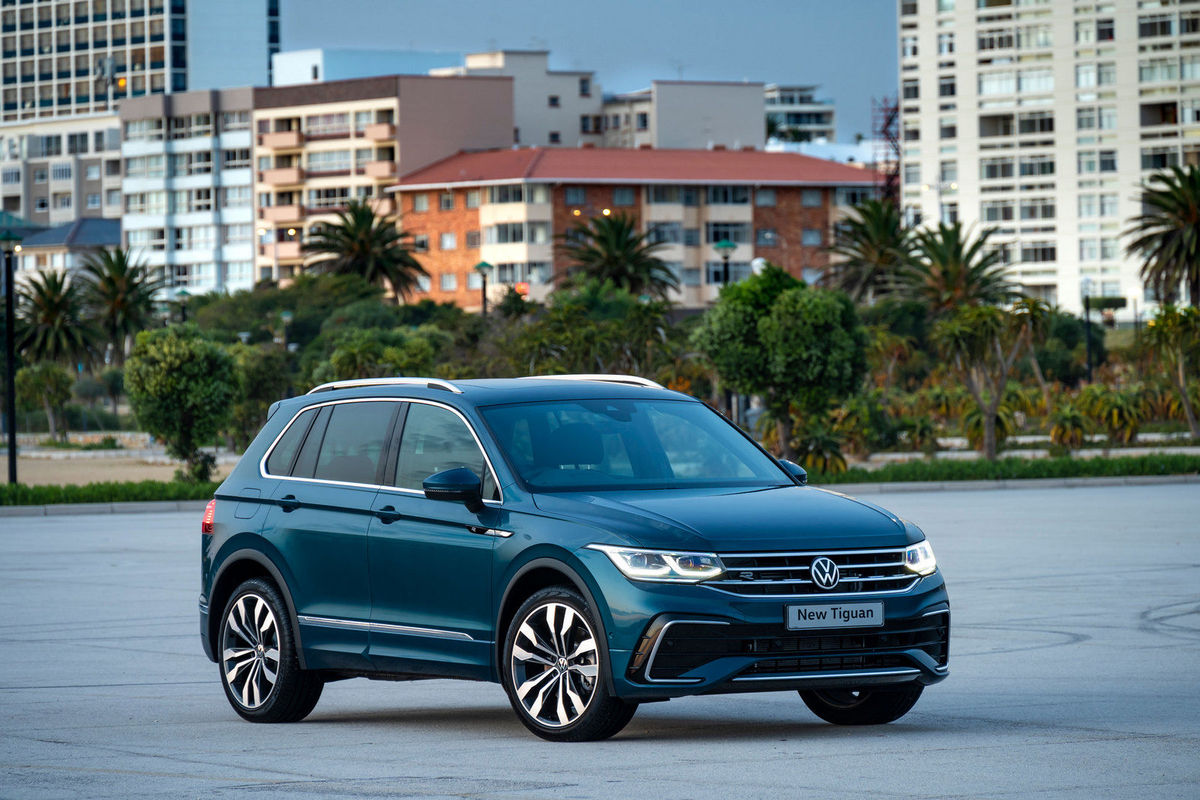
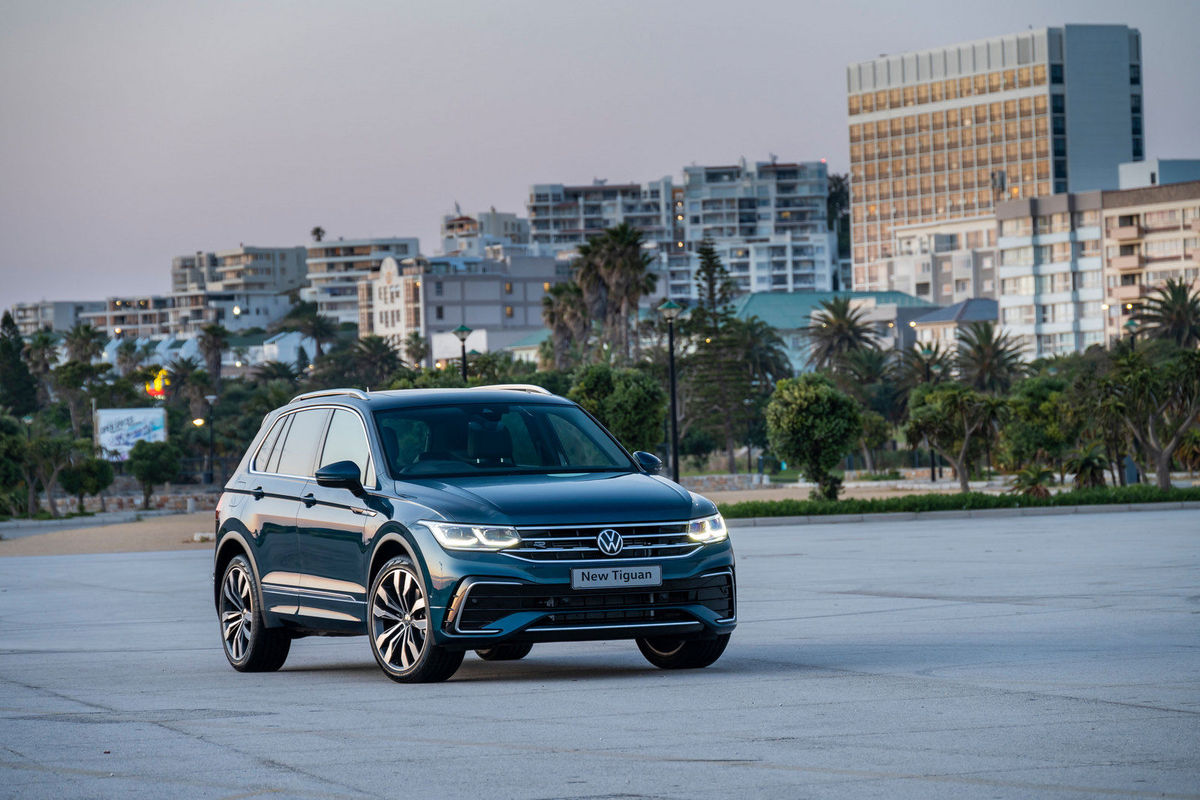
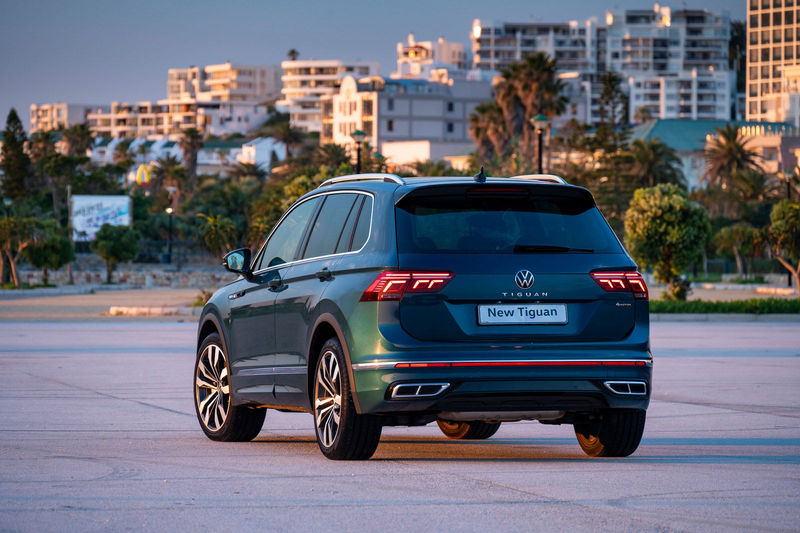
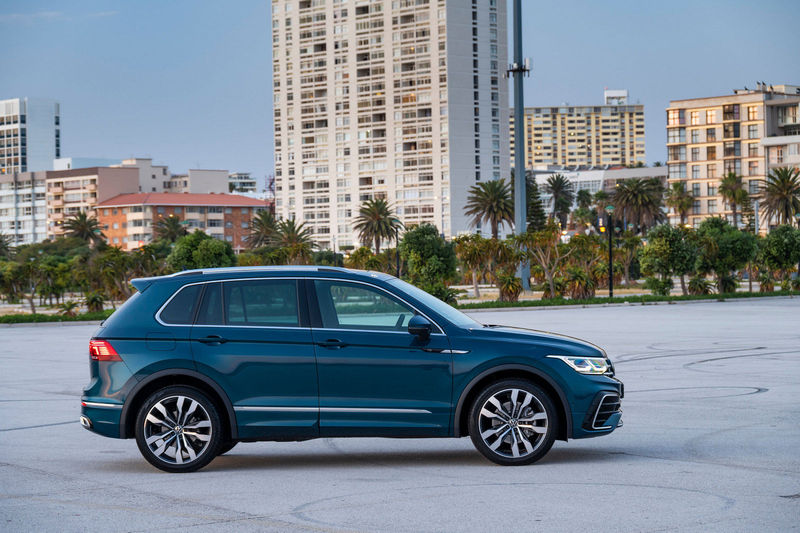
Volkswagen has applied a facelift to the Tiguan, which incorporates exterior styling tweaks, new technologies and interior updates. The names of the derivatives have also changed, but with the range’s prices trending upward, does VW’s best-selling family car (globally) still fit the bill?
What’s new on the Tiguan?
Revisions to the grille and bumpers, plus the fitment of LED lights are the major design changes to VW’s family car.
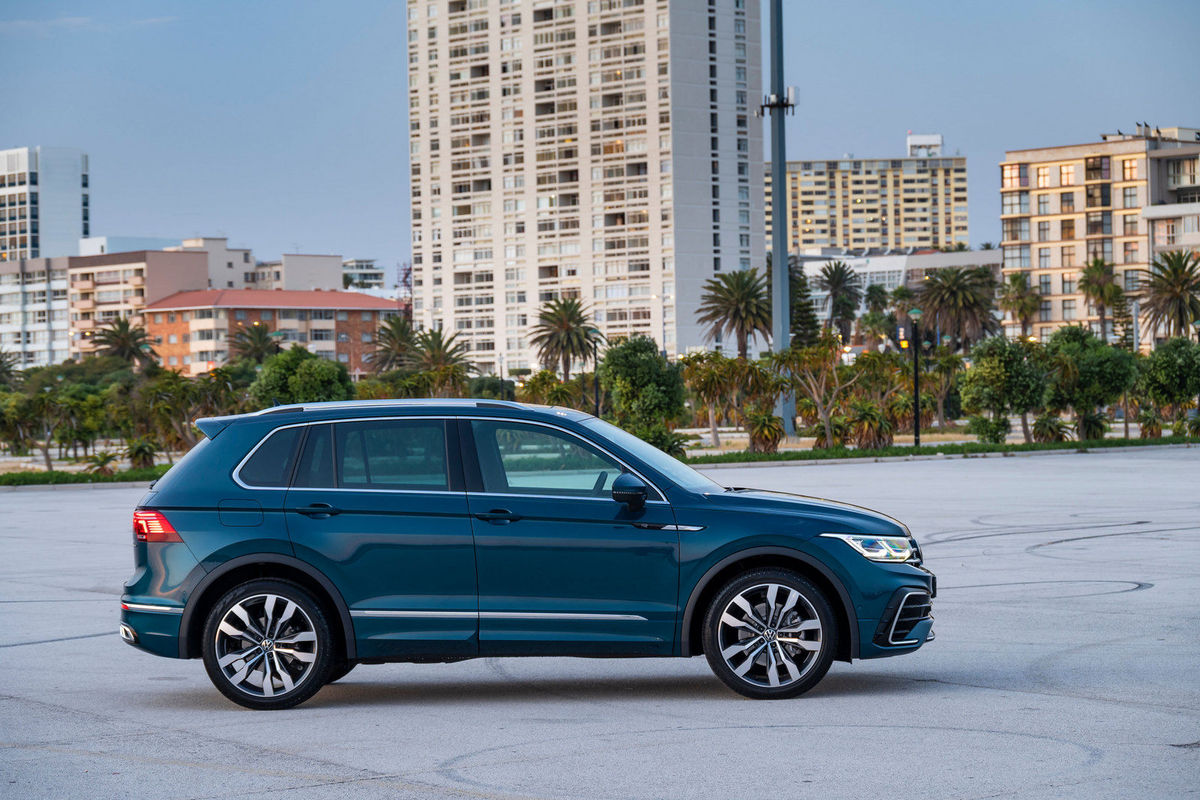
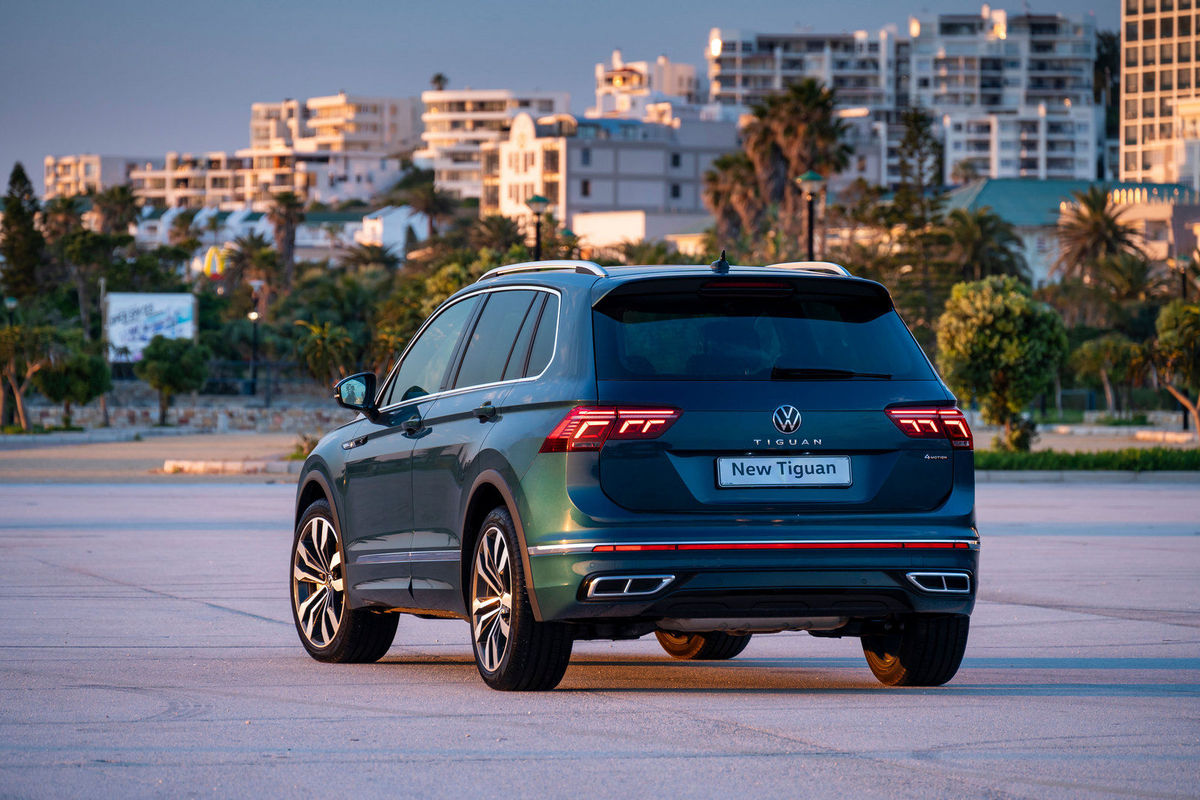
This generation of Tiguan has been extremely popular – globally and locally. The facelift incorporates modest styling updates, most of which have been applied to the front bumper area. The lower section of the bumper has brackets at either end [like in a sentence] to make it look a bit like a GTI. The grille, which was been widened and gained an extra slat, flows into the all-new IQ light system headlamps.
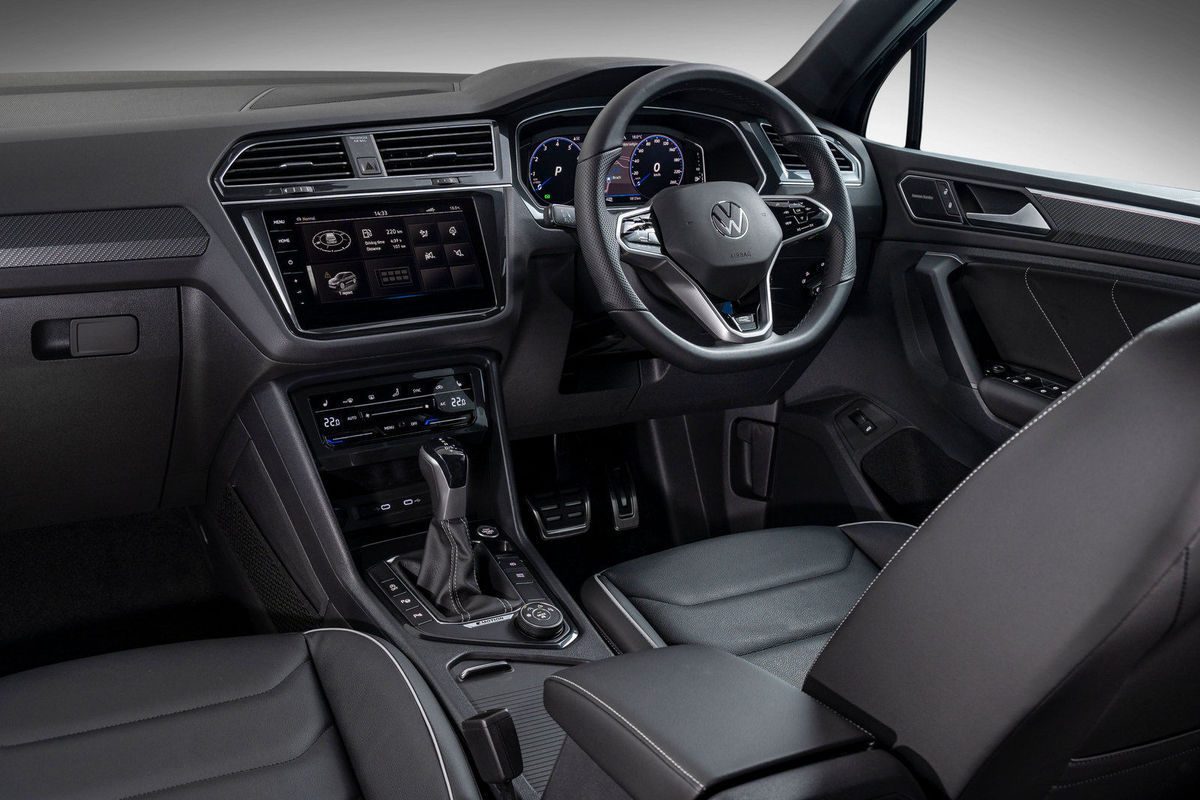
The interior is a veritable touch-fest where most onboard features are controlled by a swipe of this – or a touch of that – rather than physical buttons. Then there’s the addition of a new sound partner in Harmon Kardon and more passive safety features with lane-change assist and forward-collision alert.
The derivative names are different to those of the pre-facelift model, starting with the entry-level version, which is simply called Tiguan. The mid-spec version is the Tiguan Life and the range-topper is the Tiguan R-Line. We drove the very top-spec 2.0 TSI 4Motion R-Line for a weekend as part of the updated model’s local introduction programme.
Which engines does the Tiguan have?
The line-up consists only of petrol engines for now, but a turbodiesel will be added later in 2021.
At launch, there are only 2 engines available, but a turbodiesel unit will join the lineup later in the year. The range starts with a 1.4-litre turbopetrol motor, which produces 110 kW and 250 Nm of torque. This engine is only available in front-wheel-drive configuration and, apart from the base version, it is available in combination with either Life or R-Line trim.
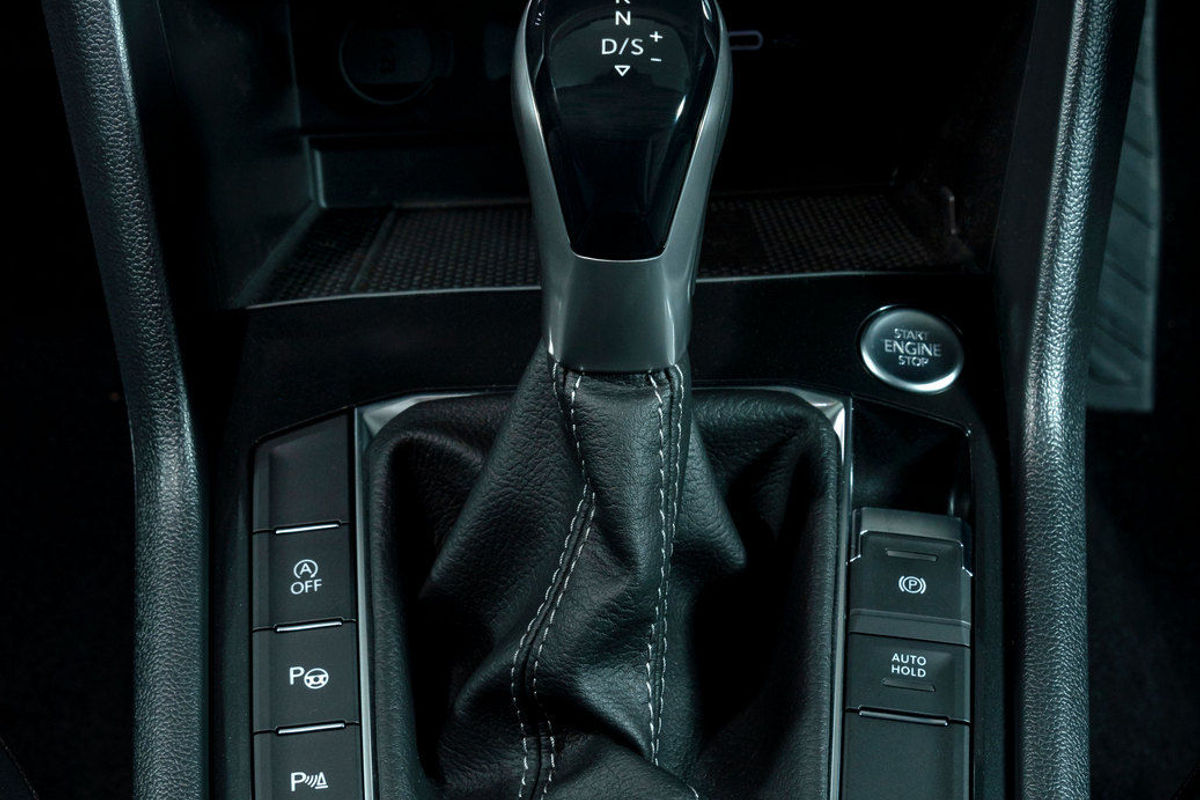
A 2.0-litre turbopetrol derivative, with peak outputs of 162 kW and 350 Nm of torque, tops the range. It’s equipped with 4Motion all-wheel-drive and is exclusively available in R-Line specification. This is the unit we drove for the weekend and while the 2.0TSI 162kW 4Motion R-Lineis rather rapid for a family car, it never really felt quite as fast as the claimed 6.5-sec 0-100 kph sprint time would suggest. It has a Sport mode (accessible through the rotary dial in the centre console) that makes the throttle more responsive and adds that familiar GTI vrr-pah! sound to every upshift from the DSG transmission.
Fuel consumption may be a factor to consider when deciding between the engines; the 2.0 litre is quite thirsty round town, but if you intend to drive on the open road often, especially with a full complement of passengers on board, the 2.0TSI should not need to work quite as hard as the 1.4-litre motor (at least, in theory), so the powerplants’ real-world consumption figures should be closely matched. After clocking up 400 km with the test unit, we saw an indicated consumption of 9.6 L/100 km, but if efficiency is a major concern, it may be best to wait for the arrival of a turbodiesel derivative later this year.
What’s the Tiguan like to drive?
20-inch wheels are an optional extra on the R-Line model.
Considering that there haven’t been discernible changes to the MQB platform, which underpins the Tiguan, we weren’t expecting any major changes to the Volkswagen family car’s driving dynamics.
The optional 20-inch wheels (as fitted to the 2.0TSI 162kW 4Motion R-Line test unit we drove) certainly ramp up the Tiguan’s kerb presence, but they also exacerbate the family car’s firm ride quality! The MQB platform underpins several VW Group products and although it benefits the models’ ride refinement on tarred roads, it doesn’t fare particularly well when traversing potholed- or washboard gravel surfaces. Granted, the Tiguan’s on-road demeanour is not awful when you drive the family car on dirt roads, but the going is noticeably shakier than in some of the Volkswagen’s newer competitors.
Still, the Tiguan’s suspension setup is nicely suited to travelling on freeways and country roads where the firmness is put to good use to aid the vehicle’s body control and instil driver confidence through sure-footed road-holding. The driver’s seat offers good adjustability and provides impressive vision out of the Wolfsburg-based brand’s newcomer.
The 7-speed dual-clutch automatic transmission shifts even more smoothly than before; in the past, the ‘box could be caught out because it tended to shift up to the highest gear as quickly as possible (arguably, too soon). Now the ‘box holds onto gears for slightly longer, which means you don’t have that lull (while the software actuates multiple gear changes) before notable forward progress occurs.
The new IQ lighting package, which was also optionally fitted to the test unit, proved impressive. The Matrix LED headlamps light up the road, well, brilliantly – their main beams virtually mimic sunlight! The headlamps also come with an auto-dip function, which creates a dark patch for oncoming drivers so that they won’t be blinded by the intense light discharge, but perhaps the Matrix LEDs are a little too effective for their own good – on multiple occasions, oncoming vehicles’ lights were flashed at us even though those vehicles’ drivers weren’t supposed to have the Tiguan’s beams directly in their eyes.
What’s it like inside?
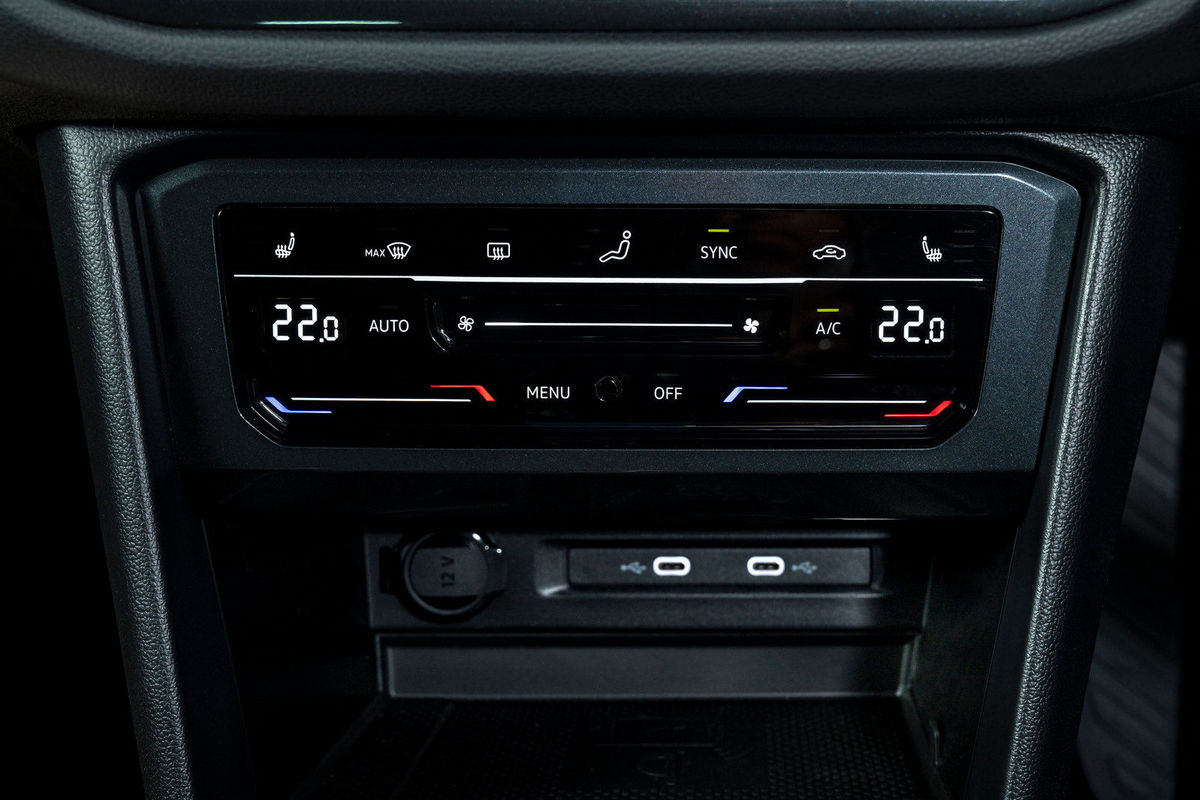
The Tiguan’s climate control buttons are all touch-sensitive now.
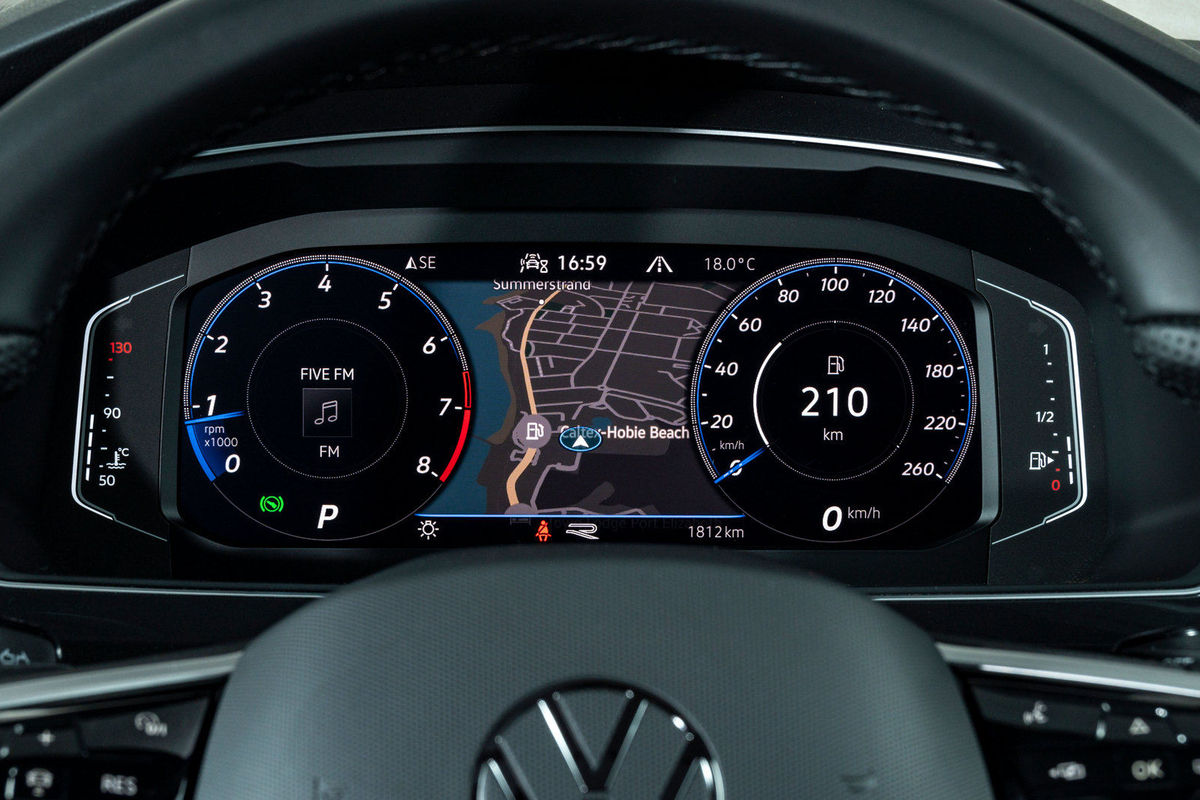
The Tiguan’s interior has been thoroughly modernised – it’s now a much more digitised affair. The toggles for the climate control console are touch-sensitive… or you can swipe your finger across the blue or red sections to make larger temperature adjustments. The instrument cluster, meanwhile, has a newer digital design that’s more colourful; it brings the cluster to life and is one of the best in the segment!
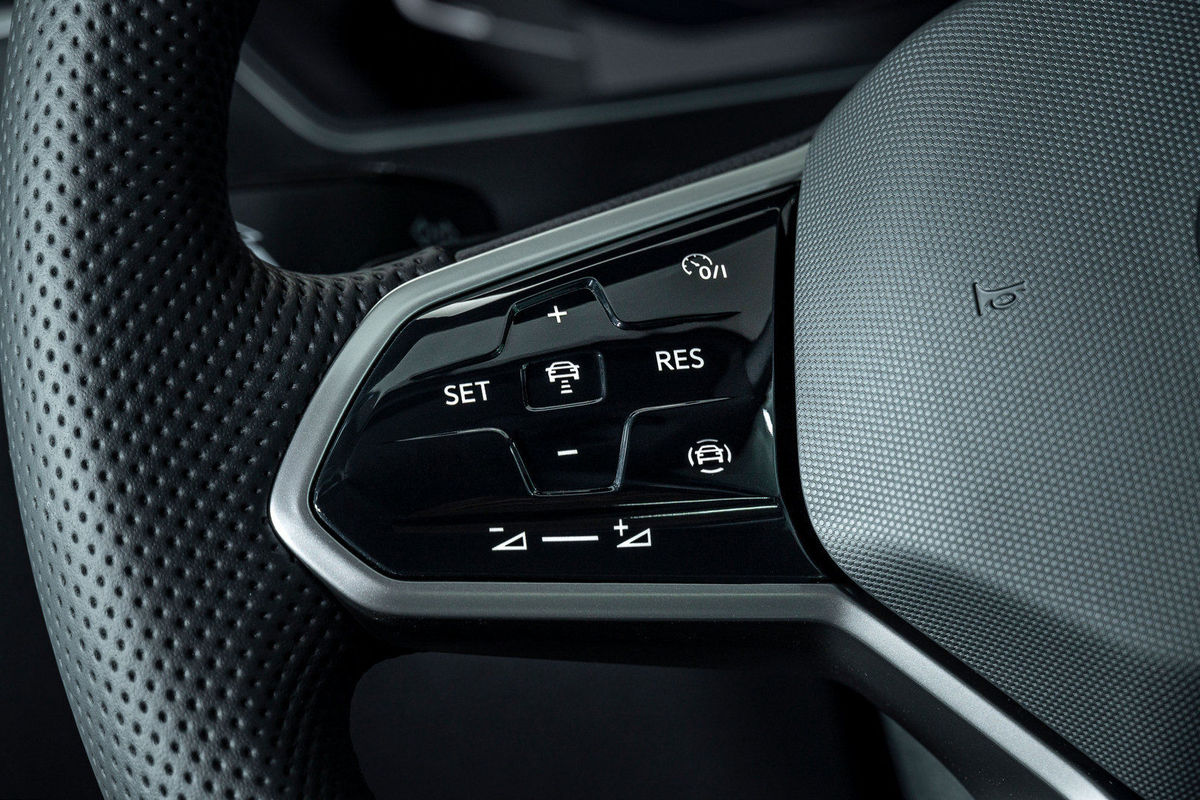
The steering wheel buttons are all touch-sensitive too and covered in a glossy Piano Black finish. These look great, but we found it a little difficult to make precise adjustments to the volume and cruise control settings; conventional physical buttons (aided by built-in resistance) would have worked just as well, if not better.
What’s more, the optional Discover Pro infotainment system comes with App-Connect, which makes activating Apple CarPlay and Android Auto as simple as initiating a wireless connection. This, in combination with the wireless charging pad located directly underneath the climate control console, represents a very user-friendly connectivity setup.
Space-wise, the Tiguan offers plenty of room for aft passengers and the ability to recline the rear seatbacks for more comfort is a boon. The claimed load-bay capacity is 520 litres and while the hold is quite deep, it isn’t as wide at the entry point as some of its rivals such as the Peugeot 3008 or Subaru Forester. With the rear seats folded down, the Volkswagen offers 1 655 litres of utility space.
Pricing and after-sales support
Prices continue to rise rapidly in the family car segment. The Tiguan range starts at R521 000 and tops off at R710 000. All derivatives are sold with a 3-year/120 000 km warranty and a 5-year/90 000 km service plan. For full specs and pricing click here.
Summary
Will the increase in pricing still make the Tiguan a popular choice in the family SUV segment?
Unless you are eagerly awaiting the arrival of the Tiguan R, there is little to choose between the driving experiences offered by pre-facelift and updated Tiguan derivatives. The Volkswagen remains an accomplished premium product within the family car/compact SUV segment, which is why it commands a premium over its rivals. The engine lineup remains good with a turbodiesel option in the pipeline.
The technology- and interior updates modernise the cabin and make it more upmarket, even if some of the touch-sensitive buttons are, paradoxically, slightly more difficult to use than conventional buttons.
There’s no doubt that buyers will want many of the features on the Tiguan’s options list – each of which pushes up the derivatives’ asking prices, of course. Given that these premium family cars are becoming rather expensive, it’ll be interesting to see if buyers will start looking to the upper end of the compact family car segment… or push on to the more 4×4-capable bakkie-based Adventure SUVs.
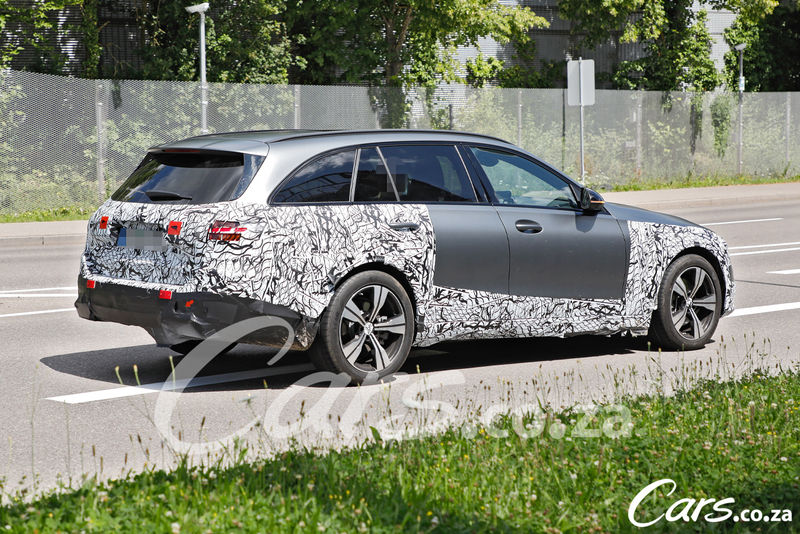
Spy Shots: 2022 Mercedes-Benz C-Class All-Terrain
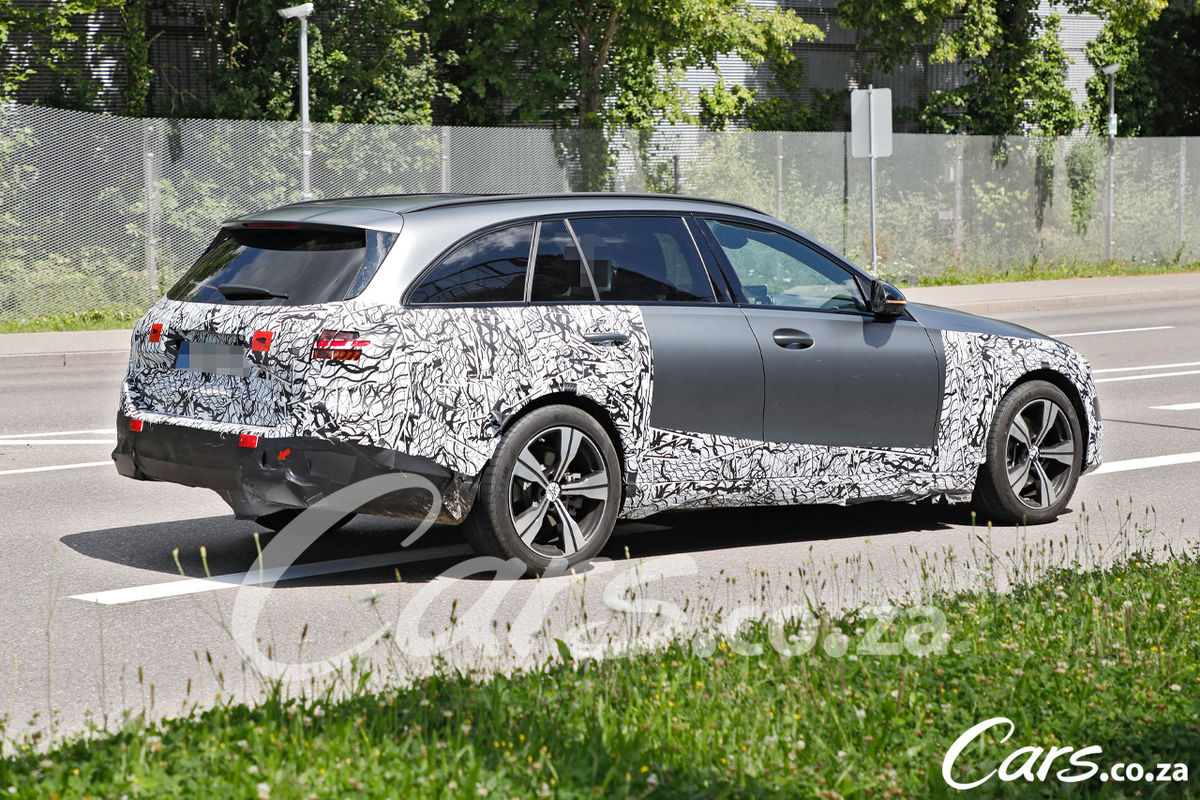
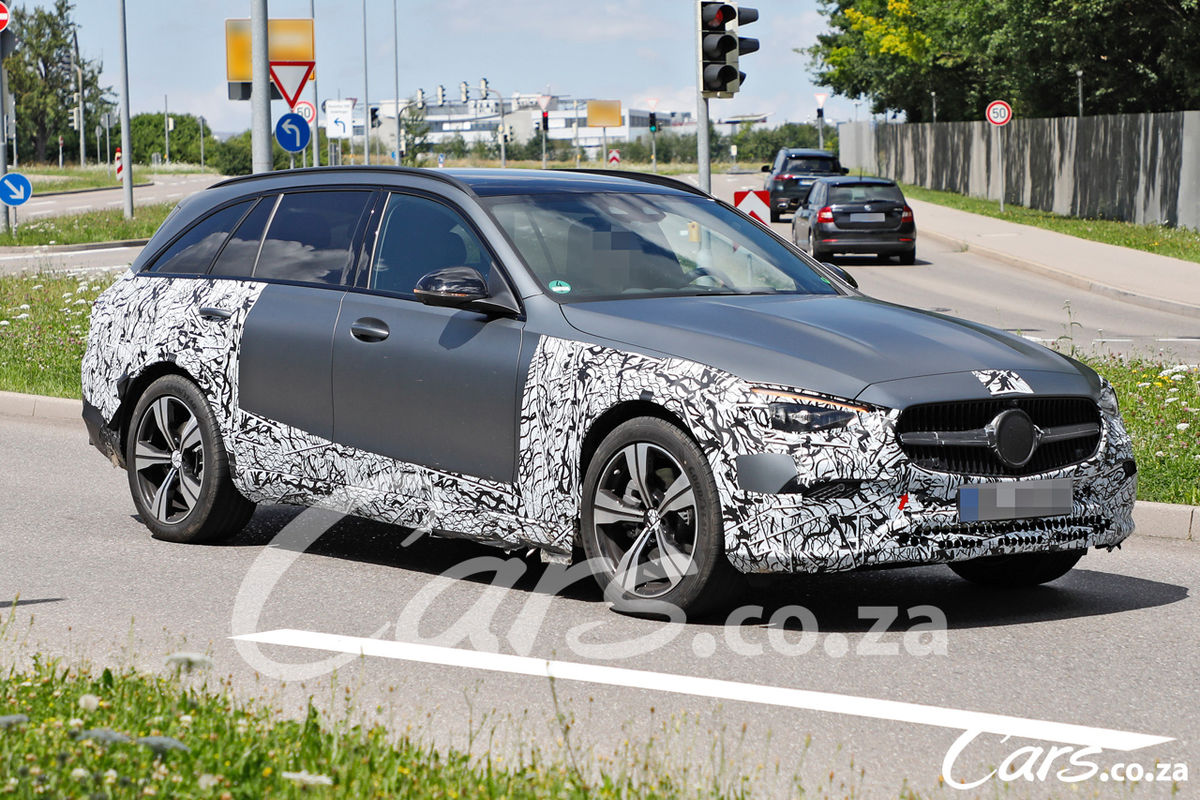
Spy shots of a very interesting-looking Mercedes-Benz C-Class were released this week. Is Mercedes-Benz targeting the Subaru Outback and Volvo V60 Cross Country with a C-Class All-Terrain?
Picture credit: S. Baldauf/SB-Medien. We have paid for these photos and at the photographer’s request, have watermarked them.
The Mercedes-Benz C-Class All-Terrain looks set to enter production if these spy shots are anything to go by. The All-Terrain is essentially an estate with a raised ground clearance, some plastic cladding to protect the bodywork, and an offroad theme in the cabin.
Mercedes-Benz already offers the E-Class All-Terrain for select markets in Europe and North America, but given its premium positioning, its only real opposition are the Audi A6 AllRoad and the Volvo V90 Cross Country. The latter is available in South Africa and is a very stylish yet capable alternative to the SUV range.
The Mercedes-Benz C-Class All-Terrain is expected to be revealed at the Munich Auto Show, which takes place in early September 2021. As you can see, the vehicle is still camouflaged, but we’ve been tracking its gestation and this is the first time we’re actually seeing production elements.
Expect 4Matic all-wheel drive as standard, with a dedicated offroad mode which will cleverly send power to the axle which needs it the most. It’ll probably feature hill-descent control too and the additional ride height and specific bumpers will increase the approach/departure angles, but don’t expect offroad ability like a Mercedes-Benz G-Class
The new range of Mercedes-Benz C-Class engines all feature electrification and while just the C200 and C220d have been confirmed for the SA market, the overseas engine portfolio is substantial. Every engine features an integrated starter generator and 48Volt tech.
No more 6-cylinder or 8-cylinder engines and the manual gearbox option for some markets has been removed. Every Mercedes-Benz C-Class will now feature a 9-speed automatic. We reckon the punchiness and economy of a diesel engine would be a brilliant setup.
While the Mercedes-Benz C-Class All-Terrain is unlikely to sell in great numbers in comparison to its comprehensive SUV range, it will offer a distinct alternative for a customer who loves the great outdoors and doesn’t want a crossover/SUV. With the C-Class All-Terrain, Mercedes-Benz forges ahead with its strategy of offering a product in every conceivable category.
We’ll see the covers come off in just under a month’s time.
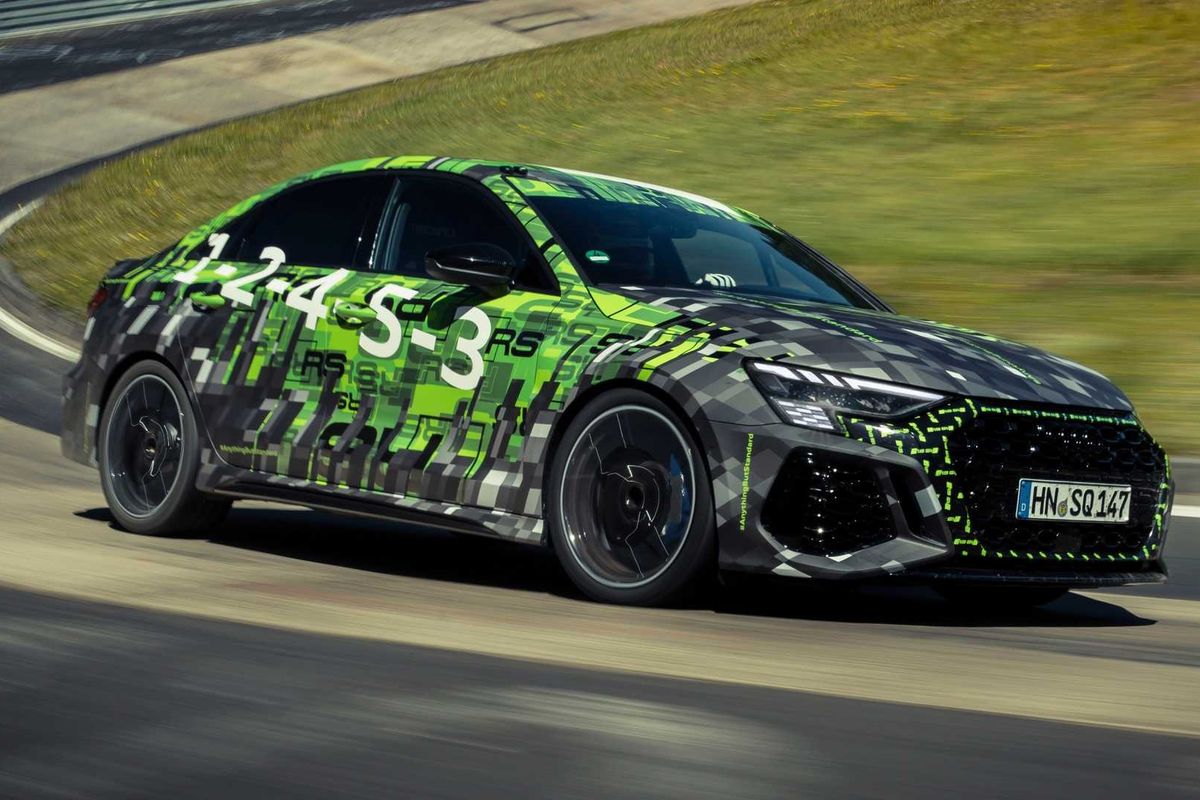
The all-new Audi RS3 Sedan has only just been revealed, but it’s already making its intentions clear. It’s not here to take part, it’s here to take over, and it’s just set the record for compact cars on the Nurburgring.
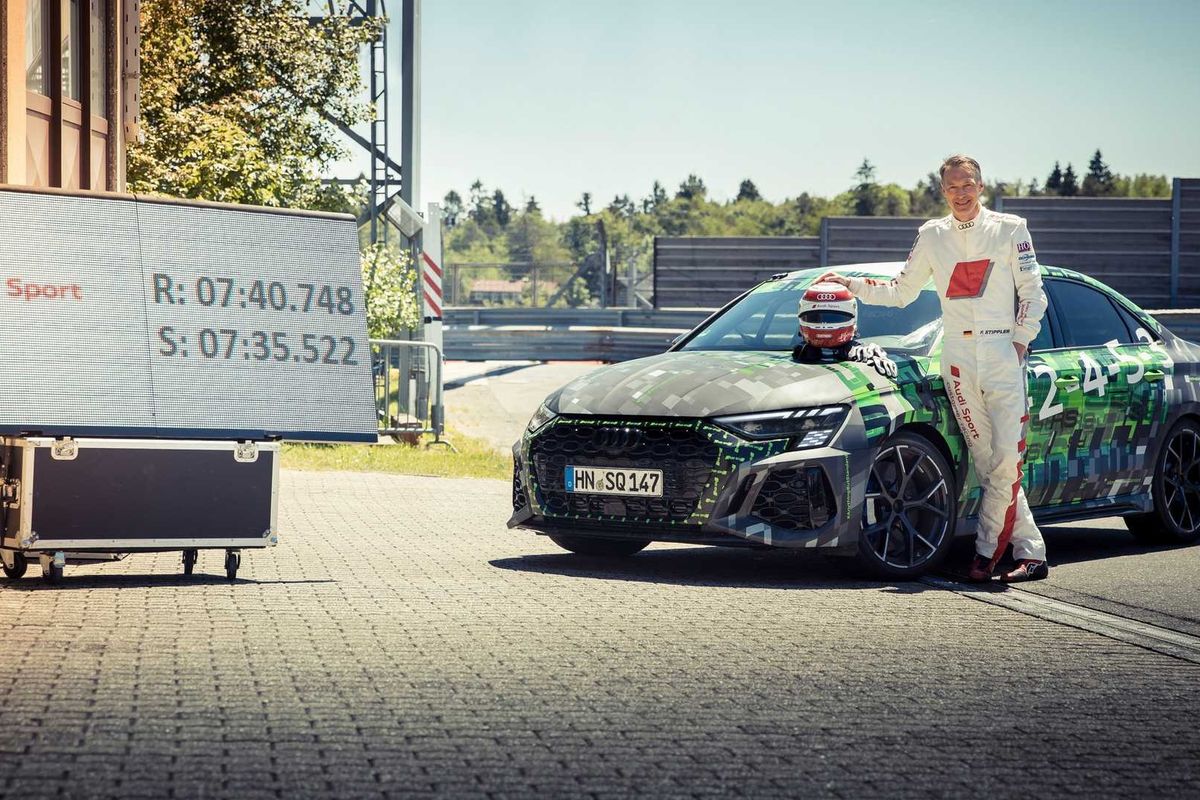
The all-new Audi RS3 has set the record for compact vehicles at the Nurburgring, with a time of 7 minutes and 40.748 seconds. This time deposes the current record holder, the wild Renault Megane RS Trophy-R (7 minutes and 45.389 seconds) and is comfortably ahead of its arch-enemy, the Mercedes-AMG A45 S (7 minutes and 48.80 seconds).
The vehicle you see here and the below video is still in the pre-production camouflage as the record-breaking run was completed before the vehicle’s official reveal.
Behind the wheel is Audi Sport racing and development driver Frank Stippler. The Audi RS3 sedan was chosen over the Sportback as it features better aerodynamic properties. The Audi RS3 also wore the optional Pirelli P Zero Trofeo R semi-slicks tyres.
As a reminder, the 2.5-litre 5-cylinder petrol engine has been retained, but some clever upgrades have allowed for more torque. Figures of 294 kW and 500 Nm are on offer, with the 2022 Audi RS3 being said to sprint to 100 kph in a claimed 3.8 seconds and onto an optional top speed of 290 kph.
The all-new Audi RS3 will be arriving in South Africa during the 2nd half of 2022.
Take a look at how new car sales performed in South Africa during July 2021.
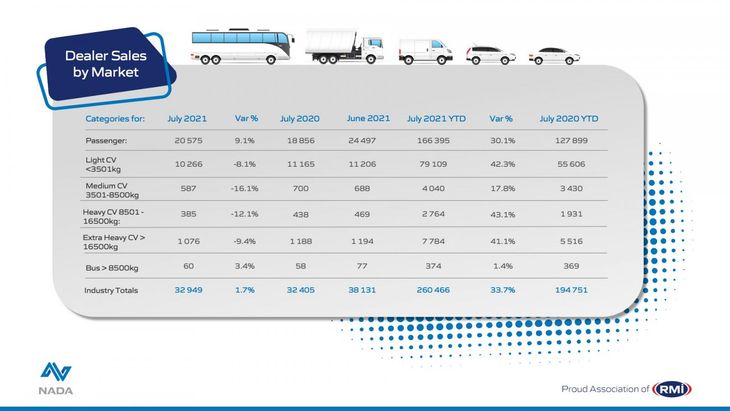
There were a number of momentous events during July that had an effect on new car sales in South Africa. Disruptions due to unrest in KZN and parts of Gauteng, a shift to level 4 lockdown and the cyber attack on the local ports all proved to be the perfect storm for a horrid month of sales. The port closures heavily affected exports and imports resulting in a 33.1% drop in vehicle exports for the month.
There was however a small positive in terms of sales compared with July 2020 (1.7%). Passenger car sales contributed the most towards that number, while LCVs and bakkies saw an 8.1% drop vs the same period last year.
New Car Sales in SA July 2021
Aggregate new vehicle sales of 32 949 units up by 1.7% (+544 units) compared to the 32 405 units sold in July 2020.
Passenger car sales of 20 575 units up by 9.1% (+1 719 units) compared to the 18 856 units sold in July 2020.
Light Commercial Vehicle (LCV) sales of 10 266 units down by 8.1% (-899 units) compared to the 11 165 units sold in July 2020.
Export sales of 16 931 units down by 33.1% (-7 381 units) compared to the 25 312 units expired in July 2020.
Top 10 Best Selling Car Brands in South Africa for July 2021
Toyota – 8 320 units
Volkswagen – 5 078 units
Hyundai – 2 698 units
Ford – 2 360
Nissan – 2 354 units
Suzuki – 1 532 units
Haval – 1 525 units
Renault – 1 522 units
Kia – 1 501 units
Isuzu – 1 193 units
Sales Outlook
“South Africans once again showed their goodwill and social solidarity during these challenging times. With the calm returning to KwaZulu-Natal and Gauteng, the country moving to adjusted alert level 3 lockdown restrictions and the accelerated roll out of the vaccinations, the gradual recovery in the new vehicle market is anticipated to continue for the remainder of the year”, affirmed naamsa CEO Mikel Mabasa.
However, Mark Dommisse of NADA (National Automotive Dealers Association) is not so confident of an immediate recovery – “The effect is not limited to July and will in all likelihood have an ongoing negative effect for several months to come. Dealers face stock shortages while local manufacturers battle to keep production going due to disruptions in the component supply chain caused by global semi-conductor shortages and the cyber-attack on the port operating systems.”
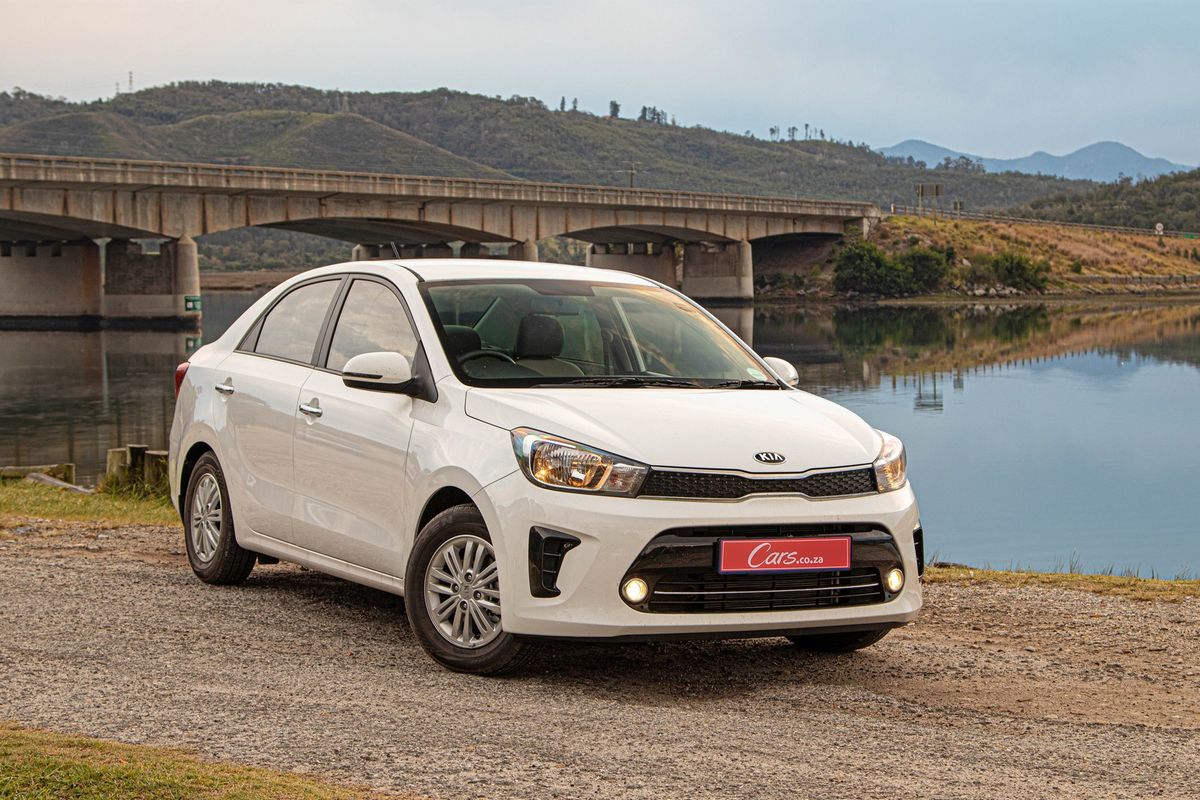
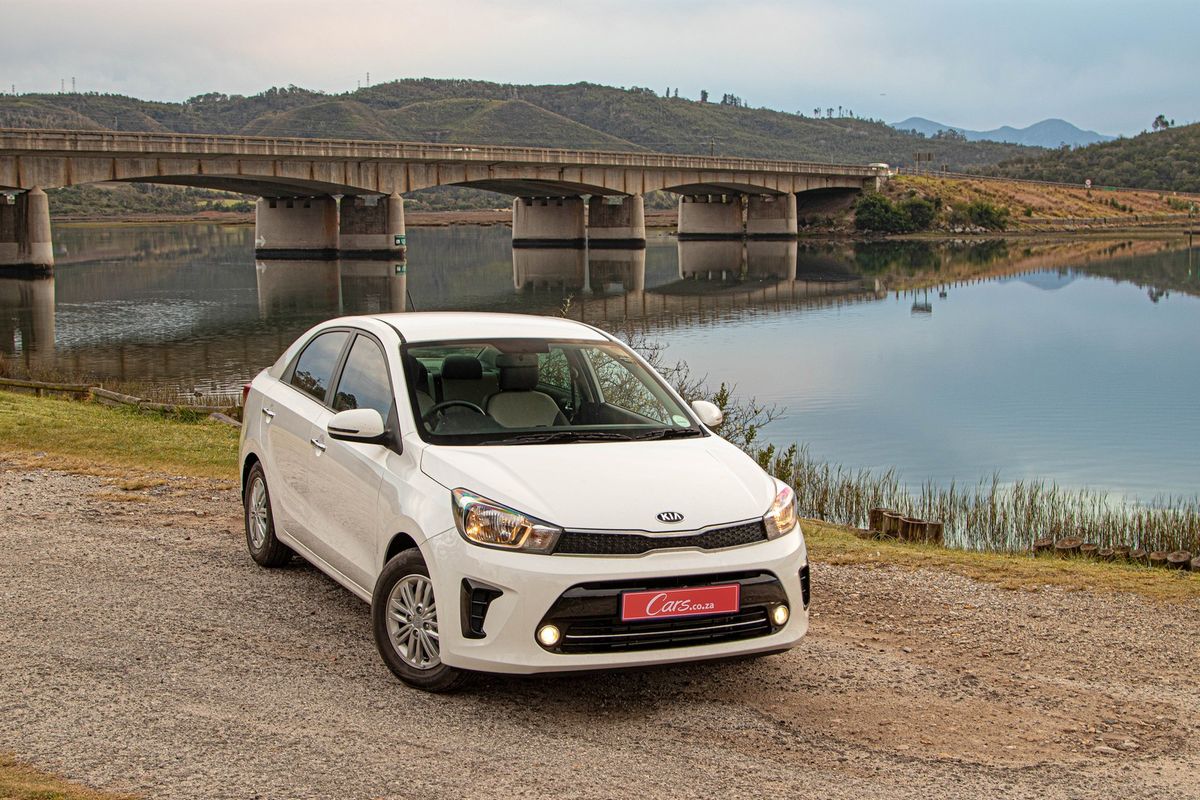
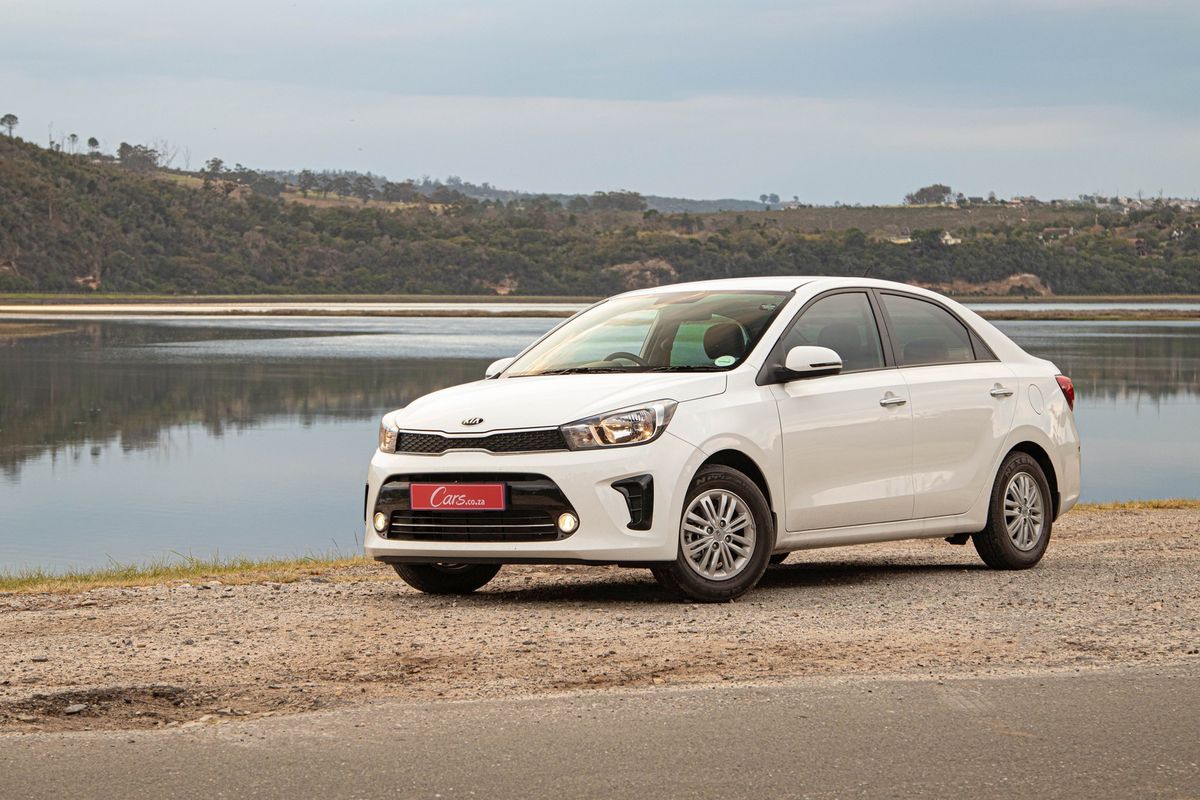
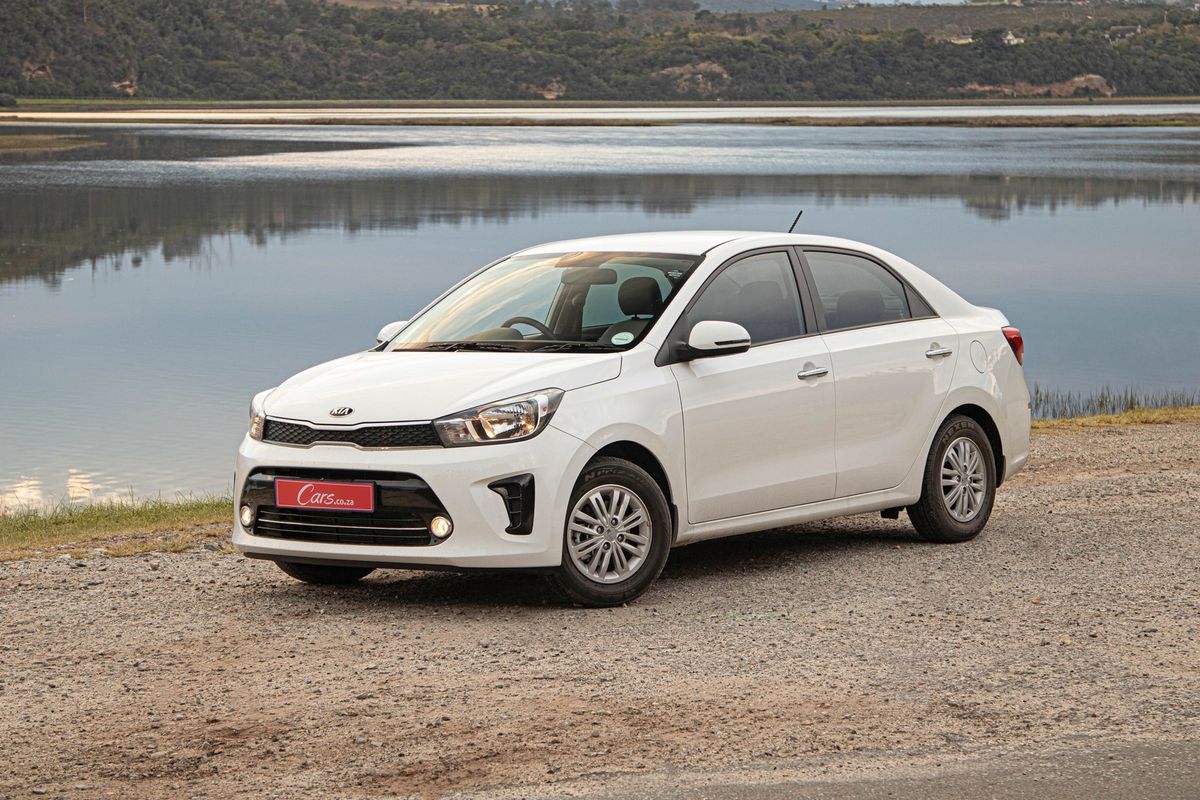
Kia Pegas (2021) Review
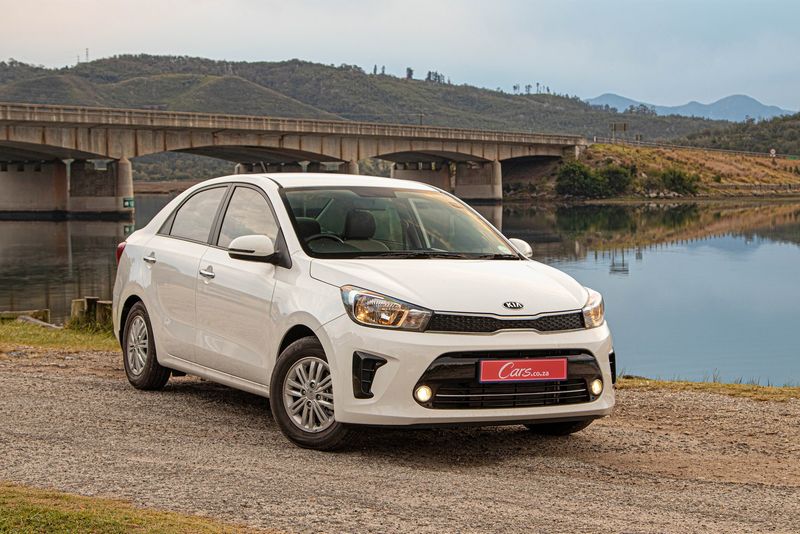
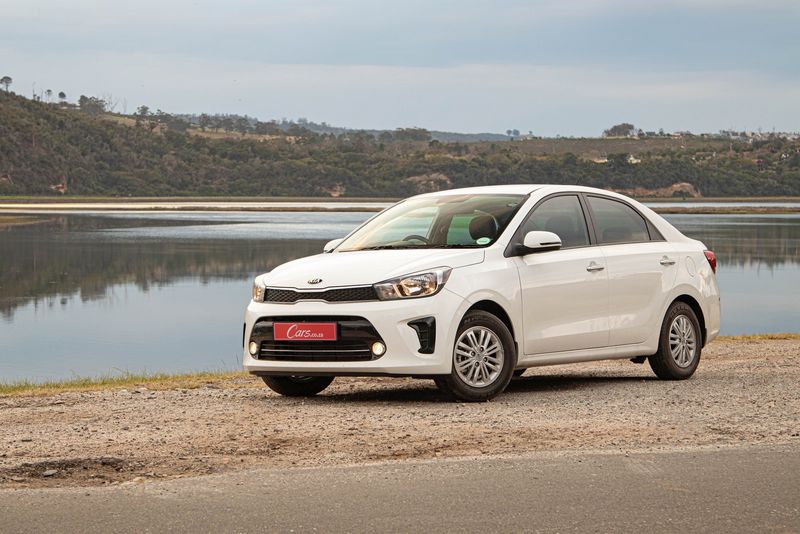
It would appear the South African compact sedan market is not in terminal decline after all… Kia has launched the Pegas – a sensibly priced small sedan amid a swarm of budget crossovers.
We like: Value for money, ride comfort, generous boot, generous spec, comprehensive after-sales support.
We don’t like: Lack of sound insulation at triple-digit speeds & mildly irritating speed alert, but that’s about it.
Fast Facts:
Model Tested: Kia Pegas 1.4 EX
List Price: R236 995
Engine: 1.4-litre 4-cylinder petrol
Power/Torque: 69 kW/132 Nm
Transmission: 5-speed manual gearbox
Fuel efficiency: 5.7 L/100 km (claimed)
Performance: NA
Load capacity: 475 Litres
What is the Kia Pegas?
The arrival of the Kia Pegas was rather unexpected, but it has livened up a quiet segment of the SA compact-car market.
These days, SUVs (or at least SUV-inspired products) make up the bulk of new-model introductions, so when a pocket-friendly compact sedan comes to market, we tend to sit up and take notice, because it is such an anomaly.
In South Africa, there’s still some appetite for sedans in the passenger car market: in 2020, sedans accounted for just under 14%, SUVs and crossovers took up around 34%, with hatchbacks being the most popular choice at 46%.
Most car brands offer compact family cars these days and they range from budget to upmarket offerings. Kia is no outlier – the adorable Sonet and stylish Seltos small crossovers cover most bases. There’s also the Sportage and Sorento on offer, making that 4 “SUVs” from the Korean manufacturer. Sedans? Well, it’s just the one you see here.
Thanks to the proliferation of e-hailing companies, the general public assumes most compact sedans are used by Uber, DiDi, Bolt operators. It’s easy to understand why – those sedans offer generous rear legroom and boot space.
Kia SA challenges that assumption, however; it says the Pegas is more than just an “Ubermobile”. We wanted to find out whether there was any merit to Kia’s claim, so it would have been pointless to conduct a road test in and around Cape Town. Therefore, we packed our things into the Pegas and headed to the Garden Route for a family getaway.
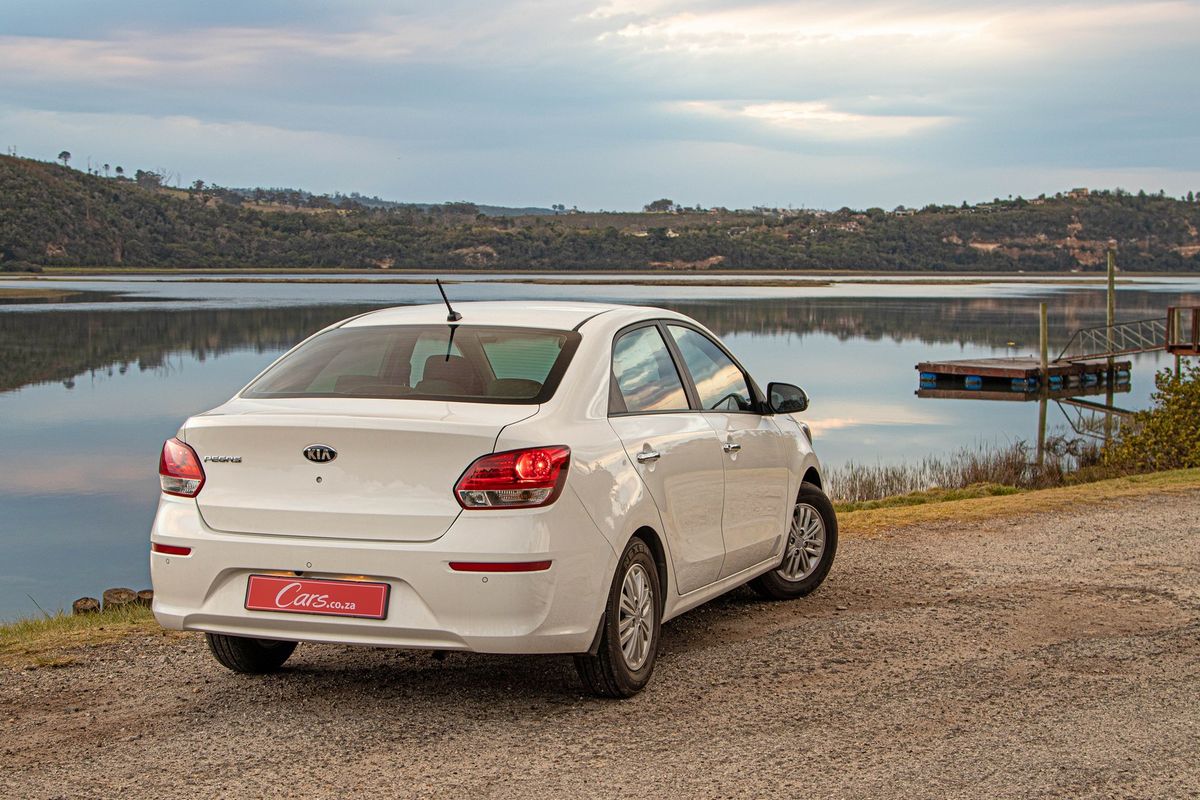
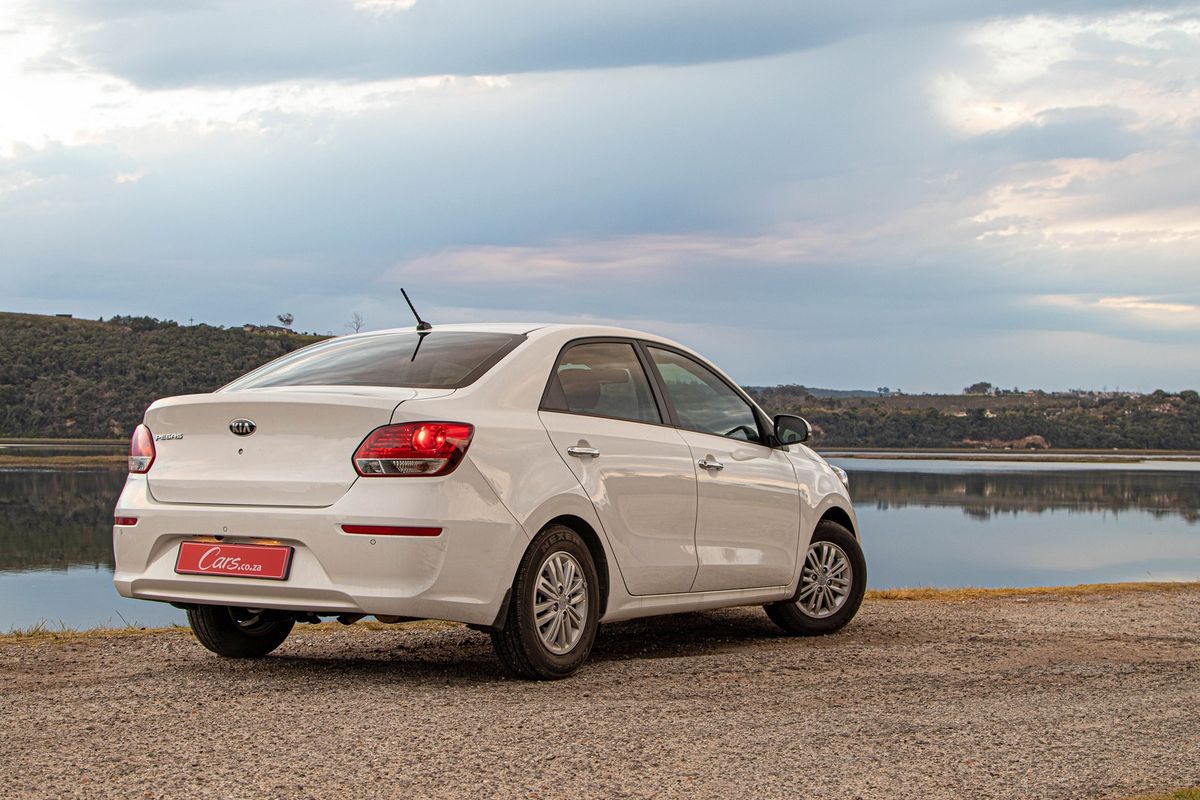
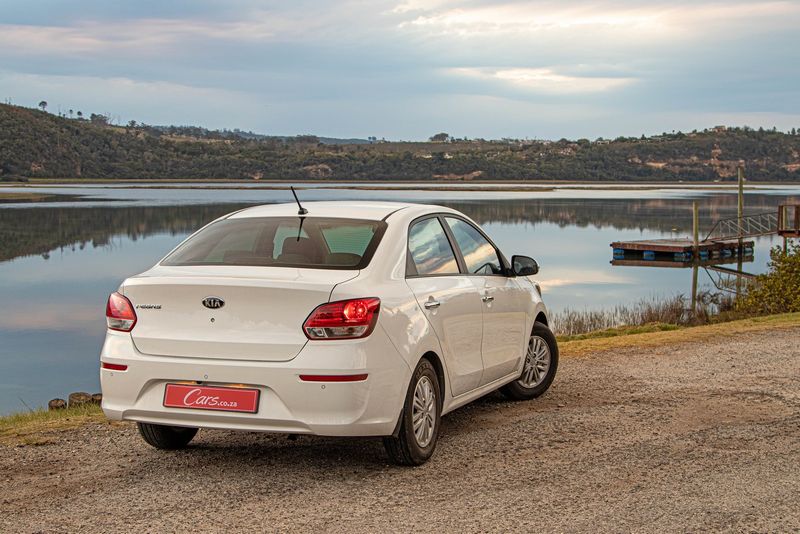
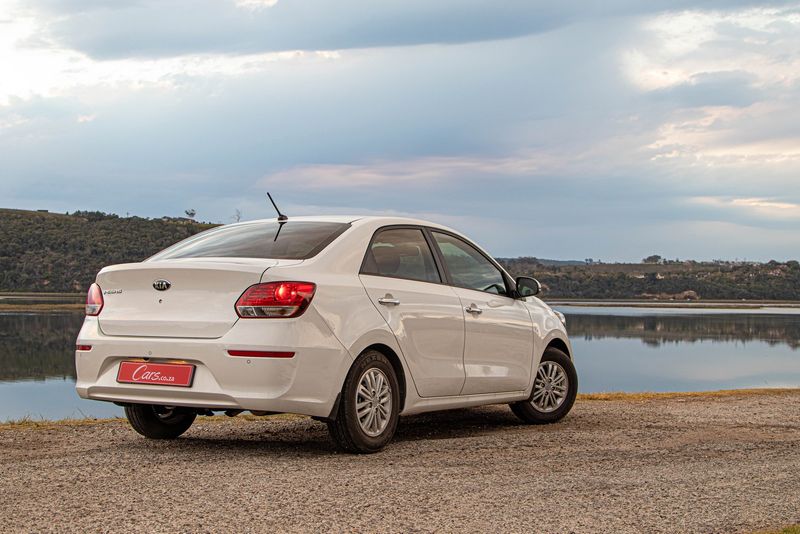
The Pegas’ rear styling looks rather generic in combination with the white paint finish, but it’s not an unattractive sedan.
Which models are the Kia Pegas’ rivals?
Among the compact sedans that are still available from new, the 4-door Volkswagen Polo is the main protagonist. It may not have been updated as extensively as its hatchback sibling, but it still commands a notable share of the market. Rand for Rand, the Polo lacks a service plan and the Pegas’ standard feature list is far more extensive.
Suzuki offers exceptional value in the budget-car segment, but the Dzire is, comparatively, not particularly spacious. Not only is it a fractionally smaller car than the Pegas, but as good as its warranty is, the Kia’s is more extensive.
Other sedans worth considering are the Honda Amaze and, if your budget can stretch a bit further, the Suzuki Ciaz and Toyota Corolla Quest.
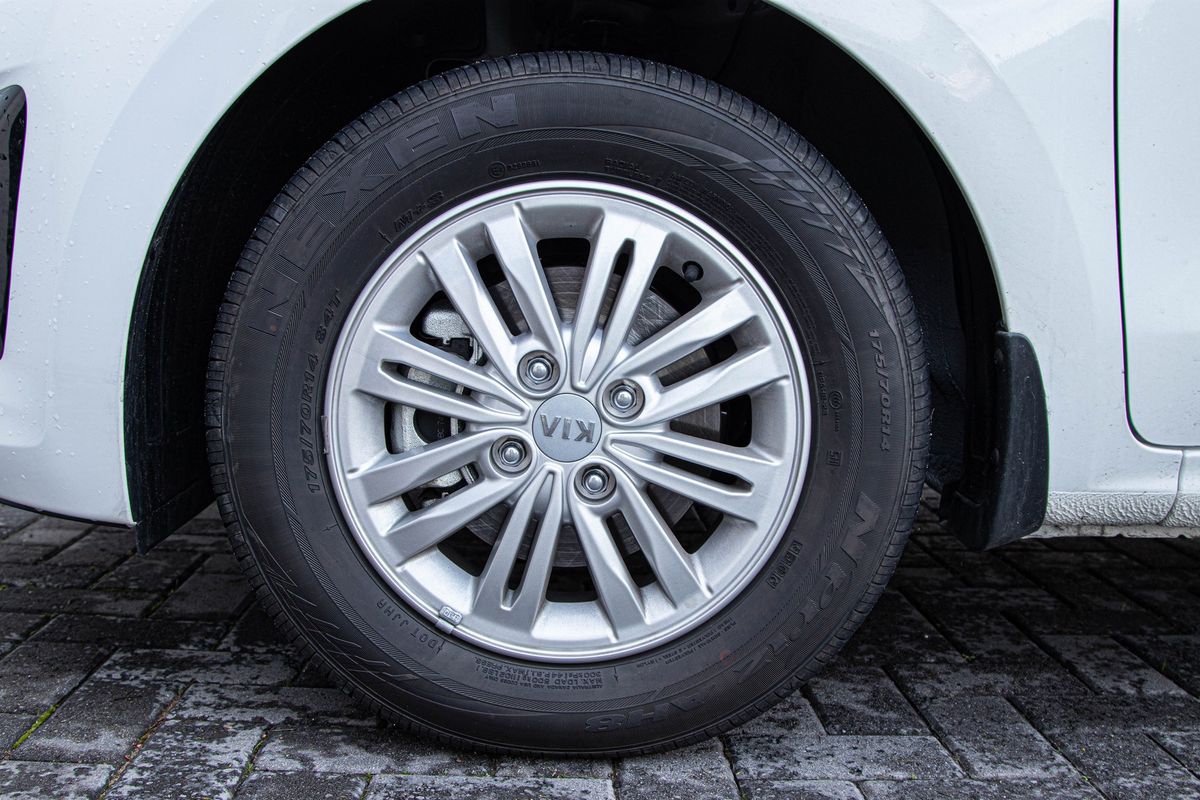
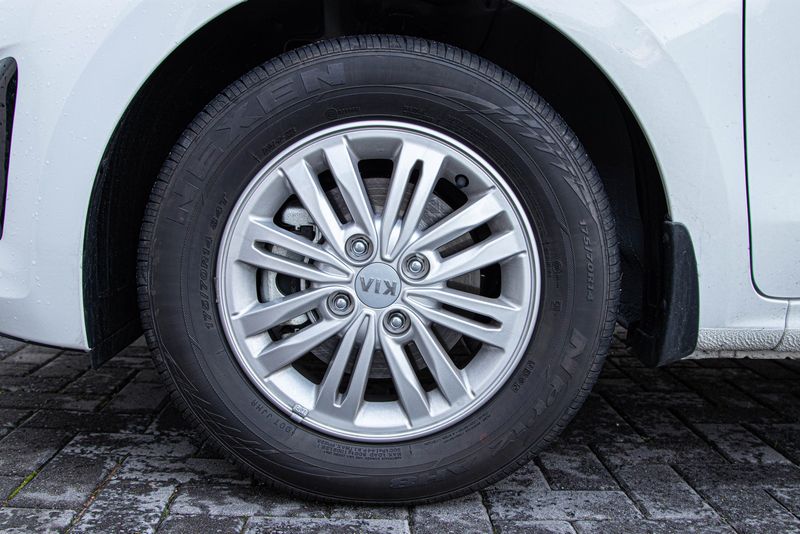
The standard 14-inch alloys wrapped in high-sidewall tyres contribute to the Pegas’ comfortable ride quality.
The Pegas is positioned as a value-for-money compact sedan, so our driving-experience assessment focused mainly on refinement. We weren’t looking for corner-carving ability and engaging dynamics whatsoever, but paid close attention to the newcomer’s “ease of use” and comfort when driven in town and a longer, open-road trip.
Under the Kia’s bonnet sits a 1.4-litre 4-cylinder petrol engine that produces 69 kW and 132 Nm; power is directed to the front wheels via either a 5-speed manual gearbox or a 4-speed automatic transmission. We had the manual-equipped EX derivative on test and despite progress in the quality of automatic transmissions, we feel there’s still a place for an easy-to-use manual ‘box. The Pegas’ gearshift action is light and the clutch pedal has minimal travel.
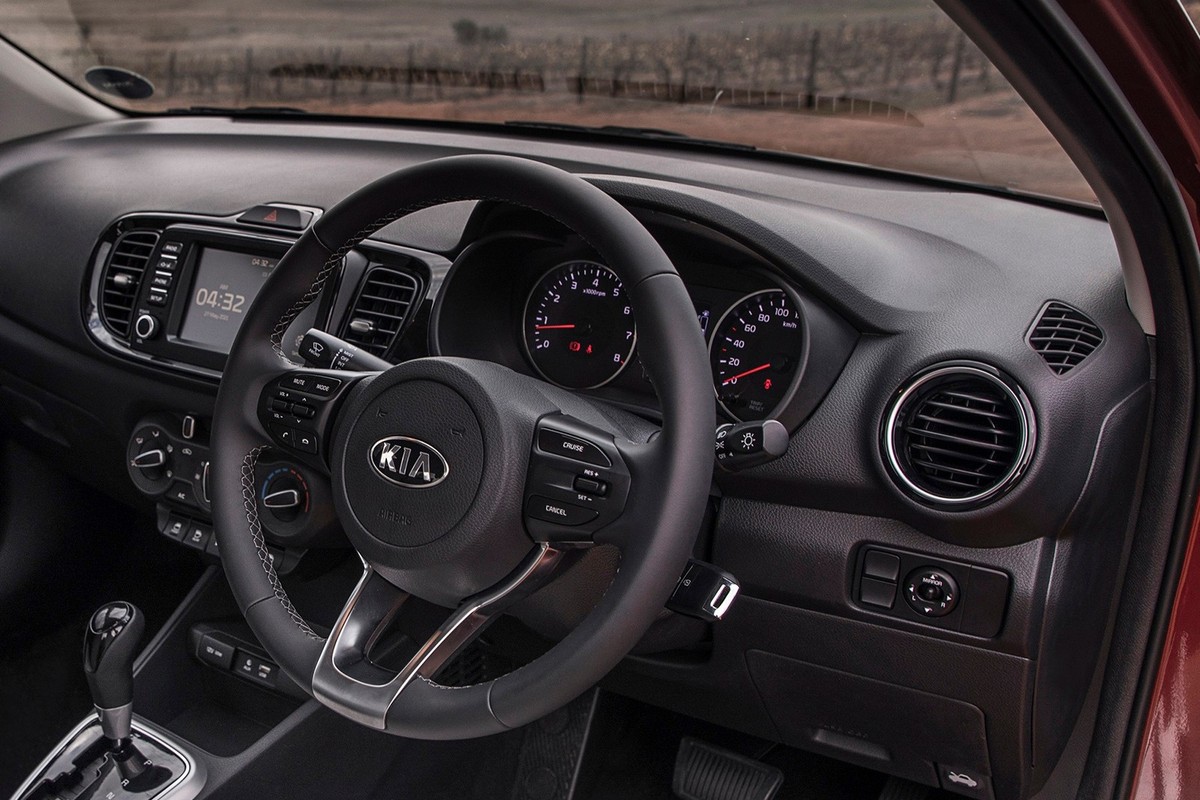
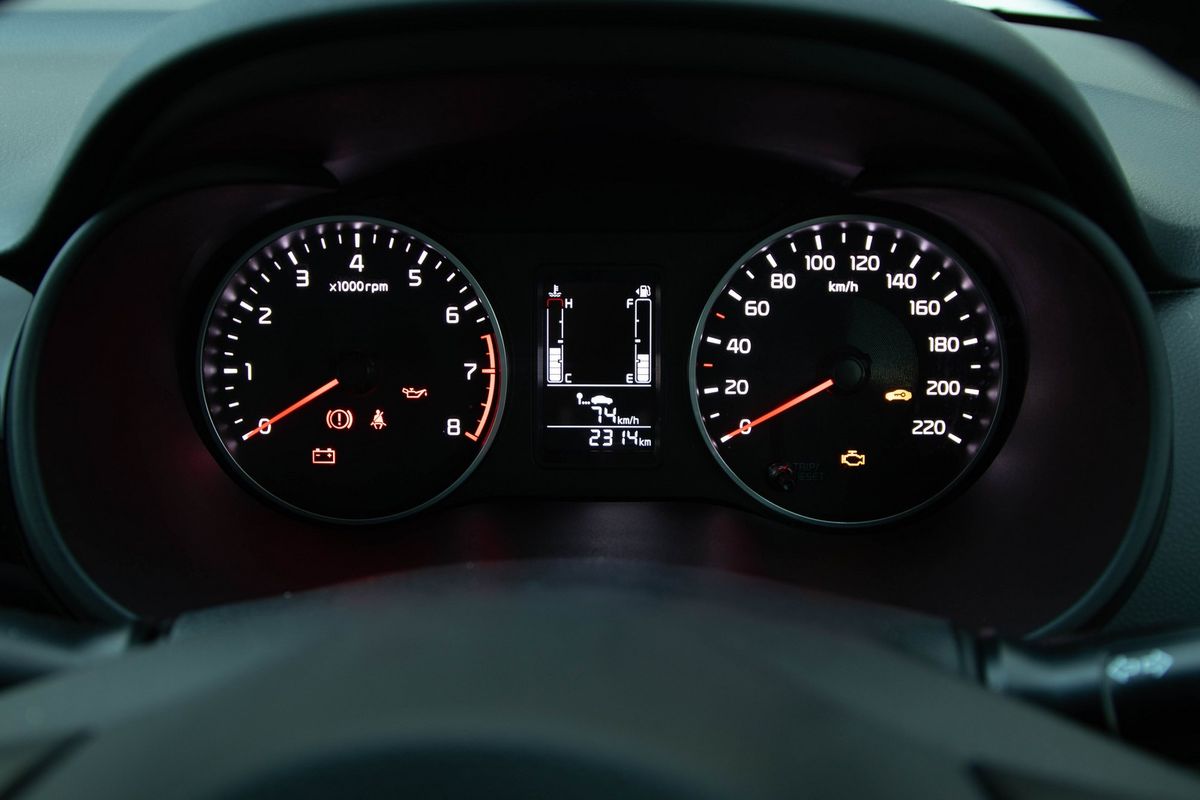
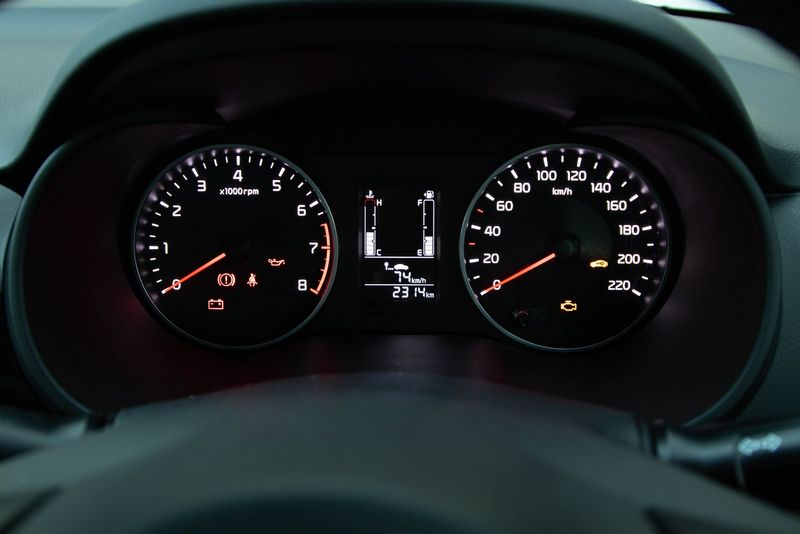
The instrument cluster is a study in neat simplicity… but is the 120-kph warning chime and indicator really necessary?
Well, the engine does the basics right. The motor can get a bit noisy when you rev it hard, such as when you need to accelerate to merge with a highway or overtake slower vehicles, but it’s not buzzy at cruising speeds… At 120 kph, the rev counter needle sits just above the 3 000-rpm mark.
There is some engine noise present at that speed, which suggests the Pegas’ product team decided that no more than a moderate amount of noise- dampening material needed to be installed – but that wasn’t all that bothersome, because we found another reason to set the sedan’s cruise control just below 120 kph…
Once the Kia reaches a speed of 120 kph, a small light on its instrument cluster flashes in time with an audible chime. It’s a subtle – or irksome, depending on your opinion – reminder that you’ve reached the national speed limit. The chime eventually quietens, but the light on the dashboard remains on until you slow down to under 120 kph.
Kia’s newcomer might be a value-oriented offering, but its road manners are refined, apart from mechanical-noise intrusion.
The on-road refinement and ride comfort levels are good – unlike some budget-car offerings, the Pegas doesn’t feel insubstantial in terms of its road-holding or slightly ponderous to drive at extra-urban speeds. There’s some feel to the steering, but generally, it is light and quick in action, which is great for executing tight parking manoeuvres.
The Pegas 1.4 EX rides on 14-inch alloys wrapped in plump 175/70R tyres. The higher-profile tyres combine with the Kia’s comfort-orientated suspension tuning to soak up minor bumps in the road with notable aplomb. The sedan proved quite good to drive on gravel, which suggests the model was designed to traverse roads of variable quality. If you do decide to corner briskly, you’ll encounter quite a bit of body roll, which is the trade-off for the ride comfort.
As our route comprised mostly open-road driving, the Kia indicated an impressive 5.7 L/100 km fuel economy figure. Be aware that this figure will be quite higher if you drive in cut-and-thrust traffic on the daily commute, however.
What’s the interior of the Kia Pegas like?
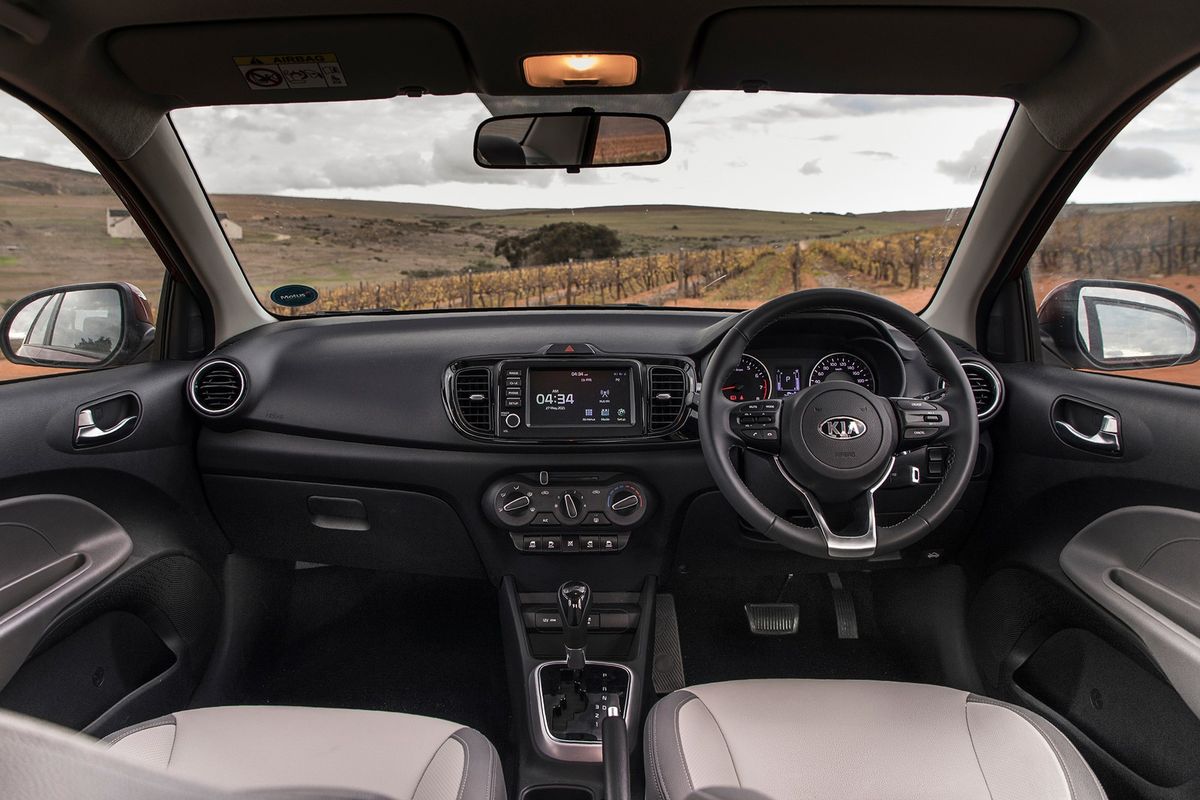
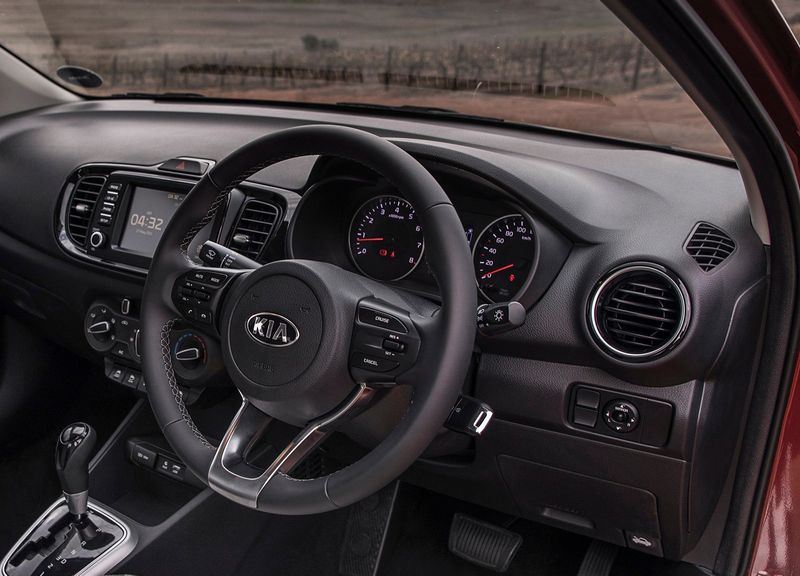
The newcomer’s neat front-cabin layout will be instantly familiar to owners of current Kia models. Standard spec abounds.
The Pegas’ front-cabin layout is pleasingly simple. The dials in the instrument cluster are easily legible and the infotainment system is positioned so that the driver can easily access it. Most infotainment functions are accessible via the steering-wheel controls and, if you’re using Apple CarPlay/Android Auto, voice commands are supported. The screen-mirroring tech enables a host of bonus features, such as streaming audio services and navigation apps.
Current Kia owners will find the Pegas’ interior instantly familiar. Everything looks and feels well assembled and hard-wearing, which bodes well for durability. Interestingly, the electric window switches are on the centre console.
It’s impressive stuff, considering the newcomer is not assembled in Korea or India (as the majority of Kia models in the SA market are). The Pegas comes from China, where it is produced as part of a Dongfeng Yueda Kia joint venture (we enquired during a courtesy visit to a Kia dealership and the answer confirmed our hunch). Conservative buyers can rest assured there’s no discernible difference in quality between the Pegas and its Rio hatchback sibling.
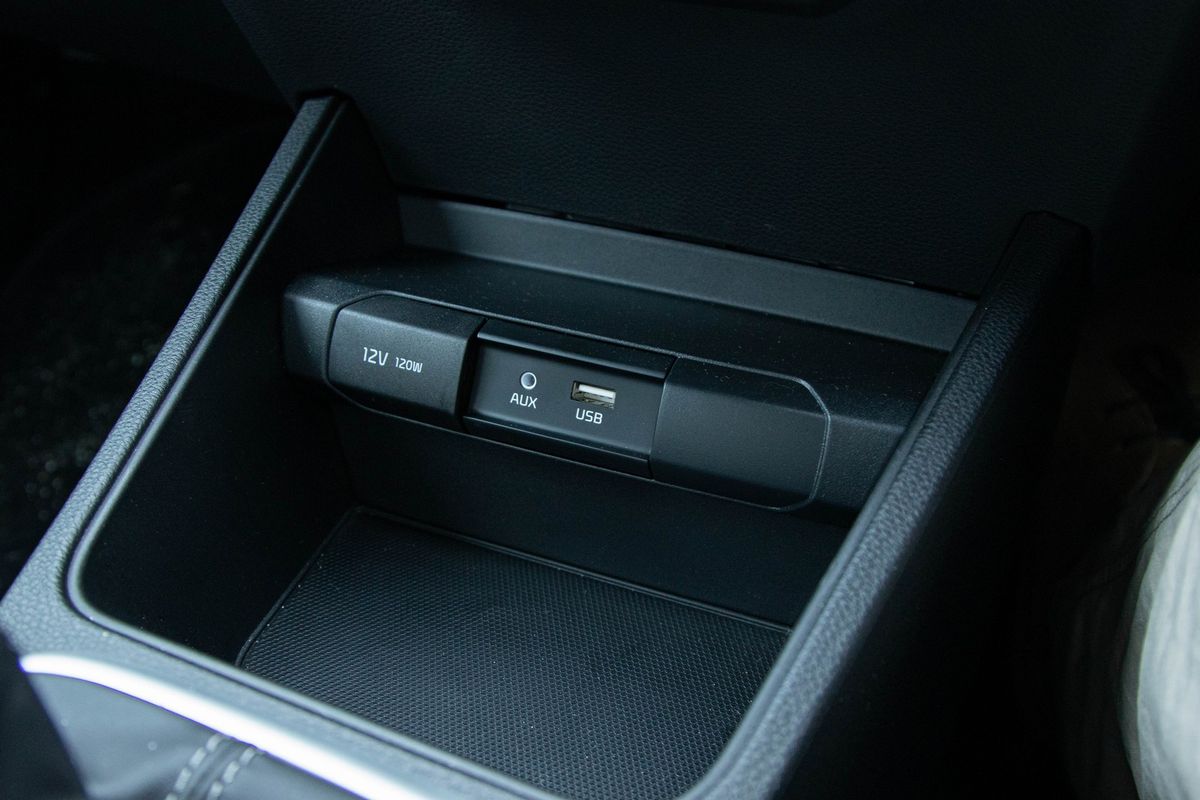
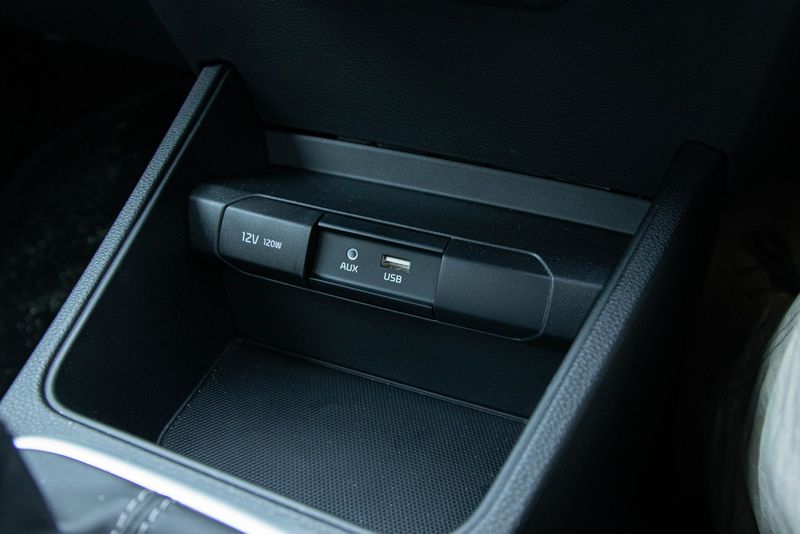
The oddment tray positioned ahead of the Pegas’ gear lever is handy for storing smartphones, face masks and other items.
The Pegas has a long list of standard features – even in entry-level LX grade. A reverse-view camera, rear parking sensors, as well as the Apple CarPlay- and Android Auto compatible 7-inch infotainment system with Bluetooth is almost unheard of at this price point. The driver’s seat even features an armrest, a nice touch for the longer trips.
EX grade – as featured on this test unit – adds mostly cosmetic items such as the artificial leather trim, leather-bound steering wheel, front fog lights, 14-inch alloy wheels, cruise control and some chrome detailing.
As far as safety features are concerned, the Kia Pegas comes with dual front airbags, ISOfix child-seat anchors and ABS with EBD. Electronic stability control would have been a plus, but that would have hiked up the asking price.
Is the Kia Pegas practical?
A class-leading boot capacity is certainly a competitive advantage in a segment dominated by the Volkswagen Polo sedan.
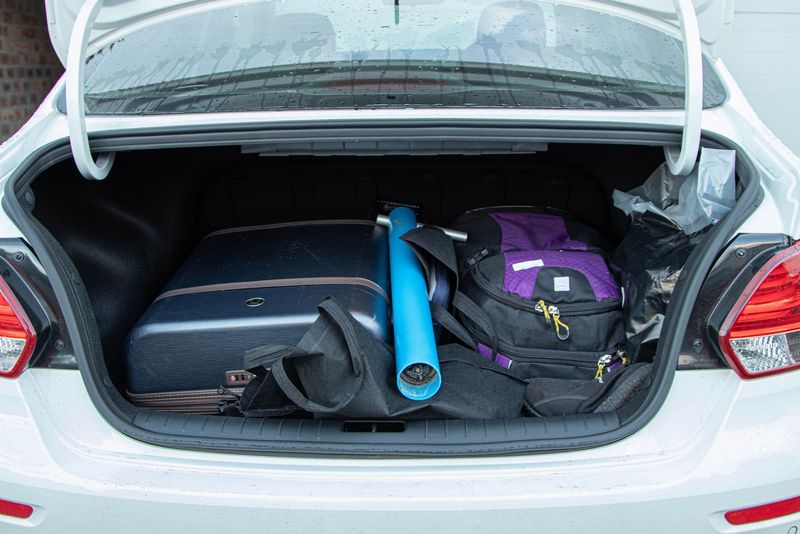
The Pegas has the longest wheelbase and largest boot capacity in its segment. The newcomer’s 475-litre luggage capacity eclipses that of its arch-rival, the Polo sedan – the Volkswagen’s boot is said to accommodate 454 litres.
No other rival, apart from the Ford Figo sedan (445 litres), comes close to the Kia in that regard. The Honda Amaze offers 420 litres and the Suzuki Dzire just 378 litres (the latter’s Ciaz sibling is a bigger car, but also pricier).
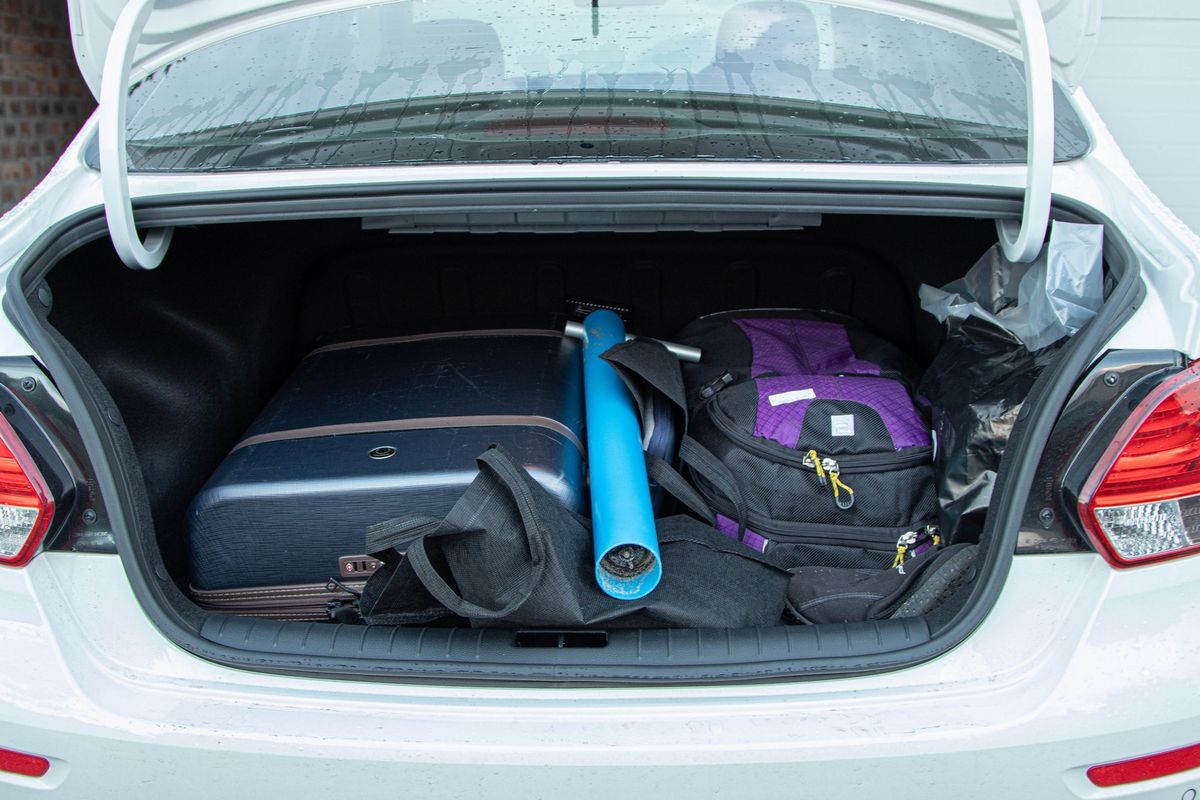
To put that into perspective, we could load 2 full-sized suitcases, a week’s groceries and the author’s angling gear into the Pegas – with room to spare. The boot should be big enough for a small family of two adults and a child.
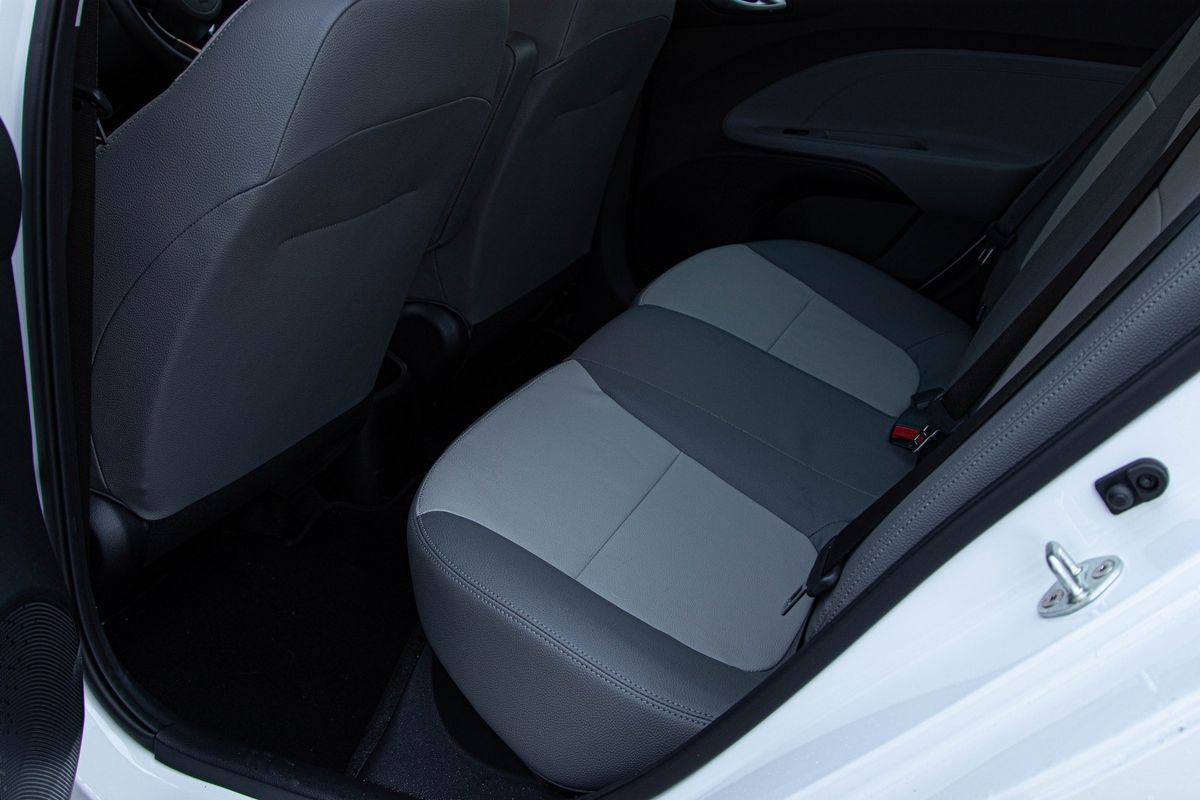
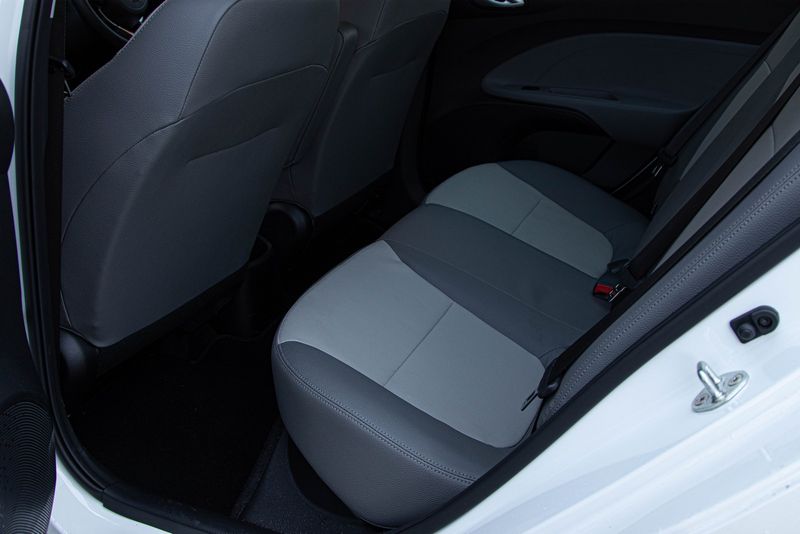
The Kia offers generous legroom by compact-car standards, although taller aft passengers will find headroom limited.
What’s more, the Kia’s relatively lengthy wheelbase optimises cabin space. There is sufficient legroom for adult occupants; a sit-behind-yourself test was passed with ease, but taller passengers may find rear headroom tight.
At the front, there are a few clever storage solutions to house errant coins, access cards, keys and so on. We stored our face masks in the recess ahead of the gear lever – it also serves as a convenient cradle for your mobile device.
How much does the Kia Pegas cost in South Africa?
The Kia Pegas’ prices start from R225 995 for the LX, with this EX derivative retailing for R236 995. An automatic version of the EX is also available and its asking price is R251 995.
The Pegas is sold with Kia’s industry-leading 5-year/unlimited-kilometre warranty (inclusive of roadside assistance), as well as a 4-year/60 000 km service plan.
Although the keenly-priced Pegas may prove popular with e-hailing operators, it’s a compelling compact family car nonetheless.
Despite my colleagues joking that smartphone-clutching pedestrians might try to get into the test unit every time it stopped next to a street kerb (because they mistook the sedan as their Uber ride – haha), the Kia Pegas proved very competent during its tenure in our test fleet. The long list of standard features, good rear legroom and that sizeable boot, coupled with that extraordinarily good price and long-lasting warranty, should win it more than a few fans.
We had a couple of minor gripes regarding the Korean offering’s powertrain refinement, as well as its minimal insulation from road-noise, but, given the Pegas’ keen pricing, we’d quite willing to look past those drawbacks.
The Pegas may not be the flashiest product or offer the most engaging driving experience, but it’s one of the most sensible products in Kia’s portfolio. While it’s easy to dismiss this sedan as “just another ride-sharing special”, it offers quite a lot of “family car” for not too much money. In these times, when austerity is the order of the day for many households, value for money should be commended. Therefore, the Kia Pegas gets a thumbs-up from us.
If you are thinking about purchasing a new or previously owned car, you will have many decisions to make. Unfortunately, choosing the car that you would like to buy is the easy part… Once you’ve calculated the true cost of owning a car, you will also need to determine the best vehicle finance option for you…
PARTNERED CONTENT
How to pay for our new wheels… Most of us would look at selecting one of the following options: a cash deal, an instalment, an instalment with balloon (residual) payment, or a lease. One could also weigh up the choice of a guaranteed buy-back deal. motus.cars, supported by Motus Select (previously Imperial Select), helps us understand and explore the various options available to SA car buyers.
1. Cash purchase
If you can pay cash for your car, it would be the ideal way to buy it! You would own the title to the car and could sell it privately – or to a dealer – when the time comes to dispose of (or replace) the vehicle.
2. Instalment finance
This is the most common – and straightforward – car payment method. You pay off the car in monthly instalments for up to 72 months either with, or without, a deposit.
Monthly repayments are worked out by calculating the purchase price of a vehicle, less the deposit that is put down at the start of the deal.
The lengthier the term, the more interest one would pay. Ideally, you should put down a substantial deposit and structure the loan over the shortest possible time. This way you will ensure that you pay the least amount of interest.
With this option, you will own the car outright after you’ve made your last payment of the contracted instalment term.
What’s more, towards the end of the term, once the settlement balance of the contracted instalment term is lower than the private sale- or trade value of your car, you can start thinking about replacing it. Should you wish to buy a replacement car, you could use the price you raise for the vehicle (either by selling it privately or trading it in) minus the settlement balance as a deposit for your next purchase.
3. Instalment finance with a balloon payment
Also known as a residual – this option is similar to instalment finance, except a portion of the purchase price is set aside so that the repayments are calculated on a lower amount. Simply put, balloon payments are like deposits except they are payable at the end of a term instead of at the beginning.
Buyers must be careful of the amount put into a balloon because they will be responsible for the lump sum once the finance term is finished. After paying that instalment for all those years, the car is still not yours – that amount that was taken off the full purchase price of the vehicle you bought (to effectively lower your monthly instalment to something you could afford) is now due.
At that stage, if you don’t have sufficient cash available to pay the balloon/residual and own the car outright, you can either apply to a bank to refinance the remaining amount and the vehicle will hold the title and ownership of the vehicle once you have fully paid off the debt. Alternatively, you can sell the car (provided its private sale or trade value is higher than the balloon/residual) and keep the change.
4. Leasing instead of buying
Leasing a vehicle is just what it says: You pay for the use of a vehicle for a set period and return it at the end of the period. The lease agreement gives you the right to use the vehicle as your own, without owning it. It has its pros and its cons, such as restrictions on the vehicle’s usage, but it also means that the instalments are more affordable.
You can drive a new car every 2 to 4 years and enjoy the benefits of the latest models. When the lease lapses, you do not have to worry about selling or trading in the car – or settling any outstanding money owed to your bank, for that matter. Monthly repayments are more affordable, and there are no service and maintenance costs as these are covered by the service and maintenance contracts.
On the other hand, lease agreements have strict limitations and penalties, so you need to ensure you get the car serviced at the specified intervals, repaired by approved repairers and adhere to the mileage limits (usually a maximum number of kilometres that you may travel in the car during 12 months) set by the lease provider.
5. Guaranteed buy-backs / Guaranteed Future Value (GFV)
Guaranteed Future Value is becoming a more popular option of vehicle finance in South Africa. Any new car starts to depreciate the second you drive it off the showroom floor, but a GFV plan at least determines what the future value of your car will be at the end of the contract term… if detailed terms and conditions regarding the vehicle condition, mileage and maintenance are met.
This means that you will be aware of what your car will be worth once the contract term (usually between 3 and 4 years) is reached. You are then given three choices – you can either:
Enter another GFV deal and drive away in a new car,
Settle the outstanding amount and own the vehicle, or
Return the vehicle to the dealership and walk away (provided you did not exceed the agreed mileage, and the vehicle is in an acceptable condition as stipulated in your plan).
If you do plan on choosing this type of finance, you need to make sure that you read and fully understand the fine print.
Make use of free tools available to further help you decide what the best vehicle finance option is for you. Use these simple affordability and finance calculators to help you determine what you can afford and what finance option will be best for your needs.
In these tough economic times, South African car buyers are desperate to find good value, which is generating increased demand for quality, well-priced vehicles in the used car market.
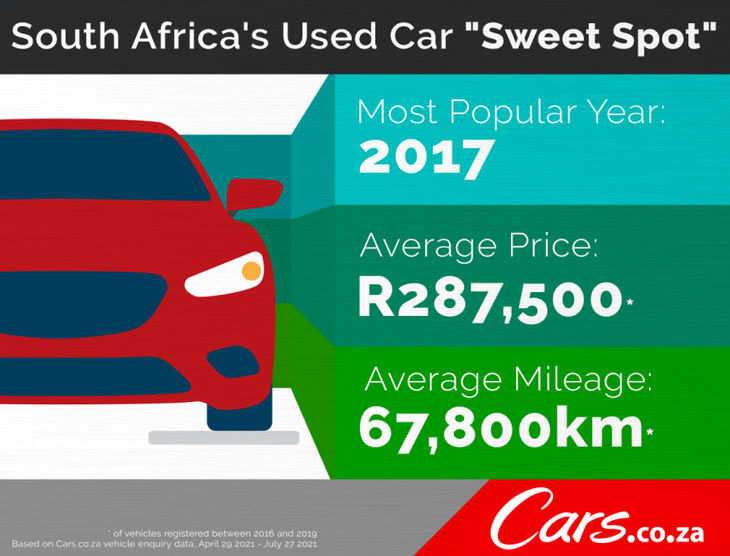
We have analysed used car data which indicates that low-mileage vehicles priced at just under R290 000, which were first registered between 2016 and 2019, are the most popular cars on the site, which, at the time this report was compiled exceeded 70 000 used vehicles for sale.
“We looked at the number of enquiries put through to dealers during the past 90 days, rather than the majority of vehicles listed,” says Cars.co.za’s Consumer Experience Manager, Hannes Oosthuizen. “An enquiry, also called a ‘lead’, is, of course, an indicator of intent to purchase.”
A deeper analysis of the headline numbers (of vehicles first registered between 2016 and 2019) reveals that user enquiries about listed used cars that were first registered in 2017 and are priced between R200 000 and R300 000 represent the lion’s share of the lead volume (in fact, 24,4% of leads for vehicles first registered from 2016 to 2019 are from that price bracket).
“It comes as no surprise to find that the ‘R150 000 to R200 000’ and ‘R300 000 to R400 000’ brackets are the next biggest. For vehicles of this particular age (2016- to 2019 models), nearly 60% of leads fall into the price range of R150 000 to R400 000,” Oosthuizen says.
It is also clear that consumers who are shopping in the previously mentioned price and vehicle age categories (2016-2019 and R150 000-R400 000) are looking for low-mileage vehicles.
“A whopping 31,8% of leads are for vehicles with mileages of between 10 000 km and 50 000 km and the overwhelming majority (81,4%) of all leads put through in those categories are for vehicles with a mileage of less than 100 000 km,” he adds.
Top 10 Most Popular Used Cars on Cars.co.za
Based on lead volume during the past 90-day period, the most requested vehicles on Cars.co.za (with no limit on price and mileage) are the following;
Rising new vehicle prices (some examples are shown below), the economic impact of repeated Covid-19 lockdowns and stock challenges (caused by several factors, including the international semiconductor shortage), have all put the new vehicle market under significant pressure. “All of these factors have a compounded impact on the used-car market,” says Oosthuizen.
“Firstly, new vehicle prices have risen sharply in the past year and, in some cases, by more than double the country’s official CPI inflation rate. This alone will result in some buyers now simply being forced to purchase their next vehicle in the pre-owned market.
“The result is a decline in new-car sales, which ultimately leads to pressure on used-car stock availability. Meanwhile, the increasing demand for quality used cars, combined with lower stock availability, will inevitably drive up used-car prices,” he adds.
Vehicle Make & Model
New Price in June 2020
New Price currently (July 2021)
Percentage increase
BMW 320i
R700 562
R731 762
4.45%
Datsun Go! Mid
R170 800
R183 900
7.7%
Hyundai Tucson 2.0 Premium Auto
R465 500
R506 900
8.9%
Kia Seltos 1.6 EX Auto
R387 995
R417 995
7.73%
Mazda CX-5 2.0 Dynamic Auto
R458 800
R506 600
10.4%
Nissan NP200 1.6 16v High
R247 100
R251 900
1.94%
Renault Triber 1.0 Dynamique
R181 900
R195 900
7.7%
Suzuki Swift 1.2 GL
R183 900
R199 900
8.7%
Toyota Fortuner 2.4 GD-6 Auto
R561 800
R611 800
8.9%
Volkswagen Polo 1.0 TSI Comfortline
R301 000
R327 500
8.8%
Top 10 Best Value Used Cars on Cars.co.za
“We’ve used the results of previous iterations of the Cars.co.za Consumer Awards – powered by WesBank (#CarsAwards) to rank various brands’ performances in terms of after-sales support, reliability and other criteria. By combining that data with the availability and -pricing of stock on Cars.co.za, we‘ve been able to identify the 10 best buys in the used car market right now,” Oosthuizen explains. “The biggest challenge, of course, is to find a vehicle from a reputable brand at a good price, but also with relatively low mileage.”
“A lot of research goes into the annual Cars.co.za Consumer Awards, including surveying thousands of South African car owners on their ownership experiences,” he concludes.
If you’re shopping for a vehicle that’s no older than 5 years, has a mileage of under 100 000 km and is priced between R200 000 and R300 000, the Cars.co.za editorial team – and our data – suggest the following vehicles. Note that the emphasis is on vehicles in the B/C-segment hatch, C/D-segment crossover/SUV and Double-Cab bakkie categories, as most South Africans are currently shopping for private vehicles of those types. Safety features have also been prioritised.
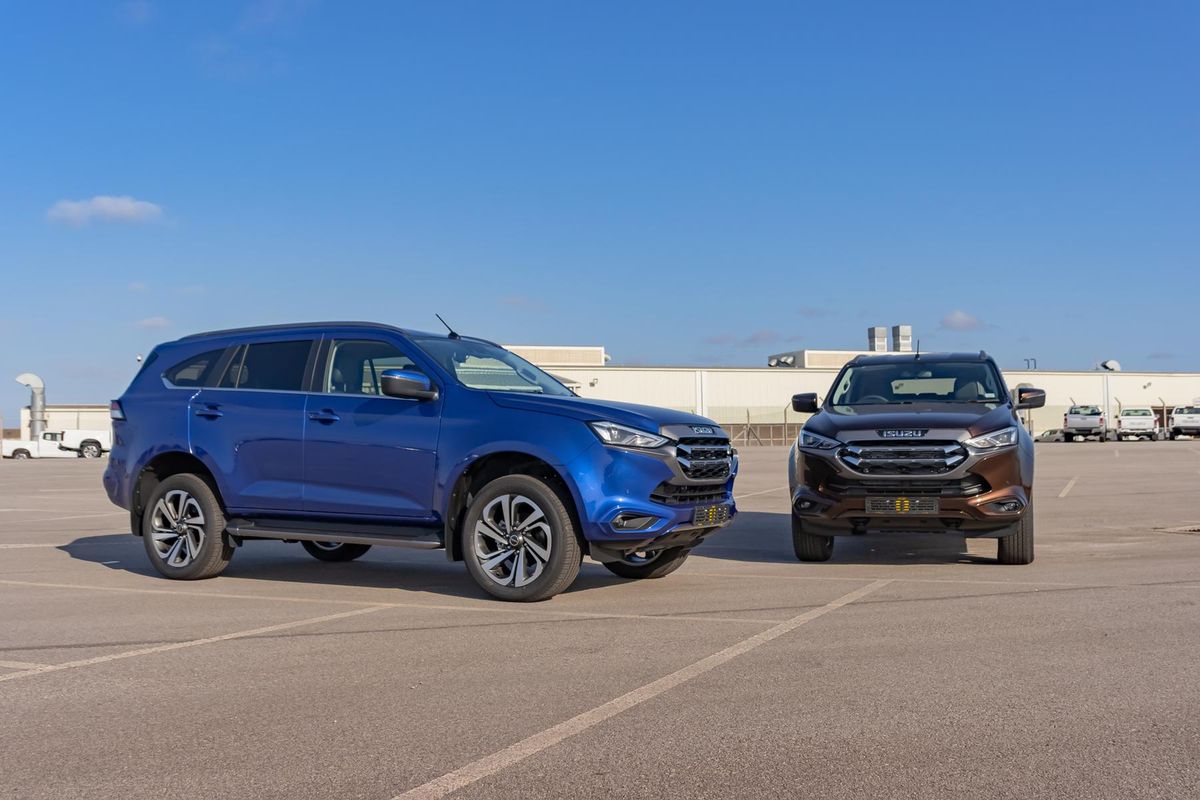
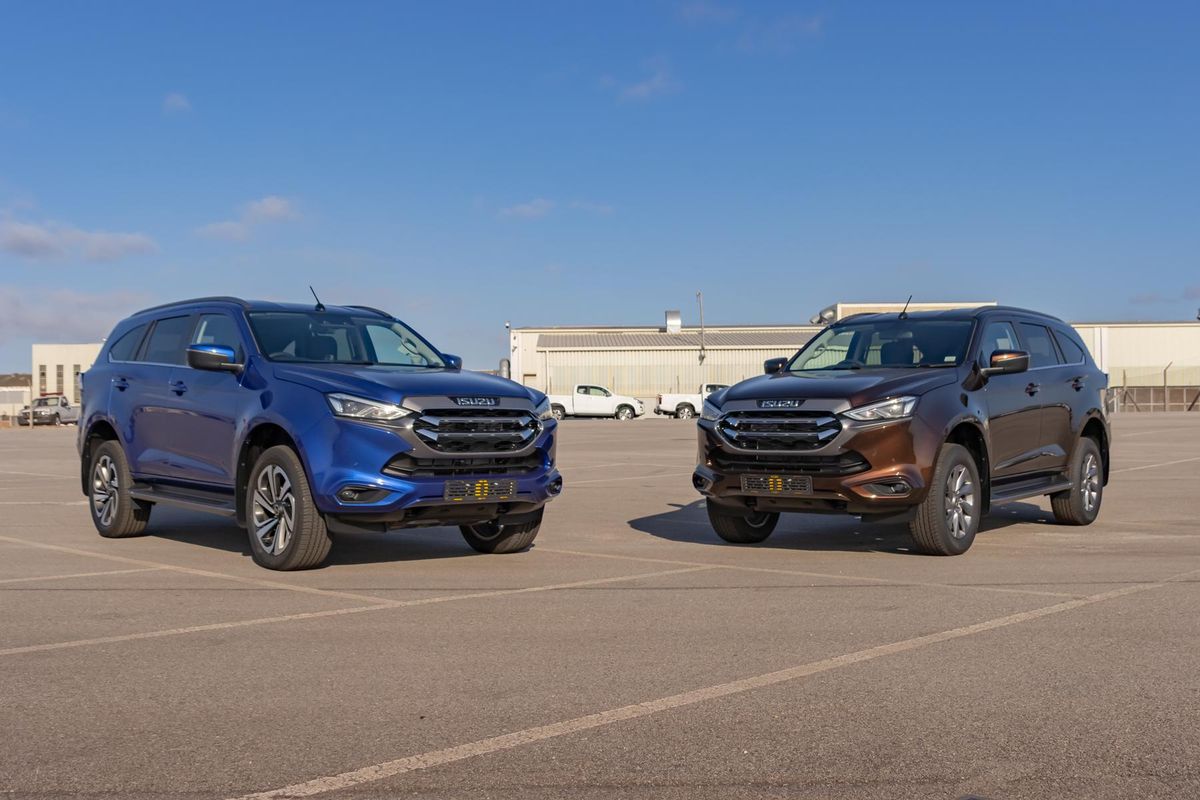
Isuzu South Africa has confirmed that its bakkie-based 7-seater offroad family vehicle will be arriving on our shores before the end of the year.
The Isuzu MU-X is a 7-seater bakkie-based SUV that takes on the Toyota Fortuner and Ford Everest. Built on the Isuzu D-Max platform, the all-new Isuzu MU-X will be a big step up in comparison to its predecessor.
“The upcoming Isuzu MU-X is a game-changer for us, as it offers class-leading driver assistance technology, new state-of-the-art powertrains, and a luxurious interior designed for maximum comfort for seven occupants,” said Dominic Rimmer, Senior Vice President Technical Operations.
The all-new Isuzu MU-X will be sold with an arsenal of active/passive safety systems, plus modern connectivity solutions such as Android Auto and Apple CarPlay. The cabin is said to feature luxurious fittings and soft-touch surfaces, to give the vehicle a bit more of a premium feel.
Will the all-New Isuzu MU-X be built in SA?
The new model will not be built in South Africa, but instead will be imported from Isuzu’s Thailand plant and will also be sold in other African right-hand drive markets. “We are steadily on track to launch the next generation Isuzu MU-X in South Africa.
“Vehicle testing was successfully conducted late 2020 and we continue to test the vehicle under a number of conditions to ensure it is suitably prepared for South African conditions,” adds Rimmer.
Interestingly, the all-new Isuzu D-Max will be assembled at Isuzu’s plant in Gqeberha, Eastern Cape. Currently, the plant is undergoing conversion for the new model’s production and the all-new SA-built Isuzu D-Max will be hitting showroom floors in 2022.
We’ll have confirmation on the specifications, engine choices, and pricing of the all-new Isuzu MU-X closer to the vehicle’s launch at the end of 2021.
The world might be edging towards greater electric vehicle adoption, but the fact remains – all classic and collectable cars, are petrol- or diesel-powered.
And for those enthusiast owners, who are committed to actually using their classic vehicles, parts availability becomes an issue.
Sourcing low-volume parts, made to original specification, can be disastrously expensive. Mercedes-Benz was the first large automotive brand to start supplying ‘continuation’ parts, for its classic car customers.
Toyota might not have as many classic models and variants as Mercedes-Benz, but it is recognizing the issue for Land Cruiser owners.
The original FJ40 series Land Cruisers are highly coveted – and used. That means that parts demand is real, as some of these FJ40s still venture off-road, unlike the sheltered existence, of many other collectable cars.
After engaging various global Land Cruiser clubs, Toyota feels confident that it has a reliable dataset for what is required, in terms of FJ40 continuation parts.
The biggest issue is keeping those engines in shape. With its legacy supplier relationships and knowledge of what an acceptable tolerance in production variability would be, Toyota remains the best source, for continuation parts.
One of the trickier parts with these FJ40s, is their exhaust systems. The carburettor fed in-line six engines have exhaust shape and materials requirements, that are vastly different to what most modern vehicles do.
Instead of forcing its FJ40 owners into an unreliable aftermarket, Toyota is also securing a supply of period-specific exhaust systems.
But why is Toyota bothering to supply such a small minority of owners, with continuation parts?
Because it knows, that nothing beats the recognisable marketing value, of seeing FJ40s rolling around, demonstrating Toyota’s reputation for durability.
The parts will be reproduced for the 40 Series Land Cruiser, which was produced between 1960 and 1984. Availability of parts will be launched as preparations have been completed, with a target launch date of the beginning of 2022.