German carmaker BMW is forging ahead with its electric-car offerings and in an effort to make them part of the family, the brand is releasing an M Performance Parts catalogue.
With the car industry focusing on electrification, attention is now turning into making the cars more acceptable to the masses, more mainstream and the norm, as opposed to the current offerings which, based on public perception, seem far removed from the current crop of ICE vehicles.
BMW’s radical offerings of the i3 and i8 have been on sale for some time, with the latter bowing out fairly recently, but even by today’s standards, they’re so far removed from mainstream motoring just going on design alone.
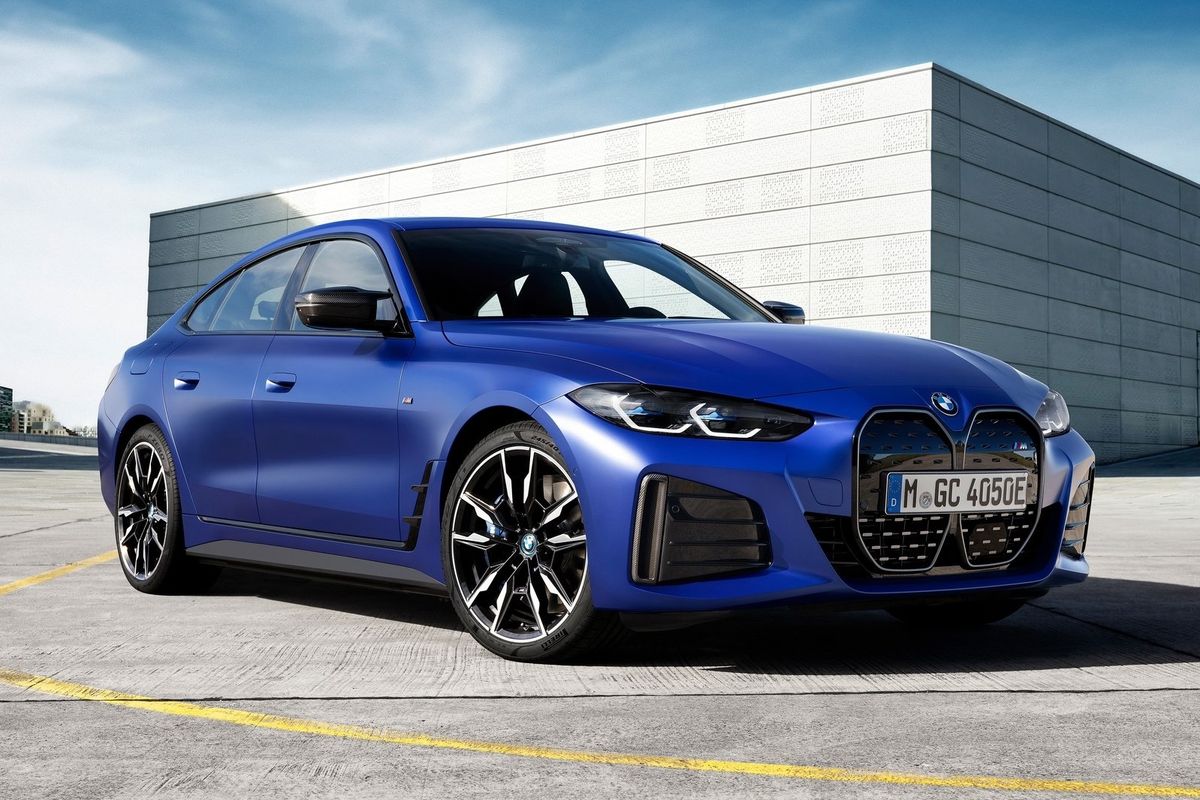
With the BMW i4 Gran Coupe, BMW hopes to target the mainstream masses as opposed to the early adopters, and with the i4 M50, offer the first-ever electric performance model from BMW M. With BMW M and BMW M Sport products comes the M Performance catalogue which highlights some tasty visual goodies that will make your car stand out from the rest.
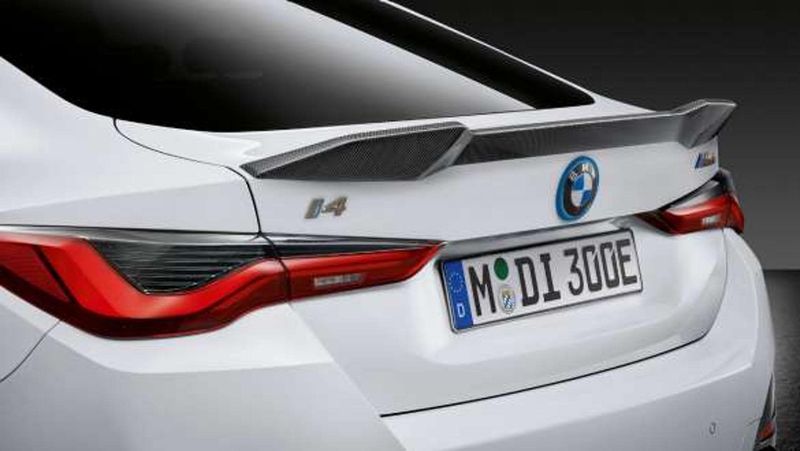
Thanks to BMW Sweden, we can see the really cool additions BMW M is cooking up for the i4 M Performance. If you love carbon fibre, you’re in for a treat as the grille, diffuser, trunk spoiler are all offered. Inside, there’s a gorgeous alcantara M Sport steering wheel and carbon fibre gear selector.
Also on offer are 20-inch M Performance alloy wheels which are finished in Bicolor Night Gold.
The BMW i4 M50 has been confirmed for a South African market introduction and will be arriving in 2022, along with the BMW iX. As a reminder, the i4 M Performance features 400 kW, xDrive and a range of 510 km. It’ll be quick too, with a claimed 0-100 kph of 3.9 seconds.
Toyota is a global leader in hybrid technology and if rumours out of Japan are true, we might see some diesel hybrid powertrains come to market.
Japanese automaker Toyota and luxury brand Lexus have extensive experience in producing hybrid powertrains and it can even be argued that the firm is the best in the hybrid business.
The most recent petrol hybrid vehicle we tested was the Lexus IS300h F Sport but there are rumours swirling in Japan that Toyota will not only expand upon its petrol-hybrid offerings but will also look to develop diesel hybrid-electric powertrains which are likely to be applied to the brand’s 4×4 vehicles and commercial products.
A diesel-hybrid-electric powertrain is expected to deliver gains in efficiency over a conventional diesel powerplant while torque delivery will also be enhanced.
By 2025, Toyota is expected to have about 70 electrified models worldwide including HEV (hybrid electric vehicle), PHEV (plug-in hybrid electric vehicle and (fuel-cell electric vehicles), which will include a total of 15 battery-electric vehicles (BEVs).
We will keep you updated as soon as official information from Toyota becomes available.
Special Land Cruiser marks icon’s 70th anniversary
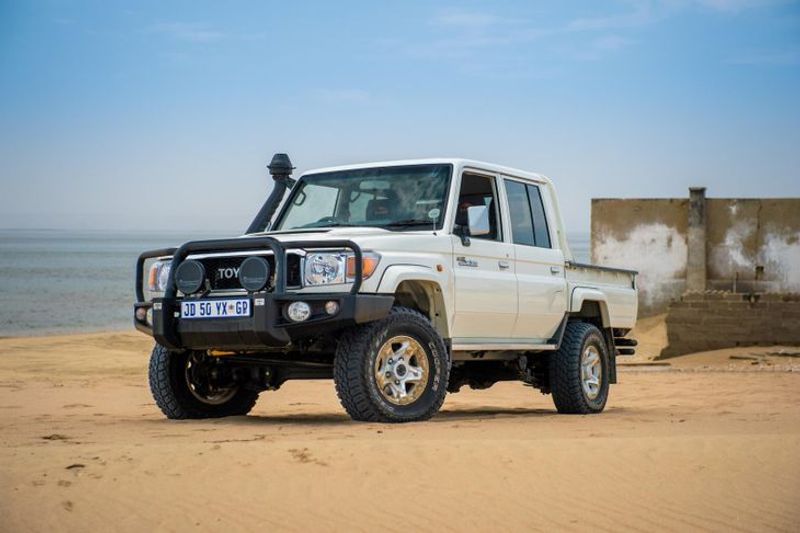
The Toyota Land Cruiser turned 70 at the weekend (on 1 August 2021) and, as if the launch of the new 300 wasn’t momentous enough to mark the platinum anniversary of the legendary off-roader, the Japanese marque is releasing special-edition versions of the 70-series pick-up, double cab and wagon.
The past 18 months have been a rather busy time for Toyota’s long-serving and famously conservative nameplate (the pauses between the introductions of updated models can often last several years!). Having released 2 batches of the Namib Edition of the 70 series (120 double cabs and 60 single cabs), Toyota SA rolled out Land Cruiser 200 and Land Cruiser Prado model-year updates, reintroduced the 78 Wagon and, last week, the Prospecton-based manufacturer announced specs & prices for the Land Cruiser 300, which includes a maiden GR Sport derivative.
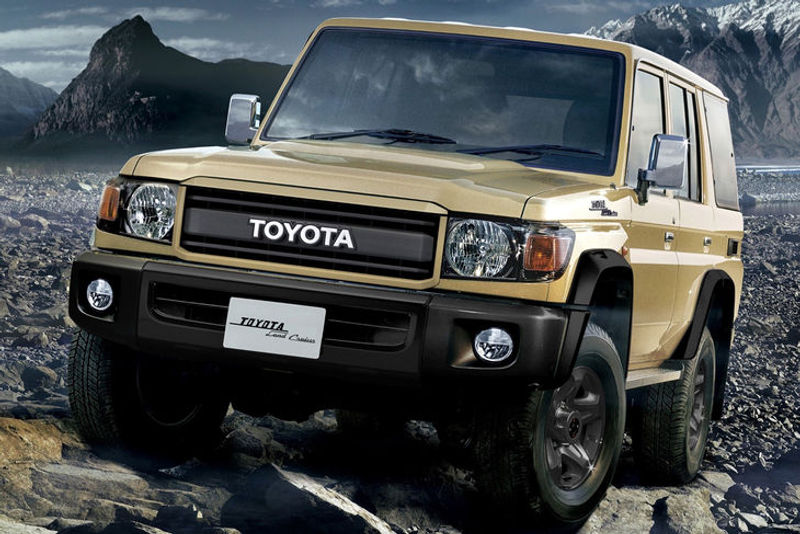
The 70th-Anniversary Land Cruiser is instantly recognisable by its black grille with white TOYOTA lettering.
Now, just to clear up any confusion… Toyota’s legendary off-road nameplate did not appear until 1954, but the firm has chosen to celebrate the platinum anniversary of the Japanese introduction of the Toyota BJ in 1951, because that model became (was renamed) Land Cruiser about 3 years after that. Since then the Land Cruiser has become ubiquitous to the point that its model name is virtually a vehicle brand in itself. It has been estimated that Toyota sells approximately 400 000 Land Cruisers per year in 170 different markets; Land Cruiser production passed the 10-million-unit mark in 2019.
To quote regular Cars.co.za contributor Lance Branquinho, who penned our Testing the Land Cruiser Legend in Angola article: “Land Cruiser customers are some of the most demanding owners imaginable: people who use their vehicles to run businesses and emergency services where there are none. For them, vehicle durability is sacrosanct and breakdowns, simply intolerable.
The first batch of Land Cruiser Namib Edition derivatives sold out in a matter of months.
“In an automotive world where brands are drowning in the technological anxiety of evolving customer expectations, Land Cruiser remains the outlier. Its range manages to hold true to the most fleeting marketing concept: authenticity. These are vehicles that sell strongly, (with respect) little marketing effort on the part of Toyota,” he concludes.
Only 600 examples of the special-edition 70th-Anniversary Land Cruiser will be produced and it will be available in 3 variants (320 double cabs, 200 single cabs and 80 wagons will be made) and with a choice of 3 exterior finishes: French Vanilla, Merlot Red and Sandy Taupe.
The 70th-Anniversary Land Cruiser can be distinguished by its black heritage grille with “Toyota” lettering, with a matching black front bumper and wheel-arch flares, darkened 16-inch alloy wheels and headlamp bezels, plus LED front fog lamps and daytime running lights. The special edition bears a “Heritage” Land Cruiser badge above the front wheel arches, as well as a “70th Anniversary” emblem.
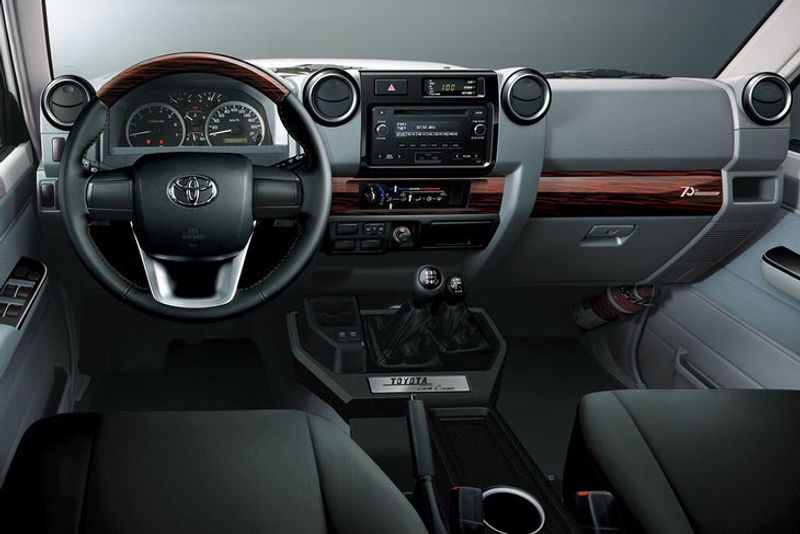
The 70th-Anniversary Land Cruiser’s interior features woodgrain trim and a number of leather inserts.
Inside, the 70th-Anniversary Land Cruiser features a number of premium options “not previously offered on the Land Cruiser 70 Series”, Toyota says. The seats are finished in premium black upholstery, while black leather-accented trim has been applied to the steering-wheel rim and gear knob.
Furthermore, the special-edition derivative’s cabin has been enhanced with woodgrain-look trim (including around the HVAC controls on the centre fascia), silver accents on the air vents and black switch surrounds on the insides of the doors. A newly designed black centre console has also been fitted, replete with a pair of additional 2.1-amp Type A USB chargers and a pair of cupholders.
All versions are powered by a 151 kW/430 Nm 4.5-litre turbodiesel V8 mated with a 5-speed manual transmission. Suffice to say all Land Cruiser 70 series special-edition variants feature low-range transfer cases, a 3 500-kg braked towing capacity, front and rear differential locks, a raised air intake and a 130-litre fuel tank.
Toyota South Africa Motors confirmed it will be releasing the 70th Special Edition model based on the 70 Series. While development is still under way, customers can register their interest at their nearest Toyota dealer. The model is expected to touch down in SA in the 4th quarter of 2021.
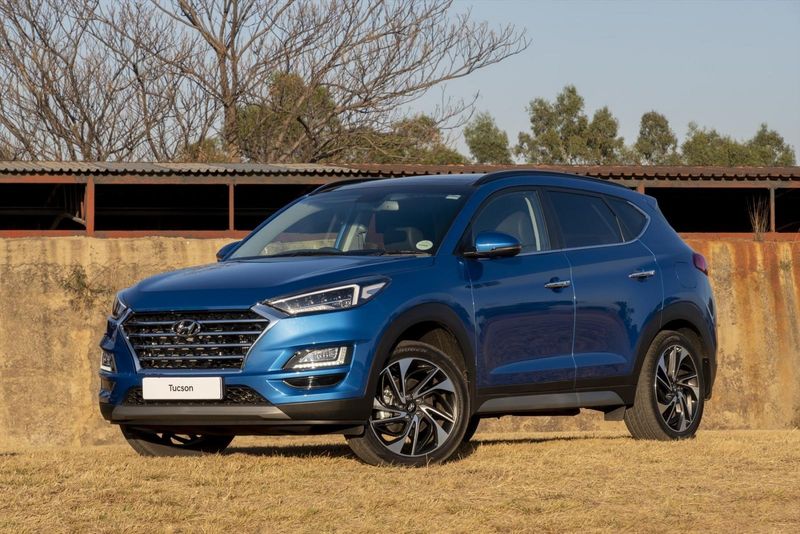
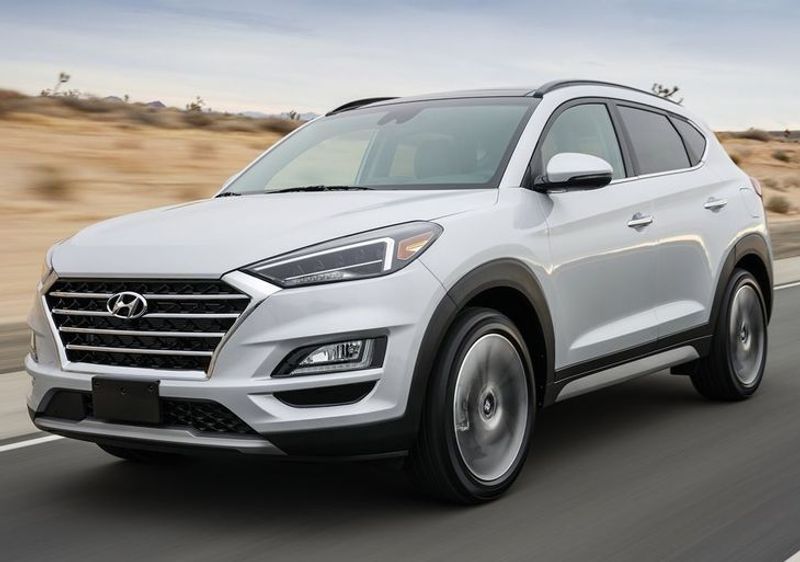
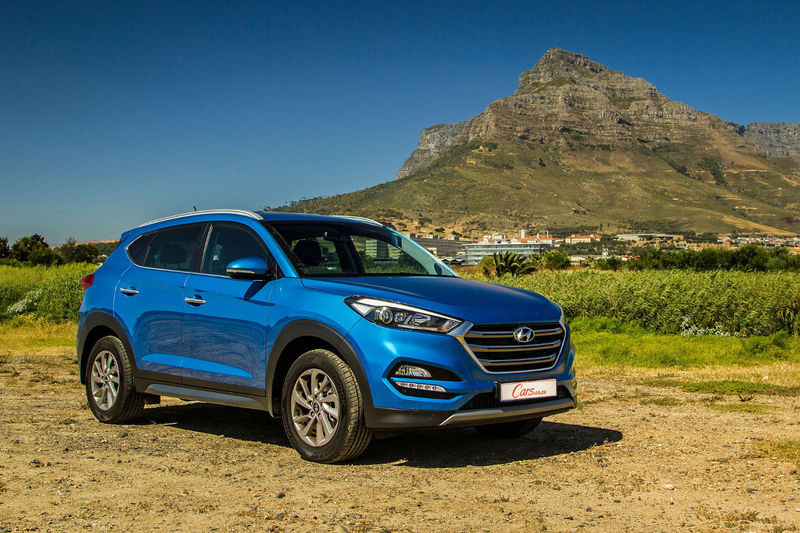
The Hyundai Tucson serves as the Korean brand’s medium-sized SUV catering to families looking for a spacious 5-seater with a raised ride height. The Tucson’s main competitors are found in the Volkswagen Tiguan, Kia Sportage, Toyota Rav 4 and Peugeot 3008 to name a few in this hotly contested SUV segment.Here’s everything you need to know about the Hyundai Tucson.
Hyundai Tucson 1.6T Elite Sport (2019) Review
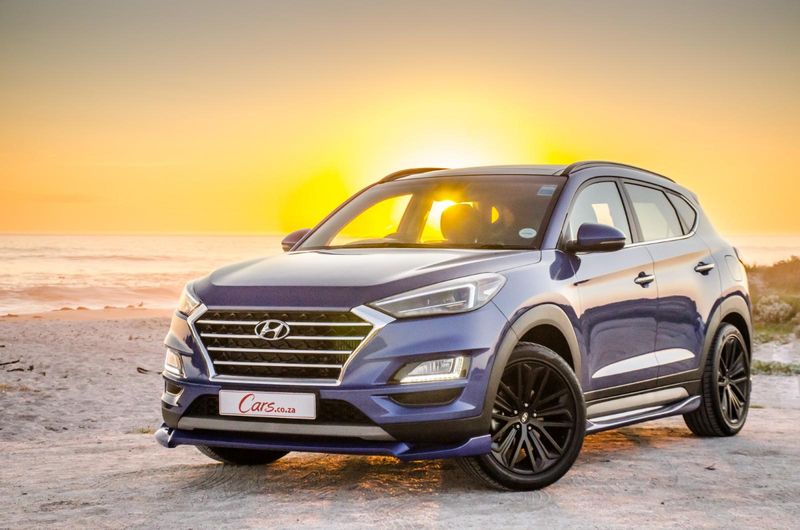
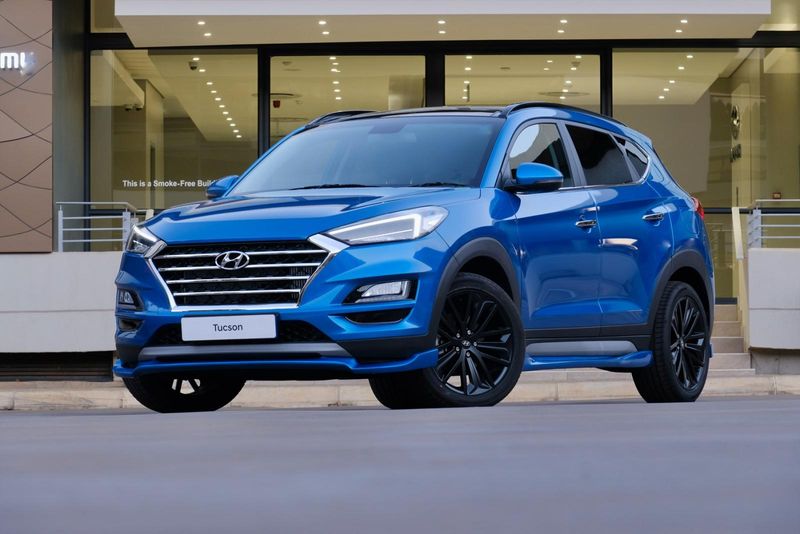
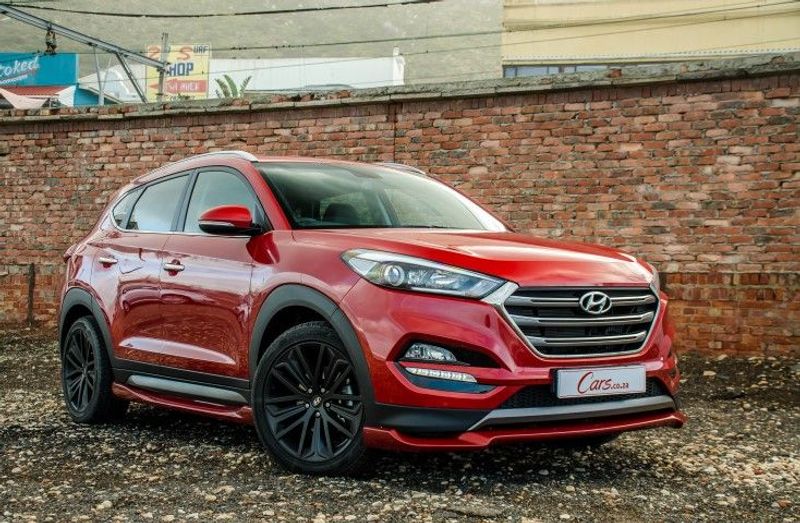
With a bold, look-at-me styling kit and beefed-up performance, Hyundai’s latest iteration of the Tucson Sport (now available in both turbopetrol and -diesel flavours) is generating significant interest after the success of the first (pre-facelift) Tucson Sport back in 2017. How good is the latest Tucson Sport? Let’s take it for a spin…
We Like: Bold and sporty styling, standard features, practical interior
We Don’t Like: Overly-sensitive throttle, the interior lacks special character, thirsty, pricey
For those with a penchant for a practical family SUV festooned with a Fast and Furious-style body kit and endowed with heightened power/torque outputs, Hyundai has delivered a solution (yet again). Introducing the locally-developed Sport derivatives of the facelifted Hyundai Tucson.
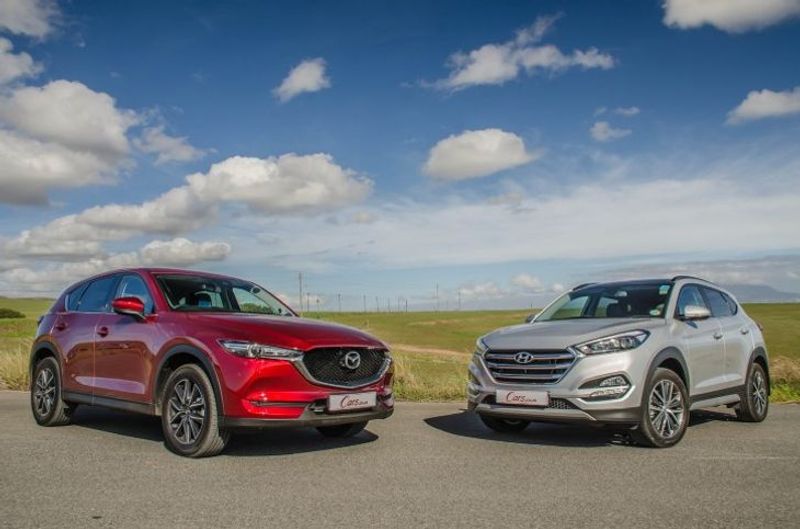
The Hyundai Tucson is currently the best-selling compact family SUV in South Africa, but the latest Mazda CX-5 is a strong product and we brought these two segment heavyweights together for a comparative assessment. Does the handsome Hyundai Tucson have what it takes to best the suave Mazda CX-5? Take a look at our findings for the answers…
The popular Hyundai Tucson has been facelifted for 2018. The Korean brand has trimmed its family car range and the updated model incorporates a handful of changes in terms of appearance, trim and specification. We drove the facelifted model at its local launch in the Western Cape.
The facelifted 2018 Hyundai Tucson family car launched in SA in September 2018. Take a look at 5 key changes that the latest Tucson brings to the road.
The Tucson is an important model for Hyundai and since its launch in 2016, more than 13 591 units have found homes in South Africa. The Tucson competes in a competitive segment against rivals such as the Toyota Rav4, Volkswagen Tiguan and Mazda CX-5. Now, Hyundai has refreshed its Tucson range in an effort to improve competitiveness and tighten its grip in this hotly-contested segment.
Take a look at 5 key changes to the Tucson lineup..
Hyundai recently introduced a sportier version of its top-selling Tucson family car in South Africa. It’s called the Tucson Sport and we tested it to find out if there is any merit in considering this beefed up compact family SUV.
We Like: Exterior enhancements, ride quality, performance, space
We Don’t Like: Annoying exhaust drone, stock-standard interior
Korean brand Hyundai’s Tucson is a firm favourite in South Africa. Though the brand does not officially publicise its monthly sales volumes, we have it on good authority that the Tucson is one of the top-selling family car/SUVs in this country. Besides, you can gauge its popularity by just witnessing the sheer number of them in traffic. But which derivative is best? We think a mighty strong case can be made for this… the 1.7-litre turbodiesel Executive.
We like: Smooth, economical engine, ride quality, spacious, well-built cabin
This week’s news you need to know (July 2021, Week 5)
In this week’s automotive news you need to know: Audi promises to not run out of electricity in the desert, Land Rover will reportedly slap a twin-turbo BMW V8 into the Defender, Volkswagen teams up with DJ Khaled and Toyota binge watches all 25 Fast and Furious movies before festooning its new 86 with GR paraphernalia.
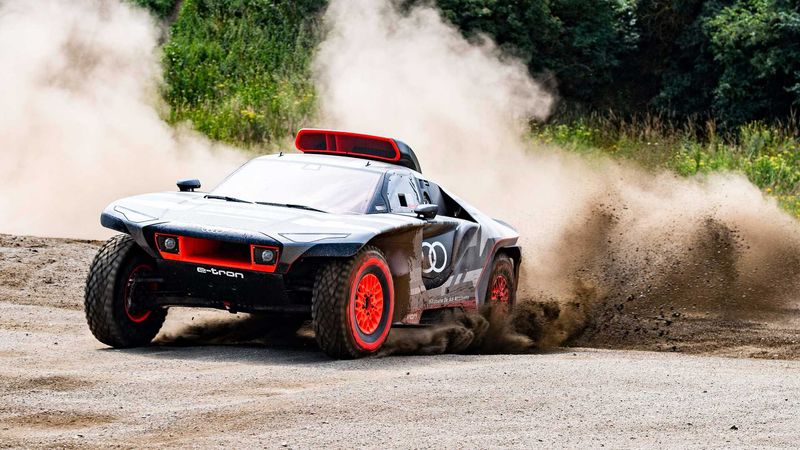
Audi RS Q e-tron – ‘back to the future’
Next year, Audi will compete in the toughest motorsport event on the planet – the Dakar Rally – with the 500-kW Electric Audi RS Q e-tron. Apart from the marketing mileage the Ingolstadt-based firm will get out of this ambitious quest, it could do itself (and many EV producers) a favour by putting the ol’ “EV range-anxiety” issue to bed once and for all. Despite contradictory messages from the VW Group about its involvement in motorsport, live competition is still the best way to test products. Audi would certainly live up to its Vorsprung Durch Technik slogan if it achieved success with this endeavour.
Make no mistake – there’s a lot riding on this. Get it wrong and it’s a long walk back to the bivouacs, but get it right and Audi will shut up its critics – an EV would have beaten all and sundry in a motorsport formula that it doesn’t have to itself (unlike Formula E). Plus, it could prove a watershed moment in the EV-range debate and Audi knows that all too well. I have every bit of confidence they’ll get it right just as they did back in the ’80s with the Sport Quattro S1. The rest of the world was adamant rear-wheel-drive rally cars were the way forward – but Audi knew better.
Land Rover SVR Edition – Modern classic loading…
It may be a tough pill to swallow for dyed-in-the-wool petrolheads, but models like the upcoming Land Rover Defender SVR will be highly collectable in 20 years’ time when our road networks are chock full of autonomous cars and “hand-driven” electric cars are regarded as… well, modern classics. Crazy, right? Despite my reluctance to admit that any SUV needs to have this sort of power (a peak output of 447 kW is expected), we’ll probably look back at this brutish creation with misty eyes one day and thank manufacturers that they were once brazen enough to produce special editions such as these.
Motortrend reports the Defender SVR could be powered by a BMW-supplied 4.4-litre twin-turbo V8, which makes me believe that there might still be remnants of insanity (but of the good kind) left in the motor industry – thank heavens. Before the automotive world’s products become too efficiency-oriented, 99.9% renewable and largely (if not fully) autonomously piloted, I’d advise getting one of these unashamed and unabashed juggernauts (if you have the money). This, any V8 AMG and even contemporary BMW M cars will be truly “exceptional” in years to come, even if you can’t see that now.
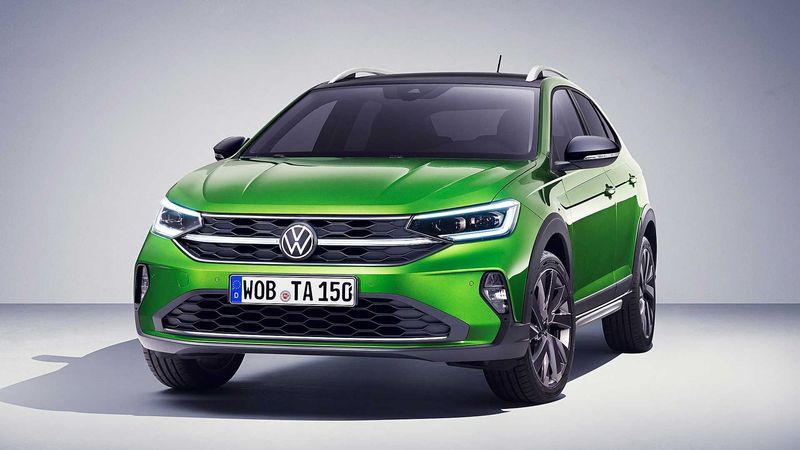
Volkswagen Taigo – ‘Another one’
Much has been written about the prodigious ascent of the SUV – it’s a trend that began in North America decades ago – but, as for the rest of the world, crossovers (compact- to medium-sized family cars that are merely styled to look like SUVs) have arguably usurped much more market share than the big rigs that inspired them. Manufacturers’ obsession with churning out numerous derivatives (as many as they can) of these crossovers has compounded excessive model proliferation. It really seems that there’s an option for whatever mood that you might be in on any given day and whether the wind is blowing or not.
Sure, we like to have a wide variety of products to choose from, but the myriad crossover/SUV options available in the market today simply beggar belief. The new Taigo joins the list of T-Cross, Taigun, T-Roc, Tiguan, Atlas and Atlas Cross – and those are just the ones from Volkswagen’s stable that jump to mind. Every new variant of an existing model that a major manufacturer churns out is invariably countered by the introduction of a competitor product, so you see, we’ve created a monster. That adage of “less is more” seems lost on manufacturers as they push to squeeze as much profit as possible out of platforms/product life cycles. The principles of car manufacturing are what they are, but as much as I appreciate that consumer choice is key in the market, there’s just too much on offer.
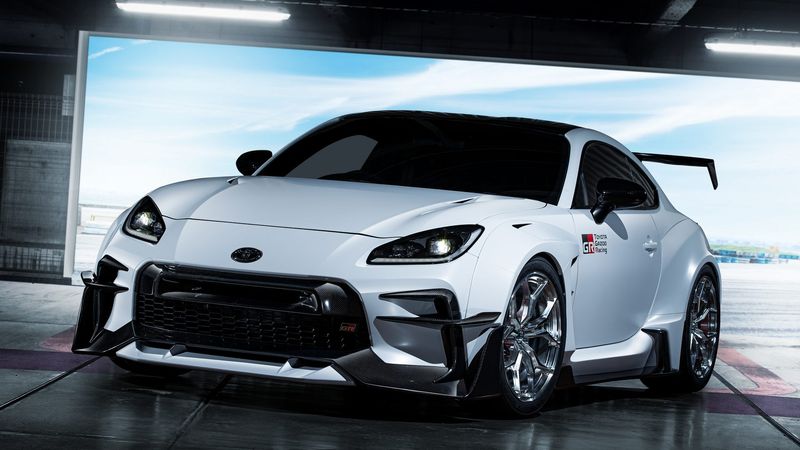
Gazoo Racing goes to town – On new 86
If it wasn’t evident that Toyota was making uncharacteristically bold (but absolutely welcome) statements with the GR-infused performance models it has been adding to its product line-up, the Aichi-based brand’s latest revelation might drive the point home. Yes, folks… Toyota Gazoo seems to be bringing the crazy world of customisation in-house. Looking more “ricer” than “racer”, someone might need to go easy on the sake in that boardroom and dial back the energy, because I don’t think South Africa has seen that amount of wang, carbon fibre and Rocket Bunny (Google it!) influence, even in Lenasia.
Sure, some may find the GR paraphernalia a bit “out there”, but the after-market embellishments are integral to Japanese car culture and, all jokes aside, if it seems that Toyota is “keeping the fun alive” all by itself (and, let’s face it – few Japanese car manufacturers are), we should embrace and celebrate it. So, if you’re currently experiencing a mid-life crisis and want something bold, Toyota – yes, Toyota – has you covered. Static or bagged?
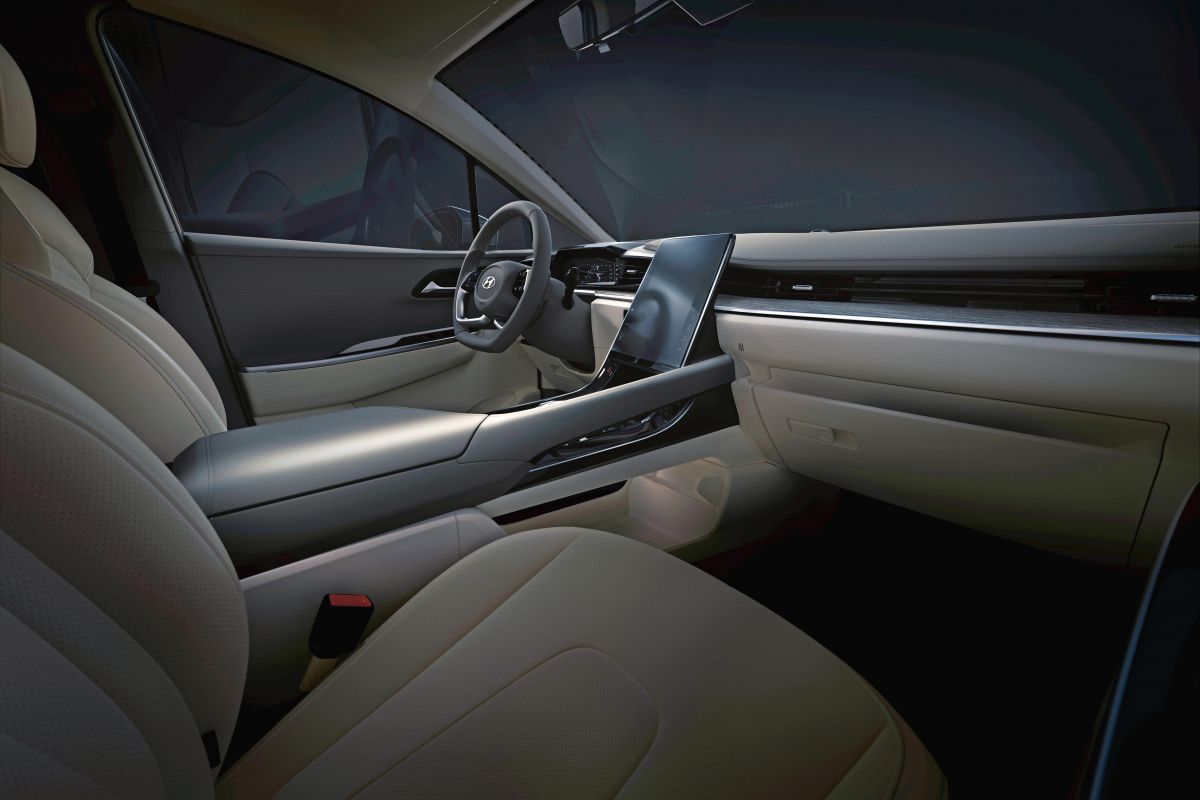
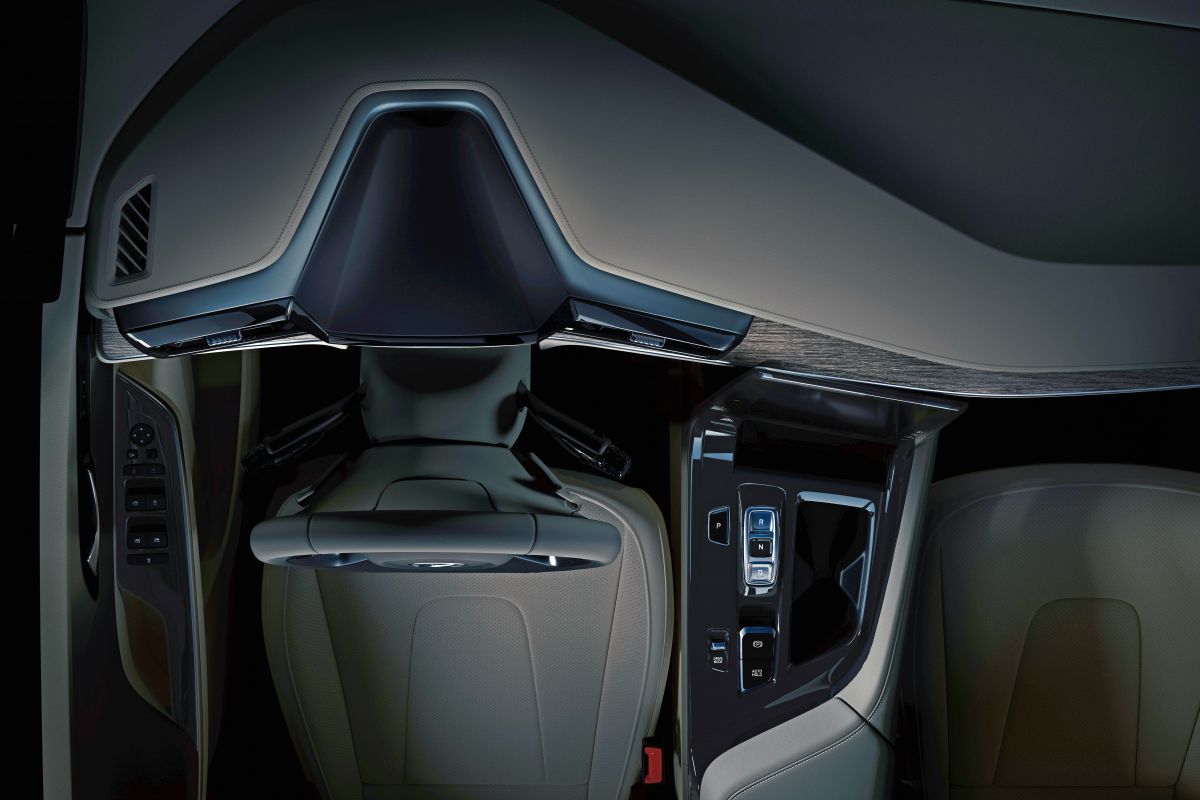
A look at Hyundai’s new SUV cabin
Big screens and storage are the focus for Hyundai’s future interiors.
Digitization is dominating interior design and Korean car companies have an advantage.
With the Korean electronics industry being so strong, a company such as Hyundai, can leverage a lot of primary supplier technologies.
Korea also has an abundance of quality industrial designers, who understand how to integrate screens. That plays to the advantage of Hyundai, proven by its latest interior design.
The company has revealed images of the Custo cabin, a mid-sized SUV.
Being the latest look at where Hyundai cabin architecture is trending, the Custo gives us some interesting clues of what to expect in future products.
The steering wheel is a stylized version of the current Hyundai four-spoke helm, with its pronounced flat bottom. Most of the switchgear appears familiar, but the instrumentation is different.
Hyundai has gone with neater fonts and less detail clutter in its latest electronic display.
Anchoring the cabin design is a vertically orientated 10.4-inch touchscreen. It sits in the traditional hang down section, between the front seats.
This large touchscreen enables a bigger storage space between the seats. A neat touch is the storage pouch in front of the front passenger, as an external feature to the traditional cubby hold locker.
The HVAC control buttons and dials have been replaced with digital equivalents, although Hyundai has cleverly opted to retain a hard button for the hazard lights.
BMW fans might recognize symmetrical storage bin design, between the seats, which has a shape very reminiscent of the current X-series SUVs.
Brace yourselves for pain at the pumps as the AA says the prices of petrol, diesel and paraffin are set to rise in August 2021.
Based on the unaudited month-end fuel price data released by the Central Energy Fund, motorists can expect big jumps in the price of petrol, diesel and paraffin in August 2021.
“The average Rand/US dollar exchange rate consistently trended upward during July and the weaker local currency will make it more expensive for South Africa to import fuel,” says the AA. The Association adds that over the same period, international oil prices averaged higher, despite a mid-month pullback.”
As it stands, the AA of SA is expecting around 83 cents a litre higher for petrol, 48 cents a litre for diesel, and also 48 cents for illuminating paraffin.
It’s bad news and the continuing trend of constant increases does not seem to be stopping. The AA has been tracking the increases and says the price of petrol will have climbed almost 23% in just 7 months. Diesel meanwhile has climbed around 20% and paraffin will have increased by 30%.
“ULP95 cost R14.86 a litre in January compared to the expected new price of around R18.22 in August. In January a litre of diesel cost R13.00 compared to the expected August price of R15.56 a litre, while a litre of illuminating paraffin is expected to cost around R9.61 when the price is adjusted for August compared to its price of R7.39 in January. These increases will add to the heavy financial burden for South Africans already battered by weak economic conditions,” the AA concludes.
We met around the virtual water cooler and crowned the 6 best car interiors for 2021.
If you had to choose the best car interiors, what would be on your list?
Debates regarding exterior and interior car design are very often heated, emotional and lively, depending on who you are, where your brand allegiances lie and what brand or car model is in the spotlight.
Car design is a subjective topic, but like you, we are car lovers too and we also like a good debate. For this article, we turned our attention to the topic of the latest and most striking car interiors. The interiors listed below were selected by the Cars.co.za editorial team and in our opinion are deemed to be the best or most striking production interiors (driver cabins) that we have either seen on the Internet or experienced in real life this year.
We expect that you might disagree with some or all of our suggestions, and that’s ok, but we invite you to our virtual water cooler to engage with us and offer up your own suggestions for what car interiors you think should be ranked as the best in the business.
The best car interiors listed here are not listed in any specific order.
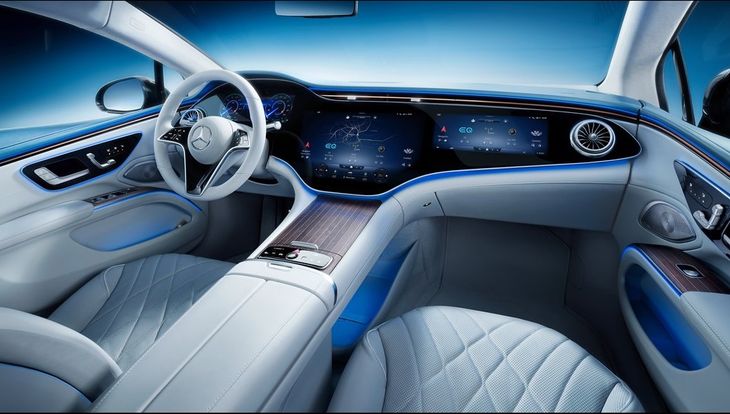
Mercedes-Benz revealed its new MBUX Hyperscreen earlier this year and it’s due to make its debut in the forthcoming all-electric S-Class known as the EQS, which is also due to arrive in South Africa in 2022.
The driver’s cabin of the EQS makes this list because of the sheer size and technological progression that is demonstrated by the MBUX Hyperscreen. Bigger is not always better but in this case it might just be. It just looks incredible. The 56-inch, dashboard-spanning Hyperscreen is huge to say the least and it comprises a digital instrument cluster, central media screen, climate control panel, as well as a media display for the front passenger, all in a continuous glass panel.
Representing the very best the brand has to offer, the EQS will be equipped with a wide range of luxury and comfort features such as a high-end 710-watt Burmester sound system, extensive comfort and massage programs and a HEPA air filter to keep the cabin air fresh and clean. Customers will also be able to choose between either Comfort or Sport seats and as you can expect, attention to detail should be top-notch.
If the cabin of the EQS doesn’t impress you, then we aren’t sure what will…
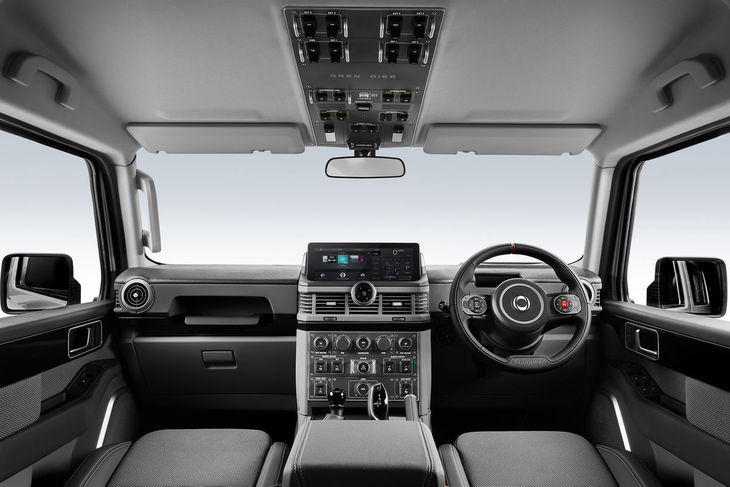
In direct contrast to the high-tech, ultra-luxurious cabin shown in the above EQS, we present to you the cabin of the Ineos Grenadier!
The Grenadier’s cabin is laden with buttons, knobs and switches and the overall design proves that buttons can be cool and in this case, better than screens. The Grenadier’s cabin is functional and designed for purpose.
For example, it features pre-wired auxiliary switches which will make it much easier to connect equipment such as camping gear, external lights or winches, for example. The hard-wearing interior is built to withstand the rigours of the wild and it can be hosed down if necessary (there are drainage plugs in the floor) and the stain-resistant Recaro seats are super durable too, perfect for bashing through the bundus!
It isn’t lacking modern conveniences either and for those who want to connect a smartphone, the Grenadier does feature a 12.3-inch touchscreen infotainment system with Apple CarPlay and Android Auto. A full reveal is expected in the coming weeks and we are ever hopeful to see and drive the Grenadier in South Africa in 2022.
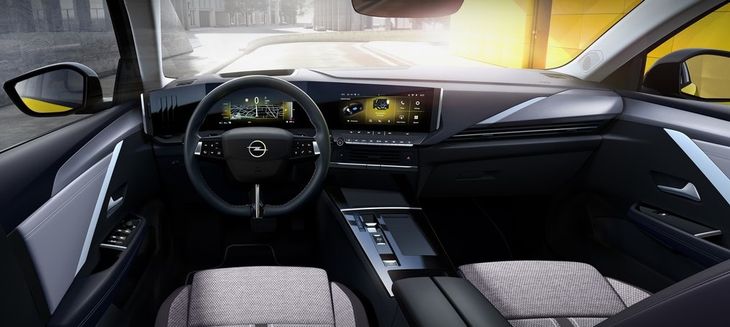
When Opel recently revealed its new Astra, we were mightily impressed by its slick interior design and it even got us questioning if it might be better than the new VW Golf 8, but alas, that’s a debate for another day.
Unlike the aforementioned Grenadier, the Astra has migrated the majority of the vehicle feature functions to what the Rüsselsheim-based firm calls a fully-digital ‘Pure Panel’. The upright and curved panel houses 2 wide 10-inch displays and together with a tastefully styled yet minimalist centre console, we think Opel deserves some applause.
The only disappointing thing about the new Astra is that it’s not destined to reach South Africa. Yes, the FOMO is real…
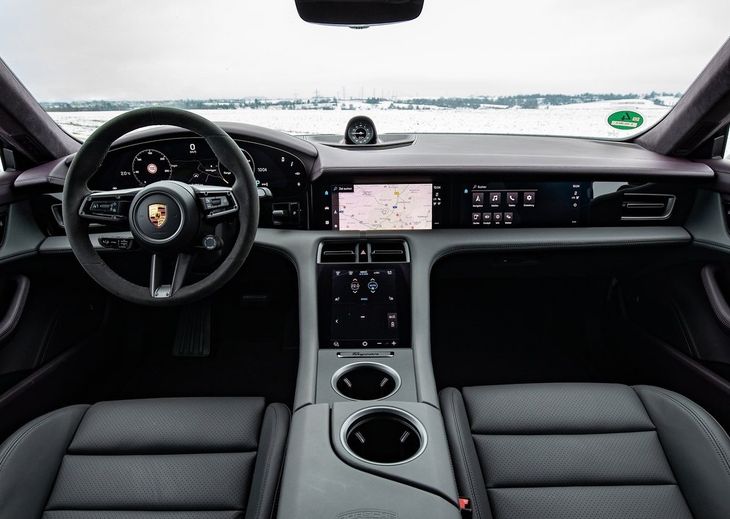
Granted, the electric Porsche Taycan wasn’t revealed in 2021 but rather in 2019, which makes it quite old in the automotive universe. It took its time to reach South Africa but we had our first thorough test of the Taycan in 2021 and its clean and sophisticated interior design left its mark on us.
It’s a display of displays in the Taycan and the front cabin can be equipped with up to 4 screens, all serving different functions, not only for the driver but the passenger too. The curved and frameless 16.8-inch digital instrument cluster is not only slick-looking but it’s also highly customisable with 4 themes on offer including Classic, Map, Full Map and Pure. Note the touch-points on the sides of the instrument cluster which provide quick touch-access to features such as lighting, suspension and traction control settings.
The 10.9-inch touchscreen infotainment screen take care of all your infotainment needs while the tablet-style 8.4-inch screen lower in the fascia operates the Taycan’s climate control functions and seat settings. As an option, Taycan owners can even spec a fourth 10.9-inch screen placed directly in front of the passenger as well as a fifth 5.9-inch screen for rear passengers.
Overall, sitting in the Taycan’s driver’s seat and experiencing the technology was memorable and we think it deserves its place on this list.
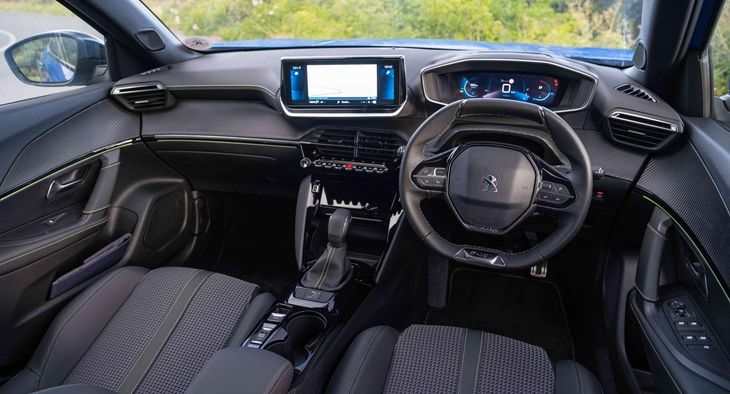
Let’s come back down to earth for a second and tip our hats to the interior of the Peugeot 2008. The new 2008 compact family was launched earlier this year and it’s undoubtedly equipped with perhaps the most stylish and modern-looking interiors in this segment.
The wraparound dashboard is driver-focused and incorporates Peugeot’s 3rd-generation i-Cockpit, which features a segment-first 3D instrument cluster and a 10-inch touchscreen infotainment system. Peugeot’s compact steering wheel is also unique in this segment and we like the aviation-style switchboard which provides easy access to key functions.
The top-spec 2008 GT is also generously specced with features too such as a wireless charging pad, 4 USB ports (and USB-C ports) and a 10-speaker Focal premium sound system with a 12-channel, 515W amplifier.
We will be publishing a review of the Peugeot 2008 soon, so keep your eyes peeled!
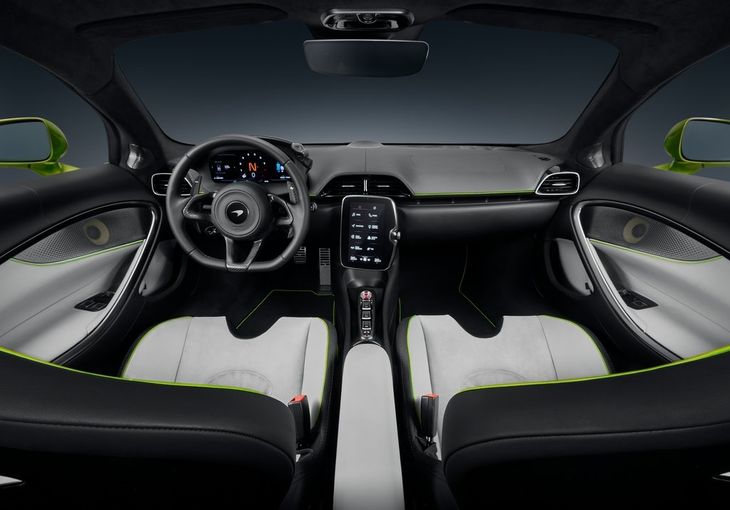
Supercars and hypercars feature the most dramatic and performance-focused interiors and this list wouldn’t be complete without at least one featuring, but what shall it be?
We settled on the Artura, McLaren’s new hybrid supercar which was revealed earlier this year. We like the fact that it’s not an over-the-top interior but rather understated and focussed purely on the driver. The new Clubsport seat design deserves a mention and it combines the range of motion expected of a moveable backrest with the lightweight and support of a bucket seat. The whole seat pivots as one through an elliptical arc when being adjusted, setting under-thigh support, seat height and backrest adjustment all in a single movement.
Two high-definition screens deliver notable responsiveness, similar to what you will experience on a smartphone. Users can also access McLaren’s apps including McLaren Track Telemetry and Variable Drift Control. The instrument binnacle features a redesigned navigation map and only features key information to minimise distraction. Stealth mode further hides non-essential information to promote full driver concentration.
The all-new Audi S3 has touched down in South Africa, but petrolheads noticed that the outgoing model has a touch more power. During the launch of the all-new Audi A3, we asked Audi SA for clarity.
Detuning vehicles for different markets is not an unusual practice. Certain climates and grades of fuel can affect a vehicle’s performance and when it comes to the powerful turbocharged offerings, heat is the devil. Also, with varying petrol qualities around the world, the manufacturers would rather err on the side of caution than risk long-term reliability issues.
Volkswagen Group has done this a few times over the years with its performance products. The Volkswagen Golf R’s European market model boasted a bit more power than its South African counterpart, until early 2019. As SA was tagged as a Hot Weather Climate market, we got the 213 kW derivative, as opposed to the 228 kW model.
Awkwardly, the Audi S3 had the full-fat 228 kW right from the get-go. By February 2019, the Volkswagen Golf 7.5 R had seen its outputs climb to 228 kW and 400 Nm of torque (up 20 Nm as well), as well as gain the feisty Akrapovic exhaust system.
Now, this is where things get interesting. The previous-generation Audi S3 had 228 kW and 400 Nm on offer, but the all-new model’s 2.0-litre 4-cylinder engine produces 213 kW and 400 Nm. We asked Audi SA about this difference during the launch of the all-new model and representatives had this to say about the situation:
The short answer is around product strategy for a particular market/region. All markets have the necessary approvals or strategic directions for Audi AG.
Bigger markets or regions – like Europe, for example – receive priority in terms of first to market introductions, specific features/innovations being released as well as new engine development (like EU6 – which generally comes with newer innovations – mild hybrid, higher performance, etc, etc).
Smaller markets or regions – like Africa and Near East – unfortunately then get allocated a different approach, all based on Audi’s global strategic intent. This strategic direction takes into account elements like fuel quality, volume potential, climate classification (hot, mild), etc which then gives our market a particular “approval” for the model or derivative to be introduced.
So yes, we haven’t been given the approval to sell the higher output S3 (with 228 kW of power), although the previous generation included this (the A3 model strategy, Audi SA market dynamics and classification as well as product portfolio overall was very different a good 6-8 years ago – so Audi AG’s approach was different).
So now, for markets out of Europe and particularly Africa and Near East (Same applies to Audi Middle East (who falls into the same region as us), we are given approval to sell the S3 with 213 kW of power.
Remember, power isn’t everything in performance, weight and aerodynamics play just as much a factor and Audi SA is convinced that improvements in these areas will mean this generation of S3 will be just as fast (or faster) than the outgoing model.
As small as that power difference may be, the stat-obsessed petrolheads expressed disappointment on our social channels to the lower output. Whether you can feel the power-difference underfoot is another story… We look forward to testing the new Audi S3 on local soil soon.
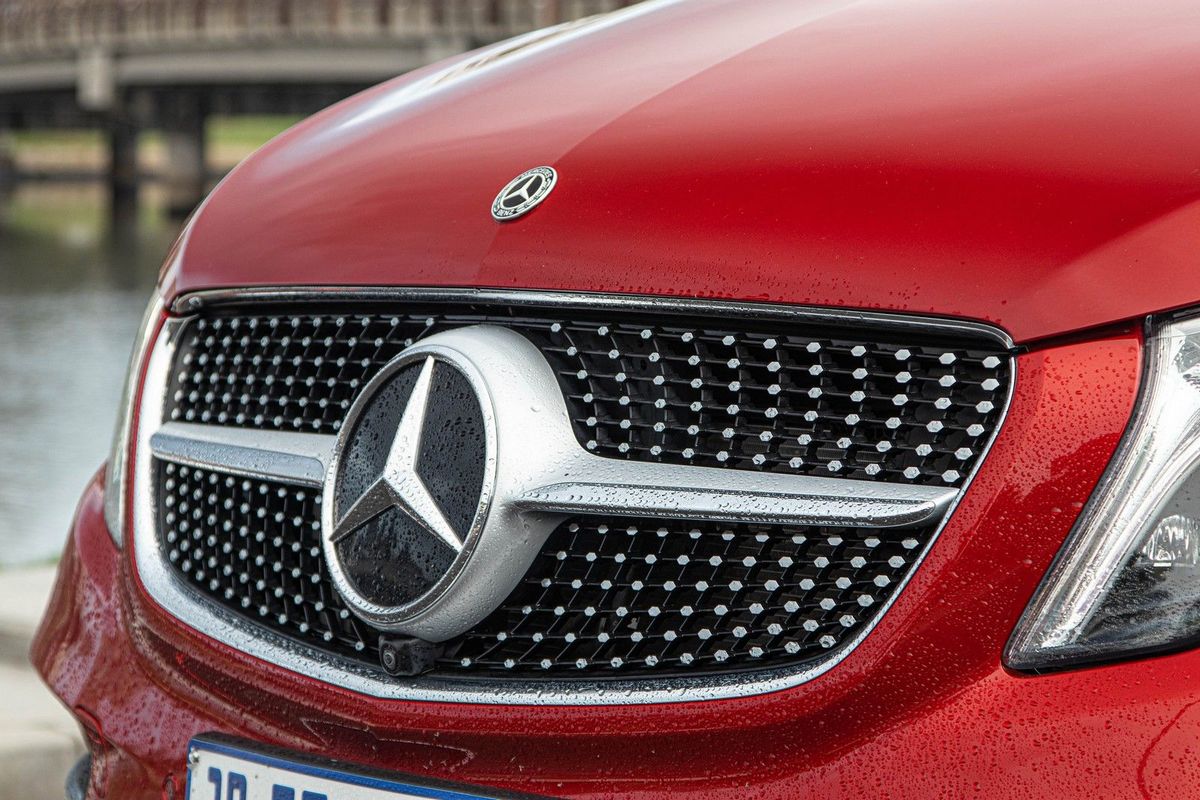
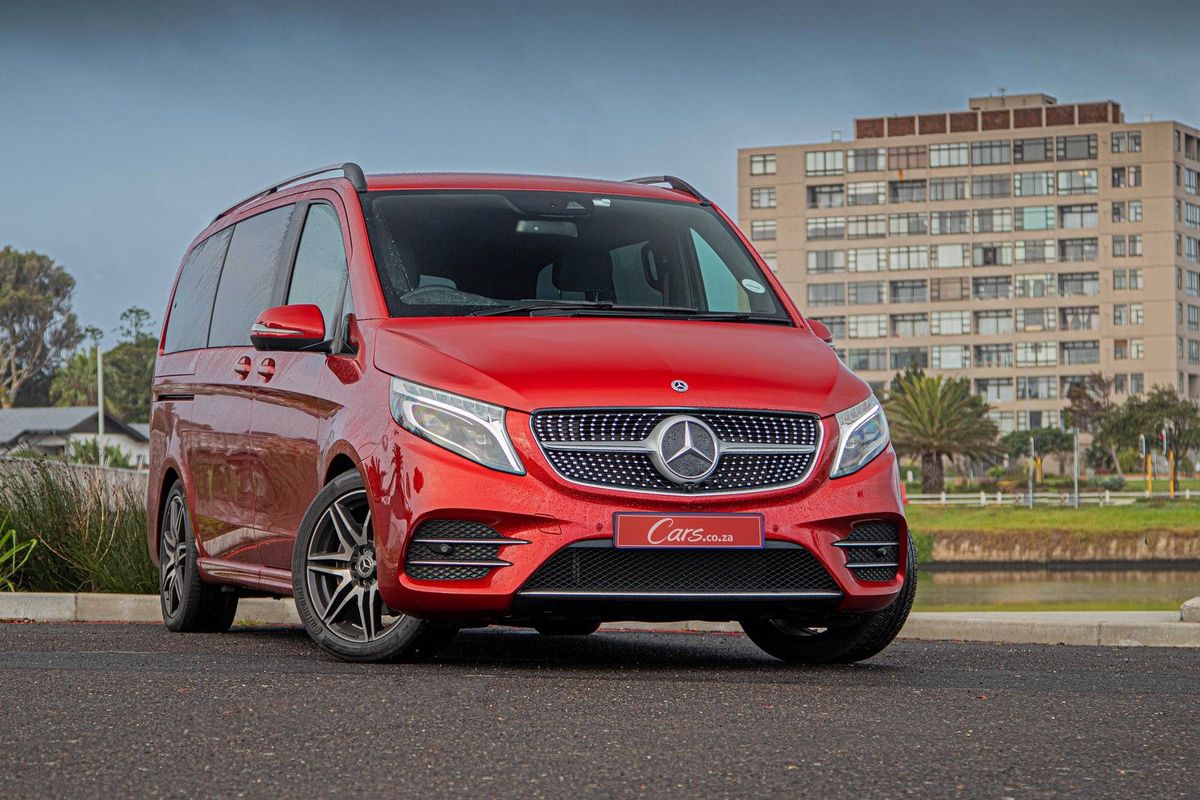
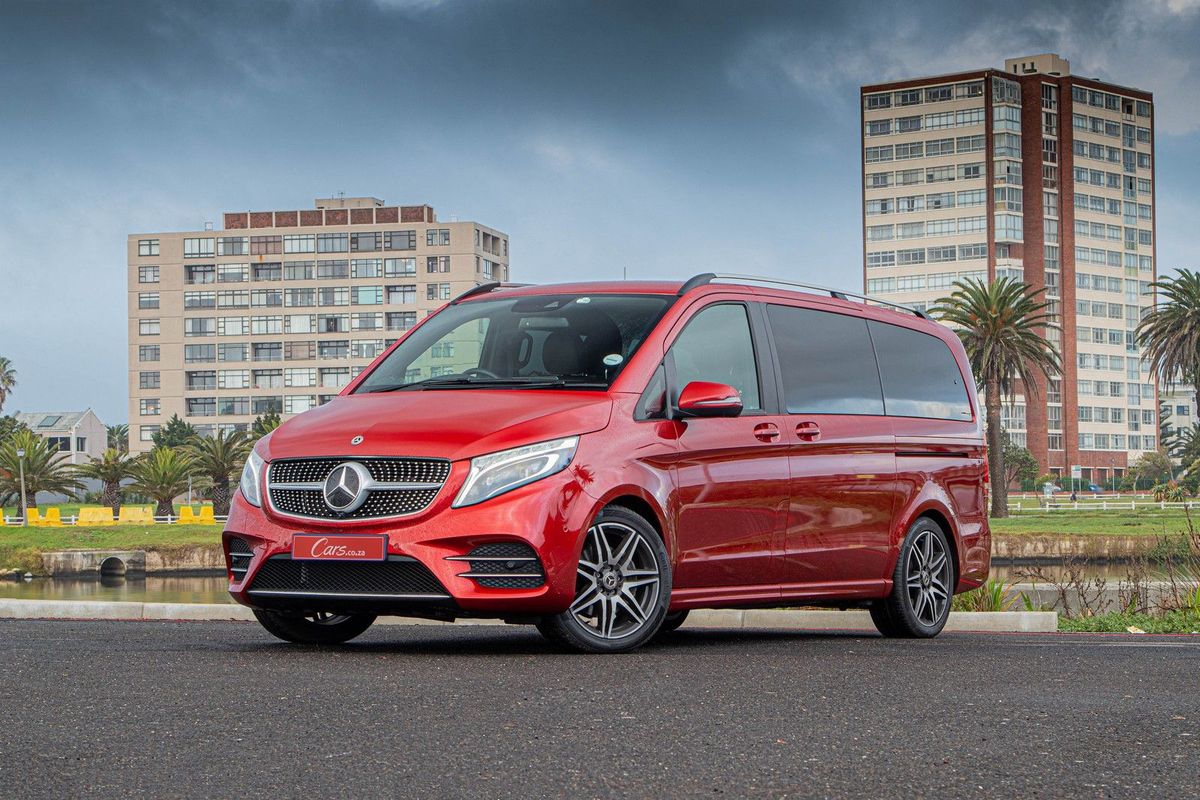
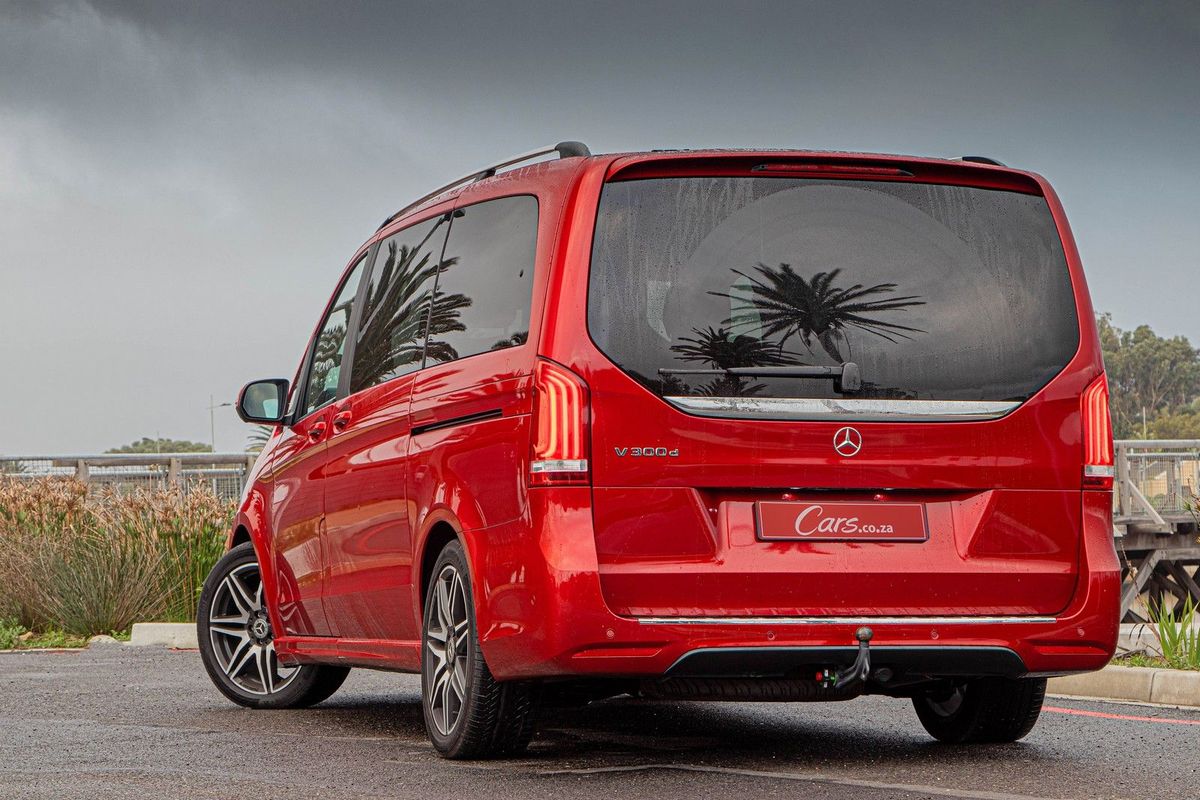
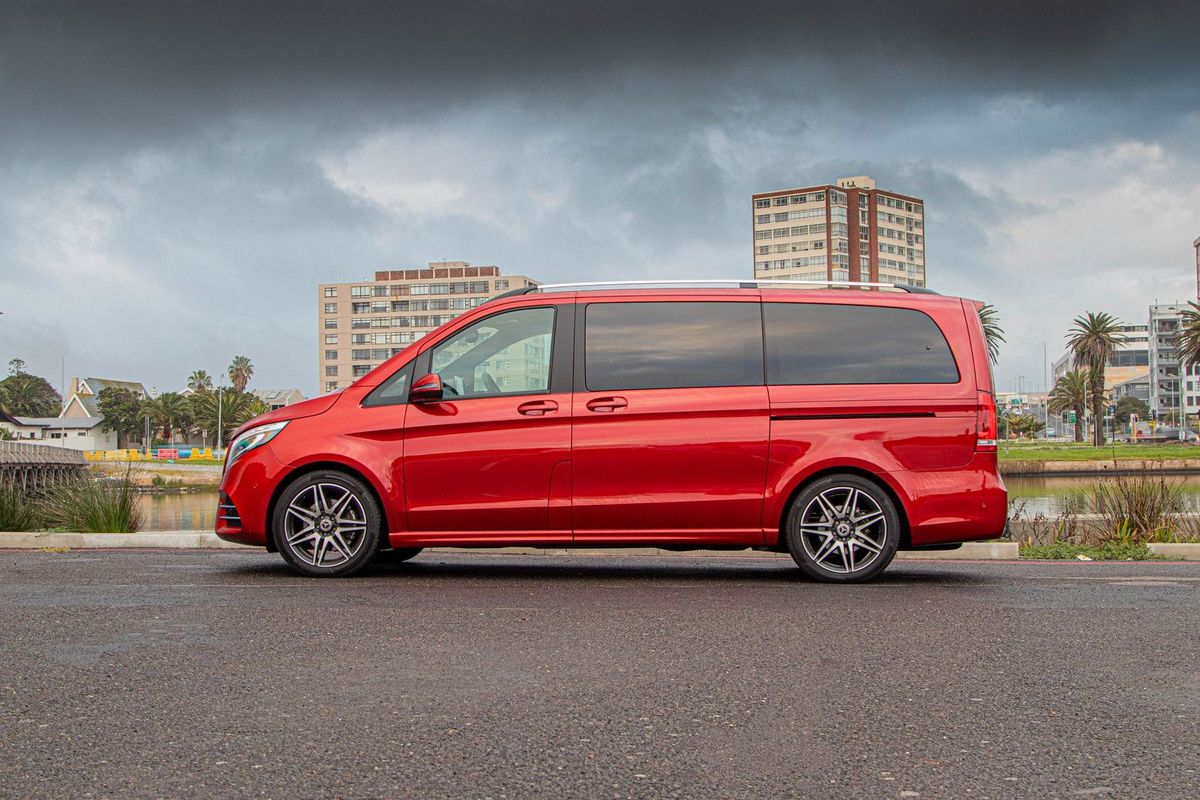
The desirability of Mercedes-Benz’s V-Class luxury minivan was recently enhanced through the introduction of a new engine/transmission combination and the addition of several refinements. We spent some quality time with the range-topping V300d to find out whether it’s worth the (hefty) premium.
We like: Power/efficiency balance, luxurious
We don’t like: Eye-wateringly expensive, somewhat dated ergonomics
Fast Facts
Model Tested: Mercedes-Benz V300d Exclusive
Price as tested: R1 799 060 (July 2021, without options)
Power unit: 2.0-litre 4-cylinder turbodiesel
Power/Torque: 176 kW/500 Nm
Transmission: 9-speed automatic
Fuel economy: 8.8 L/100 km (claimed)
Load space: 542 litres
Where does the Mercedes-Benz V300d fit in?
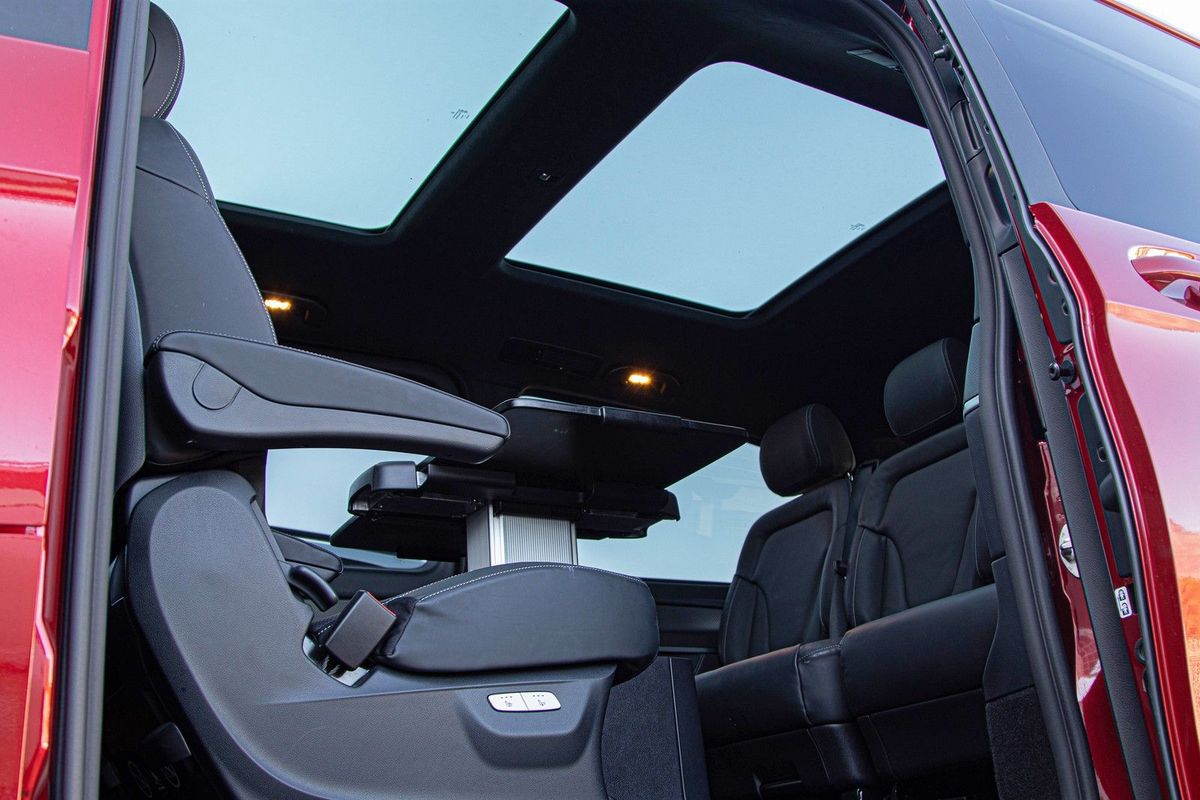
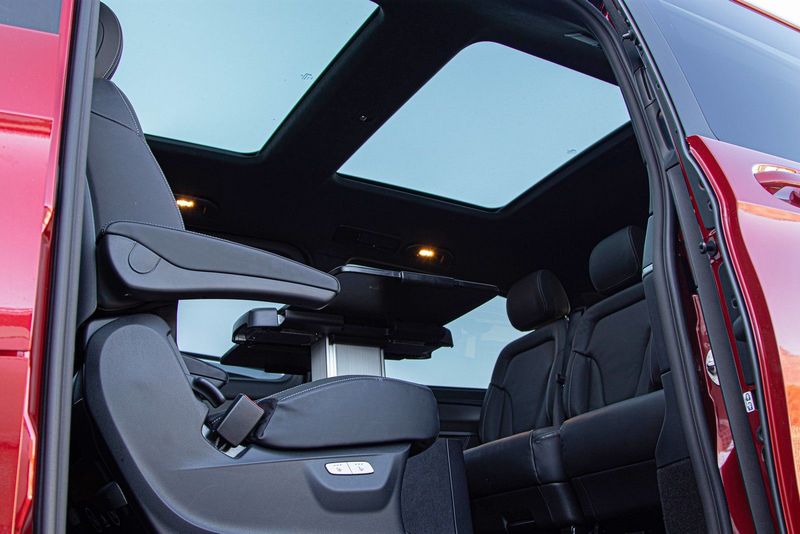
This is no mere people-mover… this V-Class has a panoramic sunroof, as well as heated/ventilated 2nd-row seats!
Mercedes-Benz and Volkswagen have found the South African market quite receptive to luxurious people-movers and although the V-Class and Caravelle are popular with VIP shuttle/transport operators, these family hold-alls offer plenty of appeal to well-to-do private individuals. The current V-Class was launched quite a while ago (in 2014), but ongoing refinements and updates have kept it in play.
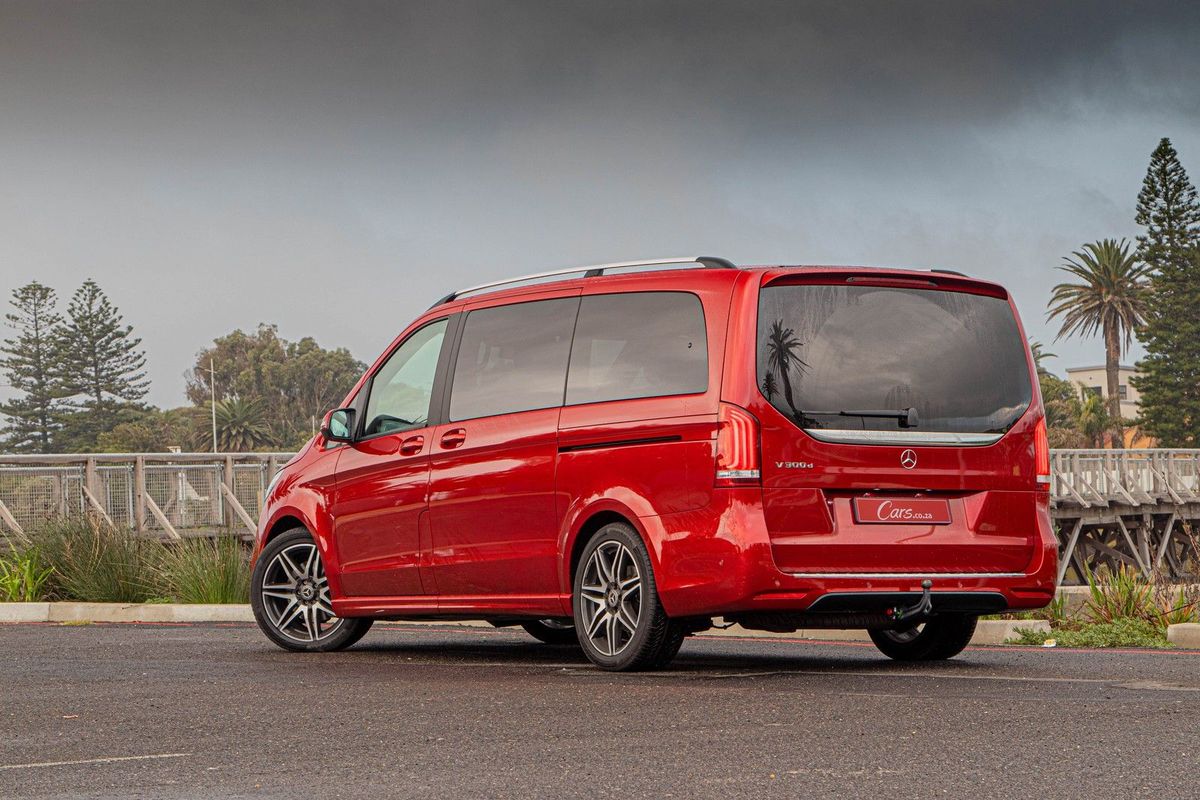
The most recent update to the Three-pointed Star’s W447-generation minivan arrived in South Africa last year and coincided with the introduction of a new flagship derivative, powered by the marque’s 2.0-litre OM 654 4-cylinder turbodiesel engine, which is mated with a 9-speed automatic transmission. Named the V300d, it is offered in a choice of 3 trim levels, with the priciest version being the one you see here – the Exclusive. Priced at just under R1.8 million (without options), it is the most expensive 7-seat minivan you can buy in South Africa (and by some margin). Is it worth the outlay?
How the Mercedes-Benz V300d fares in terms of…
Performance and Efficiency
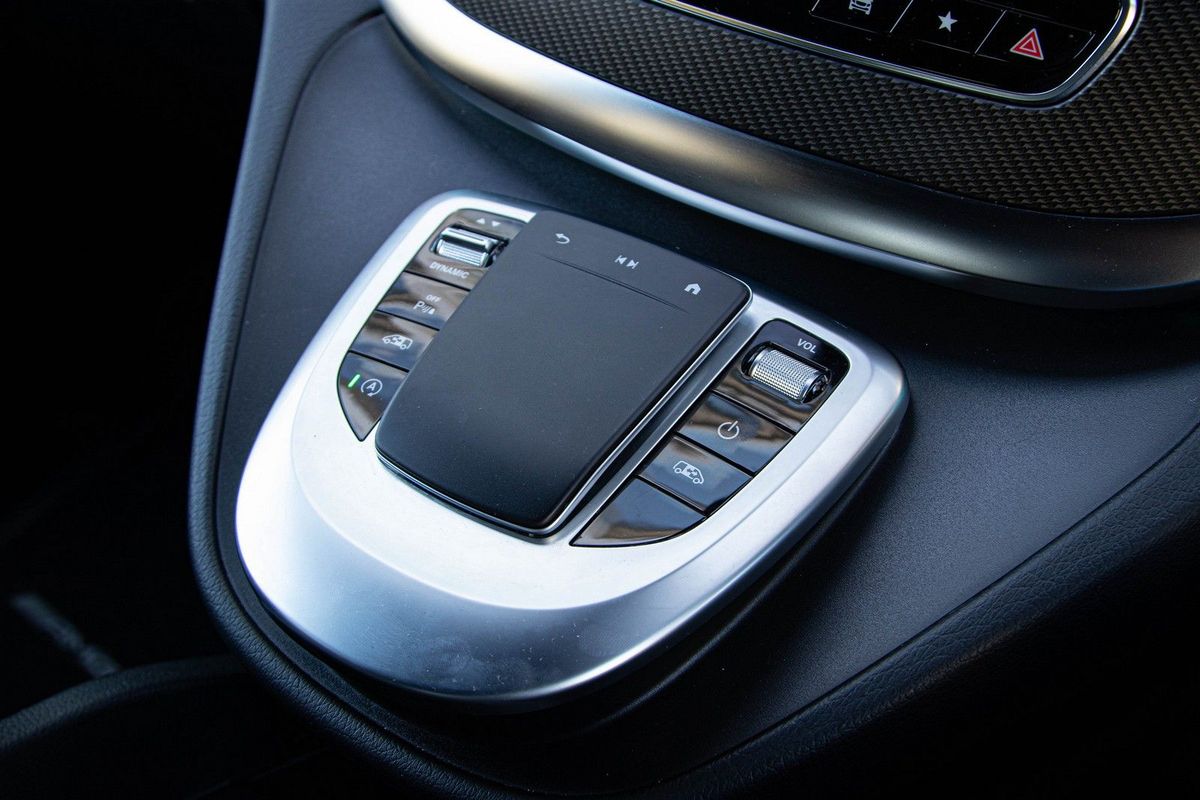
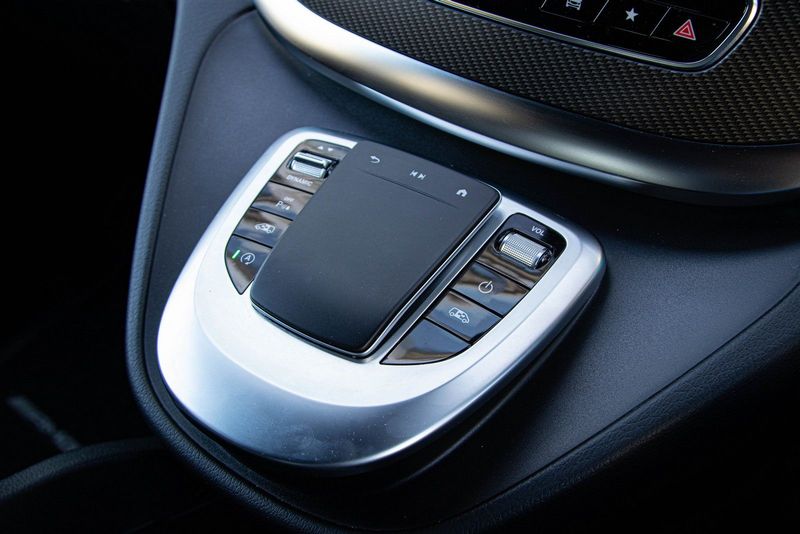
Dynamic Select switch allows the driver to choose between Comfort and Sport settings.
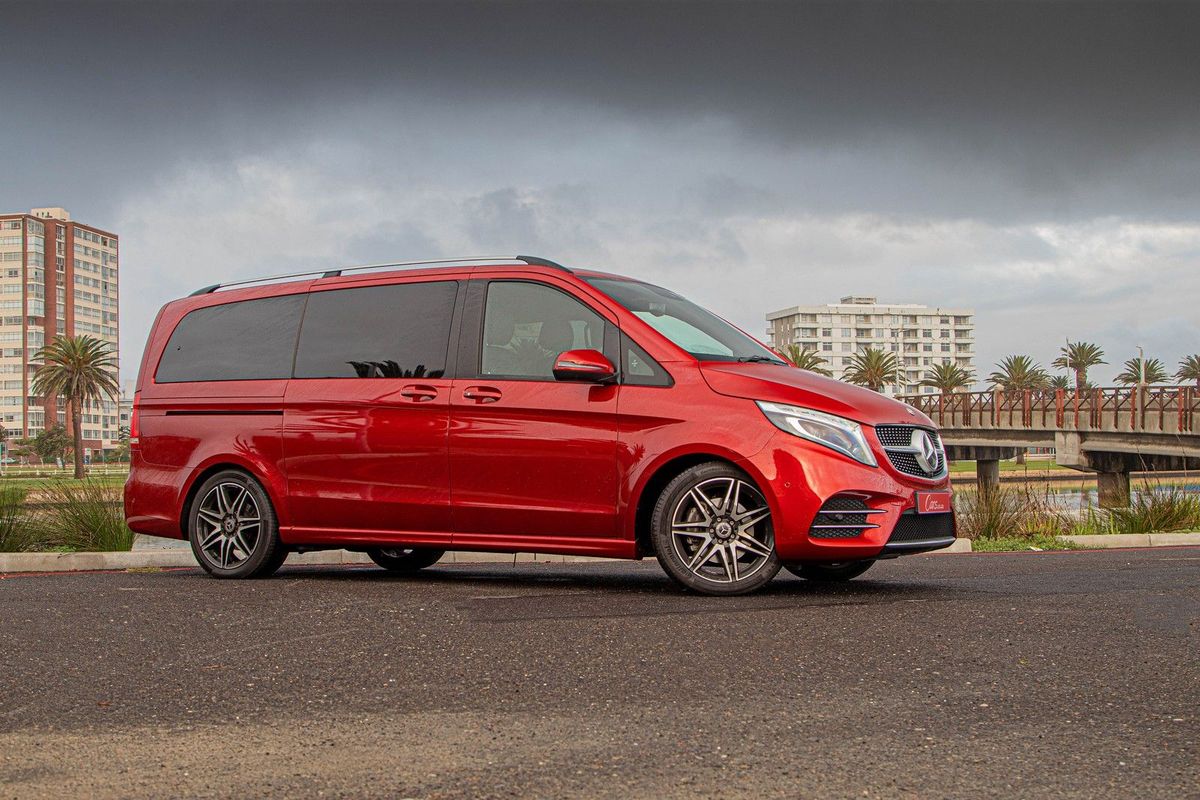
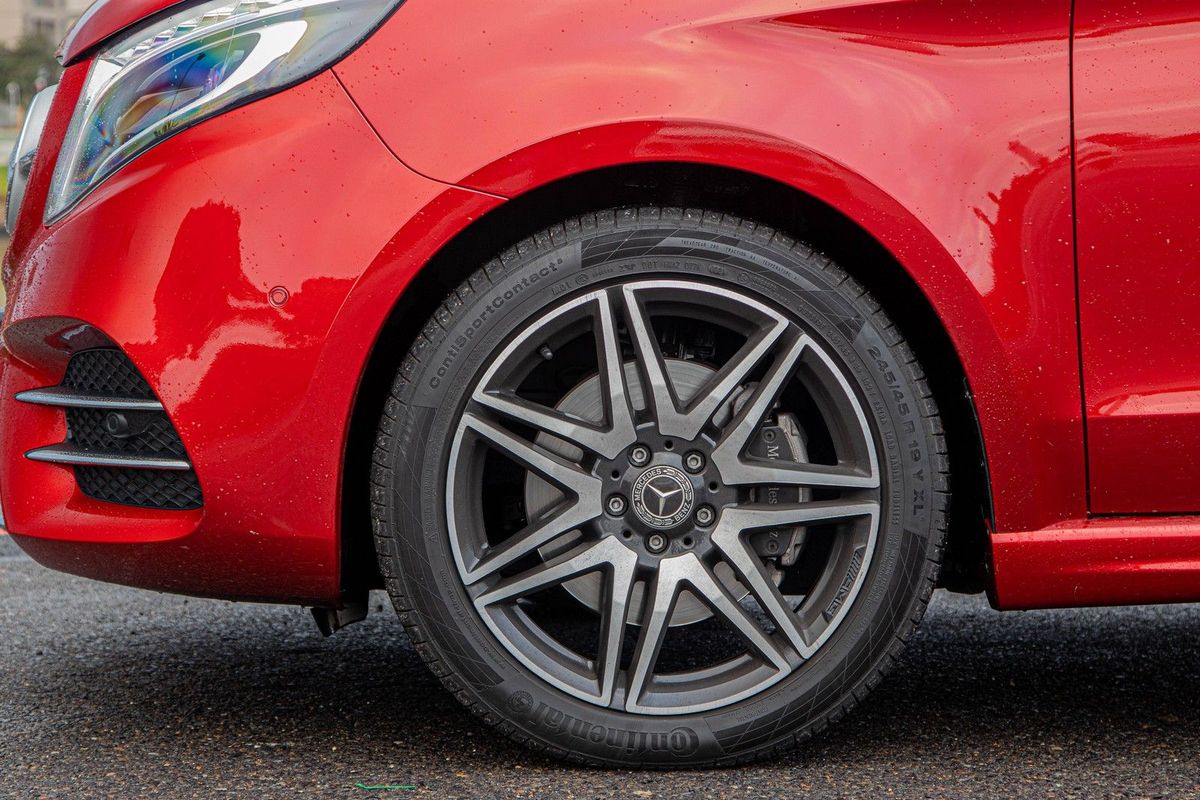
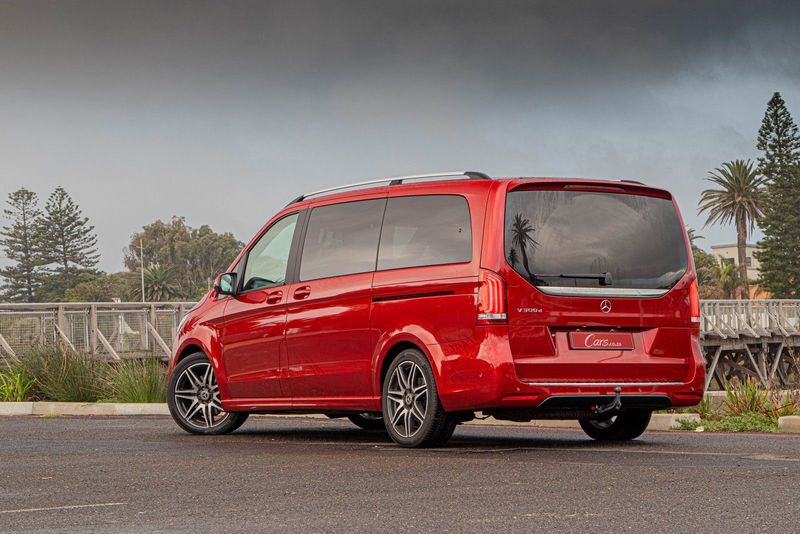
Given that it weighs well over 2 tonnes and is shaped like a pointy-nosed brick, the V300d shouldn’t have any sporty pretensions, but here it is, flaunting various AMG paraphernalia, including two-tone 19-inch alloy wheels! The V-Class shares its OM 654 engine with the E-Class and, in its latest application, punches out a class-leading 176 kW at 4 200 rpm and 500 Nm of torque from 1 600 to 2 400 rpm. That’s impressive shove for a minivan and makes the V300d a noticeably brisker tourer than, for example, the V250d. Mercedes-Benz even claims a 0-100 kph time of 7.8 sec and a 220-kph top speed!
That said, in our previous review of a V250d, we found Benz’s bus was already an impressively swift tourer with sufficient power for overtaking, so we won’t suggest opting for the significantly more expensive V300d purely for the sake of extra performance… unless you intend to tow trailers regularly. Where the V300d’s new drivetrain does move the game forward for the V-Class line-up, however, is in its combination of power – with efficiency – and refinement. The 9-speed transmission’s role in the impressive combination of talents should not be underestimated, either. It also features a Dynamic Select switch on the fascia, which allows the driver to select Comfort or Sport driving settings, with the latter mode sharpening up throttle response and keeping the transmission on “high alert”.
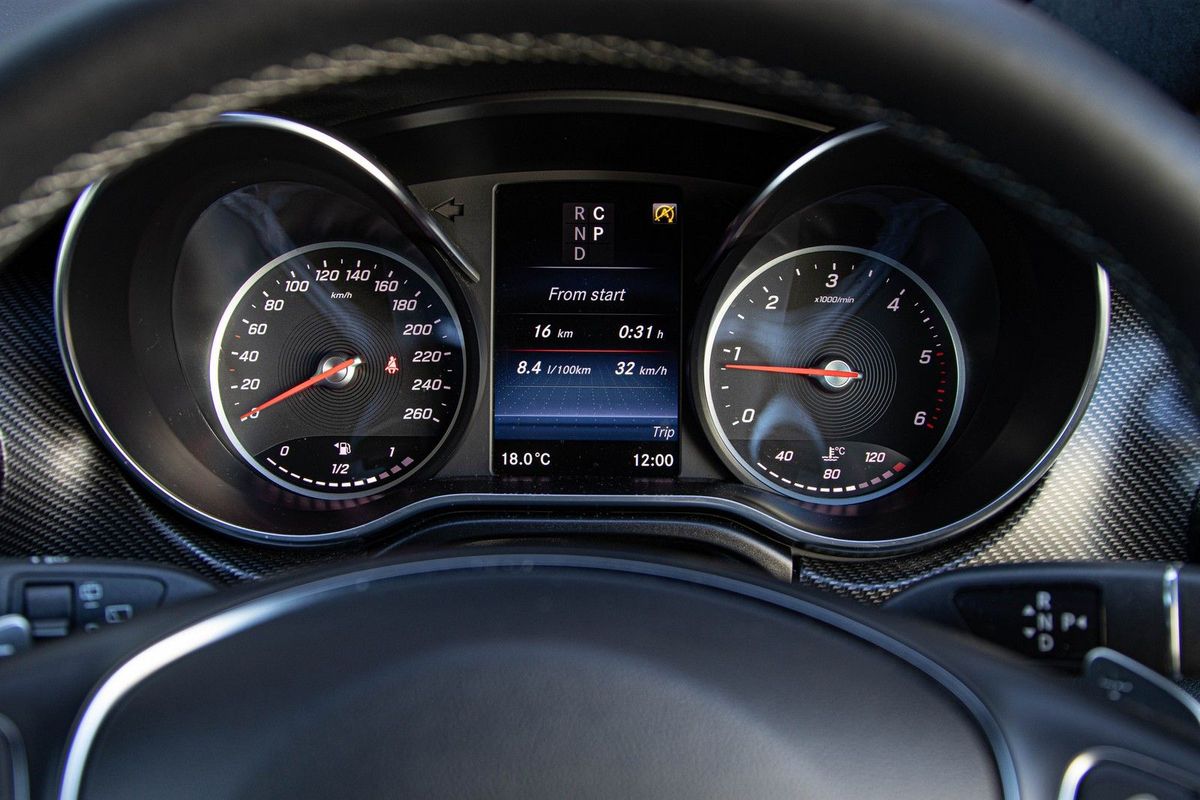
Mercedes-Benz claims average fuel consumption of 8.8 L/100 km and, during our test period, this translated into a real-world figure of around 10.5 L/100 km, which is acceptable for this type of vehicle.
Luxury and Practicality
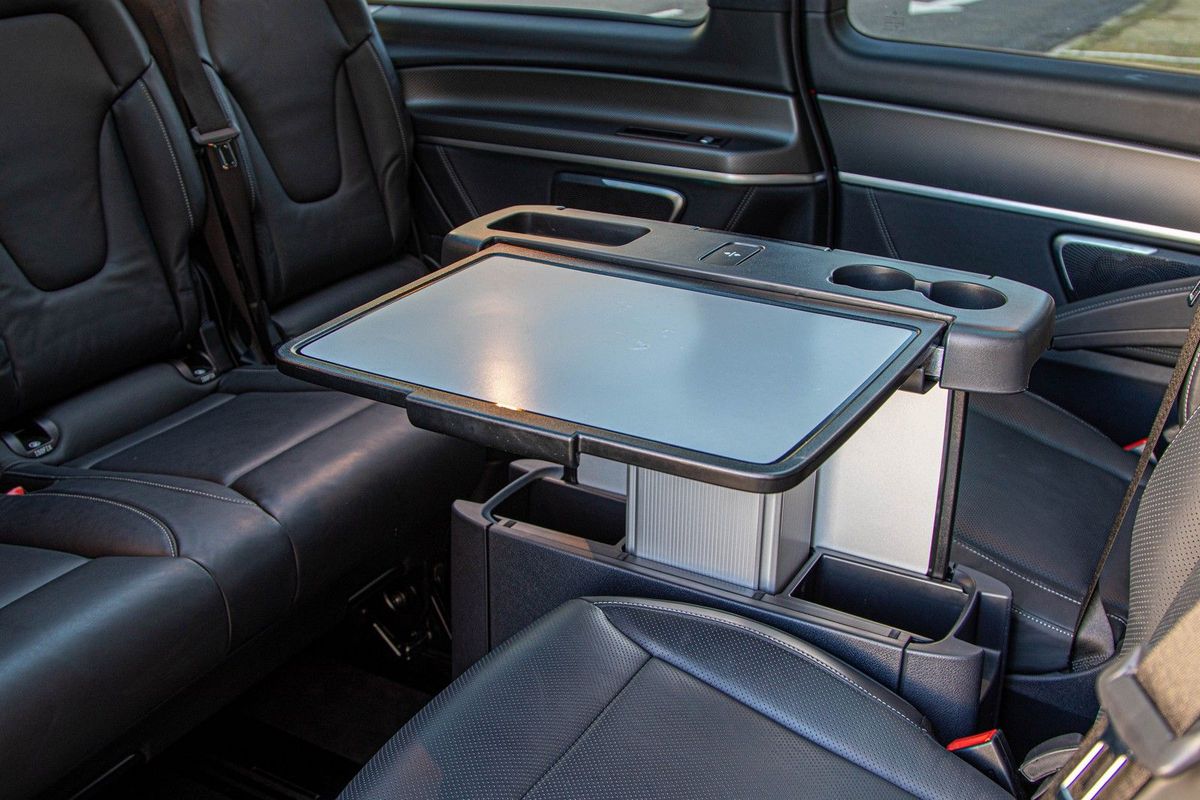
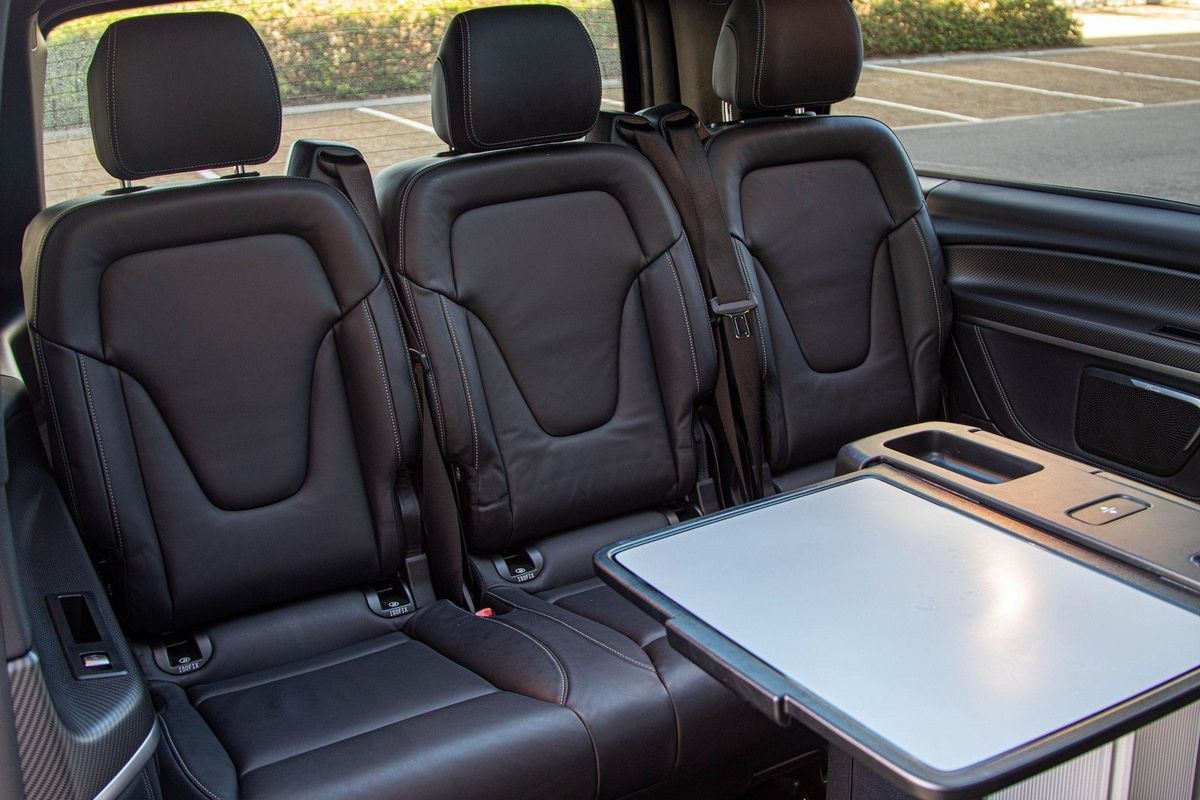
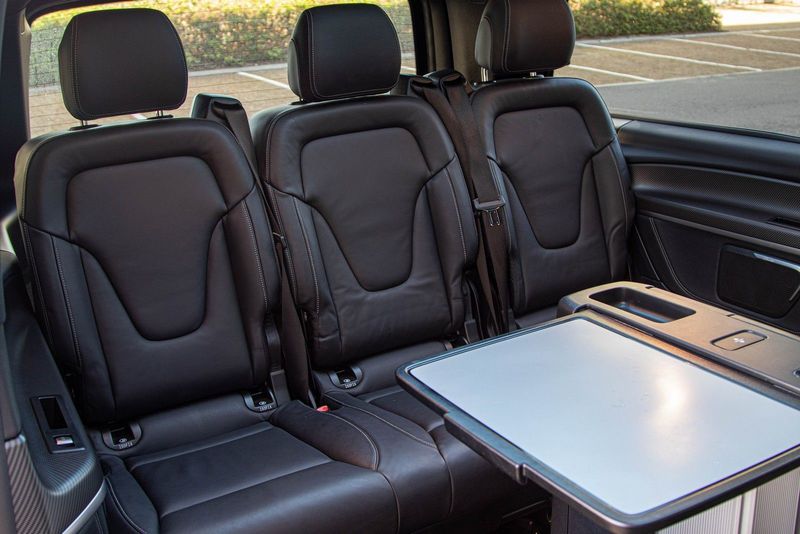
The test unit featured 3-seat rear bench and fold-out picnic table. Other seating arrangements are also available.
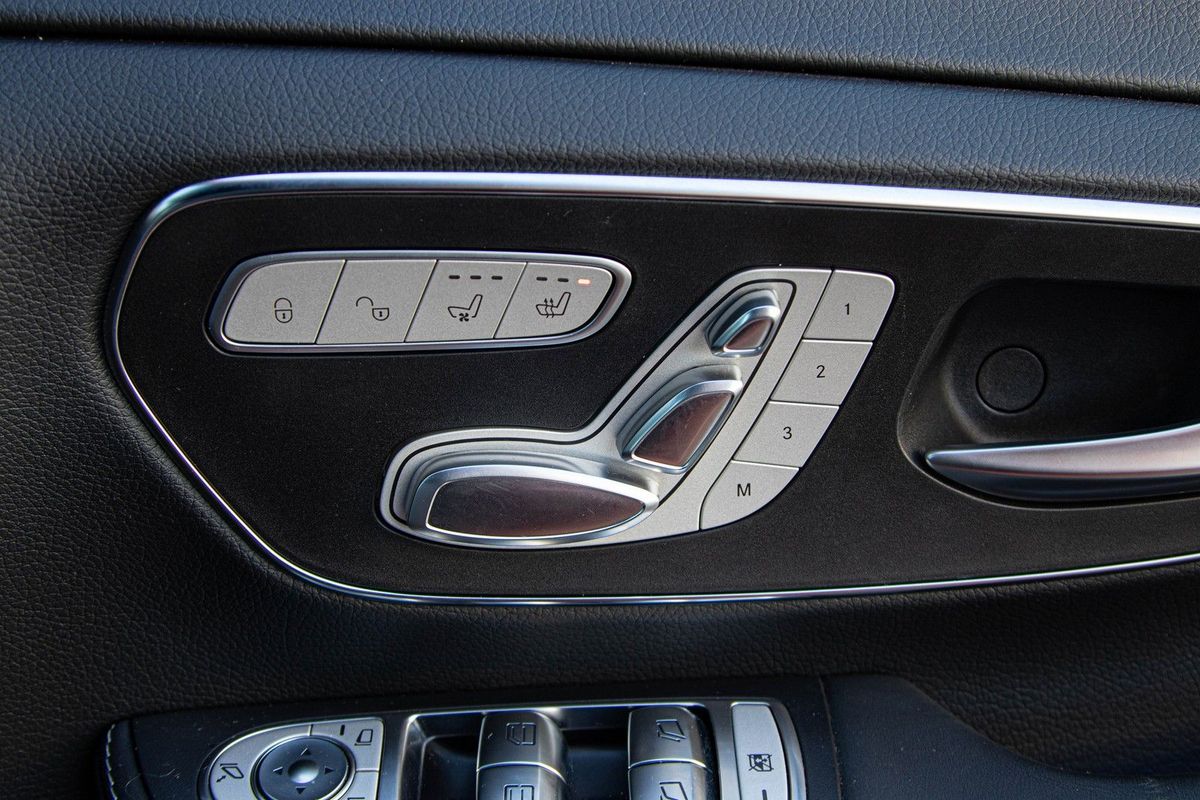
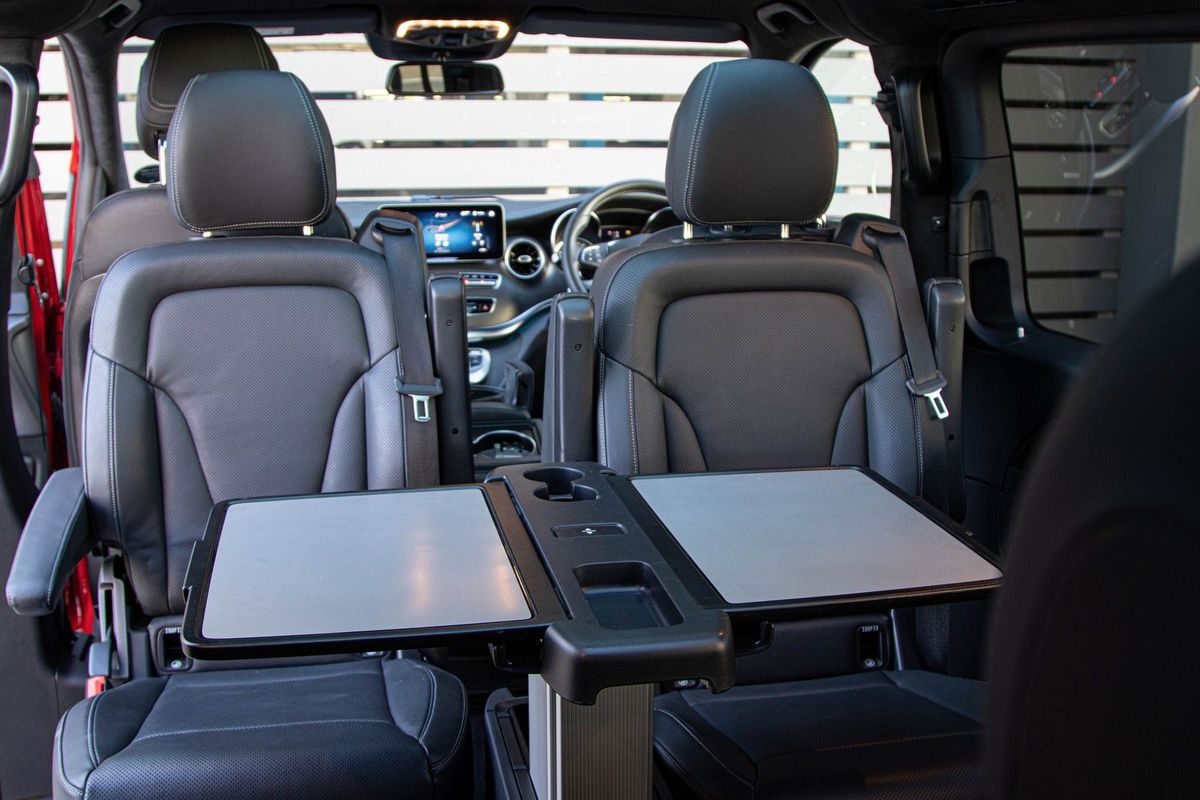
Our striking Hyacinth Red test unit featured a 7-seat interior layout with 2 centre-row seats separated by a sliding/fold-out picnic table and 3 individual chairs at the back. With the pair of centre seats in a rearwards-facing position and the table folded out, the V-Class’ cabin gains a “clubby” feel, which the family will enjoy on longer journeys, especially because the layout is conducive to playing card- or board games or having a “mobile picnic”. Impressively, the 2nd- and 3rd-row seats are “climatised”, but the V-Class does perhaps show its age by its lack of multiple USB outlets for rear passengers.
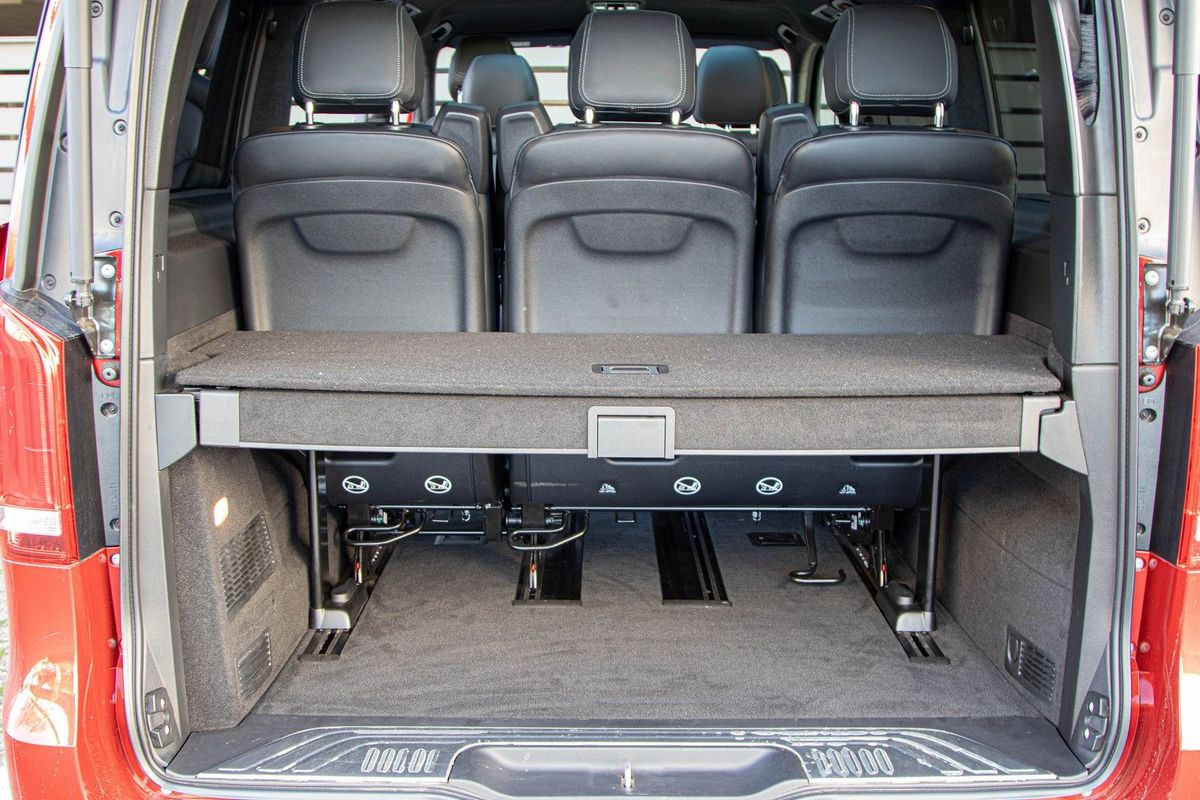
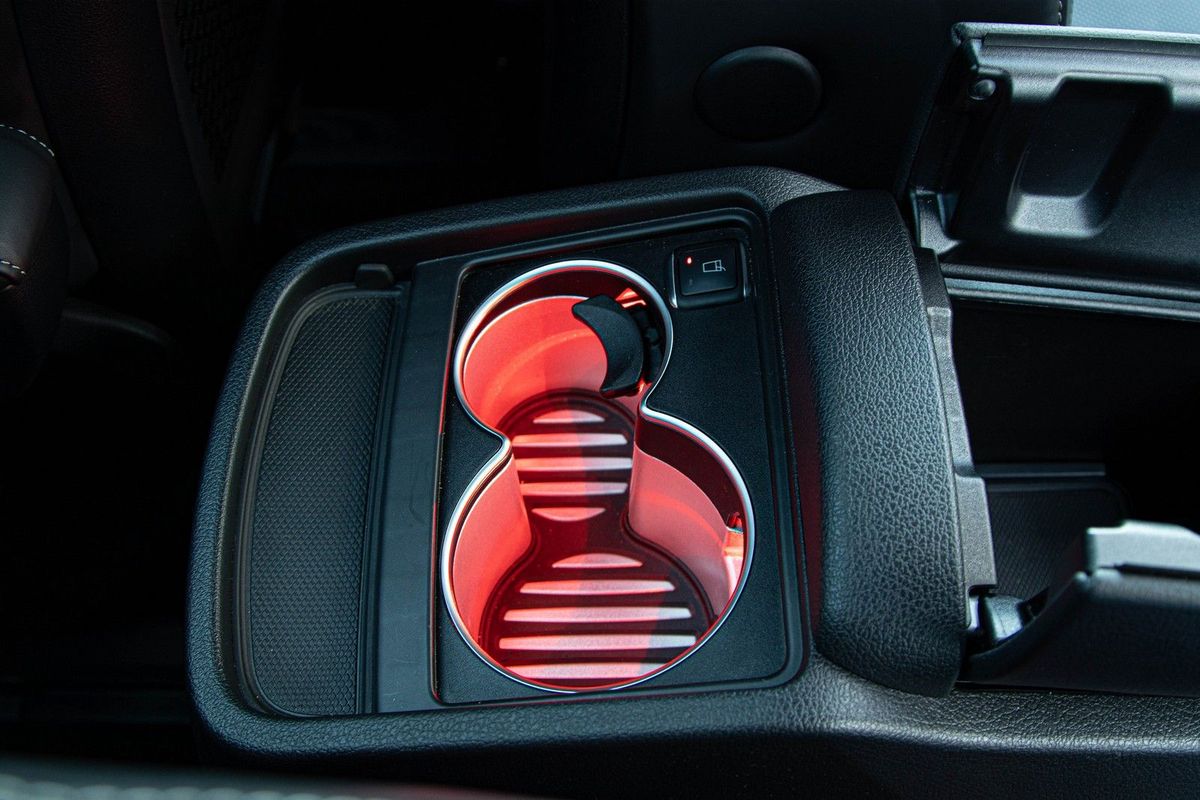
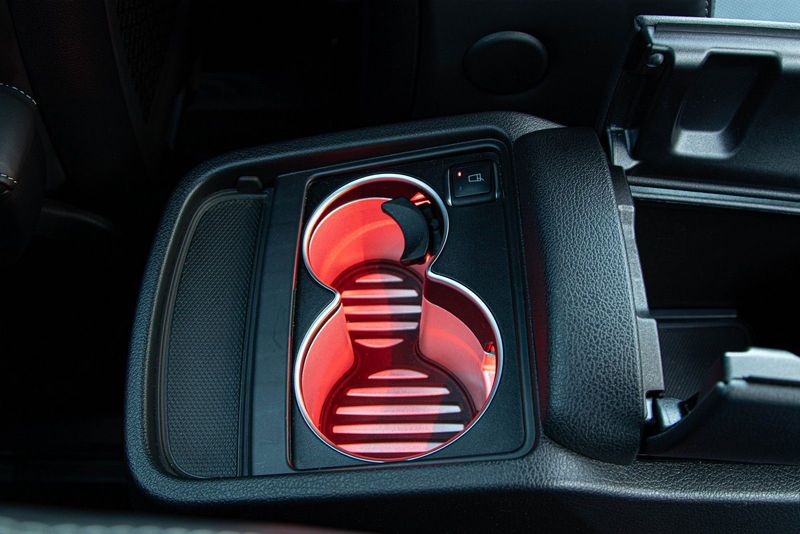
When all seats are occupied, the load bay is not particularly capacious, but you can fit soft bags underneath the rear seats and the parcel shelf is sturdy (and features integrated pop-up baskets), so more items can be stashed there. A nice touch is that the tailgate screen can be opened separately to access the top shelf and our test unit featured, inter alia, heated drinks holders! The V300d also features a standard towbar and the 2 sliding side doors can be opened via the remote key fob.
So, it’s certainly possible to configure a V-Class’ cabin exactly as you’d like it, but it has to be said that rearranging the seats is somewhat harder work than in, for example, the latest VW Caravelle.
Comfort, safety and infotainment features
Heated drinks holders are a nice touch, too.
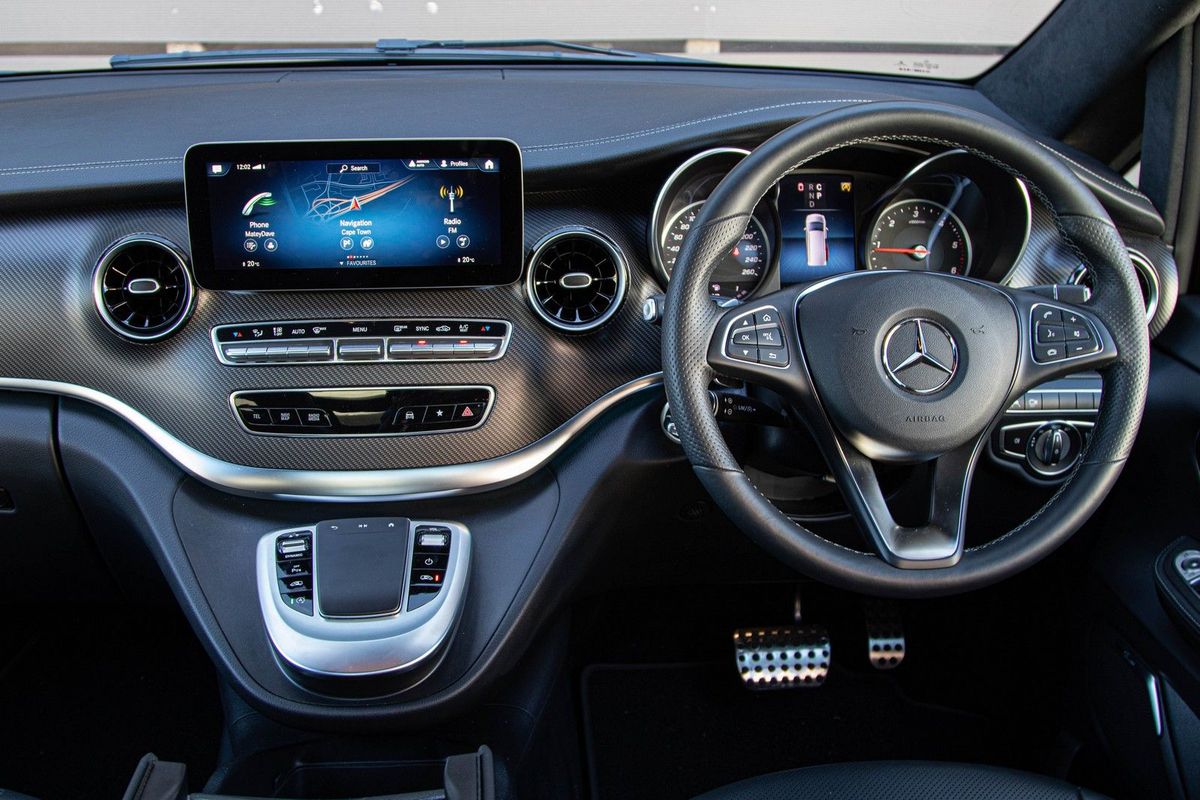
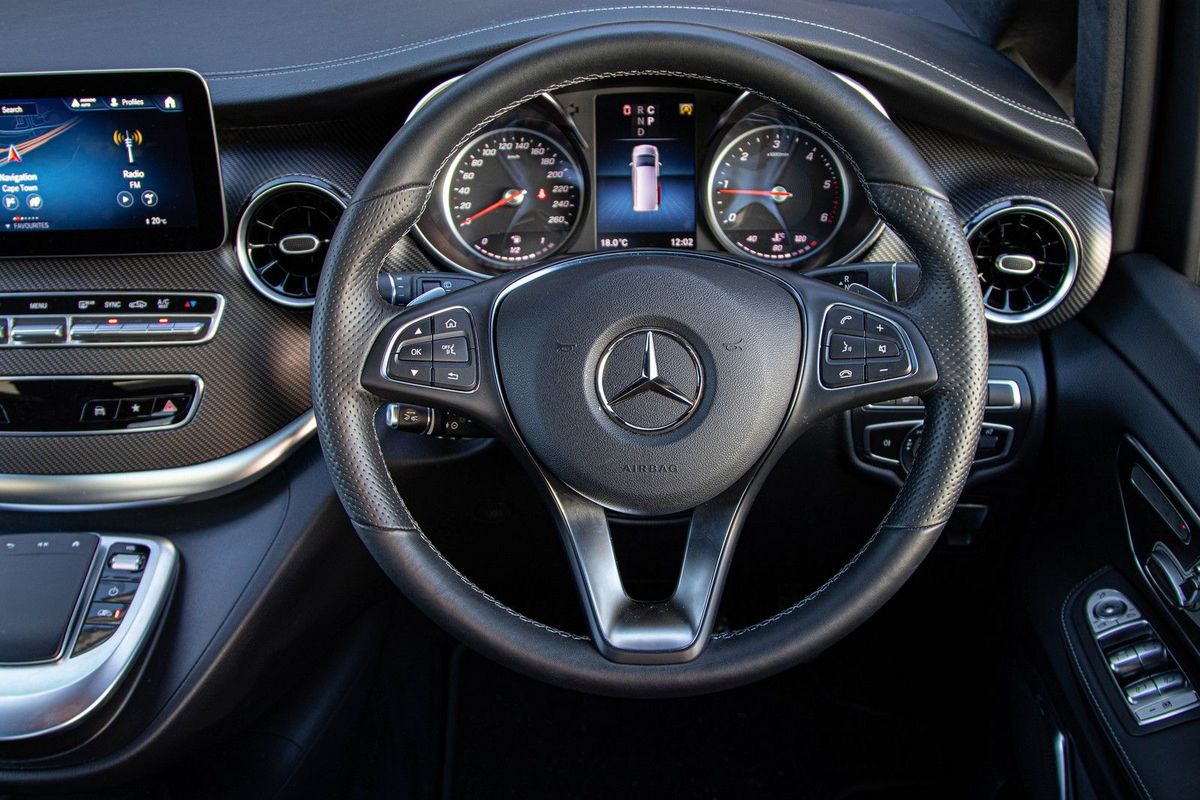
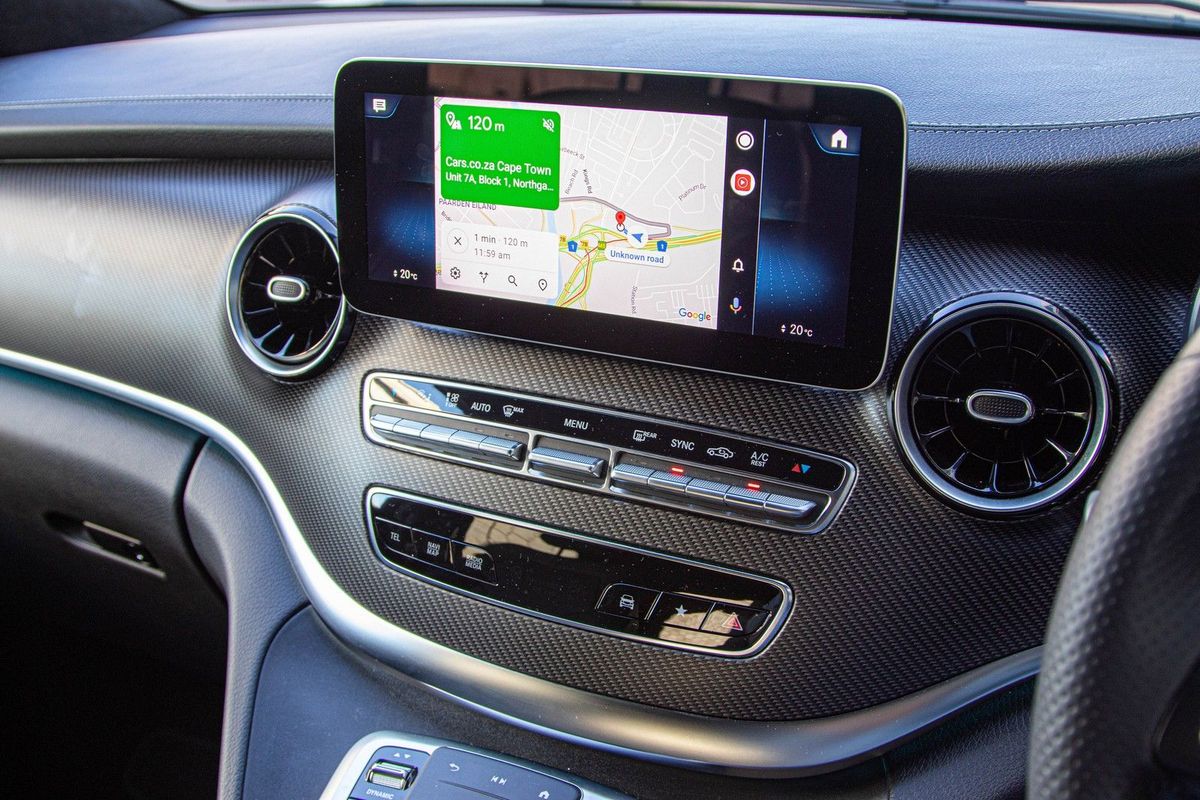
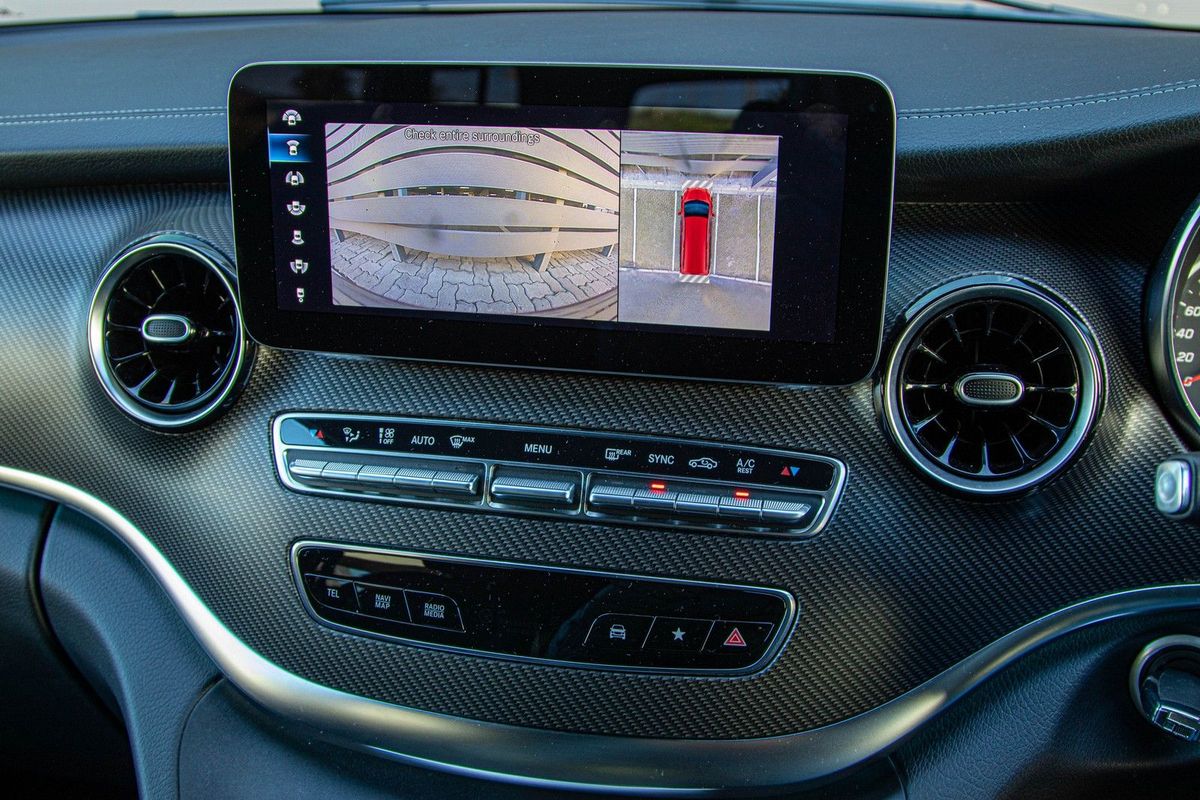
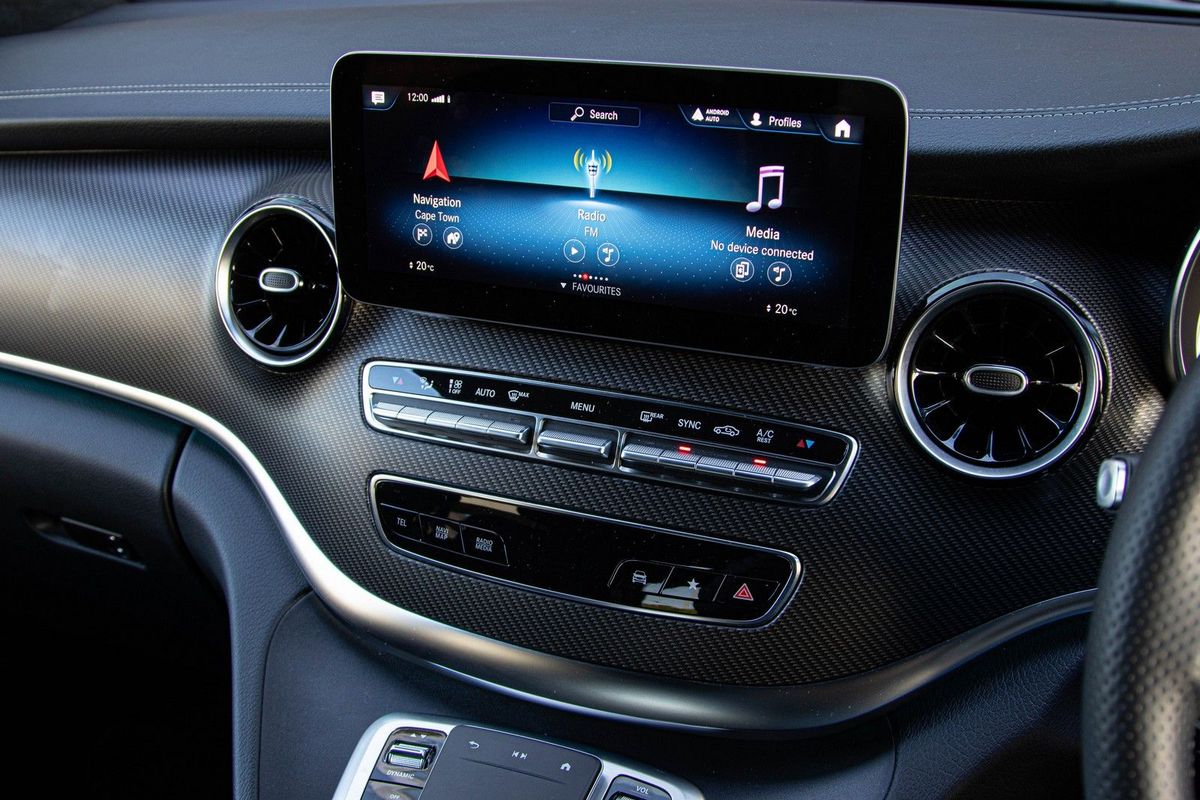
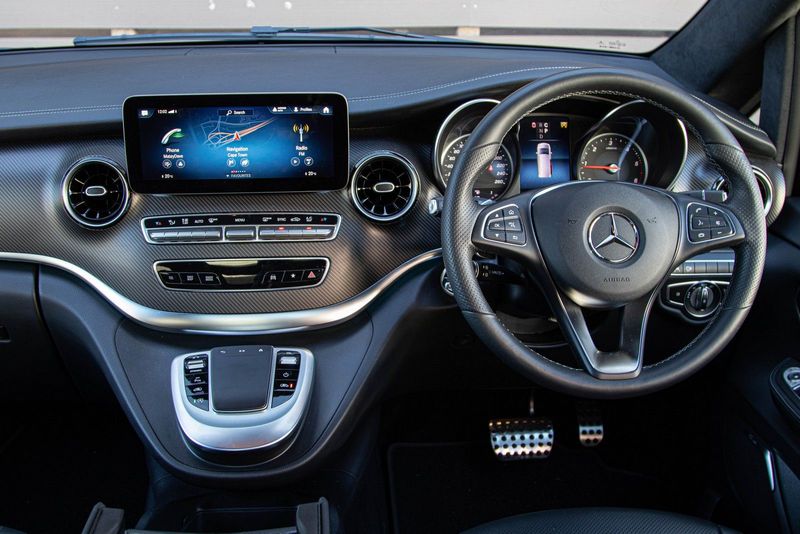
Compared with the V250d that we tested previously (in January 2020), the latest V-Class has benefited from a number of further interior upgrades. The outdated COMAND infotainment system has made way for Mercedes-Benz’s MBUX system, which includes Apple CarPlay and Android Auto compatibility, and the old jogger-wheel control has made way for the more modern trackpad design. You also get a great Burmester audio system and a 360-degree camera system, the latter of which is particularly useful because of the vehicle’s sheer size.
Though the facia looks very similar to pre-upgrade models, the V-Class now features the MBUX infotainment system.
The general design and layout of the fascia remain similar to before, however, and this means the V-Class has a distinct “previous-generation” Mercedes-Benz feel to it, which is further highlighted by the comparatively bigger strides Volkswagen has made with the introduction of the slick new T6.1-generation Caravelle. It also has to be noted that while there are some nice materials (leather-wrapped steering wheel and stitched-leather dashboard upper section), the V300d’s cabin emitted quite a few rattles and creaks, which was disappointing given the vehicle’s price (and the badge on its grille).
In terms of safety, the V300d Exclusive offers the expected 6 airbags as standard (can be optionally increased to 8) and the usual ABS with EBD and ESP package, but there are a number of more advanced features, too, including adaptive cruise control, active park assist, rear blind spot alert (very useful) and lane keep assist, among other features.
Pricing and after-sales support
The Mercedes-Benz V300d Exclusive is priced at R1 799 060 (July 2021) without options. The price includes a 2-year/unlimited km warranty and 5-year/100 000 km maintenance plan.
Verdict
Impressive as the new drivetrain is, the V300d is showing its age in other areas. And it’s simply too pricey.
There is still a lot to like about the Mercedes-Benz V-Class. With its new drivetrain, it offers class-leading performance, combined with good efficiency and impressive drivetrain refinement. Features such as climatised seats all-round, a panoramic sunroof, a Burmester audio setup and an updated MBUX infotainment system endow the big bus with enough “Mercedesness” to make it feel worth a premium.
But, in our view, that premium is currently simply too much. The V-Class can’t hide its advanced age in some respects (particularly with regards to ergonomics) and, in a number of ways, the latest versions of Volkswagen’s T6.1 Caravelle feel more refined, more modern. This extends even to the areas of ride comfort and suspension suppleness. Now, if you consider that the Volkswagen, though down on power (compared with the V300d) and lacking a few of its rival’s ultra-luxurious features, is more than R500 000 more affordable (without options), it’s hard to make a case for the Benz over the VW.