Electric Volvos of the future will be named differently than their outgoing combustion-engined stablemates. Volvo’s shift into the electric age will reportedly be marked with a distinct change in the Swedish firm’s model naming conventions.
Volvo is drawing a line in the sand as it enters the age of electric cars and it will mark the shift with a change in how it names its models.
Earlier this year, the Gothenburg-based luxury car manufacturer announced its intention to become an all-electric brand by 2030 and with all its electric models to be exclusively available online. Internal combustion engines are dying a noisy death and electric mobility is the future!
In an interview with Autocar, Volvo’s CEO, Hakan Samuelsson, confirmed that the next generation of electric Volvo models won’t follow the familiar alphanumeric naming convention that we are used to i.e. XC40, XC60, XC90, for example. Instead, and unlike other luxury brands, such as BMW (iX), Mercedes-Benz (EQ) and Volkswagen (ID), ew electric Volvos will feature a phonetic name with more meaning and character.
“If you look at cars today, all of them are very ‘engineeredly’ named: XC, T8, All-Wheel-Drive, double-overhead cams – it’s all specification on the rear of many cars. We’re talking about a totally new architecture, a new-generation of born-electric, all-electric cars with central computing,” Samuelsson said. “It’s good and clear to mark that this is a new beginning, and that’s why we’re not going to have numbers and letters, an engineering type of name. We’re going to give them a name as you give a newborn child a name.”
Even though the Recharge nomenclature, as seen on the forthcoming XC40 Recharge (which is due to arrive in SA in August 2021) still combines the model name upon which it’s based, Volvo’s forthcoming all-new electric flagship SUV is expected to receive a phonetic name.
This new electric flagship SUV, codenamed XC100, will be built on a new EV platform that will spawn future electric Volvos and its name will mark the beginning of a new electric era for Volvo.
The recent reveal of the Concept Recharge was a significant one in that it highlights what to expect in terms of the packaging of future electric cars from Volvo and it’s totally conceivable that the brand’s next flagship electric SUV will be used to set the bar in terms of technology and design which will undoubtedly filter down into every other electric Volvo model that comes to market.
The jury is out on what the new electric premium SUV will be named. The Volvo Förstfödda perhaps?
There was a time, when the SsangYong Musso, threatened to become an alternative to mainstream luxury off-road vehicles.
It had a Mercedes-Benz drivetrain, and that gave it an advantage, in principle, over its Japanese rivals. Over time, SsangYong has not prevailed, but that has not kept it from trying.
The forgotten Korean brand is now preparing to launch a new SUV in 2022. This will be the fulfilment of SsangYong’s J100 project.
And yes, that codename is peculiarly similar to the Land Rover DC100 concept, which eventually became the new-generation Defender.
SsangYong is desperate to regain market share in the SUV market, where it has legacy, but has not converted that to profits, even as the segment has boomed.
From the concept sketches, it is clear, that this new J100 vehicle will be dramatically styled. Whenever the idea of adventurous design and SsangYong is mentioned in the same sentence, there is the risk of things going awry – illustrated by vehicles such as the Stavic, Rodius and Kyron.
The J100 isn’t going to be a shock and awe design job. SsangYong has clearly been influenced by Land Rover, in its ambitions with the J100.
Although the grille is recognisably SsangYong, those slim headlamps are very similar in profile and execution to the Evoque.
Extended wheel arches indicate a wider rear track and what looks like a side-hinged swing tailgate, instead of a lift-back configuration for the cargo area.
The Land Rover influence is telling in the rear of this J100, too, with its taillights reminiscent of the current Range Rover Vogue.
SsangYong has not committed to any details about powertrain, but if the engineering team can render this J100 concept to reality, without going all Actyon on it, this could be a potentially successful SsangYong.
The new Mazda BT-50 has been launched in South Africa, a year before local production of the bakkie on which it is based, the new Isuzu D-Max, will commence in Port Elizabeth. Could that be a crucial advantage for one of the market’s most underappreciated double-cabs? We drove the newcomer in Sydney.
The new-generation Mazda BT-50 is the most Japanese that this Japanese bakkie has ever been; after decades of being a Ford Ranger clone, the Hiroshima-based marque’s double-cab is now based on the next iteration of the Isuzu D-Max. The previous version, which was built at Ford’s Silverton plant at the beginning of its product cycle (pre-facelift), never received substantial marketing support from the Blue Oval, largely because the global partnership between the US and Japanese brands dissolved in 2014 (which was when Mazda Southern Africa was established as an independent subsidiary).
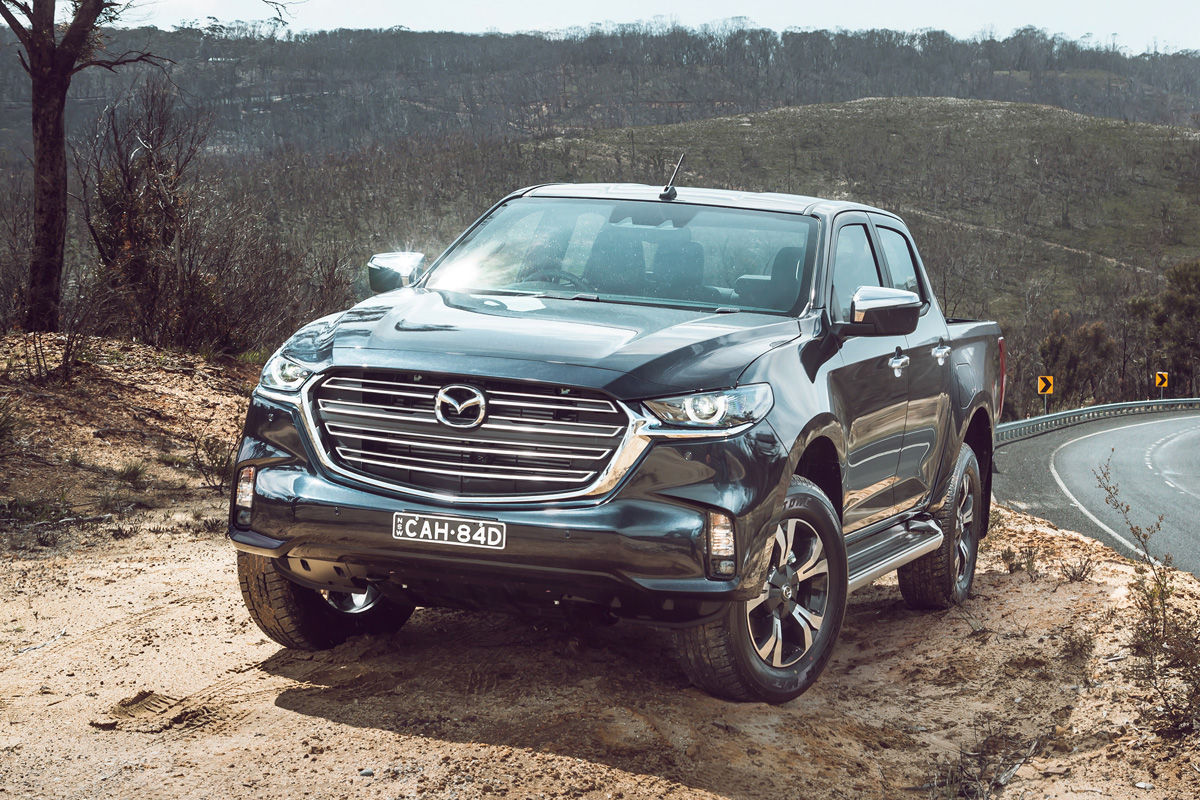
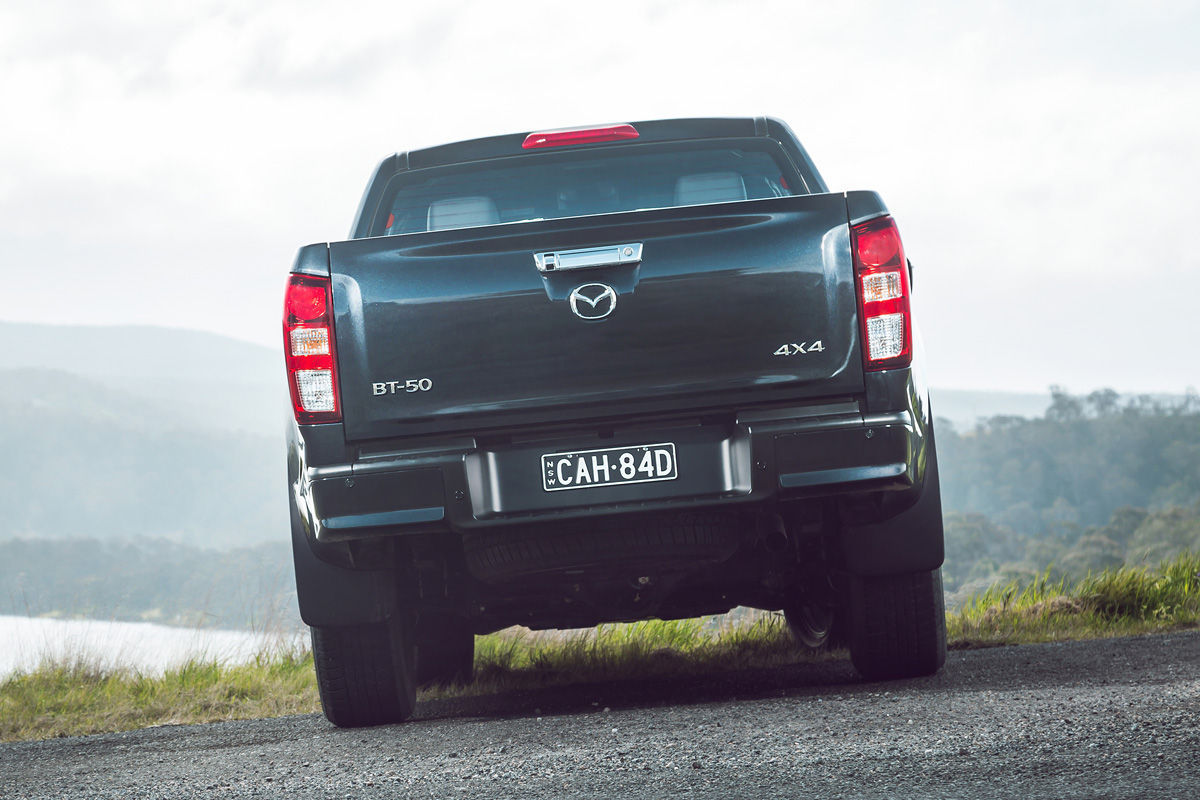
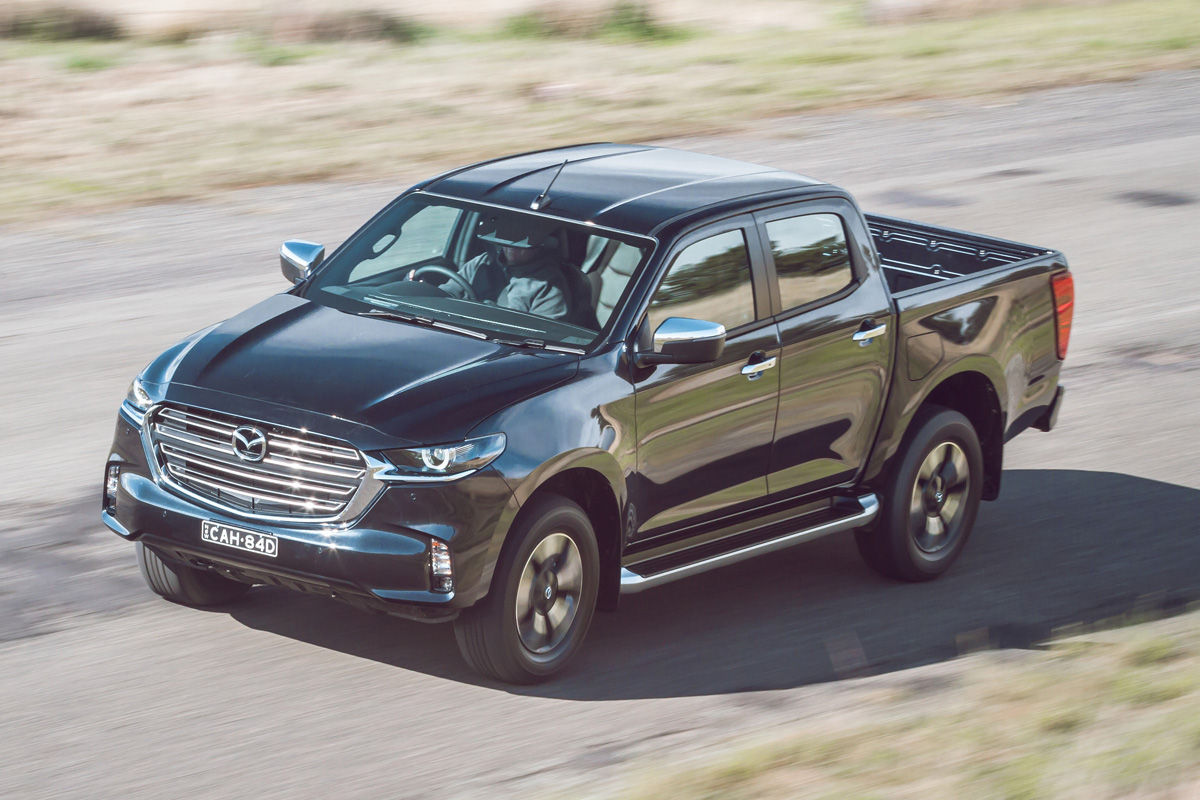
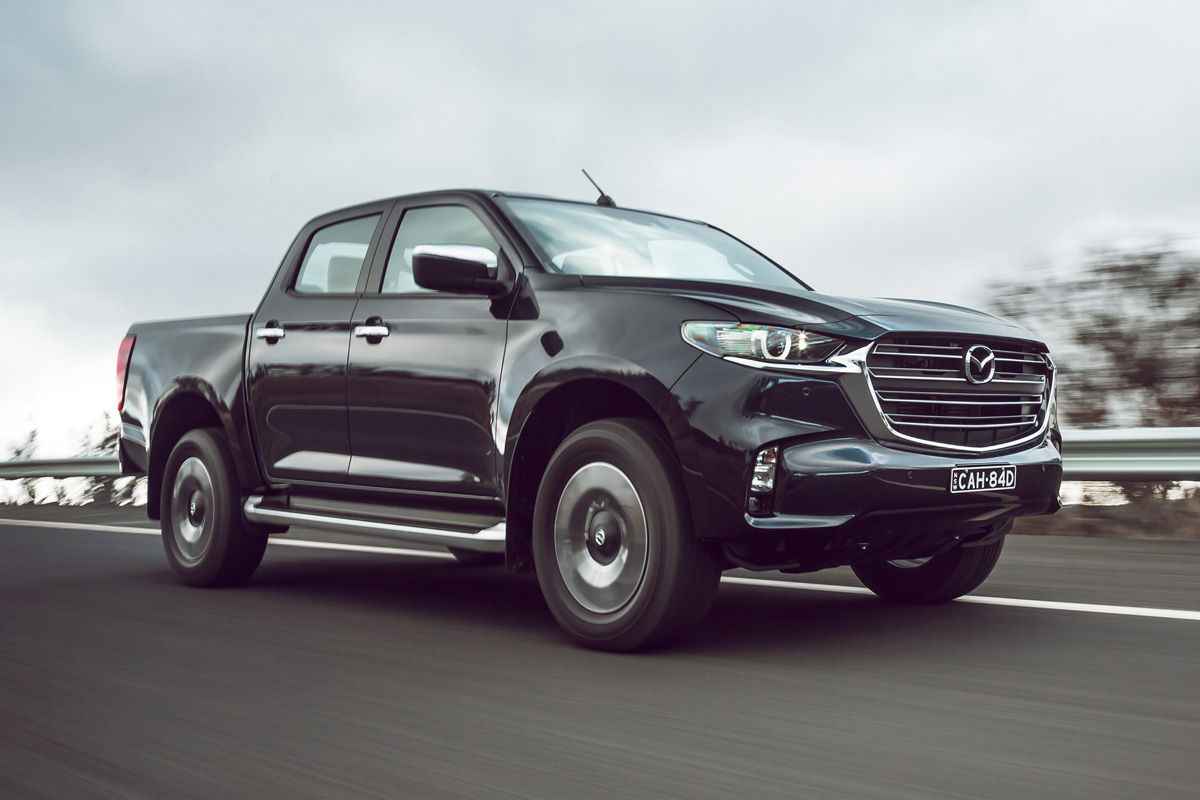
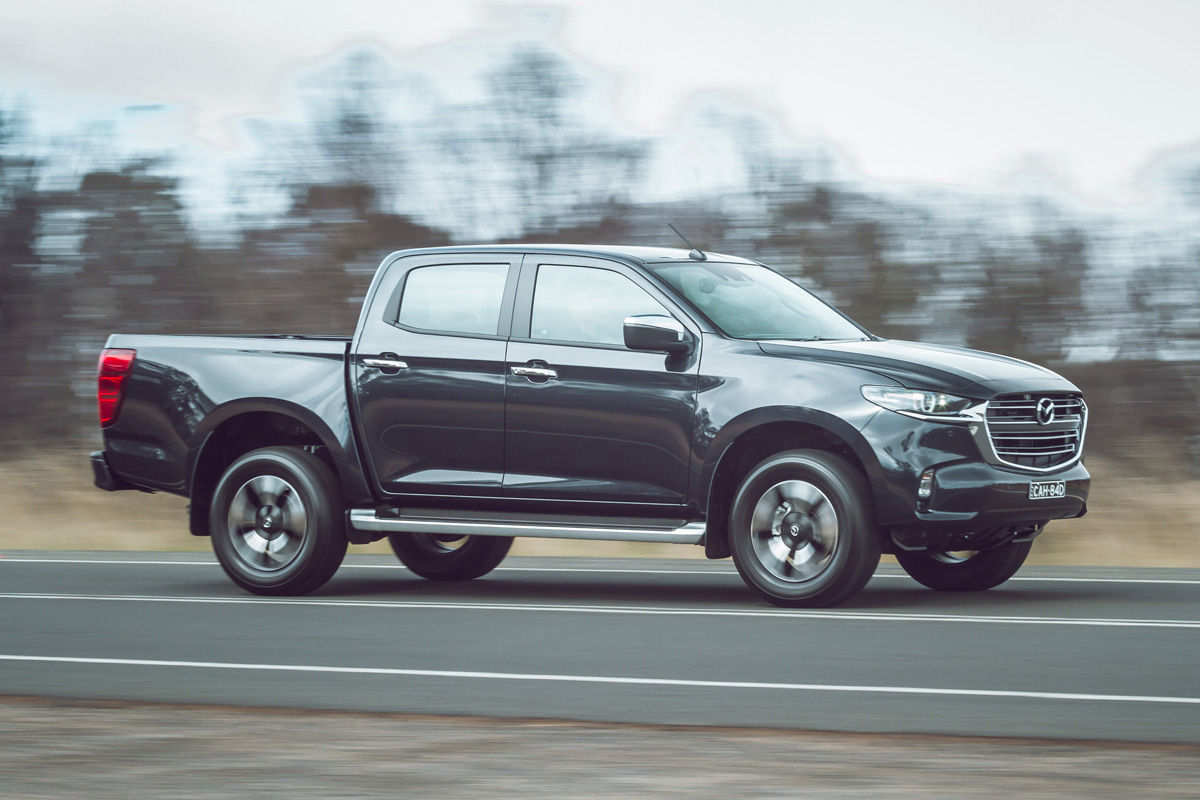
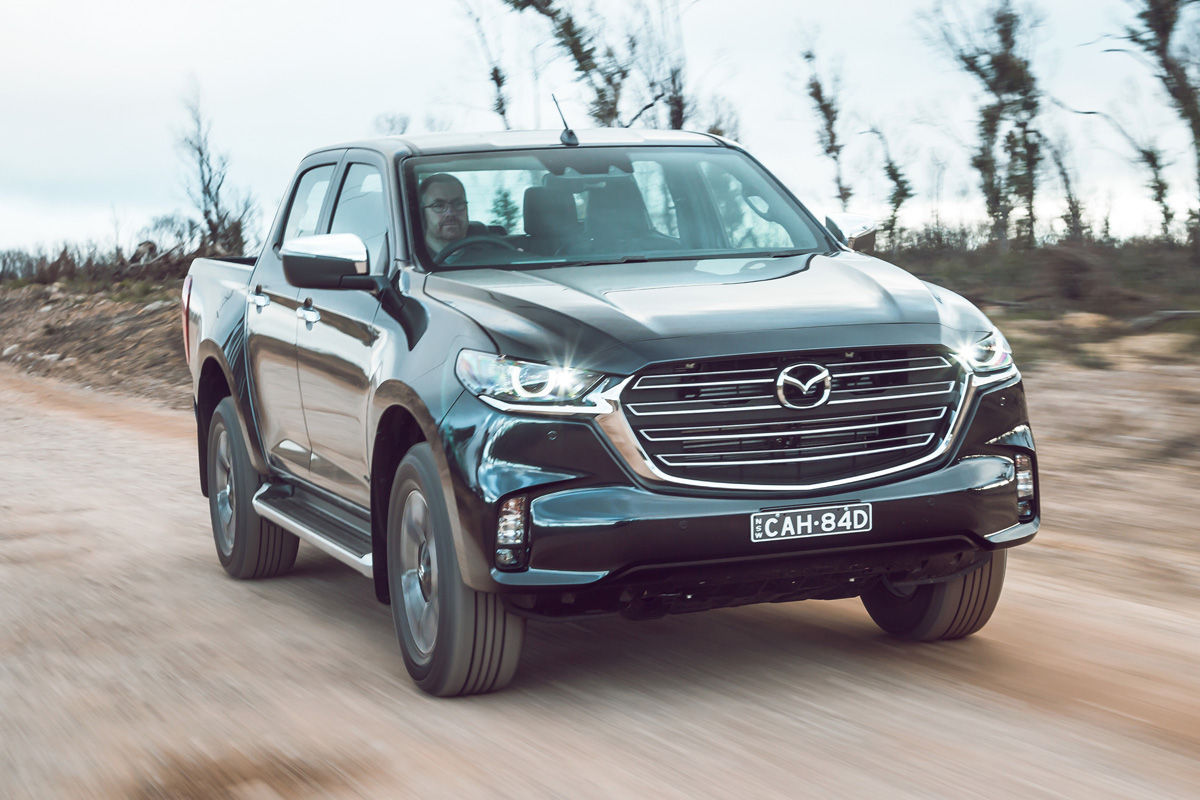
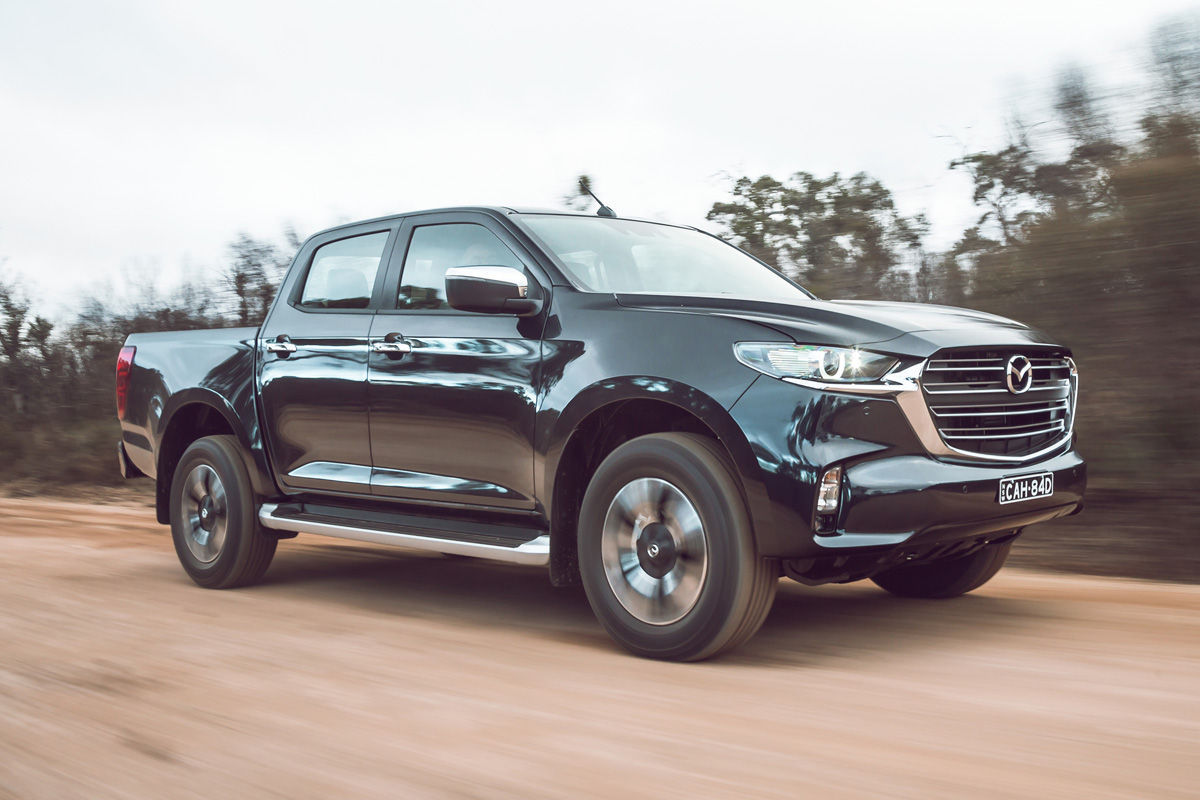
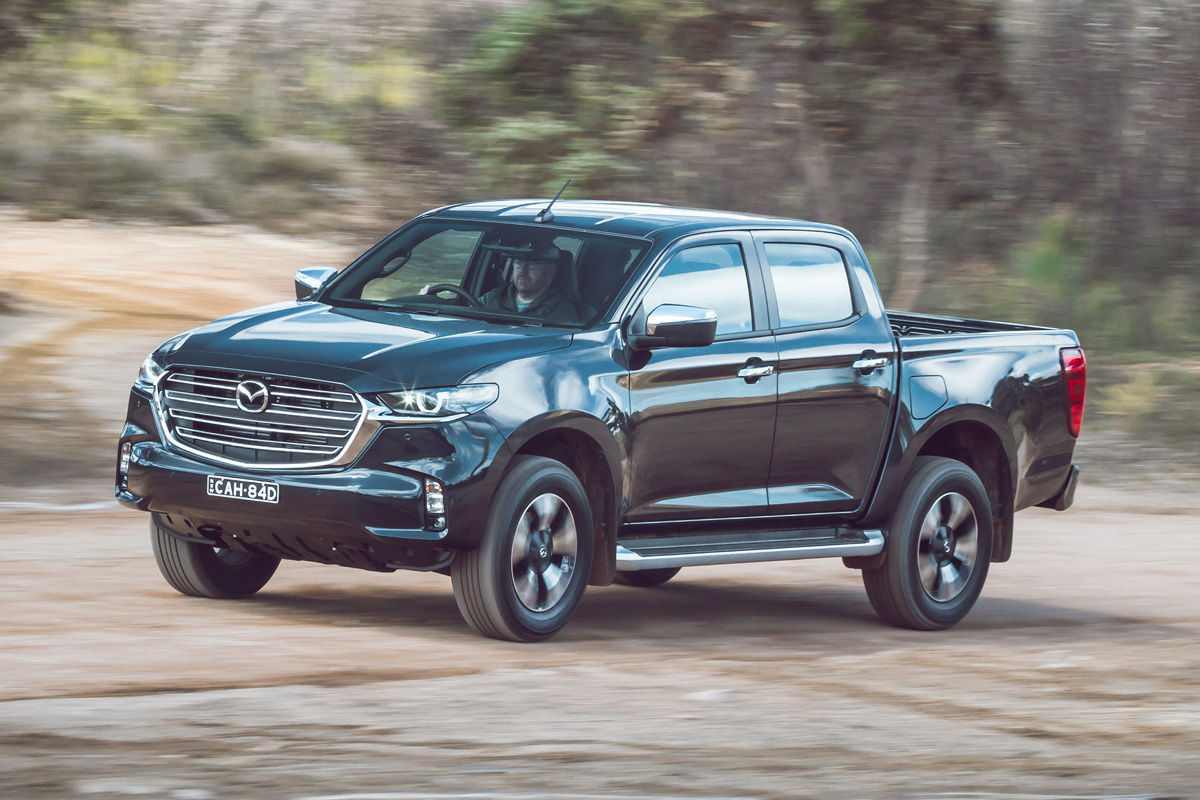
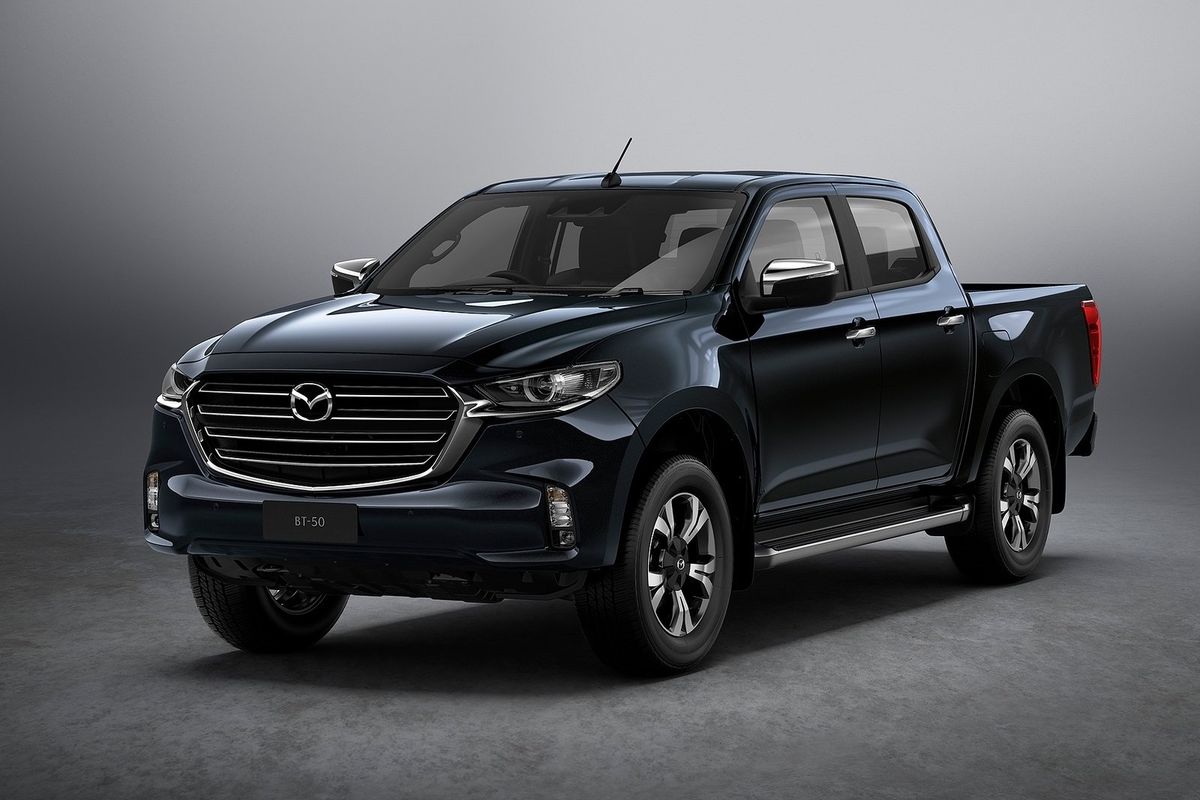
As a Mazda-flavoured execution of the Isuzu D-Max, the BT-50 is handsome, upmarket and, importantly, sufficiently distinctive.
In the meantime, the Ranger firmly established itself as South Africa’s 2nd-favourite bakkie. By virtue of being based on the Ford, the previous BT-50 should’ve sold in greater numbers than it did. But then, the BT-50 had a trio of impediments: Mazda SA focused its marketing efforts on newer, sharply-styled and smartly-packaged hatchbacks and SUVs; the bakkie’s styling was distinctive, yes, but utterly divisive (and that matters, even in the pick-up market), plus buyers seemed to believe that if you want a square-jawed, designer-stubble-sporting Ranger, well, you’d buy one – not a reskinned copy.
An effective restyling exercise…
Well, with the Ford Ranger about a year away from being replaced, the new-gen BT-50, of which Mazda SA has now launched 4 derivatives in the local market, offers something fresh and eye-catching. Again, Mazda’s double cab is merely styled differently to its distant D-Max cousin, but, as we’ll explain later, its packaging suggests Mazda is all too aware the BT-50 needs to be more than a bakkie – rather think of it as a family-car substitute that offers reasonable refinement, luxury and practicality. What’s more, its character, if not the sheer embodiment of Zoom-Zoom, is more Mazda-like than before.
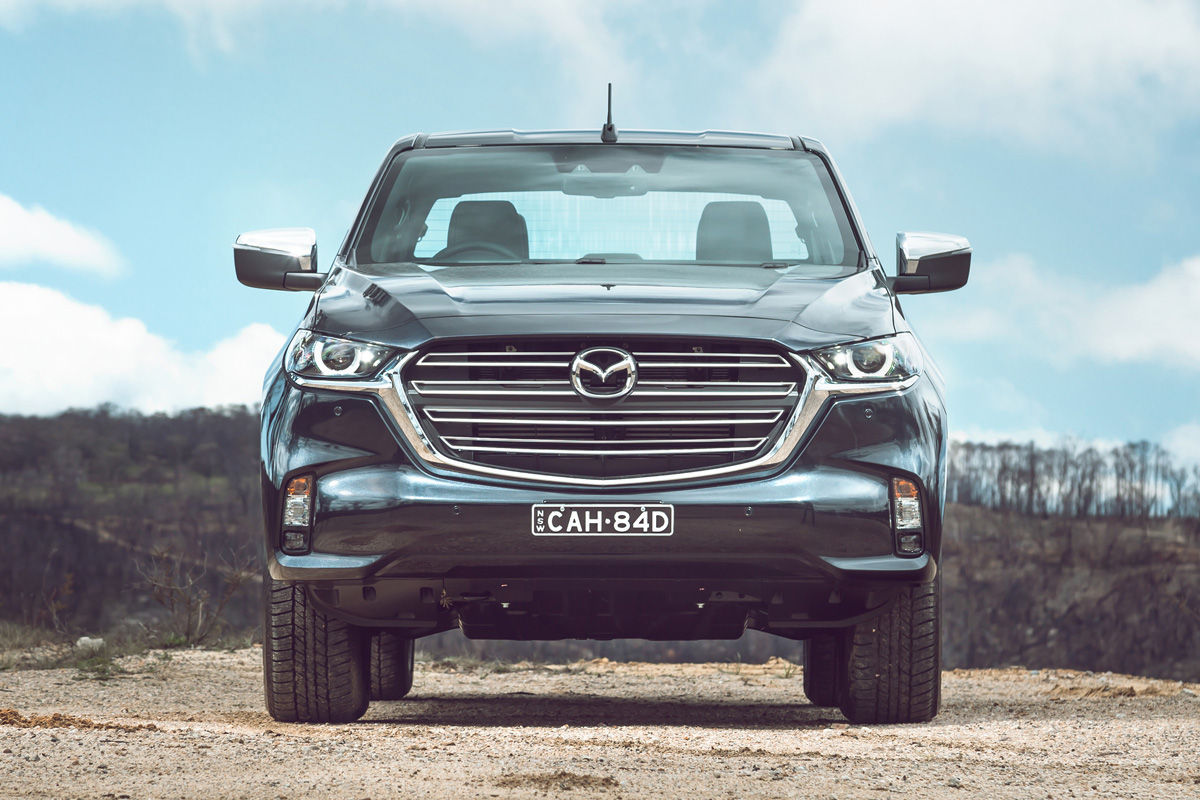
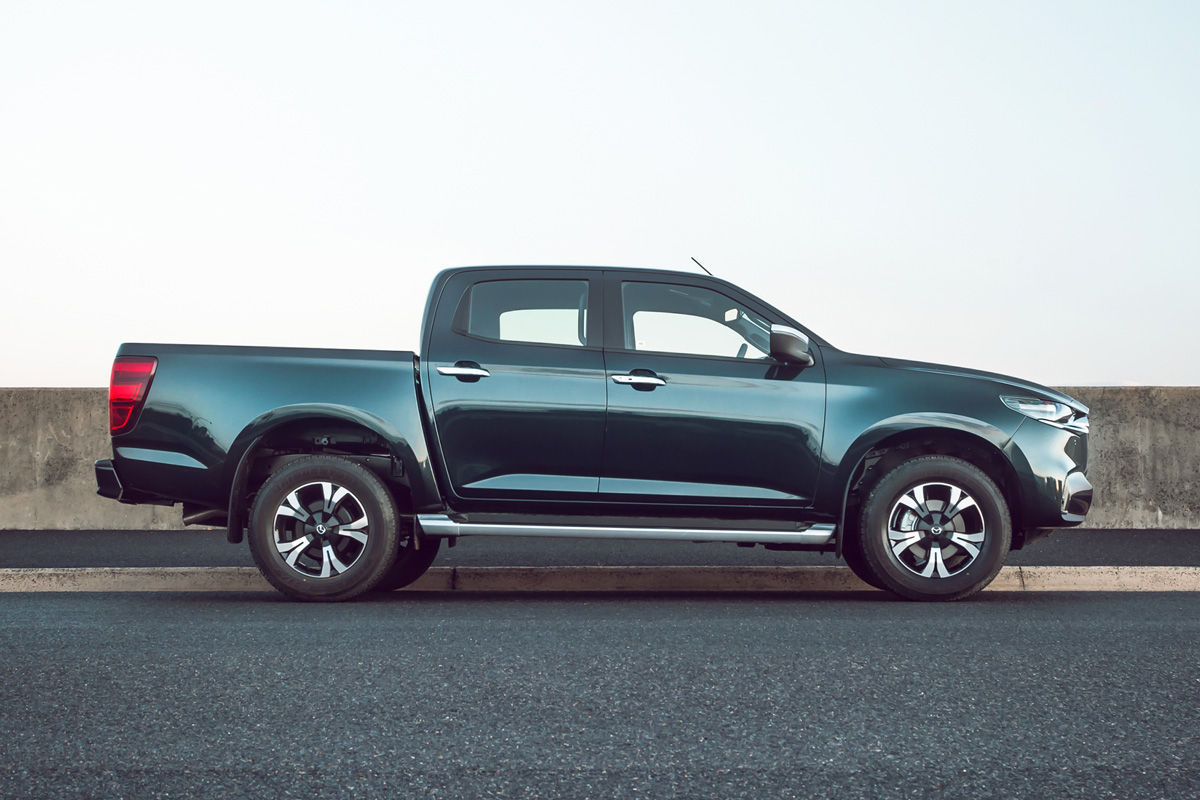
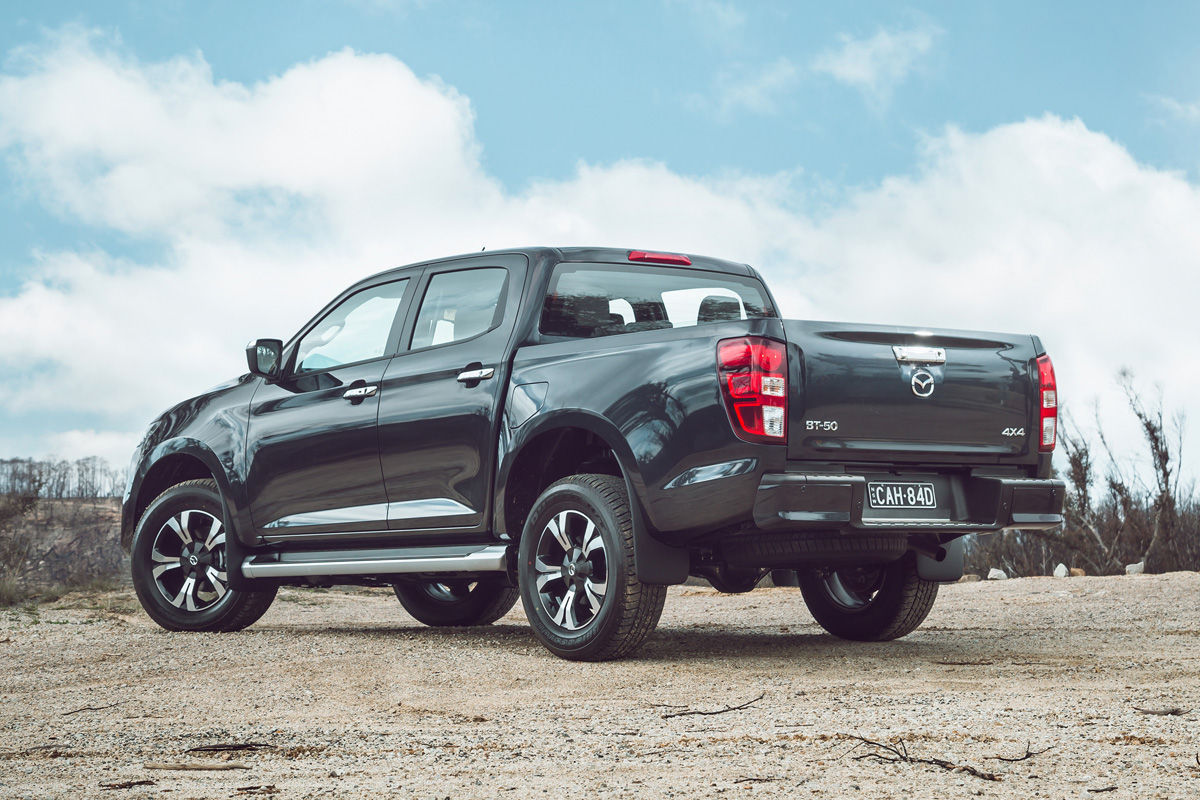
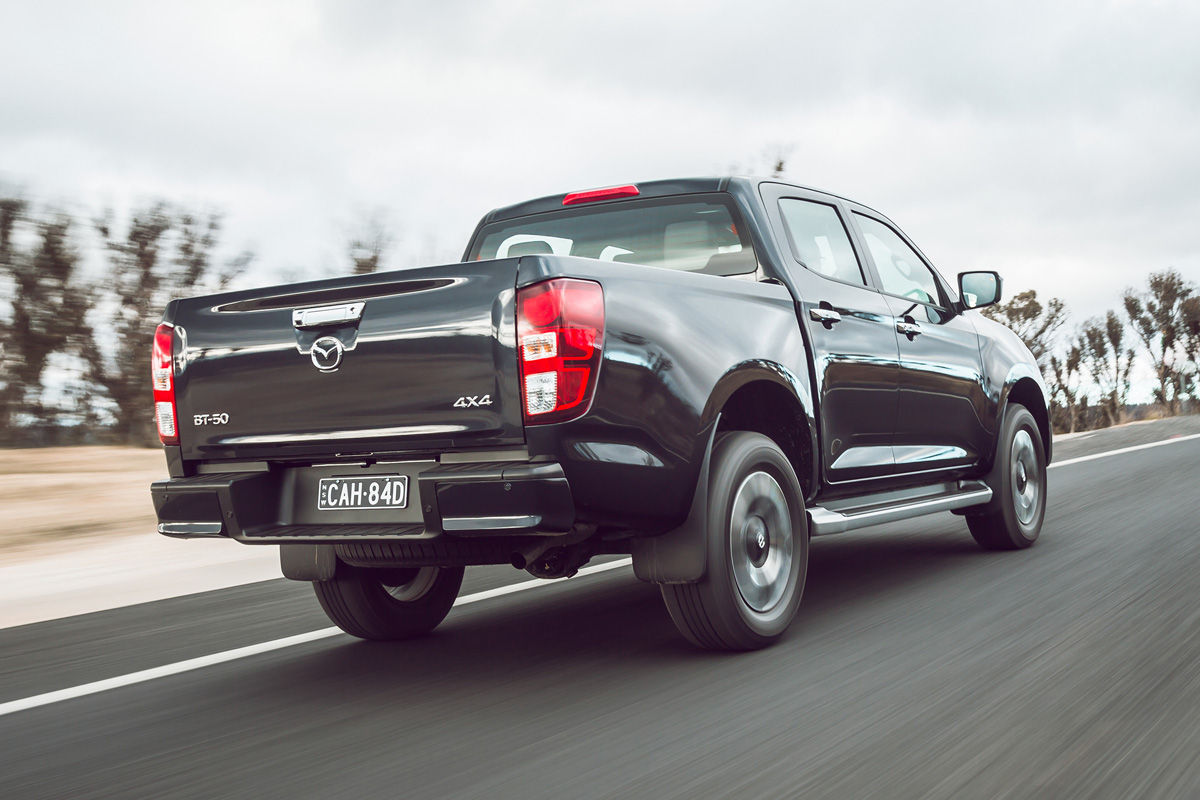
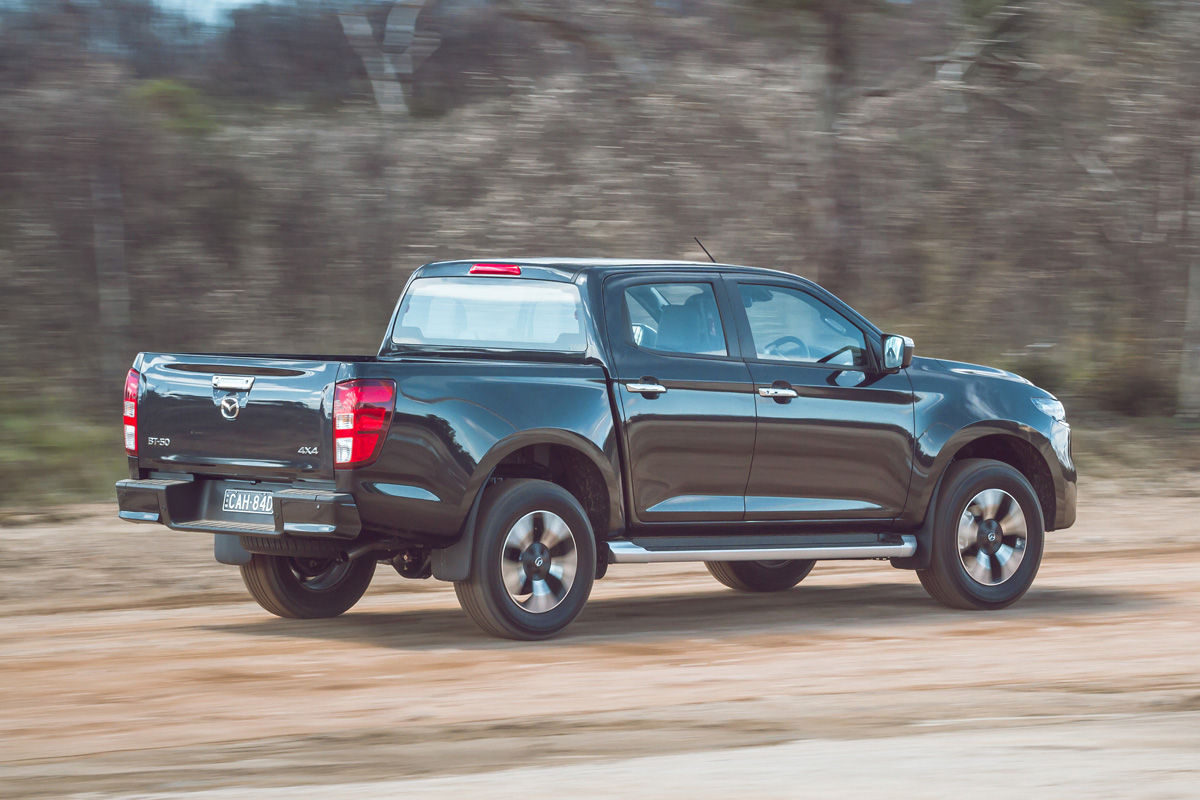
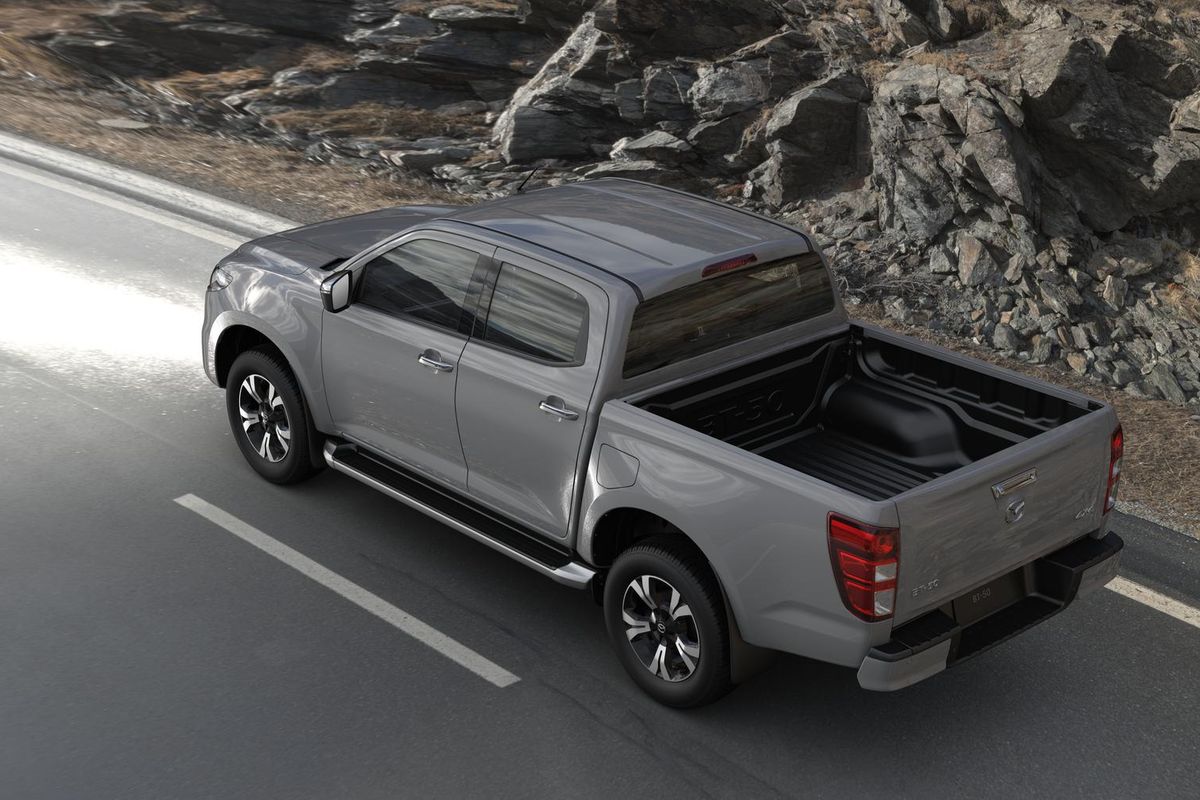
There was a time when describing a bakkie as “handsome” or “striking” could get one banned from a braai, but the new Thai-made Mazda BT-50 undeniably cuts a fine figure. There are elements of the Mazda’s Kodo design language in the sweeping crease lines that flow from the grille to the side mirrors, as well as the pinched waistline (above the running boards), while the defined shoulder lines align with the load bed and the tops of the tail-light clusters feature the brand’s signature circular motif.
The bakkie shown here resembles the South African market’s 3.0TD double cab Dynamic and 3.0TD double cab 4×4 Individual automatic derivatives, which feature chrome-look grilles, -side mirrors (auto-folding and heated) and handles in combination with silver running boards and 18-inch alloys. That’s not to say the entry-level 1.9-litre turbodiesel versions (1.9TD double cab Active and 1.9TD double cab Active auto – both 4×2) look like workhorse bakkies – they have black grilles, colour-coded mirrors and handles, plus 17-inch rims, but are also equipped with LED headlamps (with DRLs) and fog lamps.
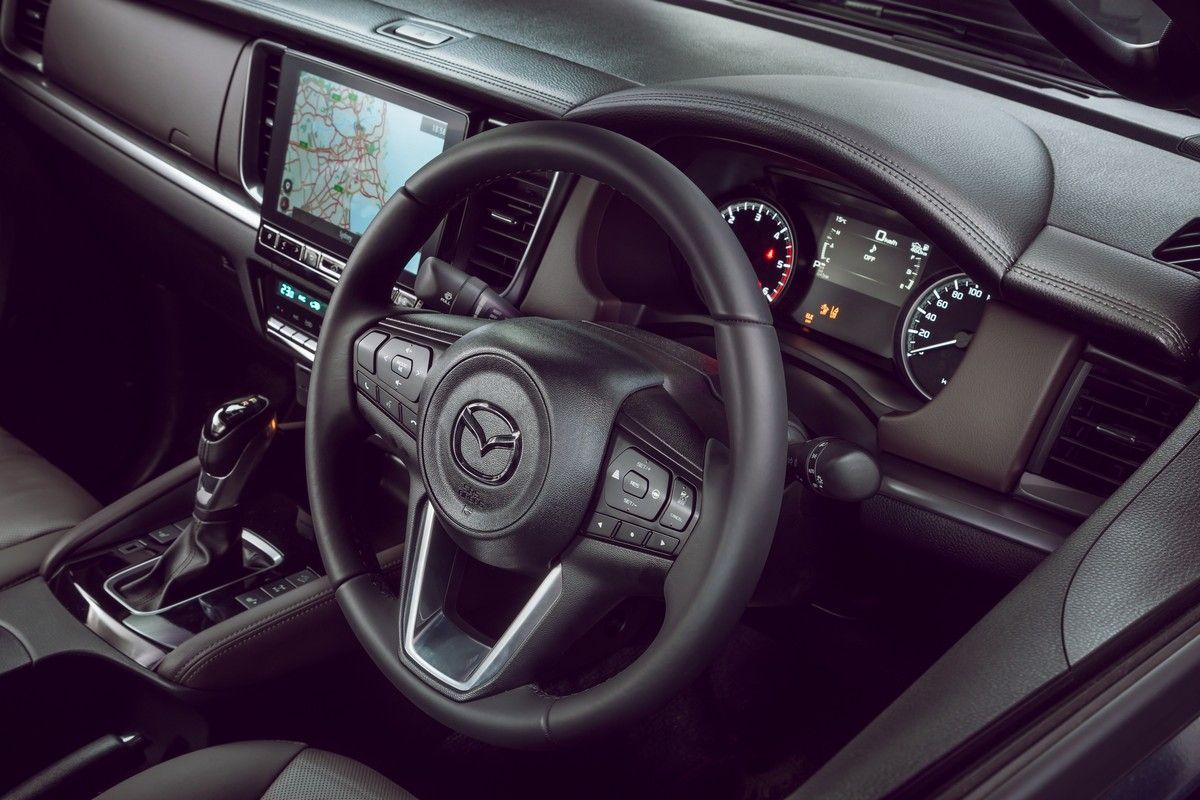
The Mazda’s switchgear is identical to that of the new Isuzu D-Max (even the steering wheel design), but it’s undeniably smart.
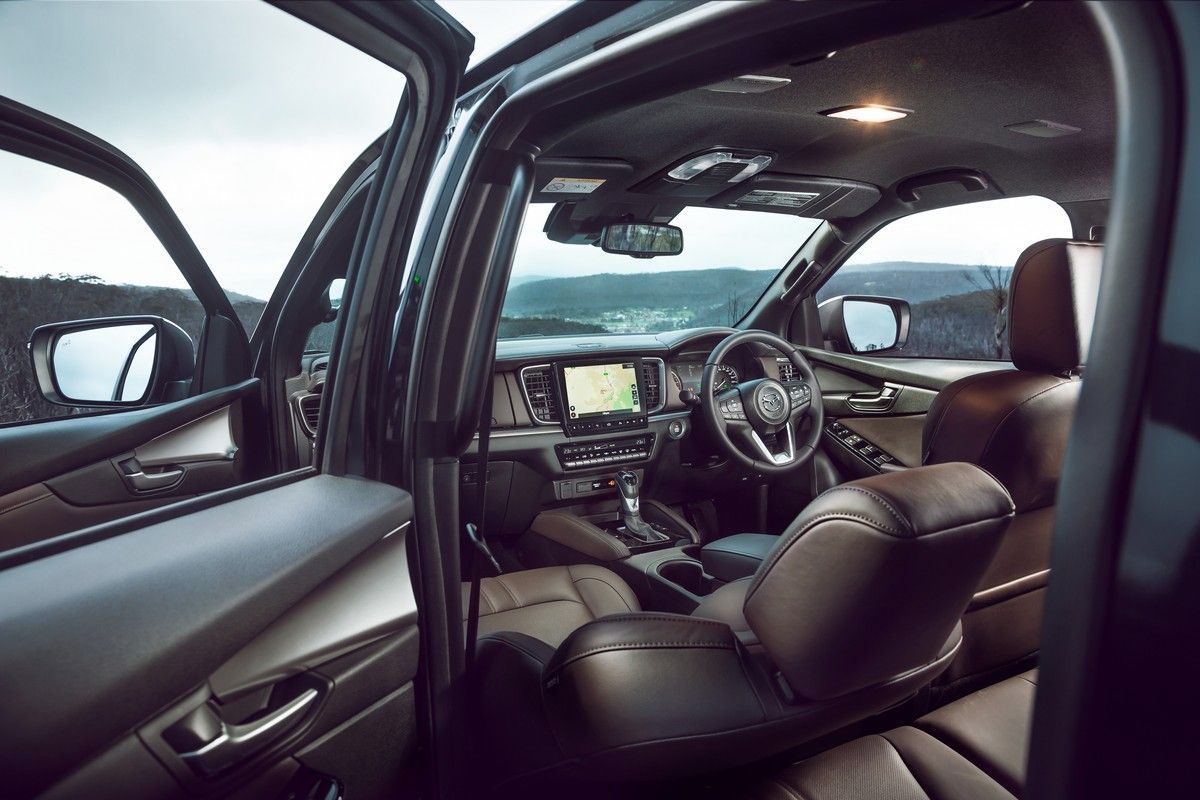
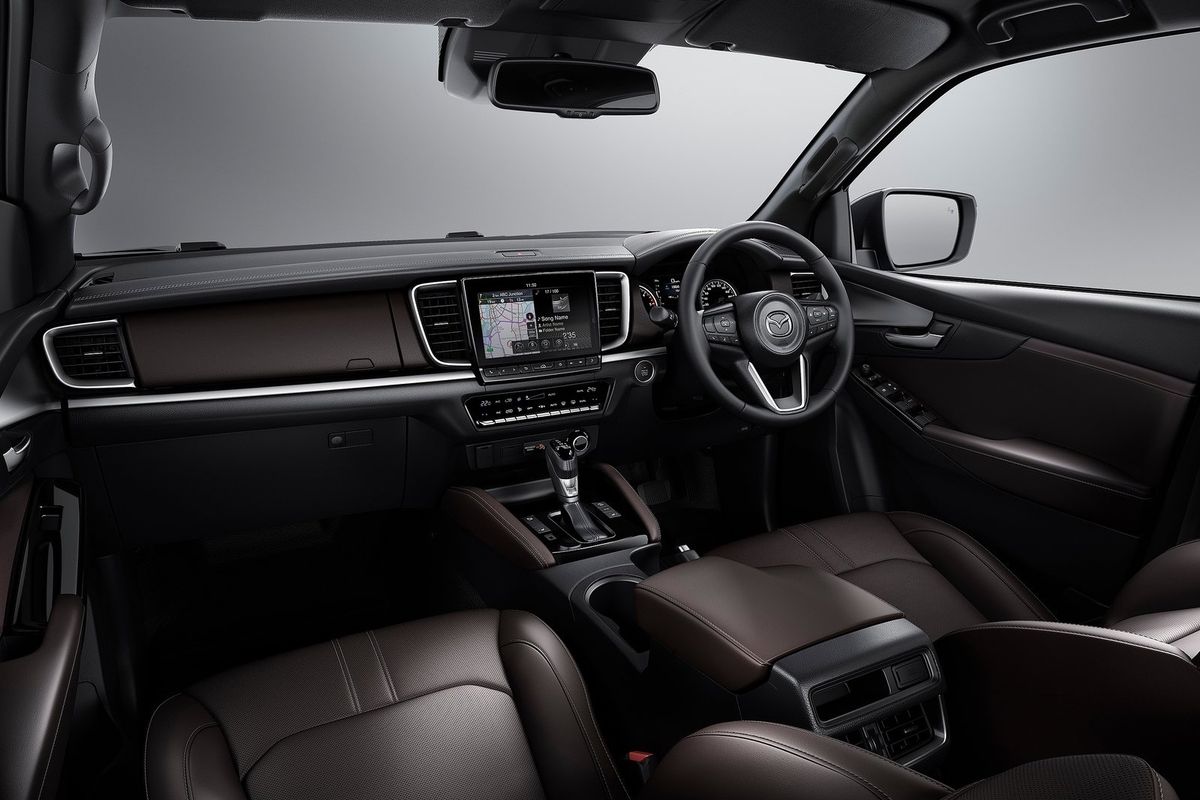
The Isuzu underpinnings are particularly apparent in the Mazda’s spacious interior; the bakkies’ switchgear, instrumentation and steering wheels are identical, but their fascias are different, with the former having rectangular centre vents and the latter triangular ones. Nonetheless, the cabin execution is plain but smart, with a soft-touch finish to the edge of the dash’, as well as tasteful applications of piano black and chrome-look trim. Although electric windows, a 4.2-inch multi-info display and a reverse-view camera (including rear PDC) are standard, the seats are trimmed in cloth – there’s no leather option.
The 1.9TD Active derivatives each features a polyurethane multifunction steering wheel, a 7-inch touchscreen infotainment and a 6-speaker audio system (with wireless Apple CarPlay-, but plug-in Android Auto compatibility), which sits in the same frame as the 9-inch one fitted to the 3.0TD Dynamic and 3.0TD 4×4 Individual, it just has a black border around it. The HVAC knobs and fresh air/recirculation slider in the 1.9TDs are also pure pick-up fair, but the higher-spec 3.0TD versions, by comparison, feature piano-key buttons for the dual-zone climate control console, keyless entry (with push-button start), rain-sensing wipers, auto headlamp levelling, a leather-wrapped steering wheel and -transmission lever, front parking sensors, 2 additional speakers and a rear centre armrest with cupholders.
In its most luxurious spec, the BT-50 features automatic climate control and a 9-inch touchscreen infotainment system.
The front seats are sufficiently comfy and supportive (the driver’s seat is 6-way adjustable – including lumbar on the Dynamic and Individual spec), the steering column is reach- and rake adjustable and, to Mazda’s credit, most of the cabin’s finishes feel substantial and hard-wearing, plus the controls are well-weighted. The author did find the driver’s footwell a bit cramped (on the manual version he drove) and missed having a lined footrest, as opposed to the carpeted half-ledge in the leftmost corner of the ‘well. What’s more, the centre console’s cupholders were a little too deep for regular-sized cups of takeaway coffee, the top glovebox lid didn’t click into place assuredly and the front-door trims didn’t line up exactly with the edge of the dashboard. That, however, concludes the interior critique…
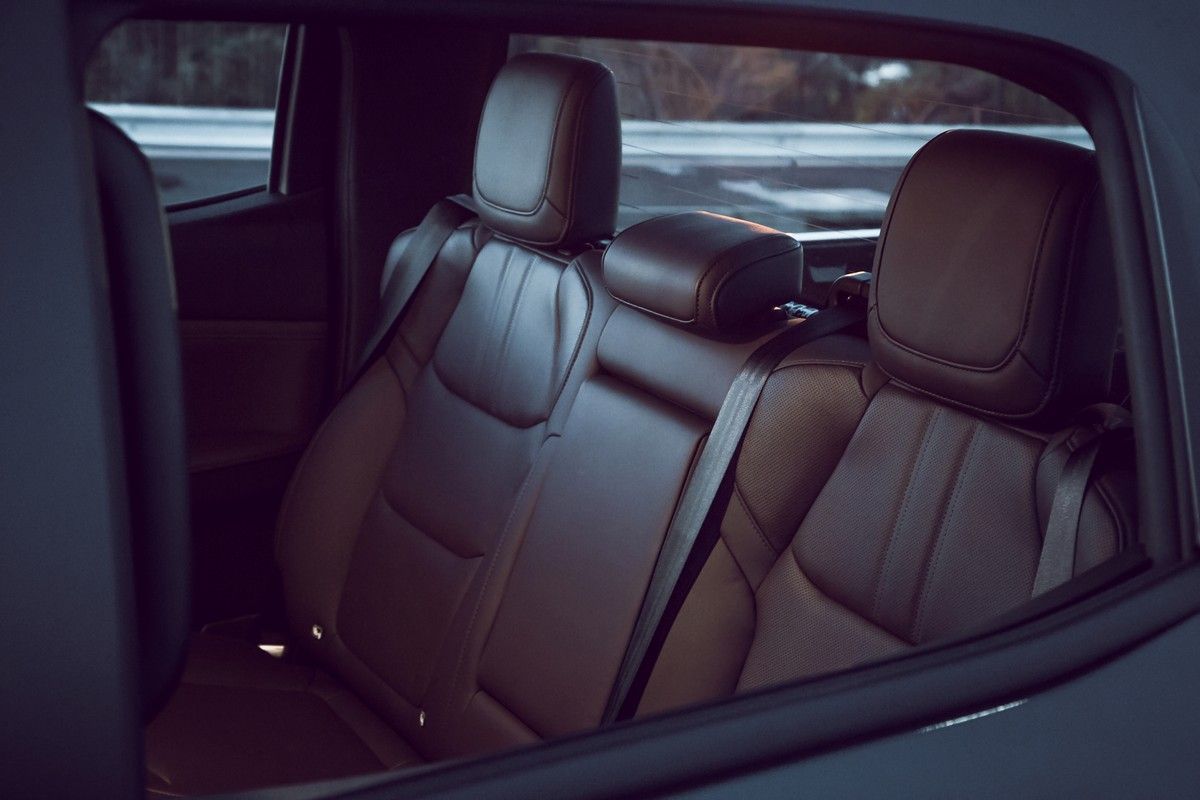
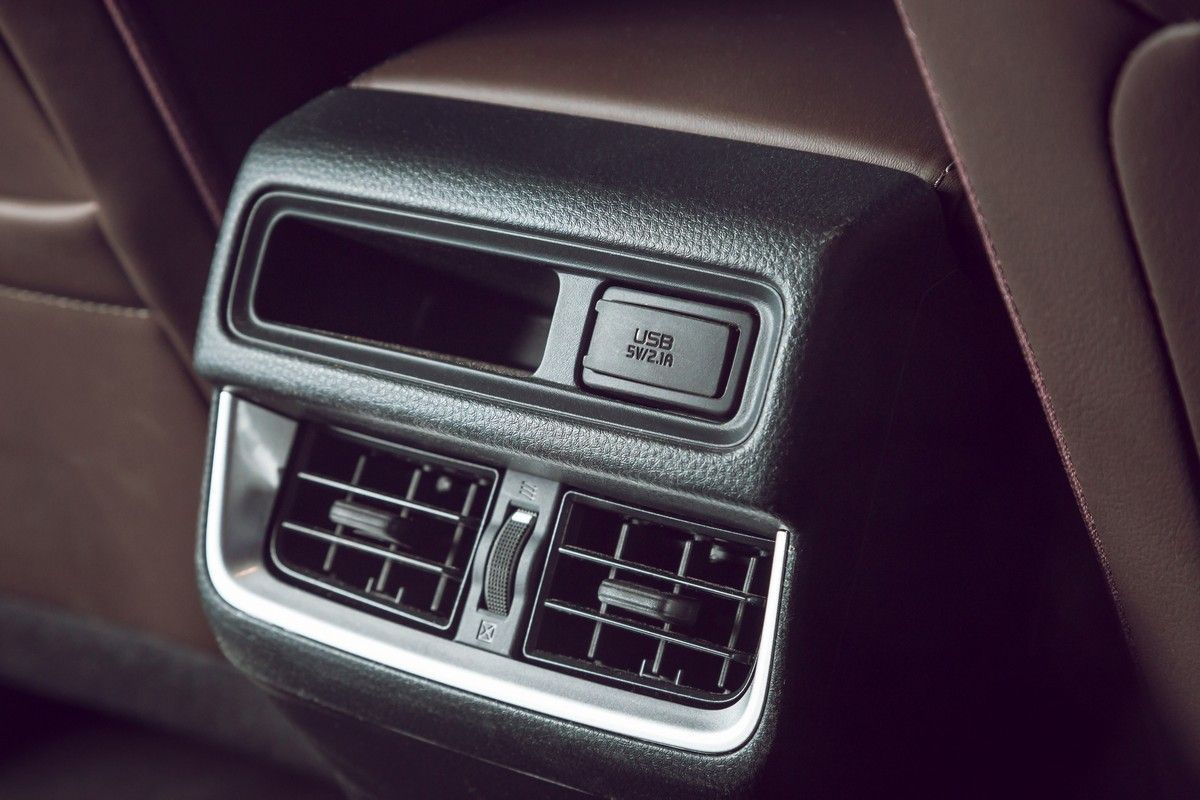
And it gets better… The new BT-50 doesn’t sell its rear occupants short. Aft passengers usually need to endure a hard bench, a bolt-upright backrest and minimum space in “double-cab land”, but the Mazda bakkie offers reasonable leg- and headroom; the 1.88-metre-tall tester could easily sit behind the driver’s seat (as it was set up for him). Other conveniences include separate ventilation outlets, a fast-charging USB port, a fold-out armrest (on the 3.0TD derivatives), 3 adjustable headrests and a bottle holder in each of the rear-door linings.
The bench can also tumble forward in a 60:40 split if you’d like to free up more luggage capacity, plus there’s a lidded hidey-hole in the carpeted underfloor.
For once, rear occupants aren’t shortchanged in a double cab, they’re afforded good leg- and headroom in the new BT-50.
In terms of practicality, the new BT-50 has a payload of just over 1 tonne, while its load tray is 1 571-mm long, 1 530-mm wide (with 1 120 mm between the wheel wells) and 490-mm deep, plus it comes outfitted with a quartet of tie-down loops. Many buyers will undoubtedly specify a rubber lining, tonneau cover and roll bar. The stated towing capacity is 750 kg and 3 500 kg (for braked trailers).
Improved on-road refinement
All of which brings us to the on-road refinement of the newcomer, which is, in a word, admirable. At the national speed limit (110 kph in Australia), the Mazda’s cabin was virtually creak- and rattle-free, with just a slight flutter emanating from the side mirrors. The 3.0TD Dynamic and 3.0TD 4×4 Individual‘s motor is said to be substantially reworked from the current D-Max’s 3.0-litre turbodiesel (including a revised block, head, internals and injection system) and slightly down on power and torque compared with the outgoing bakkie’s Ford-supplied 3.2-litre 5-cylinder powerplant. It still sounds like a pukka Isuzu mill – especially at startup – and the 140-kW motor remains a mite clattery up to the early 1 000-rpm range. As before, it doesn’t like being revved hard.
Even if the new 3.0-litre turbodiesel motor is less powerful than its Ford-sourced predecessor, it’s refined and more efficient.
Bear in mind that, notwithstanding the fondness many in the bakkie fraternity have for that old 3.2-litre motor, we found it notably thirstier than its manufacturer’s claim during extended reviews (of the Ford Ranger Wildtrak, for example). The new 3.0-litre turbodiesel engine, while no fireball, is reasonably tractable by comparison: peak torque of 450 Nm is available from 1 600 to 2 600 rpm, but 400 Nm of that between 1 400 and 3 250 rpm, and, best of all, we saw an encouraging indicated consumption figure of just over 9 L/100 km during our test drive (Mazda claims an average of 8.0 L/100 km).
The ride quality was a bit of a mixed bag, but the roads on our test route (a mix of rural, suburban and urban) were far from perfect. At freeway speeds, the Mazda has a relaxed, loping gait; the suspension suppresses bumps… but doesn’t quite neutralise them. Then, at lower speeds, the bakkie’s rear end can still feel a little jittery on rippled/uneven surfaces, but by double-cab standards, it’s quite fair.
What about its Mazda-ness?
What impressed us most about the auto cruise control-equipped new Mazda BT-50’s demeanour was its sheer easy-to-drive nature, which is a happy coincidence for Mazda, which endeavours to offer driver engagement in all its products. The bakkie’s steering, for example, has improved by leaps and bounds. The ‘wheel is pleasantly weighted, but not vague; turn-in is true and positive, even if a bit slow by family-car standards, the high-riding bakkie eases into bends with a predictable amount of roll and stops sufficiently sharply too.
The ride quality of the BT-50 is on the firm side of pliant on dirt roads, but the bakkie’s steering and road-holding inspire confidence.
Although the 1st gear on the manual-shift version was quite short, the ‘box shifted positively and the clutch was easy to modulate, even in thick Sydney traffic. We anticipate most buyers will opt for the 6-speed automatic transmission, which features in 3 out of the 4 local derivatives. We traversed a short section of dirt road in the Royal National Park (on the outskirts of the city) and even tried out the hill-descent-control and shift-on-the-fly 4×4 on a slippery downhill slope, where the BT-50 behaved just as expected. However, while we were driving the bakkie back to its depot, we realised something else…
Many of the BT-50’s most impressive features aren’t visible to the naked eye. The Mazda’s suite of safety systems, for example, moves the game forward for the bakkie segment; in an LCV-based vehicle that will be entrusted with transporting your precious family, that’s noteworthy.
The integral stereoscopic camera system enables a host of active safety features on the BT-50.
First, the good news… all Mazda BT-50 derivatives in the South African market feature 7 airbags (dual front-, -side, curtain ‘bags, plus one for the driver’s knee), ISOfix child-seat anchor points, ABS with EBD, brake-override accelerator, hill descent control, hill launch assist and rollover mitigation systems. That’s a fair number of features, certainly, but the safety suite could have been more generous…
Because in Australia, all versions of the BT-50 employ sensors and a stereoscopic camera system to offer auto emergency braking (AEB), including pedestrian- and cyclist detection, speed-sign recognition turn assist (to dissuade you from turning into the path of oncoming traffic) and forward-collision warning, which is in addition to blind-spot monitoring and rear cross-traffic alert. Granted, if Mazda had opted to fit those features on the bakkies destined for the South African market (provided the gizmos were compatible with our road network, of course) it would have pushed up the new line-up’s asking prices.
As if having access to wireless Apple CarPlay in an otherwise humble bakkie wasn’t enough to blow your mind, wait until you feel the Mazda’s active lane-keeping assistance system make small course corrections through the steering wheel (it works between 60 kph and 130 kph). Oh well, fingers crossed that at least some of those driver-assist systems will feature in local-spec BT-50s one day!
As the double cab entrenches itself as a popular family car in the South African market, the Mazda’s sophistication is a big plus.
Summary
It’s no secret Isuzu SA had to delay the launch of the next-gen D-Max until 2022. In the meantime, the Port Elizabeth-based subsidiary of the Japanese brand has conducted a development programme to tailor the new bakkie’s construction, suspension and other components for our market. Given that Isuzu will build the bakkie in several guises – for various types of customers – that stands to reason.
By virtue of arriving in Mzansi ahead of its D-Max cousin, the new BT-50 will certainly appeal to owners of older Isuzu D-Max models, who feel they can no longer delay the replacement of their current bakkies. Some prospective buyers may also be wary of buying a bakkie that will be superseded in the next year or so (Ford Ranger and Volkswagen Amarok); they might consider the Mazda strongly.
Apart from being much more handsomely styled than its predecessor, the new BT-50 offers appreciably more appeal for buyers who want the practicality and looks of a bakkie, but ultimately utilise their vehicles as family cars. A 4-door pick-up will never be able to match the sophistication of a unibody SUV, but Mazda’s newcomer demonstrates that “leisure double-cab” standards are rising rapidly.
We will soon pit the flagship Mazda BT-50 3.0TD 4×4 Individual against a number of its (also top-spec) rivals in a multi-bakkie shootout to crown South Africa’s best bakkie. Watch this space.
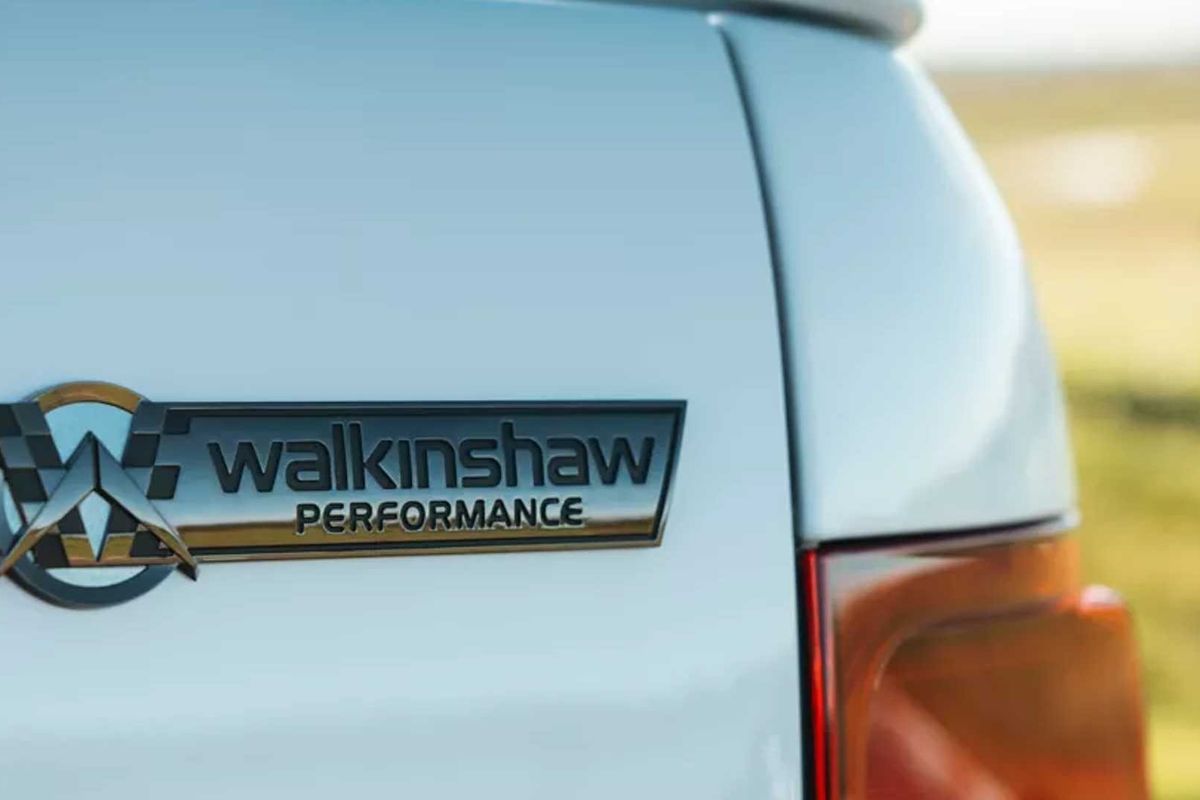
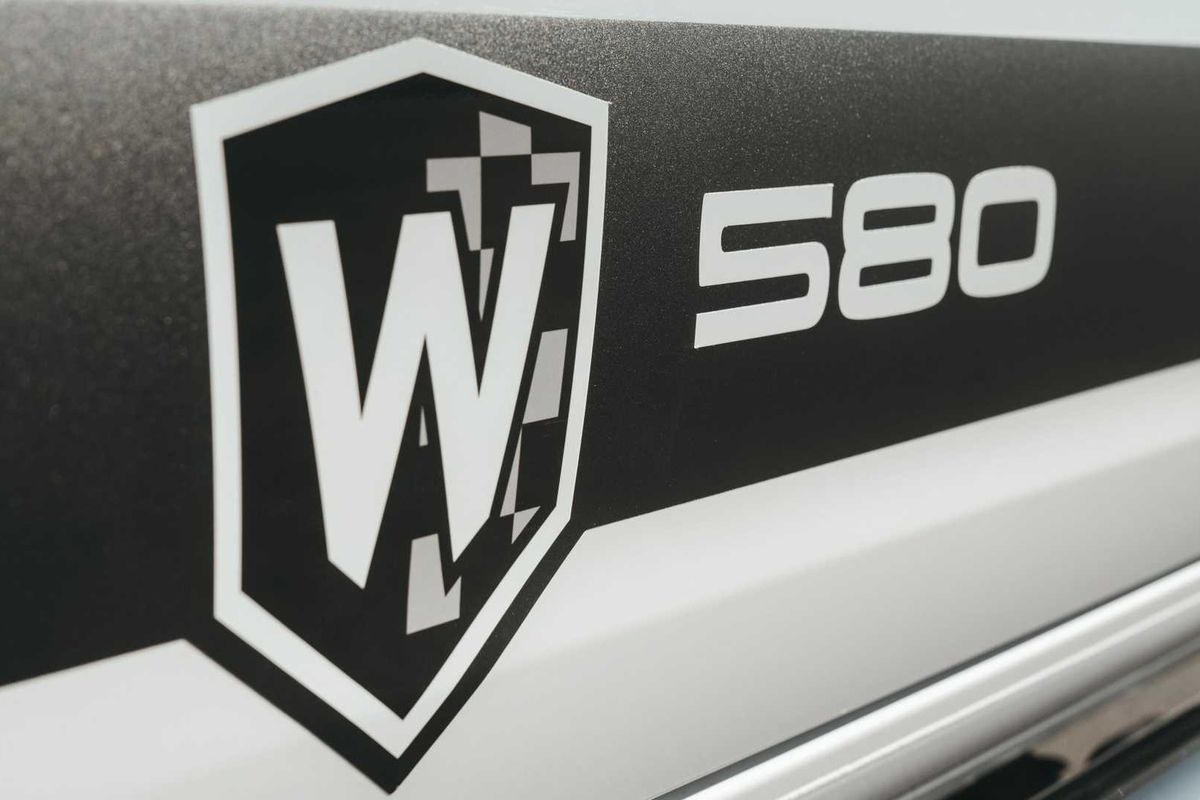
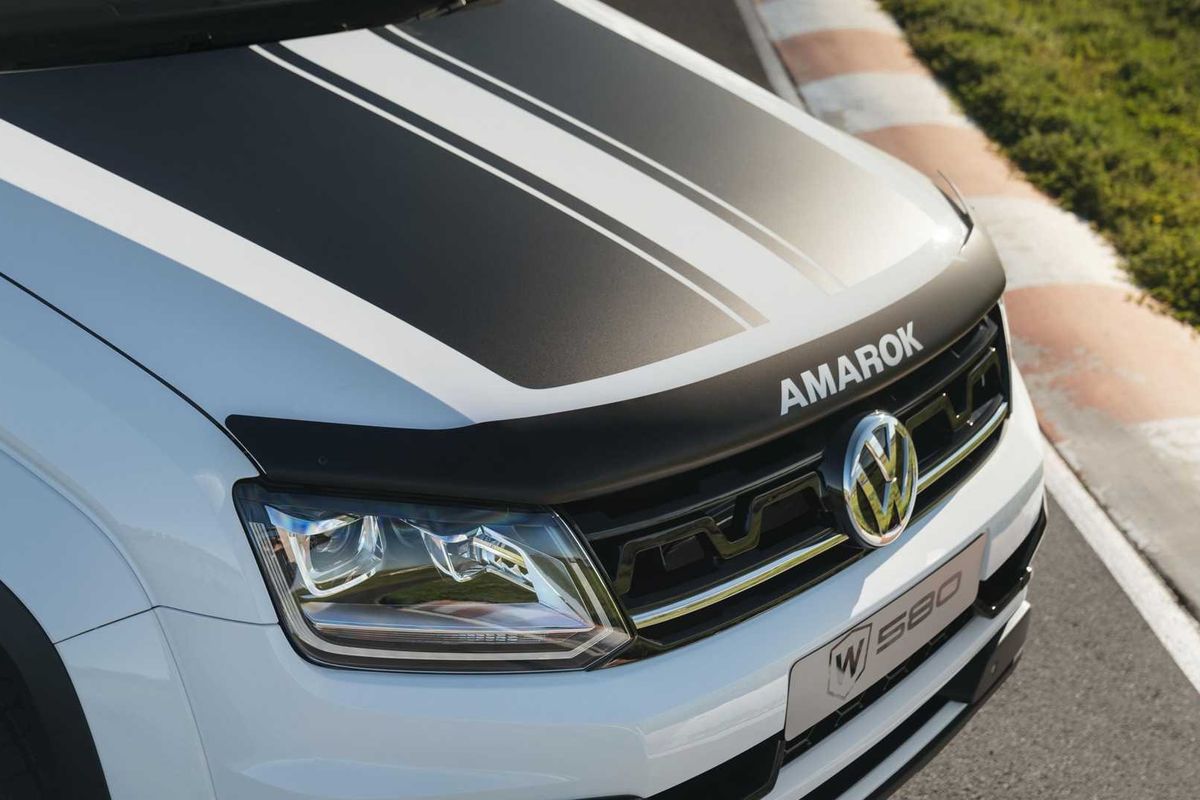
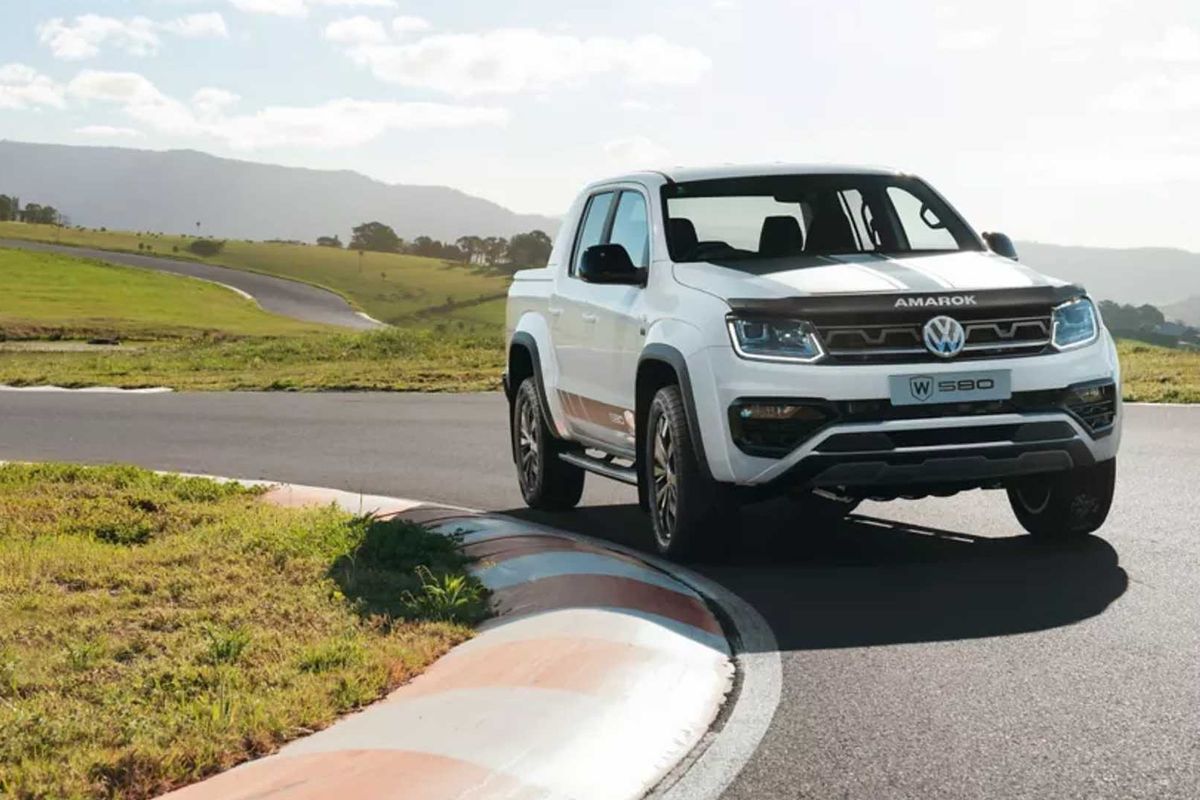
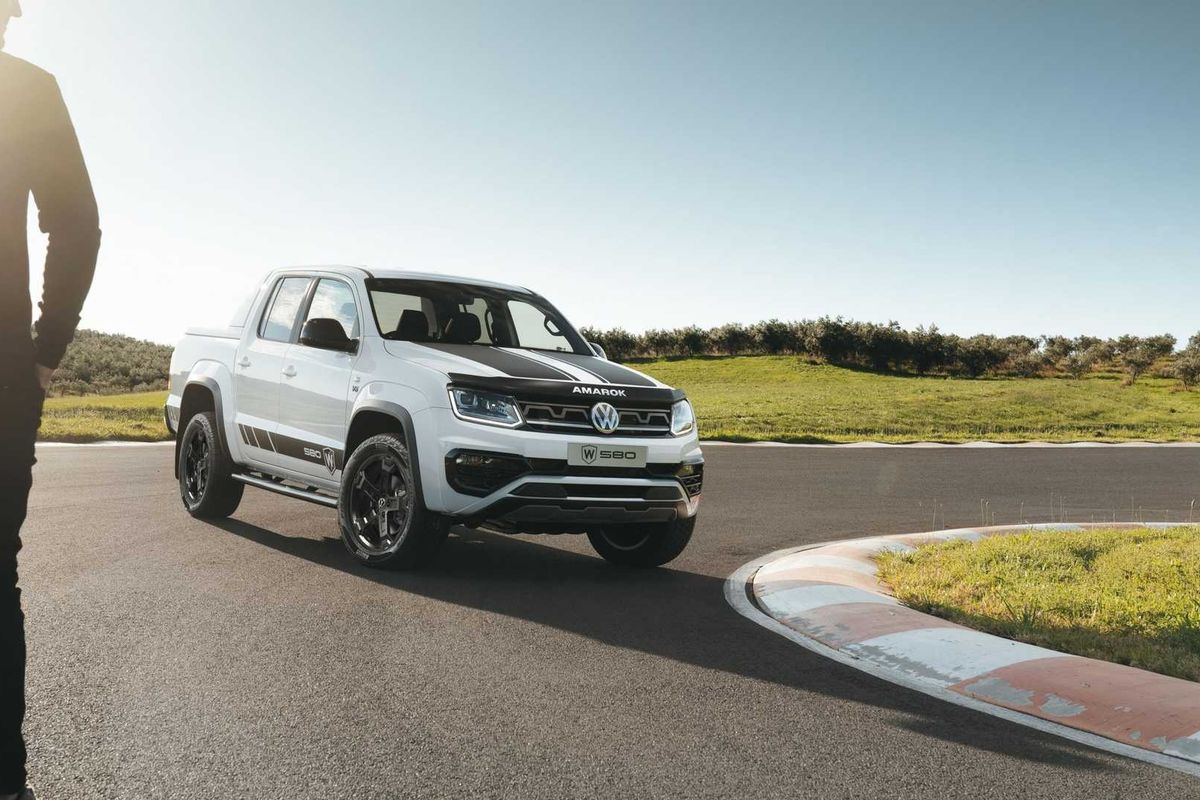
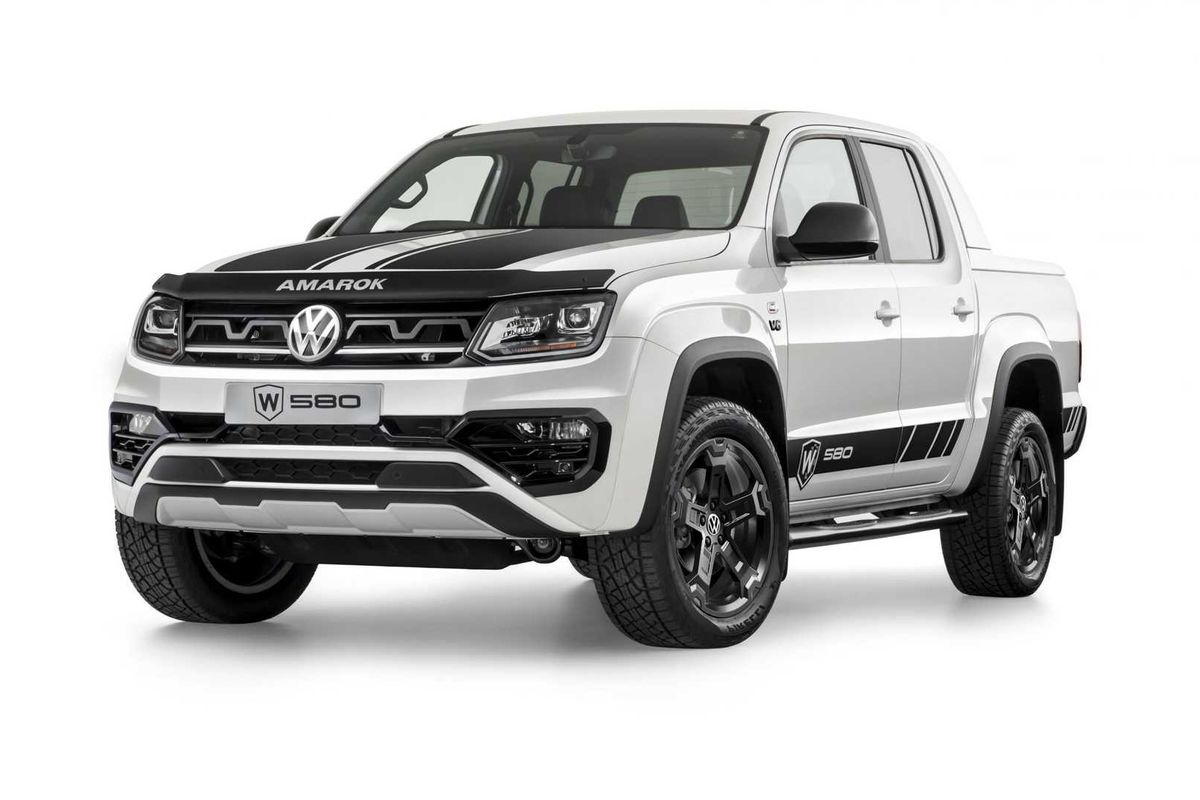
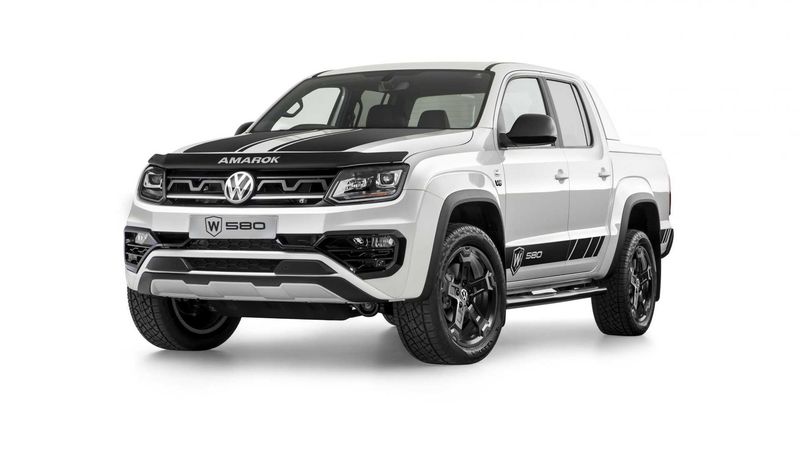
But, before we say our farewells, Volkswagen Australia is not going to let the Amarok retire quietly. It has paired with Aussie engineering specialists Walkinshaw again to create a special edition. We’ve covered the Amarok W580S before, but that setup was focused more on-road performance.
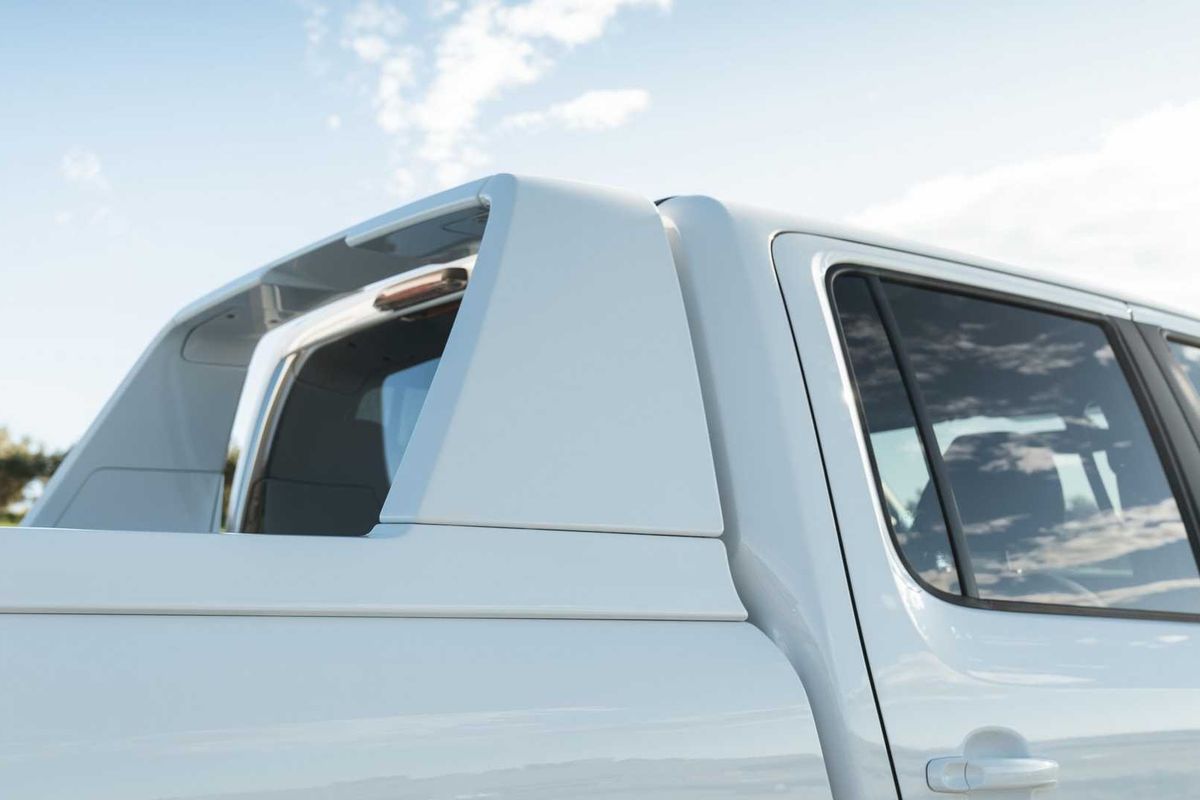
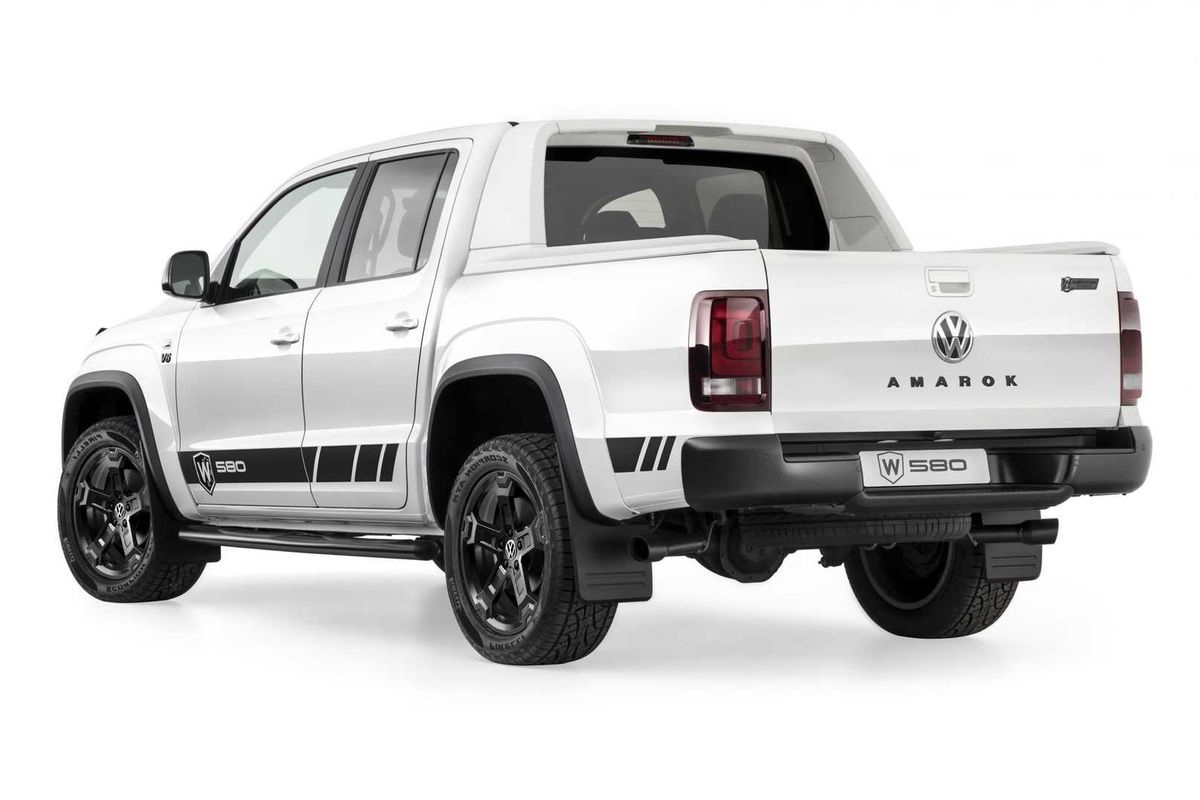
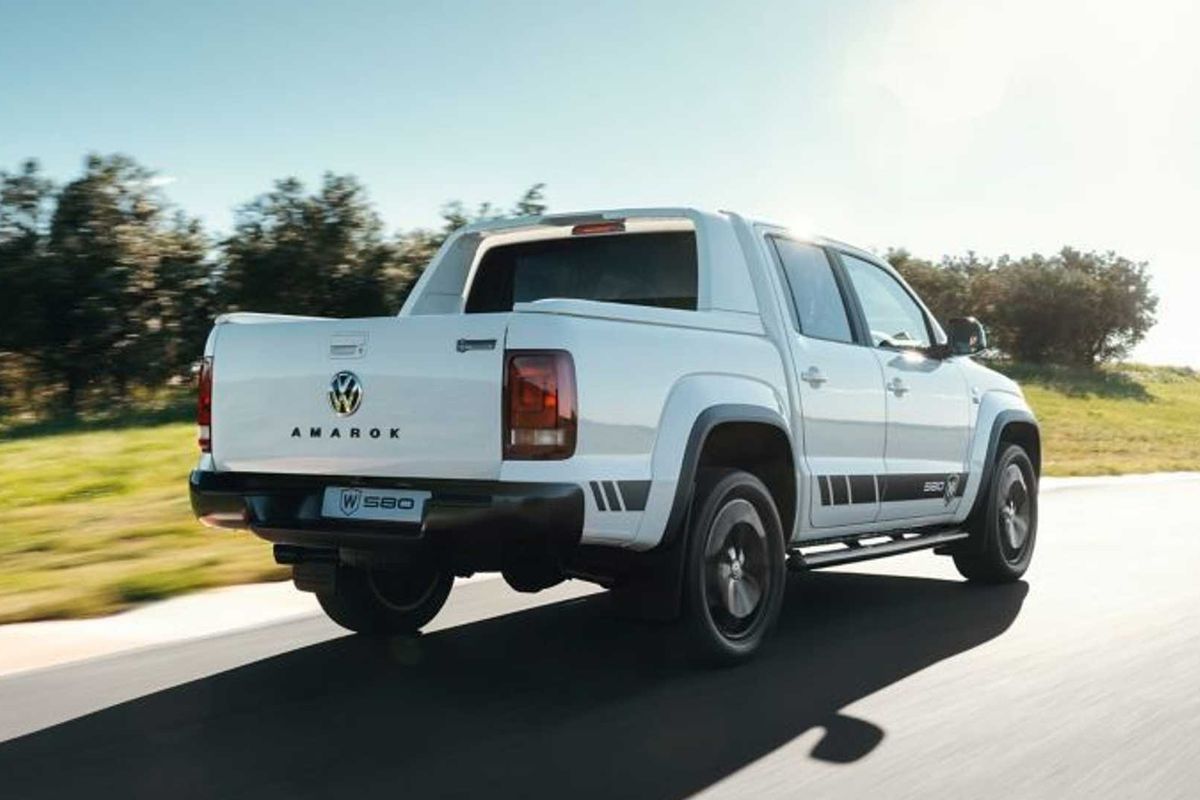
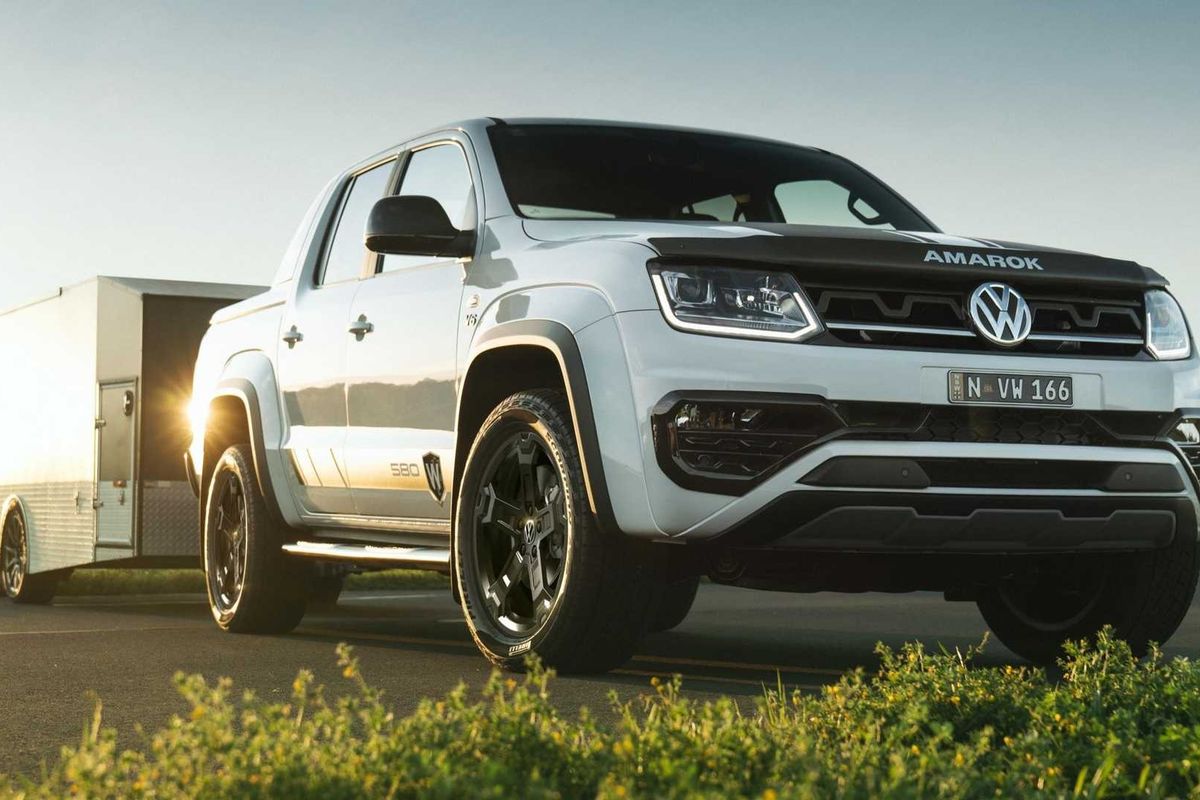
What you see is the Volkswagen Amarok W580X which takes the competent package and gives it a bit more offroad capability. The suspension lift kit improves the ground clearance and there’s been work done to the suspension with MTB twin-tube dampers, and the vehicle comes with custom bash plates and rock sliders.
To further enhance its offroad capability is underbody protection, breathers and Walkinshaw will even supply a snorkel as an option if you’re feeling really adventurous. The Volkswagen Amarok W580X also features 18-inch alloy wheels wrapped in all-terrain tyres, wheel arch extensions, new-look front grill and the cabin gains some new Walkinshaw-branded seat trim.
Under the bonnet is a 190 kW and 580 Nm 3.0-litre turbodiesel V6 motor, paired to an 8-speed automatic transmission. Given these big numbers for a double-cab bakkie, we think Walkinshaw did the right thing by not touching the motor – it’s already fast enough.
Volkswagen Amarok W580X Availability
Australian customers will get the Volkswagen Amarok W580X in limited numbers in April 2022, which then begs the question, will South Africa get a farewell Amarok special edition too?
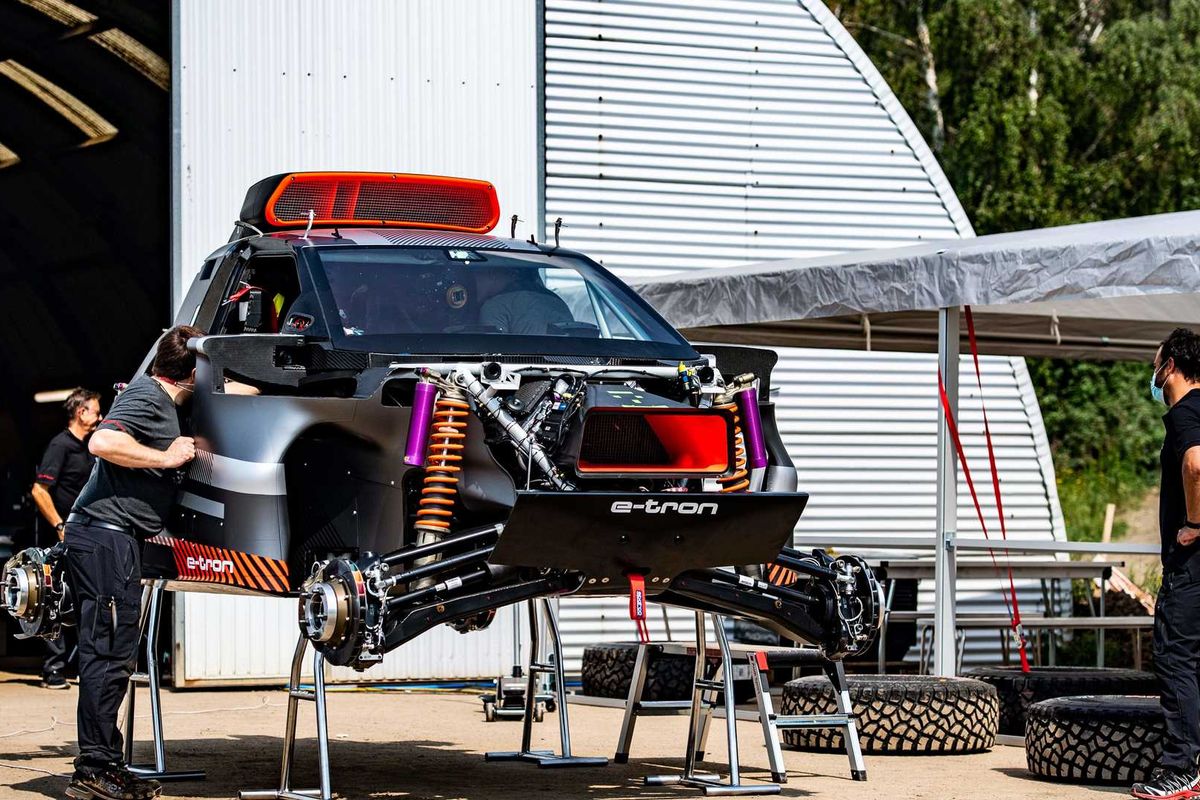
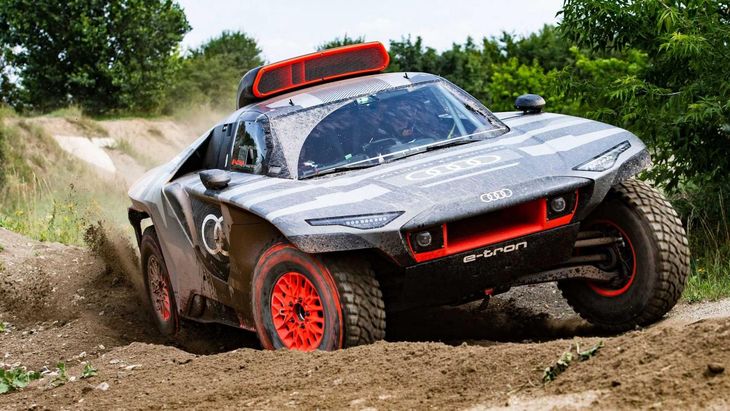
500 kW Electric Audi RS Q e-tron Dakar Racer Shown
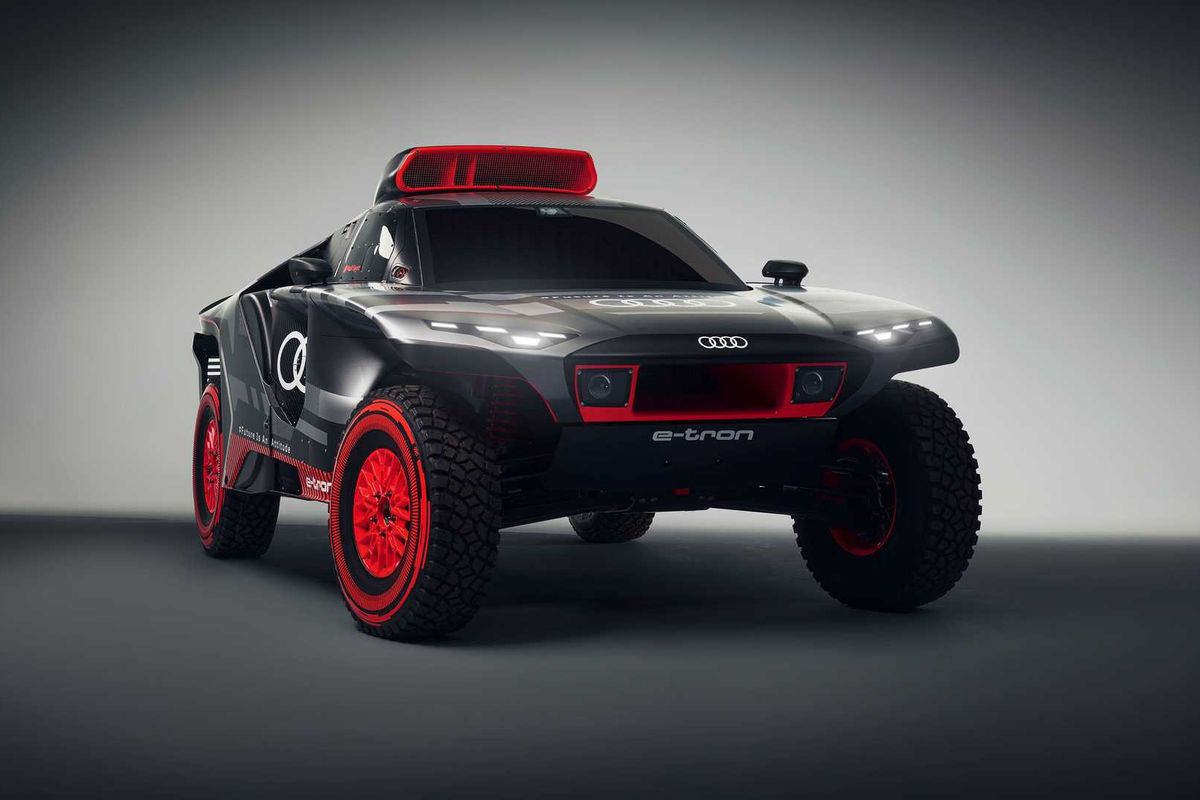
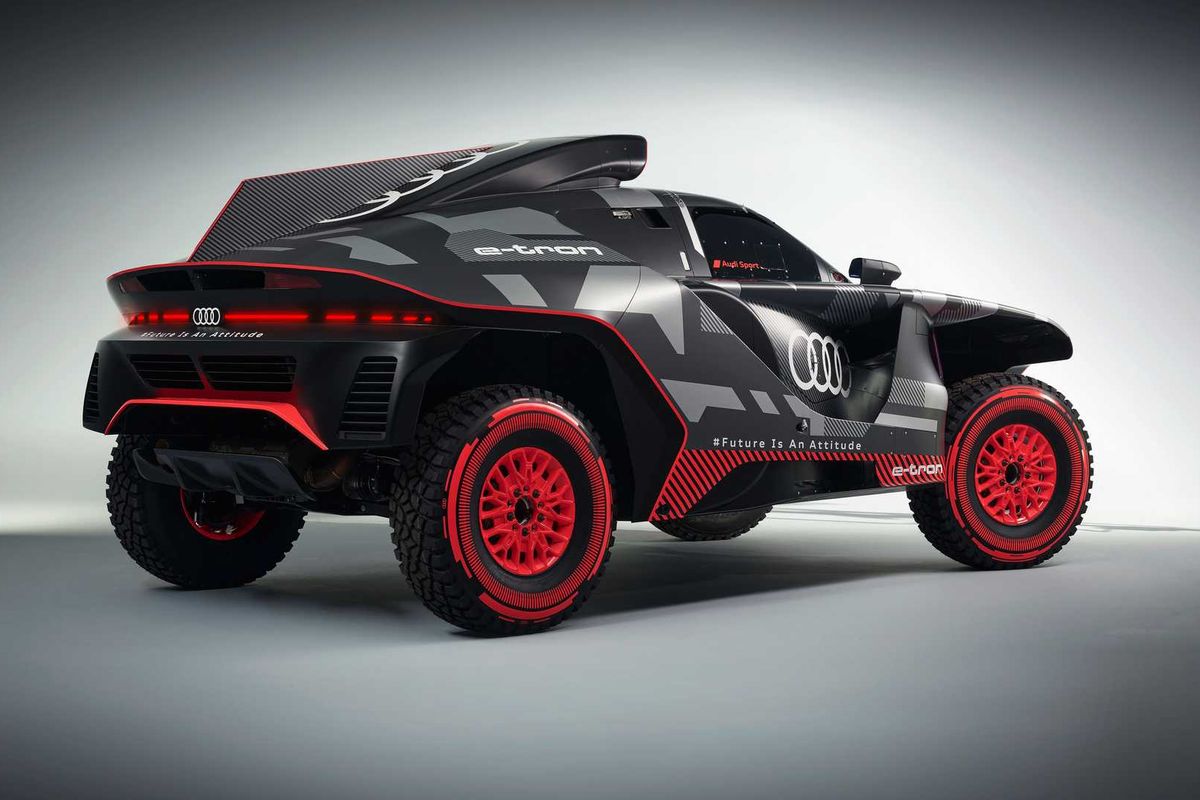
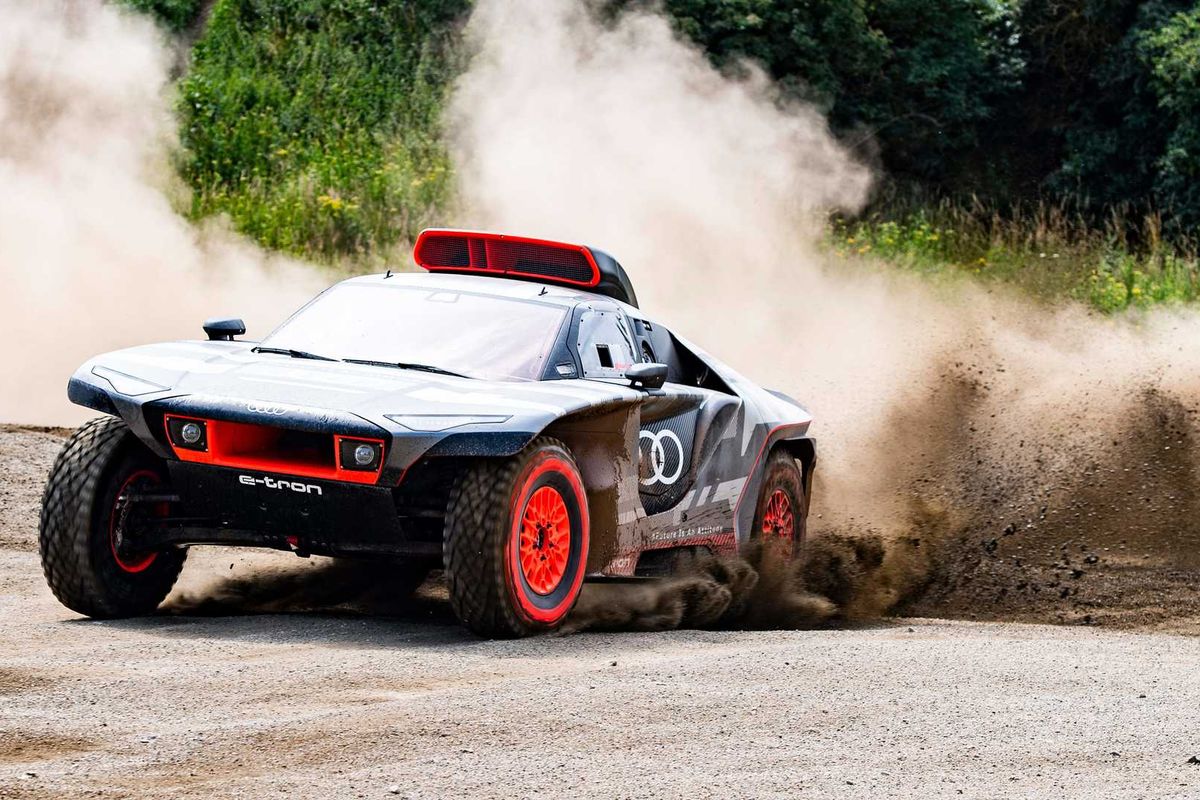
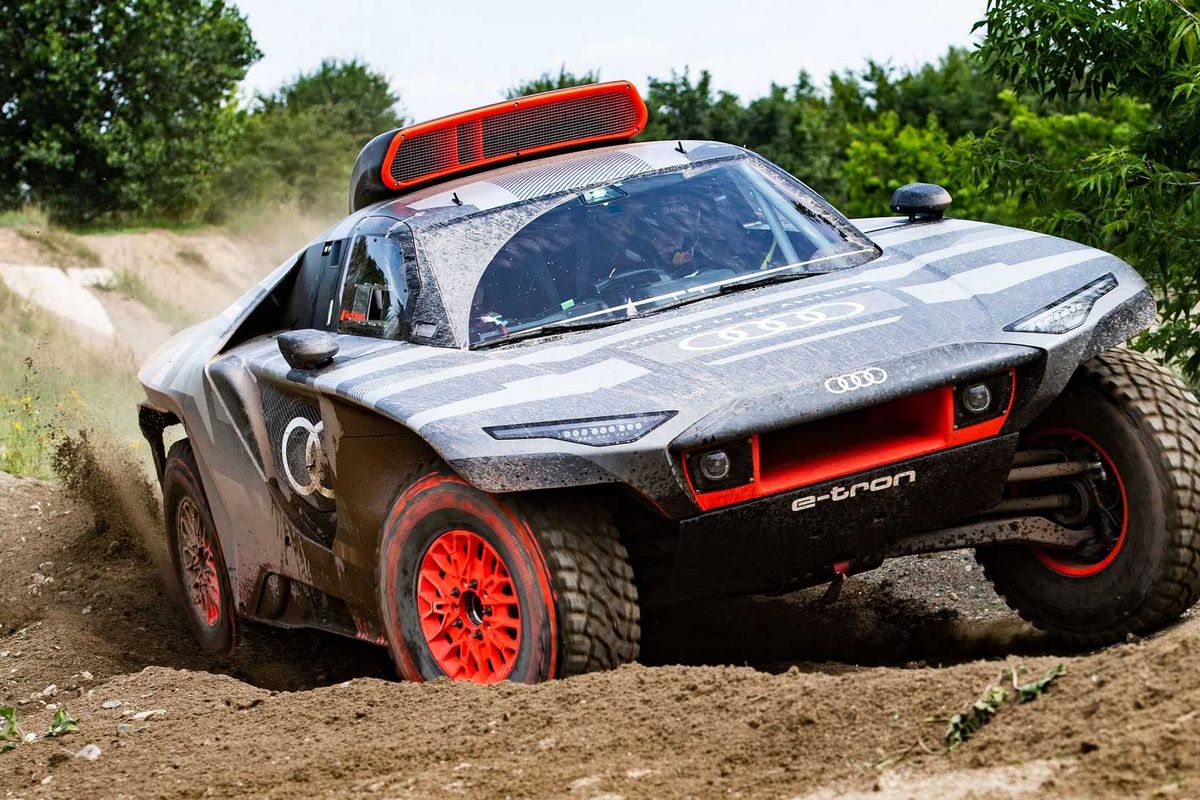
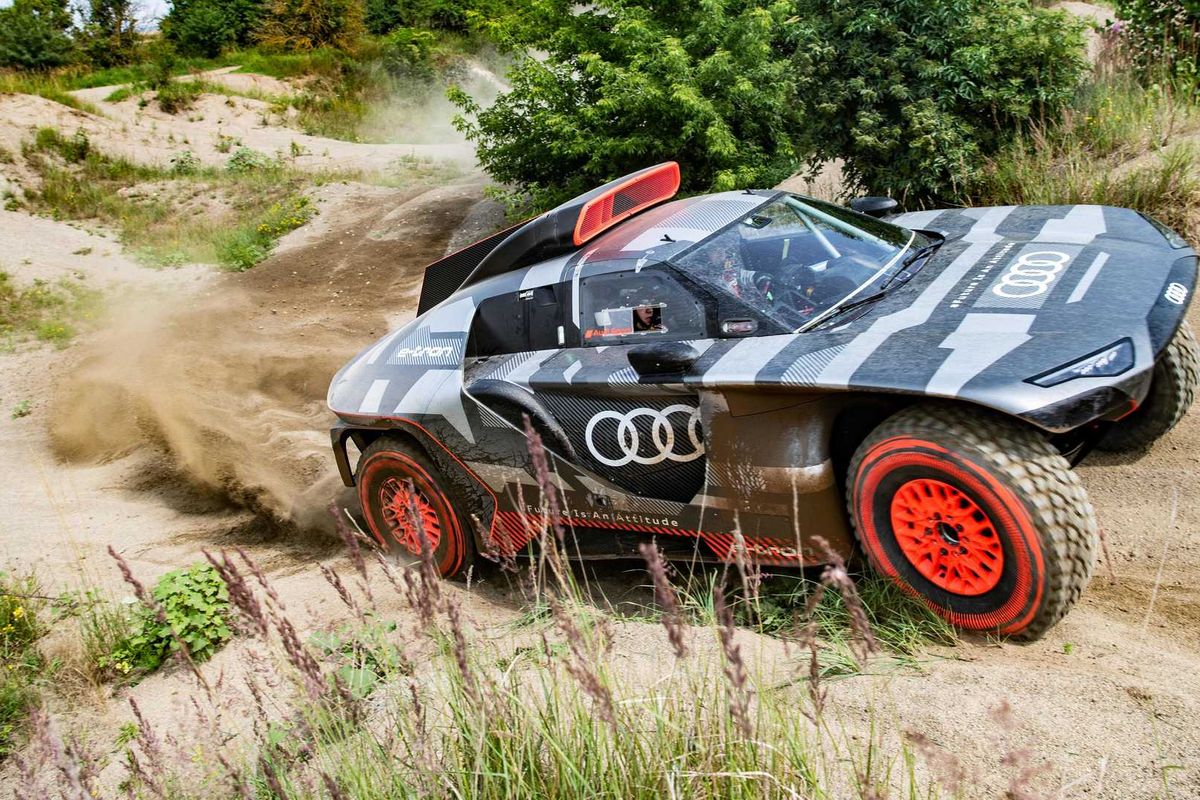
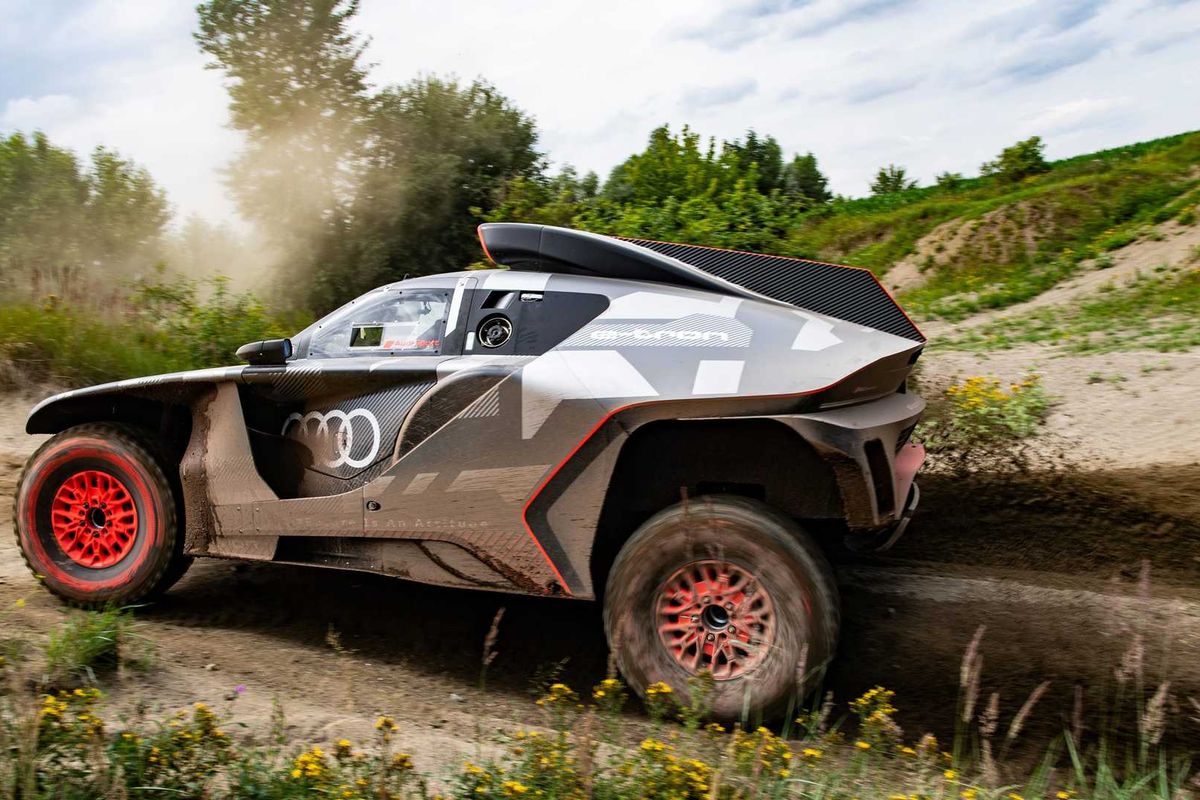
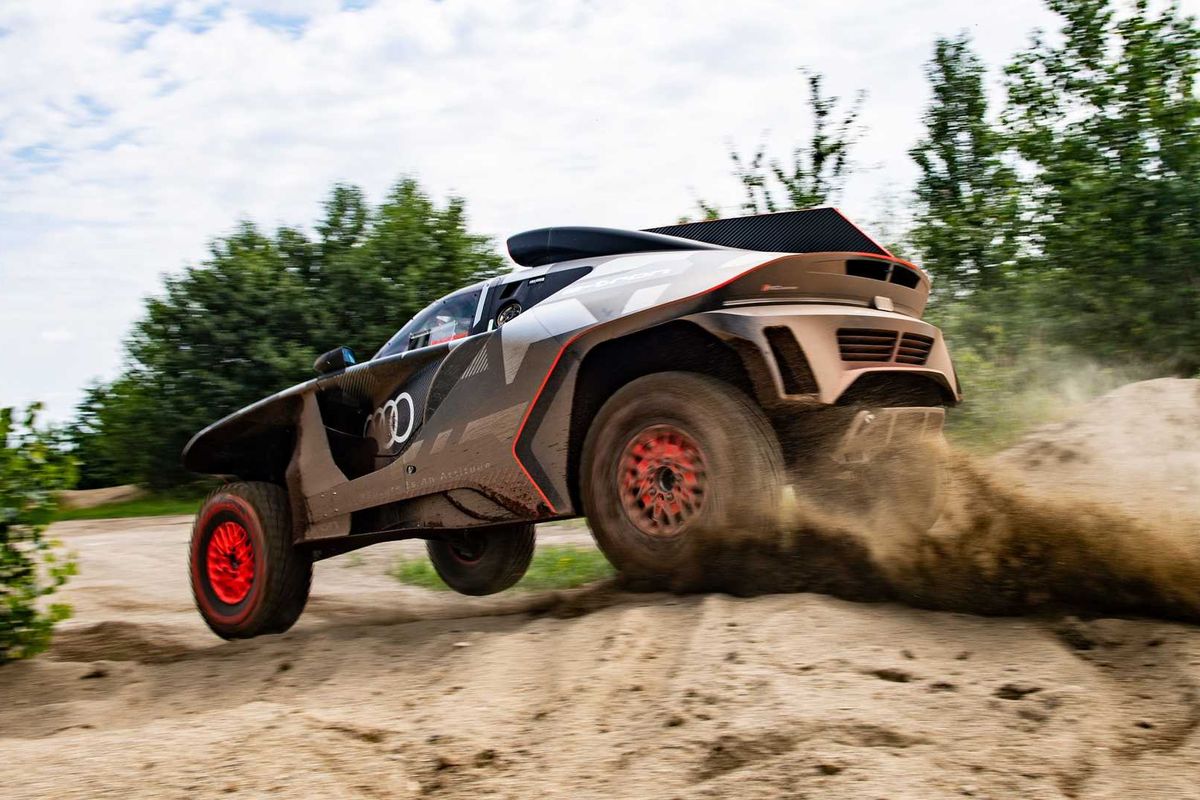
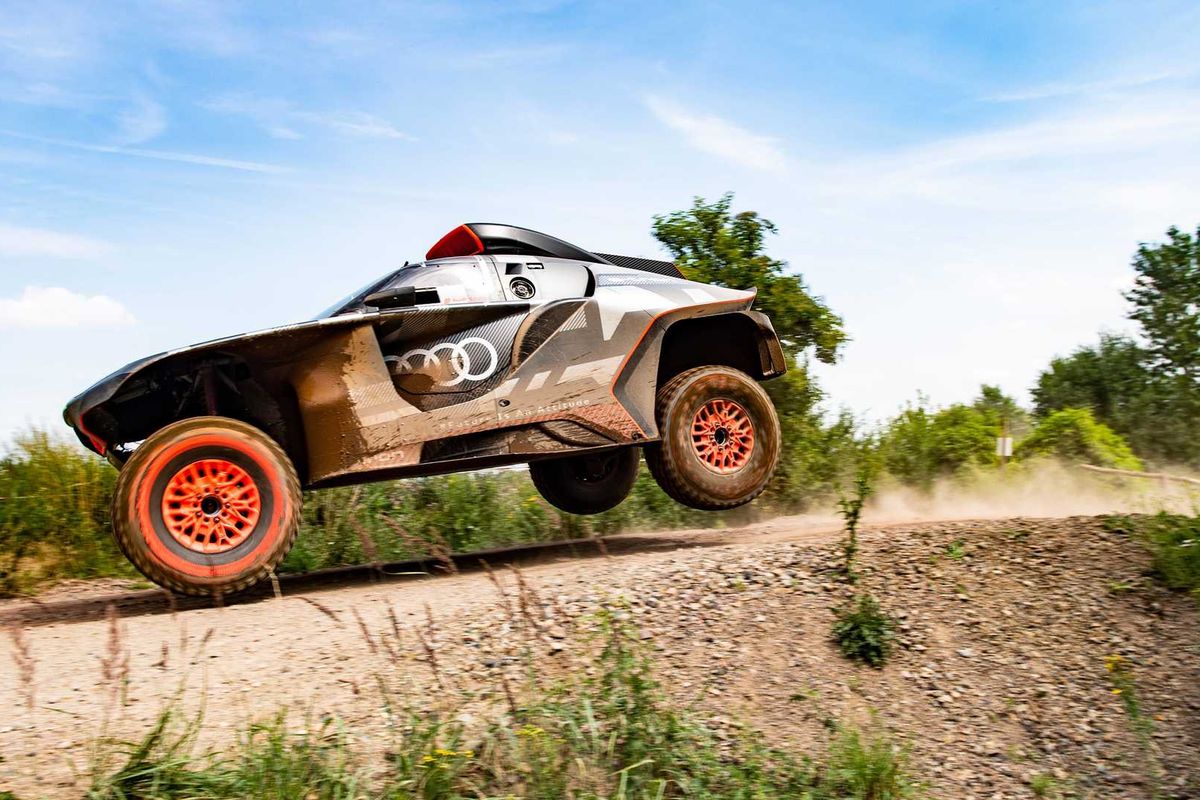
Audi has its sights set on the 2022 Dakar Rally and the firm plans to take part with the electric RS Q e-tron!
The Dakar Rally is the toughest rally on this planet and Audi wants to make history by becoming the first manufacturer to use an electric drivetrain to compete against conventionally powered competitors.
“The quattro was a gamechanger for the World Rally Championship. Audi was the first brand to win the Le Mans 24 Hours with an electrified drivetrain. Now, we want to usher in a new era at the Dakar Rally, while testing and further developing our e-tron technology under extreme conditions,” says Julius Seebach, Managing Director of Audi Sport GmbH
Enter the RS Q e-tron
The RS Q e-tron will undergo rigorous testing before it takes part in the 2022 Dakar Rally.
The Dakar Rally runs over a period of 2 weeks and each day poses significant challenges for competitors. Vast distances, up to 800 km, are covered daily and electric range is the ultimate challenge to overcome for any electric car that attempts to take part in the Dakar Rally.
“That’s a very long distance,” says Andreas Roos, responsible for the Dakar project at Audi Sport. “What we are trying to do has never been done before. This is the ultimate challenge for an electric drivetrain.”
The RS Q e-tron’s electric powertrain consists of a motor-generator unit (MGU) on both the front and rear axle derived from the Audi e-tron FE07 Formula E car, but it’s been adapted slightly for its intended Dakar application.
More so, in conjunction with a third motor-generator unit, the RS Q e-tron is equipped with a TFSI engine from the DTM which forms part of the energy converter that serves to charge the high-voltage battery while the vehicle is in operation. The battery weighs about 370 kg’s and has a capacity of about 50 kWh. The battery is also charged via brake energy regeneration.
Maximum system power output is claimed at 500kW! Only one forward gear is required for the RS Q e-tron and unlike most electric vehicles, the front and rear axles are not mechanically connected. Audi uses software to manage torque distribution between the axles which is essentially a virtual and freely configurable center differential. This also results in weight and space savings as there’s no need for a propshaft and mechanical differential.
An intensive test program lies ahead for the RS Q e-tron prototype as it prepares for the Dakar Rally which is due to take place in January 2022 in the deserts of Saudi Arabia.
We can’t wait to see how the Audi RS Q e-tron performs in the Dakar Rally!
This week’s news you need to know (July 2021, Week 4)
In this week’s automotive news you need to know: Aston Martin prepares to swop the V8 for an electric motor, the Audi A1 seems destined to be little more than a footnote in history, the JAC T9 could ride Haval and the P-Series’ coattails and the long-awaited Volkswagen Golf 8 GTI arrives with a base price of about R670k.
No More V8 for Aston Martin – Roar in peace
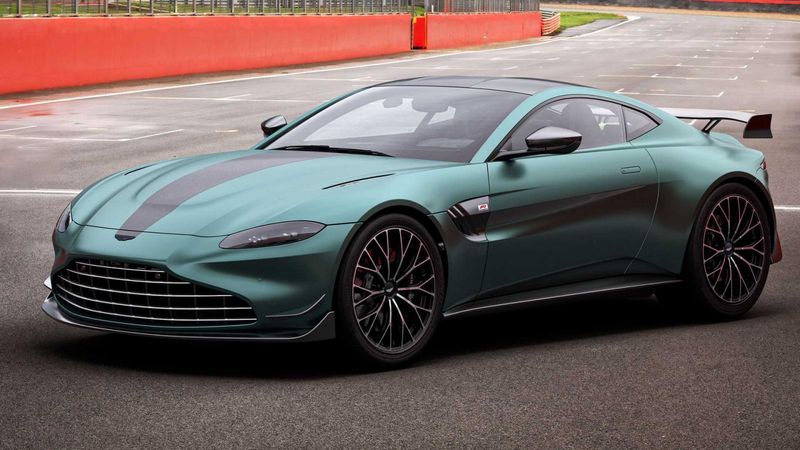
The successors to the current Aston Martin Vantage and DB11 will be EVs or, more to the point, battery-electric vehicles, the firm’s boss Tobias Moers said recently. To many, it’s virtually unfathomable, but let’s face it, but it wasn’t Aston Martin’s decision to make; Mercedes-AMG, whom the Gaydon-based sportscar manufacturer had relied on to supply that roaring V8 in the first place, had already decided to abandon the much-loved twin-turbo 4.0-litre powerplant in future models and pursue small-engined petrol-electric hybrid solutions instead. For a brand that has been heavily underpinned by the “sound and fury” of roaring V8s and screaming V12s, Aston Martin is certainly in a predicament. Just how will they capture that same feeling to keep the Aston Martin faithful entertained and coming back for more?
It’s not all bad news… Aston Martin and Mercedes-AMG remain closely linked through F1 and the British firm’s hybrid technology is not reliant purely on what it can scrounge from Benz’s massive R & D. Aston Martin has incubated and implemented a number of technologies in the Valkyrie and Valhalla (yes, those are real hybrid hypercars, not ones I have just made up). Will there be cross-pollination between the German and British marques in terms of top-end performance-car advancements? Sure. However, a lot of IP will remain in Aston Martin and find its way into road cars, otherwise, it may just as well be assimilated by AMG. No, the future may not include V8 engines, but it will certainly include the same brand offering of excitement, albeit of a different kind. Lawrence S Stroll will make sure that!
End of the road for the Audi A1 – A missed opportunity
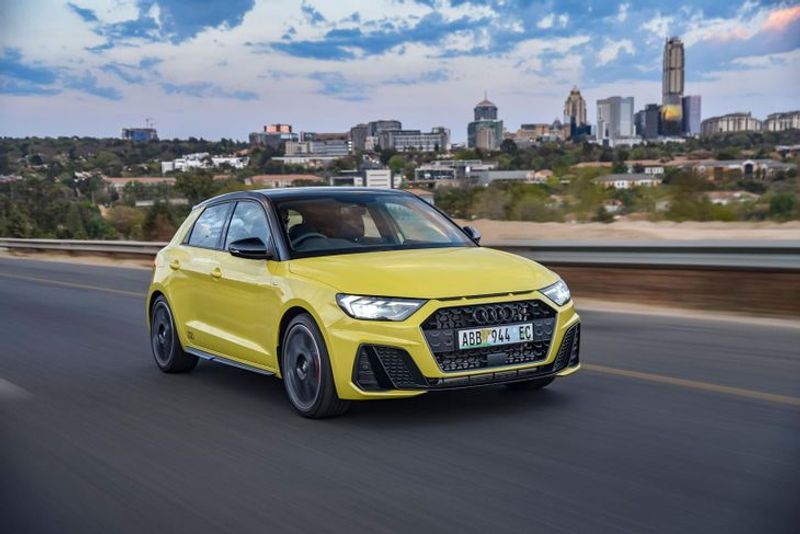
The Audi A1’s life cycle (just 2 generations, including the current one) has been relatively short and clouded by indecision around what to do with the Ingolstadt-based brand’s supermini. The 1st generation heralded the “wolf in sheep’s clothing” S1, a car that predates the fanfare of the Toyota GR Yaris and famously brought the brand’s (Sport Quattro) S1 badge back into the contemporary motoring world.
As much as I am a supporter of culling models that serve little more purpose than to fill perceived (or, worse, imagined) market niches and would utterly love to see the end of the motor industry’s self-inflicted “derivative fatigue”, I sure wish that Audi would have started by pruning its crossover/SUV line first. Sadly, however, money talks and if we were holding out for a 2nd-generation S1, the question has indirectly been answered by Audi CEO, Markus Duesmann (sorry, quattro fans). Audi has missed a golden opportunity – instead of peddling the morbidly expensive 40TFSI, it could have worked a bit harder to develop another S1 and, who knows, given the GR Yaris a rival. If you’re looking for a more affordable “GR Yaris”, consider a used 1st-generation S1. See examples listed on Cars.co.za.
JAC T9 – Late to the party
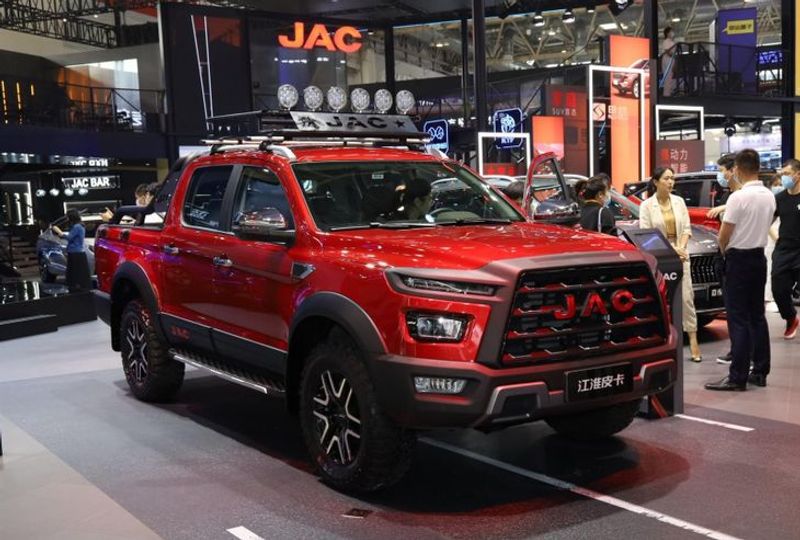
Any car brand that hopes to make inroads into a new market, needs to be strong to survive… and by strong I mean have deep pockets. By virtue of being mostly owned by the world’s biggest car company, Volkswagen, and partly owned by the Chinese government should help JAC bide its time – cracking the South African market is certainly not a make-or-break for such an established brand. However, to win a significant number of hearts among local bakkie fanatics, JAC needs to market itself aggressively (not rely solely on the local distributor’s chequebook), plus it has to rock up with serious machinery!
Since 2019, JAC has offered the T6 and T8 in our market, with the top-of-the-range T8 retailing for R442 400 (including a 5-year warranty and service plan), but the JAC T9 looks set to raise the stakes as it joins the ranks of the GWM P-Series in the fight to win over those who don’t quite have an adventure double-cab-spec Hilux budget. The Haval brand and P-Series has certainly opened consumers’ eyes to products from the Far East, which the T9 could capitalise on. Sure, it may be late to the party but just like Facebook proved eclipsing myspace, you don’t have to be first. You just need to be better.
New Golf 8 GTI – Missing the marque
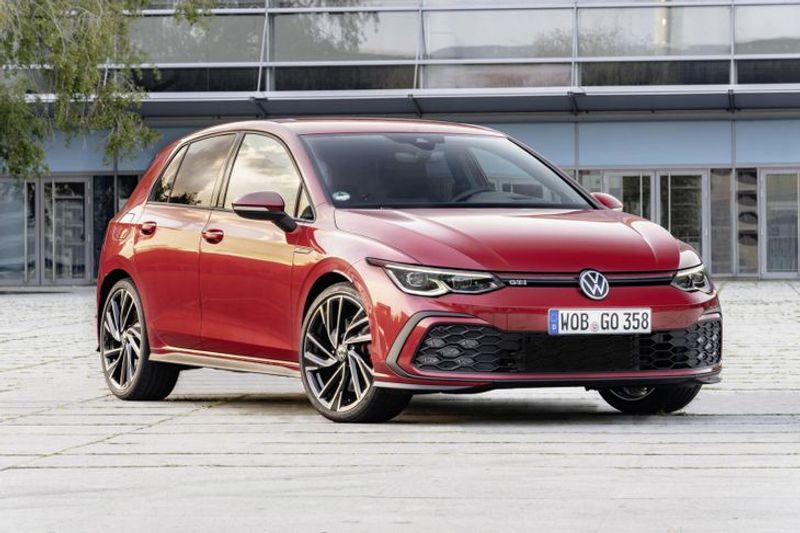
The new Volkswagen Golf 8 GTI has finally been released in Mzansi and its base price tag of R669 300 seems to have surprised everyone, myself included. For a hot hatch to be a true hot hatch, however, it needs to meet the following characteristics: performance, handling, front-wheel-drive, lightweight, a close-ratio manual gearbox, affordable to mass market and with utility. We’re ticking 4 of the 7 so far.
I respect the astronomical success that the GTI nameplate has achieved in South Africa, but I wish its sales pitch was nobler than “if you want to impress your friends and/or make your peers jealous get yourself some vrr-pah!” These days, the Golf GTI flagrantly trades on its name. The original Mk1 was a go-getter that was willing to punch above its weight. Granted, it wasn’t quite a giant slayer, but quick enough to fill the rear-view mirrors of more expensive cars. Now, however, I feel that it has grown up, is shopping for expensive suits and suffering from the affliction that comes with adulting – boredom.
Mazda BT-50 (2021) Specs & Price
The new Mazda BT-50 double-cab was officially launched in South Africa this week. We bring you information regarding the respective derivatives in the range, their powertrains, specification details and, of course, their list prices.
The SA-spec Mazda BT-50 is assembled in Thailand and while it is a shared platform with the all-new Isuzu D-Max, we think Mazda has pulled off quite the trick. See, South Africa will be getting the new Isuzu D-Max, but that model will be assembled at Isuzu’s facility in the Eastern Cape, but due to Covid-19, the conversion of the plant from old to new has taken longer than planned.
With an estimated SA market release of 2022 for the D-Max, the all-new BT-50 is going to have a substantial head start. We’re keen to see what the differences are between the Thai-built BT-50 and the SA-built D-Max, but that’s on 2022’s to-do list.
The BT-50 will come to market fully loaded with features. The MZD Connect Infotainment system will feature either a 7-inch or a 9-inch display with Apple CarPlay and Android Auto connectivity. There’ll also be a reverse camera with parking sensors, LED headlights, hill start assist, hill descent control, trailer sway mitigation, 7 airbags and cruise control.
There will be three levels of trim, with the naming convention of Active, Dynamic and Individual following the Mazda formula across its product range.
As far as engines go, the Active derivative is powered by a 1.9-litre turbocharged diesel engine with 110 kW and 350 Nm. Customers can choose from a manual gearbox or an automatic transmission.
The BT-50 Dynamic and Individual derivatives will have the 3.0-litre turbocharged diesel engine which produces 140 kW and 450 Nm. This powertrain is mated to a 6-speed automatic gearbox. The BT-50 Individual will feature 4×4, while the rest of the range is 4×2.
Mazda BT-50 Trim Levels
All-New Mazda BT-50 1.9L Active 6MT & 6AT 4×2
Max Power (kW @ rpm): 110
Max Torque (Nm @ rpm): 350
6-Speed manual/automatic transmission
7 Airbags SRS: Driver, Passenger, Knee, Side & Curtain
Auto Cruise Control
Infotainment System:
7-Inch Display Screen
Apple CarPlay™ (wireless) & Android Auto™
USB connectivity ports – 2 Ports
6-Speaker sound system
Remote Keyless Entry
Multi-function steering wheel: Audio, phone and voice controls
Seat trim – Cloth (Black & Dark Grey)
ISOFIX
Vanity Mirror: Passenger
Air-conditioning (Manual)
Daytime Running Lamps (DRL)
LED Headlamps and Fog Lamps
Reverse camera
Parking Sensors – Rear
6-Way power adjustable seat
Rear floor ducts
One touch window: Driver
Power Windows: Front and Rear
Exterior Mirrors: Manual fold
Auto door lock
Trailer Sway Mitigation (TSM)
Roll Over Mitigation (ROM)
Hill Launch Assist (HLA)
Hill Descent Control (HDC)
4.2- Inch Display(meter)
Tailgate lock
Tailgate handle & Exterior mirrors: Body Colour
Locking Rear Differential (LRD)
Rear and passenger assist grips
17-inch Alloy Wheels
All-New Mazda BT-50 3.0L Dynamic 6AT 4×2
In addition to the features in the Active model, the Dynamic model includes:
Max Power (kW @rpm): 140
Max Torque (Nm @ rpm): 450
9-Inch Display Screen
Exterior Mirrors: Auto fold, chrome and heated
Side Step: Silver
Front rain-sensing wipers
Parking Sensors: front and rear
Auto Headlamp Levelling
Leather-wrapped steering wheel
Leather-wrapped gearshift knob
Vanity Mirror with light: driver and passenger
Dual-Zone climate control air-conditioner
Rear center arm rest with cup holders
Lumbar support – manual adjustable (driver)
8-Speaker sound system
Tail Gate handle & door handles: chrome plating
18-inch Alloy Wheels
All-New Mazda BT-50 3.0L Individual 6AT 4×4
In addition to the features in the Dynamic model, the Individual model includes:
4-Wheel Drive (4WD)
Front Axle Disconnect
How much is the new Mazda BT-50 in South Africa?
Mazda BT-50 1.9 Active Manual 4×2 R611 900
Mazda BT-50 1.9 Active Automatic 4×2 R647 900
Mazda BT-50 3.0 Dynamic Automatic 4×2 R759 400
Mazda BT-50 3.0 Individual Automatic 4×4 R794 400
Mazda SA says its new bakkie with come standard with a 3-year/unlimited-kilometre service plan, 3-year/unlimited-kilometre warranty and 3-year/unlimited-kilometre roadside assistance.
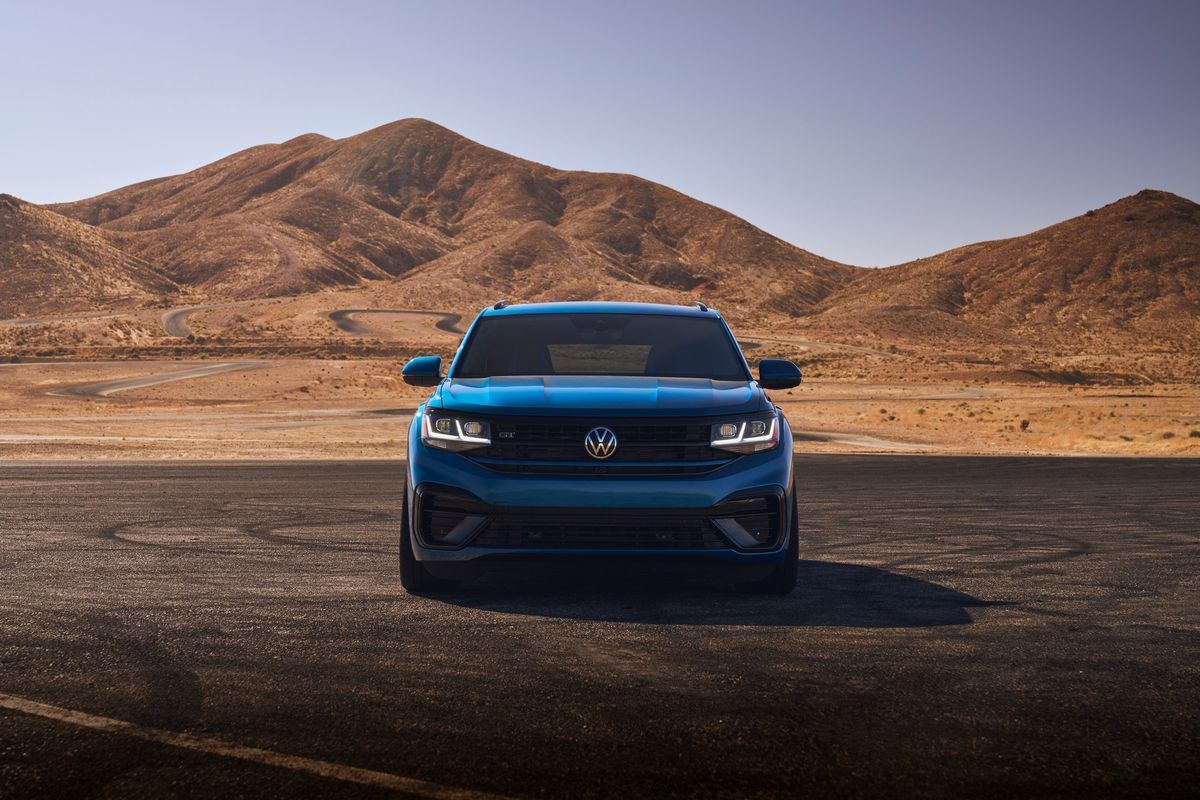
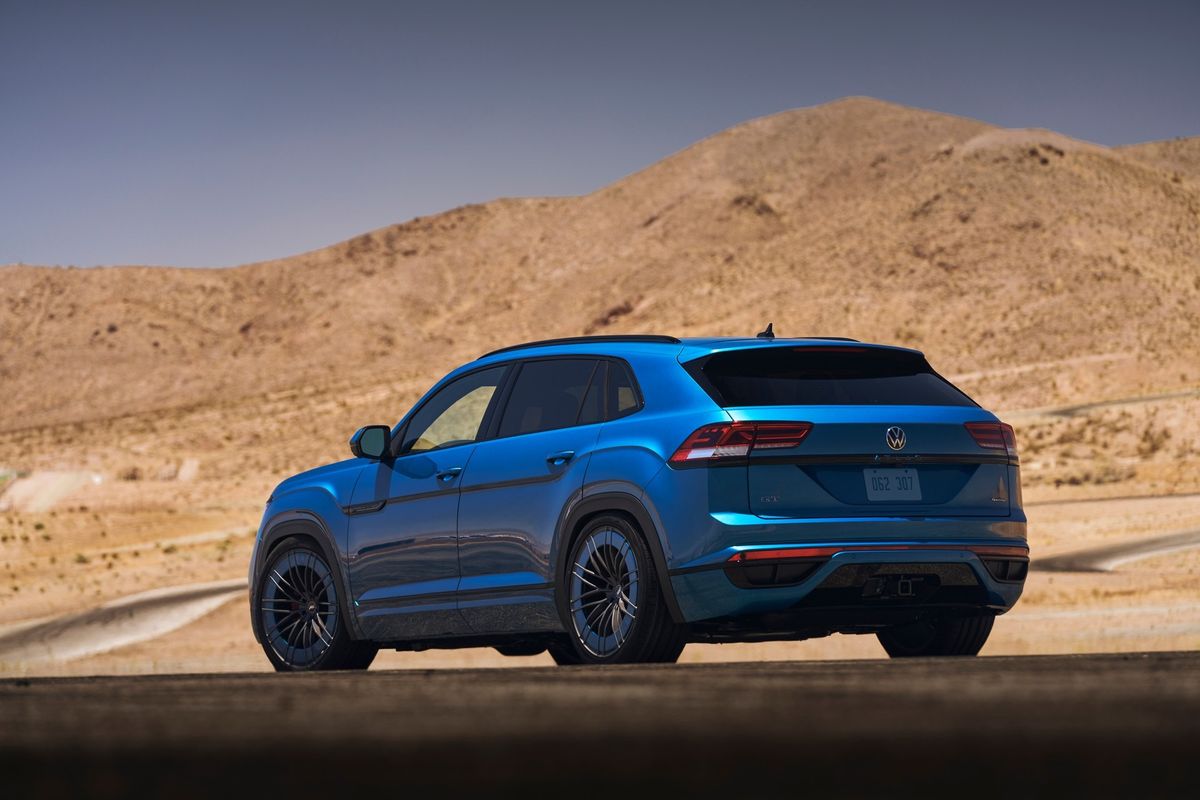
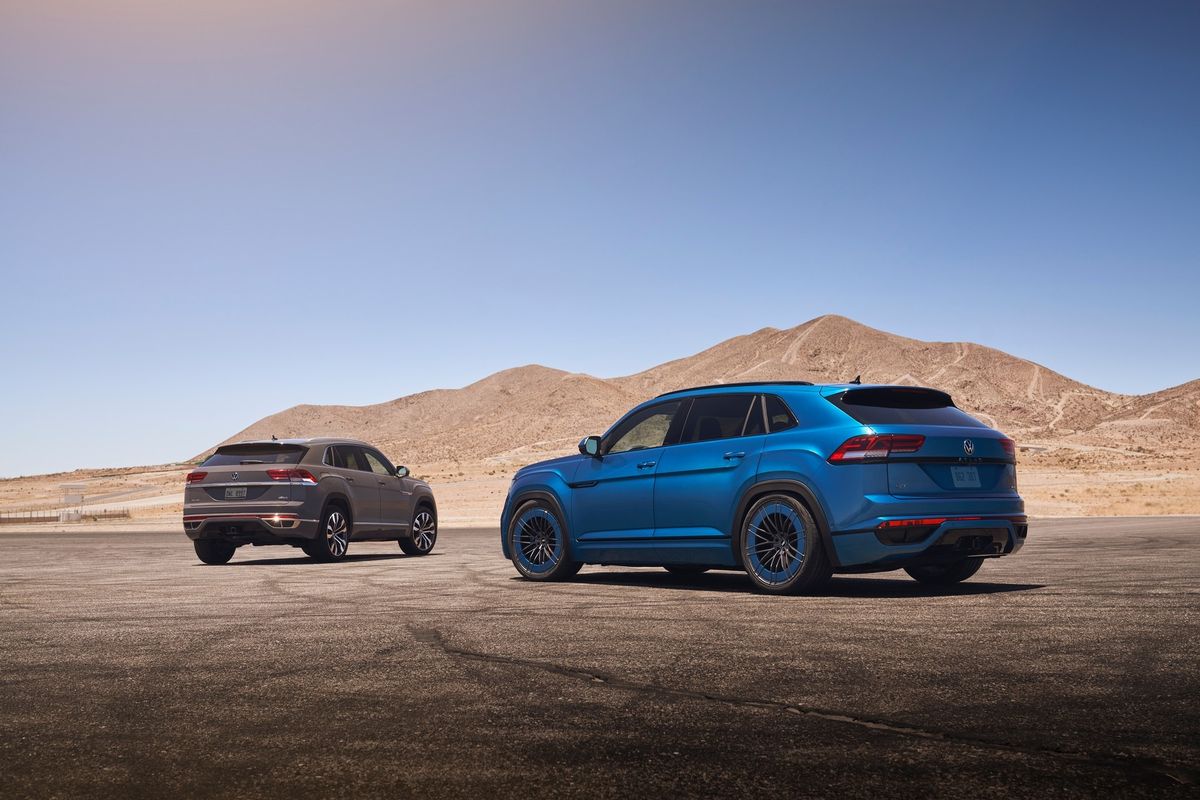
Volkswagen America has revealed the Atlas Cross Sport GT Concept with Golf R power.
Sportier styling is not unfamiliar to the VW SUV and crossover range, although ardent GTi and R followers might find it annoying, the truth is that R-Design packages sell rather well, on the Tiguan and Touareg.
VW has now shown a desire to expand the more purposeful high-performance look on its SUVs. The concept in question is its Atlas seven-seater SUV. Built on the MQB platform, the Atlas is essentially a larger Tiguan, and that means it has inherently tidy dynamic driving characteristics.
A VW project team has now created the Atlas Cross Sport GT, to illustrate how an ‘R-Line’ version of the vehicle could look. Beyond the striking Eisvogelblau paint finish, there is contrasting gloss black exterior trim, with those ABT Sport HR AeroWheels immediately noticeable too, and not only for their design. Sized at 22-inches, these massive wheels roll Yokohama Advan Sport tyres.
Hiding behind those ABT wheels, are larger eight-piston Tarox front brake callipers, which should improve braking feel and performance. Bigger wheels are often misunderstood: they aren’t just for aesthetic purposes, but also allow for greater brake component clearance.
VW’s Cross Sport GT team has also updated the Atlas suspension, with EXA Plus 3 coilovers at each wheel corner. The truly impressive mechanical upgrades, concern this Cross Sport GT’s engine and drivetrain, which borrows from the Golf R. It uses a Golf7 R EA888, boosting an IS38 turbocharger. VW won’t confirm the exact power figure but alludes to its being in excess of 224 kW.
Power is distributed to all four wheels, via a VW’s proven 4Motion system, with a seven-speed DSG transmission managing the up- and downshifts. An interesting part of the Atlas Cross Sport GT project, is its cooling system. With a different front profile to the Golf R, engineers had to transplant a radiator from the hatchback to this special Atlas, to ensure it retained adequate cooling.
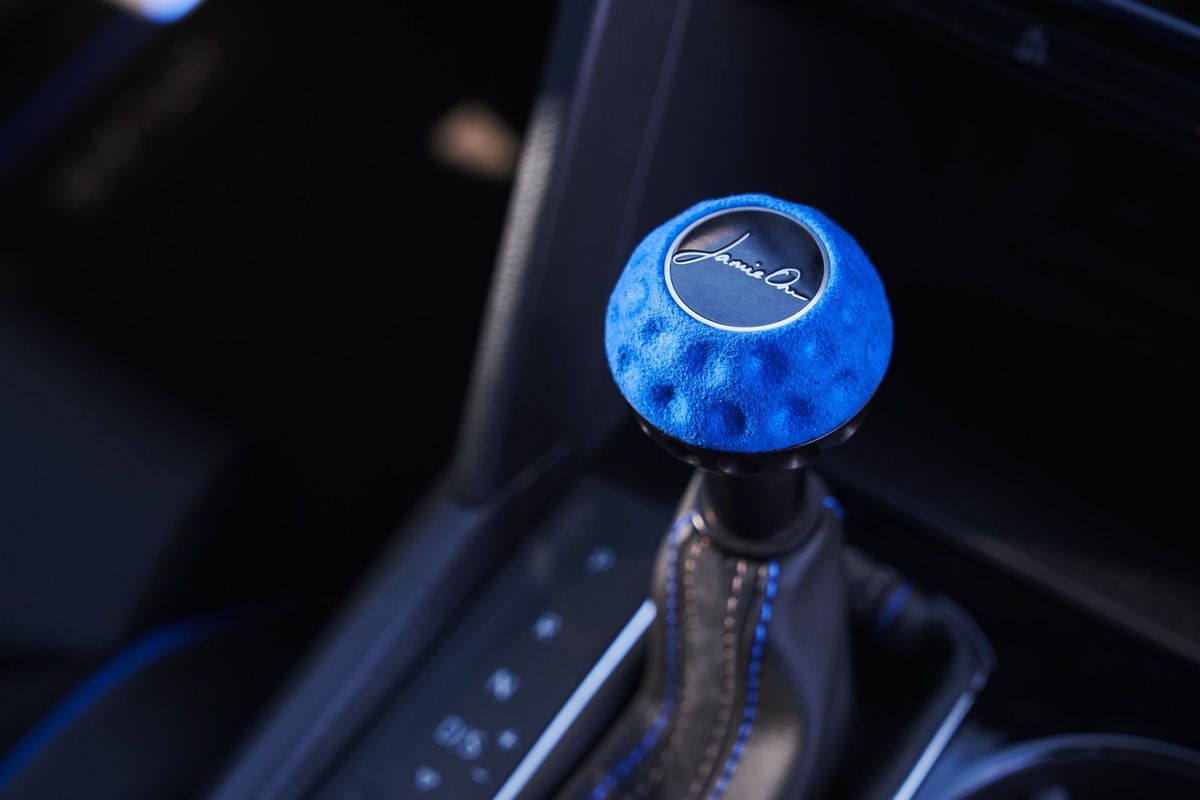
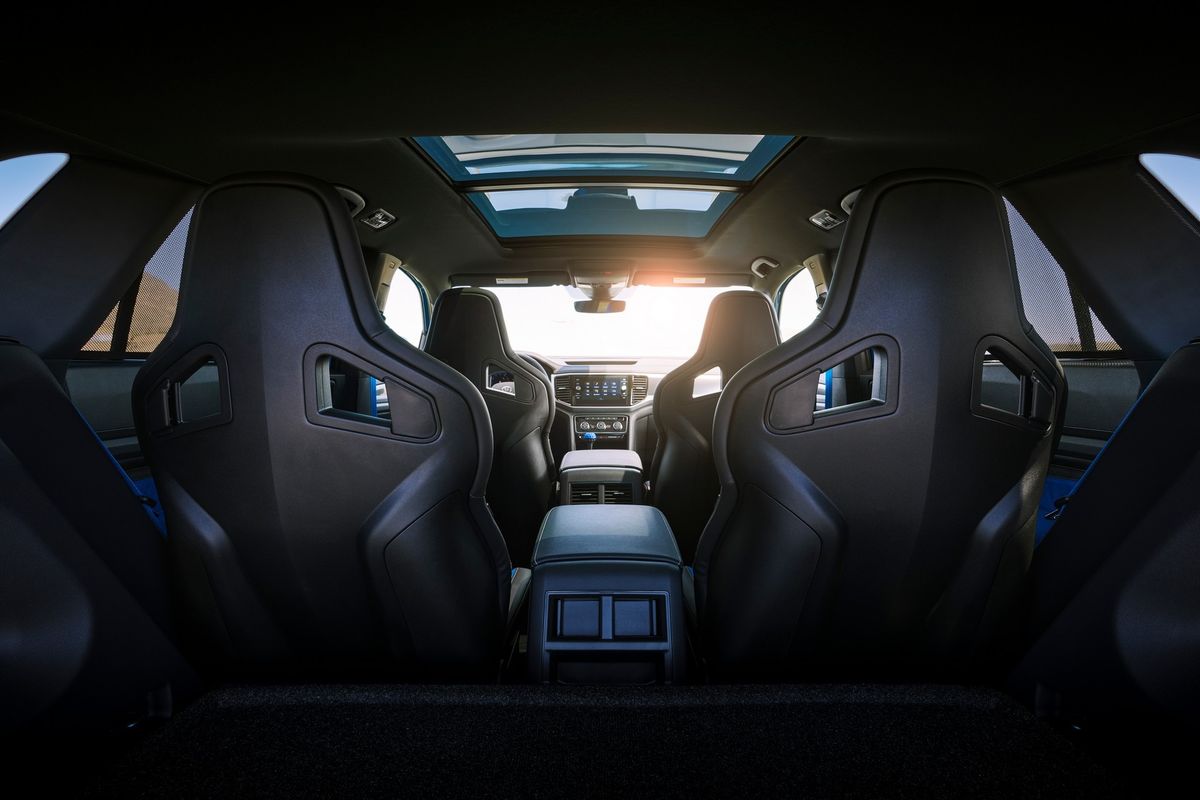
It looks great, and runs with dynamic verve thanks to the Golf R mechanical bits, but what about the inside? VW has made the shifter, seatbelts, and floor mats blue and added a flat-bottom steering wheel. By far the best part of this Atlas Cross Sport GT’s cabin, are those four Recaro Sportster CS seats. If you are still in doubt, about the issue of a VW R crossover or SUV, the Atlas Cross Sport GT, could definitely change your mind.
New Hyundai i20 Review – In-depth analysis, specs, pricing and buying advice
The new Hyundai i20 has arrived in South Africa brimming with good looks and loads of features! We put it to the test!
Hyundai has gone from not existing 30 years ago to entrenching the brand as a substantial global player in the motoring industry, and South Africa is no exception.
The brand occupies third place in overall passenger vehicle sales, trailing only VW and Toyota. The secret to their success has been attractive packages at attractive prices, particularly in the crossover and compact SUV segments.
But the premium compact hatch segment is fiercely competitive. With stalwarts such as the VW Polo, Ford Fiesta and Opel Corsa in the mix, the i20 has to be a solid offering to stand a chance.
The segment is also under pressure from a new crop of compact crossovers, in the form of cars such as the Suzuki Vitara Brezza, Toyota Urban Cruiser, Nissan Magnite and Kia Sonet, all of which cost less than this top-of-the-range i20.
So, how does the i20 compare? Well, Ciro De Siena tries to answer all your questions in this review. Enjoy!
The 3rd-generation Hyundai i20 was recently launched in South Africa, replete with a modern turbopetrol engine and a generous specification list. However, apart from stiff competition in the compact hatchback segment, the newcomer is also under threat from a horde of new small, budget-oriented crossovers…
We like: Punchy performance, good fuel efficiency and standard spec, engaging to drive, comprehensive backup
We don’t like: Some obvious evidence of cost-cutting in the cabin finishes, driver’s seat position
Fast Facts:
Model Tested: Hyundai i20 1.0T Fluid
List Price: R330 900
Engine: 1.0-litre 3-cylinder turbopetrol
Power/Torque: 90 kW/172 Nm
Transmission: 6-speed manual gearbox
Fuel efficiency: 6.5 L/100 km (claimed)
Performance: 0-100 kph in 9.7 sec (claimed)
Load capacity: 311 Litres
What is it?
The i20 is Hyundai’s perenially popular compact hatchback offering… Since 2009, when the first-gen model was released in our market, more than 106 000 units have found homes in the Republic. When the 2nd-gen model reached the end of its lifecycle, however, Hyundai gave the i20 a substantial overhaul and introduced a plethora of modern conveniences, as well as a punchy turbopetrol engine.
The new, 3rd-gen Hyundai i20 is therefore available with a choice of naturally-aspirated or turbocharged petrol engines mated with either a manual gearbox or an automatic transmission. There are two levels of trim in the range: Motion and Fluid. Physically, the new Hyundai i20 is longer, wider and offers a bit more ground clearance than its predecessor. Hyundai has also reworked the cabin dimensions to allow for more shoulder room and rear legroom for passengers, plus the load bay has been enlarged.
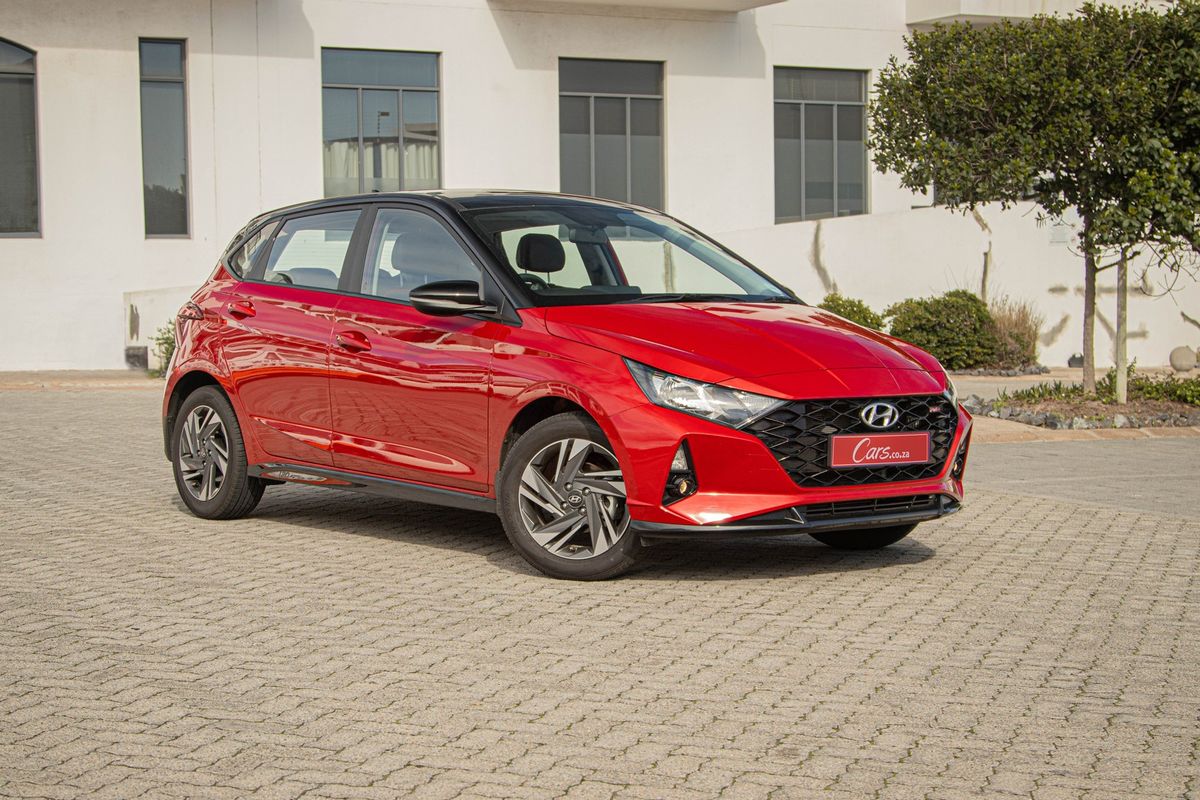
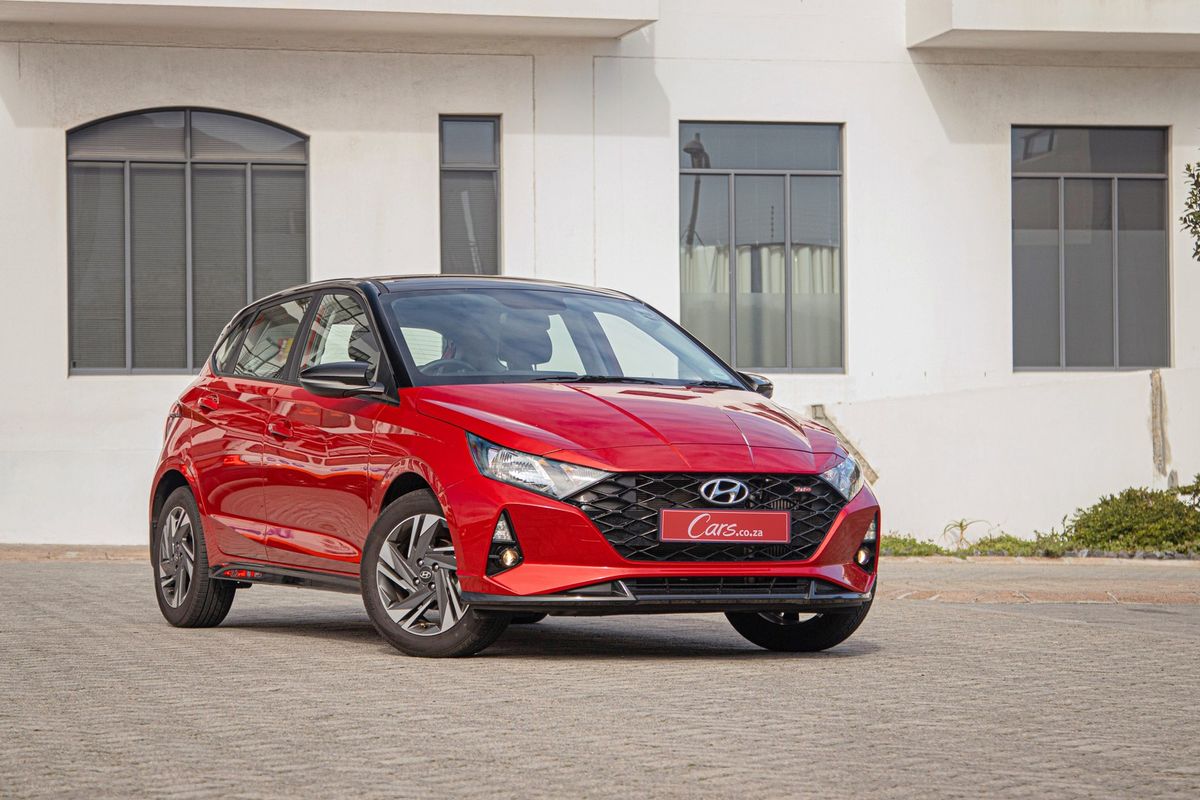
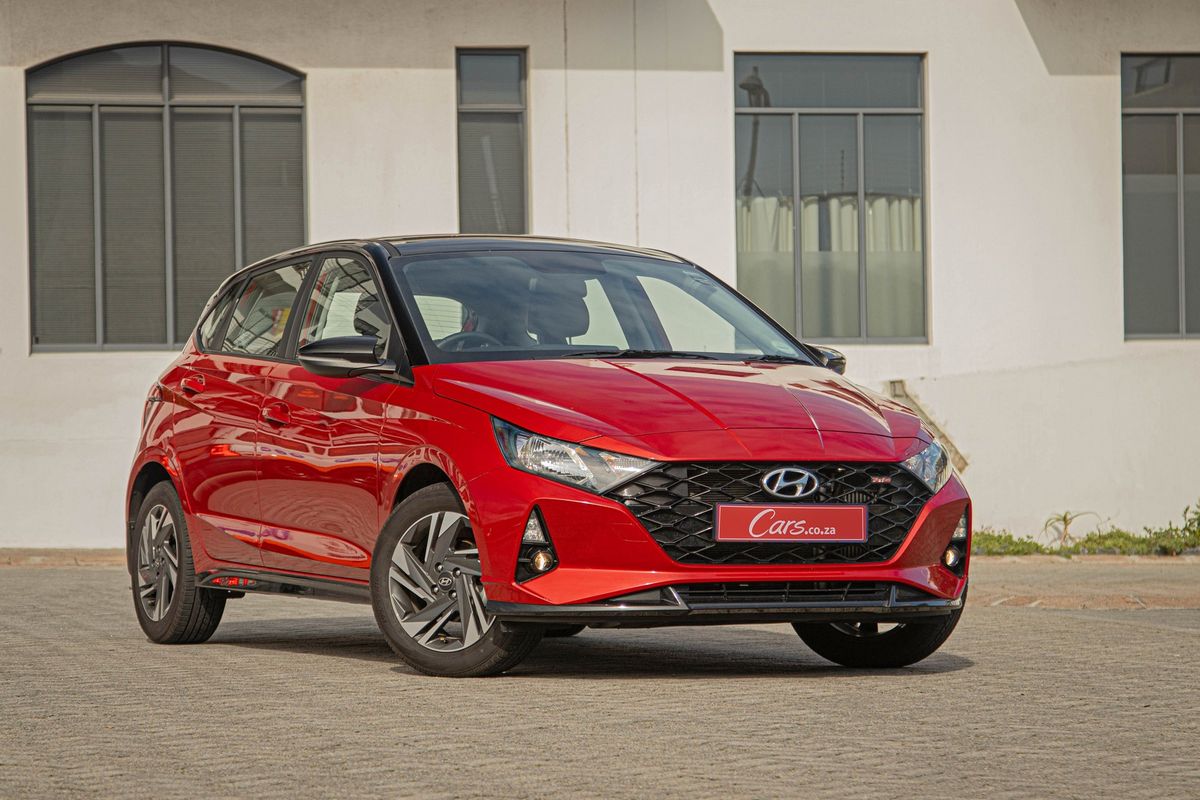
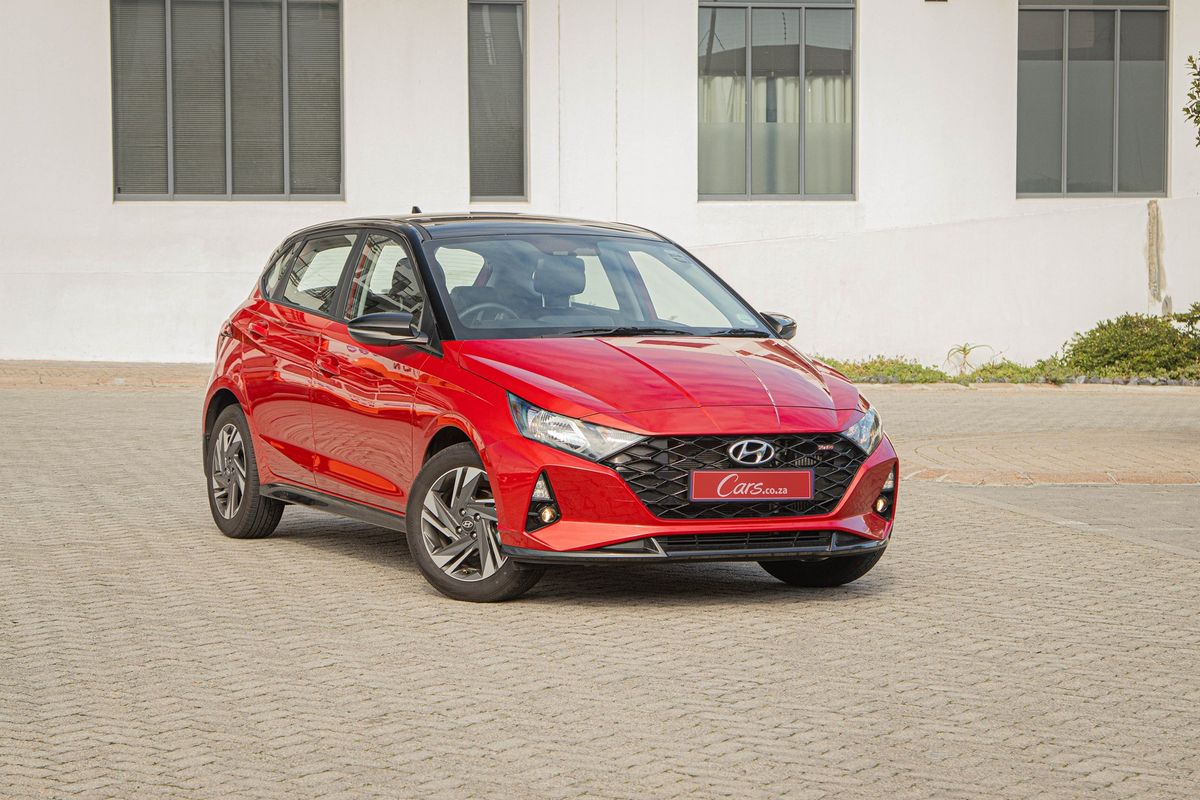
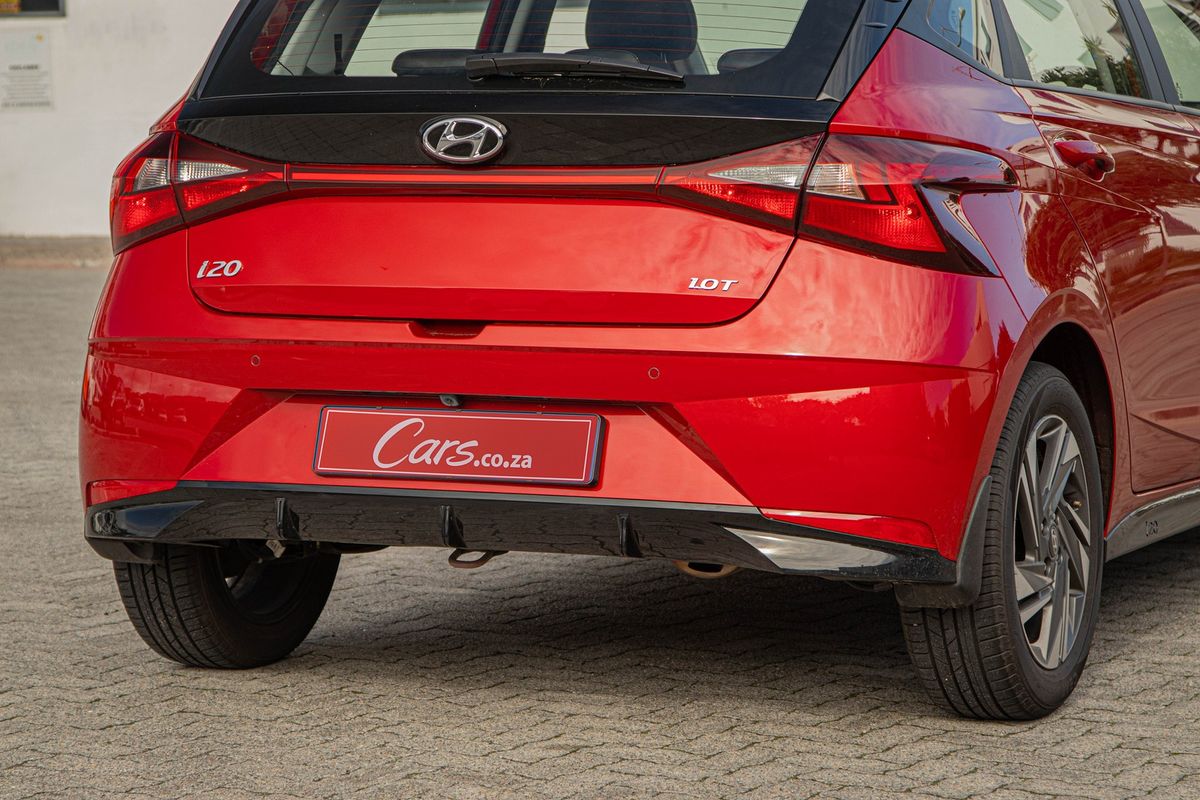
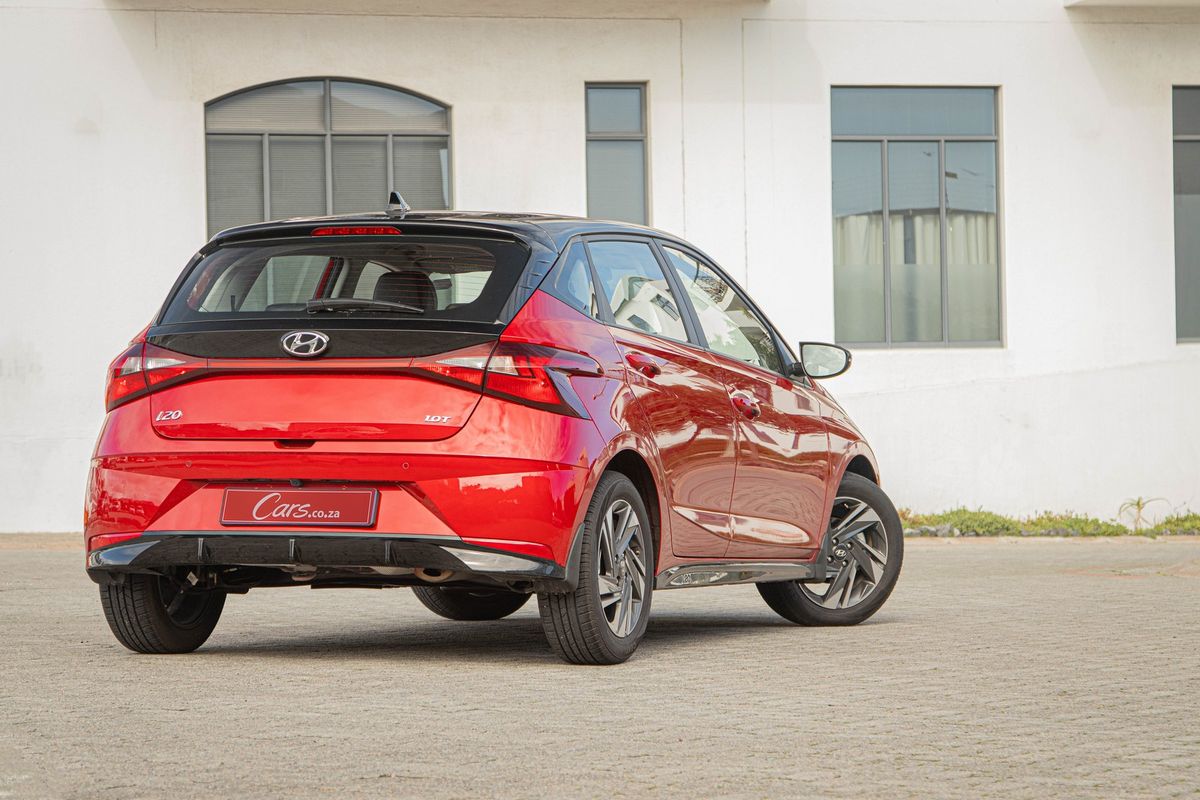
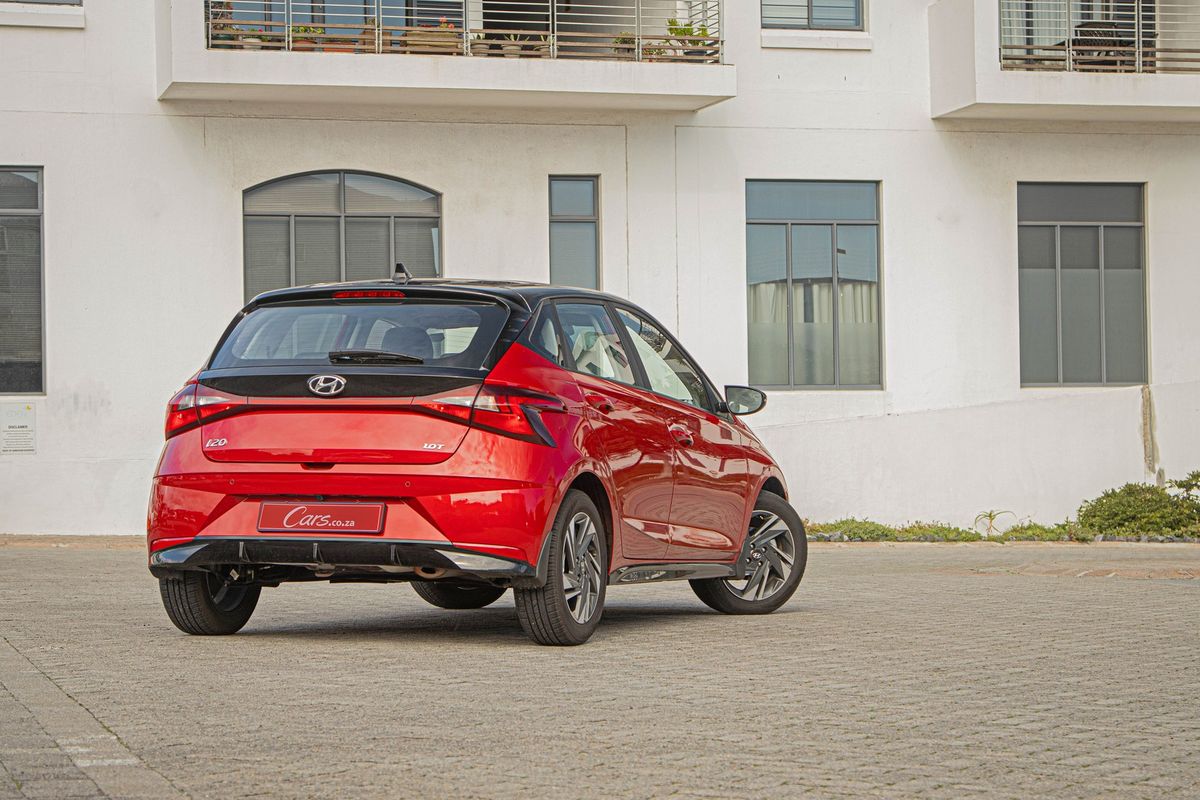
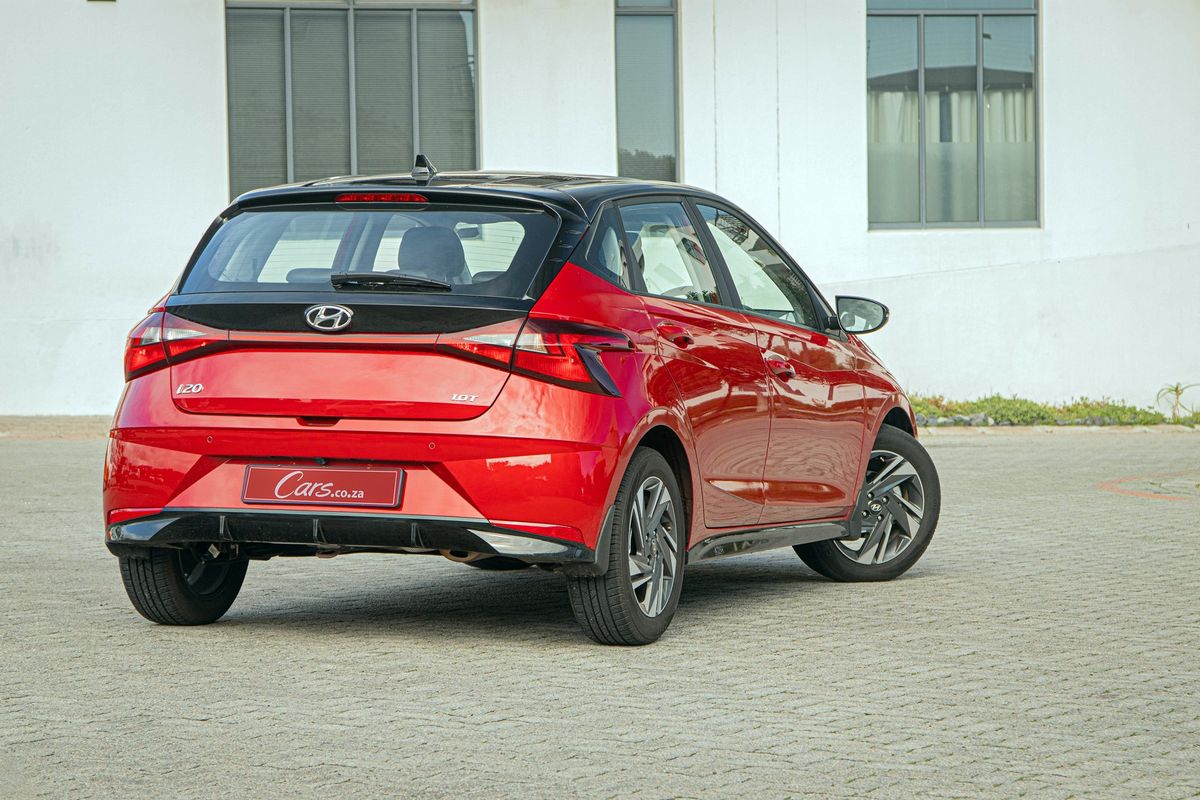
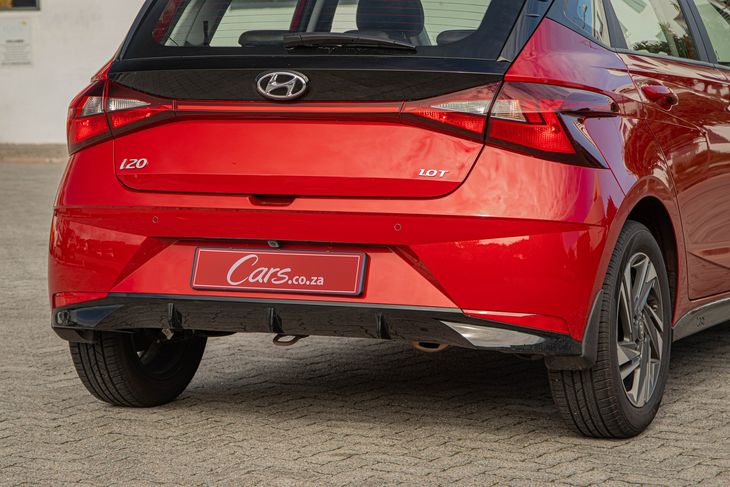
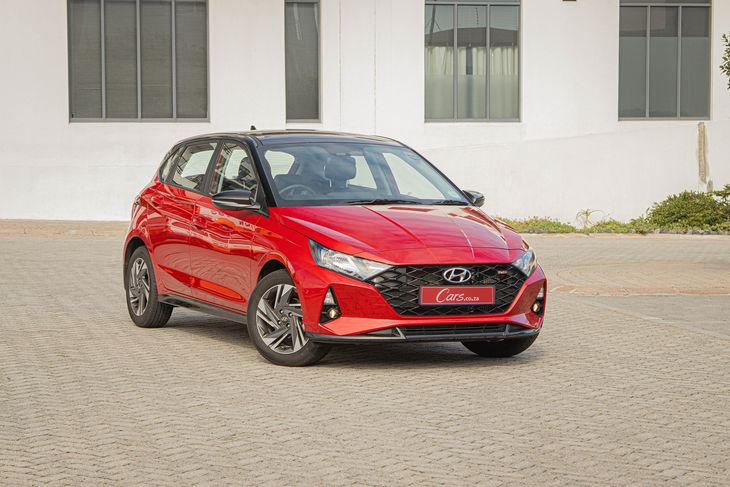
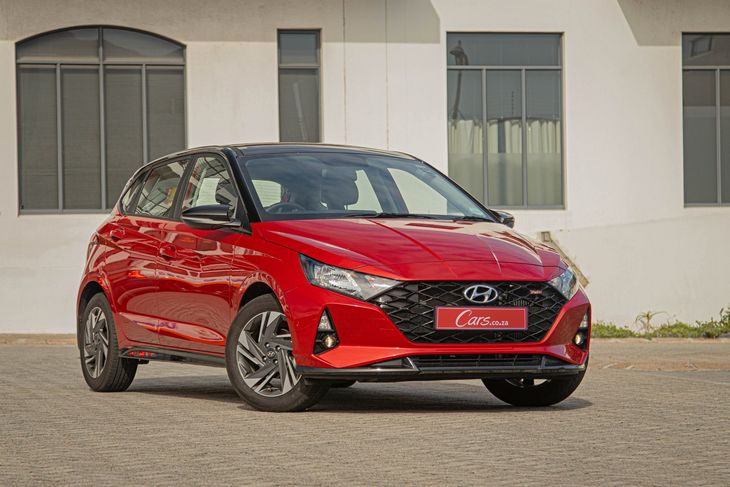
Previous generations of the i20 sported rather generic hatchback exterior designs, but the 3rd iteration is quite distinctive by comparison… Yes, indeed, what you see here is a sleek and modern-looking compact hatchback with a Hyundai badge on its grille and tailgate! The look is bold and assertive and, based on social media reactions, people either love or loathe it. Us? We try to avoid getting drawn into design debates (taste is, of course, subjective), but we can only commend Hyundai for going with something radical. It could have played it safe design-wise, yet this product makes a statement.
The compact hatchback segment has certainly been impacted by the rising popularity of crossovers, but not terminally – this portion of the market still commands serious sales volume. Despite Volkswagen’s foray into the SUV domain with products whose names start with a T, it’s the humble Volkswagen Polo that brings in huge numbers and is the most obvious rival to the Hyundai i20.
Previous iterations of the Hyundai i20 were powered by workmanlike naturally aspirated (non-turbocharged) petrol engines, which were reasonably fuel-efficient, but lacked punch and refinement (there was admittedly a turbodiesel derivative in the 1st-generation model’s line-up… for a while). The locally-developed 2nd-gen 1.4 Sport attempted to woo performance enthusiasts to the brand, but nice wheels, stickers, and a booming exhaust did not a warm hatchback make. In comparison to rivals’ modern and engaging turbocharged engines, Hyundai i20 powerplants have tended to be bland.
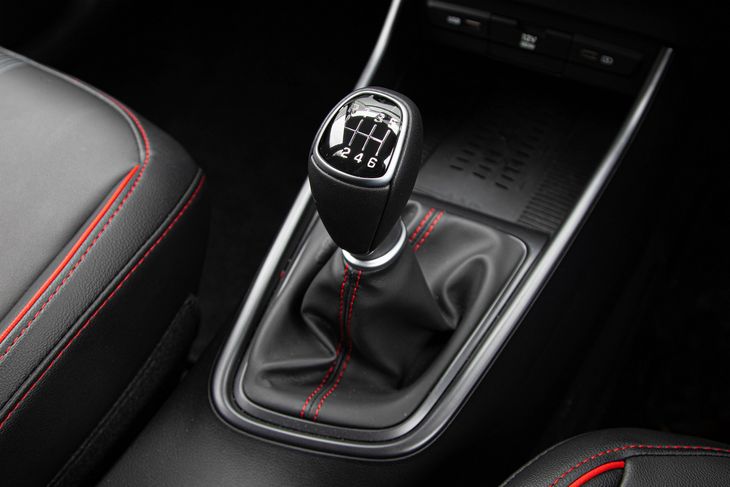
This 3rd-generation Hyundai i20’s headlining powertrain addresses previous versions’ shortcomings, not only in terms of outputs – drivability too. The new 1.0-litre 3-cylinder turbopetrol engine produces 90 kW and 172 Nm and is offered in combination with either a manual ‘box or a dual-clutch (automatic) transmission. Our test unit was a manual example and we found the clutch pedal and shift action light and straightforward to use. There were times we found ourselves forgetting the vehicle came with a 6th gear, such was the motor’s refinement (and the cabin’s insulation from mechanical and road noise).
In comparison with its 1.4-litre naturally aspirated predecessor, the 1.0T Fluid’s engine is notably punchier and more responsive. After exhibiting a hint of lag at pullaway, the i20 darts around effortlessly (its low kerb weight of 990 kg certainly helps). The motor emits a pleasant rumble under hard acceleration and because peak torque is available from 1 500 to 4 000 rpm, you don’t even need to rev it hard to get the most out of it. The Fiesta and Polo’s 1.0-litre turbocharged engines are down on power, but offer matching torque outputs. They can’t match the i20 when it comes to engine eagerness, however.
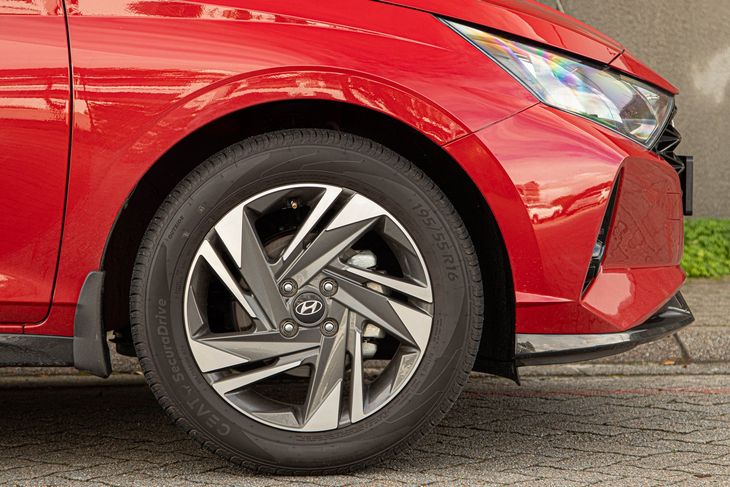
Meanwhile, the 1.0T Fluid rides on smart-looking 16-inch alloys wrapped in 195/55 tyres, which suggests the newcomer should have a firmer ride quality than its predecessors. However, the ride quality has, in fact, been stepped up. Granted, the damping is on the stiffer side of pliant, but added agility has not come at the cost of comfort. The i20’s suspension is quite forgiving when traversing bad roads; there’s none of that “thudding through” you’ll experience in some of the sportier models in this segment. The steering setup is good, with a light-but-positive action that is a boon in tight parking situations.
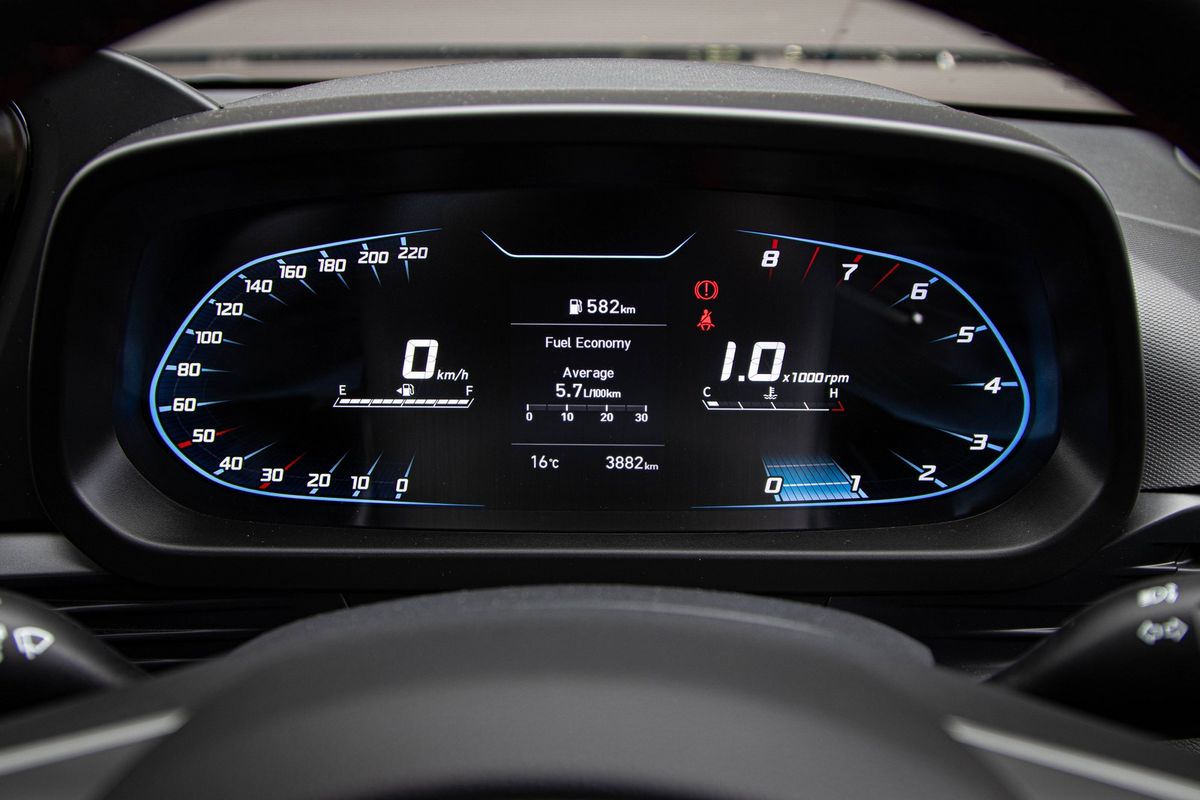
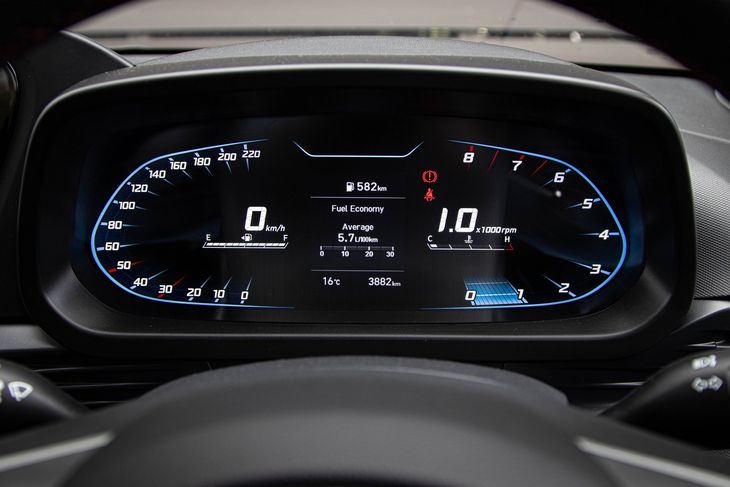
The i20’s smaller-capacity, but turbocharged, powerplant (with its improved potency and responsiveness) has not disadvantaged the Korean model’s fuel economy, at least not in our experience. Given our extensive testing and eagerness to explore exactly how much sportiness Hyundai has instilled in its new offering, we saw an indicated return of 5.7 L/100 km at the end of our test, which was even lower than the manufacturer’s average claim of 6.5 L/100 km.
With such a radically different driving experience when you compare it to the older model, the new Hyundai i20 represents a big leap forward – it’s more than a match for its rivals when it comes to driving manners. Dare we say it, this newcomer approaches the “warm hatchback” territory and we can only begin to imagine what the upcoming i20 N performance variant will be like to drive…
What’s the interior of the updated i20 like?
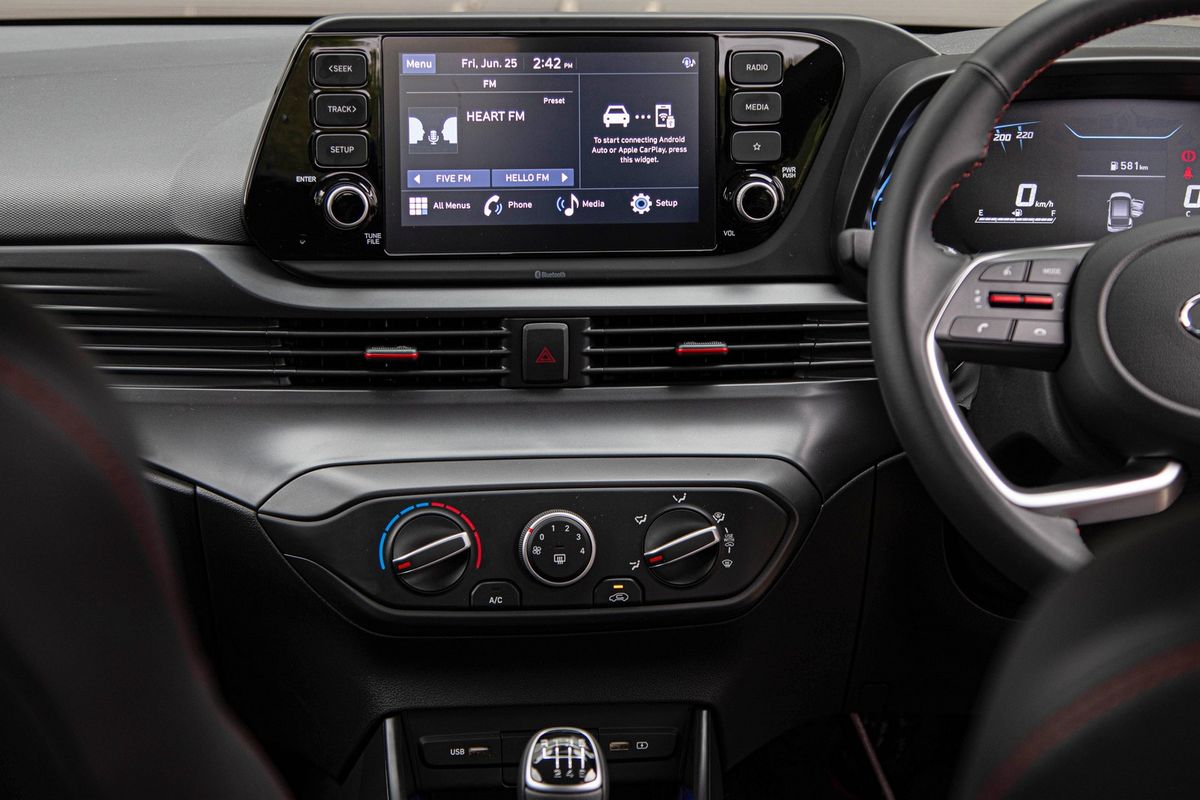
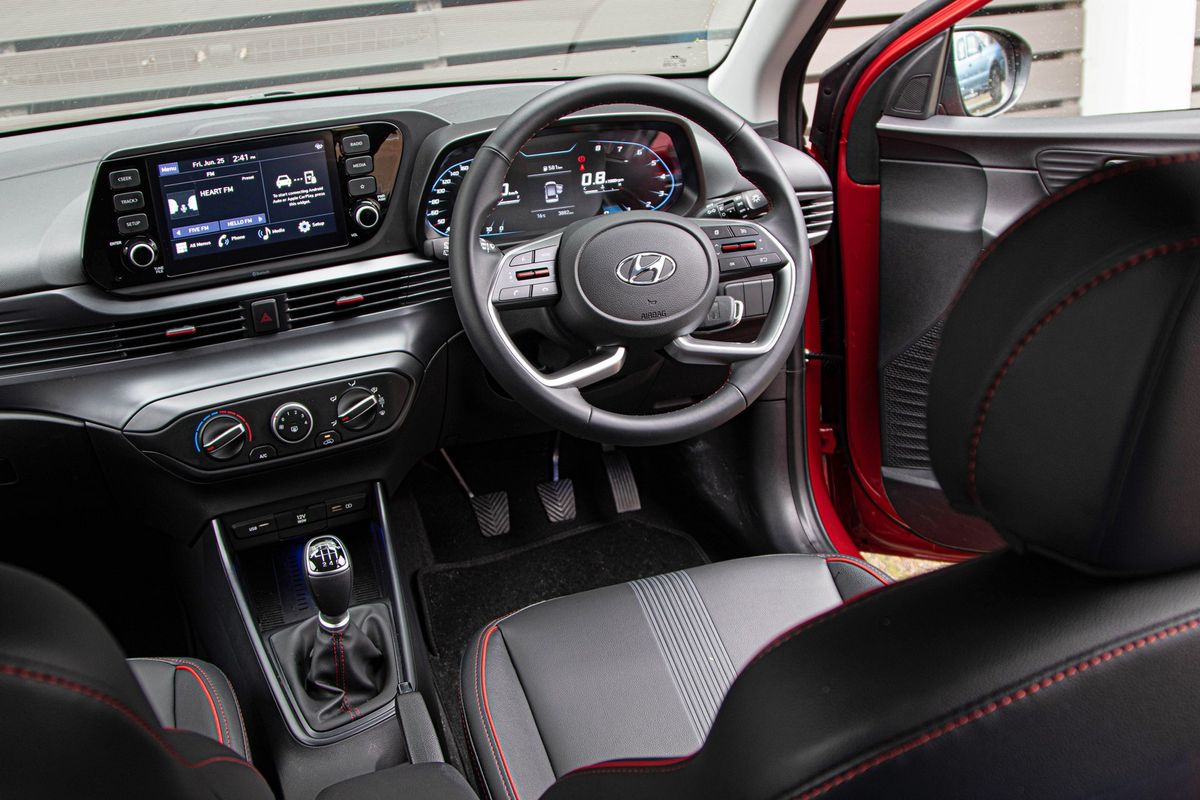
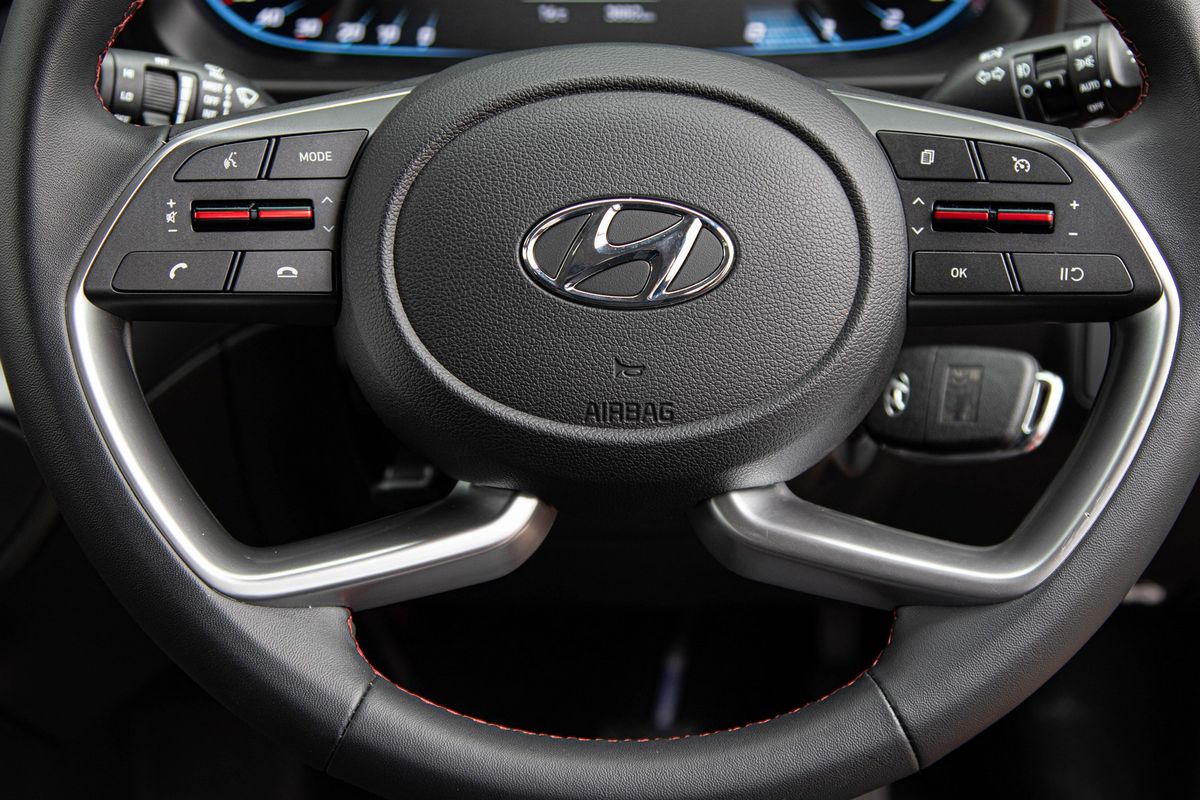
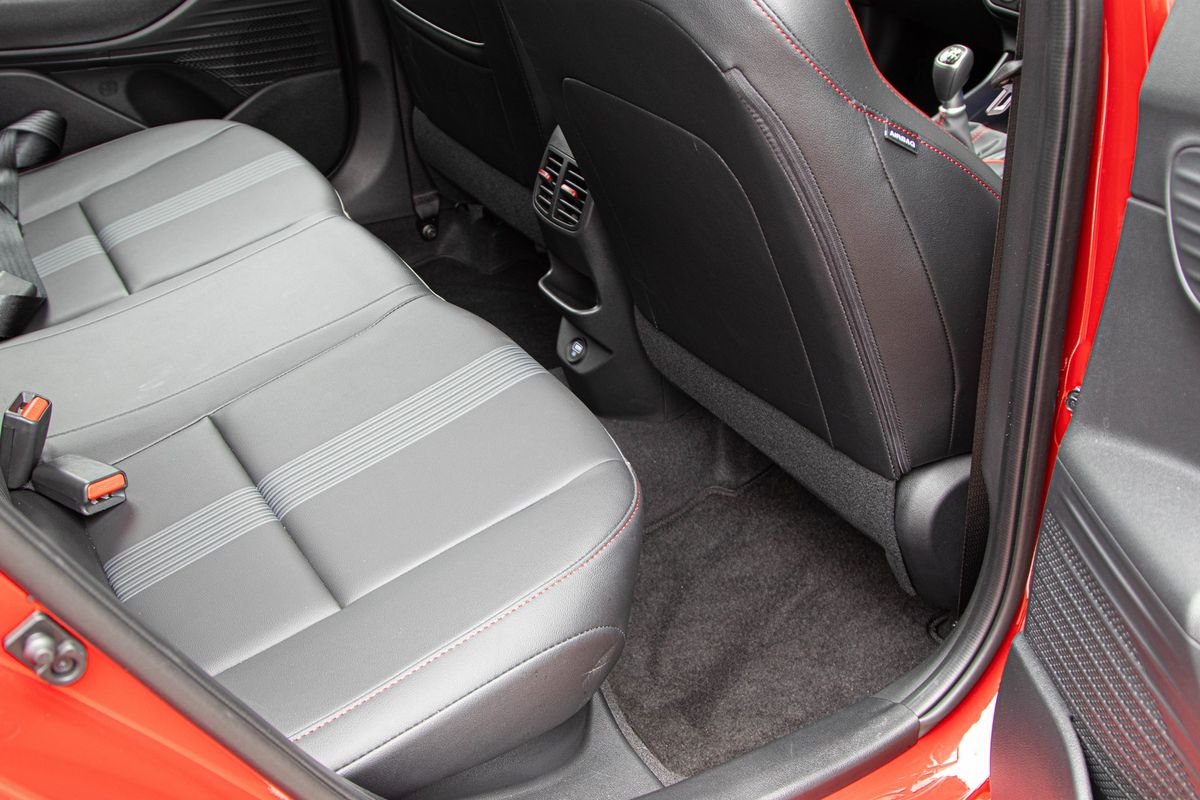
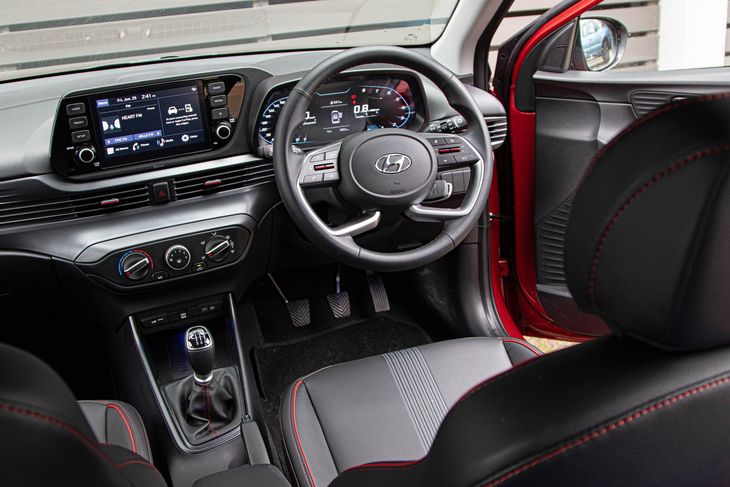
The all-new i20’s cabin is also a significant step up from that of the older model. Previously, it lacked emotional appeal – functionality and ergonomics were more important than aesthetics and upmarket finishes. In the new model, you’re greeted by a sharp-looking dashboard with crisp colours, plus there are some subtle sporty touches like the red stitching on the steering wheel, gear-lever boot and seats.
Speaking of the seats, it did take us longer than usual to get comfortable in them. Perhaps it was this author’s tall frame, but a number of small adjustments to the backrest angle and squab were required to find an acceptable driving position. Other Cars.co.za testers reported similar issues. The rest of the Hyundai i20 interior is neat with an all-black theme with red accents in the turbocharged derivatives.
If we were to nitpick, the overall fit-and-finish is as good as one would expect in a modern Hyundai product, but hard plastics abound in the cabin. In fact, some of the surfaces feel a trifle cheaply made. That being said, the interior seems solid and hard-wearing. Given how car pricing has progressed over the past few years, customers’ expectations tend to be high when they’re forking out upwards of R300k for a small hatchback and some of the i20’s interior finishes aren’t quite up to the Polo’s standard. That being said, spec-for-spec, the Hyundai has its German rival licked in terms of standard spec.
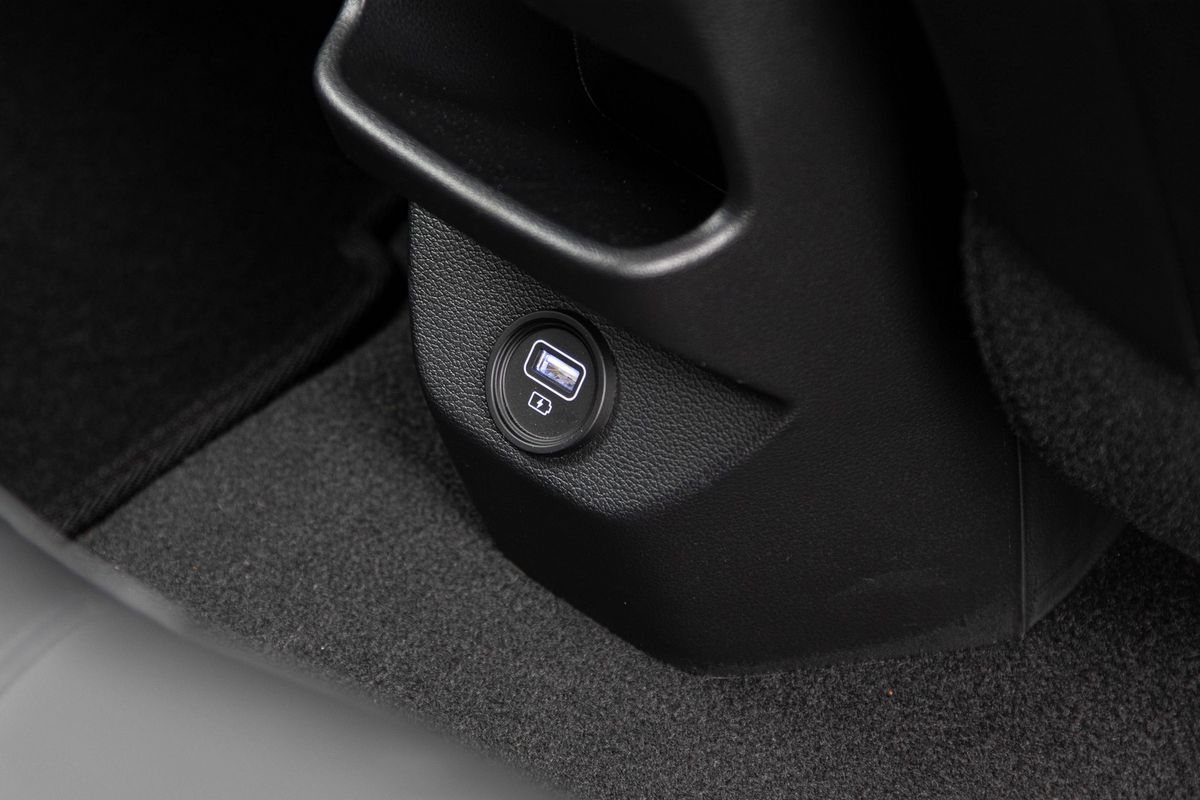
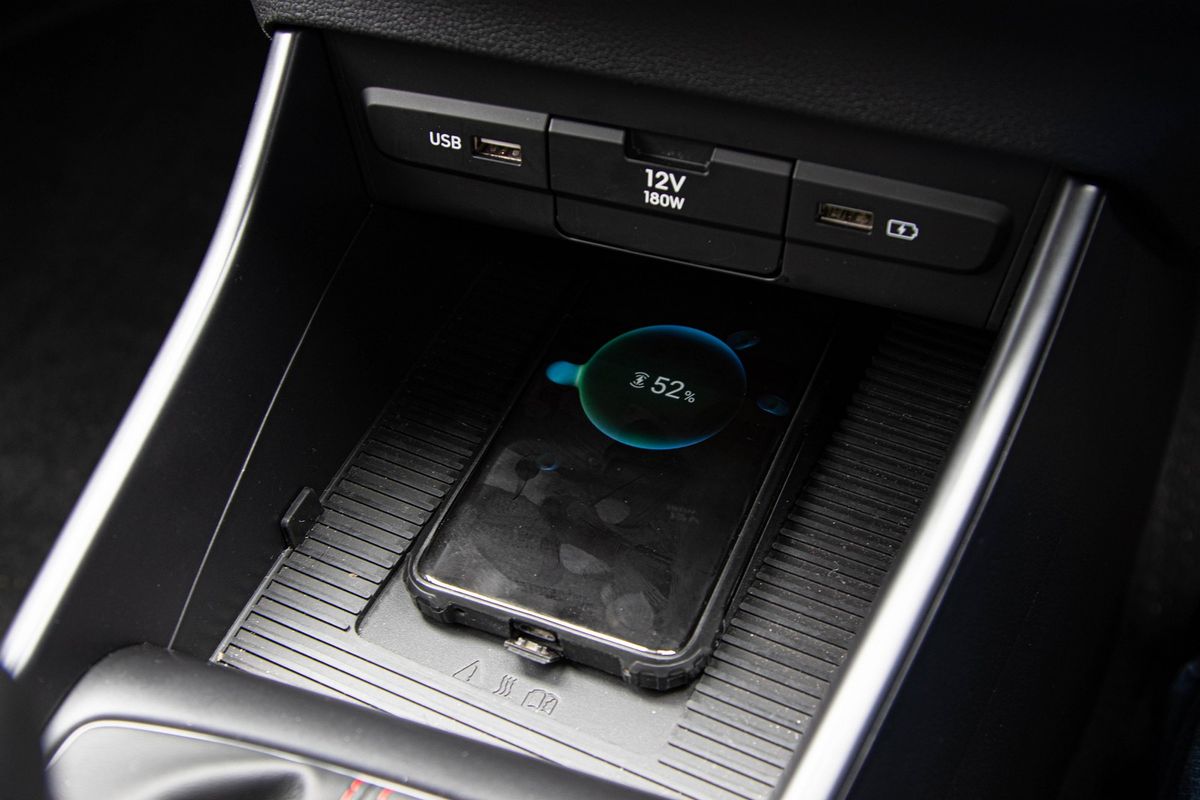
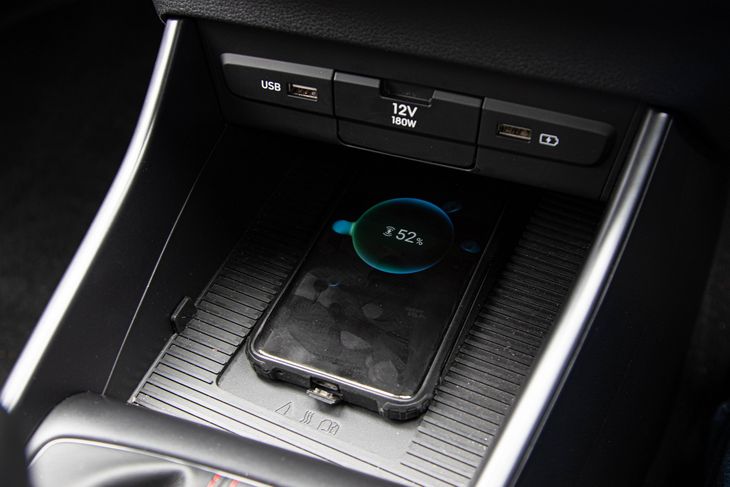
In 1.0T Fluid guise, Hyundai’s compact hatchback incorporates numerous features and gadgets as standard – some of which its rivals either offer as optional extras… or not at all. Here are a few of the highlights: a wireless charging pad, a touchscreen infotainment system that’s Apple CarPlay- and Android Auto compatible, 2x USB ports for the front, 1x USB for the rear passengers, electric windows, electrically adjustable and auto-folding side mirrors, air conditioning (although not automatic), auto lights and -wipers, central locking, cruise control, rear park assist and a reverse-view camera.
When it comes to safety, electronic stability control is unfortunately omitted. The rest of the safety suite, which includes ABS with EBD and 6 airbags (driver, passenger, side, curtain), is sufficient.
Is the new Hyundai i20 practical?
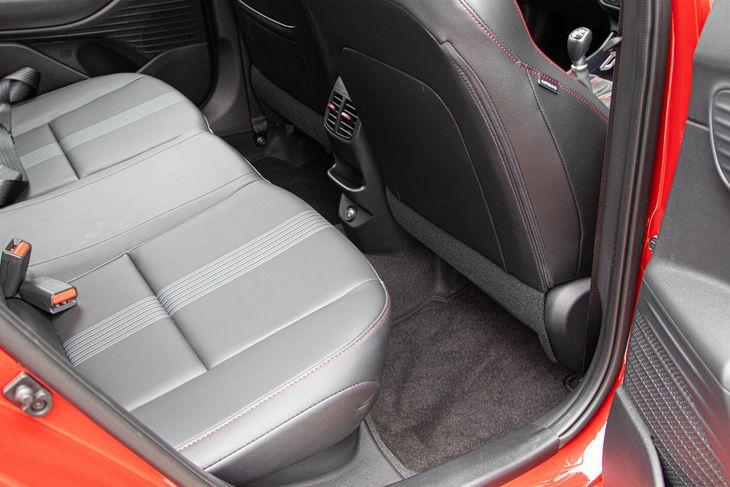
As mentioned earlier, the all-new Hyundai i20’s exterior dimensions have grown – the compact hatchback is notably wider and longer than its predecessor. As a result of its revised packaging, the newcomer offers more interior space, which is certainly welcome. Hyundai claims there’s more leg- and shoulder room for rear occupants and, when this taller-than-average tester conducted the sit-behind-yourself test, he found the aft accommodation more comfortable than before (most adults felt cramped in the back of the previous i20). Rear passengers will also appreciate the USB port to charge devices.
There are plenty of storage solutions dotted around the cabin, ideal for stashing keys and so on. There are also two cupholders up front and recesses to store bottles (one in each of the rear-door linings).
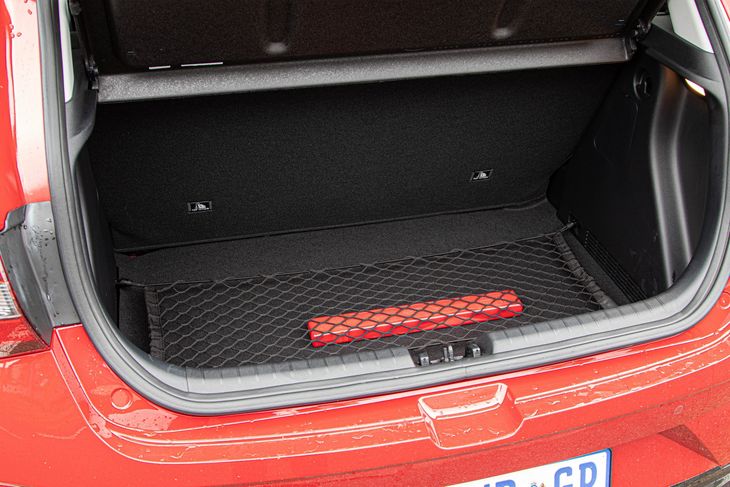
The load-bay has grown too, with a claimed 311 litres of space on offer – the 2nd-gen model’s luggage capacity was, by comparison, only 285 litres. Hyundai also offers a luggage storage net for its new i20 and, if you need more carrying capacity, the rear seatback can be folded down, but it’s a single-piece unit (in other words, it does not split in a 60/40 configuration).
How much does the Hyundai i20 cost in South Africa?
You can get behind the wheel of the new Hyundai i20 from R275 900. This turbocharged 1.0T Fluid derivative retails for R330 900 and its automatic counterpart costs R355 900. Every Hyundai i20 sold comes with a 5-year/150 000 km manufacturer’s warranty and an additional 2-year/50 000 km powertrain warranty, a 5-year/160 000 km perforation warranty, 7 years (or until 150 000 km) roadside assistance, as well as a 4-year/60 000 km service plan with intervals at every 15 000 km.
With the 3rd iteration of the i20, Hyundai has addressed the major shortcomings of the previous-gen model – and quite effectively so. Not only does it boast a powertrain that’s more than a match (in terms of performance and, seemingly, efficiency) for the segment’s best, it offers good on-road refinement, a reasonably pliant ride quality, as well as an engaging driving experience.
Plus, don’t forget about the glut of standard features: in 1.0T Fluid guise, the Korean firm’s newcomer comes fitted, as standard, with nearly every convenience that one would expect a compact hatchback cabin to offer. Even if some of its interior plastics seem a bit harsh to the touch, when you factor in Hyundai’s comprehensive warranty and service plan, the new i20 makes a very compelling case for itself.
Should you buy one? If you’re shopping for a compact hatchback, you’d be forgiven for being overwhelmed by how much choice is out there. With its potent engine, modern interior and after-sales offering, the new i20 has leapfrogged many offerings in the segment and is jostling, once again, for best-in-class honours. Ignore the polarising looks and give it a test drive, you may be pleasantly surprised.