Kia Sonet First Anniversary Edition Celebrates Success, But Not For SA
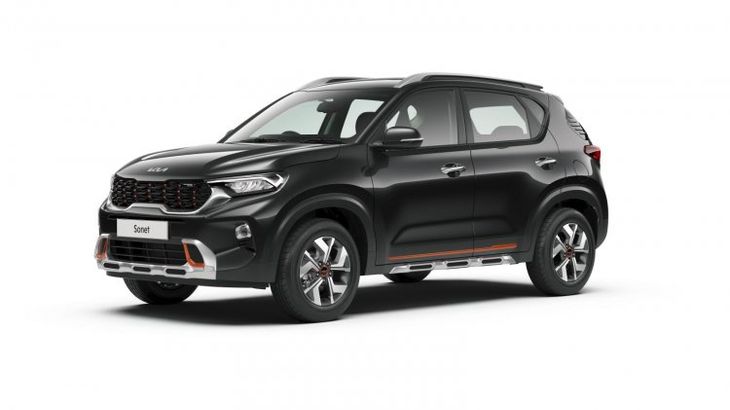
The Kia Sonet First Anniversary Edition celebrates the success of the model in India (where it’s built) with its design inspired by the extinct Auroch. Sadly this special edition will not reach South Africa.
In India, where the Sonet is produced, Kia has introduced the Sonet First Anniversary Edition which celebrates the first year the model has been on sale in that market as well as the success it has experienced.
The design is inspired by the Eurasian Auroch cattle which can be seen in the lower bumper resembling the horns of the Auroch. Kia’s familiar tiger-nose grille gains hot-stamped tangerine accents which is also seen on the lower bumper section. Similarly-styled side skirts are also fitted.
The Sonet First Anniversary Edition won’t come to SA but our market will receive a turbocharged 1.0L engine in early 2022.
Kia South Africa has confirmed that the Sonet First Anniversary Edition is an India-only affair with the brand’s 1.0-litre turbopetrol and 1.5-litre diesel engine doing service under the bonnet. However, there is of course the possibility that a ‘special edition’ version of the Sonet could arrive locally at some stage in the future, but there are no current plans to do so, according to a local Kia spokesperson.
At the South African launch of the Kia Sonet earlier in 2021, the Korean firm confirmed that the Sonet range will be bolstered with the arrival of a turbocharged 1.0-litre engine with outputs of 88 kW and 172 Nm. It’s now been confirmed that the turbocharged Sonet will arrive locally in February 2022 in conjunction with a 7-speed dual-clutch transmission and will be offered in a number of trim grades.
We will keep you updated as more information becomes available.
The Mercedes-Benz C-Class Edition 6 limited-edition model was spotted on the local Merc SA website and it appears that it will be going on sale shortly. Here’s the latest.
Browsing OEM configurator websites is both an entertaining and educational experience. Not only can you daydream and make some outrageous configurations, but you can often spot previews of new models and more. We’ve been tracking the local arrival of the new W206 Mercedes-Benz C-Class for some time and while we don’t have an official launch date yet, we’ve seen a handful on the road already.
Like all German carmakers, Mercedes-Benz offers an extensive configuration process and a diverse array of options. While the current lineup is just two models, for now, we spotted something interesting. What you see here is the Mercedes-Benz C-Class Edition 6, a limited-run model.
Mercedes-Benz C-Class Edition 6 Features
This limited-edition model comes with a number of additional features on top of the standard offering. Visually, it has the AMG Line styling kit, AMG line features, a panoramic roof, 19-inch AMG alloy wheels and the agility control adaptive suspension. That’s all the info we have, but we suspect there’s additional content and features inside.
Right now it appears that Mercedes-Benz SA is trying to secure pre-orders of this vehicle. The carmaker claims that a limited number of just 400 units will go into production and the website said it will ‘be released alongside the new Mercedes-Benz C-Class.’
Our international correspondent Greg Kable has already spent some time with the new sedan, which will be taking on the accomplished BMW 3 Series and Audi A4. You can read his international driving report of the new Mercedes-Benz C-Class here, but if his conclusion is anything to go by, this is going to be a winner for the Stuttgart-based brand. “The new-generation C-Class is a wonderfully complete car that will no doubt appeal to a wide range of customers when it arrives on the local market towards the end of 2021 or in early 2022.”
As a reminder, the all-new Mercedes-Benz C-Class will be going on sale before the end of 2021 and we’ve already seen a few on the roads of South Africa. Our cars are assembled at the Mercedes-Benz facility in East London, Eastern Cape and vehicles made here are for local consumption as well as export. Right now, there are just two derivatives on offer: a petrol C200 and a diesel C220d. The petrol C-Class has 150 kW and 300 Nm, while the diesel-powered model offers up 147 kW and 550 Nm. Both vehicles feature 9-speed automatic gearboxes.
Track Race! GR Yaris vs Golf 8 GTI vs BMW 128ti in a hot-lap shootout
When you have the Toyota GR Yaris, Volkswagen Golf 8 GTI and BMW 128ti on test at the same time, it makes perfect sense to hire out a racetrack and put the cars through the paces. Which one is fastest? Watch now!
The Toyota GR Yaris arrived on the world stage and immediately became a hot topic of conversation. It soon became apparent that this car really was as good as Toyota claimed it to be, and so market watchers and keyboard warriors started focusing on price; is it really worth it, especially when new cars like the Golf 8 GTI are cheaper?
A comparison we’ve seen often on social media in South Africa has enthusiasts comparing the GR Yaris to the GTI, where we would like to state, quite emphatically, that they are very different cars built for very different purposes.
However, when the opportunity arose to put them head-to-head, along with the new GTI rival in the form BMW 128ti, we couldn’t really turn that down.
And so, following on from our drag race series featuring these cars (links below), we’d like to present to you, our valued audience, a hot-lap shoot out between these three everyday heroes.
This week’s news you need to know (October 2021, Week 3)
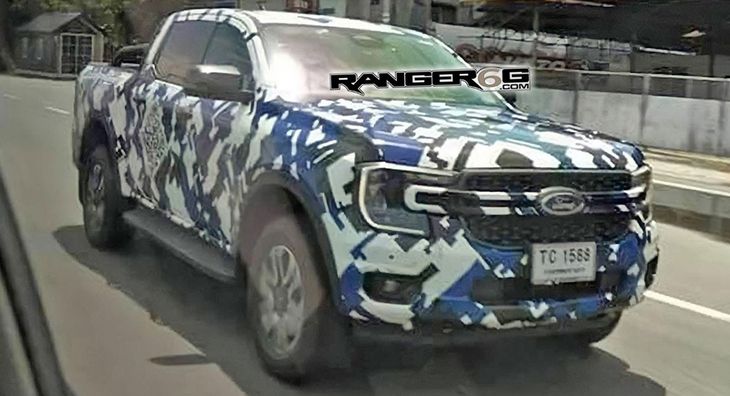
In this week’s automotive news you need to know… Toyota “borrows” another Suzuki in a bid to unlock huge sales numbers, Fiat remains the final stronghold of the hot supermini in Mzansi, Lexus introduces us to an even bigger-grilled Land Cruiser 300 and the new Ford Ranger is unmasked, well, partly.
Toyota Rumion – Friends or foes?
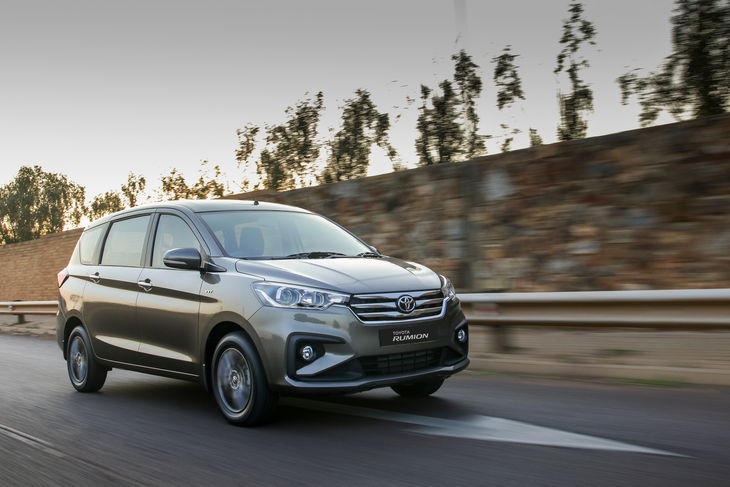
The Suzuki/Toyota partnership continues to bear fruit. You know the drill: Suzuki brings out a model, then Toyota steps in, rebrands it and sells more units of a product that its strategic partner developed. That happened with the Baleno and Starlet, followed by the Brezza and Urban Cruiser and the trend looks set to continue with the Ertiga and Rumion. At first glance, it seems Suzuki has taken a big swig from a poisoned chalice, but the agreement stems from Toyota’s quest to gain market share in India (where Suzuki reigns supreme), while the former benefits from access to TMC’s petrol-electric hybrid tech.
Toyota South Africa Motors’ (TSAM) success with the rebranded Suzukis demonstrates just how much brand loyalty is worth and how important it is to deliver a quality product in every segment, but that’s not the entire story. Suzuki Auto South Africa’s sales have not petered out because its products are also being retailed by the mighty TSAM; in fact, Suzuki has discovered that the kind of enviable brand loyalty Toyota enjoys can be fast-tracked by basking in the association with its strategic partner. The Hamamatsu-based brand continues to make progress in Mzansi with sales growing month on month.
Abarth 595 – Last of the hot superminis
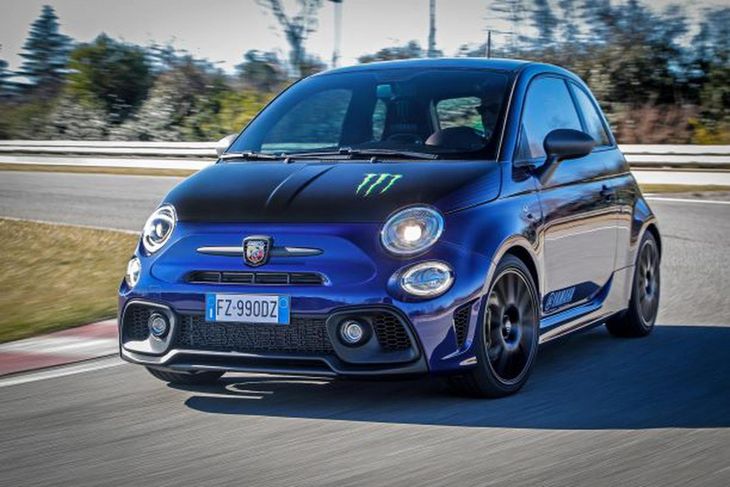
It’s a telling moment in the history of front-wheel-drive cars that the era of the hot supermini has all but ended in South Africa. With the exception of the Polo GTI, the last bastion keeping the lights on are the Abarth versions of the Fiat 500. Fiat has kept the 500 true to the original; it did not sway off course as BMW did with the Mini, which, face it, has become a bit pudgy (it ate all the pies from the local garage).
Car buyers’ obsession with crossovers and SUVs (but mainly the former) could be blamed for the market’s takeup of bigger and then much bigger compact cars – BMW’s Mini sub-brand is not the only culprit. The Volkswagen Golf (on which the 8th-generation GTI is based) departed supermini status a long time ago and found a new place in the world of sensible, but weighty, hatchbacks. It’s refreshing to see the Abarth 595 remaining true to the roots of the supermini DNA… a wheel at every corner, no excessive overhangs and a punchy motor driving (and, occasionally, spinning) the front wheels. Forza!
Lexus LX600 – Why the long face?
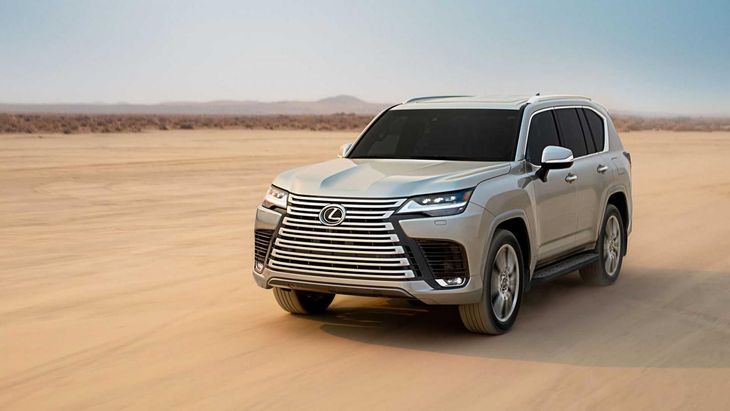
The grille debate rages on. The latest face to get “a grilling” is that of the Lexus LX600. I’m all in favour of forward-thinking, futuristic design, but isn’t such a “stylistic shock tactic” just an elaborate attempt to garner attention and distinguish yourself from your equally flashy rivals? Point made, Lexus. We get you, just like we got BMW with its large-snouted 4 Series and, subsequently, M4 coupe and M3 sedan.
This newcomer from Toyota’s luxury brand will undoubtedly be a premium product with more plush finishes than its Land Cruiser cousin. Despite its hefty asking price, the LX600’s predecessor – the LX570 (based, of course, on the Land Cruiser 200) was, at times, Lexus’ top-selling model in our market! That Lexus gets overlooked remains one of the great sins of SA motoring; Audi, BMW and Benz seem glued to those top steps of the premium sector. Let’s hope the LX600 will repeat history and, who knows, perhaps change buyers’ mindsets towards other Lexus models.
New Ford Ranger – make or break?
It’s no secret that behind the hype build-up of camouflaged prototypes being paraded through the internet’s social media channels and the (apparently accidental) unveiling of the new Ranger’s face lies a make-or-break moment for the next chapter of Ford’s bakkie in South Africa. The Blue Oval not only wants to usurp Toyota’s position in the pick-up market – it needs to keep a horde of new rivals in check!
The brand loyalty that Ford has cultivated (to the Ranger, much more than any other product to bear the Blue Oval badge) is based on decades of reliable, well-built capability that comes off the back of hard work – Ford knows that. Ford also knows that every fault on build quality will be punished ten-fold so they can’t mess this one up. In this fight, Toyota can afford an occasional slip, but it’s Ford that needs a flawless, quality product from the get-go (especially considering how long the platform will be in service). At the same time, send a local Ranger team to Dakar to get the hype going. It worked for Toyota!
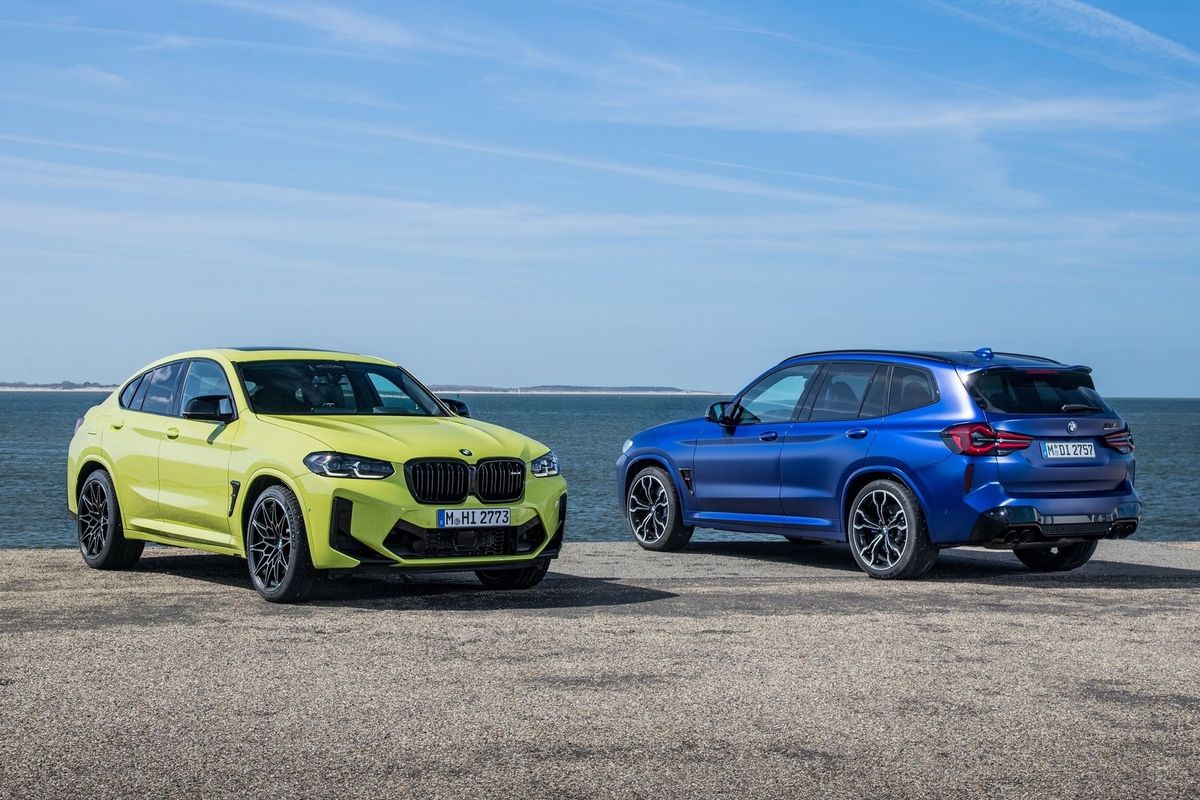
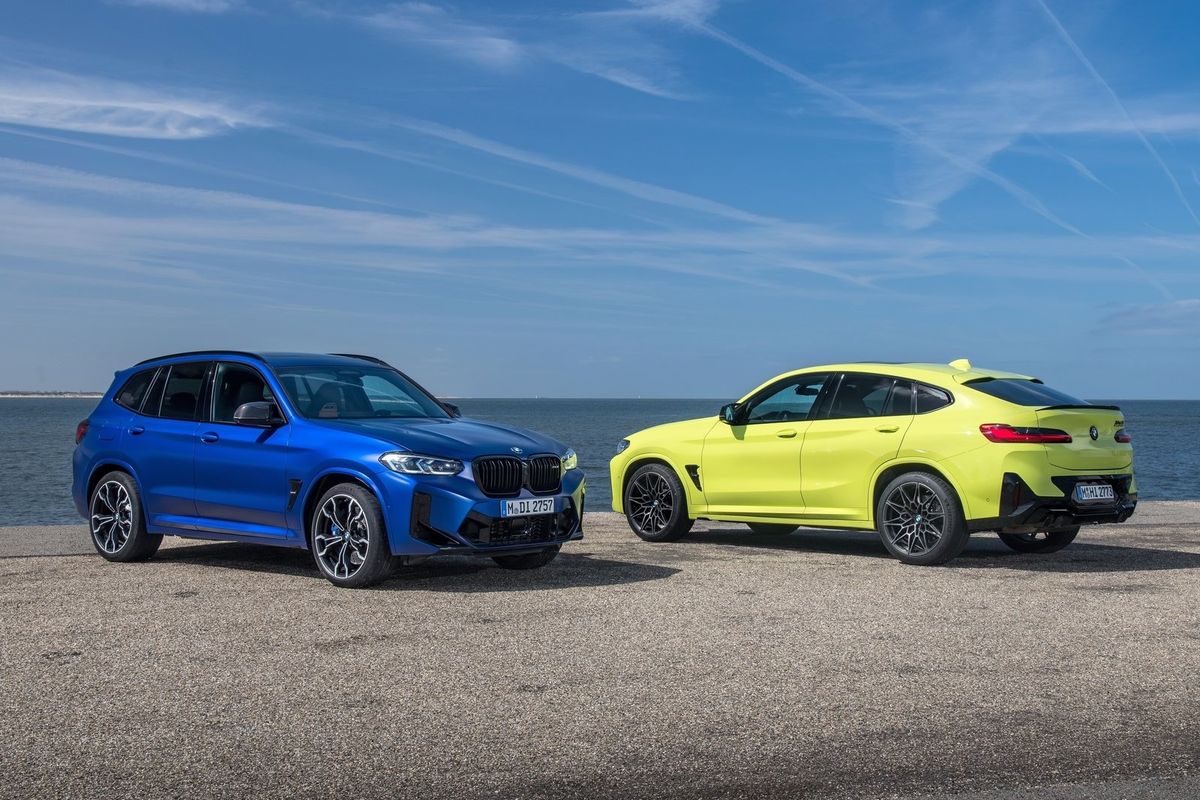
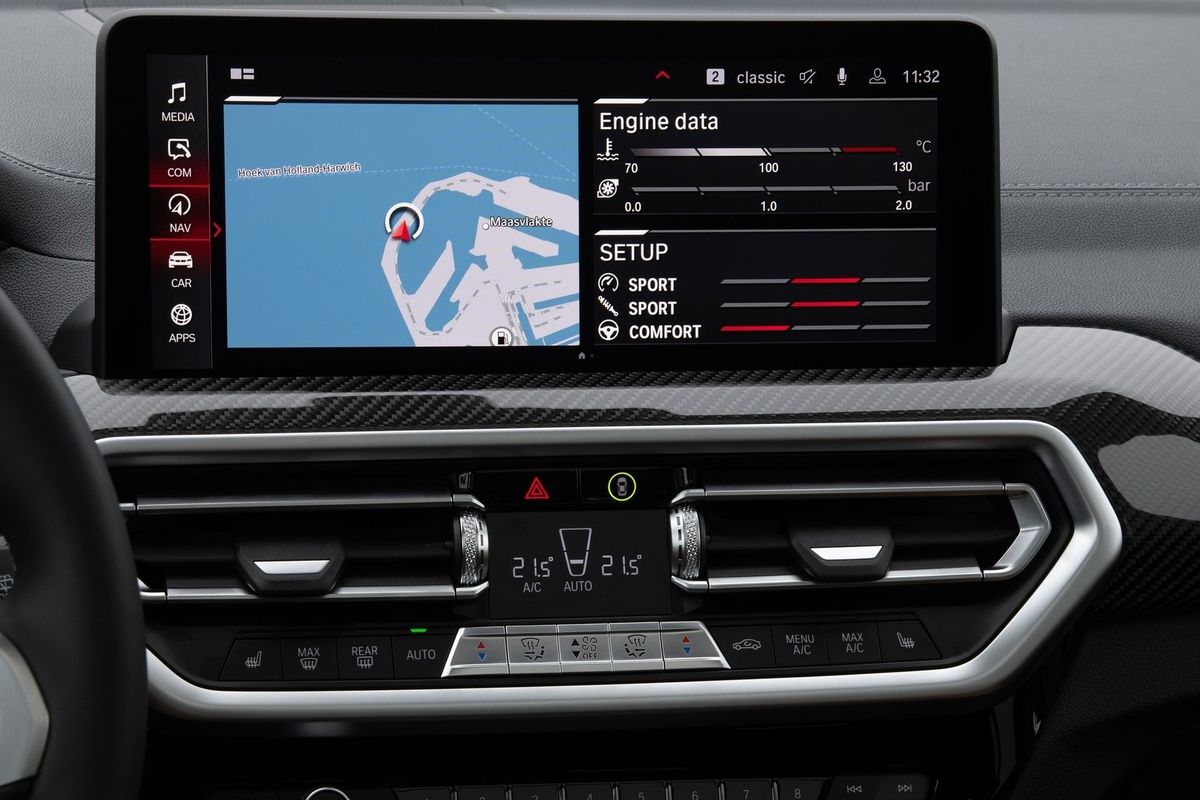
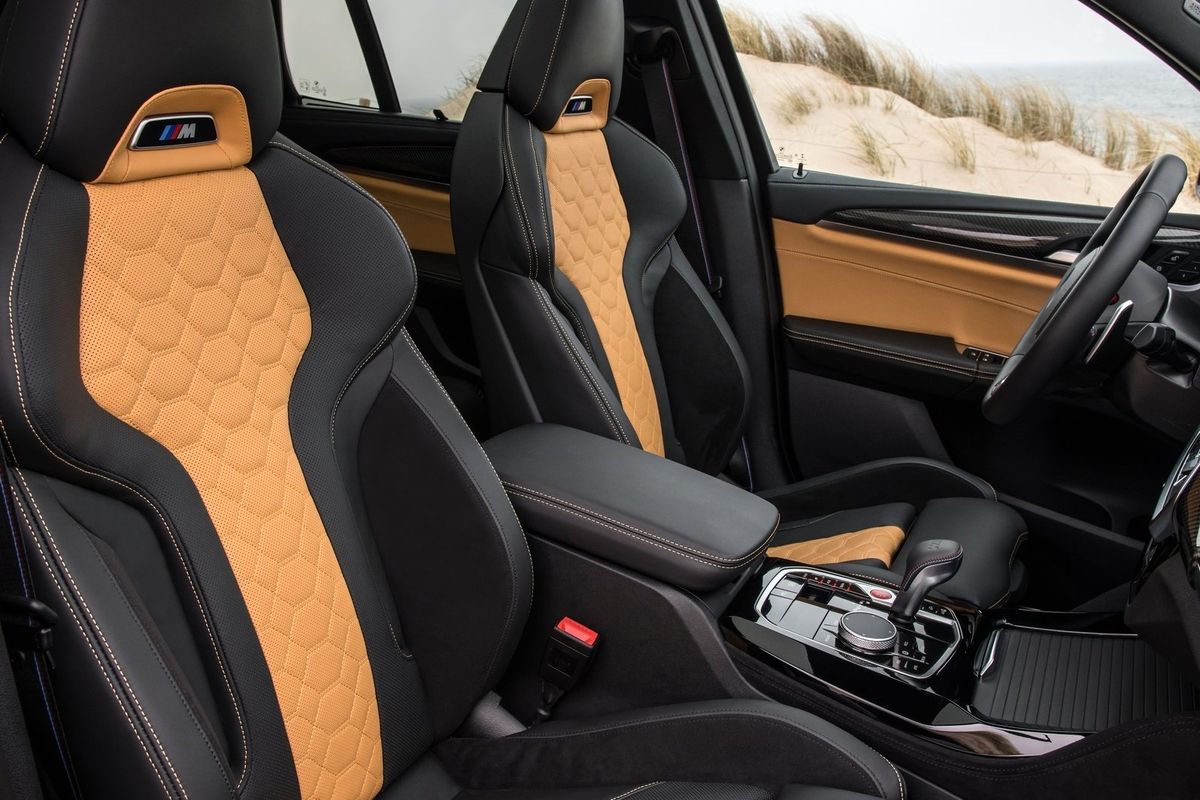
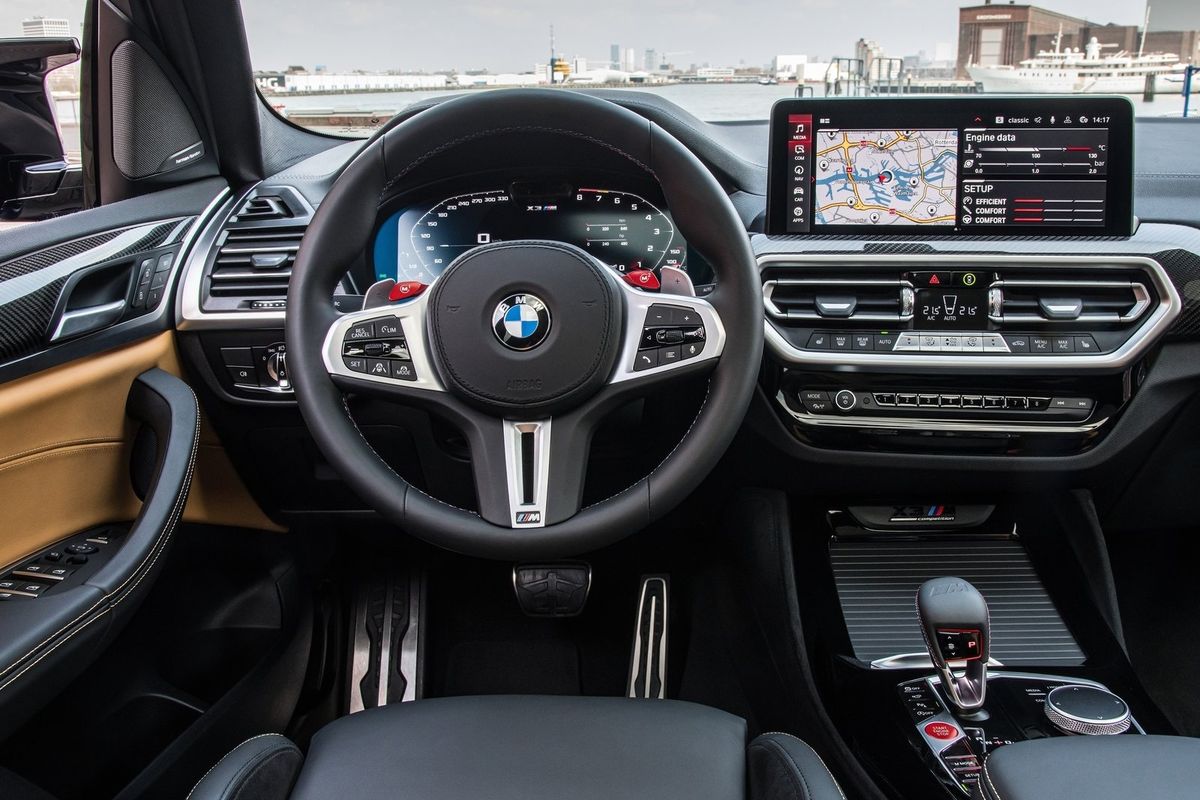
BMW X3 M and X4 M LCI (2022) Price Announced
Pricing and some specification details for the BMW X3 M and X4 M LCI have been loaded onto BMW SA’s website. Here’s how much you can expect to pay for these performance SUVs.
Hard on the heels of the recently-launched BMW X3 LCI (which we drove), comes the fire-breathing duo of the 2022 BMW X3 and X4 LCI.
The 2022 BMW X3 and X4 LCI updates are extensive, with cosmetic changes inside and out, with the engine lineup being carried over. Bucking the trend of oversized grilles, the 2022 BMW X3 and X4 LCI features an updated version of the kidney grille, redesigned front and rear bumpers, new-look LED headlamps and some interestingly-styled rear LED taillights.
The performance twins of the BMW X3 M and X4 M have been given a similar treatment, however, petrolheads will be pleased to hear the 3.0-litre turbocharged straight-6 motor may not have had a power boost, but torque is up from 600 Nm to 650 Nm. The extra torque comes from a 3D-printed cylinder head core and a forged lightweight crankshaft from the M3 and M4.
These extra 49 Newtons may not sound like much, but both vehicles see their 0-100 kph sprint time claims drop from 4.0 seconds down to 3.7 seconds. The top speed is limited to 250 kph or get the M Driver’s Package for an extra 30 kilometers. As before, the BMW X3 M and X4 M feature an 8-speed gearbox.
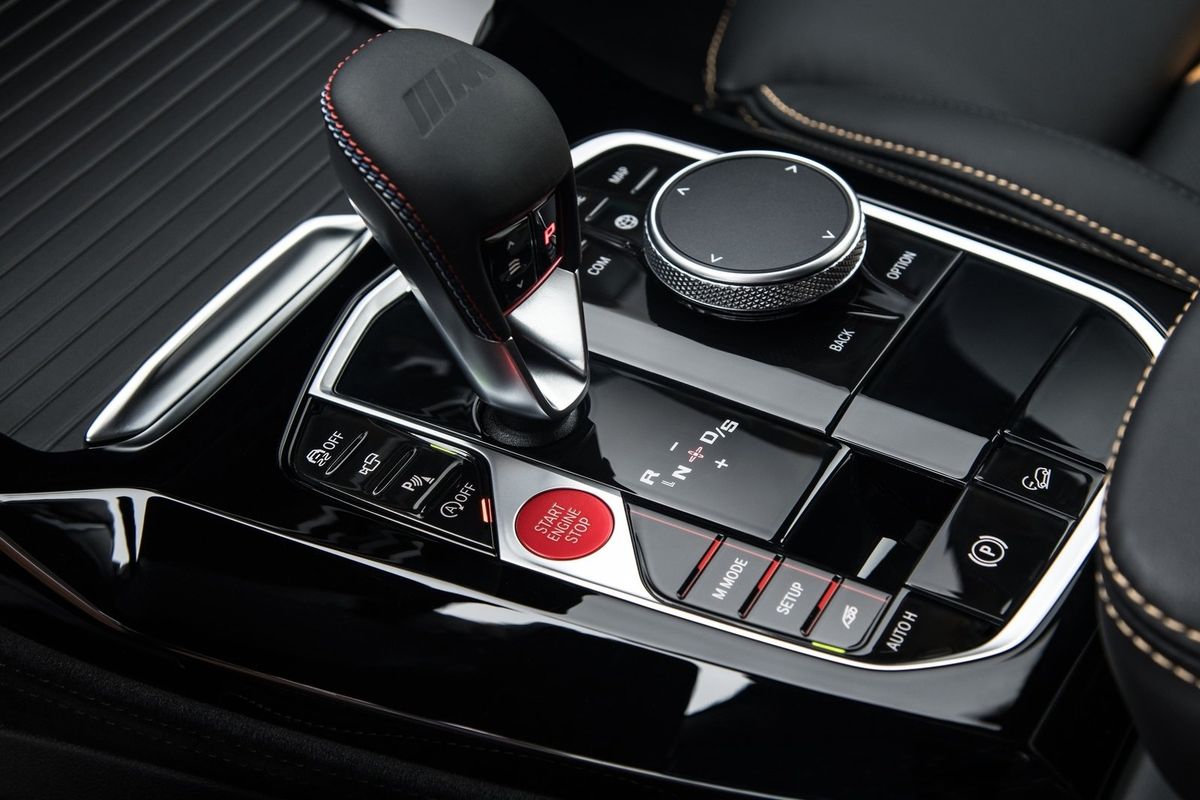
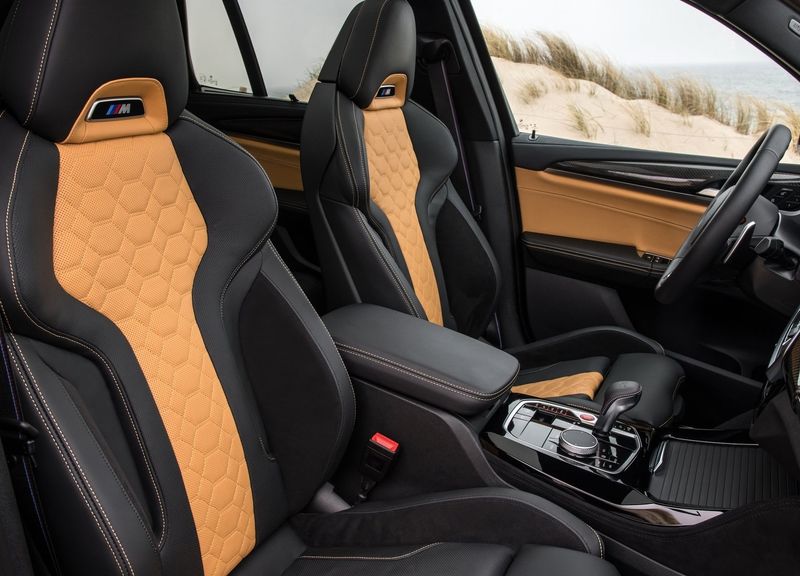
Standard specification at this level is as you’d expect. The vehicles come with an M Sport exhaust system, M seat belts, M Sport seats, BMW Individual high-gloss Shadow Line, pano roof, Harmon Kardon audio system, head-up display, 360-degree parking camera to name but a few.
A quick dive into the configurator shows some options like M carbon mirror caps (R12 300), ventilated/heated seats (R23 000), TV (R9 500), and a heated steering wheel for R3 050.
How much does the 2022 BMW X3 M and X4 M LCI cost in South Africa?
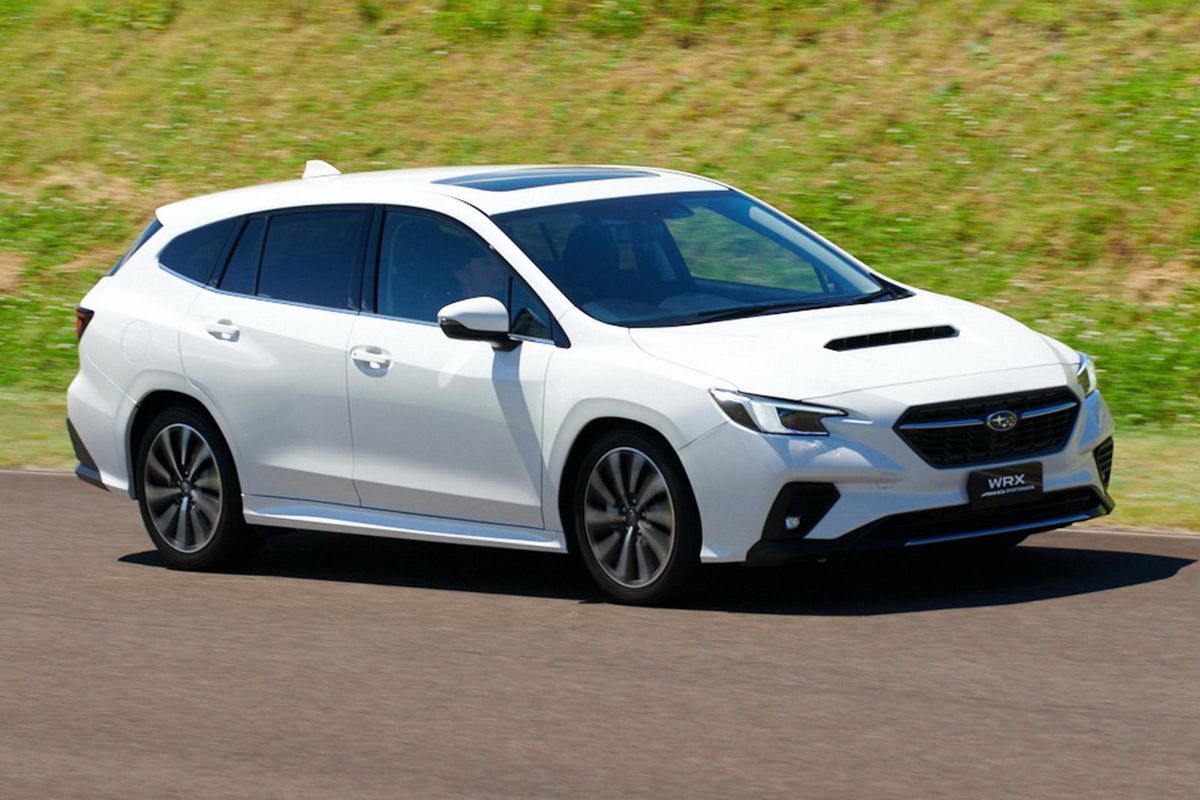
The high-performance station wagon remains a rarity, so when a new one is revealed, there is cause for celebration. And this is now the case as one of the great Japanese high-performance wagon nameplates has been revived.
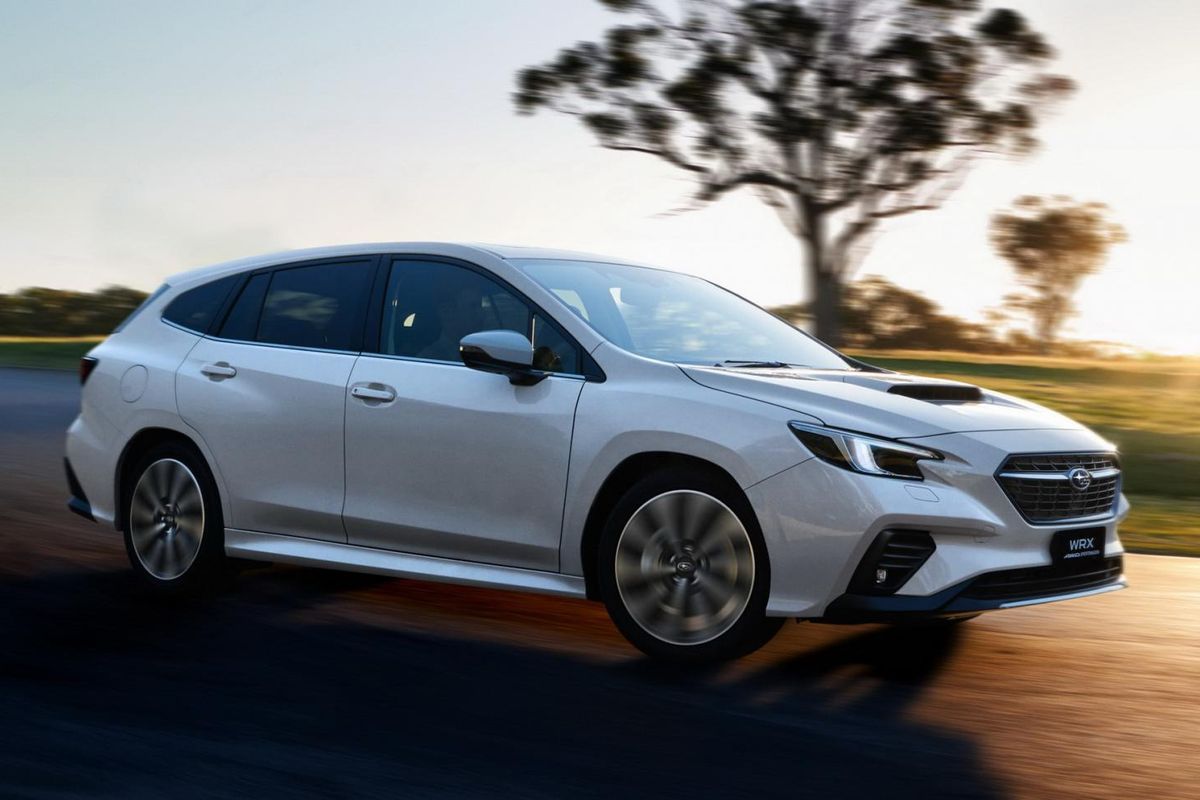
Subaru’s WRX Sportwagon lives again as part of the company’s second-generation Levorg platform.
Revealed as part of Subaru Australia’s new model plans, this new WRX Sportwagon is the more practical version of the company’s current-generation WRX sedan.
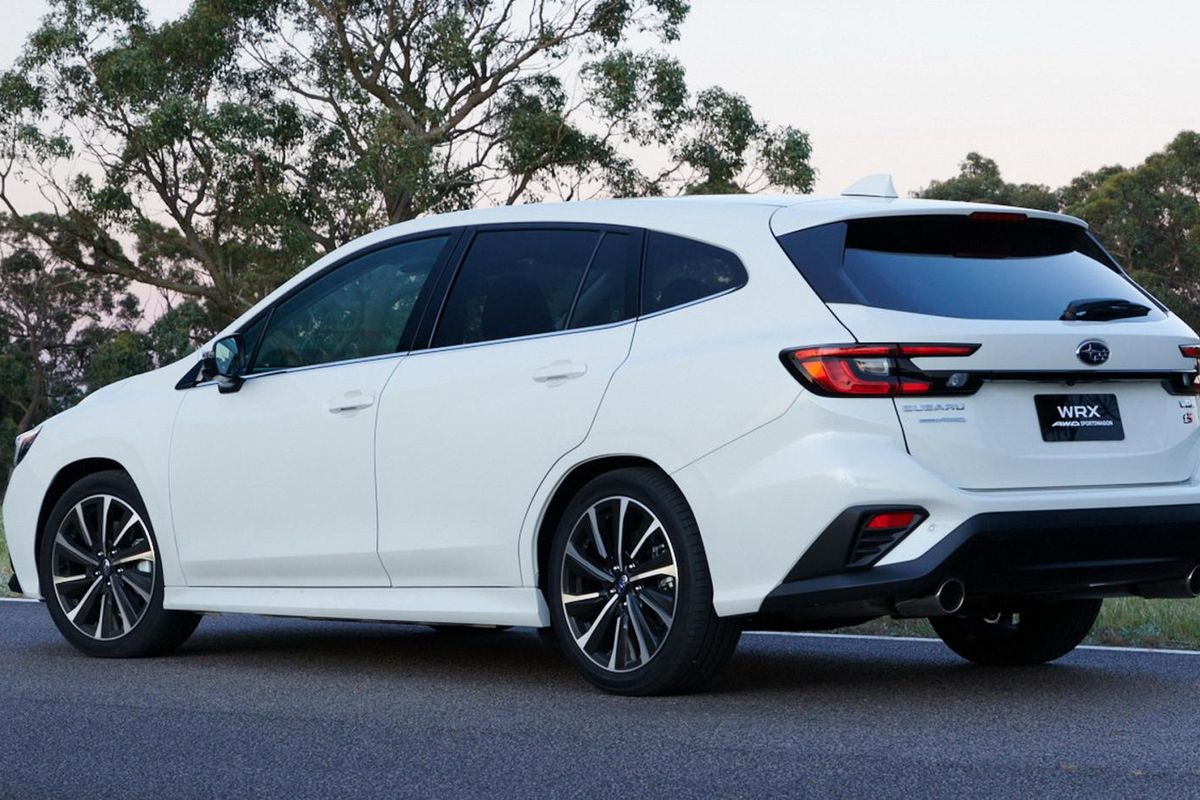
The design changes aren’t too radical. There is a larger hood scoop to cool that 2.4-litre horizontally opposed engine and some go-faster detailing around the rear.
At the back of this new WRX Sportwagon, you’ll find large-diameter exhaust ends, a tailgate spoiler and reshaped bumper.
The side profile is quite odd, with 18-inch wheels, which look a touch undersized. That said, these wheels should roll generously-sized tyres, with adequate sidewalls delivering good ride quality – especially when laden. And a station wagon is more likely to be laden than a sedan, right?
Subaru has not divulged much about the WRX Sportwagon’s technical specifications, but fans of the brand can expect the same core mechanical components. The WRX Sportwagon’s 2.4-litre turbopetrol should boost in the range of 202kW and 350Nm, with those outputs distributed to all four wheels via Subaru’s symmetric all-wheel drive system.
Where Subaru wagon fans might be expected to compromise, is the tactility of this latest WRX Sportwagon’s driving experience. Although the WRX sedan offers both a six-speed manual gearbox and CVT transmission, the Sportwagon will only offer the latter. Then again, BMW isn’t going to offer a six-speed manual M3 Touring, either…
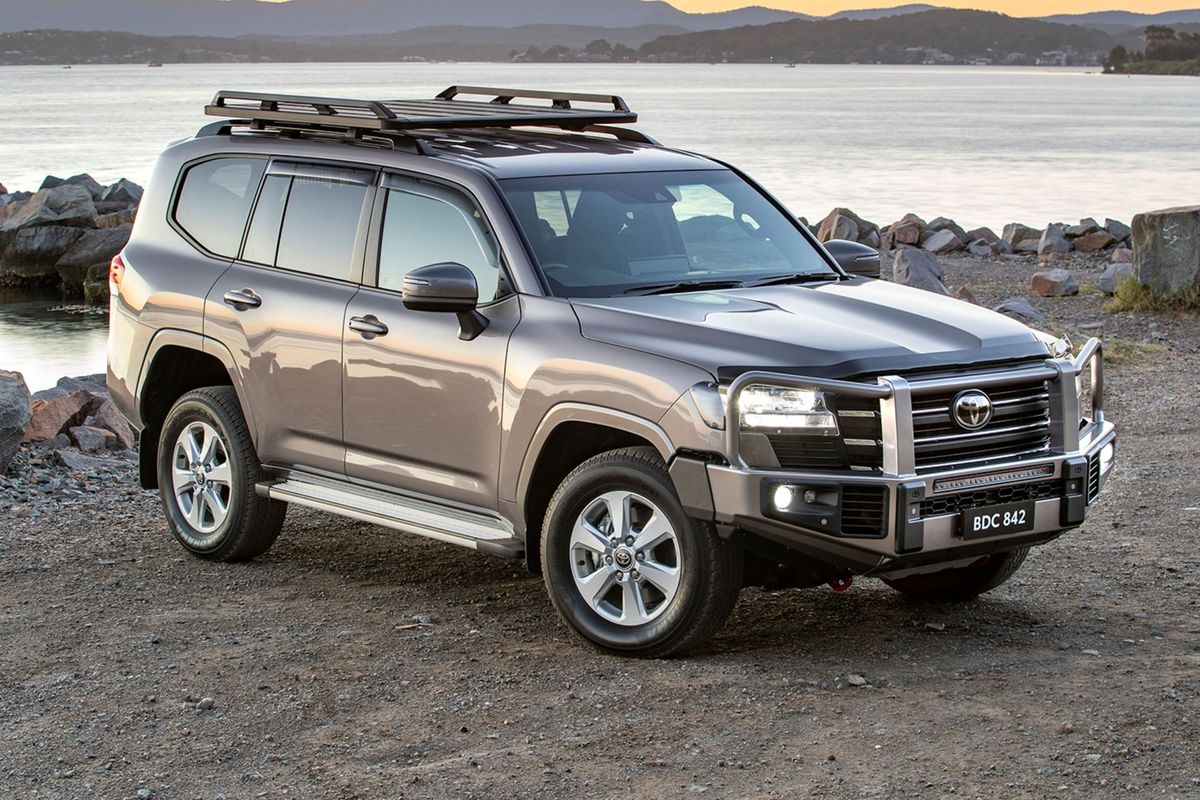
Toyota has announced an array of accessories for its all-new Land Cruiser 300.
It’s not every day that an all-new Toyota Land Cruiser comes along, but when it does, the industry sits up and takes notice. Given the Land Cruiser’s legacy of going anywhere with bulletproof reliability, offroad accessories have become a functional necessity, as opposed to a visual upgrade. The aftermarket offroading industry is big business and you can bet those companies have been working overtime, preparing their wares for the all-new Toyota Land Cruiser 300.
Toyota would naturally prefer it if customers would stick to its own approved range of genuine accessories and has launched a handful of goodies for the new product. While OEM-approved accessories are generally sold at a premium, the obvious benefit is they’re covered by the vehicle’s factory warranty.
Impressively, the range of Toyota accessories for the new Land Cruiser 300 has been a long time coming, with Carsales Australia suggesting the development of these parts was parallel to that of the actual car with work beginning back in 2015.
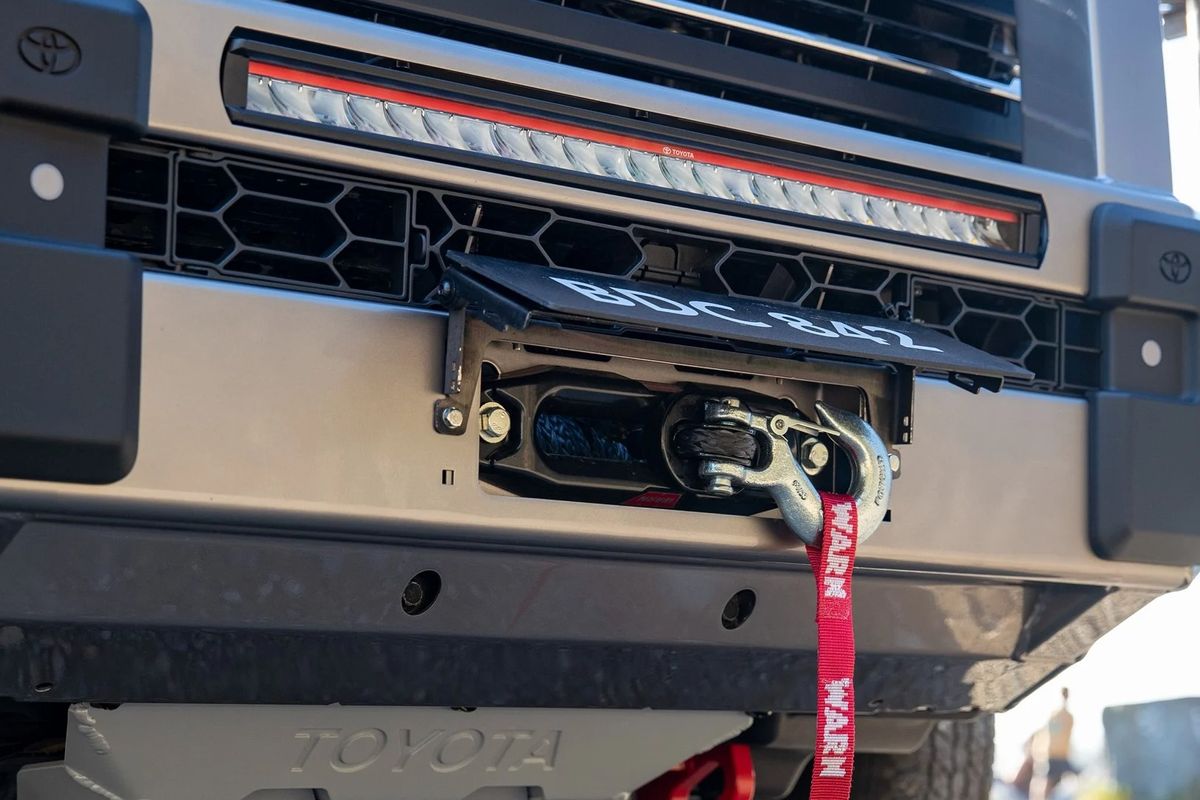
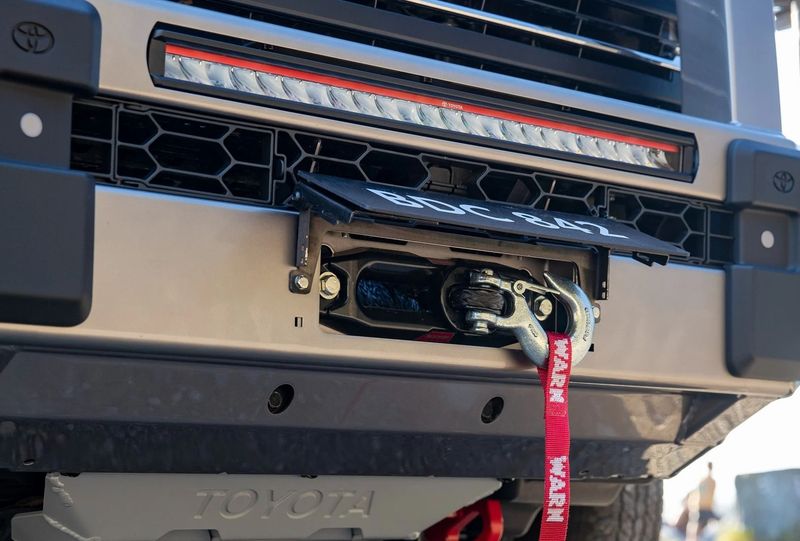
So, what’s on offer? Right now what you see here is for the Australian market, and these bullbars are available in a choice aluminium or steel. The steel option can be painted in a black finish or to match the body colour. The real party trick is the electric winch which has a rating of 9 000 kg and is cleverly concealed behind the number plate when it’s not in use.
Depending on the derivative, these bullbars have affected the Land Cruiser 300 4×4 capabilities with the approach angle being reduced. These bullbars also make provision for the fitment of a Toyota-approved lightbar. For the Aussie model, the 120W light bar has 24 LEDS. Note that lightbars are not approved for use on South African roads.
The factory-fitted roof rails can be fitted with a new-design roof tray that opens a world of possibilities for mounting items. There’s a 3-bar rack on offer that can carry around 90 kg.
If you’re wanting to really explore the offroad, then Toyota has a 5mm aluminium underbody plate to protect the vital internals, an 8 000 kg-rated recovery points mounted to the chassis as well as an air intake snorkel if wading is your thing. For what it’s worth, the standard claimed wading depth is 700 mm.
With these factory-approved Land Cruiser 300 accessories, Toyota hopes to get a bit of a headstart on the aftermarket companies. The new Toyota Land Cruiser 300 is on sale in South Africa in both petrol and diesel options, but given the severity of the semi-conductor shortage, expect long waiting periods as the factory is running at reduced capacity.
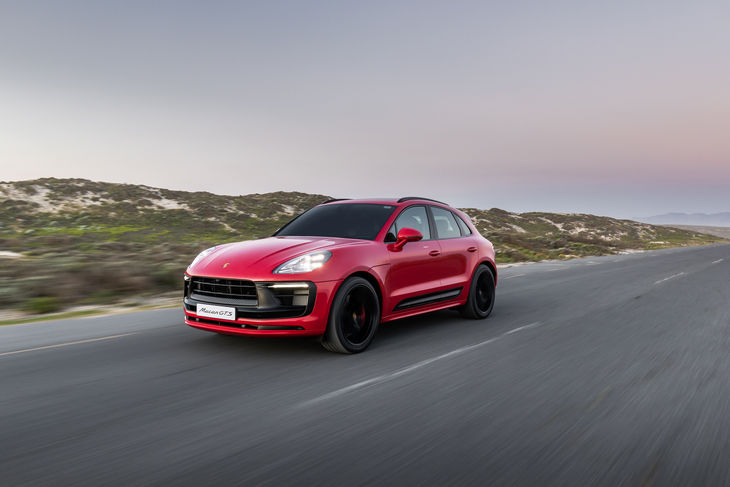
Since its introduction in 2014, the Macan has been a smash hit for Porsche – in fact, 80% of the executive SUV’s buyers are new to the iconic German marque. But the world has moved on considerably in the past 7 years… can another round of updates keep the Macan at the forefront of its segment?
Let’s start this review with something we would usually keep for the conclusion: the price. You can get into the Macan for R1 050 000 (October 2021). Now, keep in mind that this supposed “baby” Macan still punches out 195 kW – and it can keep up with hot hatches by accelerating from standstill to 100 kph in only 6.2 sec. You’ll undoubtedly have to tick a few option boxes to specify the derivative to your taste, but that is also the case with the model’s similarly-priced German competitors… the major difference, however, is that with the Macan, even the “entry-level” one, you get a Porsche badge on the nose.
As I cruised along some of the Western Cape’s best roads and steered the (195-kW) Macan into some of the launch route’s twists and turns, the pricing context described in the previous paragraph kept swirling in my head… For similar money (around a bar) you can get a recently facelifted BMW X3 sDrive20i M Sport (135 kW) or a Mercedes-Benz GLC 300 4Matic AMG Line (190 kW). You could even argue, that due to its low-slung, broad-shouldered stance, the Macan is a more natural competitor to the (more expensive) BMW X4 and Mercedes-Benz GLC Coupe variants, but, upon closer inspection, the Macan happens to compare reasonably well with its more traditional German rivals in terms of luggage space – its 458-litre load bay may be about 100 litres smaller than the X3 and GLC’s, but its total claimed utility space (1 503 litres) is less than 100 litres under the figures quoted for those rivals. So… space-wise, the sportier styling of the Macan has not impacted its practicality all that much.
So, I’d like to kick things off by stating the Macan appears to offer excellent value for money and this applies to the S and GTS derivatives as well. I guess what I’m trying to say is that if you’re shopping for a mid-sized luxury crossover with a sporty bent, you may want to visit a Porsche dealer – the Macan is (perhaps surprisingly, given its “exotic” badge) priced to compete with mainstream executive SUVs.
Fresh looks for the Porsche Macan in 2021
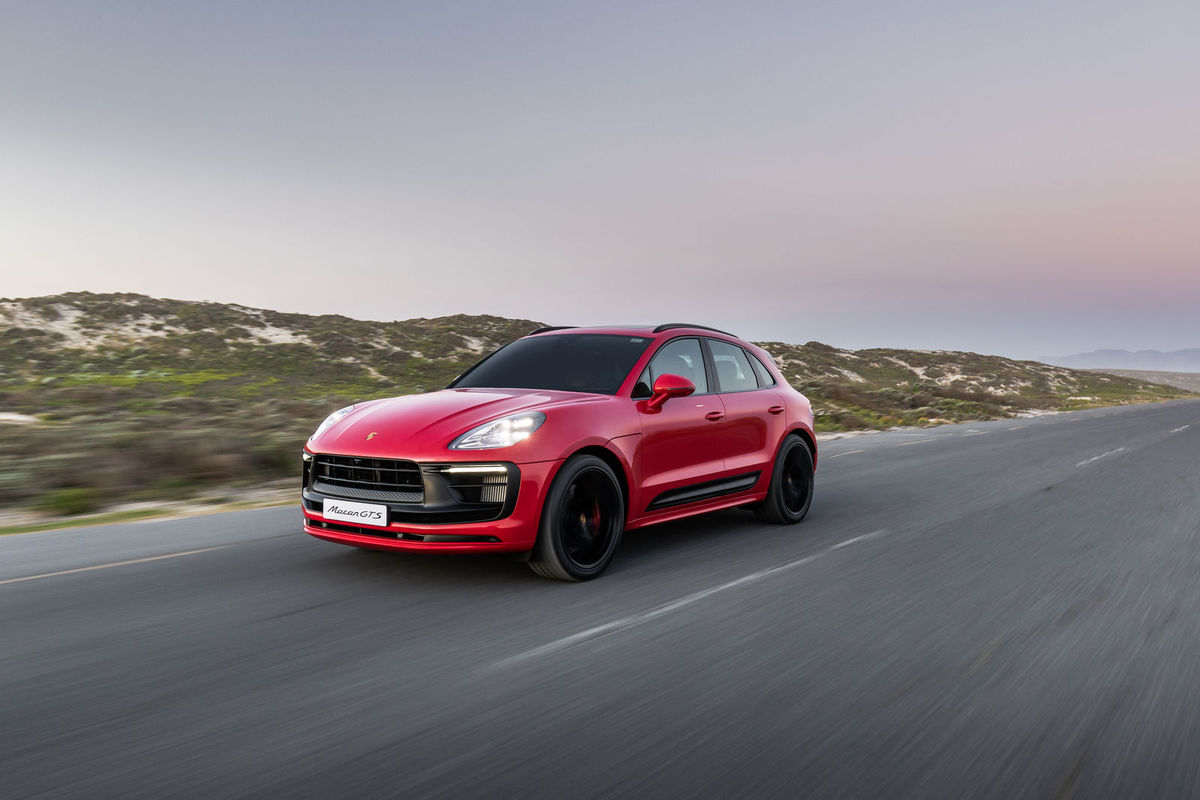
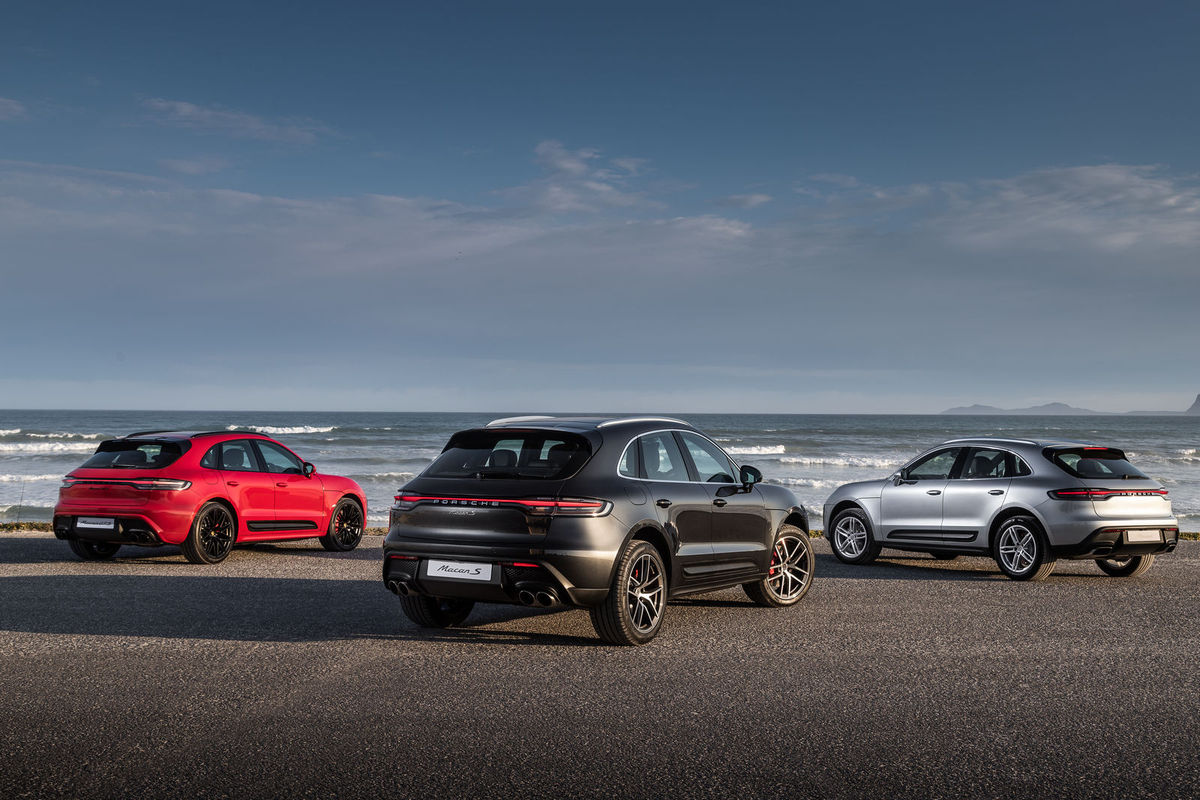
The GTS derivative on the left sits considerably lower than its siblings, denoting its performance intentions.
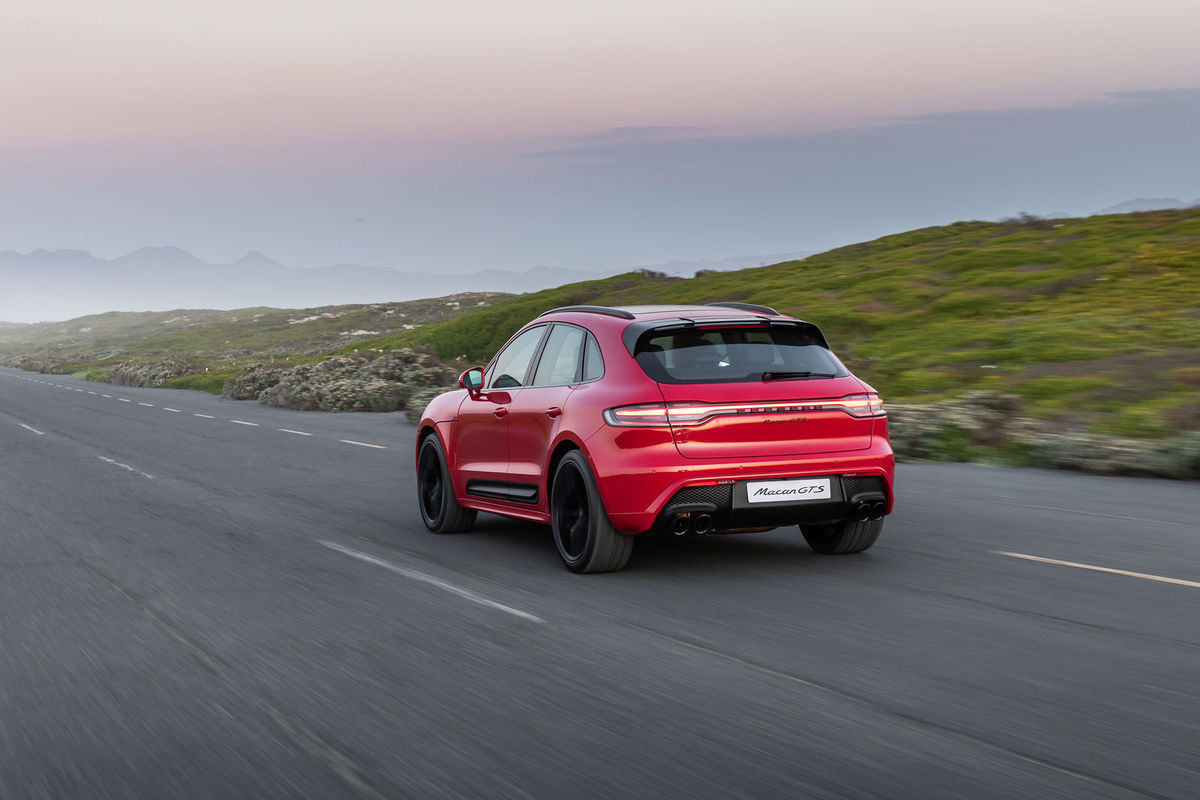
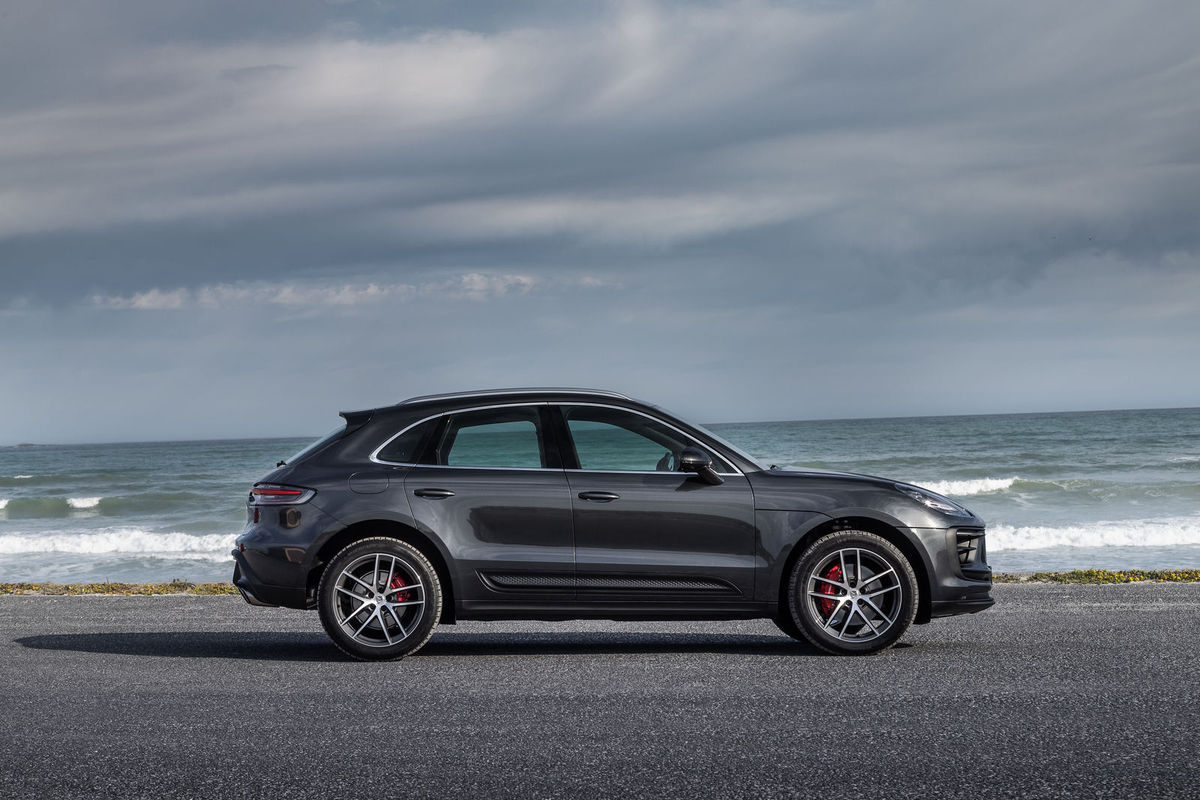
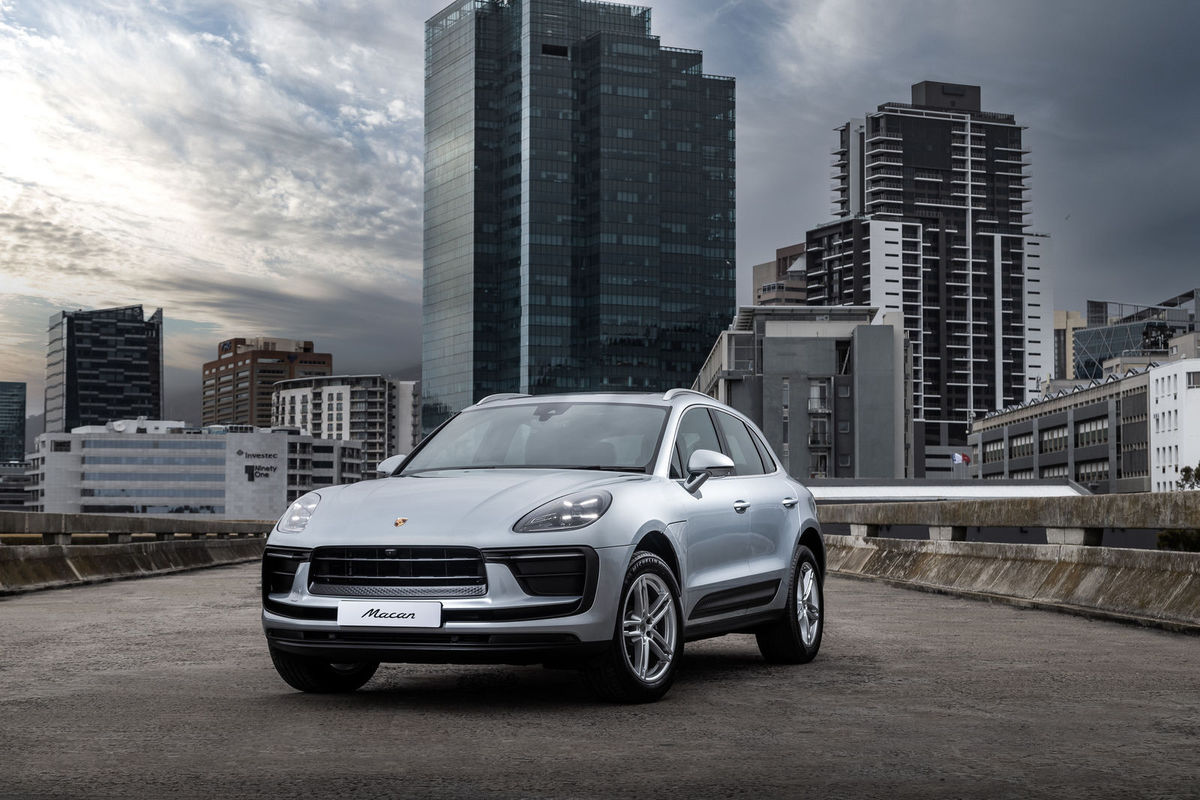
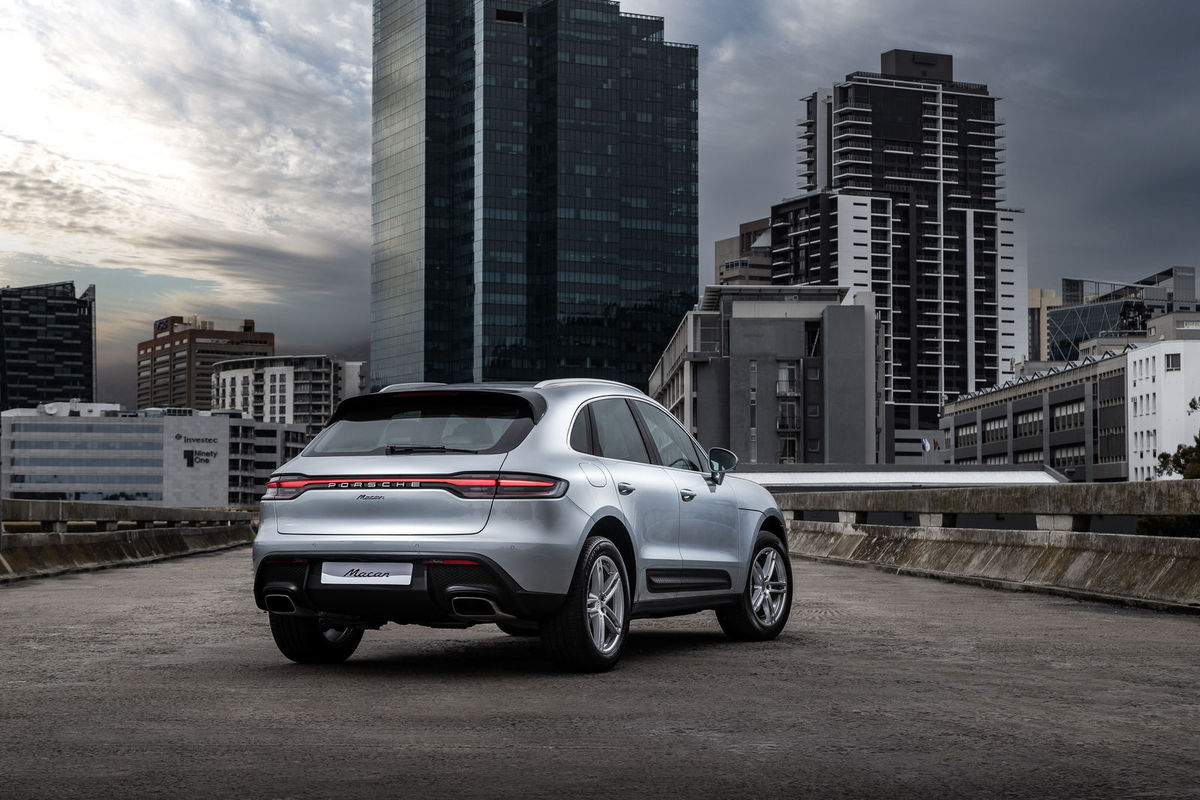
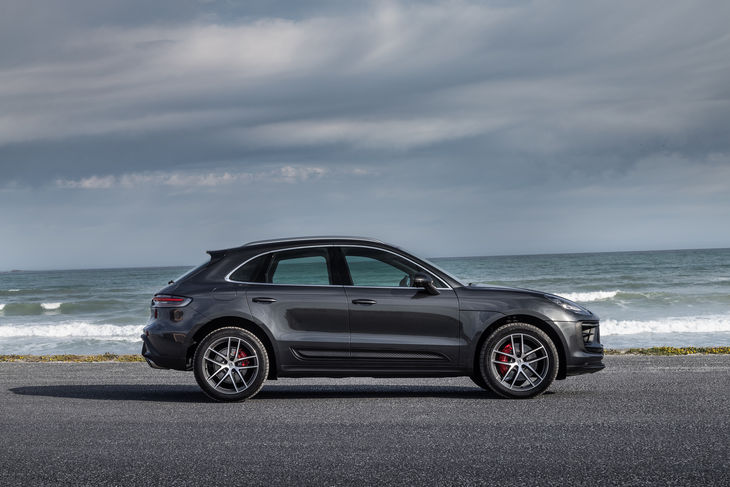
Based on the MLB platform that also underpins the Audi Q5, the Macan (originally styled under the guidance of Michael Mauer) has aged well. It has a lower roofline than most of its rivals which, combined with its broad “hips” make the Porsche appear sportier than the competition. For 2021, there are significant changes to the front-end, with reworked grille/air intakes and a more 3D design overall. Inlays are used to create the perception of both width and “lightness”, while a substantial diffuser expresses sporting intent. On the GTS flagship, gloss black is used liberally to make it appear even more menacing.
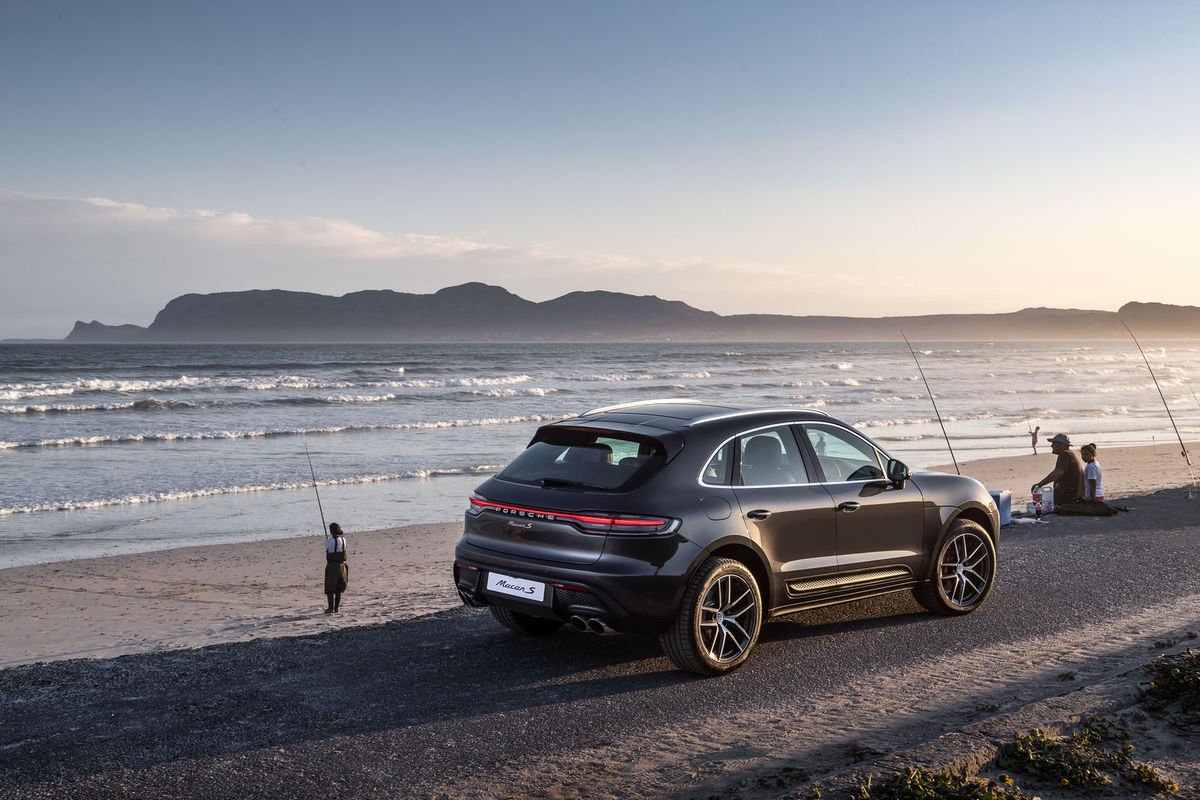
Some very bold colours are available, including Papaya Metallic and Python Green. Porsche has further added several new wheel designs to choose from, but it’s worth noting that that standard wheel on the Macan has moved up one size, to 19-inch. The Macan S gets polished, dark-painted 20-inch wheels, and the Macan GTS is fitted with 21-inch rims.
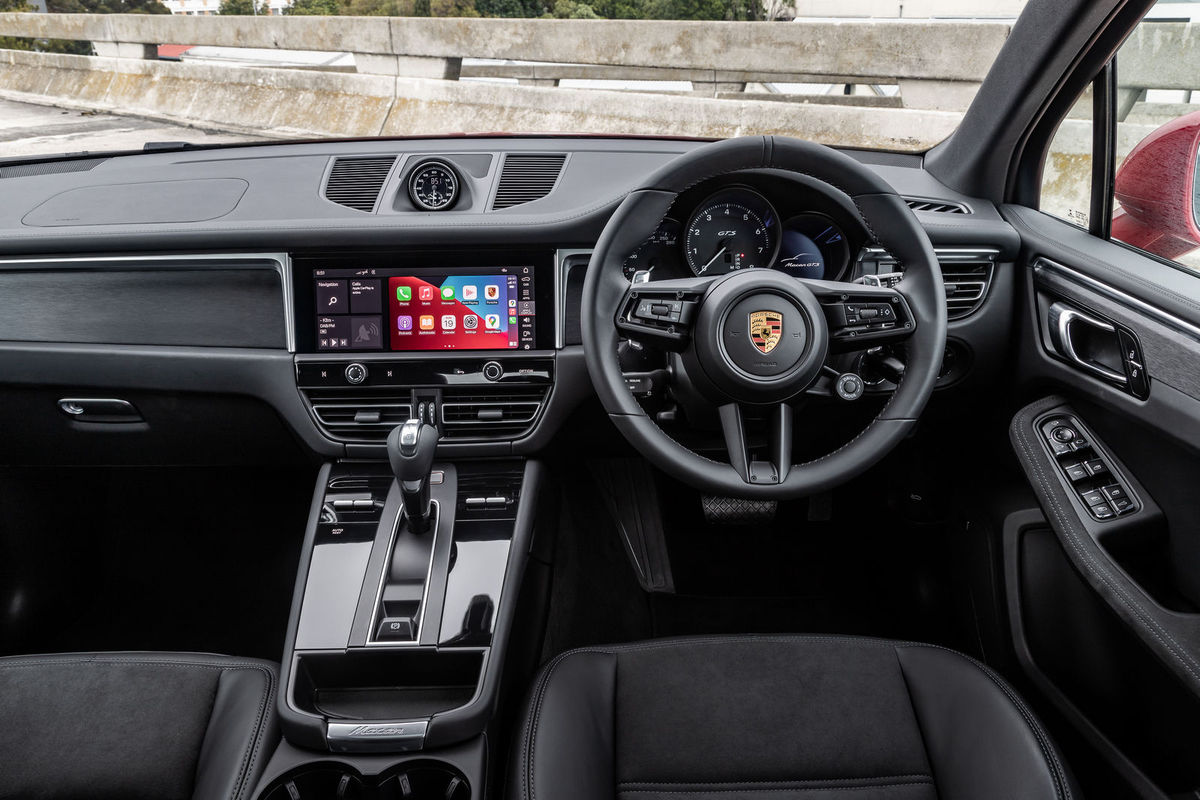
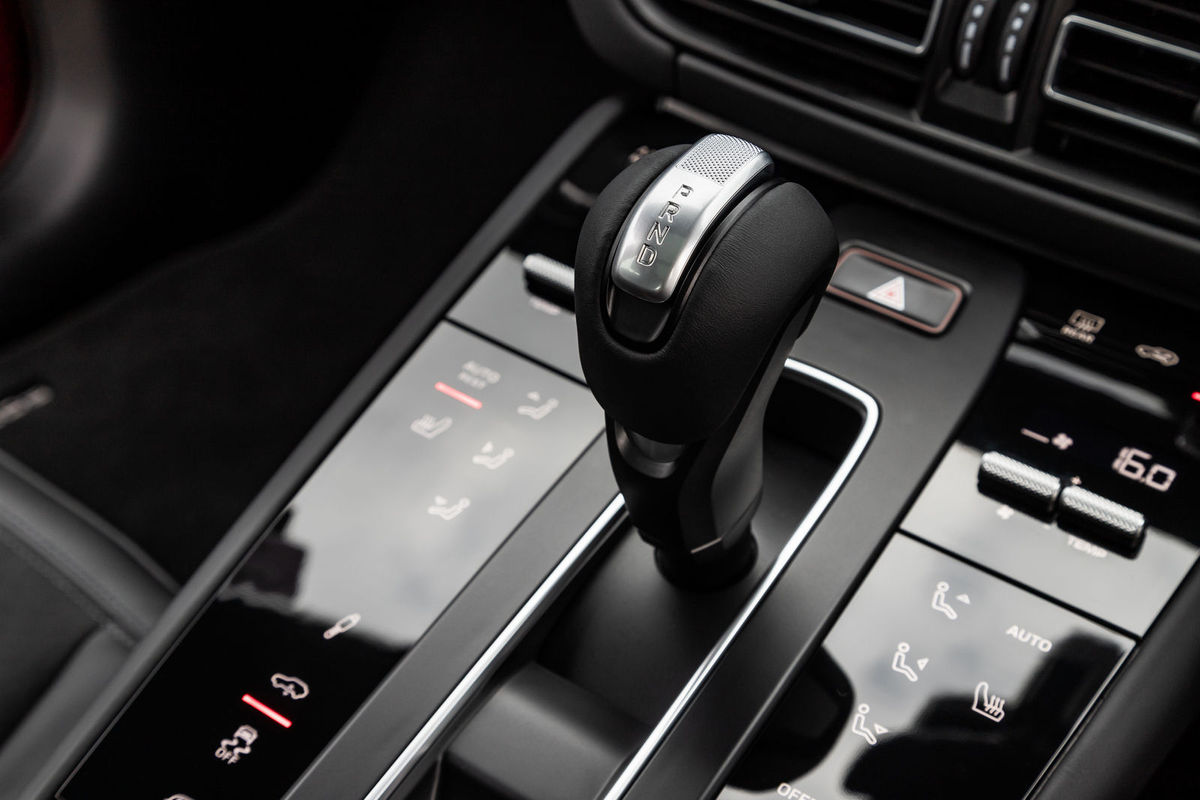
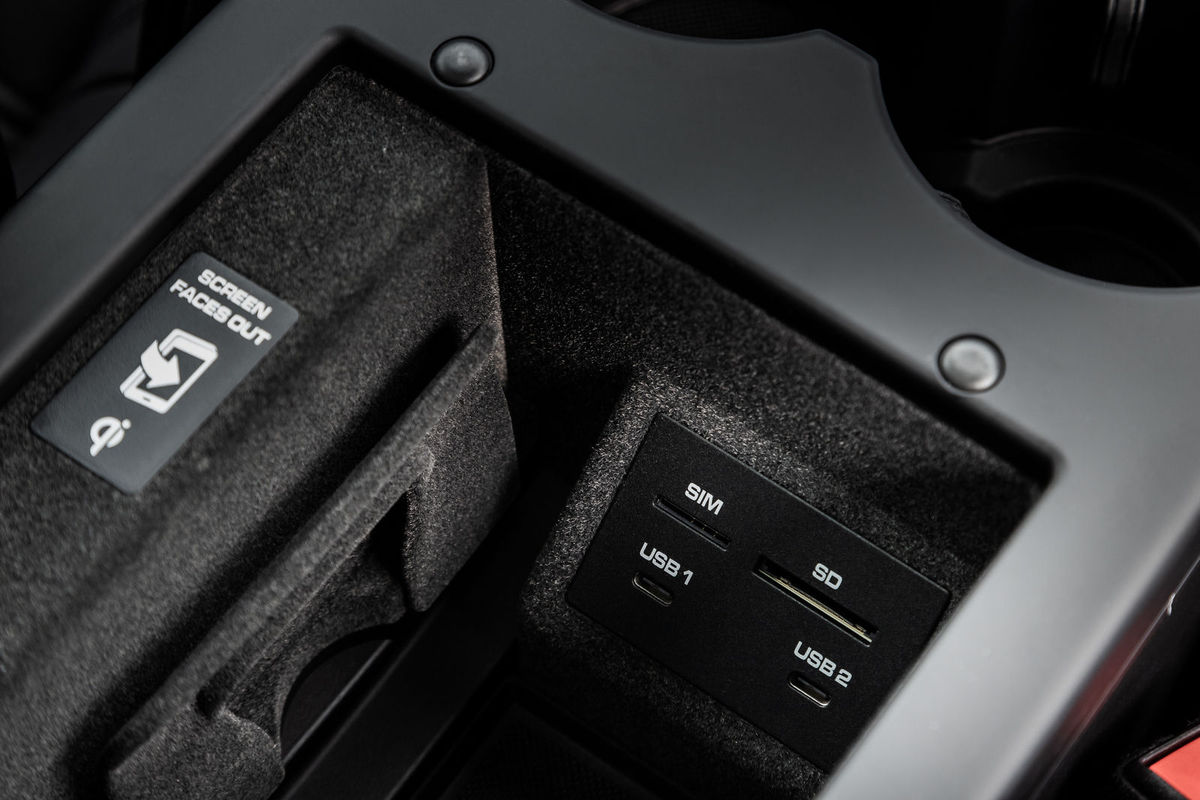
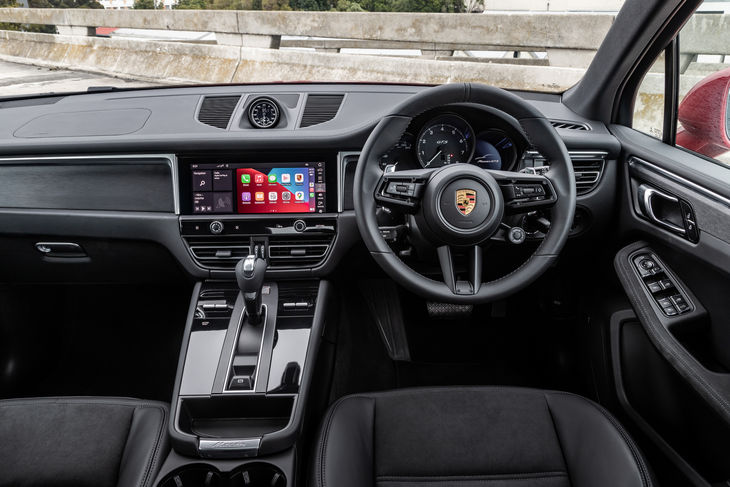
The cabin, too, has received a number of upgrades, most notably to the centre console and transmission tunnel. Whereas previous Macans featured buttons by the proverbial bucketload, the latest model boasts a nice mix of touch-sensitive controls embedded into the transmission tunnel, and physical switches for major controls. The Zuffenhausen-based firm has cleaned up/modernised the overall look of the cabin significantly. A minor gripe, however, is that the centre ventilation outlets are mounted quite low; when you adjust them by hand it’s not difficult to brush the touch-sensitive buttons below them.
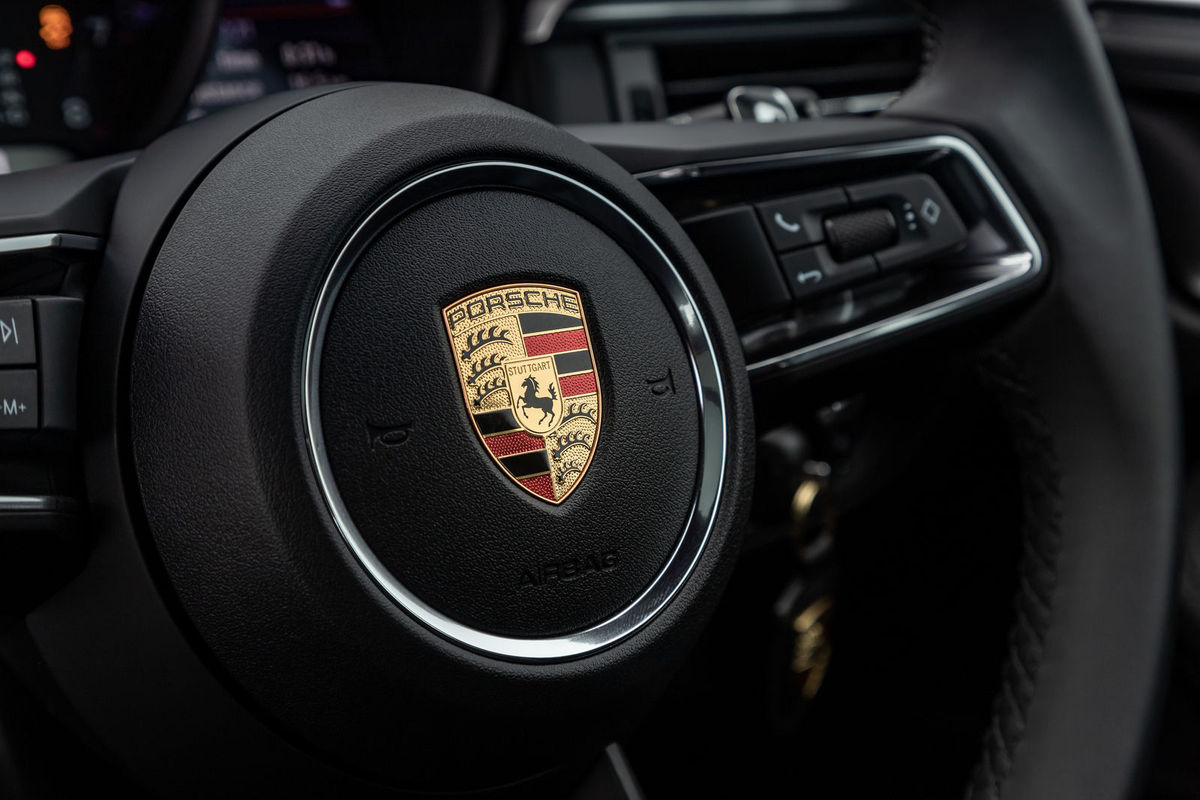
As with the outgoing model, a full HD 10.9-inch screen allows for access to the car’s major infotainment functions and doubles as a display for the camera system. Of course, Apple CarPlay and Android Auto compatibility is included. Even the multifunction steering wheels have been revised, although they will be familiar to 911 or Panamera owners. The standard interior colour is black on all derivatives, but Porsche offers a staggering number of trim options. If you delve into the Porsche Exclusive Manufaktur range, you can specify carbon, gloss black, body colour or even burr-walnut finishes.
More power, even sportier dynamics
All engines in the Macan range produce more power than the outgoing derivatives.
All 3 Macan derivatives benefit from a power boost due to the fitment of substantially revised (or new) engines. The turbocharged 2.0-litre 4-cylinder motor in the entry-level Macan is from the widely-used EA888 VW family of powerplants, but tweaked for the Macan’s specific requirements. It delivers a strong 195 kW and 400 Nm of torque, plus it’s coupled with the marque’s 7-speed PDK (dual-clutch) automatic transmission; the powertrain will send power to all wheels only when needed – the Macan is a decidedly rear-biased vehicle. Fitted with the Sport Chrono package, the baby Macan is also capable of achieving a top speed of 232 kph. More than fast enough, then… Drive more measuredly and you could get near Porsche’s claimed combined consumption figure of around 8.8 L/100 km.
Move up a notch to the Macan S and matters get decidedly more serious. Power comes from a twin-turbocharged 2.9-litre V6 that delivers 280 kW and 520 Nm of torque. Porsche says this middle derivative can sprint from 0 to 100 kph in 4.6 sec (when equipped with Sport Chrono) and go on to a 259-kph top speed. The S should consume just shy of 10 L/100 km (claimed combined consumption). Porsche Active Suspension Management (PASM), which actively and continuously adapts the damping force on each wheel for the prevailing road and driving conditions, is standard on the Macan S (and GTS).
And then there’s the GTS flagship. Not only does it look significantly more aggressive than its siblings… it also packs a wallop. It too uses the twin-turbo 2.9-litre V6 engine, but in the GTS, peak power has been turned up to a full 324 kW and the maximum torque is 550 Nm. When equipped with Sport Chrono, it will rocket from 0 to 100 kph in 4.3 sec and on to a 272-kph top speed. Those are some serious performance numbers… The Macan GTS rides 10 mm lower to the ground than its siblings and is fitted (as standard) with a height-adjustable sports air suspension. To achieve improved body control, Porsche has fitted stiffer springs fore and aft; plus the GTS is said to have even better pitch and roll control. All new Macans benefit from steering improvements, particularly in terms of precision and feel.
The new Porsche Macan on the road
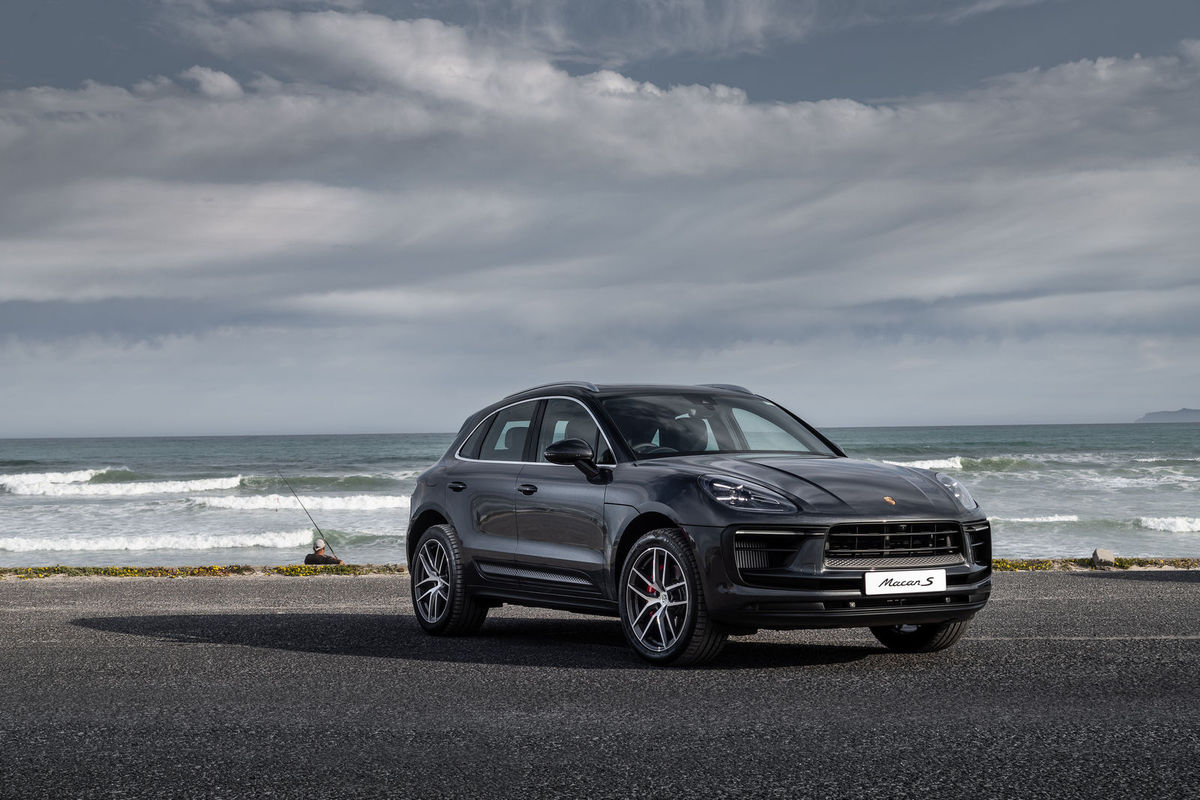
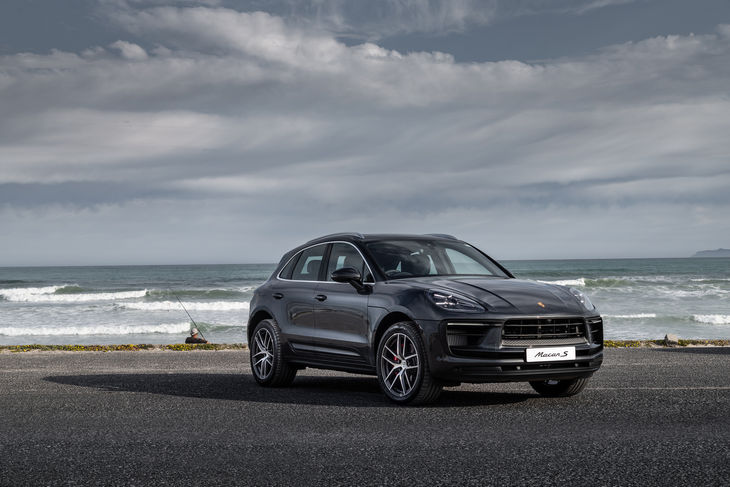
The “Goldilocks” pick in the Macan range – the Macan S.
Porsche made examples of all 3 derivatives available for the local launch drive, which took place in the Western Cape. The route included long straight sections, mountain passes, and a variety of surfaces.
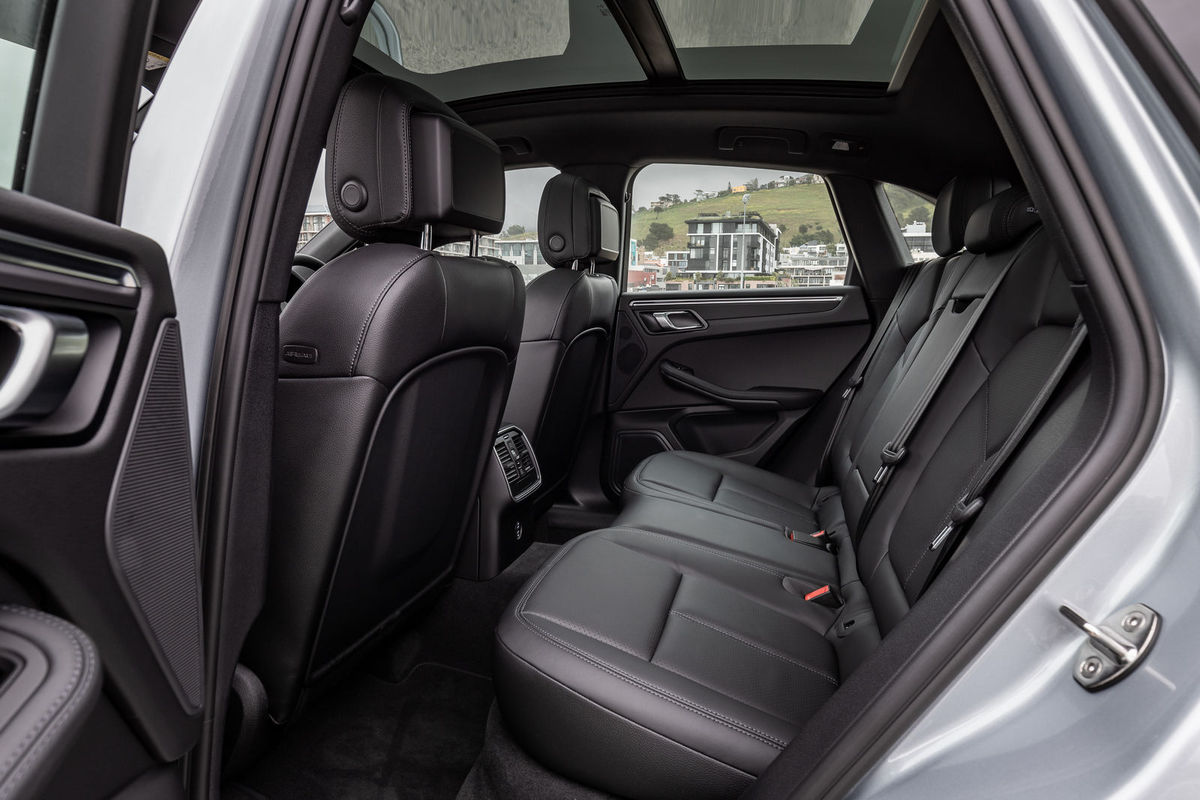
When you settle into a Macan (even the base version), you’re immediately reminded that you’re in a Porsche. The high transmission tunnel, typically Porsche instrumentation, and the view over the curvy front fenders create this impression. It feels like a driver’s car, even if the vehicle is standing in the car park. The rear occupant space is okay (but not class-leading) and the load bay is more than sufficient in shape and volume for, let’s say, a family of four. It’s also worth noting the prime build quality – not a squeak or a rattle could be heard during the long route, which included some very coarse surfaces.
The base Macan is probably all the luxury mid-size crossover most people would ever need; it offers a nice balance of performance, refinement and efficiency. At its core, it’s a significantly sharper driver’s car than the competition, but it was also a relaxed, quiet tourer on the long stretches we completed.
I’d say that the Macan S is the pick of the range, because it offers sizzling performance, excellent dynamics (to please enthusiastic drivers) and remains more than comfortable and refined enough to drive to the office (or do the school run) every weekday. It’s not an intimidating sports SUV and, given its asking price of R1 271 000, it compares very well with its more mainstream competitors – most notably the Mercedes-AMG GLC 43 4Matic, which has similar power, more space inside, but which is not remotely as sharp in terms of dynamism.
The physical buttons have been replaced by touch-sensitive controls on the transmission tunnel
Finally, the Macan GTS… It offers the kind of performance that not so long ago was the preserve of serious sports- or near-supercars. There are similarly fast SUVs out there, of course, but what the Macan GTS manages to do is to feel “natural” or “completely adept” at going fast around corners, whereas in most other SUVs or crossovers, you get the sense that a dizzying number of electronic gizmos are doing the work – you’re just a passenger. The Macan GTS still manages to entertain, delight (with its steering sharpness and instant responses) and communicate… well, it somehow “talks” to you through the seat of your pants. In short, it feels like a fast car, not a fast SUV. If you want to make it feel even racier, you can spec it with Porsche Torque Vectoring Plus and grippier Pirelli P-Zero Corsa tyres.
The Macan GTS is priced at R1 551 000, which puts it up against the BMW X3 M40i (285 kW) and the Mercedes-AMG GLC 43 Coupe 4Matic (287 kW). If you’re looking for an executive SUV (mid-sized luxury crossover) that offers the best driving experience, the decision here should be simple.
Verdict
If you’re after an SUV with performance and handling intentions, the Macan still delivers with aplomb.
In typical Porsche fashion, continuous improvement has kept the Macan very much in play… in fact, it compares rather favourably with the latest rival offerings. While it certainly occupies a position on the sportier side of the luxury crossover spectrum, the talents that place it there don’t come at the cost of everyday usability, comfort and refinement. If you’re looking for the maximum amount of interior space from your executive SUV, the Macan may not be the first choice, but it’s not cramped inside by any means. Well-priced, impeccably built and great to drive, the Macan really should be on your radar.
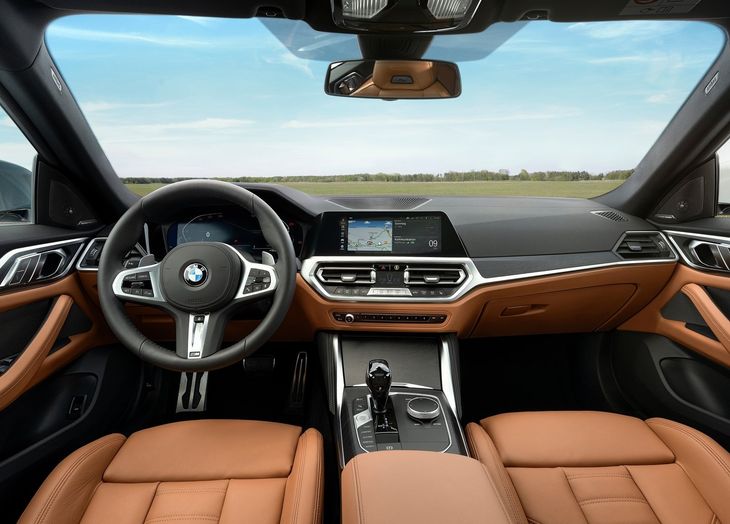
BMW 4 Series Gran Coupe (2021) Price Announced
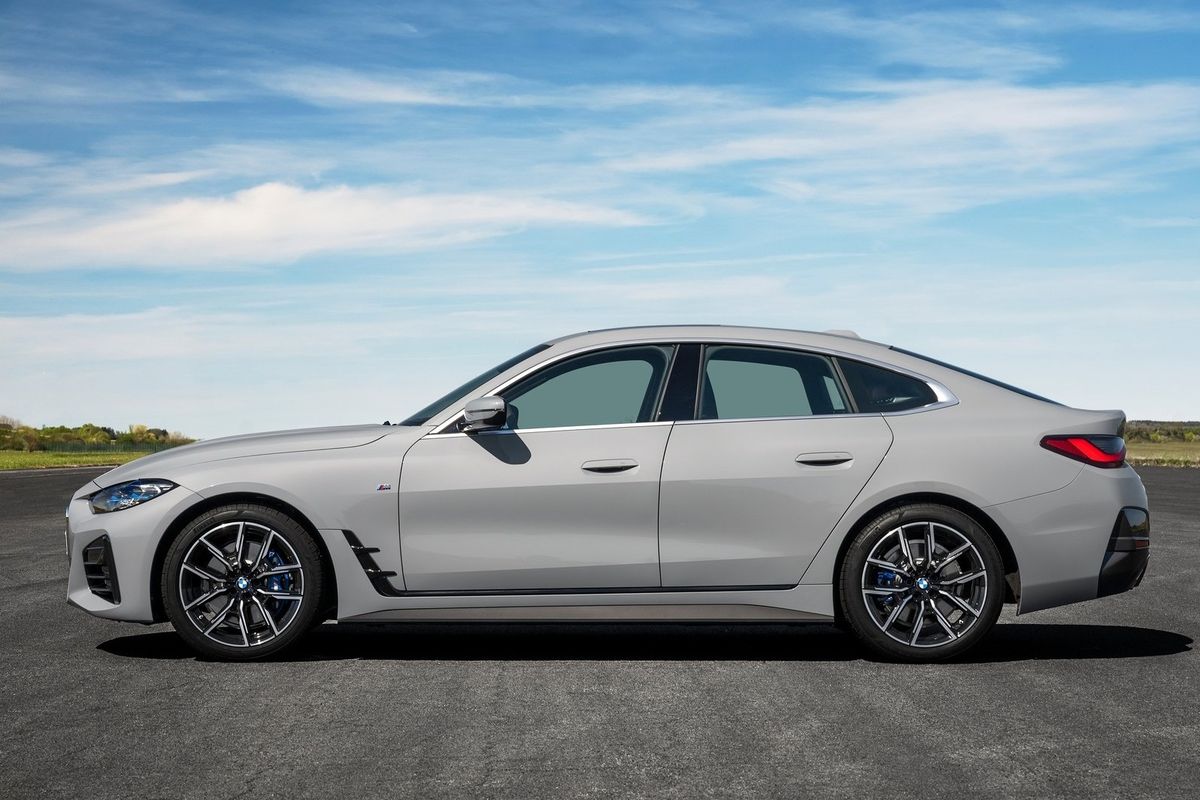
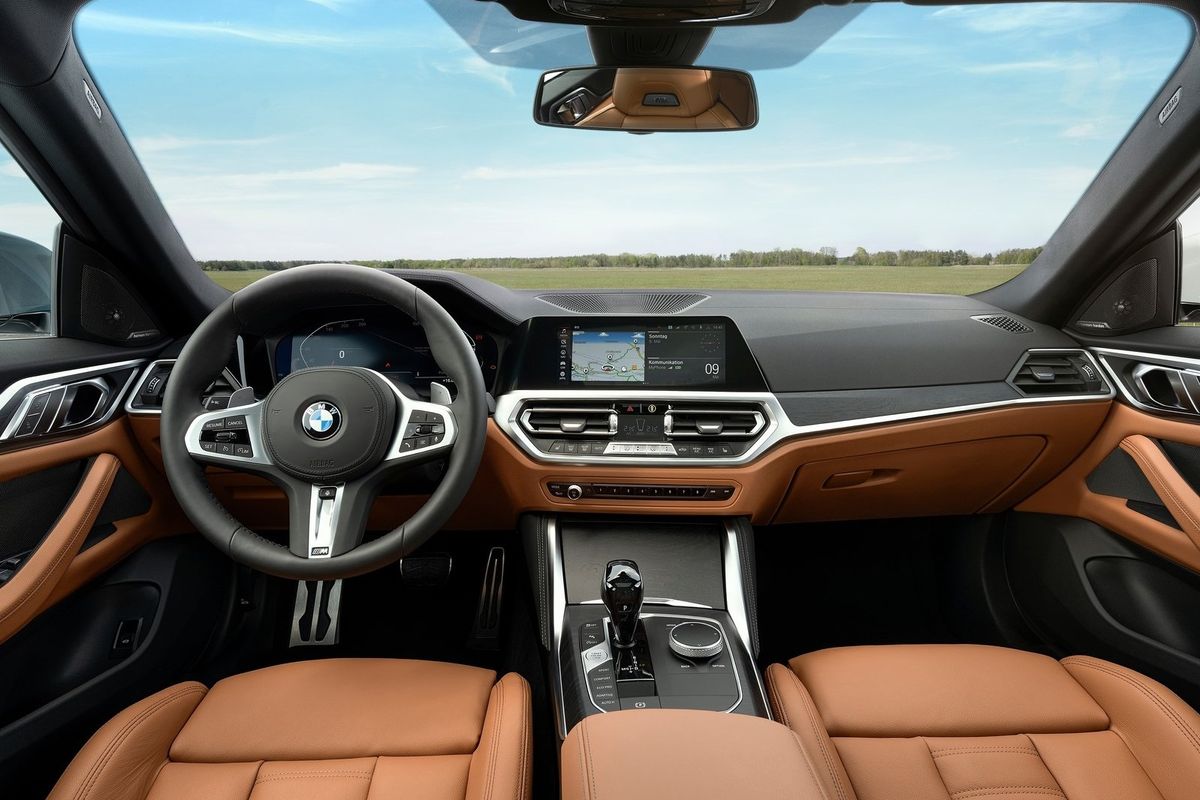
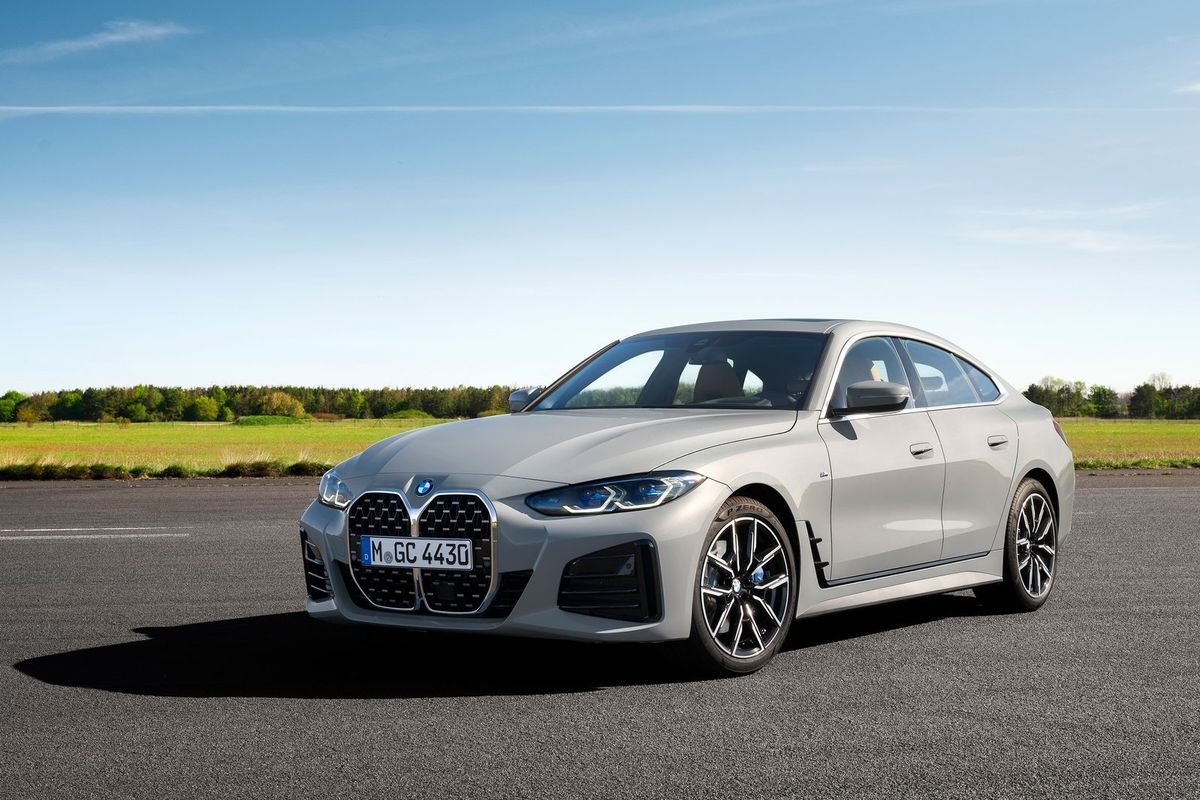
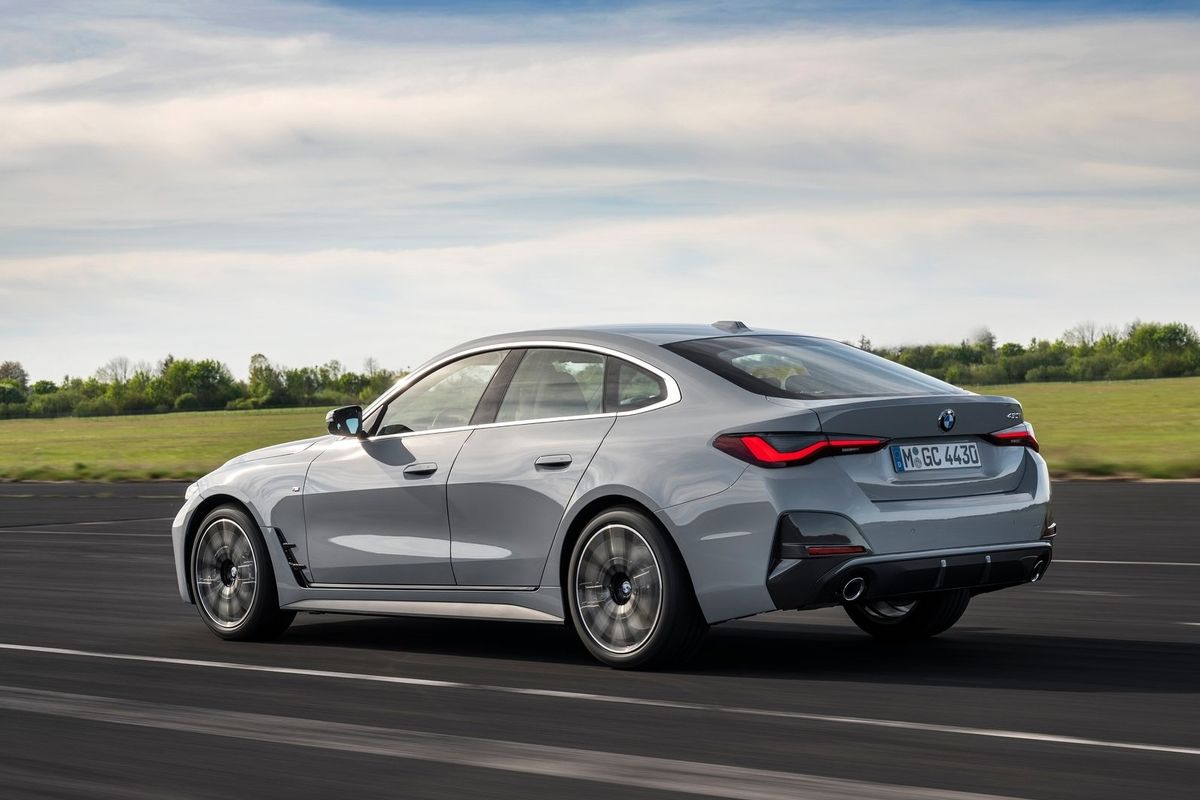
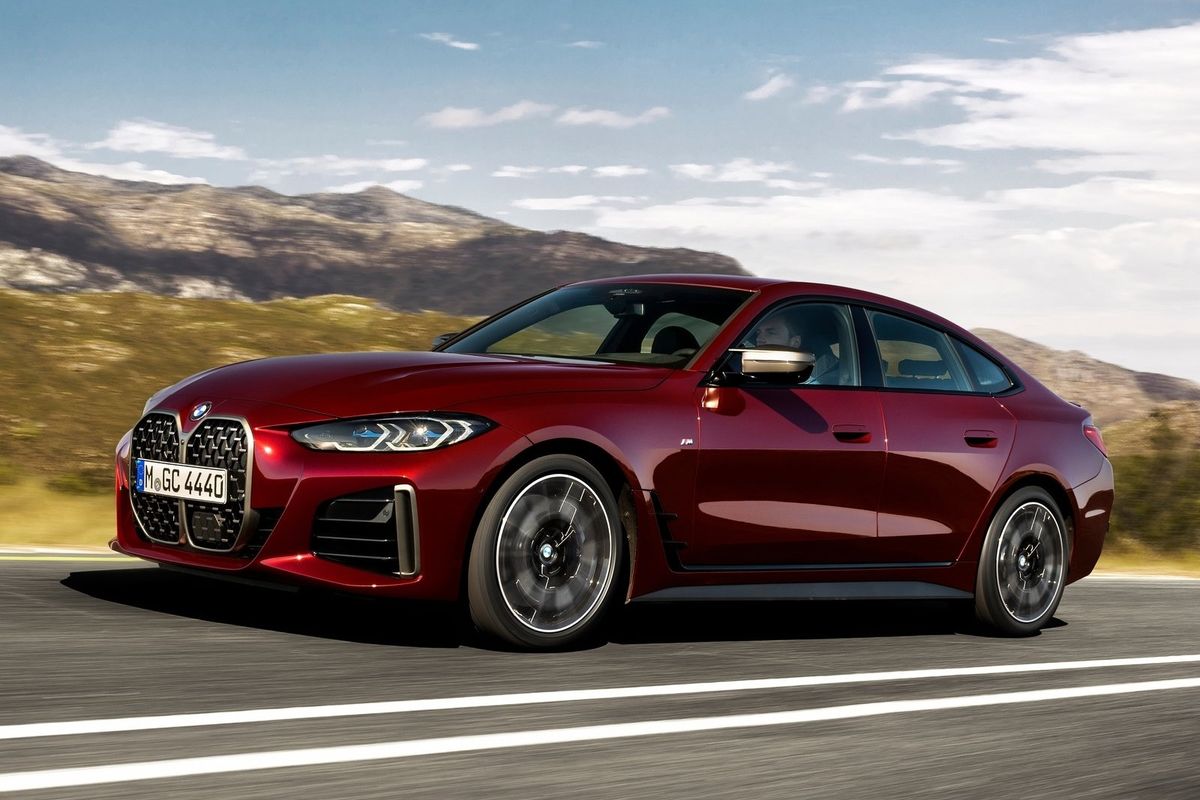
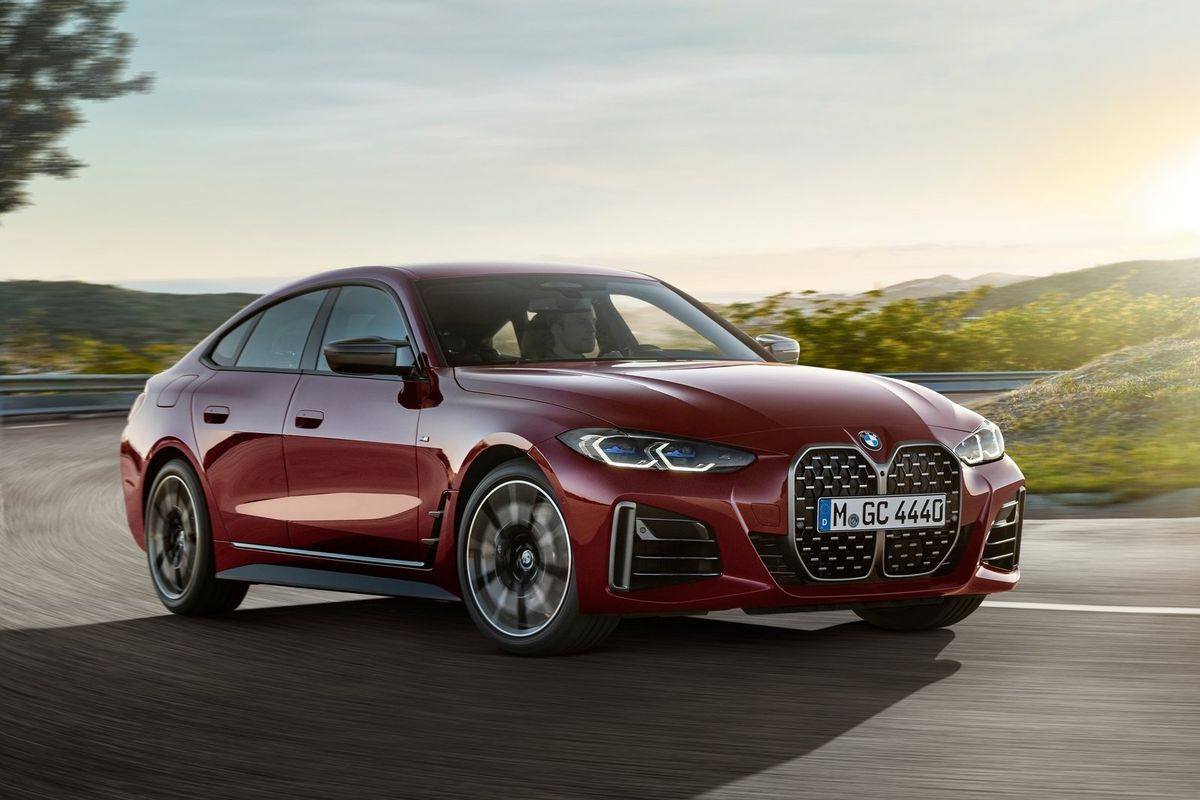
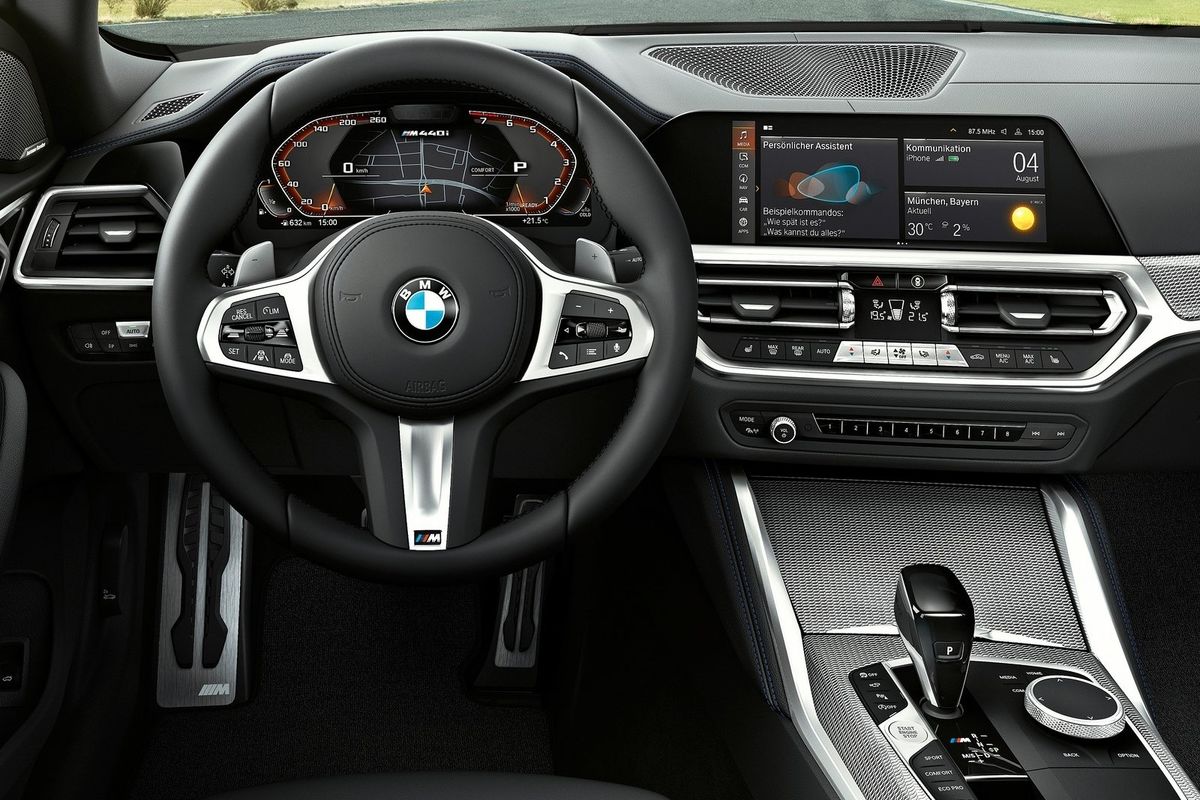
Pricing for the all-new BMW 4 Series Gran Coupe has been loaded onto BMW South Africa’s website, suggesting a local debut is imminent. Here is the pricing for the Bavarian 4-door Gran Coupe.
The 4 Series Gran Coupe is essentially a sportier-looking 3 Series with a liftback tailgate, or you could look at it as a 4-door coupe. There’s no direct rival from Mercedes-Benz, but the Audi A5 Sportback offers similar packaging. Compared to the outgoing model, the new 4 Series Gran Coupe is 143 mm longer, 27 mm wider, 53 mm taller and has a wheelbase that’s 46 mm longer. The wheelbase is actually 5 mm longer than the 3 Series as well. The expanded dimensions have resulted in a 470-litre boot, which is 39 litres bigger than before and an overall luggage space of 1 290 litres with the rear seats folded down.
Engine lineup for the BMW 4 Series Gran Coupe
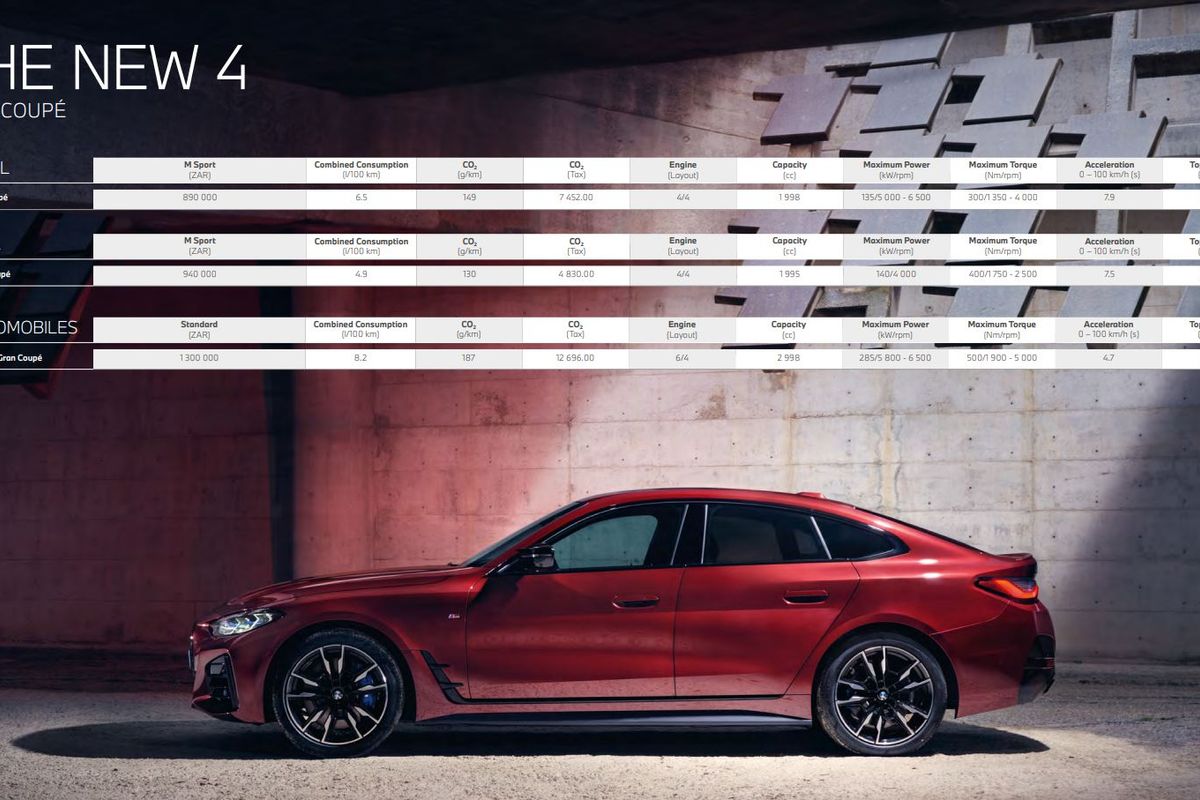
BMW SA has confirmed a 3-model lineup for the 4 Series Gran Coupe. Starting off with the 420i Gran Coupe, this model features a 2.0-litre 4-cylinder turbocharged petrol engine delivering 135 kW and 300 Nm. A claimed 0-100 kph of 7.9 seconds and a top speed of 235 kph are being offered, as well as a claimed fuel economy figure of 6.5 L/100 km.
The diesel 420d Gran Coupe is the next derivative and it’ll come to market with a 2.0-litre turbocharged diesel motor serving up 140 kW and 400 Nm. It has a claimed 0-100 kph time and top speed of 7.5 seconds and 233 kph respectively. It’ll be the lightest on fuel here, with a claimed consumption figure of just 4.9 L/100 km.
Headlining the range is the BMW M440i xDrive Gran Coupe and comes out swinging with a 3.0-litre turbocharged 6-cylinder petrol engine delivering 285 kW and 500 Nm. It’s capable of dispatching the 0-100 kph sprint in a claimed 4.7 seconds and run to a top speed of 250 kph. It’ll be the thirstiest of the bunch at 8.2 L/100 km, but you have to pay for that baby M3 performance somehow…
The 4 Series Gran Coupe is available with a number of options. By cleverly grouping the most sensible and commonly-picked options into the Deluxe package for R40 000 for your 420i and 420d, you get a glass sunroof, parking assist, reverse camera and electrical adjustment for the front two seats. There is a choice of colours, most are no-cost options, but some retail for R32 100.
The BMW M440i xDrive comes fully loaded, but a quick glance at some of the options on the configurator turned up Laserlights for R16 500, heated front seats for R6 100, heated steering wheel for R3 050, Parking assistant plus for R8 300 and a trailer hitch for R12 700 to name but a few.
How much does the BMW 4 Series Gran Coupe cost in South Africa?
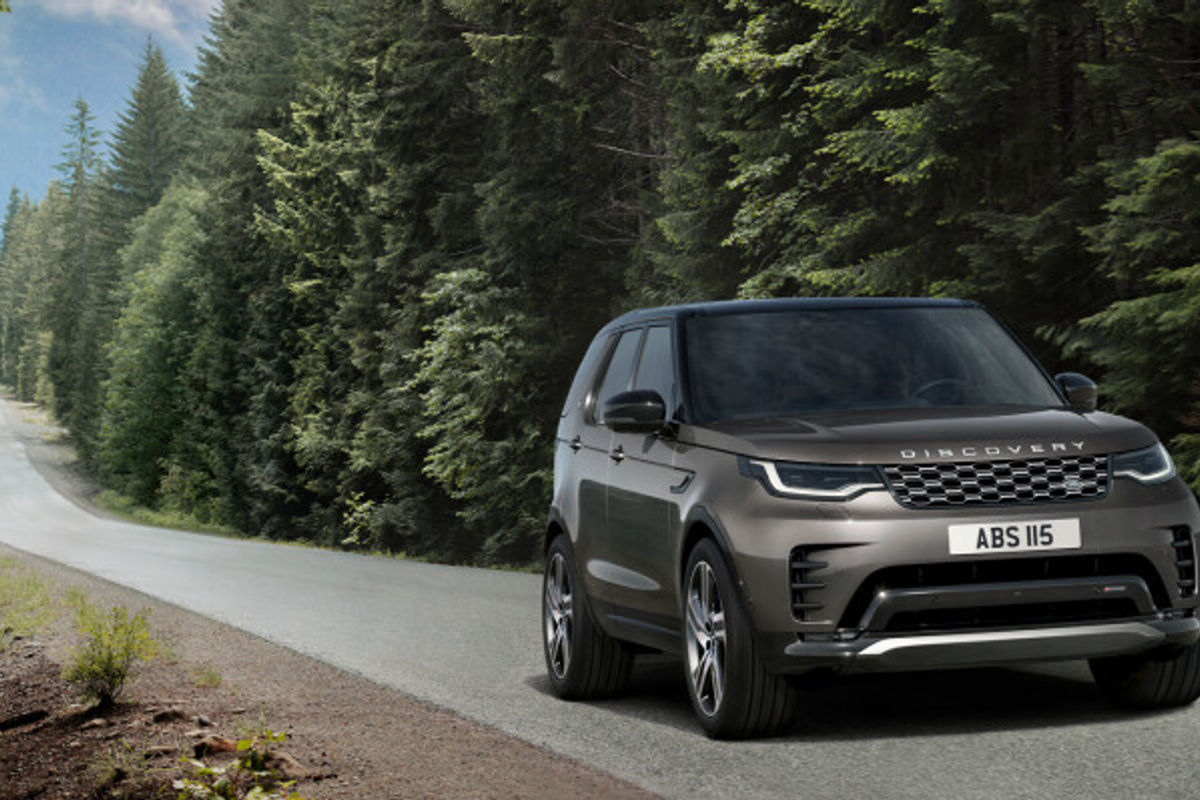
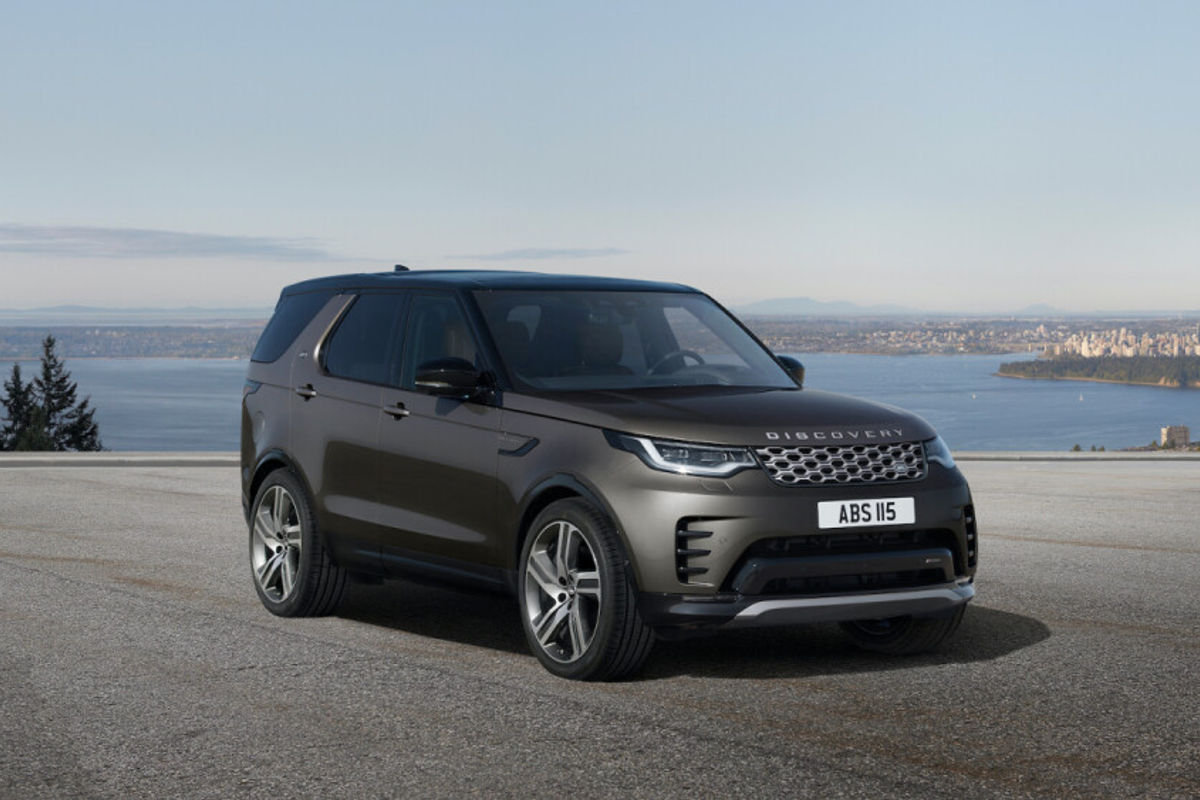
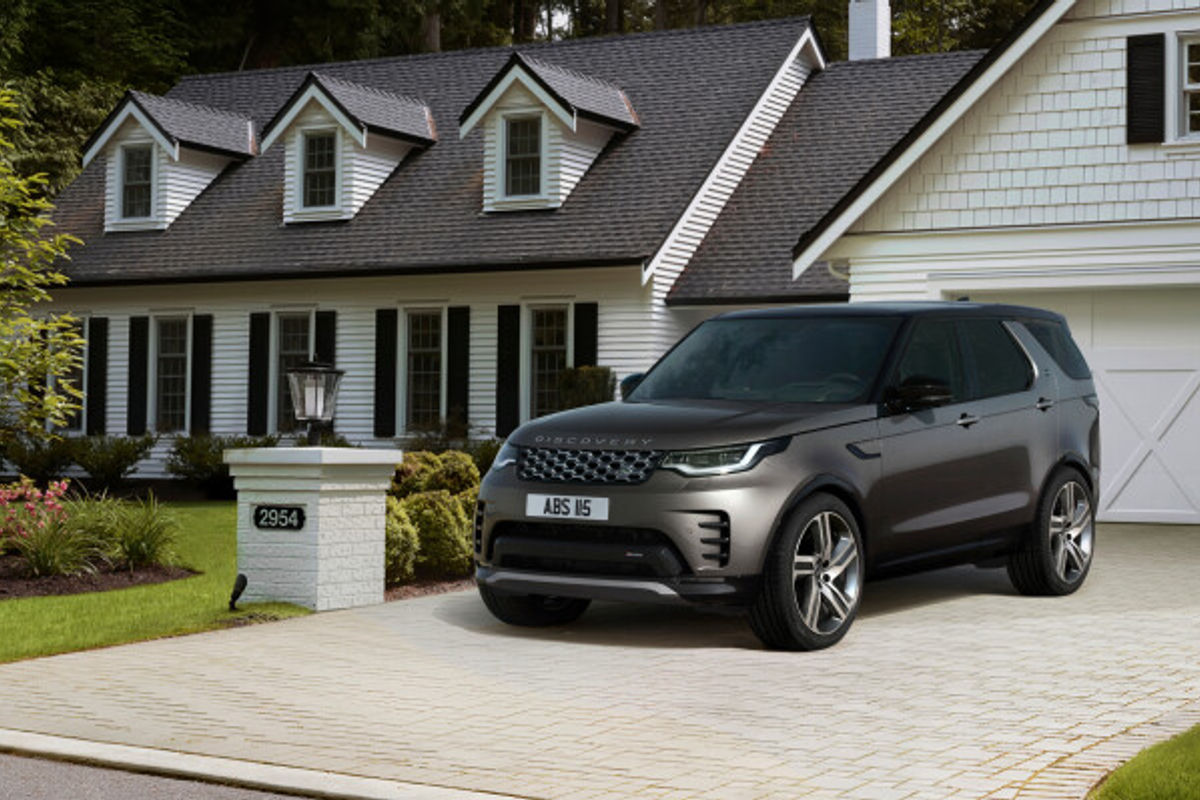
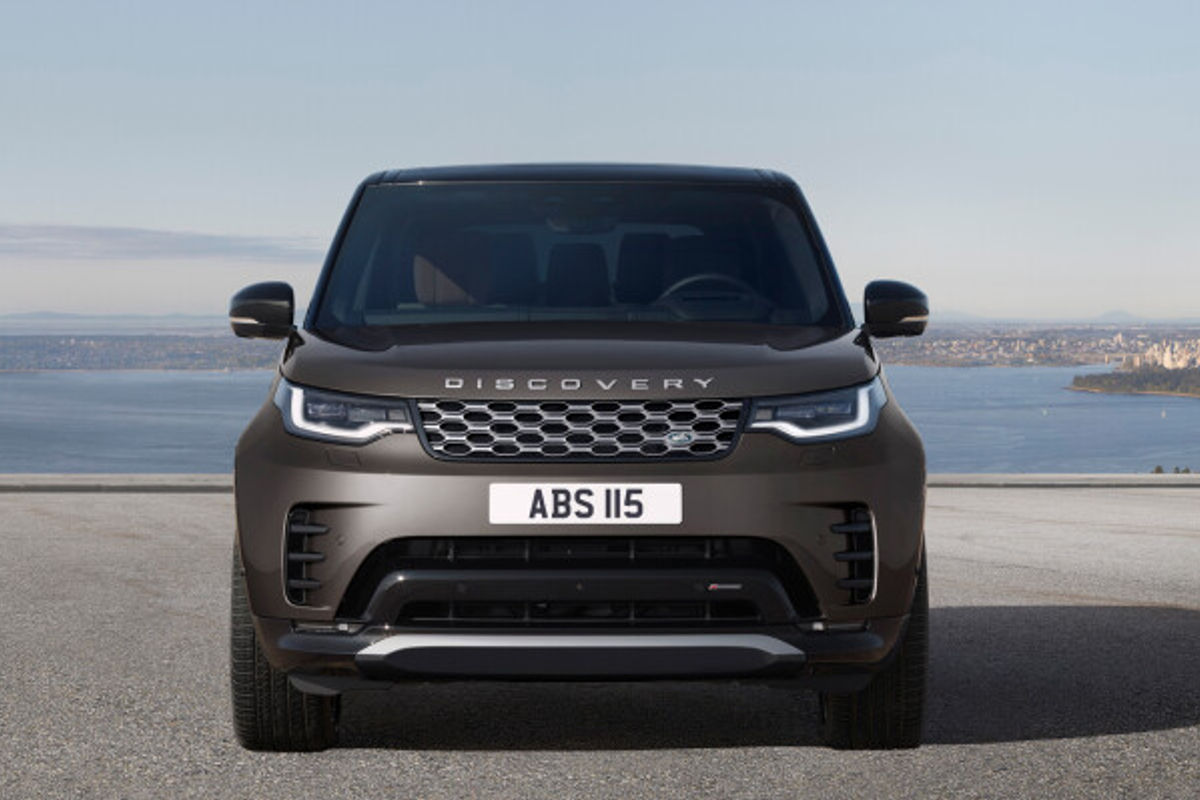
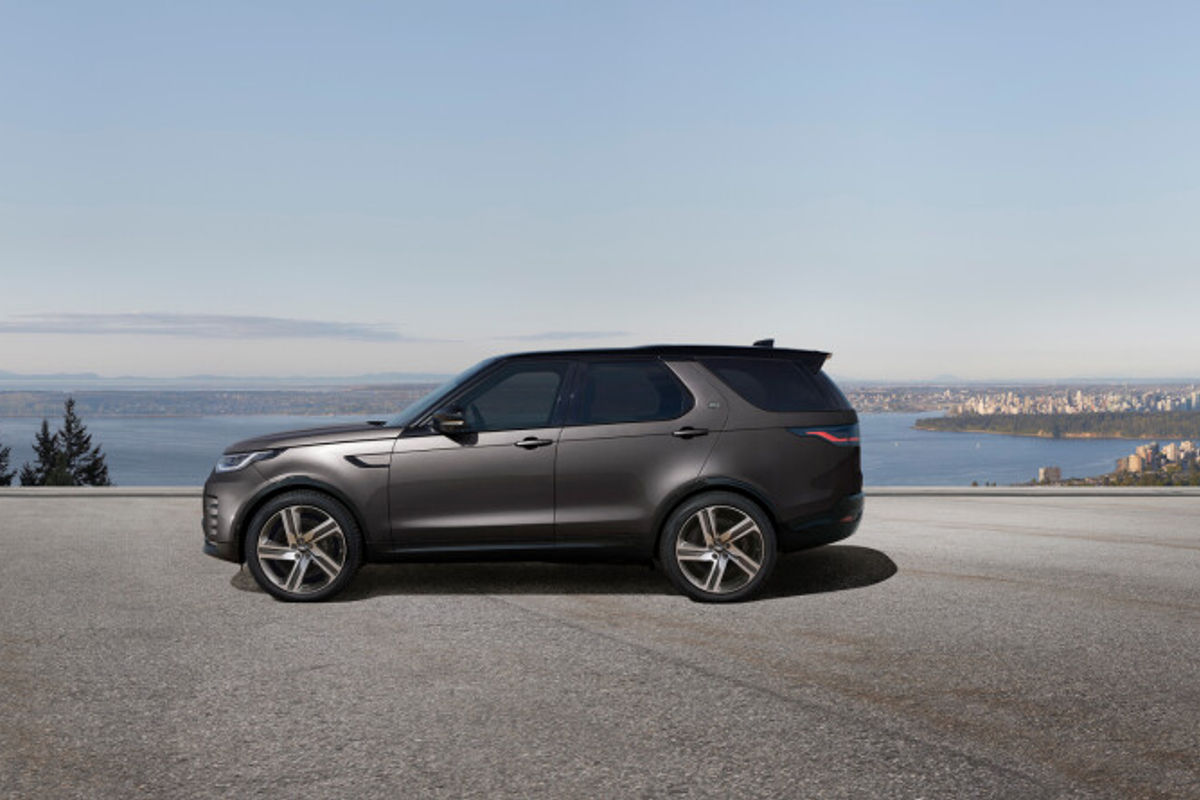
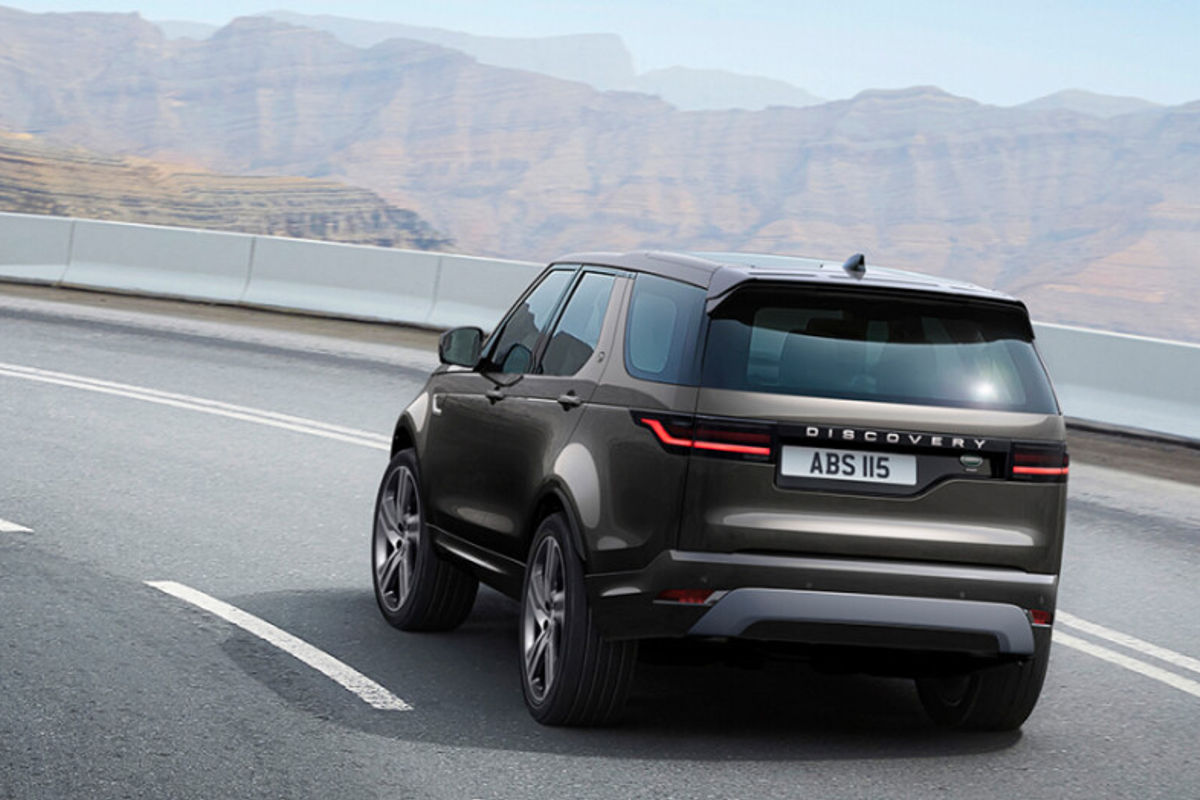
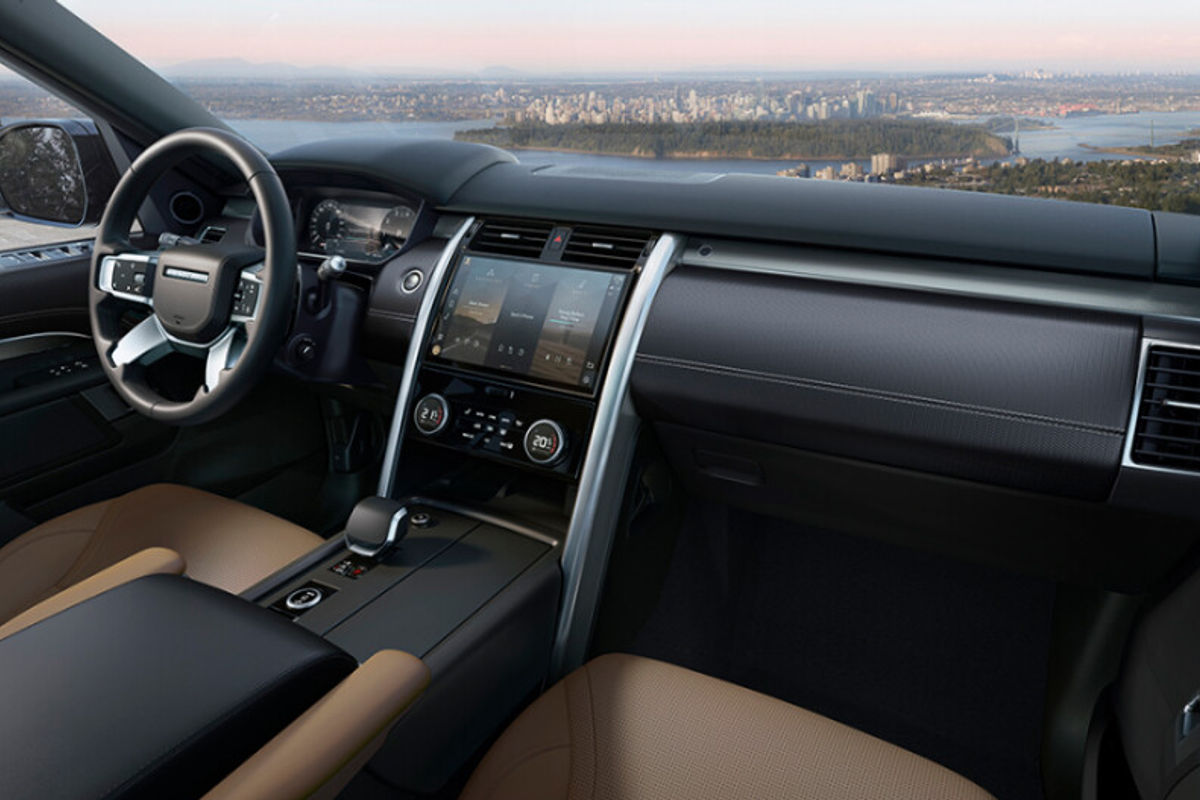
Land Rover has announced that it will introduce a range-topping Discovery Metropolitan Edition in South Africa in the first half of 2022. Here’s what you can expect…
The 7-seater Land Rover Discovery luxury family SUV range will soon be headlined by the Discovery Metropolitan Edition which is based on the R-Dynamic HSE specification but adds additional styling and comfort equipment features.
Some of the key styling enhancements include Bright Atlas details seen on the grille while the lower bumper features Hakuba Silver inserts. The Discovery Metropolitan rides on stylish 22-inch Diamond Turned alloy wheels with a Gloss Grey finish and black brake calipers further accentuate the look of the wheels while privacy glass and a sliding panoramic roof is also standard.
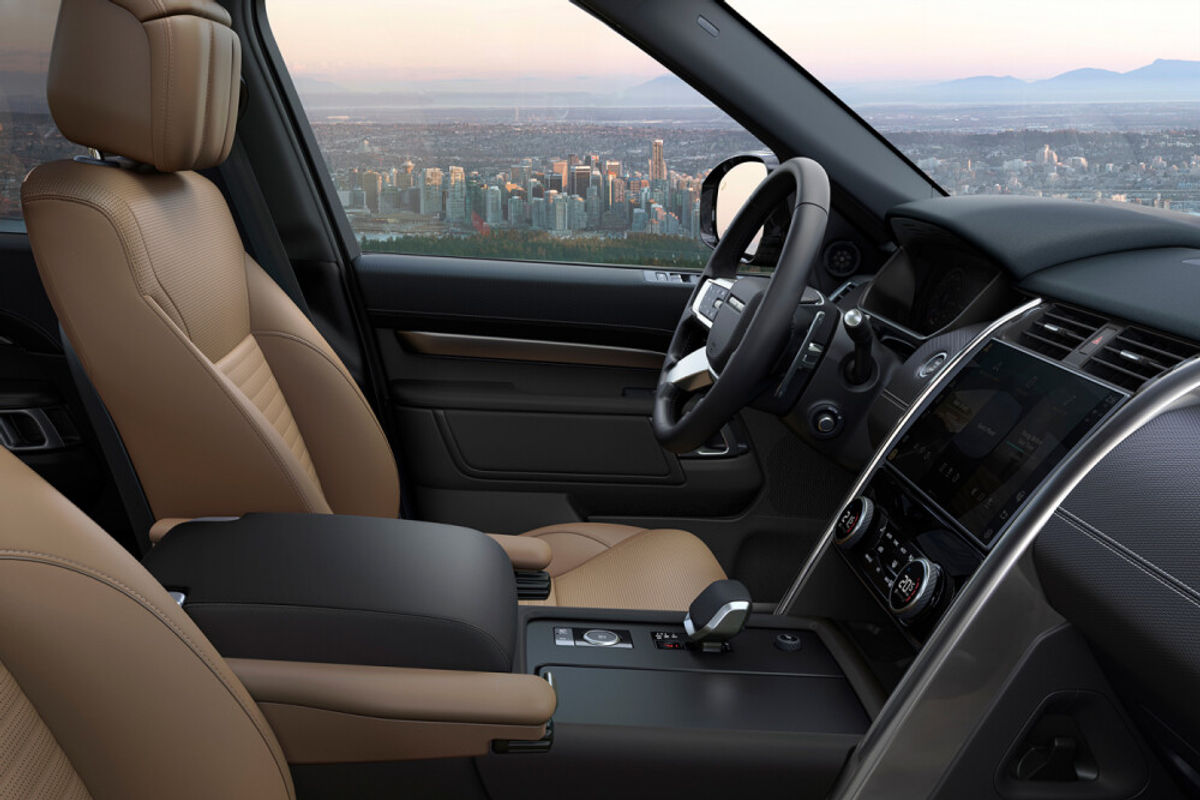
Inside, the special edition Discovery Metropolitan features Titanium Mesh trim, a heated steering wheel, wireless smartphone charger, 4-zone climate control, head-up display and front cooler compartment to keep your drinks cool. Land Rover’s Cabin Air Purification system with a PM2.5 air filter that detects and eliminates harmful particulates in the cabin.
For those who require formidable towing capacity, this Discovery Metropolitan features Advanced Tow Assist with a towing capacity of 3 500kg.
As for engines, the Discovery Metropolitan will be powered by the familiar 6-cylinder, 3.0-litre turbocharged petrol engine with 48V mild-hybrid technology offering 265 kW and 500 Nm. There will also be a diesel engine on offer in the form of the D300 3.0-litre turbodiesel engine with 221 kW and 650 Nm of torque.
Local pricing details for the Land Rover Metropolitan Edition will be announced closer to its arrival in the first half of 2022.