2022 Audi RS3 Features Trick Differential and Drift Mode
The all-new 2022 Audi RS3 is another step closer to being revealed as the German carmaker announces a few of the car’s talents.
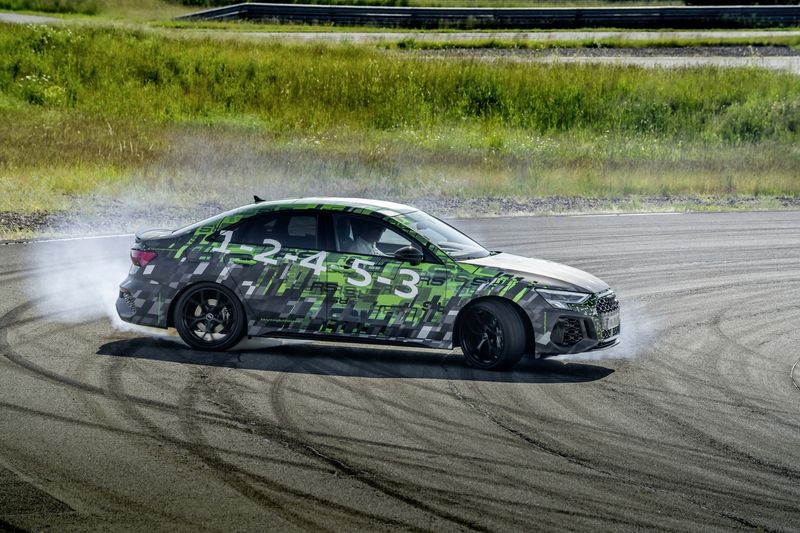
These lightly-disguised Audi RS3 prototypes give us an idea of what’s to come towards the end of July 2021 when the performance duo are fully revealed. We know the same body styles will be available, with a 5-door hatchback and a 4-door sedan being offered.
Audi Sport has released some technical details about the dynamic capabilities of its new product. The best news is the magical 2.5-litre 5-cylinder turbocharged engine has been retained, but straight-line performance is not the priority for the Audi Sport engineers as the new 2022 Audi RS3 will feature some radical technology to enhance its corner-carving ability.
But, if you’re a numbers-based petrolhead, you’ll be delighted to hear that Audi Sport is not content with having the Mercedes-AMG 45 S range stealing all the limelight. While the 2.5-litre 5-cylinder engine still produces 294 kW as before, the torque figure has been ramped up to 500 Nm, which is 20 Nm more than the outgoing model. Audi Sport claims 0-100 kph in 3.8 seconds and has an optional top speed of 290 kph, which should shake the segment up a bit as the goalposts have been moved.
The new handling technology is called the RS Torque Splitter and it’s quite remarkable. Essentially, it’s one electronically-controlled multiple disc clutch each on the respective drive shaft. During dynamic driving, the torque splitter increases the drive torque to the outer rear wheel with the higher wheel load, which significantly reduces the tendency to understeer.
In left-hand curves, it transmits the torque to the right rear wheel, in right-hand curves to the left rear wheel, and when driving straight ahead to both wheels. It gets better, as the RS Torque Splitter can send all engine power to just one wheel, resulting in hilarious sideways smoking action you see here.
That’s a lot to take in, but what are the benefits? Audi Sport claims the new 2022 Audi RS3 turns into the curve even better and follows the steering angle more precisely. This results in less understeer, earlier and faster acceleration when exiting corners, and particularly precise and agile handling – for added safety in everyday use and faster lap times on the racetrack. The torque splitter also compensates for oversteer by directing the torque to the wheel on the inside of the curve or, if necessary, to both wheels.
While it sounds complicated on paper, we reckon it’ll address the reputation of the previous generations of Audi RS3 as being natural understeering performers. Throw in some trick Pirelli P Zero Trofeo R semi-slick tyres which are being made available as an optional extra and you have the recipe for a very nimble machine.
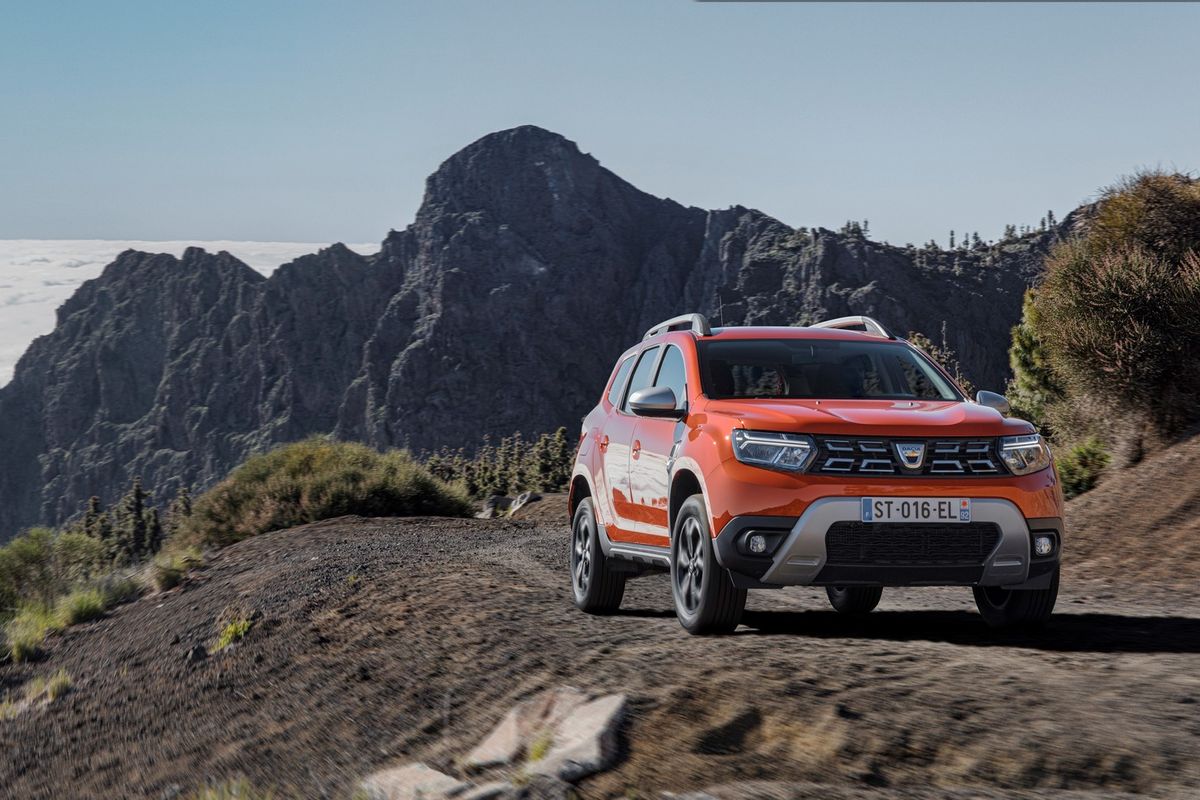
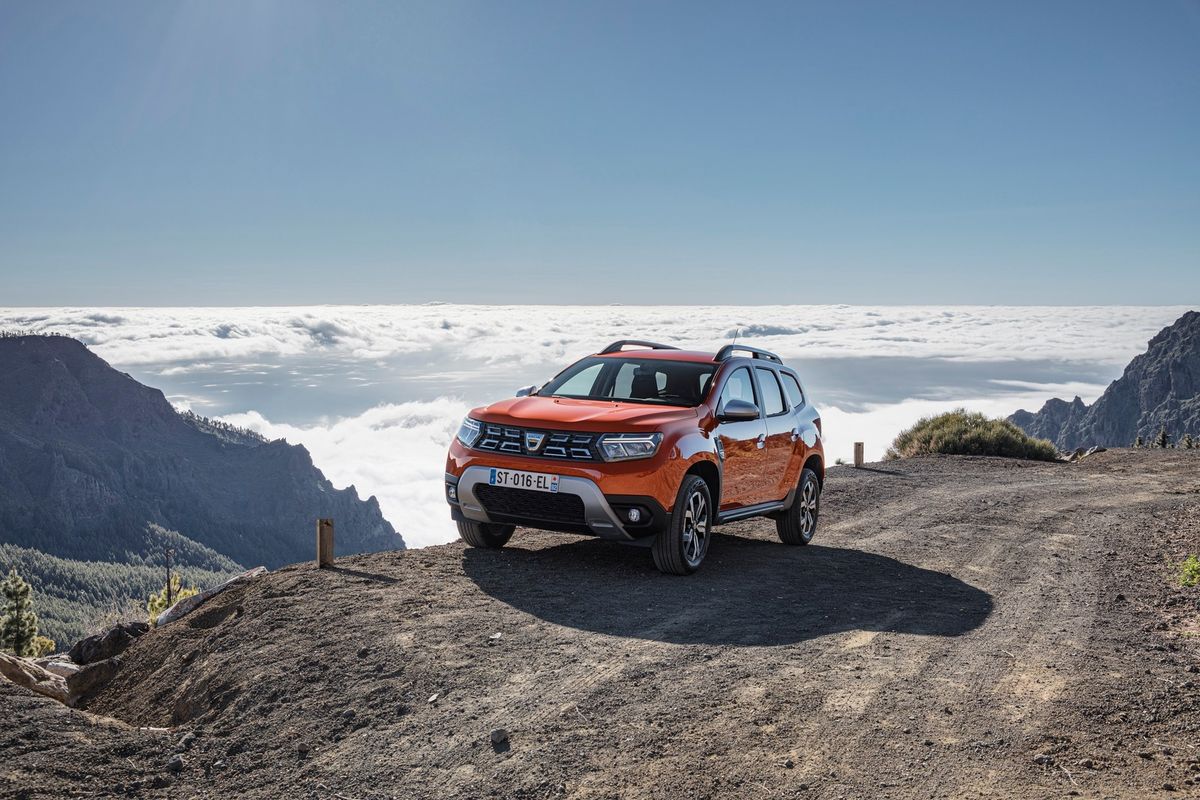
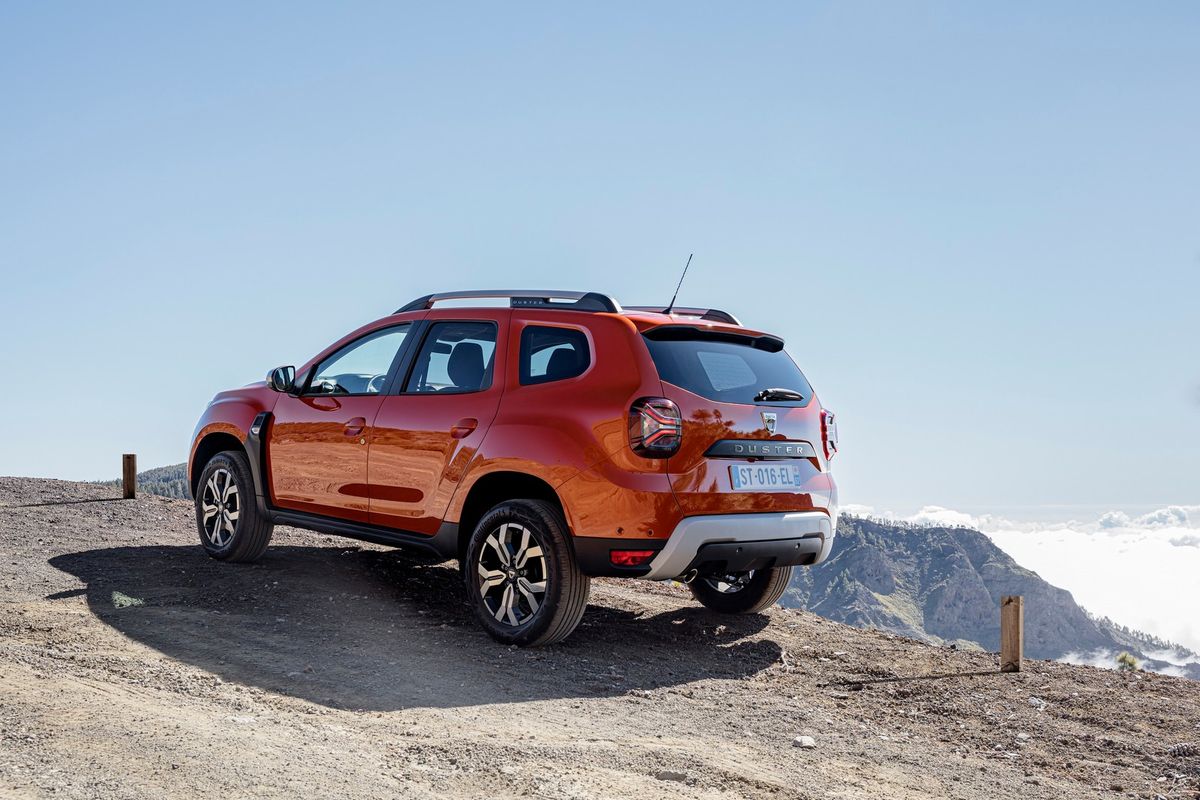
The plucky and charming Renault Duster has been given a mild facelift. Here’s what’s changed.
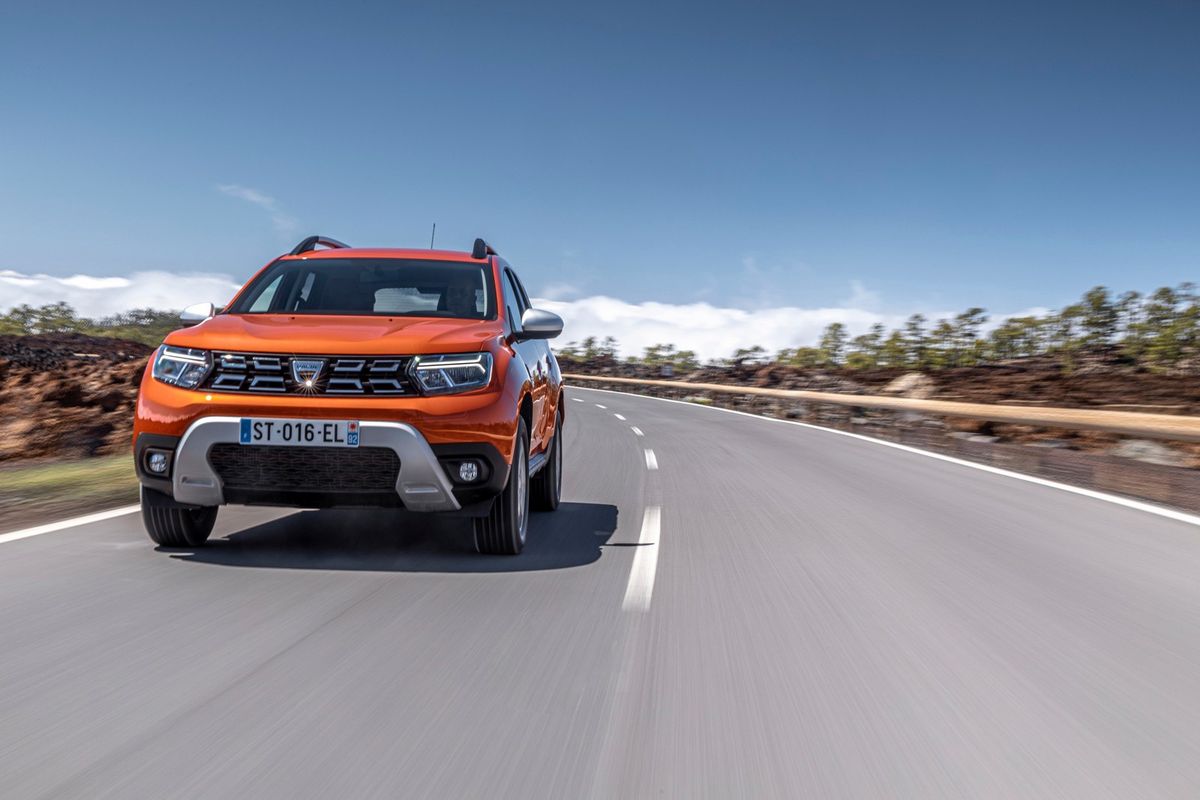
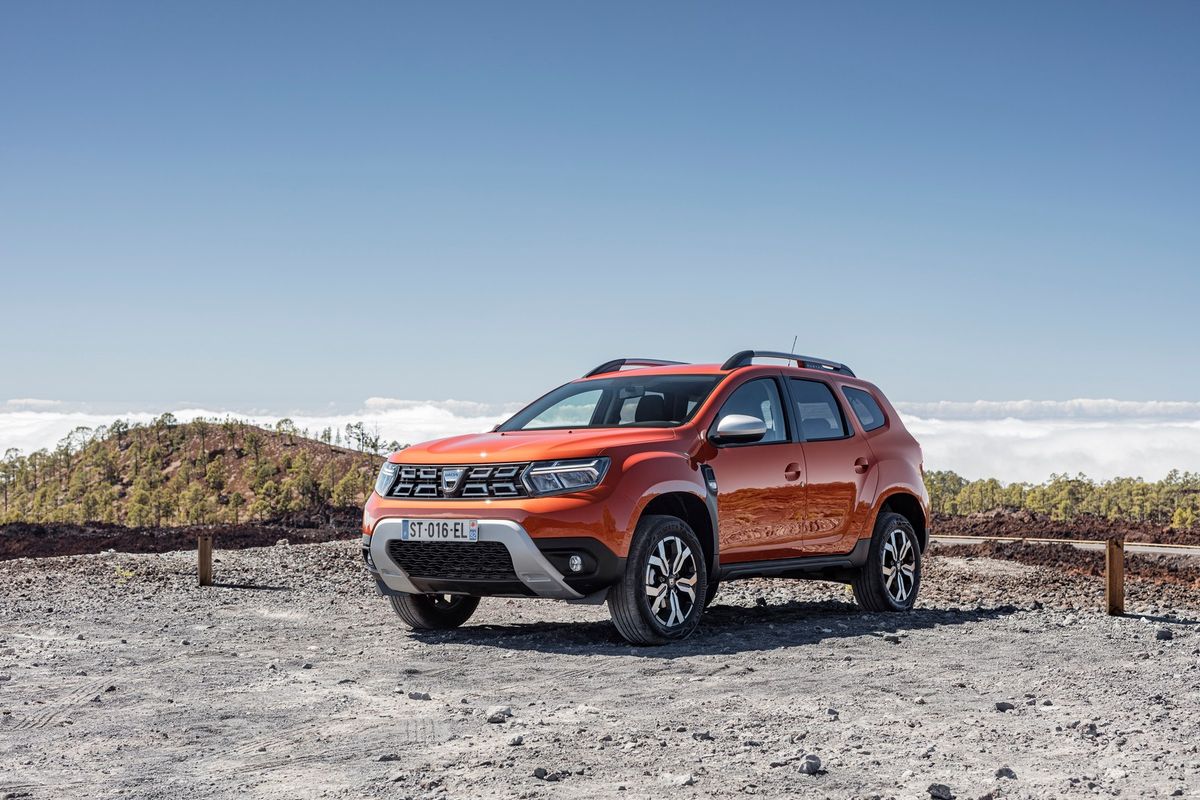
Granted, what you see here has a Dacia badge on it, but the differences between the Dacia Duster and Renault Duster are miniscule. It’s fair to assume the updates seen here will make their way into the Renault-badged versions.
The Renault Duster has been a phenomenal success both locally and internationally. Since its introduction in 2010, the European sales have almost reach the 2 million mark. Thanks to its value-for-money proposition, capabilities and practicality, the Renault Duster has quite the cult following.
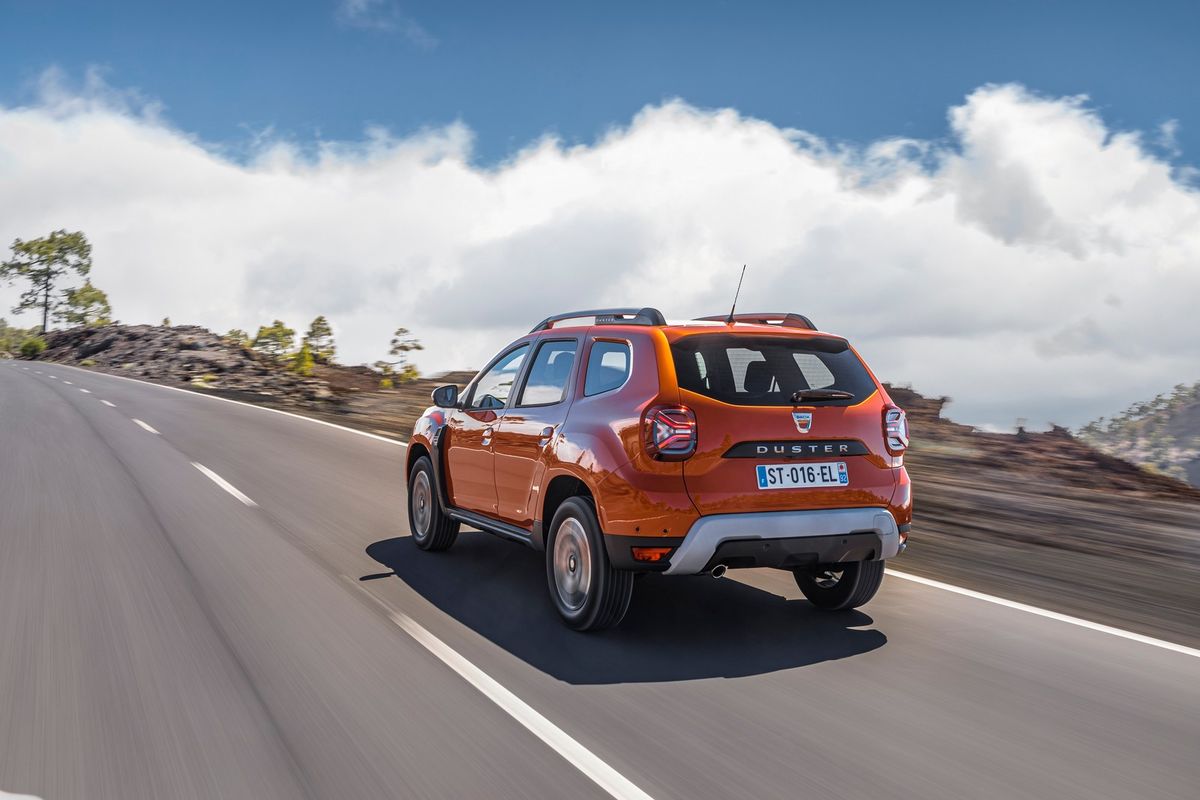
Visually, the updated Duster comes with a new look. The look of the grille and daytime running lights have been refreshed, and the design brings the Duster in line with the new-look Renault Sandero Stepway. The indicators have been replaced by LED direction units and there are now LED headlights too.
The new-look front isn’t just for show as the aerodynamics have been improved too. The new 16-inch and 17-inch alloy wheels as well as the rear spoiler all contribute to improved efficiency.
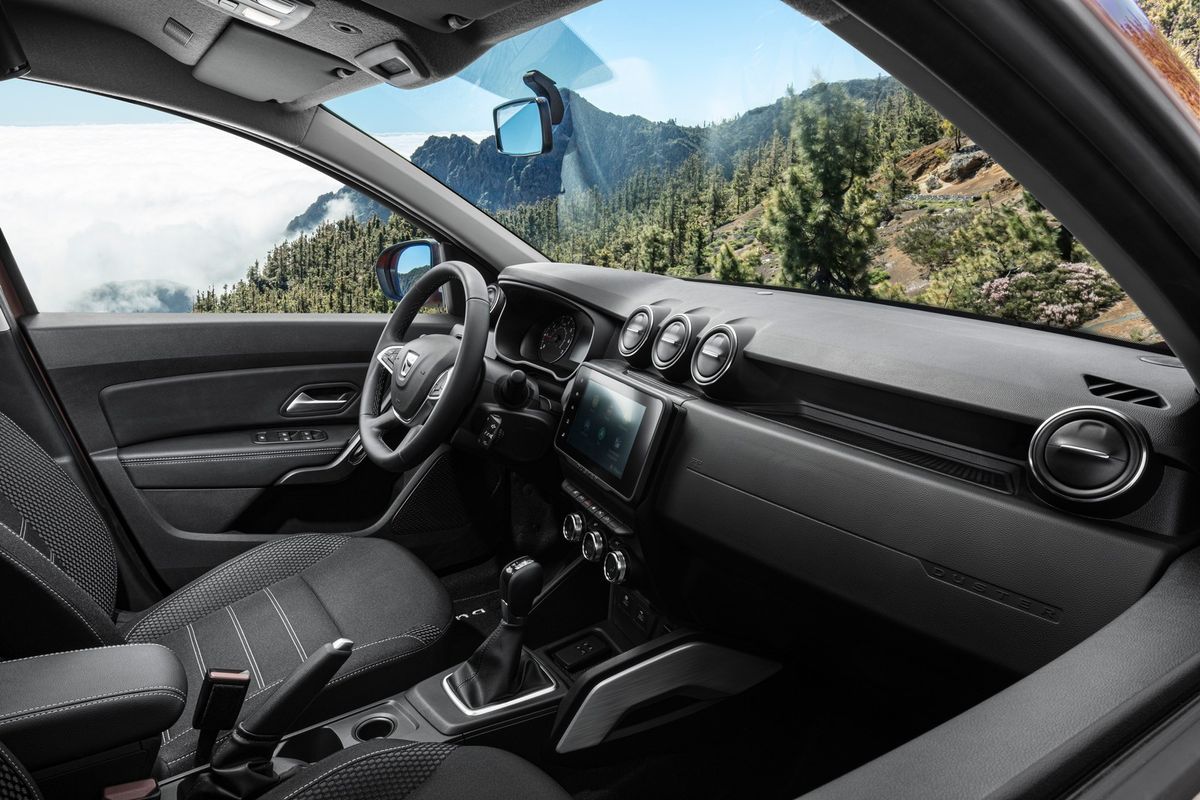
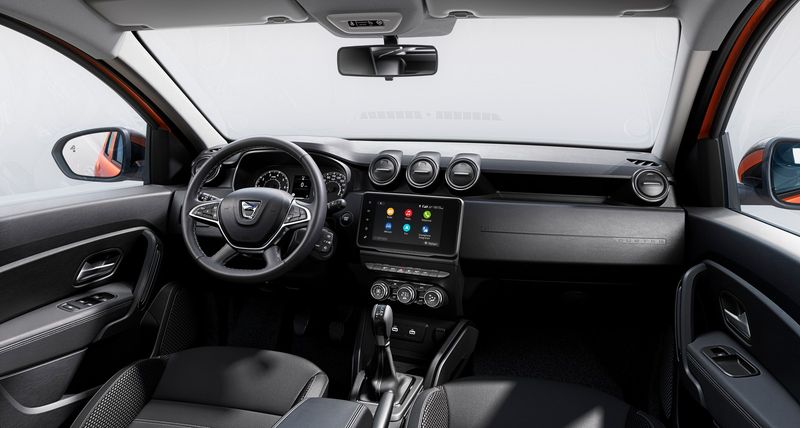
Updated Duster cabin changes
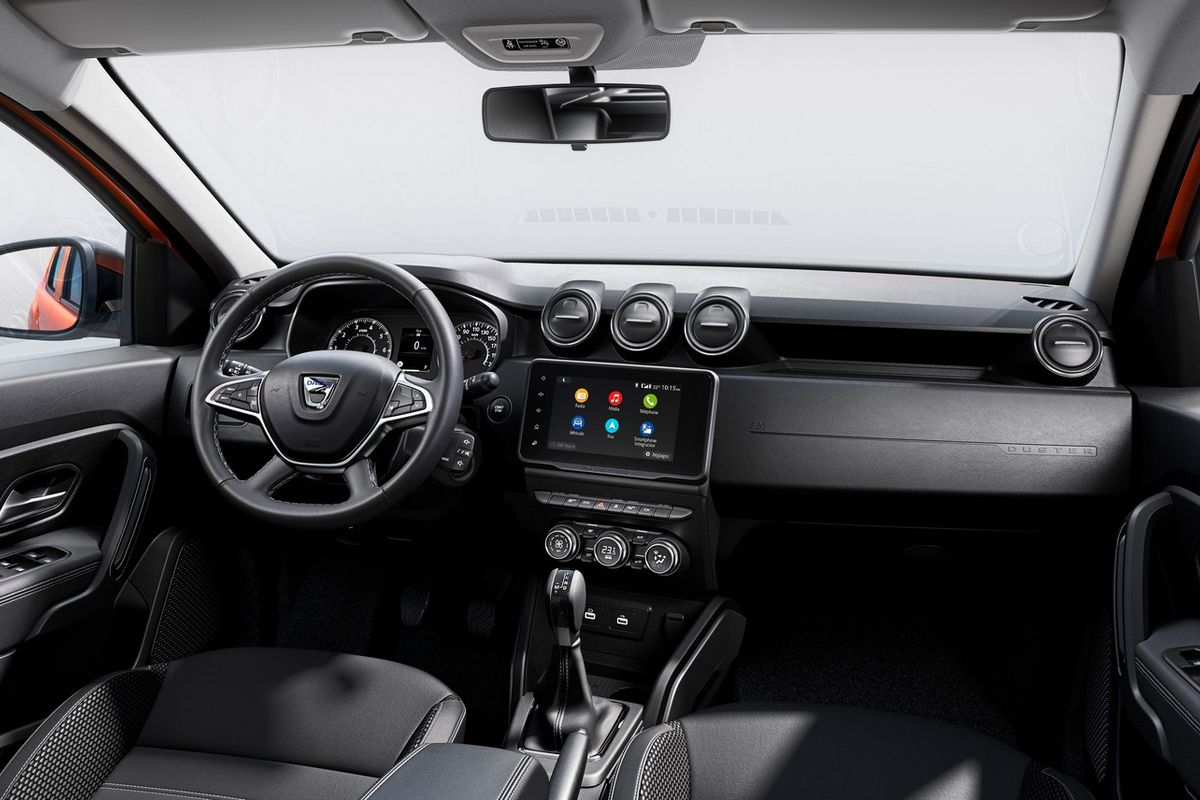
The cabin has been given a refresh too, with new upholstery on the seats which is said to offer improved ergonomics, new headrests and a new centre console with retracting armrest. The updated Duster also gains a new 8-inch touchscreen infotainment system.
Standard spec on the updated Duster appears generous, but we’ll have to see what the SA-spec entails. This Euro model features an onboard computer screen, automatic main beam activation and cruise control and speed limiter with backlit controls on the steering wheel. Automatic climate control with a digital display, heated front seats and a hands-free card are available on higher specification versions.
The updated Duster will continue offer offroad capability thanks to its 217 mm ground clearance on the 4×2 and 214 mm for the 4×4 derivative. The vehicle features a breakover angle of 21-degrees, approach angle of 30-degrees and a departure angle of 34-degrees on the 4×2 and 33-degrees on the 4×4.
The updated Duster 4×4 version features a 4×4 monitor that displays info like the lateral angle of the vehicle on uneven surfaces, pitch angle, compass and altimeter.
The European market updated Duster finally sees the introduction of the 6-speed EDC transmission, something the SA market has had for some time. The updated Duster features a range of petrol, diesel and LPG powertrains which are Euro 6D compliant. We’ll have to wait and see what the SA market will get.
Renault South Africa has confirmed the facelifted Duster is coming to SA. Expect the newcomer to land in the 3rd quarter of 2021.
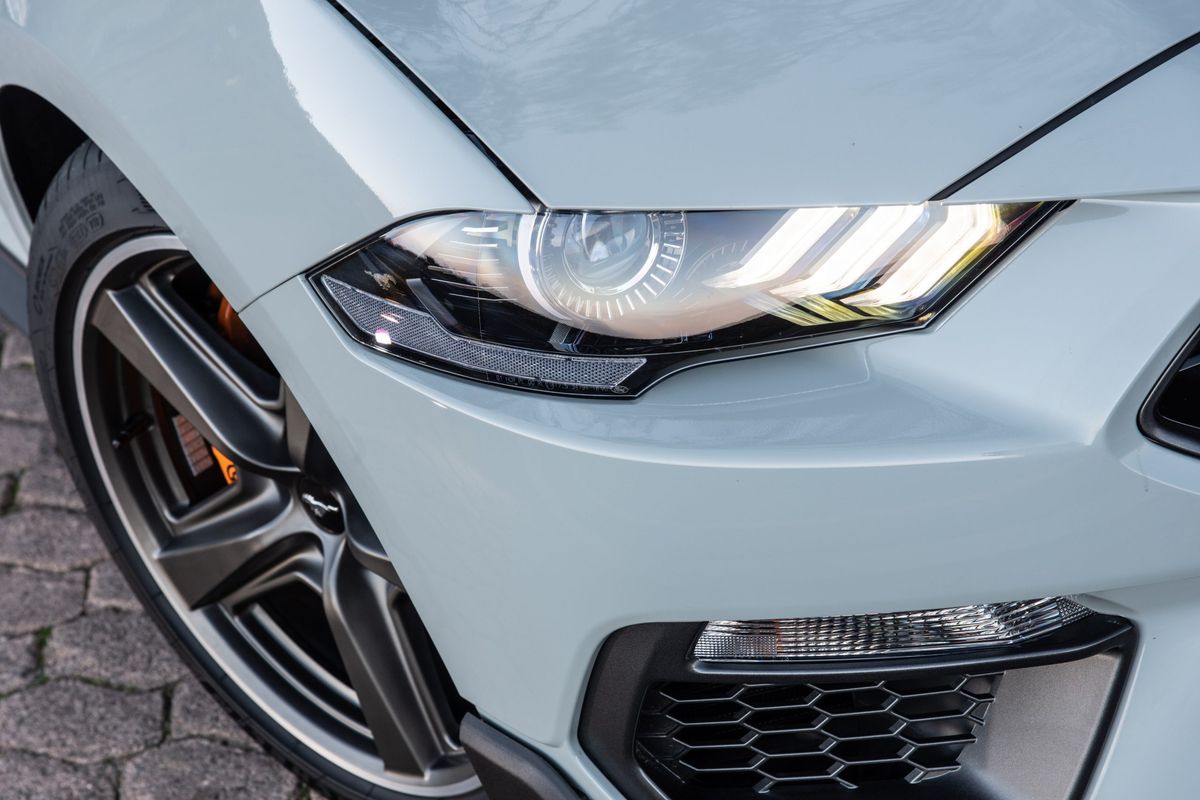
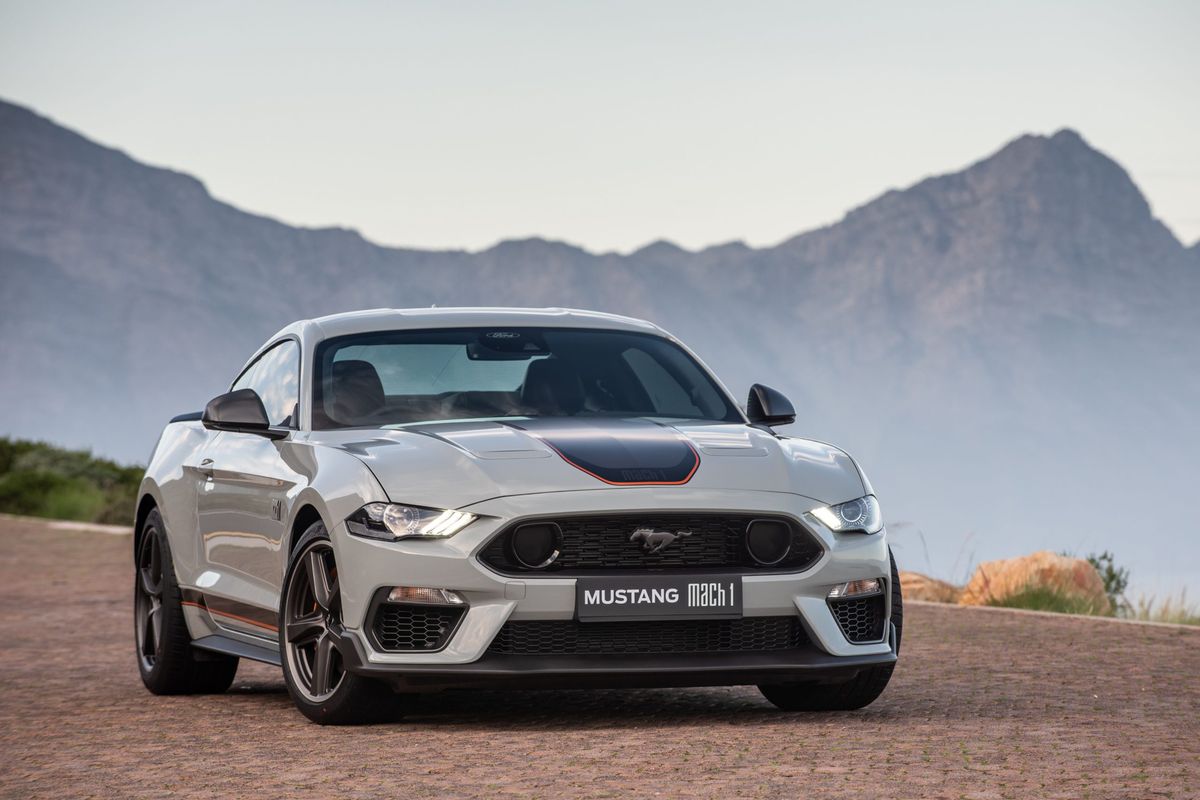
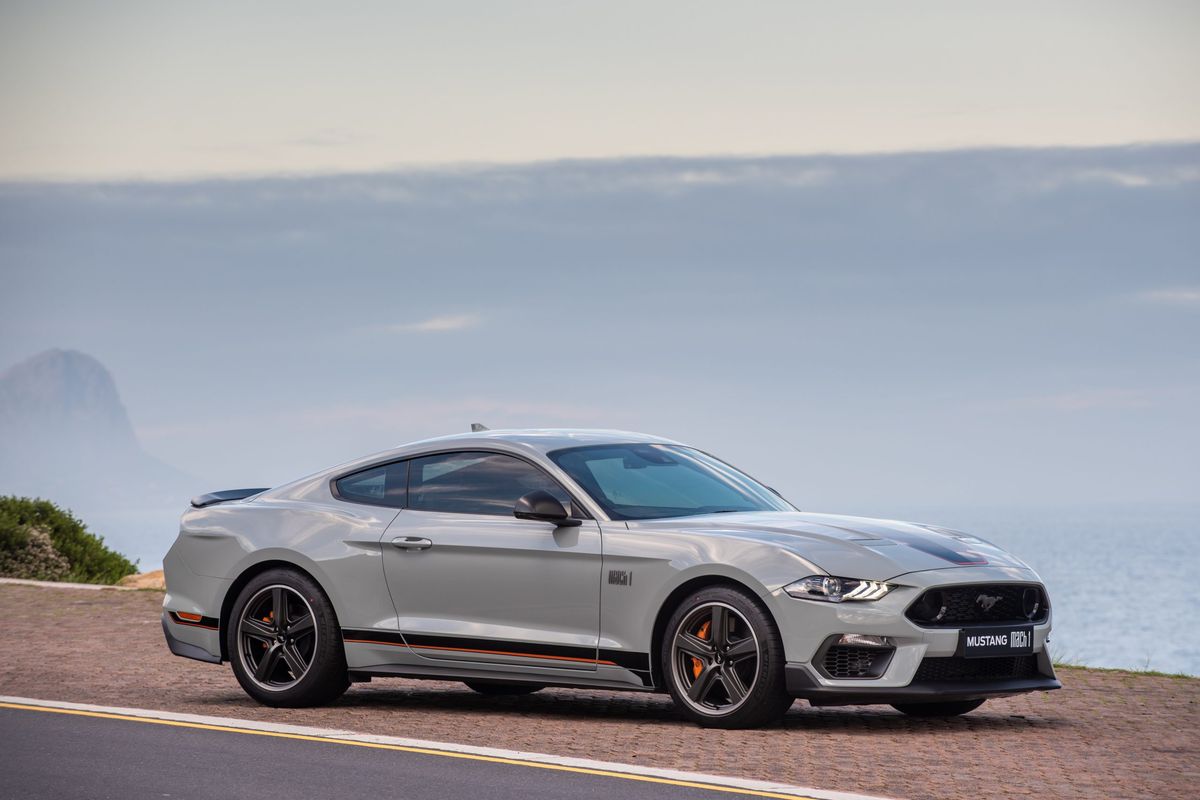
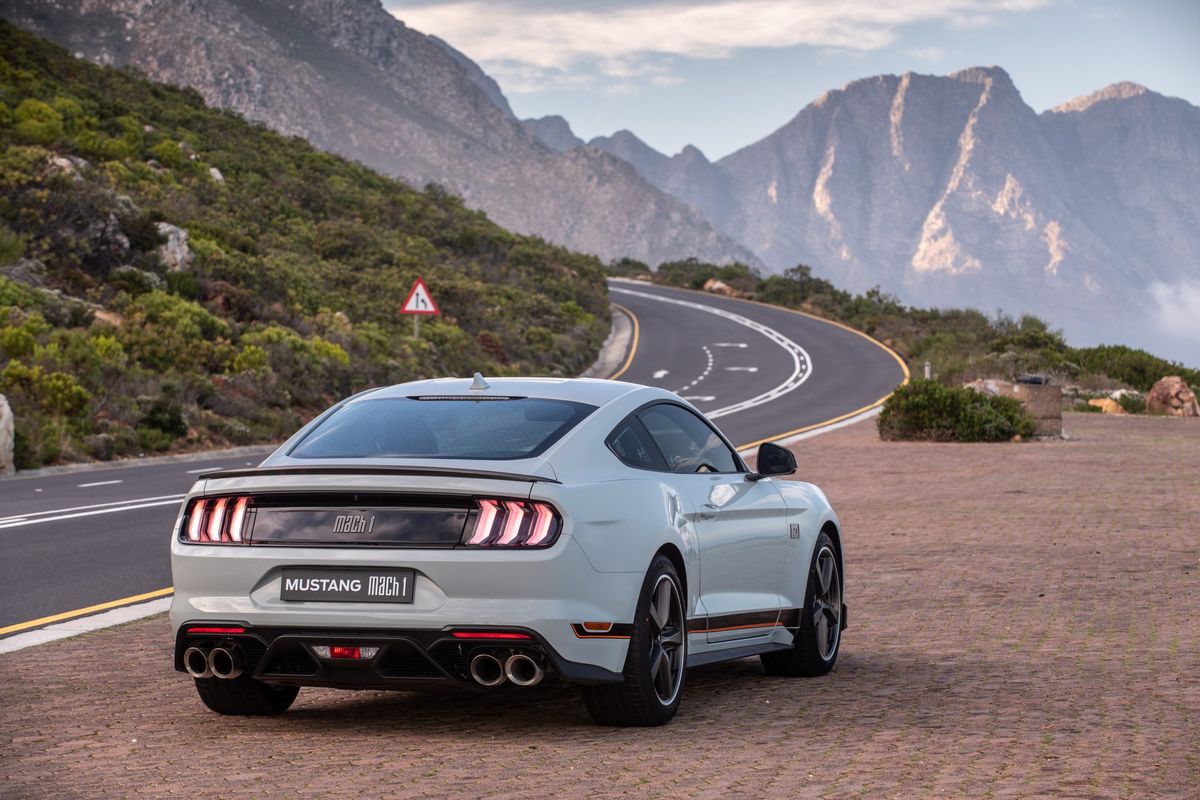
The Ford Mustang Mach 1 has touched down in SA, bringing more power, performance and trick aerodynamics for the most engaging Mustang experience. See detailed specs and pricing.
The Ford Mustang has proven popular since its arrival in South Africa, but if you couldn’t get your hands on the Bullitt for that ultimate pony car experience, then this special track-focused Mach 1 is your next best bet.
Under the bonnet is the 5.0-litre naturally-aspirated V8 engine, but in Mach 1 iteration power has been bumped to 338 kW and 529 Nm. The additional power comes from a high-performance open air induction system, intake manifold and 87mm throttle bodies with low-pressure port fuel injection and high-pressure direct fuel injection.
As far as performance goes, the new Ford Mustang Mach 1 is good for a 0-100 in 4.4 seconds for the auto, but straight-line performance is just one of its party pieces. The car also features increased downforce for high-speed stability and enhanced corner carving ability. The manual gearbox Mach 1 is fractionally slower at 4.8 seconds to 100 kph.
The aerodynamic package is impressive with vents for cooling and downforce. There’s also the bonus of image, with the front splitter and rear spoiler really adding to the appeal.
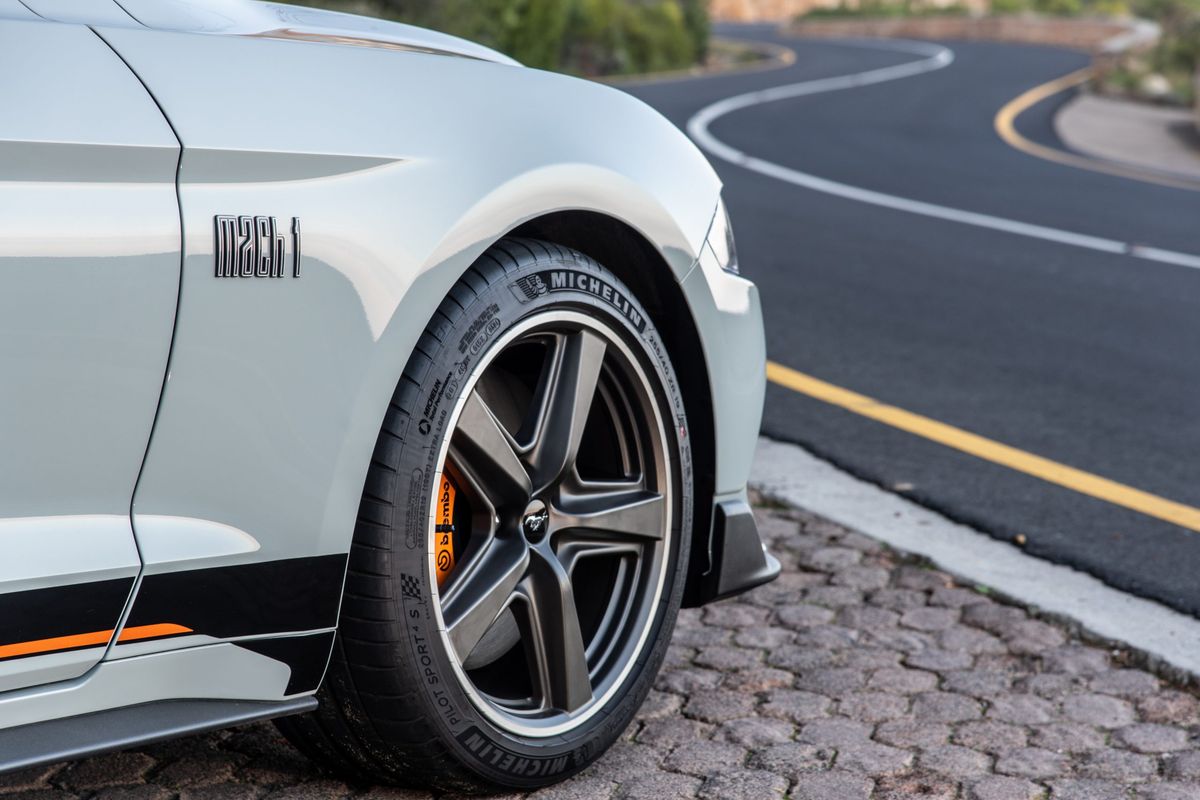
Customers have the choice of a 6-speed manual gearbox from the Shelby GT350 as well as the Ford 10-speed automatic transmission with upraded torque converter and software mapping. Both gearboxes feature a dedicated oil cooler, axle cooling system and limited-slip differential. The brakes are six-piston Brembo units.
The magic doesn’t stop there as the Ford Mustang Mach 1 features electric power-assisted steering, electronically-controlled MagneRide 2 adjustable suspension, and stiffer front springs and anti-roll bars. Some of the suspension components are shared with the Shelby GT350 and GT500. The car rides on 19-inch alloy wheels wrapped in Michelin Pilot Sport 4 rubber.
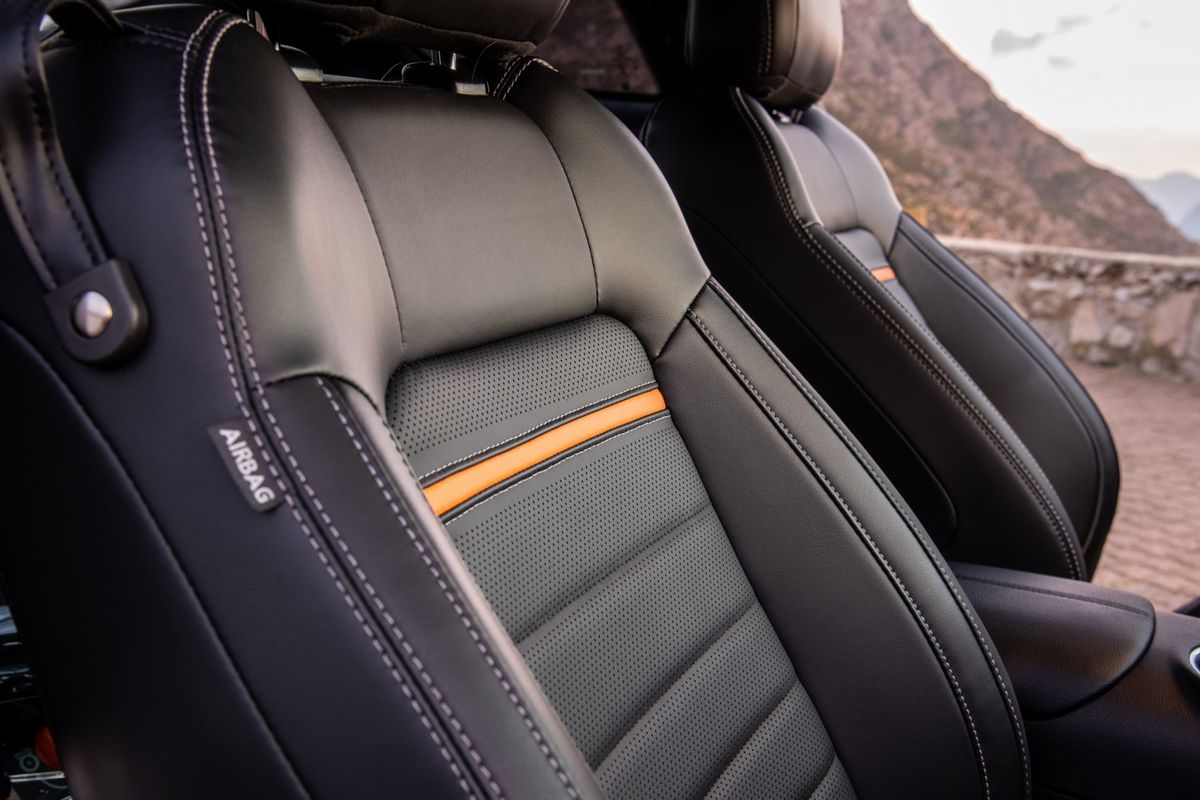
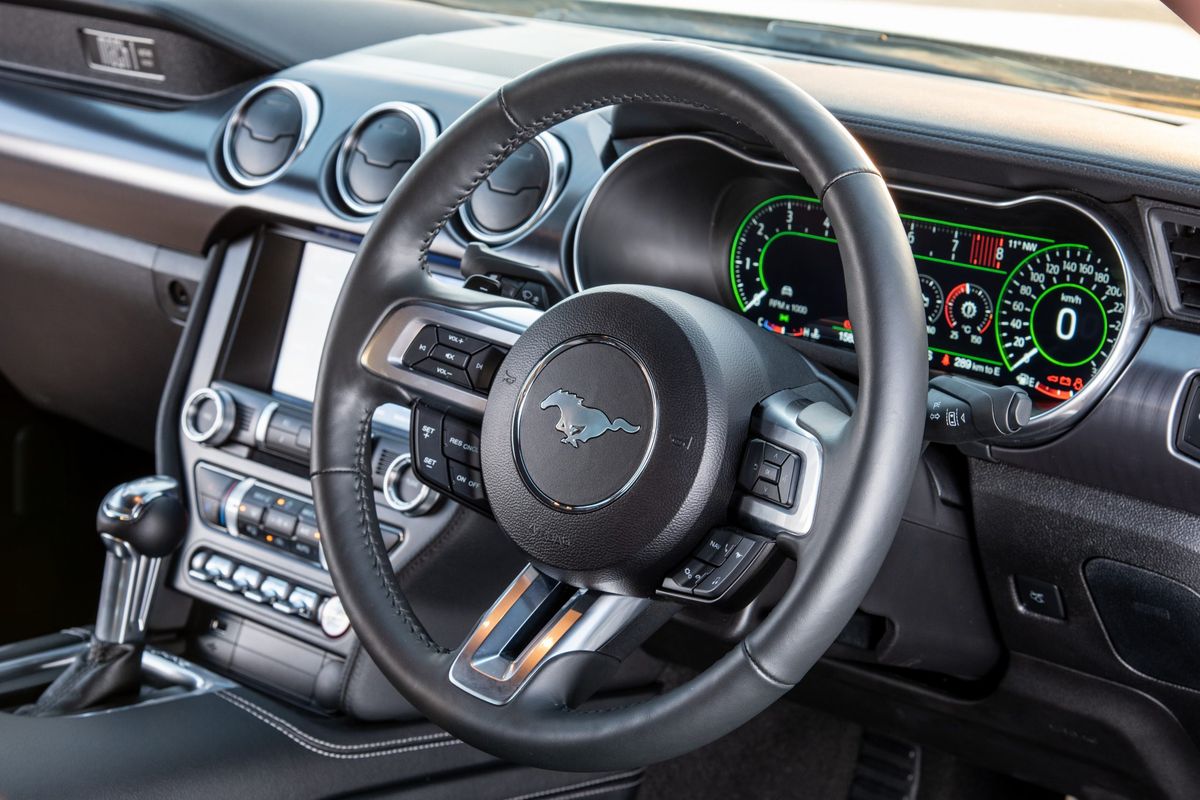
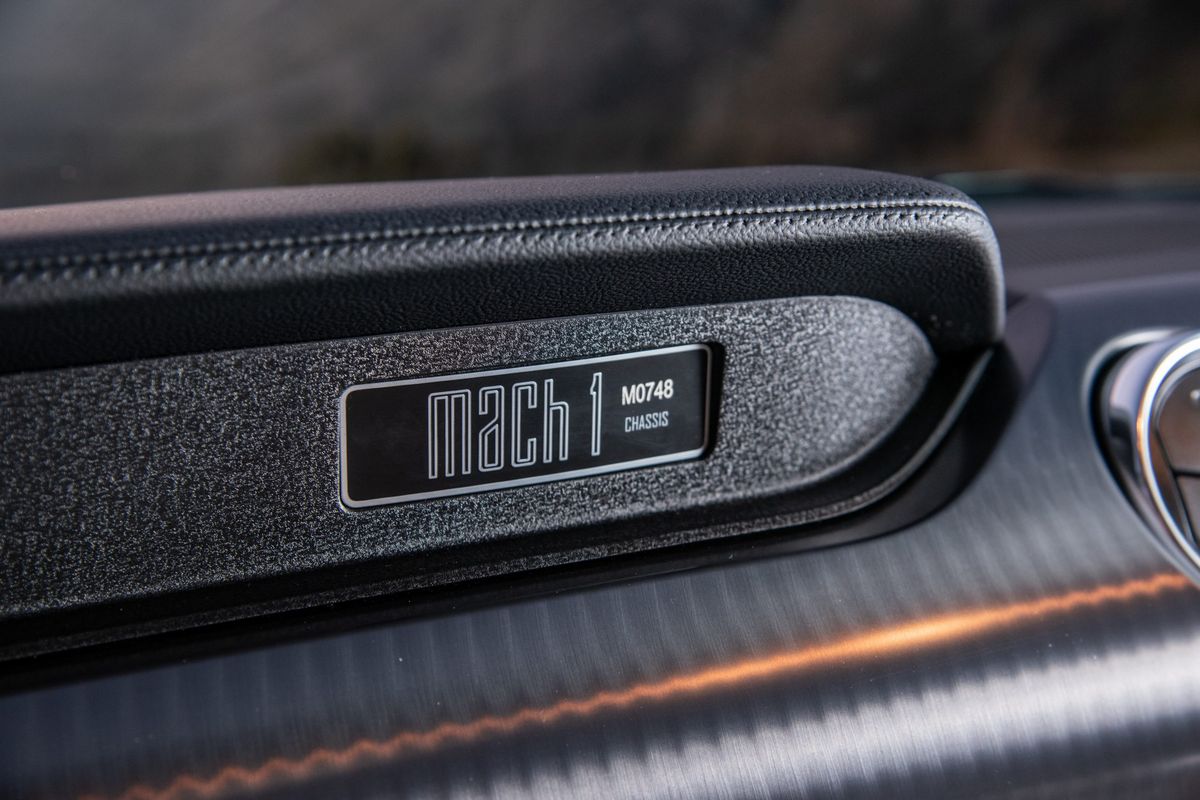
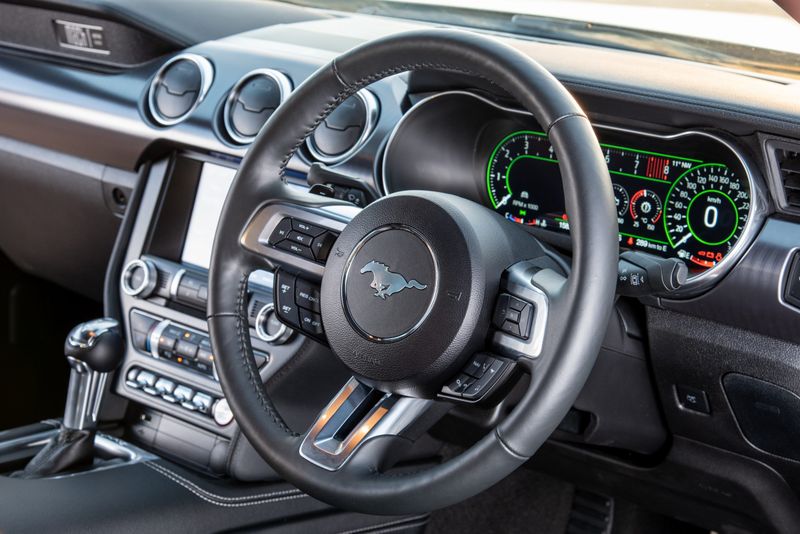
Inside the cabin of the Ford Mustang Mach 1, you’ll find Metal Grey stitching and a build number. The car comes with convenience features such as heated and cooled seats, SYNC3 connectivity and a 10-speaker audio system from B&O, whether you’d use the latter when you have that lovely V8 engine snarling away is debatable.
How much does the Ford Mustang Mach 1 cost in SA?
All Mustang models come standard with Ford Protect, comprising a four-year/120 000km comprehensive warranty, three-year/unlimited distance roadside assistance and five-year/unlimited km corrosion warranty. A six-year/90 000km service plan is included, with 15 000km service intervals.
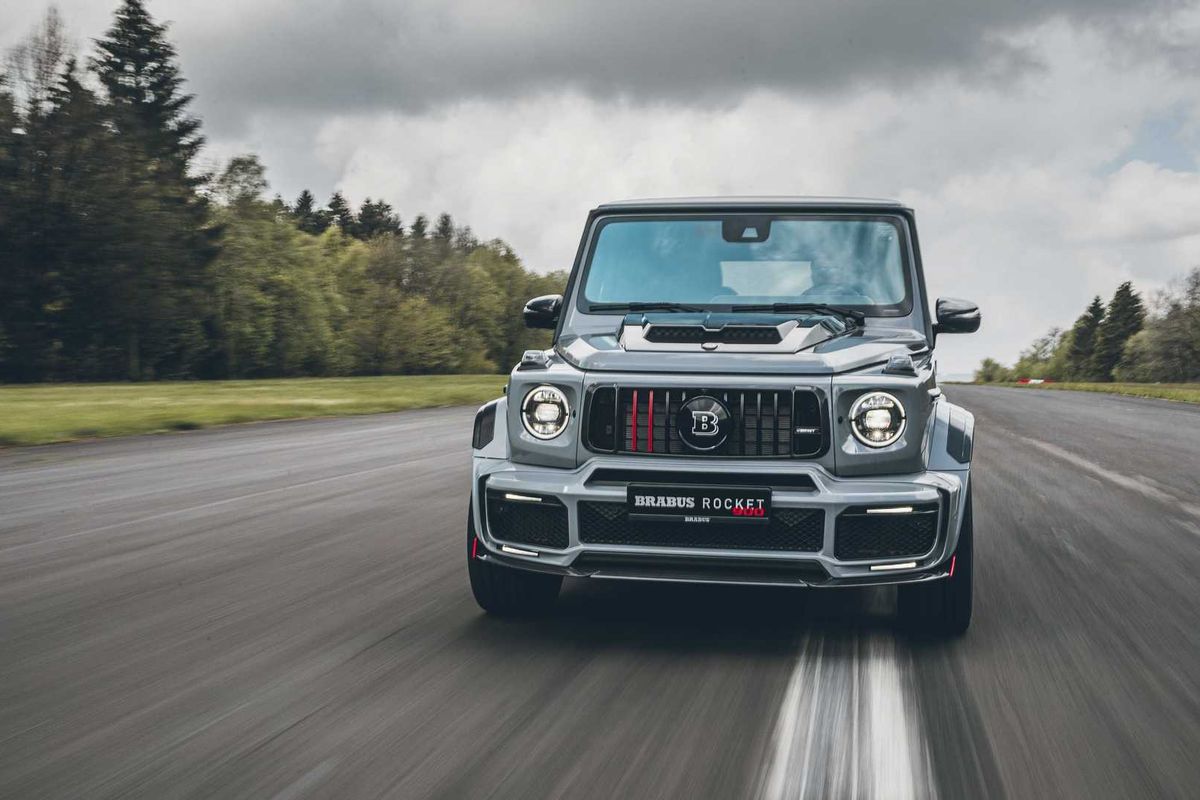
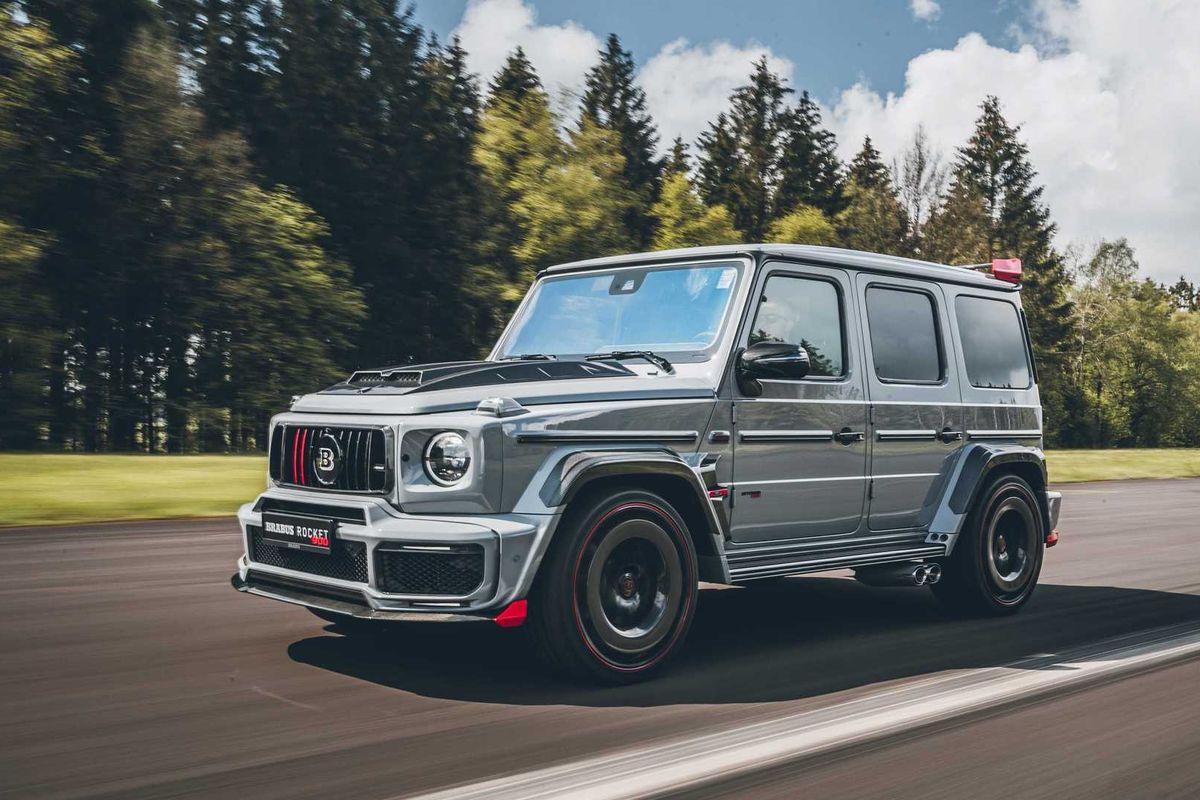
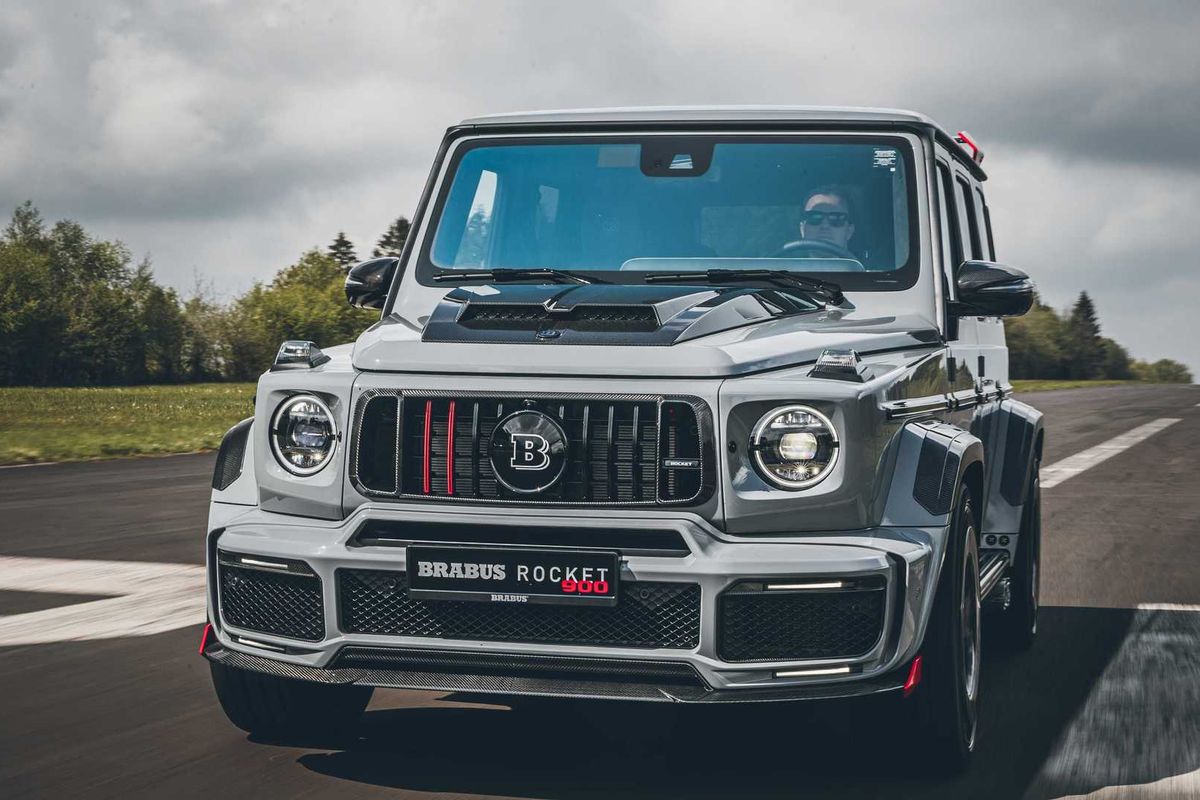
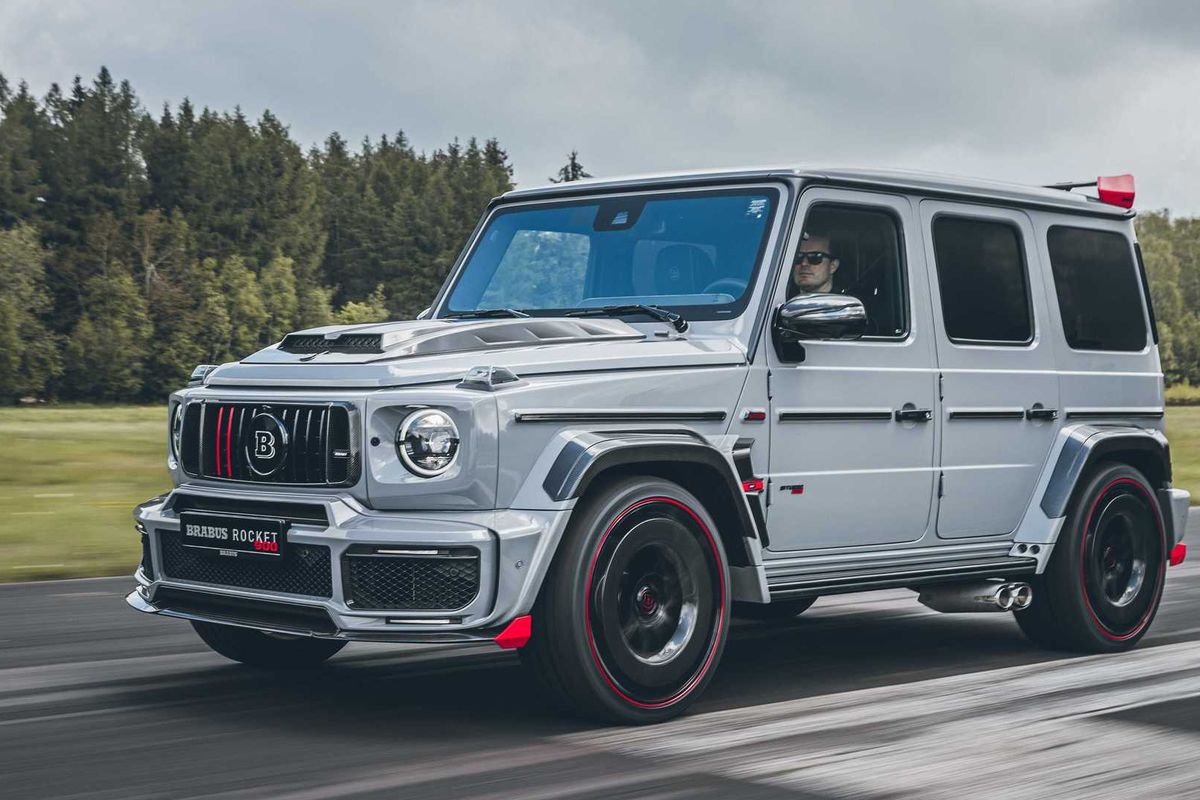
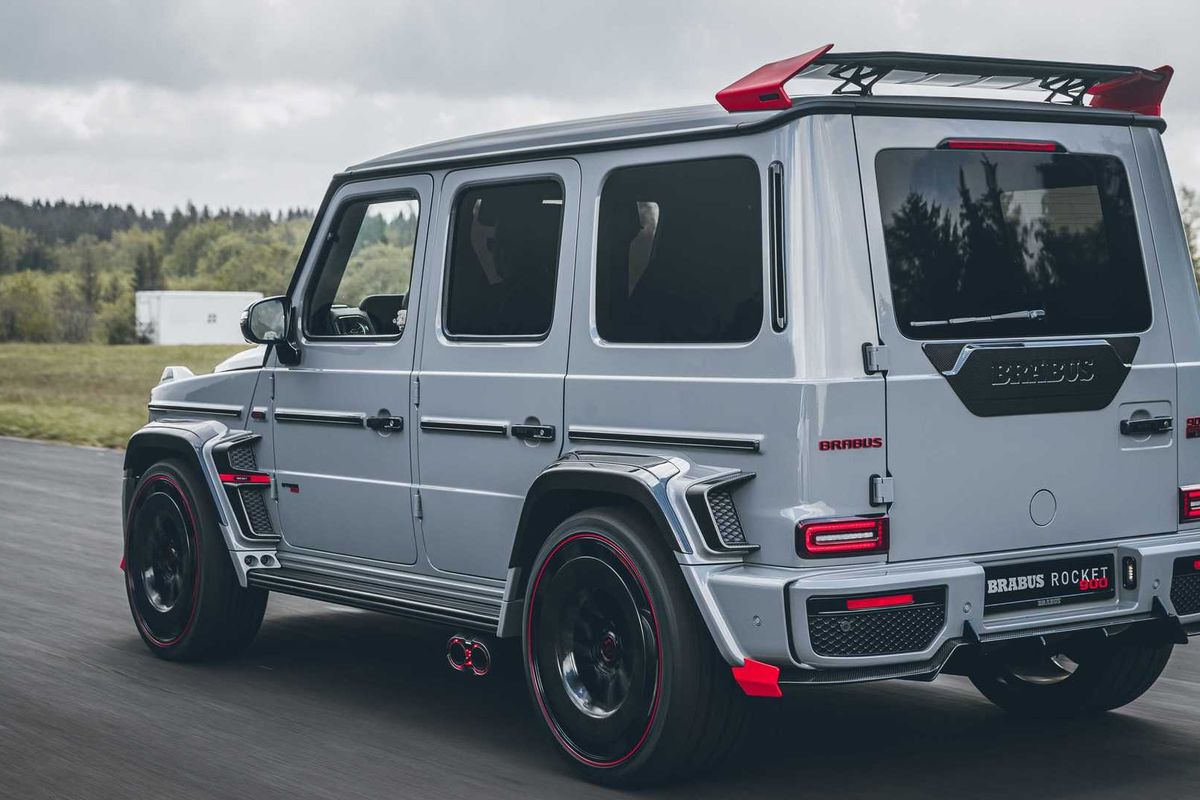
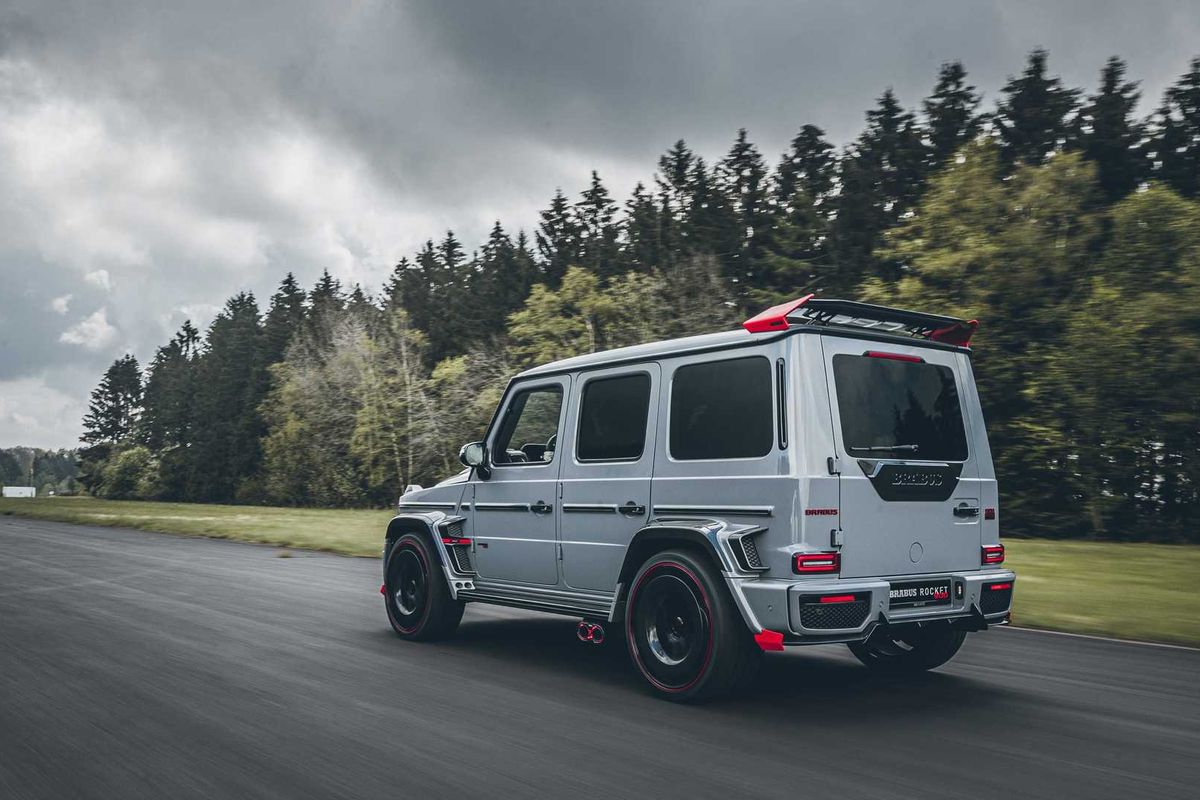
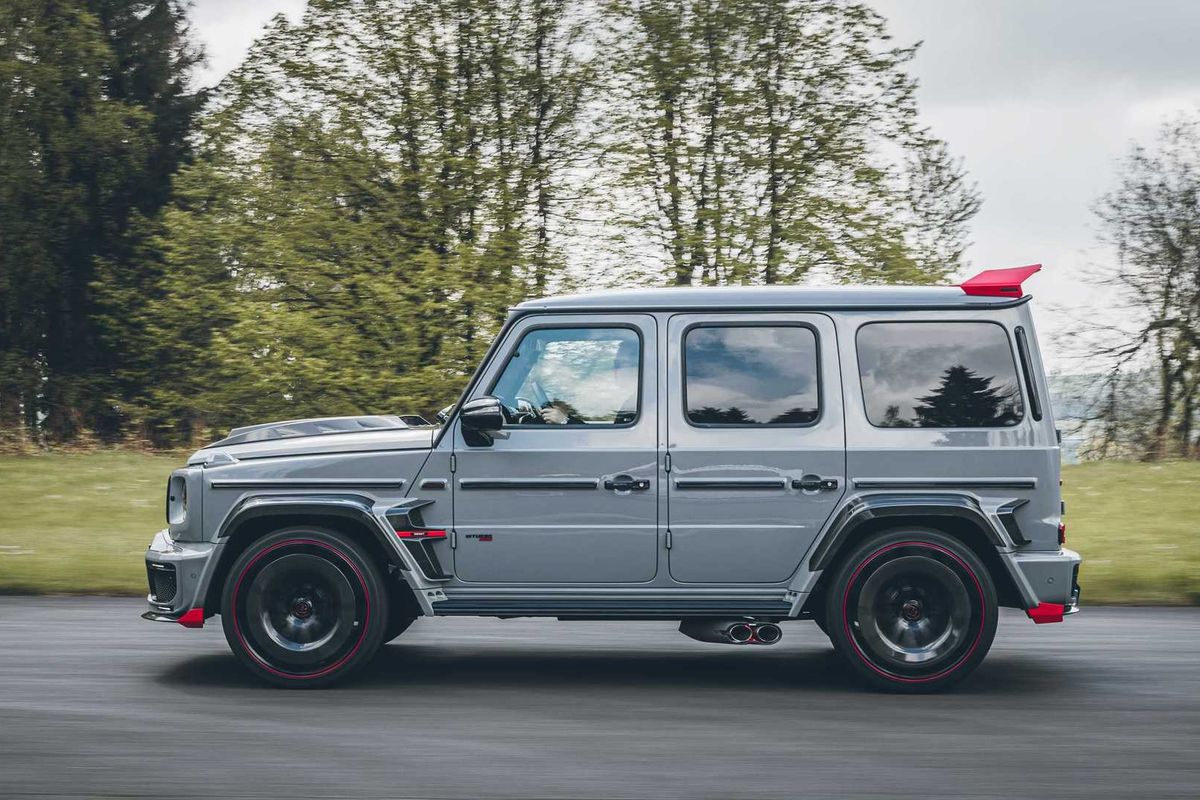
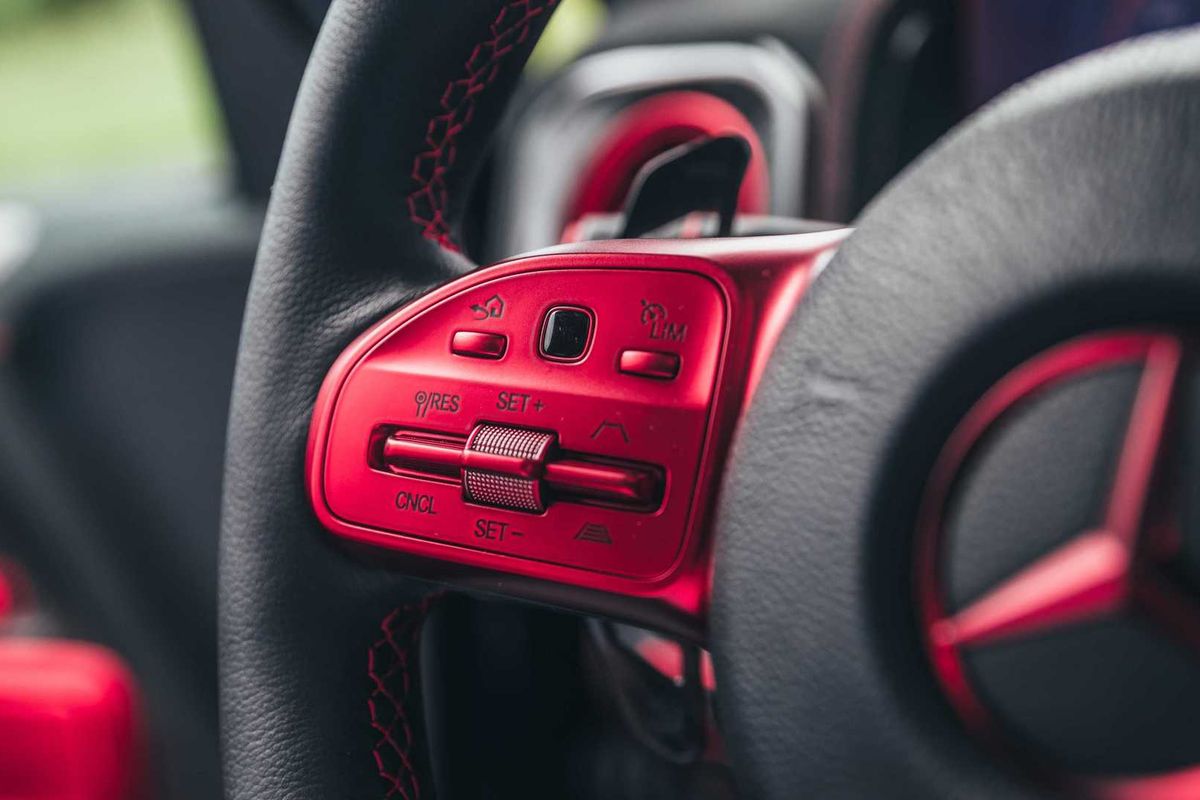
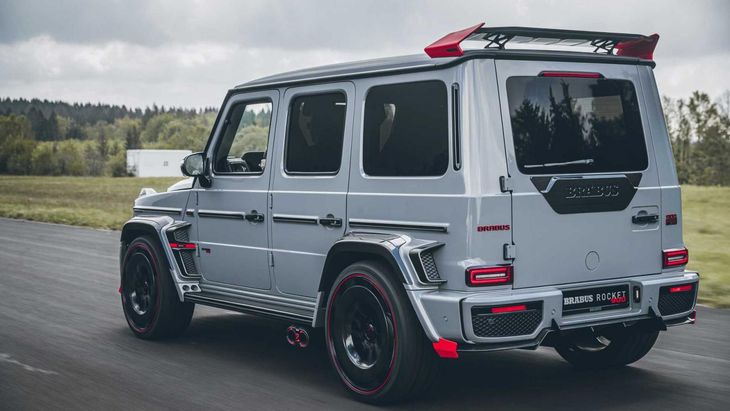
Brabus has taken a Mercedes-AMG G63 and kitted it out with an aggressive body kit that will make many supercars look demure. This is an SUV, remember?
Massive outputs for Brabus 900 Rocket Edition
Is this the ultimate G Wagon?
Note the beefed-up bodywork, power bonnet scoop and yes, that wing on the roof… Those wheels are large too, 24-inches in fact. The details on this Brabus 900 Rocket Edition is, in a word, spectacular.
However, it’s not just about the looks as this Brabus has been tuned to go fast, very fast. Brabus says it’s a “limited-edition supercar” and the firm claims a zero to 100 kph sprint time of 3.7 seconds with a limited top speed of 280 kph.
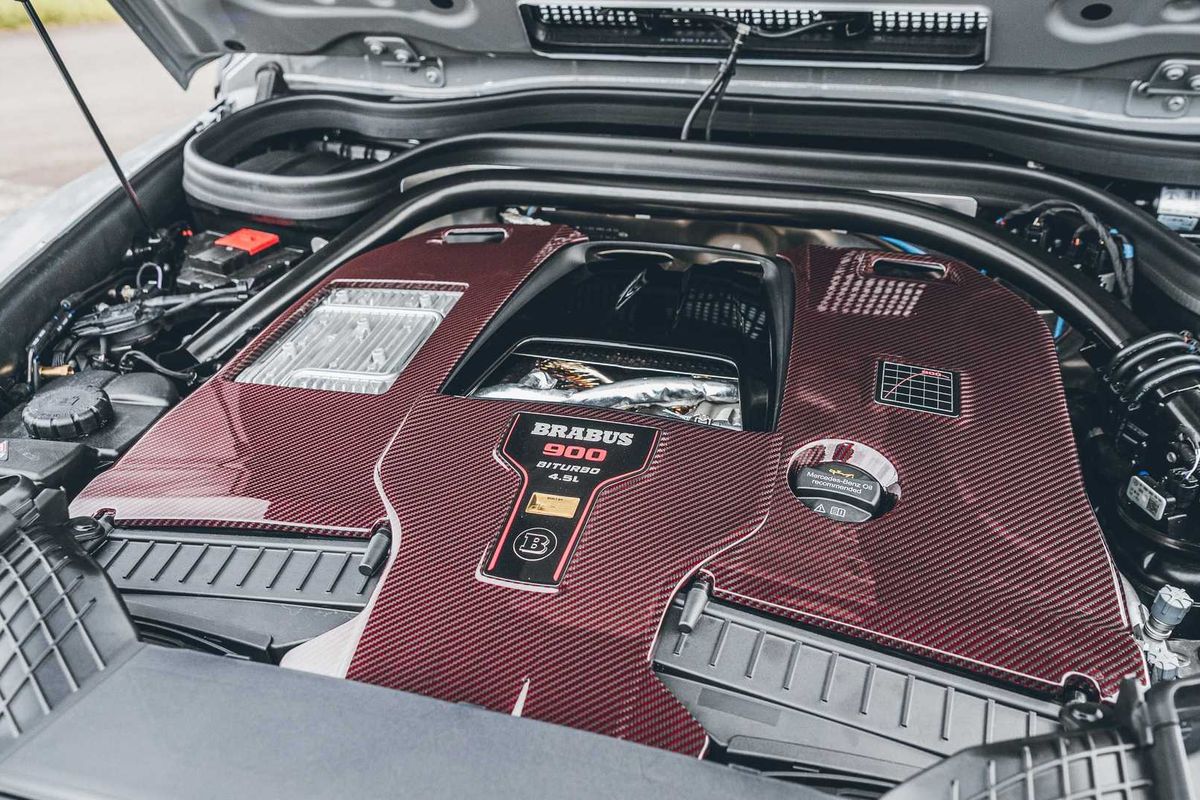
To achieve these hugely impressive claims, Brabus increased the capacity of the G63’s thumping 4.0-litre V8 to 4.5-litres and outputs have increased to a staggering 662 kW. Maximum torque is claimed at 1 250 Nm but it’s limited to 1 050 Nm in an effort to prevent damaging the powertrain. To put those numbers into perspective, the standard G63 produces 430 kW and 850 Nm of torque.
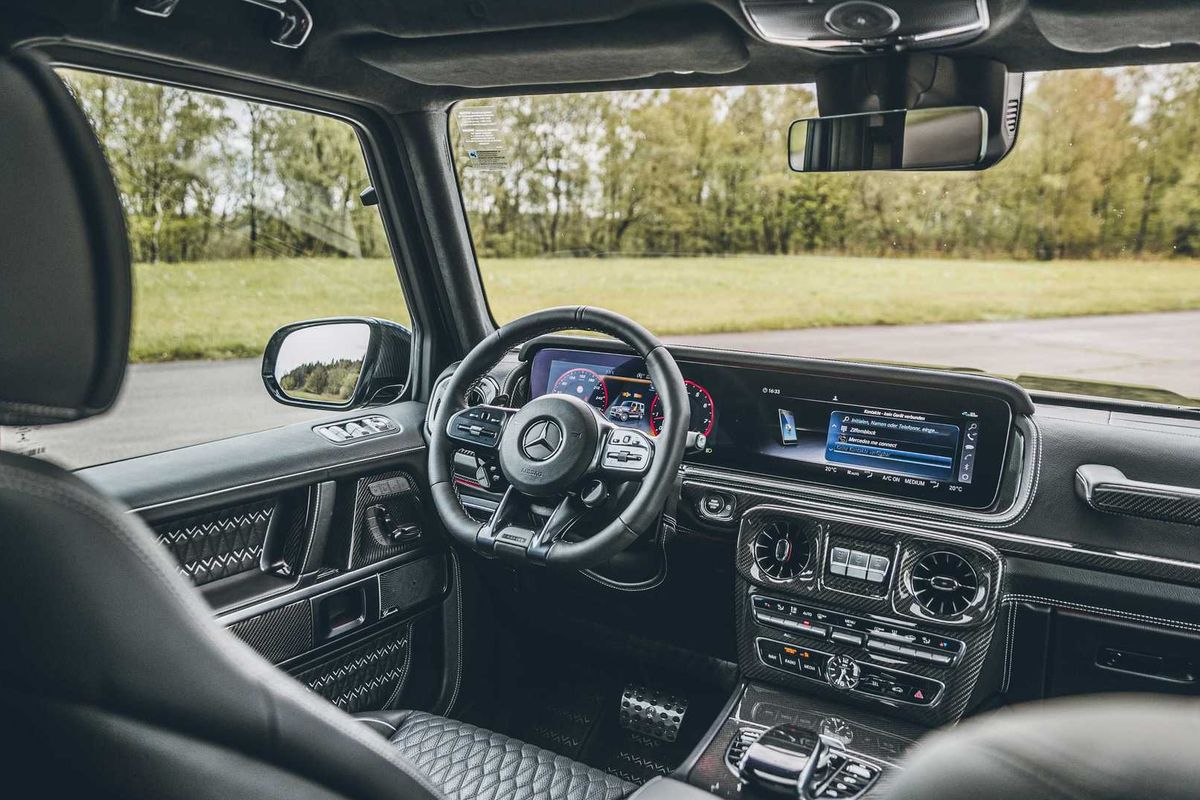
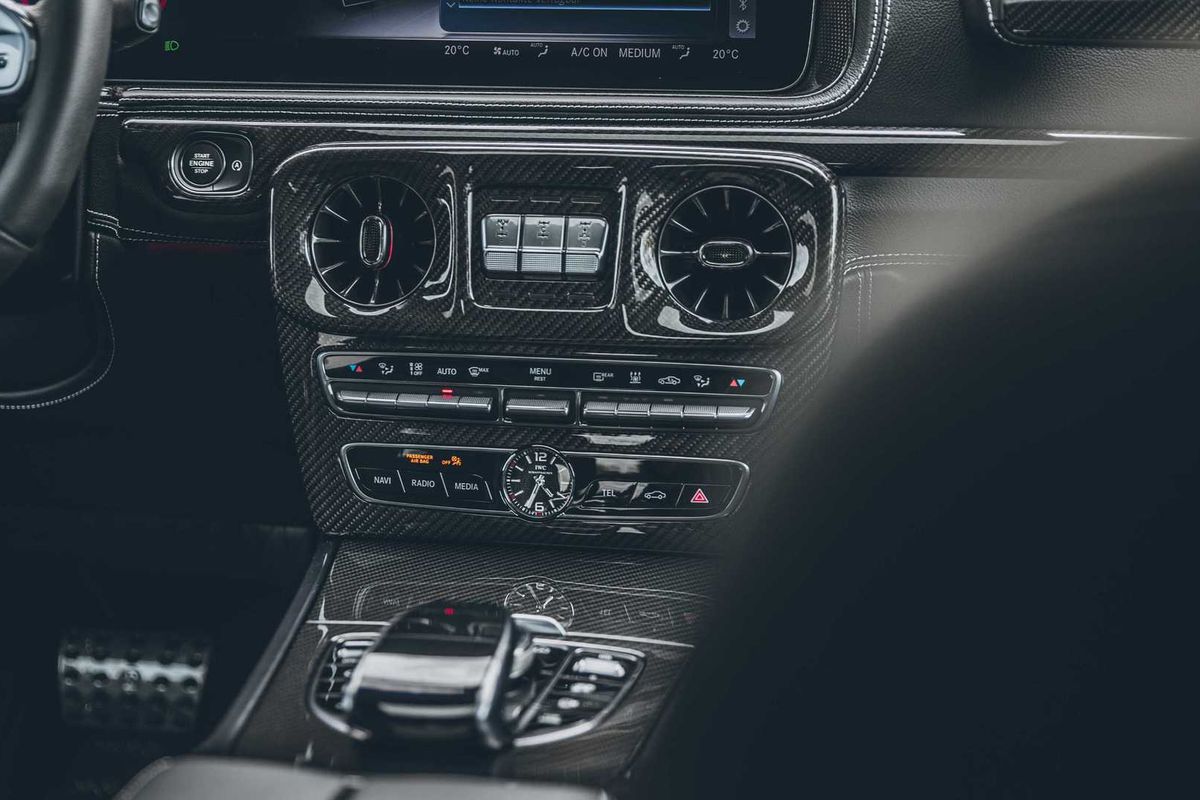
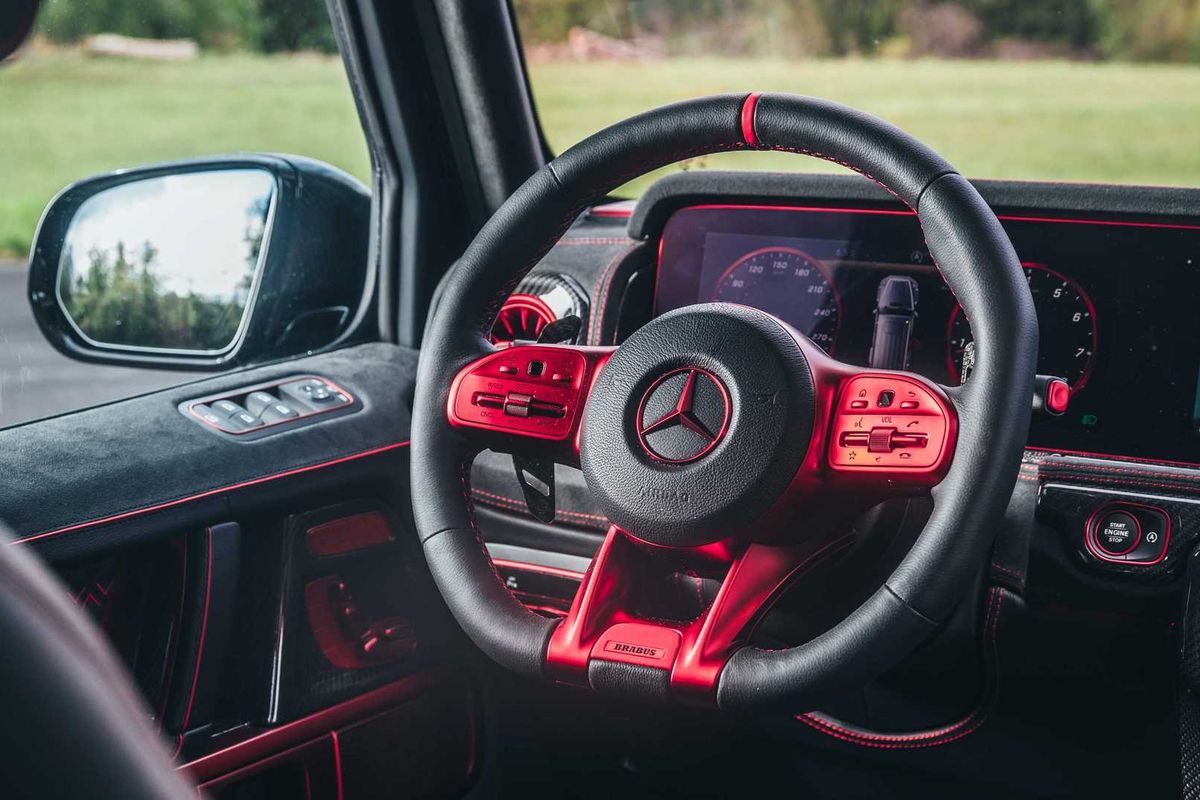
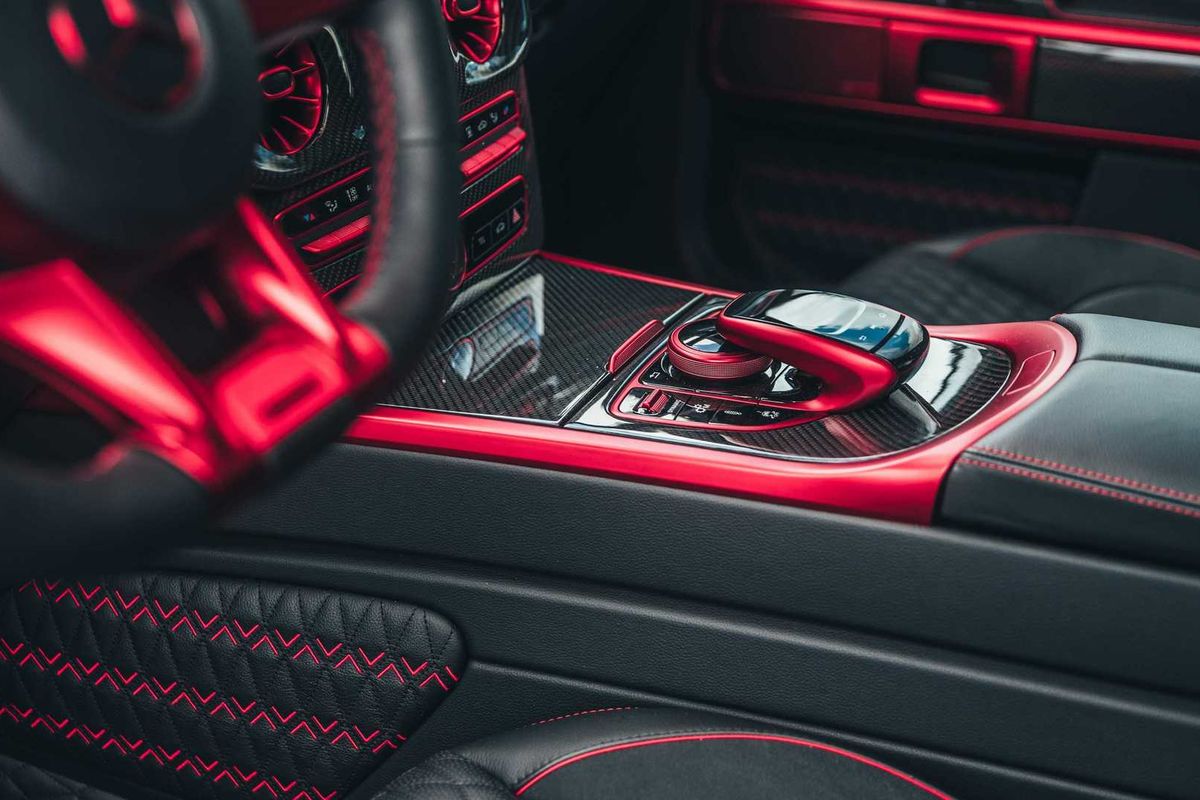
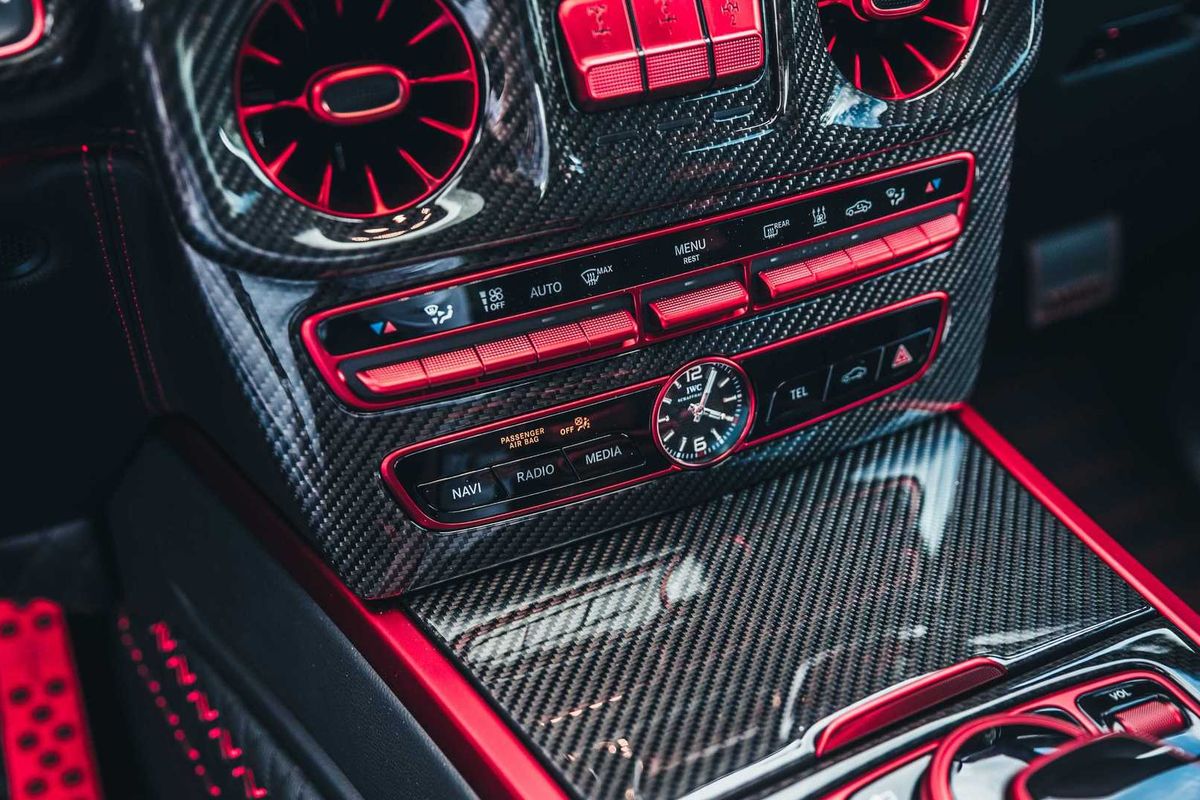
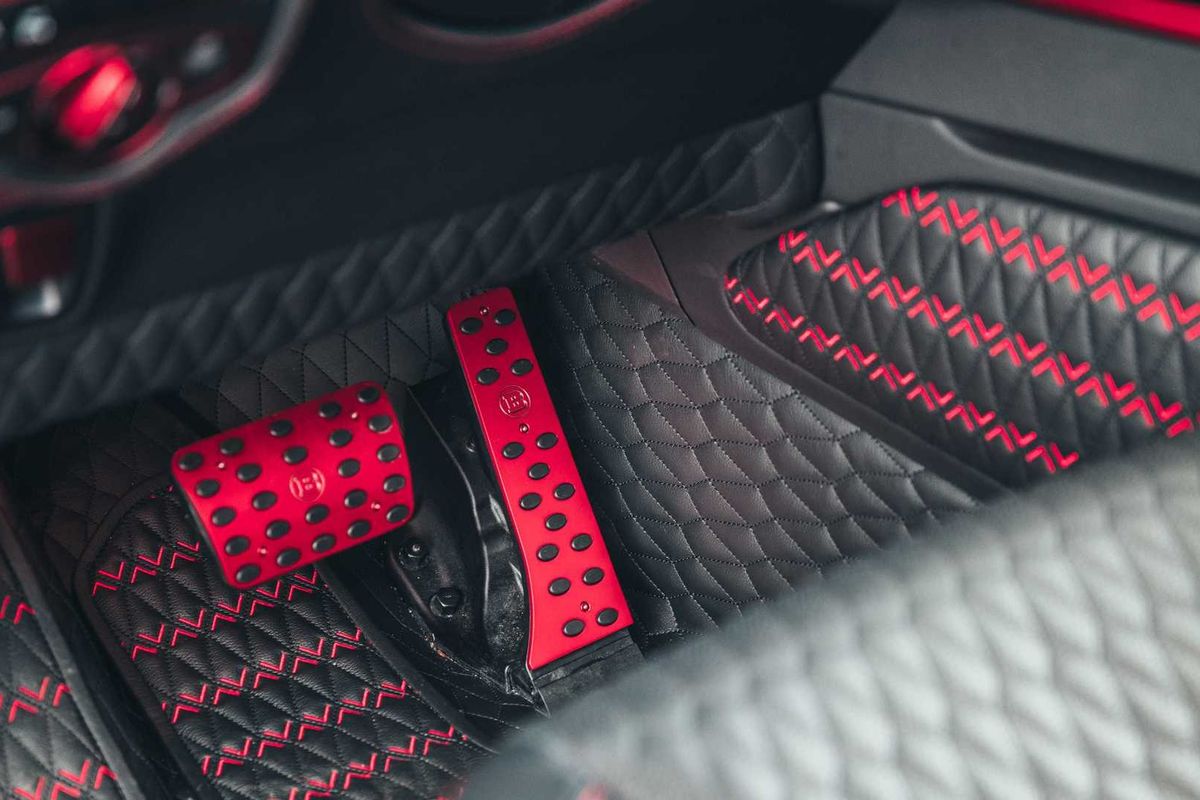
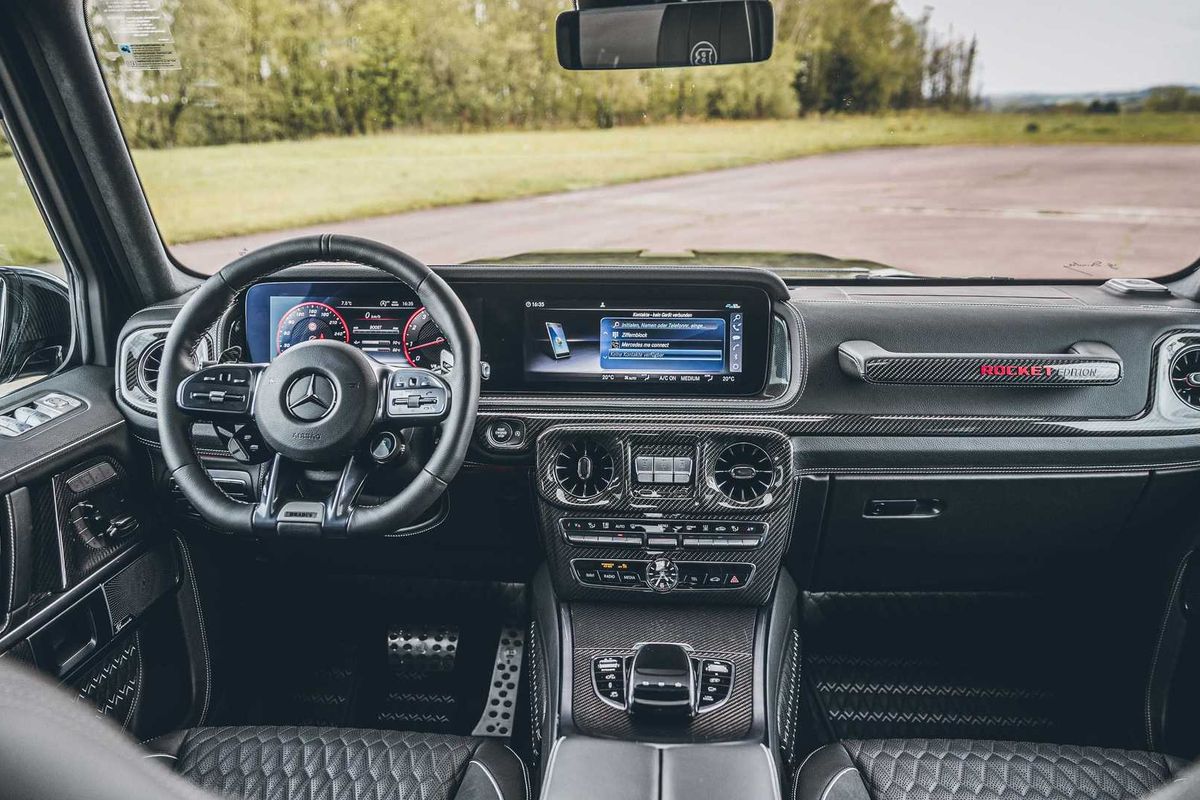
As for the interior, carbon fibre trim and quilted leather abound and, if you must, red detailing can also be specified for that extra dollop of sportiness.
Only 25 will be built. How much does all this cost you ask? Well, in Germany, you will pay no less than R9.7-million. Is it worth it? We’re not so sure…
Following the announcement from Land Rover concerning its hydrogen Defender, BMW is also recommitting to the alternative fuel source.
The company’s R&D department has revealed details of an extensive hydrogen testing programme, using the BMW X5 architecture.
BMW’s i Hydrogen NEXT SUV needs to prove that storage and refuelling with hydrogen can be viable. At least, in Europe.
An interesting aspect of this hydrogen BMW SUV is the involvement of Toyota. The Japanese company has collaborated with BMW before (Z4/Supra) and is known to be a strong believer in hydrogen.
Toyota has shared some of the development burden regarding hydrogen fuel tanks and fuel mixture technology, present on the i Hydrogen NEXT. The fuel cells are from Toyota, while the stack and drivetrain system is BMW.
Even companies of the size and stature of BMW, and Toyota, no longer have the resources to launch independent R&D into new technologies, such as hydrogen.
BMW’s i Hydrogen NEXT is all about showing how applicable hydrogen is, to an existing vehicle platform – in this case, X5. The fuel source is not meant as a replacement for its battery-powered cars but as an additional offering that could be sold alongside its i models.
Is it powerful enough to power a large SUV? The hydrogen and oxygen reaction creates 125 kW of primary driving electricity, but this can be boosted to 275 kW, by using a buffer battery function. And yes, that 275 kW peak output number, even for short bursts, is not accidental. It is exactly what you get from a 3-litre turbopetrol BMW six-cylinder engine.
Hydrogen proponents champion is low fuel mass, as a big advantage. Although BMW has not divulged any range targets for the i Hydrogen NEXT, the total hydrogen fuel storage is only 6 kg.
This week’s news you need to know (June 2021, Week 3)
In this week’s news you need to know, Nissan might be wise to take a leaf out of its Australian counterpart’s book and ‘bring out the warrior’ in the local Navara, the facelifted Polo GTI could reinvigorate a stale segment, the new LX looks promising for underappreciated Lexus and Porsche, well, can seemingly do no wrong.
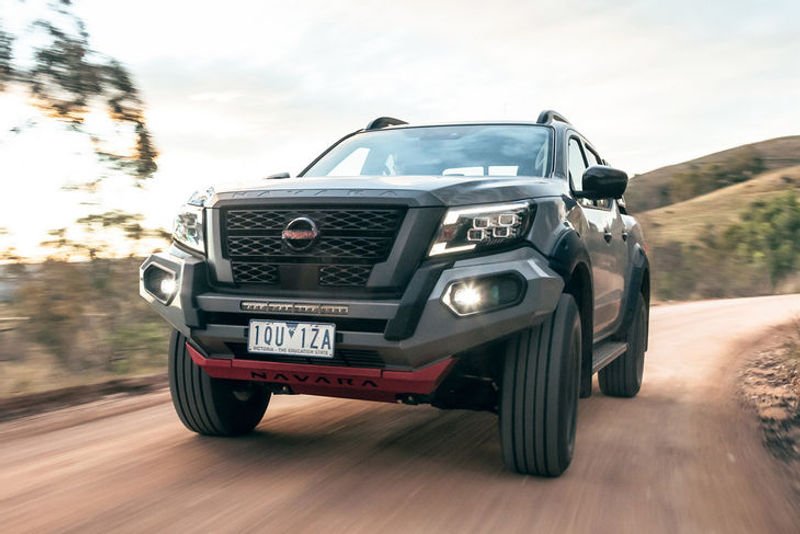
Nissan Navara PRO-4X Warrior – ‘A man and his bakkie’
“A man and his bakkie” has been the true love story – unrivalled by anything else – in the history of SA motoring. A bakkie is an extension (some might say hyperextension) of its owner much like the Iron Man suit is to Tony Stark. Nissan Australia teamed up with an engineering company to produce the off-road-optimised PRO-4X Warrior and plans to expand elements of that as a kit for the facelifted Navara range. Could there be a better way to stroke your own ego, um, bakkie, than slapping on a “badass kit” replete with blacked-out rims, sport-bar and angular wheel arches, oh, and a scarlet skid plate?
The extraordinarily capable Ford Ranger Raptor is one thing, but we’ve seen countless more examples of Rangers adorned with Raptor kits in our beloved Republic. South Africans go crazy for the lean-and-mean look, which is why those kits are selling like hotcakes. Here’s hoping Nissan SA’s managers have sat up, taken notice and are planning something similar. The timing couldn’t be better, with local production of the Navara kicking off in Rosslyn. What better upsell moment than to introduce a Warrior kit? They simply must answer the call and get it into the market before those 10 babies are found.
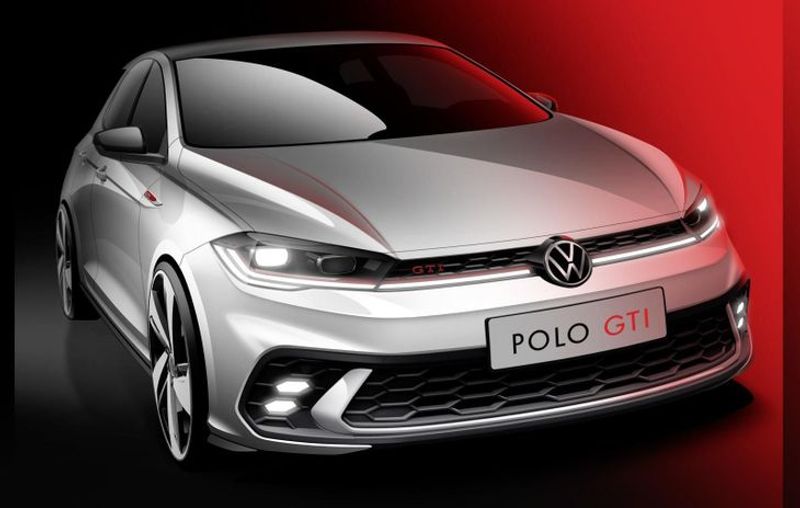
Facelifted Polo GTI – Don’t switch the lights off just yet
I am sad to say this, but the supermini hot hatch game looks all but played out. Throughout the past 5 years, we’ve seen the gradual demise of the pint-size hot hatch segment. Ford has killed off the Fiesta ST; Renault has snuffed out its Clio RS. Call it bending over to the market’s demands for crossovers and SUV or maybe all those boy racers have finally grown up (although I doubt that!). Just one model remains – the Polo GTI. Why has Volkswagen kept it going? It’s simple, even though the baby GTI is painfully expensive compared to standard Polos, it fills the gap for those who can’t afford a Golf GTI.
The next iteration is apparently going to pack 152 kW, making it the most powerful Polo GTI to date. And, with the Hyundai i20 N set to arrive towards the end of the year – a mouthwatering clash is on the cards, which is just what we need to get this segment fired up again. Who knows, perhaps RS and ST badges will get dusted off? If there’s money to be made, it’ll happen! Where are those boy racers?
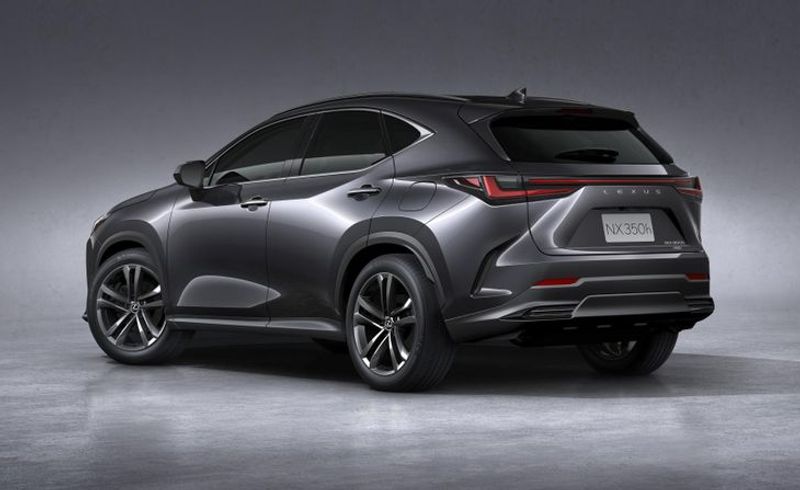
Lexus NX – Have we been sleeping on Lexus?
Lexus has been a slow burner in Mzansi, hasn’t it? Toyota Motor Corporation’s premium marque has been here for decades and consistently sells about 50 units a month (which is a paltry number compared with the sales figures of other premium brands in the market). Perhaps it’s due to the reluctance of owners of premium-brand models to jump ship/try something new, but it’s fair to say Lexus has been in South Africa’s blind spot. Its product line-up was admittedly limited up to a few years ago, but now its array of SUVs (including UX, NX, RX and LX) make it one of the most underrated brands in the country.
Lexus models have proven underpinnings (buoyed by Toyota’s reputation for reliability) and are supported by stellar after-sales service. Okay, so they’re expensive (like all other premium brands’ wares), but they usually offer much more in terms of high-end standard features than their German rivals, which need to be specced up. The new NX looks the business too, which is one more reason to give it a try.
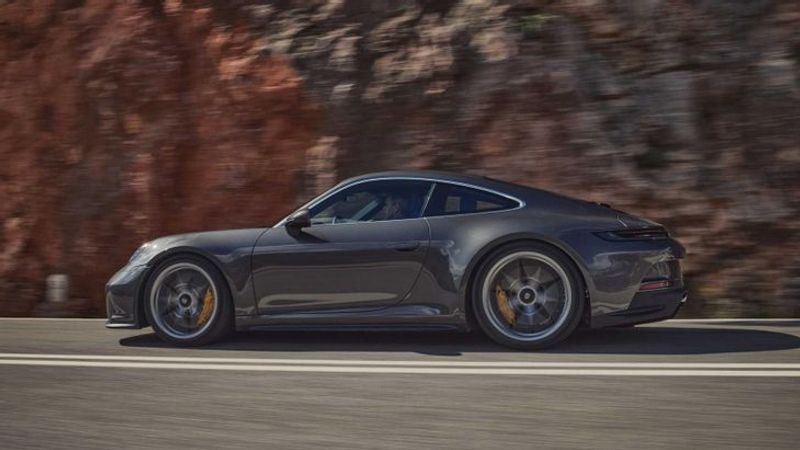
Porsche GT3 Touring – ‘All dressed up and everywhere to go’
The Porsche 911 GT3 Touring is the brute who bought a suit to wear to his best friend’s wedding, then got a sharp haircut and made sure his shoes were polished to a fine shine for the occasion. But when he takes off his jacket at the reception later on, you can see myriad bulges straining underneath his tailored shirt. He’s clearly muscle-bound, so you wouldn’t want to cross him. Ever.
Analogies aside, I can’t but help appreciate the commercial genius of Porsche AG. The Zuffenhausen-based brand’s GT3 model has developed into an “in-yer-face” all-out speed machine, replete with a plethora of racy addenda, chief of which is that humungous WING. All of that is undoubtedly too “racy” for those that want a more understated look, but don’t want to lose out on the performance aspect.
That is where the GT3 Touring slots in perfectly. Porsche will continue to make great strides with money moves like these and, with the extension of the touring derivative, the GT3 is kept very much alive.
BMW M3 Competition – is this the best M3 to date?
Watch Ciro de Siena get to grips with the latest G80 BMW M3 Competition.It is always a special occasion when there’s a new BMW M3 and we just had to get behind the wheel.
Is there a more iconic letter in the car alphabet? M from BMW represents a special breed of performance vehicle and when a new one is launched, people get excited. This is the new BMW M3 Competition and it features a 3.0-litre turbocharged straight-6 engine with 375 kW and 650 Nm, and power goes to the rear wheels via an 8-speed gearbox. An all-wheel-drive model will follow later in 2021.
Is this new BMW M3 Competition good enough? We put Ciro de Siena behind the wheel on the safety of an airfield to see if it’s worthy of the M badge.
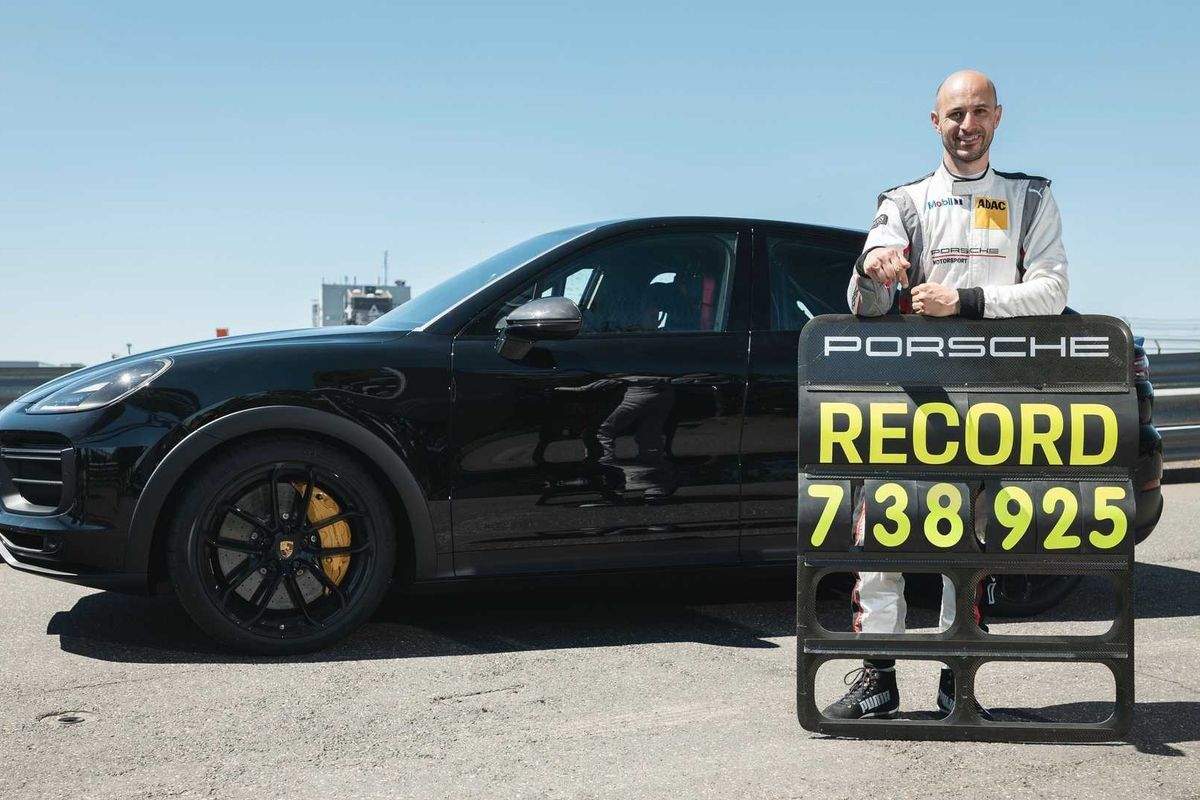
This yet-to-be-announced hardcore version of the Porsche Cayenne Coupe has beaten the Audi RS Q8’s time.
The 7min 38.925 run was completed by this prototype Porsche Cayenne Coupe. Officially it has no name or designation, but we do know that Porsche is working on updates for its flagship SUV.
This time beats the previous record holder. The Audi RS Q8 was the champion with its 7min 42.253 around the Nurburgring.
Interesstingly, even though the vehicle is not on sale or even been revealed, this is the new record holder in the SUV/offroad/pickup/van category.
This test unit had a racing seat and a roll cage to protect the driver and the vehicle was running on 22-inch Pirelli P Zero Corsa tyres that have been developed specifically for this new upcoming Porsche Cayenne.
“This Cayenne model is a top performer. During its development, we focused on exceptional on-road performance. Our record-breaking Cayenne is based on the Cayenne Turbo Coupé, though more systematically designed for maximum longitudinal and lateral dynamics,” said Vice President of Product Line Cayenne Stefan Weckbach.
So what’s under the bonnet? Rumours are rife that the 4.0-litre twin-turbocharged V8 with 470 kW is under the bonnet, but given its corner-carving ability, there has to be have been some serious work done to the suspension and brakes.
It may have the reassuring look of a legendary off-roader, but the Mzansi-bound Ineos Grenadier is an entirely new vehicle from a company that has never built one before. International correspondent Greg Kable tests the newcomer’s mettle in the mountains of Austria.
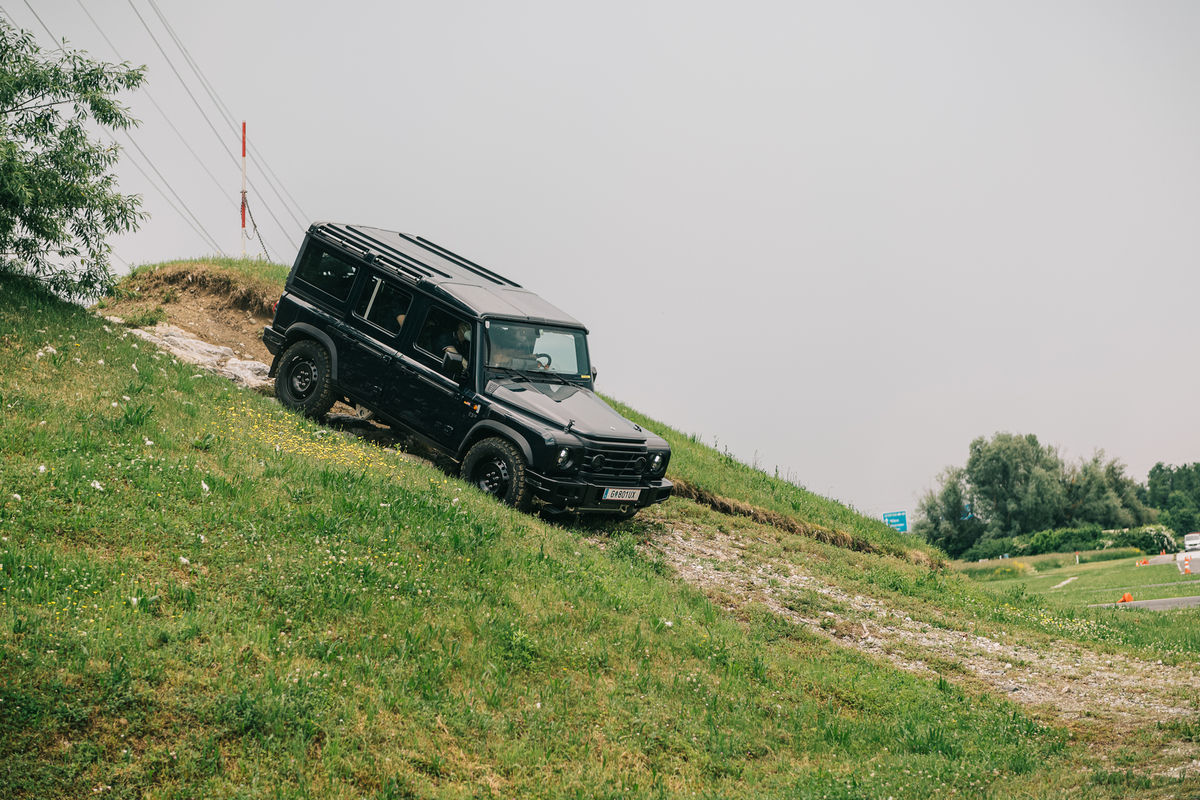
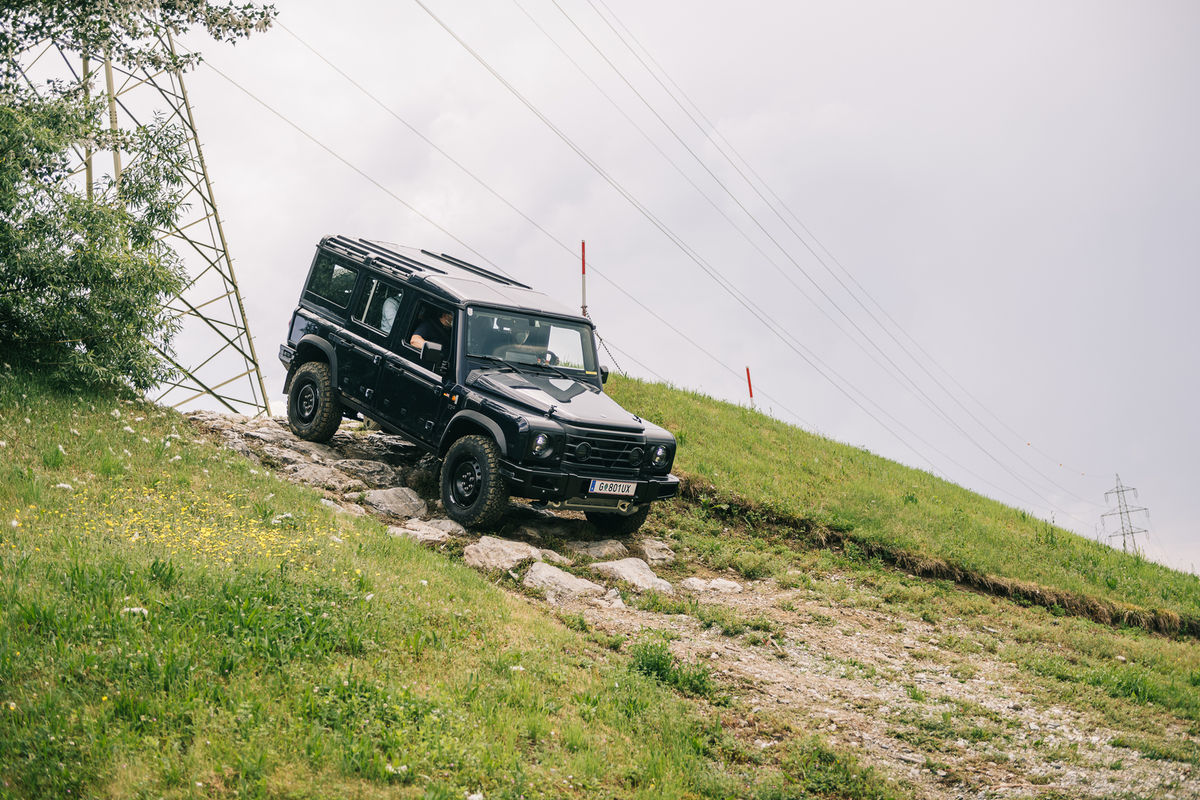
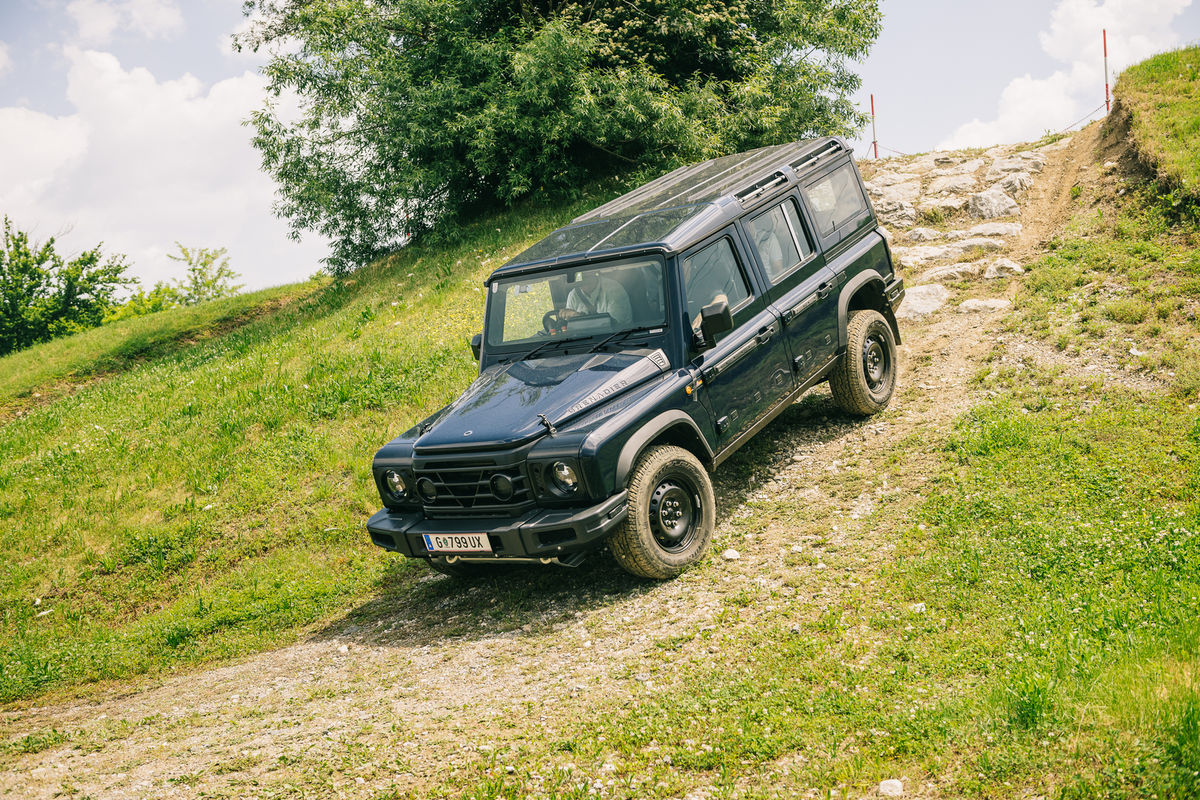
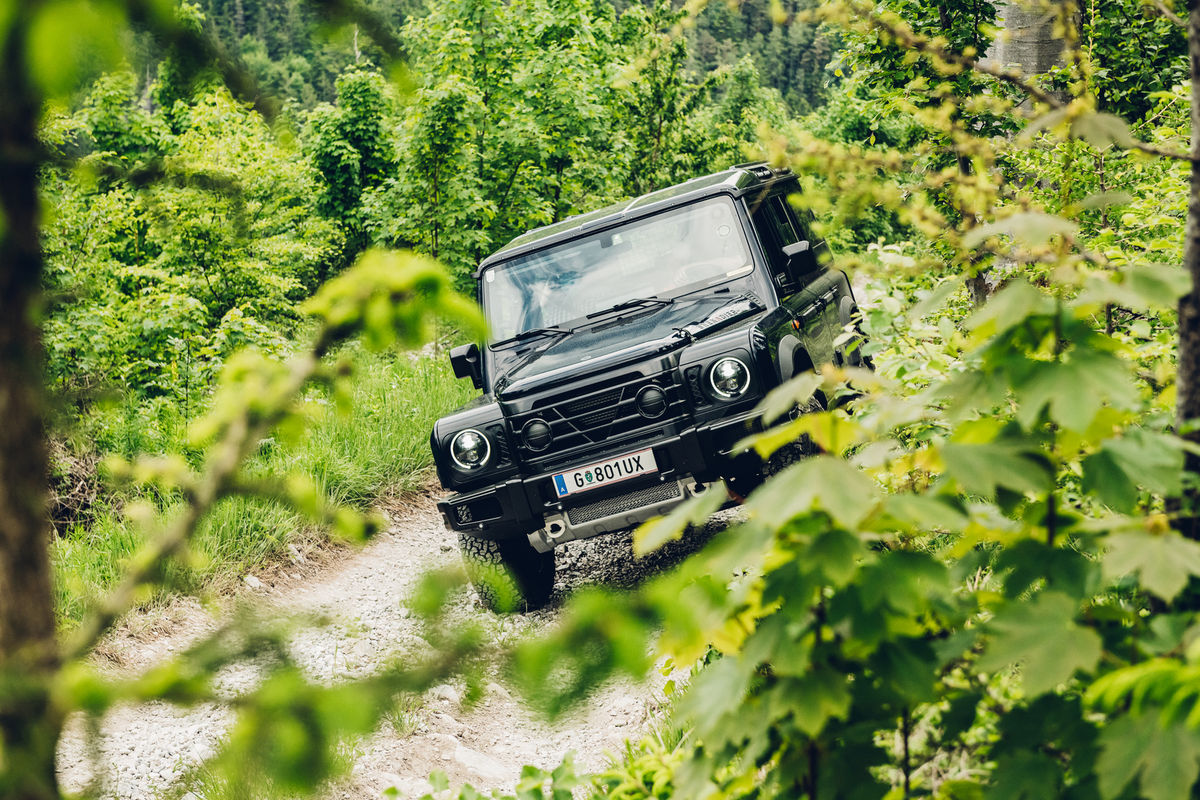
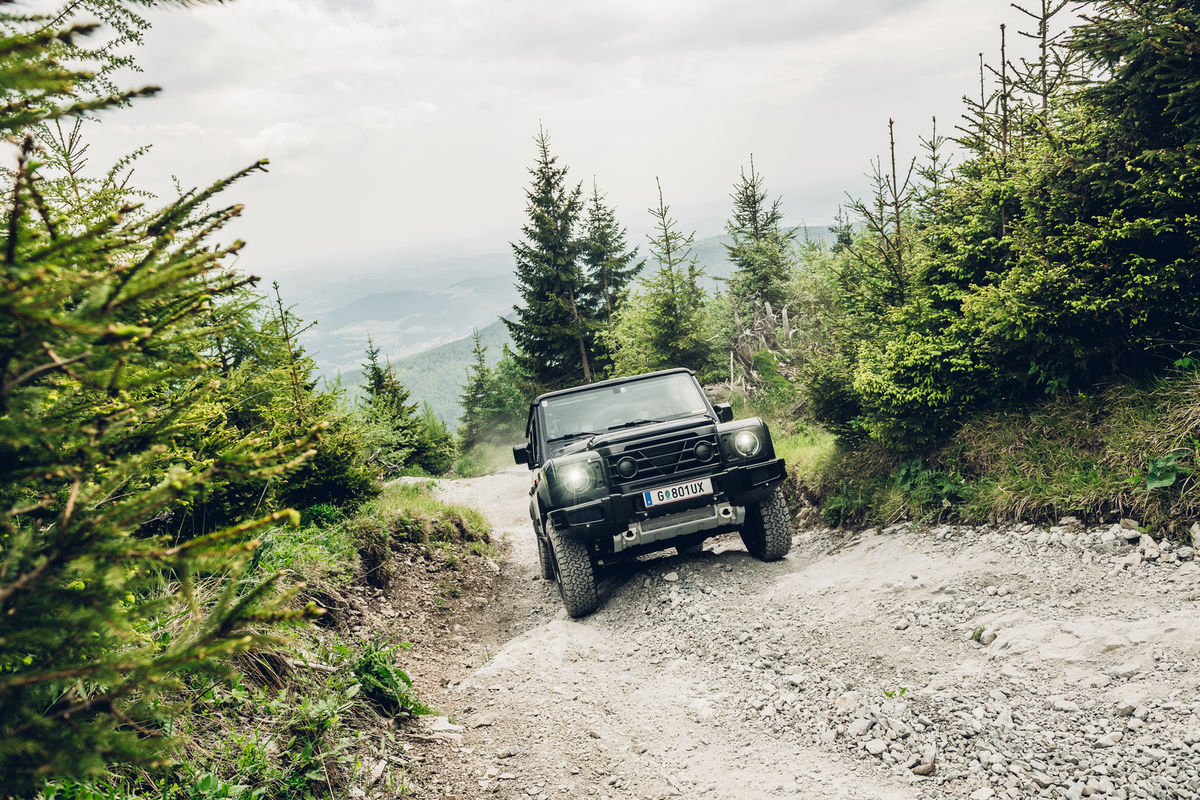
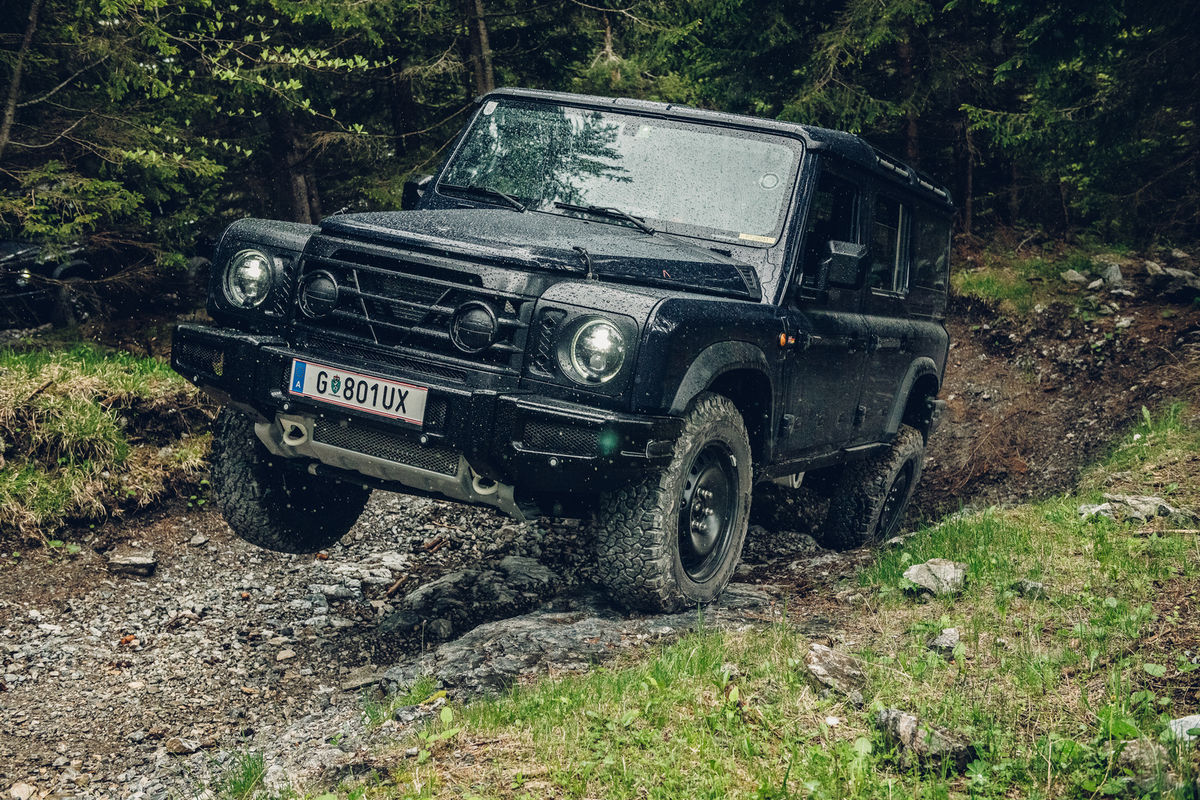
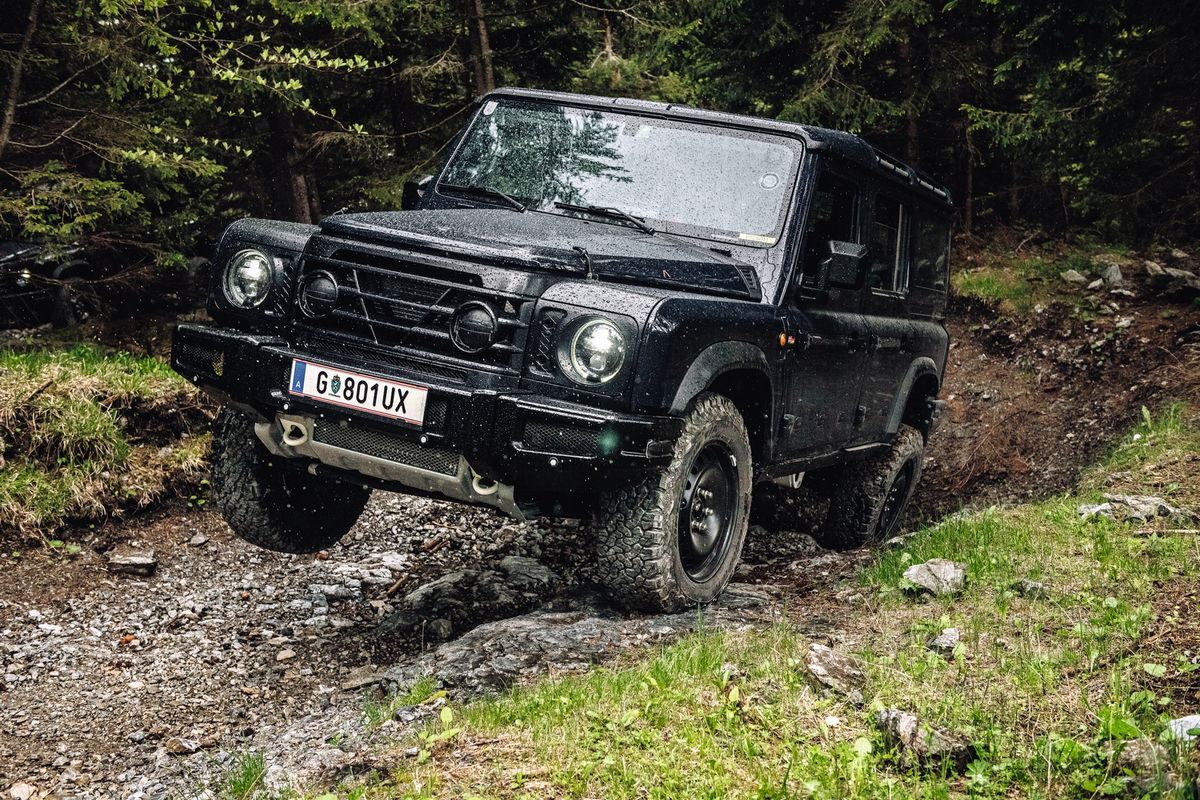
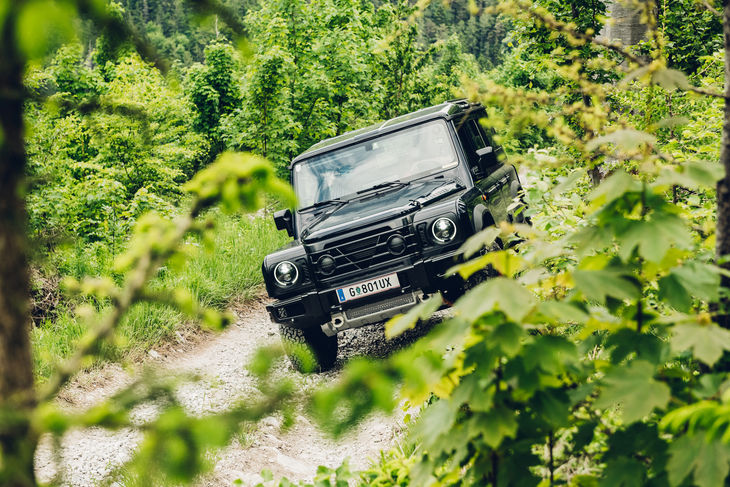
We’re precariously balanced on top of a steep, rocky outcrop. After 10 km of punishing vertical strikes that tested the suspension to its very limits, the severity of today’s testing has reached its pinnacle.
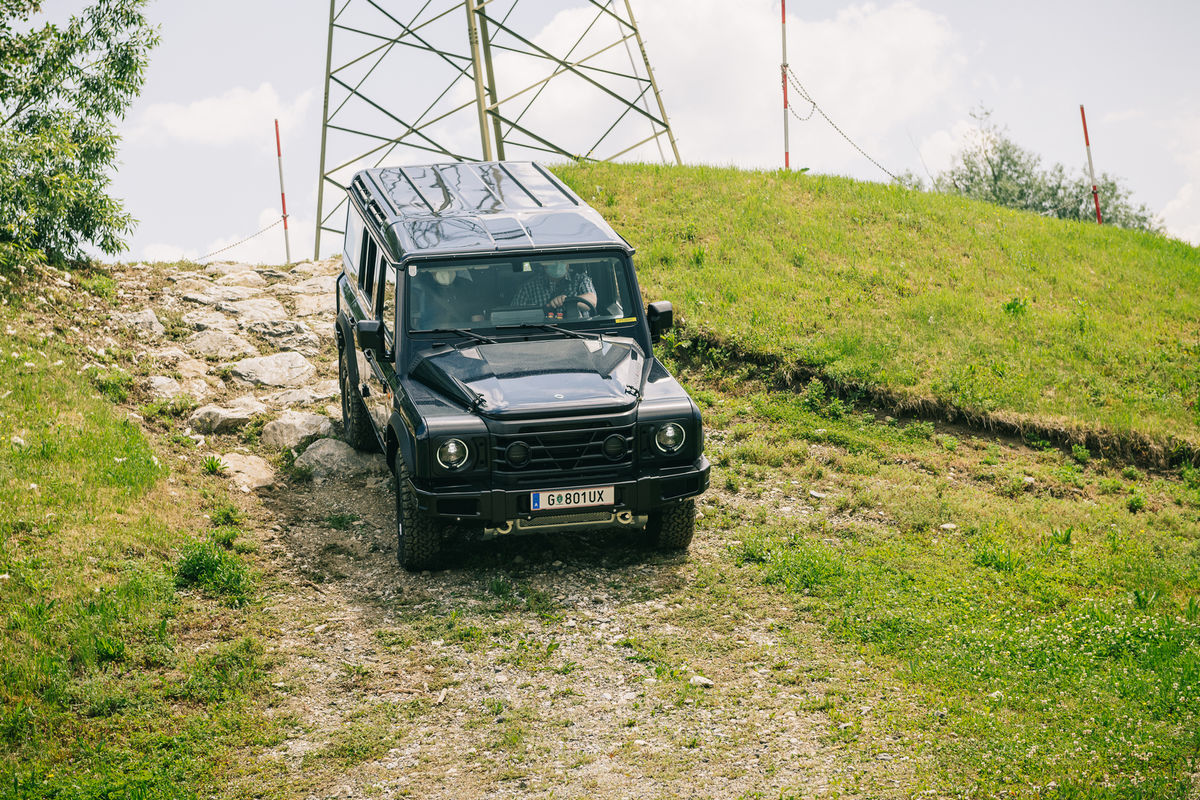
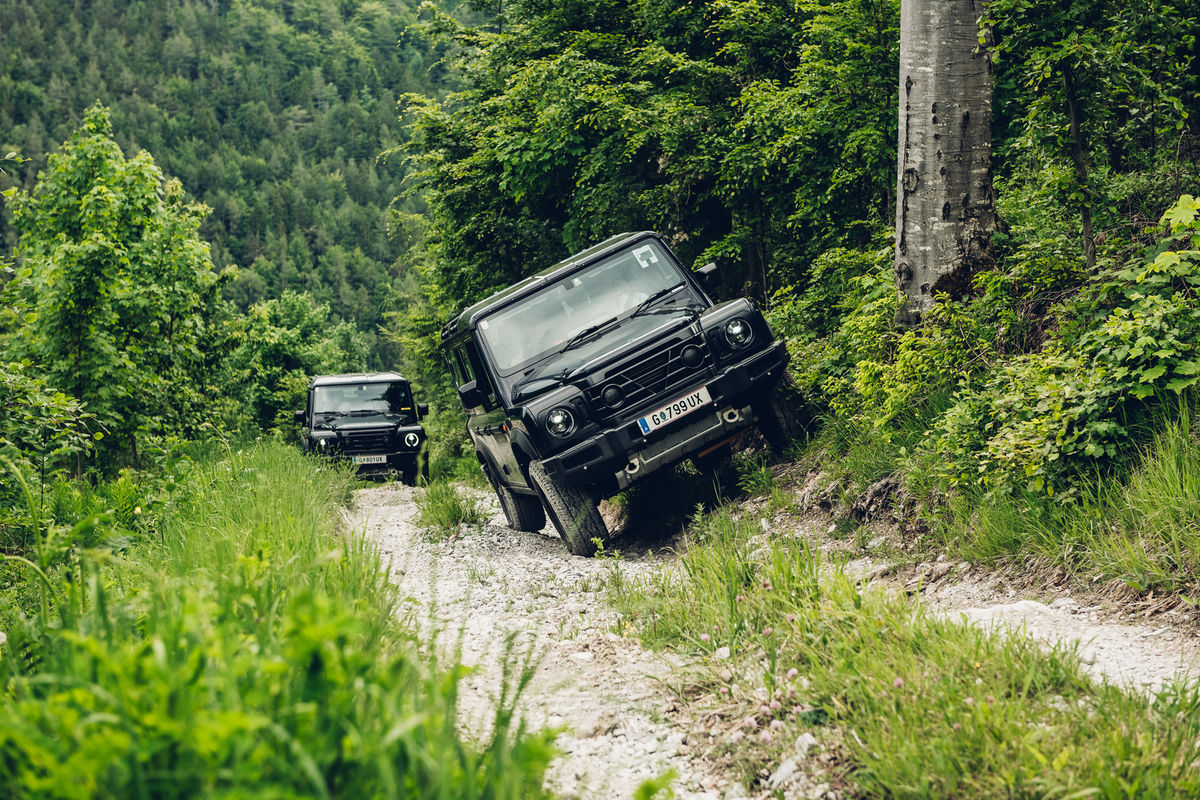
Up front, the Ineos’ right wheel is hanging in mid-air at full rebound. At the rear, the heavily loaded left wheel is tucked well into its wheelhouse at a truly improbable camber angle. Welcome to the daunting off-road trail that winds its way up the Schöckl – just outside Graz in Austria – to an altitude of 1 445 metres. It’s here where the Ineos Grenadier is undergoing its latest phase of durability testing.
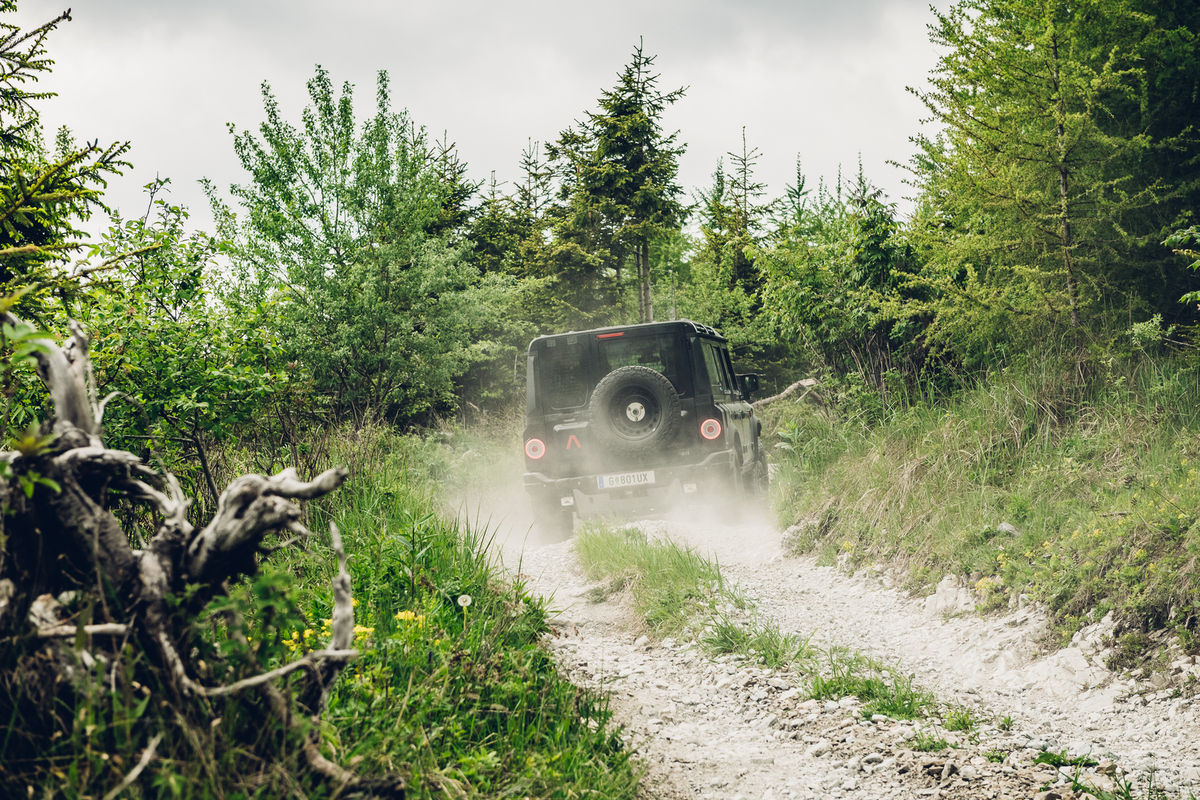
In a torturous 5-week programme, 2 prototypes of the bold new British-designed off-roader are planned to be driven 336 times up and down the murderous mountainside.
Earlier, I was among the first to drive a series of Grenadier prototypes over an off-road handling course. It was demanding, taking in all sorts of obstacles. However, it was nothing compared with the intense pounding that I had just encountered. If there were any lingering doubts about the ability of Ineos, a multinational corporation that found riches in the oil and gas sector, to turn out a world-class off-roader, they’ve just been blown away in spectacular fashion.
It’s a display that has taken us from the wide expanse of valley below to the treacherous 52-degree incline we find ourselves at now without as much as a slight slip-up along the way. After inspecting the scene, I clamber back into the car, select low range, engage the three differential locks and carefully head off again.
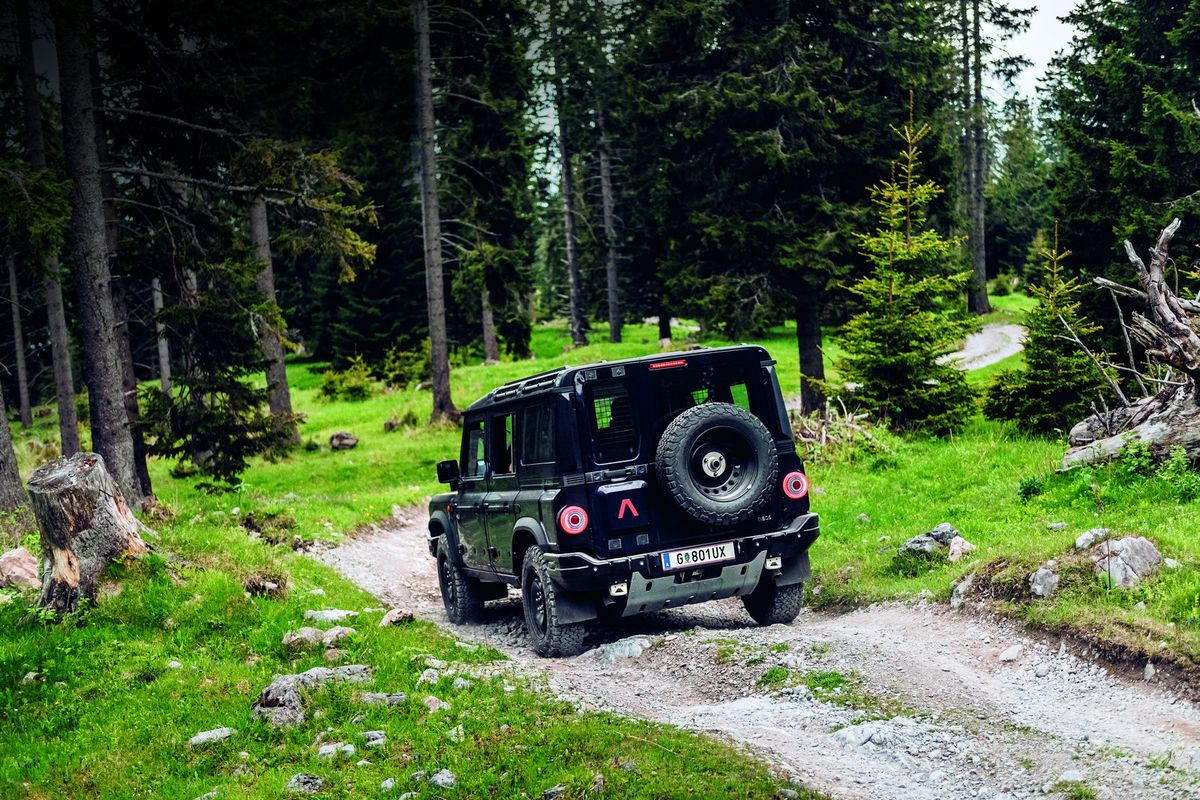
I’m nearing the end of the Schöckl’s most demanding section, where the narrow trail becomes ever more technical over perilous weather-worn granite before the summit. However, the extreme conditions are clearly no impediment to the Grenadier, which continues its low-rev progress as if it were just driving to the shops.
There’s a bakkie version coming
Multiple body styles will eventually be available, including a double-cab bakkie.
Over the next few weeks, engineers from Magna Steyr plan to cover some 2 000 km here as part of an overall 1.7-million km durability test programme to be carried out on the model by mid-2022.
This traditional-looking but otherwise contemporary off-roader was dreamed up by Ineos chief executive Sir Jim Ratcliffe (one of Britain’s richest people) and a group of colleagues one evening in The Grenadier pub, close to Ineos’s headquarters in Knightsbridge, central London. Conceived to take up where the original Land Rover Defender left off when production of the British icon finally ended in 2016, it’s now at a pivotal stage of development, with less than 3 months to go before Ineos plans to begin accepting deposits ahead of (UK) sales starting in March 2022.
To ensure things run as smoothly as possible, Ineos has commissioned Austria’s Magna Steyr – which is responsible for a variety of current production cars, including the BMW Z4, Jaguar I-Pace, Mercedes-Benz G-Class and Toyota GR Supra – to oversee initial prototype builds and the ongoing development activities.
At the same time, Ineos is busy gearing up the former Smart car factory in Hambach, France, which it purchased from Mercedes-Benz in 2019, for Grenadier production. Plans are for annual volumes of up to 30 000 by the middle of the decade.
“Our aim is to build a truly robust four-wheel-drive vehicle,” Ineos Automotive boss Dirk Heilmann says. He reveals that his car will offer a payload of up to 1 000 kg, a braked-trailer towing capacity of 3 500 kg and a 150 kg roof-load rating, adding: “We set out to deliver a high degree of utility, and we haven’t lost sight of this.”
Two versions of the Grenadier will be available from the outset: a 5-seater station wagon (the subject of this drive) and a 2-seater commercial vehicle, both based on a standard 2 921-mm wheelbase. Shortly afterwards, Ineos will launch a double-cab pick-up truck and a 7-seater station wagon, both using a longer (3 175 mm) wheelbase (these should reach SA about 6 months after the first units arrive).
Utilitarian with modern features
The interior of the Grenadier is still a well-kept secret.
As well as appealing to private buyers who seek a traditional go-anywhere-do-anything off-roader, Ineos expects its first model to find its niche among tradespeople and farmers, along with companies and government organisations that do their business on the land. Heilmann says market studies Ineos carried out before Grenadier development got underway in earnest revealed that, following the recent shift in emphasis to the Defender, there’s now a gap in the 4×4 market between the likes of the Jeep Wrangler and the Mercedes-Benz G-Class.
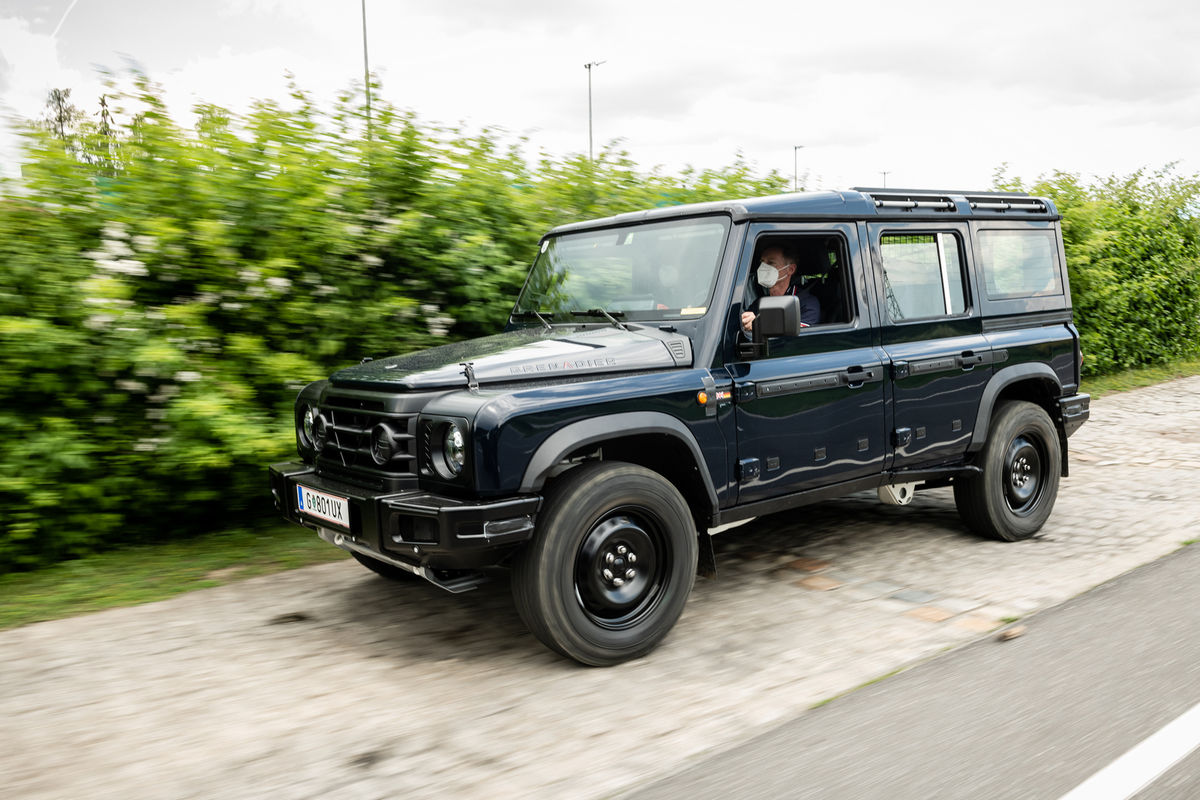
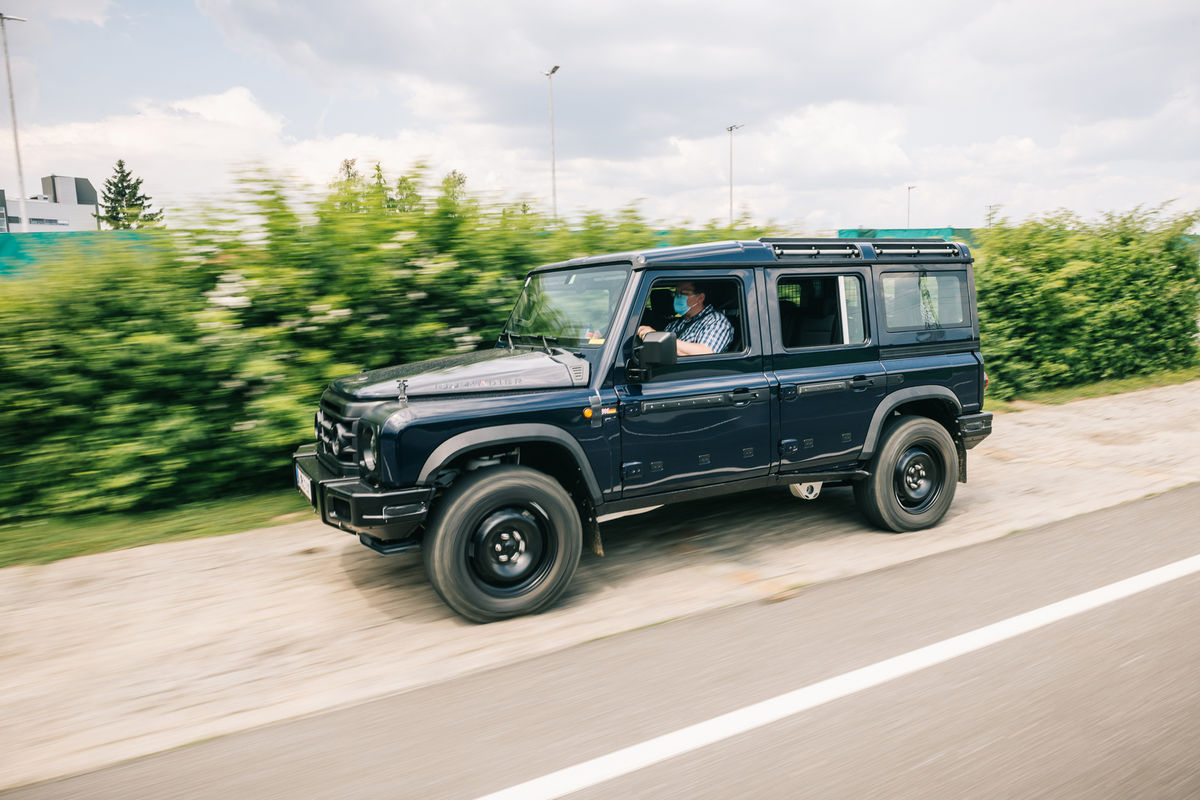
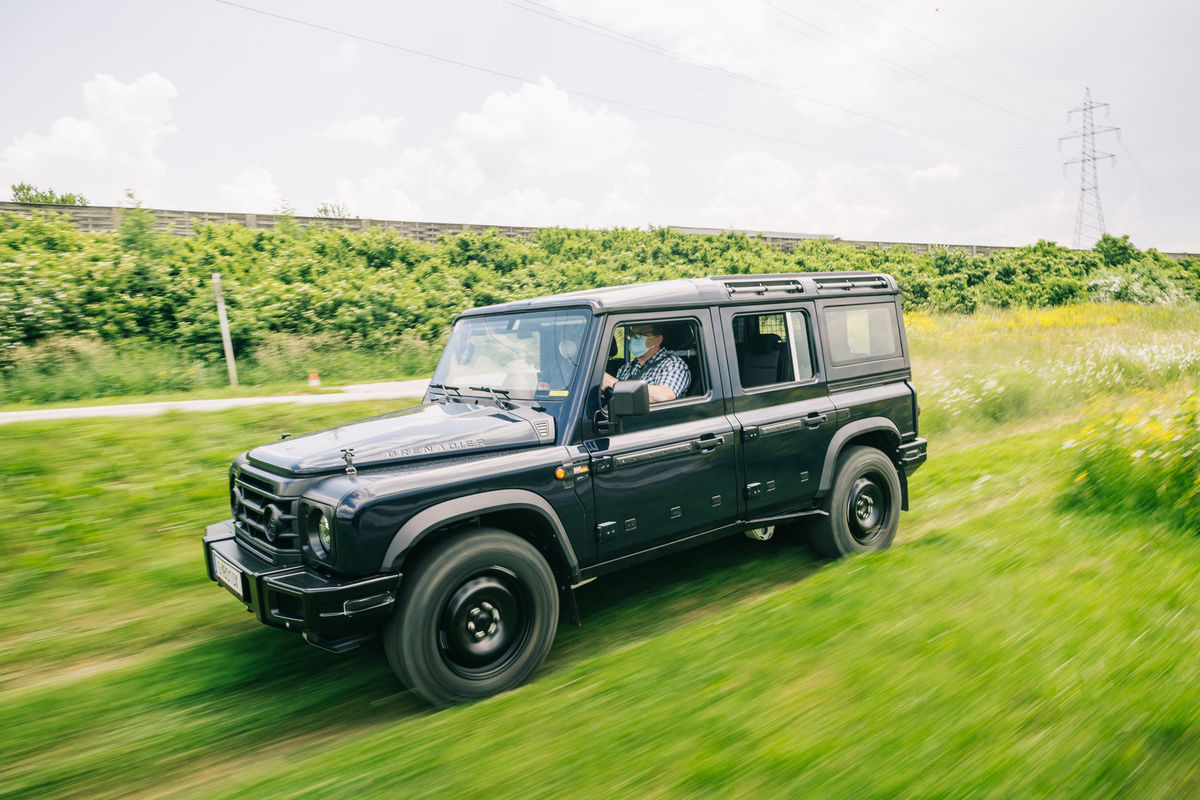
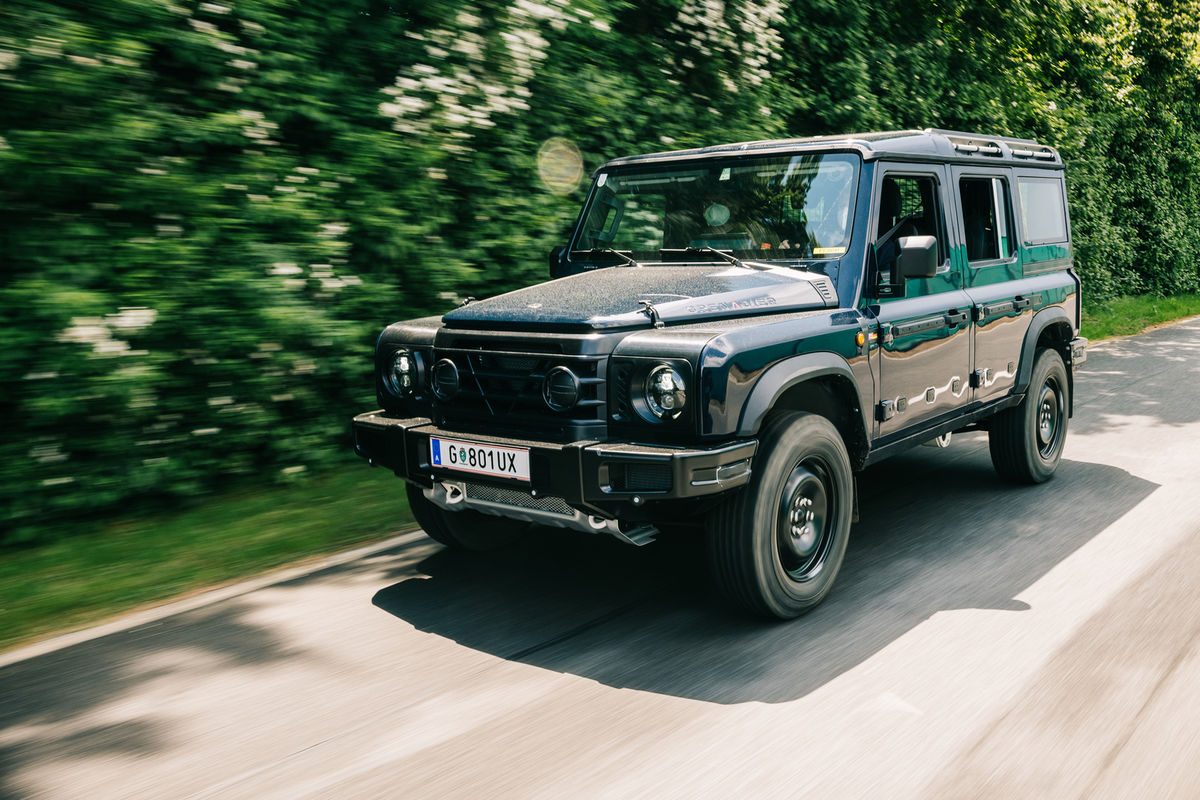
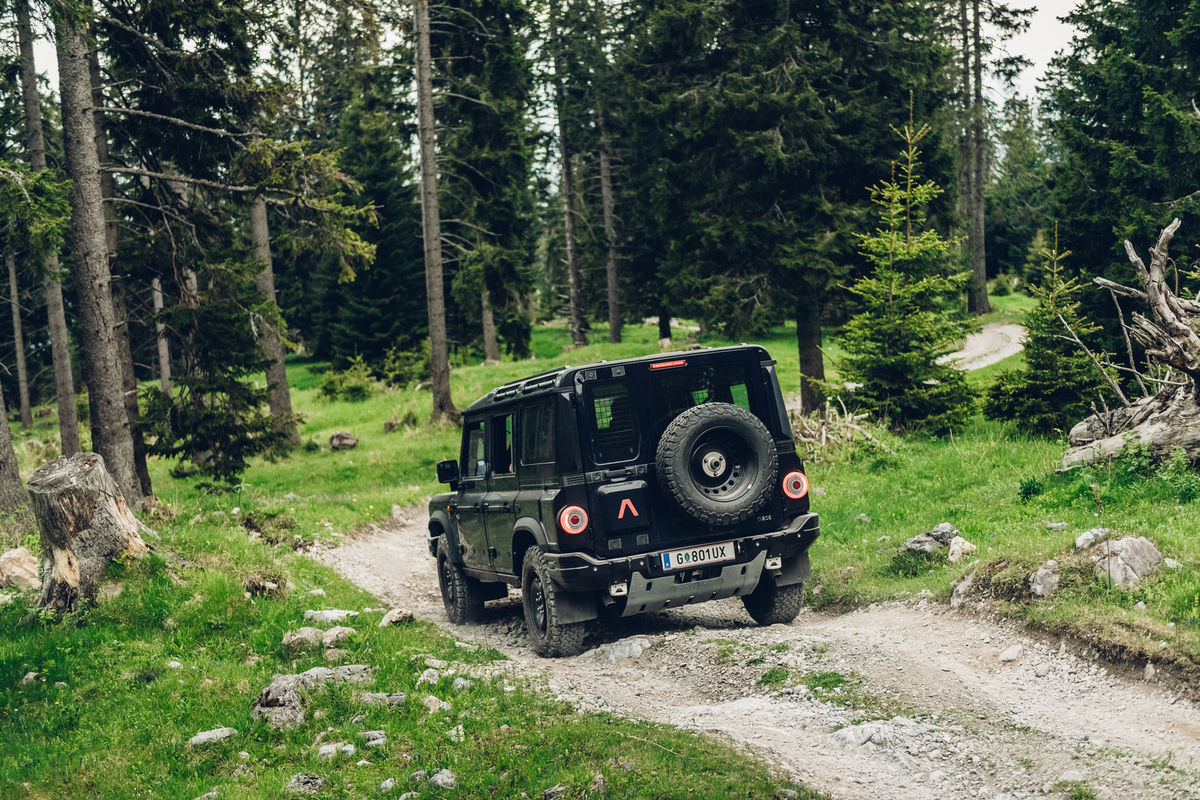
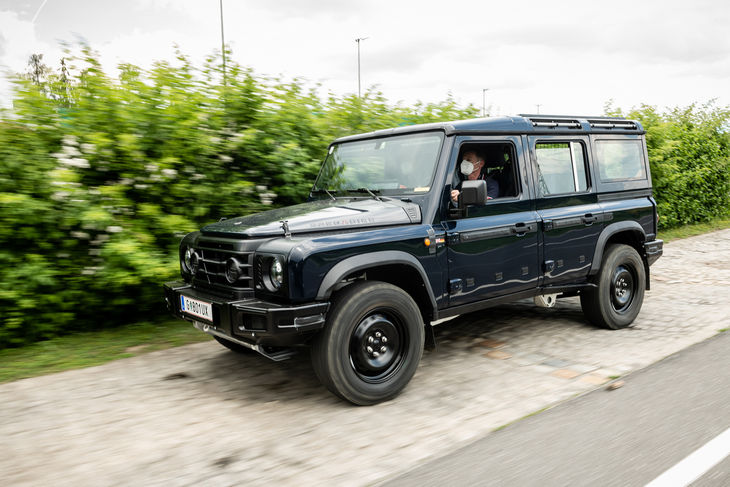
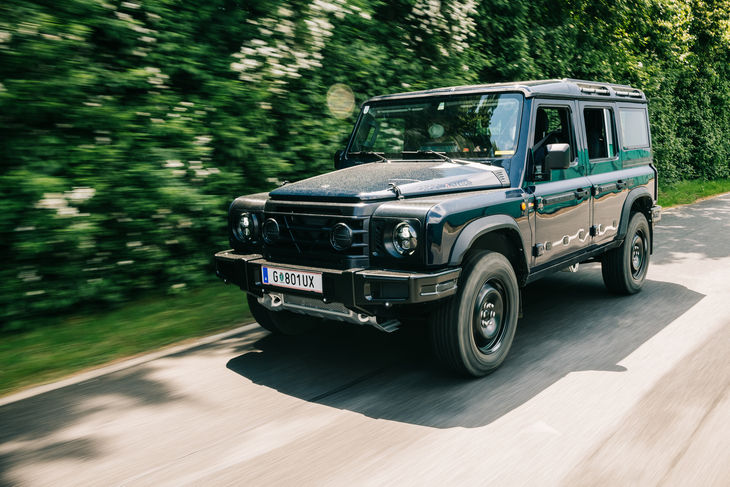
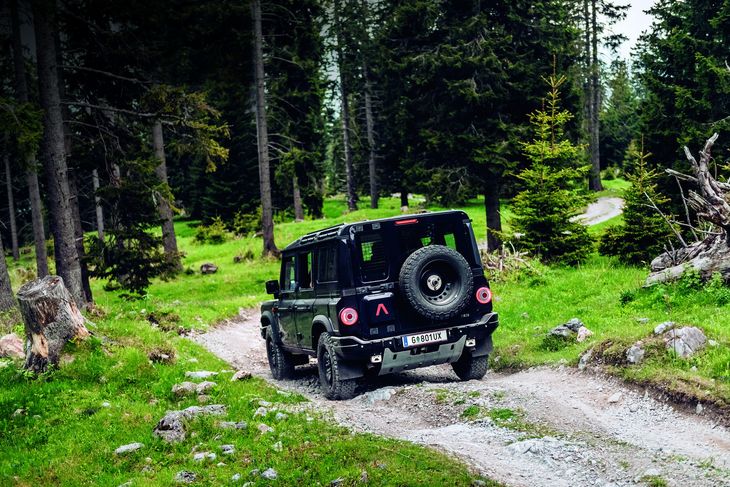
It’s hard not to think of the old Defender when you first see the Grenadier. There are obviously some design similarities between the two, including the round headlights, separate fenders, flat windscreen, clamshell bonnet, button-style door handles, exposed door hinges and barn-door-style tailgate. Some will consider the familiar appearance of the new off-roader as a compliment to traditional Land Rover design; others possibly won’t be so diplomatic.
In any case, it looks tough and includes some hugely functional features, including “utility rails” within the body’s side protection that buyers will be able to choose as part of a long list of optional extras. And with 6-stud wheels shod with 265/70-profile Bridgestone Dueler H/T off-road tyres, these prototypes appear ready to take on the very worst roads (and, eventually, even the Eastern Cape’s roads).
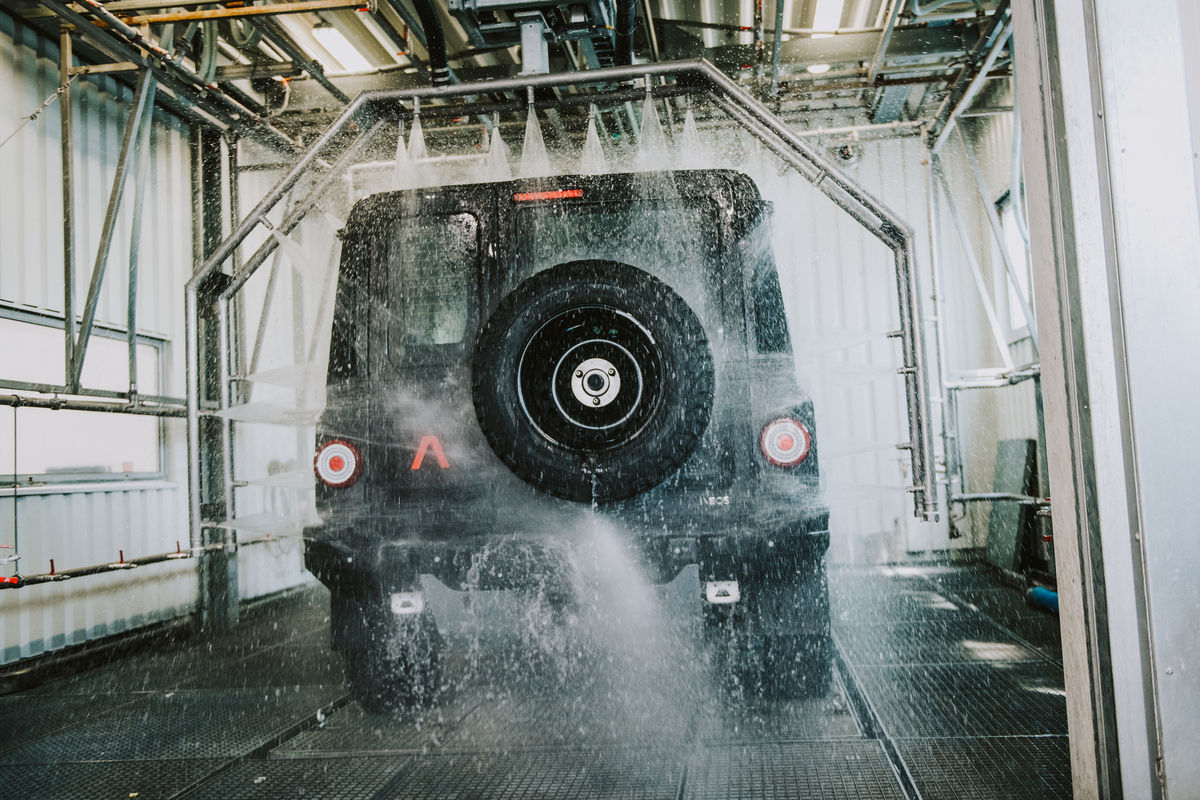
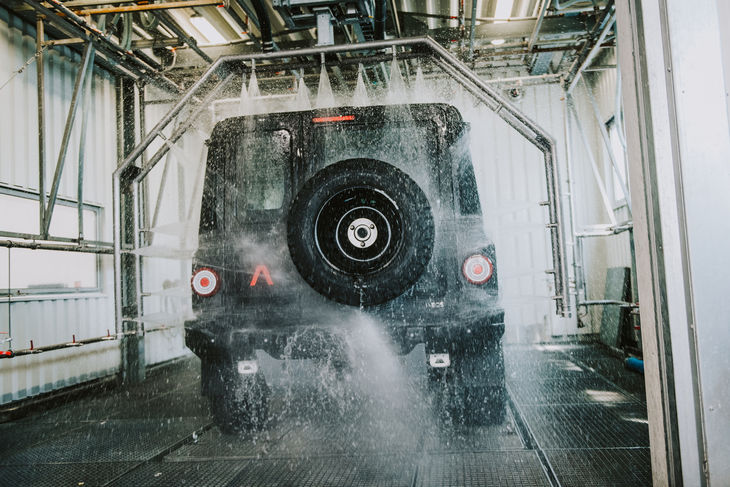
The Grenadier isn’t completely utilitarian, however. Features such as LED lights help to give it a modern touch. One of the prototypes we drove even had rear parking sensors. Look more carefully and you notice other modern features, including the latest in sealing technology. “This category of vehicle has in the past not been the best in this particular discipline,” says Heilmann. “Water, gas and dust tightness is one of the areas we’ve concentrated a lot of effort on getting right.”
The basis for the car is a sturdy ladder-frame chassis whose design was commissioned specifically by Ineos. It’s produced in Bielefeld, Germany, by Gestamp (the firm that was responsible for the structure of the Volkswagen Amarok), and it’s combined with a pair of very robust-looking beam axles made by Italian company Carraro.
It’s hardly state of the art, harking back to the layout used by the original Defender, but it fulfils a purpose in providing outstanding ground clearance and is mated with several modern systems, including Bosch power steering. Again, as with the old Defender, the Grenadier’s inner body is a steel structure while the body panels, including the fenders, roof and doors, are manufactured from aluminium.
Ineos Grenadier features BMW power
BMW’s straight-six engines do duty under the Grenadier’s bonnet.
Power comes from a pair of BMW-produced turbocharged 3.0-litre inline-6 engines. These were chosen for their ability to deliver the sort of relaxed performance and strong torque that Ineos deemed crucial to providing the Grenadier with class-leading off-road performance as well as sufficient refinement to enable it to be used every day on the road.
“We looked at quite a number of possibilities when we started out, both 4- and 6-cylinder,” says Heilmann. “However, we quickly came to the conclusion that the inline-6 petrol and diesel engines from BMW were the best fit, from both financial- and packaging standpoints.”
Both engines have been tuned specifically for the new 2.5-tonne-plus off-roader. The turbopetrol delivers peak outputs of 210 kW and 450 Nm of torque, while the turbodiesel offers 186 kW and 500 Nm. These output figures aren’t final, however; Heilmann says the diesel could receive an added 50 Nm by the time the Grenadier goes into production. Drive is sent permanently to each wheel through a standard 8-speed torque-converter automatic transmission manufactured by German transmission specialist ZF and a low-range transfer case from American engineering firm Tremec.
Climbing into the Grenadier puts clearly into focus just how high it sits from the ground. It takes more than just a simple step to enter. The driving position, though, is great, with a large seat and a broad ledge that allows you to rest your elbow atop the door trim – unlike in the original Defender, whose driver’s door always impinged on its driver. The dashboard, which is unfashionably narrow but wonderfully utilitarian in design, is set quite high. But you’re afforded good visibility all round – you see the bonnet and front corners out front, while the mirrors are large enough to provide a good view of the rear.
Having been sworn to secrecy on certain elements, we can’t tell you much more about the cabin other than that it will definitely surprise some. It’s architecturally quite traditional and extremely roomy up front, but Ineos has come up with some special touches for the instruments and controls that we think will appeal greatly to the sort of customers it’s targeting.
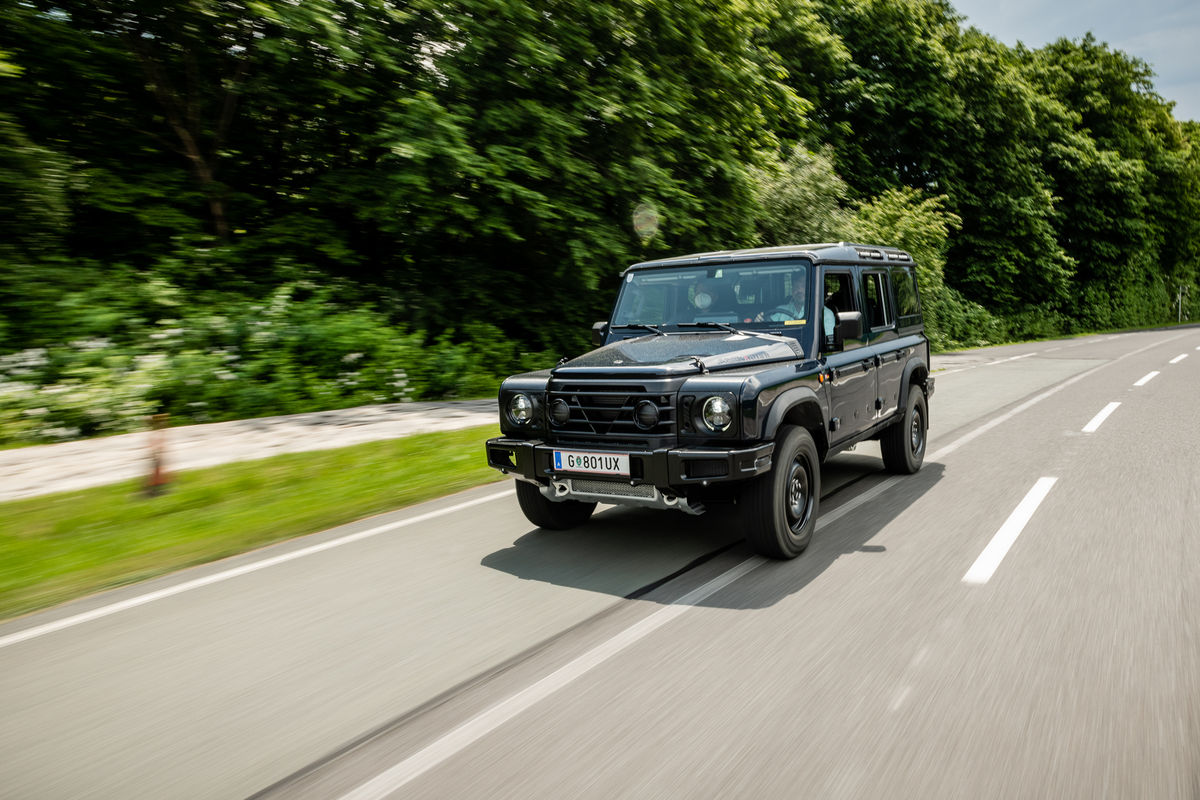
When we get underway, the apparent strength of that BMW petrol engine and slick action of the auto ‘box initially impress. The Grenadier is a heavy machine (Heilmann puts its kerb weight at somewhere between 2 600 kg and 2 700 kg, at this stage), but there are sufficient reserves – most notably of torque – to give it more than reasonable step-off and in-gear qualities on the open road.
What’s the Grenadier like at speed?
Visual links to the previous-generation Defender are obvious, but the Grenadier is new from the ground up.
It’s fairly refined, too. Perhaps not at a luxury-car level, but apart from some distant transfer-case whine in the prototype we drove, the mechanical properties are definitely well ahead of the clunky Defenders I remember driving a decade ago.
However, while the upright windscreen does wonders for visibility, it and the big side mirrors contribute to quite a lot of wind buffeting at speed. This, among decisions about the gearing, is one of the reasons that the production Grenadier will be limited to 160 kph.
With all of that ground clearance and those rigid beam axles, you don’t expect the Grenadier to offer its driver too much in terms of handling finesse. There’s lots of body roll when it’s turning, owing to its fairly soft spring rates and masses of travel, but the rate of roll is quite progressive, building with the steering input to keep you well aware of just how much you can push through the corner.
The prototypes we drove had yet to receive the latest steering software. Right now, they work at a rather long-winded 3.5 turns lock to lock, giving them a less than precise feel at higher speeds and lack of self-centring of the steering wheel. A 13.5-metre turning circle also hampers overall manoeuvrability at lower speeds. “We’re working on it,” says Heilmann. “There are some solutions in the pipeline that we think will greatly improve it in this respect.”
Even with that substantial roll, the Grenadier can be coaxed to carry quite a bit of speed into corners; but with all that weight to contend with, it doesn’t take long before the off-road biased tyres lose their grip. This car is old fashioned in many respects, but its rather relaxed movements form a huge part of its appeal. Suffice to say it dislikes being hurried and responds best to measured driving inputs…
Summary
Prototype models should be heading to SA before the end of 2021.
Ineos will divulge a lot of vital off-road-relevant statistics about the Grenadier in the coming months – approach, departure and breakover angles, wading depth etc – but the sheer ability of the Grenadier over the more technical sections of the Schöckl is proof that the decision to employ a traditional body-on-frame design was the right one. No modern-day monocoque could ever hope to provide quite the same degree of axle articulation, spring travel or sheer climbing ability.
It can do things that off-roaders of more modern construction can only dream of. It also feels wonderfully engineered, with an almost Teutonic feel to the rigidity of its structure and weighting of various functions, including the door and tailgate closures. With development still ongoing, it’s going to be some time before we get to experience the Grenadier in its final production form.
Right now, however, the signs are looking good. Ineos’ newcomer doesn’t rewrite the automotive rule book, but then, it never set out to. It’s refreshingly authentic in what it offers, with the sort of driving characteristics that will no doubt appeal to a select group of people who have long been ignored by traditional carmakers. It has bags of charm in its on-road qualities and, from what we’ve seen so far, it’s virtually unbeatable in low-range off-road conditions – and makes few excuses for its traditional construction along the way.
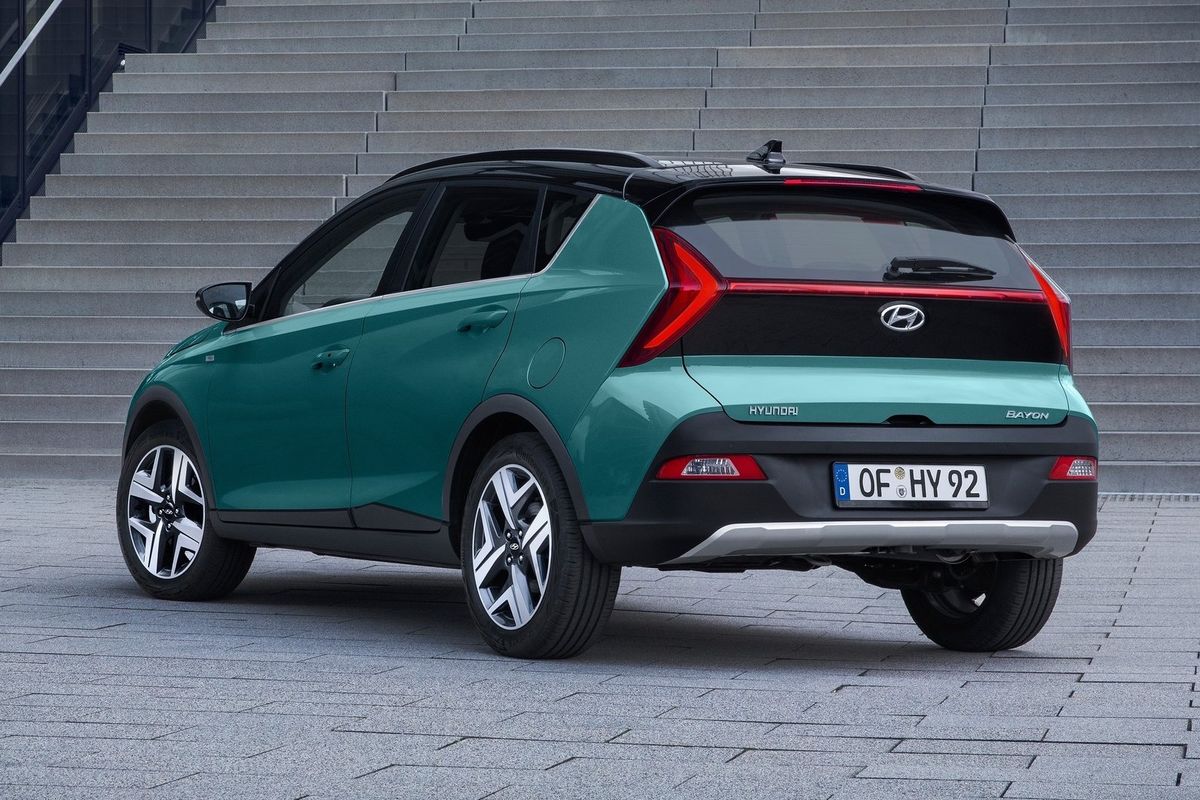
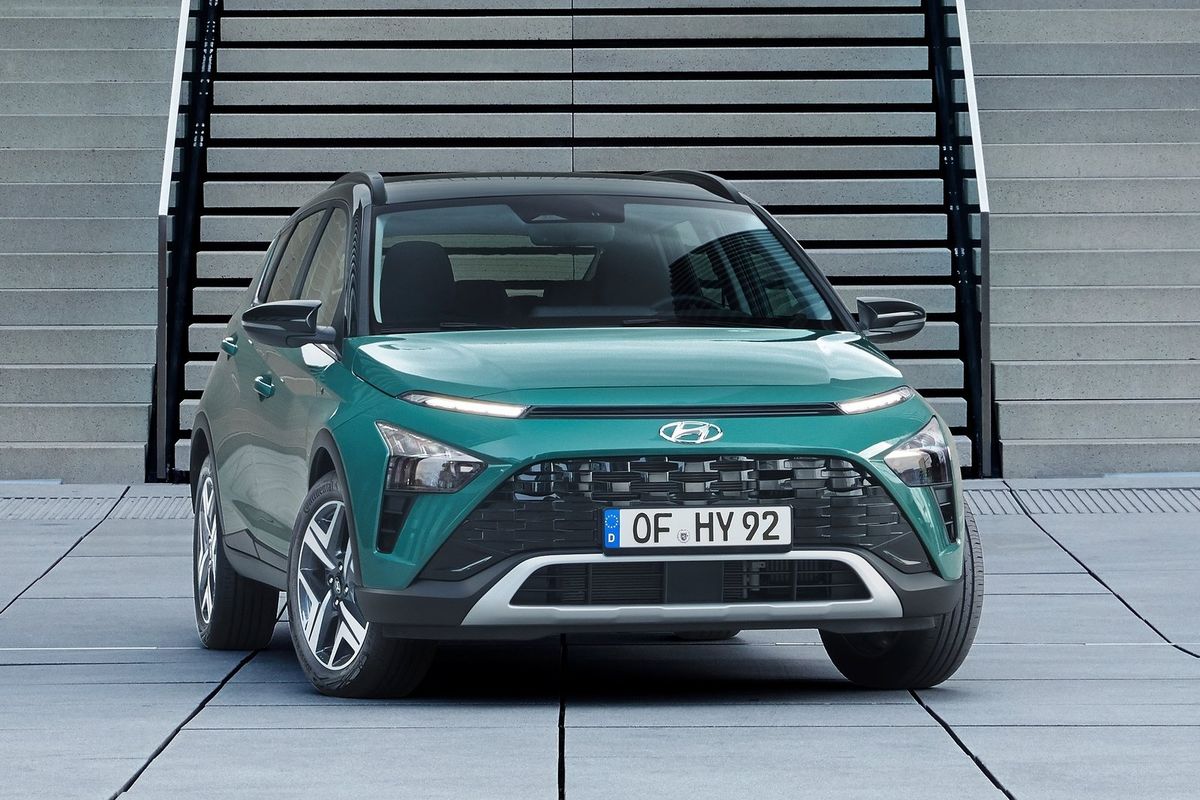
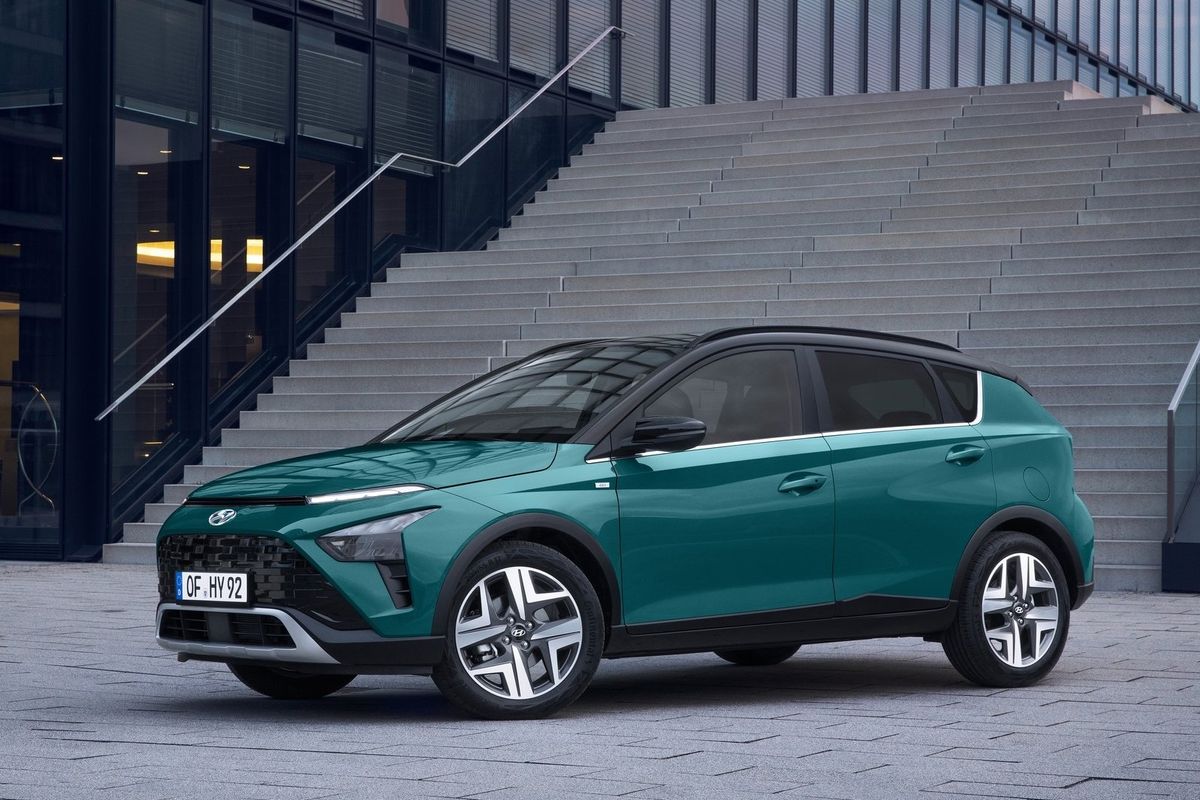
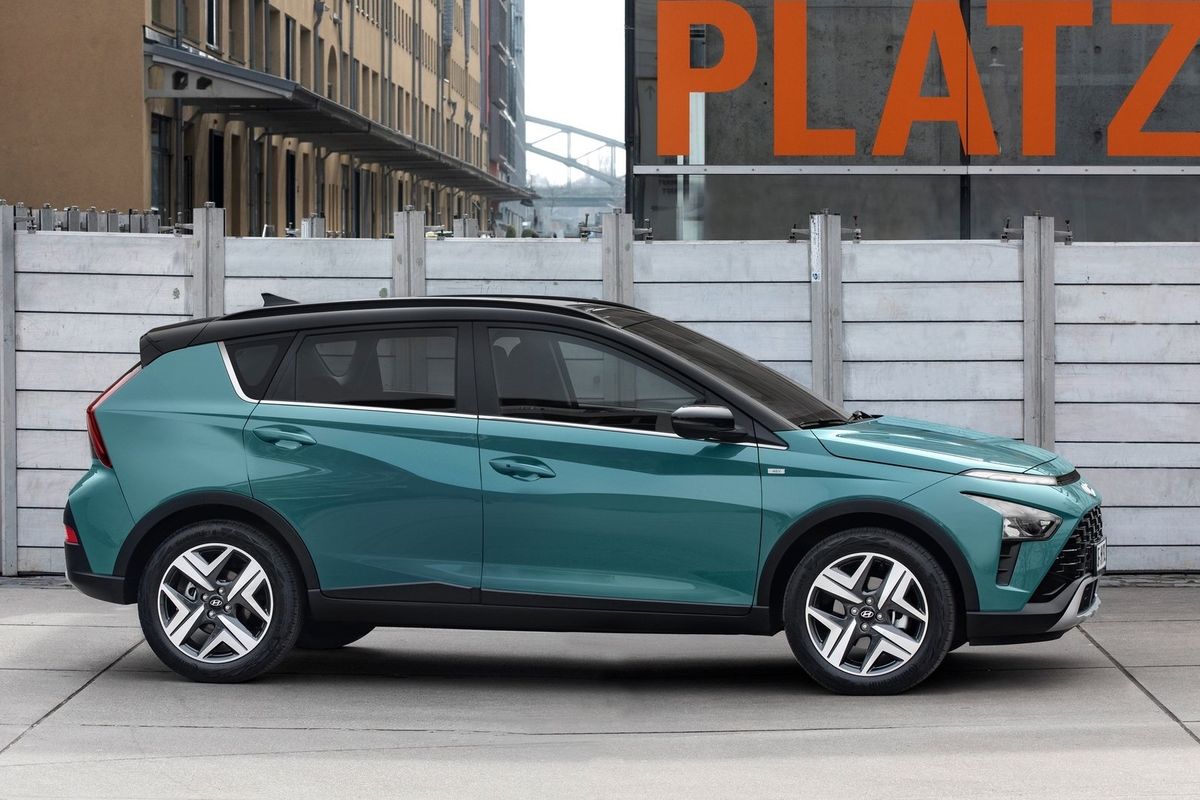
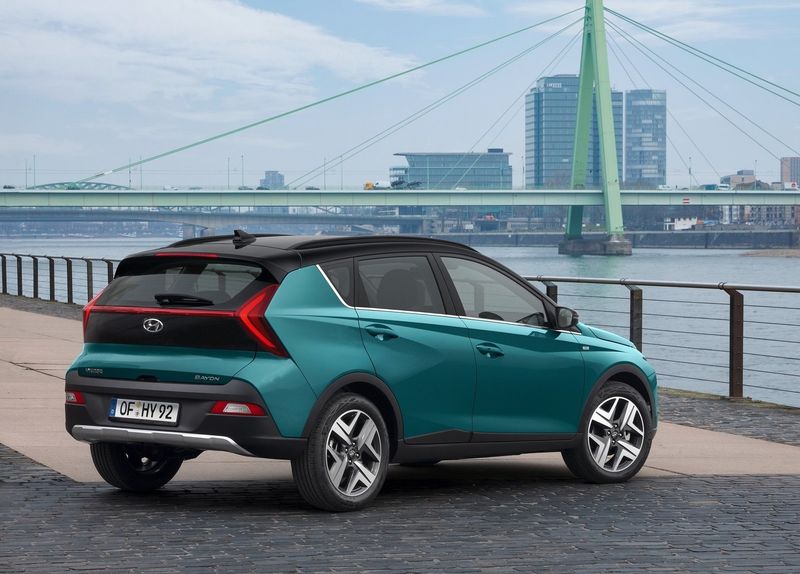
Hyundai has showcased its all-new SUV. Meet the 2022 Hyundai Bayon, a small SUV aimed at the European market.
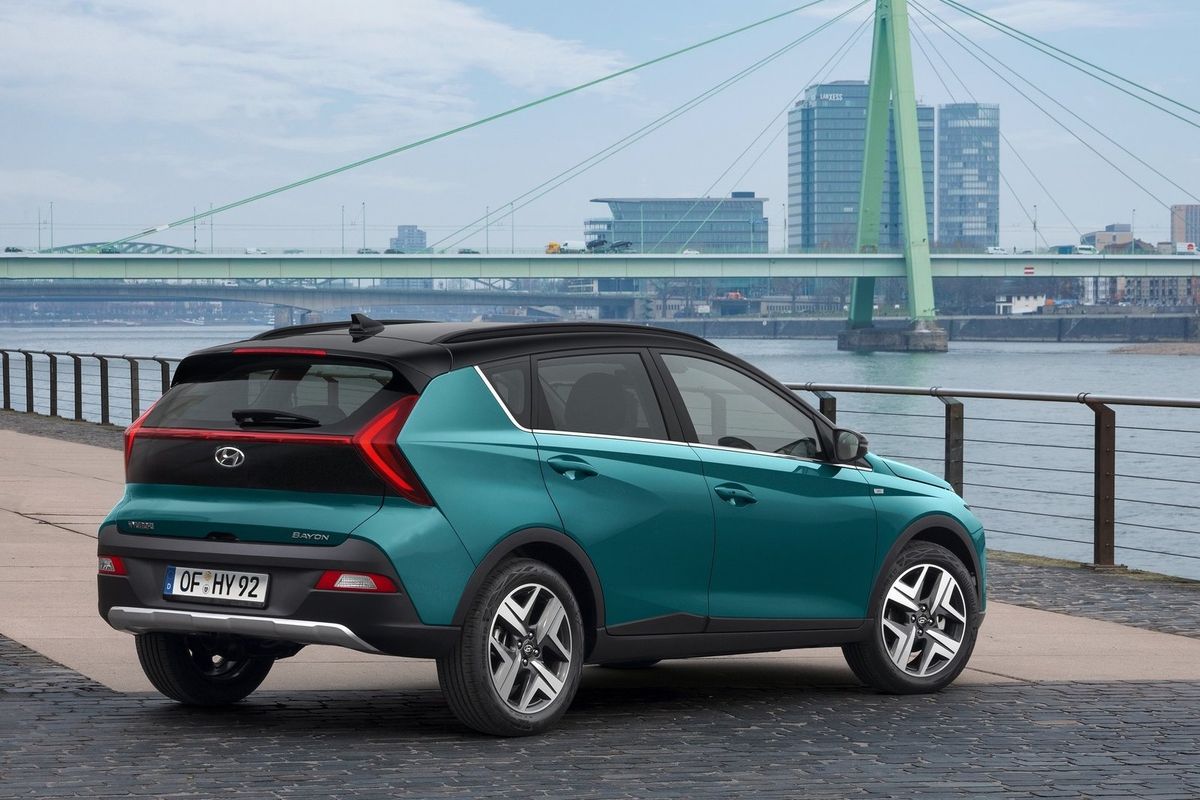
Like Volkswagen, the Korean brands are also releasing a raft of SUVs to tackle all niches and segments. For the European market comes the 2022 Hyundai Bayon, which Hyundai says takes on the B-segment SUV market.
The 2022 Hyundai Bayon is the smallest member of the brand’s SUV family and is named after Bayonne, apparently one of the most beautiful destinations in France and a vacation hotspot.
Visually, the Hyundai Bayon adopts the current Hyundai design language, with a bold grille and minimalist headlight and daytime-running light design. There’s a very angular theme on the car and the rear is dominated by a horizontal light bar.
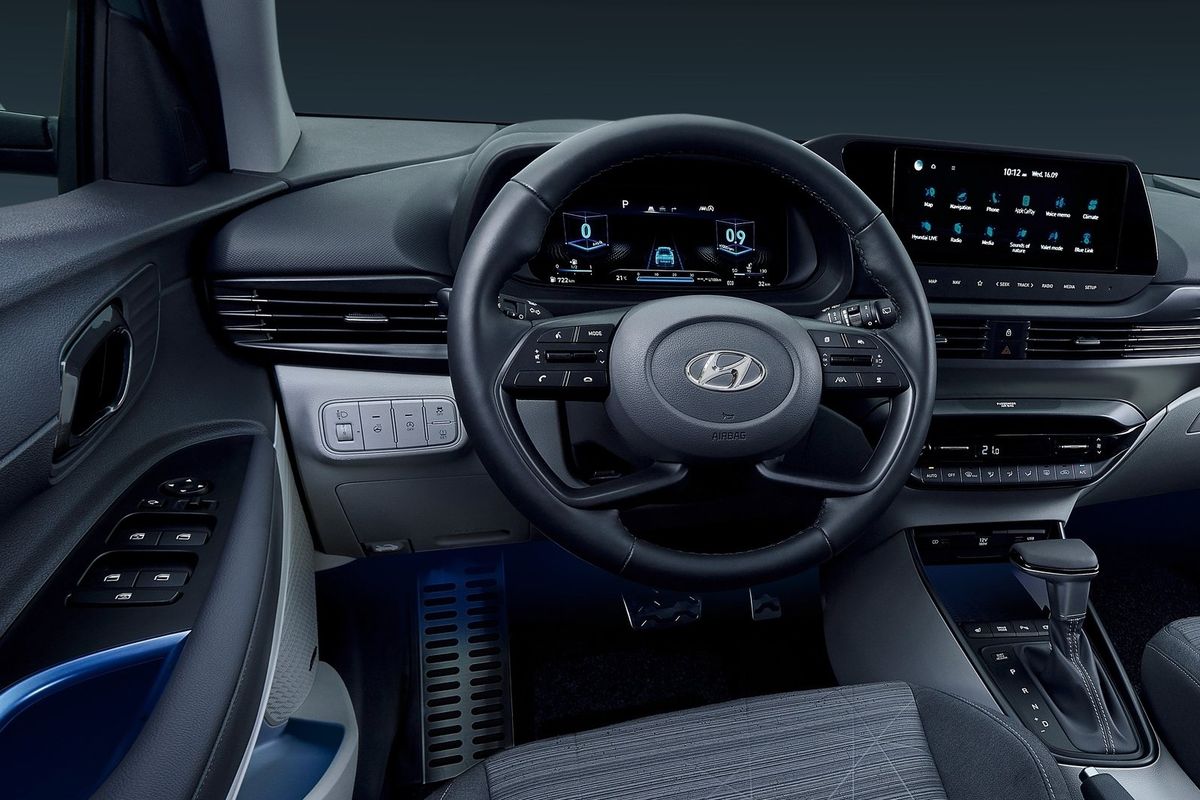
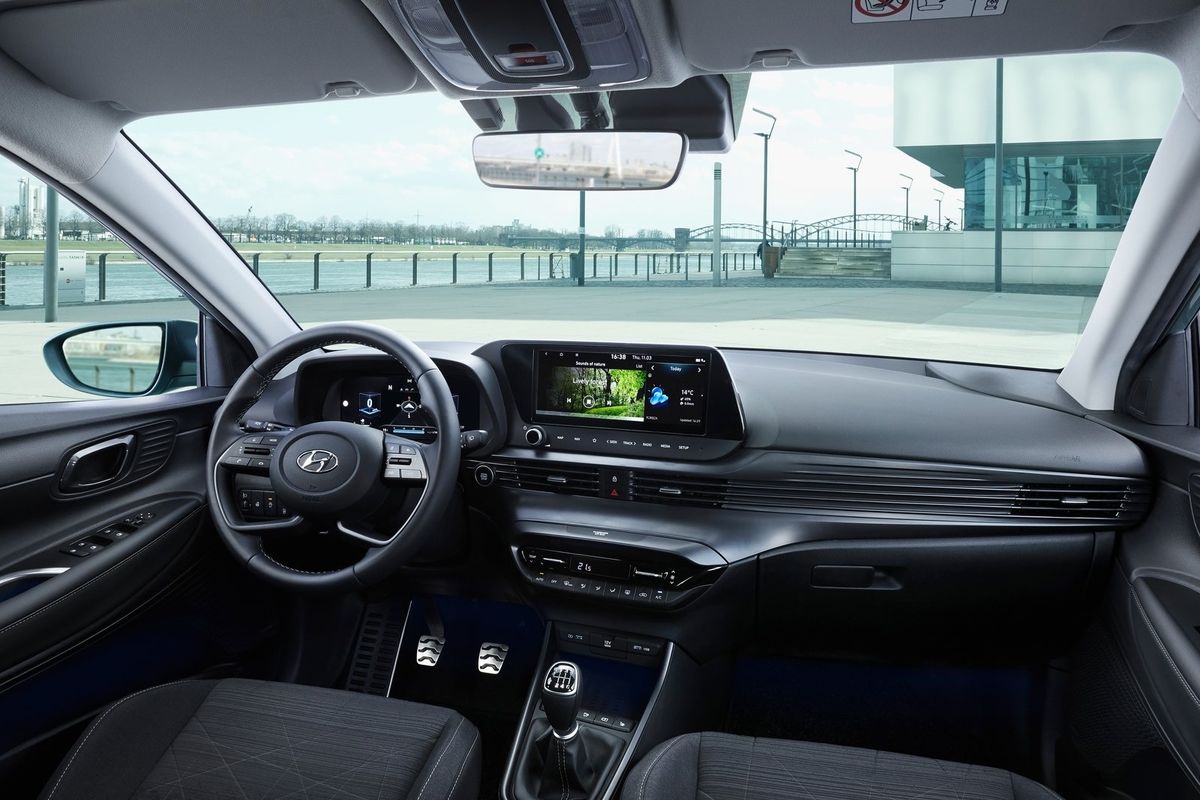
Hyundai reckons that despite its compact size, the cabin offers a clean and roomy layout, with 411 litres of boot space.
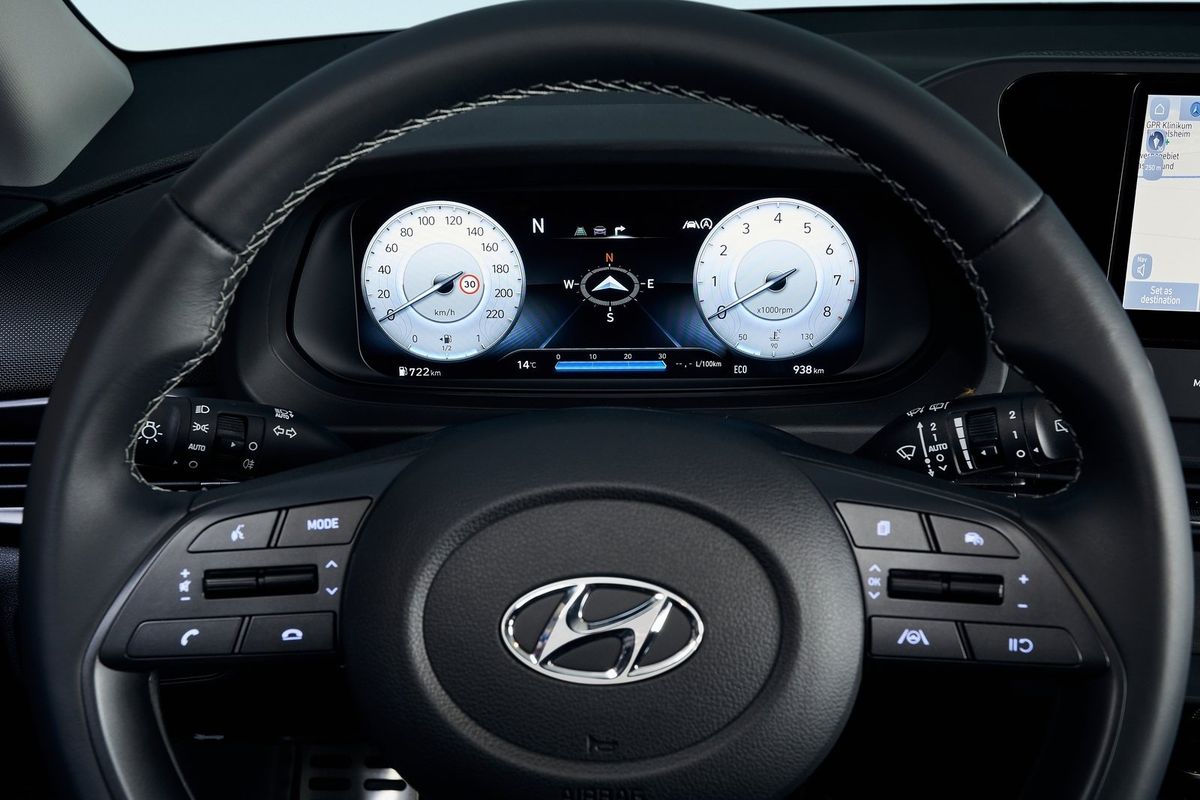
The standard features list looks impressive with a digital dashboard, wireless phone mirroring, Bose audio system as well as advanced safety tech like Navigation-based Smart Cruise Control (NSCC), Intelligent Speed Limit Assist (ISLA), and Lane Following Assist (LFA). The 2022 Hyundai Bayon is available with 15-inch steel wheels or 16- or 17-inch alloy wheels.
The vehicle is 4 180mm long, 1 775mm wide, and 1 490mm tall (or 1 500mm with 17-inch wheels) and offers 183 mm of ground clearance, which Hyundai claims is higher than most of its segment rivals. Speaking of, we reckon the Hyundai Bayon is aimed at the soon-to-be-revealed Volkswagen Taigo.
Under the bonnet is the 1.0-litre turbocharged 3-cylinder motor mated to 48-Volt mild hybrid technology. The vehicle is available in two states of tune: 74 kW and 88 kW. Customers can choose between a 6-speed manual gearbox or a 7-speed dual-clutch transmission. There’s also a naturally-aspirated 1.2-litre engine with 62 kW.
Will the 2022 Hyundai Bayon come to South Africa?
Given the advanced safety features and positioning, we suspect the 2022 Hyundai Bayon will not come to SA, based on a product overlap. Hyundai South Africa already has the Creta and Venue as its entry-level SUV range and a 3rd model might cannibalise sales. We’ll update this article if we hear anything.