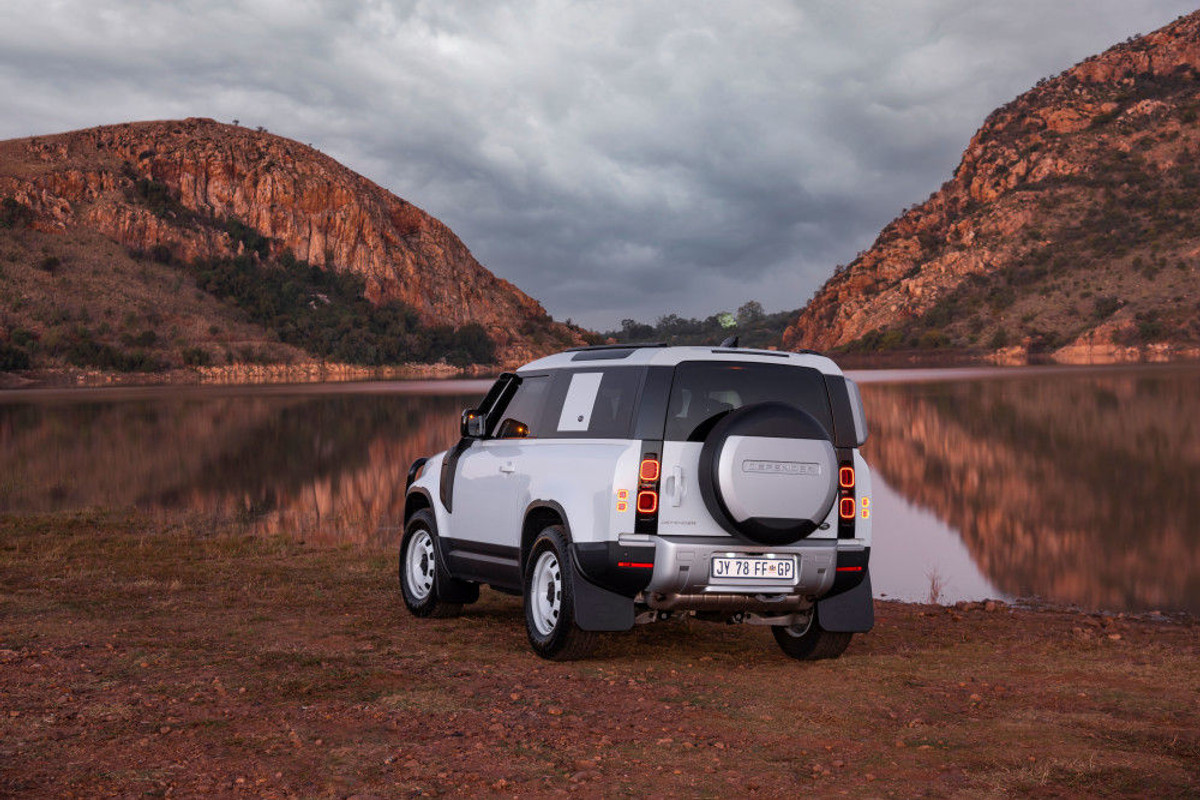
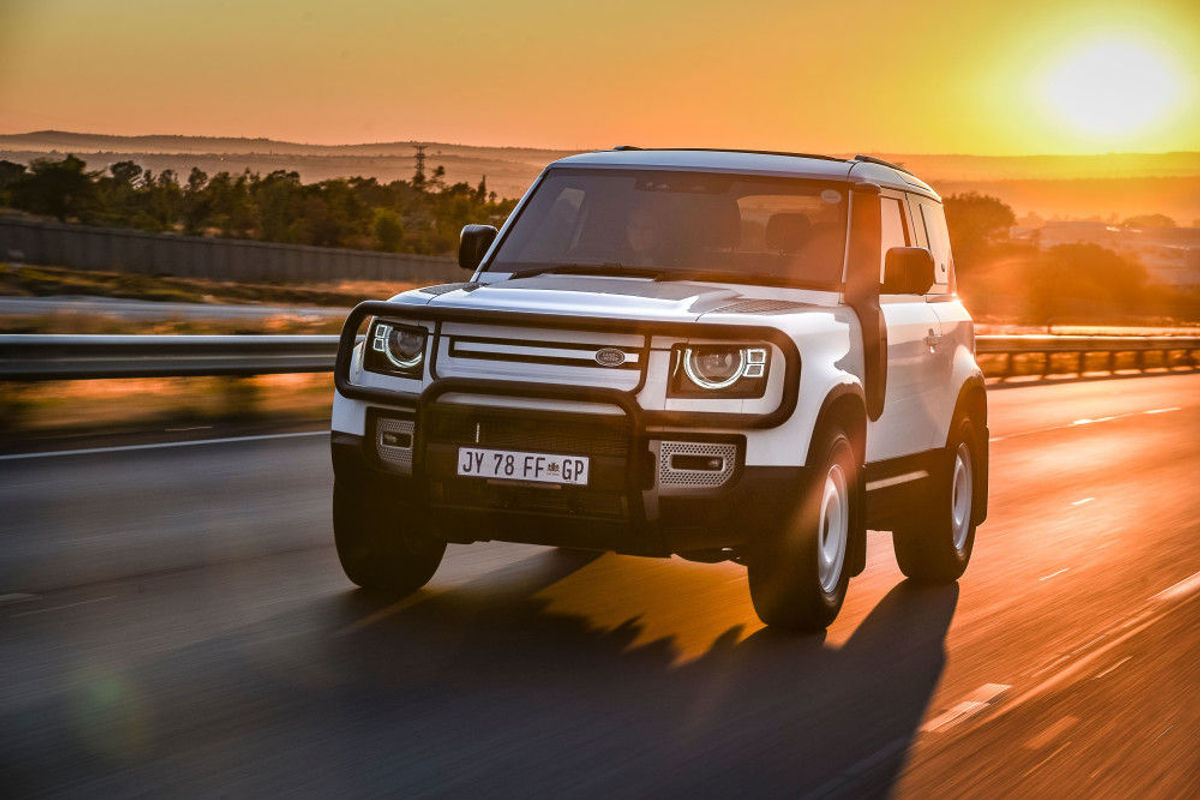
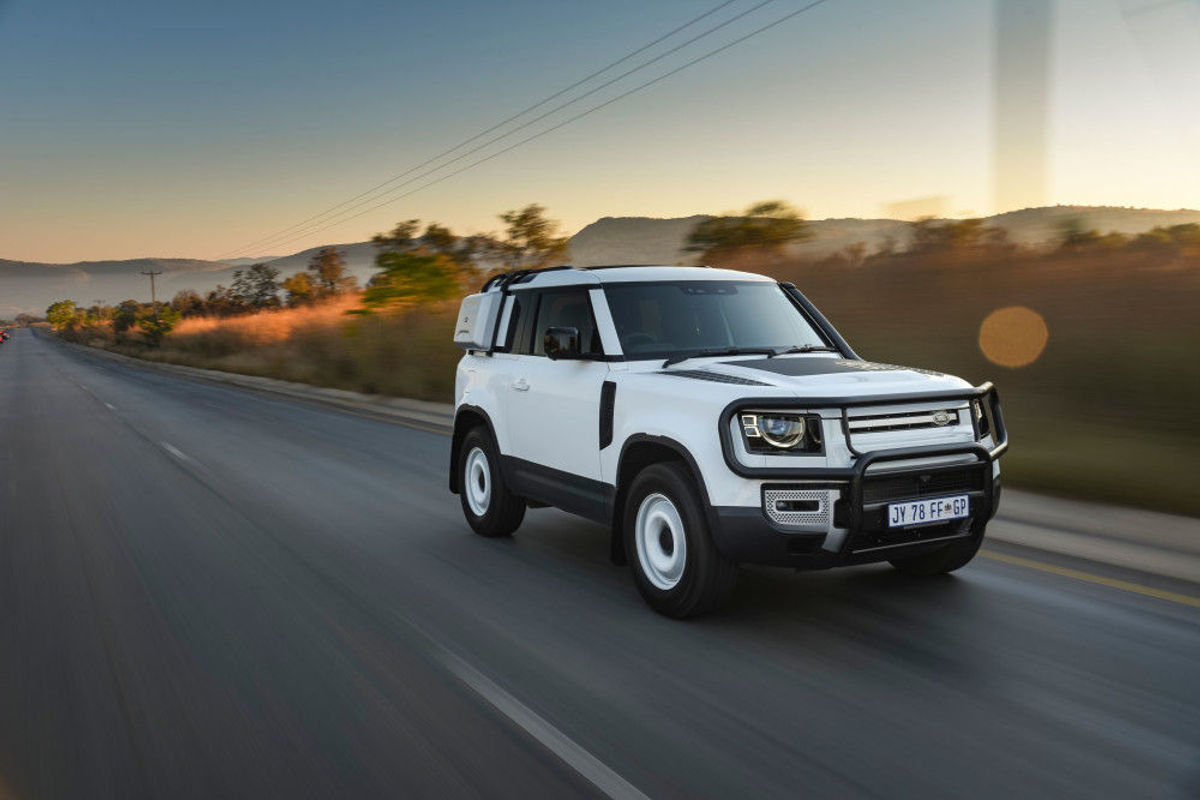
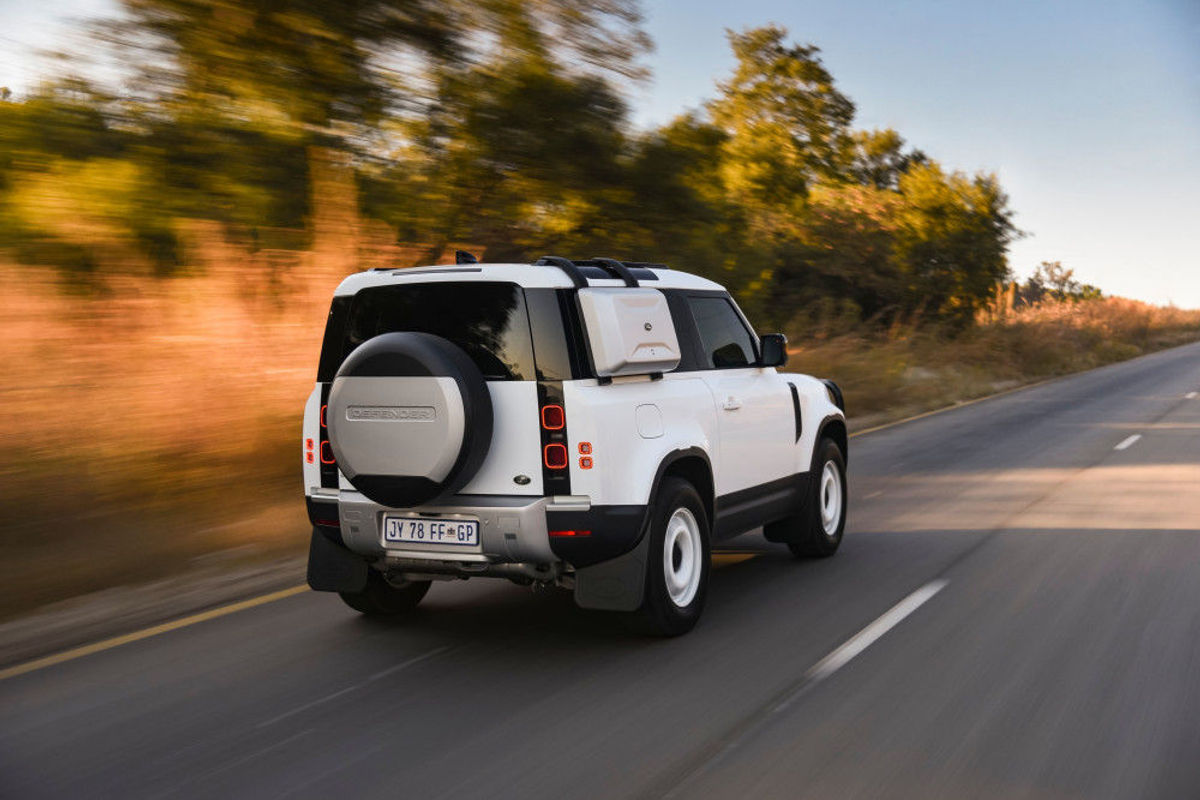
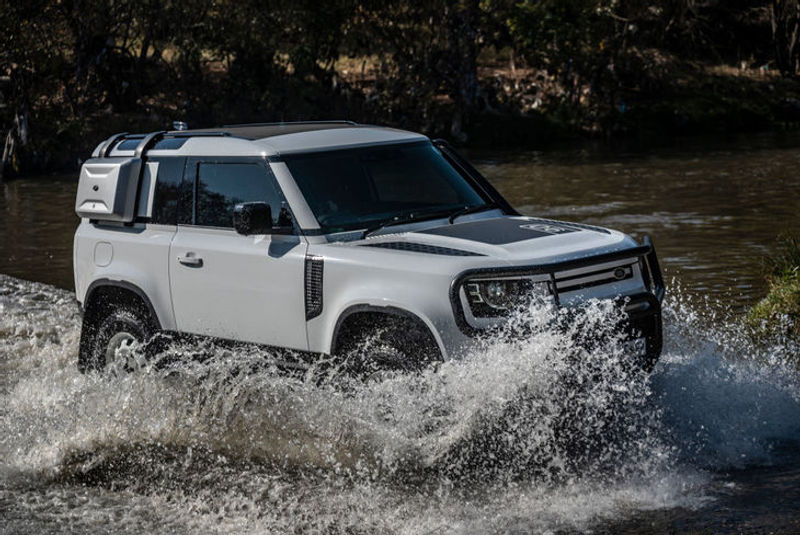
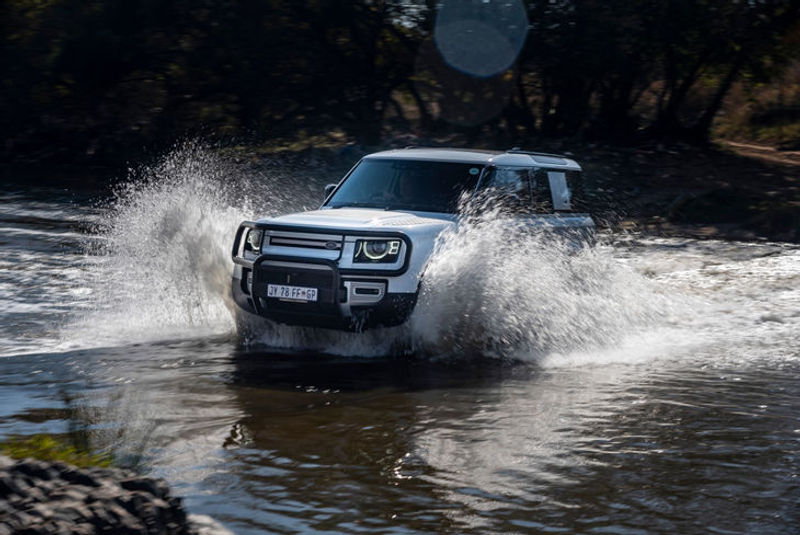
The Land Rover Defender with a V8 will be the ultimate Defender and South African pricing for the high-performance flagship has been announced.
The South African Land Rover Defender range currently comprises petrol, diesel and plug-in derivatives, but the family will be expanding with the arrival of a fire-breathing 5.0-litre supercharged V8 flagship.
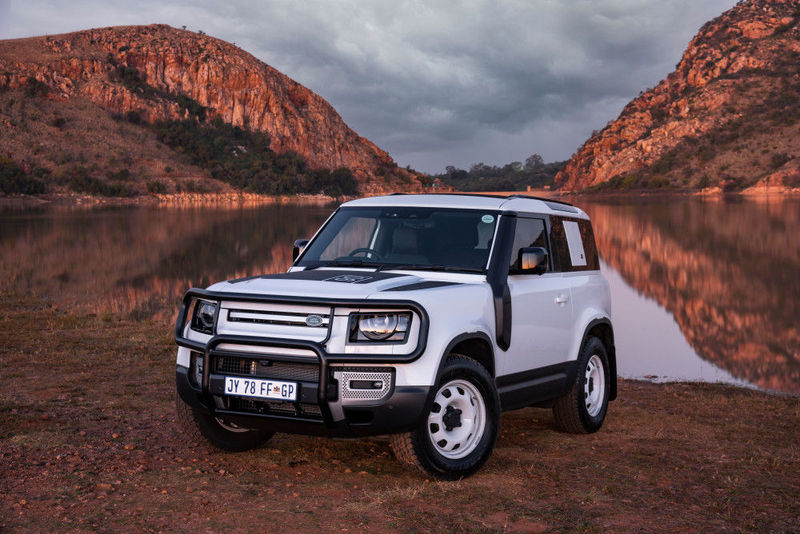
Land Rover South Africa will be introducing its V8-powered Defender in 4 flavours. There’ll be a V8-powered Land Rover Defender 90, a Defender 110 as well as two models badged as Carpathian Edition. This model is said to be the “ultimate expression of Defender design, performance, and capability”. It has an exclusive colour, and exclusive interior trim options.
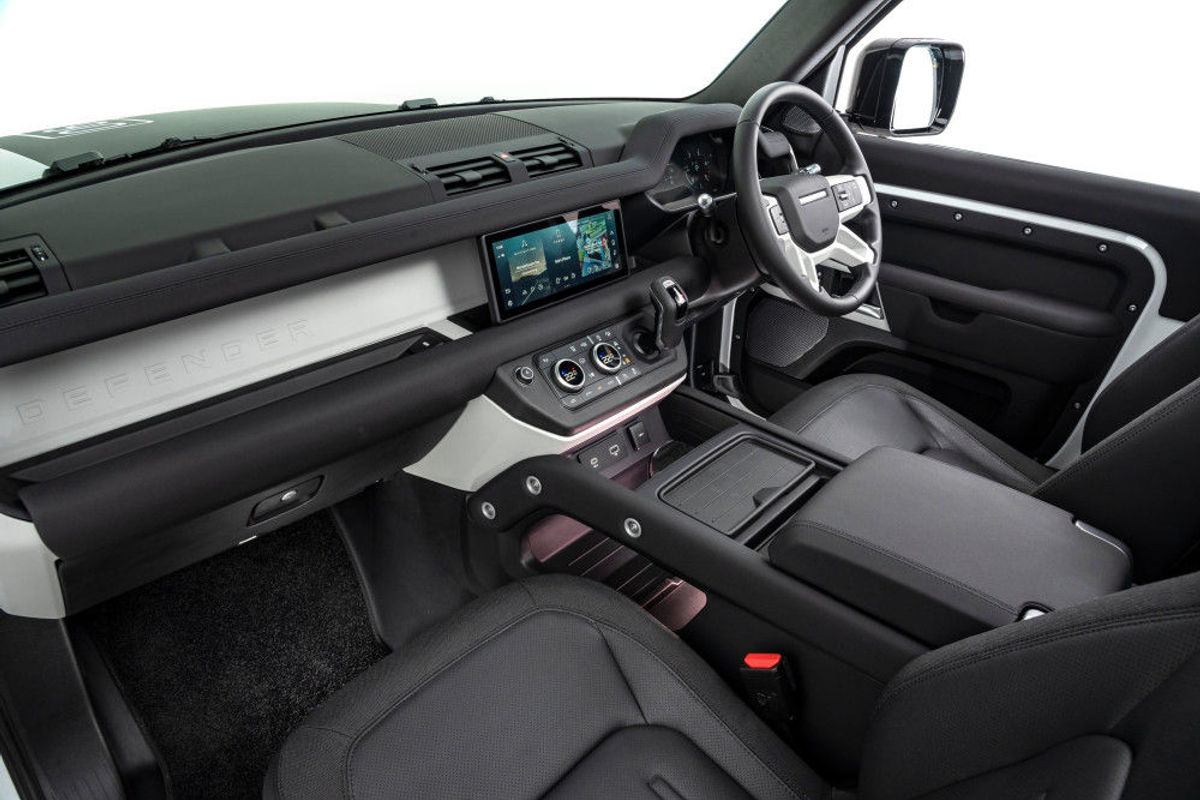
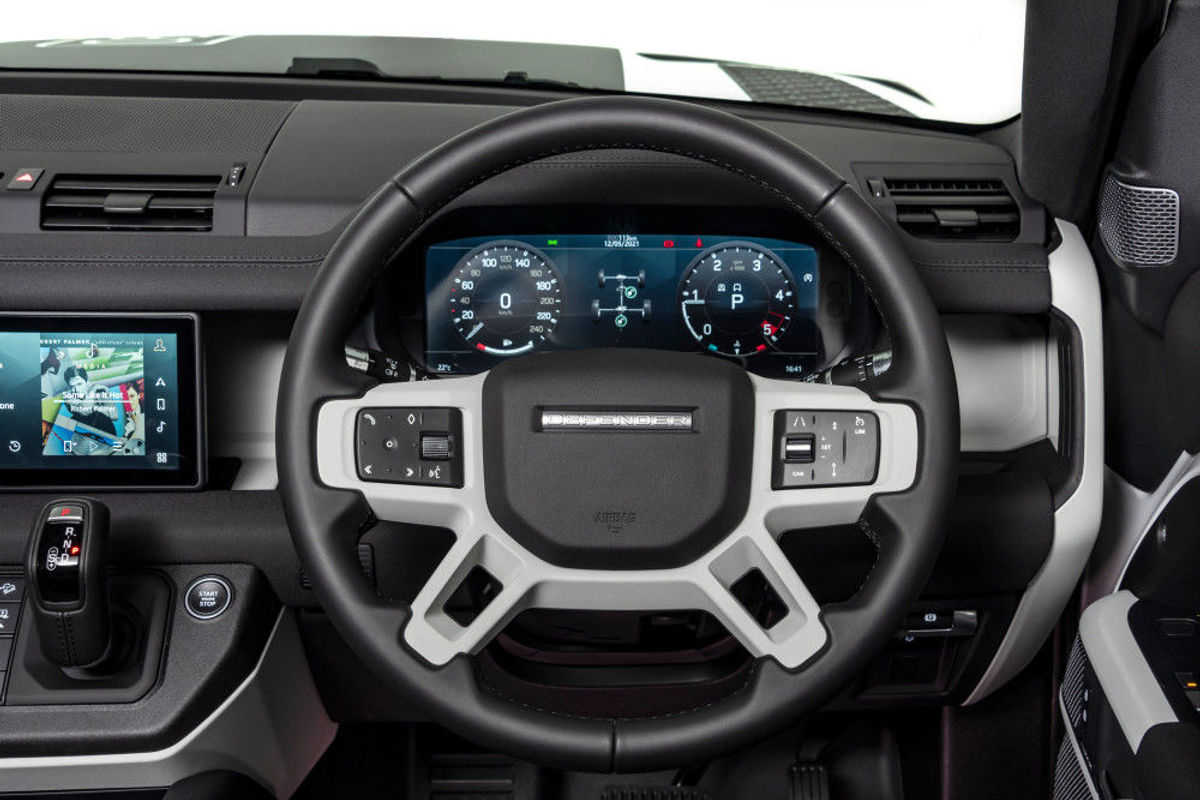
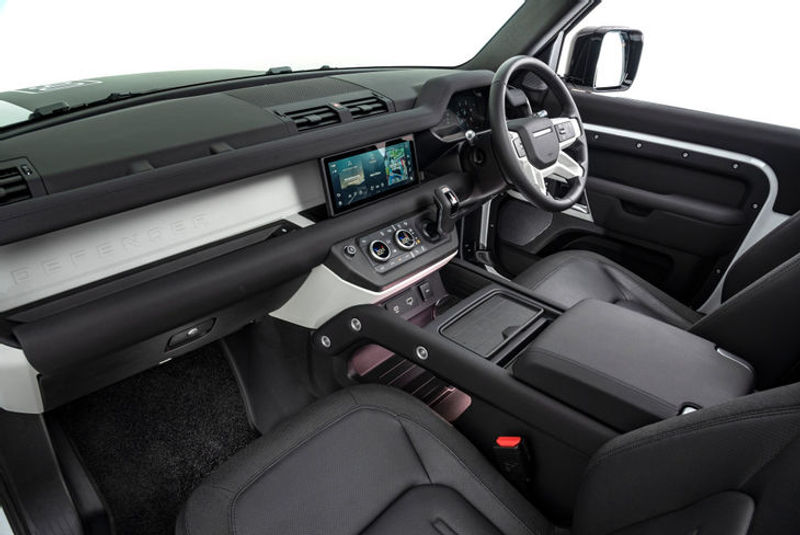
As for the standard V8, you’ll spot it with the bespoke exterior badging, quad exhausts with distinctive tailpipes and unique 22-inch alloy wheels. The V8-powered Defender also features Xenon Blue brake calipers and 20-inch brake discs. Inside, the cabin there are special seats trimmed in unique Ebony Windsor leather with Miko Suedecloth and Robustec accents, while the Defender’s exposed Cross Car Beam has a special Satin Black finish. The four-spoke steering wheel is enhanced by an Alcantara rim and tactile satin chrome gearshift paddles, which are unique to V8 models. Leather covers the airbag housing and gear lever, while illuminated treadplates are completed with a V8 script.
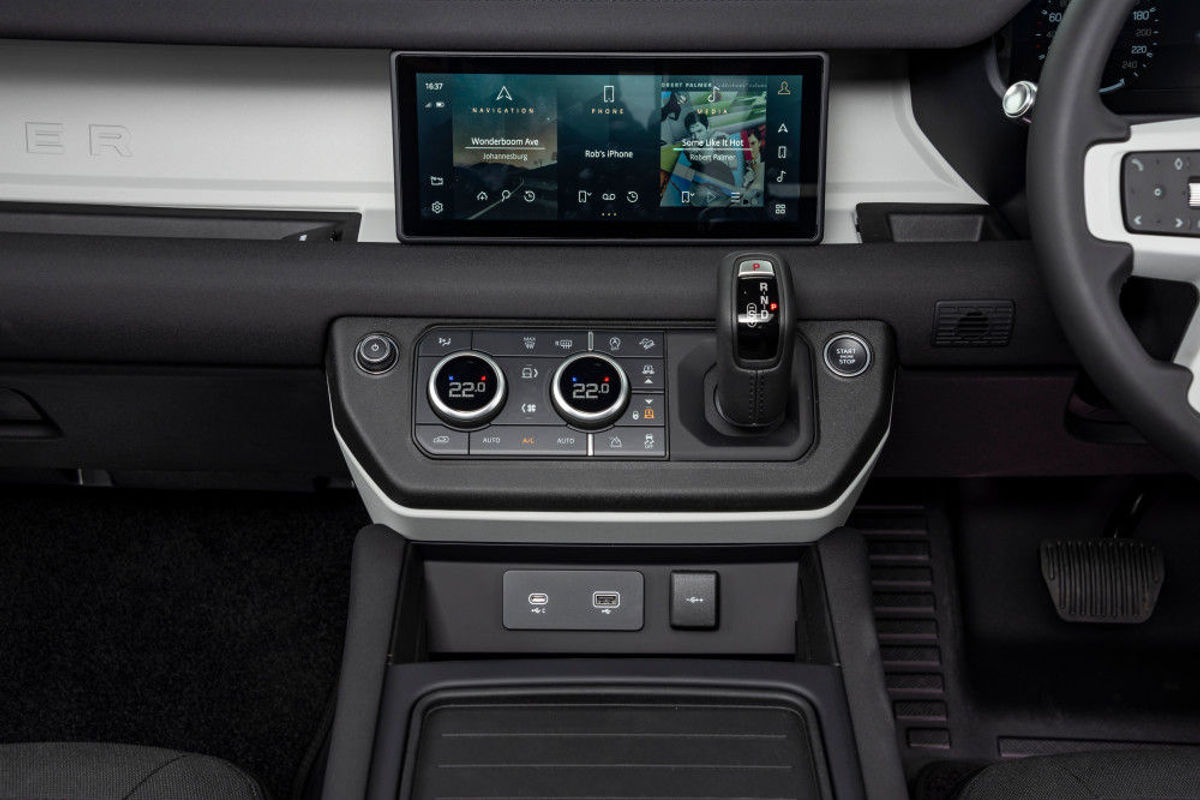
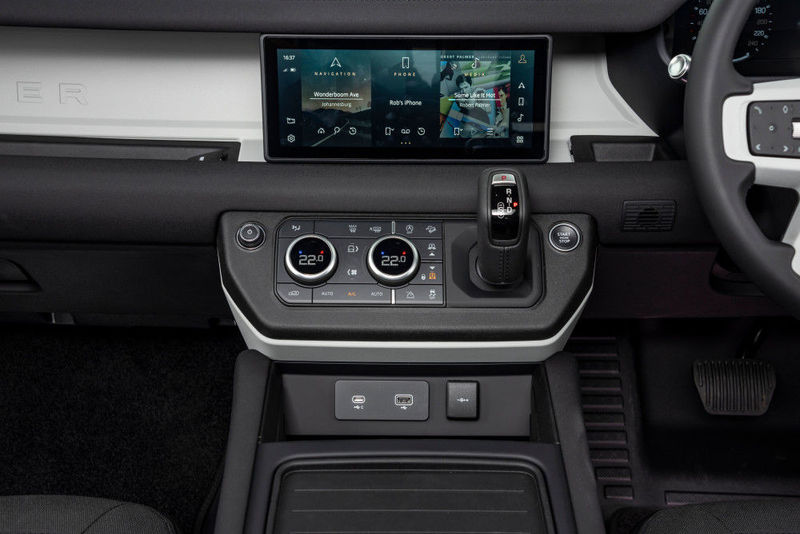
The Land Rover Defender flagship is also available with wireless device charging, which also features a signal booster for better connectivity. Speaking of connectivity, the Defender V8 is also available with an even bigger 11.4-inch touchscreen which is 60% bigger than the standard unit.
V8 Defender Engine
At the heart of the Land Rover Defender flagship model is the JLR 5.0-litre supercharged V8 which gets another lease on life. We know this engine is capable of big power, but it appears the Defender V8 is running a little conservative. That being said, 368 kW and 625 Nm in a Land Rover Defender is going to feel very quick.
Power goes to all 4 wheels via an 8-speed automatic gearbox and performance is brisk, with Land Rover claiming this is the quickest Defender to date. 0-100 kph is dispatched in a claimed 5.2 seconds for the Defender 90 and it’ll run to a top speed of 240 kph. Expect the bigger Defender 110 to be fractionally slower than that. With all that additional performance, the Land Rover Defender has received a unique suspension and transmission tuning, as well as spring and damper rates plus a new electronic active rear differential.
How much does the Land Rover Defender V8 cost in South Africa?
Land Rover Defender 90 V8 R2 270 310
Land Rover Defender 110 V8 R2 343 910
Land Rover Defender 90 V8 Carpathian Edition R2 365 710
Land Rover Defender 110 V8 Carpathian Edition R2 439 310
My vehicle finance application was declined – what now?
We feel you! You found your dream car on Cars.co.za. The dealership’s Vehicle Finance Manager asked you a million questions and your excitement grew. Your car finance application went to all the banks and then the bad news started. Declined, declined, declined! Here we give the 3 biggest reasons why vehicle finance is declined and what you can do about it.
I know it is of little or no consolation to you right now but, at the moment, only 30% of vehicle finance applications are being approved. That means 70% are getting declined; you are not being singled out.
In South Africa we use the word ‘blacklisted’ a lot. We make it sound like some evil banker somewhere decided we are on the ‘naughty list’ and the Santa Claus of credit will never visit us again. Our dreams are dashed, we are forever shamed and we will be driving our current skedonk until it dies!!
The good news is that this is just not the case…..but it does mean that there is something wrong and you need to do some homework. Find out the reason and fix it. Until you sit down and do this, you will be driving that skedonk.
Vehicle Finance Declined Reason #1: BAD credit score
Your hopes of being offered a vehicle finance agreement largely depend on your Credit Score. It’s a really big deal. If you have a bad credit score your car finance application will fail.
Cars.co.za has partnered with a company called Just Money to help you to understand your credit score and know how to improve it. The first thing you must do now is find out what your Credit Score is:
Okay, now you can see your Just Money Credit Report. On your Dashboard, you will see your score and whether you are rated “Bad”, “Average” or “Good”. If it says ‘Bad’, that is not a good sign!!
Scroll down on the Just Money Dashboard a little and you will also see which types of credit you may qualify for. Look for the car icon. You need to see a nice green tick on this button.
If you haven’t got that green tick, that’s probably why your Finance Application was declined. You MUST improve your Credit Score. Go to the article below to understand how to improve your credit score.
At this stage, it is important to check if you have any accounts in significant arrears, in Default or have Judgements against you. If you have any of these, they will kill your credit score for years to come. See the article below on Blacklisting for tips on how to check for this. Defaults and Judgements can stay on your credit report for up to 5 years. Best that you check because your skedonk may not last that long!!
If you got that aforementioned green tick for your Credit Score and still got declined then the next check you must make is whether you can actually afford the car finance installments every month. This is a hard reality check: a bank will only approve your vehicle finance application if THEY think you can afford to pay off the car. When it comes to vehicle finance, your opinion does not matter!!
Step 1: Go back to your monthly budget – add up your Monthly Debt.
At the start of this, you had an amount in mind of what you could afford for your car. Go back to this and pull out the calculations you made. Wait a minute, you only did a quick calculation in your head – sis! Now we must do this properly.
First think through all the accounts that you MUST pay every month. These are your Credit Cards, Loans, Bond, Clothing Accounts, Credit Facilities etc.. You signed a contract for these things and the debit orders will keep coming. They are the payments you MUST make to service the debts that you already have.
Once you have this figure, then add the amount you think you should be paying each month for the car you want to get a Rand amount for the amount you plan to spend each month on your car and other debts. The next thing we will do is to compare this figure to your salary.
Step 2: Compare Your Debt to Your Income.
If your debt payments are less than 30%, give yourself a ‘high-five’ for you are smiling baby!!
If your debt payments are more than 30% of your salary then you are spending more on debt each month than the Financial Gurus say you should. That is something to think about!!
If you are spending more than 40% of your income on debt then we are starting to zero in on the reason the banks are getting fussy about your vehicle finance application. You will be paying a lot of your income towards debt. Can you really afford more?
If you are over 50%, then car buying is not what you should be spending time on. Your debt could be a problem that is causing problems in your life. Learn more below:
The National Credit Act from 2008 puts restrictions on the Banks. They are not allowed to lend to people who cannot afford it. The bank must check what your income is and then compare it to your existing debt obligations and then decide whether you are in a position to pay it off.
Vehicle Finance Declined Reason #3: Your Trade-In
People often forget about the impact their existing vehicle finance deal has on their ability to buy another car.
Step 1: Get the best price for your car!!
It is super, extra important to make sure you are getting the best price for your Car. If the only quote you got for your existing car was from the dealer where you wanted to buy the car, then you need to do more work. Cars.co.za has a service called Match which is like a dating site for your car. If you have not used it or something like it, then you should have!! (I mean Match, not a dating site – do not blame me for your shady behaviour!!)
Step 2: Find out the Settlement Value for your existing vehicle finance agreement.
Next, you need to log onto your current vehicle finance provider’s website and find out the Settlement Value of your existing finance deal on your vehicle.
Step 3: Compare Trade in Value to Settlement Value
If the current car finance Settlement figure is higher than the value of the car, then this is something to worry about. Did the Dealers’ Finance Manager tell you that you would have to pay in this figure to your bank to settle the existing vehicle finance agreement? If they didn’t then they probably tried to help you by hiding this amount in the car finance deal for the wheels you wanted. With Vehicle Finance this is sometimes possible – when a customer has a great credit rating and great affordability the car finance provider will cover the cost of the car and ‘some extra stuff’ – but in general, trying to finance your old debt with your new car will get a vehicle finance quote declined.
Last reality check: If you are looking at that settlement quote from the bank and thinking to yourself “I’ve been paying for years and I still owe THIS MUCH”, then I have bad news….the person you need to blame is probably yourself. 9 times out of 10 this is because you wanted a big fat Balloon Payment on your last car finance deal. Remember that Balloon Payment that made your installments so much lower? It now means you owe more for longer. Balloon Payments are the Choc-Chip Ice Cream of Vehicle Finance – sweet on the lips but not so good on the hips!!
These are the Big 3 reasons why vehicle finance applications are declined in SA. If you want a car…..investigate these three things you will learn more a lot more about vehicle finance. All 3 are a result of financial decisions you made over the past years. All can be fixed but you need to understand car finance just a little better.
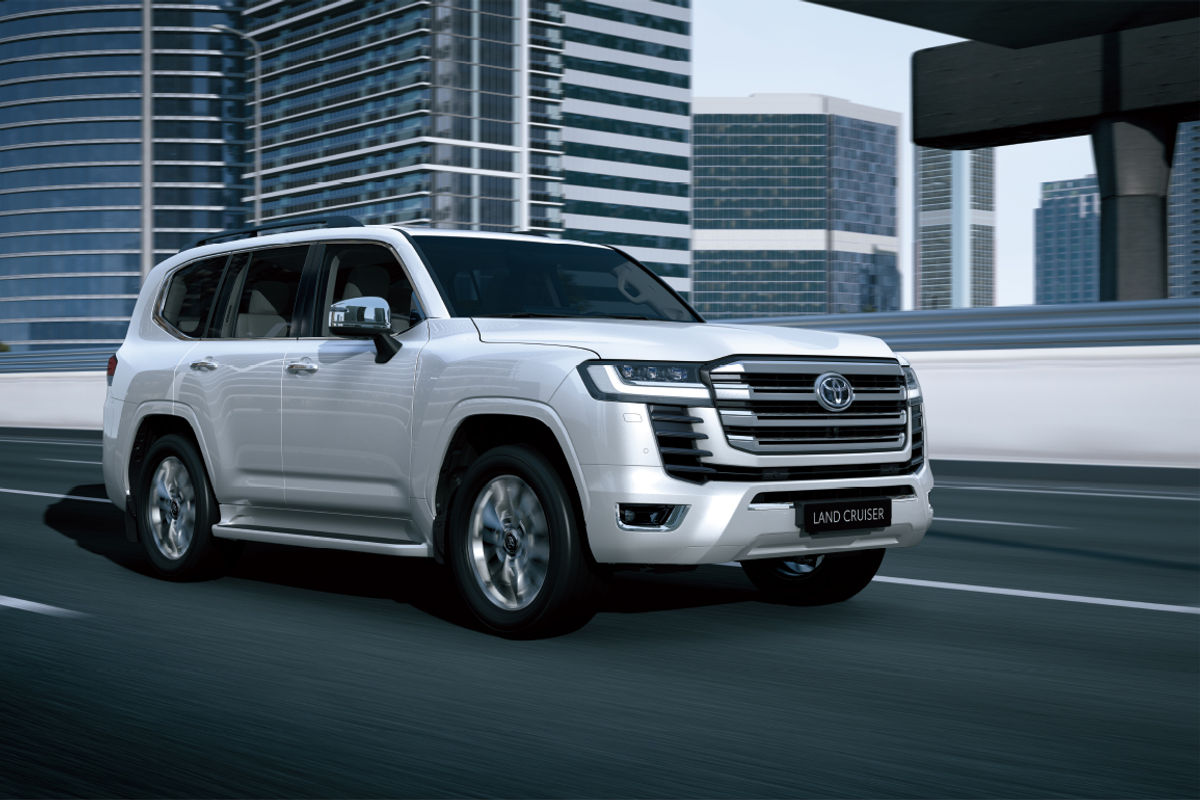
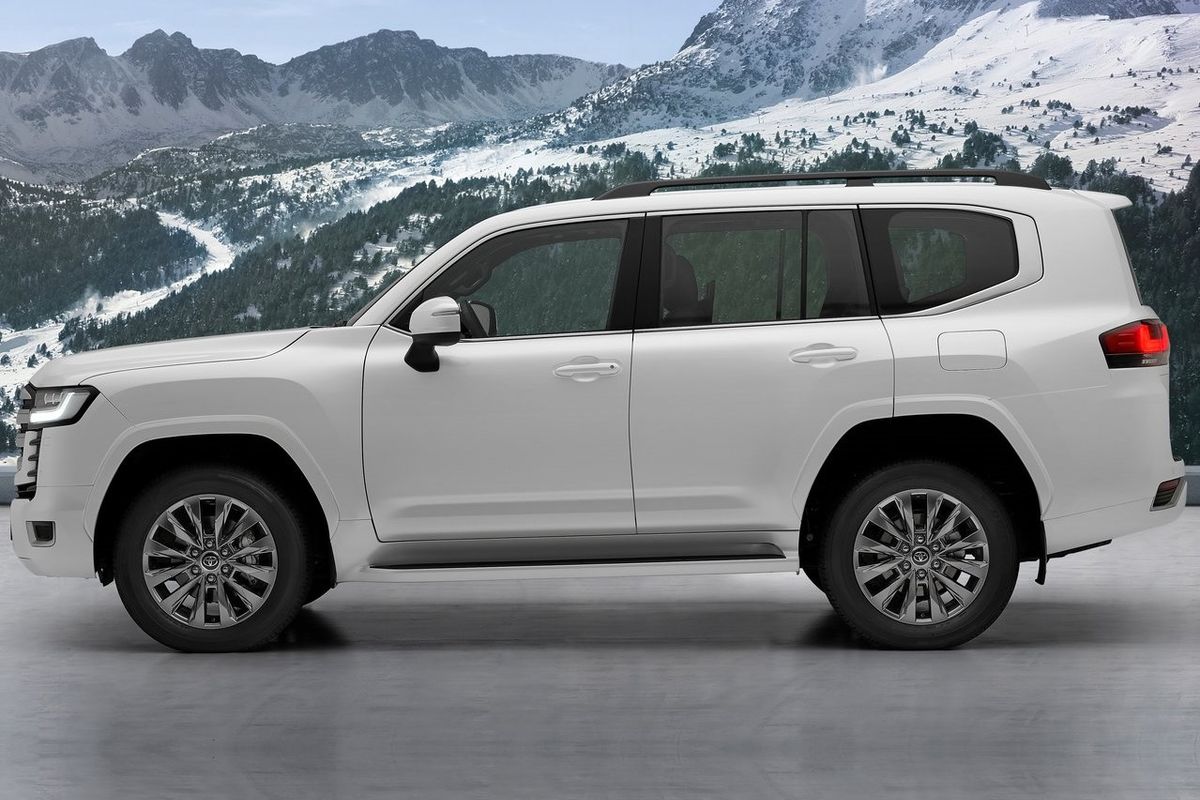
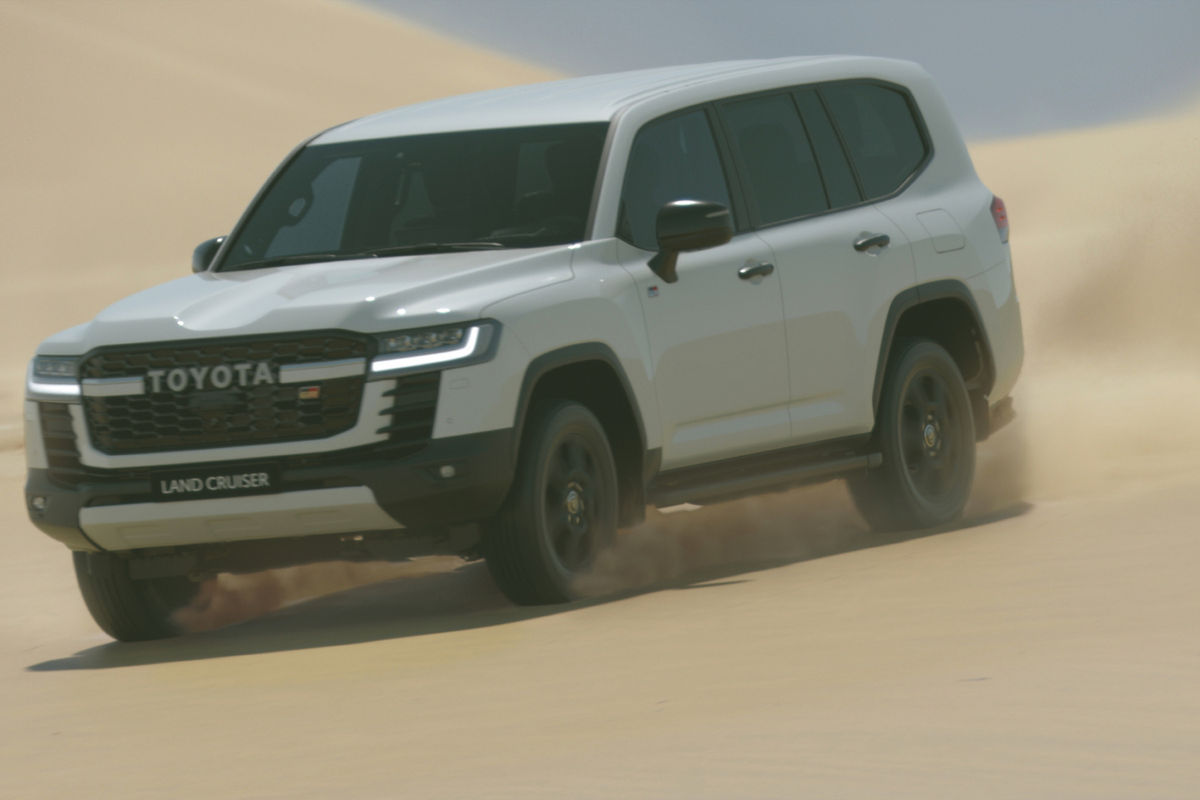
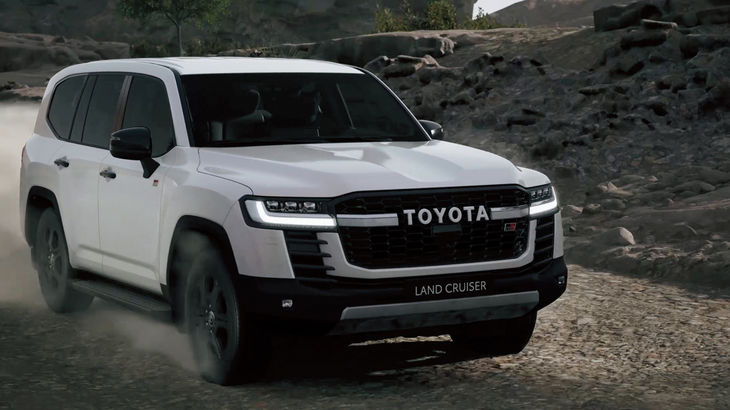
Toyota Land Cruiser 300 has arrived plus a GR Sport model
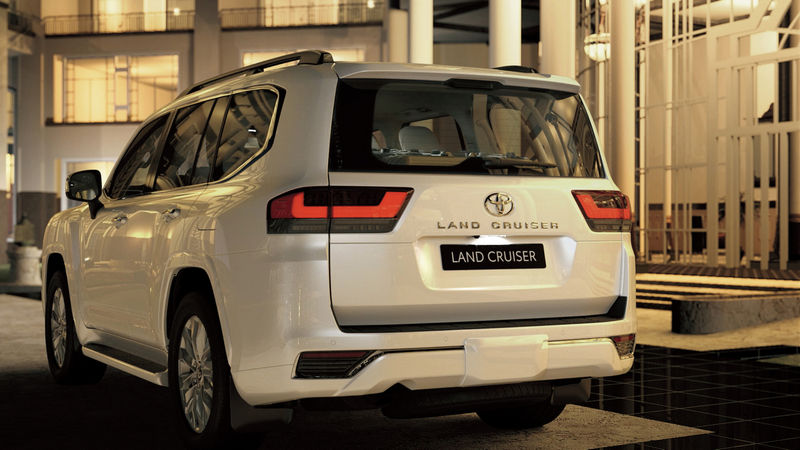
The Land Cruiser 300 is the first all-new Cruiser since 2007, how will Toyota’s off-roading icon see out the next 14 years? Here are the details of the new model, which will be available in Mzansi from August 2021.
That’s right, the current Land Cruiser flagship (the 200) debuted 14 years ago, so you can’t blame Toyota for making a big deal about the arrival of its replacement. 2021 is the 70th anniversary year of Toyota’s iconic nameplate and, fittingly, the Land Cruiser 300 incorporates all-new engines, a 10-speed transmission and a fresh platform, which brings the flagship SUV bang up to date and improves its overall capability.
New TNGA platform
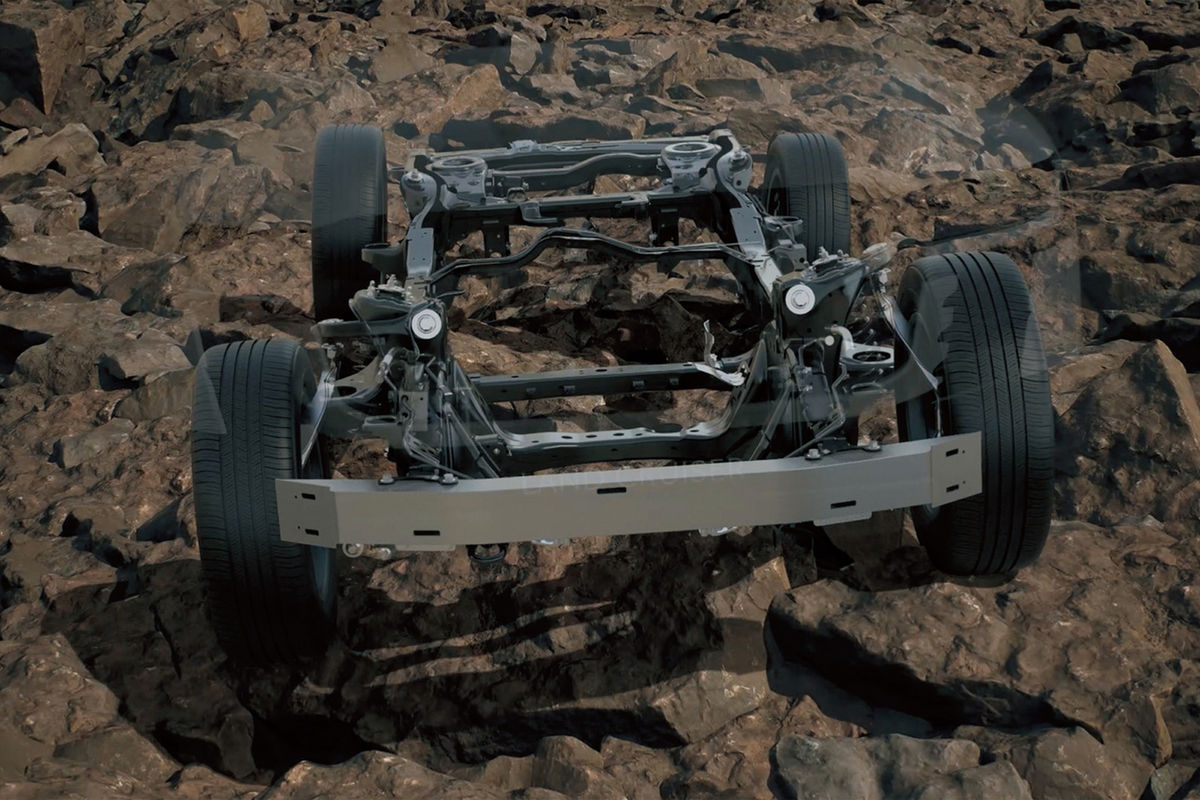
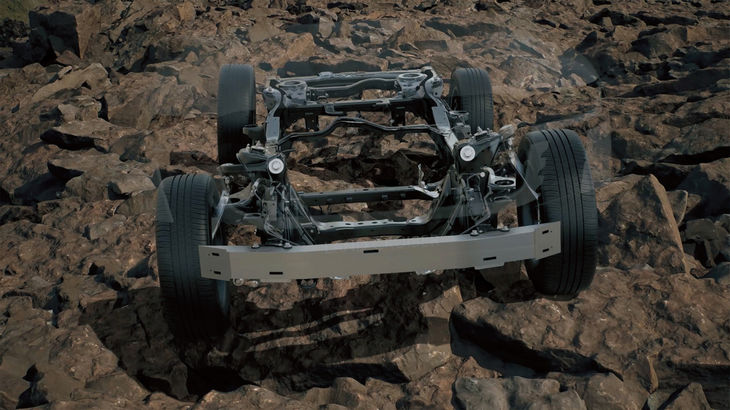
The Land Cruiser 300 is based on a new version of the TNGA (Toyota New Global Architecture), which the brand has named GA-F. Suffice to say it’s the first iteration of the TNGA to underpin a body-on-frame vehicle; GA-F not only makes the new model more rigid than the outgoing Land Cruiser 200, but lighter too (by 200 kg, in the case of the petrol version and by 100 kg in the case of the diesel).
The Land Cruiser also has a comparatively better weight distribution (front to rear) than its predecessor; the engine is said to be positioned 28 mm lower and 70 mm rearwards to achieve a better centre of gravity.
Focus areas included tuning suspension performance to achieve optimum wheel articulation, keeping the tyres in contact with the ground on rough terrain, and improving road-holding with an Electronic Kinetic Dynamic Suspension System (E-KDSS) – the latter is also reported to allow the Land Cruiser 300’s front and rear anti-roll bars to be “disabled” for increased suspension articulation in the most demanding of off-road conditions.
Beefed-up drivetrain
The Land Cruiser 300 has permanent four-wheel drive (with high- and low-range, of course) and, according to reports, off-road-biased versions feature 3 locking differentials – front, centre and rear.
When the newcomer ventures off the beaten track, its Multi-Terrain Select system automatically judges the quality of the driving surface and adopts the most appropriate driving mode (Auto, Dirt, Sand, Mud and Deep Snow), while an off-road crawl control system – with Low, Mid and High settings – allows the Land Cruiser to 300 Series to ascend and descend rough terrain at a fixed (low) speed without the need for the driver to touch the pedals.
As far as ride height, approach- and departure angles are concerned, the Land Cruiser 300 is largely the same as the outgoing model (230 mm of ground clearance, with 32- and 26.5-degree approach and departure angles).
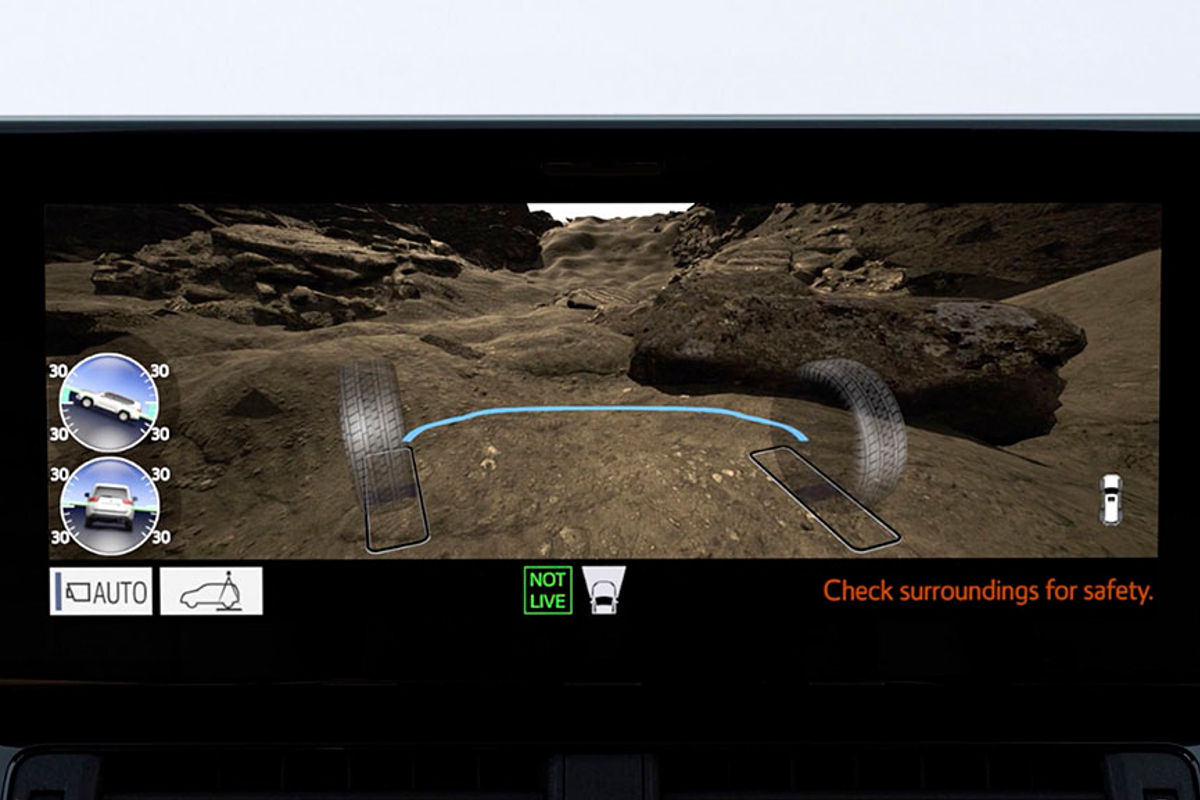
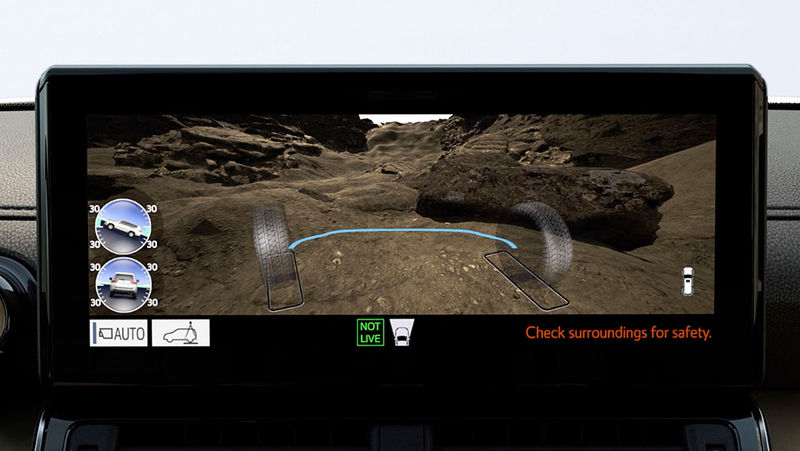
The Land Cruiser 300 is also the first Toyota to adopt a Multi-Terrain Monitor, which gives the driver a real-time view of the road surface beneath- and immediately surrounding the vehicle, as well as the position of the wheels.
Land Cruiser engines
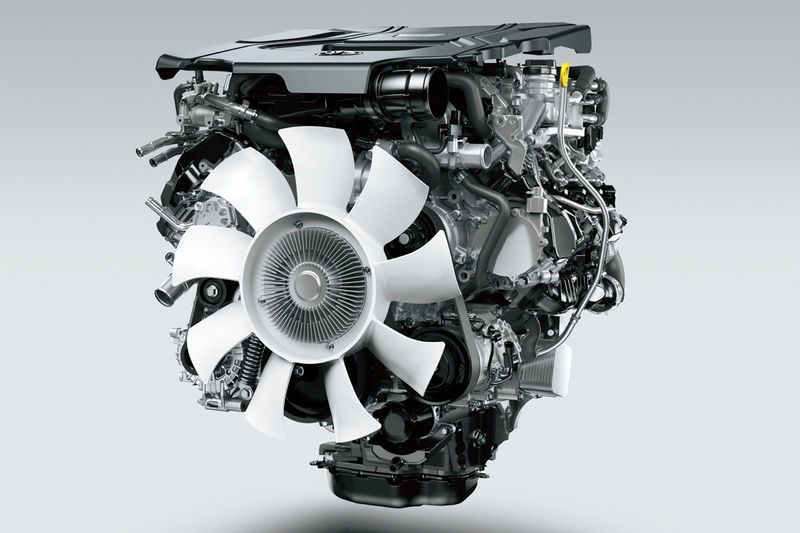
Two new twin-turbo V6 engines have been developed for the new Land Cruiser, one petrol and one diesel. The 3.5-litre V6 twin-turbo petrol engine is good for 305 kW and 650 Nm of torque. If it’s of interest to Land Cruiser enthusiasts, this derivative gets to 100 kph from standstill in just 6.7 seconds.
The turbodiesel variant makes use of a 3.3-litre V6 with 227 kW and 700 Nm of torque. Both engines use a 10-speed automatic transmission and while claimed fuel-economy figures are unavailable, Toyota expects the new model to reduce CO2 emissions by around 10%. Toyota says the newcomer’s braked tow rating remains 3 500 kg.
On tarred public roads, drivers can select from the regular drive modes – Eco, Normal, Comfort, Sports, Sports+ and Custom – which adapt the Toyota’s transmission programming, suspension behaviour, engine response etc.
Considerably updated interior
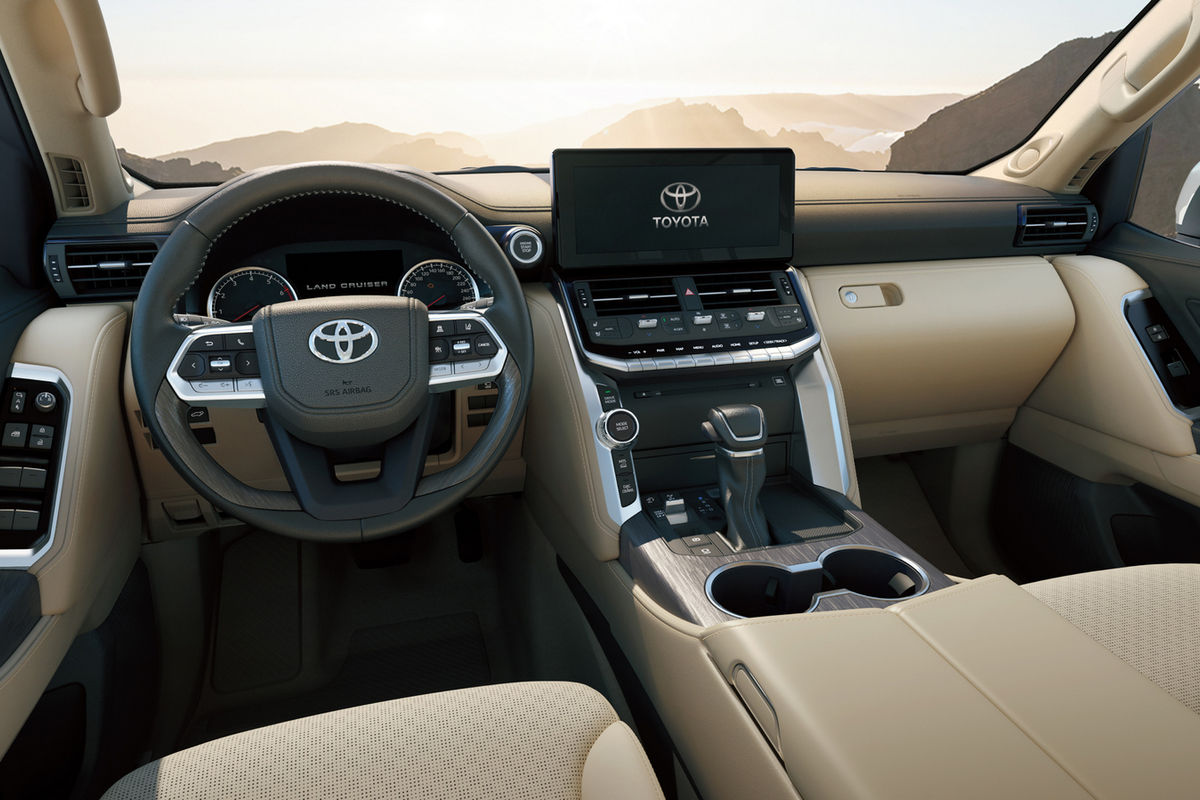
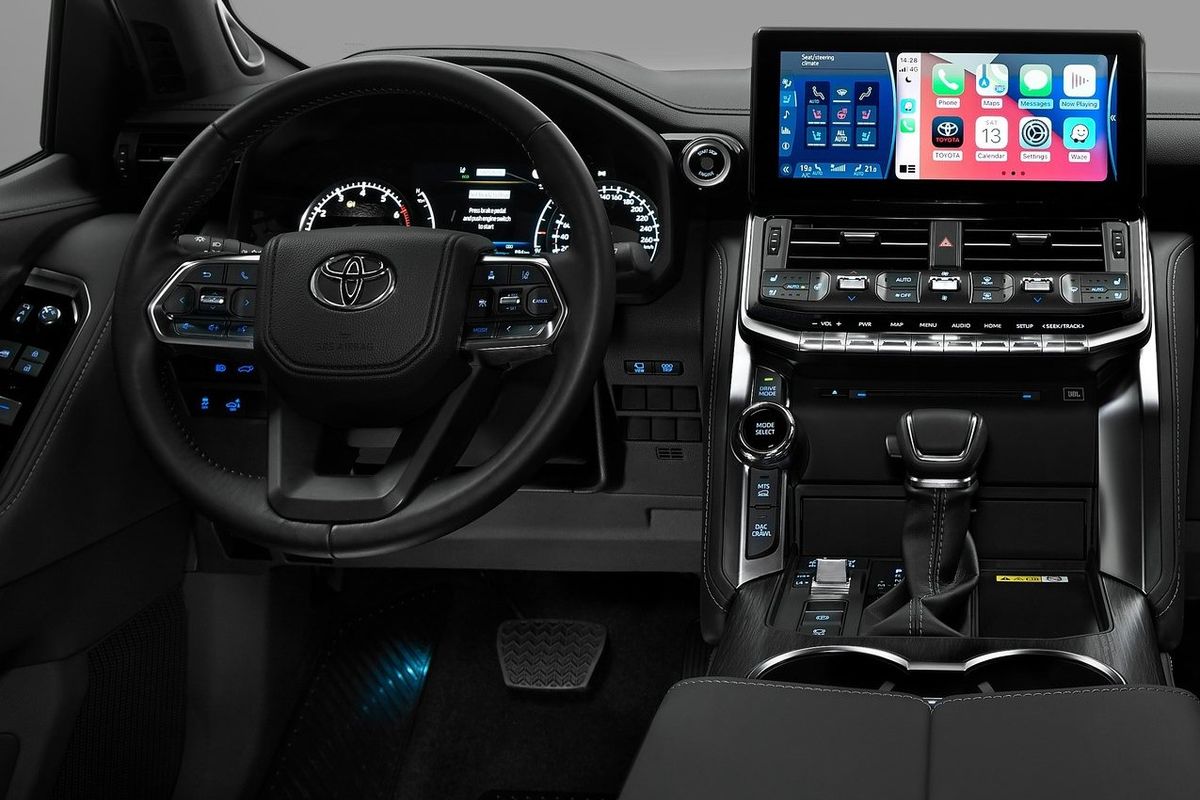
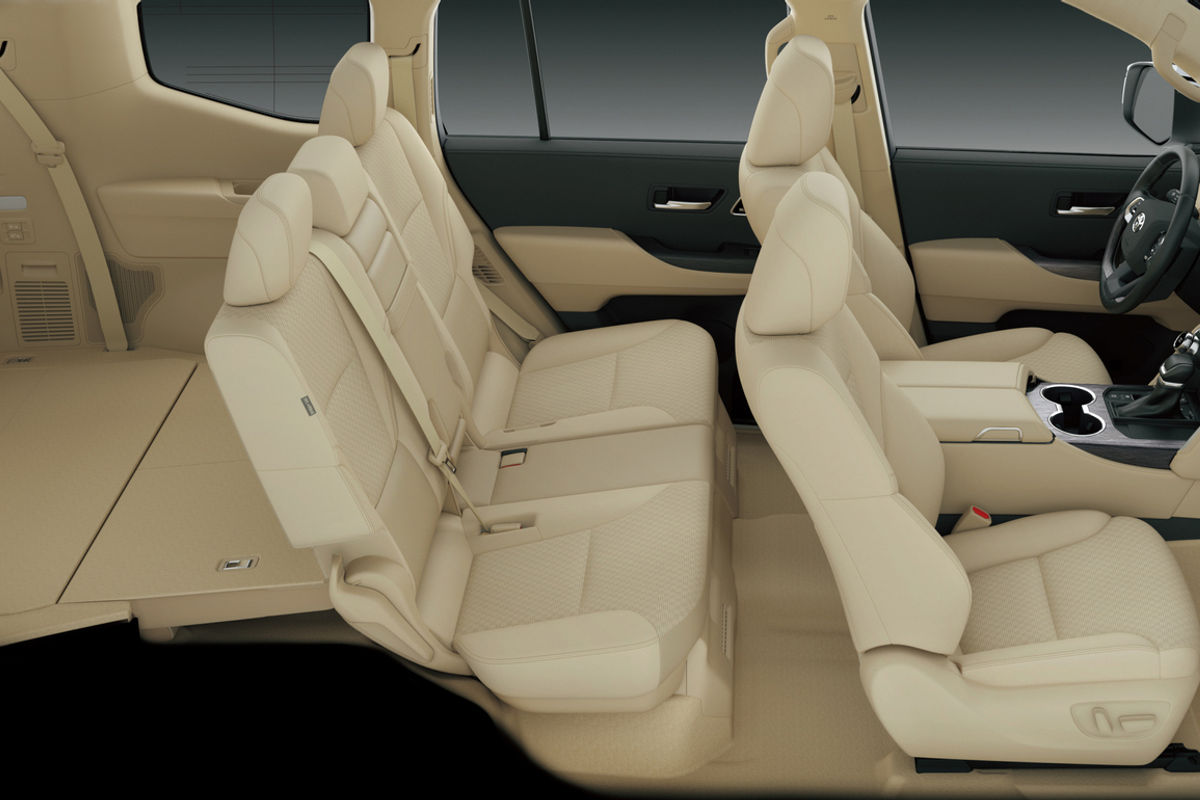
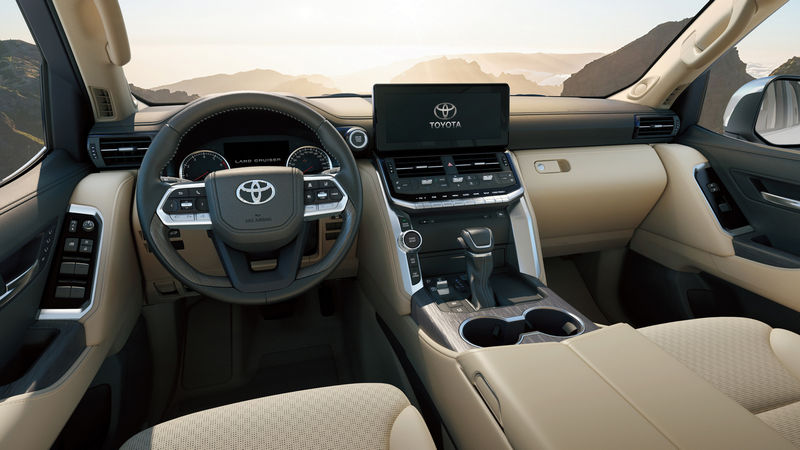
The Land Cruiser 300’s interior has been brought into the 2020s, but rather than making all systems accessible via touchscreens, Toyota has persisted with big physical buttons for important functions around the cabin.
The newcomer’s instrument cluster features a 7.0-inch digital display positioned between two analogue dials and it can be complemented with a colour head-up display. The big update, however, is the inclusion of Apple CarPlay and Andriod Auto for the infotainment system. A 9-inch screen will reportedly be standard, but there is a 12.3-inch version of it as well – it’s near-ideal for using the 360-degree high-res cameras to scope out your surroundings!
Below the infotainment screen sits arrays of switches for the quad-zone climate control system (metallic finish) and off-road controls, including a Mode Select dial for toggling between the 6 drive- and 5 Multi-Terrain Select modes.
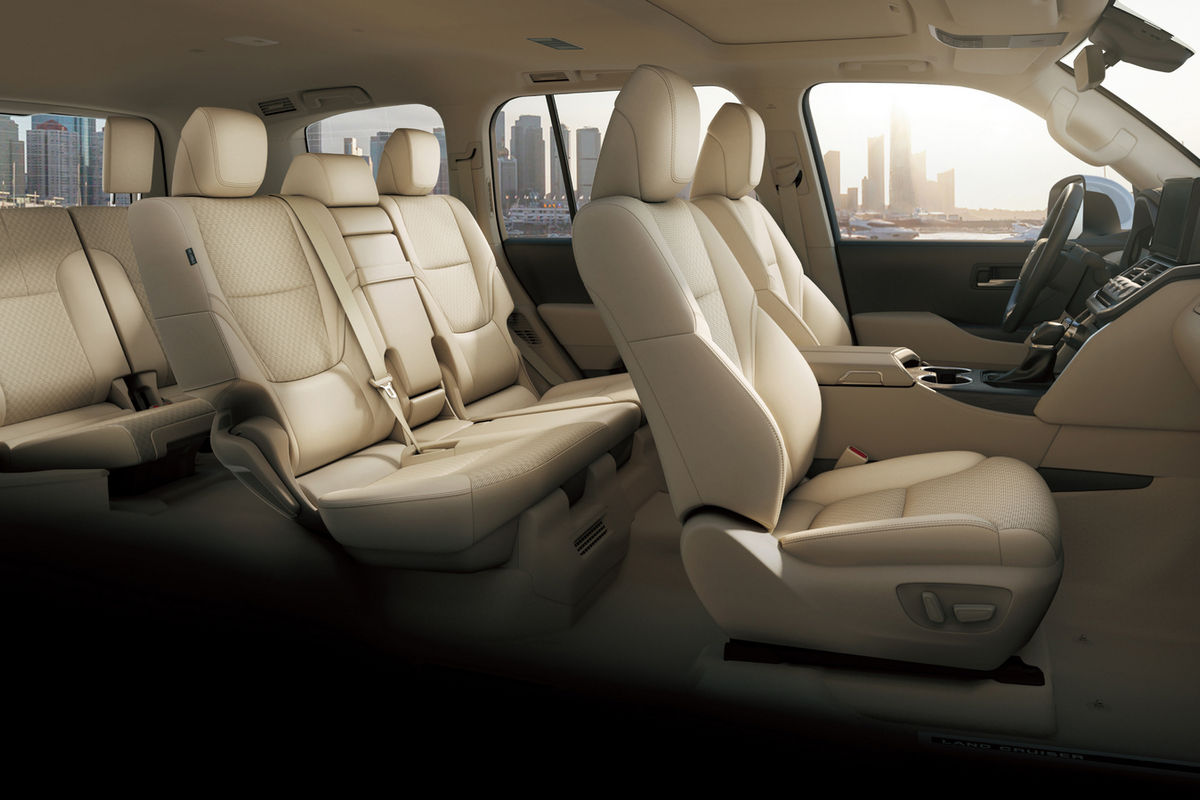
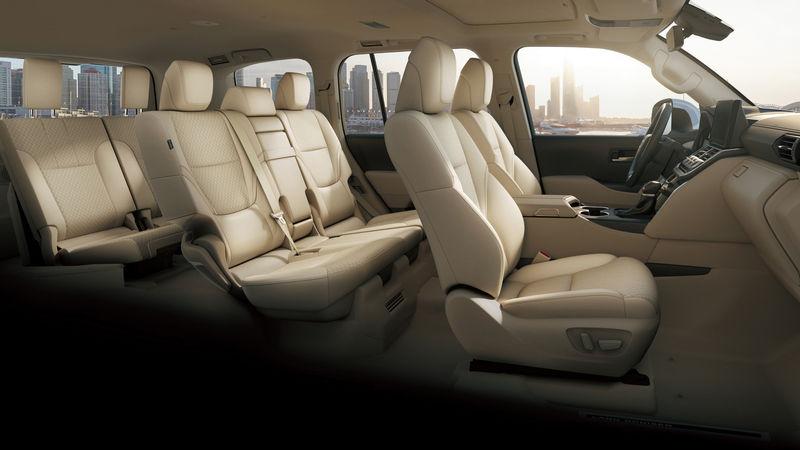
Other available features include electrically adjustable front seats, a 14-speaker JBL audio system, a wireless charging pad, half a dozen USB ports, a household power outlet in the load bay and a power-operated tailgate.
And, according to a report, there’s a fingerprint reader built into the start-stop button that stores up to 10 different driver profiles, each of which can be linked to a specific climate control-, seating position- and other preferences.
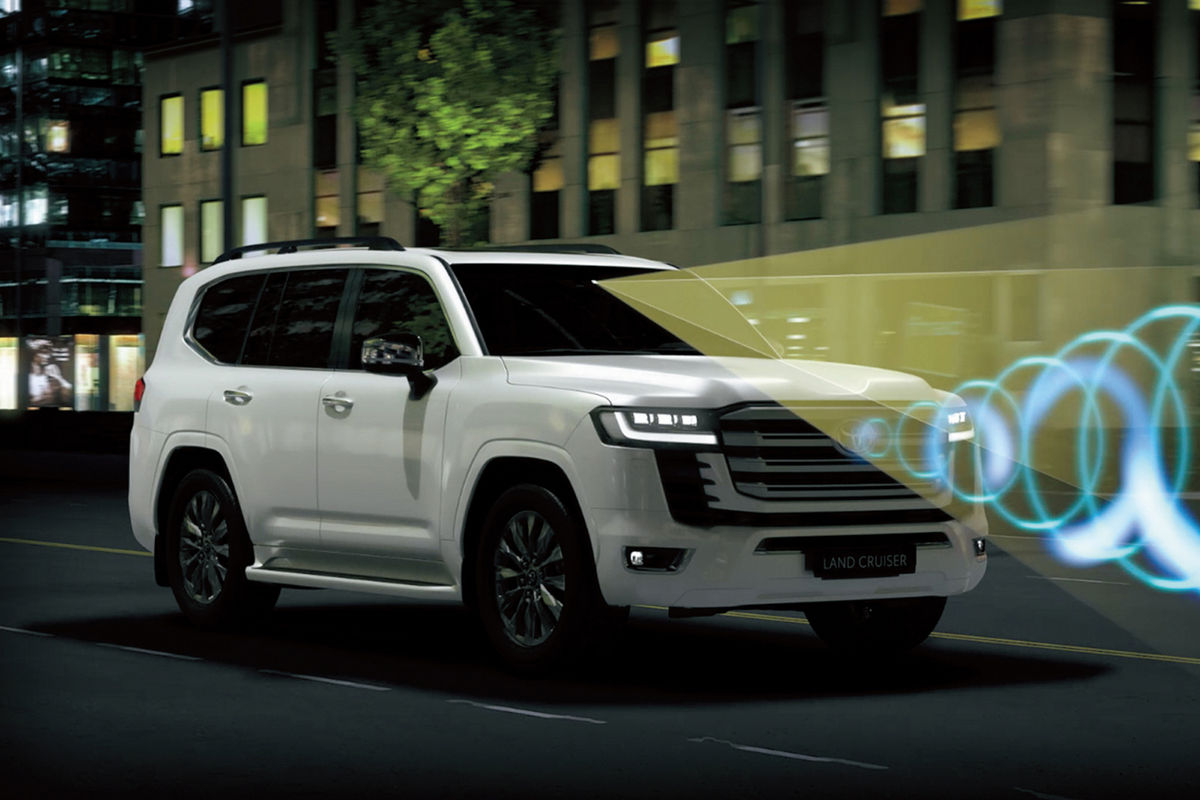
Meanwhile, Toyota’s latest Safety Sense package for the Land Cruiser 300 will include, inter alia, radar-guided adaptive cruise control, autonomous emergency braking, road sign recognition, a blind-spot monitor, lane departure warning and rear cross-traffic alert. In addition to pre-collision detection, the newcomer features pedestrian detection and parking support brake, which helps the driver avoid pesky low-speed impacts.
Land Cruiser GR Sport
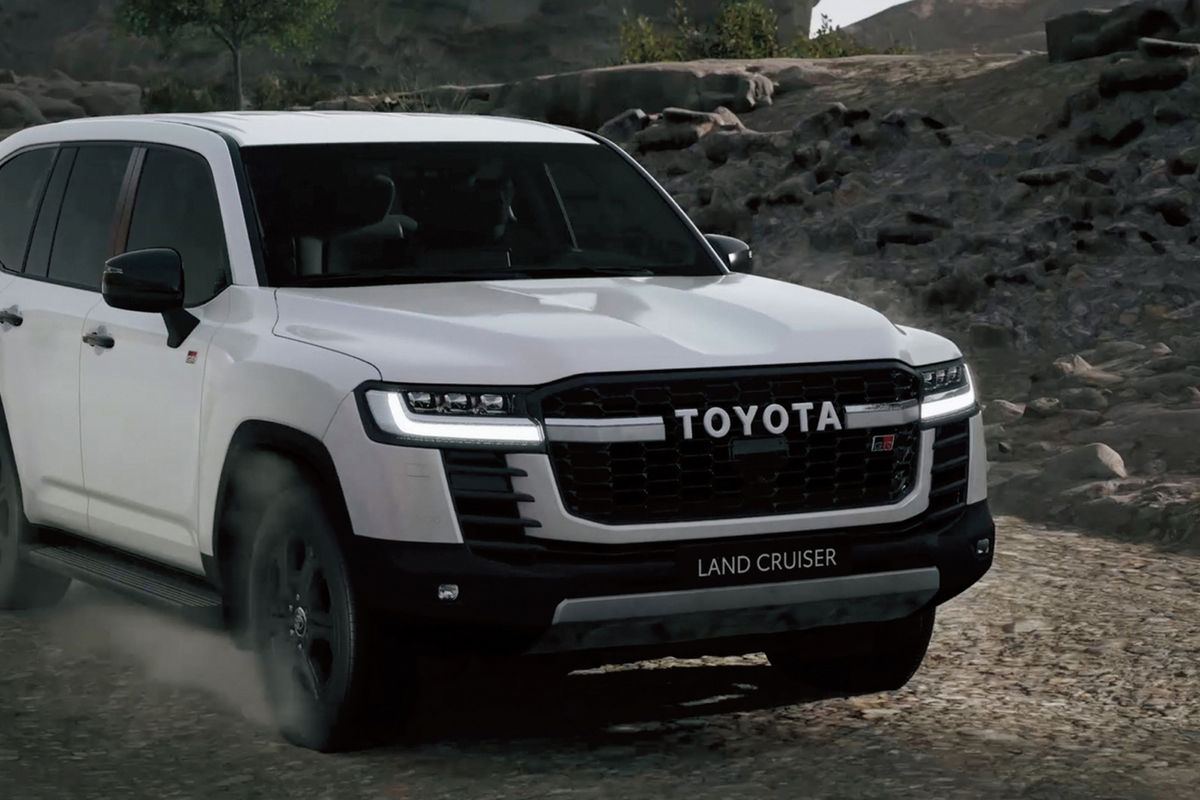
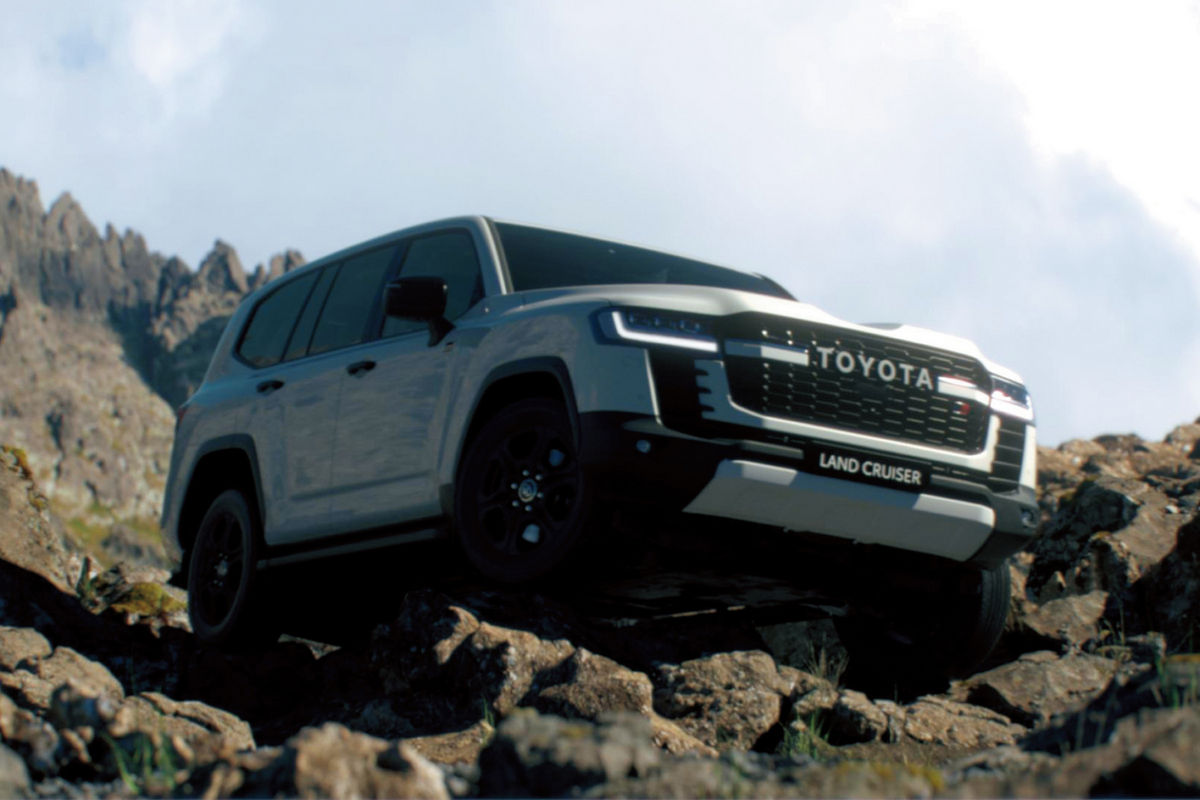
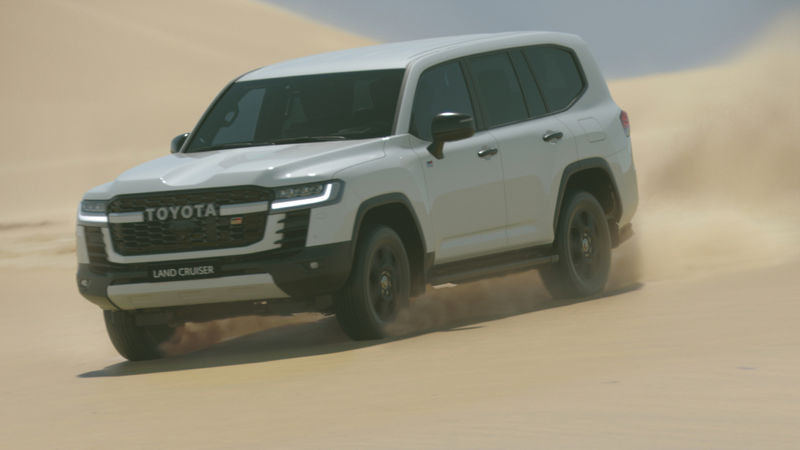
In the official release, Toyota revealed pictures of the Land Cruiser GR Sport. No details have been released about the eye-catching derivative, but GR Sport versions usually feature suspension upgrades and design tweaks only.
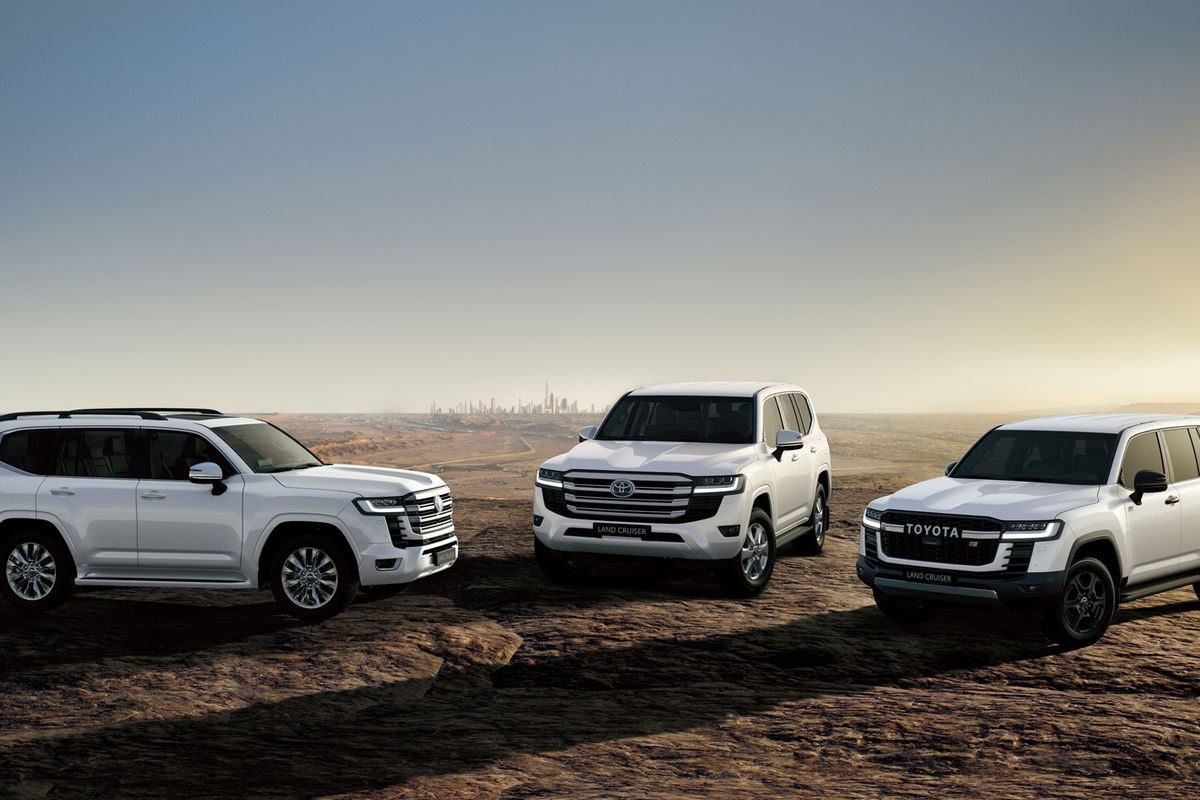
The Land Cruiser 300 will be available locally from August 2021 in 3 grades – GX-R is a utility-based grade, ZX (which replaces the old VX-R) is a more city-friendly specification and GR Sport, which will be off-road focused.
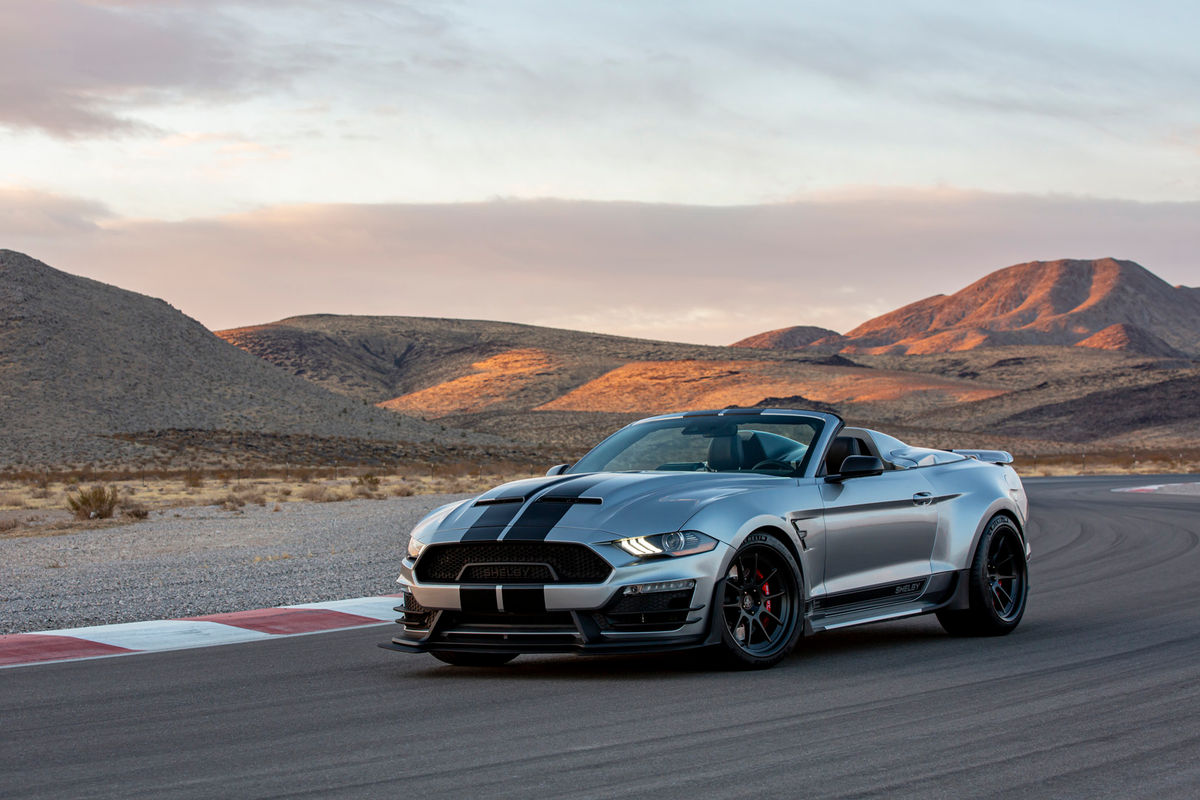
No AMG is going to touch this very limited Shelby Mustang.
If mid-engined supercars bore you, and an AMG V8 coupe isn’t your thing, there’s a solution from Ford. Sort of.
The man that brought Ford much performance car cachet, was Carroll Shelby. And although he is no longer with us, his legacy lives on in the selection of hugely powerful Mustangs that bear his name.
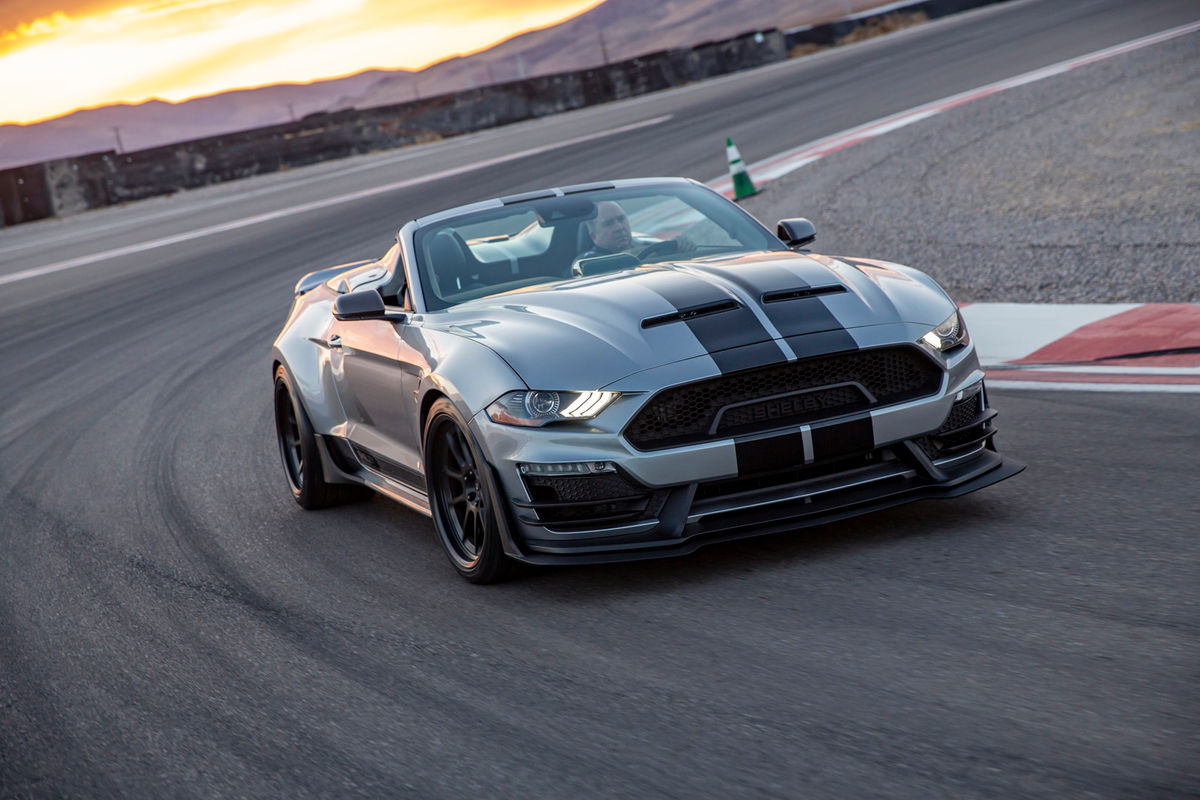
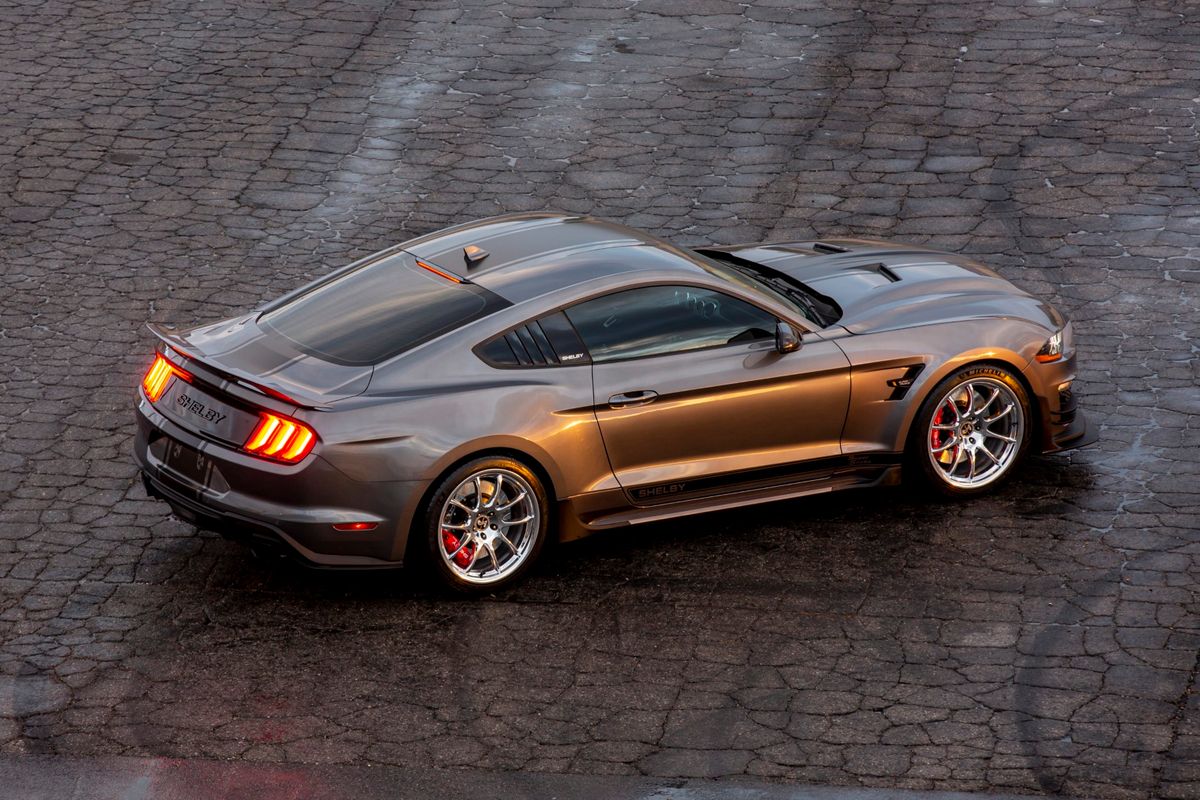
For those Ford high-performance motoring fans who want to make their Mustang into something that will positively toy with Ferraris, McLarens and Lamborghinis, there is now the 2021 Shelby Super Snake (SSS).
Although only 98 of these SSS vehicles will be built globally, you can secure a local version, for R1 575 400. That price does not include the donor car – just so you know.
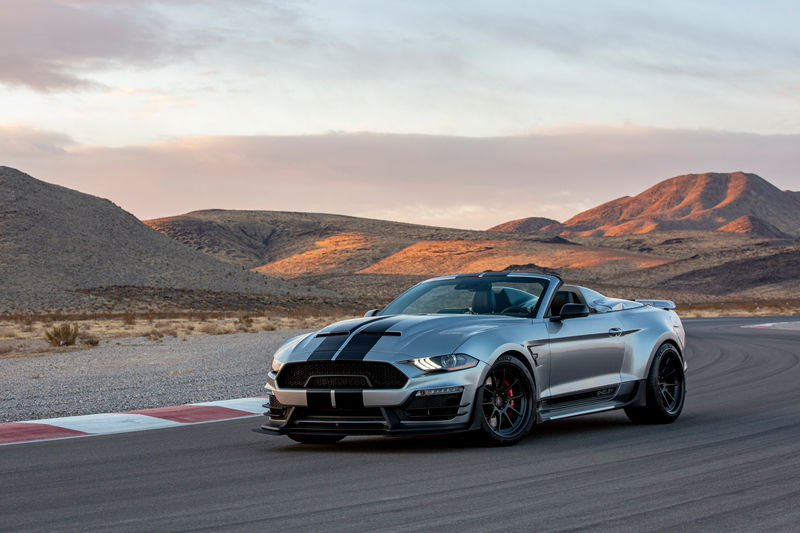
The Shelby Super Snake Speedster – widebody muscle.
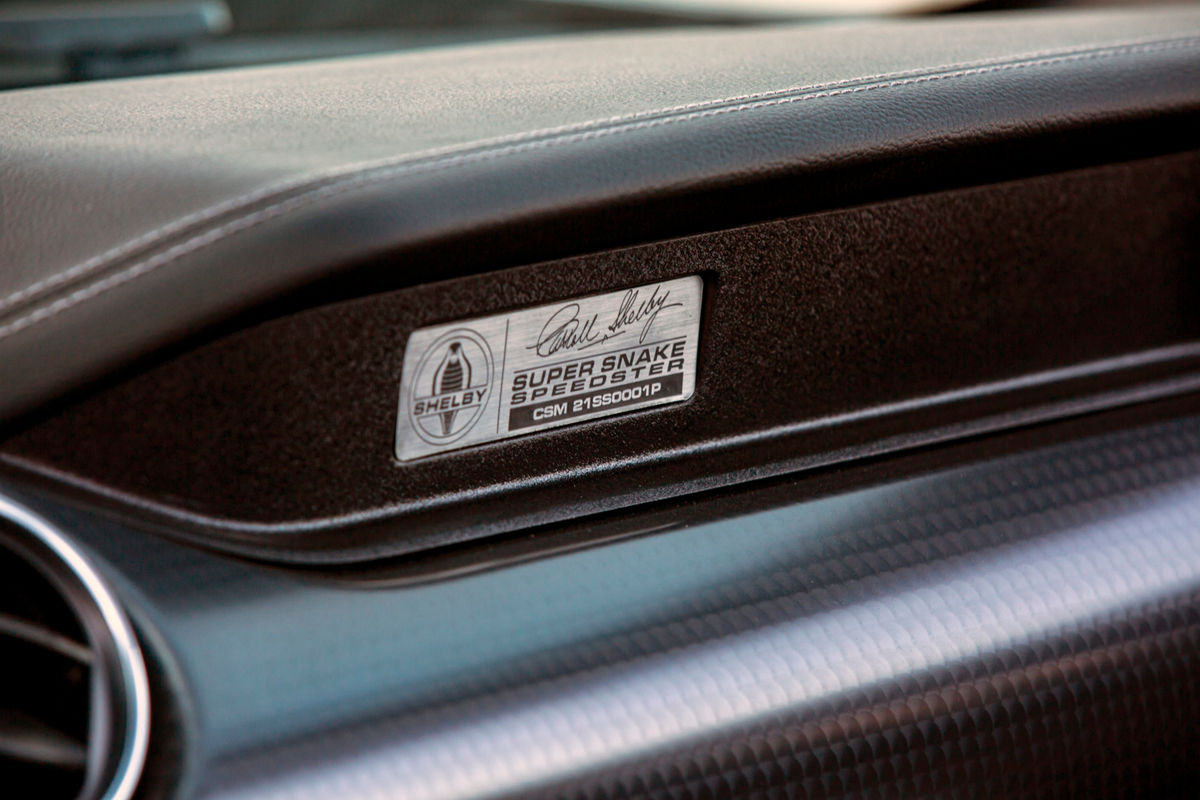
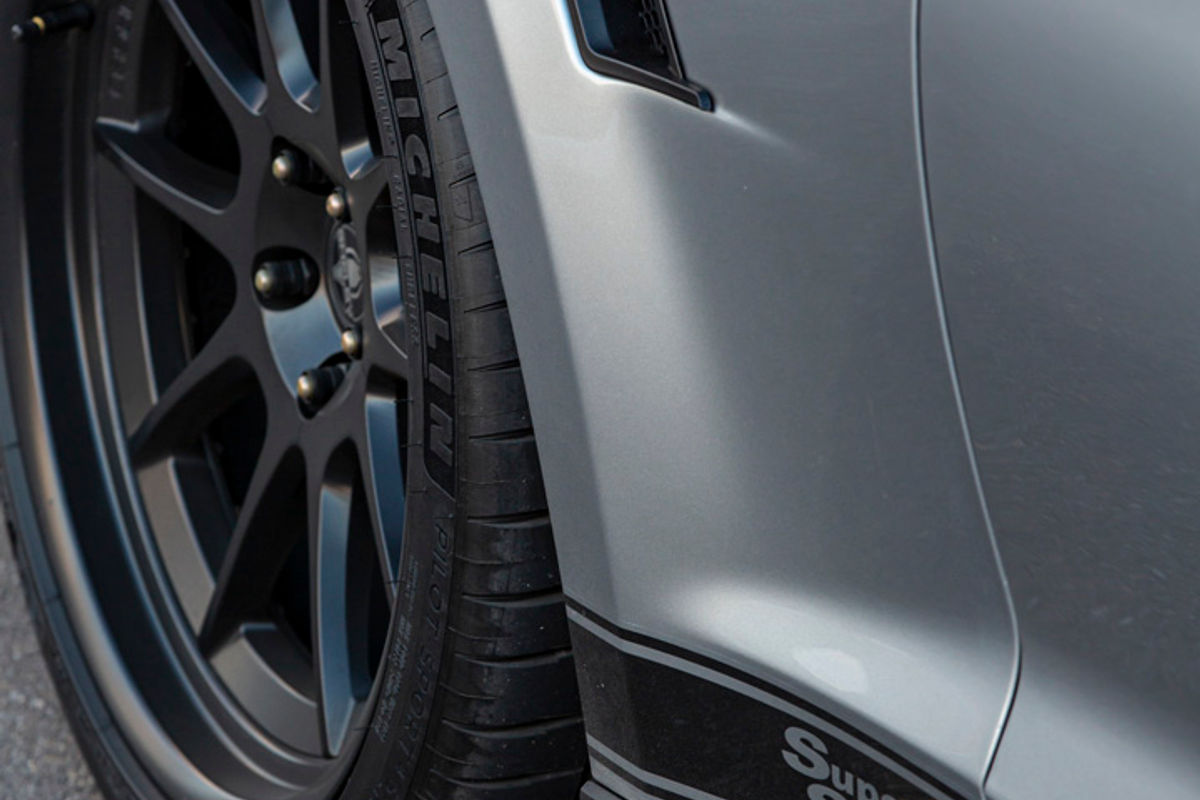
For that investment, you get a widebody kit, lighter 20-inch wheels, trick suspension and a special number. Keen to ensure that SSS owners will retain exclusivity and value from their investment over time, each of these new SSS cars will be documented in the official Shelby registry – which is handy when you want to sell one, in future, and realise all the implied value of its provenance.
We nearly forget to mention the SSS engine, which is quite a thing. It uses the base Ford 5-litre Mustang architecture and manages to extract an amazing 615 kW of peak power.
How does Shelby get all that energy from the 5-litre V8 engine? Mostly with the help of a custom Whipple supercharging kit.
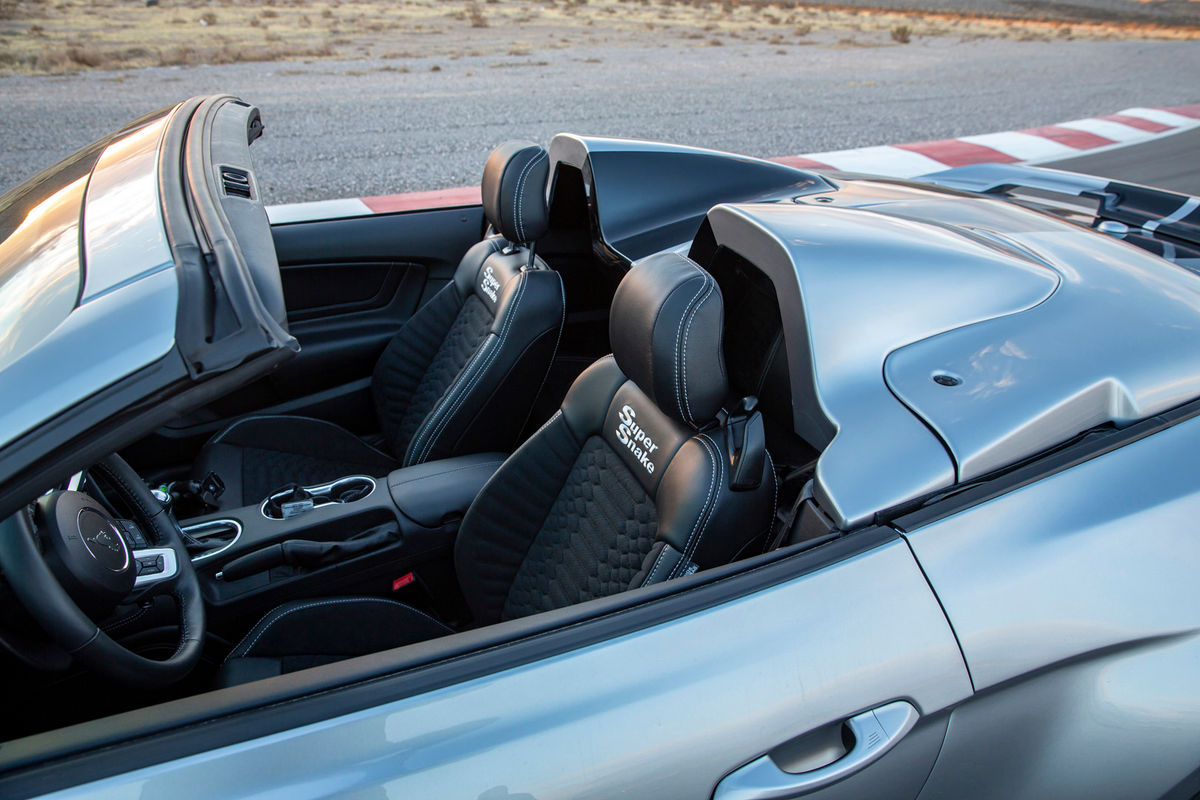
If you wish to enjoy the generosity of sunlight that is a feature of local motoring, there is also the option of an SSS Speedster, which prices at R1 635 000, excluding the donor Mustang.
Shelby Super Snake price in SA
The upgrade kit costs:
Shelby Super Snake – R1 575 400*
Shelby Super Snake Speedster – R1 635 000*
*Donor Ford Mustang not included.
Audi S7 Sportback (2021) Review
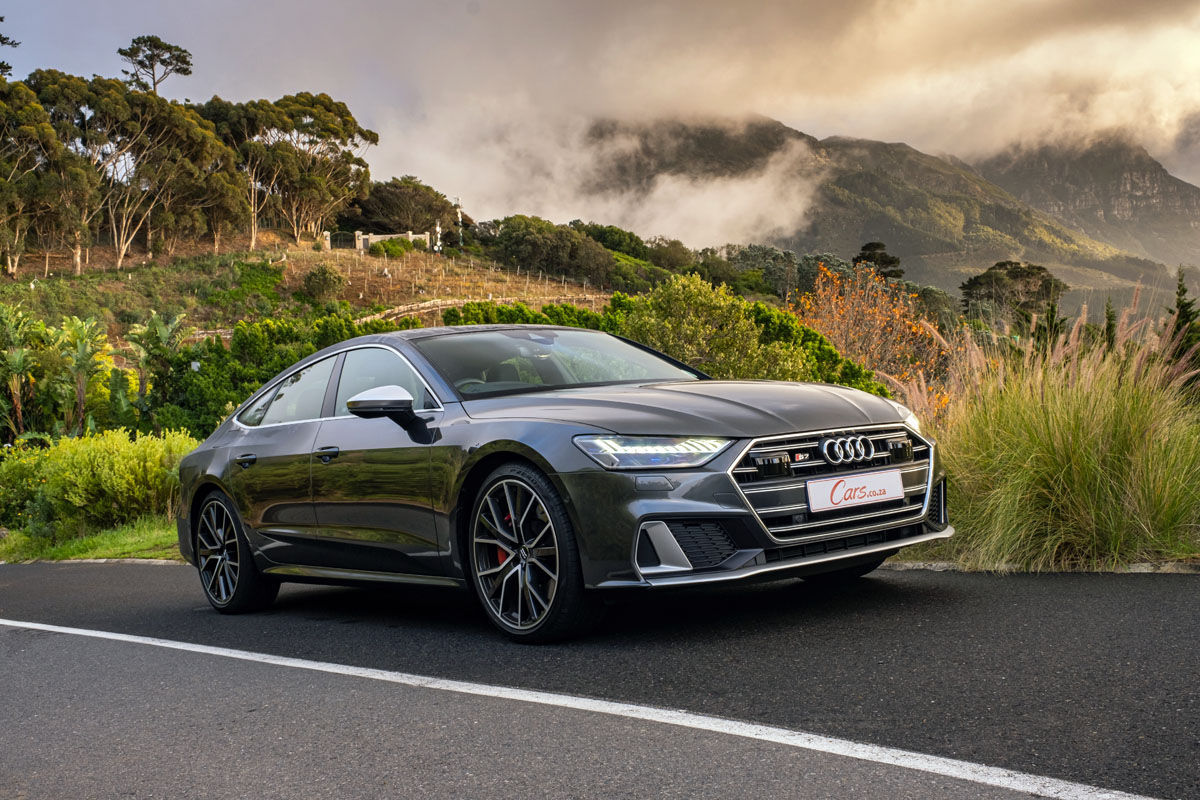
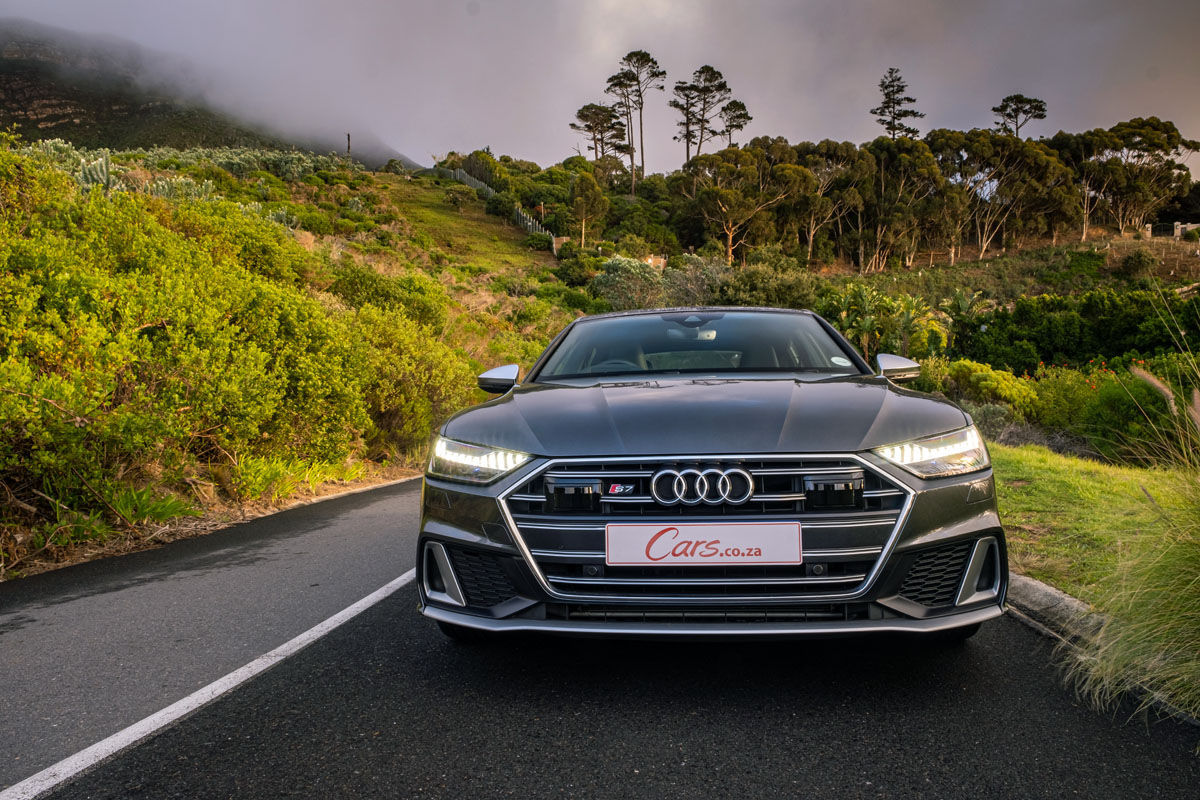
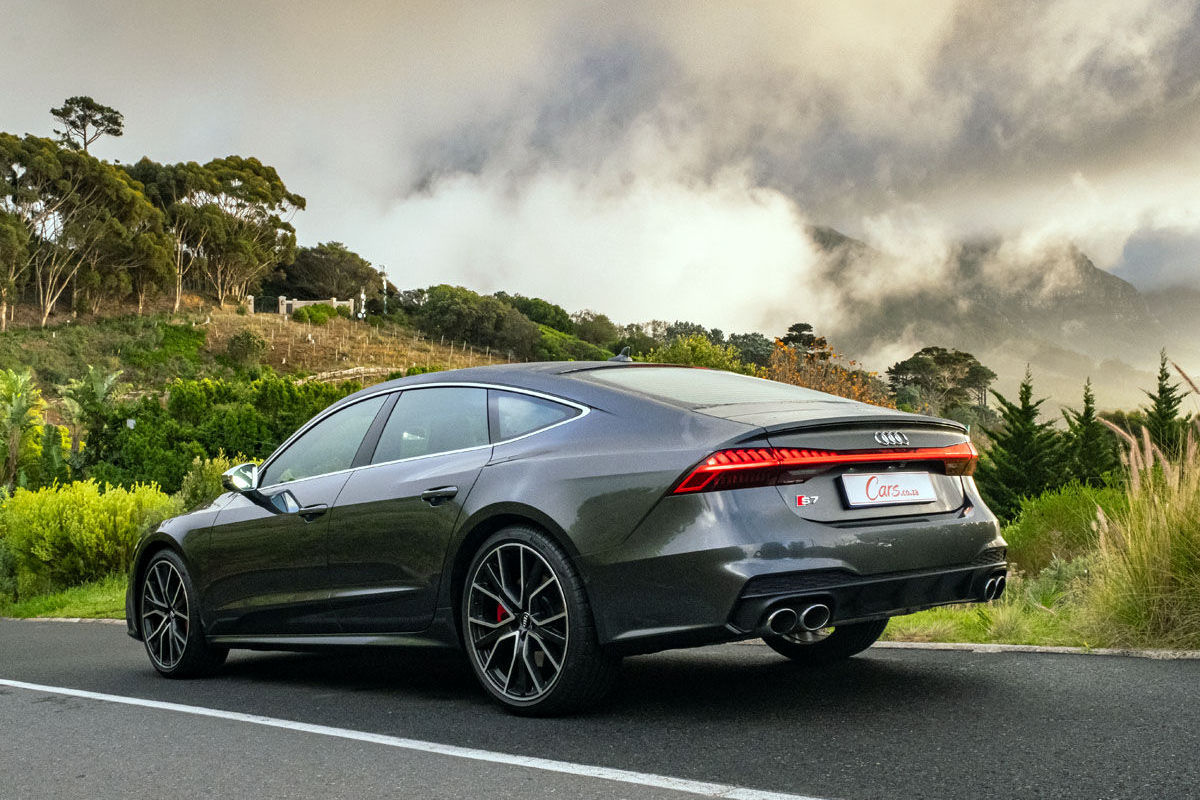
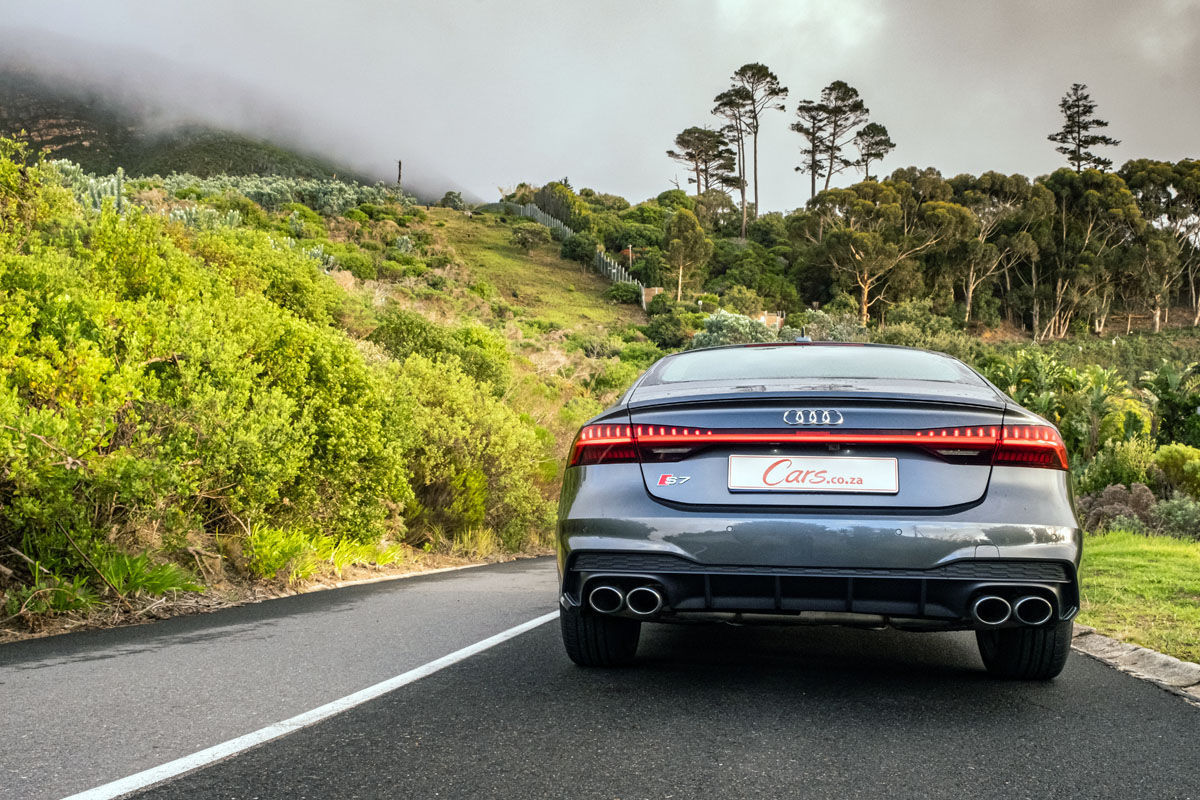
These days, most luxury-vehicle buyers tend to opt for premium brands’ SUV offerings, but Audi’s seductive S7 Sportback nonetheless represents a distinctively styled, spacious and sufficiently fast alternative to the norm. Underestimate it at your peril…
We like: Stylish design inside and out, comfort, ride quality, performance
We don’t like: Quite thirsty, lacks one or two desirable safety features
Fast Facts
Model Tested: Audi S7 Sportback quattro
Price: R1 568 000 (June 2021)
Engine: Turbocharged 2.9L V6 petrol
Power/Torque: 331 kW/600 Nm
Transmission: 8-speed automatic
Fuel efficiency: 8.4 L/100 km
0-100kph: 4.6 sec
Load capacity: 535–1 390 litres
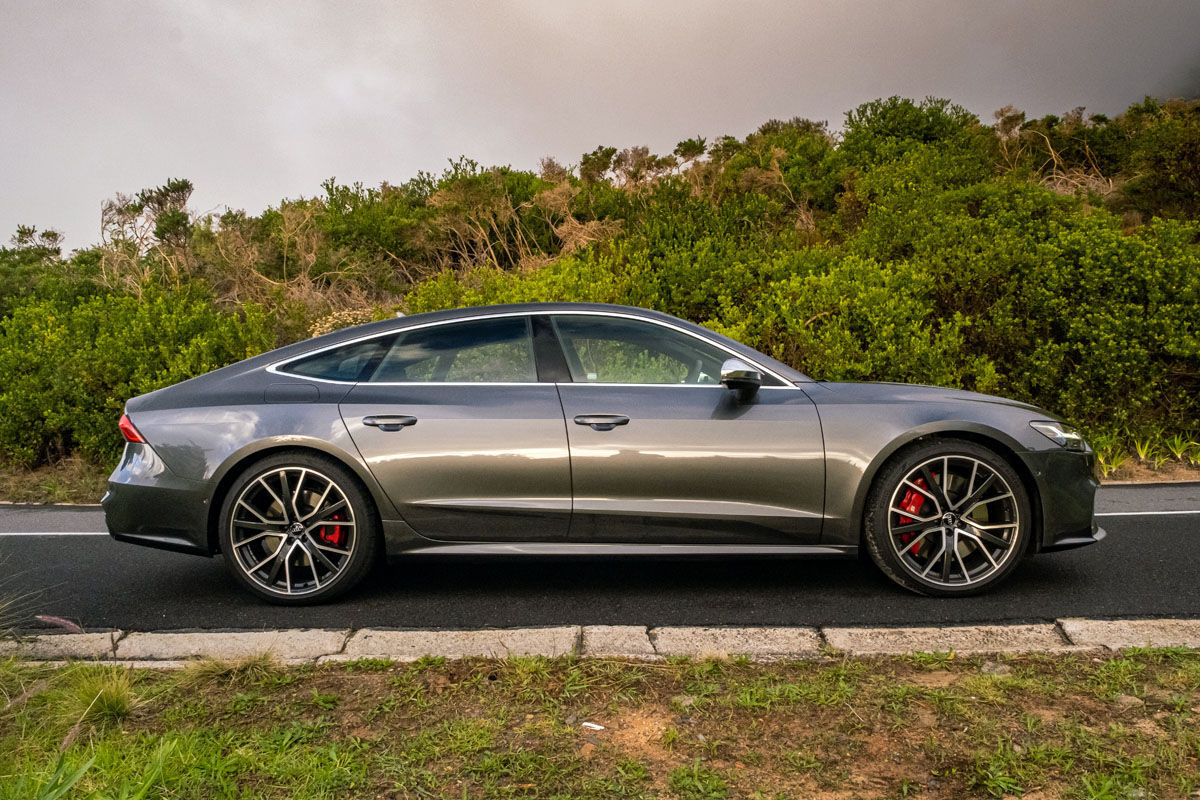
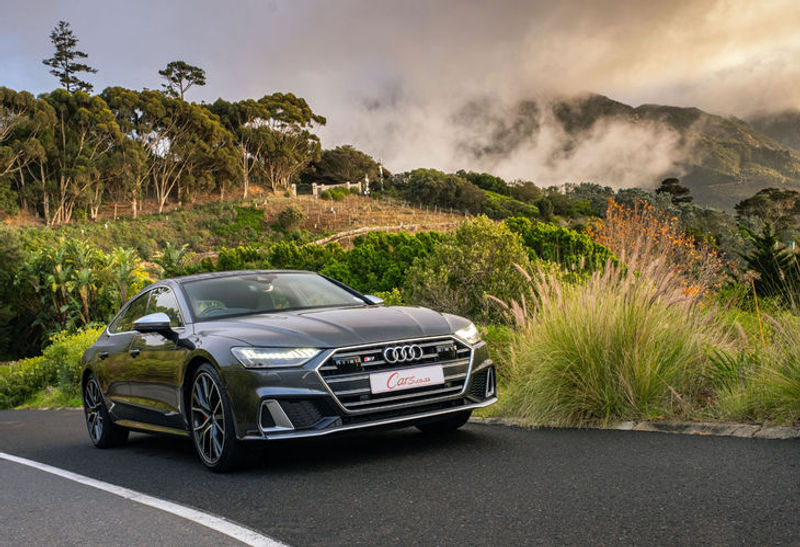
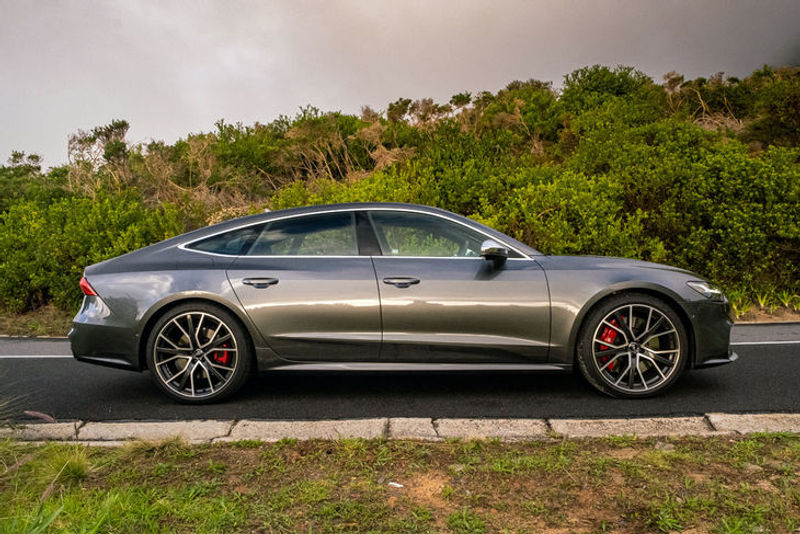
The S7 Sportback offers just enough in the way of sporty addenda; its low-slung profile is refreshing in a world dominated by upright SUVs.
Where does the Audi S7 Sportback fit in?
You may have noticed that Audi recently launched a plethora of RS-badged performance vehicles in South Africa. Comparatively well-priced (at least compared with their BMW M and Mercedes-AMG rivals), the RS models have come to dominate the headlines for the Ingolstadt-based marque. But what if you don’t particularly like (or want) the aggressive styling of an RS-badged Audi and the ability to post the fastest zero to 100 kph time is very low on your list of vehicular requirements, if at all? What if you want a stylish, swift and distinctive offering that’s not an SUV?
Firstly, you’re definitely in the minority of luxury-vehicle buyers… Just look at the dwindling sales (and offerings) of high-performance premium sedans. But, then again, the Audi S7 Sportback is anything but a run-of-the-mill sedan. Its rakish coupe-like profile, broad-shouldered stance and vast tailgate set it apart from the likes of the more conservative Audi A6, Mercedes-Benz E-Class and BMW 5 Series.
S-badged Audis often live in the shadows of their RS siblings, the S7 is might be the pick of the A7 Sportback range.
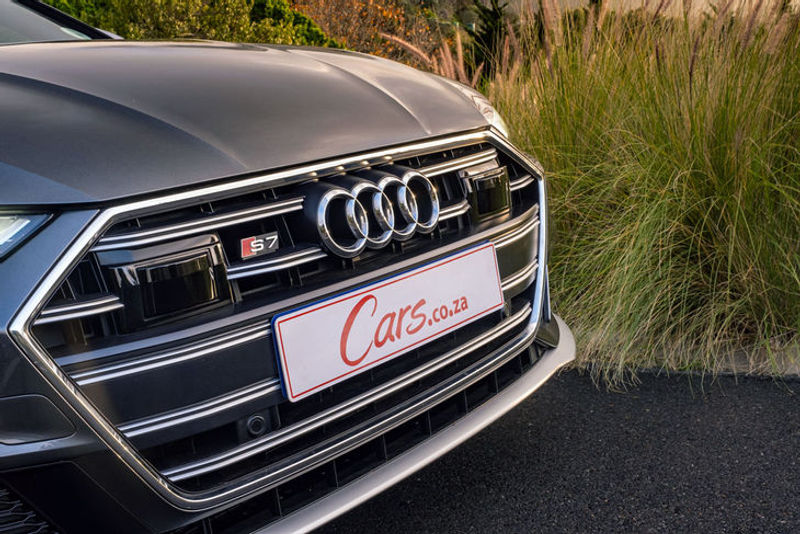
Sitting behind that the S7 Sportback’s angular chrome grille is the same motor you’ll find in cars like the RS4 Avant and RS5. So, while the S7’s design prioritises elegance over aggression, it still offers plenty of sporty kerb presence. And then there’s the spacious cabin, which is trimmed in superb materials and boasts stunning design features. Yes, this is a car for discerning, individualistic buyers.
Audi S7 Sportback: Design & Practicality
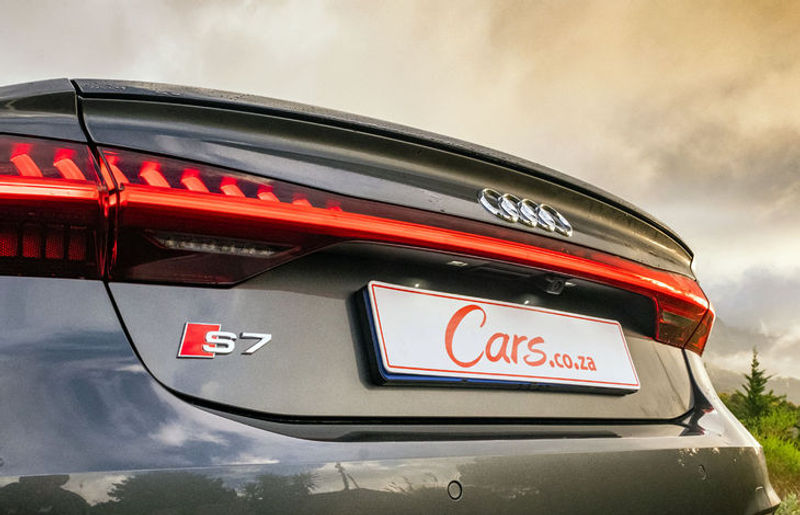
The S7 Sportback turned many heads during its tenure in our test fleet; this is an exquisitely detailed, handsome machine. For example, when you unlock the vehicle, its LED clusters perform a dazzling show that stops people in their tracks. But it’s not a “shouty” design, as many of the German luxury brands’ top-end offerings tend to be. Its overall look speaks of good taste and an appreciation of restraint.
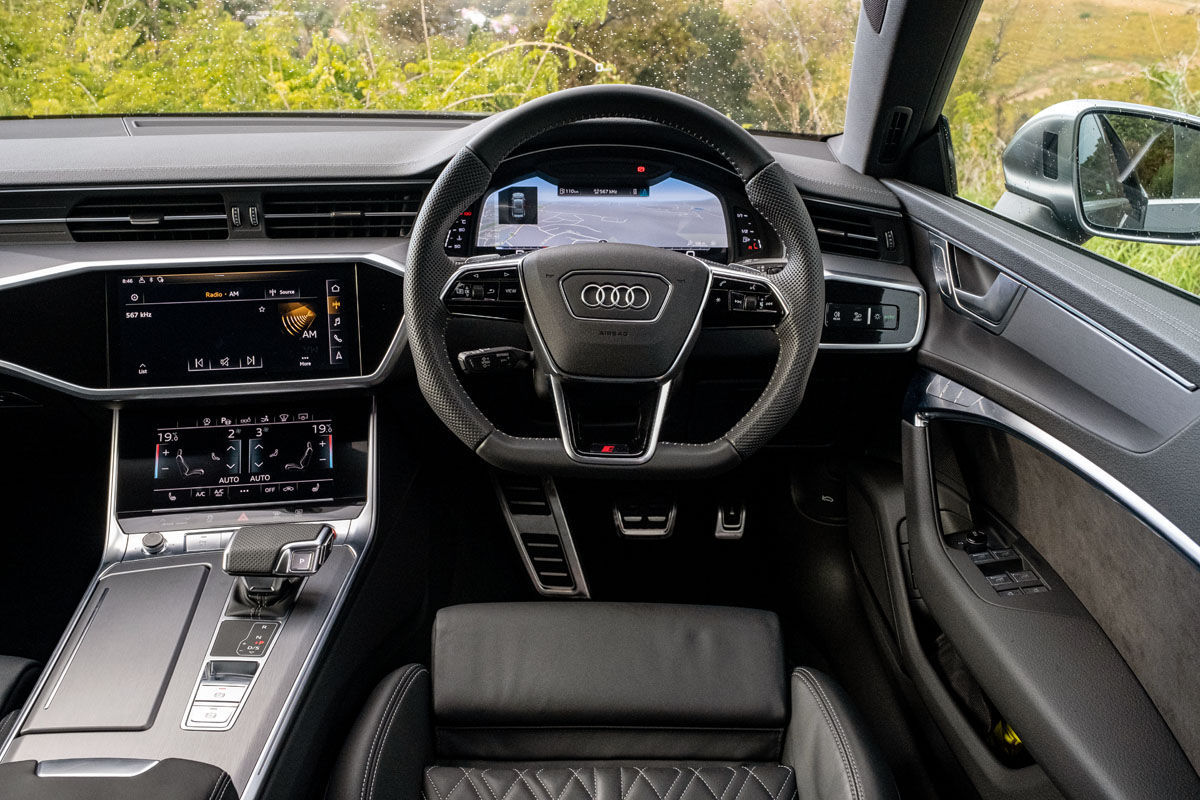
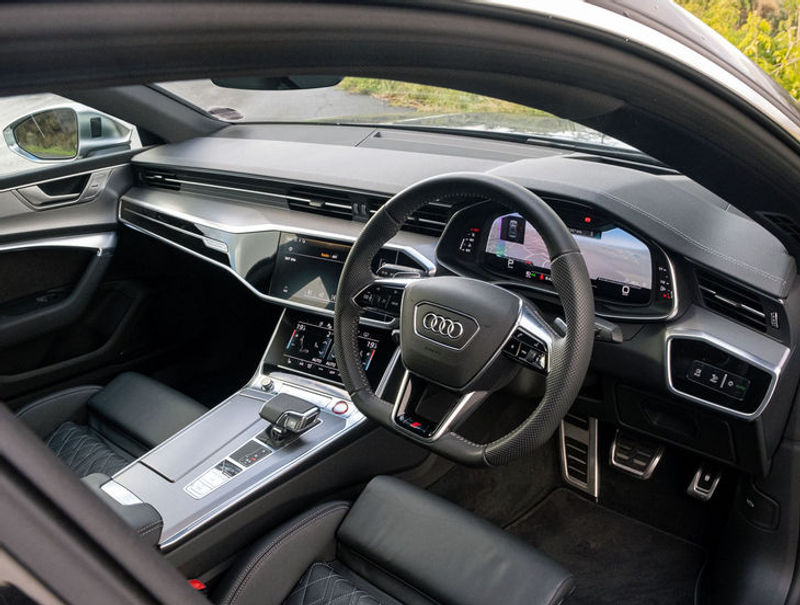
The S7 Sportback has a typically Teutonic cabin execution, replete with luxurious finishes and plenty of onboard technology.
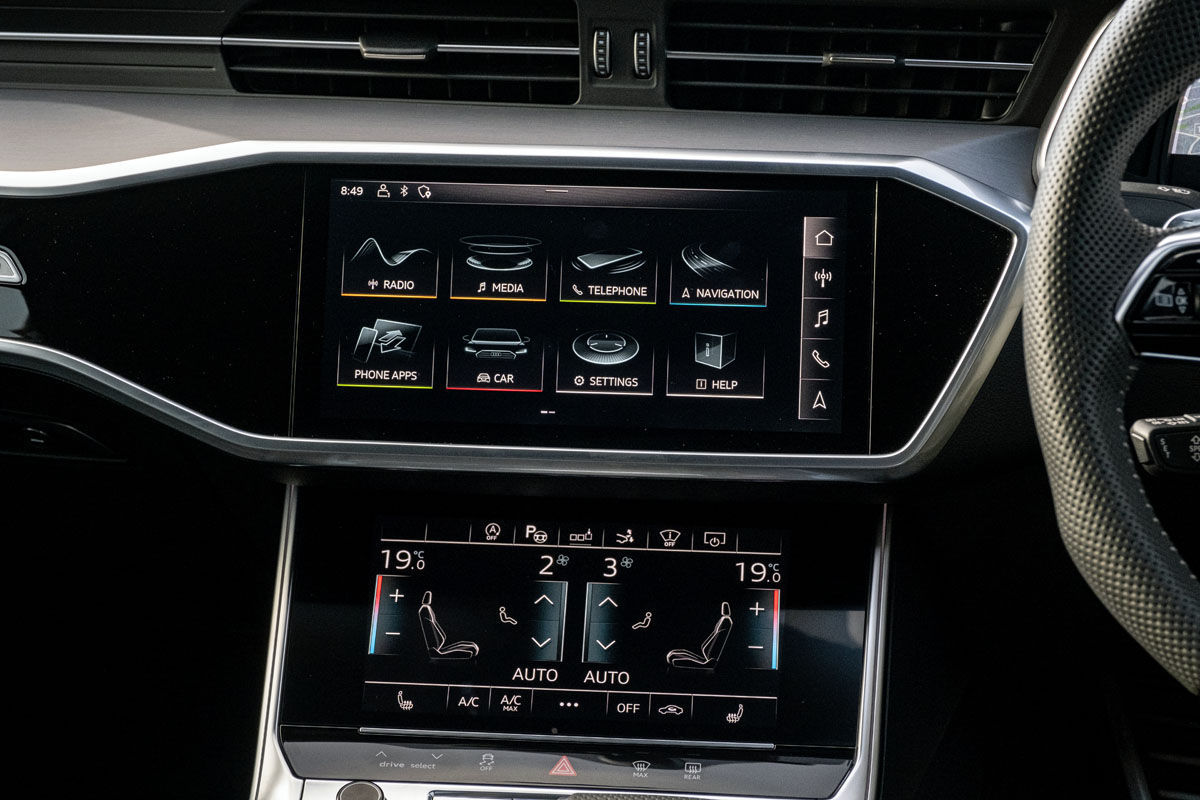
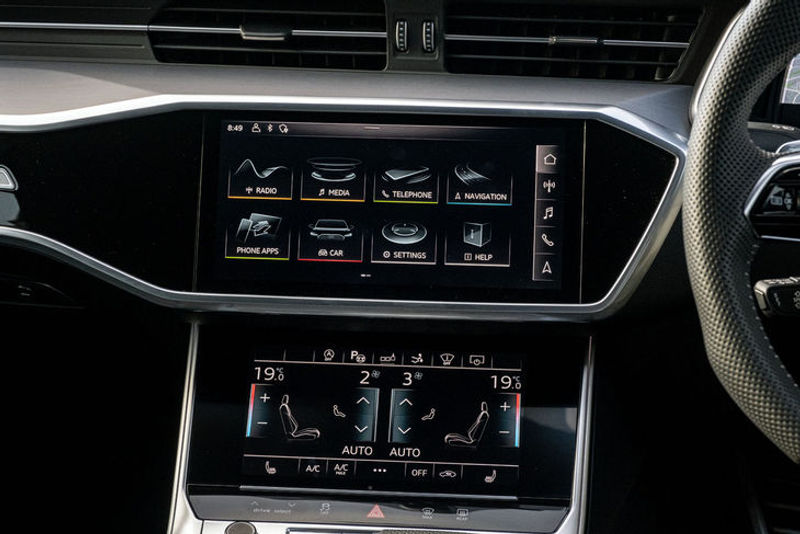
The good news continues inside, where the S7 Sportback offers Audi’s latest fascia layout. In fact, the overall look is one of new-age tech (there are no wood or brown/beige panels in sight) – piano black and satin silver finishes dominate. The centre console is dominated by a pair of touchscreen displays with haptic feedback, the upper one serves to control vehicle settings and the infotainment system, mainly, while the lower one incorporates virtual controls for the climate control system.
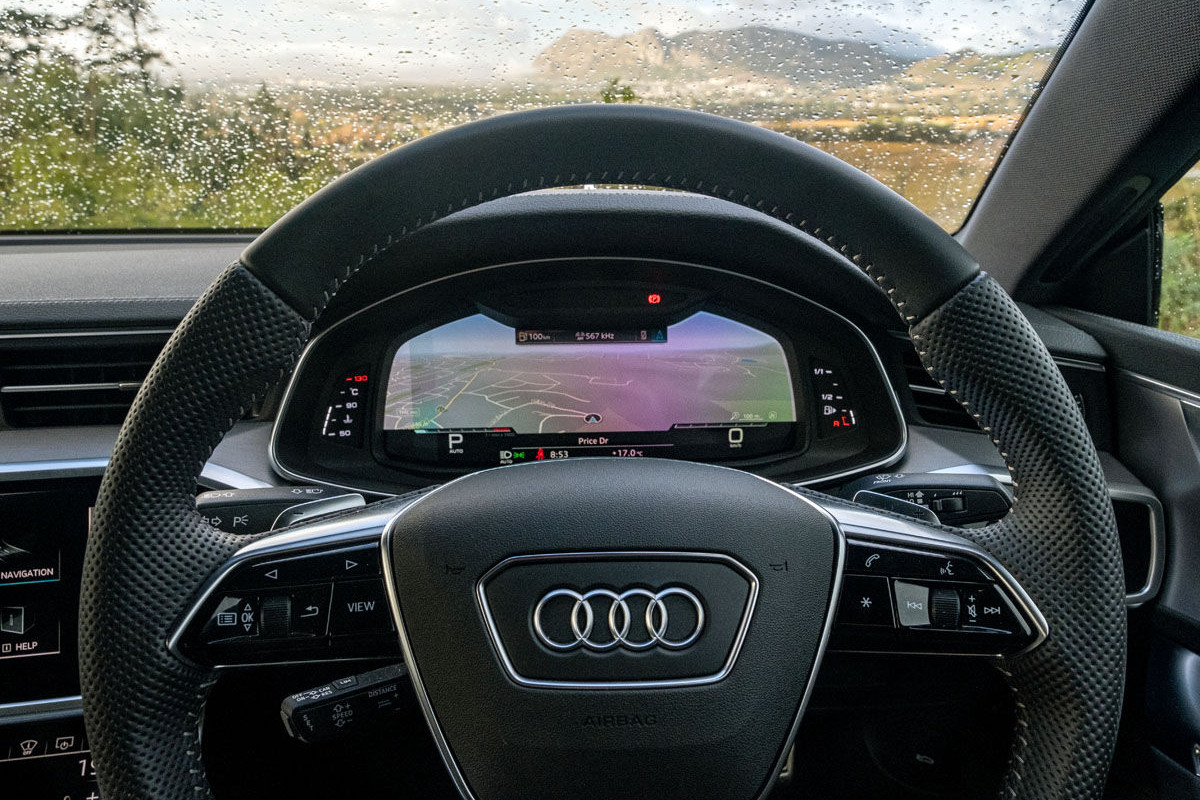
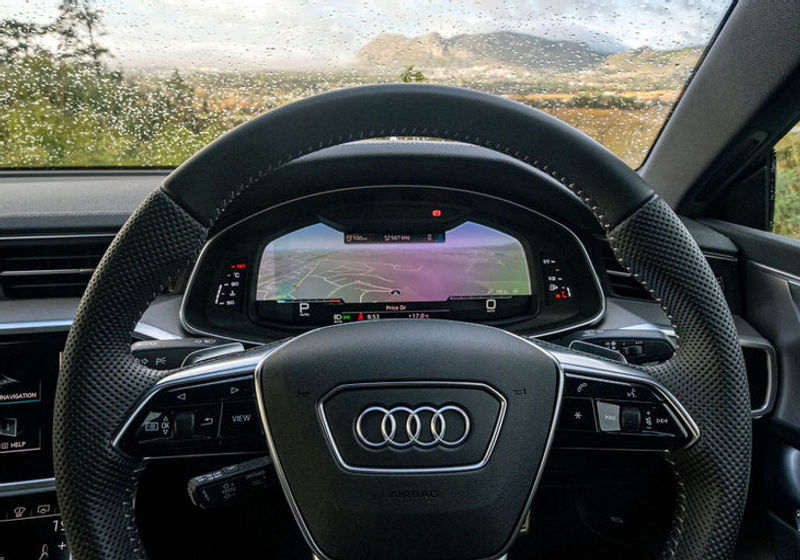
These HD screens have really slick graphics and the haptic feedback genuinely optimises usability. The digital instrument cluster (Audi’s Virtual Cockpit) offers various display modes and incorporates the navigation map, which testers applauded. And, to turn up the techy ambience another notch or so, there are up to 30 contour colours on offer. It’s a strikingly modern (and beautiful) cabin, particularly at night. What’s more, the build quality is top notch.
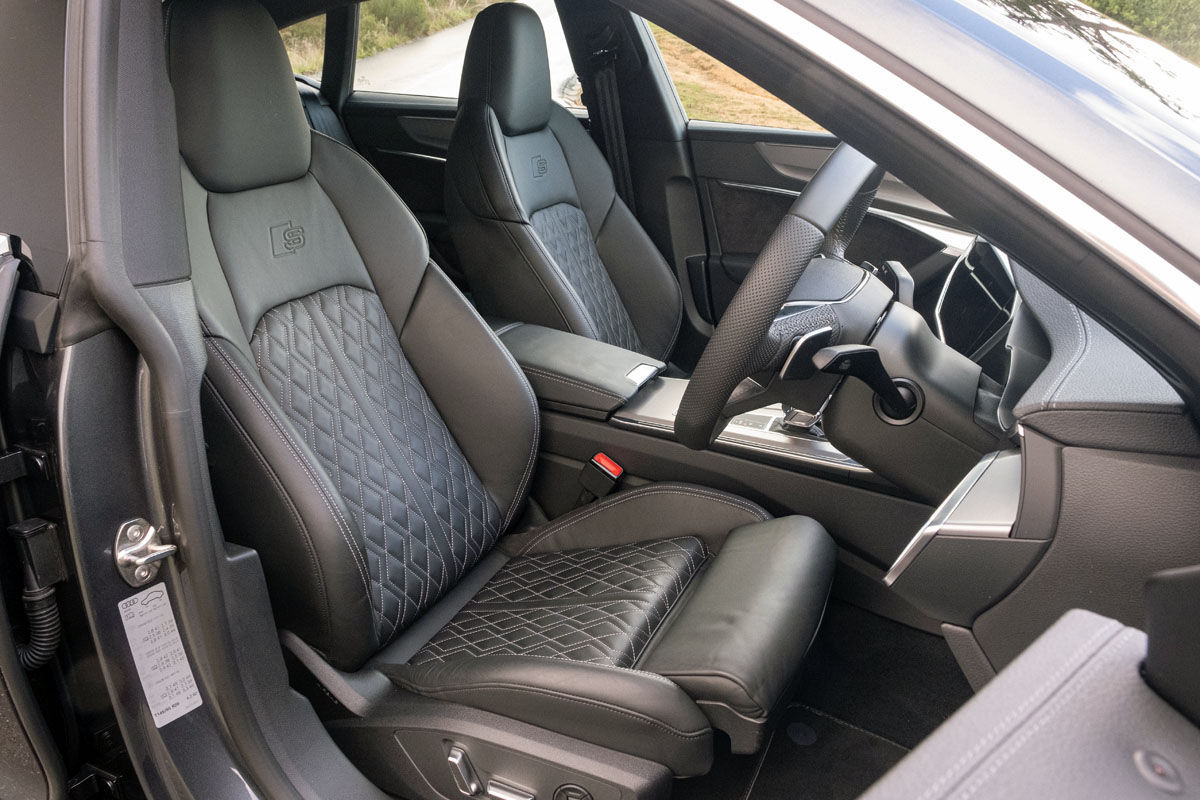
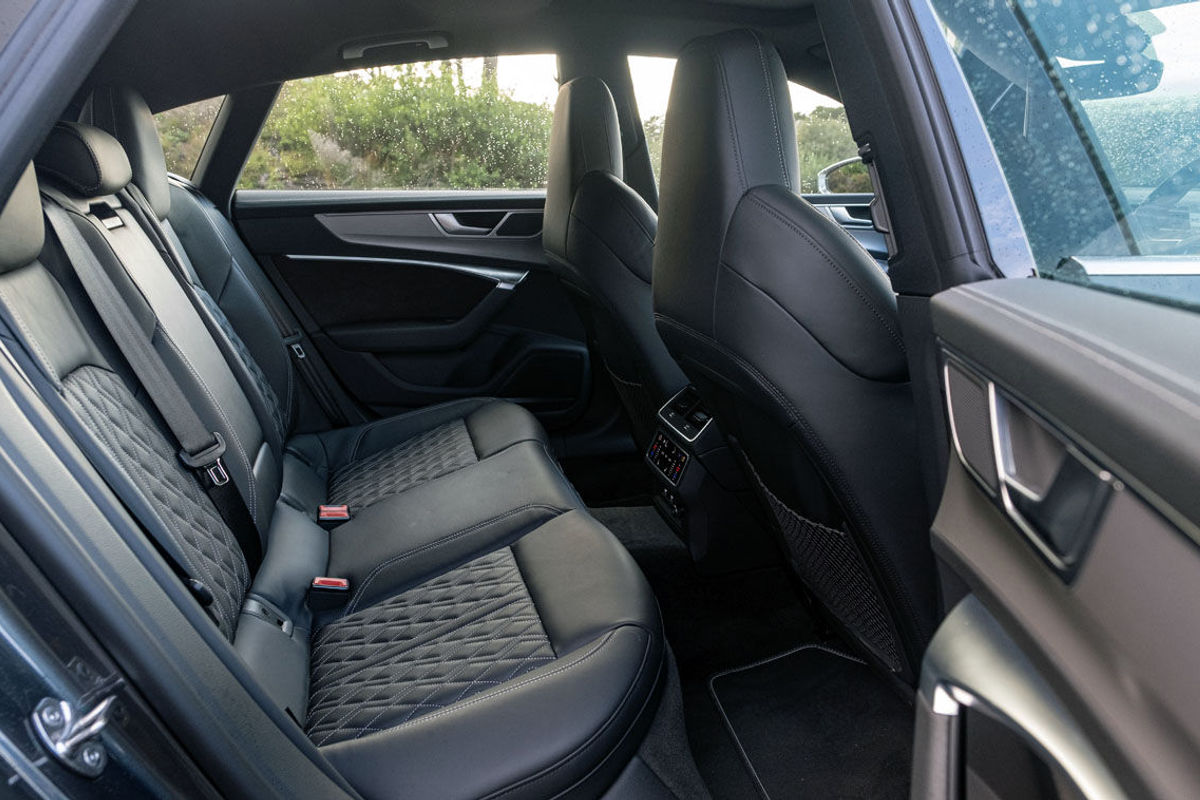
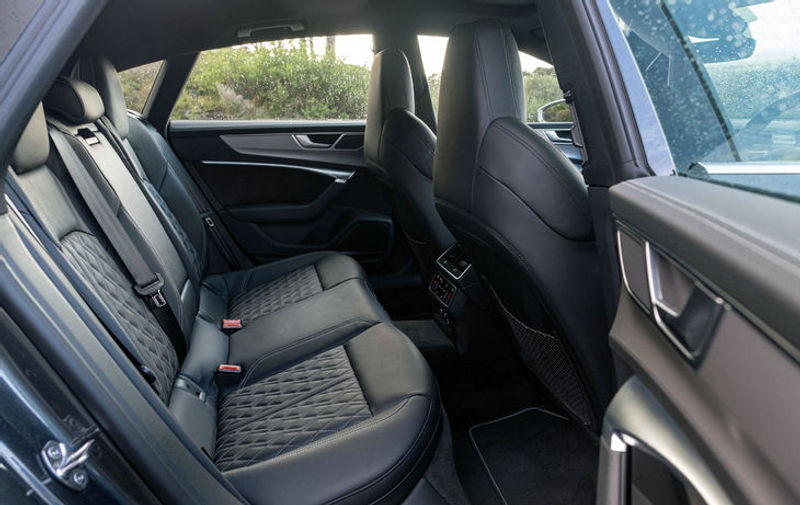
Given the S7 Sportback’s sporty packaging, it avails a generous amount of rear legroom.
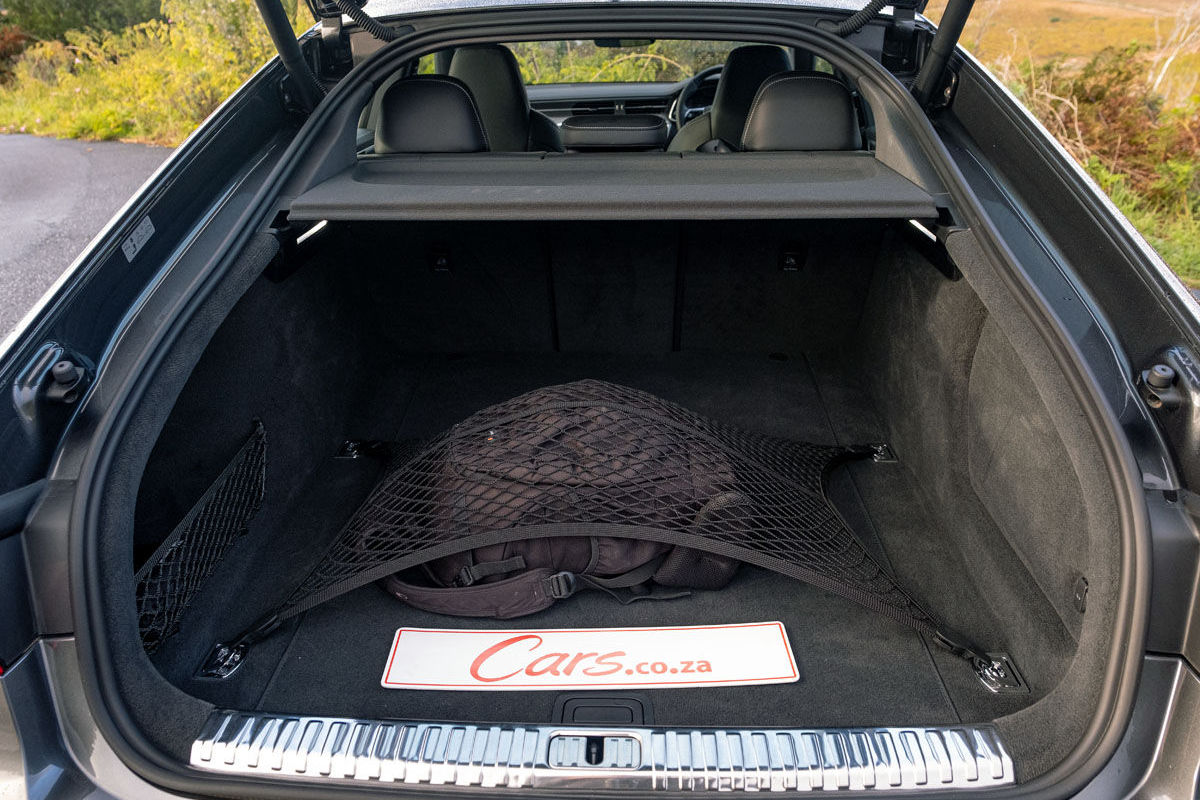
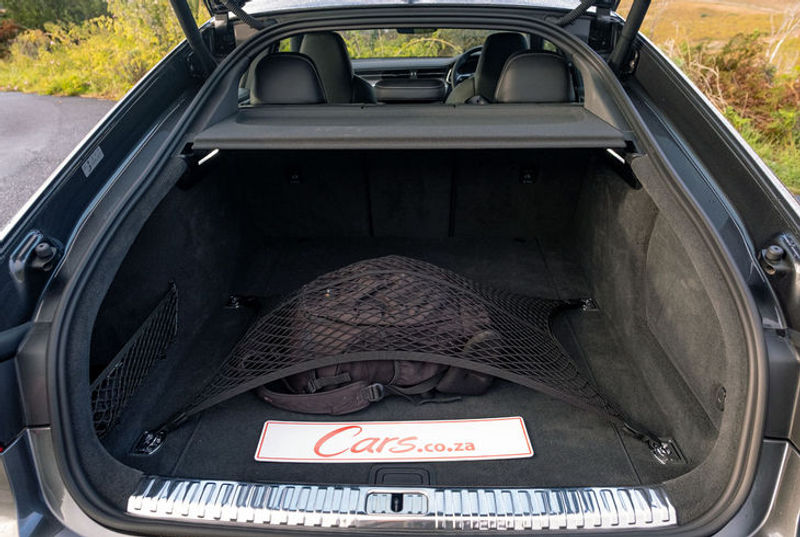
While the S7 Sportback can accommodate a trio of passengers in the rear, it’s really optimised to be a spacious 2+2 seater. Viewed as such, rear leg- and even headroom is actually pretty impressive. And when you open that vast tailgate, you are offered a vast (535-litre) boot. If you fold down the rear seats, utility space grows to 1 390 litres, which is unmatched in the world of luxurious 4-door “coupes”.
The load bay is practically shaped and -sized; it’s one of the highlights of the S7 Sportback.
What’s the Audi S7 Sportback like to drive?
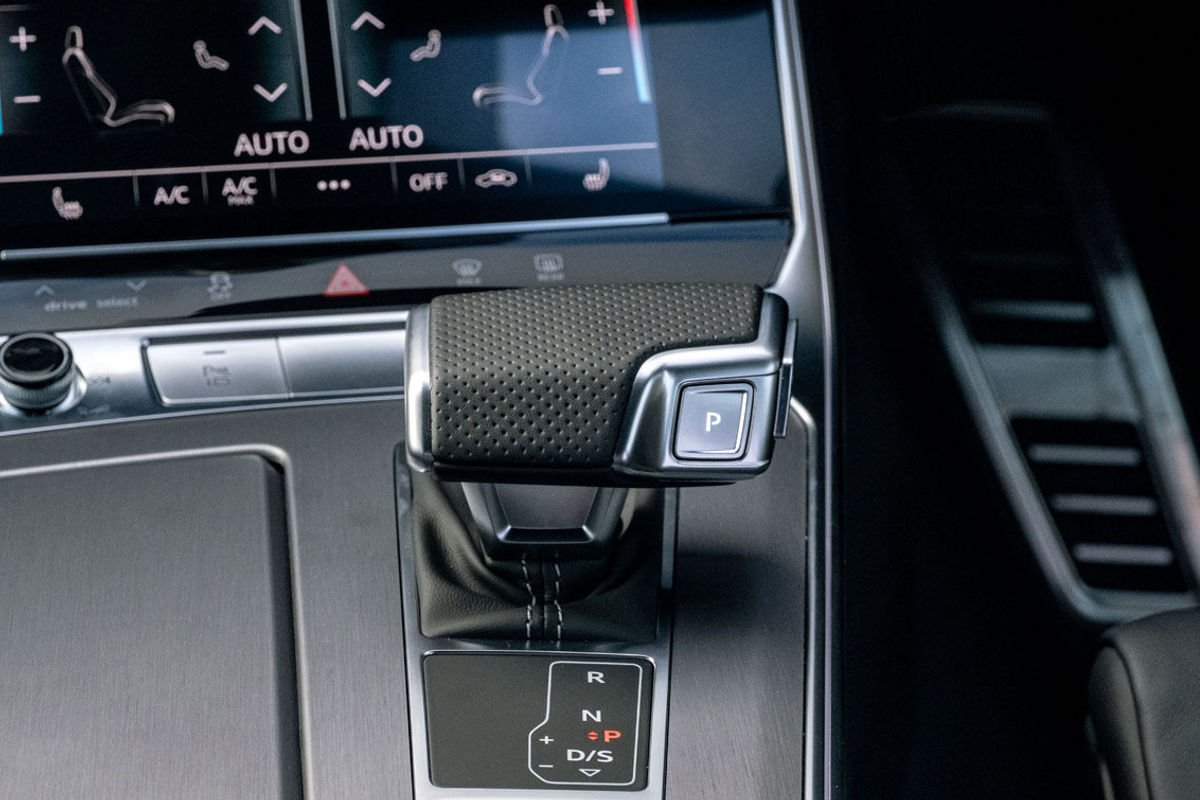
To recap, the S7 Sportback is powered by the same 2.9-litre turbocharged V6 as you’ll find in some RS models. The engine delivers a whopping 331 kW/600 Nm and transmits its power via Audi’s quattro all-wheel-drive system and an 8-speed automatic transmission. By default, the torque split is 40:60 front to rear, but the system can channel as much as 70% to the front, or 85% to the rear as required.
This derivative features Audi’s sport suspension with damping control as standard, but adaptive air suspension is a R36 330 option. Is worth the extra outlay? Yes, arguably so, because it endows the S7 Sportback with a superb ride quality; the sedan’s suspension is relatively pliant (or forgiving), considering that it rolls on 21-inch wheels shod with low-profile tyres. In fact, one of the lasting memories of the S7 Sportback is its ability to “waft”… That’s indeed a rare talent in a time when all brands appear to be setting up their cars dynamically so as to excel on racing circuits (as ridiculous as that sounds).
Aided by optional adaptive damping, the Audi S7 strikes a fine balance between a pliant ride and involving handling.
That’s not to say that the S7 Sportback doesn’t handle well, too. It’s fun to hustle through bends and sweeps, but it’s a big, heavy car, so it never really shrinks around you like the RS, M and AMG products tend to do. We suspect, however, that the target customer for the S7 Sportback would not be particularly concerned with their luxury sedan’s dynamic sharpness. That said, if you do want to make your S7 a little more engaging to drive, Audi does offer an optional sport differential on the rear axle (R27 400) and even Dynamic All-Wheel Steering (R34 700).
Mostly, however, you’re likely to find delight in the way the S7 Sportback accelerates – smoothly (but very strongly)! With a 0-100 kph time of 4.6 sec, the big Audi is certainly no slouch!
Audi Virtual Cockpit has the ability to use its entire display area to show the navigation map.
Finally, it’s worth noting that the S7 Sportback features a mild-hybrid system to optimise fuel efficiency. During deceleration, this system can recover up to 8 kW, which is stored in a lithium-ion battery in the vehicle’s floor (beneath the boot area). The technology allows for start/stop operation from a speed as low as 22 kph, and the S7 Sportback can coast for up to 40 sec with the engine switched off.
This feature, Audi claims, can result in a significant fuel saving in regular driving. The claimed combined cycle fuel consumption figure for the S7 Sportback is 8.4 L/100 km, which is certainly good, given the car’s performance capability. In the real world, however, you’ll have to drive very gingerly to achieve returns near the claimed figure. A more likely average is around 10.2 L/100 km.
Haptic feedback makes it much easier to become familiarised with the touchscreens’ interface.
Audi S7 Sportback: Features & Tech
The modern, tech-focused cabin is not all for “show”, with the S7 Sportback’s standard spec offering a decent-enough combination of luxury and safety features. As mentioned previously, the 12.3-inch Virtual Cockpit display is standard, as is the MMI navigation plus system. A premium Bang & Olufsen with 3D Sound is also included, as are 4-zone climate control, a panoramic glass sunroof and Audi’s phone box and smartphone interface. The front seats are electrically adjustable (with memory for driver) and offer a heating function. You pay extra for ventilated and massaging front seats, however.
You also have to pay extra for a couple of advanced (but desirable) safety features, such as adaptive cruise control (R27 930) and rear cross-traffic alert (bundled into a lane-change warning package for R20 100).
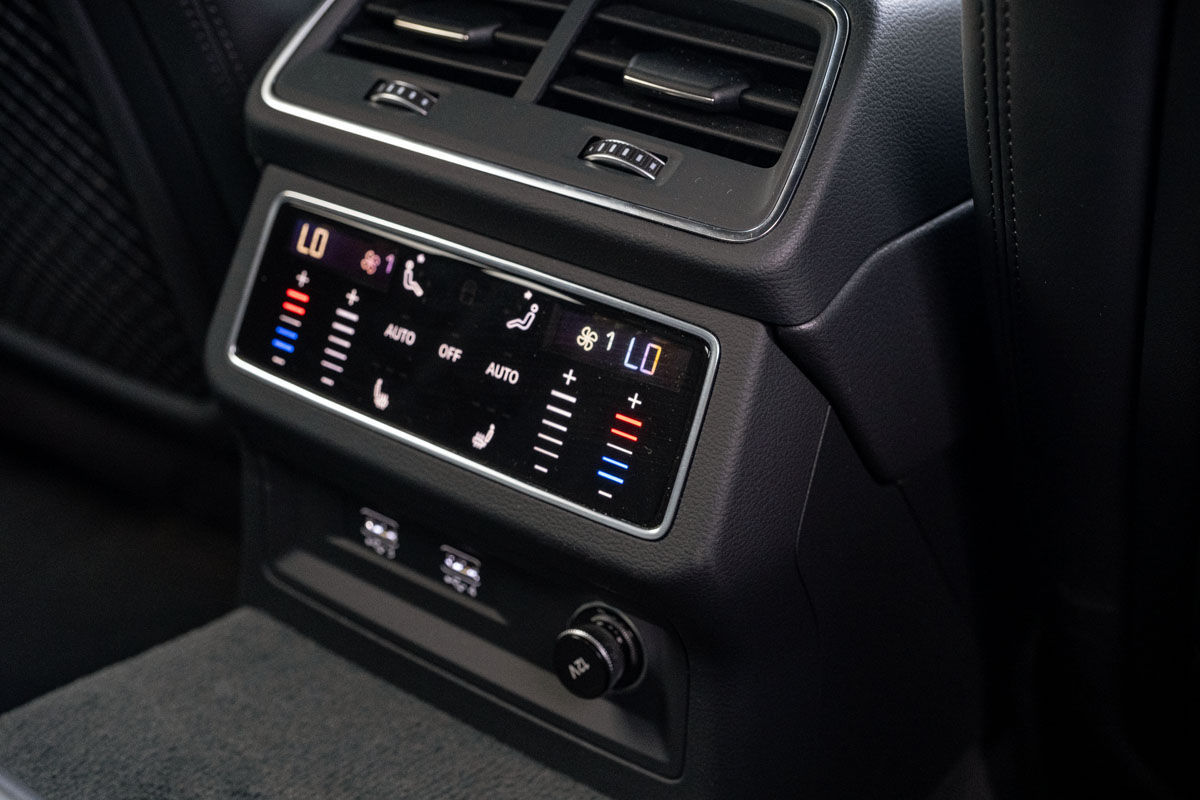
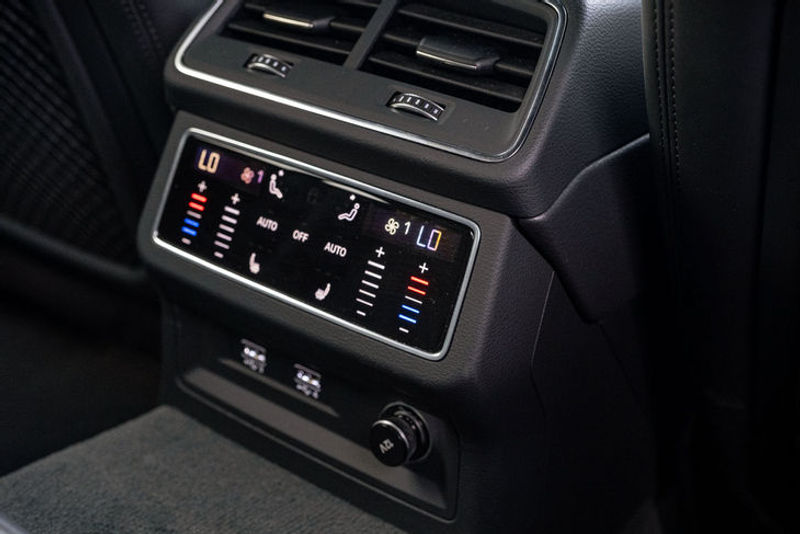
The rear occupants are afforded individual temperature and ventilation controls.
How much does Audi S7 Sportback cost in SA?
The Audi S7 Sportback sells for R1 568 000 (June 2021) without any options fitted. The price includes a 1-year/unlimited km warranty and 5-years/100 000km maintenance plan.
Like most of the recent high-performance RS additions to the Audi South Africa stable, the S7 Sportback is very attractively priced against its nearest competition. Although Mercedes-Benz has shown an updated CLS in Europe, it’s not yet on South African pricelists, and so we have to look to BMW and Porsche for competitors. BMW’s 8 Series Gran Coupe is a very attractive machine, but the 840i variant is a good R100k more expensive than the Audi and not as powerful (250 kW). Similarly, the closest Porsche Panamera, on price, is the “4”, which is even more expensive (pre-options) and yet less powerful (243 kW).
For those few buyers out there who are looking for a sedan-like luxury car experience, however, Audi puts forward a very compelling proposition in the case of the S7 Sportback. In fact, this is a very hard car to fault, given the sheer breadth of its talents. Offering exceptional ride comfort, oodles of power, fantastic attention to detail in the cabin, all wrapped up in a handsome design, the only real criticism we can level at the S7 Sportback is the fact that it misses one or two desirable features as standard. Then again, you could add those to the price and still pay less than you would for one of its rivals.
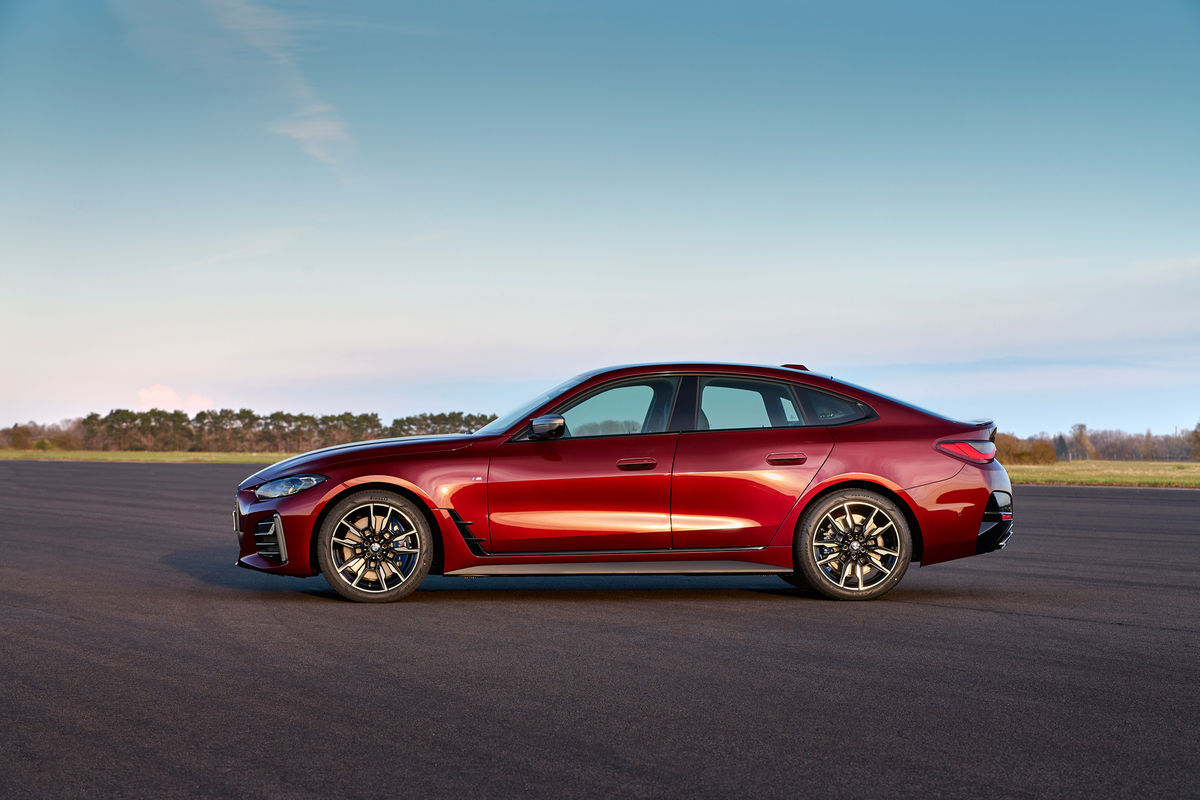
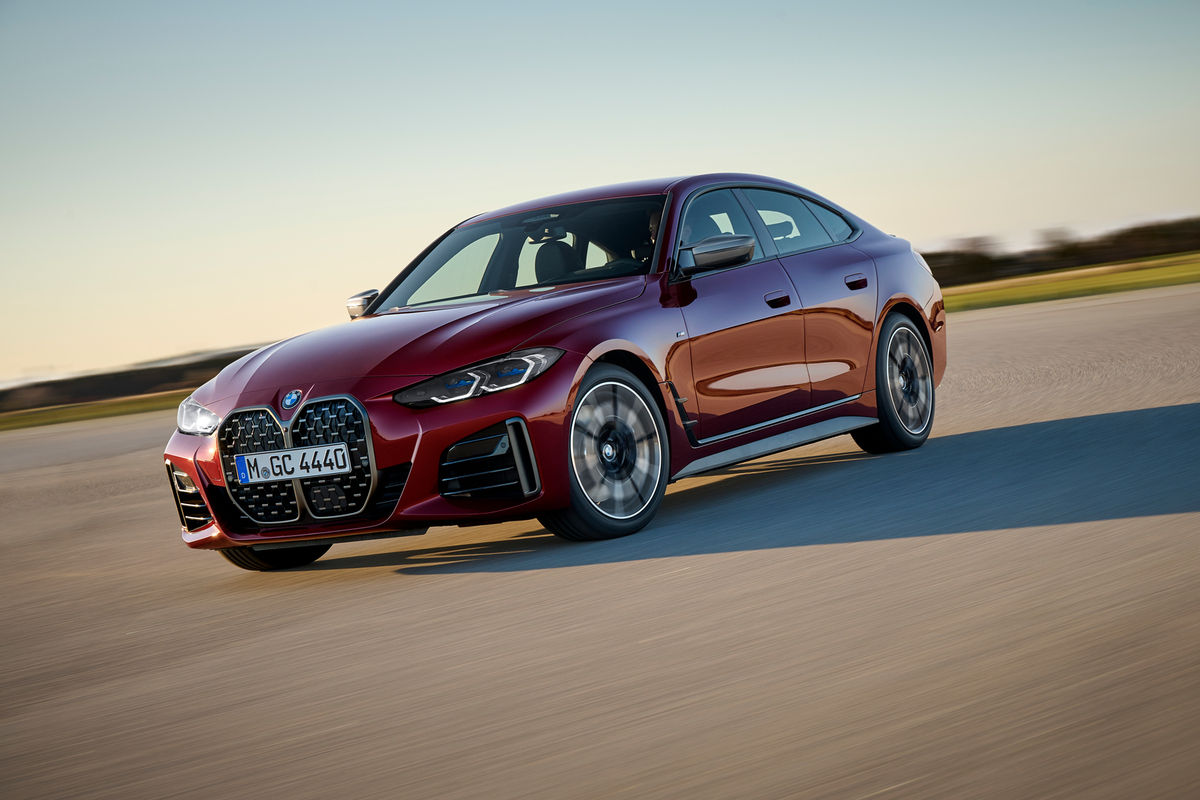
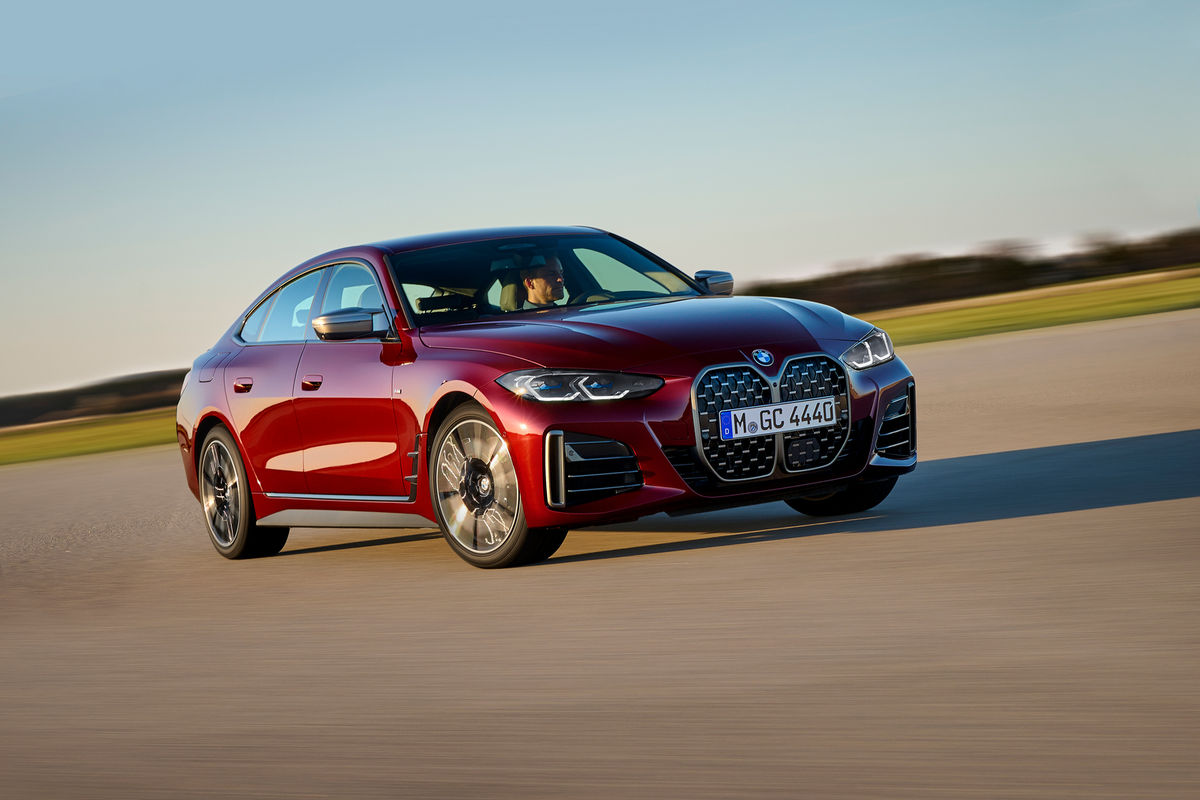
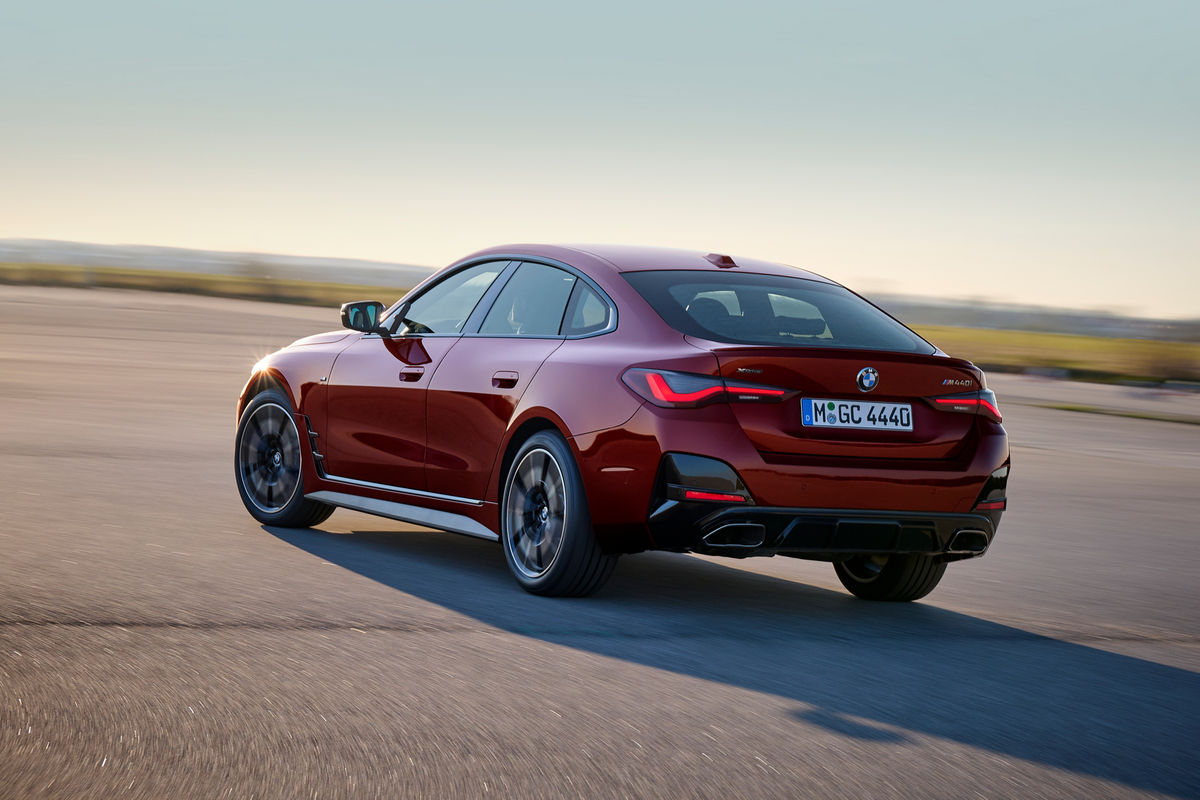
BMW 4 Series Gran Coupe due in SA at the end of 2021
The BMW 4 Series Gran Coupe is set to go on sale in SA at the end of 2021. What’s new on the 4-door 4 Series?
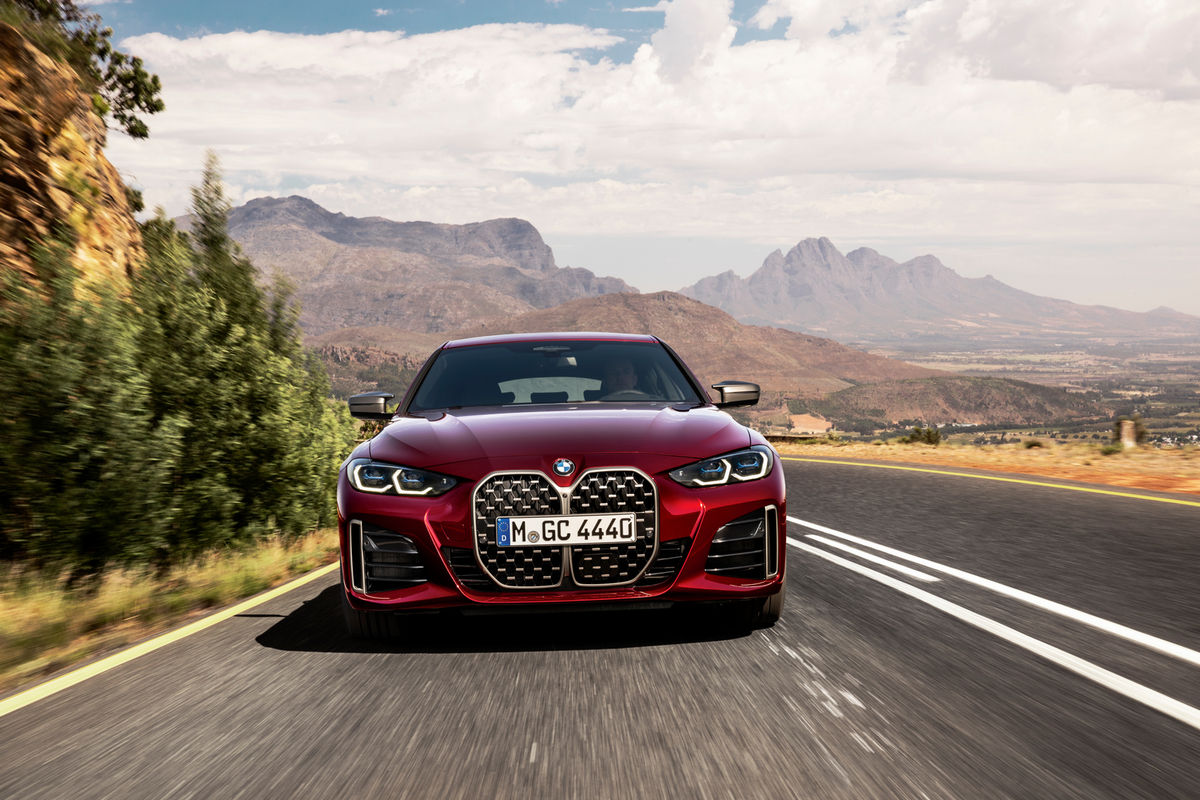
We’ve come to live with the fact that BMW makes a 4-door version of the 4 Series that isn’t a 3 Series but is built on the same platform. Yes, it’s confusing but BMW is committed to it and states that the 4 Series Gran Coupe is aimed at a consumer looking for something a little more distinctive and stylish. This new version is a further departure from the 3 Series in that it has the love it or hate it front grille.
For those interested in the size of the new 4 Gran Coupe compared to the outgoing model, it’s 143 mm longer, 27 mm wider, 53 mm taller and a wheelbase that’s 46 mm longer. The wheelbase is actually 5 mm longer than the 3 Series as well. The expanded dimensions have resulted in a 470-litre boot, which is 39 litres bigger than before and an overall luggage space of 1 290 litres with the rear seats folded down.
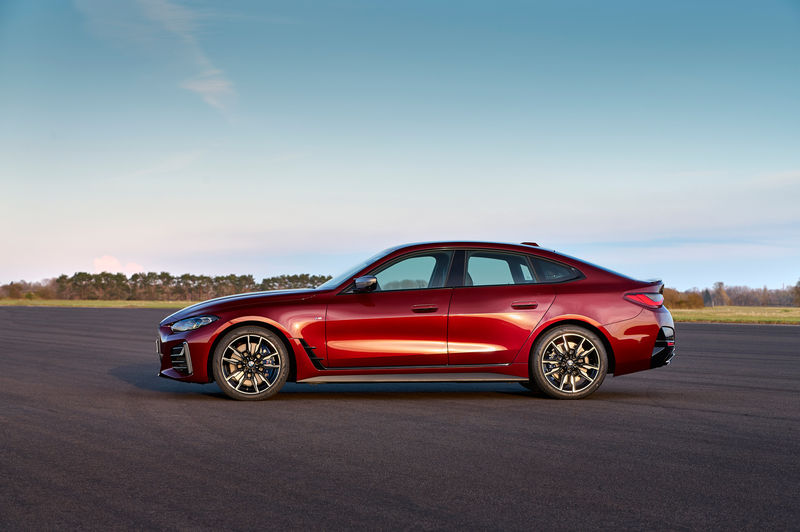
Coupe roof line gives the 4 Series Gran Coupe a slightly more evocative silhouette than the 3 Series.
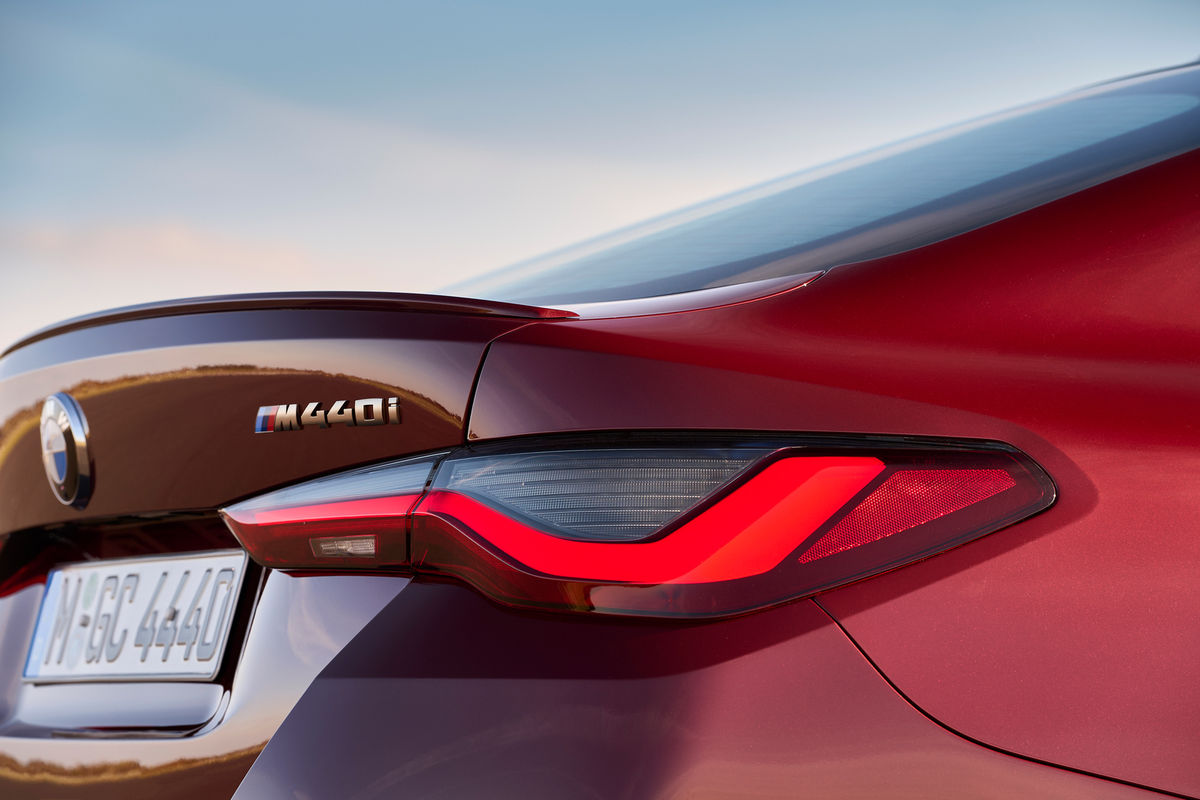
Due to it being considered a coupe, the 4 Series GC has frameless windows while the rear is dominated by the darkened LED taillights that extend towards the centre of the boot and along the rear flanks. An M Carbon exterior package can be specified as an option, and model-specific M Performance Parts are available as part of the Genuine BMW Accessory range.
BMW 4 Series Gran Coupe engines
Just 3 engines are available in the 4 Series GC initially. The very nearly M car worthy M440i xDrive Gran Coupe is powered by a six-cylinder turbopetrol engine good for 285 kW. The petrol 4-cylinder in the 420i makes use of 135 kW while the 420d GC has 140 kW on tap. An 8-speed steptronic gearbox is employed on the 420i and 420d while the M440i uses a sports steptronic version, complete with paddle shifters, that allows it to shift faster and maximises performance from the powertrain.
The 4 Series GC uses bespoke body struts at the front and rear to provide a unique handling experience that delivers 50:50 weight distribution and a low centre of gravity.
The two-joint spring strut front axle and five-link rear axle have likewise been engineered to reduce weight while increasing rigidity. Standard-fitted lift-related dampers enhance both sports performance and ride comfort. Depending on the spring travel, these provide extra damping to control body movement when driving over large bumps, as well as preventing excessive dive.
Over the air updates
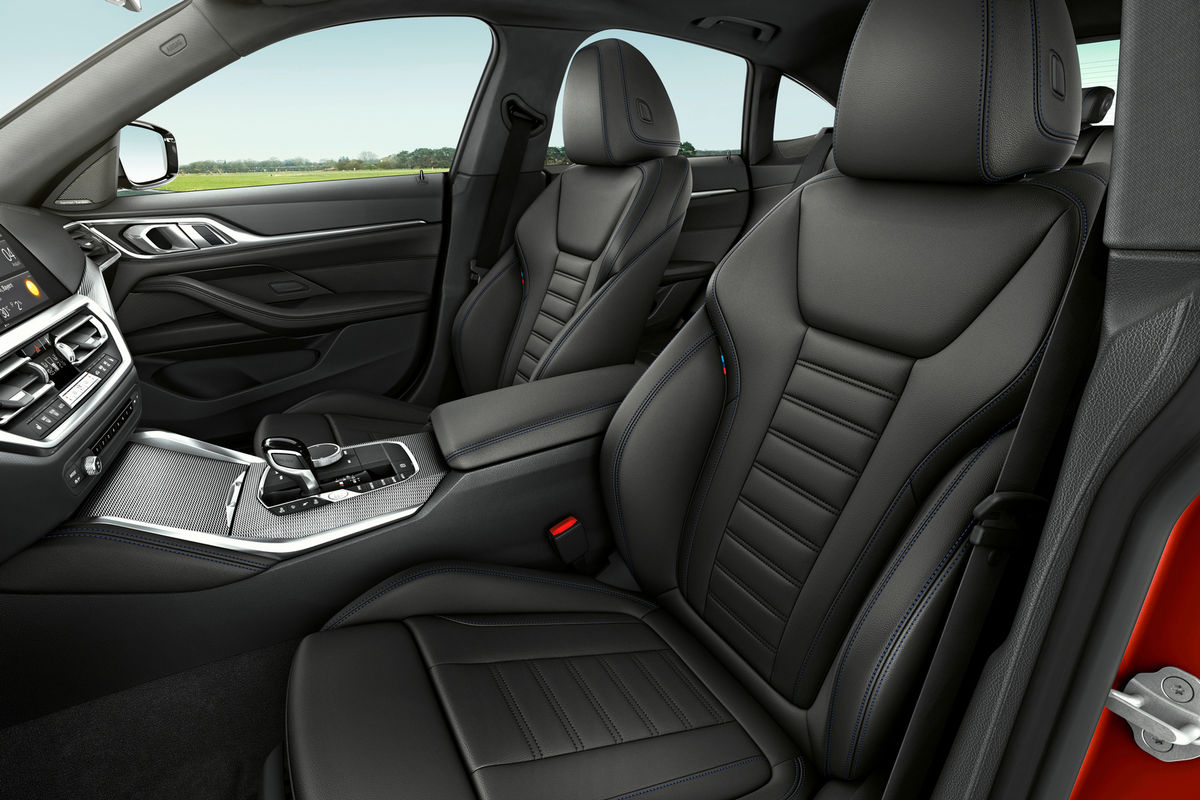
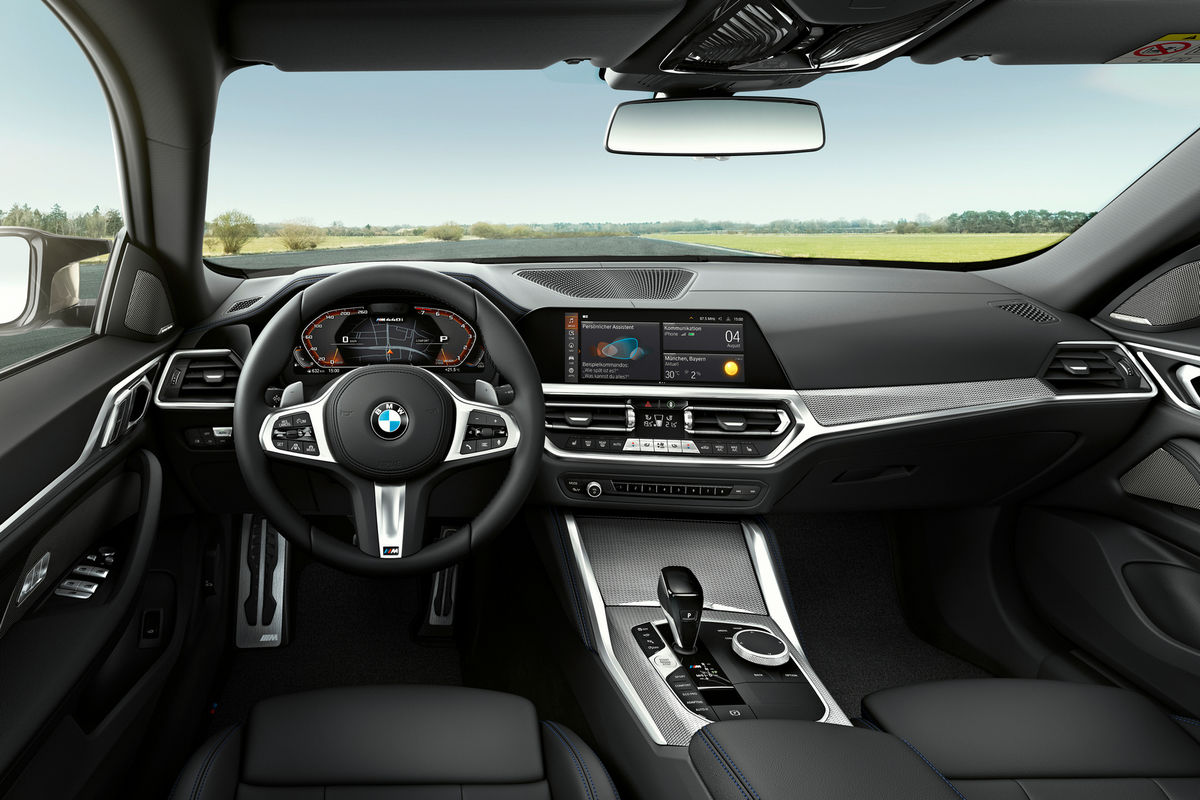
The in-car entertainment system is made up of 2 massive screens – a 12.3 inch digital instrument cluster and a 10.25 inch infotainment screen. The infotainment screen can be controlled via touch, voice, BMW central controller or if you have to, gesture control.
Smartphone integration is fitted as standard now so Apple Carplay and Android Auto are available and can even be used wirelessly now.
Remote software updates can now be sent to the car making sure that any bugs or software updates can be quickly installed to the vehicle without having to send the vehicle to a dealer.
The BMW 4 Series Gran Coupe is penned in for local arrival sometime during the 4th quarter of 2021. Pricing and exact specification will be available closer to then.
2022 BMW X3 and X4 LCI Revealed
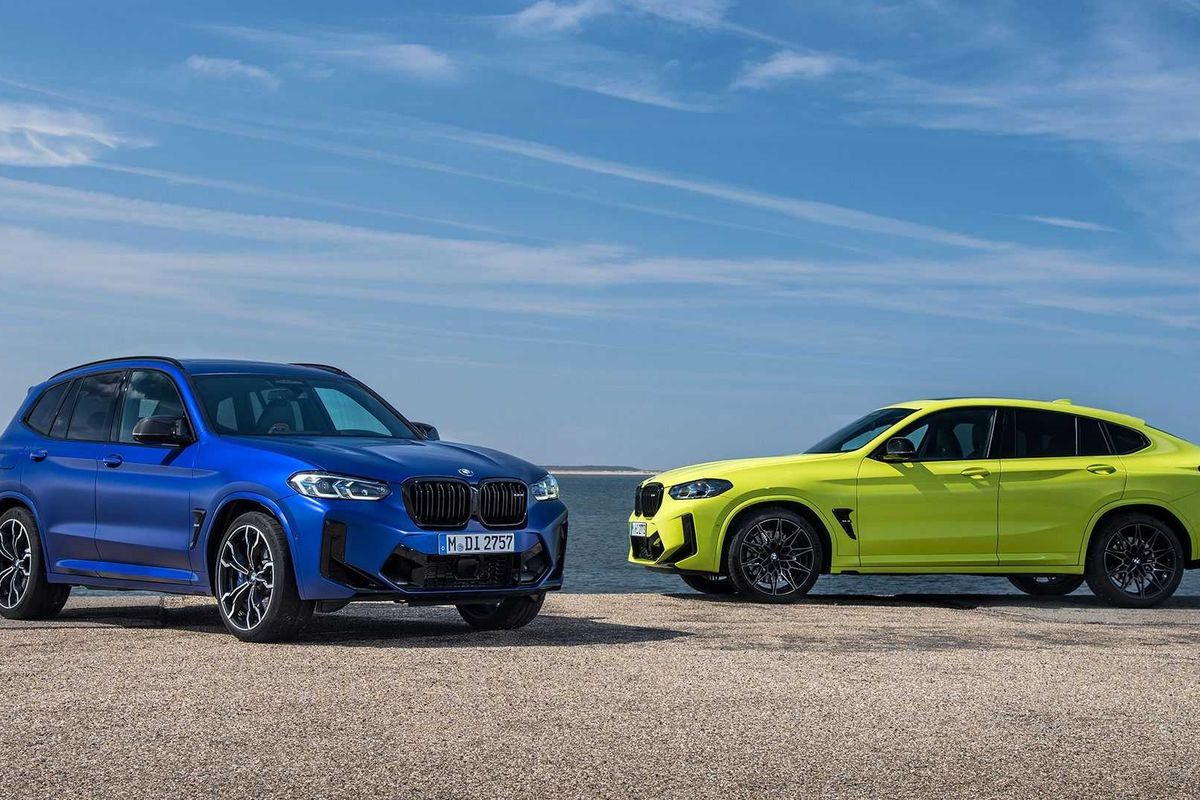
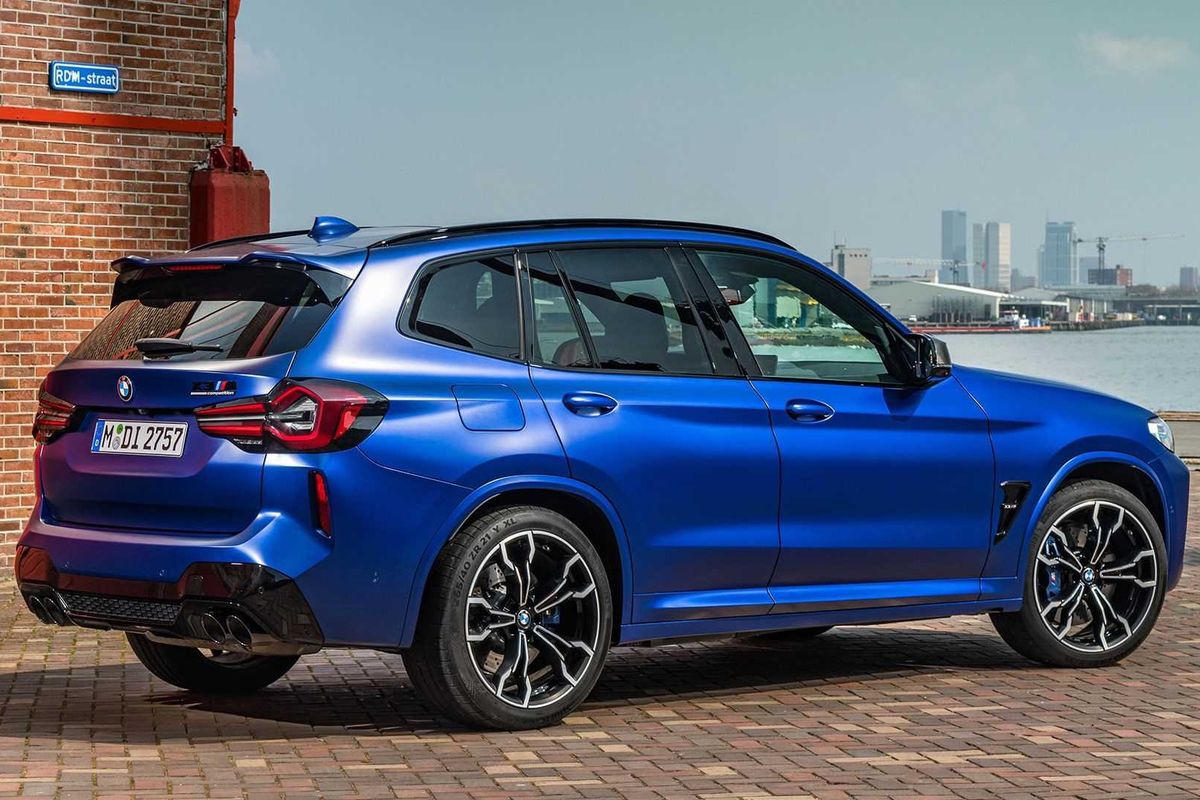
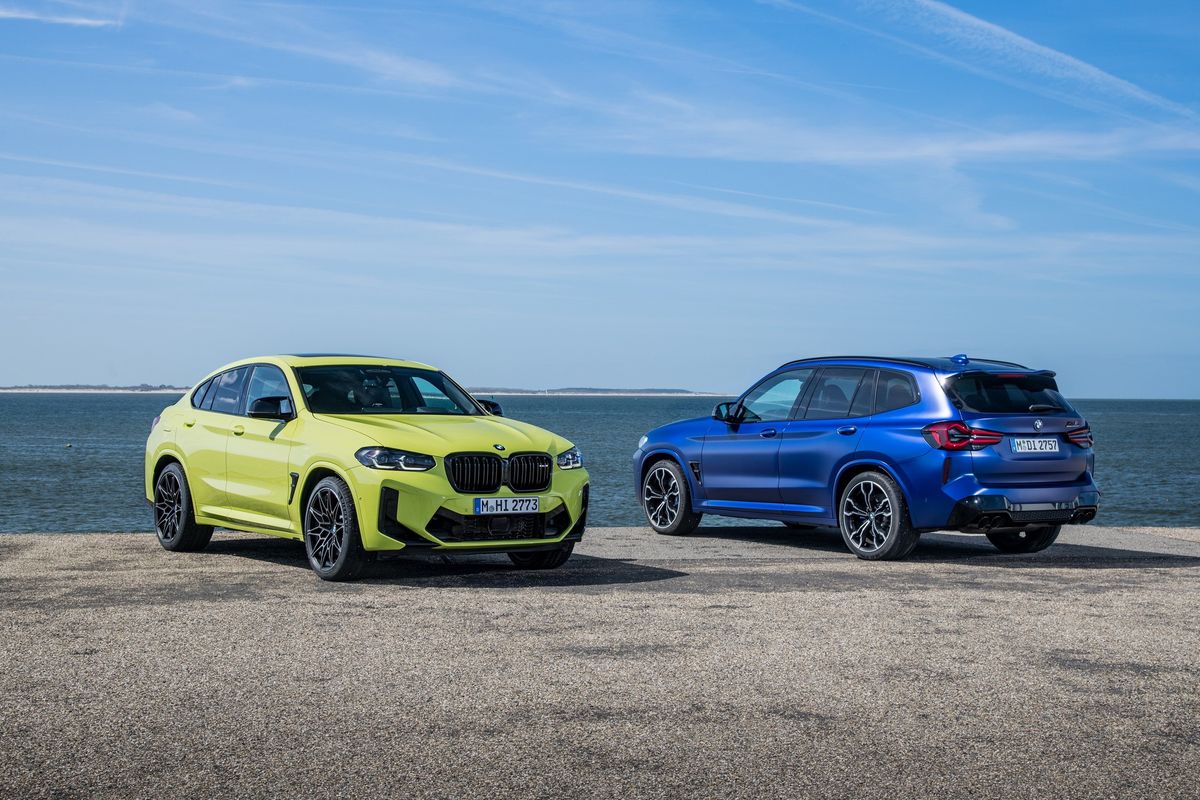
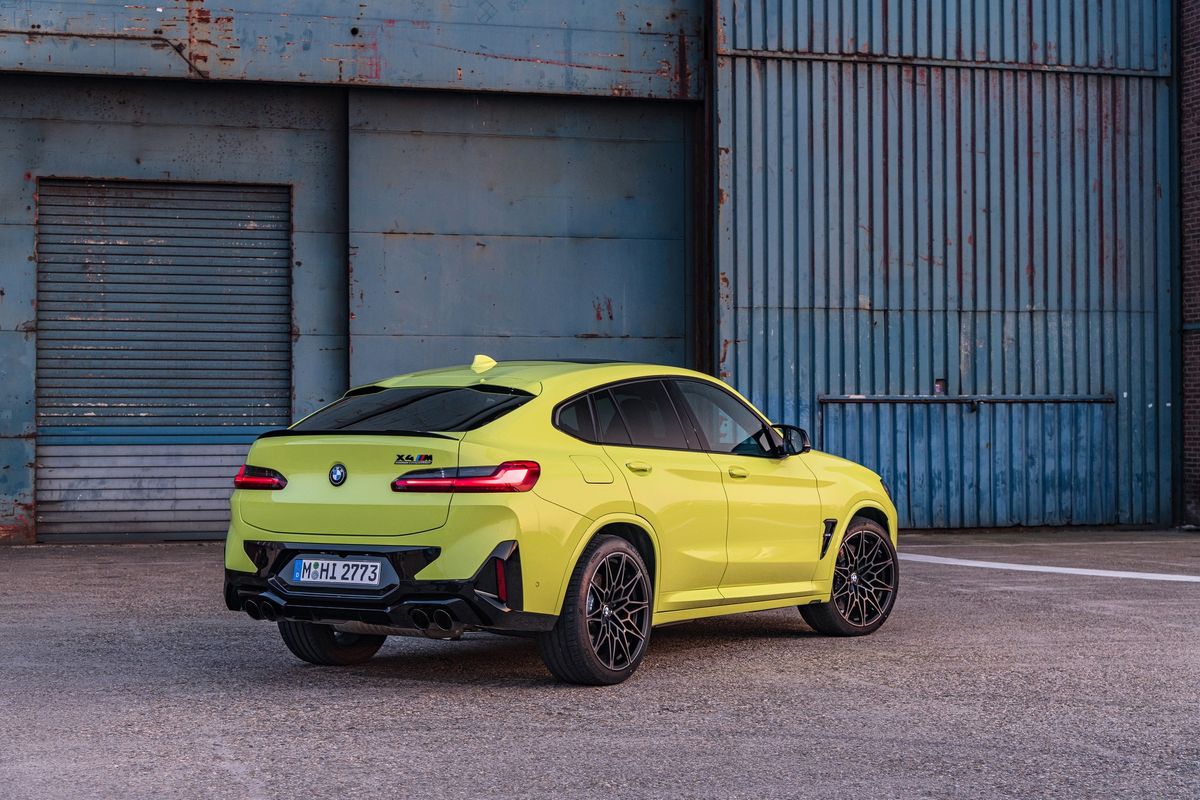
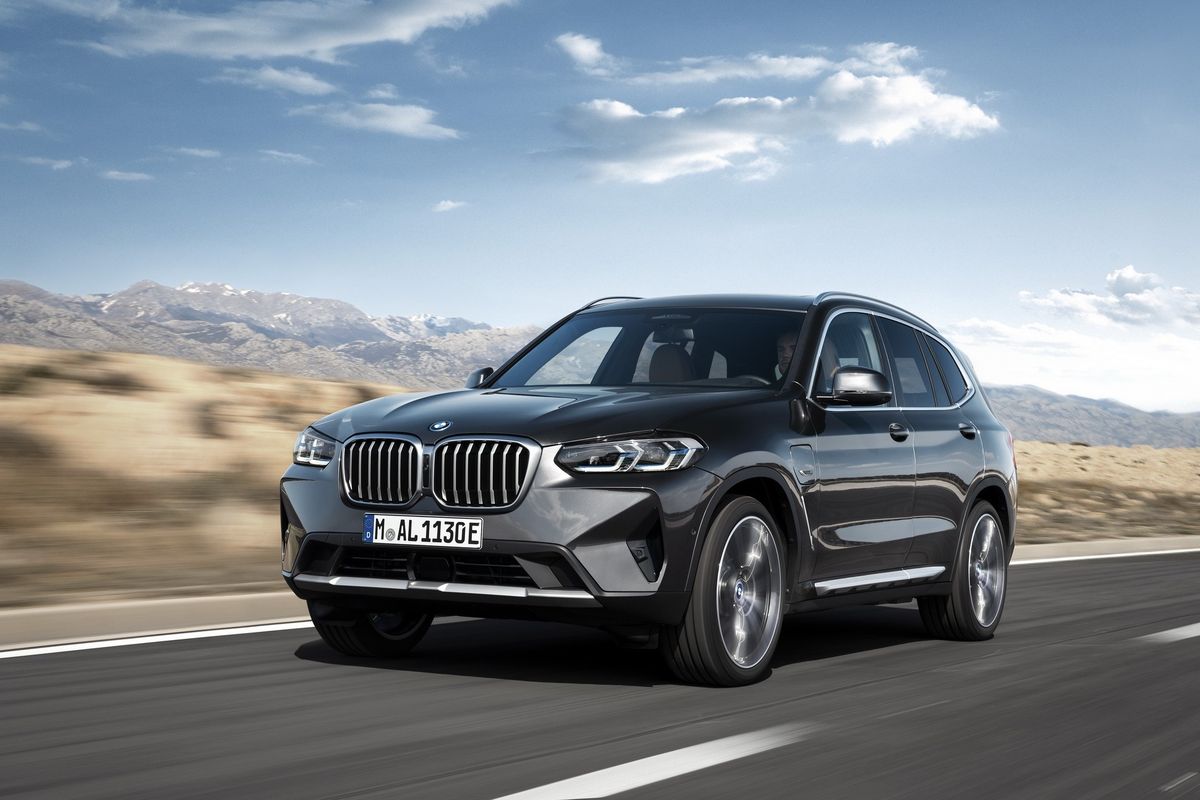
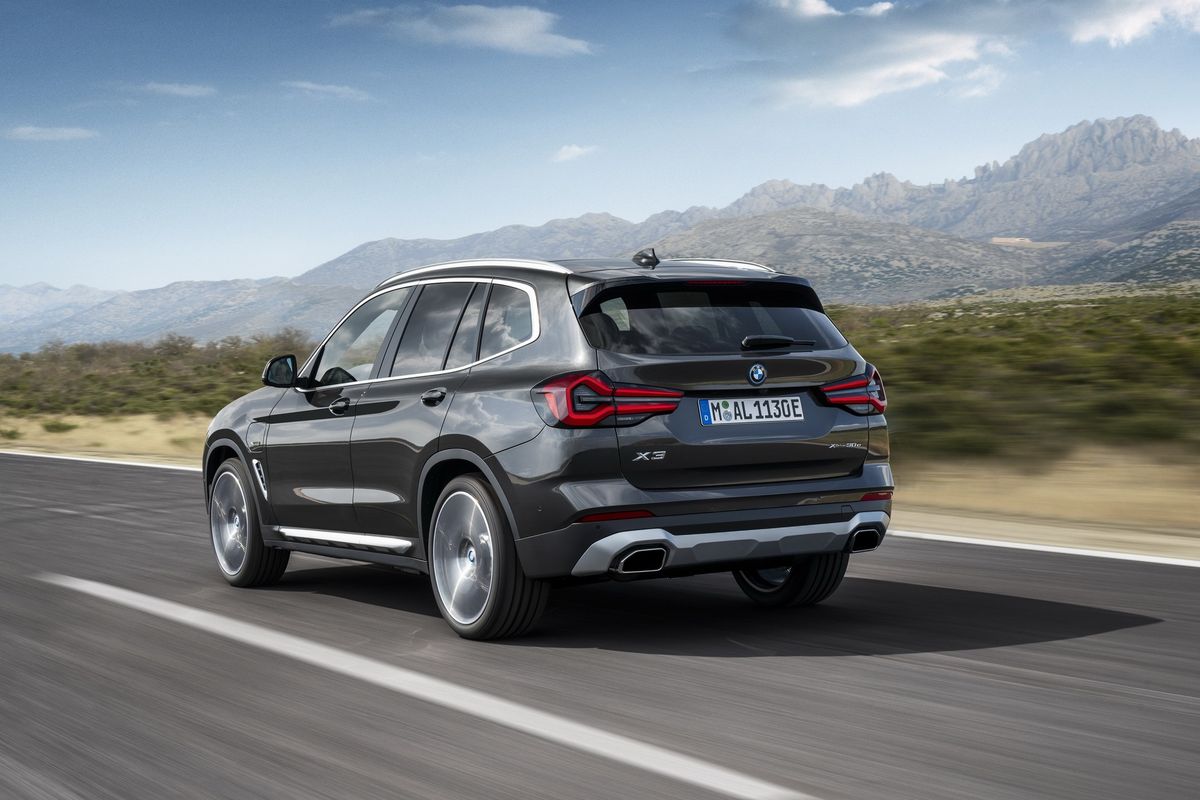
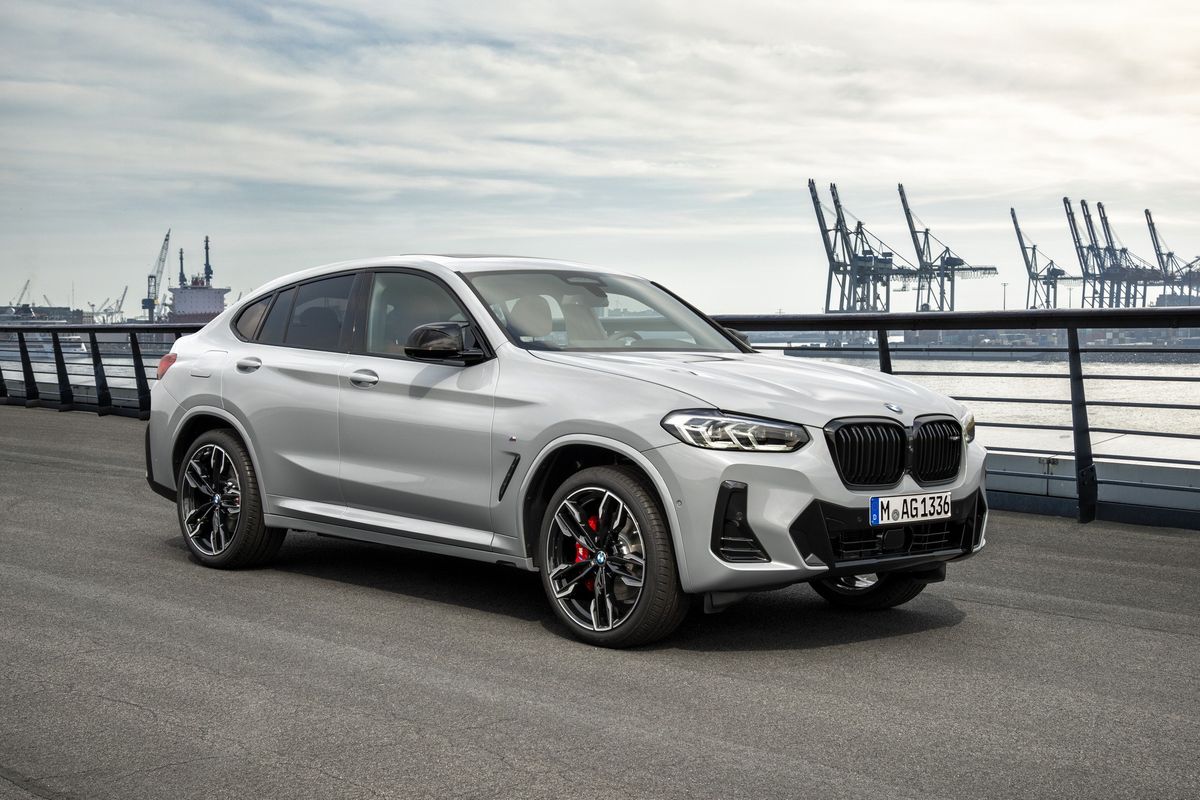
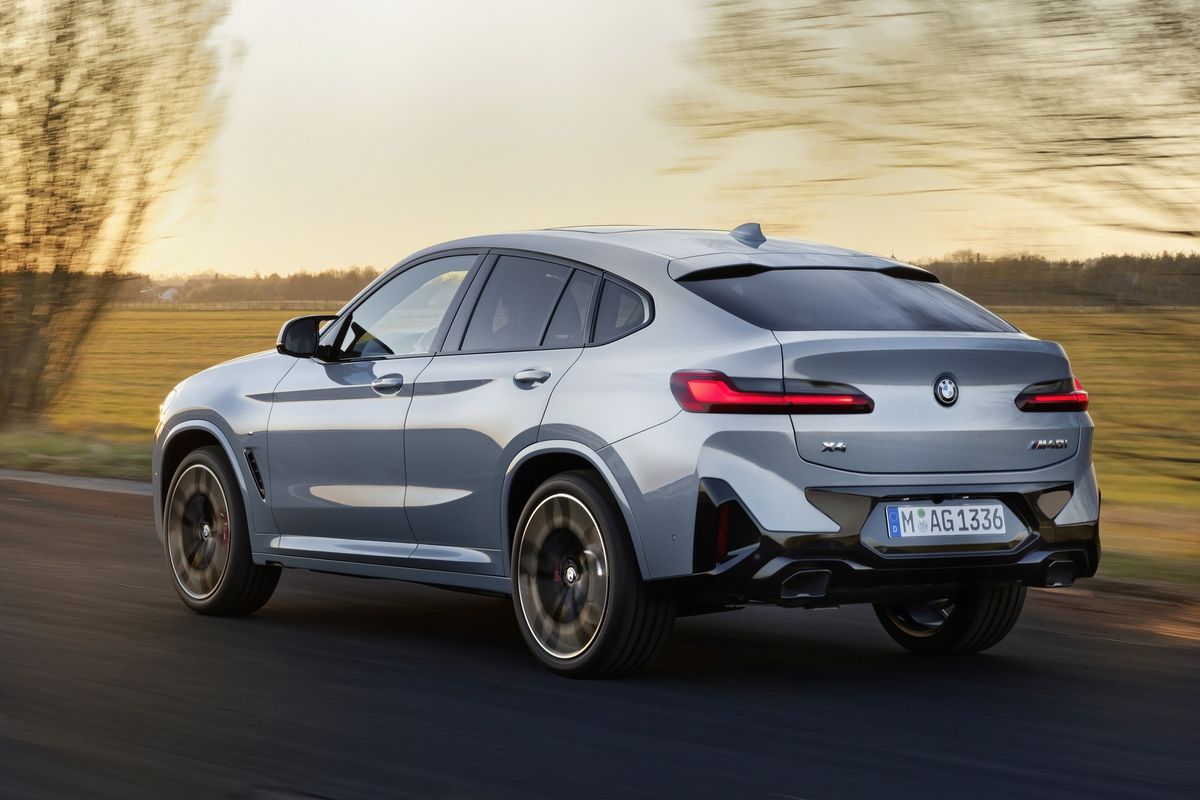
The 2022 BMW X3 and X4 LCI pairing have been officially revealed. These mid-cycle updates for the X3, X4, X3 M and X4 M bring significant changes across the board, to make the German duo even more competitive.
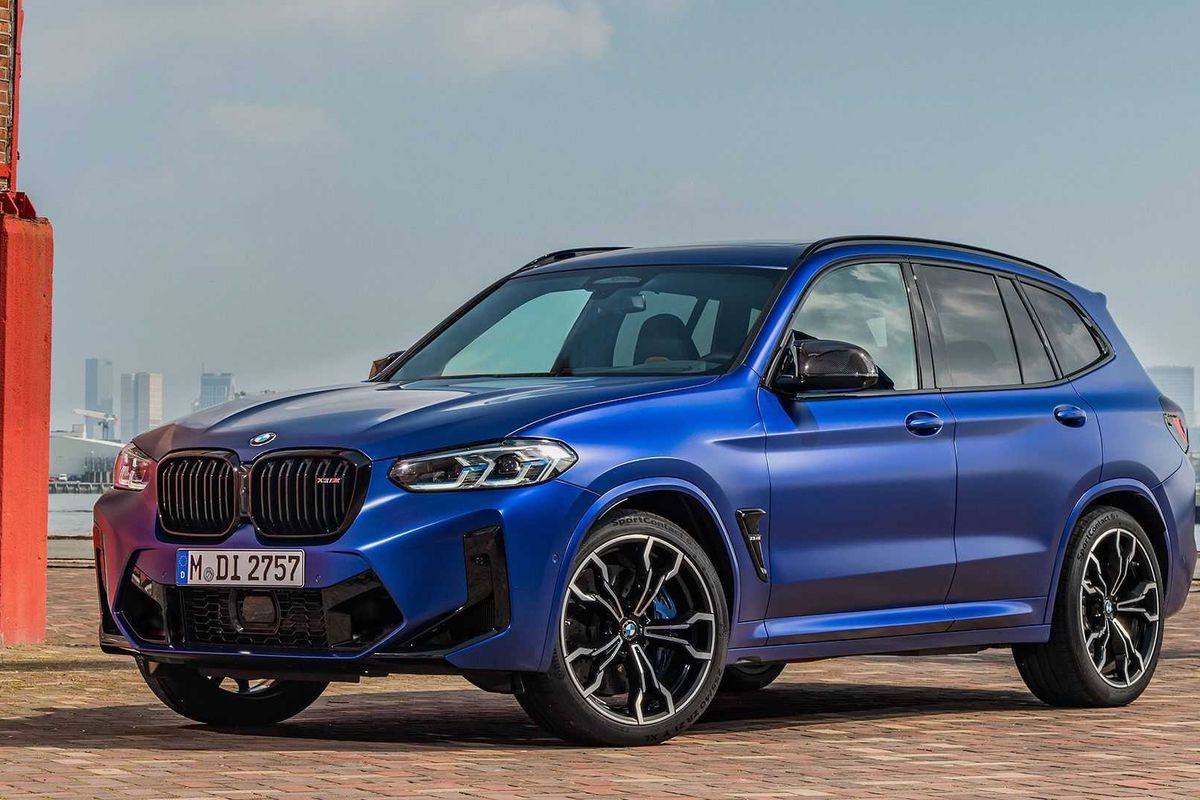
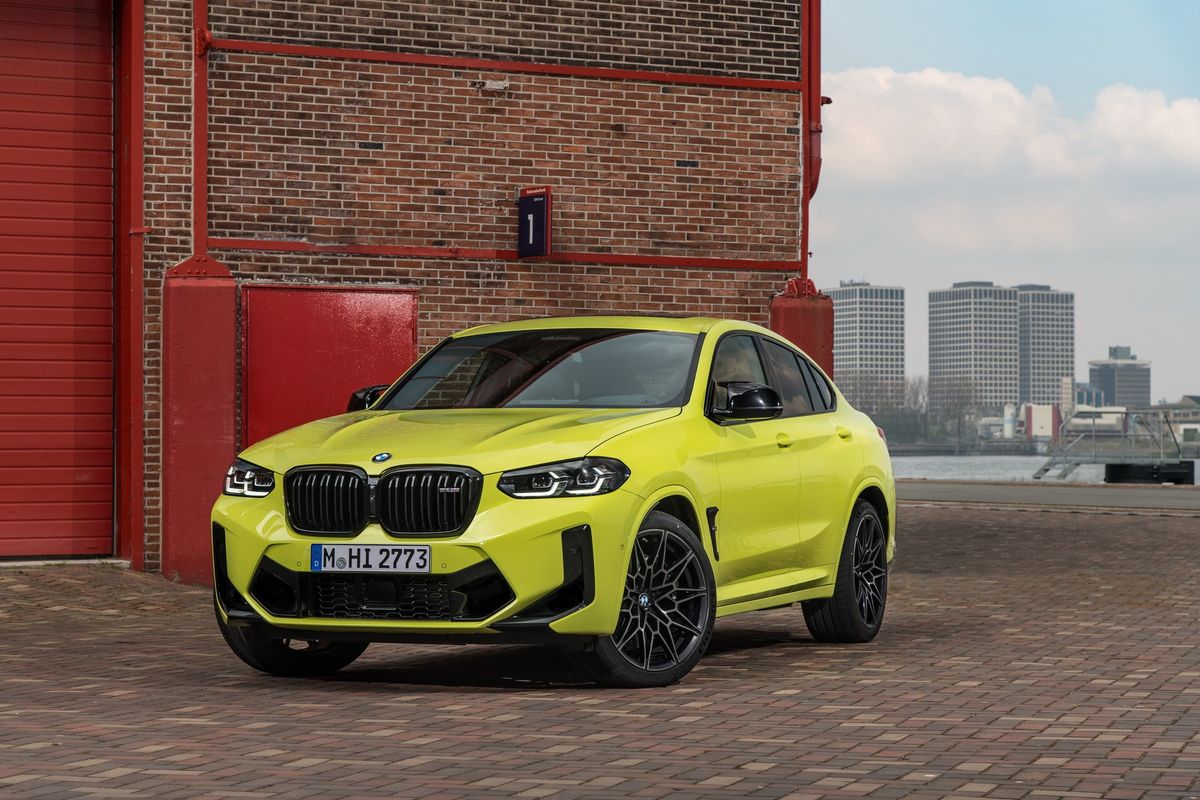
The 2022 BMW X3 and X4 LCI updates are extensive, with cosmetic changes inside and out, with the engine lineup being carried over. Bucking the trend of oversized grilles, the 2022 BMW X3 and X4 LCI features an updated version of the kidney grille, redesigned front and rear bumpers, new-look LED headlamps and some interestingly-styled rear LED taillights.
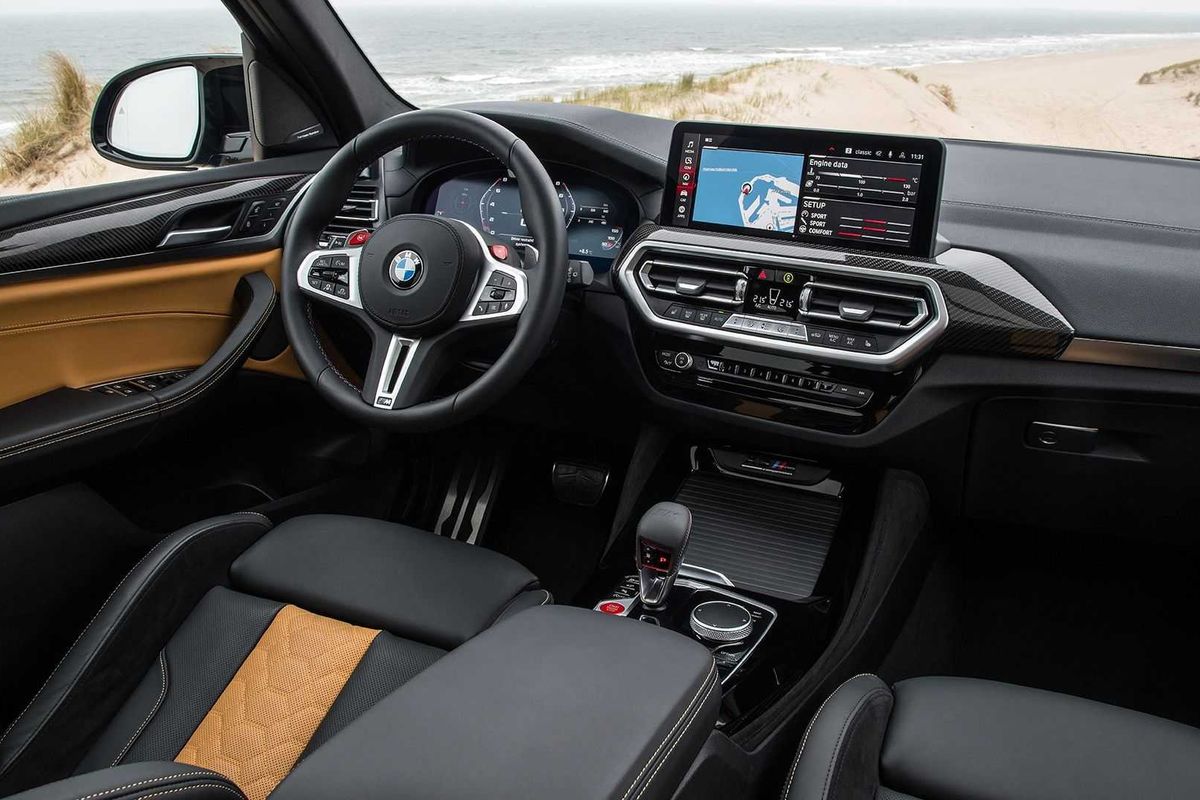
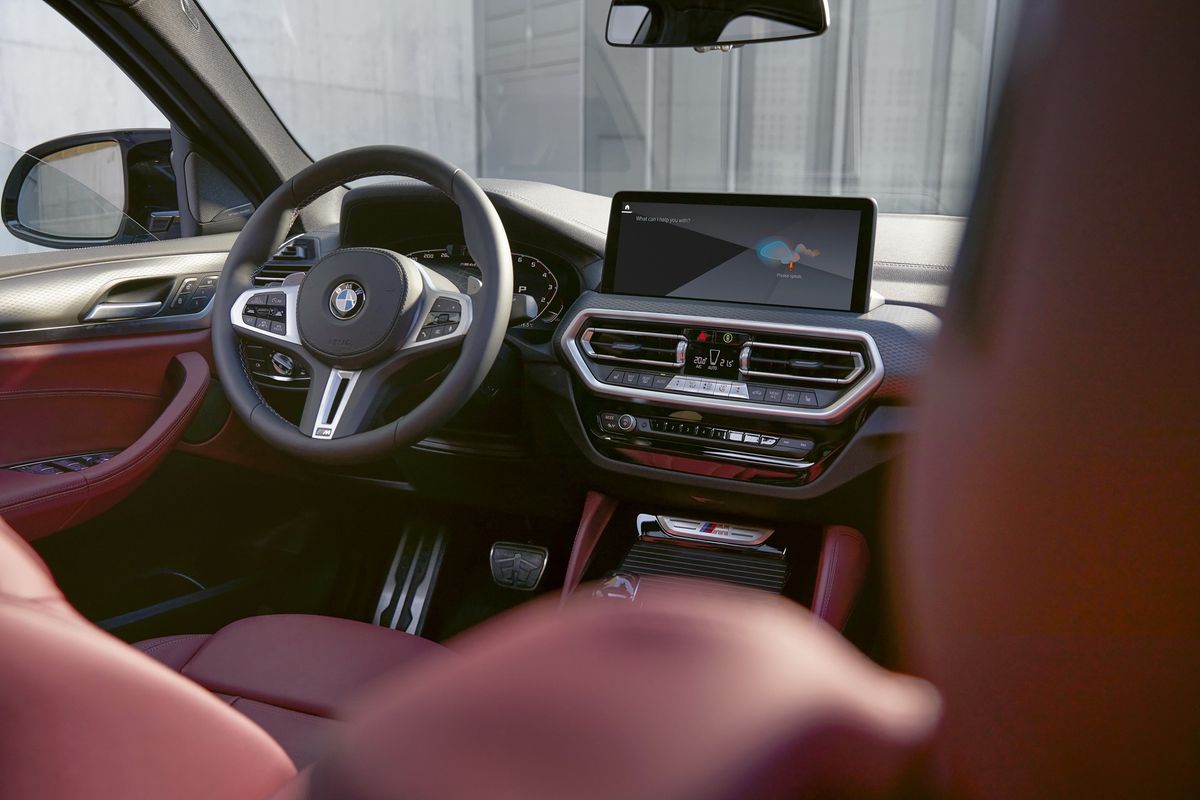
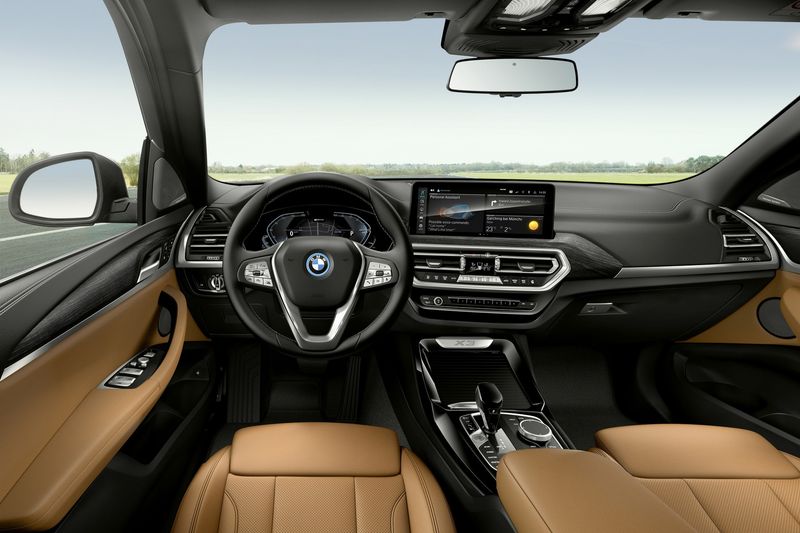
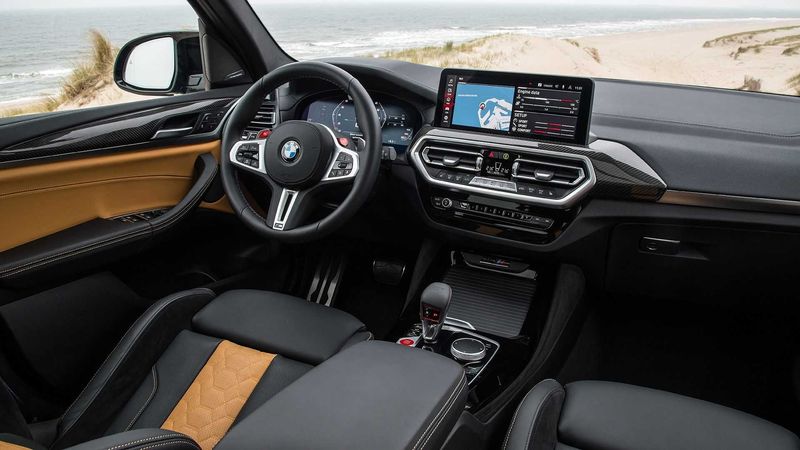
Inside, the 2022 BMW X3 and X4 LCI receive a new-look center console with the climate control now above the audio controls. There’s a new 10.250-inch infotainment screen, but if you go for the Live Cockpit Professional (standard on X4), there’s a 12.3-inch digital instrument panel and a 12.3-inch screen on offer. There are also tweaks to the interior trim and materials.
As far as engines go, the 2.0-litre 4-cylinder petrol engine soldiers on and can be found in the X3 sDrive, X3 xDrive30i, and the X4 xDrive30i derivatives. It produces 184 kW and 349 Nm, giving the car a 0-100 kph claimed sprint time of 6 seconds.
For the performance fundis, the M40i powertrain now features a 48-Volt mild-hybrid system working with the 3.0-litre turbocharged 6-cylinder. Outputs of 284 kW and 500 Nm are on offer, giving the cars a 0-100 kph time of 4.4 seconds. The M40i models also receive sporty-looking body kit and wheels, as well as subtle badging.
2022 BMW X3 and X4 LCI M Competition
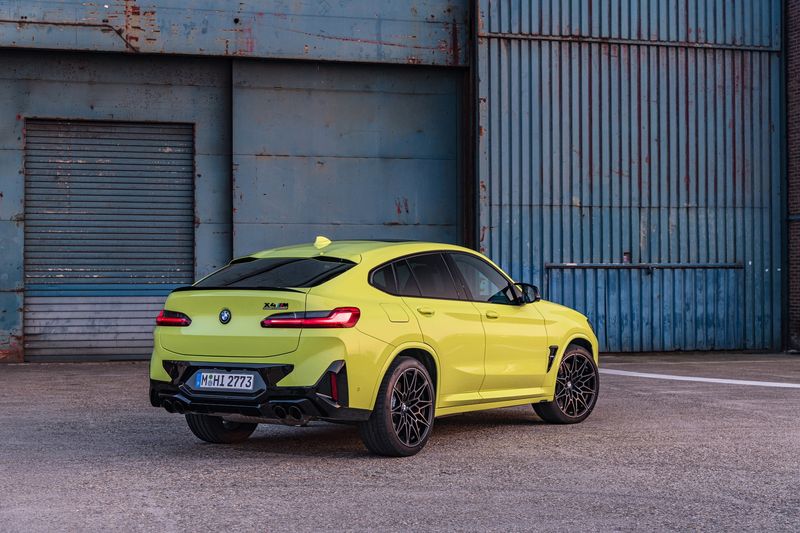
Of course, the performance twins of the BMW X3 M and X4 M have been given a similar treatment, however, petrolheads will be pleased to hear the 3.0-litre turbocharged straight-6 motor may not have had a power boost, but torque is up from 600 Nm to 649 Nm. The extra torque comes from a 3D-printed cylinder head core and a forged lightweight crankshaft from the M3 and M4.
These extra 49 Newtons may not sound like much, but both vehicles see their 0-100 kph sprint time claims drop from 4.0 seconds down to 3.7 seconds. The top speed is limited to 250 kph or get the M Driver’s Package for an extra 30 kilometers. As before, the BMW X3 M and X4 M feature an 8-speed gearbox and we expect South Africa to receive the full-fat Competition models.
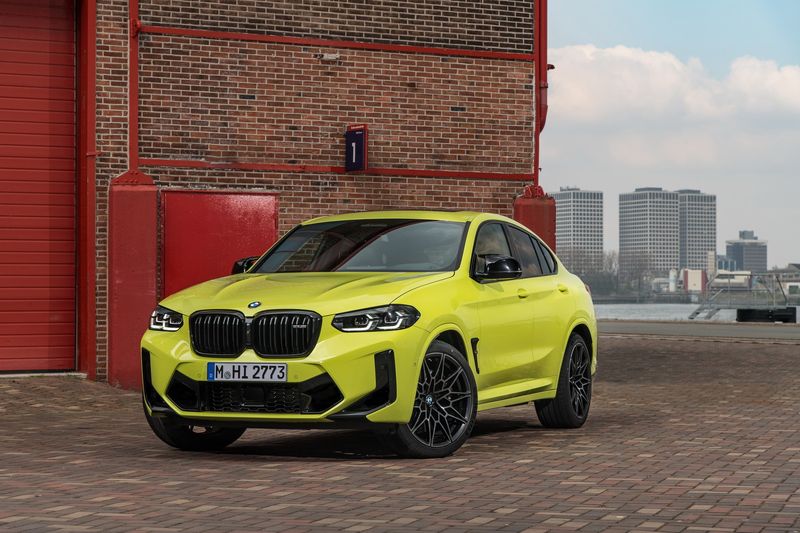
Inside, the BMW X3 and X4 LCI M models will receive powered M sport seats with illuminated M logos, Merino leather upholstery, Alcantara knee pads on the center console, the M multifunction steering wheel, M seat belts and other goodies. If you’d somehow missed it, the vibrant Sao Paulo yellow paint is now available too, so your car looks as loud as it sounds.
When is the 2022 BMW X3 and X4 LCI coming to South Africa?
BMW South Africa confirmed the duo will be touching down in the 4th quarter of 2021.
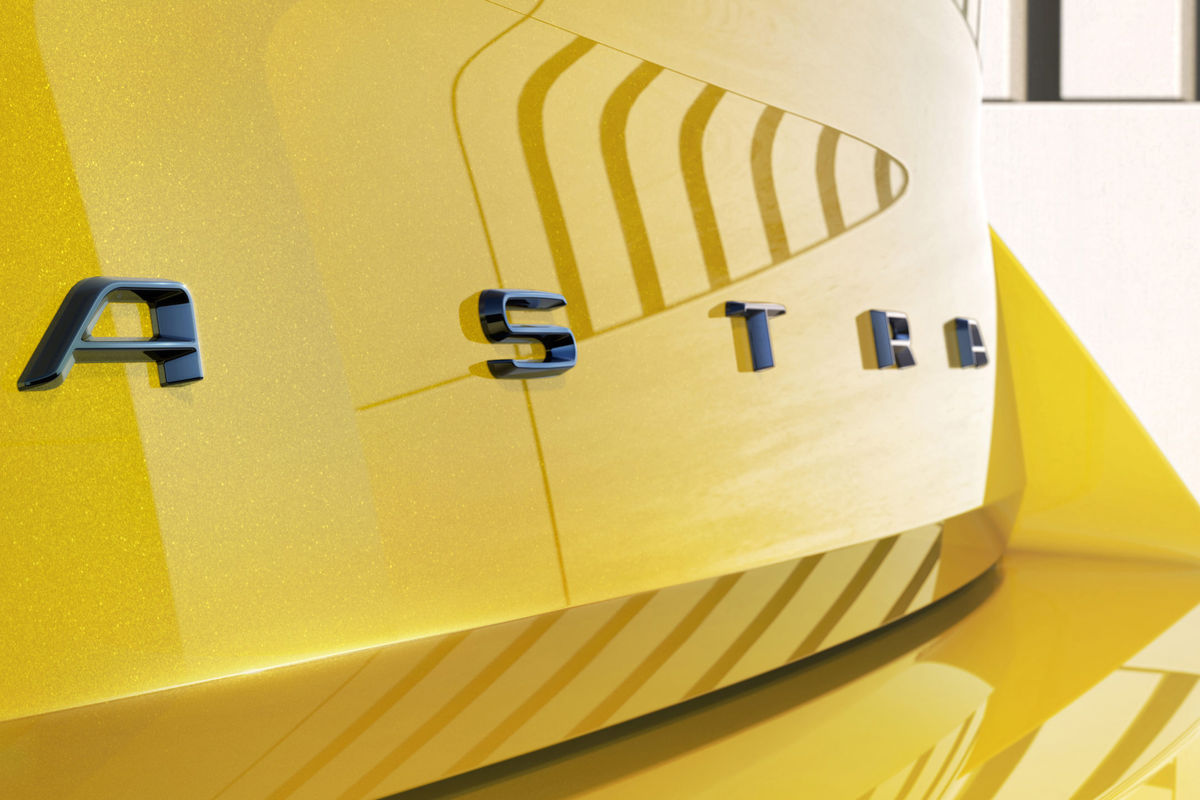
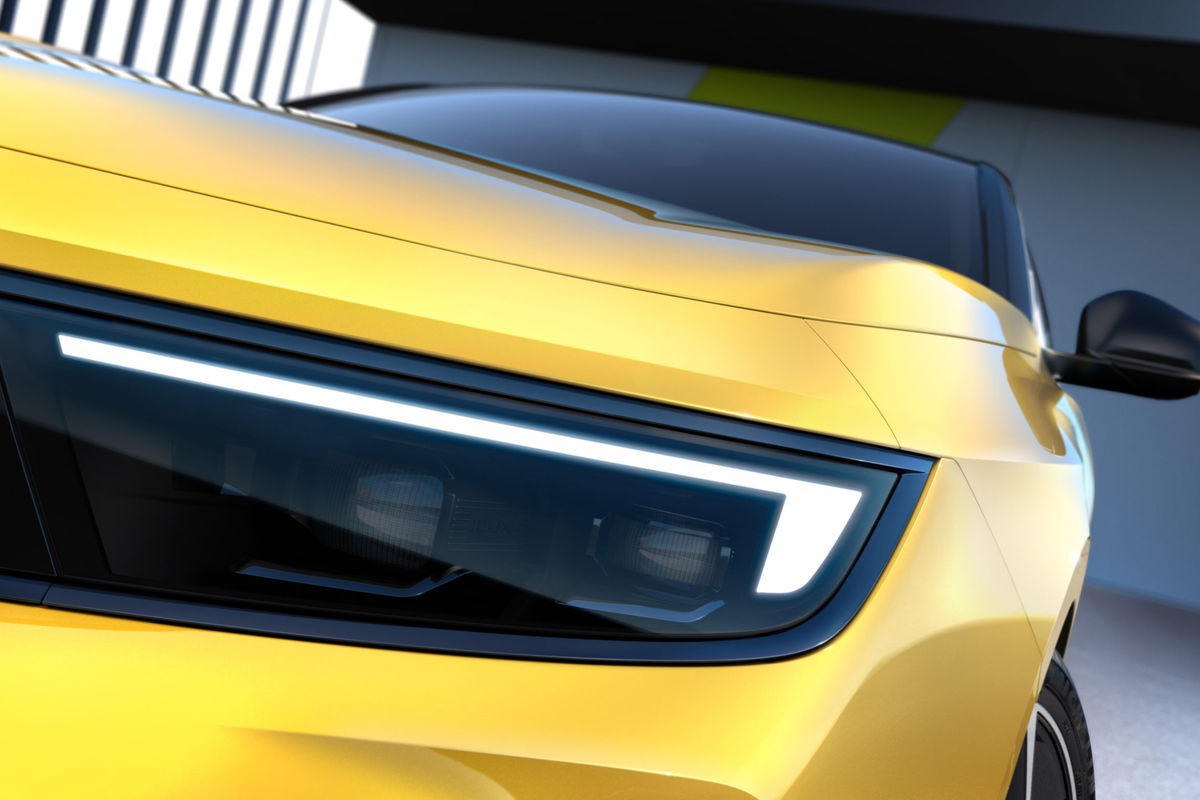
These are teaser images of the all-new Opel Astra, giving us a preview of what the new hatchback is about.
Seeing teaser images of the all-new Opel Astra has raised the eyebrows in the Cars.co.za office. Let’s be honest, the C-segment hatchback has taken a dive over the years, with customers favouring high-riding vehicles instead. Case in point, the Volkswagen Tiguan was the German brand’s best-selling model in 2020.
As for the Opel Astra, the Stellantis Group has big plans. Just a reminder that PSA (Peugeot Citroen) took ownership of Opel/Vauxhall and turned its fortunes around in a quick period – impressive stuff. Despite the vehicle’s sharing platforms and engines, it appears Opel is standing on its own two feet again and there’s a raft of new product on the way.
All-New Opel Astra to be electrified
Naturally, the all-new Opel Astra will offer electrification. Paul Willcox, Managing Director, Vauxhall, said: “The All-New Astra will open an exciting new chapter in the 41-year history of our popular compact model. We are confident that the next generation Vauxhall Astra will make a powerful impression and attract new customers to the brand, especially now Astra will be electrified for the first time.”
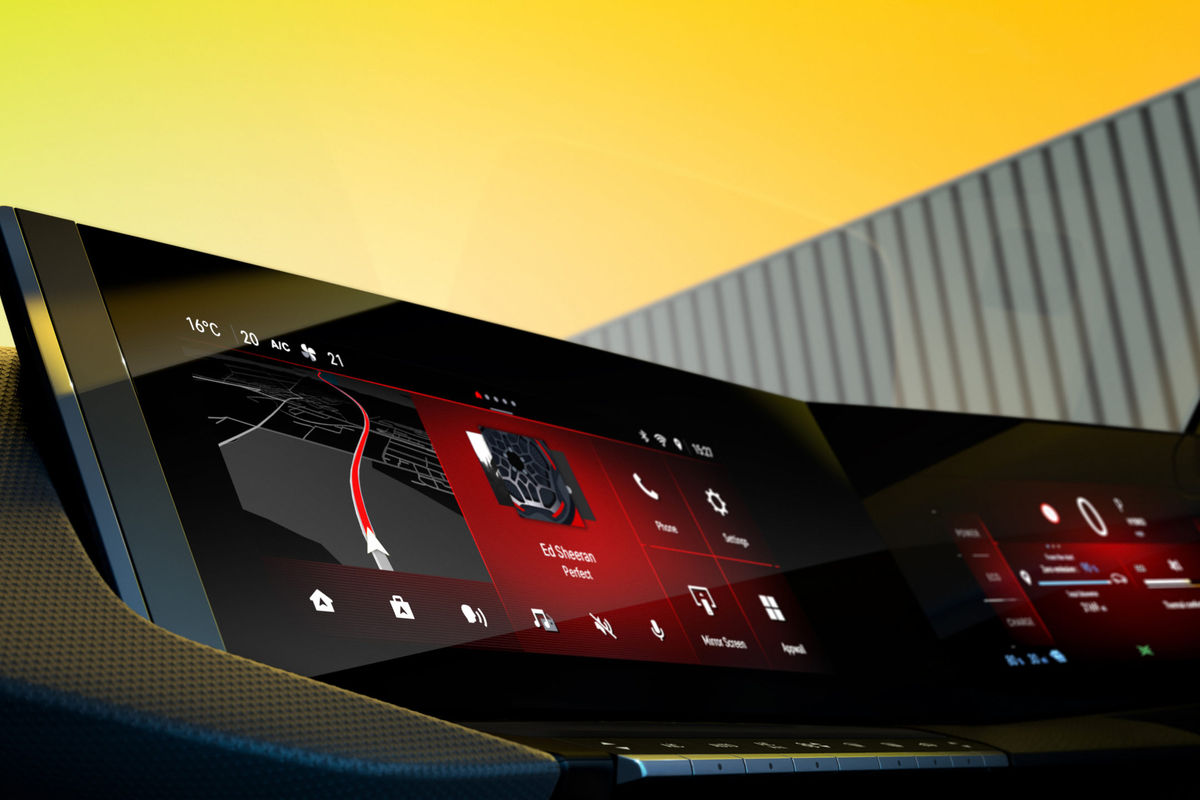
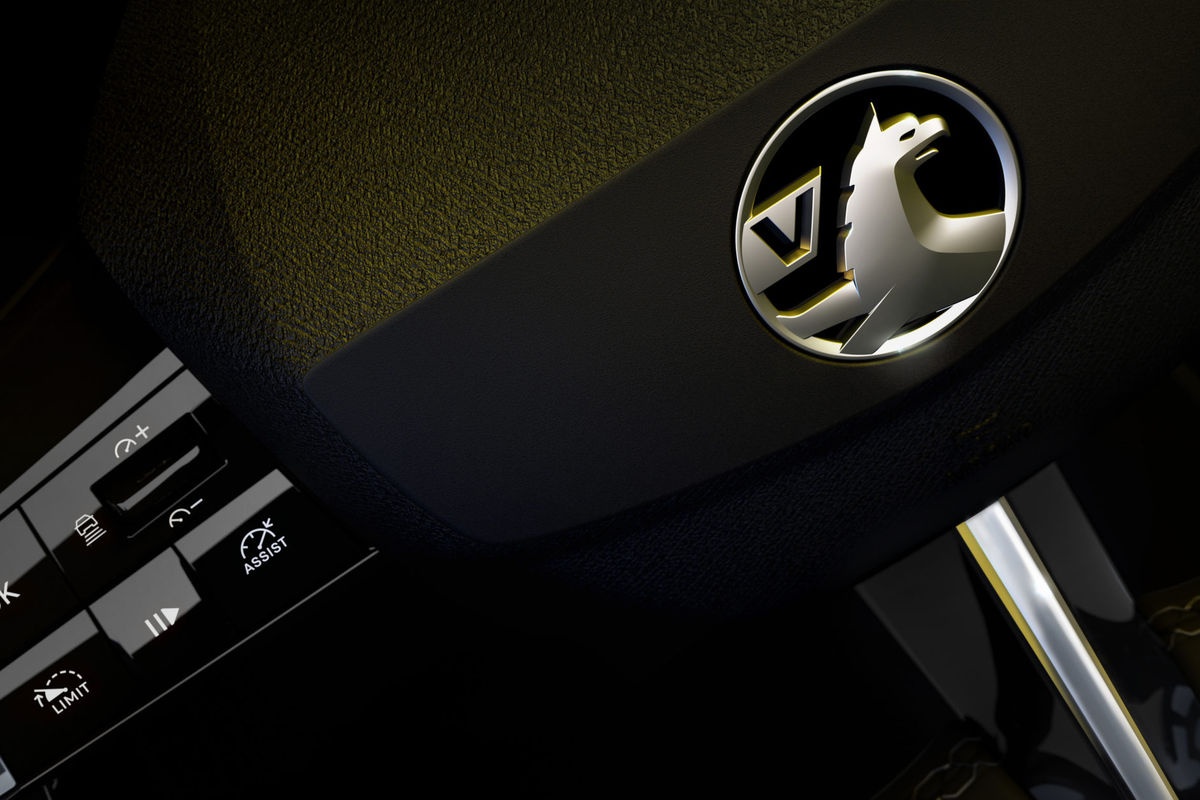
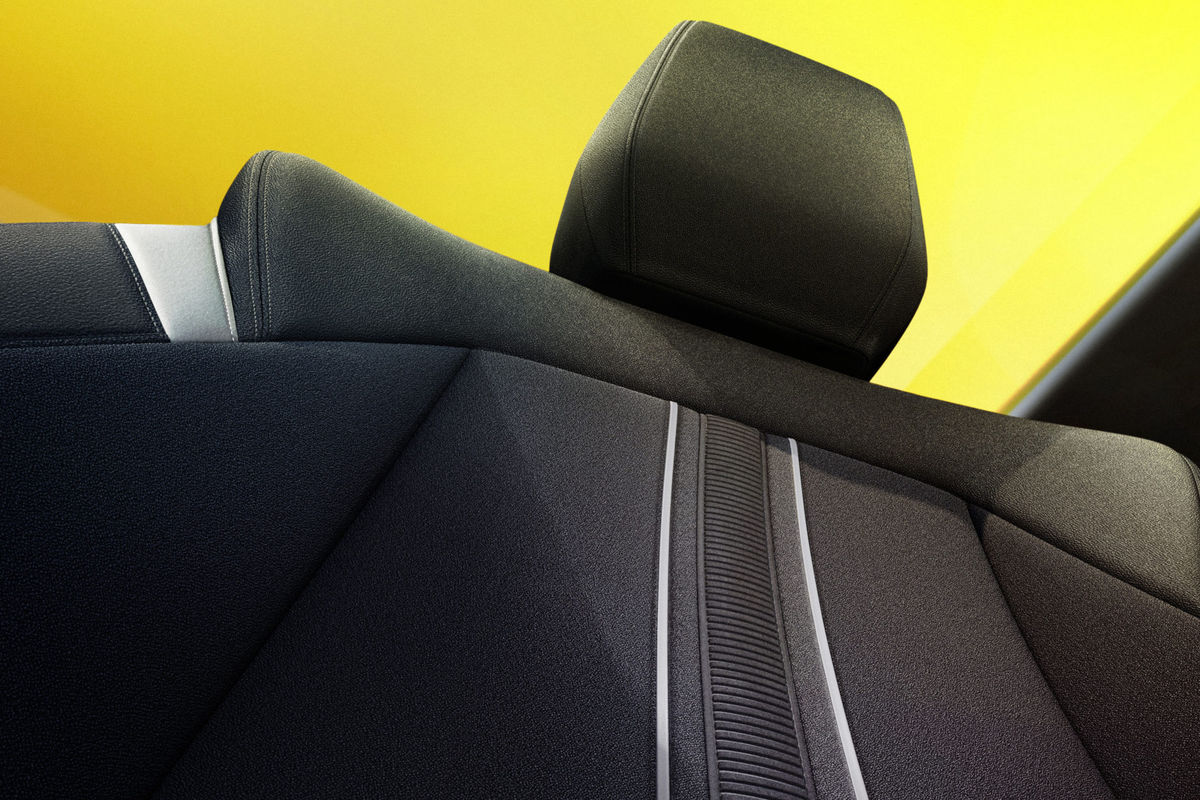
From the other teaser images, we can see a headlight that looks quite similar to that of the all-new Opel Mokka. Inside, the cabin of the Opel Astra features the new generation of Pure Panel digital cockpit with two widescreen displays. We don’t have much else to go on, but we do know the all-new Opel Astra will be available in 5-door hatchback and sports tourer estate.
No ETA was given, but we think the Opel Astra will be revealed before the end of 2021.
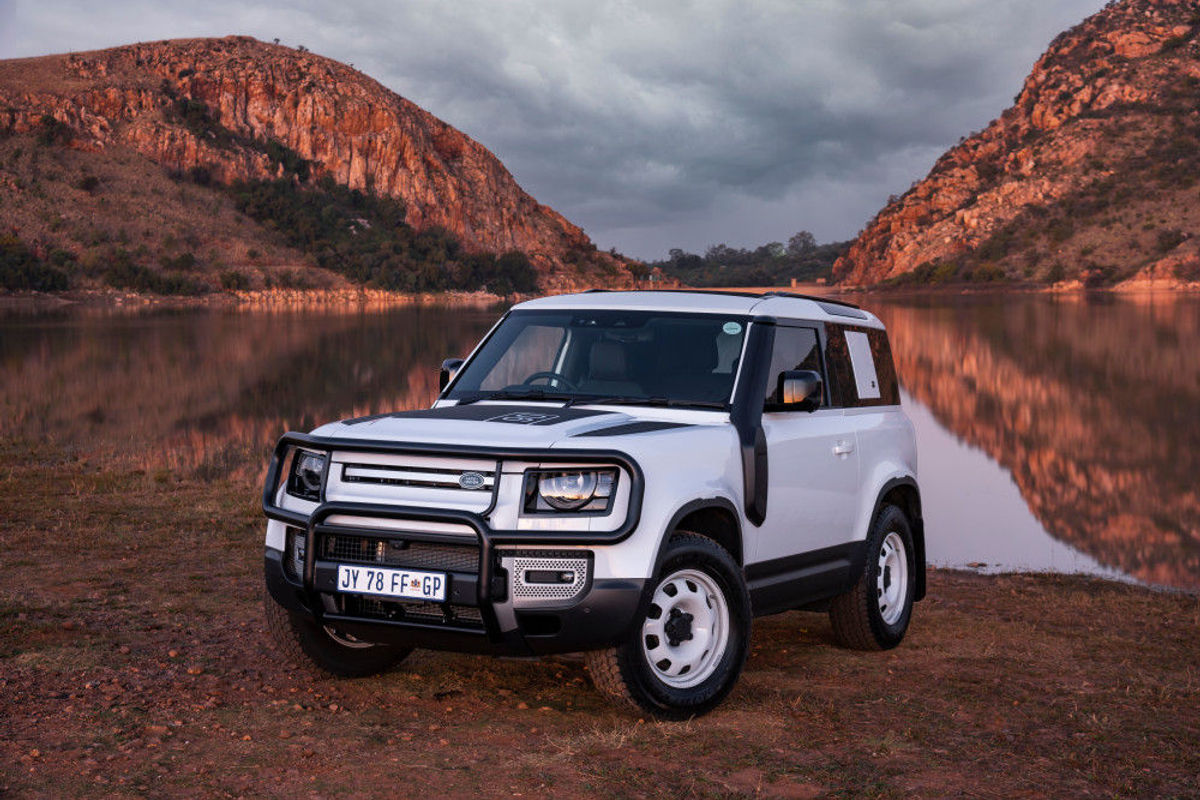
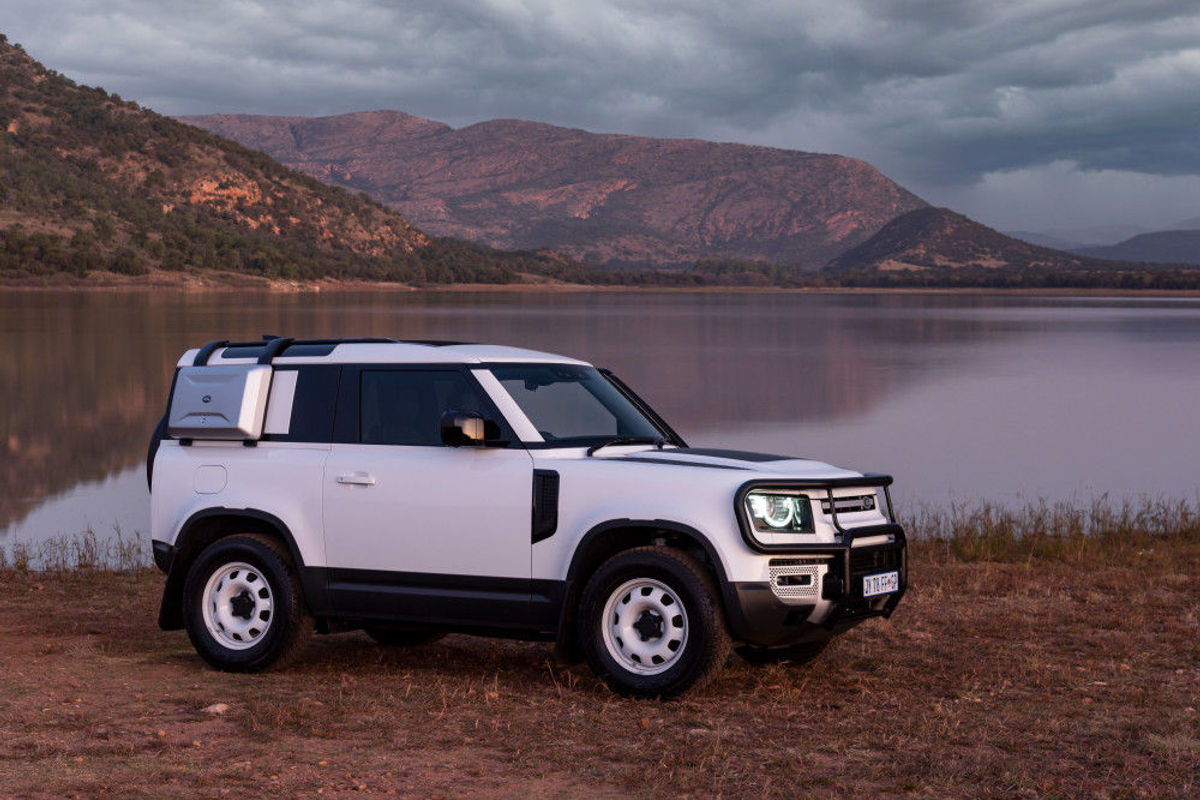
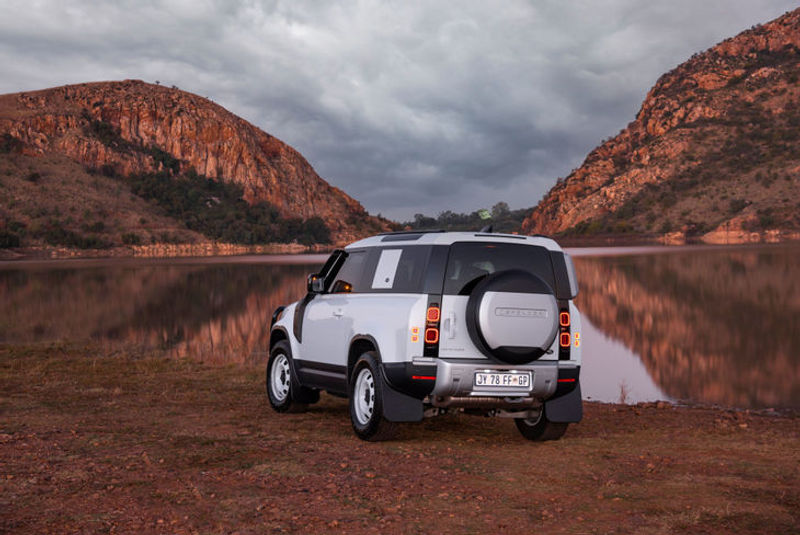
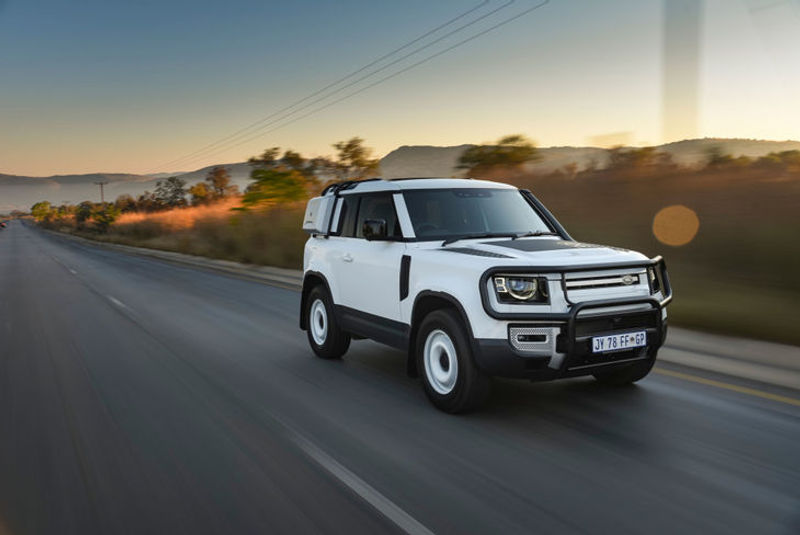
Earlier this year, the Land Rover Defender 110 was named a first-time winner in the Premium SUV category of the 2021 #CarsAwards – powered by WesBank. Recently, a compact, short-wheelbase Land Rover Defender 90 joined the acclaimed 110 in the South African market.
Partnered Content
The Defender and its Series predecessors have been Land Rover hallmarks for more than 71 years! The latest-generation Defender, which debuted in 2020, has an unmistakable silhouette that is instantly familiar, yet looks totally fresh… It’s a design that has been inspired by the past – not constrained by it – and exudes kerb presence, practicality, and, of course, legendary all-road capability. It is no wonder the Defender was named 2021 World Car Design of the Year at the annual World Car Awards.
The cabin of the new Defender is as futuristic as it is a nod to its heritage. It is not only impressively equipped but technologically advanced. For example, the colourful touchscreen can be customised to display a layout of your choice and the 3D-camera screen allows you to rotate your view around the entire SUV while looking at things like steering angle, lean angle and differential settings.
When it comes to the practical side of things, the Defender 90 might have a shorter wheelbase than the 110, but a unique jump seat, which sits between the front seats, is available… If specified with a jump seat, the Defender 90 can accommodate 6 occupants quite comfortably. This just shows one of the ways that the Defender can be made to work for you. Speaking of which, the Defender is almost entirely customisable… there are Cosmetic and functional Accessory packs aplenty.
A wide range of derivatives to choose from
And you can choose from the top-of-the-range Defender X derivatives and mill through visually appealing X-Dynamic trim specifications, all the way down to S, SE and HSE trim levels.
The Defender S is fitted with standard features such as LED headlights (with automatic high beam assist), keyless entry, Ebony grained leather (with woven textile facings) and a 10-inch Pivi Pro infotainment system with Apple CarPlay and Android Auto compatibility. The Defender S is also equipped with Terrain Response, 3D surround camera, emergency braking lane-keep assist, 360-degree parking assistance, as well as wade sensing.
The Defender X-Dynamic is distinguished by Narvik Black gloss for the door and wheel-arch cladding and is fitted with Silicon Satin skid pans. Durable Robustec material (applied on the seat ribbons and console) is designed to survive the rigours of the outdoors and serves to protect high-wear areas. The Defender X-Dynamic is offered in SE and HSE specification.
The Defender X gains gloss black inset contrast bonnet with gloss black claddings. Front and rear skid pans and other details are finished in a Starlight Satin finish. This derivative is also identified by its Orange brake calipers. Inside, the dashboard cross beam is finished in a dark grey powder coat brushed finish and the door sill tread plates feature ‘Defender’ lettering.
The Defender X is also equipped with air suspension and an electronic active rear differential, Terrain Response 2, a sliding panoramic sunroof, Matrix LED headlights, 14-way heated/cooled seats, heads-up display and Land Rover’s ClearSight rearview mirror.
The Defender Launch Edition is available in Pangea Green, Gondwana Stone or Hakuba Silver and fitted with a folding fabric sunroof, air suspension, 12-way heated seats, electrically adjusted steering column, ClearSight rearview mirror and 20-inch alloy wheels.
A choice of 4 accessory packs
Land Rover also offers 4 accessory packs to kit out your Defender. The Explorer Pack includes a 132 kg roof rack, 24-litre side gear carrier, matte black bonnet decal and wheel arch protection.
An Adventure Pack includes a portable rinse system, 20-litre seat backpack, rear scuff plate, mudflaps, a spare-wheel cover, integrated compressor and a 24-litre side-mounted gear carrier.
The Country Pack includes Classic font and rear mudflaps, loadspace partition, wheel arch protection, scuff plate and a portable rinse system. Lastly, the Urban Pack offers metal pedals, rear scuff plate, spare wheel cover and front under shield protection.
Highly capable on all road surfaces
The Defender 90’s engine line-up comprises 2 turbopetrol and 2 turbodiesels. The 2.0-litre P300 turbopetrol delivers 221 kW and 400 Nm, while the P400 3.0-litre, 6-cylinder option with Mild Hybrid Technology produces peak outputs of 294 kW and 550 Nm. On the turbodiesel front, buyers can opt for the D240 2.0-litre turbodiesel engine with 177 kW and 430 Nm or the D300 with 221 kW and 650 Nm.
It goes without saying that the Defender is one of the most capable cars off-road ever produced. With a maximum ground clearance of 291 mm, it can tackle 45-degree side slopes and inclines of 45 degrees with customary composure. Its maximum wading depth of 900 mm is supported by a new Wade programme in the Terrain Response 2 system, which also allows drivers to set up the vehicle to suit the precise off-road conditions.
The Defender is made for everyday living while also being an adventurous off-roader. Some would say it is the perfect all-rounder. The iconic Defender 90 is priced from R1 095 600, which includes a 5-year/100 000km warranty and a 5-year/100 000km maintenance plan. It is available at Land Rover dealerships nationwide.
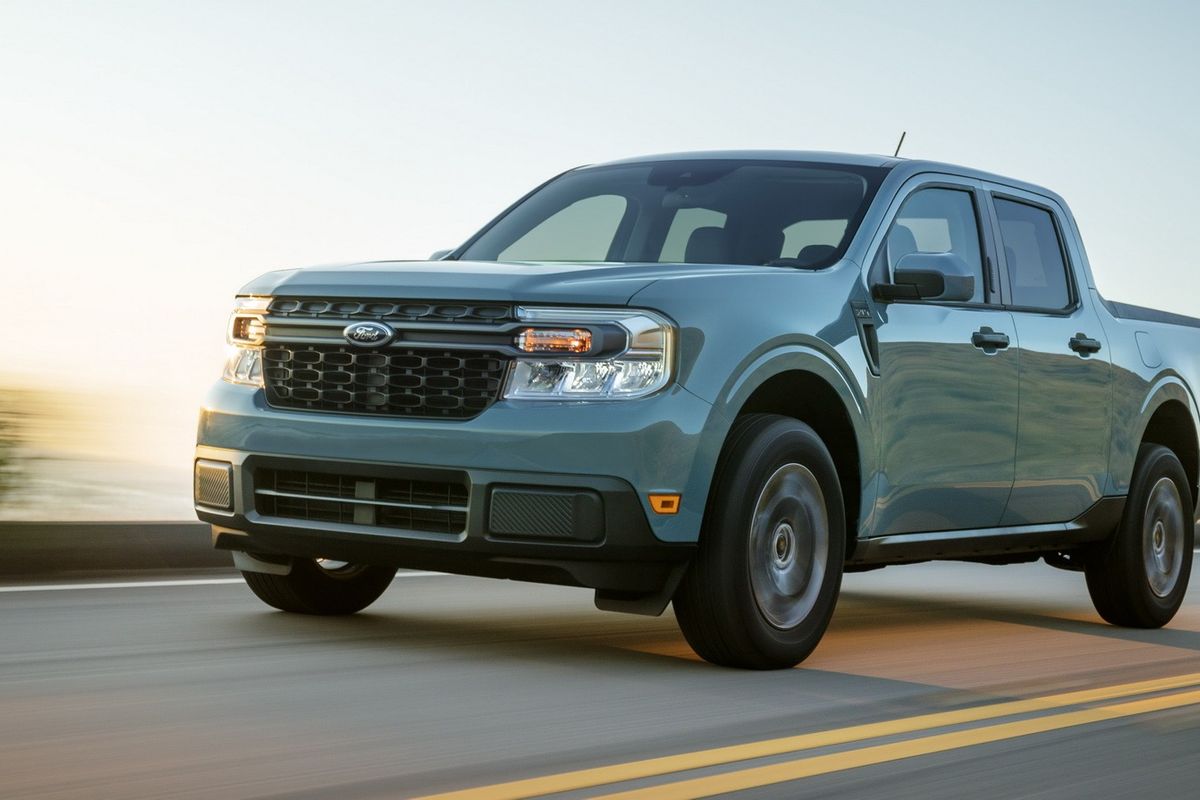
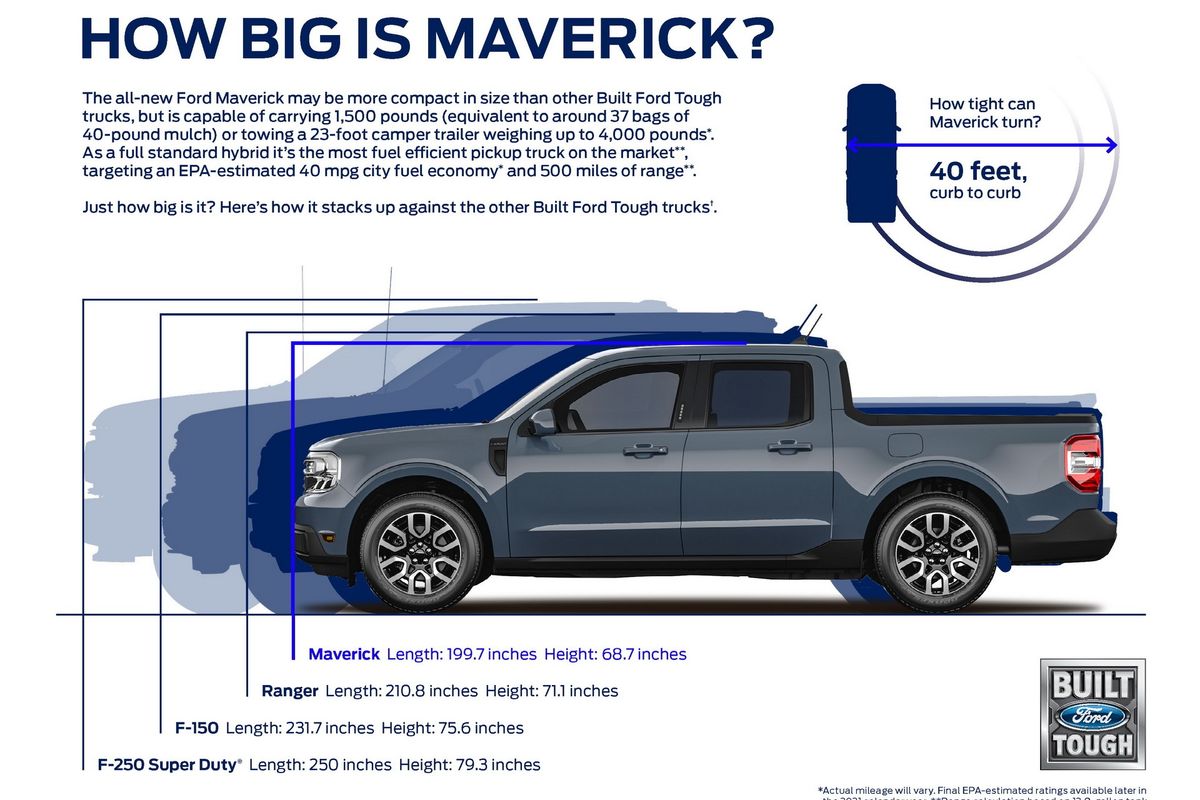
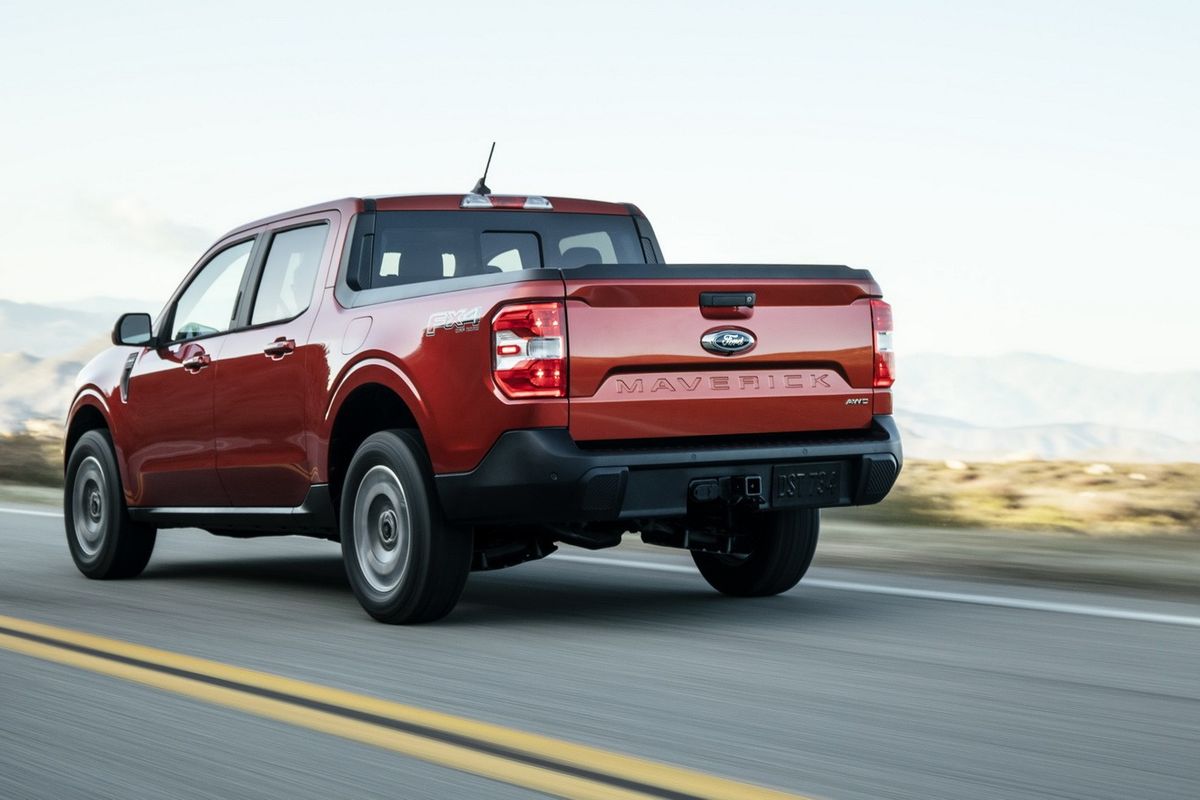
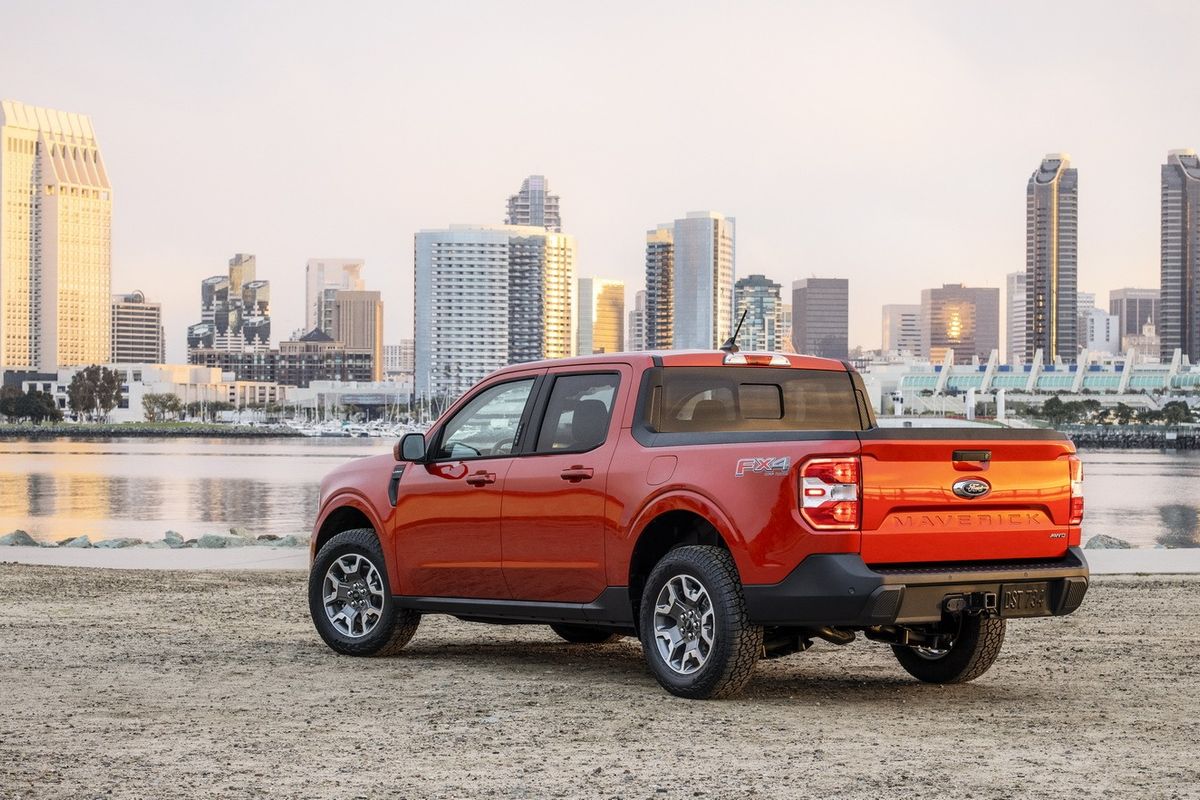
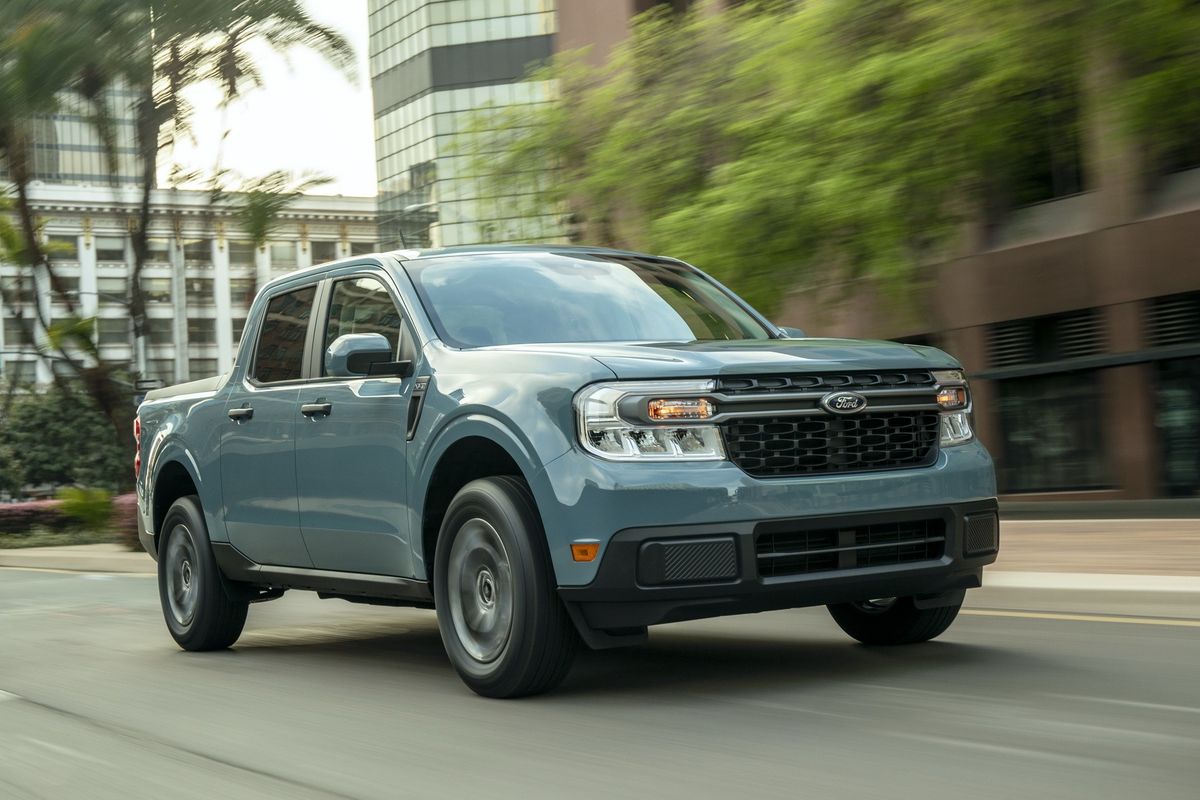
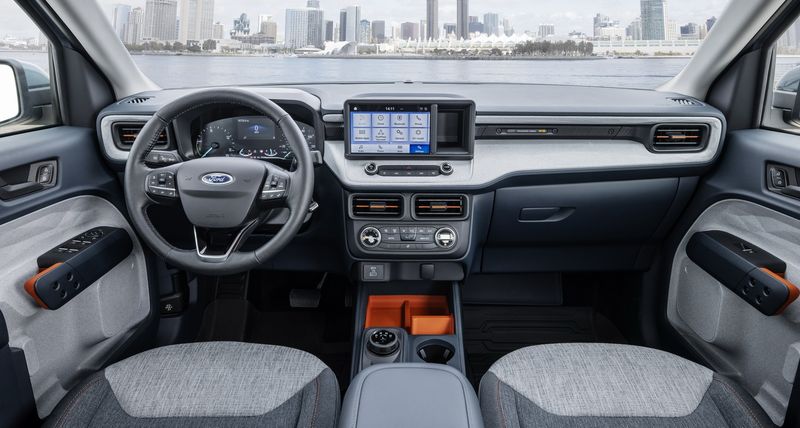
The Ford Maverick is the smallest bakkie offered by the Blue Oval brand and after months of teasers and spy shots, we finally get a proper look.
Interestingly, Ford says the Maverick is “the truck for people who never knew they wanted a truck”. Given the recent reveal of the Hyundai Santa Cruz, are we seeing a resurgence in the compact bakkie segment? Like you, we’d also like to see the Volkswagen Saveiro here, but that’s never going to happen. A locally-built Volkswagen electric bakkie does tickle our fancy though. Also, have you seen the new Fiat Toro?
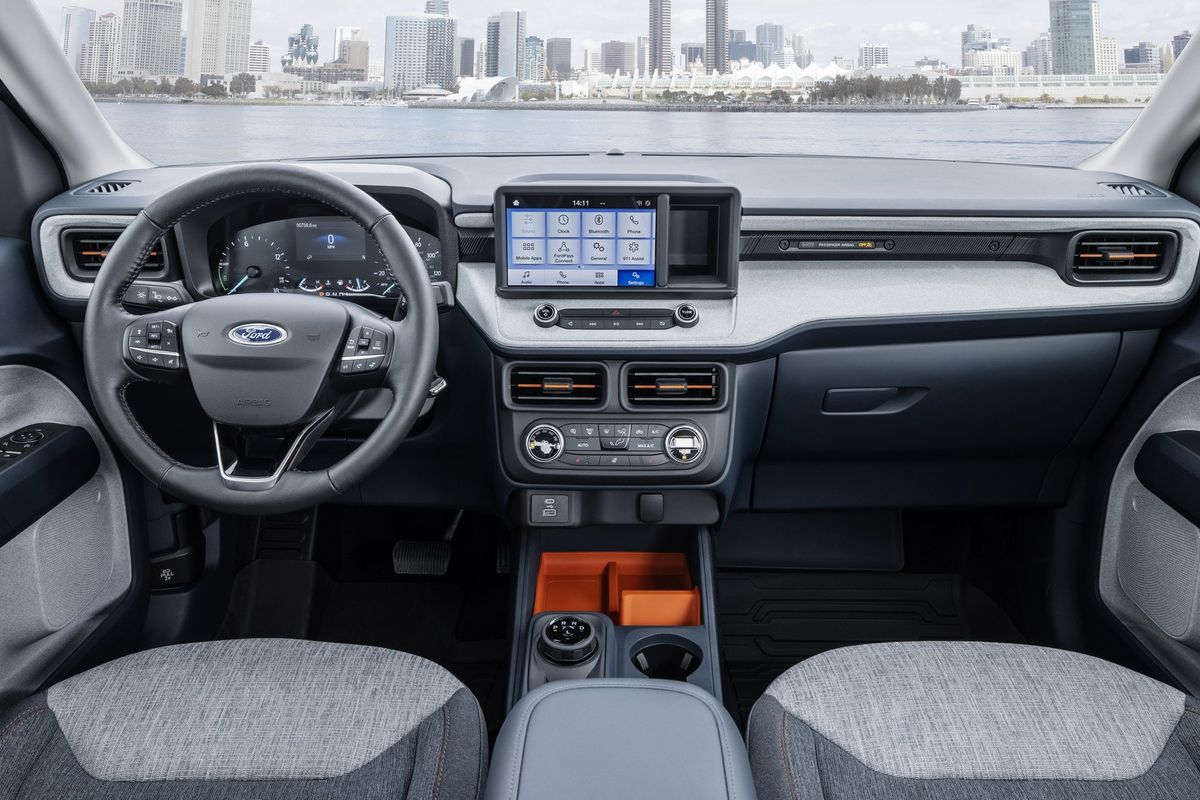
Anyways, the Ford Maverick is a 5-person, 4-door bakkie and it features a full-hybrid powertrain. “The Maverick product proposition is like nothing else out there. It’s a great-looking truck featuring four doors with room for five adults, a standard full-hybrid engine with city fuel economy that beats a Honda Civic, plenty of towing and hauling for weekend trips or do-it-yourself projects, and it starts under $20,000,” said Todd Eckert, Ford truck group marketing manager. “Maverick challenges the status quo and the stereotypes of what a pickup truck can be. We believe it will be compelling to a lot of people who never before considered a truck.”
Ford Maverick Engines
As far as engines go, the Ford Maverick features a 2.0-litre EcoBoost engine which produces 186 kW and 375 Nm. This is mated to an 8-speed automatic, and customers can choose from front-wheel drive or all-wheel drive. There’s also a 2.5-litre hybrid engine delivering 143 kW combined output thanks to a 120 kW / 210 petrol engine and a 94 kW / 235 Nm electric motor. Power goes to the front wheels via a CVT and has a range claim of 805 km.
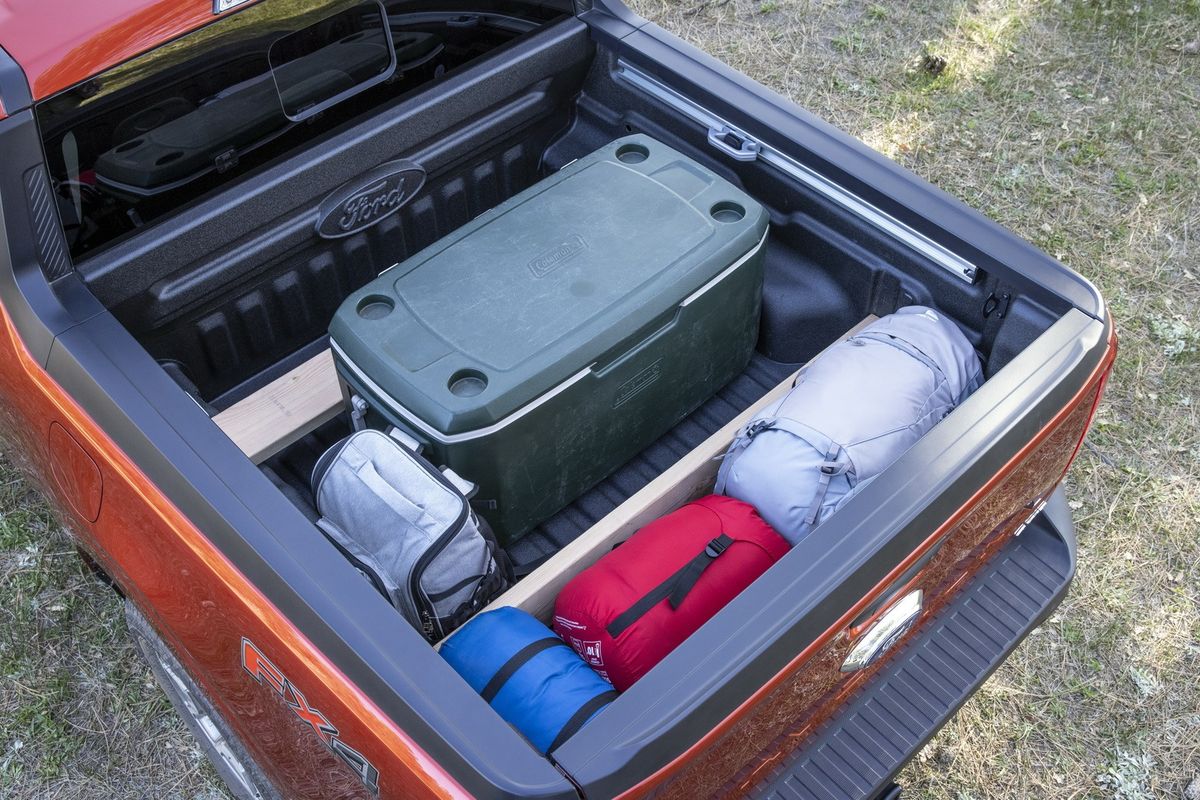
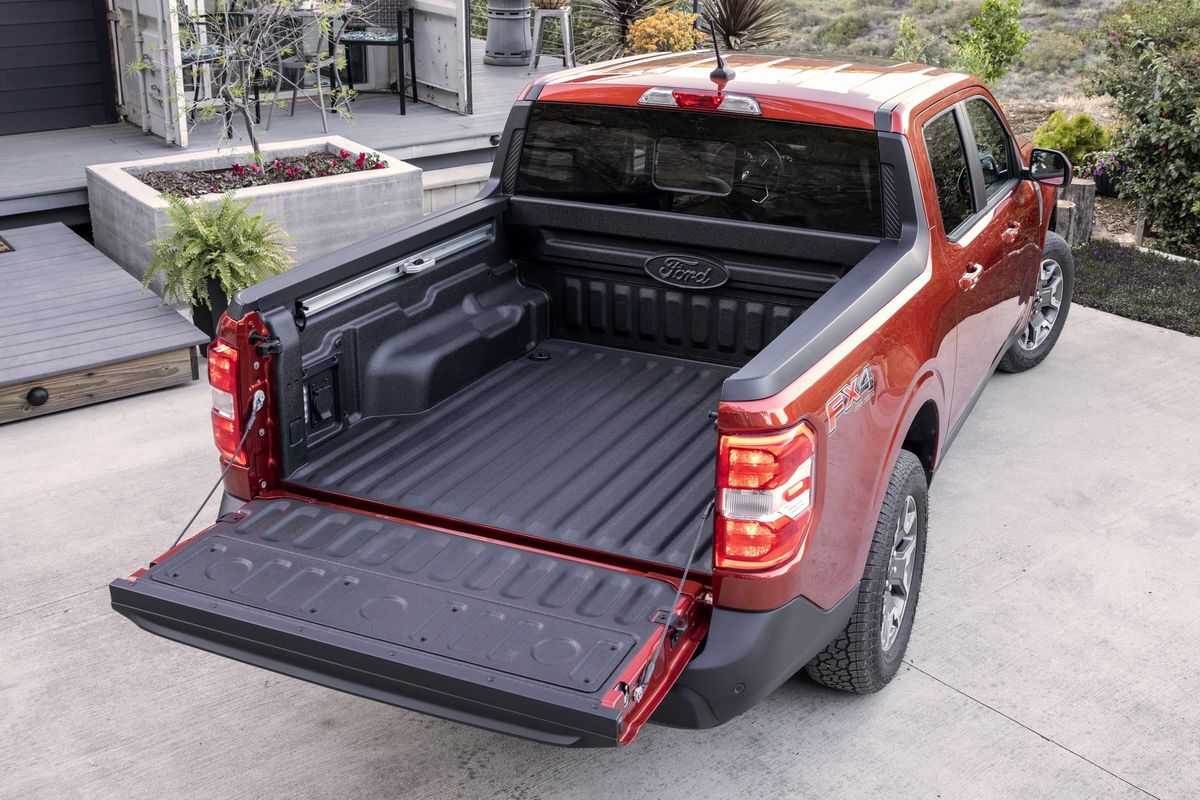
For those who like to carry things and tow, the Ford Maverick has a payload of 680 kg and a tow rating of 907 kg. A Tow Package is available, boosting the tow rating to 1 814 kg.
The Ford Maverick will be offered in XL, XLT and Lariat trim. There’s also an FX4 package featuring all-terrain tires and suspension tuning, additional underbody protection, and off-road-focused drive modes like Mud/Rut and Sand, as well as the addition of Hill Descent Control.
The 2022 Ford Maverick goes on sale Fall 2021 and at this stage, it’s highly unlikely to make it to South Africa as production is left-hand drive only.