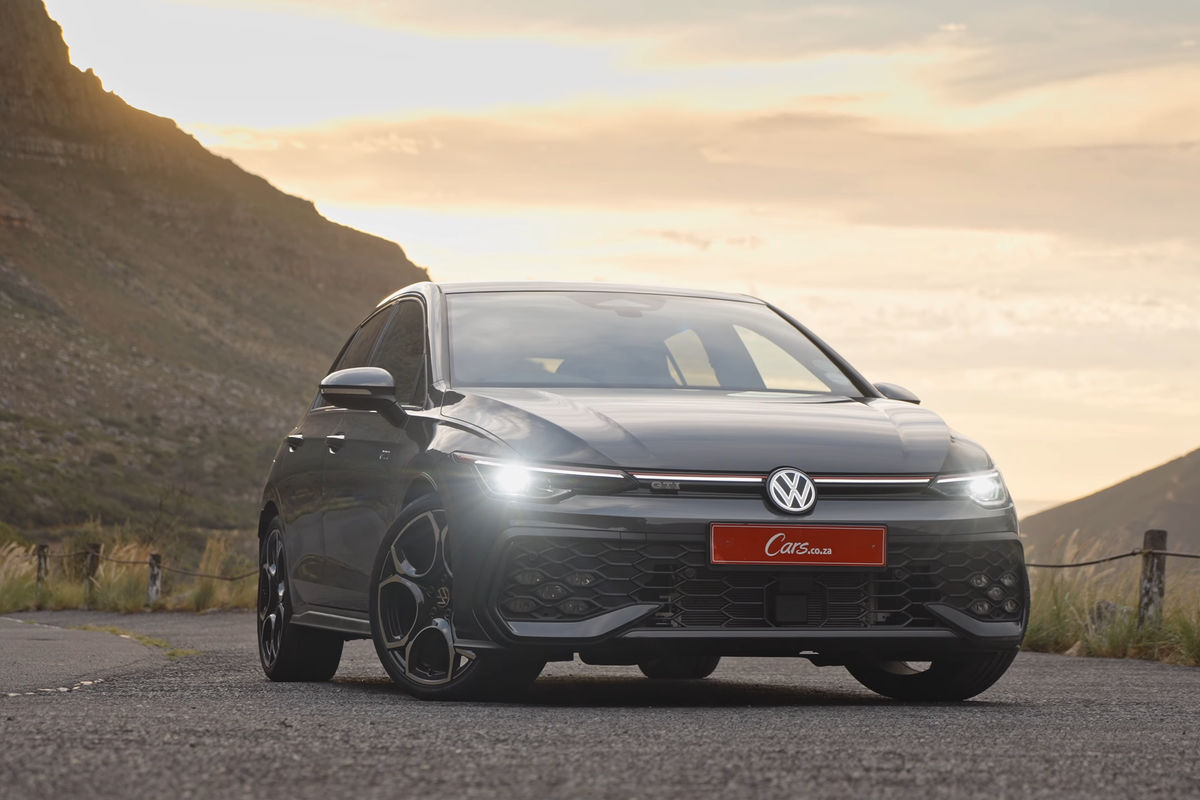
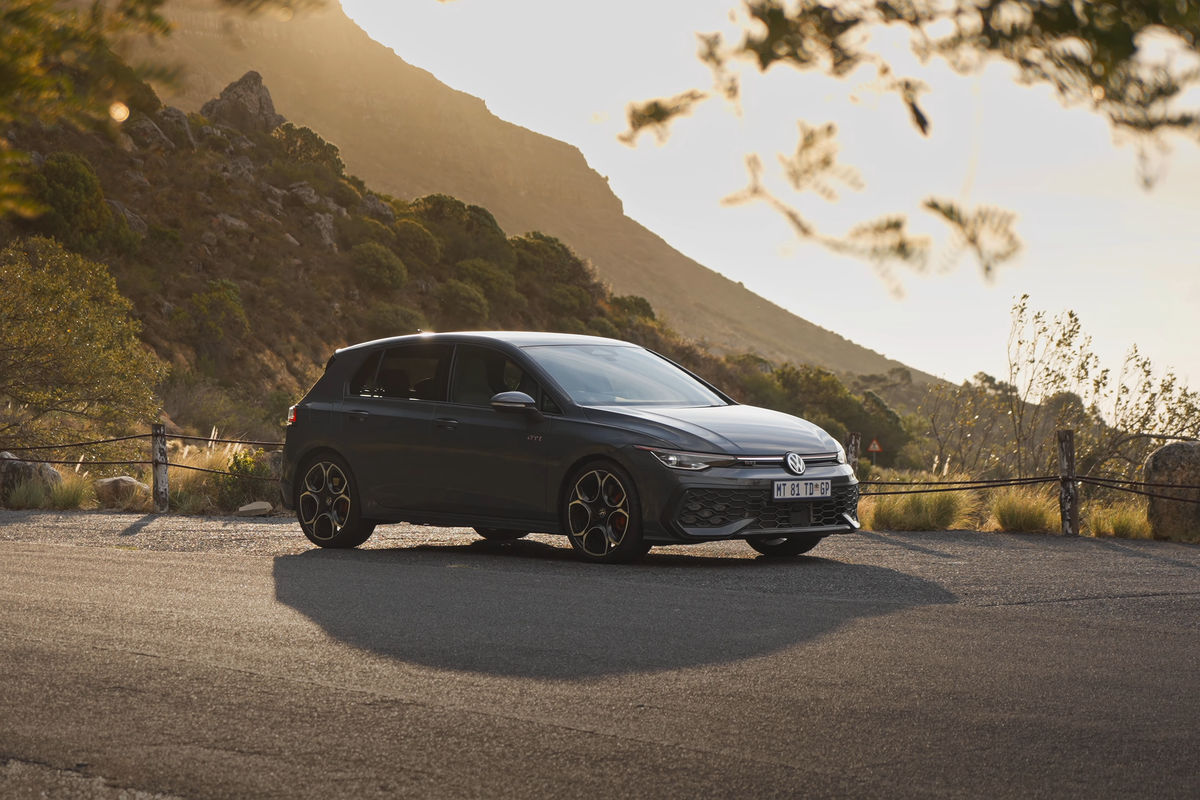
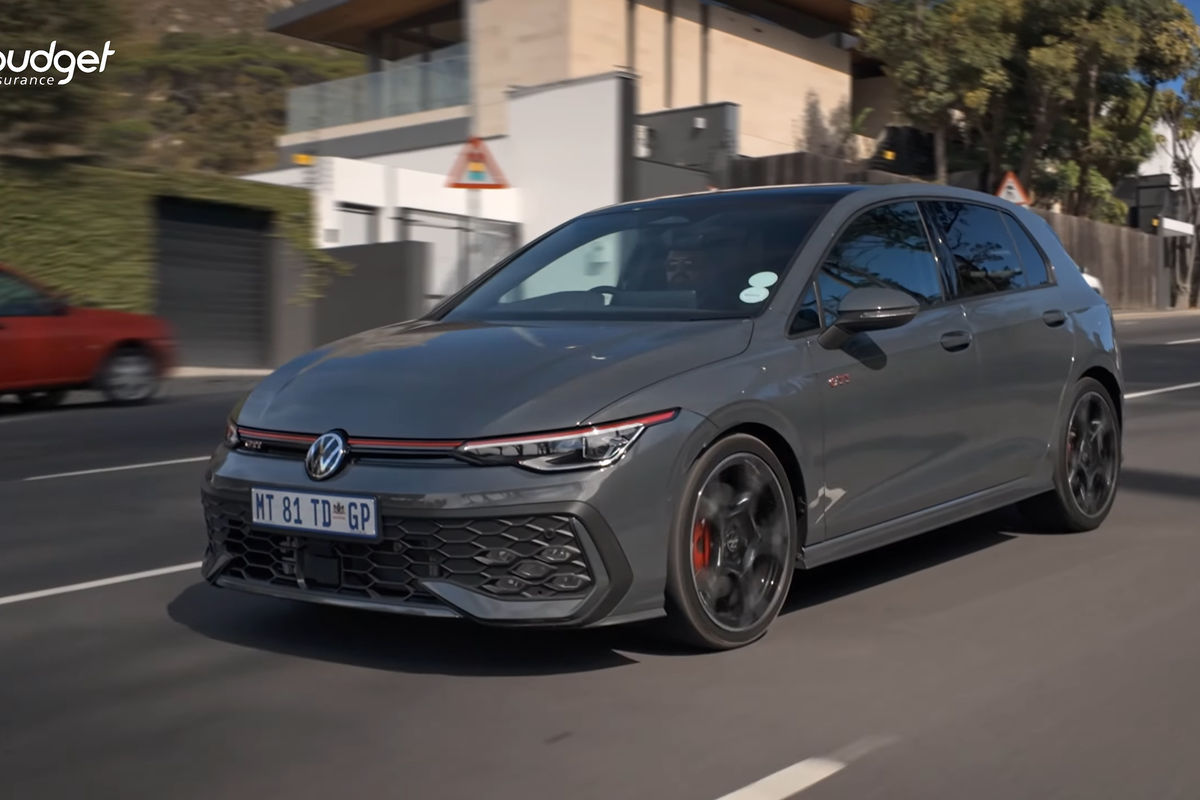
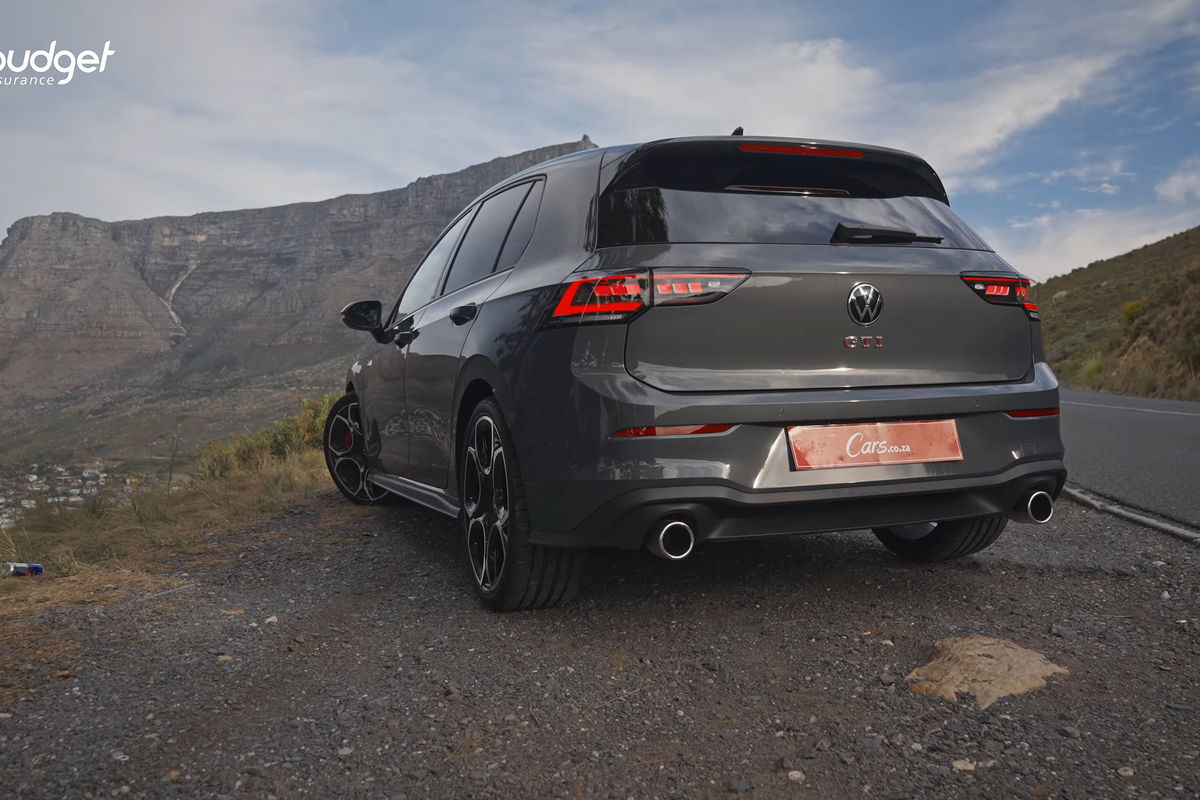
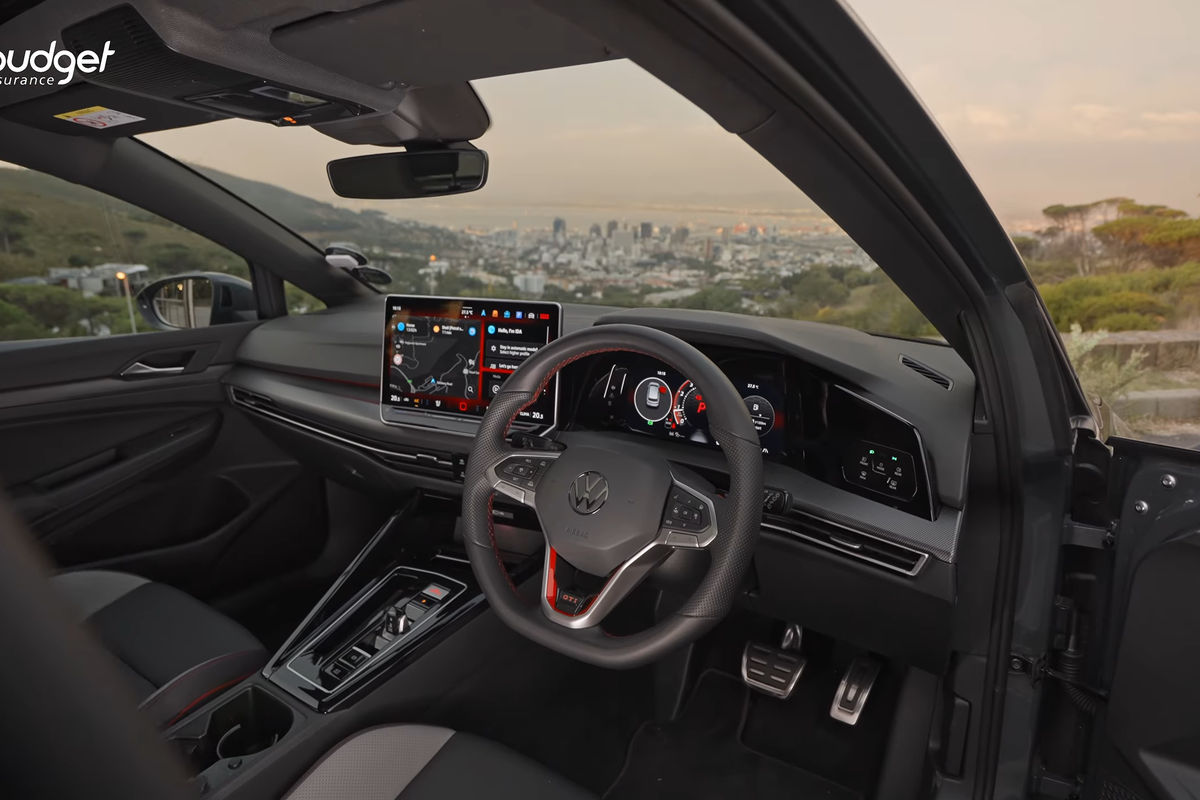
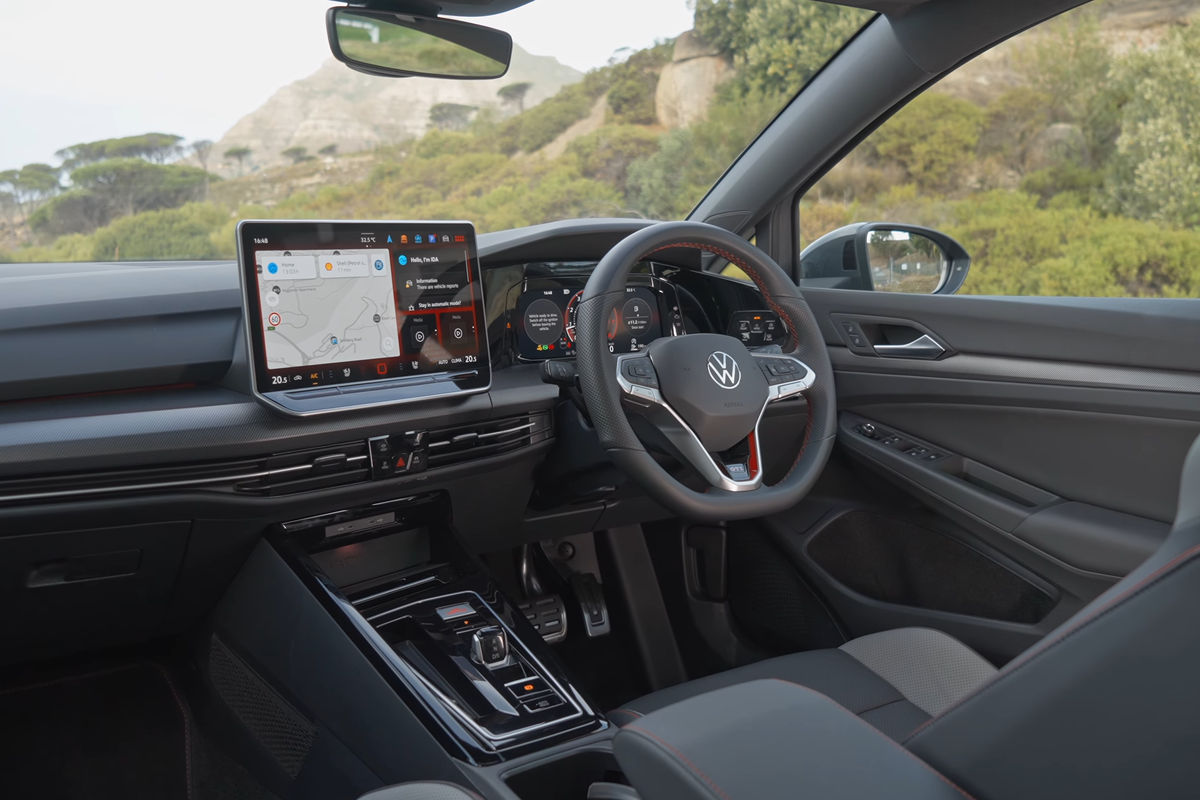
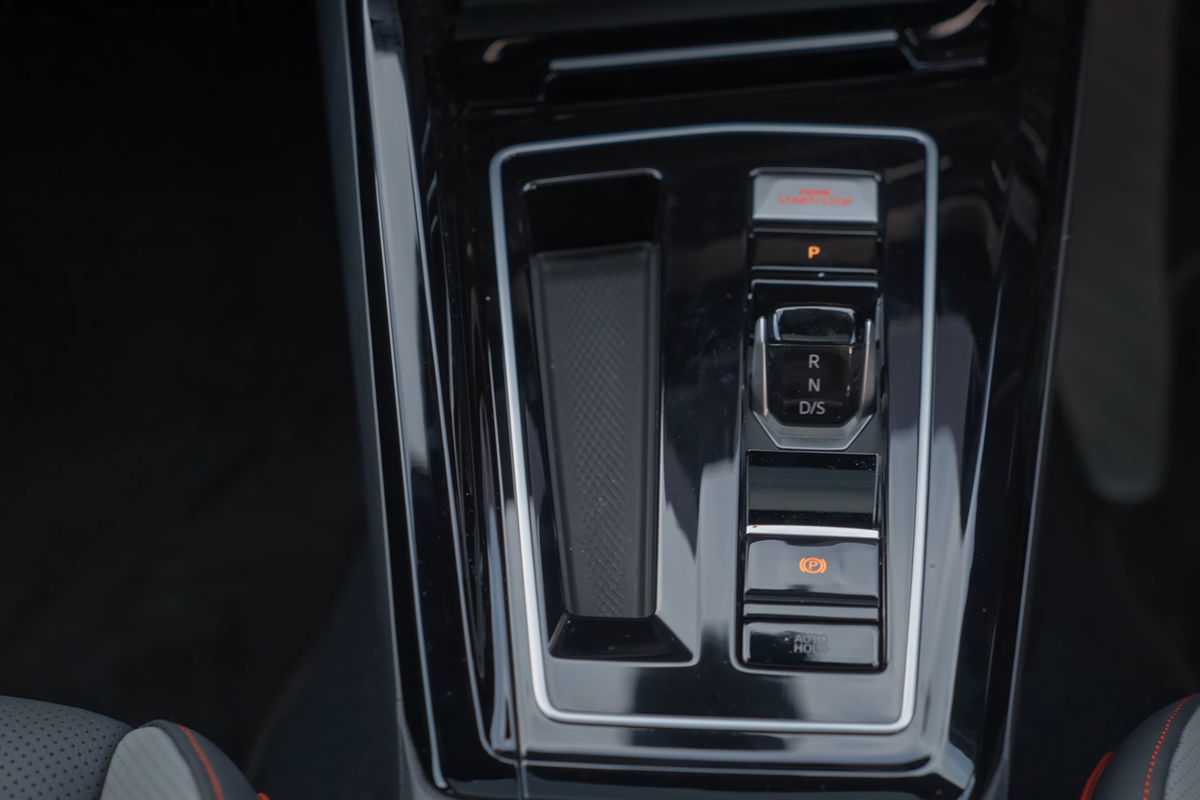
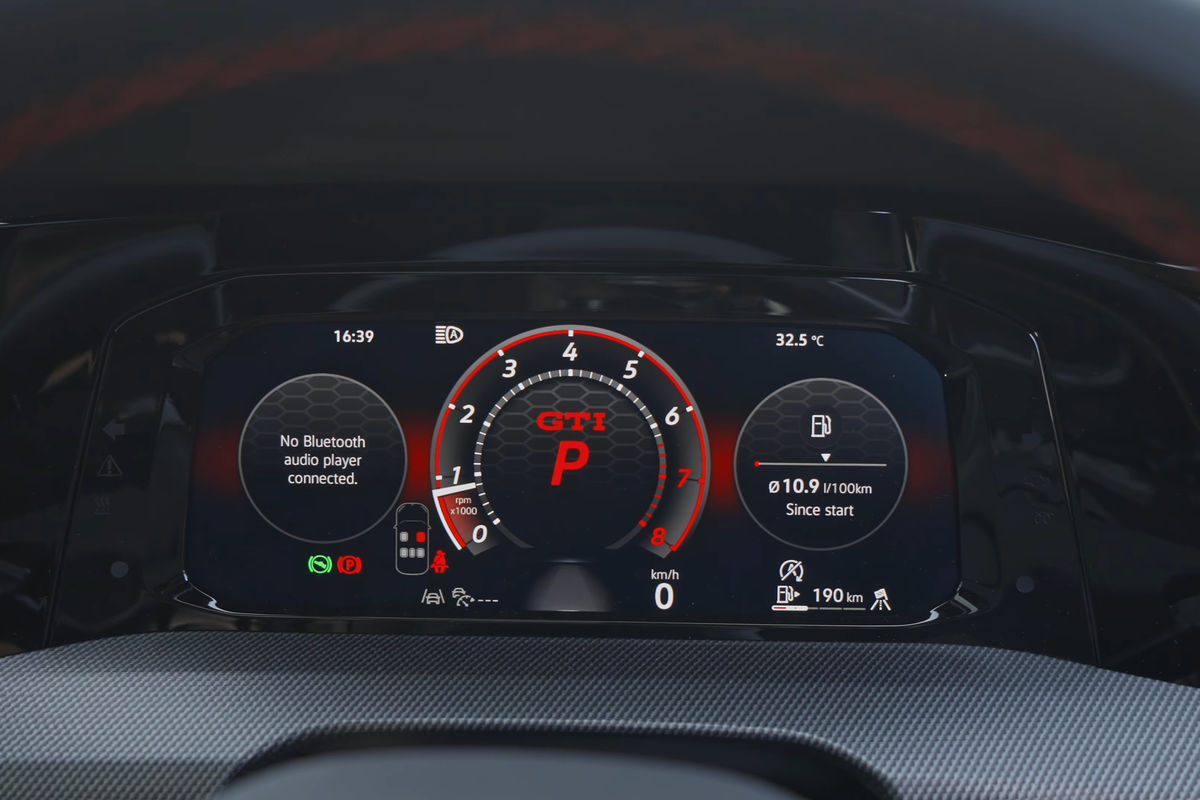
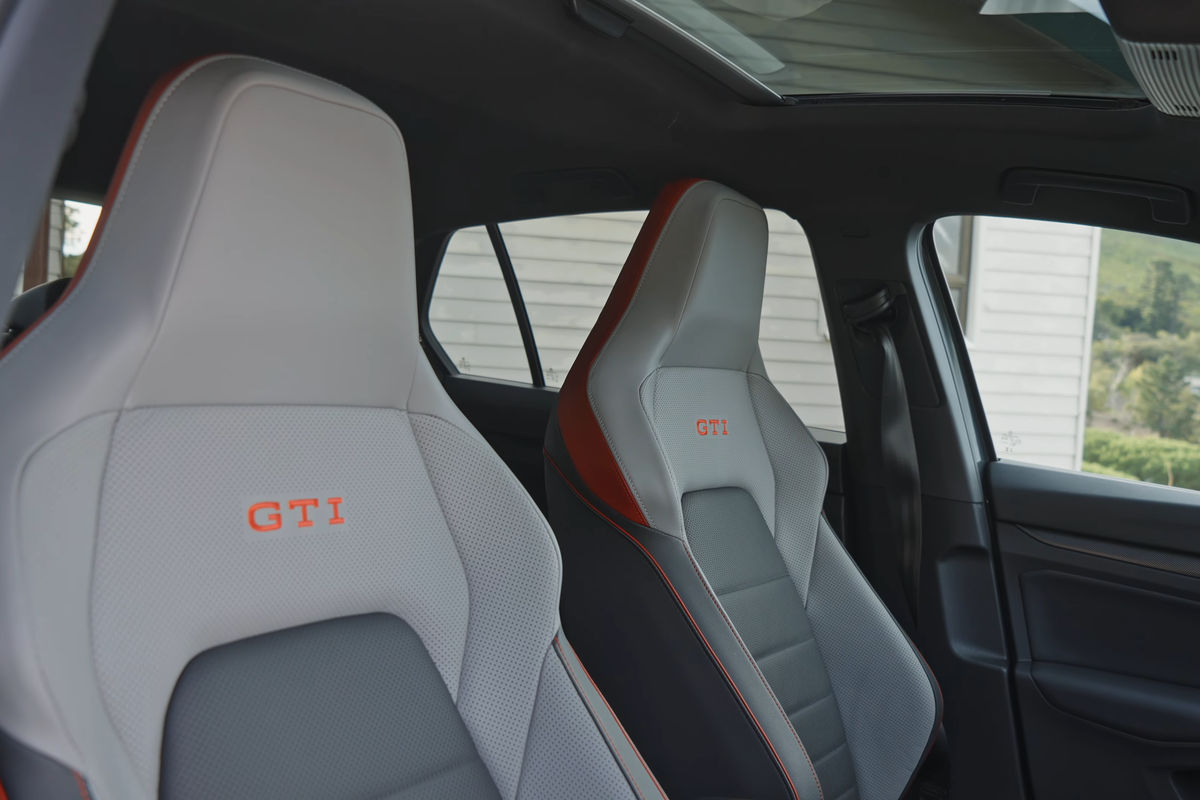
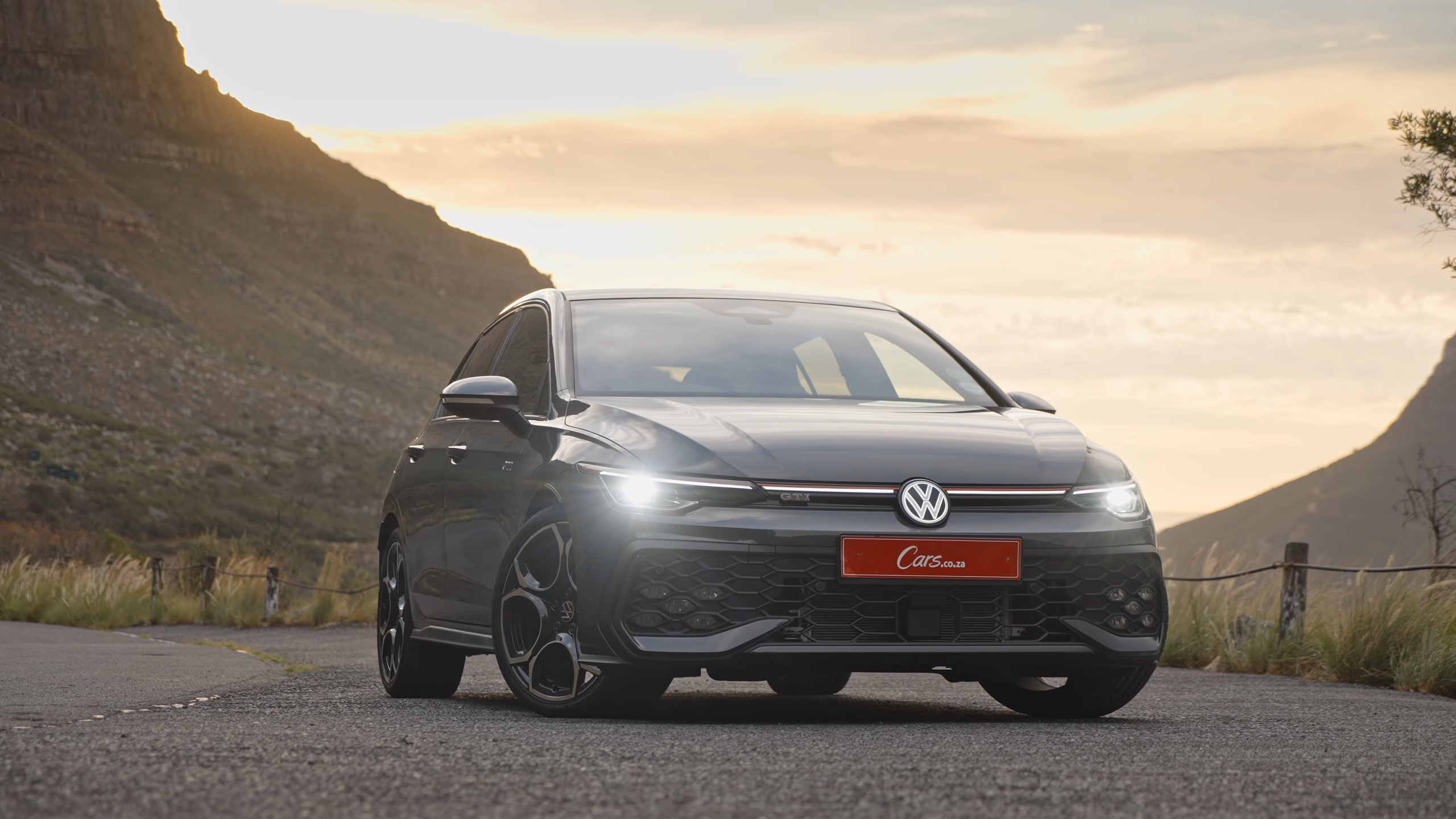
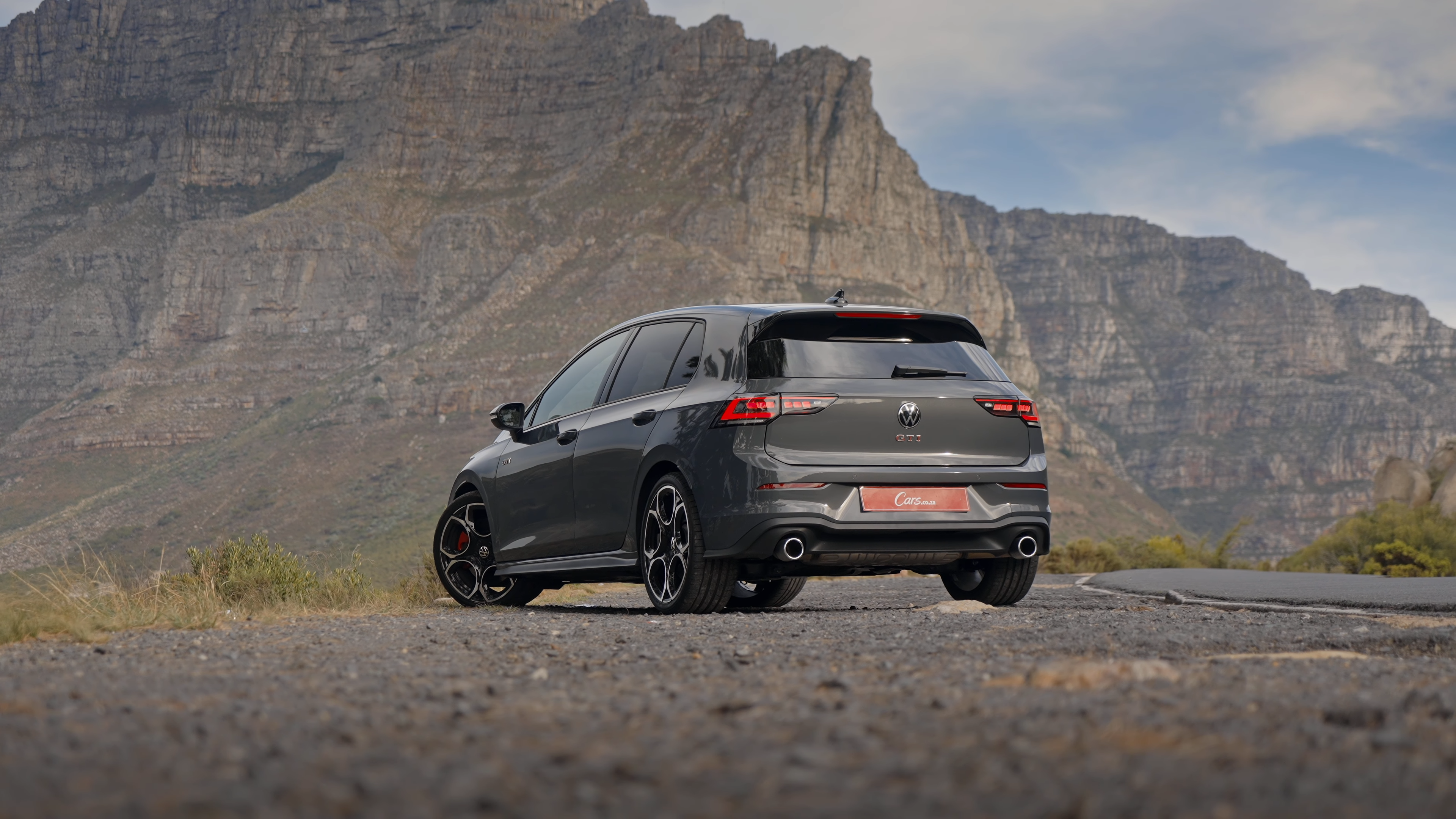
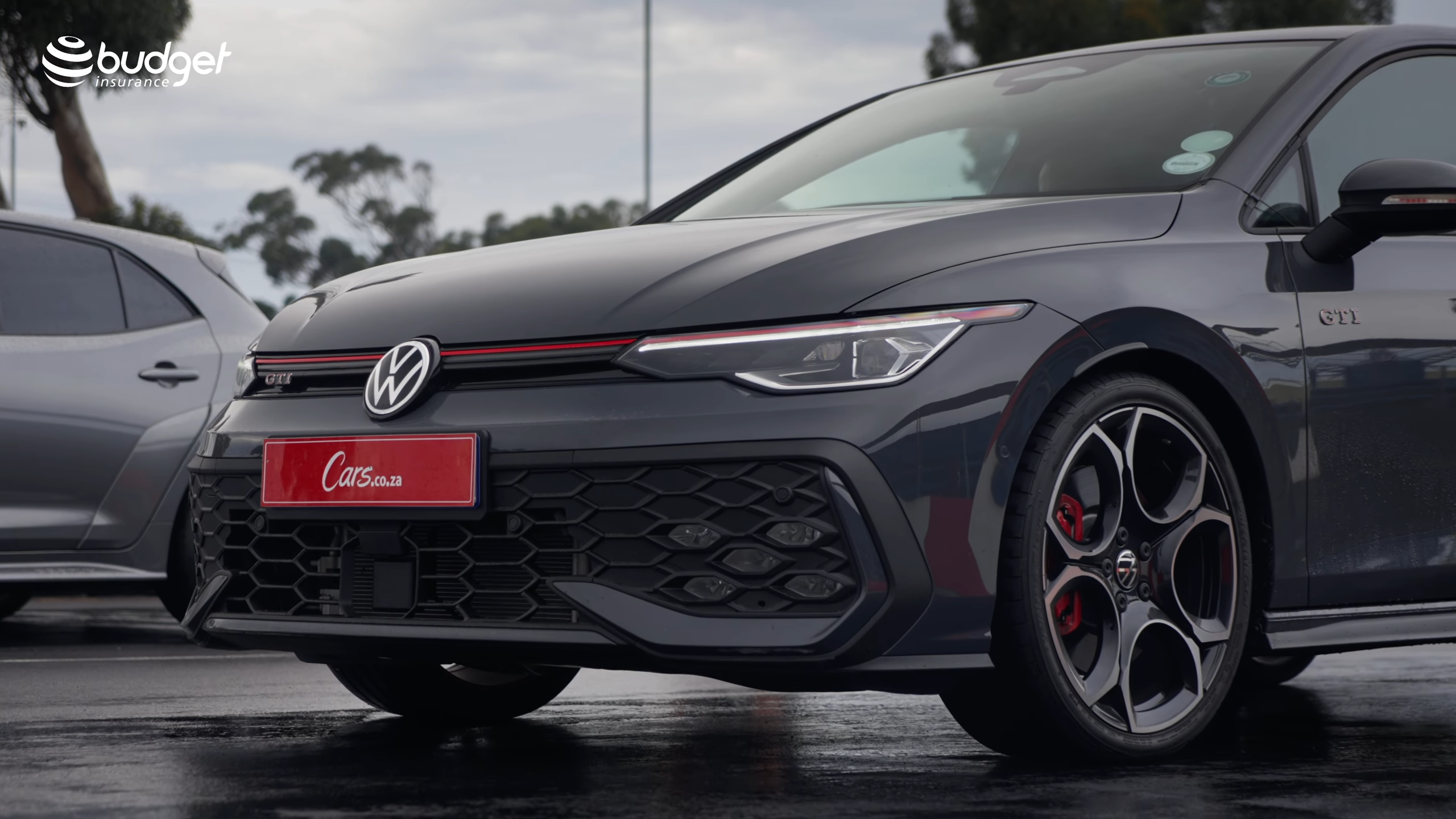
The Golf GTI is more than just a car in Mzansi; it is a cultural phenomenon. However, the arrival of the facelifted Golf 8.5 GTI comes with a sense of bittersweet nostalgia. With only 300 units allocated for the local market and the automotive world rapidly shifting towards electrification, this could very well be the last petrol-powered GTI we ever see…
We like: Golf GTI now has increased power; return to physical steering wheel buttons for better ergonomics; comprehensive “full house” standard specification; exceptional duality of character.
We don’t like: Limited local availability with only 300 units; muted exhaust note; high price tag; absence of a manual transmission option.
While the cosmetic tweaks may appear subtle, VW has made a number of deeper cuts under the skin, including a power bump of 15 kW.
This “0.5” update to the venerable Volkswagen Golf GTI brings more than just a minor cosmetic tweak. It represents a refinement of the 8th-generation platform, addressing previous criticisms and boosting performance to levels that recall the legendary Clubsport models of years past.
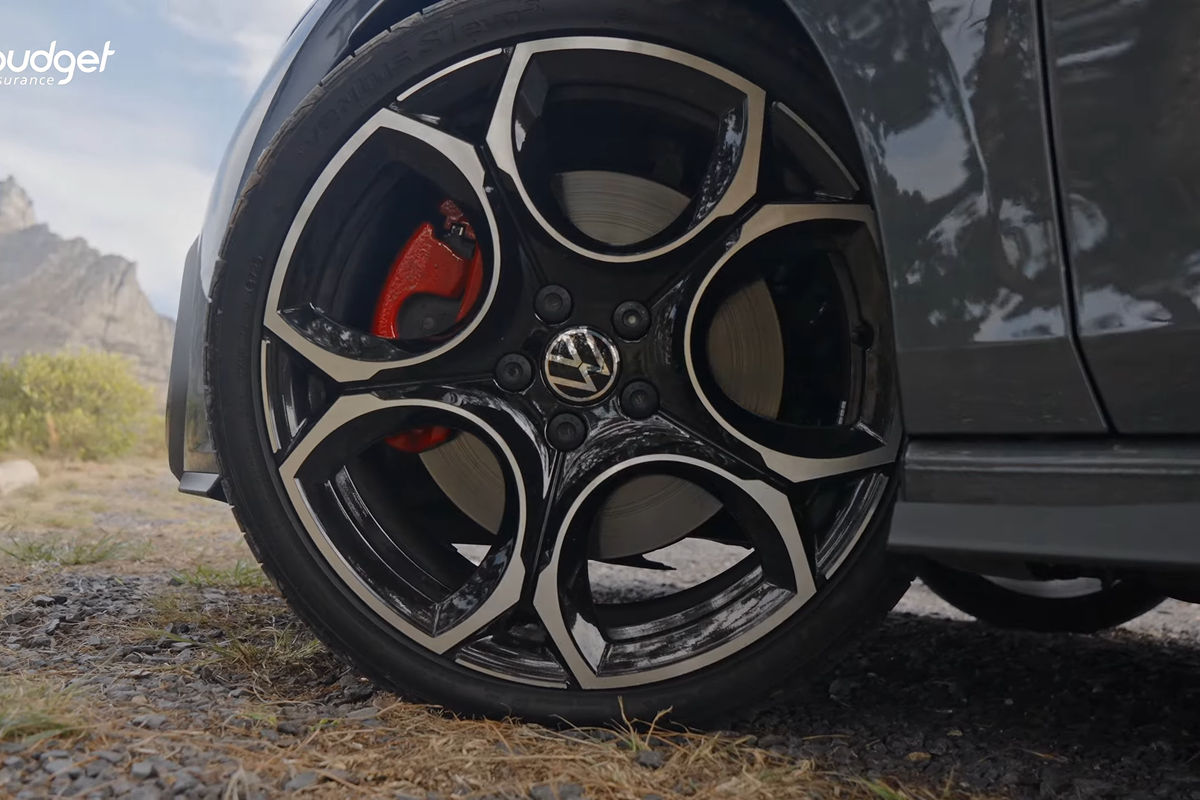
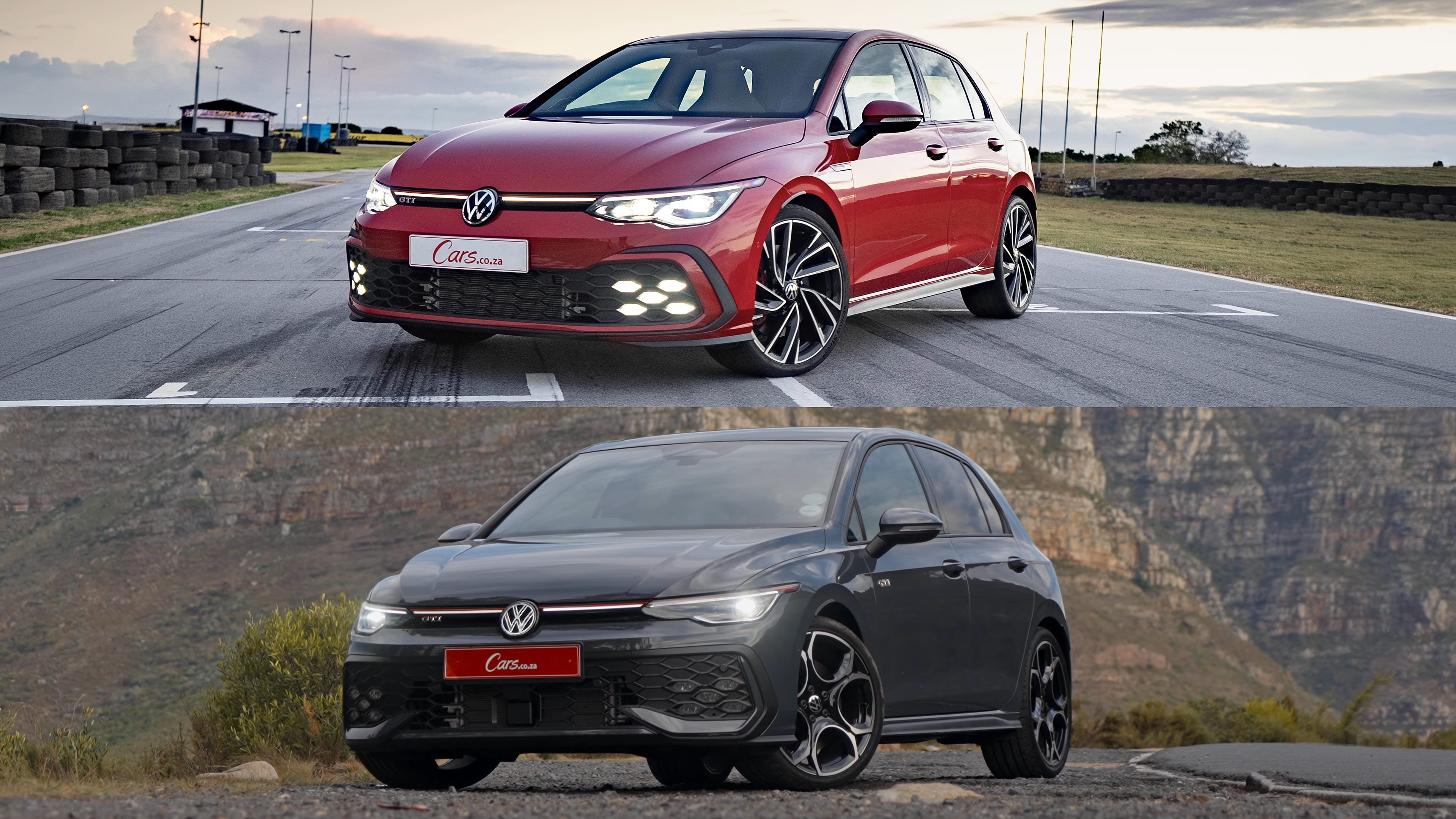
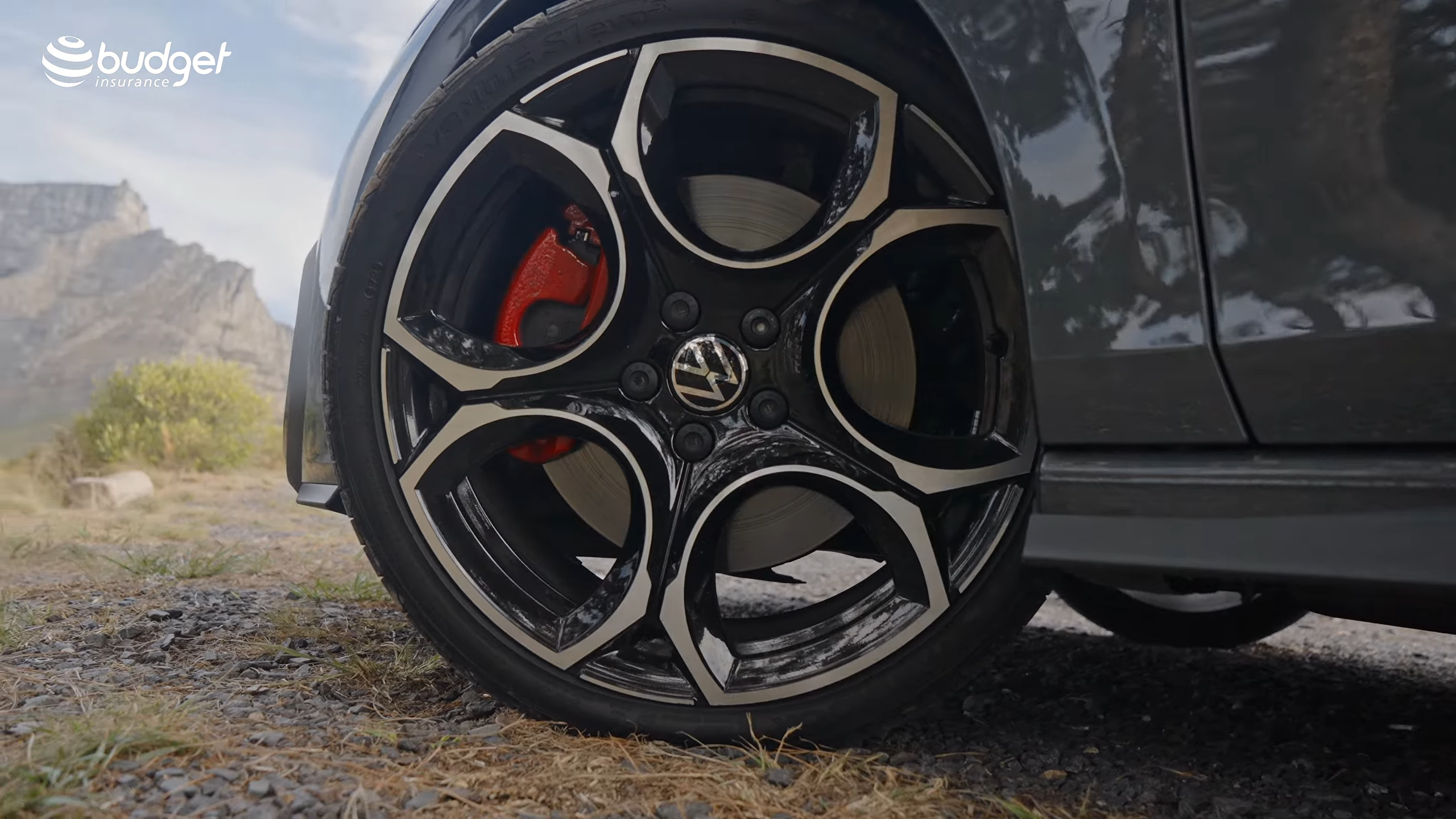
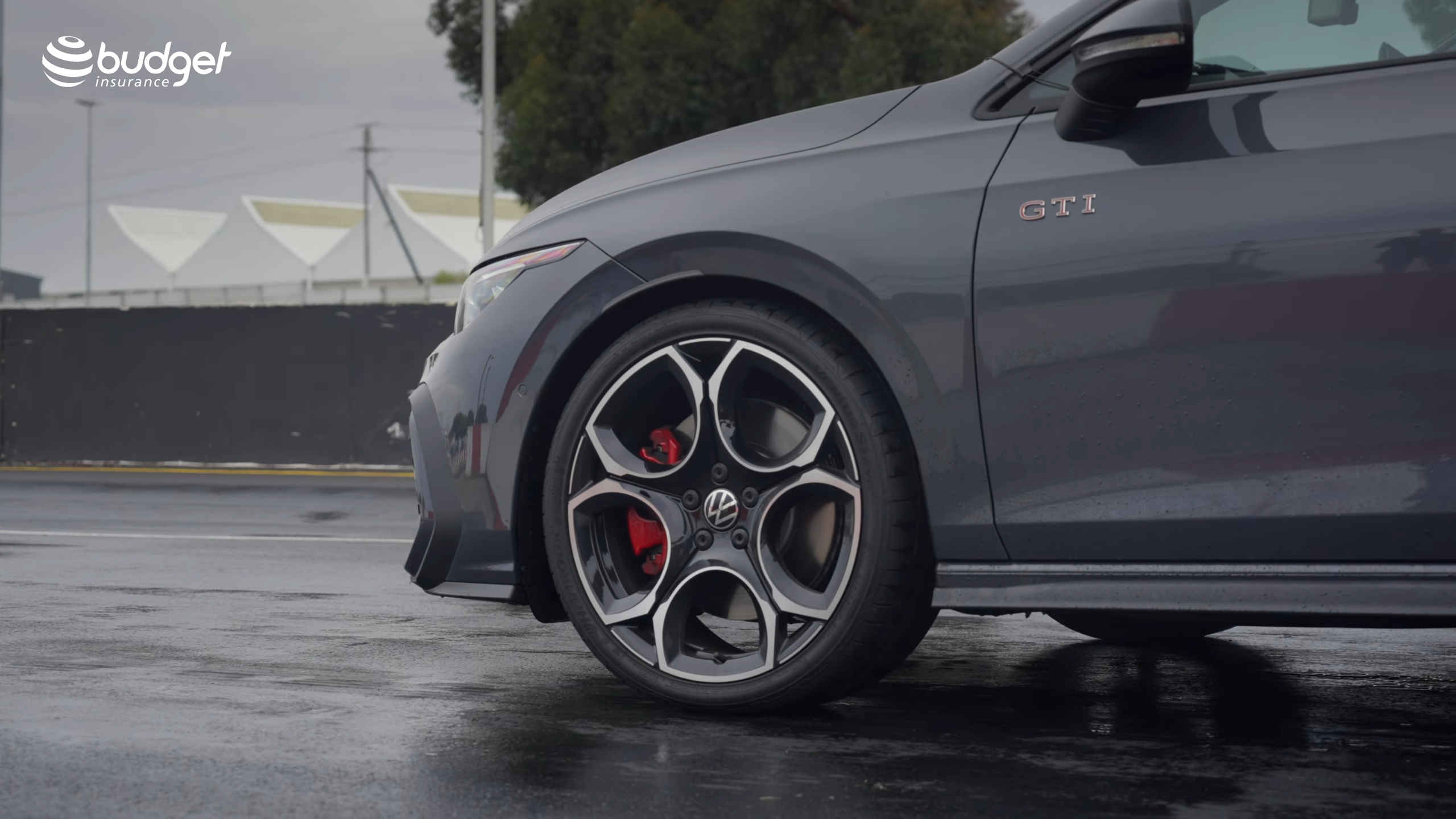
Golf 8 GTI atop and 8.5 below. Aside from the obviously different wheels, look out for reshaped headlamps.
The most significant change under the bonnet is a power increase. The 2.0-litre turbocharged engine now produces 195 kW, up from the 180 kW found in the standard Golf 8 GTI. While torque remains steady at 370 Nm, the car feels more urgent and purposeful. This power bump effectively gives the 8.5 GTI the same outputs as the celebrated Golf 7 GTI Clubsport, a vehicle widely regarded as one of the high-water marks for the brand.
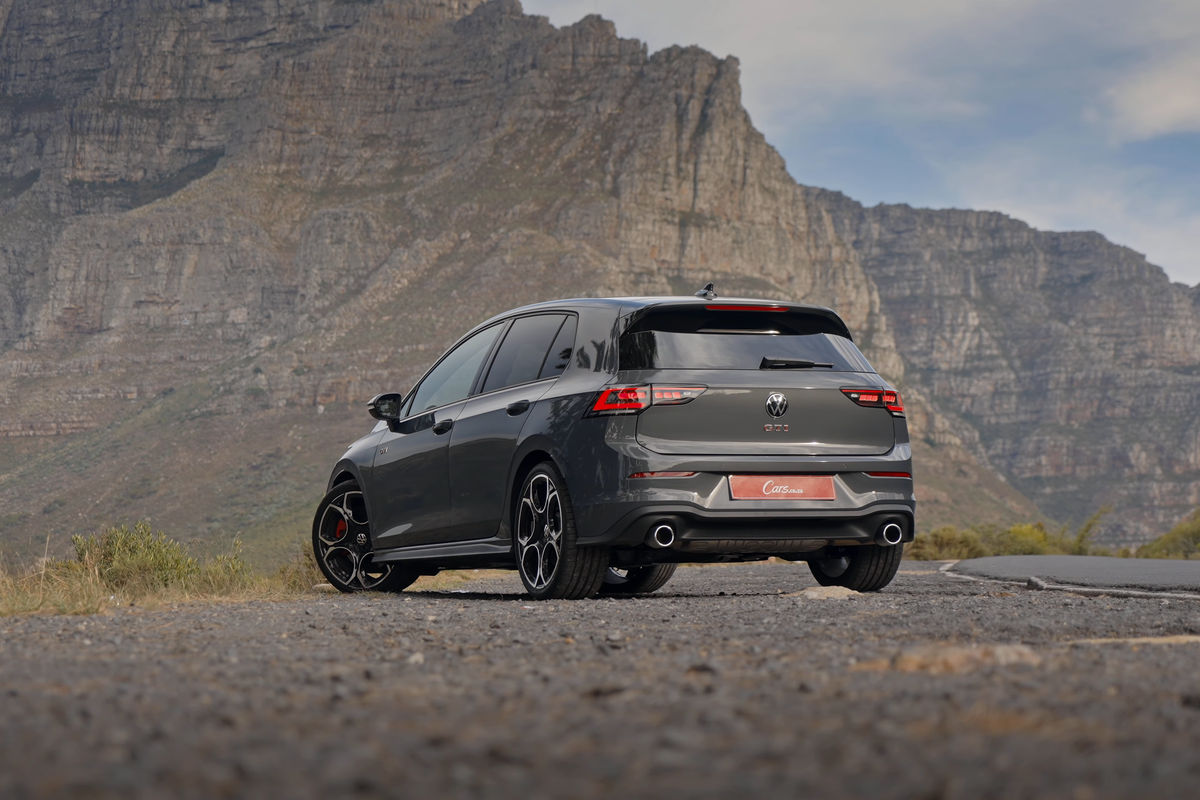
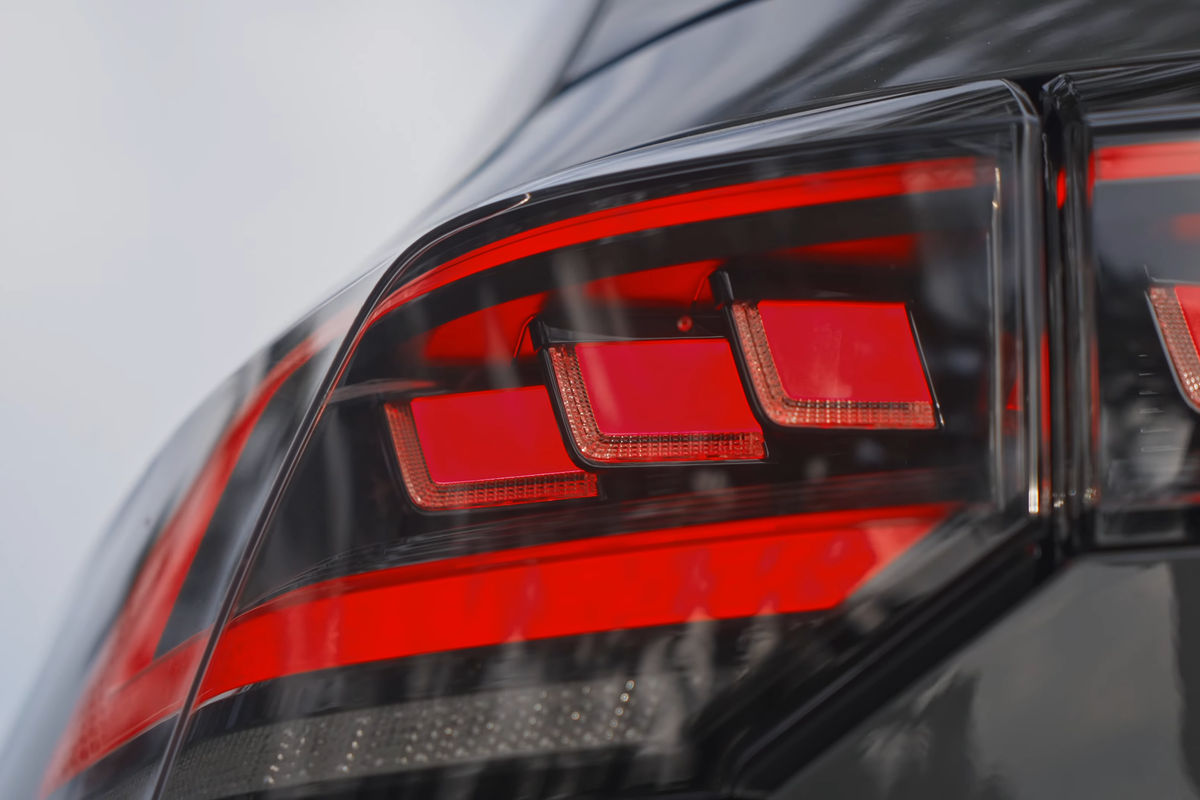
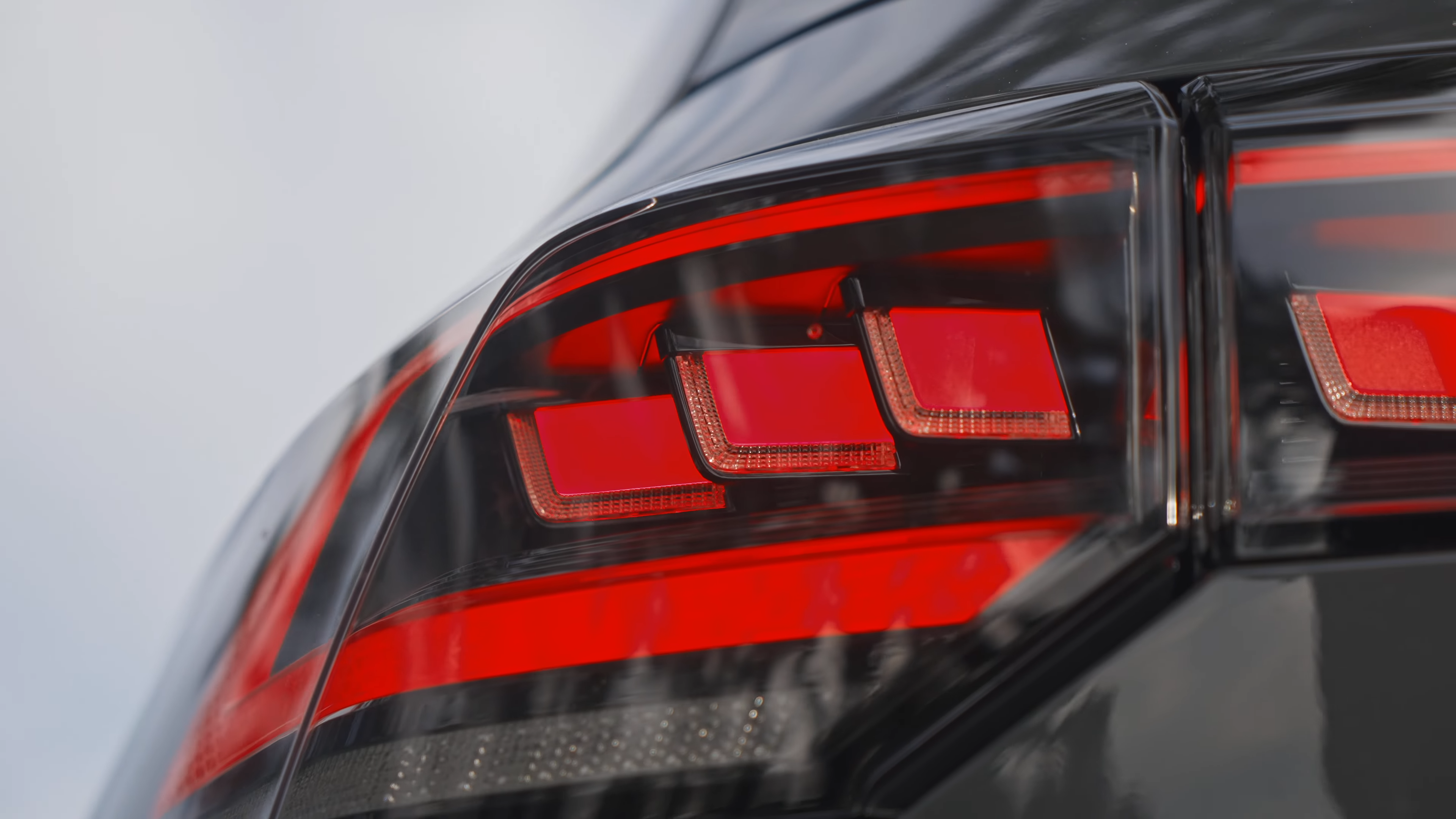
New taillamps are more modern. Pity those dual tailpipes don’t emit a more tuneful blare.
On the road, the 8.5 GTI strikes a brilliant balance. It retains the daily usability that has always been a GTI hallmark, offering a comfortable and quiet ride in comfort mode. However, flick the drive selector into sport and the adaptive dampers stiffen, the steering sharpens, and the car reveals its true hot hatch character. It feels less “woolly” than the initial Golf 8, offering a level of driver engagement that reminds you why this badge is so revered.
A simplified, premium offering
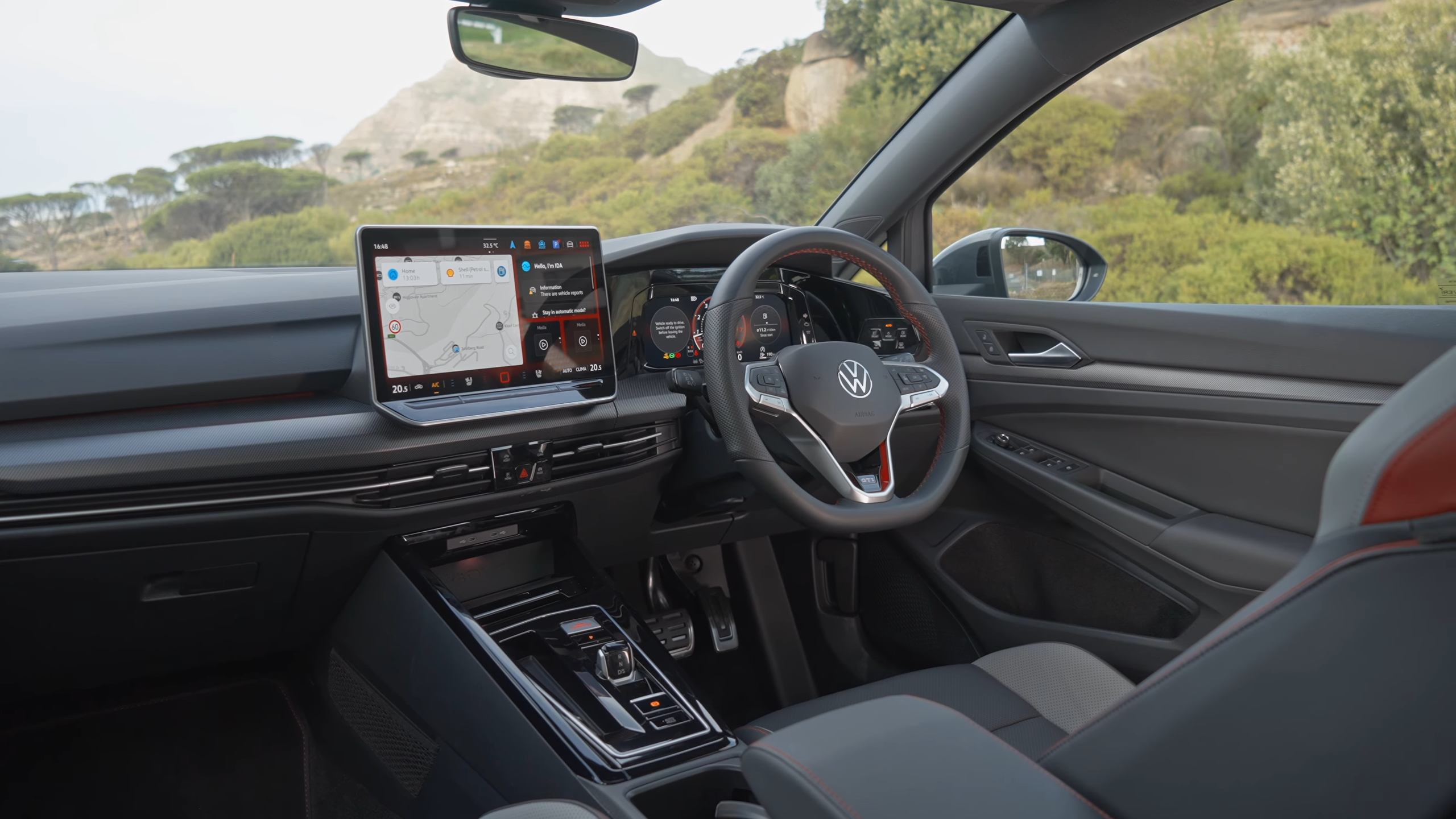
VW has addressed criticism of the Golf’s infotainment system. The climate sliders are now illuminated, for example (anyone’s guess why they weren’t before…).
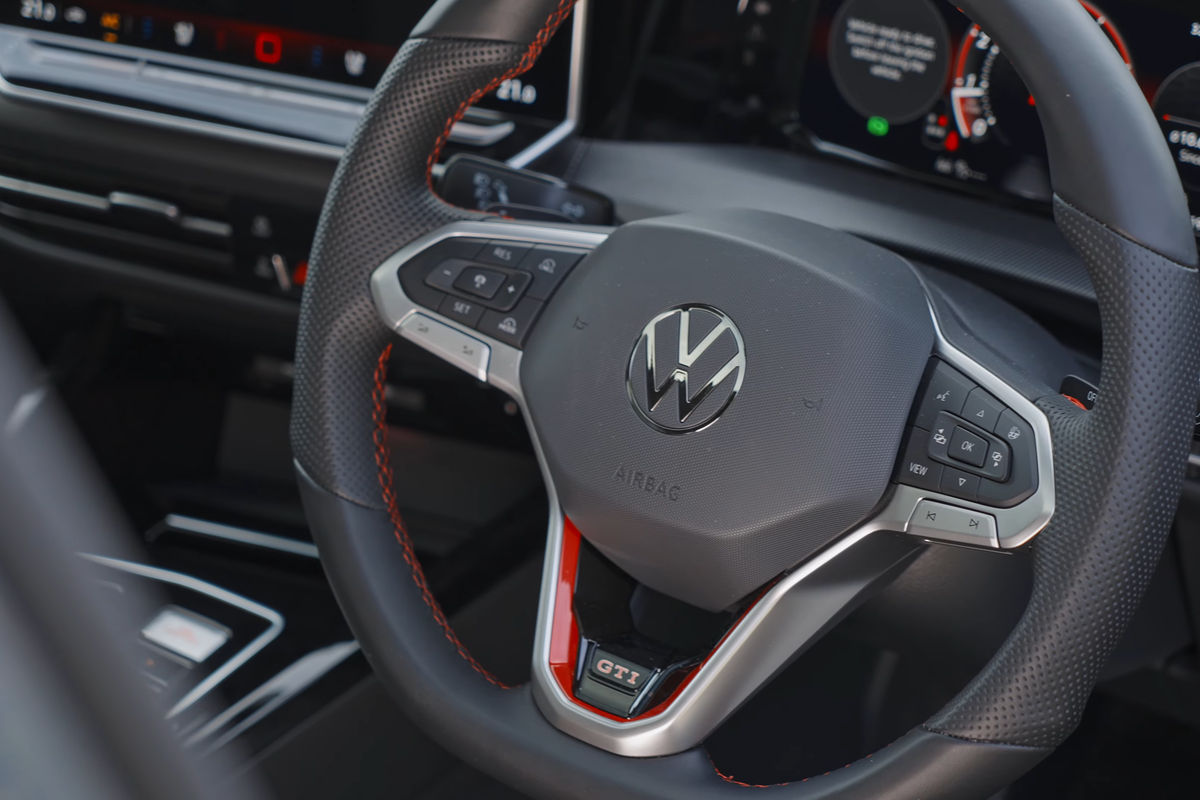
In an unusual move for a German manufacturer, Volkswagen South Africa has decided to sell the Golf 8.5 GTI as a “full house” model. There is no confusing options list; instead, the R908 000 price tag includes everything as standard. This includes the panoramic-style sunroof, a larger infotainment screen, and a new steering wheel that thankfully replaces the frustrating haptic touch buttons of the previous model with physical ones.
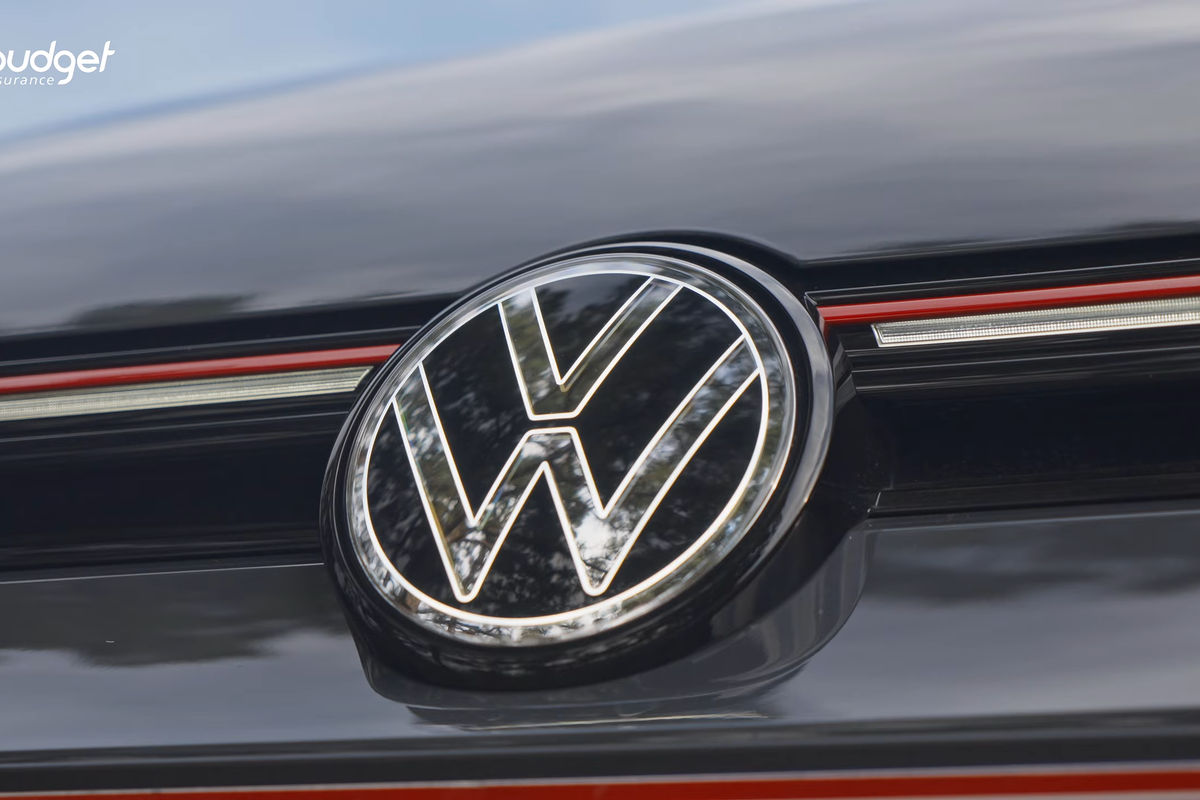
The exterior updates are subtle but effective. Revised LED headlights and tail-lights give the car a sharper look, while the front grille now features an illuminated Volkswagen logo.
It is a sophisticated evolution rather than a radical departure, maintaining the understated “sleeper” aesthetic that GTI owners tend to appreciate.
The end of an era?
The context in which this car arrives cannot be ignored. The hot hatch segment, once teeming with rivals like the Renault Mégane RS, Ford Focus ST and Opel Astra OPC, has all but vanished. Today, the GTI stands almost alone, with the Honda Civic Type R and Toyota GR Corolla being 2 of the few remaining traditional competitors.
As the industry pivots toward crossovers and SUVs, this apex VW serves as a reminder of what makes a low-slung, agile hatchback so special. It is a safe, well-built, and immensely practical vehicle that can still provide a genuine thrill on a winding road.
Is this the last ICE Golf GTI? We suspect so…
For the 300 lucky South Africans who manage to secure one, it represents a final chance to own a piece of internal combustion history.
Frequently Asked Questions (FAQ)
Q: How does the power output of the Volkswagen Golf 8.5 GTI compare to its predecessor?
A: The facelifted Golf 8.5 GTI features a 15 kW power increase, bringing the total output of its 2.0-litre turbocharged engine to 195 kW, matching the performance levels of the celebrated Golf 7 GTI Clubsport.
Q: What significant ergonomic changes were made to the interior of the Golf 8.5 GTI?
A: Volkswagen addressed major criticisms by replacing the frustrating haptic touch buttons on the steering wheel with physical buttons and adding illumination to the climate control sliders for better usability at night.
Q: What is the local availability and pricing strategy for the Golf 8.5 GTI in South Africa?
A: The Golf 8.5 GTI is limited to only 300 units in South Africa and is sold as a “full house” model priced at R908 000, which includes all features as standard with no additional options list.
5 automakers with the sharpest sales declines in Q1 2026
These are the 5 automakers that suffered the sharpest year-on-year sales declines in South Africa in Q1 2026. And, perhaps surprisingly, one is a Chinese brand…
10 automakers suffered sales declines in Q1 2026
5 of those endured double-digit percentage drops
Proton SA registered sharpest percentage decline
In the opening quarter of 2026, South Africa’s new-vehicle market grew 12.4% year on year to a heady 161 978 units. Despite this robust performance from the broader industry, as many as 5 automakers suffered double-digit percentage sales declines in Q1 2026.
So, which automakers shrunk most in this growing market? Well, we’ve tallied up the sales figures for the first 3 months of 2026 and compared them to Q1 2025’s numbers. That allowed us to identify the manufacturers that suffered the sharpest year-on-year percentage drops.
Keep in mind we’ve focused on automakers that play in the light-vehicle segments, omitting truck- and bus-only manufacturers from this exercise. In addition, we’ve based our calculations on “manufacturer” totals, as reported to Naamsa. So, note that certain individual brands are grouped under broader manufacturer banners (for instance, Alfa Romeo, Fiat, Jeep, Opel and Peugeot all fall under Stellantis).
Of the 33 automakers included in this exercise, as many as 10 endured year-on-year sales declines. For the record, Mazda (666 units; down 8.8%), Mitsubishi (528 units; down 5.0%), the Volkswagen Group (15 243 units, including Audi; down 3.8%), Renault (4 246 units; down 0.7%) and Jaguar Land Rover (802 units; down 0.4%) all lost sales, year on year. But 5 other automakers suffered even more…
Proton (20 units) – down 87.5%
Based on Naamsa figures, the manufacturer that suffered the most significant year-on-year percentage drop in sales in Q1 2026 was Proton South Africa. Distributed by the Combined Motor Holdings (CMH) Group, the Malaysian automaker’s local registrations plummeted 87.5% year on year, from 160 units to a mere 20 units.
Subaru (87 units) – down 37.9%
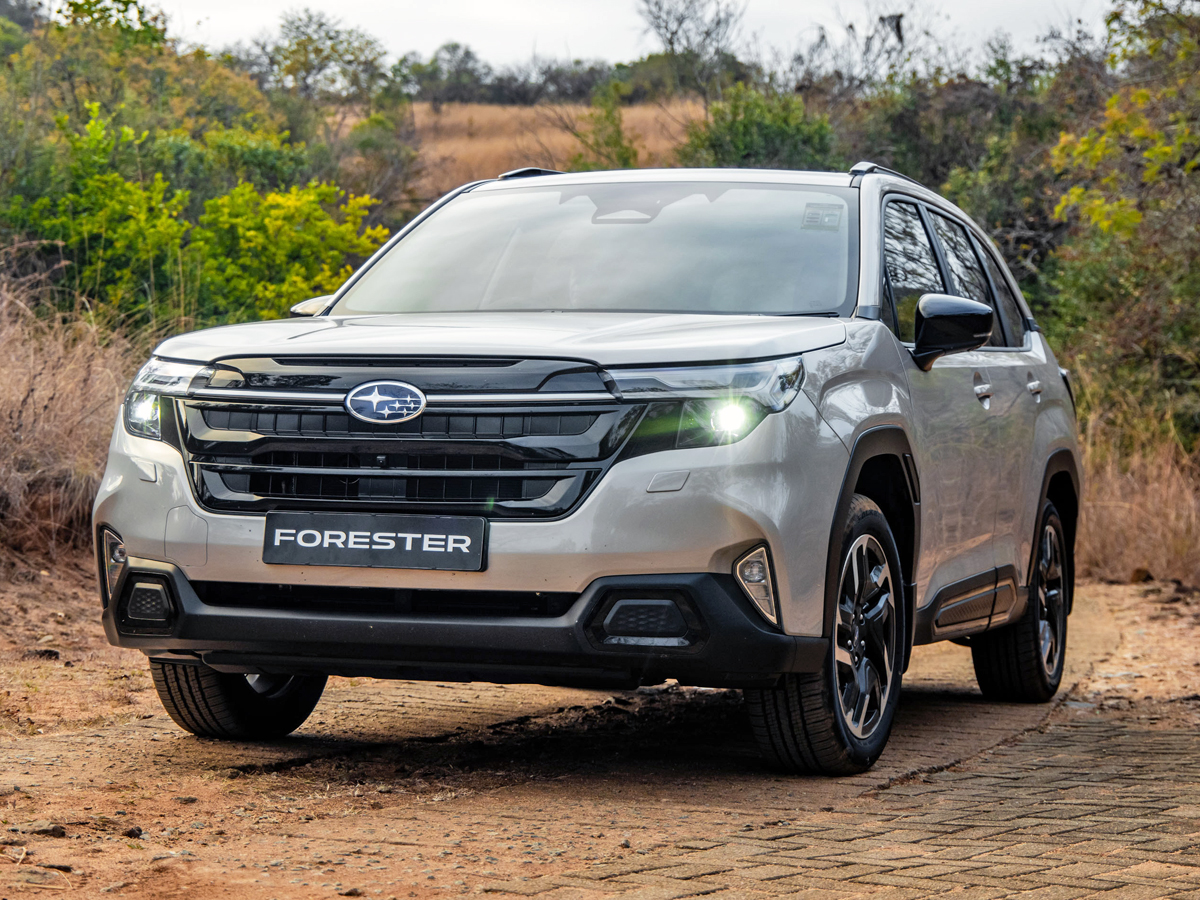
Japanese brand Subaru registered the 2nd sharpest instance of year-on-year sales decline in South Africa over the opening 3 months of the year, with this firm’s local registrations dropping 37.9% (compared to Q1 2025) to just 87 units. Interestingly, the Forester accounted for as many as 52 of those sales.
Nissan (3 824 units) – down 22.9%
Nissan’s woes continued in the first quarter of the year, with local registrations falling 22.9% year on year to 3 824 units. Sales of the Navara (which will no longer be built in Rosslyn from May 2026) dropped a considerable 30.9% year on year to 1 068 units, while Magnite registrations (excluding the Move-badged panel van) slipped 15.1% year on year to 2 316 units.
Volvo Cars (250 units) – down 18.3%
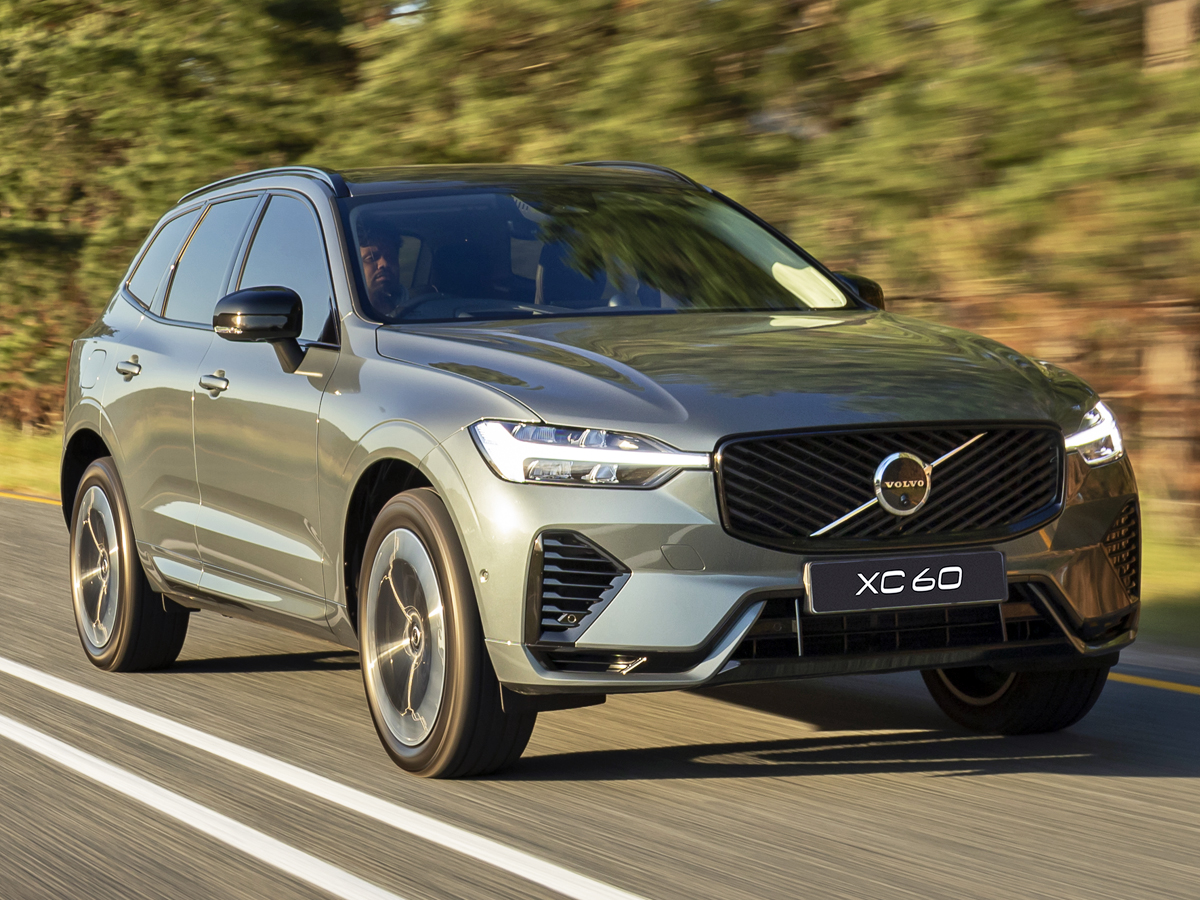
According to figures reported to Naamsa, Swedish manufacturer Volvo Cars sold just 250 units in South Africa in Q1 2026, representing an 18.3% year-on-year decline. While the XC60 led the charge for the brand in Q1 2025, local registrations of this model fell a hefty 75.2% in the opening 3 months of 2026.
BAIC (551 units) – down 17.3%
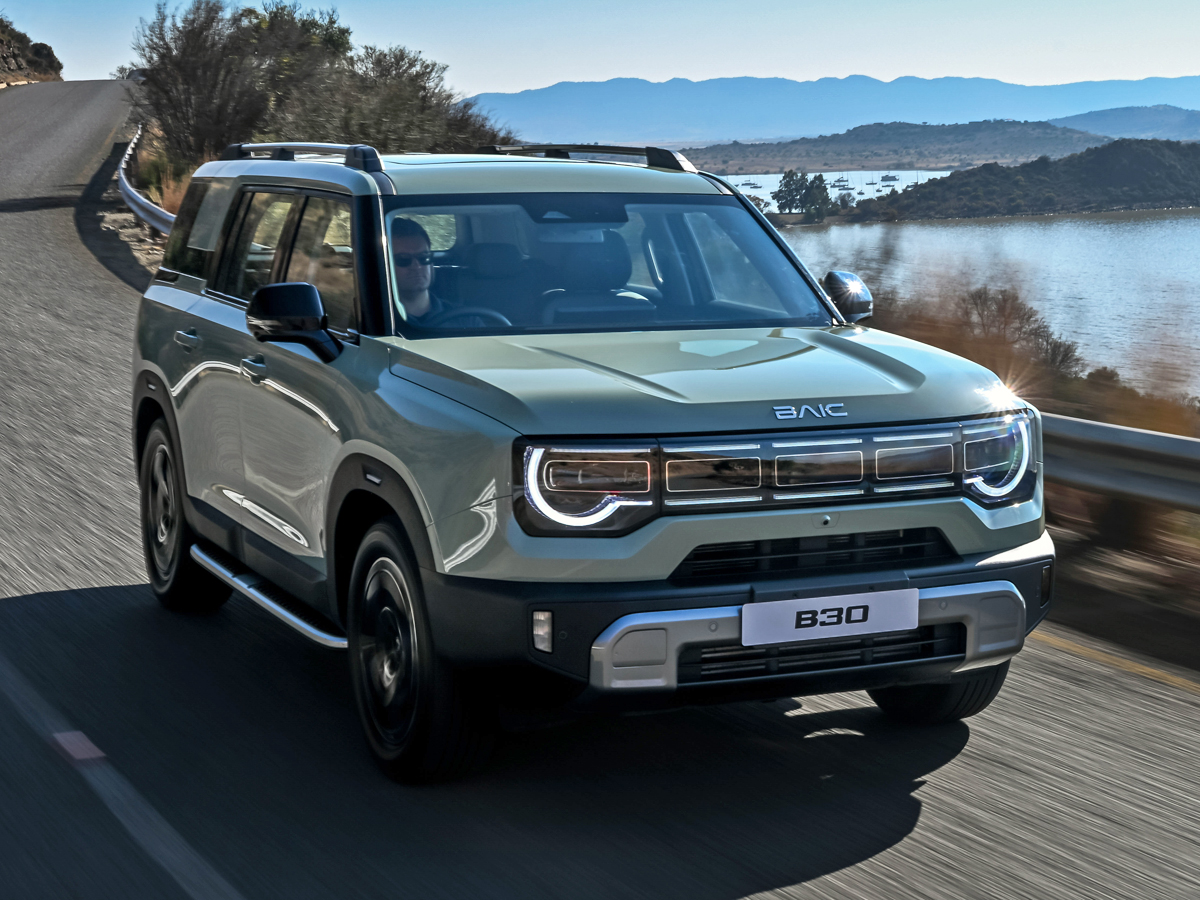
Considering the growth of Chinese brands in recent times, it’s perhaps surprising to see BAIC make the list of automakers with the sharpest sales declines in Q1 2026. Yes, the Beijing-based brand’s local registrations fell 17.3% year on year to 551 units, despite the arrival of the B30 (which accounted for nearly 60% of BAIC’s sales in this year’s first quarter).
Frequently Asked Questions (FAQ) About South Africa’s Q1 2026 Sales Declines
Q: Which automaker suffered the most significant percentage drop in the first quarter?
A: Proton South Africa experienced the sharpest decline, with local registrations plummeting by 87.5% year-on-year. The Malaysian brand saw its sales fall from 160 units in Q1 2025 to just 20 units in Q1 2026.
Q: Why is Nissan seeing such a sharp decrease in sales volume?
A: Nissan’s 22.9% decline could be tied to the winding down of local production at its Rosslyn plant, which is set to be taken over by Chery in May 2026. This transition has impacted the Navara, which saw a 30.9% drop in sales, while the Magnite range also experienced a 15.1% year-on-year decrease.
Q: Is the BAIC B30 helping the brand recover from its 17.3% decline?
A: While BAIC’s overall sales fell to 551 units, the new BAIC B30 is actually the brand’s primary lifeline. In fact, the B30 accounted for nearly 60% of the manufacturer’s total local sales in Q1 2026. Without the strong performance of this new SUV, BAIC’s double-digit decline likely would have been far more severe.
Changan Hunter 2.0TD Double-Cab 4×4 CE (2026) Review
The Changan Hunter Double-Cab competes in South Africa wearing an aggressive price tag and boasting a generous features list. But is that enough in such a crowded market rich with talent (and value)?
We like: Long features list, feels very rugged and well built, good warranty.
We don’t like: Lack of Apple CarPlay/Android Auto, runs out of puff at near the speed limit.
FAST FACTS
Model: 2026 Changan Hunter 2.0TD Double-Cab 4×4 CE
Price: R569 900
Engine: 1.9-litre turbodiesel
Transmission: 6-speed automatic
Power / Torque: 110 kW/350 Nm
Claimed fuel consumption: 9.1 L/100 km
0-100kph: 13.37 second (tested)
Where does the Changan Hunter 2.0TD Double-Cab CE 4×4 fit in?
Given the popularity of high-spec double-cab bakkies in South Africa, it makes sense that brands with such a product in their arsenal make these vehicles available in South Africa. The upshot for the public is that the fierce competition results in greater choice and aggressive pricing. It is particularly true for newcomers hoping to make a mark, and Changan is no different in that regard.
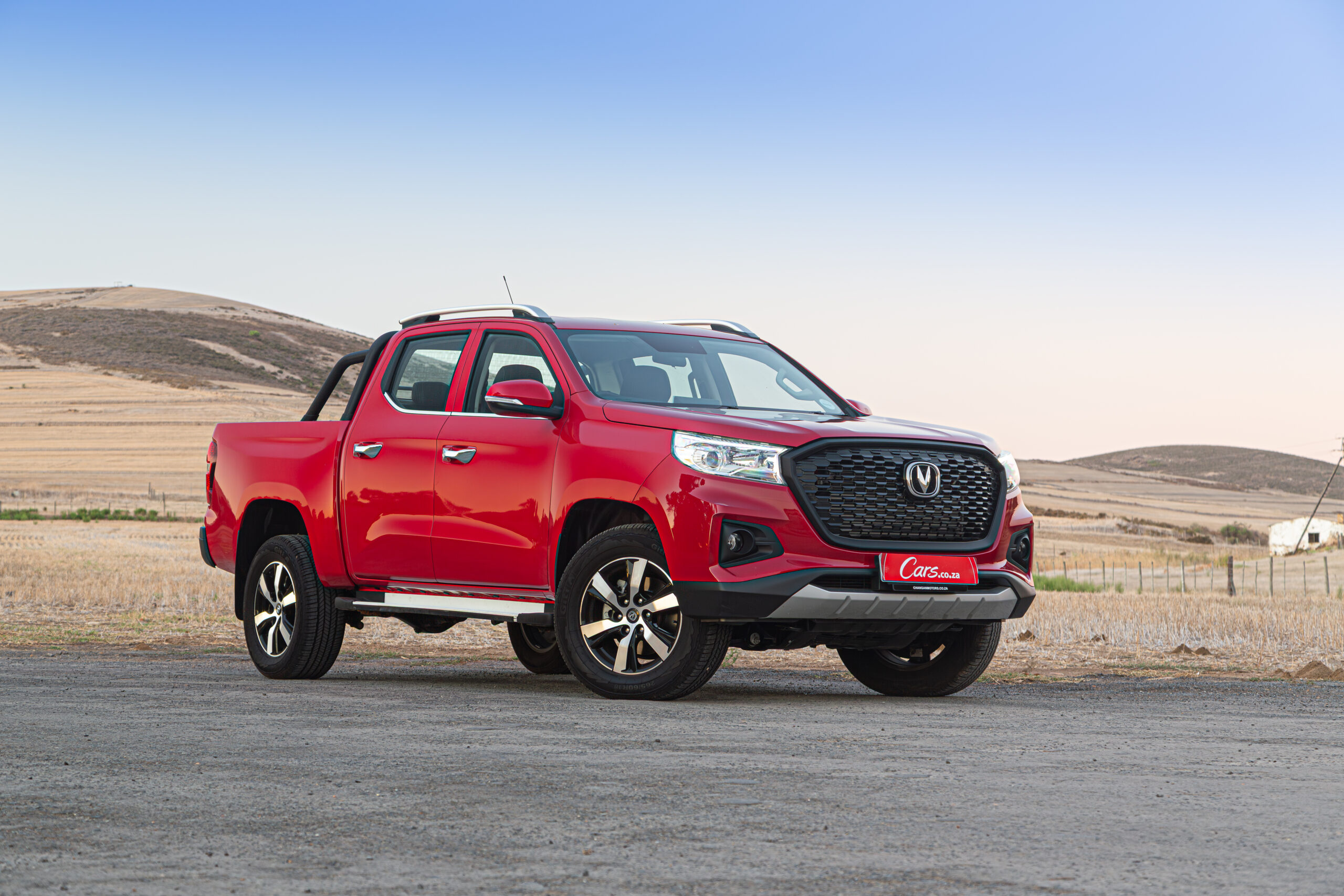
If the Hunter looks familiar, that’s because it is … the Peugeot Landtrek is a close relation.
In a sense, however, the Hunter is perhaps not entirely “new” to the local market. It’s closely related to the Peugeot Landtrek and has been on sale in various global markets since 2019. At R569 900 in this range-topping (barring the REEV derivative) CE 4×4 Auto trim, it’s one of the most keenly priced automatic four-wheel-drive double cabs you can buy new in South Africa right now. In fact, the most affordable “mainstream” offering with four-wheel drive, an automatic transmission and reasonably luxurious specification (from Isuzu) is around R135 000 more!
We recently spent a considerable amount of time behind the wheel of this particular Hunter derivative – enough time to drive it in town, on the highway, and onto some genuinely demanding rocky off-road terrain. Impressions were, frankly, more positive than we had anticipated, but upon closer inspection of the vehicle’s positioning, and the offerings available around a similar price point, the Hunter’s value proposition is perhaps not as clearcut.
How the Changan Hunter 2.0TD Double-Cab 4×4 CE fares in terms of…
Design, Packaging & Features
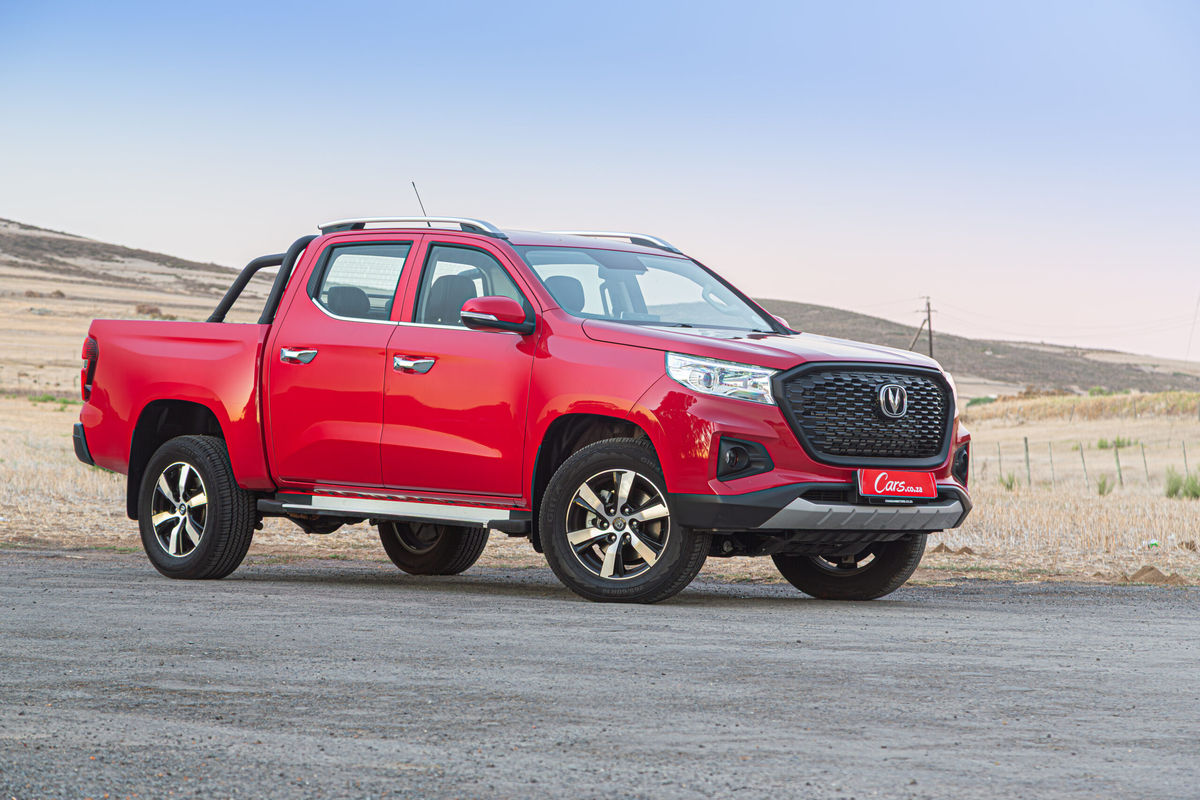
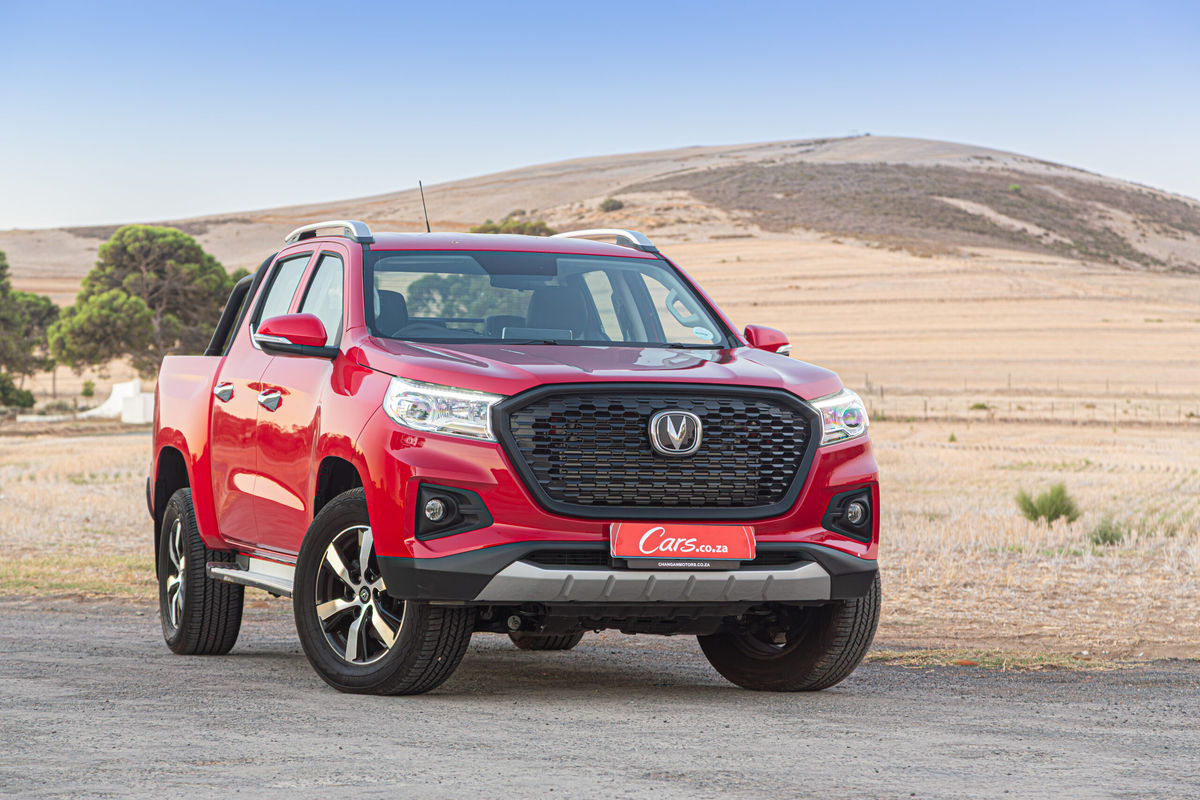
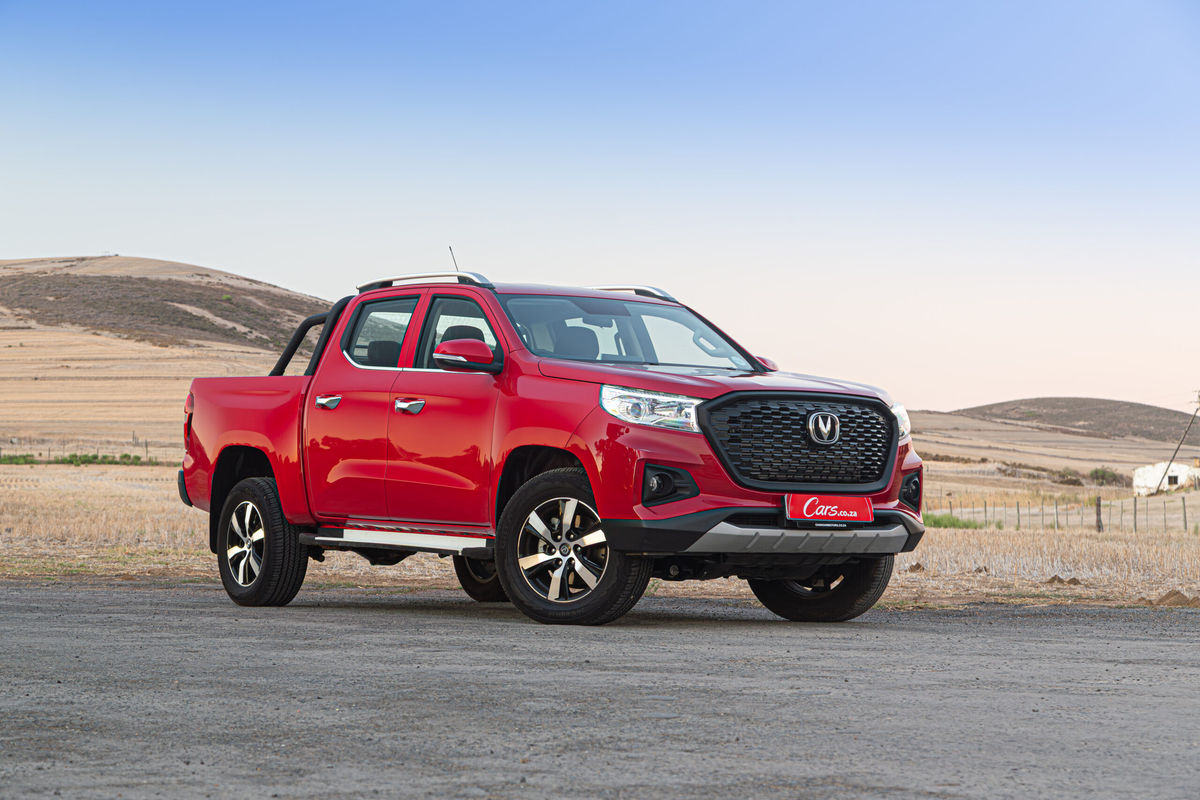
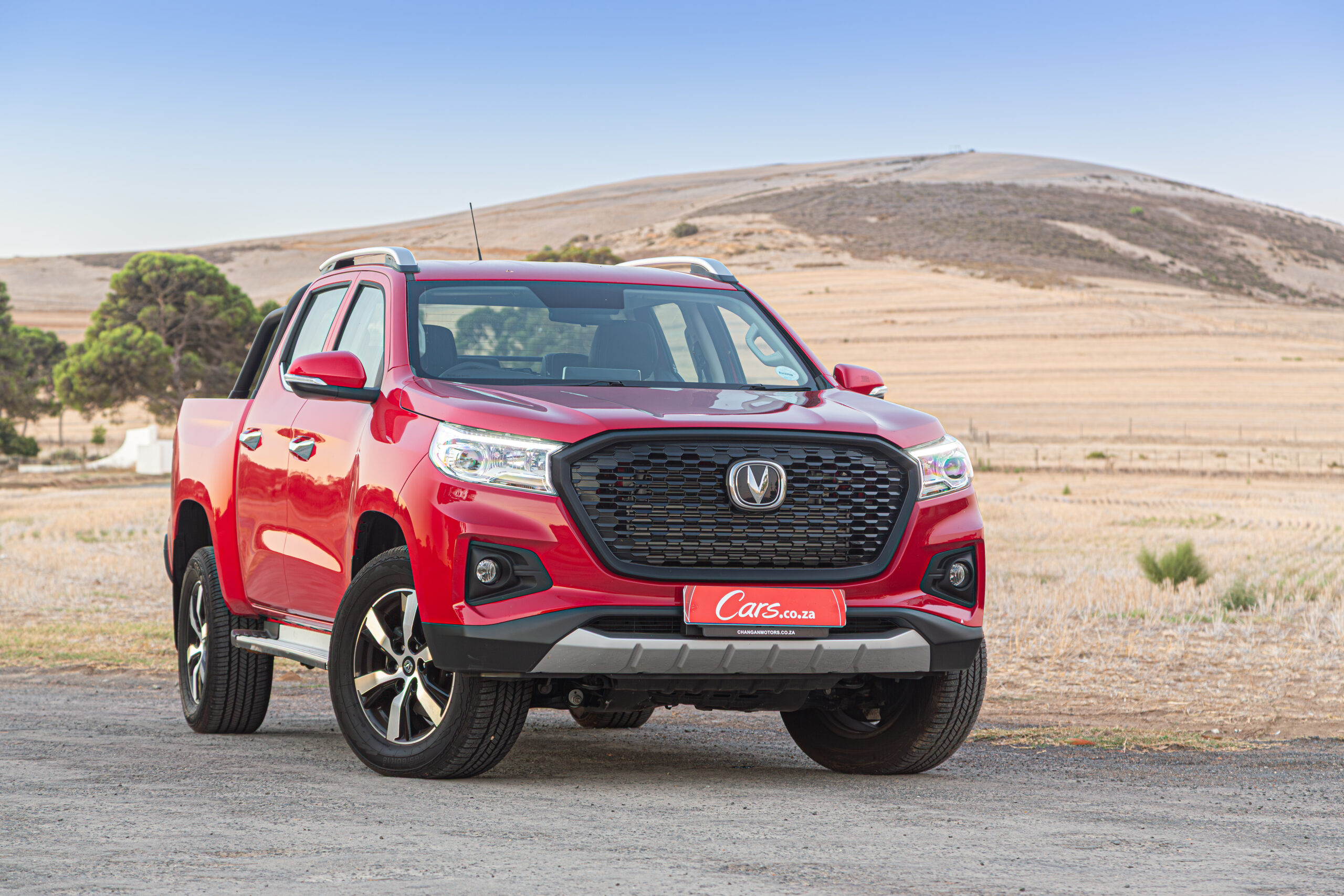
The grille is the most notable design element, but fits in well with the conservative overall design
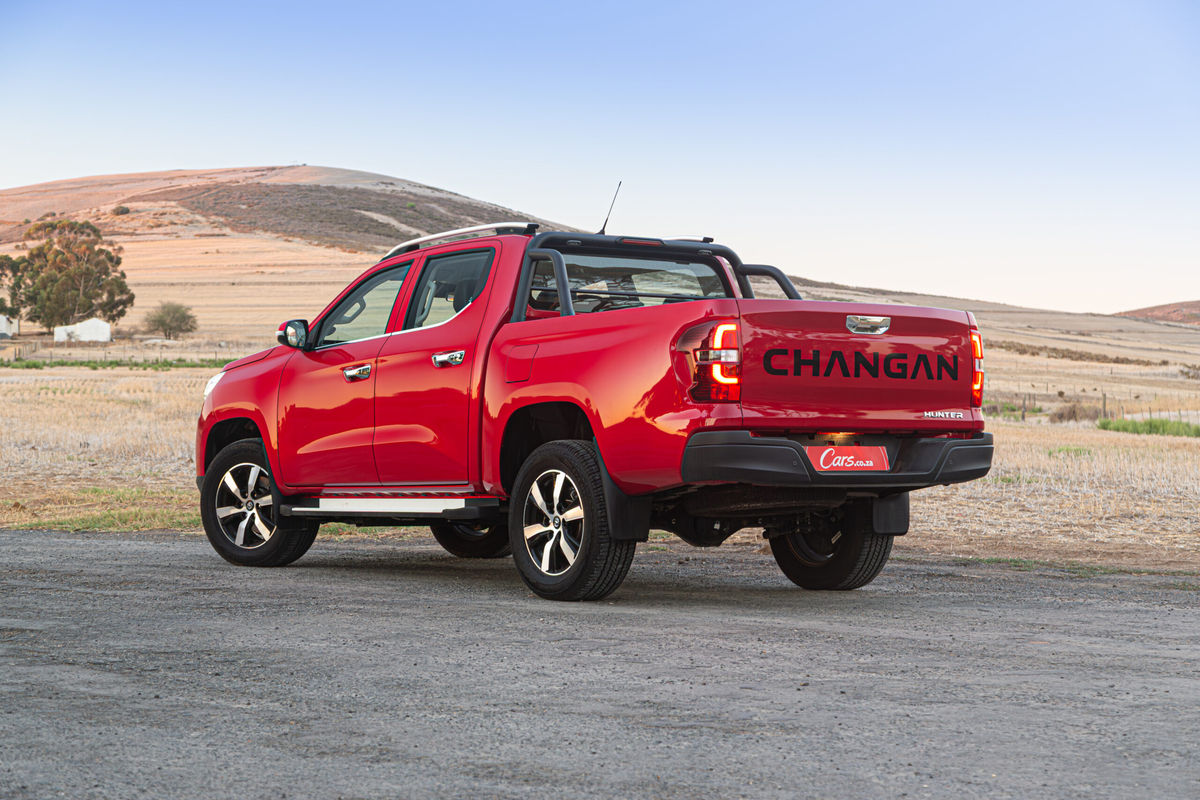
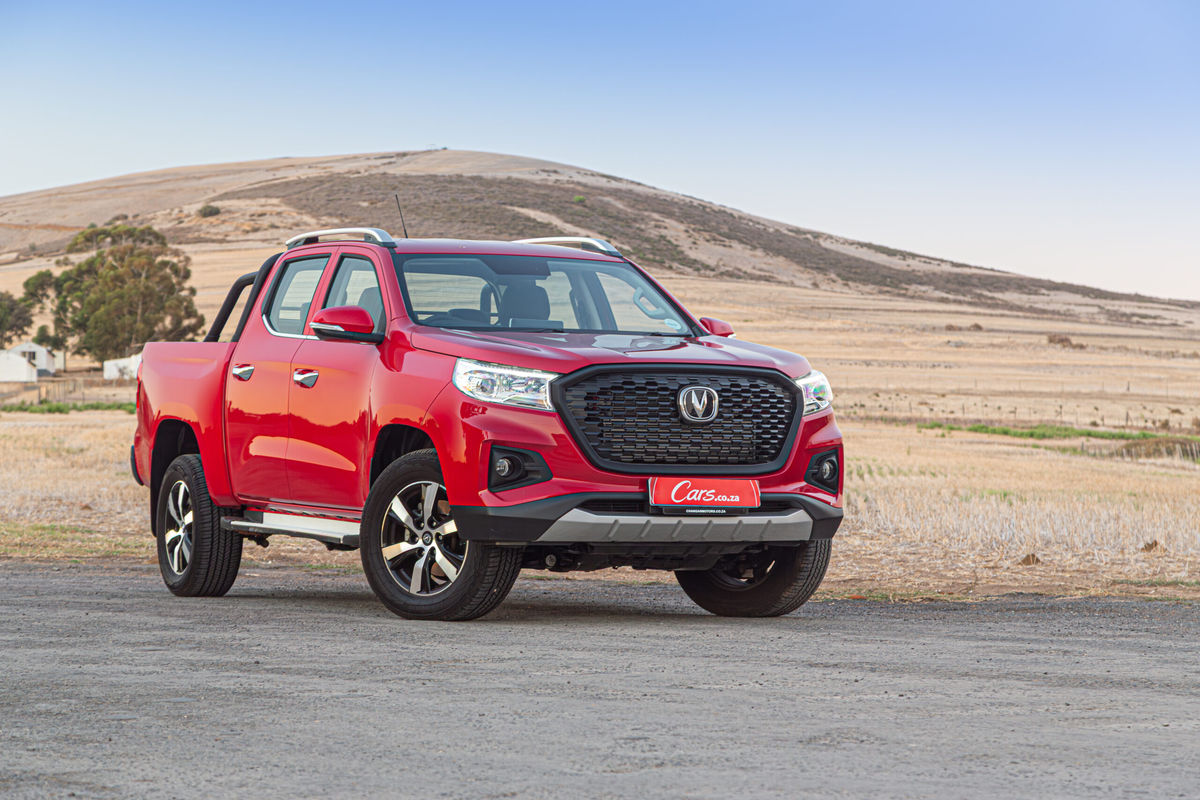
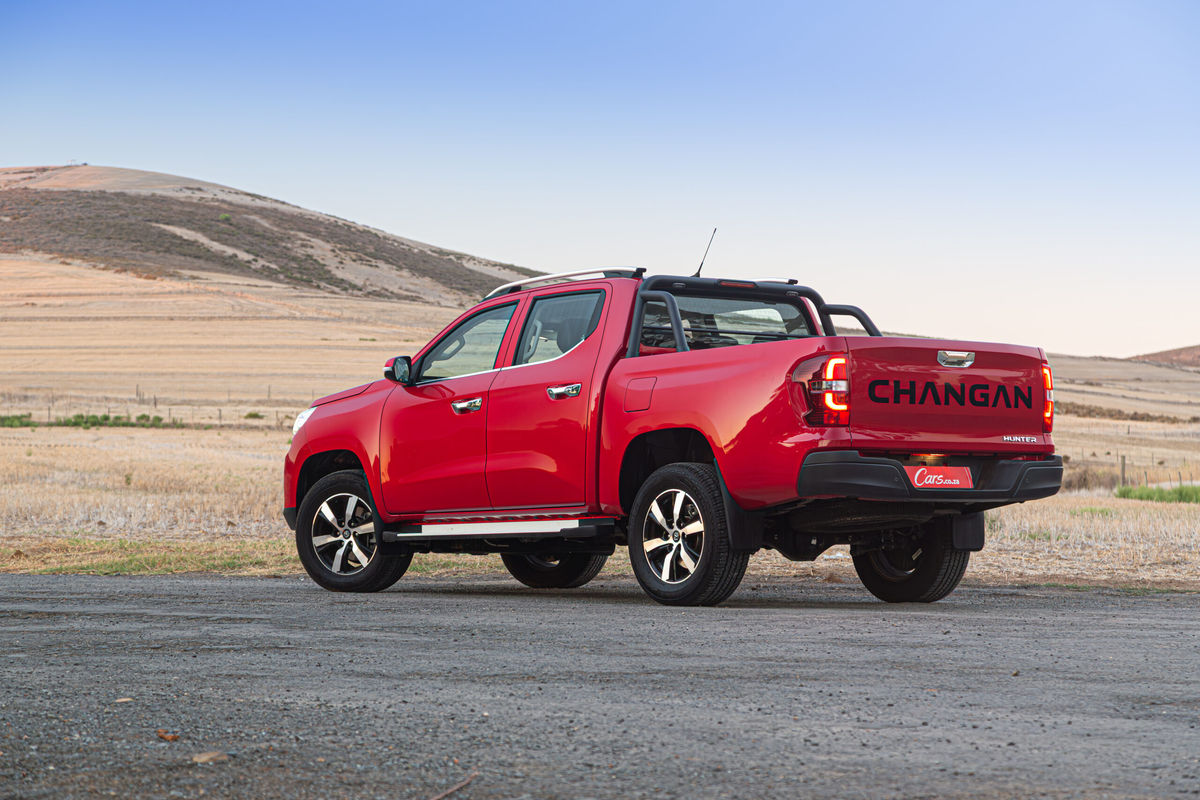
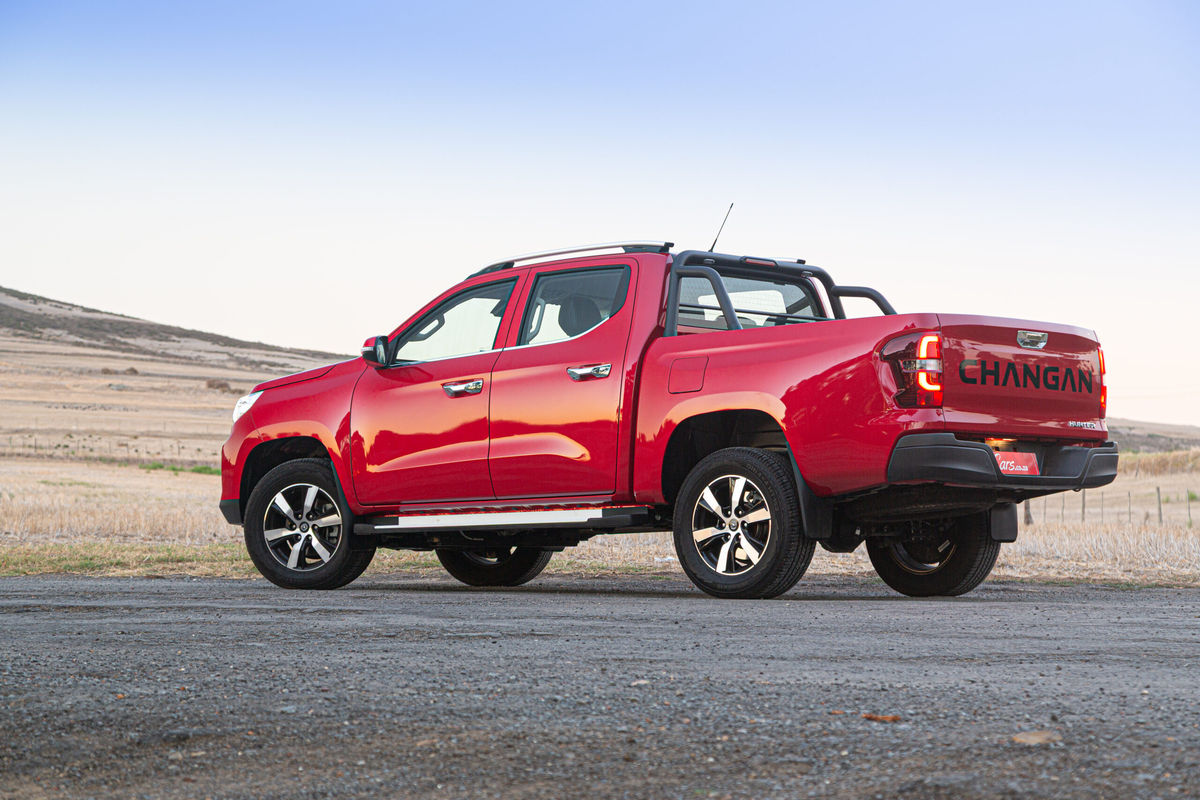
Our test unit was finished in an upmarket metallic red colour, which contrasted nicely with its chrome and blacked-out sections. The oversized grille is likely to be a talking point, but the rest of the design is pretty conservative and also to some extent reflects the vehicle’s design age.
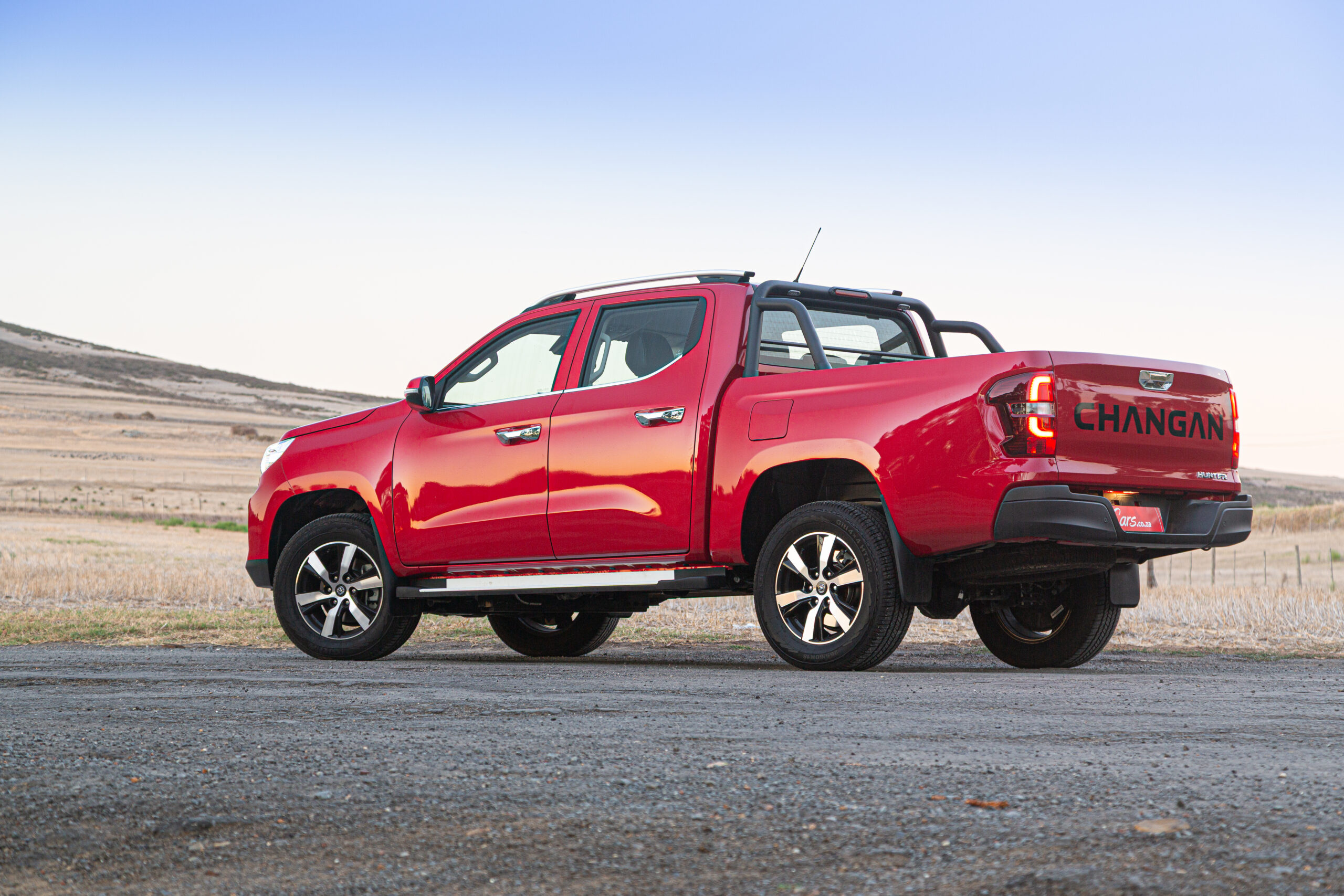
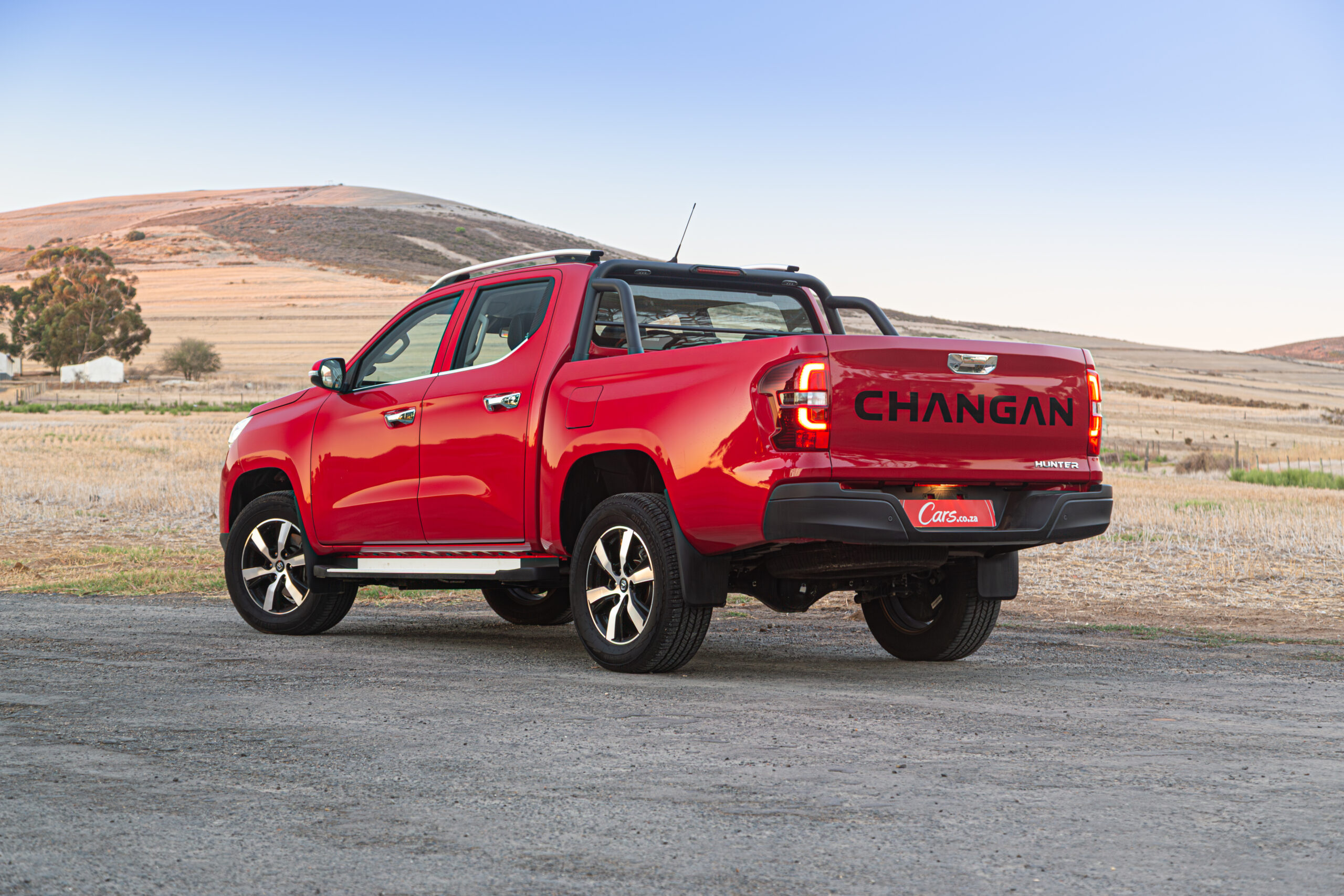
The 18-inch alloy wheels fill the arches well, and the chrome door handles, side steps and roof rails round off a package that looks considerably more expensive than it is. If there is a gripe with the exterior styling, it is the large “CHANGAN” stickering across the tailgate. It’s outdated and a bit “agricultural”.
The massive “CHANGAN” lettering across the tailgate feels like a throwback.
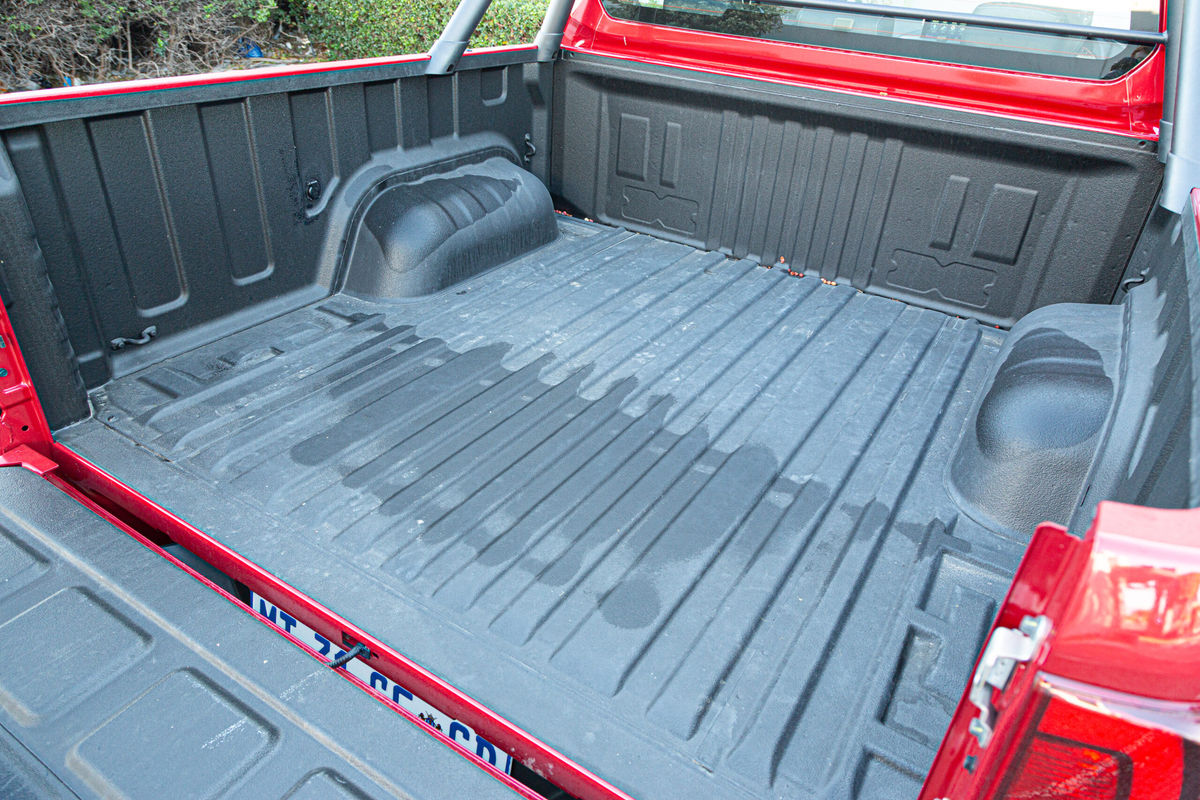
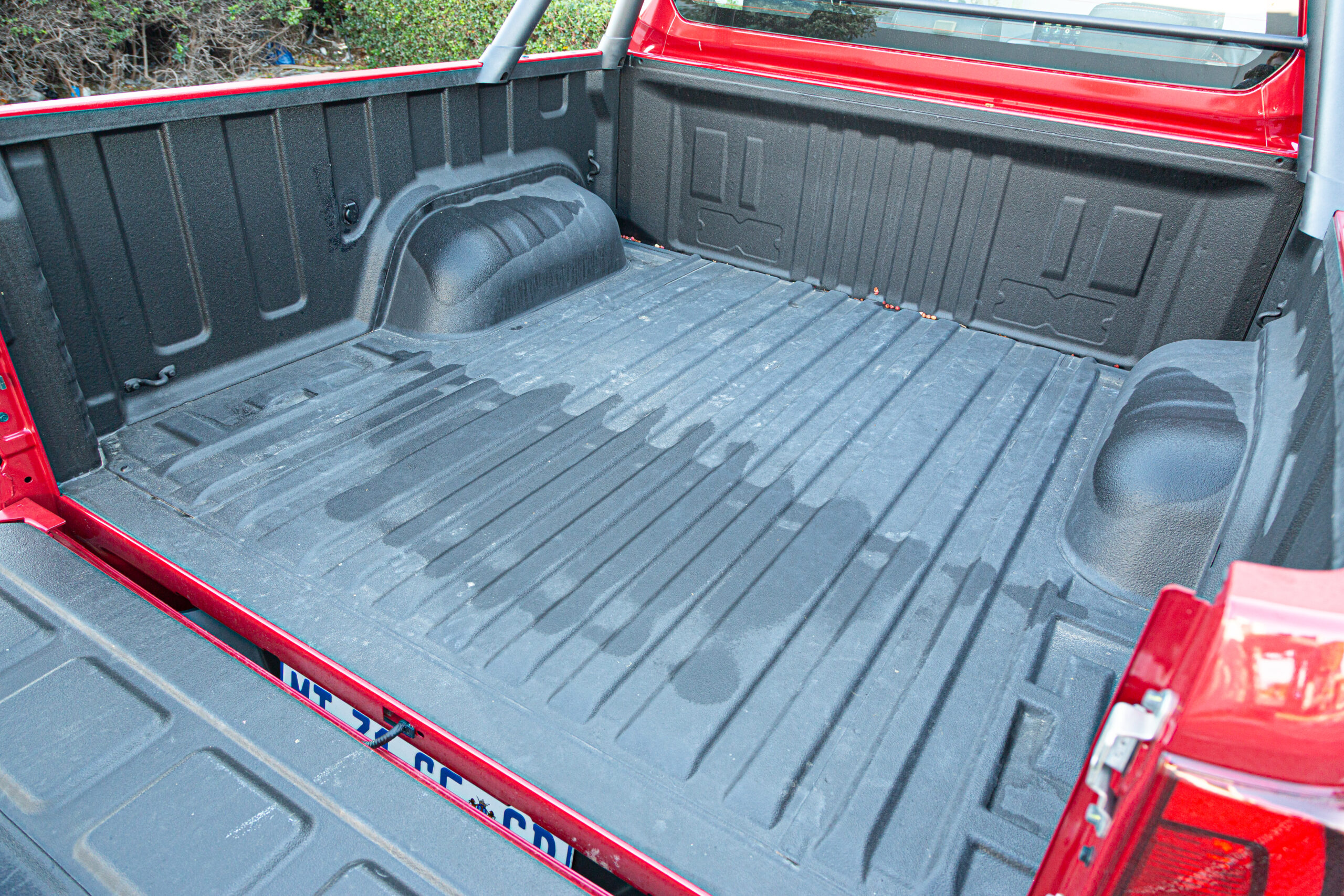
Size-wise, the Hunter fits somewhere between a GWM P300 and Isuzu D-Max. It is actually longer than the Isuzu in terms of both wheelbase and overall length. Its load bay can carry a tonne and our test unit featured a neat lining to protect the paint from scuffing. You’ll also find a 12 V power outlet in the load bay, in addition to cargo-bay lighting, which proved genuinely useful during our test period.
The load bay is neatly lined to avoid scratches.
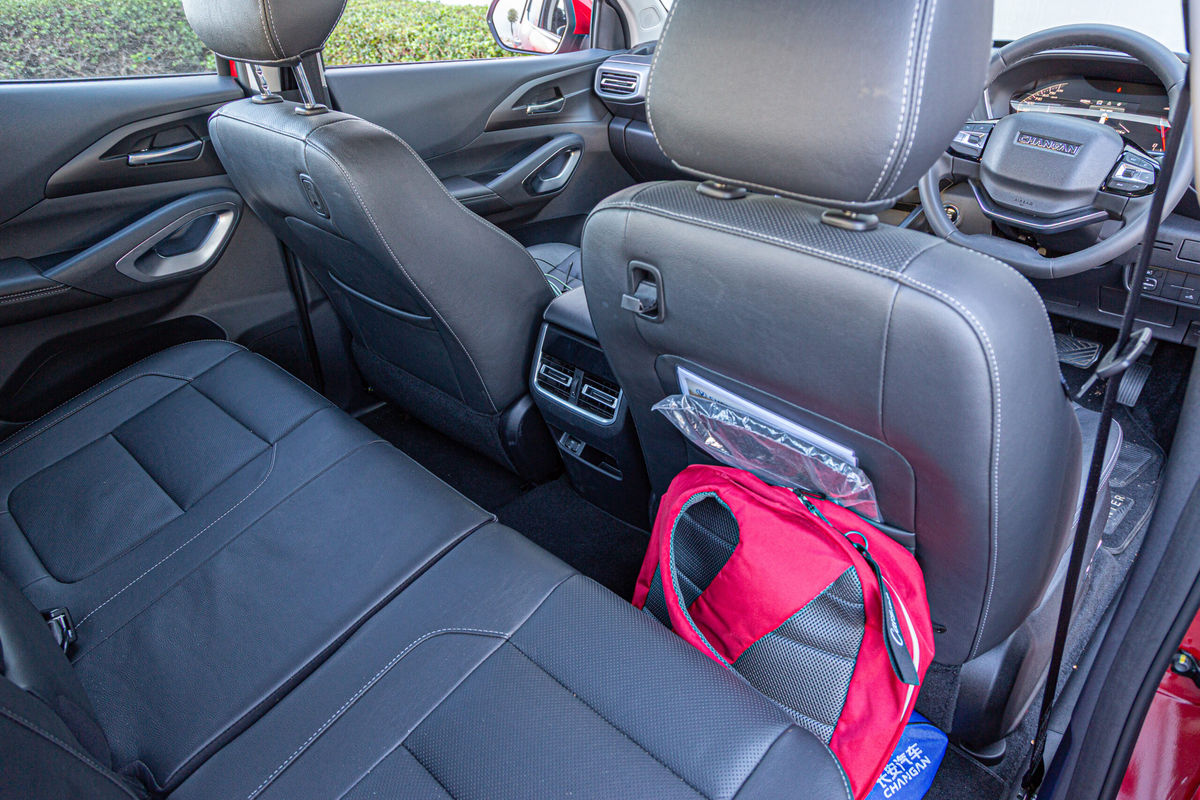
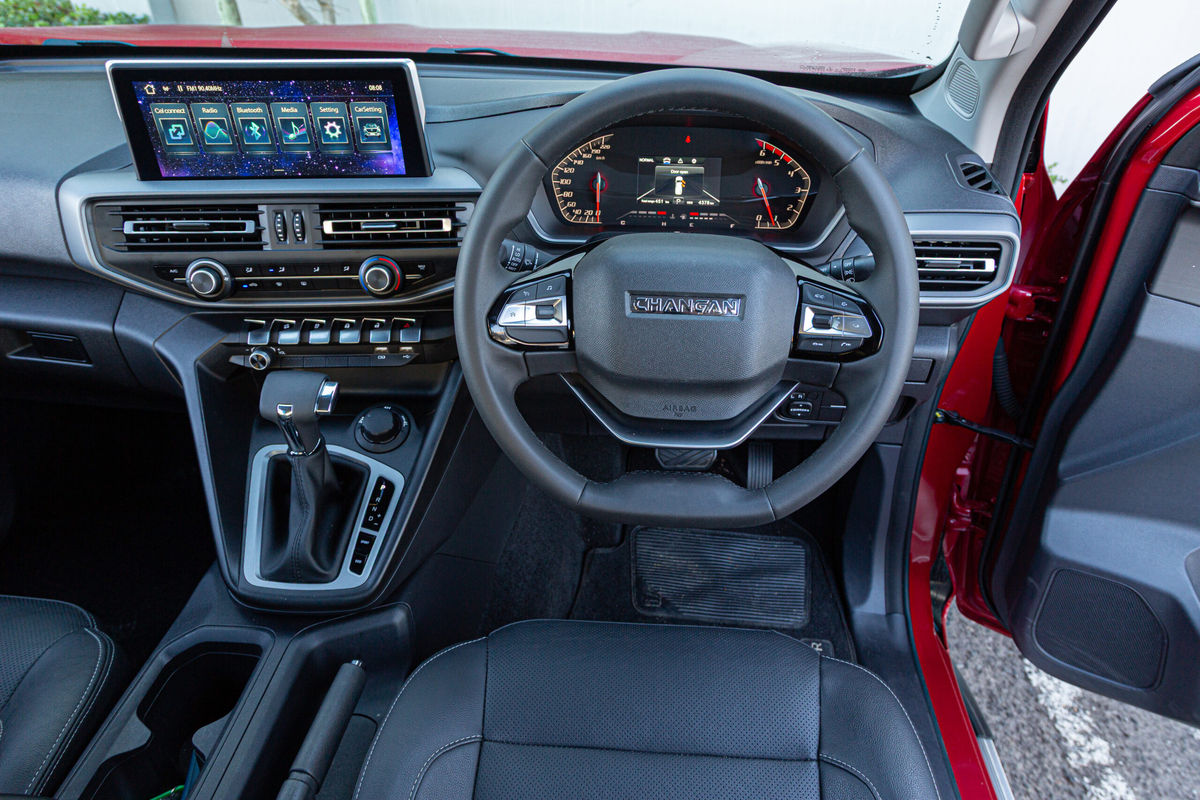
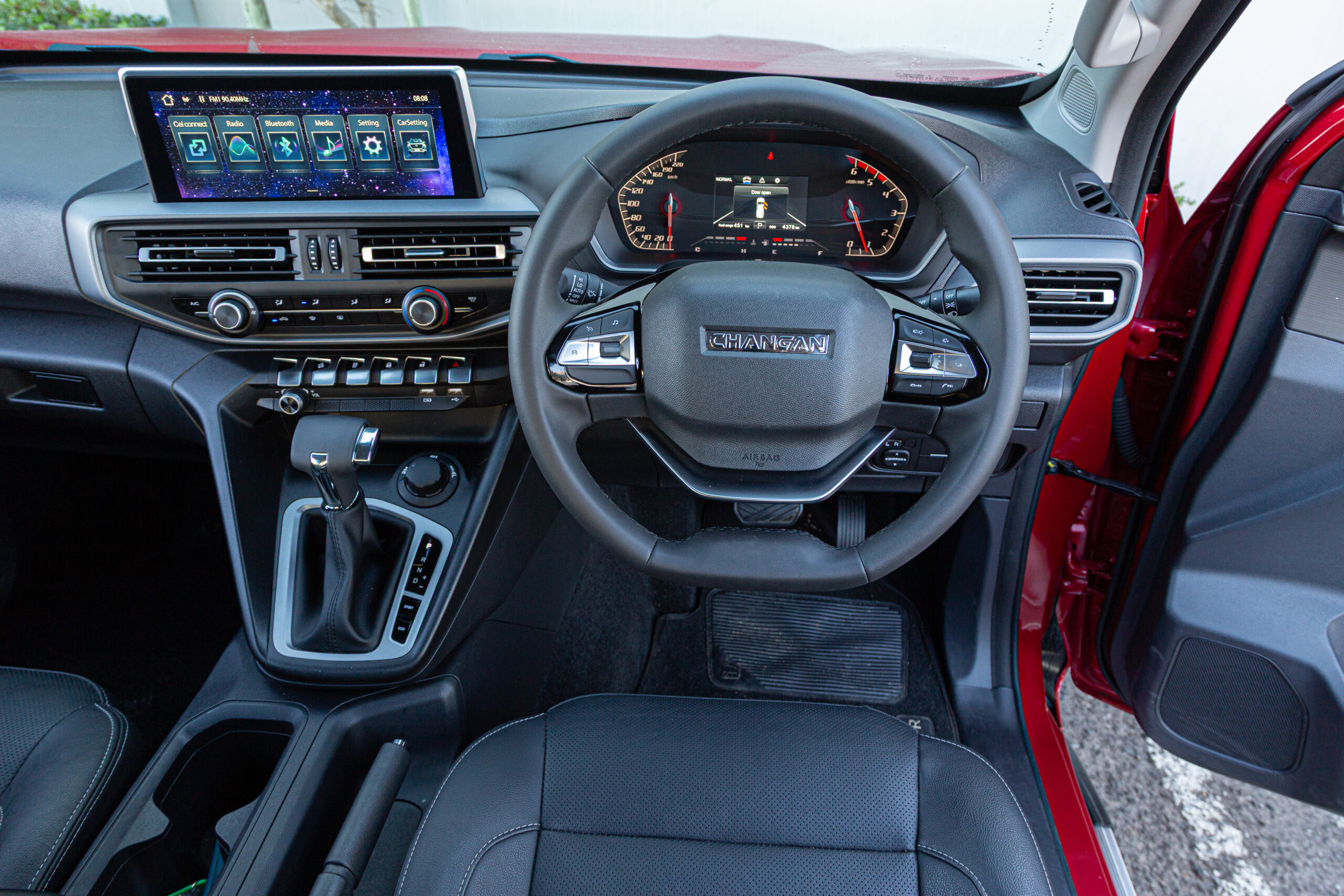
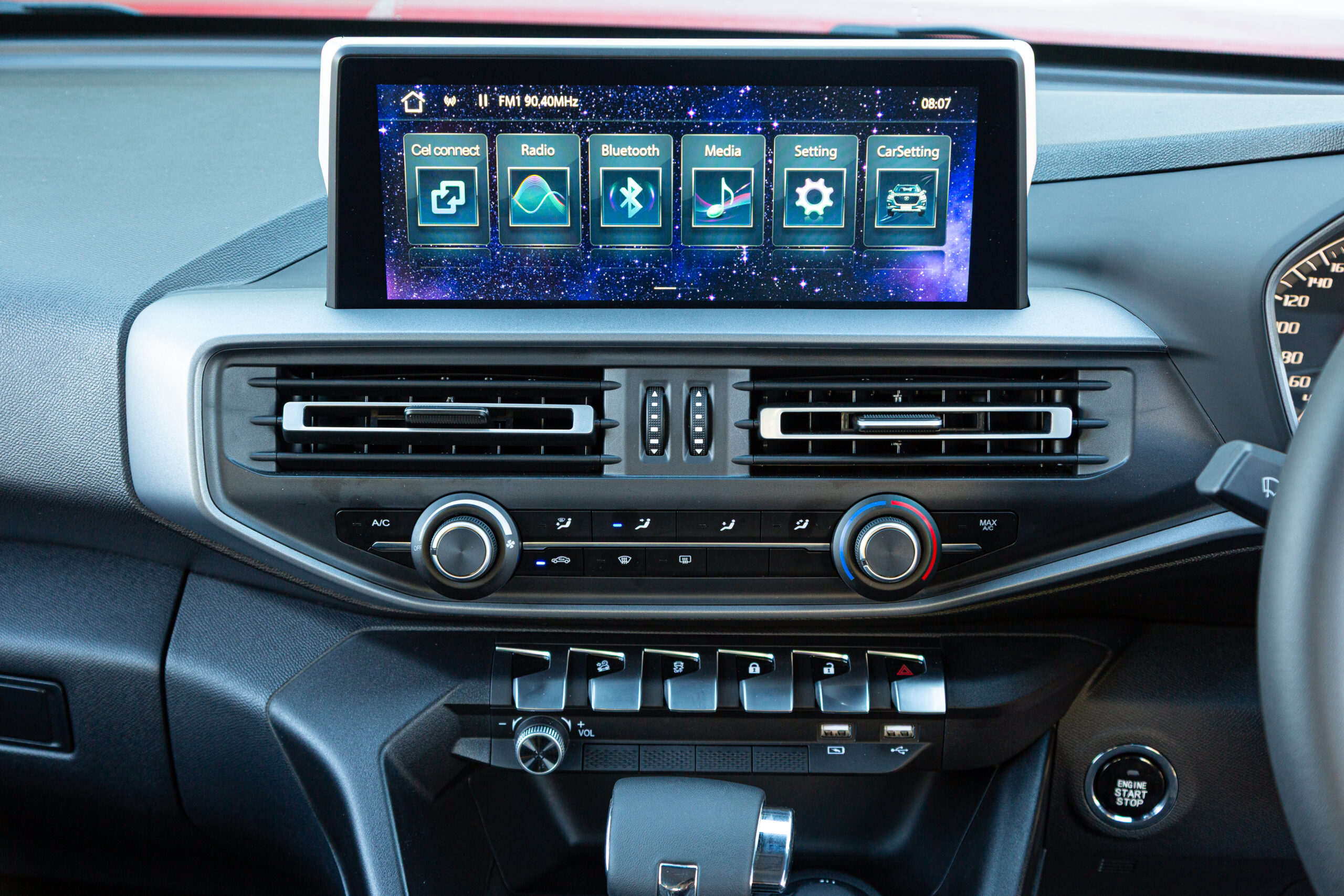
Step inside (via keyless entry) and you’re greeted by a cabin that is, in many respects, the Hunter’s strongest suit. The spec list for this CE grade is genuinely impressive at the price: electrically adjustable front seats, leather upholstery, cruise control, a 10-inch touchscreen infotainment system (plus 2 USB-A ports), a powerful air-conditioning system, a rear-view camera, rear parking sensors and six airbags. For the rear passengers, the inclusion of ventilation outlets, a USB charging port as well as swivelling hooks on the back of both front seats is a bonus.
Like the exterior, the interior bears a close resemblance to the Landtrek’s.
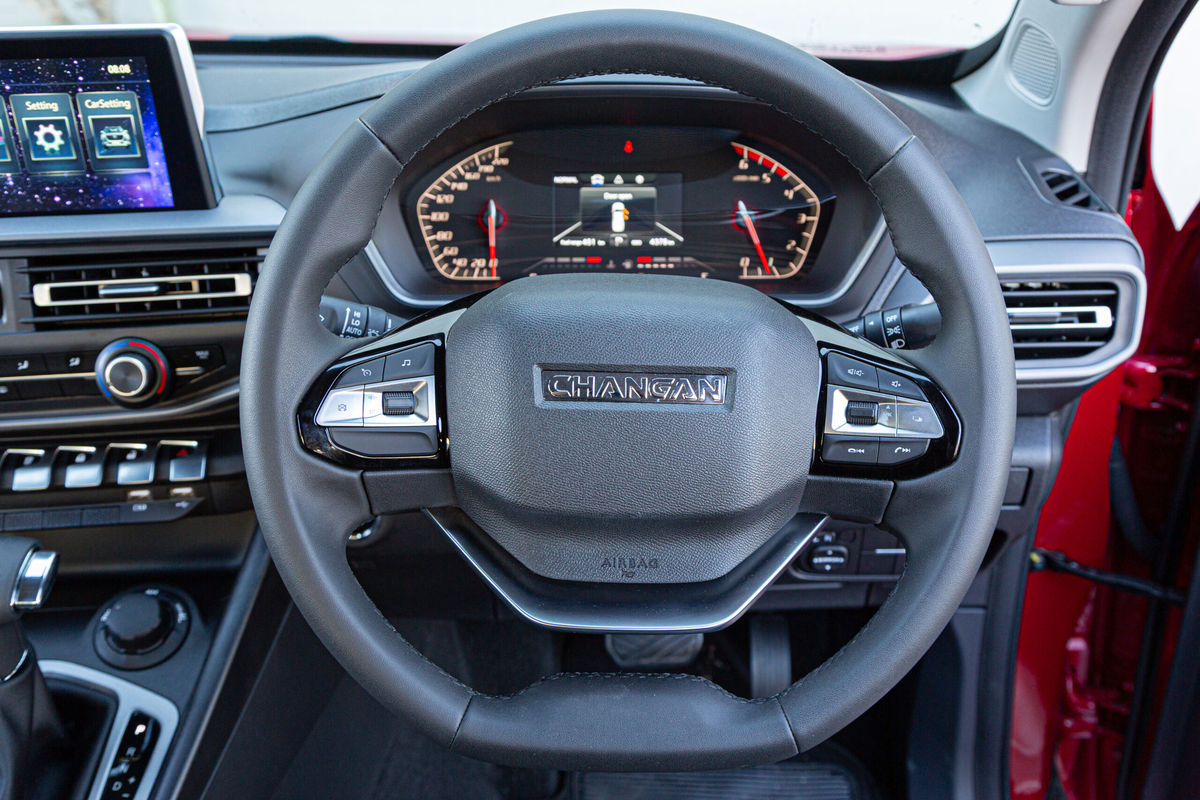
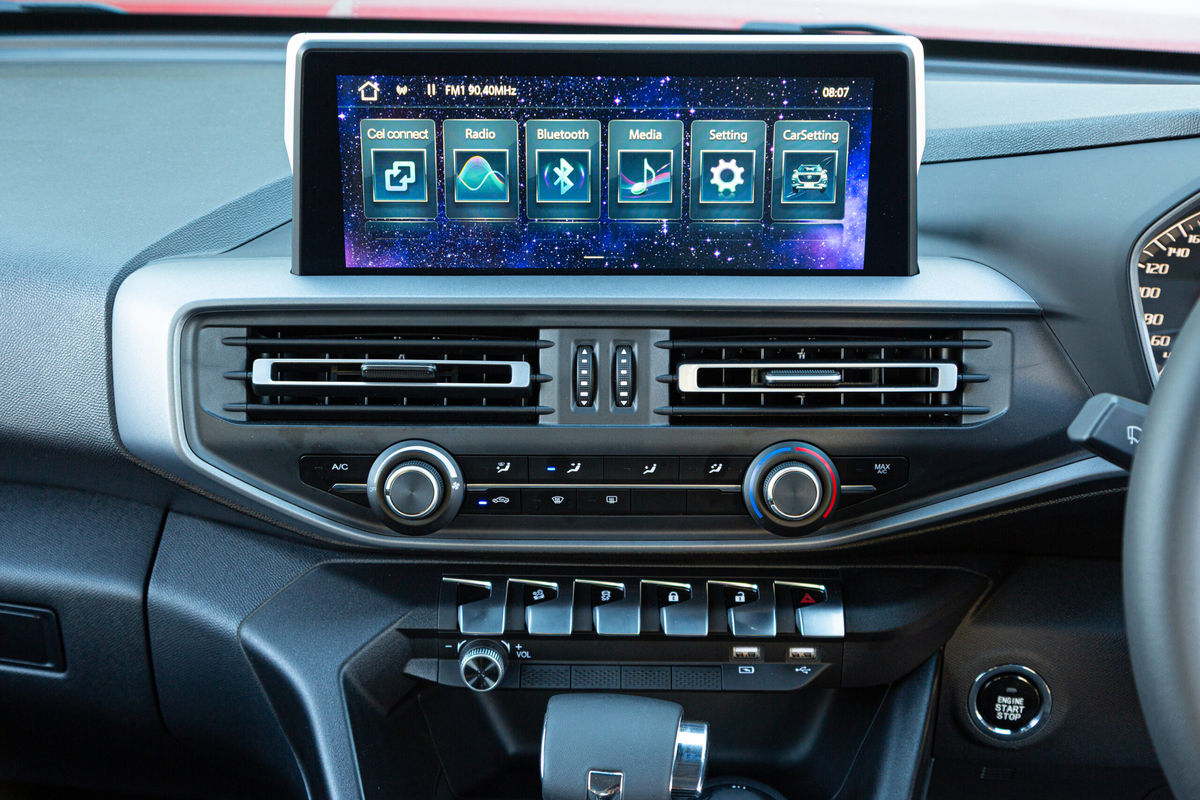
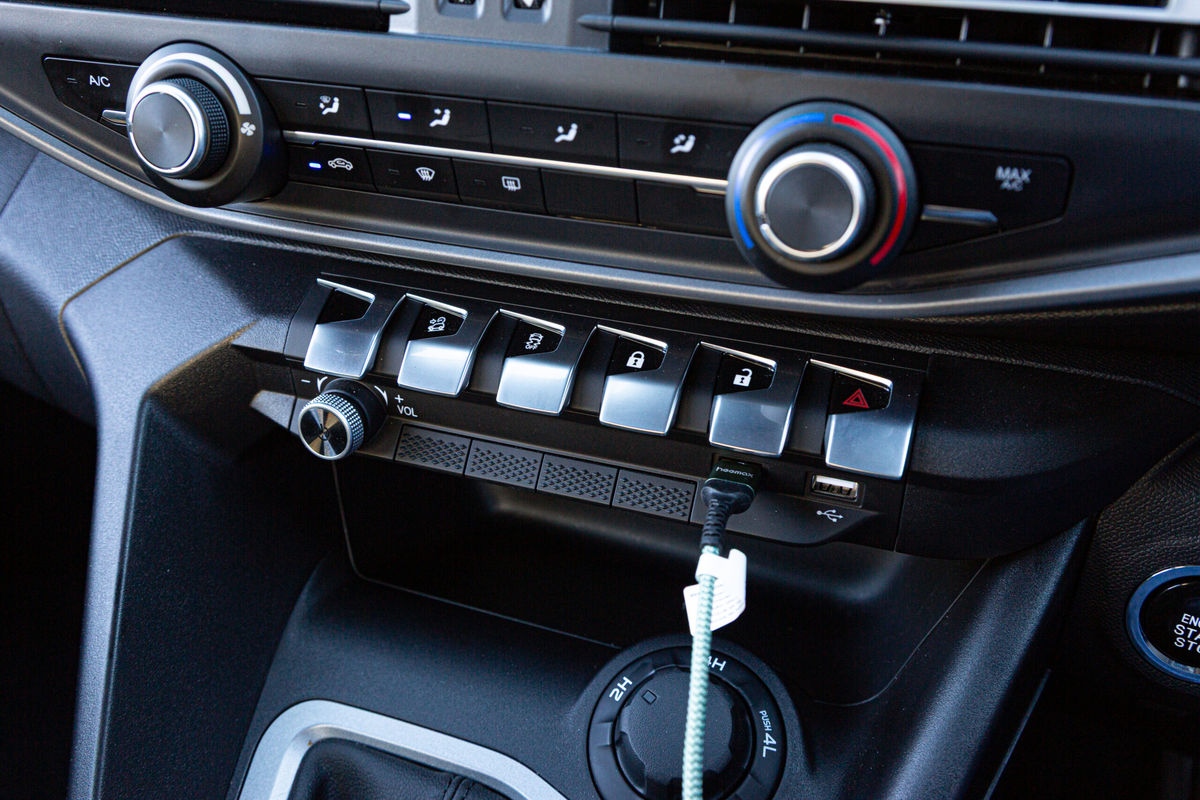
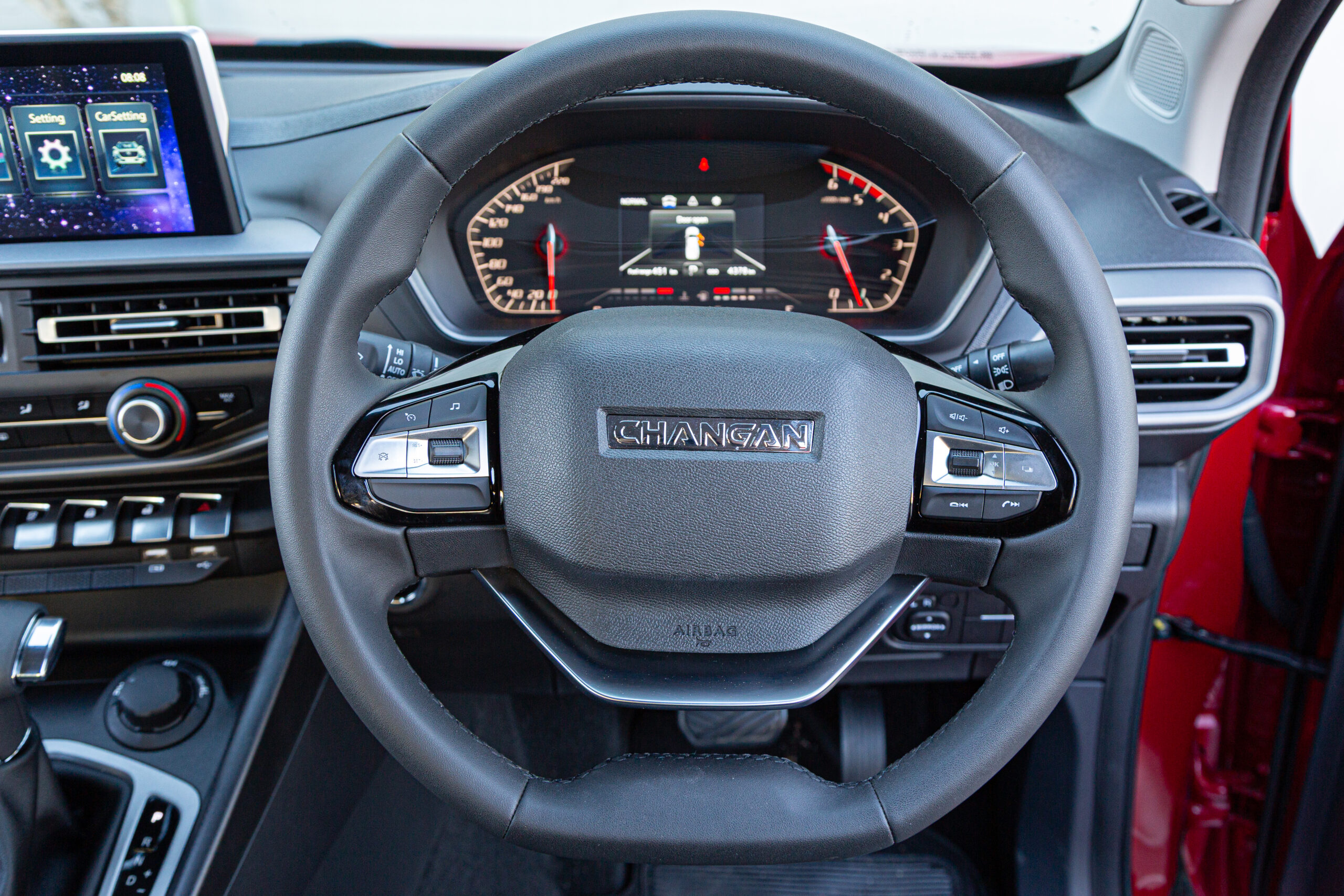
The cabin layout is sensible and ergonomically sound. Physical buttons and dials are retained for key functions – a feature that is becoming increasingly rare – and the dashboard design, while hardly setting new benchmarks for interior styling, is tidy and functional. The design and appearance of the row of physical switches are a strong reminder that we’ve experienced this vehicle before, dressed as the Peugeot Landtrek.
Physical controls are a doddle to use on the move.
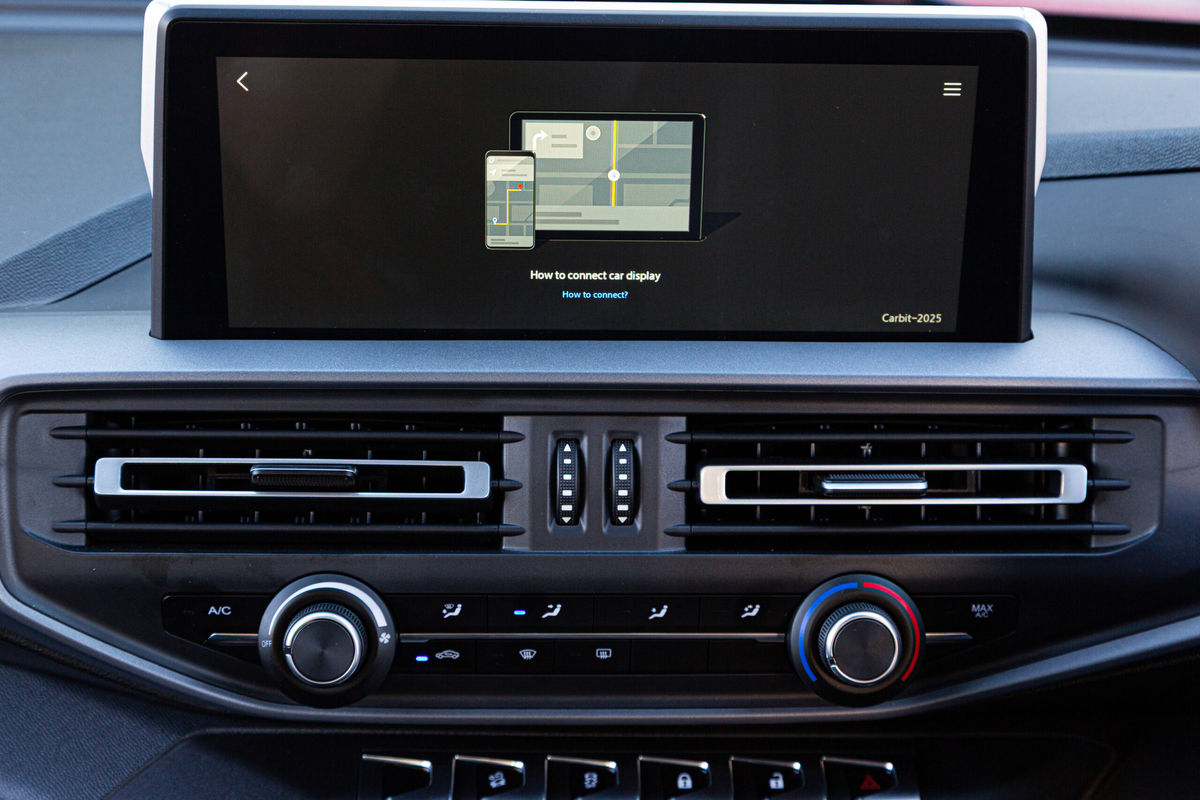
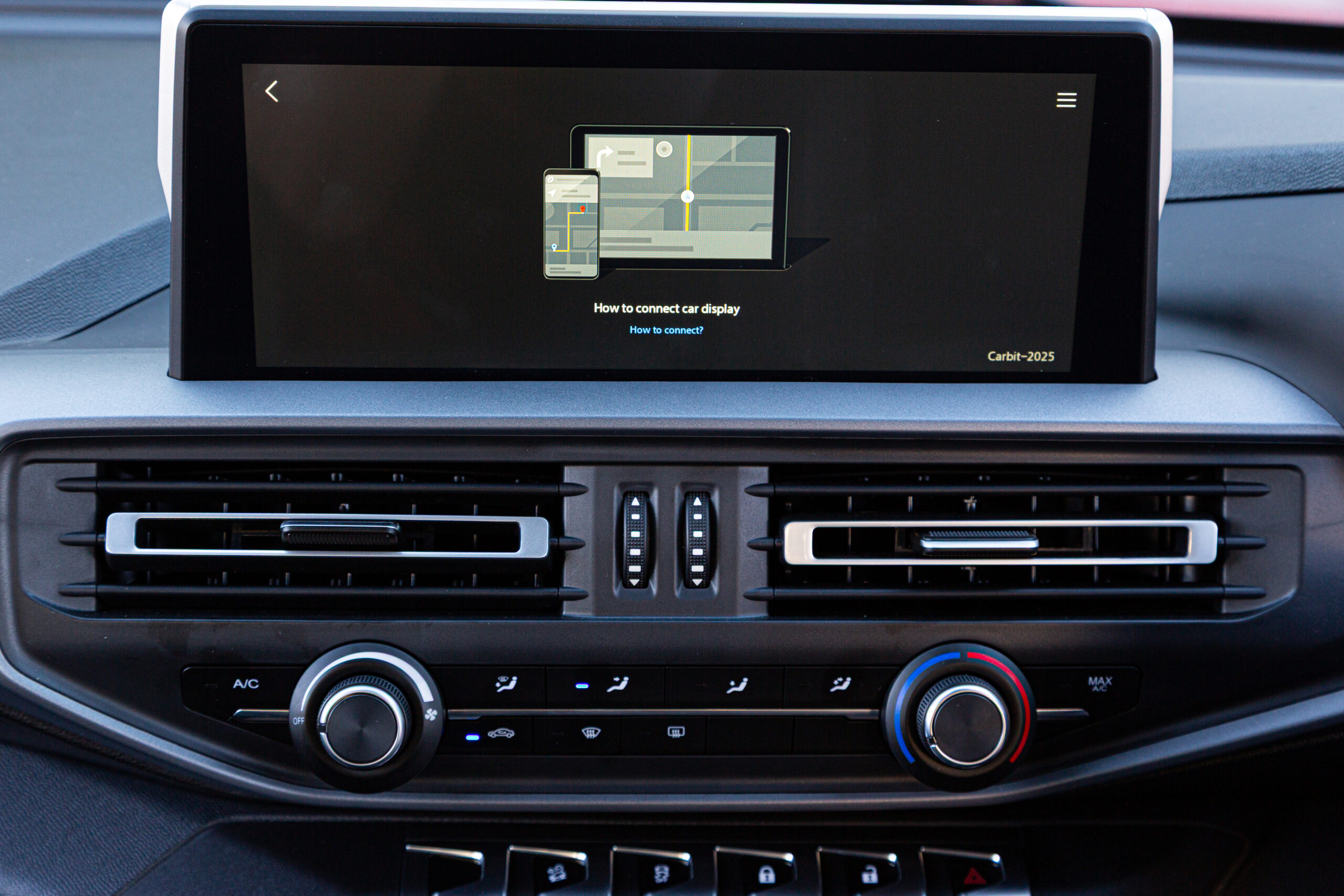
There is, however, one notable omission that might be a dealbreaker for some: the Hunter does not offer Apple CarPlay or Android Auto connectivity. In 2025, with smartphone integration now effectively standard across the competitive set, this is a significant oversight. It means that for navigation, music and hands-free communication, buyers are reliant solely on the built-in system and phone mirroring (or a clumsy 3rd-party app).
The lack of native smartphone mirroring is a scarcely believable oversight in 2026…
Perceived build quality is an area where the Hunter genuinely impressed during our test period. We took it onto some very rough and rocky terrain – the kind that would expose any structural weakness or poor fitment immediately – and there was not a squeak or a rattle to be found. The body feels solid and well-assembled. Whether that first impression will hold up over many years and many kilometres of South African roads remains to be seen, but the initial evidence is encouraging.
Ride, Handling & Safety
The Hunter’s ride quality is typical of the double-cab breed – acceptably comfortable when loaded but with that characteristic jiggle and initial firmness over rough surfaces when unladen. The Hunter doesn’t distinguish itself from its peers in this regard, nor does it embarrass itself. Steering is acceptably direct (if feeling a little “detached”) and the overall on-road composure is decent for a ladder-frame bakkie.
Recognise this steering wheel? You my have seen it on a number of Stellantis models.
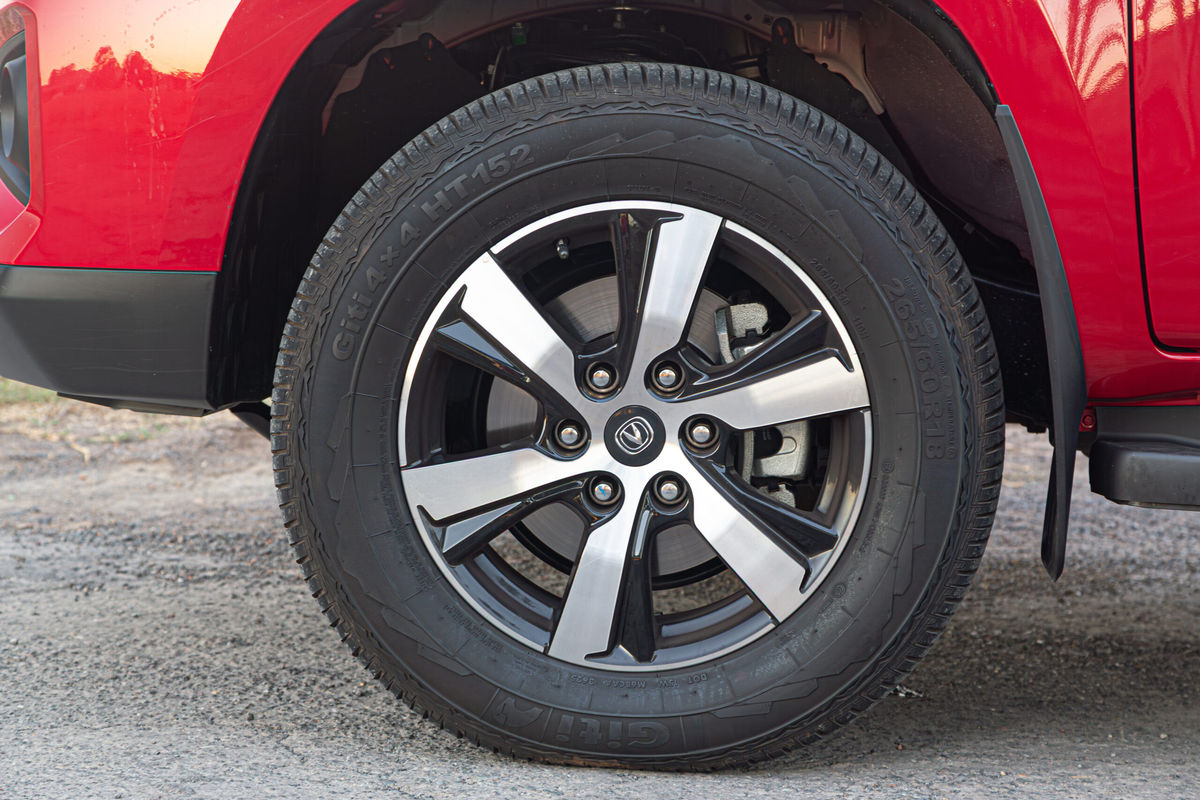
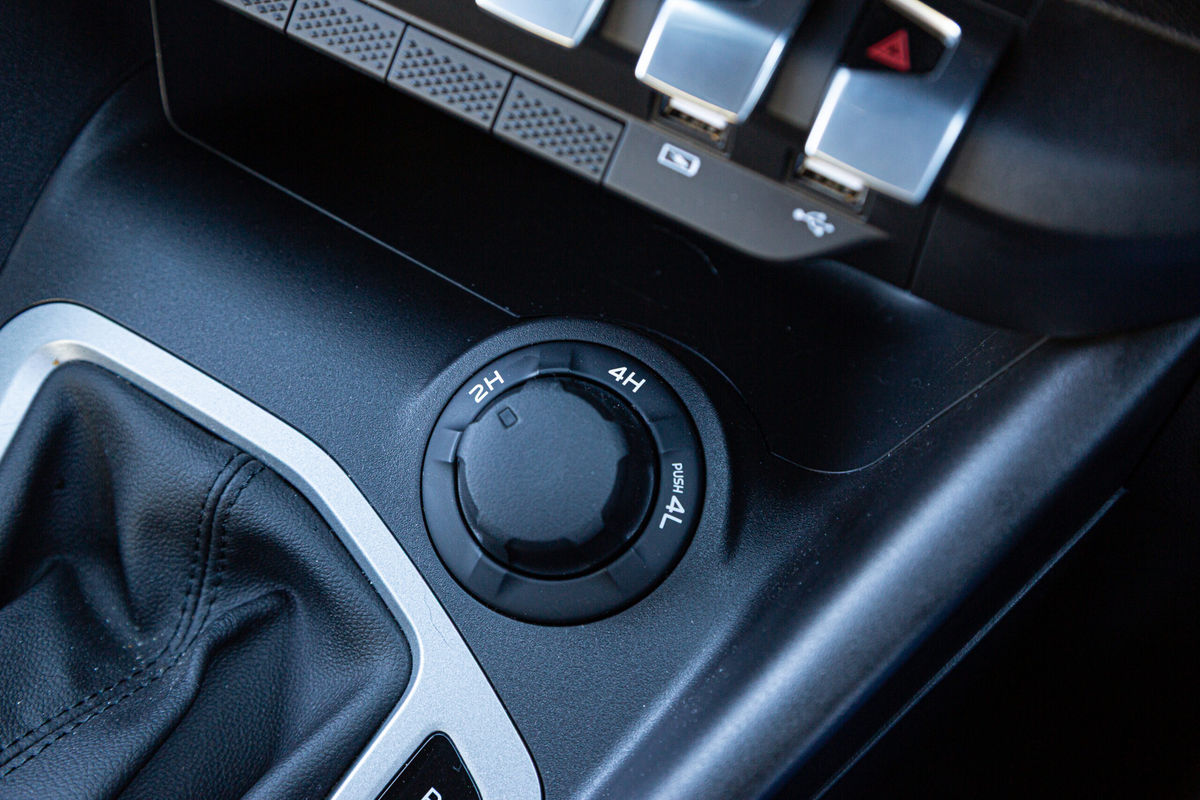
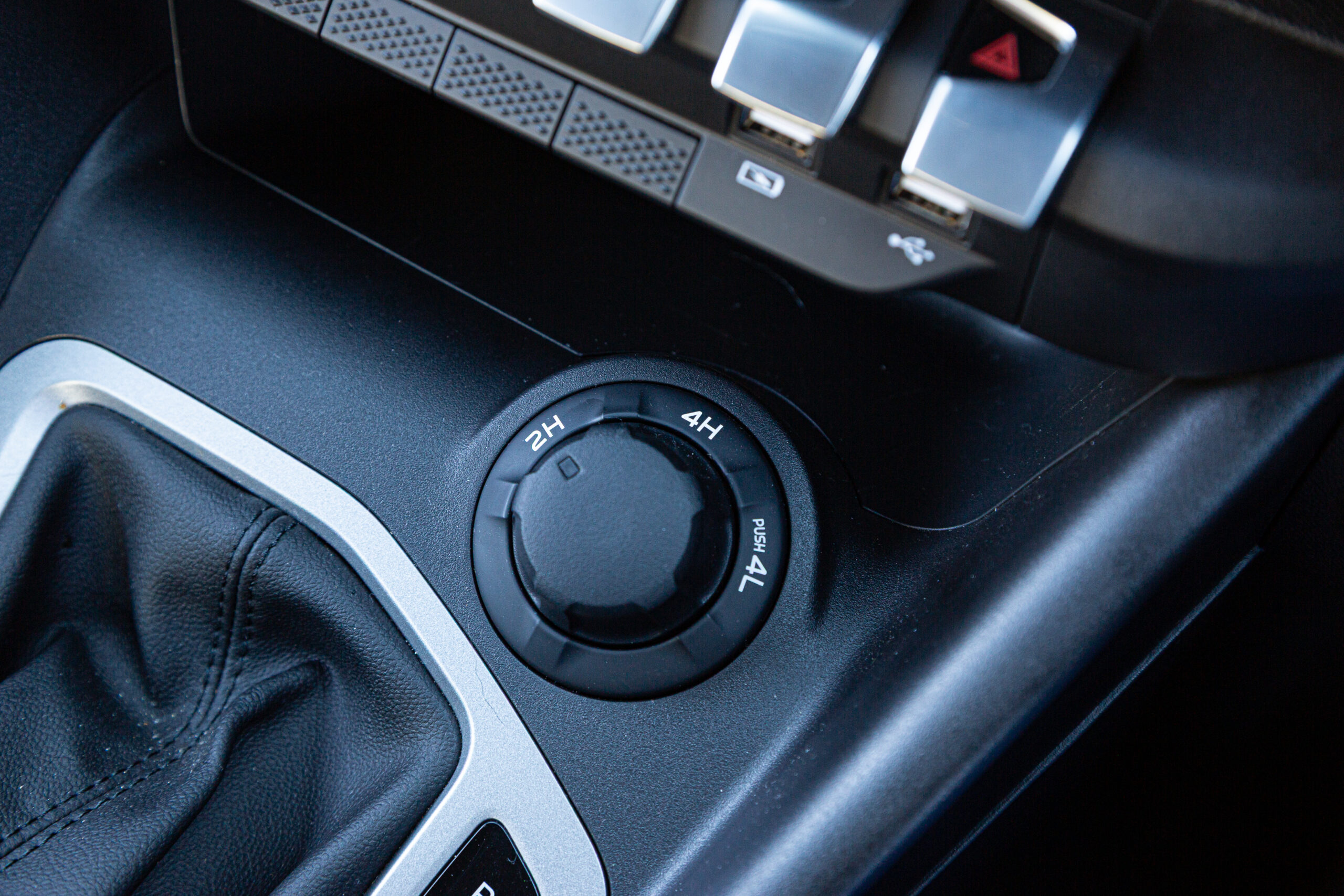
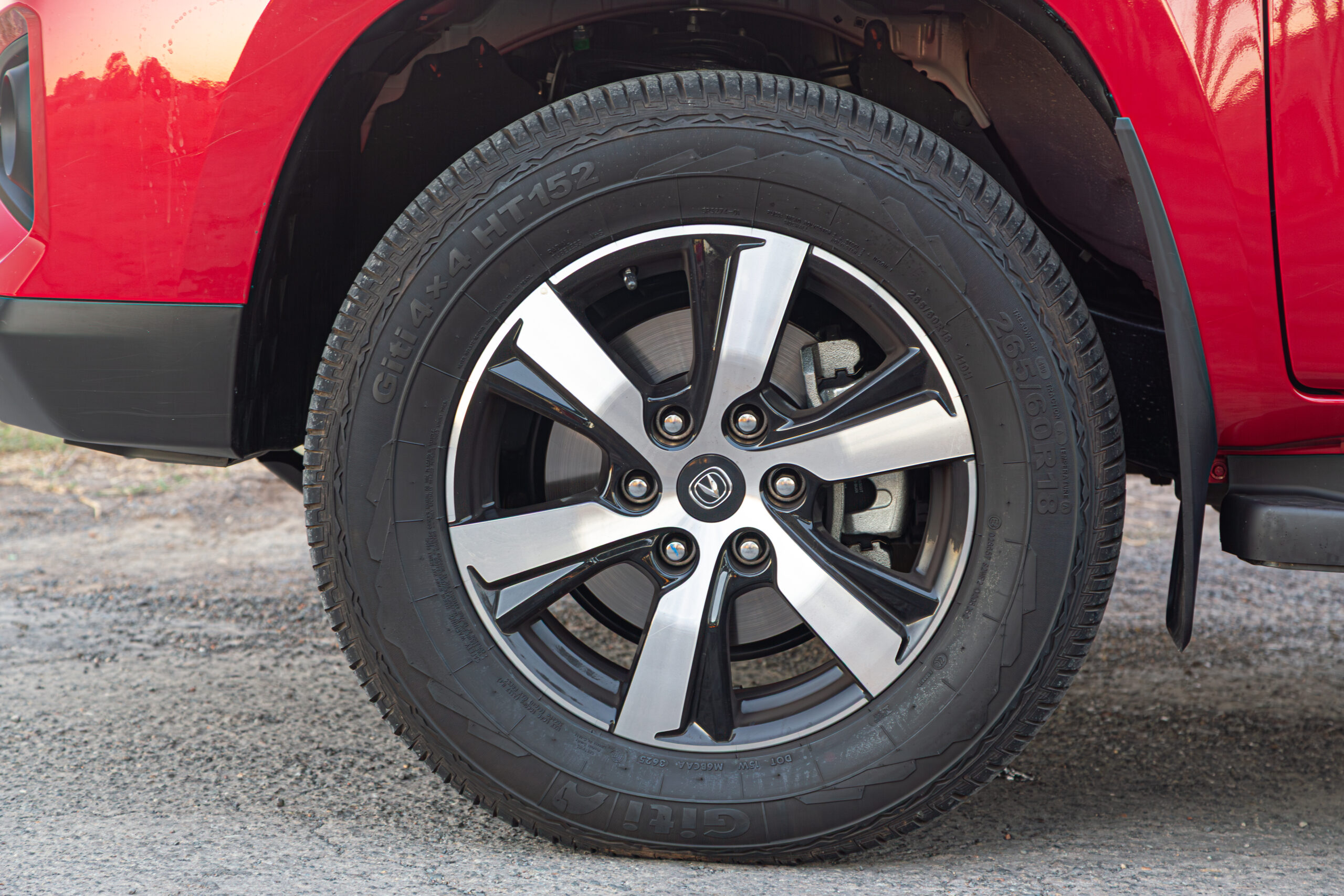
Where the Hunter earns its lifestyle vehicle credentials is when the tar runs out. On rocky and uneven terrain, the 4×4 system – switchable between 2-wheel and 4-wheel drive, with a low-range option and rear diff lock available – proved capable and confidence-inspiring. Ground clearance (226 mm) is sufficient for most off-road scenarios and the approach and departure angles are acceptable for the segment. Hill-descent control and hill-start assist are also part of the package. The Citi 4×4 265/60 R18 tyres are impressive across varying surfaces.
The Hunter offers low-range, which it uses to great effect off-road.
As mentioned previously in this review, the Hunter is equipped with 6 airbags, and the rest of the safety package includes ABS with EBD, electronic stability control, tyre-pressure monitoring and Isofix child seat anchors.
Performance & Efficiency
Under the bonnet sits what Changan describes as a 2.0-litre turbodiesel, but it’s the same 1.9-litre, 4-cylinder oil-burner shared with the Peugeot Landtrek. It produces 110 kW and 350 Nm, with peak torque available between 1 800 and 2 800 rpm. The engine is mated to a 6-speed automatic transmission.
These sensible 60-profile tyres soften the ride a touch.
In most everyday situations, the powertrain is more than adequate. There’s reasonable grunt on offer in the mid-range, and the automatic gearbox shifts unobtrusively. However, as speeds approach the national speed limit, the engine does run noticeably short of breath. Overtaking at higher speeds requires planning and commitment. This is where the Hunter reveals the limits of what is a modestly sized engine in a vehicle that is not especially light.
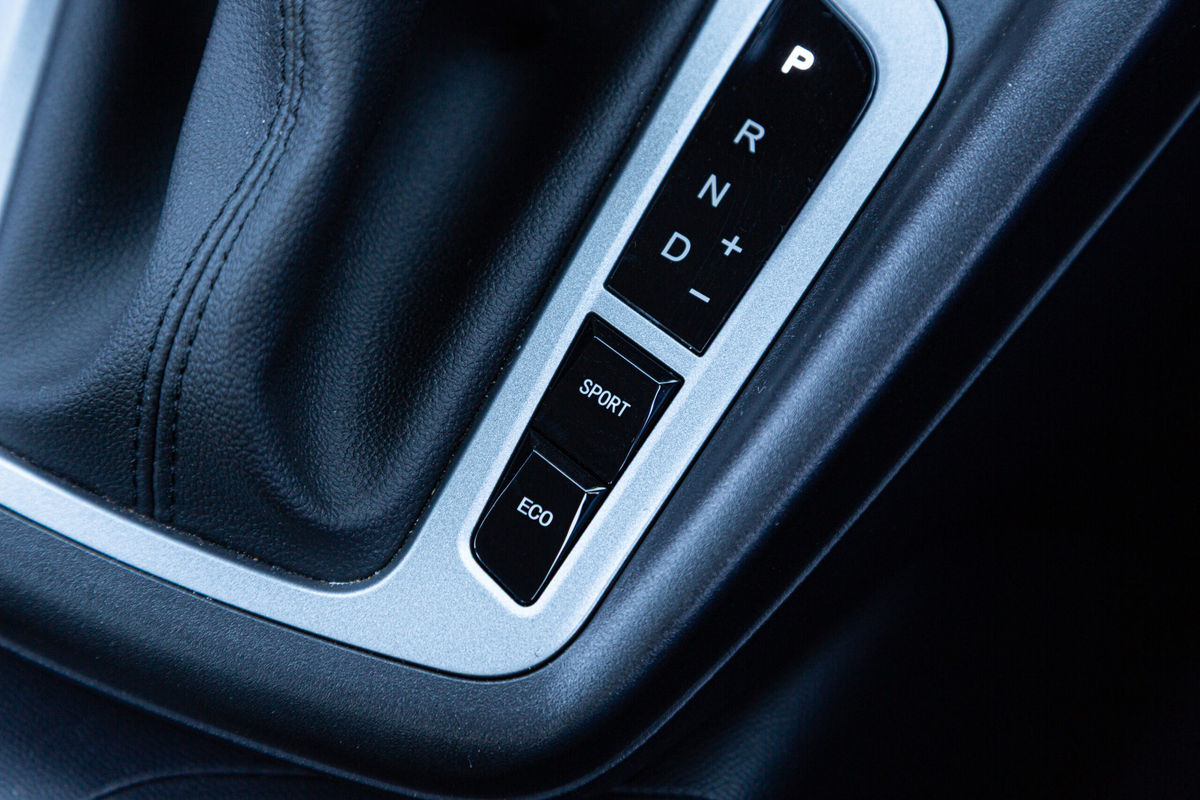
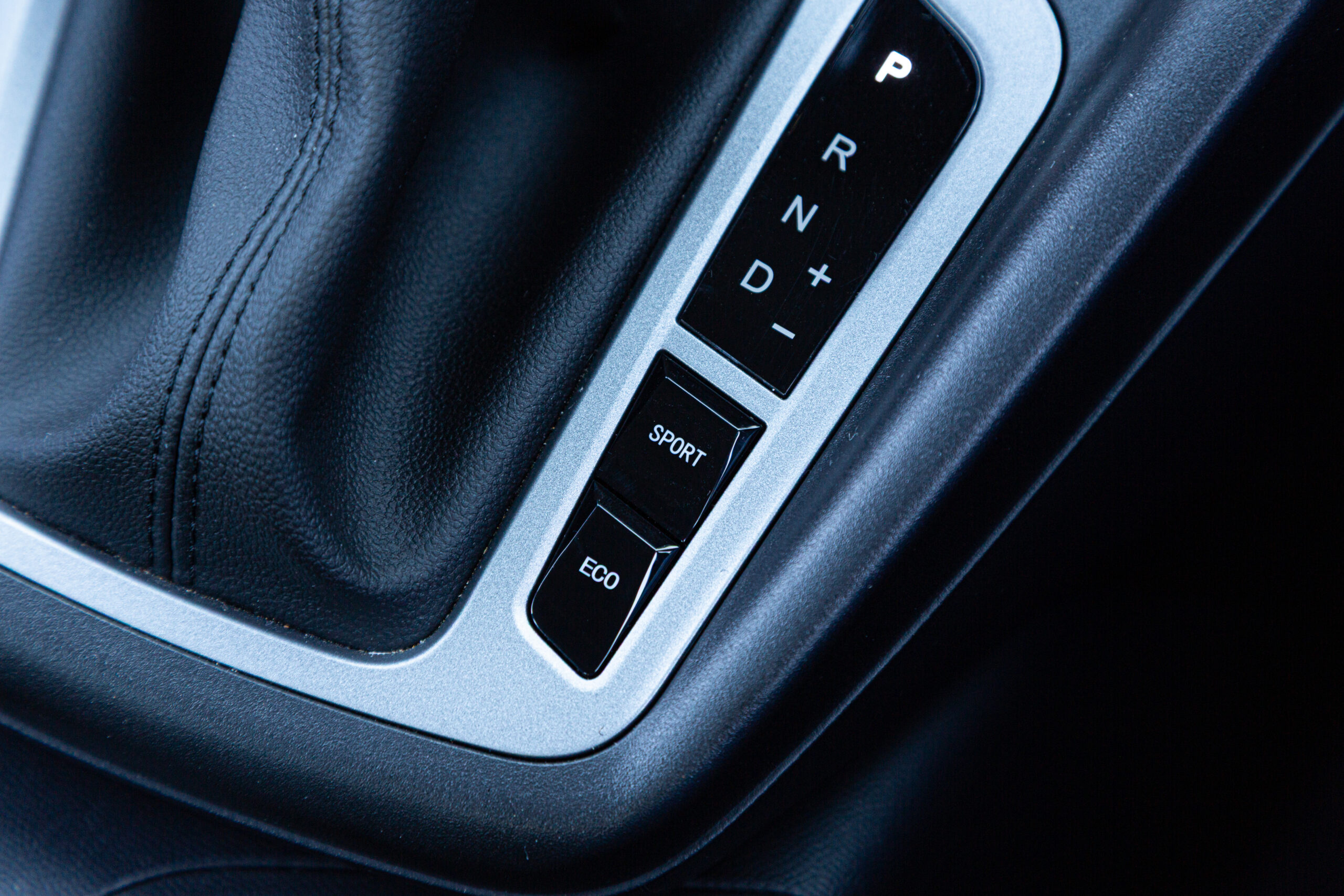
Interestingly, there are sport and eco mode switches next to the gearlever and they do have a noticeable impact on performance delivery, respectively sharpening or blunting throttle response markedly. To cancel either and go back to the normal mode requires pressing the same button again.
These are probably superfluous in a bakkie, but their effect is immediately obvious.
Changan has not released claimed acceleration times but our testing revealed a middling 0-100 kph time of 13.37 seconds. This will probably not be of much concern to the typical buyer, but the relatively low tow rating (braked) of 2 000 kg might be. That said, the significantly more expensive 1.9-litre Isuzu D-Max’s tow rating is only 100 kg more. The problem is the more powerful GWM P300 2.4TD that costs only R10 000 more has a rating of 3 500 kg.
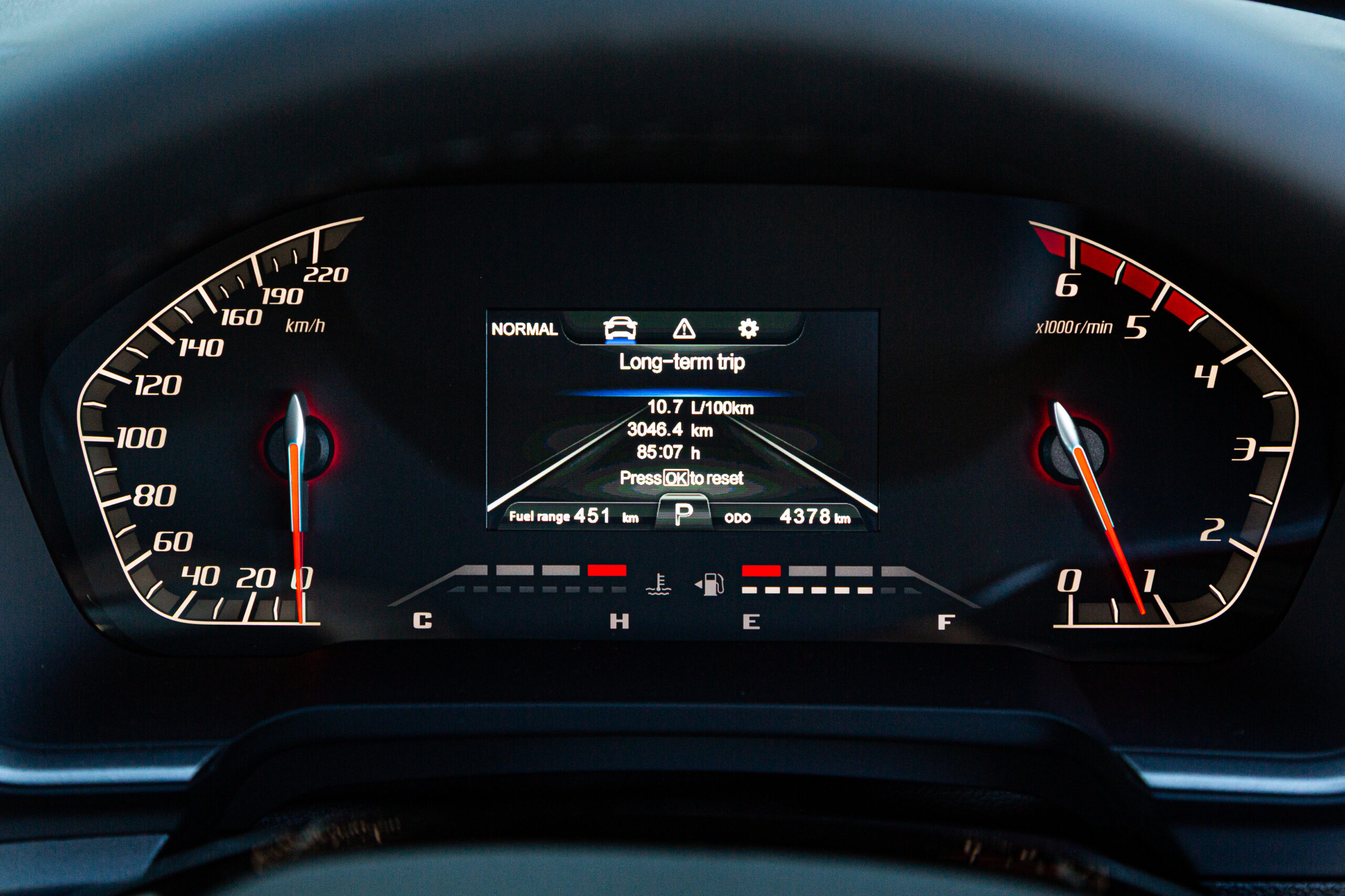
Fuel consumption is higher than Changan’s claim, but in line with competitors.
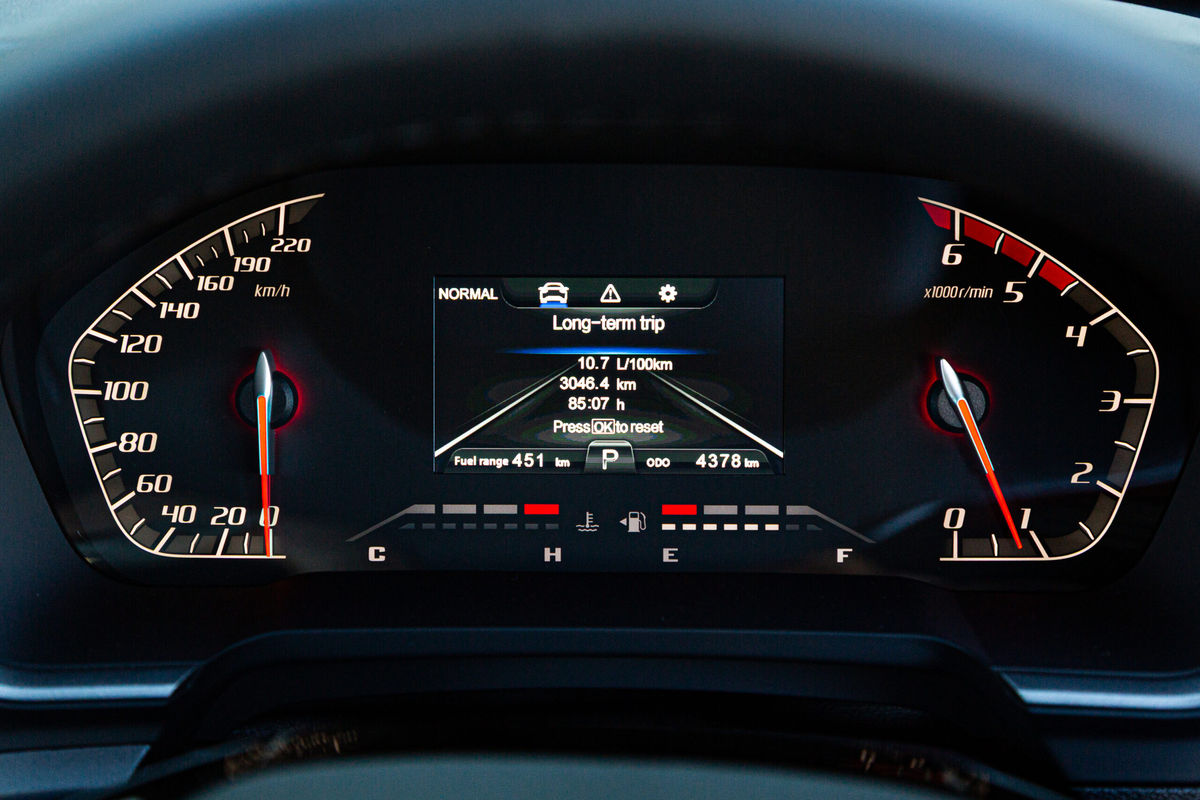
Fuel consumption in mixed driving came in at approximately 10.5 L/100 km somewhat higher than Changan’s claimed 9.1 L/100 km, but within the range of what one would expect from real-world bakkie use. The 80-litre tank offers a theoretical range of around 800 km on a full tank.
Changan Hunter 2.0TD Double-Cab 4×4 CE Price & After-sales support
This variant of the Hunter is very competitively priced at R569 900. Changan backs the Hunter with a 5-year/150 000 km warranty. It compares favourably with Isuzu’s 5-year/120 000 km warranty, though it falls short of GWM’s 7-year/200 000 km cover. The price of the Hunter CE, as tested here, also includes a 5-year/90 000 km service plan, which is optional on the manual derivative.
Long-term reliability is the question mark hanging over all newer Chinese brands in South Africa. The warranty is Changan’s best tool in addressing that concern, as is a fast-growing dealership network. It needs to be noted the Landtrek has been sold in South Africa for much longer and, as far as we are aware, there have been no major reasons for concern regarding reliability.
Verdict
It may be affordable, but it doesn’t feel cheap.
The Changan Hunter does not feel like a cheap vehicle. That is, in itself, a notable achievement for a brand launching at this price point in this segment. If the perception of quality and solidity that characterised our time with the Hunter is backed by real-world durability, Changan will have produced something genuinely worth considering.
As things stand, the Hunter makes most sense if your primary requirement is a new automatic 4×4 double cab at the lowest possible purchase price and you can live without modern smartphone connectivity. For those who can stretch R10 000 further, the GWM P300 2.4T LS 4×4 offers more engine, a better warranty and CarPlay/Android Auto.
There are other considerations, too. The more utilitarian (but proven) Mahindra Pik-Up can be had for even less money. And there is the pre-owned market where you could get into an older offering from a more proven brand.
All that said, the Hunter feels like a solid offering at a very good price and adds further variety to an already densely populated segment. It is not one to ignore.
What is the price of the Changan Hunter diesel in South Africa?
As of April 2026, the Changan Hunter diesel range starts at R449,900 for the 2.0L 2WD Manual and reaches R569,900 for the top-spec 2.0L 4WD Automatic model.
What are the engine specifications of the Changan Hunter?
The Hunter is powered by a 2.0-litre four-cylinder turbodiesel engine that delivers 110 kW of power and 350 Nm of torque. It is available with either a 6-speed manual or a 6-speed automatic transmission.
What is the fuel consumption of the Changan Hunter diesel?
The claimed average fuel consumption for the Changan Hunter is 7.1 L/100 km for the 2WD manual variant and approximately 9.1 L/100 km for the 4WD automatic model.
What warranty and service plan is included?
The Changan Hunter comes with a 5-year/150,000 km warranty. The 4WD Automatic model includes a standard 5-year/90,000 km service plan, while this plan is optional for the 2WD Manual entry-level model.
Is the Changan Hunter related to the Peugeot Landtrek?
Yes, the Changan Hunter and the Peugeot Landtrek were co-developed as part of a joint venture. They share the same underlying chassis and platform, though they feature different exterior styling, interior finishes, and specific engine tuning.
BYD Atto 8 (2026) Price & Specs
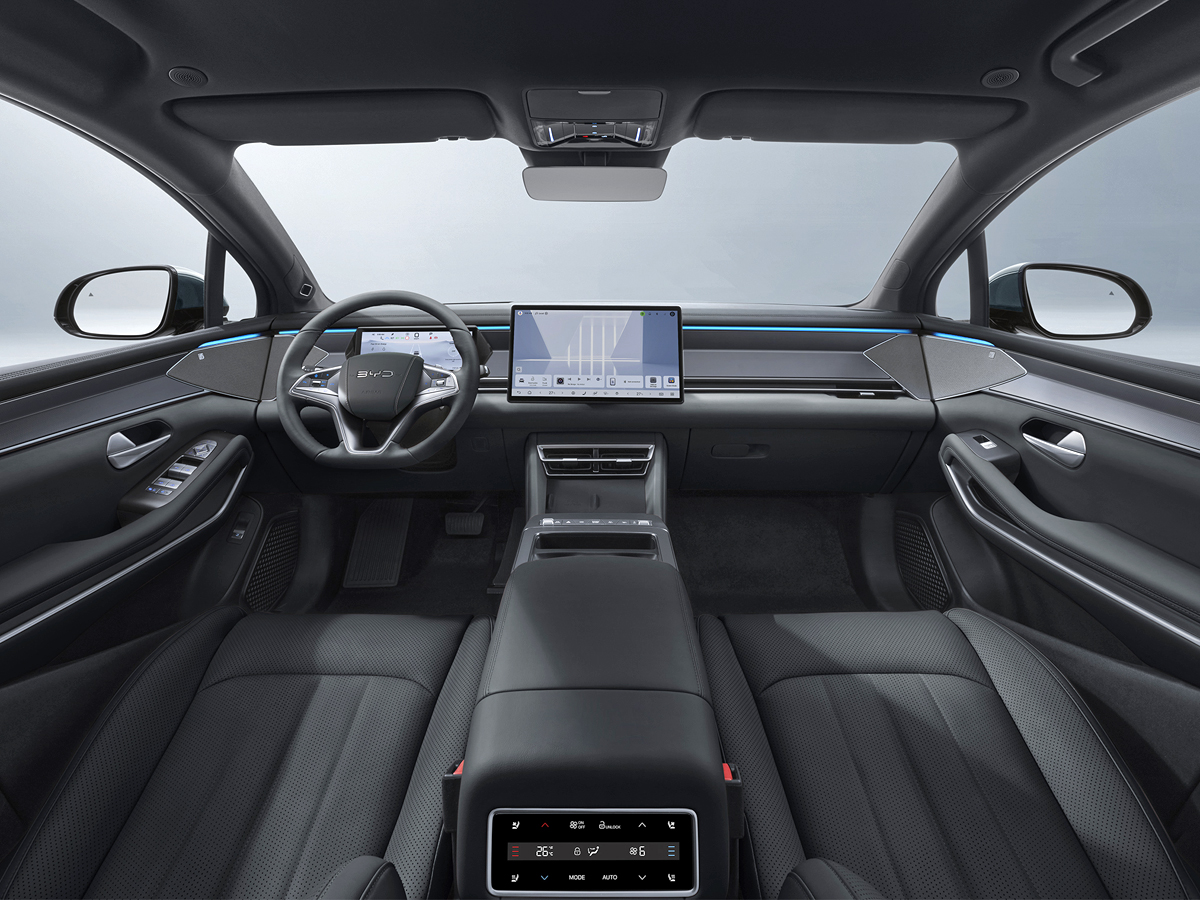
The BYD Atto 8 crossover has officially arrived in South Africa, offering 7 seats and a plug-in hybrid powertrain boasting up to 359 kW. Here’s what it costs…
BYD Auto launches Atto 8 PHEV in Mzansi
Pair of 7-seater variants available at launch
Performance AWD flagship makes 359 kW
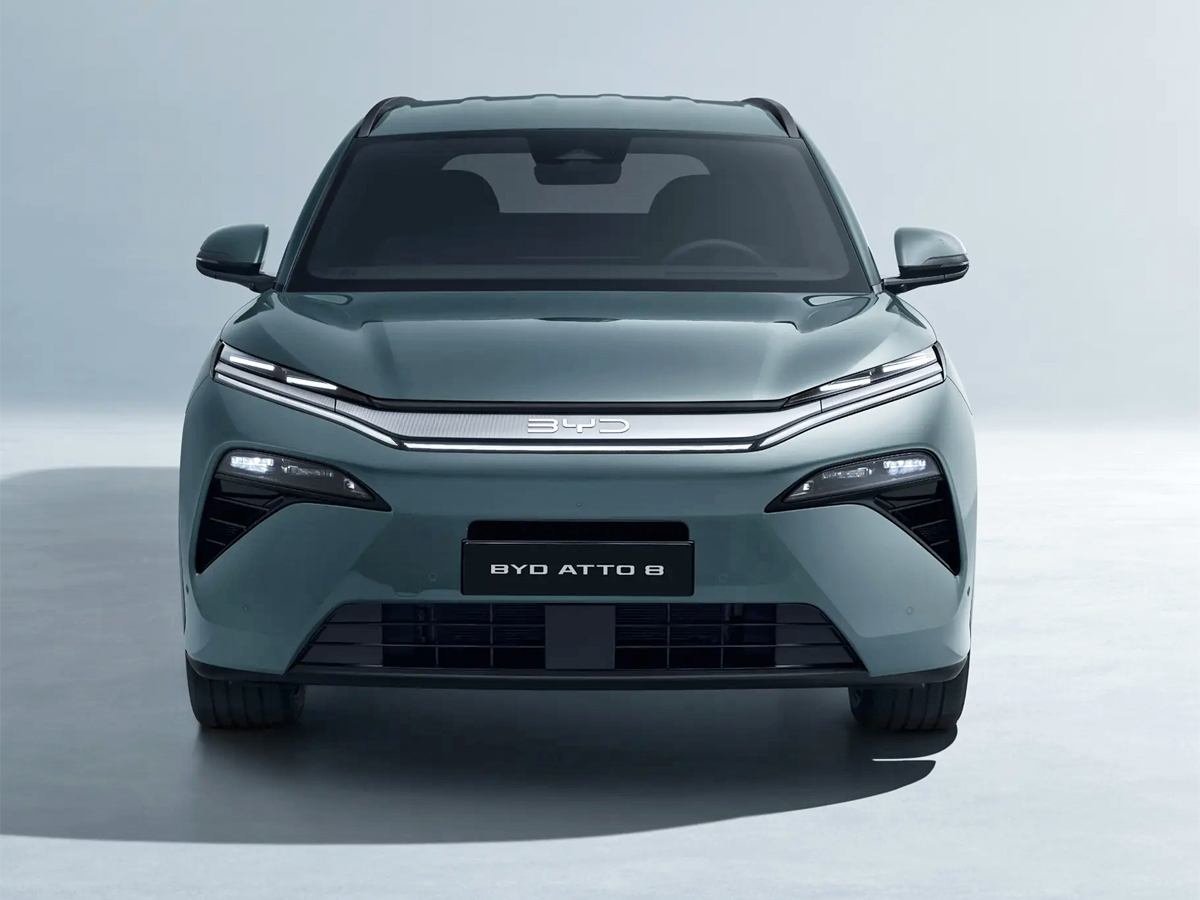
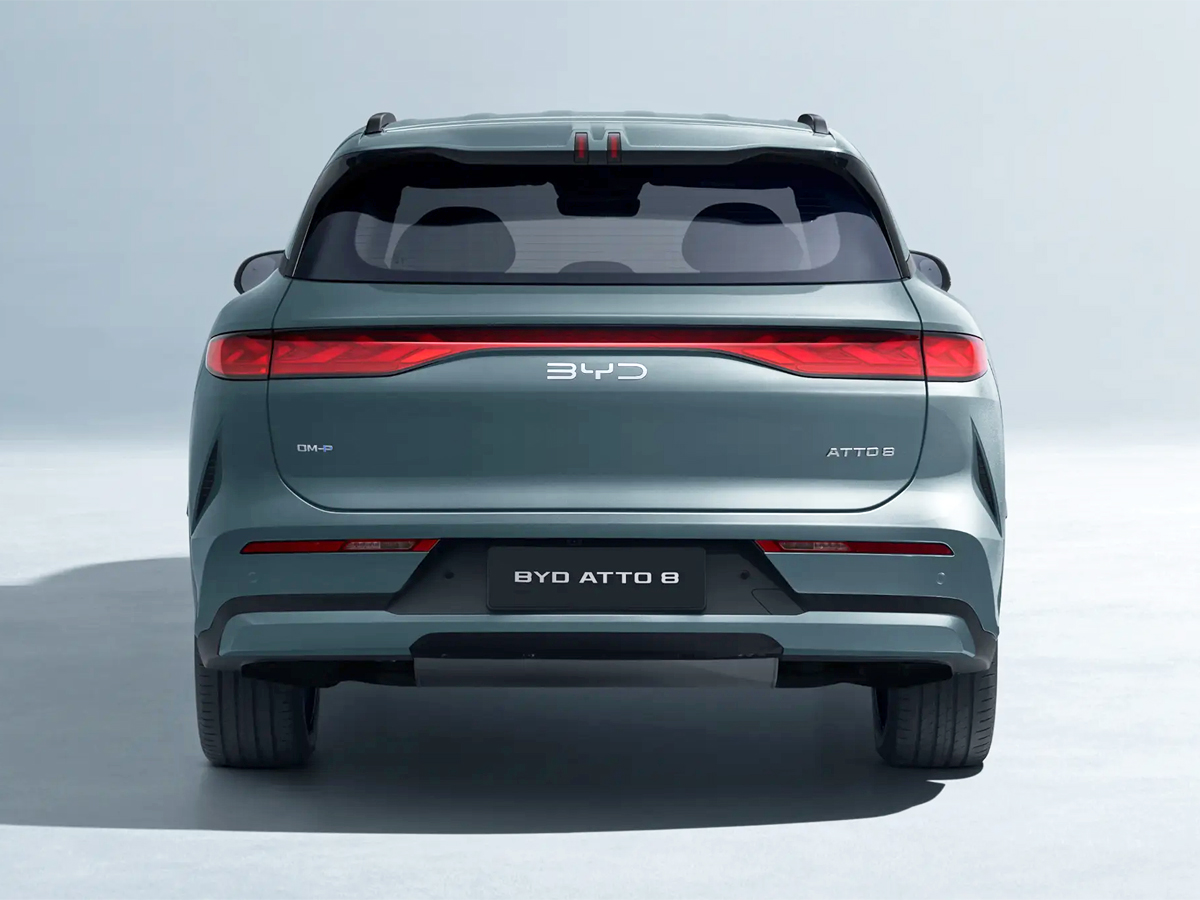
South Africa’s rapidly growing plug-in hybrid electric vehicle (PHEV) segment has just gained a fresh entrant in the form of the new BYD Atto 8, a dual-powered crossover that features seating for 7 occupants.
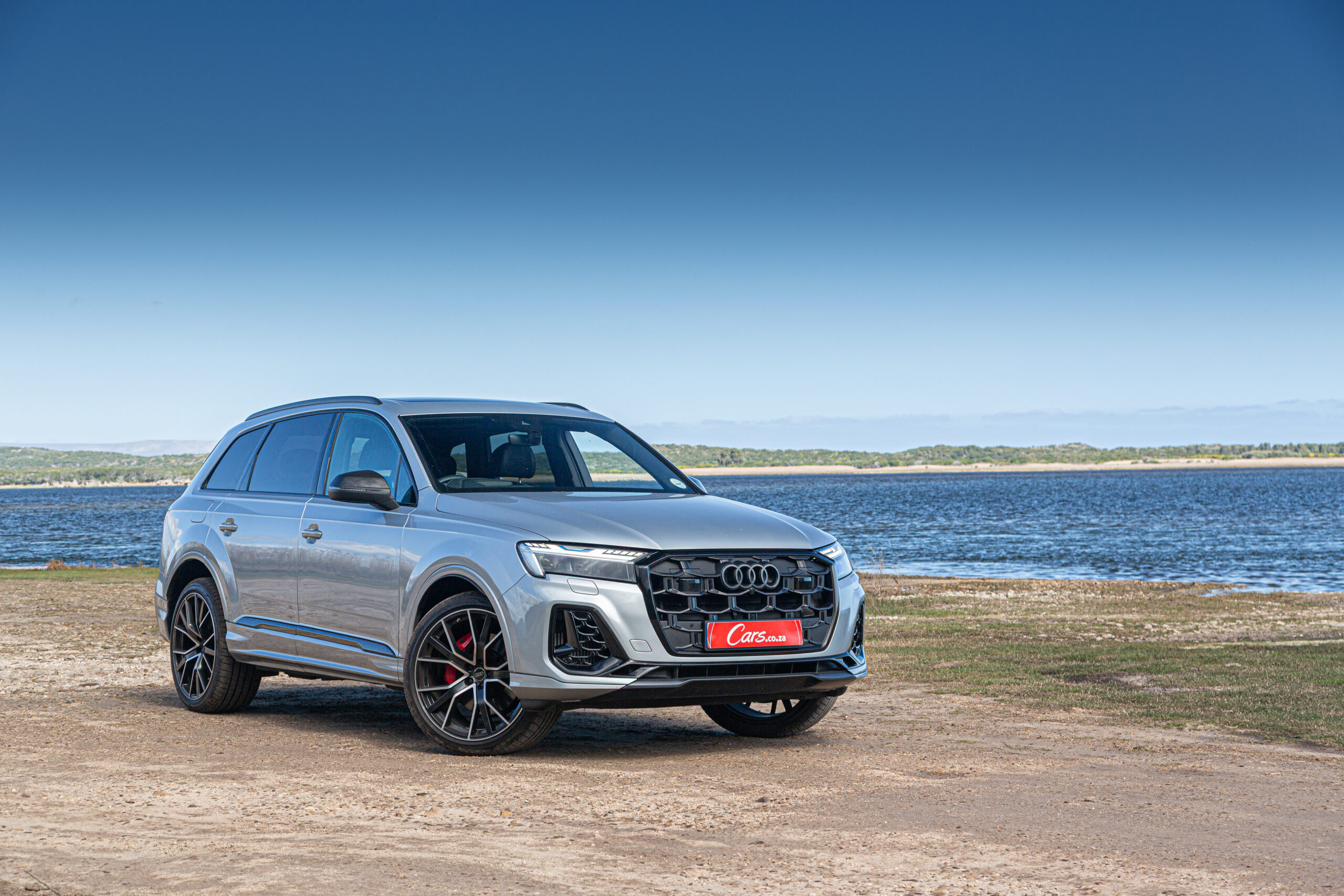
Known as the “Tang L” in its domestic market of China and as the “Sealion 8” in some other countries, the new Atto 8 measures 5 040 mm from front to back. For reference, that means it’s a little lengthier than the fully electric Volvo EX90 (5 037 mm) and almost as long as the Audi Q7 (5 072 mm).
The newcomer from the Chinese new-energy vehicle (NEV) brand is available locally in 2 guises: Atto 8 Premium and the Atto 8 Performance AWD. The former is priced from R1 059 900, while the latter kicks off some R200 000 higher, at R1 259 900.
In each case, the PHEV powertrain is built around a 110 kW/220 Nm turbocharged 1.5-litre, 4-cylinder petrol engine. The front-wheel-drive Atto 8 Premium features a single electric motor (200 kW and 315 Nm) that draws its urge from a 19.0 kWh battery pack, with total system power standing at 205 kW. For this variant, BYD claims an all-electric range of 75 km and a combined range of 892 km.
Meanwhile, the all-wheel-drive Atto 8 Performance adds a 2nd electric motor (sited on the rear axle and generating an additional 200 kW and 360 Nm), boosting the PHEV arrangement’s combined power output to 359 kW. This flagship derivative furthermore upgrades to a 35.6 kWh battery pack, offering a claimed 130 km of all-electric range (with the listed total coming in at 844 km). Expect a 0-100 kph dash in around 4.9 seconds.
According to BYD, standard features for the Premium grade include 20-inch alloy wheels, a 10.25-inch digital instrument cluster, a 15.6-inch touchscreen, a 10-speaker sound system, powered front seats (with heating and ventilation), wireless smartphone charging, 3-zone climate control, a panoramic sunroof and a raft of advanced driver-assistance system (ADAS) functions.
The Performance trim level adds items like 21-inch alloys, adaptive dampers, a head-up display, 8-way (rather than 6-way) electric adjustment for the driver’s seat, massage functions (for both the 1st and 2nd rows), heating and ventilation for the 2nd row, a 21-speaker audio system and ambient cabin lighting.
BYD says the 7-seater Atto 8 has a luggage capacity of 270 litres with the 3rd row of 2 seats in place. That figure ostensibly improves to 960 litres with the final row folded down, before ballooning to 1 960 litres with the 2nd row dropped flat, too.
What does the new BYD Atto 8 cost in SA?
DERIVATIVE
PRICE
BYD Atto 8 Premium
R1 059 900
BYD Atto 8 Performance AWD
R1 259 900
The prices above include a 5-year/100 000 km vehicle warranty, a 5-year/100 000 km powertrain warranty, an 8-year/200 000 km battery warranty and a 5-year/100 000 km maintenance plan.
Frequently Asked Questions (FAQ) About the BYD Atto 8 PHEV
Q: How does the BYD Atto 8 compare in size to other luxury 7-seater SUVs?
A: Measuring 5 040 mm in length, the Atto 8 is a substantial vehicle, placing it in the same size category as the Audi Q7 and Volvo XC90. This generous footprint allows for a full 7-seat configuration while still providing 270 litres of luggage space with all three rows in use (expanding to a massive 1 960 litres when the seats are folded flat).
Q: What is the real-world benefit of the Atto 8 Performance AWD’s dual-motor setup?
A: Beyond the security of all-wheel drive, the Performance AWD variant offers a massive jump in power to 359 kW, enabling it to hit 100 kph in just 4.9 seconds. It also features a significantly larger 35.6 kWh battery, which almost doubles the pure-electric driving range to 130 km (compared to the 75 km offered by the Premium variant).
Q: What aftersales benefits are included with the Atto 8 in South Africa?
A: BYD includes a comprehensive ownership package to support its R1-million-plus flagship. This includes a 5-year/100 000 km maintenance plan and vehicle warranty, plus an 8-year/200 000 km battery warranty.
Out of plan, out of pocket? Your guide to extending car coverage in 2026
Why do so many premium European cars hit the used market when they’re nearly 5 years old? For owners, the looming “month-61” maintenance plan expiry is a major financial cliff. If you aren’t ready to sell your car, here is your 2026 guide to service, maintenance and warranty extensions, plus 3rd-party cover.
For some people who survived the pandemic, 2021 was a good year. You still got to work from home and witness history being made as Max Verstappen spectacularly smashed Lewis Hamilton’s F1 stronghold. You might have even rewarded yourself with a new European luxury vehicle in celebration of it all.
Mercedes-Benz GLE.
Except now, 5 years later, with 100 000 km looming on the odo and no more free services on the horizon due to the maintenance plan imminently expiring, you’re praying, not celebrating. Do you sell the car; extend its factory plan; buy an aftermarket one; or just close your eyes and pay out of pocket for all future services?
Why month 61 is the most expensive month in motoring
Have you ever wondered why 5-year-old BMWs, Audis, Mercedes-Benzes and Volvos (and some Porsches) with between 90 000 and 100 000 km on the clock come up for sale with such uncanny regularity?
Audi Q7.
The answer is less about fear of a breakdown after years of abuse as much as it is fear over impending financial ruin. That’s because all of these brands’ factory maintenance plans expire after 5 years. Had you bought one in April 2021 or later in the same year, the original plan that guaranteed you care- and cost-free comprehensive maintenance for 5 years will soon be ending.
Considering the cost of imported parts, coupled to fortune-flattening labour rates at the dealer, there’s every reason for owners of such cars to be fearful of servicing them there in the future.
The good news is there are options. The bad news is none of them are perfect.
Beyond the factory warranty: Top-ups, 3rd-party providers & sinking funds
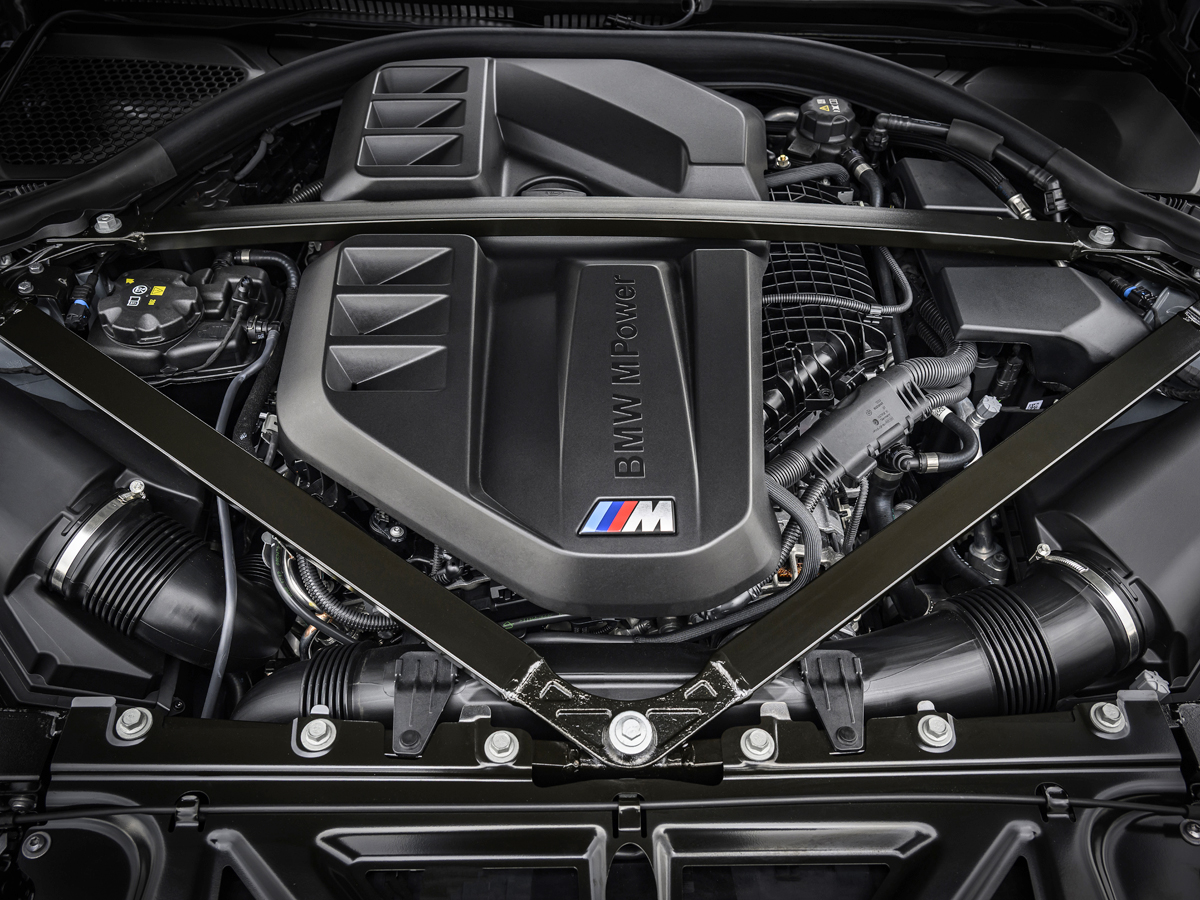
BMW engine.
Drastic option 1st: With the 5-year/100 000 km cutoff (whichever comes first) looming, you can sell or trade in your car for a new one and continue benefitting from worry-free maintenance. Perhaps it was bought under a guaranteed future value deal. The latter, though, does present its own long-term financially impacting choices.
The problem, however, is that owing to financial pressures and salaries not keeping up with vehicle price inflation, most South Africans keep their cars for longer than 5 years. For that reason alone, paying for services beyond 5 years until you sell is unavoidable.
There are 3 out-of-warranty servicing options: topping up your OEM plan; a 3rd-party warranty; or going it alone and dipping into your savings. Each has its pros and cons.
Cover type
OEM plan top-up
3rd-party warranty
Your savings
Best for
Newer cars with low mileage
Older cars or tight monthly budgets
Savers & DIY enthusiasts
Coverage
Comprehensive (wear & tear included)
Major mechanical/electrical only
Whatever needs repairing
Provider
Manufacturer
Insurers
Your own savings account
Cost impact
High upfront cost or monthly add-on
Low monthly premium (R300-R800)
Varies. Depends on vehicle age, condition, type and nature of repairs
Pros
Maximum resale value; OEM parts
Fixed monthly cost; peace of mind
Amounts are flexible
Cons
Extremely high cost
Claims limits and strict T&Cs
Saving demands discipline; potential price shocks for unforeseen repairs
Maintenance vs service plan: Understanding the gap in your 2026 coverage
If, by now, you think you’ve found an aftermarket servicing package that won’t melt your wallet, you need to stay sharp over what you’re signing for, and critically, what you’re not.
The fine print matters, likely more than in any other contract you’ll ever sign.
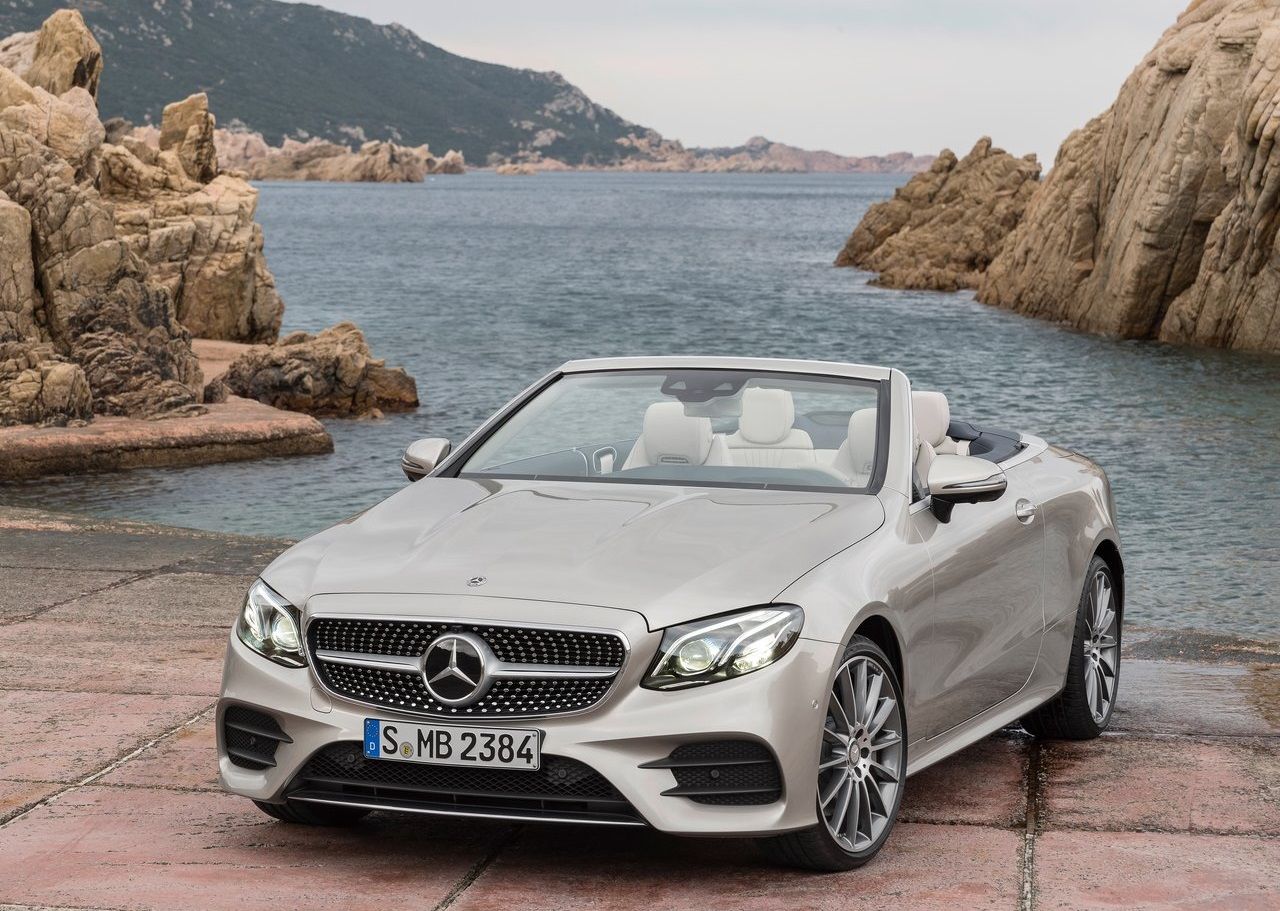
Mercedes-Benz E-Class Cabriolet.
Why? South Africans tend to use the terms “service plan” and “maintenance plan” interchangeably without understanding the critical distinction between the two. A service plan comprises replacement of breadcrumb components such as oil, filters and spark plugs. Everything else is extra. (Ever notice the suspicious regularity with which dealers call and urge you to replace the wiper blades every single time you service your car, even if you live in the Richtersveld?)
While a service plan does not cover wear and-tear-items, the dealer will still stamp your car’s service book. And that’s essential for keeping its residual value.
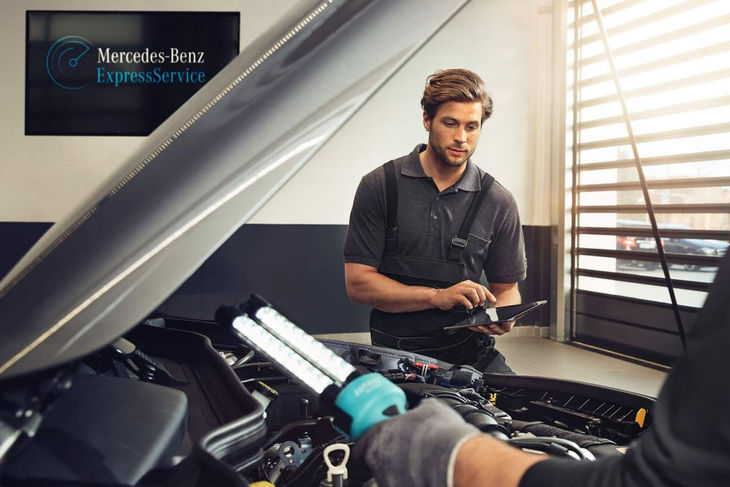
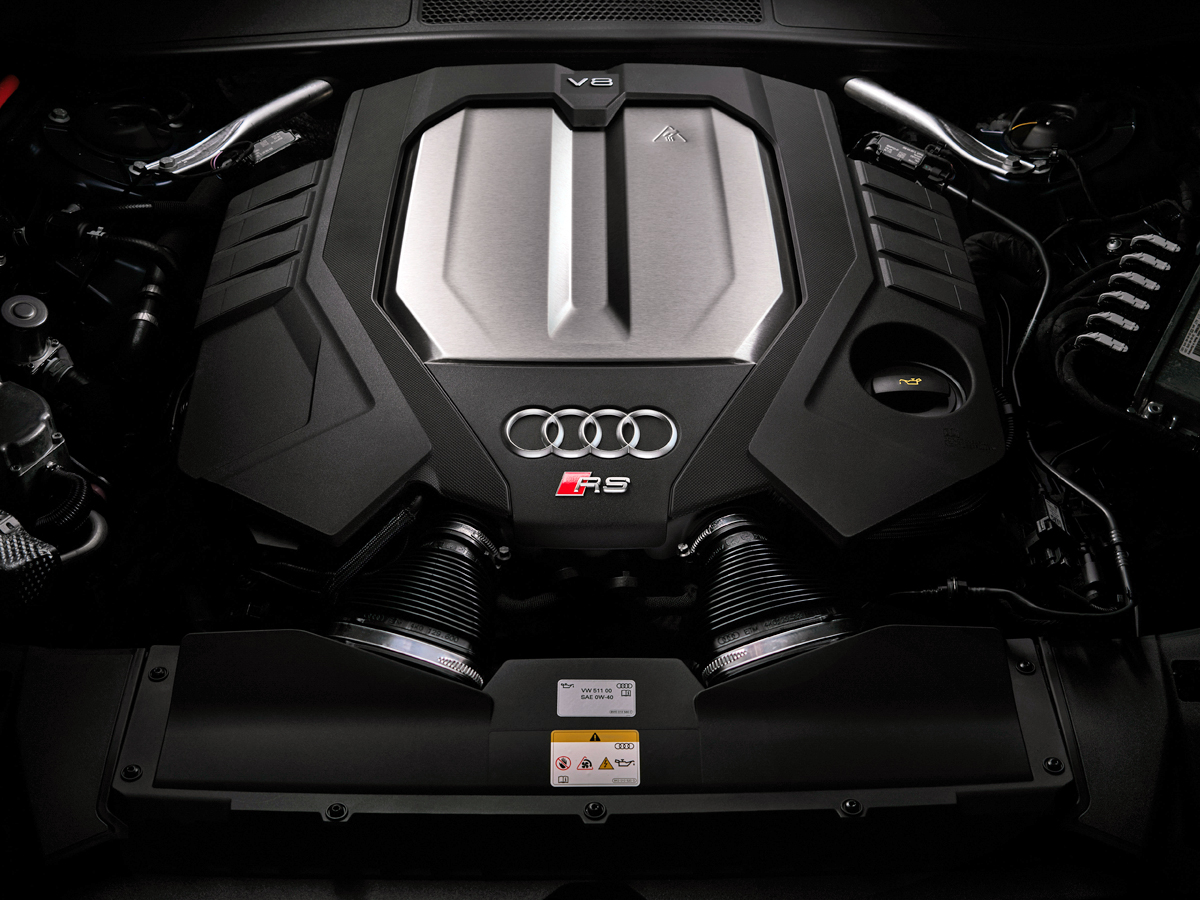
Engine compartment
By contrast, for maximum budget-blowing-but-peak peace of mind, there’s the maintenance plan: an eat-as-much-as-you-like option that covers repair and/or replacement of everything except tyres.
Service plan
Maintenance plan
Primary goal
Basic, scheduled servicing
Comprehensive mechanical protection
Filters & oils
Included
Included
Spark plugs
Included
Included
Brake Pads/discs
Excluded
Included
Wiper blades
Excluded
Included
Clutch/gearbox
Excluded (major expense)
Included (wear & tear)
Labour costs
Only for scheduled items
Covered for all mechanical repairs
There’s also no 1-size-fits-all classification among 3rd-party warranties. The latter is usually referred to as mechanical breakdown insurance and can roughly be divided into basic, standard and comprehensive tiers spanning a variety of vehicle ages, cover requirements and payout limits, each at an appropriate cost.
It’s worth checking the fine print for a claim cap versus a covered component count. Lower tiers may still provide cover, but at a reduced cap, in which case you’ll have to fund the shortfall.
A higher count number may sound impressive, but the 2 non-negotiables are engine and gearbox.
And remember, such plans provide cover only against mechanical breakdown, not wear and tear.
The luxury-car dilemma: Should you sell at year 5 or risk out-of-plan costs?
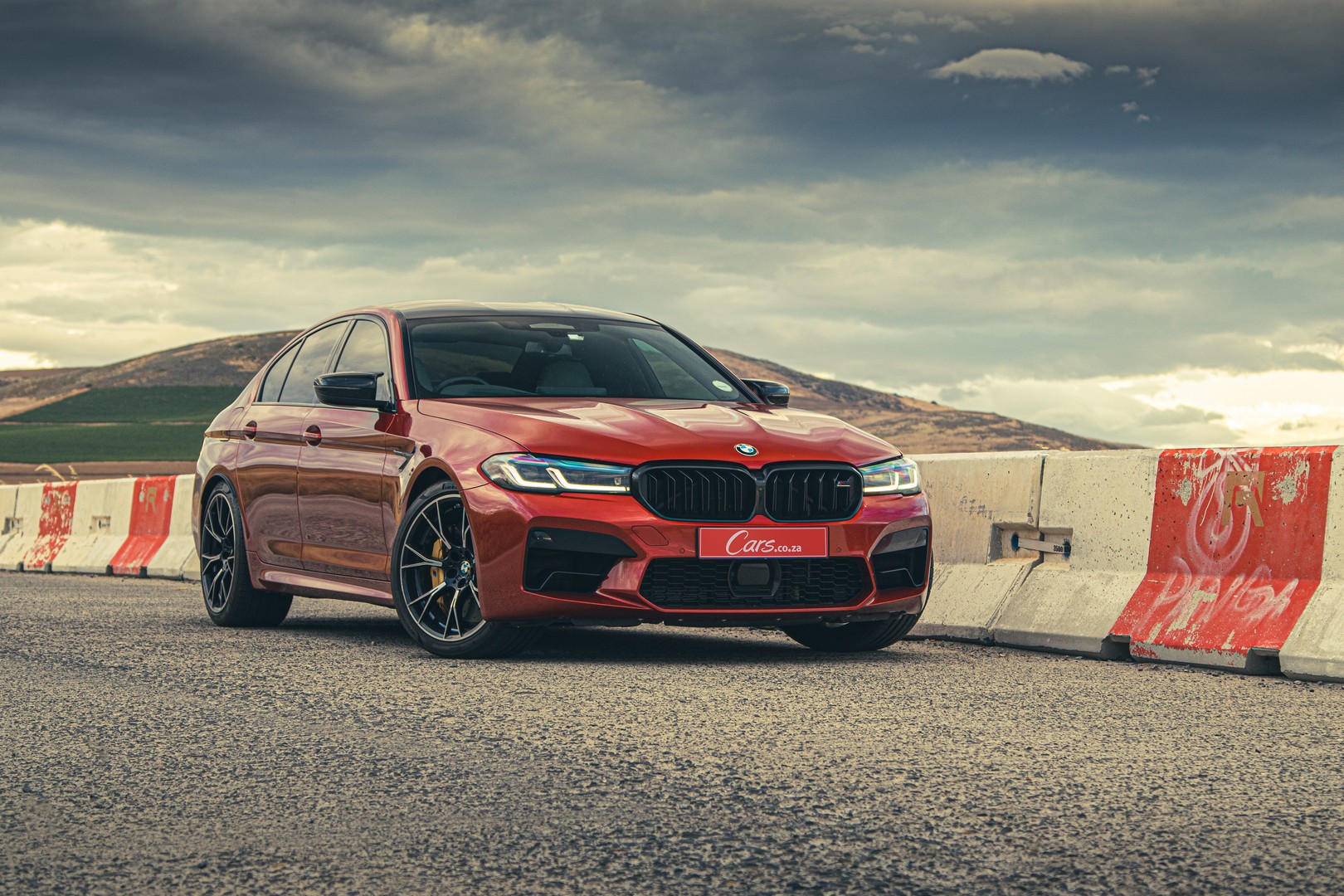
The sheer amount of variables unique to each vehicle and its history explains why, somewhat annoyingly, BMW, Audi and Mercedes-Benz (our sample of 3 for this article) provide only scant details about the cost of extending their comprehensive maintenance plans beyond 100 000 km. The reason? A hard-and-fast R40k-per-annum may scare off prospective customers, but might be appealing to someone whose BMW M5 has a blown turbo and a worn-out mechatronics unit.
On the other hand, however much of luxury tax a maintenance extension appears to be, it’s also a slam-dunk way of protecting your premium vehicle’s residual value. Not only does the car’s dealer-certified service history get extended, you also provide a peace-of-mind promise to the next owner.
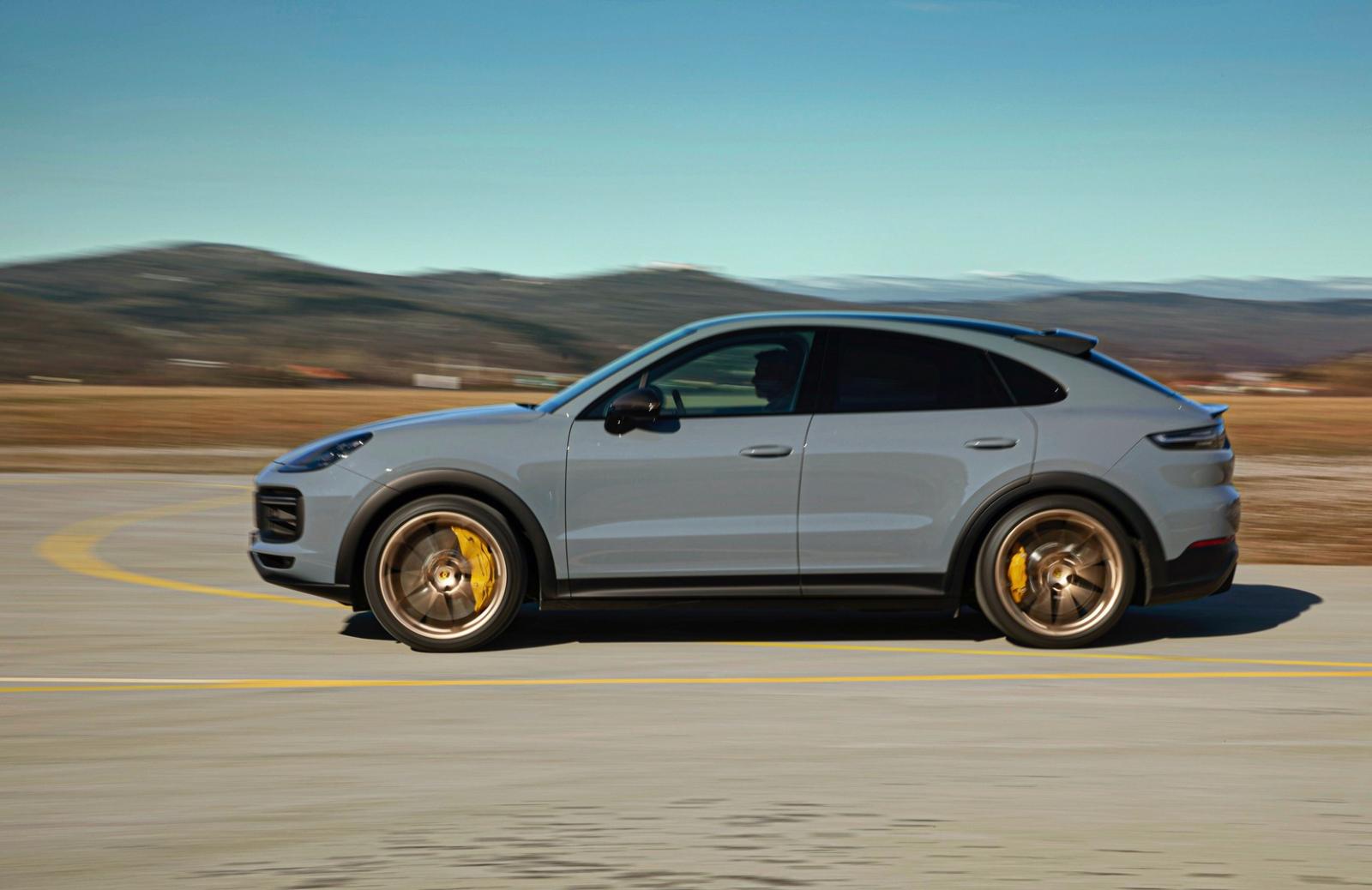
Porsche Cayenne.
Still unsure? Your car’s current value is the key. Even after 100 000 km, you’d be far more inclined to protect (and hopefully be able to afford) a car with a 7-digit residual with a R40k/year maintenance extension than you would feel about a R300k one. If it’s the latter, it’s time to start repairing privately, where you can save 60% on labour and parts.
Once extending the maintenance plan exceeds 15%of the vehicle’s trade-in value, it’s time to sell. That’s the industry rule-of-thumb where a reliable asset is deemed a financial liability. Most premium cars’ instalments equate to 1.5 to 2% of their total value, or roughly 18 to 24% of their value spent on financing per year. Once a maintenance plan extension reaches 15% of the total vehicle cost, you’re essentially paying new-car money for the upkeep of an old one.
Audi A6.
By now, it’s obvious that out-of-warranty repairs for German executive cars are a tug-of-war between your financial resilience and appetite for risk. While it’s far from palatable paying so much for maintenance after 5 years, playing the numbers correctly removes the guesswork. And that will keep you winning up to the day you decide to eventually sell.
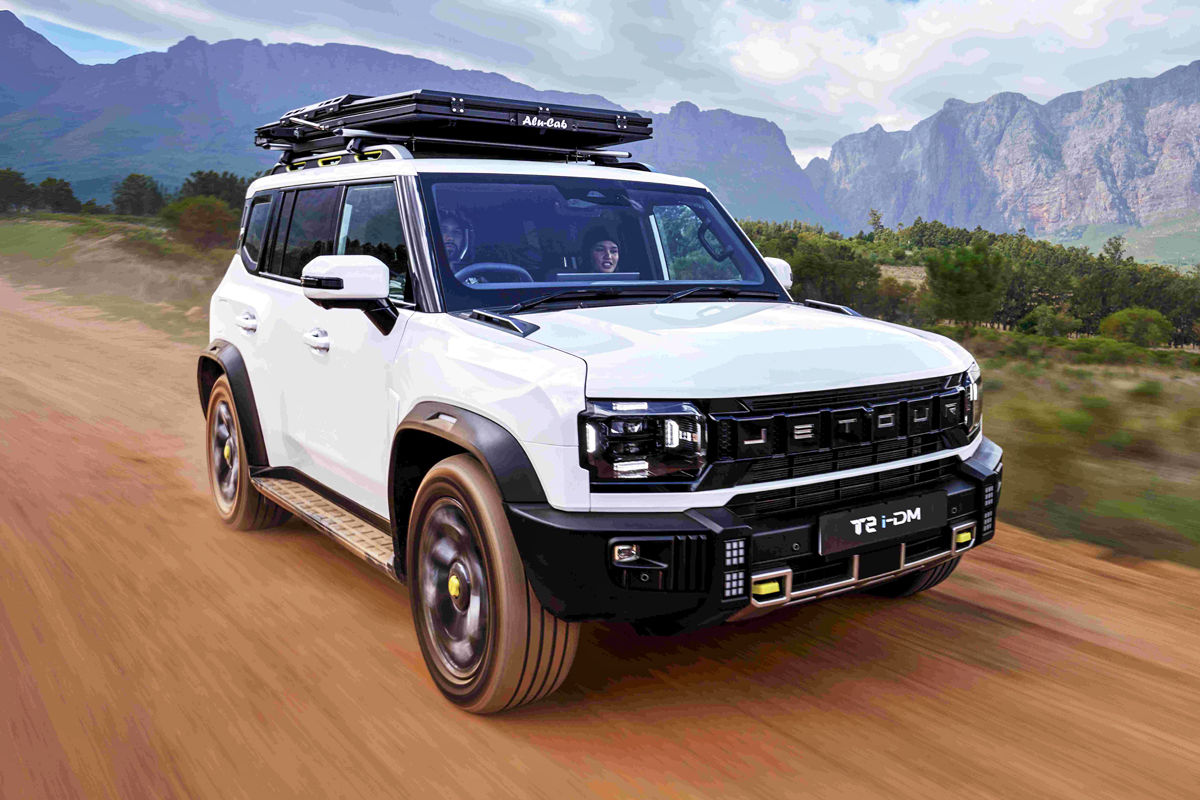
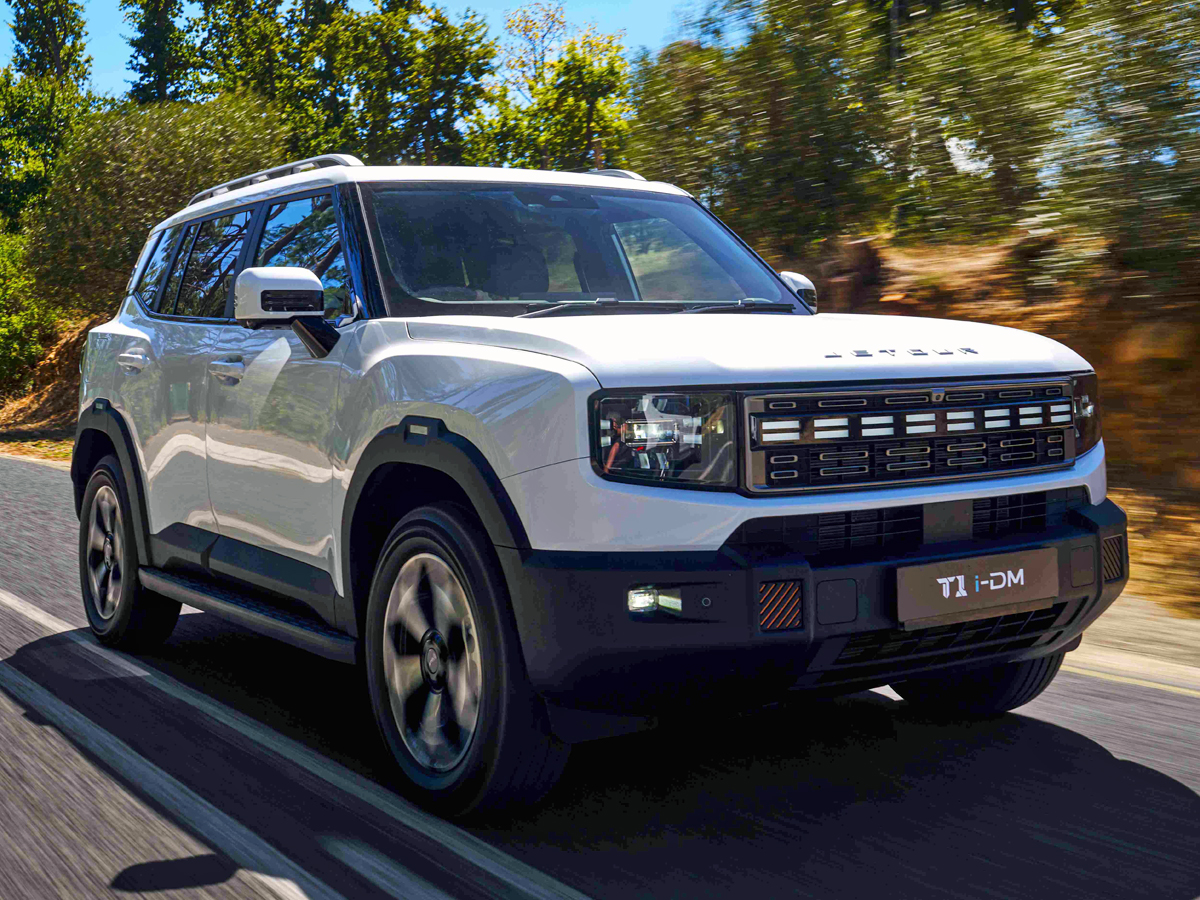
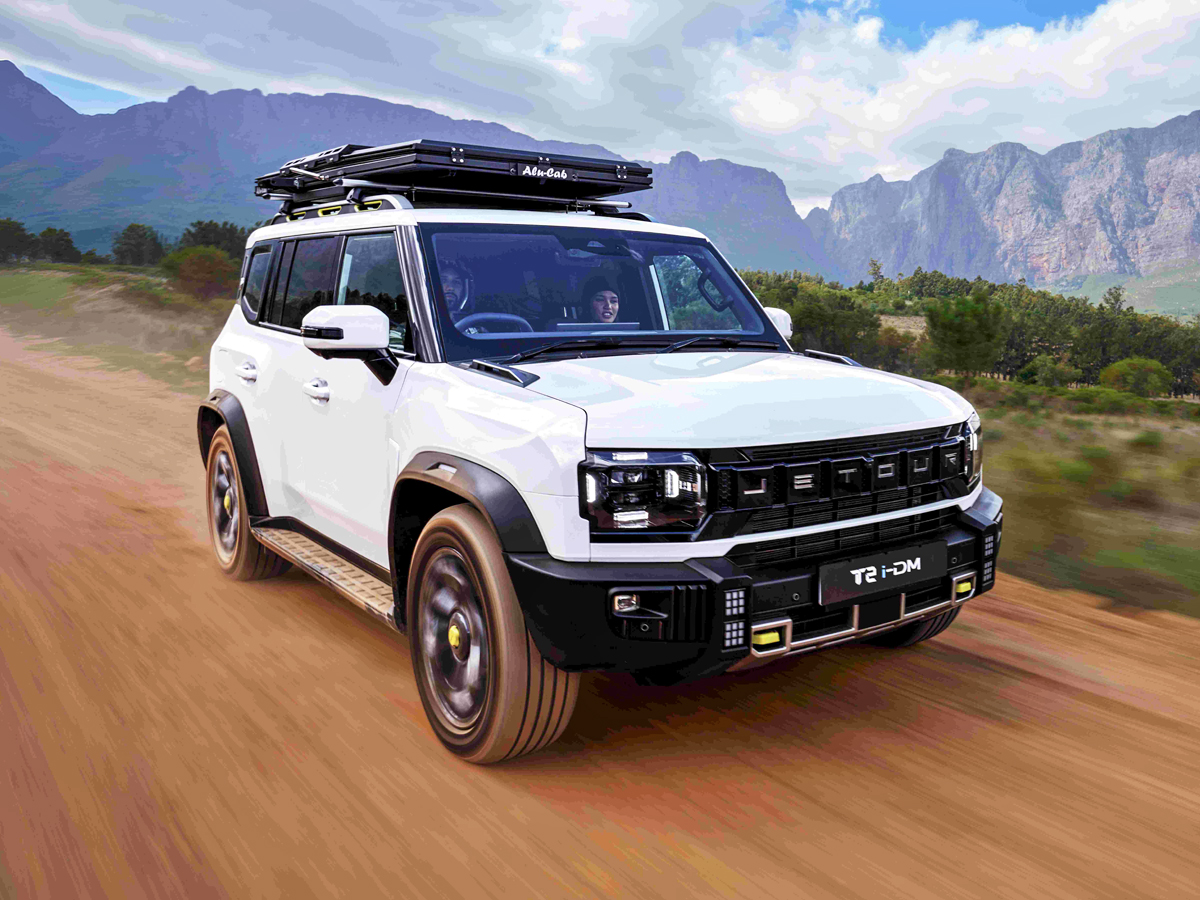
Jetour T1 and T2 i-DM PHEV (2026) Price & Specs
Jetour South Africa has officially entered South Africa’s new-energy vehicle space with the launch of the new T1 and T2 i-DM PHEV derivatives. Here’s what they cost…
Jetour enters SA’s NEV space with new PHEVs
T1 i-DM makes 250 kW; T2 i-DM offers 265 kW
Claimed total range of 1 200 km in each case
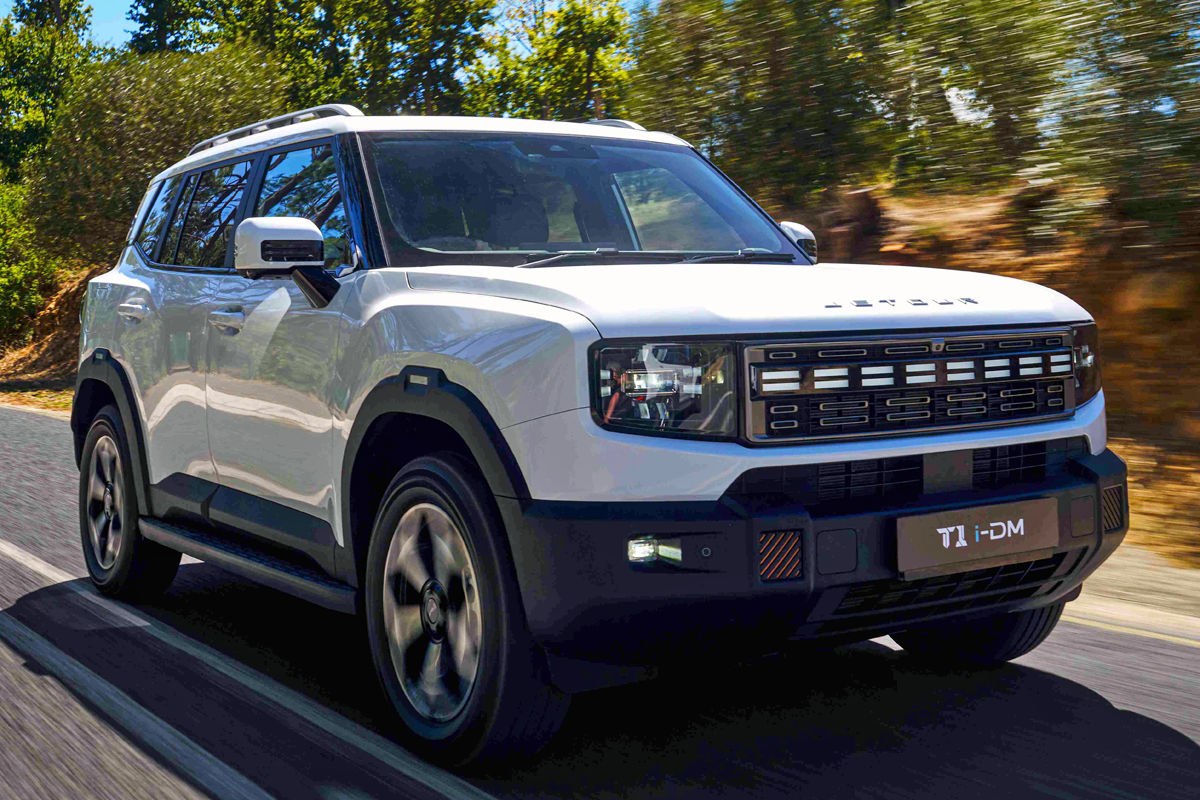
Since arriving in South Africa in mid-November 2025, the Jetour T1 and T2 have proven very popular with local buyers, helping to drive the Chinese brand to fresh sales highs. And now the company has added plug-in hybrid derivatives to its T-Series line-up in the form of the T1 and T2 i-DM PHEVs.
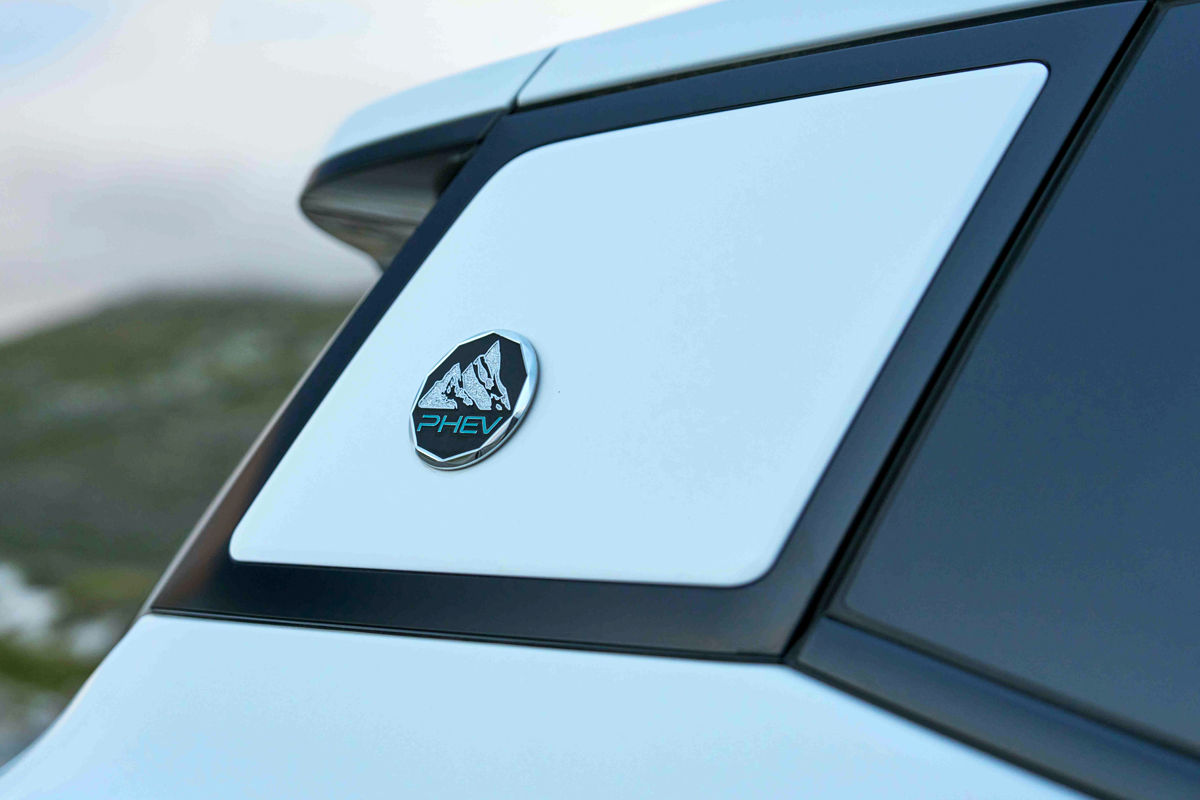
Slotting in at the summit of their respective T1 and T2 unibody crossover ranges, the i-DM-badged newcomers each employ a PHEV powertrain built around a turbocharged 1.5-litre, 4-cylinder petrol engine. Interestingly, however, the 2 configurations aren’t quite the same.
Let’s start with the T1 i-DM. Priced from R689 900 – and thus matching both the Omoda C7 1.5T SHS PHEV and Jaecoo J7 1.5T SHS PHEV as the 5th most affordable plug-in hybrid on the local market – this derivative combines the aforementioned petrol engine with a single electric motor and an 18.4 kWh battery pack.
Jetour claims the T1 i-DM has total system outputs of 250 kW and 530 Nm, along with a combined range of 1 200 km (including 100 km of all-electric driving). From our understanding, this derivative is front-wheel driven.
Meanwhile, the T2 i-DM is priced from R779 900 and gains a 2nd electric motor, pushing total system outputs to 265 kW and 610 Nm. We’re told this is a front-wheel-drive variant, too. Jetour SA claims the same 1 200 km of combined range, though the listed all-electric range falls to 90 km.
The T2 i-DM thus becomes the most expensive derivative in Jetour SA’s line-up (taking over from the R704 900 T2 2.0T Odyssey Dark Knight AWD), though we expect that title to eventually be handed to the incoming G700 (or even the P5 bakkie).
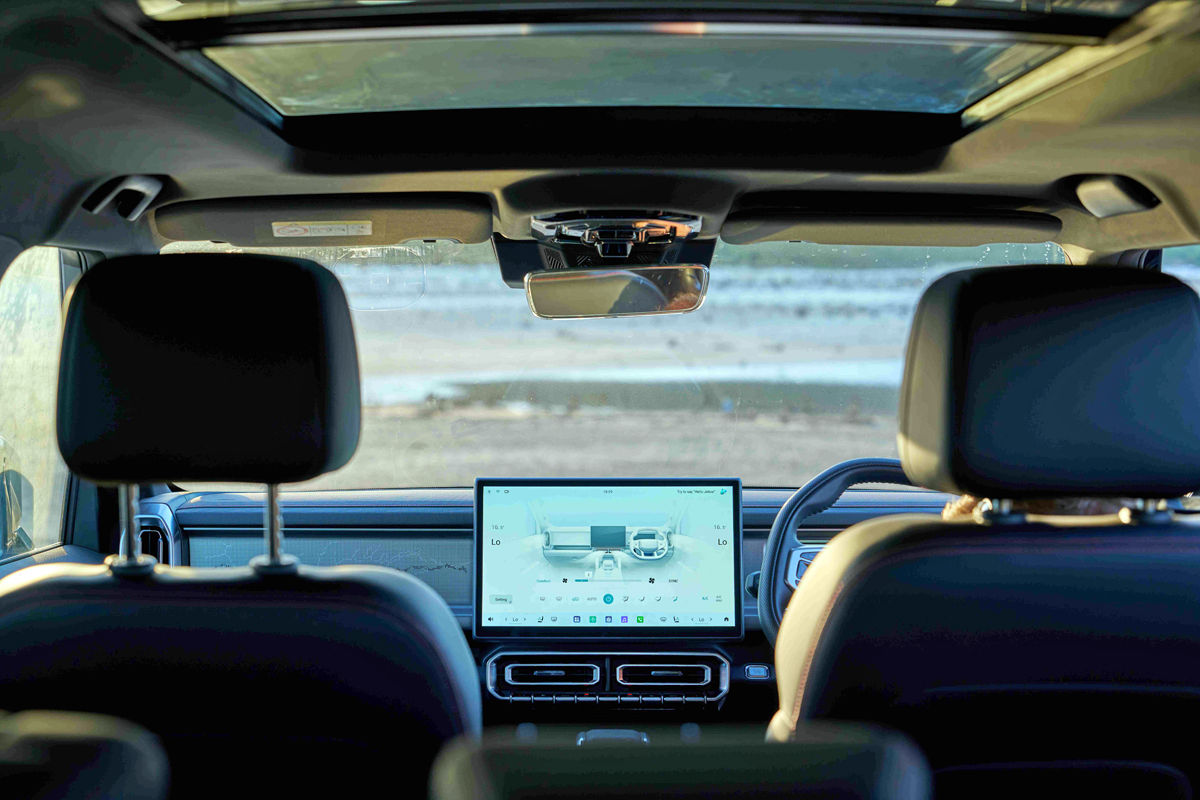
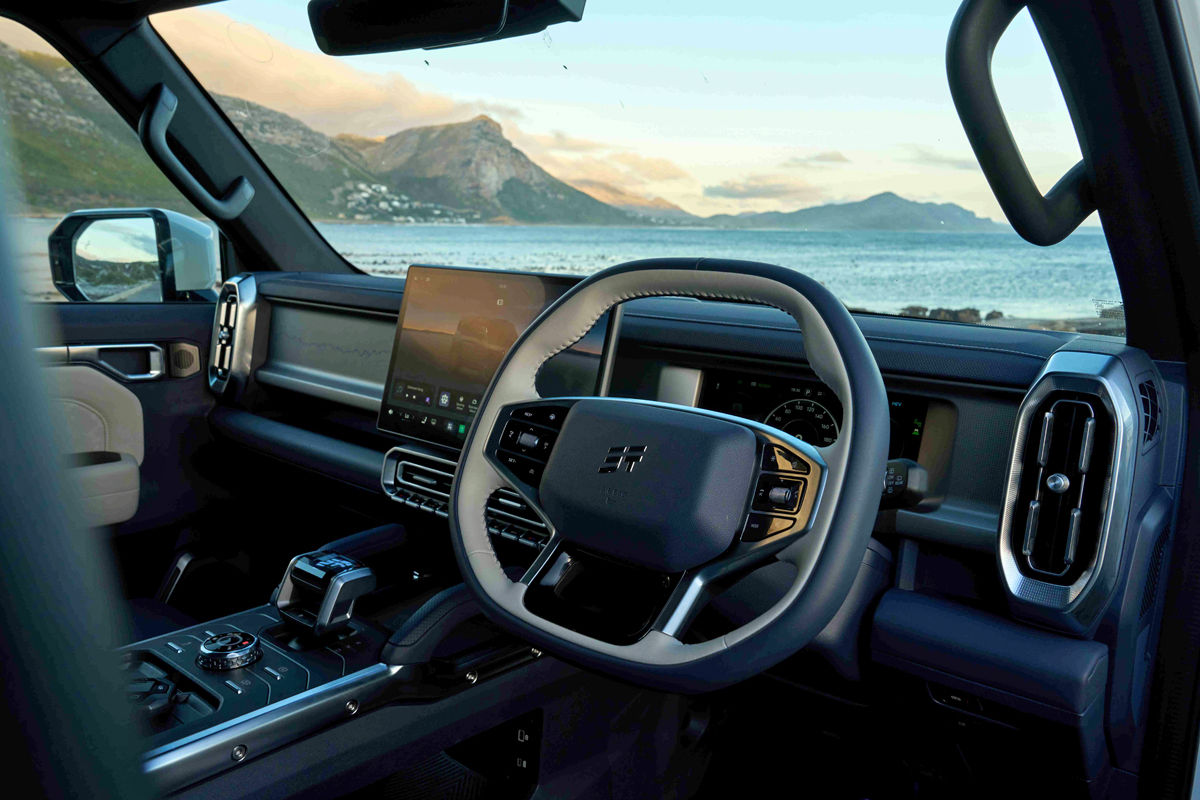
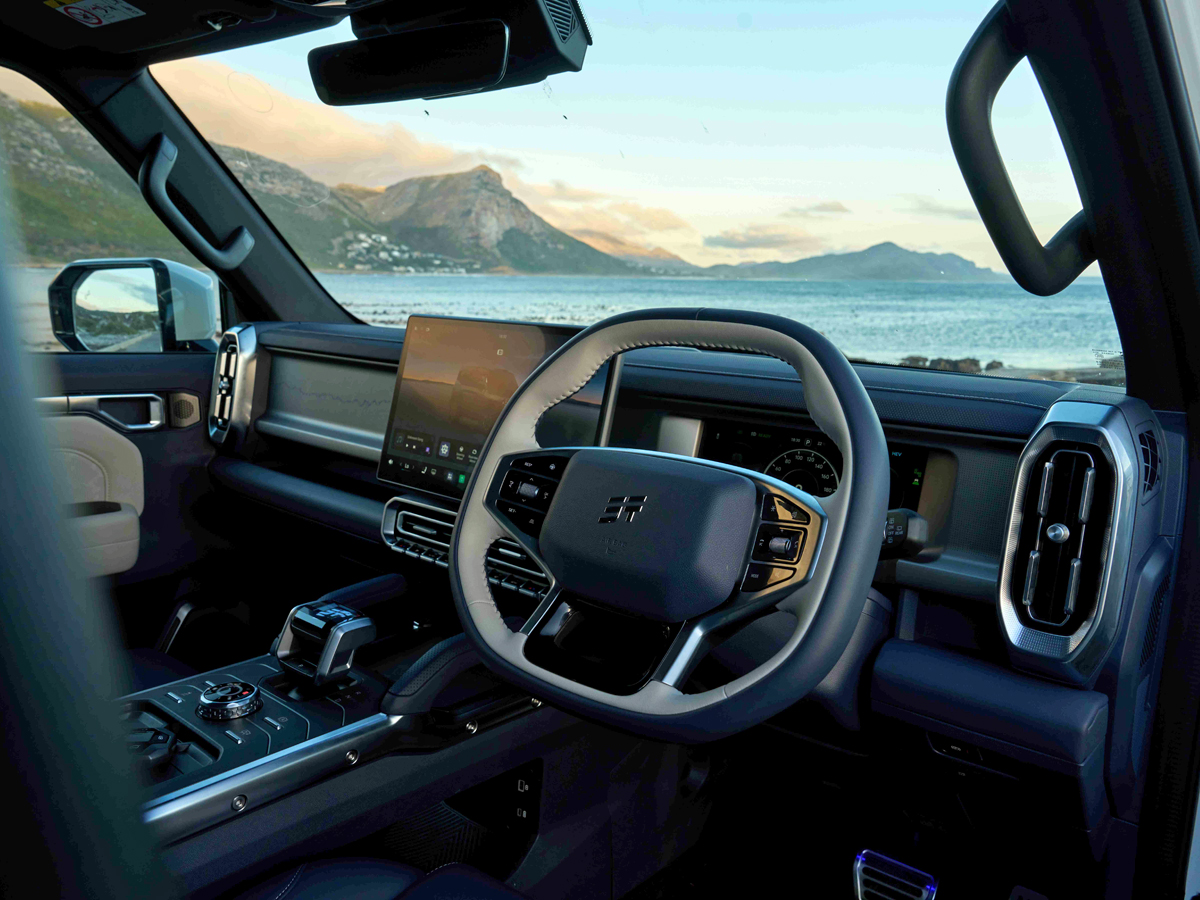
The T1 i-DM rides on 19-inch alloy wheels (wrapped in 235/60 R19 tyres) and the T2 i-DM on 20-inch items (shod with 255/55 R20 rubber), while both feature a 15.6-inch touchscreen, a Sony sound system (9 speakers for the T1 and 12 speakers for the T2), a 540-degree camera system, a 10.25-inch instrument cluster, wireless smartphone charging, faux-leather upholstery, powered front seats, ambient cabin lighting, a panoramic glass sunroof and a powered tailgate.
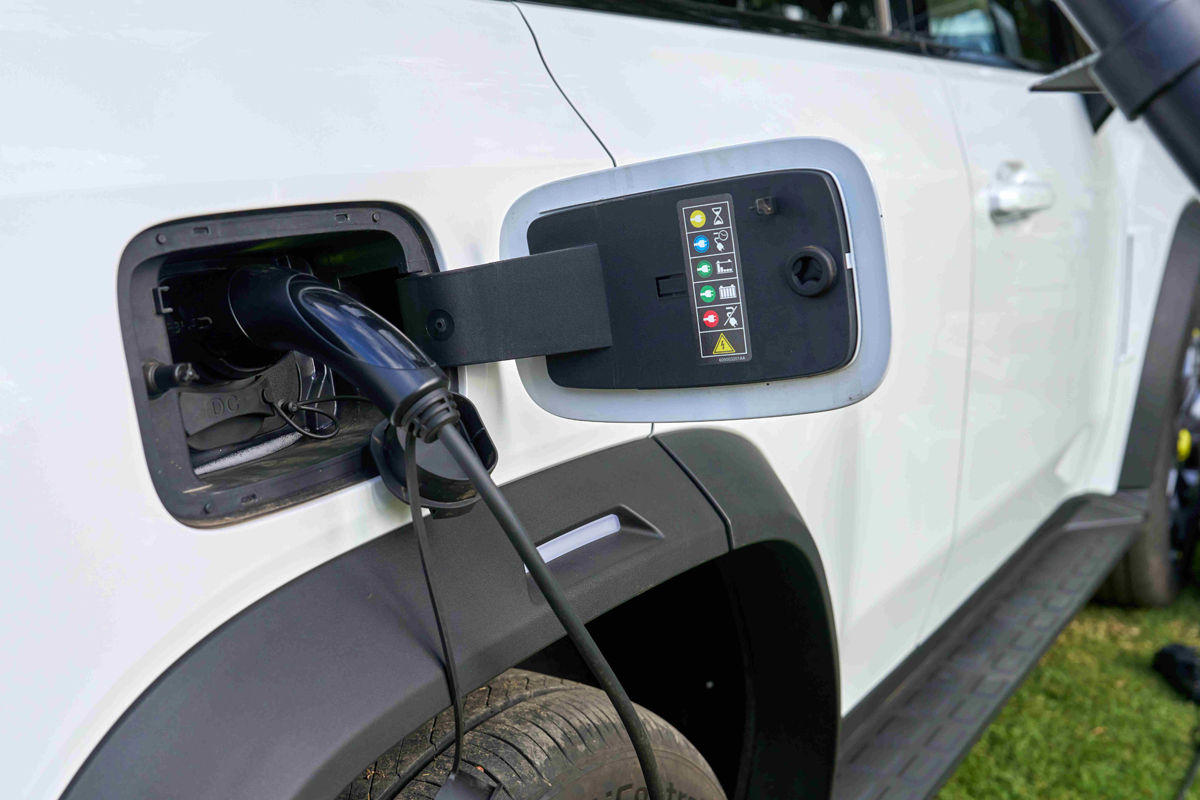
Each derivative furthermore features a raft of advanced driver-assistance system (ADAS) functions. The respective purchase prices of the T1 and T2 i-DM derivatives also include an AC wallbox charger, which the Chinese brand says is worth R15 000.
What do the Jetour T1 and T2 i-DM PHEVs cost in SA?
DERIVATIVE
PRICE
Jetour T1 i-DM 1.5T PHEV
R689 900
Jetour T2 i-DM 1.5T PHEV
R779 900
The prices above include a 7-year/200 000 km vehicle warranty, along with an 8-year/160 000 km battery warranty and a 7-year/75 000 km service plan.
Frequently Asked Questions (FAQ) About the Jetour T-Series i-DM PHEVs
Q: What are the main mechanical differences between the T1 i-DM and the T2 i-DM?
A: While both SUVs use a 1.5-litre turbocharged petrol engine as their base, the T1 i-DM utilises a single electric motor. The T2 i-DM adds a second electric motor, which bumps system outputs from 250 kW and 530 Nm to 265 kW and 610 Nm.
Q: How does the total range of 1 200 km work in a real-world scenario?
A: The 1 200 km “combined range” is a total theoretical distance achieved by using both a full tank of petrol and a fully charged battery. For daily commuting, the T1 i-DM offers up to 100 km of pure-electric driving, while the T2 i-DM provides roughly 90 km. This allows most owners to complete their daily school runs or commutes without using a single drop of fuel, provided they charge the vehicle at home.
Q: What is the aftersales and charging support like for these new hybrid models?
A: Jetour is aggressive with its peace-of-mind offering, including an 8-year/160 000 km battery warranty. Additionally, each purchase includes a complimentary AC wallbox charger (valued at R15 000), making it easier for owners to maximise the vehicle’s electric-only capabilities from day one.
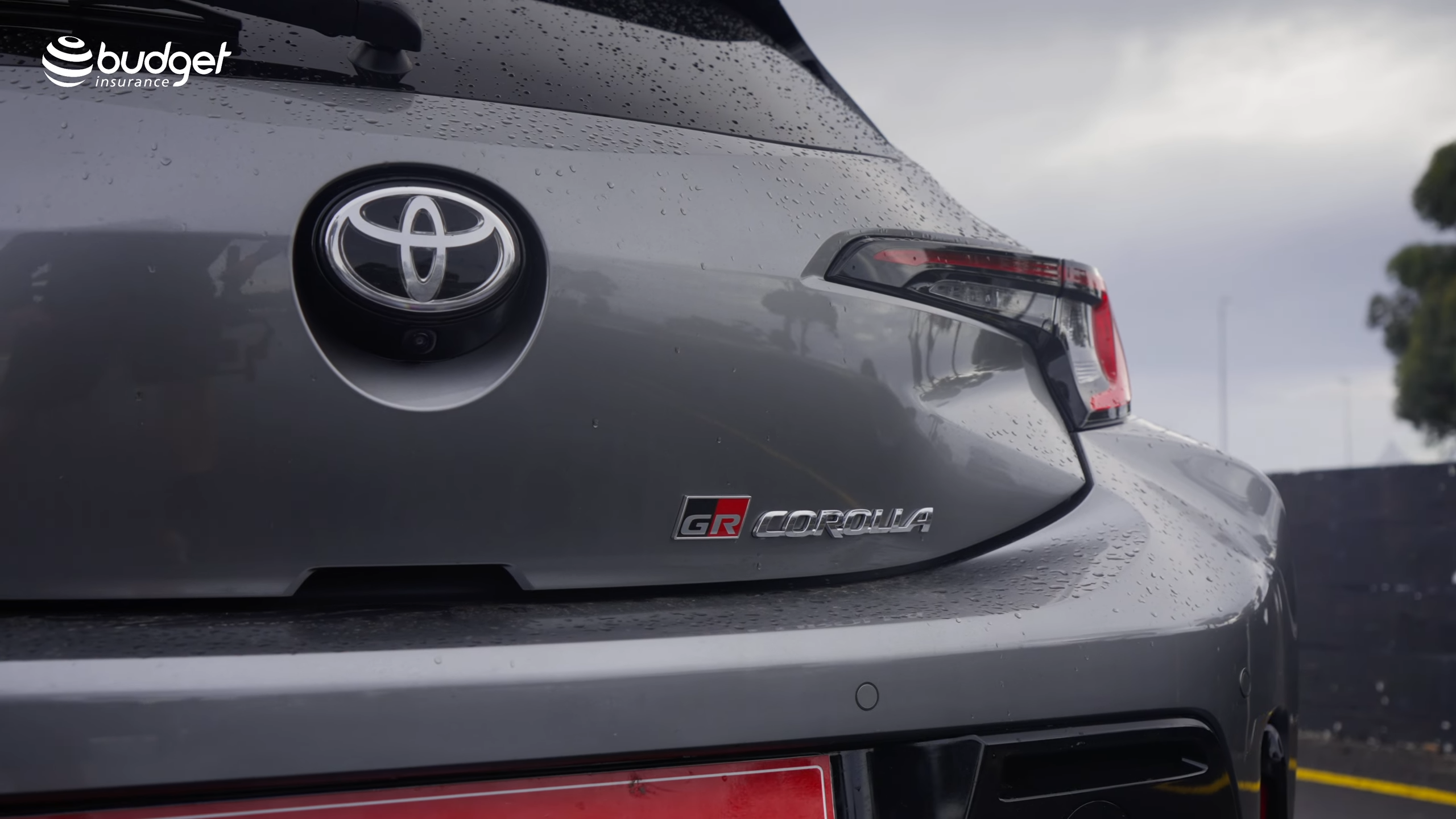
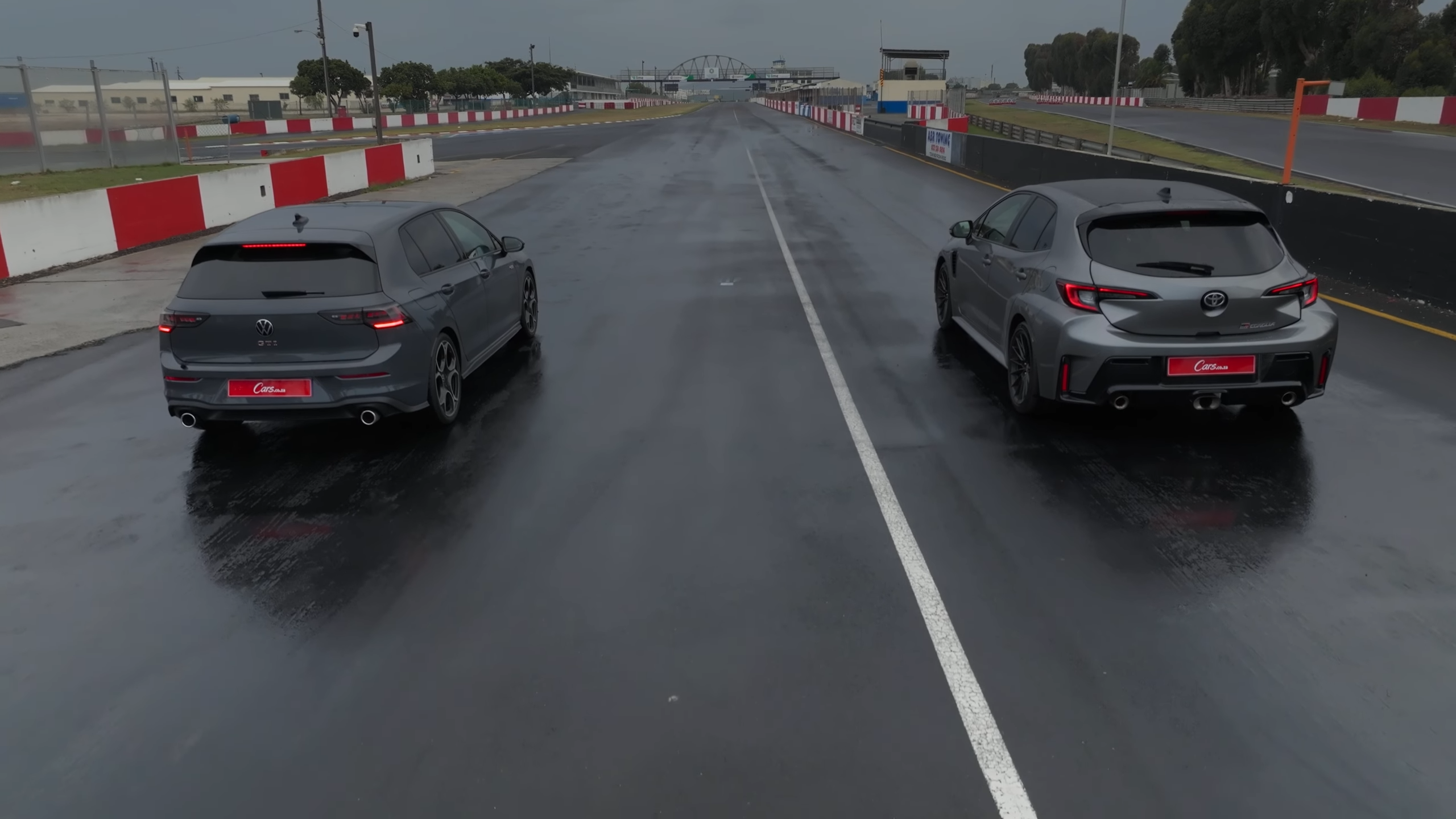
VW Golf GTI (2026) vs Toyota GR Corolla (2026) Drag & Rolling Race
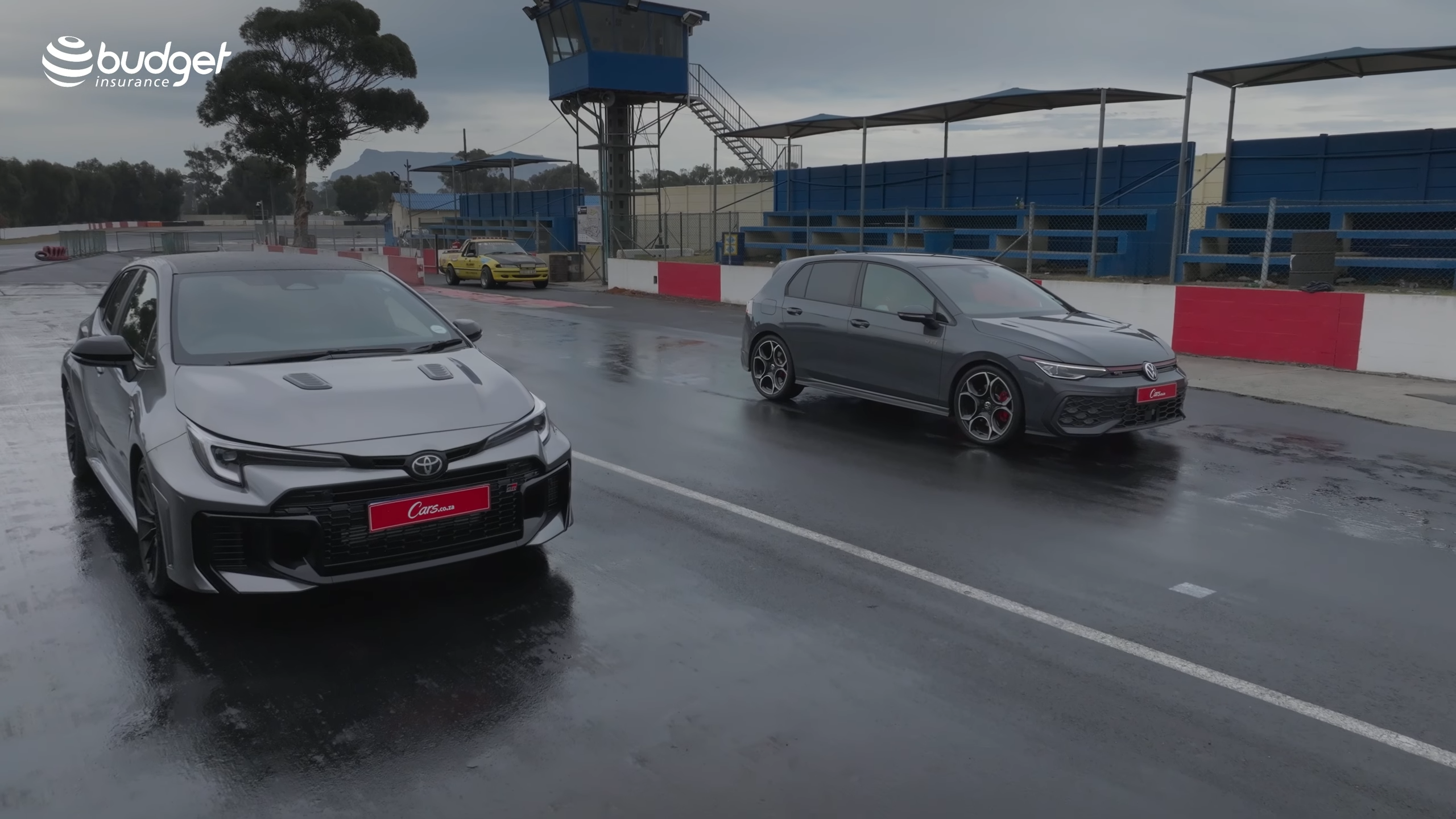
The Volkswagen Golf GTI is a South African performance icon, but the automotive world is shifting. In this latest head-to-head, the recently updated Golf 8.5 GTI faces off against a car that represents the pinnacle of modern rally-bred engineering: the Toyota GR Corolla.
On paper, this clash of Golf GTI vs GR Corolla represents different philosophies. The Volkswagen Golf 8.5 GTI remains the quintessential front-wheel-drive (FWD) hot hatch, prioritising everyday refinement and a punchy turbocharged engine.
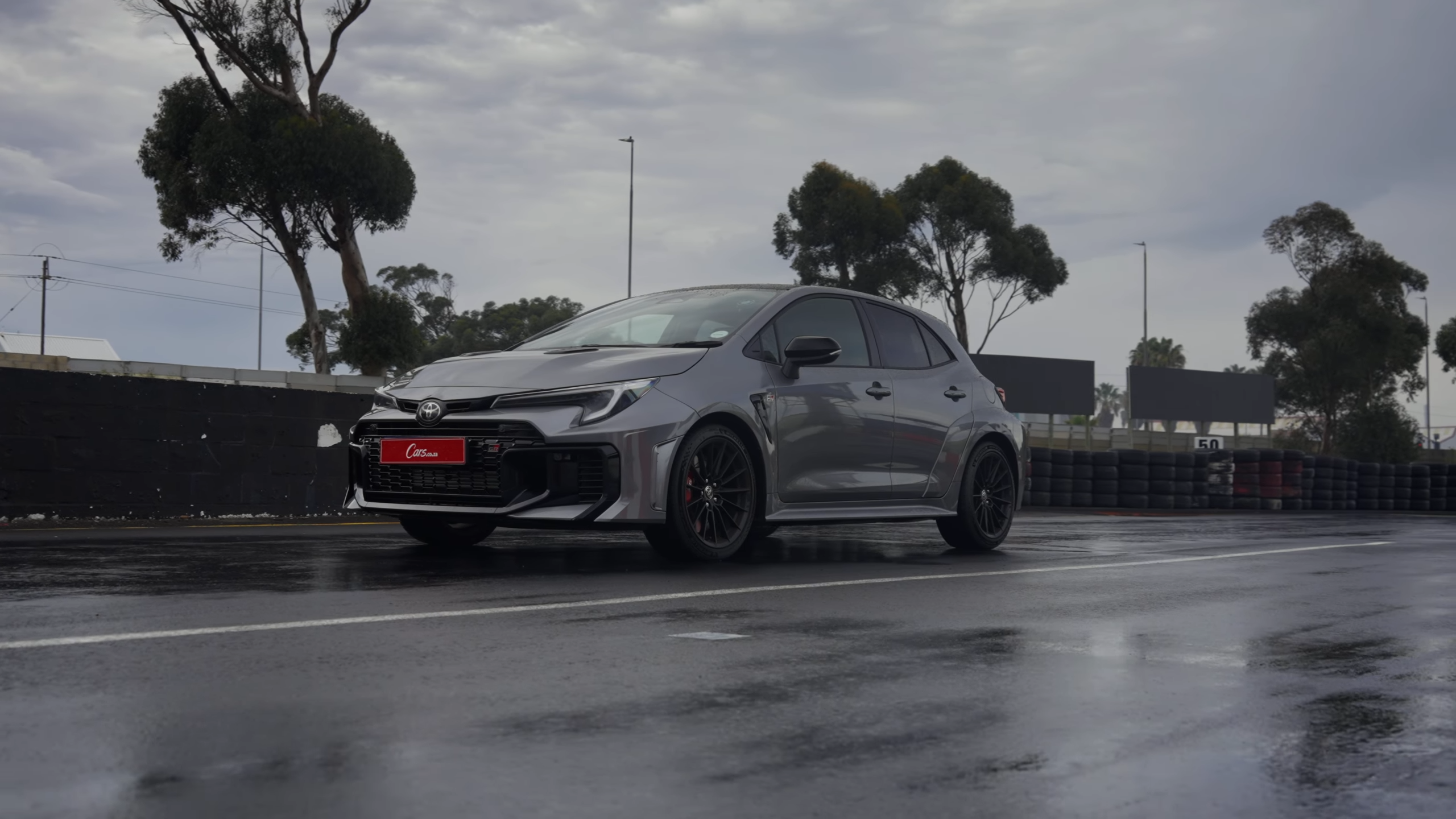
The Toyota GR Corolla, however, is a motorsport-inspired machine featuring an all-wheel-drive (AWD) system and a newly introduced automatic transmission.
To make matters more interesting, we headed to a damp Killarney Raceway to see if the legendary “wrong-wheel-drive” GTI could hold its own against the AWD grip of the Toyota.
The Golf 8.5 GTI has received a power bump for its latest iteration, now delivering 195 kW and 370 Nm from its 2.0-litre turbocharged, 4-cylinder engine. It is roughly 50 kg lighter than the Toyota, which provides a power-to-weight advantage that is often overlooked.
The GR Corolla, meanwhile, is powered by a high-output 1.6-litre, 3-cylinder turbo engine. Despite its smaller displacement, it produces significantly more power at 221 kW. More importantly, its AWD system is designed to provide maximum traction in the very conditions we encountered at the track.
With a price tag comfortably exceeding R1 million, the GR Corolla is positioned as a serious performance tool, while the GTI remains the more attainable, albeit still premium, choice at roughly R908 000.
The standing start: AWD dominance
Launching a powerful FWD car on a damp surface is an exercise in frustration. As the weight shifts to the rear during acceleration, the GTI’s front tyres lose traction, resulting in significant wheel spin. Despite the best efforts of the GTI’s electronic aids, it simply cannot compete with the GR Corolla’s ability to dig in and bolt off the line.
In the standing races, the Toyota lived up to its reputation as a “bullet.” It gapped the Golf by several car lengths before the bridge at Killarney, illustrating the massive advantage of AWD in low-grip scenarios. While the GTI eventually found its footing, the initial launch deficit was too great to overcome.
The rolling race: A surprising turn of events
Drag racing isn’t just about the launch. To negate the AWD advantage, we performed a series of rolling races from 30 km/h. This test focuses purely on in-gear acceleration and engine efficiency once the vehicles are already in motion.
It was here that the Golf 8.5 GTI delivered a staggering surprise. Once the traction issues were removed, the GTI’s 2.0-litre engine proved to be exceptionally strong. In multiple runs, the Golf not only kept pace with the more powerful Toyota, but actually pulled away in the upper gears. This performance suggests that the GTI might be “stronger than advertised” or that the GR Corolla suffers from higher drivetrain losses through its complex AWD system.
Summary
The results of this comparison highlight the different strengths of these two hot hatch heavyweights. The Toyota GR Corolla is a precision instrument, offering incredible thrills, motorsport pedigree and unmatched off-the-line performance, especially in adverse conditions. It is a thoroughbred designed for the track and technical backroads.
The Volkswagen Golf 8.5 GTI, however, remains the king of the daily drive. While it might struggle to launch on a wet day, its in-gear performance is formidable, and its interior remains the benchmark for quality and ergonomics in this segment. Whether you prefer the AWD grip of the Toyota or the surprising rolling punch of the Volkswagen in the battle of Golf GTI vs GR Corolla, both cars prove that the hot hatch segment is still very much alive and kicking.
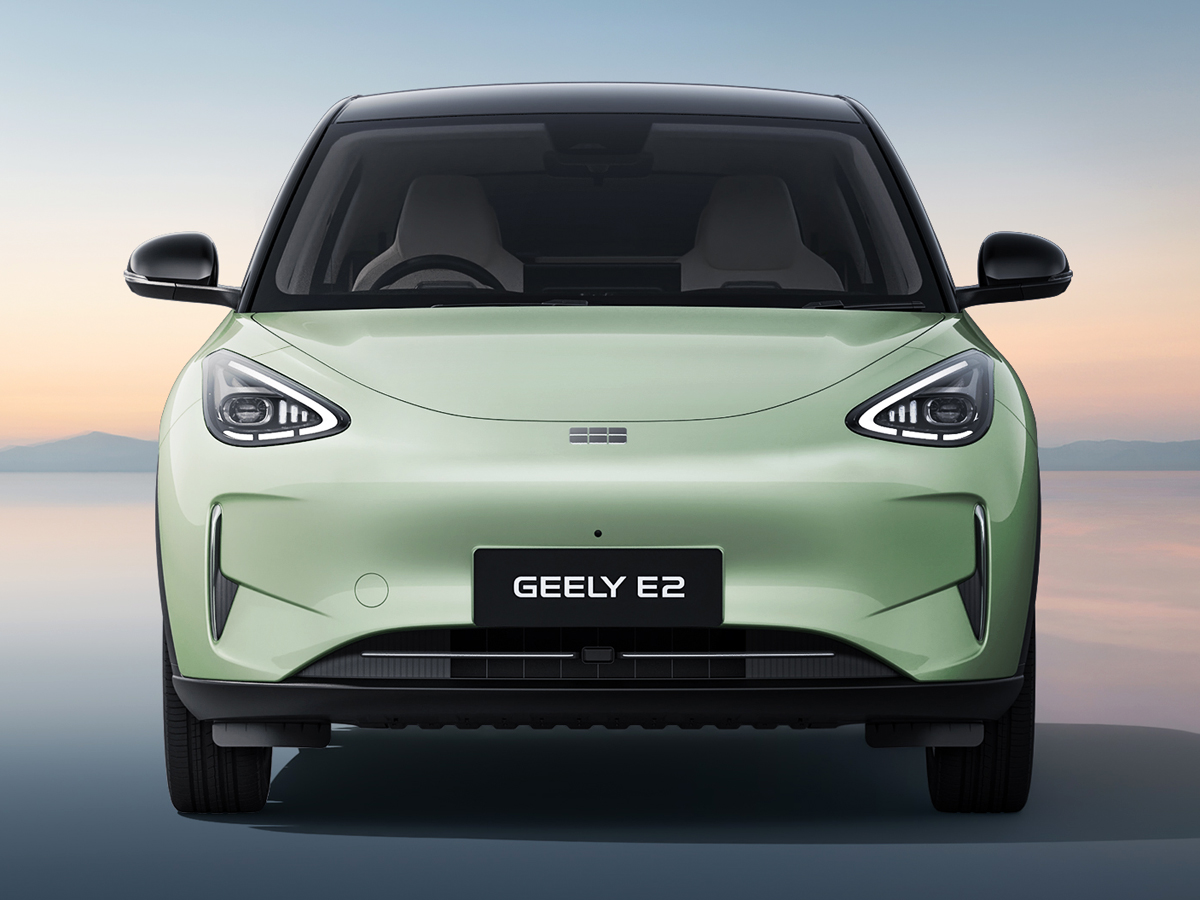
South Africa, meet your new cheapest electric vehicle. Yes, the Geely E2 hatch has arrived in Mzansi, grabbing the title from the BYD Dolphin Surf. Here’s what it costs…
Geely launches E2 as SA’s cheapest EV
Grabs title from the BYD Dolphin Surf
E2 range includes 2 variants at launch
The new Geely E2 – which is known as the EX2 in some countries (and the Xingyuan in China, where it was that nation’s best-selling vehicle overall in 2025) – has officially arrived in South Africa, launching as the local market’s most affordable fully electric vehicle (EV).
Yes, this new battery-powered hatchback from the Zhejiang-based automaker kicks off at R339 900, seeing it undercut the BYD Dolphin Surf by just R2 000. As a reminder, the latter model had held the title of SA’s cheapest EV since its launch in September 2025.
Measuring 4 135 mm from front to back (precisely the same as a Volkswagen T-Cross, to give you a practical idea of its size) and featuring a wheelbase of 2 650 mm, the E2 hatchback – which arrives as the returning Geely brand’s 2nd offering behind the E5 – is a significant 210 mm longer than the Dolphin Surf, with an extra 150 mm between its axles, too.
Equipped with an electric motor driving the rear wheels, the 5-door E2 features peak outputs of 85 kW and 150 Nm. The 0-100 kph sprint takes a claimed 11.5 seconds, while top speed is limited to 130 kph. Meanwhile, the 39.4 kWh lithium iron phosphate battery pack facilitates a claimed WLTP range of 325 km.
The Chinese automaker says charging the battery from 10 to 100% via an AC charger will take approximately 6.5 hours, while using a DC fast charger (at speeds of up to 70 kW) to move the battery’s capacity from 30 to 80% will take around 25 minutes. The E2 furthermore features vehicle-to-load (V2L) functionality, allowing the car to power external devices.
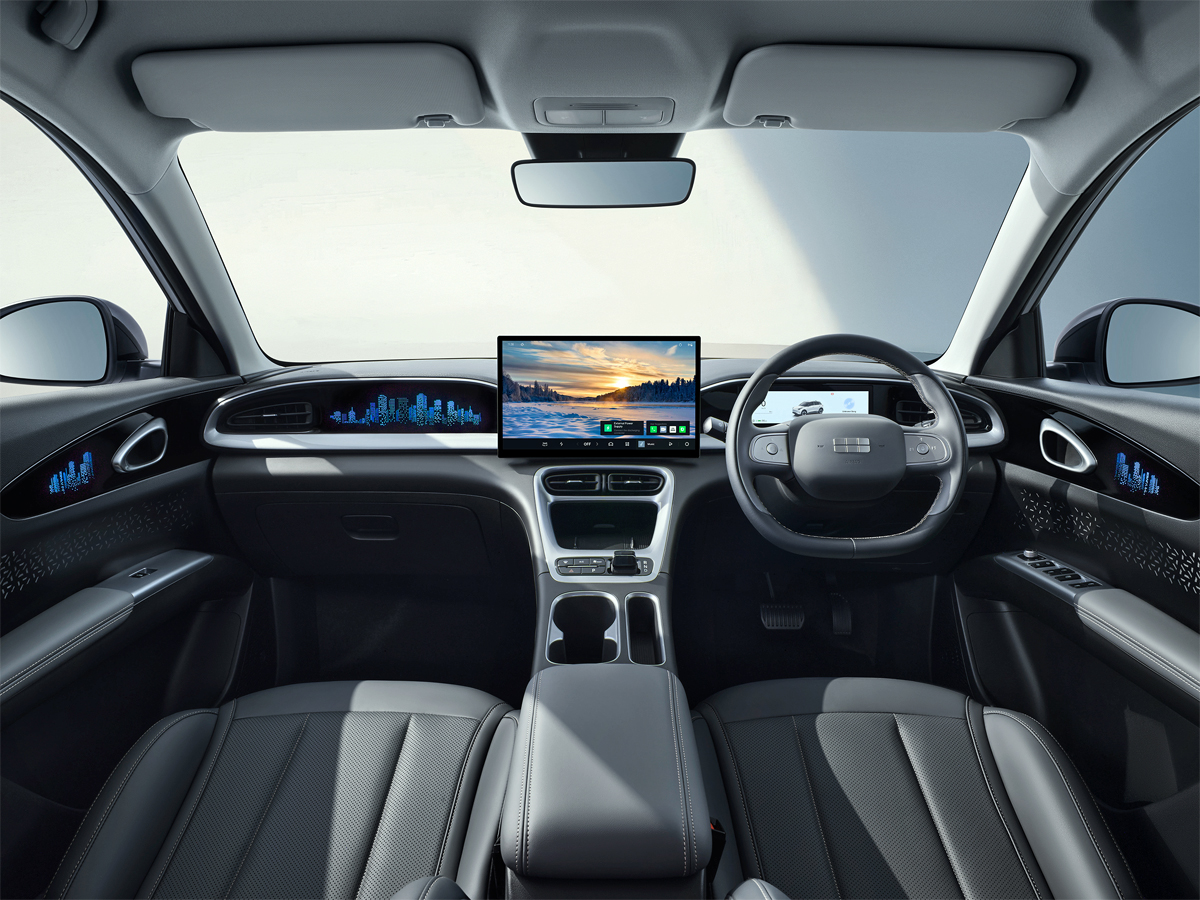
The E2 has a 375-litre luggage compartment (expandable to 1 320 litres) along with a 70-litre “frunk”. Inside the cabin, you’ll find a 14.6-inch touchscreen and an 8.8-inch digital instrument cluster. Standard safety features for the local market include ABS, electronic stability control, traction control, hill-start assist, 6 airbags and tyre-pressure monitoring.
In Mzansi, the new E2 is available in the Aspire and Apex grades, with the former priced at R339 900 and the latter at R389 900. The base Aspire specification includes 15-inch steel wheels, fabric upholstery, manual air conditioning, a 4-speaker sound system, a reverse-view camera, rear parking sensors and keyless entry & start.
For its R50 000 premium, the Apex grade adds items like 16-inch alloy wheels, faux-leather seats, a power-adjustable driver’s seat, wireless smartphone charging, a 360-degree panoramic camera, a 6-speaker audio system, ambient cabin lighting and what Geely describes a “full” suite of advanced driver-assistance system (ADAS) features. The flagship derivative also scores 2-tone paint, rear privacy glass and chrome-effect exterior detailing.
What does the new Geely E2 cost in South Africa?
DERIVATIVE
PRICE
Geely E2 Aspire
R339 900
Geely E2 Apex
R389 900
The prices above include a 4-year/150 000 km vehicle warranty, an 8-year/200 000 km battery warranty, a 3-year/200 000 km service plan and a 5-year/unlimited km roadside-assistance package. All units purchased through Geely Finance furthermore come with a home wallbox charger.
Frequently Asked Questions (FAQ) About the New Geely E2
Q: How does the Geely E2 compare to the BYD Dolphin Surf in terms of value?
A: The Geely E2 has officially taken the title of South Africa’s most affordable electric vehicle with a starting price of R339 900, undercutting the BYD Dolphin Surf by R2 000. Despite the lower price, the E2 is physically larger, measuring 210 mm longer than the Dolphin Surf and offering a more spacious 2 650 mm wheelbase.
Q: What are the charging capabilities and driving range of the E2?
A: Equipped with a 39.4 kWh battery, the E2 offers a claimed WLTP range of 325 km. When it comes to “refuelling”, a DC fast charger can take the battery from 30% to 80% in approximately 25 minutes. It also features vehicle-to-load (V2L) technology, allowing you to use the car’s battery to power external appliances during load-shedding or camping trips.
Q: What luxury and safety features are included in the flagship Apex model?
A: The range-topping Apex grade (R389 900) adds a layer of sophistication, including 16-inch alloy wheels, wireless smartphone charging and a 360-degree panoramic camera. It also introduces a “full” suite of advanced driver-assistance systems (ADAS) and interior comforts like ambient lighting and power-adjustable faux-leather seats.
New JMC Grand Avenue bakkie for SA: what to expect
Chinese brand JMC plans to launch the new Grand Avenue bakkie in South Africa this year, with an off-road version set to follow in 2027. Here’s what to expect…
Grand Avenue to arrive later in 2026
2.5TD to deliver 155 kW and 500 Nm
Off-road-ready “Pro” tipped for 2027
Late in 2025, Jiangling Motors Corporation (JMC) officially returned to South Africa, kicking off its local operations with the JMC Vigus Pro workhorse bakkie and the Carrying Plus truck, before adding the new Vigus double cab in March 2026. And the Grand Avenue is next for the Chinese brand.
Yes, the new JMC Grand Avenue bakkie is scheduled to launch locally at some point in 2026. Set to be available exclusively in double-cab form, the Grand Avenue measures 5 450 mm from nose to tail and has a wheelbase of 3 270 mm. That makes it 115 mm longer than the new Vigus double cab and 100 mm longer than a Ford Ranger double cab.
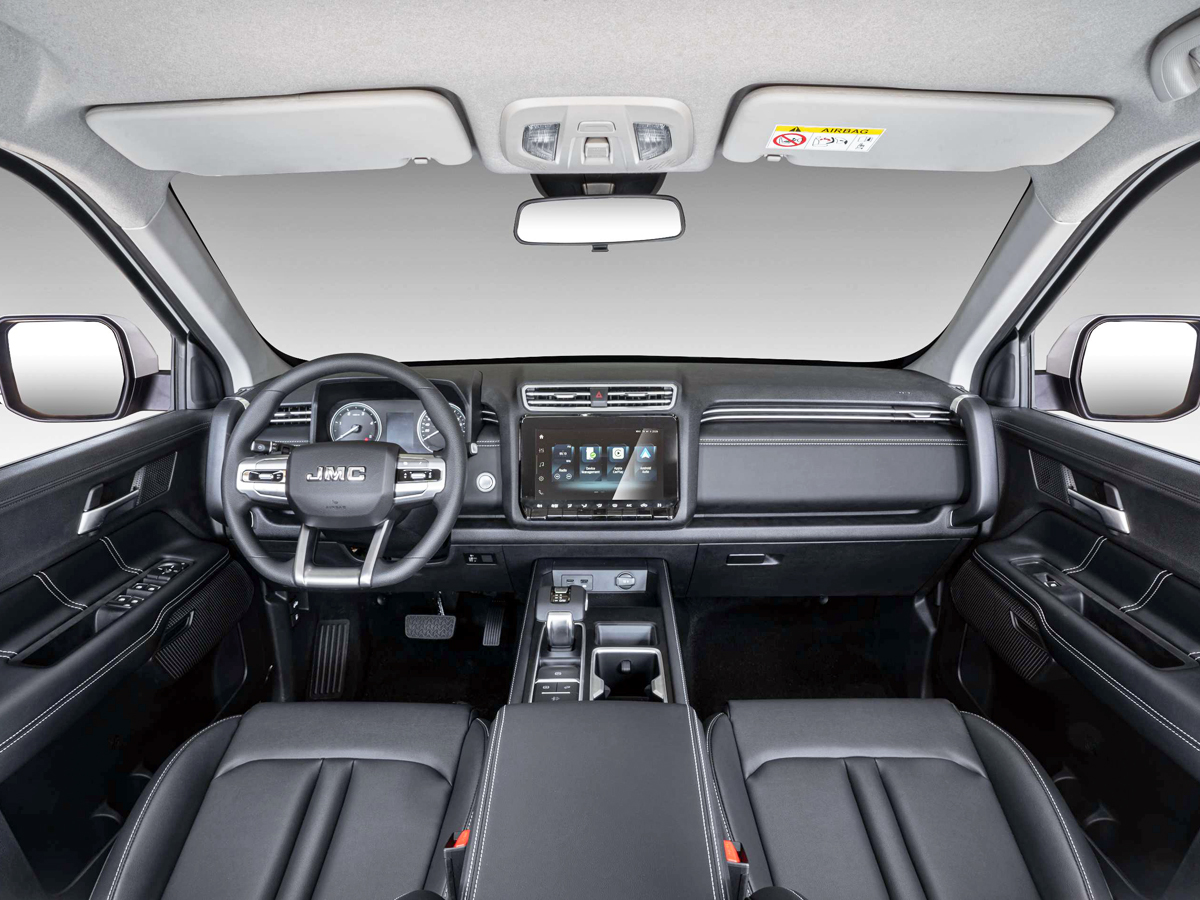
A look at a left-hand-drive Grand Avenue cabin.
While JMC offers the ladder-frame Grand Avenue in its domestic market of China with either a 2.3-litre turbopetrol engine or a turbodiesel unit featuring the same displacement, a different powertrain has been locked in for South Africa.
According to JMC – which is distributed locally by Salvador Caetano Auto SA (the company that’s also responsible for GAC Motor in Mzansi) – the Grand Avenue coming to Mzansi later this year will instead employ a version of the 2.5-litre turbodiesel engine used in the new Vigus double cab.
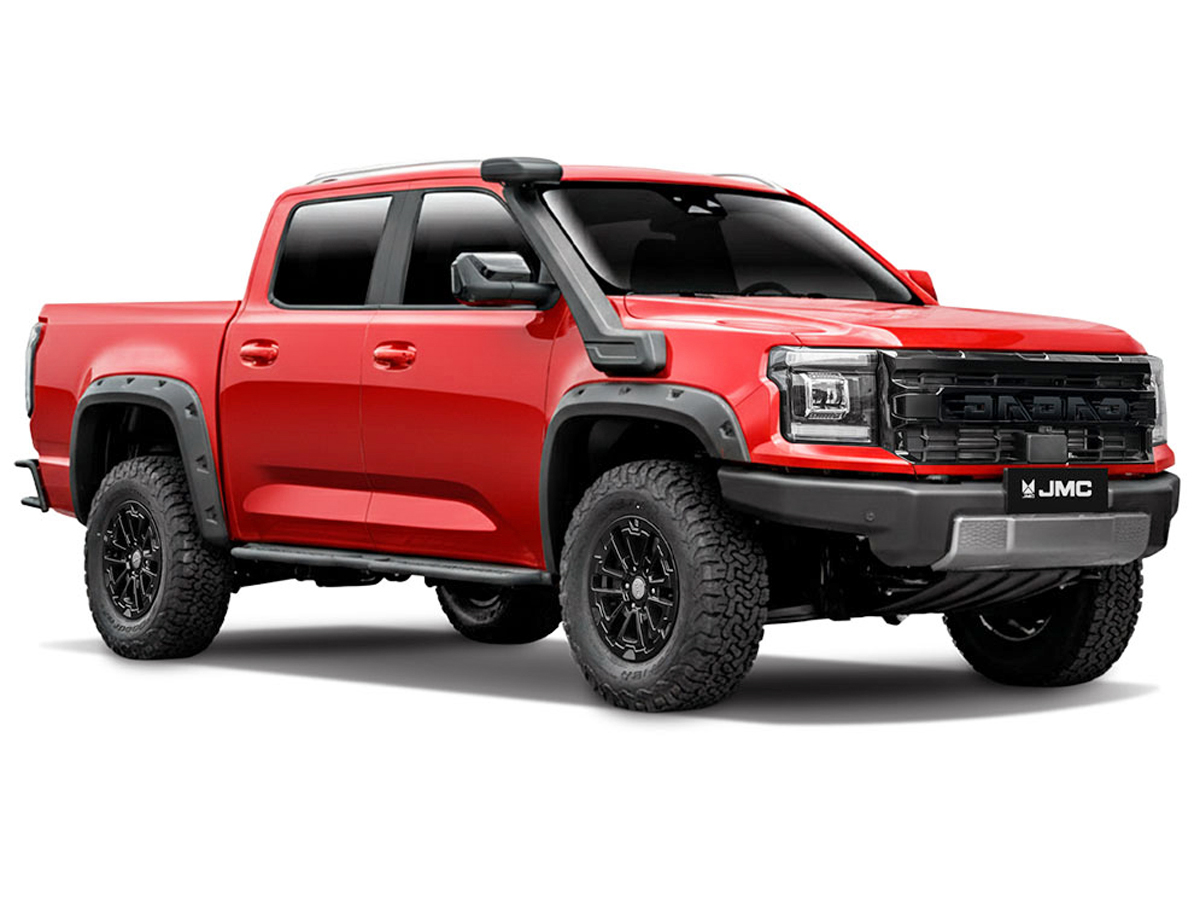
The Grand Avenue Pro (sold under the Dadao sub-brand in China).
As a reminder, in the Vigus, this oil-burning engine makes 123 kW and 430 Nm. However, in Grand Avenue tune, the 4-pot is set to deliver beefier peak outputs of 155 kW and 500 Nm, while also facilitating a 3 500 kg braked towing capacity. We’re guessing the same 8-speed automatic transmission will ship standard (though a 6-speed manual gearbox could theoretically also be offered).
JMC South Africa has furthermore confirmed the flagship Grand Avenue Pro is scheduled to launch locally in 2027. Based on the related Dadao-badged version offered in China, this range-topping (Ranger Raptor-mimicking) derivative will be set apart by a raft of off-road upgrades, from a multi-link rear suspension set-up and uprated shocks to all-terrain tyres and a loftier ground clearance.
Frequently Asked Questions (FAQ) About JMC’s South African Bakkie Line-up
Q: What are the current bakkie options available from JMC in South Africa?
A: JMC officially returned to Mzansi with the Vigus range. The lineup includes the workhorse-focused Vigus Single Cab (priced from R299 900) and a trio of new Vigus Double Cab derivatives. These 2.5TD models are currently some of the most affordable double cabs in the country, with the entry-level 4×2 manual starting at R399 900 and the flagship 4×4 automatic topping out at R499 900.
Q: How does JMC’s warranty and service support compare to established brands?
A: To compete with traditional players, JMC offers a standard 5-year/200 000 km warranty on its new Vigus models, a significant coverage period in this segment. This is complemented by a 4-year/65 000 km service plan, aiming to provide peace of mind for buyers concerned about the long-term running costs of a newly reintroduced brand.
Q: What mechanical upgrades will the Grand Avenue Pro feature to justify its “off-road” status?
A: Scheduled for a 2027 local launch, the Grand Avenue Pro will be significantly more rugged than the standard Grand Avenue (which will arrive first). It will swap the traditional rear leaf springs for a multi-link suspension setup and feature uprated shock absorbers, all-terrain tyres and a higher ground clearance to better handle technical off-road terrain.
It got well and truly dusty during the launch of the new Kia Tasman. Sand, gravel and lots of it as our convoy made its way from Cape Town into the Cederberg and back again. Here’s what happened…
Where does the Kia Tasman fit in?
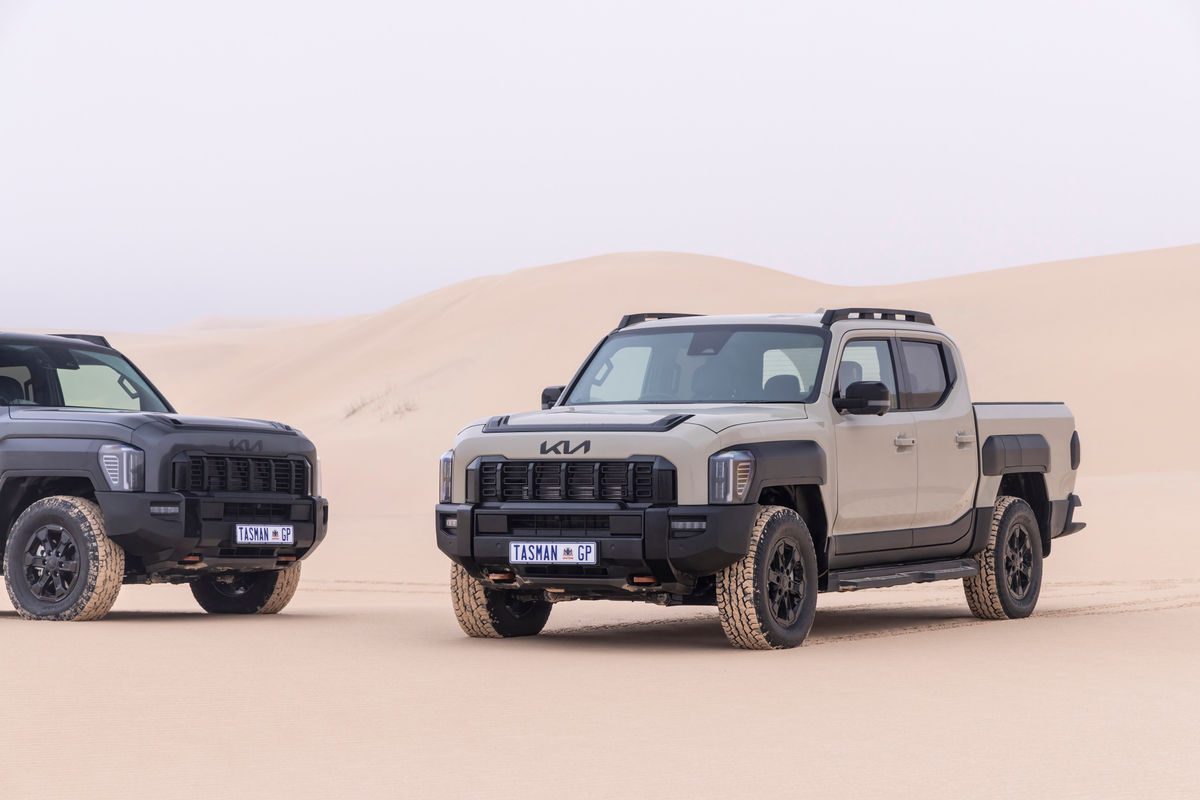
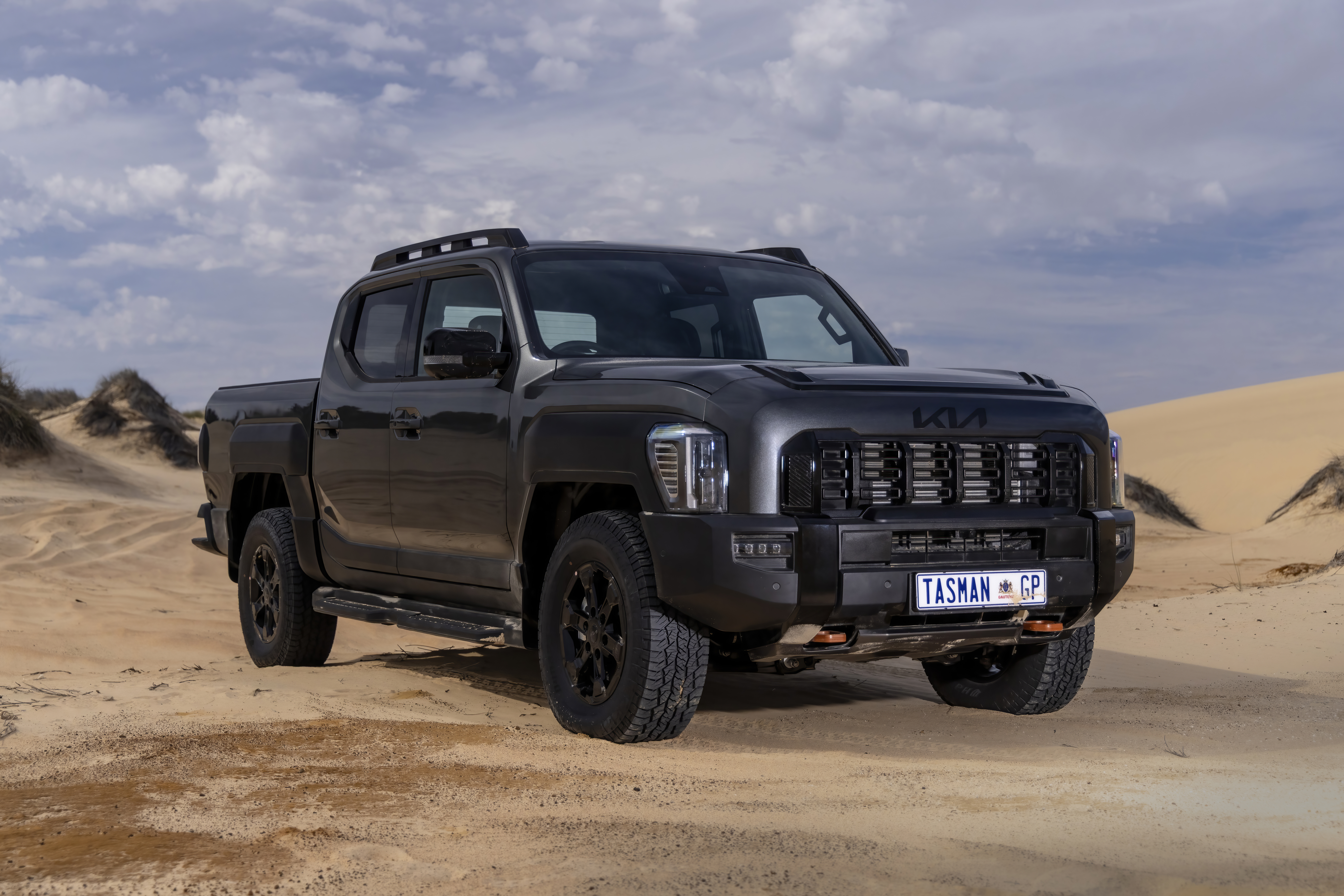
A face only a mother (or its designer) could love…
More like, how was the Kia Tasman conceived? I’d like to think it went a bit like this. Kia’s big boss said to their top designer, “I’d like it styled out of Lego!” And upon the designer’s return with a large container brimming with colourful blocks, the boss shrieked, “No! Just one block. Yes, like that. Perfect.”
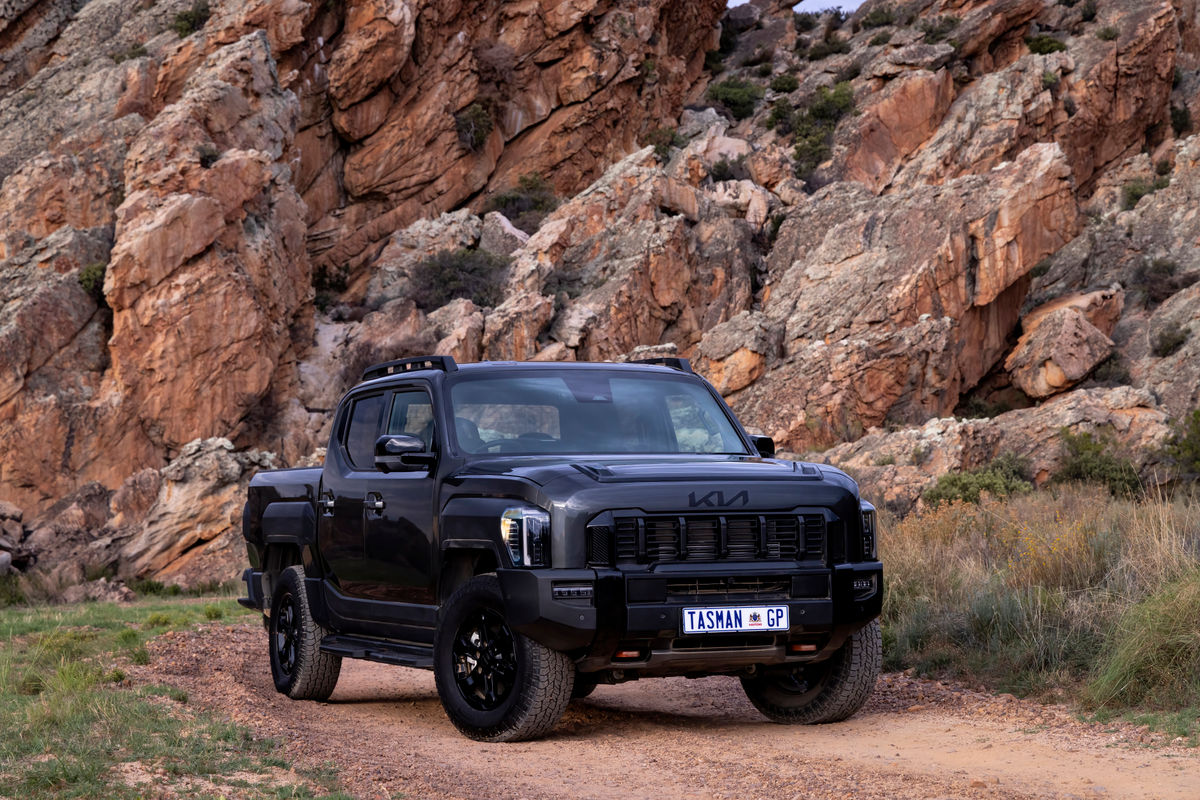
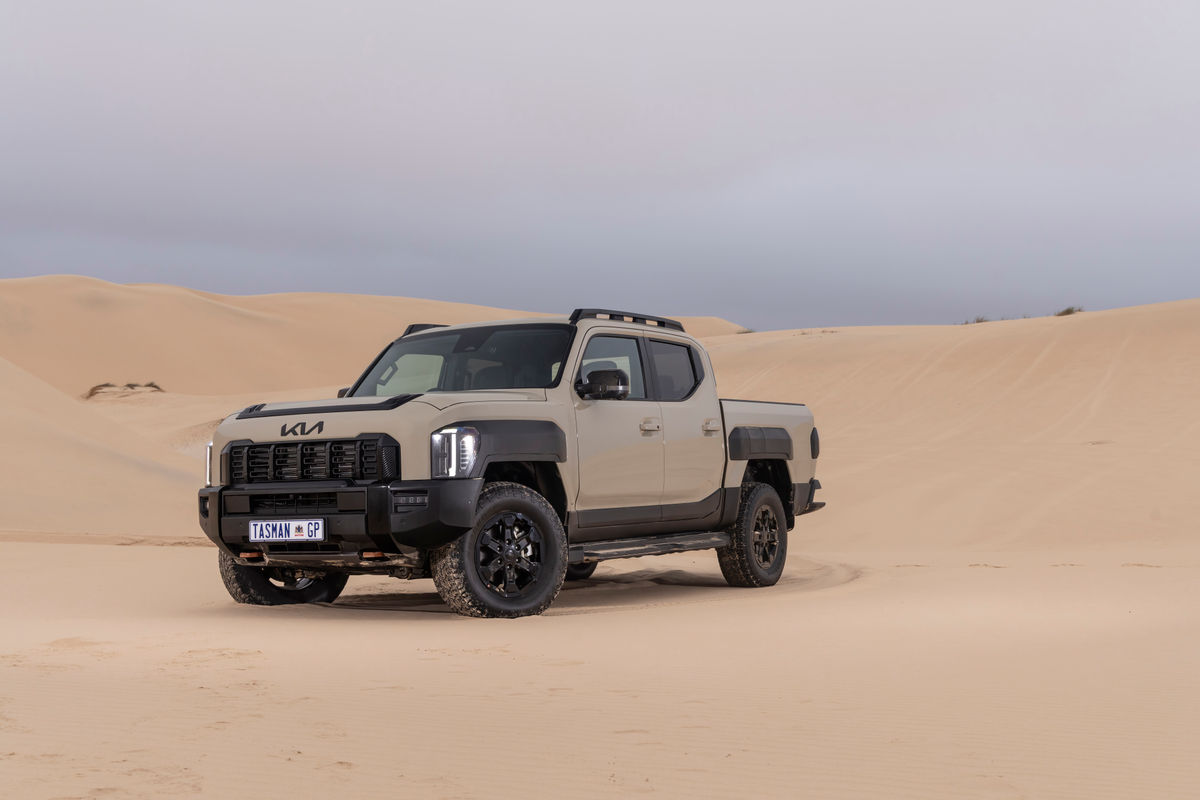
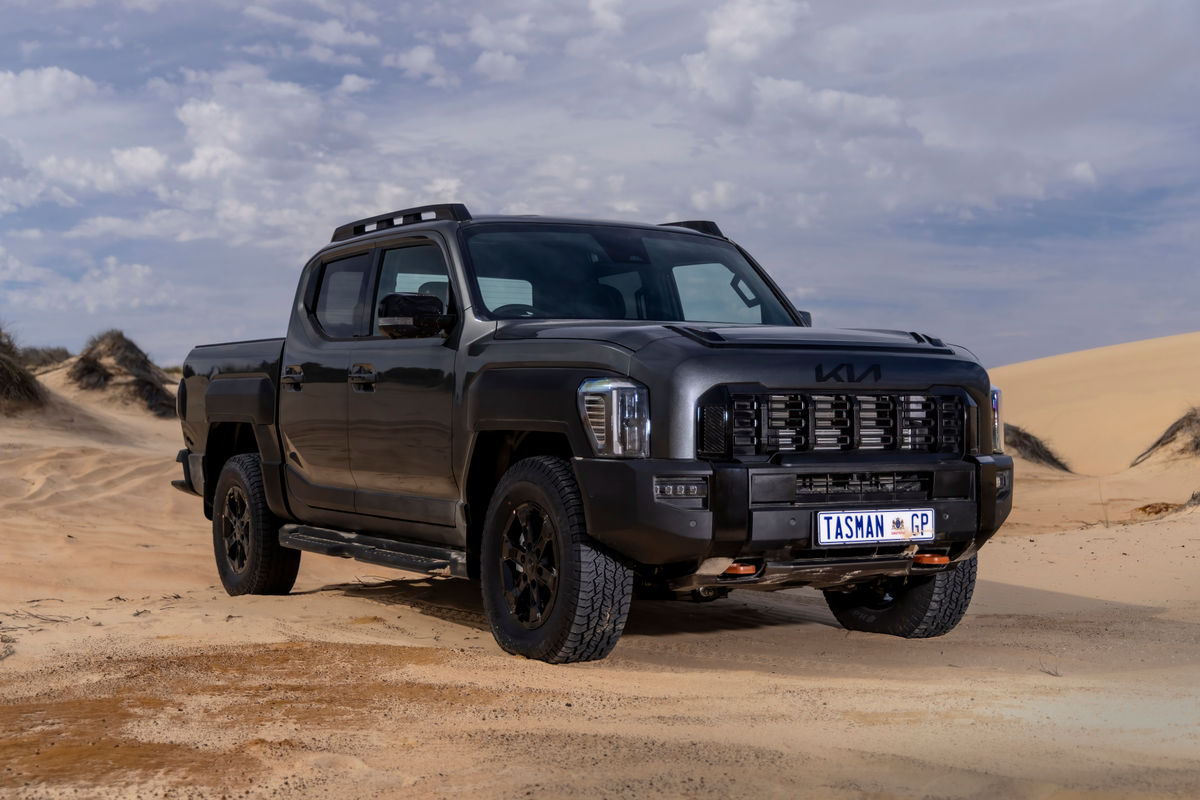
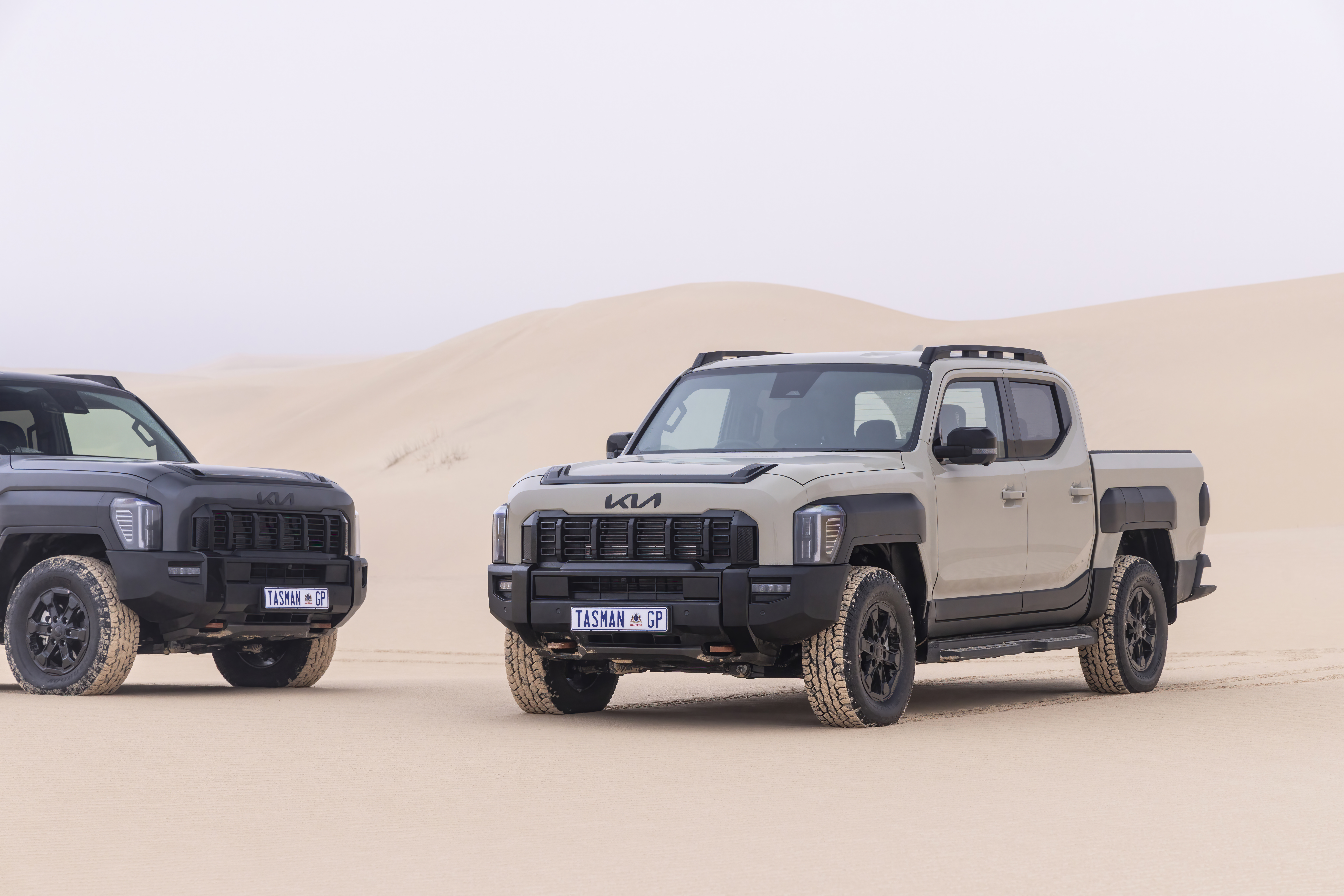
The Tasman is an odd-looking truck, I’ll concede. It is almost its only bone of contention among bakkie enthusiasts. There’s an understanding that Kia has a viable alternative to the Toyota Hilux and Ford Ranger here … if you can look beyond the styling.
Beauty is in the eye of the beholder…
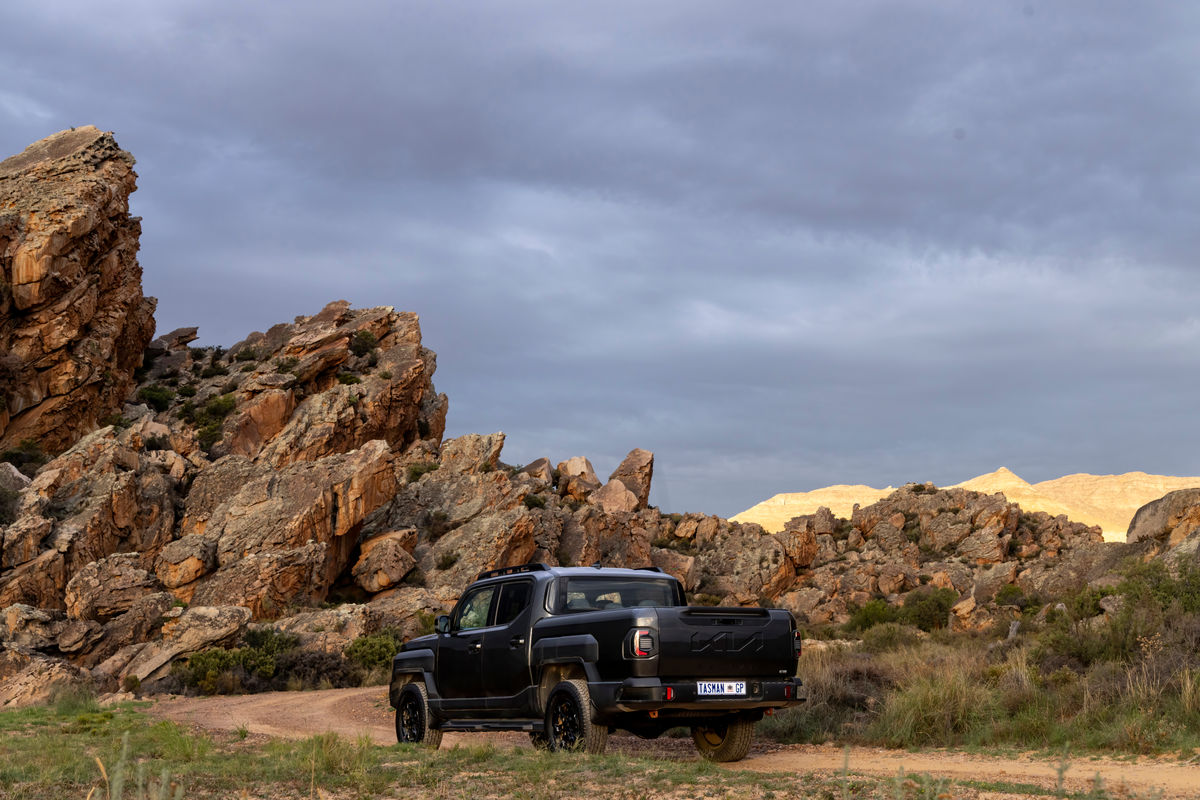
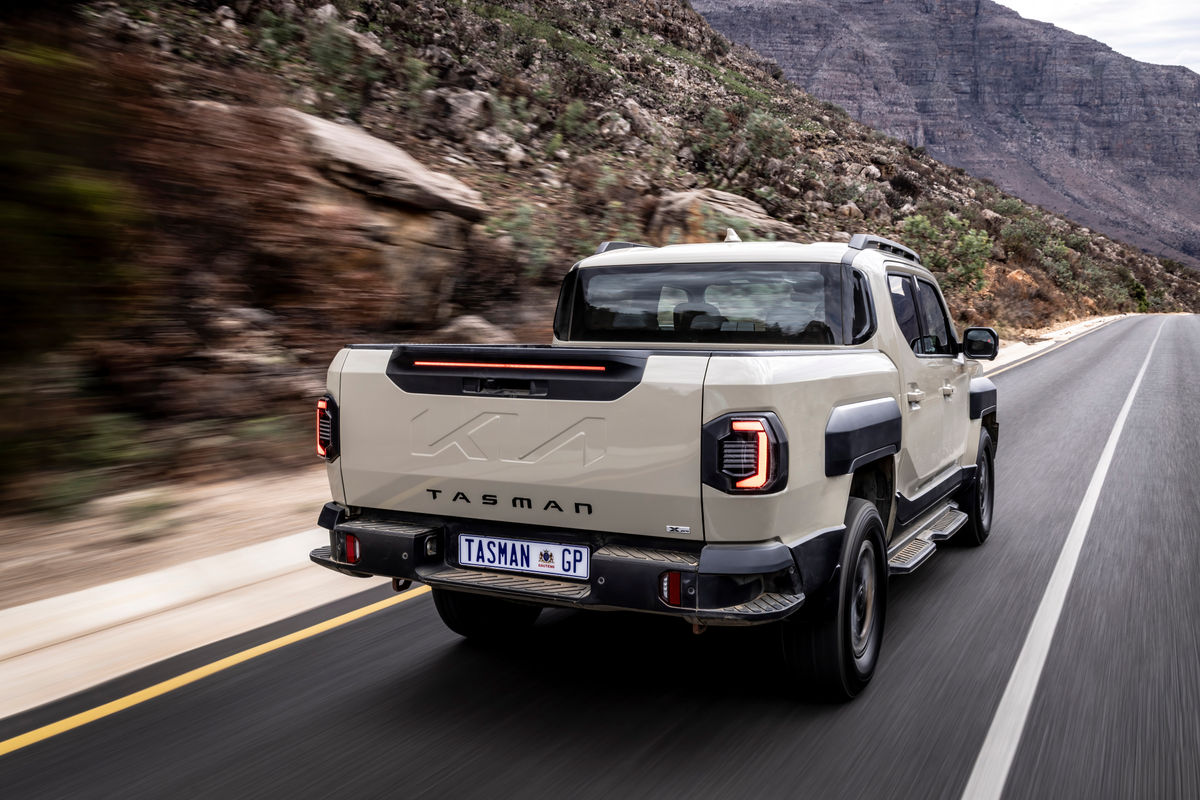
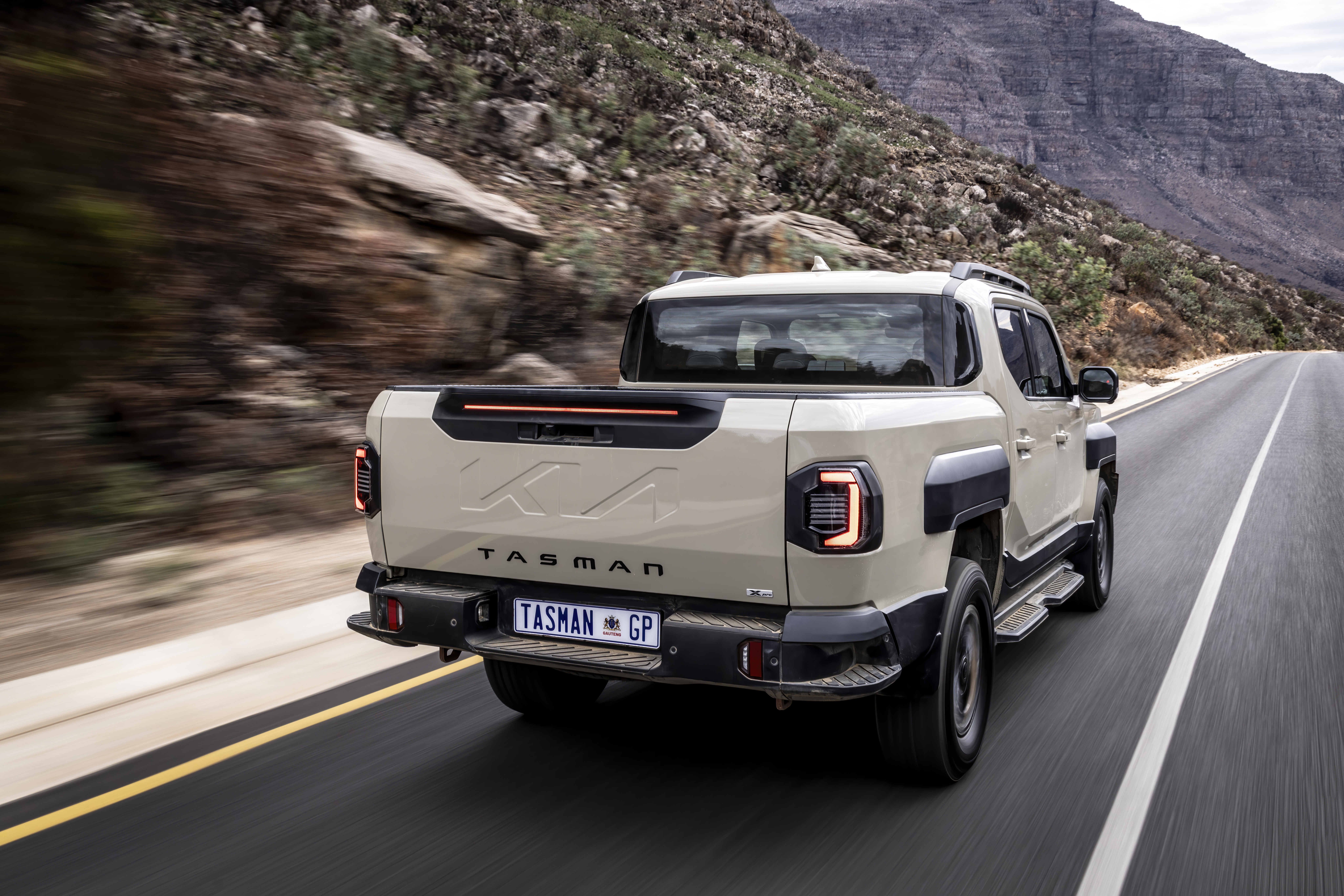
The rear-end is much less divisive…
Those who are able to do so, are in for a treat. Those who can’t? Well, I have a short anecdote that might help. Many years ago, at the unveiling of the Jaguar F-Type, a group of opinionated journos (myself included) commented on how we saw bits of Ferrari California in its DNA; Mazda MX-5 even. At this point, Ian Callum, the master stylist who crafted the famous Jag, squeezed in between us and explained how he’d taken no offence, and that it is natural for the human eye to seek out common shapes and elements. It’s how we understand things. Categorise them.
Once you look past its, er, looks, the Tasman is a deeply impressive product.
The Tasman has very few common shapes. And so it stands out among the classic double-cab fraternity. The Ranger shares a familiar profile to the Hilux, the Isuzu D-Max and challengers from China such as the GWM P-Series and Changan Hunter. The Tasman? Think Mars Rover.
Is this the best bakkie interior? GWM might have something to say about its P500’s cockpit.
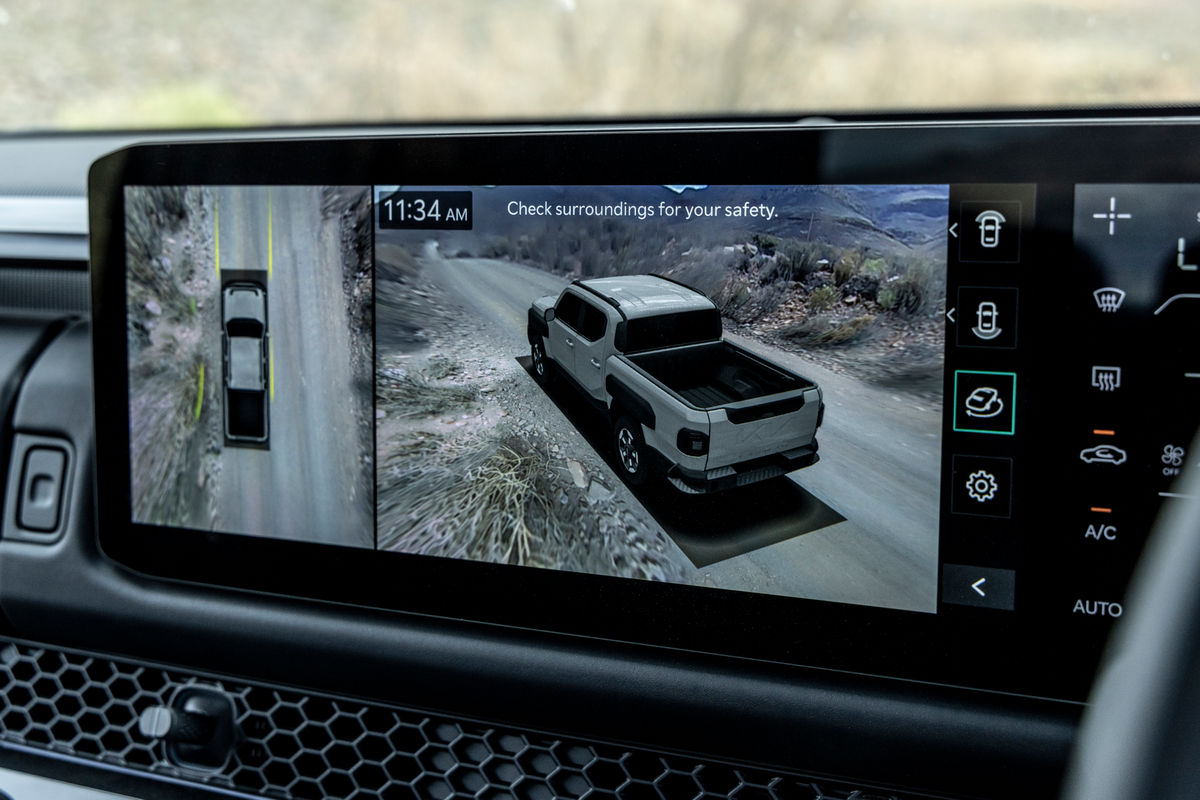
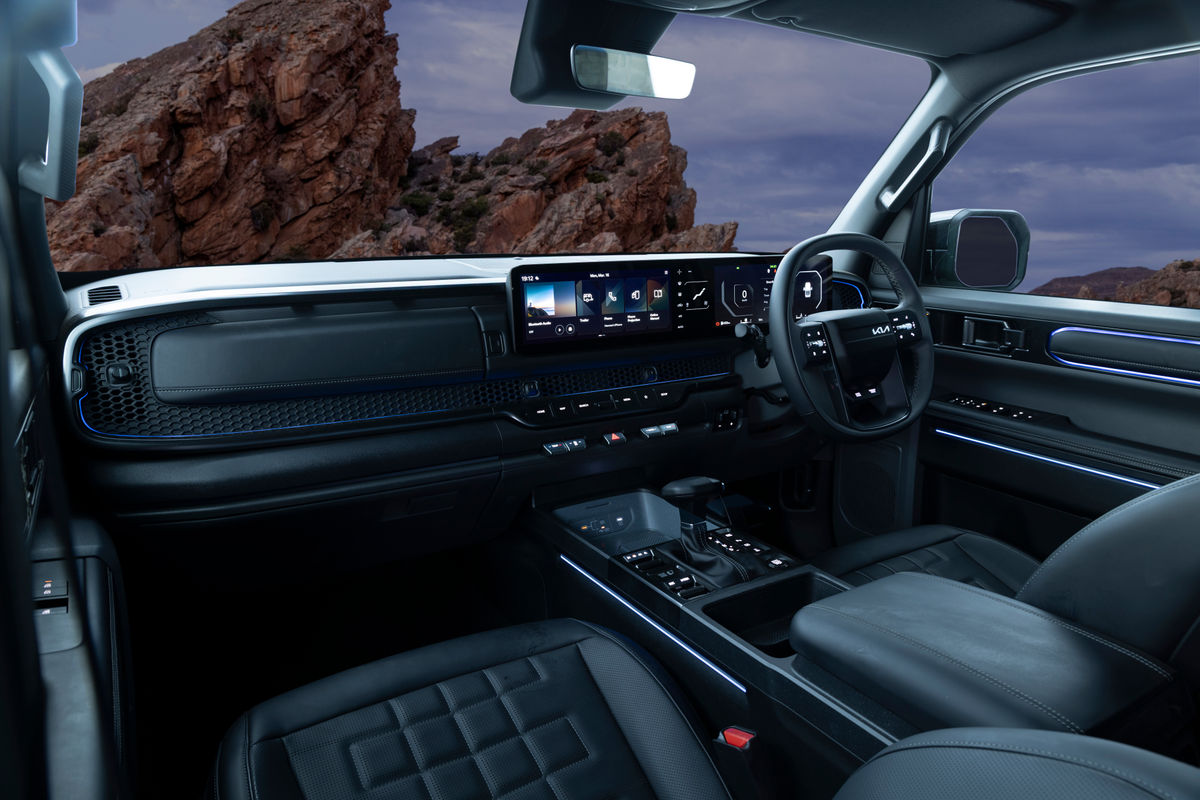
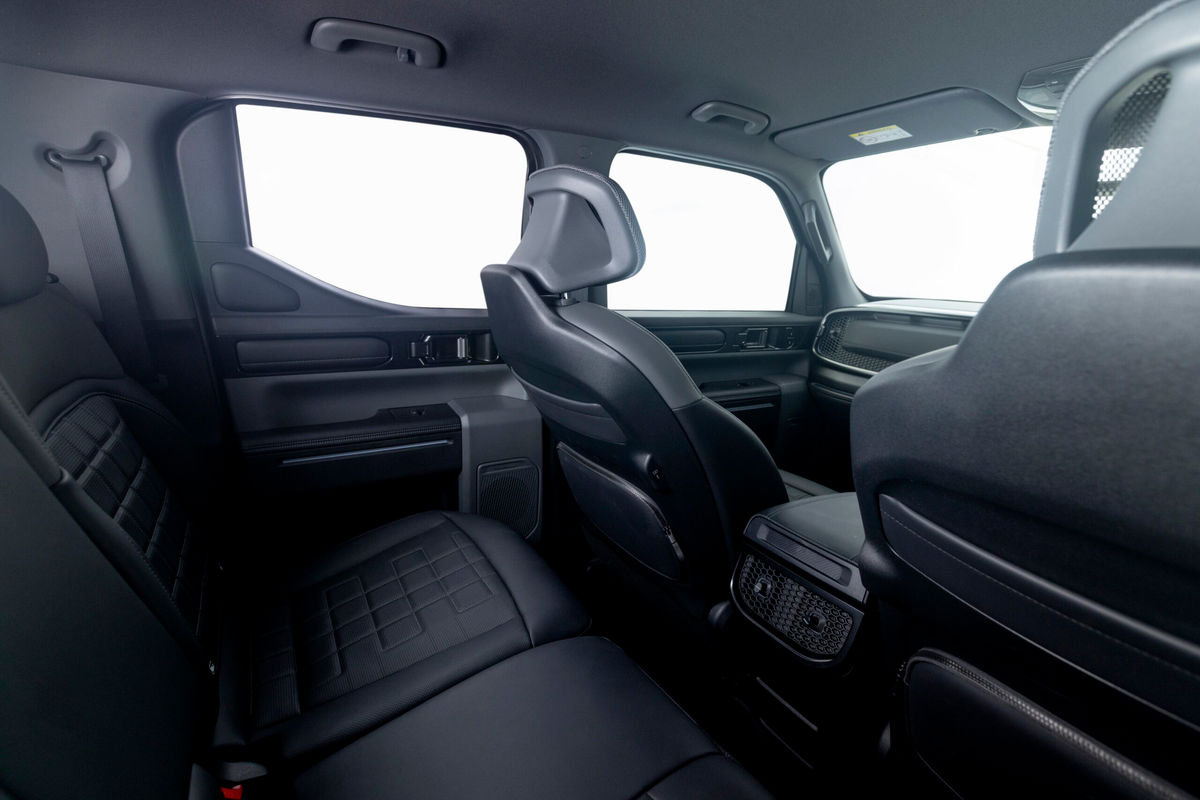
Now that we can finally move on from the divisive exterior, we can hop aboard the cabin. I’m not going to bury the lead here: the Tasman has my favourite bakkie cabin of them all. It’s spacious, well-appointed and tactile. There are knurled rollers, soft-touch surfaces plus a wraparound digital display that starts with a 12.3-inch infotainment screen, extends via a 5-inch AC display then seamlessly meets the 12.3-inch digital cluster ahead of the driver in this, the X-Pro flagship model.
As you’d expect from a Kia, the interior is logically laid out and solidly made.
By virtue of being the R1 million top-of-the-range 4×4, the X-Pro also benefits from a Harman Kardon sound system and mood lighting. The hide-covered pews are grippy, comfy and stylish, with a steering wheel to match.
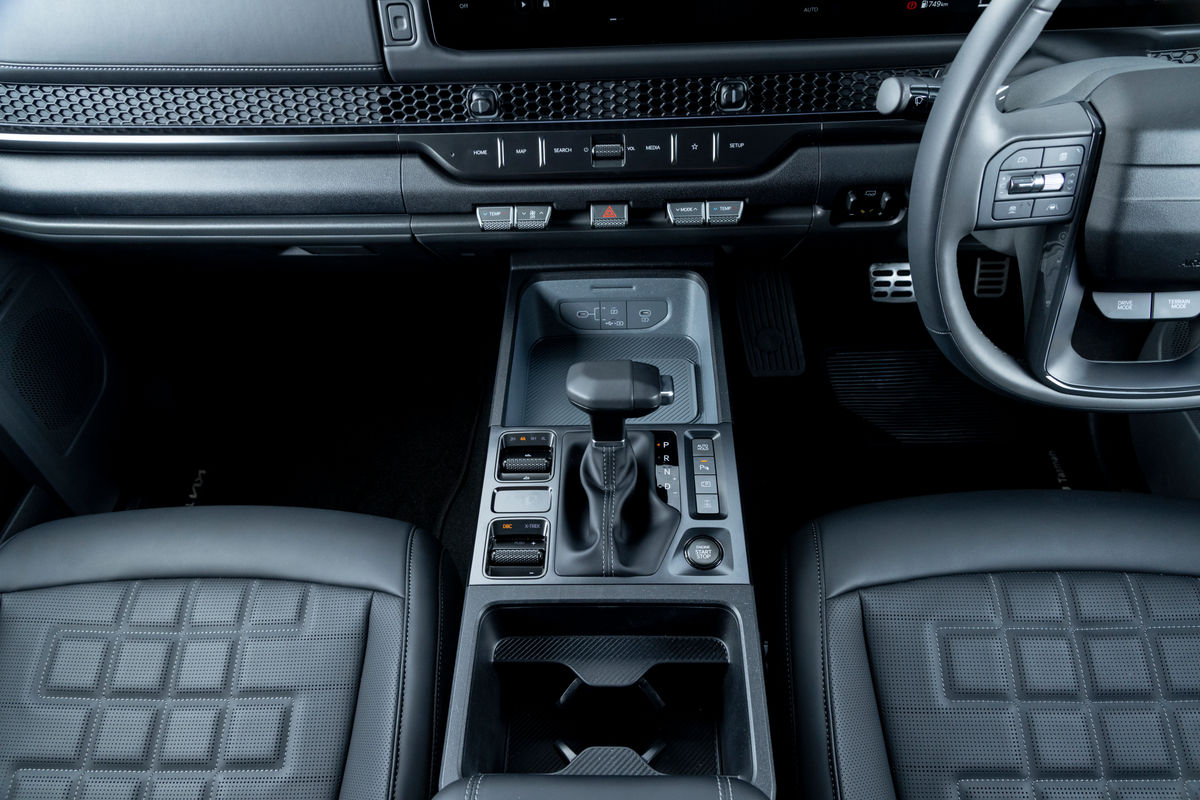
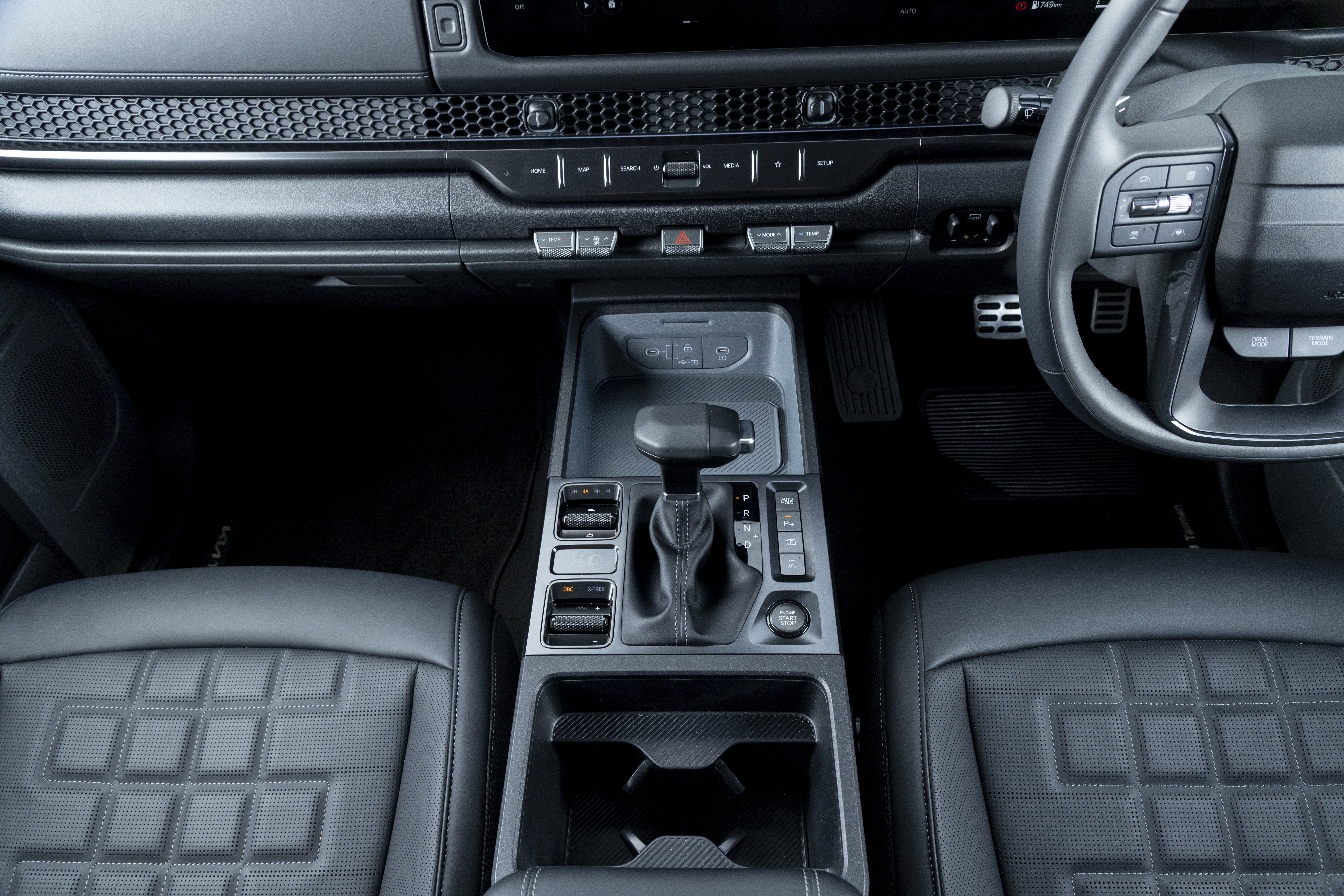
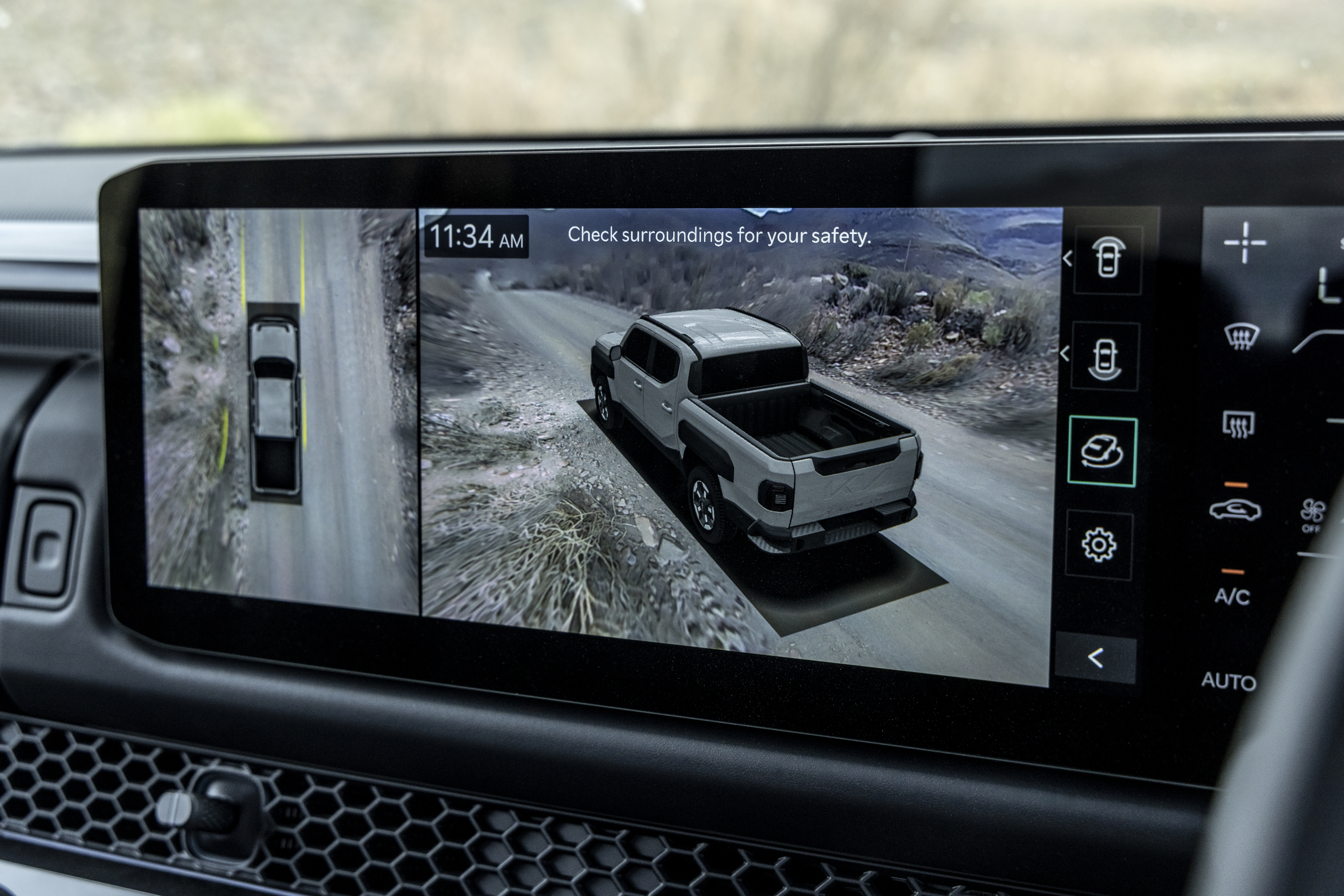
Modern conveniences abound here, as does advanced driving assistance systems and driving modes. These extend beyond the typical 4×4 settings (such as 4A, 4H, 4L) but also include a suite of terrain modes from road to sand and rock crawling via Kia’s X-Trek mode, helped along by an electronic differential.
Tech abounds inside, as you’d expect for a bakkie costing R1 million.
Bakkie only in name…
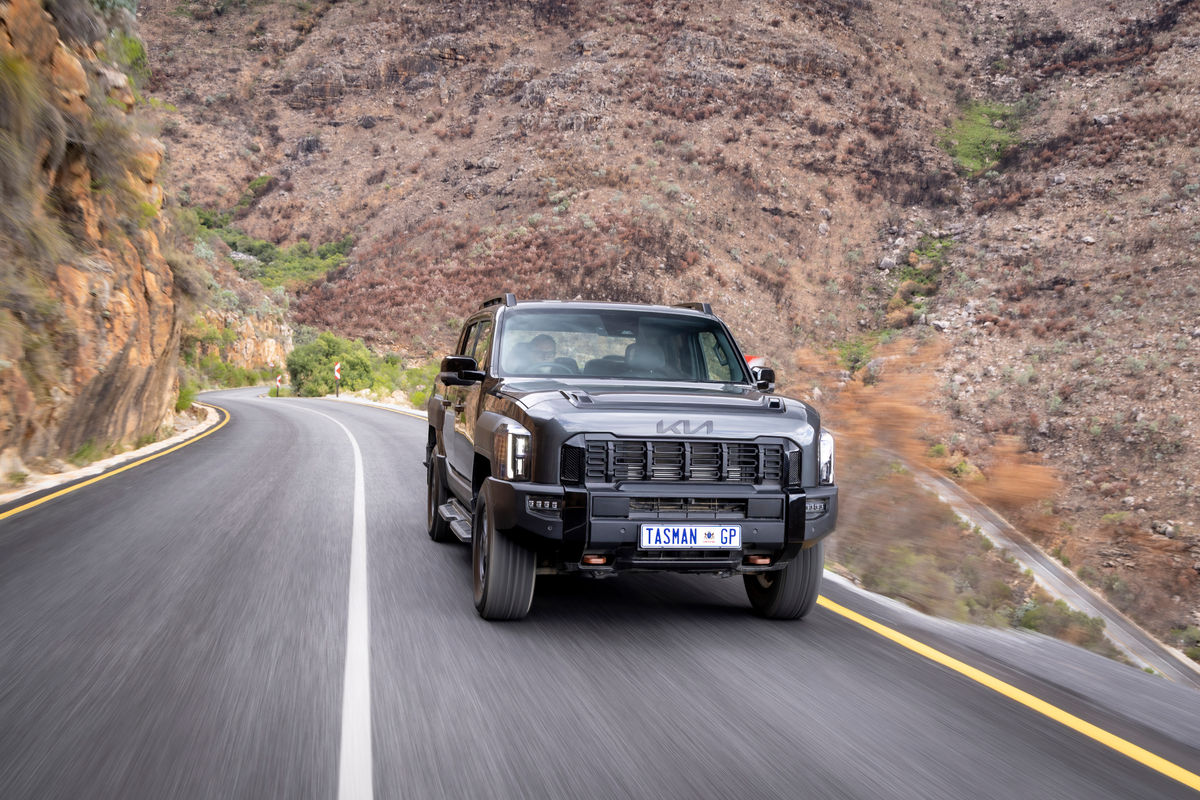
We got to test the full complement of settings as well as the acceleration, road-holding and suspension on our route from the CBD to the Stadsaal Caves. First the N1 highway, then the twisting mountain passes north of Ceres before a foray onto the longest gravel road in South Africa, the R355. The Tasman delivered.
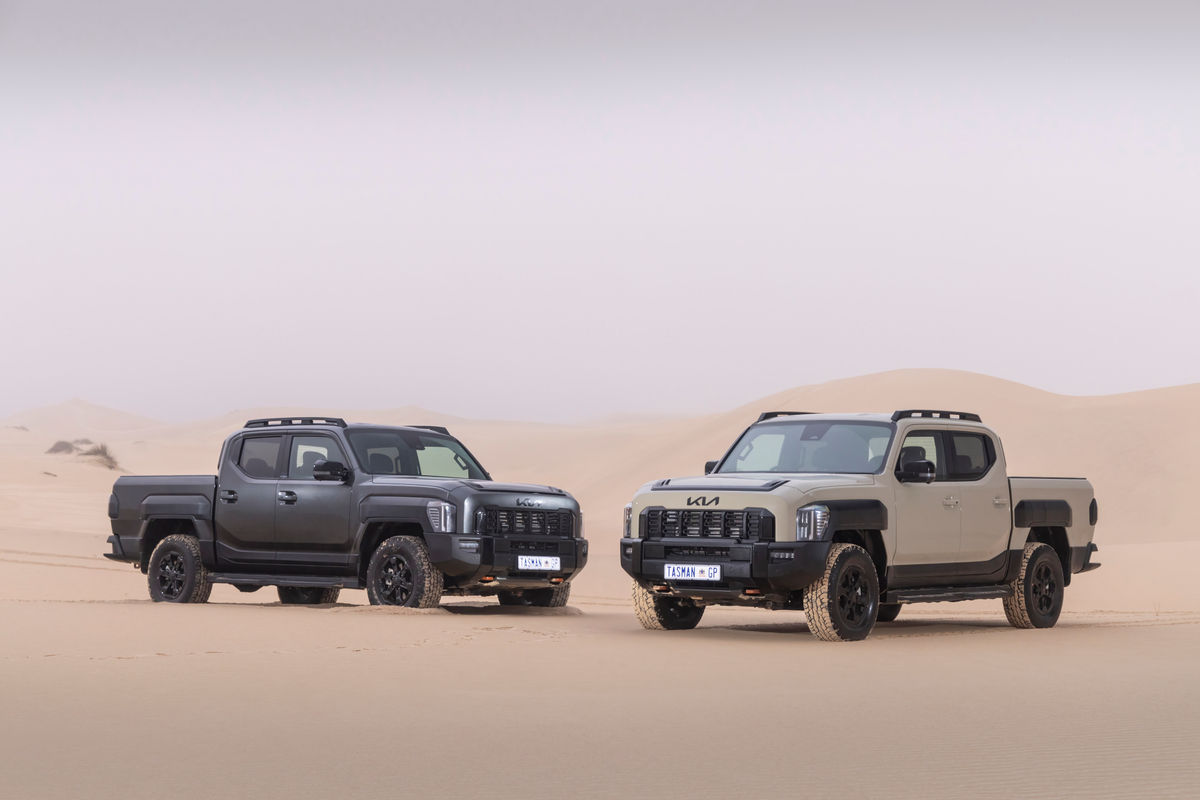
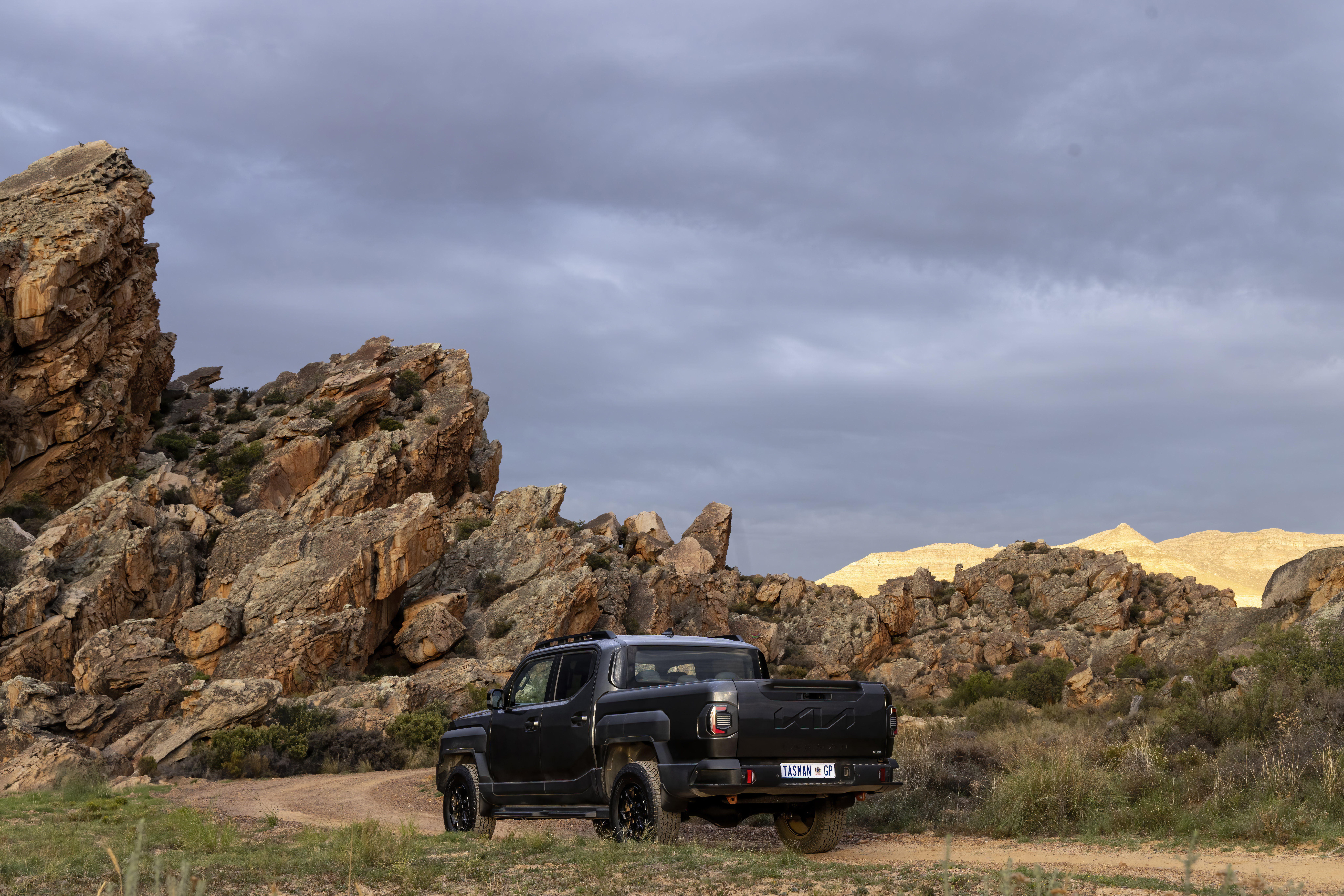
Darker body colours hide some of the more questionable design elements…
First, there’s the beating heart: a 2.2-litre turbodiesel from the Sorento and Carnival, here warmed up to 154 kW and 441 Nm and transferred to the wheels via an 8-speed automatic ‘box.
On the tarmac, the Tasman felt softly sprung but firm enough for confident cornering, as confirmed on the many canyon roads on our 500 km round trip. Acceleration felt linear, but by no means the ‘point’ of the Tasman. It isn’t trying to be a quick double-cab. In fact, data will reveal it is perfectly on par with its rivals.
…As you’ll notice on this image.
The Tasman’s engine is just right
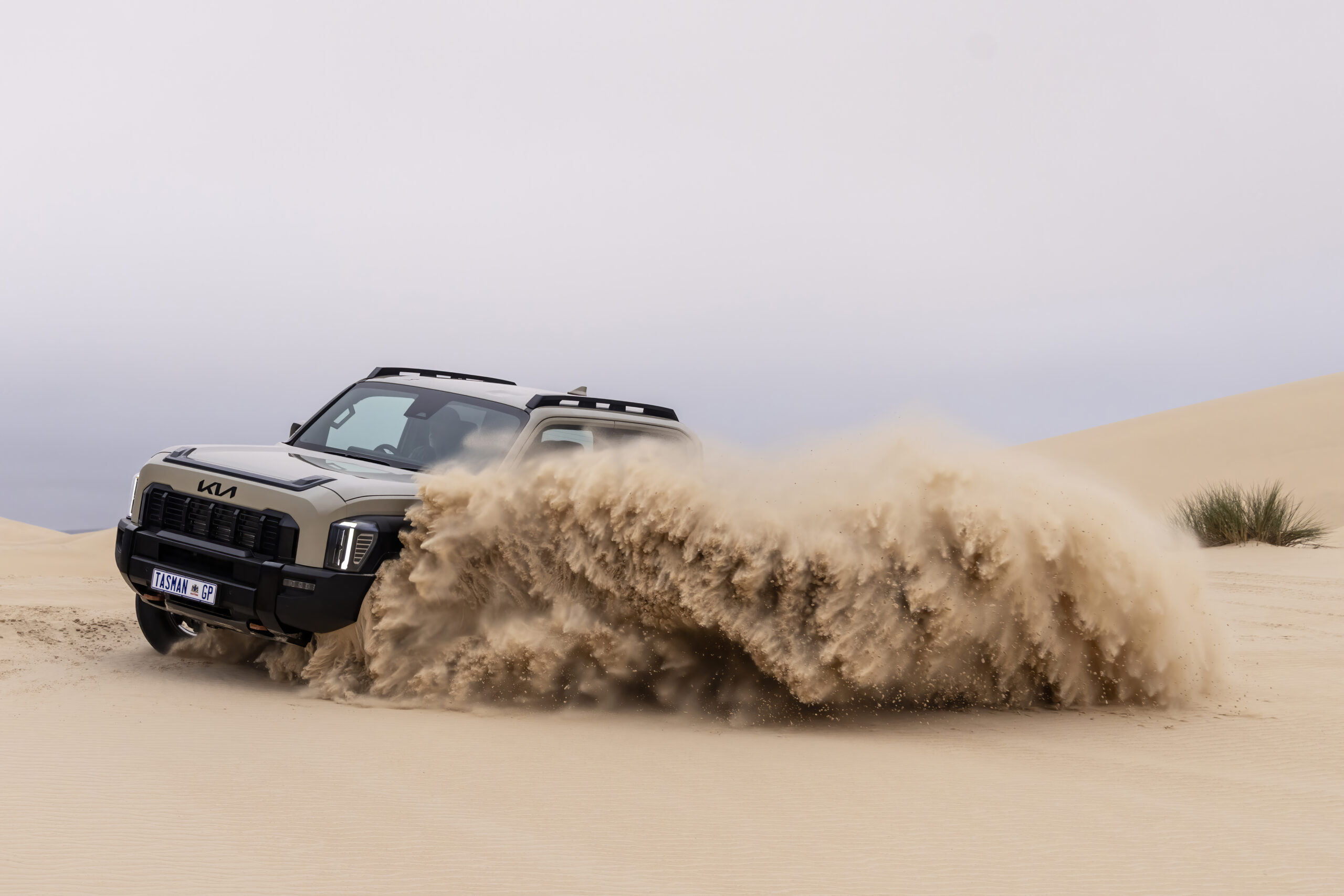
Once the ground turns from grey to clay, however, the Tasman really entertains. It is incredibly enjoyable to drive quickly on dirt; tractable, and with a playful demeanour. The engine is ‘Goldilocks good’ – not too much, not too little, just right, with a helm that favours granularity and feedback. Chuck it in, feed it out, let the electronics pitch in when needed. And you sense there’s a ton of Silicon Valley’s finest at play here – without robbing you of any driver involvement.
The Tasman is fantastically composed off the beaten track.
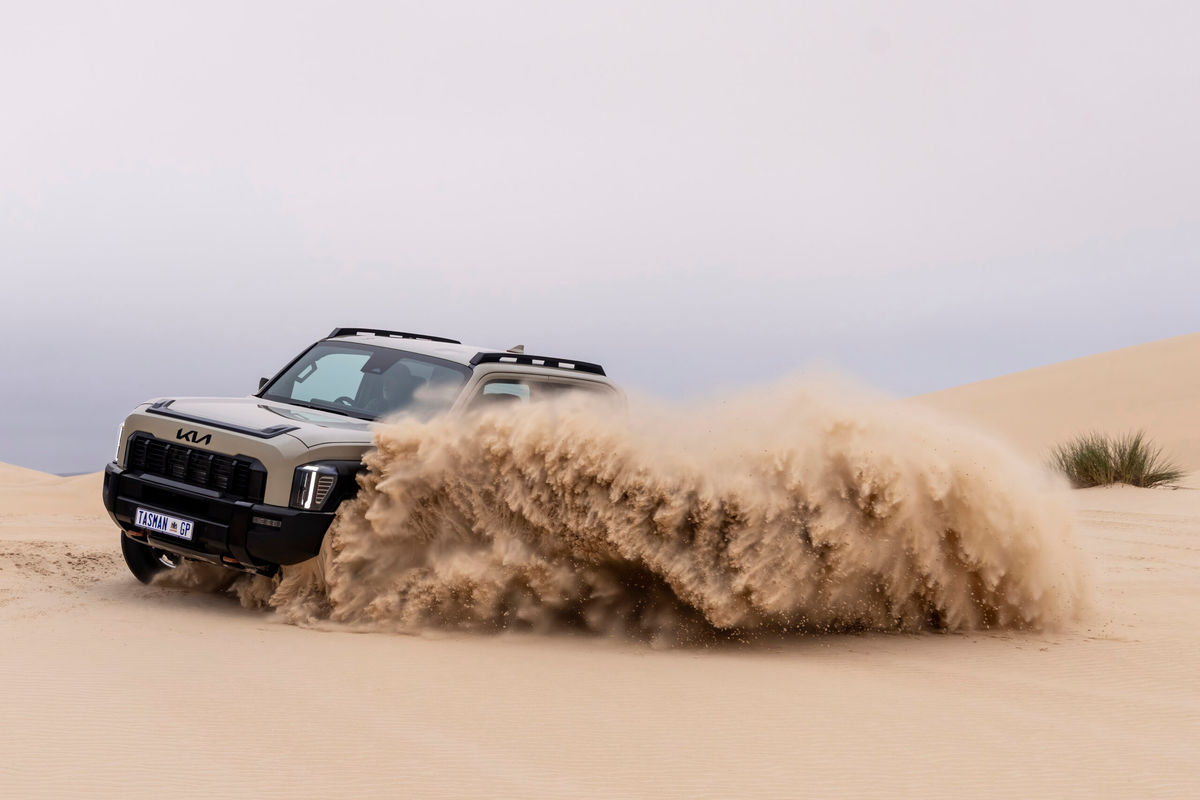
The antics continued as we entered our next playground, the Dunes 4×4 trails in Lamberts Bay, where we really got to wind up the motor and spray tall rooster-tails of sand into the air. What followed was an hour or so of surfing white hills under cobalt blue skies, then clambering across acreage of rock gardens.
X-Trek equals extra fun
Solid fun, with the X-Trek mode functioning like a smart adaptive cruise control, using all its sensors and systems to navigate treacherous terrain. Personally, I prefer using my own software (points at head) for maximum enjoyment, but the trick is pretty neat – and a rare feature in this segment, usually reserved for full-sized off-roaders (at twice the price).
How much does the new Kia Tasman cost in South Africa?
The new Kia Tasman is sold with a 6-year/90 000 km service plan as well as a 5-year/unlimited km warranty.
Overall, the Tasman intrigues me. It is an excellent product that Kia needs to do well. It is competing in a hotly contested segment that is already facing new challengers from the East. Double-cabs are part of the Mzansi DNA and a great halo product to have in your portfolio. That this one comes with a tried-and-tested drivetrain from a marque with equity in our country is another boon. Only the market will determine its fate now.