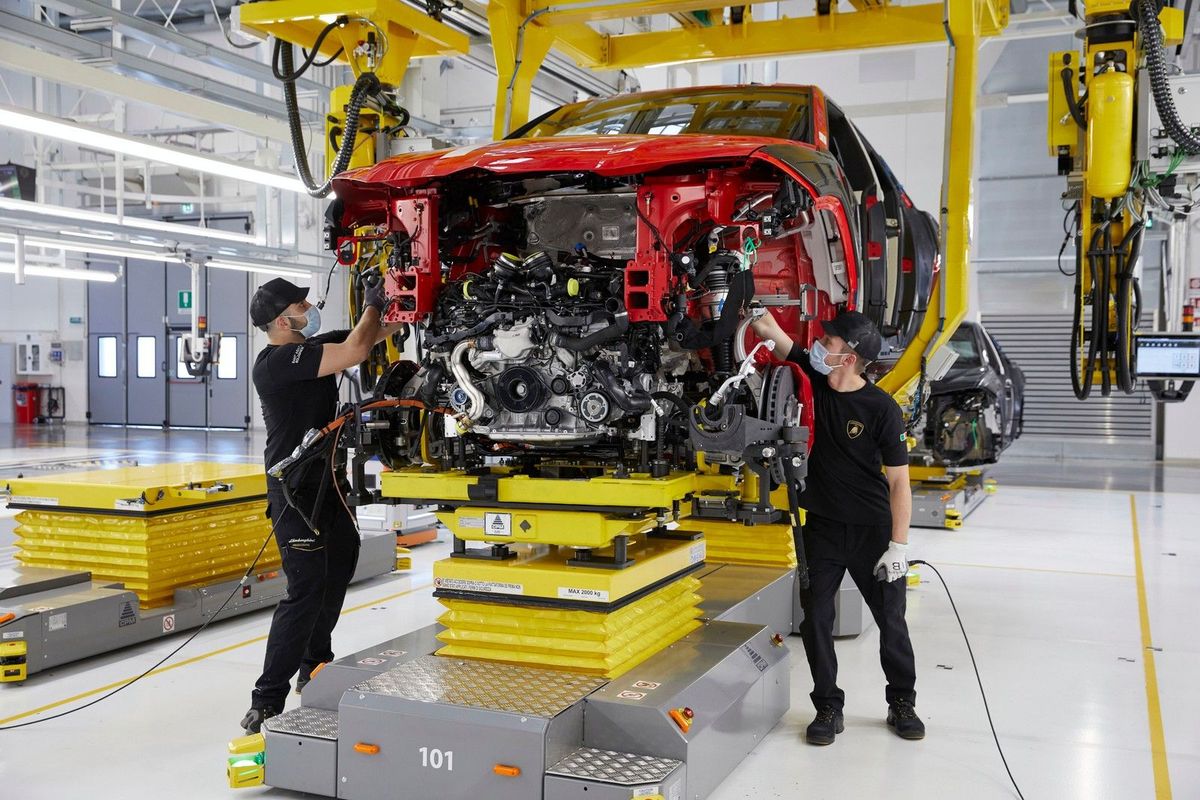
Italian carmaker Lamborghini has finally admitted that it needs to join the mainstream electrified world by reducing carbon emissions and announced its strategy for the future.
As niche and low volume as it may be, Lamborghini has announced its electric strategy for the future. While the focus is on decarbonisation, the Direzione Cor Tauri details the roadmap to electrification over the next 10 years.
The first electrified hybrid product will be hitting the roads by 2023, every Lamborghini model will be electrified by 2024 and it's first all-electric vehicle will be on the road by 2029. Product aside, Lamborghini hopes to have reduced its CO2 emissions to half its current level by 2025.
Cor Tauri, Lamborghini’s strategy, will comprise of 3 phases in its words:
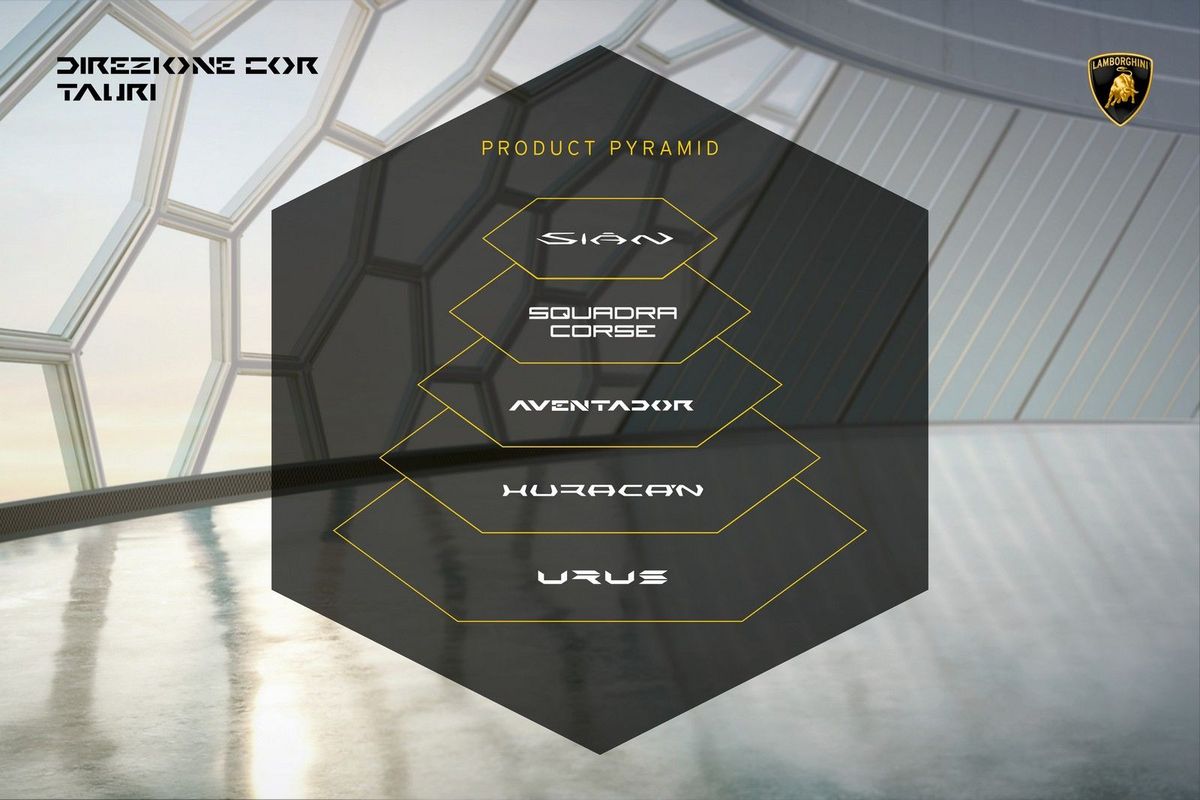
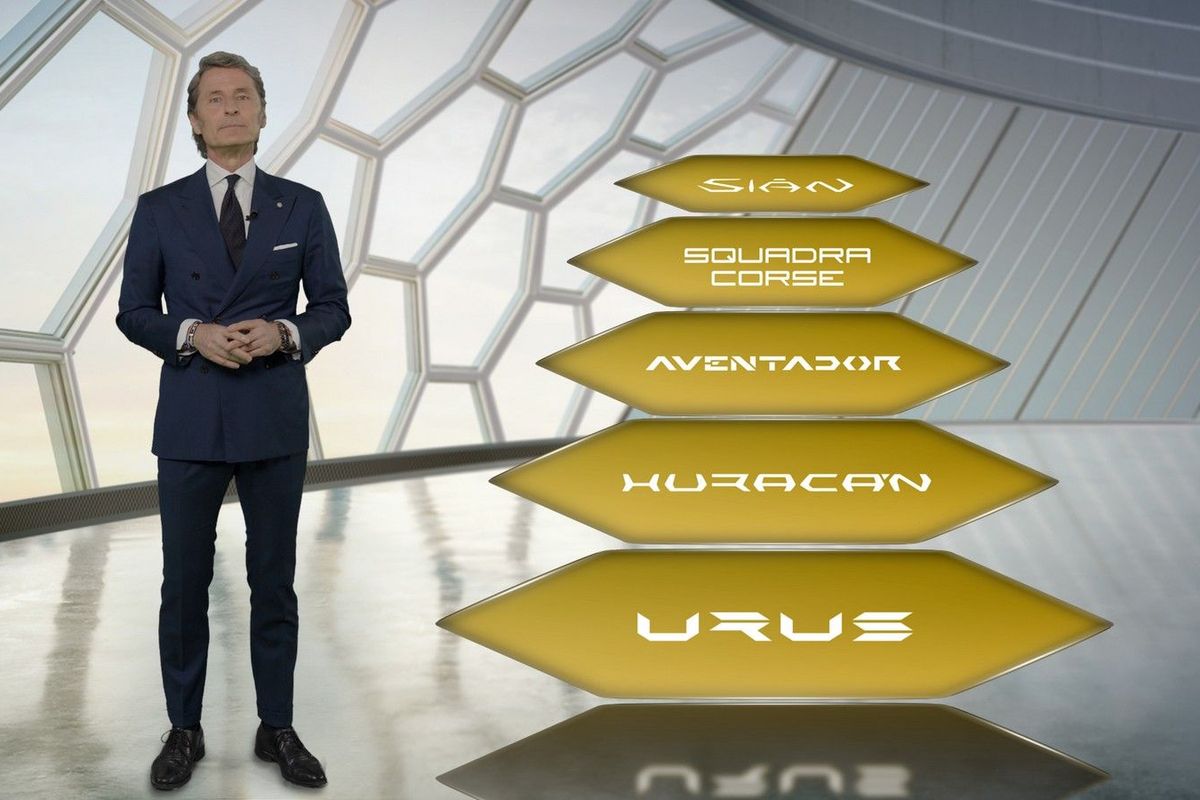
Celebrating the combustion engine (2021-2022) by presenting models paying tribute to the company’s recent period of continuous success. In the wake of steady sales growth and a seven-fold increase in turnover over the last fifteen years, Lamborghini has established itself as a center of excellence in the production of the best super sports cars. Unique design, technological innovation at the highest levels backed by huge investments in research and development, and the highest quality and craftsmanship are the basis for a pyramid of products: from the Urus Super SUV, the cornerstone of today’s success, rising to the pinnacle of technology and design masterpieces with the limited series. The most recently unveiled, the Sián, kicked off the electrification journey: the first Lamborghini featuring hybrid technology. This phase will be characterized by the development of combustion engines for versions that pay homage to the brand’s glorious history and iconic products past and present, but always under the impetus of the visionary spirit that distinguishes Lamborghini. Two new cars in the V12 model line-up will be announced in 2021.
Hybrid transition (by the end of 2024): in 2023 Lamborghini will launch its first hybrid series production car, and by the end of 2024 the entire range will be electrified. Performance and the authentic Lamborghini driving experience will remain the focus of the company’s engineers and technicians in developing new technologies, and the application of lightweight carbon fiber materials will be crucial in compensating for weight due to electrification. The company’s internal target for this phase is to reduce product CO2 emissions by 50% by the beginning of 2025.
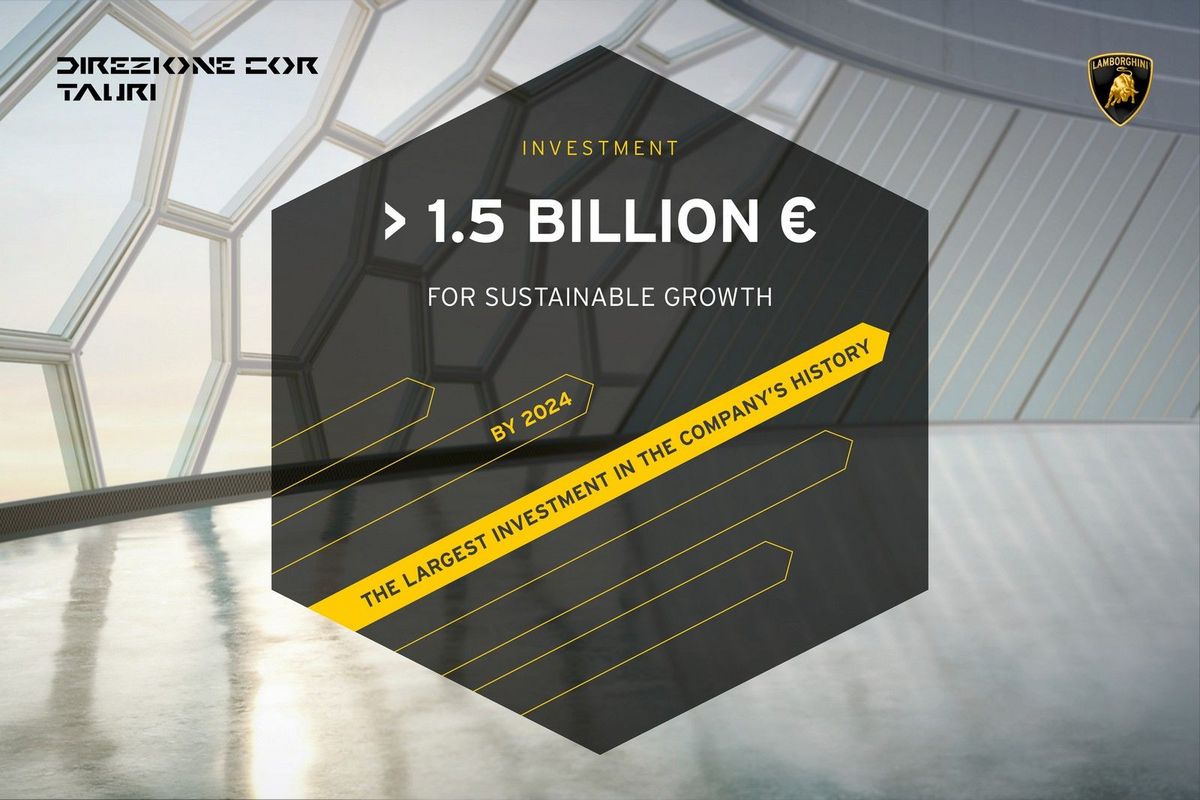
Leading the hybrid transition will be an unprecedented investment: more than 1.5 billion euros allocated over four years, the largest in Lamborghini’s history. It is a tangible sign of the company’s strong sense of responsibility towards the need for a concrete response, through significant innovations, to the period of profound transformation that is affecting the whole automotive industry.
First fully-electric Lamborghini (second half of the decade): acceleration in the second part of the decade will be dedicated to full-electric vehicles, with the vision of a fourth model in the future. Once again, technological innovation in this phase will be oriented towards ensuring remarkable performance, and positioning the new product at the top of its segment. This is how Lamborghini sees the culmination of this part of its journey: Cor Tauri, the brightest star in the constellation to which the company’s roadmap points, is represented by a fourth fully-electric model.
For those who want the simplified version without the marketing jargon, essentially the first part of the plan will continue with the internal combustion engine with the last of the naturally-aspirated V12 products being revealed. There will be 2 V12-powered vehicles in 2021 and these will signify the end of this iconic 12-cylinder engine. Part two of the plan starts in 2023, where Lamborghini will launch its first hybrid series production vehicle. It will be the 2nd electric assist vehicle after the extremely rare Sian. Lamborghini has invested €1.5 billion over 4 years. This could be a hybrid plug-in version of the Lamborghini Urus. Finally, from 2025 Lamborghini says it will be making its all-electric vehicle. Very little is known, but we could see the Porsche Taycan/Audi e-tron GT platform underpinning this new Lamborghini. We don't think Lamborghini quite has enough money to develop its own all-new electric platform, but we'll have to wait and see.
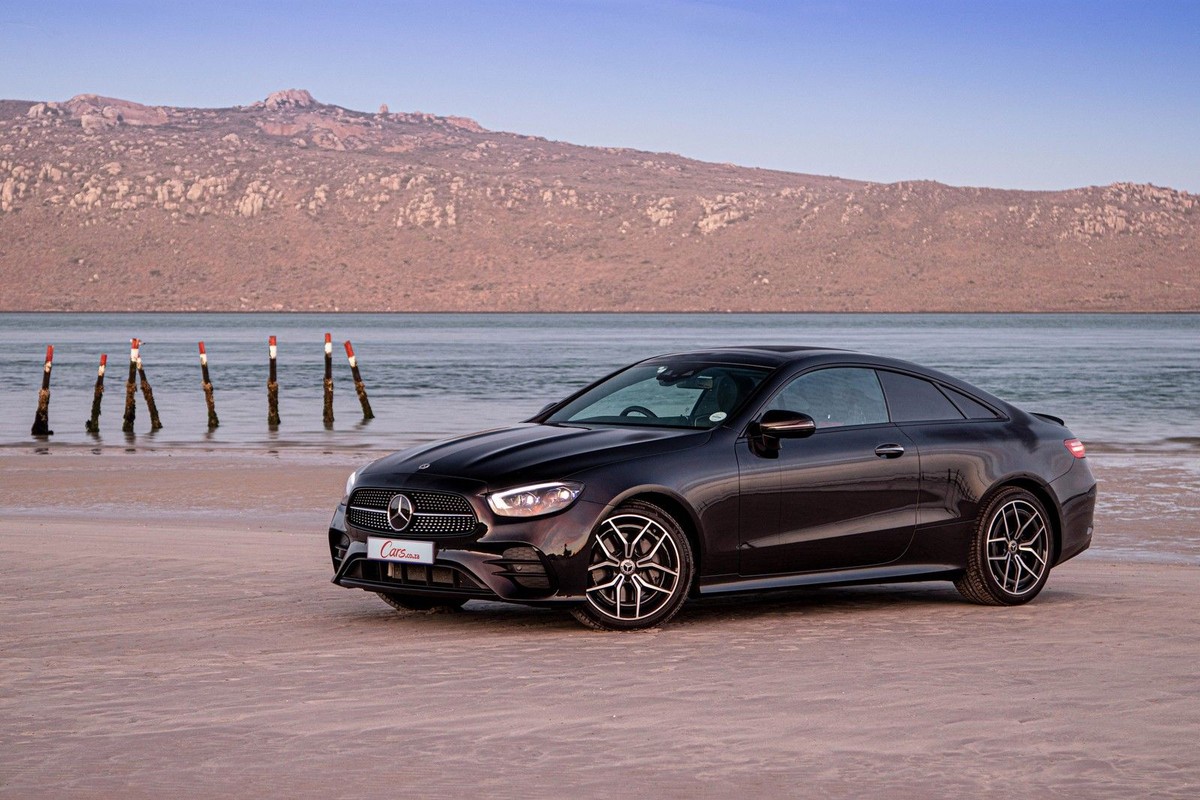
The facelifted Mercedes-Benz E-Class recently touched down in South Africa. While most eyes were on the headline-grabbing E63 S sedan, there's an understated elegance about the range's coupe variants. We've already had a taste of the AMG-fettled E53 derivative, but might the E300 AMG Line be a smarter choice?
We like: Exudes class and sophistication, surprisingly practical, luxury in abundance
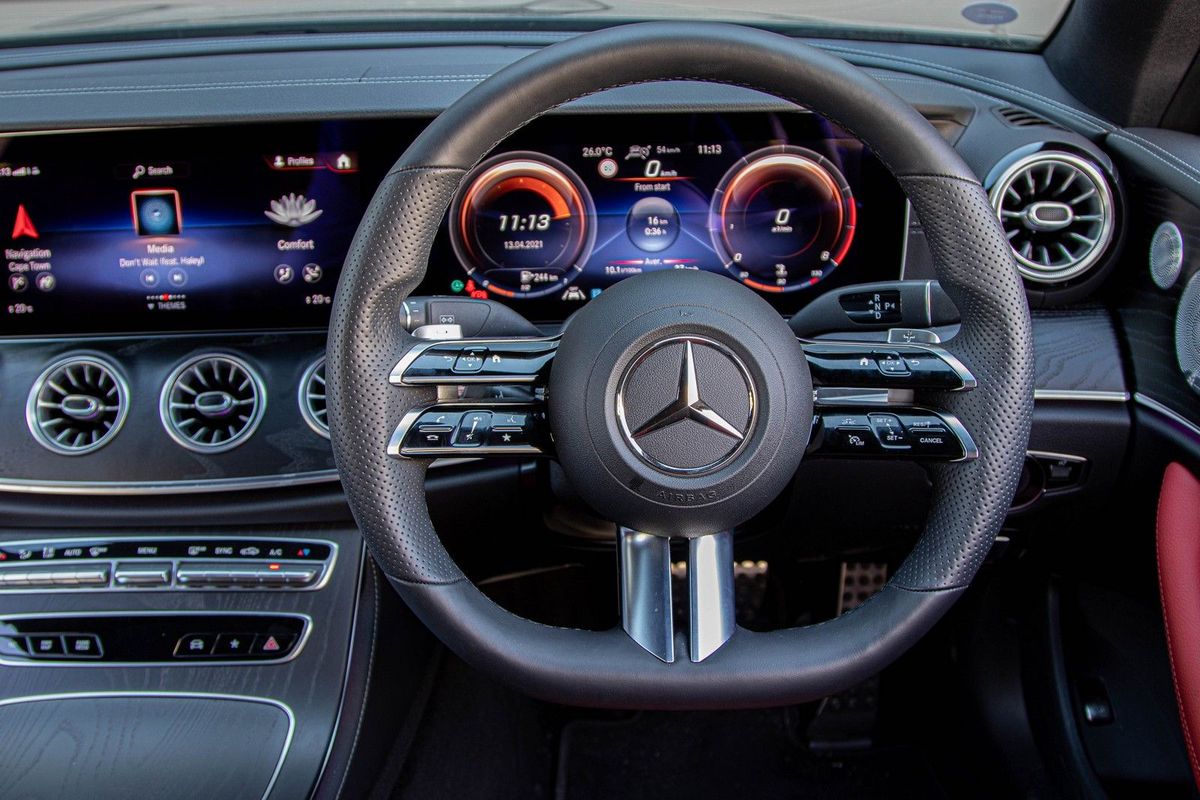
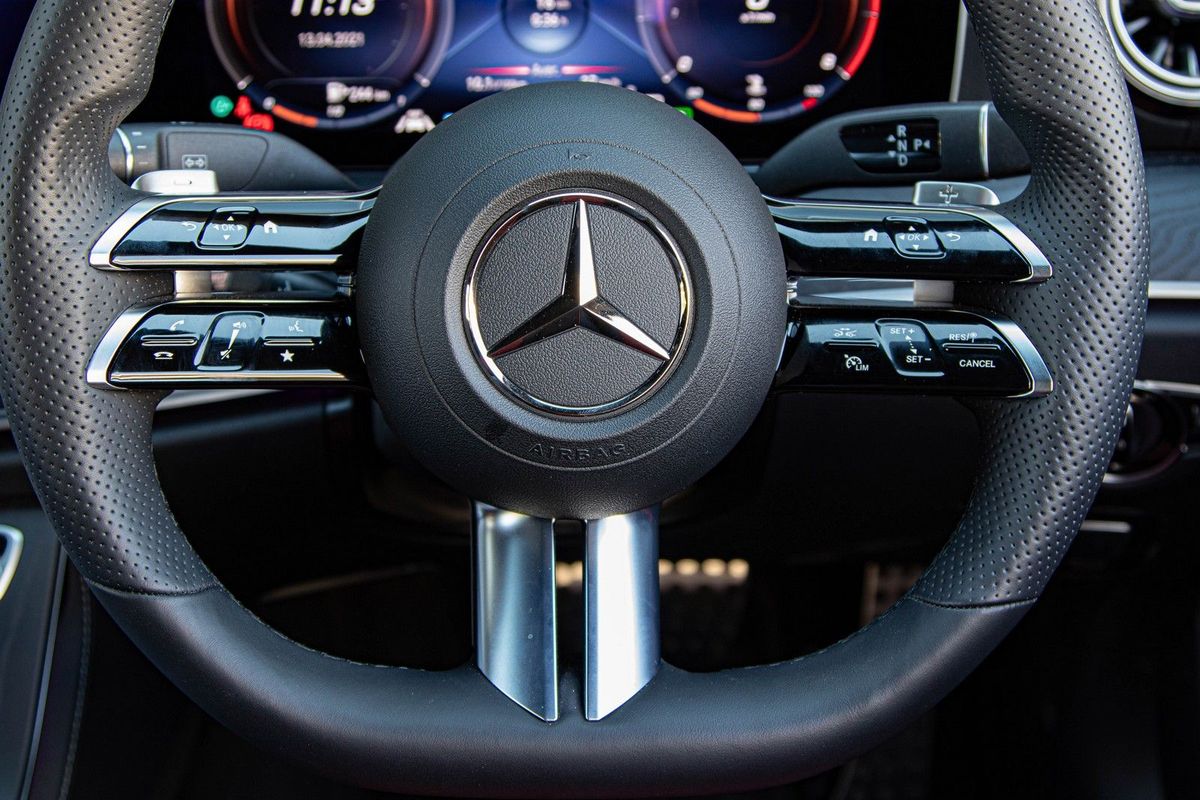
We don’t like: Coarse engine note under high revs, overly complicated steering wheel
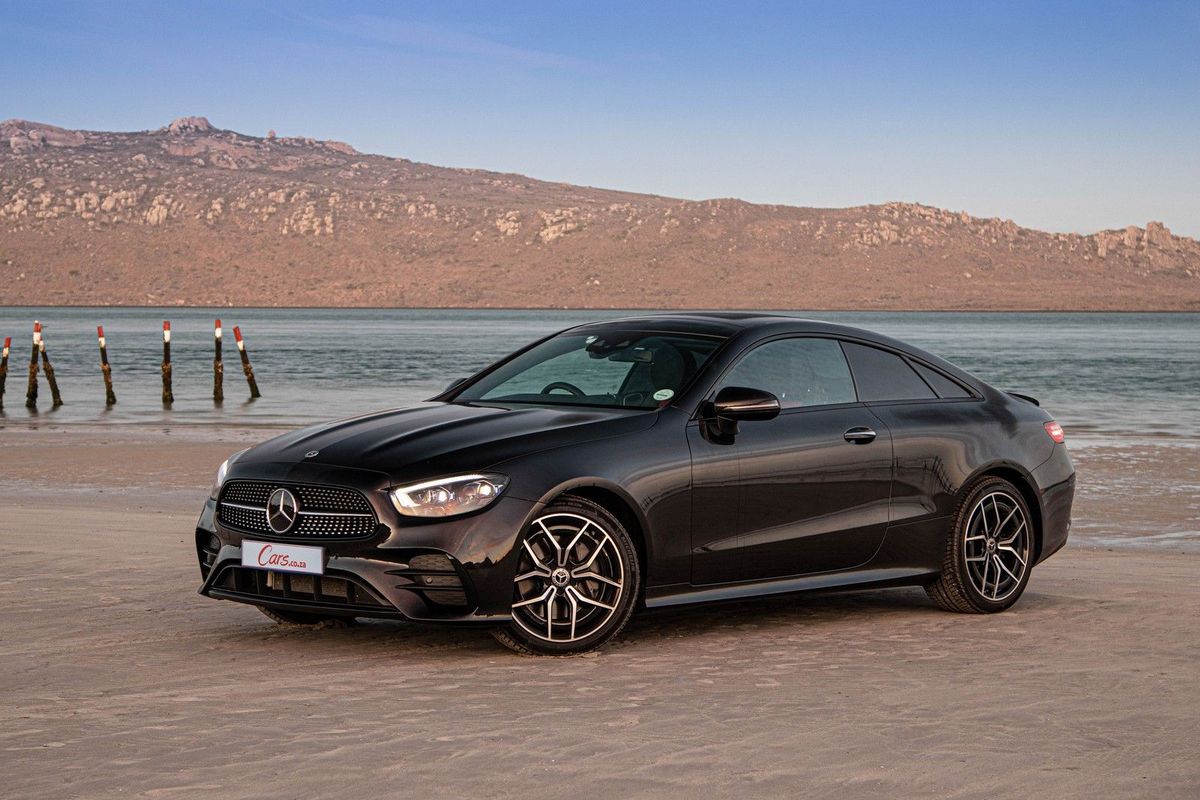
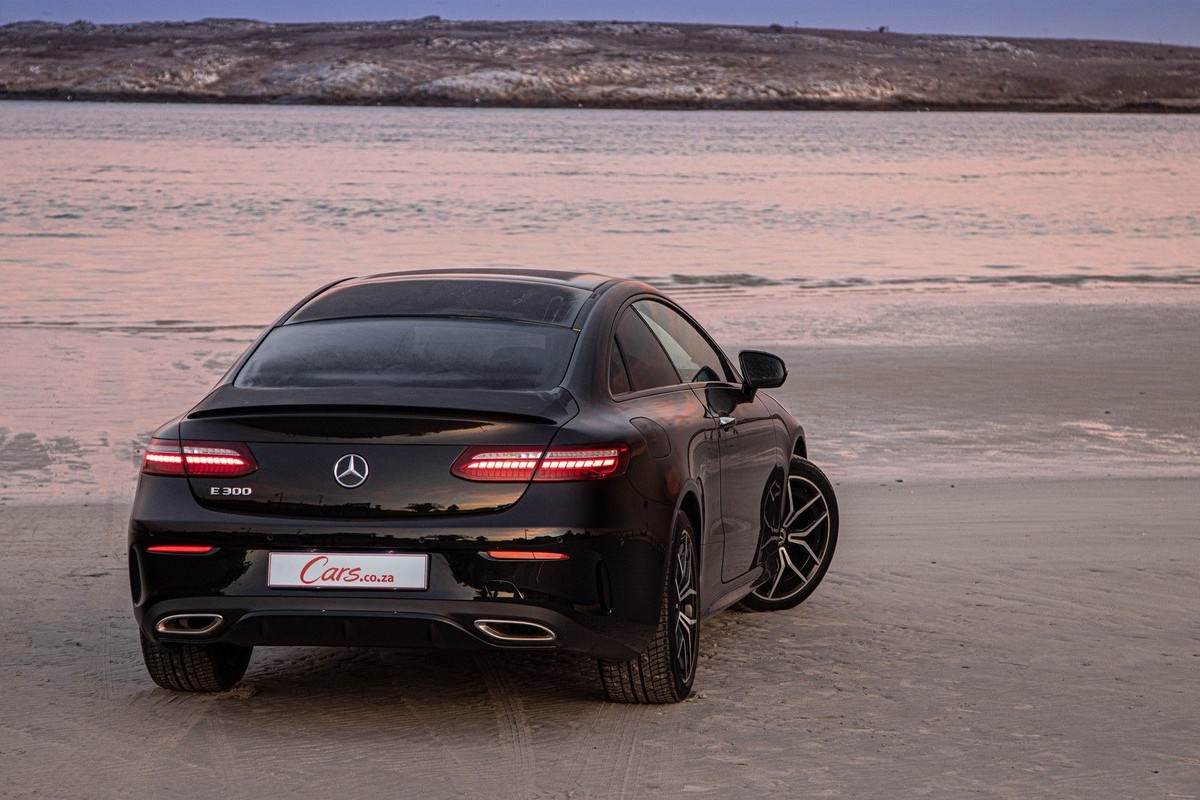
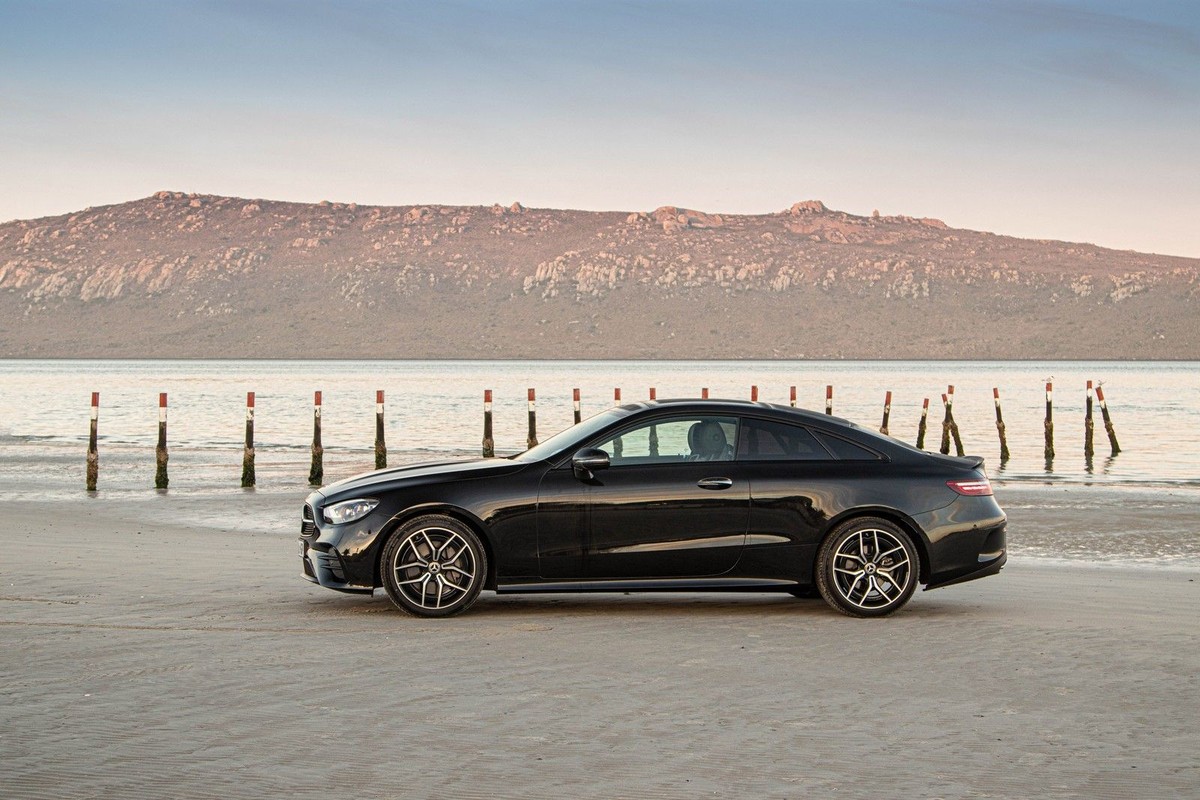
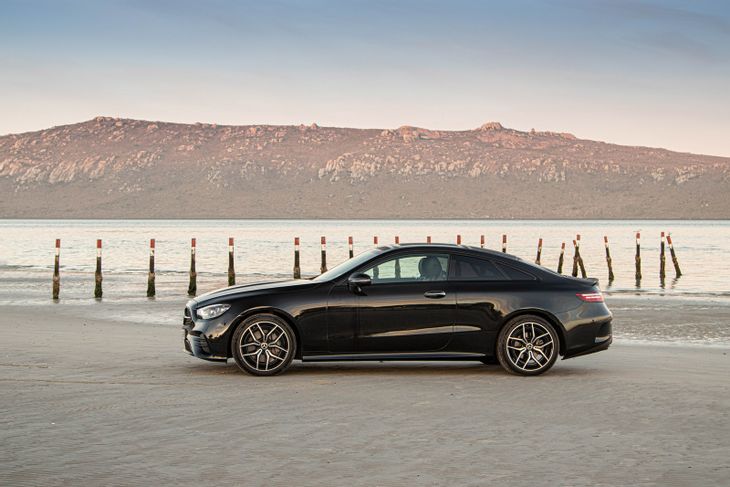
Viewed from any angle, the Mercedes-Benz E-Class Coupe is a pretty thing
Executive SUVs have become so appealing to the proverbial upper crust that sales of luxury coupes have dwindled. Mercedes-Benz, however, is convinced there are enough customers left that would rather drive a stylish coupe than follow the herd by going the high-rider route. Globally, the E-Class still sells in commendable numbers; Benz could not afford to put a wheel wrong with the updated range.
Mercedes-Benz South Africa launched its facelifted E-Class in early 2021; the revised line-up comprises sedan-, coupe- and cabriolet body styles. While we've already had a taste of the flagship Mercedes-AMG E53 Coupe (there'll be no E63 in 2-door guise), some may want something similarly stylish, but a bit more laid back, than the AMG. We spent some time getting to know the E300 Coupe a bit better.
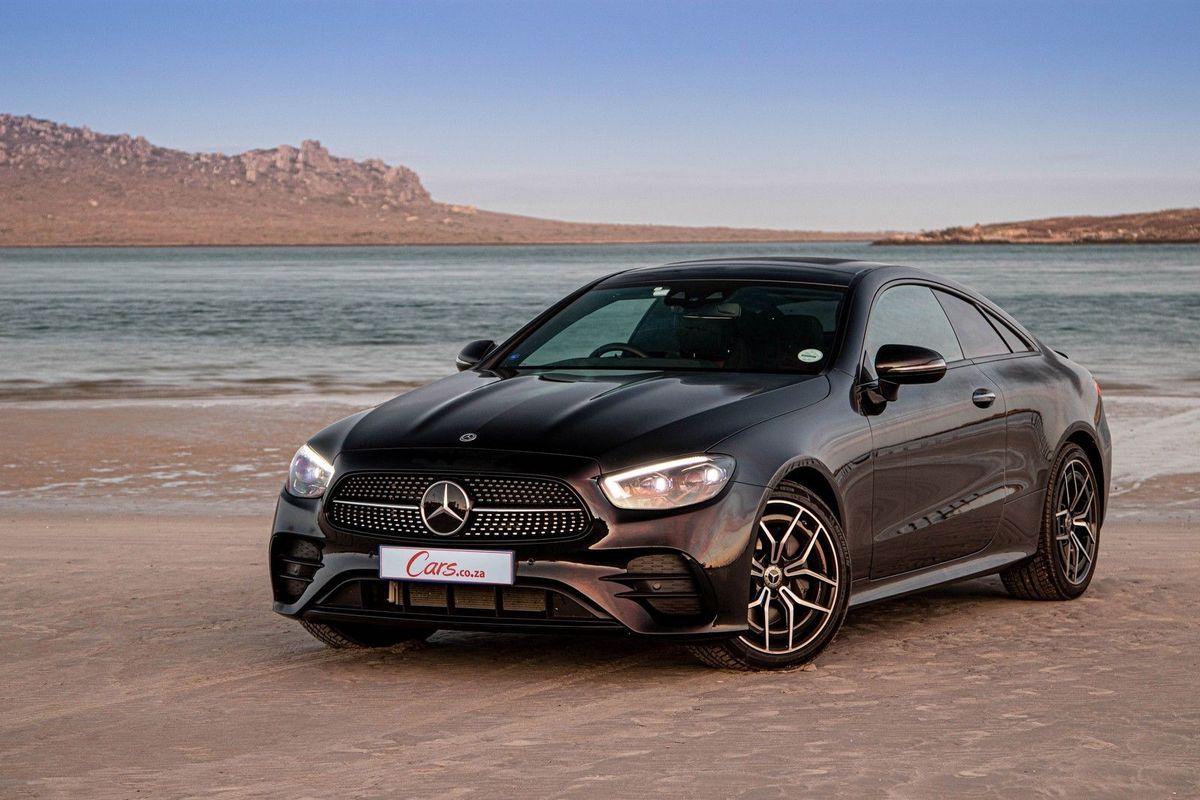
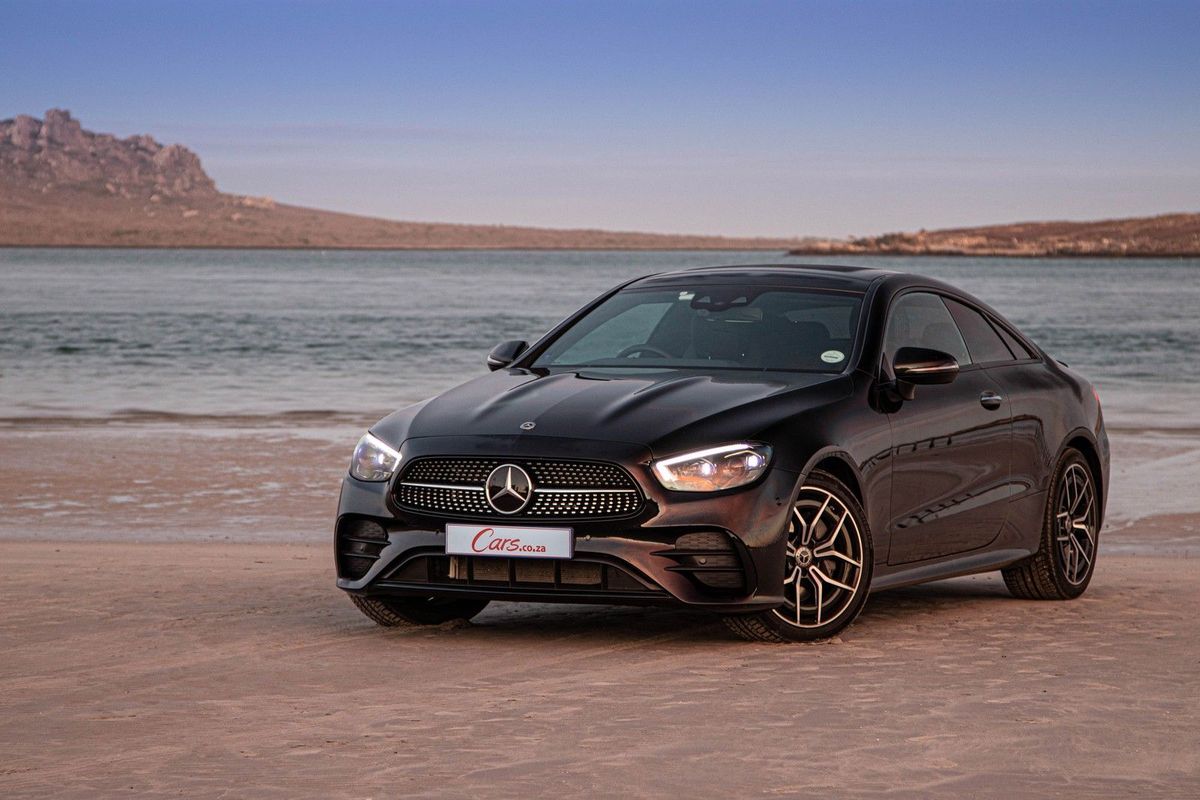
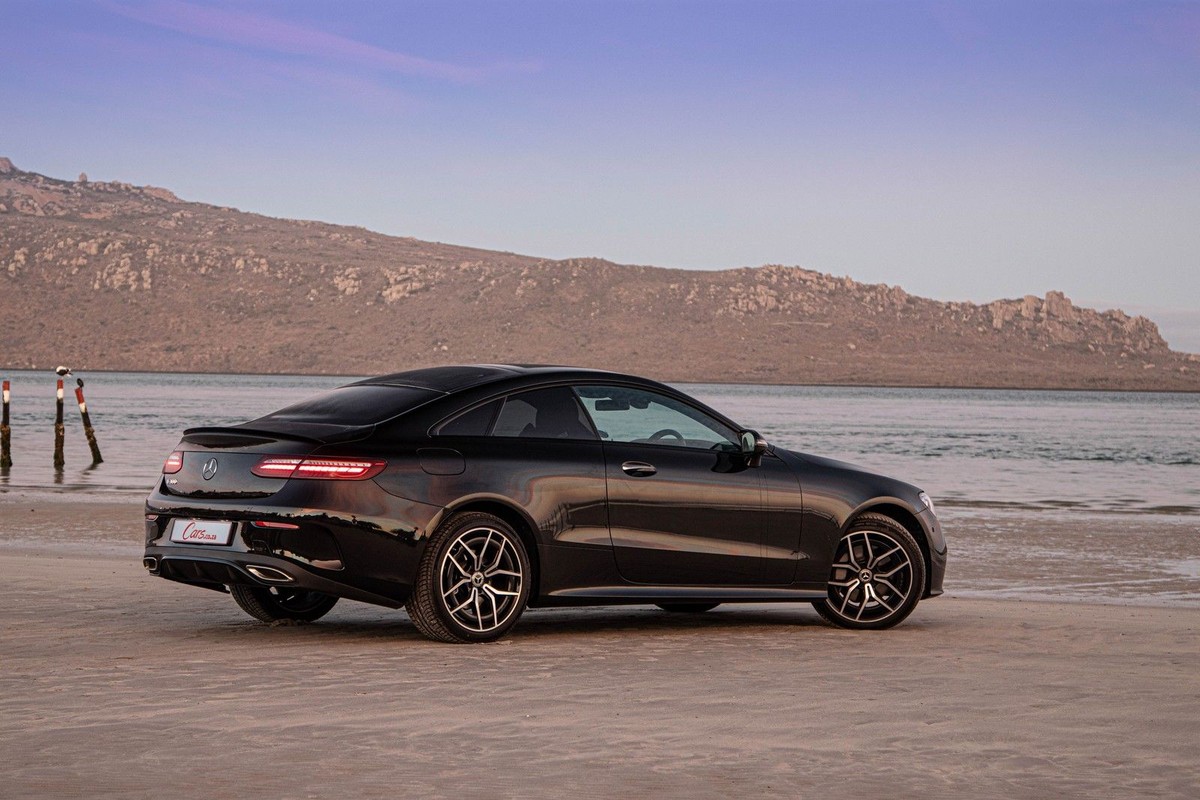
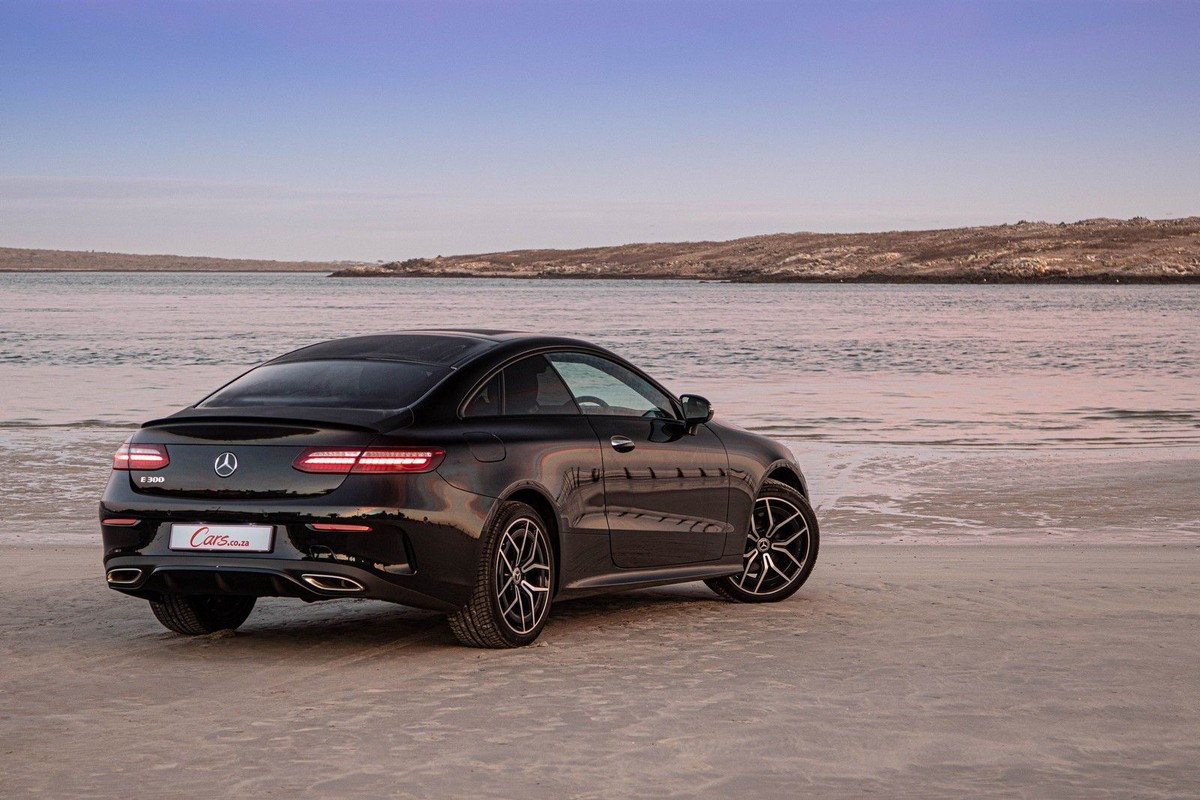
First impressions count for a lot and while our test unit was finished in a "flattening" colour, the proportions and design of Benz's middleweight coupe are nonetheless classy and striking. This is an attractive vehicle – from front to rear – and that intricately patterned grille really catches your eye. The dual-tone alloys weren't to our taste, but Mercedes-Benz has an assortment of wheel styles to choose from.
How it performs in terms of…
Performance and efficiency
With a choice of turbopetrol engines, there's something for everyone in the Mercedes-Benz E-Class Coupe range
The Mercedes-Benz E300 is powered by a turbocharged 2.0-litre 4-cylinder petrol motor, which produces 190 kW/370 Nm and drives the coupe's rear wheels via a 9-speed automatic transmission. Those peak outputs may appear quite lofty to the untrained eye, but in reality, the E300 is more of a cruiser than a bruiser. If you want more go and show, then consider the E53 AMG, which we tested recently.
Mercedes-Benz claims a 0-100-kph time of 6.4 sec for the E300. While there's little reason to doubt that figure, it does feel somewhat inappropriate to conduct a sprint test with this distinguished cruiser. The car feels quick enough, but at high revs, the engine sounds a bit gruff (less than refined), which is incongruent with such a graceful car. Thankfully, the best performance from the engine is accessible way before the redline. In its sportiest mode, there's even a pleasant exhaust note, which we suspect is piped into the cabin through the speakers. The coupe sounds remarkably like an A35 hot hatch!
The 9-speed transmission, meanwhile, shifts smoothly and predictably but can seem a trifle too eager to change up in the default driving mode (ostensibly to optimise fuel economy). We found that taking the reins ourselves (by using the shift paddles located behind the intricately designed new steering wheel) was quite a pleasure; it did not detract from the relaxing driving ambience whatsoever.
Mercedes-Benz claims an average fuel consumption figure of 7.3 L/100 km for the E300 Coupe and although the test unit was driven mostly in off-peak traffic conditions and on open roads/freeways during the test period, we couldn't achieve an indicated return of under 10 L/100 km. There's an Individual setting among the drive modes, which allows you to customise the engine's responsiveness and power; if you often utilise the engine's coast mode, for example, you should see a marked improvement in fuel economy. We do wonder, however, how many owners will bother investigating the car's minor settings.
Ride and handling
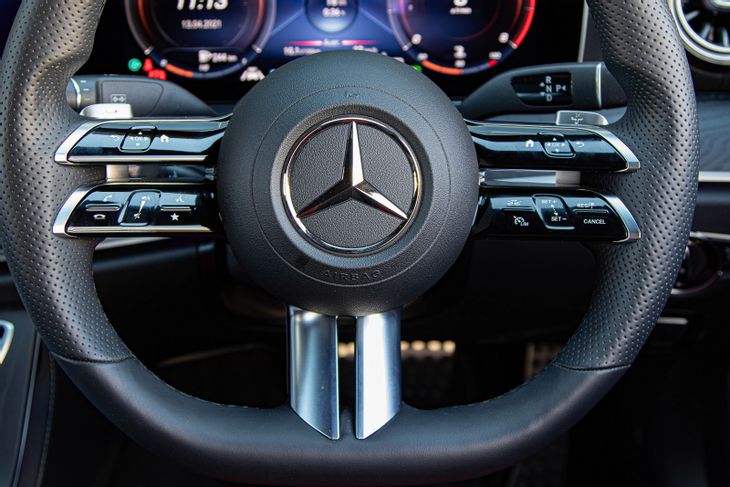
The steering feel is good, but the design of this wheel is overly fussy
A coupe evokes dreams of open-road cruising and opulent comfort and, in this regard, the Mercedes-Benz E300 delivers. The ride quality is a little on the firmer side, but to be fair, that's the price you pay for opting for big wheels shod with low-profile tyres (the test vehicle rode on the optional 20-inch units – 19-inch alloys are standard), plus there's a bit more road noise that enters the cabin than we expected. With a kerb weight of around 1 770 kg, the E300 Coupe is hefty, but even when you task the Benz to stop cruising leisurely and pile on the pace instead, it never feels big or cumbersome.
The adaptive dampers do their bit to stabilise the Benz's body control and iron out the worst of road imperfections, but because the suspension tends to fidget in the firmer, sporty settings, it's better to leave the E300 Coupe in comfort most of the time. We've criticised many Mercedes-Benz products for a crashy ride, but true to the excellent E-Class range, there's comfort and suppleness in abundance.
The steering does firm up in the sportier drive modes but is sufficiently weighted and accurate by default. We get the impression the E300 Coupe was fine-tuned to excel at effortless open-road cruising… We drove the test unit up the West Coast along the average-speed-camera-infested R27, which gave us the perfect chance to engage the cruise control and marvel at the refinements of the Benz's cabin.
Interior execution and features
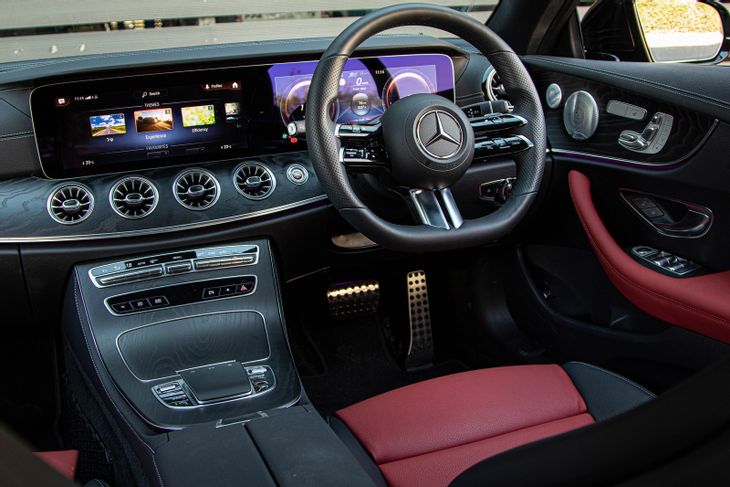
The Mercedes-Benz E-Class Coupe's cabin is a class act.
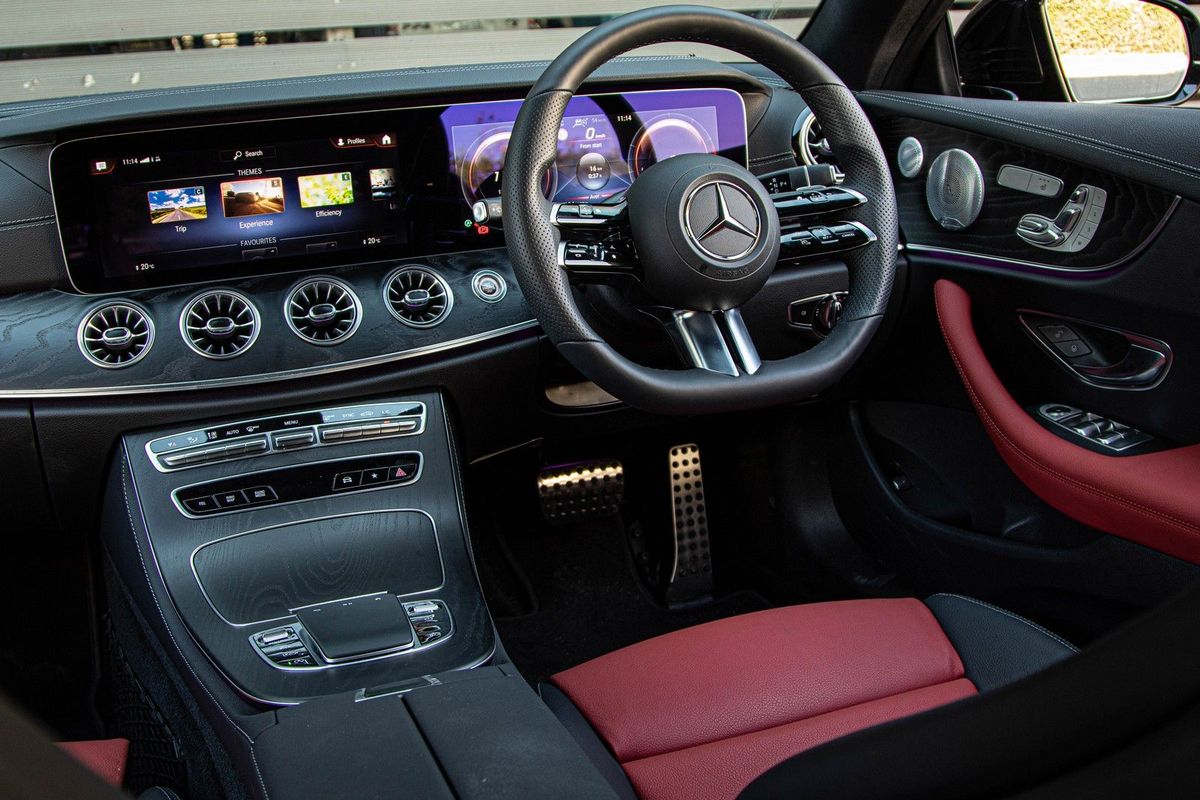
The design of the Mercedes-Benz E-Class Coupe's cabin is now five years old but, post-update, it remains a class act in terms of visual design and sensory appeal. The cabin is eminently luxurious, supremely comfortable (the sculpted front seats are simultaneously cossetting and supportive), plus there's a strong sense of occasion: the red leather/black wood combination is quite tasteful.
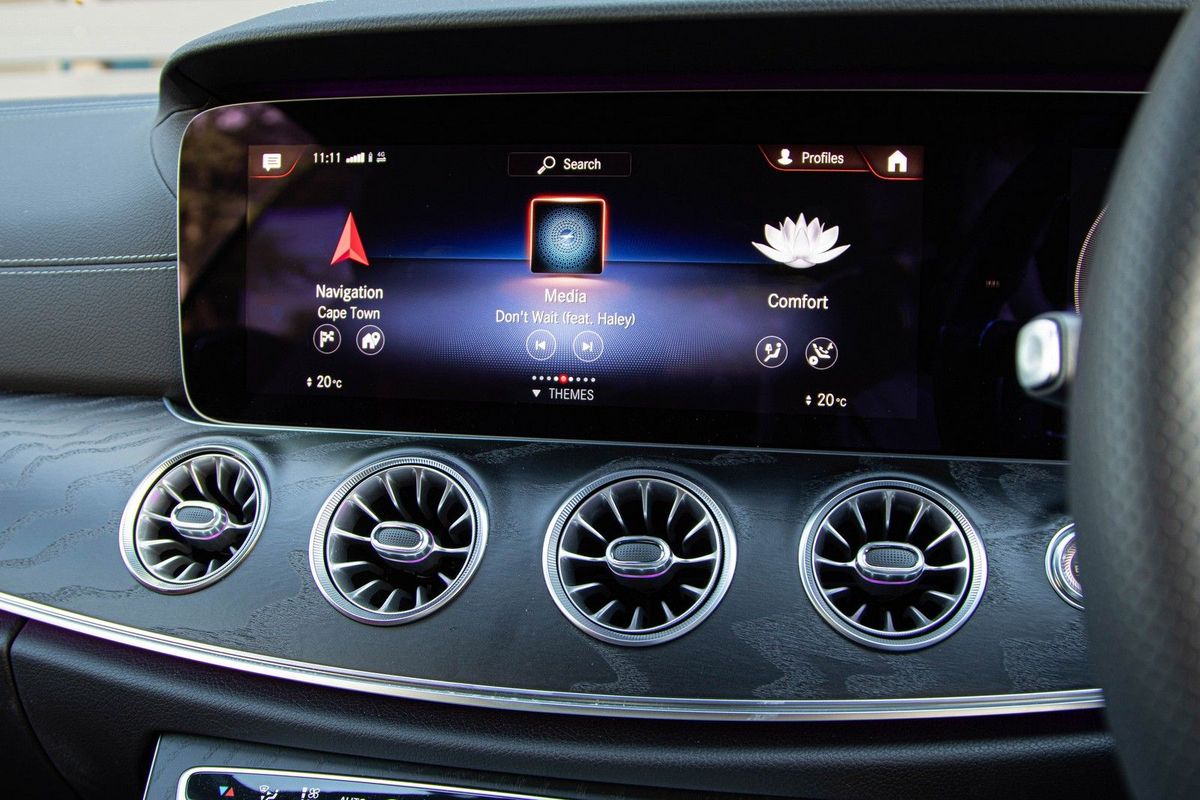
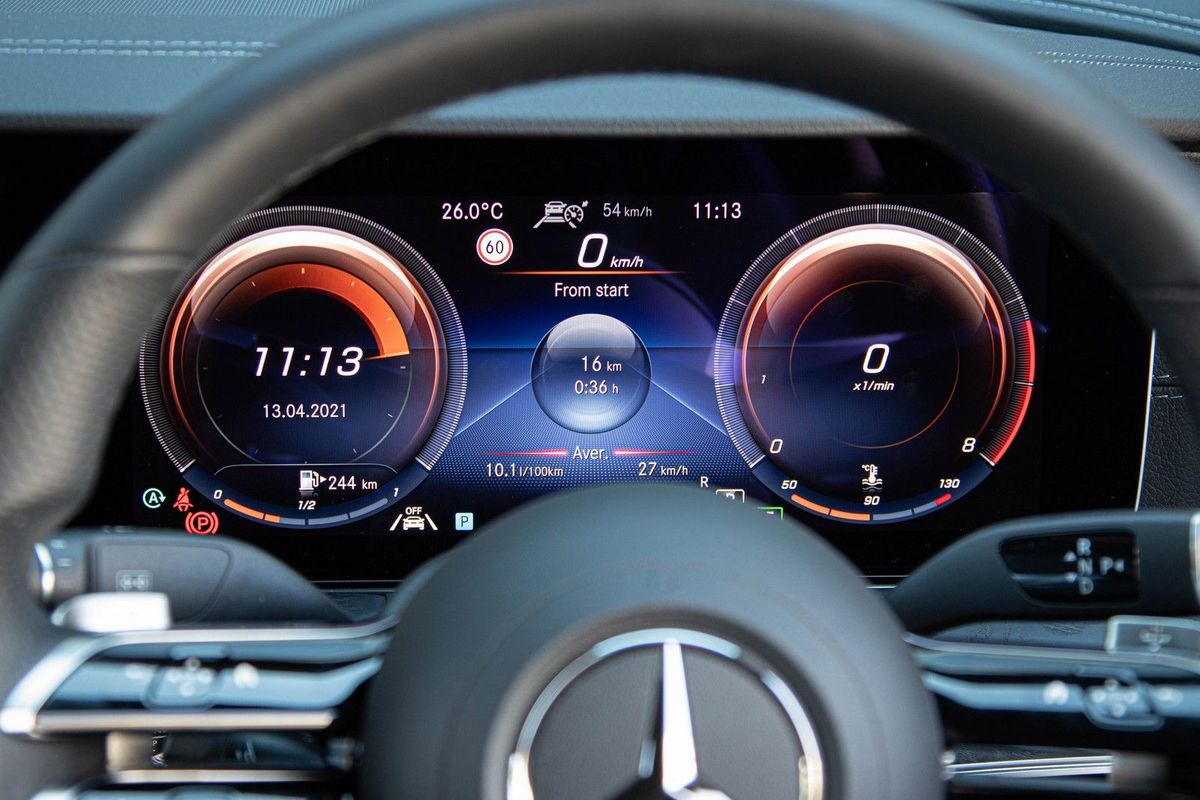
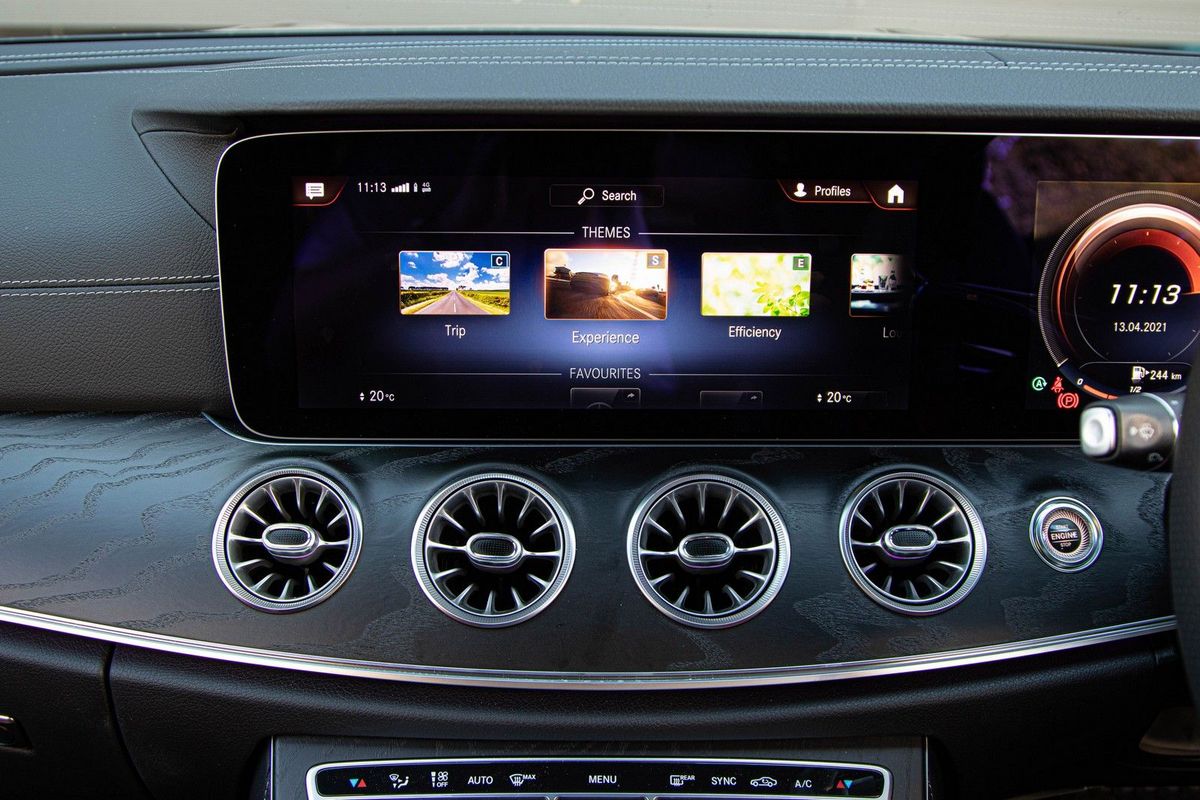
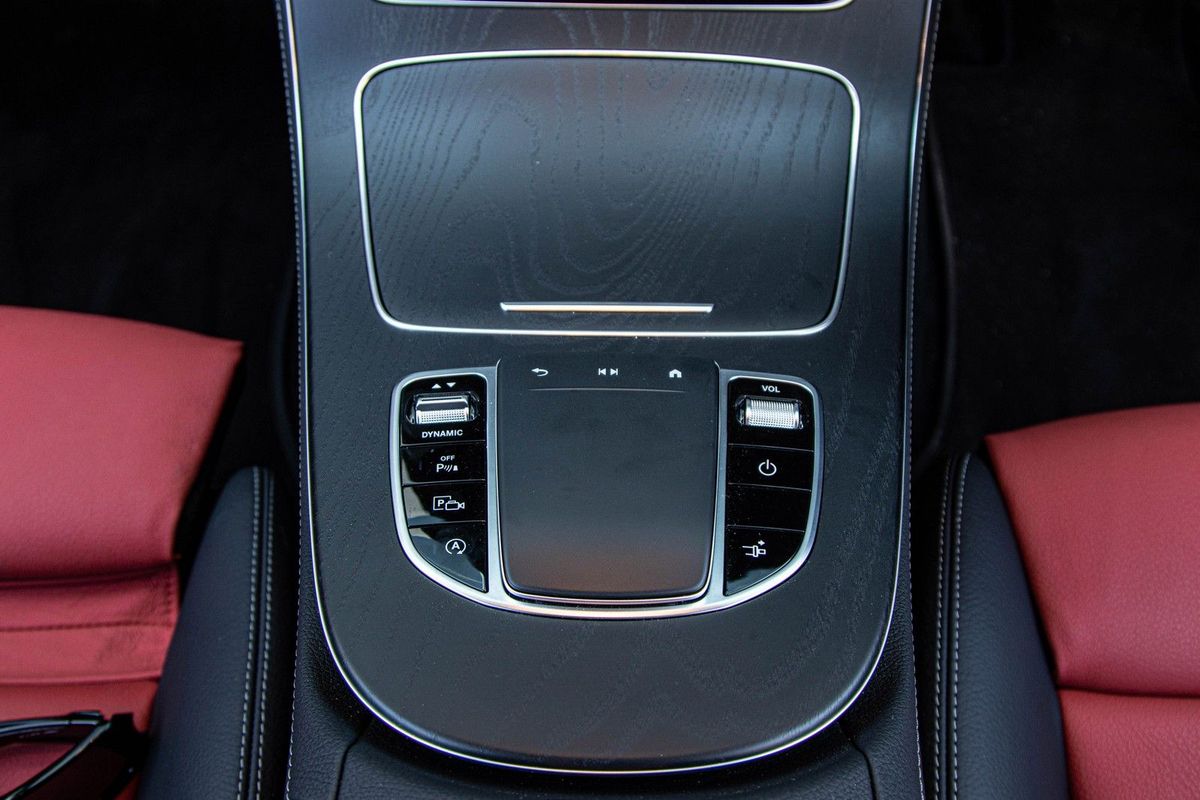
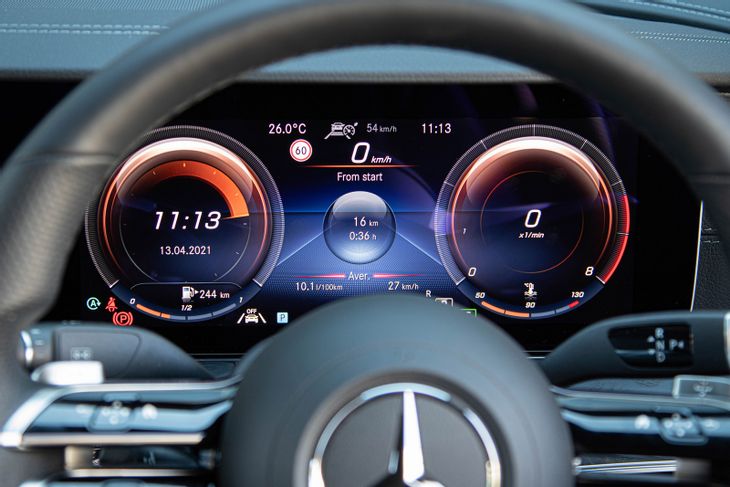
The MBUX dual-screen setup, meanwhile, is one of the better infotainment and instrumentation systems in the market. The infotainment screen (on the left) can be controlled either by the central touchpad or the Hey Mercedes voice interface. The digital instrument cluster (on the right, behind the 'wheel) is crisp and clear, but we did suffer from information overload there's just so much info on display.
Unfortunately, the new-generation steering wheel (with its tiered layout) is a bit daunting. Remember the micro touchpad on a Blackberry? There are a pair of them (one each on the upper spokes) with which to navigate through menus and settings, plus several buttons on the lower spokes. Although they should become easier to use with familiarisation, the sheer number of toggles is distracting.
The digital dashboard is gorgeous and the MBUX voice control works well.
At this price point, the standard features list is extensive, but a quick glance at the options list reveals some tantalising options too. According to Mercedes-Benz SA's configurator, the most popular options range from run-flat tyres (R5 800), a heads-up display (R19 600), as well as an uprated Burmester audio system (R18 500). The safety features are comprehensive, with autonomous emergency braking, stability control and 7 airbags. You can specify a raft of additional autonomous safety features with the Driving Assistance Package (R39 900), which also increases the number of airbags to 9.
Practicality
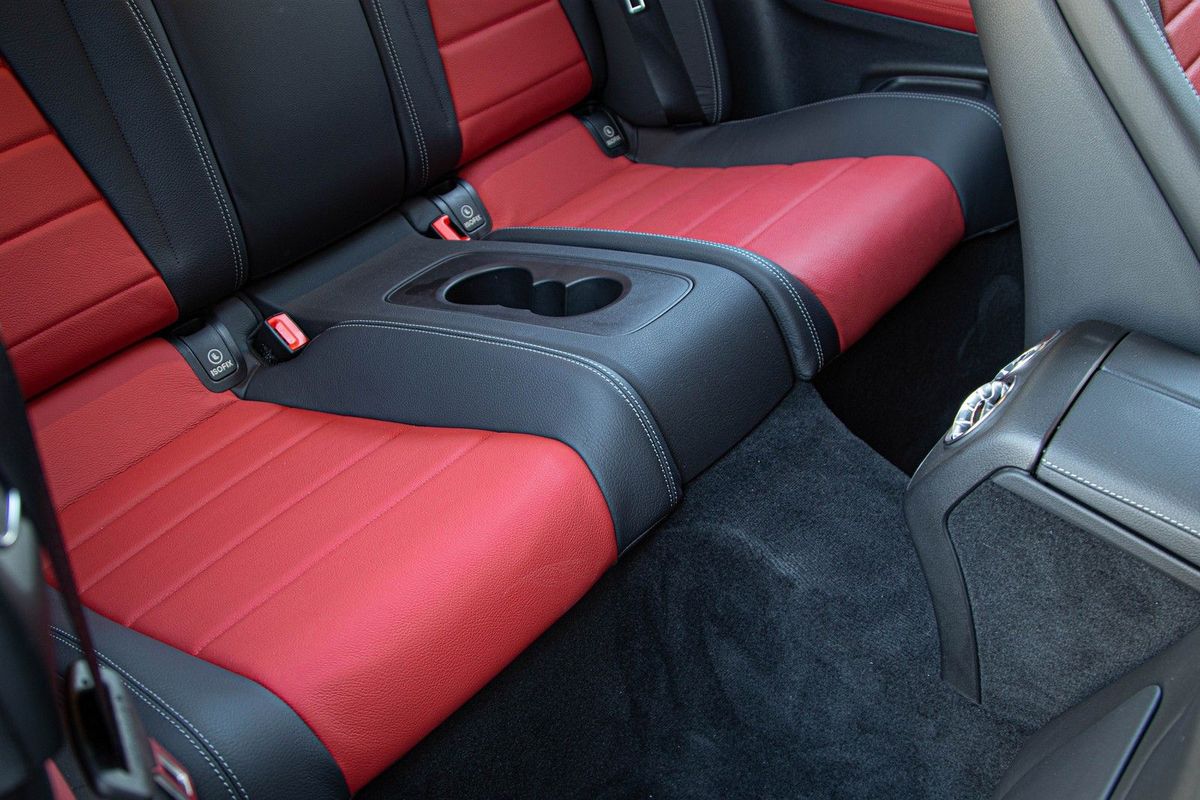
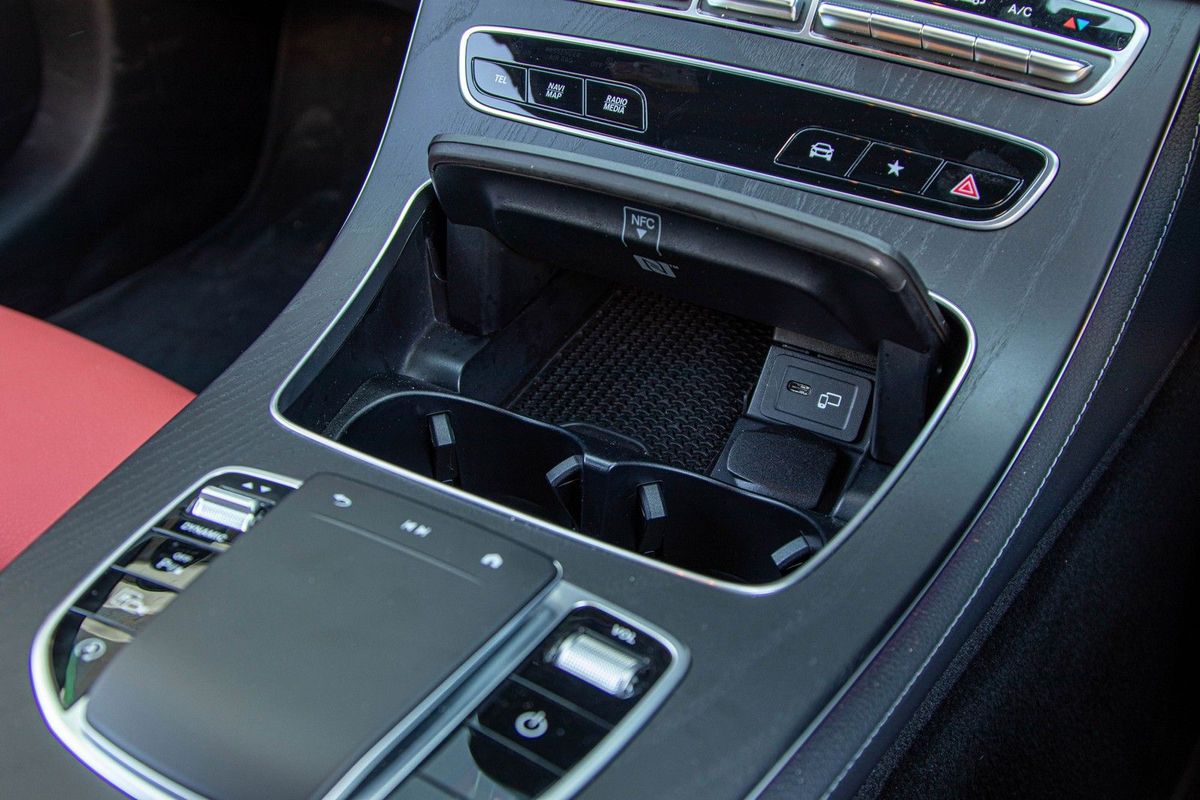
The Mercedes-Benz E300 Coupe is a 2-door vehicle, but it is a surprisingly practical one. Yes, ingress and exit from the rear of the cabin is a somewhat clumsy and undignified affair, but, unlike in so many other coupes (including some grand tourers, which cost a lot more) adults can easily be seated on the Benz's rear seats. The profile of the roof makes the most of the available headroom, while legroom is more than sufficient. There are two seats (instead of a bench and separated by a divider with drinks-holder recesses) and they're comfortable enough to accommodate a pair of adults on longer trips.
Rear passengers get their own ventilation and there's a surprising amount of space back here
The boot capacity, meanwhile, is fantastic. The E-Class Coupe is admittedly NOT an executive sedan, but considering what we'd assume would be the cargo requirements of its target market, the E300's trunk can effortlessly swallow luggage; we suspect you'd easily be able to fit more than 2 sets of golf clubs in there. There's more than enough space for 4 big suitcases and if you need to pack extra things for a long weekend away (for example), the rear seatback can easily be folded forward to create utility space. As far as the numbers go, the Mercedes-Benz E300 Coupe's boot space is rated at 405 litres.
How much does the Mercedes-Benz E-Class Coupe cost in South Africa?
The Mercedes-Benz E-Class Coupe range starts at R1 044 040, with the E300 Coupe AMG LINE retailing for R1 139 280.
Pick your engines wisely. While the 300 does the job, you're probably going to want the excellent 220d if you travel long distances
The Mercedes-Benz E300 Coupe holds a peculiar position in the E-Class Coupe line-up. If you want to buy one simply to proclaim your status and make a style statement, the E200 is more affordable. If you want more urgent performance, the AMG-fettled E53 has you covered. The E300 Coupe, meanwhile, offers a bit more oomph than the E200, which you may never need, but it's certainly nice to have.
The head-turning appearance of the E-Class Coupe is a major selling point, as is its stylish, plush cabin. While the world seems to march inexorably towards an electrically-powered SUV future, it's reassuring to know Mercedes-Benz can still make a well-sorted luxury coupe that will satisfy the brand's (probably more mature) clientele. Make sure you pick the right engine to suit your needs, though.
BMW South Africa has introduced the BMW X3 Mzansi Edition, loading sportier features and accessories onto the luxury SUV. Here's how much it costs.
With the reveal of the updated BMW X3 not too far away, BMW South Africa has announced the X3 Mzansi Edition, which comes loaded with accessories and features.
The BMW X3 is manufactured locally at the brand's facility in Rosslyn, Pretoria and we're expecting an announcement regarding the X3 LCI local assembly any day now.
The BMW X3 Mzansi Edition uses an xDrive20d model as a base. The engine is a 2.0-litre 4-cylinder turbodiesel delivering 140 kW and 400 Nm. The engine is paired to an 8-speed automatic gearbox, and BMW says the X3 Mzansi Edition is good for an 8 second run to 100 kph.
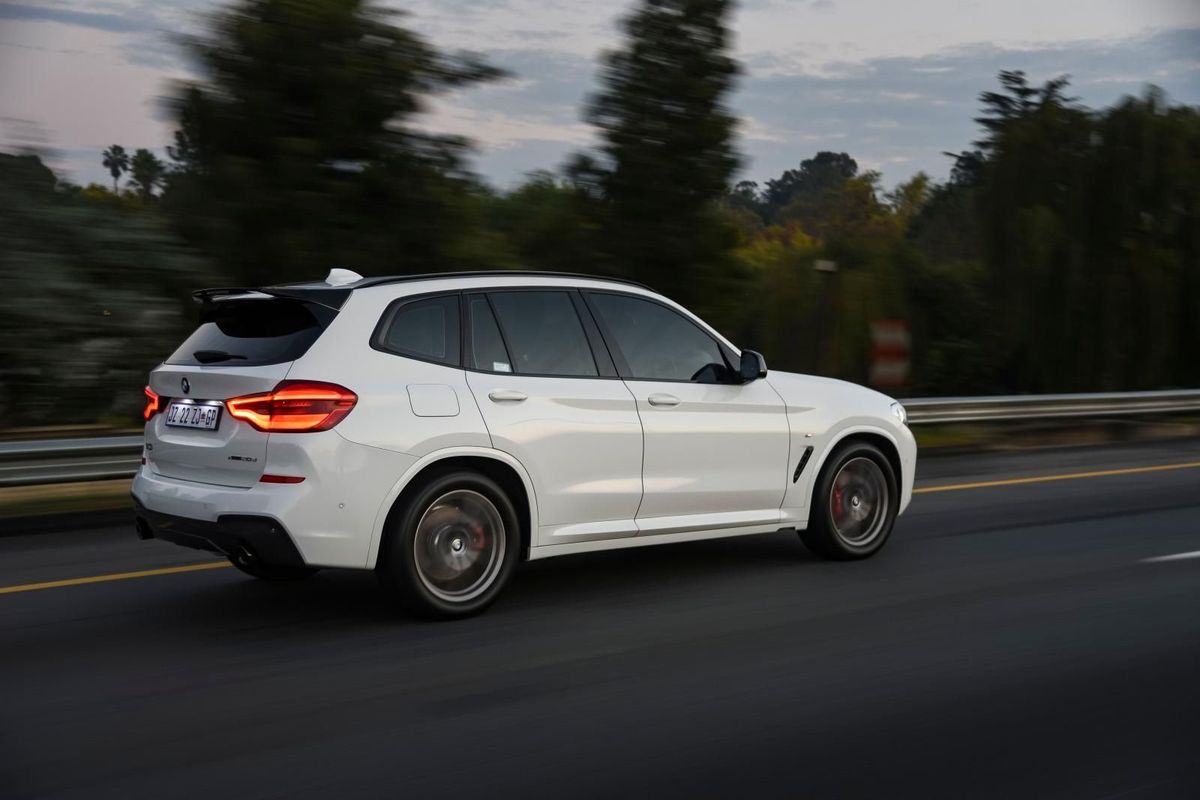
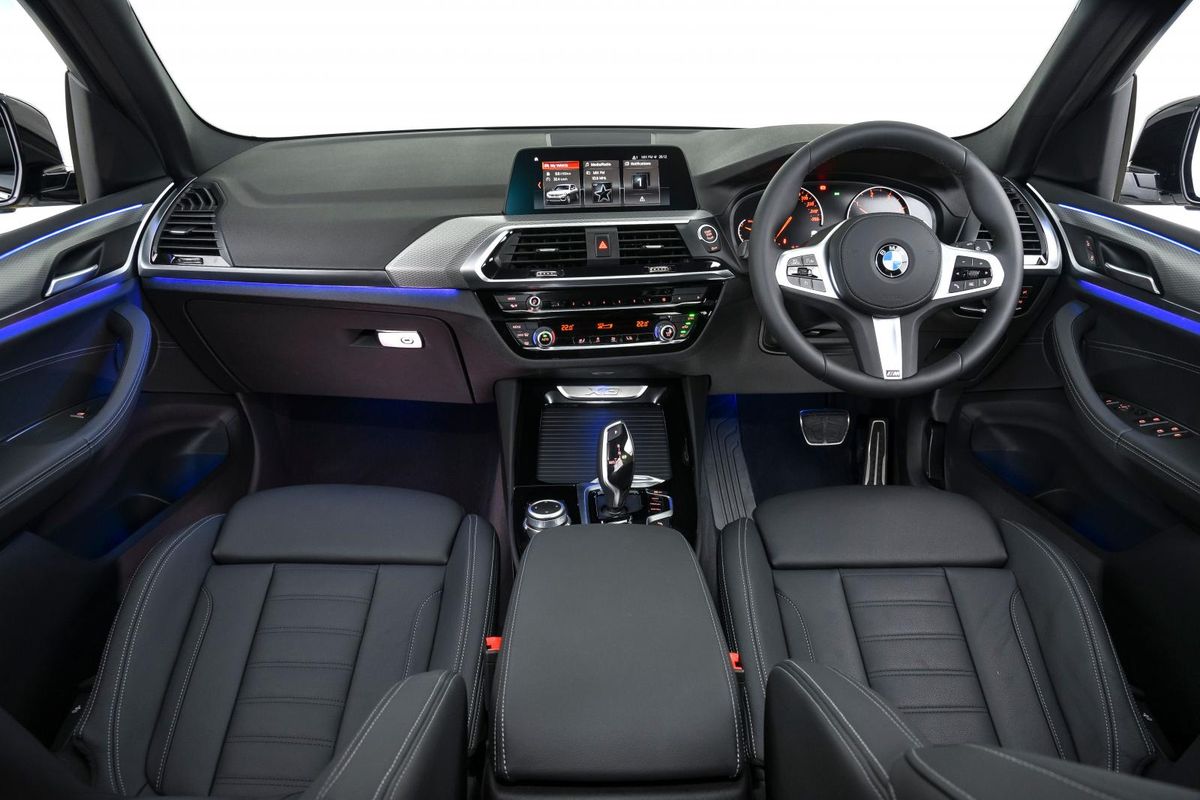
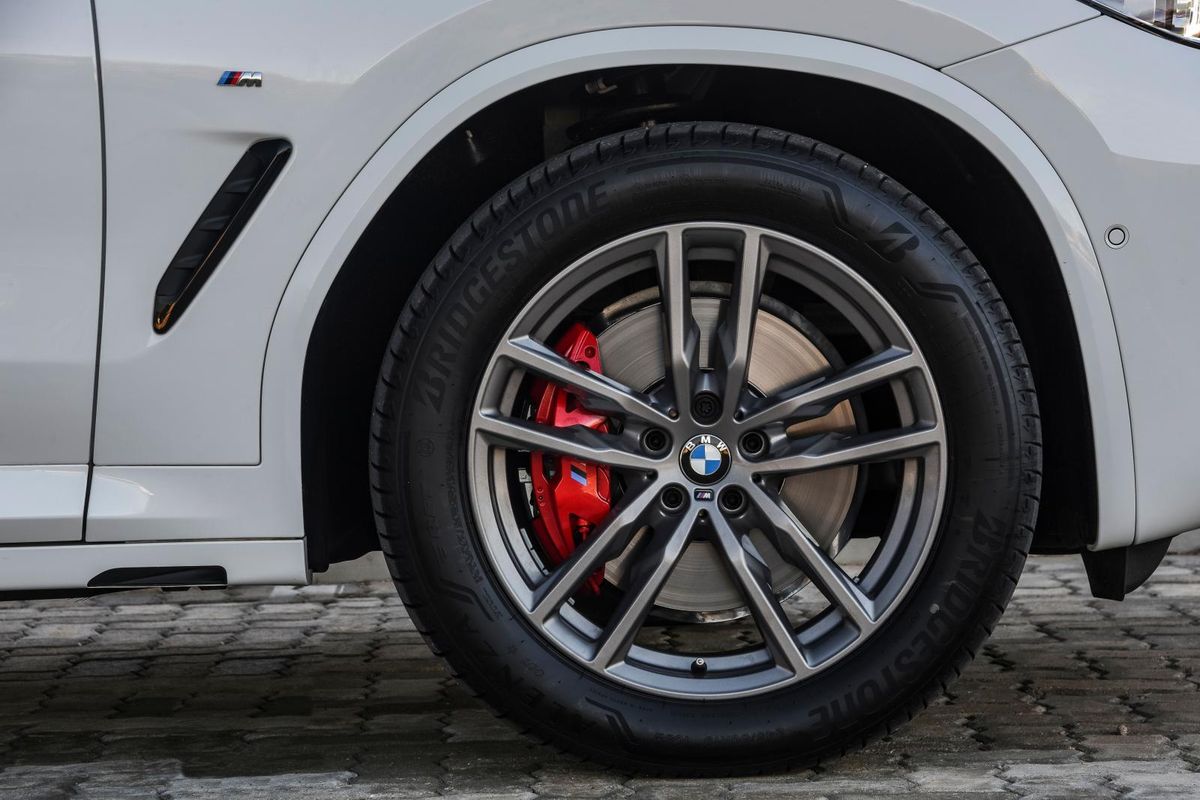
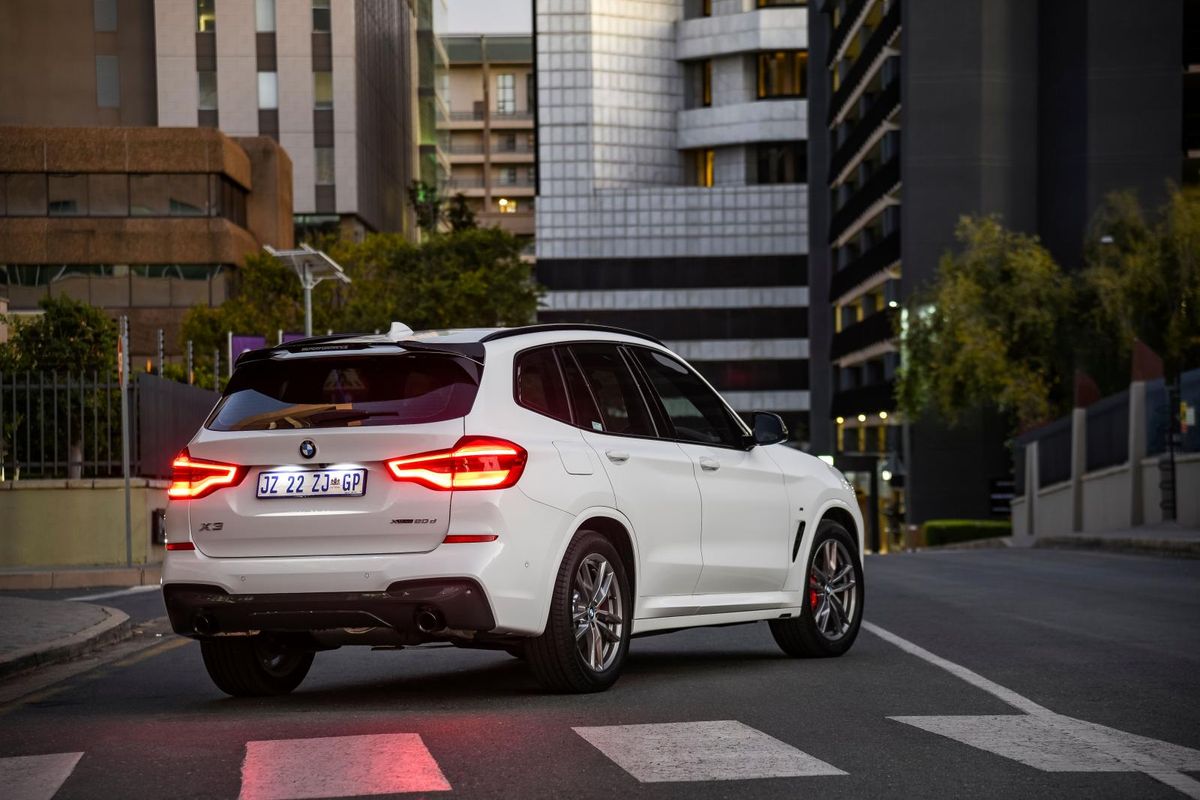
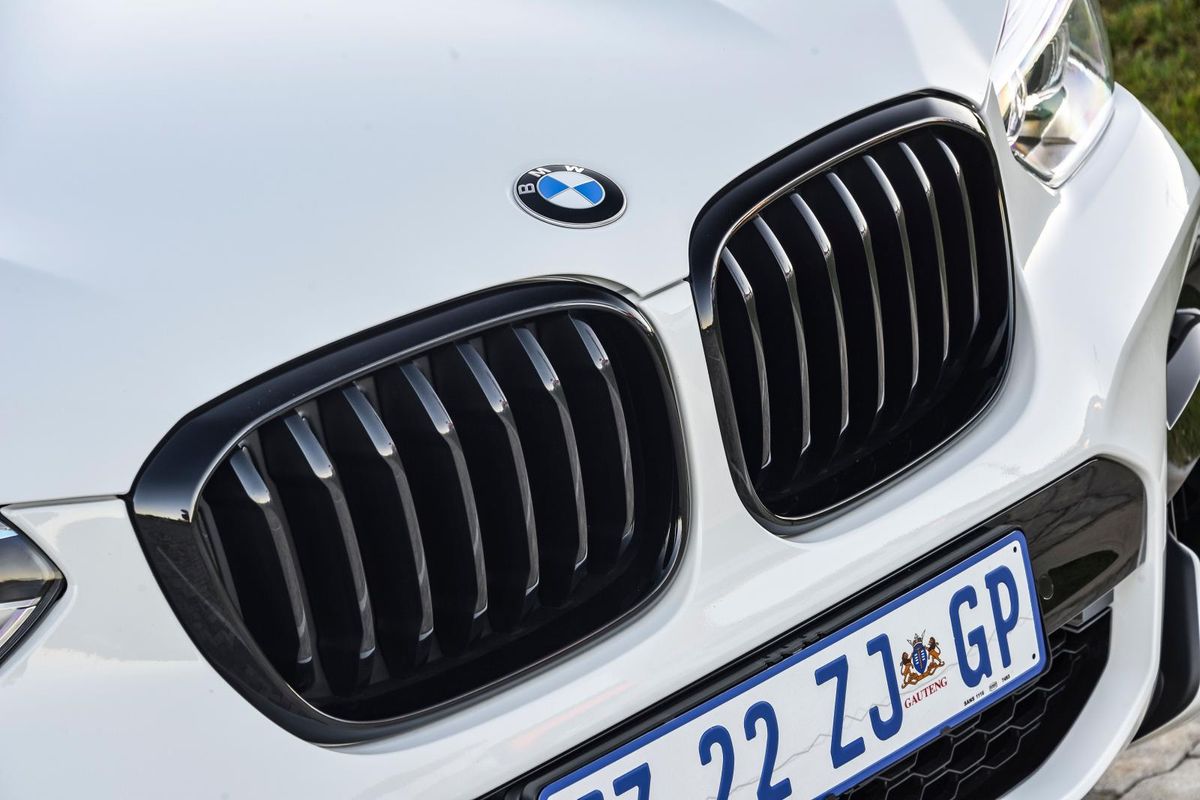
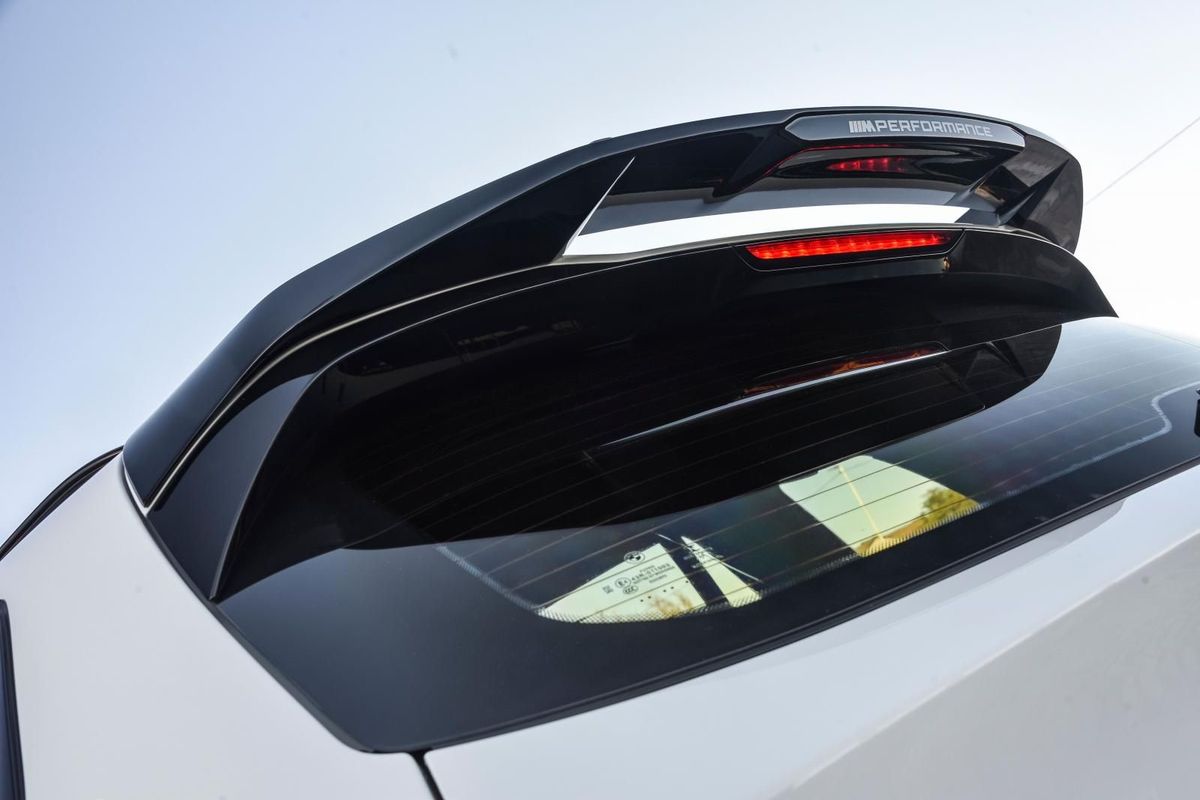
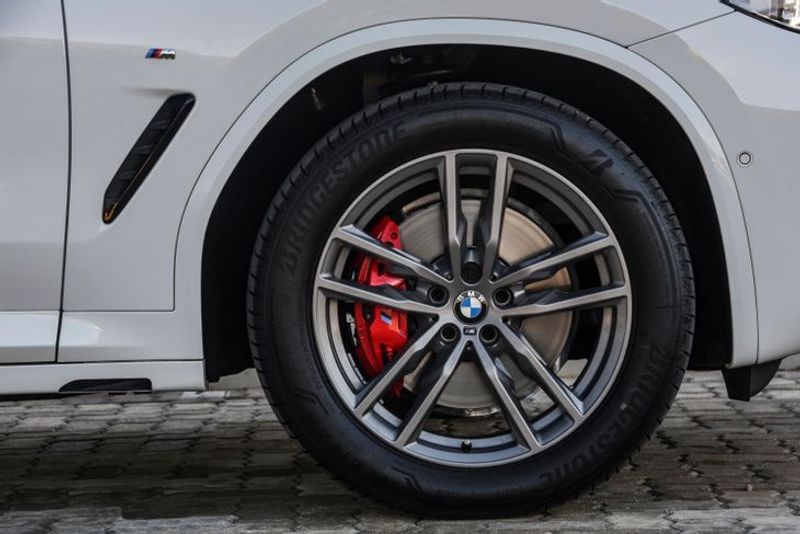
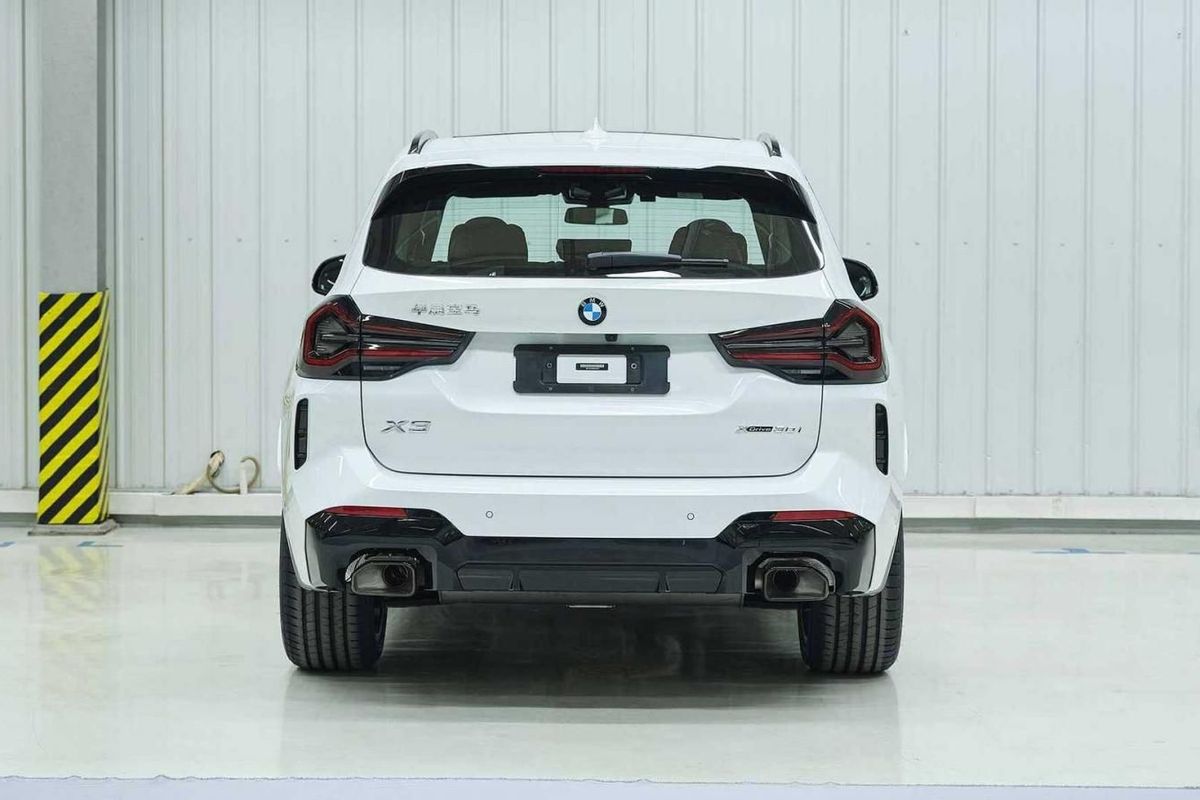
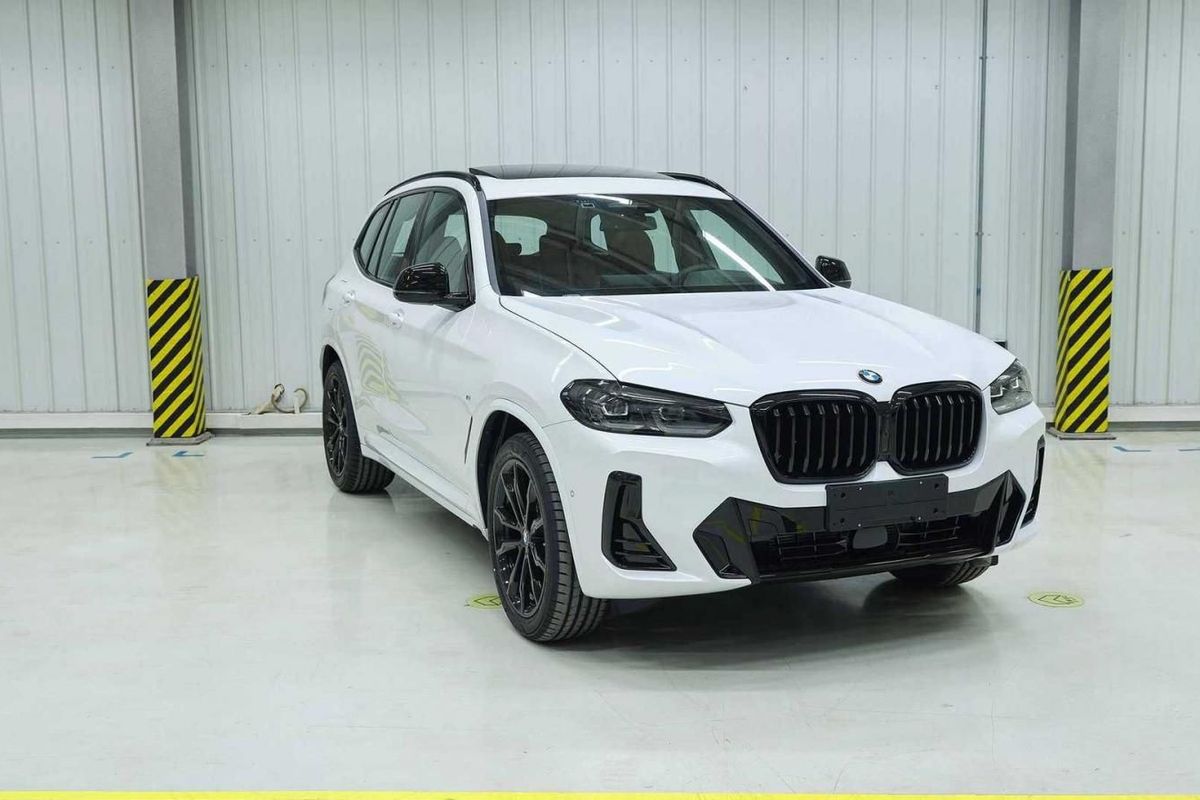
Customers have the option of 5 colours and the vehicle comes standard with an electrically-operated tow hitch, M Sport package, panorama glass sunroof, ambient lighting, BMW Live Cockpit Professional and wireless charging for your smartphones. Other noteworthy accessories are the M high-gloss Shadow Line with a blacked-out kidney grille, M carbon wing mirror caps, red M Sport brake callipers, black chrome tailpipes, black gloss rear diffuser and a rather sporty-looking rear wing.
The BMW X3 Mzansi Edition is now on sale and sits towards the top of the range. For the record, the BMW X3 range kicks off at R770 072 for the sDrive18dand tops out at R1 140 946 for the xDrive30d M Sport. There are also M-branded and M-Sport X3 derivatives available. As far as rivals go, this is a hotly-contested segment with the Audi Q5, Mercedes-Benz GLC, Volvo XC60 and Jaguar F-Pace all vying for a slice.
The BMW X3 Mzansi Edition features red brake callipers with M Sport branding
How much does the BMW X3 Mzansi Edition cost in South Africa?
BMW X3 xDrive20d Mzansi Edition R1 012 938
Small Petrol Price Changes for June 2021
The price of fuels looks likely to change as we head into June 2021, with petrol showing the smallest of declines, but the price of diesel and paraffin will be going up.
Around the middle of the month, the Automobile Association (AA) sends out a forecast on the price of fuel based on the naudited mid-month fuel price data released by the Central Energy Fund.
As it stands, the AA is predicting the smallest of decreases for petrol, with a litre of petrol costing one cent less. Sadly both diesel and paraffin are both set to rise, with increases of 20 cents a litre and 25 cents a litre respectively.
"After several weeks of stability, international oil prices have started to climb again, with a slight peak in the first week of May before a modest pullback. Although there is still a re-balancing of global supply and demand taking place in oil markets, the current variations are starting to more closely resemble the picture we saw before the COVID-19 pandemic. This suggests that normal market forces are increasingly gaining the upper hand over last year's disruptive gluts which led to astonishing sub-zero prices for West Texas Intermediate (WTI) oil." says the AA.
The AA would like to point out that the prices can change rapidly and something like a lockdown can trigger a change. "Nothing should be taken for granted until the global vaccination drive has surpassed the threshold needed for herd immunity," says the AA.
It's good to see the Rand and the exchange rate helping matters. "Although the daily exchange rate has been wildly variable, the average rate has seen the local currency gain around twenty cents against the US dollar since the start of May. This means a nett gain of around 11 cents against the dollar,” notes the Association.
The Association further notes that while the mid-month picture is indicating certain movements now, these are likely to change before the official adjusted price for June is announced by the Department of Mineral Resources and Energy later this month.
"The oil-versus-Rand see-saw will likely continue through the rest of May, and the month-end picture may be somewhat different to what's currently being seen," the AA concludes.
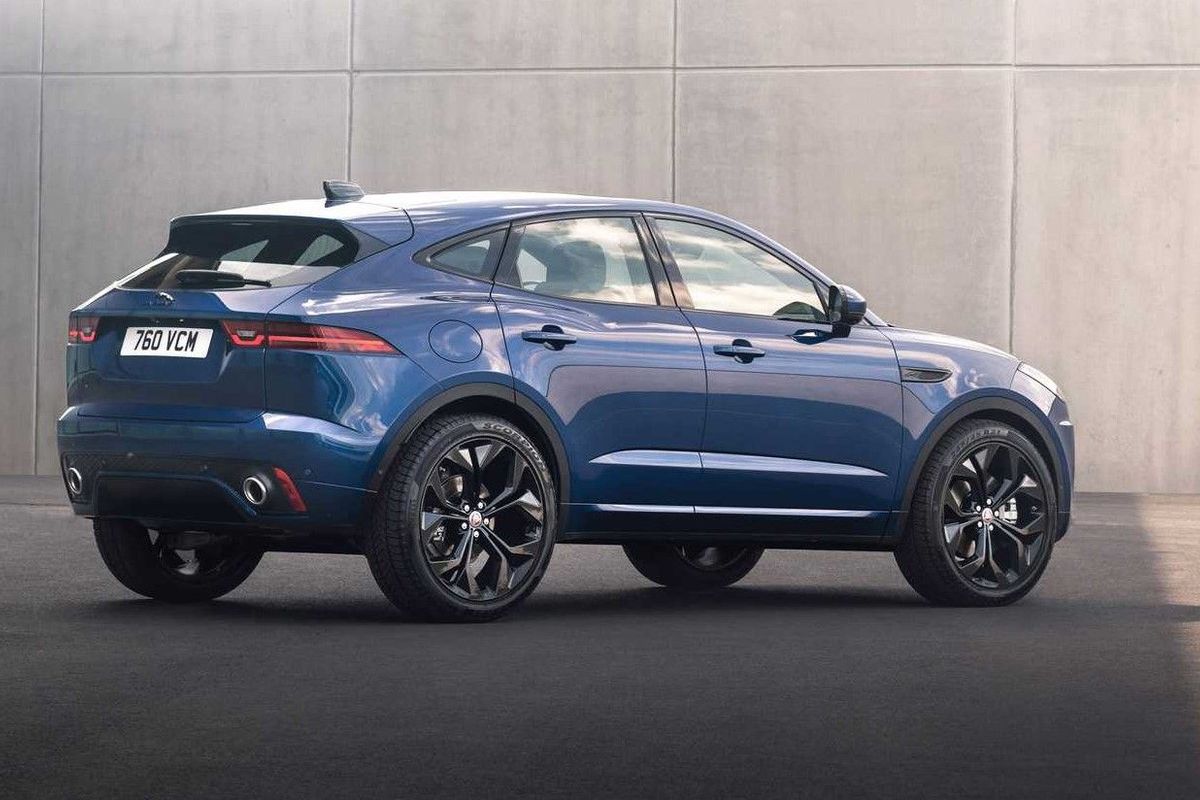
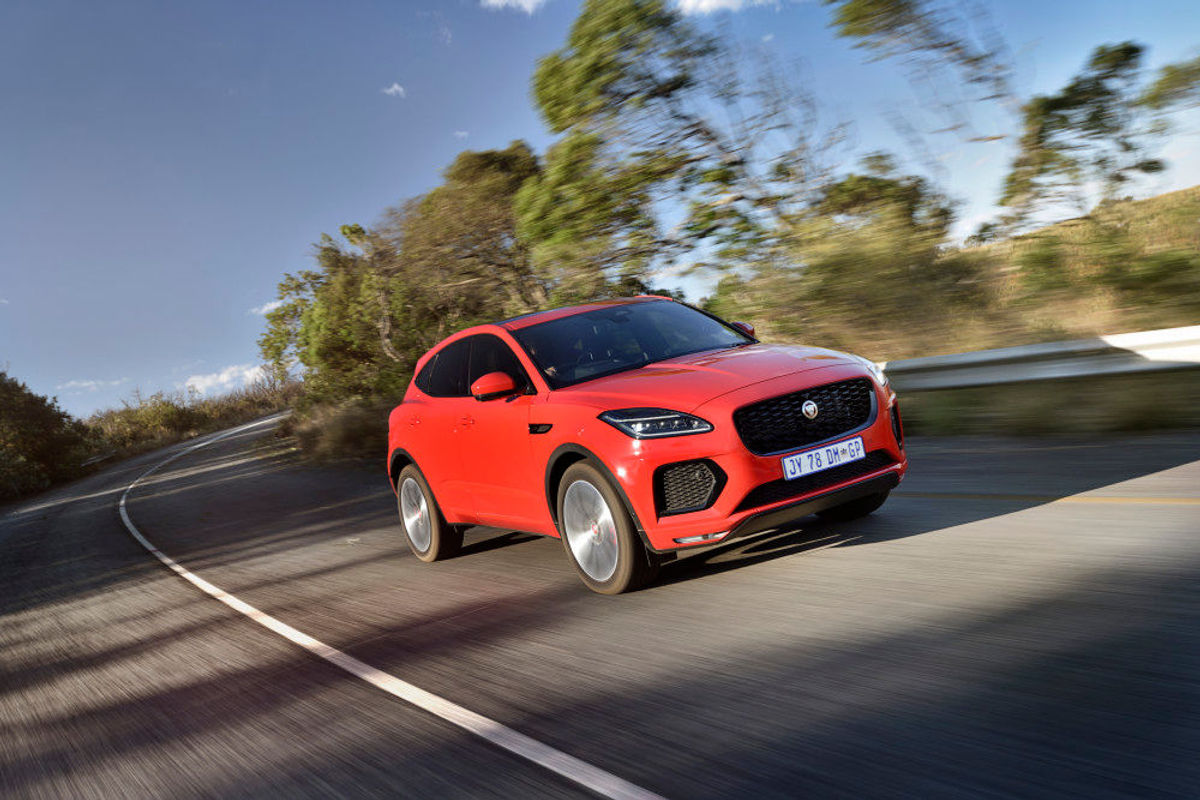
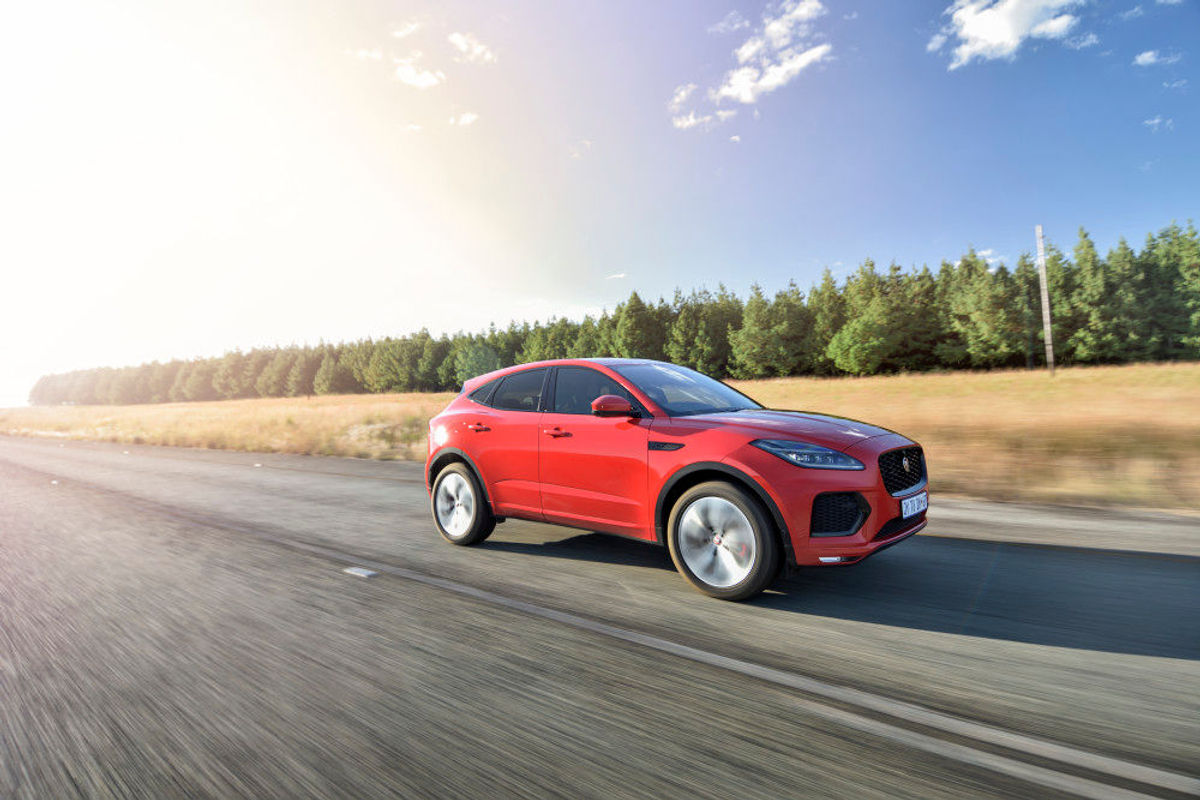
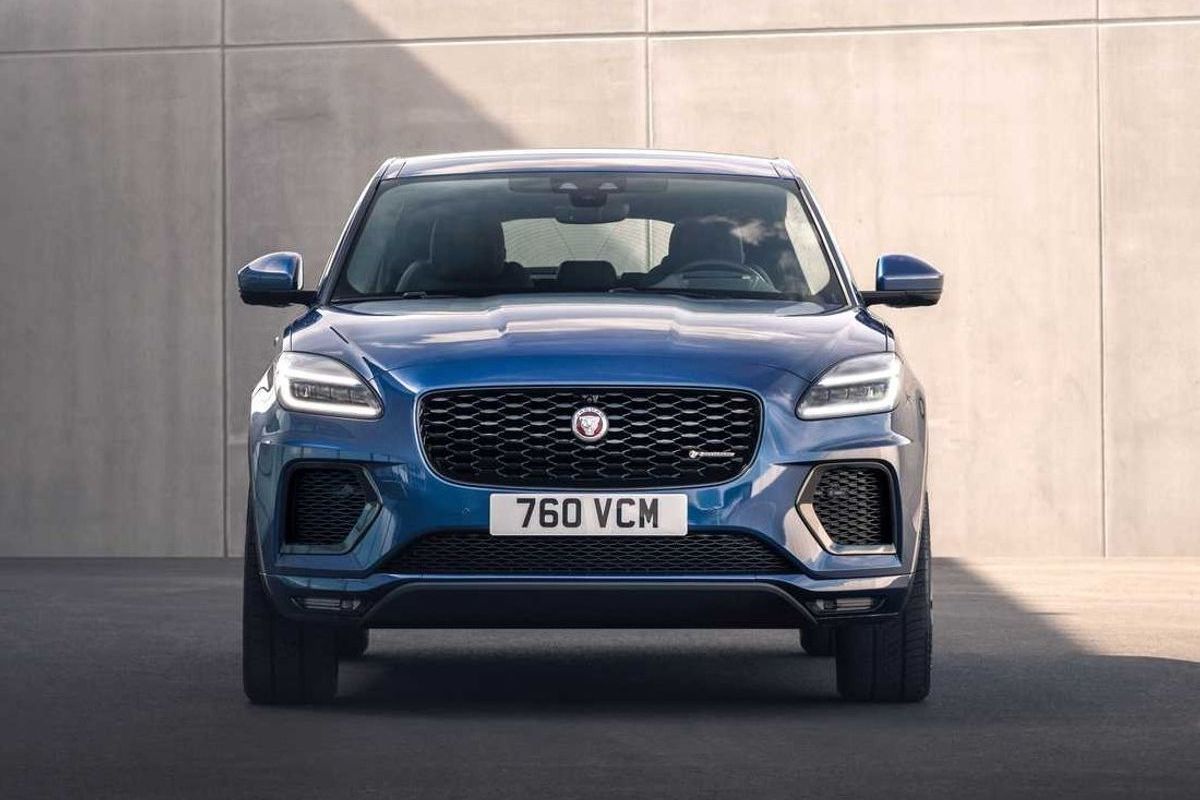
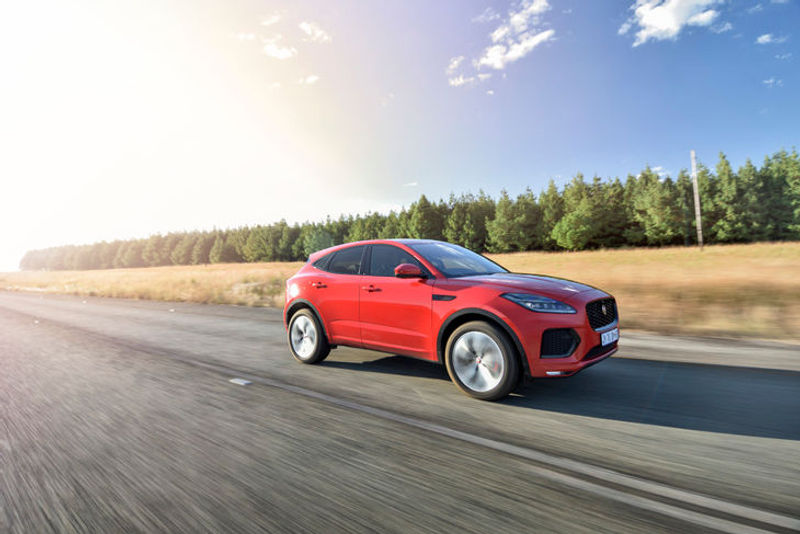
Jaguar's smallest SUV, the E-Pace, received an update last year and it has now officially arrived in South Africa. See specification and pricing details below…
Jaguar has confirmed the local specification of its revised compact E-Pace SUV. The British luxury car brand’s smallest gravel travel capable vehicle has received an assortment of slight exterior styling updates and some cabin refinements too. But the most impressive feature is its new lead powertrain.
What's changed with the updated Jaguar E-Pace?
The E-Pace benefits from subtle exterior updates as well as improved technology on the inside.
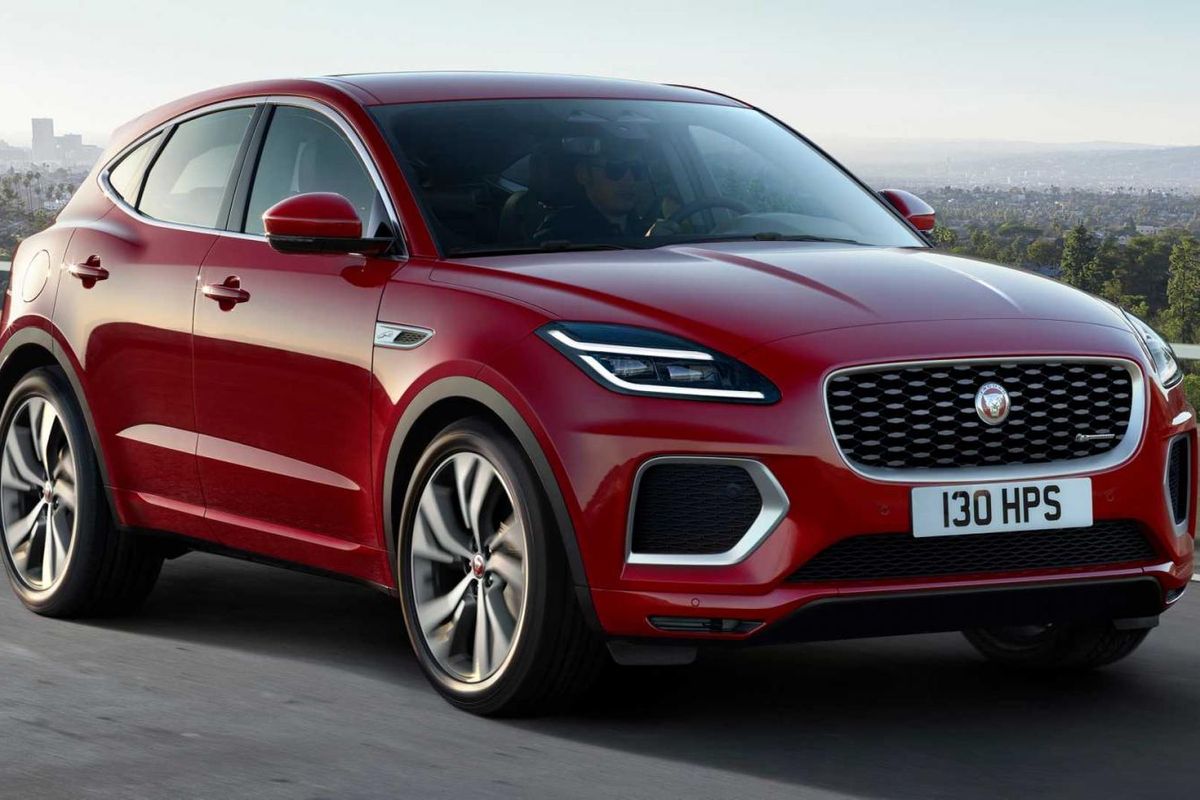
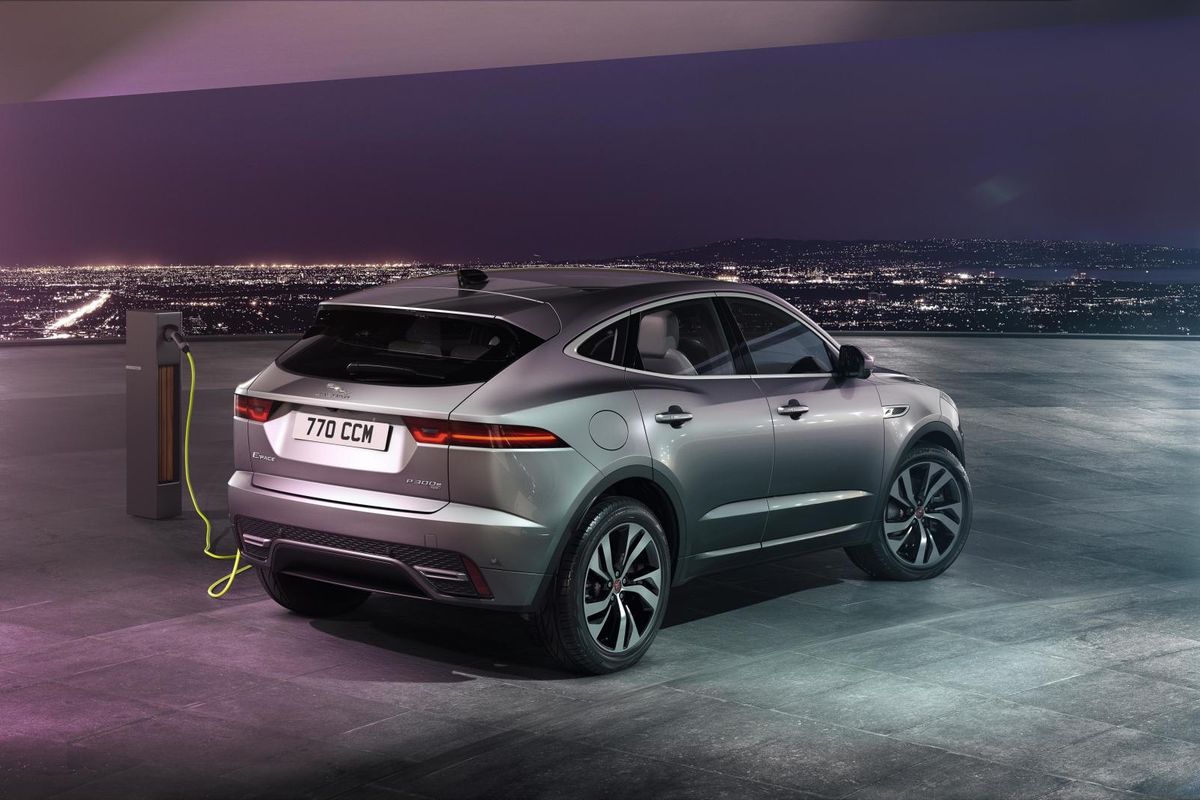
Jaguar’s design department has deployed a new mesh grille to the front-end of E-Pace, framed by new LED headlights with 'Double J' daytime running lights while Pixel LED technology is offered as an option. At the rear E-Pace also features a reprofiled bumper with a mesh insert and revised LED taillights inspired by the Jaguar I-Pace which feature the familiar chicane graphic. R-Dynamic derivatives gain additional performance-focused design elements but buyers can also opt for the Black Exterior Pack which features elements in Narvik Black.
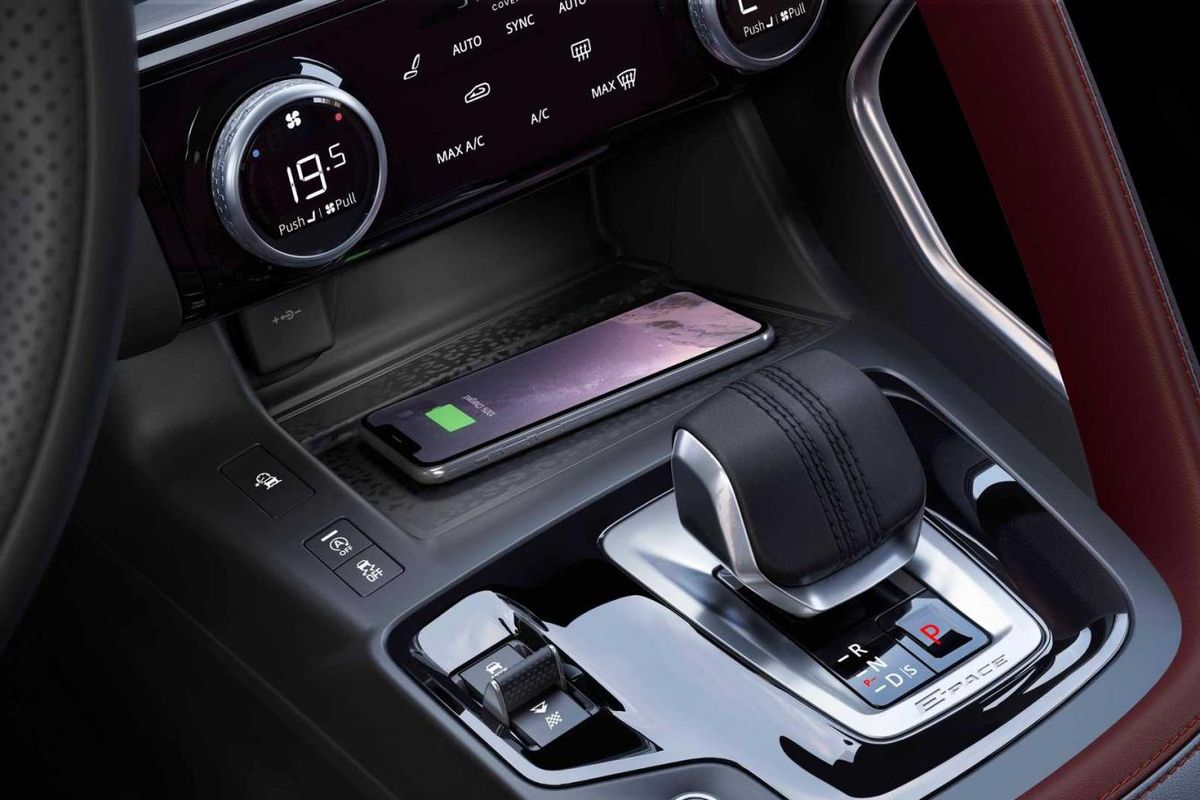
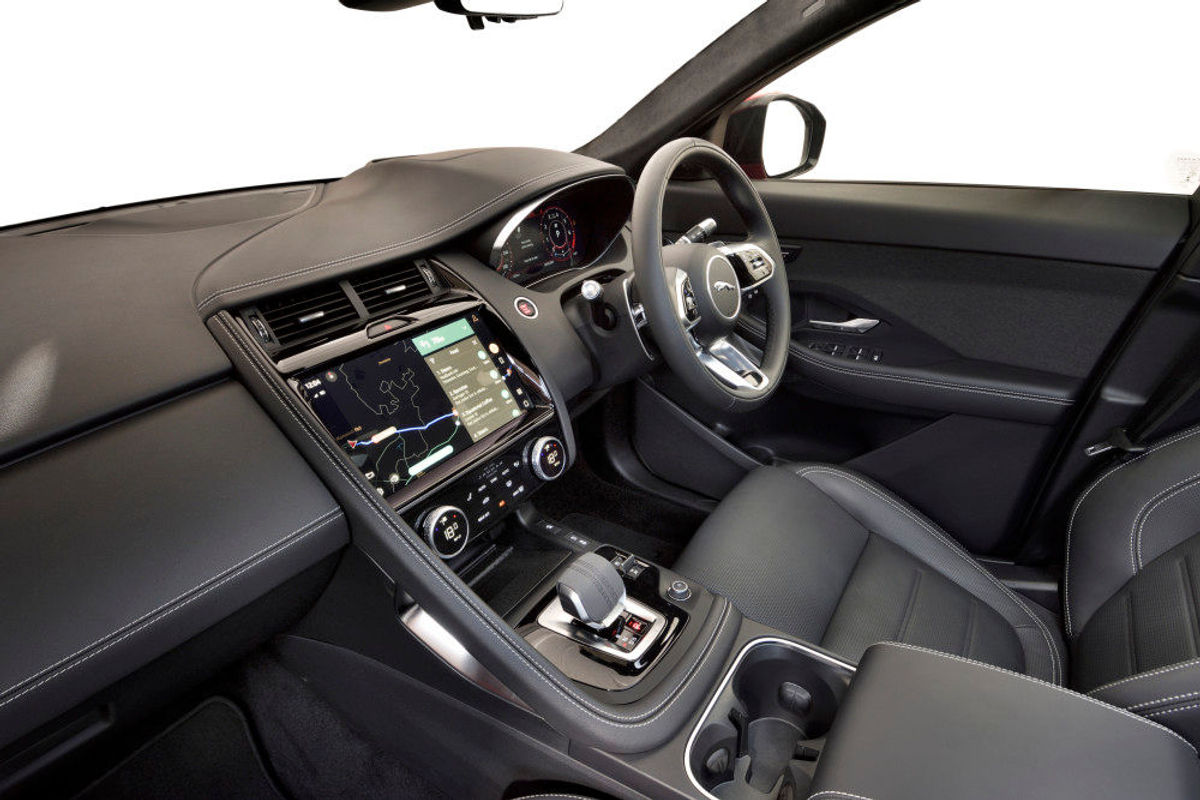
The design updates continue inside, with the cabin architecture benefitting from Jaguar’s latest 11.4-inch, curved-glass touchscreen infotainment system, boasting Jaguar's new Pivi Pro system, the same found in the new Defender and updated i-Pace. There is mention of better soft- and hard touch materials inside the new E-Pace, but by far the most noticeable cabin upgrade is the presence of a conventional transmission shifter, which replaces the more subtle rotary dial selector. A 15kW wireless charger is also found ahead of the new drive selector. The E-Pace gains a new steering wheel, also influenced by the I-Pace, and it's fitted with hidden-until-lit switches and metal gearshift paddles.
What engines are available in the Jaguar E-Pace in SA?
Beyond the exterior and interior design evolution, the E-Pace carries over most of its familiar engine structure. All models are powered by a 2.0-litre turbocharged four-cylinder engine, burning ether petrol or compression igniting diesel fuel, all of which feature AWD and a 9-speed automatic transmission.
The engines are denoted by their imperial horsepower nomenclatures starting with the petrol-powered P250 which is good for 183 kW and 365 Nm while the more powerful P300 peaks at 221 kW and 400 Nm, the latter of which is only offered as the E-Pace P300 Sport and is said to sprint from zero to 100 kph in just 6.9 seconds.
The diesel-powered E-Pace D200 offers 147 kW and 430 Nm and now features upgrades such as friction-reducing steel pistons, variable vane turbocharger and the new 2,500 bar piezo common rail injection system which enhances overall efficiency.
By far the most impressive powertrain on offer with this updated E-Pace is the new P300e with plug-in hybrid technology. The P300e combines a 147 kW 1.5-litre three-cylinder petrol engine, with an 80 kW rear axle electric motor. Total system output is 227 kW and 540 Nm.
The new 3-cylinder PHEV with 227 kW is now available in South Africa.
Jaguar claims an all-electric driving range of 55 km for its P300e and a rather swift 0-100 kph time of only 6.5 seconds. A 15 kWh lithium-ion battery is located underneath the boot floor.
As part of Jaguar's broader product strategy, the revised E-Pace becomes an important volume model, alongside XE sedan.
How much does the Jaguar E-Pace cost in South Africa?
The much-anticipated arrival of the long-wheelbase Suzuki Jimny is coming. But not soon.
The five-door Jimny is a potential product conquest for Suzuki. It would solve the only real issue that some potential buyers have with Suzuki’s all-conquering compact 4×4: its lack of passenger space in the rear.
Suzuki has realised that with its Vitara now having become a crossover, the company lacks a true five-door adventure vehicle, for off-road enthusiasts.
Suzuki has struggled to match its production of the current-generation Jimny with demand. Since the fourth-generation Jimny’s debut in 2018, waiting lists have been immense. Product planners had completely underestimate global demand for Jimny and this is what could stall the market debut of a five-door version.
With Suzuki struggling to meet Jimny deliveries, even with the vehicle’s sales geography being curtailed in Europe, there simply isn’t spare production capacity for a five-door.
To stretch the Jimny’s wheelbase by 300 mm, will generously increase its cabin architecture and spaciousness but also make it heavier. And that might necessitate a turbocharged engine option, which is currently unavailable in the Jimny range.
Align the latest Suzuki’s turbopetrol engines, with their mild-hybridization, and a longer wheelbase will require planning. And with the Jimny production hub running at nearly peak capacity, Suzuki’s industrial engineers will have to find a solution.
The issues around Jimny’s production and the additional engineering burden of its long-wheelbase variant, mean that we won’t see the five-door version soon. At least not, in this year.
But it is certainly something worth anticipating, in 2022.
The facelifted BMW X3 has leaked early in China, thanks to its homologation process. Here's we look at what's changed, plus when it will be revealed.
The BMW X3 is of particular importance to South Africa as the vehicle is assembled locally at BMW's facility in Rosslyn, Pretoria. The vehicles manufactured there are sold locally, but the big money-spinner is the X3s earmarked for export – bringing in significant revenue.
The BMW X3 is an SUV that slots between the compact X1 and large X5, and it's a rival to the Audi Q5 (updated model due for launch in 3rd quarter 2021) and the Mercedes-Benz GLC.
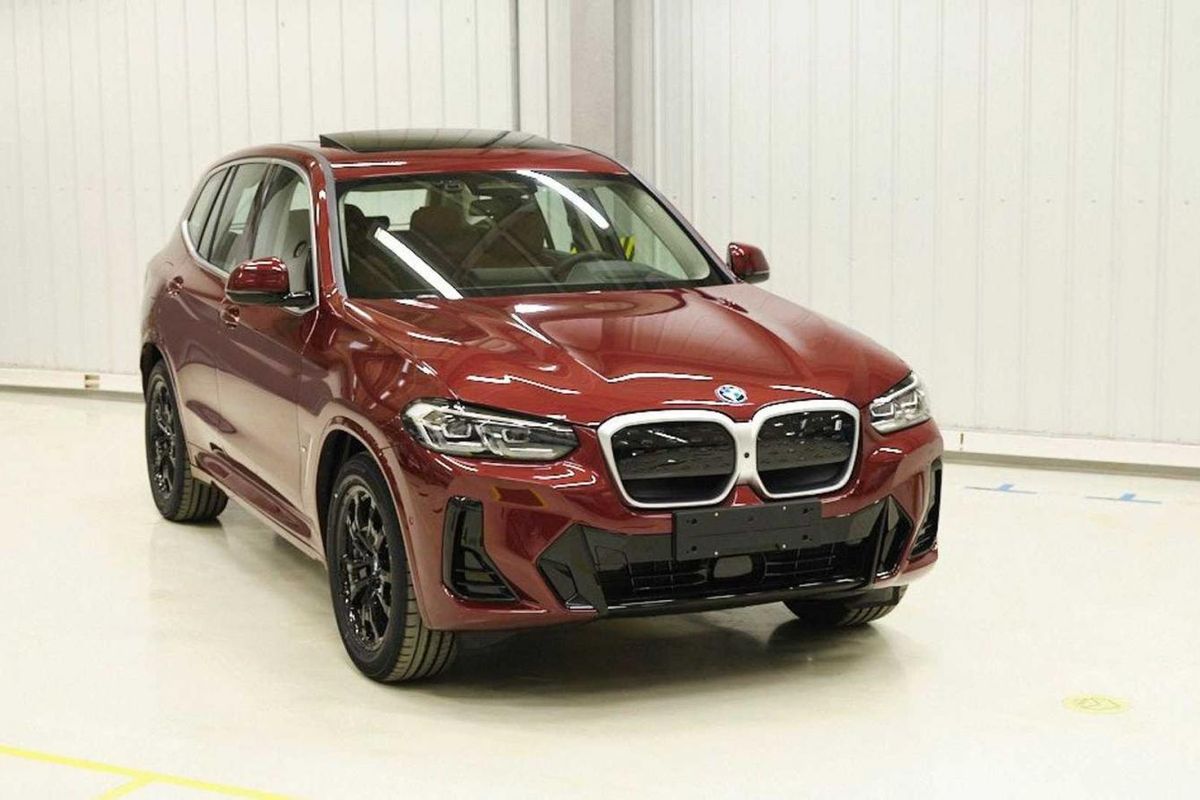
What you see here is the updated BMW X3, images of which have been loaded onto the Chinese Ministry of Industry and Information Technology website as part of the homologation process. Here we see both the BMW X3 facelifted as well as the all-electric BMW iX3 model.
As far as design changes go, the much-discussed BMW grille has not made an appearance, with the Munich-based manufacturer opting for a conservative approach. We can see the BMW M Sport package has been fitted, giving the vehicles an interesting and dynamic look. What's good to see is the electric BMW iX3 has been given a look that's similar to the standard ICE X3, which we think is a good thing as many electric car designs are too polarising for mainstream tastes.
We can see tweaks to the headlights and tail lamps, and there are new-look exhausts too. Inside, it is believed the updated iDrive 8 infotainment system is expected to make an appearance.
When is the BMW X3 LCI coming to South Africa?
Sources suggest the facelifted BMW X3 will have an international reveal in June 2021. Given the vehicle is manufactured in South Africa, we estimate local sales to commence before the end of 2021. However, we'll wait for the official reveal and clarification from BMW SA.
Bajaj Qute Review – In-depth test drive of South Africas cheapest car
We've never seen as much hype and social media chatter around a vehicle as there has been around the Bajaj Qute. We just had to drive it, and see what all the fuss was about.
In all our years in this industry, we’ve never seen a new vehicle launch in South Africa create a stir quite like the Bajaj Qute. Social media literally exploded with comments and videos about the little Indian “car”, and so we got hold of one as quick as we could to bring you this review.
The Bajaj Qute is on sale in South Africa for R75 000 and comes standard with a 2 year/20 000km warranty. There is no service plan included or even available as an optional extra. You can buy or repair your Bajaj Qute at one of three dealers in Johannesburg, one in Pretoria, one in Cape Town and soon there will be one each in Durban and Ggeberha (formerly Port Elizabeth).
In this video, Ciro De Siena takes you on a detailed tour of the car, and takes it for a spin around the Killarney Racetrack to test its dynamic abilities in a safe environment.
Here is everything you want or need to know about the Bajaj Qute in South Africa.
Cars.co.za has the largest selection of used and new cars in South Africa, online, right now. Click on over to www.cars.co.za and find your next car.
This week’s news you need to know (May 2021, week 2)
In this week's motoring news you need to know: Renault rebrands its revered RS division to match the name of its F1 team, EVs don't sound exciting to drive, so BMW is "going cinematic", Toyota may flex its muscles (uncharacteristically) with the next-gen GR Hilux and Mzansi's latest BEV faces an uphill battle…
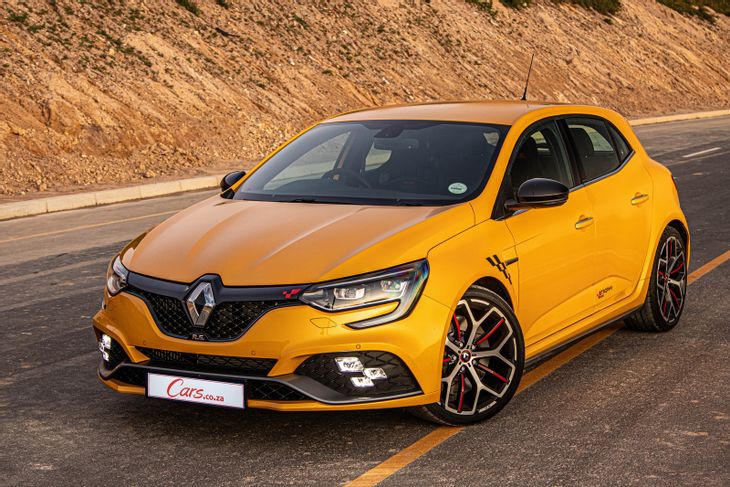
RenaultSport – the rebadging
So RenaultSport (RS) will soon be renamed Alpine, just as the French firm's F1 team was rebranded to match La Regié's sportscar brand at the end of last year. It’s going to be a sad day when the final RS badge is affixed to a fast Renault, but, as we’ve come to learn, a wave of change is sweeping through the motor industry. I understand that traditionalists will feel quite nostalgic because RS badges have featured on some of the best hot hatches the world has seen: Clio RS, Megane RS and let’s not forget that Renault 5 Turbo of Group B world-rally fame. Roll those Group B clips! Here's an example.
A legacy has been left, but times are changing and if the mid-engined Alpine 110 sportscar is anything to go by, I’m okay with this development. However, what does the Alpine brand mean for South Africans? Not much – many of my countrymen don't even know about Renault's storied sub-brand. We live in a country in which Porsche thrives, so why isn’t (the) Alpine here? The business case is proven, but unfortunately, French cars just don’t have a good reputation in Mzansi (unlike French food & wine). From a local point of view, this badge change is no more than a vanity project, for now.
BMW EV sound score – Hans Zimmer
Desperate times call for desperate measures and BMW was certainly thinking outside of the proverbial box when it looked to Hollywood for help. In fact, the Munich-based brand has enlisted the services of famous film-score composer Hans Zimmer to enhance the aural experience of the marque's battery-electric vehicles (Nice side hustle there, Hans).
One can’t blame BMW – internal combustion engine soundtracks have been integral to the driving experiences delivered by the Bavarian marque's most beloved models. A rich engine note (such as the howling V10 of the E60 M5 and the raspy straight-6 of the E46 M3) creates a visceral connection between man and machine and literally stirs the emotions of a driver. Indeed, a sonorous exhaust note is a happy pill and its absence from battery-electric vehicles poses a challenge for manufacturers that have, for decades, used evocative engine sounds as selling propositions. Ecological agenda aside, the EV game clearly needs to be sexier. I can’t help but think future tuners, who previously did exhaust modifications, will now find employment providing alternative remixes of these sounds. Crazy times, friends.
GR Hilux – Bringing a gun to a gunfight
"Hold my beer." That meme-inspiring statement is usually followed by some move that results in a regrettable action (in hindsight), but this time, not for the bakkie powerhouse that is Toyota. I certainly can’t blame TMC for riding the GR (Gazoo Racing) wave of modern performance variants until it reaches the point of saturation. For Toyota, GR is becoming what M is for BMW… A GR Hilux is a masterstroke in a market that is frankly (and I don't use this word lightly) obsessed with bakkies. Local Hilux fans can start licking their chops; when the next-gen GR Hilux arrives it will have more ponies than ever before.
Despite my belief that bakkies shouldn’t have this much power (a rumoured 230 kW and 687 Nm from a 3.3-litre V6 turbodiesel), I can’t help but help get excited about the prospect of a 3-way battle between the top-dog Amarok, Hilux and Ford bakkies; if you haven't been paying attention, the next iteration of the Ranger Raptor is reportedly destined to get a 3.0-litre V6 turbopetrol motor.
This "arms race" between the bakkie superpowers is going to culminate in the tense Mexican standoff scene that you’ve all been waiting for (Get Hans to write the score for this too, while he’s at it). Who knows, perhaps a stadium-truck-inspired racing series could come to fruition in the foreseeable future? Wishful thinking, but if Donald Trump could become President of the USA, anything’s possible.
Volvo XC40 P8 Recharge, more like overcharge
Today, the sad reality is that the South African new-vehicle market is still a long way from a point at which it can sell EVs at attainable prices (or at least at reasonable premiums over ICE models). The rising cost of living – and every economic announcement that hurts us in our wallets – effectively push the arrival of Mzansi's "EV age" further into the distance. It’s regrettable, but EV ownership remains largely aspirational and exclusively available to those with deep pockets. Volvo has now fallen foul of this and will sadly miss the opportunity to tap into a wider market with the XC40 P8 Recharge.
EVs are heavily taxed in the Republic; there's little Volvo SA can do about that. Nonetheless, R1.2 million for an electric crossover is a steep price to pay for guilt-free commuting (cough). Until the stars align and the government can incentivise the uptake of EVs by offering some rebates on the myriad taxes and duties it levies on these vehicles, we’re not going to see too many P8 Recharges around.
We’re not asking for cheap EVs, I'd just like to live to see the day when I can have my thought process go from “I definitely can’t afford this” to “I maybe can afford this (if I donate a kidney to science)”.
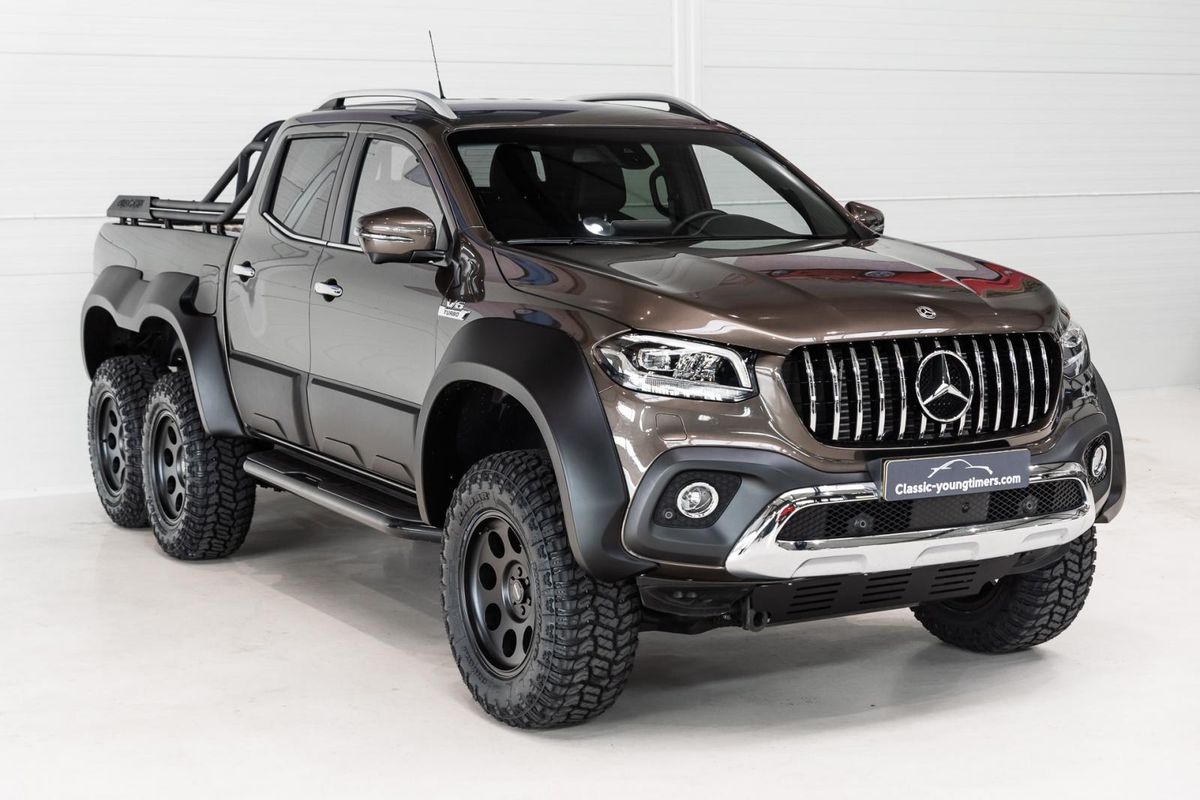
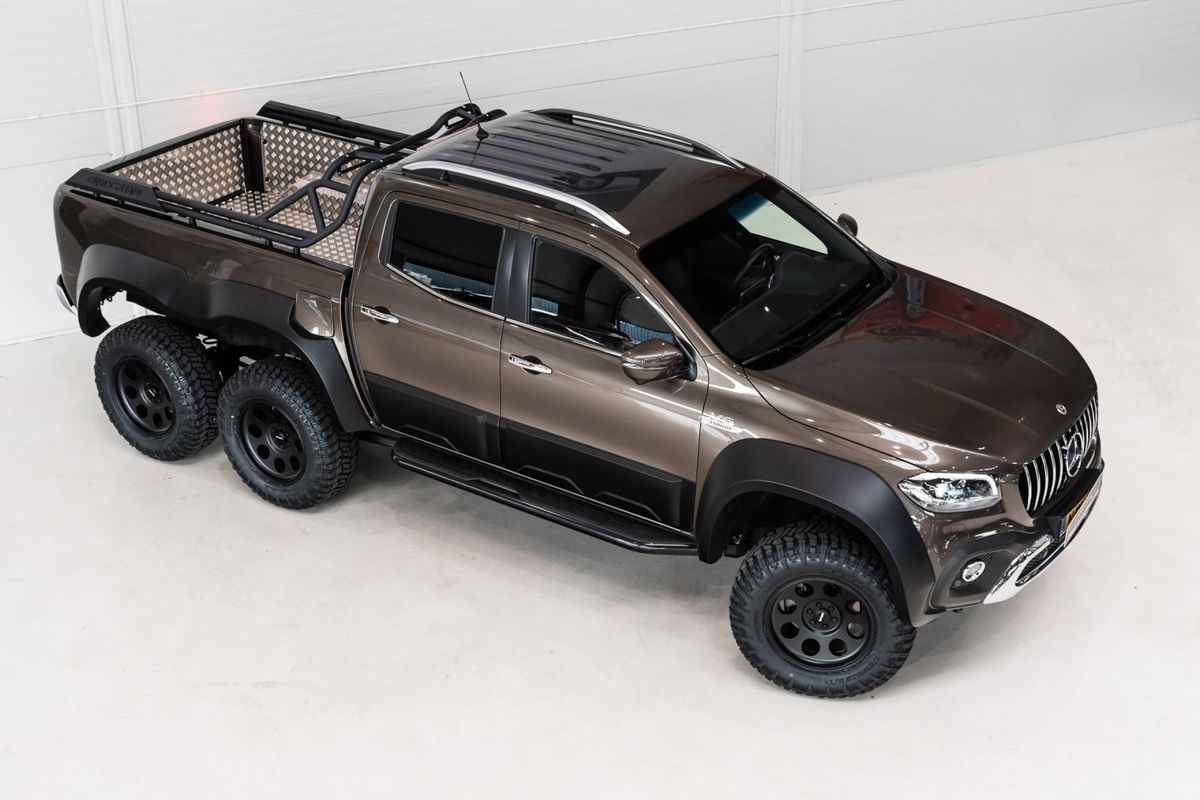
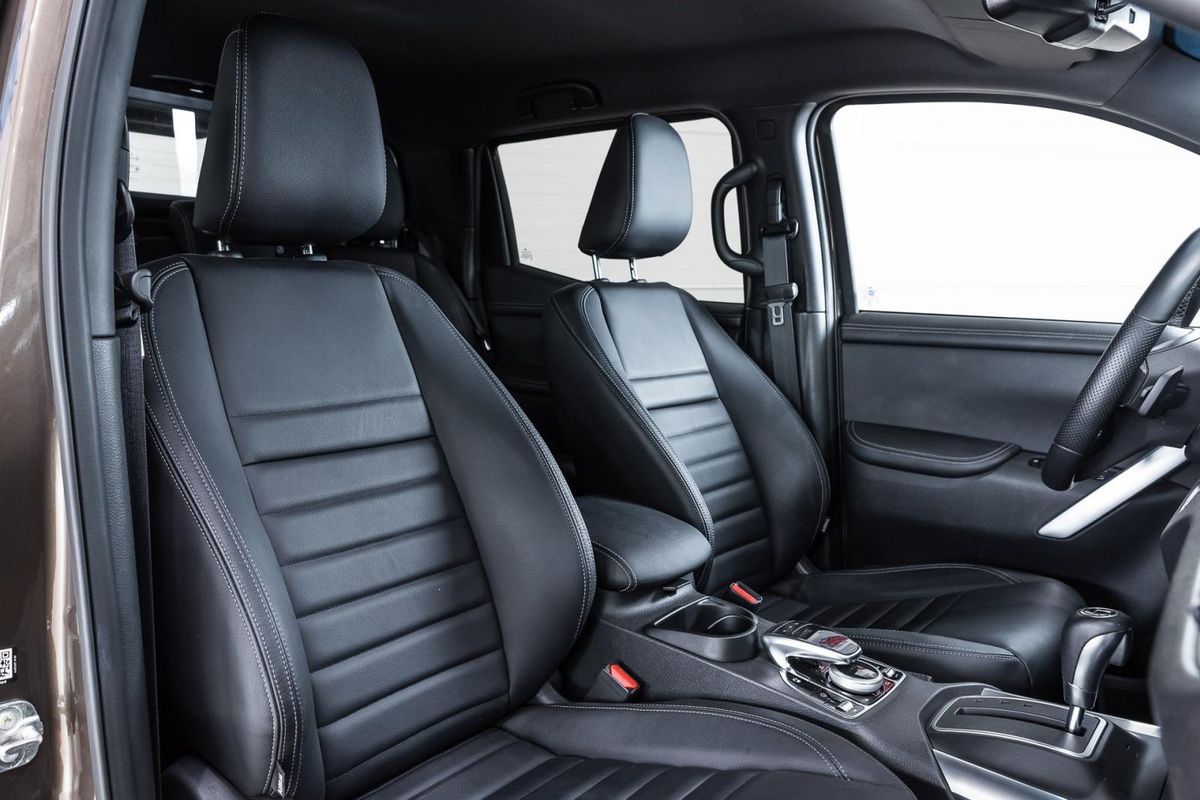
Crazy Mercedes-Benz X-Class 6×6 Revealed
The Mercedes-Benz X-Class may have had a short life, but the array of aftermarket accessories and customisation options was extraordinary. Here's another wild Mercedes-Benz X-Class, with a third axle.
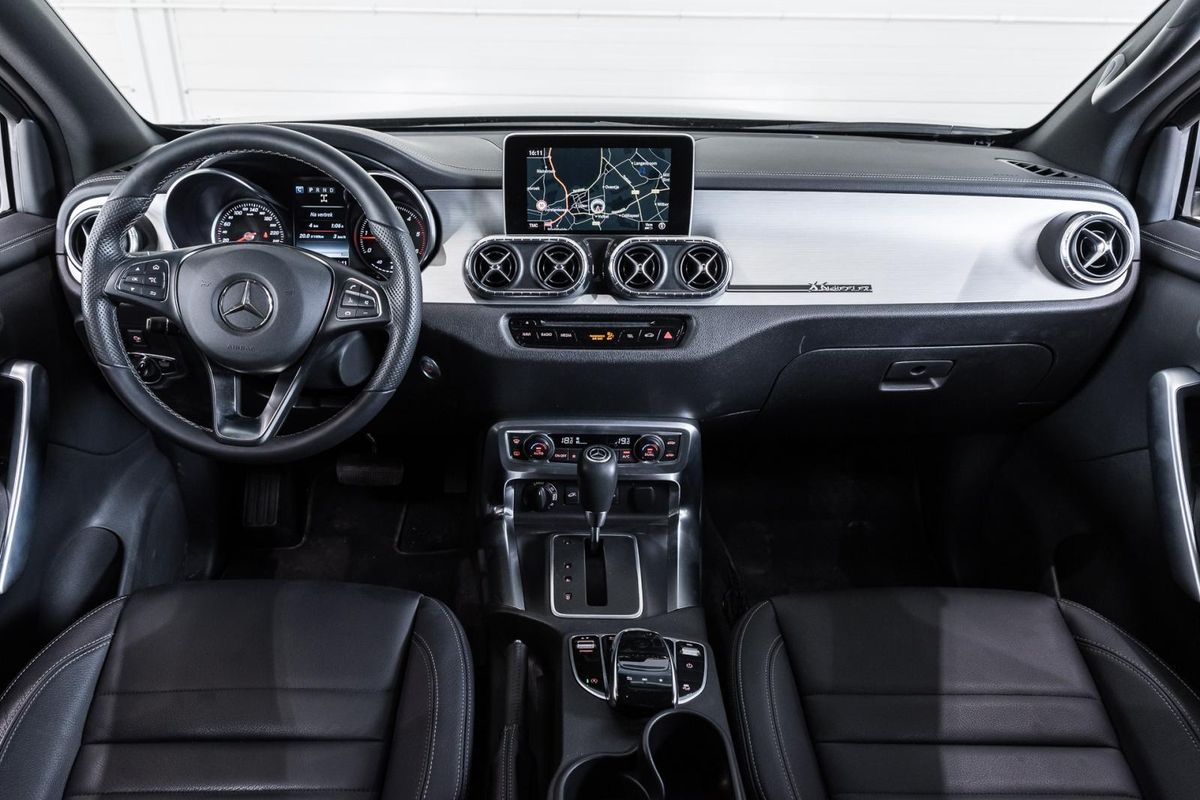
The Nissan Navara served as a platform for the Mercedes-Benz X-Class and despite Mercedes-Benz putting its special touches on the flagship X350d, the vehicle never proved a sales success.
Despite the lack of big sales, we at Cars.co.za saw a tremendous number of customisation options for the Mercedes-Benz X-Class, including this monstrous 6×6 conversion.
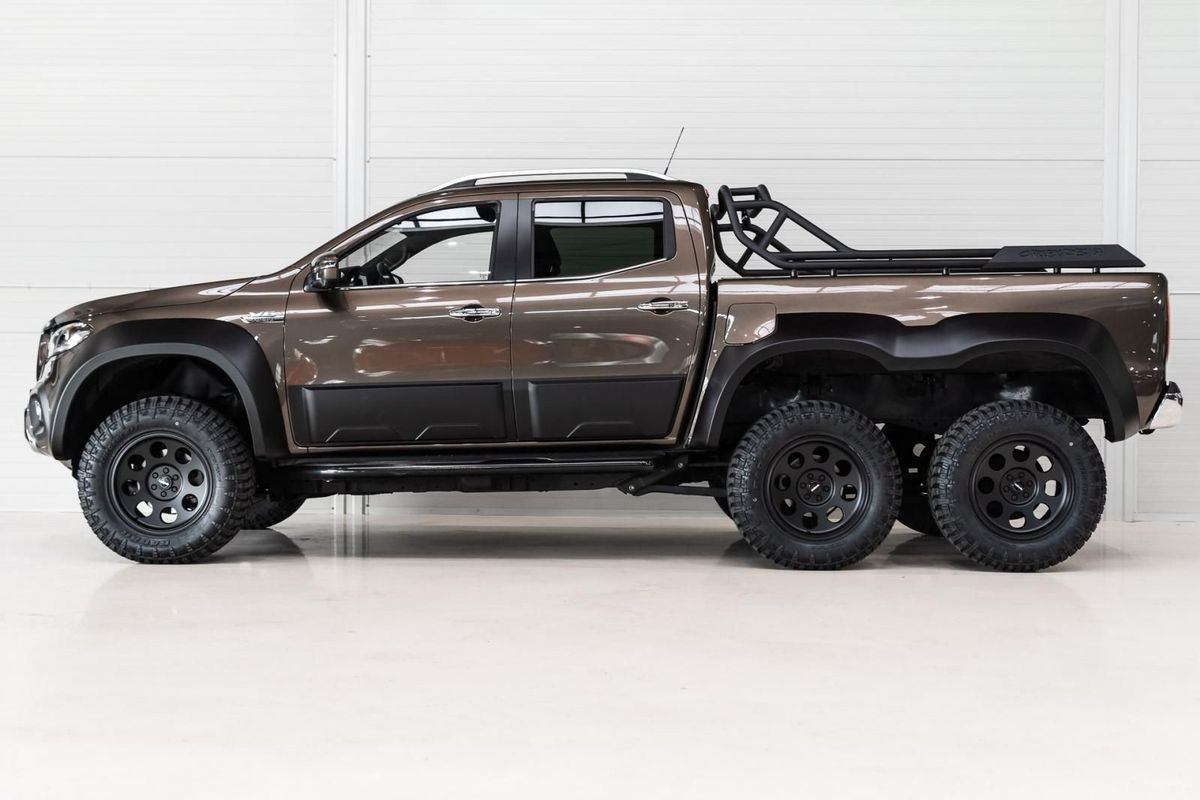
This particular example was recently sold through Dutch car company Classic Youngtimers in Holland and was based as a run-of-the-mill X350d. The owner had a custom subframe installed which allowed provision for a 3rd axle and 2 extra wheels – making this an X-Class X350d 6×6. The dealer who sold the vehicle said this vehicle was not a show car and was actually designed to be taken offroad and pushed hard.
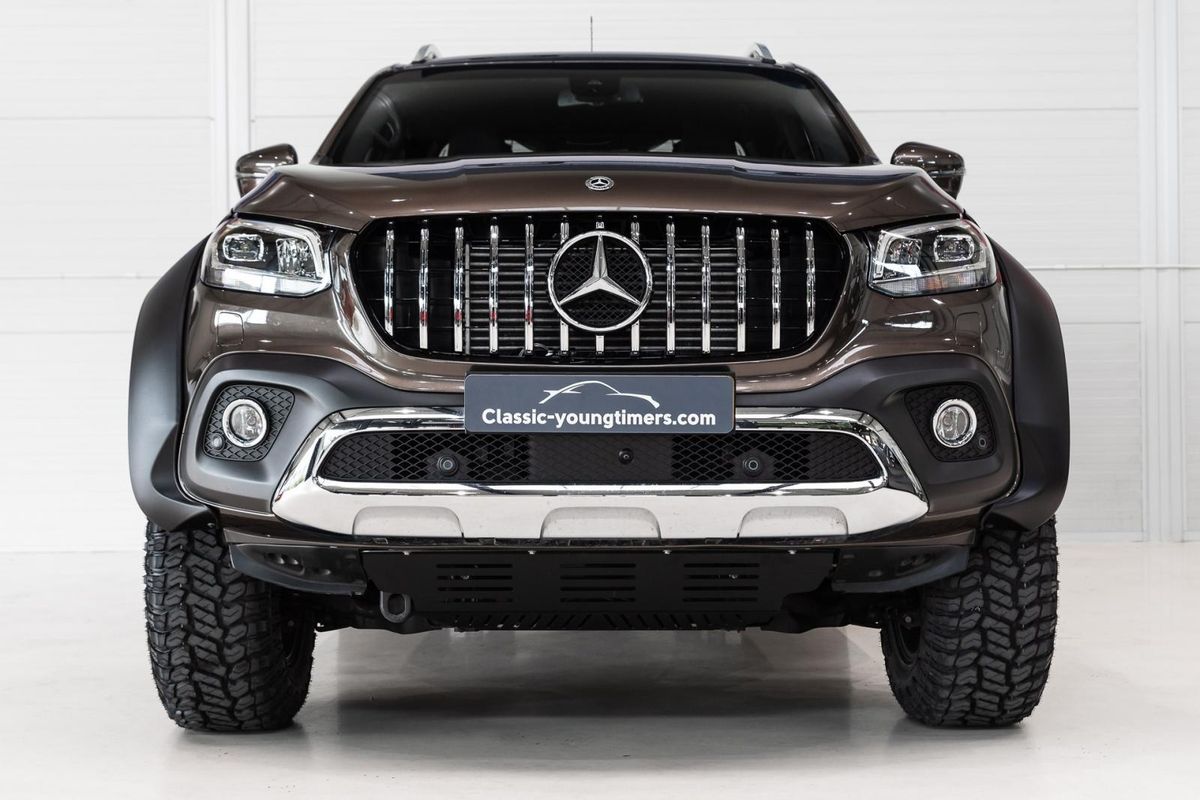
Other noteworthy offroad additions include the raised suspension, which was 10cm higher than the stock setup and allowed customers to fit the huge custom alloy wheels wrapped in chunky offroad rubber. There are big flared front and rear arches to give it a bit more presence. The builder added the Panamericana grille – a staple of high-performance Mercedes-AMG models. Thanks to the additional axle, the load bay dimensions have increased and Carlex Design supply a roll bar and a cage.
As far as the engine and gearbox go, the owner thought the standard 3.0-litre V6 turbodiesel had sufficient power and that remained stock.
It may have reached the end of its life, but as far as crazy conversions go, this Mercedes-Benz X-Class is probably one of the coolest.