This week’s news you need to know (April 2021, week 3)

In this week's news you need to know: Haval upsets the applecart by selling a car at a value-for-money price point (gasp!), Ferrari intends to remove the sound-emitting parts of its cars, Volkswagen releases a fancy looking new Polo and takes the World Car of the Year title with a battery electric vehicle.

Haval Jolion – The Value proposition

Taking centre stage this week is Haval and its new entry to the congested SUV market, the Jolion compact family car. With a solid foundation laid by its H2 sibling, which gained a notable foothold in fewer than 4 years on the market, the Jolion looks set to eclipse that success and for one pressing reason: its sheer value proposition. As South African consumers, we’re regrettably not accustomed to “getting more for less” often – it’s usually the other way around, abetted by cunning marketing jargon that tricks us into believing "that's the way it’s supposed to be". Haval, however, is setting the record straight.

Read more: Haval Jolion (2021) Launch Review

The Jolion's arrival is something everyone should be taking note of. It's attractive, solidly-made and offers the occupant space and standard spec of a premium model, but at under R400K. China’s superior economies of scale are showing the way. If Volkswagen isn’t paying careful attention here, it better be. Something tells me that all those H2 owners are treasured brand ambassadors and amplifiers for the brand's success, who might be first in line for a trade-in, not to forget the ones who’ll be rapping off at the next braai, flipping chops and singing the praises of the Chinese brand. Who would’ve thought it?

Ferrari EV – The tifosi goes electric

Ferrari-SF90

I’ve always maintained that any good Ferrari needs to be the embodiment of emotional appeal – a viscerally centred machine that evokes the senses… you know, a car that "gets the tingles going". It's the secret sauce that sets it apart from brands like Porsche and McLaren. Four factors that I can attribute to every memorable Prancing Horse are road presence, poise, looks and sound.

Read more: Ferrari confirms first all-electric car by 2025

The news that you could soon buy an all-out EV Ferrari has me pondering just how the Maranello-based firm will get it right when all they have working for them is the look, poise and road-presence parts.

The LaFerrari and the entire Formula One project has been getting the "Hybrid Power Unit" schtick somewhat right for all these years with a blend of downsized turbocharged engines and petrol-electric hybrid technology; it's a testament that half the battle is won! But just like Old man Enzo Ferrari’s initial reluctance to put the "horse (engine) at the back of the carriage (race car)", what would his reaction be now that there is no frickin horse at all? I’ll tell you… Vibrant hand gestures, incoherent Italian mumbling, a healthy downing of grappa, a few tears and a night’s rest before coming to terms with it.

New VW Polo – Will the bubble burst?

Volkswagen-Polo-front

The veil has been lifted on the restyled Polo and, as expected, there are no fundamental changes to the Wolfsburg-based brand's compact hatchback, but let’s look beyond the cosmetic updates, extra gizmos and general fanfare of a new vehicle launch. The Polo has always been aimed at a market that now, as a result of inflation, a struggling economy and frankly, the crossover craze is being split into 2 parts… Buyers are either looking for the budget option under R200k, or an SUV. I see this as a threat to Polo and its legacy. Is this a bubble that will eventually burst, or can VW keep the Polo relevant? 

Read more: New-look Volkswagen Polo: Coming to SA in early 2022

As the Polo becomes increasingly sophisticated (to cater for the requirements of VWSA's export markets), the firm will have to rely more on the love that South Africans have for the Polo than ever before. It’s always been the status marker for the middle-income segment that has seen growth over the past 20 years. “She’s just bought a new Polo, so she must be doing well.” We’ve all heard it before.

One thing in the (now 6th-generation) Polo's favour is that it's locally built, which, in theory, should help keep its prices in check. But be warned, VW… meagre salary increases in the market have been eclipsed by vehicle price increases and that might put the Polo out of reach in the long run. Let’s not even belabour the point that a fully-specced Polo GTI costs around the R550 000 mark. Sacrilege. 

Volkswagen ID4 – EV SUV for Msanzi

Volkswagen-ID4-front

The winner of the 2021 World Car of the Year title – the Volkswagen ID.4 – is a relatively unknown quantity within the context of the South African market (for the moment, at least), but its achievement is nonetheless a milestone in the brand's pivot into the EV game. Earning this title is more than a gold star for the brand; it’s a tell-tale sign of what is to come. Volkswagen means business. I also can’t help but think that Dieselgate has been a double-edged sword – on the one hand, it damaged the brand's image, but it also injected new energy into the business to launch forward and make right (excuse the pun).

Read more: Volkswagen ID.4 named 2021 WCOTY

One side effect that we can’t ignore is the liability Dieselgate caused and how it has affected/is affecting vehicle pricing globally. Add to that the onerous 20% import duty South African tax authorities levy on new cars, plus the extra 7% luxury tax on EVs and we can quickly see the government would need to relax this (and launch other initiatives) to support EV adoption in Mzansi so that vehicles such as the ID.4 could land with reasonable price tags. If this were to happen you could still afford to send your kids to school, eat a steak every now and again and sleep peacefully at night. I know, wishful thinking.

New-look Volkswagen Polo: Coming to SA in early 2022

Volkswagen has taken the wraps off the restyled 6th-generation Volkswagen Polo… The update to the Wolfsburg-based brand's popular compact hatchback incorporates several cosmetic updates (inspired by the new Golf 8), as well as a number of high-end onboard technologies. The newcomer will go into production at VWSA's Uitenhage assembly plant in the latter half of the year and is expected to reach local showrooms in early 2022.  

The Polo's styling has always erred on the side of conservativism – and that's still the case, although Volkswagen has ensured that its compact hatchback still looks youthful; it comes replete with new-gen VW emblems (which already debuted on local Polos late last year), an LED light bar across the hatchback's grille and, should you specify them that way, LED tail-light clusters with dynamic indicators. 


The LED daytime running lights in the headlamp clusters are connected by the light bar integrated at the bottom of the grille. 

The updated Polo can be distinguished by its revised bumpers and new-look LED headlamp- and tail-lamp clusters… Those at the rear are strongly inspired by the rear lights of the Golf 8, which will soon arrive in Mzansi in GTI guise, and optionally feature a "wiping" lighting effect as seen on the Touareg's tail-lights, for example. Polo lettering again appears beneath the fresh VW badge on the tailgate.

The dark blue metallic car shown here has the top-of-the-range R-Line trim, which includes sportier bumpers, new IQ.light matrix LED headlights (ostensibly as standard on the flagship derivative and upcoming GTI), LED fog lamps and 16-inch alloy wheels. Note the quartet of chrome-effect faux exhaust exits that are integrated into the gloss-black "diffuser" on the edge of the rear bumper.  


Unfortunately, those racy-looking exhaust tips are just for show. The upcoming GTI will be a different story, however.

As for the interior of the updated Polo, it's been reported that an 8-inch digital instrument cluster (or 10.25 inches, for the Digital Cockpit Pro version) will become standard across the range, which means traditional dials appear to have been consigned to the scrapheap. The newcomer's (now Apple CarPlay and Android Auto-compatible) touchscreen infotainment system measures 6.5-inches, whereas an 8.0-inch or, for the first time, a 9.2-inch display can be specified at extra cost. The latter 2 setups incorporate Volkswagen’s We Connect connectivity (for real-time traffic info and live music streaming). 


Note the subtle upgrades, which include subtle LED lighting and a "frameless" rear-view mirror…

Meanwhile, the safety technology offered as standard on the updated Polo, which is a compact hatchback model, after all, beggars belief: Volkswagen says that predictive ACC (adaptive cruise control) and lane-keeping assist will feature on every derivative. In the European market, at the very least, the Polo will be offered with the optional IQ.Drive Travel Assist semi-autonomous driving assistance system.

Here's how it works: IQ.Drive Travel Assist can take over the accelerating, braking and steering of the Polo, from standstill in auto derivatives and from a rolling 29 kph in manual cars; it works by combining the lane-keeping assistance and the predictive adaptive cruise control functions (as long as the driver keeps their hands on the wheel at all times). 

Another addition to the newcomer's suite of standard safety features is a centre airbag, which opens towards the centre of the cabin in the event of an accident to protect the driver and front passenger.

Apart from a new multifunction steering wheel, electrically folding and heated side mirrors are fitted throughout the range. As the trim levels move up, the Polo gains 15-inch rather than 14-inch wheels, App-Connect, a centre armrest with an additional USB-C port in the middle of the passenger compartment and leather trim on the steering wheel and gear knob.

What's more, Polos equipped with automatic climate control feature a piano-black touch-sensitive panel with digital temperature readouts, below which an abutment with a pair of illuminated USB-C ports is fitted. Finally, a wireless smartphone charging pad (as shown below) can be ordered at extra cost. 

Volkswagen is also set to re-align the Uitenhage-built car’s trim structure; apparently, the Trendline, Comfortline and Highline designations will fall away and be replaced by the Polo (standard), Life, Style and R-Line specifications. To reiterate, the newcomer will arrive in South African showrooms early in 2022 and an updated GTI hot hatch version will follow during the course of next year.

Want to buy a new or used Volkswagen Polo? Start your search here.

Further Reading

Spy Shots: 2021 Volkswagen Polo (Updated)

2021 Volkswagen Polo Sedan Revealed

Volkswagen Polo 1.6 Conceptline (2016) Specs & Price

Volkswagen SA has built 200 000 new Polos

Video Comparison: 2018 Volkswagen Polo & 2017 Volkswagen Polo

Hyundai Santa Fe (2021) Specs & Price

An updated version of the 7-seater Hyundai Santa Fe SUV has touched down in South Africa. Here's how much you can expect to pay, plus specification details.

The 4th generation of Hyundai Santa Fe has received an update. The big flagship SUV from Hyundai celebrates 20 years of sales in South Africa, with the first model touching down back in 2000.

Visually, you can spot the newcomer with its redesigned front grille, featuring repositioned lights, new daytime running lights and a bolder grille pattern. At the rear, the exhausts have been repositioned under the bumper, there are new-look rear lights and there's a lightbar stretching across the rear. There are also new-look alloy wheels, which go up to 19-inch for the Elite model.

Under the skin, Hyundai claims its enhanced the NVH in comparison to the outgoing model. The updated version is said to be quieter both in terms of road noise and engine vibration. The chassis has been rejigged and is not only stronger, but lighter.

There's a new engine available. It also is a 2.2-litre diesel, but is 2151cc as opposed to the predecessor's 2199cc. Power and torque figures are now up to 148 kW and 441 Nm, in comparison to the old car's 145 kW and 436 Nm. The vehicle features a new 8-speed dual-clutch transmission.

Hyundai Santa Fe Features

The list of standard features is impressive. Both cars feature driving modes, dual-LED headlamps, LED rear fog lights, puddle lamps, electronic chromic rearview mirror, chrome detailing, rear privacy windows, full-size spare alloy wheel, 8-inch infotainment system, Bluetooth, smart key, push-button start, leather seats, dual automatic air conditioner, rear manual air conditioner, paddle shifters, reverse camera, power tailgate, wireless device charger and rain-sensing wipers.

As far as safety features go, both derivatives feature driver, passenger, side and curtain airbags, ABS, ESC, DBC, HAC, cruise control, electric parking brake with auto hold, blind spot warning, and automatic power child lock.

The difference between the two trim levels of Hyundai Santa Fe:

Hyundai Santa Fe Executive

  • Two-wheel drive
  • 18-inch alloys
  • Electrically adjustable power seat for driver
  • Rear park distance warning

Hyundai Santa Fe Elite

  • All-wheel drive (with terrain driving modes)
  • Panoramic sunroof
  • Rear seat alert
  • LED tail lights
  • Panoramic sunroof
  • 19-inch / 20-inch alloys
  • Electrically adjustable power seats for front passengers
  • Front seats are heated and ventilated
  • Rear door curtains
  • Heated steering wheel
  • Mood and personal lamps
  • 12.3-inch Super vision cluster
  • Front and rear park distance warning


The wireless charger in the Hyundai Santa Fe

How much does the updated Hyundai Santa Fe cost in South Africa?

The updated Hyundai Santa Fe is sold with a 7 year / 200 000km manufacturer warranty 6 year / 90 000km service plan and there's 7 year's / 150 000km roadside assistance

Hyundai Santa Fe R2.2 Executive 8sp DCT MY21           R769 500
Hyundai Santa Fe R2.2 Elite 8sp DCT AWD MY21          R869 500

Further Reading

Hyundai Santa Cruz Bakkie Officially Revealed

Hyundai Staria Confirmed for South Africa

Hyundai Alcazar Expands Creta Range

Ford Everest Sport (2021) Launch Review

Ford has expanded its locally-produced 7-seater Adventure SUV range through the addition of a pair of purposeful-looking Everest Sport derivatives. We drove the Everest Sport in and around Oudtshoorn to find out if the Sport badge is appropriate. 

What is a Ford Everest Sport?

Ford-Everest-Grille
The big grille and Everest badging are the key visual differences

Ford has given its 7-seater Everest a visual makeover with the aim of brushing up its image; to make it look appreciably sportier. Based on the XLT trim line, the Everest Sport gains what's Ford claims to be a more athletic look. The jury is still out on whether you can make a large bakkie-based SUV resemble anything remotely sporty, but in Ford's defence, we think the enhanced look is great.

At first glance, you'll notice the big bold mesh grille and rather imposing Everest badge at the front. Upon closer inspection, you'll notice the black mirror caps and door handles, which replace the chrome-look adornments fitted to the standard Everest XLT. The wheels are particularly tasty-looking, with 20-inch gloss black alloys rolling in each corner. There's also a subtle Sport badge on the tailgate.

The Ford Everest Sport's cabin, meanwhile, has also been given a sporty makeover, with extensive blue contrast stitching on the steering wheel and seats. The leather seats feature embossed Sport logos on them and there's a fresh-looking blue carbon-fibre-style dashboard surround. We also like the bronzed surrounds on the ventilation outlets. 


Blue stitching and blue inserts really look the part

There are two versions on offer, which share a common powertrain. Customers can choose between a 4×2 and a 4×4 derivative. The engine doing duty in the Ford Everest Sport application is the 2.0-litre 4-cylinder single-turbo diesel engine. It produces 132 kW and 420 Nm, and torque is distributed to the wheels via a 10-speed automatic transmission. Ford claims this motor can produce up to 340 Nm (of its peak torque) from as low as 1 250 rpm and with so many ratios at hand, the Everest Sport should be a responsive performer, on paper at least. 

As as far as features go, Ford has always been rather generous with its specification and the Everest Sport is no exception… Striking LED headlamps and daytime running lights, cruise control and front and rear park sensors with a reverse-view camera are just some noteworthy features.

When it comes to safety, the Ford Everest has 7 airbags, Electronic Stability Programme with traction control, Trailer Sway Control, Hill Launch Assist and Roll Over Mitigation.

What's it like to drive?


The Swartberg Pass is a spectacular stretch of road, made challenging on the day thanks to overnight rainfall

Our steed of choice was the Ford Everest Sport 4×4, finished in the striking Diffused Silver. It really looked the part, with the big bold grille and black gloss alloy wheels providing quite an image boost. Customers have a choice of some six exterior colours to choose from and we'd suggest going the more vibrant route to really make your Everest Sport stand out.

The launch route took place in the Karoo and the roads around Oudtshoorn were of varying quality, which afforded us plenty of opportunities to test the vehicle thoroughly. Despite being based on a platform that started life at least a decade ago, the Everest still feels amply engineered for comfort, with minimal road noise intrusions into the cabin. Those big wheels aren't just for show and we suspect the large tyres work hard to absorb some of the bumps and dips. Ride quality is good; sportiness takes a back seat in this regard, but then these are lifestyle vehicles designed to be driven on a variety of surfaces.

The engine is more than adequate. There's nothing new or ground-breaking, it's the same motor we've sampled in other Everest and Ranger derivatives. Diesel clatter is kept to a minimum, but performance is good with strong overtaking power. The gearbox is the real hero here, with its quick changes putting the engine at its most responsive. The best part of the powertrain has to be the fuel consumption. While Ford's claim of 7.1 L/100 km is a tad optimistic, we're happy to report that our spirited driving over the launch period returned just 9.2 L / 100 km according to the trip computer. Impressive, for such a large vehicle. 

Ford also included the immense and epic Swartberg Pass that separates the towns of Oudtshoorn and Prince Albert. It's a technical piece of road that's driveable in any car, but on the day of our drive, overnight rains had turned the dirt into mud, making things tricky even for 4×4 vehicles. A quick turn of the Terrain Management dial to the mud setting brought the 4×4 system into action and we began the steep climb up. As pictures attest, it's not the easiest of routes with no barrier separating the road from a horrible long drop down the side of the mountain. The Everest is in permanent all-wheel drive mode, unlike its rivals which are 2-wheel drive as a default, requiring drivers to manually select the 4-wheel drive.

Ford's SYNC3 infotainment system is well worth a mention. Not only does it offer hands-free phone connectivity with Apple CarPlay and Android Auto, but the native interface is one of the most user-friendly around. Those who rely on their electronic devices will take comfort in the two USB ports offered at the front of the vehicle.


The black wheels are a very nice addition to the visual aesthetic

Ford Everest Sport Quick Verdict

By introducing these cosmetic enhancements, Ford has made the Everest a bit more desirable on an emotional level, which should generate more showroom traffic for the Blue Oval. Given how the market is pushing for personalisation, it's good to see OEMs reacting. We all know that when Ford owners were putting bigger bold aftermarket grilles onto their bakkies, Ford reacted by offering the Raptor grille as an option. We suspect more than a few Everest Sports will be sold based on its kerb presence alone. Those wheels and that grille paired with a vivid paint finish will make for an eye-catching combination.

We know the Everest is a more-than-capable offering, with a runner-up position in this year's Adventure SUV Category #CarsAwards – powered by WesBank to show for its efforts, but the additional go-faster bits may garner it even a few more fans. The Everest Sport has been cleverly positioned between the biturbo derivatives, which, unless you're regularly towing big trailers, are overkill. The single-turbo setup is the sweet spot, but whether you go 4×4 or 4×2 will depend on your personal preference. If you consider driving down a gravel road as off-roading, then there's nothing wrong with the 4×2 version.

How much does the Ford Everest Sport cost in South Africa?

All Everest derivatives come standard with Ford Protect, comprising a 4-year/120 000 km comprehensive warranty, 3-year/unlimited distance roadside assistance and 5-year/unlimited km corrosion warranty. A 6-year/90 000 km service plan is included, with service intervals of 15 000 km.

Ford Everest Sport 2.0 4×2 auto       R676 600

Ford Everest Sport 2.0 4×4 auto       R718 000

Further Reading:

Ford Everest Sport (2021) Specs and Price

Ford Ranger Accessories for 2021

Ford to invest a further R15.8 billion into SA

#CarsAwards – Best Adventure SUVs in SA

Haval Jolion (2021) Launch Review

Haval has launched its new Jolion in South Africa, where it will eventually supersede the surging Chinese SUV brand's strong-selling H2 model. By offering near-family-car-like levels of practicality and specification, but at a price point more associated with a small crossover, the Jolion is well-positioned to claim a sizable chunk of its segment. Cars.co.za journalist Gero Lilleike sampled the Jolion in Johannesburg this week to bring you this report…

Haval means business! Yes, products from volume manufacturers such as Ford (EcoSport), Hyundai (Venue and Creta) and Volkswagen (T-Cross) are the "big hitters" in the small crossover/compact family car segment, but the market doesn't stand still; buying patterns are changing. Local buyers used to be very brand loyal/risk-averse when considering models from Chinese brands, but Haval has momentum firmly in its favour. Since its introduction to the local new-vehicle market in 2017, the brand has experienced phenomenal growth in South Africa… So much so, in fact, that it's currently ranked the 8th best-selling car brand in South Africa (as of March 2021), all in the space of fewer than 5 years! What other Chinese car brand has ever experienced such immense market penetration in South Africa?

Haval has, in many ways, broken the shackles of negative perception that has impeded Chinese brands' growth in our market in the past. And how? By offering feature-rich products at pocket-friendly prices, yes, but critically, in conjunction with admirable levels of quality and durability. That, in a nutshell, is what buyers in this segment want: value! 

Enter the Haval Jolion

Haval Jolion rear view
The Haval Jolion's arrival is bound to shake up the compact SUV segment. 

Like its H2 predecessor, the Jolion joins a highly competitive segment, but its charm offensive begins right at the outset… well, with attractive packaging. In terms of styling, the Jolion hits the mark with its bold, expressive face that's dominated by chrome, while its fang-like headlight/DRL design adds further distinctiveness. What's more, the Jolion rides on smart-looking diamond-cut 18-inch alloy wheels. 

Built on Haval's L.E.M.O.N platform, the Jolion measures 4 472 mm in length, 1 814 mm in width and 1 619 mm in height, which means it fills a parking bay with more gravitas than the aforementioned Volkswagen T-Cross and Hyundai Venue, for example – and, with a wheelbase of 2 700 mm, Haval has ensured the Jolion's interior is far more spacious than those of its chief compact family-car rivals. 

What's the Haval Jolion's interior like?

Haval Jolion interior
Arguably one of the most stylish cabins currently on offer in this segment…

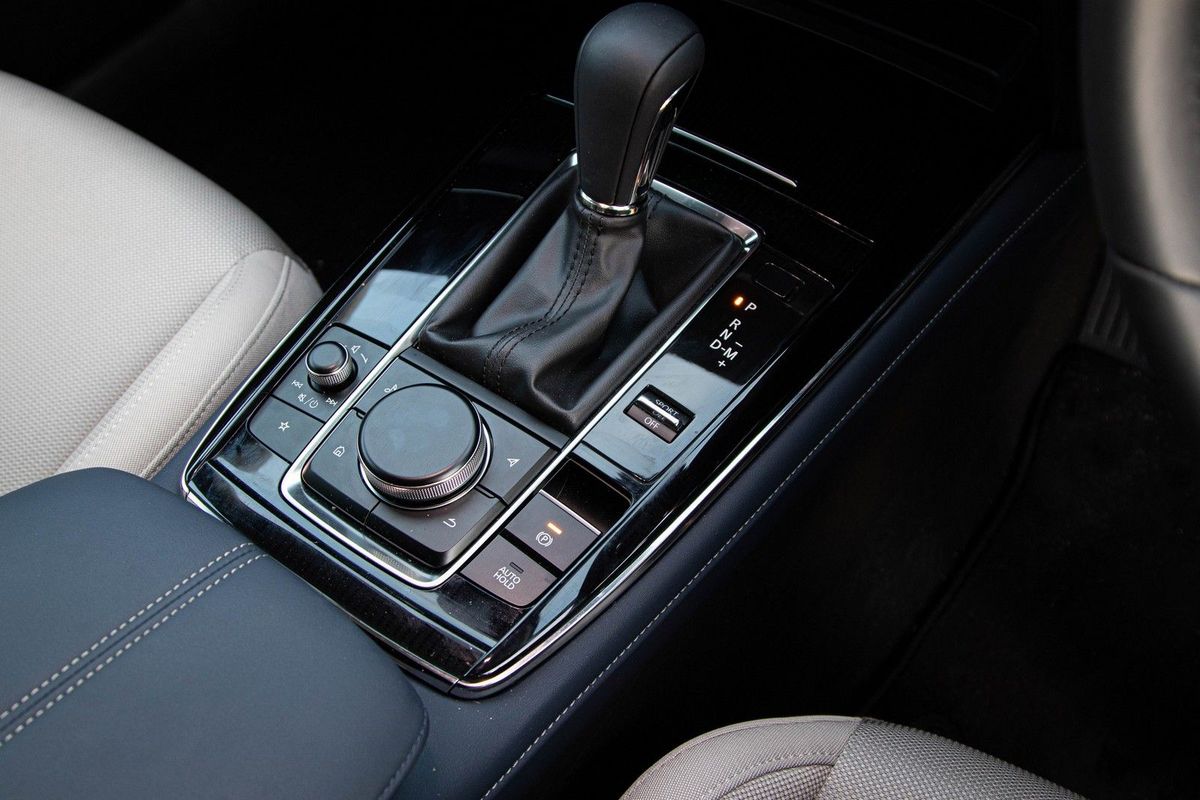
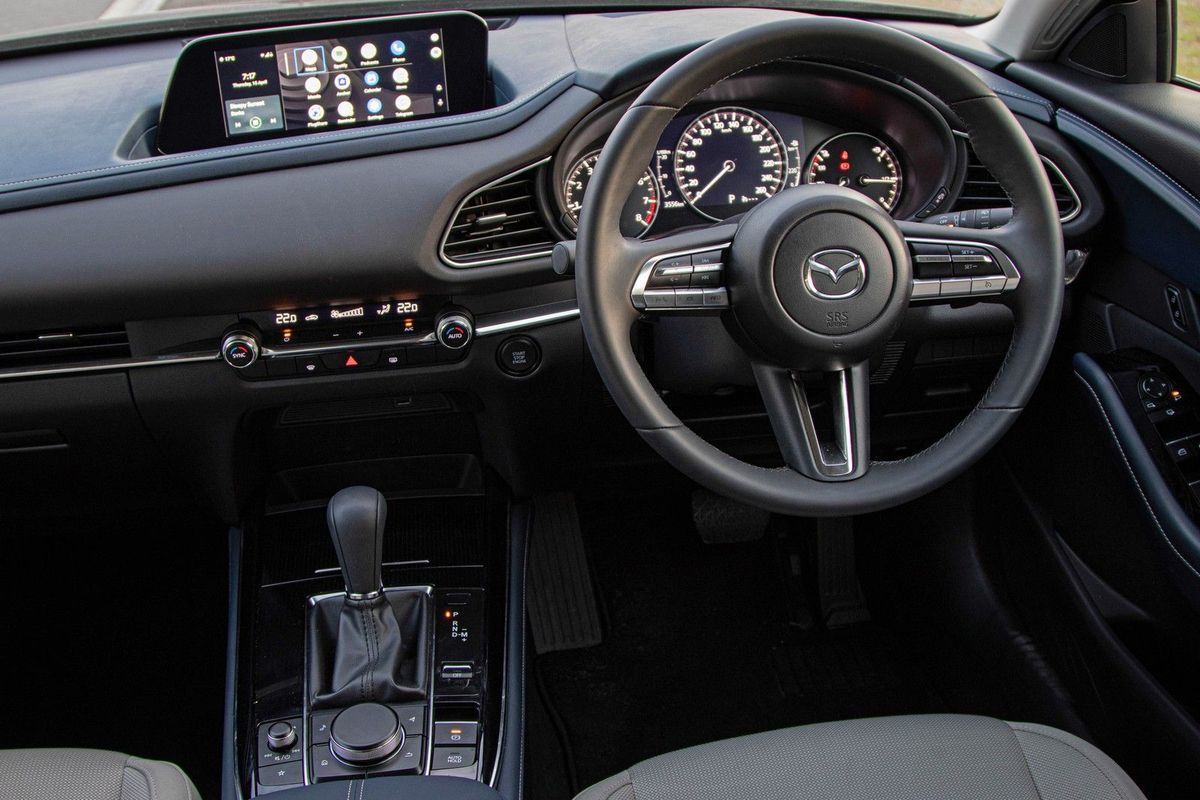
In our opinion, the Jolion's interior design and the overall fit-and-finish of the cabin are right up there with the very best, if not directly comparable with the very best in the small crossover/compact family car segment. That's a sweeping statement to make, but the Jolion's bold (but handsome) cabin is tastefully complemented with a pleasant mix of hard-wearing and soft-touch materials and importantly, the interior doesn't look or feel cheap. Instead, it's quite premium inside! The tactile quality of the "drive dial" in the centre console, for example, illustrates that Haval’s designers have paid attention to detail…

We were able to sample the range-topping Jolion 1.5T Super Luxury derivative (priced from R398 900), which comes equipped with a staggering number of so-called bells and whistles at a very attractive price. For a start, the seats are upholstered in leather (replete with white contrast stitching) and the driver's seat is 6-way electrically adjustable! 

haval jolion seats
The Haval Jolion's interior has a premium "look and feel" that its rivals just can't match. 

In terms of infotainment, a neat 12.3-inch floating touchscreen infotainment system is fitted. It has a clear, simple layout, is easy to use and while it is compatible with Apple CarPlay, Haval is currently doing its best to resolve ongoing licensing delays with Google to offer Android Auto. This matter will hopefully be sorted out soon but for now, you can vent your frustration at oh, I dunno, Donald Trump?

No fewer than 4 USB ports are provided, as is obligatory Bluetooth telephony with voice activation. Buyers will be chuffed to know that a wireless charging pad (to top up your smartphone) is also included!

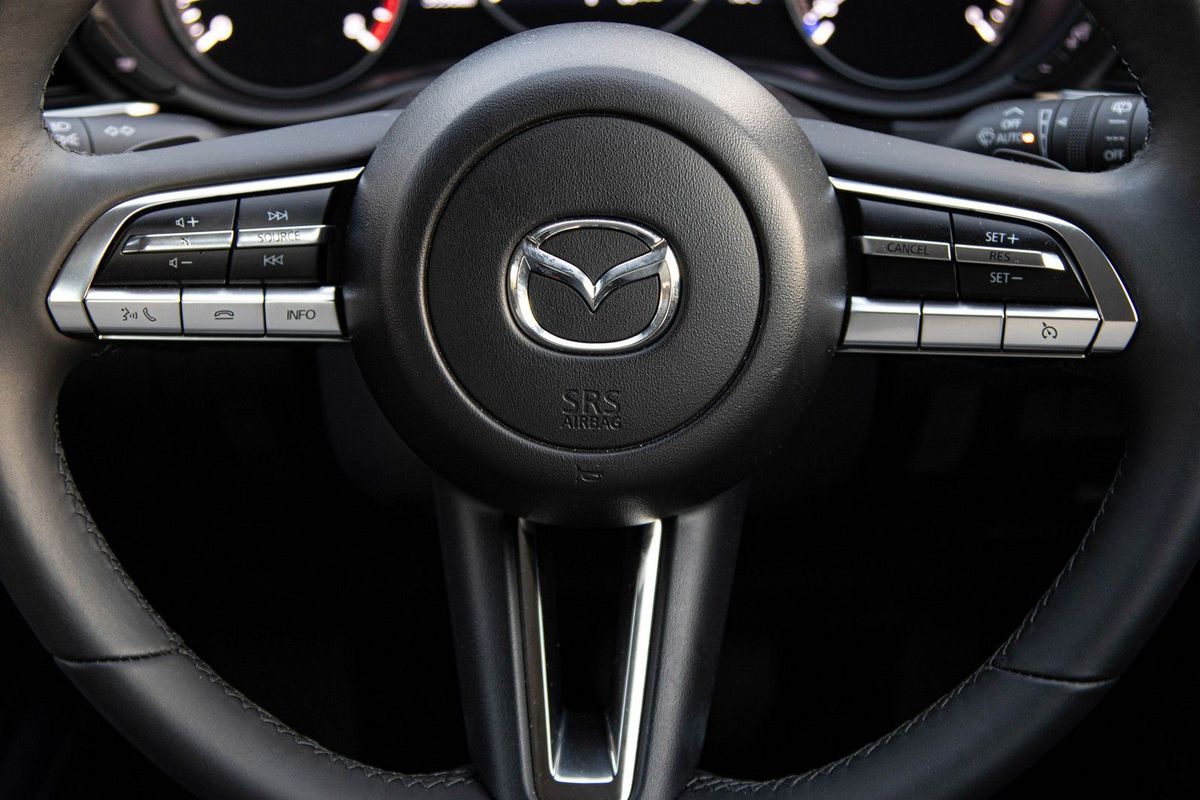
Other nice-to-have features on offer in the top-spec Jolion include a panoramic sunroof, a multifunction steering wheel with paddle shifters nogal, a 10.3-inch digital instrument cluster, adaptive cruise control, lane keep assist, blind-spot monitoring, 360-degree camera and a reverse-view camera with guidelines.

For safety-conscious buyers, it's good to know that half a dozen airbags are fitted, as well as ABS with EBD, electronic stability control with traction control, hill assist, rear-cross traffic alert and tyre pressure monitors. Crash test results for the Haval Jolion have yet to be conducted and/or released.

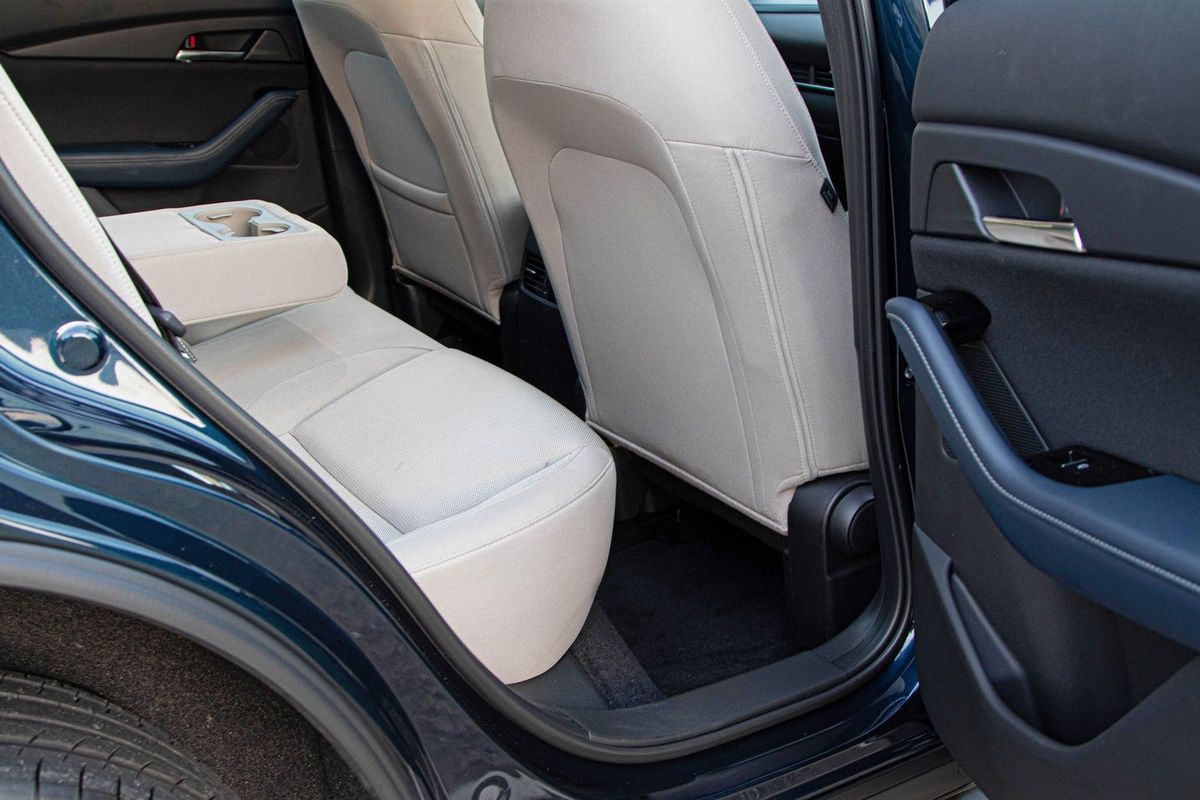
As far as practicality is concerned, Haval's newcomer offers simply excellent, perhaps even class-leading, rear legroom – certainly enough to make would-be family-car buyers take a closer look. Haval claims a luggage capacity of 337 litres, which is admittedly more small-crossover-like, however; further space (up to 1 333 litres, apparently) can be accessed by folding the 60:40 split rear seats down. 

What is the Haval Jolion like to drive?

haval jolion drive
With competitive outputs and respectable levels of refinement, Jolion owners should have little to complain about. 

Outputs from the Jolion's 1.5-litre turbopetrol engine are very competitive compared with those of its major rivals in the compact family-car segment. The Haval powerplant produces peak outputs of 105 kW and 210 Nm of torque and is mated with either a 5-speed manual transmission or, in this case, a 7-speed dual-clutch automatic transmission.

The engine and transmission are well-paired and produce fair off-the-line acceleration, sufficient punch to execute quick overtaking manoeuvres, as well as generally pleasing highway cruising ability. 

The steering-mounted paddle shifters add some sportiness to the driving experience too, allowing the driver to drop a cog or two to keep the engine in its sweet spot. The DCT transmission, however, is best left to its own devices and while it’s not quite as sharp and responsive as Volkswagen's praised DSG auto' box, it's a notable improvement on Haval's 6-speed automatic transmission. The driver can also toggle between Standard, Eco, Sport and Snowfield drive modes to suit the prevailing driving situation.

haval jolion drive dial
The Jolion's drive dial replaces the traditional automatic stick shift and it gives the interior some added upmarket appeal. 

It must be said that the engine is quite refined under "normal" driving conditions; very little in the way of engine noise permeates the cabin. Wind and road noise are also kept to a minimum. As to be expected, engine noise does get noticeably louder under harder acceleration, but it’s certainly not unbearable.  

As far as ride quality and handling are concerned, the Jolion performs well overall – its pliant suspension setup makes for comfortable progress and is forgiving, even on poor surfaces. We must say, however, that there's a vagueness to the Jolion's steering feel, which means that it's perhaps not as responsive as some of its rivals' tillers. Let's be honest, however – most drivers probably won't even notice that characteristic! The driver, however, can toggle between steering modes such as Light (for city driving), Comfort (to optimise comfort) and Sport (for enthusiastic driving). 

Lastly, a word on fuel consumption; it's perhaps the only obvious weakness in the Jolion's package. Haval claims an average consumption figure of 8.1 L/100 km, but during our 200-km evaluation drive, the Jolion returned figures of around 9.5 L/100 km, which is on the higher side of the spectrum for a car with a 1.5-litre engine, albeit a turbocharged one. It must be added, however, that the test units we drove during the launch were brand new and their engines had not been run-in yet. We will, therefore, reserve our final judgement until we have the opportunity to test the Jolion thoroughly in the near future. 

Should you consider buying the Haval Jolion? 

haval jolion grille
The Jolion is likely to be a popular choice in the compact family car segment. There's so much value on offer here!

The short answer is a resounding yes! Or, at the very least, the Jolion should be on your shortlist if you are looking to buy a brand new small crossover/compact family car with a budget of under R400k. 

The Chinese newcomer ticks so many boxes! Not only is it stylish inside and out, but the Haval's also generously equipped with big-car features that bolster its value proposition considerably. Moreover, because of its larger footprint, you get a spacious and practical interior. In terms of drivability, the Jolion’s performance is more than adequate for both city and highway use.

In terms of overall value, the Jolion is just about unbeatable at its price point. For example, the smaller, range-topping Volkswagen T-Cross 1.5TSI 110kW R-Line is priced at R458 000 and while it does have marginally better power and torque outputs, it doesn’t offer nearly as many features or occupant space as what Haval offers in its top-spec Jolion 1.5T Super Luxury, priced at R398 900. 

Sheer value for money is perhaps the Jolion’s greatest strength and at a time when consumers have to count every cent they spend, that counts for a lot!

How much does the Haval Jolion Cost in South Africa? 

1.5T City Manual R299 900
1.5T Luxury Manual R332 900
1.5T Premium 7-spd DCT Auto R339 900
1.5T Luxury 7-sped DCT Auto R367 900
1.5T Super Luxury 7-sped DCT Auto R398 900

The Haval Jolion is sold with a 5-year/100 000 km warranty and a 5-year/60 000 km service plan. 

Buy a new or used Haval on Cars.co.za

Related Content: 

China's stealthy progress – what it bodes for SA

Haval H2 (2020) Review

6 Cheapest Automatic Compact SUVs in SA

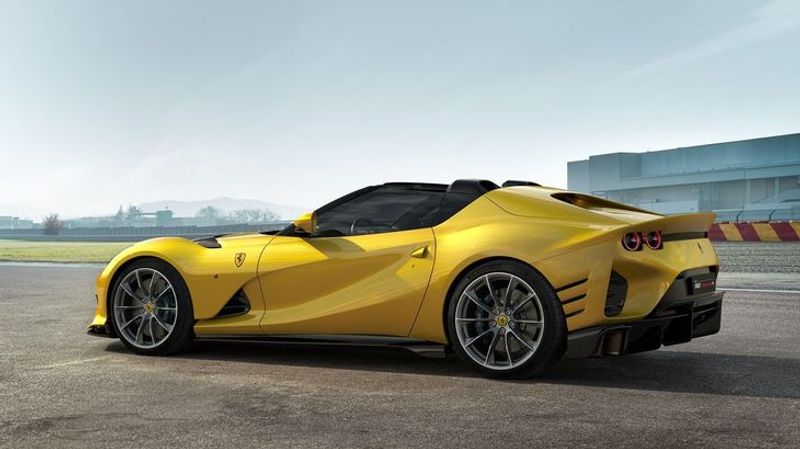
Ferrari Teases New Flagship Performance 812

Italian supercar maker Ferrari has released some teaser images of its soon-to-be-revealed new product. 

At this stage we don't even have an official name yet, but it's understood this is the hottest version of the Ferrari 812 Superfast. Ferrari released these images and some technical data to get us excited. 

The official reveal takes place in early May 2021, but what we do know is the vehicle features a special aerodynamics package that optimises airflow and promotes downforce. We also know that the standard Ferrari 812 Superfast's 6.5-litre V12 engine has been tuned to deliver even more power. The standard car produces 588 kW and 718 Nm, but Ferrari claims the new model will boast 610 kW.

This is now the most powerful combustion engine ever put into a road car by the Italian carmaker, but how did it get there? The rev limiter has been moved 9 500 rpm and there's a new valve timing mechanism as well as a new exhaust setup. Given the name, the Superfast boasted impressive performance, with 0-100 kph being dispatched in 2.9 seconds. Expect this hotter version to go way quicker. 

Ferrari also announced its new hotter 812 will feature 4-wheel steering as well as an update version of its Slide Slip Control vehicle dynamics system. The vehicle has also been on a diet and there's extensive use of carbon fibre, both inside and out. 

Set your calendar and reminders for the 5th of May 2021, where Ferrari will be live streaming the launch of its new high-performance vehicle.

FerrariSuperFast

Further Reading

Ferrari confirms first all-electric car by 2025

Ferrari SF90 Spider Brings Droptop Power

Wilder looks for Novitec Ferrari F8 Tributo

Spy Shots: 2022 Mercedes-AMG GT73

Mercedes-AMG is putting the finishing touches on its monster GT 4-door. The Mercedes-AMG GT73 was spotted wearing light camouflage and will be a plug-in hybrid.

Picture credit: S. Baldauf/SB-Medien. We have paid for these photos and at the photographer's request, have watermarked them.

At first glance, it just looks like your standard Mercedes-AMG GT63 S, but on the rear you'll spot the flap for charging. Mercedes-AMG has already confirmed that its next-generation of powerplants will be electrified. Good news for AMG fans is there's no downsizing here as the 4.0-litre twin-turbocharged V8 petrol engine has been retained, but this time there's additional shove from an electric boost. 

Official figures have yet to be confirmed, but we know that Mercedes-AMG has said it will offer at least 600 kW. Even for the most ardent of AMG fans, that's a lot of power and we suspect that the hybrid powertrain will have added a substantial amount of weight onto the package. To negate the heaviness, big outputs are required. Some have claimed there'll be 1000 Nm! We have had considerable experience with the AMG GT63 S already and its outputs of 470 kW and 900 Nm were very impressive, so we can only begin to imagine just how fast this electrified AMG will be.

The electric tech is impressive with 9-speed automatic transmissions on the front axle, with electric power units on the rear axle. This power unit will comprise a lithium-ion battery, cooling system, powerful electric motor, electrically controlled differential as well as a 2-speed gearbox. 

The flagship model is expected to be revealed by the end of 2021, but we'll see this 4.0-litre twin-turbocharged V8 engine in many applications, like the soon-to-be revealed SL range.

Mercedes-AMG-GT73
There's no mistaking that charging flag below the right rear light.

Further Reading

 Update: New Mercedes-AMG SL to Replace GT Roadster

Mercedes-AMG GT Black Series Claims Ring Record

Brabus AMG GT 63 S Rocket 900 is a Monster

VW Talagon – Bigger than Touareg but related to Golf 

This VW's massive new gravel travel vehicle looks like it's destined for China only. 

VW has officially revealed its largest SUV, named the Talagon.

For those fans of the German brand who don’t quite want to go for the premium luxury of Touareg, but require something that can seat multiple passengers in comfort, the Talagon looks ideal.

It measures 5.15m in length, is 2m wide and stands 1.79m tall. No question, this is a large SUV, but it is amazingly built on a compact vehicle platform.

The Talagon illustrates how incredibly flexible VW’s platform strategy is. It might be a huge SUV but it shares a platform structure with Golf 8. This is the genius behind VW’s MQB Evo modularity, allowing producing planners and engineers to stretch wheelbase specifications a lot – and create multiple models.

Reasonably clean and conservative exterior design is supported by a cabin architecture that features three rows of seating. Large digital screens provide the instrumentation and infotainment interfacing, angled toward the driver.

Unlike the Touareg, and perhaps due to its MQB platform, the Talagon is not designed for robust off-road exploration. Think of it more in the line of a large station wagon, with adequate ride height and gravel travel ability.

Targeted primarily at the Chinese market, where diesel use is negligible, the Talagon’s powertrain is VW’s 2.5-litre turbopetrol V6. It might be an odd configuration to South African petrolheads, but there is 220 kW of power on offer, supported by 500 Nm of torque.

Drive is to all four wheels, via the 4Motion system, with rapid and relaxed shifting available, thanks to VW’s seven-speed DSG transmission.

So, VW’s largest SUV is based on the new Golf’s underpinnings? Strange, but true.

Related content

Volkswagen Taigo Confirmed for SA in 2022

2022 Volkswagen Amarok Design Sketch Revealed

Volkswagen Amarok Raptor in the works?

Mercedes-AMG A45 S Review – Flat-out in the most powerful hot hatch you can buy

We've been waiting a while for the A45 S to land on our doorstep, but it was certainly worth the wait. What's it like to drive the world's most powerful 2-litre? We handed the keys to Ciro the video guy and let him get on with telling you.

How far can you stretch a 2.0-litre motor? How much power can you squeeze out of it? According to Mercedes-AMG, 310kW seems to be the answer, so far.

And the result is one of the most powerful 2.0-litre performance cars ever, the 2019 Mercedes A45 S AMG. We finally got our hands on one and spent a day out on an airfield drag racing it against the limited edition BMW M2 CS, and you can watch that video here.

In this video, our relatively tame motoring journalist Ciro De Siena is let loose on a 2km runway in Merc's million-Rand little monster. Is this car just a straight-line hero, a robot-to-robot racer? Or is there enough in the dynamics department to keep you interested when things get twisty?

Searching for a used A45 AMG? Click here to see our available stock

Mercedes-AMG A45 S price in South Africa:

R1 156 840 (as of April 2021)

Budget-Insurance

Cars.co.za's Youtube channel is powered by Budget Insurance. For an instant quote, click here.

Related content

Brabus Unleashes A45 S

Next Mercedes-AMG C63 to pack 410 kW 

Posaidon Pushes AMG A45 to 324 kph

Facelifted Lexus ES Confirmed for South Africa

Lexus has revealed its updated ES sedan and the good news is its scheduled to arrive in South Africa before the end of 2021. Here's what you can expect.

Despite the rampant sales successes of the SUV, Lexus still sees big value in the sedan market. The Lexus ES made its debut back in 1989 and the Japanese brand has shifted around 2.65 million units to more than 80 countries. 

The facelifted 7th generation Lexus ES receives similar styling cues to that of the flagship LS sedan. There are now geometric square bezels within the headlamp units, while new adaptive high-beam tech makes its debut, trim dependent. The trademark Lexus grille has been given a new mesh pattern and there are new-look 17- and 18-inch wheels. 

There's been some work under the skin, with the rear suspension of the updated Lexus ES switching from a single-sheet structure to a stronger dual-sheet structure. This new setup, along with improved torsional and lateral rigidity has resulted in more neutral handling and balance. Lexus International Chief Engineer Tetsuya Aoki said: "Our goal was to deepen the high quality of the ES and to add new value. In addition to further improving quietness and ride comfort, we pursued linearity in vehicle movement, in response to steering wheel operation, that is faithful to the driver's intentions."

Inside, the facelifted Lexus ES features new cabin design features, ornamentation options and technology. A high-res 12.3 inch widescreen display has been repositioned closer to the driver and this new infotainment system adds touchscreen functionality. There are new materials in the doors and dashboard, giving customers more luxury. 

The updated Lexus ES has a big focus on safety too, with the enhanced Lexus Safety System featuring a single-lens camera and millimetre-wave radar to help detect potential hazards. Other new features include Emergency Steering Assist, which assists steering within the vehicle's lane as cued by the driver, and Low Speed Acceleration Control, which supports the prevention of collisions caused by pedal misapplication at low speed.

Currently, the Lexus ES is available in petrol and hybrid derivatives. The line-up comprises the petrol ES 250 EX grade, an ES 300 hybrid EX grade (entry) ES 300 hybrid SE grade (top spec). The hybrid powertrain is a 2.5-litre naturally-aspirated petrol engine mated to an electric battery and motor. Total output is rated at 160 kW and the vehicle is said to consume 4.6 L/100 km. 

Want to purchase a new or used Lexus? Browse stock

Lexus-ES-interior

When is the updated Lexus ES coming to South Africa?

Lexus Sales and Marketing Vice President, Glenn Crompton says: “Lexus is fully committed to lowering fuel emissions and will continue to expand its hybrid offering across the product line up where possible. The ES 300h line-up was a natural extension for a luxury sedan that has had a good market share for hybrid sales over the last year. Lexus continued to command market leadership in Electrifed technology and achieved a 29% market share in 2020 within the luxury segment. The greater number of Lexus customers purchasing this luxury sedan will continue to enjoy the luxury of choice, supplemented by a new standard of range-wide connectivity,” Crompton concludes.

Lexus South Africa has confirmed it will be introducing the updated Lexus ES range in the 4th quarter of 2021.

Further Reading

Lexus IS 300h (2021) Launch Review

Lexus Dominates 2021 JD Power Again

New Lexus IS 500 F Sport Unveiled