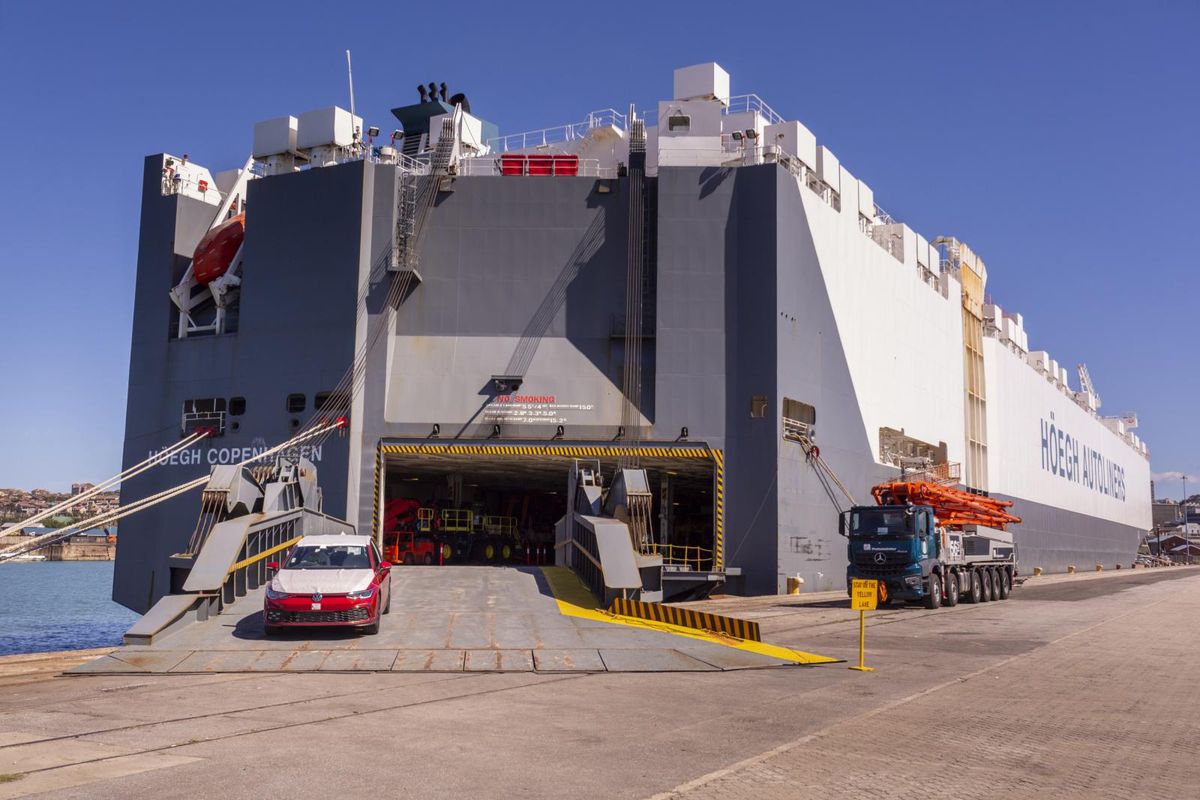
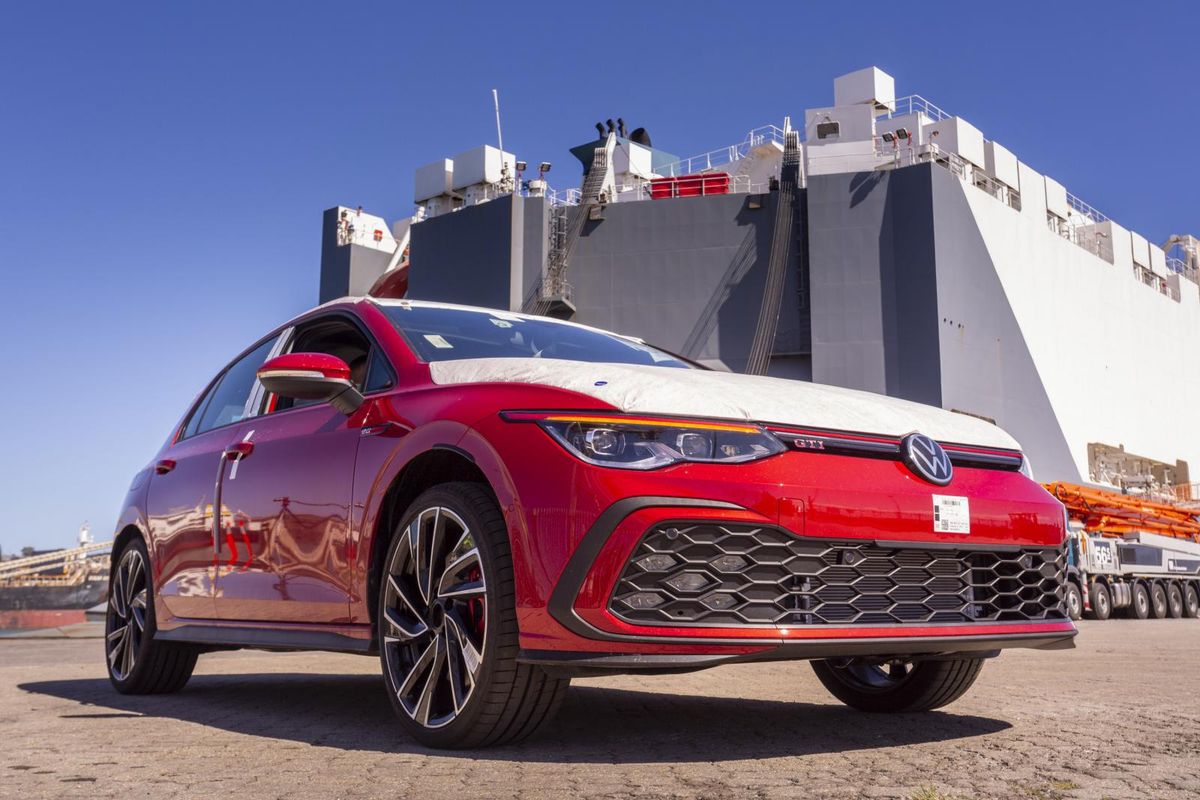
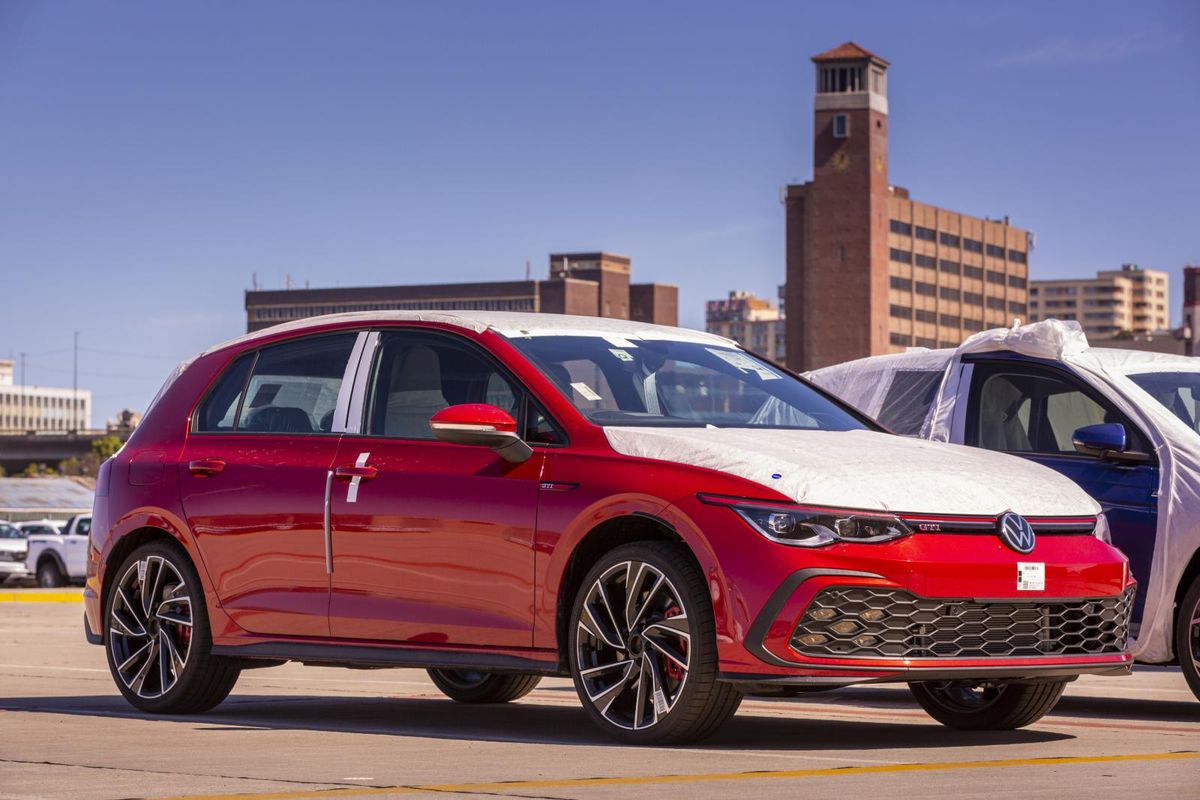
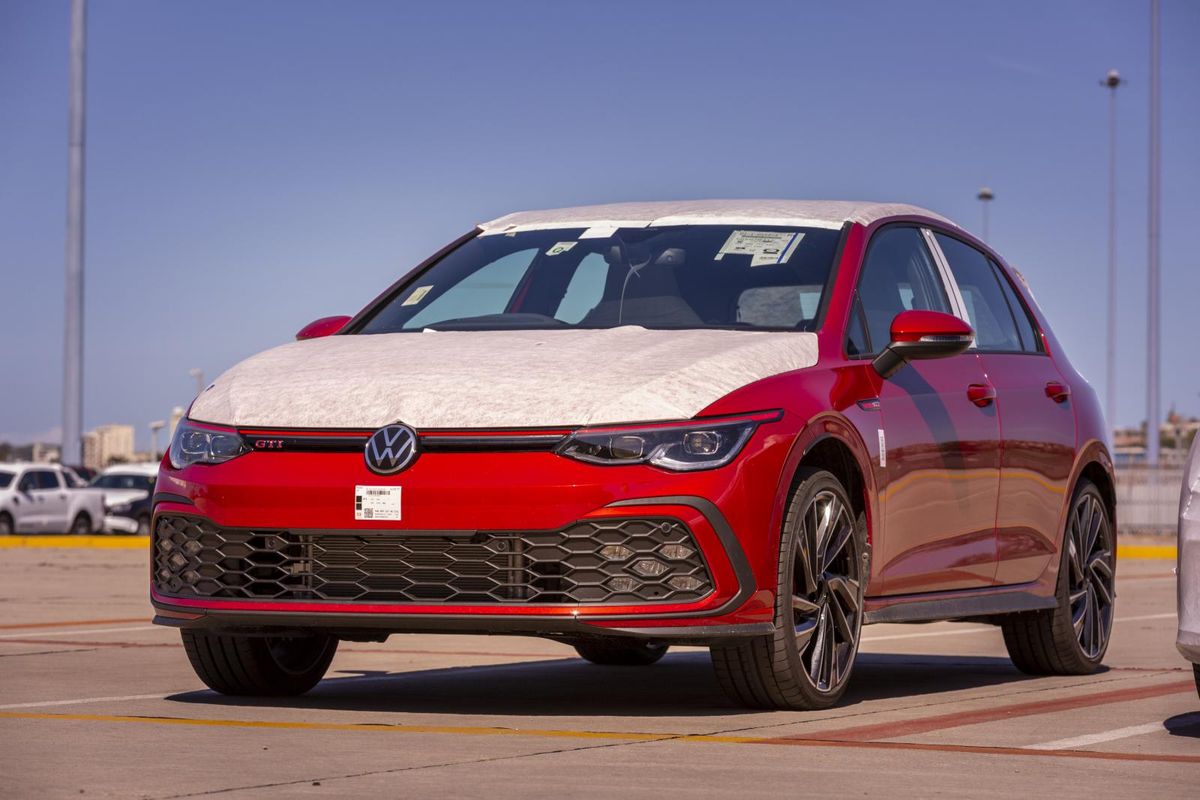
Sad news for SA's petrolheads as the all-new Volkswagen Golf 8 GTI launch has been pushed back.
In a short announcement from Volkswagen South Africa, the brand confirmed the 8th generation of Golf GTI will only be launched to the SA market in the 3rd quarter of 2021.
Citing the global semiconductor chip shortage which is hampering all vehicles produced on the MQB platform and as a result, there simply won't be enough units to go around. “The Volkswagen Group has been impacted by the global shortage of the semiconductor chips and all vehicles built on the MQB platform have been affected. For this reason, the launch of the Golf 8 GTI in South Africa will now move to the third quarter,” said Steffen Knapp, Head of the Volkswagen Passenger Car Brand.
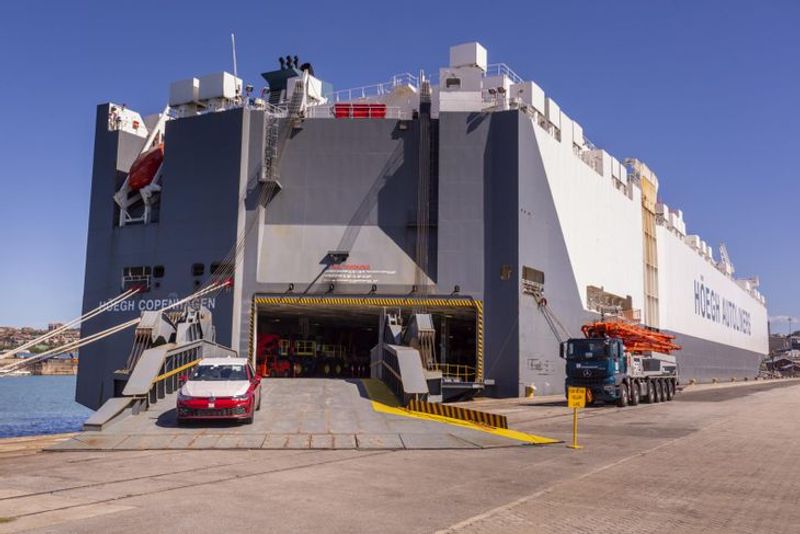
Volkswagen South Africa said vehicles will continue to arrive, and these will be stored ahead of the launch. “We are working closely with our German counterparts to ensure that we get as many Golf 8 GTI units for the local market as possible. A few Golf 8 GTI units started arriving in the country from mid-April. These units will be stockpiled until we have enough vehicles for the launch at the beginning of the third quarter,” added Knapp.
It's a sad situation but not unique to Volkswagen or South Africa. There've been many factories which have had to halt production or modify its model lineup to account for the reduced semiconductor availability. We think its a good strategy, as there's nothing worse than launching a car and not having stock to sell resulting in potentially hundreds of disgruntled customers who were ready to sign on the dotted line.
Volkswagen says its launch plans for the new Golf 8 GTI include a digital event and countrywide customer events which will allow enthusiasts to be among the first to experience the new GTI. South Africa is one of the largest markets for GTI outside of Europe and the previous generation model sold over 14 000 units since its introduction back in July 2013.
Customers who want to be kept informed on launch plans can visit the Volkswagen website: New golf GTI KMI (vw.co.za)
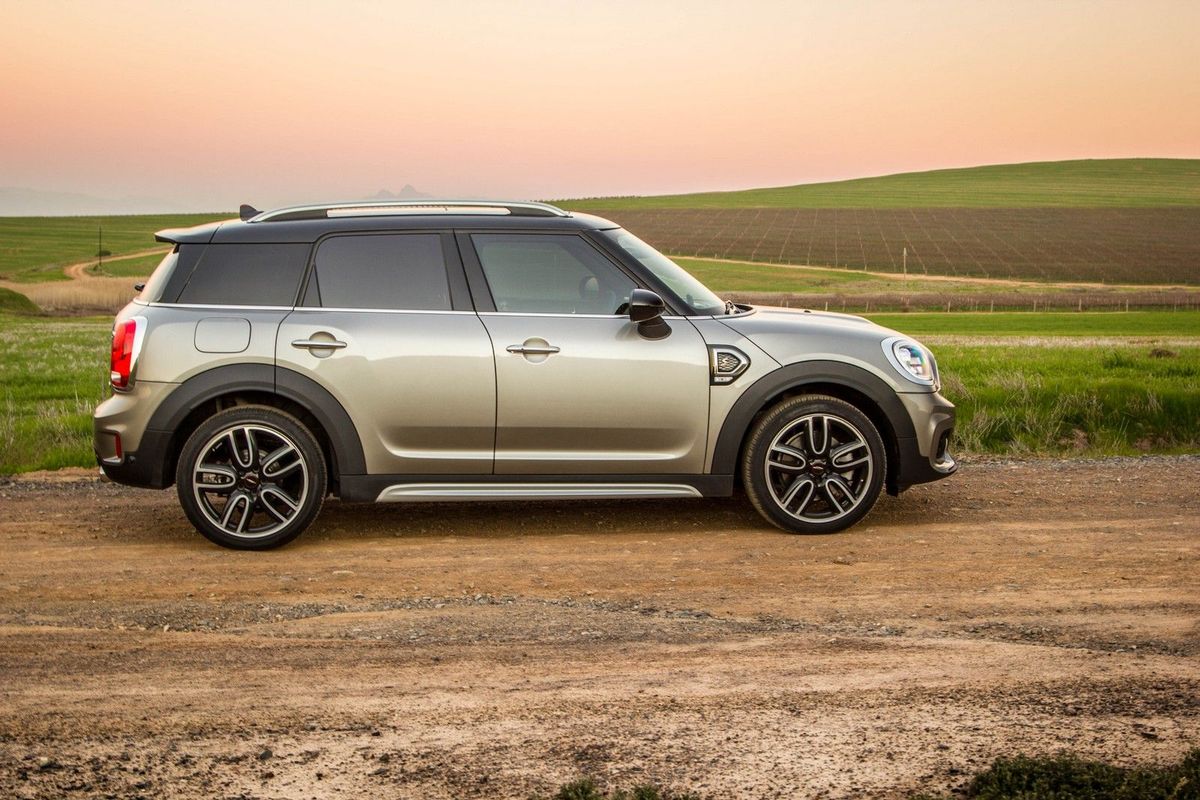
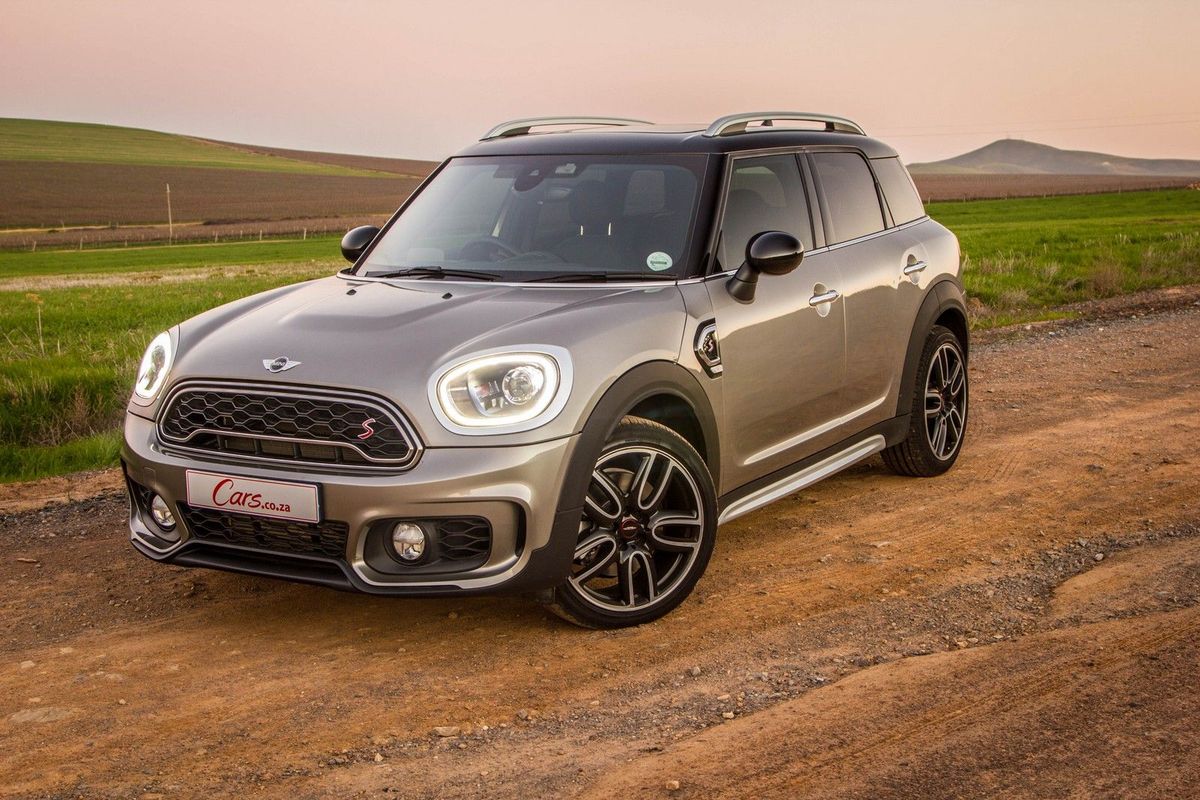
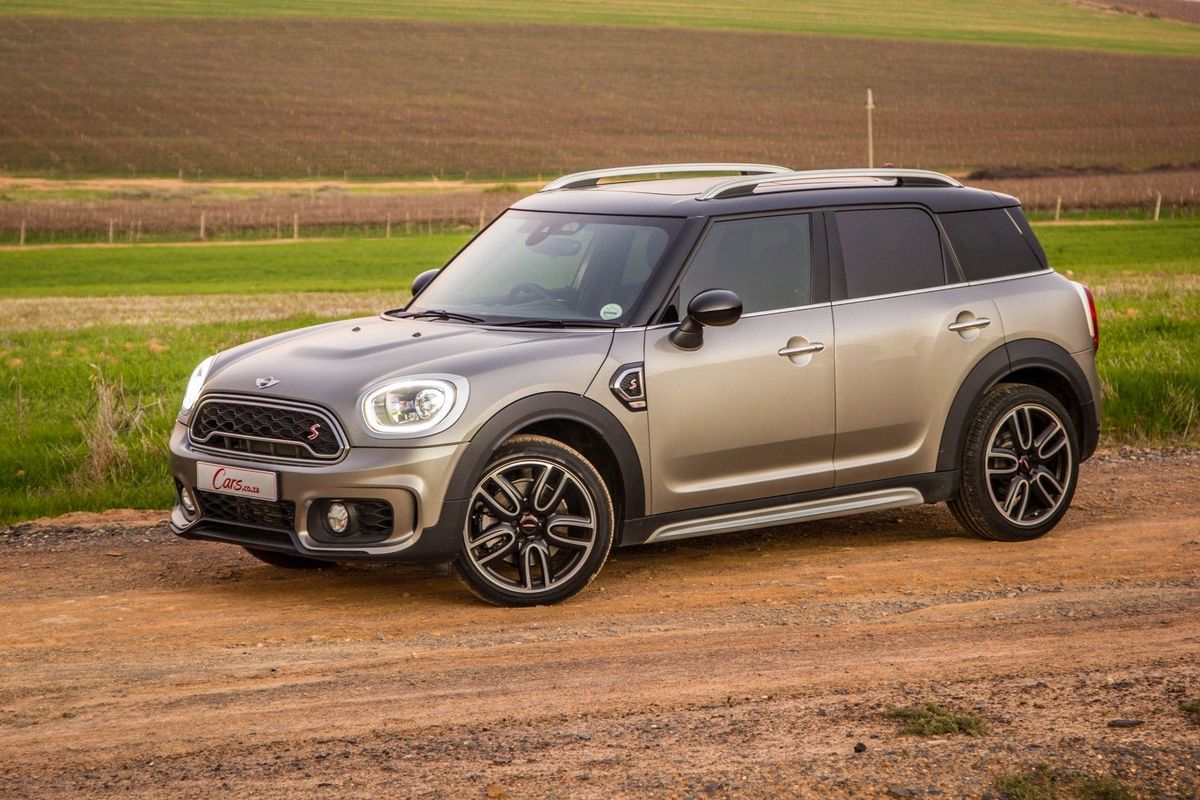
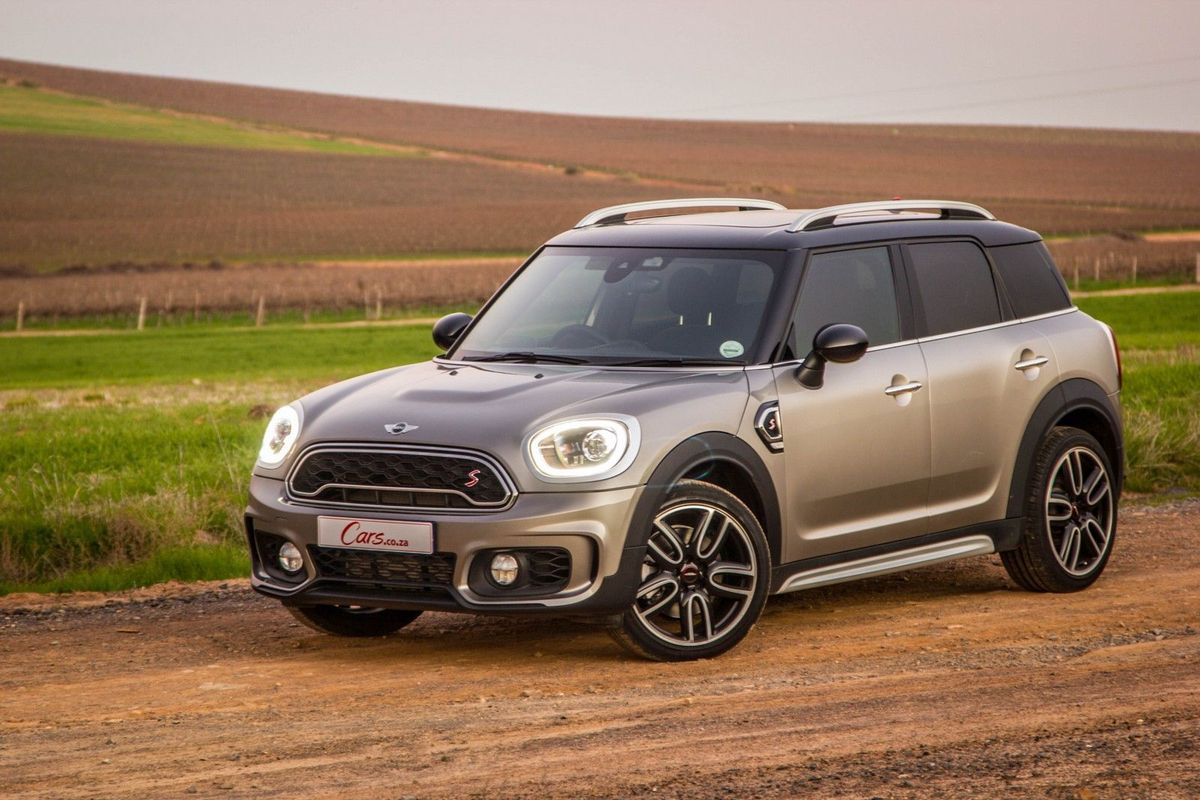
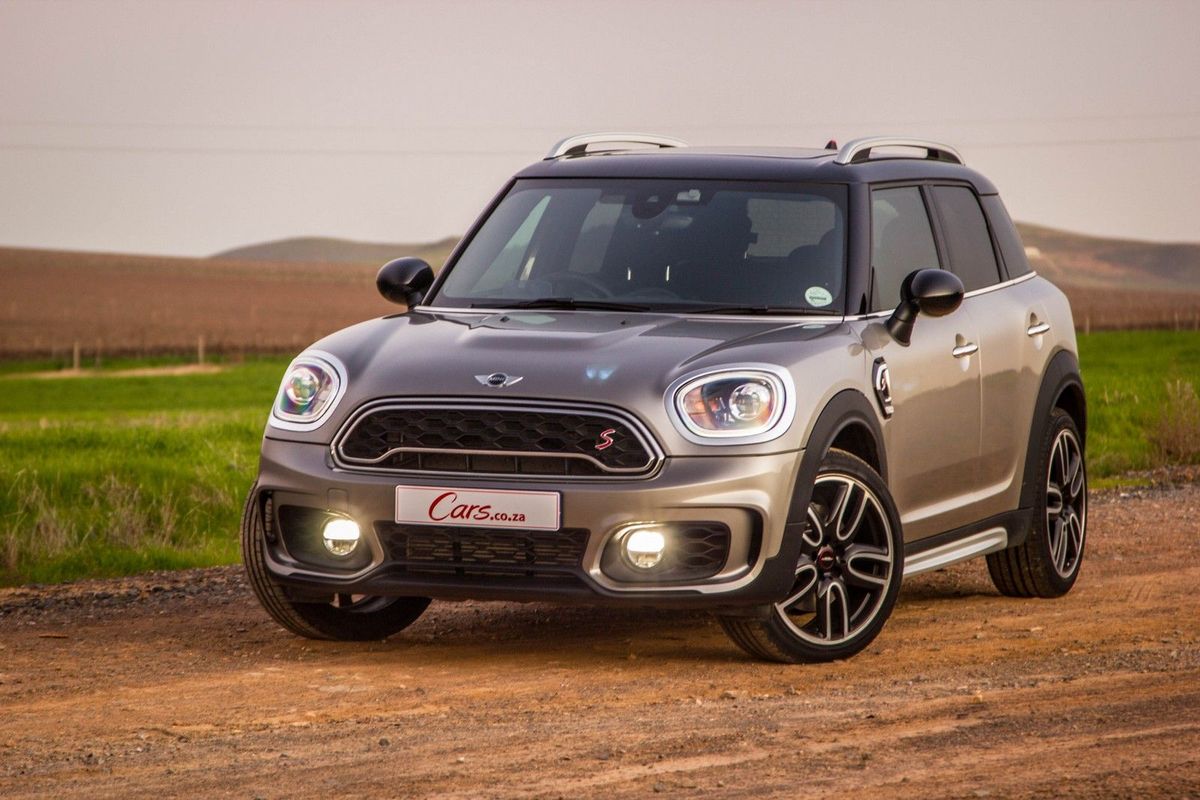
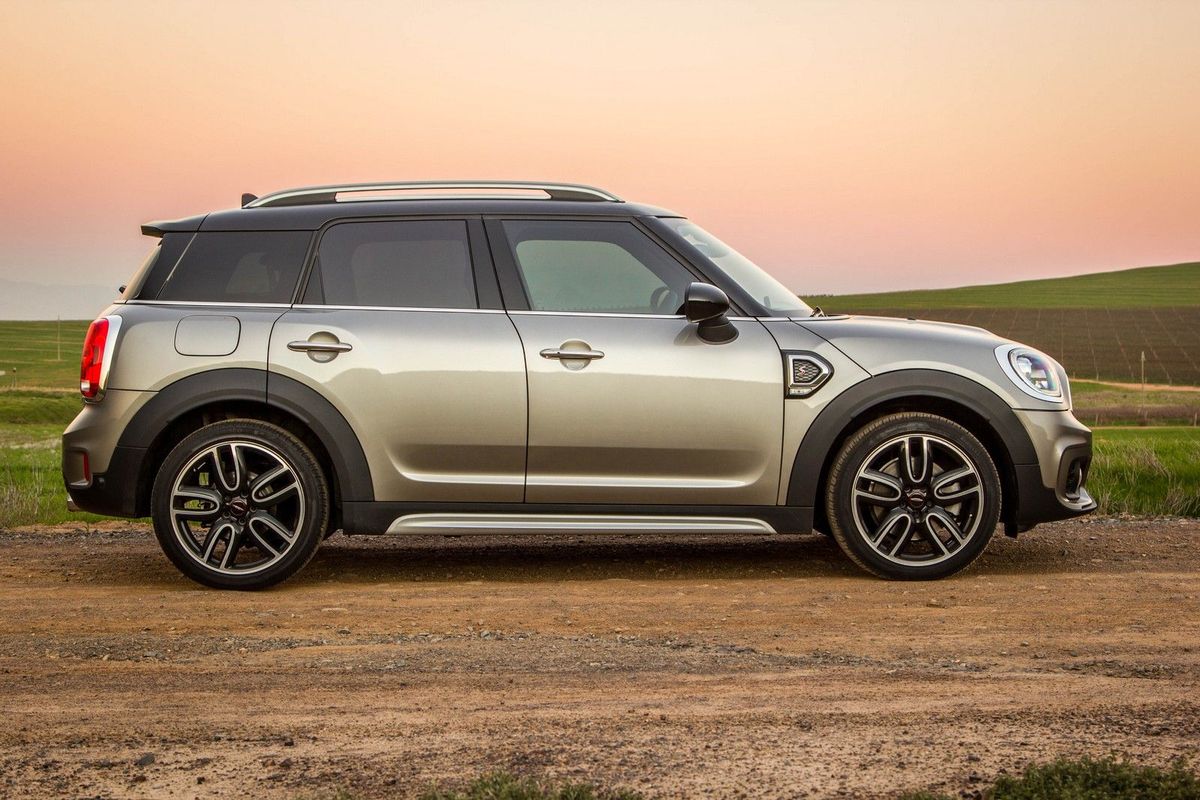
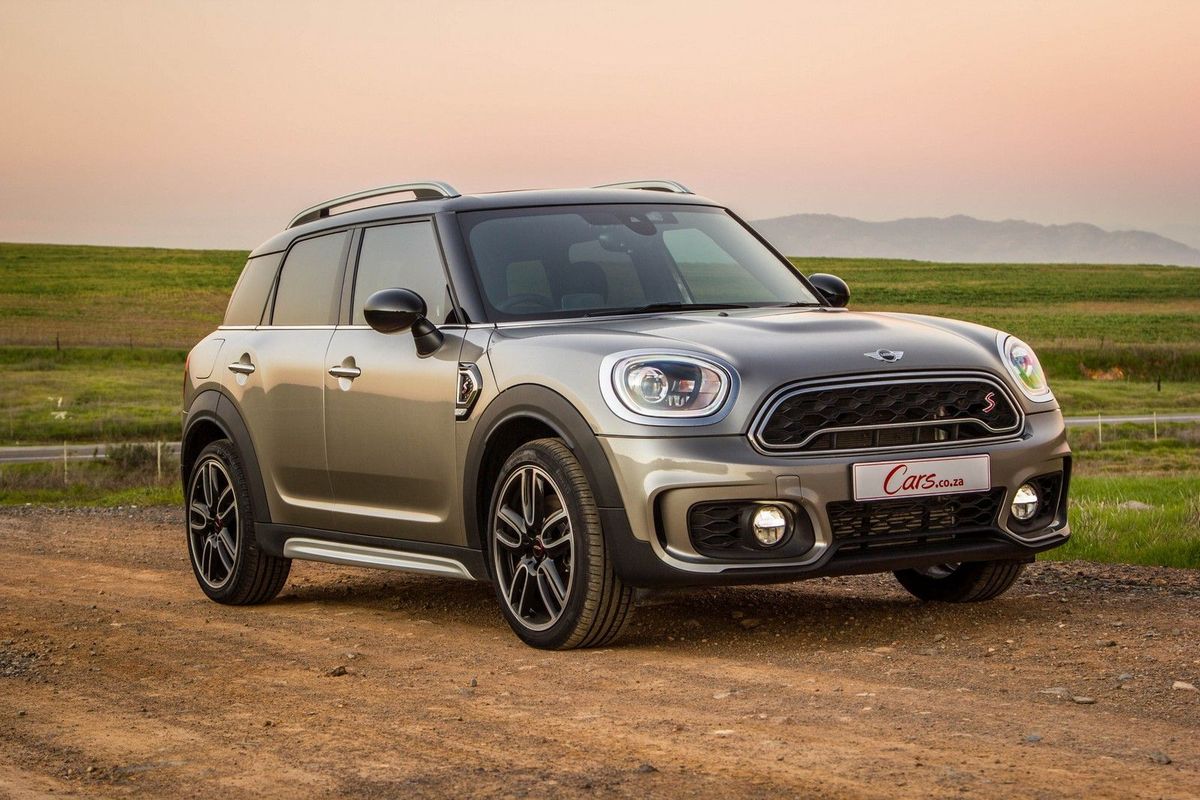
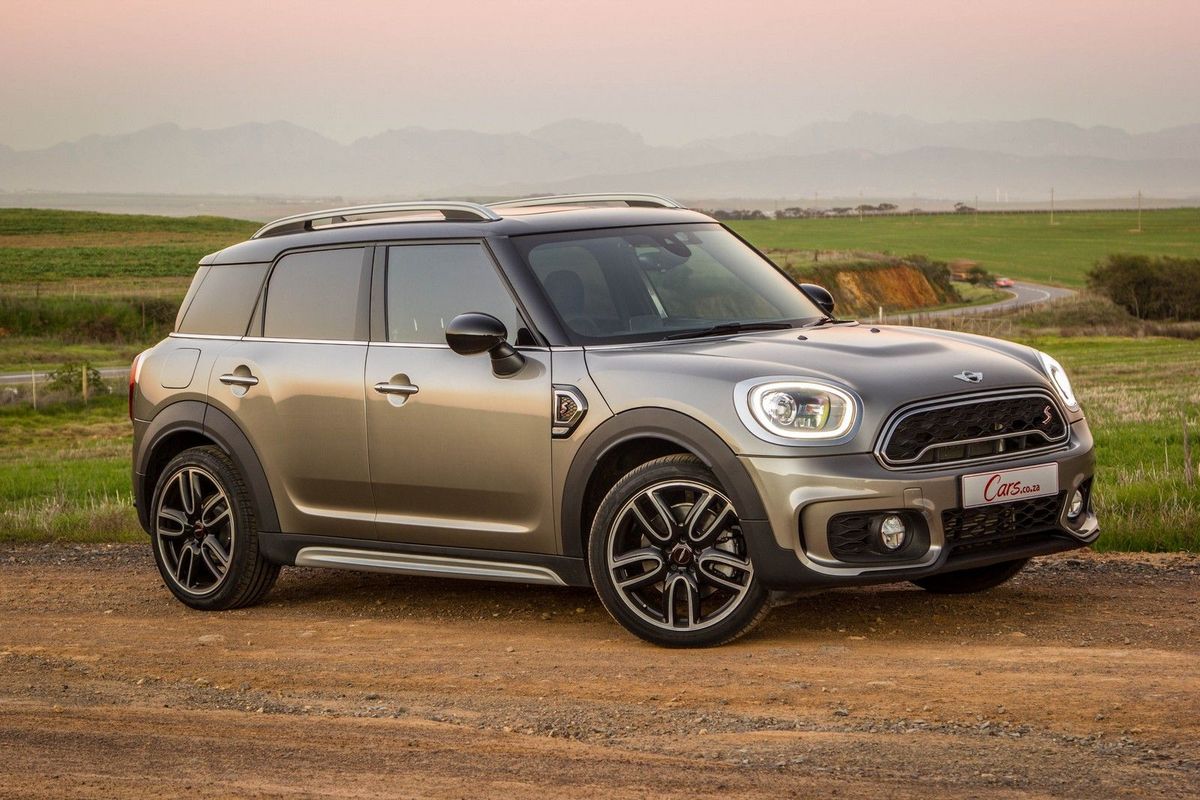
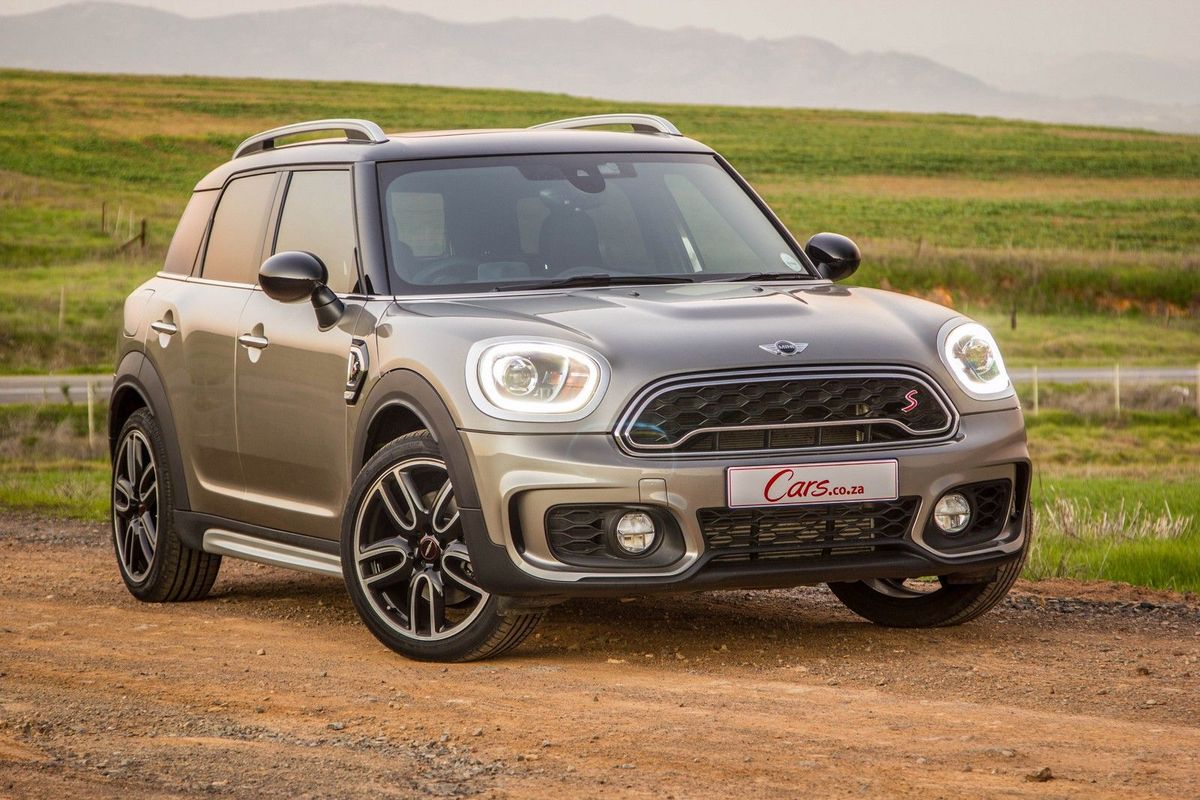
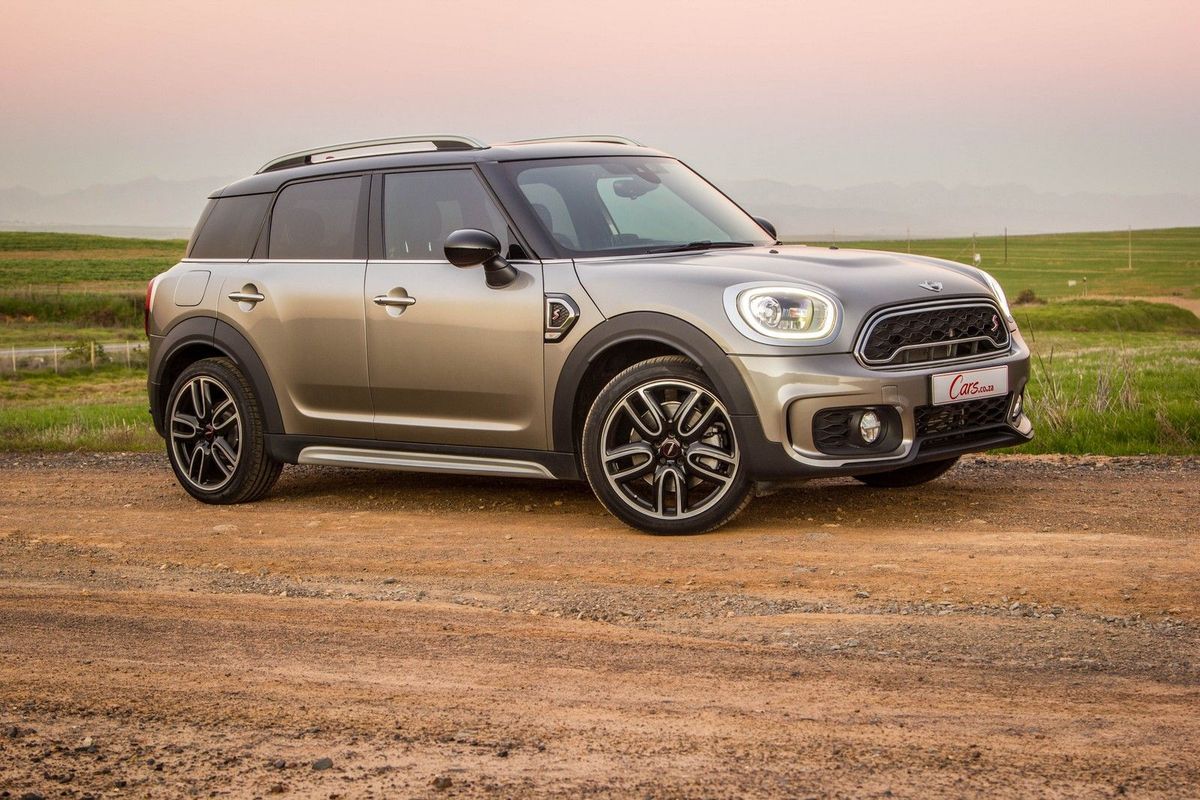
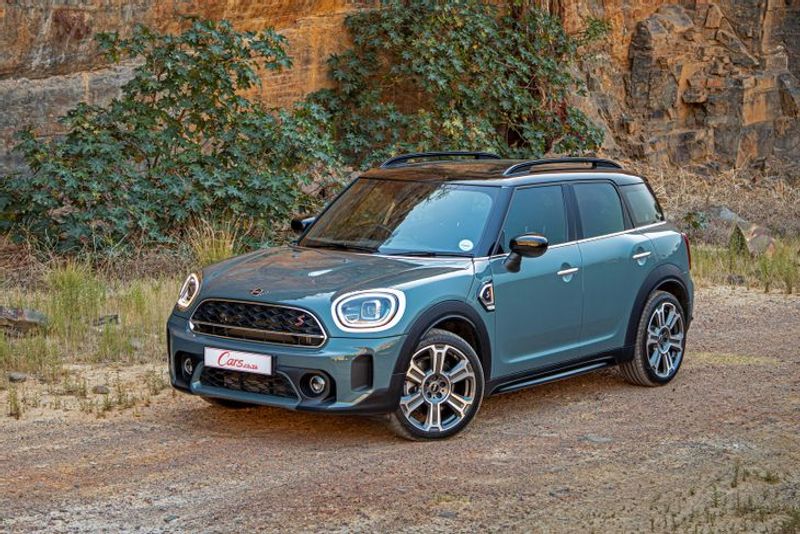
The Mini Countryman, which is heading towards the end of its product lifecycle, was updated late in 2020. With so many competitors in the small-crossover segment, does the biggest model in the Oxford-based marque’s line-up still stand out from the crowd… or is it destined to quietly drop off the sales charts?
We like: Better ride and comfort than before, balance of performance and efficiency.
We don’t like: No Android Auto, optional connectivity extras should be standard at this price.
Fast Facts
Model tested: Cooper S Countryman
Price: R696 354 (April 2021)
Engine: 2.0-litre 4-cylinder turbopetrol
Power/Torque: 141 kW/280 Nm
Transmission: 7-spd dual-clutch automatic
Fuel Consumption: 6.7 L/100 km
Load capacity: 450–1 390 litres
Acceleration: 0-100 kph in 7.5 sec (claimed)
Where does the Countryman fit in?
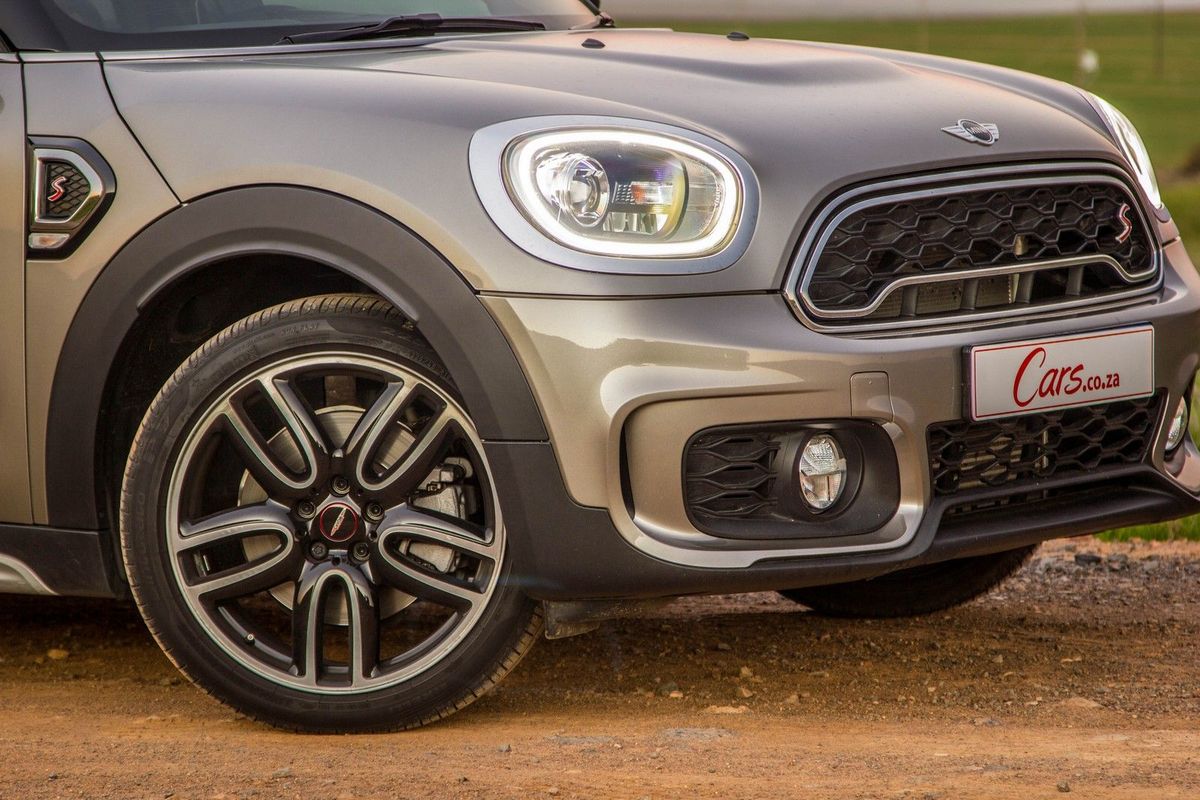
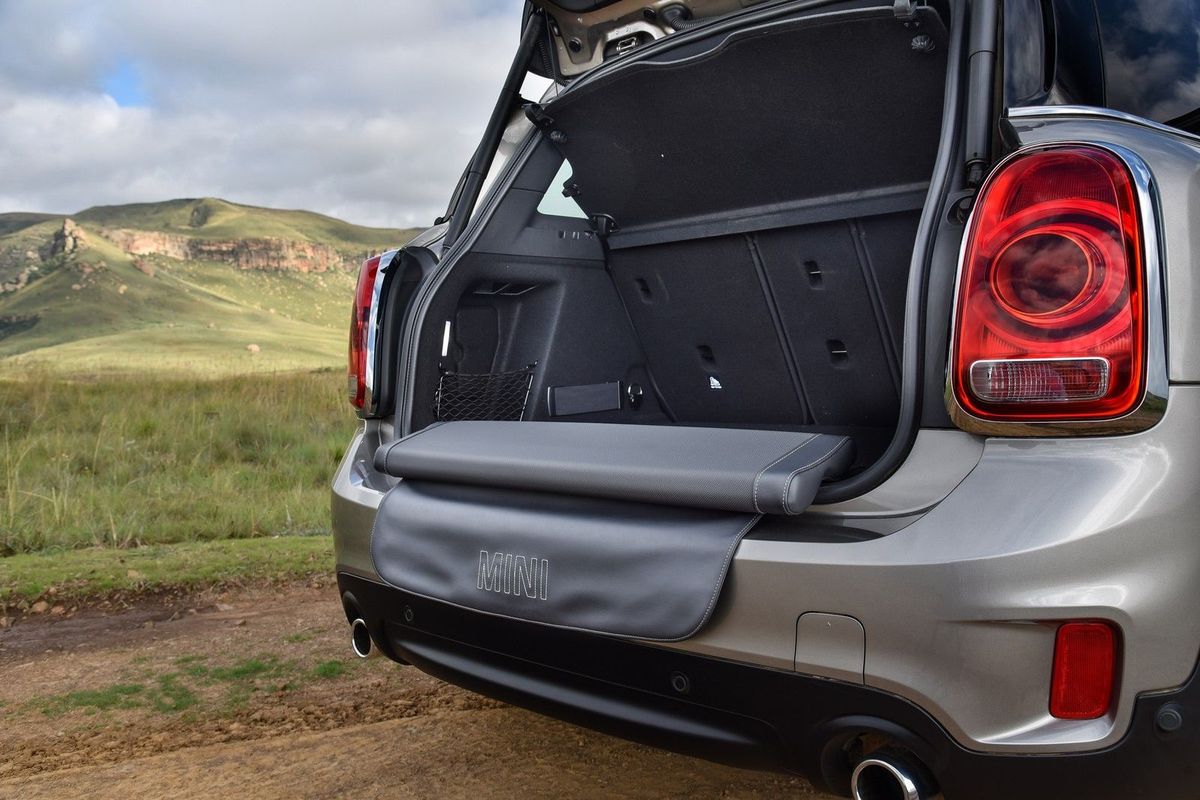
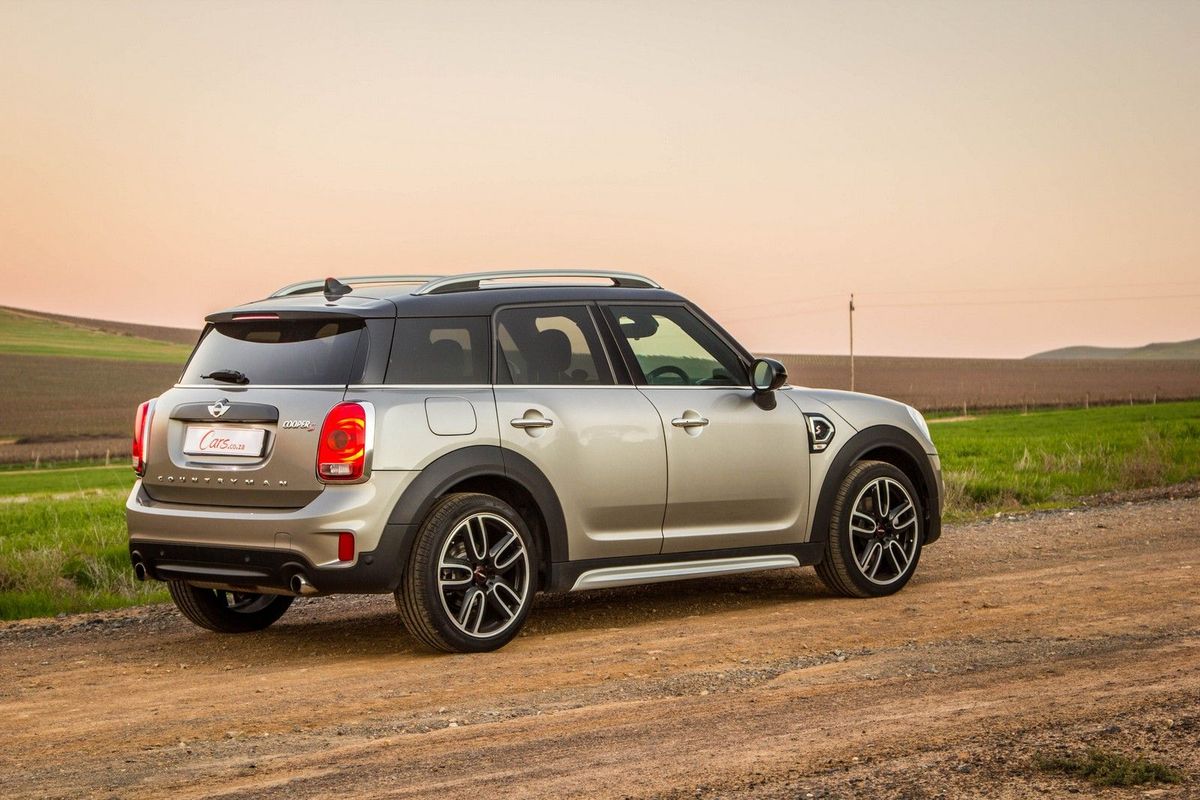
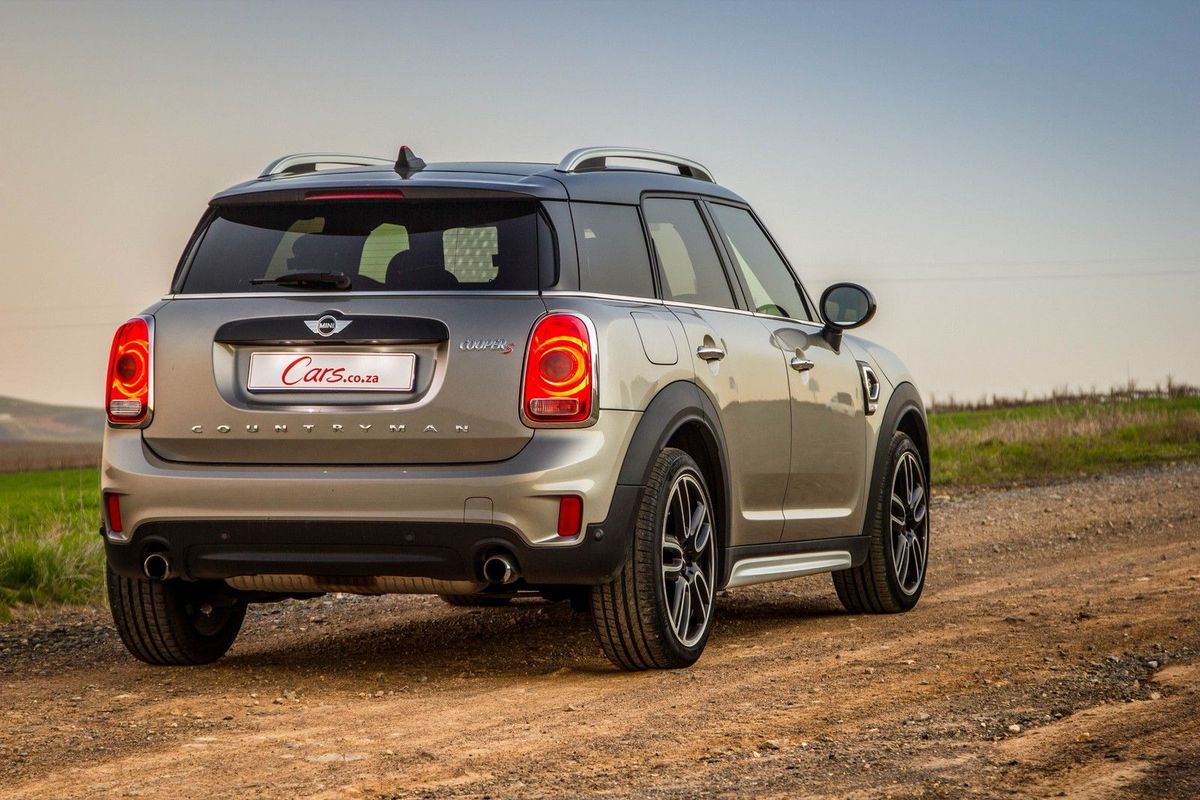
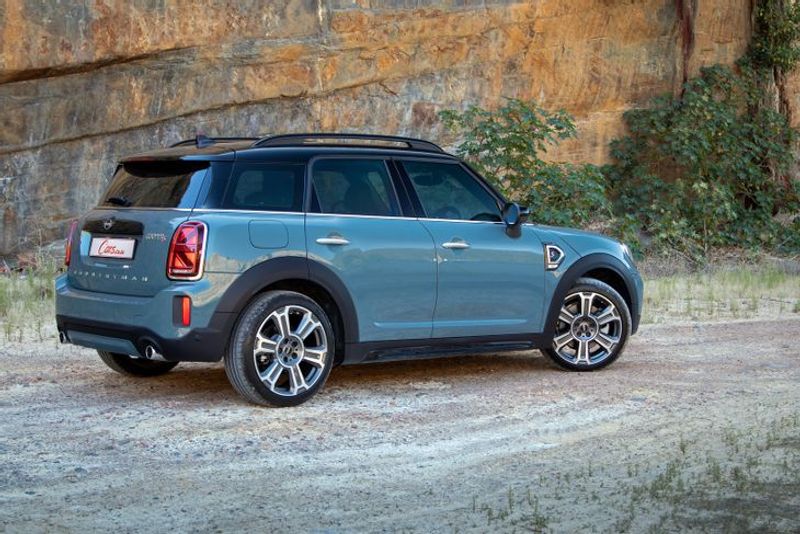
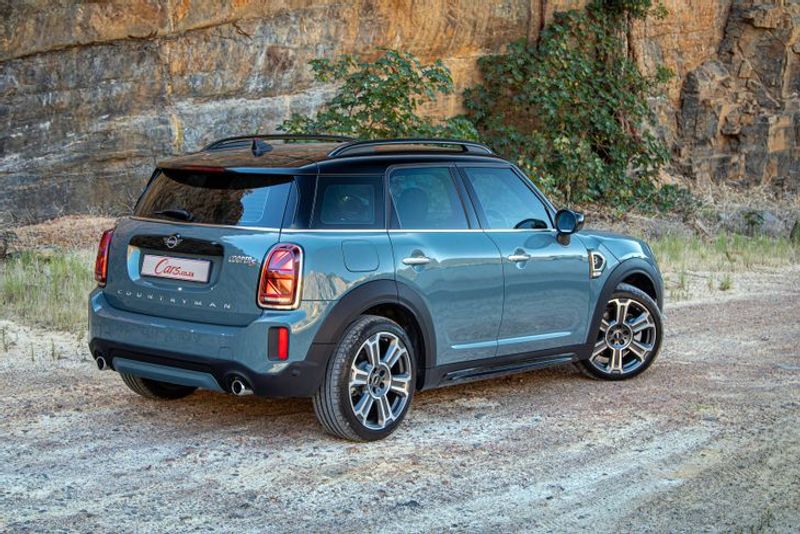
Facelifted Mini Countryman features fresh front LED- and Union Jack rear LED light-cluster designs.
The Mini Countryman, of which the first iteration was launched in 2010, is now in its 2nd generation; in fact, this is the final facelift of the model, which sets the scene for the introduction of an all-new version in a few years’ time. The Countryman fills a niche segment in which buyers are specifically looking for something different, or a vehicle that they can customise to their personal tastes. Those factors tend to trump factors such as practicality and occupant space, but crossover styling and all-purpose usefulness (provided by added ground clearance, for example) still need to be part of the overall package.
If, however, you’re looking for something more practical than the Countryman, then the Volvo XC40, Audi Q3 or even the Volkswagen Tiguan are certainly worth a look.
How the Mini Countryman fares in terms of…
Performance and efficiency
The performance of the Cooper S engine is a highlight in the package.
Considering there’s an S badge affixed to this Countryman, you’d expect a decent level of performance. The 2.0-litre 4-cylinder turbopetrol motor is a known quantity, because it featured in the pre-facelift model and the smaller Mini Cooper S. Its peak outputs (141 kW and 280 Nm of torque) provide good acceleration, but the Mini’s not going to “set your hair on fire” when you flatten the accelerator pedal.
It’s fast enough, however, if you bear in mind this is a lifestyle vehicle – not a hot hatch. The dual-clutch transmission doesn’t come augmented with steering-wheel-mounted shift paddles unless you spec the Sports Auto version, which seems a bit cheeky (this is the S version, after all). That said, it’s a very good auto ‘box; it rarely feels like you need to intervene for it to select the right gears when it needs to.
Even with ample performance for a crossover and a larger-displacement engine than many of its competitors, the Countryman proved quite fuel-efficient throughout its tenure in our test fleet. During longer stints on the freeway, it averaged in the 6.9-L/100 km range and, when combined with bursts around town, the overall figure of 8.1 L/100 km represented a good balance of performance and economy.
Ride Comfort and Handling
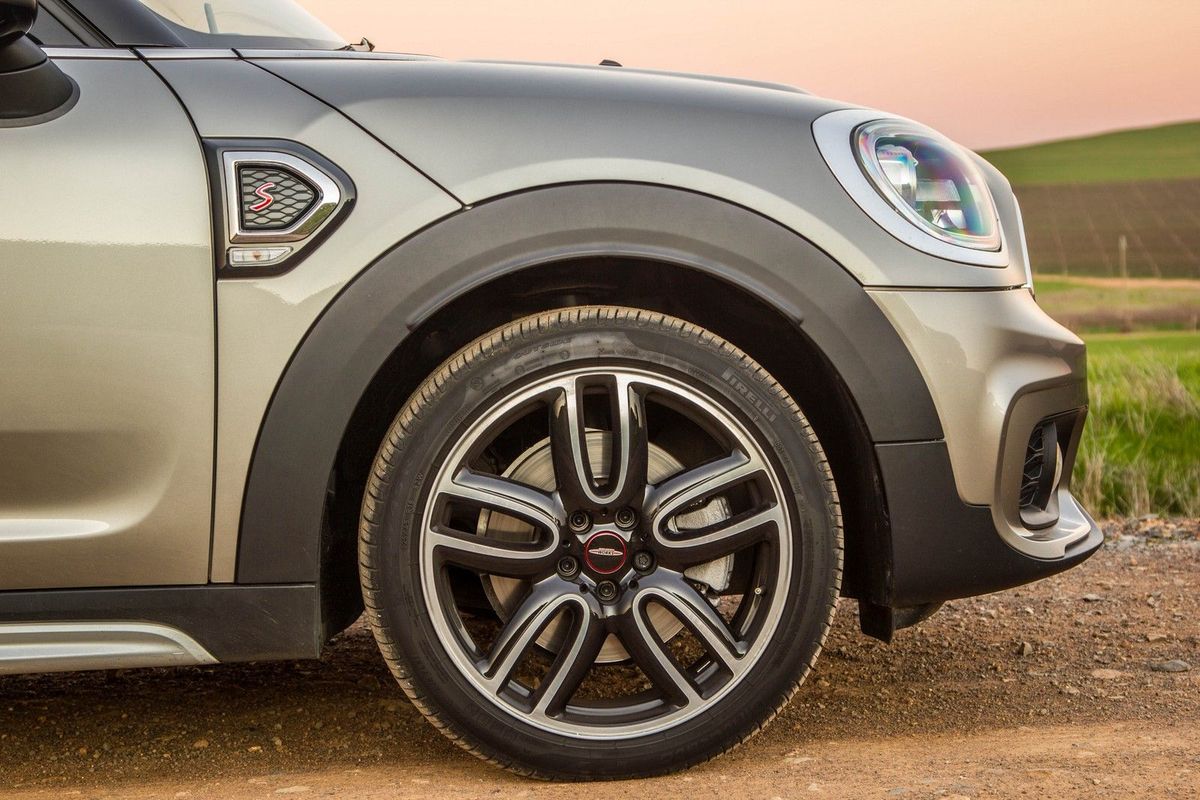
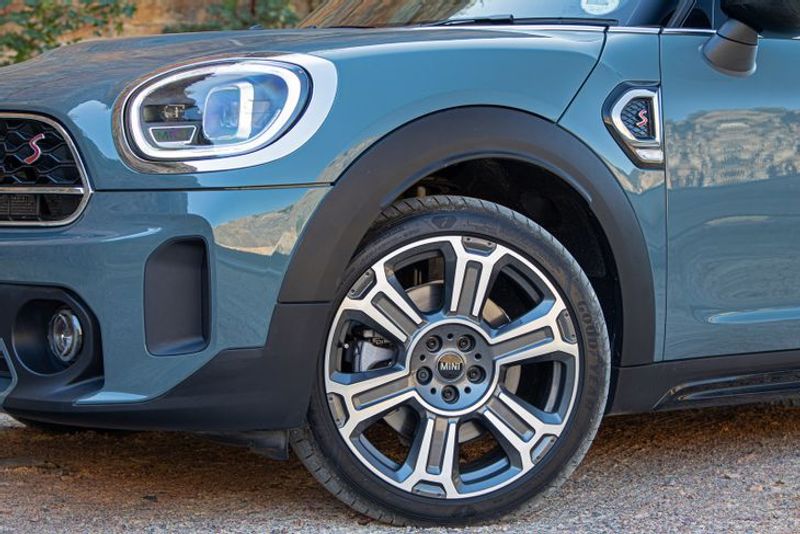
18-inch wheels are standard on the Cooper S Countryman.
The facelift model has a condensed line-up of just 3 derivatives and, unless you opt for the JCW (John Cooper Works version), the Countryman is a front-wheel-drive only model. It’s not as if the lack of all-wheel-drive propulsion is a big loss in this case, though… the “Grande Mini” was never the sort of vehicle to take into the great beyond anyway – it’s very much a city slicker with a raised ride height.
Besides, front-wheel drive removes some of the mechanical complexity and will therefore improve fuel consumption in the long run.
The front axle, meanwhile, rides out bumps well with good cushioning in a firm, but sure-footed manner. It’s not upset by bumps and thuds as much as the rear end, which reacts to nastier thwacks (such as pothole impacts) a little harder than you might expect. Obviously, the larger the wheels you opt for, the more pronounced the firmness of the ride quality will be…
The Countryman has a faint sprinkling of those genetics that make a Mini fun to drive. Most of the fun is delivered by the grunt from the turbocharged motor, but you can still have fun when the right road pops up. The steering is quick, which helps the Countryman feel nimble with a brisk change of direction. The firm suspension also limits body roll nicely, providing the crossover with substantial lateral grip.
Push the fun levels a little too far and the front of the car will quickly let you know that you’ve reached the limit of adhesion, courtesy of (audible) tell-tale tyre scrabbling. Again, the Cooper S Countryman is not meant to be a hot hatch by any means, but it does feel as if the fun will invariably be curtailed a little sooner than you’d like.
Interior comfort and connectivity
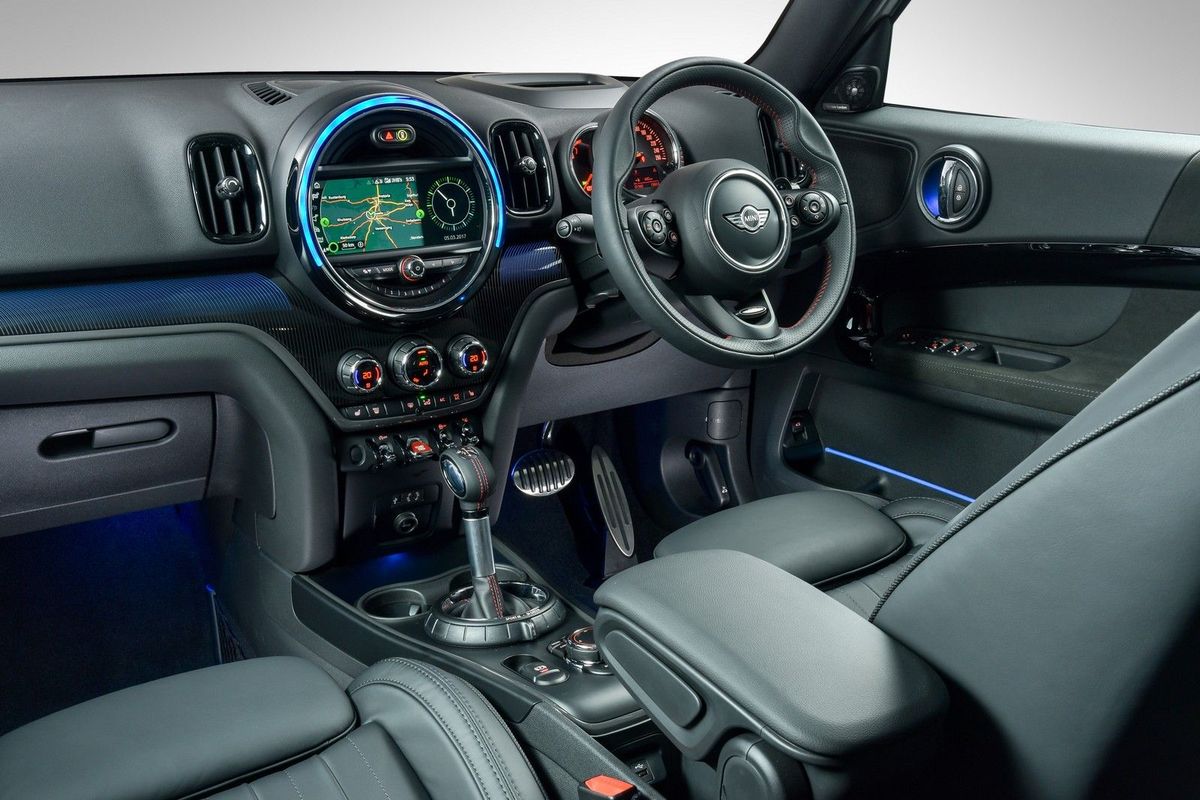
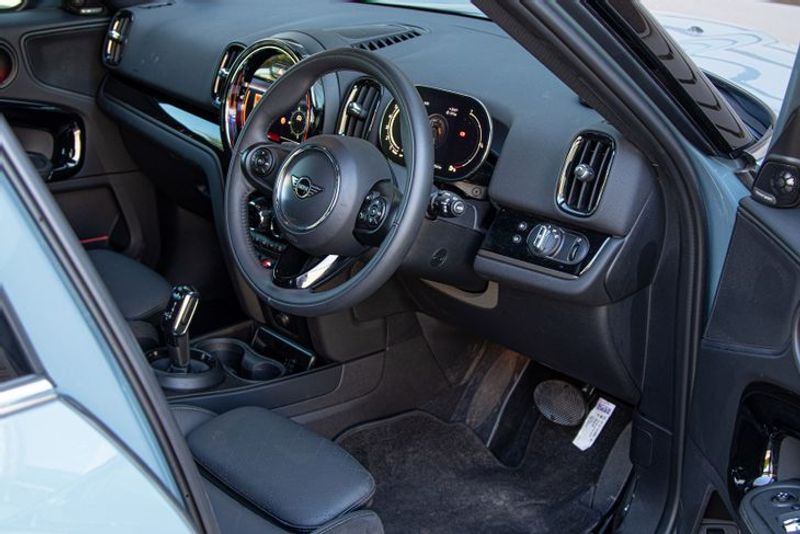
The interior on every Mini still feels like a unique place to be.
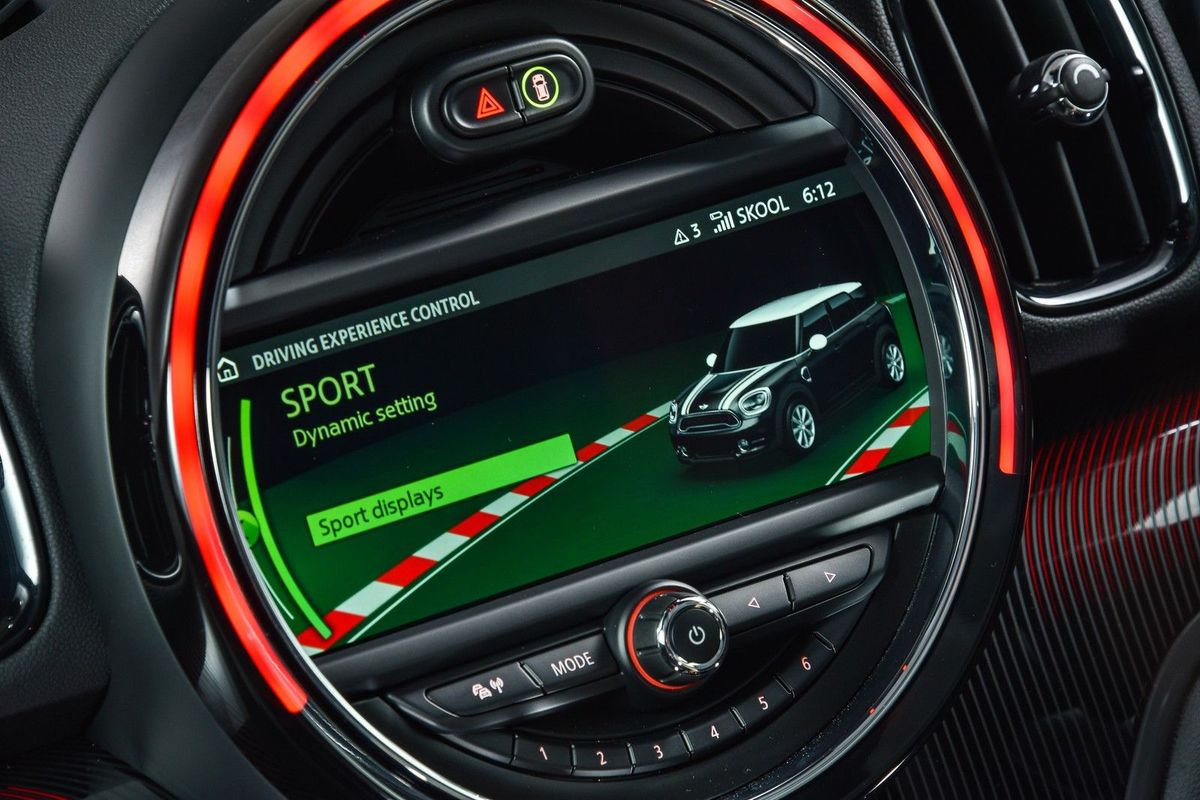
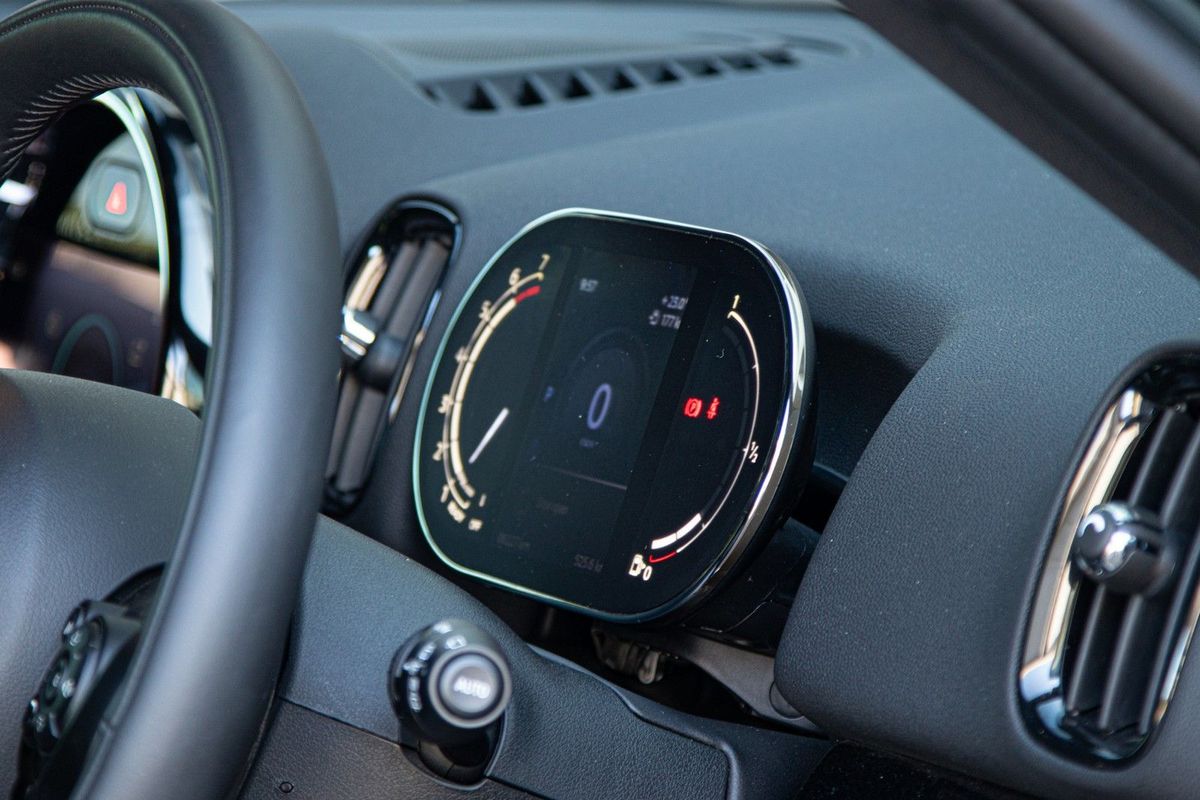
There’s no doubt that Minis have some of the most interesting cabins on the market. Nobody can ever say a Mini interior is boring or anything but special. For the facelift, there’s now the option of an entirely digital instrument cluster. It’s fairly simple (by Mini standards) and comes at the cost of some of that authentic Mini-ness that the circular dials gave the Countryman’s pre-facelift predecessor. The whole unit moves up and down when you adjust the steering column, which obscures the trip-meter numbers at the bottom no matter in which position you choose to set it.
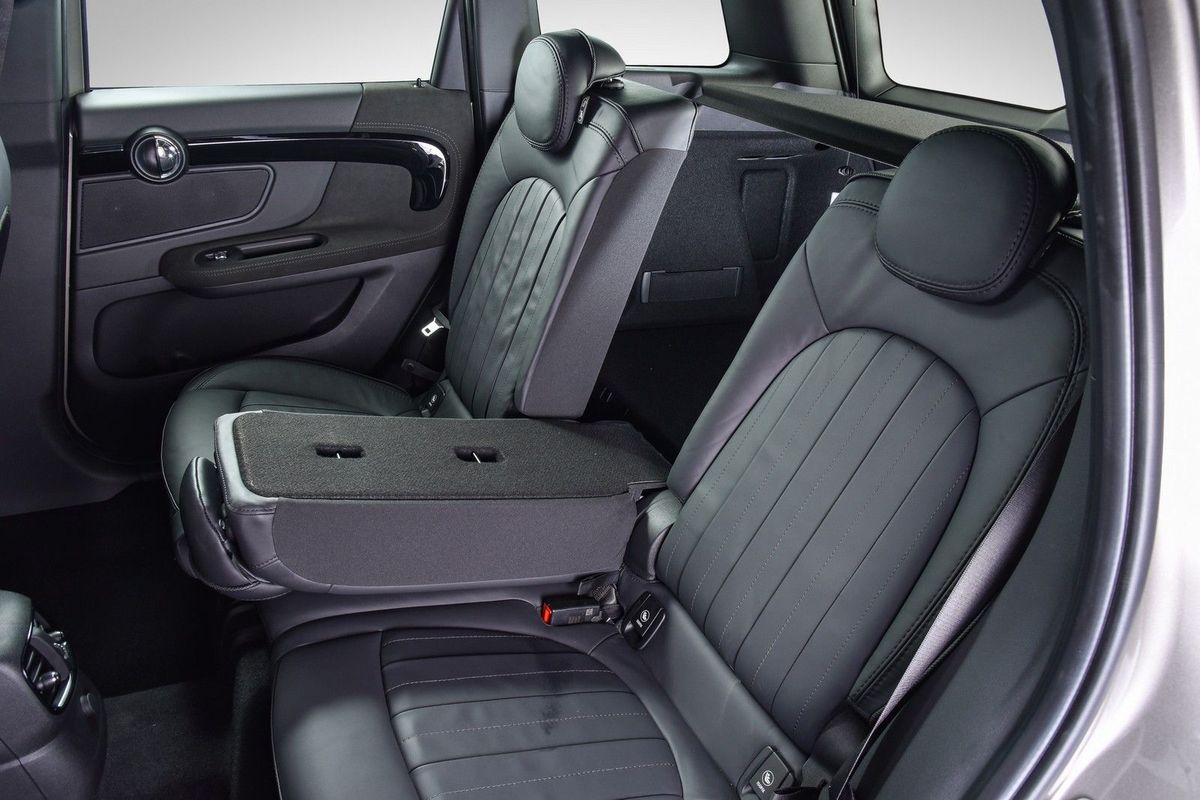
Passenger comfort, in terms of occupant space and the availability of oddment space, is good all-round, while the rear seats, which can split in a 40/20/40 configuration, add an extra modicum of practicality. The seatback folds fully flat to open up 1 390 litres of utility space, while the load bay is said to accommodate a competitive 450 litres’ worth of luggage.
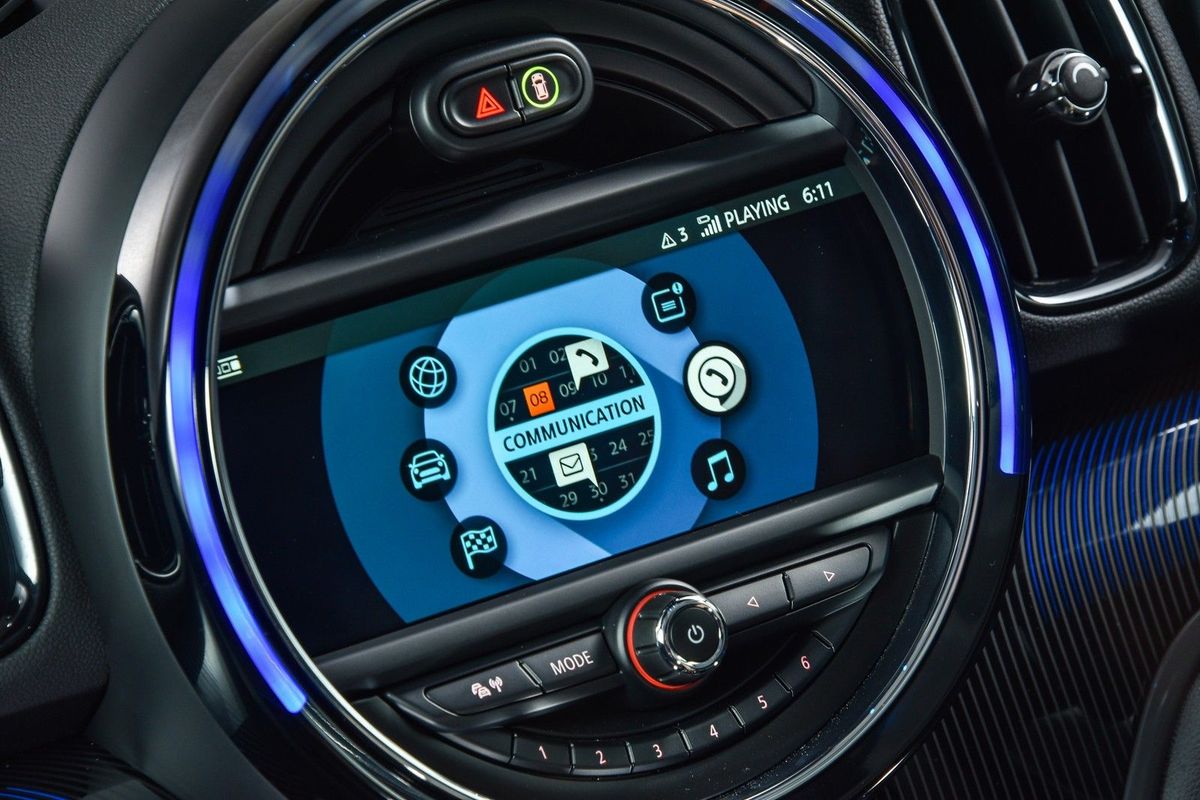
Mini offers its in-car connectivity in 3 packages, Connected Media (no cost), Connected Navigation (R15 200) and Connected Navigation Plus (R26 000). Connected Media incorporates Bluetooth connectivity and access to Mini Connect services, while the Connected Navigation package includes built-in navigation, real-time traffic information and Apple Carplay (Android Auto is not available yet). Connected Navigation Plus adds enhanced Bluetooth services as well as a wireless charging pad.
A premium of R26 000 may sound a bit rich for equipment that’s standard in crossovers less expensive than the Mini, but that’s the way the premium brands (which Mini considers itself) play the game. Therefore, you can expect to fork out extra for high-end infotainment functionality if you’re shopping for an equivalent Audi, Mercedes-Benz or Volvo model too.
There are also loads of optional accessories that you can add to the Countryman, such as roof rails, cargo nets, black-capped mirrors and a more rugged-looking exterior with plastic cladding.
After-sales support and warranty
The Cooper S Countryman retails for R696 354 (April 2021), which includes a 2-year/unlimited km warranty and a 5-year/100 000 km maintenance plan, which can be optionally increased to 200 000 km.
Verdict
While a premium is charged for the Countryman, buyers are still likely to be lured by its likeable character.
The Countryman is Mini’s biggest model yet and accounts for 30% of its global sales. The facelift’s Union Jack motifs in the taillights will certainly get the brand loyalists excited, but beyond that, there’s not much to write home about regarding the update. The engine is the highlight of the package; it provides notable acceleration, flexible performance and a bit of excitement the Mini’s competitors don’t offer.
It’s still fun to drive and the interior’s unique design and lighting always provide the driver with that little boost (or pep) when they ensconce themselves behind the Countryman’s ‘wheel.
As a compact family vehicle, there are better value-for-money and more practical options than the Countryman, but the Mini targets buyers who are looking for something that stands out from the humdrum of sensible motoring… and for that, its select clientele is happy to pay a premium.
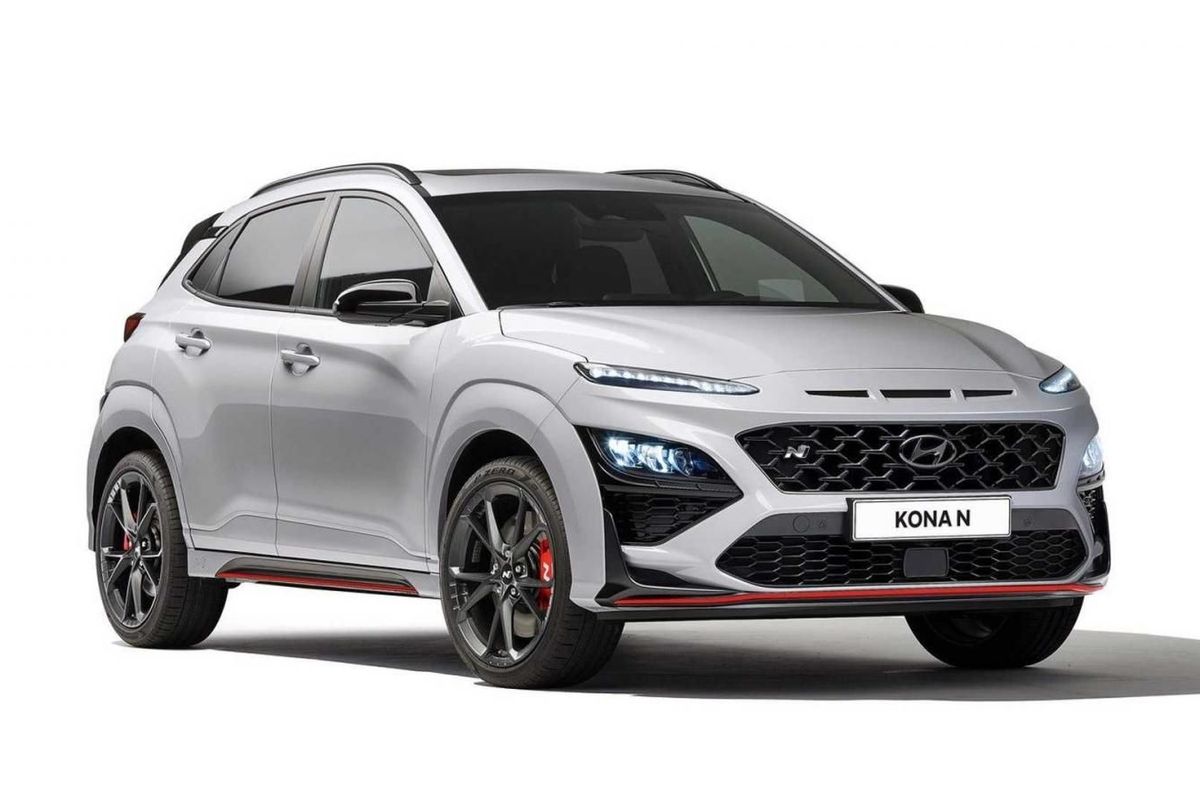
Hyundai Kona N Officially Revealed
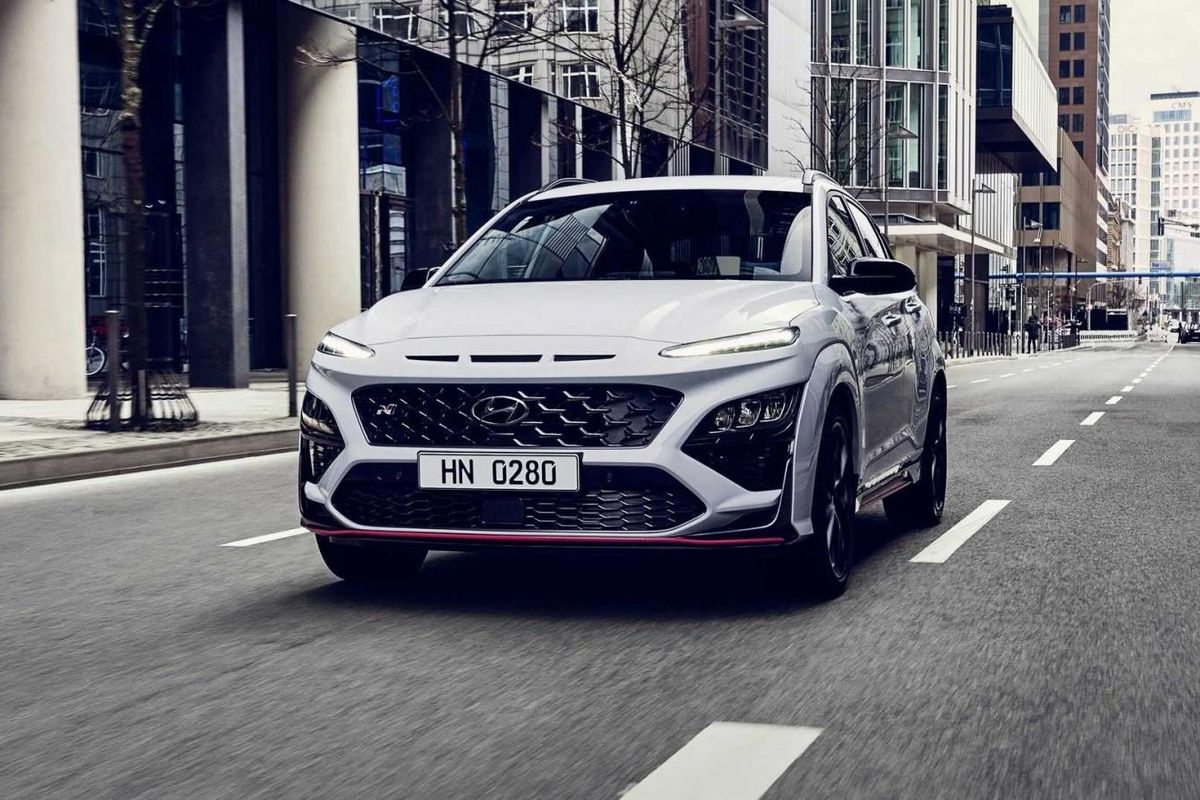
After a long teaser campaign and spy shots, Hyundai has finally revealed the 2022 Kona N, the next member of the Hyundai performance family.
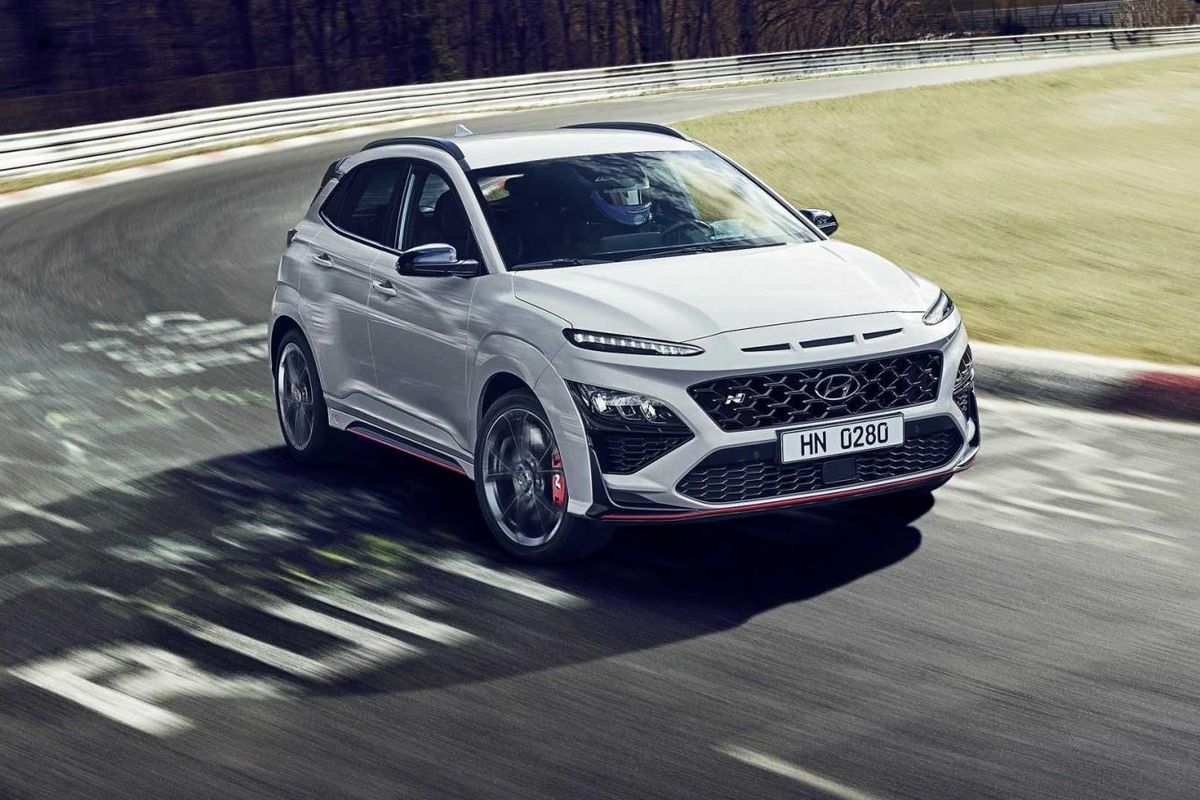
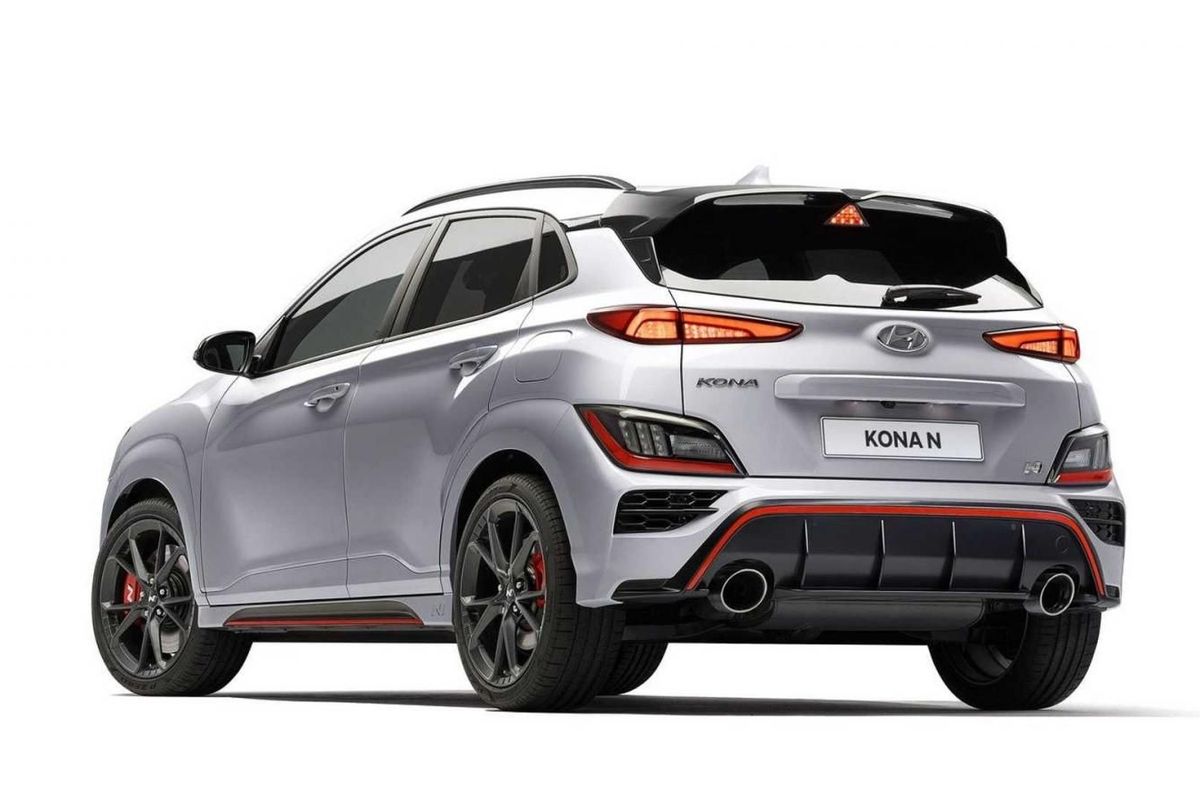
The sportiest version of the compact crossover from Hyundai has been shown. Boasting the same powertrain from the Hyundai Veloster N, the Kona N makes 206 kW and 392 Nm from its 2.0-litre turbocharged 4-cylinder petrol engine. No surprise Hyundai is calling the Kona N its first true hot SUV.
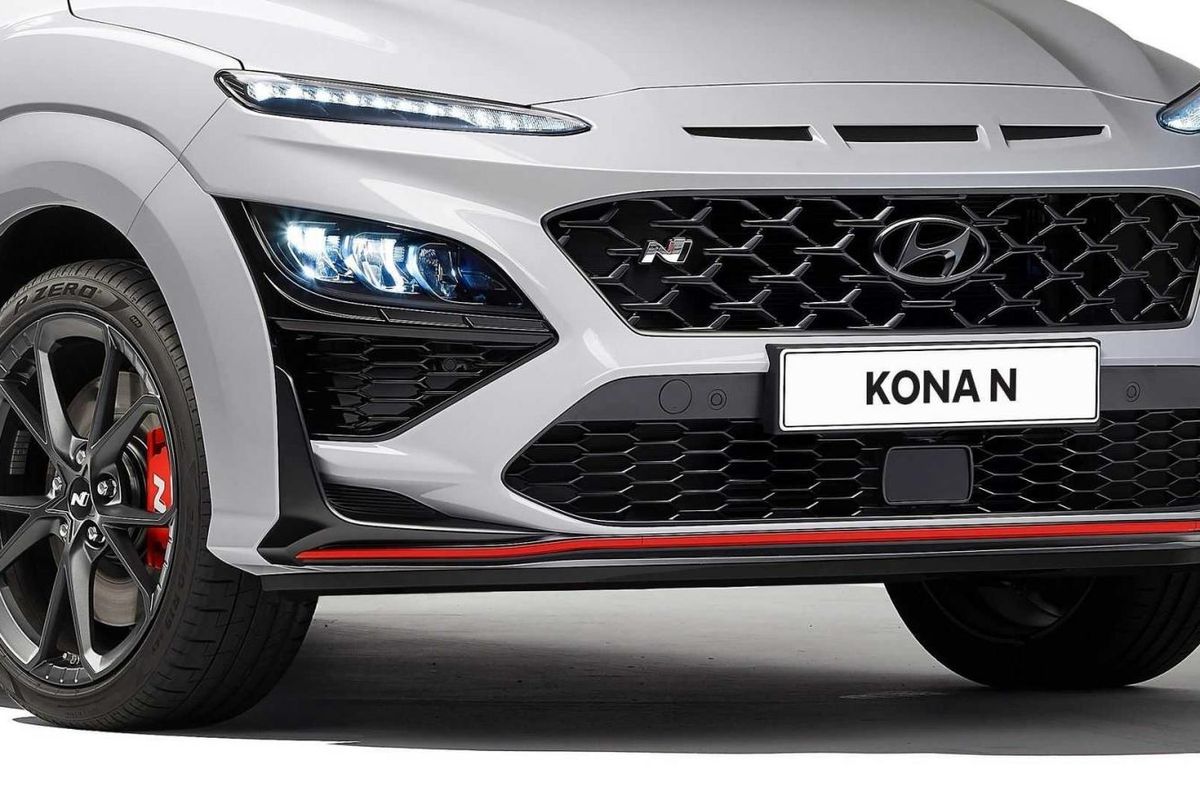
The Hyundai Kona N is front-wheel driven, with power going through an 8-speed dual-clutch transmission. There’ll be no manual option and no all-wheel-drive derivative either. Hyundai has worked extensively under the skin and thoroughly reworked the suspension, plus added an electronic limited-slip differential to help cut those corners. There are also N-specific 19-inch alloy wheels wrapped in performance Pirelli P-Zero rubber.
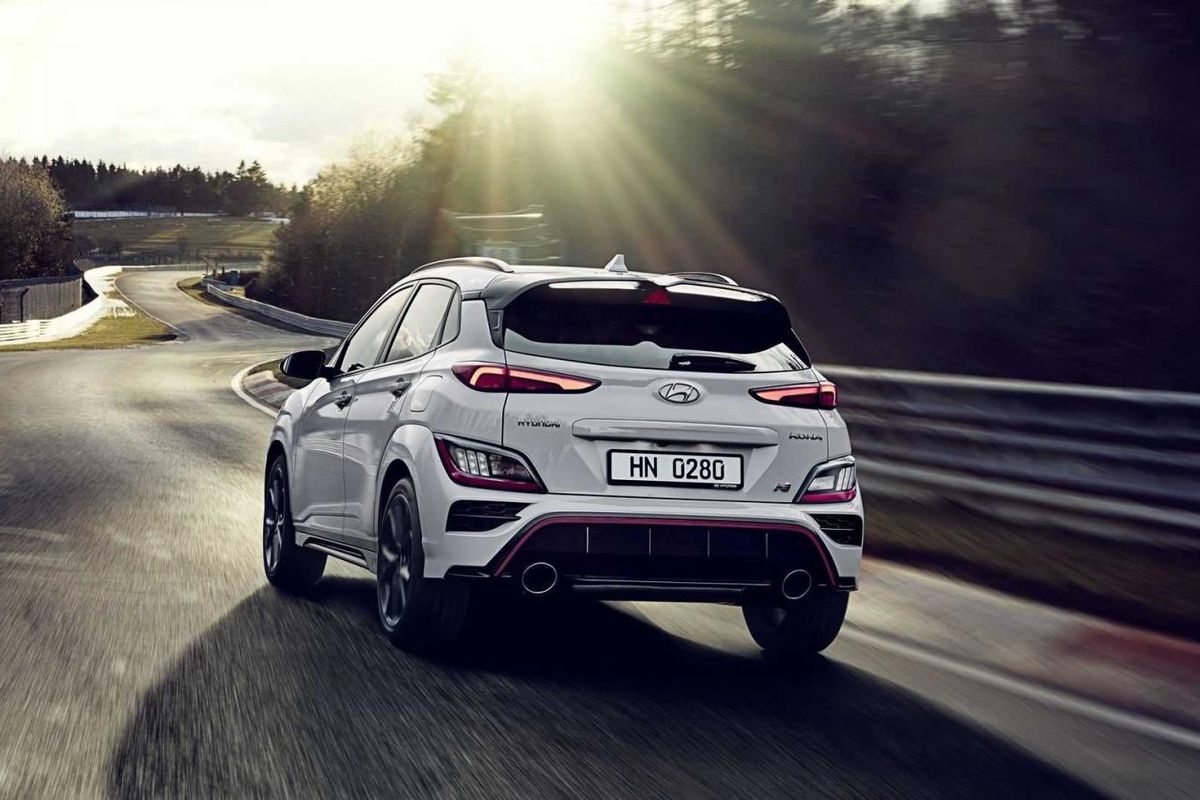
Performance is claimed to be brisk, with a 0-100 kph of around 5.5 seconds, thanks to a temporary overboost that takes power up to 213 kW. There are 5 drive modes (Normal, Sport, N, Custom, Eco) that will change the throttle responsiveness, traction, exhaust sounds and steering weight. To make it look the part, Hyundai has given the Kona N a fantastically aggressive look, complete with twin big exhausts at the back.
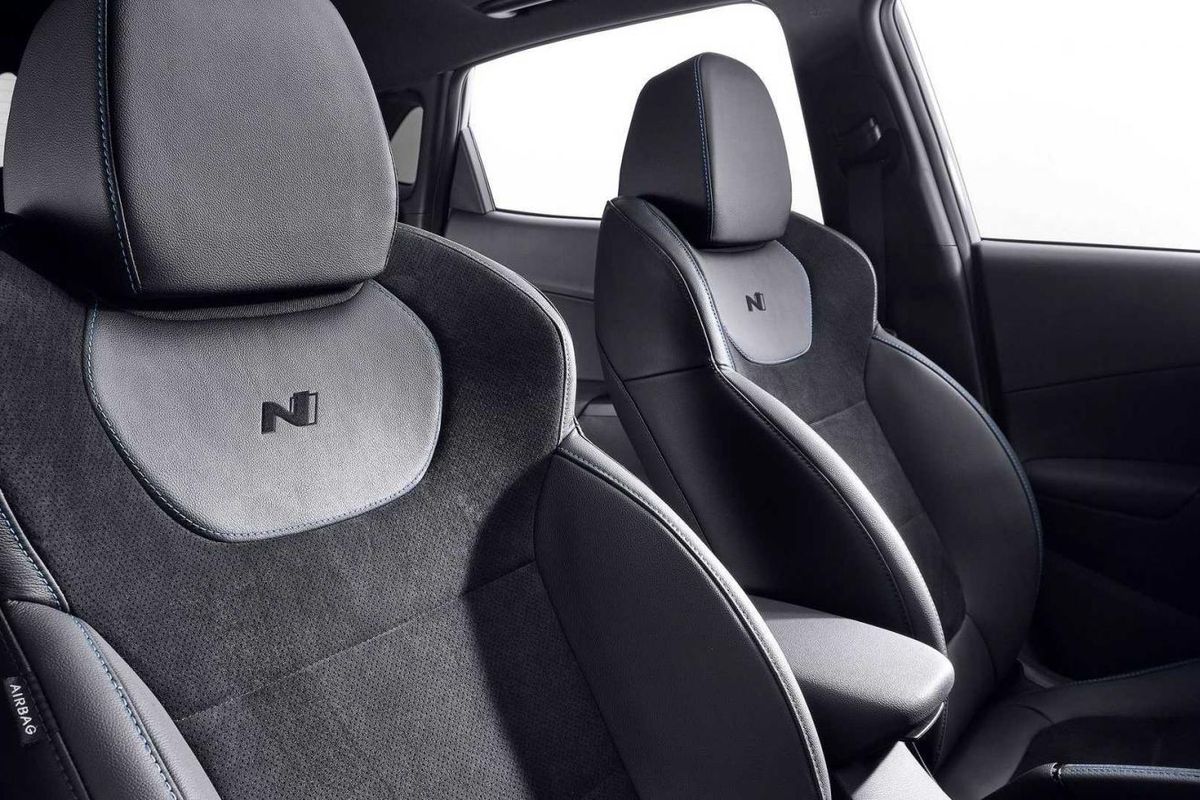
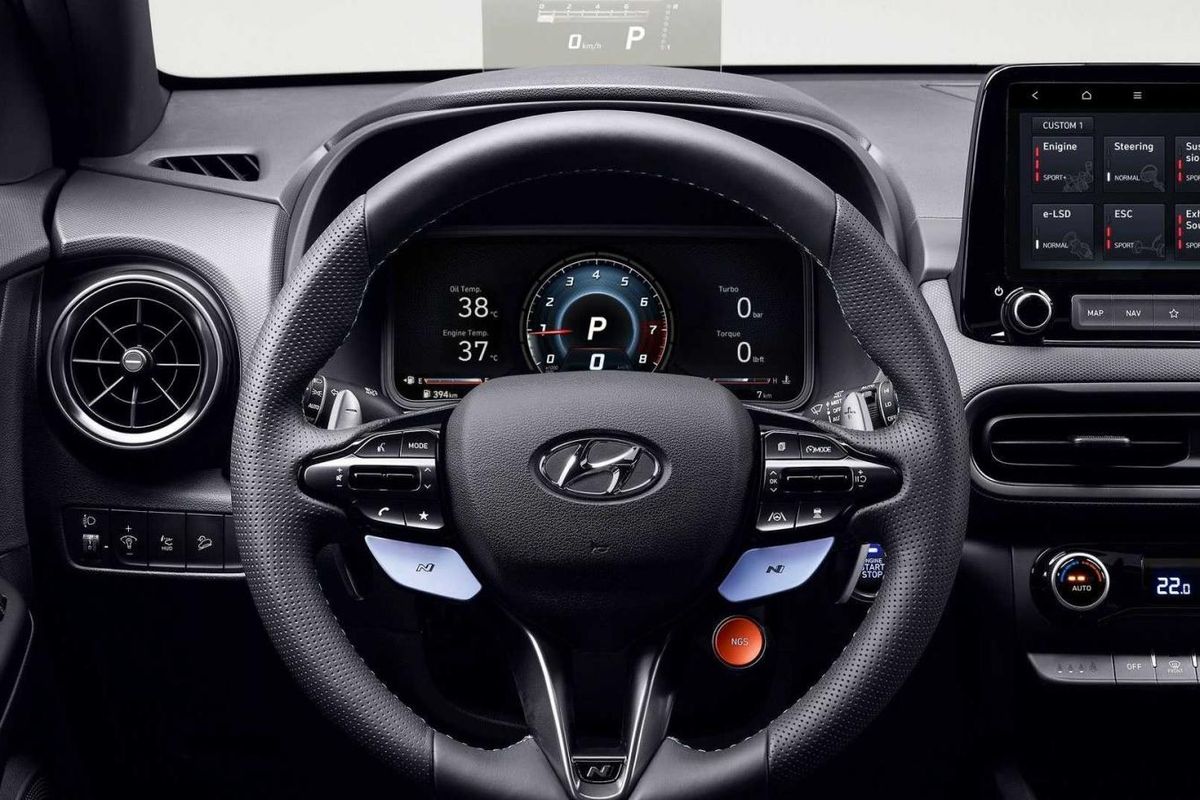
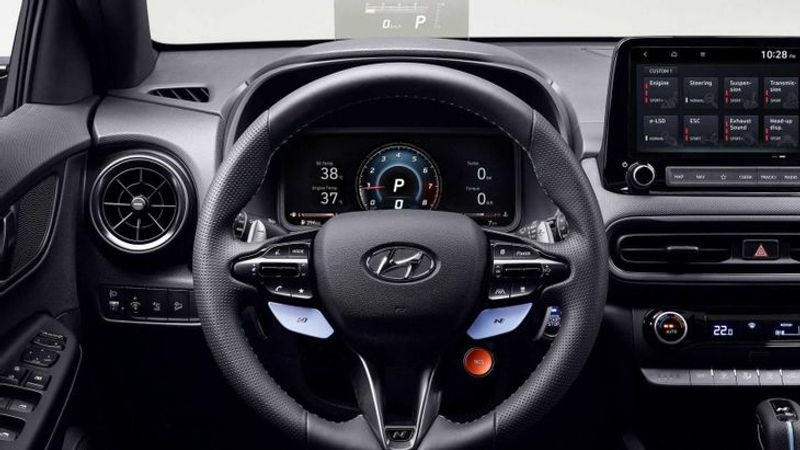
Inside, the cabin gains bucket seats and plenty of N branding. The driver will get a 10-inch digital instrument cluster as well as a 10-inch infotainment screen. There are cool performance features too like a lap timer and performance meter.
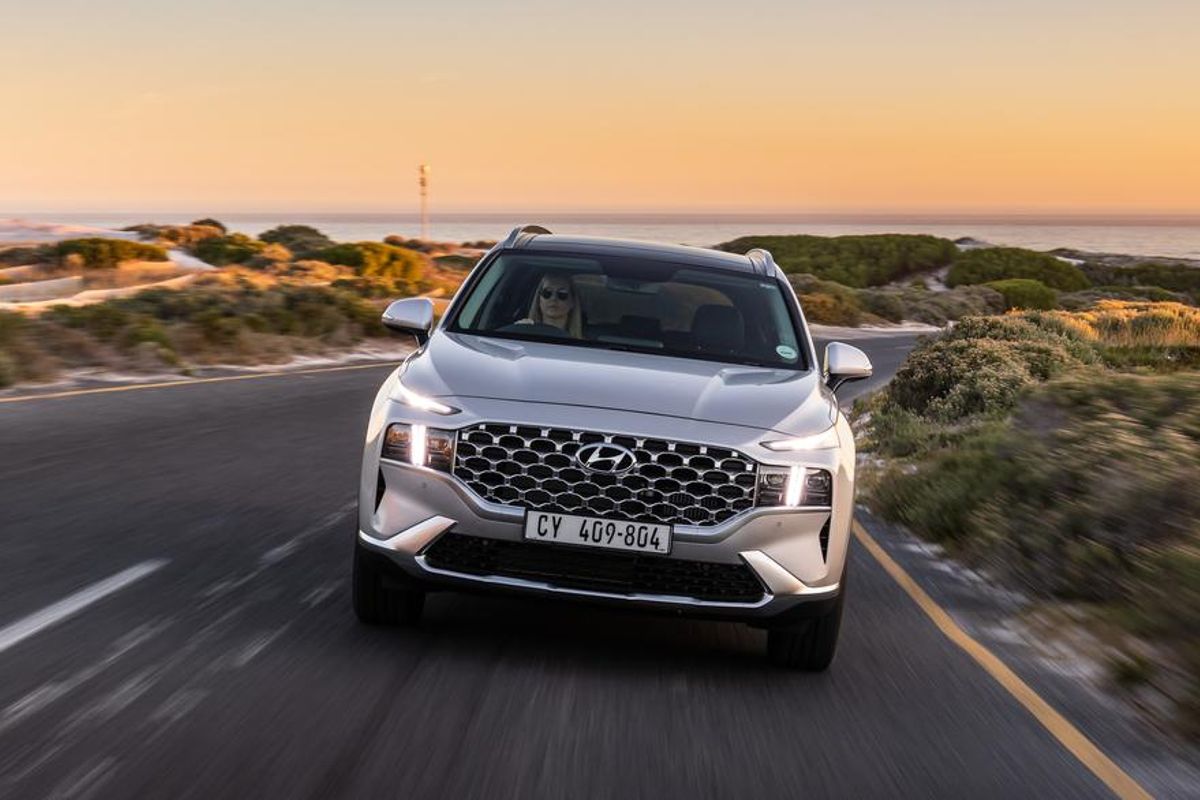
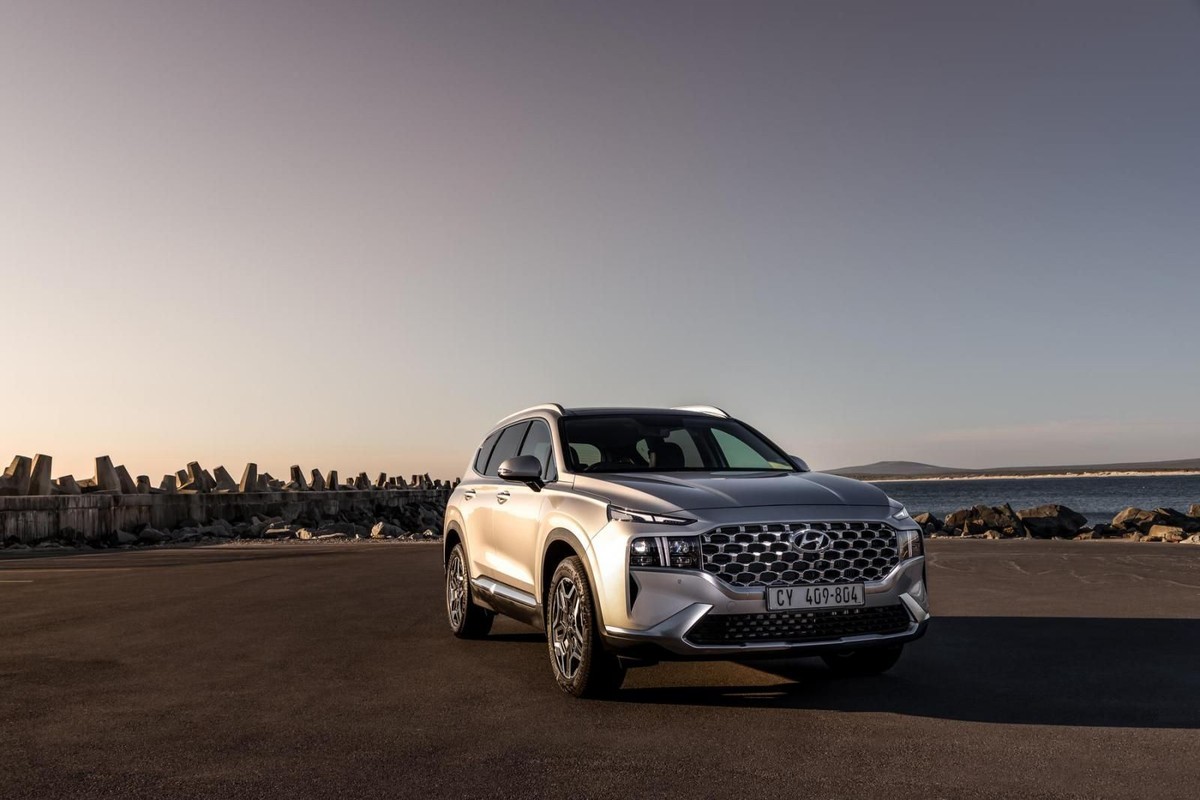
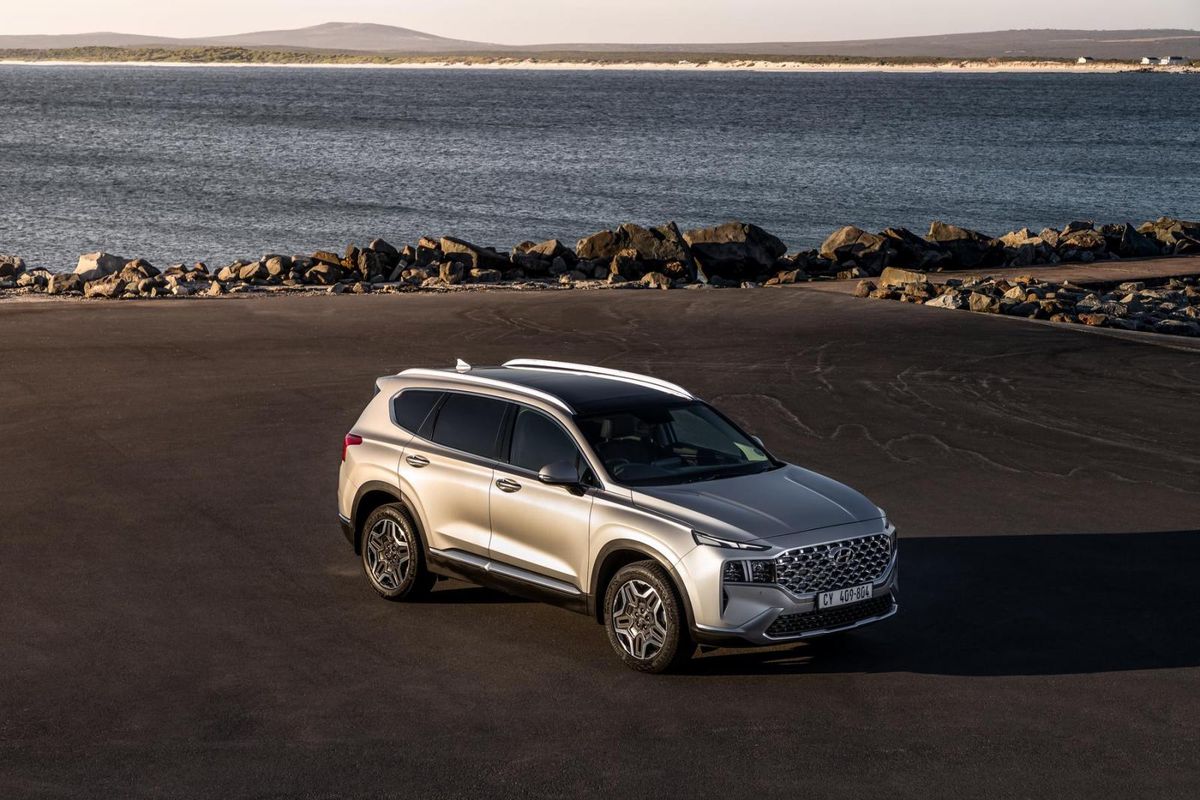
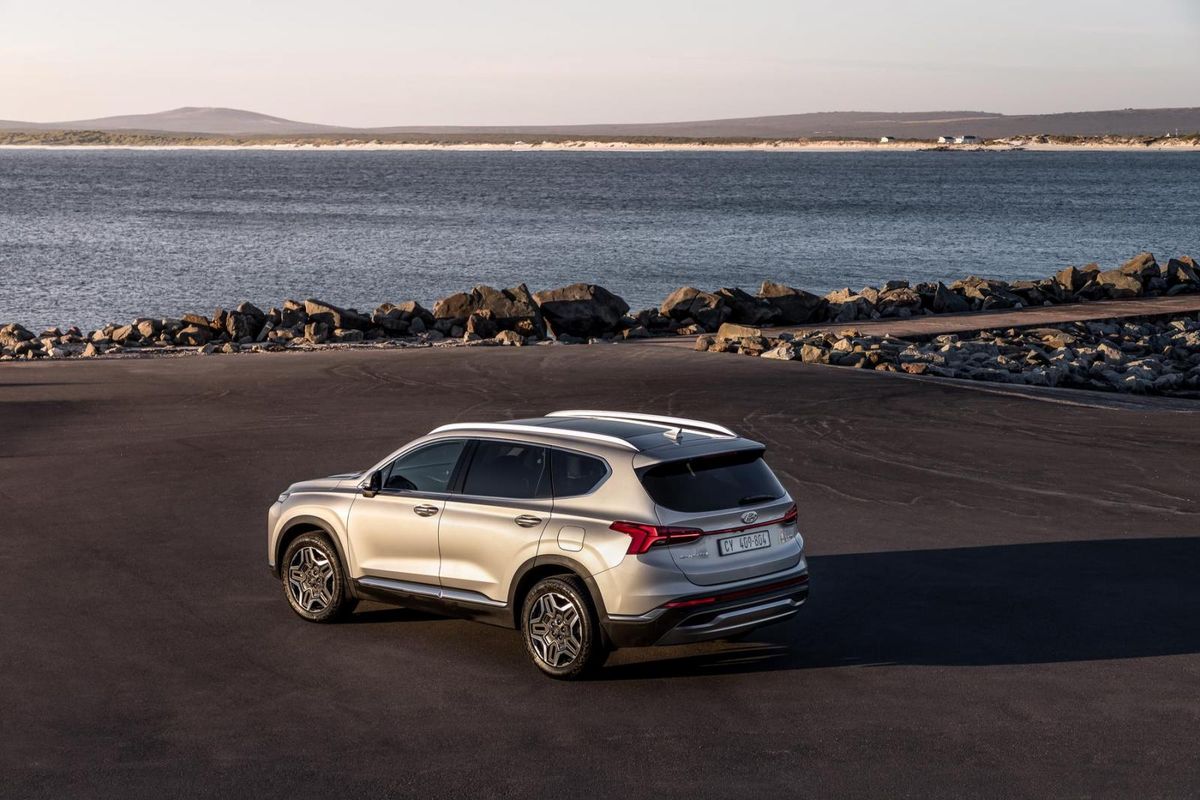
Hyundai has introduced the extensively enhanced 4th-generation Santa Fe to the South African market! We sampled the noticeably bolder-looking Korean 7-seater Adventure SUV at its local launch in Cape Town recently – take a look at what the updated Santa Fe has to offer…
The Santa Fe is by no means the bestselling product in its segment (primarily because it's an upmarket unibody-based vehicle that competes with a slew of more affordable bakkie-based Adventure SUVs), but it's been around for more than 20 years! Hyundai recently applied a significant mid-lifecycle update to the Santa Fe in an effort to enhance the model’s packaging and improve its value proposition.
Which models does it compete against? Well, the Santa Fe rivals other 7-seaters (Adventure SUVs) such as the wildly popular Toyota Fortuner, as well as the Ford Everest, Isuzu MU-X, Mitsubishi Pajero Sport and Land Rover Discovery Sport. So, in a bid to keep its contender relevant in this cut-throat segment, the Seoul-based firm has pulled out all the stops to give the Santa Fe a thorough makeover.
Bold Styling for Santa Fe
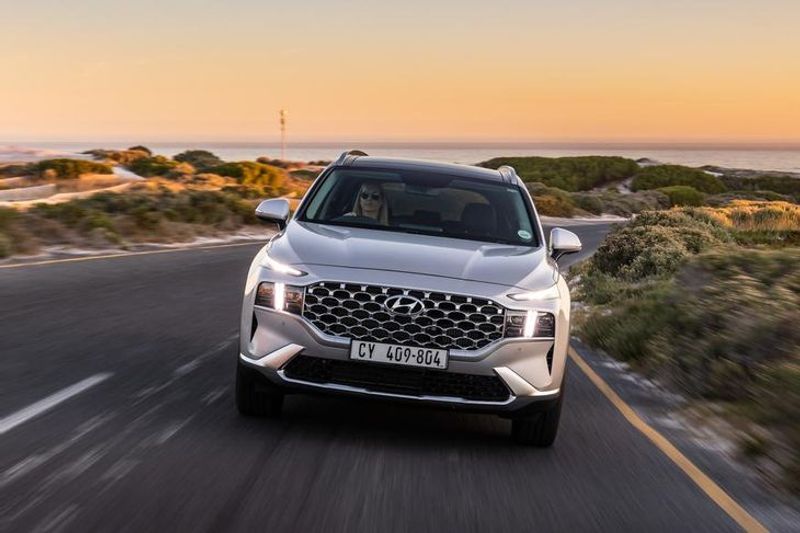
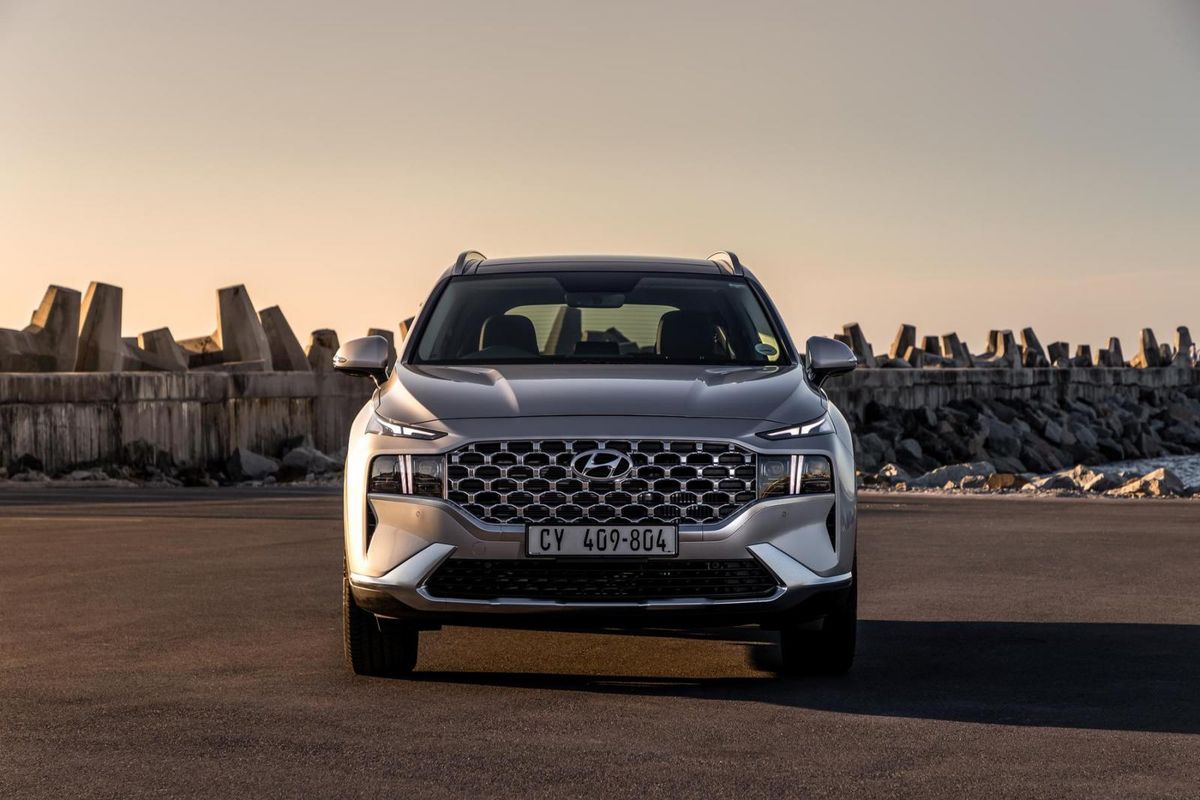
The expressive face of the latest Santa Fe might divide opinion but we think it has its place.
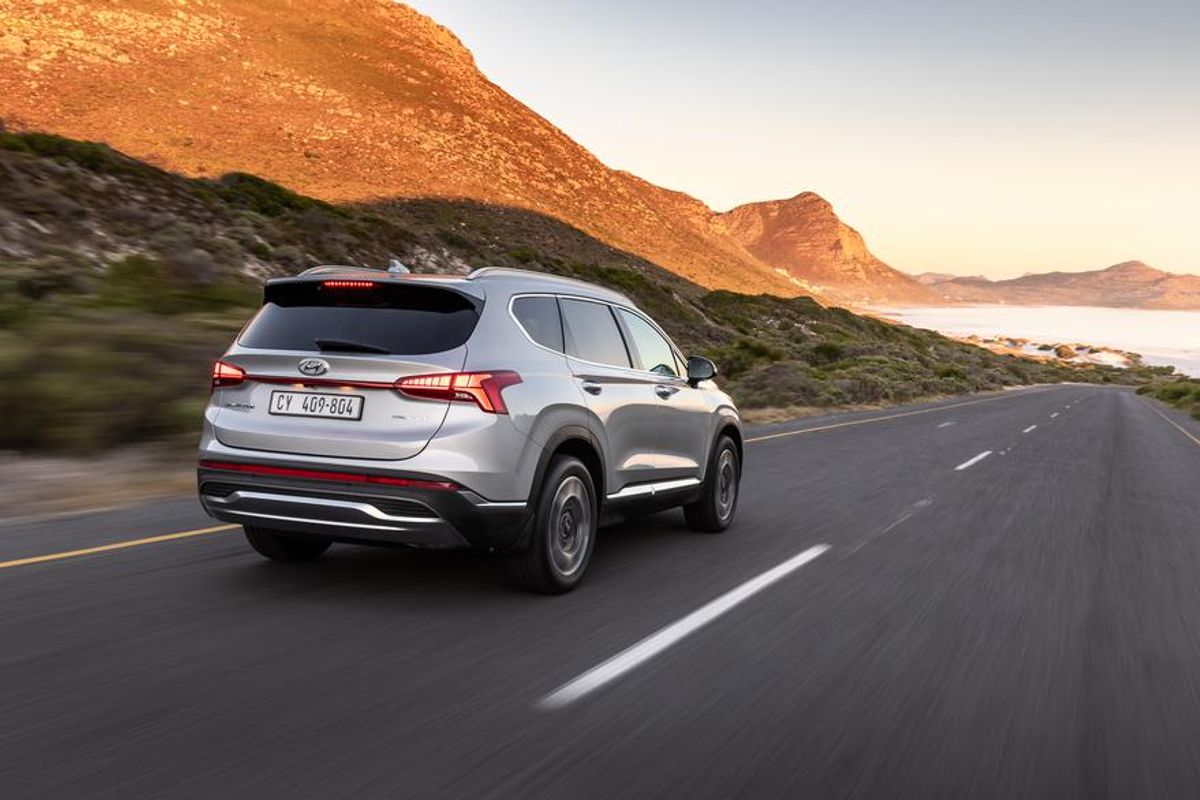
This latest Santa Fe adopts Hyundai’s new Sensuous Sportiness design language; indeed, the most noticeable change to the 7-seater SUV is its face, which now bears a cascading grille – a hallmark of many of Hyundai's latest models, particularly of the SUV variety. It’s a bold grille, but we suspect that it’s likely to divide opinion or, to put it another way, it probably won't be to everyone’s taste. Hyundai has also reworked the design of the daytime running light clusters, which now incorporate the shape of a "T" and the front bumper has also been reshaped to complete the frontal look.
There are 2 Santa Fe derivatives on offer: the front-wheel-drive Santa Fe Executive and the range-topping all-wheel-drive Santa Fe Elite; the former rides on 18-inch alloys, while the Elite can be shod with either 19-inch alloys (which is standard equipment), or specified with optional 20-inch wheels.
What’s the Santa Fe’s interior like?
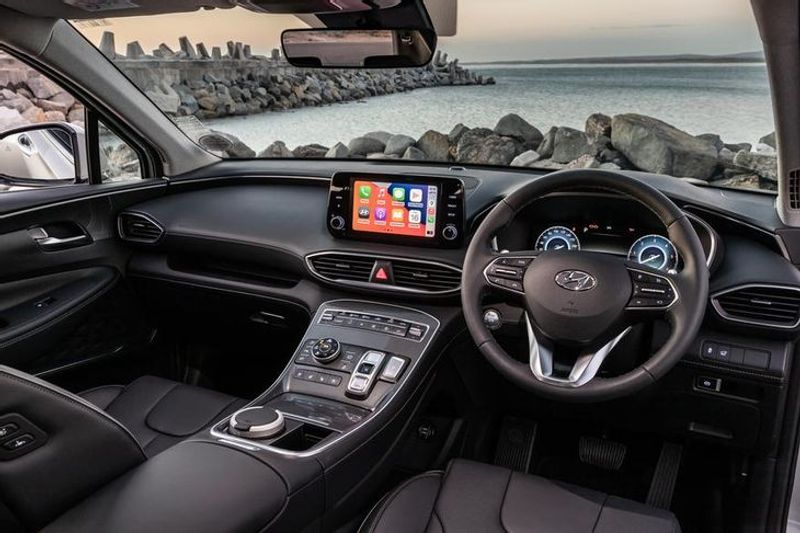
The interior is comfortable, spacious and well-equipped with standard features.
Comfortable and spacious, the Santa Fe’s interior represents a marked improvement over that of the pre-facelift version.
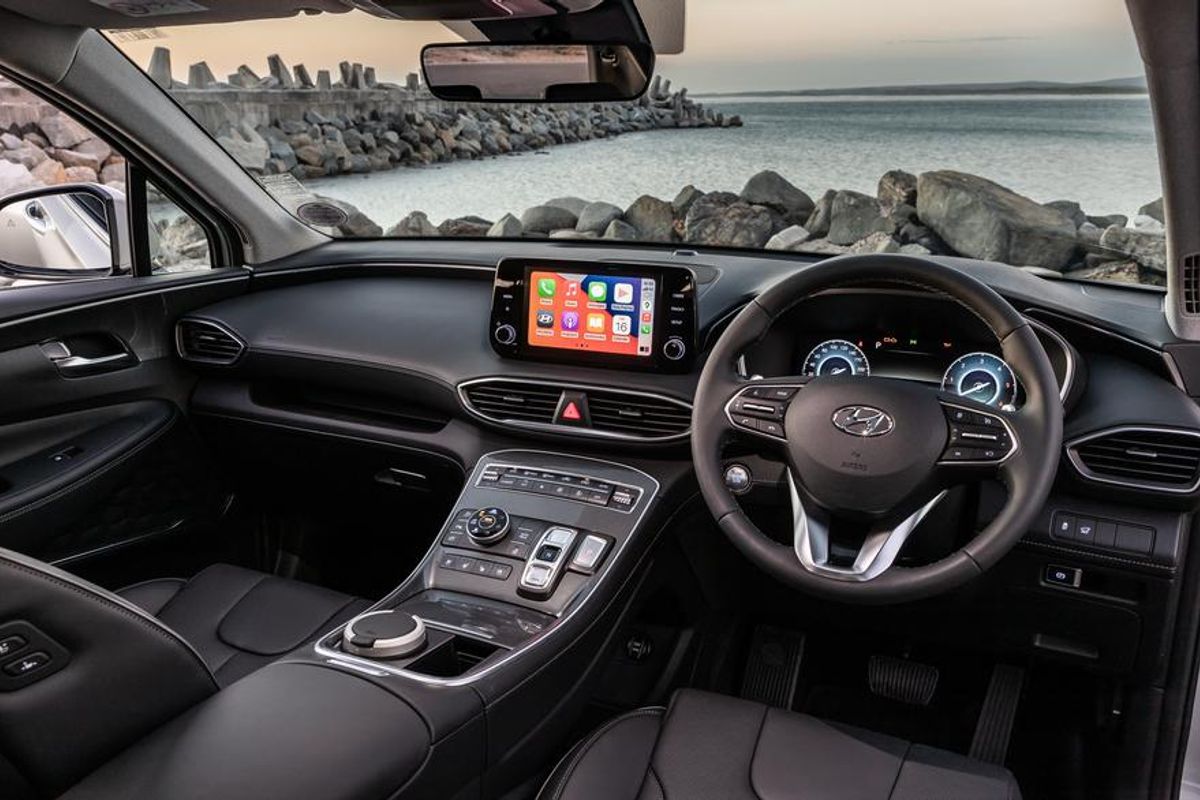
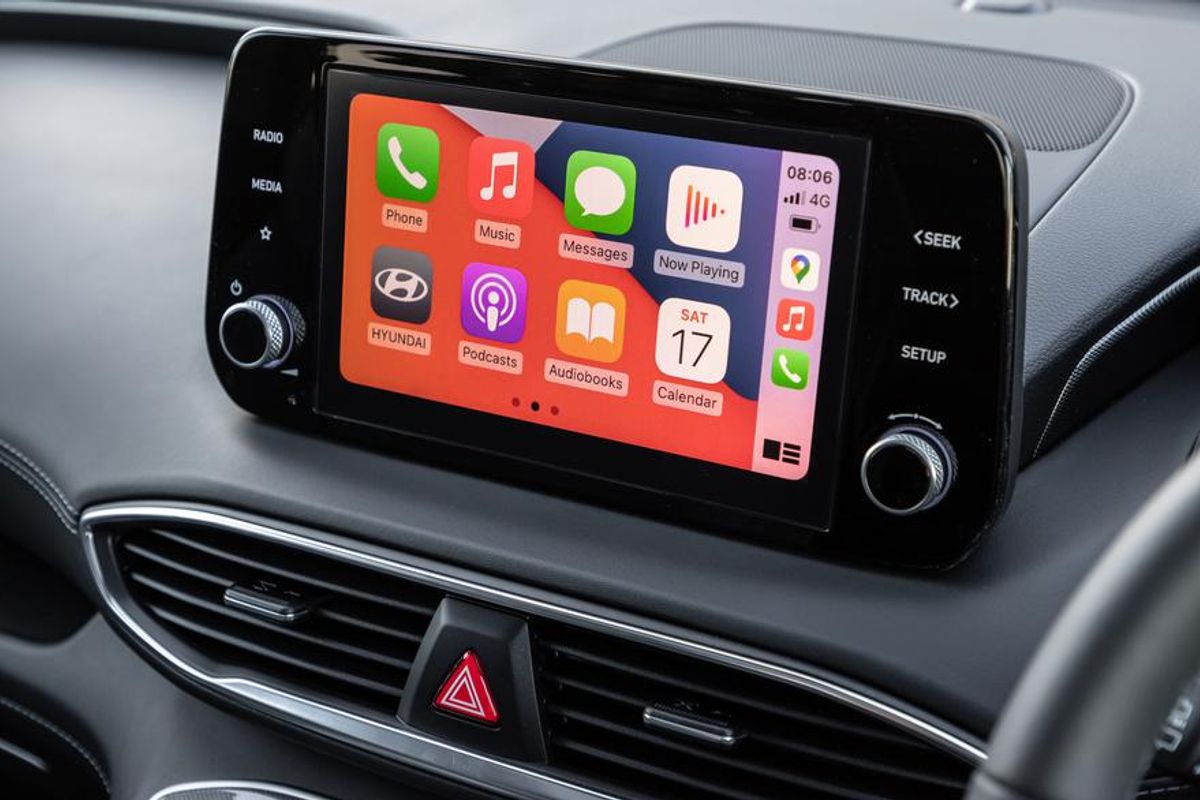
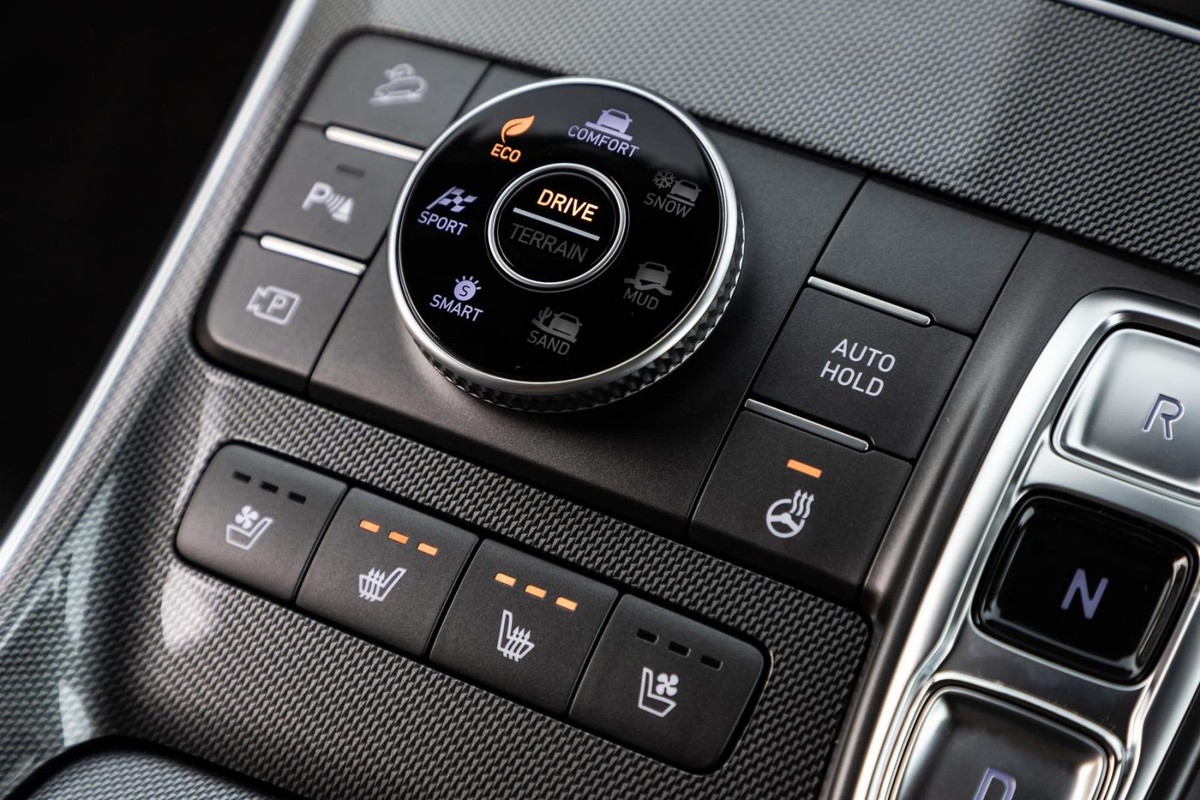
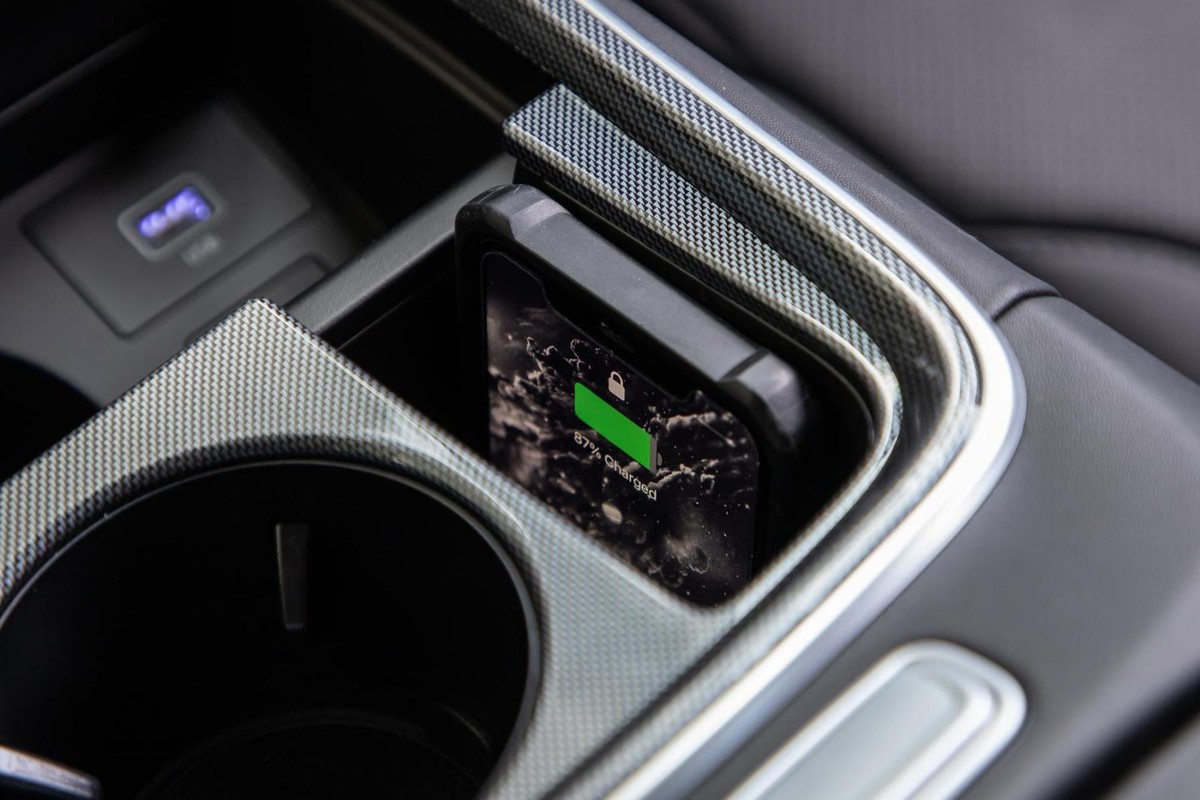
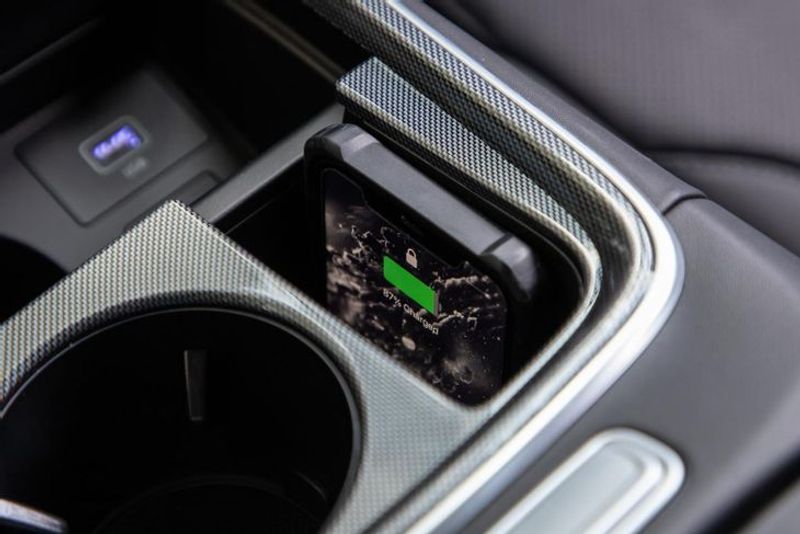
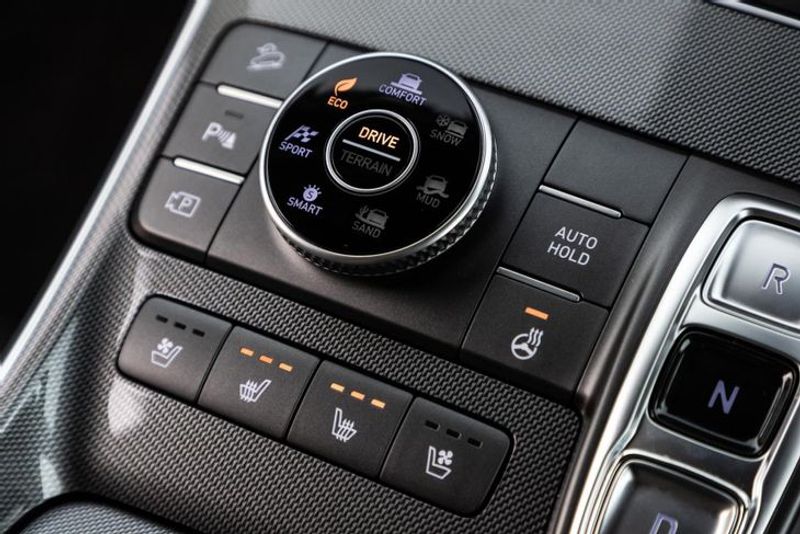
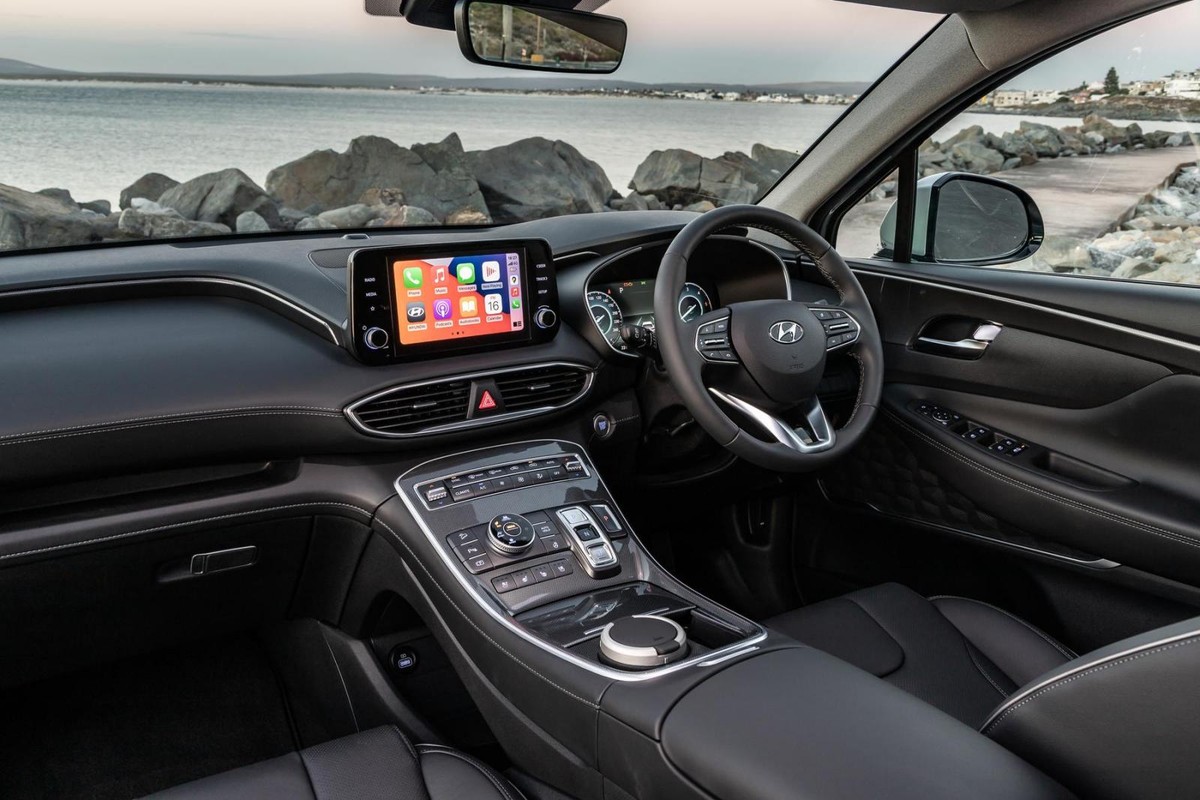
Apart from the 8-inch touchscreen infotainment system, which is Android Auto and Apple CarPlay compatible, the Santa Fe's cockpit now features a floating centre console that provides access to features such as the premium-looking drive-by-wire transmission- and climate control buttons, as well as the drive-mode dial. A vertical wireless charging "slot" (for keeping a smartphone topped up) is also fitted.
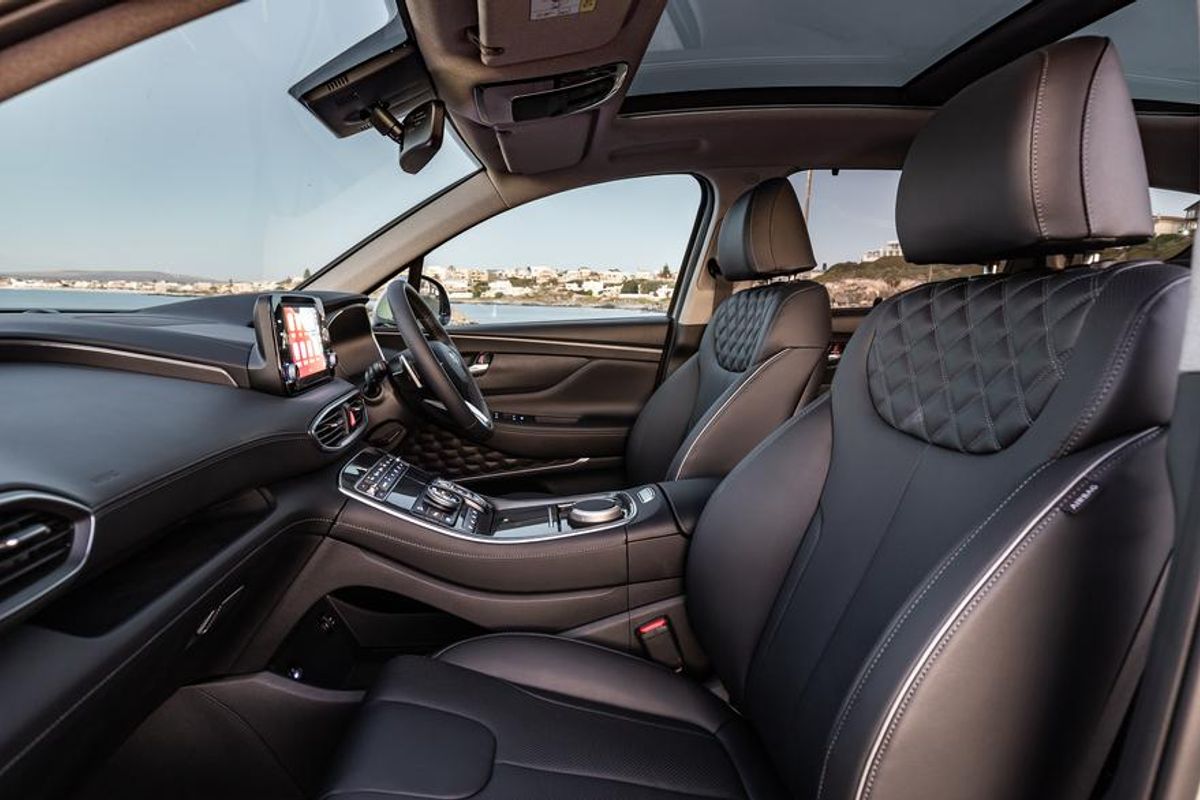
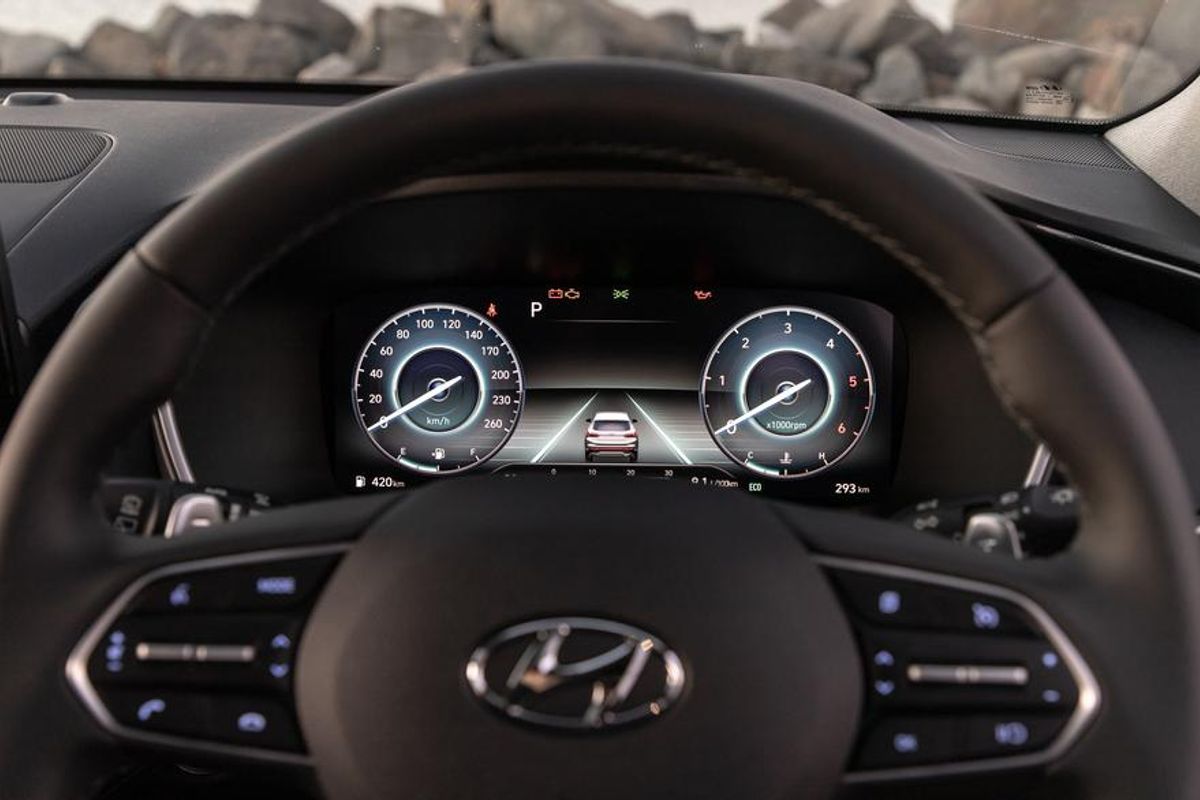
The interior is mostly decked out in leather trim and high-end luxury appointments such as ventilated electrically adjustable front seats, a panoramic sunroof and a 12.3-inch LCD digital instrument cluster are offered exclusively on the range-topping Santa Fe Elite derivative.
For convenience, both derivatives are equipped with a Smart Power Tailgate, as well as a Remote Start function. With the latter, a driver can use the key fob to remotely start the Santa Fe's engine and prime its climate control to 22°C before getting into the vehicle to start a journey – how very fancy, Hyundai!
A vertical wireless smartphone charger is but one of the many nice-to-haves inside the Santa Fe.
Buyers will appreciate that the perceived build quality of the Santa Fe's cabin is excellent and incidentally, Hyundai has improved the interior's noise, vibration and harshness (NVH) suppression, which means that the cabin is quieter and ultimately more comfortable.
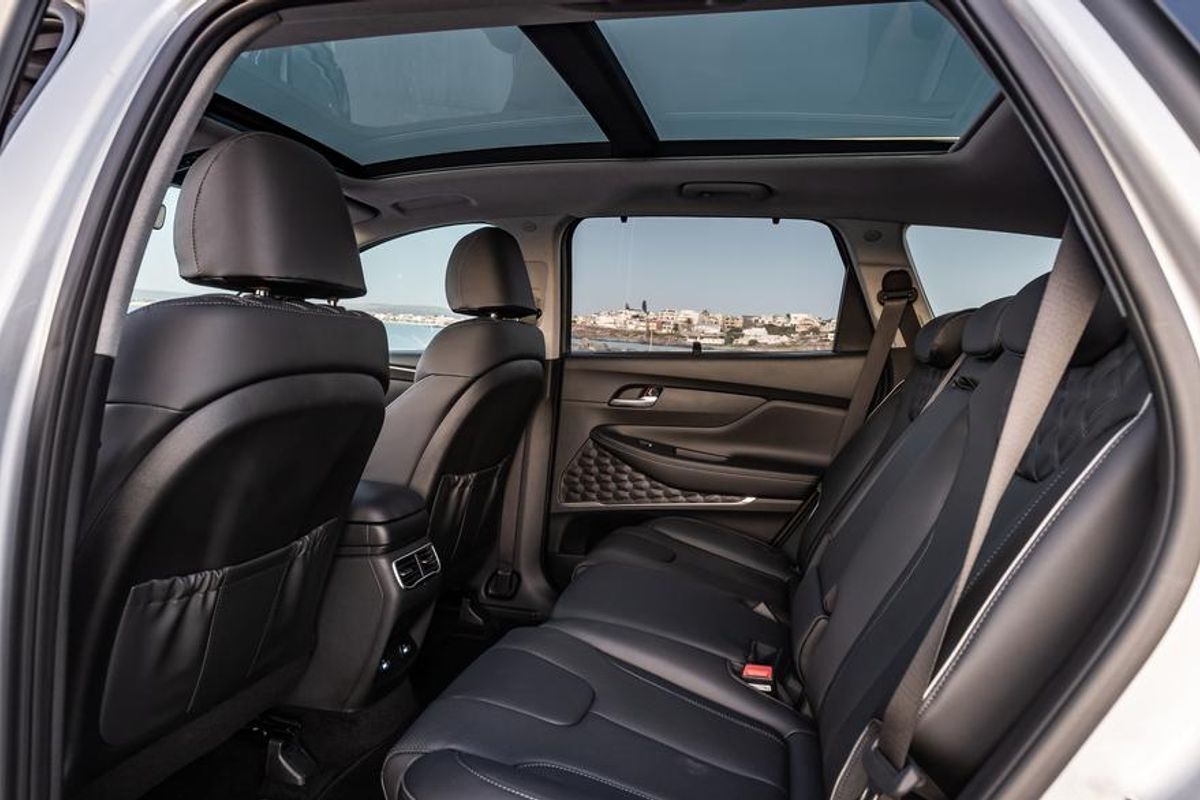
In terms of practicality, Hyundai says the load bay can accommodate 634 litres of luggage when the 3rd row of seats is folded flat, while 2nd-row passengers have more than enough legroom to stretch out on longer journeys.
What’s the new Hyundai Santa Fe like to drive?
The Santa Fe's overall performance will please most buyers in this segment.
The changes to the Santa Fe are not just cosmetic, however. The big news regarding the powertrain is that a new-generation 2.2-litre 4-cylinder turbodiesel engine delivers improved power and torque outputs and the motor is paired with a new Smartstream 8-speed wet dual-clutch transmission, the latter of which should prove to be more efficient and reliable over time.
Outputs are now pegged at 148 kW and 441 Nm, which is 3 kW and 5 Nm more than the outgoing Santa Fe… while those are not substantial increases, any improvements are better than none!
Out on the road, we found this new engine and transmission combination to not only deliver adequate performance in terms of acceleration and cruising ability, but also higher levels of driving engagement and responsiveness, thanks to the presence of steering-wheel-mounted shift paddles.
When left to its own devices, the transmission changes gears smoothly and unobtrusively. Meanwhile, Hyundai claims an average fuel economy figure of 7.9 L/100 km and we saw returns of around 9.5 L/100 km during our test drive, which was encouraging.
A neat drive-mode dial allows the driver to choose a suitable driving mode to suit road conditions.
We drove both derivatives during the local launch event and while the base Executive derivative offers drive modes such as Eco, Comfort and Sport (which can be accessed using the drive dial in the centre console), the all-wheel-drive Elite derivative additionally features terrain modes such as Sand, Mud and Snow, which are useful when you need to venture off the tar. Furthermore, a Smart mode can be selected; when engaged, the Santa Fe will automatically select the appropriate driving mode based on the driving situation.
We were able to drive the Santa Fe on dirt roads too; the suspension (front MacPherson struts and rear multi-link) provided excellent driving comfort on the dirt with a confident and sure-footed demeanour.
As far as safety is concerned, this latest Santa Fe comes well specified with a total of 6 airbags, ABS with EBD, brake assist, electronic stability control with traction control, hill start assist, downhill brake control, reverse parking collision assist, rear cross-traffic alert and blind-spot monitoring. A reverse-view monitor is also included.
Summary
Based on our initial impressions, the latest Santa Fe represents a substantial improvement over its predecessor, with better performance and efficiency, enhanced practicality and a comprehensive standard features list that strengthens its buying proposition considerably. Also, Hyundai’s 7-year/200 000 km drivetrain warranty 5-year/150 000 vehicle warranty adds further peace of mind for prospective buyers.
Despite the Santa Fe’s obvious strengths, it remains to be seen how the market will respond to this latest iteration because it still exists in a grey area between bakkie-based offerings and Executive SUVs. The Santa Fe is a "softer" and arguably prettier alternative to traditional Adventure SUVs and we think it deserves to be your shortlist if you are in the market for a high-specced 7-seater SUV.
We will hopefully have the latest Hyundai Santa Fe on test soon so look out for a thorough review coming your way in the near future!
How much does the new Hyundai Santa Fe Cost in South Africa?
The updated Hyundai Santa Fe is sold with a 7 year / 200 000km manufacturer warranty 6 year / 90 000km service plan and there's 7 year's / 150 000km roadside assistance
Hyundai Santa Fe R2.2 Executive 8sp DCT MY21 – R769 500
Hyundai Santa Fe R2.2 Elite 8sp DCT AWD MY21 – R869 500
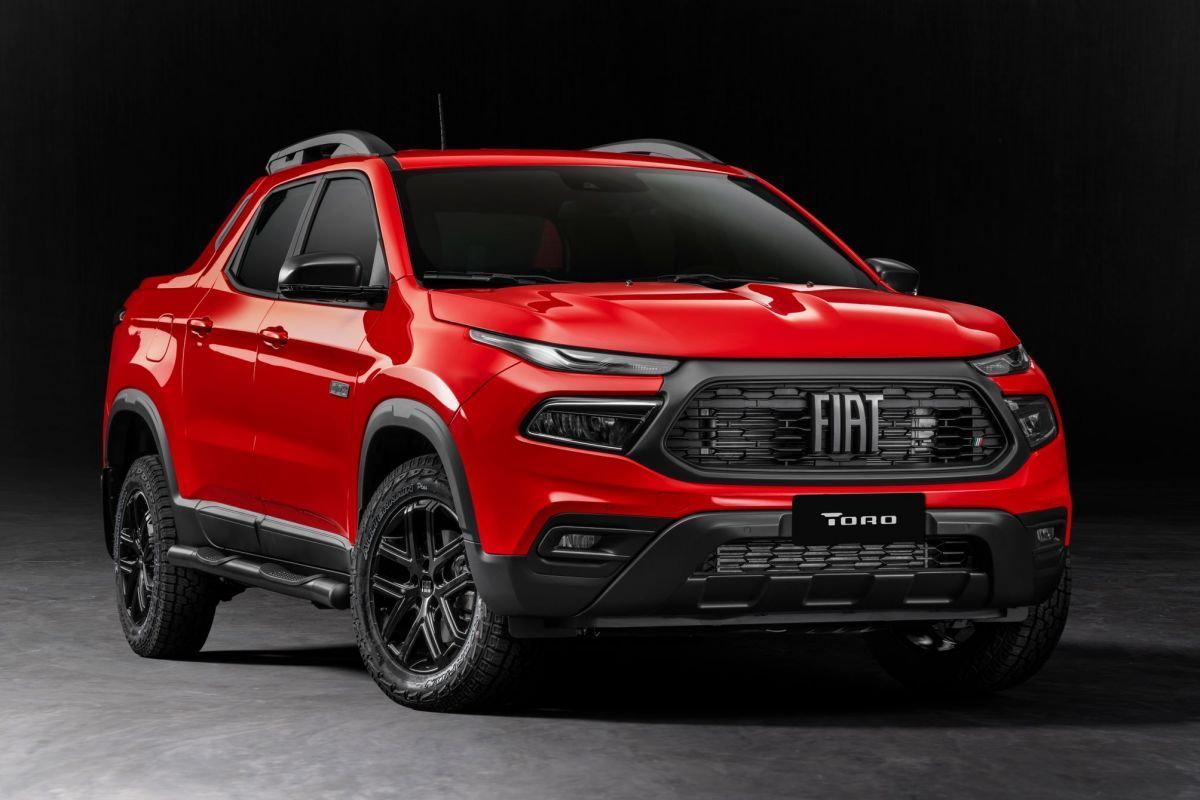
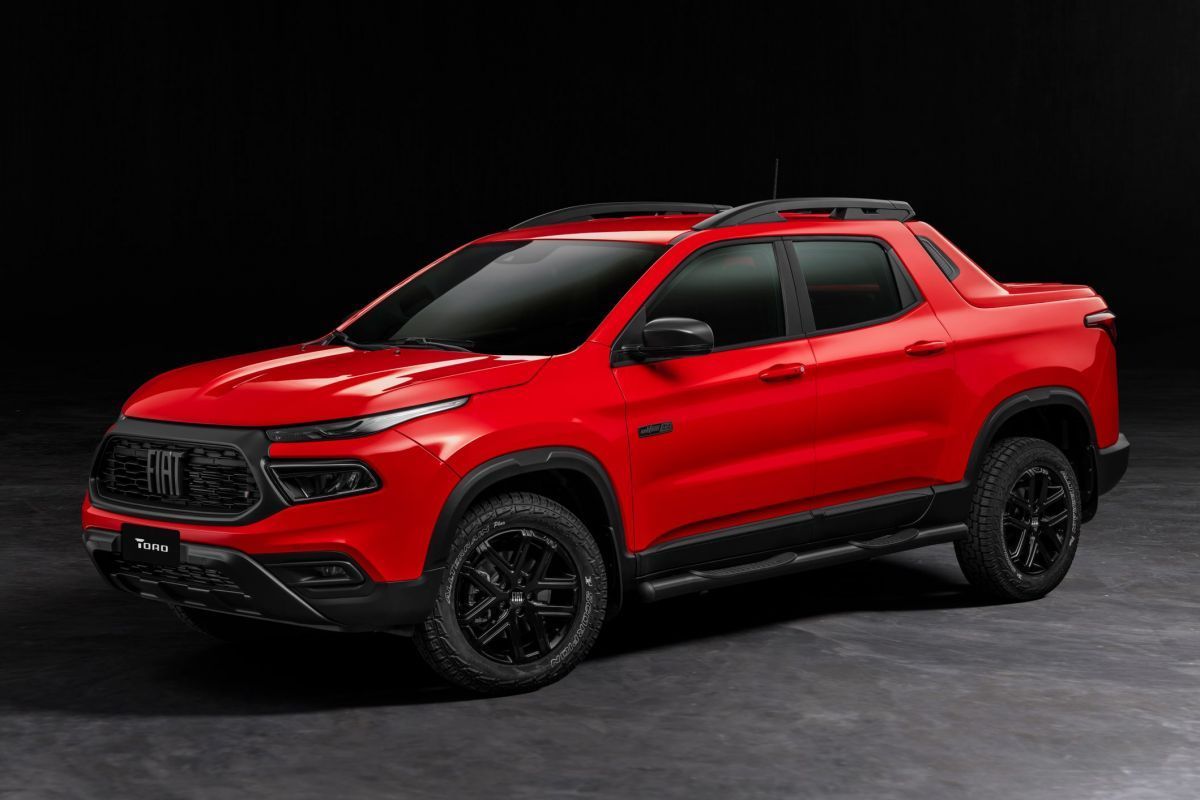
Some new styling and cabin architecture trends have been applied to the FCA Toro. This compact unibody bakkie has been on sale since 2015 and now benefits from a significant exterior resign. The Fiat Toro has made a big dent in the Brazilian market where it sold 100 000 units in its first 2 years. The Toro runs the same platform as the Jeep Renegade, Compass and Fiat 500X.
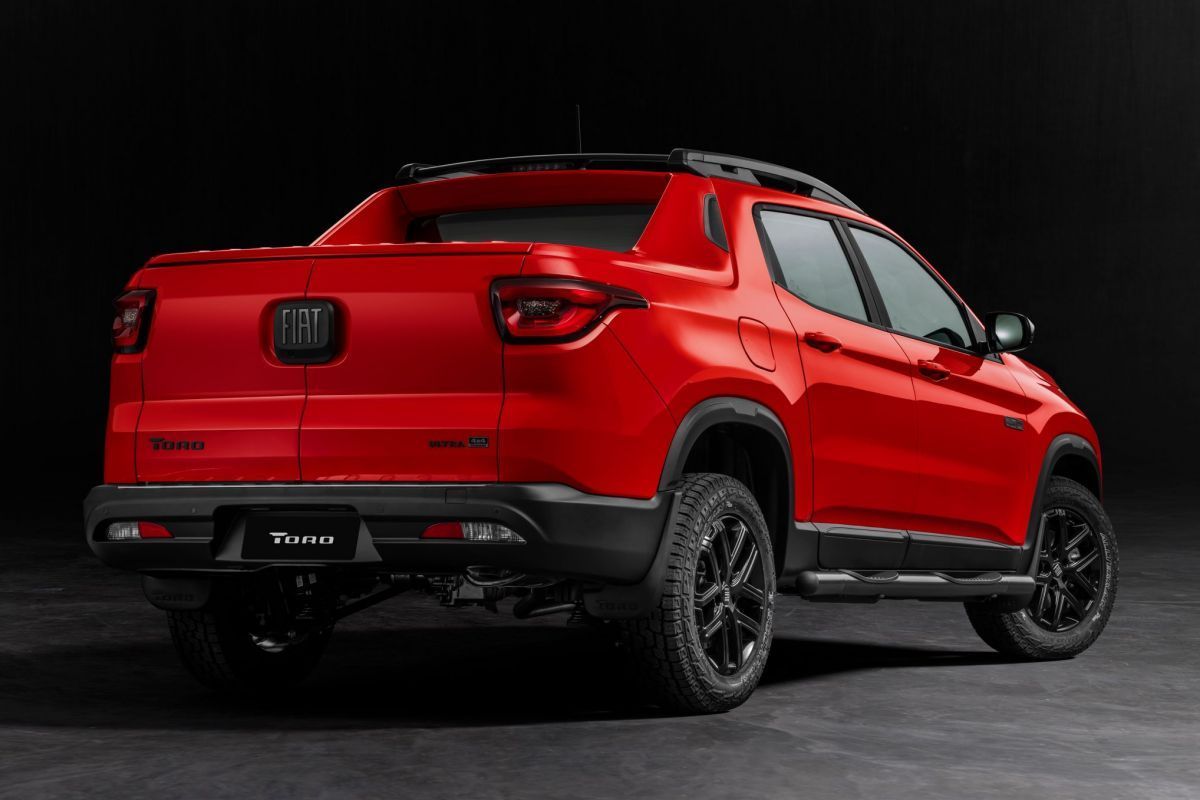
The influence of FCA’s Ram division is clear in the Toro’s front styling, with a more imposing new grille and bumper. Fiat is also offering an array of bullbars and wheel options on the new Toro, ranging from 16- to 18-inches in size.
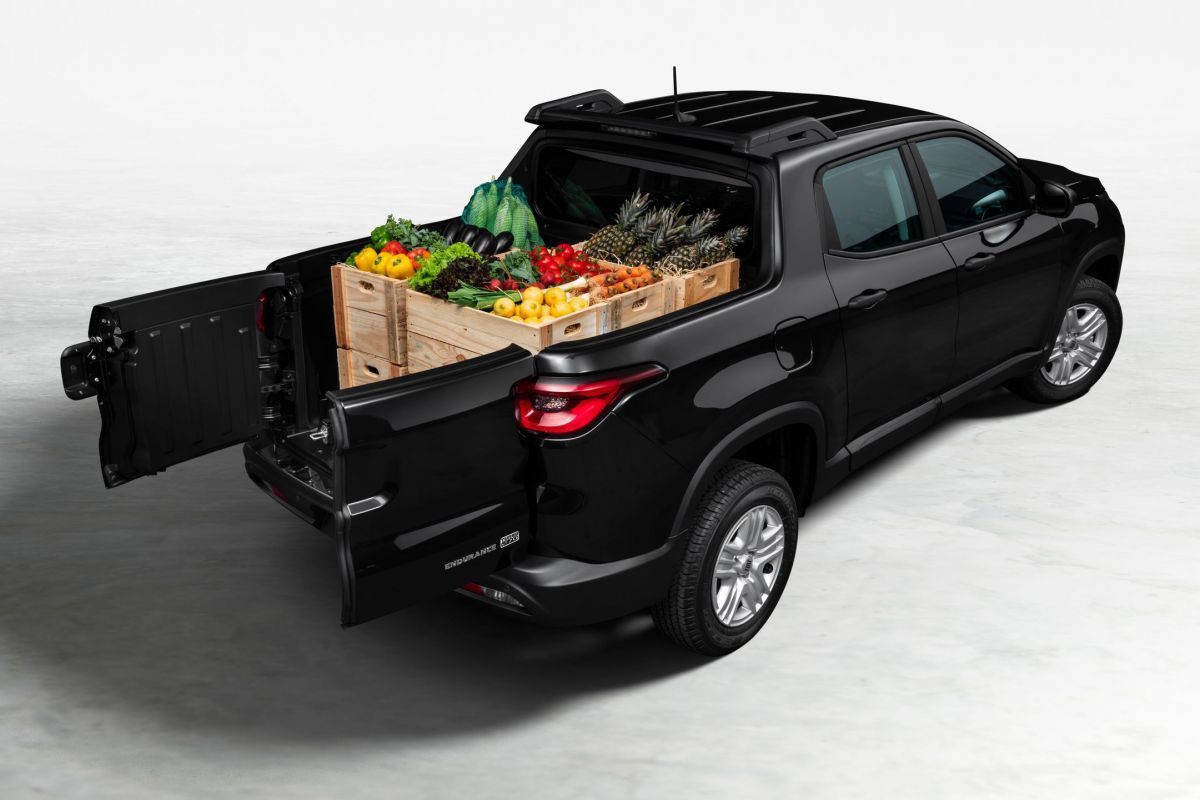
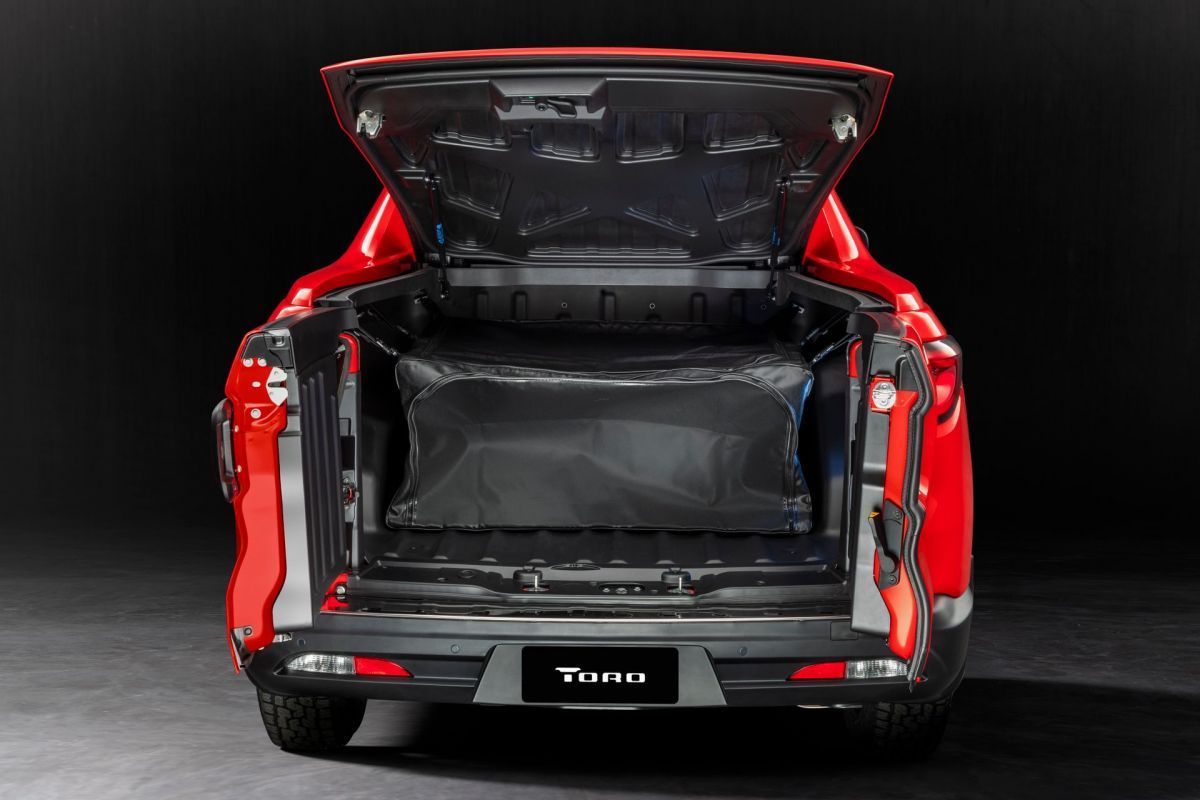
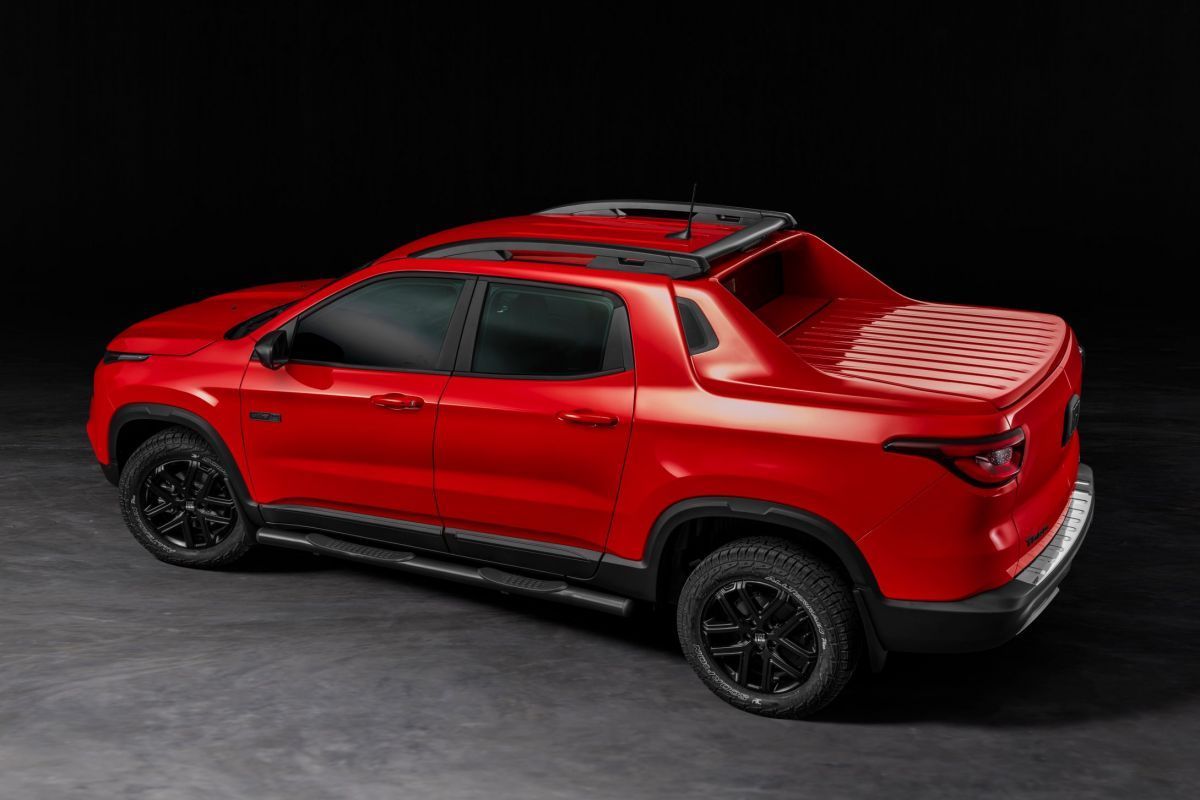
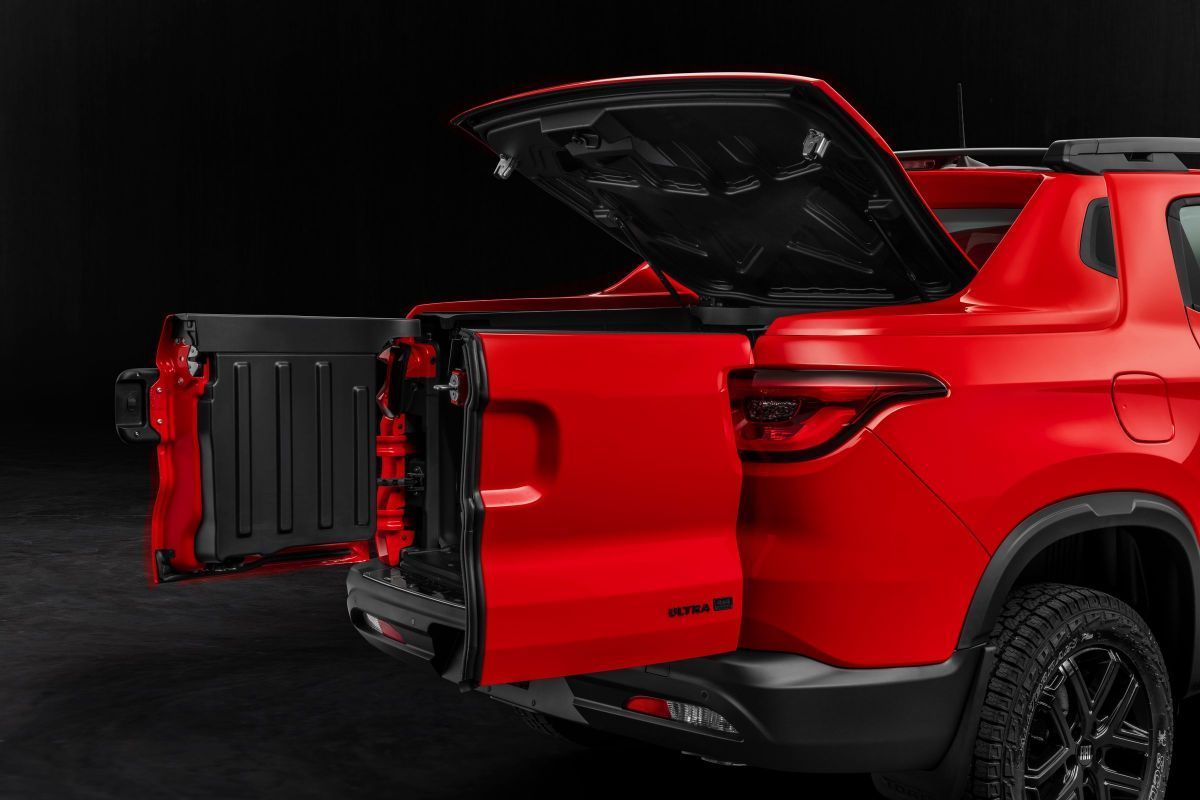
It might not have Land Cruiser off-road or load-carrying ability, but the Toro does offer a very clever vertically split tailgate option, with a lockable loadbay cover.
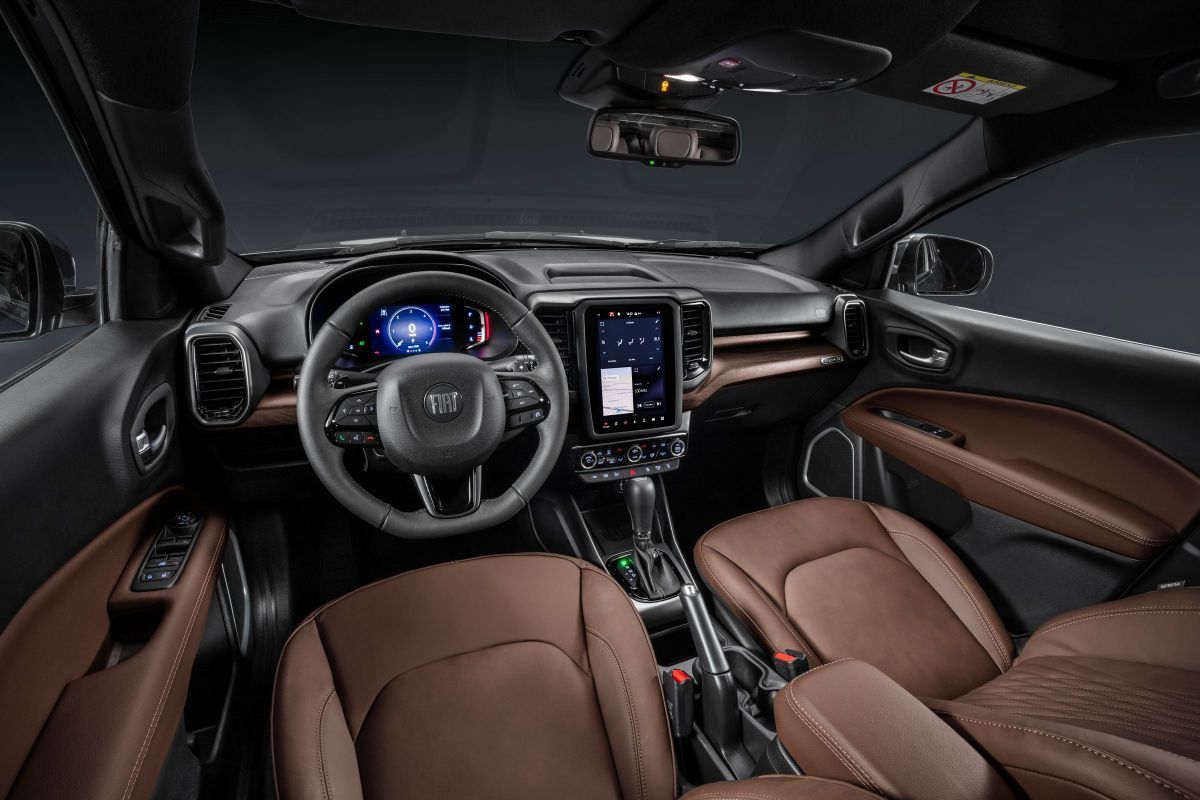
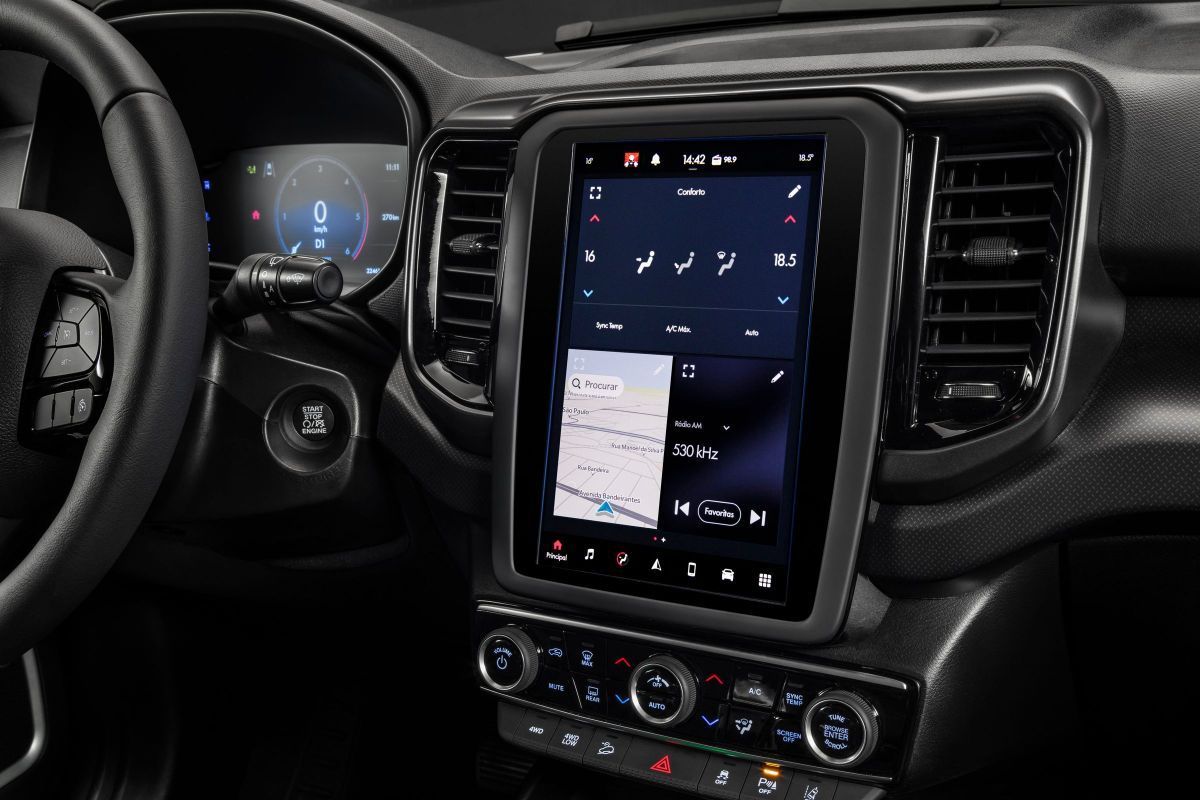
The cabin is now comfier than before, with 26-litres greater storage space, and Toro’s instrument binnacle has been comprehensively digitized. This compact double-cab bakkie also features a huge 10.1-inch vertical touchscreen infotainment system, in the manner of Volvo’s Sensus system.
Fiat’s interior designers and ergonomists have retained some tactile buttons for HVAC functions.
The most notable mechanical engineering upgrade with this new Toro, is the availability of Fiat’s 1.3-litre turbopetrol engine, boosting 134 kW and 270 Nm. It drives through a six-speed automat transmission and should give the small Fiat double-cab a reasonable turn of speed.
The Toro is only produced for the South American market, but like the Volkswagen Saveiro, there is still hunger in the local market for small bakkies in the mould of the Nissan NP200, which has the market all to itself.
BMW M2 CS Review – Is This The Best Driver’s BMW M Car?
It's not every day that you get given the keys to a limited edition BMW M2 CS. After drag racing it against the Mercedes-AMG A45 S, it was time to assess the BMW M2 CS and see whether it really is the best driver's BMW M car?
What you see here is the most hardcore version of the M2. This is the BMW M2 CS, a cutthroat limited-edition version of one of the finest products to emerge out of the BMW M factory. There's more power, but less weight, and the focus is on pure driving enjoyment.
We got our hands on one of the very few units that made their way to South Africa and spent a day out on an airfield drag racing it against the crazy Mercedes-AMG A45 S, and you can watch that video here: https://www.youtube.com/watch?v=1gSwG…
In this video, our relatively tame motoring journalist Ciro De Siena is let loose on a 2km runway in car number 30 of 30. Is this car an instant collector's item and the ultimate driving tool? Ciro tries to not scare himself as he drives the new BMW M2 CS.
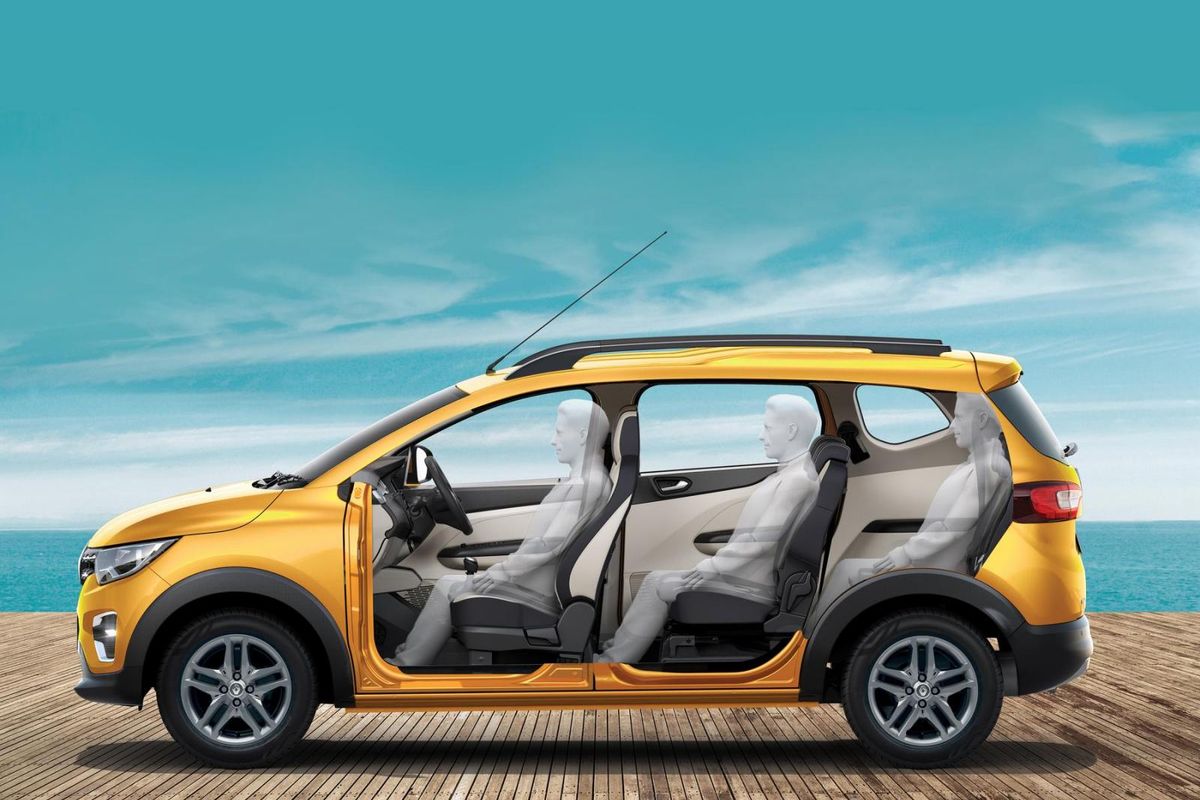
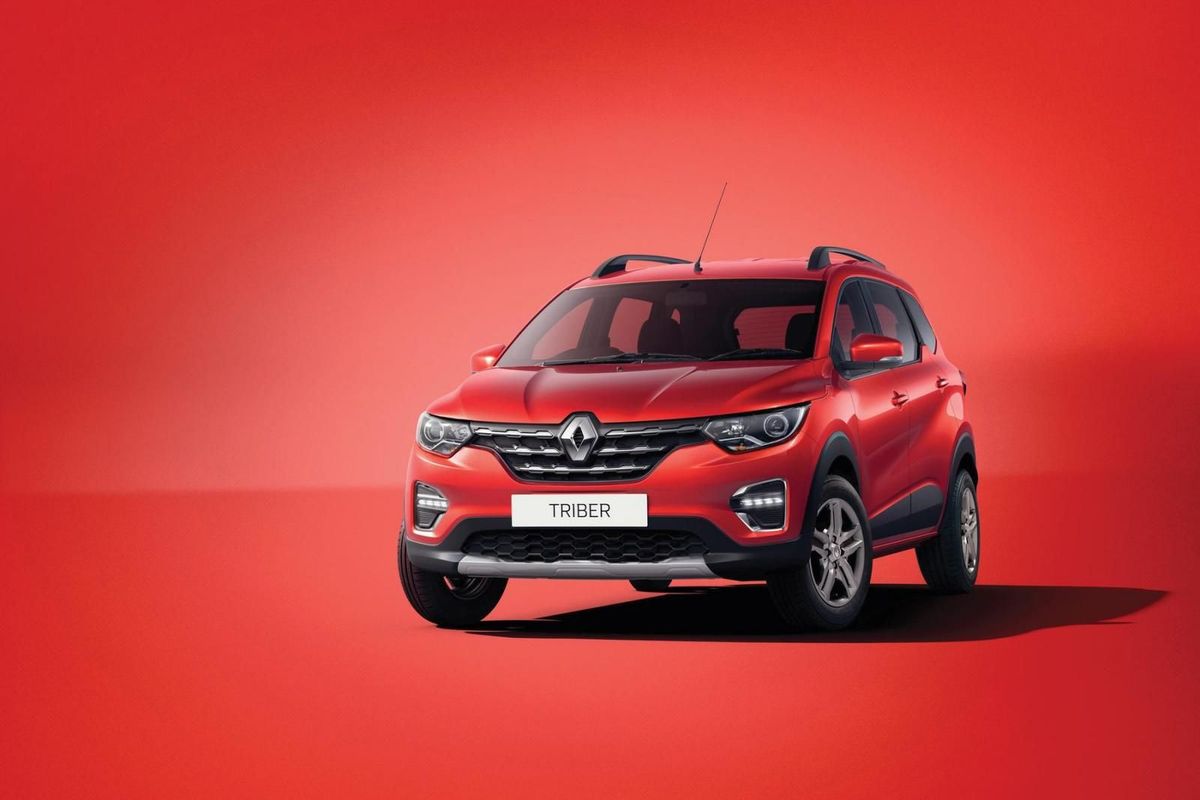
Renault South Africa has given its Triber some additional features. Here's a quick look at the changes, plus how much it costs.
The Renault Triber has been on sale for just over a year and around 4 200 of them have found homes in South Africa. For 2021, Renault has introduced what it calls product enhancements for its practical offering.
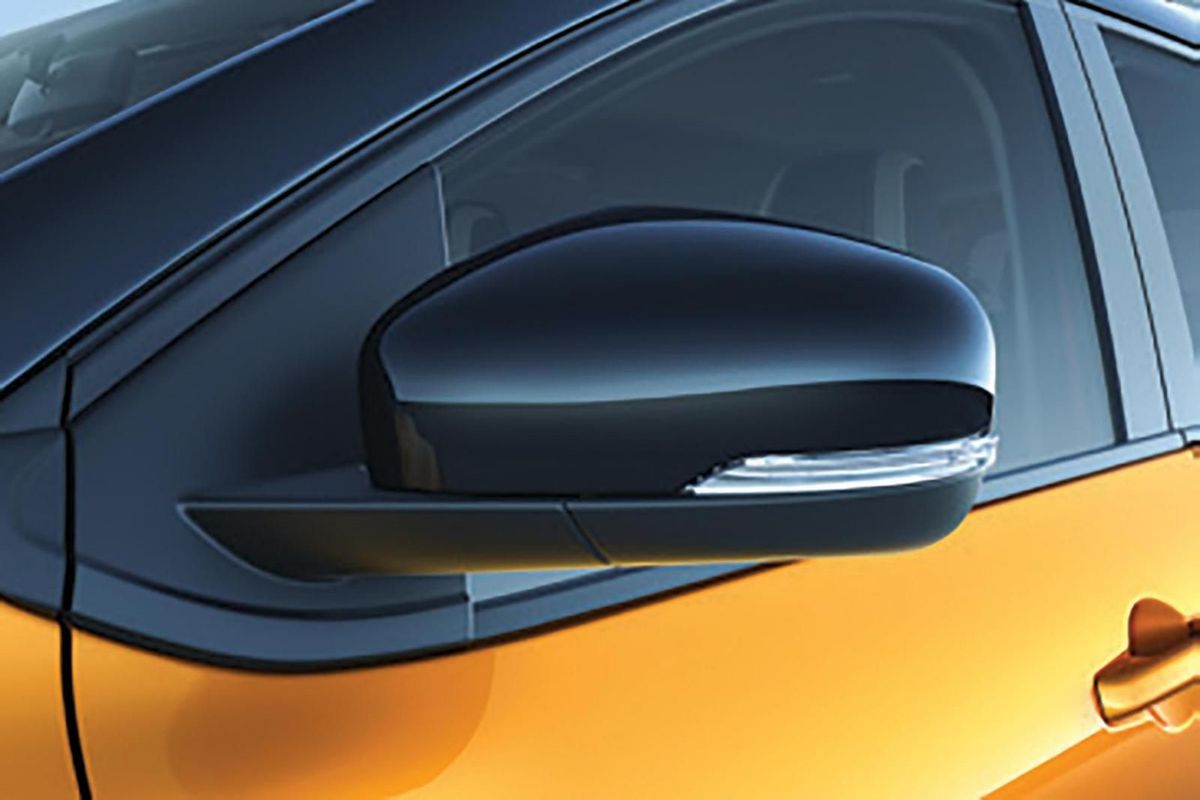
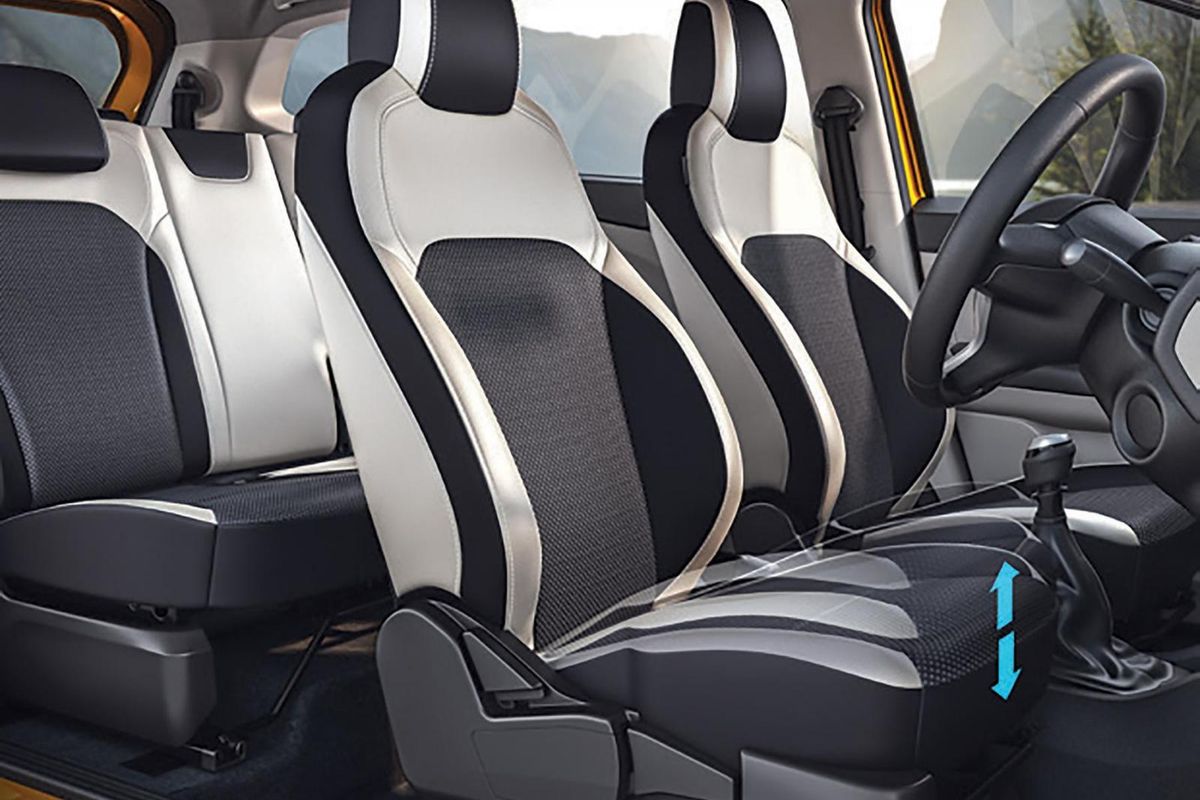
The changes are minimal, with Renault adding in LED indicators on the side mirrors, a dual tone hooter, a 6-way adjustable driver’s seat and steering mount controls, depending on the trim level.
The Renault Triber retains its 182 mm of ground clearance and is available with a 1.0 litre 3-cylinder petrol delivering 52 kW and 96 Nm. As far as gearbox options go, the Renault Triber is available with a manual gearbox and an automated manual transmission. Renault claims a consumption figure of 5.5 L /100km.
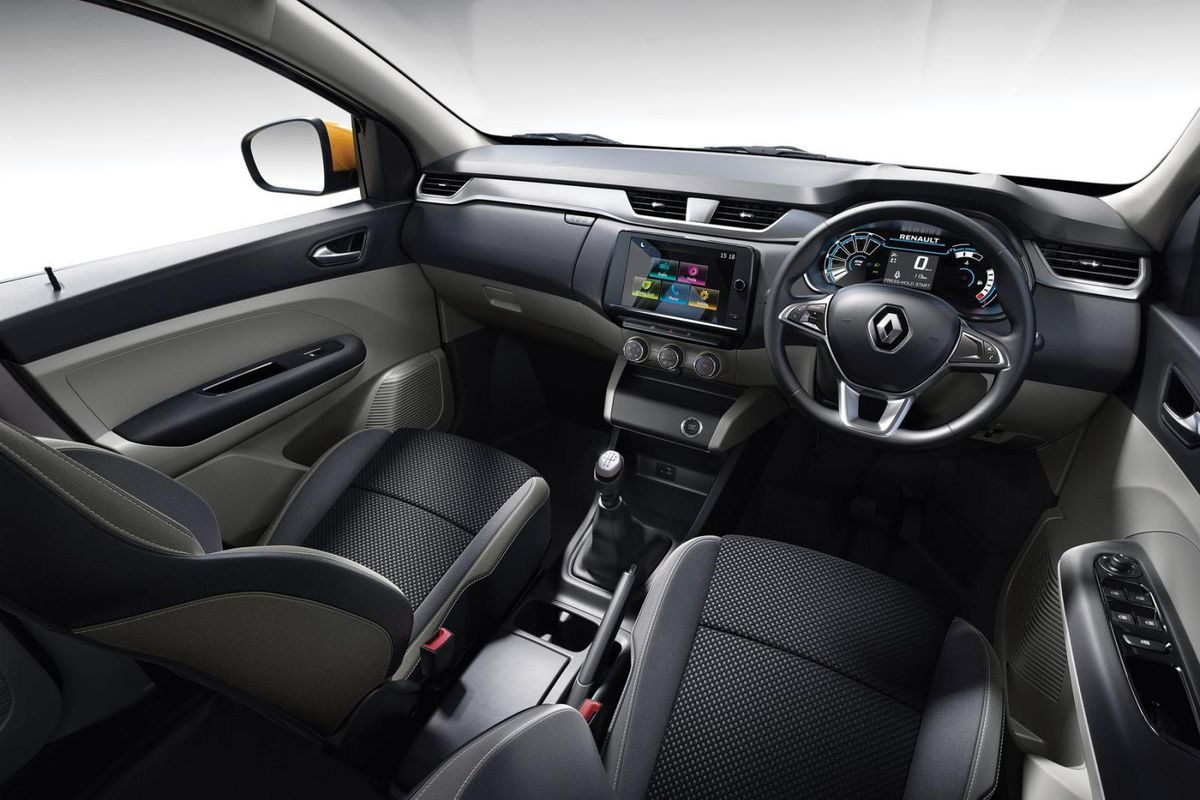
Standard features are good with a reverse camera, rear parkign sensors, Apple Carplay/Android Auto, keyless entry, remote central locking and the driver’s seat now has 6-way adjustable capabilities which Renault claims 'facilitate greater driving comfort.' Safety features are covered with ABS and driver and passenger airbags across the range, with additional front side airbags on the Prestige.
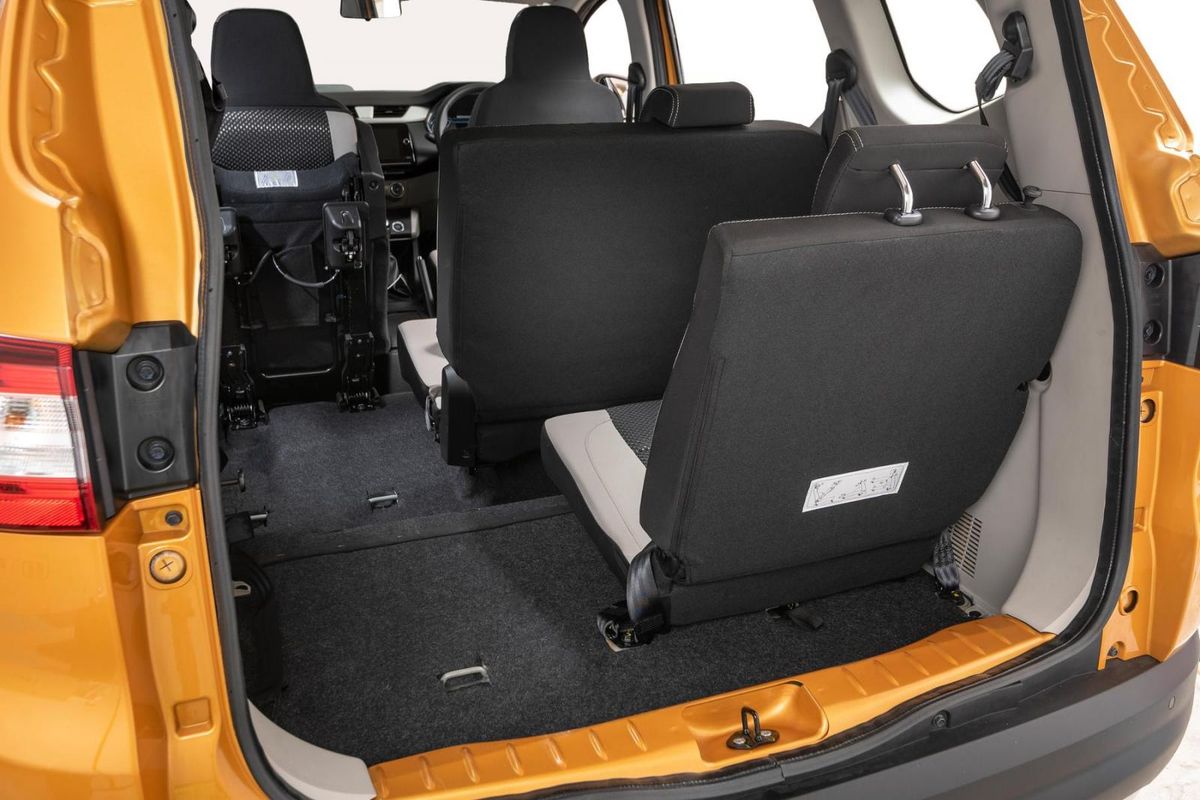
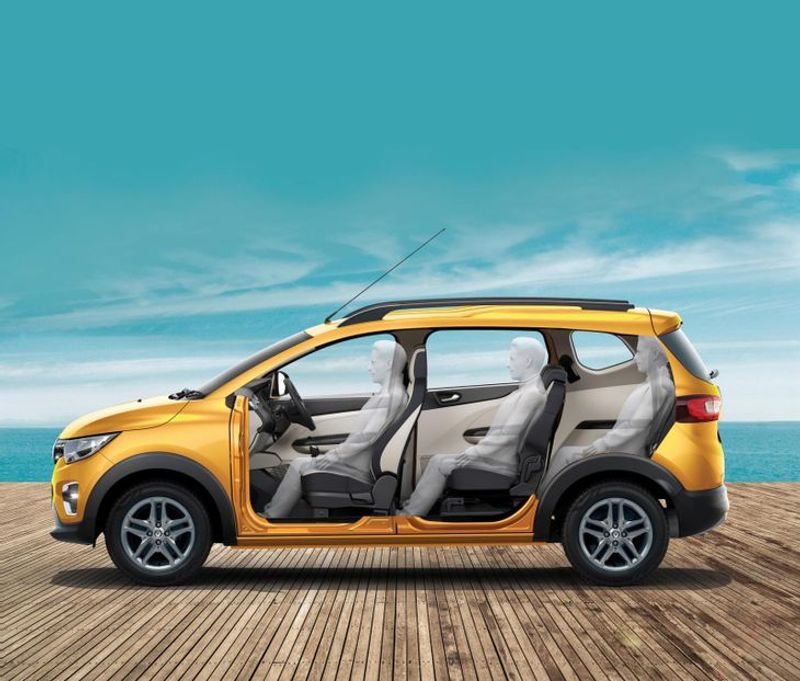
The Renault Triber is arguably the French brand's most practical offering, with 100 seating configurations available. It boasts seating for 5 with a huge boot, or 7 seats with a smaller boot. With the third row of seats easily removed, the vehicle has 625 litres of boot space. Renault says it has four seating modes and 100-seating combinations to provide all the space ever needed. The ultra-modular seating configurations include: CAMP MODE [2-seater]; SURF MODE [4-seater]; LIFE MODE [5-seater] and TRIBE MODE [7-seater].
How much does the Renault Triber cost in South Africa?
The Renault Triber is sold with a 2-year/ 30 000km Service Plan, plus a 5-year/150 000km mechanical warranty and a 6-year anti-corrosion warranty. Services take place at 15 000km intervals.
As of April 2021, the Renault Triber is priced as follows:
To facilitate peace-of-mind driving, the All-New Renault TRIBER model range comes standard with a
New Renault TRIBER Expression 1.0-litre ENERGY R 185 900
New Renault TRIBER Dynamique 1.0-litre ENERGY R 195 900
New Renault TRIBER Prestige 1.0-litre ENERGY R 211 900
New Renault TRIBER Prestige AMT 1.0-litre ENERGY R 221 900
This week’s news you need to know (April 2021, week 3)
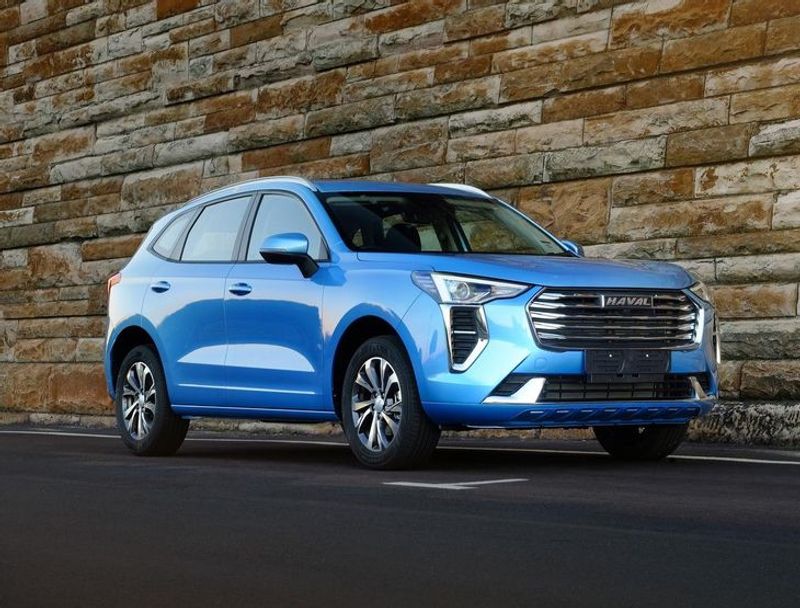
In this week's news you need to know: Haval upsets the applecart by selling a car at a value-for-money price point (gasp!), Ferrari intends to remove the sound-emitting parts of its cars, Volkswagen releases a fancy looking new Polo and takes the World Car of the Year title with a battery electric vehicle.
Haval Jolion – The Value proposition
Taking centre stage this week is Haval and its new entry to the congested SUV market, the Jolion compact family car. With a solid foundation laid by its H2 sibling, which gained a notable foothold in fewer than 4 years on the market, the Jolion looks set to eclipse that success and for one pressing reason: its sheer value proposition. As South African consumers, we’re regrettably not accustomed to “getting more for less” often – it’s usually the other way around, abetted by cunning marketing jargon that tricks us into believing "that's the way it’s supposed to be". Haval, however, is setting the record straight.
The Jolion's arrival is something everyone should be taking note of. It's attractive, solidly-made and offers the occupant space and standard spec of a premium model, but at under R400K. China’s superior economies of scale are showing the way. If Volkswagen isn’t paying careful attention here, it better be. Something tells me that all those H2 owners are treasured brand ambassadors and amplifiers for the brand's success, who might be first in line for a trade-in, not to forget the ones who’ll be rapping off at the next braai, flipping chops and singing the praises of the Chinese brand. Who would’ve thought it?
Ferrari EV – The tifosi goes electric
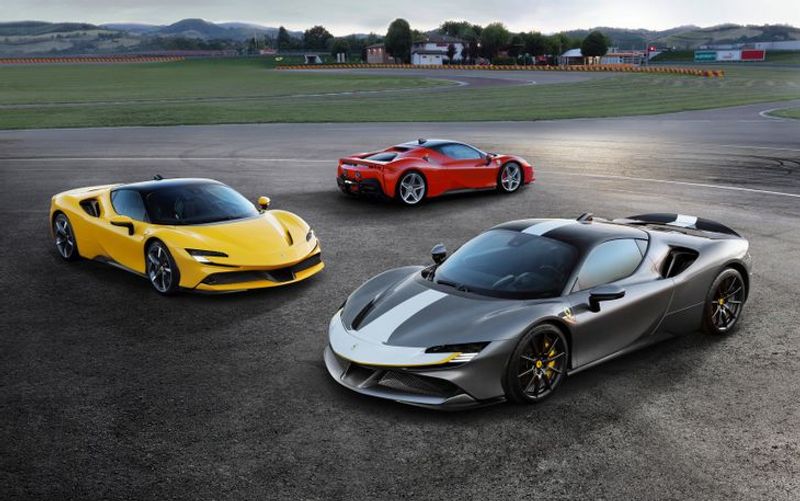
I’ve always maintained that any good Ferrari needs to be the embodiment of emotional appeal – a viscerally centred machine that evokes the senses… you know, a car that "gets the tingles going". It's the secret sauce that sets it apart from brands like Porsche and McLaren. Four factors that I can attribute to every memorable Prancing Horse are road presence, poise, looks and sound.
The news that you could soon buy an all-out EV Ferrari has me pondering just how the Maranello-based firm will get it right when all they have working for them is the look, poise and road-presence parts.
The LaFerrari and the entire Formula One project has been getting the "Hybrid Power Unit" schtick somewhat right for all these years with a blend of downsized turbocharged engines and petrol-electric hybrid technology; it's a testament that half the battle is won! But just like Old man Enzo Ferrari’s initial reluctance to put the "horse (engine) at the back of the carriage (race car)", what would his reaction be now that there is no frickin horse at all? I’ll tell you… Vibrant hand gestures, incoherent Italian mumbling, a healthy downing of grappa, a few tears and a night’s rest before coming to terms with it.
New VW Polo – Will the bubble burst?
The veil has been lifted on the restyled Polo and, as expected, there are no fundamental changes to the Wolfsburg-based brand's compact hatchback, but let’s look beyond the cosmetic updates, extra gizmos and general fanfare of a new vehicle launch. The Polo has always been aimed at a market that now, as a result of inflation, a struggling economy and frankly, the crossover craze is being split into 2 parts… Buyers are either looking for the budget option under R200k, or an SUV. I see this as a threat to Polo and its legacy. Is this a bubble that will eventually burst, or can VW keep the Polo relevant?
As the Polo becomes increasingly sophisticated (to cater for the requirements of VWSA's export markets), the firm will have to rely more on the love that South Africans have for the Polo than ever before. It’s always been the status marker for the middle-income segment that has seen growth over the past 20 years. “She’s just bought a new Polo, so she must be doing well.” We’ve all heard it before.
One thing in the (now 6th-generation) Polo's favour is that it's locally built, which, in theory, should help keep its prices in check. But be warned, VW… meagre salary increases in the market have been eclipsed by vehicle price increases and that might put the Polo out of reach in the long run. Let’s not even belabour the point that a fully-specced Polo GTI costs around the R550 000 mark. Sacrilege.
Volkswagen ID4 – EV SUV for Msanzi
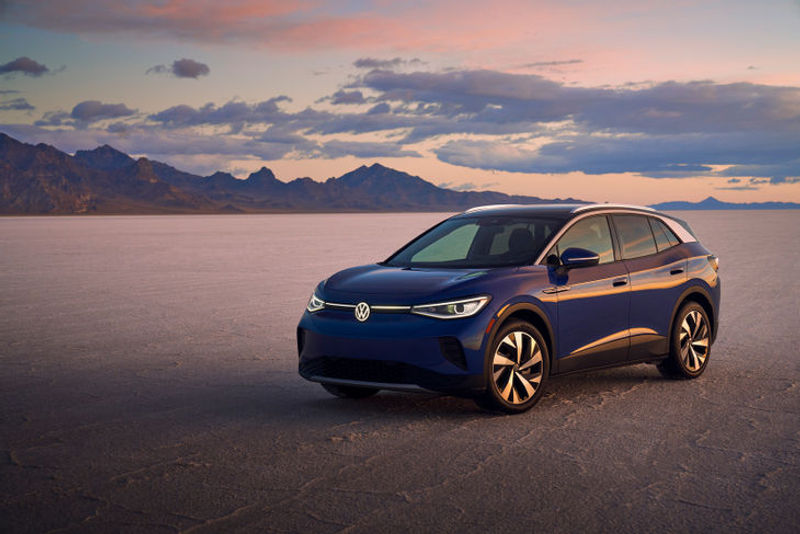
The winner of the 2021 World Car of the Year title – the Volkswagen ID.4 – is a relatively unknown quantity within the context of the South African market (for the moment, at least), but its achievement is nonetheless a milestone in the brand's pivot into the EV game. Earning this title is more than a gold star for the brand; it’s a tell-tale sign of what is to come. Volkswagen means business. I also can’t help but think that Dieselgate has been a double-edged sword – on the one hand, it damaged the brand's image, but it also injected new energy into the business to launch forward and make right (excuse the pun).
One side effect that we can’t ignore is the liability Dieselgate caused and how it has affected/is affecting vehicle pricing globally. Add to that the onerous 20% import duty South African tax authorities levy on new cars, plus the extra 7% luxury tax on EVs and we can quickly see the government would need to relax this (and launch other initiatives) to support EV adoption in Mzansi so that vehicles such as the ID.4 could land with reasonable price tags. If this were to happen you could still afford to send your kids to school, eat a steak every now and again and sleep peacefully at night. I know, wishful thinking.
New-look Volkswagen Polo: Coming to SA in early 2022
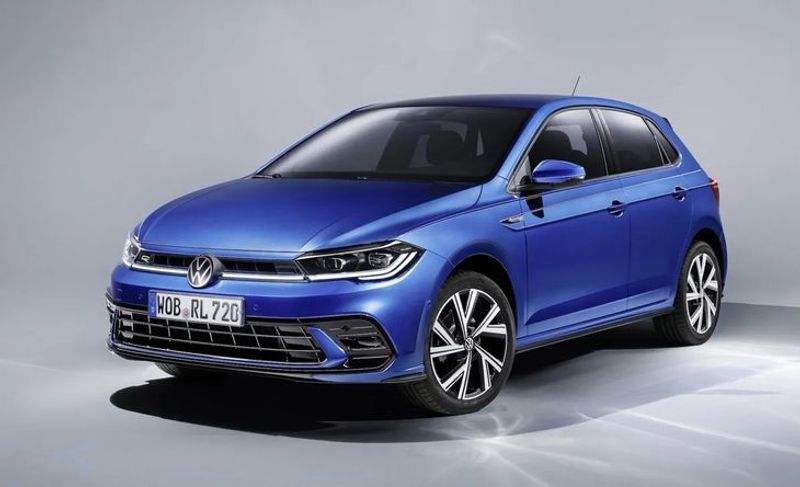
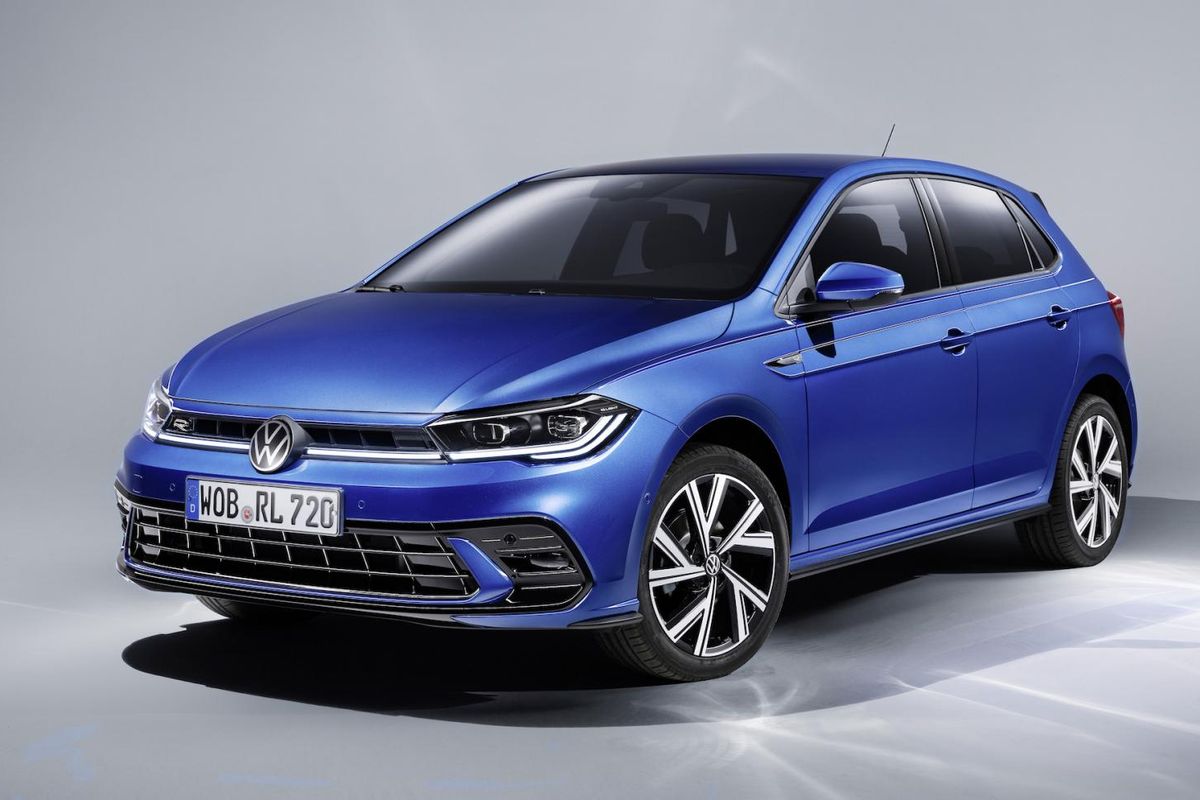
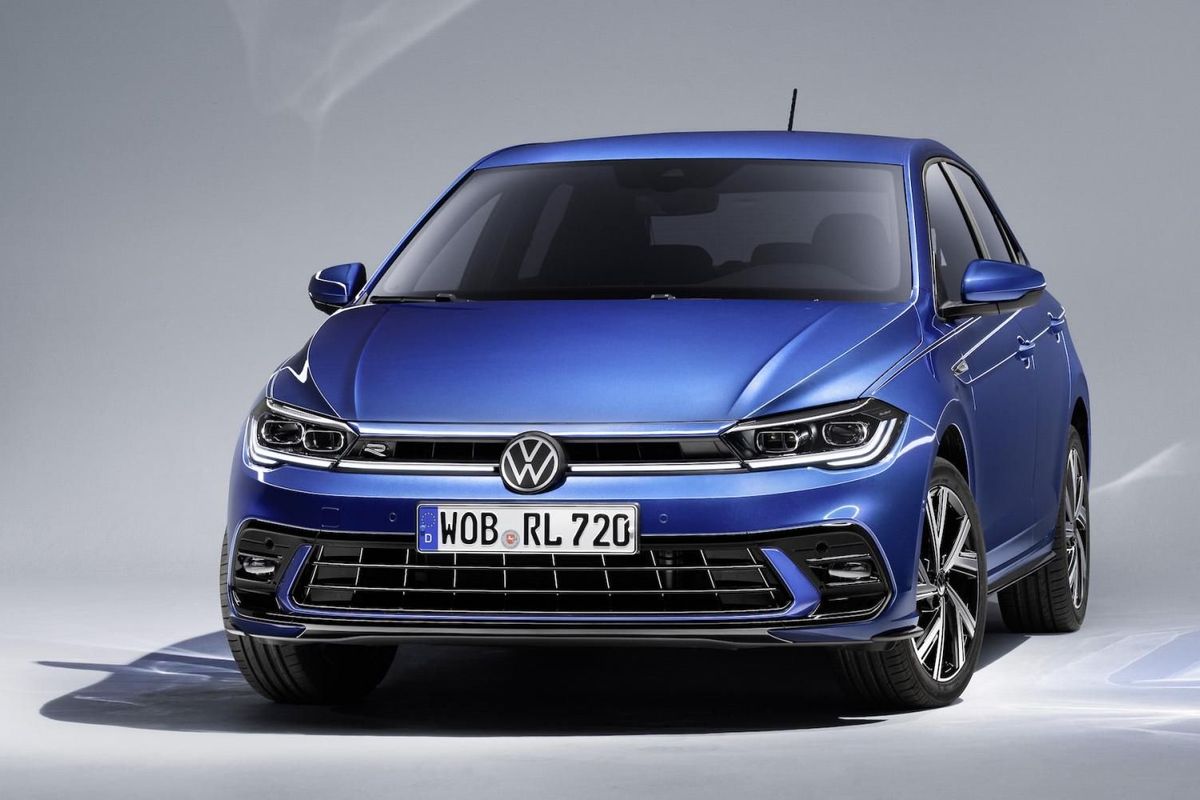
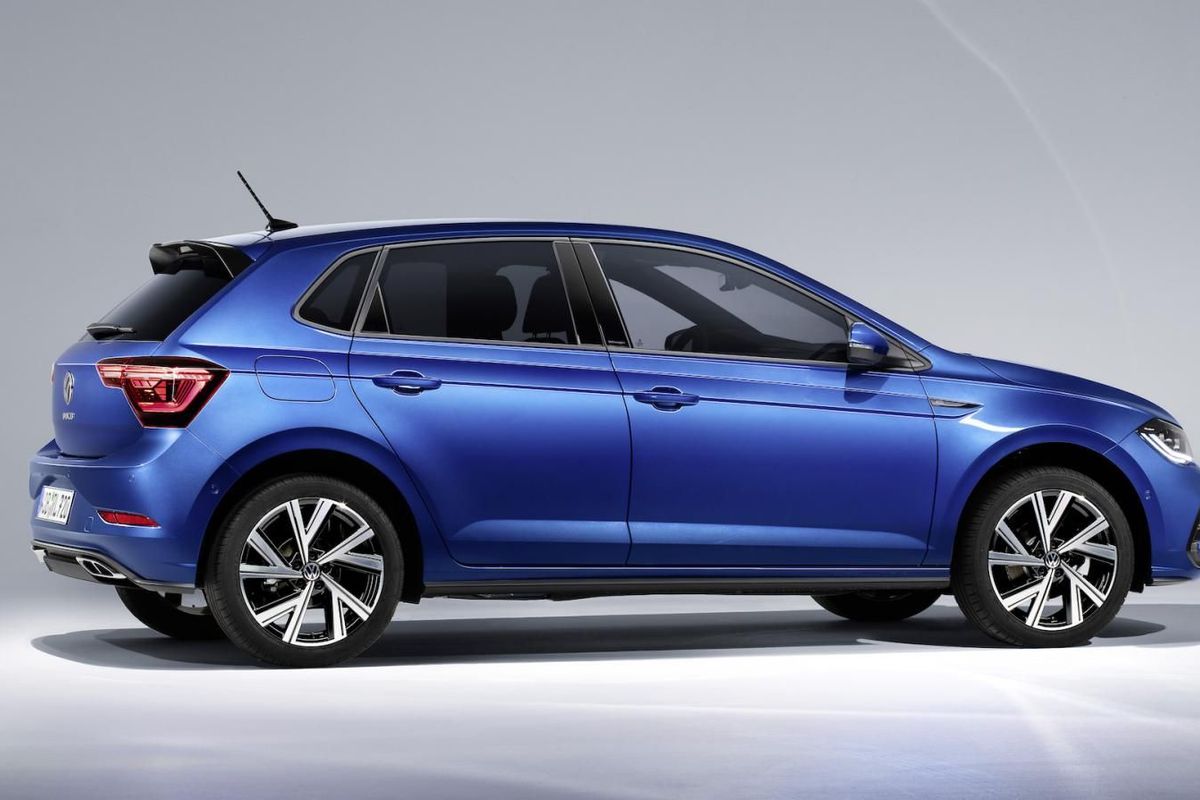
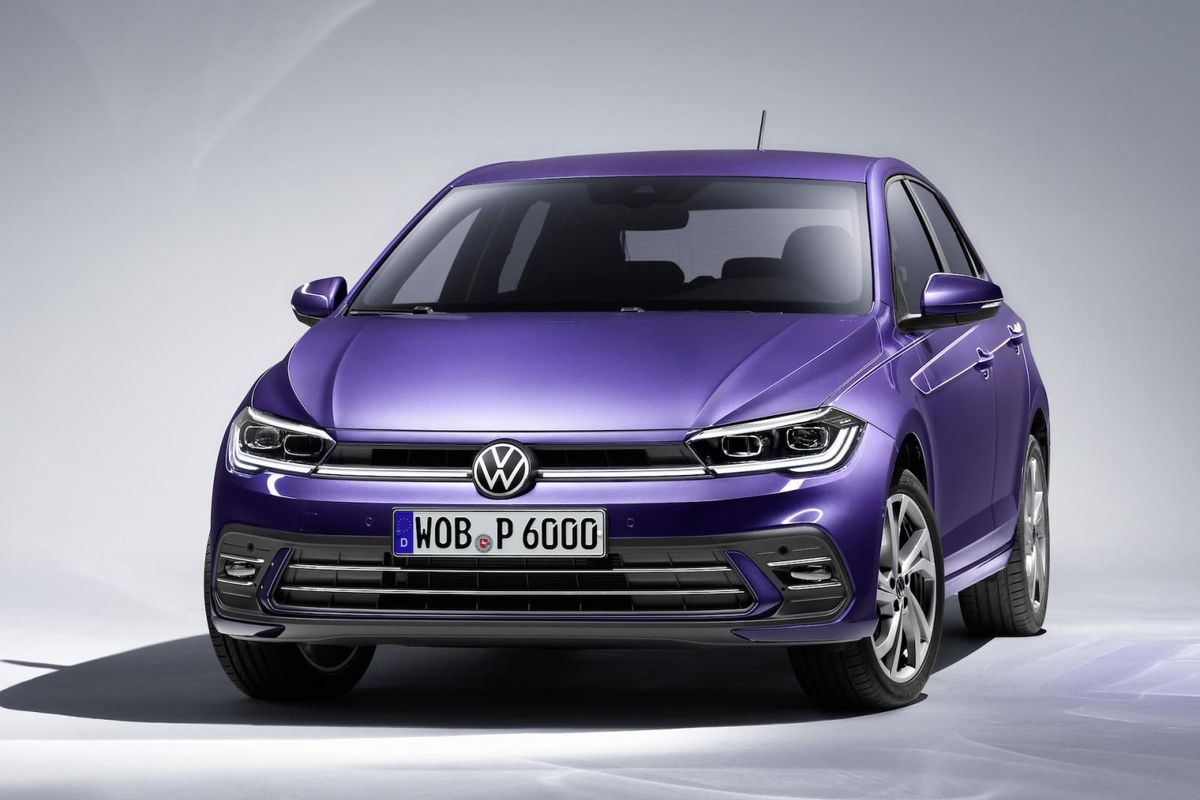
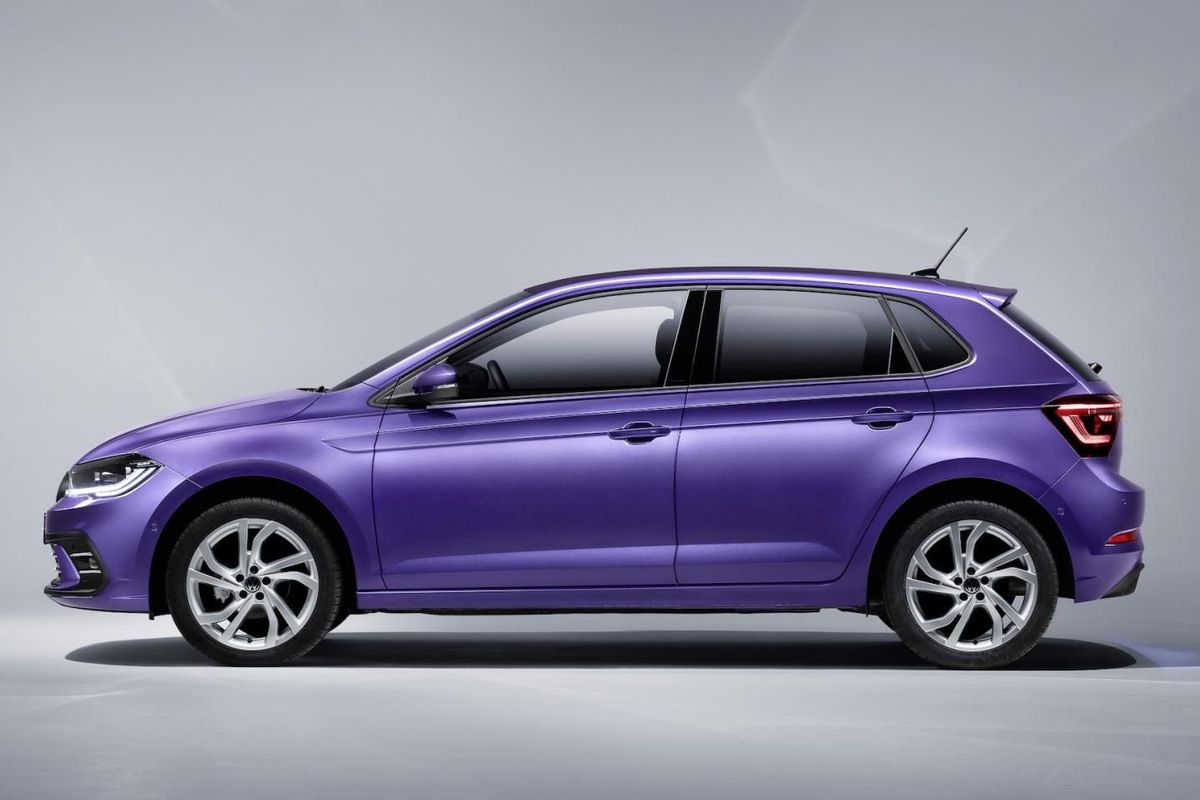
Volkswagen has taken the wraps off the restyled 6th-generation Volkswagen Polo… The update to the Wolfsburg-based brand's popular compact hatchback incorporates several cosmetic updates (inspired by the new Golf 8), as well as a number of high-end onboard technologies. The newcomer will go into production at VWSA's Uitenhage assembly plant in the latter half of the year and is expected to reach local showrooms in early 2022.
The Polo's styling has always erred on the side of conservativism – and that's still the case, although Volkswagen has ensured that its compact hatchback still looks youthful; it comes replete with new-gen VW emblems (which already debuted on local Polos late last year), an LED light bar across the hatchback's grille and, should you specify them that way, LED tail-light clusters with dynamic indicators.
The LED daytime running lights in the headlamp clusters are connected by the light bar integrated at the bottom of the grille.
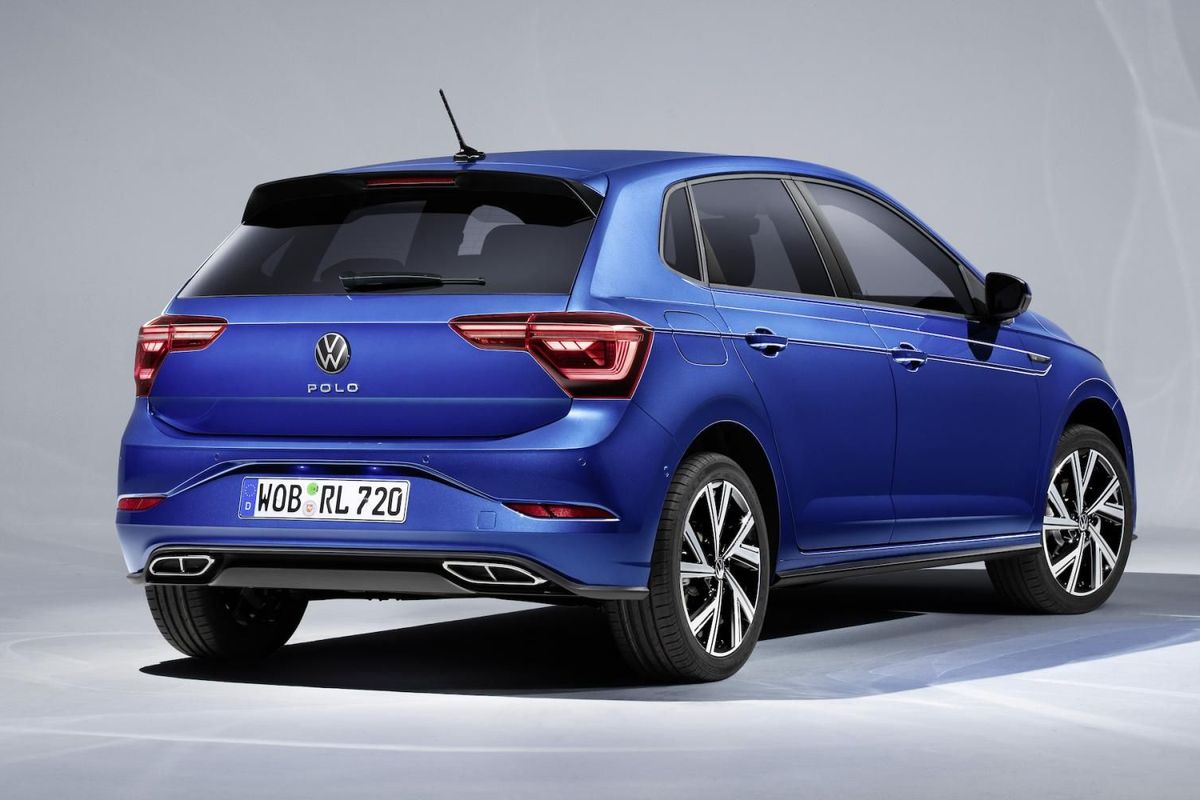
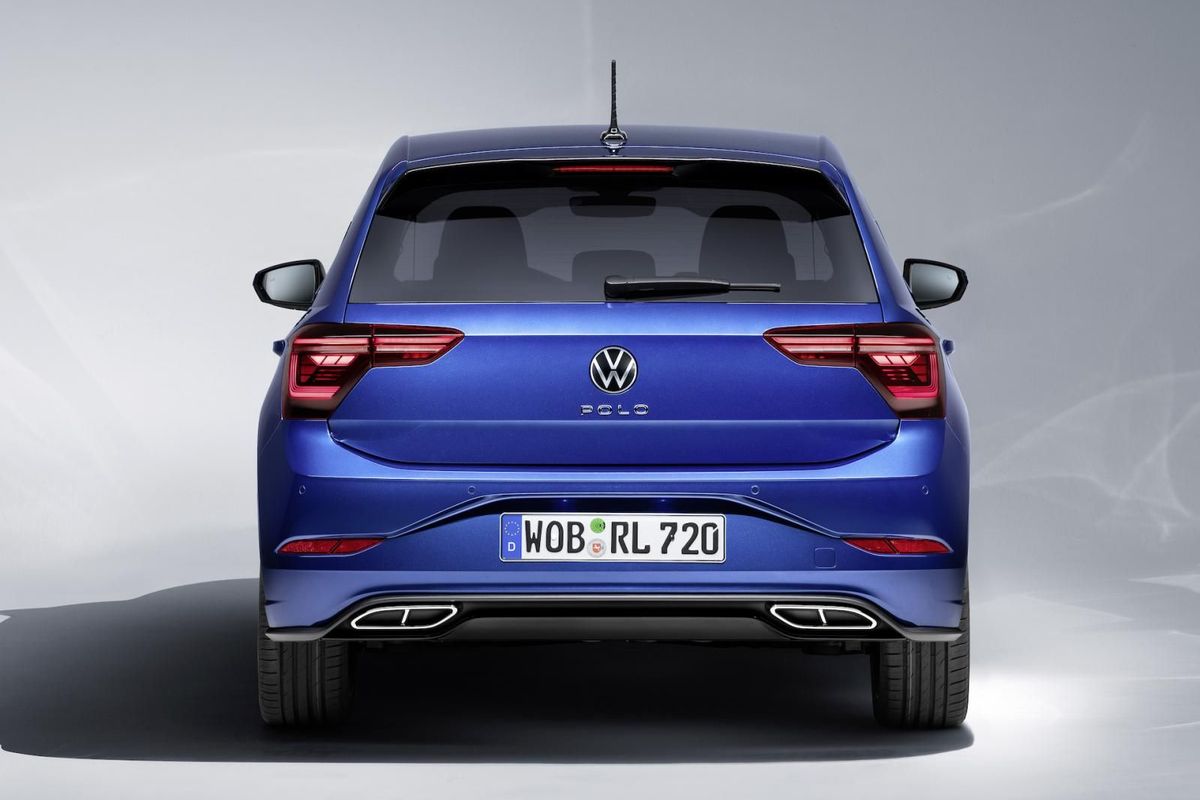
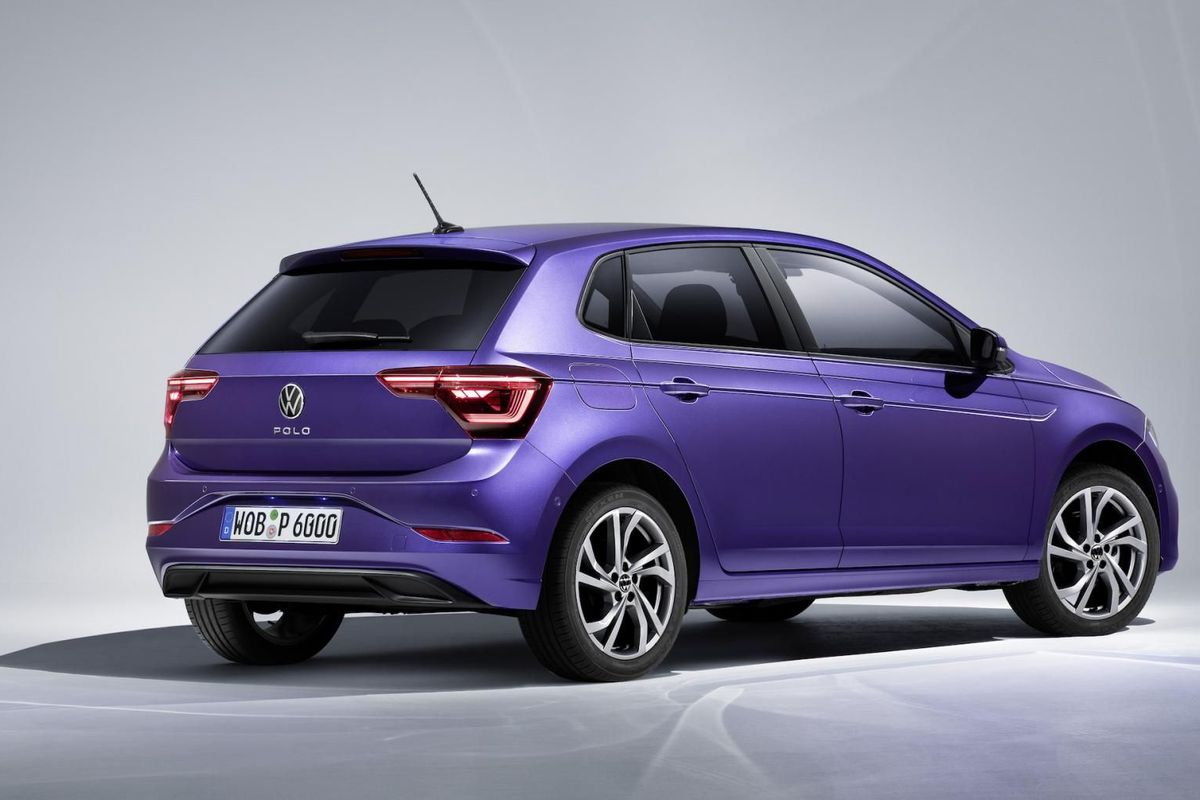
The updated Polo can be distinguished by its revised bumpers and new-look LED headlamp- and tail-lamp clusters… Those at the rear are strongly inspired by the rear lights of the Golf 8, which will soon arrive in Mzansi in GTI guise, and optionally feature a "wiping" lighting effect as seen on the Touareg's tail-lights, for example. Polo lettering again appears beneath the fresh VW badge on the tailgate.
The dark blue metallic car shown here has the top-of-the-range R-Line trim, which includes sportier bumpers, new IQ.light matrix LED headlights (ostensibly as standard on the flagship derivative and upcoming GTI), LED fog lamps and 16-inch alloy wheels. Note the quartet of chrome-effect faux exhaust exits that are integrated into the gloss-black "diffuser" on the edge of the rear bumper.
Unfortunately, those racy-looking exhaust tips are just for show. The upcoming GTI will be a different story, however.
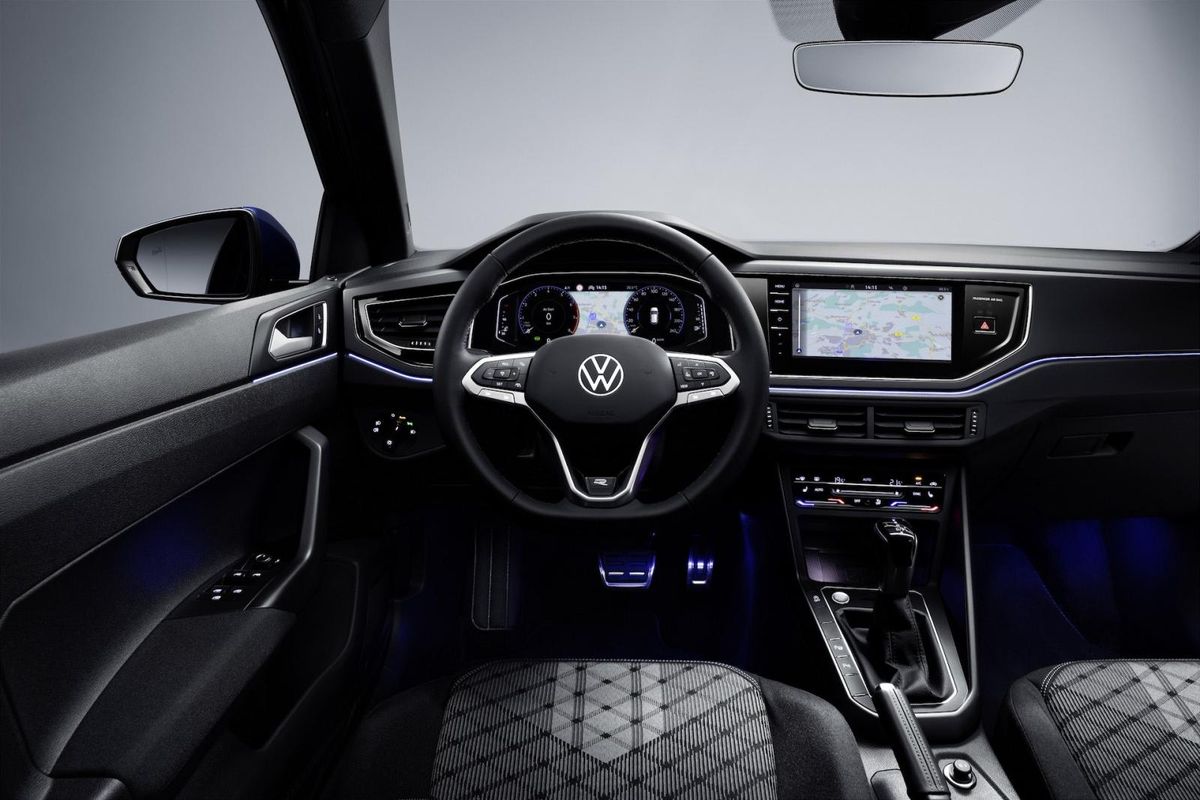
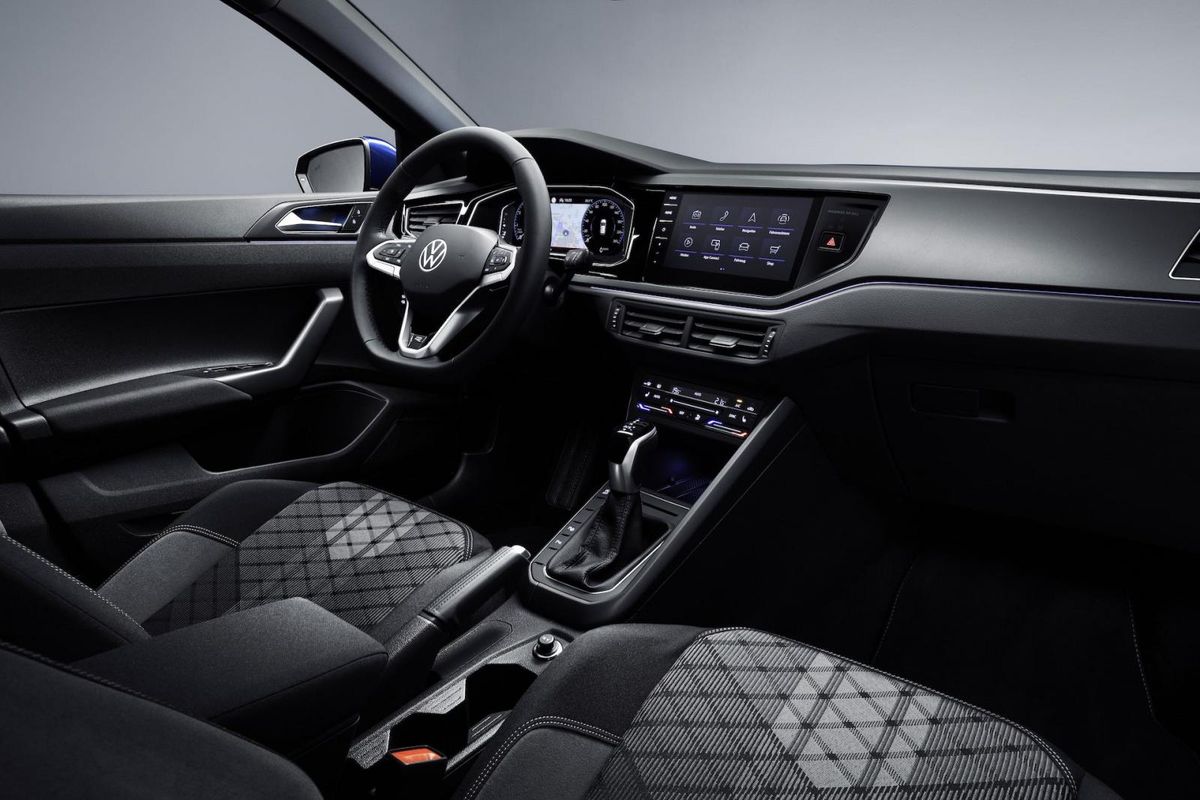
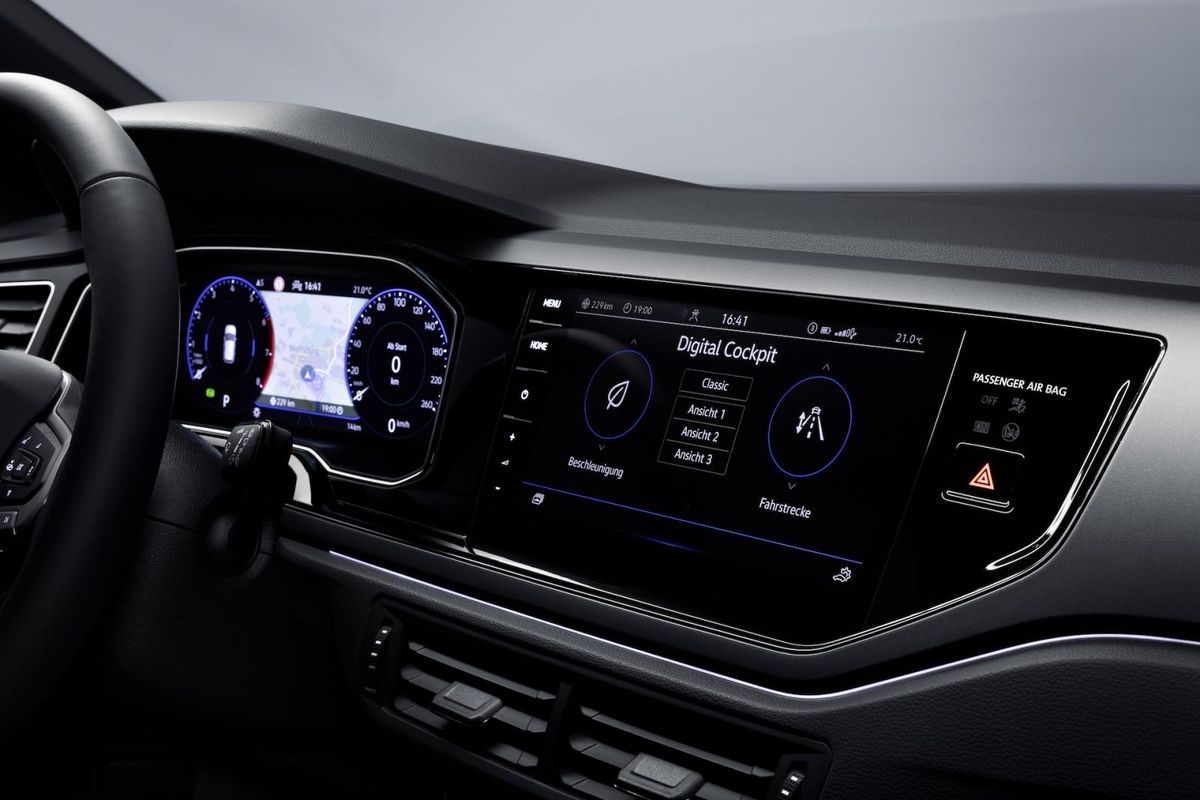
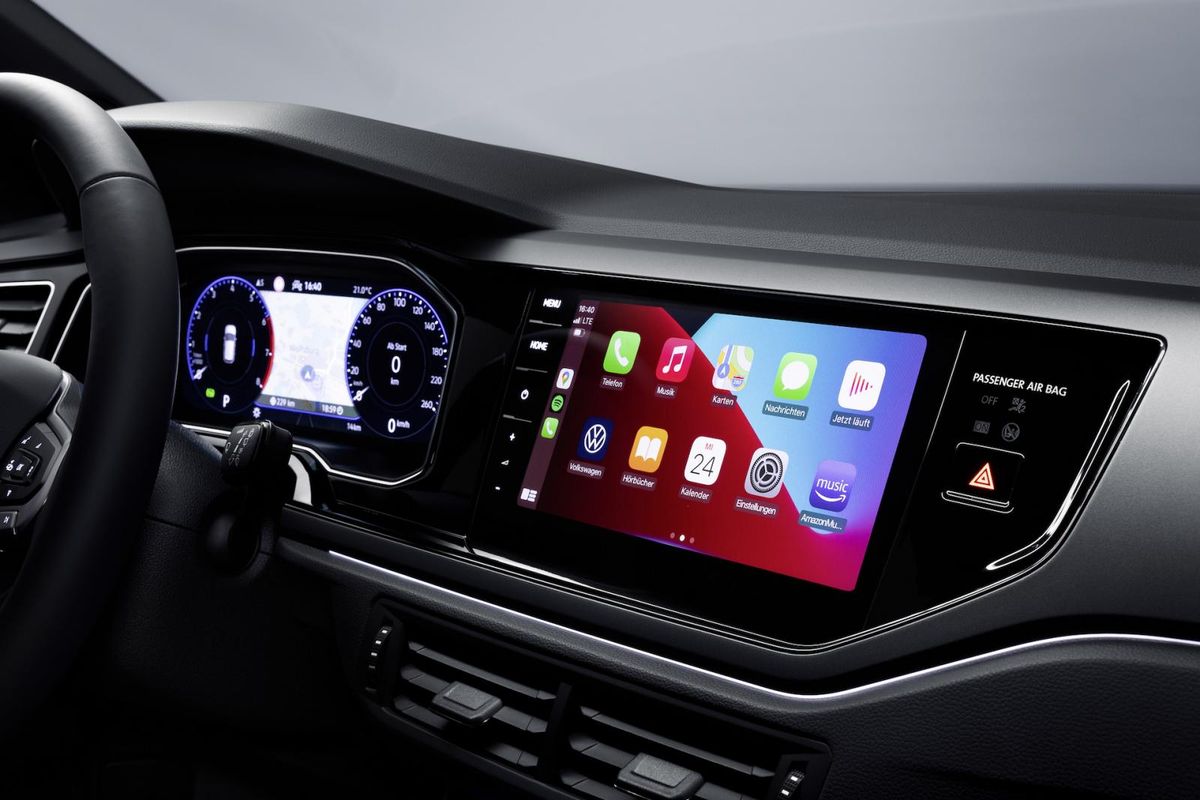
As for the interior of the updated Polo, it's been reported that an 8-inch digital instrument cluster (or 10.25 inches, for the Digital Cockpit Pro version) will become standard across the range, which means traditional dials appear to have been consigned to the scrapheap. The newcomer's (now Apple CarPlay and Android Auto-compatible) touchscreen infotainment system measures 6.5-inches, whereas an 8.0-inch or, for the first time, a 9.2-inch display can be specified at extra cost. The latter 2 setups incorporate Volkswagen’s We Connect connectivity (for real-time traffic info and live music streaming).
Note the subtle upgrades, which include subtle LED lighting and a "frameless" rear-view mirror…
Meanwhile, the safety technology offered as standard on the updated Polo, which is a compact hatchback model, after all, beggars belief: Volkswagen says that predictive ACC (adaptive cruise control) and lane-keeping assist will feature on every derivative. In the European market, at the very least, the Polo will be offered with the optional IQ.Drive Travel Assist semi-autonomous driving assistance system.
Here's how it works: IQ.Drive Travel Assist can take over the accelerating, braking and steering of the Polo, from standstill in auto derivatives and from a rolling 29 kph in manual cars; it works by combining the lane-keeping assistance and the predictive adaptive cruise control functions (as long as the driver keeps their hands on the wheel at all times).
Another addition to the newcomer's suite of standard safety features is a centre airbag, which opens towards the centre of the cabin in the event of an accident to protect the driver and front passenger.
Apart from a new multifunction steering wheel, electrically folding and heated side mirrors are fitted throughout the range. As the trim levels move up, the Polo gains 15-inch rather than 14-inch wheels, App-Connect, a centre armrest with an additional USB-C port in the middle of the passenger compartment and leather trim on the steering wheel and gear knob.
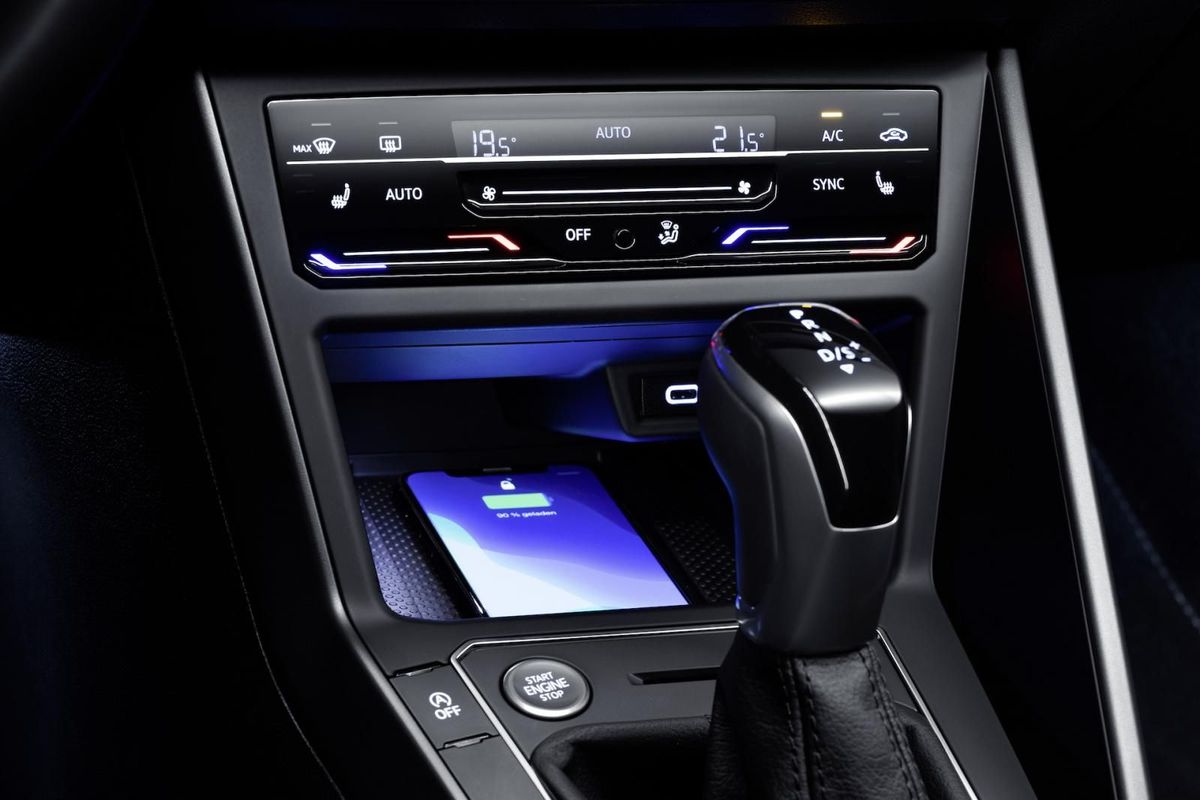
What's more, Polos equipped with automatic climate control feature a piano-black touch-sensitive panel with digital temperature readouts, below which an abutment with a pair of illuminated USB-C ports is fitted. Finally, a wireless smartphone charging pad (as shown below) can be ordered at extra cost.
Volkswagen is also set to re-align the Uitenhage-built car’s trim structure; apparently, the Trendline, Comfortline and Highline designations will fall away and be replaced by the Polo (standard), Life, Style and R-Line specifications. To reiterate, the newcomer will arrive in South African showrooms early in 2022 and an updated GTI hot hatch version will follow during the course of next year.
An updated version of the 7-seater Hyundai Santa Fe SUV has touched down in South Africa. Here's how much you can expect to pay, plus specification details.
The 4th generation of Hyundai Santa Fe has received an update. The big flagship SUV from Hyundai celebrates 20 years of sales in South Africa, with the first model touching down back in 2000.
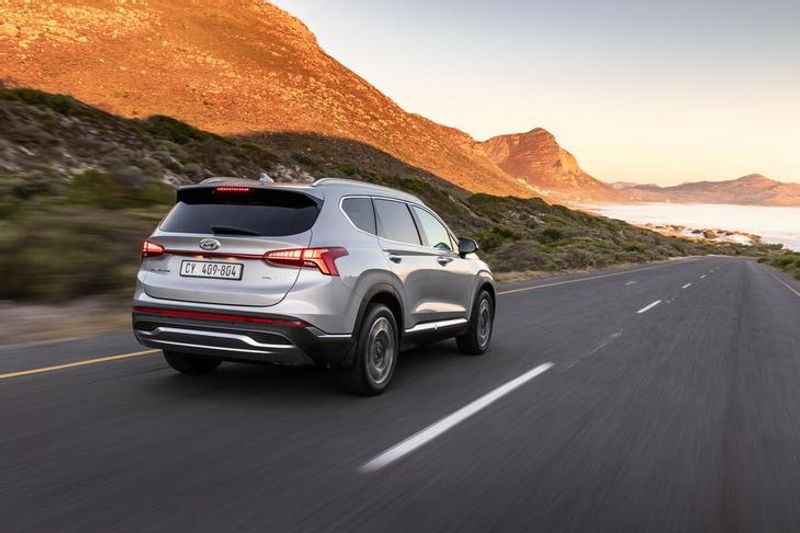
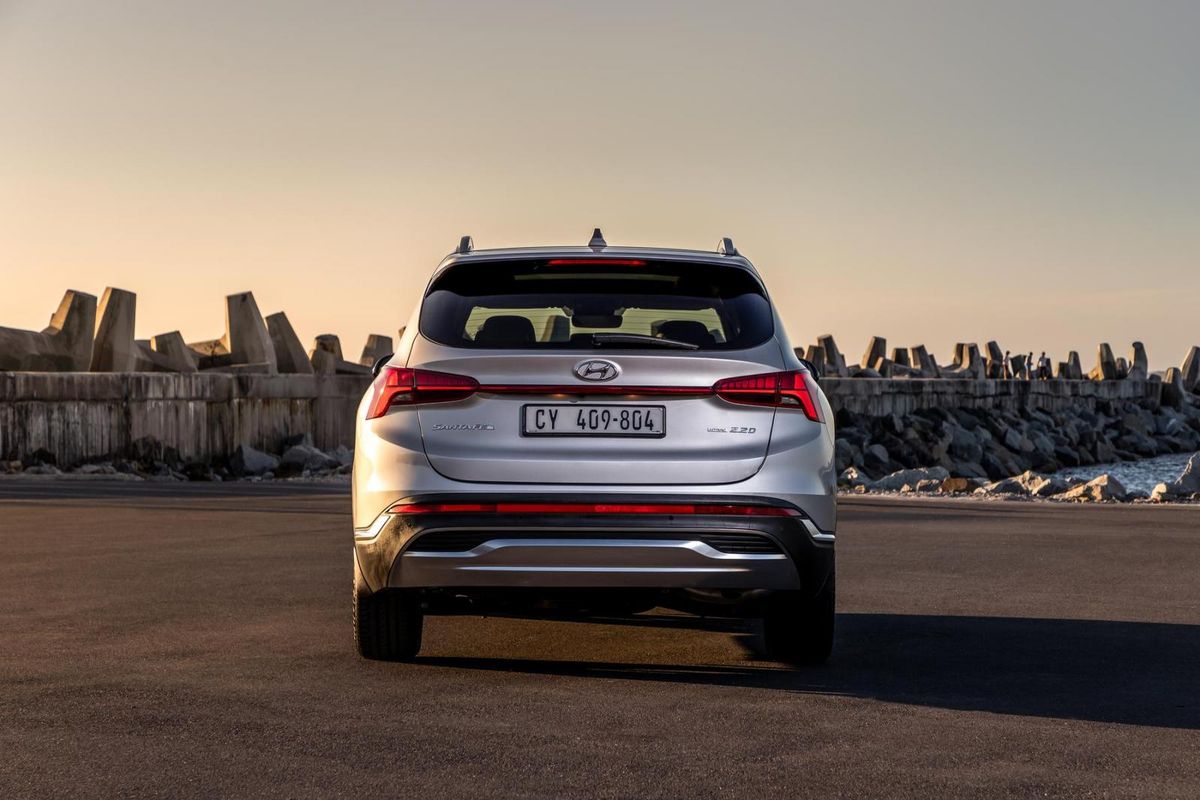
Visually, you can spot the newcomer with its redesigned front grille, featuring repositioned lights, new daytime running lights and a bolder grille pattern. At the rear, the exhausts have been repositioned under the bumper, there are new-look rear lights and there's a lightbar stretching across the rear. There are also new-look alloy wheels, which go up to 19-inch for the Elite model.
Under the skin, Hyundai claims its enhanced the NVH in comparison to the outgoing model. The updated version is said to be quieter both in terms of road noise and engine vibration. The chassis has been rejigged and is not only stronger, but lighter.
There's a new engine available. It also is a 2.2-litre diesel, but is 2151cc as opposed to the predecessor's 2199cc. Power and torque figures are now up to 148 kW and 441 Nm, in comparison to the old car's 145 kW and 436 Nm. The vehicle features a new 8-speed dual-clutch transmission.
Hyundai Santa Fe Features
The list of standard features is impressive. Both cars feature driving modes, dual-LED headlamps, LED rear fog lights, puddle lamps, electronic chromic rearview mirror, chrome detailing, rear privacy windows, full-size spare alloy wheel, 8-inch infotainment system, Bluetooth, smart key, push-button start, leather seats, dual automatic air conditioner, rear manual air conditioner, paddle shifters, reverse camera, power tailgate, wireless device charger and rain-sensing wipers.
As far as safety features go, both derivatives feature driver, passenger, side and curtain airbags, ABS, ESC, DBC, HAC, cruise control, electric parking brake with auto hold, blind spot warning, and automatic power child lock.
The difference between the two trim levels of Hyundai Santa Fe:
Hyundai Santa Fe Executive
Two-wheel drive
18-inch alloys
Electrically adjustable power seat for driver
Rear park distance warning
Hyundai Santa Fe Elite
All-wheel drive (with terrain driving modes)
Panoramic sunroof
Rear seat alert
LED tail lights
Panoramic sunroof
19-inch / 20-inch alloys
Electrically adjustable power seats for front passengers
Front seats are heated and ventilated
Rear door curtains
Heated steering wheel
Mood and personal lamps
12.3-inch Super vision cluster
Front and rear park distance warning
The wireless charger in the Hyundai Santa Fe
How much does the updated Hyundai Santa Fe cost in South Africa?
The updated Hyundai Santa Fe is sold with a 7 year / 200 000km manufacturer warranty 6 year / 90 000km service plan and there's 7 year's / 150 000km roadside assistance
Hyundai Santa Fe R2.2 Executive 8sp DCT MY21 R769 500
Hyundai Santa Fe R2.2 Elite 8sp DCT AWD MY21 R869 500