Falling behind on vehicle payments? How to reduce your debt
Having plied his trade in the finance industry for 20 years (during which time he worked for Accenture, Discovery, FNB and Wesbank), Alan Quinn has an intimate understanding of vehicle finance. Are you feeling overwhelmed by debt? In this instalment, he sets out a way to reduce your monthly payments, step by step.
*Partnered content
Every day, there are new headlines about the debt crisis in our country’s economy, many of which have either been created or exacerbated by the impacts of the Covid-19 pandemic. You may have purchased a vehicle on credit only a matter of months or years ago, but now those monthly repayments are becoming a nightmare for you.
We’ve put together 7 steps to help you tackle your debt problems. Too much debt is ruinously expensive to service and can cause tremendous stress in your life. If you’re worried about your debt levels, it is possible to take control — the most important thing is to start your road to financial recovery as soon as you possibly can. Perhaps right away.
1. Get your Credit Report
The first step you can take towards managing your debts is to understand where you are.
If you think your debts are getting on top of you, you need to gain a better understanding of your debts and how they are impacting your credit record. To help you shed light on the matter, Cars.co.za has partnered with a company called JustMoney, which will show you your credit report for free.
Your Just Money Credit Report provides you with a couple of tools to check how well you are managing your debts:
Can you Afford your Debt?
This tool compares your monthly income to the payments you must make each month to determine if you have the income to support your debts. Your Debt Percentage is the important figure.
Where to check: Dashboard > Can You Afford Your Debt?
Are you behind on your payments?
This tool shows you all your accounts and will also tell you if you are overdue on any of the accounts.
Where to check: My Accounts > Account Summary
If your Debt Percentage is higher than 50% and you are overdue on payments for more than 1 account, you probably have a significant debt problem. This is a difficult and stressful situation and it is critical that you do not ignore this problem – if you do, it will only get worse. There are always things you can do to get on top of things. The earlier you start to take action, the more options you will have.
Cars.co.za and JustMoney provides you with access to a coach who can help you. Press on the button called “Speak to a Coach” on the JustMoney Dashboard and the Coach will call you and you can get started. The coach is a professional credit coach who has the requisite knowledge and skills to help you navigate through some of the steps I will describe below.
3.2 Your Vehicle Finance and Home Loan providers
Your most important credit is your vehicle finance and home loan. They are also, quite probably, your biggest debt repayments each month. In a worst-case scenario, the bank/s will eventually come and take (repossesses) your property and your car. Your best course of action is to call them (not wait for them to call you) and ask them for options to reduce your monthly instalments.
Circumstances have contrived to create huge debt problems for South Africans, but banks are becoming better at providing solutions to customers with debt problems. Talk to them as early as possible.
4. Shifting debt
Shifting your debts around is mainly about decreasing the cost of your debts. Many credit cards and store cards charge very high interest rates. High interest rates create high monthly repayments.
It may be worthwhile to consider a debt consolidation loan. Such a loan, if granted, will allow you to move all your debt (such as personal loans, credit cards and store cards) into one place. This means you will have one big loan at a better interest rate to cover the amount of your current debt, rather than having several little ones with high interest rates.
You will then only have to make one, collectively smaller, monthly repayment and your debt might feel easier to manage. Your JustMoney Dashboard will let you know if this is an option for you.
5. Finding extra money
To help pay off debt, it’s useful to find extra cash out of your monthly budget. Some things to consider include:
Your insurance premiums
How long has it been since you sought better insurance premiums? Making a few phone calls to get quotes from insurers could free up hundreds of Rands. It’s even simpler to request a quote online.
Switching your providers
If you’re trying to save money, it might be a good idea to regularly review the utility providers you’re using to make sure you’re getting the cheapest deal. So you might want to regularly check up on attractive deals for your phone and internet.
6. If you’re in severe debt/a debt crisis
If you are struggling to make any payments, the National Credit Act created an option called Debt Counselling. Debt counselling follows a specific legal procedure that is designed to help people who cannot meet their debt repayments. If you’re eligible, the debt counsellors negotiate with the creditors to restructure your debts. It is not easy to undergo Debt Counselling – there are some costs involved and you won’t be able to enter into new credit agreements. However, if you are in a debt crisis (and there is risk of losing your home and/or car), it can provide a better option, so that you may keep those assets.
Your JustMoney Credit Coach will be able to explain Debt Counselling to you in more detail.
7. Try to get some support
Finally, it’s important to remember you are not the only person in a financial predicament, far from it – and you don’t have to deal with debt all by yourself. The JustMoney Credit Coach is a great place to start, but you should also look for help from your support structure: family and friends who are there for you every day. Just talking about it could make a huge difference to how you feel.
Petrol Up, Diesel Down for September 2021
After back-to-back steep increases, the petrol and diesel prices have calmed down. Petrol is looking likely for a small increase while diesel is showing a good decrease as we head into September 2021.
The monster fuel prices increases in July and August 2021 really upset everyone. We’ve never seen such anger on our social feeds. The good news is that indications suggest September’s looking much better.
Granted, the price of petrol is going to increase slightly, but the good news is we have a potential price reduction for diesel and paraffin.
Based on the unaudited mid-month fuel price data released by the Central Energy Fund, the AA says, “the current picture shows petrol increasing by around four cents a litre. On the upside, diesel is indicating a 16 cent decrease, with illuminating paraffin down by ten cents.”
“The Rand’s average exchange rate was virtually flat against the US dollar in the first two weeks of August – it has moved less than three cents. But the local currency is trending weaker, and this may weigh more heavily against the fuel price by month-end,” the AA notes. “Oil fell throughout the first week in August, flattened out, and subsequently fell further.
If this trend is maintained, there is a possibility of price decreases for all fuel grades by month end. This would bring some welcome relief after last month’s heavy increases.” OPEC had limited oil production due to decreased demand during the pandemic, but announced in July that it would increase output by 400 000 barrels a day from August until the previous restriction had been eliminated.
The SAPREF refinery in Durban which was shut down under force majeure due to the recent unrest had been slated for re-start on 21 July, and that the refinery had indicated this would take around ten days to complete.
“We therefore don’t anticipate fuel shortages related to either the refinery or bulk transport of fuel by road – indications are that the N3 corridor between KwaZulu-Natal and Gauteng is stable and has not experienced significant disruptions since it was re-opened, which is encouraging,” the Association concludes.
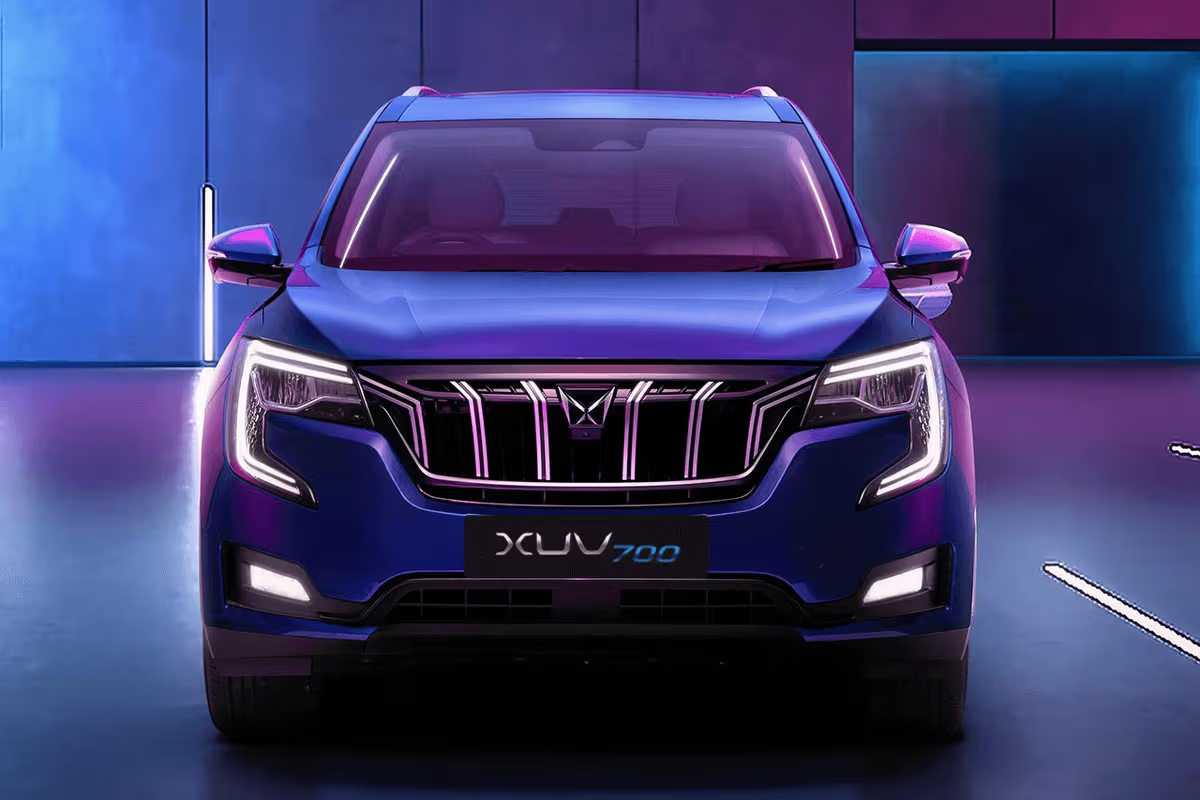
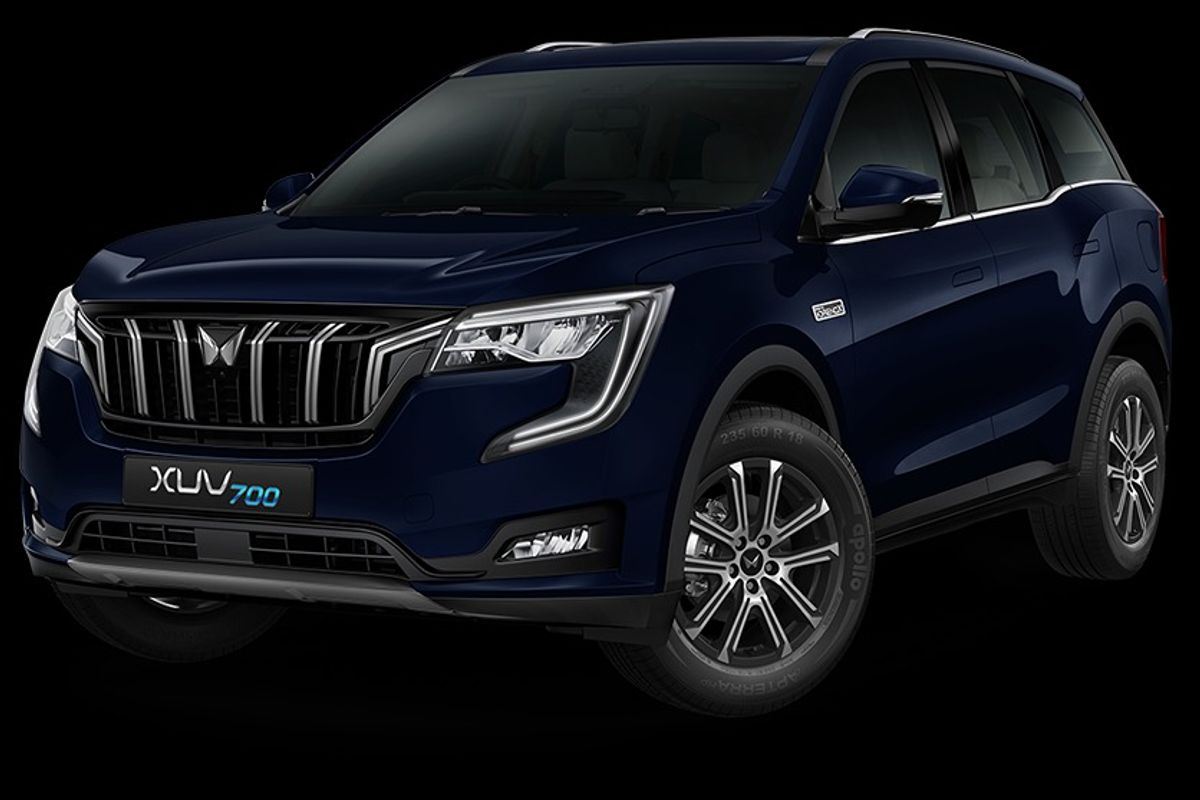
Now in 2021, Mahindra has been working extensively on its SUV range. The XUV300 brings exceptional value to the segment and happens to look fresh and modern. That model will be joined by the XUV700 and its arrival isn’t just a product announcement. Along with this new SUV comes a new Mahindra logo and brand identity.
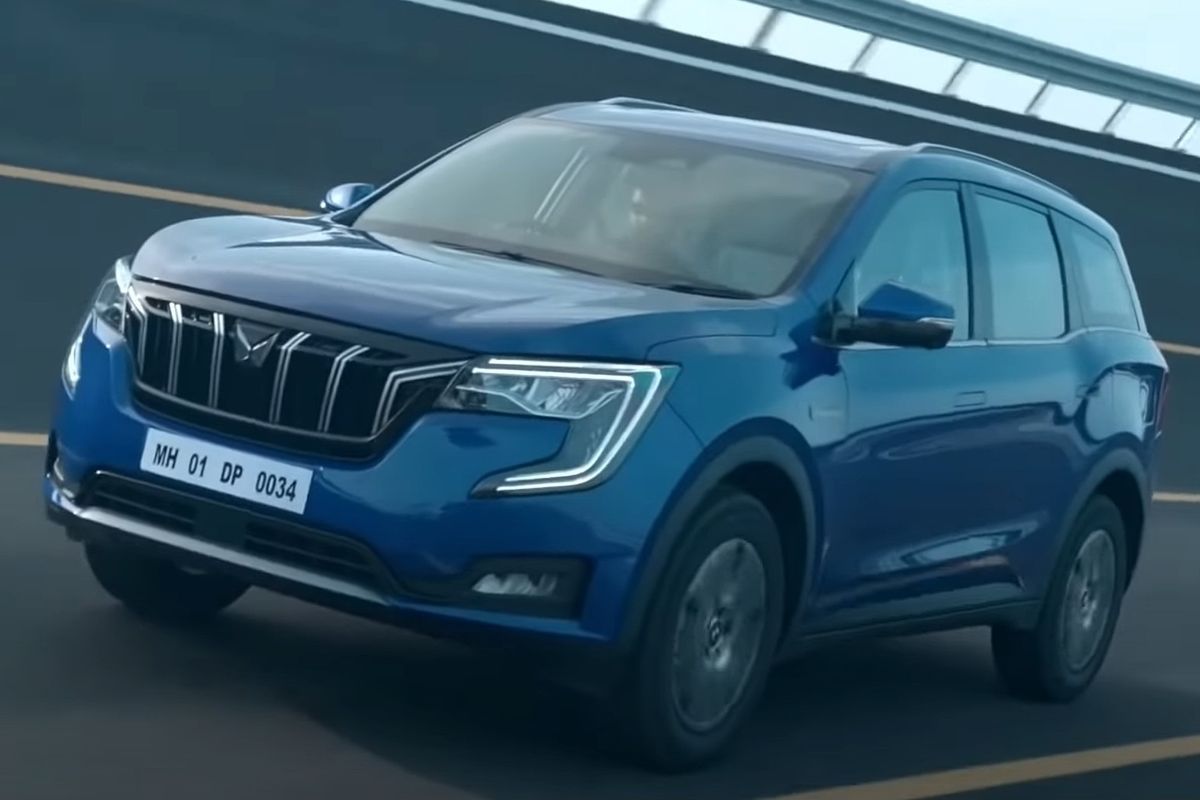
Dubbed the “Twin Peaks”, this new logo will be seen on all new Mahindra products, starting with the new XUV700. It’s a good-looking SUV, with C-shaped LED daytime-running lights dominating the front end, but the real magic occurs in the cabin.
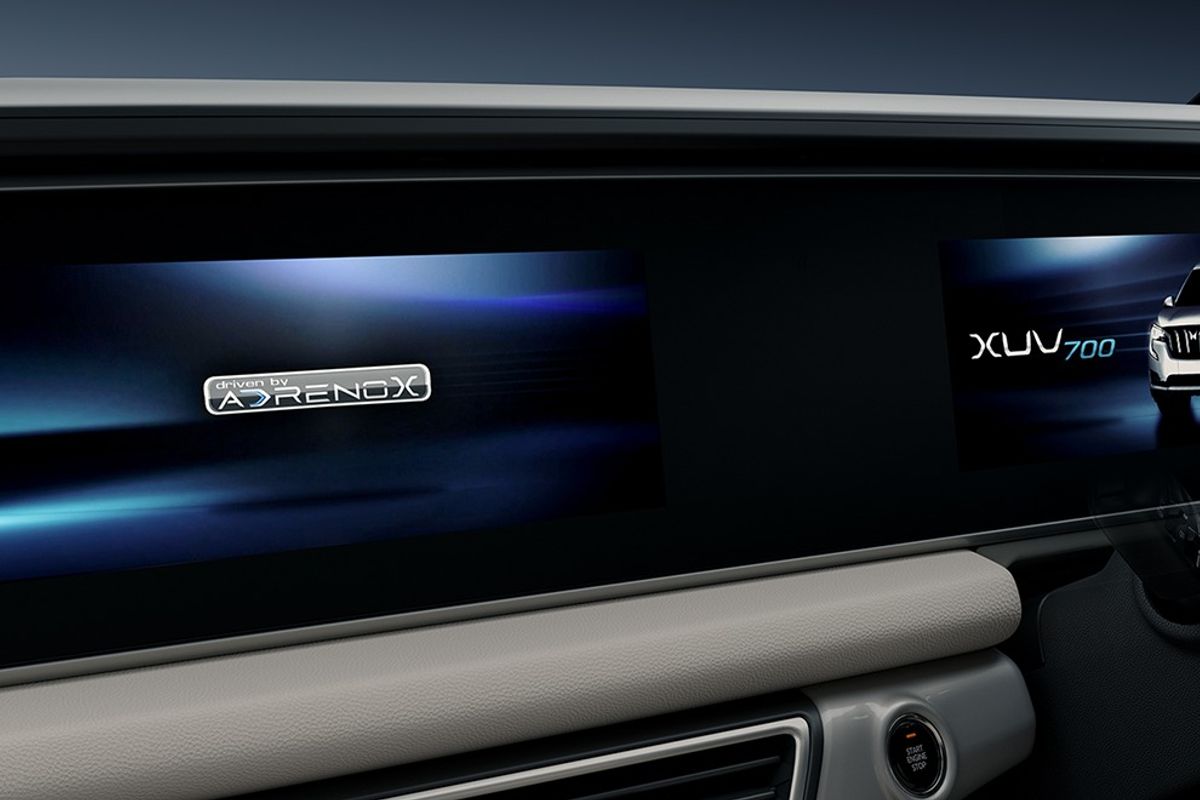
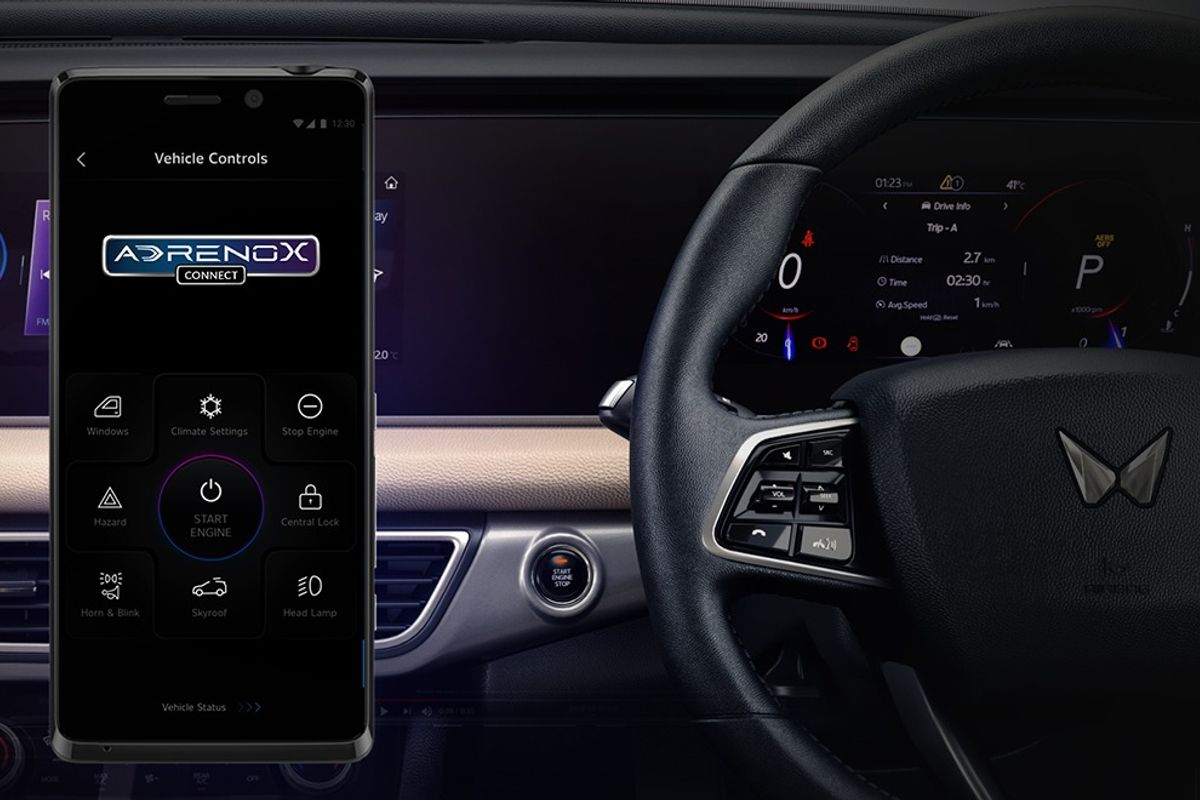
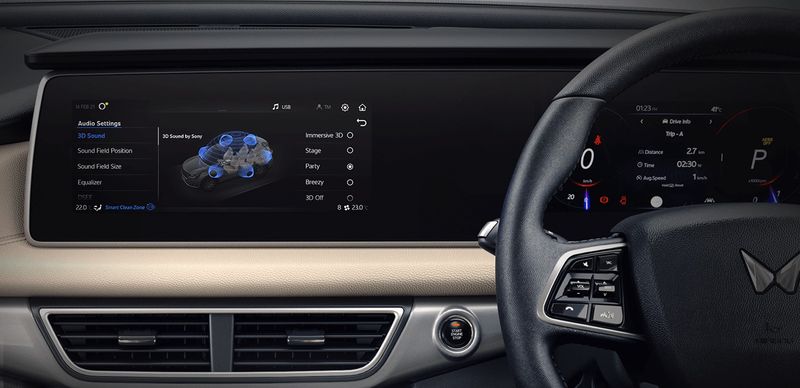
The vehicle ships with Amazon Alexa as standard, as well as a fully digital cabin. There’s a digital instrument cluster as well as a Mercedes-Benz style infotainment screen stretching across the dashboard. The tech looks impressive with adaptive cruise control, traffic sign recognition, auto high-beam assist, reverse camera to name but a few.
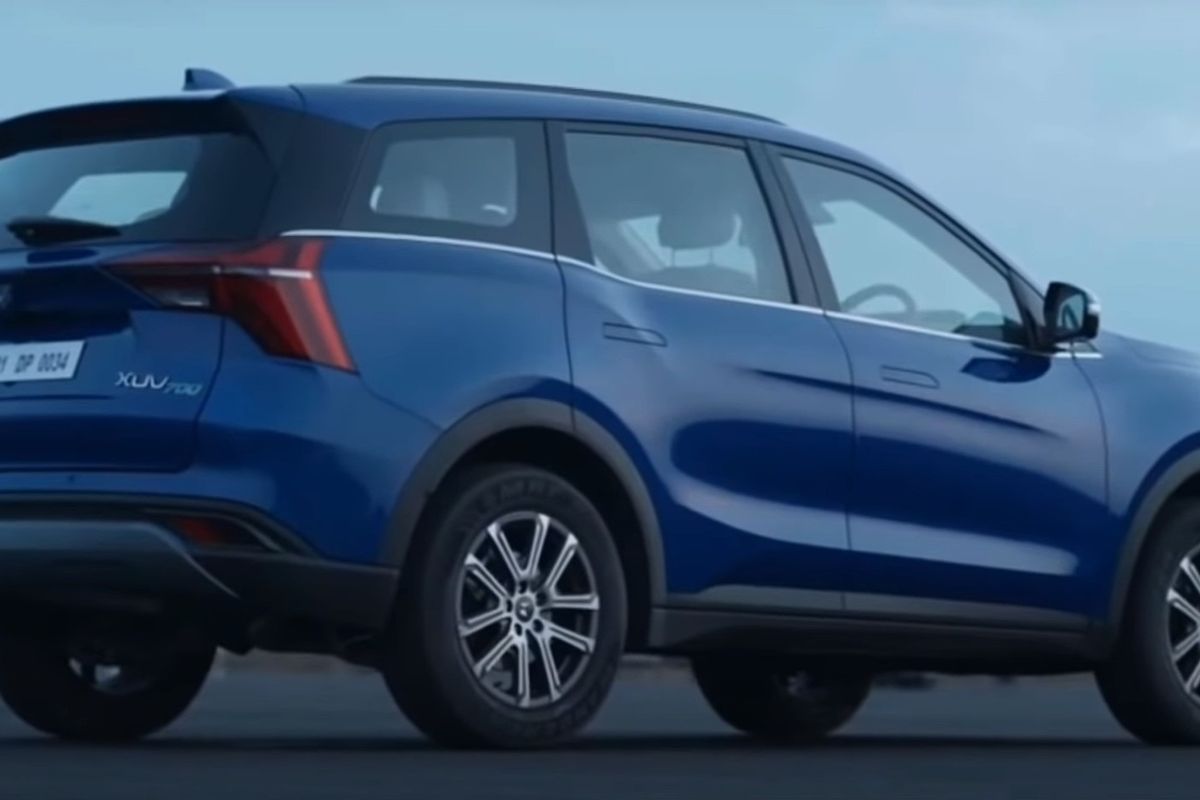
The new Mahindra XUV700 is available in a 5-seat and 7-seat configuration and will feature a 12-speaker sound system from Sony.
As far as engines and transmissions go, the new Mahindra XUV700 will be sold with a choice of petrol and diesel engines, with all-wheel drive being made available as an option. A six-speed manual or a six-speed automatic is available too. A 2.0-litre turbocharged petrol engine with 147 kW and 380 Nm is on offer, while a diesel 2.2 is available in two states of tune; 114 kW/360 Nm as well as 136 kW/450 Nm.
The vehicle will be going on sale in India soon, but the all-new Mahindra XUV700 is expected to be sold globally with the hopes that it will arrive in SA during the first quarter of 2022.
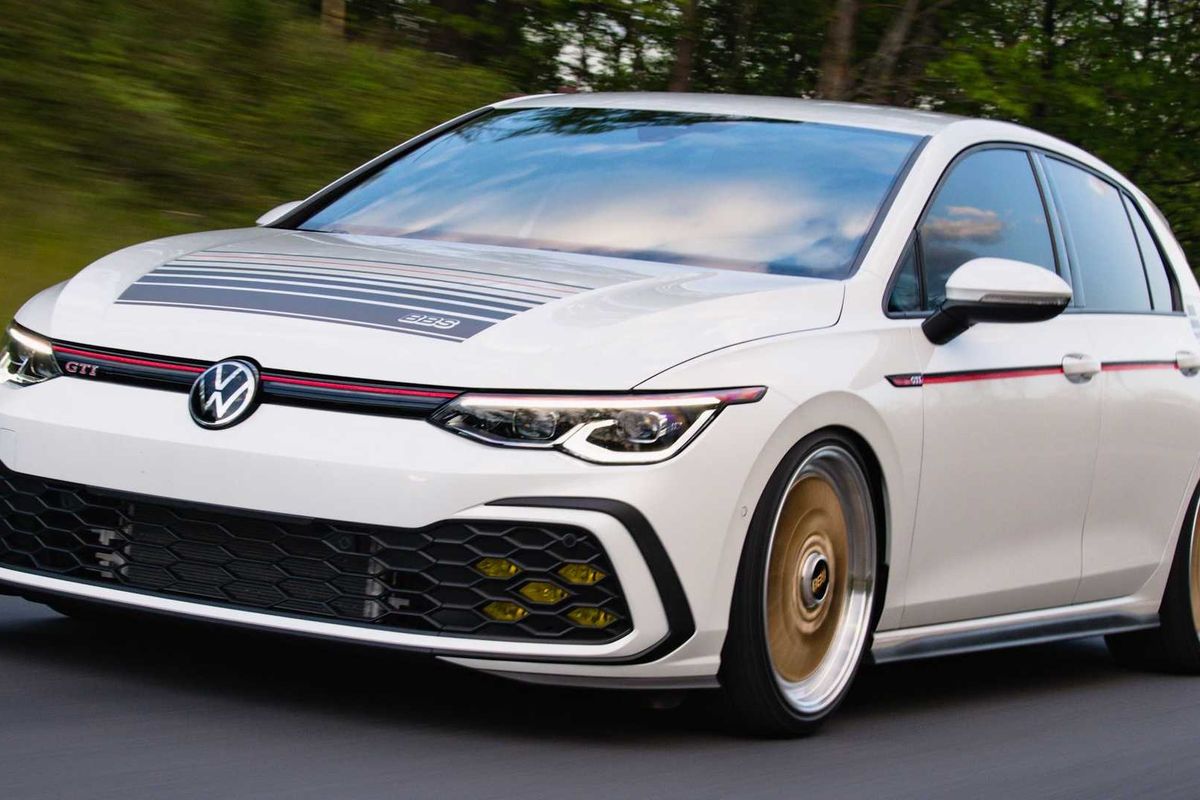
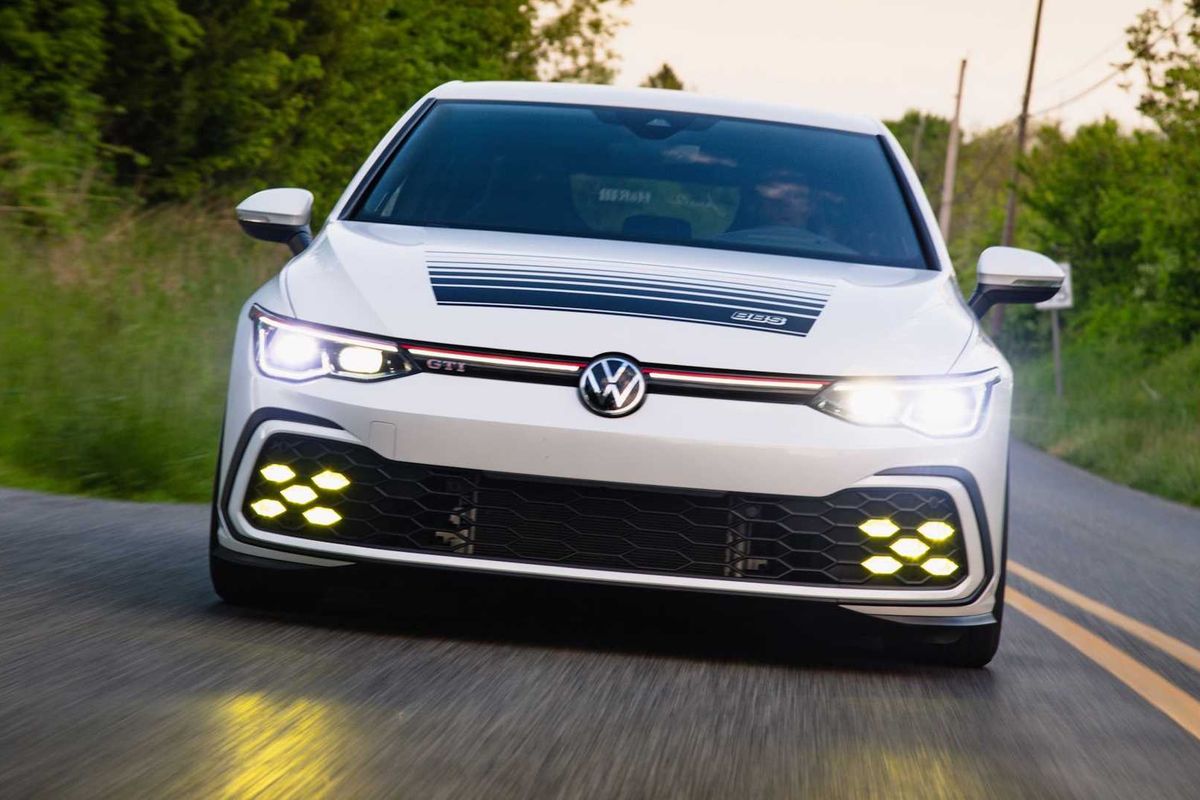
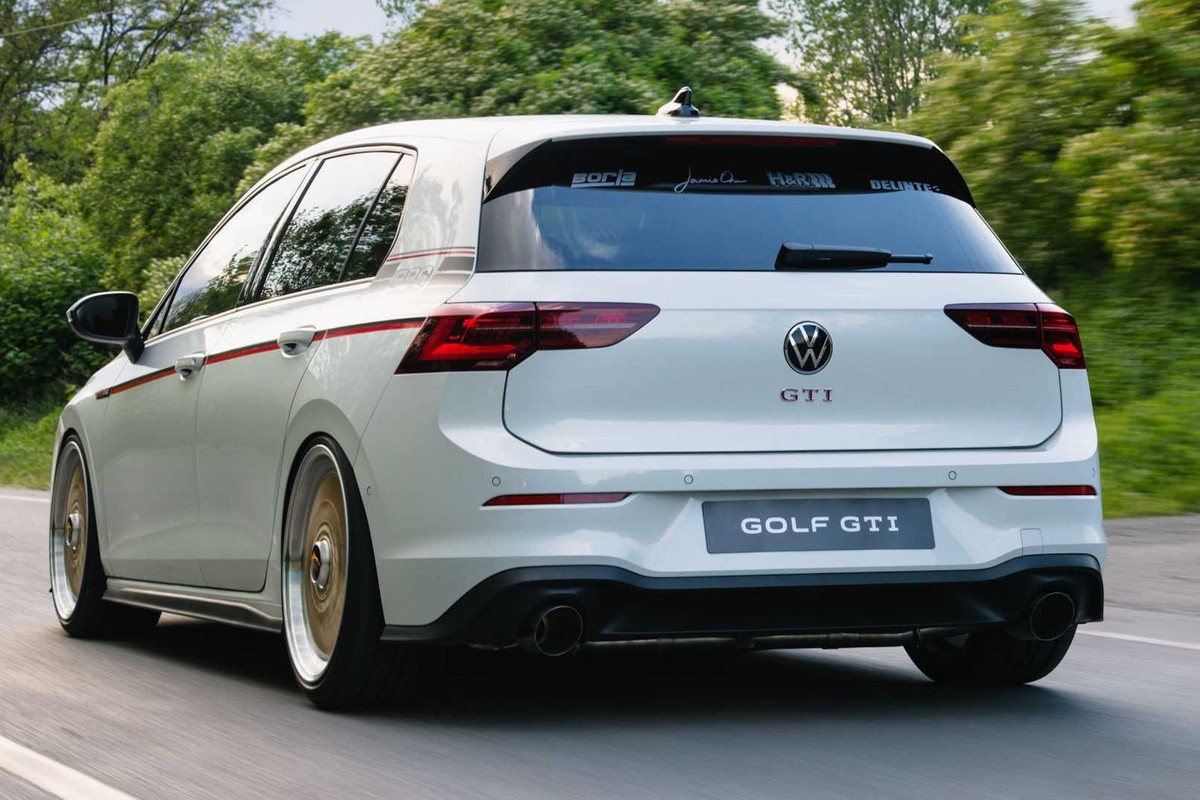
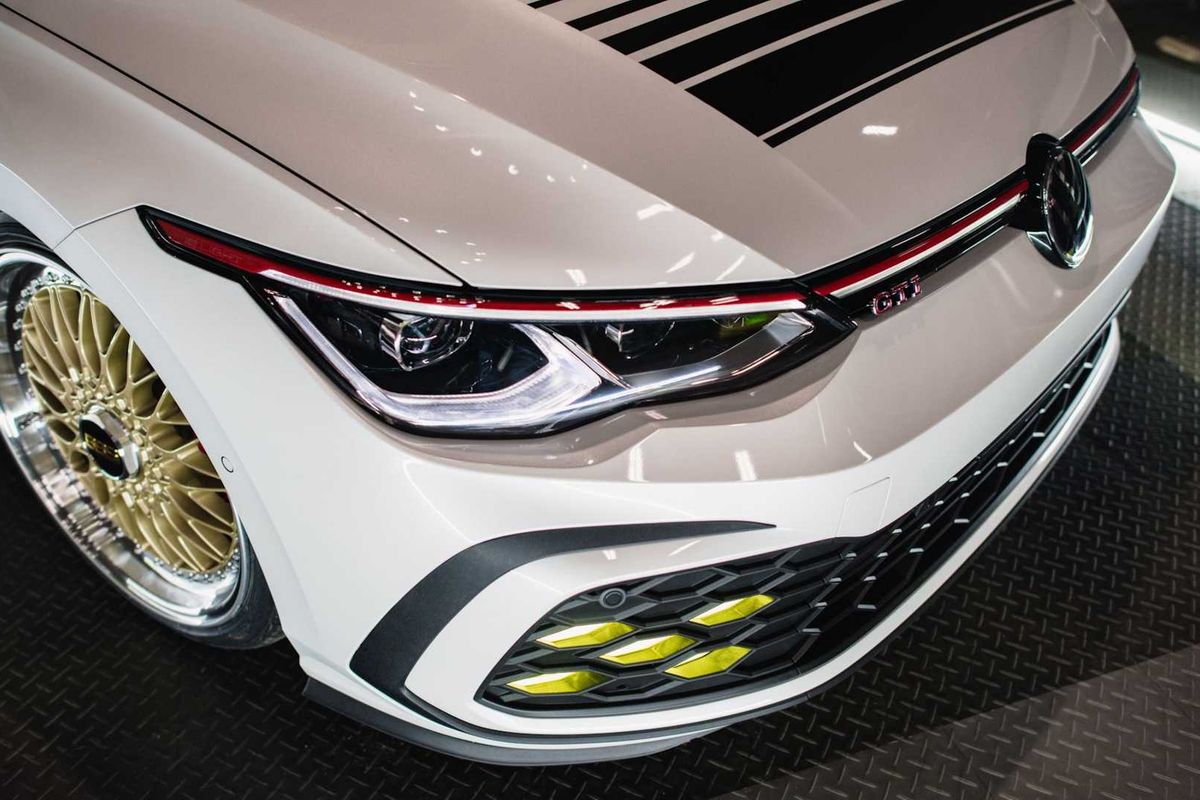
German wheel design house, BBS, has collaborated with Volkswagen to create this BBS Golf GTI Concept which tips its hat to the 1984 Mk2 Golf GTI with some retro styling mods. Perhaps the most striking feature of this concept are the gold 19-inch BBS Super RS wheels with a waffle and hex pattern shod with Delinte 235/35/19 D7 rubber and complemented with impactful yellow fog lights seen in the lower bumper section. But that’s not all, the look is finished off with red and black livery on the bonnet as well as a red and black pinstripe down the flanks of the BBS GTI as well as BBS decals seen on the C-pillars.
The interior has been left unchanged and no mechanical modifications have been made to the engine, which means the 2.0-litre turbopetrol engine produces the standard 180 kW and 370 Nm. The BBS GTI has been lowered somewhat thanks to an H&R coil-over suspension which also allows the wheel camber to be adjusted.
Do you like the look of this BBS GTI or do you think the standard Golf GTI has enough kerb appeal in standard form?
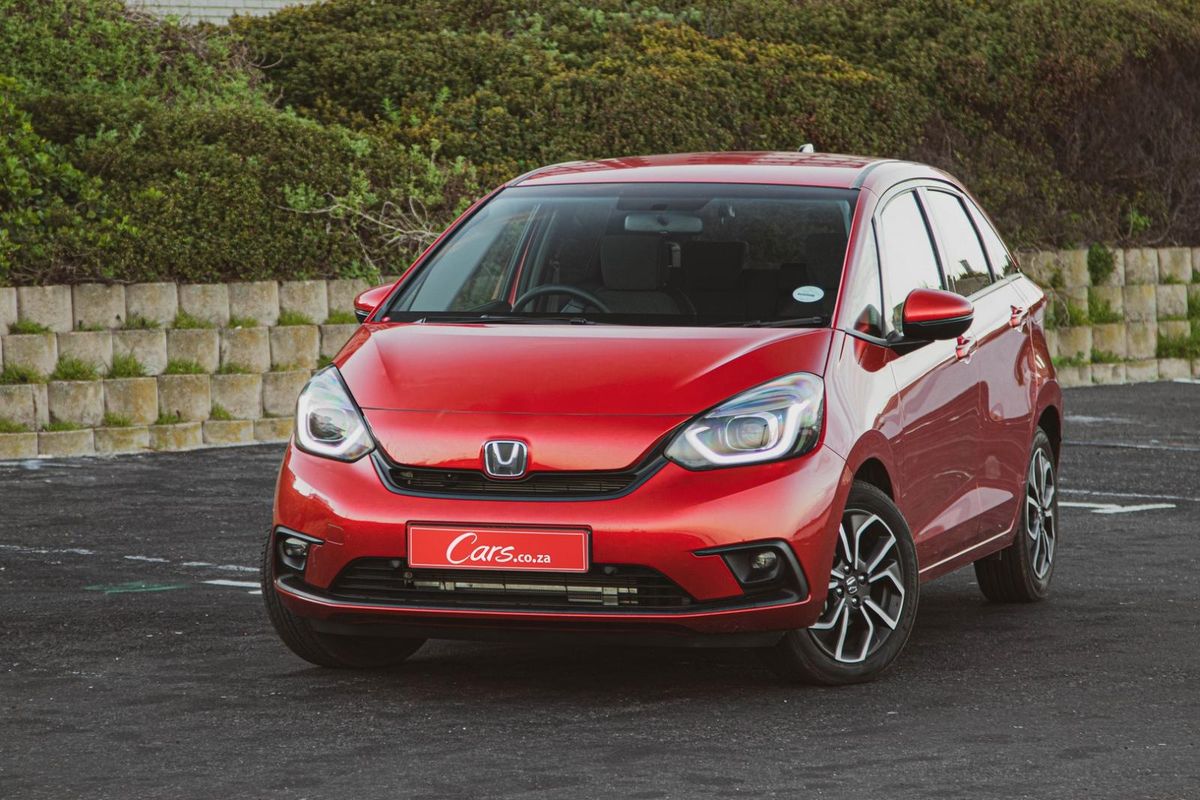
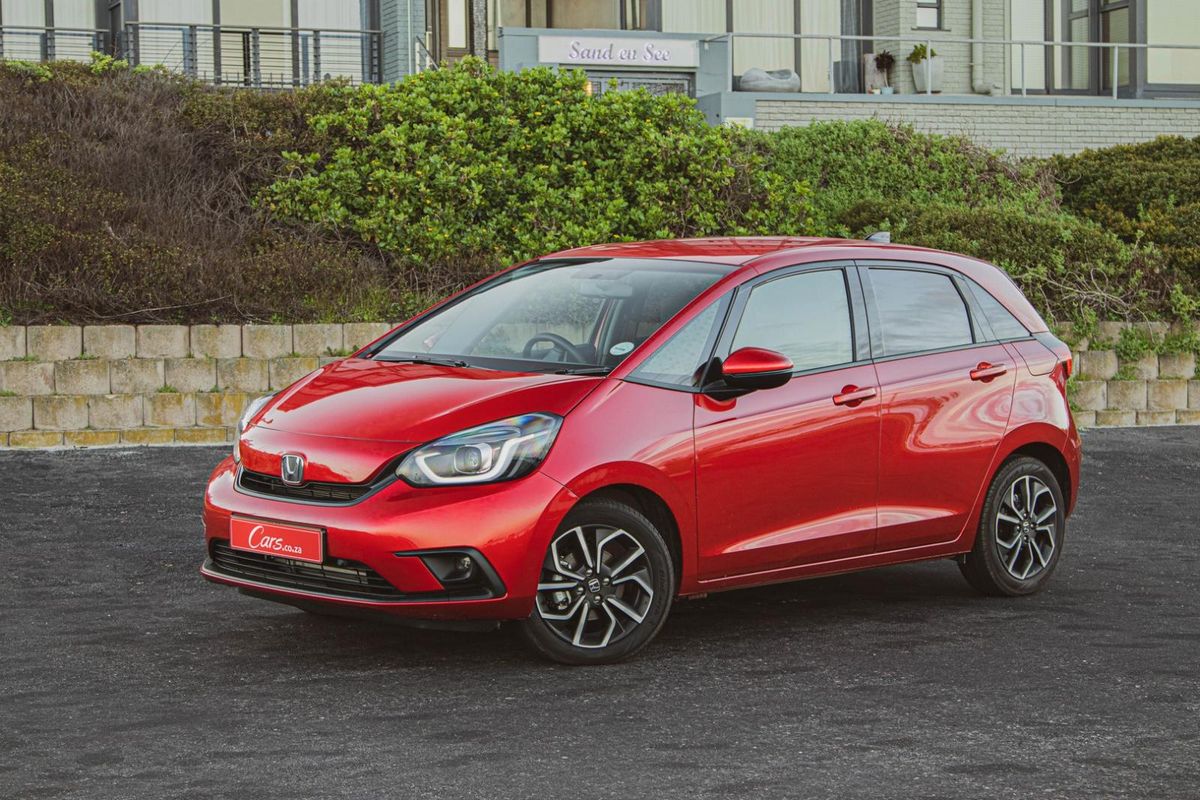
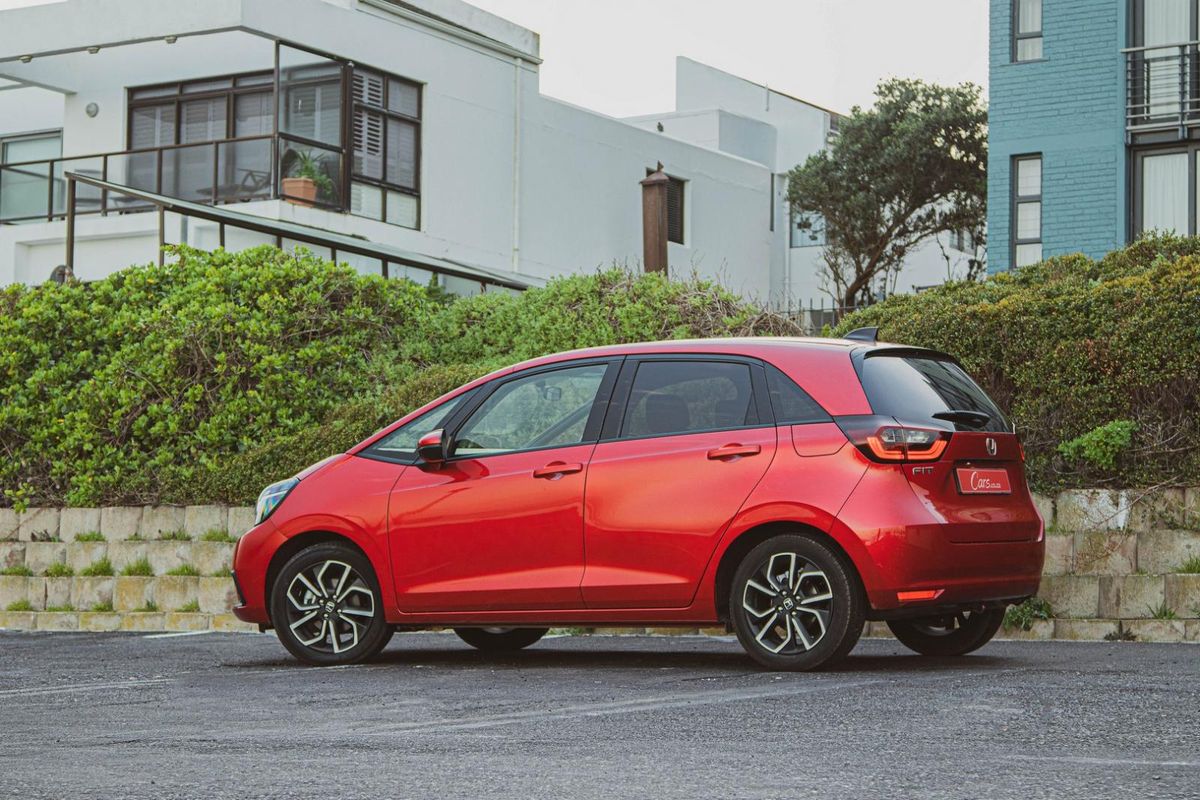
The all-new Honda Fit (previously known as the Jazz) has arrived in South Africa. The Japanese brand has high hopes for its new compact hatchback; can it shake up a highly competitive segment of the market… or is it destined to fade into obscurity?
We like: Fresh styling, smart interior packaging, good fit-and-finish, comfortable and refined.
We don’t like: Uninvolving to drive, middling engine
Fast Facts:
Model Tested: Honda Fit 1.5 Elegance
List Price: R359 900
Engine: 1.5-litre 4-cylinder petrol
Power/Torque: 89 kW/145 Nm
Transmission: CVT
Fuel efficiency: 5.5 L/100 km (claimed)
Performance: NA
Load capacity: 309-849-1210 litres
Previous iterations of the Honda Jazz were popular with mature buyers, but the Fit is styled to appeal to a younger clientele.
What is the Honda Fit?
Most of us know this car as the Jazz, but interestingly, that name is only used in a handful of markets. In most countries where Honda’s compact hatchback is offered, including its home market (Japan), it’s called the Fit. Why has Honda chosen to change the model’s moniker in Mzansi? Yuishi Fukuda – the president of Honda Motor Southern Africa – reckons it’s time to recognise the “vast improvements made over the previous model”. In Honda SA’s opinion, this 4th-gen model represents a quantum leap over its predecessor; it incorporates changes that are significant enough to merit a name change.
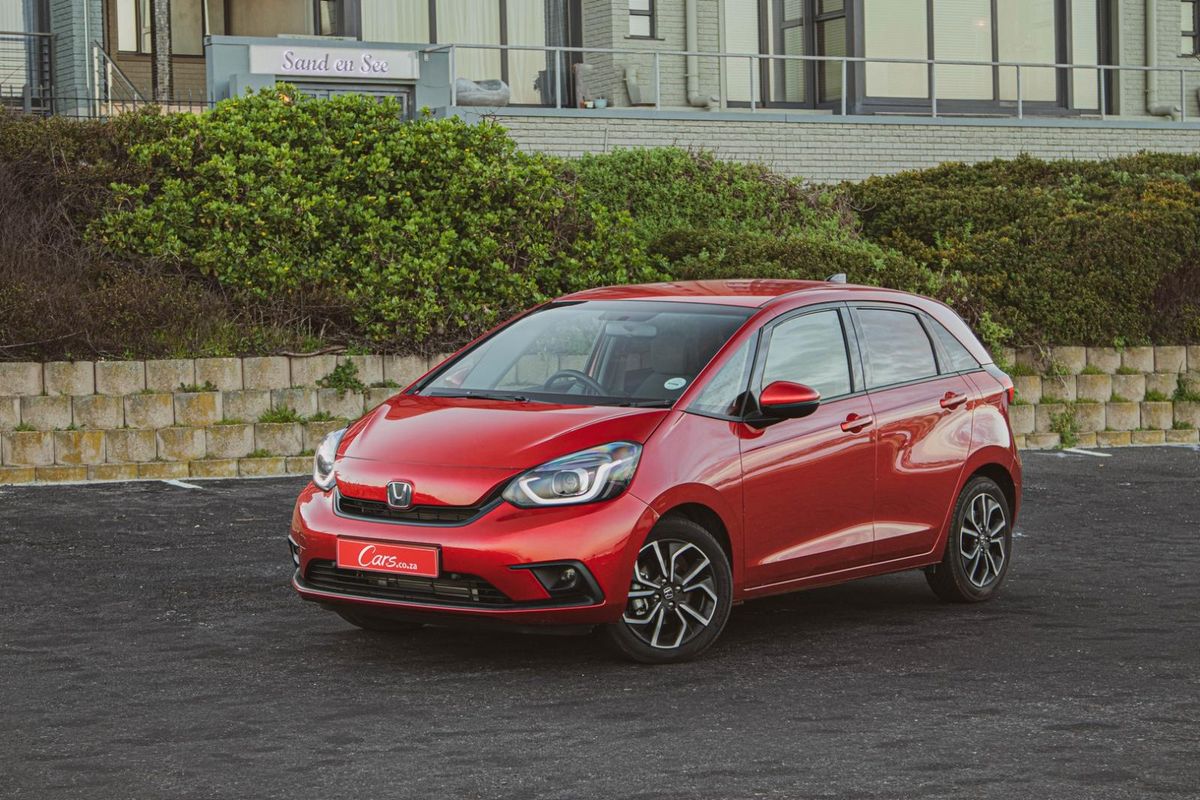
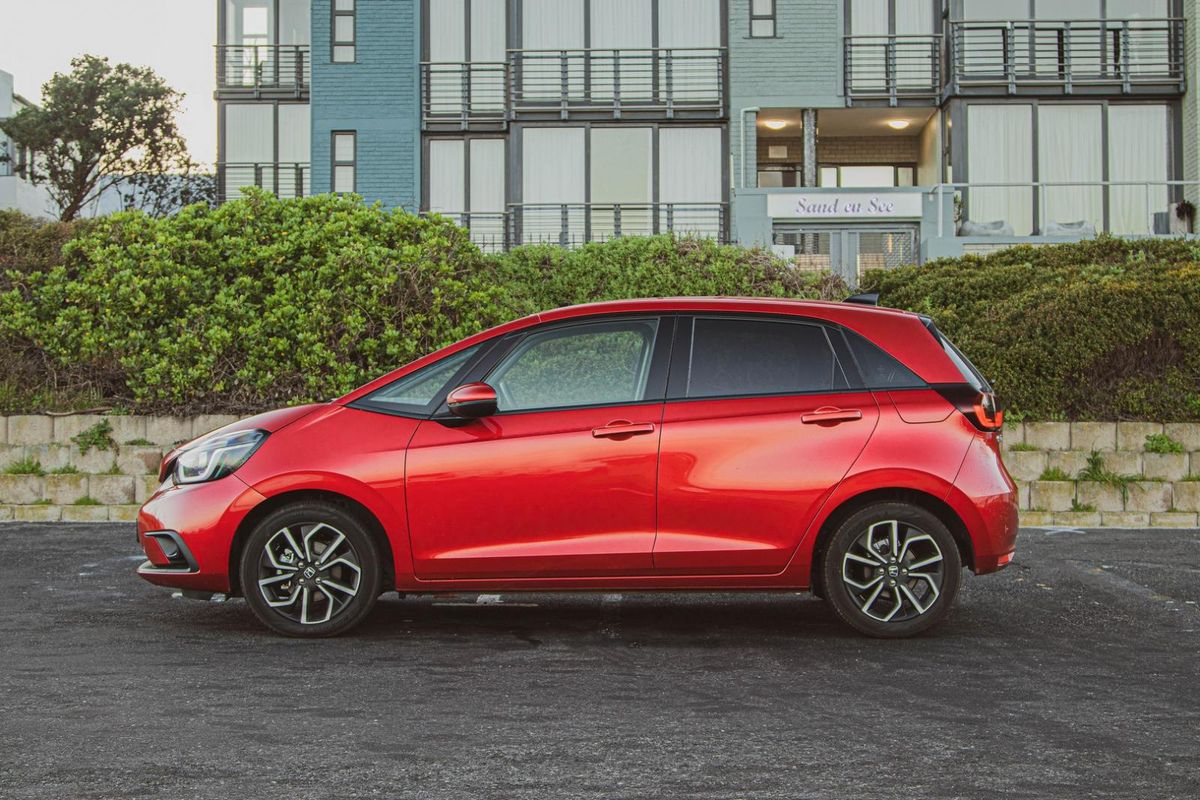
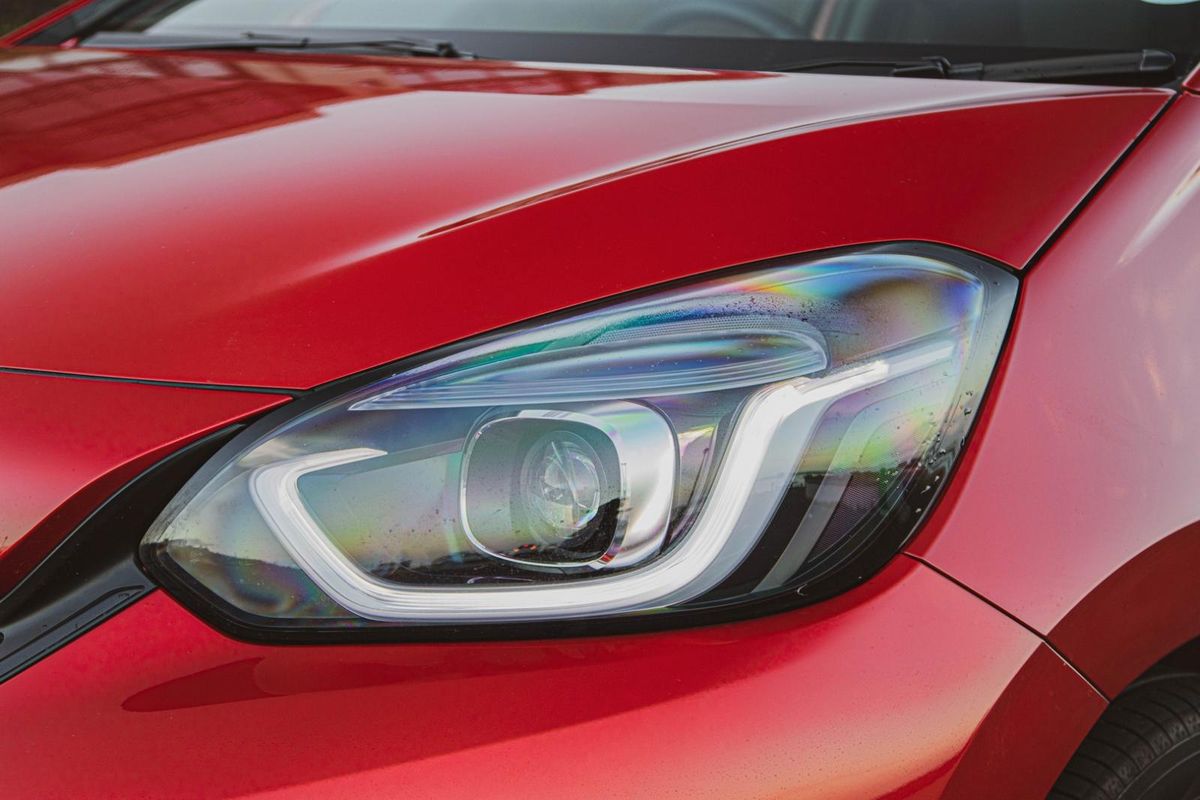
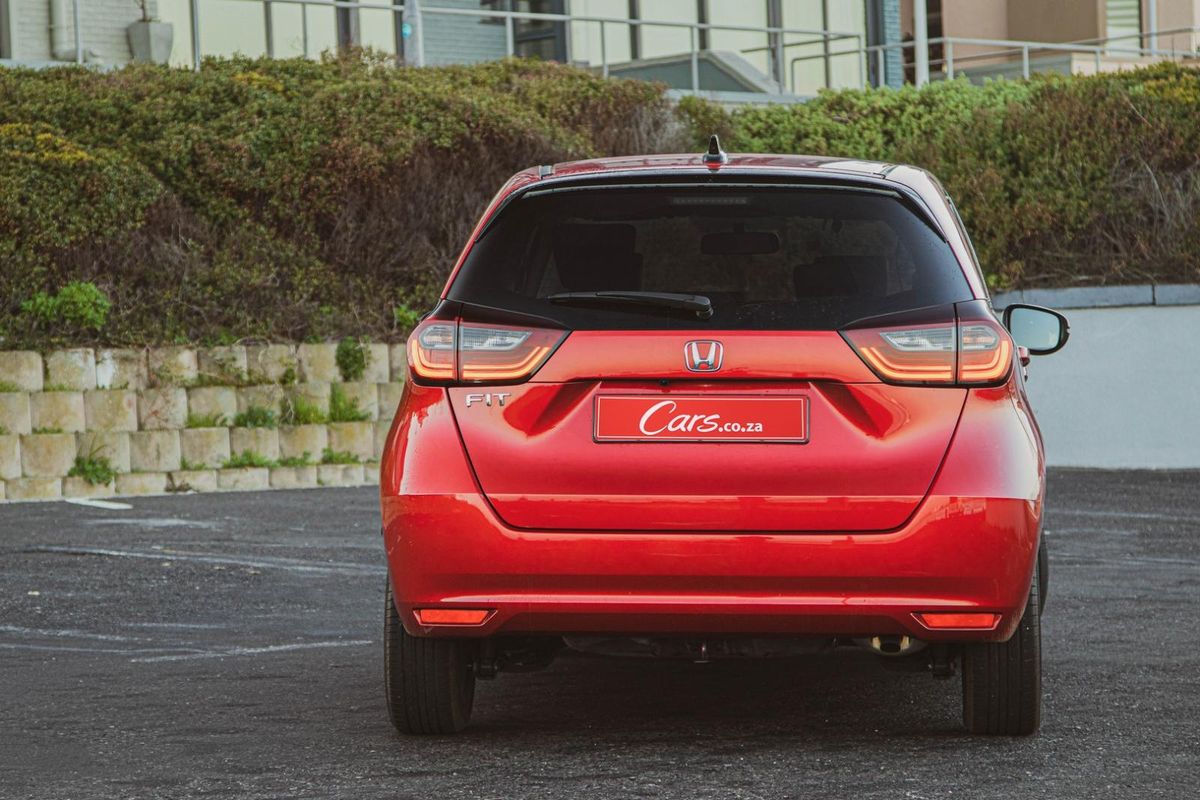
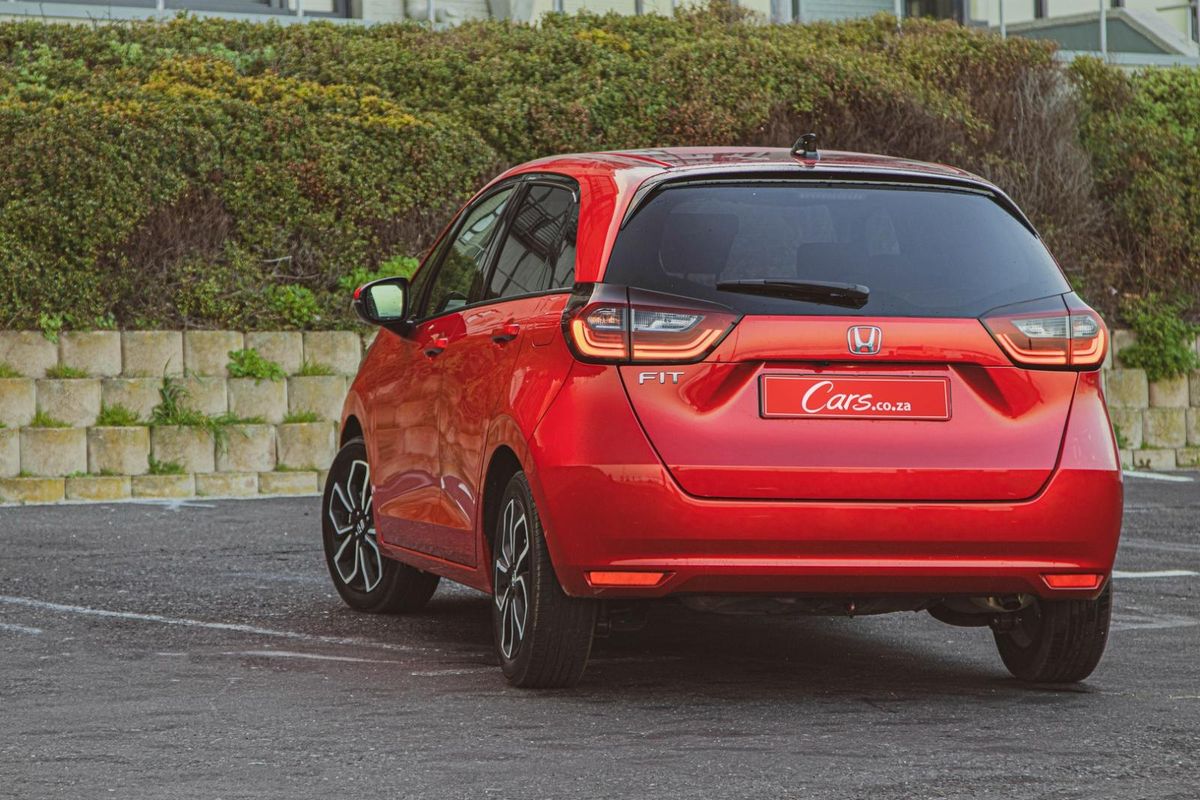
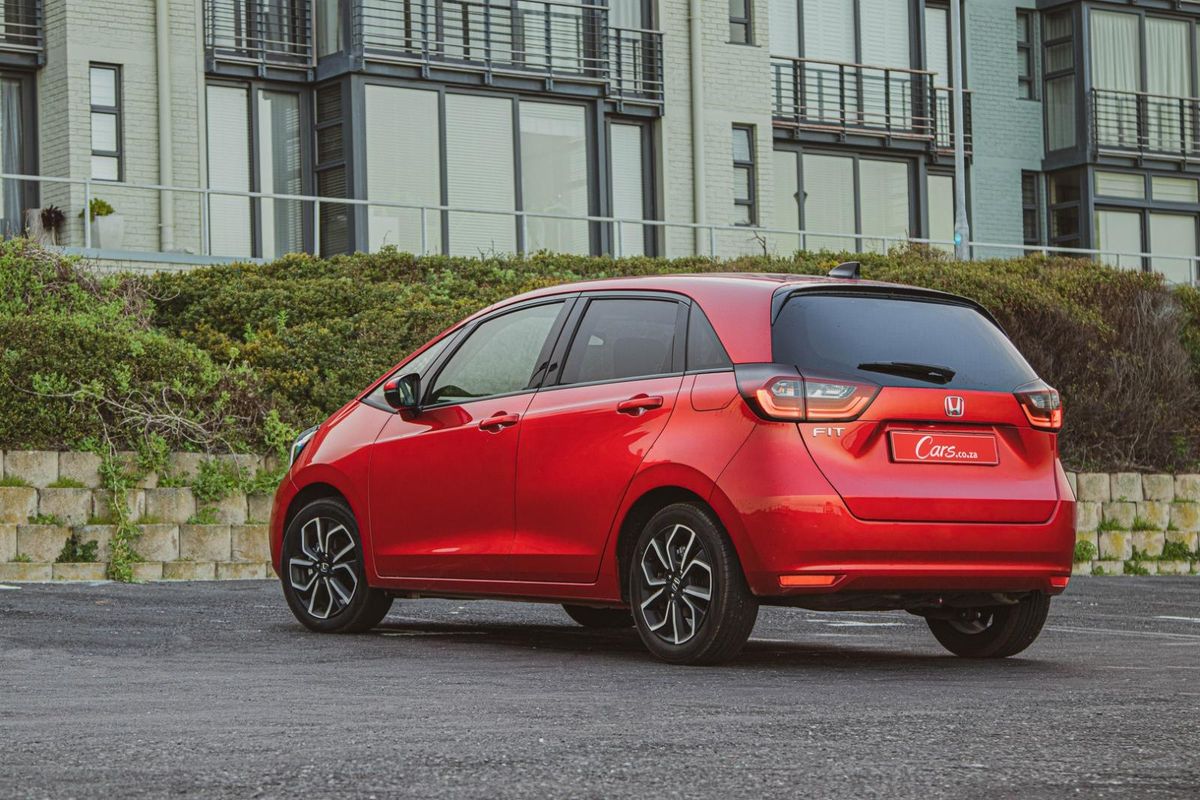
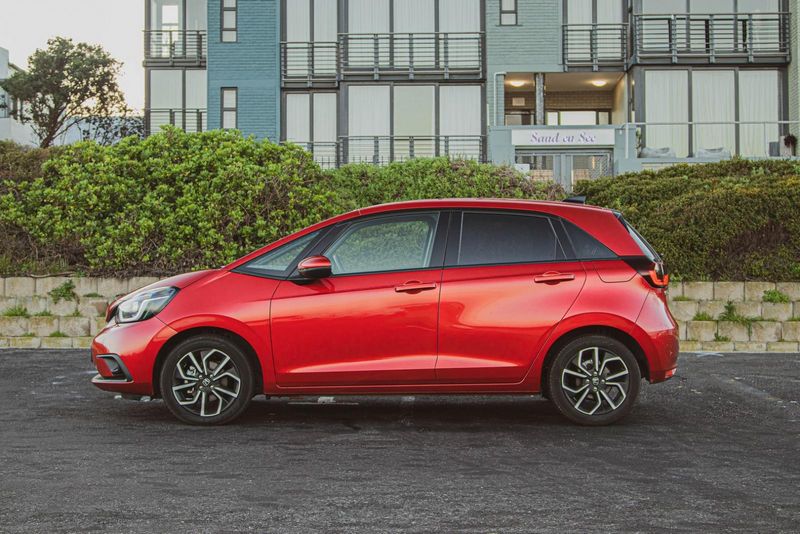
The all-new Honda Fit is built in Japan (its predecessor was made in India). It’s 88-mm longer than before; while that may not sound like much, it can make a big difference in terms of rear legroom. The styling has been given a complete makeover too: compared with its precursors, which erred on the side of conservatism, the new Fit appears striking and fresh, even youthful. Those LED headlights really look the part and there are some exciting colour options, such as Crystal Red (shown here) and a smart Rose Gold. Honda is trying its utmost to break the Fit’s “meant for older buyers/retirees” stereotype.
Honda SA offers the Jazz with 2 engine options: a 1.5-litre petrol motor mated with an automatic transmission (in 3 levels of trim), a well as a 1.5-litre petrol-electric power unit (in the flagship derivative).
The Fit is notably 88 mm longer than its predecessor, largely to the benefit of rear passengers’ legroom.
Which models are rivals to the Honda Fit?
The compact hatchback market remains dominated by the Volkswagen Polo, with the rest of the brands fighting it out among themselves for the scraps. Despite the Polo’s overwhelming dominance, there are still plenty of newer rivals duking it out (although a facelifted version of the Polo will be introduced early in 2021). The new Honda Fit will have to see off a fresh Hyundai i20, the brand-new Opel Corsa and its Peugeot 208 cousin, Kia Rio, Ford Fiesta, facelifted Mazda2, Citroen C3 and Nissan Micra, the Suzuki Baleno and Toyota Starlet. An all-new Renault Clio is due towards the end of 2021.
In the interest of fairness, we think the Honda Fit should be compared with 1.5-litre naturally-aspirated rivals. Most of the segment has moved to turbocharged small-capacity 3-cylinder engines, so that narrows things down. Our choice rivals for the Honda Fit include the Mazda2 and Kia Rio. The top-of-the-range Toyota Starlet 1.4 XR autois also quite a spacious offering at under R300k (August 2021).
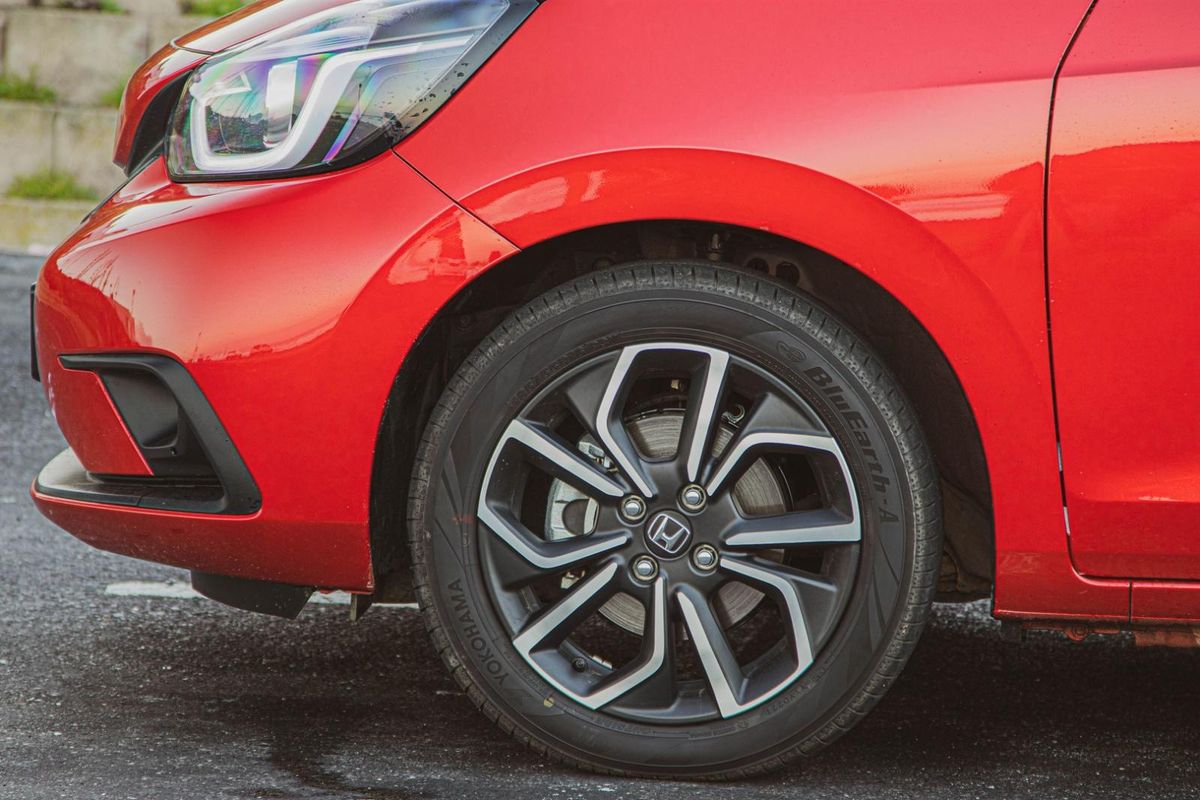
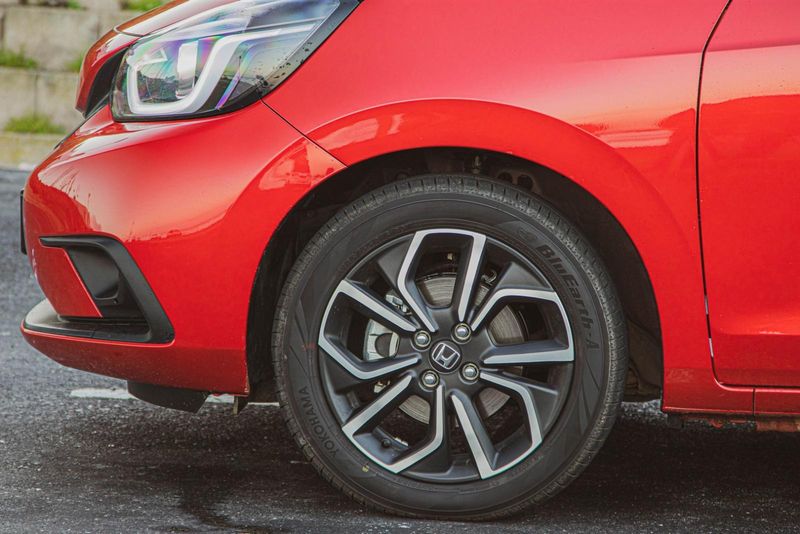
The 1.5 Elegance rides on 16-inch alloy wheels shod with 185/55 R16 tyres; ride quality is quite superb for a car of this kind.
What is the Fit like to drive?
The Fit is powered by an updated 1.5-litre naturally-aspirated petrol engine that is said to produce a better spread of torque and be more economical than before, even if it’s not the most potent version of the motor we’ve experienced. It delivers 89 kW/145 Nm, compared with the 97 kW/155 Nm of the Jazz 1.5 Sport, which we reviewed in April 2018. Would you be able to feel the difference? Probably not.
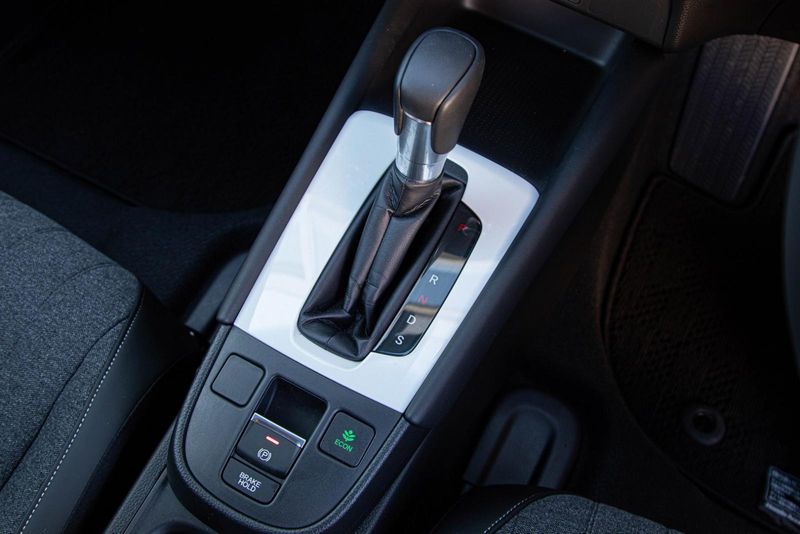
The motor drives the front wheels via a continuously variable automatic transmission (CVT). This type of transmission offers a smoother (disarmingly casual) driving experience and better consumption than a traditional automatic ‘box, but it does not engender driver engagement. Like all CVTs, you need to learn to work with the powertrain and module your accelerator inputs. If you simply push the throttle pedal to the floor, the Fit will produce a loud, unpleasant noise and, admittedly, some acceleration. However, if you use the accelerator circumspectly, the driving experience is quite pleasant. Anything but mild acceleration will result in the stereotypical droning noise associated with these transmissions, but once you’re up to speed, the car quietens down dramatically and “the drive” becomes very refined.
While Honda SA claims an average fuel consumption figure of 5.5 L/100 km, we could not match that figure. Still, the indicated 6.9 L/100 km was acceptable; returns of closer to 6.0 are certainly attainable.
The Fit’s continuously variable transmission takes the pain out of commuting in peak traffic, but its fun factor is negligible.
Speaking of refinement, we think the all-new Honda Fit has one of the quietest cabins in the segment and rides pliantly irrespective of road speed or -surface. The combination of forgiving suspension tuning and generously shod 16-inch alloy wheels allows the newcomer to soak up road imperfections admirably (for a compact hatchback!). The steering setup is worth a mention too – it’s responsive and direct, which makes up for the unspectacular powertrain. If you want a hatchback that offers a more hands-on driving experience, you’d be better off with the aforementioned Fiesta, i20 and Polo.
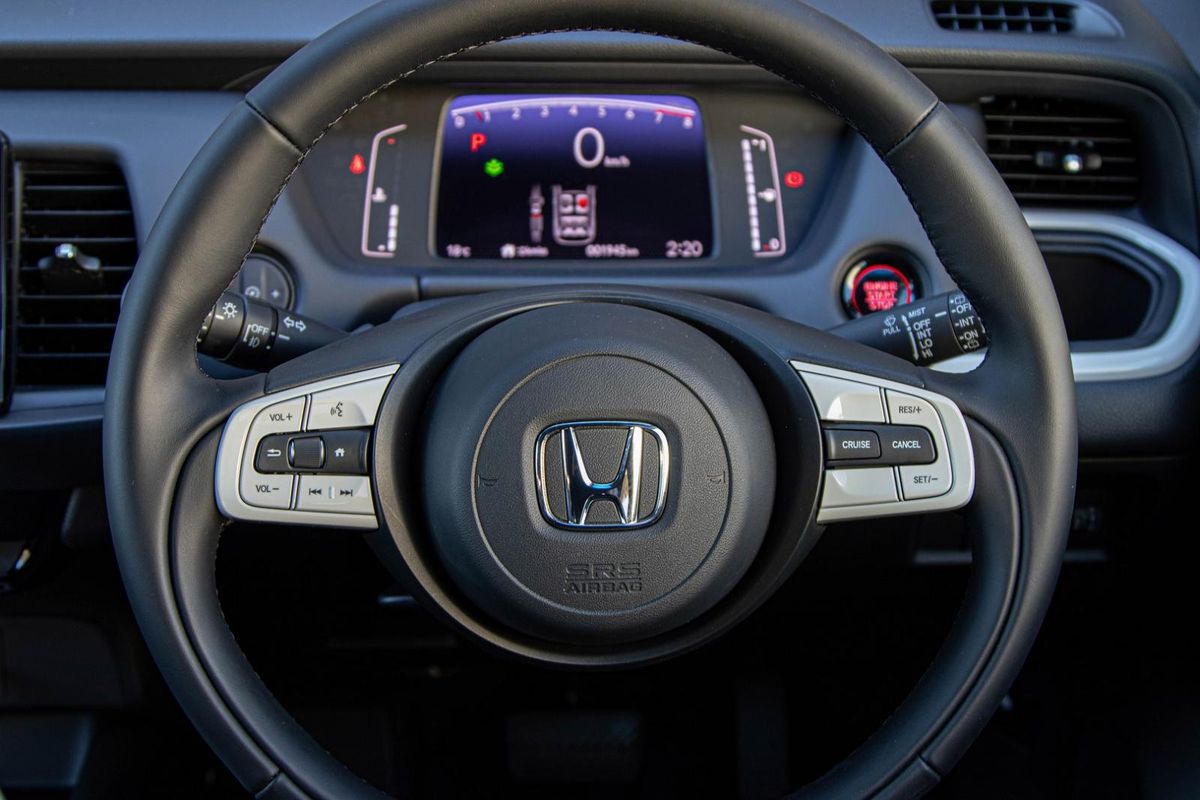
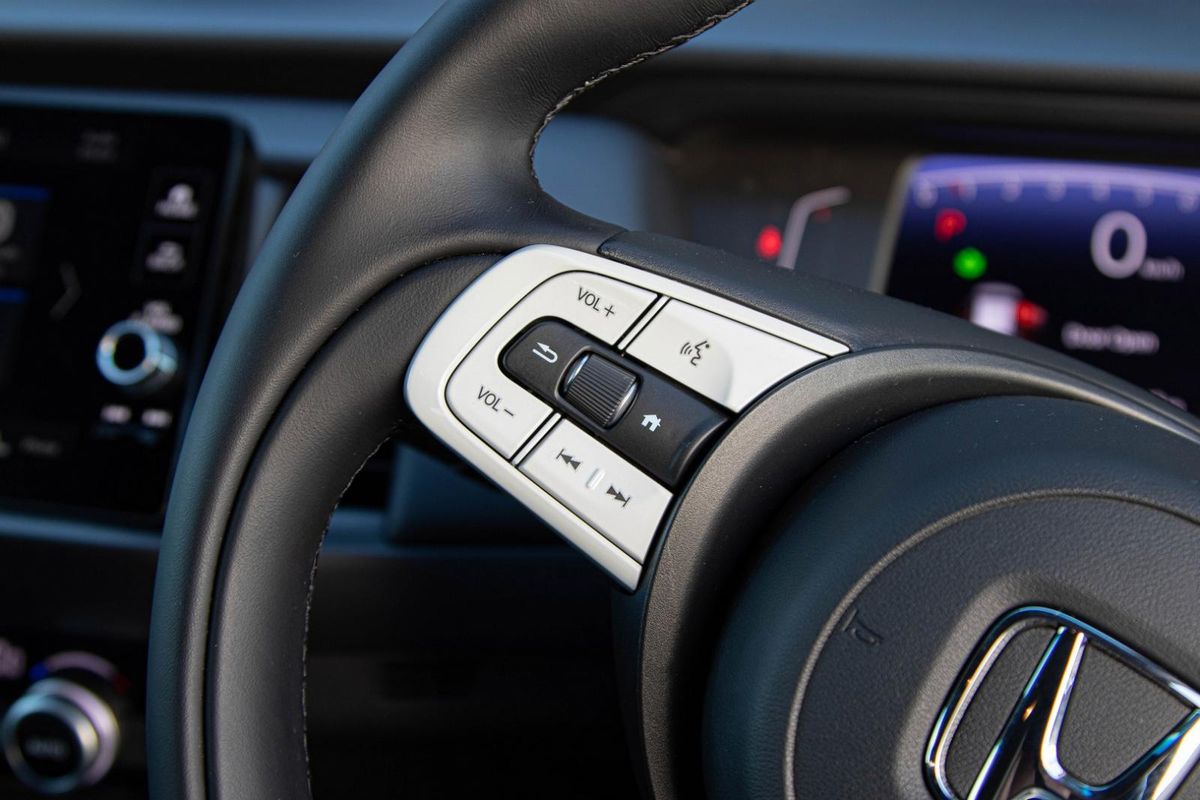
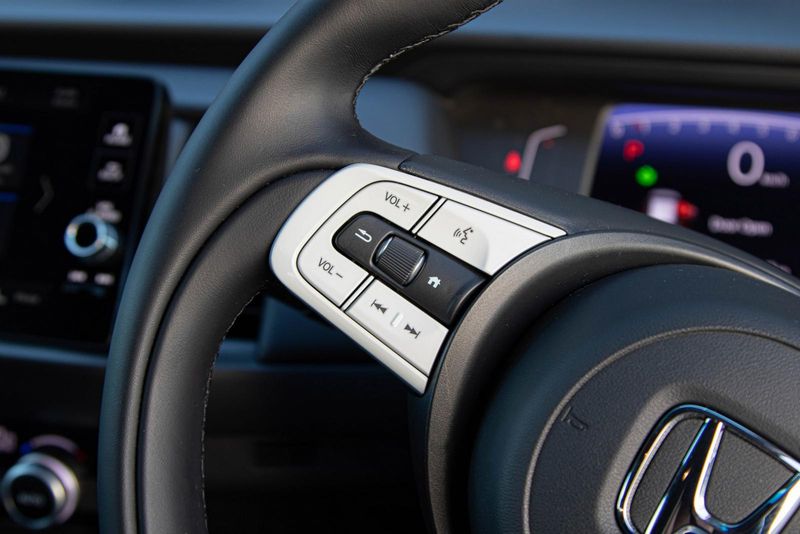
The “enamel-like” finishes on the multifunction steering wheel’s buttons are a nice, classy touch.
What’s the interior of the Honda Fit like?
The outgoing Honda Jazz had quite a pleasant cabin, even if it was more functional than upmarket. To put it another way: it was perfectly serviceable (ergonomically speaking) and, in terms of features, it covered the basics, but it felt staid and utilitarian. The Honda Fit, by contrast, introduces a raft of technologies and the interior feels advanced. The redesigned cabin is smartly laid out and you get a sense of spaciousness thanks to the thin A-pillars, which increase exterior visibility. This is a compact city car, but you could be fooled into thinking you’re driving something larger… and much more spacious.
We really like the minimalist look and feel from behind the ‘wheel, with a compact monitor serving as the instrument cluster. It may be a small screen, but it displays every relevant bit of information clearly.
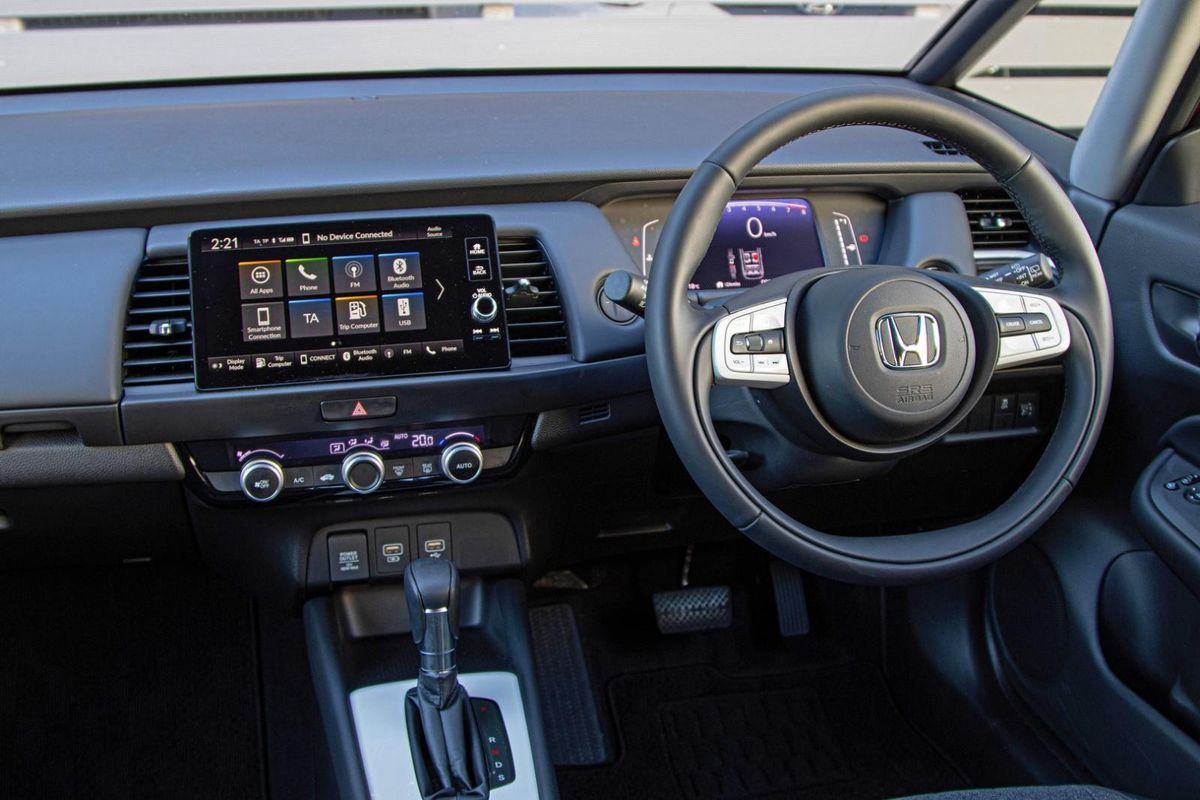
Whereas the outgoing Jazz’s interior was a bit drab, the Fit’s fascia is technologically advanced… and it feels substantial.
The cabin’s fit-and-finish looks and feels like a big step forward in quality. The previous-generation Honda Jazz always had a couple of cheap-feeling plastics, but this all-new model brings a new level of premium and hard-wearing materials to the segment. We really liked the steering wheel with its white inserts too. Not only do these buttons look cool, but there’s luxurious, tactile pleasantness to them.
As far as features go, the Honda Jazz comes well-appointed, depending on the trim level that you select, of course. We think the 1.5 Elegance derivative, as tested here, is the pick of the range when you look at price versus the level of specification. You miss out on the 1.5 Executive‘s leather trim, keyless entry, heated seats, parking sensors and some chrome bits, but those are just nice-to-haves.
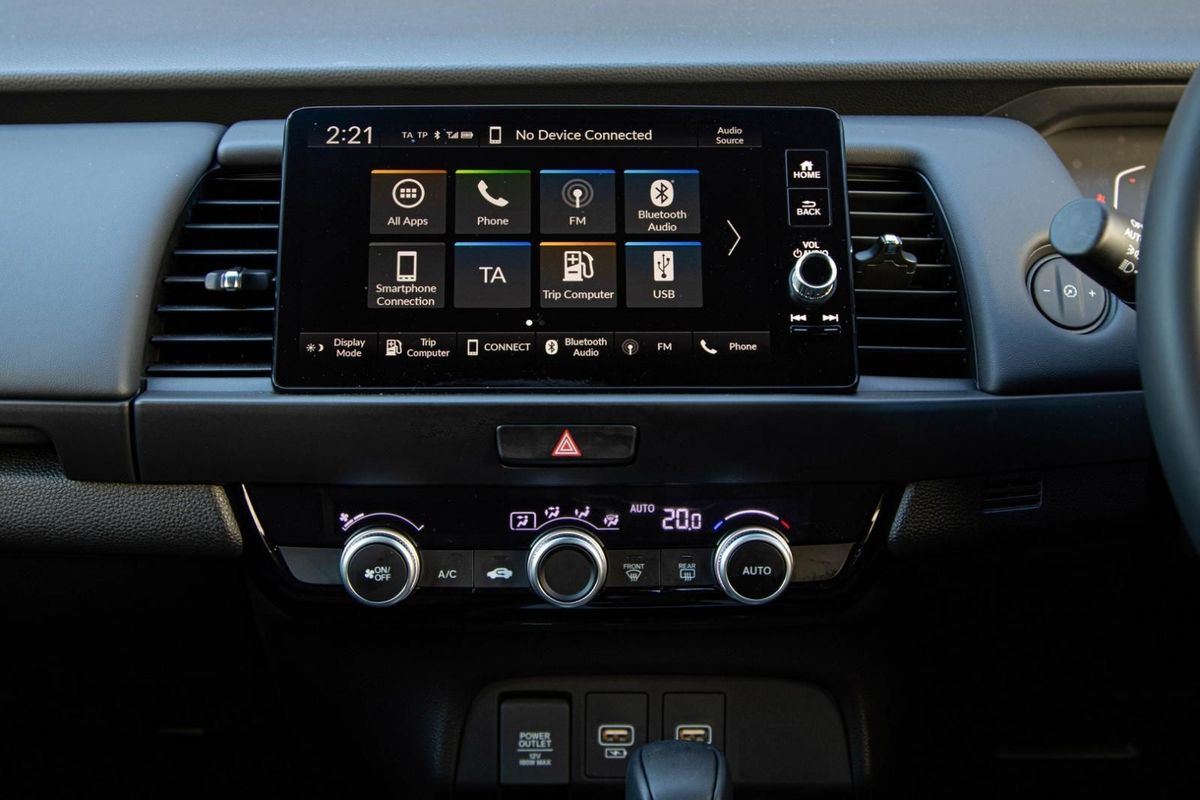
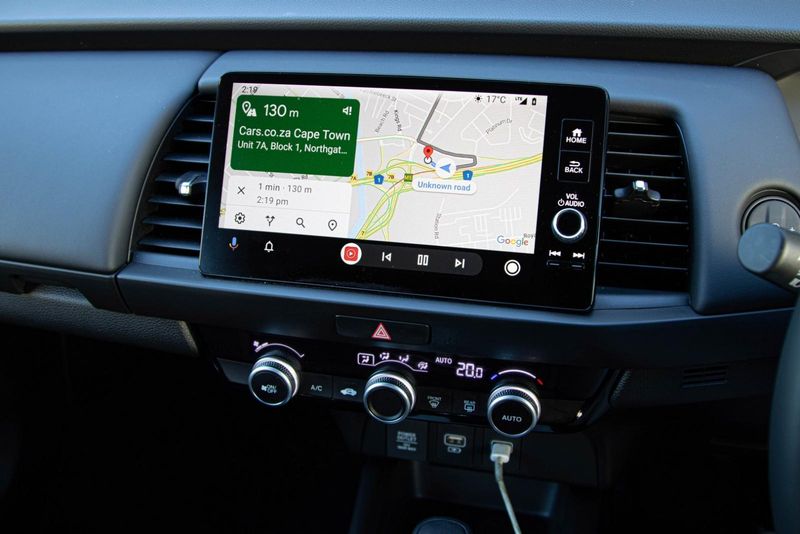
Navigation apps are easy to access via the touchscreen, which supporting smartphone screen-mirroring technology.
Elegance spec incorporates 16-inch alloy wheels, LED head-, tail- and fog lights, a 9-inch touchscreen infotainment system with Bluetooth/2x USB ports/Apple CarPlay/Android Auto, a reverse-view camera, leather-wrapped steering wheel and gear lever, cruise control, push-button start, auto aircon, as well as a front armrest.
Safety features include ABS with EBD, vehicle stability control, hill-start assist and 6 airbags. If you want semi-autonomous driver assistance features, consider the Fit Hybrid, which costs R110k more.
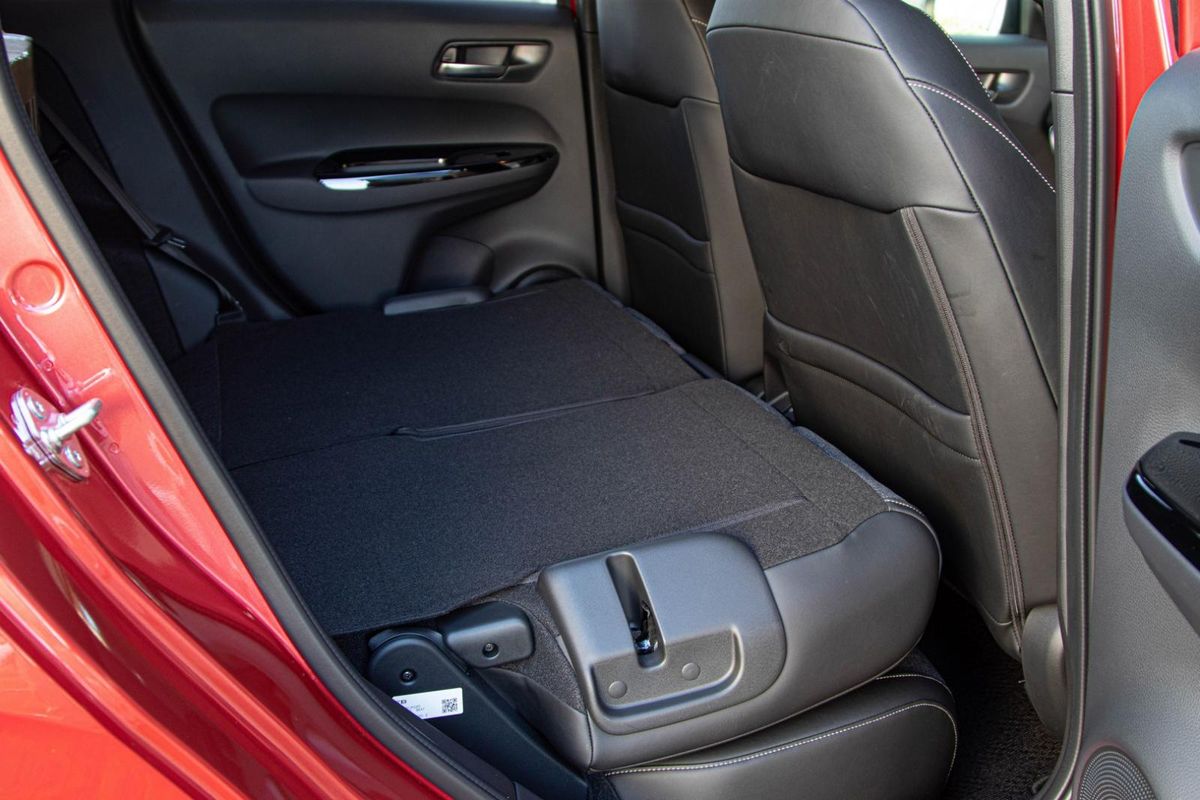
Honda’s celebrated Magic Seats make it easy to turn the Fit’s load bay into a completely flat extended luggage floor.
Is the Fit practical?
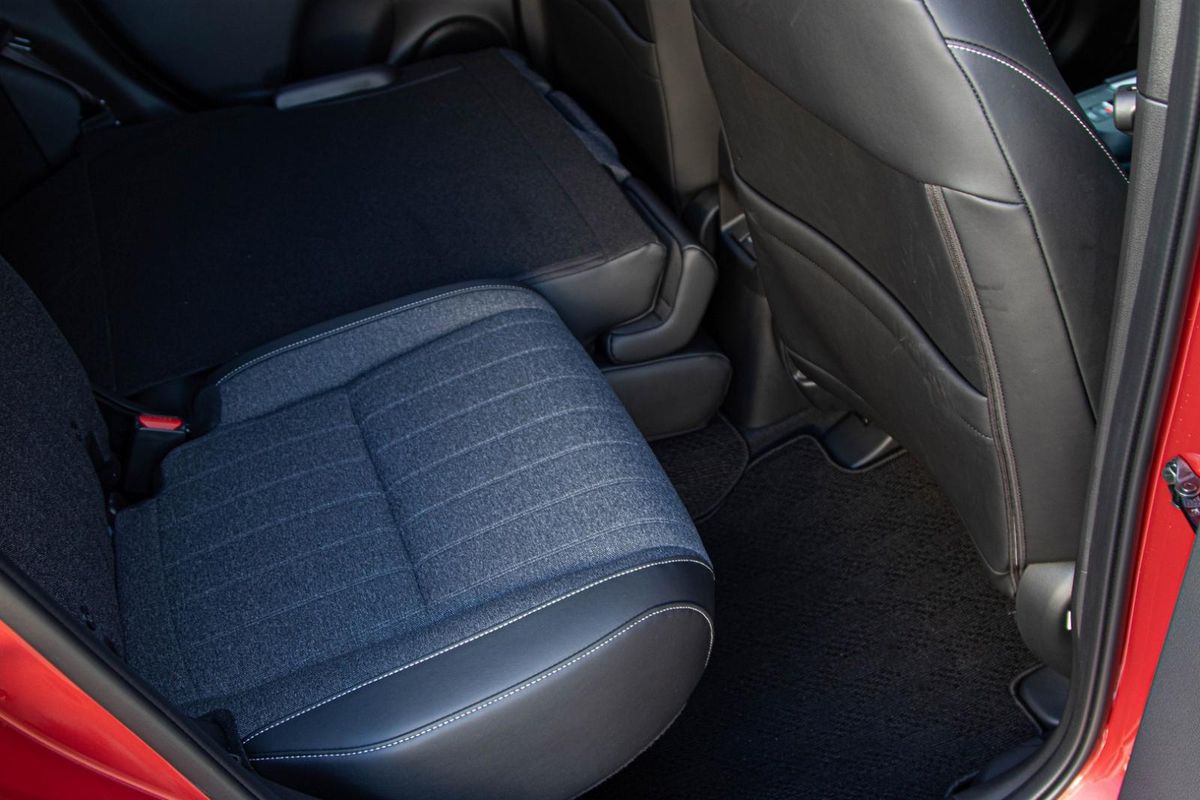
The Honda Jazz was always the most practical offering in its segment and the great news is that the all-new Fit retains the Magic Seats configuration. To be fair, there’d probably be a riot outside Honda HQ if the Japanese firm dared to discontinue those “clever chairs”. Here’s why: In most cars, only the backrest of the rear bench folds forward – the squab remains fixed, which is why you rarely get a truly flat extended luggage floor. In the Fit’s case, however, the entire seat bottom can move forward and be tilted into the footwell. The backrest then folds perfectly flat, turning the Honda into a pseudo panel van.
We’ve had lots of experience with utilising Magic Seats through the years, but it’s still remarkable how much stuff you can cram into the Fit. During the test unit’s tenure in our fleet, we squeezed an unused coffee machine and a big box of crockery into the Honda’s load bay… and there was enough space left for a pair of passengers. We tried to load the same items into an Audi RS Q3, which we also had on test at the time; its tailgate wouldn’t close unless we strategically repositioned things. As far as the official figures go, Honda claims a 309-litre luggage capacity, with up to 1 210 litres available with the seats folded flat.
It was easier to load these items into the Fit than the back of the family-car-sized Audi RS Q3, for example.
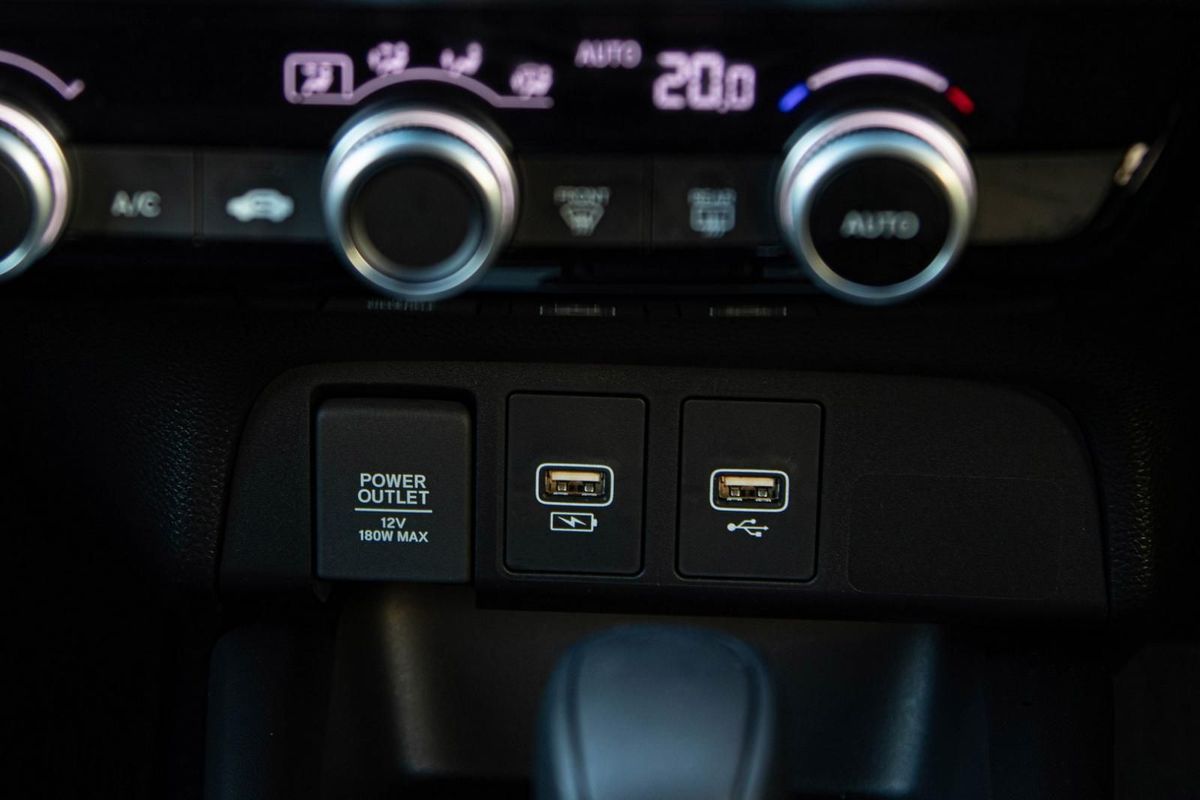
From the driver’s seat, there are a few well-positioned storage bins for your phone, keys etc. When your mobile phone is connected to the car via a cable, you can place your phone in a convenient tunnel right next to the USB ports. Rear legroom is also very good for the segment – Honda claims it’s class-leading. This compact hatchback can genuinely seat 4 adults in comfort, we tested that extensively.
How much does the Honda cost in South Africa?
The Honda Fit range starts at R319 900, with this 1.5 Elegance derivative retailing for R359 900. The top-spec model retails for R389 900 and the flagship Hybrid costs R469 900.
The new Honda Fit is sold with a 5-year/200 000 warranty, as well as a 4-year/60 000 km service plan with 15 000 km service intervals. You’ll also get 3 years’ worth of AA Roadside Assistance.
Competition is incredibly tough in the compact hatchback segment, but the Honda Fit certainly has its strengths.
Verdict
To use pop-music parlance, Honda SA has not had a hit in a while. Sales of budget-oriented products such as the WR-V small crossover and the Amaze and Ballade sedans have not met expectations, while the brand’s Civic and CR-V mainstays have been priced out of contention and Civic Type R is a low-volume model. The HR-V is getting on in years and its replacement model does not appear to be destined for SA. There are some glimmers of positivity though, the BR-V is a ride-sharing favourite and, while there’s still stock available, Honda SA will sell as many as it can. Finally, there’s the new Fit.
It’s not the most keenly-priced compact hatchback and its driving experience fails to excite, but the arrival of the Japanese-made Fit is a great statement of intent by Honda SA; it’s a way to reassure the brand’s customers that the Japanese firm is committed to our market. What’s more, the Fit is a well-made quality product that retains all the classic traits that made its Jazz predecessor a popular choice over the years (especially nifty interior packaging), while the newcomer’s eye-catching (dare we say… youthful) exterior styling and latest connectivity features should help build it build a wider fan base.
Given its asking price of R359 900, the 1.5 Elegance is not a bargain, but its value proposition is quite good.
Should you buy one? If you prioritise comfort, refinement and practicality over performance and an engaging driving experience, the Honda Fit is worth considering. If you want the advanced Fit Hybrid with its semi-autonomous safety tech and its (claimed) impressive fuel economy, that’s only arriving in a few months’ time (October 2021). Right now, we think the 1.5 Elegance is the pick of the range, so if day-to-day comfort, practicality and modern conveniences are more important to you than driving engagement, then the Fit is well worth a look – indeed, even if you’re too young to need reading glasses.
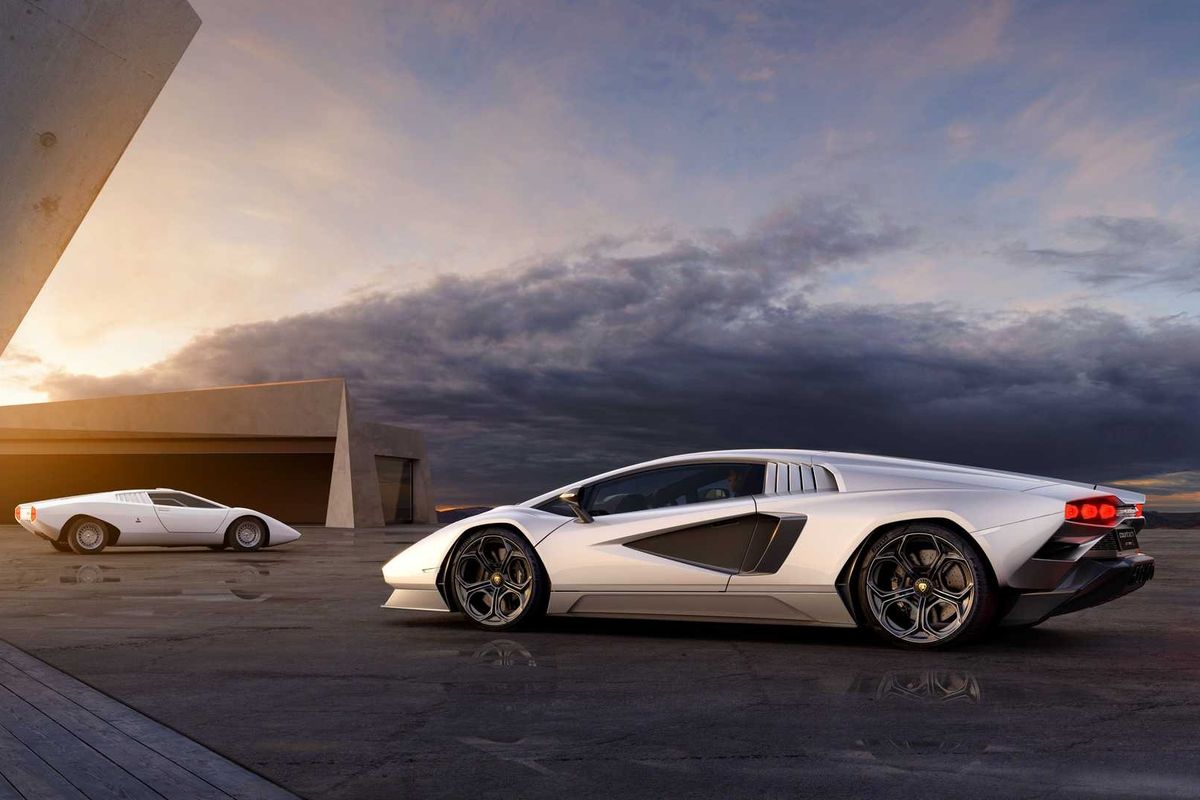
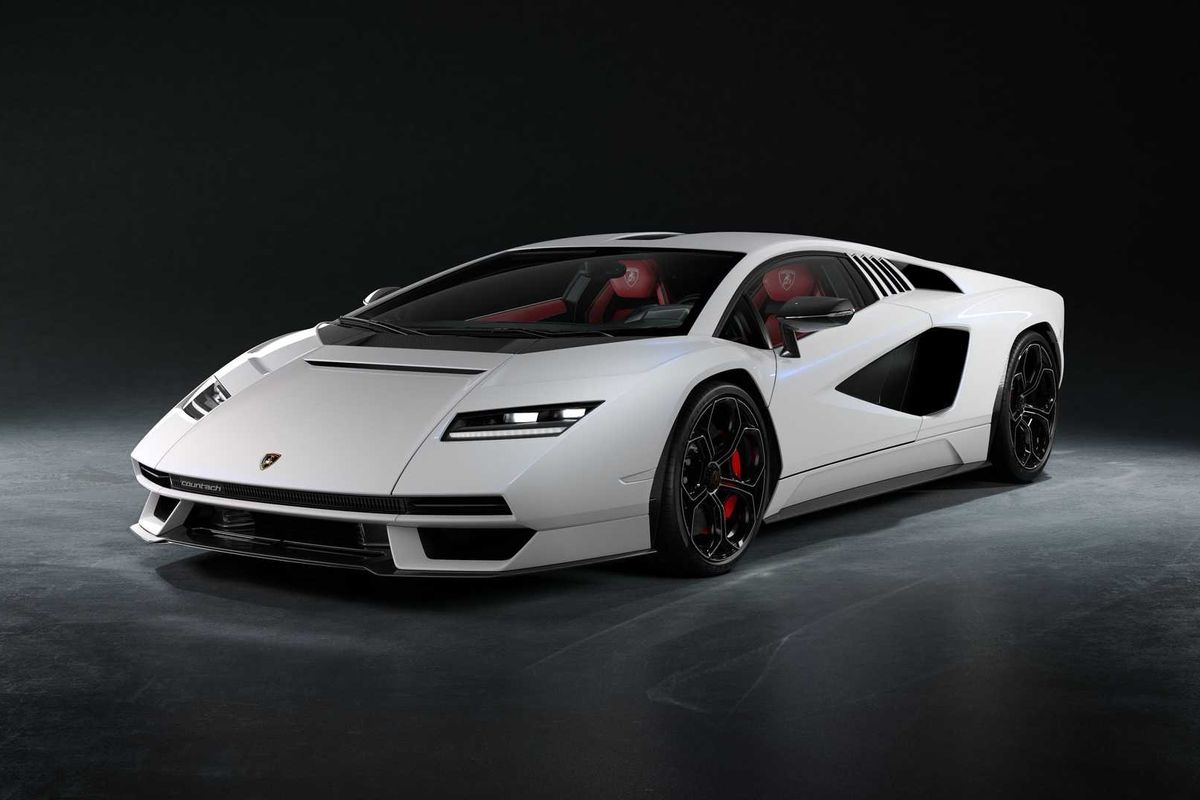
Lamborghini has revived the iconic Countach name and released a limited edition model, 30 years after the original Countach hit the roads.
It’s a bold and brave move reviving iconic product names. There’s a lot that can go wrong, especially if the original was seen as a benchmark for performance, design and so on, yet somehow it seems like Lamborghini has pulled it off. There’s no denying this is not an all-new vehicle from the ground up and cynically you could say it’s simply a reskinned Lamborghini Sian, which in turn is basically an Aventador with electric tech. That Aventador platform is quite old by today’s standards, but still, just look at the overall product – it’s striking.
Naturally, a Lamborghini will need to have a proper engine and a 6.5-litre naturally-aspirated V12 is assisted by a 48-Volt supercapacitor. Total outputs of the Lamborghini Countach LPI 800-4 are 599 kW and 720 Nm, giving it insane performance figures. The 0-100 kph is dispatched in 2.8 seconds, 0-200 comes up in 8.6 seconds and it has a top speed of 355 kph.
Inside, the cabin resembles the Lamborghini Sian FKP 37, but there are some retro-style themes inside too. Scissor doors were a must-have obviously, but we do wish it had pop-up headlights to complete the homage styling.
There will be 112 units built and we suspect that most are already spoken for. A very cool touch is customers can opt for one of the modern colours offered by Lamborghini, or go for one of the 1970 colours that made an appearance on the original Countach. They’ll be hitting the roads in the first quarter of 2022.
As cool as it looks, we can’t help but feel like the all-new Countach should have been an all-new offering to pay proper tribute to the original model that started the 80s supercar era.
This week’s news you need to know (August 2021, Week 2)
In this week’s automotive news you need to know: Toyota clearly has excess GR Sport badges in stock, BMW plans to bring a ‘proper electric car’ to South Africa, Haval creates more interest with its new family SUV and Audi makes friends with vegans – again.
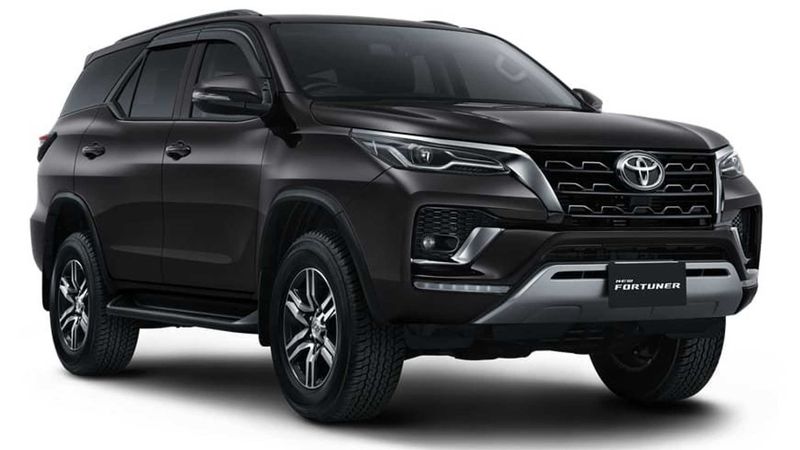
Toyota Fortuner GR Sport – King of the road gets his crown
It seems there is a GR Sport derivative of every Toyota model these days (recently, the Land Cruiser 300 got one). Yes, I have been applauding Toyota for liberally sprinkling its sportscars or hatchbacks with Gazoo Racing (GR) fairy dust, plus GR Sport is essentially a styling kit and must not be confused with a pukka GR model. However, the danger of badge saturation is ever-present when branding is applied purely to maximise profits through product life-cycle extension and upselling. Rareness and desirability factors determine car values, so if everything has “GR badging”… uniqueness goes out the window.
Toyota has, however, held the “King of the Road” title with the award-winning Fortuner in South Africa; the Prospecton-based firm has sold around 1 000 units per month since the model’s introduction in 2006. I’ll do the math for you. That’s roughly 180 000 Fortuners that have graced South African roads, many of them filled with kiddies and towing trailers to holiday destinations. Do you see the merit in the business case?! Even if Toyota is wary of possible badge saturation, money talks and the firm won’t miss out on this golden opportunity to cash in on a “hotter-looking” variant of its golden child. Ka-ching!
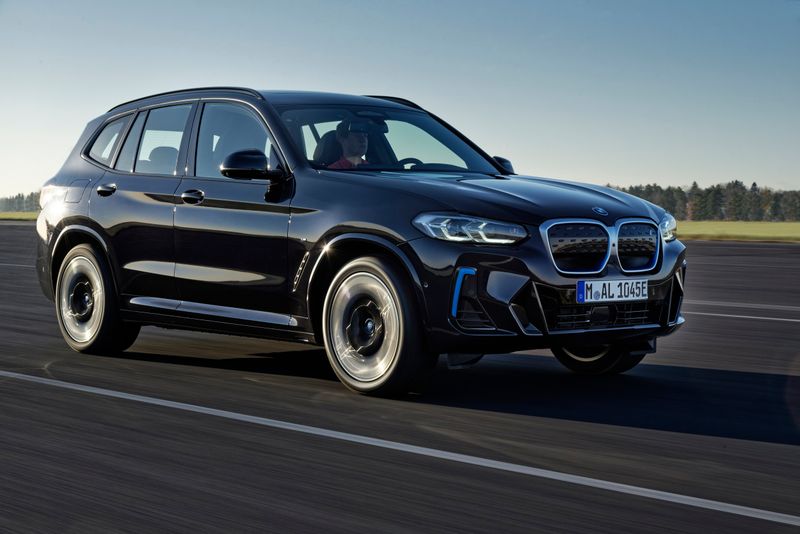
BMW iX3 – Green shoots
Considering that the local automotive industry is a major contributor to the South African manufacturing sector, the BMW iX3’s arrival on our shores early in 2022 could be game-changing in many ways. Firstly, with all due respect to the pioneering roles of the i3, the discontinued i8 and even the Mini Cooper SE (and however many petrol-electric derivatives BMW SA has sold so far), the iX3 will be the first battery-electric family vehicle that the Bavarian marque introduces in Mzansi. Given Audi, Mercedes-Benz and other brands have also pledged to add a number of EVs to the local new-vehicle market soon, something tells me EVs are going to become notably more viable next year, hopefully through cooperation between the OEMs, help from the private sector and (let’s hope) concessions from Government.
After Covid-19’s crippling effects on the global economy, moments like these are pivotal for our motor industry. Secondly, seeing as the current combustion variant of the X3 executive SUV is produced at BMW Group Plant Rosslyn, the real opportunity with the iX3 would be to produce it in South Africa. This could be the type of transition of ICE-to-EV production that could set a trend for our local producers and be the green shoot we need, causing other manufacturers to follow suit. Sure, there’s a lot that needs to happen between that moment and now, but these types of blips on the radar are what we need.
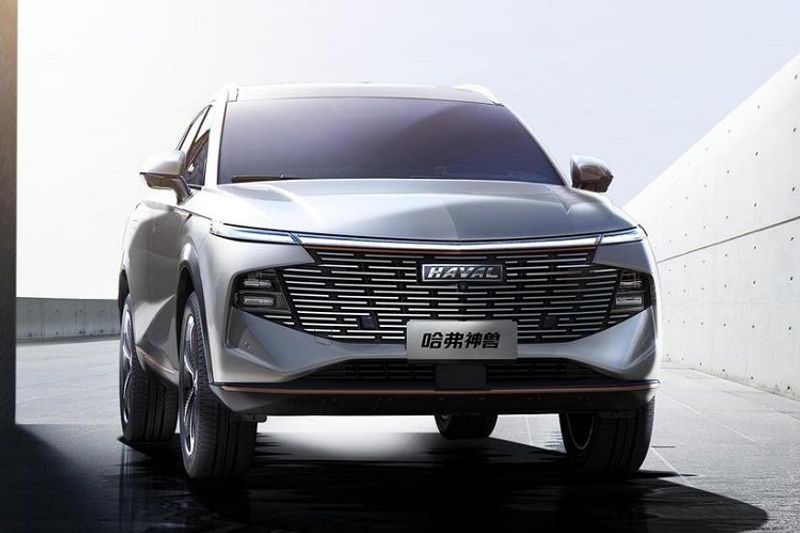
Haval Shenshou – The Midas touch
The Chinese invasion (or takeover, if you’re affiliated with a struggling vehicle importer in South Africa) marches on. Despite marketing material for the “Mythical Beast” (which is what Shenshou means) stating the newcomer is for China only, when there’s something we can’t have… we want it even more. It’s only a matter of time before this – essentially the H6’s bigger brother (or perhaps a successor to the H9) is made available locally, undercuts anything the competition has to offer and out-specs premium cars. It’s further validation that Haval has global aspirations. We’ve watched this movie before!
I’m all for a bit of extra competition in the new-vehicle market, especially if it obligates well-established manufacturers and importers to improve their value offerings. Rising prices have dealt affordability a body blow in a country in which household incomes cannot keep track with inflation. A weak exchange rate, rising input costs, troubled labour relations etc… you’ve heard all the reasons before, but a little shakeup is welcome if it benefits consumers. With Chery introducing intriguing new offerings in the next month, the great Chinese, um, takeover is one to watch. Best you brush up on that Mandarin, folks.
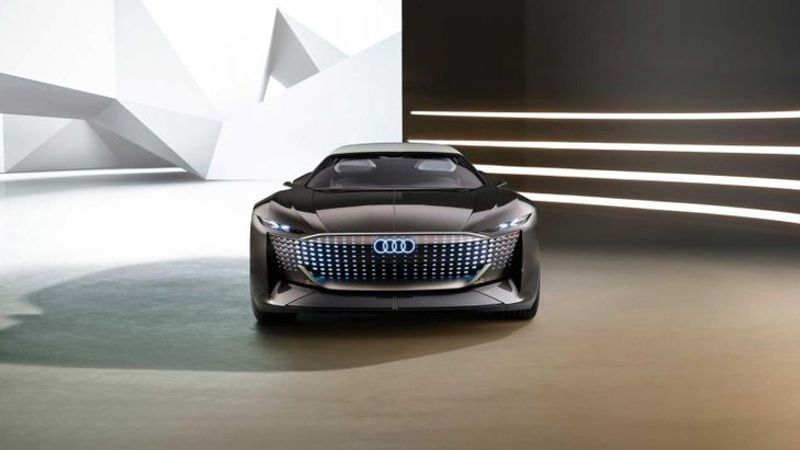
Audi Skysphere – Greta gets a new ride
One can’t help but smile at how excitable the automotive industry is at present. Manufacturers are scrambling to appease the minorities… while trying to cater for everyone! If there’s something I’ve learnt in life and that is you can’t please them all. Audi’s latest concept, the Skysphere, is a perfect example of that. It’s kind of Greta Thunberg meets retro throwback meets the future, including (sigh) vegan leather.
Manufacturers love virtue-signalling through their latest concept vehicles (I mean, there’s no point in whispering or humbly suggesting when you mount your proverbial soapbox, is there?). Mercifully, these fanciful 4-wheeled design studies seldom make it onto our roads, they merely foreshadow what the future holds. Be warned, however: You’re not going to please everyone and, at some point, you’ll have to pick a lane and stick to it. Sooner or later, someone will complain about the way the sun reflects off the paintwork and claim rogue beams could cause forest fires if they hit dry undergrowth at just the wrong angle.
“How dare you?”. How indeed, Greta… how indeed.
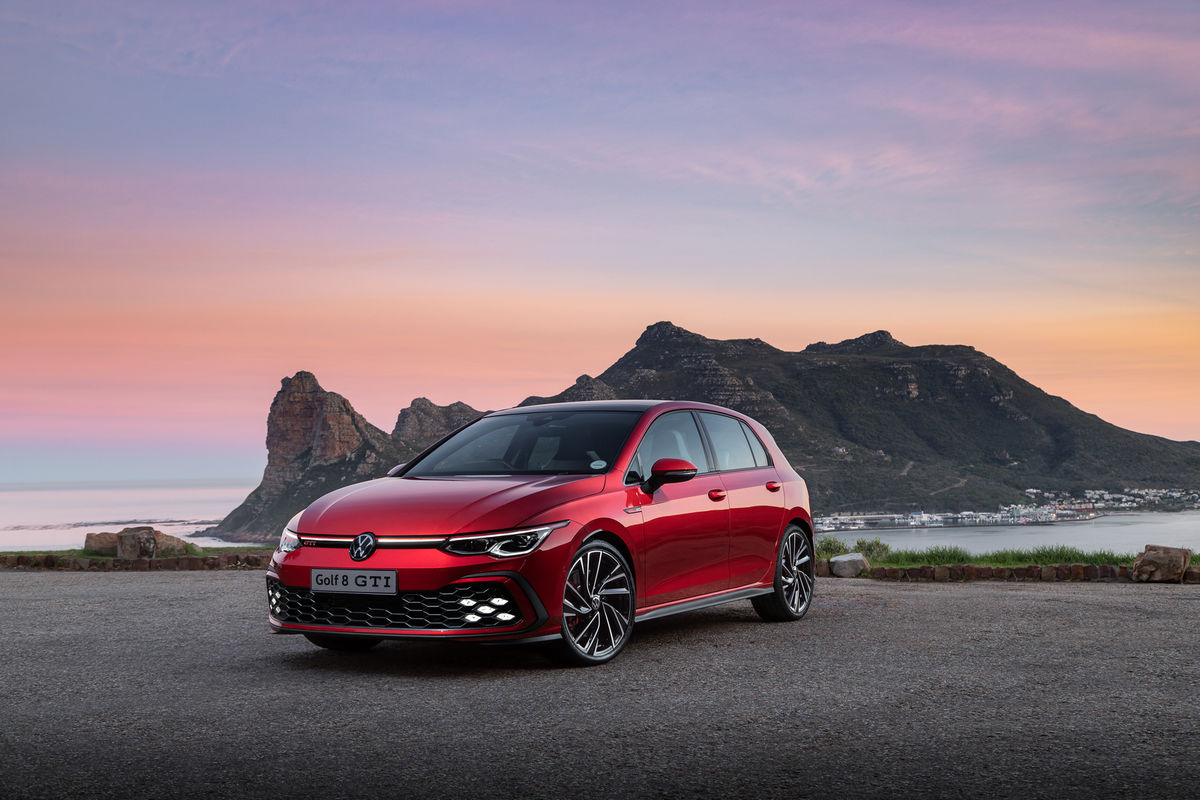
Volkswagen Golf 8 GTI (2021) Launch Review
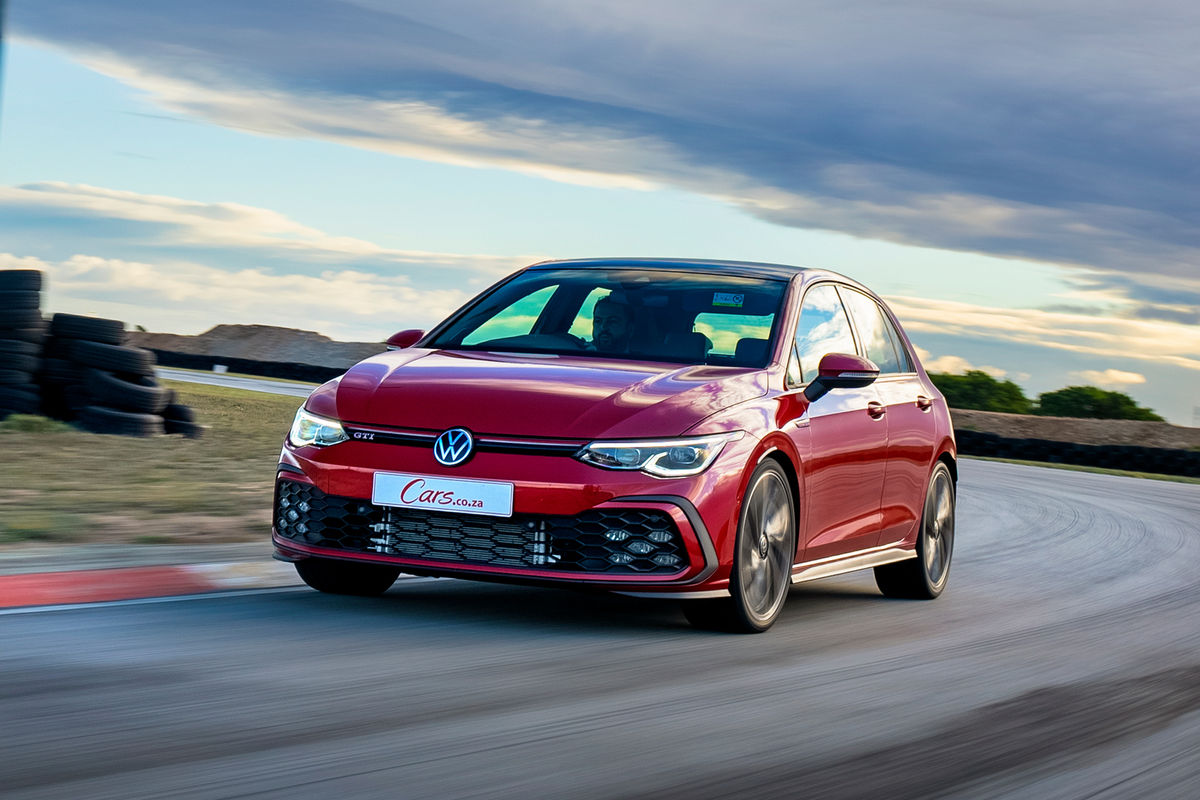
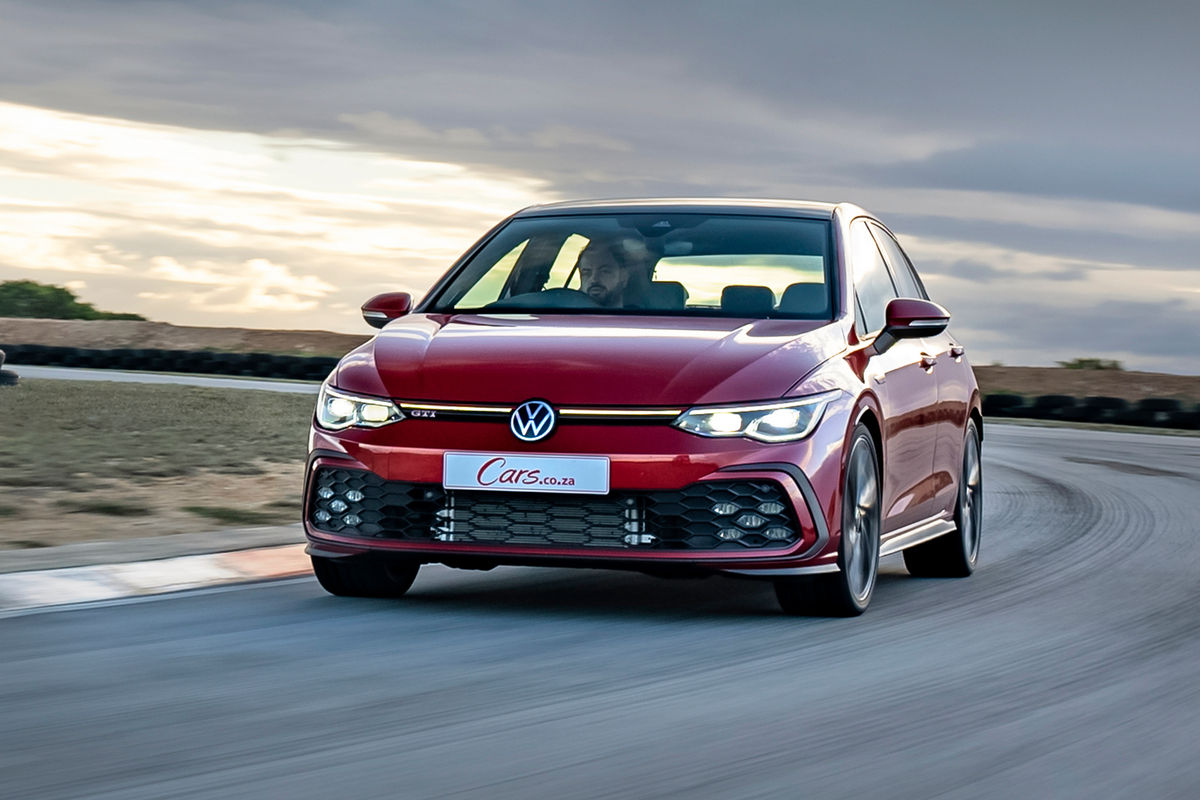
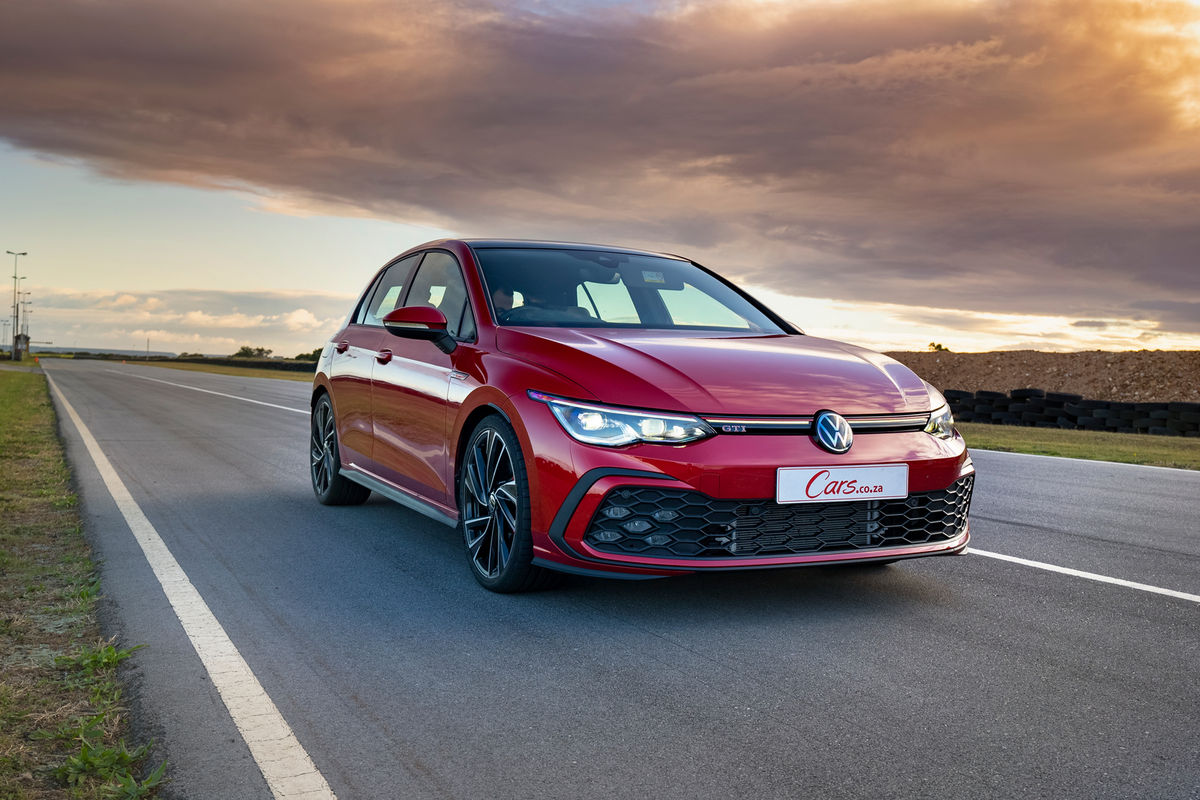
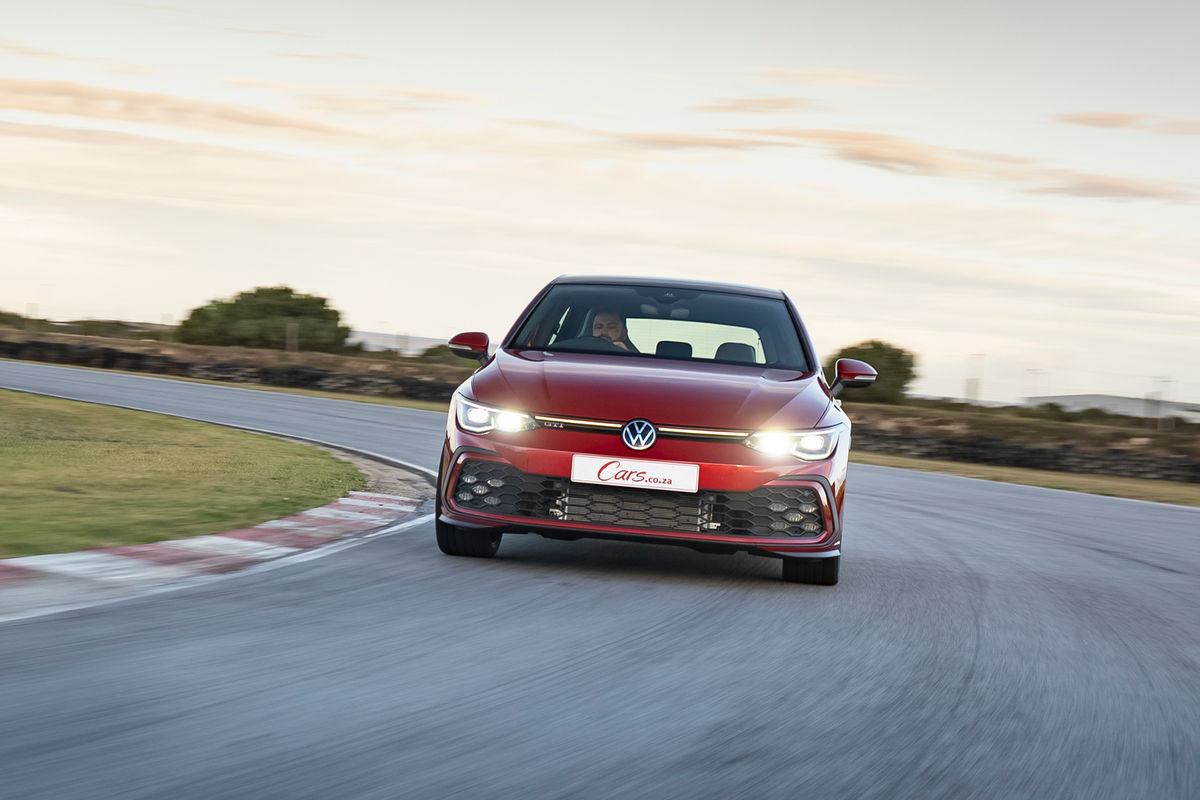
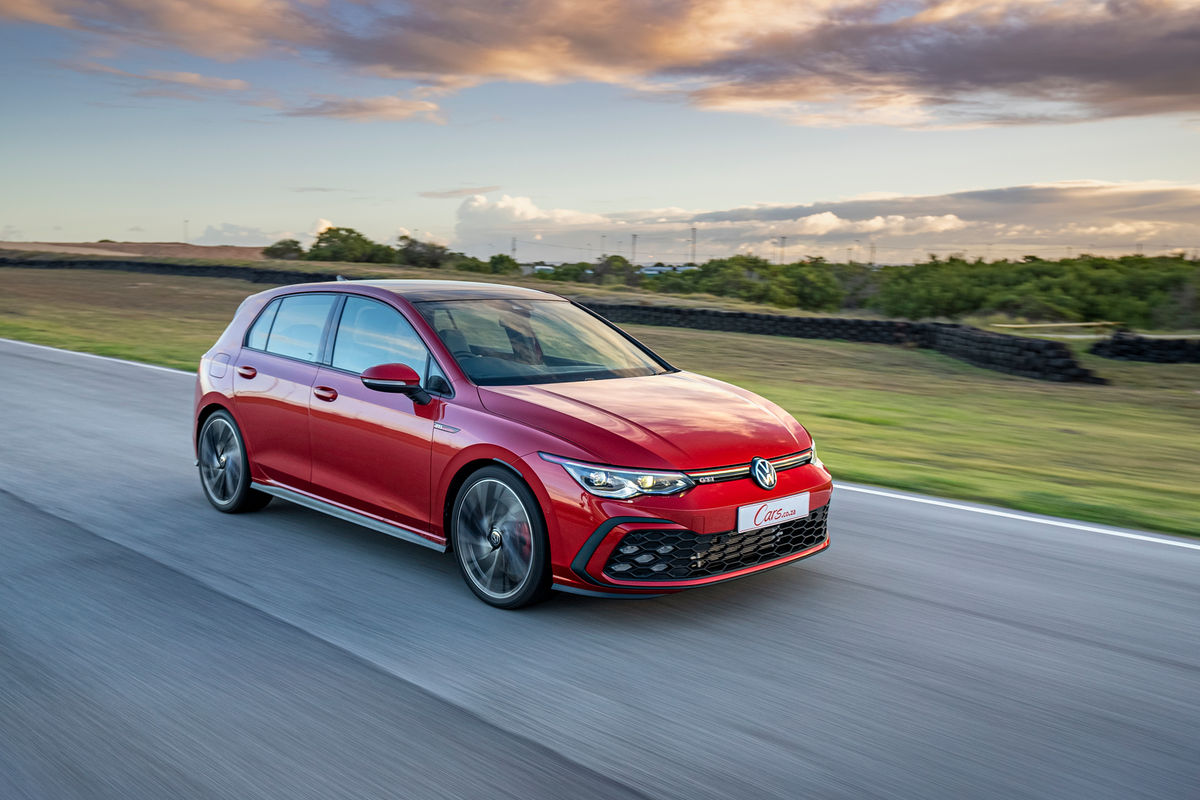
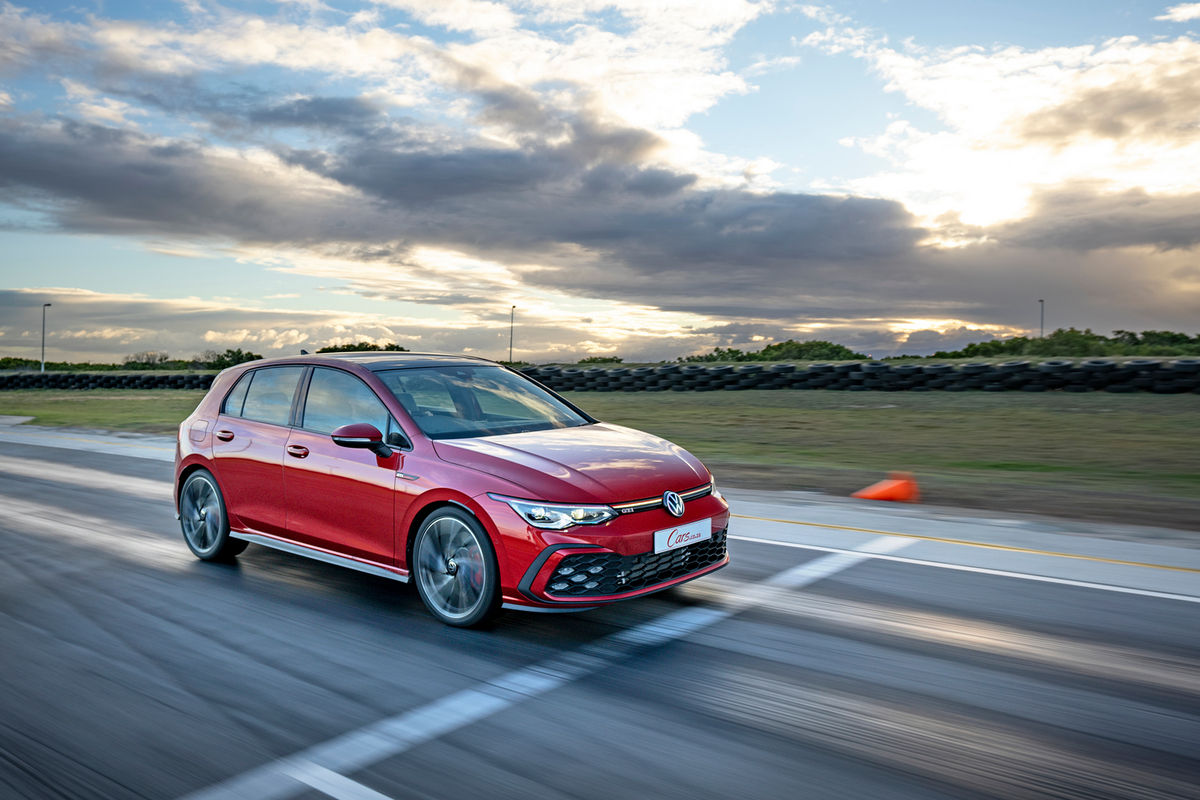
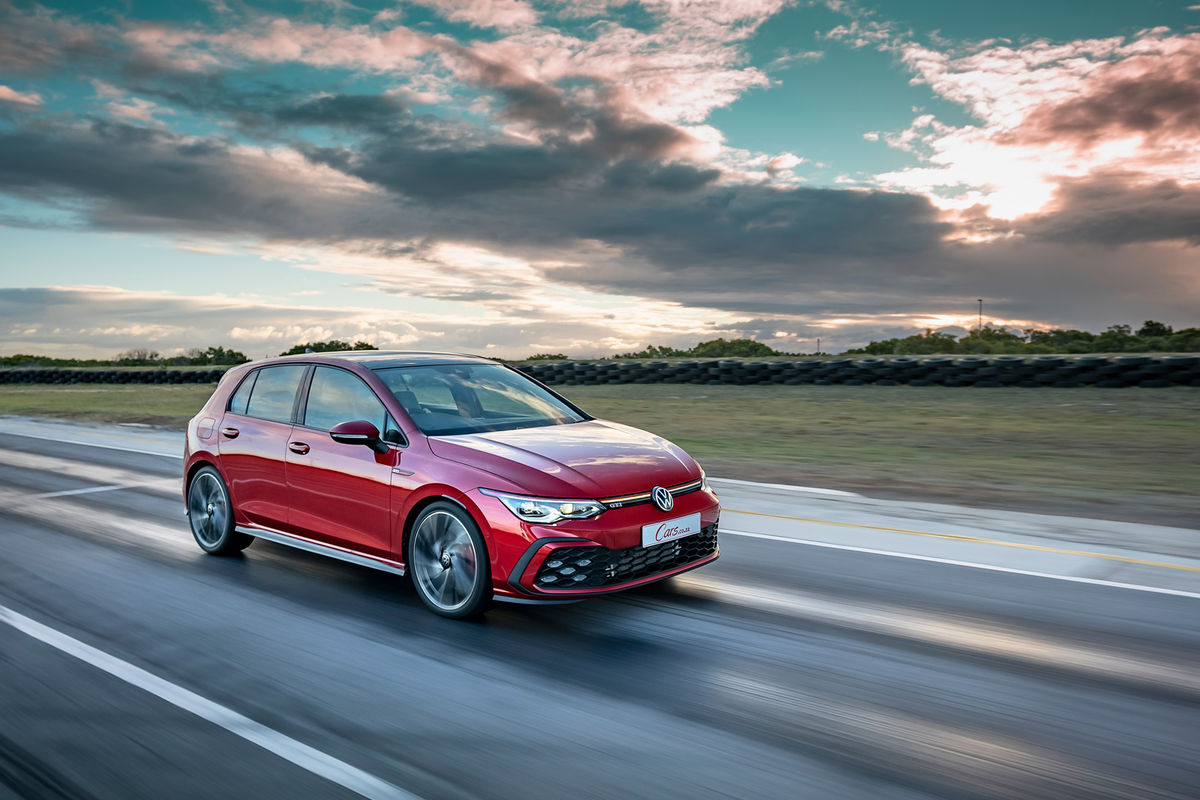
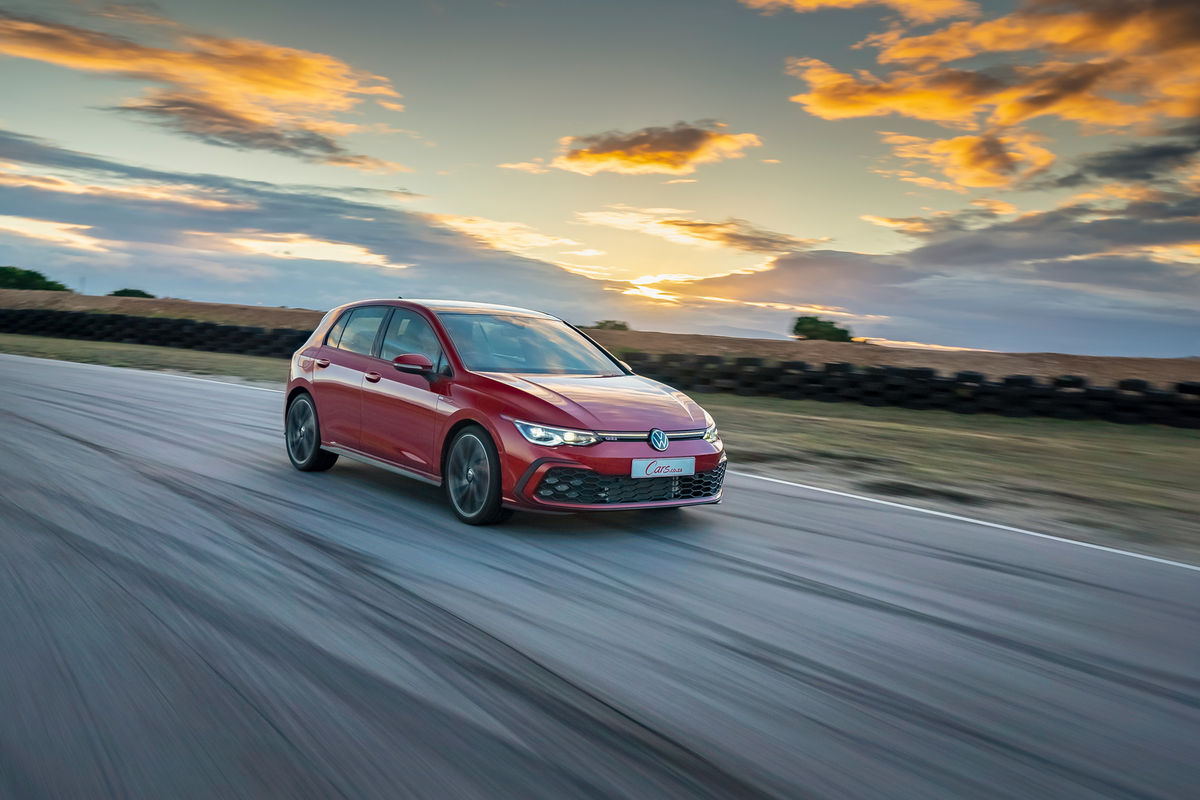
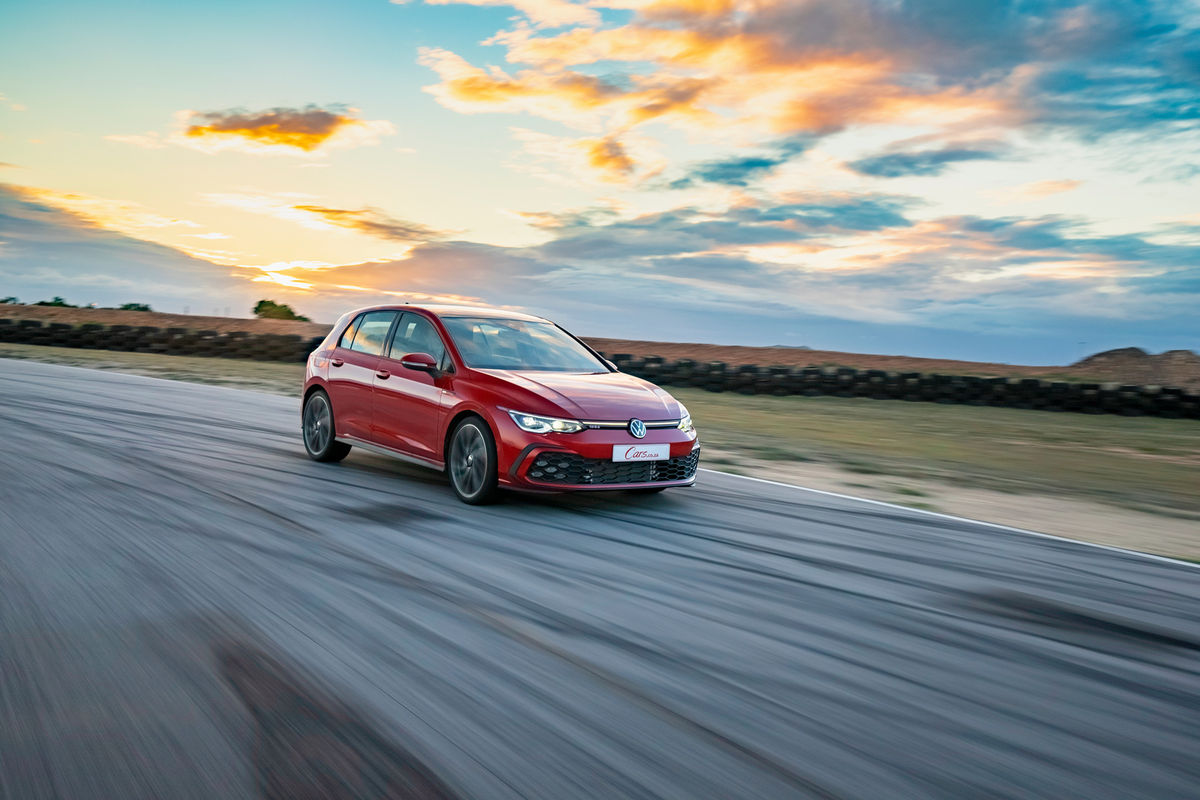
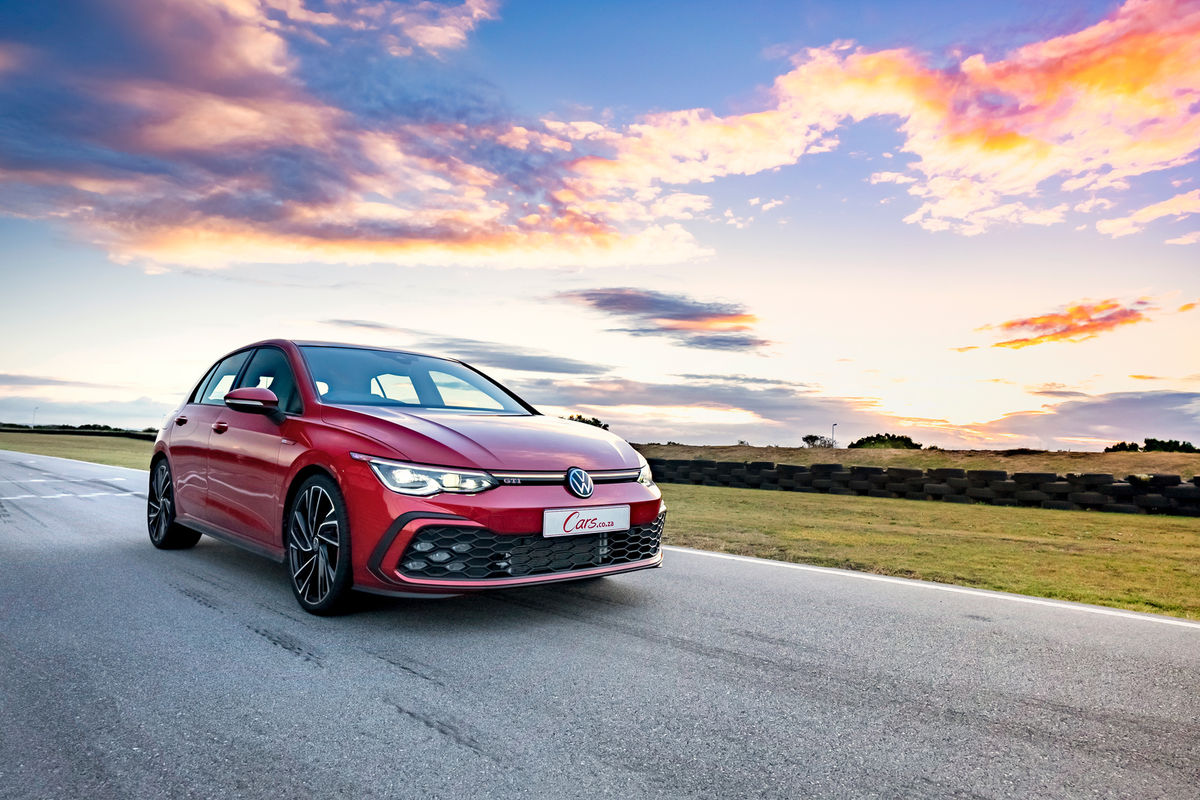
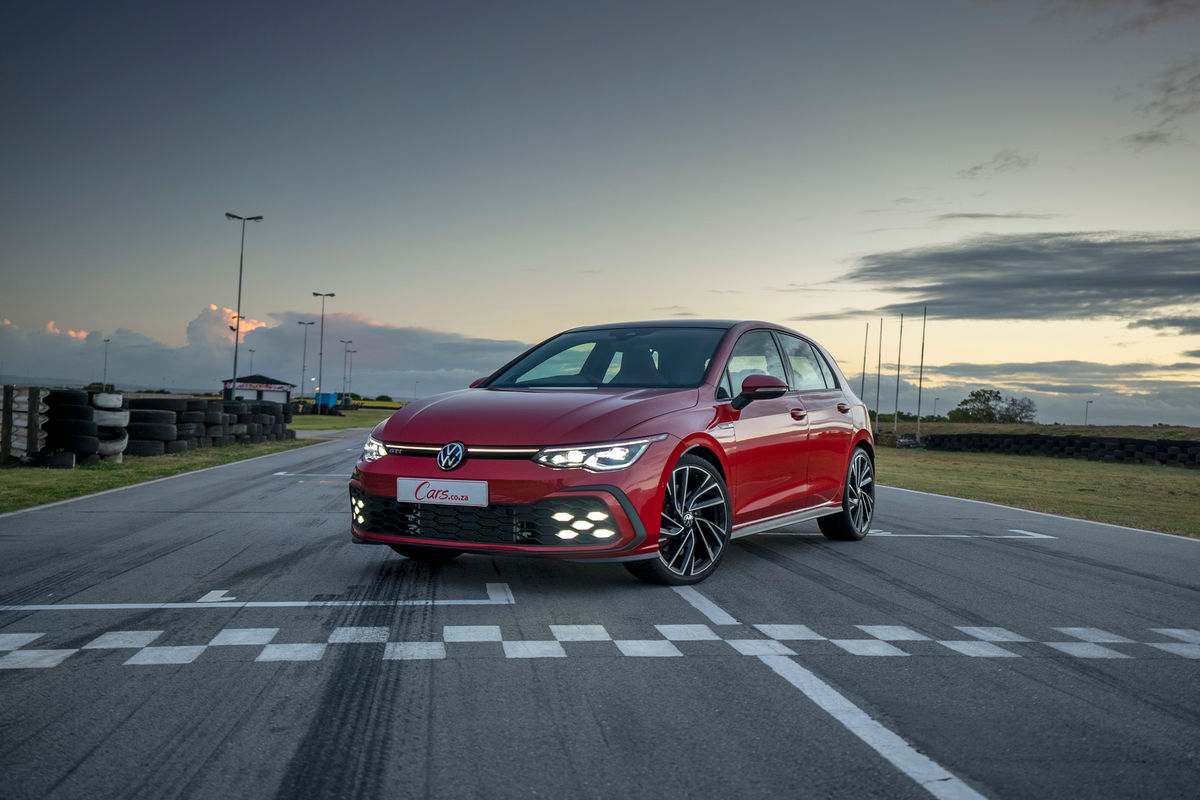
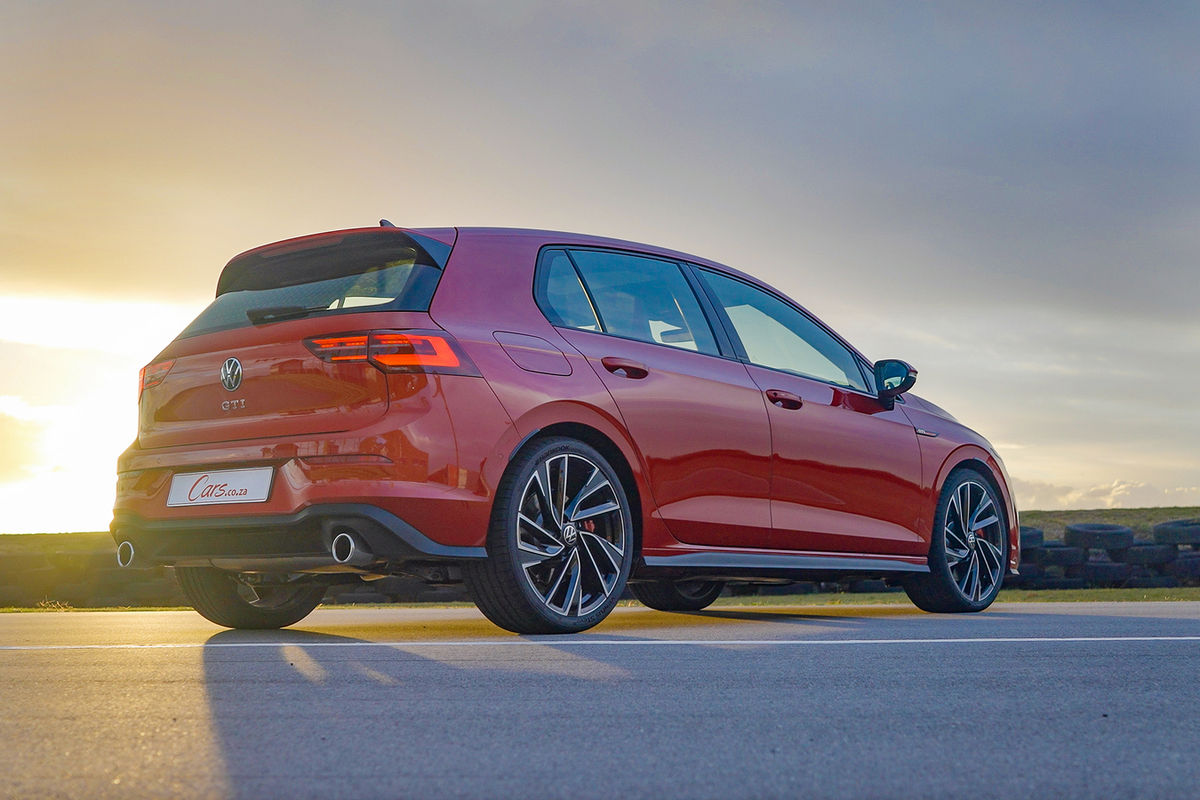
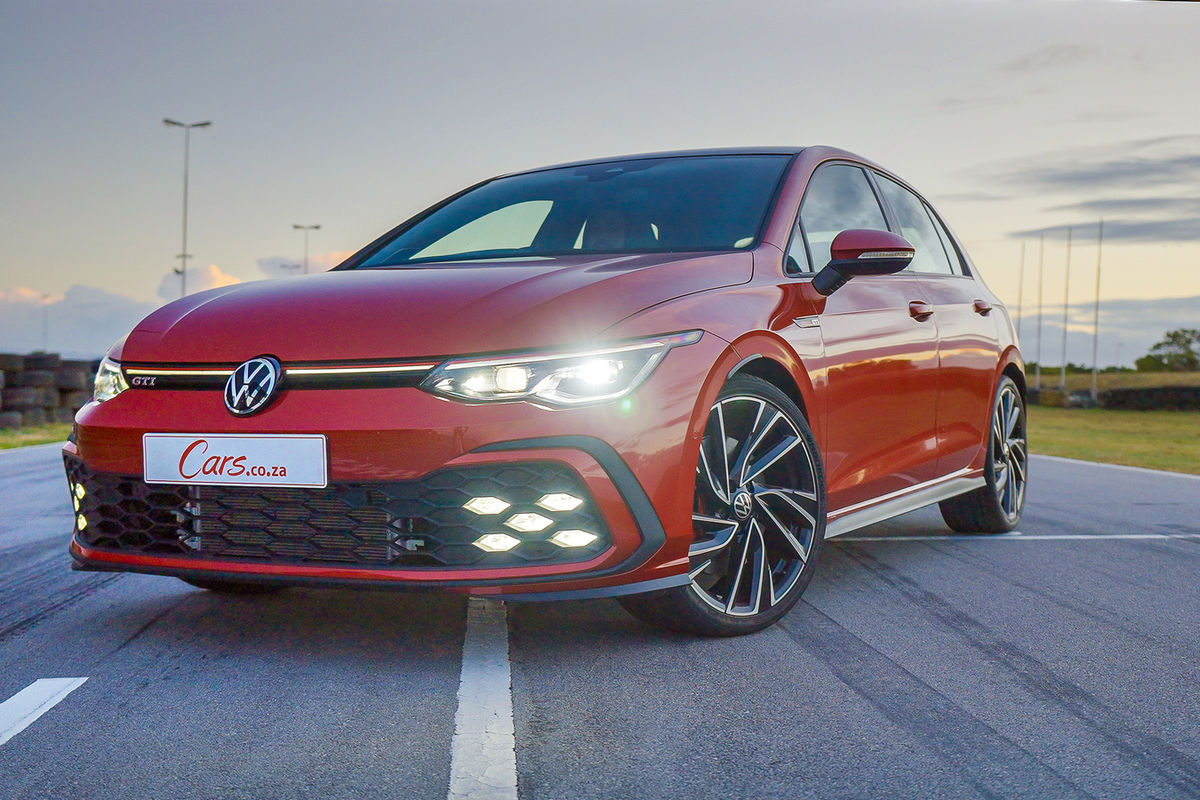
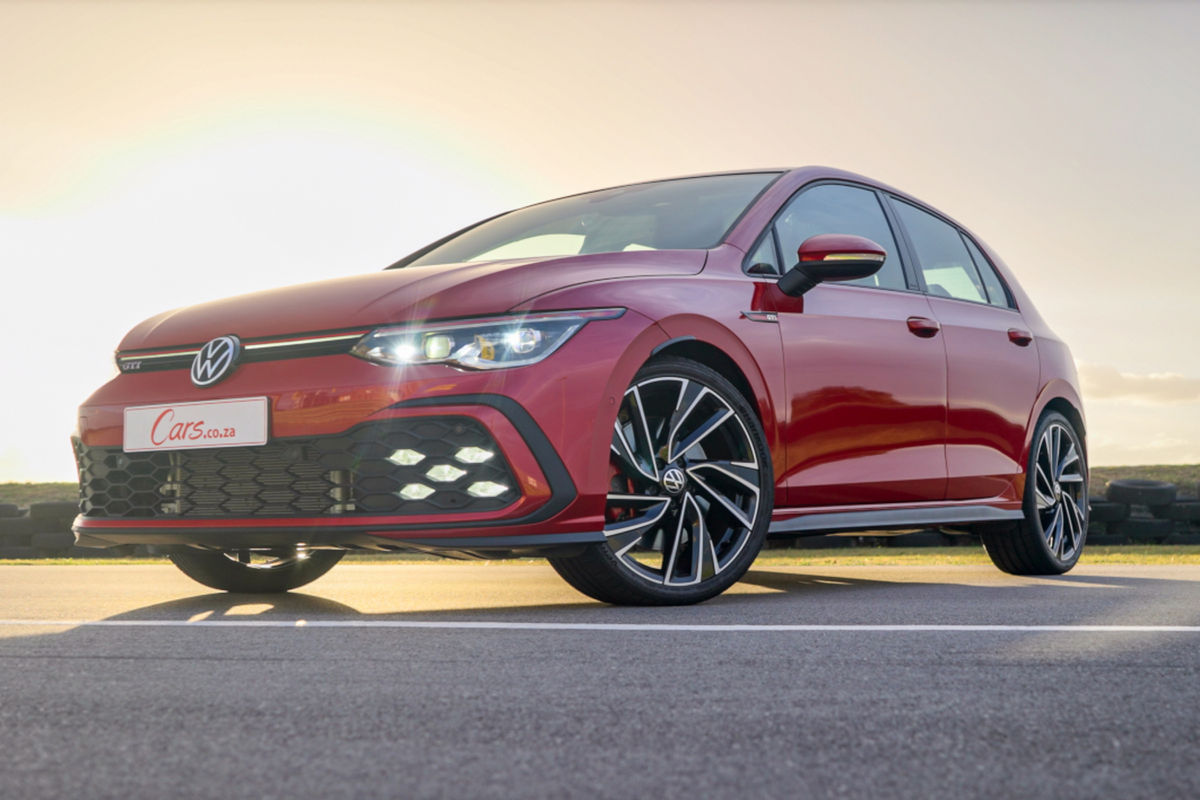
South Africa is the land of the Golf GTI, so it goes without saying that the arrival of a new iteration of Volkswagen’s hot hatch tends to whip car enthusiasts into a frenzy. We spent a day driving the all-new model around the Cape ahead of its official local launch to find out how much has changed and, if it’s better than the “7.5”.
What’s new on the Golf GTI?
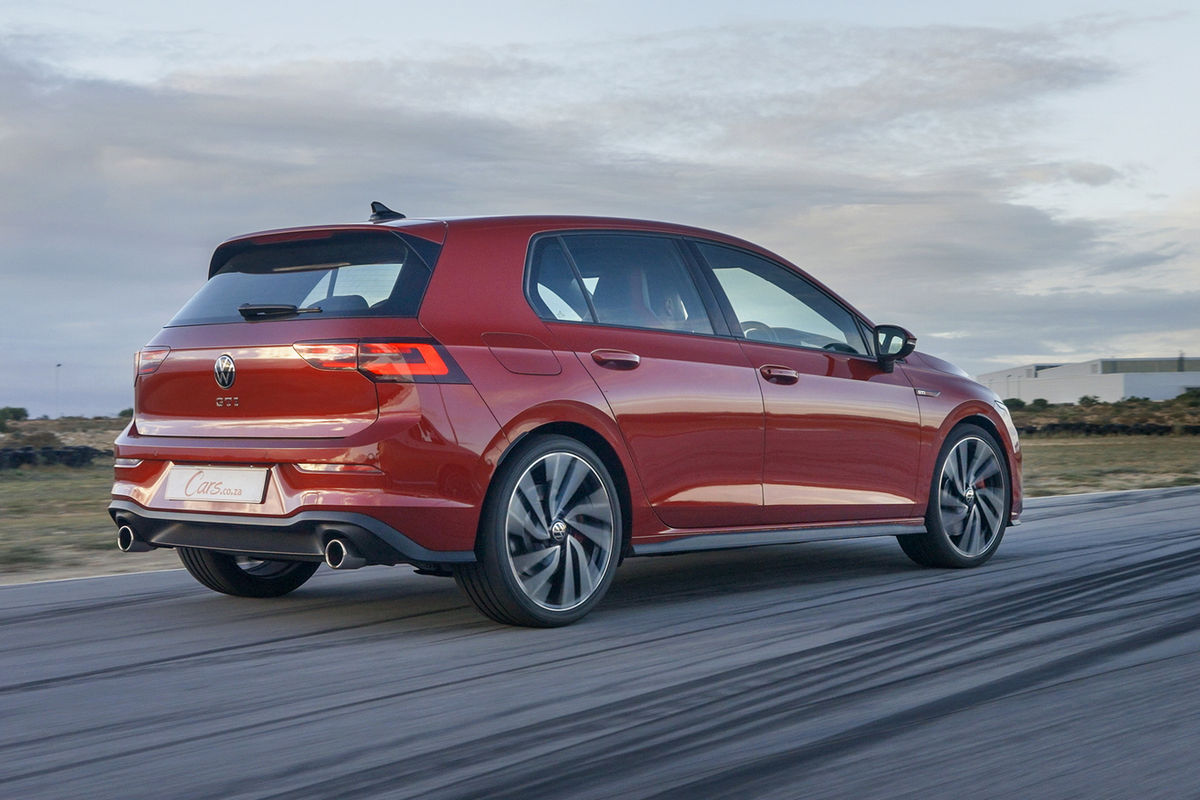
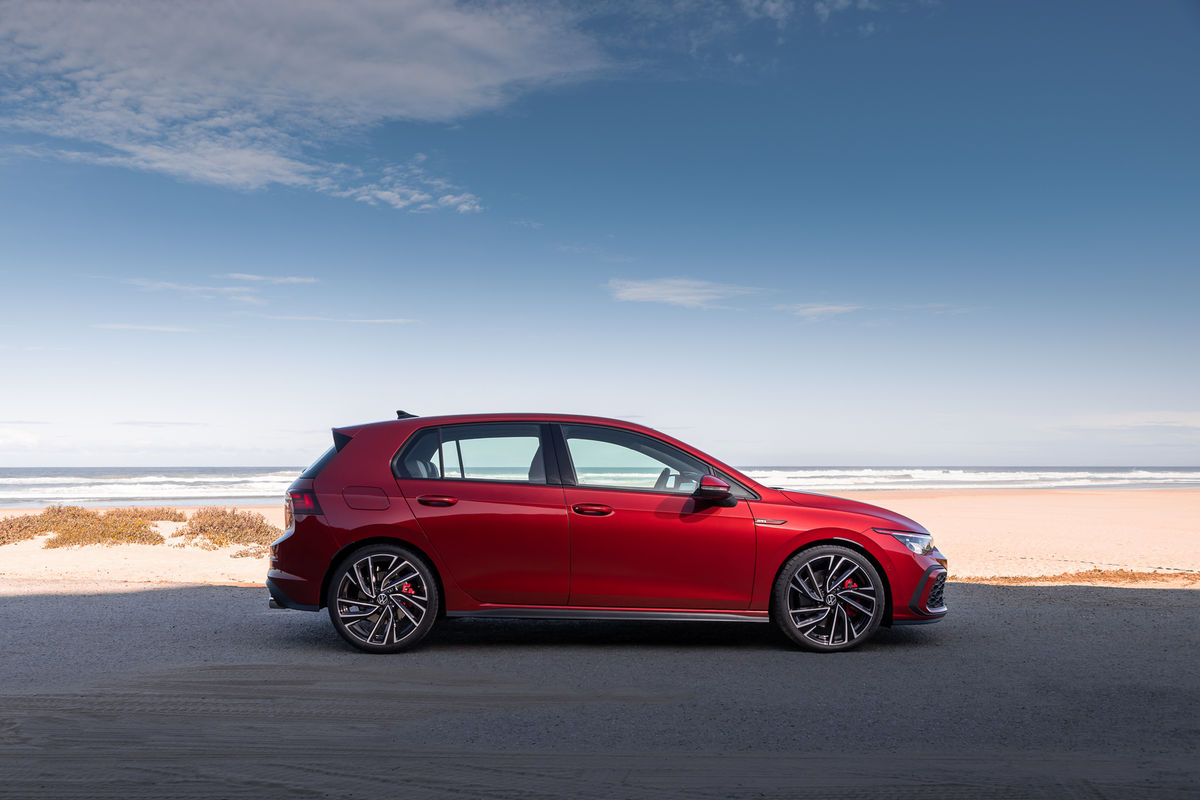
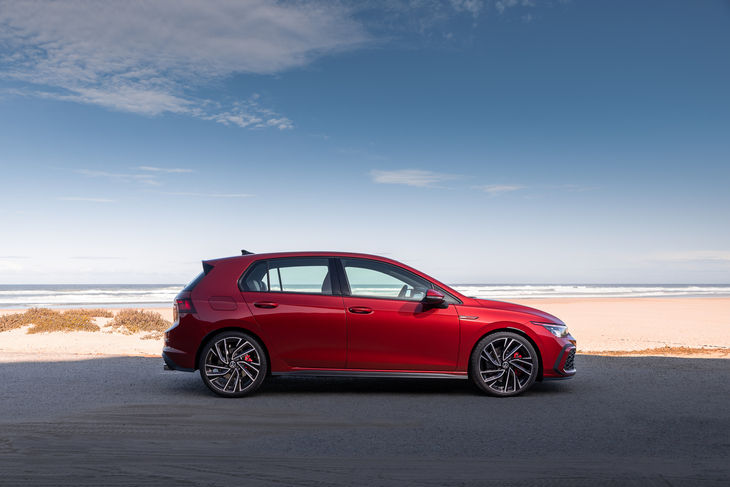
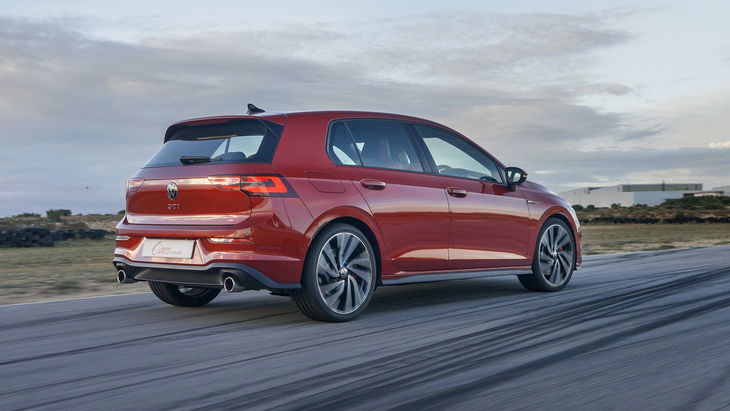
The 19-inch wheels fitted to this example are optional the Golf 8 GTI has 18-inch wheels as standard.
Now in its 8th generation and “rest assured,” Volkswagen South Africa (VWSA) tells us, “it won’t the last of its kind”, the Golf GTI has finally landed on our shores. To be fair though, while it may seem like a long time since its international launch a year ago, Mzansi is actually one of the first countries to receive this iteration of the Golf GTI, owing to the model’s incredible popularity in our market. The primary reason for its delayed arrival is not “Covid-19”, at not least directly – VWSA ascribes it to the global semi-conductor shortage, a problem that has forced the VW Group to source its own EMS chips…
Nevertheless, the Volkswagen Golf 8 GTI is here now, so we should be celebrating the latest iteration of South Africa’s favourite hot hatch. The new model uses the same platform and same engine as its predecessor, but (as I will duly explain) with differing results. If ever there was a nameplate that pushed evolution over revolution, it’s the GTI.
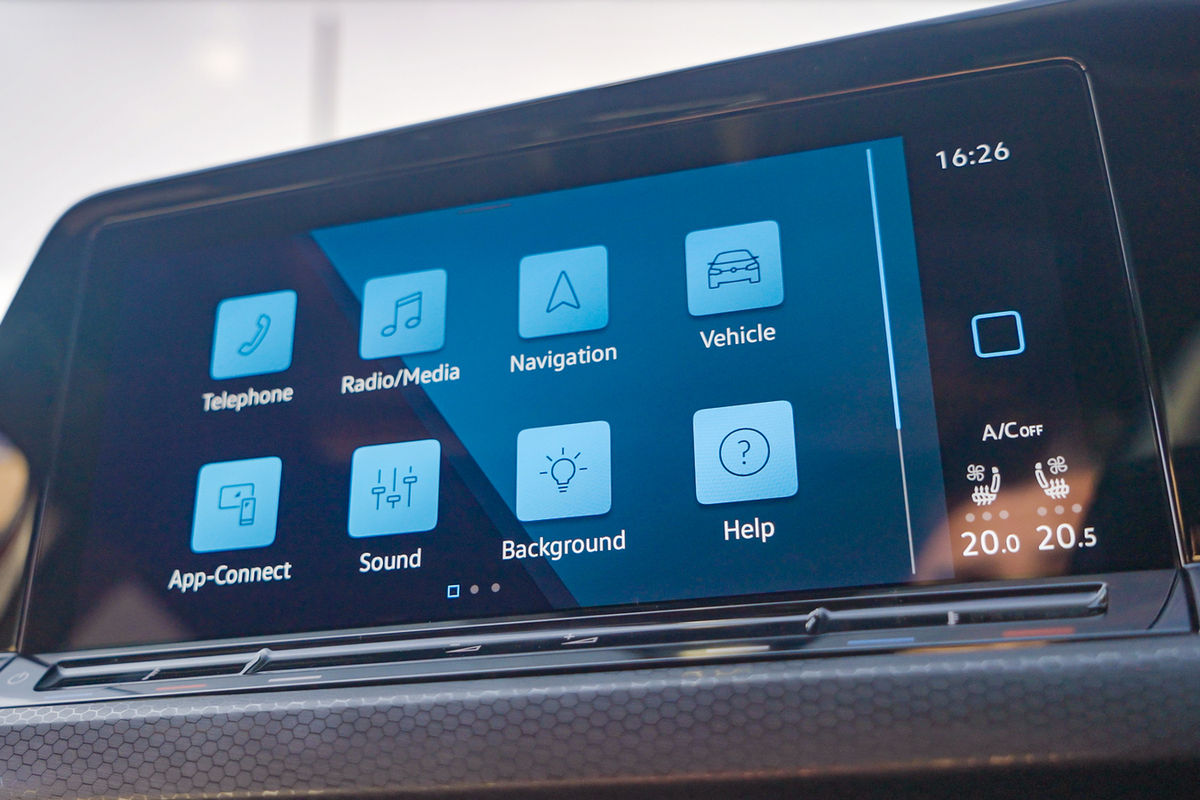
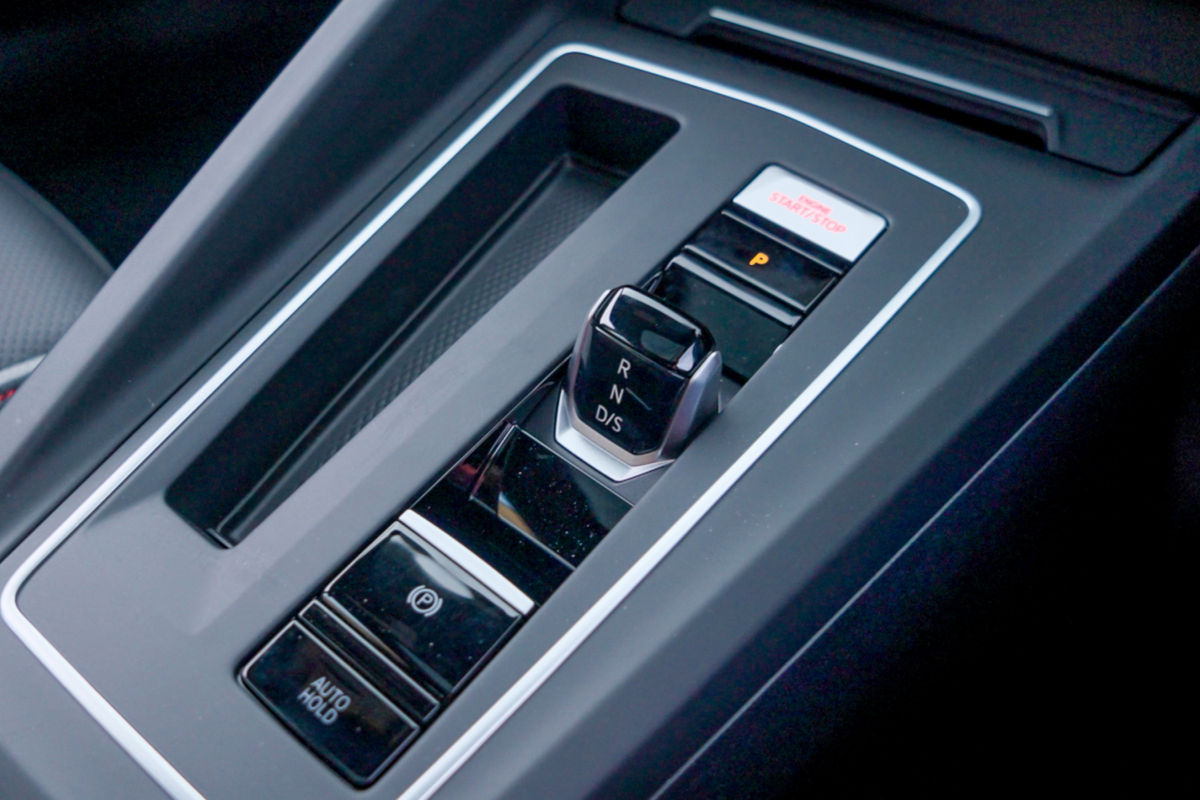
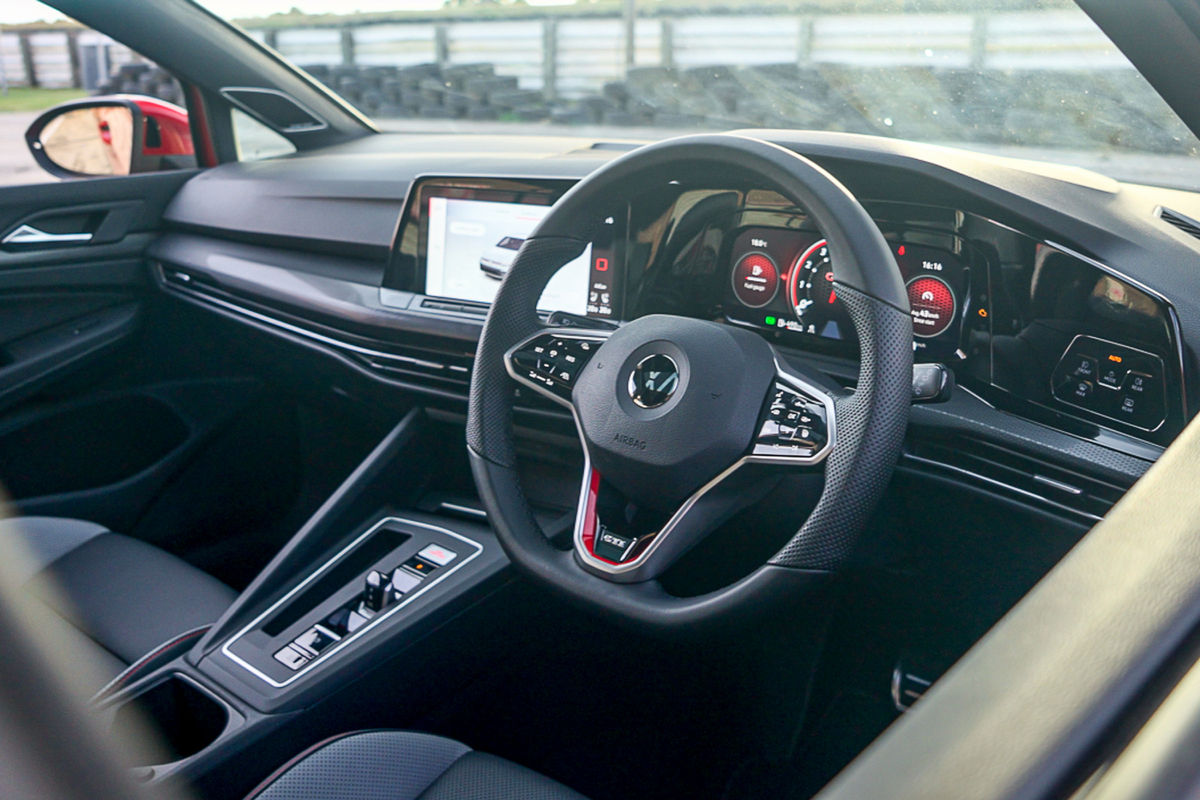
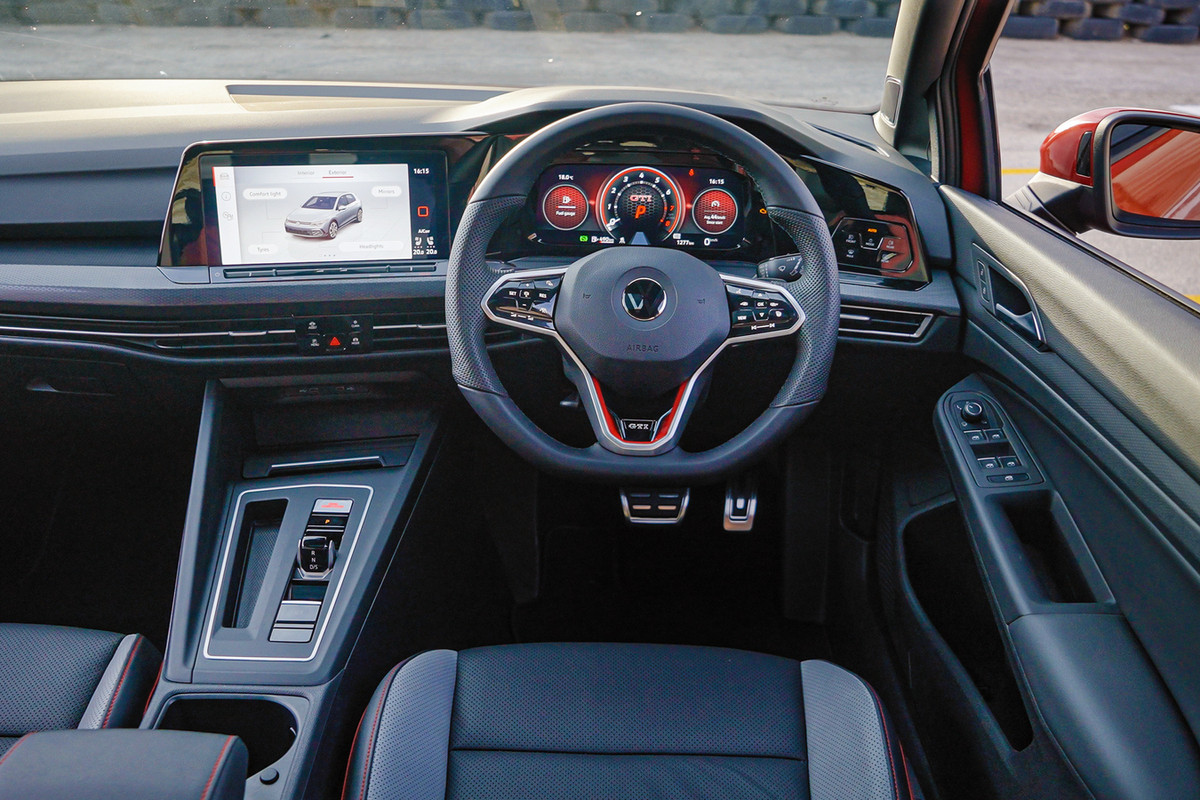
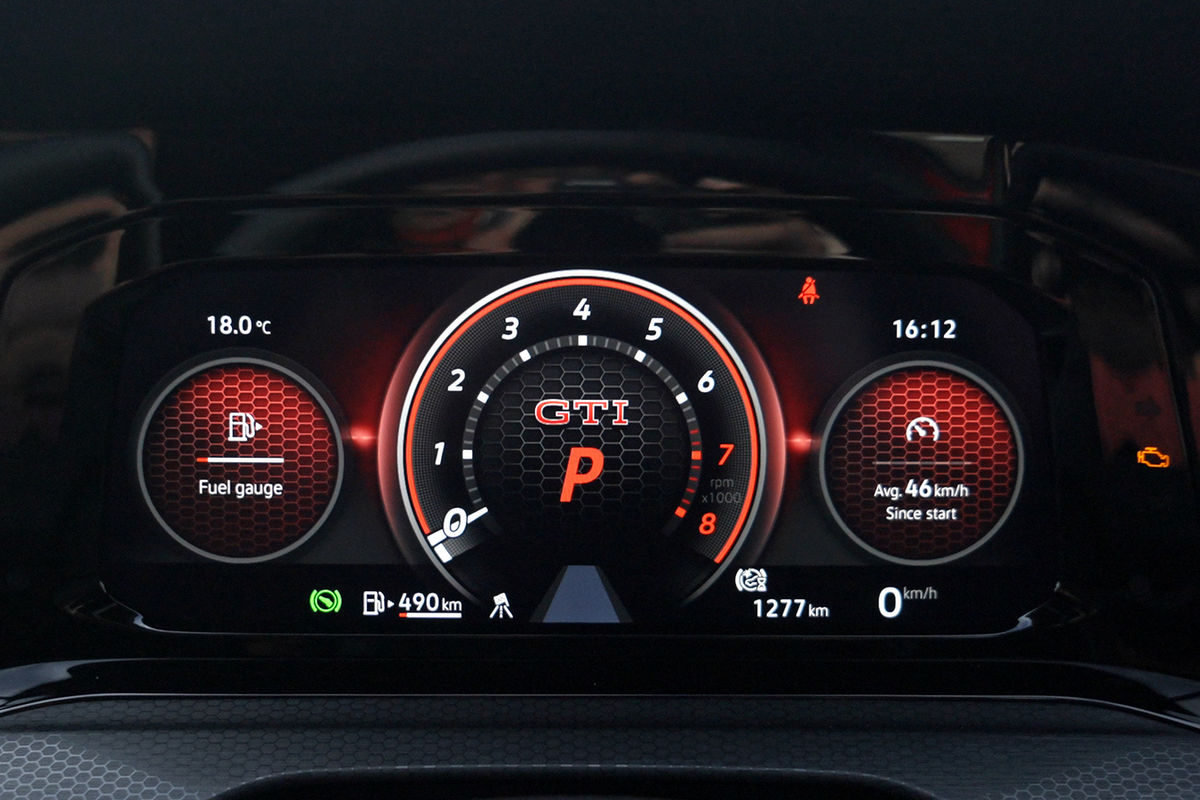
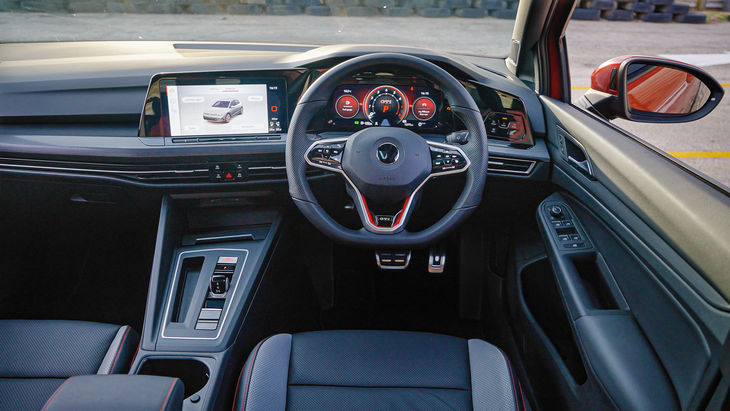
A major update has occurred within the cabin – inside, the GTI has moved to a fully digital affair thanks to a new infotainment system with haptic feedback for the touchscreen and steering-wheel buttons.
The same, but better, GTI engine
The 2.0-litre 4-cylinder turbopetrol engine has been upgraded to produce peak power of 180 kW.
Those that live in a world ruled by kilowatt (kW) top trumps will probably criticise the Golf 8 GTI for producing lower peak outputs than its rivals. However, it’s not as simple as that, because each manufacturer has a different method for determining their engines’ outputs and it’s quite likely that VW “underquotes” its figures, whereas its rivals don’t. The newcomer’s engine is the same as the unit in the Mk 7 and 7.5, but has been livened up to produce 180 kW and 370 Nm of torque. The claimed 0-to-100 kph time is 6.4 sec, thanks to a brisk and beautifully refined 7-speed dual-clutch automatic transmission (DSG).
The Golf 8 GTI’s engine performance is surging – and refreshingly linear; small-capacity turbocharged engines tend to serve up a wad of torque at low revs, but the Wolfsburg-based brand’s hot hatch is evidently tuned to avoid that. The 2.0-litre 4-cylinder powerplant continues to produce acceleration right the way to the rev limit and then smoothly transitions to the next gear without any fuss or so much as a hint of hesitation. The marketing slogan for our launch day was #Vrrpahh, which evokes the classic DSG bang that so many of us have heard echoing through our suburbs 2 minutes before curfew starts.
I have to say, the usually percussive vrrr-pah! (apologies, VWSA, but that’s the way we spell the uniquely South African neologism on our SentiMETAL merchandise) feels very muted from inside the cabin, but that might just be because of the well-insulated cabin or to cater for a more, um, upmarket clientele. I expect many buyers will be stopping by aftermarket shops to enhance their GTIs’ vrrr-pah!
What’s it like to drive the new Golf GTI?
The interior is all touch and haptic receptive now. It’s a luxury performer.
Make no mistake: the MQB platform underneath the new GTI is NOT identical to that of the outgoing GTI (7.5). A new aluminium front subframe (similar to that used on the previous Clubsport S) saves around 3 kg, while there is a raft of structural upgrades that increase overall stiffness and the rear suspension has been firmed up to improve stability. The revision to the rear suspension, in particular, has made a noticeable change to the GTI’s handling behaviour at speed. It’s rock-solid at the rear providing real confidence when you pile on the pace.
The steering too, is reassuringly weighted and quick, making the 8th generation of Volkswagen’s hot hatch much more responsive than its predecessors. I must have fiddled around in the GTI’s touchscreen menu for 20 minutes before I found the ESC-adjustment toggle, but the exhaustive search was worth it… The Sport option in the ESC settings allows for a little more front-wheel slippage when the hot hatch puts down its power, well, at least before it has to rein in the fun (when “racy” turns into “unsafe”). ESC Sport seems to be a nice sweet spot; it allows you to explore the front-end limits without overdoing it.
Admittedly, the Golf 8 GTI’s handling is not the last word in fun-to-drive dynamics – not that it’s been the benchmark for that in the hot hatch segment for a number of generations. It’s fast, yes and very stable when changing direction, but it never seems like there’s much more to explore when you really push it.
When the transmission is in manual-shift mode, the throttle response to a downshift is slightly delayed, which is a little frustrating when you want that immediate response to a prod of the throttle. I suspect, however, that over the course of a lap of any circuit it will beat out the outgoing TCR by some margin.
Is the all-touch interior any good?
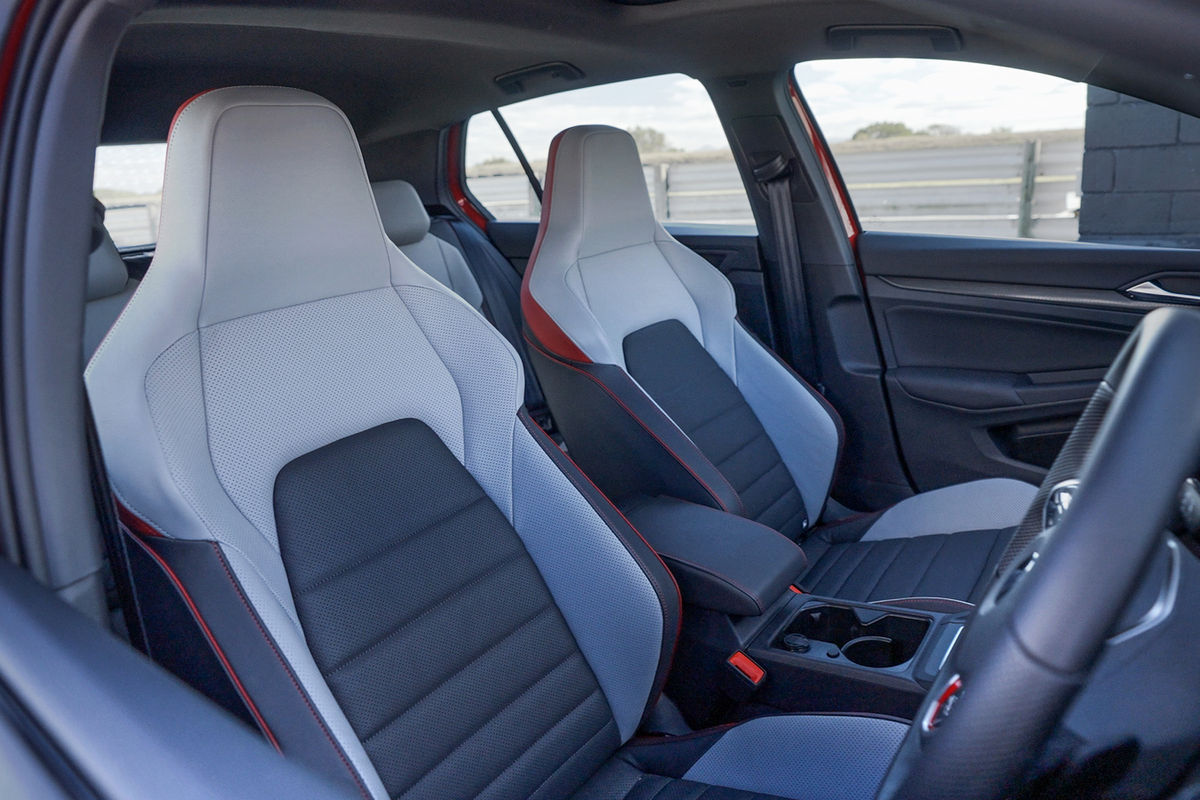
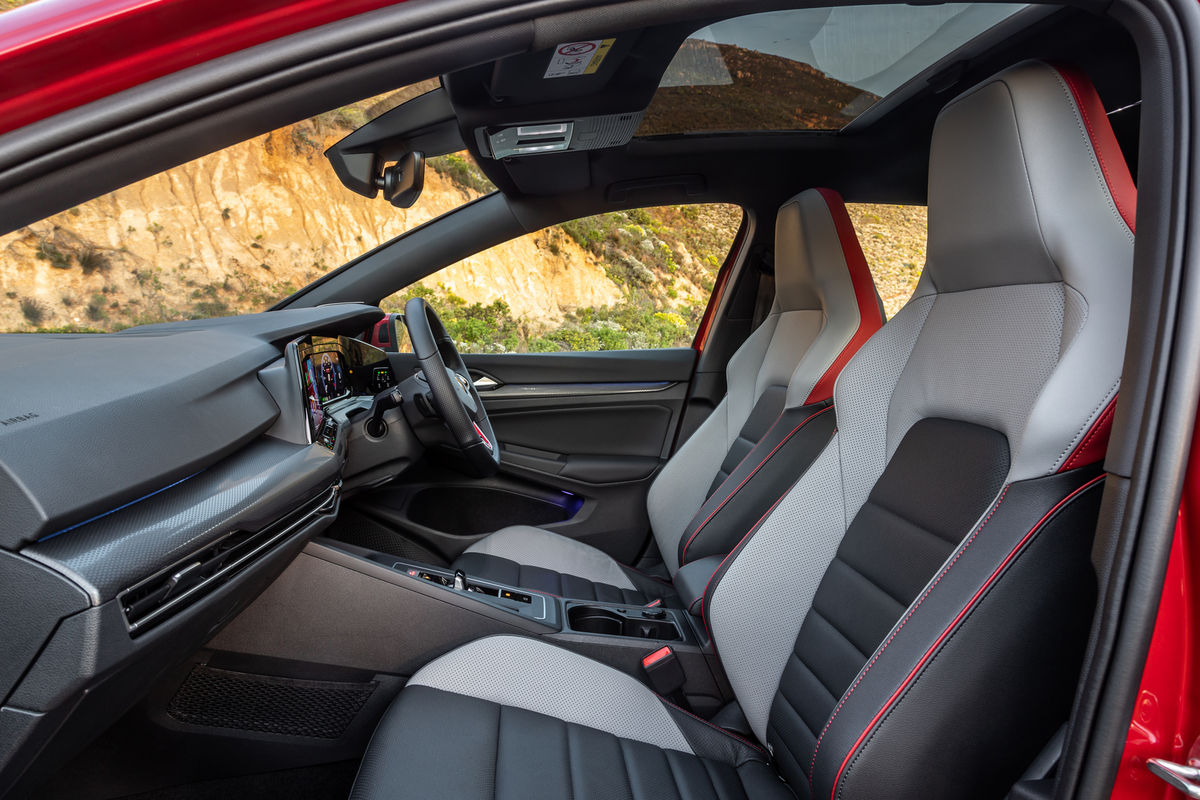
The one-piece leather sports seats are standard and very comfortable.
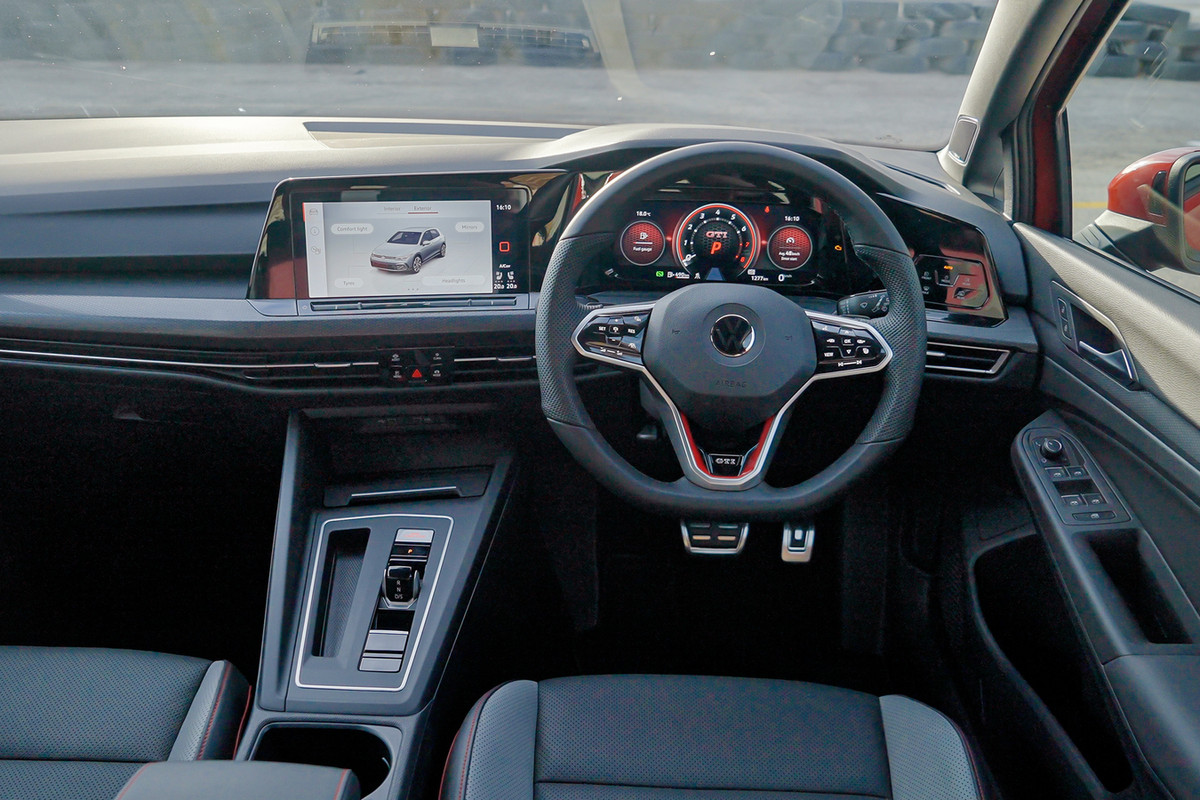
The Golf 8 GTI introduces a button-free interior (save for a few shortcut buttons situated around the hazard lights) that makes the touchscreen infotainment screen the port of call for all adjustments you want to make to the car configuration, audio system and climate control. The steering wheel too has touch-sensitive buttons that provide haptic feedback to let you know you’re adjusting things, but as I mentioned on the Tiguan we drove a week ago, I don’t think it’s any better than a standard button.
It’s certainly a good idea to get acquainted with the menu configuration before driving off as there is quite a lot to work through. Some functions are easy, like climate control and seat heating, but vehicle settings can be more difficult to work out. Thankfully the menu structure is very similar to that of a modern smartphone, so it’s intuitive.
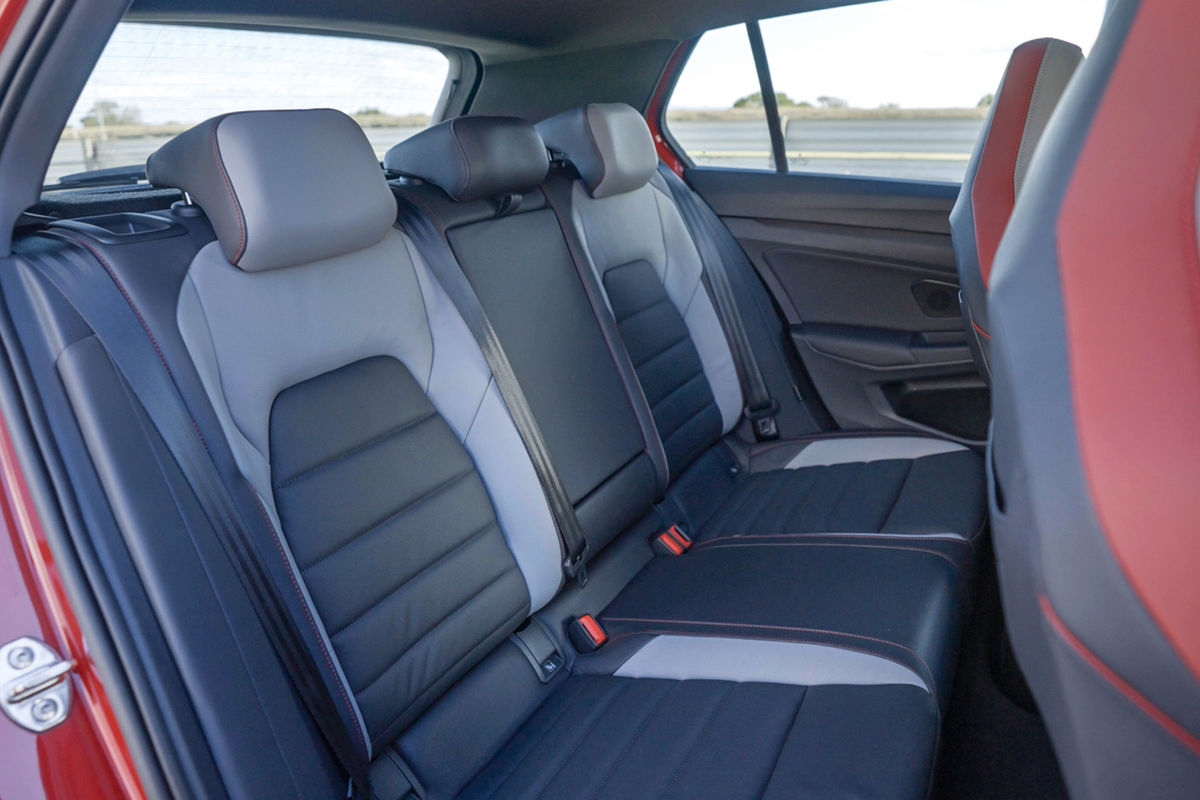
The standard leather, one-piece seats are excellent and look particularly sporty, plus they’re electrically adjustable. The cabin, as a whole, looks modern, well put together and is luxurious in a way that Volkswagen does so well. In fact, the Golf 8 GTI’s cabin is the new benchmark in terms of appeal in the premium hatchback segment…
Golf GTI price and after-sales support
In a bid to match its rivals (or what’s left of them) the GTI has landed in South Africa with a starting price of R669 300, but if you start loading the options on, don’t be surprised if you get close to R800k for a fully loaded model. The GTI is sold with a 3-year/120 000 km warranty and a 5-year/90 000 km service plan.
Summary
An evolution of the previous version, but its formula for success is still “quintessentially GTI”.
The new Volkswagen Golf 8 GTI represents an evolutionary improvement over its predecessor. It was already a popular car and the new model’s improved power delivery, better handling and more luxurious interior will only add to the mass appeal of the package. The muted tailpipe expulsions will have aftermarket tuners hurriedly getting louder Vrrr-pah! pipes to market so expect your local WhatsApp group to be busier than ever with complaints.
Mad Toyota Hilux with AMG C63 6.2L V8
This one-off South African build features a Toyota Hilux with a V8 AMG heart. The result is perhaps the wildest Hilux in all the land. Watch the video!
Our Launch Control series has unearthed some of the most incredible custom car builds in South Africa, and this latest beast is no exception. When we heard that there was a Hilux running around Johannesburg with a Mercedes-AMG C63 engine, we just knew we had to film it, and here it is! This is without a doubt one of the maddest, neatest engine swaps we’ve ever seen.
The whole conversion has been executed brilliantly and the exterior looks purposeful without being over the top and shouty.
We hope you enjoy this one-off creation, let us know what you think!
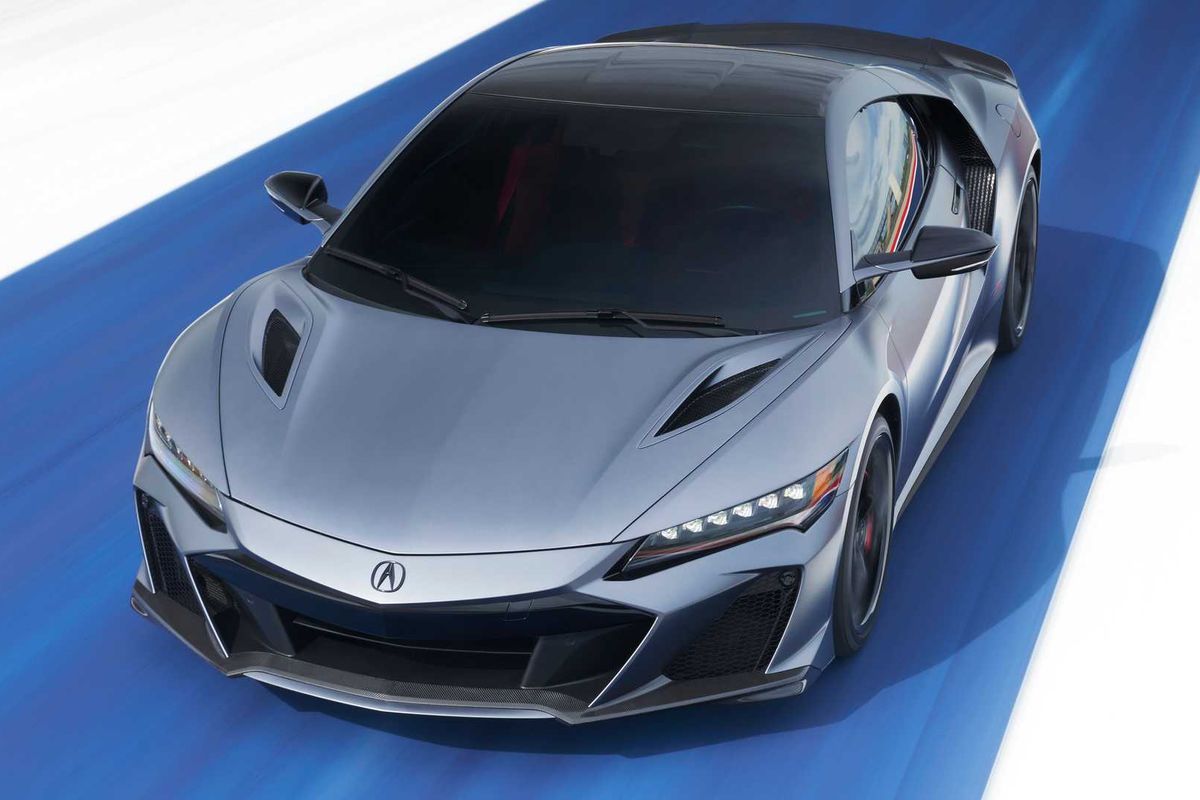
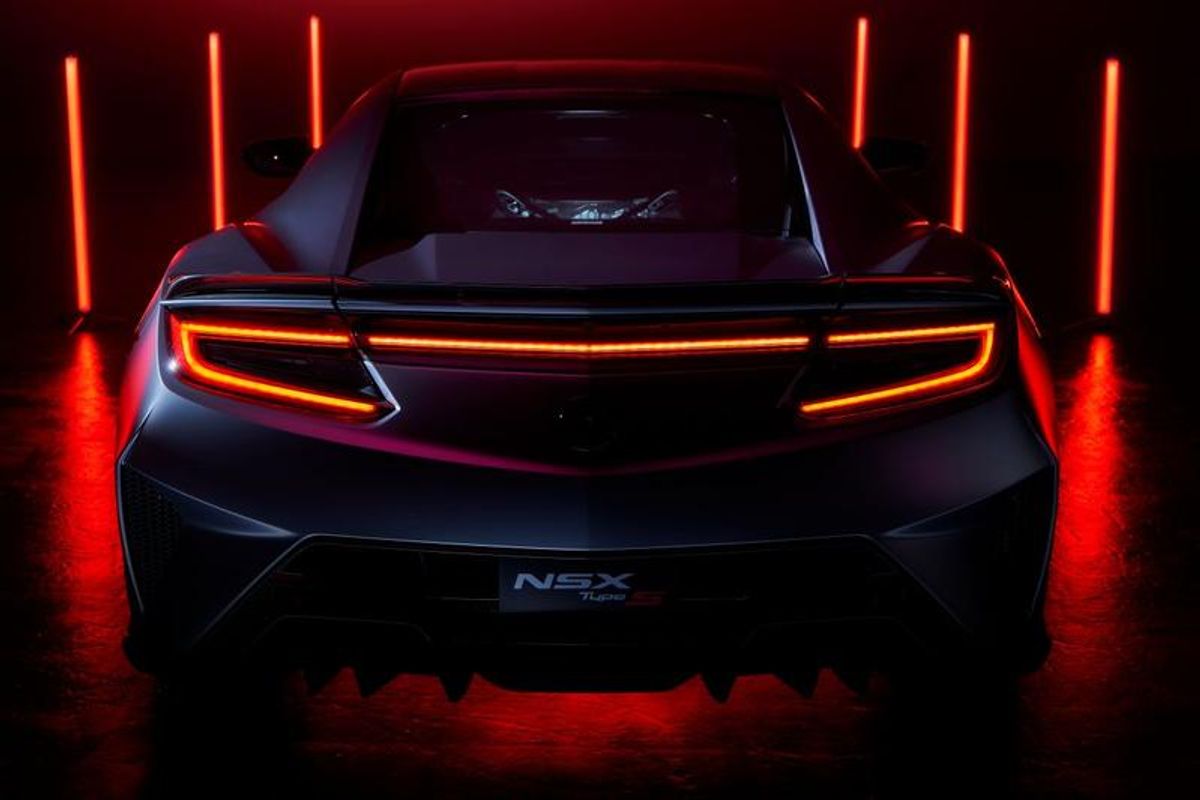
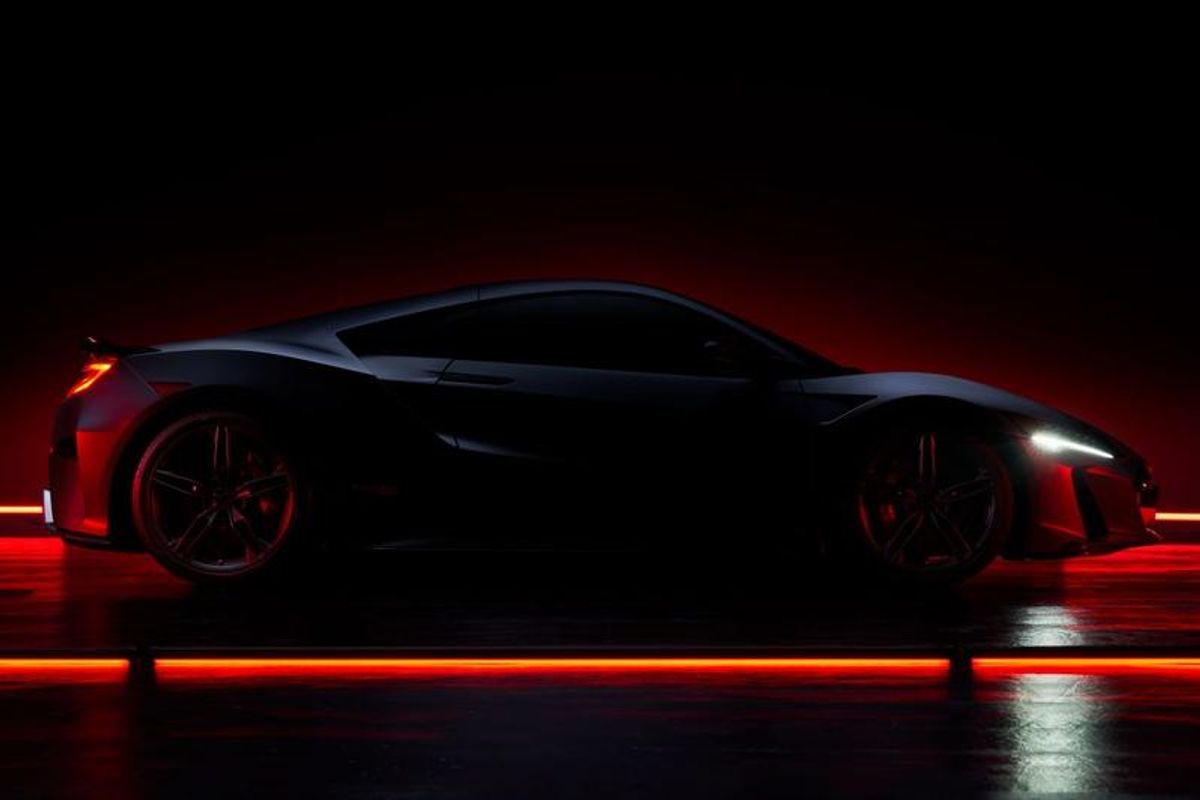
Honda has revealed the swansong for the second-generation NSX. The Honda NXS Type S boasts more power and better overall performance. Only 350 units will be made.
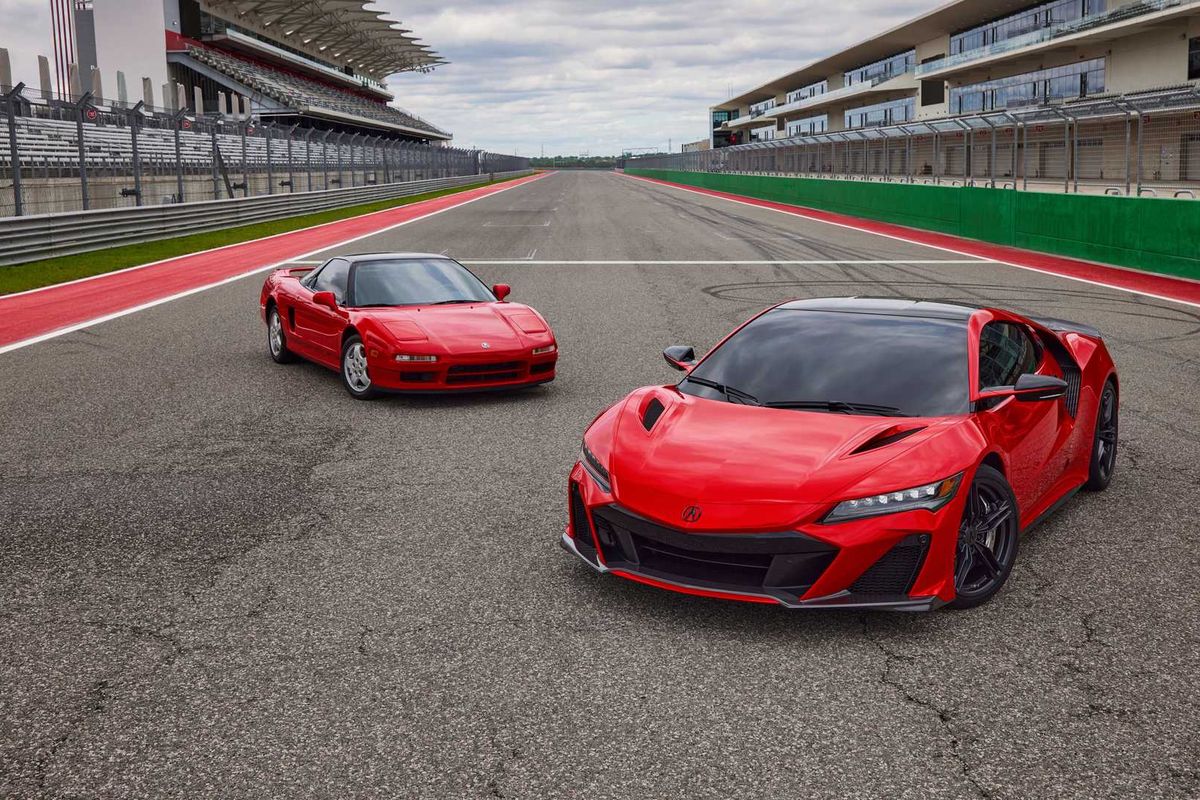
The second coming of Honda’s NSX supercar, has not replicated the success of its original.
When the first-generation NSX was launched, the Japanese car industry was in its ascendancy. NSX was symbolic of that and had the measure of some European rivals.
The second-generation NSX has been less of a purist’s car. Much heavier, and complicated, the hybridized 3.5-litre bi-turbo drivetrain has struggled to compete with similarly priced performance cars.
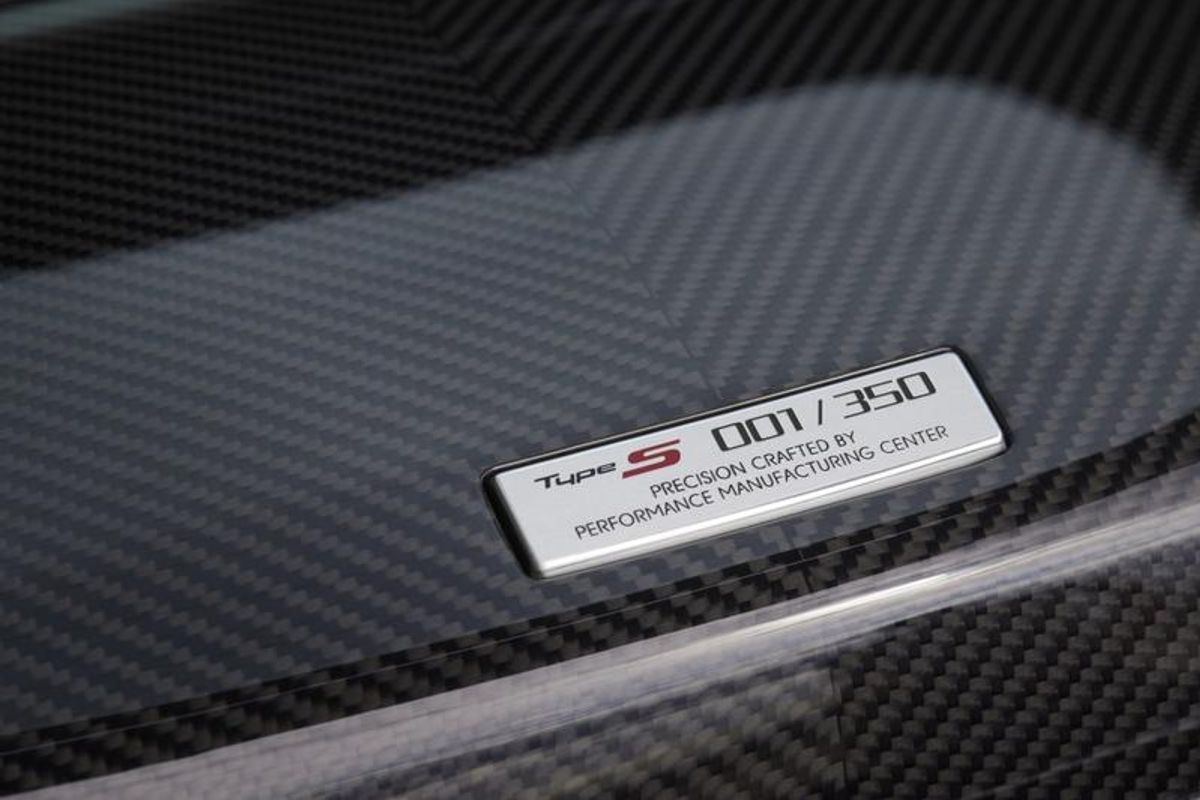
Now though, Honda’s engineers hope to enliven the NSX’s image, and legacy, with a limited-edition NSX Type S. Only 350 of these NSXs will be built before the NSX nameplate goes into retirement.
More power for Honda NSX Type S
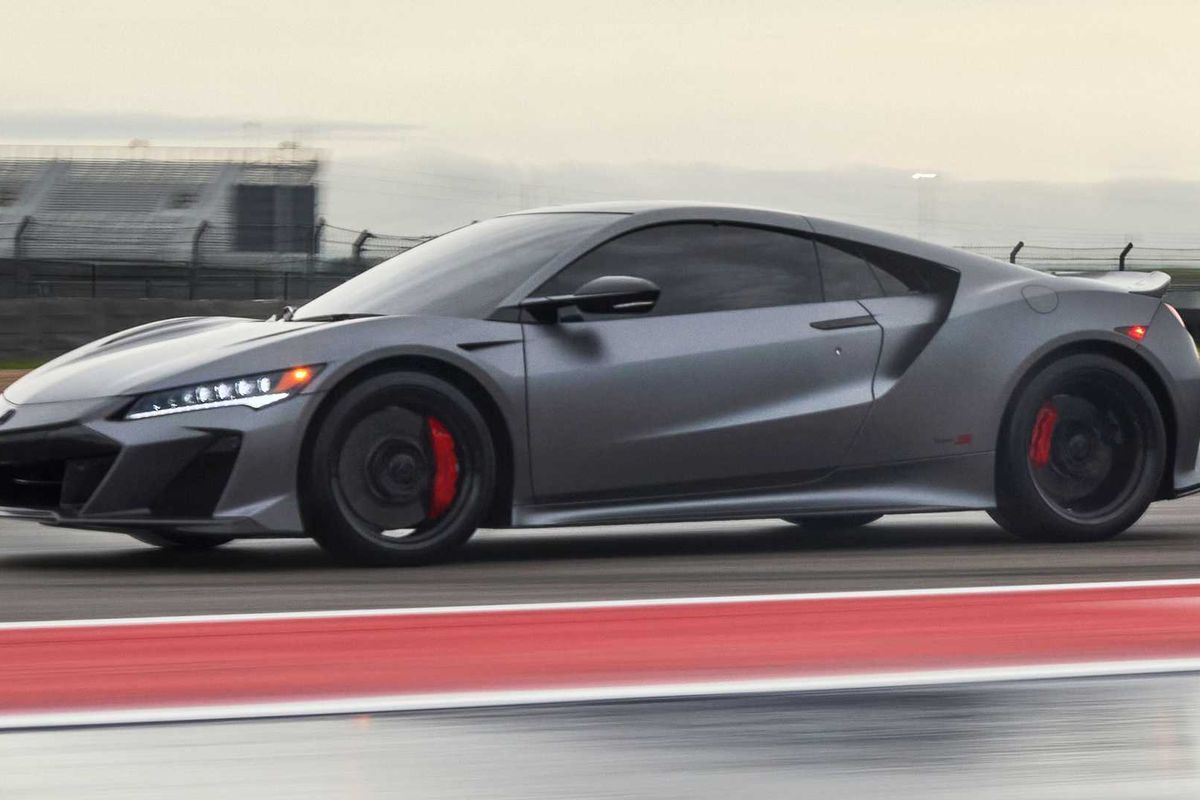
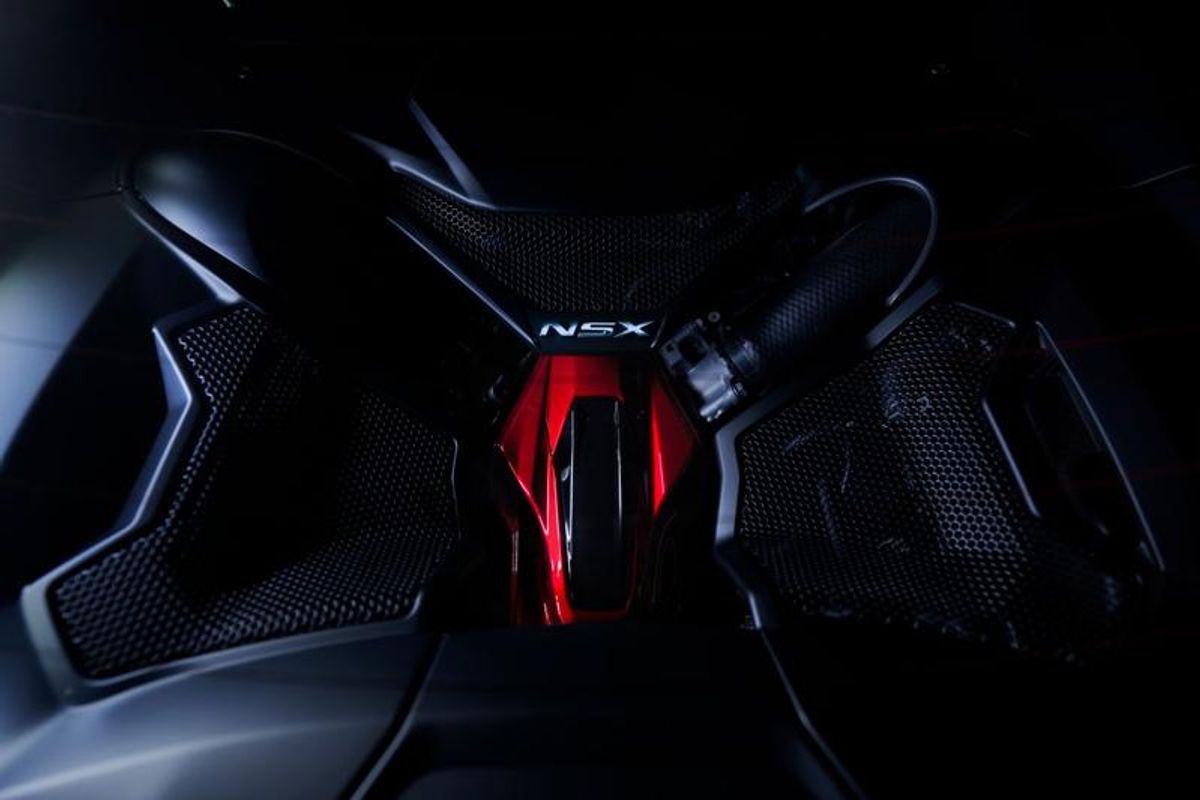
Now equipped with turbochargers from the NSX GT3 Evo race car, engineers have worked at extracting more power from the 3.5-litre V6 hybrid drivetrain which employs 3 electric motors to now produce 427 kW and 667 Nm of torque which is some 20 kW and 22 Nm more than the standard NSX.
The 9-speed dual transmission’s shift response has been sharpened by some 50% on the upshifts and now features Rapid Downshift Mode to initiate on-the-boil downshifts.
The NSX’s SH-AWD torque vectoring system and its Integrated Dynamics System have been retuned to deliver better handling and cornering performance.
The most significant issue impacting NSX’s appeal remains its 1 725 kg kerb weight but customers can opt for Lightweight Packages that include carbon-ceramic brakes, carbon fibre engine cover and interior carbon fibre finishes all contributing to a weight loss of 26.2 kg.
The NSX Type S will wear the Acura badge in the US where 300 units will be sold. The remaining 50 units will be sold in Japan and in other select markets.