Renault Captur (2015-2021) Buyer’s Guide
Have your eye on a first-gen Renault Captur? Here’s what you need to know, including this compact family car’s strengths and weaknesses plus what you can expect to pay on the used market…
The original Renault Captur arrived at just the right time for the Boulogne-Billancourt-based brand’s local division. In 2015, the French marque was in the midst of a dramatic sales resurgence in South Africa, thanks largely to the combined efforts of the 1st-gen Duster, the 2nd-gen Sandero and the Clio IV.
- ALSO READ: Renault Sandero (2014-2022) Buyer’s Guide
Intended to serve as the 4th mainstream model in Renault’s revitalised small-car range, the Mk1 Captur was tasked with helping to drive sales for the brand in Mzansi – and that’s precisely what it did. In fact, the fresh-faced compact family car grabbed the title of Renault’s top seller in its opening month on the market.
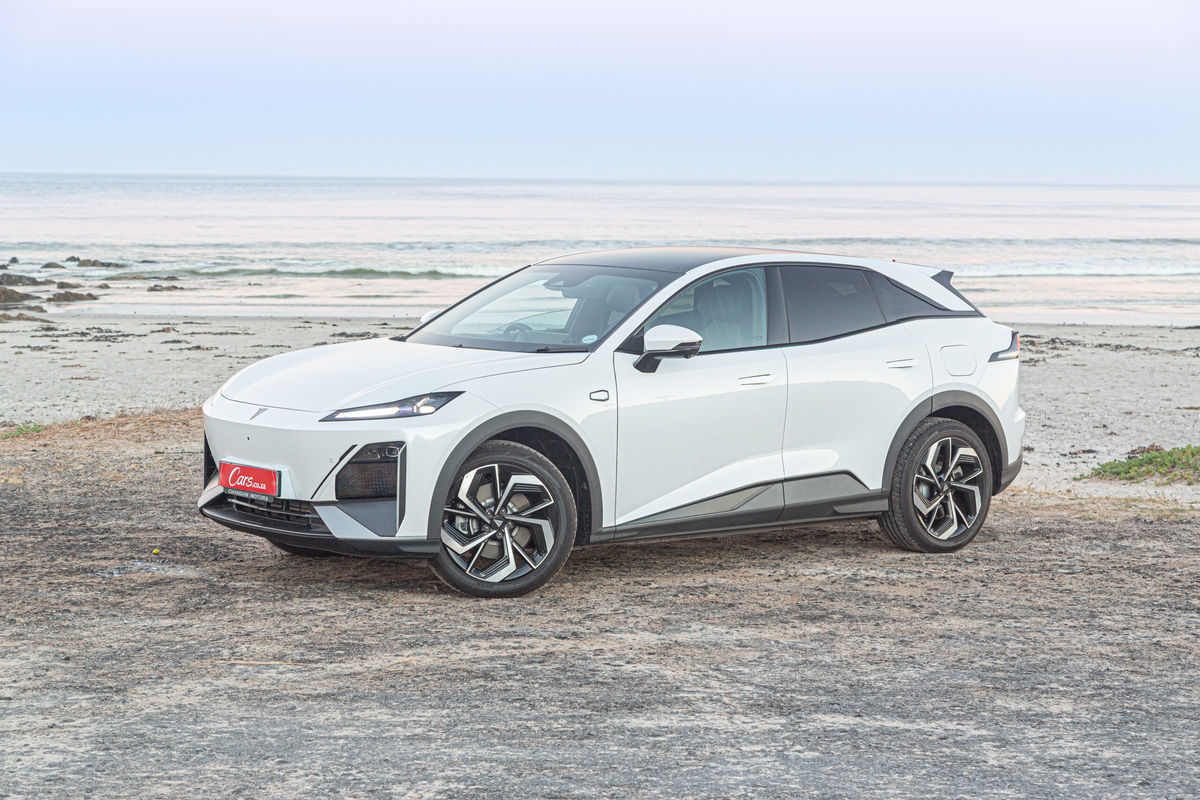
Based on the same “B” platform as the popular Clio IV, the J87-series Captur shared much with its hatchback sibling but – rather crucially, considering the market was leaning heavily towards crossovers – added a raised driving position, loftier ride height (at 170 mm) and a mite more interior space.
Interestingly, the version of the Captur sold in South Africa was sourced from the Renault’s Valladolid factory in Spain. This was despite Renault having developed a slightly larger HA-series Captur specifically for emerging markets like India, Russia and Brazil (countries in which that iteration was assembled).
Though the 1st-gen Captur made an immediate impact on the local new-vehicle market, its popularity tapered as more rivals piled into the segment. Based on our records, this model’s best year was 2016, when 2 838 units were sold. That figure fell to 1 670 units in 2017 (seemingly owing to low stock ahead of the facelift) before rising slightly to 1 917 units in 2018.
Some 1 274 examples were sold in 2019 – the year in which production in Spain ended – with only a small number of J87-series Captur units registered in South Africa over the following 2 years.
Renault Captur model line-up in South Africa
Vaguely previewed by 2011’s aptly named Captur Concept (complete with removable roof, swathes of carbon fibre and generally cartoonish proportions), the production model was finally revealed at the Geneva International Motor Show in early 2013.
South Africa had to wait a further couple of years for the Captur to roll onto local dealership floors. When it did officially hit the market in May 2015, the line-up comprised a trio of front-wheel-drive derivatives. Buyers had a choice of two turbocharged petrol engines (a 0.9-litre 3-cylinder and a 1.2-litre 4-pot), a pair of transmissions (5-speed manual and 6-speed dual-clutch) and several trim levels:
- Captur 0.9T Expression MT (66 kW/135 Nm)
- Captur 0.9T Dynamique MT (66 kW/135 Nm)
- Captur 1.2T Dynamique EDC (88 kW/190 Nm)
In August 2016, Renault SA expanded its Captur portfolio by adding the welcome option of a turbodiesel engine. In this application, the well-known 1.5-litre dCi motor generated 66 kW and 220 Nm, peak outputs that were delivered to the front wheels through a 5-speed manual gearbox as standard.
Offered in conjunction with the Dynamique grade, this turbodiesel mill also powered the Sunset Limited Edition. Just 100 units were available in South Africa, each finished in “Diamond Black” paint set off against a “Sunset Orange” finish for the roof, side-mirror caps and various bits of exterior trim (a colour scheme repeated in the cabin).
By August 2017, the facelifted Captur had made local landfall, bringing refreshed exterior styling and improved cabin materials. While all 3 engines were carried over at this mid-cycle update, the 1.2-litre motor became available with a 6-speed manual, featuring a slightly higher 205 Nm peak torque output.
The French firm also introduced a new entry-level Blaze derivative (supplanting the Expression grade), which dropped Renault’s familiar 7-inch touchscreen in favour of a new “R&Go” smartphone interface incorporating a dedicated device cradle.
- Captur 0.9T Blaze 5MT (66 kW/135 Nm)
- Captur 0.9T Dynamique 5MT (66 kW/135 Nm)
- Captur 1.5 dCi Dynamique 5MT (66 kW/220 Nm)
- Captur 1.2T Dynamique 6MT (88 kW/205 Nm)
- Captur 1.2T Dynamique EDC (88 kW/190 Nm)
Despite Renault’s Spanish factory starting production of the 2nd-gen Captur in 2019, the J87-series model technically remained on the market in South Africa until around the 3rd quarter of 2021 (though stock was severely limited). With a certain global pandemic having sparked production interruptions, shipping challenges and more, the Mk2 Captur arrived in Mzansi only in March 2023.
What are the Renault Captur’s strengths?
Turbodiesel efficiency: At the time of the Captur’s launch, the 1.5 dCi engine was billed as Renault’s “most sold” powerplant worldwide. So, this “K9K” mill (to use its internal designation) had already attained an almost cult-like following for its use in models like the Duster.
IIn short, this 4-cylinder motor was lauded for its low-down grunt and its potential for fuel economy. In the Captur, it boasted a claimed consumption figure as low as 3.6 L/100 km, making it one of the most fuel-efficient models on the local market. Unlikely as it was to be achieved in the real world, this claim nevertheless translated to a theoretical 1 250 km from the 45-litre tank.
Though it was technically the tardiest-accelerating derivative in the Captur range (taking a listed 13.1 seconds to reach 100 kph from standstill), the fact peak torque of 220 Nm arrived as early as 1 750 rpm meant drivers of the 1.5 dCi variant could call on strong in-gear acceleration. The cog-swapper would, however, have benefitted from a 6th forward gear.
Just how efficient were the petrol engines in comparison? Well, Renault claimed a figure of 4.9 L/100 km for the tiny 3-cylinder mill, which interestingly ditched its “Eco” mode and stop-start system at the facelift. The 1.2-litre turbopetrol unit’s consumption was listed as 5.4 L/100 km when fitted with the dual-clutch transmission and 5.5 L/100 km when paired with the 6-speed manual ‘box.
Highly practical interior: The Renault Captur was a crossover in the truest sense of the word. It offered the convenience and manoeuvrability of a small hatchback, along with SUV-like styling cues and extra ground clearance. But there was also a touch of MPV versatility to this model, particularly when it came to the interior. But there was also a touch of MPV versatility to this model, particularly when it came to the interior.
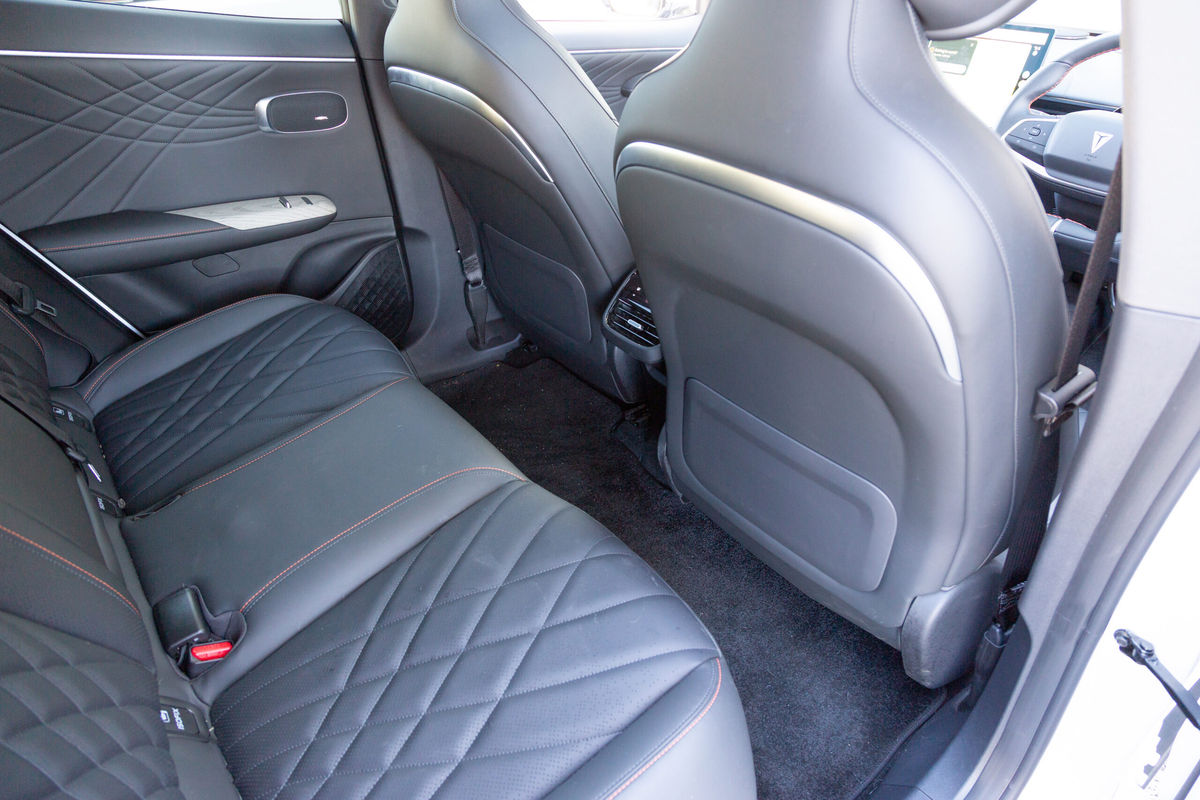
Yes, considering the vehicle’s compact exterior dimensions, the cabin offered impressive levels of rear passenger room. In addition, the 60:40-split rear bench could slide fore and aft across 160 mm, allowing either rear legroom or luggage space to be prioritised.
With the bench in its rearmost position, Renault claimed a boot capacity of 377 litres, expandable to 455 litres by sliding said bench forwards. With the rear seats folded down, loading space increased to a listed 1 235 litres. Note all Captur derivatives featured a space-saver spare wheel as standard.
Interestingly, the boot floor in Dynamique derivatives was reversible; it was smooth on one side and featured an anti-slip surface on the other. This trim level also boasted practical zip-off seat covers that were purportedly machine washable (though official instructions on Renault’s global website advise users not to wash them “more than 5 times”).
Plenty of standard kit: Considering its price, the Renault Captur was rather well equipped as standard. The pre-facelift Expression grade, for instance, featured items like 16-inch alloy wheels, LED daytime running lights, a hands-free keycard, a 7-inch touchscreen (with embedded navigation), climate control, cruise control and rear parking sensors.
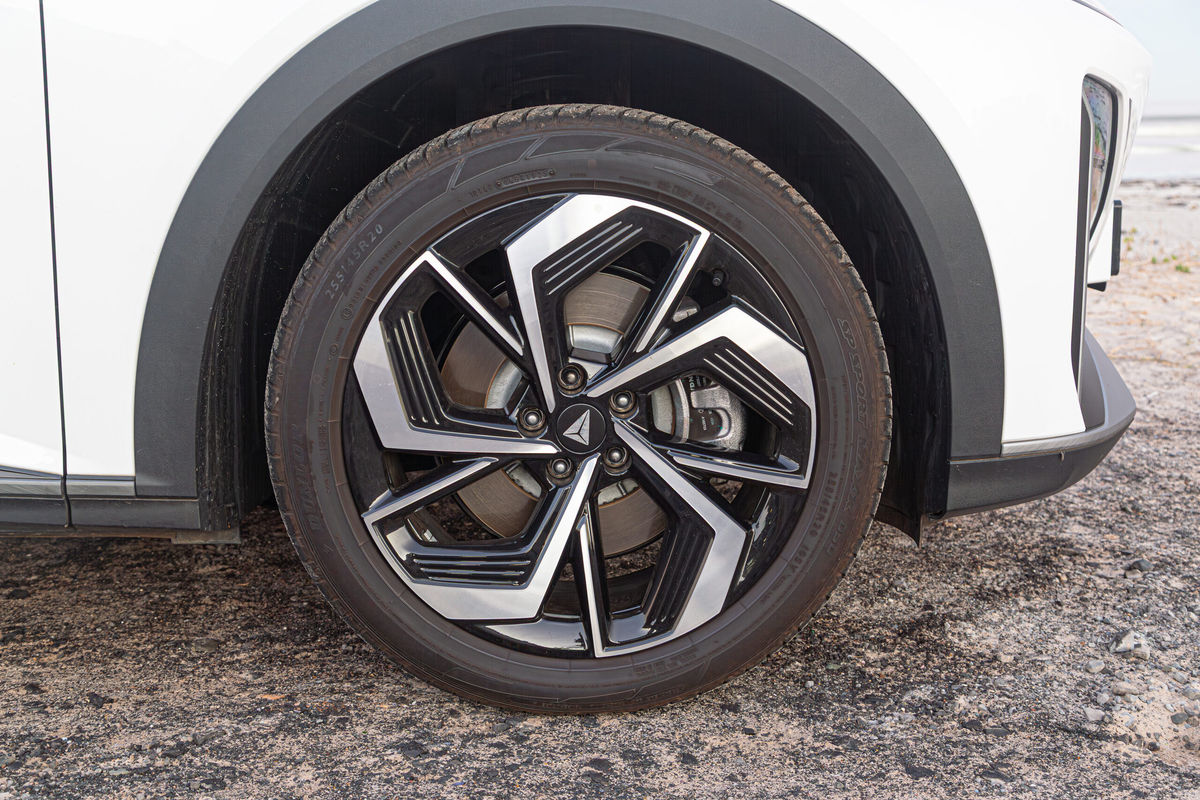
Dynamique derivatives were even more generously specified, adding features like 17-inch diamond-cut alloys, bi-tone exterior paint, the aforementioned zip-off seat covers, automatic headlamps, rain-sensing wipers, tyre-pressure monitoring, tinted rear windows and leather trim for the steering wheel.
Note, however, that the entry-level Blaze variant introduced at the facelift did without rear parking sensors, while also downgrading from climate control to manual air conditioning (and switching to the “R&Go” infotainment set-up). Still, it retained all the standard safety kit of other Captur derivatives, including ABS with EBD, EBA, electronic stability control and 4 airbags.
What are the Renault Captur’s weaknesses?
Hesitant dual-clutch transmission: The version of Renault’s EDC (that’s “Efficient Dual Clutch”) paired with Captur’s turbocharged 1.2-litre petrol engine was by no means the smoothest-shifting example of a dual-clutch transmission. In fact, in certain low-speed situations, it displayed an annoying hesitancy.
This indecisiveness was particularly evident in scenarios that required yielding (such as at the entrance to a traffic circle or a slip-way) as opposed to coming to a complete stop. When the driver was ready to accelerate, the transmission would often still be hunting for an appropriate gear. Keep in mind that we’ve also heard of several instances of EDC faults and outright failures.
Some iffy cabin materials: Despite the Mk1 Captur being sourced from Europe, certain cabin finishes (particularly in pre-facelift examples) felt decidedly below par. Indeed, the fit and finish on an early model we drove was questionable, with this low-mileage unit even exhibiting a few creaks and rattles. Another example we sampled featured a flimsy pop-up lid for the otherwise useful storage compartment sited atop the dashboard.
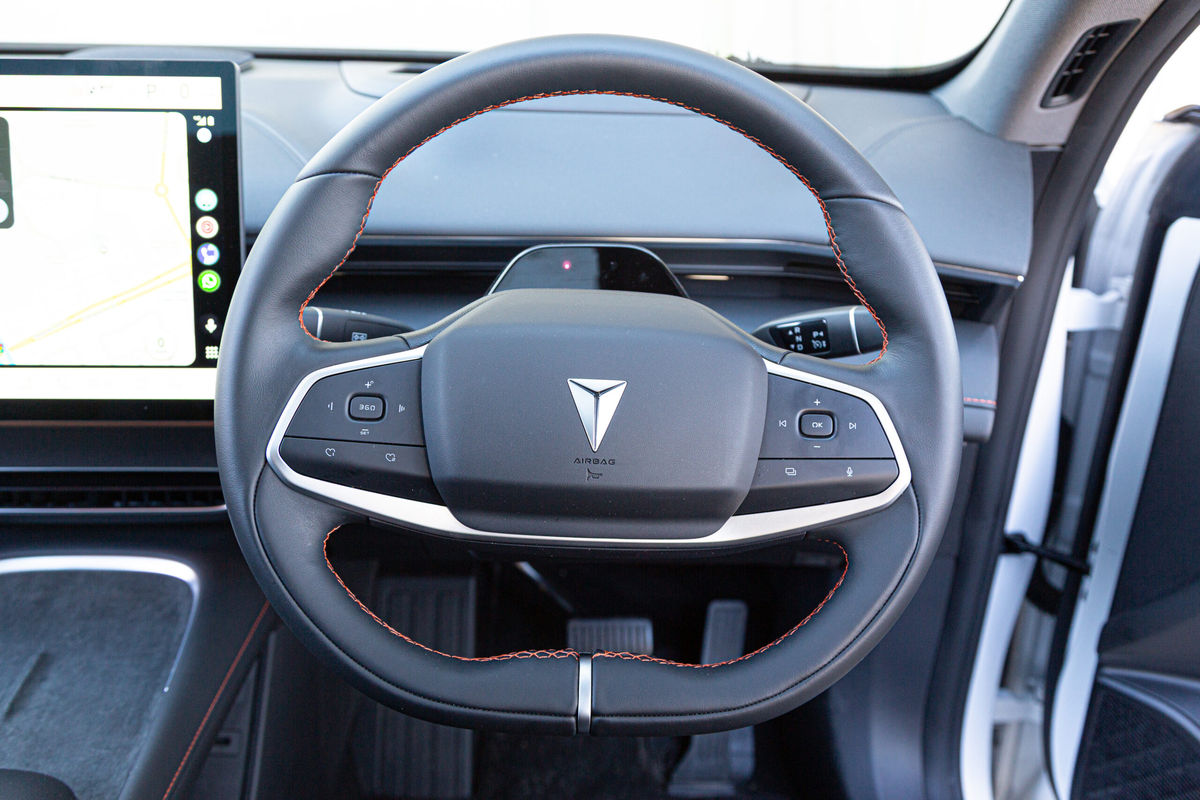
Thankfully, the issue of somewhat iffy cabin materials was at least partly resolved at the Captur’s mid-cycle refresh. At that point, Renault opted to introduce a soft-touch dashboard, some satin-chrome trim, a new steering-wheel design and a few higher-quality interior panels.
Miscellaneous potential issues: What else should you look out for when shopping for a used Mk1 Captur?Well, as we pointed out in our Clio IV Buyer’s Guide, the 0.9-litre engine was known to suffer from worn timing chains and sometimes even outright timing-chain failures.
So, we’d suggest listening closely for a rattling timing chain and asking for evidence of regular servicing. In addition, some early examples of the J87-series Captur exhibited problems with the stop-start function, while we’ve also heard of numerous local instances of premature wear on the brakes.
How much is a used Renault Captur in SA?
Throughout its local lifecycle, the original Renault Captur shipped standard with a 5-year/150 000 km warranty and a 3-year/45 000 km service plan. Metallic paint was optional, while the Dynamique grade could be specified with leather upholstery (plus a front-seat heating function, which became available from the facelift).
An optional “Premium Sunroof Pack” was also on offer for refreshed Dynamique derivatives, there were also other upgrades, including a fixed glass roof, alloy pedals, an electro-chromatic rear-view mirror, LED interior lighting and illuminated mirrors for the sun visors. The list of dealer accessories, meanwhile, included side steps, a stainless-steel boot-sill protector, aluminium roof bars and a swan-neck towbar.
Of the 1st-gen Renault Captur units listed on Cars.co.za at the time of writing, some 71% featured a manual gearbox. Accounting for just over half of listings, the 0.9-litre petrol motor was the most prevalent engine, followed by the 1.2-litre mill (42%) and finally the 1.5 dCi on just 6%.
Unsurprisingly, Dynamique was the dominant trim level at about 70%, while the entry-level Blaze introduced at the facelift interestingly accounted for around 21% of J87-series Captur listings. Expression made up the difference, while not one of the 100 “Sunset” units offered in SA was listed.
The most popular model year was 2017 (with about 23%), closely followed by 2018 (on approximately 20%) and 2020 (around 16%). Mileage ranged from 17 000km on a 2020 1.2-litre example to 194 000km on a 2016 1.5 dCi unit.
- Below R125 000: At the time of writing, just 11% of listed Mk1 Captur units were priced below R125 000. As you might expect, most were pre-facelift examples with either the 3- or 4-cylinder petrol engine, many with well over 100 000 km on their respective odometers.
- R125 000 to R150 000: A further 21% of listings were nestled in this narrow pricing bracket, including a small handful of facelifted units (mostly Blaze derivatives). Predictably, the 0.9-litre petrol engine dominated this space.
- R150 000 to R200 000: These pricing bookends contained a whopping 61% of listed Captur models. Here we found an almost even split between the 2 petrol mills, along with most of the few turbodiesel variants on the market. All model years were represented in this space.
- R200 000 and up: The remaining 7% of listings were priced above R200 000. All were facelifted examples, many employing the 1.2-litre engine and the dual-clutch transmission. The most expensive unit we unearthed was a 2020 1.2T Dynamique EDC listed for R249 900.
Which Renault Captur derivative is best?
So, which Captur derivative should be at the sharp end of your shopping list? Well, though it’s the most prevalent and certainly fit for some purposes, we’d likely side-step the 0.9-litre motor altogether as this small-capacity turbo engine could feel a little breathless in Captur guise, particularly when the vehicle was fully loaded (and indeed at higher altitudes).
While the 1.2-litre turbopetrol powerplant offered a bit more grunt, we’d probably avoid the EDC owing to this transmission’s frustrating hesitancy during low-speed driving. That said, this engine in conjunction with the 6-speed manual ‘box available from the mid-cycle refresh – a combination that was also offered in the facelifted Clio IV GT-Line warm hatch – might be tempting.
Still, we’d point to the fuel-frugal 1.5 dCi – along with its generously specified Dynamique grade – as the pick of the bunch (preferably in facelifted guise). It’s just a pity this turbodiesel engine appears to be in fairly short supply on the used market.
Is the Renault Captur a smart used purchase?
When the 1st-gen Renault Captur hit the local market in 2015, it faced a few key rivals – technically including its Dacia-built Duster sibling, which was similarly priced (though had an entirely different personality). The B515-series Ford EcoSport was leading the pack in sales volume terms, having taken the title of SA’s best-selling crossover that year.
The quirky F15-series Nissan Juke also played in the compact family crossover segment at the time, as did the J13-series Opel Mokka and 2nd-gen Kia Soul. In addition, before 2015 was over, the RU-series Honda HR-V, LY-series Suzuki Vitara and Mazda CX-3 had all joined the local party.
Somewhat slower-selling French contenders were the A94-series Peugeot 2008 and the Citroën C4 Cactus. Over the next few years, yet more new options squeezed into this segment, including the Indian-built Hyundai Creta and the Turkish-made Toyota C-HR in 2017, plus the Spanish-produced Volkswagen T-Cross in 2019.
So, there was no shortage of competition for the original Captur. But kudos to Renault (and thankfully for used-car buyers today), this compact family car had plenty going for it. The practical interior and lengthy list of standard equipment stood out, as did the turbodiesel derivative’s ability to return hybrid-rivalling fuel-economy figures.
Considering the current-generation Captur kicks off somewhere in the region of R500 000 (and additionally isn’t available locally in oil-burning form), a well-looked-after Mk1 example powered by the well-proven turbodiesel engine looks like exceedingly strong value. Perhaps that’s why so few are on the used market…
Looking for a used Renault Captur to buy?
Looking to sell your car? You can sell it to our dealer network here