It’s not looking good for motorists as the Automobile Association of SA has confirmed the price of petrol and diesel will be increasing in July 2021.
Based on the monthly unaudited fuel price data from the Central Energy Fund, the Automobile Association of SA has said the prices of all grades of fuel will be going up in July 2021.
“International petroleum prices have climbed throughout June. Even some marginal gains on the Rand have not been enough to counter the rise. On average, the Rand was positive against the US dollar during June, but the daily exchange rate has sagged alarmingly since mid-month, weakening from around R13.75 to the dollar to nearly R14.30,” the AA says.
As it stands, we’re looking at increases of 23 cents a litre for petrol, 38 cents a litre for diesel, while illuminating paraffin will be going up by 32 cents.
“This increase is going to be very difficult for those who use paraffin for cooking, lighting, and especially heating as South Africa heads into the heart of winter,” said the AA. The AA also expressed concern about the exchange rate and oil price for the rest of the year.
“If the Rand continues to slide with oil on an upward trajectory, this could bring further bad news for South Africa’s economy,” the AA concludes.
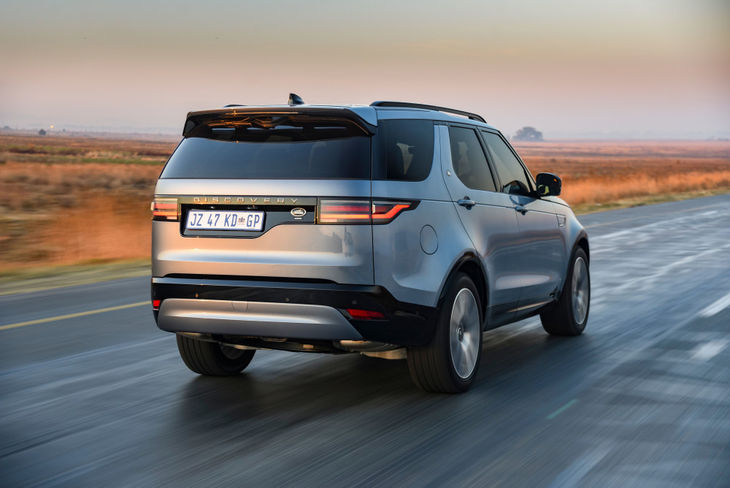
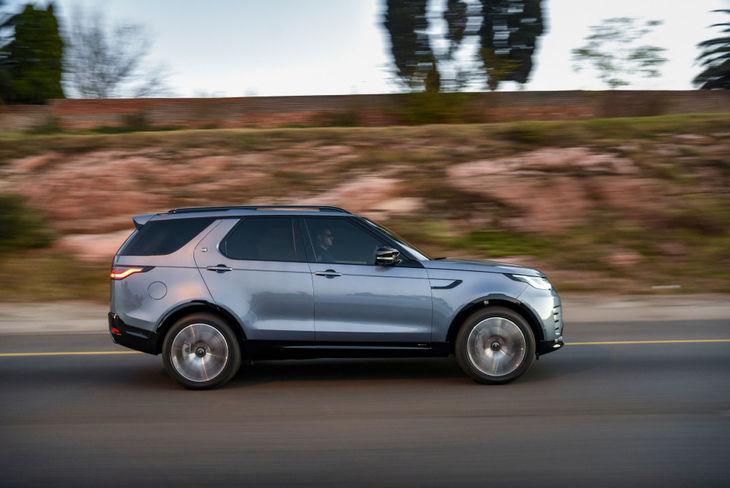
Land Rover has introduced its updated Discovery premium SUV in South Africa. Take a look at what’s changed and how much you can expect to pay for the latest Discovery.
The Land Rover Discovery has been updated but its recipe to offer high levels of practicality, luxury and offroad ability remain intact. However, the new Defender is cannibalising local Discovery sales as many buyers are buying into the Defender trend but with Defender production grinding to a halt as a result of a chip shortage, perhaps the 7-seat Discovery will claw back a few sales.
Styling changes for updated Discovery
The Discovery has undergone a mild styling revision with most of the changes seen in the cabin.
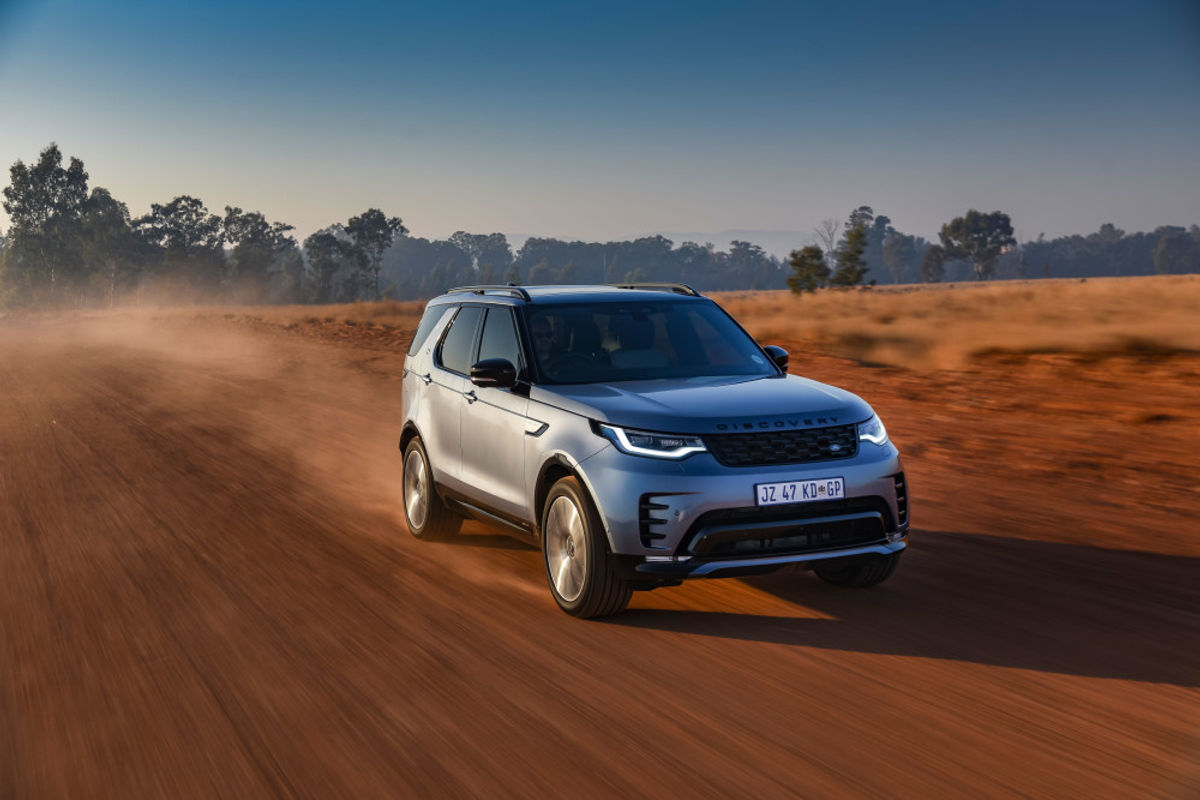
The latest Discovery can be identified by its new LED headlight design with the daytime running lights now set lower in the headlight housing while sweeping indicator lights add further sophistication to the Discovery’s light show. The front bumper has also been revised while a gloss black panel with the ‘Discovery’ lettering neatly placed between the taillights.
The Discovery R-Dynamic adds unique features such as Gloss Black and Shadow Atlas accents as well as Premium LED headlights with Auto High-Beam Assist (AHBA). Two-tone leather with contrast stitching is offered for the Discovery R-Dynamic.
Tech features for Land Rover Discovery
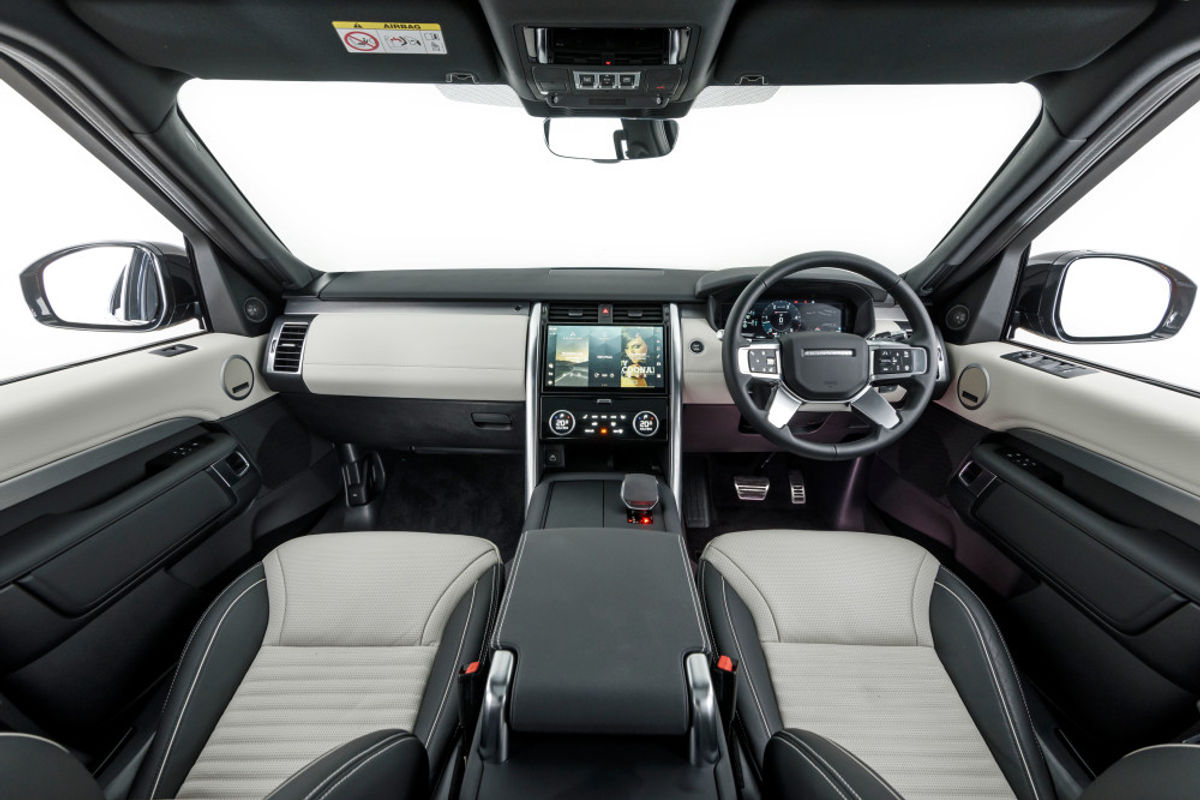
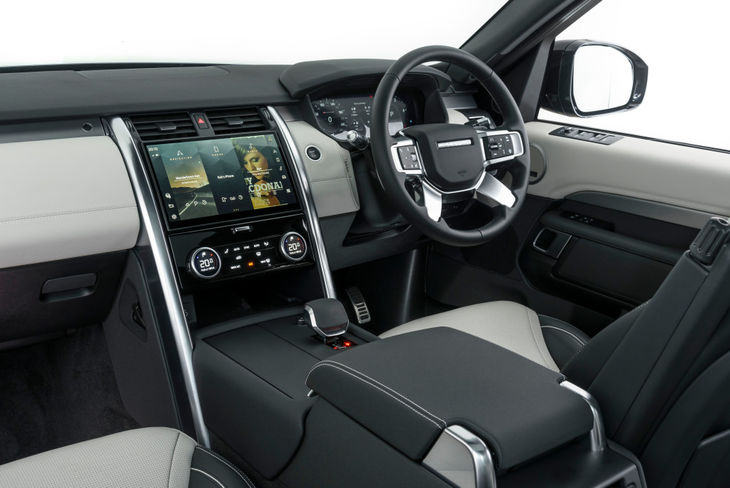
A larger infotainment touchscreen makes its way into the Discovery.
The most notable change inside the Discovery is the redesigned centre console which houses Land Rover’s new 11.4-inch Pivi Pro infotainment system with Android Auto and Apple CarPlay functionality. More so, 2 smartphones can be connected via Bluetooth simultaneously. A customisable 12.3-inch digital instrument cluster is also offered and can be configured using the new 4-spoke steering wheel (with shift paddles). A full-colour Head-Up Display and wireless smartphone charger are optional.
The Discovery also offers Cabin Air Ionisation which can actively monitor air quality in the vehicle and filter out allergens, toxins and harmful particulates.
For rear passengers using tablets, Click and Go tablet holders are fitted on the front seatbacks for convenience and up to 8 devices can be connected to the onboard 4G Wi-Fi hotspot.
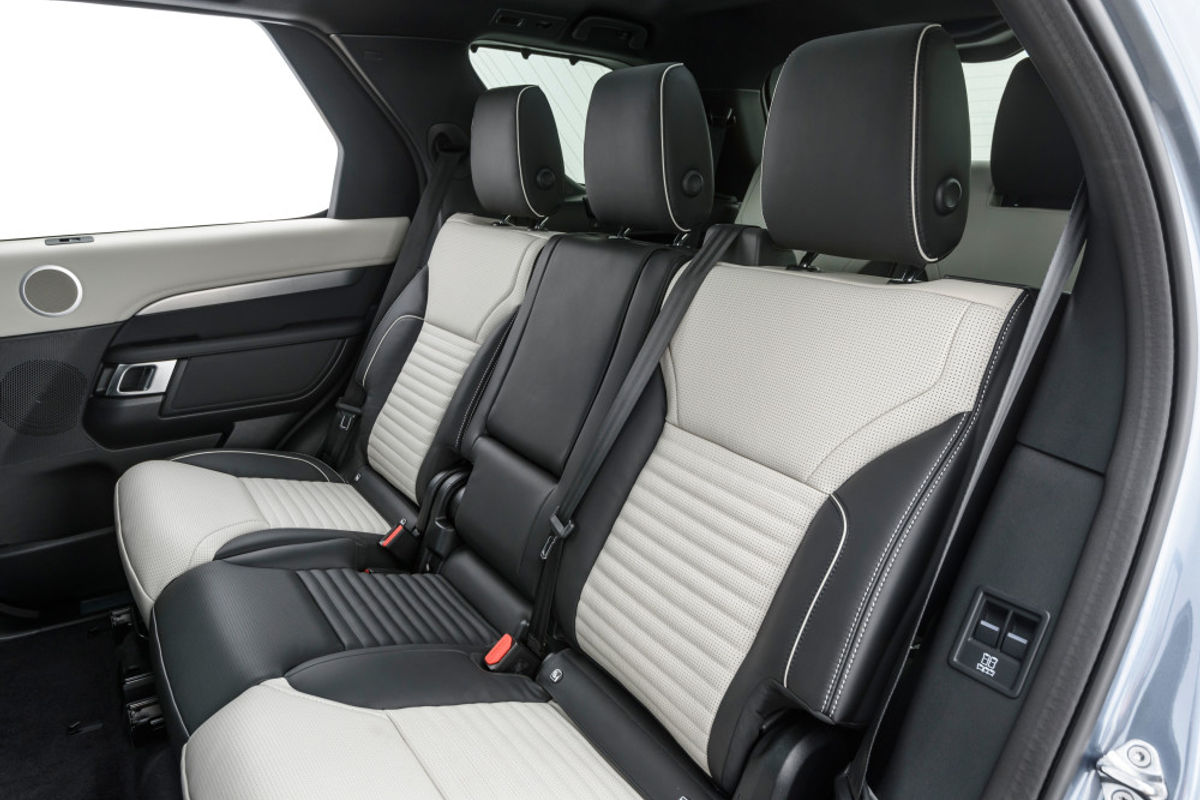
Land Rover has also improved second-row seat comfort with redesigned seat profiling, seat cushions and enhanced lateral support.
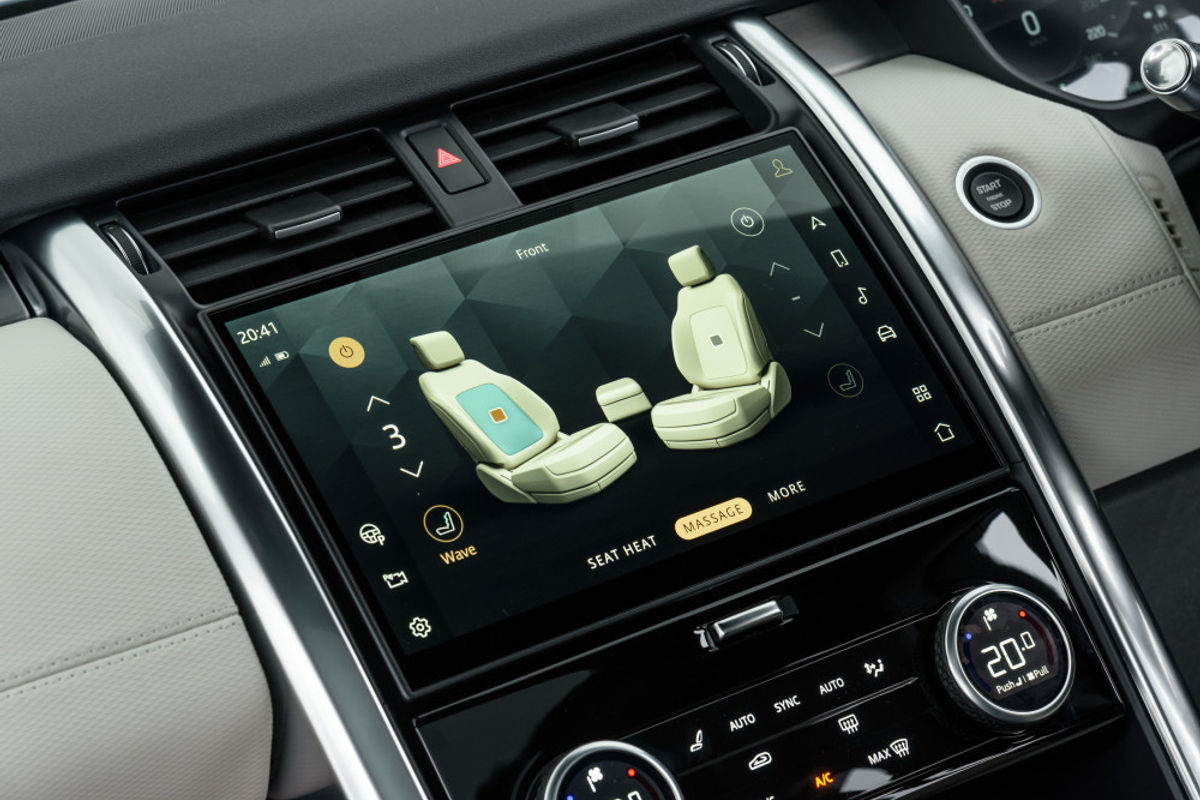
In terms of practicality, the load bay of the Discovery with the third row of seats in place offers 258 litres of space but increase to as much as 2 485 litres with the seats folded down. The seats can be configured electronically using the central touchscreen.
The Discovery can be had with a hands-free Gesture Tailgate as an option while the lower inner power tailgate can also be used as a bench.
What engines are offered for the Land Rover Discovery?
The Discovery has been rationalised with 2 new engines with 48V mild hybrid technology.
The Discovery range welcomes two new 3.0-litre straight-six Ingenium engines, both featuring 48V Mild Hybrid Electric Vehicle (MHEV) technology.
The petrol-powered Discovery P360 offers 265 kW and 500 Nm and claims 6.7 seconds in the sprint from zero to 100kph.
The diesel-powered Discovery D300 replaces the previous SD4 and SDV6 offerings with outputs of 221 kW and 650 Nm. Land Rover claims a zero to 100kph sprint time of 6.8 seconds for the Discovery D300.
The Discovery is equipped with air suspension and adaptive damping for improved ride comfort while its offroad ability is ensured with Land ROver’s Terrain Response 2 system. The Discovery also benefits from ClearSight Ground View technology which uses cameras to give the driver a view of the ground underneath the vehicle which is displayed on the central touchscreen.
How much does the Land Rover Discovery cost in South Africa?
Discovery D300 – R1 452 700
Discovery D300 SE R-Dynamic – R1 561 200
Discovery D300 HSE R-Dynamic – R1 675 900
Discovery P360 S – R1 487 600
Discovery P360 SE R-Dynamic – R1 596 100
Discovery P360 HSE R-Dynamic – R1 710 900
* Prices include VAT but exclude CO2 tax
The Land Rover Discovery is sold with a 5-year/100 000km warranty and a 5-year/100 000km maintenance plan.
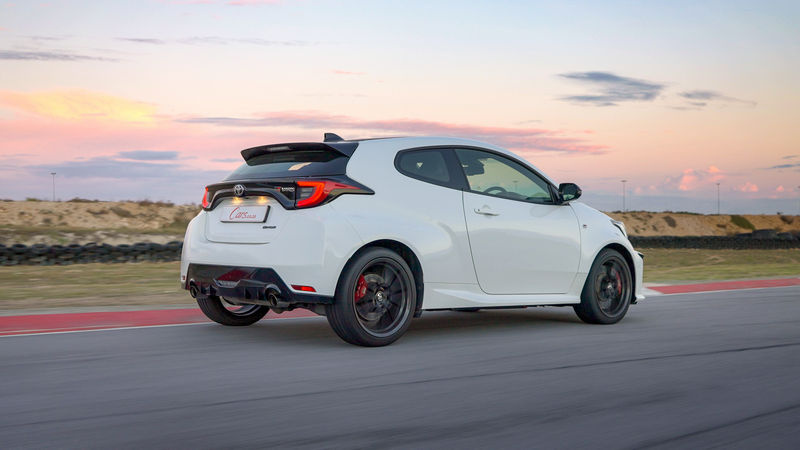
After a long wait and many teasers, Toyota’s road-legal rally car has touched down in South Africa. Here’s what’s on offer, performance details and how much you can expect to pay.
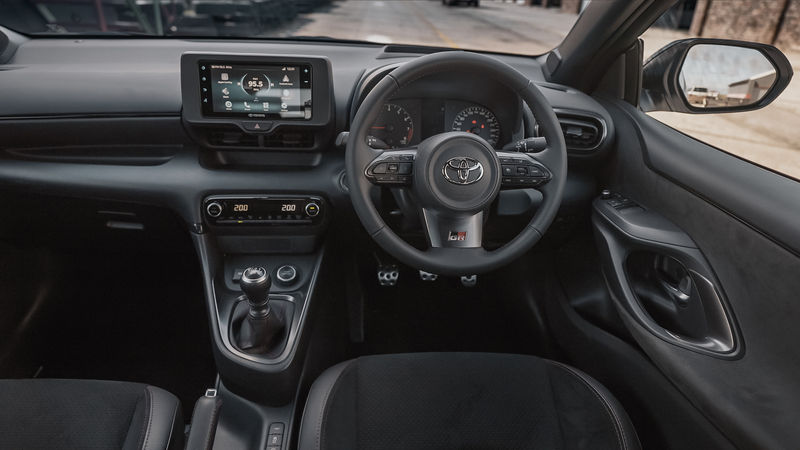
This Toyota GR Yaris is so far removed from being the compact city hatchback we’ve come to know, we’re actually surprised it even retains the name.
What you see here is a homologation special that has been designed from the ground up to be a performance car. This is not a normal Yaris with a more powerful engine. Nearly every component from the normal Yaris has been replaced in the GR Yaris.
There’s a clever 4-wheel drive system with 3 driving modes that will distribute power and torque between axles. If you’re after a fast time around a track, there’s a mode for that. If you want to hang the tail out and do some drifting, there’s another mode for that too.
Our initials impressions have shown the GR Yaris to be one very impressive offering that rewrites the rulebook when it comes to hot hatch dynamics.
Toyota GR Yaris Engine
Under the bonnet you’ll find a 1.6-litre 3-cylinder turbopetrol which delivers 198 kW and 360 Nm. Power goes to all 4 wheels via a 6-speed manual gearbox. The vehicle is said to sprint to 100 kph in just 5.5 seconds and it will run to a top speed of 230 kph. While it is a performance vehicle and fuel economy is not that much of a priority, Toyota claims its new GR Yaris will consume 7.6 L/100 km.
What’s On Offer?
Toyota South Africa is offering the new GR Yaris in two flavours: GR Yaris and GR Yaris Rally.
The standard features for the Toyota GR Yaris include auto lights, auto wipers, climate control, touchscreen infotainment with Apple CarPlay/Android Auto, a 6-speaker audio system, steering wheel controls, and Toyota Connect.
As far as safety systems go, the new Toyota GR Yaris features tyre pressure monitor, Anti-Lock Braking System (ABS), Brake Assist (BA), Electronic Brake Force Distribution (EBD), Hill Assist Control (HAC), Vehicle Stability Control (VSC), Curtain/Driver/Passenger/Front Side airbags.
The GR Yaris Rally gets additional content on top of the standard car, like a limited-slip differential, active noise control, synthetic leather trim, a special UV cut windscreen, LED headlights with auto high beam and a heads-up display. The Toyota Safety Sense is fitted with lane-keeping assist and adaptive cruise control. There are also forged alloy wheels wrapped in performance tyres.
How much does the new Toyota GR Yaris cost in South Africa?
The new GR Yaris is sold with a 9 Services / 90 000 km plan, 12 months / 10 000 km service intervals, and a 3 years / 100 000 km warranty.
Africa could be one of the last places VW will sell petrol engines, before its 2050 deadline.
The future between what VW shows, and South Africa gets, is going to dramatically diverge. In future.
Klaus Zellmer is VW’s head of sales and the man who has to plan future product demand. If anyone has an idea what VW’s realistic product portfolio is going to be in a decade from now, it is Zellmer.
In a candid interview with Germany’s Muenchner Merkur, Zellmer confirmed that VW is not going to sell any internal combustion vehicles in Europe, beyond 2035. And implies no hybrids, either.
The boldness of Europe’s largest car company, committing to a zero tailpipe emissions portfolio by 2035, is significant. It also means that Porsche, which is within the VW ownership organogram, won’t be producing its classic flat-six engine, for the 911, by 2035.
A telling aspect of Zellmer’s interview, was when he was quizzed about VW’s product strategy for Africa. Zellmer’s view is more long-term. Which has implications for the local market.
Despite VW committing to an exclusively electric vehicle product line-up in Europe, by 2035, Africa will not transition on a similar timeline.
But when will the African VW product offering, bid farewell to petrol and diesel? That would be 2050. This is the date by which VW has committed to having a carbon zero global business, which includes Africa.
What are the implications? Turbopetrol and diesel engines until 2050 at your local VW dealer? Probably. In a phased approach, with the benefit of hybridization.
The challenging bit will be keeping those engines current, with software and injectors.
There is no new engine development happening, and 2050 is a long way into the future. An analogy for the issue: using 2021 engines in 2050, might be like driving the Golf 2 GTI engine, in your Golf 8 GTI.
Toyota Coaster in SA (2021) Specs & Price
Toyota has launched the Coaster people mover in South Africa! See specification and pricing details below.
The South African transport network will welcome the arrival of the new Toyota Coaster people mover which will serve to fill the gap between the 16-seater Quantum LWB and the Hino-300 bus. Millions of South Africans depend on taxis for the daily commute to and from work and the new Coaster is perfectly suited for this important transport role. Toyota’s Quantum taxi is locally produced at the brand’s facility in Prospecton, Durban, and it’s the most common taxi on South Africa’s roads.
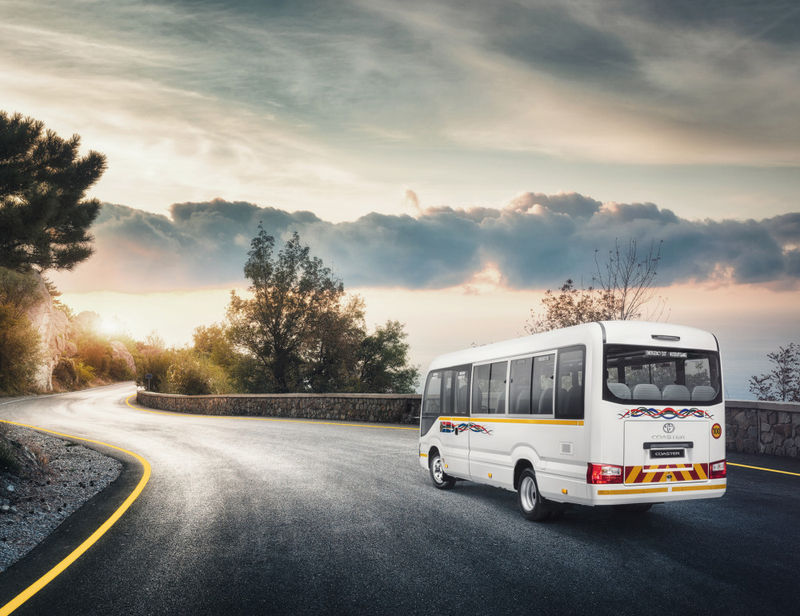
The 4th generation Toyota Coaster will appeal to taxi operators and tour operators alike with a capacity of 23 seats (including the driver). The seating arrangement includes 6-single seats on the passenger side with 6 double seats on the driver side and a 4-seater bench at the back of the bus.
Some key features include a tilt/scope adjustable steering wheel, multi-information display, Toyota audio system (Toyota Connect with 15GB), 12V socket and USB and auxiliary ports. Safety features include dual front airbags and ABS with EBD.
The interior is finished in a durable PVC finish for the floor and seat trim while the steering wheel and gear lever are finished in Urethane.
The Coaster is exclusively offered in White with regulatory mini-bus stickers and chevron markings.
A Hino-sourced 4.0-litre turbodiesel engine provides 100 kW and 353 Nm of torque and makes use of a 5-speed manual transmission that drives the rear wheels.
How much does the Toyota Coaster cost in South Africa?
Toyota Coaster 4.0D 5MT LWB R899 900
The Coaster is sold with a 3-year/100 000km warranty and a 6-services/60 000 km service plan.
BMW South Africa has announced specifications and pricing for its 3 Series Mzansi Edition. See what’s on offer, plus pricing for this model.
After the BMW X3 Mzansi Edition was introduced, another bread-and-butter model from the Munich-based brand has been launched. This is the BMW 3 Series Mzansi Edition, a derivative that’s loaded with additional content and features that combine to offer more value.
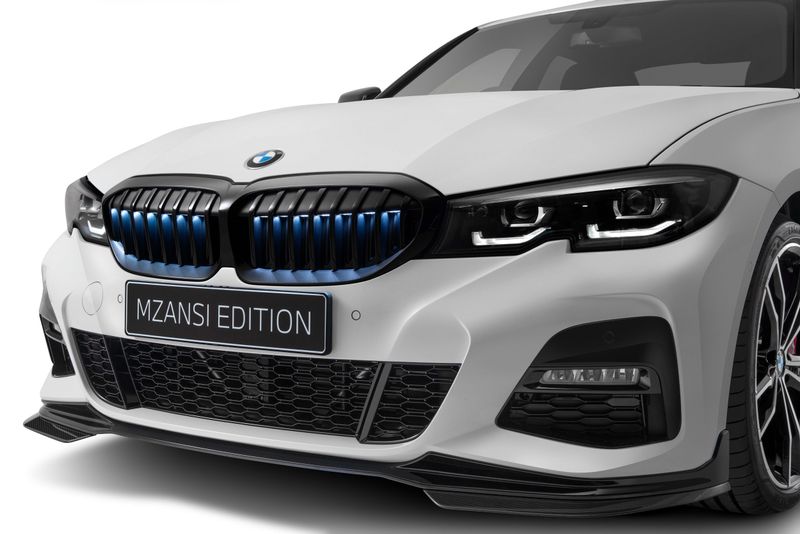
Visually, the 3 Series Mzansi Edition from BMW features the M Sport package with M High-gloss Shadow Line detailing for the kidney grille frame and grille as standard. There are also BMW M carbon mirror caps and BMW Individual Lights in Shadow Line.
The bold high-gloss black front splitter with carbon fibre is striking and will set the Mzansi Edition apart from its standard BMW 3 Series siblings.
BMW has made the glow grille available for this special edition. Previously it was only available in the BMW X6, and it features LED backlighting that illuminates when you lock and unlock the vehicle.
Other noteworthy visual additions include the red BMW M Sport brake callipers, 19-inch M light-alloy wheels, LED door projectors and high-gloss black side sill inserts. The exhaust tailpipes are finished in black chrome trim and there’s a high-gloss black rear diffuser and a carbon fibre rear spoiler for additional visual punch.
Inside, the cabin features Sensatec and Alcantara upholstery with contrast stitching, M seatbelts, BMW Live Cockpit Professional, ambient lighting and a glass sunroof.
Customers can choose from 5 colours: Portimao Blue, Black Sapphire Metallic, Mineral Grey Metallic, Mineral White Metallic and Alpine White. There are three engines available, the 318i with 115 kW / 250 Nm, 320i with 135 kW and 300 Nm and the 320d which produces 140 kW and 400 Nm. Every derivative comes with an 8-speed automatic gearbox with paddle shifters on the steering wheel.
How much does the new BMW 3 Series Mzansi Edition cost in South Africa?
The recommended retail prices for the 3 Series Mzansi Edition (including VAT and CO2 tax):
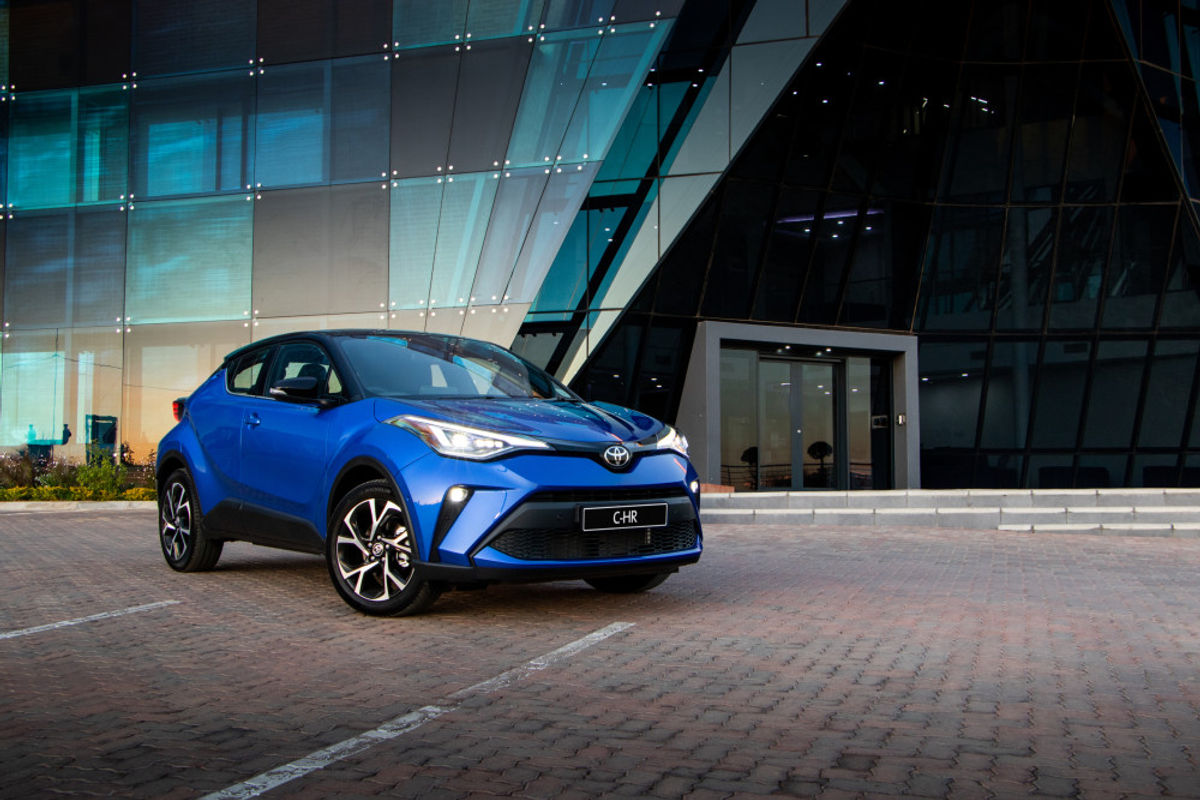
Toyota has updated its range-topping C-HR crossover which now features refined styling and enhanced safety specification. See what’s changed below…
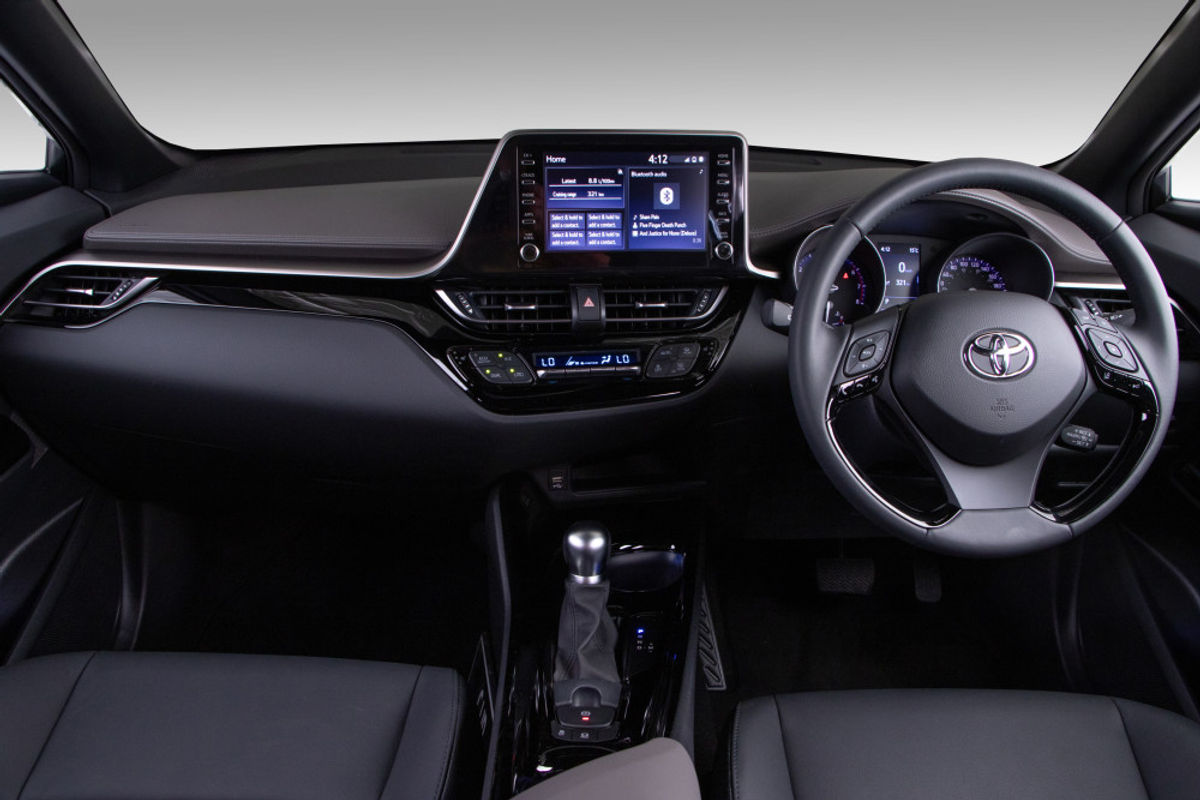
The range-topping Toyota C-HR 1.2T Luxury is the current #CarsAwards Crossover category champion and the stylish model received a facelift early in 2020. Now Toyota has updated its range-topping C-HR derivative with aesthetic and safety upgrades.
New features for the Toyota C-HR
Toyota’s #CarsAwards winner now gains enhanced safety features.
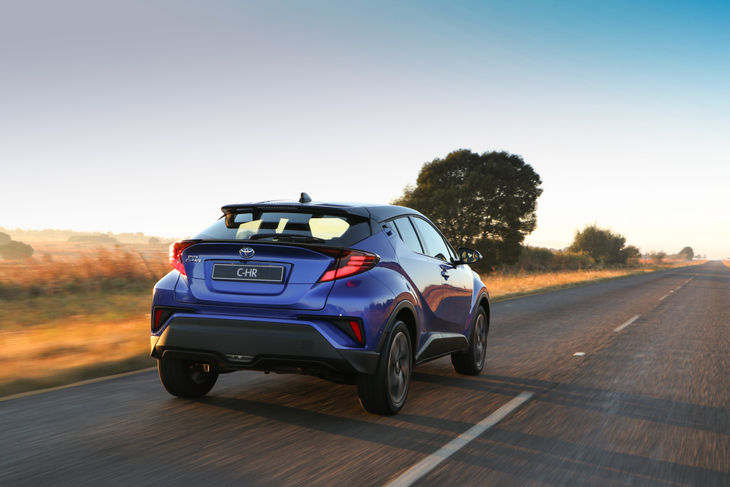
The C-HR Luxury derivative now gains sequential indicator lights and Y-shaped light guides in combination with LED headlights and Daytime Running Lights (DRLs). Toyota has also fitted LED fog lamps. At the rear, the C-HR wears a 3-segment LED light design with smoked light surrounds and a horizontal cross-section that spans across the rear end for added visual appeal.
Buyers can choose from a range of exterior colours including White Pearl, Passion Red, Lunar Metallic, Cosmic Blue and Inferno Orange Metallic.
In terms of added safety features, the range-topping C-HR now features all-speed Adaptive Cruise Control (ACC) and the Lane Departure Alert (LDA) function now also gains Lane Trace functionality which helps to keep the vehicle centred in its lane. Other useful safety features include Pre-Collision System (PCS), Auto High Beam (AHB), Rear Cross Traffic Alert (RCTA) and Blind Spot Monitoring (BSM), all of which are a part of Toyota Safety Sense (TSS) suite.
The C-HR employs a familiar 1.2-litre turbocharged petrol engine with 85 kW and 185 Nm which can be paired with a CVT or a 6-speed manual. Fuel consumption for the manual is claimed 6.3 L/100km while the CVT derivative is claimed to consume 6.4 L/100km.
How much does the Toyota C-HR cost?
C-HR 1.2T R402 300
C-HR 1.2T Plus R436 300
C-HR 1.2T Plus CVT R449 300
C-HR 1.2T Luxury CVT R519 900
Pricing includes a 3-year/100 000km warranty and a 6-services/90 000 km service plan.
This week’s news you need to know (June 2021, Week 4)
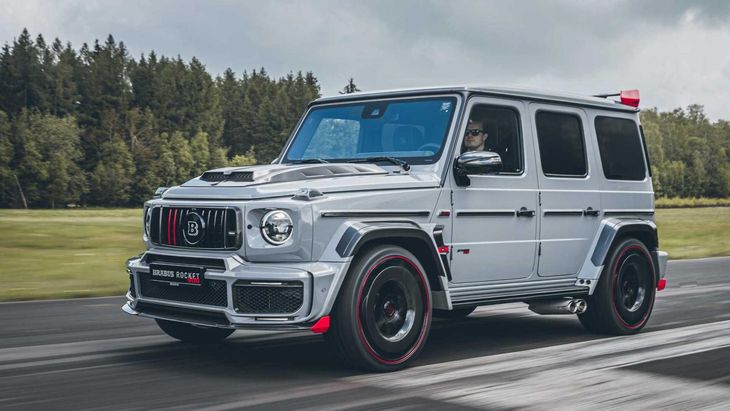
In this week’s news that you need to know, the new Mazda BT-50 looks set to steal a march on its Isuzu D-Max cousin – not that its head start will amount to much; Brabus’ ostentatious 900 Rocket Edition seems the ultimate coach-built G-Class Benz, as long as its brute of an engine will be allowed to keep roaring, the Honda Jazz has a “new old” name, but does it still have a sporty heart? Plus, Ferrari’s outdoing itself with a new V6 hybrid supercar, but at what cost, ultimately?
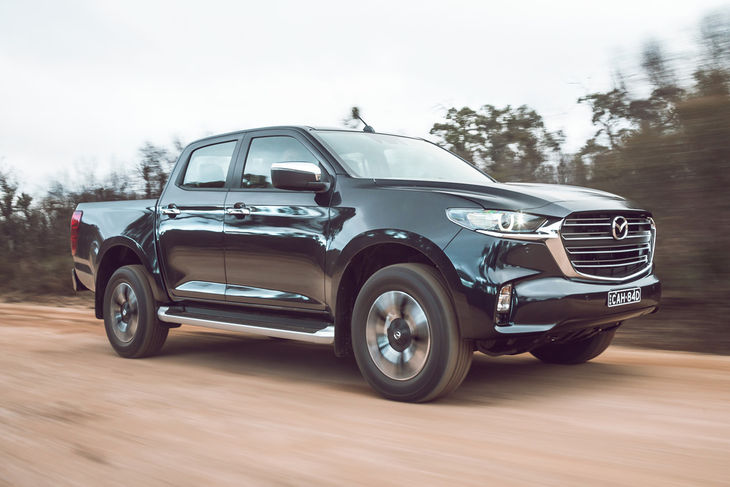
Mazda BT-50 vs Isuzu D-Max – ‘If you’re not first…’
got a strange feeling of déjà vu about the new-generation Mazda BT-50 double cab landing in South Africa (soon) ahead of the next Isuzu D-Max, with which it shares a platform and, for that matter, a multitude of mechanical components… Why, yes, I’ve watched a remarkably similar movie before… Suzuki Baleno vs Toyota Starlet.
Here’s a refresher: Suzuki had a 3-plus-year jump on Toyota with its Baleno compact hatchback, but that fact didn’t disadvantage the Starlet upon its arrival. As soon as the rebadged Toyota (which probably rolled out of the same plant as the Baleno) entered our market, it immediately eclipsed its Suzuki counterpart’s sales. Motoring is a cruel game (at the best of times), but the market wants what it wants.
The new Mazda BT-50 vs next-gen Isuzu D-Max match-up isn’t exactly the same as Suzuki Baleno vs Toyota Starlet; after all, in this case, the clone will precede the original – not the other way round. Having said that, Mazda deserves every chance to succeed, because the previous-gen BT-50 certainly didn’t do as well as it could have following its launch under the auspices of Ford back in 2012.
The Isuzu-based new BT-50 can now emerge from the Ranger’s shadow. While the Hiroshima-based brand will have a head start, Isuzu, however, has a deeply loyal following in Mzansi, one upon which it will be leaning quite heavily once the brand’s Gqeberha assembly facility comes online in 2022.
I hope we won’t be amid the 6th wave by then.
Brabus Rocket Edition – the dying days of coachbuilding
If you have had a look at what Brabus does (on YouTube), you’ll know that the German tuning firm essentially strips a perfectly good car apart and rebuilds it in an old-fashioned coachbuilding style. In an increasingly automated world, it’s a trade that I hope will never disappear. The seats are recovered in carefully selected cowhide from cattle that attended private schools… such is the level of opulence!
But deep down, engine tuning is the true heart of Brabus. The firm will rebuild Benz engines to make them better, bigger, stronger and work all manner of tricks in the process. I’m no “Debbie downer”, but I just don’t see how they’ll capture that same Brabus spirit in the EV age. Imagine a well-screwed-together Brabus creation whizzing along quietly without even a hint of a throaty V8 roar. Nah, I cannot even.
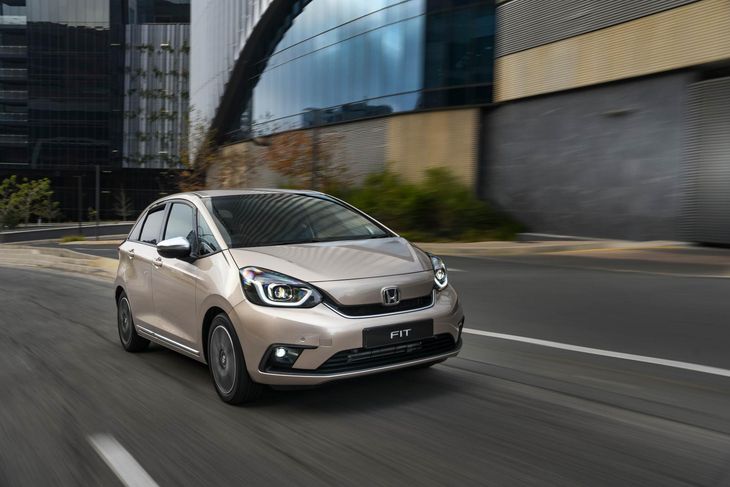
Jazz changing to Fit in SA – Hit the gym
It’s certainly a change-up in extramural endeavours as Honda flips from jamming free-form light music in smoky clubs late at night to getting up at the crack of dawn to dress in overpriced exercise gear and dabble in CrossFit, ha-ha. But one of the most endearing features of the old Jazz, ageist assumptions about the drivers that tended to buy the model notwithstanding, was that the 1.5 Sport derivative came equipped with shift paddles mounted on its steering wheel (at this point I will remind you that the 1.5 Sport had a continuously-variable automatic transmission, which is a buzz-kill at the best of times). The 1.5 Sport was painfully slow, but there was a subtle sense of occasion about the car, as if Honda wanted to instil just a smidge of um, brio, in its products. So many B-segment hatchbacks lack that.
Despite the fact that the more youthful-looking Fit’s front end appears to have collided with the back of some oke’s Venter trailer – and that’s before it’s even left the showroom floor, I am hopeful that Honda will regain its mojo. That old Jazz had an indescribable sense of occasion to it; I hope they will instil it in the Fit too. Plus, while they’re at it, introduce a new-generation S2000. I speak for the people here!
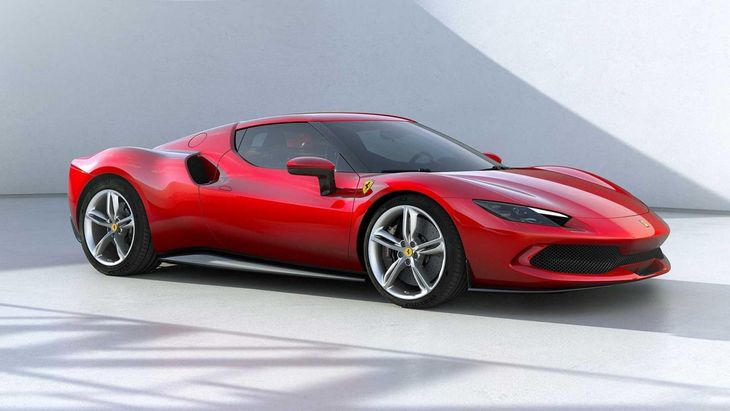
Ferrari 296 GTB – Prancing horses and battery packs
Il Commendatore” Enzo Ferrari must be doing backflips in his grave. Sorry, pops, but there’s yet another Prancing Horse with a battery strapped to its back and this one doesn’t have a V12 or even a V8… In case you haven’t heard it, come a little closer so that I can whisper it in your ear… the 296 GTB is faster than the sacred 488 Pista (sorry to break it to you), courtesy of an electrically assisted V6 engine!
With its fourth hybrid in the line-up (following the LaFerrari, LaFerrari Aperta and SF90 Stradale), Ferrari is confidently following a strategy that relies on the fact that current supercar owners want hybrids rather than full EVs (at least until electric supercars have become remotely viable). It’s refreshing to see and explains where the Maranello-based firm has invested the capital that it set aside for Research and Development – certainly not in its inconsistent F1 team. Again, I issue a warning… Ferraris are all about “feel”. Lose that visceral element and you’ll lose your customer base. Exciting times are ahead…
Watch: Hyundai Santa Cruz Production
Watch the new Hyundai Santa Cruz bakkie being built at the Hyundai Motor Manufacturing Alabama (HMMA) plant.
The Santa Cruz is produced in Hyundai’s plant in Alabama, USA alongside other Hyundai models such as the Tucson, Santa Fe, Elantra and Sonata.
Hyundai Santa Cruz not for SA, yet…
As it stands, the Santa Cruz is not being produced for right-hand-drive markets such as South Africa but we hope that will change in the near future. We think the new Huyundai Santa Cruz would sell up a storm here in Mzansi!
In the USA, the Santa Cruz will be sold with 2 engine choices including a 141 kW / 244 Nm 2.5-litre turbopetrol engine with a 8-speed automatic transmission and a 205 kW / 420 2.5-litre turbopetrol engine which is mated with an 8-speed dual-clutch transmission.
Car production is a complex process and if you’ve never had the opportunity to visit a car production facility then this video will give you some insight into the technology and processes involved in producing a vehicle. More so, it might even give you a heightened sense of appreciation for the car that you drive. Enjoy.
Nissan’s new Magnite budget crossover has arrived in South Africa and we had a brief opportunity to sample the range-topping 1.0 Turbo Acenta Plus automatic derivative in Cape Town. Let’s take a quick look at what Nissan’s newcomer brings to a burgeoning segment of the new-vehicle market…
There’s been considerable activity in the budget crossover (entry-level compact family car) segment in recent months and the new Nissan Magnite is the latest product to come to market.
With the arrival of the Magnite, local buyers now have even more choice. We spent one short day with the newcomer; we bring you some of our initial impressions below…
What does the Nissan Magnite look like?
The Magnite is a Datsun that became a Nissan. How do you feel about that?
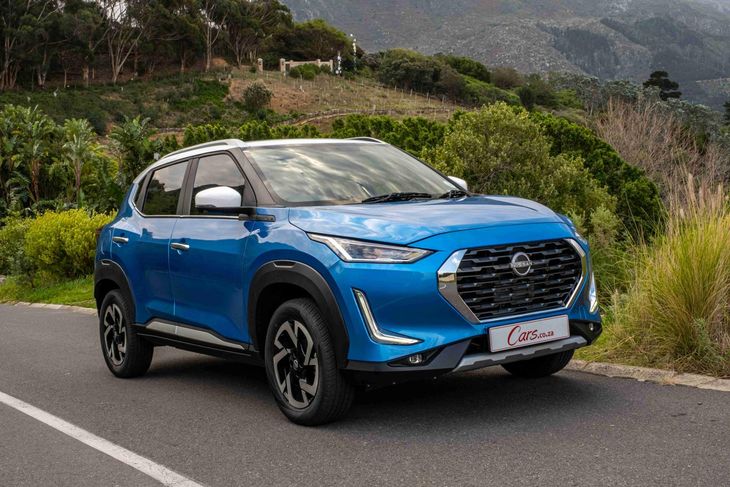
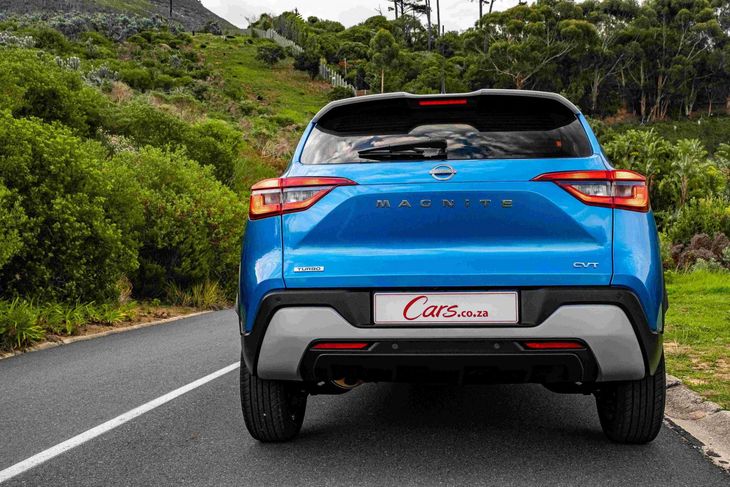
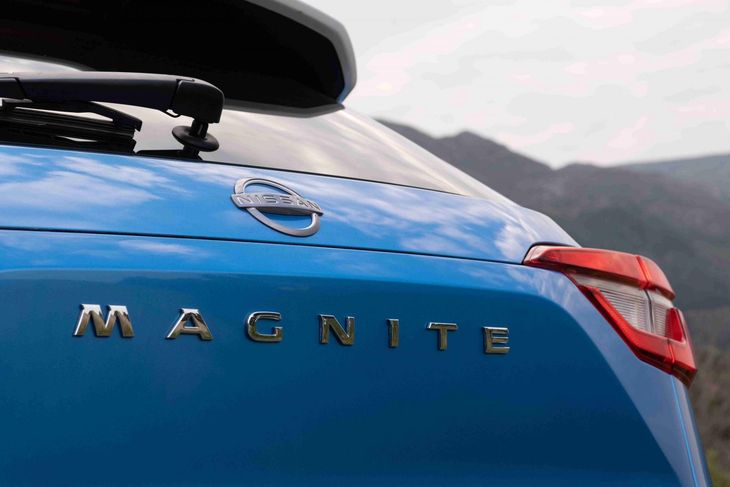
Datsun Go, is that you? The most pronounced aesthetic feature of the Magnite is indeed its grille. The Magnite was actually designed to be a Datsun, but because Nissan has decided to scale down its budget brand globally, the Japanese manufacturer took over the Magnite project, which is why the budget crossover you see here proudly wears a new Nissan badge, which actually looks quite slick.
This range-topping 1.0 Turbo Acenta Plus automatic arrived clad in a dual-tone paint job (Vivid Blue with a Storm White roof), which is perhaps the most striking colour combination on offer in the range. Overall, we think the Magnite’s styling will divide opinion – it might not be to everyone’s taste, but you can let us know if you like the look. Let’s hop inside for a closer look…
What’s the interior of the Nissan Magnite like?
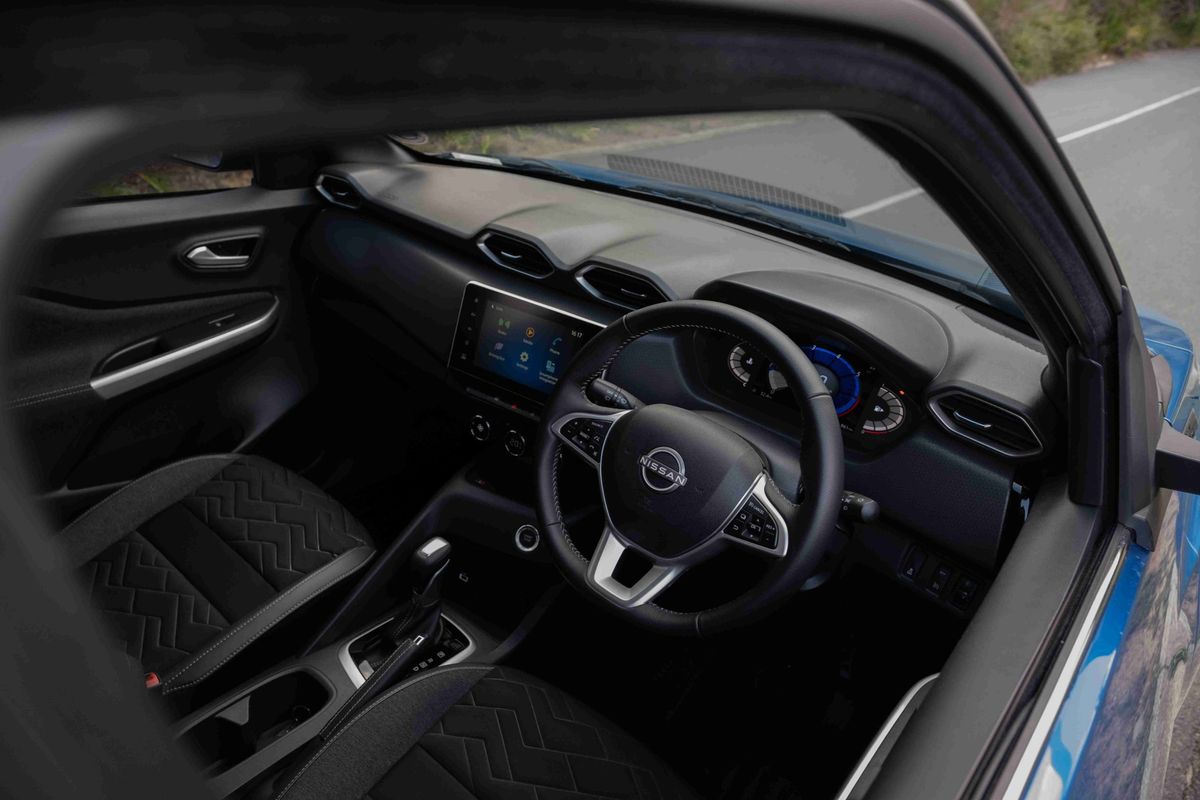
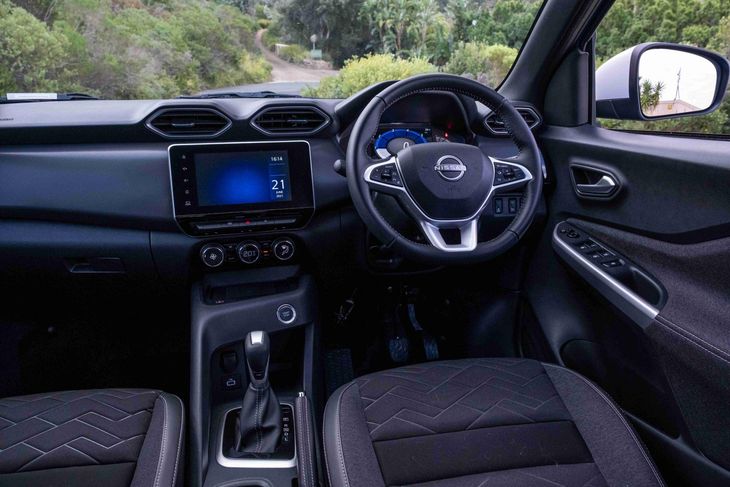
This range-topping Magnite has many attractive features including a 360-degree camera and a wireless smartphone charger.
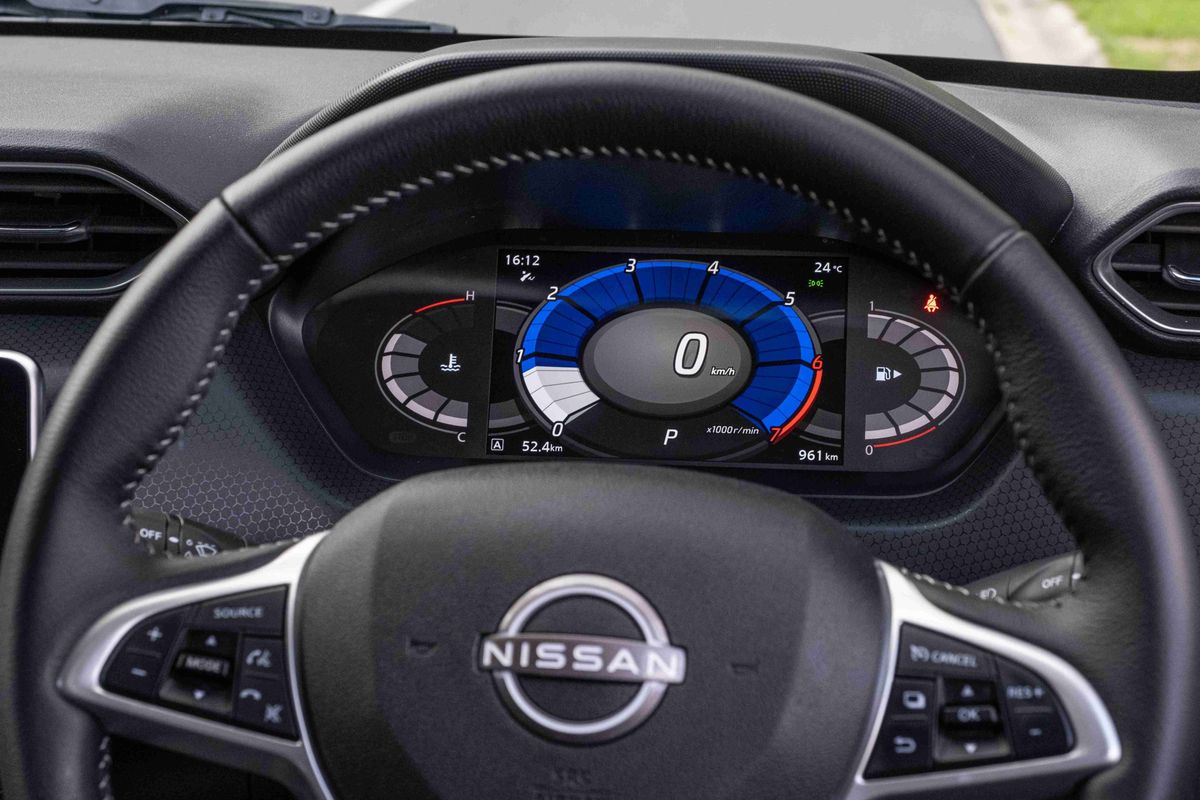
The Magnite’s interior is certainly one of the livelier cabins in the budget crossover segment. What’s more, the specification sheet on this range-topping derivative is quite impressive. For a start, the partial cloth/leather seats have an interesting quilted-look design and the configurable arcade-like 7-inch TFT Advanced Drive-Assist Display (instrument cluster) adds welcome dashes of colour and pep.
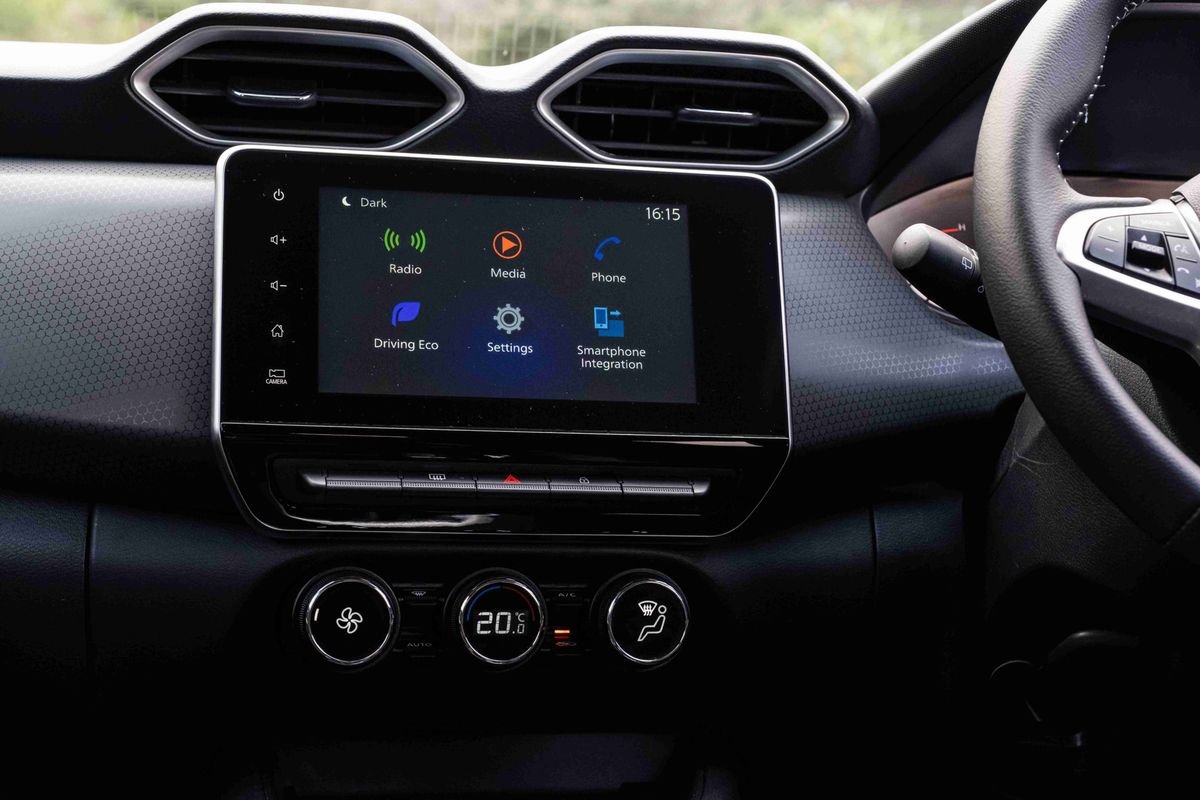
Infotainment is provided by an 8-inch touchscreen with Android Auto and Apple CarPlay compatibility. The top-spec Magnite is also equipped with a 360-degree Around View Monitor (AVM) camera system which is a boon in this segment and particularly useful for manoeuvring in and out of tight parking spaces. But that’s not all, there’s also a wireless charging pad for your smartphone, very fancy!
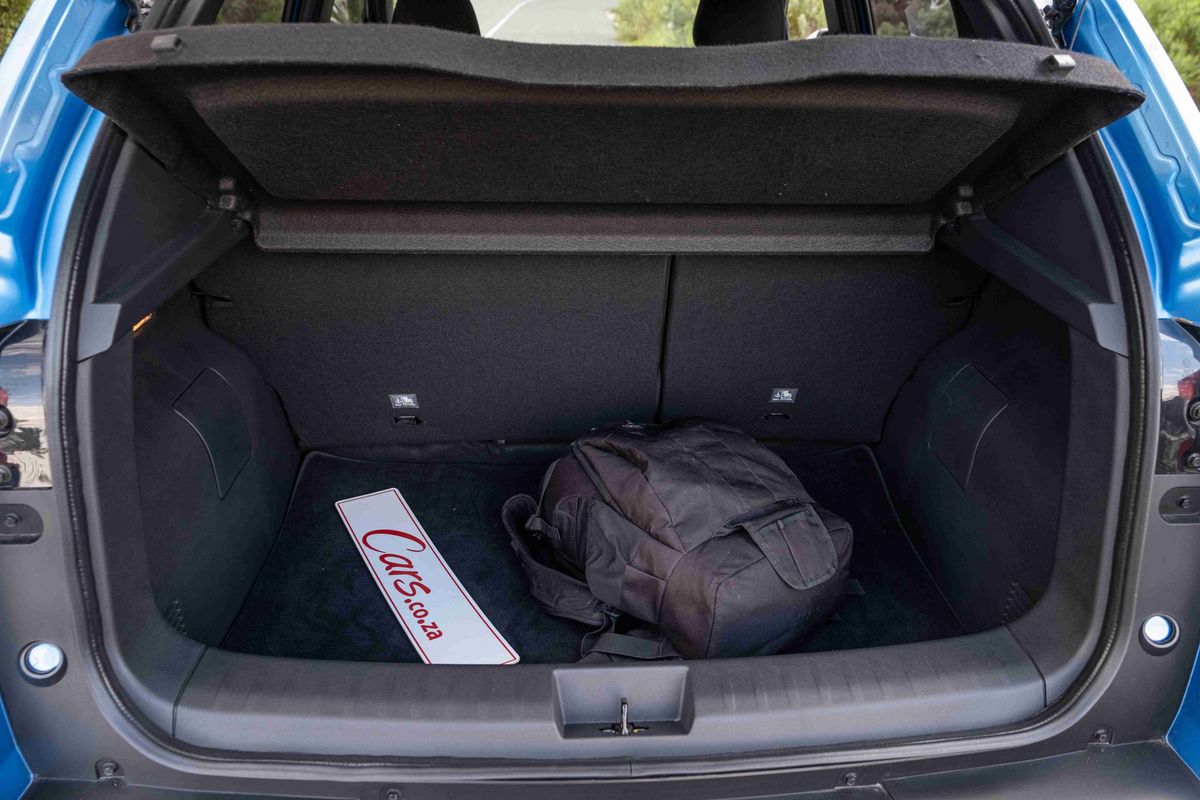
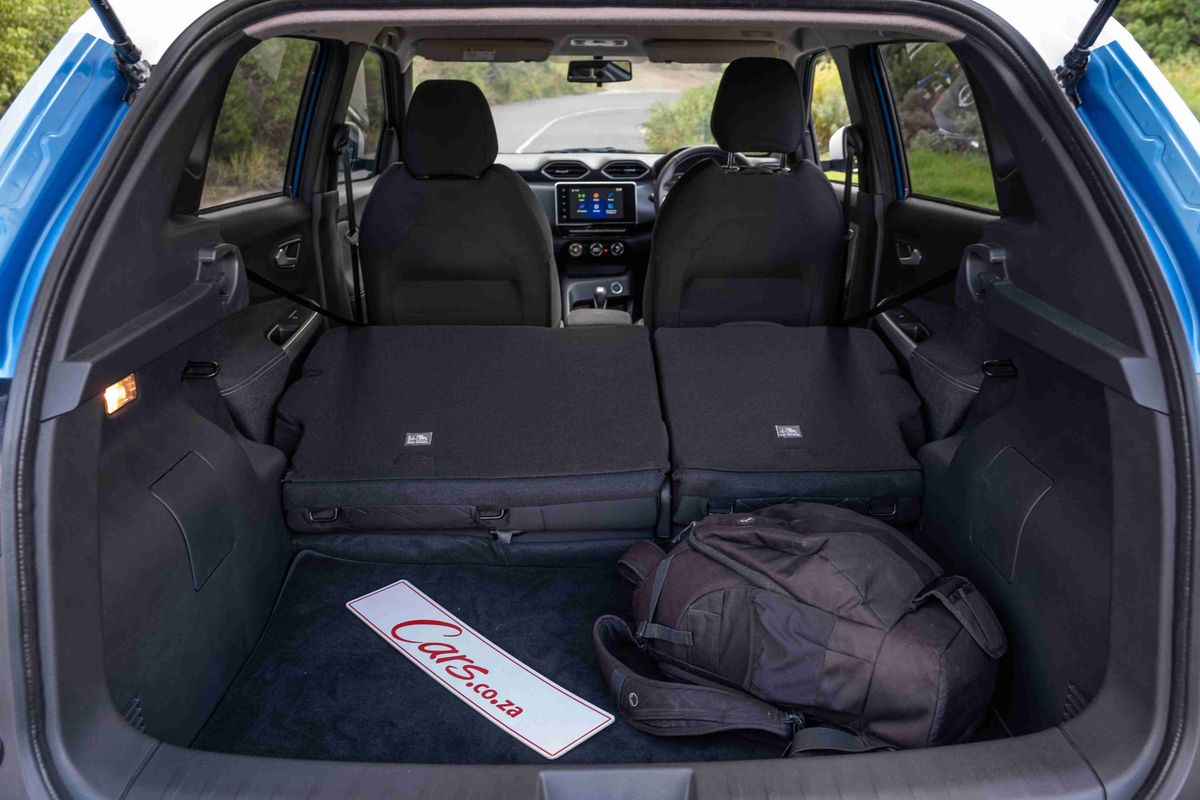
Space for rear passengers is more than adequate and a central rear armrest provides a pair of cupholders and space to store a smartphone. As for the load bay, it is said to offer 336 litres of luggage space and, should you need to transport longer or bulkier items, you can free up more room by folding down the 60:40 split rear seatback.
In terms of safety, the Magnite is equipped with 2 front airbags, ABS with EBD, brake assist, electronic stability control (including traction control), hill start assist and a tyre pressure monitoring system.
Despite its impressive feature set, the Magnite’s perceived interior build quality is perhaps its biggest drawback; it just doesn’t feel quite as well screwed together as its rivals and some of the trim looks iffy.
What’s the Nissan Magnite like to drive?
The Magnite’s engine is punchier than its rivals and delivers good overall performance.
While most of the Magnite’s rivals employ naturally-aspirated engines, Nissan’s newcomer is powered by a 1.0-litre 3-cylinder turbopetrol engine that packs 74 kW and 152 Nm of torque. The 3-pot motor can be paired with either a 5-speed manual transmission or, in this case, a continuously variable automatic transmission (CVT).
The Magnite weighs just over a tonne and we were surprised by how briskly it scooted between traffic-light intersections on the daily commute. Acceleration from standstill is good and under normal driving conditions, the engine and transmission work well together to deliver a pleasant driving experience. The Magnite, therefore, does not feel as obviously sluggish as some of its naturally aspirated rivals.
Under hard acceleration, the level of mechanical noise increases noticeably, but this is not out of the ordinary. CVTs are often criticised for being “droney” even if we believe the Magnite’s transmission is better than most of its equivalents. The CVT also has a “Low” setting for when the car needs maximum oomph to ascend uphills (when fully laden) or traversing trickier sections of gravel roads.
The steering feel is light, which is great for inner-city driving, but it’s also quite vague and perhaps not as responsive to inputs as we’d hoped it would be. The ride quality, however, is reasonably pliant on tarred roads. Although we didn’t get a chance to drive the Magnite on a dirt road, we’d imagine that the 205 mm of ground clearance would be useful if the Nissan ever needed to traverse gravel routes.
In terms of fuel efficiency, Nissan claims an average consumption of 6.0 L/100 km and, during our brief drive, we saw returns of around 6.5 L/100 km, which is right on par with vehicles of this calibre.
Summary
The Magnite makes a strong case for itself if you are willing to accept its weaknesses.
Overall, the Nissan Magnite range is competitively priced against its main rivals. An admirable combination of easy drivability, willing performance (matched with good economy), a pliant ride quality and a comprehensive feature list makes the newcomer quite worthy of consideration. However, some buyers might be put off by the model’s Datsun-inspired styling and average-to-marginal perceived build quality. Nissan does, however, offer a comprehensive warranty and a 3-year service plan, both of which should provide prospective buyers with some peace of mind.
Considering the market’s enthusiastic response to Toyota Urban Cruiser and Suzuki Vitara Brezza, it will be interesting to see how well the Magnite will be received in Mzansi in the coming weeks and months. We do, however, look forward to having the Magnite on test for a longer period so that we provide you with further useful insights. Look out for a thorough review coming your way soon!
How much does the Nissan Magnite cost in South Africa?