New Bajaj Qute vs Bicycle – Drag Race!

The Bajaj Qute has garnered its fair share of publicity since it was launched in SA a few weeks back. Is it fit for SA roads or is it even fast enough to beat a bicycle? We put that to the test.

Over the years, we've staged many, many drag races. Too many to count. But this could be the best one yet, and it doesn't involve a single car.

The Bajaj Qute arrived in South Africa and caused a social media storm quite unlike anything we've ever seen. It may look like a car, but technically it is a "quadricycle" – or 4-wheeled motorbike. It is powered by a 216 cc motorbike engine mounted under the rear seats, and all 8.08 kW of power are sent to the rear wheels.

In this video, the Bajaj is taking on something with two wheels…and two legs. Cars.co.za's resident racing driver Ashley Oldfield is not only a superb racing driver, but he's also an incredible rider of bicycles. With 1.2 kW of max power output, sent to the rear wheel, could Ashley take on this form of motorised transport and win?

You'll have to watch to find out.

Are you looking for a used car in South Africa? We have the largest selection anywhere online! www.Cars.co.za

Budget-Insurance

Cars.co.za's Youtube channel is powered by Budget Insurance. For an instant quote, click here.

Related content

Bajaj Qute Review – In-depth test drive of South Africa’s cheapest “car”

4 New Cars Under R3 000 p/m

5 Cheapest New Cars in South Africa 2021

Hyundai i20 (2021) Launch Review

Hyundai has launched its new i20 compact hatchback in Mzansi. We got behind the 'wheel of the Korean firm's Volkswagen Polo fighter to see if it's any good.

Since 2009, when the Hyundai i20 debuted in South Africa, the Korean firm has sold a staggering 106 712 units of its compact hatchback in the Republic. Sales of the 1st-gen model, which was offered until 2014, alone totalled 67 539. The 2nd-model that replaced it has now been superseded by the all-new, distinctively styled i20, which features an expanded line-up, including turbopetrol derivatives.

The 5-door compact hatchback segment still represents a considerable chunk of the new vehicle market; there are quite a few fresh contenders in the shapes of the newly-arrived Opel Corsa, Peugeot 208 and Citroen C3, but Hyundai nonetheless has the segment leader, the Volkswagen Polo, in its crosshairs. Other noteworthy rivals include the Ford Fiesta, Kia Rio, Mazda2, Nissan Micra and Toyota Yaris.  

Hyundai-i20
The styling of the Hyundai i20 is quite out there compared to the predecessor.

Like its comparatively conservative predecessor, the new Hyundai i20 is built in India. The newcomer is longer, wider and offers a bit more ground clearance than before. The cabin dimensions have also increased slightly (to free up more shoulder room and rear legroom for occupants), while the load bay capacity has grown to a claimed 311 litres by virtue of offering more depth, width and height.

The cabin, especially the fascia, has been significantly modernised. The dashboard looks very sophisticated thanks to the neat integration of Hyundai's proprietary infotainment unit, which neatly flanks the instrument binnacle. The touchscreen, meanwhile, is complemented by digital instrumentation, which has replaced the previous i20's traditional analogue dials.

There are 2 grades on offer: Motion and Fluid. All derivatives come with daytime running lights, electric windows, Apple CarPlay/Android Auto compatibility, rear parking sensors, a reverse-view camera, auto headlights and aircon.

The Motion has 2 airbags and 15-inch steel wheels, while the Fluid features 16-inch alloys, another 2 airbags, front fog lights, a wireless charging pad, cruise control, electric folding side mirrors, leather upholstery and leather-trimmed steering wheel and gear knob.

Hyundai-i20
A digital dashboard is available across the range

Hyundai i20 engine line-up

Hyundai offers its new i20 hatchback with a range of petrol engines. The 1.2- and 1.4-litre naturally aspirated 4-cylinder petrol engines are carried over from the previous model. These two powertrains produce 61 kW and 115 Nm, and 74 kW and 133 Nm respectively. The 1.2-litre is paired with a 5-speed manual gearbox, while the 1.4-litre is sold exclusively with an automatic transmission.

However, a new 1.0-litre turbocharged 3-cylinder engine, which develops 90 kW and 172 Nm, has been added to the range to take the fight to the forced-induction segment leaders. The motor is offered in conjunction with either a 6-speed manual 'box or a 7-speed dual-clutch automatic transmission. Whereas the previous-generation i20 couldn't match the mechanical sophistication of rival offerings, many of which had more flexible downsized turbocharged powertrains, this is no longer the case… The all-new i20 looks advanced and the new motor in the top derivatives delivers more than enough performance.

What's it like to drive? 

Hyundai-i20
There's far more engagement when it comes to driving the Hyundai i20

We drove both manual and auto versions of the 1.0-litre 3-cylinder turbopetrol derivatives. It's a very willing (even spirited) engine and if it wasn't for the driving rain we encountered on the launch route, we would have driven much more enthusiastically! There's a trademark 3-pot growl towards the top of the motor's rev range, which gives it a sporty sound, but it's refined and quiet when you're driving normally.

The manual gearbox has a pleasingly light shift action and the clutch pedal is simple to modulate. In fact, there's a handy shift light to tell you when to swop cogs to achieve optimal fuel efficiency, which was useful as we often forgot to change into 6th gear on long open sections of road. We did note the engine had a touch of hesitation (lag, if you will) at low revs, but this is a trait exhibited by most small turbocharged motors; once the bar on the rev counter sweeps upwards, progress is smooth and linear. 

As for the automatic, Hyundai's first dual-clutch transmissions (DCT) weren't the best – the Korean brand develops and produces its own gearboxes (in case you didn't already know that), but the marque seems to have caught up nicely since then. The self-shifting 7-speed transmission in the new Hyundai i20 changes up and down effortlessly and, provided you don't make staccato throttle inputs, forward momentum is silky smooth. Shifts are quick, albeit but not as lightning-quick as those of VW Group DSG units. What's great about this setup is that the DCT ably keeps the engine in its sweet spot.

Given how automatics are becoming increasingly popular in our market (especially for those urbanites who brave congested traffic conditions every day of their working lives), we'd say the DCT is a more logical choice than the 6-speed manual. That being said, we were nonetheless pleasantly surprised by the engagement offered by the manual version of the 1.0 TGDI.

Hyundai-i20

The driving characteristics of the newcomer represent a marked improvement over those of its, not to be cruel, so-so predecessor. The all-new Hyundai i20 tips the scales at just over 1 000 kg and feels nimble and sufficiently wieldy, which is refreshing. Granted, the ride quality is a bit on the firmer side, but given the softly-sprung vagueness of its predecessor, we prefer the new model without question.

It's just that much more entertaining to drive by comparison, but without being too taxing or overly involving to drive. The suspension's responses are measured and predictable, even on i20s shod with the sportier 16-inch wheels and tyres. Our test route was a genuinely perfect stretch of tarmac with very few bumps, so we'll defer the final verdict to our road test, but first impressions were good.

After we'd completed the launch route in the manual version, the indicated fuel economy figure on the i20's instrument cluster was 6.6 L/100 km, which we'd say was impressive, given our bouts of enthusiastic driving. After our stint in the DCT (automatic) derivative, we saw a figure of 7.1 L/100 km – which was also a fair result.

Flaws? Well, we would have liked a greater range of height adjustment on the driver's seat, which doesn't quite go down low enough; you end up with a feeling of sitting on the car, as opposed to in it, so the driving position isn't ideal for taller drivers. Some of the cabin materials used don't quite feel as premium as the i20's list prices suggest, but this is a criticism we often level at cars in this segment. 

Summary

Hyundai-i20
It's a marked improvement all round for the Hyundai i20. Game on!

While the new Hyundai i20's looks won't appeal to everyone – its bold appearance represents quite a departure from that of the previous model – the newcomer does move the game along significantly. Not only has it finally received an energetic and punchy engine to keep pace with those of its rivals, but its specification (at the price) comfortably eclipses the competition in terms of outright value.

The i20's driving manners have improved dramatically too. Indeed, this Korean compact hatchback offers a modicum of genuine driver involvement and feels far more involving to pilot than before; it's a veritable quantum leap from the 1st-generation model's insular driving experience. A sporty Hyundai that doesn't have an N badge? What is the world coming to? We like this place. 

Combined with the substantial warranty and after-sales back-up (including a 4-year/60 000 km service plan) offered by the Korean brand's local subsidiary, we think there might be a short-term stock shortage of the new i20. Hyundai South Africa said that no fewer than 45 units drove off showroom floors on the first official day of sales – a strong indication of things to come, perhaps? 

Evidently, Hyundai has come out swinging with its new i20. It knows that while its SUV models bring in significant sales, it still needs to have a strong offering in the compact hatchback segment and the latest generation i20 will certainly nick more than a few sales from its rivals. Whether it can match the segment-leading Volkswagen Polo remains to be seen, but that's what group tests are for, right?

How much does the new Hyundai i20 cost in South Africa?

Hyundai-i20

The new Hyundai i20 is sold with a 5-year/150 000 km manufacturer's warranty and an additional 2-year/50 000 km powertrain warranty, a 5-year/160 000 km perforation warranty, 7 years' (or until 150 000 km) roadside assistance, as well as a 4-year/60 000 km service plan with intervals at every 15 000 km.

1.2 Fluid Manual R289 900
1.2 Fluid Manual Two-tone R294 900
1.4 Motion Auto R305 900
1.0 TGDI Fluid MT R330 900
1.0 TGDI Fluid MT Two-tone R335 900
1.0 TGDI Fluid DCT R355 900
1.0 TGDI Fluid DCT Two-tone R360 900

Further Reading

Hyundai i20 (2021) Specs & Price in SA

Full Reveal: Hyundai i20 N with 150 kW!

Hyundai i20 N Line Previews Hardcore Hot Hatch

Hyundai i20 (2021) International Launch Review

SA Planning Local Electric Vehicle Production

The Department of Trade, Industry and Competition has released an Auto Green Paper on the Advancement of New Energy Vehicles in South Africa, laying the foundation for South Africa to gear up for local electric vehicle (EV) production.

The adoption of electric vehicles (EVs), particularly battery-electric vehicles (BEVs) is gaining momentum rapidly with global New Energy Vehicle (NEV) sales rising by 43% in 2020, at a time when the world was brought to its knees as a result of the Covid-19 pandemic, which drove demand for new cars into the ground. 

The prediction is that NEV sales will surpass internal-combustion-engined (ICE) cars' sales by 2038. Europe has now become a key region of growth, ahead of China, and the rapid and continuous growth in this sector is putting local government under pressure to act swiftly to establish the necessary policy framework to enable a long-term strategy that will put South Africa in a position to participate in and, hopefully, excel at the local assembly of electric vehicles for global export, as well, of course, as producing many of the components those vehicles require.  

The Auto Green Paper on the Advancement of New Energy Vehicles in South Africa, is the first step in the process of developing the roadmap towards local EV production and is the result of input from no fewer than 7 of the major original equipment manufacturers (OEMs) operating in South Africa, as well as National Association of Automotive Component and Allied Manufacturers (Naacam).

Note, however, that the Green Paper is not official government policy but rather a government policy discussion paper. A Green Paper is typically followed by a White Paper, which articulates a policy position of government that has been approved by Cabinet. 

The Green Paper has been released to invite comments from all stakeholders including members of the public and the draft policy for comment will be gazetted by the end of May 2021. Thereafter, policy proposals will be submitted to Cabinet for consideration no later than October 2021. 

The paper makes it clear that the future of the South African automotive industry is inextricably linked and tied to the extent to which the sector embraces and adopts new technologies, specifically electric vehicle- and related component production. This development will have far-reaching economic benefits for South Africa’s economy and will undoubtedly stimulate local job creation and skills development.   

Establishing SA’s EV future

Minister of Trade, Industry and Competition, Ebrahim Patel, this week highlighted the urgent need for the government to step up its efforts to accelerate the process towards local EV production.

“We must step up efforts to build full electric vehicles in SA to maintain our capacity to export to key markets such as the EU and UK, both of which have set new targets and deadlines to reduce the number of fossil fuel reliant vehicles on their roads. We need charging infrastructure – and must expand the existing 200 charging points for electric vehicles in South Africa using the agreed SABS standard”. 

He added: “We don’t want South Africa to become simply a market for electric vehicles produced elsewhere in the world, relegating our car making simply to internal combustion engines. Then, as the world shifts more and more to electric vehicles, we will be left with a stranded asset in the form of a large assembly capability that has not been adjusted to electric vehicles.”

One of the major talking points around South Africa’s lack of EV adoption has to do with incentivisation and taxing of electric vehicles. 

How to bring down the price of EVs

As it stands, EVs are prohibitively expensive in South Africa which, apart from the need for increased charging infrastructure, remains a major reason for the slow uptake of EVs on local soil. Imported EV products are subject to a 25% duty rate where conventional imported ICE vehicles are subject to only 18%.

If the government can effectively reduce ad valorem tax on EVs then the chasm between EV and ICE vehicle pricing will be drastically reduced and become more attractive to local buyers, thereby stimulating the uptake of the former. A reduction in tax would have to be balanced with the government's revenue targets, so do not expect it to immediately favour EVs. 

Also, significant expansion of the current charging infrastructure across South Africa will aid in incentivising and accelerating the adoption of electric vehicles in South Africa. As charging infrastructure increases, it is understood that the supply of energy to these stations needs to come from renewable sources in order to make the use of EVs worthwhile. 

The proposal doesn't only take into account BEVs and hybrids but notes that hydrogen fuel-cell production should be considered, particularly the production of so-called green hydrogen that makes use of SA's abundance of platinum resources. According to the Green Paper, as the green hydrogen technologies mature, they are expected to become the technology of choice in SA and across the world. 

The local automotive industry currently contributes 4.9% to South Africa’s GDP and if the industry is to remain relevant, integration into the broader global EV landscape will be critical. 

If the South African government fails in this endeavour, the loss of current export markets and revenue could very well result in a shrinking GDP contribution along with significant job losses across the board. We guess the real question is: Can we afford not to embrace EVs? 

Related Content 

Which countries are winning the electric race

New Cars or Used Cars: What Car Should You Buy?

Mazibuko M1B is a Mzansi-made battery bakkie

Should VW build Taigo in SA?

The compact hatchback has been the dominant force in the SA passenger-vehicle market for a while, but now that the models in that segment (including the Volkswagen Polo) are becoming increasingly sophisticated and, therefore, less affordable, many buyers are shopping for keenly-priced cars at the lower end of the compact family-car market: budget crossovers. Toyota's now got something in that segment, but Volkswagen doesn't…    

It seems that in the space of just a year, the small/budget crossover market has exploded in Mzansi, most notably at the entry-level point (B-SUVs), where the Honda WR-V, Toyota Urban Cruiser, Suzuki Vitara Brezza, Kia Sonet, Nissan Magnite and upcoming Renault Kiger fight for the slice of the pie that Ford EcoSport and Renault Duster once had to themselves. From Volkswagen's side, the award-winning T-Cross arrived in the Republic relatively late and gained instant success – however, it's a compact family car whose key rivals are the Haval Jolion, Hyundai CretaKia Seltos and Suzuki Vitara, not necessarily the models I mentioned in the first list; just to prove my point: the T-Cross range begins at R347k, whereas the aforementioned Toyota Urban Cruiser starts at R248k (May 2021).


Picture credit: S. Baldauf/SB-Medien. Image watermarked at photographer's request.

Okay, but so what if Volkswagen doesn't bring a small budget-oriented crossover to market? After all, the Polo still sells well. Since the Wolfsburg-based brand's compact hatchback arrived in Mzansi in the late Nineties, the Polo has become the default choice of car that young professionals buy "out of the box"; such was its success that it paved the way for the Ford Fiesta, Hyundai i20, Kia Rio, Renault Clio, Toyota Yaris and so forth. Whereas buyers once defaulted to a Toyota Corolla or a Volkswagen Golf, the Polo (and its like) afforded first-time new-car buyers big-car features in an affordable package.

These days, however, it depends on which Polo you're talking about; the Volkswagen South Africa (VWSA) legacy model – the Polo Vivo – is bringing in the major volumes; by contrast, the list prices for the Polo 6 now starts at R330k (which is not far behind the aforementioned T-Cross) and the market's king of the compact hatchbacks is no longer selling up a storm in the way it used to… That can partly be attributed to the crossover craze, but also because the car’s becoming increasingly sophisticated (pricey) for the purposes of catering for the European markets that it gets exported to.


Picture credit: S. Baldauf/SB-Medien. Image watermarked at photographer's request.

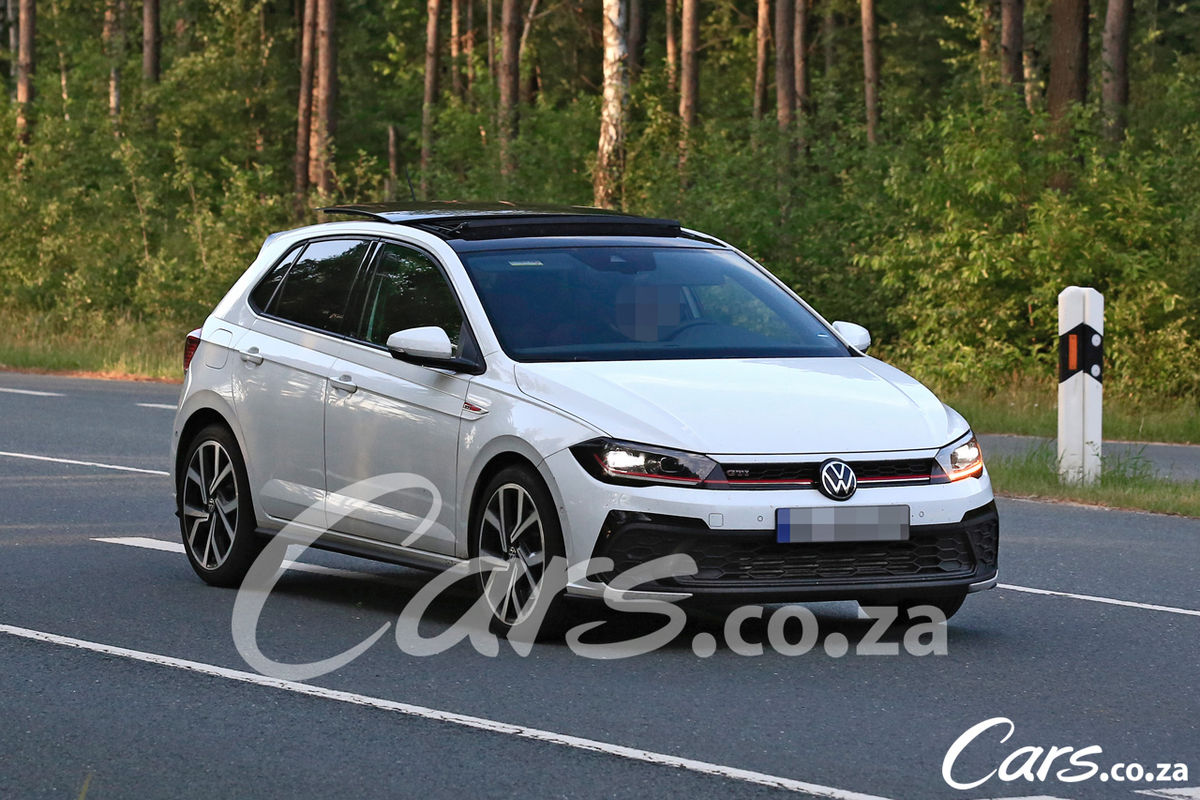
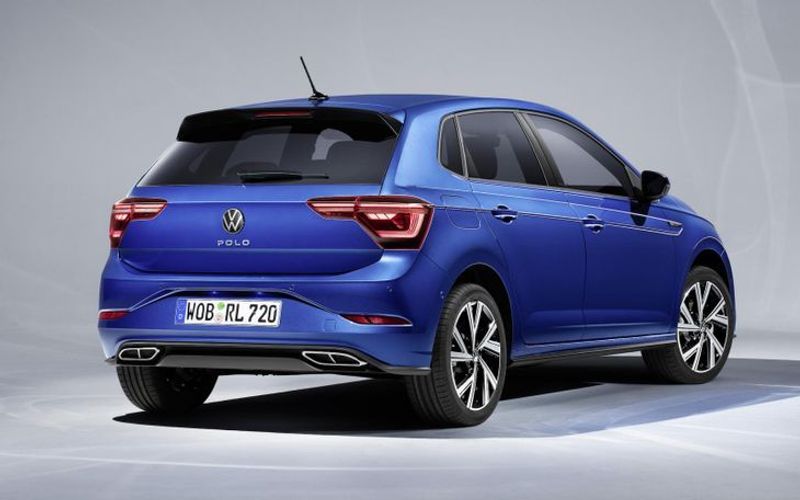
Recently, Volkswagen showcased the facelifted version of the Polo 6, which has a Golf 8-aping new look, but a very high standard safety specification, which suggests even though it will go into production later this year at VWSA's plant in Uitenhage, it will become notably more expensive (even if the versions sold in our market won't be quite as fancy as the units that will roll out of European showrooms).

Alarmingly, Renault CEO Luca de Meo was recently quoted as saying that petrol-engined B segment hatchbacks would virtually have to double in price by 2025 (because that’s when Euro 7 emissions standards will come into force). Why? Because it costs a lot to fit particulate-filter technology to petrol cars. While the additional cost can be absorbed on luxury cars, the impact is devastating on the affordability of the once-ubiquitous compact hatchback. That means the current Polo might be the last one we get here, although it should live on as the next Polo Vivo when its product cycle ends.


The facelifted Polo will be launched in South Africa in early 2022.

So what could VWSA do to compensate for the Polo’s gradually diminishing relevance in South Africa? Bear in mind that there is no guarantee that the next-generation Polo will be built here (especially seeing as it might be replaced by an ID-based model abroad) and the Republic is not nearly in a position (at least yet) to encourage a growing parc of electric cars, let alone produce battery electric vehicles on home soil… For the record, VWSA is keen to produce BEVs in Uitenhage, but it would require a veritable boatload of investment in the plant's facilities and infrastructure to make that possible. 

Perhaps the ideal solution is for Volkswagen to utilise its MQB production infrastructure (which it uses for the Polo) to produce an MQB-based small crossover! Considering that Toyota South Africa Motors will soon put the Corolla Cross into production at its Prospecton plant, its Uitenhage-based archrival – VWSA – should be keen to meet the Japanese marque's challenge with a crossover of its own.


Picture credit: S. Baldauf/SB-Medien. Image watermarked at photographer's request.

However, it would be ideal if such a vehicle could be specced to compete directly with the slew of new budget crossovers in the market. The one thing all the aforementioned new models have in common is that they are produced in another developing country ­– India. As such, they do need to conform to stringent EU emissions regulations and their safety specifications are comparatively less comprehensive than their European counterparts. In short, they are produced to be reasonably equipped and solid vehicles that are as affordable as possible, because that is what their home market demands. 

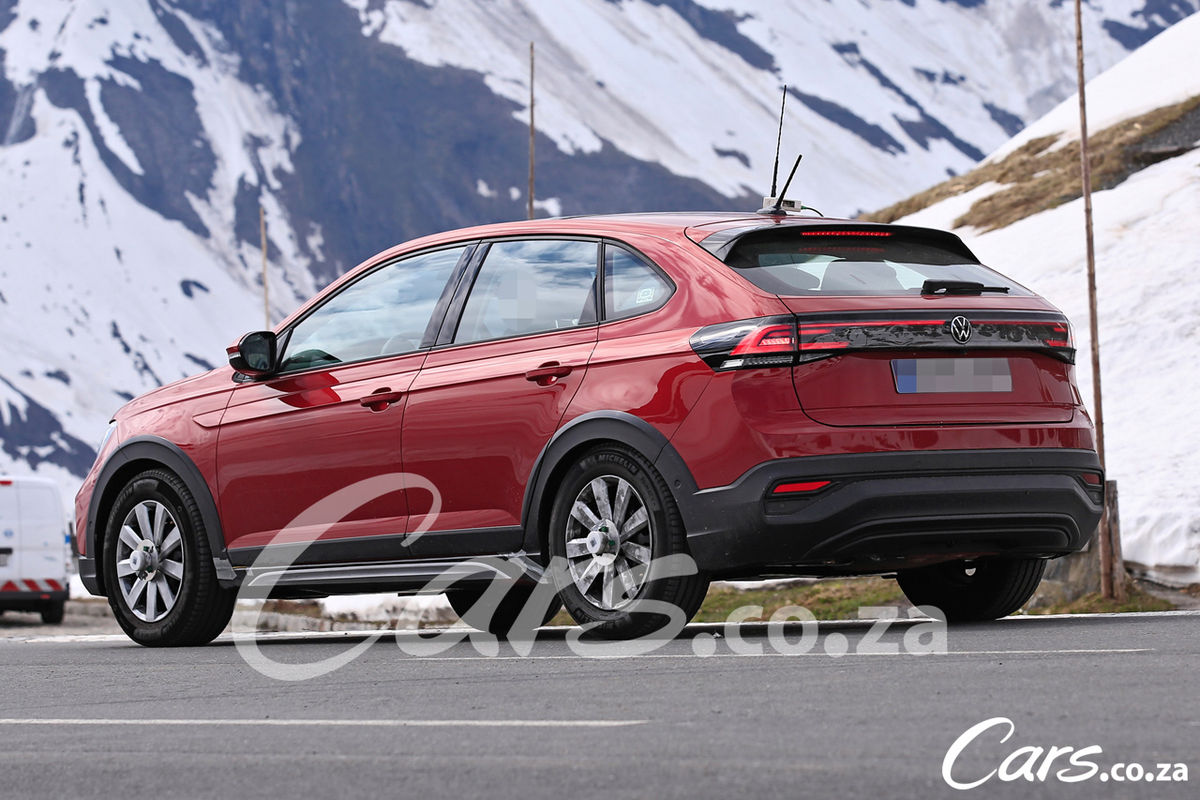
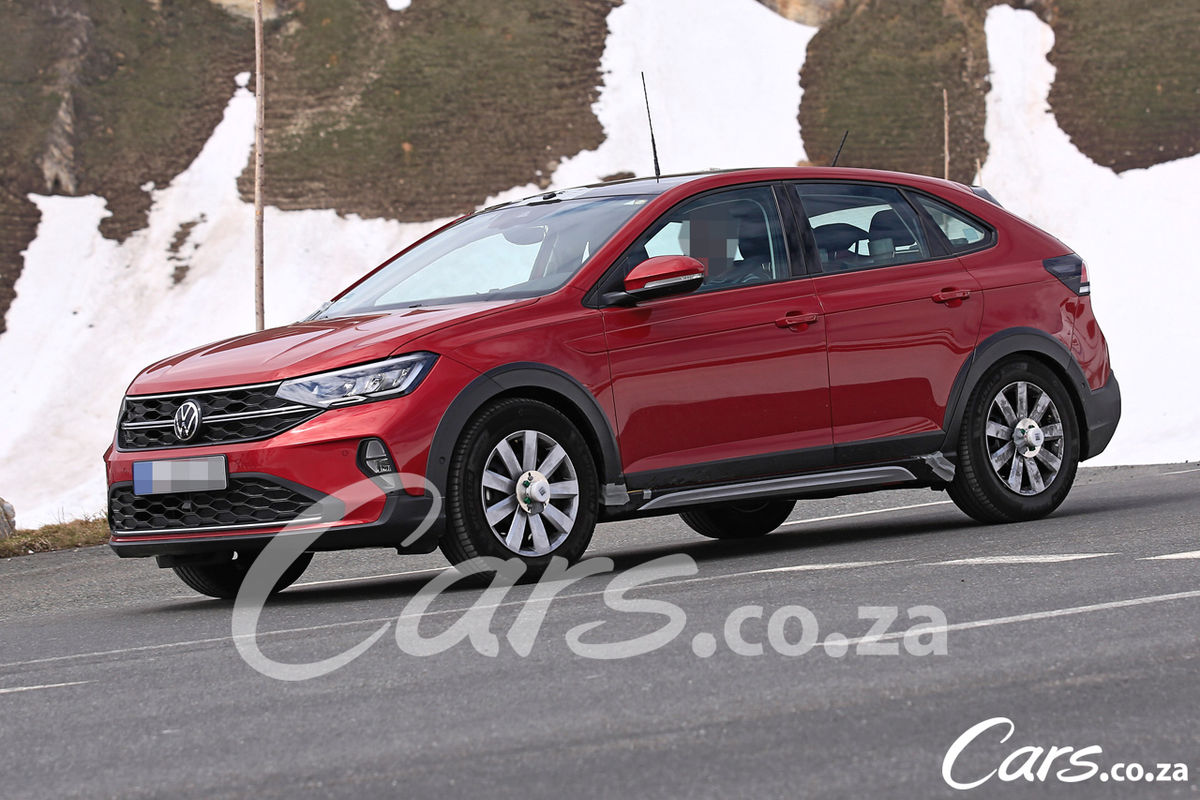
The Taigo, which was recently teased by Volkswagen, is indeed a small crossover based on the MQB-A0 platform, but it isn't all-new – it already exists in another developing country (Brazil) and is thriving there, where it is badged as the Nivus. VWSA recently confirmed the Taigo would be coming here next year (2022) and the firm’s mother company has said cars destined for Europe will be built in Spain.


The Taigo is known as the Nivus in the Brazilian market.

Perversely, given the trend in the South African market, Volkswagen SA does not really need a feature-packed (for lack of a better description, fancy) small crossover ­­– the boutique T-Roc and high-end T-Cross derivatives already fulfil that role. To put it another way, the Mzansi market would be more receptive to a no-frills Brazilian-like spec "Nivus" (but called a Taigo, of course) for affordability’s sake. 


The Nivus' interior is closely related to that of the Polo; this version includes an Active Info Display.

At this stage, it’s not yet confirmed where VWSA will source the Taigo from. Volkswagen/Skoda already builds the Taigun (effectively a stretched T-Cross, so essentially Creta competitor) in India, so it might be the Subcontinent, but Spain is more likely. However, given the bleak long-term outlook for the Polo (for the local market, at least as we know the model) and VWSA’s need for a budget crossover to compete with a slew of new, Indian-made offerings, why doesn’t VW just build the Brazilian-developed Taigo here, where it could be shoehorned on the existing MQB matrix?

Come to think of it, the Taigun – as more of a direct competitor to the Corolla Cross – could be a good fit for Mzansi as well…

Related content:  

Compact Crossover Craze in SA for 2021

7 Cheapest Automatic Compact SUVs in SA

No, Toyota is not squashing Suzuki

The end of empire for VW

Electric Ford F-150 Lightning Revealed

The new Ford F-150 Lightning is a 420 kW electric bakkie that will go from zero to 100 kph in about 4.5 seconds…

If you think the 190 kW Volkswagen Amarok is fast, think again, the age of electric bakkies is here!

Ford has revealed an all-electric F-150 bakkie and its aptly named, Lightning, a Ford moniker last used in the ’90s and early 2000’s. It’s due to go on sale in the USA in 2022 and it will rival new electric bakkie products such as the Tesla Cybertruck, Rivian R1T and the GMC Hummer EV, setting the scene for an electric bakkie showdown.

In that company, however, the Ford F-150 Lightning falls short in terms of outputs, zero to 100km/h sprint time and to a degree, range. Let’s look at some numbers…

How much power does the Ford F-150 Lightning have? 


A 400-litre frunk is just one of the many practical features on offer in the new Ford F-150 Lightning. 

The new Ford F-150 Lightning adopts a dual electric motor setup, one motor over each axle, that produces no less than 420 kW and 1 050 Nm of torque when equipped with the extended lithium-ion battery pack which enables a range of approximately 483 km. With the standard battery pack, 370 km of range is offered but power drops to 318 kW while torque remains the same at 1 050 Nm.  

As for acceleration, zero to 100 km/h in about 4.5 seconds is fast by bakkie standards but it’s notably slower than the claimed figures of less than 2.9 seconds for the Tesla Cybertruck and 3 seconds for the Rivian R1T and Hummer EV. 

In terms of towing, the F-150 Lighting can tow up to over 4.5 tons with a payload of just over 900 kg.  The standard 48A home charger will charge the Lightning from 15% to 100% in about 10 hours with the Lightning equipped with a range entender battery pack gains a dual charger and 80A home charger that will charge up in about 8 hours. Using a 150 kW DC fast charger, 15% to 80% charge can be achieved in 41 minutes. 

The F-150 Lightning also offers a large 400-litre frunk that can be used to store valuables out of sight, solving perhaps one of our biggest gripes with conventional ICE bakkies. Another amazing feature is the Intelligent Backup System which makes it possible to store up to 9.6 kW of energy which is enough to power a home for 3 days! The Lightning can also be used as a power source on work sites or for camping in the outdoors with up to 11 power outlets on offer. 

In terms of tech, the F-150 Lightning is equipped with Ford's latest SYNC4A infotainment system with a large 15.5-inch portrait-style touchscreen display with all the modern connectivity features at your fingertips. Also, Ford is also offering its L2 hands-free driver assistance system called Ford BlueCruise which will be enabled on more than 160 000 kilometres of pre-qualified highway systems. 


A large tablet-style infotainment system is fitted with the latest SYNC4A operating system. 

How much does the ford F-150 Lighting Cost? 

Perhaps the most intriguing feature of the new Ford F-150 Lightning is its pricing. EV’s are notoriously expensive, especially in South Africa, but the entry-level Lightning is expected to be priced from roughly $30 000 or roughly R422 000 at current exchange rates. At the top of the range, buyers will be paying roughly $90 000 for the top-spec Lightning which is over R1.2 million, only R200 000 more than the 190 kW Volkswagen Amarok…

Buy a Ford Ranger on Cars.co.za


Volkswagen shows ‘Golf R’ EV

VW is beginning to flex its muscles in the performance sector of its electric car lineup. Its GTX concept sheds weight and increases power to Golf R rivalling numbers.

VW has shown what is possible in terms of hot hatch development, with its ID electric vehicle platform.

The German company’s head of passenger cars, Ralf Brandstätter, has revealed a new version of the ID.4 that has strong Golf R overtures. For loyal followers of VW’s hot hatch business, the question of a performance-orientated ID.4 has been tantalizing.

A team under Brandstätter was given some budget and design freedom, to create a lightweight version of the ID.4 GTX. Although the dual-motor electric powertrain remains unchanged, VW’s technical experts have managed to take a lot of weight out of the car, despite the battery capacity increasing to 82 kWh.

The ID.4 GTX produces 220 kW and the lightweight concept has 245 kW but is also 200 kg lighter. That improves its 0-100 kph sprint time, which is nearly a second faster than the standard ID.4 GTX. VW’s lightweight concept runs the benchmark sprint time in 5.3 seconds, compared to the ID.4 GTX’s 6.2 seconds.

Beyond its weight reduction, the ID.4 GTX lightweight concept also has unique software, enabling a drift mode, with torque vectoring. It also rolls larger wheels and has some trick neon design details.

VW fans who are particularly perceptive will notice that the ID.4 GTX lightweight concept also has a slightly lower stance, thanks to revised suspension components.

Sadly, this lightweight VW EV is a concept unicorn – and has no immediate production plans. But it does show, that VW’s legacy engineering prowess in the world of hot hatches, will continue.

Related content

VW ID.4 GTX Revealed with 220kW 

Volkswagen ID.4 named 2021 WCOTY

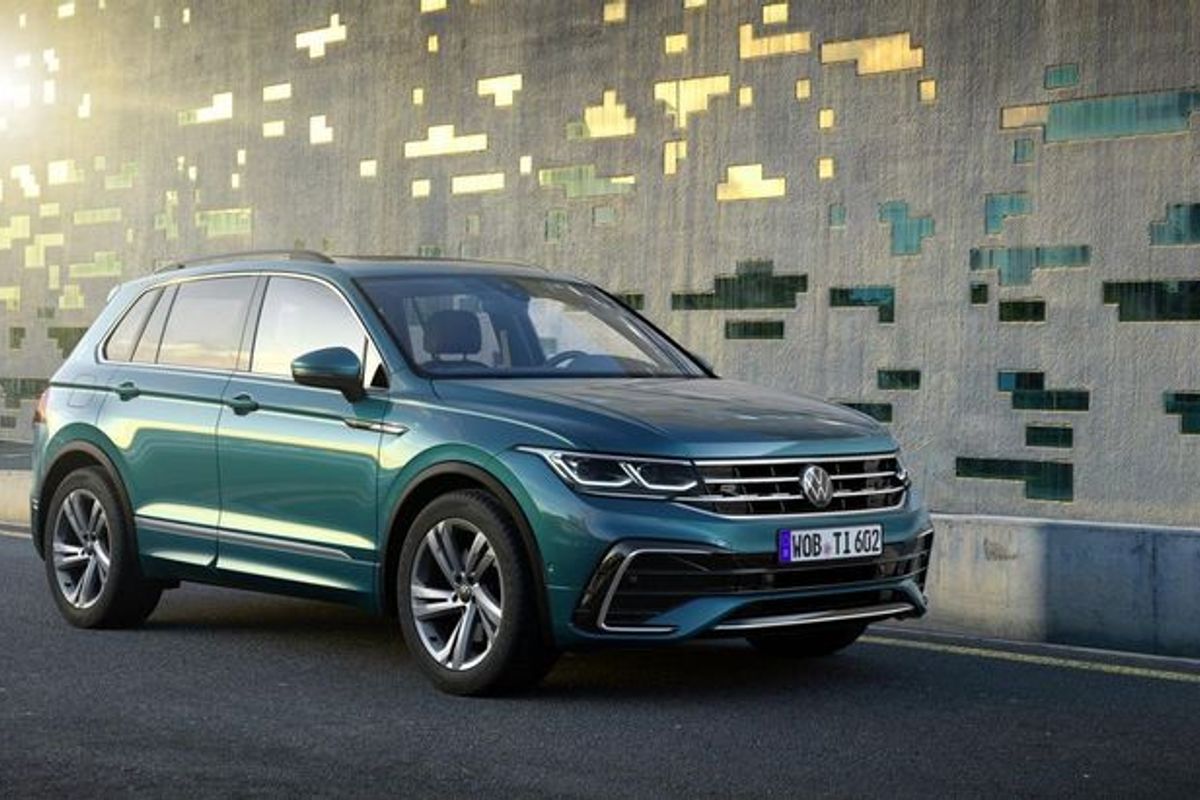
VW's Accelerate Plan: Golf, Tiguan to live on

Hyundai i20 (2021) Specs & Price in SA

The all-new Hyundai i20 has landed in South Africa! Here are detailed specifications and local pricing for the new i20 compact hatchback.

We’ll be driving the Hyundai i20 in the Western Cape this week and ahead of the launch, some specifications and pricing details have been published on Hyundai South Africa’s website. The new Hyundai i20 looks to be a big step up from the previous-generation car and will be taking on the Volkswagen Polo, Ford Fiesta, Kia Rio, Renault Clio, Toyota Starlet, Opel Corsa and Peugeot 208, to name a few. Let’s take a closer look at what the new i20 has to offer. 

What standard features are offered on the new Hyundai i20? 

Hyundai-i20
The design of the i20 has matured nicely and this is one modern-looking hatchback.

Hyundai is offering its new i20 with both naturally-aspirated and turbocharged petrol engines (more on that below) as well as two levels of trim: Motion and Fluid. There’s also the option of a two-tone finish.

Hyundai i20 Fluid 

Infotainment System (Apple CarPlay /Android Auto) 
Steering Wheel Multifunction Controls (Bluetooth, audio, onboard computer)
Cruise control 
Manual air conditioner
3.5 Inch Supervision Cluster
Front & Rear USB Connection
Wireless Charging
Electric/Auto Folding Side Mirrors
Black cloth seat trim 
Black front grill 
16-inch Alloy Wheels
Driver, passenger, side and curtain airbags
ABS with EBD braking systems
Central locking with remote
Rear Park Assist & Camera

Hyundai i20 Motion

Infotainment System (Apple CarPlay /Android Auto) 
Steering Wheel Multifunction Controls (Bluetooth, audio, onboard computer)
Manual air conditioner
3.5 Inch Supervision Cluster
Black cloth seat trim 
Black front grill 
15-inch Steel Wheels
Driver and passenger airbags
ABS with EBD braking systems
Central locking with remote
Rear Park Assist & Camera

Hyundai-i20
The Hyundai i20 cabin looks like a pleasant place to be with a comprehensive standard features list. 

Engine and Transmission

Hyundai is offering its new i20 with a blend of naturally-aspirated petrol and turbocharged petrol engines and customers have the choice of manual, automatic or dual-clutch transmissions. 

Kicking off the range is a naturally-aspirated 1.2-litre, 4-cylinder motor developing 61 kW and 115 Nm, which is mated to a 5-speed manual gearbox and is claimed to consume 5.9 L/100 km.

For those wanting an automatic, Hyundai offers its i20 with a slightly more powerful 1.4-litre naturally-aspirated petrol engine, which produces 74 kW and 133 Nm. This powertrain claims a fuel economy figure of 7.5 L/100 km.

Sitting at the top of the range is the new 1.0-litre turbocharged, 3-cylinder engine with 90 kW and 172 Nm on tap. Customers can choose from a manual gearbox or a quick-shifting dual-clutch transmission (DCT). The manual-equipped version returns 6.5 L/100 km, while its DCT sibling is a touch thirstier at 6.9 L/100 km.

Hyundai-i20
A dual-clutch transmission paired to a turbocharged engine makes its way into the Hyundai i20.

How much does the new Hyundai i20 cost in South Africa?

The new Hyundai i20 is sold with a 5-year / 150 000 km manufacturer’s warranty, additional 2-year / 50 000 km manufacturer’s powertrain warranty, 5 Year / 160 000 km Manufacturer’s Perforation Warranty, 7-year / 150 000 km roadside assistance and 4-year / 60 000 km service plan with intervals every 15 000 km.

Hyundai i20 1.2 Fluid Manual – R289 900

Hyundai i20 1.2 Fluid Manual Two-tone – R294 900

Hyundai i20 1.4 Motion Auto – R305 900

Hyundai i20 1.0 TGDI Fluid MT – R330 900

Hyundai i20 1.0 TGDI Fluid MT Two-tone – R335 900

Hyundai i20 1.0 TGDI Fluid DCT – R355 900

Hyundai i20 1.0 TGDI Fluid DCT Two-tone – R360 900

Further Reading

Hyundai Creta (2021) Review

Hyundai i20 N Line Previews Hardcore Hot Hatch

Hyundai i20 (2021) International Launch Review

Mercedes-Benz S680 V12 Gets Downrated

A big badge, for a rare engine. Despite the electrification strategy and continued threats of production being cancelled, the Mercedes-Benz V12 soldiers on, but it's been downrated in the S680. 

Mercedes-Benz is strongly marketing its new fleet of future electric vehicles, but the company still has that V12.

Although all things S-Class and V12-powered were once a point of pride for Mercedes-Benz, electrification has changed much of that.

Official images of the German brand’s new Maybach S680 have been revealed, without much accompanying fanfare or technical detail.

A very bold dual-tone paint finish and garish chrome detailing are the most immediate impressions of this new S680. But what will be of appeal to traditional fans of the three-pointed star, is the powertrain.

It is exceedingly rare to see any ‘V12’ badged adorning the exterior fo a new vehicle, but S680 proudly displays its cylinder count.

The official nomenclature for the 6-litre Maybach might have changed from ‘S650’ to ‘S680’, but don’t expect any increase in engine capacity.

Powering this hugely luxurious German limousine will be the proven M279 engine. Based on a V12 architecture that traces its roots to the 1990s, the 6-litre turbocharged engine has always been limited to 1000Nm, to preserve transmission integrity over time.

Although the 6.0-litre V12 might be a legacy engine, in its last application, it does feature some interesting details. Power peaks at 456kW, which won’t be an unfamiliar figure to Mercedes-Benz brand fans.

Where things are a bit different, is the maximum torque value which has dropped by 100Nm.

The Maybach S680’s engine only produces 900Nm of torque, as opposed to the 1000Nm that almost all Mercedes V12s of the last decade and a bit were rated at.

Why has Mercedes-Benz reduced the engine’s peak torque delivery? The complication of a new drivetrain is to blame, with the 6.0-litre V12 now being all-wheel drive and using a 9-speed transmission.

Less torque. More traction. A strange final chapter, for the Mercedes-Benz V12 project.

Mercedes-Benz-V12
The V12 refuses to die and Mercedes-Benz has quietly launched it in the S680.

Further Reading

Mercedes-Benz S-Class (2021) Specs & Price

Audi RS6 Avant vs Mercedes-AMG E63 S – Drag race and rolling race

2021 Mercedes-Maybach S-Class Brings New Levels of Luxury

Lamborghini Joins Electric Party

Italian carmaker Lamborghini has finally admitted that it needs to join the mainstream electrified world by reducing carbon emissions and announced its strategy for the future.

As niche and low volume as it may be, Lamborghini has announced its electric strategy for the future. While the focus is on decarbonisation, the Direzione Cor Tauri details the roadmap to electrification over the next 10 years. 

The first electrified hybrid product will be hitting the roads by 2023, every Lamborghini model will be electrified by 2024 and it's first all-electric vehicle will be on the road by 2029. Product aside, Lamborghini hopes to have reduced its CO2 emissions to half its current level by 2025.

Cor Tauri, Lamborghini’s strategy, will comprise of 3 phases in its words:

  1. Celebrating the combustion engine (2021-2022) by presenting models paying tribute to the company’s recent period of continuous success. In the wake of steady sales growth and a seven-fold increase in turnover over the last fifteen years, Lamborghini has established itself as a center of excellence in the production of the best super sports cars. Unique design, technological innovation at the highest levels backed by huge investments in research and development, and the highest quality and craftsmanship are the basis for a pyramid of products: from the Urus Super SUV, the cornerstone of today’s success, rising to the pinnacle of technology and design masterpieces with the limited series. The most recently unveiled, the Sián, kicked off the electrification journey: the first Lamborghini featuring hybrid technology. This phase will be characterized by the development of combustion engines for versions that pay homage to the brand’s glorious history and iconic products past and present, but always under the impetus of the visionary spirit that distinguishes Lamborghini. Two new cars in the V12 model line-up will be announced in 2021.
     
  2. Hybrid transition (by the end of 2024): in 2023 Lamborghini will launch its first hybrid series production car, and by the end of 2024 the entire range will be electrified. Performance and the authentic Lamborghini driving experience will remain the focus of the company’s engineers and technicians in developing new technologies, and the application of lightweight carbon fiber materials will be crucial in compensating for weight due to electrification.  The company’s internal target for this phase is to reduce product CO2 emissions by 50% by the beginning of 2025. 

    Leading the hybrid transition will be an unprecedented investment: more than 1.5 billion euros allocated over four years, the largest in Lamborghini’s history. It is a tangible sign of the company’s strong sense of responsibility towards the need for a concrete response, through significant innovations, to the period of profound transformation that is affecting the whole automotive industry.
     

  3. First fully-electric Lamborghini (second half of the decade): acceleration in the second part of the decade will be dedicated to full-electric vehicles, with the vision of a fourth model in the future. Once again, technological innovation in this phase will be oriented towards ensuring remarkable performance, and positioning the new product at the top of its segment. This is how Lamborghini sees the culmination of this part of its journey: Cor Tauri, the brightest star in the constellation to which the company’s roadmap points, is represented by a fourth fully-electric model.

For those who want the simplified version without the marketing jargon, essentially the first part of the plan will continue with the internal combustion engine with the last of the naturally-aspirated V12 products being revealed. There will be 2 V12-powered vehicles in 2021 and these will signify the end of this iconic 12-cylinder engine. Part two of the plan starts in 2023, where Lamborghini will launch its first hybrid series production vehicle. It will be the 2nd electric assist vehicle after the extremely rare Sian. Lamborghini has invested €1.5 billion over 4 years. This could be a hybrid plug-in version of the Lamborghini Urus. Finally, from 2025 Lamborghini says it will be making its all-electric vehicle. Very little is known, but we could see the Porsche Taycan/Audi e-tron GT platform underpinning this new Lamborghini. We don't think Lamborghini quite has enough money to develop its own all-new electric platform, but we'll have to wait and see. 

Further Reading

Lamborghini Reveals Huracan STO

Lamborghini SC20 Is a 1-Off Hypercar

Spy Shots: 2022 Lamborghini Urus Evo

Lamborghini Urus Hits 10k Milestone

Mercedes-Benz E-Class Coupe (2021) Review

The facelifted Mercedes-Benz E-Class recently touched down in South Africa. While most eyes were on the headline-grabbing E63 S sedan, there's an understated elegance about the range's coupe variants. We've already had a taste of the AMG-fettled E53 derivative, but might the E300 AMG Line be a smarter choice?

We like: Exudes class and sophistication, surprisingly practical, luxury in abundance

We don’t like: Coarse engine note under high revs, overly complicated steering wheel

Fast Facts

  • Model Tested: Mercedes-Benz E300 AMG Line
  • Price: R1 139 280 (May 2021 – before options)
  • Engine: 2.0-litre turbocharged 4-cylinder petrol
  • Power/Torque: 190 kW and 370 Nm
  • Transmission: 9-speed automatic
  • Fuel efficiency:  7.3 L/100 km
  • Load space: 405 litres

Serious about buying? 

Some Mercedes-Benz dealerships regularly offer great deals. See our Car Specials page here!

What is the Mercedes-Benz E-Class Coupe?  

Mercedes-Benz-E-Class-Coupe
Viewed from any angle, the Mercedes-Benz E-Class Coupe is a pretty thing

Executive SUVs have become so appealing to the proverbial upper crust that sales of luxury coupes have dwindled. Mercedes-Benz, however, is convinced there are enough customers left that would rather drive a stylish coupe than follow the herd by going the high-rider route. Globally, the E-Class still sells in commendable numbers; Benz could not afford to put a wheel wrong with the updated range.

Mercedes-Benz South Africa launched its facelifted E-Class in early 2021; the revised line-up comprises sedan-, coupe- and cabriolet body styles. While we've already had a taste of the flagship Mercedes-AMG E53 Coupe (there'll be no E63 in 2-door guise), some may want something similarly stylish, but a bit more laid back, than the AMG. We spent some time getting to know the E300 Coupe a bit better.
First impressions count for a lot and while our test unit was finished in a "flattening" colour, the proportions and design of Benz's middleweight coupe are nonetheless classy and striking. This is an attractive vehicle – from front to rear – and that intricately patterned grille really catches your eye. The dual-tone alloys weren't to our taste, but Mercedes-Benz has an assortment of wheel styles to choose from.

How it performs in terms of… 

Performance and efficiency

Mercedes-Benz-E-Class-Coupe
With a choice of turbopetrol engines, there's something for everyone in the Mercedes-Benz E-Class Coupe range

The Mercedes-Benz E300 is powered by a turbocharged 2.0-litre 4-cylinder petrol motor, which produces 190 kW/370 Nm and drives the coupe's rear wheels via a 9-speed automatic transmission. Those peak outputs may appear quite lofty to the untrained eye, but in reality, the E300 is more of a cruiser than a bruiser. If you want more go and show, then consider the E53 AMG, which we tested recently.
Mercedes-Benz claims a 0-100-kph time of 6.4 sec for the E300. While there's little reason to doubt that figure, it does feel somewhat inappropriate to conduct a sprint test with this distinguished cruiser. The car feels quick enough, but at high revs, the engine sounds a bit gruff (less than refined), which is incongruent with such a graceful car. Thankfully, the best performance from the engine is accessible way before the redline. In its sportiest mode, there's even a pleasant exhaust note, which we suspect is piped into the cabin through the speakers. The coupe sounds remarkably like an A35 hot hatch
The 9-speed transmission, meanwhile, shifts smoothly and predictably but can seem a trifle too eager to change up in the default driving mode (ostensibly to optimise fuel economy). We found that taking the reins ourselves (by using the shift paddles located behind the intricately designed new steering wheel) was quite a pleasure; it did not detract from the relaxing driving ambience whatsoever.

Mercedes-Benz claims an average fuel consumption figure of 7.3 L/100 km for the E300 Coupe and although the test unit was driven mostly in off-peak traffic conditions and on open roads/freeways during the test period, we couldn't achieve an indicated return of under 10 L/100 km. There's an Individual setting among the drive modes, which allows you to customise the engine's responsiveness and power; if you often utilise the engine's coast mode, for example, you should see a marked improvement in fuel economy. We do wonder, however, how many owners will bother investigating the car's minor settings.

Ride and handling

Mercedes-Benz-E-Class-Coupe
The steering feel is good, but the design of this wheel is overly fussy

A coupe evokes dreams of open-road cruising and opulent comfort and, in this regard, the Mercedes-Benz E300 delivers. The ride quality is a little on the firmer side, but to be fair, that's the price you pay for opting for big wheels shod with low-profile tyres (the test vehicle rode on the optional 20-inch units – 19-inch alloys are standard), plus there's a bit more road noise that enters the cabin than we expected. With a kerb weight of around 1 770 kg, the E300 Coupe is hefty, but even when you task the Benz to stop cruising leisurely and pile on the pace instead, it never feels big or cumbersome. 

The adaptive dampers do their bit to stabilise the Benz's body control and iron out the worst of road imperfections, but because the suspension tends to fidget in the firmer, sporty settings, it's better to leave the E300 Coupe in comfort most of the time. We've criticised many Mercedes-Benz products for a crashy ride, but true to the excellent E-Class range, there's comfort and suppleness in abundance.

The steering does firm up in the sportier drive modes but is sufficiently weighted and accurate by default. We get the impression the E300 Coupe was fine-tuned to excel at effortless open-road cruising… We drove the test unit up the West Coast along the average-speed-camera-infested R27, which gave us the perfect chance to engage the cruise control and marvel at the refinements of the Benz's cabin. 

Interior execution and features 

Mercedes-Benz-E-Class-Coupe
The Mercedes-Benz E-Class Coupe's cabin is a class act.

The design of the Mercedes-Benz E-Class Coupe's cabin is now five years old but, post-update, it remains a class act in terms of visual design and sensory appeal. The cabin is eminently luxurious, supremely comfortable (the sculpted front seats are simultaneously cossetting and supportive), plus there's a strong sense of occasion: the red leather/black wood combination is quite tasteful.

The MBUX dual-screen setup, meanwhile, is one of the better infotainment and instrumentation systems in the market. The infotainment screen (on the left) can be controlled either by the central touchpad or the Hey Mercedes voice interface. The digital instrument cluster (on the right, behind the 'wheel) is crisp and clear, but we did suffer from information overload there's just so much info on display.

Unfortunately, the new-generation steering wheel (with its tiered layout) is a bit daunting. Remember the micro touchpad on a Blackberry? There are a pair of them (one each on the upper spokes) with which to navigate through menus and settings, plus several buttons on the lower spokes. Although they should become easier to use with familiarisation, the sheer number of toggles is distracting.  

Mercedes-Benz-E-Class-Coupe
The digital dashboard is gorgeous and the MBUX voice control works well.

At this price point, the standard features list is extensive, but a quick glance at the options list reveals some tantalising options too. According to Mercedes-Benz SA's configurator, the most popular options range from run-flat tyres (R5 800), a heads-up display (R19 600), as well as an uprated Burmester audio system (R18 500). The safety features are comprehensive, with autonomous emergency braking, stability control and 7 airbags. You can specify a raft of additional autonomous safety features with the Driving Assistance Package (R39 900), which also increases the number of airbags to 9. 

Practicality   

The Mercedes-Benz E300 Coupe is a 2-door vehicle, but it is a surprisingly practical one. Yes, ingress and exit from the rear of the cabin is a somewhat clumsy and undignified affair, but, unlike in so many other coupes (including some grand tourers, which cost a lot more) adults can easily be seated on the Benz's rear seats. The profile of the roof makes the most of the available headroom, while legroom is more than sufficient. There are two seats (instead of a bench and separated by a divider with drinks-holder recesses) and they're comfortable enough to accommodate a pair of adults on longer trips. 

Mercedes-Benz-E-Class-Coupe
Rear passengers get their own ventilation and there's a surprising amount of space back here

The boot capacity, meanwhile, is fantastic. The E-Class Coupe is admittedly NOT an executive sedan, but considering what we'd assume would be the cargo requirements of its target market, the E300's trunk can effortlessly swallow luggage; we suspect you'd easily be able to fit more than 2 sets of golf clubs in there. There's more than enough space for 4 big suitcases and if you need to pack extra things for a long weekend away (for example), the rear seatback can easily be folded forward to create utility space. As far as the numbers go, the Mercedes-Benz E300 Coupe's boot space is rated at 405 litres.

How much does the Mercedes-Benz E-Class Coupe cost in South Africa? 

The Mercedes-Benz E-Class Coupe range starts at R1 044 040, with the E300 Coupe AMG LINE retailing for R1 139 280

Buy a new or used Mercedes-Benz E-Class on Cars.co.za

Verdict

Mercedes-Benz-E-Class-Coupe
Pick your engines wisely. While the 300 does the job, you're probably going to want the excellent 220d if you travel long distances

The Mercedes-Benz E300 Coupe holds a peculiar position in the E-Class Coupe line-up. If you want to buy one simply to proclaim your status and make a style statement, the E200 is more affordable. If you want more urgent performance, the AMG-fettled E53 has you covered. The E300 Coupe, meanwhile, offers a bit more oomph than the E200, which you may never need, but it's certainly nice to have. 

The head-turning appearance of the E-Class Coupe is a major selling point, as is its stylish, plush cabin. While the world seems to march inexorably towards an electrically-powered SUV future, it's reassuring to know Mercedes-Benz can still make a well-sorted luxury coupe that will satisfy the brand's (probably more mature) clientele. Make sure you pick the right engine to suit your needs, though.

Book a test drive here!

Further Reading:

Mercedes-AMG E53 (2021) Review

Mercedes-Benz E-Class (2021) Launch Review

All-new Mercedes-Benz C-Class Debuts

Next-Gen C63 AMG Powertrain Detailed (Video)