There's some relief for motorists as the petrol and diesel prices are expected to drop for the month of May 2021.
It has been a tough few months for motorists after back-to-back increases have hurt budgets and disposable incomes. Thankfully there's a small light at the end of this painful tunnel as some reductions are forecast for May 2021.
According to the Automobile Association (AA) who publish industry comment regarding the unaudited month-end fuel price data released by the Central Energy Fund, the price of petrol is expected to be cheaper by around 13 cents a litre, with diesel showing a potential 32 cents a litre drop. Illuminating paraffin will decrease by 23 cents.
“The exchange rate has continued its pleasing strengthening trend against the US dollar. International petroleum prices, which increased slightly in the first two weeks of April, have held steady since,” the AA says.
“As we head into winter, South Africans who use paraffin for lighting, cooking, and heating especially will no doubt be glad at this news. For its part, the AA is hopeful the recent streak of price stability will continue to provide more price relief to fuel users in the short to medium term,” the Association concludes.
This week’s news you need to know (April 2021, Week 4)
In this week's news you need to know: Ford builds a more hardcore-looking version of the suitably hardcore Raptor, Volkswagen sees a gap for a battery-electric performance SUV, Hyundai delivers its own version of a performance crossover and Fiat's most intriguing offering in years will likely never set foot in SA.
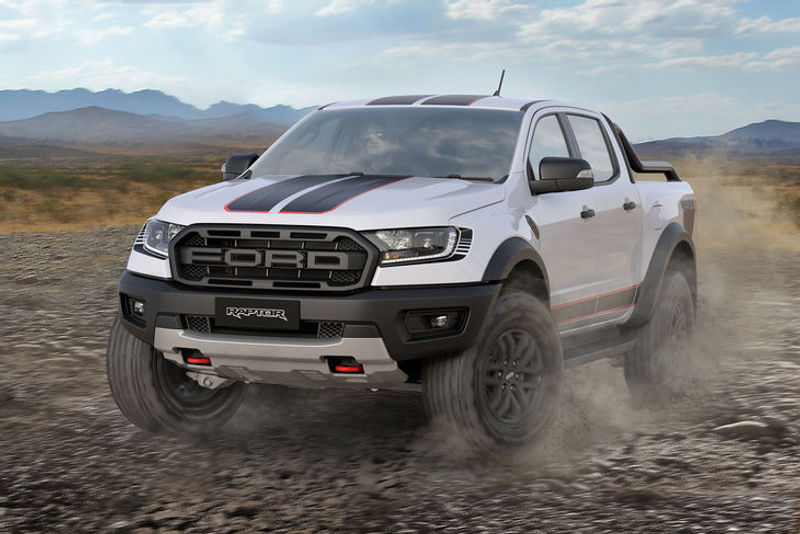
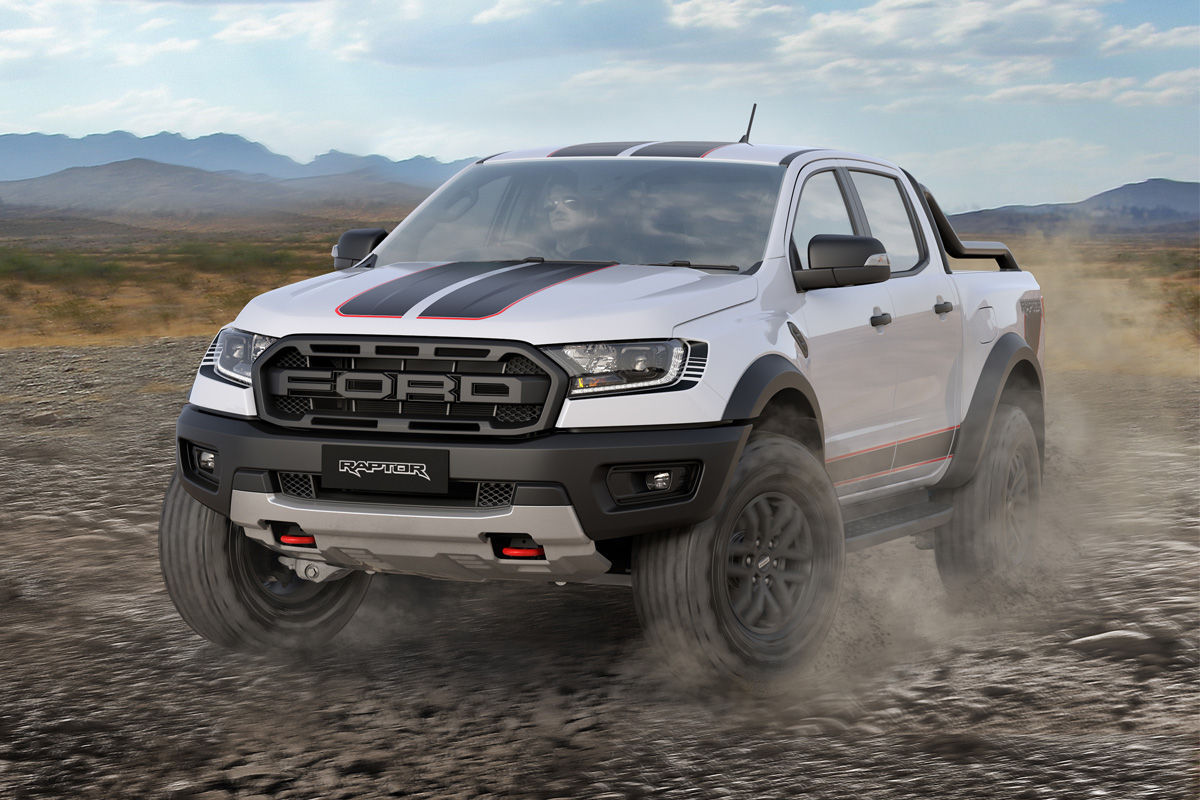
Ford Ranger Raptor X – X gonna give it to you
Although I’ve harped on about the folly of performance bakkies and reminded you of the original purpose of the pick-up ad nauseam, if an example of Mzansi's beloved cab-on-chassis vehicle has "4×4" emblazoned on its tailgate or side of its load tray, “off-road capability” should surely be that bakkie's number one goal. The factory-made Ford Ranger Raptor with its trick suspension (and a host of other forms of mechanical bolstering) is supremely capable in that regard, but according to several journalists, armchair critics and social media commentators, the Blue Oval's flagship bakkie's too slow.
They bemoan the fact that the Ranger Raptor has identical power and torque outputs as other 2.0-litre bi-turbodiesel Ranger derivatives, which are also equipped with 10-speed auto transmissions. Okay, but so what? That bakkie was never meant to obliterate hot hatches on the way back from the shops. It’s almost like slating a shotput athlete for not running a 100-metre race in under 10 seconds.
Perhaps some millennial inclinations have crept in; "fit for purpose" is no longer enough. That’s the problem Ford faces with the Ranger Raptor X. On paper, not much has changed besides aesthetics (Ford owners do place a high value on machismo). Then again, Ford could just be doing what it did with the GT in the 2016 24 Hours of Le Mans: sandbagging until the time comes to pull an ace out of its sleeve.
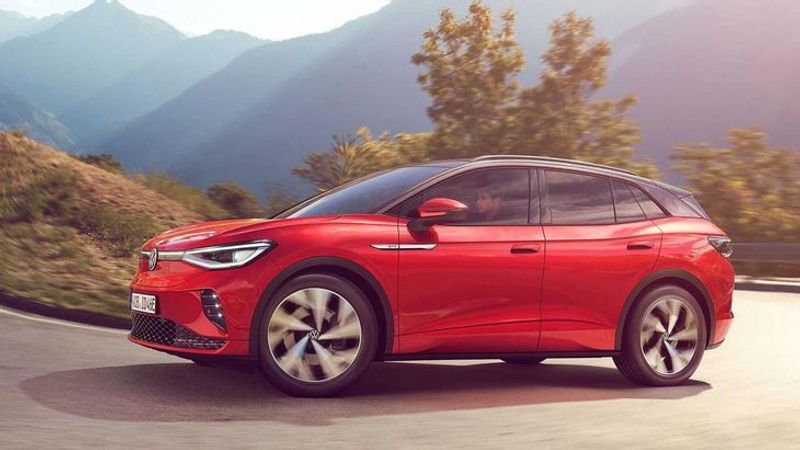
Volkswagen ID.4 GTX – Quick on the draw
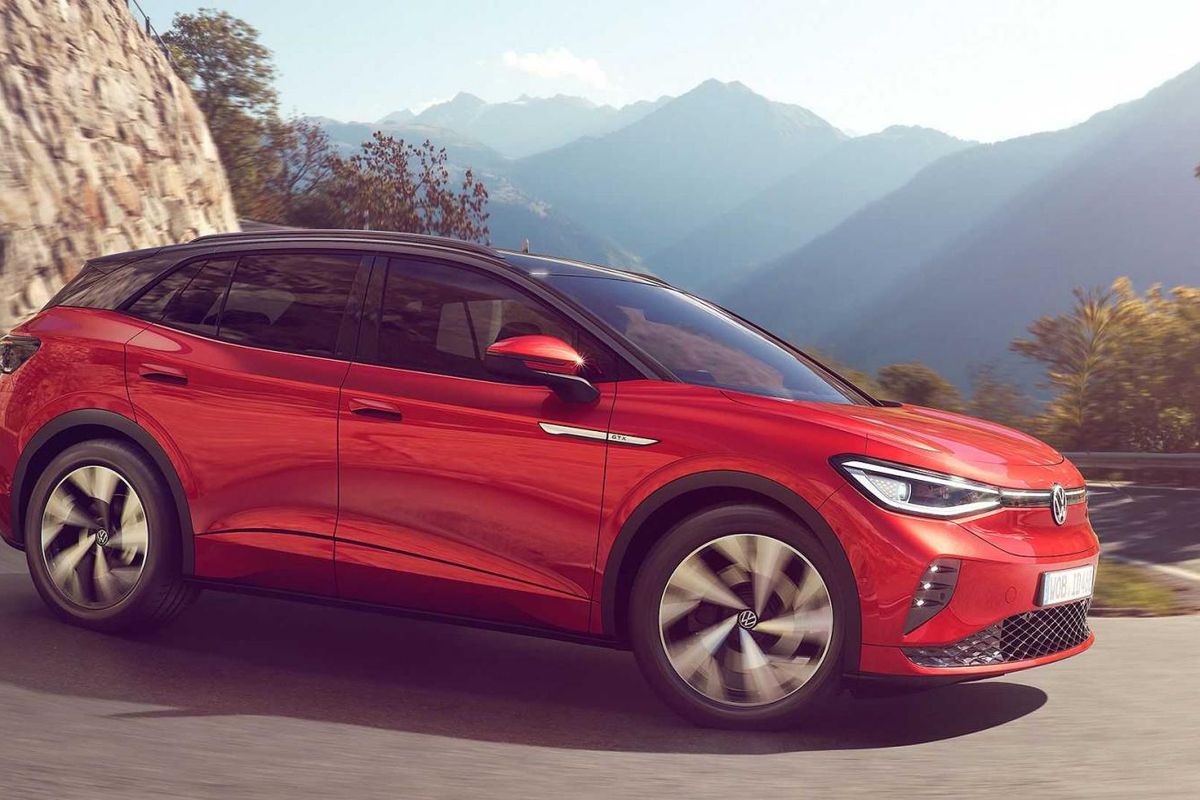
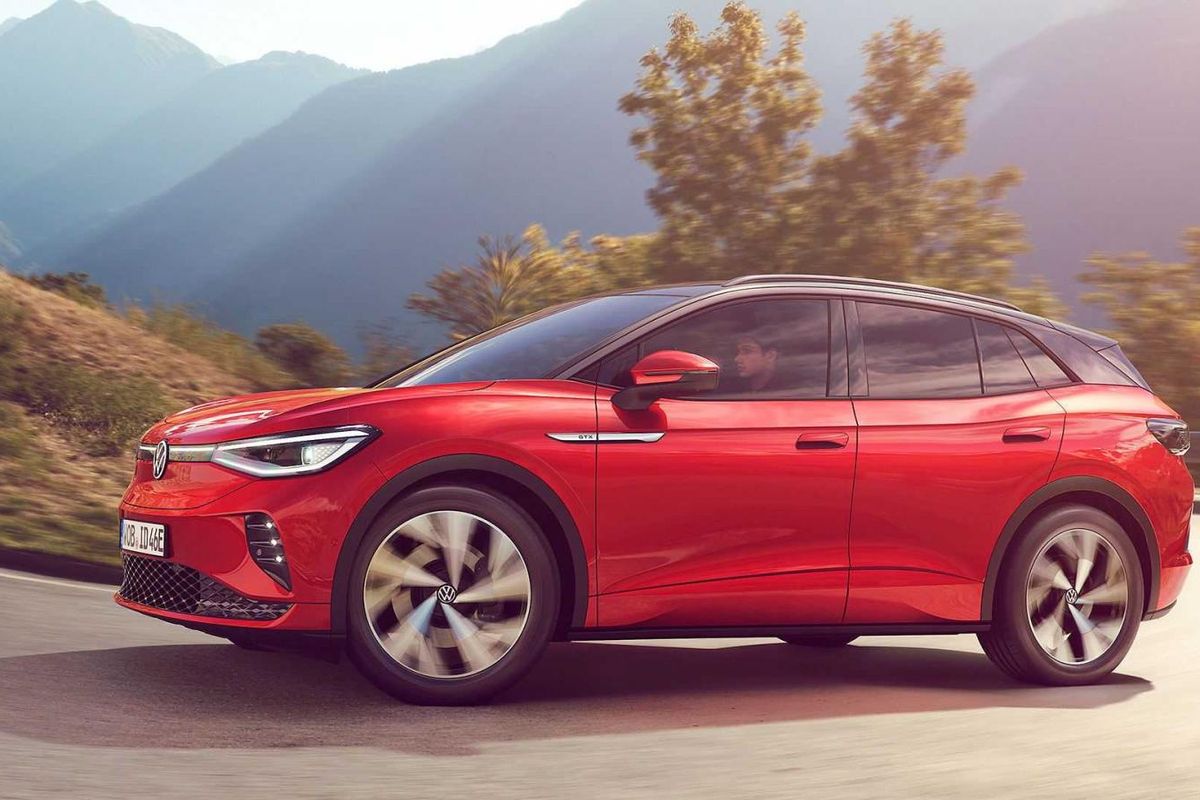
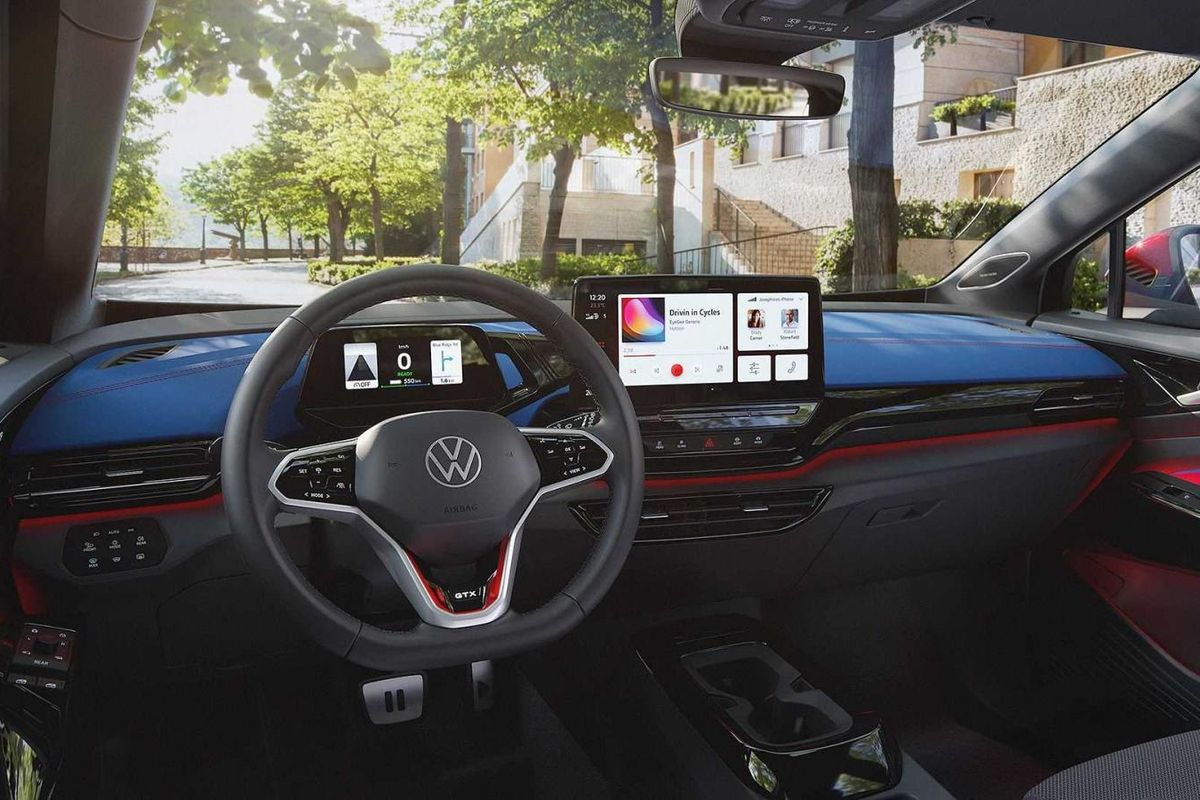
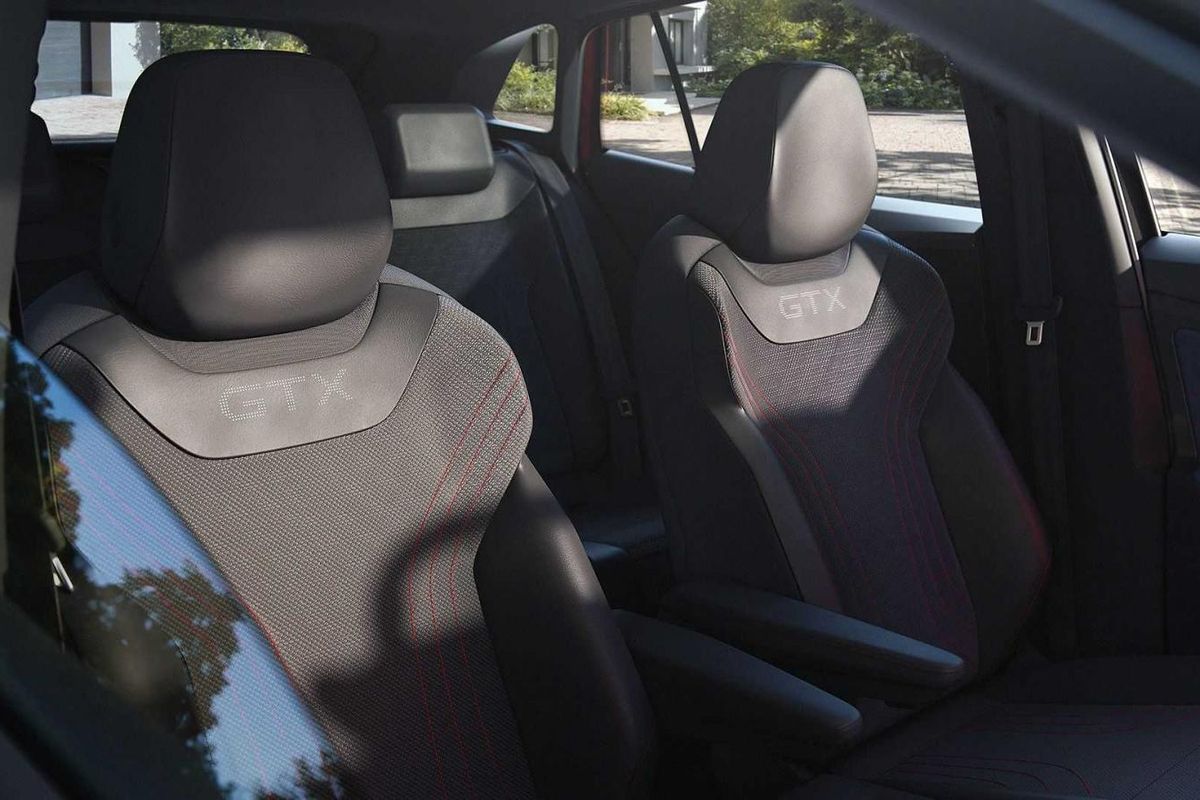
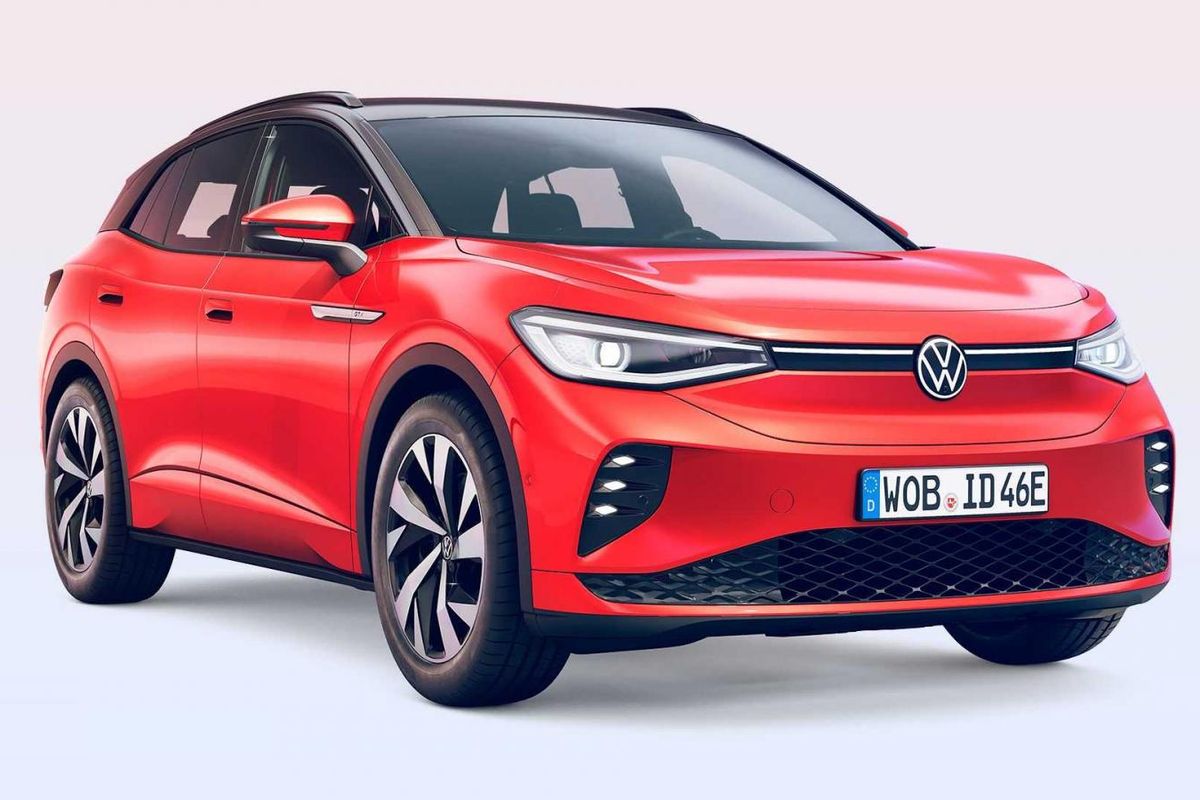
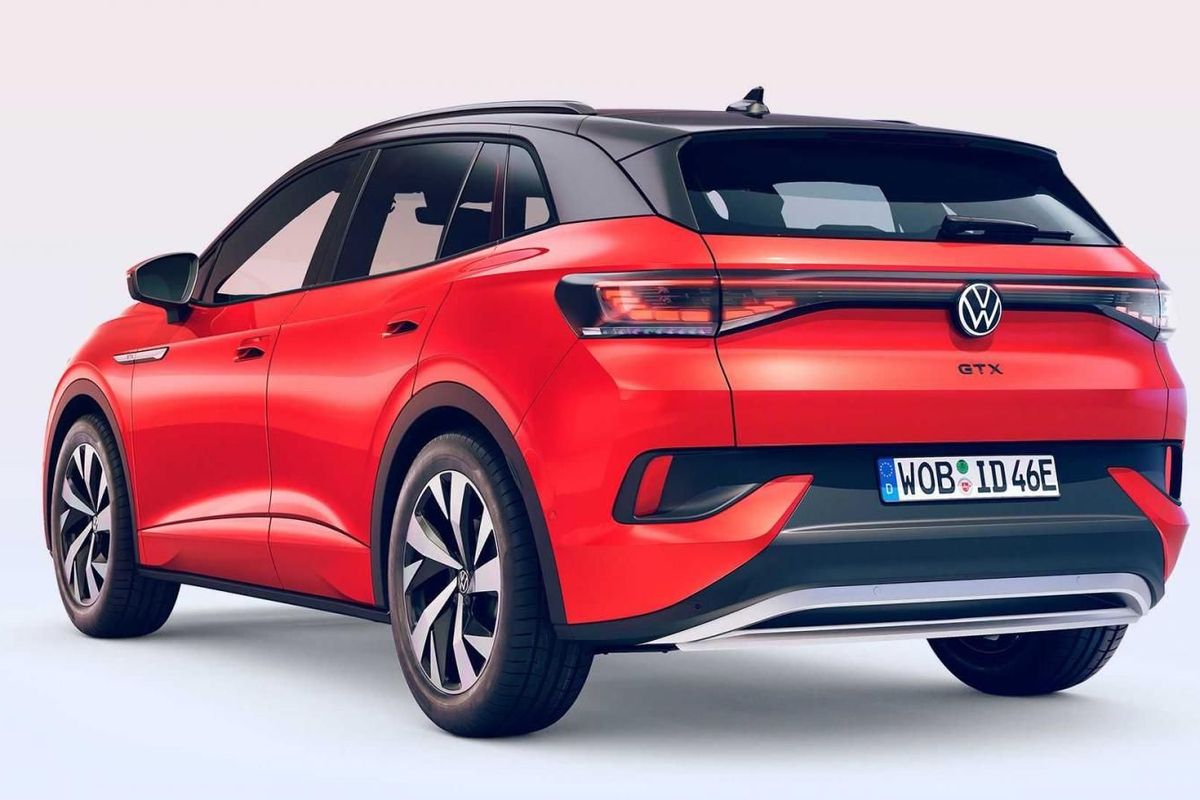
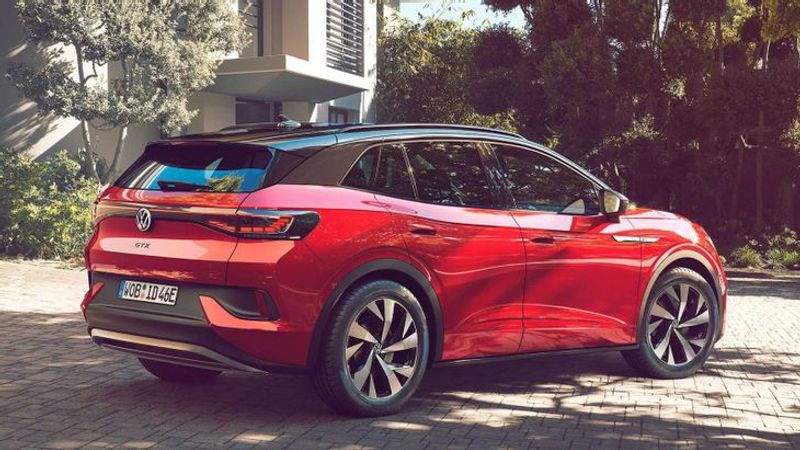
Volkswagen, ostensibly eager to get a head start on the performance SUV sector in the EV game, has introduced the ID.4 GTX (did it ask Castrol's permission to use those 3 letters?). This is the new 'R' that will top the ID.4 line-up and set the benchmark for the segment. If the ID.4 is the EV for the family, the GTX version slots in perfectly as the EV for people who are eager to get to their destinations in a hurry.
This is a strategic masterstroke; the Wolfsburg-based brand is evidently keen to retain owners of existing T-Rocs and older Tiguans, perhaps even the some GTI owners, by persuading them to trade in their vehicles on products such the ID.4 GTX when the time comes "to switch to electric" because, make no mistake, that time IS coming, it's just a matter of when. As history has proved with "Scirocco vs GTI", Volkswagen will never cannibalise a successful model. That being said, the ID.4 GTX will be good, but it won’t be next-generation GTI or R good for that reason. It won't require "a can of the best" either.
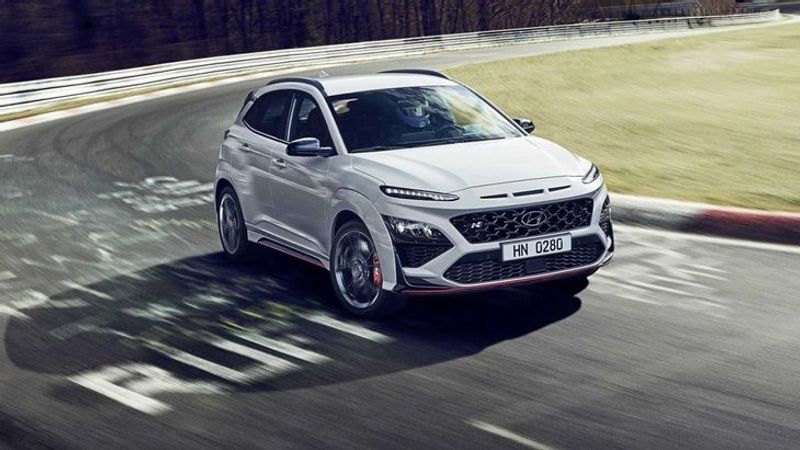
Hyundai Kona N – A rapid crossover
The i30 N – Hyundai's first proper hot hatch and the poster child of the Korean brand's N Division caused quite the buzz in the hot-hatch and performance-car fraternity when it arrived on the local market. I, for one, was a convert after sampling the lively i30 N; it served its purpose rather well. What am I saying? It was a cracker! But what it failed at was the price. The premium demanded for the admittedly low-volume i30 N was simply too steep for our market, which is price-sensitive at the best of times. After all, we slave hard for every Rand. No disrespect to the N – it was simply a victim of market dynamics.
While we had to wait a couple of years for the i30 N to arrive, Hyundai Automotive SA won't hesitate to introduce the Kona N (of which the production version was released just a couple of days ago). Towards the end of 2021, the N Division's latest firecracker package will arrive in Mzansi, only this time in crossover guise and getting to the business of filling up the rear-view mirrors of hot hatch- and, in particular, Renault RS owners how may be looking for an, um, "downgrade”. One thing’s for sure: if Hyundai can’t get the pricing fair, I expect Kona N to suffer the same fate as i30 N, which would be a pity.
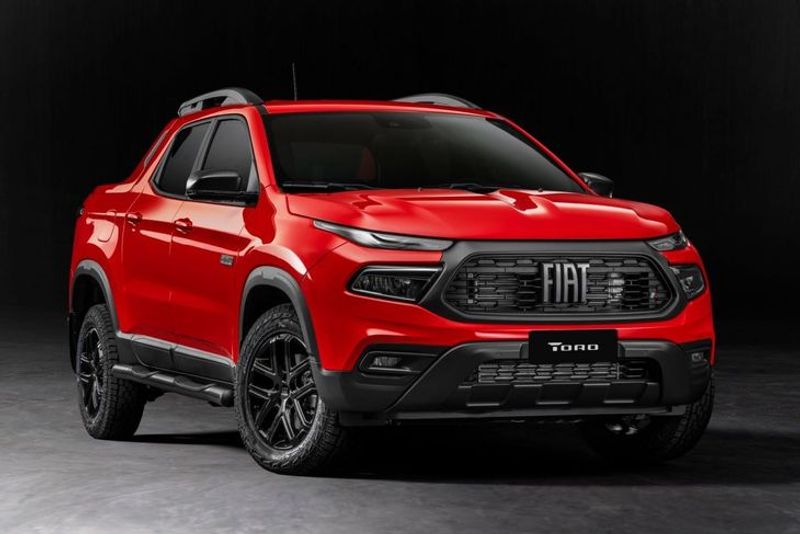
Fiat Toro – You don’t need a big one
Despite obvious signs that a bakkie of this size is desired in developing markets, the decision-makers at FCA (or is that Stellantis?) have resisted the urge to produce the Toro in right-hand-drive guise, which would pave the way for its introduction to South Africa. Following the demise of the Ford Bantam and the Opel Corsa bakkie, later replaced by the less-charming Chevrolet Utility, we only have the Dacia-derived Nissan NP200 in our market, and that Methuselah pales in comparison to something as good looking as the Toro. The Toro is even available as a double cab for Pete’s sake, what's not to like?
The old Corsa bakkie had a great run in South Africa and since the departure of General Motors, which took the Chevrolet Utility with it (that factory in Port Elizabeth now exclusively builds Isuzu derivatives) the NP200 has soldiered on gamely, without competition. Meanwhile, there appears to be a massive gap in the new-vehicle market for a modern, reasonably well-equipped and moderately stylish sub-tonne (light) bakkie, because many consumers plainly don’t have enough money to afford a Hilux, Ranger or the equivalent. The Renault Duster Oroch was on the cards for a while, but nothing came of that.
Yes, those discontinued little bakkies were basic but served their purpose as well as they could; in our hearts, they were so much more than humble delivery vans. The Toro is the modernised version of what those little bakkies should have evolved into by now. From my vantage point, all I see are green flags, so let’s get a move on, Fiat.
New Cars or Used Cars: What Car Should You Buy?
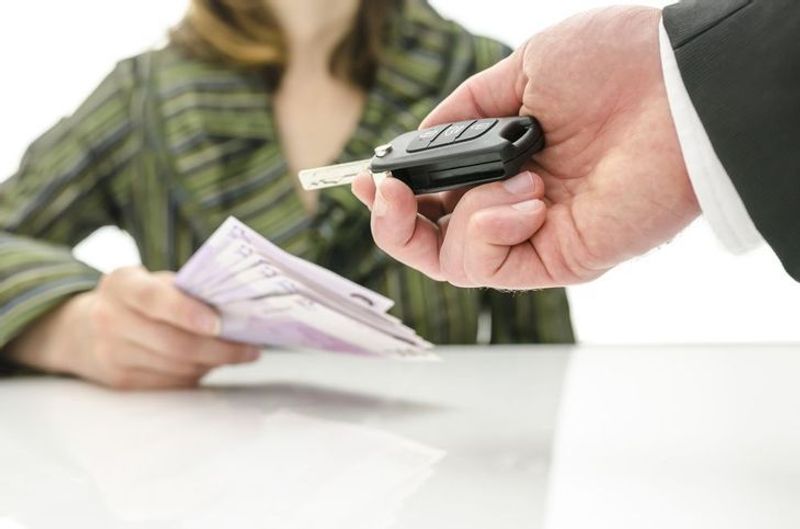
Buying a car is a major purchasing decision and it's worth knowing what the advantages and disadvantages are of buying either a new car or a used car.
A new car is typically bought directly from a car dealership and has not been previously registered, while used cars have typically had at least one previous owner.
Here are a number of advantages and disadvantages for buying both new and used cars which should help inform your final decision.
What are the advantages of buying a new car?
Knowing that you are the first owner of the car creates peace of mind.
If you intend on keeping the car for longer than 5 years then a new car will generally serve you better.
When you buy a new car, you will, in most cases, receive a full and comprehensive manufacturer warranty and a full-service plan capped with a mileage/date record.
A new car will generally require less maintenance than a used car for the first few years and defects are covered by the vehicle warranty.
You often have the choice to customize your new car with various options and luxury features, as well as specifying the exterior paint colour you like most.
New cars come with the latest technology and features.
Even though the seller is obliged to declare any known defect to a potential buyer by the laws set out in the Consumer Protection Act, but there's ultimately no guarantee that nothing will go wrong at a later stage.
Any problems with the used car will result in additional repair and maintenance costs if the car is out of warranty and if its service plan has expired.
The buyer cannot add optional extras or safety features to the car.
The buyer must select from the pool of used cars for sale which may limit choice in terms of colour, year, mileage etc.
Summary
Buying a new car gives the buyer more choice, as well as peace of mind and the feel-good factor of owning something new. However, the money saved when buying a used car can often outweigh these benefits and will work out better in the long run if you find the right used car at the right price. Often you will also find more value in a used car at a similar price to a new car but will lack that new tech installed in brand new cars. Depending on the car you need and want to buy, the used car market can offer considerable value and car buyers are advised to consider all the options available to them before making their final car buying decision.
If you require car buying advice, please feel free to reach out to us on TwitterorFacebook and we will be happy to provide the advice and assistance you need.
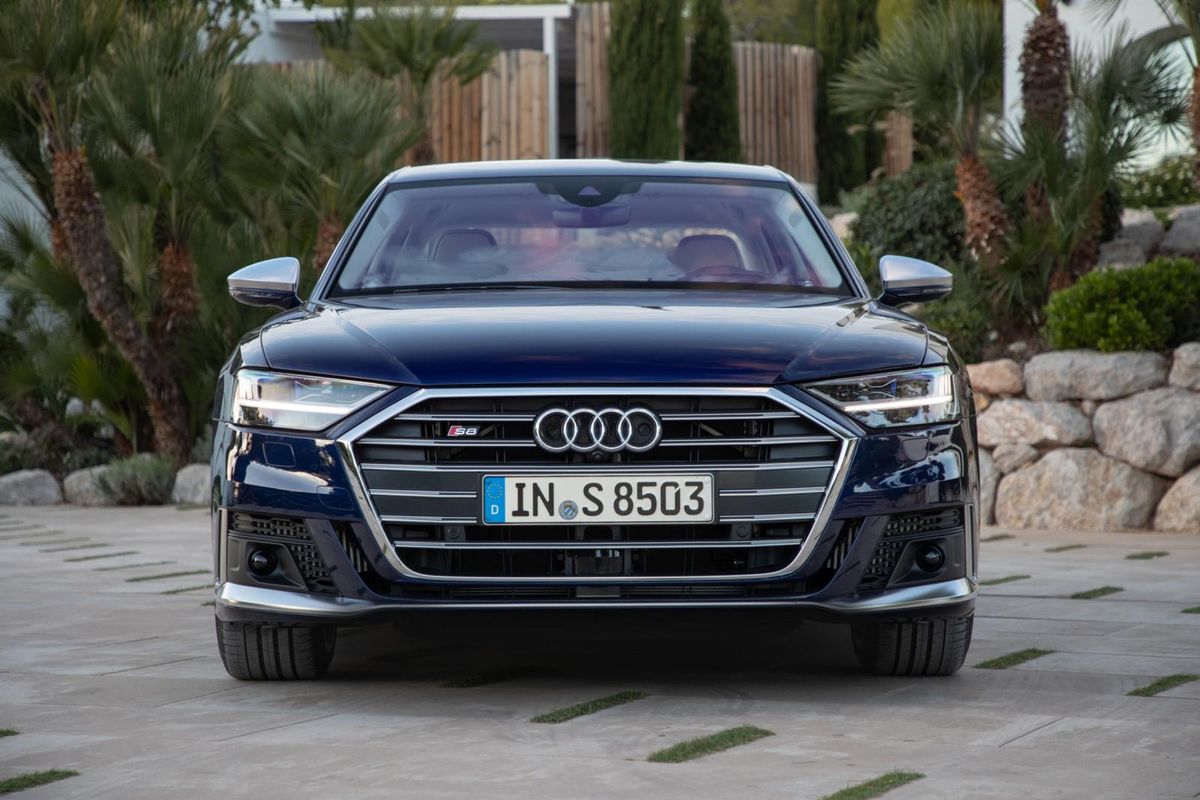
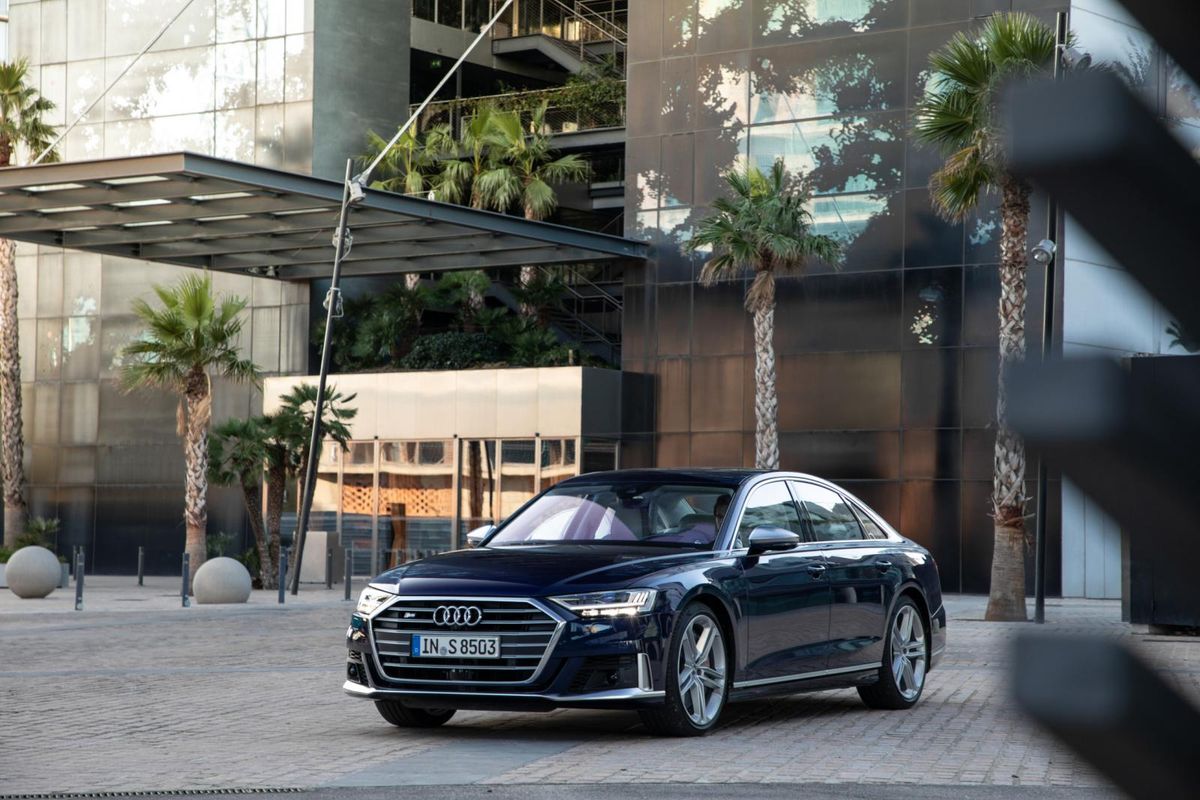
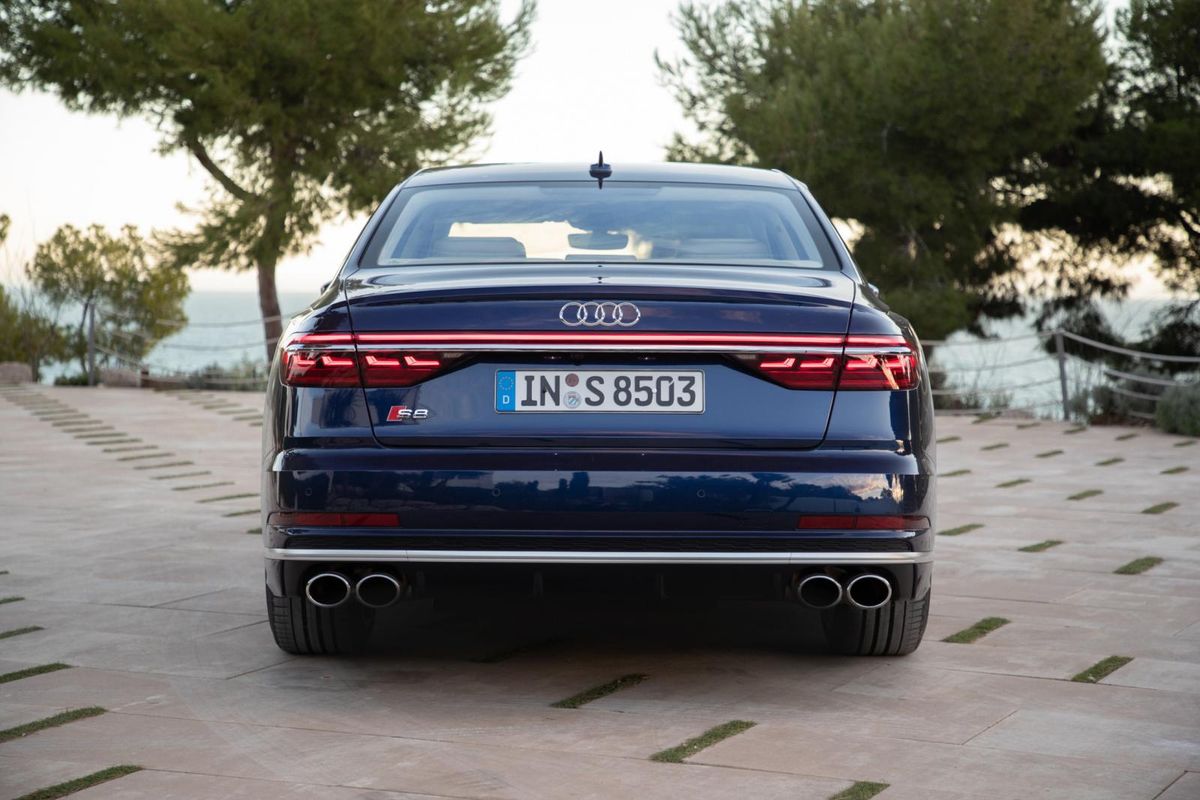
Audi S8 (2021) Specs & Price
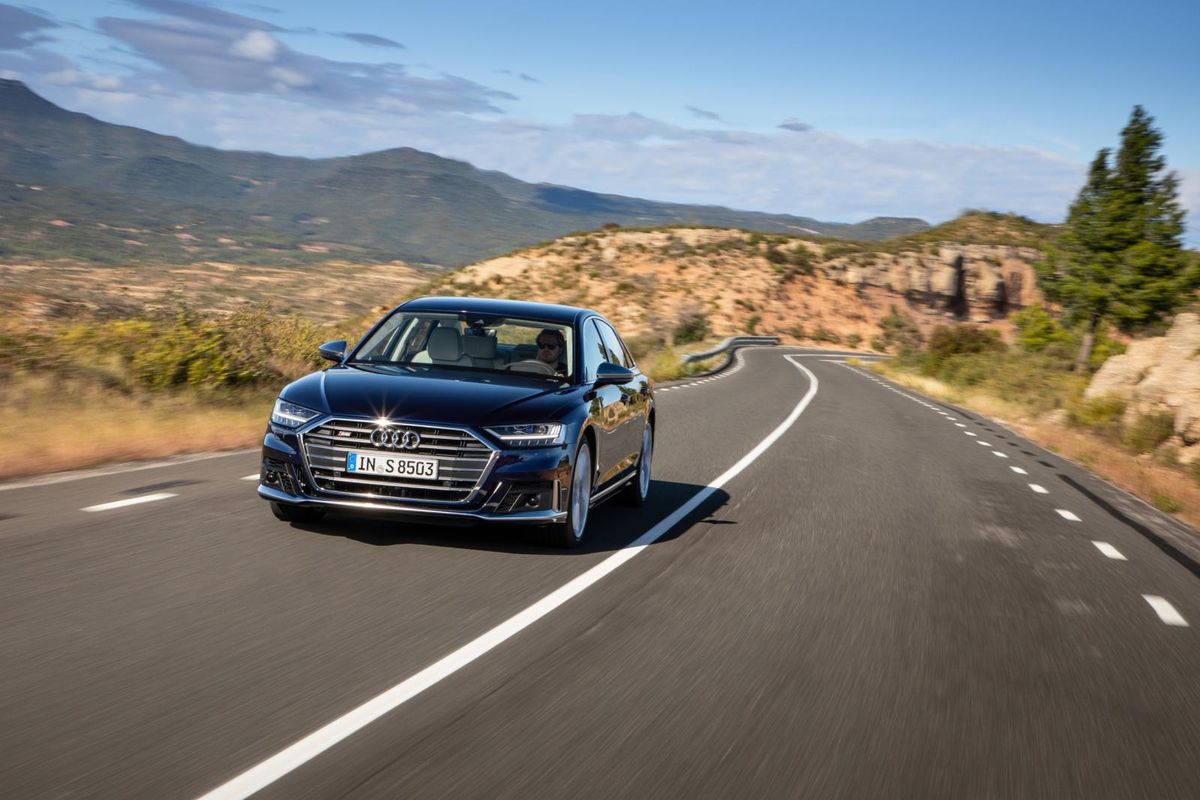
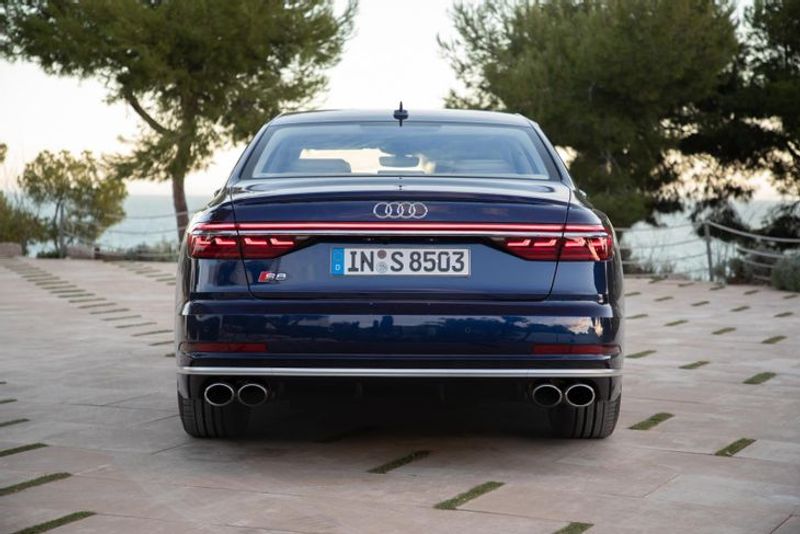
Audi South Africa has launched the S8 performance sedan in our market. Here's the price, plus some specification details.
The flagship luxury limousine sedan from Audi has landed in South Africa. It's a rival to the S63 from Mercedes-AMG and the BMW M760Li.
Audi S8 Engine and Performance
The luxury performance sedan is powered by a 4.0-litre twin-turbocharged V8 petrol engine which produces 420 kW and 800 Nm. This powertrain also features mild-hybrid technology to reduce fuel consumption and emissions. It can cleverly shut down some cylinders and the hybrid system is said to improve consumption by up to 0.8 L/100 km.
Being a performance Audi product, it comes with quattro all-wheel drive as well as a sport differential, and that monster power reaches the wheels via an 8-speed automatic transmission. It has a limited top speed of 250 kph and is said to sprint to 100 kph in just 3.8 seconds.
The vehicle also has dynamic all-wheel steering setup as well as a predictive active suspension.
Luxury and Comfort in the Audi S8
The vehicle’s sound system features active noise cancellation to eliminate intrusive cabin noise for the ultimate in comfort.
The high-tech system air suspension can lift or push down each wheel separately via electromechanical actuators and the vehicle can lean into curves to keep comfort levels at a maximum. The vehicle can also raise itself by 50 mm making entry and exit easier.
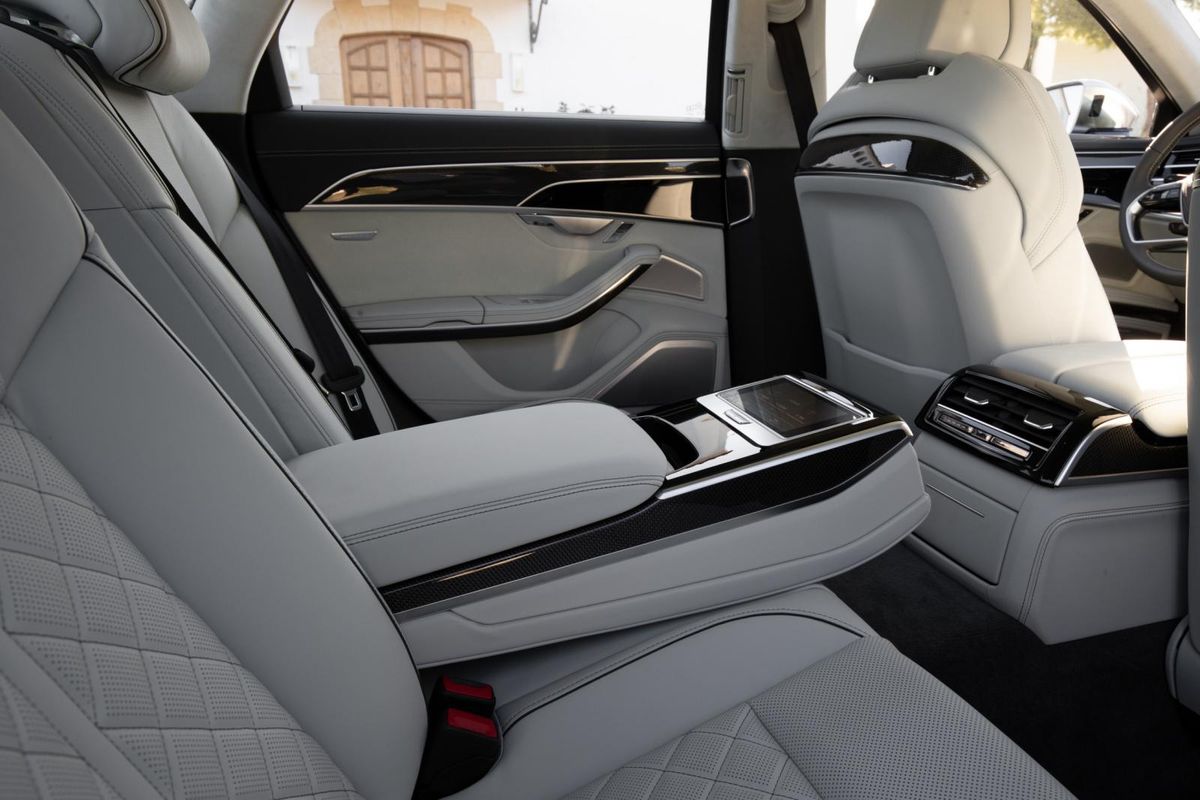
Inside, there are individually contoured comfort sports seats that feature wide-ranging power adjustment, pneumatically adjustable side bolsters and separate three-stage heating for each seat. Front passengers get ventilation functionality and massage mode is an optional extra.
The Audi S8 features many driver assistance systems. The optional adaptive cruise control with speed limiter, efficiency assist, swerve assist and turn assist combines key functions to allow for a comprehensive safety offering. Intelligent park assist, 360° camera and head-up display are a few of the key standard safety equipment in the new Audi S8. There are five radar sensors, six cameras, twelve ultrasound sensors and a laser scanner, making it one of the most advanced vehicles when it comes to semi-autonomous technology.
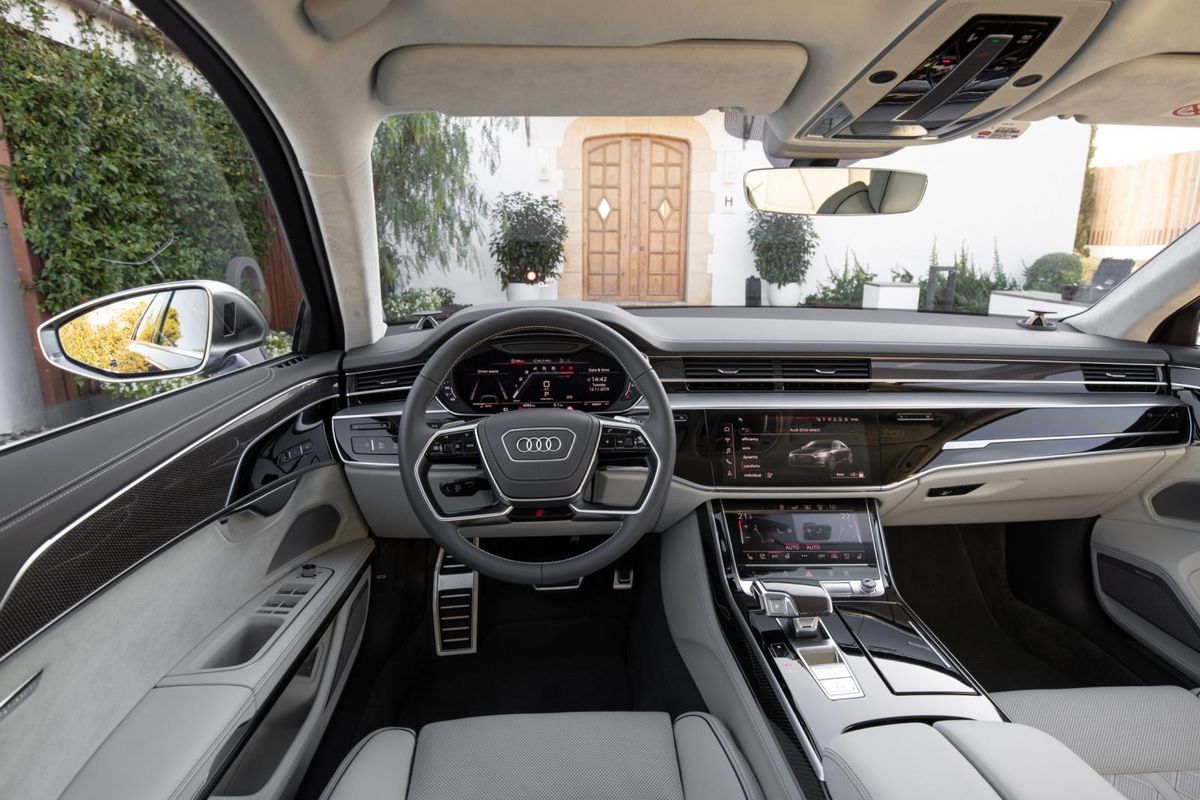
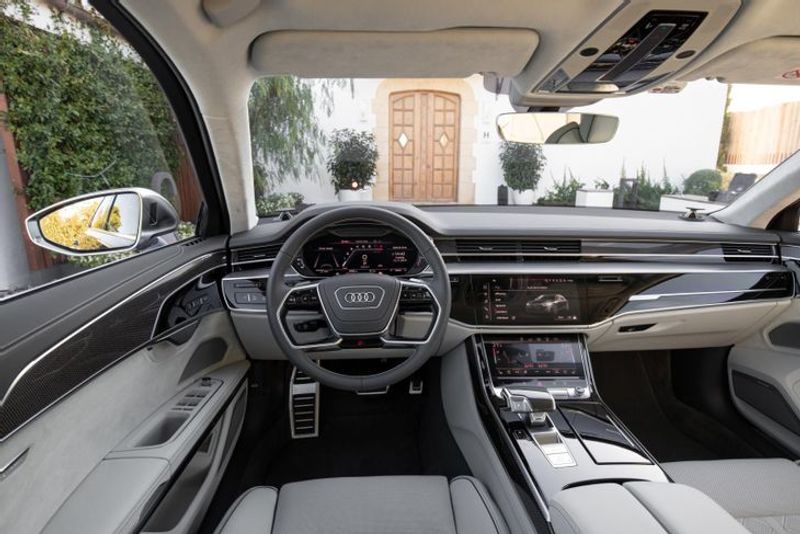
The Audi S8 features the Virtual Cockpit digital dashboard as well as two large central displays. There's also a heads-up display. The standard Audi smartphone interface brings Android Auto and wirelessly Apple Car Play on board. High-end components such as the Bang & Olufsen premium sound system with 3D sound (optional upgraded to the Bang & Olufsen Advanced Sound System with 3D sound) and the standard Audi phone box and ambient lighting package plus, round up the infotainment and interior comfort features line-up in the new S8.
How much does the Audi S8 cost in South Africa?
The new Audi S8 is now on sale in South Africa and is sold standard with a five year Audi Freeway Plan:
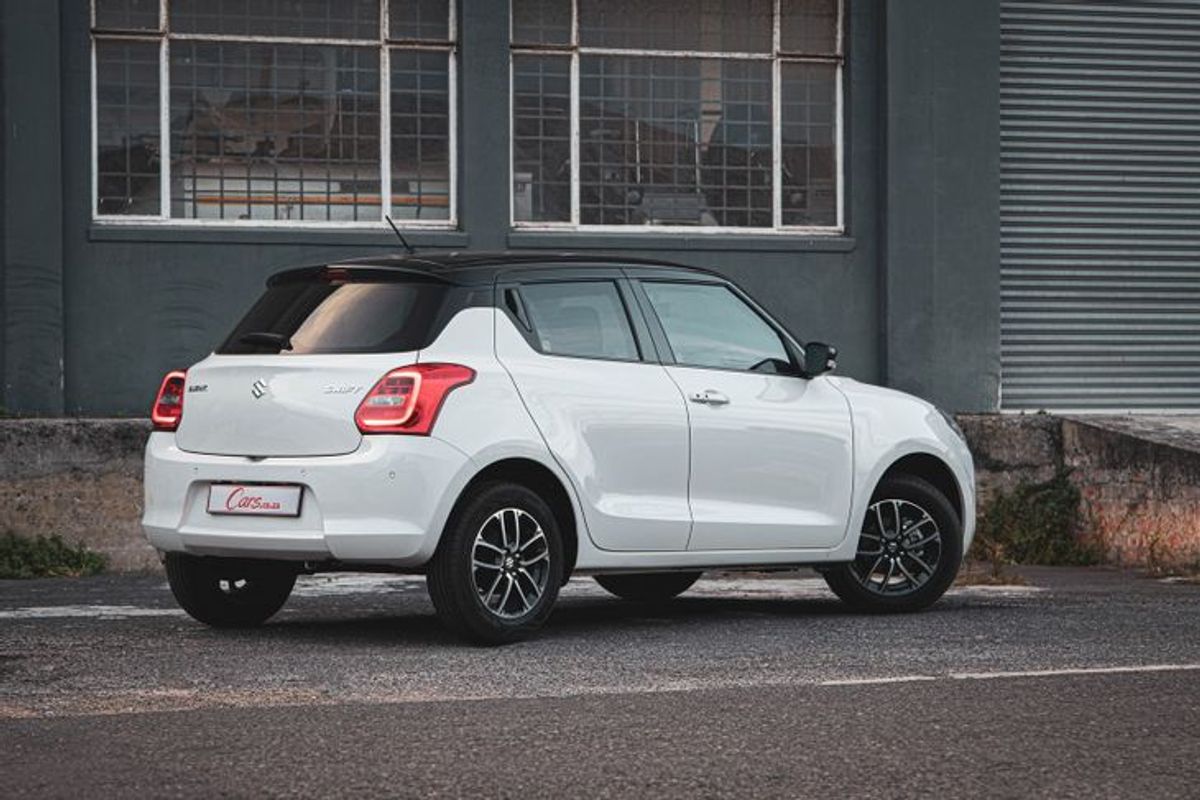
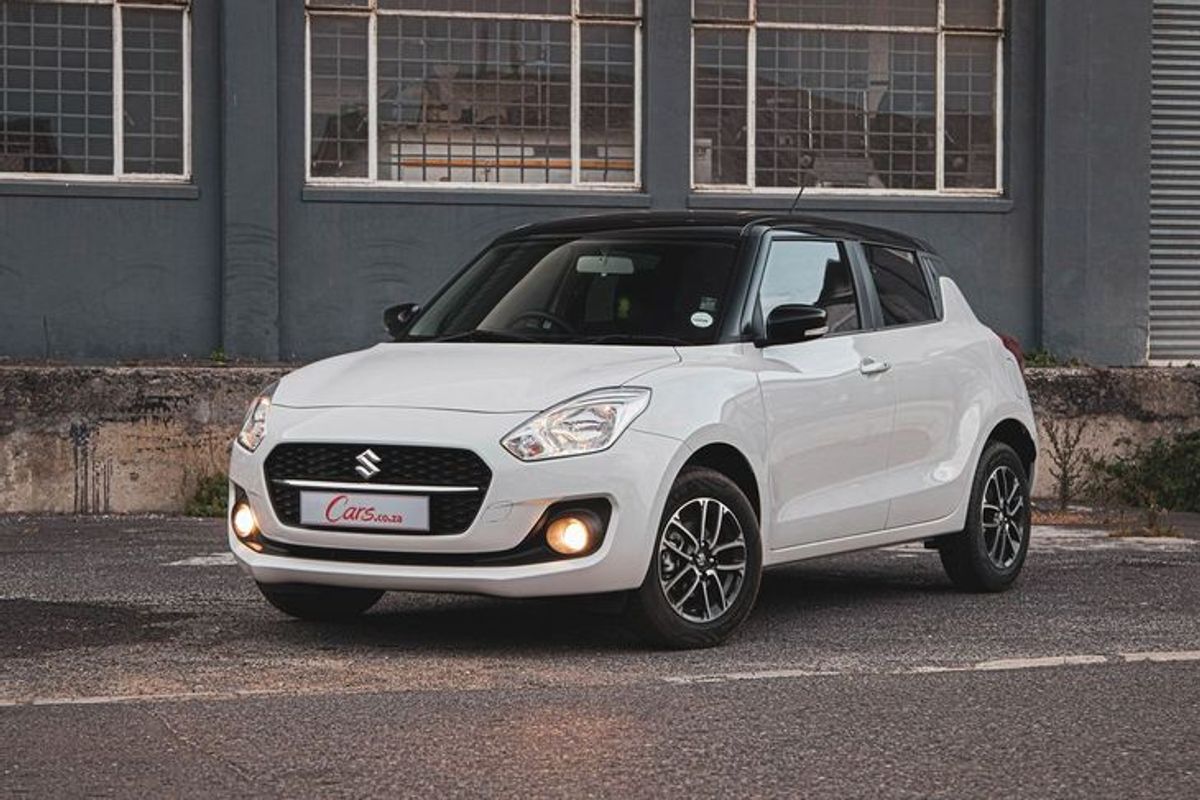
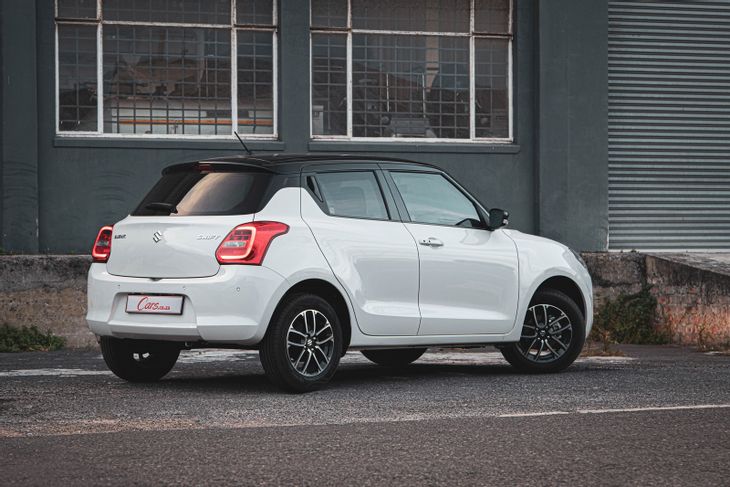
Earlier in 2021, the Suzuki Swift won a category of the #CarsAwards – powered by WesBank for a 3rd consecutive time. Although the Japanese budget compact hatchback has since undergone (what casual onlookers might regard as) the slightest of updates, we think the latest iteration of the Swift is the best one yet. Read our Suzuki Swift review for insight!
This Suzuki Swift review will examine key attributes of the popular Swift which will help you, the consumer, make a more informed car buying decision.
We like: Astoundingly great value, fun to drive, light on fuel, well specified.
We don’t like: We’d be nitpicking, but the load bay and fuel tank are smaller than those of its rivals
Fast Facts
Model Tested: Suzuki Swift 1.2 GLX
Price: R218 900 (April 2021)
Engine: 1.2-litre naturally-aspirated 4-cylinder petrol
The Suzuki Swift is a compact budget hatchback that’s powered by a 1.2-litre naturally aspirated (non-turbocharged) 4-cylinder petrol engine mated with either a manual gearbox or automatic transmission. There are 3 levels of trim to choose from and, for driving enthusiasts, Suzuki also offers a pugnacious 1.4T Sportflagship model. We’ve been impressed by the Swift’s low cost of ownership and fun-to-drive factor and this and the previous model have repeatedly won budget-oriented categories of the #CarsAwards. Not only is the product excellent, but Suzuki offers great after-sales support and customer care.
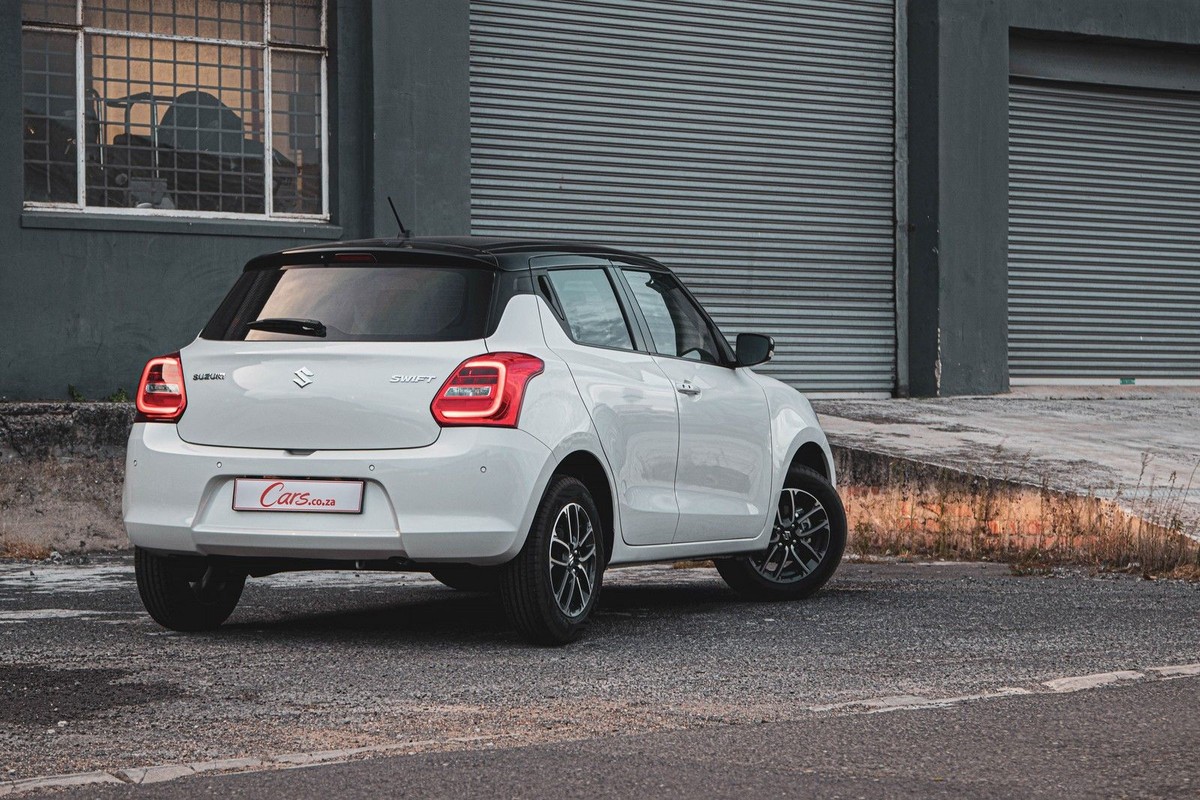
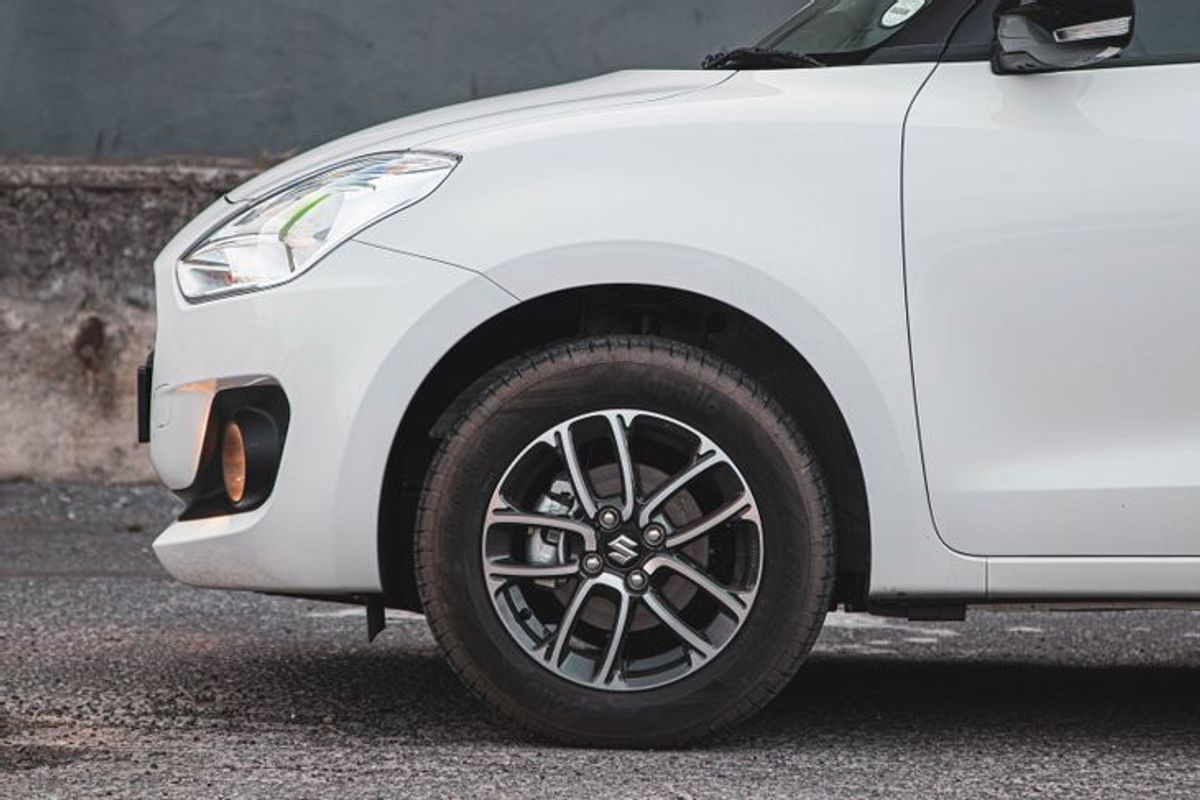
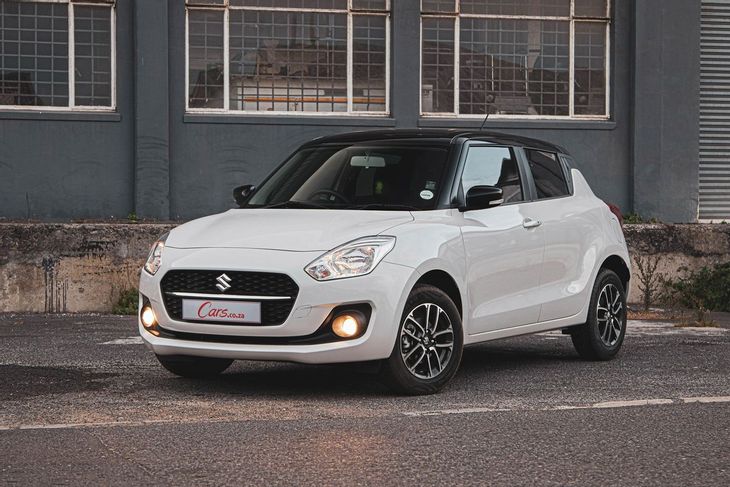
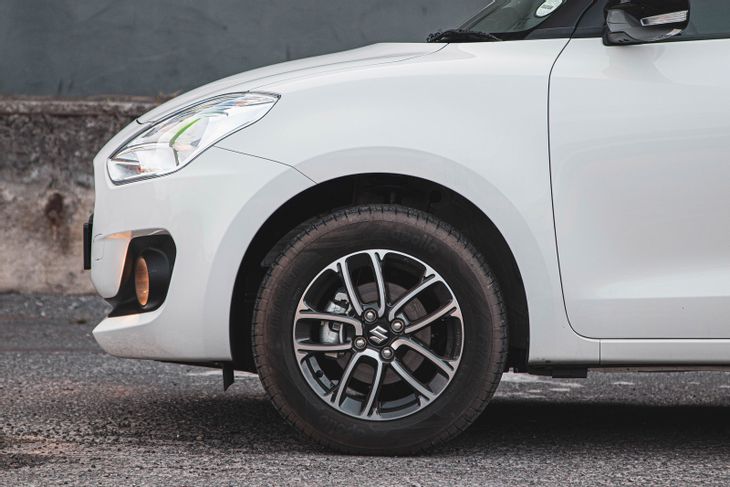
Suzuki South Africa recently launched an updated version of the Swift (essentially a 2021 model-year update). At face value, there aren’t many changes other than a dual-tone paint finish; even Suzuki calls this a minor update… The revisions range from a slight visual update in the form of a chrome line in the grille and the aforementioned (optional) paint finish… to some spec upgrades across the line-up. The base derivative now features full wheel covers and rear parking sensors, while the GL also gains parking sensors and the GLX gets a reverse-view camera and new 15-inch alloy wheels.
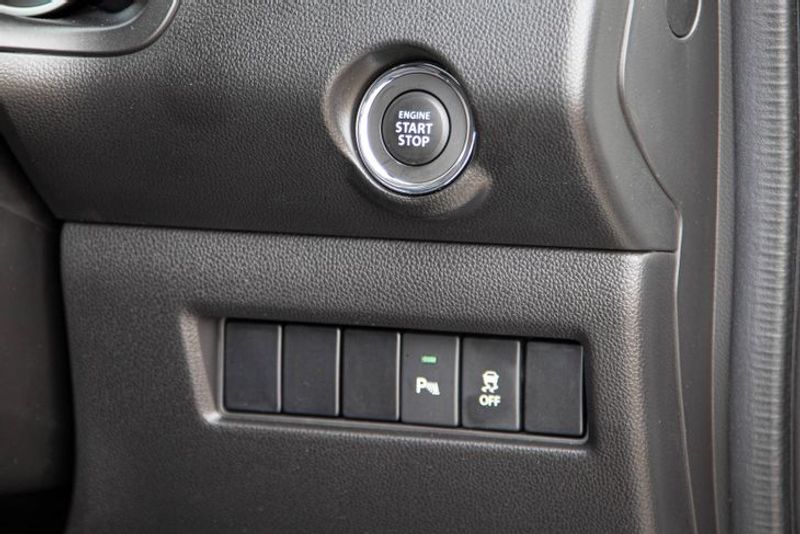
The most notable update, however, is the introduction of electronic stability control throughout the range. How does it work? The Swift’s braking system is equipped with sensors that can detect when one or more tyres lose grip (because of wheelspin or skidding) – it automatically applies the vehicle’s brakes to help the driver maintain control. Interestingly, this technology is compulsory in the Canadian, US and European car markets since 2011, 2012 and 2014. Does it work? Well, according to the US National Highway Traffic Safety Administration, a third of fatal accidents could be prevented by an ESP system.
How much of an impact have the changes had on what’s already an award-winning product? Let’s find out.
How it performs in terms of…
Performance and efficiency
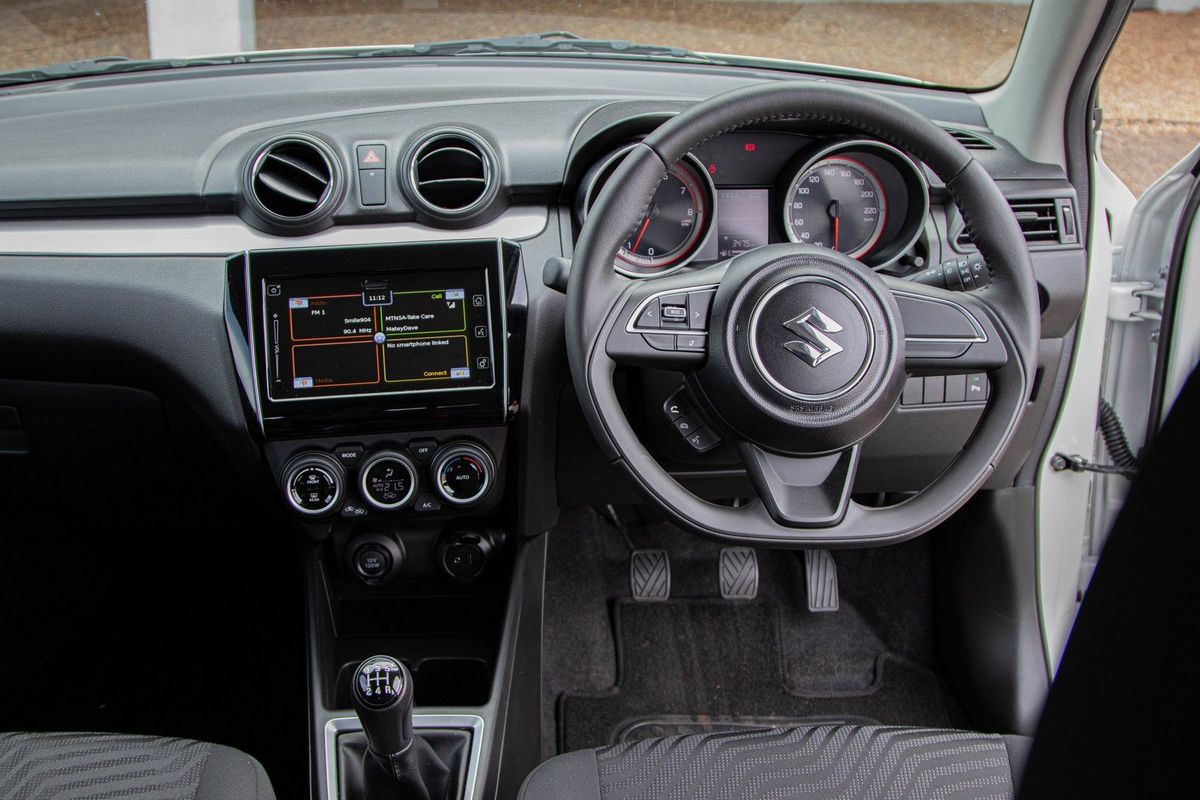
Neat and functional would be the best way to describe the Suzuki Swift’s interior.
We have gained substantial experience with the Swift’s willing 1.2-litre powerplant throughout the years and the motor continues to impress us by virtue of its rev-happy nature, combined with frugal average fuel consumption. Its outputs of 61 kW and 112 Nm may not seem all that impressive, but considering the Swift’s trim kerb weight of just 875 kg, the Suzuki’s powertrain feels eager in every gear; the little hatchback is eminently nippy. The engine may be old-school naturally-aspirated in an era of downsized, turbocharged engines, but the power delivery is linear and the car never feels short of breath.
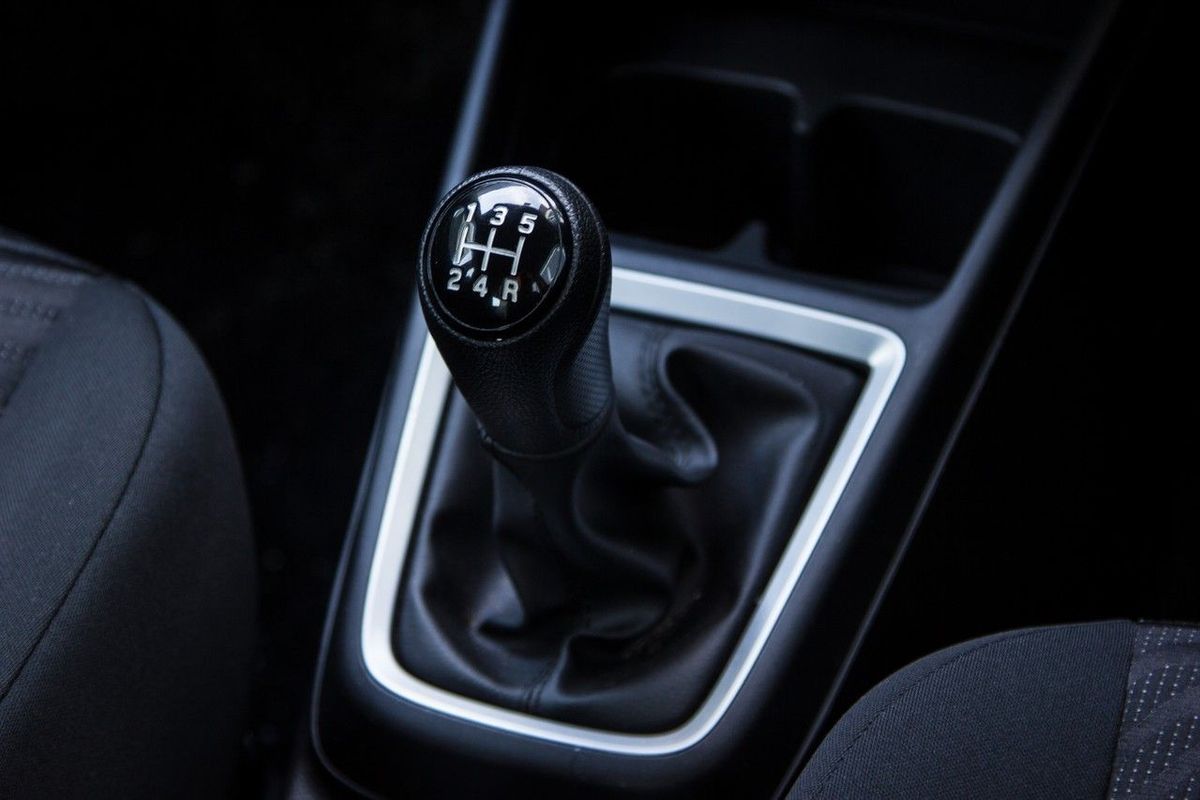
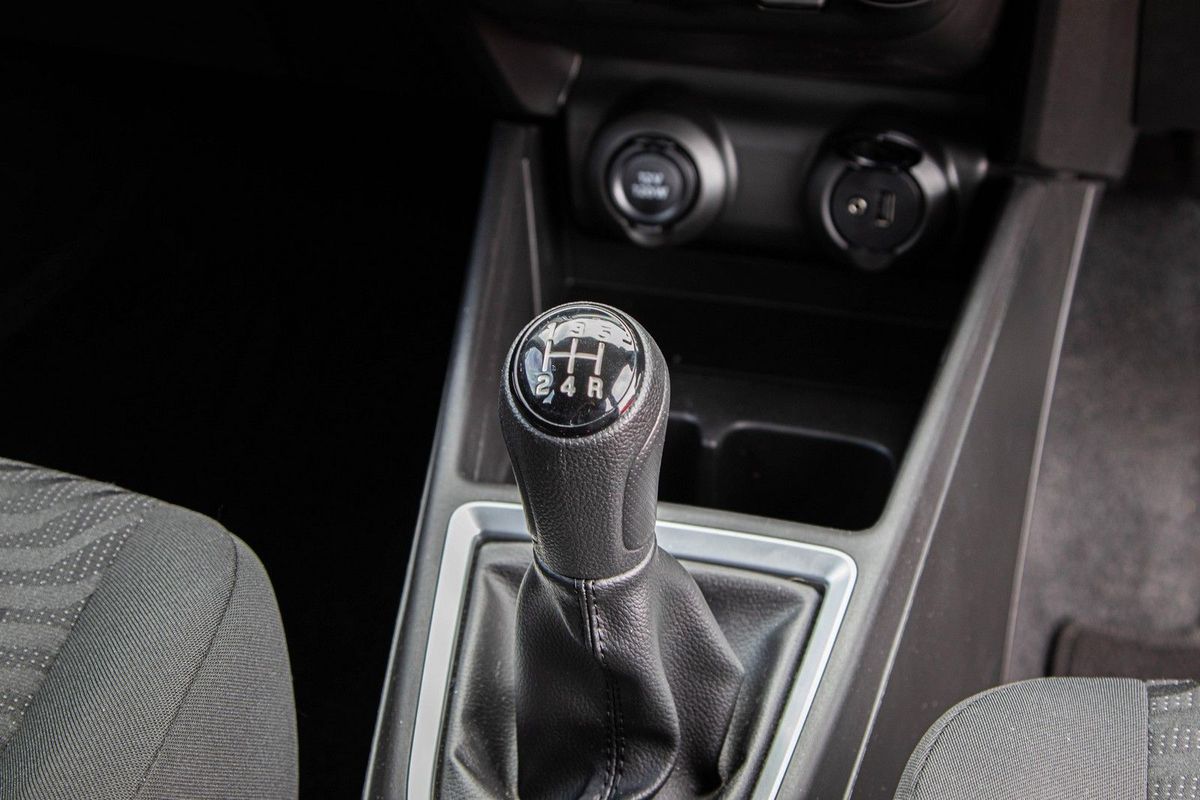
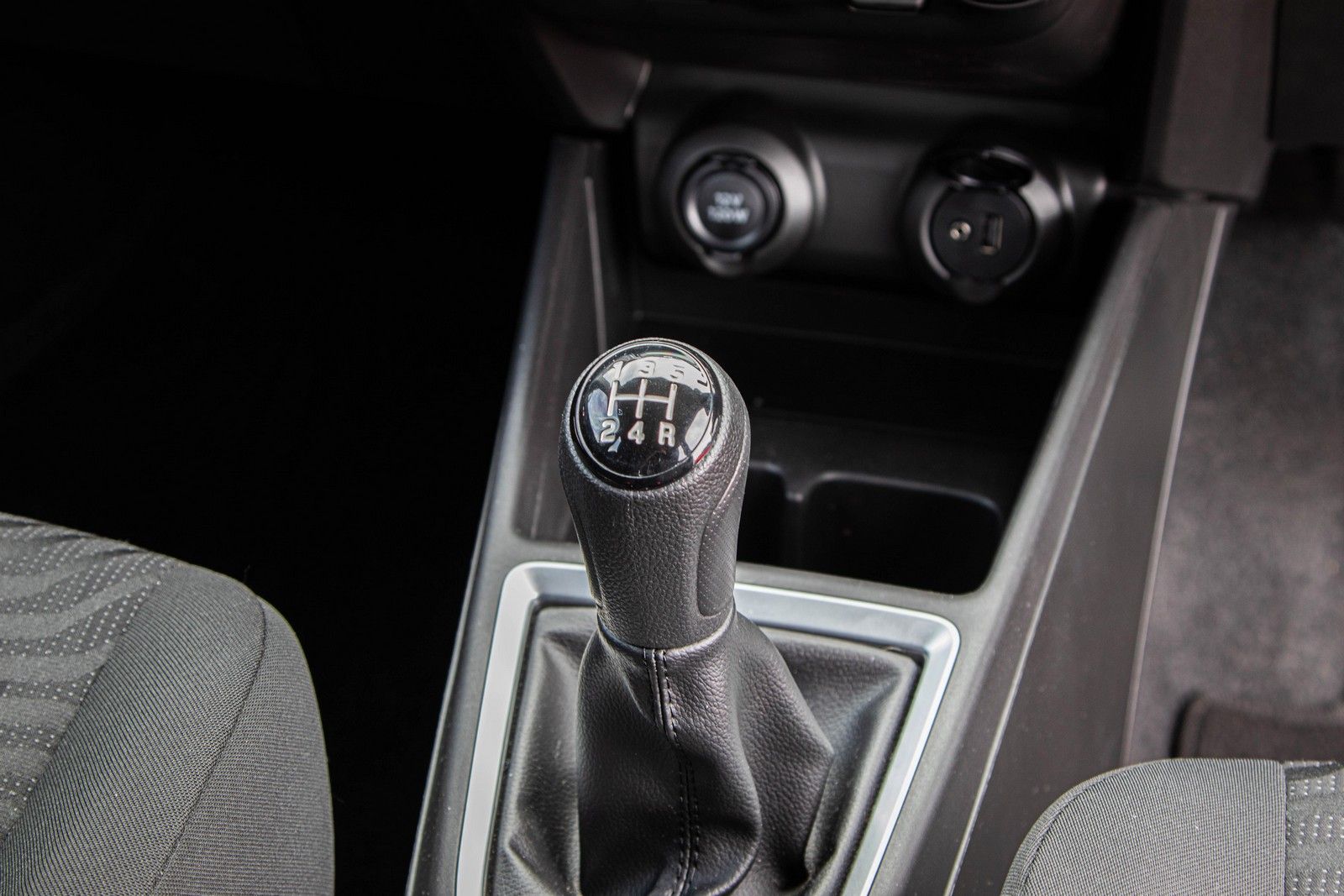
The 5-speed manual gearbox is another element that facilitates the Swift’s drivability. Granted, the market has shifted dramatically away from 3-pedal cars (and Suzuki does offer a trio of self-shifting Swift derivatives), but the manual is what you want if you like to feel as if you’re driving something fun and engaging, which is such a welcome bonus in the budget-car segment. Not only is the shift action light and effortless, but the clutch is a cinch to use. If you do feel the car’s running out of momentum, such as when it’s climbing a steep hill, there’s nothing a quick down-change and a heavier right foot can’t fix.
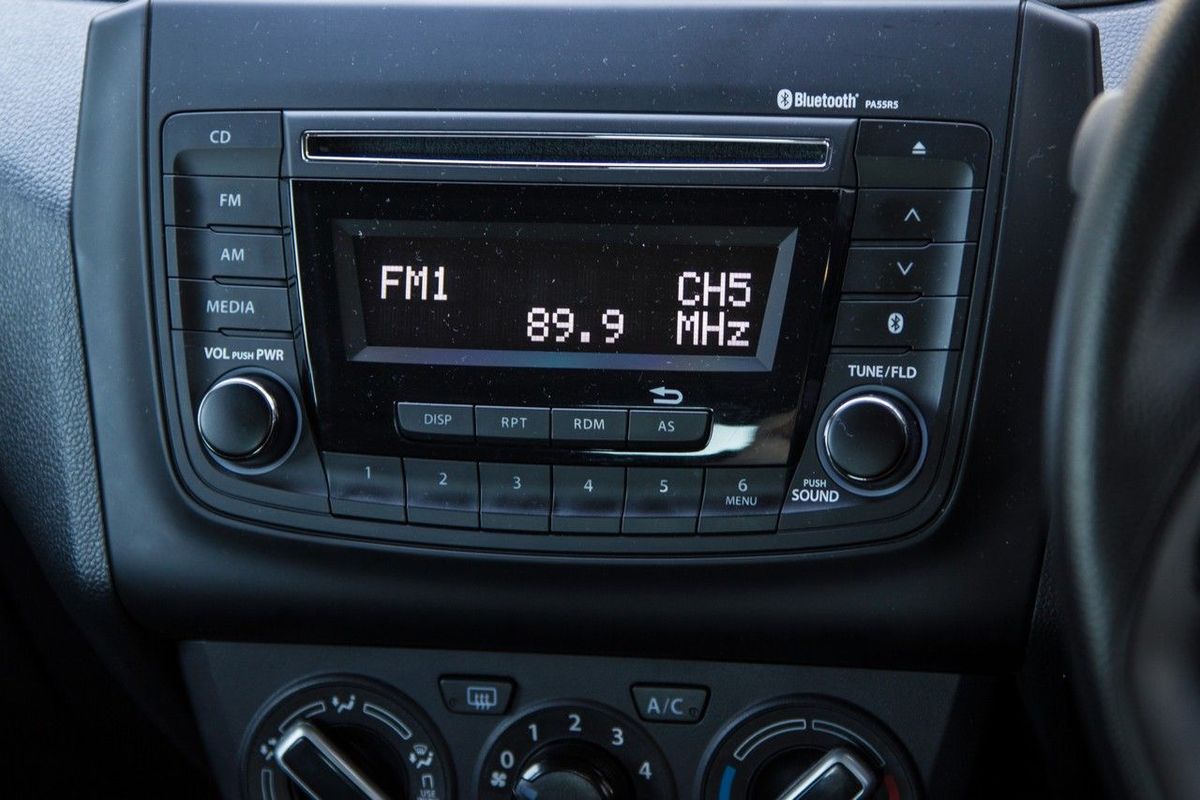
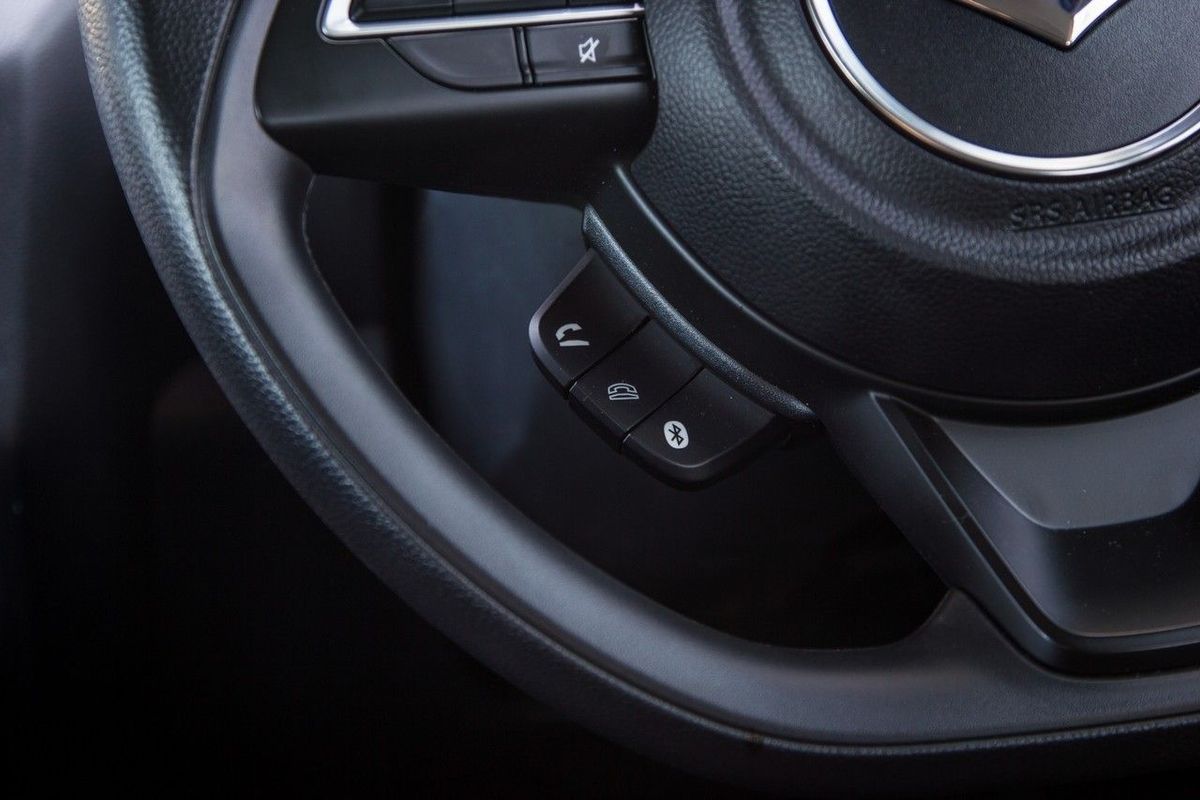
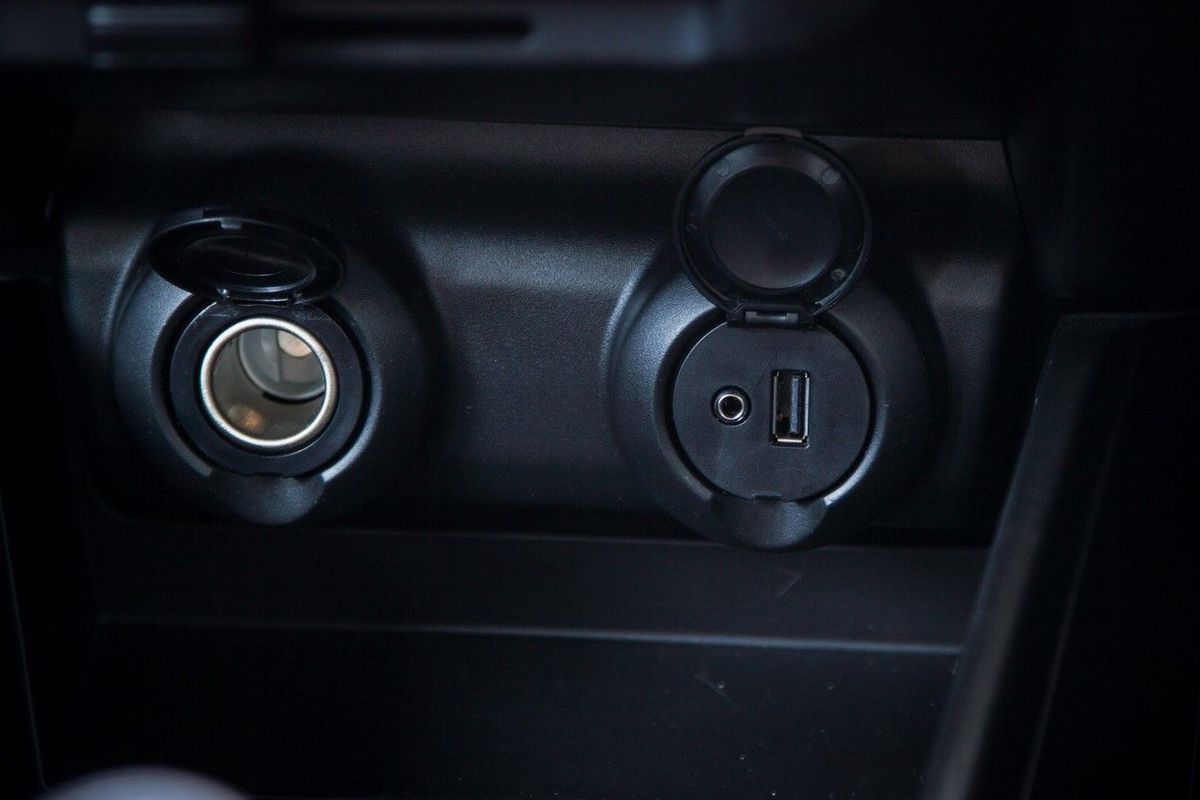
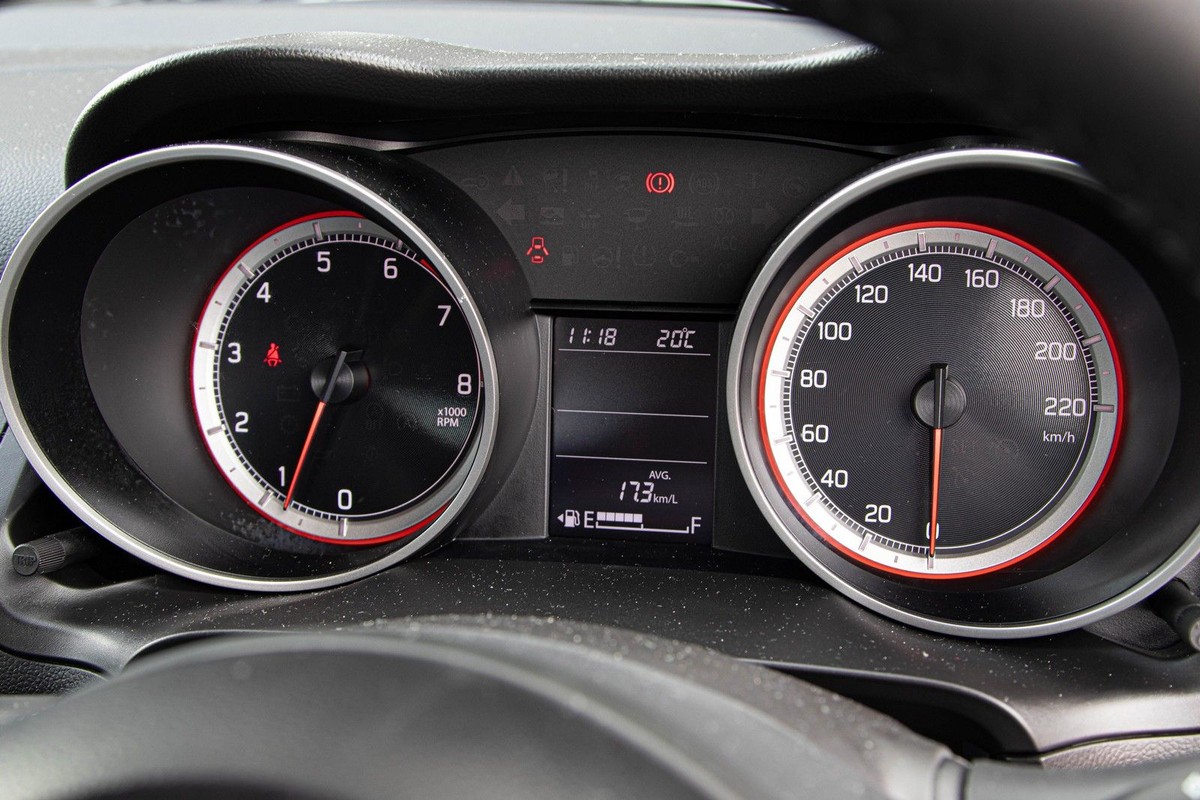
Like many of the cars assembled in India, the Swift’s gearing is short, which does create the sensation of quick acceleration, but then the car’s rev counter will hover around 3 000 rpm at the national speed limit, which results in a slightly buzzy sound in the cabin. There’s nothing you can do about it (apart from slowing down), but you can drown out the noise by playing your favourite tunes via USB or Bluetooth.
And the best part? You can drive the Swift in practically whichever style you like – your vehicle’s indicated fuel consumption is unlikely to stray too far from its manufacturer’s claimed figure of 4.9 L/100 km. During its tenure in our test fleet, the 1.2 GLX returned 5.7 L/100 km despite some enthusiastic corner-hugging driving antics on the part of some of our testers. Drive a turbocharged rival in the same manner and we reckon you’d see consumption climbing into the 9s… The Suzuki Swift has a 37-litre fuel tank, which is a touch smaller than its rivals’ (those models’ tanks are bigger than 40 litres).
Ride and handling
These stylish 15-inch alloy wheels are new for this update
The Suzuki Swift’s platform change (when the current model was introduced in 2018) heralded many positives. Physically, the Japanese hatchback is 10 mm shorter, but 40 mm wider, than its predecessor. Both tracks have been widened; the front by 40 mm and the rear by 35 mm. Consequently, the car offers better road-holding, not that many drivers had issues with the way the old Swift negotiated corners.
The 1.2 GLX’s steering setup is light and quick, but there’s just enough heft to the ‘wheel to inspire confidence when you’re cruising on the open road. That light steering, plus the rear parking sensors and reverse-view camera, make it palpably easy to parallel park the Suzuki.
Meanwhile, if you’re in a hurry and need to zip through some corners on the way to your destination, the Swift creates the impression that you’re at the helm of a lively, agile “warm budget hatchback” – it’s a far cry from some of the budget-car offerings on the market that are rather bland and insular to drive. The seating position is not perfect; we’d have preferred to have the driver’s seat a bit lower, but at this price point (given the model’s primary role of providing affordable personal transport) and this tester’s taller-than-average height, it’s not a major criticism.
To reiterate, we’ve experienced multiple Suzuki Swift derivatives throughout the years and they’re wonderfully easy to drive. If you can appreciate some driver involvement from a budget hatchback, the 1.2 GLX is likely to put a grin on your face. Finally, while wind noise tends to be bothersome at the national speed limit in many budget cars, we found the Swift to be well insulated, considering its price point.
Interior execution and features
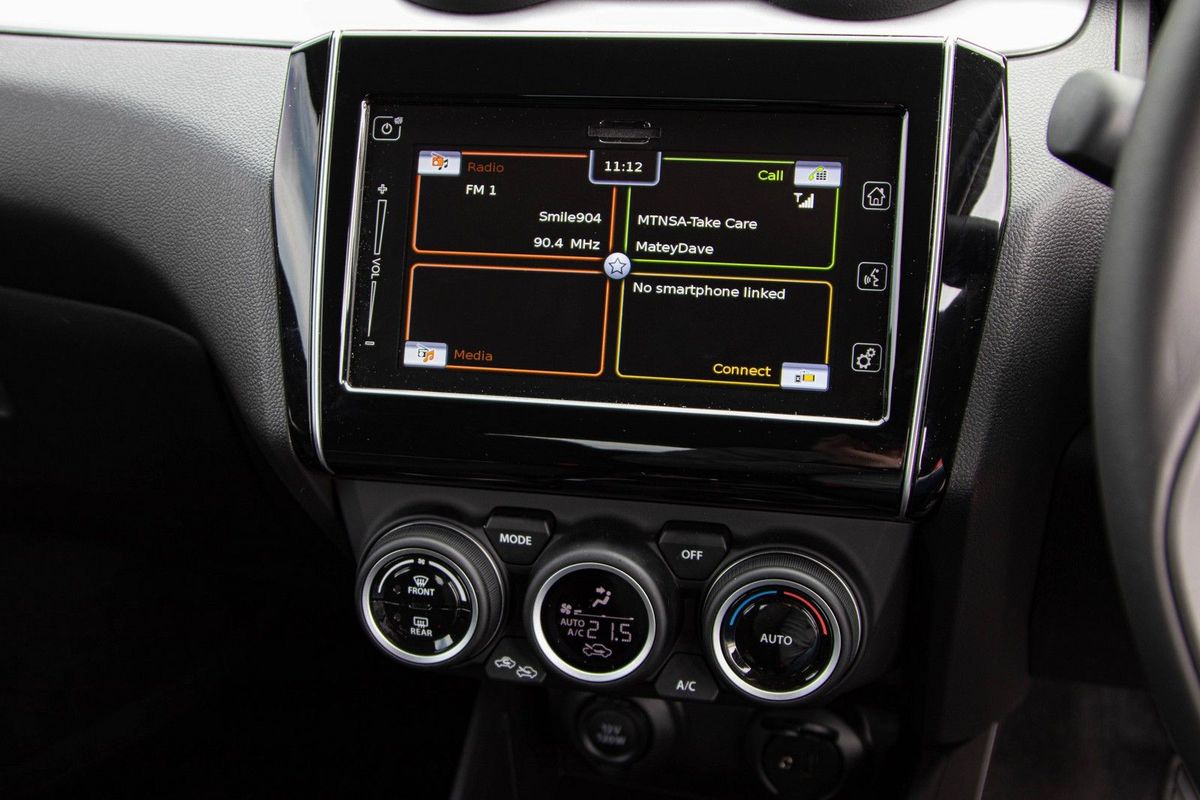
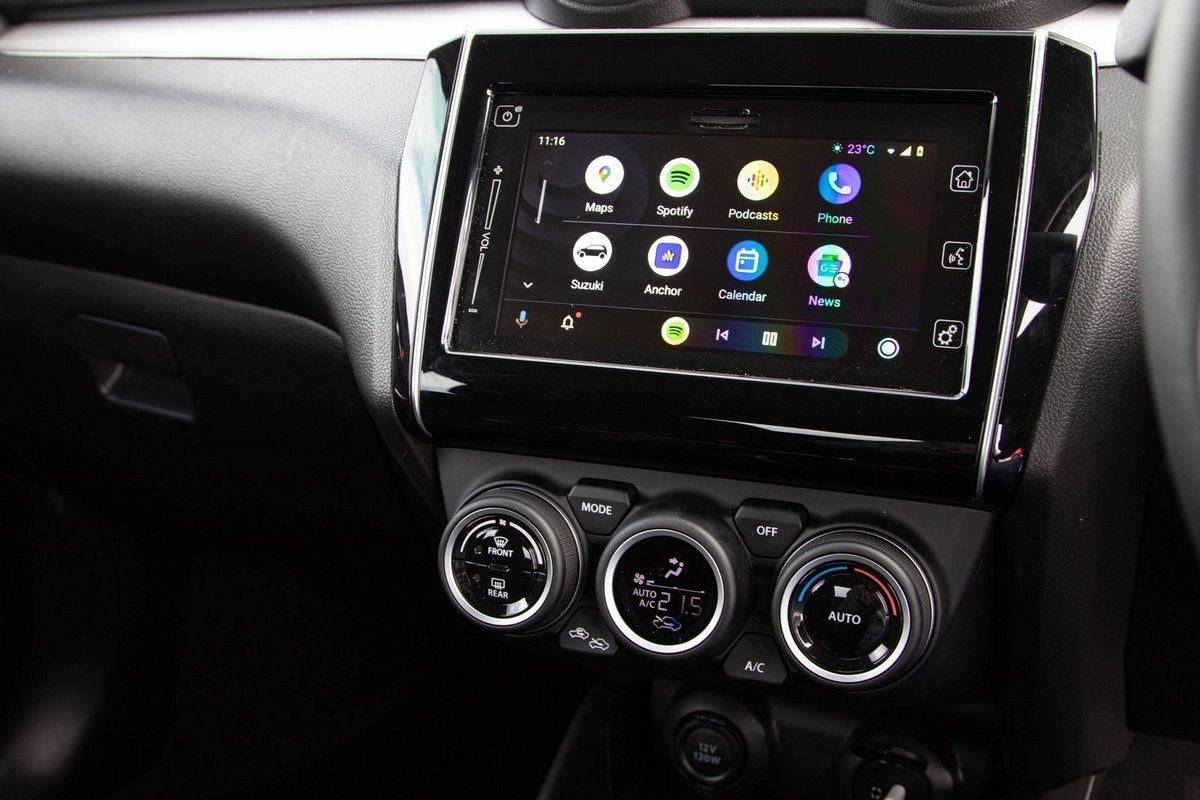
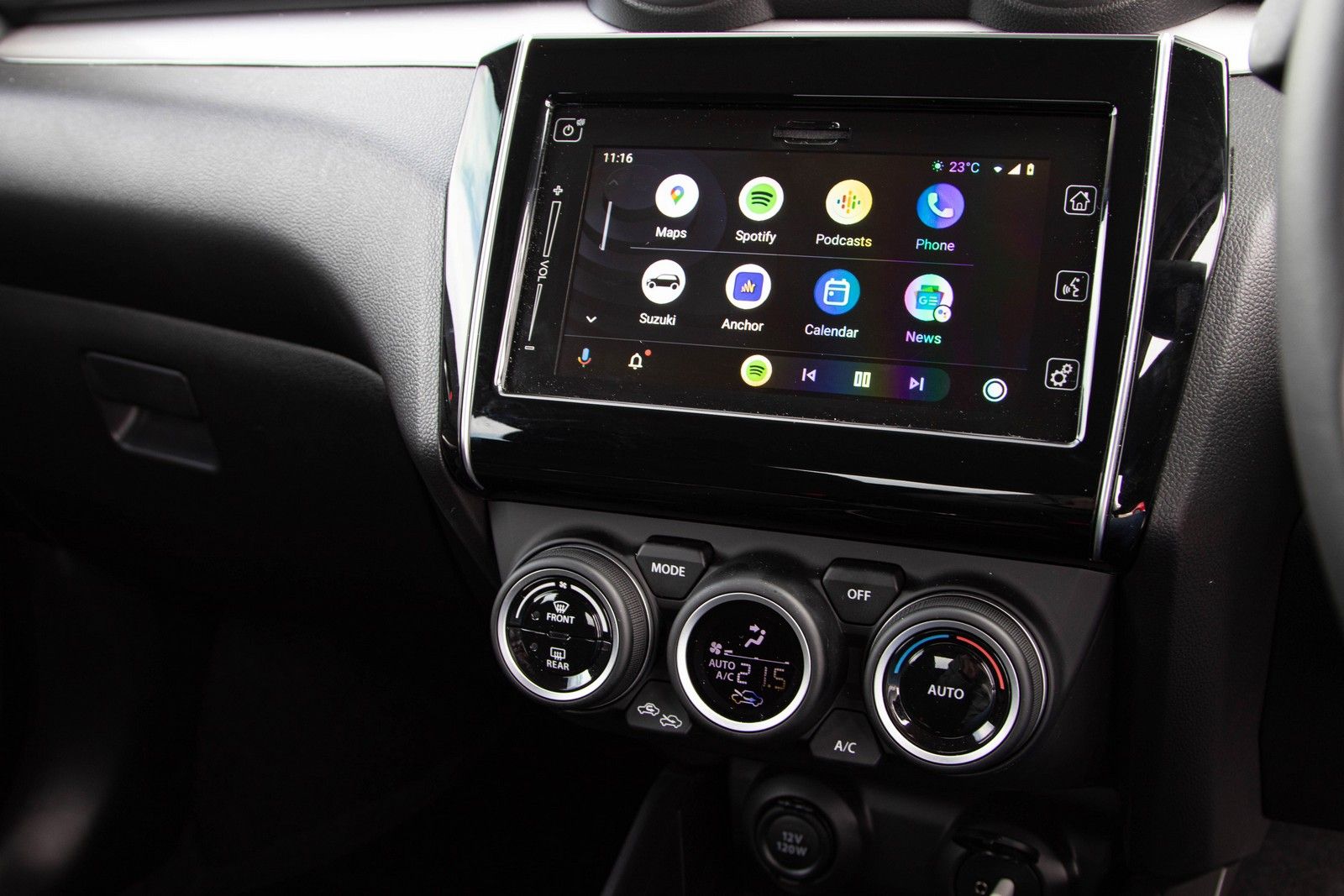
Climate control and Apple CarPlay/Android Auto for under R220 000? What’s the catch?
As we mentioned earlier, the Suzuki Swift is available in three trim levels: GA, GL and what you see here, the GLX. Every derivative in the range features electric windows, air conditioning and central locking. Compared with the base GA, the GL additionally features fog lamps, a basic audio system with USB/Aux inputs, a rev counter and electrically adjustable side mirrors. The GLX, meanwhile, also features climate control, push-button start, keyless access, a reverse-view camera, rear parking sensors and a touchscreen infotainment system compatible with Apple CarPlay and Android Auto.
The interior is not the most striking or visually appealing, but at this price point, that’s to be expected. However, the Swift’s cabin has a functional and intuitive layout that doesn’t feel cheap and nasty.
As far as safety features go, the updated Suzuki Swift 1.2 GLX comes with electronic stability control (ESP), front and passenger airbags, as well as anti-lock brakes (ABS) with emergency brake assistance (BA) and electronic brake-force distribution (EBD).
With all of its standard creature comforts, not to mention the enhanced safety features, the Suzuki Swift represents impressive value for money. It’s little wonder the Swift is the brand’s top-seller in Mzansi.
One button makes all the difference. All Swifts now come with stability control.
Practicality
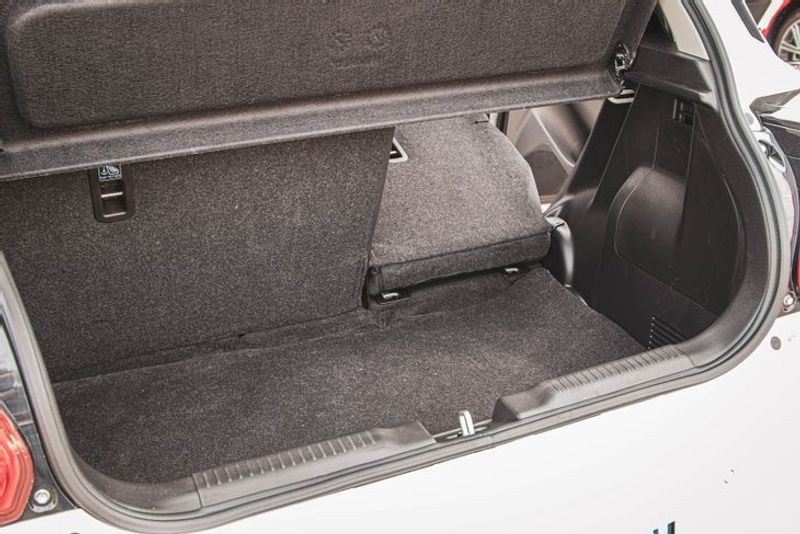
Although its luggage capacity improved with the introduction of the current model in 2018, the Swift’s load bay is still smaller than that of its (admittedly more expensive) main rival, the Volkswagen Polo Vivo. Suzuki claims the load bay will hold 268 litres, which increases to 953 litres with the rear seats folded. The seatback splits 60/40, so you don’t have to sacrifice the entire rear bench to free up utility space.
When it comes to legroom, taller rear passengers will have just about enough room to squeeze in, which is only a problem if the driver and front passenger are tall. A quick test with some shorter-sized family members proved you could easily seat 4 people in the Swift (in relative comfort, of course).
Two cupholders (for the driver and front passenger) are located in front of the gear lever. What’s more, a small shelf is provided for your smartphone and the door pockets offer some extra oddment space.
The load bay remains on the small side, but it’s still useful.
How much does the Suzuki Swift cost in South Africa?
The 1.2-litre derivatives in the Suzuki Swift range start from R180 900 and go up to R234 900. Our test unit was a 1.2 GLX manual, which costs R218 900, including a 2-year/30 000 km service plan and a 5-year/200 000 km manufacturer warranty.
Winners keep winning. The Suzuki Swift will continue to fly out of showroom floors thanks to excellent value for money.
The changes to the Suzuki Swift might be minor, to say the least, but the addition of stability control makes the package hard to beat. We also like the dual-tone paint option; it adds some personalisation –and attitude! A cursory glance at the comparison tool at the bottom of the page will highlight the exceptional value that the Suzuki represents when you consider what else is in this pocket-friendly segment.
Thankfully, Suzuki Auto SA has not messed with what’s clearly a winning formula for the Swift. While the latest update does coincide with small price increases, Suzuki’s top-seller still offers phenomenal value for money from a fun-to-drive city car that’s now safer than ever. The next iteration of the #CarsAwards – powered by WesBank is bound to have the Swift’s competitors sweating even more…
What are the different Suzuki Swift models available in South Africa?
The 2025 Suzuki Swift in South Africa is available in three main derivatives: the GL, a new mid-tier GL+, and the top-end GLX.
What is the engine and performance of the new Swift?
The new Swift is powered by a Z-Series (Z12E) 1.2-litre, 3-cylinder petrol engine. This engine produces 60 kW of power and 112 Nm of torque, and is paired with either a 5-speed manual or a Continuously Variable Transmission (CVT).
What is the price of the new Suzuki Swift in South Africa?
The starting price for the 2025 Suzuki Swift is approximately R219,900, with the top-end GLX model priced around R284,900.
What safety features are standard on the 2025 Suzuki Swift?
Standard safety features across all models include six airbags, hill-hold control, ABS, electronic stability control (ESC), and ISOfix child-seat anchors.
What warranty and service plan are included with the Swift?
The vehicle comes with a 5-year/200,000 km warranty and a 2-year/30,000 km service plan.
Much like what GTI is to the combustion-engined Golf or Polo, GTX represents the sporty side of Volkswagen’s growing electric vehicle range.
“Electric driving is simply great fun – and with the ID.4 GTX we are adding a new dimension of sportiness and dynamics,” explained Ralf Brandstätter, CEO of the Volkswagen Brand. “The most emotional member of the ID. family to date shows that electric mobility and top sporty performance are not mutually exclusive.”
How fast is the Volkswagen ID.4 GTX?
The ID.4 GTX has 2 electric motors that generate no less than 220 kW.
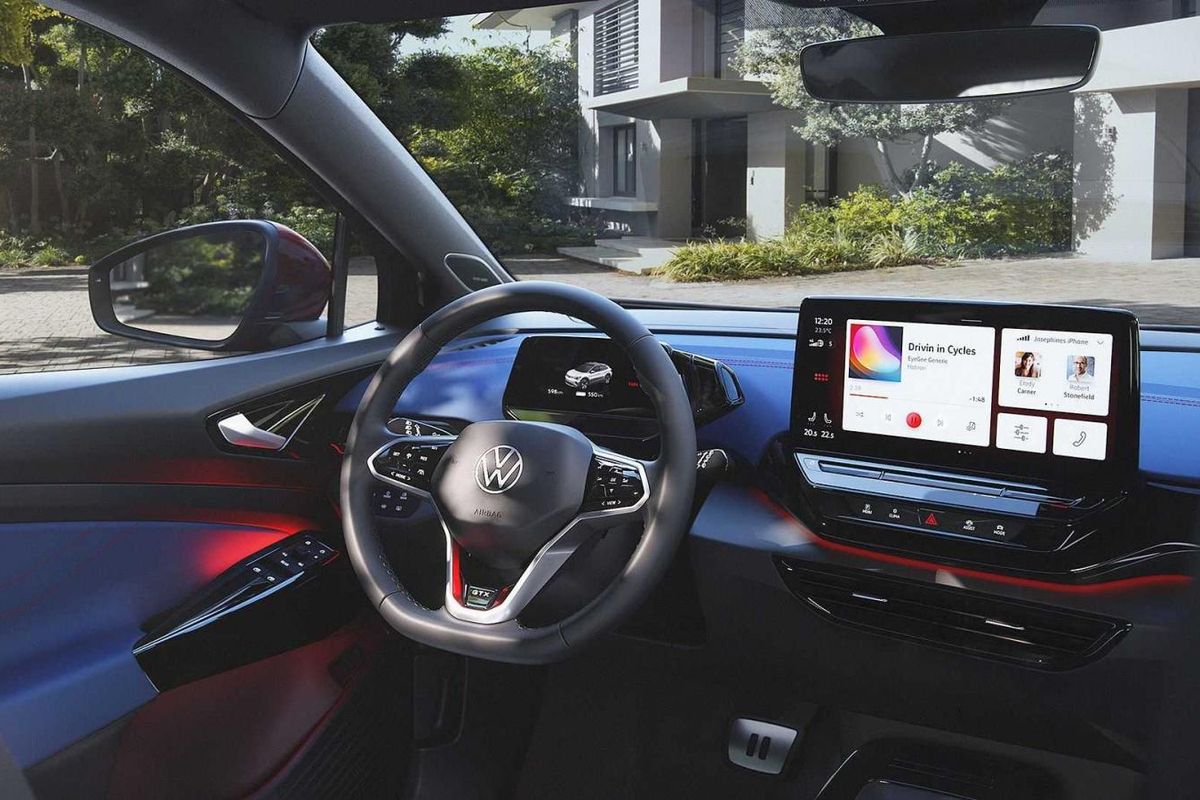
Unlike the standard ID.4, the sportier ID.4 GTX is equipped with an electric motor on both axles making it the first ID. model to feature electric all-wheel-drive. Total system power output is pegged at 220 kW (VW has yet to divulge a torque figure) and in conjunction with a 77 kWh battery, Volkswagen claims a range of 480 km which is some 40 km less than the standard ID.4.
The ID.4 GTX is able to sprint from zero to 100 kph in about 6.2 seconds, which is significantly quicker than the 8.5 seconds it takes in the standard ID.4. Top speed electronically limited to 180 kph.
Under normal driving conditions, the ID.4 GTX is predominantly rear-wheel-drive but when higher levels of traction are required, power can be directed to the front axle, which is useful when the driver decides to pin the throttle.
In terms of charging, 300 km of range can be charged in just 30 minutes using a 125 kW fast charger.
As Volkswagen South Africa continues to explore the viability of introducing its new ID.3 and ID.4 on local soil, indications are that the ID.4 is perhaps more likely, especially if you consider how popular crossovers and SUVs are in our market. Also, South Africans are GTI-obsessed which might even strengthen the business case for this ID.4 GTX to make its appearance at some point in Mzansi.
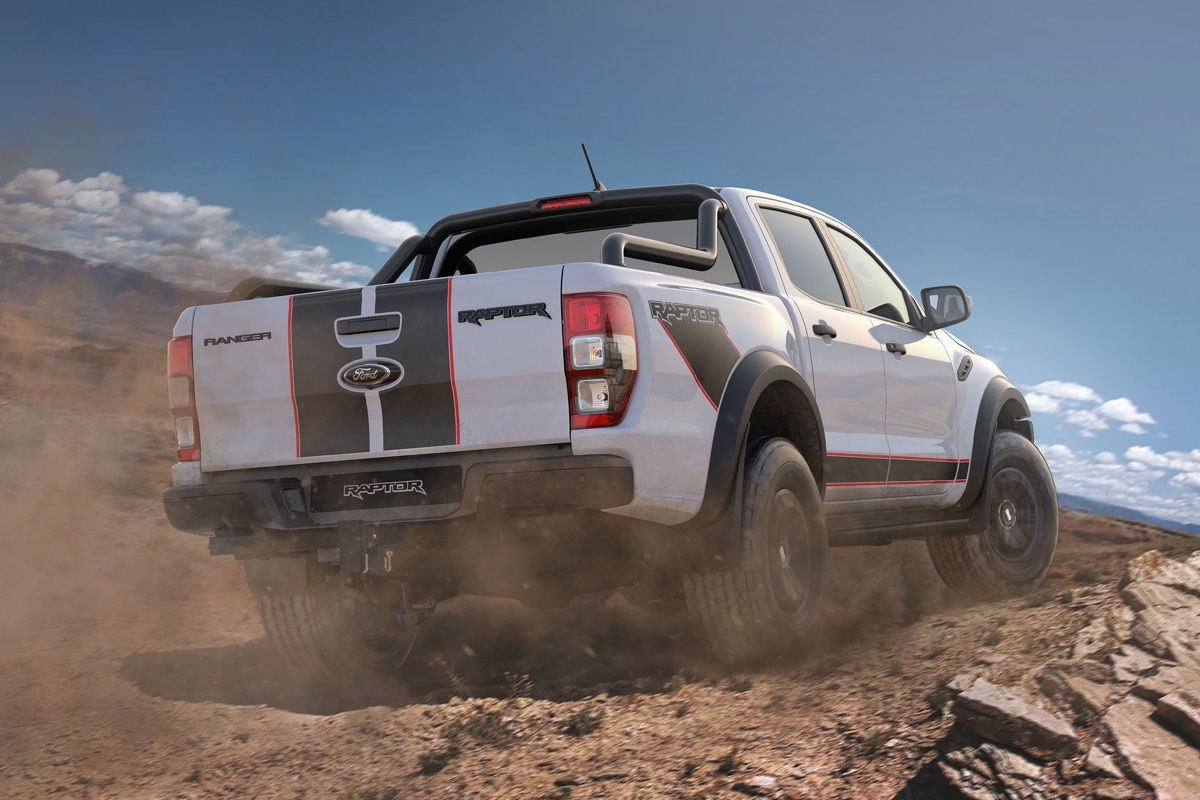
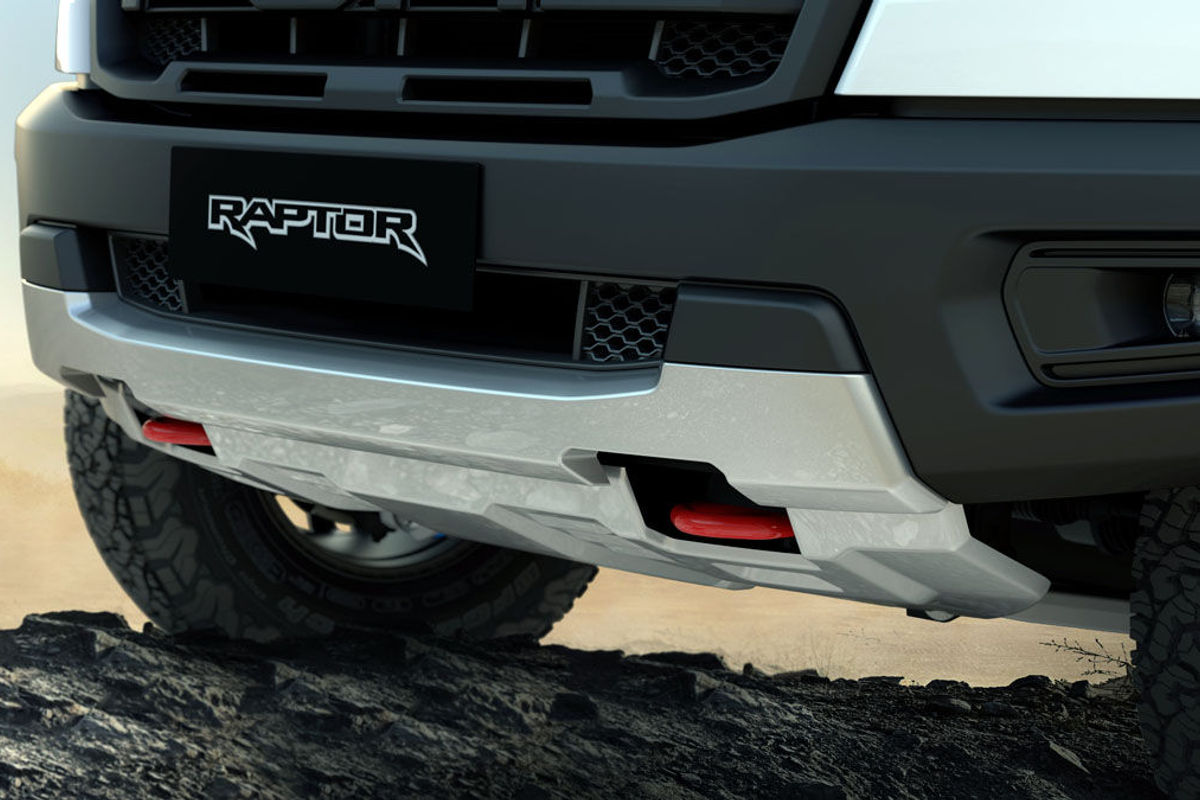
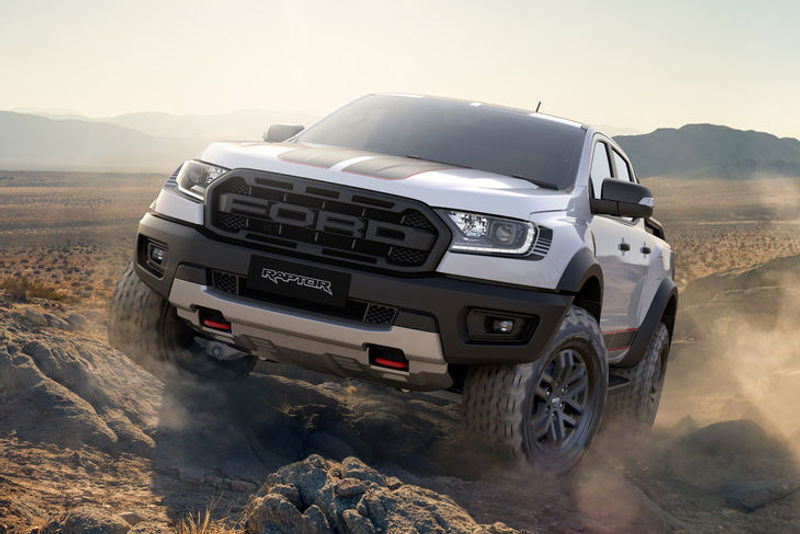
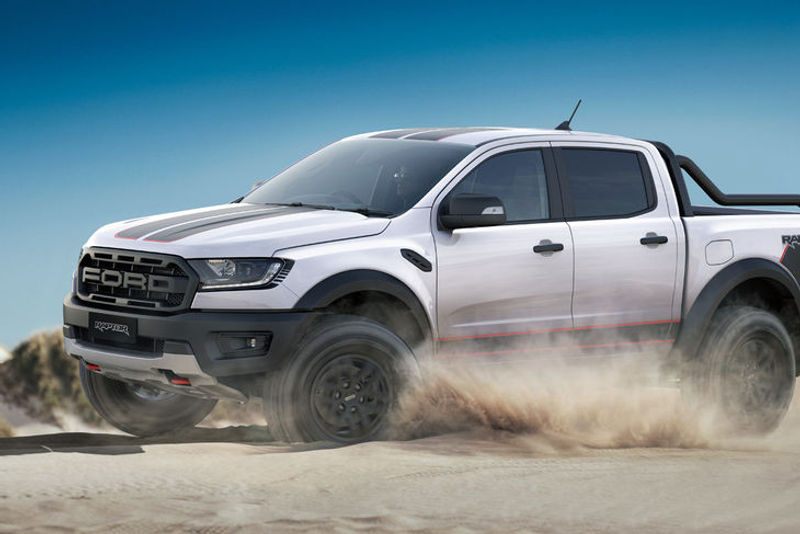
Could a meaner-looking special version of the Ranger Raptor – the flagship of Ford's popular bakkie range – be on the cards for the South African market? Judging by the Ranger Raptor X, which will be released in the Australian market in the near future, it cannot be ruled out!
The current Ranger (T6) has been on the local market for about a decade and camouflaged pre-production units of its F150-inspired successor have already been spotted; this leads us to believe the showroom version of the newcomer is likely to be revealed within the next 12 months. Local production of the new model will probably commence at some point during 2022.
So, as the current-gen Ranger nears the end of its product lifecycle, Ford has looked to capitalise on strong demand for uniquely-styled and kitted-out leisure double-cabs.
The barrage of special Rangers from Ford Motor Company of Southern Africa (FMCSA) began with the Ranger Thunder (based on the Ranger Wildtrak) and then, towards the end of last year, the firm followed it up with the Ranger XL Sport (based on the Ranger XL), which catered for the high- and low ends of the Ranger’s customer base respectively.
Recently, the Ranger FX4 (based on the Ranger XLT and aimed at buyers who would ordinarily be interested in middle-of-the-range derivatives) was introduced, as was a range of fresh accessories.
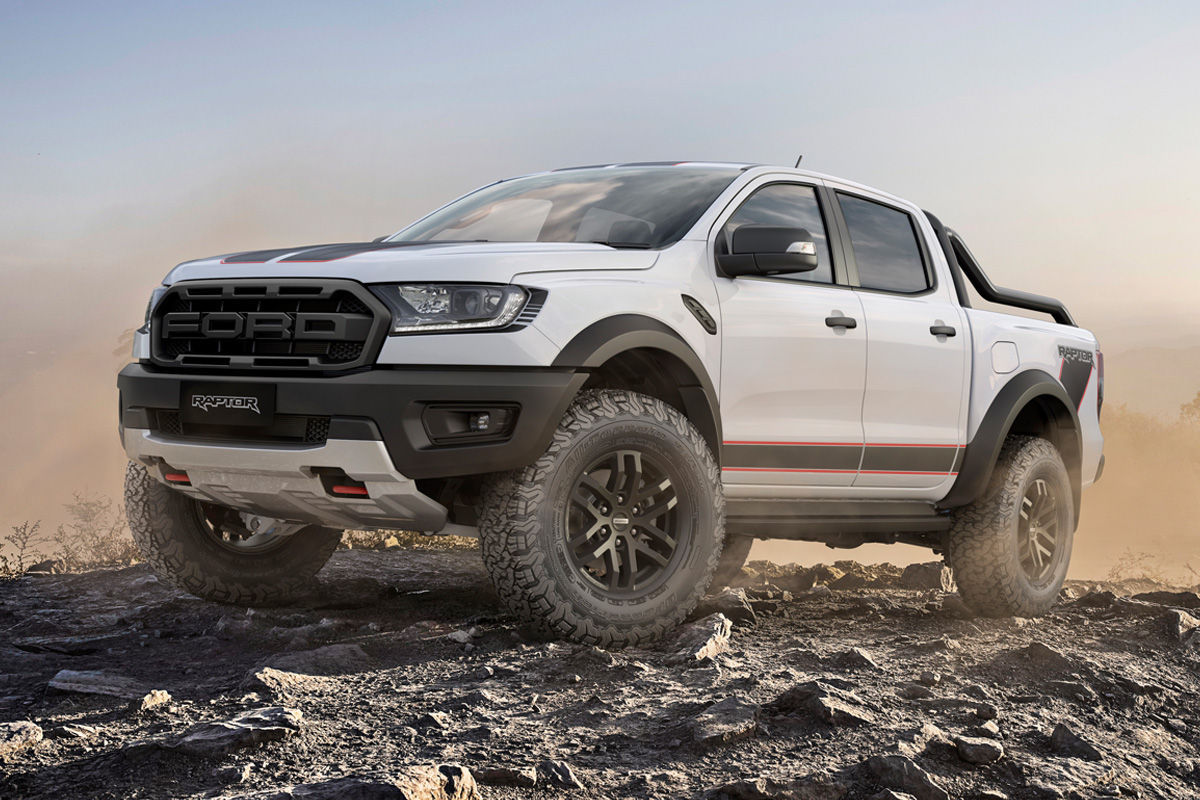
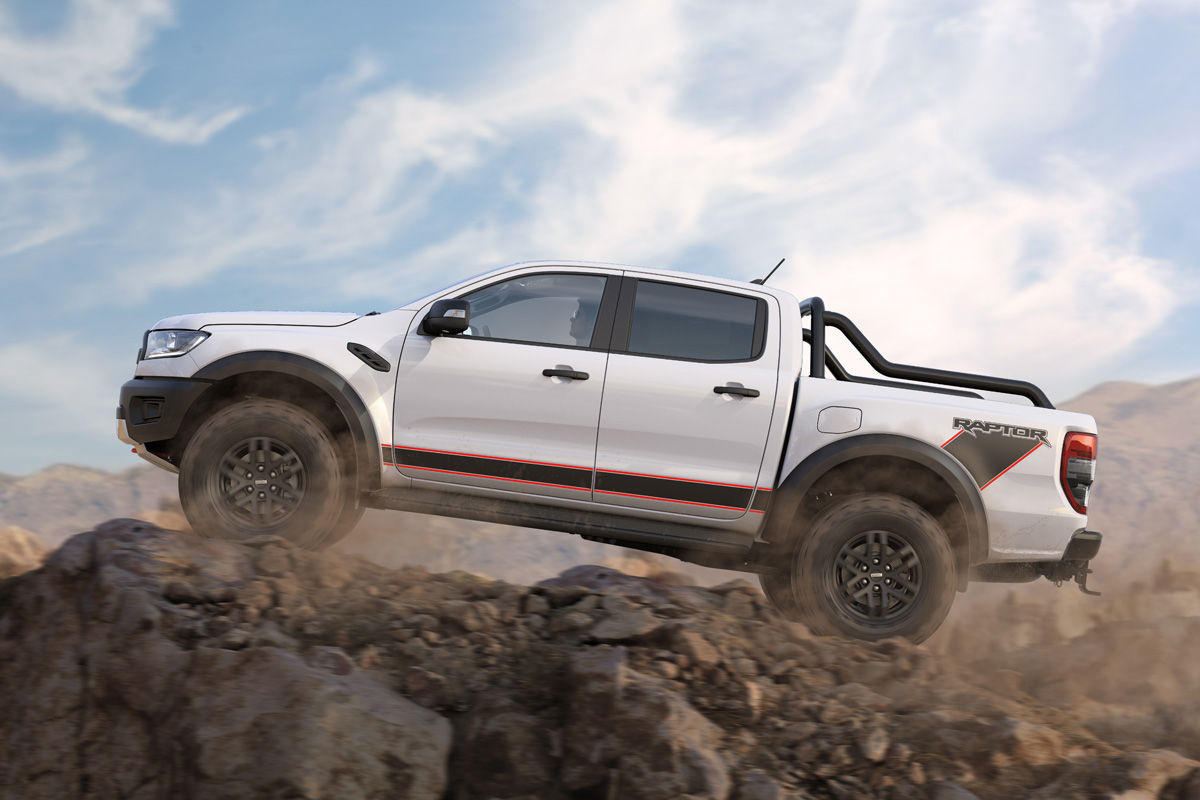
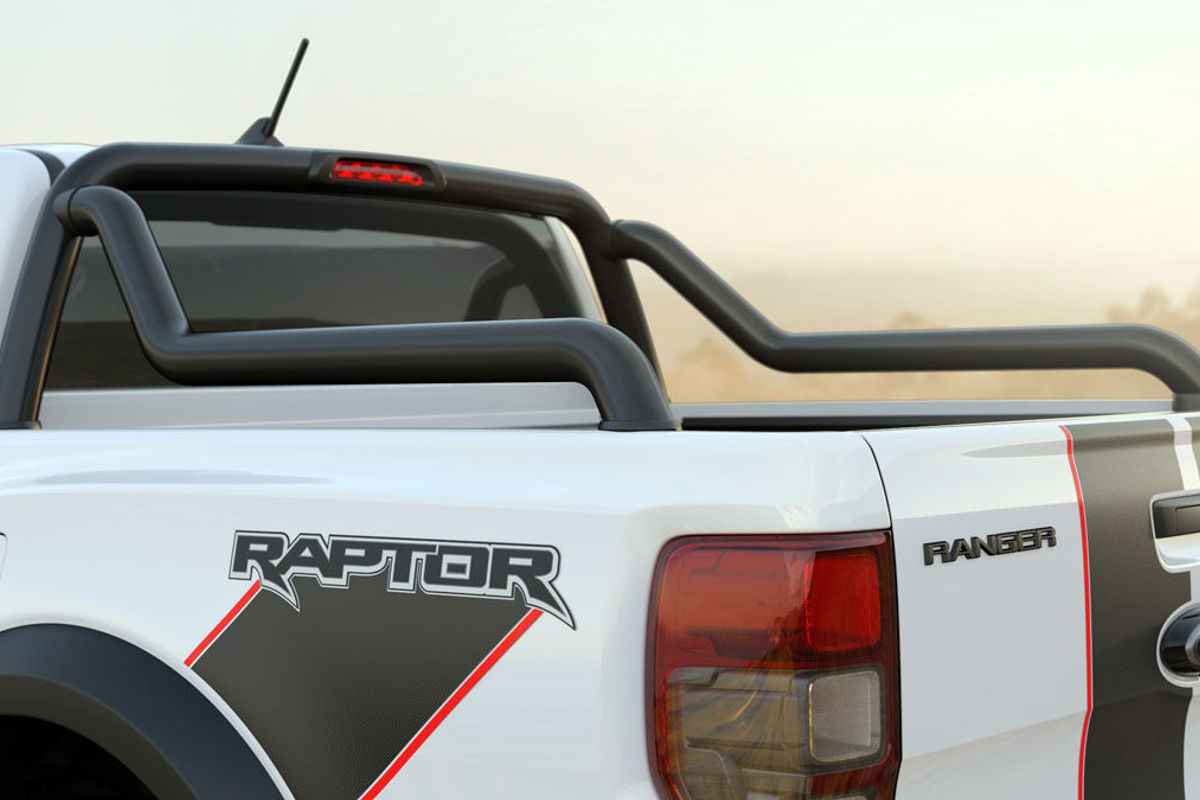
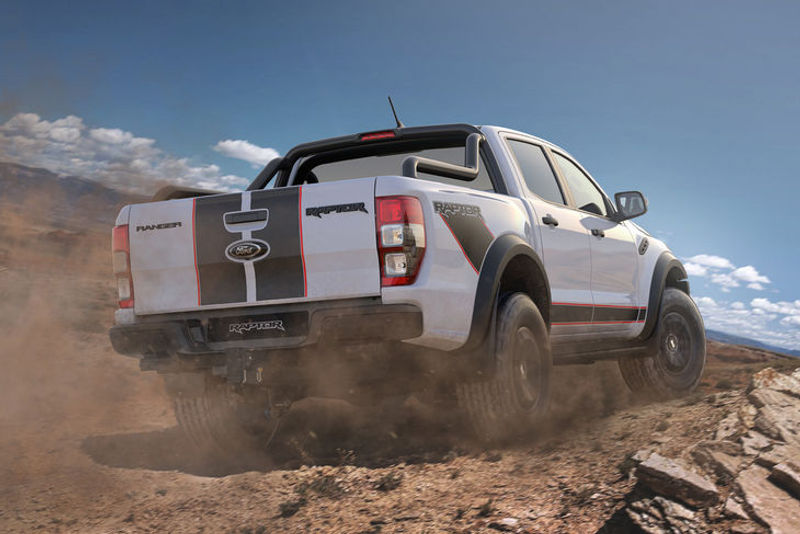
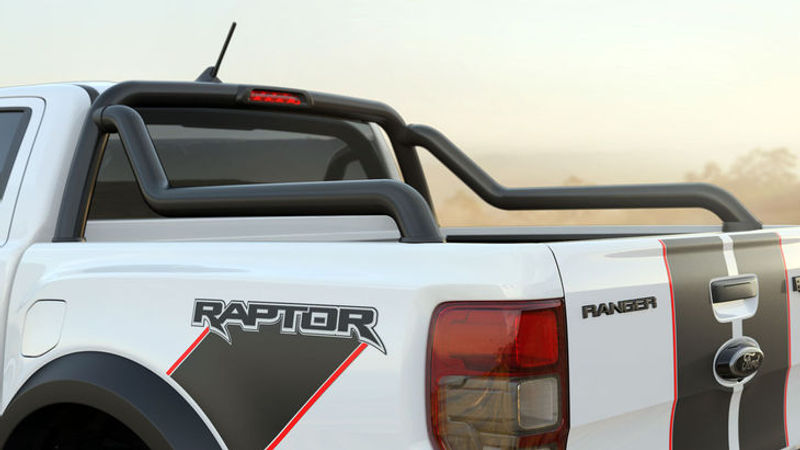
Until now, the headline-grabbing (and frankly, limelight-hogging) Ranger Raptor derivative has not received a sprinkling of special Ford fairy dust, but that may soon change. From July, Ford Australia will be offering the Ranger Raptor X and it looks the business, replete with Over The Top (OTT, yes, that is what the Blue Oval calls them) stripes that stretch across the bakkie's bonnet, roof and tailgate; those racy accoutrements are complemented by side stripes on the doors and side of the load bed. We can't imagine FMCSA isn't planning something similar for Mzansi!
What’s more, Ford Australia has applied a matte-black finish to the flagship bakkie’s expansive grille, door handles, rear bumper cover, tailgate handle, fender vents and foglamp bezels, all of which are complemented by the similarly-coloured extended leg sports bar on the load bed.
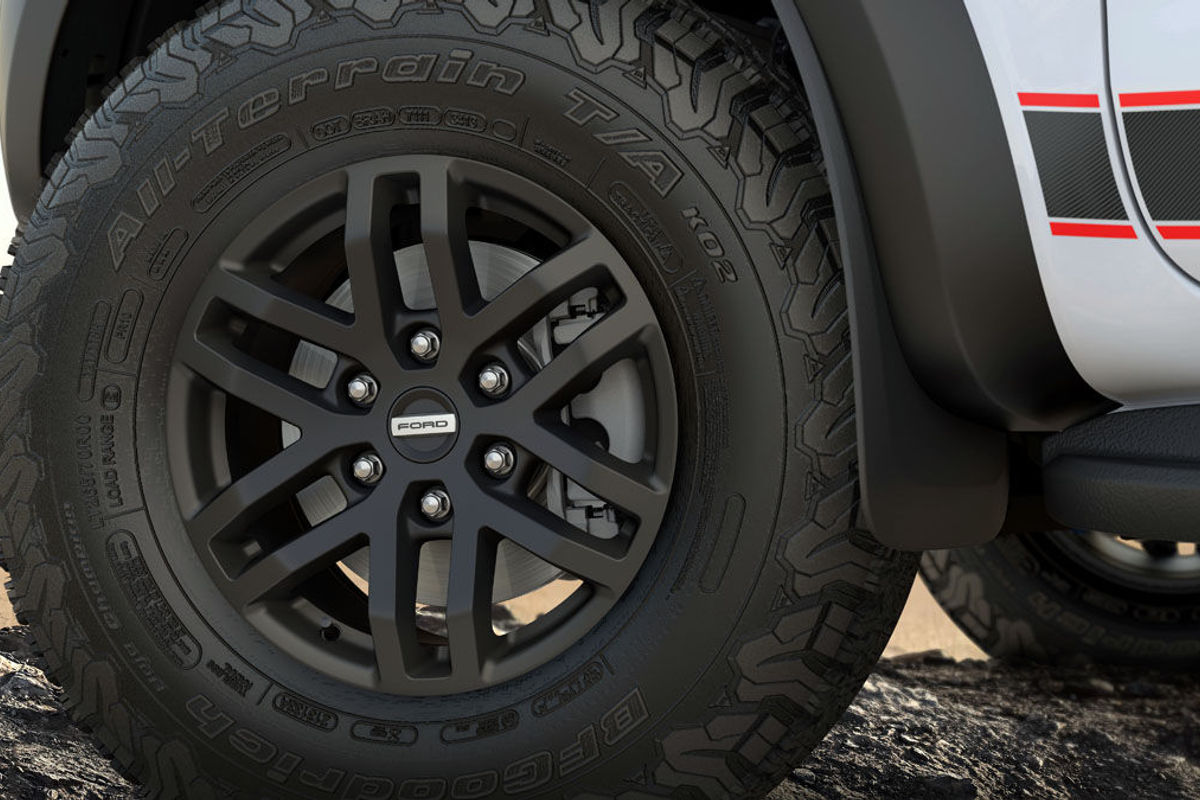
The Ranger Raptor X's 17-inch wheels, which are shod with specially developed BF Goodrich All-Terrain 285/70 R17 KO2 tyres, have been refreshed with an Asphalt Black matte finish.
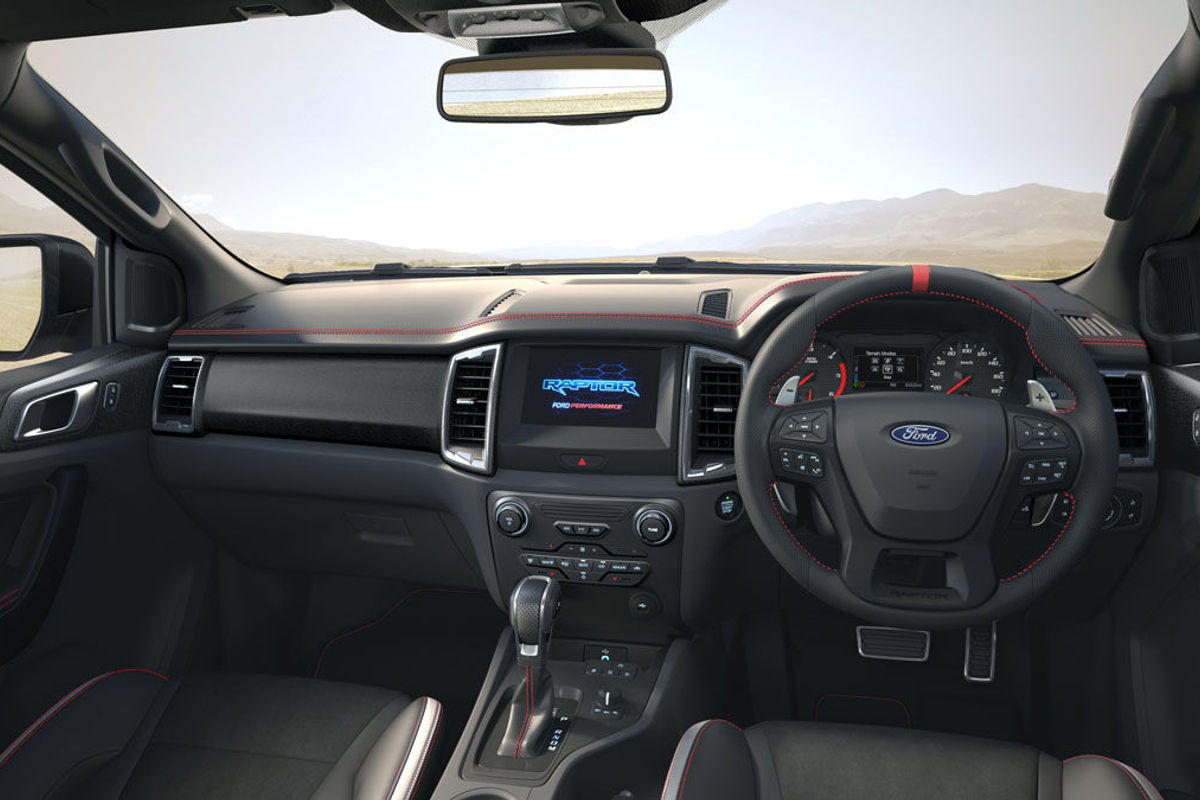
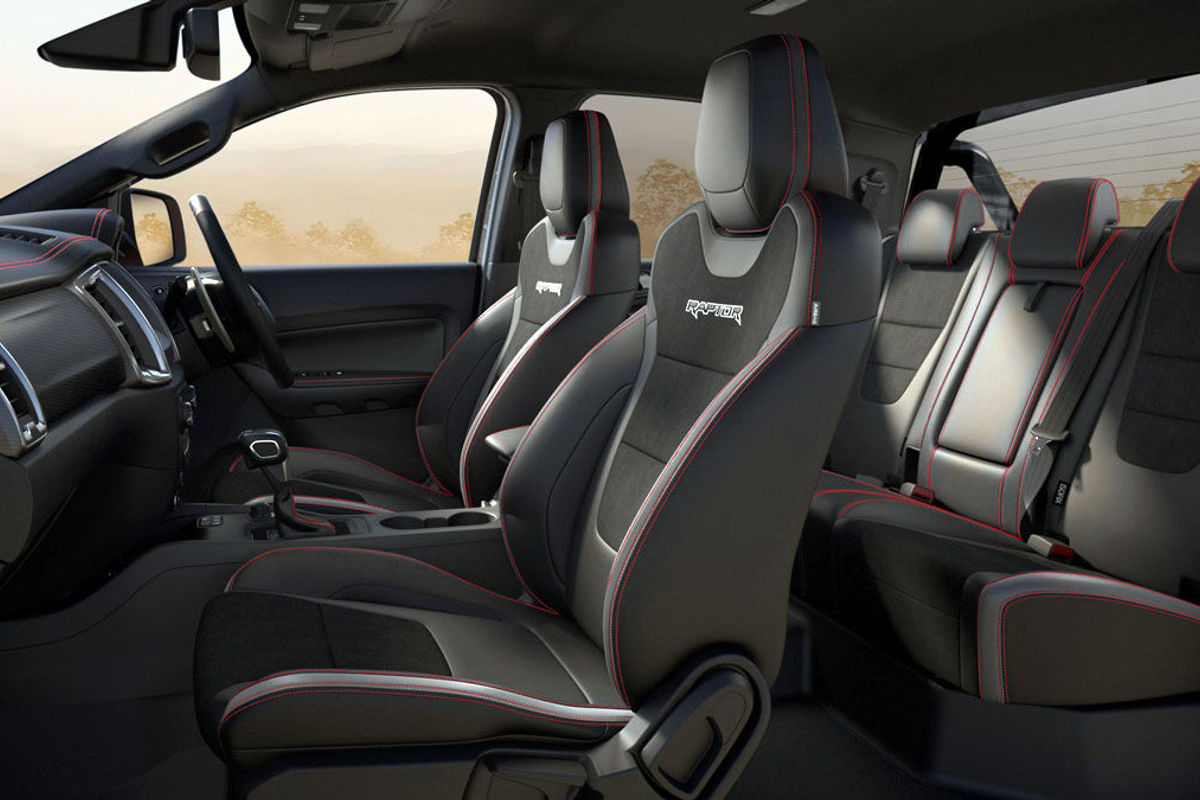
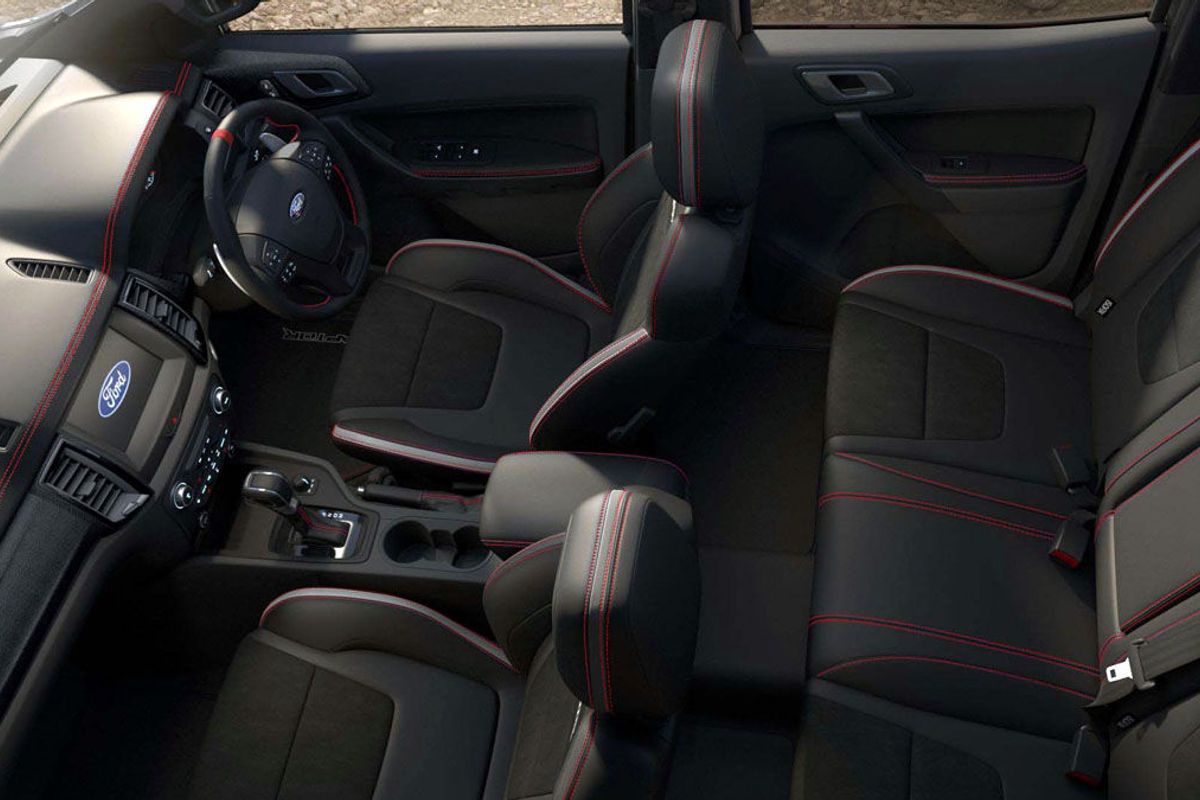
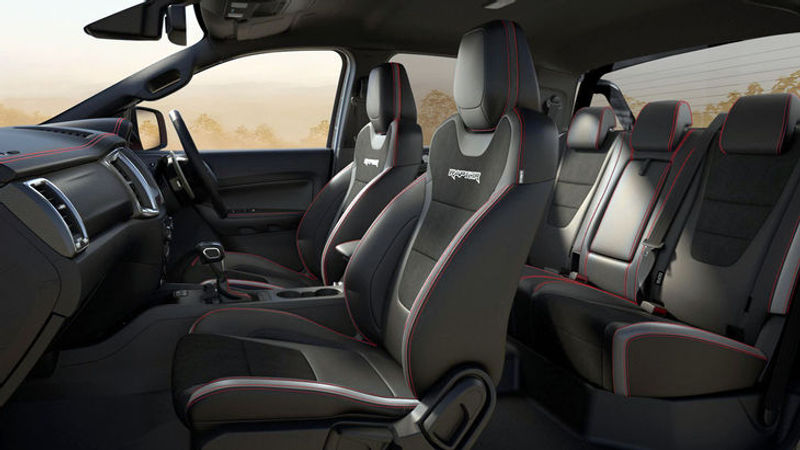
Inside, a new accent package, which takes its cue from the bold exterior decals, has been applied to Ranger Raptor’s Ford Performance interior. It incorporates extensive contrast stitching (in red, as opposed to the current version’s blue stitching), while eye-catching Hydrographic and Black Alley accents feature across the dashboard and door cards.
Mechanically, the Ranger Raptor X remains unchanged. It is still powered by a 157 kW/500 Nm 2.0-litre Bi-Turbo 4-cylinder engine mated with a fast-shifting 10-speed automatic transmission in conjunction with steering-wheel-mounted lightweight magnesium paddles.
The derivative’s legendary high-speed off-road capability is, to recap, underpinned by Position Sensitive Damping (PSD) shock absorbers manufactured by FOX, a robust Watt’s linkage rear suspension, a beefed-up braking system (with ventilated 332 mm discs with twin-piston callipers at the front) and a model-specific Terrain Management System, including Baja mode (inspired by the famous desert rally).
As Ford Australia doesn’t source its Ranger bakkies from FMCSA’s Silverton plant (but from a plant in Thailand), a hotter-looking (and probably swansong) version of the South African-spec Ranger Raptor is not likely to be identical to the version shown here, but the Blue Oval’s local accessories division is undoubtedly capable of producing racier detailing for the range's flagship derivative all on its own!
Should FMCSA confirm a special version of the Ranger Raptor in the coming weeks and months, we'll be sure to let you know all about it!
So, Haval’s new Jolion compact SUV has attracted notable attention since it launched on local soil recently but what other options should you be considering if you are shopping for a compact SUV in South Africa? Here are at least 4 key rivals that the Haval Jolion needs to beat to claim its share in this segment!
This segment is broad with both budget-orientated products and more premium offerings available to buyers. New products such as the Suzuki Vitara Brezza, Toyota Urban Cruiser and Nissan Magnite cater for buyers on the lower end of the budget spectrum (between R244 000 and R316 000) while more premium compact SUV products can command pricing up to almost R500k!
In execution, the Jolion is considered to be more premium in both design (exterior and interior) and in terms of the sheer amount of comfort, convenience and safety features on offer. More than this though, in terms of its actual size, the Jolion is generally longer and wider than most of its rivals and also has a notable wheelbase of 2 700 mm which is more than family size vehicles such as the Volkswagen Tiguan, Mazda CX-5 and Peugeot 3008!
Also, the Jolion’s 1.5-litre turbopetrol engine offers competitive outputs of 105 kW of power and 210 Nm of torque and is available with either a 6-speed manual or 7-speed dual-clutch automatic transmission.
What does this all mean? Well, it means that the Haval Jolion represents outright bang-for-buck by offering a feature-packed, family-size vehicle at hugely competitive prices (From R299 900 to R398 900).
For the purpose of this list, we have chosen 4 rivals that are perceived to be similarly premium. Pricing is accurate as of April 2020.
4 Rivals the Haval Jolion Needs to Beat
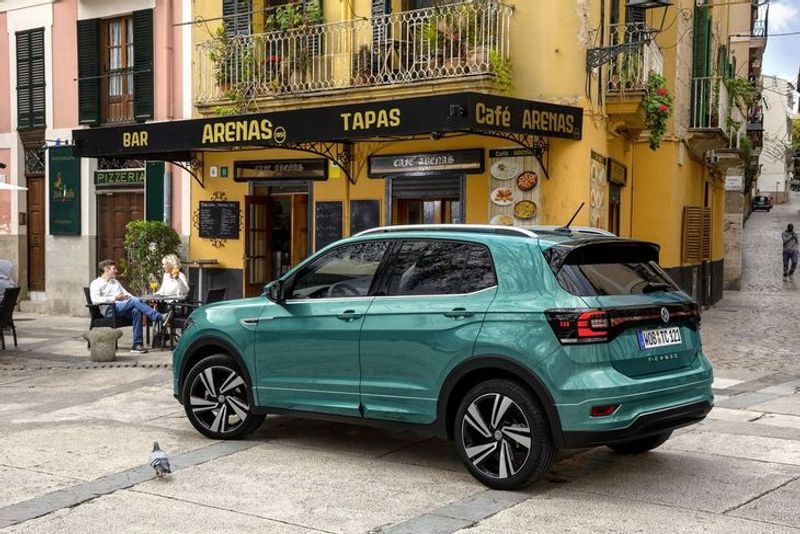
Volkswagen T-Cross
Yes, the Haval Jolion is physically bigger than the Volkswagen T-Cross and indeed the T-Roc too, but its pricing isn’t!
But, in terms of standard features, the Haval has the T-Cross licked with nice-to-have features such as a reverse and 360-degree camera, keyless access, panoramic sunroof, 4 USB ports and adaptive cruise control.
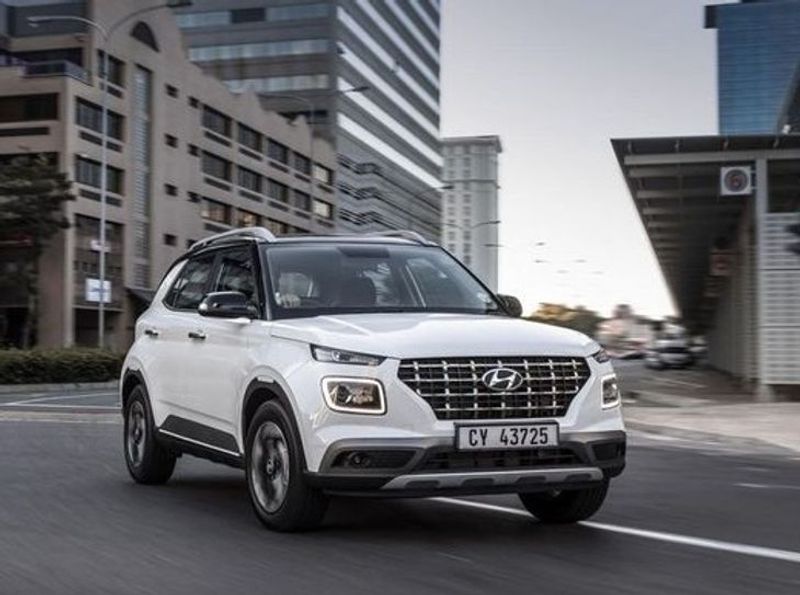
Since its introduction in South Africa in 2019, the Hyundai Venue has become one of the most popular choices in the compact SUV segment. With an affordable pricing structure starting from R311 900 and going up to R407 500 for the range-topping Venue 1.0T Glide Limited Edition, its popularity is easy to understand.
The Venue is powered by a 1.0-litre turbopetrol engine with 88 kW and 172 Nm of torque and can be had with either a 6-speed manual or 7-speed dual-clutch automatic.
While the Venue’s pricing structure is similar to the Jolion’s, it’s still physically smaller and not as spacious or generously-equipped as Haval’s formidable newcomer. Even Hyundai's Creta is no match for the Jolion in terms size or specification. The Venue, however, does offer better connectivity by offering both Android Auto and Apple CarPlay capability, whereas the Jolion currently only offers Apple CarPlay as Haval tries to resolve ongoing licensing delays in an effort to get Android Auto into its vehicle range.
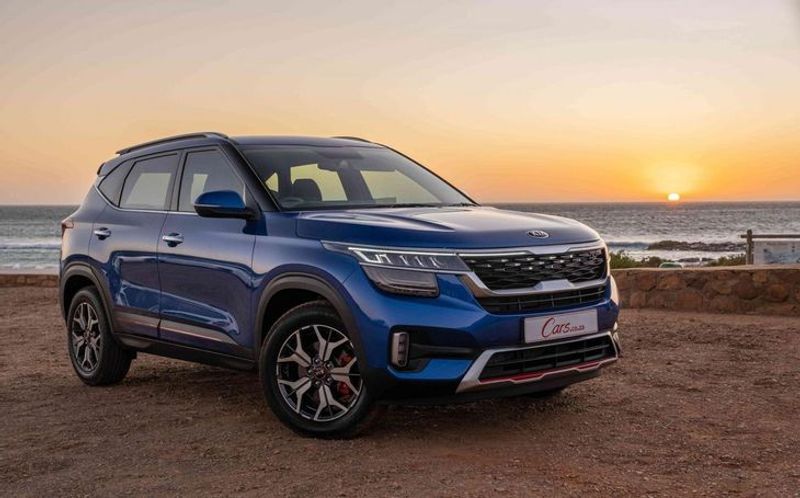
The Seltos compact family car range has mostly impressed our test team in terms of drivability and practicality, making it an easy car to recommend.
However, the range-topping 1.4T-GDI GT Line, which is comparable to the range-topping Jolion Super Luxury, is eye-wateringly expensive at R493 995. It’s powered by a punchy 1.4-litre turbopetrol engine with 103 kW and 242 Nm of torque and is mated with a 7-speed dual-clutch automatic transmission.
The top-spec Jolion's interior design and fit and finish is arguably more premium than the Seltos while also offering a more comprehensive standard features list. Nonetheless, despite having the longer wheelbase, the Jolion's claimed boot capacity of 337-litres is not as generous as the Seltos' claimed 433 litres.
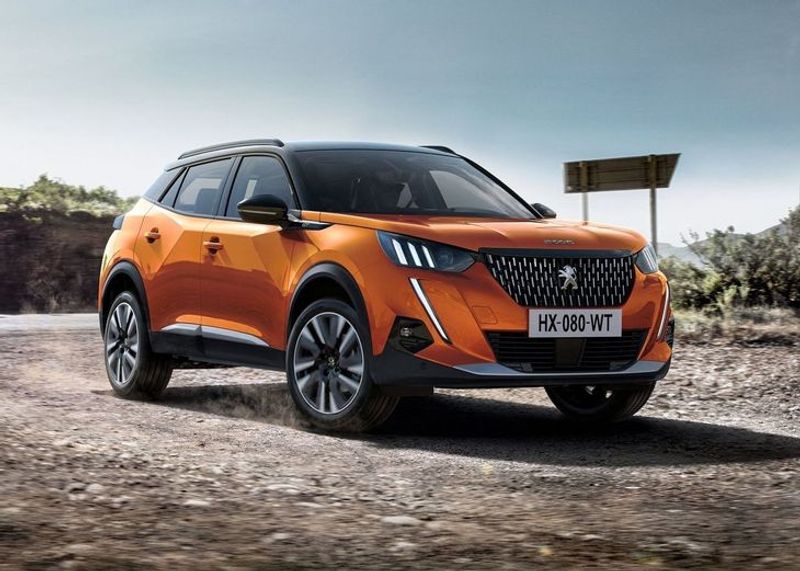
The new Peugeot 2008 is one of the most underrated and often overlooked products in this segment and it’s also arguably the most stylish.
The new Peugeot 2008 is powered by a 1.2-litre turbopetrol engine with 2 outputs on offer including 74 kW and 205 Nm or 96 kW and 230 Nm. The 2008 is offered with either a 6-speed manual or 6-speed automatic transmission.
Pricing for the 2008 starts at R359 900 and goes all the way up to R479 900 for the range-topping 2008 1.2T GT. That makes it markedly pricier than the range-topping Jolion but it does have heated seats but is not offered with a panoramic sunroof. The 2008 does feature Peugeot's latest generation i-Cockpit with a 3D instrument cluster which is better than the digital display on offer in the Jolion.
The Volvo XC40 range in South Africa has been expanded to include a new T4 derivative. Here are the specifications and pricing for the new model.
The stylish Volvo XC40 is the Swedish brand's most successful premium SUV as well as being the brand's best-seller internationally. With a choice of petrol, diesel, hybrid or pure electric, there really is an XC40 to suit all needs and tastes.
Now for 2021, Volvo South Africa has introduced the T4 badge, which bridges the gap between the T3 and T5 . According to Greg Maruszewski, Managing Director at Volvo Car South Africa, the arrival of the Volvo XC40 T4 is set to further cement the success of the range in this country. “The XC40 had a good 2020; it had an 8.40% share of its segment in 2019; that grew to 14.70% last year. In 2021, the XC40 nameplate performance is continuing to grow its sales locally,” he reveals.
The Volvo XC40 T4 engine is a 2.0-litre turbocharged 4-cylinder engine with 140 kW and 300 Nm, and the vehicle comes with an 8-speed automatic gearbox. In terms of performance, Volvo claims the XC40 T4 is good for a 8.4 second run to 100 kph. In comparison, the T3 1.5-litre turbocharged petrol 3-cylinder motor musters 110 kW and 265 Nm, and the T5's 2.0-litre turbocharged petrol 4-cylinder engine packs 185 kW and 350 Nm.
There are three levels of trim, following the same naming convention as other Volvo models; Momentum, Inscription and R-Design. Like other XC40 models in the family, the Volvo XC40 T4 features impressive connectivity and safety features like Pilot Assist system, City Safety, Run-off Road protection and mitigation, Cross Traffic Alert with brake support and a 360° camera that helps drivers manoeuvre their car into tight parking spaces.
The Volvo XC40 T4 is one of two new models in the XC40 compact SUV family, with the P8 all-electric model coming in August.
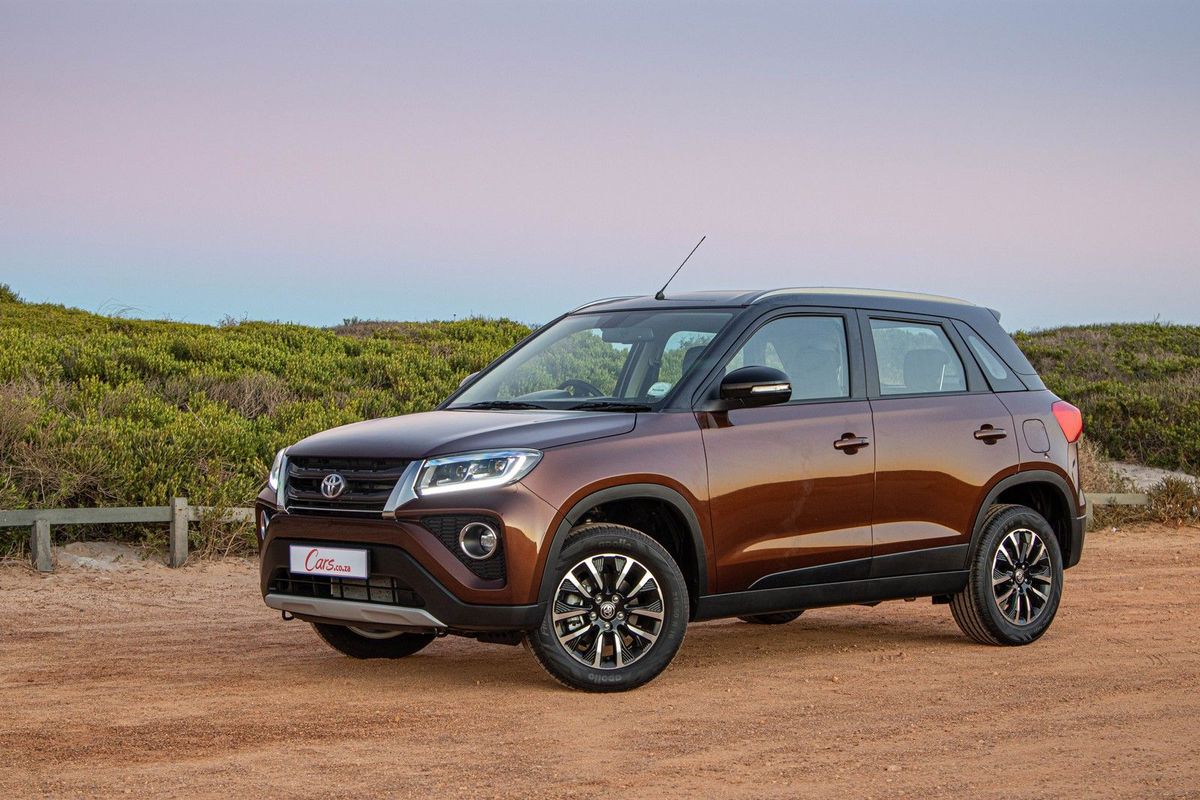
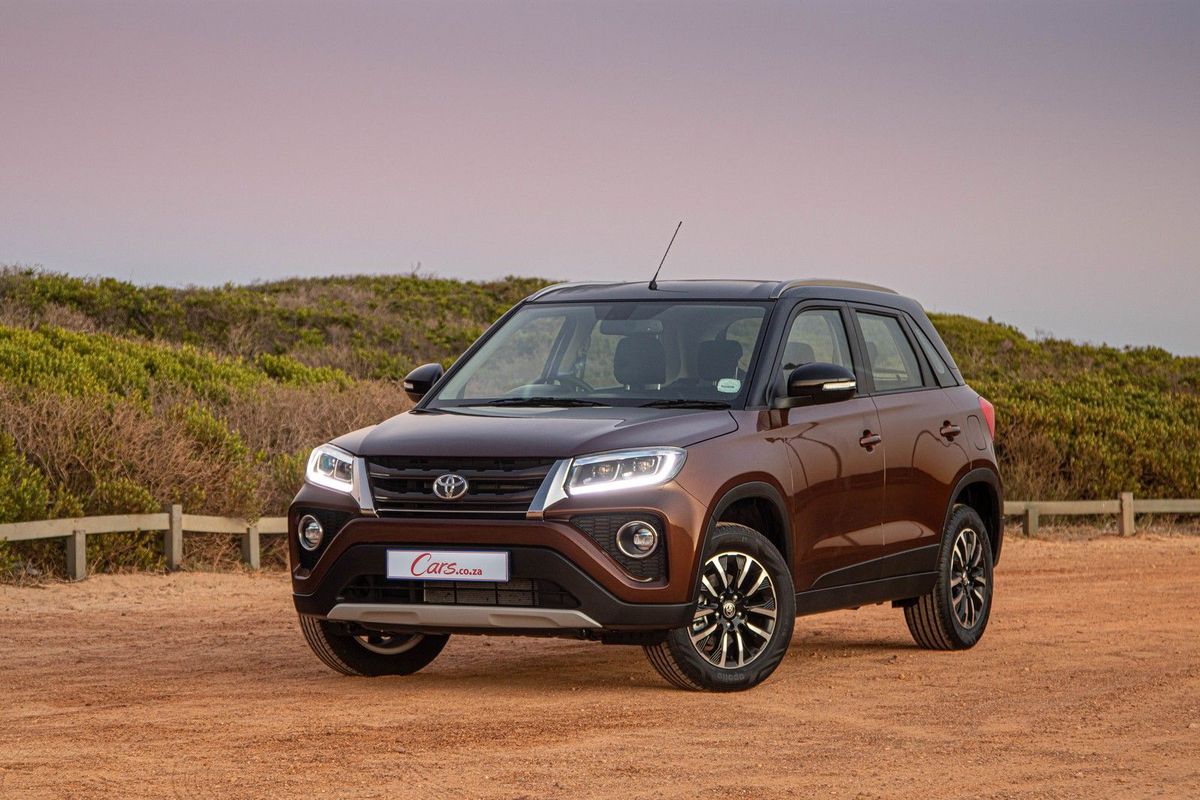
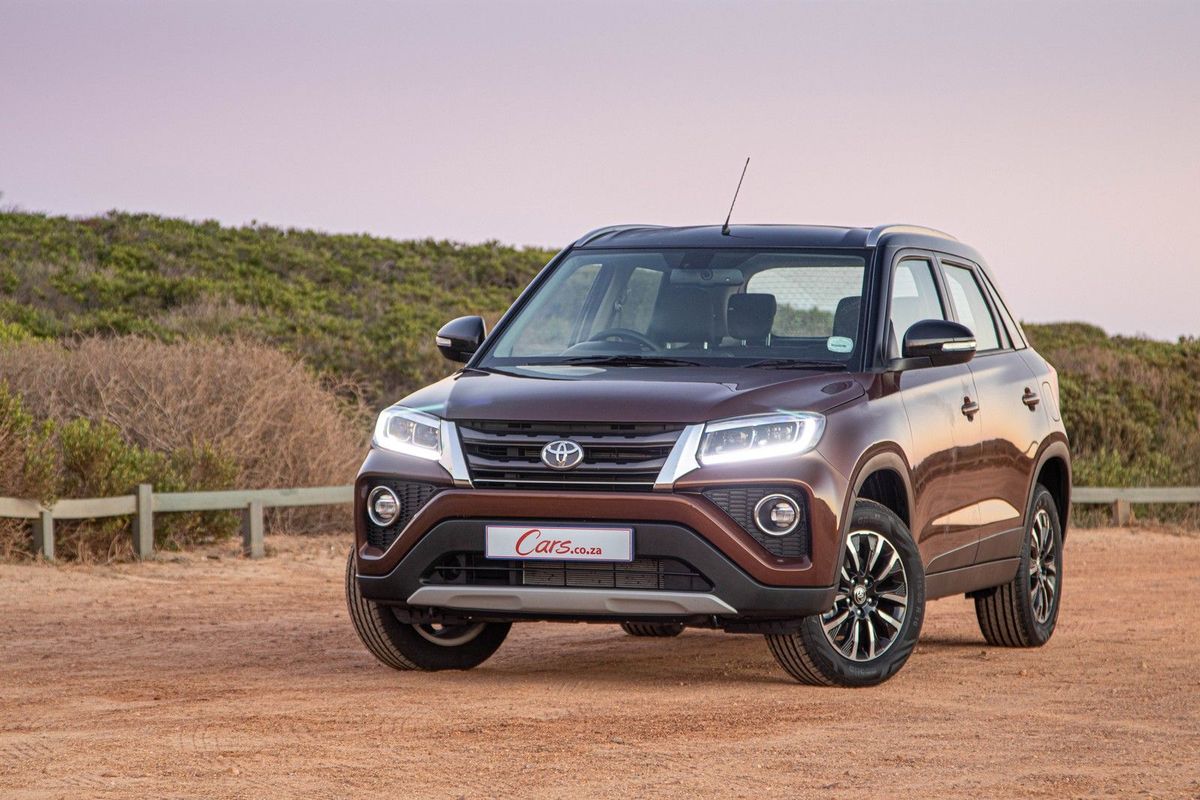
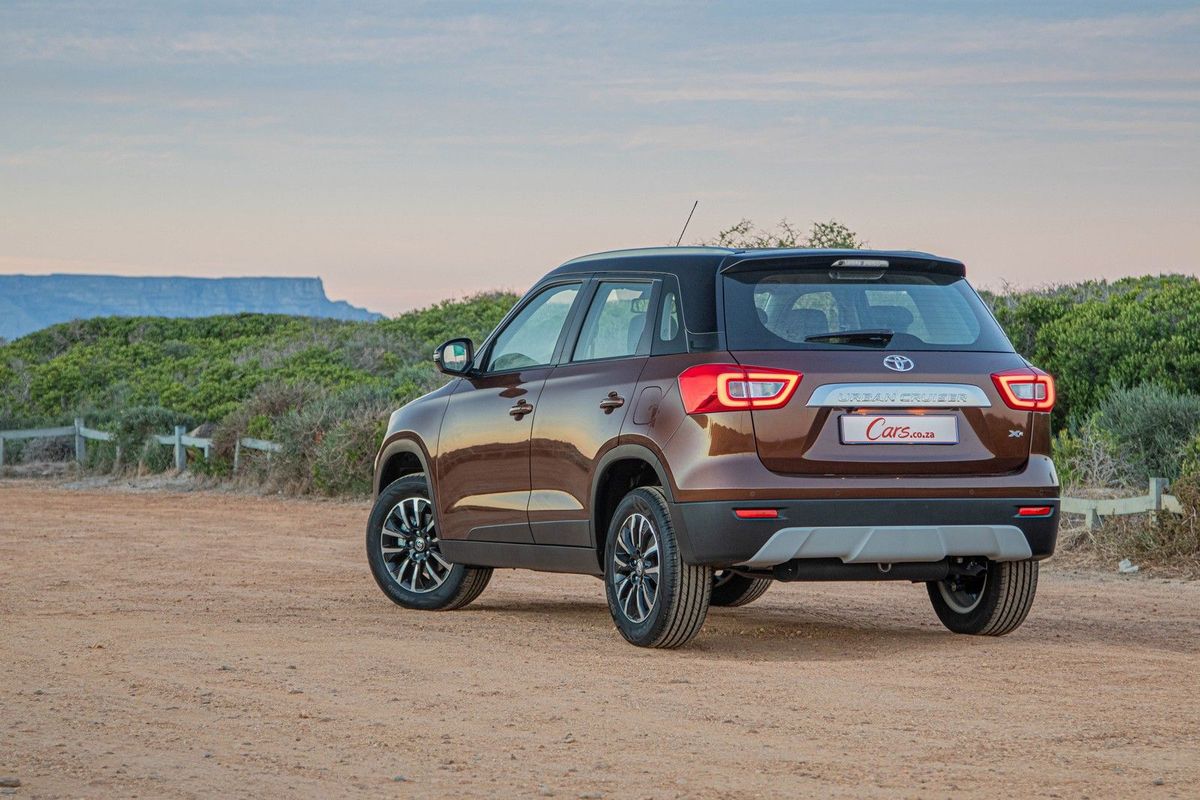
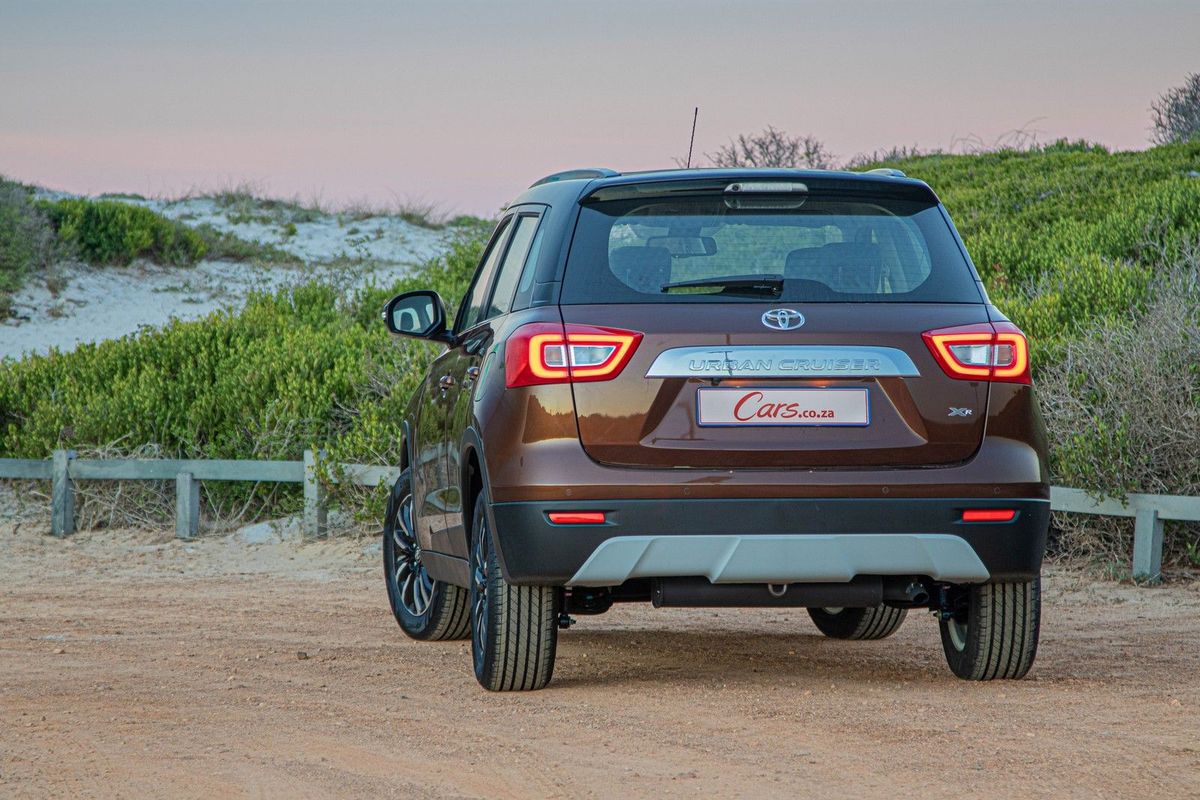
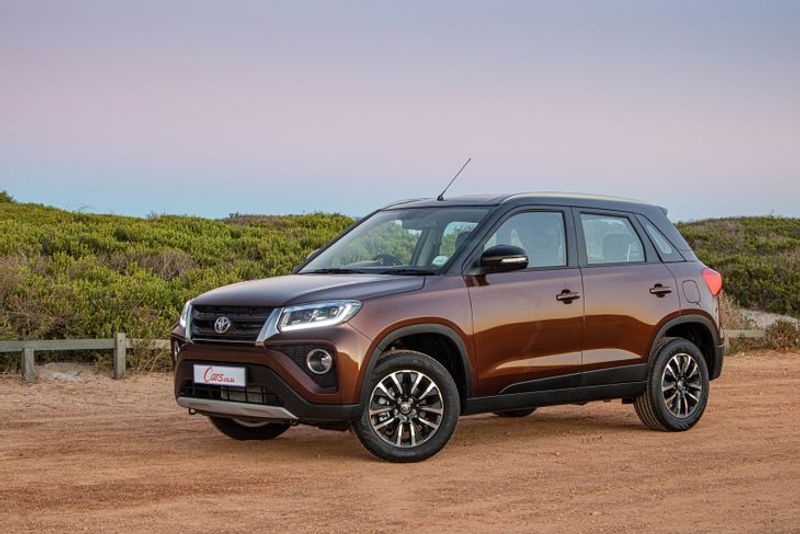
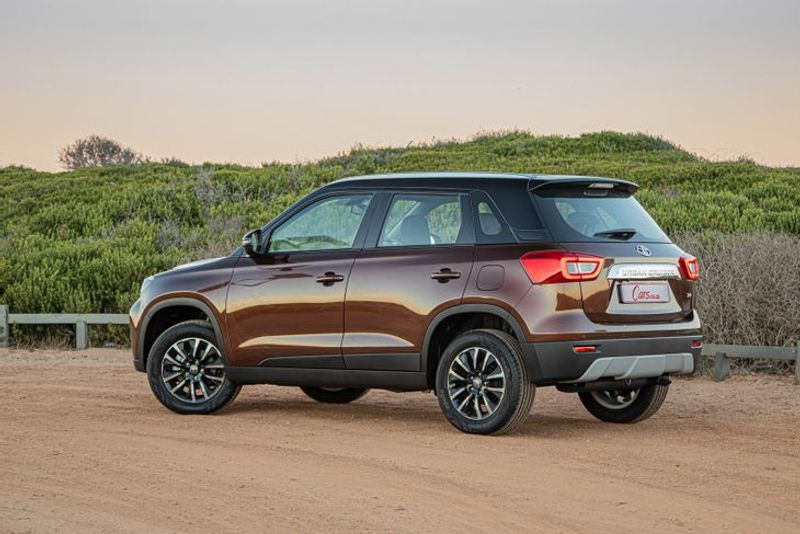
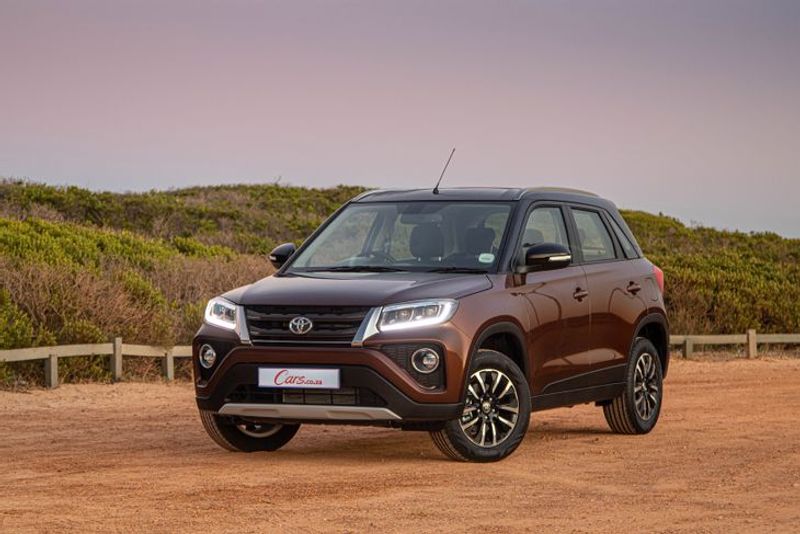
The Toyota Urban Cruiser arrived in SA showrooms in early March 2021 and, during the Indian-made model's first month on the local market, the Japanese brand sold almost 1 000 units of the newcomer. We evaluate a range-topping 1.5 XR derivative to find out why the Urban Cruiser has garnered instant sales success.
We like: Great value for money, engaging to drive, competent on gravel roads, generous spec.
We don’t like: Short gearing, so-so build quality and poor wind insulation.
Fast Facts
Model Tested: Toyota Urban Cruiser 1.5 XR
Price: R294 500 (April 2021)
Engine: 1.5-litre naturally-aspirated 4-cylinder petrol
While it may have a Toyota badge on its grille, the Urban Cruiser is, in fact, a rebadged Suzuki Vitara Brezza – that fact has been well publicised and, therefore, won't come as a surprise to most consumers. The Toyota Urban Cruiser is the second project resulting from a Toyota/Suzuki tie-up that was announced back in 2016. Without going into too many specifics, Toyota wanted to increase its foothold in the up-and-coming Indian market, where Maruti Suzuki reigns supreme. In return for building Toyota-badged versions of some of its own models, Suzuki got access to TMC's hybrid technology.
Product-wise, Toyota got the Starlet and Urban Cruiser, based on the Baleno compact hatchback and Vitara Brezza respectively, which are 2 popular models on the Indian subcontinent. Suzuki, on the other hand, got the Across, which is essentially a hybrid RAV4 with a cuter nose and the Swace – a rebadged Corolla Sports Touring (it's a station wagon, in case you were wondering) for the European market.
Despite the outcry on social media, Toyota is not squashing Suzuki, but we can't imagine the latter brand being too happy when it looks at the sales figures of the Starlet and Urban Cruiser, which are much higher than those of their Suzuki-badged counterparts. Despite this, Suzuki's products are flying out of new-vehicle showrooms and the brand continues to surpass its own sales records.
But, we digress. The Urban Cruiser is mechanically identical to the Suzuki Vitara Brezza, but Toyota has given its small crossover a slightly different face to differentiate it from its Suzuki-badged sibling.
Just how good is the new Toyota Urban Cruiser and should it be on your compact family-car shortlist? Let’s take a closer look…
How it performs in terms of…
Performance and efficiency
Under the bonnet of the Toyota Urban Cruiser is a 1.5-litre naturally-aspirated petrol engine. It produces 77 kW and 138 Nm, which may not sound like much, but considering that the Urban Cruiser weighs just 1 130 kg, the engine doesn't need to work hard to get the vehicle moving. One of the many good things about the Suzuki-sourced engine is its eagerness. It's a rev-happy motor that's keen to deliver.
A key to the sensation of "eagerness" is the newcomer's gearbox. Although an automatic transmission is available in the range, our test unit came equipped with a 5-speed manual transmission, which seemed near-perfectly matched with the performance characteristics of the motor. Those who still regard "stick-shift" as the purest and most engaging form of driving will be utterly delighted by just how pleasant this gearbox and clutch combination is. The actions of the clutch pedal and shifter are effortless and positive, plus the gearbox's ratios are quite short, which aids the illusion of "fast progress".
The majority of Indian-made cars we've tested through the years have had short gearing, which is understandable, given the tremendous traffic congestion in that country's major cities and, therefore, the comparatively low average speeds vehicles achieve in that market. We understand that travelling at 120 kph is quite rare in India; passenger vehicles are driven comfortably under 100 kph most of the time.
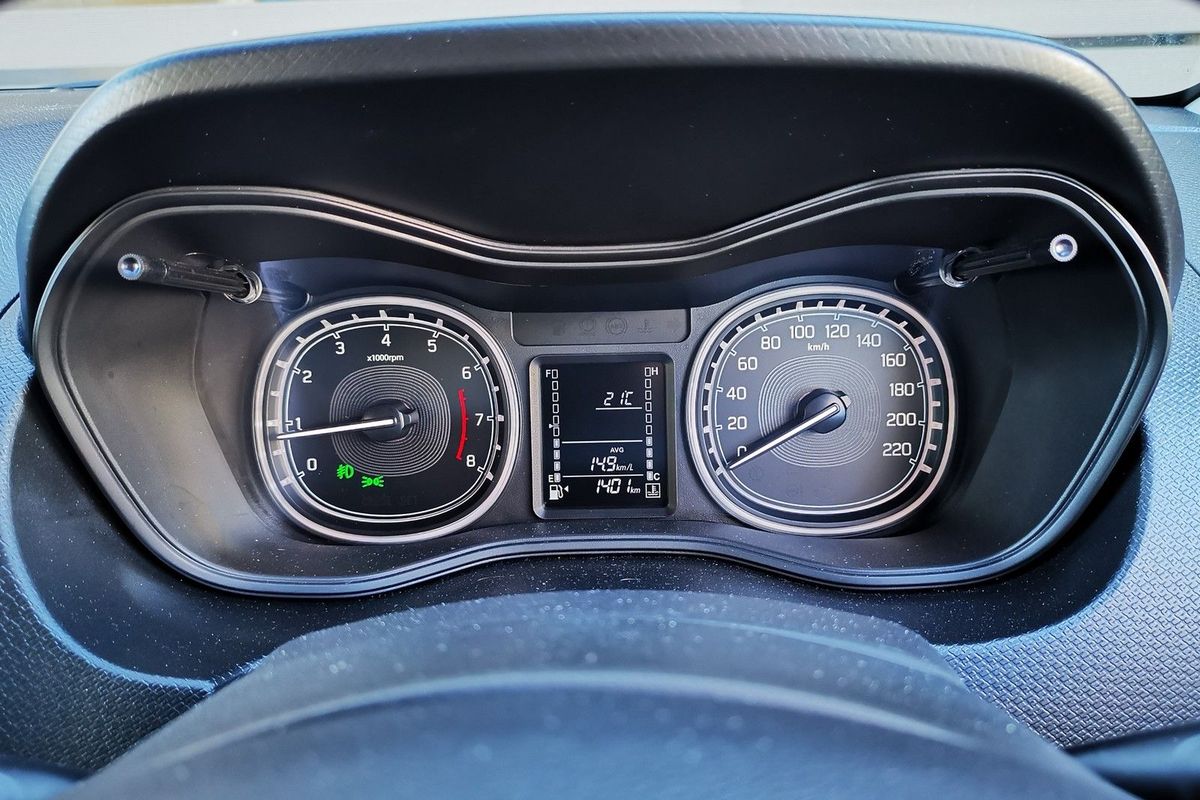
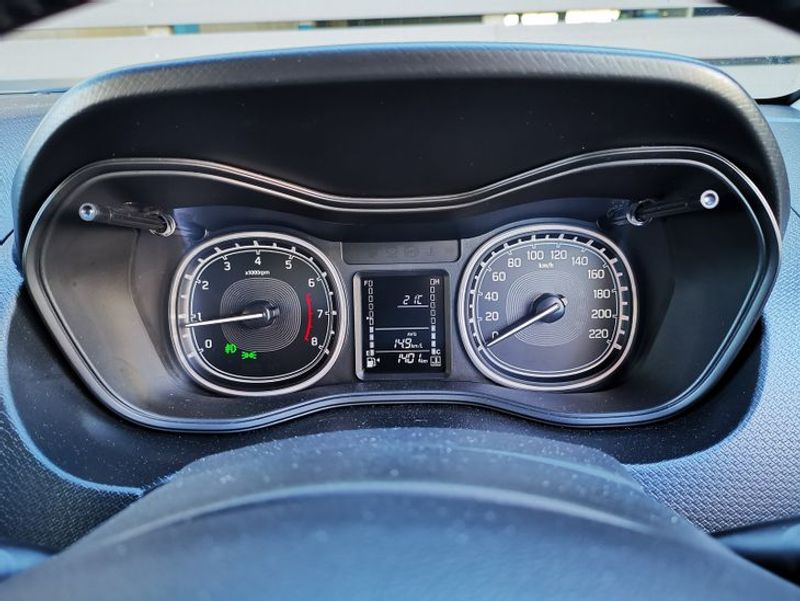
Crisp and clear dials are on offer. 14.9 km/L translates to 6.7 L/100 km.
In South Africa, this is somewhat of a drawback, however. While the Toyota Urban Cruiser can easily accelerate up to 120 kph (and will strive beyond the national speed limit with relative ease), the 1.5 XR's short gearing means the engine will be revving at over the 3 000-rpm mark at that velocity. This presents a couple of issues…
Firstly, the engine note is a tad harsh – the Urban Cruiser doesn't quite have sufficient noise insulation to suppress all of the motor's buzziness and secondly, your fuel economy will suffer. A 6th gear would be nice, but given the Toyota's keen/pocket-friendly pricing, we can't complain too much. We also noticed a fair amount of wind noise, but this can be countered by cranking up the audio system's volume.
Speaking of fuel economy, the 1.5-litre engine proved impressively frugal, despite the less-than-ideal short gearing. Toyota claims an average figure of 6.2 L/100 km and, at the end of the test unit's tenure in our fleet, its trip computer had a combined-figure readout of 6.7 L/100 km. The fuel tank capacity is 48 litres, which gives the Toyota Urban Cruiser an estimated range of 774 km.
Ride and handling
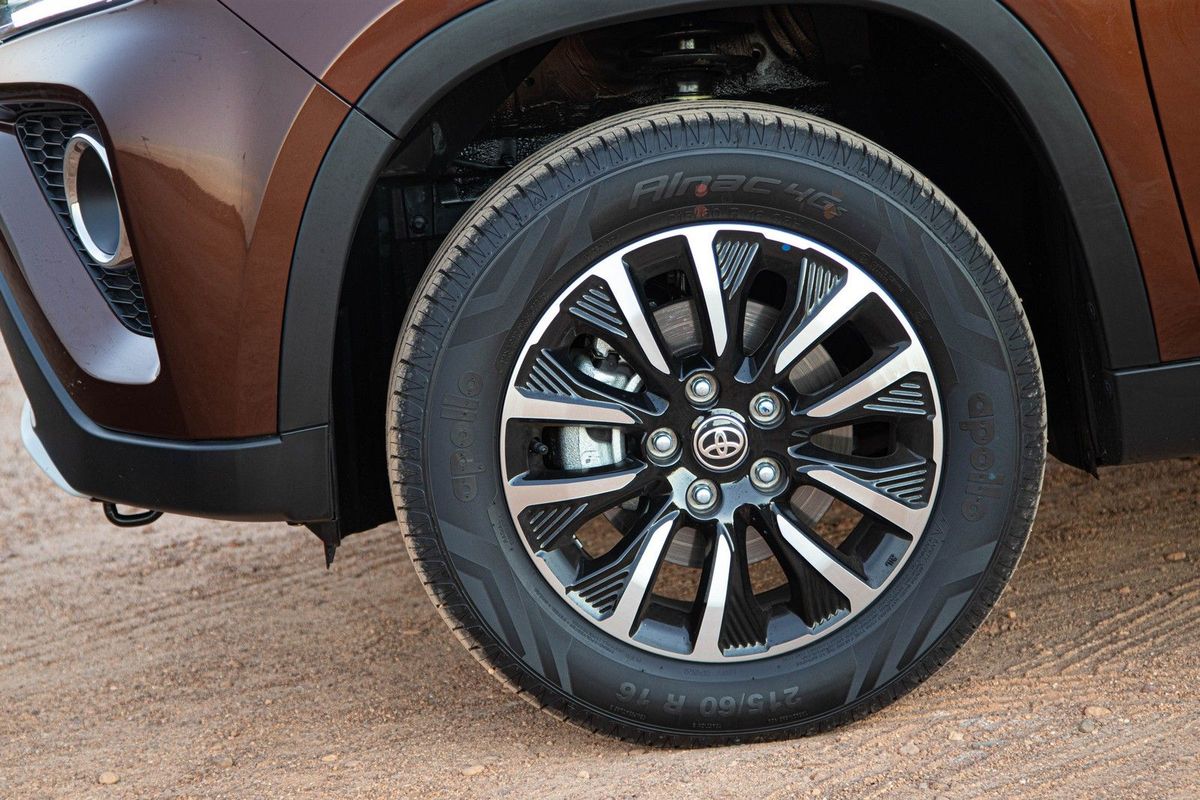
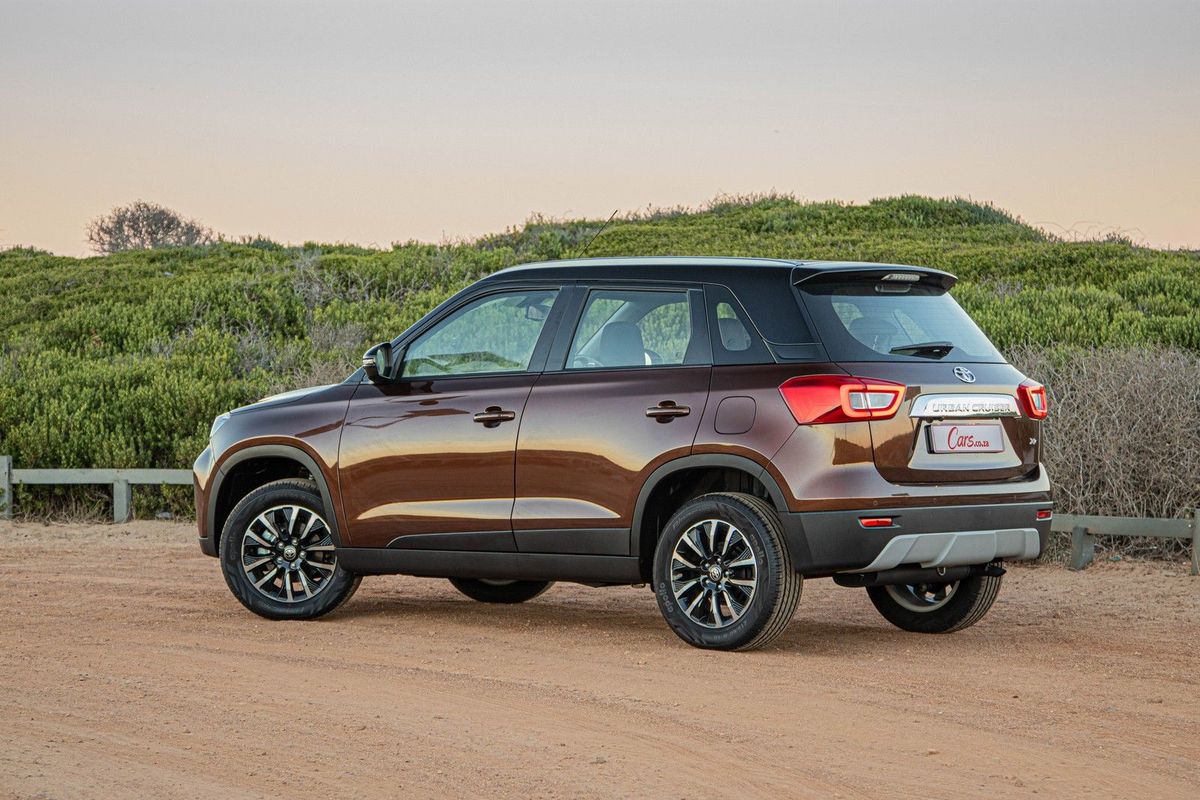
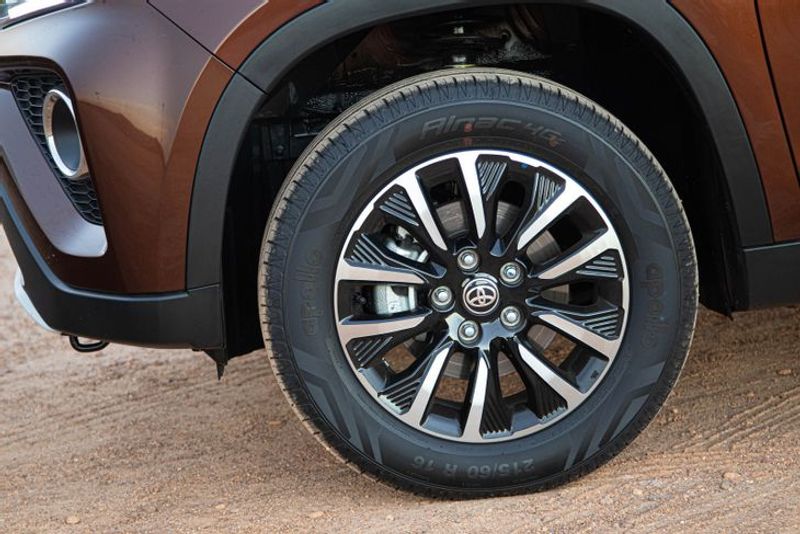
These wheels look good and the higher-profile rubber does a good job of soaking up the road's imperfections.
As we've mentioned, the Toyota Urban Cruiser tips the scales at just over 1.1 tonnes and, as a result, the newcomer feels nimble and agile in general traffic conditions. The steering setup is good, with minimal effort required to turn the 'wheel from lock to lock. The tiller's quite responsive too, making the Urban Cruiser quite entertaining to drive… As the adage goes, it's more fun to drive a slow car fast than vice versa. Granted, it's still a top-heavy compact family car and the laws of physics do apply, so don't pitch the 1.5 XR into your favourite traffic circle under the misimpression you're in a family-sized GT 86!
While the steering column is only adjustable for rake, the height-adjustable driver's seat means you can get into a comfortable driving position with ease. The ride quality is good too, with the 215/60 rubber-wrapped 17-inch wheels blending comfort with style. The higher-profile tyres coped well with the ruts and undulations of some poor roads and offered good grip when we decided to venture off the tarmac.
While the vast majority of Urban Cruisers will live up to their name and spend the majority of their "working lives" in and around urban areas, we had an inkling the newcomer would be competent on the dirt. Toyota claims the ground clearance of its Urban Cruiser is 198 mm and a glance at the short nose and rear suggested potentially usable approach and departure angles.
But let's make it clear right now, this is not a 4×4 vehicle and it does not have the necessary mechanical parts to tackle a 4×4 course, but should that dirt road to your friend's farm take a turn for the worse, the Urban Cruiser is well up to the task. That short gearing we moaned about earlier came in handy as the first gear will effectively double up as a "makeshift low-range mode" and we managed to climb up a particularly sandy road with the 1.5 XR. To reiterate, the Toyota is NOT a 4×4, but if you know what you're doing, the little Urban Cruiser is far more capable than its city-slicker name suggests.
Interior execution and features
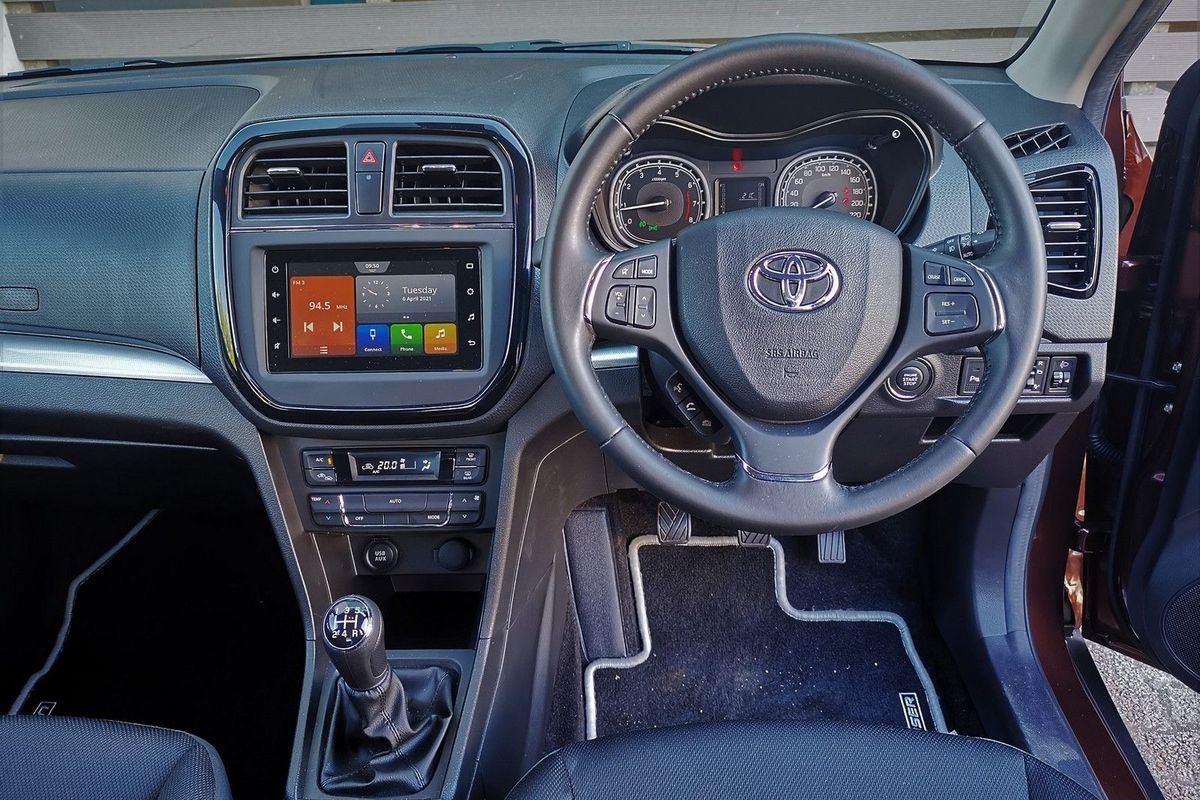
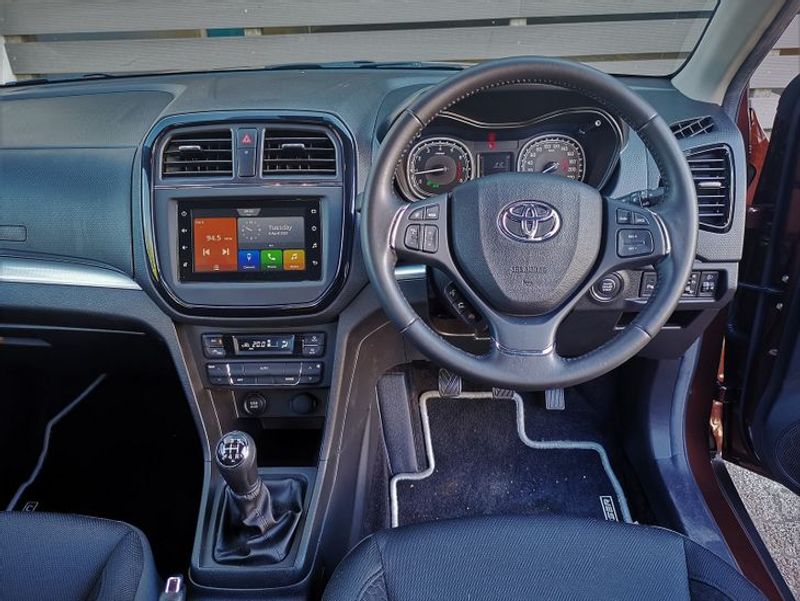
Functional design with all the gadgets you're likely to need, plus a charming 5-speed manual gearbox that enjoys being churned.
There are 3 levels of trim to choose from in the Urban Cruiser range and even the entry-level version boasts a commendable level of standard specification. The 1.5 XR derivative adds LED fog lamps, automatically activated headlights, cruise control, an auto-dimming rear-view mirror, rain-sensing wipers, dual 12V outlets, a front armrest, a leather steering wheel and a pair of additional speakers.
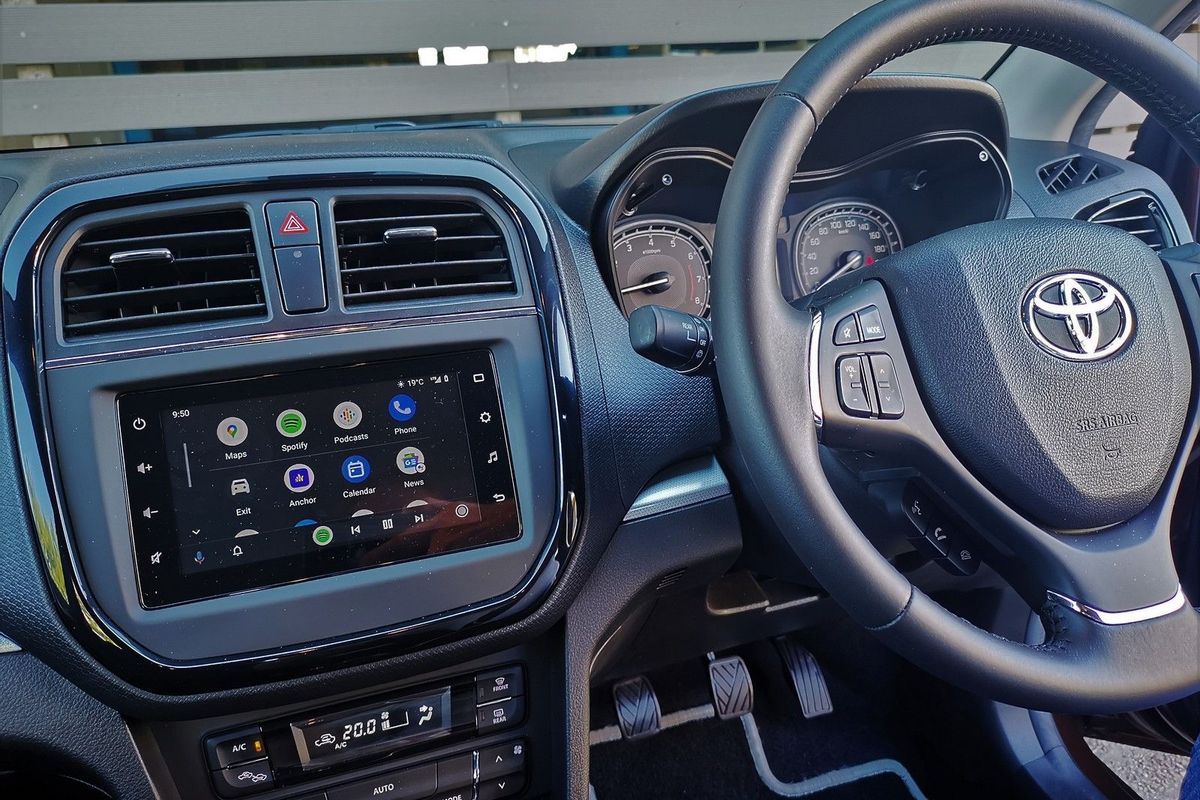
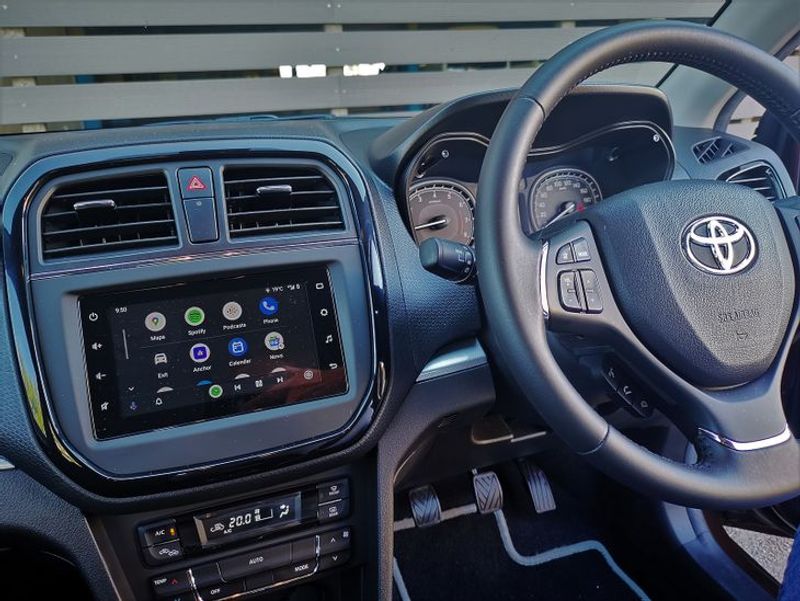
Those luxury features are in addition to climate control (auto aircon), a reverse-view camera, rear parking sensors and touchscreen infotainment system replete with USB/Bluetooth/Apple CarPlay/Android Auto connectivity. The vehicle also comes with the Toyota Connect telematics system, which includes an in-car Wi-Fi hotspot and a complimentary 15 GB of data.
Climate control and Apple CarPlay/Android Auto for under R300k? Winning.
Meanwhile, the Toyota Urban Cruiser's cabin layout is simple and traditional. There's a refreshing honesty here and no attempt on the part of its maker to "dress mutton as lamb". The car's interior feels well put together – there's a distinct impression the vehicle was designed with longevity in mind. There are admittedly some cheap-feeling plastics, but again, we're moaning unreasonably as the model's pricing starts just under R250 000. This is a vehicle aimed at cash-strapped consumers and for the money, the 1.5 XR offers an abundance of features to compensate for the made-to-cost feeling of some materials.
When it comes to safety, the Toyota Urban Cruiser features driver and front-passenger airbags, side-protection beams and ISOfix child-seat mounting points. We would have liked to have seen some form of stability or traction control fitted, but that would obviously impact the asking price. The Suzuki version of the vehicle scored 4 stars in the Global NCAP test, which shows the structure is reasonably robust.
Practicality
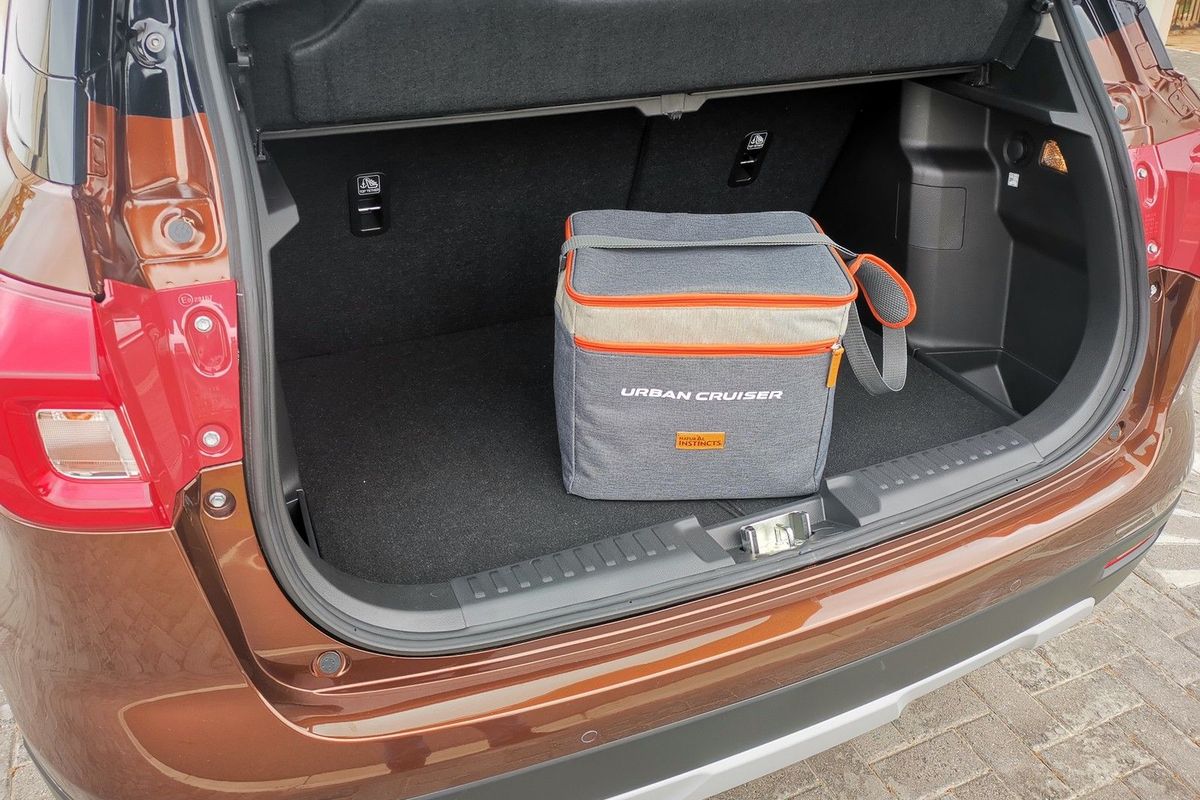
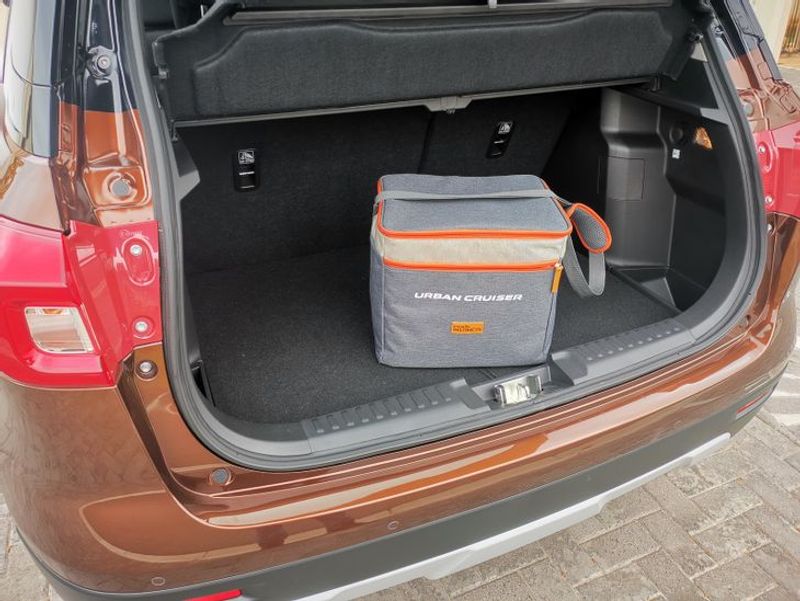
Toyota claims a luggage capacity of 328 litres for the Urban Cruiser.
With a somewhat stubby wheelbase of 2 500 mm and a claimed load-bay capacity of 328 litres, the Toyota Urban Cruiser is not the most practical vehicle in its class, but the luggage area offers enough space to accommodate 2 large suitcases. We also appreciated the additional storage wells on the sides. If you want to transport more detritus, you can flop the rear seatback forward in a 60/40 configuration, but note that it doesn't fold all the way flat. Toyota offers the Urban Cruiser with a full-size spare wheel (located under the load-bay floor).
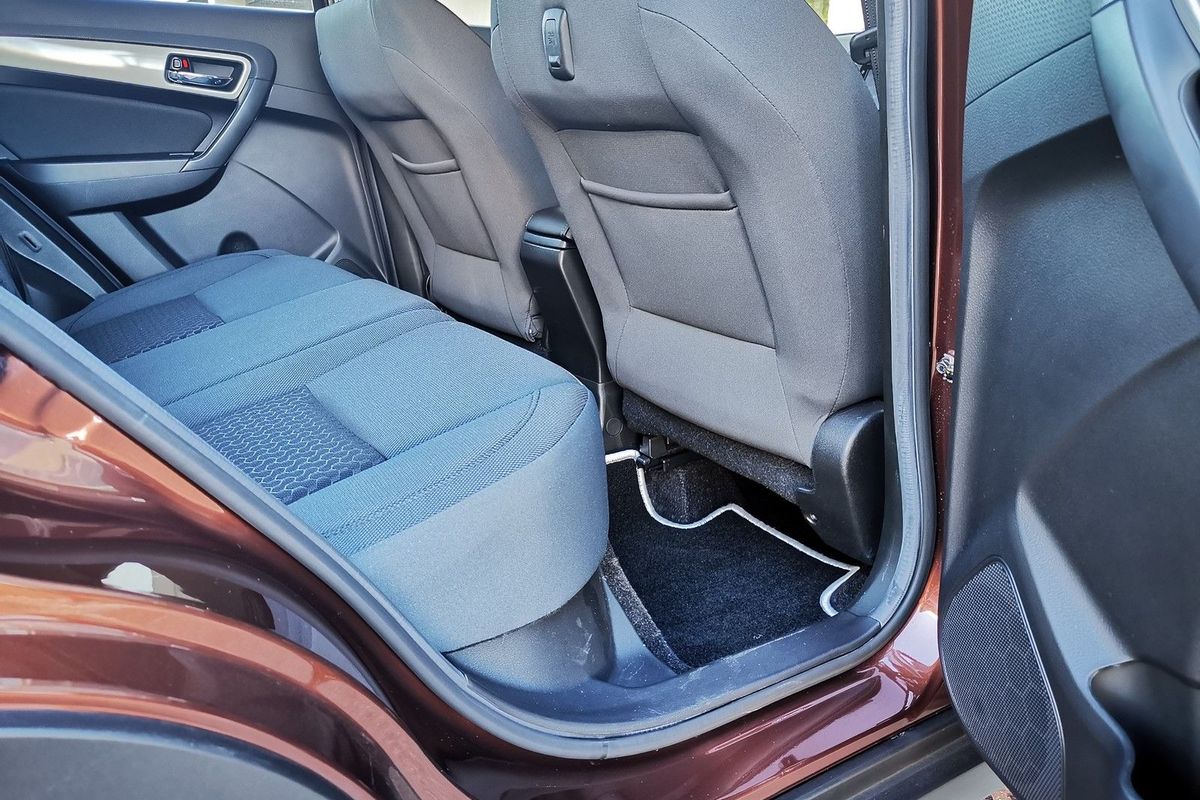
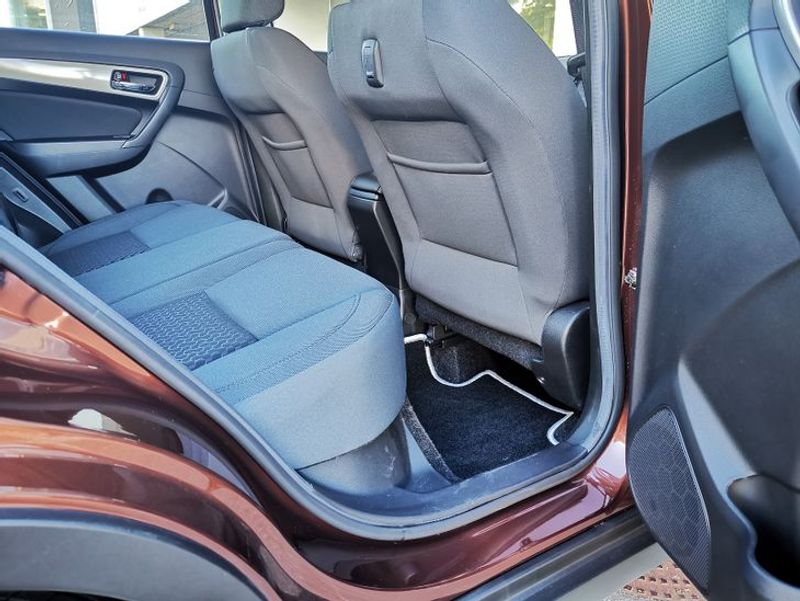
Space for rear passengers is adequate, but not the best for seating taller (or adult) occupants; there's sufficient headroom back there, but the legroom is a bit tight. To its credit, the Urban Cruiser comes equipped with ISOfix anchor points for baby seats, but its rear compartment is best suited to accommodating children and teenagers, providing your son doesn't play lock for a high-school rugby team.
Rear legroom is adequate for most, but tall adults might find it a bit tight in the back.
How much does the Toyota Urban Cruiser cost in South Africa?
Pricing for the Toyota Urban Cruiser starts from R247 900 and the 1.5 XR derivative tested here retails for R294 500 (April 2021). The Toyota Urban Cruiser is sold with a 3-year/100 000 km warranty and a 3 services/45 000 km service plan. Intervals are every 12 months/15 000 km. Customers can purchase an additional service plan and warranty options via the brand's 220-strong dealer network.
The Urban Cruiser offers exceptional value for money, and it will sell in droves.
Given the sheer number of Toyota Urban Cruisers already on the road, it's clear that "value for money" and the sterling brand reputation of the 3-time #CarsAwards – powered by WesBank Brand of the Year winner still play powerful roles in the local motoring landscape. The South African car-buying public has been subjected to Covid-19 pandemic, unpredictable exchange rates, fluctuating fuel prices and much much more throughout the past year, but despite the rises in the cost of living (and car prices), it's great to see there's still some excellent value for money to be had out there.
There's a refreshing honesty about the Toyota Urban Cruiser (and its Suzuki Vitara Brezza twin, for that matter). It does the basics right, plus offers plenty of features and space for a small family, all for a pocket-friendly price under R350k. It's also pleasant to drive and anything but boring. Granted, the short gearing and marginal interior plastics are drawbacks, but at this price, they're quite easy to forgive.