Audi Q3 Sportback (2020) Review
Audi has expanded its Q3 premium family car range by introducing a couple of Sportback derivatives to the local market. The Q3 Sportback promises fresher and more interesting looks for a slightly higher financial outlay than its Q3 sibling, but does it differentiate itself enough to justify its existence? We spent a few days with the newcomer.

We like: Stylish and interesting looks, upmarket and modern interior, refined drive

We don’t like: Reduced rear cabin and luggage space, uninvolving powertrain, pricey.

Fast Facts: 

  • Price: R737 000 before options (December 2020)
  • Model tested: Q3 Sportback 40 TFSI quattro S Line
  • Engine: 2.0-litre turbocharged 4-cylinder
  • Power/Torque: 140 kW/320 Nm 
  • Transmission: 7-speed automatic
  • Fuel consumption: 8.3 L/100 km (claimed) 
  • Top speed: 220 kph
  • ?Performance: 0-100 kph in 7.8 sec

What is it?
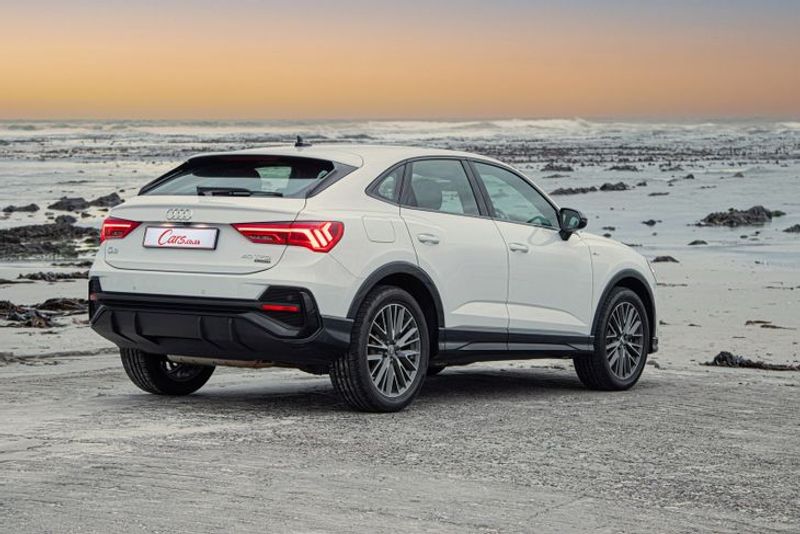
With the SUV segment well and truly in its pomp, the motor industry's attention has turned to making the (now mainstream) high-riding offerings more interesting. BMW was quickest out the blocks with its X6, essentially an SUV in a sleeker body with a sloping rear roof. While the design purists cringed, the car was an instant sales success – based mostly on its looks, we'd purport. Mercedes-Benz countered with the GLE Coupe, while Audi eventually launched its Q8. Those are the big-league models though, but naturally, every Teutonic manufacturer just had to create a model for this niche's niche. We now have the BMW X4 and Mercedes-Benz GLC coupe, with an Audi Q5 Sportback due in SA in 2021.

The Q3 Sportback is essentially a sleeker and more interesting-looking Audi Q3. We're big fans of the standard Q3 as it is… With futuristic looks as well as enough creature comforts and practicality to satisfy most premium-market consumers, it should come as no surprise we'd prefer it over its Q5 brother. It was a deserving recipient of a #CarsAwards – powered by WesBank win in the Crossover category, seeing off solid opposition from the Volvo XC40 and Jaguar E-Pace. As far as other alternatives go, you could consider the Range Rover Evoque and BMW X2.

The premise behind the Q3 Sportback is simple. It still retains all the lovely traits of the Q3, while sacrificing some outright luggage space and rear headroom in favour of a stylish exterior execution. From some angles, it resembles the delectable Q8 – which is one of the most striking vehicles on the road at the moment. Audi is offering the Q3 Sportback with a choice of 2 petrol engines: a 1.4-litre turbocharged petrol driving the front wheels, and a 2.0-litre turbocharged petrol engine with quattro all-wheel drive. This test unit is the flagship 40 TFSI quattro S Line.
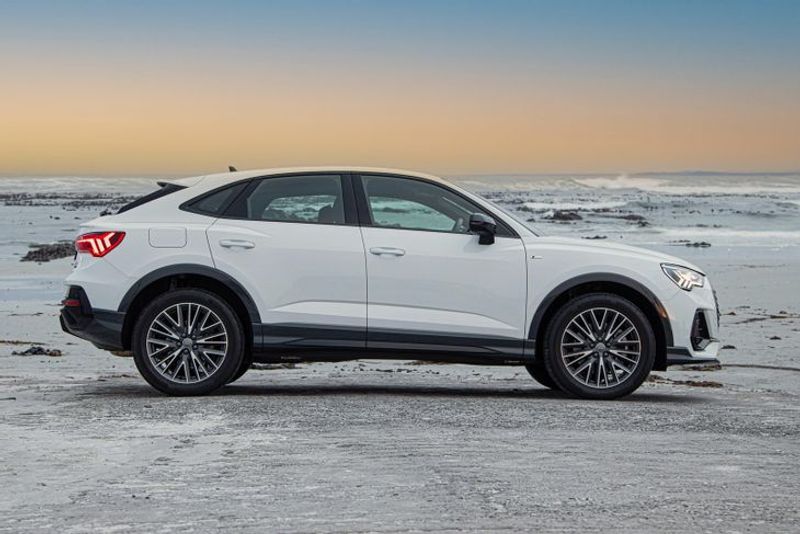

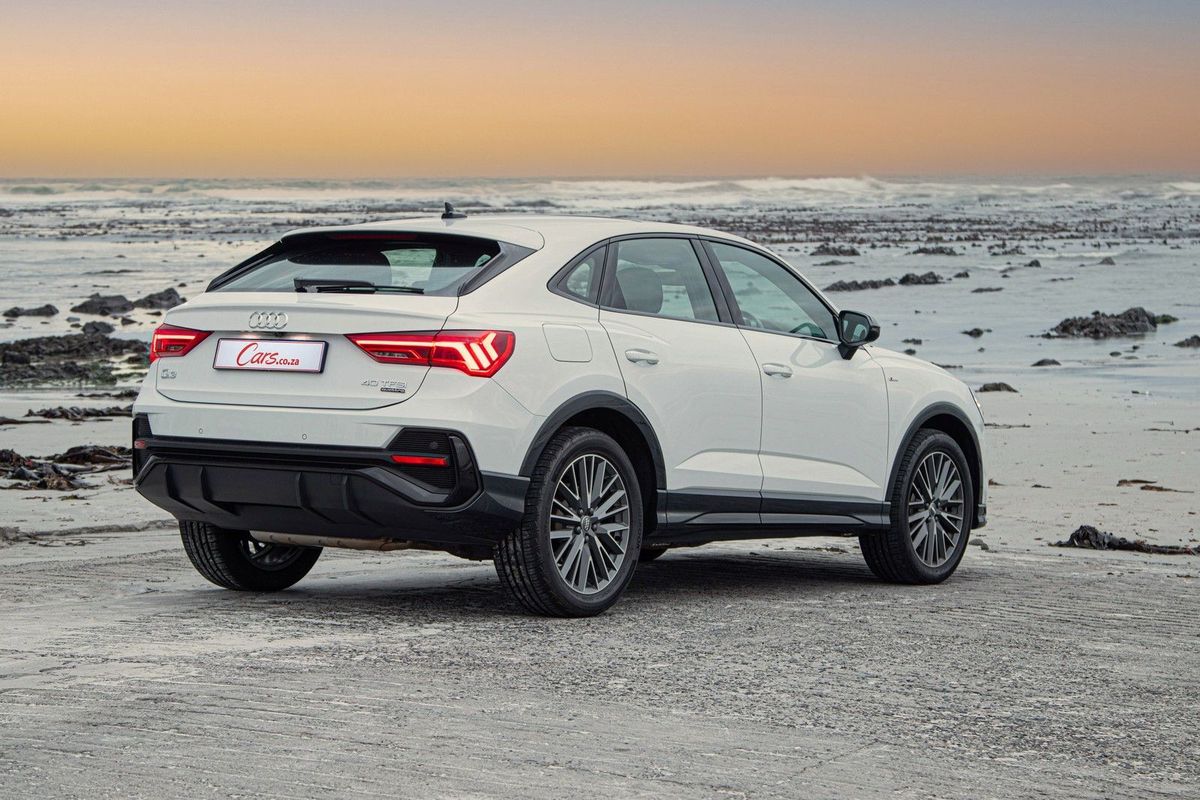
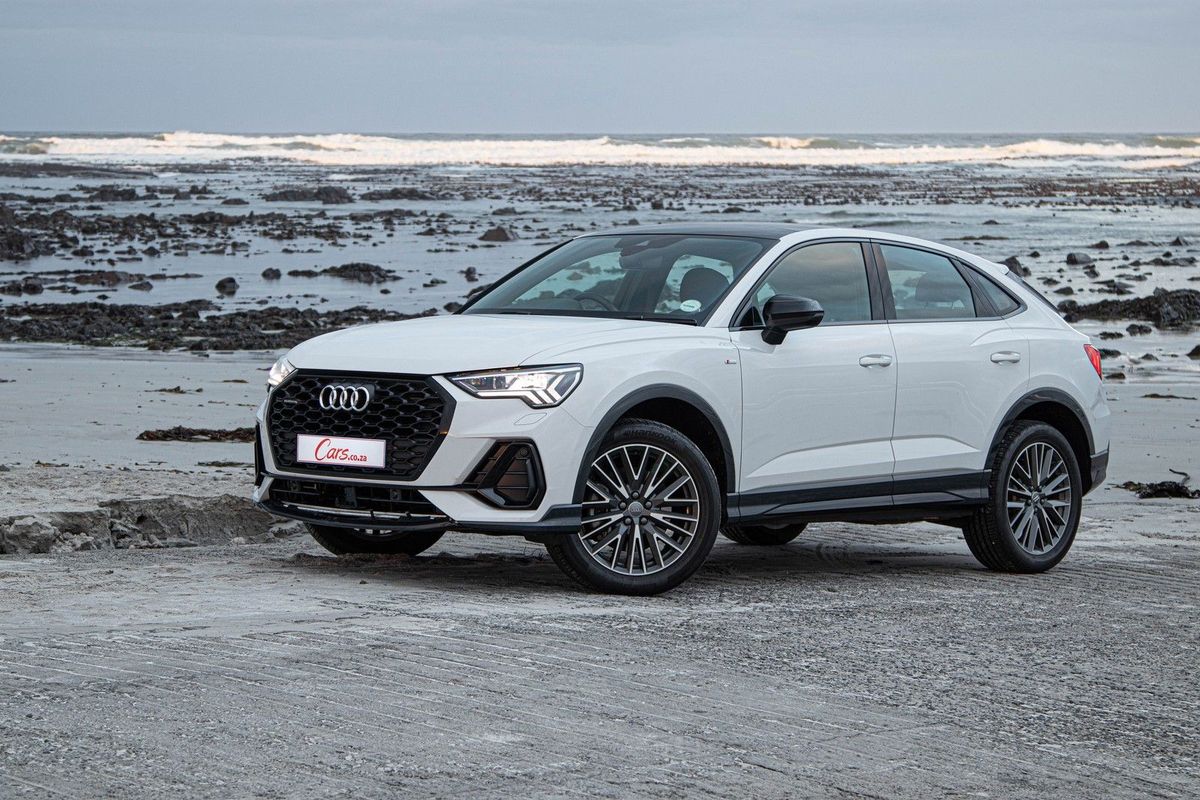
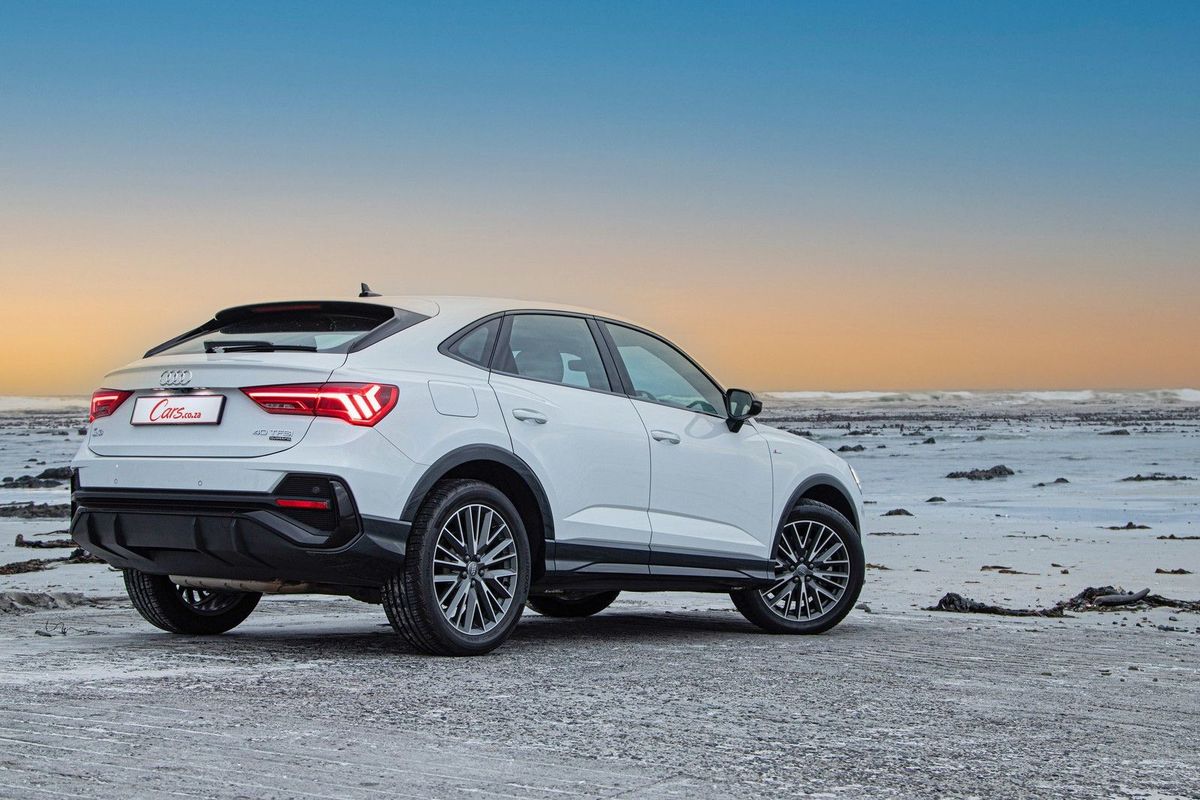
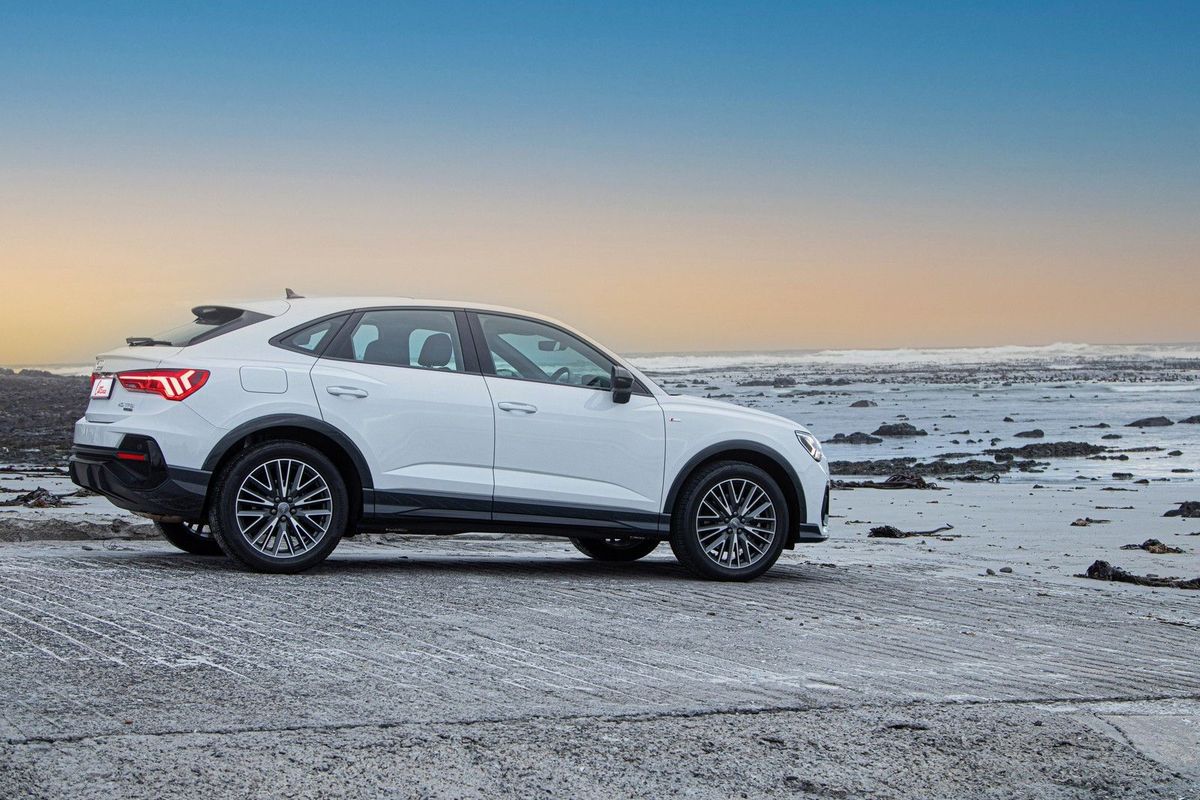
One of the best angles of the Audi Q3 Sportback, because it shows off the sloping rear roofline.

How it performs in terms of…

Exterior design & Packaging

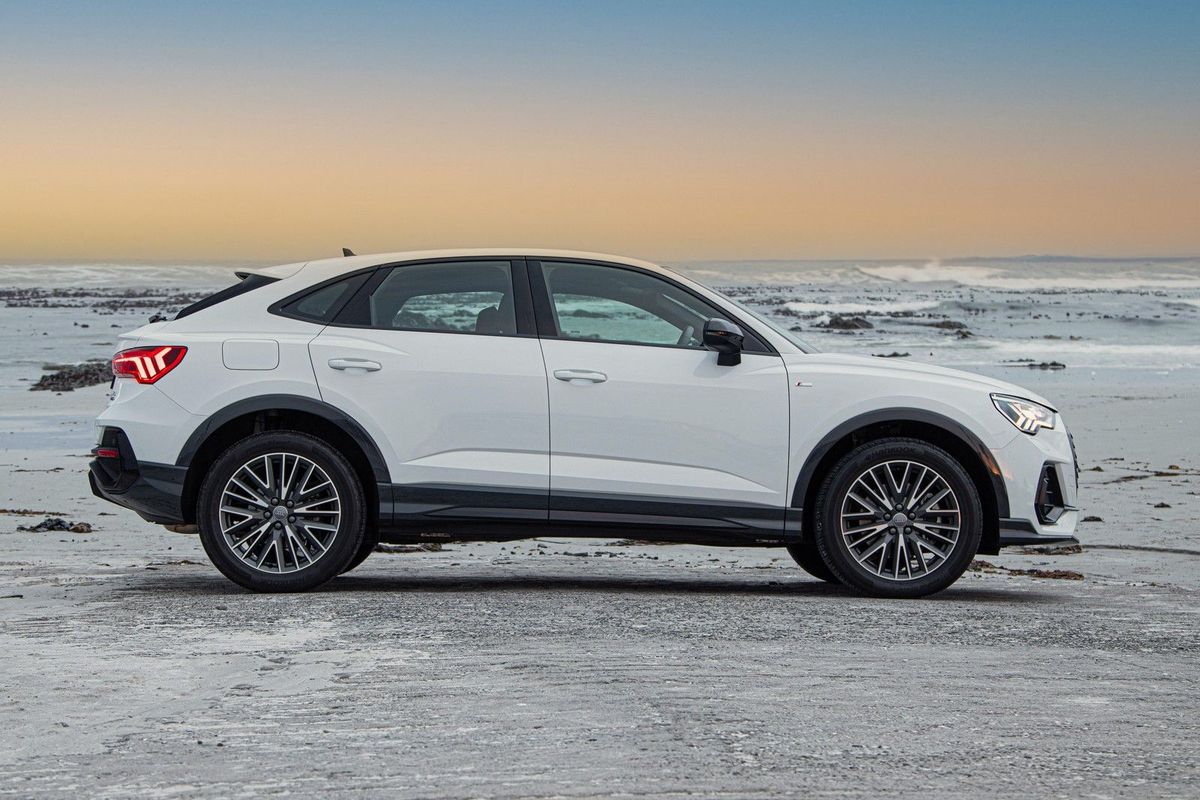
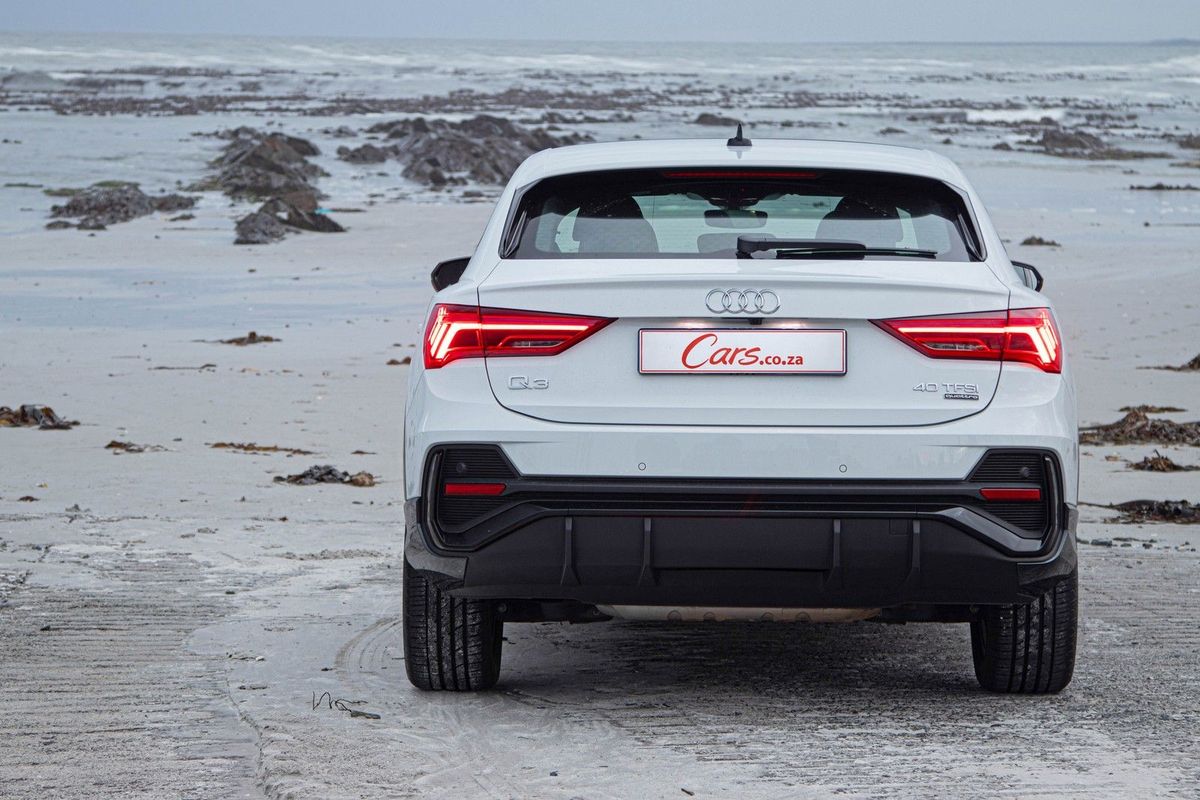
At first glance (and particularly when viewed from head-on), the Audi Q3 Sportback looks quite generic, but in profile and from a rear 3-quarter aspect the newcomer appears notably more interesting. The newcomer really looks the part (one tester remarked it resembles a shrunken Q8), despite its plain white finish. Granted, our test car came with the optional black styling package over and above the standard S line body kit, plus eye-catching 19-inch alloy rims. If finished in one of the more exciting hues on Audi's palette (such as Turbo Blue) it would be a showstopper.
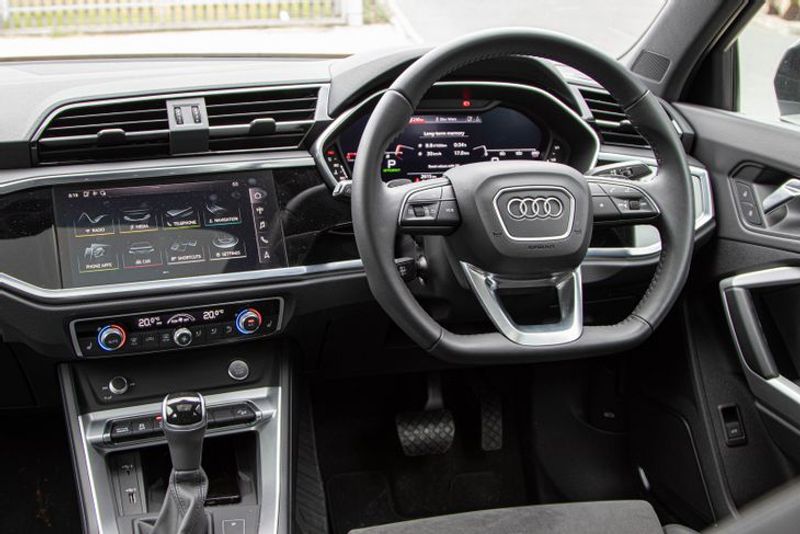

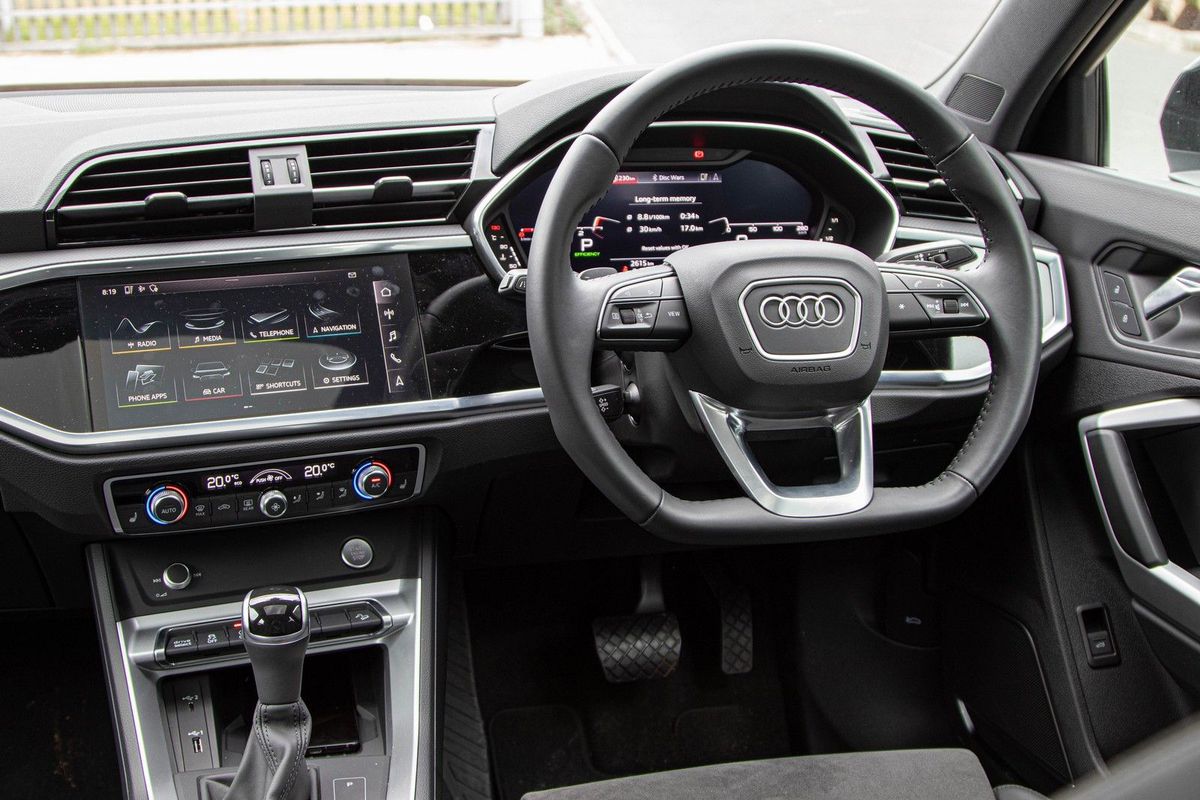
The latest generation of Audi cabins are exceptional, both in terms of quality and to look at.

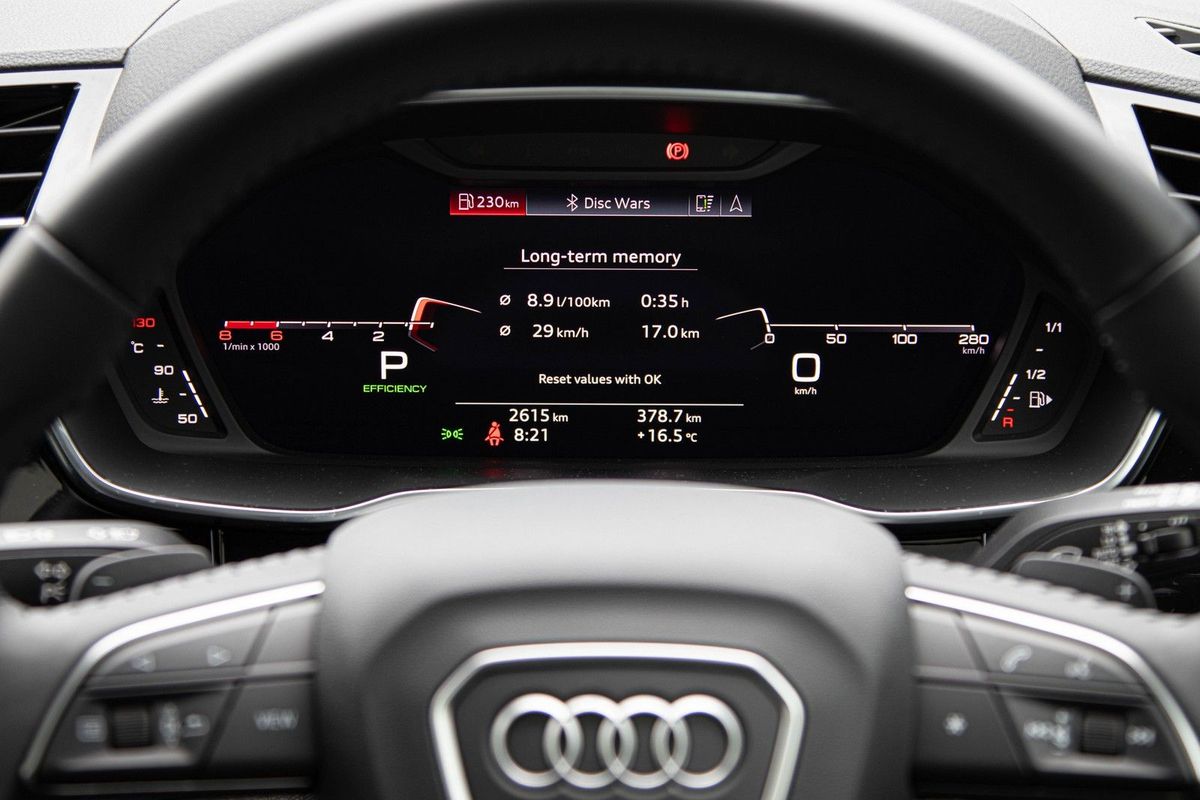
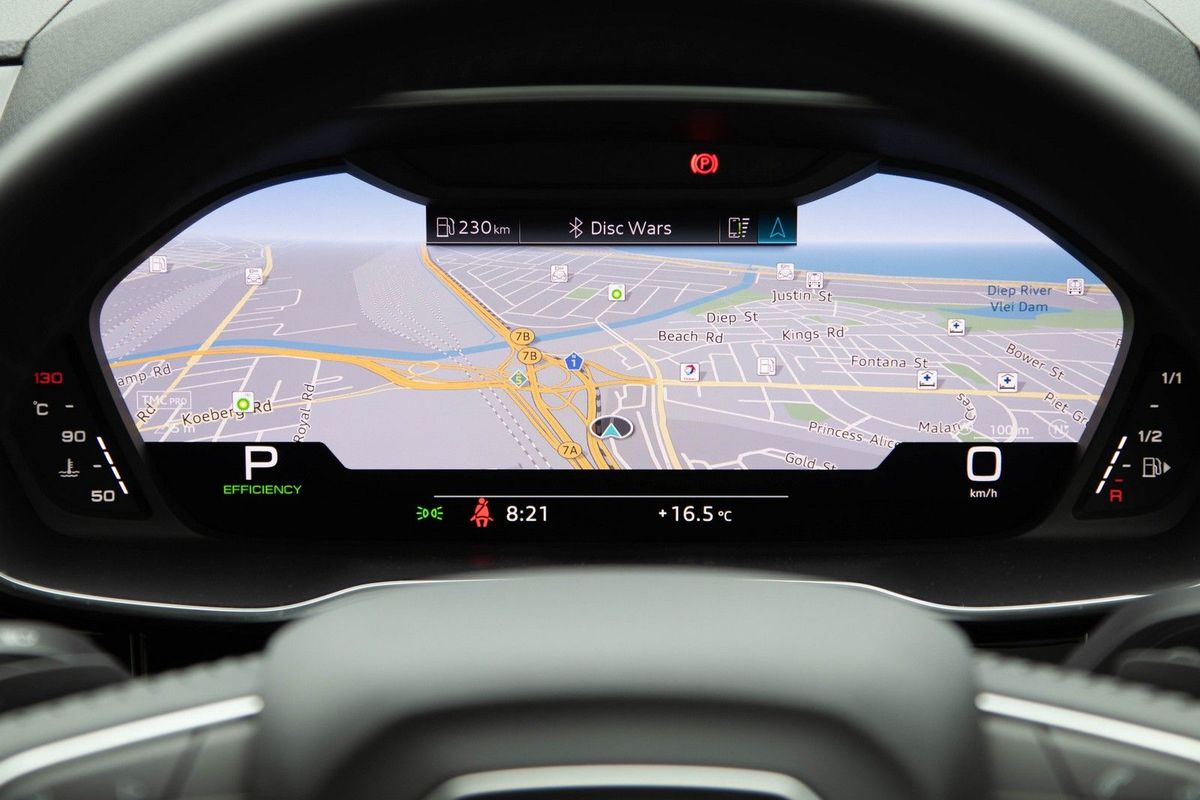
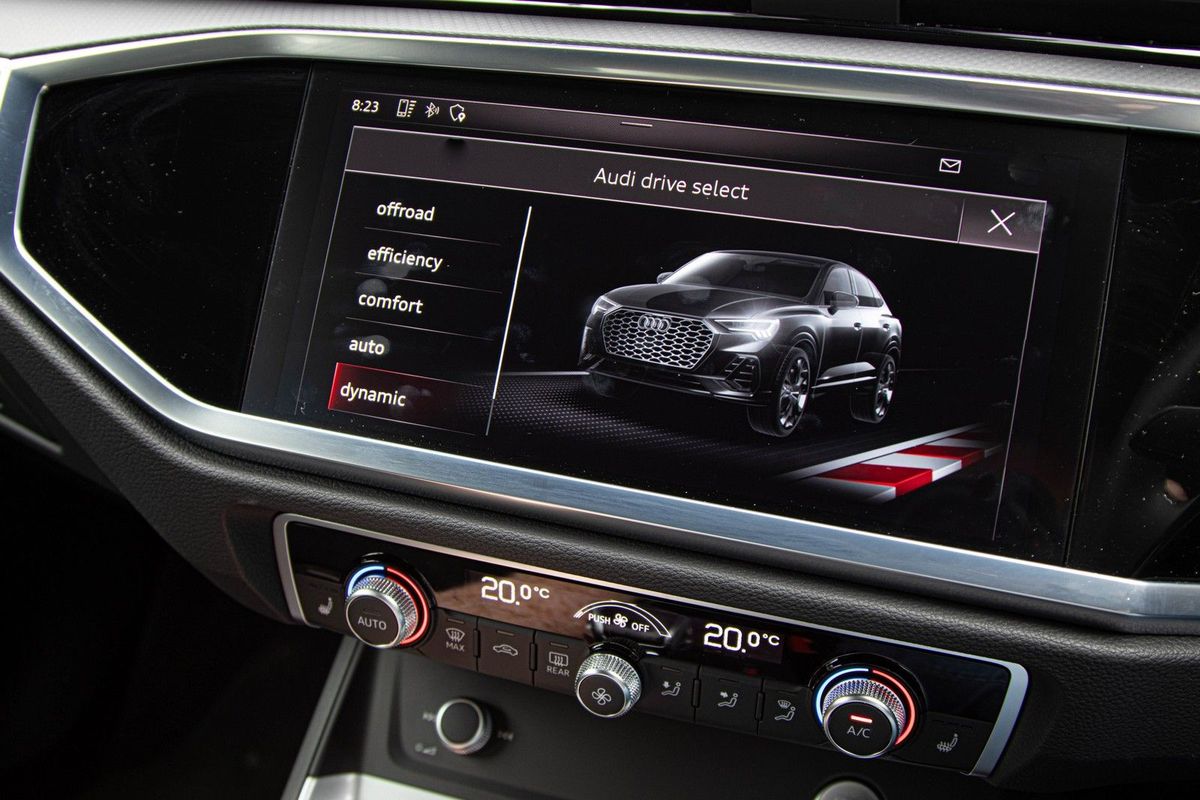
Inside, the cabin gains the new MMI infotainment setup from the latest generation of Audi's offerings, as well as a sleek new all-digital instrument cluster. While the interface with its quirky graphics may not be to everyone's taste, there's no denying it's unique and modern.

In terms of packaging, the Q3 Sportback's physical shape is notably different to that of the standard Q3. The sportier variant is 16 mm longer, 29 mm flatter, and 6 mm thinner by comparison, but they share a 2 680-mm wheelbase. What does this mean for practicality, though?

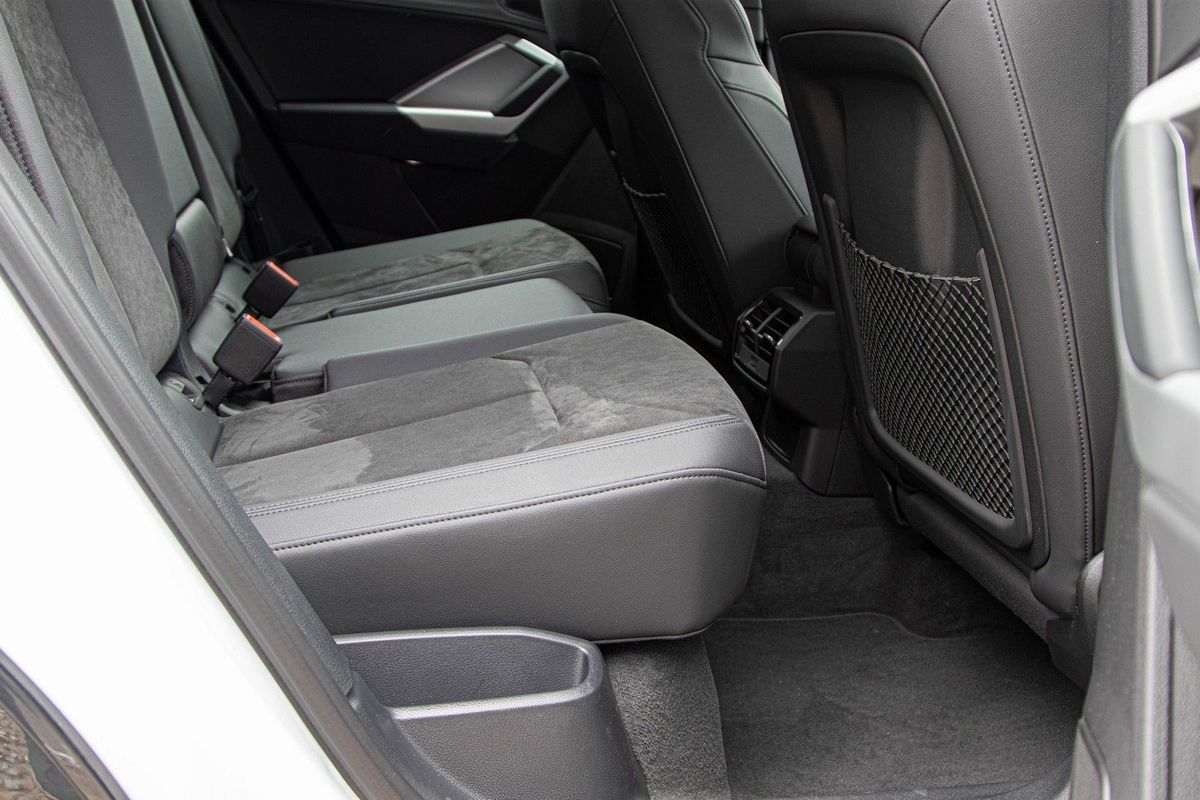
Aud claims its Q3 has a luggage capacity of 550 to 1 525 litres, while the Sportback variant offers 410 to 1 280 litres. The figures don't lie and it's immediately evident the load bay is smaller on the new car. It's a pity, as the standard Q3's practicality (aided by a sliding rear bench) is one of its best features. That sloping roof may look good, but rear passengers will find headroom a bit tight if they're taller than, say, 1.8 metres.
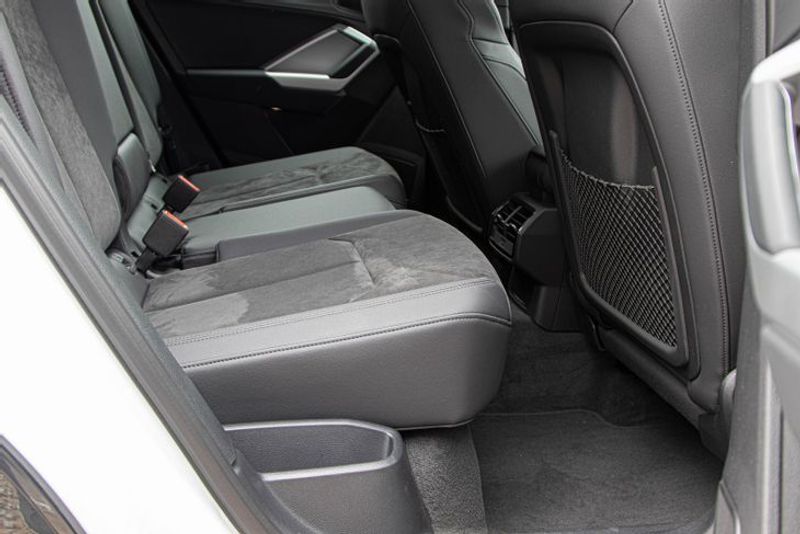

Rear legroom is adequate for average-sized adults. Headroom is an issue.

Performance and ride/handling

The Q3 Sportback 40 TFSI quattro S line is powered by a 2.0-litre 4-cylinder turbopetrol motor. It produces peak outputs of 140 kW and 320 Nm, which is directed to all wheels via a 7-speed automatic transmission. A smaller 1.4-litre turbopetrol option is available, which is obviously less punchy and doesn't offer all-wheel drive. However, unless quattro is a must-have, you're not going to feel short-changed with the 35TFSI S line. Why? Well, the VW Group's MQB platform underpins the Q3 Sportback as well as a variety of Volkswagens (such as the Polo, Golf and Tiguan), as well as numerous Audis, including performance derivatives. With this in mind, we were expecting an engaging and spirited driving experience… 

However, the Q3 Sportback feels bland to pilot. Granted, the newcomer gets down the road in an unflustered manner; exterior noises are all but dialled out and the mechanical refinement is suitably premium, but we were hoping that the Audi would offer a level of dynamism befitting its sporty appearance. It features steering wheel-mounted shift paddles and a punchy engine, yet we didn't feel engaged with the test unit. This is the fastest Q3 Sportback derivative, but it doesn't feel fast. Audi claims a sub-8-second 0-to-100 kph time, but the benchmark sprint is a bit of a non-event.

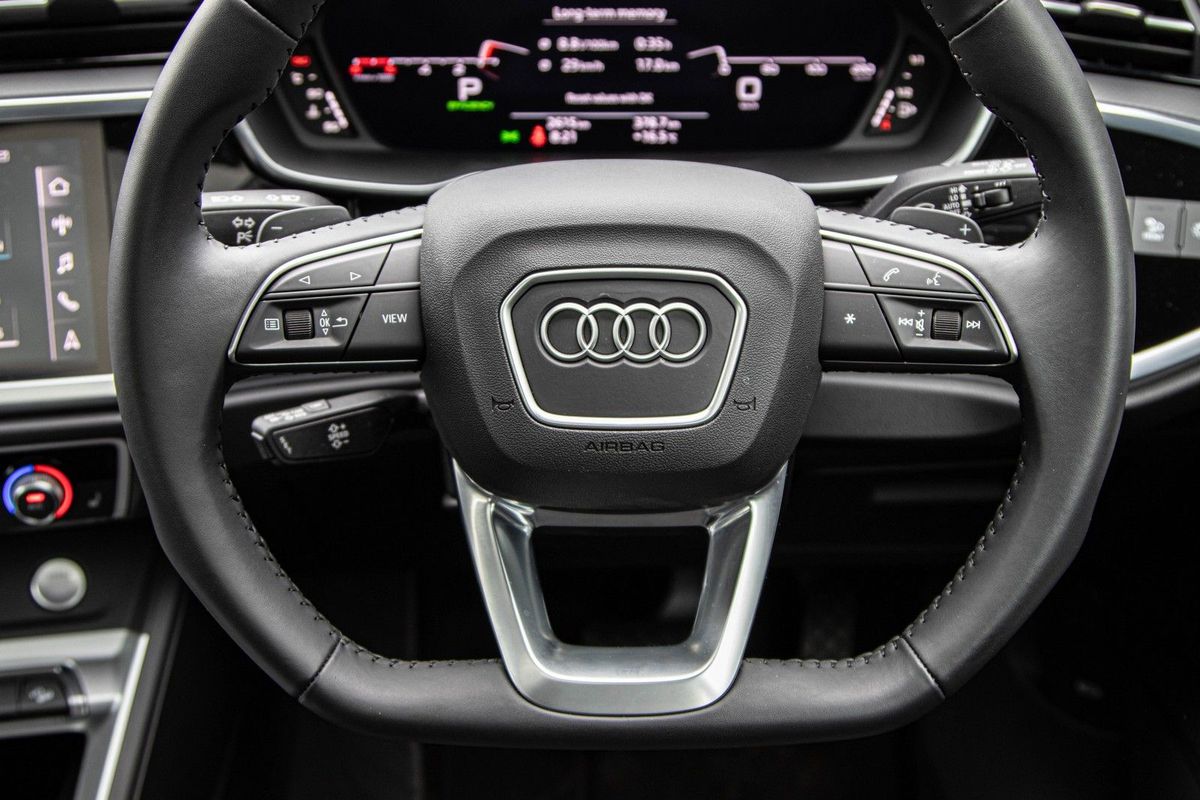
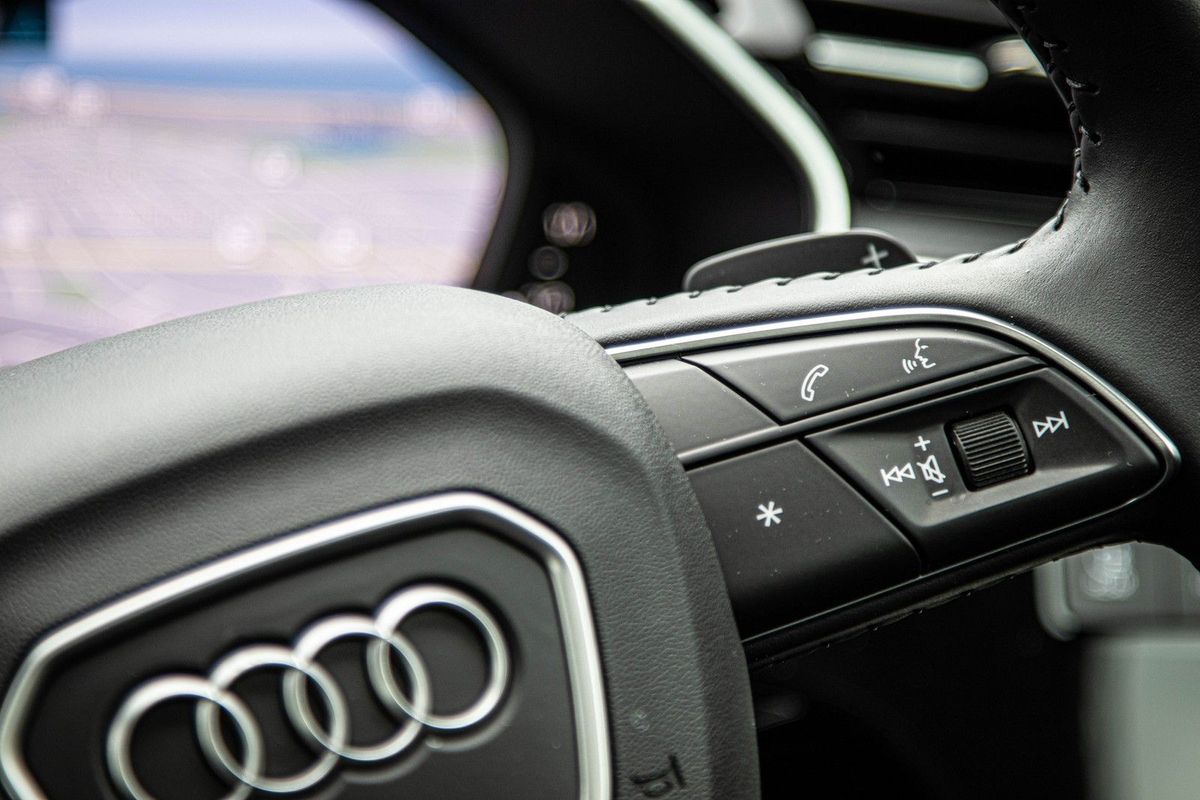
Furthermore, the transmission's not perfectly calibrated with the motor. Shift responses are not as prompt as we hoped; the 'box is seemingly mapped to remain in the highest gear as often as possible, which is not always a good thing. At times, when we needed a burst of acceleration while driving in 7th, the gearbox would stumble to engage 4th to deliver some in-gear shove. As a result, executing reactive overtaking maneuvres is less than effortless in the Q3 Sportback, but at least you can take matters into your own hands and shift gears using the steering-wheel paddles.
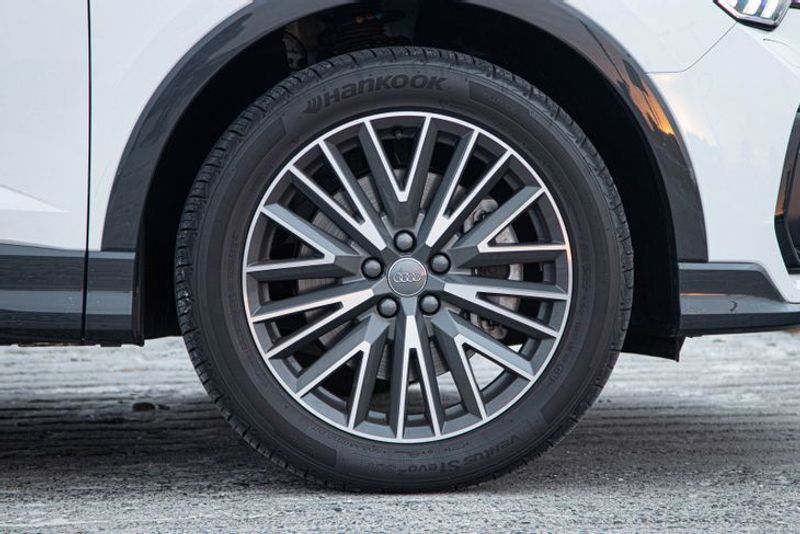

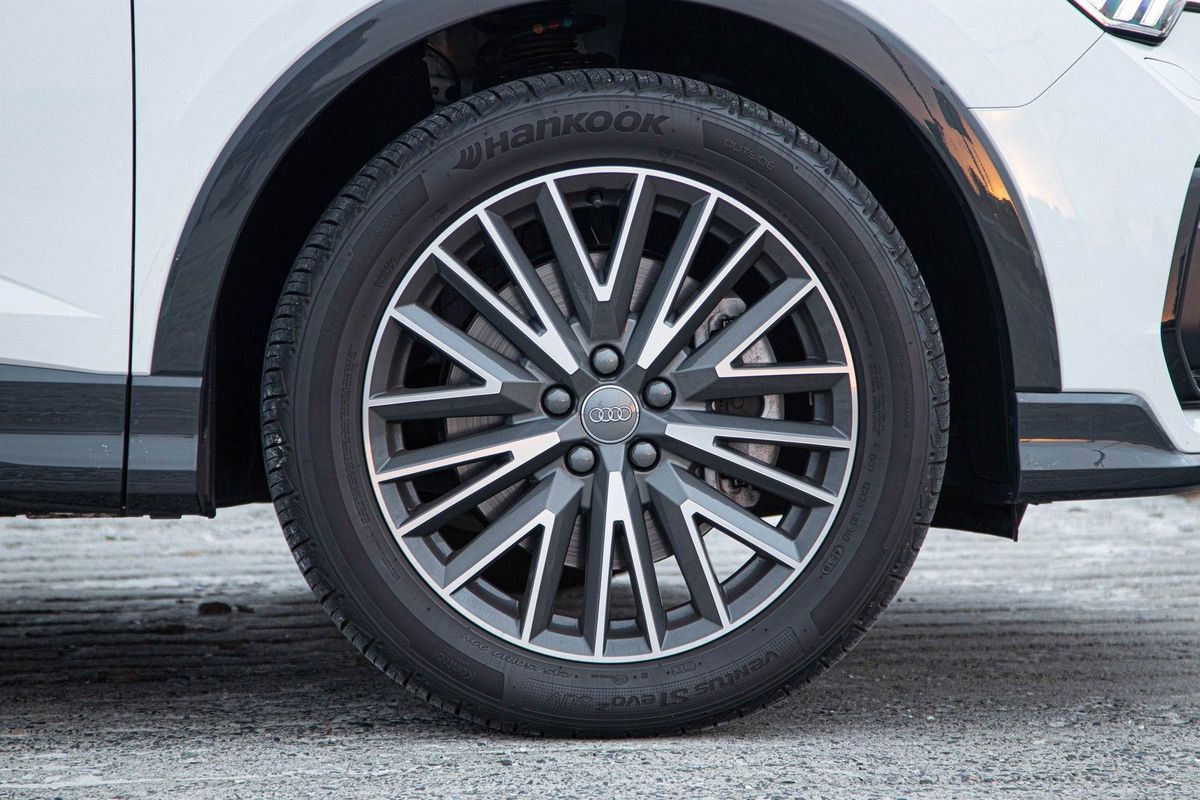
These 19-inch alloy wheels look great, but despite the relative profile of the tyre, the ride quality remains on the firmer side.

Given the larger wheels and the vehicle's stance on the road, the Q3 Sportback's ride quality is on the firmer side of pliant. It's not too harsh, but you will feel ruts and bumps in the road through the suspension. However, we appreciated the test unit's steering feel. It is light, yes, but when you're piloting a substantial vehicle in a confined environment, a quick, easy-to-wield 'wheel is a boon. The 40 TFSI quattro S line feels eminently nimble, but you can't pitch it into slow corners in the hope it'll handle like an S3 quattro, because you'll invariably encounter substantial body roll.

As for the quattro setup, it's more applicable for the frosty European winter than mostly-sunny-and-mild South Africa, but we're also convinced that many customers who decide to go this route will find comfort in the additional stability that an all-wheel drivetrain offers on gravel or wet roads.

Interior execution and features

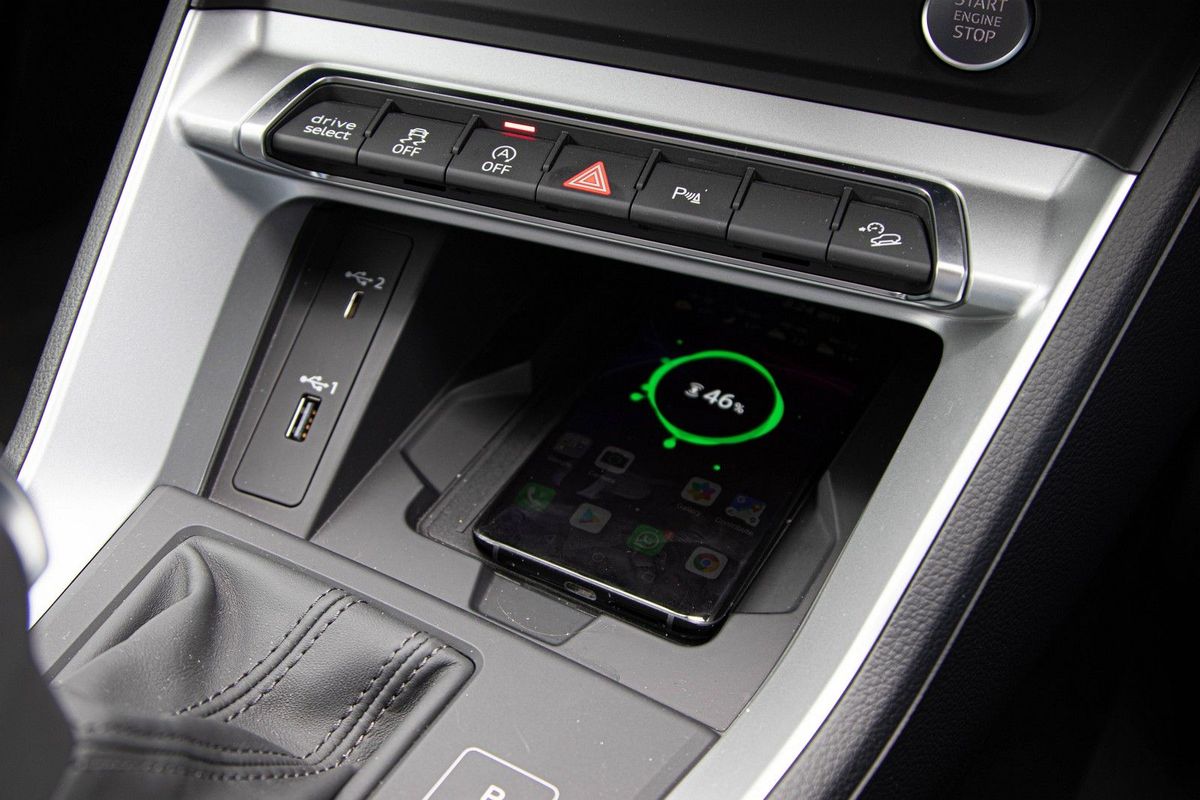
For the always-connected generation (undoubtedly the Q3 Sportback's target market), the Audi comes equipped with USB-A and USB-C ports, as well as Android Auto and Apple CarPlay connectivity. Streaming Spotify through the optional Bang & Olufsen audio system is what it's all about! 

Audi's interiors are still some of the best in the business, in terms of visual appeal, tactile quality and, of course, ergonomic efficiency. The cabin features a plethora of premium finishes and soft-touch materials and you get the sense that it's all immaculately put together. At this price point, Audi has all the bells and whistles covered, but you can dive into the options to further enhance what's on offer… 

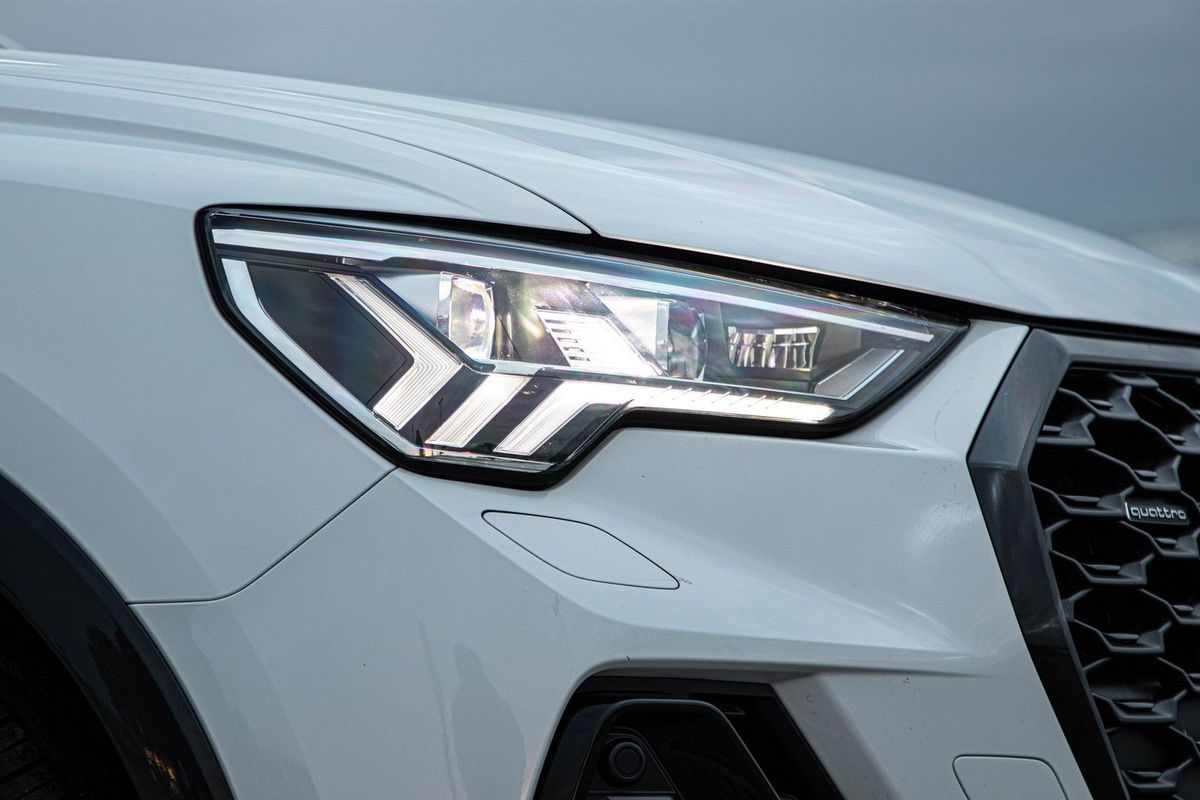
Consider the Audi phone box, which introduces wireless charging, as well as the Matrix LED headlights, which offer smart anti-dazzle tech. The new MMI infotainment system offers a slick user experience; the only downside is that it's a magnet for tacky fingerprints. Keep a cloth handy! 
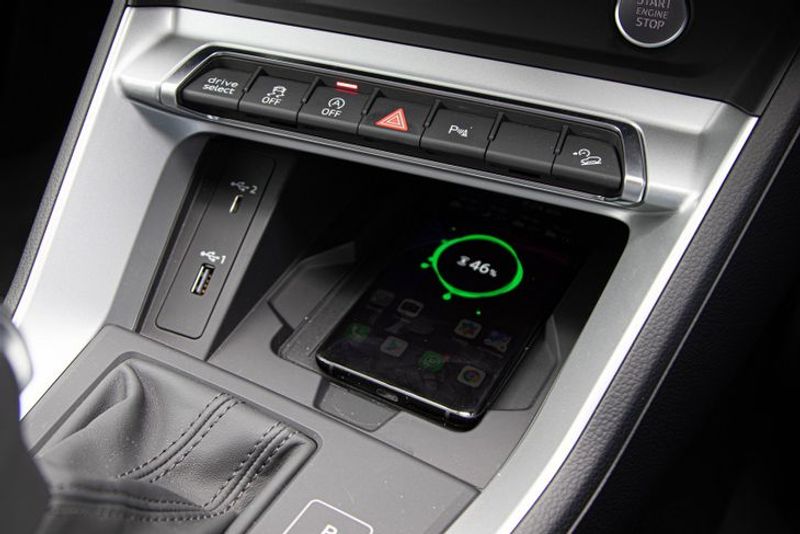

Wireless charging and two types of USB ports.

Price and after-sales service

The Audi Q3 Sportback 40 TFSI quattro S Line costs R737 000, which includes a 5-year/100 000 km maintenance plan. Our test unit was positively festooned with options, which increased the asking price to an eye-watering R929 790. The reason behind this R192 790 difference is that this demonstration unit was specified with the Technology package (R35k), Comfort package (R22k) and Sports package (R30k). Other noteworthy options that helped bump the price up was the panoramic sunroof (R20k), electric towbar (R11k) and the Bang & Olufsen audio system (R9k). 

Browse for a new or used Audi Q3 on Cars.co.za

Verdict
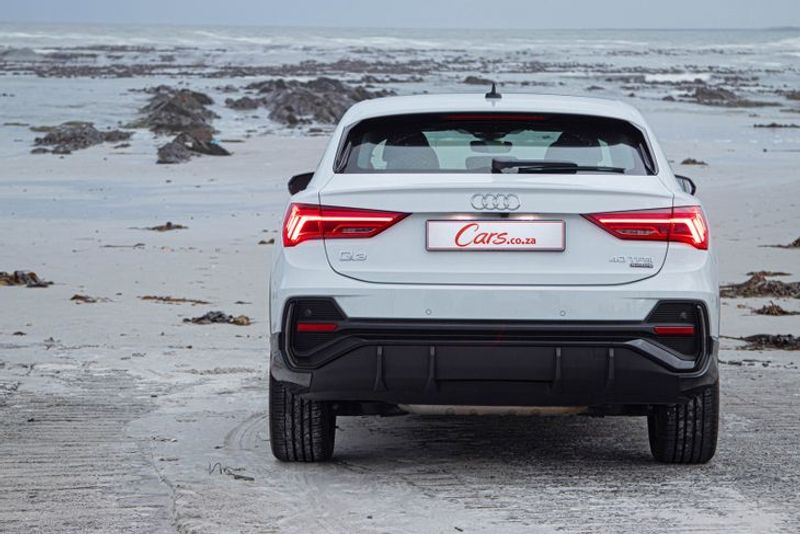

It's unique looks give it a slight advantage over its mainstream sibling, but can you do without some practicality?

The Q3 Sportback is an impressive offering, but so is the perfectly-good standard Q3. Does the newcomer's attractive styling justify a higher asking price than its SUV sibling? As a champion of motoring consumers, we don't think so, but, on the other hand, in an era where cars have become so generic-looking and predictably packaged, some buyers crave variety. A model that stands out (and in a good way) deserves to be recognised. 

Should you buy one? If getting behind the 'wheel of a 'premium family car is a priority for you and you don't have grown children to cart around or require a big load bay to fill to the brim with all manner of detritus, this newcomer may very well be of interest. It may be a niche product, but we suspect Audi will capitalise on slow-selling segments where products such the TT sportscar and the A5 Coupe are arguably on borrowed time.

We can imagine that a long-time TT owner, who knows the once-popular sportscar won't be replaced, could switch to a Q3 Sportback. It may not handle like a TT, of course, but it'll match the little sportscar's style while offering a bit more space as well as all the latest gadgets and gizmos. If you want something with a bit more go (and can afford it), then look to the Audi RS Q3 Sportback, which will arrive in Mzansi during 2021.

Related content:

Audi Q3 35 TFSI Review

Audi Q3 Sportback (2020) Launch Review

Audi Q3 Sportback (2020) Specs & Price
Audi SQ5 Sportback Shown

Audi S3 Sportback (2021) International Launch Review

New Cars For SA in 2021

Big Fuel Increases Forecast for January 2021

The Automobile Association (AA) has predicted substantial increases in the price of petrol and diesel for January 2021.

Based on the unaudited mid-month fuel price data released by the Central Energy Fund, the AA reckons South African motorists are in for some heavy increases as we go into January 2021.

"It's been a good month for the Rand so far, with the local currency picking up around 15 cents against the US dollar, but the basic fuel price has shot up since the start of December, raising the spectre of quite substantial fuel price rises if there isn't a pullback before month-end," the AA says. "Diesel and illuminating paraffin are the worst hit, with the current data showing an increase of 52 cents a litre for these fuel types. But petrol hasn't escaped unscathed, with increases of up to 34 cents a litre on the cards," says the AA.

Ouch! These increases come despite significant global refining overcapacity and a slight increase in the world-wide oil supply alongside falling demand. We're hoping this trend doesn't continue during the month of December and will post more info as soon as we have it.

Related content

SA Petrol Price 2020 – Where Does Our Money Go?

5 Ways to Beat the Fuel Price Hike

Most Fuel Efficient Budget Cars in SA

Most Fuel-Efficient Double-Cab Bakkies in SA

5 Fuel-Saving Car Features & How They Work

Most Fuel Efficient Budget Cars in SA

Most Fuel Efficient Diesel Cars in SA

Most Fuel Efficient Petrol Cars in SA

Mercedes-AMG One Driven by Lewis Hamilton

The long-awaited Mercedes-AMG One is due in 2021 and a marketing campaign shows F1 champion, Lewis Hamilton, having a go in a prototype of the new One hypercar. 

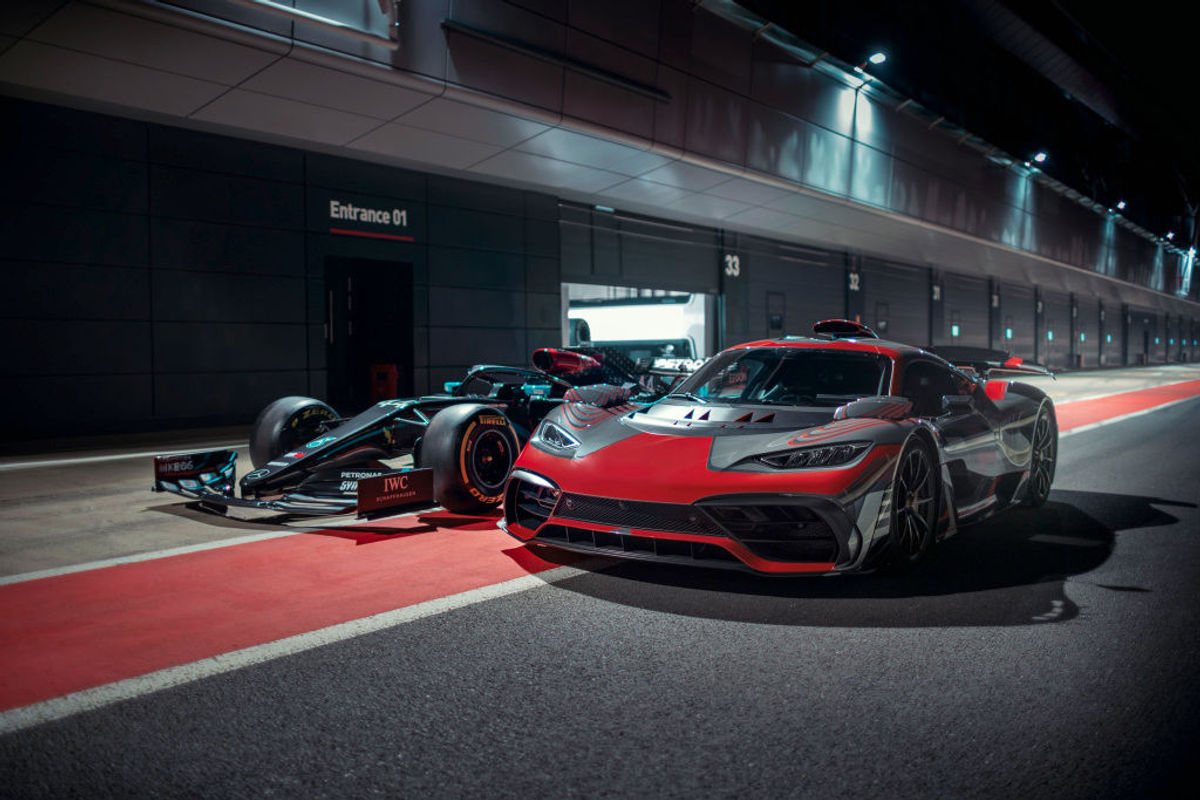
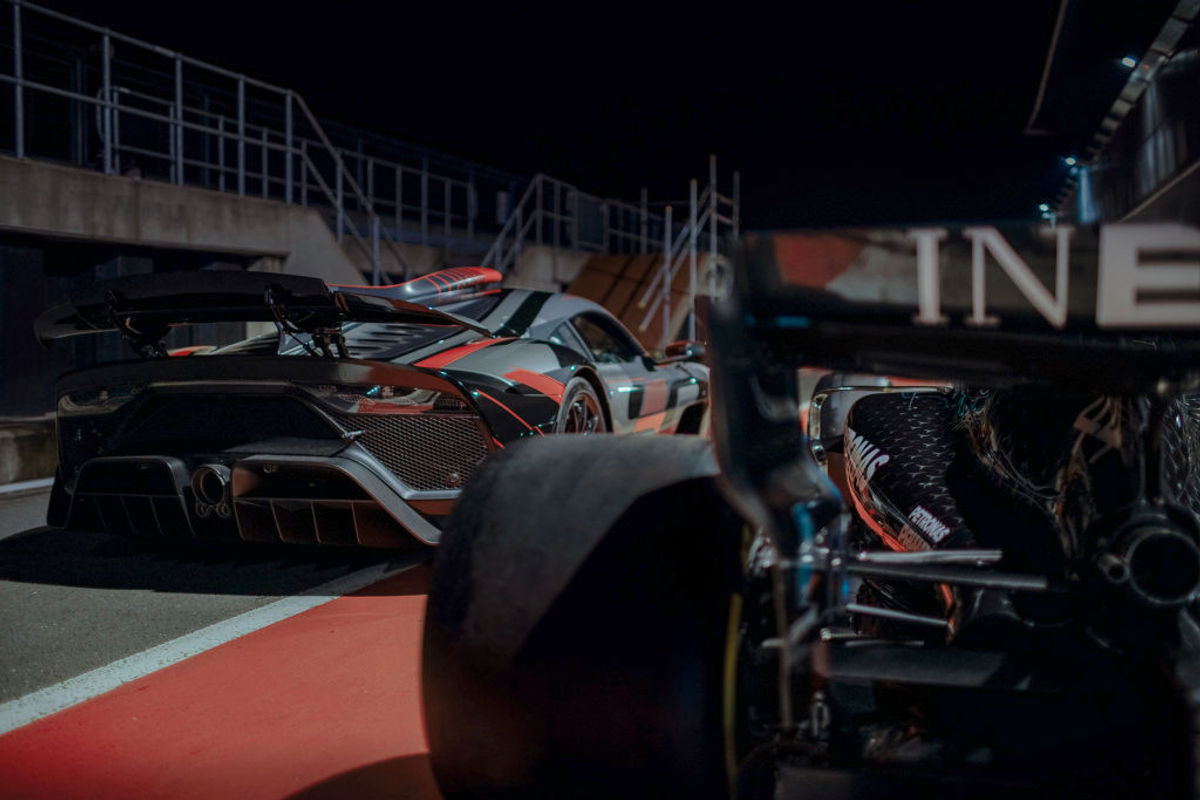
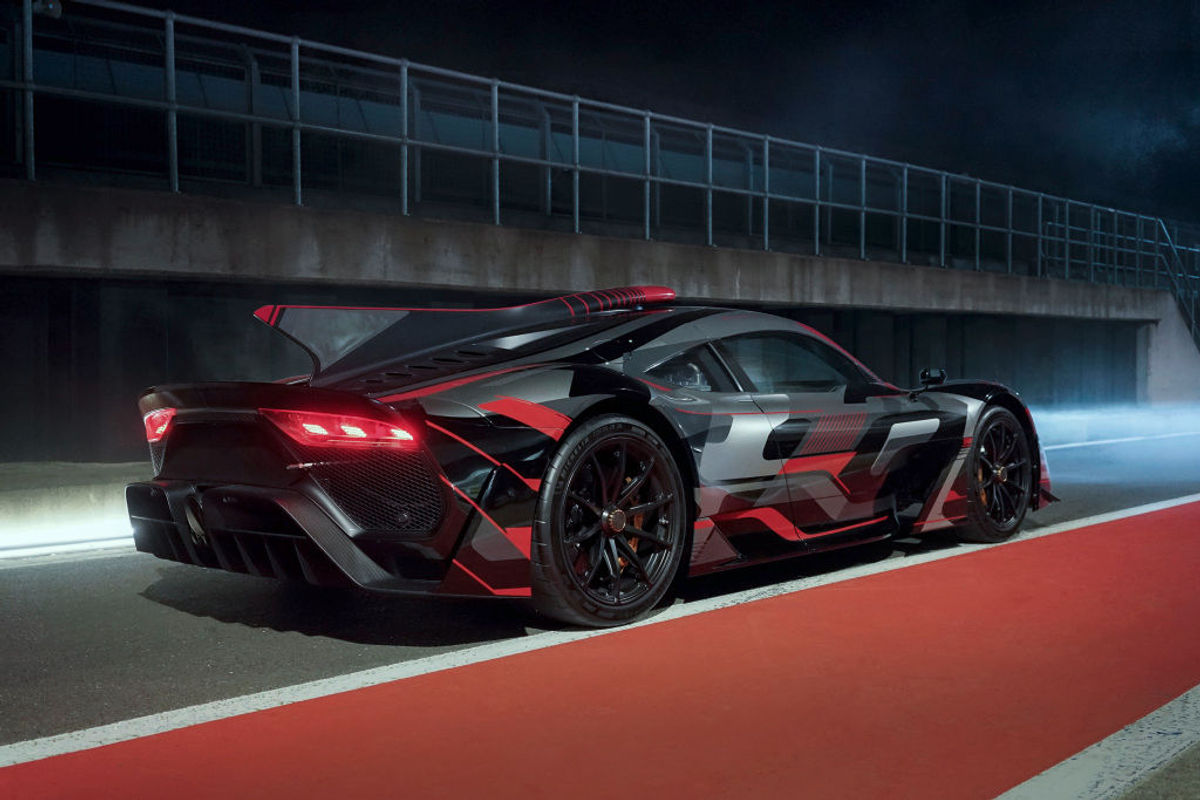
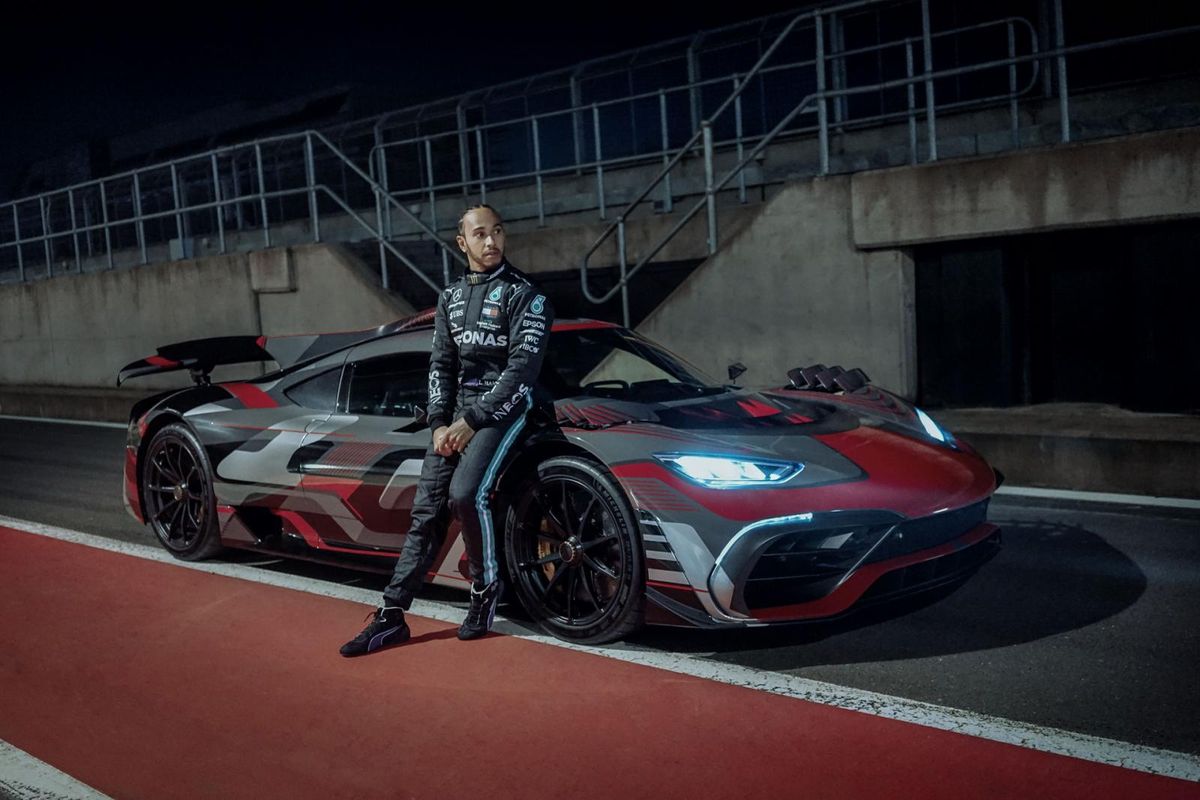
The campaign, which is called ‘After Work with Lewis Hamilton’ shows a One prototype dressed in an interesting camouflage and is driven onto track by the 7-time F1 champion, Lewis Hamilton. 

Hamilton has been involved in the development of the One hypercar and his experience in Formula 1 is contributing towards the final development of the One. 

"I can still hardly believe that there will soon be a hypercar with a Formula 1 engine. We won the world championship with this engine in 2015, and I was involved in its development for a long time. I was able to drive the Project ONE during the filmwork for the new campaign, and I'm very proud of the extraordinary effort Mercedes-AMG has invested in this project. This car is absolutely unique,"

As a refresher, the AMG One is fitted a 1.6-litre V6 hybrid petrol engine with electrically supported turbocharging derived from the Mercedes-AMG Petronas Formula 1 racing car as well as 4 electric motors that generate a combined power output of 740 kW. The AMG One is capable of revving at up to 11 000 rpm and boasts a top speed of over 350 kph. 

Apart from bringing the AMG One to life, a new technology label will be launched too and it will be called E Performance which represents the electrification of Mercedes-AMG.  

"Developing the Project ONE was a very great challenge which we addressed as a team, and now we are firing the next stage for roadgoing approval: This car will strengthen our position as a high-performance luxury brand. Moreover, the Project ONE will emphasise the proximity between Formula 1 and Mercedes?AMG more than ever: we have the same motorsport genes, and believe in a direct technology transfer. The special disguise of the Project ONE also gives an initial outlook on our electrically powered future, which begins in 2021. The colour red will play a central role for our new technology label E PERFORMANCE," says Philipp Schiemer, Chairman of Mercedes-AMG GmbH.

Buy a Mercedes-Benz on Cars.co.za

Related Content 

Spy Shots: 2021 Mercedes-AMG One

Mercedes-AMG GT Black Series Claims Ring Record

Merc planning new AMG 63s

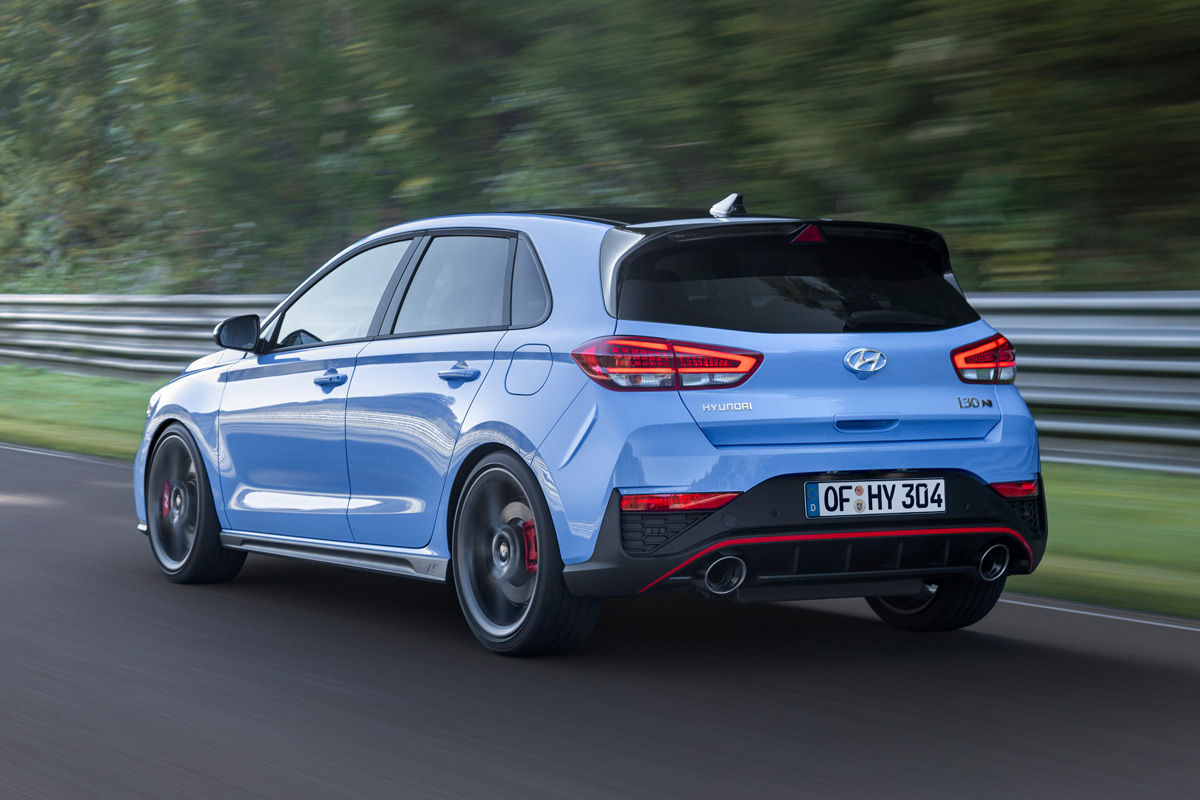
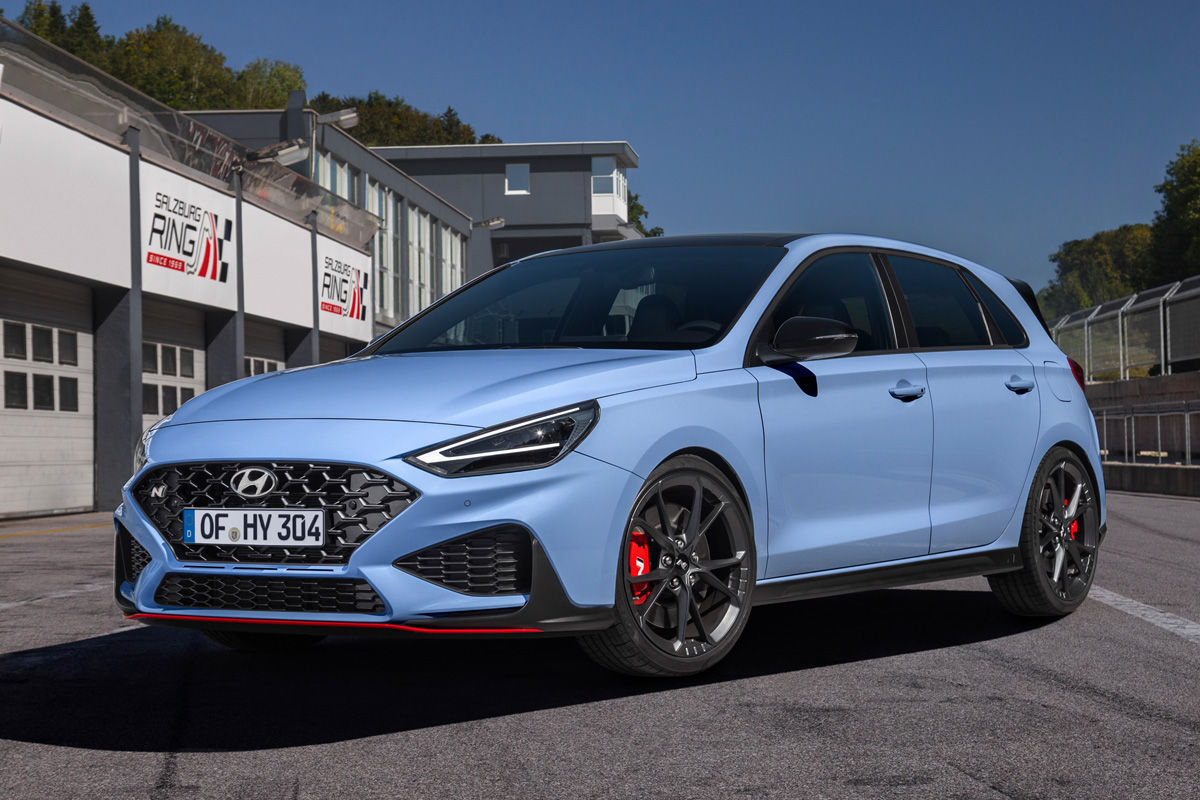
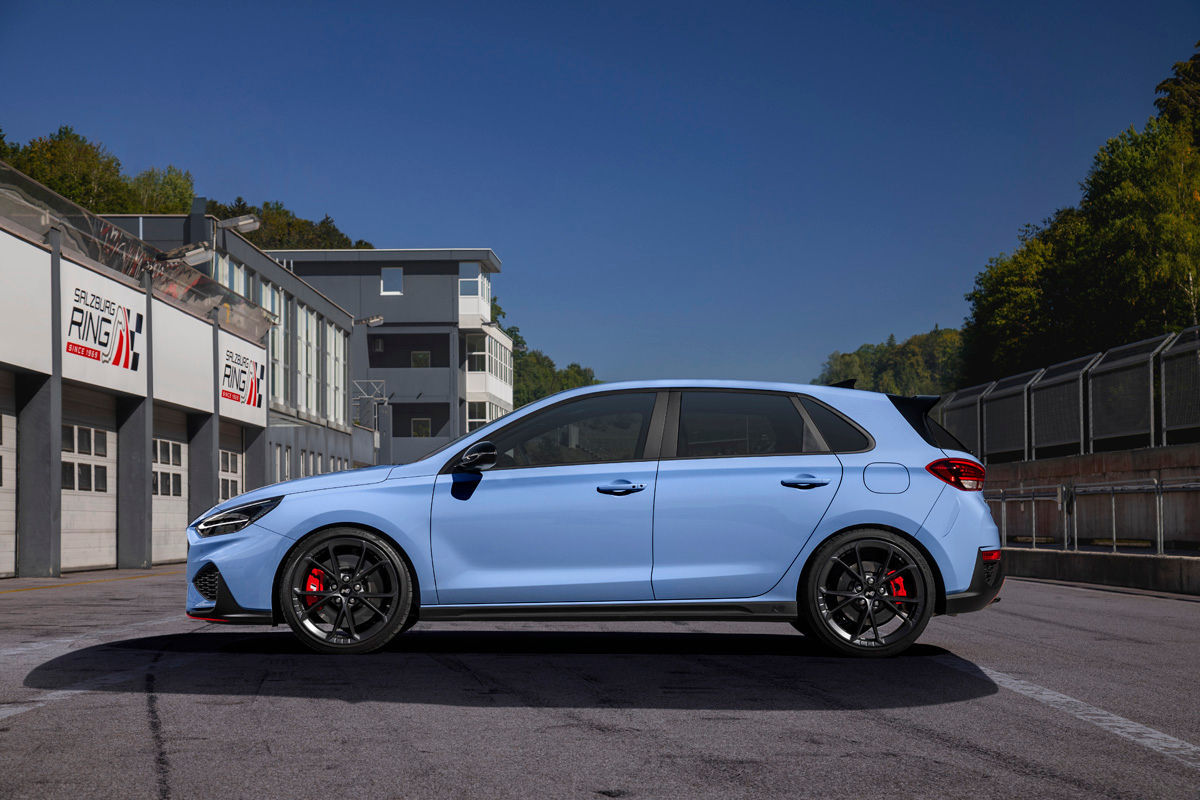
Updated Hyundai i30 N confirmed for SA

When Hyundai Automotive SA launches its facelifted i30 N with an 8-speed dual-clutch transmission next year, the Korean firm’s maiden hot hatch will offer considerably wider appeal in a market where buyers prefer automatics, such as the upcoming Volkswagen Golf 8 GTI and BMW 128ti. All three of them will be in Mzansi by mid-2021… 

When the i30 N – Hyundai's 202 kW/353 Nm hot hatch and the poster child for the Korean firm's fledgeling N division – was launched internationally in mid-2017, it rocked the premium hot hatchback establishment, which has always been dominated by the Volkswagen Golf, Renault Megane RS (Renault Sport), Honda Civic Type R and, for a while, the Opel Astra OPC. However, South African performance aficionados had to wait patiently for the Korean hot hatch to make its local arrival… Hyundai Automotive SA eventually launched the i30 N, in limited numbers, in February 2020.  

At the time, the Korean firm's local subsidiary was at pains to point out that it would sell only as many units as it could procure and that there was no guarantee that the exclusive hot hatch (still listed for R679 900) would remain available for the foreseeable future. Many believed the model would be a "halo car" marketing exercise much in the way that Kia Motors SA did with the limited-edition Stinger sports executive sedan.  


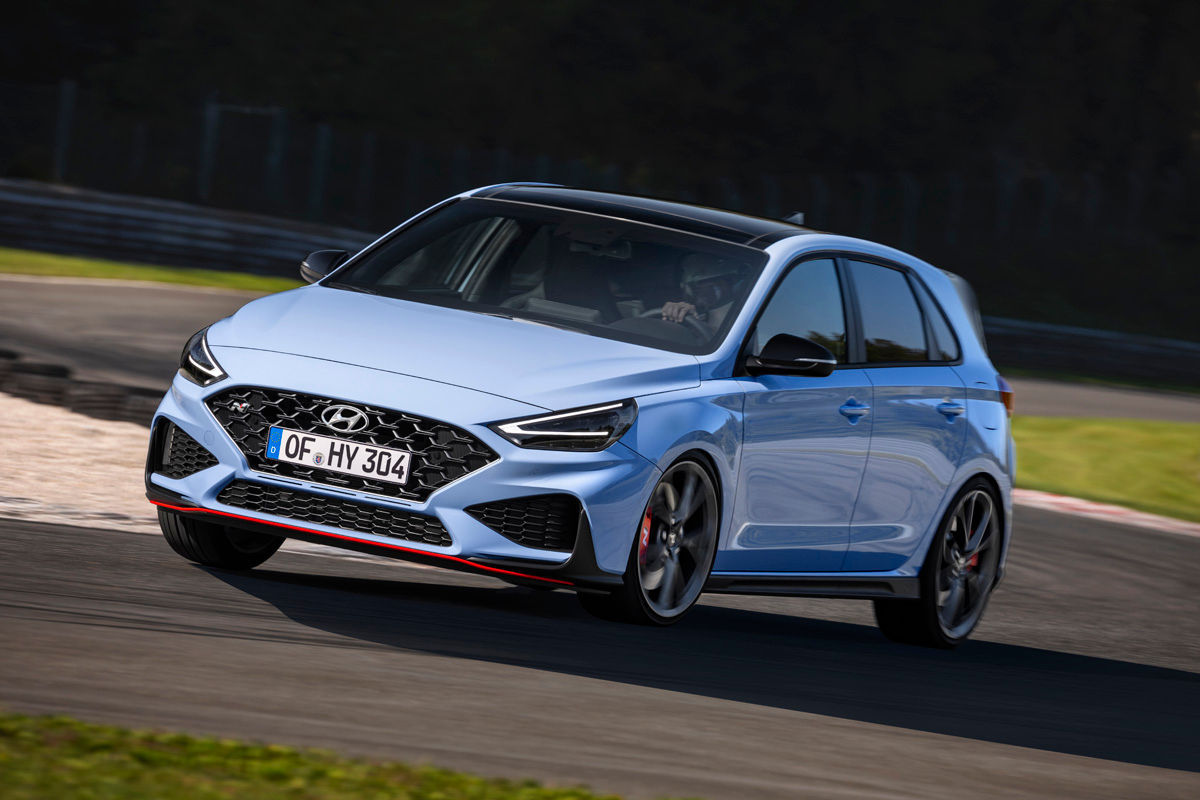
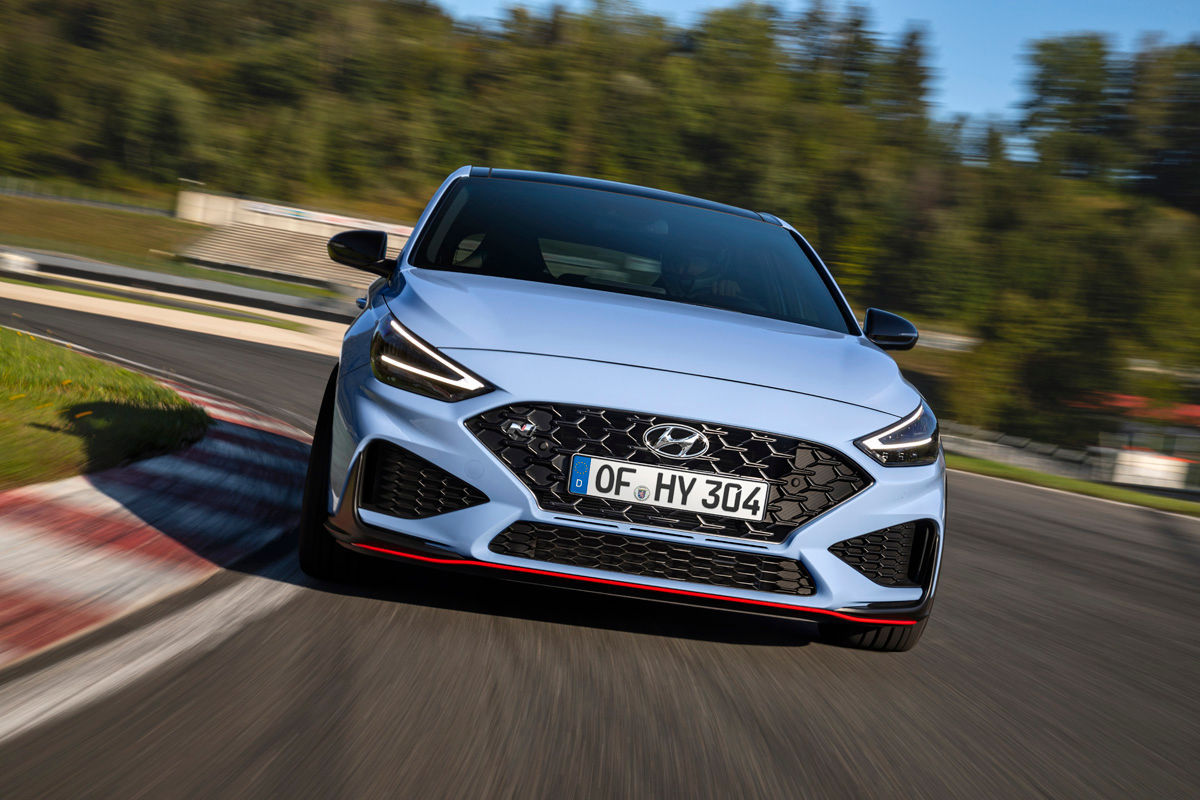
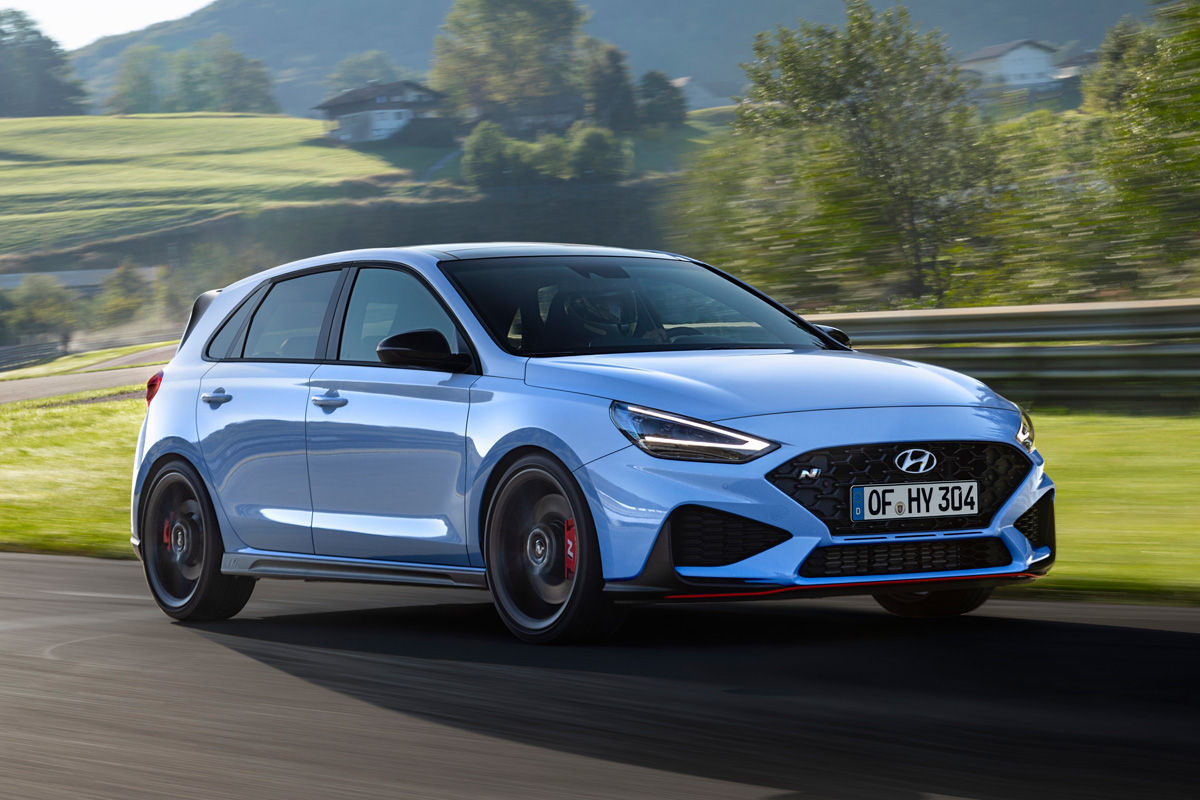
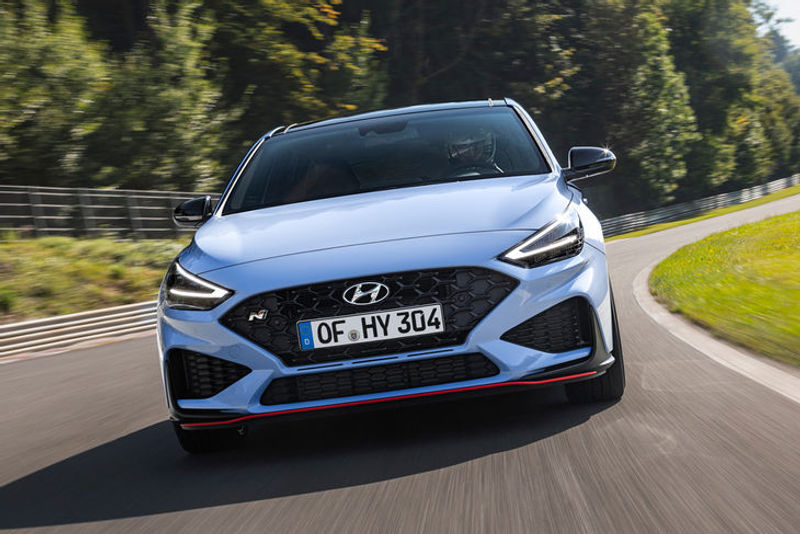
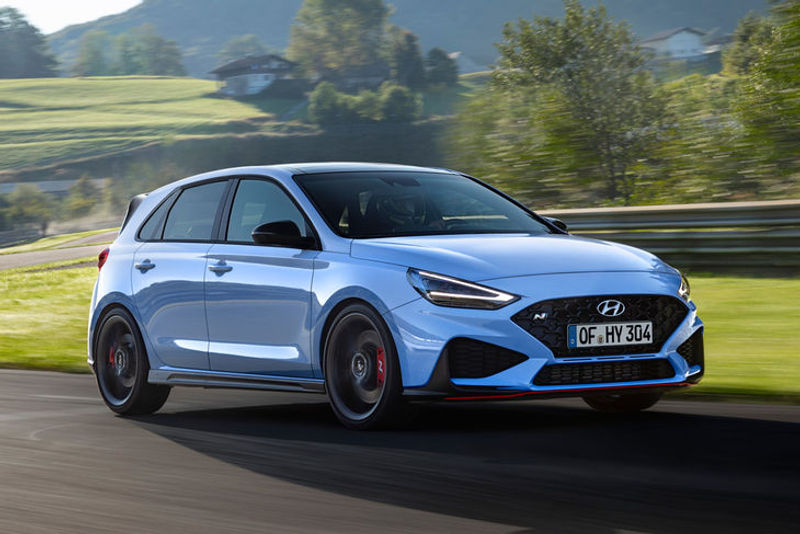
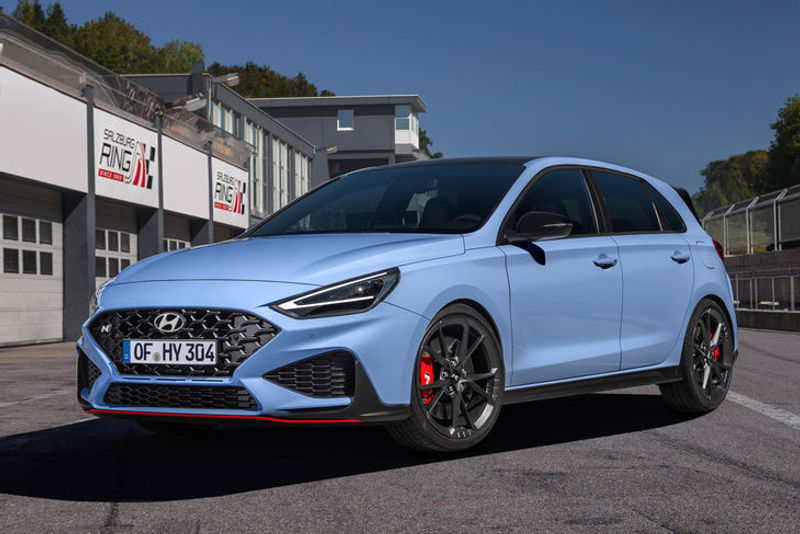
The revised i30 N can be distinguished by its V-shaped DRLs, as well as its revised grille and bumper.

However, the i30 recently underwent a facelift and so did its i30 N flagship, but fear not, the i30 N isn't going anywhere. In fact, Hyundai Automotive SA has confirmed that the updated version will be in local showrooms by mid-2021 and that it will include (or might even be limited to), the new 8-speed dual-clutch transmission (N DCT) version, which is bound to be more popular than the 6-speed manual derivative. Owners who recently bought an i30 N are unlikely to be too upset by the aesthetic updates incorporated in the facelift, because the cosmetic changes are quite subtle.  

At the front, Hyundai has fitted new LED headlamps with V-shaped daytime running lights and the reshaped grille features sharper edges, a revised mesh pattern and loses the chrome surround. The bumper, meanwhile, has shapelier air intakes that incorporate air curtains for better airflow and reduced turbulence into the car’s front wheel housings.

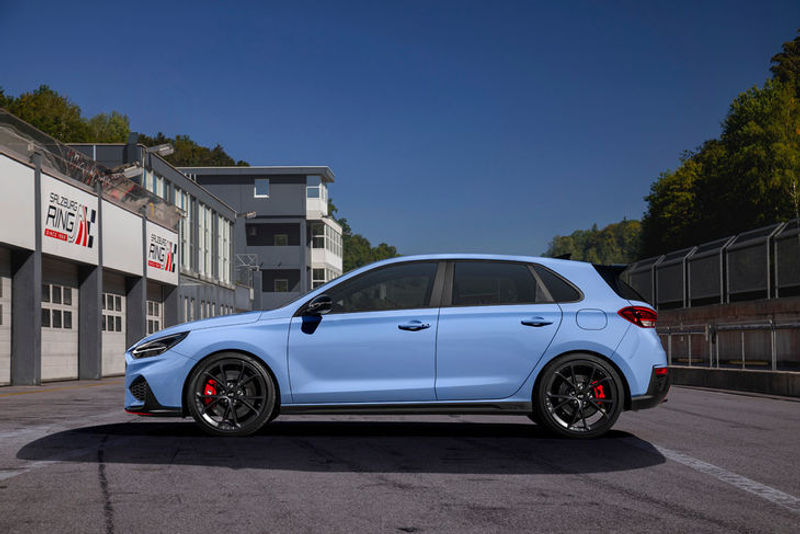
The N logo has also been integrated onto the wheel caps of new 19-inch forged alloy wheels with a dark satin grey matte finish (if the i30 N is outfitted with the Performance Package). By virtue of being 14.4 kg lighter (in total) than the current cast-alloy wheels, they reduce the vehicle’s unsprung mass and are shod with high-performance Pirelli P-Zero tyres, which Hyundai says were developed especially for the i30 N.


Although its power output has barely changed, the N DCT version of the i30 N offers an additional 39 Nm of torque.

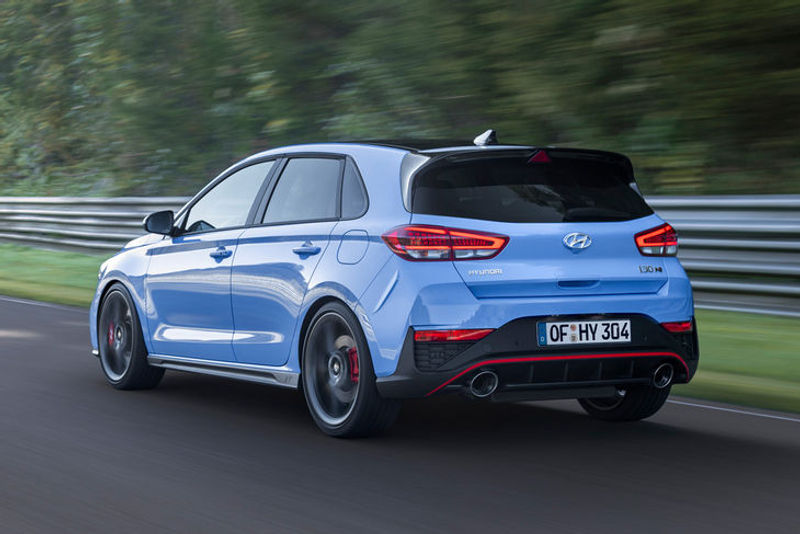
At the rear, the large wing spoiler with the distinctive N triangular brake light remains, but the tail-light clusters feature a new LED signature, while the bumper features an enlarged black cladding with a more pronounced diffuser between the pair of large exhaust pipes.

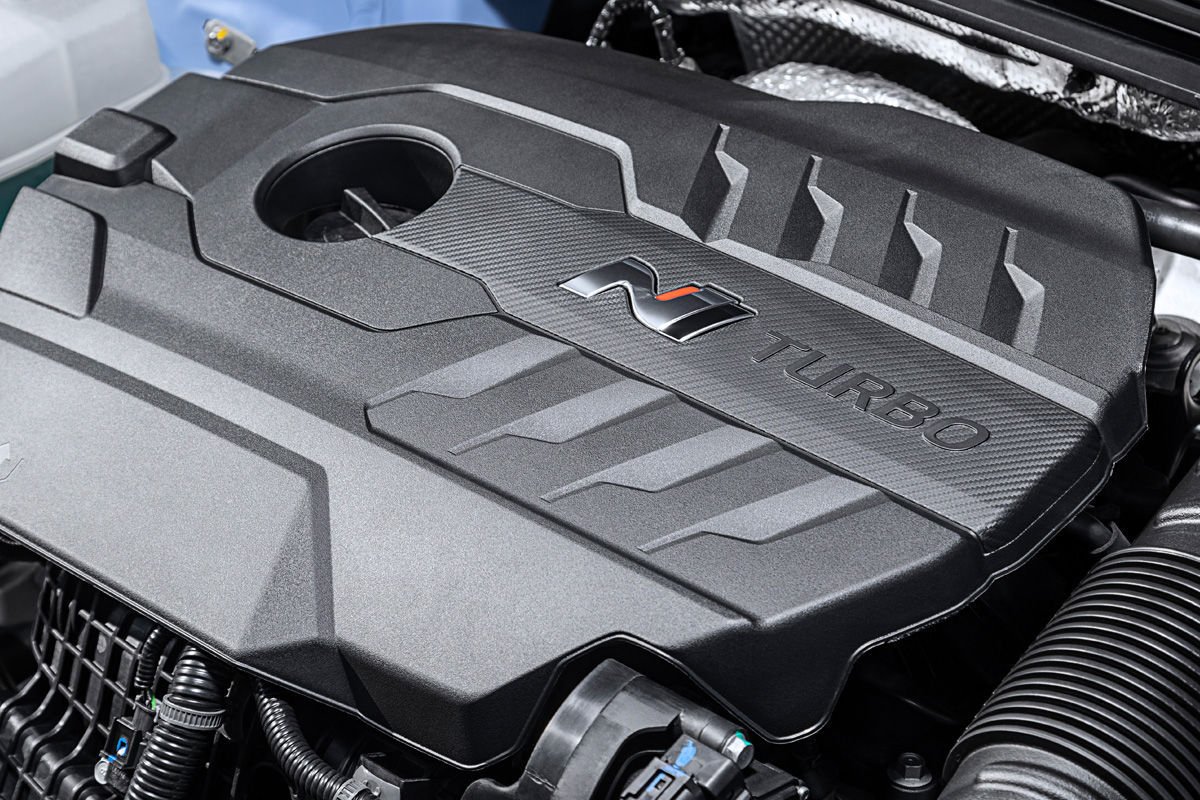
Performance-wise, the i30 N now delivers a smidgeon of extra power (206 kW vs 202 kW), but notably more torque (39 Nm) to 392 Nm. For improved acceleration in the mid- and high-speed range, the Hyundai delivers its maximum twist (392 Nm) between in a wide band – 1 950 to 4 600 rpm), while it develops peak power at 5 200 rpm.

While the maximum speed of 250 kph is unchanged, the N-DCT version of i30 N is claimed to accelerate from 0 to 100 kph 0.2 sec faster than its predecessor (5.9 sec).


Note the much larger diffuser on the post-facelift car's rear bumper, replete with U-shaped red striping.

As before, the new i30 N is equipped with Rev Matching, Launch Control, a rear stiffness bar, electronically controlled suspension (although the damping and steering systems have been retuned for improved ride and handling performance, Hyundai claims.

The aforementioned Performance Package includes an electronically controlled limited-slip differential (eLSD, although it does feature on the current SA-spec car), as well as beefed up front brakes (of which the discs have been increased from 345 to 360 mm).

However, the introduction of the N DCT 8-speed dual-clutch transmission, of which manually actuated shifts can be actuated by using the paddle shifters mounted on the multifunction steering wheel or taps forward or pulls on the i30 N’s transmission lever, is the biggest development.


The new 19-inch five double-spoke forged alloys reduce the i30 N's unsprung weight.

The N DCT is a wet-type transmission, which means it uses oil to cool – and reduce friction on – the clutch components. Incidentally, that type of setup is widely believed to be more reliable, in the long run, than “dry-clutch” dual-clutch transmissions.

What’s more, the N DCT 'box offers i30 N drivers a trio of new N performance modes:

  • N Grin Shift (NGS) is activated at the push of a button on the steering wheel, after which a countdown begins before the i30 N produces a 20-second burst of maximum power.
  • N Power Shift (NPS) engages when the car accelerates with more than 90% of throttle, thereby mitigating any reduction in torque by using upshifts to deliver maximum power.
  • Finally, N Track Sense Shift (NTS) automatically engages a sportier shift pattern for the transmission (by selecting the right gear and shift timing for optimal performance). 


To appease track-day enthusiasts, the i30 N's Performance Driving Data System features updated graphics. 

N ‘Grin Control’

As with the previous generation i30 N, the drive-mode selection system (which Hyundai calls the N Grin Control), incorporates Eco, Normal, Sport, N and N Custom pre-sets that adjust the parameters of the engine, the suspension, electronic stability control, eLSD,  exhaust sound, steering, and transmission for a variety of driving conditions. In the N Custom mode, drivers can select from Eco, Normal, Sport and Sport+ settings for each of these components to match driving preferences and road conditions. 

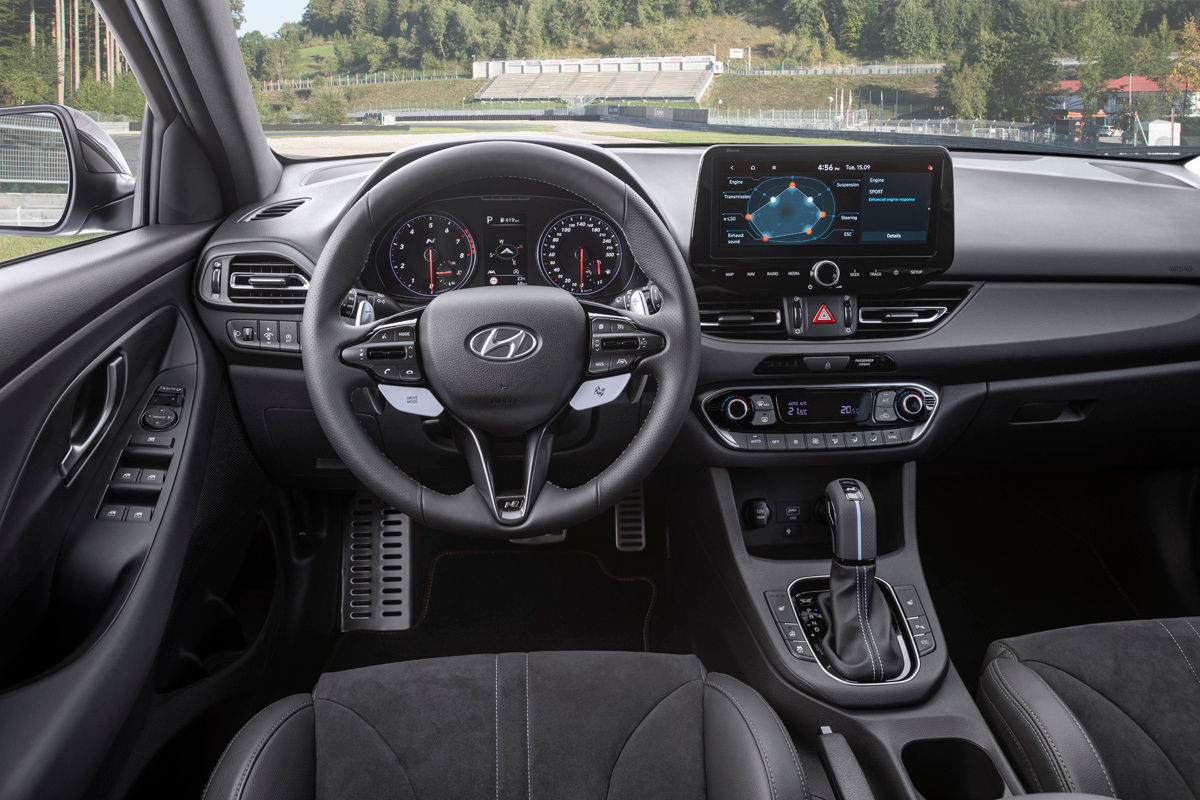
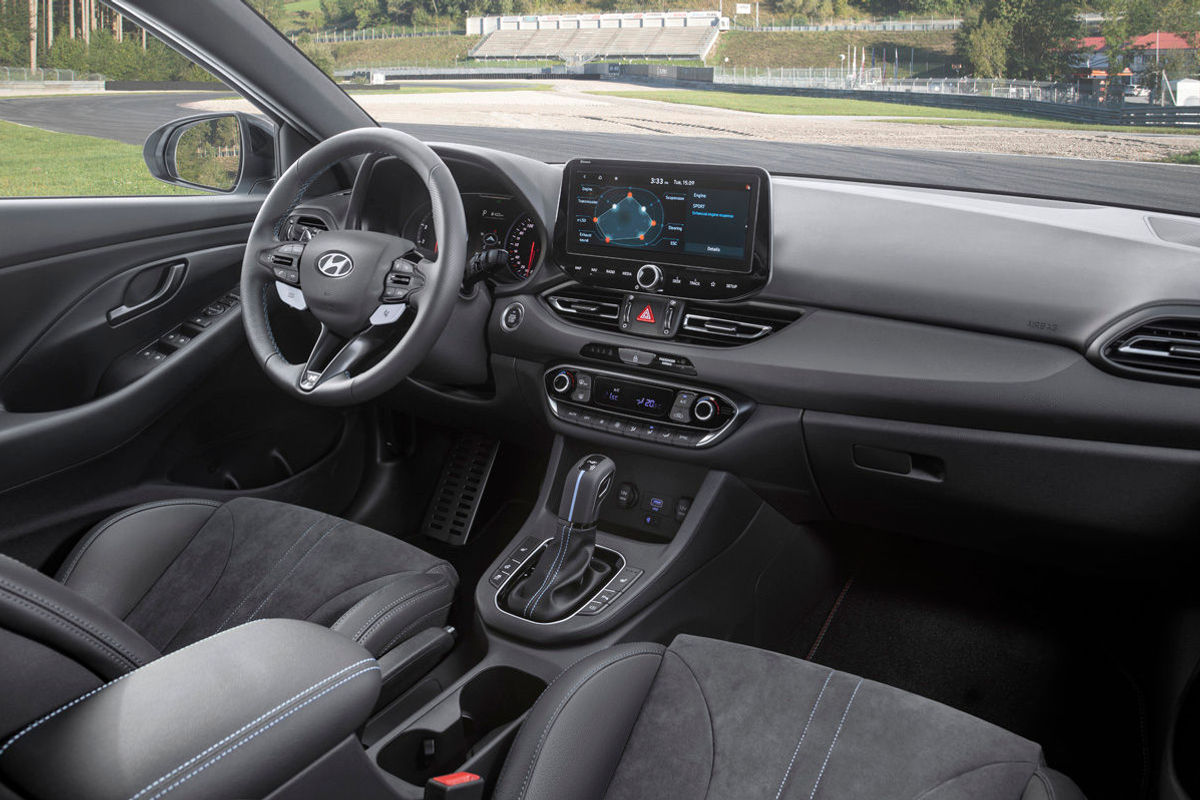
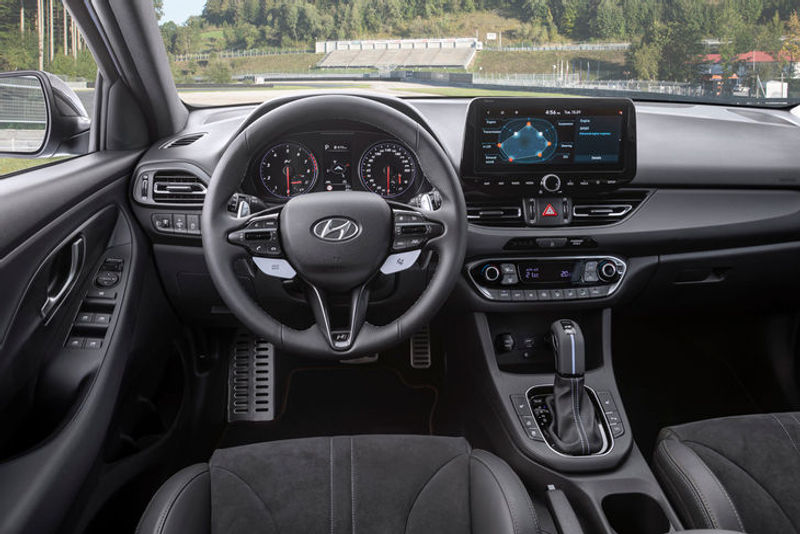
As much as the i30 N has been praised since its launch in the local market, its interior execution has erred on the side of conservatism (at least by hot-hatch standards). That still applies, but to a lesser extent… The Hyundai’s seats are trimmed in black artificial suede and leather with Performance Blue contrast stitching and the instrument cluster includes an active variable LED red zone and shift indicator, but apart from the sporty, metal pedals, the revised hot hatch features seatbelts with Performance Blue accents.


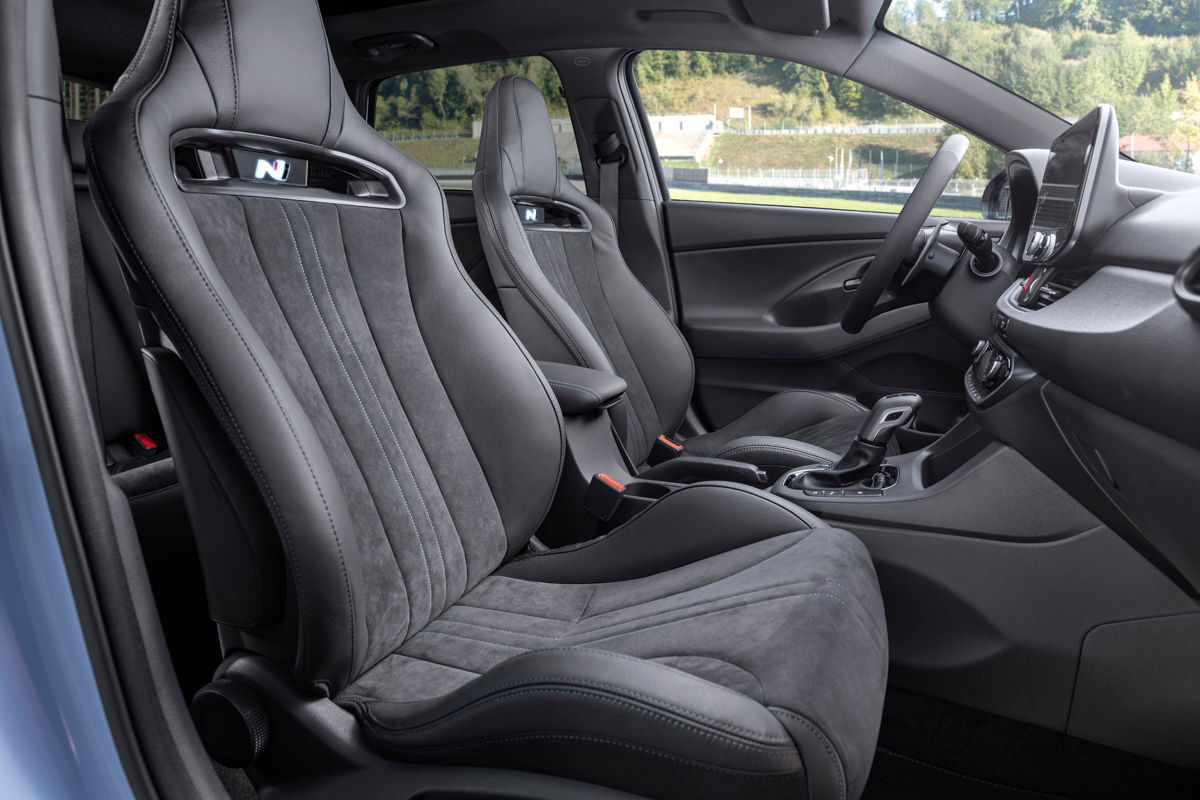
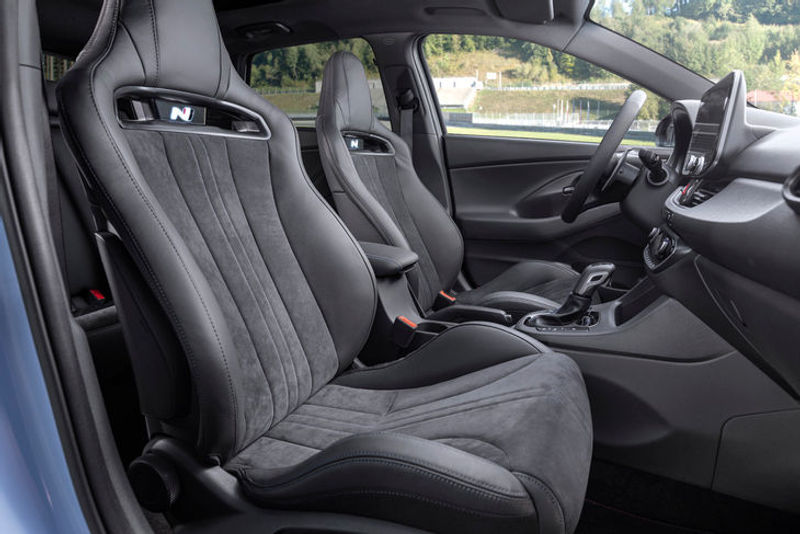
As if the N Division hasn't take a leaf out of the M Division's books already… the N Light Seats feature illuminated plates.

Hyundai now offers optional lightweight monoform front sport seats on the i30 N that offer pronounced side and lumbar bolstering and are 2.2-kg lighter than the standard items. The N Light Seats are trimmed in premium leather and Alcantara and features Performance Blue stitching as well as an illuminated N logo on an integrated headrest  

Meanwhile, the newcomer comes with a 10.25-inch touchscreen infotainment system with navigation, plus Apple CarPlay and Android Auto compatibility. It incorporates the Performance Driving Data System (with updated graphics), which saves and displays driving data (including power, torque, boost) and includes a lap and acceleration timer.


It remains to be seen whether the facelifted i30 N with N DCT will come to South Africa, but we wouldn't bet against it.

The new i30 N has been upgraded to include more Hyundai SmartSense active safety and driver assistance features, including Forward Collision-Avoidance Assist with pedestrian detection, Lane Following Assist, Blind-Spot Collision-Avoidance Assist, as well as Rear Cross-Traffic Collision-Avoidance Assist. These additional systems may not be of much – if any – consequence to our market, however. Local versions of the i30 N are equipped with ABS, stability control and front-, driver knee-, side- and curtain airbags.

A showdown's looming 

The i30 N DCT will certainly have its work cut out when it arrives on local soil. BMW aficionados are eagerly anticipating the arrival of the 128ti – a new mid-range derivative of the 1 Series, which is fitted with a limited-slip diff, M Sport suspension and a 180-kW 2.0-litre turbopetrol motor. 

The 128ti, which is scheduled to arrive during the 1st quarter of next year, is claimed to bolt from 0 to 100 kph in 6.3 sec and marks BMW's first serious stab at the traditional front-wheel-drive hot hatchback market. Although Mzansi won't get the full-fat 195 kW/400 Nm version as offered in Europe, the newcomer's outputs are almost identical to that of the Golf 8 GTI. See also: BMW 128ti: How it compares with GTI & i30 N

Although news about the Volkswagen Golf 8 has been dominated by the recent release of the R model, the next iteration of the Wolfsburg-based's brand's iconic hot hatch is scheduled to arrive a little later than the Bimmer (around the 2nd quarter of 2021). Although the GTI offers slightly less power (26 kW) and torque (22 Nm) than the i30 N DCT, our international correspondent Dave Humphreys reports that the newcomer's handling balance and overall dynamism is arguably better than its ever been: Volkswagen Golf 8 GTI (2020) International Launch Review

We can't wait to line the Hyundai, BMW and VW up for comparison. Here's a breakdown of what the market's headlining hot hatches produce:

   Max Power Max Torque 0-100 kph (claimed)
BMW 128ti 180 kW 380 Nm 6.3 sec
Hyundai i30 N N-DCT 206 kW 392 Nm 5.9 sec
Honda Civic Type R (manual) 228 kW 400 Nm 5.8 sec
Mercedes-Benz A250 AMG Line 165 kW 350 Nm 6.2 sec
Renault Megane RS 280 Lux/Cup 205 kW 390 Nm 5.8 sec
Renault Megane RS 300 Trophy Auto 221 kW 420 Nm 5.7 sec
Volkswagen Golf 8 GTI 180 kW 370 Nm 6.3 sec
Volkswagen Golf 7.5 GTI TCR 213 kW 380 Nm 5.6 sec

* Note: We've left out the A35 AMG 4MaticAudi S3 and Golf 8 R because they're all-wheel-drive cars.

Related content

Drag Race! Honda Civic Type R vs Hyundai i30 N

Drag Race: VW Golf GTI TCR vs Hyundai i30 N

Volkswagen Golf 8 GTI (2020) International Launch Review

BMW readies its GTI-rival – the 128ti

Renault Megane RS 300 Trophy (2020) Review

Hyundai i30 N (2020) Review

Hyundai unveils facelifted Kona & N-Line derivative

Is N the new M?

Volkswagen Preparing ID.6 Luxury Sedan

Despite the relentless onslaught of the SUV, Volkswagen is preparing an all-electric sedan. 

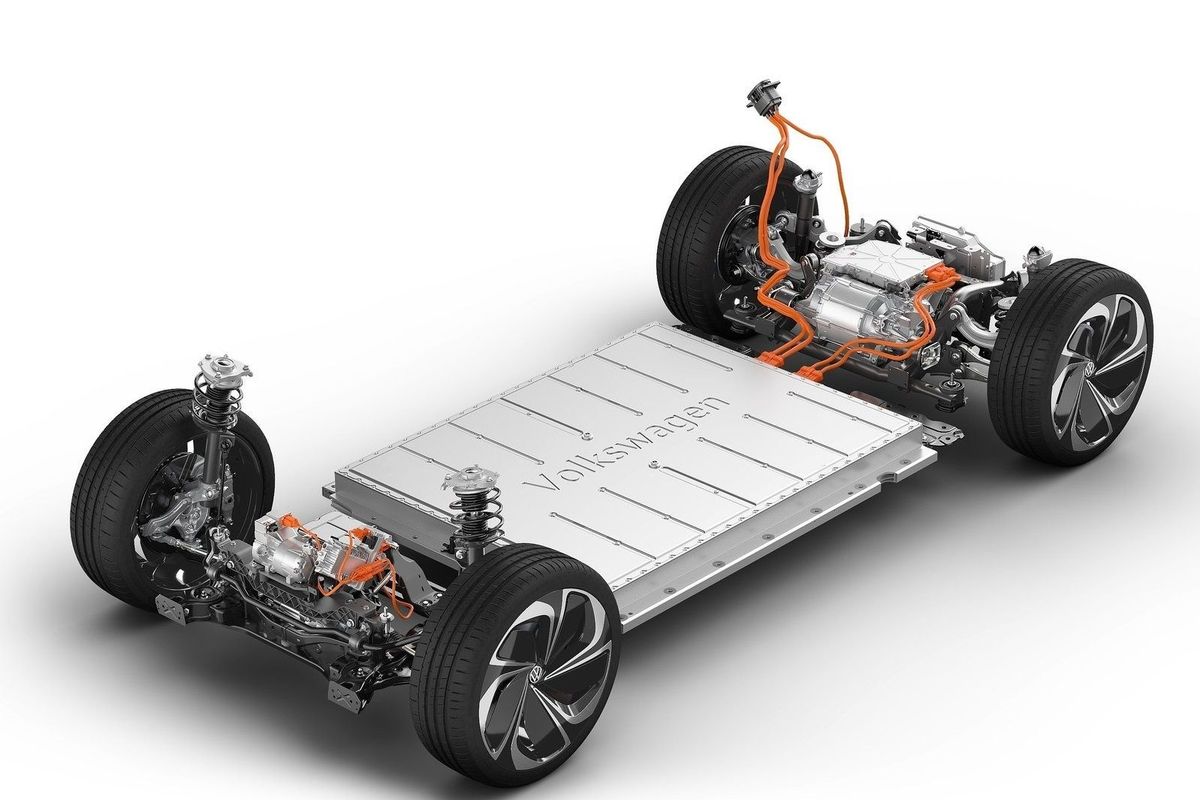
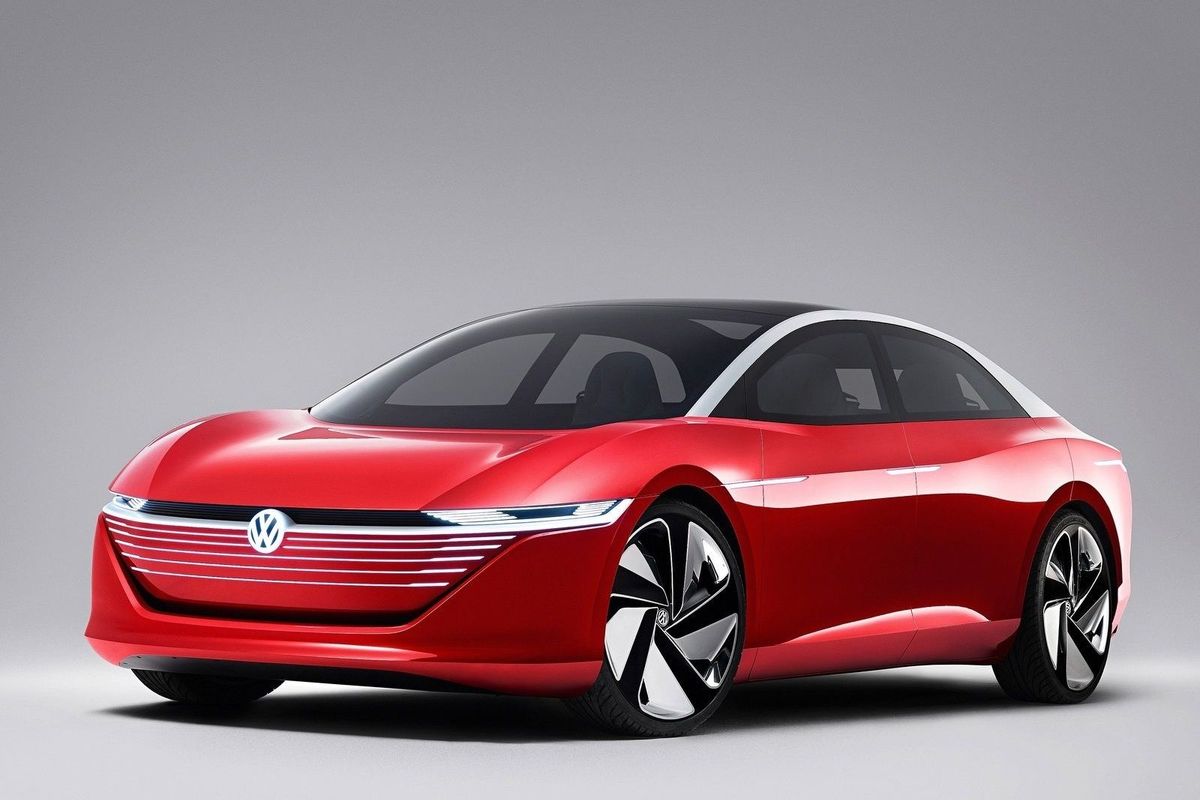
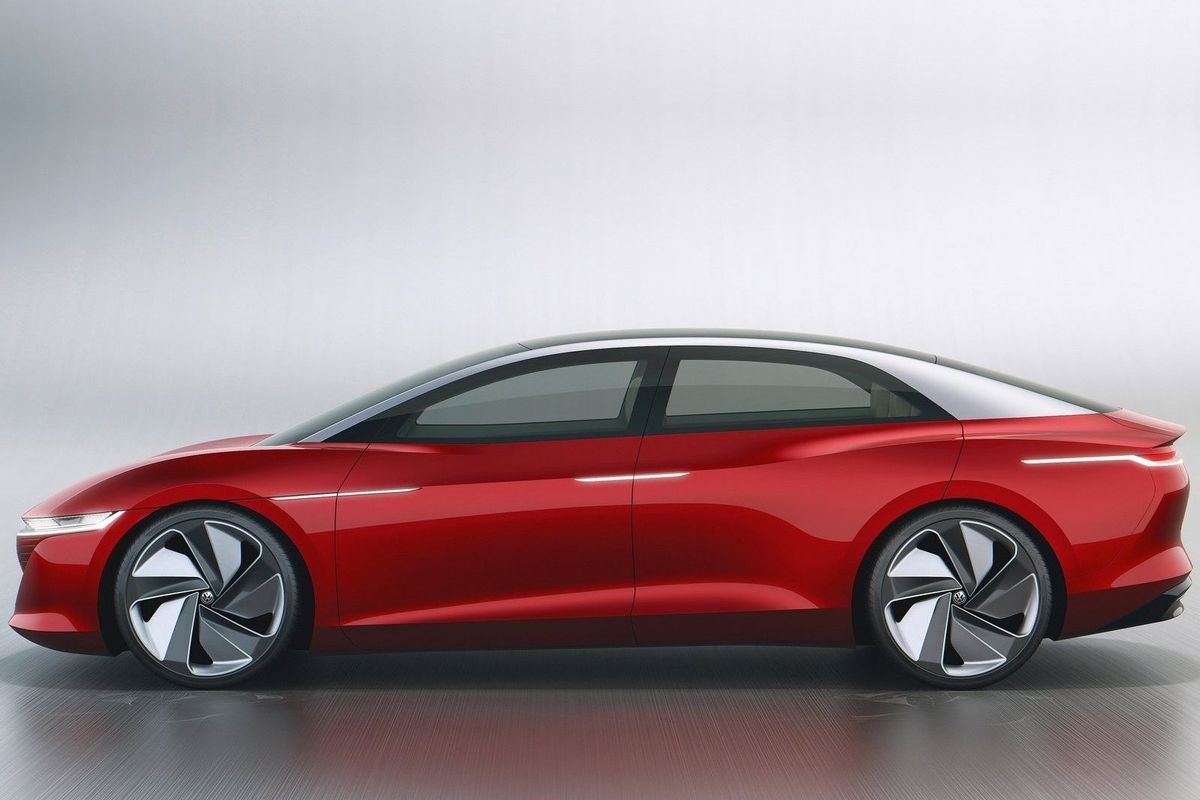
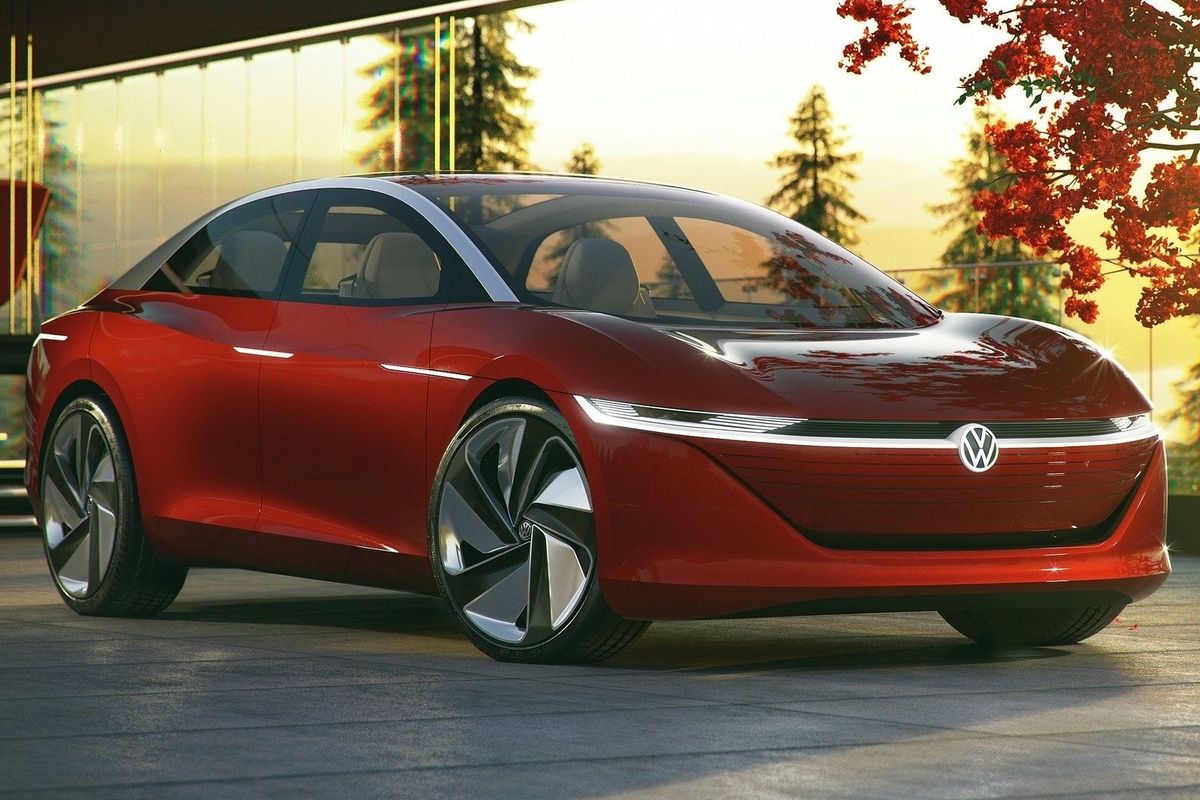
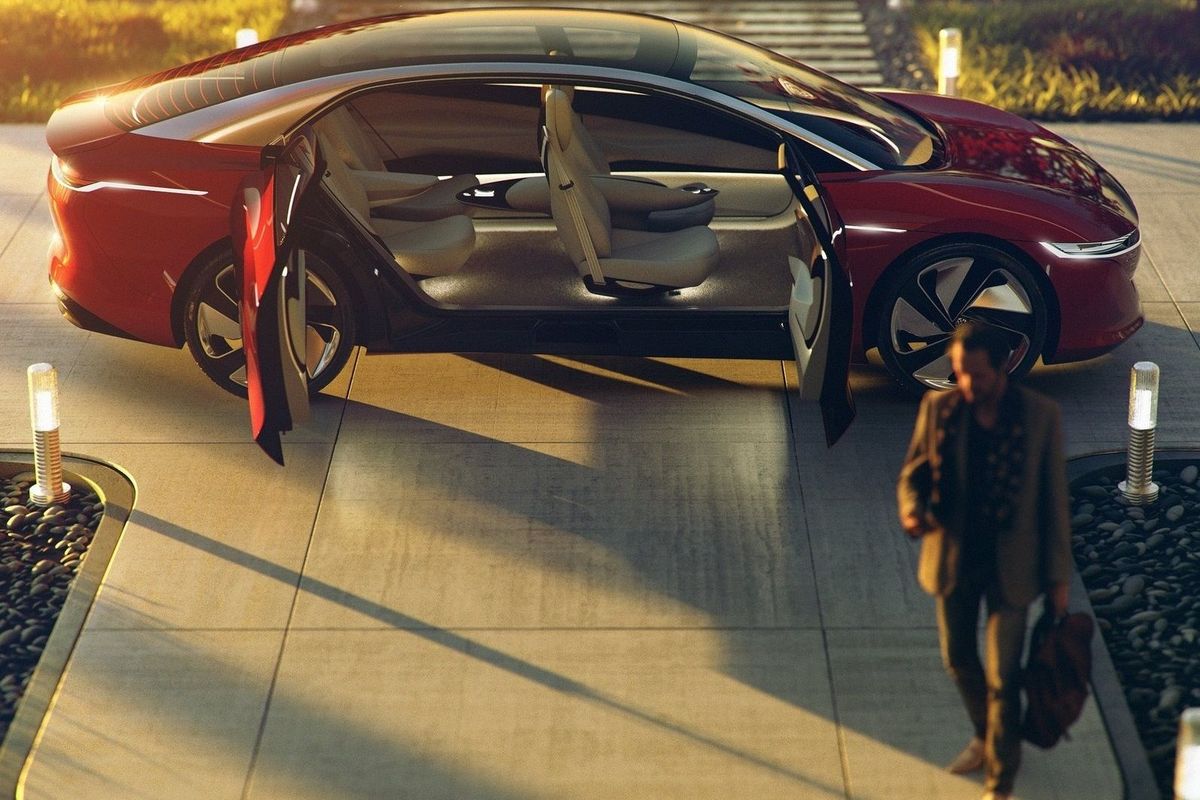
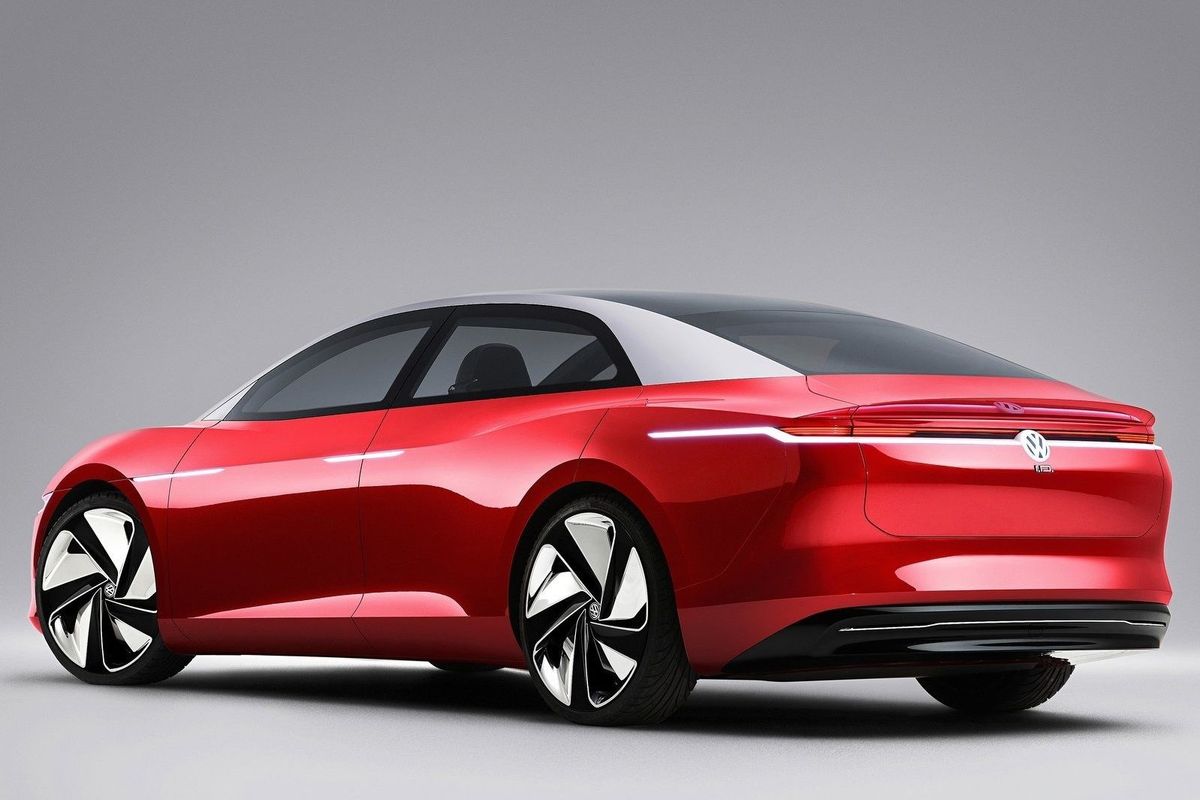
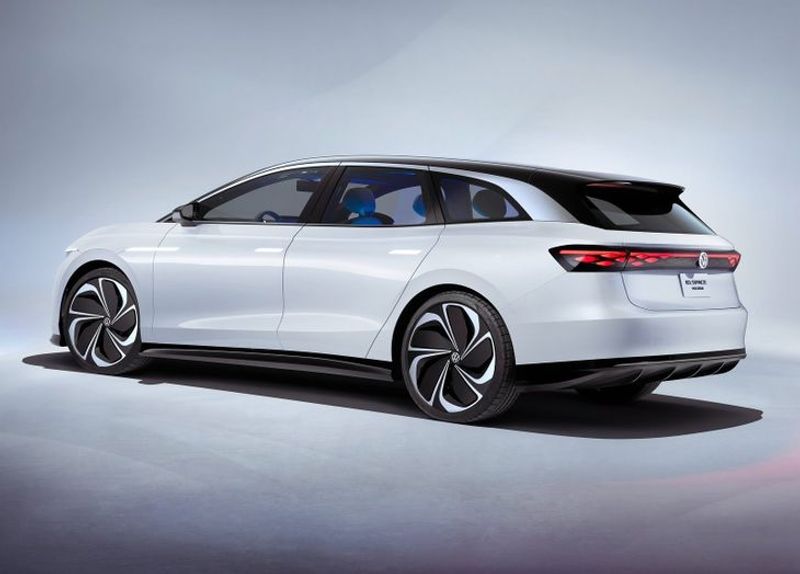
The 5th electric car from Volkswagen's ID range will be hitting showrooms around 2023 and it will be a sedan. Unofficially dubbed the Volkswagen ID.6 according to AutoCar, the newcomer is essentially going to be a production version of the Volkswagen Vizzion Concept, but we won't be surprised if we see elements from the ID Space Vizzion Concept either.

Built on Volkswagen Group's modular and scalable MEB platform, the ID.6 promises around 700 km of electric range. The secret to this impressive range is "improved lithium battery cell efficiency, a reduction in rolling resistance and new aerodynamic developments" according to AutoCar. There's also talk of 200 kW fast charging, which will allow about 230 km of range to be loaded in just 10 minutes. 

There's a potentially sportier GTX model with a two-motor setup that will hit 100 kph in about 5.6 seconds. The single-motor derivative should be able to reach 100 kph in around 8.5 seconds. 

Why a sedan though? Despite SUV sales still surging ahead, Volkswagen believes the Chinese market will be key to the ID.6's success. Production of the vehicle is likely to take place at the VW facilities at Emden (earmarked for ID.4 and ID.5 in 2022) and Zwickau.

Chinese production will take place as part of the joint-venture deal with SAIC and FAW in 2024. Emden is currently home to Passat and Arteon, and this facility is currently being converted from ICE production to EV production. Volkswagen is bolstering the facilities and by the time the work is complete, there'll be capacity for up to 300 000  electric vehicles by 2023.

Does this mean the end of the road is nigh for the Passat and Arteon? Despite the latter's recent update, sales have been sluggish with the updated Tiguan, T-Roc and T-Cross headlining the sales charts. Given the timings, we suspect the Arteon and Passat will bow out in 2023, to coincide with the launch of the new all-electric range.

Further Reading

Volkswagen Arteon R Headlines Updated Range

Volkswagen Passat TDI (2016) First Drive

Facelifted Tiguan only coming to SA in 2021

Volkswagen T-Roc (2020) Launch Review

Custom AMG engines for Aston Martin

A lot more German engine tech, for Aston. 

The Aston Martin and AMG business strategy is set to strengthen, as many had predicted.

With former AMG boss, Tobias Moers, now in the position as Aston Martin CEO, it was only a matter of time before Mercedes-Benz started increasing its influence.

The British luxury automotive brand is in trouble. With Brexit, it risks complicated tariffs on its engine supply chain, which it mostly sources from Germany.

Aston Martin is also struggling with the complexity of electrification and reviving its Lagonda brand. Moers understands the luxury high-performance car customer better than most, having built AMG into a dominant brand.

Mercedes-Benz has announced that it wishes to attain a 20% shareholding in Aston Martin and for the British company, that German proportion of ownership, could mean better engines.

AMG already supplies its 4-litre turbocharged V8 engine architecture to Aston Martin, but not in the most potent states of tune. At a recent industry event, the company’s Canadian chairman, Lawrence Stroll, preposed a future supply chain of bespoke AMG engines, for Aston Martin’s models.

Mercedes-Benz will carefully analyse the risk of giving Aston Martin engines with different outputs to its own. There is a very low likelihood that AMG will supply Aston Martin with more powerful engines.

The more probable outcome is recalibrated software and exhaust systems, to deliver slightly different throttle response characteristics and a specific Aston Martin sound signature. The engines may also have different torque delivery characteristics too.

It is also possible that AMG is more willing to share a customized version of its petrol engines, for Aston’s use, due to the German brand transitioning to greater electrification. As fewer of its V8 petrol engines will be required in future, the planned production output needs to go somewhere – and Aston is an ideal destination.

As battery packs and electric motors become a more important and integral element of AMG’s next-generation powertrains, it will be less bothered sharing platforms such as the 4-litre turbocharged V8, with others. Aston Martin has also committed to equipping petrol motors to certain models within its range after the 2030 great British cull of internal combustion engines.

Related content

New Cars For SA in 2021

Aston Martin DB5 Goldfinger Continuation [w/video]

Aston saves the manual with V12 Victor

New Mitsubishi Outlander Teased

Following leaked images on Instagram, Mitsubishi has now released an official teaser image and some details for its new forthcoming Outlander which is due to go on sale in February 2021. 

The current Outlander SUV has been on sale in South Africa since 2013 and Mitsubishi updated the Outlander earlier this year, but a replacement is close to being revealed. 

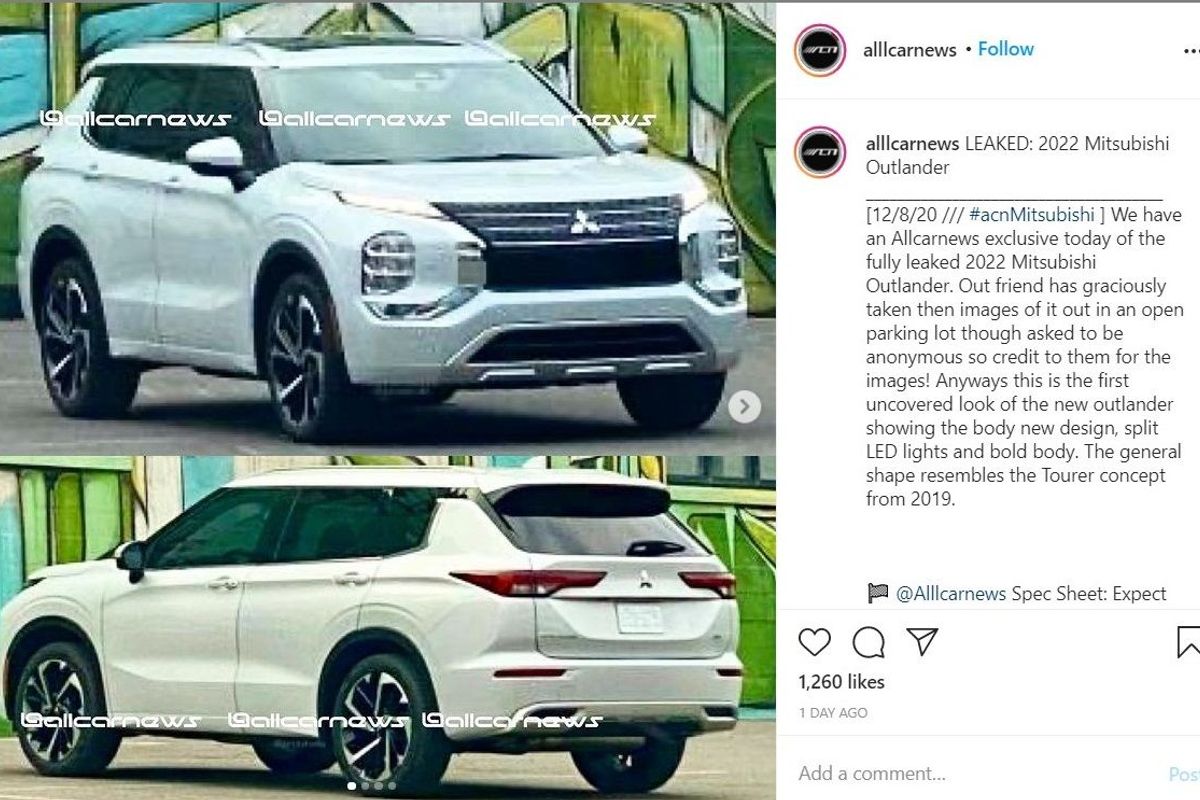
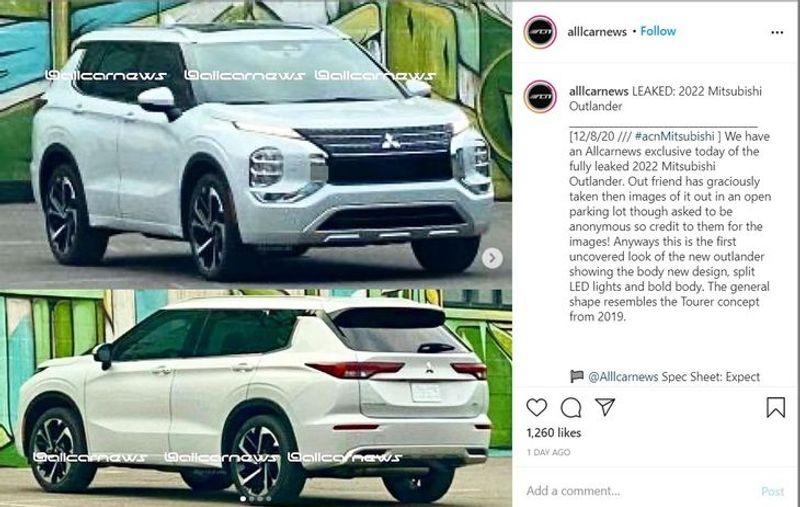
An image leak appeared on Instagram account, allcarnews, earlier this week and while the quality of the images are poor, they do reveal what the new Outlander will look like. Following the leak, Mitsubishi has now released a shadowy teaser image of the new Outlander as well as providing a few additional details.

Mitsubishi has revealed that the new Outlander will make its debut in the U.S., Canada and Puerto Rico in February 2021 before going on sale in other international markets. The brand says that the new Outlander was developed under the Japanese “I-Fu-Do-Do” philosophy which means 'authentic' and 'majestic' and features the brand's latest Dynamic Shield front-end. 

“The OUTLANDER is an iconic SUV for the company, so when we developed the next-generation model, we took inspirations from our rich SUV heritage to realize a bold and confident styling with a solid stance that excites our customers,” said Seiji Watanabe, Division General Manager of Design (Head of Design), MMC. “The all-new OUTLANDER is the first model epitomizing the new generation of Mitsubishi design and the frontrunner of our design strategy.”

 
The image leak on Instagram shows a bold design for the new Outlander. Do you like it? 

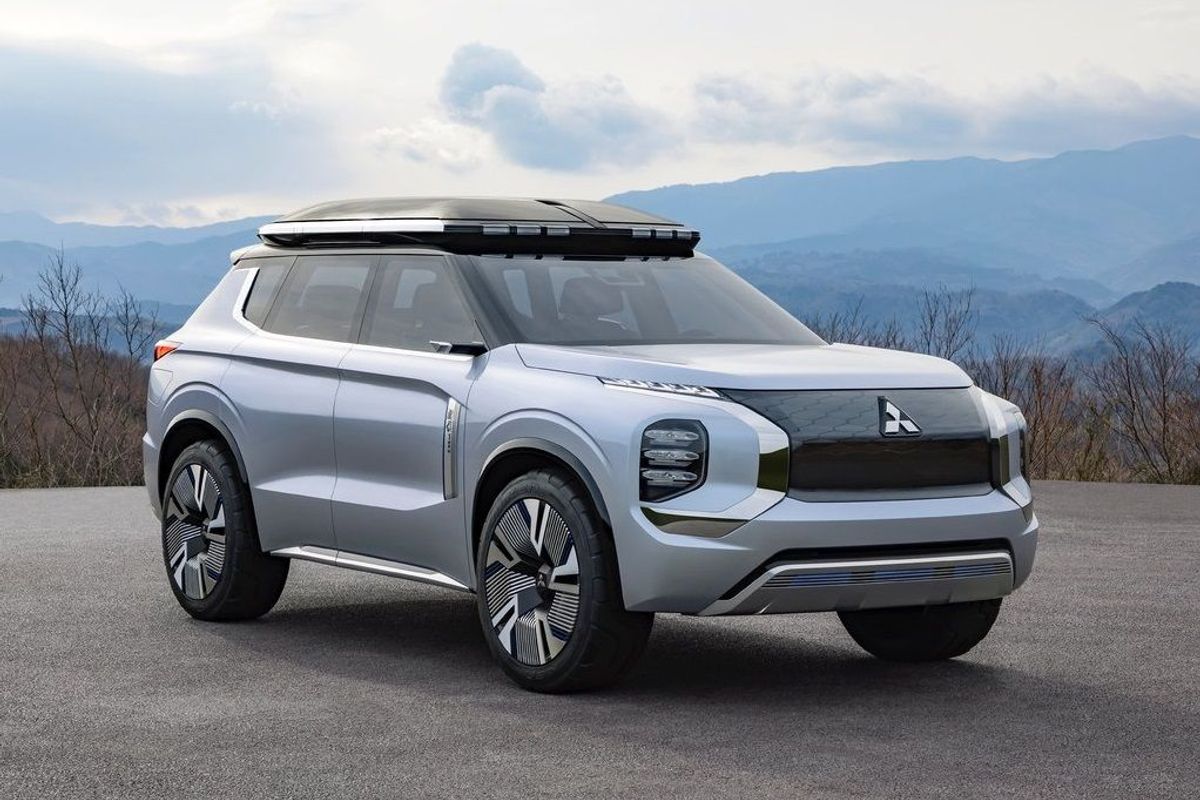
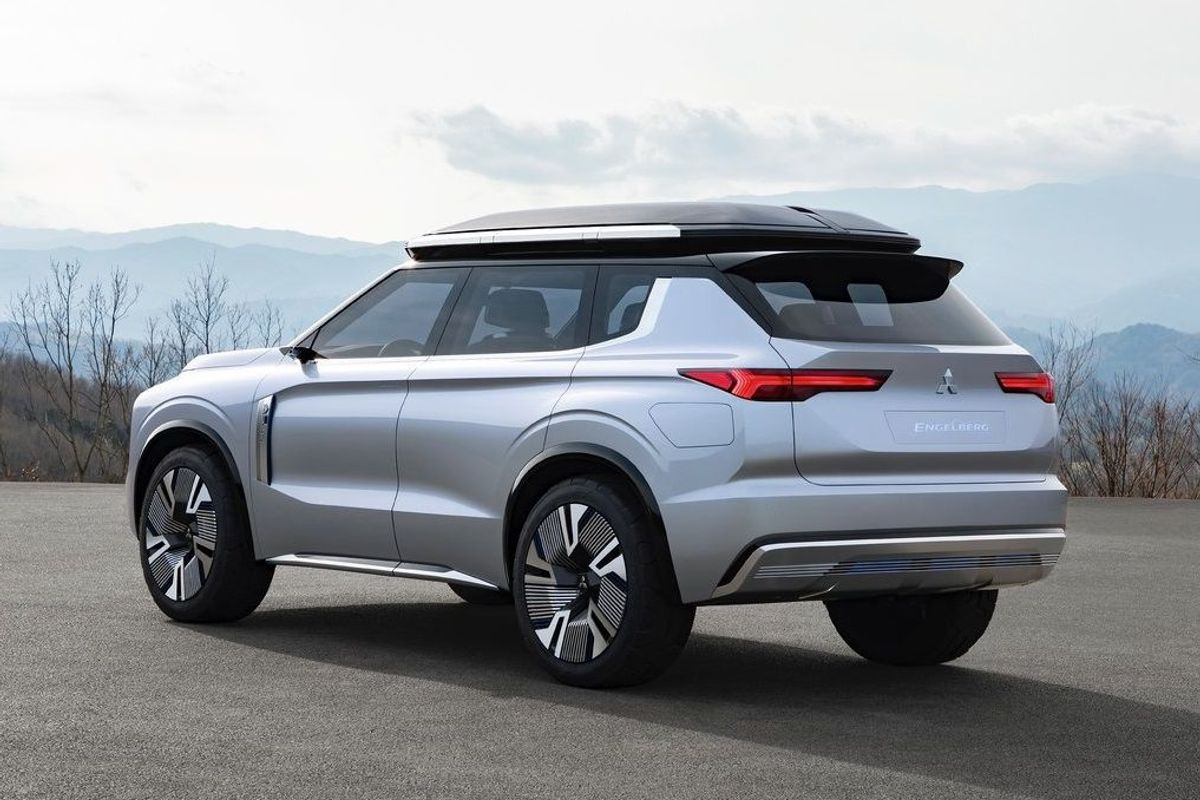
Back in 2019, Mitsubishi revealed its Engelberg Tourer Concept which is a twin motor, 4-wheel-drive, Plug-In Hybrid Electric Vehicle (PHEV) concept and it appears that the new forthcoming Outlander has taken inspiration from the concept which is clearly evident in its front-end design and at the rear. Note the split headlight design which also features on other Mitsubishi products such as the Eclipse Cross and Triton double-cab bakkie

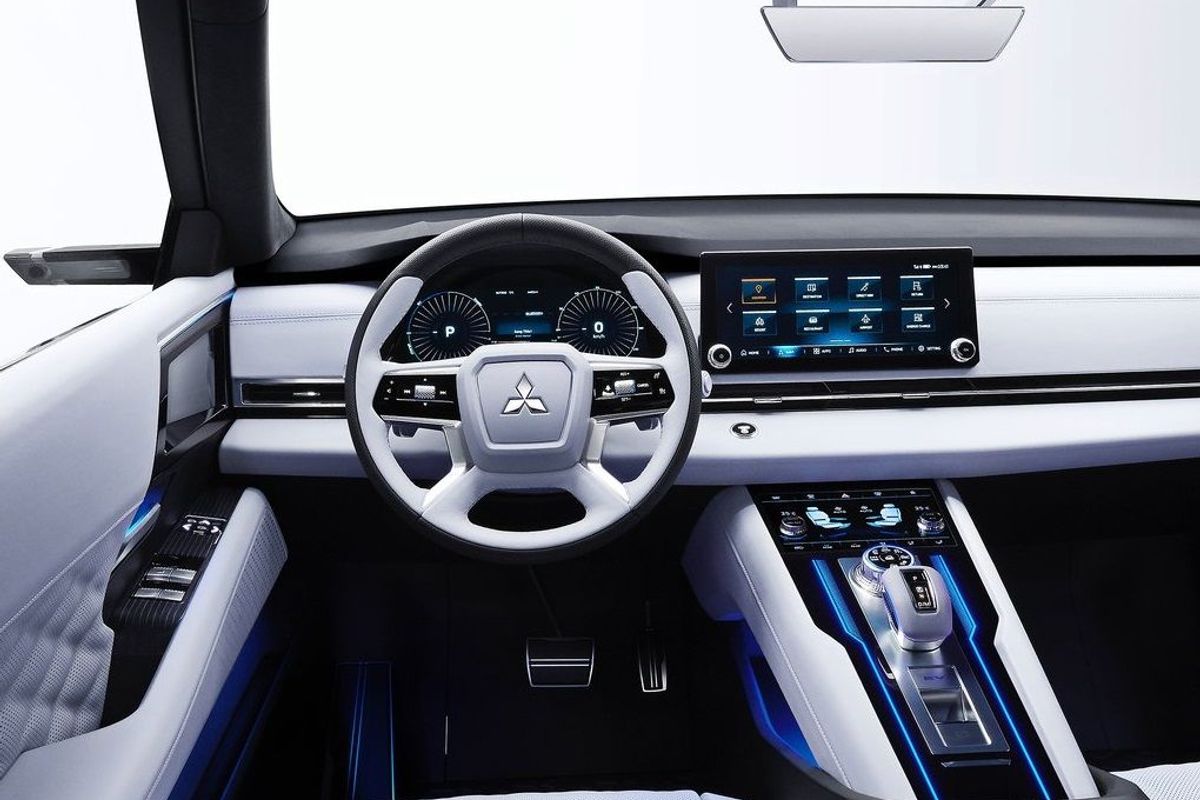
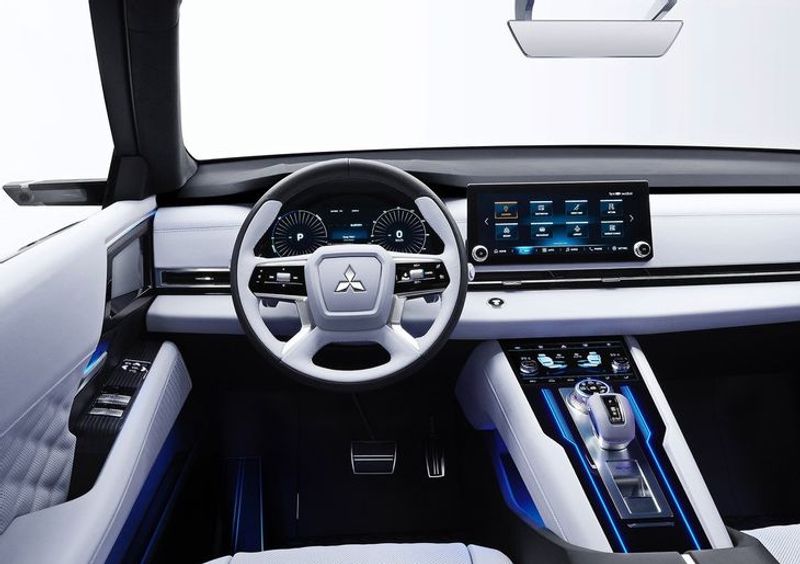
While we wait for the full reveal of the new Outlander, perhaps the Engelberg Tourer’s interior also provides clues as to what’s coming from the production Outlander and if that’s the case, the new Outlander will feature a thoroughly modernised interior compared to the outgoing model. 

The new Outlander is will be larger than the current model and is expected to be powered by a Nissan-sourced engine which will likely be a 140 kW 2.5-litre engine. A plug-in hybrid model will also be offered in select markets.

We will keep you updated as soon as official details are revealed. 


The 2019 Engelberg Tourer concept provides clues as to what to expect from the new Outlander. 

Buy a Mitsubishi Outlander on Cars.co.za

Related Content 

New Cars For SA in 2021

Mitsubishi Eclipse Cross Updated for 2022

Mitsubishi Xpander Cross for SA

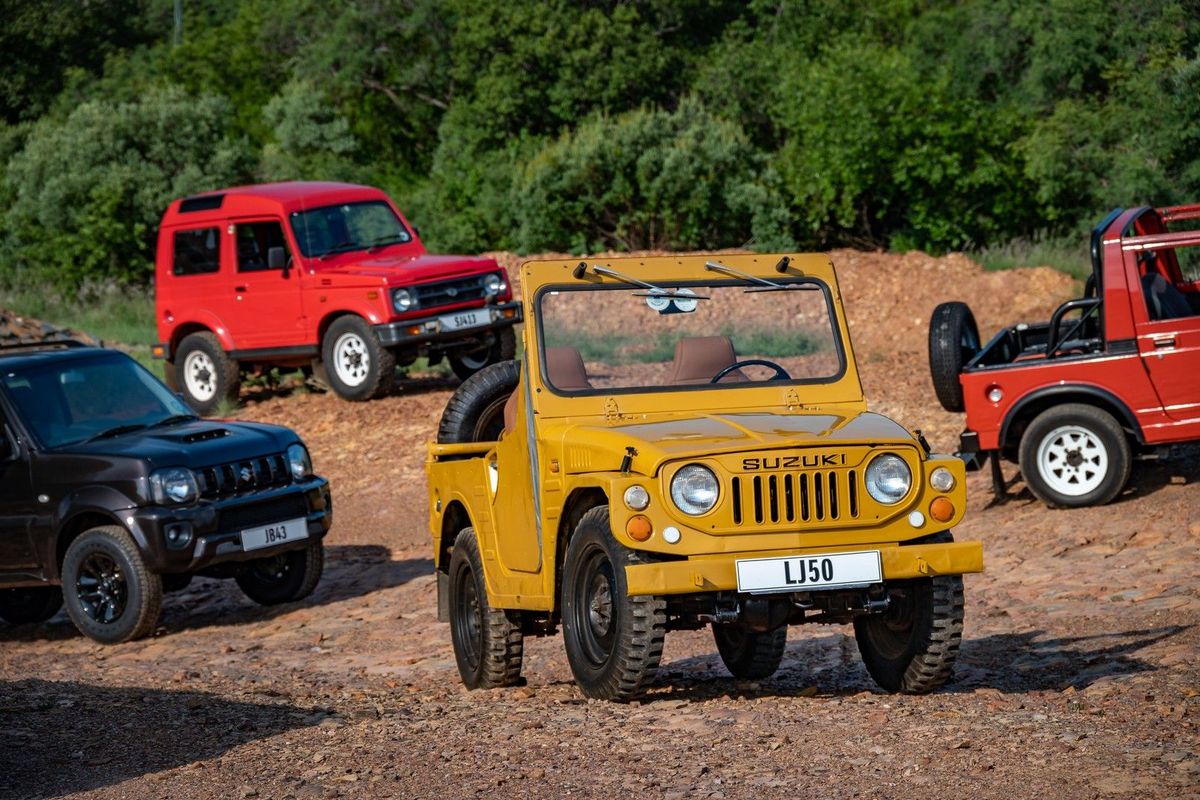
Suzuki Jimny Celebrates 50 Years of Cool

The Suzuki Jimny has a cult following around the globe. With its cute looks and go-anywhere attitude, there's a clear reason why these little SUVs are so adored. Suzuki South Africa recently assembled every generation of Jimny to celebrate the model's 50th birthday, and David Taylor was there for the family reunion.

There's something incredibly likeable about this plucky, non-conformist vehicle. Often bought by the heart and not the head, the Jimny is not a perfect multipurpose offering – at all. It demands compromises by virtue of its minuscule fuel tank and lack of functional luggage space, but then, if you slide behind its simple controls and set off on a journey, all objectivity flies out the window. And if you venture off-road, well, you'll be a convert.

The Jimny story started officially in 1970, but its origins go back a bit further to 1967. The Japanese car market has the Kei car segment, essentially a market for ultra-compact (by modern standards) and affordable commuter-focused motoring. The Kei car aimed to revolutionise the car world, by offering a back-to-basics vehicle whose sole purpose was transportation. A tiny outfit called Hope introduced its ON360, a small 4×4 that would comply with Kei car regulations. It was a dismal failure, with just 15 units manufactured, and build quality was reportedly awful and mechanical reliability even more so. Hope, in an effort to try to recoup its costs (and pride), put the ON360's plans up for sale and Suzuki snaffled them.


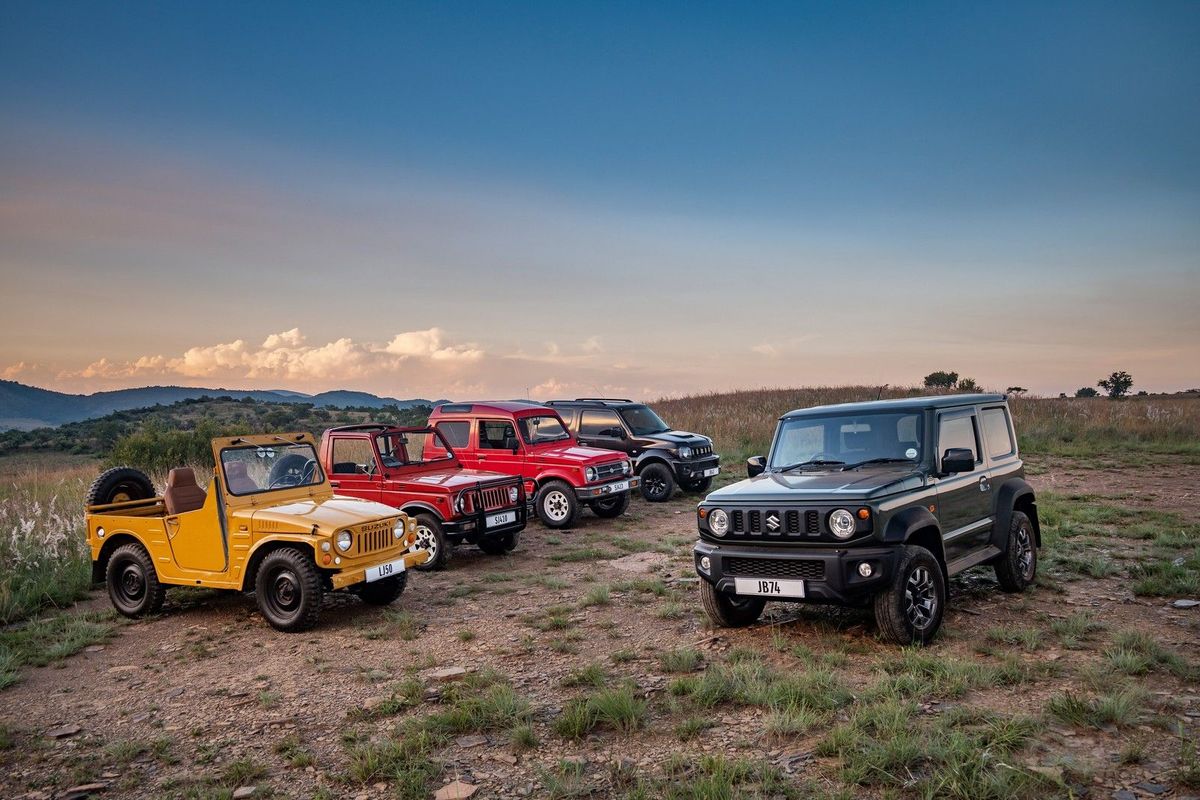
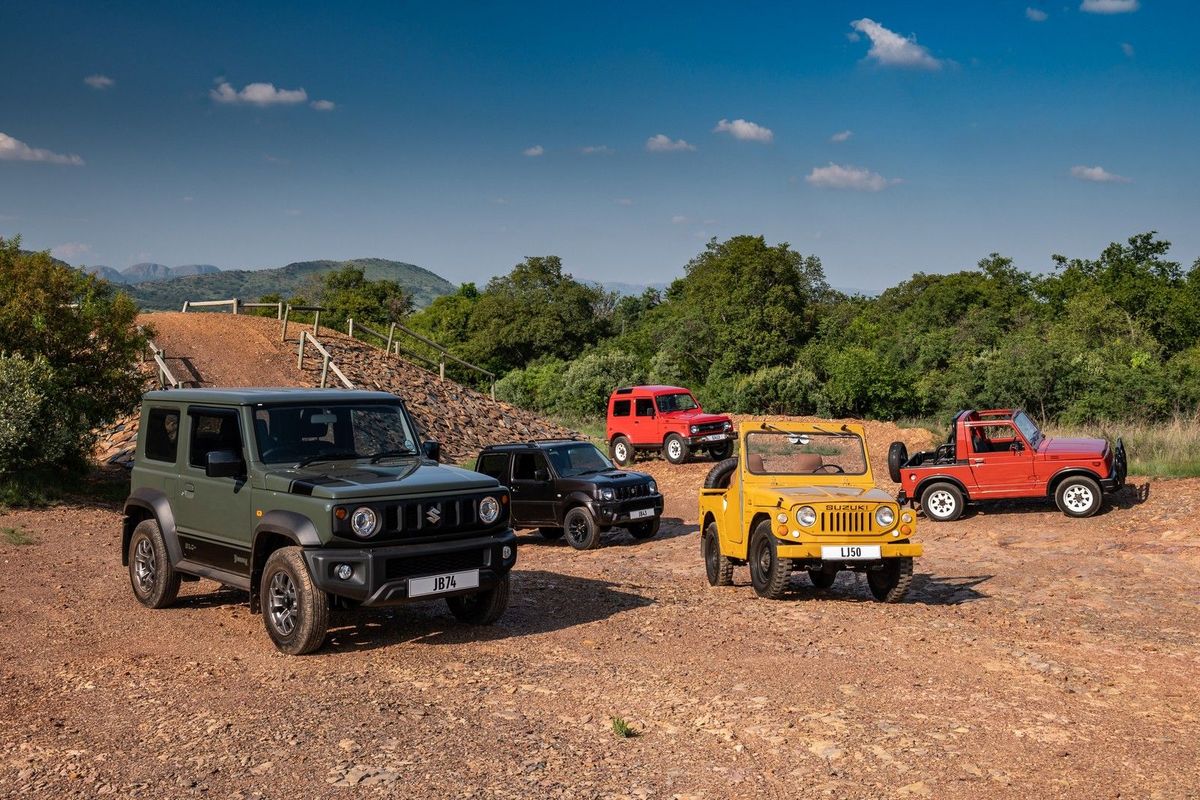
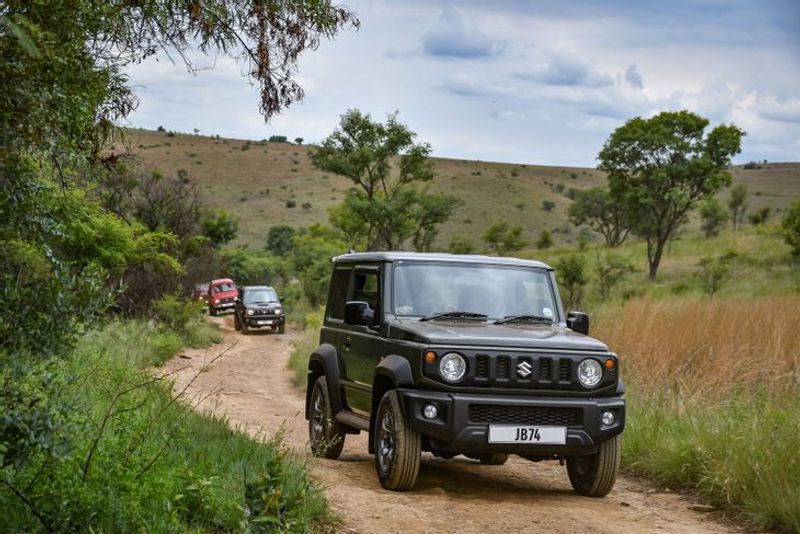
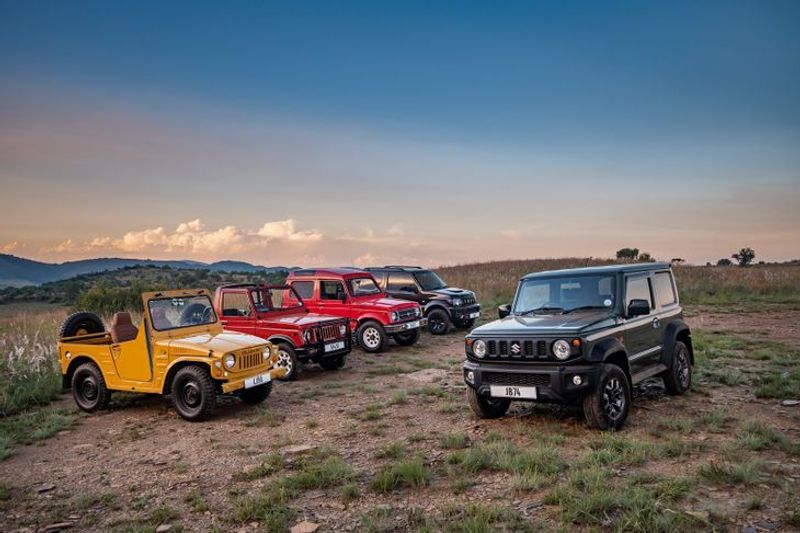
The modern Suzuki Jimny leads the older generation models

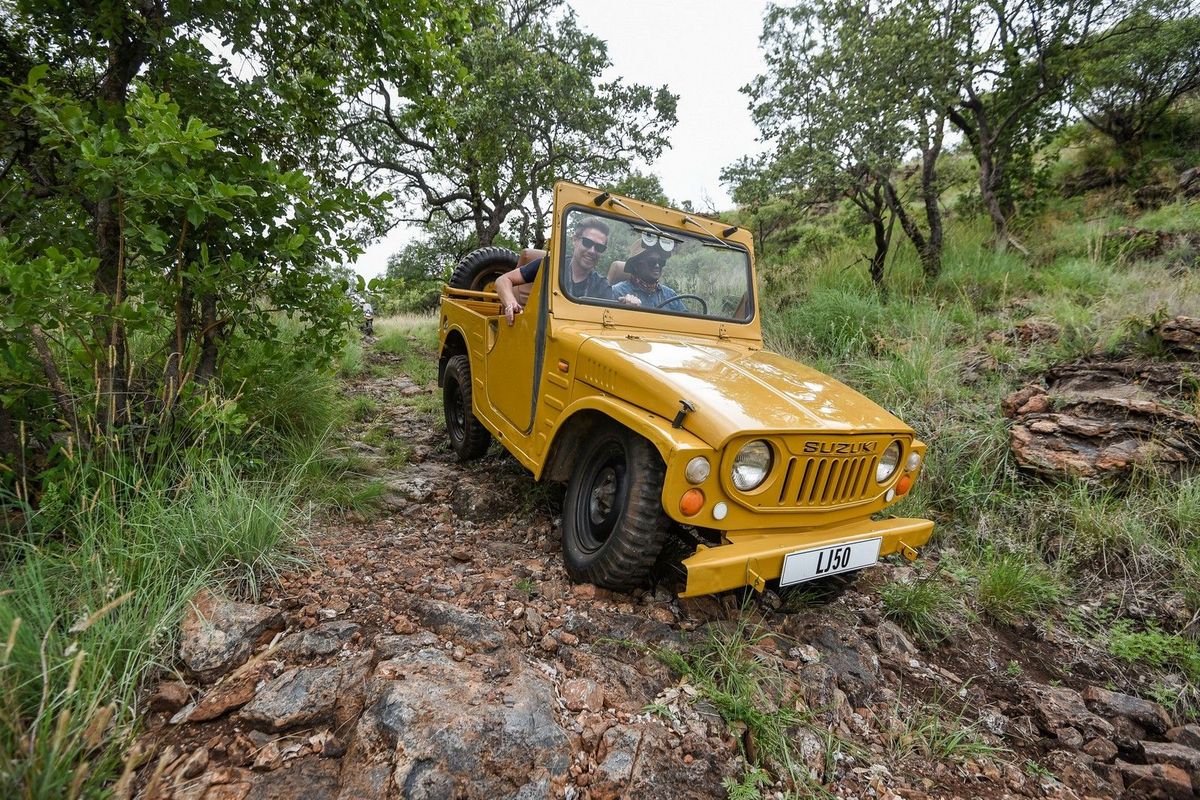
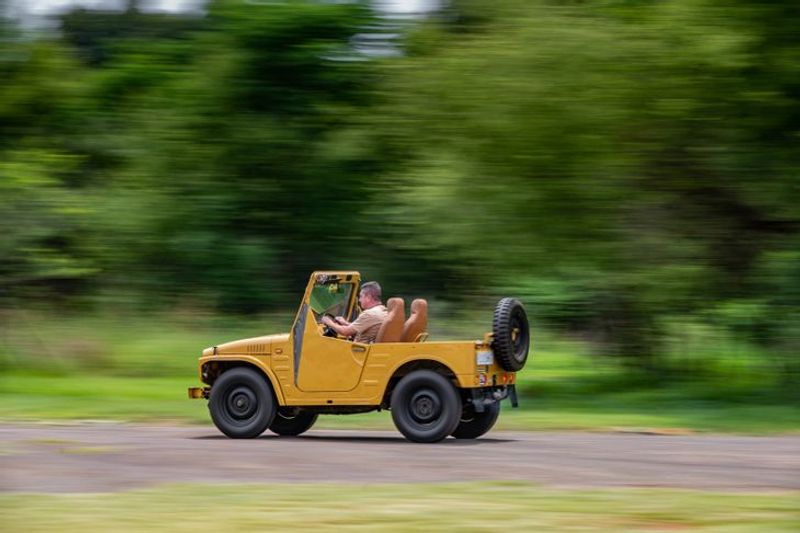
Suzuki LJ10

From the ashes of the ON360 came the Suzuki LJ10 in 1970, equipped with a ladder-frame chassis, solid axles, leaf-spring setup, all of which had been substantially revised from those of the original design. It was an instant winner, proving as capable as the bigger offroaders of the day, like the Toyota Land Cruiser and Nissan Patrol, but costing far less in terms of the initial purchase price and ownership costs.

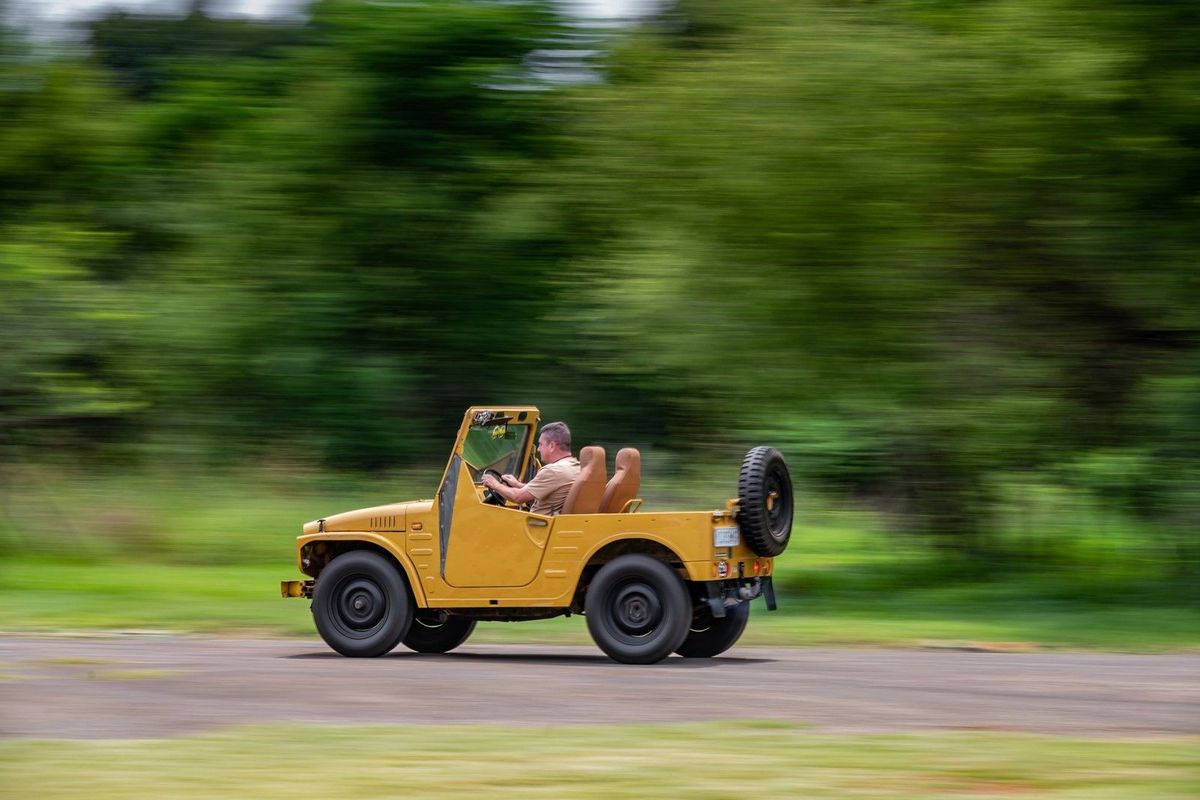
The powertrain specifications are laughable by today's standards. Power came from a 2-stroke petrol motor producing 18 kW and it had a top speed of 70 kph. Subsequent versions included the LJ20 (1972), LJ50 (1975), LJ80 (1977) all had power upgrades of 21 kW, 24 kW and 31 kW respectively. Incidentally, the LJ80 featured a 4-cylinder 4-stroke engine in place of the motorcycle-derived 2-stroke engine. 


Despite its comical proportions, the Suzuki LJ was remarkably composed on the rough stuff.

Enter the SJ

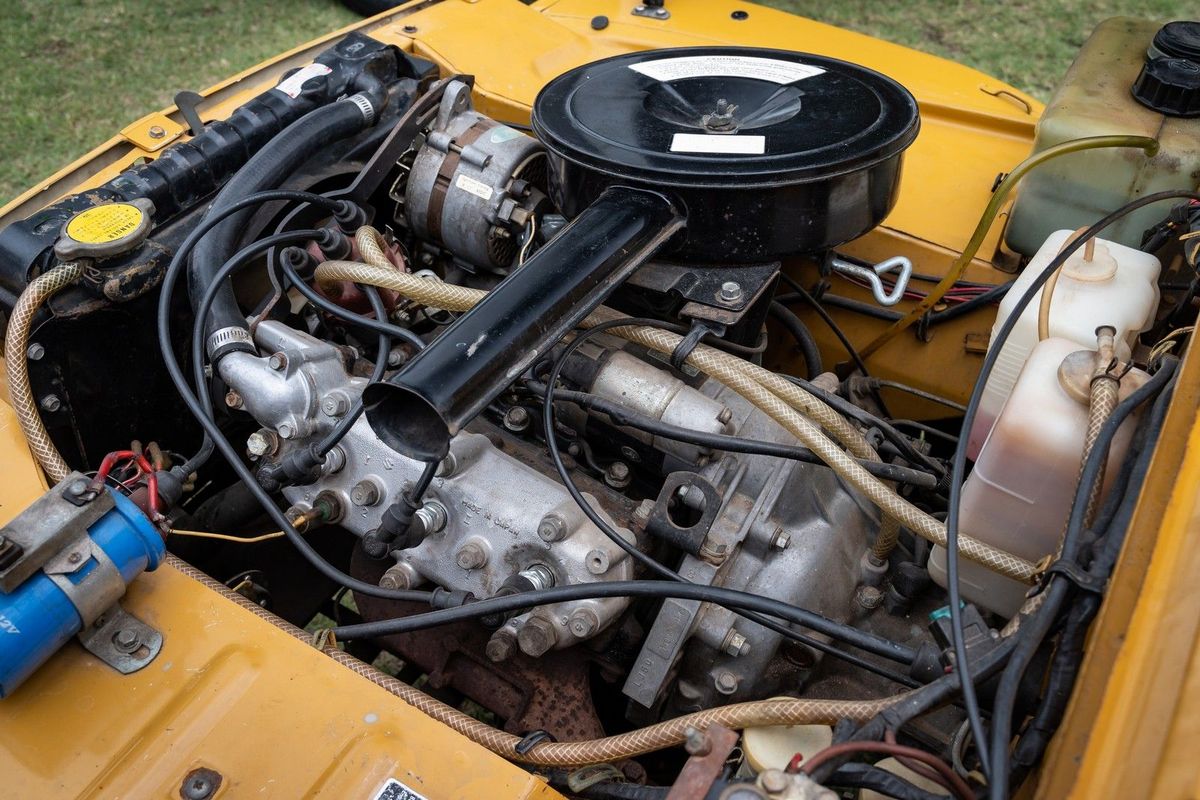
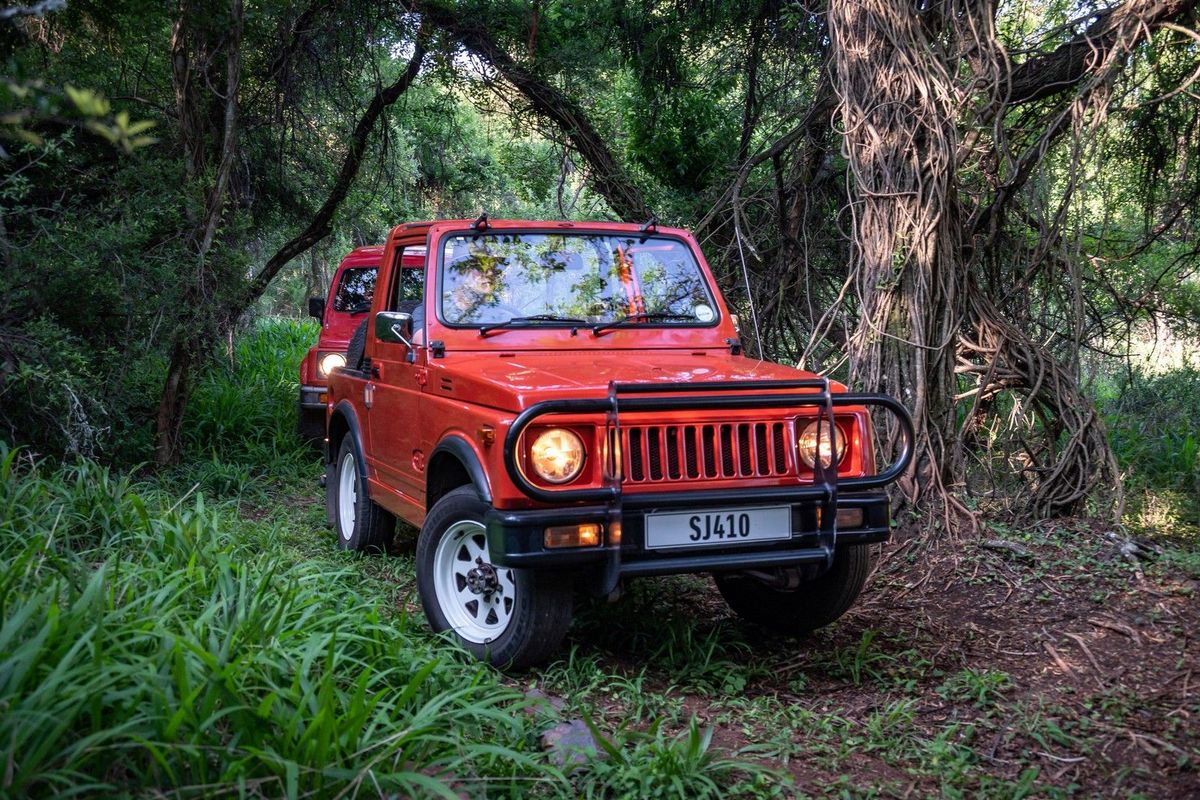
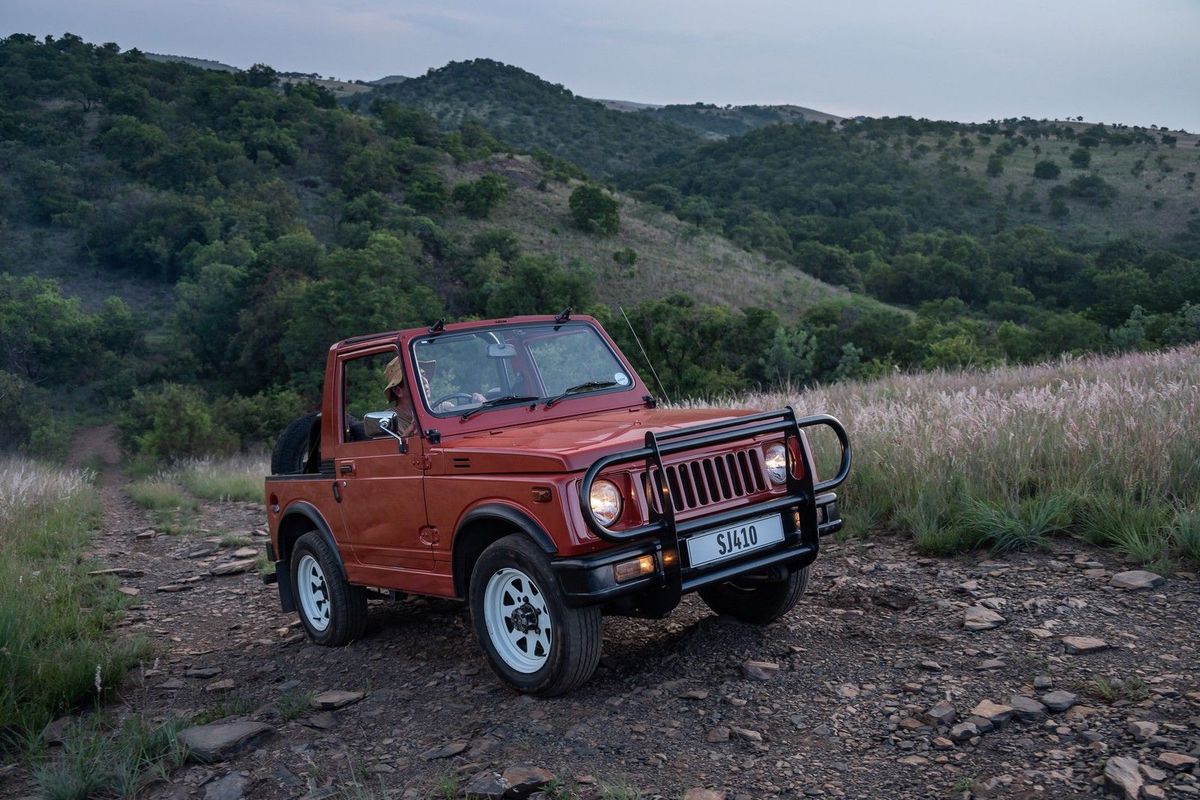
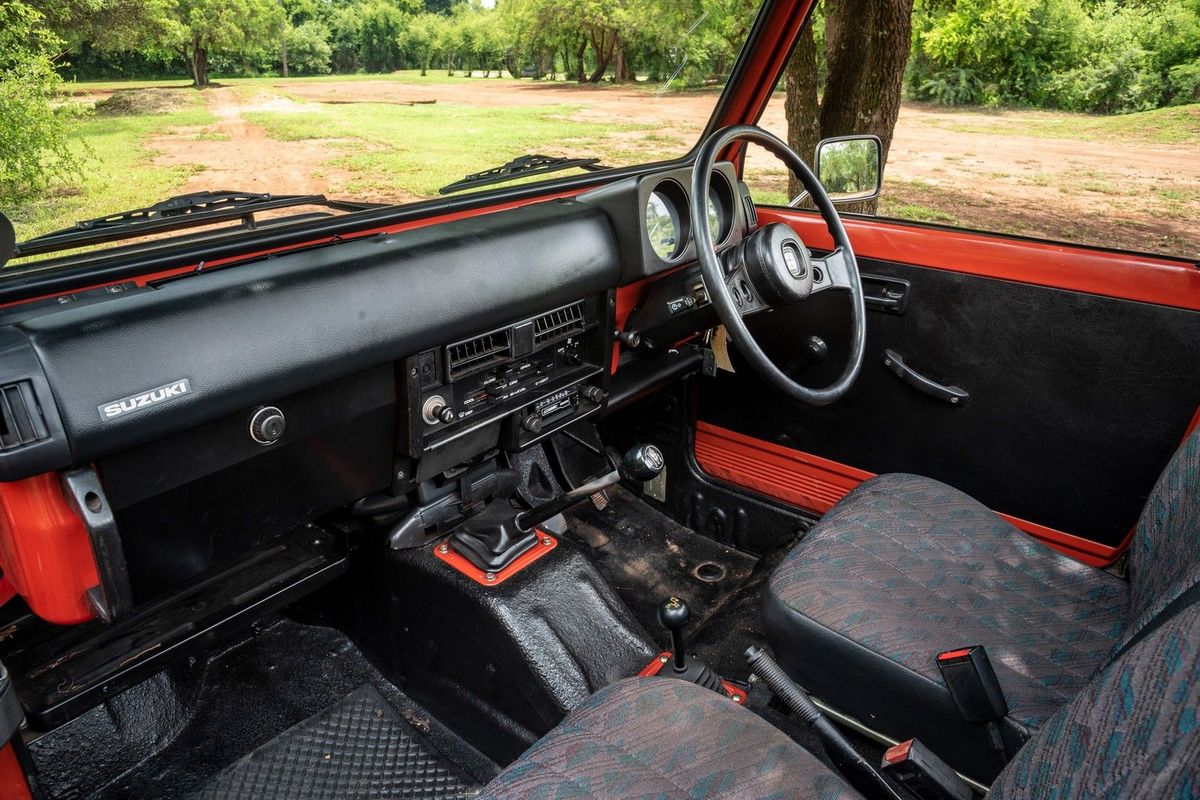
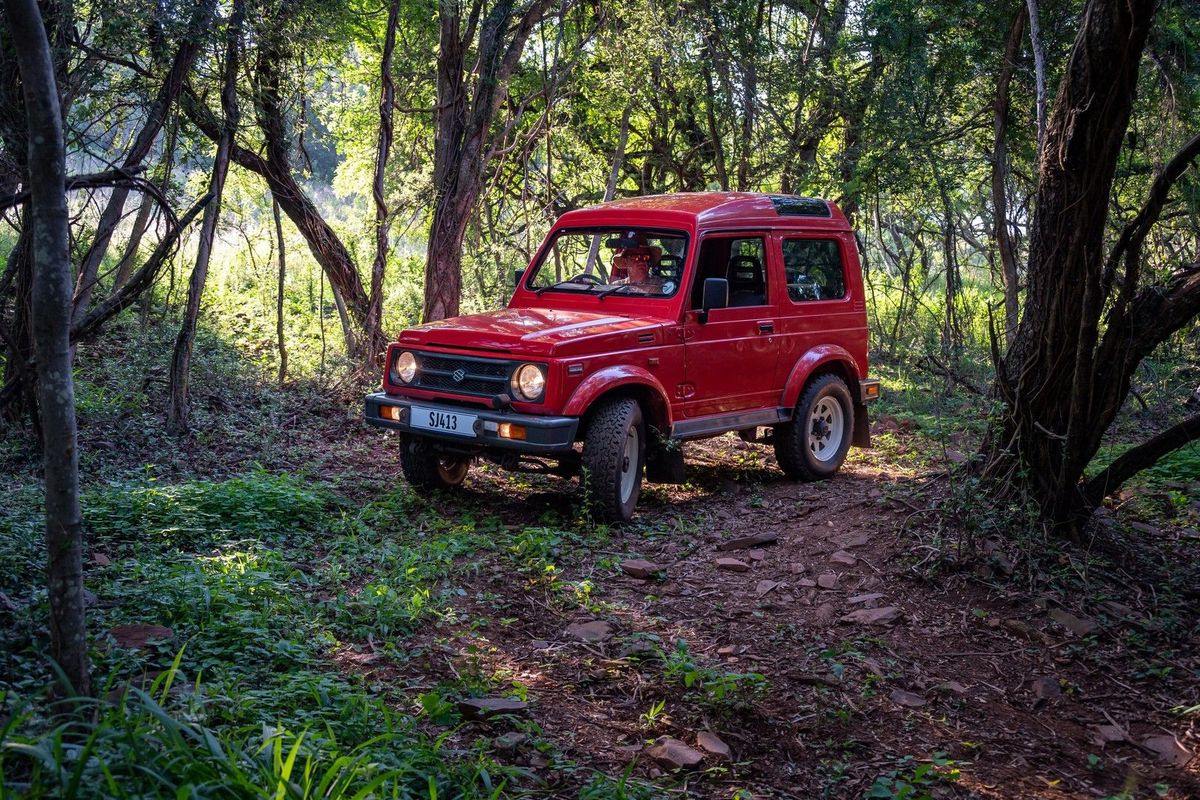
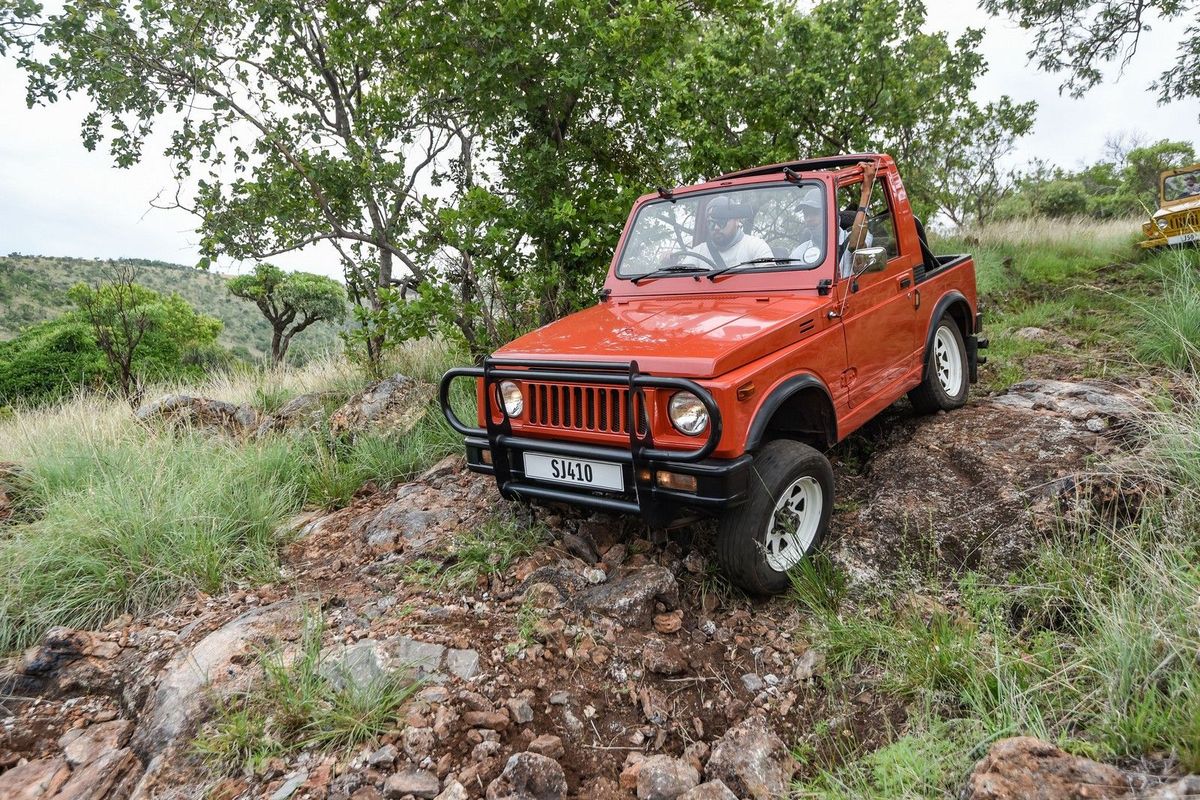
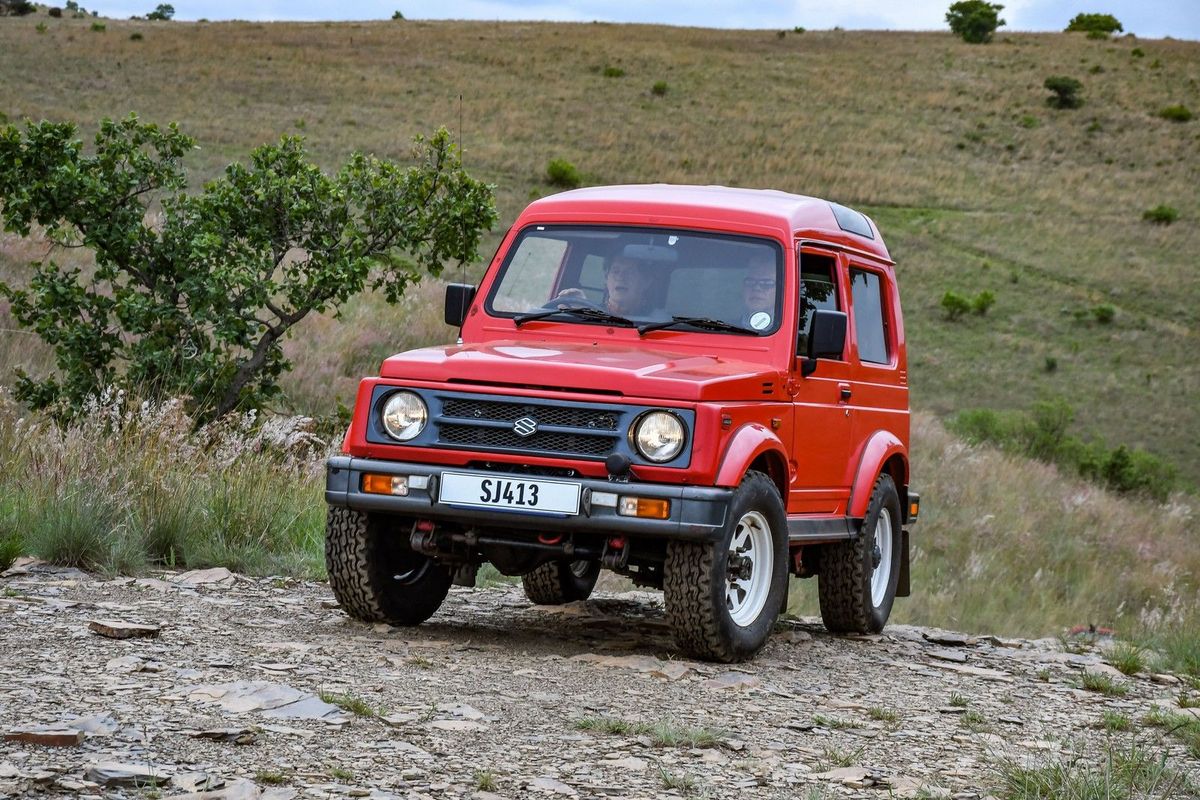
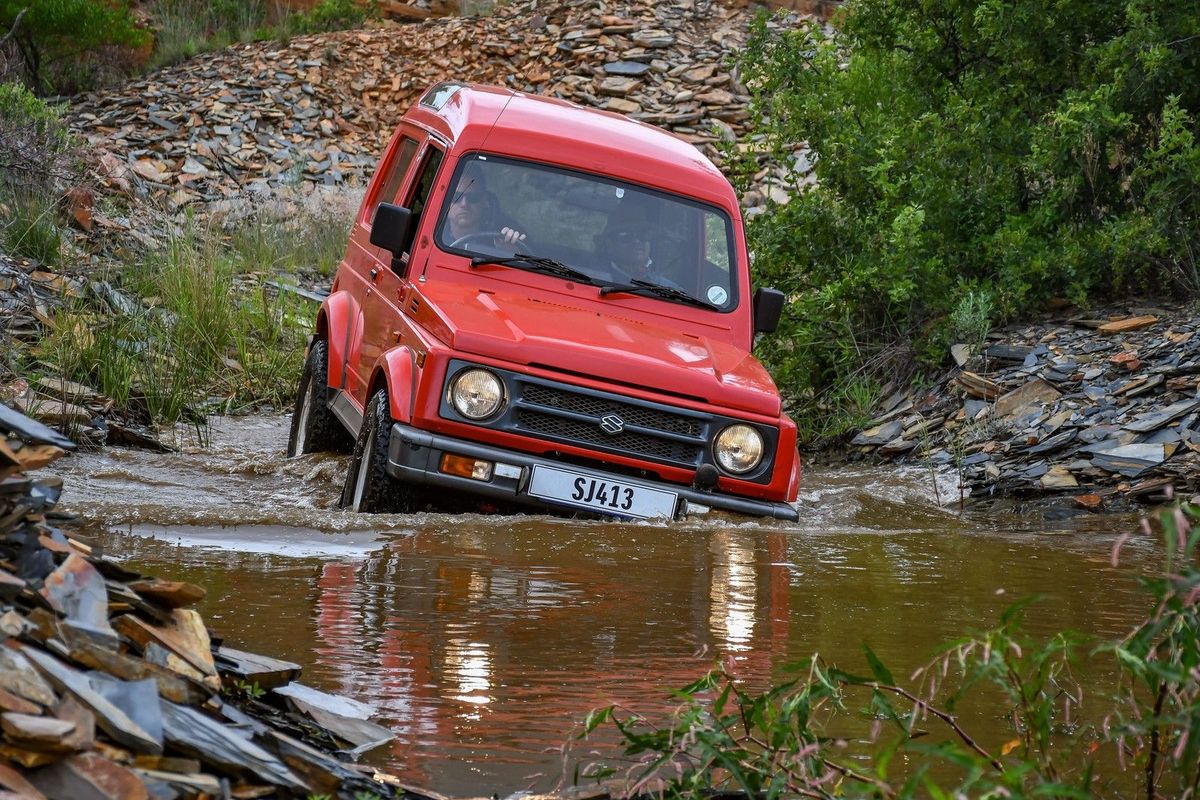
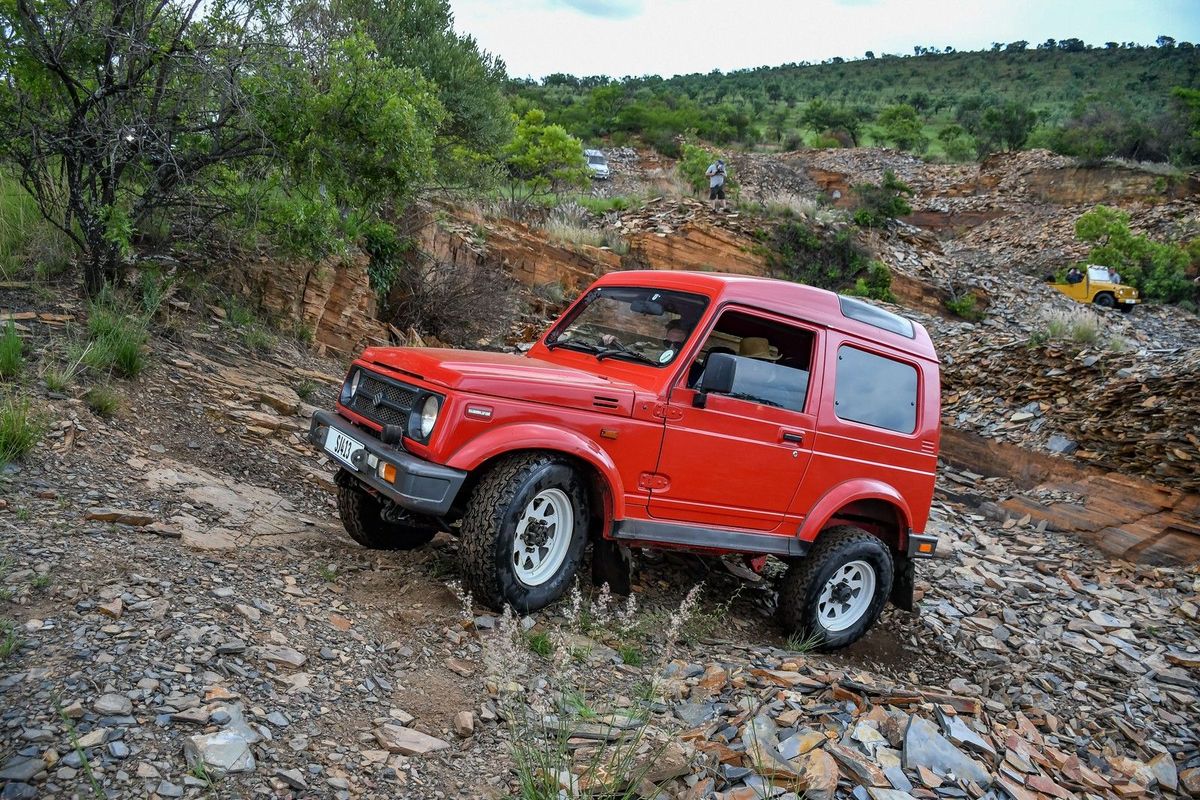
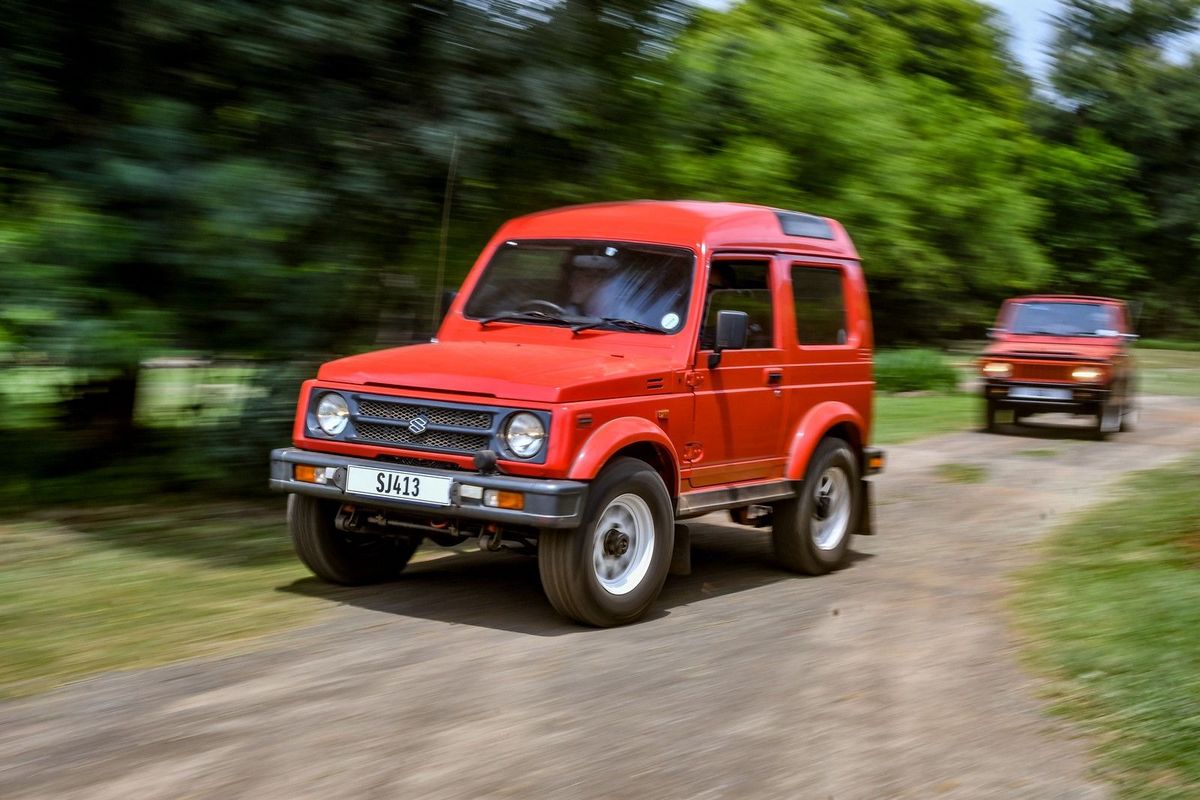
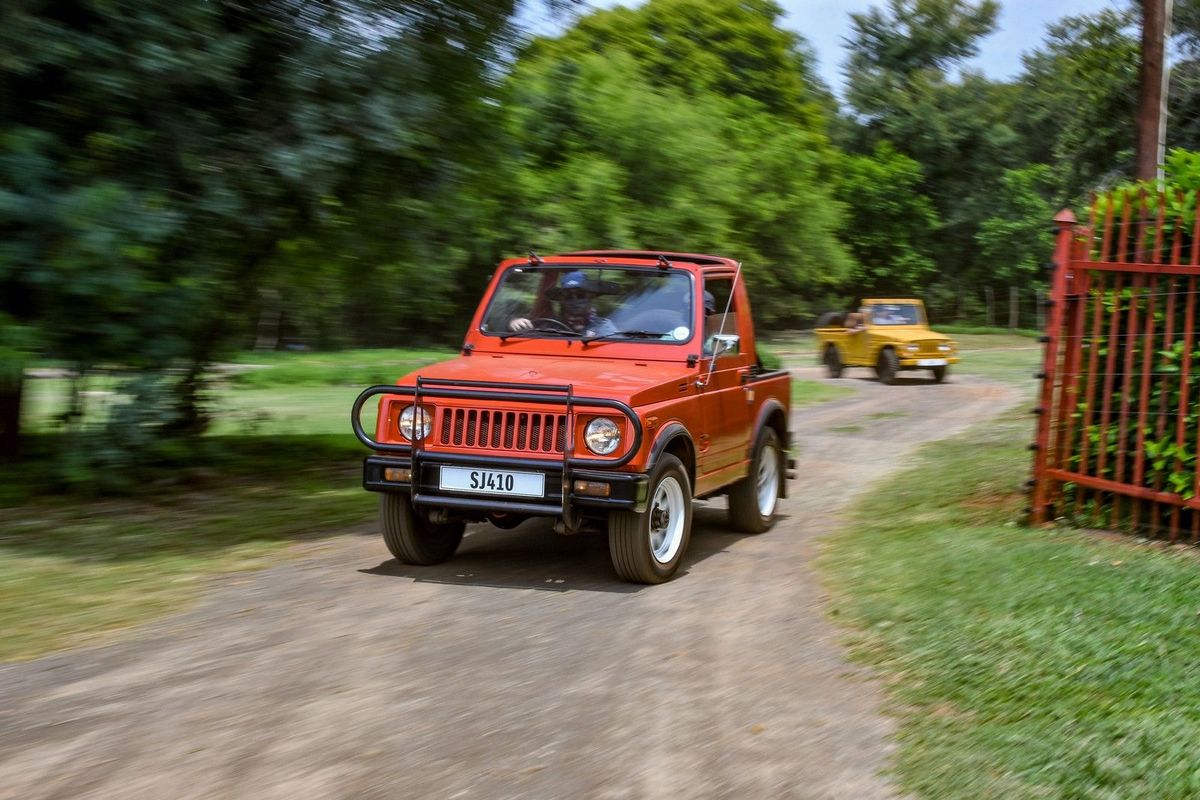
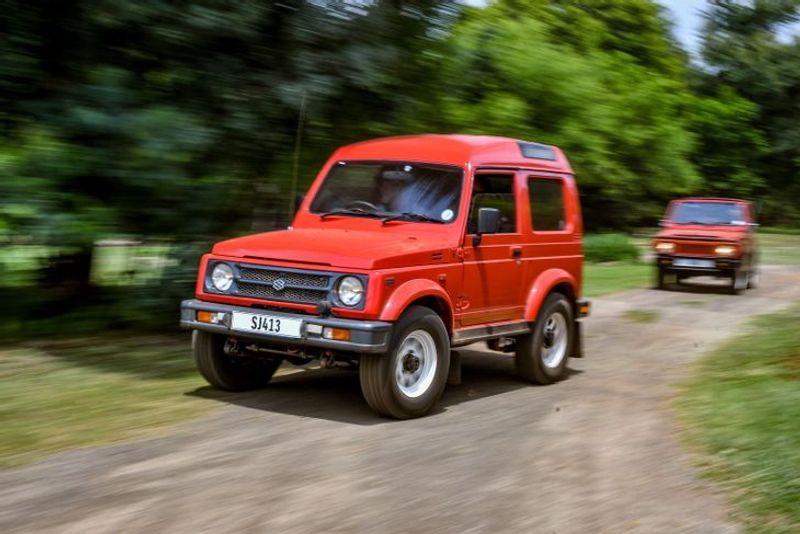
The 2nd-generation model, dubbed the SJ410, first rolled off the production line in 1981 and was in service until the 3rd generation of Suzuki's plucky off-roader was launched in 1998. Both the SJ410 and updated SJ413 become instant cult classics. Both of these derivatives retained their incredible offroad prowess, but many customers were using them as daily drivers, with occasional off-road use. With this shift, luxury features such as air conditioning, electric windows and radios were introduced in the early 90s, along with a coil-sprung front suspension for additional comfort. 

Power was increased to 33 kW / 74 Nm from a 970 cm³ motor in the SJ410, with the SJ413 gaining a 1.3-litre motor with peak outputs of 45 kW and 96 Nm. The latter had a top speed of 140 kph.


The Samurai was one of the most entertaining drives of the day.

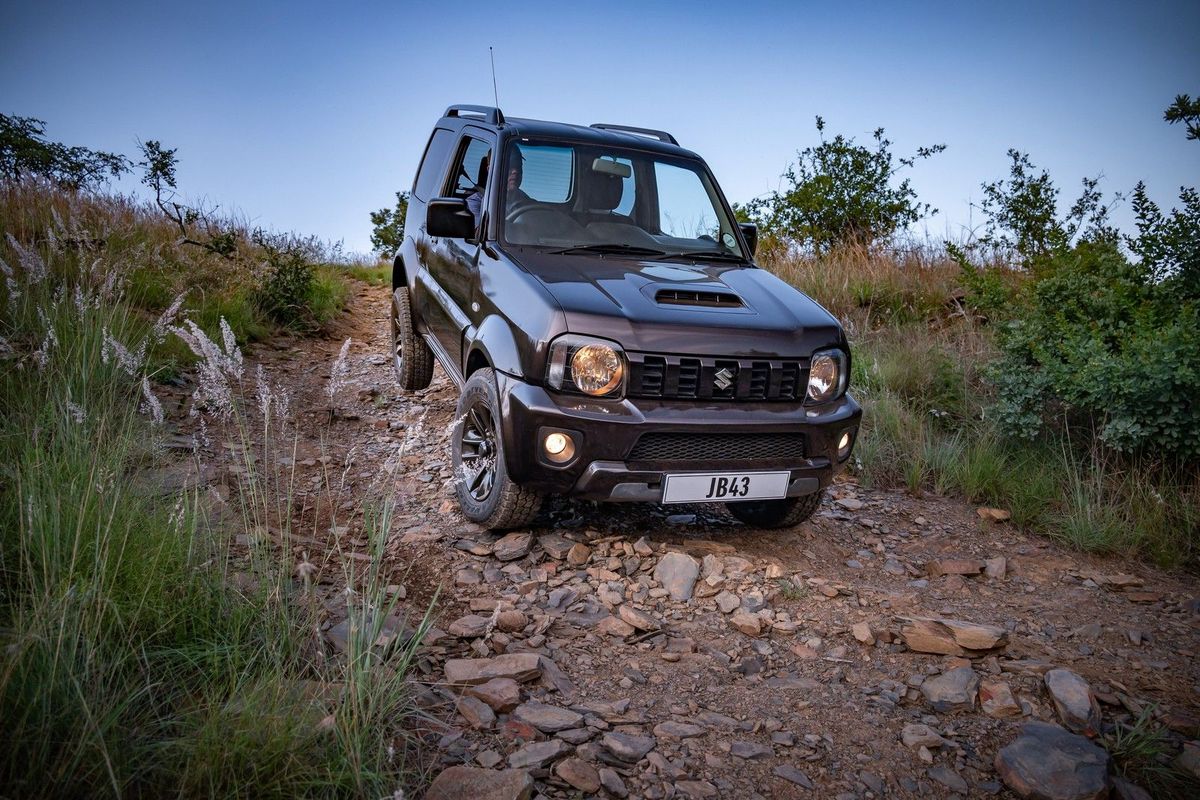
JB43 Series 

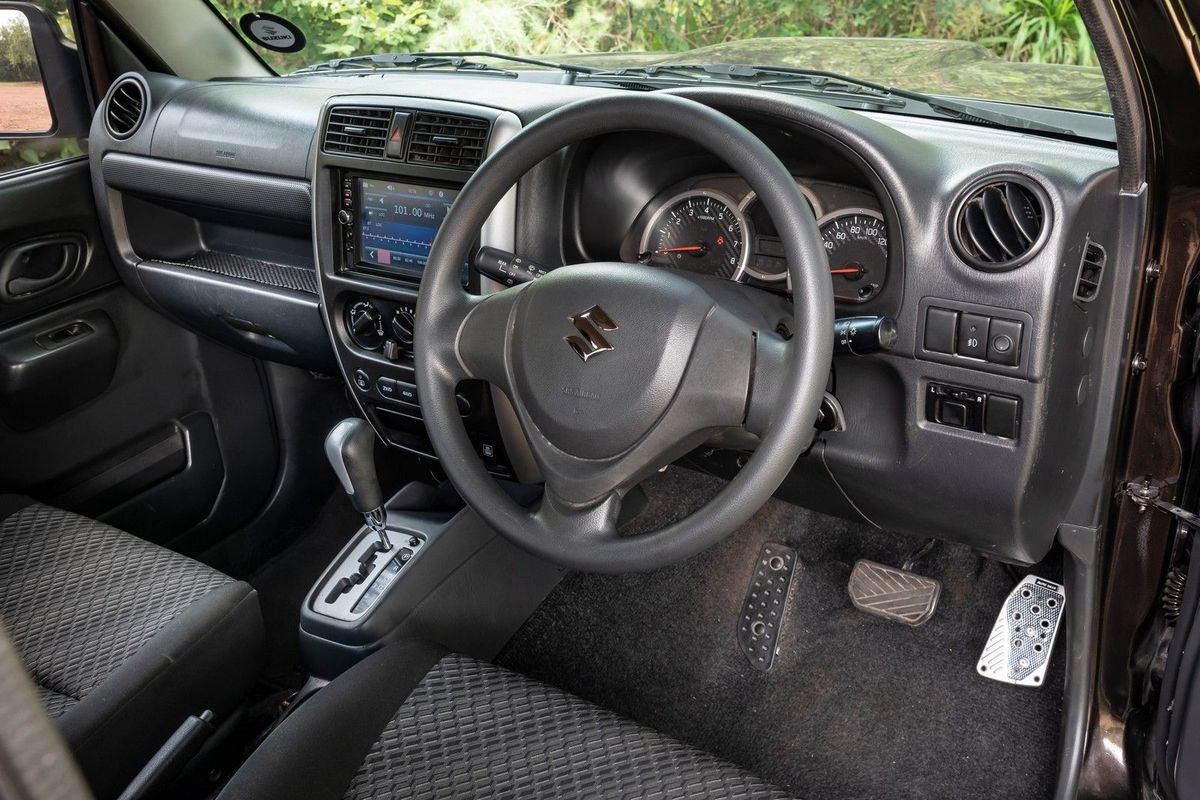
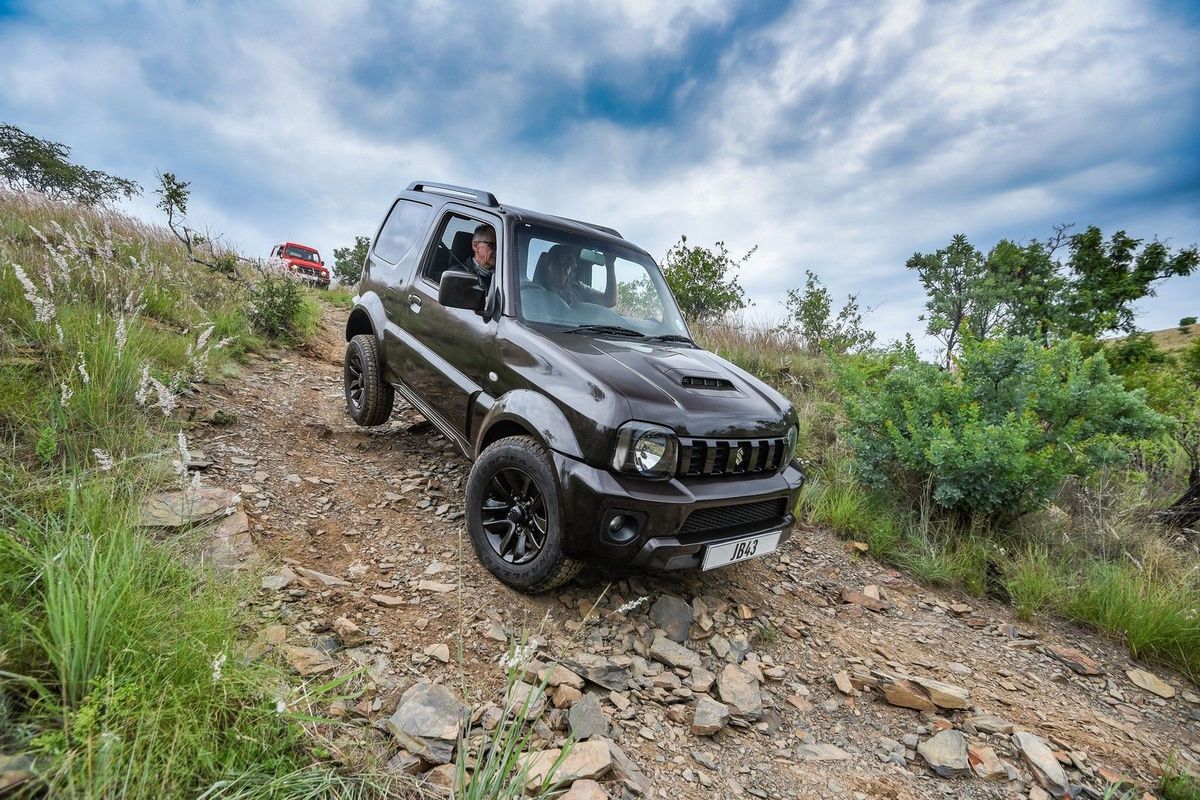
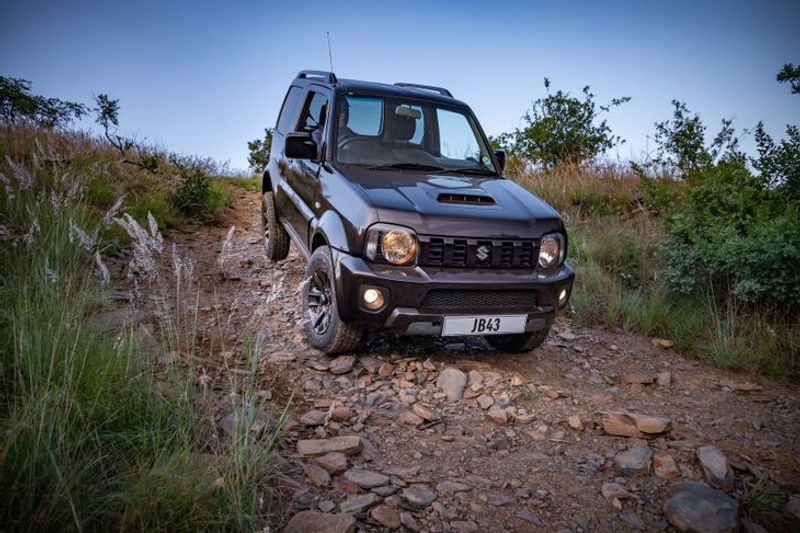
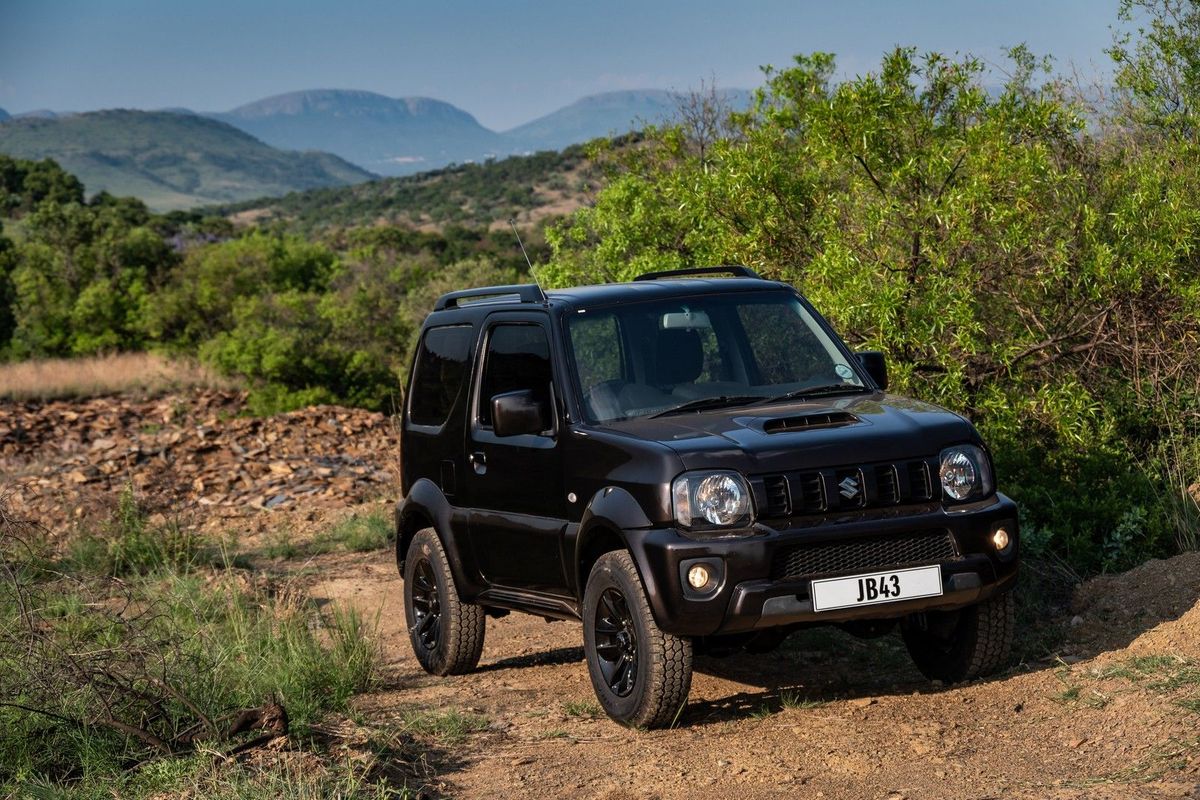
Our first taste of Suzuki Jimny locally came from the JB43, which made its debut in 1998. The marketing slogan was simple, "smart in the city, tough in nature." Power came from a 63 kW/110 Nm 1.3-litre 4-cylinder and featured a revolutionary (for the time) automatically locking front hubs as well as a dial to activate the 4×4 transfer case. The coil-spring suspension was a tad more road-biased, but still remarkably capable off-road.

It proved popular right the way up to the launch of the 4th-generation Jimny and during its 20-year tenure, it received numerous spec updates and facelifts, but the fundamental basics remained the same. 


A vehicle we're quite familiar with at Cars.co.za – the JB43

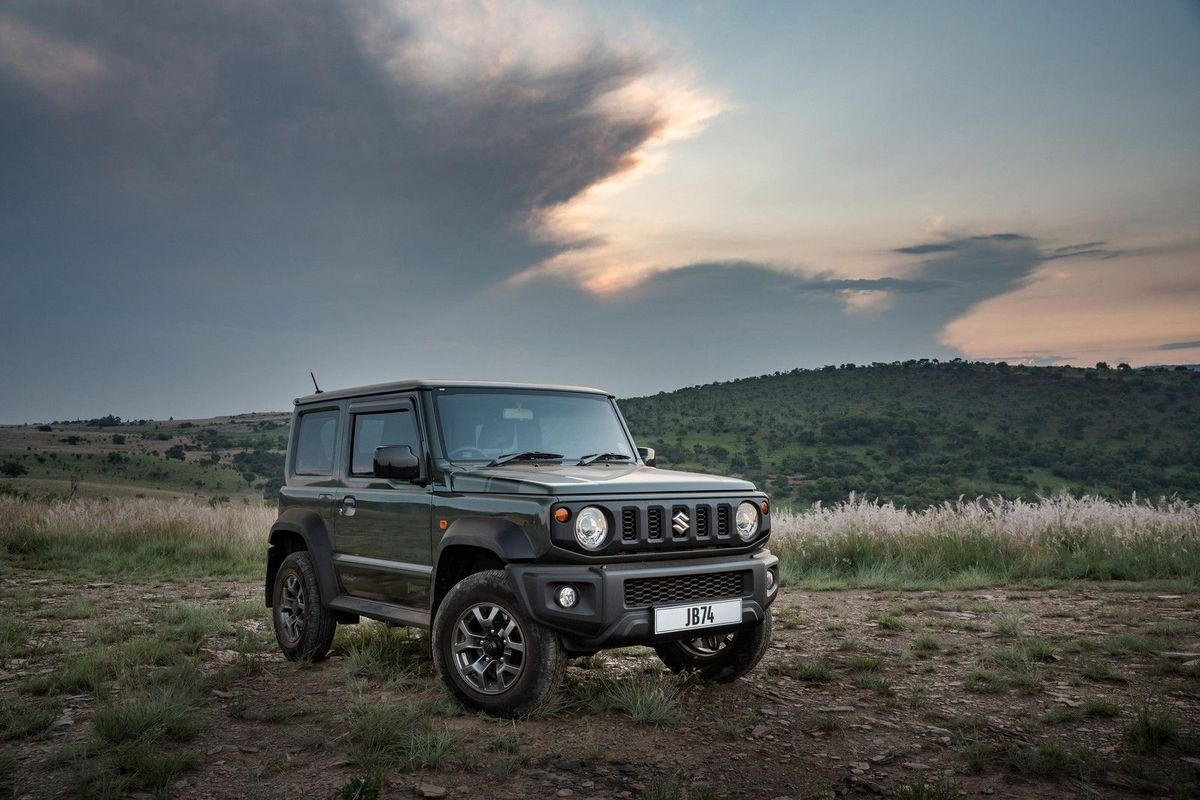
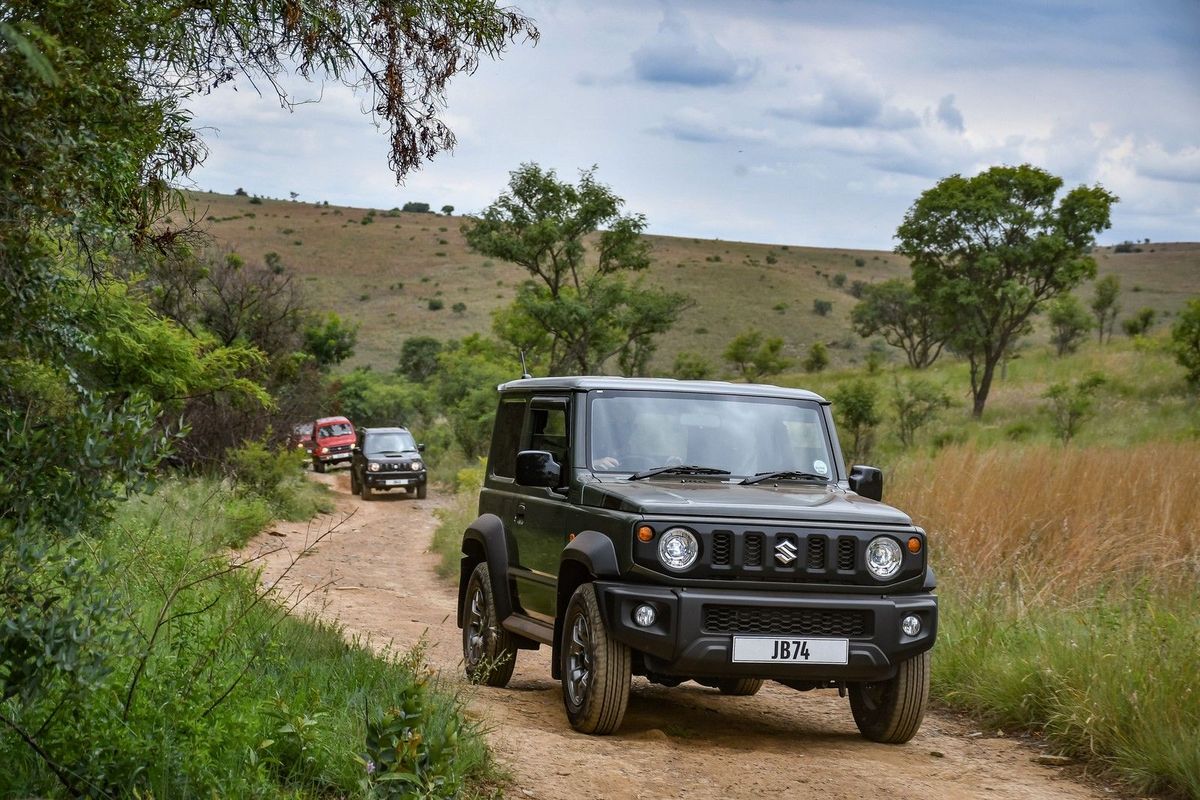
JB74

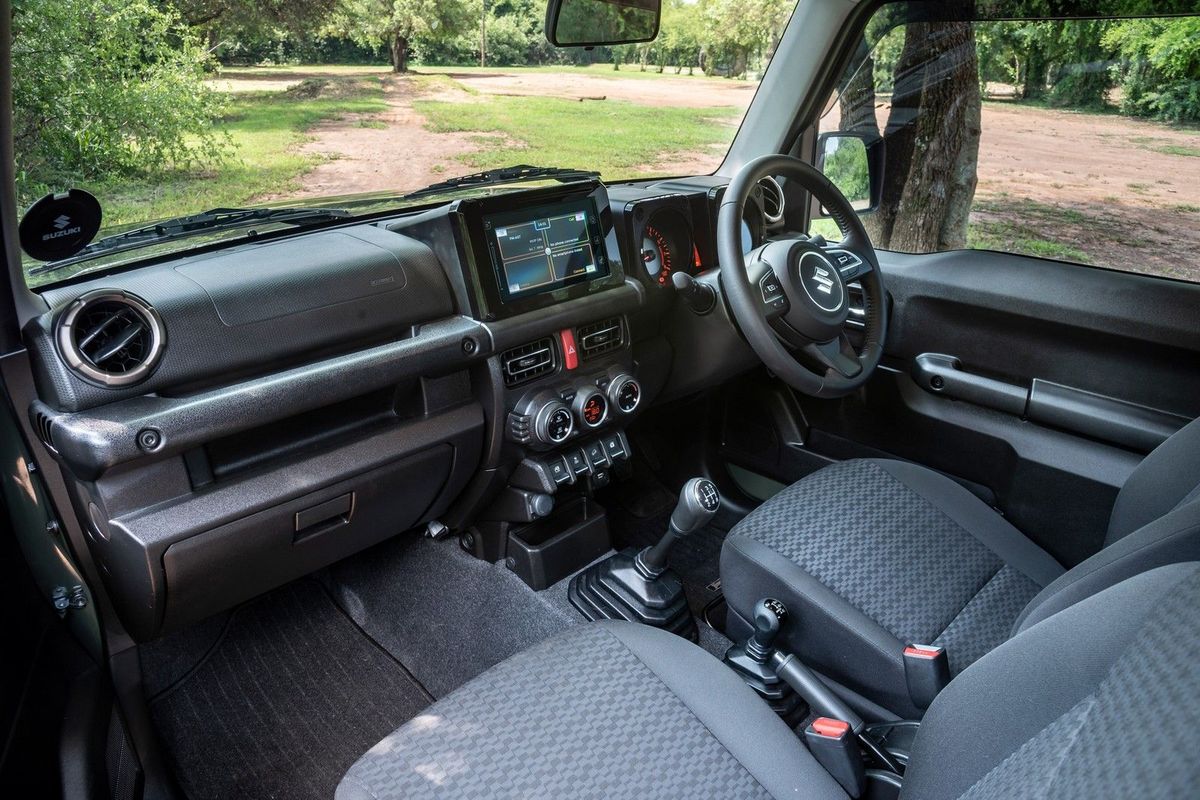
This is the Jimny as most of us know it. It retains its incredible off-road capability, boasts the most potent engine ever fitted to a Jimny and looks great. The 1.5-litre petrol mill produces 75 kW and 130 Nm, but because the body tips the scales at 1 095 kg, performance is more than adequate.

First revealed in 2018, this iteration of Jimny has proven immensely popular with demand far outstripping supply. South Africa is but one of several countries where there's a waiting list, but Suzuki Auto SA assures us that the delay between placing an order and taking delivery has come down dramatically, despite Covid-19's best efforts. Interestingly, Mexico was allocated just 1 000 units and all were snapped up within 72 hours.


As far as family photos go, this one's a goodie. Long live the Suzuki Jimny!

Driving Experiences

Admiring the classic Jimny models is one thing, but driving them requires flicking a switch (or two) in your brain… There are no electronic driver aids on offer in any of the older models, of course, which meant that they delivered just the purest driving experience. Suzuki had booked out the ADA off-road facility near Hartebeespoort Dam to ensure we could really put the legends through their paces on some challenging terrain. 

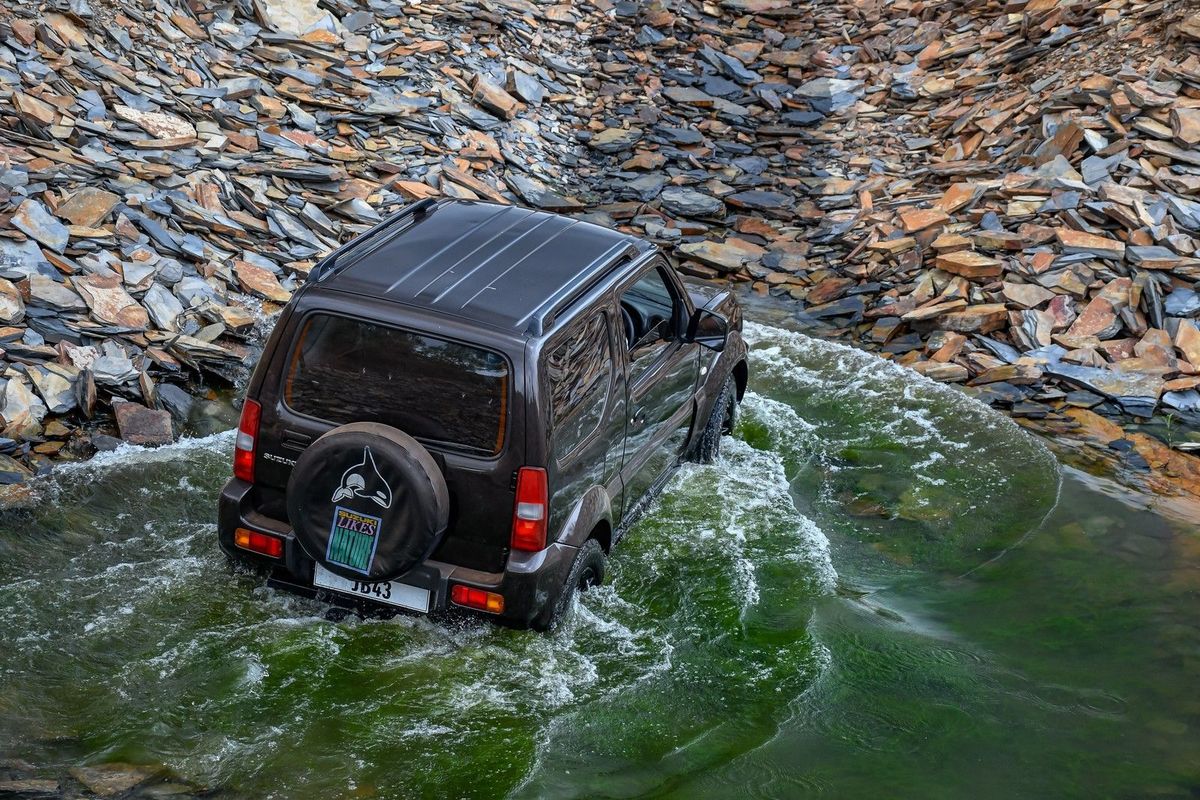
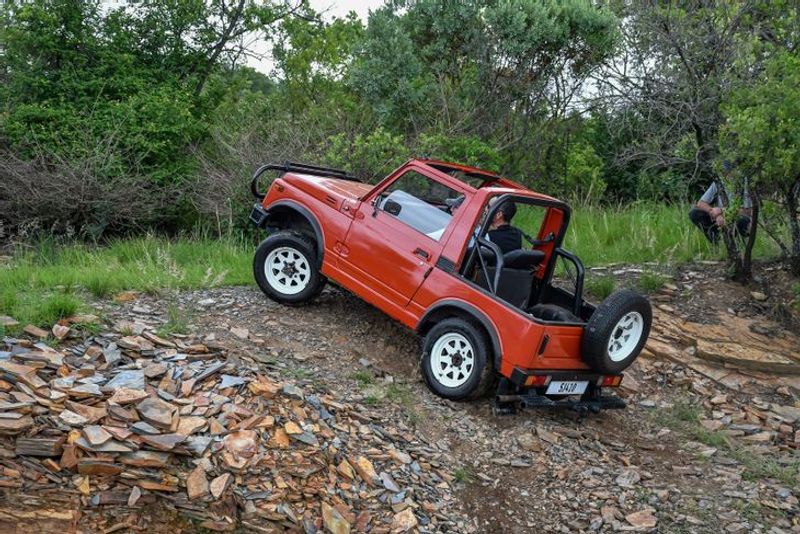
Comprising some excellent off-road trails with a spectacular backdrop through an abandoned slate mine, ADA's technical sections provided a great test for the Jimny family's capabilities. The stints in each of the Jimny models were brief, but exceptionally memorable. Every model had its quirks and charms, making it easy to understand why these cars have become highly sought-after on classified websites.


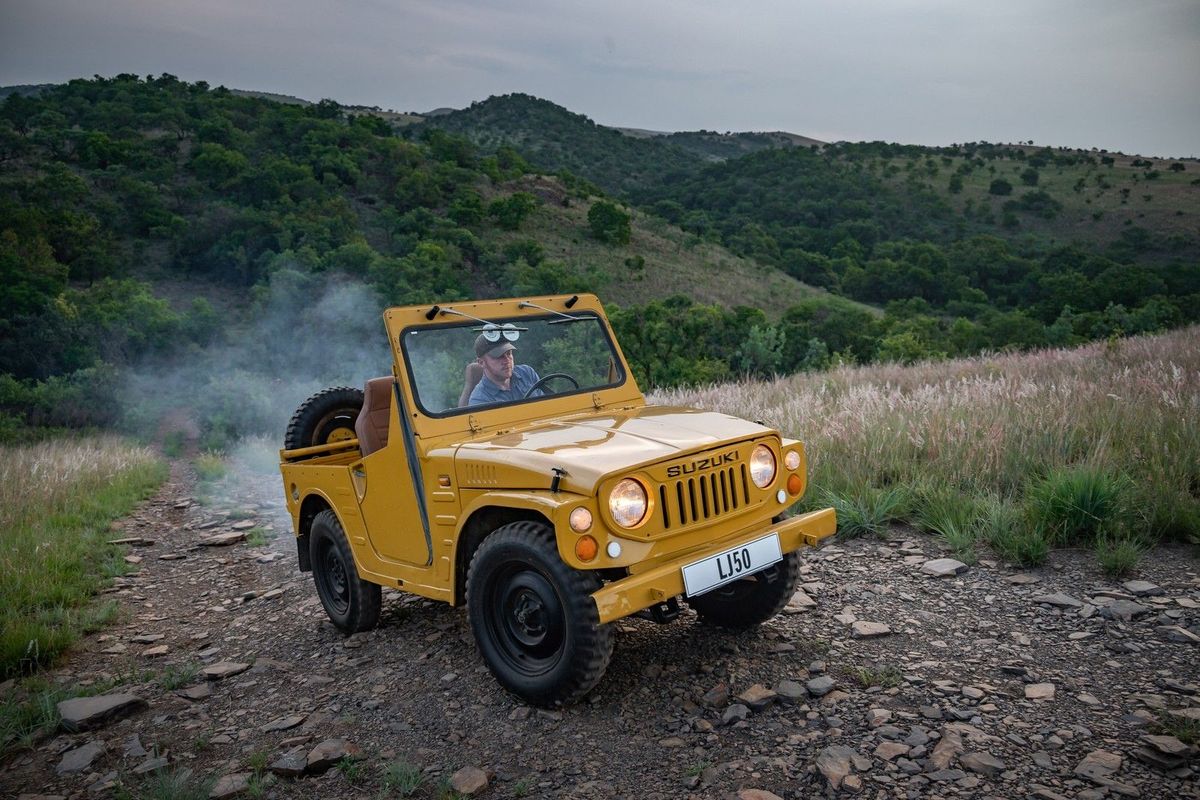
Wading through an abandoned slate mine was no problem for the little LJ.

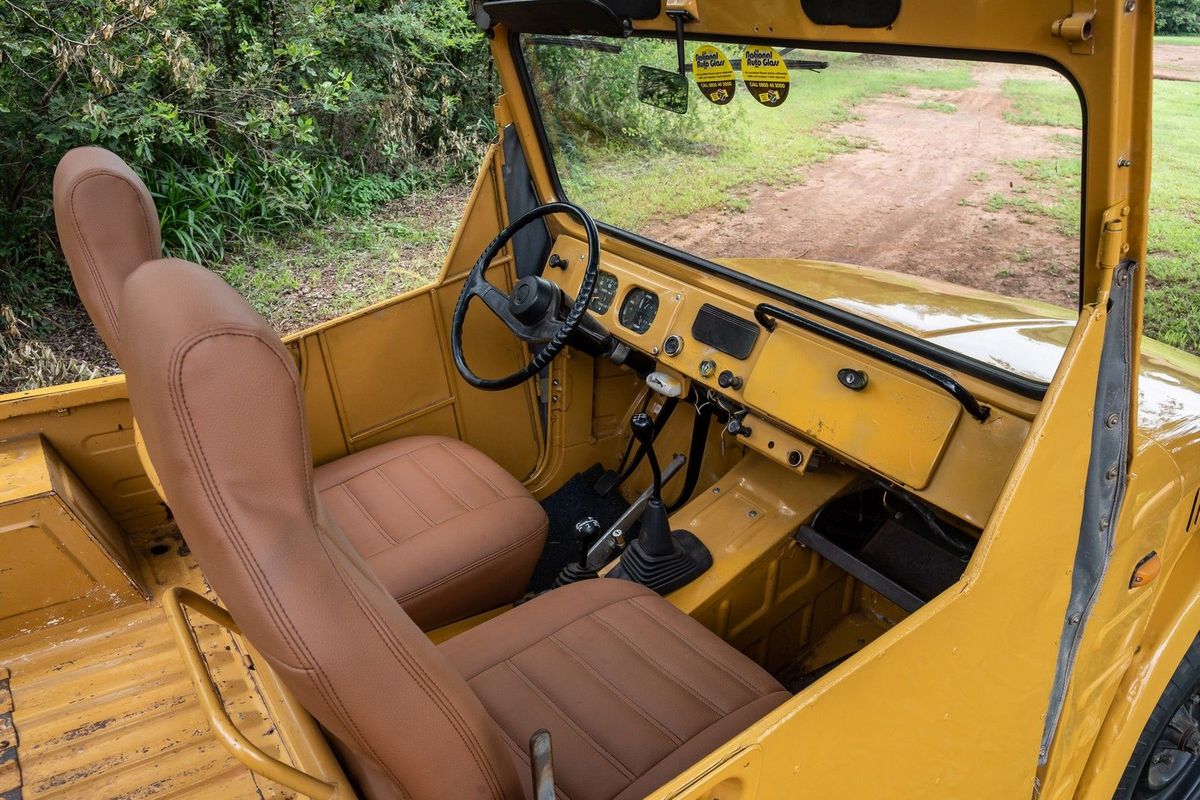
The Suzuki LJ50 aka Genesis may be the smallest and simplest vehicle in this line-up, but it's not the easiest to drive. Firstly, the clutch pedal has an exceptionally short travel and offers little in the way of modulation, and secondly, it's very stiff, requiring a strong left leg to operate. Once you're rolling and have selected 4H, the little LJ proved very nimble, hopping and skipping across the rocks. With its 2-stroke motor eagerly revving away and my nerves settled, you start to appreciate just how simple yet capable it is. Not bad for a 50-year-old veteran!

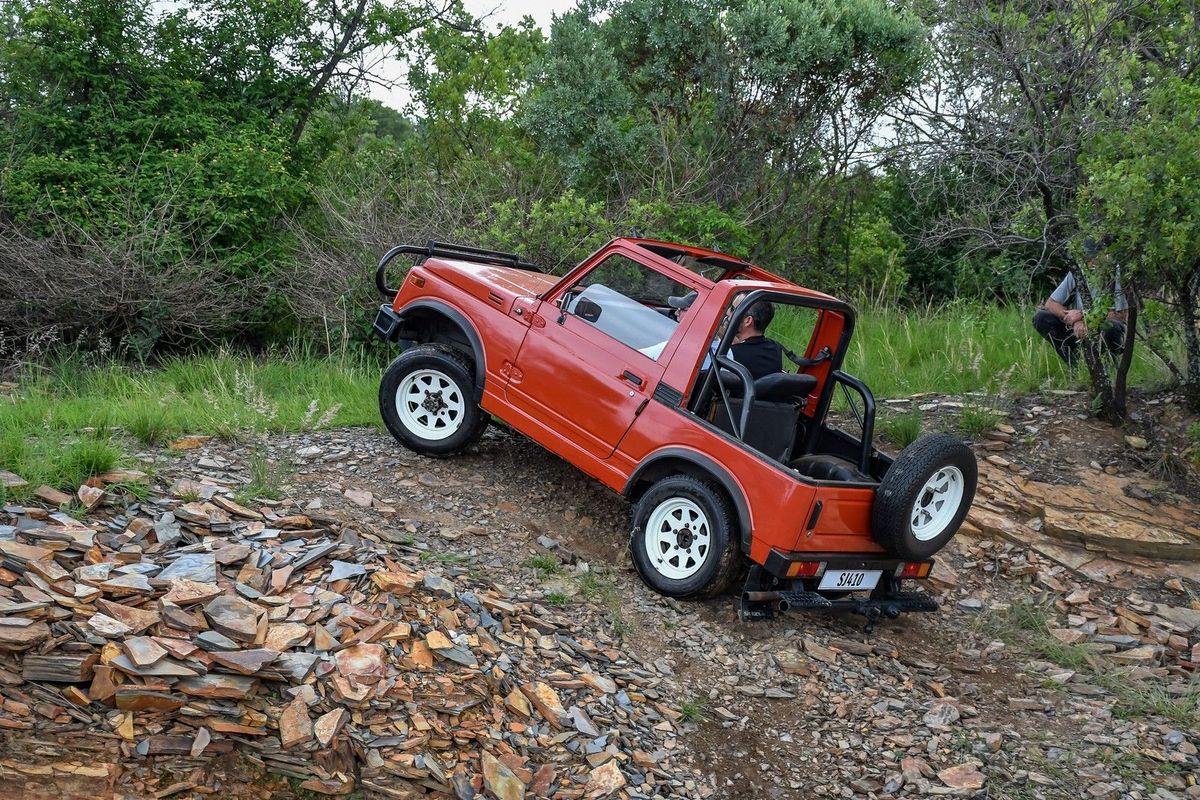
The highlight of the day was driving the SJs from the '80s. The Samurai, which is old enough to be called a classic, but modern enough to remain easy to drive, was exceedingly fun to pilot. Both offered a wonderfully analogue driving experience, requiring strong arms to make the most of the unassisted steering. There's something immeasurably satisfying about stepping out and locking the front hubs, then engaging 4-wheel drive. 


A convertible Jimny… can you get any cooler?

After driving the 3 older members of the Jimny family, the 2 newer JB-series models felt incredibly luxurious and technologically advanced by comparison. While the older models have immeasurable charm and their coolness factor is "off the chart", I have heaps of admiration for the relentless march of progress. The contemporary Jimny is much improved, but still retains those qualities that have endeared the model to so many.

Want to buy one of these super-cool offroaders? Browse stock

Further Reading

Suzuki Jimny 1.5 GLX (2019) Review [w/Video]

Suzuki Jimny Review in South Africa

Suzuki Jimny Commercial Announced

Suzuki Jimny 5-door coming in 2021 – report

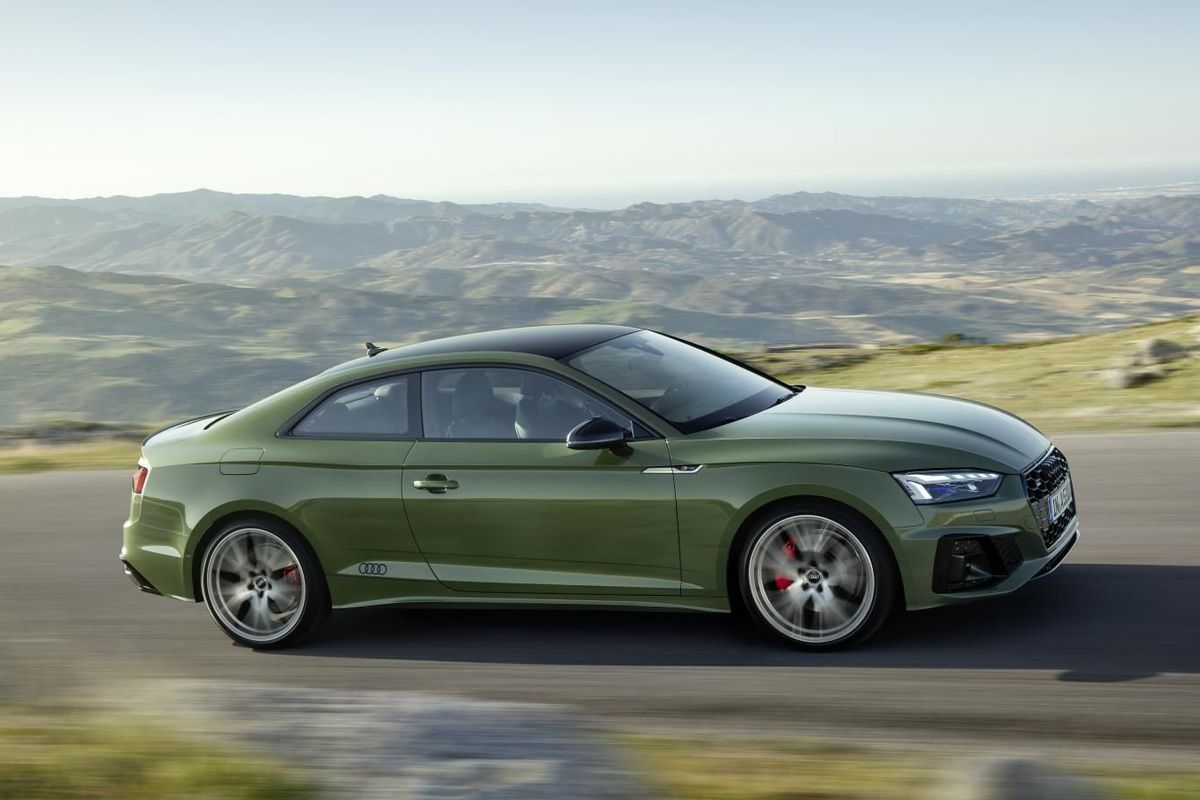
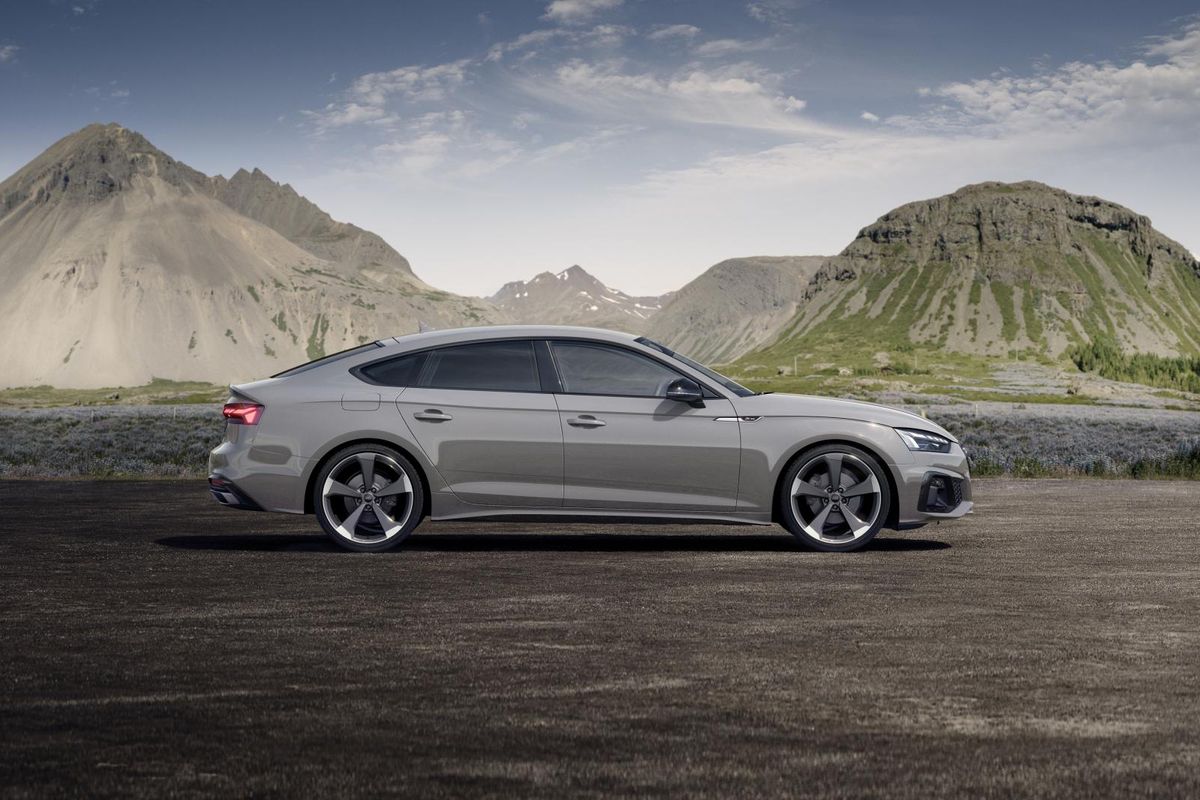
Audi A5 and S5 (2021) Specs & Price

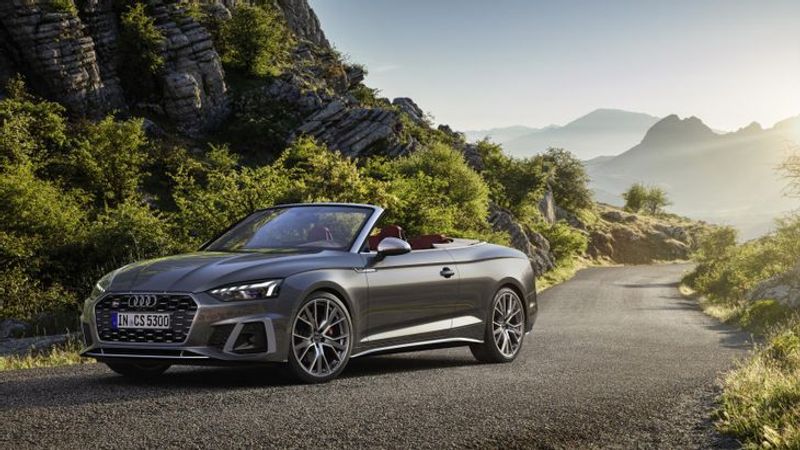
Audi South Africa has announced specifications and pricing for its updated A5 coupe, A5 Sportback and S5 Cabriolet. Here's what's changed, plus what you can expect to pay for these stylish offerings.

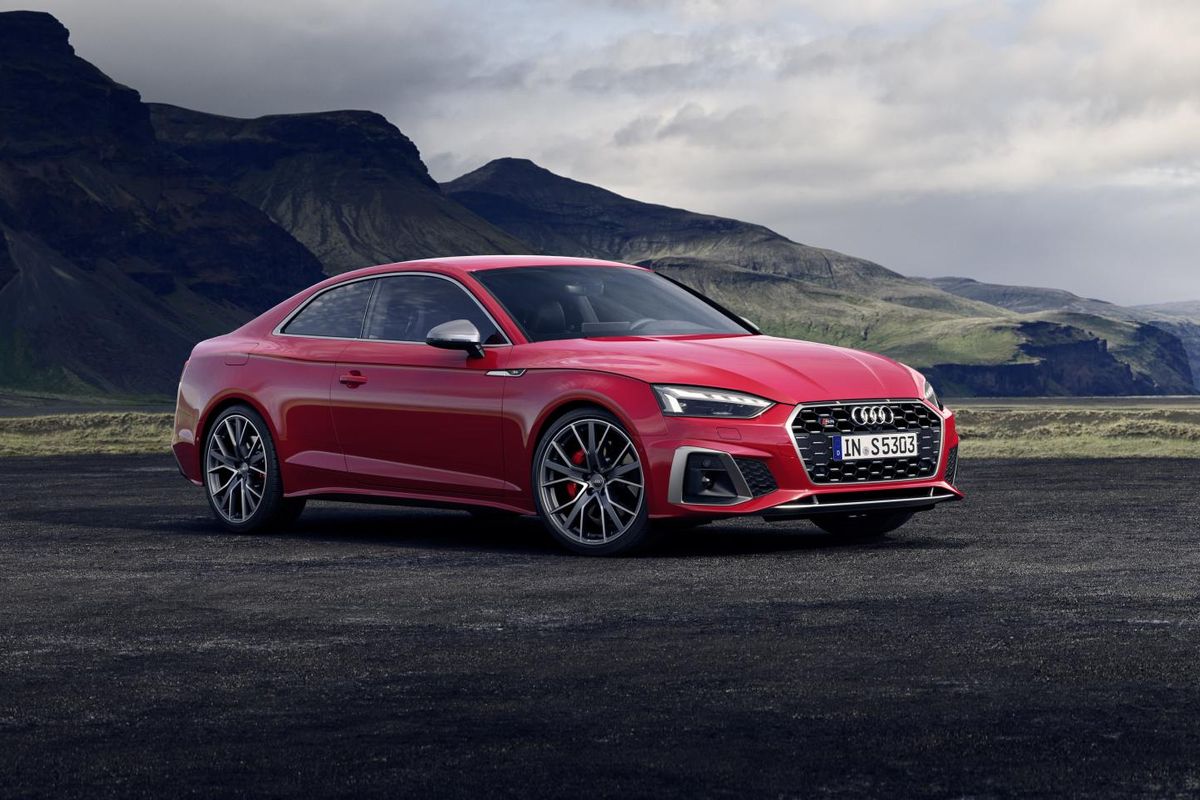
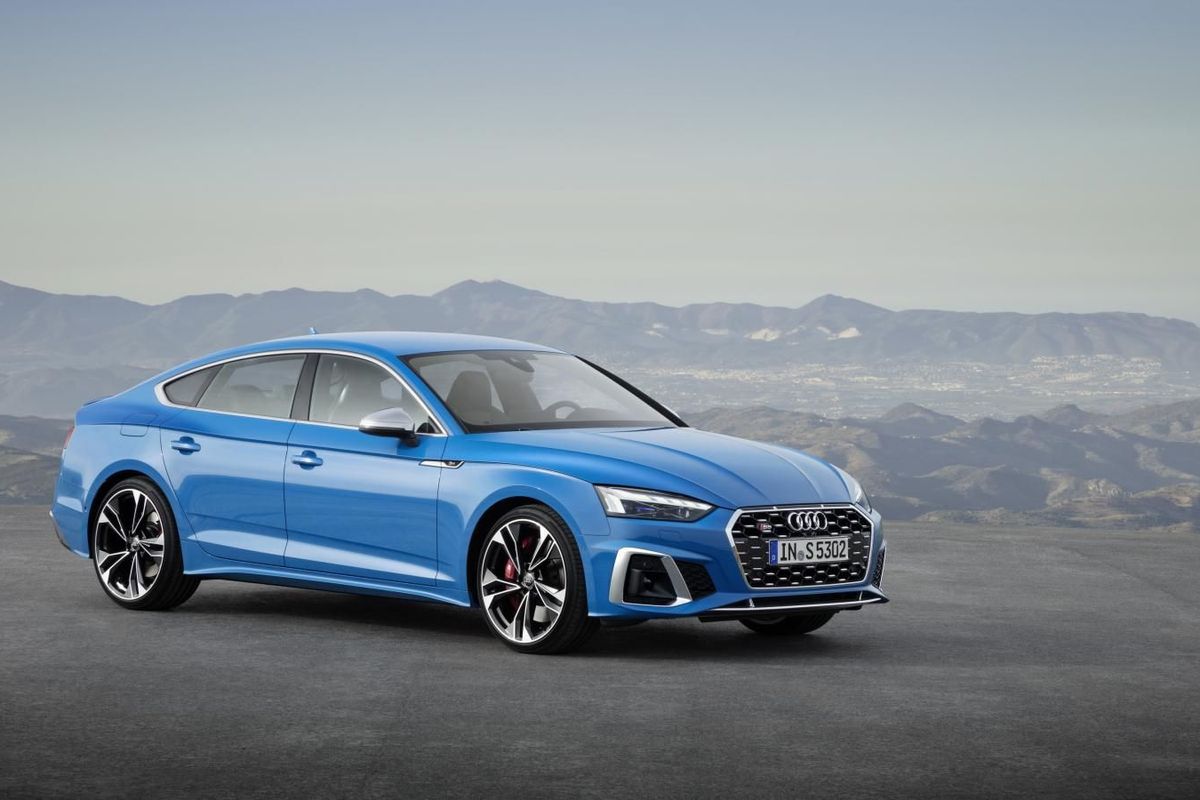
The Audi A5 range has been updated and has landed in South Africa. The range comprises 2-door coupe, 5-door Sportback and there's a convertible model for those wanting to enjoy top-down motoring. 

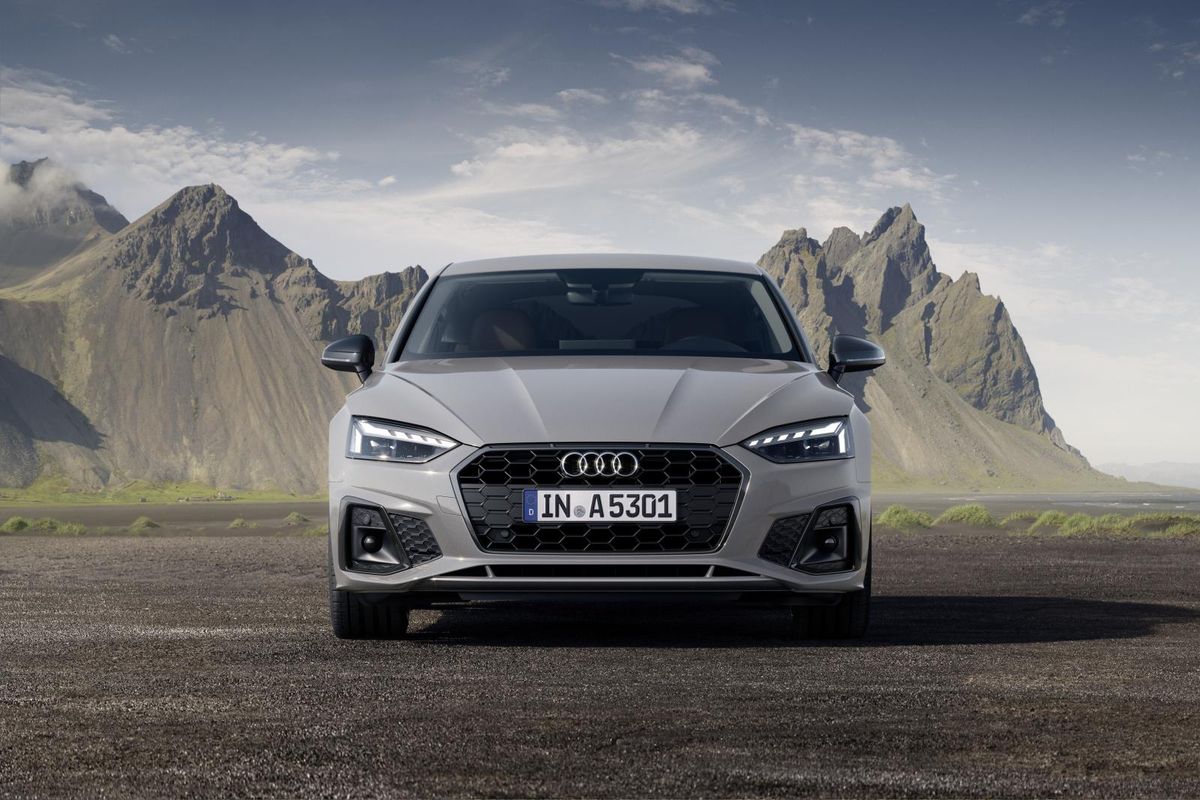
Visually, the front end has been given a mild tweak, with the honeycomb grille looking flatter and wider. There are ventilation slits above the grille and these are a nod to the iconic Audi Sport quattro from 1984. As far as customisation goes, Audi is offering 12 exterior paint finishes as well as 5 different shades of leather in the cabin.

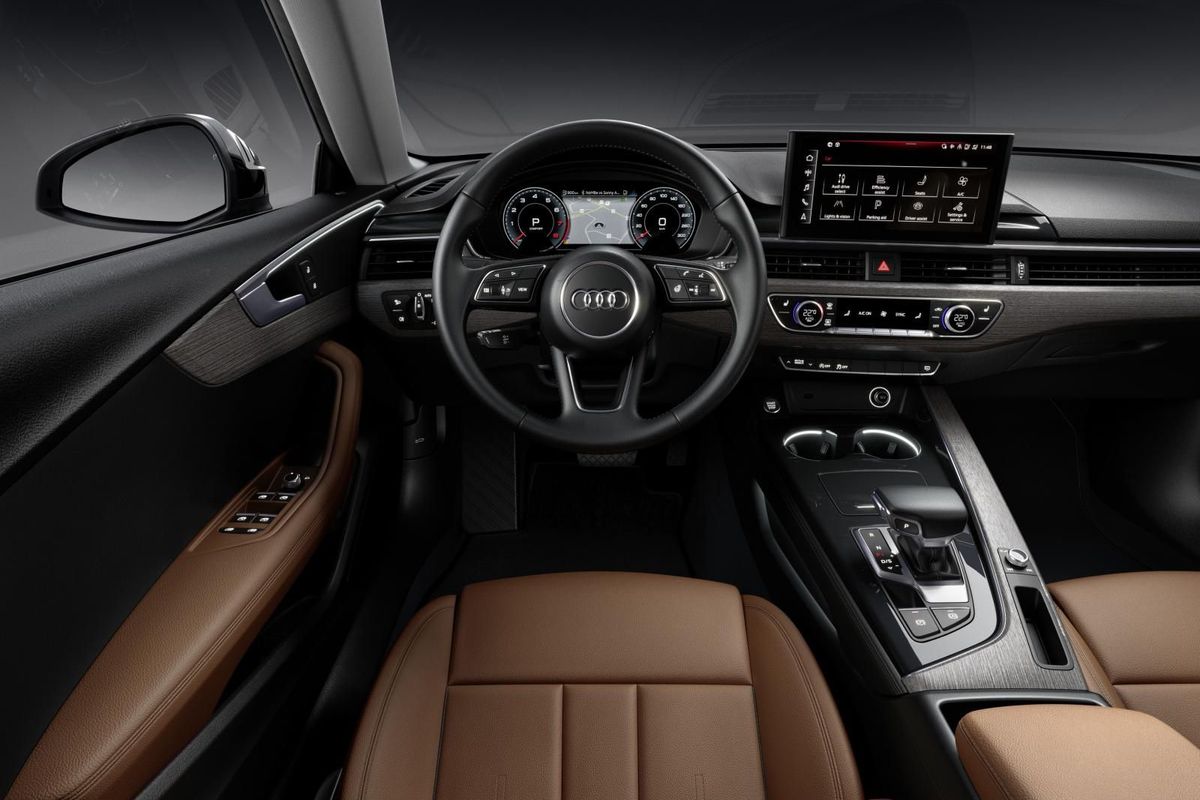
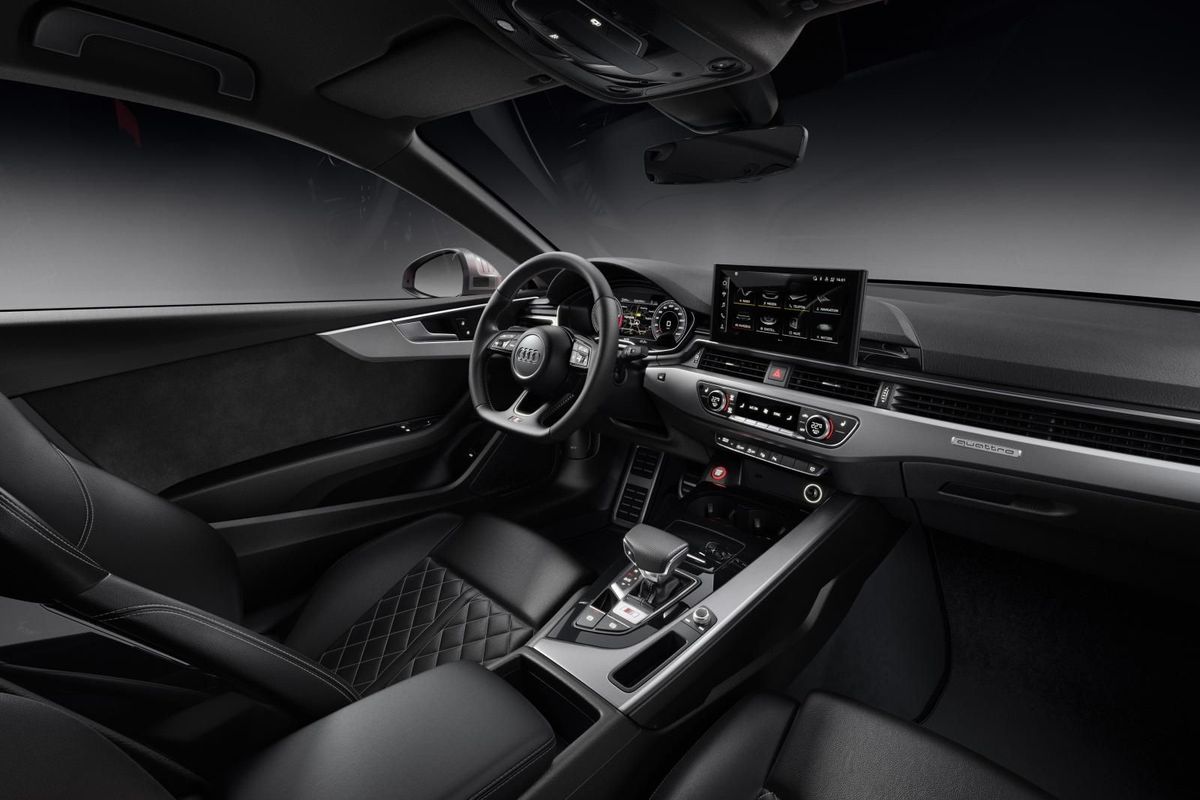
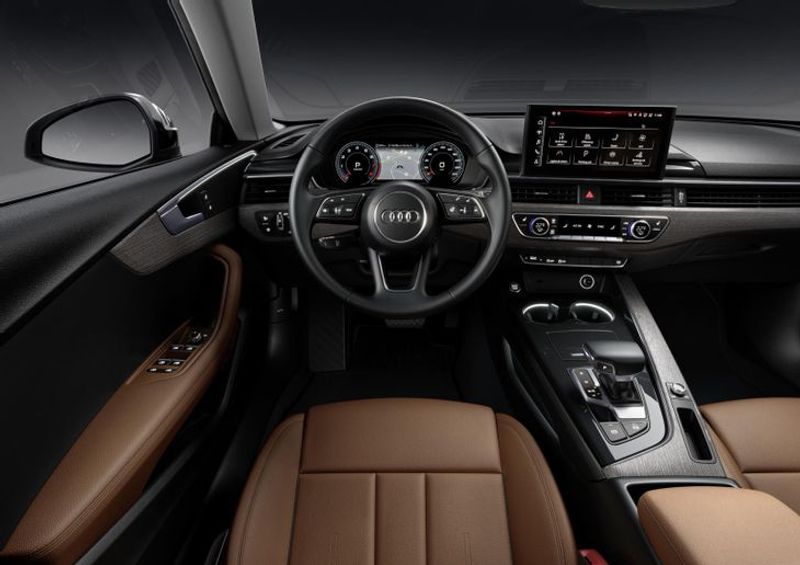
Speaking of cabin, this is where Audi has spent the most work. The interior gets an update, with the new MMI touch interface dominating proceedings. There are new graphics and Audi claims the user experience resembles that of a smartphone. Audi has introduced the latest generation of connected services to the new A5 range too. This comprises online connectivity to Audi's roadside assistance, which is available at the touch of a button. There's also real-time info for navigation and Google Earth is intergrated into the car. You can also link the myAudi app from your phone to the vehicle. The vehicle also comes standard with Audi's smartphone interface, which includes Apple CarPlay and Android Auto. 

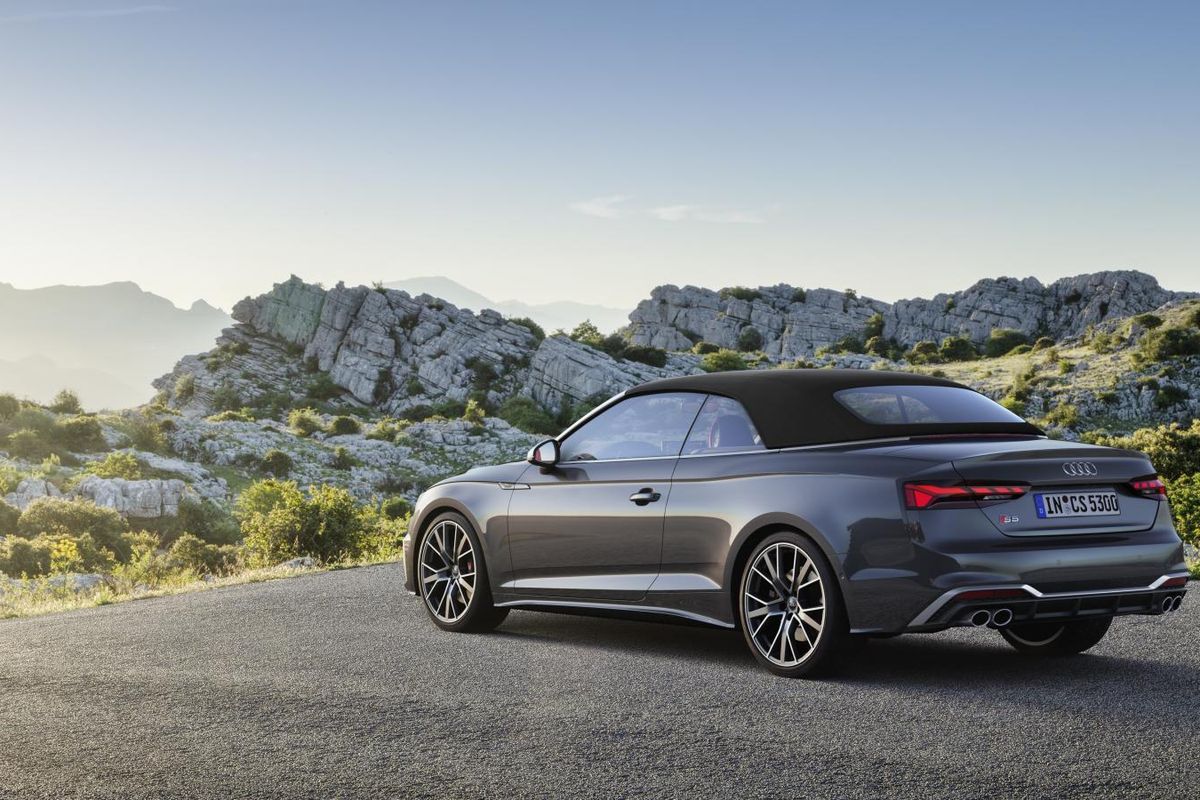
For those wanting to experience top-down motoring, Audi has brought in the S5 cabriolet. The roof can be opened in 15 seconds at speeds of up to 50 kph, useful for those surprise rain showers. 

In terms of engines, Audi has availed petrol and diesel options for the A5, while a fiery 3.0-litre turbocharged V6 headlines the S5. The 40 TFSI motor is a 2.0-litre turbocharged mill with 140 kW and 320 Nm, while the 40 TDI offers the same power and capacity, but there's more torque at 400 Nm. The S5 produces 260 kW and 500 Nm, and is good for a 0-100 kph in just 4.7 seconds. All models offer automatic transmissions, and every model bar the entry-level petrol derivatives feature quattro all-wheel drive.


The Audi S5 Cabriolet brings style and performance to the party

Specifications

The exterior design is available in two options, a standard variant in the entry-level model and the S line trim line across the range. All models offer Matrix LED headlights and the dynamic indicators as standard. The standard model offers:

  • 17 inch cast aluminium wheels
  • Door sills with aluminium inserts in the front
  • Black matte radiator grille with a chrome frame
  • Black matte grained side air intakes and rear diffuser
  • Tailpipe trims in aluminium silver matte and a bar tailgate in chrome

The S line models will offer a differentiated exterior design which includes:

  • 18 inch cast aluminium wheels
  • Front sills with aluminium inserts, illuminated and with S lettering
  • S line emblem on the front fenders
  • Widened side skirts in body colour finish
  • Sports suspension
  • S line-specific radiator grille in titanium black and chrome framed
  • Side air inlets in matt black grained with matt aluminium silver
  • S line-specific rear diffuser in titanium black matt
  • Rear trim in aluminium silver matt and bar tailgate in chrome

The S models also come with their own unique look which includes:

  • 19-inch S style contrast grey wheels
  • Red brake callipers
  • Exterior mirror housings in aluminium look
  • Larger rear spoiler
  • S model bumpers
  • S sports suspension

Audi South Africa has simplified its optional extra offerings and put them into packages. The packages include:

  • Technology (MMI navigation plus with MMI touch; Audi connect full functionality; contour ambient lighting)
  • Comfort (electric front seats; seat heaters; rear view camera; storage package)
  • Sport (flat bottomed multi-function steering wheel in 3 spoke design with shift paddles; sport seats; black lining)


The cabin of the updated Audi A5 range. Note the upgraded infotainment and connectivity screen.

Audi A5 and S5 Price in South Africa (December 2020)

The Audi A5 and S5 range is now available at all Audi dealerships and is sold with the 5 year / 100 000km Audi Freeway plan. The below prices are inclusive of all taxes.

Audi A5 Coupé 40 TFSI  R751 000

Audi A5 Coupé 40 TFSI S line  R796 000

Audi A5 Coupé 40 TDI quattro S line  R836 000

Audi S5 Coupé TFSI quattro  R1 052 000

Audi A5 Sportback  40 TFSI S line R811 000

Audi A5 Sportback 40 TDI quattro S line  R851 000

Audi S5 Sportback  S5 TFSI quattro   R1 067 000

Audi S5 Cabriolet  S5 TFSI quattro R1 152 000

Further Reading

Audi Q7 (2020) Launch Review

Audi S7 Sportback in SA (2020) Specs & Price 
Audi A4 (2020) Specs & Price
Audi S6 TFSI quattro (2020) Review

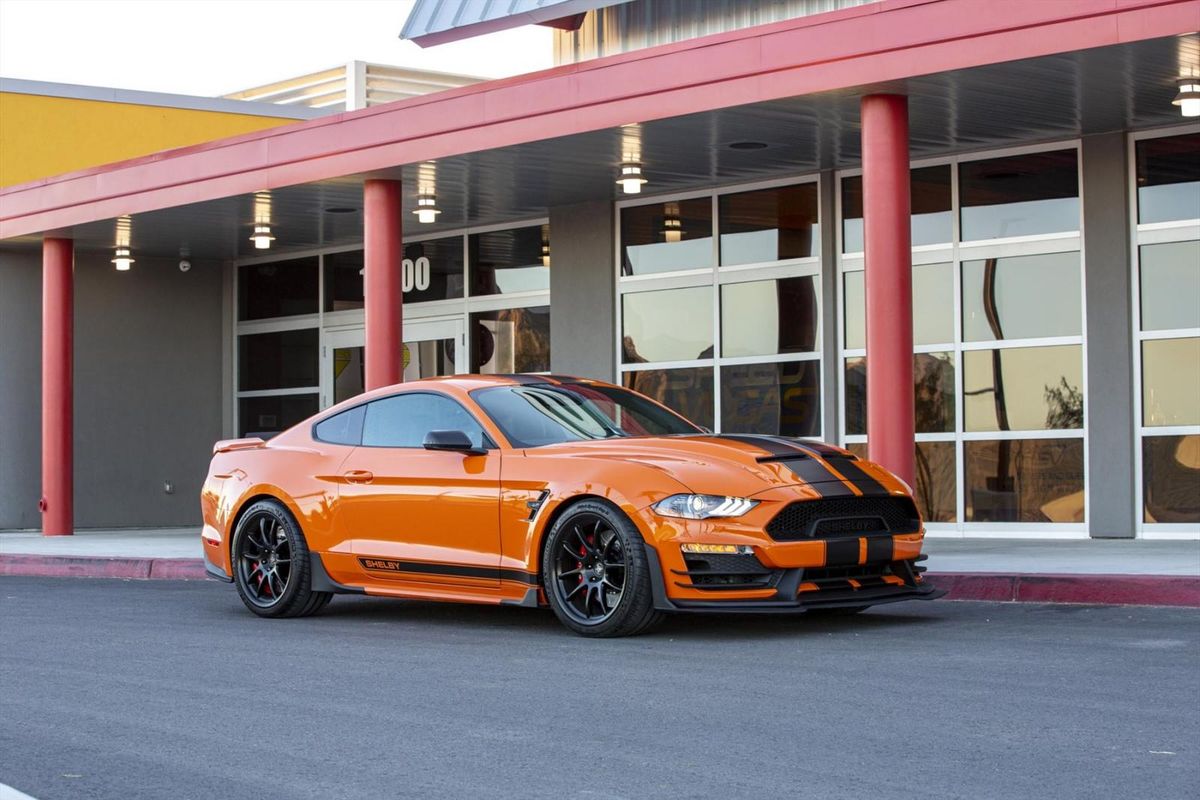
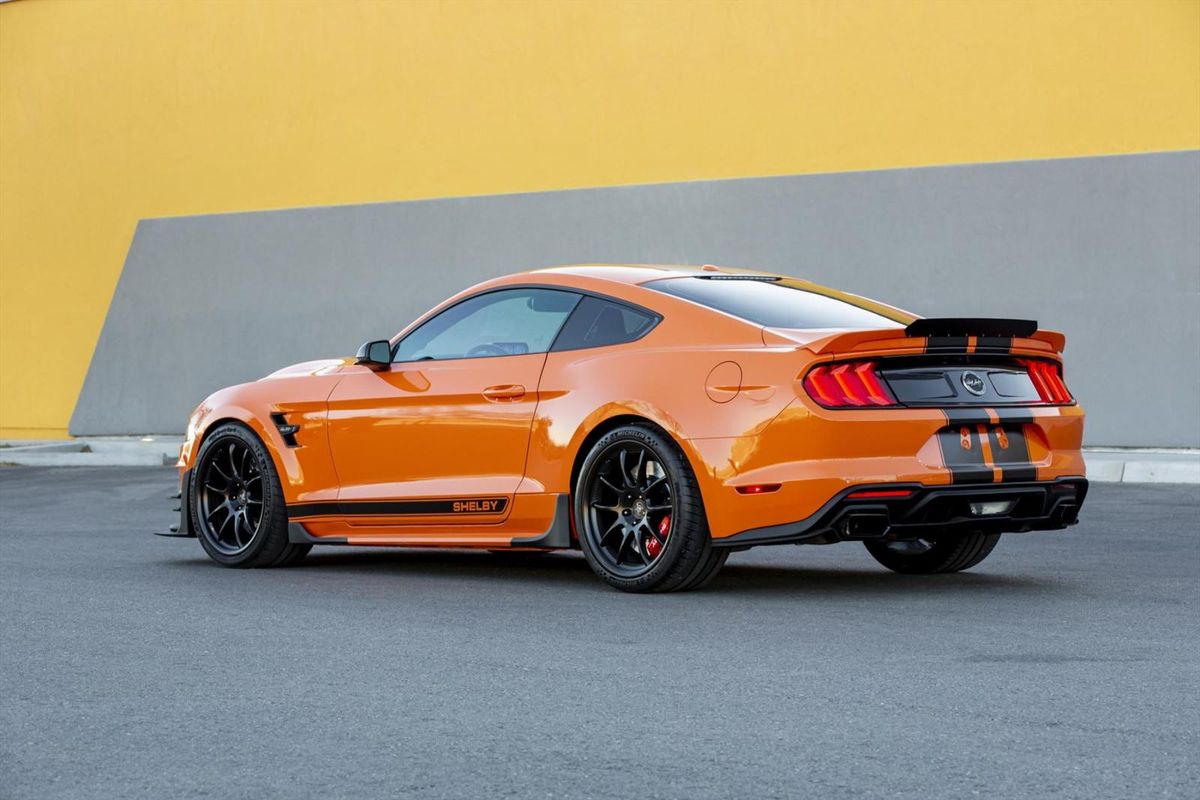
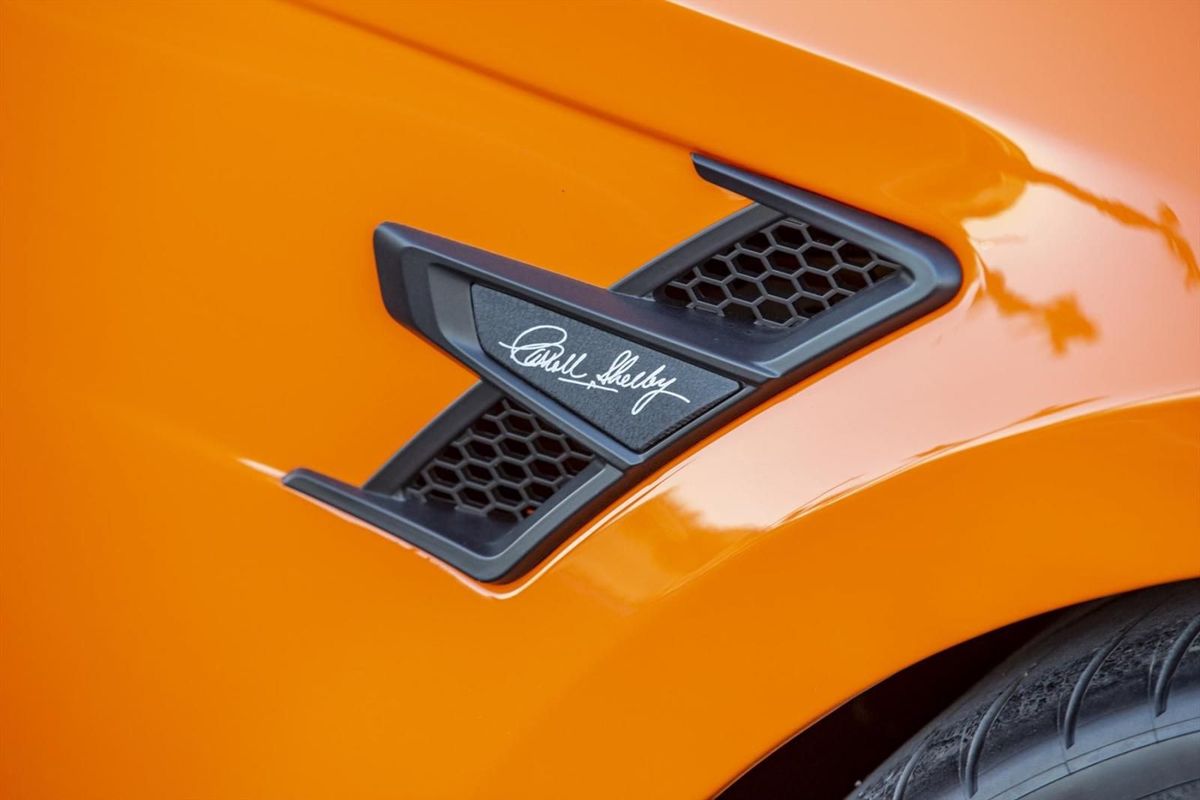
Carroll Shelby Signature Series in SA

A limited-edition Carroll Shelby Signature Series is now on offer in South Africa and only 3 are available!

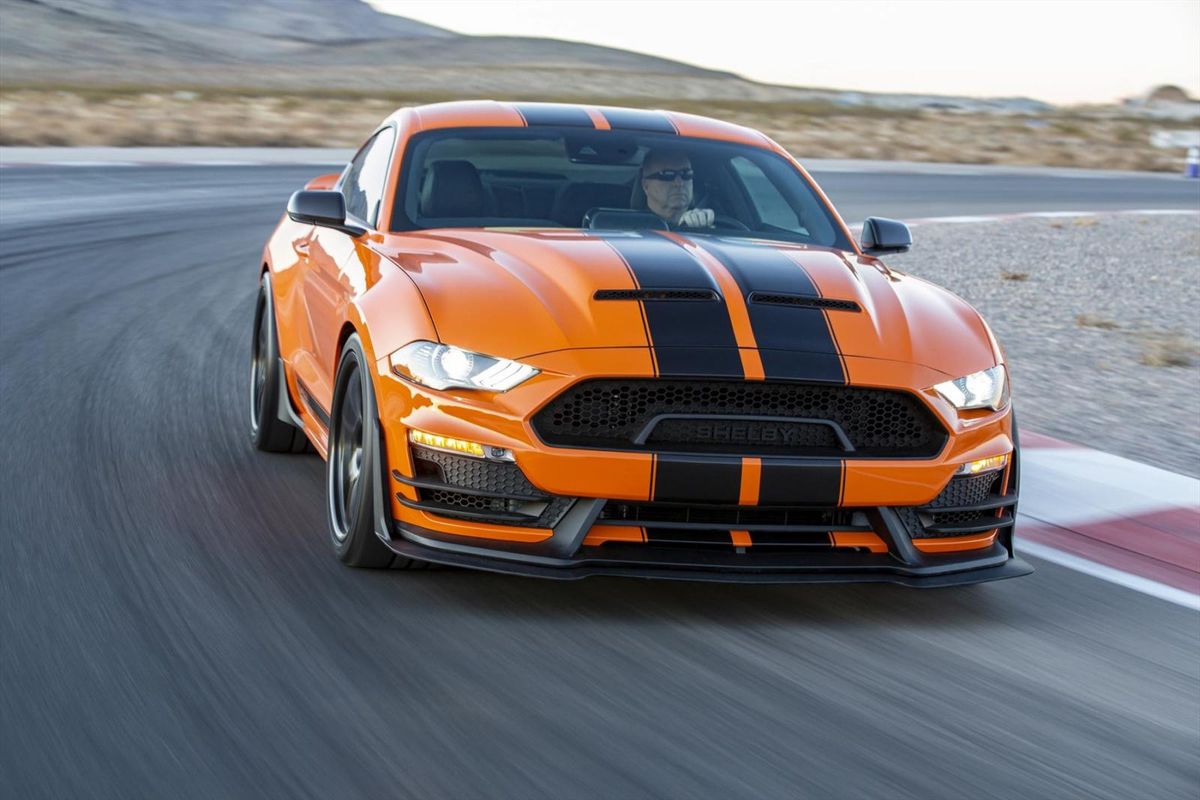
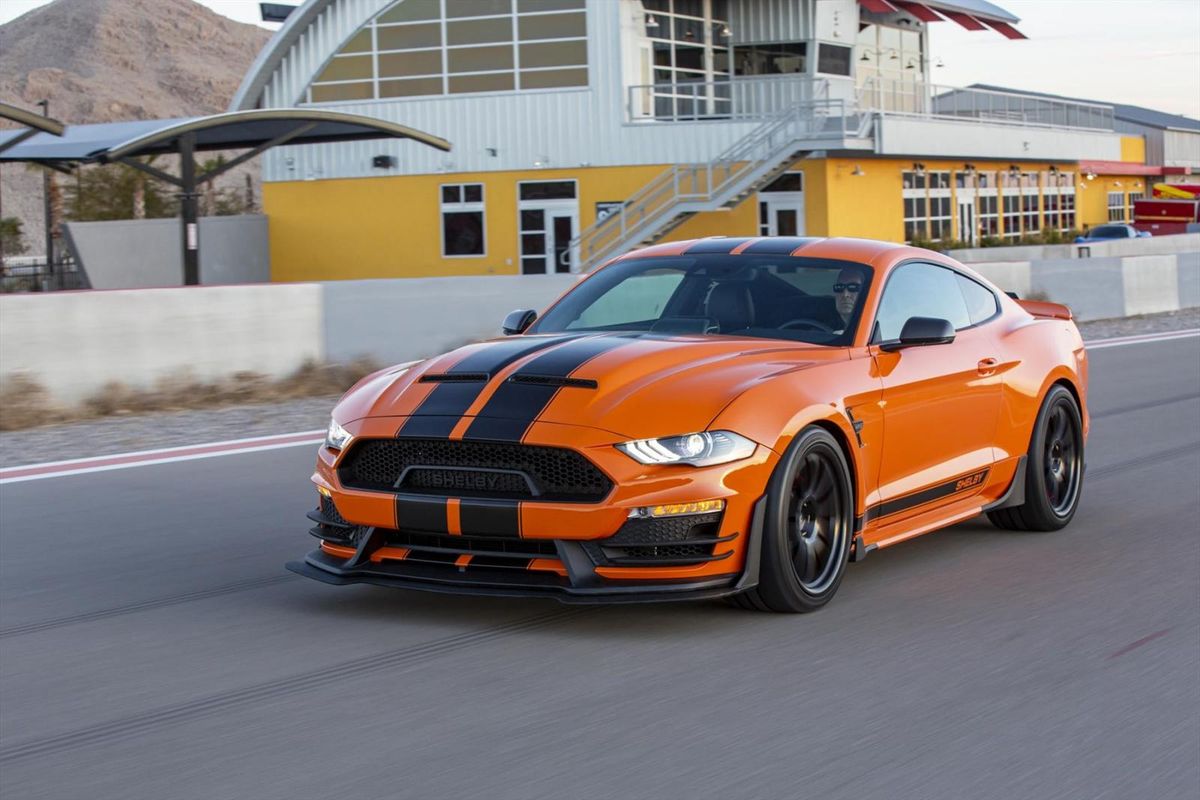
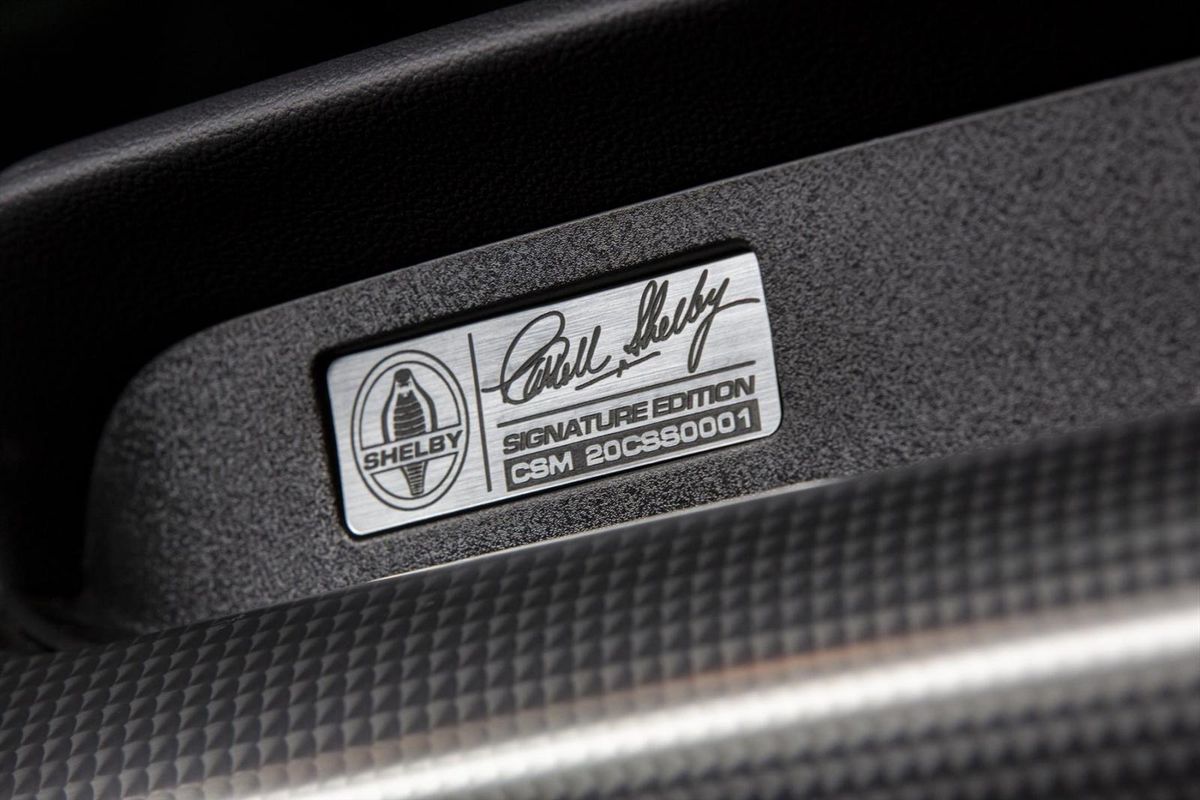
For those wanting the ultimate muscle car in South Africa, this may be it. Shelby South Africa has announced that 3 Carroll Shelby Signature cars will be offered locally. Only 50 units are available worldwide with the majority of the allocation reserved for the North American market.

Each car will be entered into the official Shelby Registry, ensuring authenticity, and the conversions will be done at Shelby SA’s official Mod Shop in the Western Cape. 

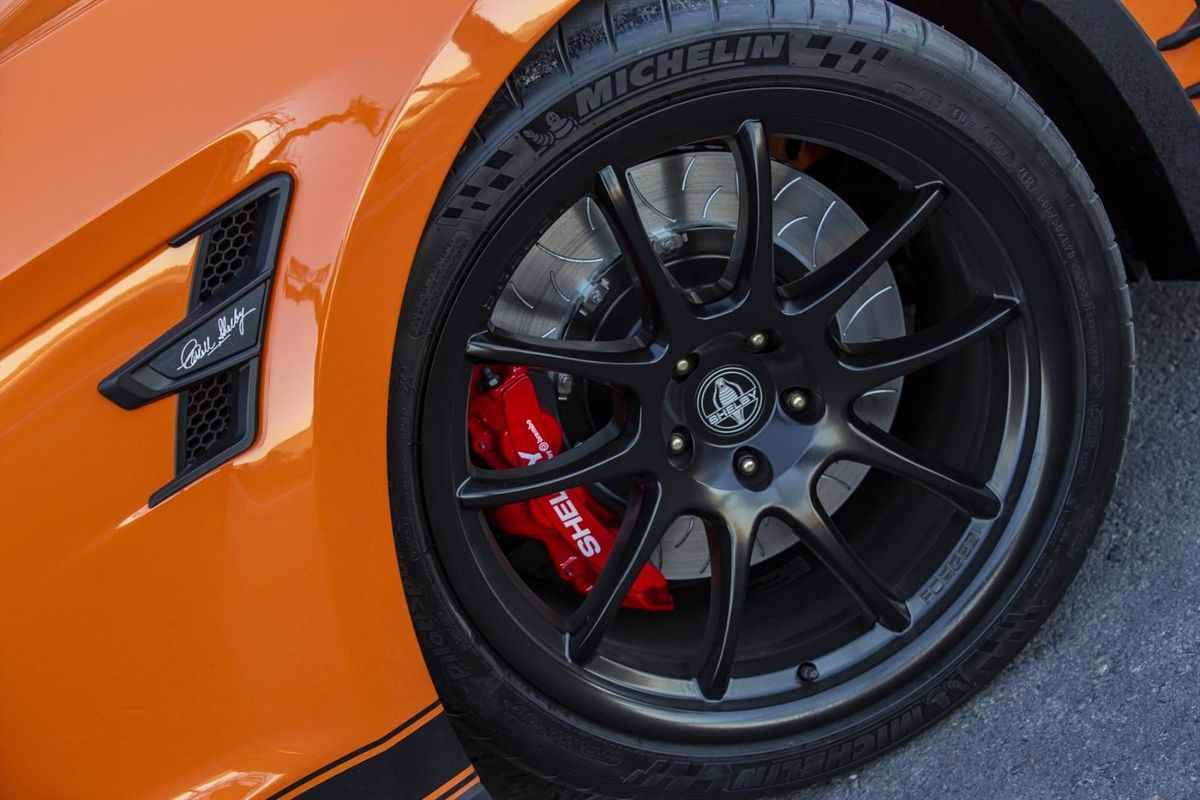
The Carroll Shelby Signature Series has been developed over 2 years and each car features a new aluminium fender that widens the body to accommodate the one-piece forged monoblock wheels and MagneRide suspension. A new Brembo braking system with 6 piston calipers up front and 4 at the rear ensure notable stopping power and additional cooling channels for the brakes were also exclusively developed by Shelby. 
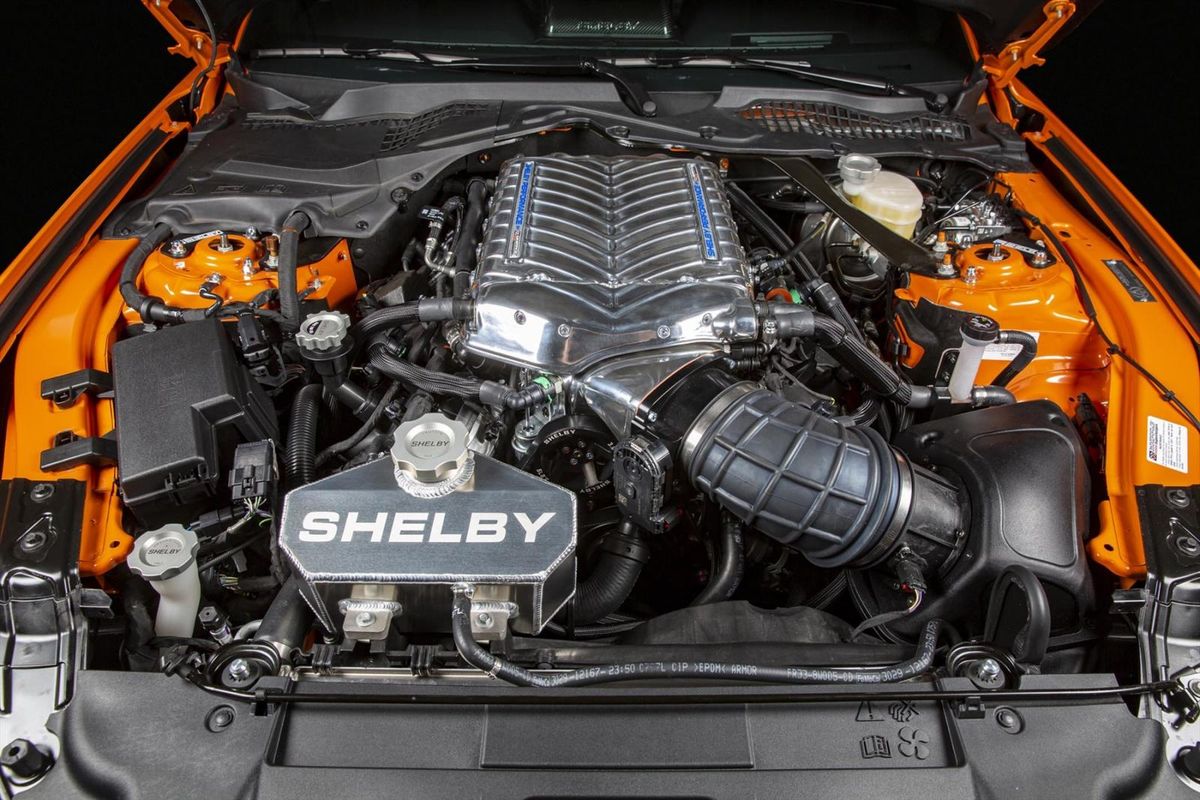
Perhaps the most tantalising development has taken place under the bonnet where the 5.0-litre V8 engine gains an Edelbrock supercharger which takes total power output to 597 kW! The sound of the powerful V8 is personified with the fitment of a Borla exhaust system with 4 custom exhaust tips. 

Other eye-catching bits include a metallic ram air hood, spoiler, diffuser and a new tail panel between the rear lights. 

On the inside, Shelby branding is on the door mats and door sills as well on the Shelby guages. Elsewhere, Shelby branding is also seen on the radiator cap, coolant tank and oil cap. Customers can also remove the rear seat and replace it with a harness bar, if you so wish. 

How much does the Carroll Shelby Signature Series cost you ask? Well, you will have to fork out R2 708 000 to have one, but you better move fast because there are only 3…

Buy a Ford Mustang on Cars.co.za

Related Content 

Euro Ford Mustang Mach 1 Loses Power

Ford Mustang Mach 1 Coming to SA?

Roush's 600 kW Mustang now in SA