One of the world's most influential car designers, Luc Donckerwolke, has rejoined his former employer, Hyundai, after a 7-month break, but the Belgian will now be based in Europe.
Best known for his work at Lamborghini, where Donckerwolke was responsible for both the Murciélago and Gallardo; he had been with Hyundai since 2016.
Recruited to replace Peter Schreyer as global design chief at Hyundai and Kia, Donckerwolke’s influence on the current production vehicles from both Korean brands, has been immense.
Despite success coming easily to him in his position as chief designer for Korea's most powerful automotive brands, Donckerwolke inexplicably resigned his position earlier this year.
It is entirely possible that the punishing travel schedule between Europe and Korea, has finally triggered the decision by Donckerwolke, to reduce the logistical burden of his professional life.
Realising his value, Hyundai has now created a new position for Donckerwolke, allowing him to be based in Europe.
His new title is that of chief creative officer and the primary responsibility for Donckerwolke will henceforth be the development of Hyundai’s Genesis luxury brand, and the Ioniq electric vehicle product portfolio.
The most significant change for Donckerwolke, in rejoining Hyundai, is that his new office will be German domiciled, at the company’s technical design centre, in Rüsselsheim.
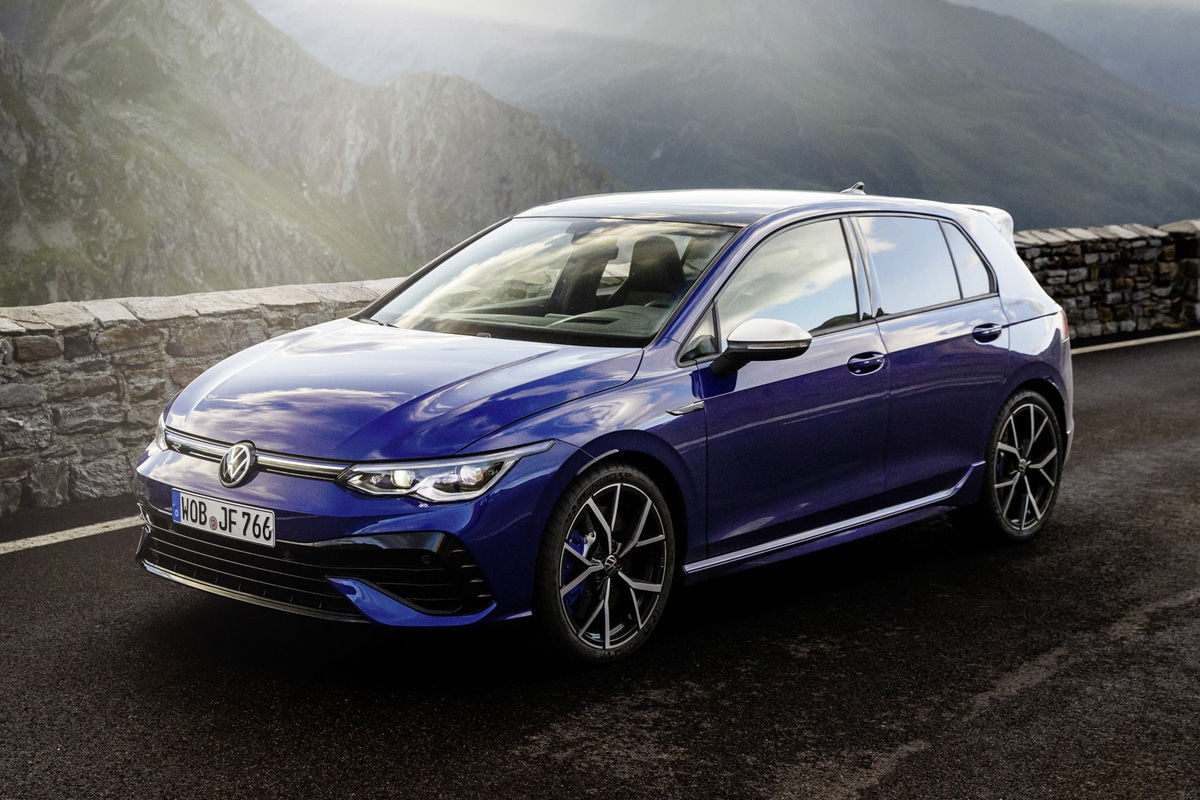
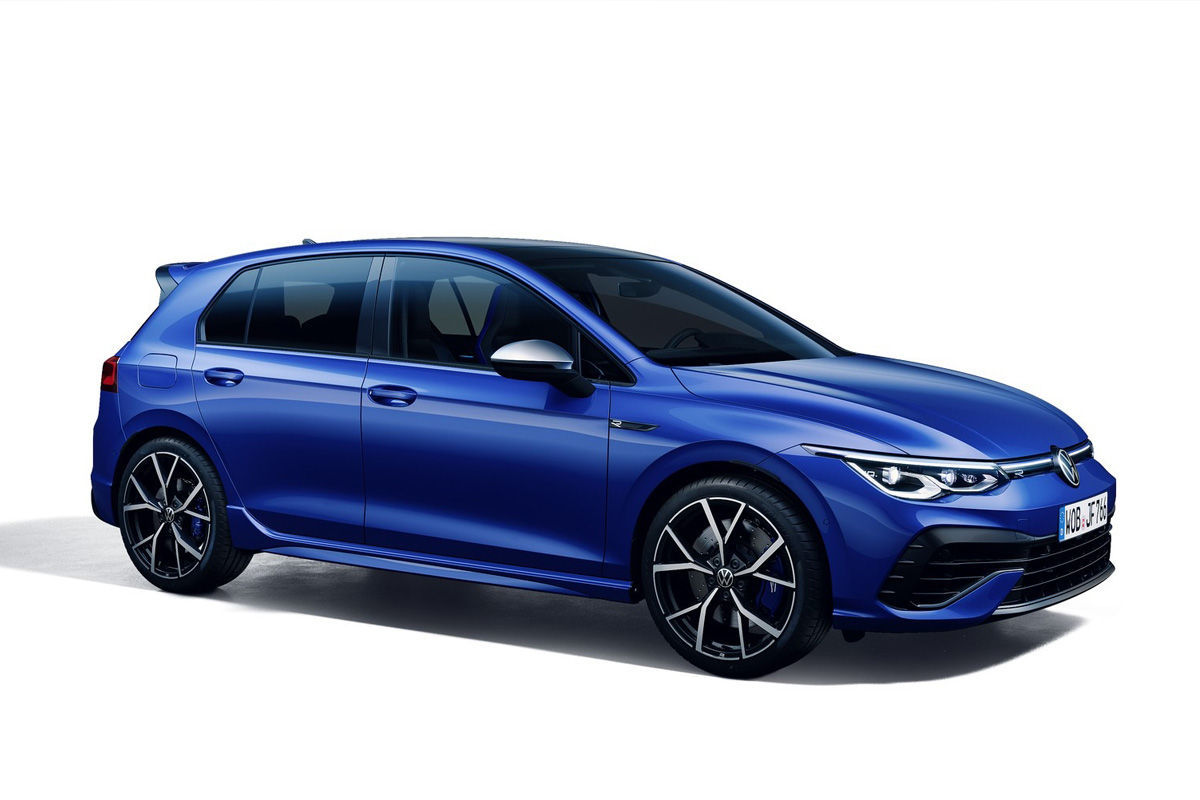
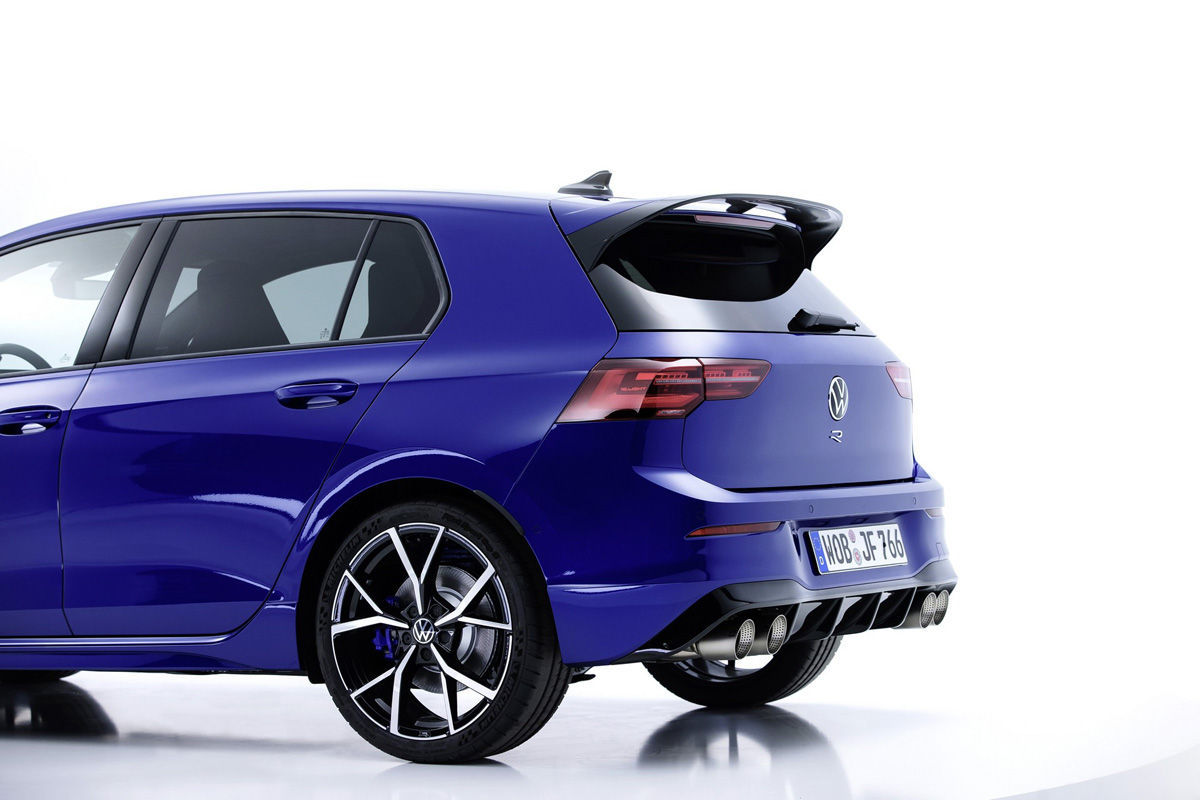
Golf 8 R revealed with 235 kW, optional drift mode
The R derivative of Volkswagen’s Golf 8 range has finally been revealed. The newcomer – officially the fastest, most powerful series-production Golf to date – is powered by a 235 kW/420 Nm “Evo 4” 2.0-litre 4-cylinder turbopetrol and is said to sprint from 0 to 100 kph in 4.7 sec courtesy of its revised Haldex-type all-wheel-drive system.
Having seen numerous spy photographs (and videos) of, and published several speculative pre-launch articles about, the Golf 8 R during the past 12 months, we had a good idea of what the newcomer would look like, the powertrain it would have, as well as its performance potential…
While its 235-kW peak power output is about 10 kW short of the mark that some commentators expected, the latest iteration of the EA888 unit still produces peak torque of 420 Nm from 2 100 rpm all the way through to 5 350 rpm, which makes it slightly more potent (by 7 kW and 20 Nm) than the Golf 7.5 version that is currently offered in South Africa. Its 0-100 kph time is about the same (4.7 sec versus 4.6 sec).
When the previous-generation Golf R arrived on the scene, it had fewer rivals than its successor (which will be offered with a 7-speed dual-clutch auto transmission outside North America, where it will also be available with a 6-speed manual ‘box). Still, Volkswagen’s newcomer stacks up well with its still-fresh M135i xDrive and A35 4Matic rivals in terms of outputs. It eclipses the Mercedes-AMG’s 225 kW/400 Nm and Subaru WRX STI’s 221 kW/407 Nm, but it’s slightly less torquey than the BMW (225 kW/450 Nm).
However, the performance figures only tell a part of the story, because the Golf 8 R is claimed to beat its predecessor’s lap time of the Nürburgring Nordschleife by 17 seconds (to be fair, it is a rather long circuit) by virtue of a number of technical upgrades that Volkswagen says “opens up a whole new level of driving dynamics away from public roads and makes the (driving) experience even more fun”.
Apart from Vehicle Dynamics Manager system, which controls the XDS electronically-controlled front locking diff and adaptive dampers, the Golf 8 R’s all-wheel-drive system features the upgraded torque-vectoring system (as fitted to the Tiguan R), which distributes drive variably between the rear wheels, as opposed to than just between the fore and aft axle. Using a pair of electronically operated multi-disc clutches, the system is said to balance output across the axle from 0-100% within milliseconds.
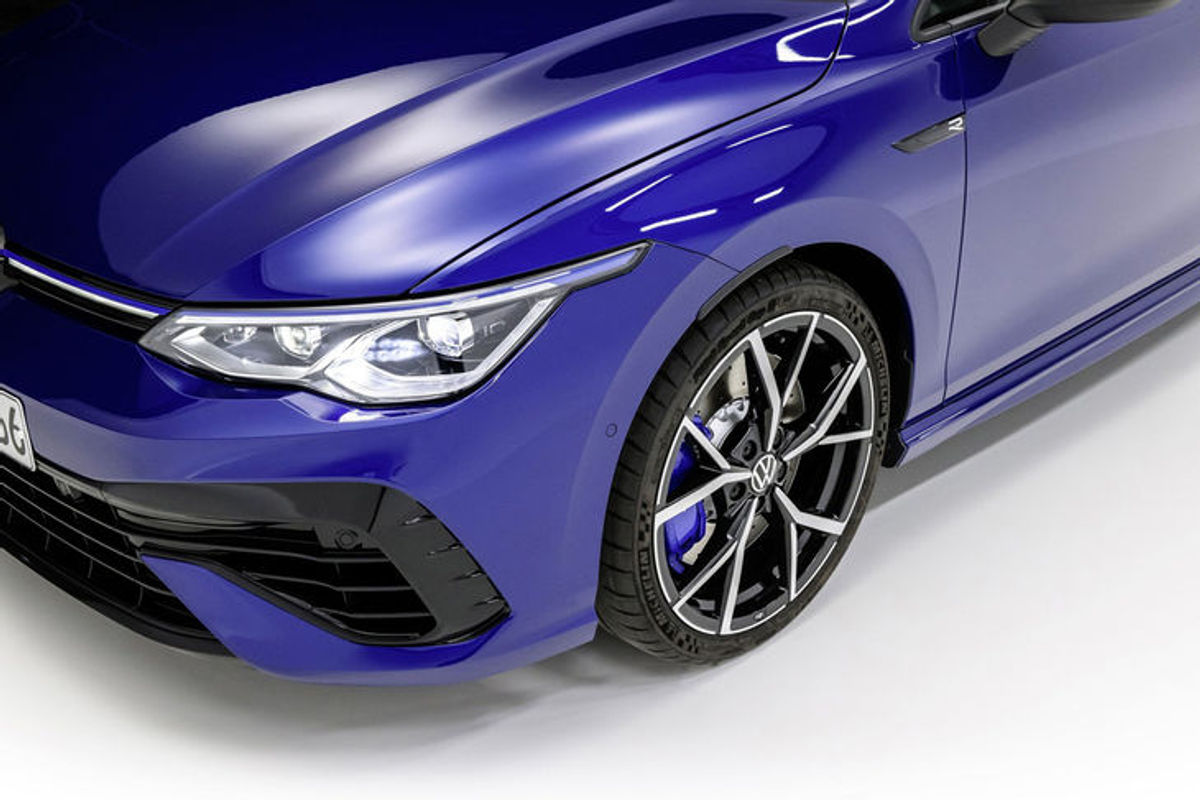
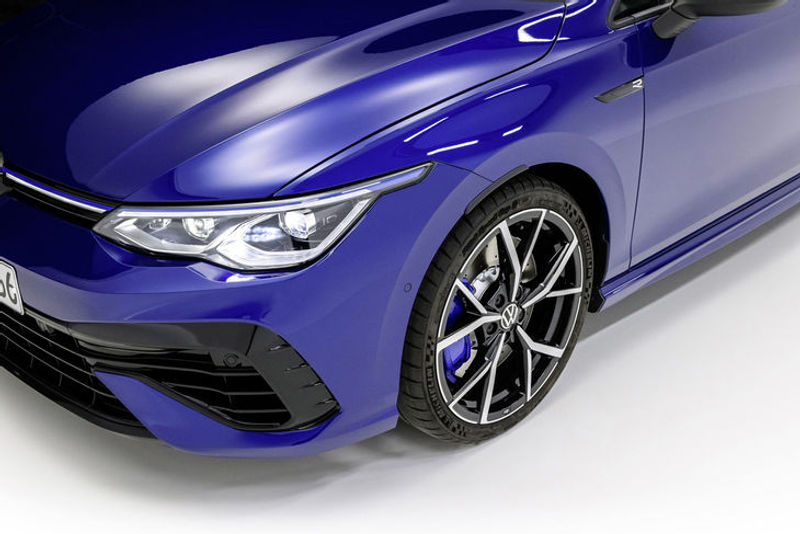
Volkswagen has also increased the front-axle camber (by 1.3 degrees), raised the stabiliser and spring rates (by 10%) and tuned the steering software to exact more direct turn-in. While the front aluminium subframe has been lightened by 3 kg, a 1.2-kg saving of unsprung mass has been achieved with the Golf 8 R’s braking system, which features larger front discs (360 mm units, clamped by two-piston aluminium callipers) and an uprated master cylinder for improved braking feel and response.
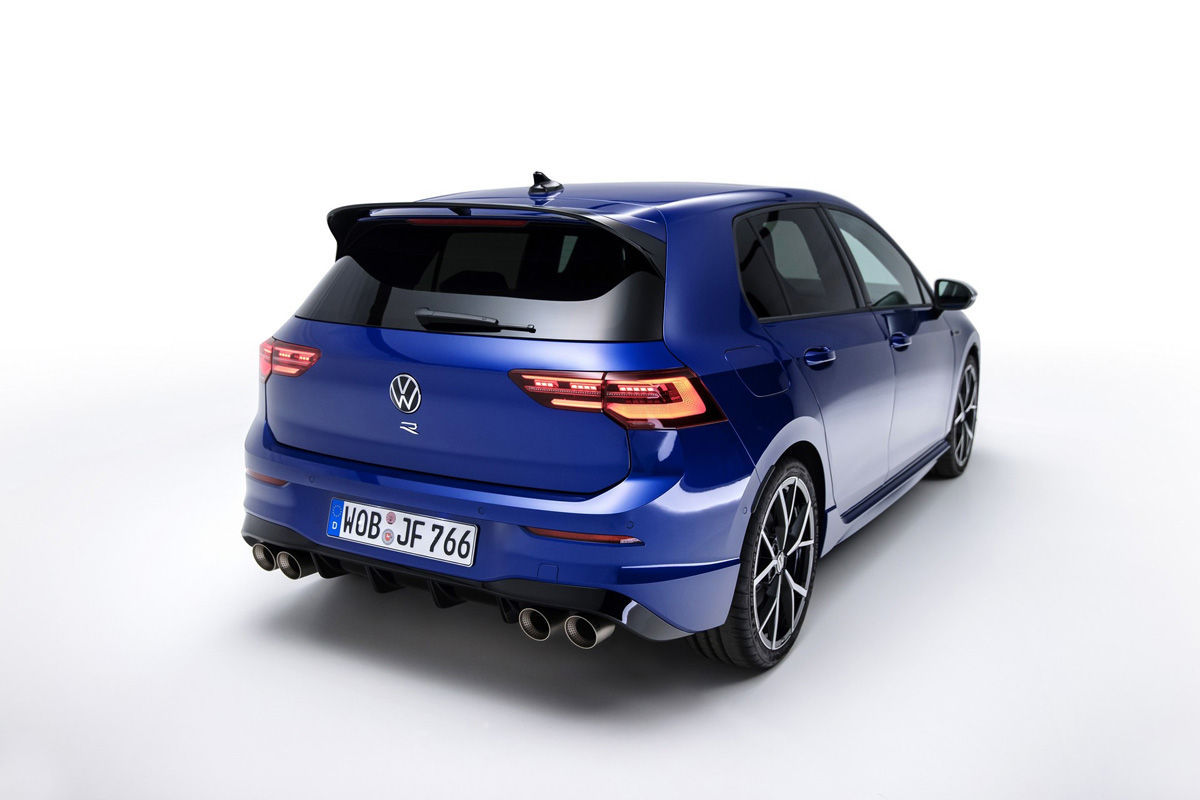
Because “stock” will never be sufficient for some buyers, the Wolfsburg-based brand has made an optional R Performance package available, which ups the Golf 8 R’s electronically-limited top speed from 250 kph to 270 kph, adds a more elaborate rear spoiler and swops the standard 18-inch wheels and tyres for 19-inch sports wheels (shod with Michelin Pilot Sport Cup 2 rubber) as standard.
The package also introduces a pair of new drive modes (over and above the standard Comfort, Eco, Sport, Individual and Race): Special, which softens the adaptive damper settings to suit the specific track characteristics of the Nürburgring Nordschleife and Drift mode, which alters the dynamic stability control settings and directs more torque to the rear axle to enable “controlled drifts”.
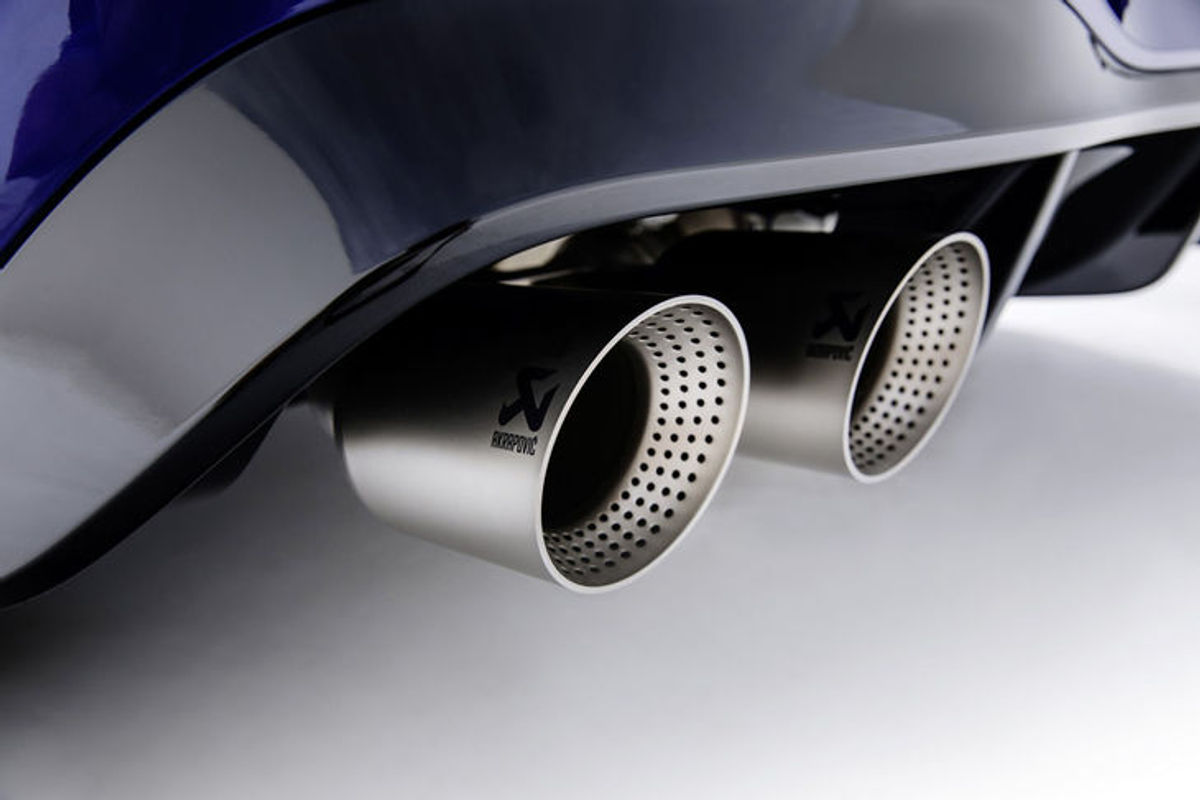
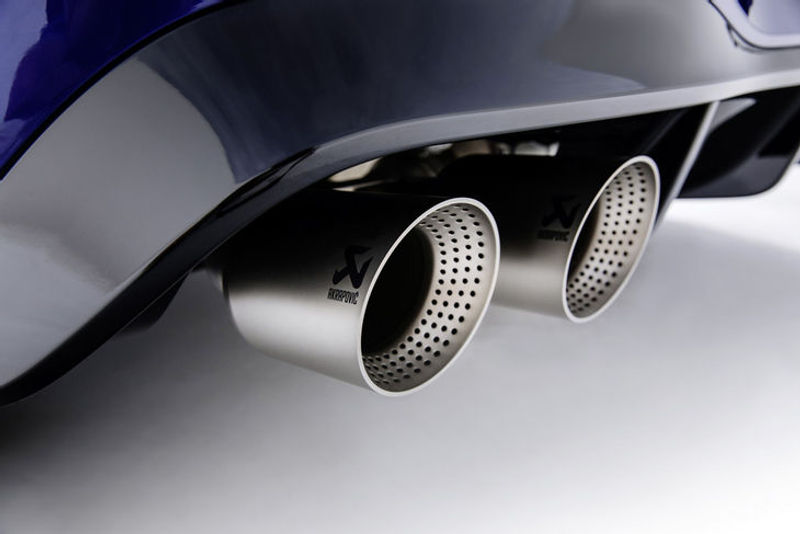
As before, an Akrapovic titanium performance exhaust system is available, which weighs 7 kg less than the standard system and includes valve control so that a driver can adjust the exhaust volume.
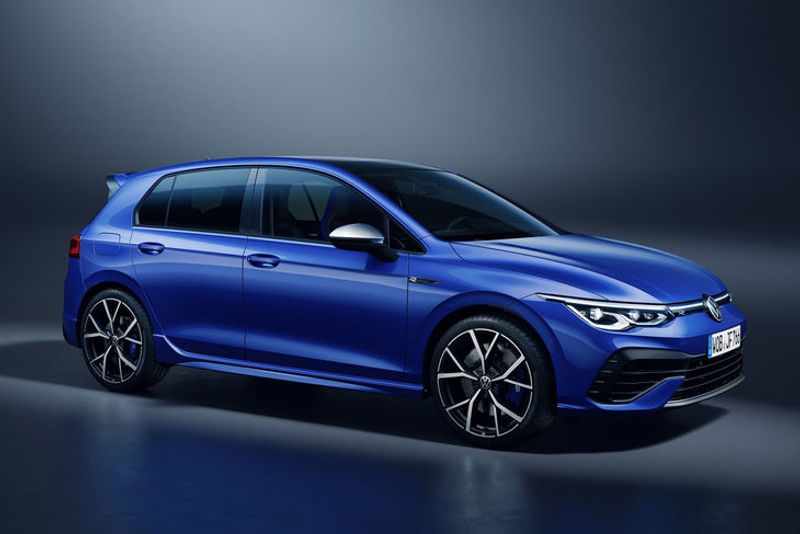
From an aesthetic point of view, the Golf 8 R rides 20 mm lower than its standard siblings, but in time-honoured Golf R tradition, its exterior execution is purposeful, rather than in-your-face or “shouty”. Up front, the sportier bumper has unique air intakes and gloss black accents, while the model-specific grille is adorned with a blue crossbar that illuminates as soon as the Volkswagen’s engine is started.
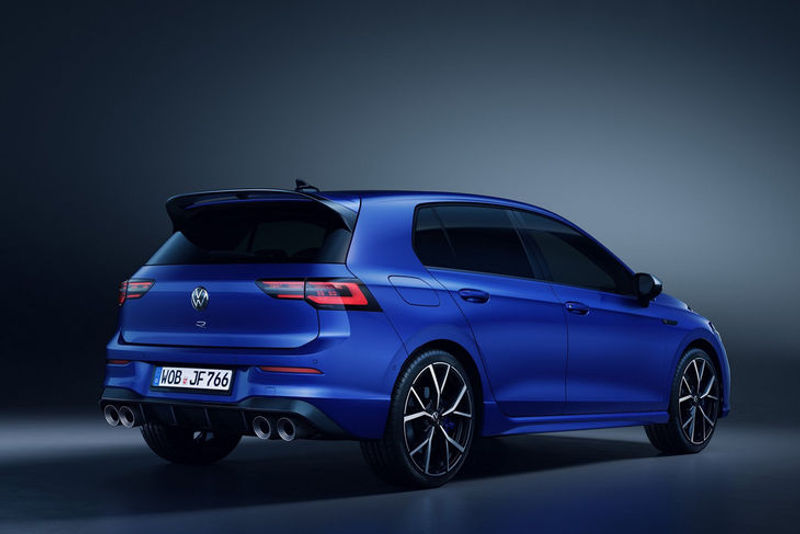
From the side, the newcomer is distinguished by flared side skirts and matte-chrome mirror caps, while a beefy bumper with a gloss-black diffuser and a quad-tailpipe exhaust system adorn the rear.
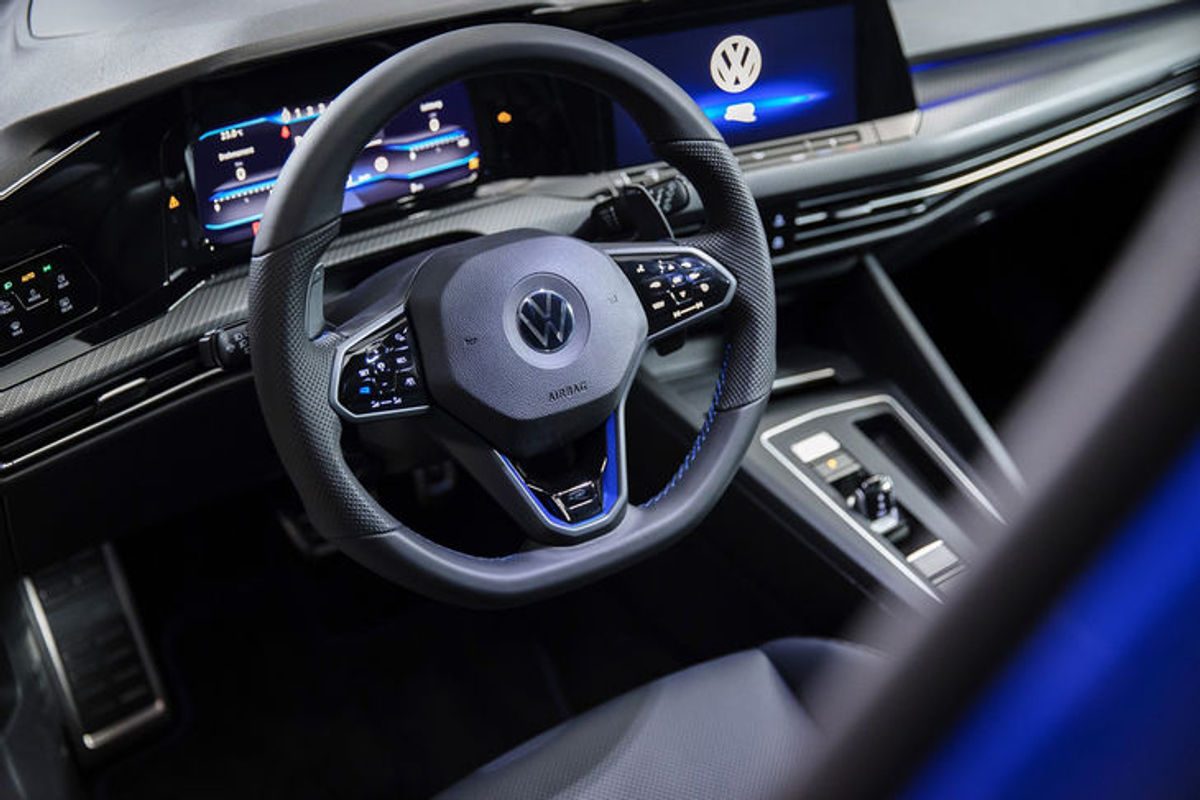
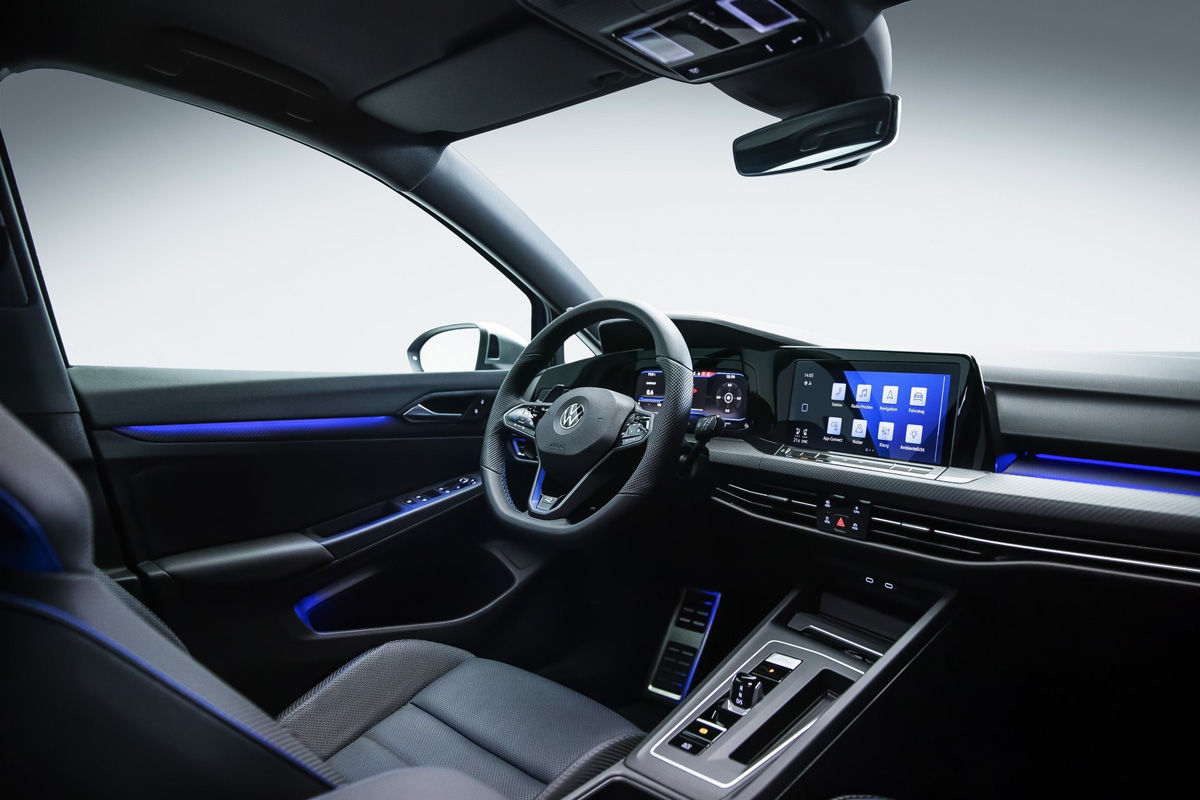
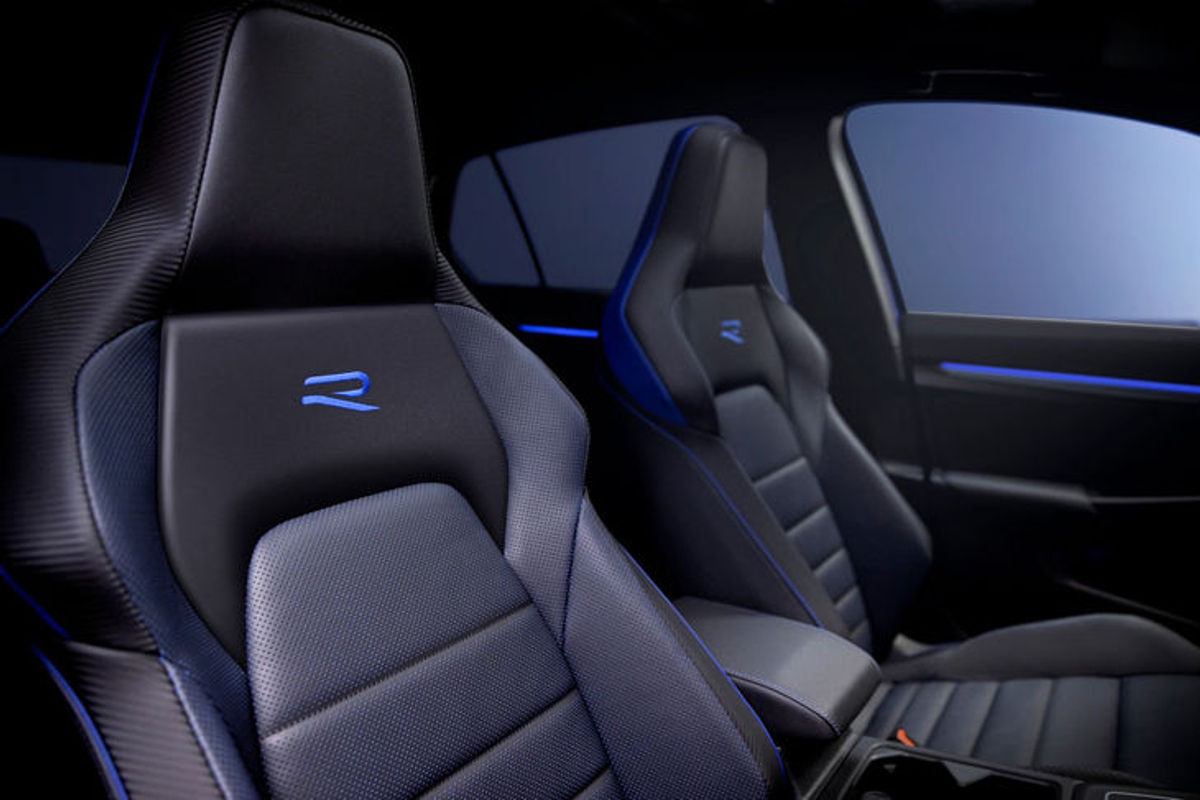
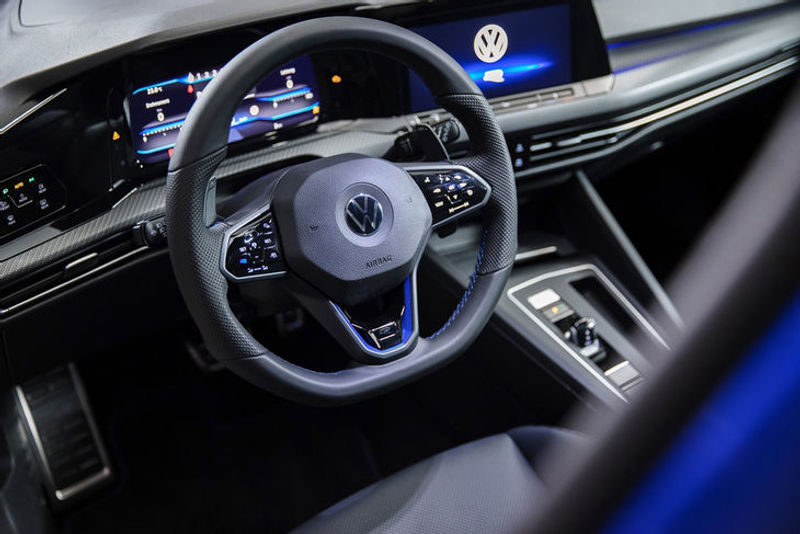
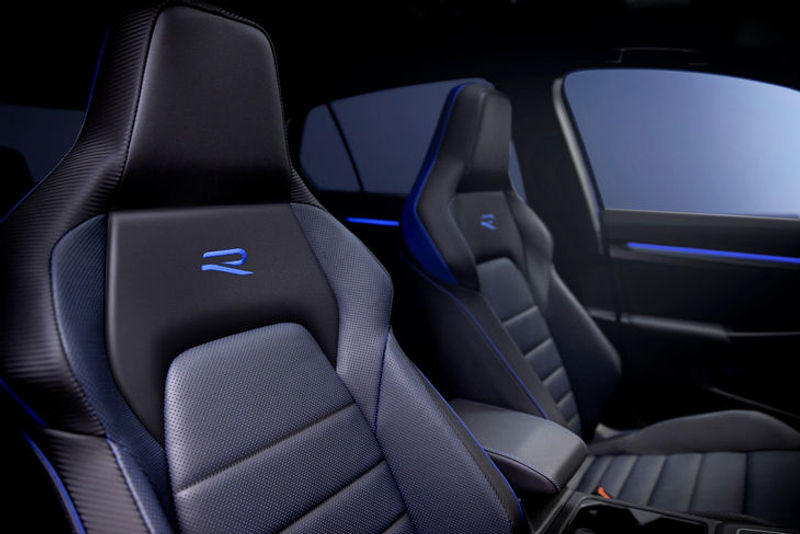
The Golf 8 R’s cabin features Nappa leather sport seats (with blue accents and R logos on the backrests), carbon-fibre-look inserts, stainless steel-finished pedals and a shift-paddle-equipped sports steering wheel with a dedicated R button. Other standard features include a digital instrument cluster and a 10-inch infotainment system, both with R-specific displays. A new R-view, for example, displays a horizontally oriented rev counter in the pinnacle and displays gearchange recommendations (when the Volkswagen is driven in manual mode).
So, when can we expect the newcomer to arrive in the South African market? It will go on sale in Europe shortly, but seeing as the Golf 8 GTI will only arrive in Mzansi in the first quarter of 2021, we expect the R version to arrive during the latter stages of 2021 at the earliest, or early in 2022.
The National Association of Automobile Manufacturers of South Africa (Naamsa) has released new vehicle sales figures for October 2020, with aggregate sales marginally higher than in the previous month.
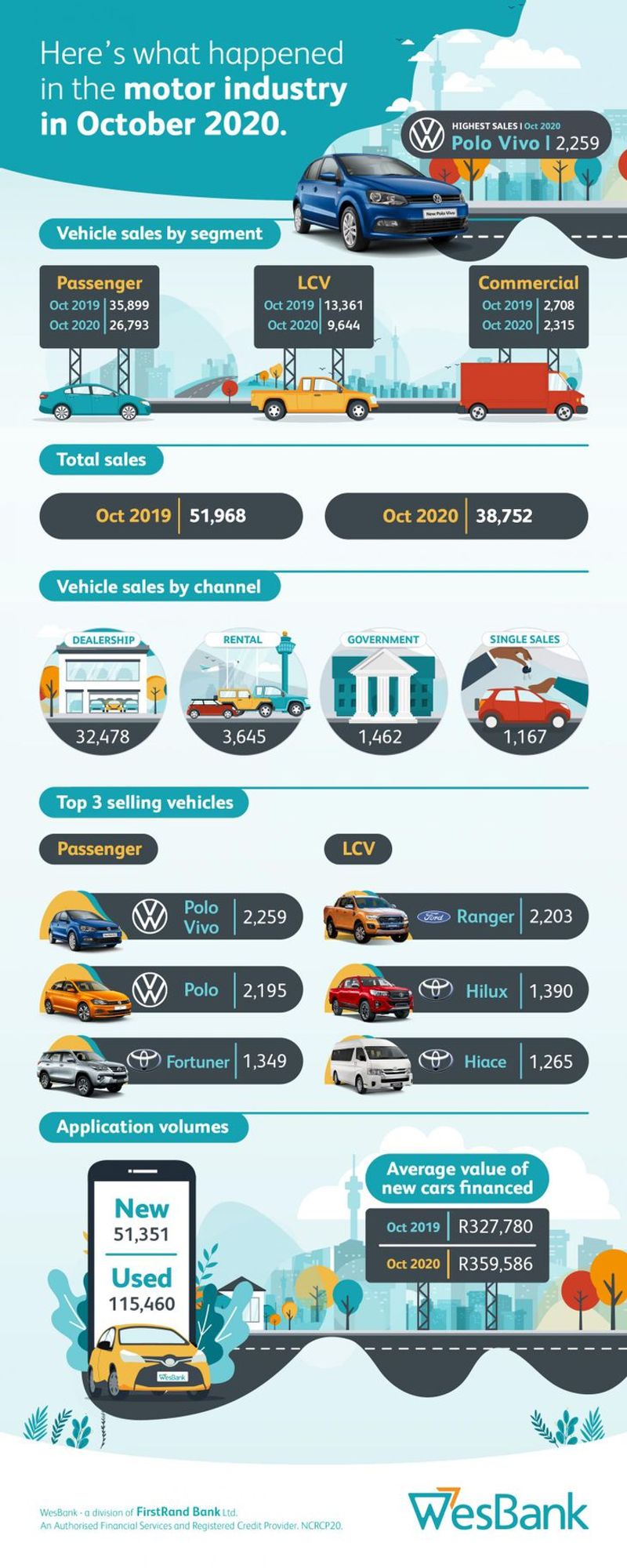
According to the Naamsa, 38 752 new vehicles were sold in Mzansi last month, which represents the 4th consecutive month of sales growth by volume since the easing of the national lockdown in response to the Covid-19 pandemic, albeit that it is 25.4% lower than October last year.
Although market volume increased by 1 516 units over September, sales were relatively worse off in October year-on-year. September sales were down 23.9% by comparison. Segment performance faired more evenly, however.
Passenger car sales were 25.4% down on October 2019 to 26 793 units, a relatively better performance than in September. Light Commercial Vehicle (LCV) sales were down 27.8% to 9 644 units compared to October 2019, and a September performance that was only down 8.2%.
Passenger-car market rebounds
Retailers of passenger cars will have welcomed the consumer demand lifting their market performance to a 7.3% decrease year-on-year. However, LCV sales tumbled 30.7% in the same channel during October.
The October sales results pushed the market through the 300 000-vehicle mark to 303 997 units year-to-date. Soberingly, this is almost 150 000 units less than the same period last year (32.5% down).
“Combined with low interest rates, banks’ lending appetites have supported this market growth. However, levels of sales and levels of demand seemingly don’t correlate,” says Lebogang Gaoaketse, head of marketing and communication at WesBank Vehicle and Asset Finance. “Market activity as measured by finance applications indicate a demand for vehicle finance at levels only marginally lower than October last year.”
This demand is also not unduly different year-on-year in terms of demand for finance for either new or used vehicles, WesBank noted.
Top-Selling Vehicles in SA: October 2020
VW Polo Vivo – 2 259 units
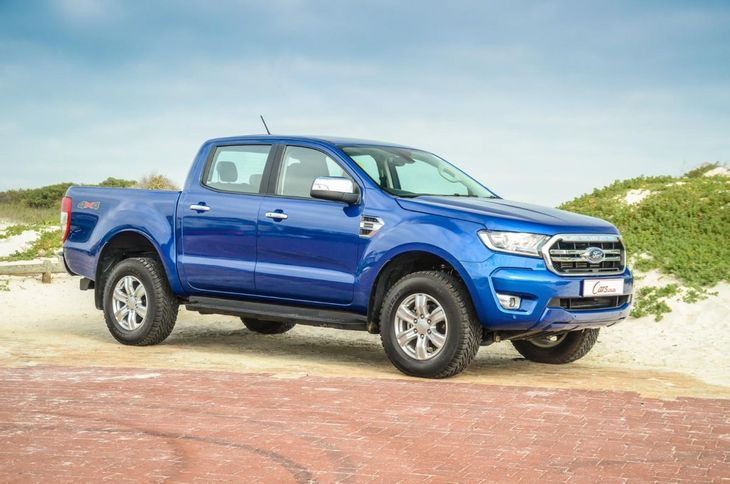
Ford Ranger – 2 203 units
VW Polo – 2 195 units
Toyota Hilux – 1 390 units
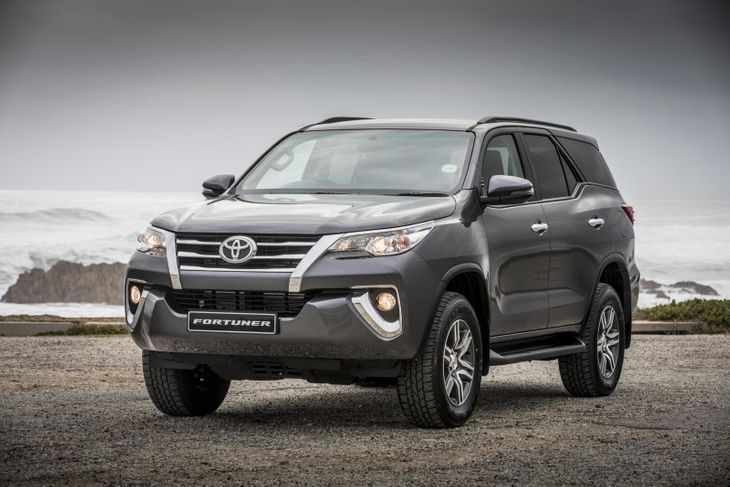
Toyota Fortuner – 1 349 units
Top-Selling Brands (Passenger Vehicles) in SA: October 2020
Volkswagen – 6 063 units
Toyota – 5 755 units
Hyundai – 2 479 units
Suzuki – 1 963 units
Renault – 1 671 units
Top-Selling Brands (Overall) in SA: October 2020
Toyota – 8 859 units
Volkswagen – 5 771 units
Ford – 3 738 units
Hyundai – 2 781 units
Nissan – 2 365 units
Outlook for November 2020
“We expect interest rates to remain low for quite some time as Government continues to make every attempt to stimulate the economy,” says Gaoaketse. “This continues to provide a good opportunity to purchase a vehicle at some of the most affordable lending rates.”
However, WesBank warned that demand in the new vehicle market may be waning off the back of Covid-19 as consumers simply have less need for mobility, never mind the affordability implications.
“With fuel sales down between 20% and 25% and public transport demand around 30% lower, consumers are simply moving around less,” says Gaoaketse. He went on to say that the mobility element of household budgets may be shifting more towards property investment as the housing market picks up, thanks to low interest rates and the rising need to work from home.
Land Rover Defender – 3 days of dirt later
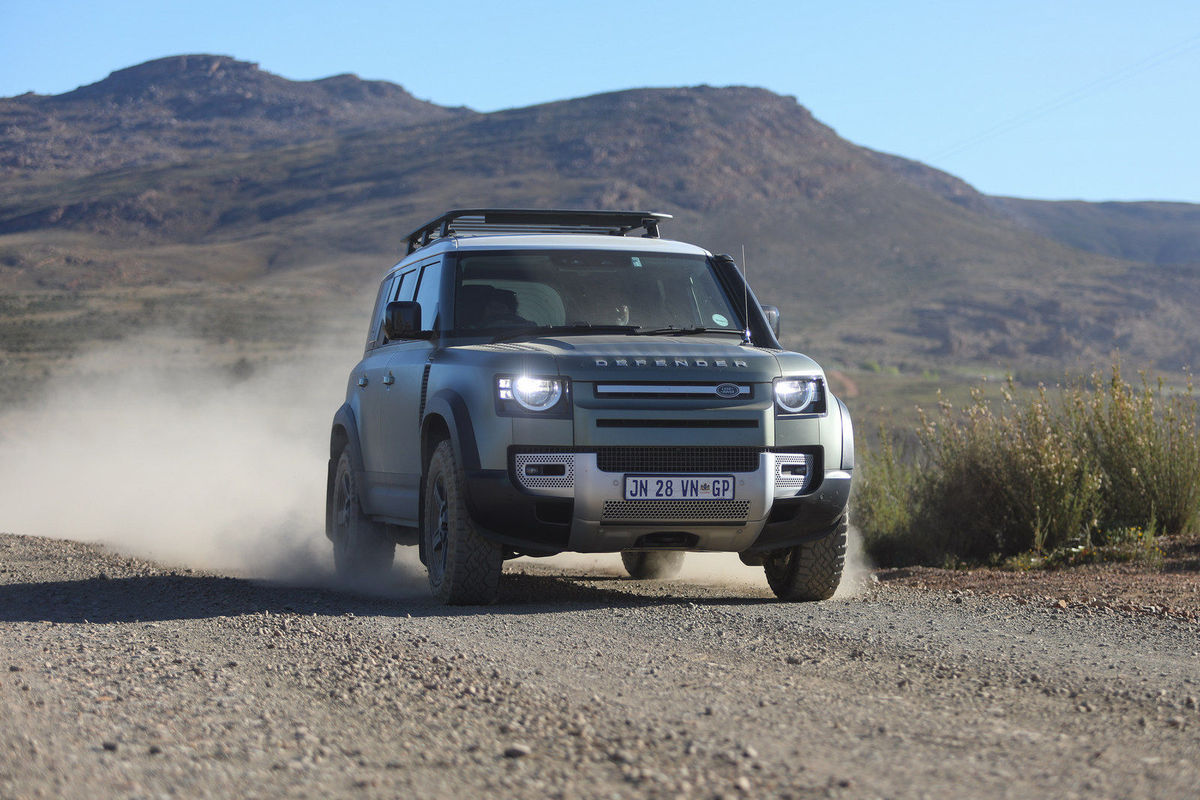
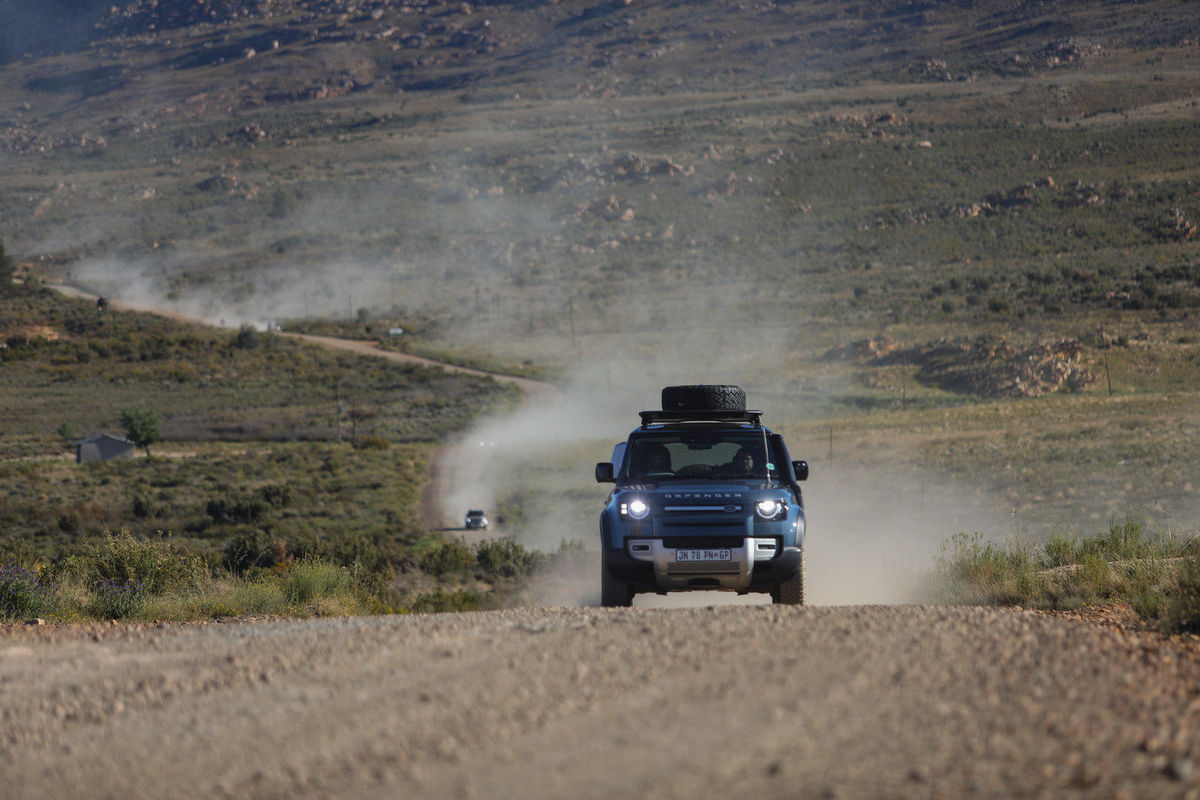
We know the new Land Rover Defender is a very capable vehicle, but what’s it like after you've hammered it over an 800-km route (of mostly gravel roads), in searing heat, for 3 days? Is the newcomer capable of taking a beating day in and day out like its predecessor… or is it now just a fancy SUV that can do a bit of weekend rock-climbing?
There are many large SUVs to choose from nowadays. If you want to spend a million bucks, all the German premium manufacturers will happily take your money, a few Japanese nameplates offer interesting alternatives and then there’s Solihull-based Land Rover, whose entire portfolio sits around and above that mark. Many of the (what we classify as) Premium SUVs are pretty good, except the Mercedes-Benz GLE, which is a bit meh until you stick a 63 badge on it, but they all follow the same formula. They prioritise on-road handling and cornering poise, but offer a modicum of off-road ability if you need to access something down a panhandle, or traverse a gravel road to have a picnic under the trees on a wine farm.
That’s how they’re used most of the time; their drivers will hardly ever trouble the clever traction-control software of their vehicles' off-road modes.
Now, this may sound like a bit of a rant about Premium SUVs being useless purchases and that every manufacturer should do an about-turn and bring back the station wagon. Look, if this was Europe, I'd say, "absolutely, make the motoring world pretty again with svelte estate cars." But this isn’t Europe, it’s Africa: we like to travel to hard-to-access locations just for fun; we are happy to endure hours upon hours of gravel-road driving to reach areas where mobile phones are of little or no use. We are adventurous people, and for that, you need ground clearance and 4×4 capability.
Where to and why?
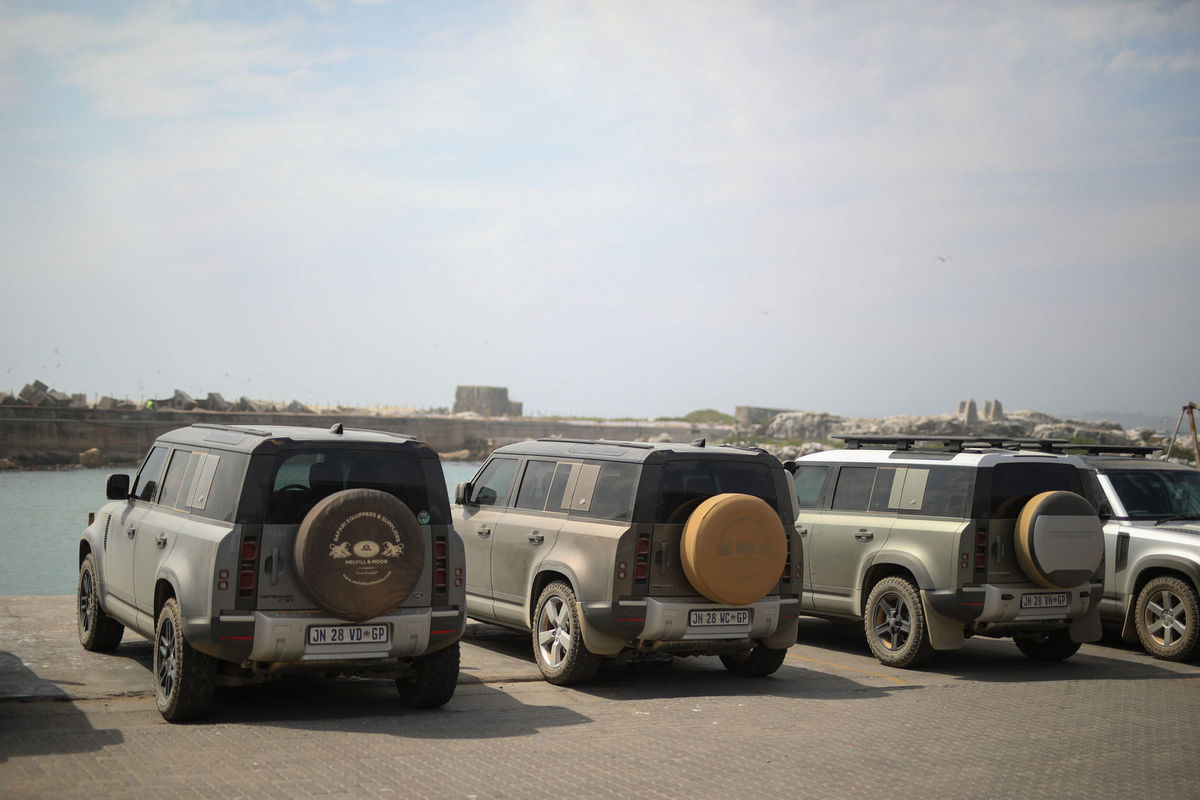
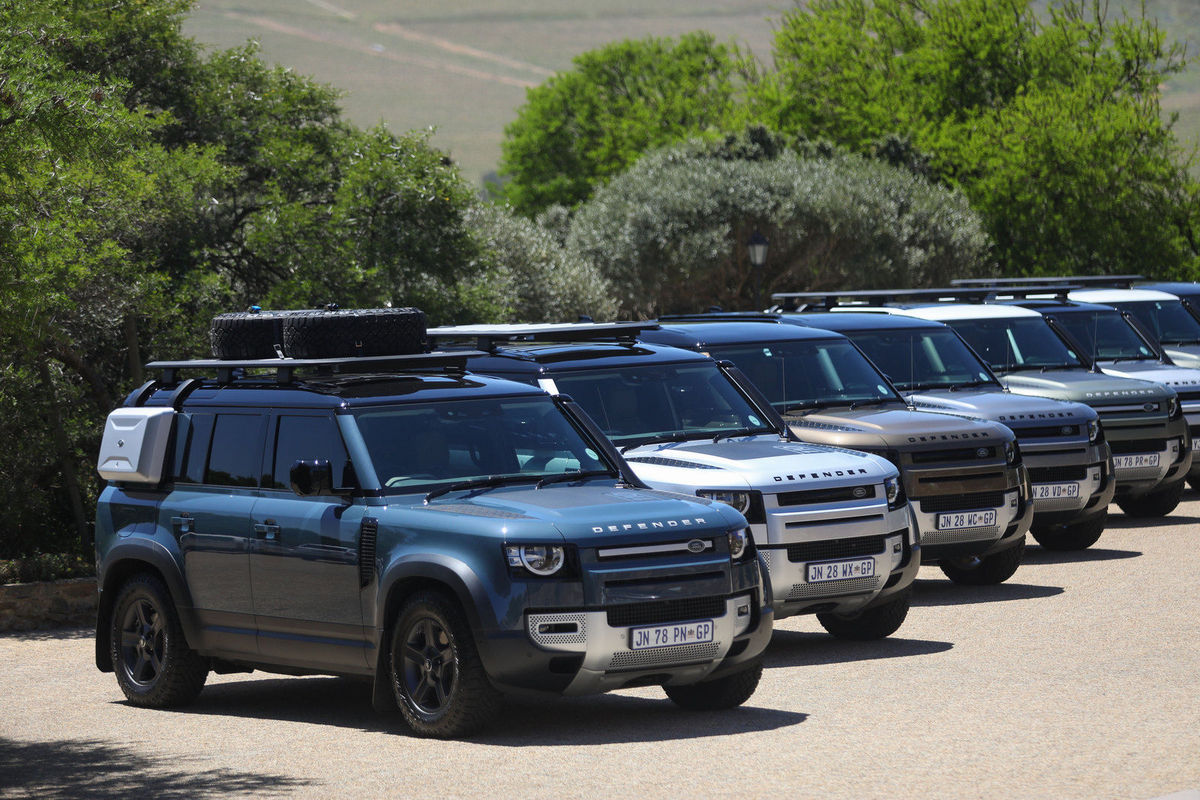
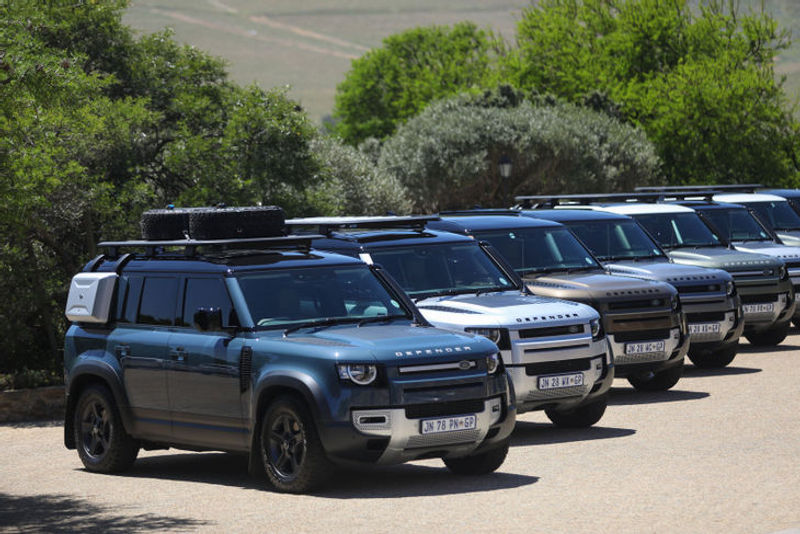
The starting point in Cape Town with stock Defenders, suspension in low mode.
2020 hasn’t been great – for anyone, but particularly those with an adventurous spirit; prospective buyers who are most likely to consider a Land Rover Defender as a vehicle they might like to own. With restrictions easing slightly, it was time for a bit of adventure and Land Rover thought it a good idea to meet up with its very own adventurer and humanitarian Kingsley Holgate and his companions (mostly made up of younger Holgates).
While Kingsley has travelled to almost every country in the world in a Land Rover, his latest expedition restricts him to the confines of South Africa. Kingsley appears to have seen that as a bit of a challenge and is driving around the perimeter of the Republic to track its very border from Kosi Bay on the KZN/Mozambique boundary line anti-clockwise with the aim of being back at the start within 72 days.
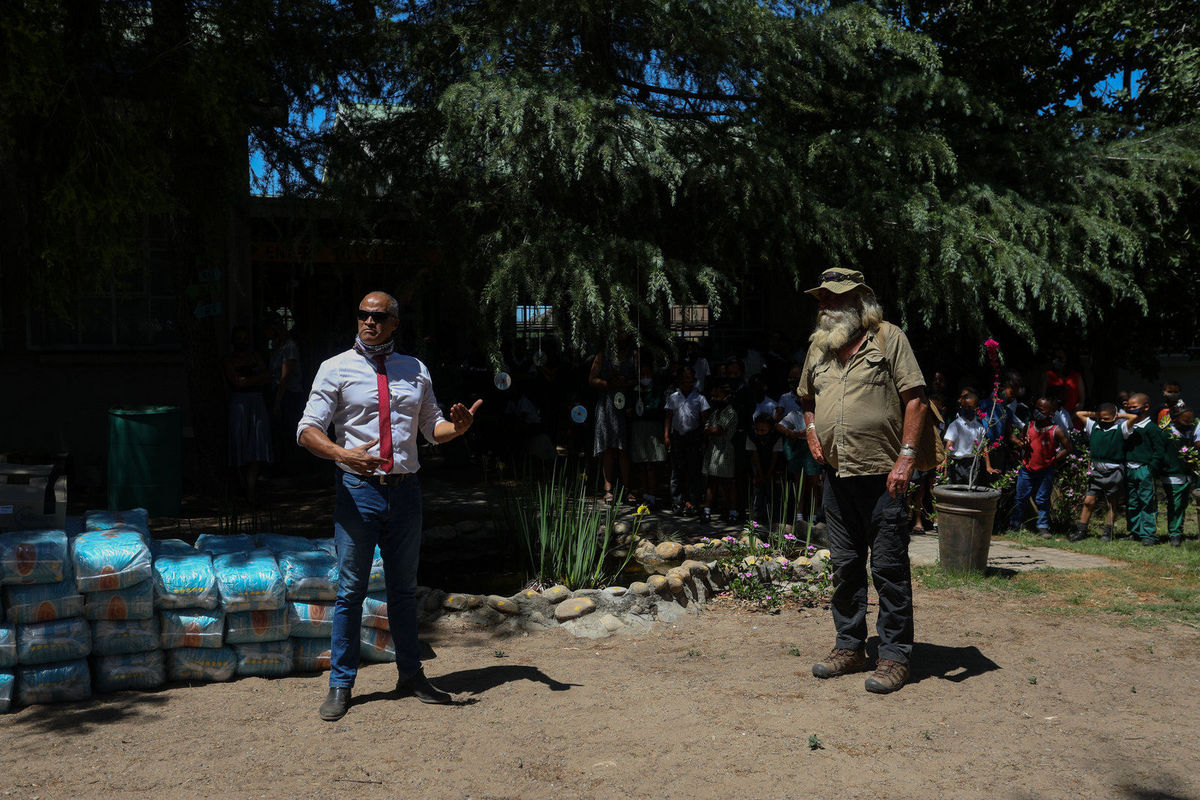
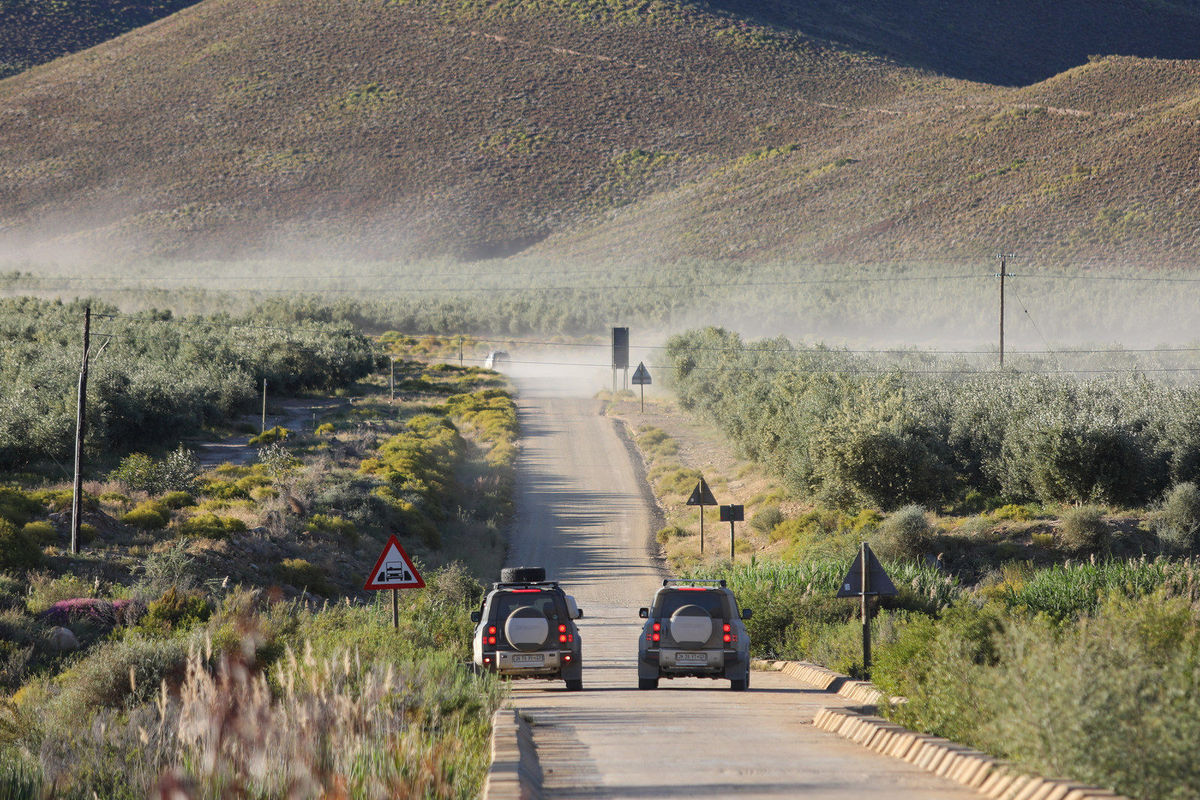
It’s a round journey of about a 5 200 km, during which he plans to venture no more than 50 km from the border fence line. Along the way, he and his team are visiting schools nearby to drop off food supplies, perform eye tests and hand out prescription glasses to those who need them. Our team of Defenders would intercept Kingsley on his way to the fishing-turned-potato-factory town of Lamberts Bay on the West Coast. We did this in the least direct way possible, finding as many dirt roads, mountain passes and breathtaking vistas as we could along the way…
Defender companions
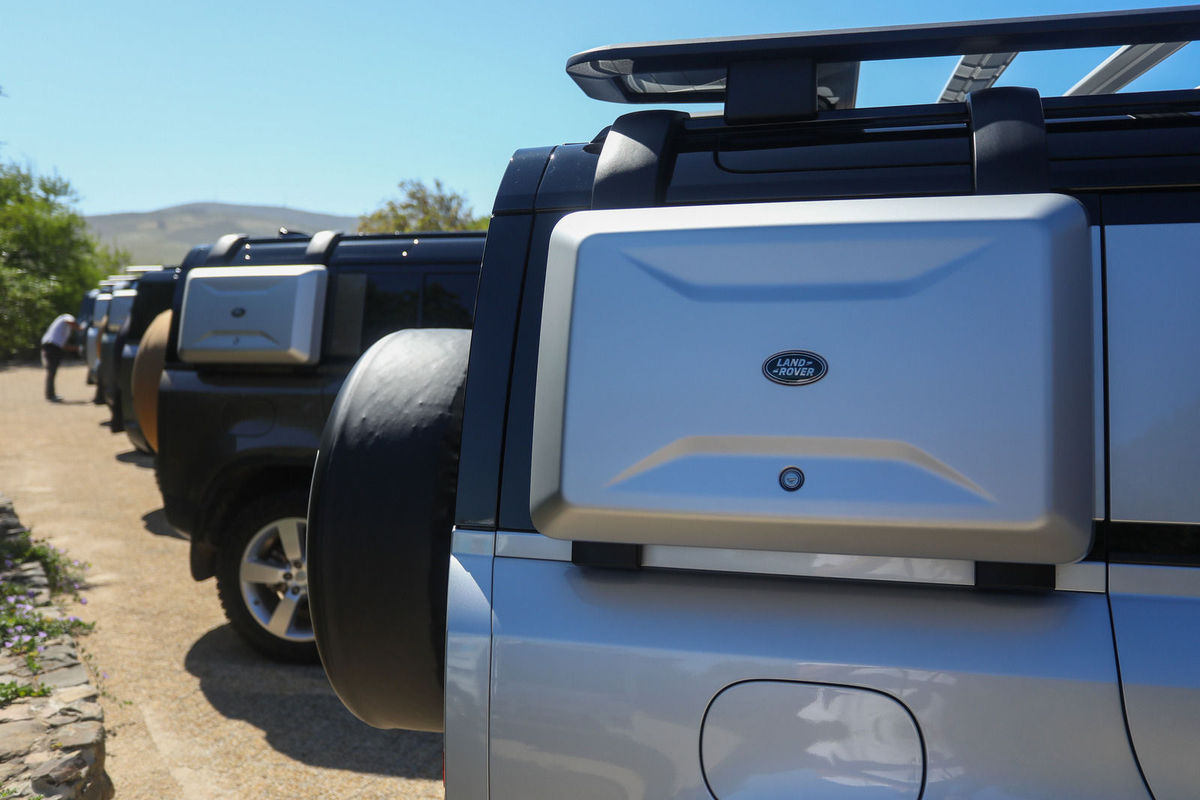
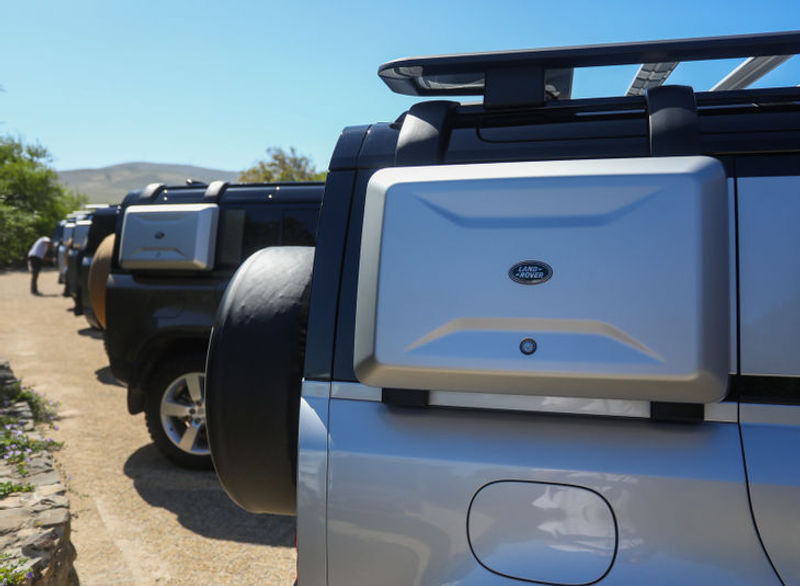
Adventure packs are specced with this outside load box, perfect for muddy shoes/clothes or smelly things.
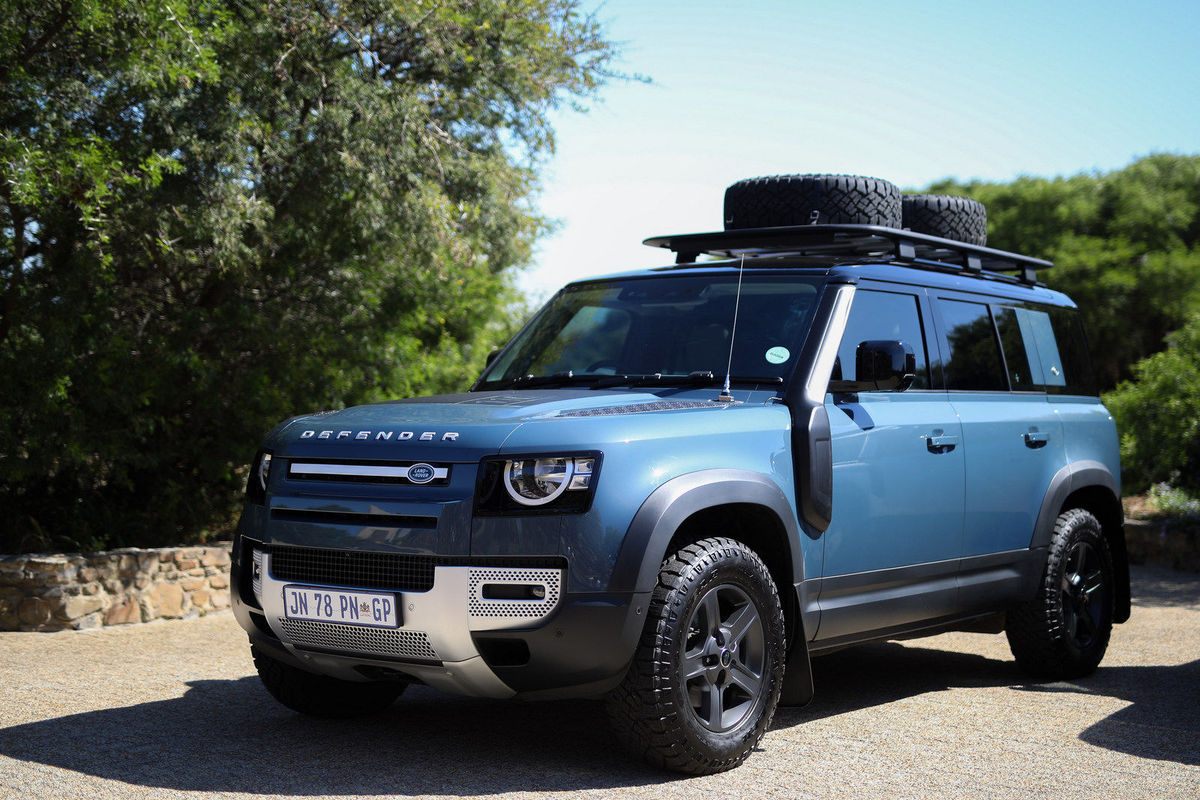
Our Defenders for the trip were not kitted out with any particularly fancy accessories, they were all as you can order them from Landy showrooms. Even the mud tyres, which are part of a partnership with Goodyear, can be optioned when you spec your Defender (more on these a little later).
We would start in the D240 turbodiesel derivative and then finish our trip in the high-end V6 mild-hybrid turbopetrol P400. Having only sampled the D240 a few months earlier, I was keen to see how the petrol version would stack up against my favourite form of SUV propulsion. A few of the Defenders were specced with the Adventure pack, which adds a small load box on the rear side window as well as a portable hose pipe, integrated air compressor and some mud flaps. There are other option packs available, but this one makes the most sense for outdoor enthusiasts – the ability to adjust tyre pressures on site is useful, as is being able to spray down anything muddy/filthy before packing it in the back of the (luxury) vehicle.
The route
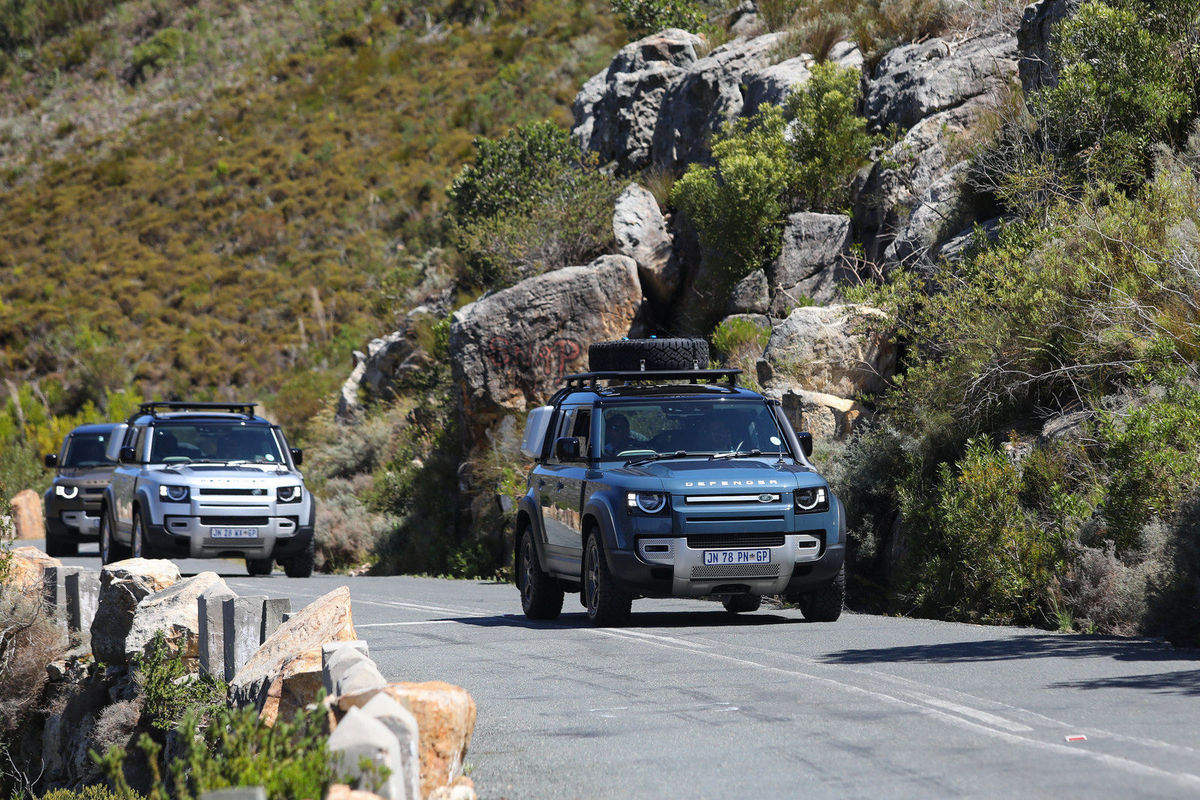
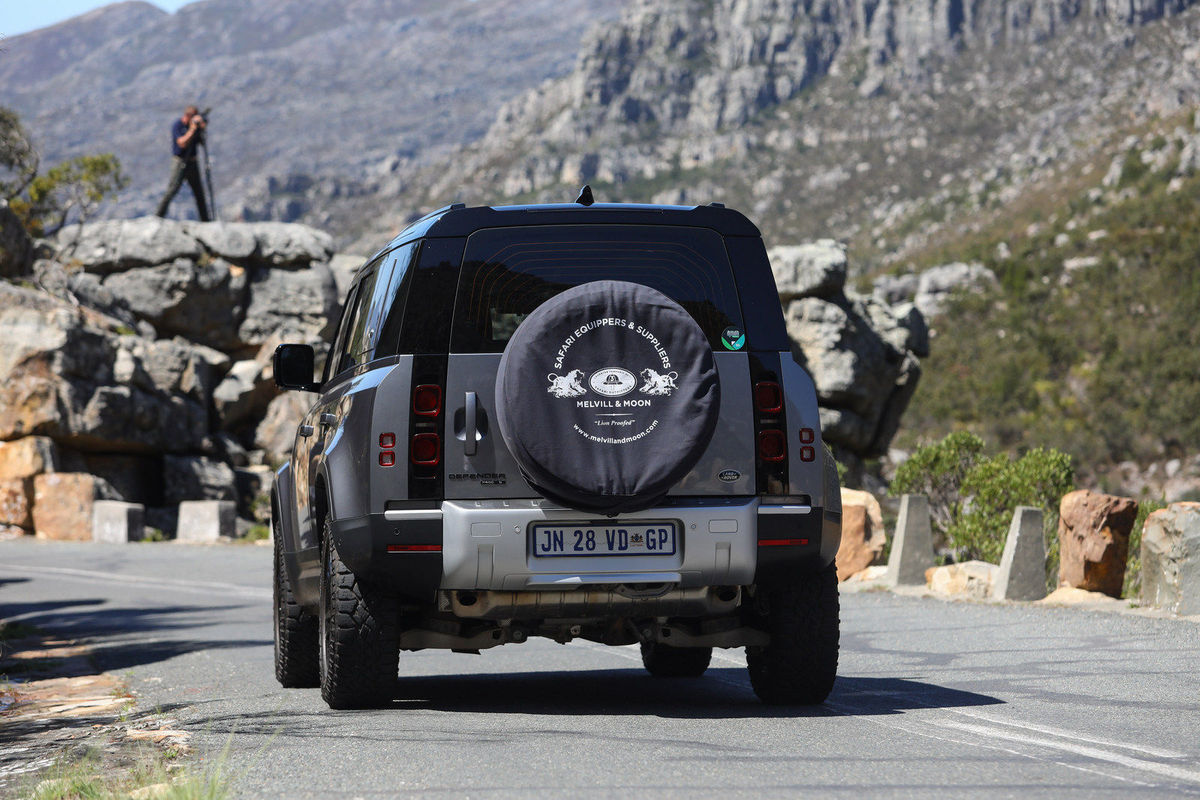
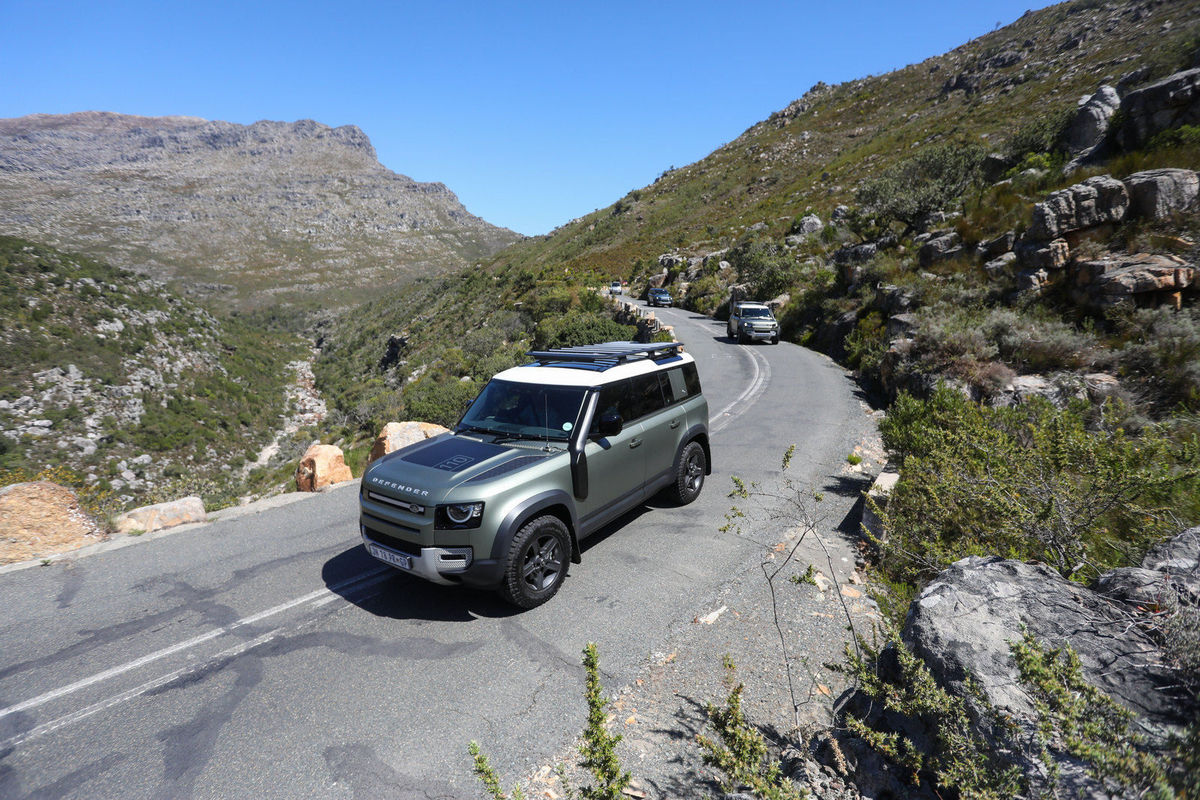
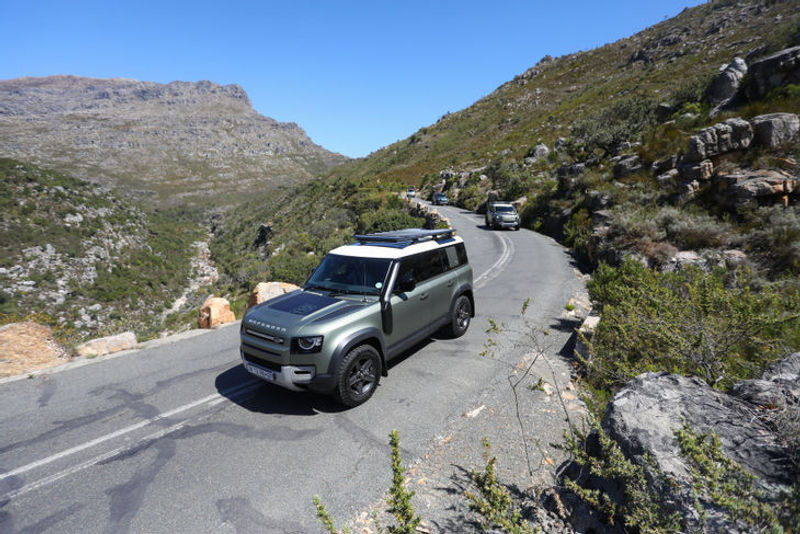
Bainskloof pass, a precarious stretch of tarmac in the smallest car never mind a 2-tonne and 2-meter wide Defender.
The conventional route from Cape Town to Lamberts Bay is a virtually straight road that hugs the western coastline of the Republic for about 230 km and, therefore, not conducive to having an adventurous journey. That's why we headed away from our eventual destination and straight for the mountains Paarl and Wellington, specifically Bainskloof Pass. If you’ve never driven on this pass, then imagine a narrow, bumpy ribbon of tarmac scythed into the side of a mountain with rocky overhangs and, should you take a wrong turn, huge drops with nothing (but fynbos) to cushion your fall. There is no Armco, just a few strategically placed bricks that a Land Rover would have no problem cresting before plummeting to its doom.
It’s the type of road you would love to drive on in a small sportscar, like a Cayman GT4 or Megane RS, not a 2-tonne and 2-metre-wide SUV.
Taking it slow, we wound our way up and over the pass. That was where the Defender felt most out of its comfort zone during the whole trip. While it feels eminently stable on the road, it doesn’t like to be swung into a bend with any vigour/excitement; besides, its steering is on the lighter side and doesn't offer much in the way of feel. The Land Rover is much better balanced once you get it on dirt… and that’s where we were headed next.
Somewhere between Die Dorp Op Die Berg milkshakes and Kromrivier brewery in the Cederberg.
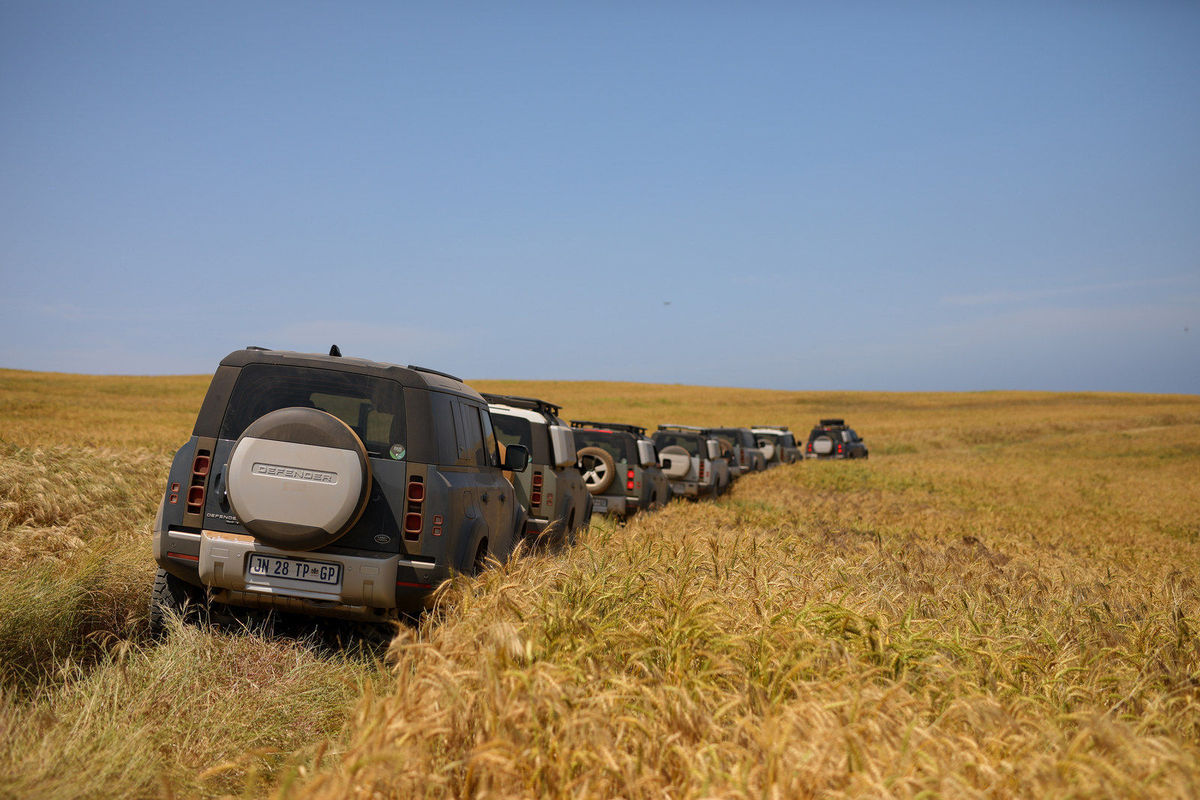
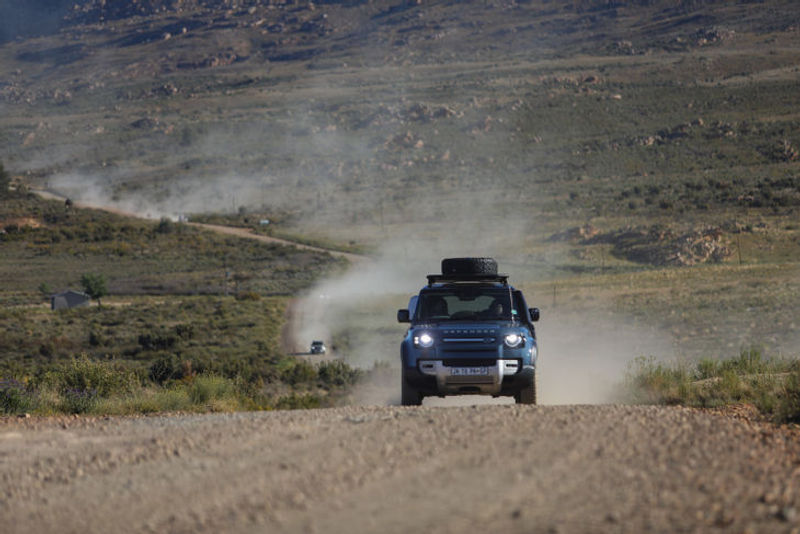
After a quick stop in Die Dorp Op Die Berg for one of their world-famous milkshakes, we swung away from all signs of civilisation in search of rough gravel and soft sand. The Defender and its air suspension setup absolutely thrive on washboard gravel. This is where the biggest difference between an off-road vehicle with a purpose-built body and one with a ladder-frame chassis comes to the fore.
Bakkie-based Adventure SUVs like the Toyota Fortuner, Ford Everest, Isuzu MU-X and Mitsubishi Pajero Sport all track to the side, bump, jolt and chatter heavily on washboard gravel – it’s symptomatic of a ladder frame/leaf spring setup. It’s good for strength and towing heavy trailers and inexpensive to build, but it does come at the cost of ride quality. The Defender, by comparison, cruises across the stuff; it feels planted and secure. The passengers benefit most from the forgiving ride quality and let's face it: being bounced and shaken about is only fun if you're on an amusement park ride. You do pay for that pleasure though. At a minimum, the difference between a top-spec Everest and a base Defender is around R200k.
It’s the air suspension setups of Land Rovers that sets them apart from the German SUVs, they are tuned for mixed surfaces rather than optimal cornering performance and that makes them much better to drive on gravel, or rocks, or any bumpy surface really. The mud tyres specced on our test units might make the Defender look like a pukka off-roader, but they have particularly staunch sidewalls and, given the ability of the vehicle already, the standard all-terrain tyre is better suited to long stretches of dirt road. The mud tyres might be nice to have for special occasions…
Heating up
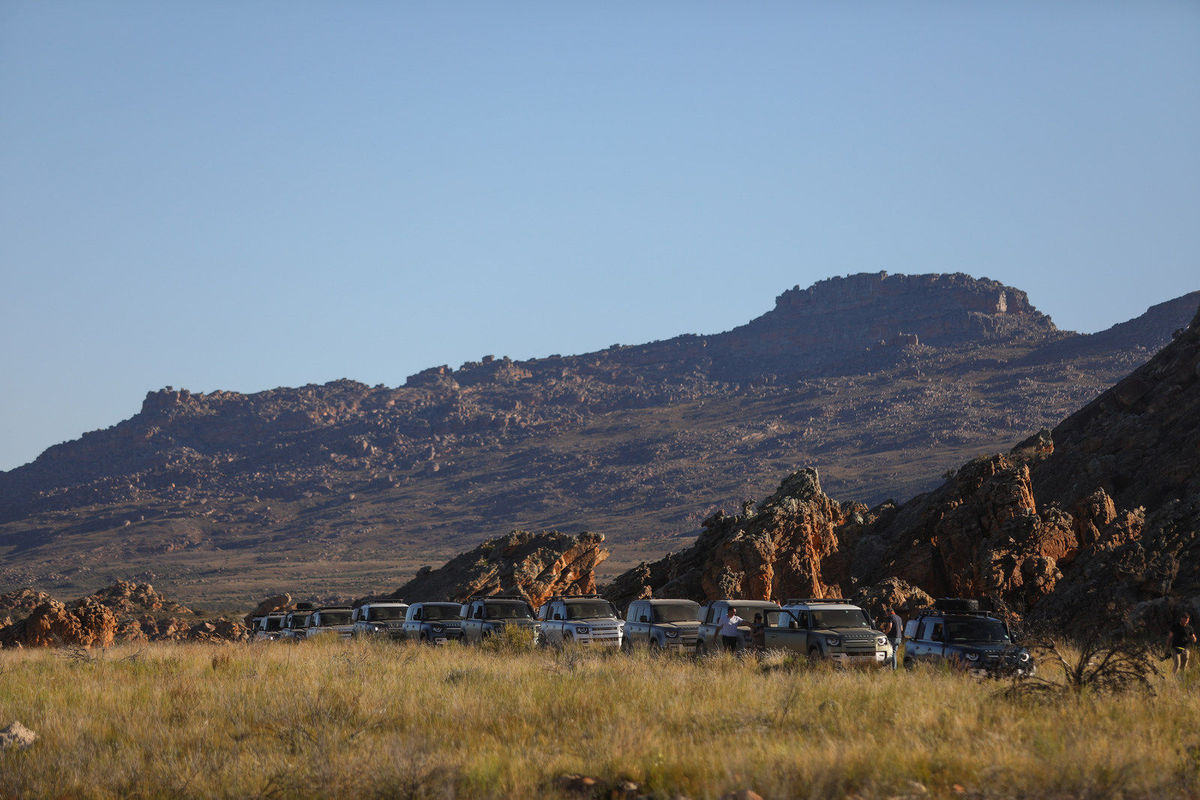
Meeting up with Kingsley Holgate on his expedition to trace the outline of South Africa in a new Defender.
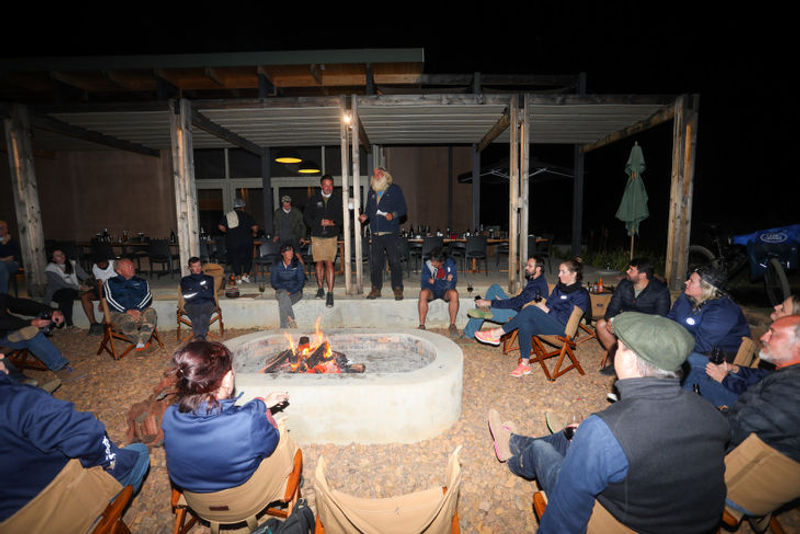
As we headed towards our overnight destination at Kromrivier in the Cederberg, the ol' mercury hit 40-degrees, and for the next 3 hours, nobody was keen to step outside other than to grab a quick picture and then get back into the climate-controlled Landys. It’s eerily quiet out in those parts… you can go for long periods without seeing another car, even in October when trucks, tractors and combine harvesters are out in force. The mountains don’t offer any shade either, it’s all shrubby fynbos, which is perfect for uninterrupted views of the red sand and whacky rock formations.
Kromrivier is a bit of an oasis in the middle of nowhere, they have great accommodation and a local brewery, as well as being set up for all the hiking, biking and river activities that take place in that part of the world.
The next morning, the dial on the heat was still cranked up as we took the spectacular back road into Algeria (the Cederberg campsite, not the country). The day was spent putting miles on the Defenders, delivering food packs to schools and visiting towns only accessible via dirt roads like Aurora, which appears to be a hideout for wealthy retirees who don’t want to be bothered ever again.
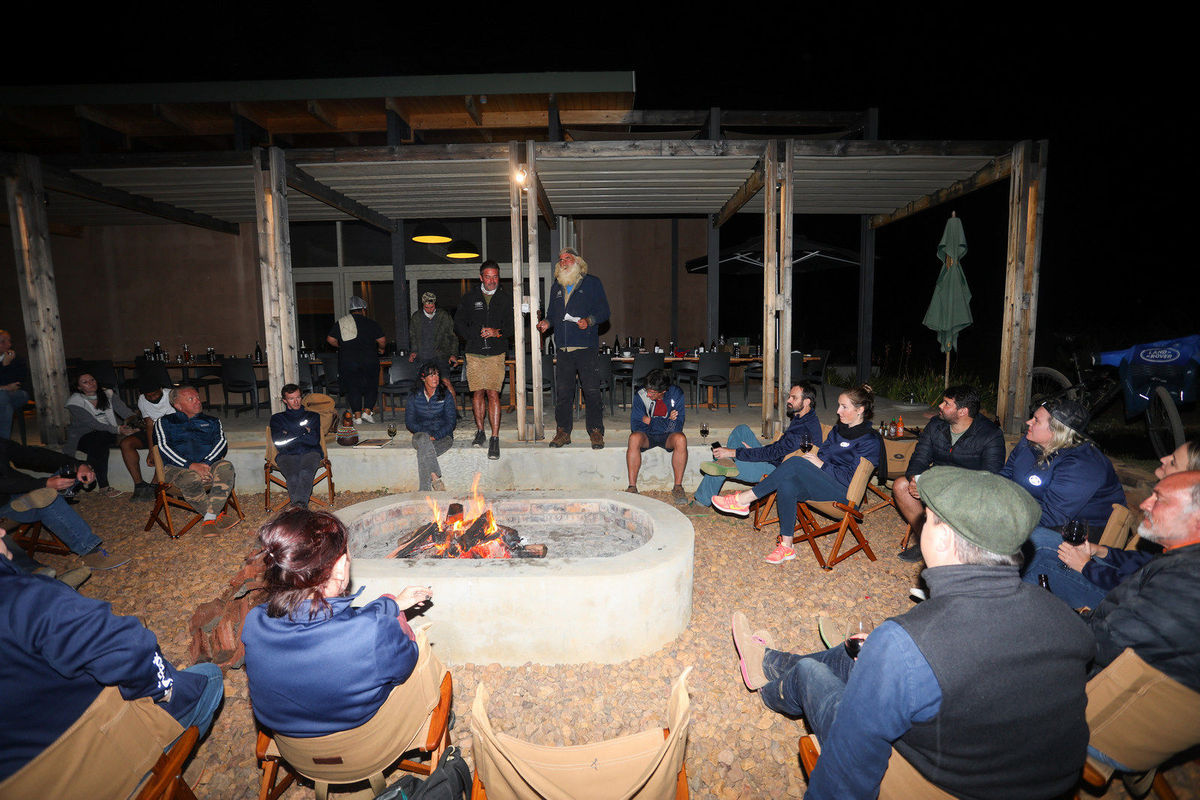
The Holgates recalling some of their adventures along the way on their current expedition.
We wound up in Paternoster, where the sea breeze had mercifully managed to beat the mercury down to a level that one would expect in late October. We parted ways with the Holgate clan as they continued south along the border in their troop of old Defenders and a brand new Defender, which was the lead vehicle for the expedition.
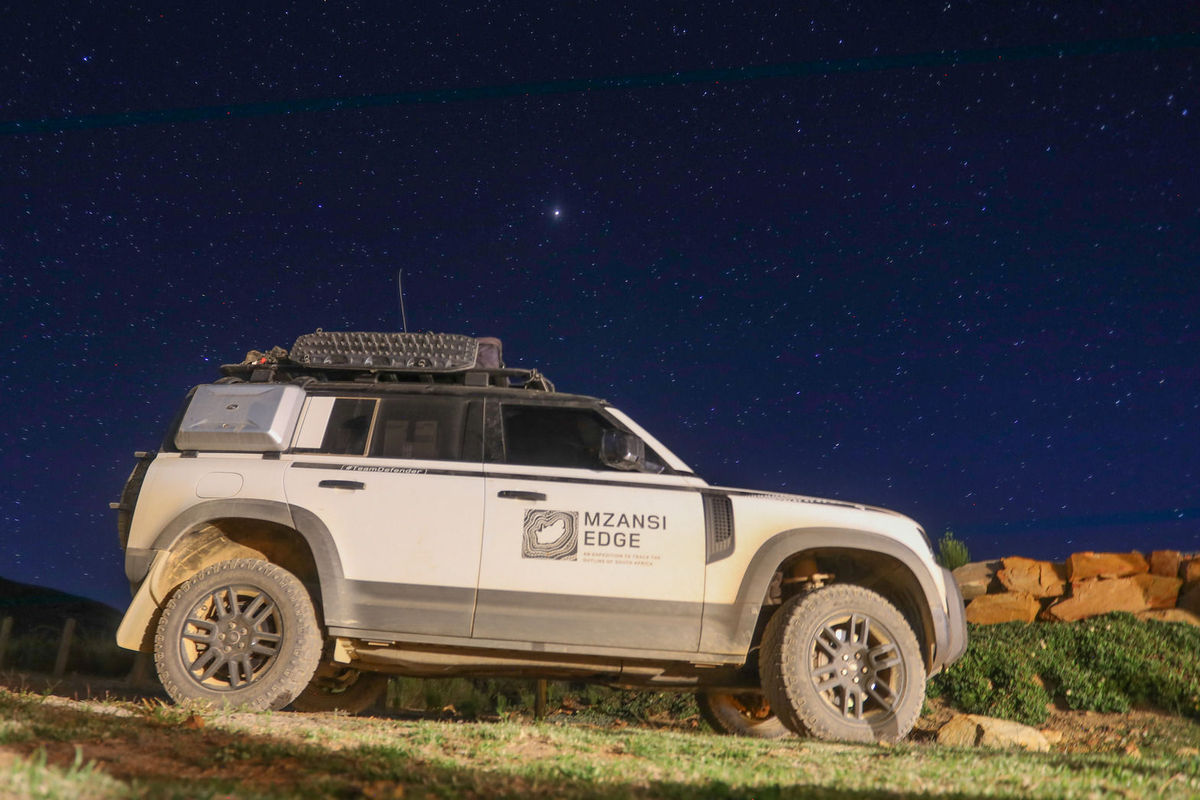
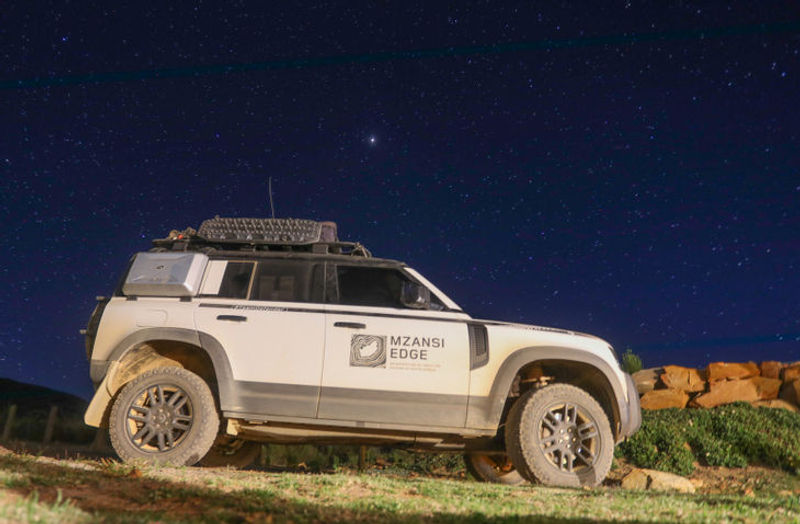
You might think that the Holgates' new Defender would be specifically set up for expeditions off the beaten path, but no, it’s standard stuff you can buy from a Land Rover dealer. The only piece of off-road equipment I could see was the winch on the front of the vehicle. When I quizzed Ross Holgate about the performance of his new Defender he said it hasn’t put a foot wrong yet. In fact, it made it over obstacles that it had to tow the old Defenders out of and proved to be the most capable expedition vehicle yet. You would kind of expect that from a newly developed car, but if you see how hard it works (replete with myriad gear on board) and often forging a path of its own, it’s certainly not given special new-car treatment.
Homeward bound
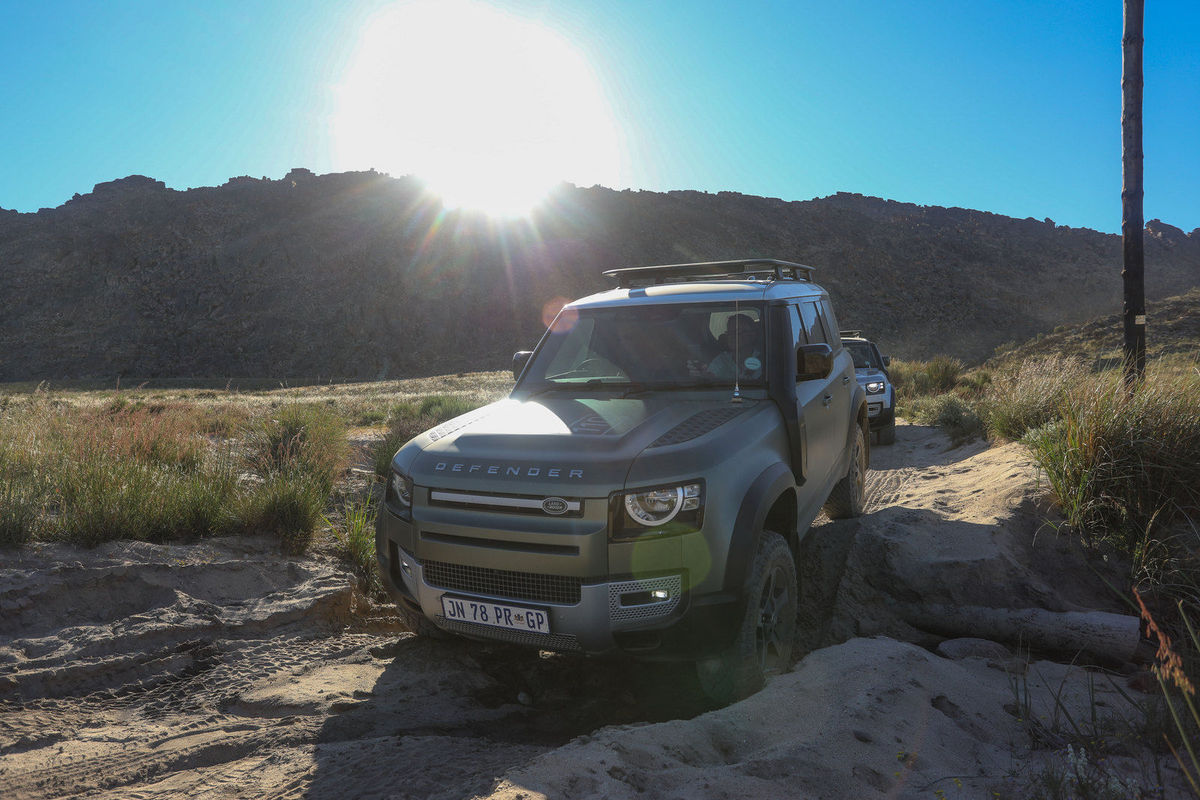
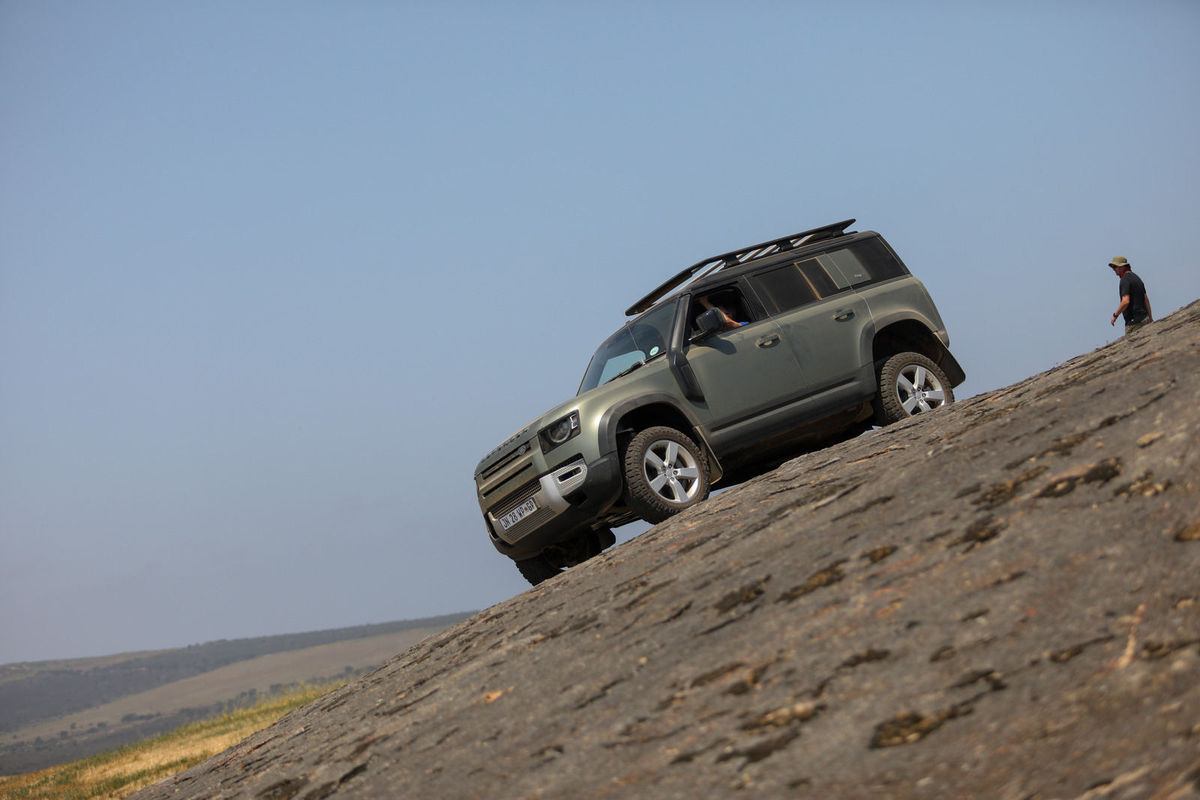
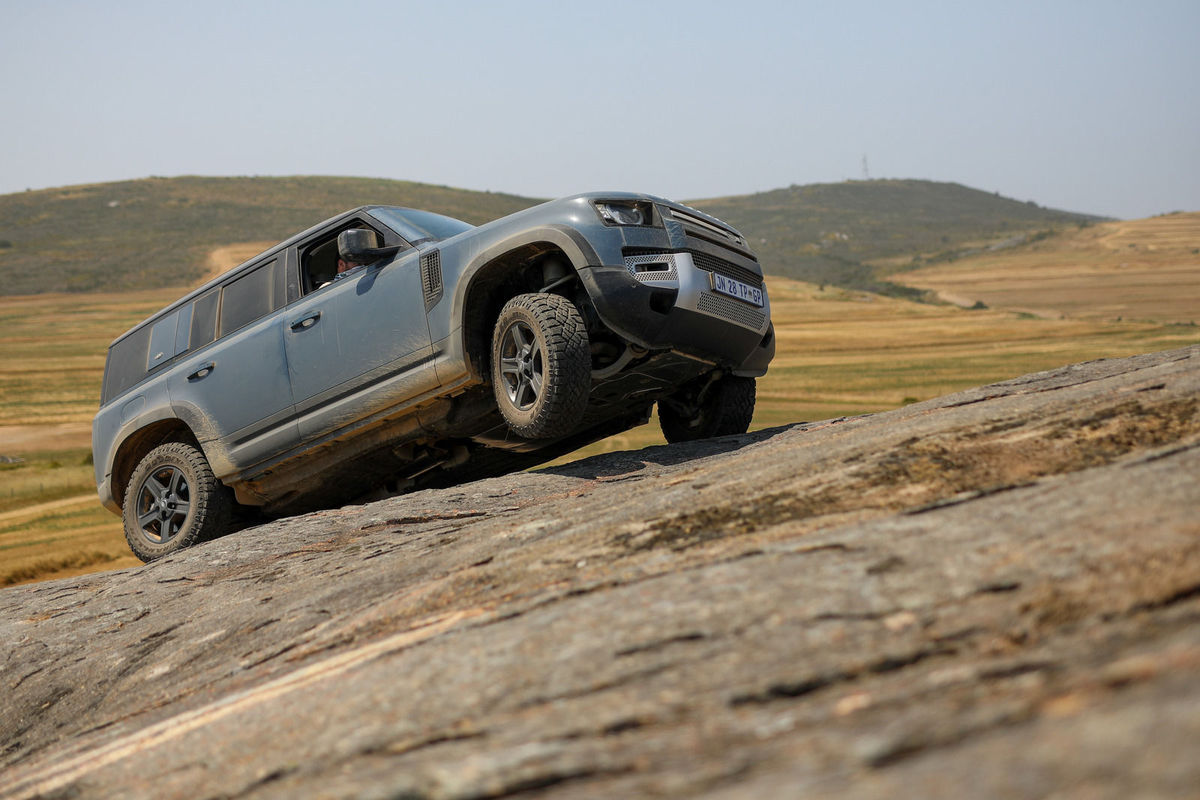
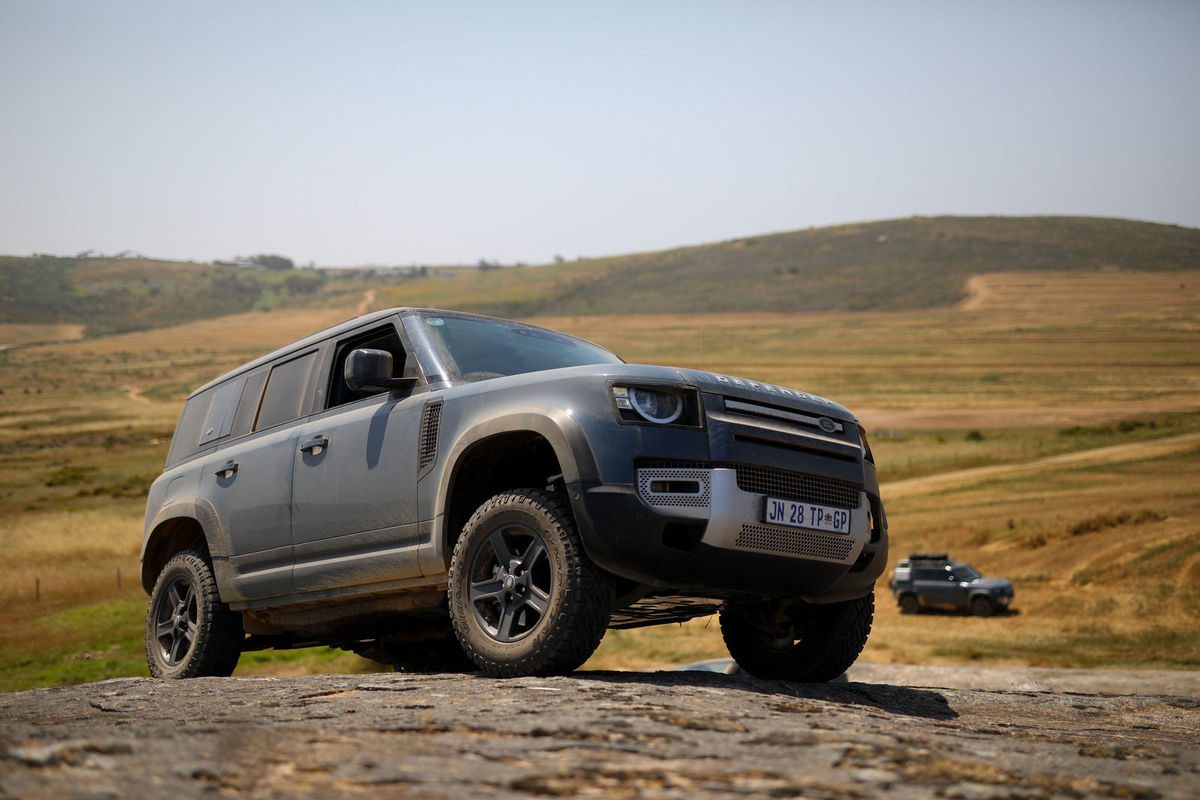
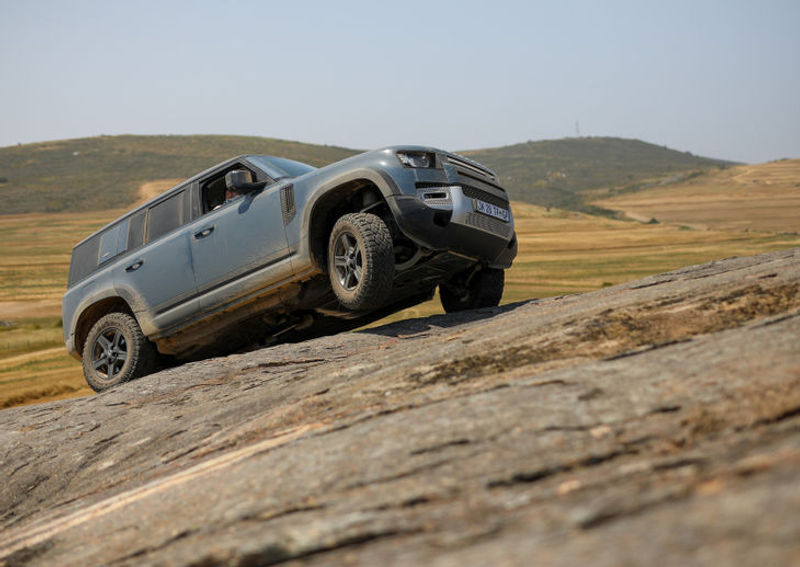
A random boulder somewhere south of Darling turned into a 4×4 playground for the Defenders.
The final stretch from the seaside-village-turned-culinary-destination of Paterenster back to Cape Town took the least direct route possible. First Velddrif then the dirt roads through Hopefield and Darling where we stumbled across a massive rock feature, which we used as a 4×4 adventure course. Finally, we got to scroll through the drive modes beyond sand/gravel and select rocks, low range and play around with all the settings that make difficult obstacles nothing more than easy. Nothing really challenged the Defender, but it’s nice to know that the low-traction hill-start and cruise-controlled hill descent functions work perfectly well.
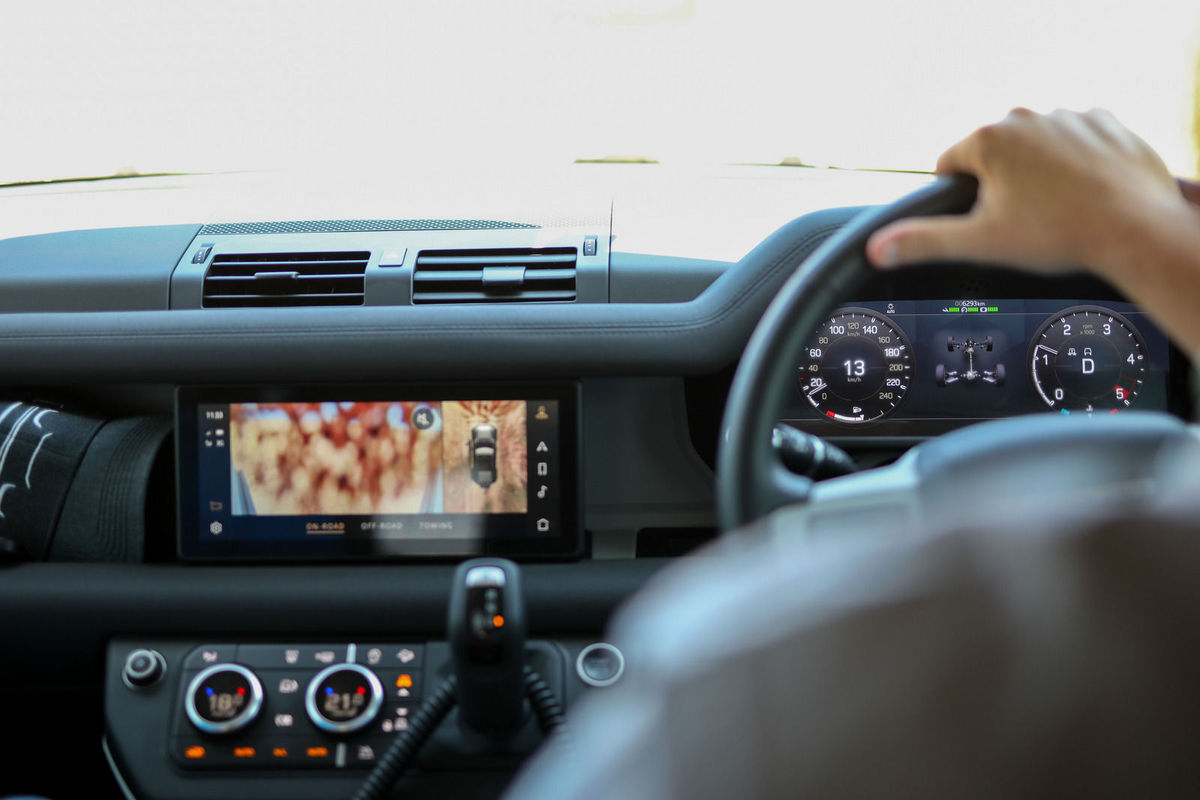
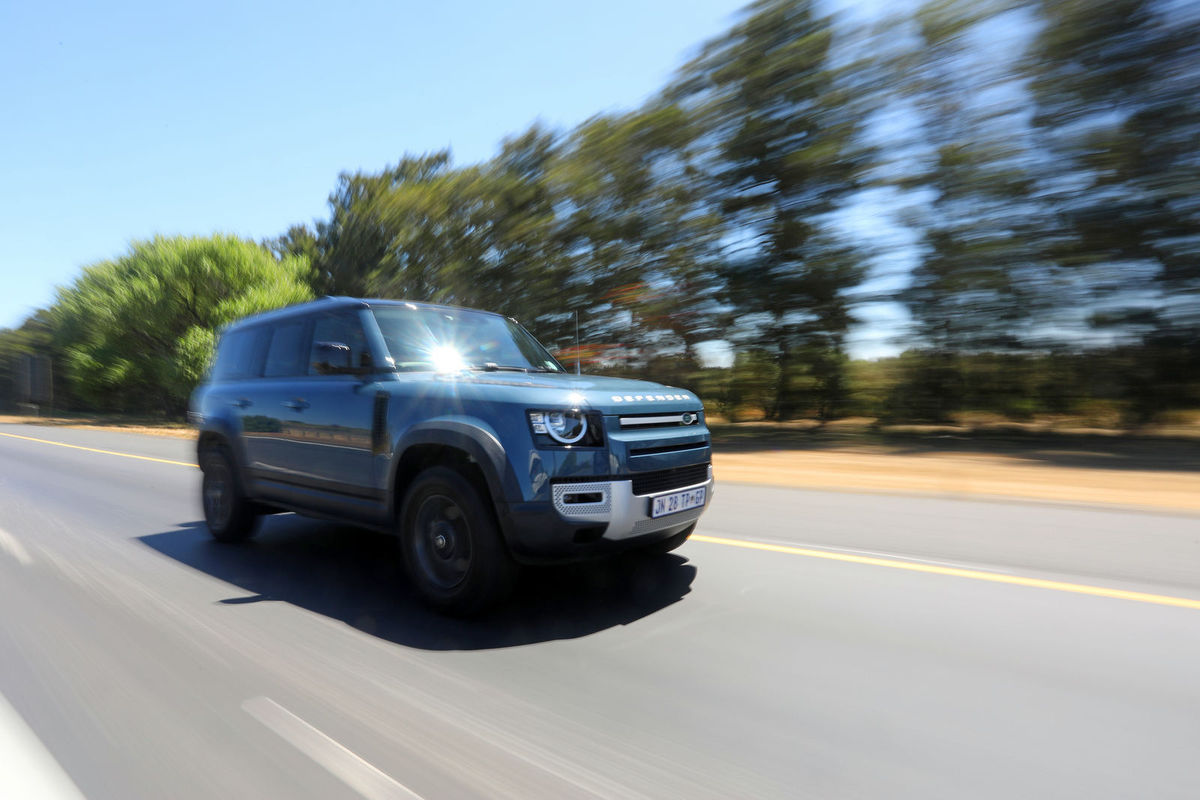
As we trekked our way back into the city, the 3 days of driving and taken zero physical toll on our group. The new Defender is certainly a great companion for long days on the road, it’s comfortable, capable and equipped for the adventurer. I found myself leaning towards the petrol derivative with its mild hybrid low-down torque delivery. It drinks a fair bit more fuel than the diesel (around 5.0 L/100 km more, if our 3 days is anything to go on), but its power delivery is smoother and it has quite a nice V6 howl to back it up.
The 2.0-litre turbodiesel may be a little bit highly strung for use in the Defender, it surges a bit too vigorously when the torque comes in making it trickier to drive smoothly. There is a straight-6 turbodiesel on its way in 2021, so that could be the sweet spot in the range, if you’re willing to wait.
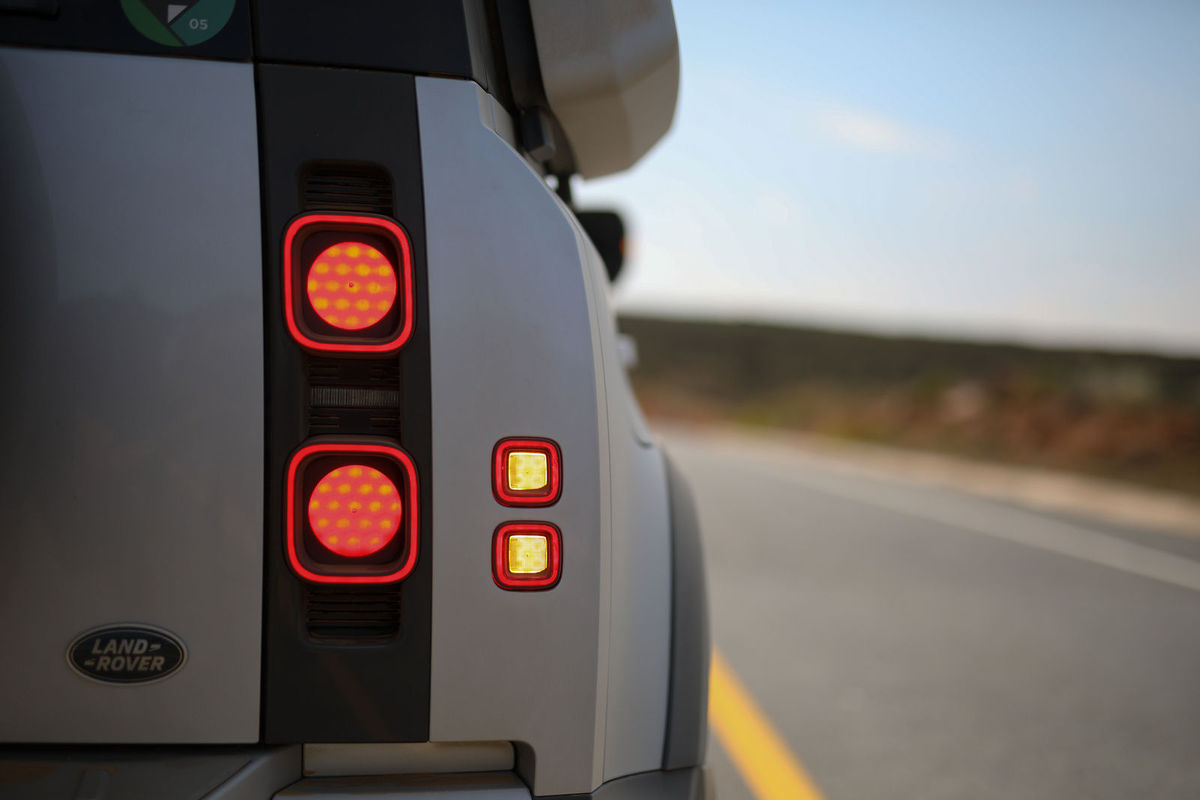
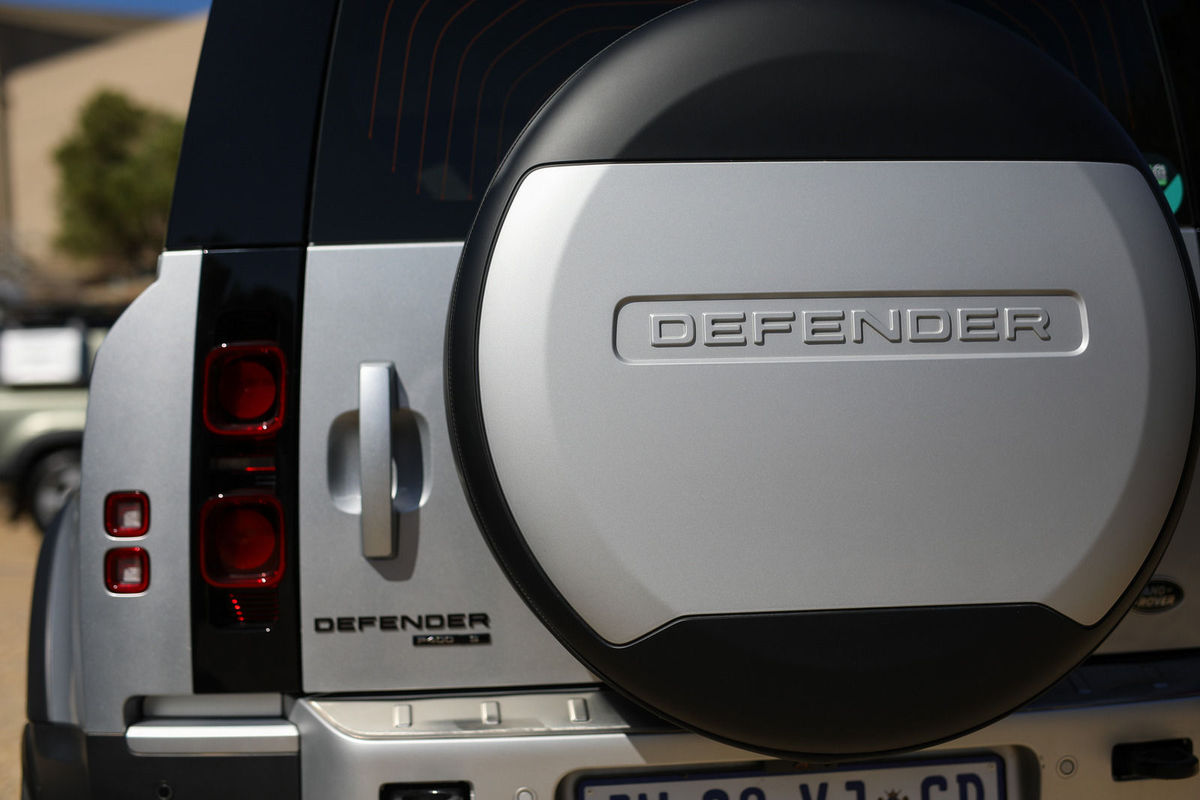
I have to say that in the city, the Defender looks muscular and different. It stands out from every other car with its distinctive appearance. The rear has taillights that are a modern take on the original that adds a cool factor to an already cool car. It might not be the same nuts-and-bolts pure off-roader tailor-made for the wild and untamed anymore, but it’s more capable now and fits in with the modern lifestyle so much easier than before. It’s a lot like glamping – you’re getting all the benefits of being out in the wilderness, but with modern amenities and your own ablution facilities.
Land Rover might go two-wheel drive! Industry rumours from the UK indicate the Land Rover is looking to expand its Defender portfolio, but not by adding larger variants…
*Rendering by Dejan Hristov
British all-terrain luxury vehicle and exploration brand Land Rover desires greater sales volume and the ability to engage younger customers or, at the very least, conquer customers at a younger age by offering models at lower price points.
Land Rover’s strategy is rumoured to hinge on a new compact version of the Defender, which will be similar in its proportions and styling details. Technically, this new "baby" Defender will not have any of the reimagined Defender’s off-road ability or even share similar mechanical architecture.
As the global market for front-wheel-drive compact crossovers continues to grow and deliver handsome profits for brands that trade in its various segments, Land Rover has identified a new business opportunity.
With its storied off-road brand history, Land Rover’s marketing people are calculating that it could launch a front-wheel drive crossover vehicle, without eroding the company’s public image.
This front-wheel-drive "baby" Defender would possibly be the size of a current Suzuki Jimny, yet without any of the dedicated all-wheel-drive hardware. In many European and Asian cities, Land Rover’s current products are simply too large to easily navigate through traffic or park.
If the British brand wishes to remain relevant in many of the world’s most prosperous cities, it will need smaller crossovers. Vehicles such as the Audi Q3 and Volvo’s XC40 command a premium and have seen strong demand and customer loyalty. The absence of a Land Rover rival in this segment is an issue that has triggered the need to develop a new "baby" Land Rover.
The company has been on an aggressive engine downsizing and hybridization drive over the last few years. As such, sourcing a 1.5-litre turbocharged engine to power this "baby" Defender project should not be too much of an issue, as this capacity and configuration have become the default for front-wheel drive compact crossovers.
Preliminary scheduling for the debut of this new Land Rover crossover is 2022, according to WhatCar.
The new Hyundai i20 is scheduled to go on sale in Mzansi in mid-2021. Details of the compact hatchback range in the Indian market (from where the SA-market model will be sourced) have been revealed, which provides strong clues to the new range’s local line-up…
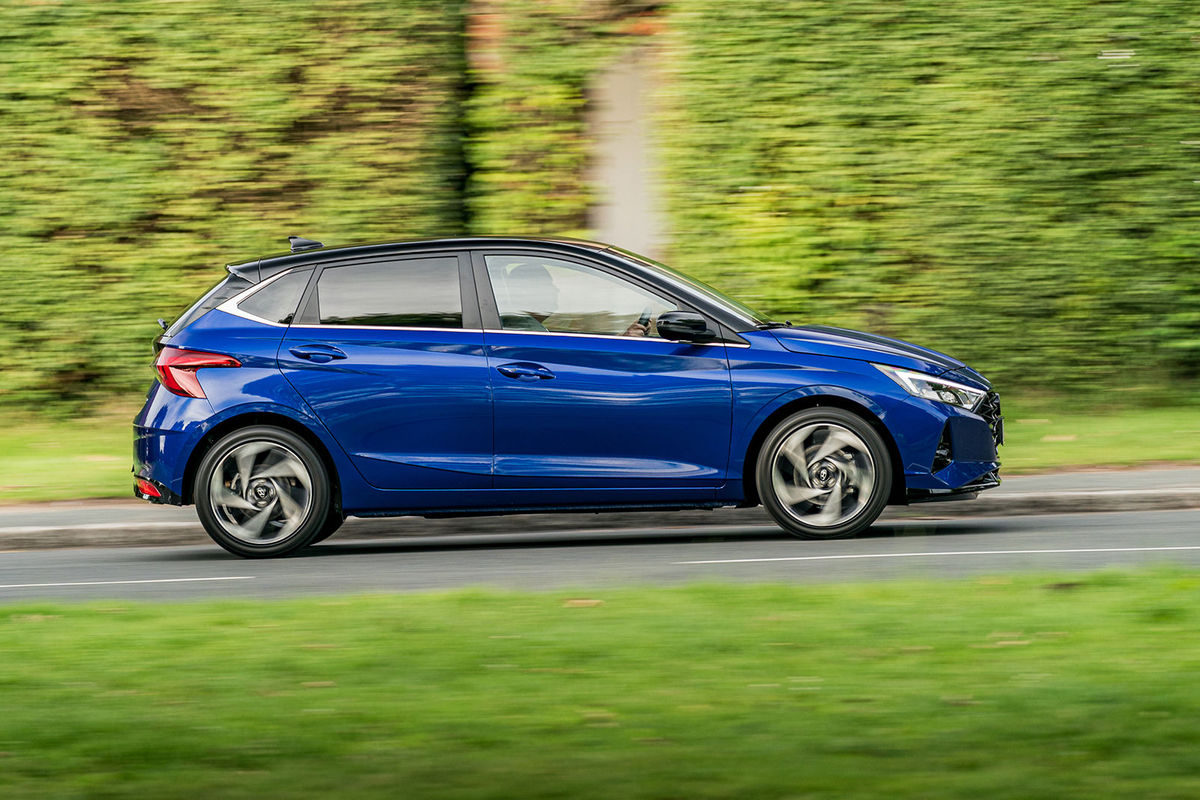
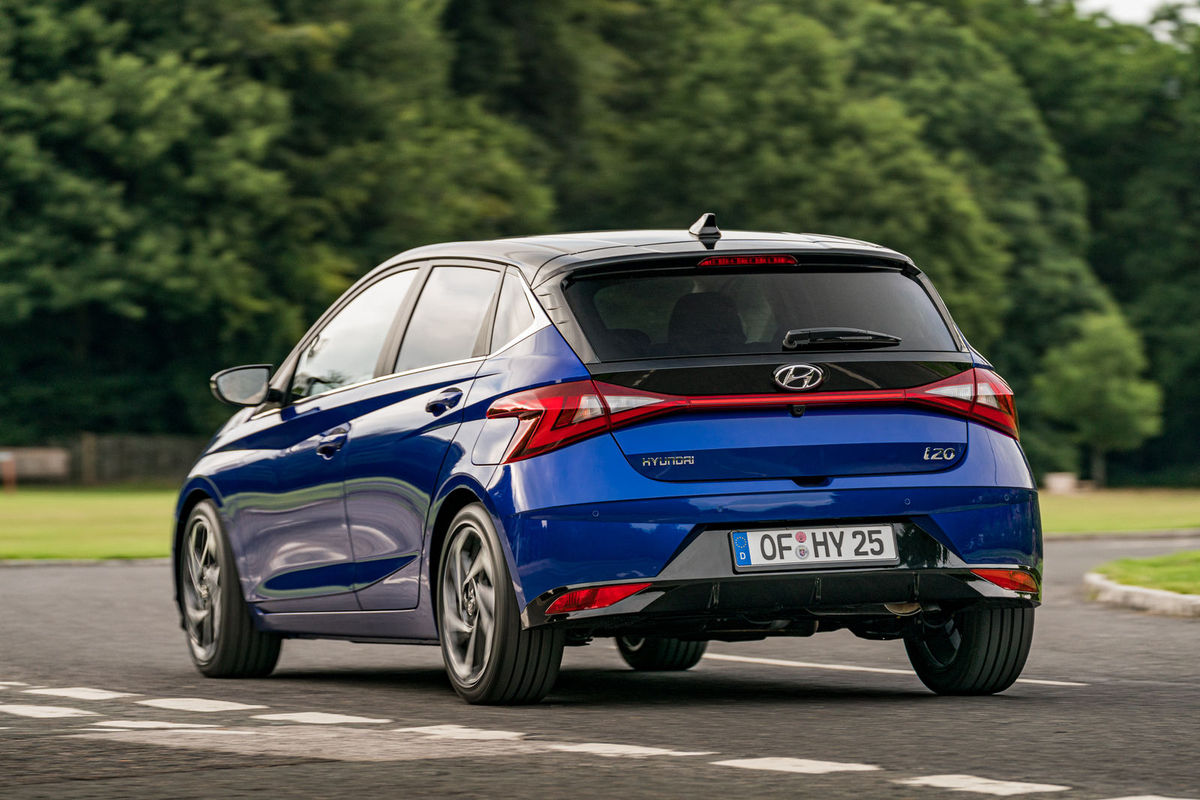
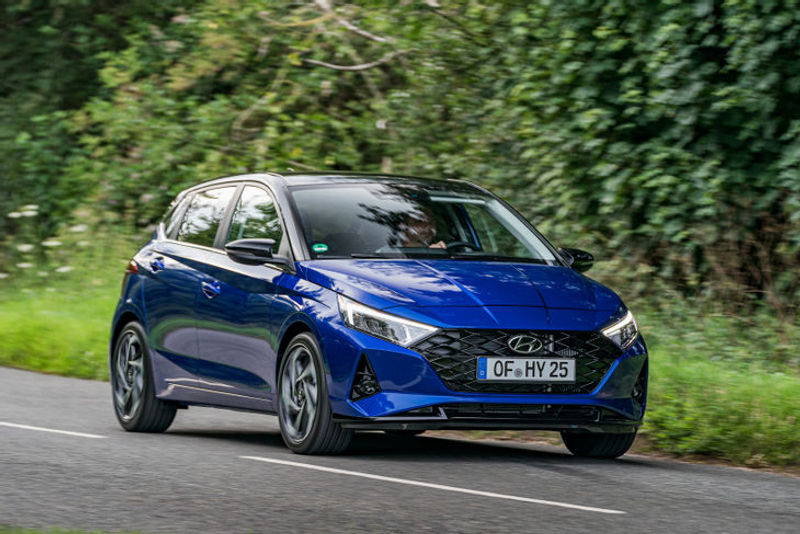
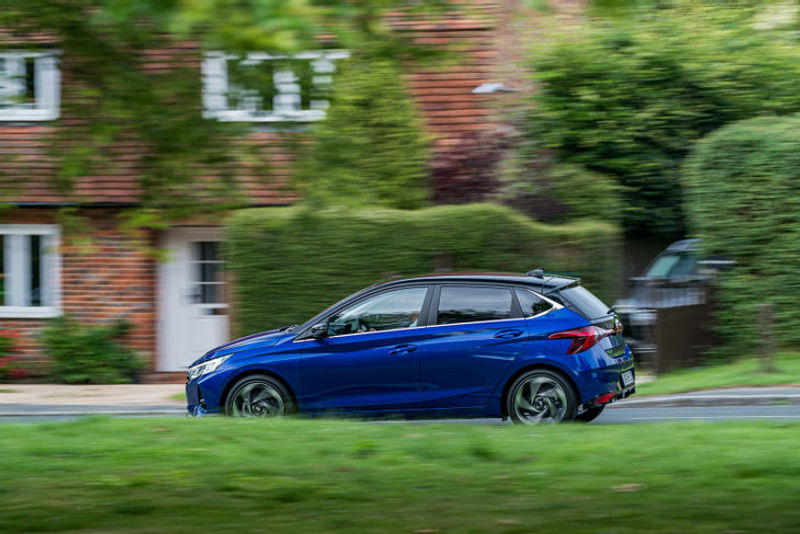
Unveiled on the eve of the (ultimately cancelled) Geneva Show in March, the new latest i20 represents a fairly dramatic departure from its predecessor. Whereas the outgoing model was handsome, yet relatively plain-looking, this iteration is much more radical.
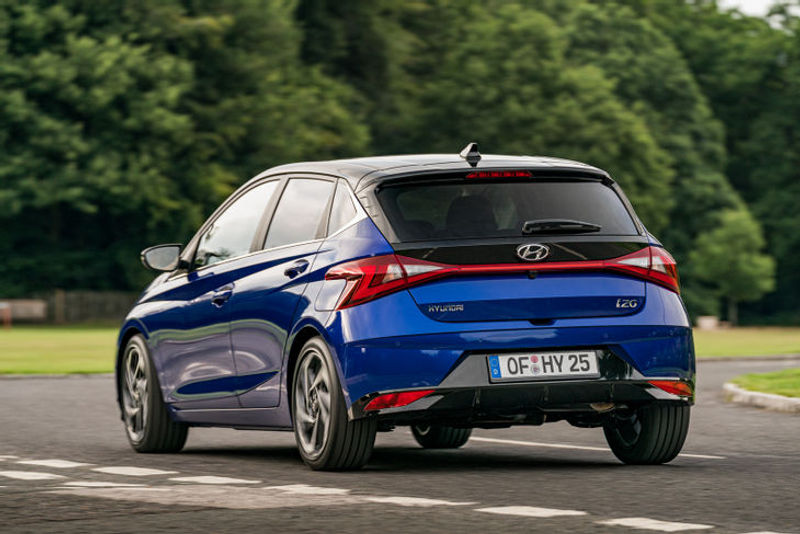
Hyundai's "Sensuous Sportiness" design language has introduced sharper styling, a lower roofline and a wider body to endow this new i20 with a more purposeful stance than it had before. The sportiest iteration of the new model we’ve seen is the recently-unveiled i20 N hot hatch, although it’s not a strong prospect for local introduction…
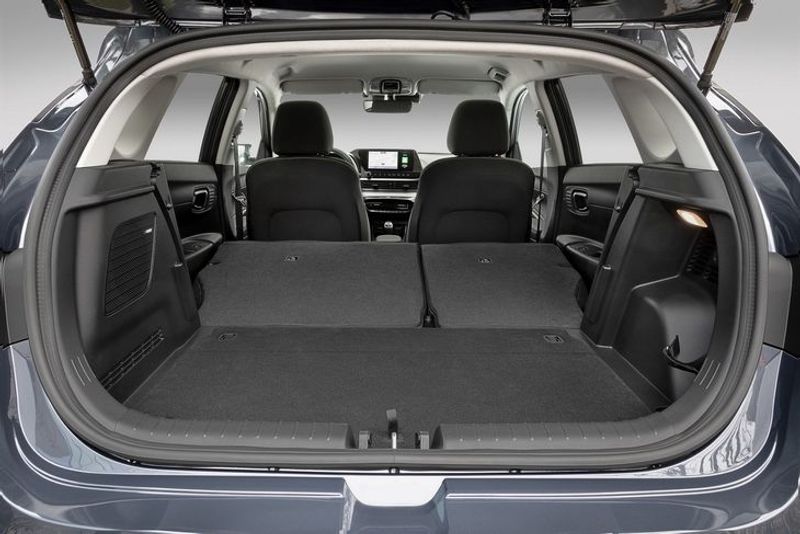
The i20 is longer now too, both nose-to-tail and between the axles, which should bode well for passenger- and luggage space. In the International Launch Review of the i20 (published in July), our correspondent found that rear passengers were afforded (relatively) generous legroom and a fair bit of headroom, so moderately-tall adults should be able to fit in the back. The load bay, meanwhile, offers up to 351 litres of luggage capacity.
As opposed to this example, the Indian market will offer the i20 in red-and-black and white-and-black dual-tone schemes.
But which derivatives of the new range are likely to be offered in South Africa? Well, the i20 will be offered in India with a choice of a 1.2-litre 4-cylinder petrol, 1.0-litre 3-cylinder turbopetrol and 1.5-litre 4-cylinder turbodiesel engines. Whereas India gets Magna, Sportz and Asta trim lines, we’ll get Motion, Fluid and, perhaps, Glide spec levels.
The 1.5-litre turbodiesel is unlikely to be offered in Mzansi, where all manufacturers (with the exception of Ford, with the Fiesta 1.5TDCi Trend) have removed "oil-burners" from their compact hatchback ranges. The 61-kW 1.2-litre petrol should again be the entry point, mated either with a 5-speed manual ‘box or a continuously-variable automatic transmission.
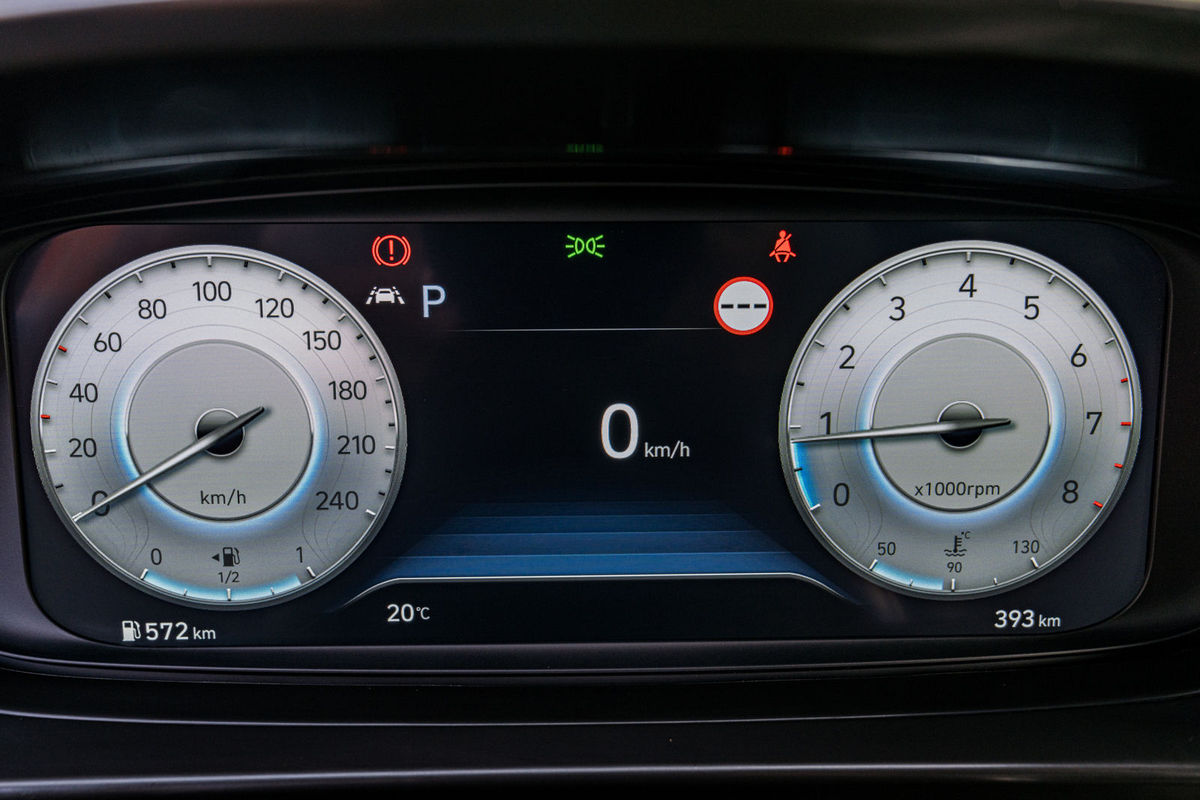
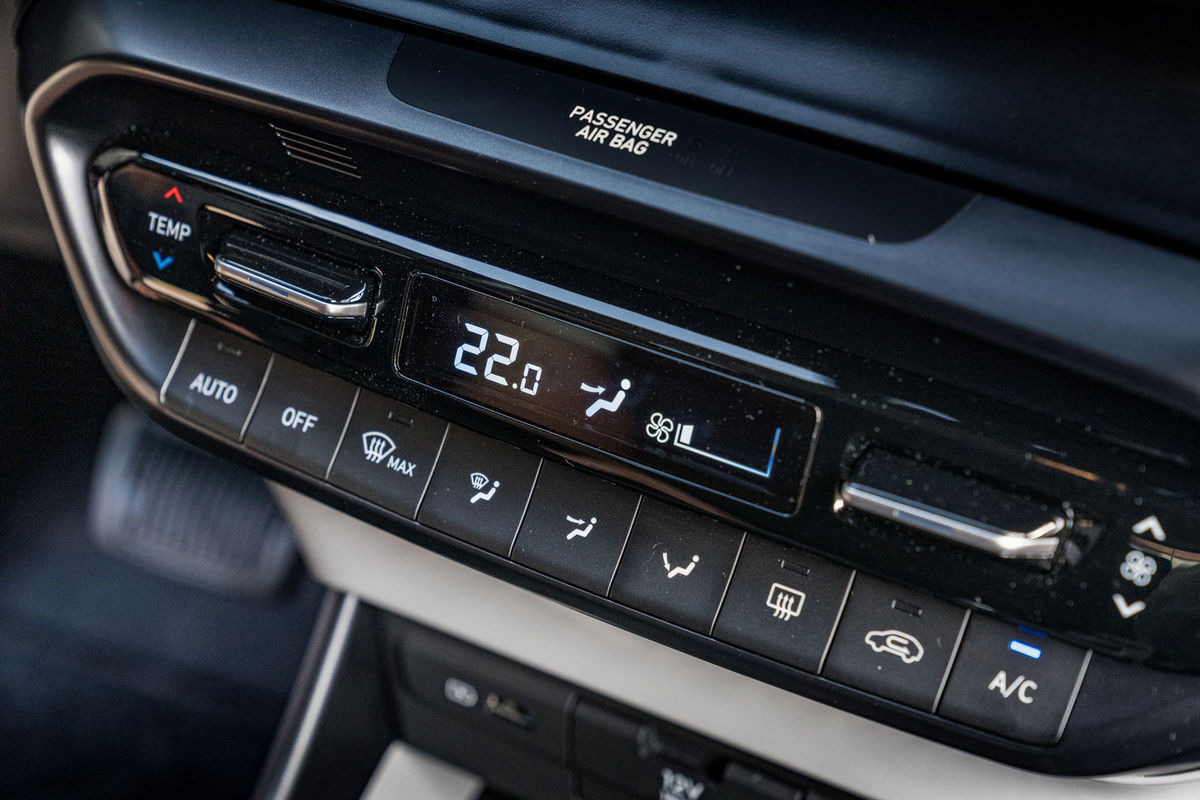
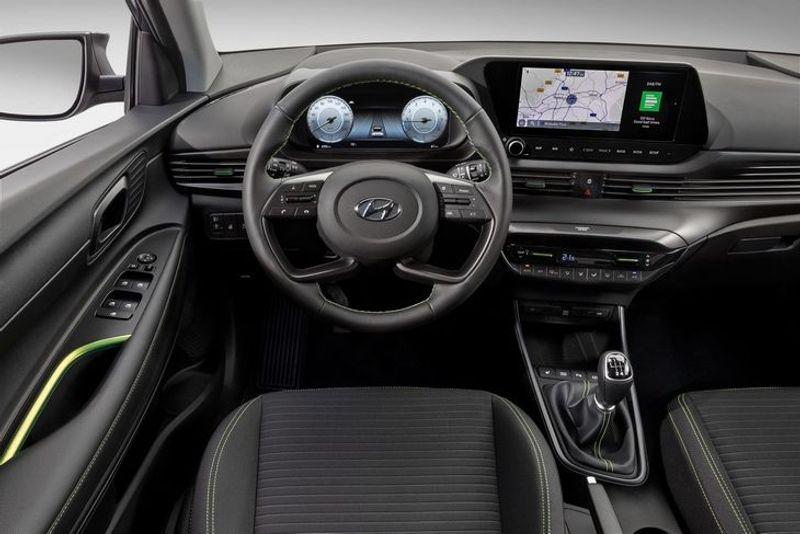
We don't expect the digital instrument cluster to be offered in SA, but the touchscreen and climate control console are tastefully integrated.
The 74 kW 1.4-litre petrol motor in the current range, meanwhile, will be superseded by the 88 kW 1.0-litre turbocharged 3-pot (from the Venue compact family car), in combination with either a 6-speed Intelligent Manual (iMT) or 7-speed dual-clutch automatic transmission.
The newly developed iMT is quite an interesting proposition, because, like an automatic, it has only two pedals (for the accelerating and braking functions, obviously), but software and actuators control the Hyundai's clutch while you manually shift gears through the H-pattern gate. The benefit of the iMT is cost-saving, but whether it might catch on in our market is another matter. By all accounts, it's nicer to use than conventional AMTs.
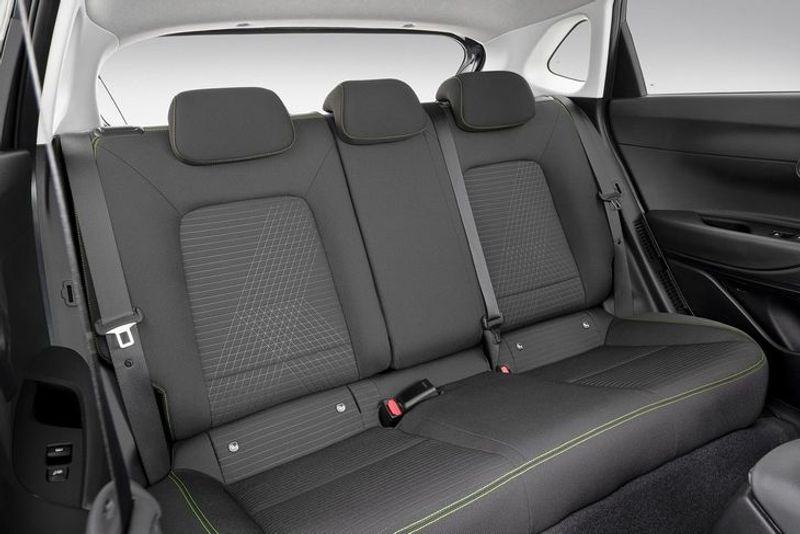
Rear occupants are afforded slightly more legroom than before. We hope the contrast stitching is offered on local models too.
Autocar India reports the India-spec i20 looks largely similar to the international-spec model, but foregoes all-LED headlights for projector headlights with LED DRLs. There are 8 paint finishes, including red-and-black or white-and-black dual-tone colour schemes.
Inside, the newcomer's fascia design is sweeping (at least by Hyundai compact car standards) and characterised by a quartet of vents hidden in the expansive bank of black blades that stretch from one end of the cabin to the other. It’s a little less driver-focused than in the new Elantra (not coming to SA); the touchscreen and climate control console are angled only slightly towards the 4-spoke steering wheel.
This European-spec model features a 60/40 split seatback. Check out the Bose subwoofer on the left side of the luggage bay.
The interior can be equipped with, inter alia, a digital instrument cluster, a 10.25-inch infotainment system, keyless entry and push-button start, automatic climate control, a fast-charging USB port, a 12V power outlet, a wireless charging pad and PDC (in conjunction with a reverse-view camera), as well as an 8-speaker Bose audio system.
We hasten to note, however, that the specification of the local i20 range has always been more prudent (value-oriented) than luxurious; the local compact hatchback market is very competitive and particularly price-sensitive… Still, Autocar India reports that their market's range-topping i20 Asta (O) will indeed feature the large 10.25-inch touchscreen, digital instrumentation, Bose audio and a sunroof (among other features)…
Stylistically, the new i20 is much more interesting than the previous generation.
It’s more likely, however, that most derivatives in our market will have analogue instruments (albeit in conjunction of a TFT driver info display) and an 8-inch touchscreen infotainment system… but one that’s compatible with Apple CarPlay and Android Auto.
As for the safety specification, we hope that the new range will feature stability control over and above ABS with EBD (as is the case in the recently-launched Venue). Only the top-spec 1.0T Glide derivative of that compact family car range features more than 2 airbags and a 60/40 split rear seatback – hopefully, if the new i20 does the same on the former (front- and front passenger airbags) and will probably offer the latter as standard.
Following the reveal of the new W223 Mercedes-Benz S-Class, the firm’s AMG division is busy developing the S63e and it’s been spied testing in the wild for the first time.
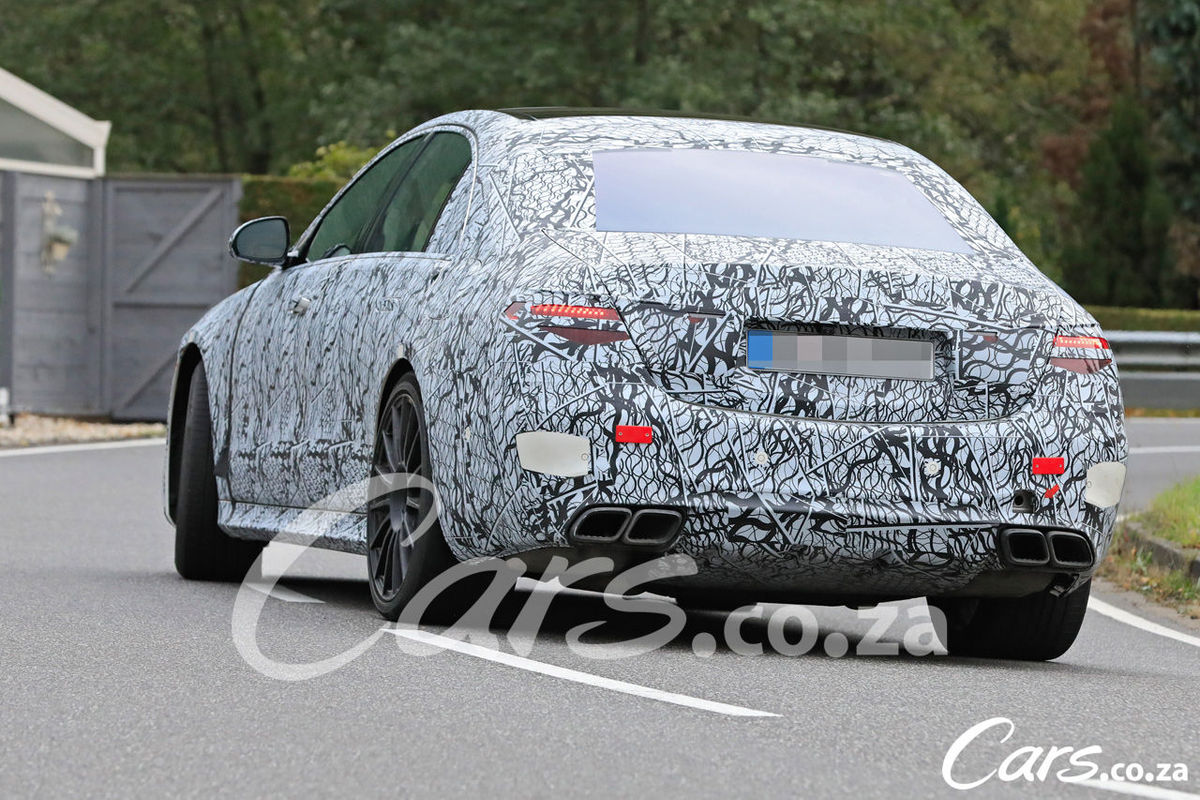
However, the S63e you see testing here will arrive later. This prototype is heavily camouflaged but the Panamericana grille, quad exhaust system and large wheels are all clues that this is an AMG model.
As for what will power the new Mercedes-AMG S63, all indications point to a hybrid powertrain, hence the 'e' in its name, which is a first in this application, featuring an electric motor coupled with Merc’s potent bi-turbocharged 4.0-litre V8 engine that’s expected to churn out at least 522 kW! But, if that’s not enough for you, Mercedes-AMG is also due to reveal the S73e, which will boast even more power expected to come in at almost 600 kW using a more powerful electric motor which is also expected to make an appearance in the forthcoming Mercedes-AMG GT73e. Furthermore, we will also see an all-electric S-Class come to market as the EQS to take on Tesla.
The S63e will no doubt be a high-performance luxo-barge made all the more comfortable with a finely tuned air suspension and all-wheel steering that will ensure stability at high speed.
As we’ve seen in the new S-Class, Mercedes-Benz will throw all its latest technology into the S63e and luxury levels will no doubt be top-notch.
The S63e and S73e models are expected to be fully revealed next year before going on sale later in the same year.
We will keep you updated as more information becomes available.
What will Hyundai do with its new 6-cylinder turbodiesel engine… build it into a Land Cruiser-rivalling off-roader?
Rendering courtesy of Enoch Gonzales
Simple vehicle platforms, make a lot of money, and Toyota has been masterful at this. Especially in the SUV market, with its Fortuner Prado and Land Cruiser 200.
The rugged ladder-frame vehicle architecture delivers excellent durability and robustness in testing off-road conditions. Although cornering dynamics and high-speed stability are the debits, there is no question that a great many SUV customers see this as a fair trade-off.
The traditional formula has been to use a bakkie platform, for the development of robust mid-size SUVs. Fortuner is perhaps the best and most successful example of this, in its relationship with Hilux.
Hyundai is readying its Santa Cruz double-cab bakkie project for launch in 2021. With its unibody construction, this does not give the Korean brand a platform possibility to start rivalling Toyota’s ladder-frame SUV business. But the Koreans could be even more ambitious.
Market analysts at Hyundai will have done the numbers and ascertained that the large American bakkie market, is by far the most valuable segment to trade product in. An even bigger bakkie could become one of Hyundai’s product priorities in future, one which rides on a more traditional ladder-frame platform.
This would create the ideal development structure for an accompanying rugged SUV, to rival Toyota’s Prado or Land Cruiser. Hyundai also happens to have an excellent powertrain for such a vehicle.
The company’s new 3.0-litre in-line 6-cylinder turbodiesel is claimed to produce 205 kW and 588 Nm, numbers which would give any large SUV credible cruising performance – and adequate low-speed off-road crawling ability.
Whereas some other brands would struggle with the issue of launching something to rival Toyota’s Land Cruiser business, in terms of marketing legacy, Hyundai has no such issue. It can draw on an authentic ladder-frame SUV heritage.
Off-road enthusiasts will recall the original Hyundai Terracan (2001-2007). It might have featured an odd design, but the ladder-frame platform proved extremely capable as an African adventure SUV.
In time, the Terracan developed a reputation as the "poor man’s" Land Cruiser, which was a credit to its ability. Leveraging the potential development horizon of a new large bakkie platform, powered by its latest turbodiesel engines, a revived Terracan could be tellingly successful.
There's good news for SA motorists as the Automobile Association says that the fuel price is set for a solid decrease in November. Here's what you need to know.
Fuel prices are set for more reductions in November due to a slightly firmer Rand and softer international oil prices. This is according to the Automobile Association, which was commenting on unaudited month-end fuel price data released by the Central Energy Fund.
The current data shows that petrol will be down by as much as 27 cents a litre, with diesel lower by around 11 cents.
"The only fly in the ointment is illuminating paraffin, whose basic fuel price increased while petrol and diesel were falling, meaning a 15 cents-a-litre rise for the popular lighting and heating fuel is on the cards," the Association comments.
The rand has steadily gained ground against the US Dollar, possibly due to uncertainties around the US election.
"This gradual appreciation has been mirrored by international oil prices, which softened throughout the month, with steeper reductions seen over the past ten days," the AA notes.
The AA adds that exchange rate and oil pricing data has shown more stability over the past two months, suggesting that fuel prices have reached an equilibrium.
"We are hoping that this is the case, because fuel price stability would come as a welcome relief to individuals and corporates alike in the current economic conditions," it concludes.
2020 AA-Kinsey Report: Which Are The Cheapest Cars to Service and Repair?
The 2020 AA-Kinsey Report was released this week which provides valuable insight into the cost for parts and servicing of popular vehicles sold in South Africa. Check out the results below…
Due to restrictions brought about by the ongoing Covid-19 pandemic, the data for the 2020 AA-Kinsey Report was collected over September 2020 (not May/June as done previously) and most of the research was conducted in and around Durban, by Malcolm Kinsey, author of the report which is now in its 30th year (second year as the AA-Kinsey report). See the 2019 Kinsey Report here!
The 2020 AA-Kinsey Report details costing for parts and servicing on a variety of popular vehicles sold in South Africa across 9 categories, giving consumers a good idea of what to expect when taking a vehicle in for repair or servicing.
Winners in each category are determined by costs of servicing parts (filters, spark plugs, wipers and brake pads), repair parts (cam belt, shocks, clutch plate, flywheel and fan belt) and finally crash parts (doors, fenders, bumpers, glass, lights and wheels etc.).
The winner is the cheapest in the 3 categories combined. While the report does its best to provide the consumer with accurate information, it’s advisable to shop around, as parts pricing can and does vary. The AA-Kinsey Report sources prices directly from dealers.
“Motoring has become more expensive, certainly from a parts perspective, and the results for 2020 show that. Although there may be similar alternative parts from non-franchise outlets – the durability of which cannot be vouched for – prices for original equipment are rising,” notes Malcolm Kinsey, author of the AA-Kinsey Report.
“A factor that has become evident is the increase in cost of body parts. Headlights, rear fenders and wheel rims on some models appear to be a great deal more expensive. This has a negative effect for everyone as it increases the contribution the owner pays for the insurance excess, and the write-off point for a crashed vehicle, and it ultimately increases premiums that one has to pay,” says Malcolm.