As their build quality, design sensibility and component sourcing improve, Chinese car companies are realising that marketing bias is not an easy issue to defeat.
Borrowing from the Japanese premium branding strategy of the early 1990s (think Toyota/Lexus and Nissan/Infiniti), most of the better Chinese car companies have created sub-brands of their own.
For Chery, that entails Qoros. Positioned as a Chinese premium vehicle brand, it was founded in 2007 with Israeli partners and in 2017, received additional American funding – before the US/Chinese trade conflict started in earnest.
With a complicated corporate structure of global partners and stakeholders, Qoros has not delivered a linear and organic range of new products. But what the Chinese car company has revealed, when it does happen, it has been impressive.
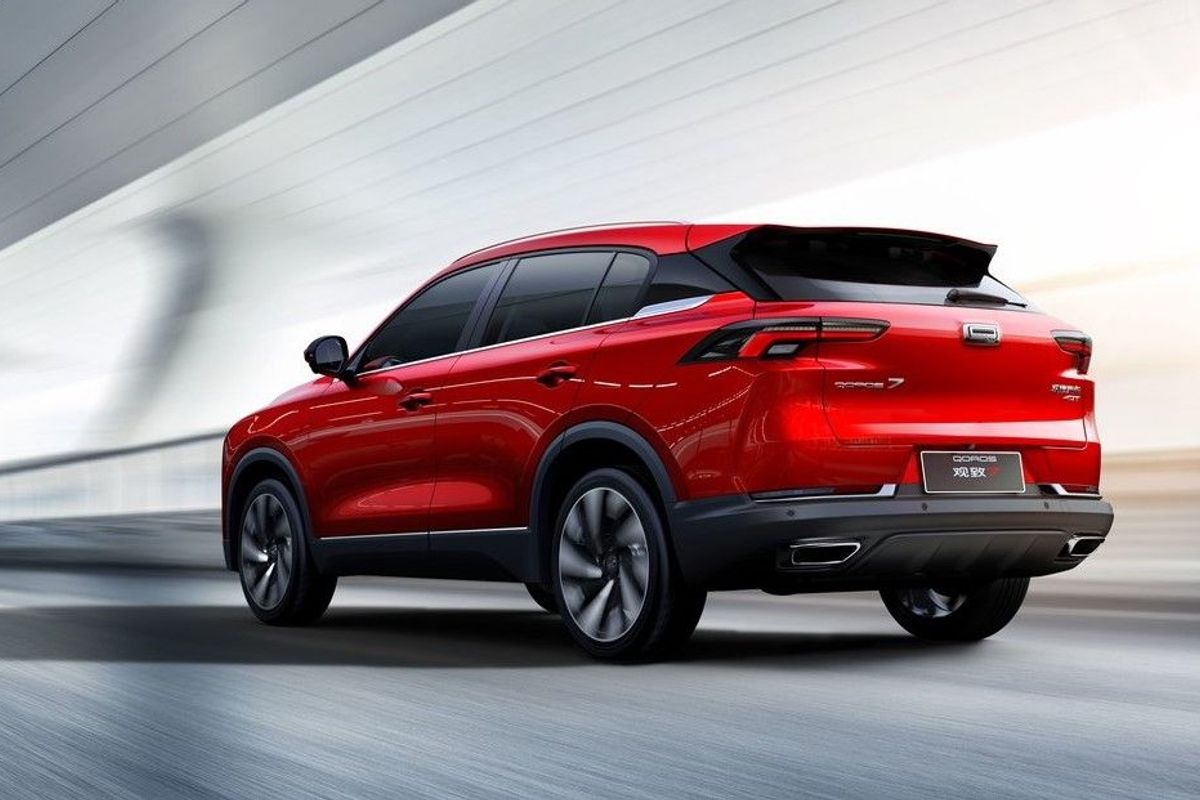
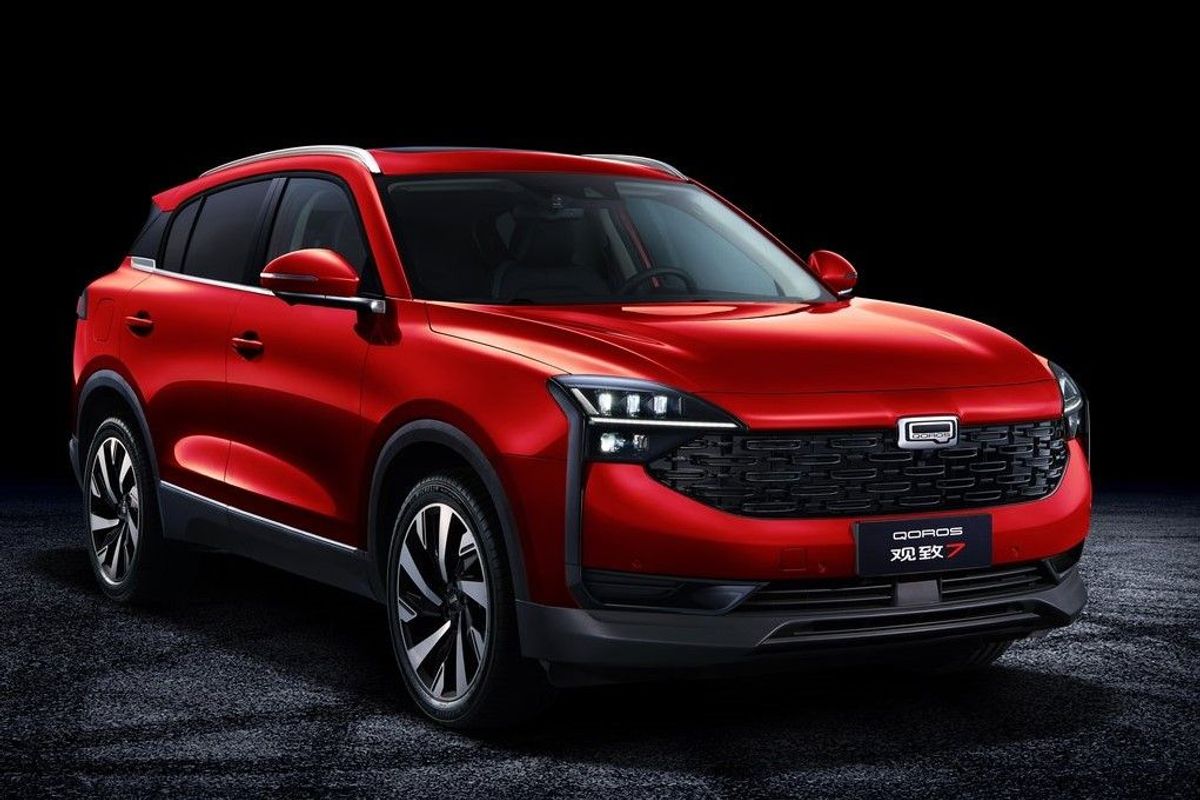
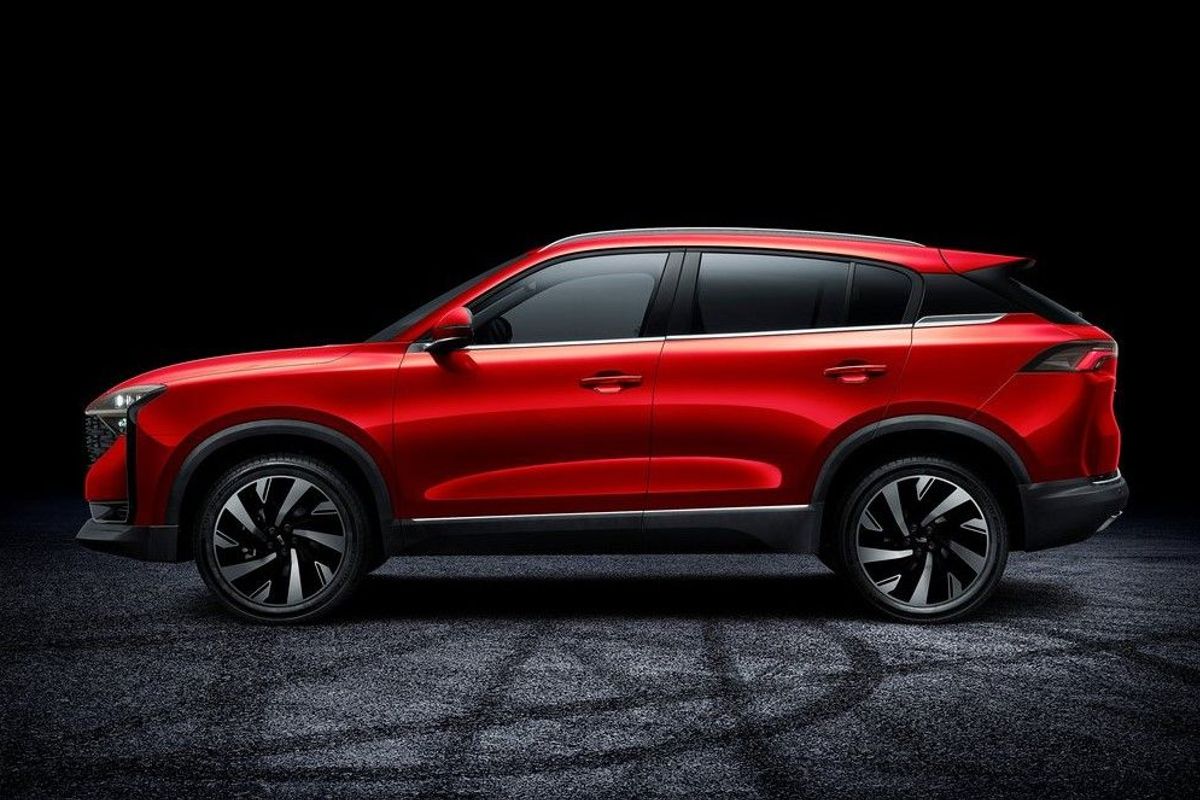
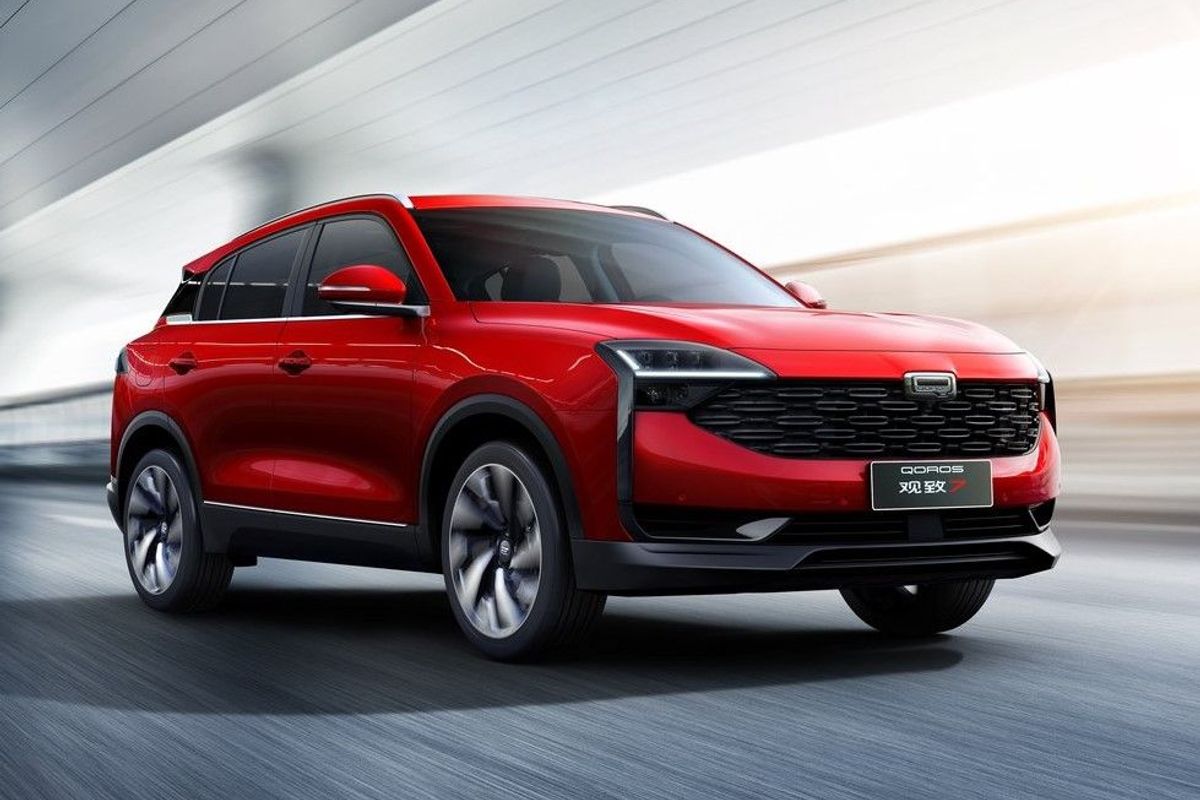
The latest images and details concept its Qoros 7, which is a luxury five-door SUV. Featuring a relatively independent design without obvious copying of any European model, the Qoros 7 looks ‘interesting’, with its huge grille and odd headlights.
Dimensionally this new Chinese SUV is slightly longer than a VW Tiguan but shorter than a Tiguan AllSpace.
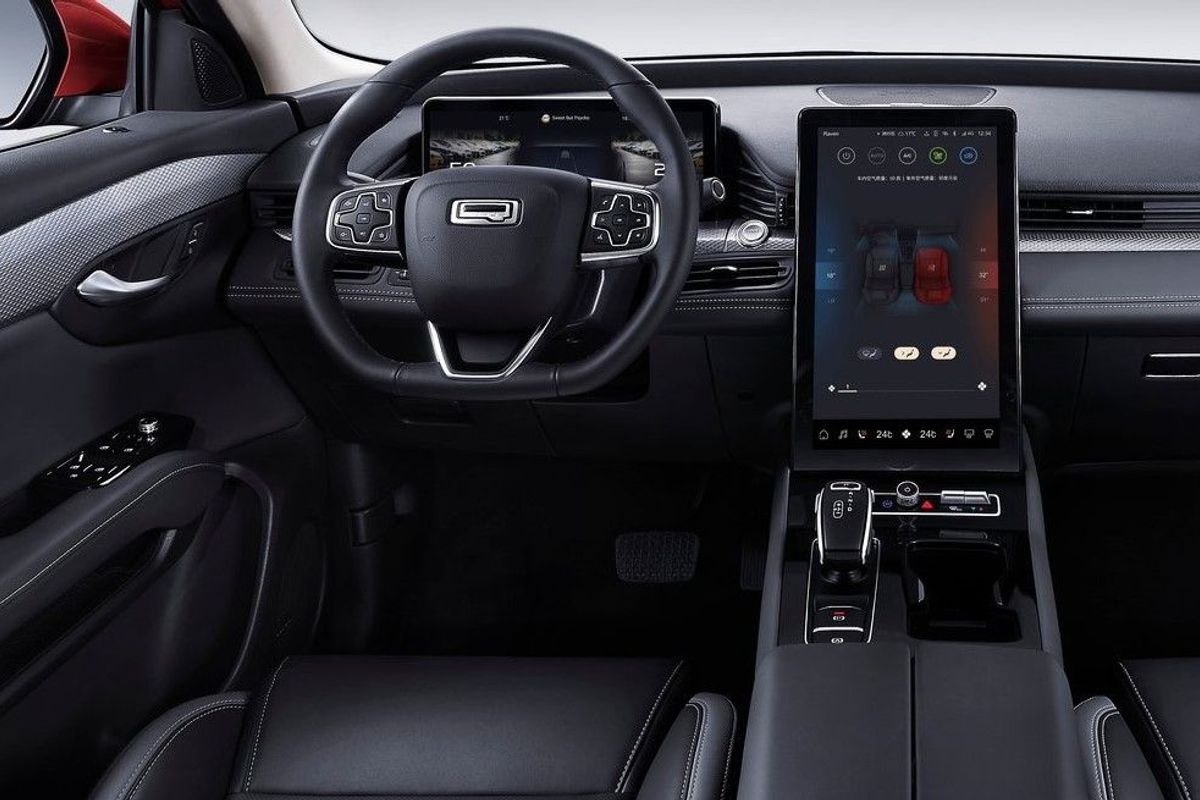
Inside there is some inspired cabin architecture and a generous digital screen offering. The traditional instrumentation binnacle is replaced with a 12.3-inch display, whilst a huge 14.6-inch portrait orientated central touchscreen services the Qoros7’s infotainment. Apple CarPlay and Android Auto compatibility are coded into the SUV’s digital offering.
Powering this new Chinese SUV are two turbopetrol engine options, both featuring Valvetronic continuously variable valve technology, which would indicate an agreement of some sort with BMW. The 1.6-litre four-cylinder is good for 150 kW and 280 Nm, whilst Qoros 7’s 1.8-litre boosts 170 kW and 300 Nm.
Throttle inputs should convert to relatively brisk responses thanks to a seven-speed dual-clutch transmission, and handling is kept tidy by Macpherson struts up front and a multilink rear suspension, with electric power steering harmonized by Bosch.
Qoros says that its new SUV will launch in Europe and China simultaneously.
The Cars.co.za Podcast, Ep5 – Juliet McGuire on freelancing in the motoring media industry
Welcome to our podcast with a difference, as you get to watch us in-studio as well as listen to our pearls of wisdom.
In episode 5 of the Cars.co.za podcast, we're joined by Juliet McGuire.
Juliet McGuire is a stalwart of the local motoring media industry, having worked for multiple magazine titles, as well as holding the title of editor of Women on Wheels. For the last four years she has been freelancing, and it has been quite a ride. She joins Ciro De Siena in studio for a very frank and honest discussion about the challenges facing freelancers, and especially female freelancers hoping to get into the industry.
Find the Cars.co.za Podcast on your favourite platforms:
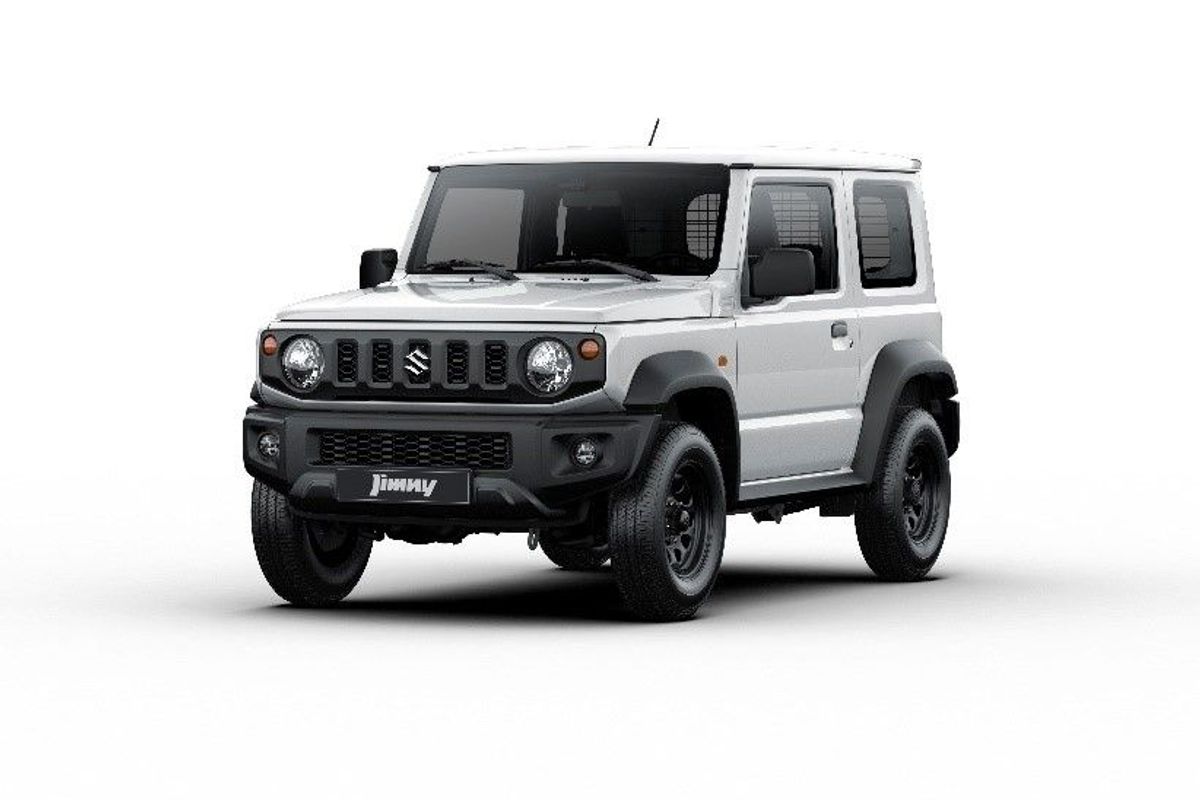
Suzuki UK has introduced a version of its Jimny that will focus on light-commercial applications. Check it out.
The Suzuki Jimny is a charming yet capable compact SUV. One of its biggest faults is its tiny boot – there's precious little space back there.
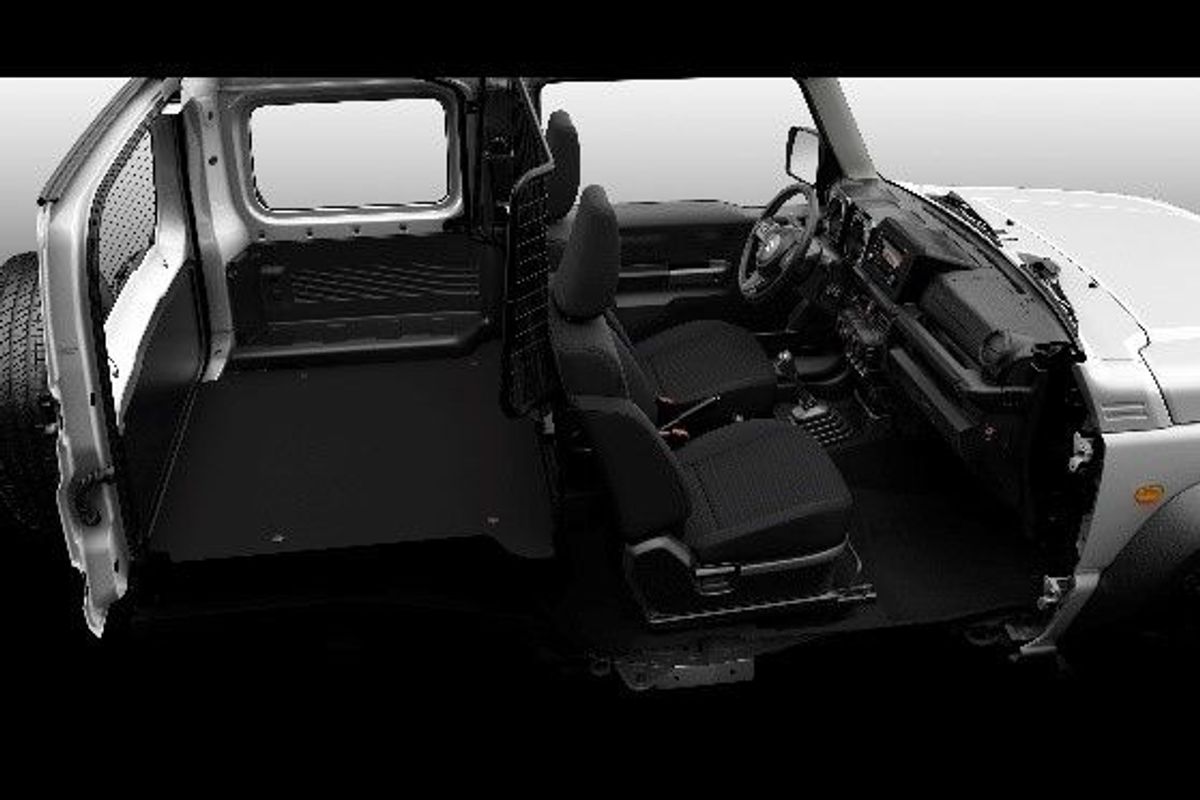
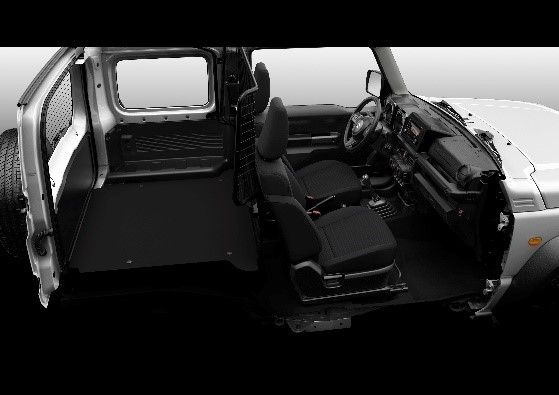
Suzuki UK has introduced a version of the Jimny that will address this major shortcoming and it's being marketed as a commercial vehicle. The removal of the second row of seats has opened up considerable space and we suspect the loss of the rear bench is massively offset by the gains in practicality. Suzuki claims this version of the Jimny has a luggage capacity of 863 litres. The Japanese brand says that's 33 litres more than the 4-door version with its rear seats folded.
Suzuki is offering the newcomer with a flat floor as well as a safety cargo partition, so your belongings don't come flying into the front cabin under heavy braking.
Under the bonnet is the same 1.5-litre petrol engine with 75 kW and 130 Nm. In this commercial application, the Suzuki Jimny is offered with a 5-speed manual gearbox.
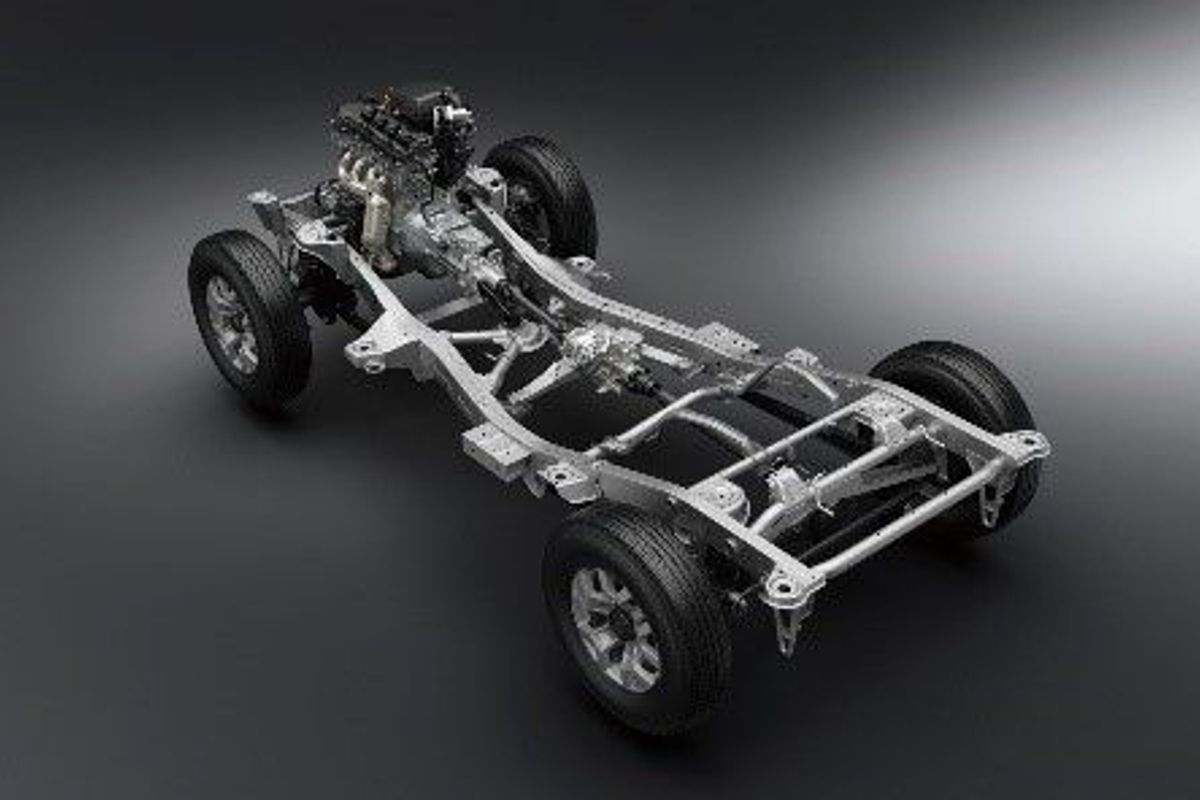
Has it lost any of its appeal or capability? Not at all, as Suzuki says its 2-seater commercial Jimny retains its ladder frame setup, 3-link axle suspension and its AllGrip Pro 4-wheel drive system with low range.
As an interesting proposition this is, we're more interested in a bakkie version of the Suzuki Jimny. There are already companies doing conversions, with one, aptly named Suzuki Jimny PickUp, offering suspension lifts as well as dedicated offroad tyres. Despite its small size and small engine, the Suzuki Jimny will continue to endear itself to many, us included.
With the removal of the rear bench, the luggage capacity and space has increased dramatically.
Land Rover’s new Defender gains a Plug-in hybrid model as well as a new straight-six turbodiesel.
The new Defender has started to make its mark on SA car buyers by jumping to the top of Jaguar Land Rover’s sales chart in August 2020. It sold some 125 units, more than double any other model in its local lineup. New engine versions and additional packs were always part of the expansion plan for Defender and it’s now time for the plug-in Hybrid model to make an appearance in the range. The plug-in hybrid model is likely to be sold in SA with JLR making an announcement next month as to its arrival.
The plug-in model uses the same running gear as the Range Rover Sport hybrid, bolting a 2.0-litre turbocharged petrol engine to a battery-powered electric motor. The total power output of the engine is a combined 301 kW, with the combustion engine delivering 220 kW. A 19.2 kWh battery can be used to drive the new Defender 43 km before requiring a recharge. It can also be used in low-range, which could make for an ultra-silent game viewing vehicle. Fuel economy benefits from the plug-in hybrid amount to impressive claimed figures of 3.3L/100 km while its 0-100 kph sprint time of 5.6 seconds will have every GTI driver worried.
The plug-in model is also joined by the news of a new straight-six turbodiesel engine. It uses mild-hybrid technology to improve fuel economy for short periods such as when accelerating. The system is able to recuperate energy when braking and then redeploy it to assist during accelerating, thereby reducing the load on the diesel engine at low speeds.
The six-cylinder turbodiesel is good for 220 kW and 650 Nm of torque in D300 specification level. This same engine could also replace the current D240 locally and be renamed the D250 but with power outputs of 183 kW and 570 Nm. There is also talks of an entry D200, using the same straight-six but with 147 kW and 500 Nm of torque. That would mean 3 versions of the same engine. Fuel efficiency claims for the D200 and D250 are said to be 8.8L/100 km on the Defender 110.
We should hear from the local arm of JLR on the 18th October as to which models will be available locally.
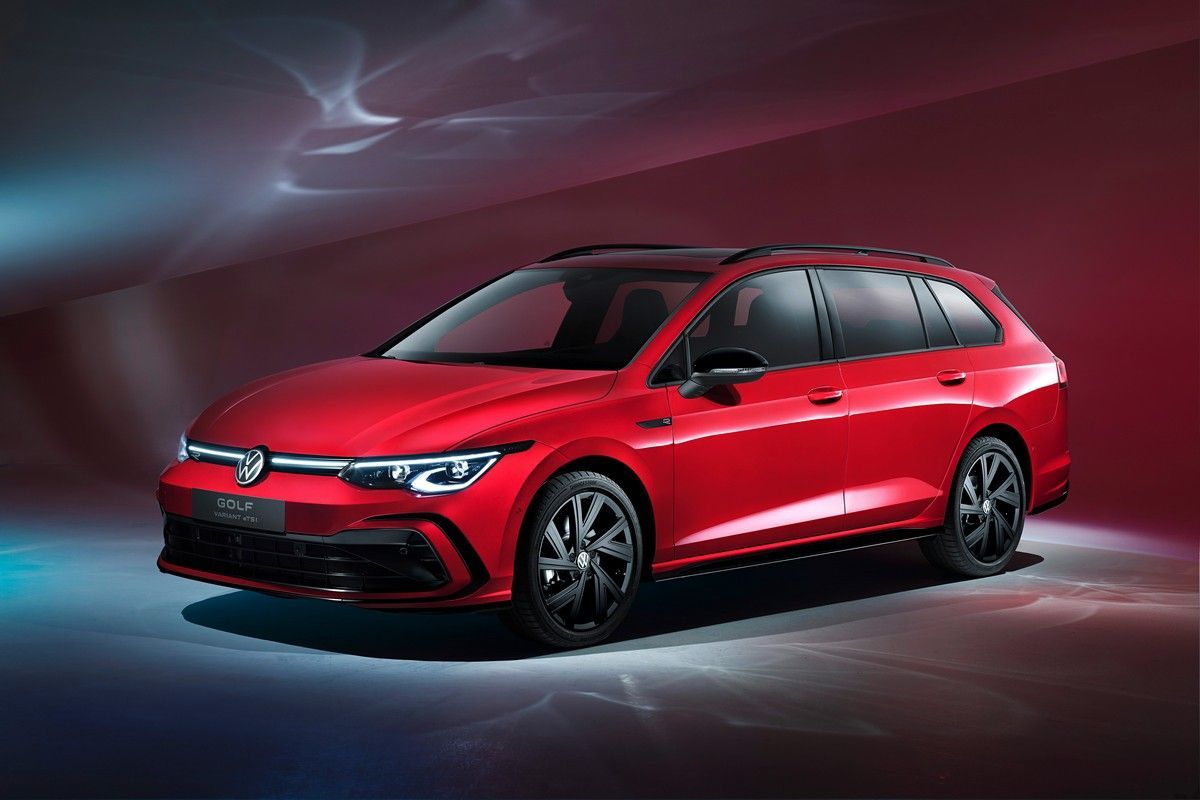
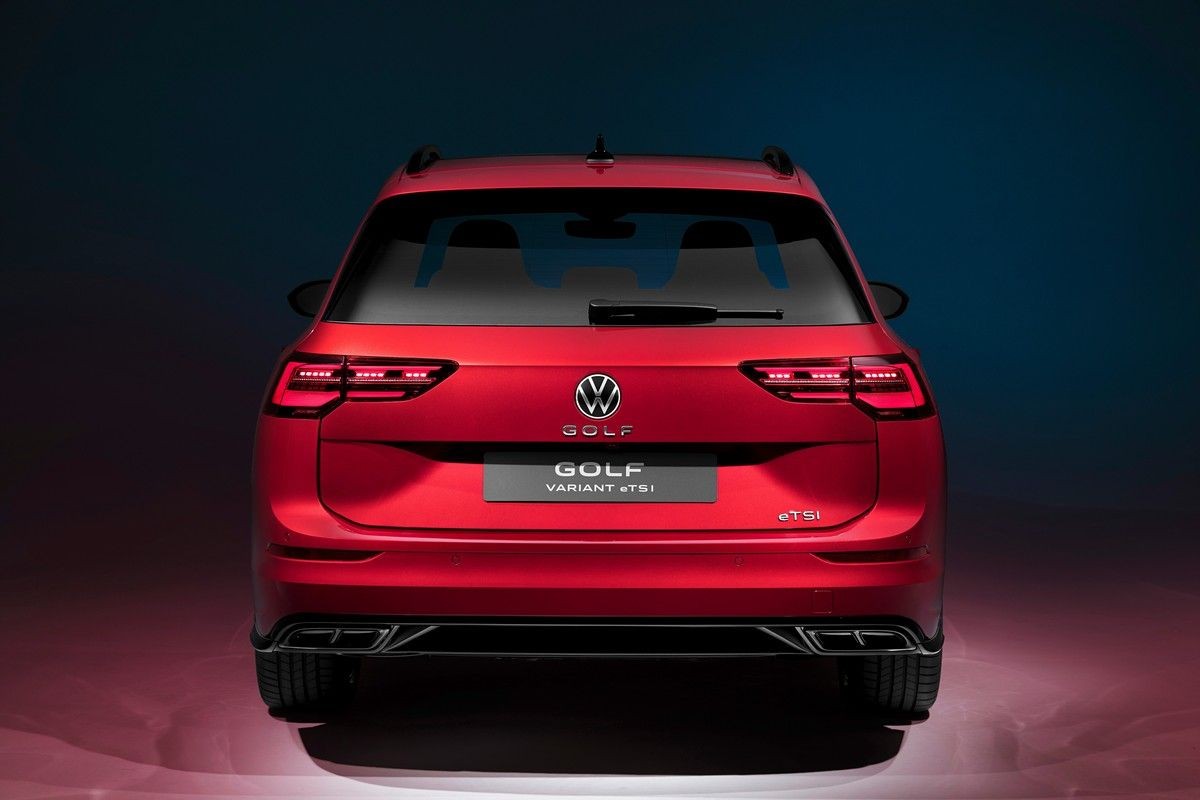
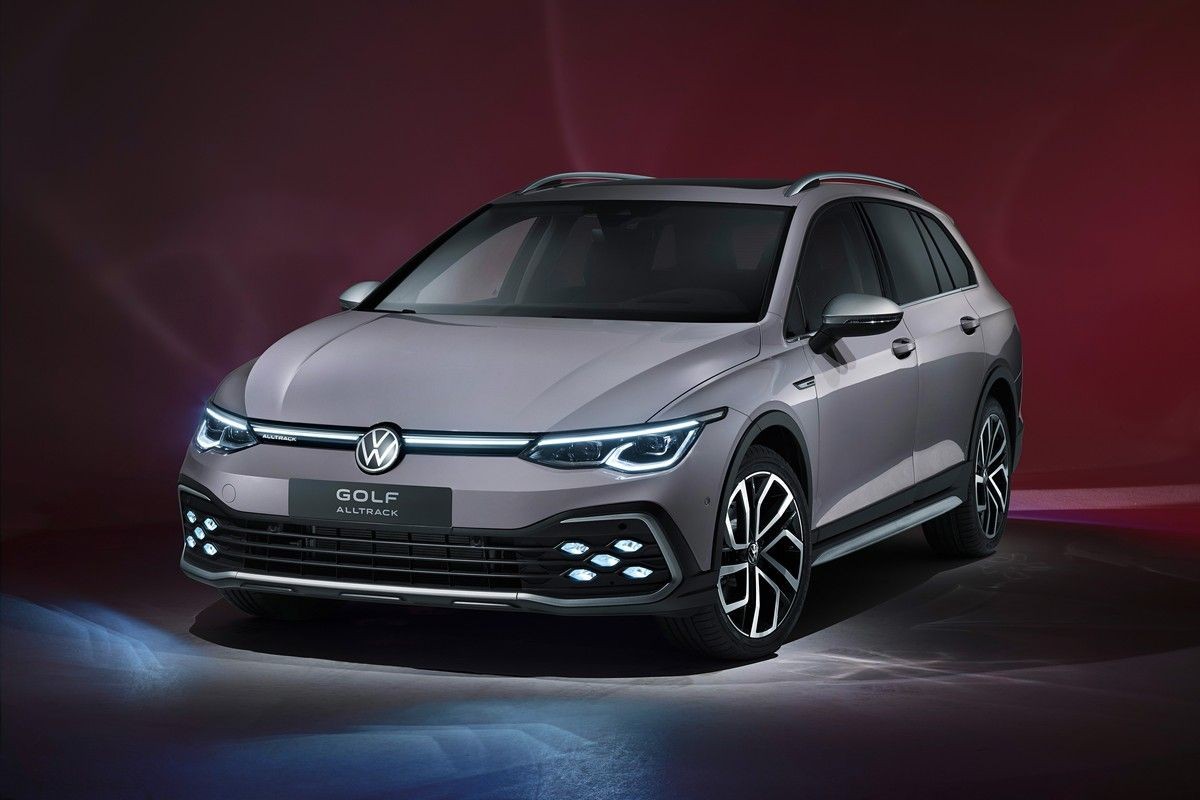
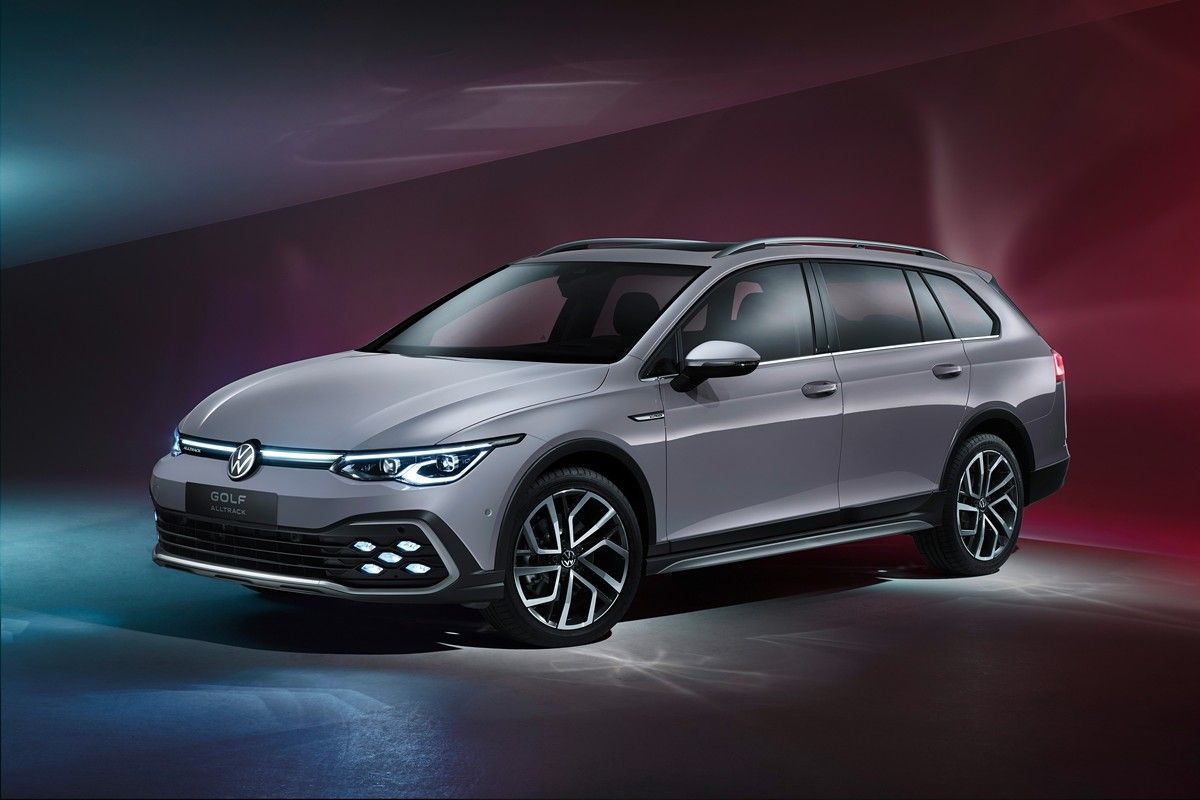
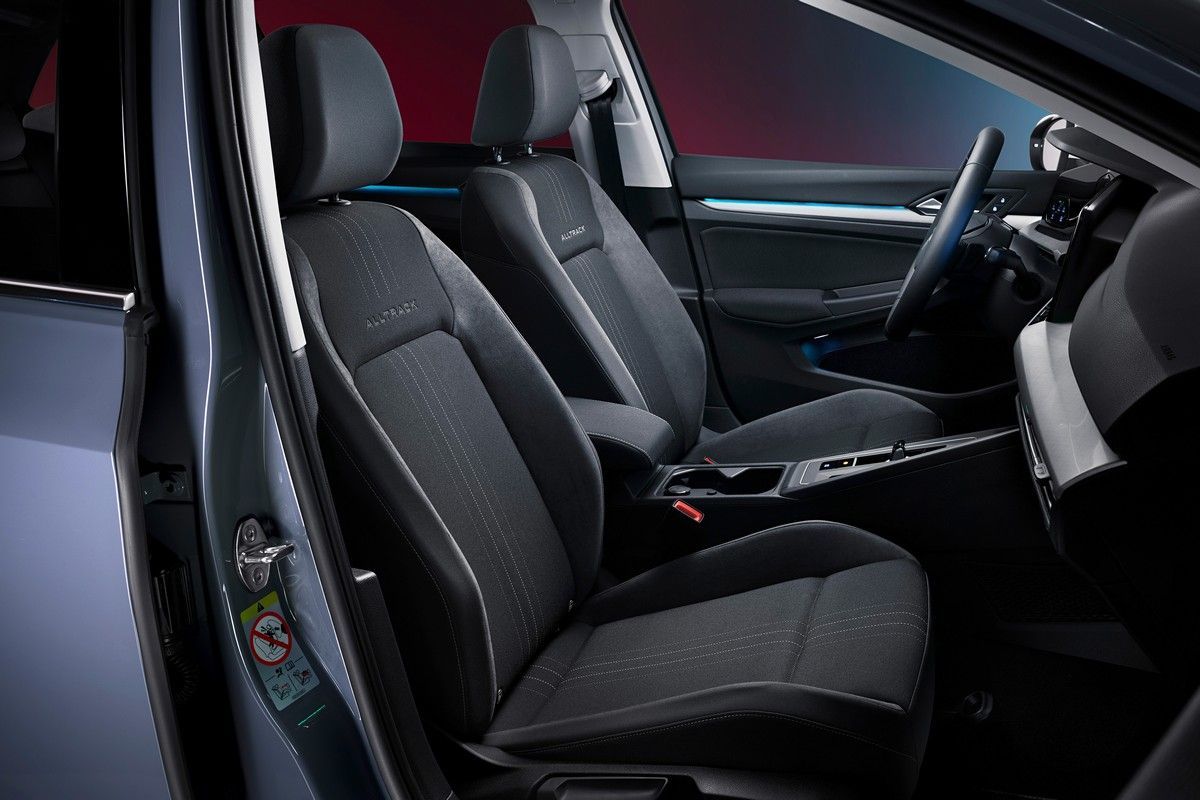
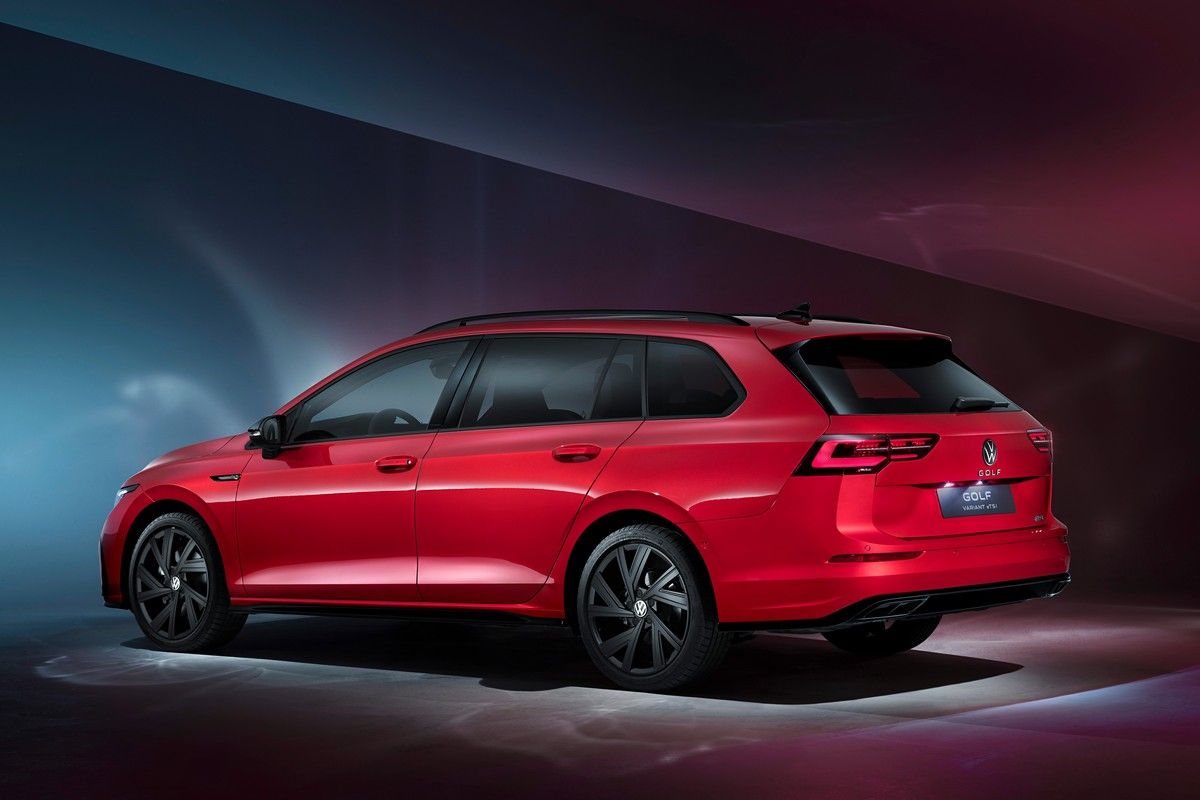
Volkswagen has unveiled station-wagon variants (ahem) of the Golf 8 and, even though the South African subsidiary of the Wolfsburg-based brand has sold estate versions of its compact premium hatchback before, the pair of newcomers are unfortunately unlikely to be offered in our market… and, arguably, that is our loss.
In Mzansi, the popularity of station wagons has waned throughout the past few decades. If our market’s rampant uptake of double-cab bakkies signed estate cars’ death warrant, the proliferation of compact family cars (SUVs/crossovers) was effectively the executioner. In his video review of the outgoing Subaru Levorg, which ultimately never came to our market, Ciro De Siena lamented the scourge of anti-stationwagonism.
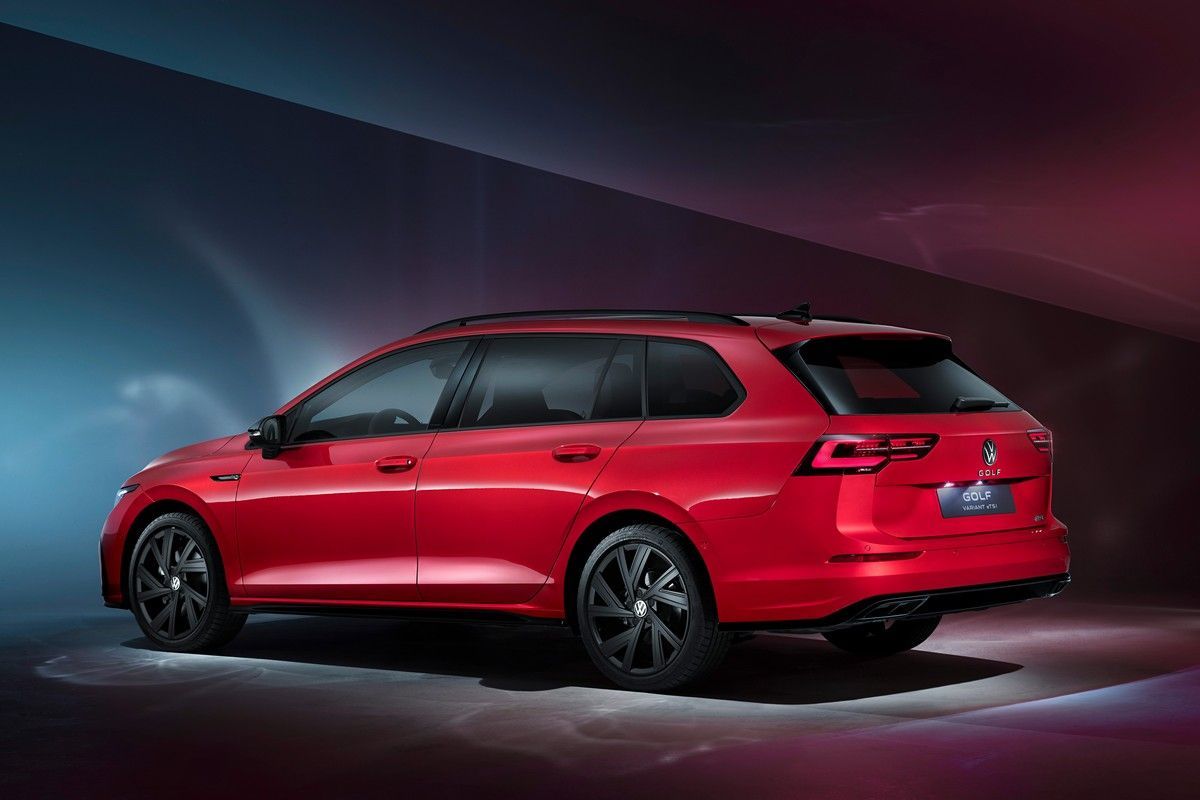
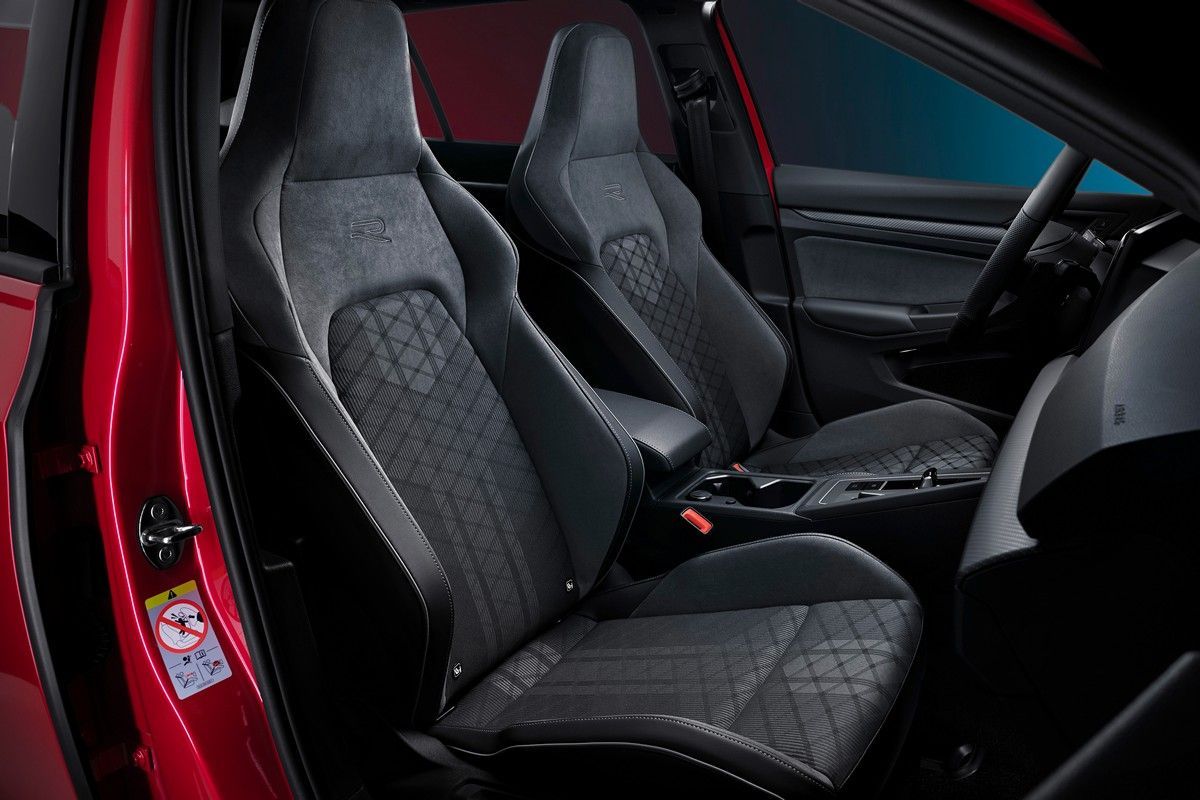
The R-Line treatment gives the Golf Estate a purposeful presence; not the tail-light designs, which are unique to the variant.
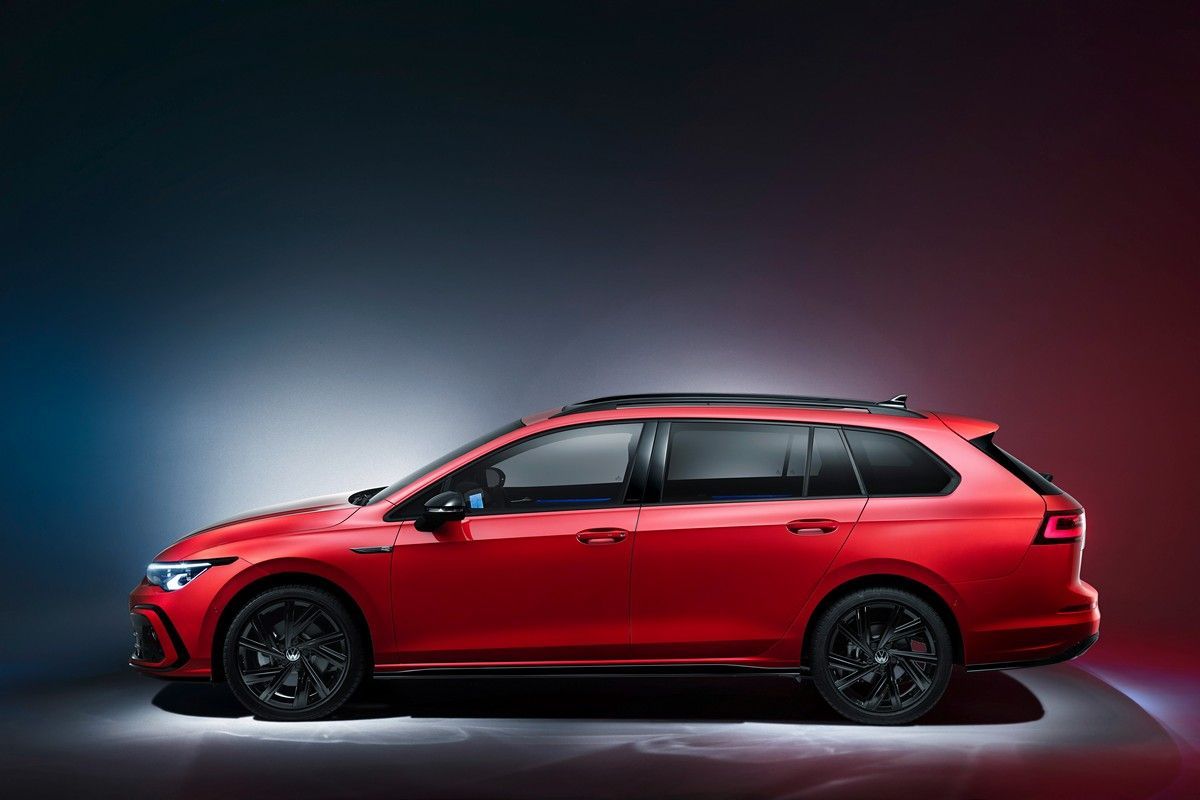
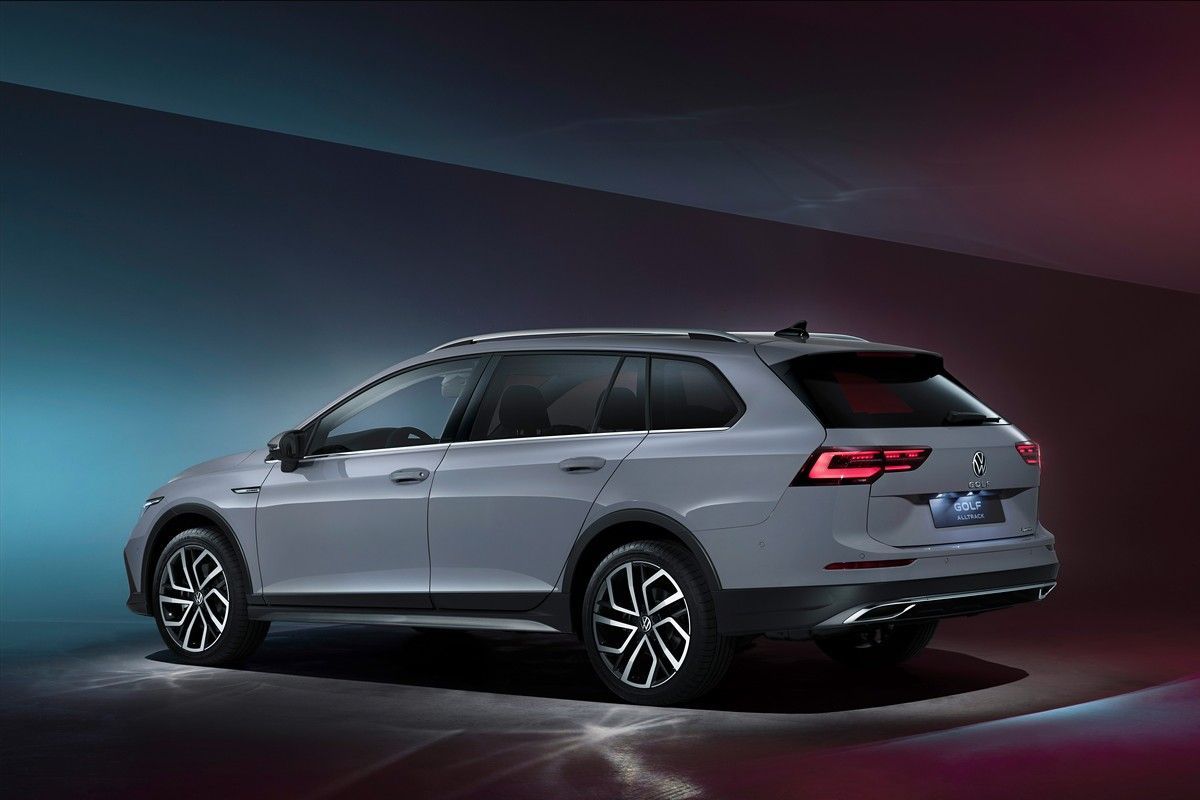
Would Volkswagen South Africa reconsider launching the Golf 8 Estate here if the brand produced a GTI version (there’s been an R model before, although, again, it never left Europe)? The newcomer certainly looks particularly attractive in R-Line trim… at 4 630 mm in length, the new Estate is 66 mm longer, by virtue of an extended wheelbase, but similar in width and height to its Golf 7-based predecessor.
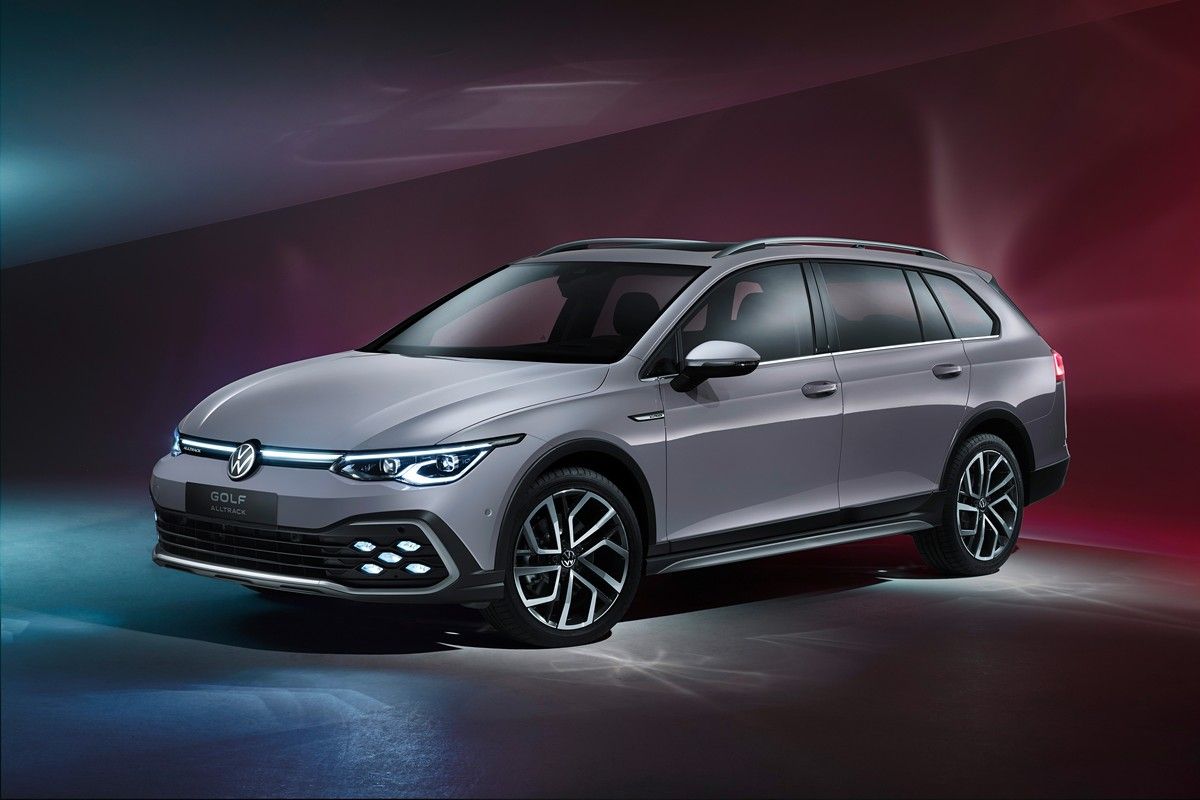
Endowed by purposefully sporty bumpers (replete with GTI-esque fog lamp clusters on the Alltrack), as well as upsized alloy wheels, the newcomers resemble their 5-door hatchback siblings up to the B-pillars, from where the pair’s roofline slopes downwards towards the edge of the tailgate. A steeply raked rear screen and variant-specific tail-light clusters further distinguish them from their hatchback siblings.
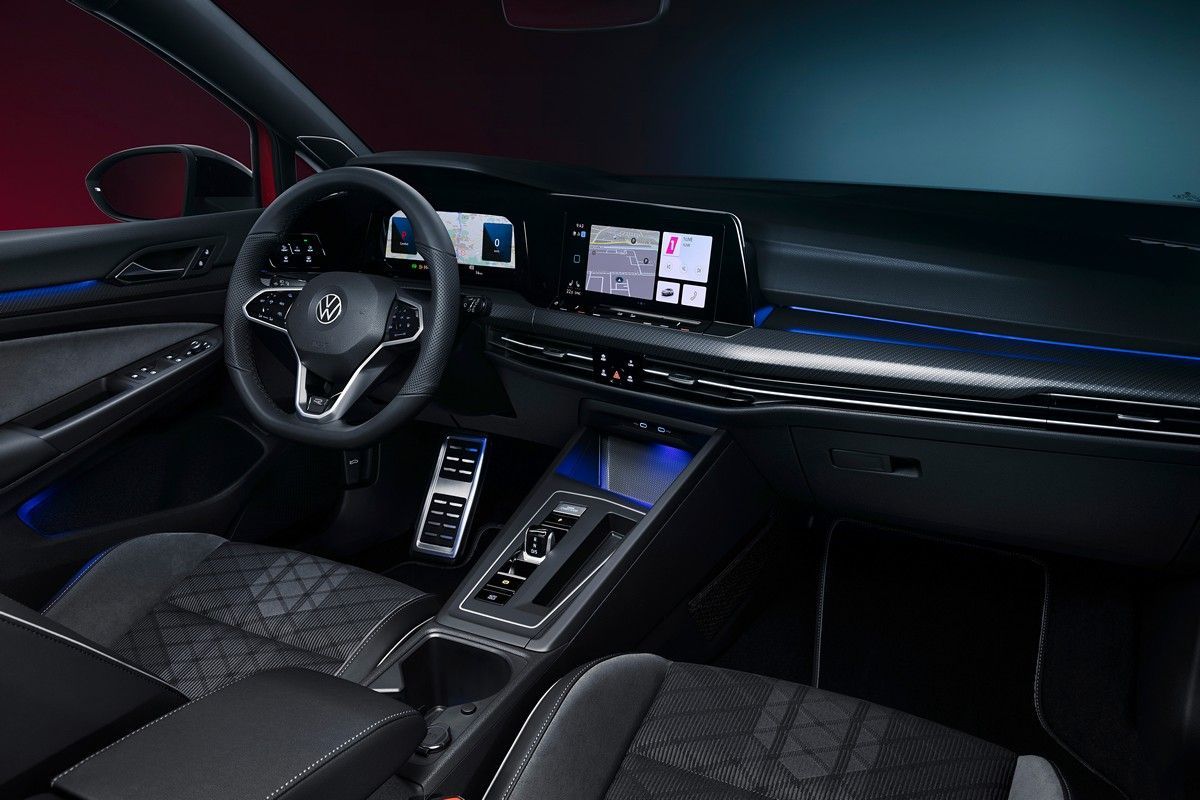
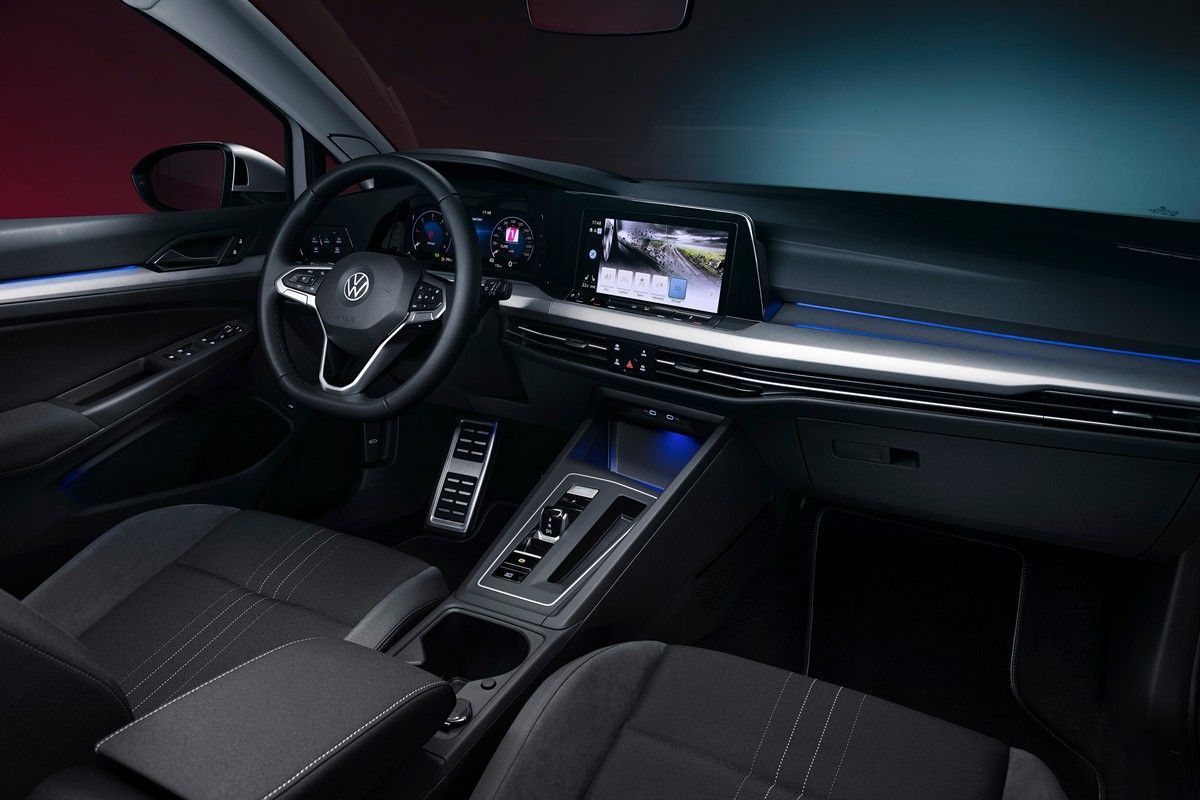
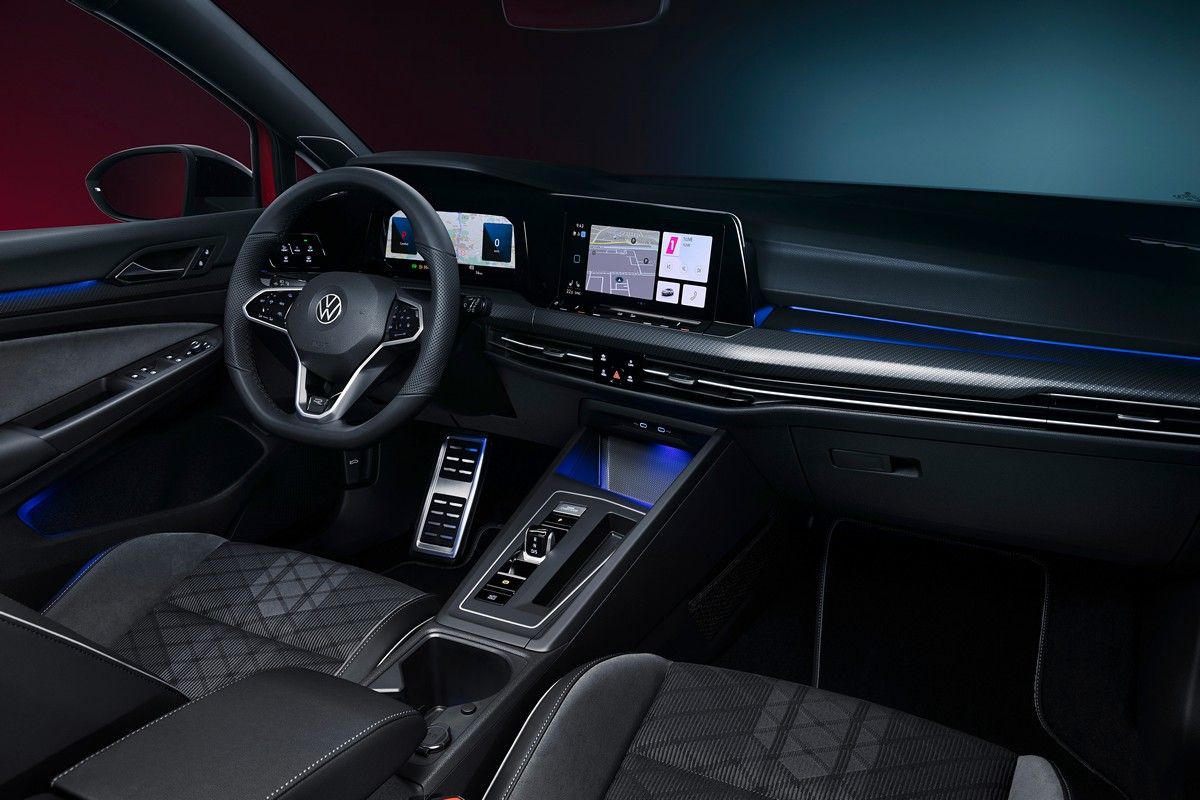
When specified with Active Info Display, the Golf Estate's cabin feels tech-dominated. The brightwork's tasteful, though.
But whereas the Estate is a more practical alternative to the Golf 8, the Alltrack offers 4Motion all-wheel drive, extra ground clearance, subtle black body cladding. To put it in context, it’s a Hyundai Kona rival – but would it stand a chance against a horde of fashionable compact family cars in our market, however? Maybe not, but bear in mind all-wheel-drive is the exception, rather than the rule, at the top of the light crossover/SUV segment.
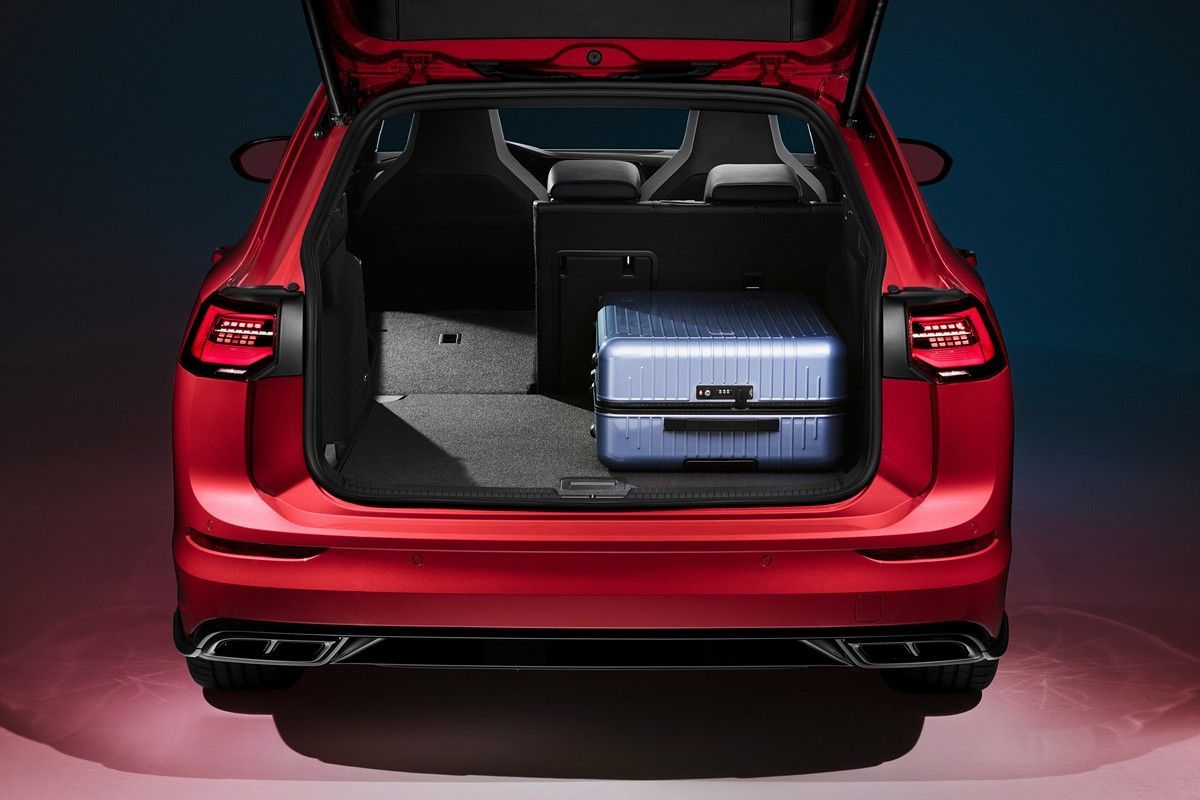
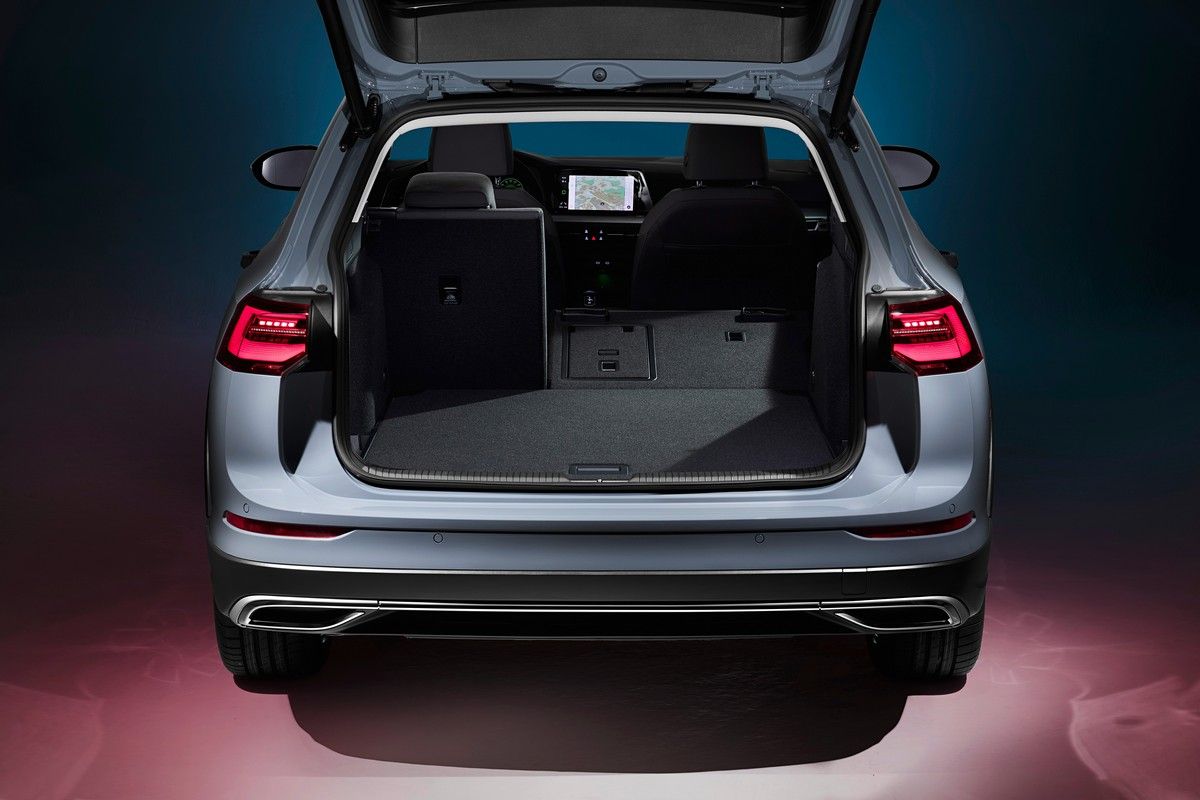
An extra 38 mm of rear legroom, plus a more-than-useful luggage bay capacity of 611 litres and a claimed 1 642 litres of utility space (with the 60:40 rear seatback folded) might sweeten the deal for buyers whose children are teens who are going through their respective growth spurts.
The Golf Allroad's hot hatch-like tyres and rims suggest it may never traverse anything tougher than icy- or mild dirt roads.
Volkswagen has further equipped the newcomers’ load bays with shopping bag hooks and tie-down loops, while 12V and 230V power outlets, an electrically-extending tow hook and a powered tailgate, which can be opened with a swipe of a foot underneath the rear bumper, are optional.
The Estate’s line-up of 3- and 4-cylinder turbopetrol and diesel engines will mirror that of the Golf Mk8 hatchback in Europe. Volkswagen claims the Alltrack can tow up to 2 000 kg (braked) up a 12% slope, but we'll bring you more details of the ranges' line-ups when they become available.
The newcomers are said to offer 1 642 litres of utility space with the 60:40 rear seatback folded.
Now the only question remains whether the Wolfburg-based brand is planning GTI, GTE (petrol-electric hybrid), GTD (turbodiesel) and R versions of its Golf 8-based station wagon. Autocar speculates that VW will be eager to leverage the reduced CO2 emissions of the GTE package and install that in the Estate. Would you be interested in buying a Golf 8 Estate (in either GTI or R guise) should they become available in our market?
Elon Musk has never reserved any diplomacy when referring to legacy car companies. The billionaire technology entrepreneur and electric vehicle visionary has called the traditional car industry’s bluff and won.
With Tesla’s share price making it the world’s most valuable car company and strong global demand for his products, Musk is in a position to be gloriously indifferent to the broader car industry. But as he is seemingly enveloped by success, a trace of humility might be showing.
For Tesla, commercial success is important but the company’s greater goal is a cleaner environment, without having to sacrifice personal transport and enjoyment. And Musk has realised that his revolution in this regard, cannot be an army of one.
VW has invested enormously in its electric vehicle architecture and battery technology, making it by far the most committed traditional car company, with regards to an electrified future. The Germany auto giant’s CEO, Herbert Diess, has expressed open admiration for Tesla’s technology and on a recent visit to the American brand’s new Berlin factory, Musk made a detour.
The Tesla corporate jet also made a stop at Braunschweig Airport, near Wolfsburg. VW has its own dedicated terminal here, to facilitate expeditated travel for its executives and engineers. Musk was met at the terminal by Diess and went for a drive in an ID.3, the electric car which VW is due to launch soon.
After a short test drive, Diess fielded questions about the ID.3’s technical specifications before Musk had to depart, in keeping with his crushingly demanding schedule.
In a world where Tesla’s share price and market influence can often move, merely by Musk’s social media behaviour or a video recording of him doing anything, this meeting is potentially symbolic. Whilst Tesla shows no interest in partnering with any legacy car companies, Musk’s brief drive in VW ID.3 could be the start of something.
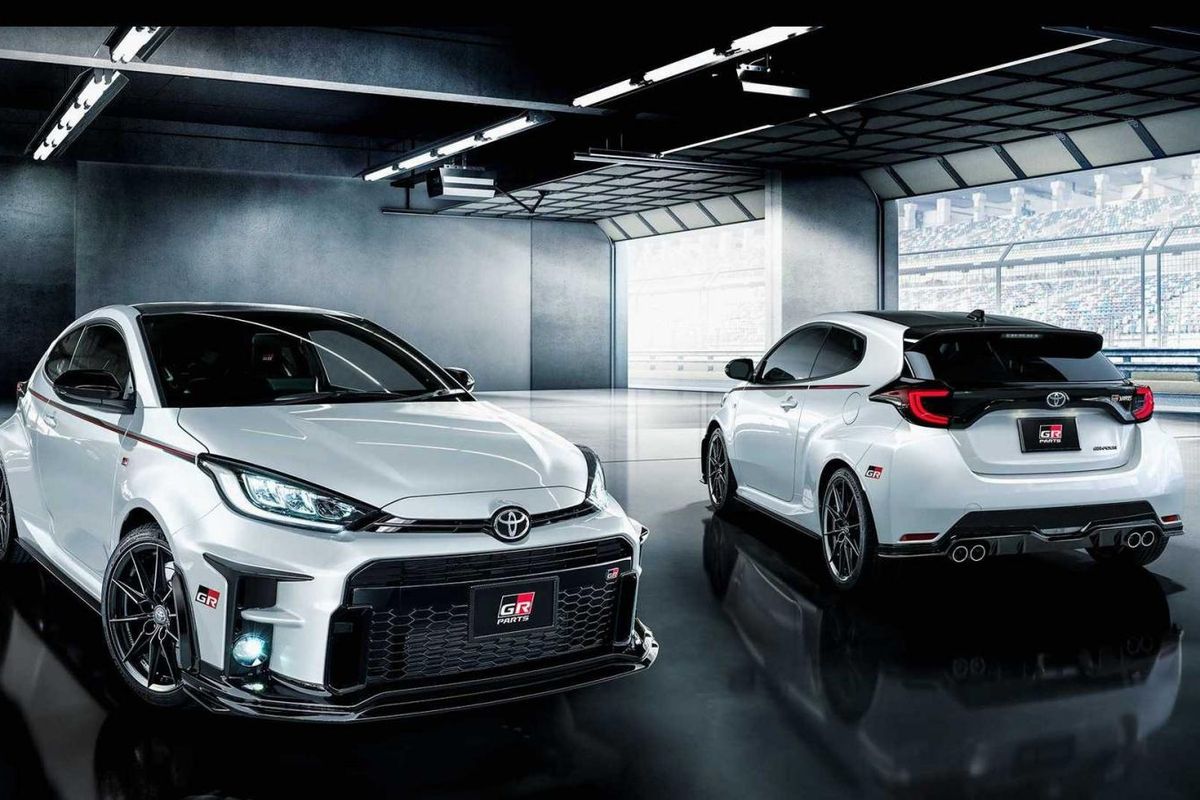
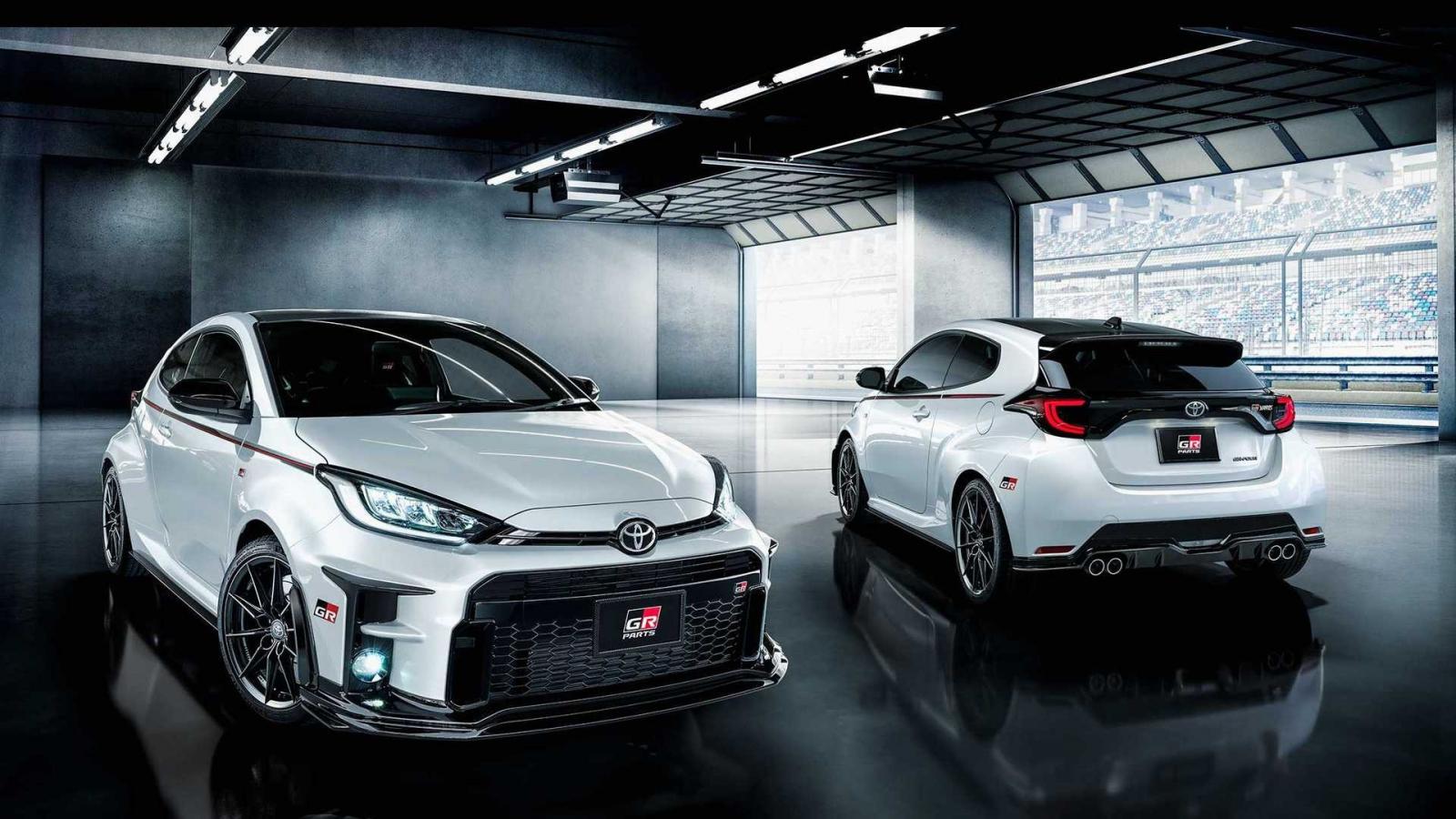
Toyota’s Gazoo Racing division has released a catalogue of cosmetic addenda for the Japanese brand’s eagerly-awaited GR Yaris all-wheel-drive hot hatchback, which is on course to be released in South Africa in 2021.
We recently reported that the GR (Gazoo Racing) Yaris had gone into production at Toyota's Motomachi factory, in a dedicated section of the plant that is reserved for the production of GR sportscars.
White seems to be the go-to colour for the GR Yaris; it makes the contrasting GR Parts really stand out.
Aided by a scrawny 1 280-kg kerb weight and a trick all-wheel-drive system that can split torque between the hot hatchback’s front and rear axle via modes such as Normal (60:40), Sport (30:70) and Track (50:50), the GR Yaris is said to zip from 0 to 100 kph in 5.5 sec.
The newcomer is powered by a 1.6-litre 3-cylinder turbopetrol engine that produces 192 kW and 360 Nm or 200 kW and 370 Nm (depending on specification), and we’ve heard a rumour that the South African market is likely to be availed the more potent version of the two.
Upon the release of the GR Yaris, Toyota announced it would offer an optional Circuit Pack, which comprises a pair of Torsen limited-slip differentials, a performance-tuned suspension, red brake callipers and 18-inch alloy wheels shod with Michelin Pilot Sport 4 tyres.
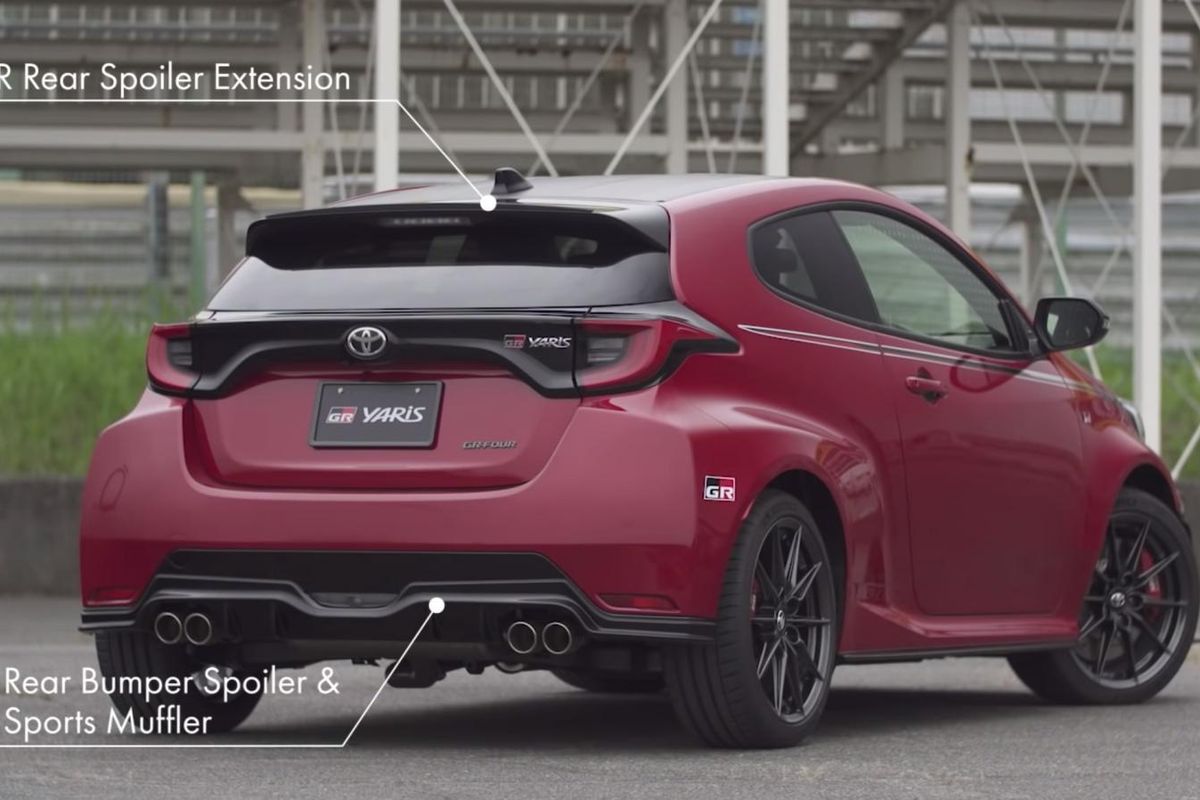
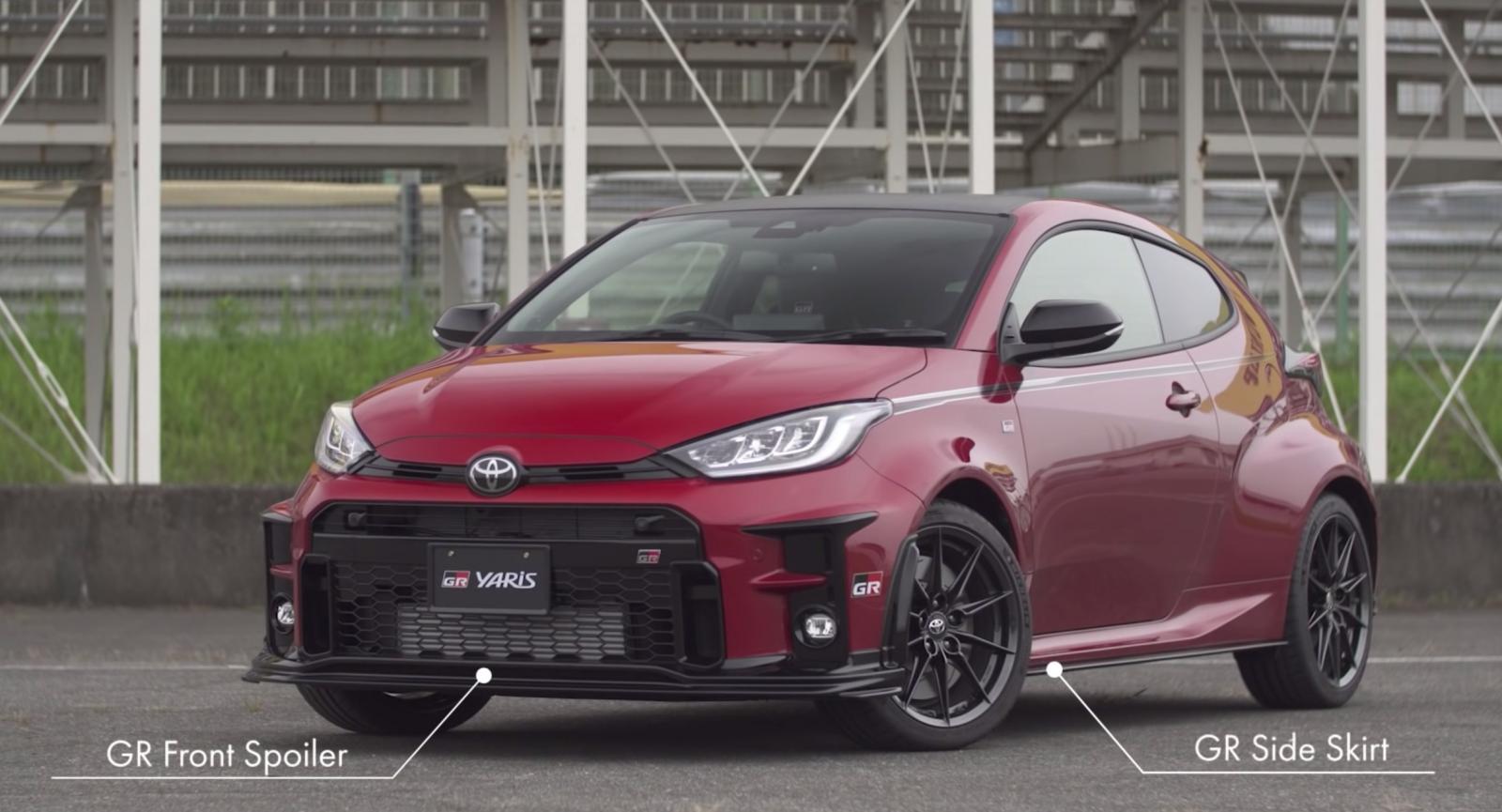
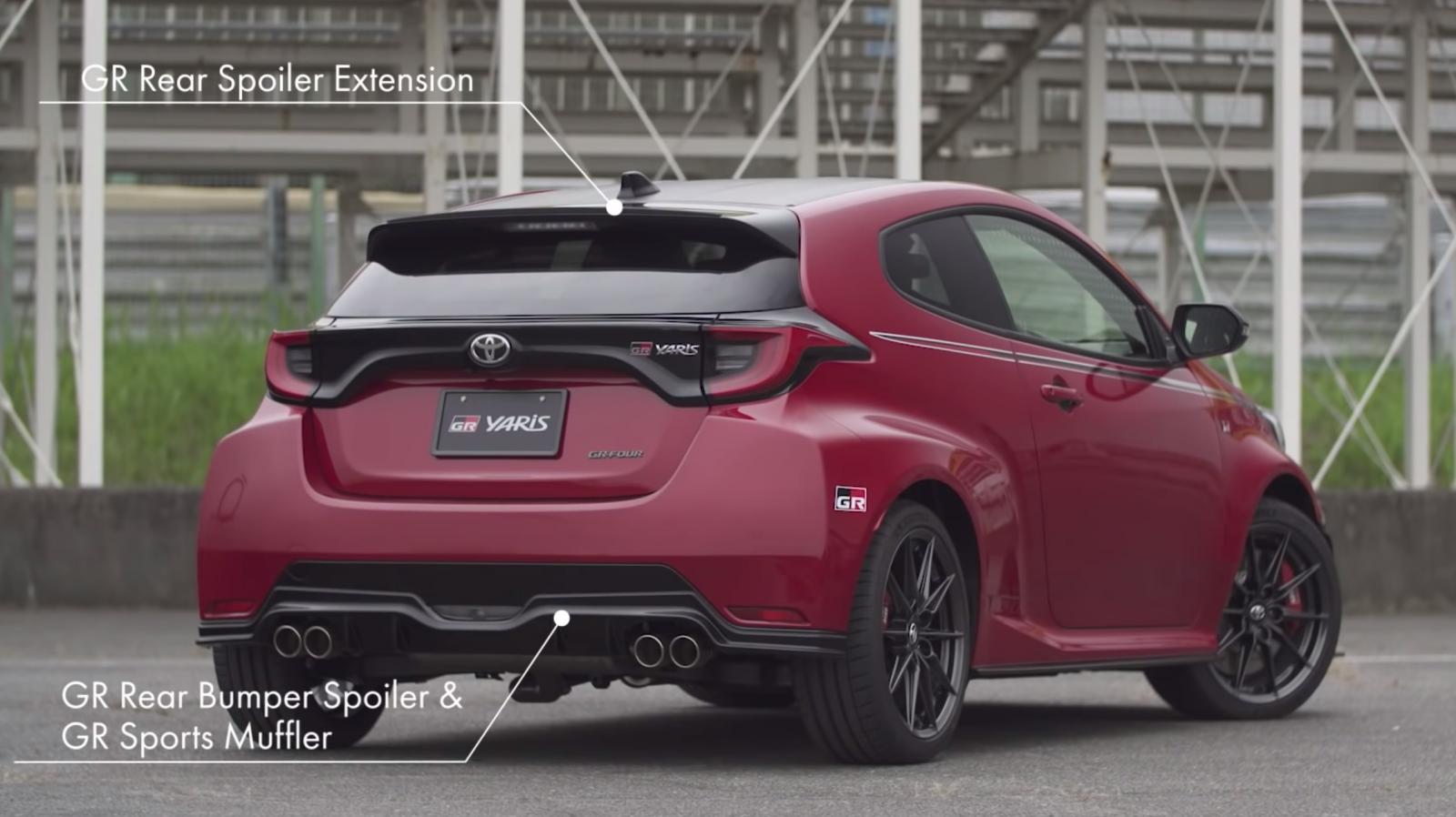
But what if buyers wanted to specify a host of go-faster accoutrements to make their GR Yaris stand out from the rest of the compact hot hatch brigade? Well, Toyota now also offers a host of optional GR Parts to beef up the kerb appeal of the WRC-inspired all-wheel-driven pocket rocket, including a front splitter, side-skirt extensions and a chunkier rear diffuser with a quad-exhaust setup.
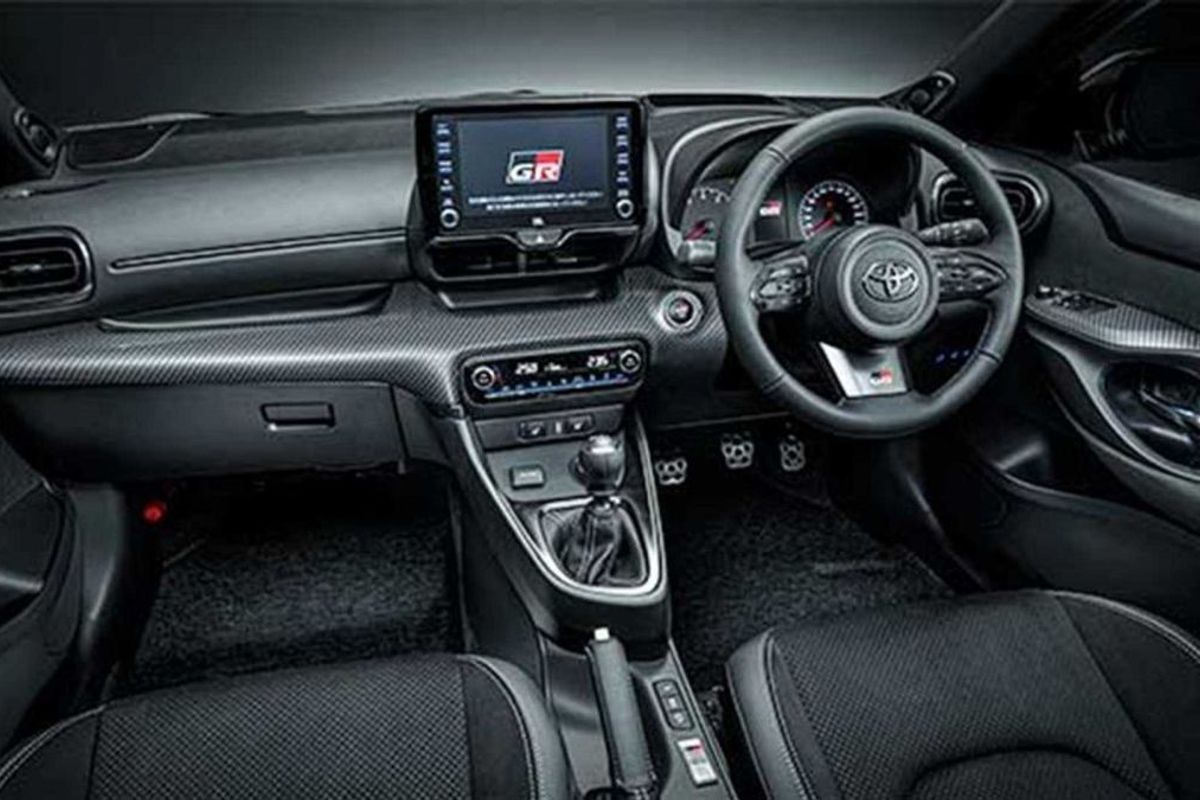
Although the body stripes, carbon-fibre number plate frame, GR wheel valve caps, branded load bay mat and carbon-fibre-look interior inserts won’t improve performance, Gazoo Racing has also made available a front-strut tower bar, which is likely to improve handling to some extent.
To recap, Toyota South Africa recently told us the GR Yaris was "still on the cards for SA for 2021", but expressed some concern over timing and the exchange rate, the latter not being particularly favourable. So, there you have it, GR Yaris is still very much on Toyota SA's radar, but its arrival will depend on the South African Rand's performance against foreign currency. Watch this space.
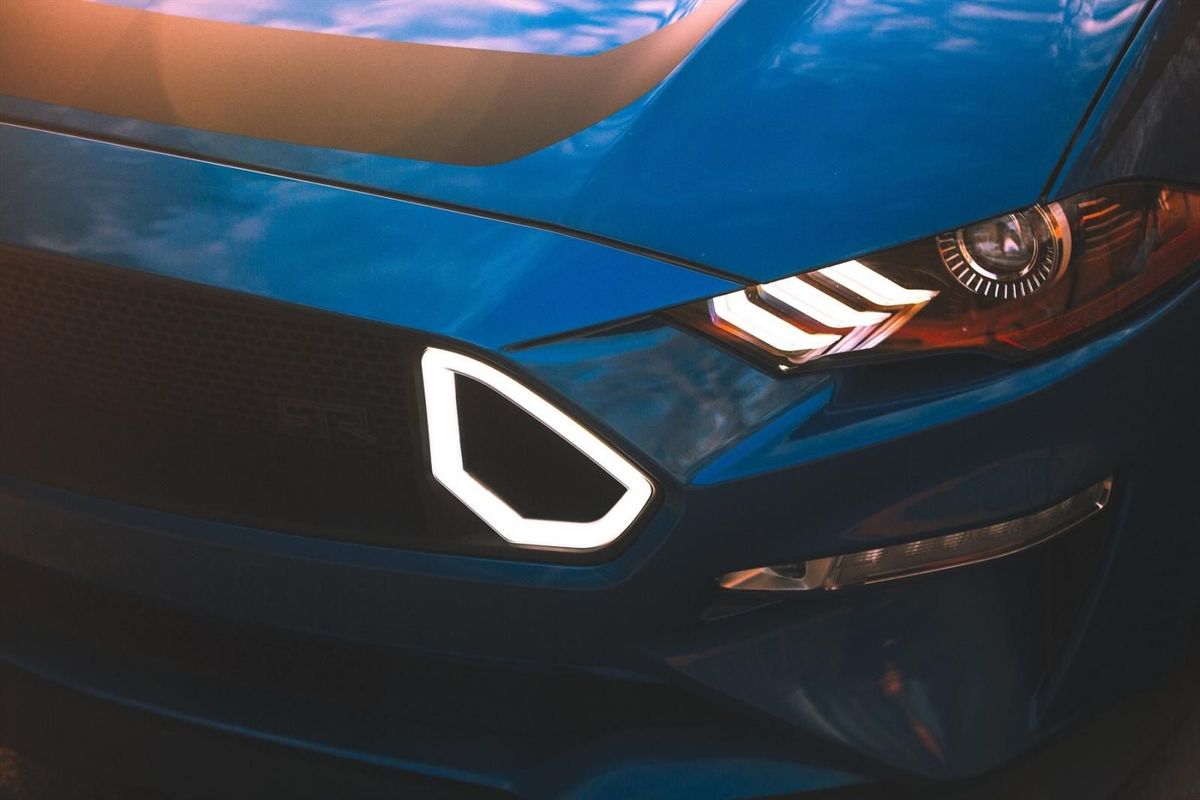
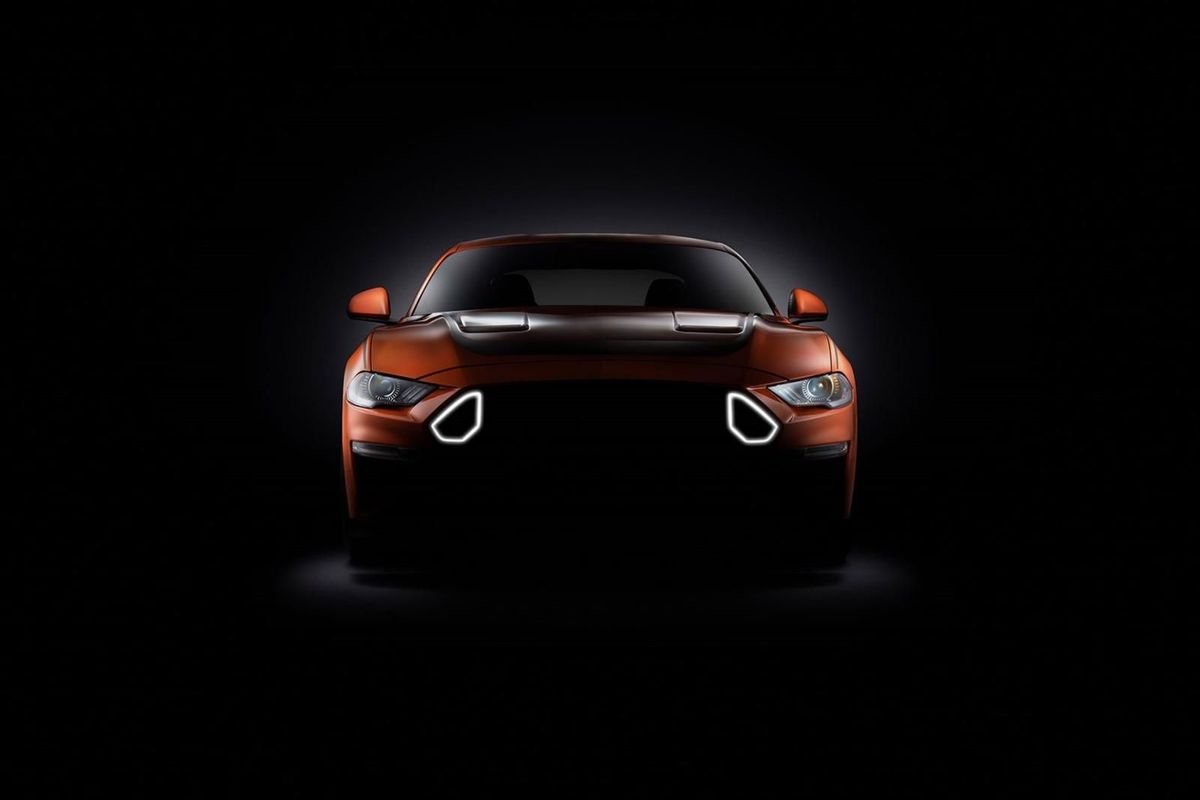
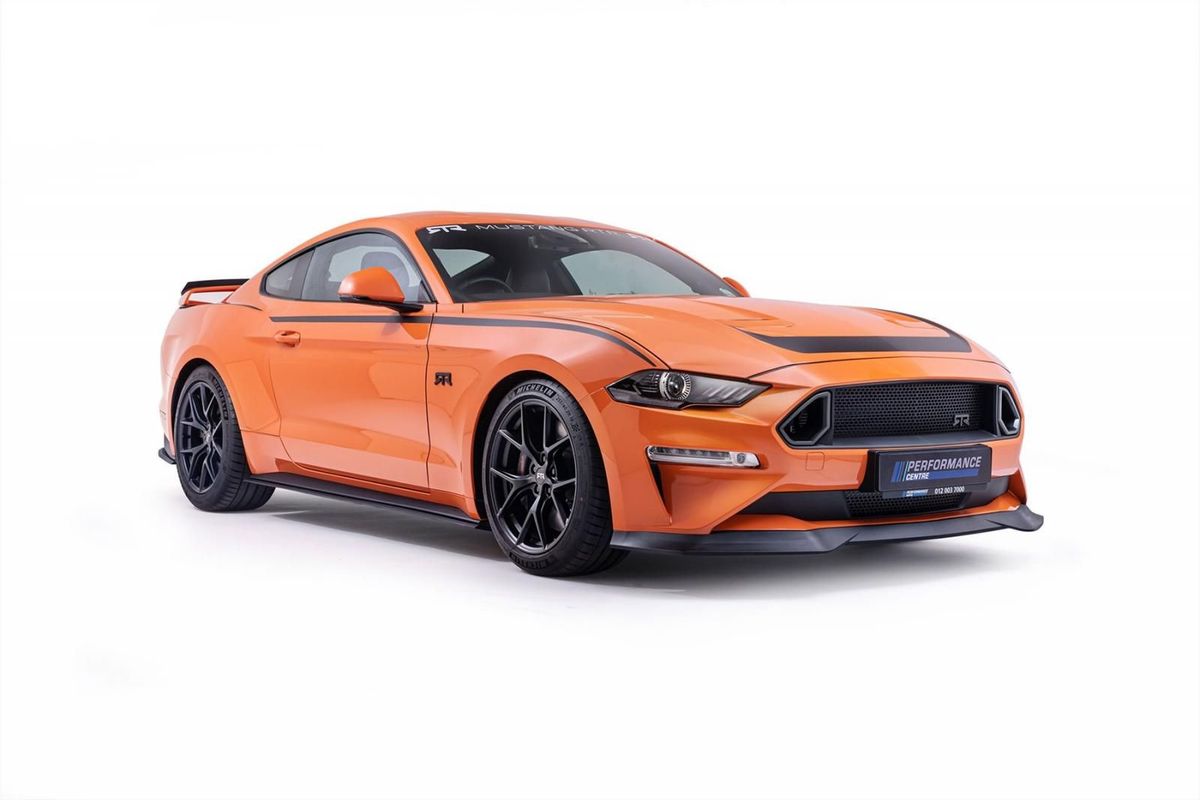
If you own a Ford Mustang and want to enhance that iconic muscle car, RTR Vehicles is confirmed for distribution in South Africa. Here's how much you can expect to pay for the hardcore Mustang conversion, plus what the tuning packages entail.
The Ford Mustang with its 5.0-litre V8 is a fun performance offering. Not only does it look the part, but there's some big American muscle under the hood. In its current iteration, there's 331 kW and 529 Nm – plenty of performance for most people. What if you wanted more though? If you've spent some time online, you will have lusted after the absolute beasts being offered Stateside and wondered if there was a chance you could get such in South Africa.
Performance Centre in Pretoria is a Ford-approved distributor of Ford Performance parts and has been given the rights to sell RTR Mustang conversion kits in SA. If you're not aware of RTR Vehicles, its a performance brand owned by muscle car guru Vaughn Gittin Jr. “I’m excited to announce that we have partnered with Performance Centre in South Africa, to be our exclusive RTR vehicles distributor in the country. This means that all of our turn-key Mustangs, as well as all of our aftermarket parts, can now be purchased through the crew at the Performance Centre,” says Gittin Jr.
The RTR Vehicles Series 1 Mustang was developed by Ford Performance and RTR and looks to be quite a weapon. Claimed to focus on 'precise street performance, intense agility on the track as well as a driver-centric experience', the RTR Vehicles Series 1 Mustang has been substantially upgraded.
The suspension has been thoroughly reworked, with Ford Performance adjustable sway bars and the installation of the Track Handling Pack, which lowers the car by around 25 mm. Of course there's a big power upgrade too, with a Ford Performance supercharger on the 5.0-litre V8, which pushes power up to 529 kW and 820 Nm.
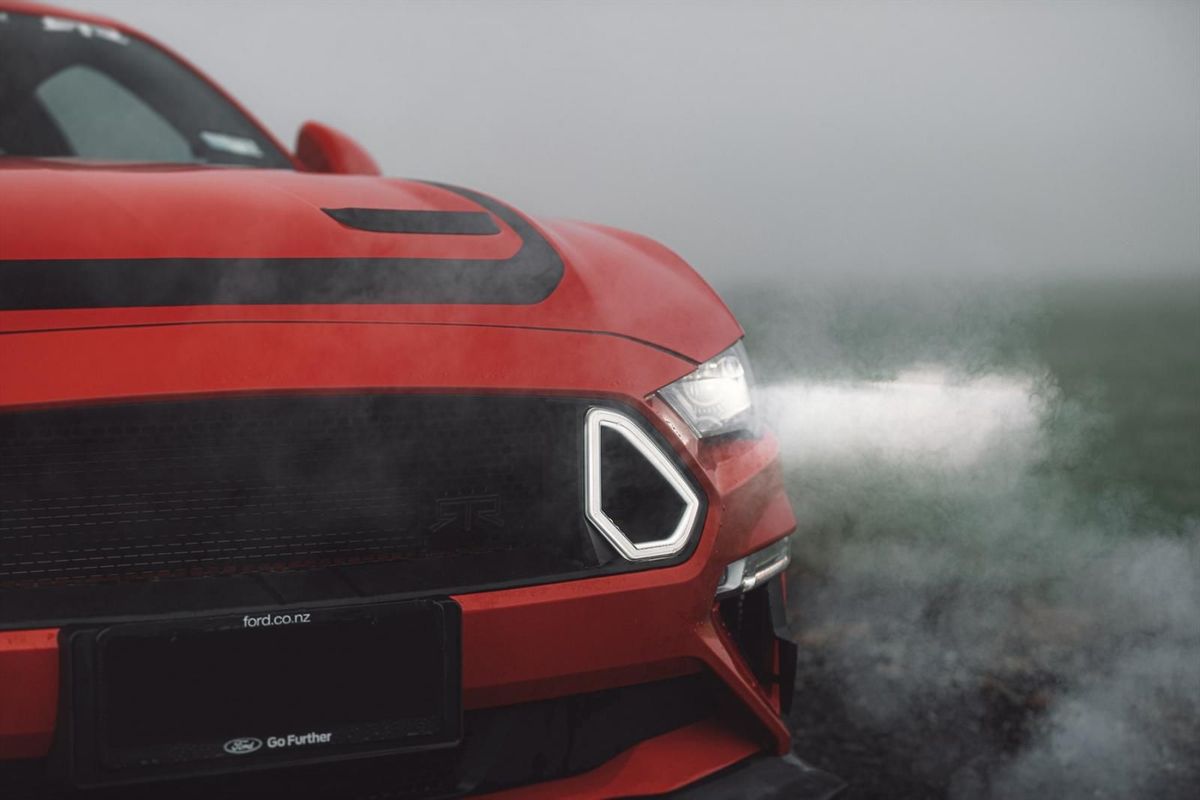
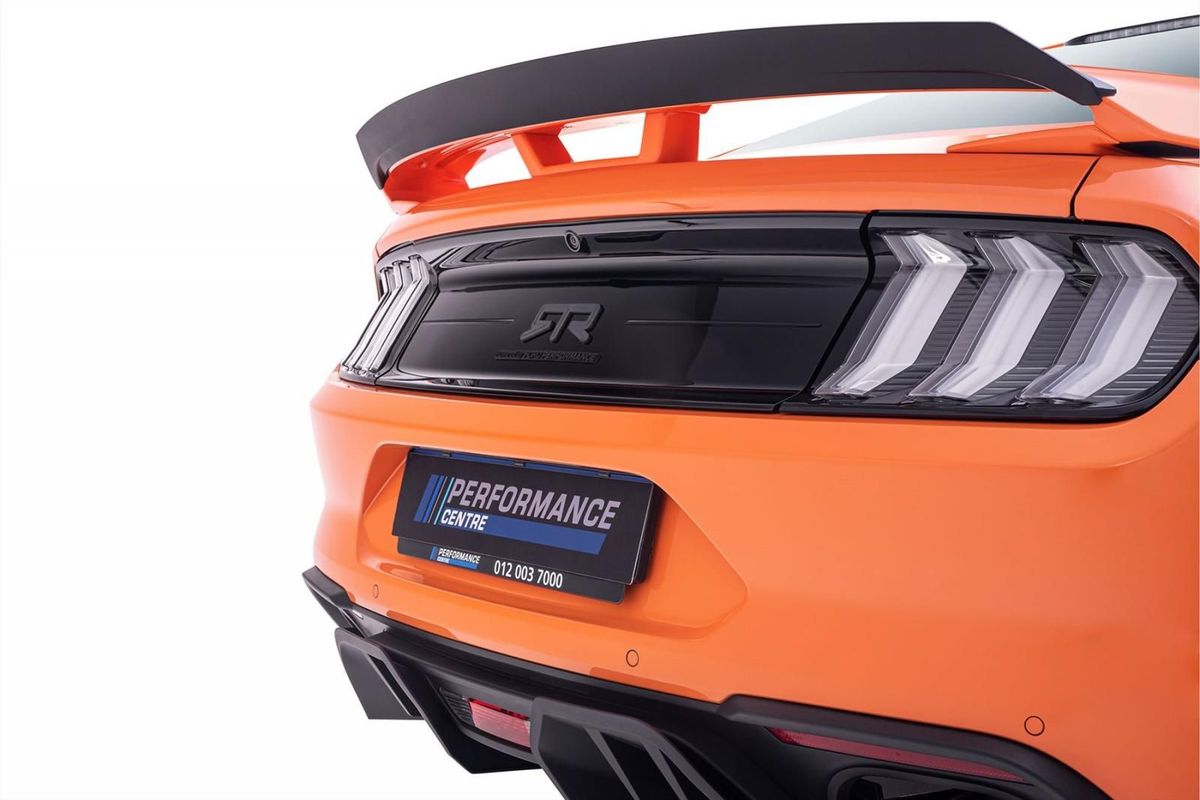
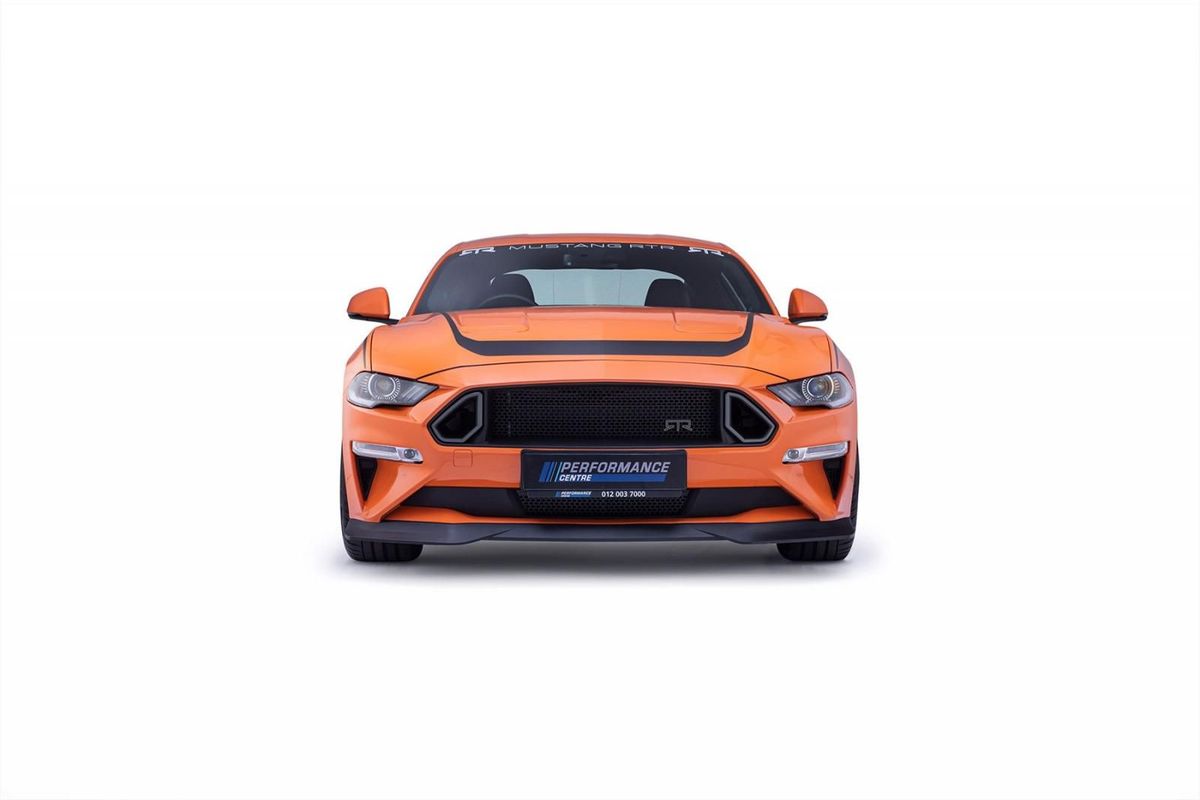
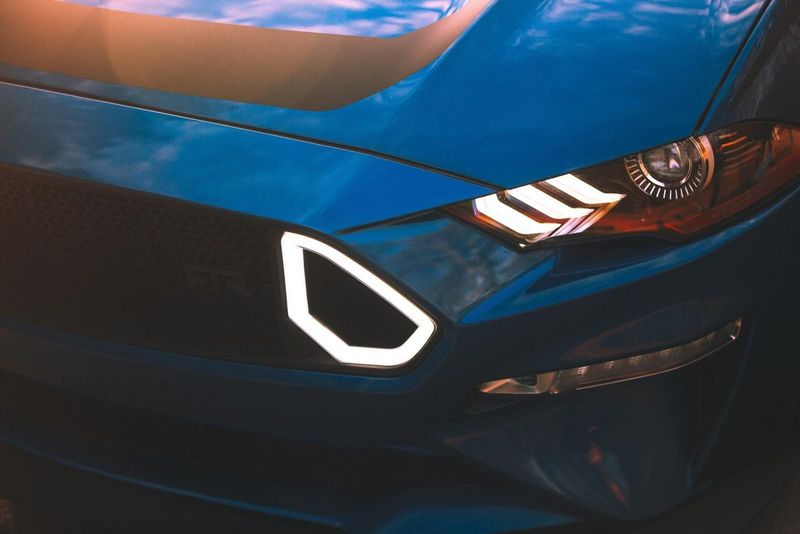
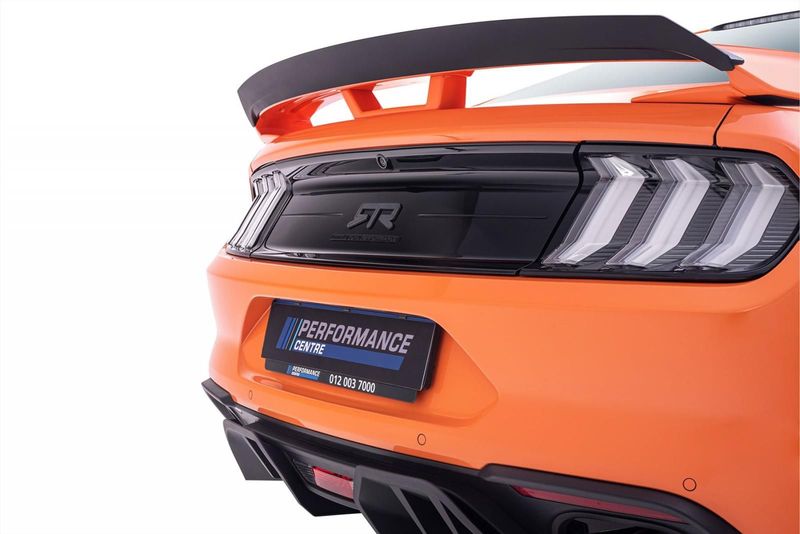
Visually, there are new wheels as well as custom lighting like the cool daytime running lights in the grille as well as some aerodynamic wings and other bodywork. If you own the 2.3-litre Mustang, fear not as you can get all the visual accessories too. However, the supercharger is exclusive to the 5.0-litre V8.
Ford Mustang RTR Upgrades
Performance
Ford Performance Track Handling Pack
Ford Performance Hood Struts
Ford Performance Aluminium Strut Tower Brace
Ford Performance 19"x 9.5" Front and 19”x10" Rear Wheels
Ford Performance 529kW Supercharger (5.0L only)
Ford Performance Intake Manifold with Software (5.0L only)
Exterior
RTR Windshield Banner
RTR Upper and Lower Grille with LED's
RTR Front Splitter
RTR Rocker Splitters
Rear Quarter Splitters
RTR Gurney Flap
RTR Rear Diffuser
RTR Powered by Ford Performance Deck Lid Trim Panel with Badges
RTR Fender Badges
RTR Body Graphics
RTR Logo Centre Caps Black PVD Lug Nuts
RTR Puddle Lamps
Interior
Serialised Illuminated Sill Plates
Serialised Dash Plaque Radiator Cover with Serialized Badge
RTR Embroidered Floor Mats
Certificate of Authenticity
Ford Mustang RTR Price in South Africa (September 2020)
The below conversion costs include installation and VAT.
2.3 Mustang R280 000
5.0 Mustang GT R280 000
5.0 Mustang GT plus Ford Performance Supercharger R565 000
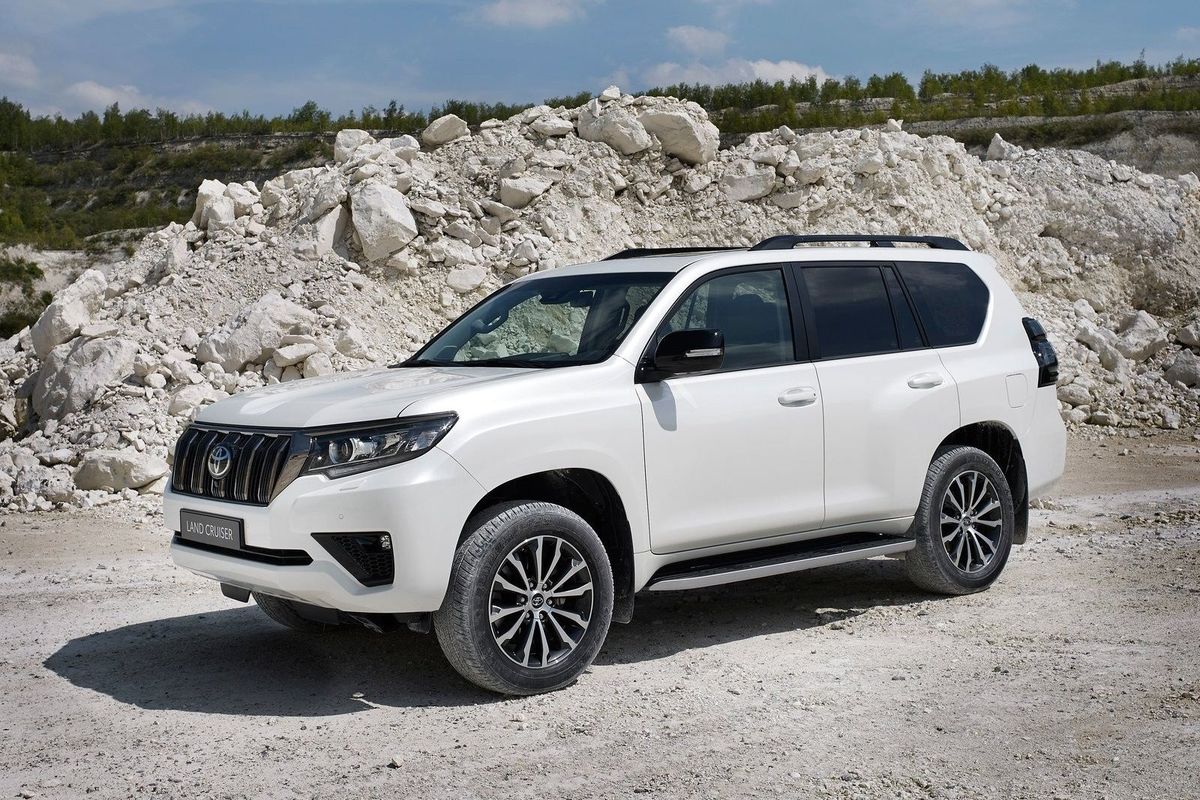
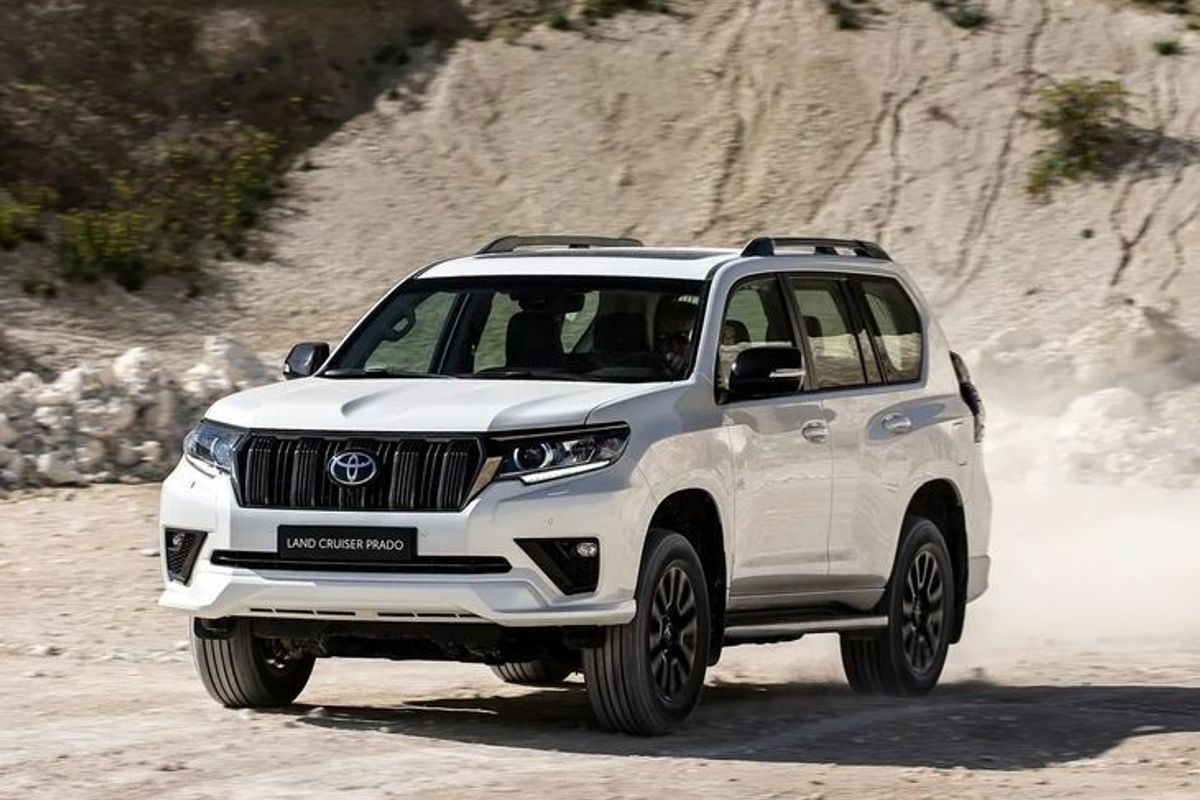
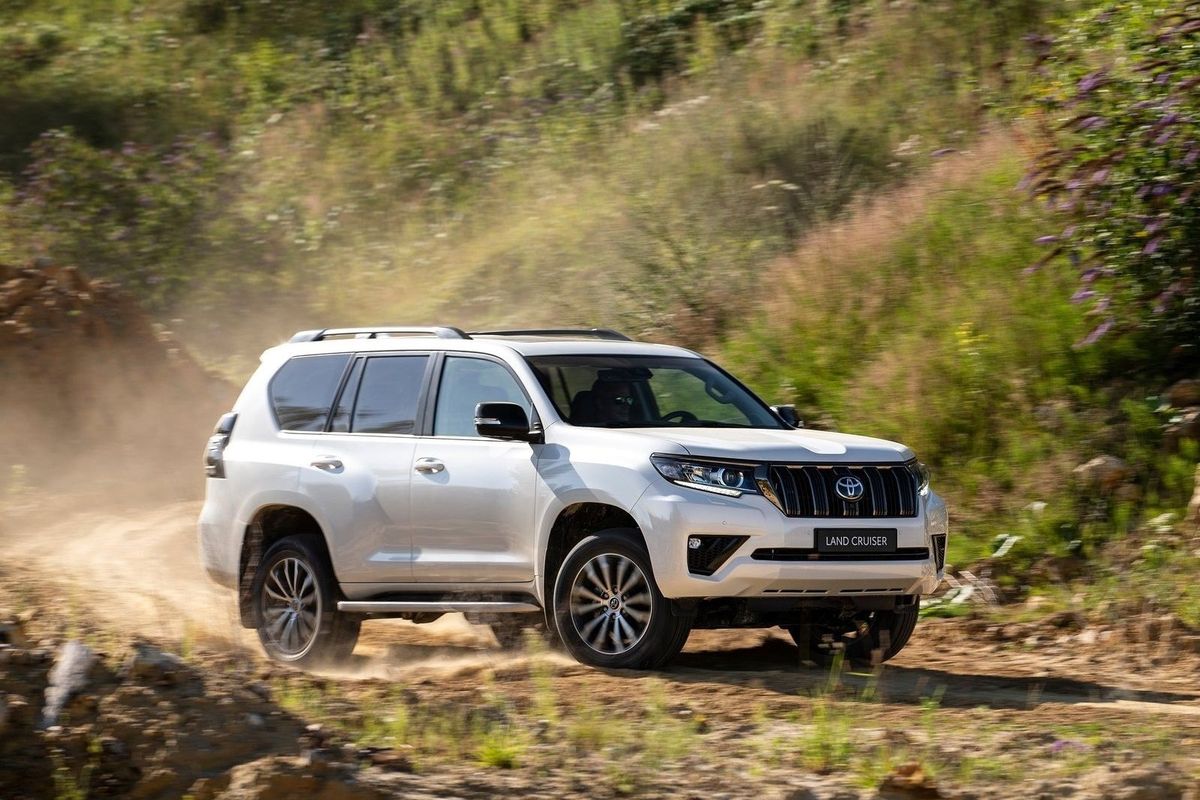
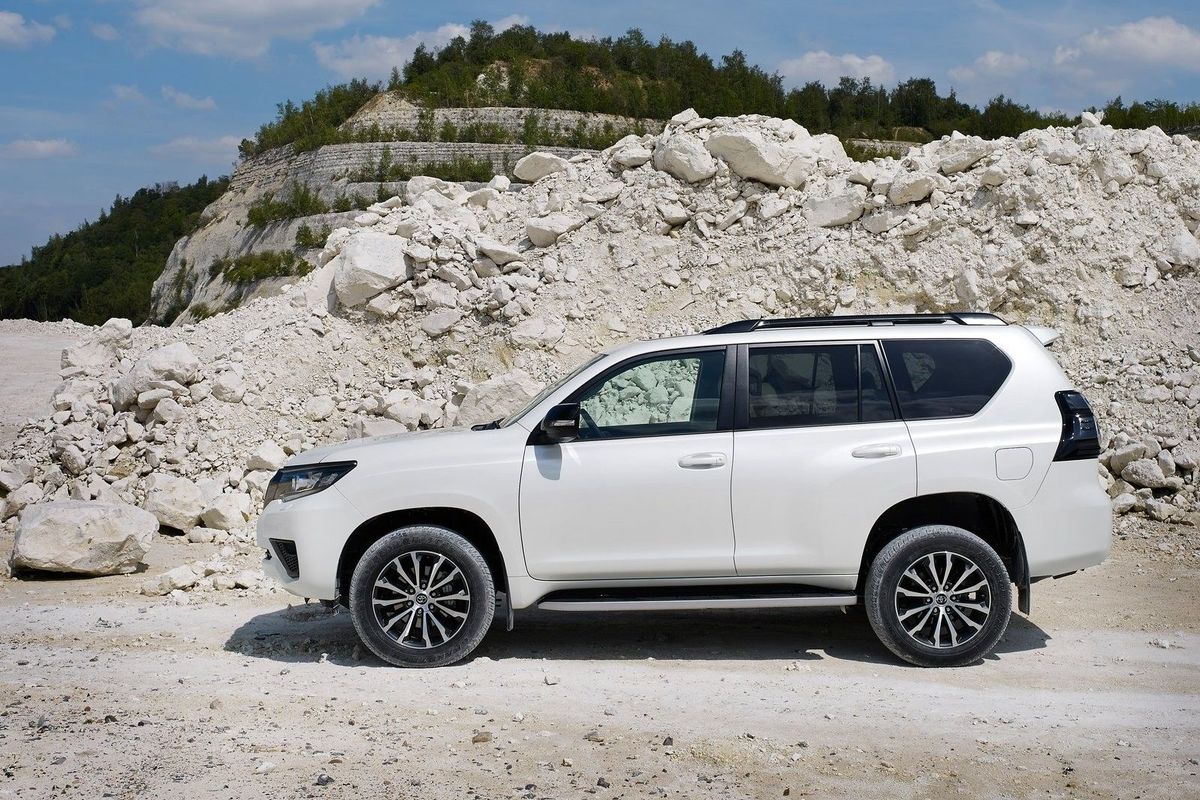
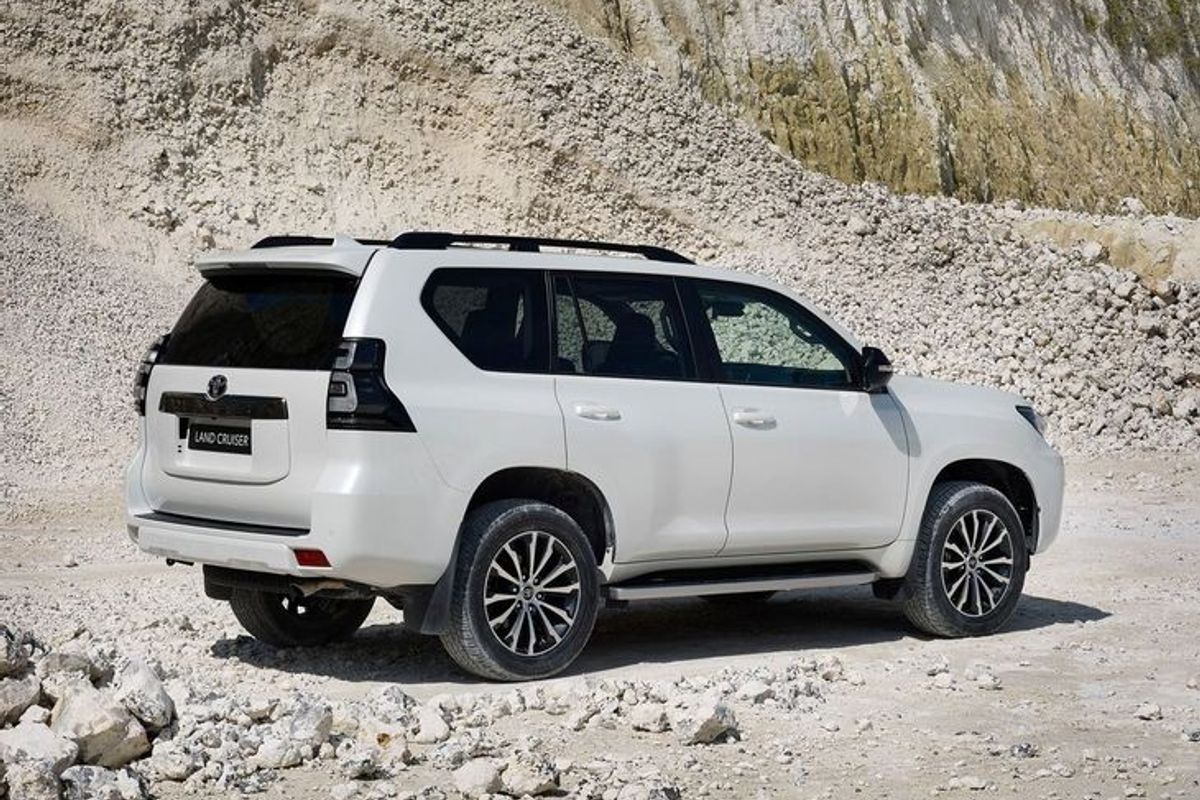
Toyota has given its iconic Land Cruiser a small update. Here is a list of the changes.
If there's a list of iconic vehicles, the Toyota Land Cruiser is surely right up. It has been around for almost 70 years, sold in more than 190 countries and given its success, it's vital the Japanese brand doesn't mess with what's clearly a winning formula.
For 2020, Toyota has upped the power of the Land Cruiser. The 2.8-litre 4-cylinder turbodiesel motor now produces 147 kW and 500 Nm. Previously, it made 130 kW and 450 Nm. The additional shove is most welcome, as its acceleration figure to 100 kph has dropped down to 9.9 seconds – a 3-second improvement. Toyota also claims a fuel consumption improvement with the 2021 Land Cruiser said to consume 7.4 L/100 km.
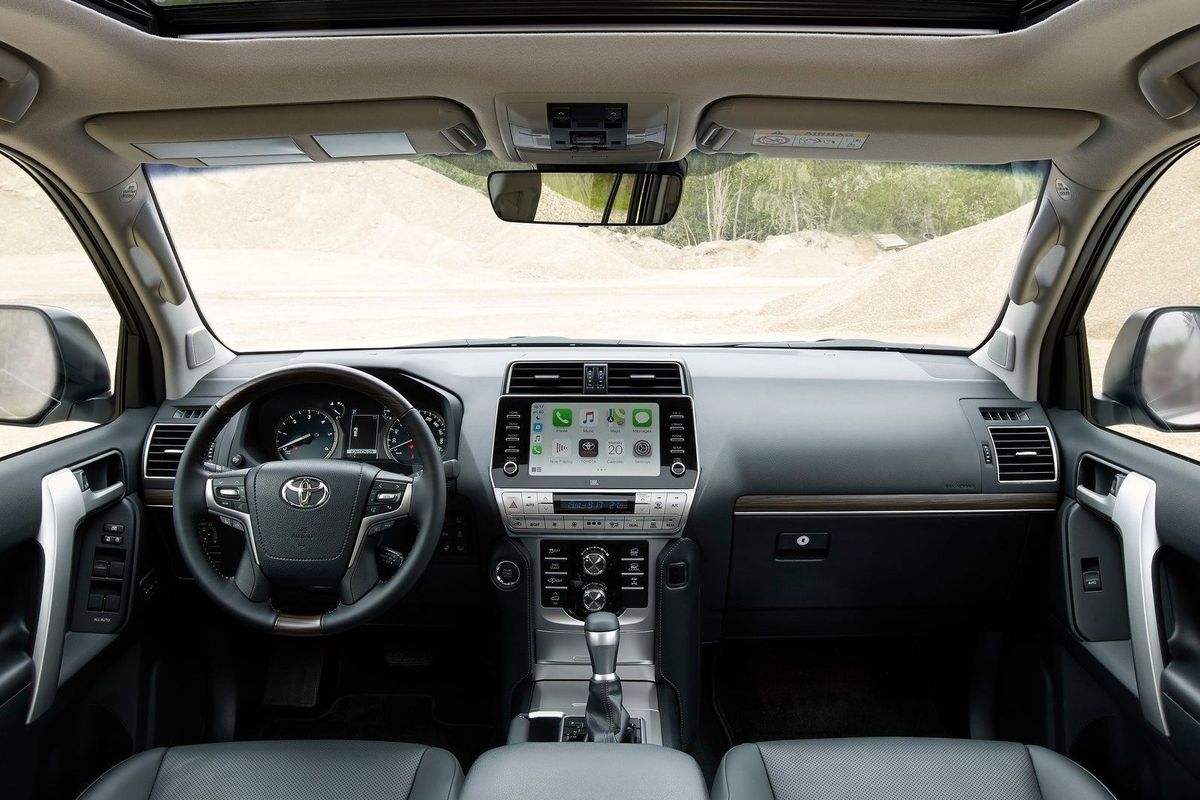
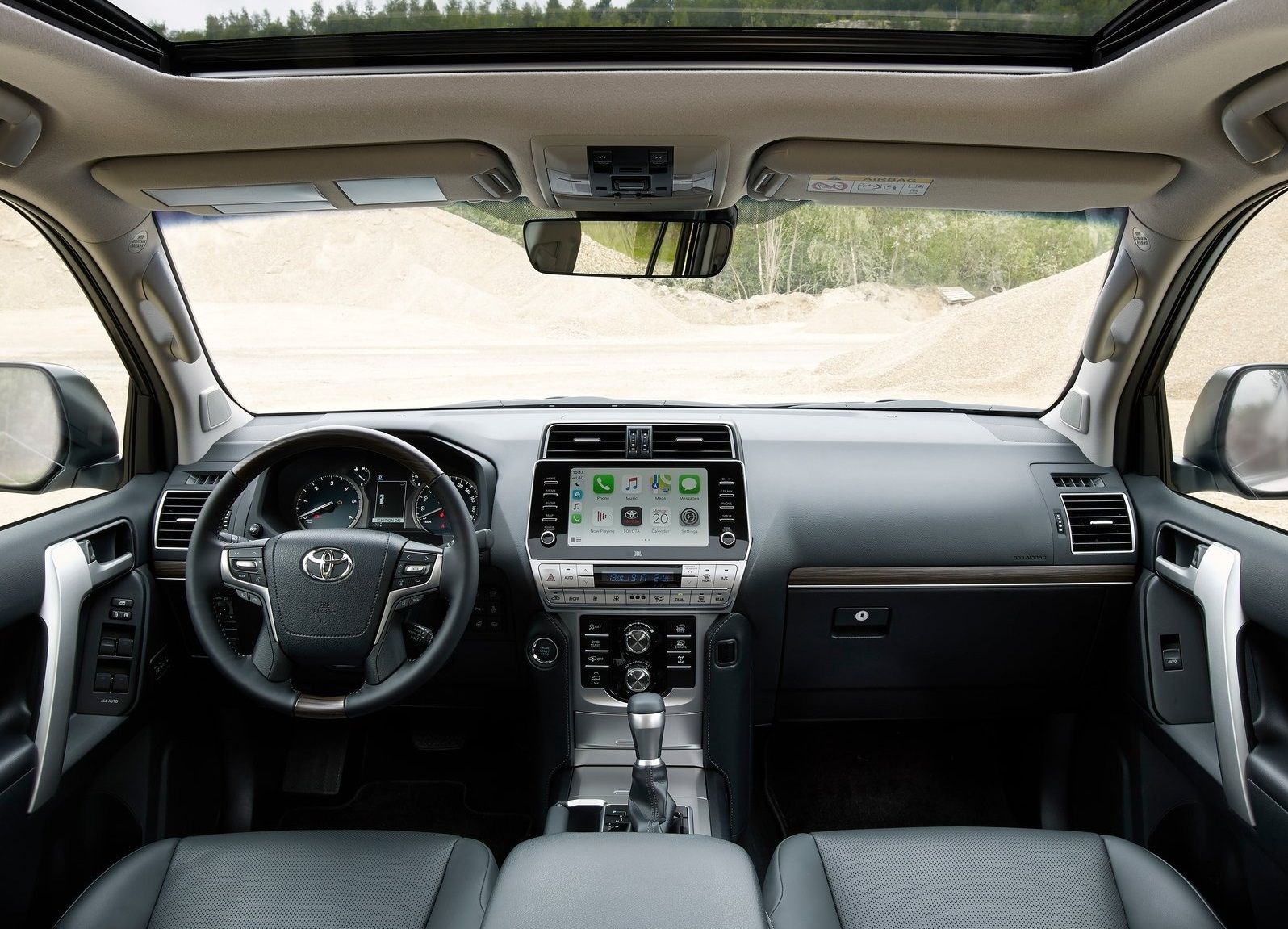
Inside, the 2021 Toyota Land Cruiser receives an updated infotainment system that features new software, a newer touchscreen and introduces Apple CarPlay and Android Auto into the mix. In terms of safety, Toyota offers the 2nd generation Toyota Safety Sense which features things like Pre-Collision System (PCS) with both nighttime pedestrian and daytime cyclist detection and Intelligent Adaptive Cruise Control.
Toyota is offering a Black Pack styling package to the portfolio. The optional package includes sportier front and rear bumpers, a dark chrome front grille, dark alloy wheels and clear tail lamps. Plus, you get a badge.
These updates form part of a Toyota Europe model strategy. As soon as we hear from Toyota South Africa regarding the updated Land Cruiser, we'll update this piece.
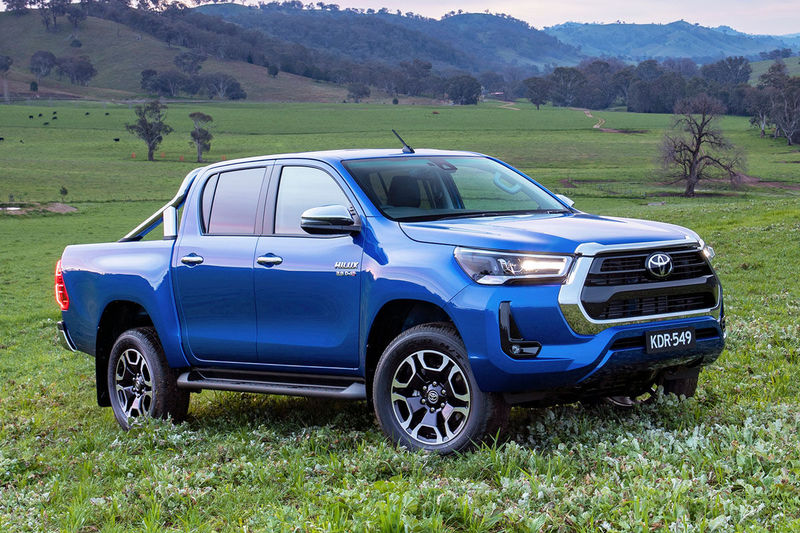
There’s a lot in store for the SA bakkie market – including an upcoming update to the market-leading Toyota Hilux. What should we expect from the upgrades? Our Australian correspondent drove a refreshed Hilux on-road (and off it) to whet our appetites. Has Toyota done enough to keep its bakkie at the top?
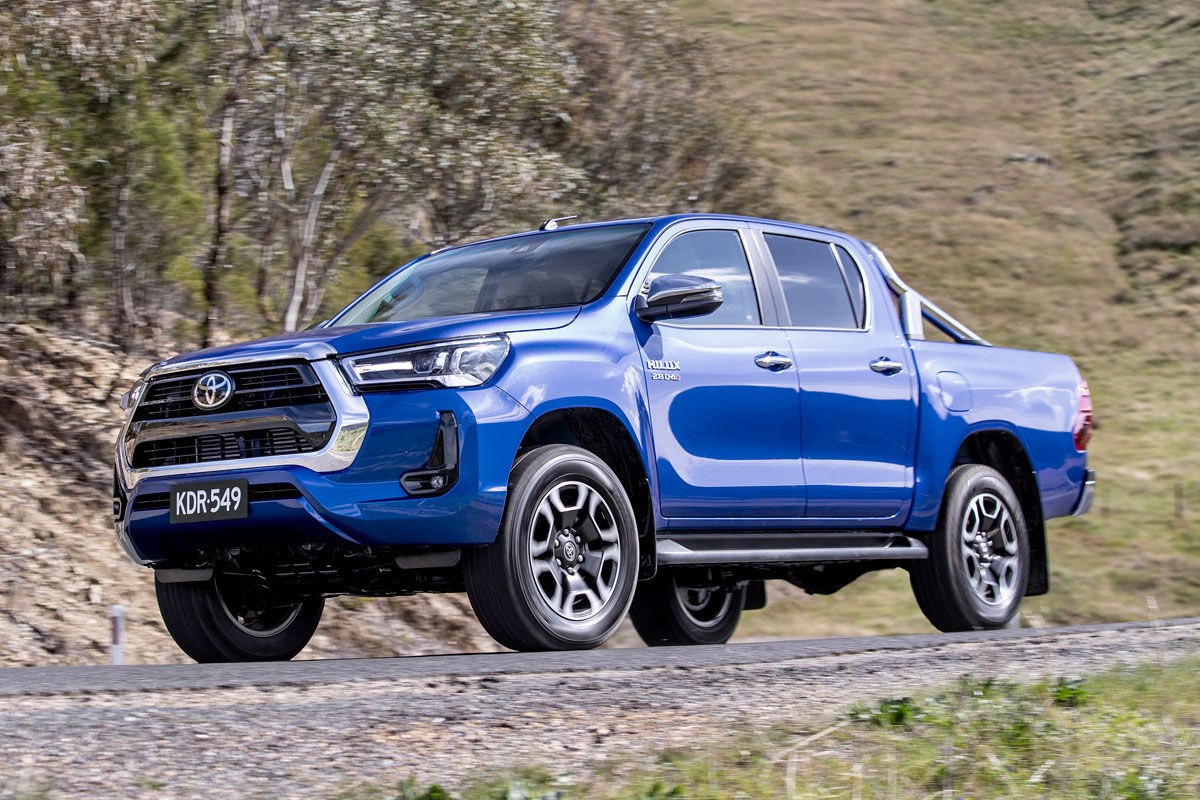
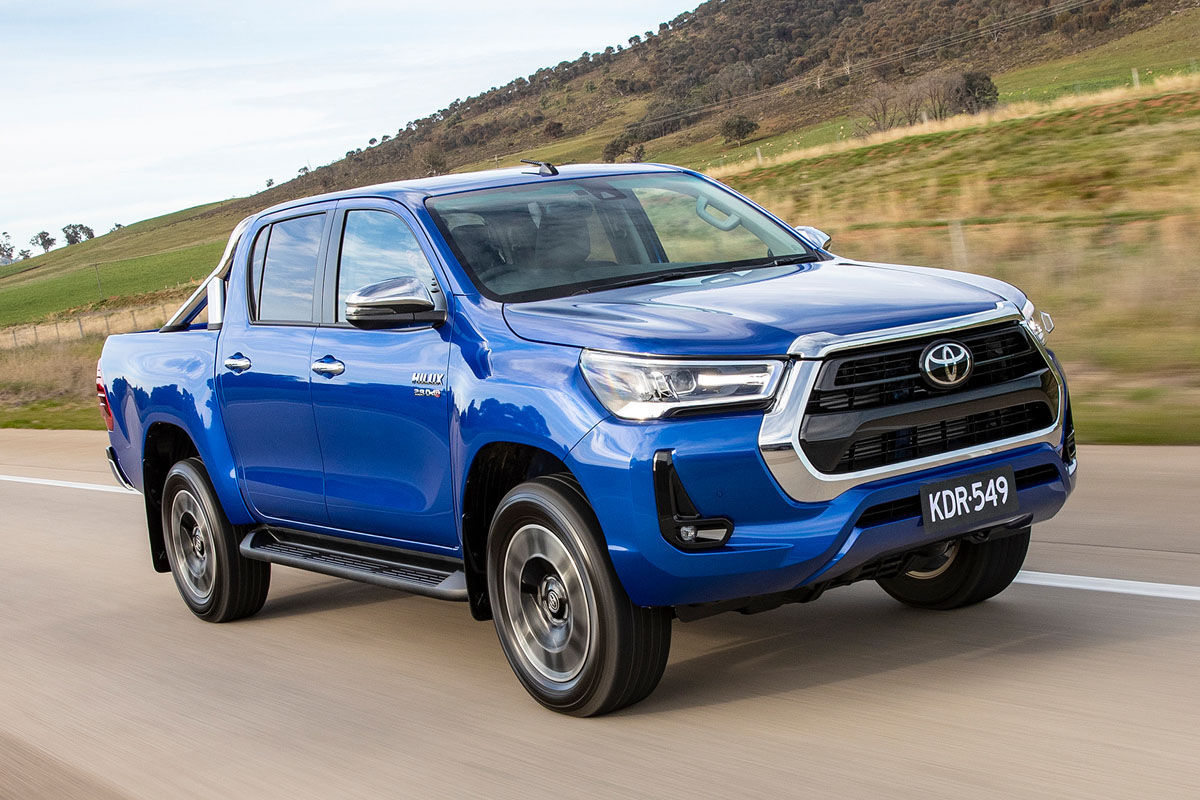
The Hilux is South Africa’s top-selling bakkie and a legend in its own right. Any time there’s an update in store for the model, consumers eagerly rub their hands together and start looking for excuses to hastily upgrade their bakkies. While the new version looks slightly different, it’s what’s inside – plus under the bonnet and sheet metal – that make this one of the most anticipated changes to the Hilux.
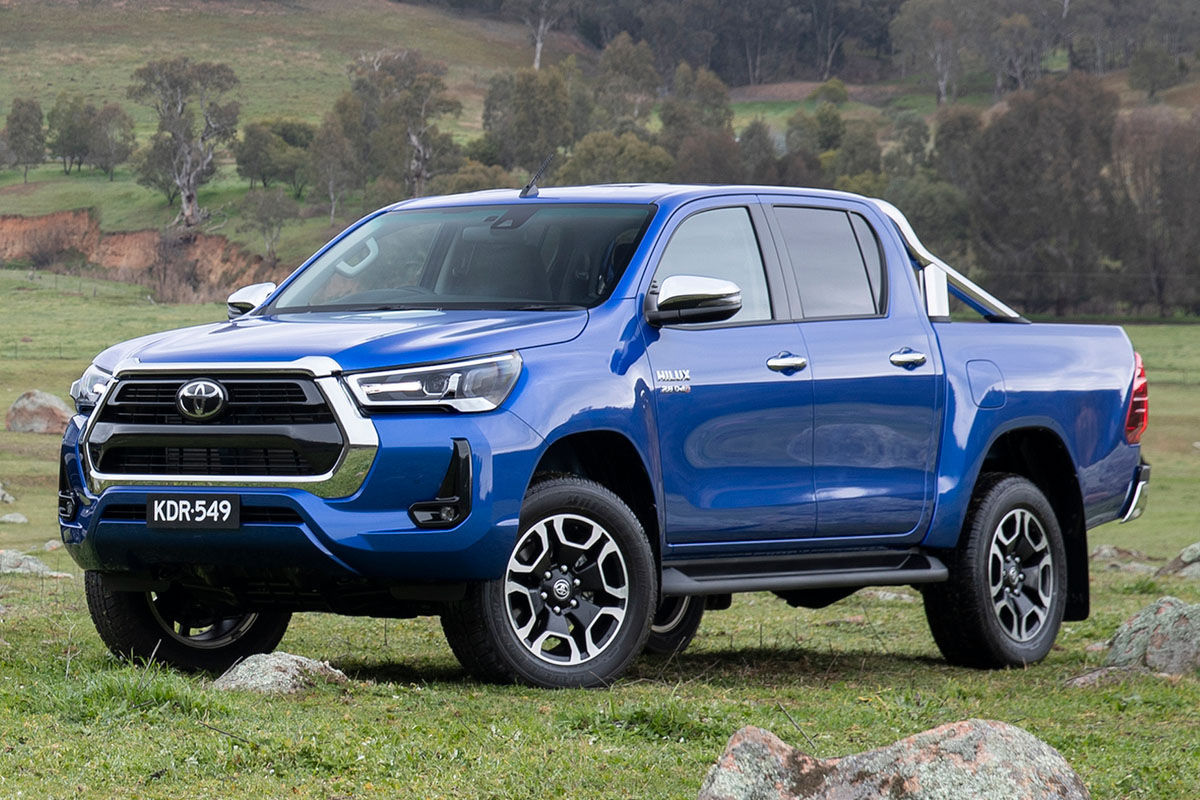
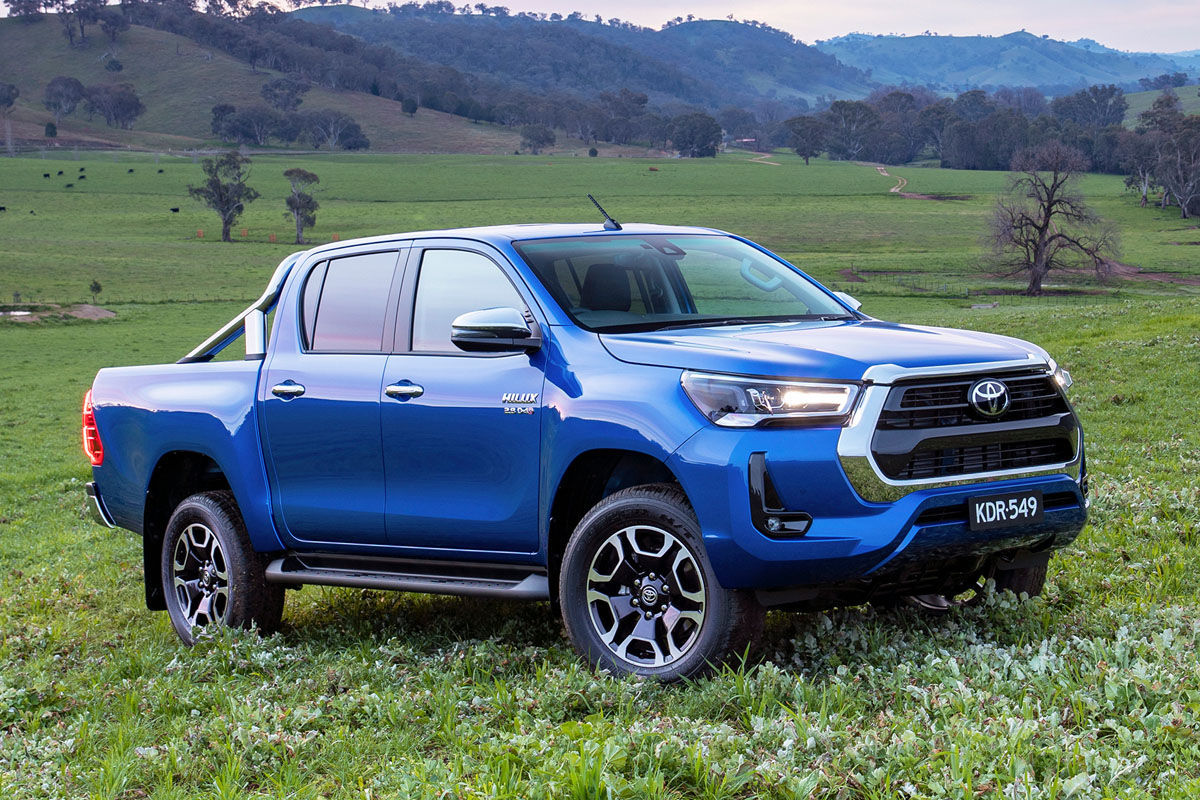
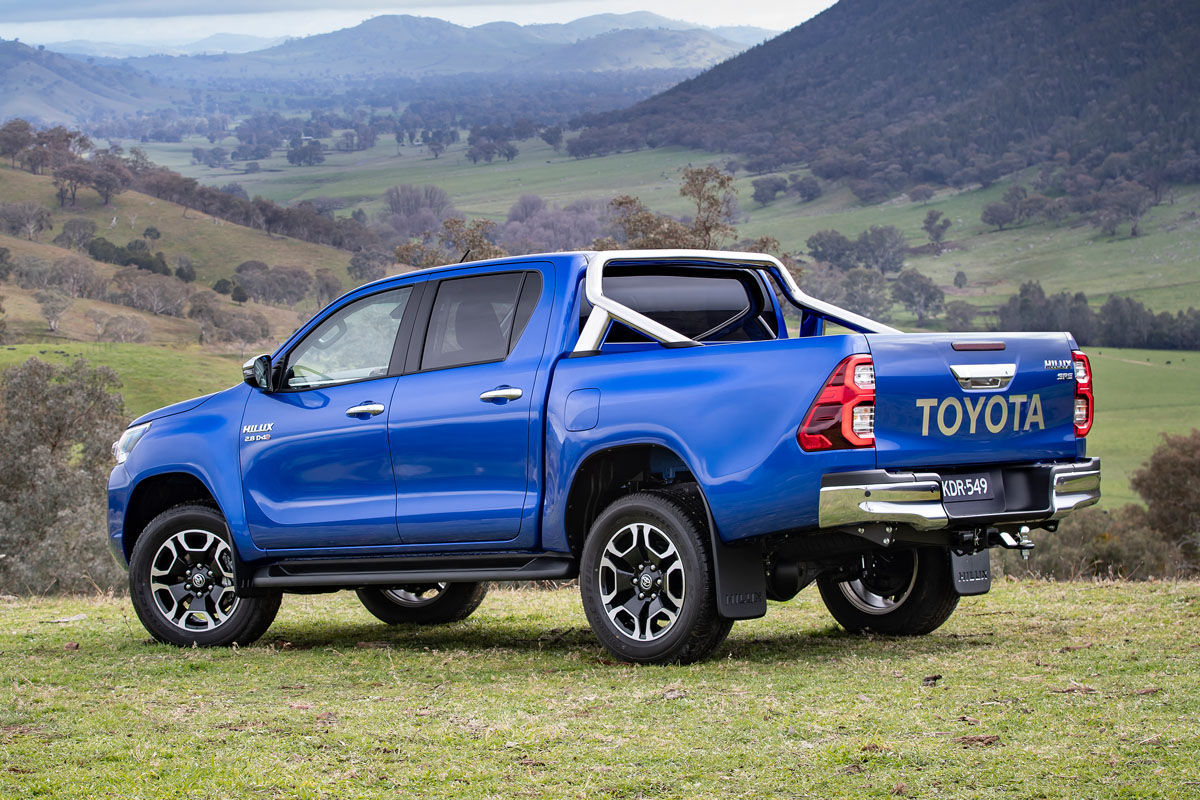
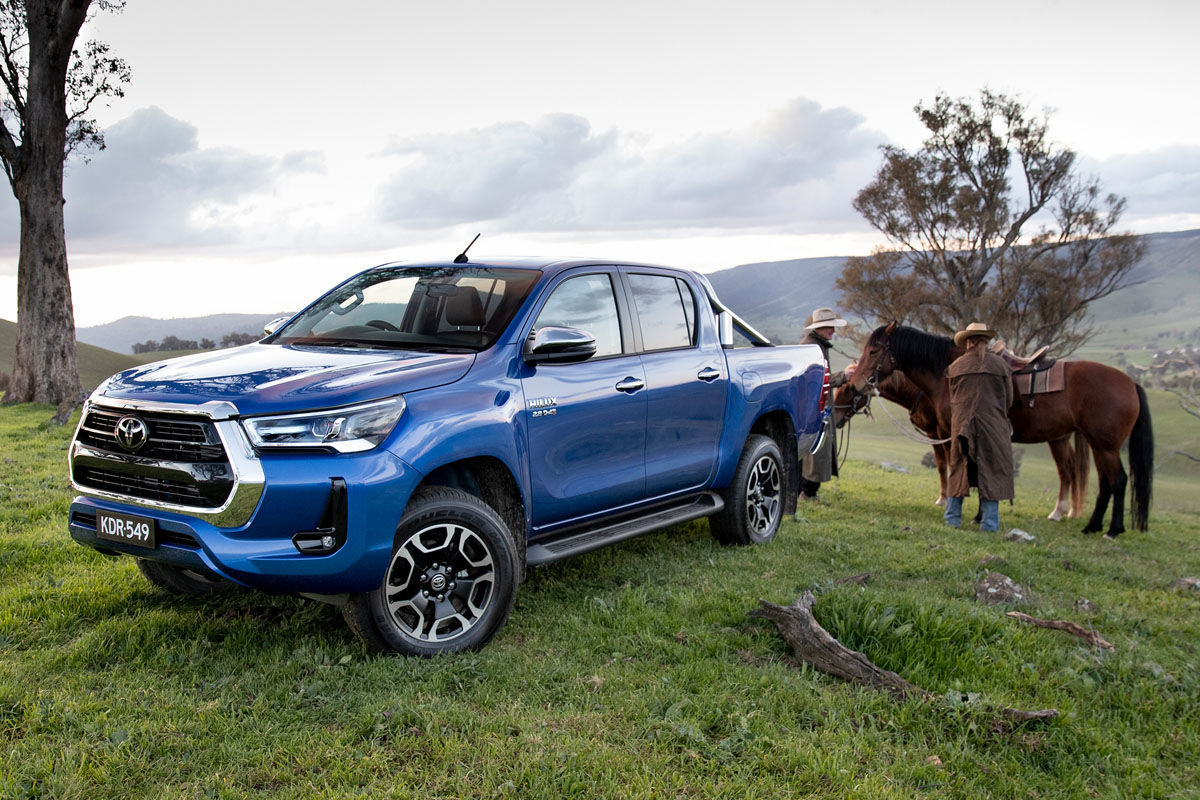
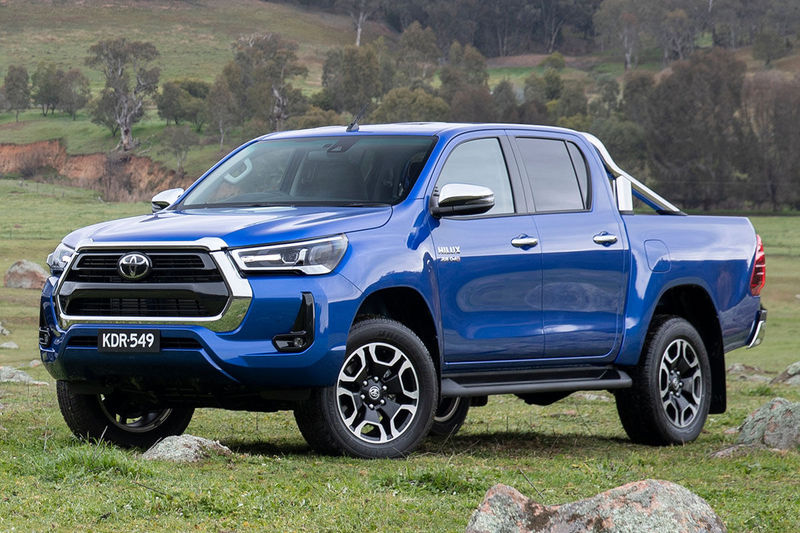
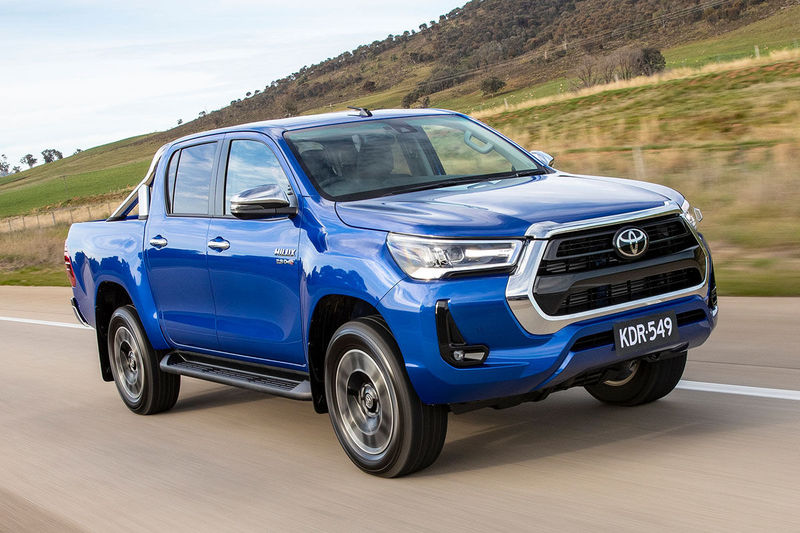
The Australian-market SR5 specification incorporates the addition of running boards and lashings of chrome-look brightwork.
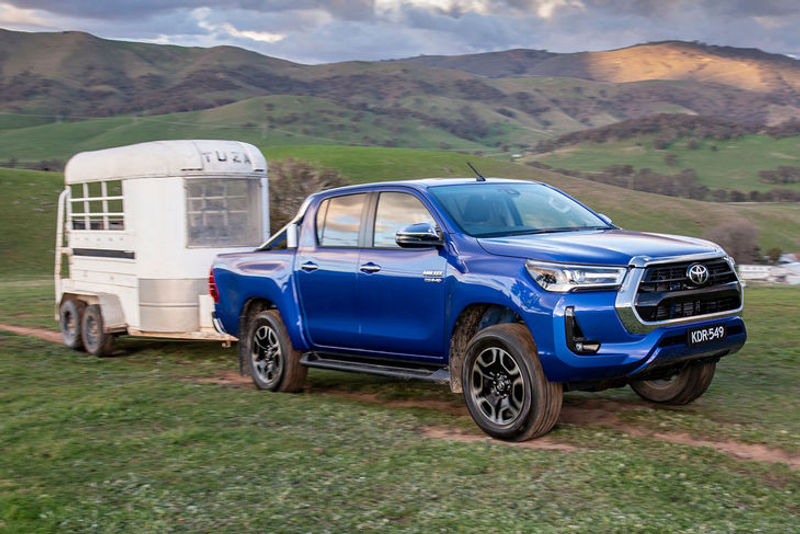
The model pictured in this article – the Thailand-made Hilux in SR5 specification (comparable or slightly above the SRX trim level in Mzansi) – recently underwent a revision and is now on sale in Australia, which suggests an update to the locally-made bakkie is in the pipeline. Although the local Hilux range received a few revisions as recently as 2019 (when the Legend 50 was launched), we still anticipate that some of the Thai model’s revisions will filter through to our market soon, which is why we’ve asked our mate Matt Campbell to put an example of a revised Hilux through its paces.
Toyota SA has indicated that a number of upgrades are scheduled to be made to the Prospecton-built Hilux in due course, although it’s not yet confirmed when exactly it will happen (possibly around the final quarter of 2020) or how many of the overseas model's upgrades will be carried over. It’s fair to say, however, that with the all-new Isuzu KB and Mazda BT-50 coming soon (they’re among half a dozen new or updated bakkies expected to reach local shores in 2021), plus final updates expected for the ageing Ford Ranger, Toyota will be keen to keep its charge at the front of the field.
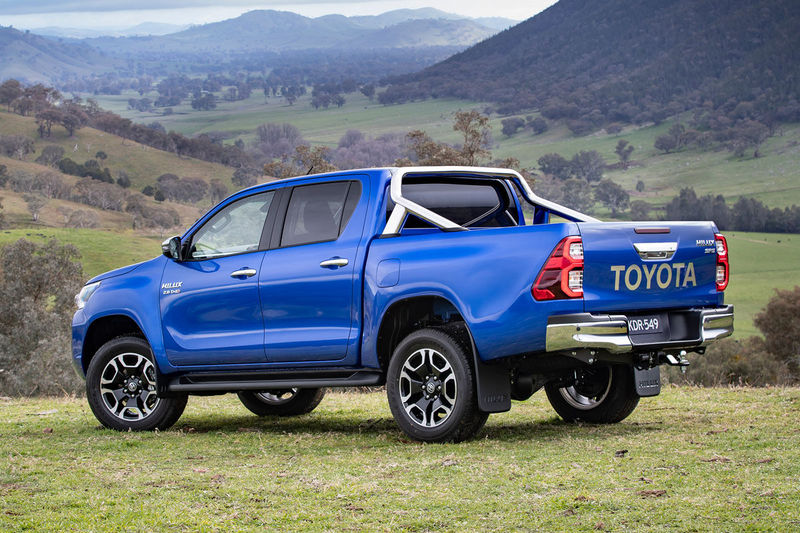
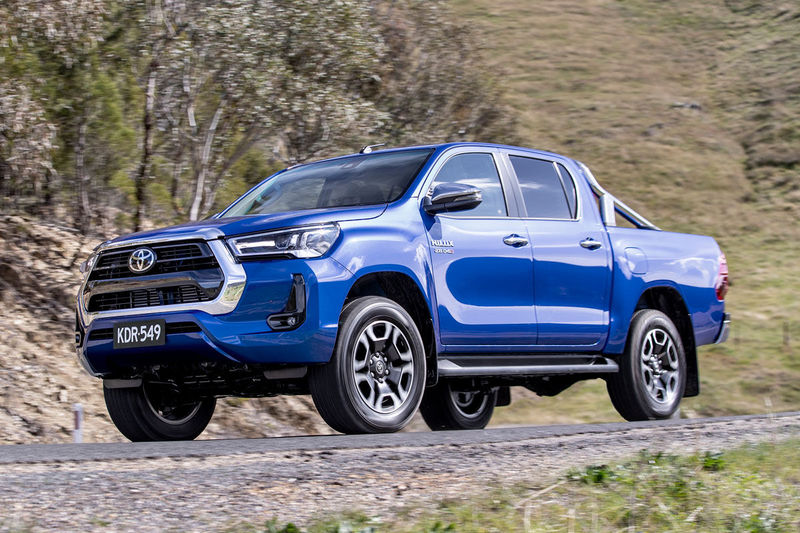
Will the shapelier rear tail-light clusters make it to the South African version of the Hilux? Only time will tell.
What has changed?
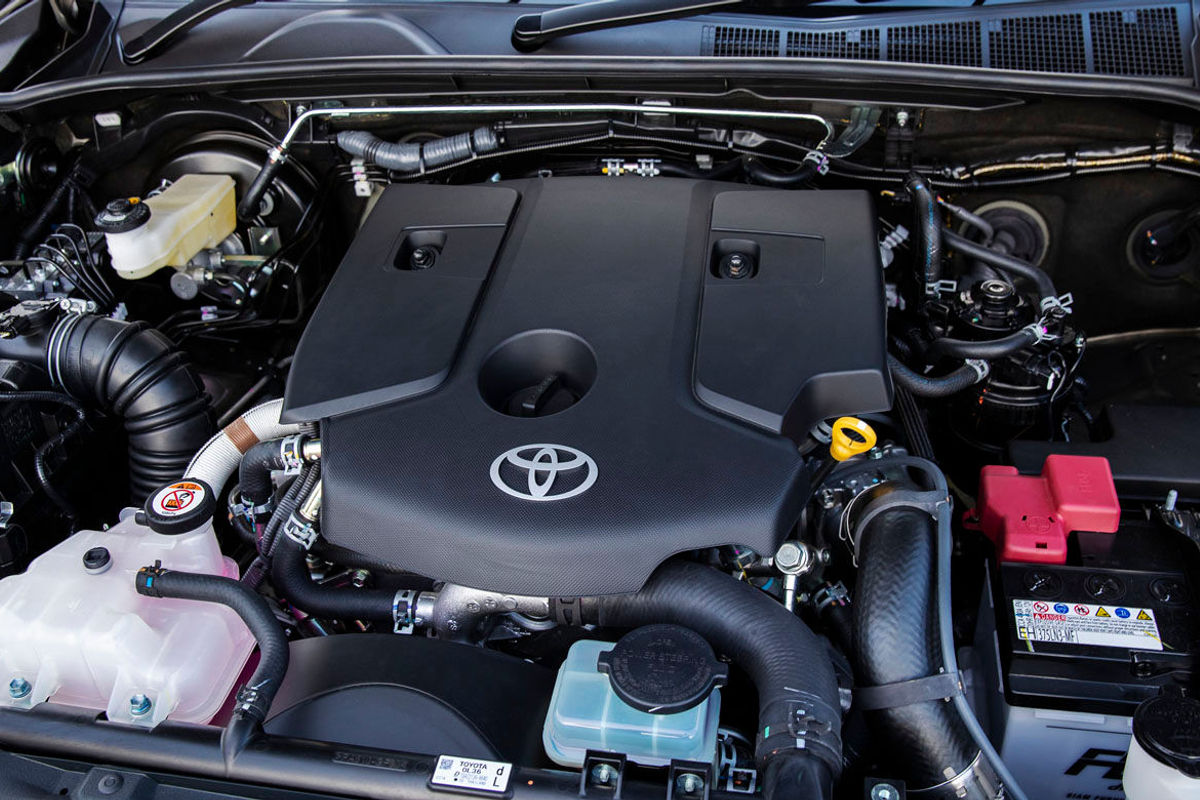
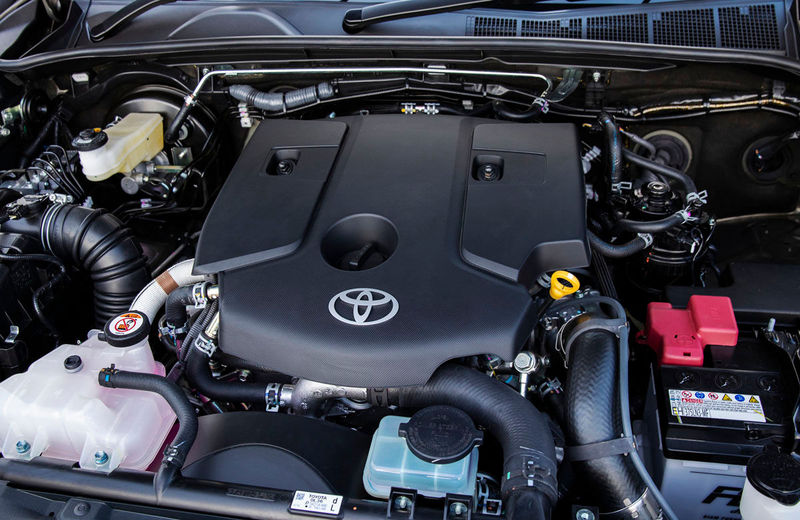
Let’s start with the engine. The 2.8-litre 4-cylinder turbodiesel (2.8GD-6) engine is slightly more powerful, as well as torquier, with outputs of 150 kW and 500 Nm – increases of 20 kW and 50 Nm. For buyers who want plenty of overtaking grunt, or at least more effortless cruising ability from their top-spec bakkie, that’s a nice improvement. Read How Toyota got Hilux to 150 kW for more details.
While both manual and automatic versions of the 2.8GD-6 have a peak power output of 150 kW, the torque gain only applies to the self-shifting derivatives, of which the 6-speed transmission's management software's been tweaked. There’s still selectable four-wheel drive, and the top-grade versions retain a rear differential lock.
The updated powerplant features a larger, variable nozzle turbocharger and a redesigned exhaust manifold.
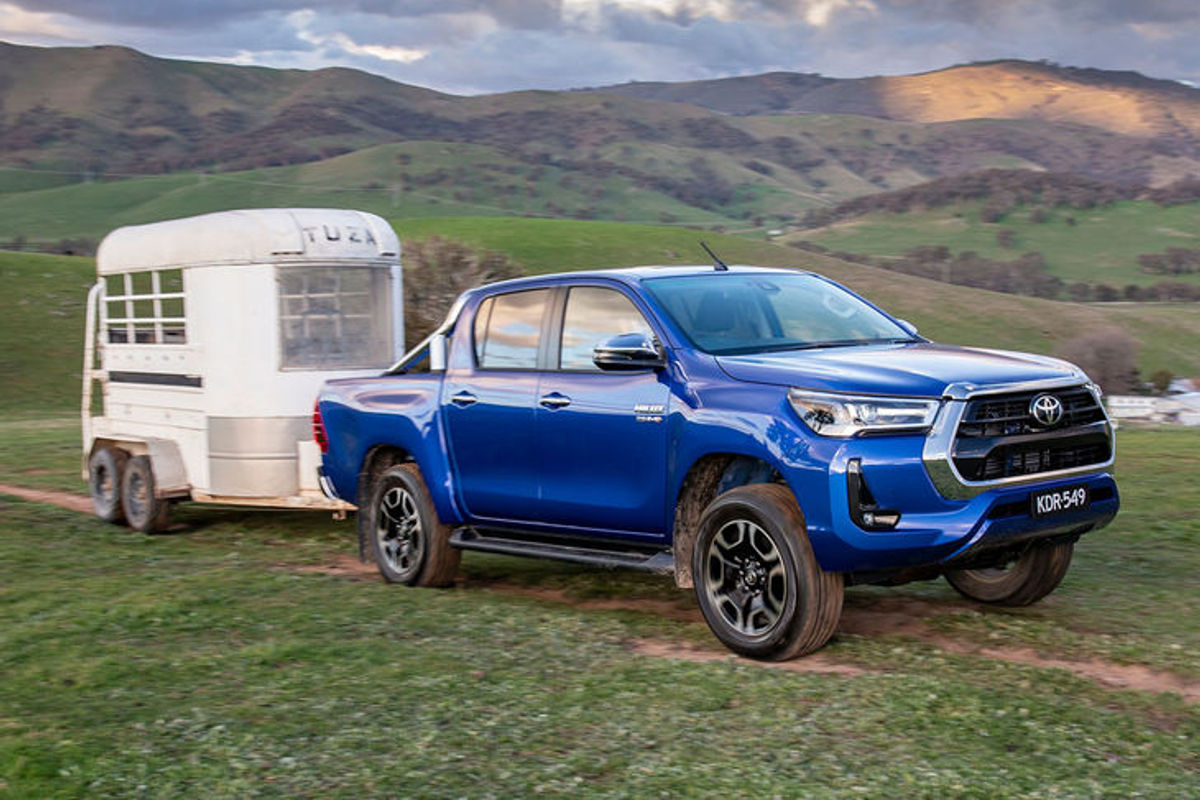
Furthermore, the 2.8GD-6's towing capacity in markets like Australia is now pegged at 750 kilograms for an un-braked trailer, while 4×4 automatics are said to have a braked-trailer towing capacity of 3 500 kg, which represents an improvement of 300 kg. The local arm of Toyota has always calculated its own tow ratings, so we’ll have to wait and see whether these improvements will be carried over.
And the Hilux's suspension and steering has been retuned to better cope with the extra loads on the chassis when towing, but Toyota Australia claims the changes – including longer rear leaf springs – have improved the bakkie's ride quality when unloaded, as well as its general handling ability.
According to Toyota Australia, the updated Hilux can tow braked trailers of up to 3 500 kg.
The steering in turbodiesel derivatives has been tweaked as well, with a new variable flow control pump for the hydraulic system said to offer better feel and ease of operation at lower speeds.
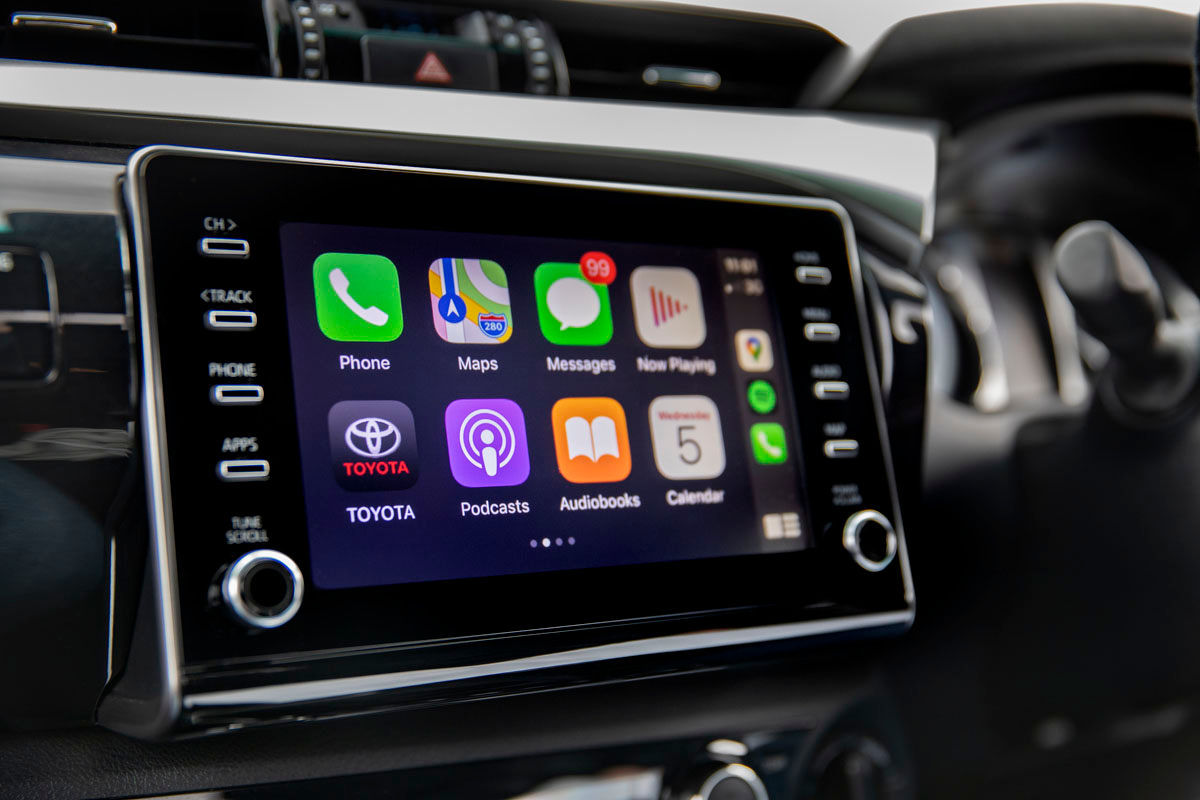
And, inside the cab, Toyota has fitted a new 8.0-inch touchscreen multimedia system with the smartphone mirroring tech you’d expect in 2021 – Apple CarPlay and Android Auto compatibility are now standard, but it’s not quite as up to date as the new-gen Isuzu D-Max, which has wireless CarPlay (so no more iPhone cable tangles!).
More on the interior…
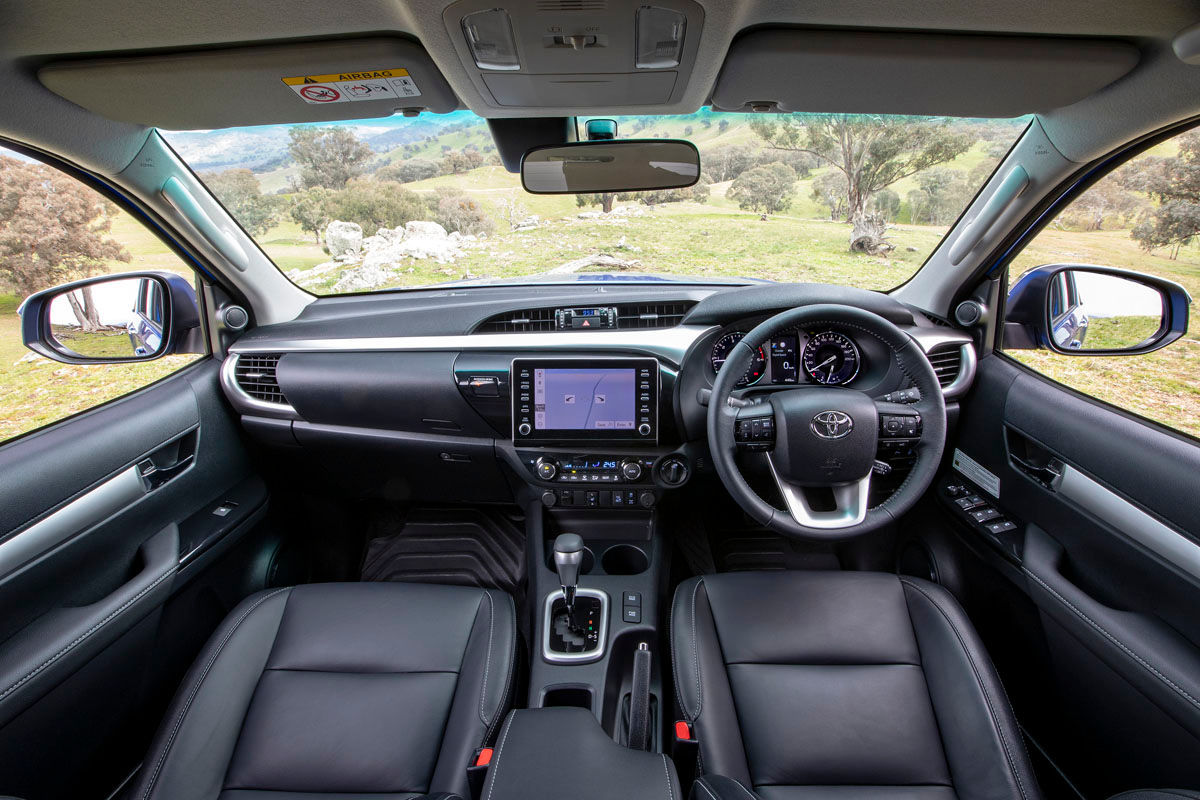
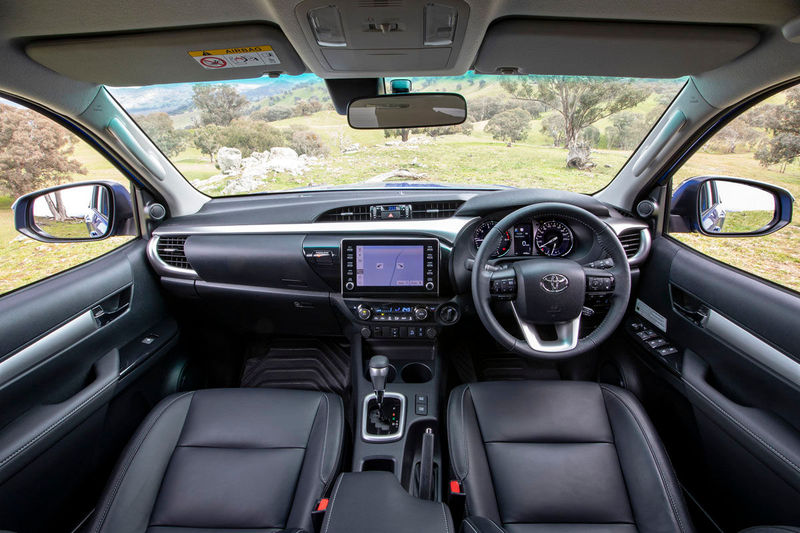
If you were hoping for a major rework of the cockpit, you’ll be disappointed to learn that there’s not much else in the way of change aside from the new infotainment system.
The interior updates are limited to the updated infotainment system and upgraded multi-info display in the instument cluster.
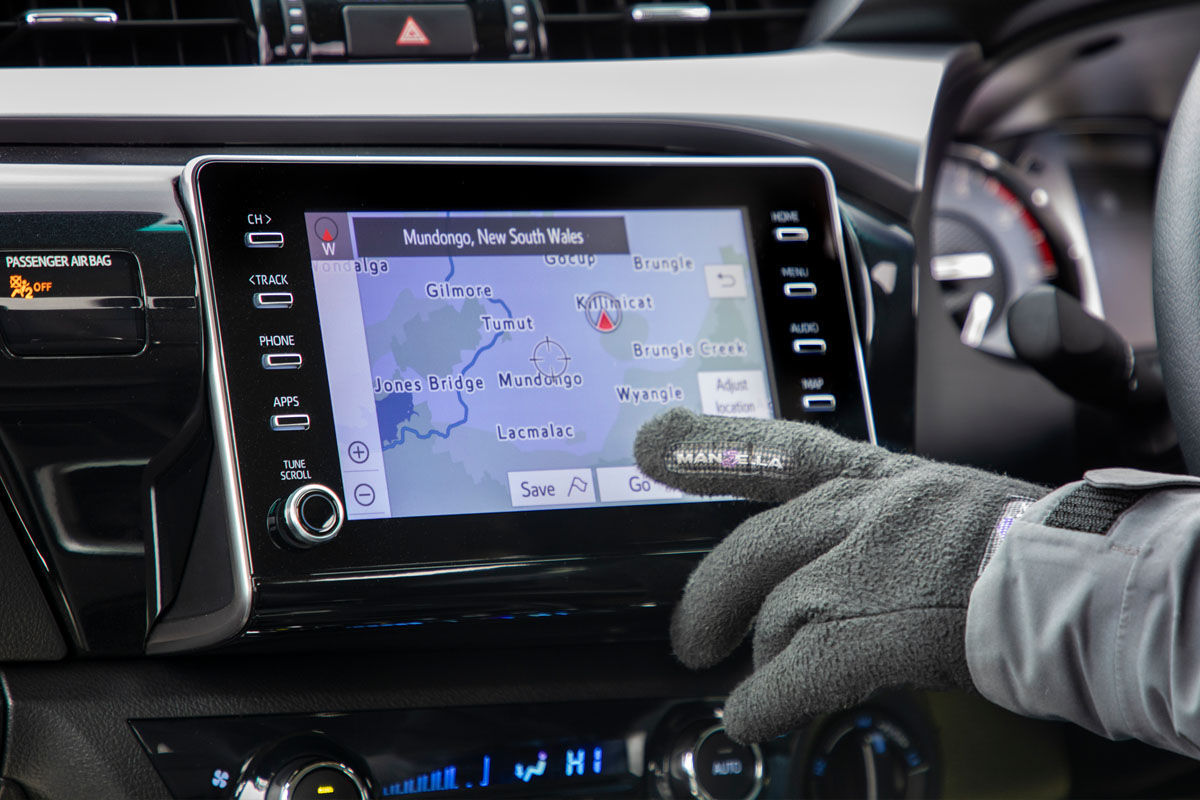
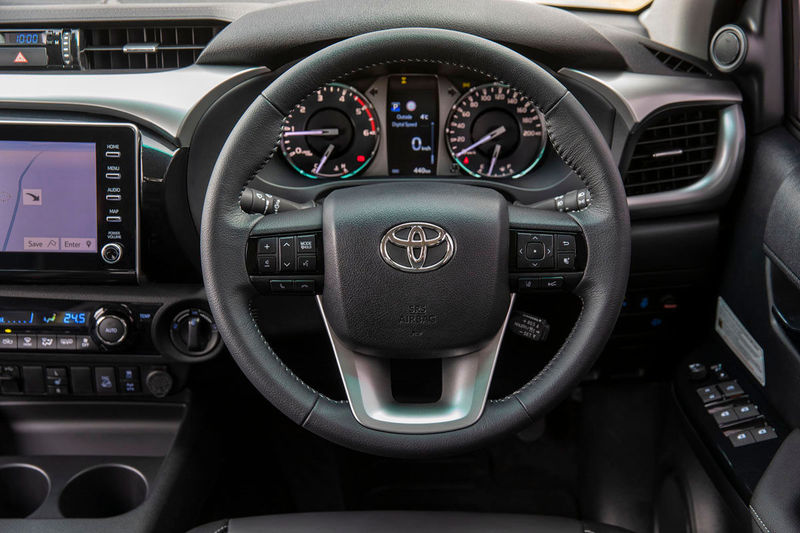
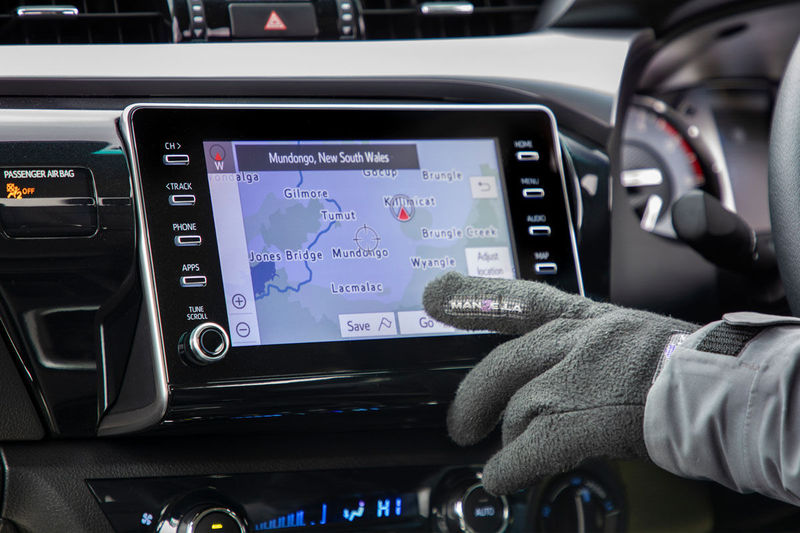
That new touchscreen is a huge improvement however, with the deletion of the touch-sensitive buttons on the sides of the screen and the introduction of good old-fashioned buttons and knobs, with the latter controlling the tuning and volume. Toyota reckons it made these changes because of broad criticism, including the fact that drivers wearing gloves couldn’t easily interact with the audio controls.
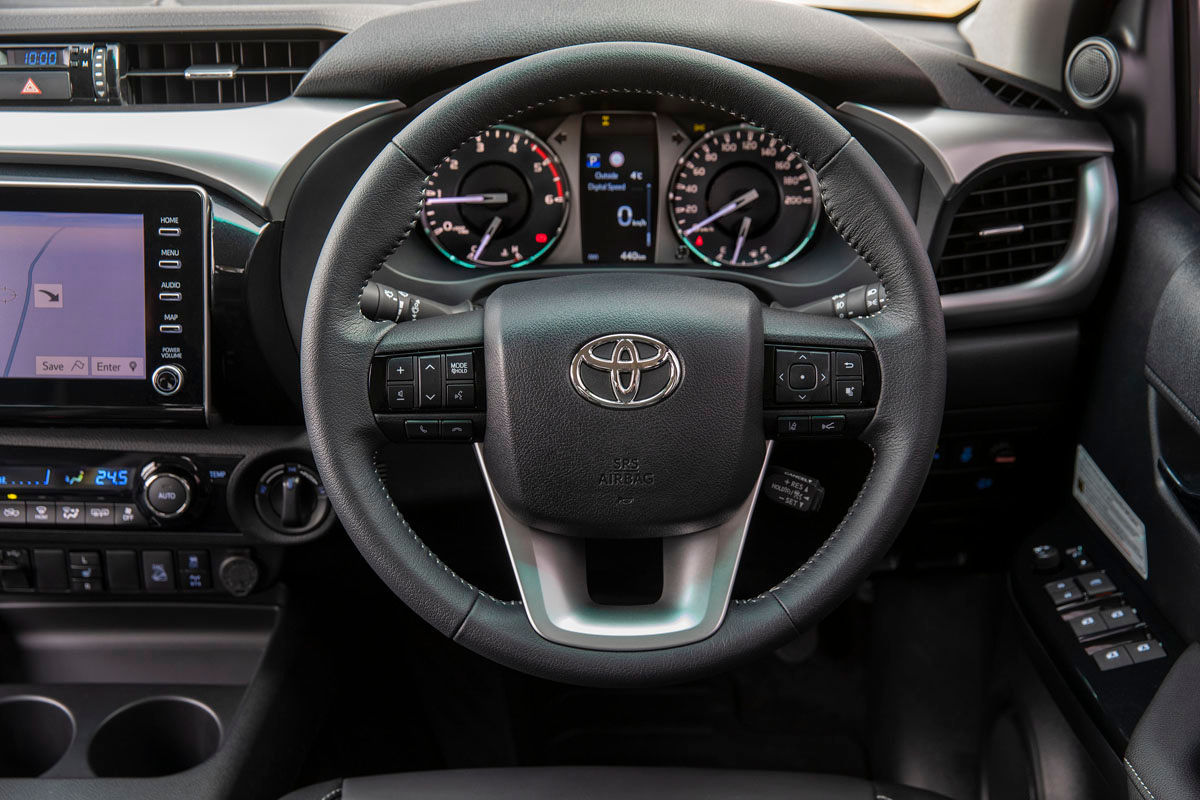
It’s definitely improved, and the cabin has also seen a new instrument cluster with a smarter, clearer 4.2-inch driver information screen. It has more detailed trip computer information, plus it incorporates a digital speedometer, which is extremely handy if the retention of your licence depends on not being fined!
The central driver information panel in the instrument cluster now incorporates a digital speed readout.
Otherwise, there’s not a whole lot of change. The dashboard is still one of the cleverest out there, with dual gloveboxes, twin outboard pop-out cup holders, another pair of cup holders between the front seats, and high-grade double-cab (Raider) models score a flip-down armrest and cup holders. All 4 doors have bottle holders, and double cabs get map pockets and a pair of shopping bag hooks too.
The quality of cabin materials are falling further behind the best in the class for comfort, though, with the high-grade Hilux still failing to feel special compared with a Ford Ranger Wildtrak or even the new Isuzu D-Max. And the cabin space is still one of the more cramped in the class for back-seat passengers…
If you're accustomed to driving with gloves on, the infotainment system's side buttons are now of conventional "push-click" design.
What's it like to drive?
If you’re expecting that the changes described above would have a noticeable difference to the "Hilux driving experience" – you’re spot on, but not all of it is good news, however.
Let’s start with the engine and transmission combo, which is considerably more enthused than before. It revs eagerly and freely, with the peak torque band – 1 600-2 800 rpm – more easily accessible.
A lot of that comes down to the revised transmission mapping, which allows you to better exploit the available torque more readily. That means you might find the transmission shuffling between the top 3 gears with greater regularity, which can be a little disconcerting if you’re used to big, torquey turbodiesel engines that shift more leisurely – instead of regularly going on a hunt for more torque. The engine never feels strained, mind you, but you can certainly hear what’s happening under the bonnet, because the Toyota team hasn’t done much – if anything – to quieten down the engine.
The extra torque is certainly welcome, but the transmission does not hesitate to go in search of the engine's sweet spot.
Indeed, during a longer stretch of downhill driving, I noted that the transmission’s control unit had violently plucked a lower gear in an attempt to rely on engine braking. It wasn't quiet about it, either.
But there is no denying that the new retune of the powertrain has been a step forward for the Hilux. At high or low speeds, the responsiveness is solid.
The same can be said for the suspension, which – while tweaked for better comfort – is still rather abrupt. Unladen driving, without towing, is always going to be compromised to a degree, but there are other bakkies that do a much better job of retaining a modicum of ride comfort with matching – or even better – payload capacity. The SR5 double-cab auto 4×4 I drove had a 980-kg load capacity.
The rear suspension is better than before, but still punches through hard when the tyres contact sharp edges in the road, and there’s notable skittishness in general driving too. It gets worse when the surface isn’t sealed, but we’ll cover that in the next section…
The Hilux's tweaked steering setup is lighter and easier to manage at higher speeds than before.
The steering is also a mixed bag. While it is lighter and easier to manage at higher speeds than before, it now lacks some of the directness and heft that I appreciated in the pre-facelift version. And likewise, Toyota reckons the low-speed response has been improved for better manoeuvrability, but for me, the steering is now less precise and predictable, plus it's too heavy at parking speeds.
In fact, when I drove the pre-facelift SR5 back to back with the SR5 test unit, the difference was easy to discern. More physical heft is required for low-speed manoeuvres in the new Hilux, and more mental acuity is required at higher speeds (due to the vagueness of the steering around the 'wheel's centre position).
Okay, what about off-road?
Relax, Hilux faithful, Toyota's double cab is still an absolute weapon off-road. That’s something that – I hope – will forever be a trait of the Hilux. Admittedly, you have to contend with its suspension on loose gravel roads, where the ride is decidedly fierce over repetitive bumps. Got teeth fillings? You may need to visit the dentist after an extended stint of driving on a poorly-maintained dirt road.
But once you reach your off-road destination, you’ll be amazed at the capability of the Hilux just as it is. My testing loop included a long, steep, rutted and craggy hill climb and descent in the Australian bush – a track that many modified off-roaders would struggle with, and given the washed-out slippery surface and the Toyota's stock-standard tyres, I wasn’t sure the updated SR5 would make it.
However, with impressive angles at its disposal – approach: 29 degrees, departure: 27 degrees – plus a ground clearance of 216 mm and wading depth of 700 mm – the Hilux makes short work of hard four-wheel driving. With low-range engaged, the for-better-and-worse variable flow control pump is disengaged and instead, you get the reassuring standard hydraulic steering feel through the tiller.
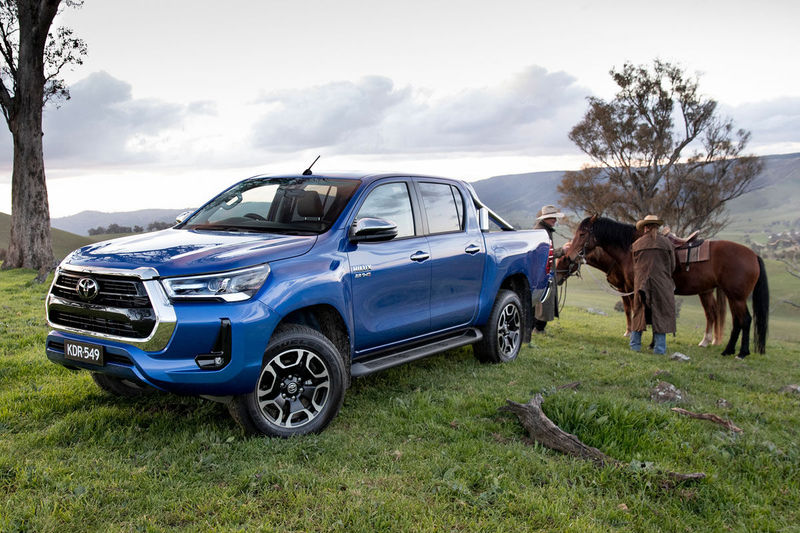
The Hilux's undiminished off-road prowess will continue to make it a hit in the off-roading fraternity.
What that means is you can place each of the front tyres precisely where you want them, and therefore set the path of ascent or descent with supreme accuracy. You can feel the rocks and tree roots under the tyres – for once, being in touch with the surface below is to your advantage.
The suspension is robust and predictable in hardcore off-roading conditions, and the flex and articulation that is possible from the stock suspension is surprisingly generous. The engine manages to feed the torque to the ground below very well, and if you fear that you might get stuck there’s more torque to play with now, too.
If you’re looking to buy a brand new bakkie and head straight into the bush with it, the Hilux really can’t be beaten. If I were you, though, I’d stop off at a tyre shop on the way and get a new set of more aggressive rubber, as the Bridgestone Dueler H/T 265/60/18 tyres, which the SR5 test unit was shod with, were the only shortcomings of the off-road drive package.
Overall, the upgrade to the Hilux is a collection of incremental improvements.
Does the Hilux keep its crown, then?
If you, like many thousands of South African consumers, know you want a Hilux, and you can’t be shaken from that, thanks for spending your time reading this review. I truly hope it has helped you to know what to expect when you lay down your hard-earned cash on the next iteration of a legendary bakkie…
However, if you’re unsure of whether the Hilux is right for you, then I’d thoroughly recommend you revisit the Ford Ranger or wait for the arrival of the new-generation Isuzu D-Max before signing on the dotted line, as those two bakkies stand out as offering better blends of liveability and technology than the Hilux derivative I sampled.