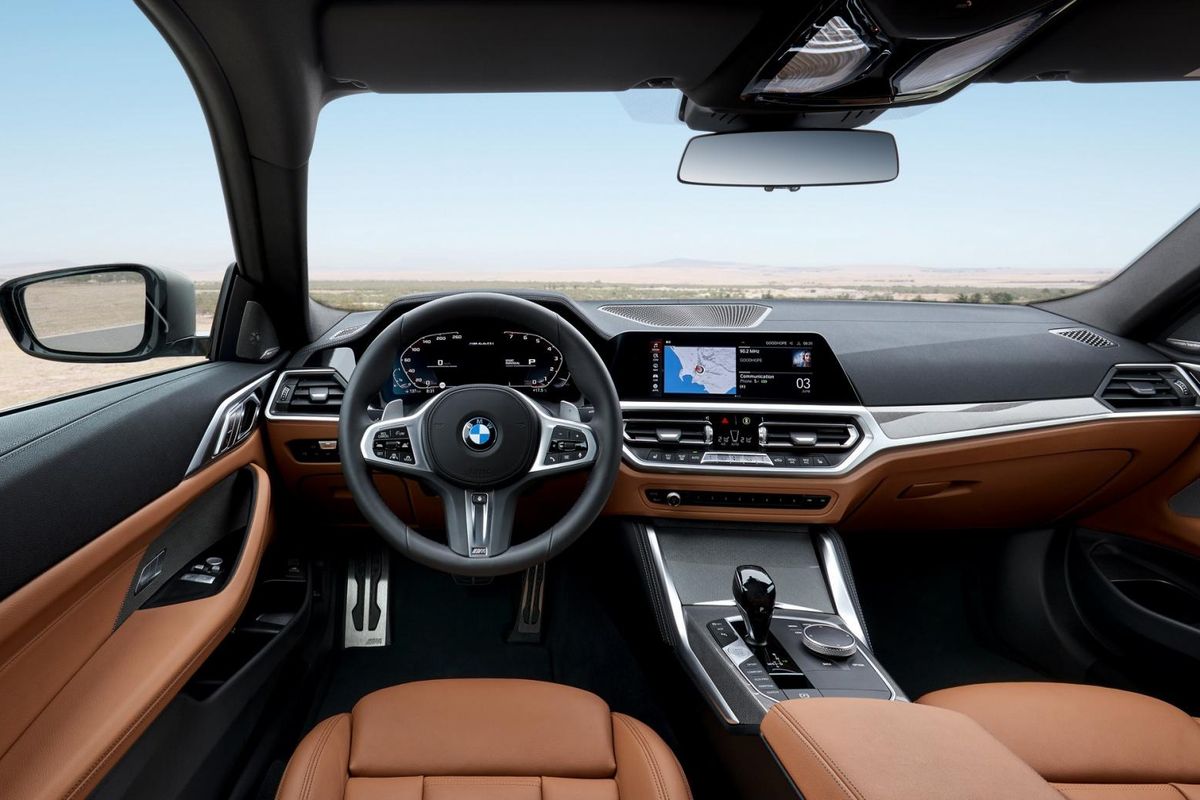
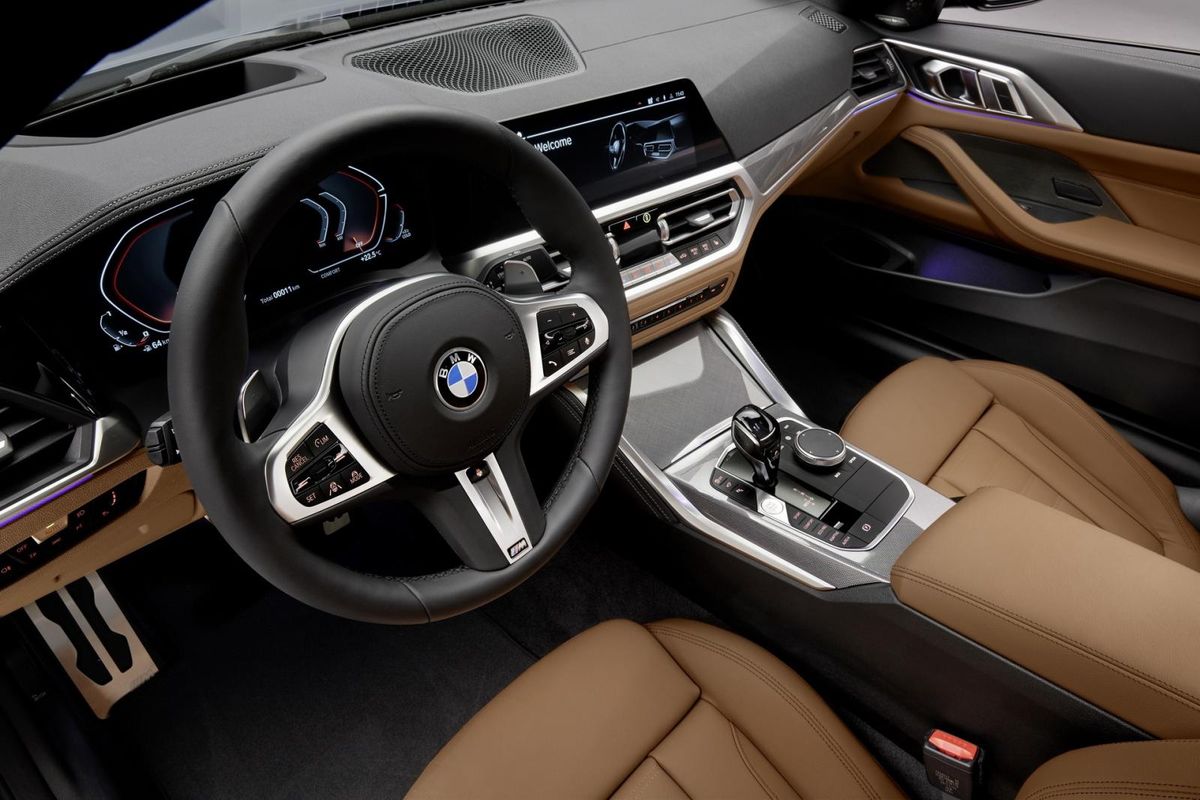
2020 BMW 4 Series Goes Official
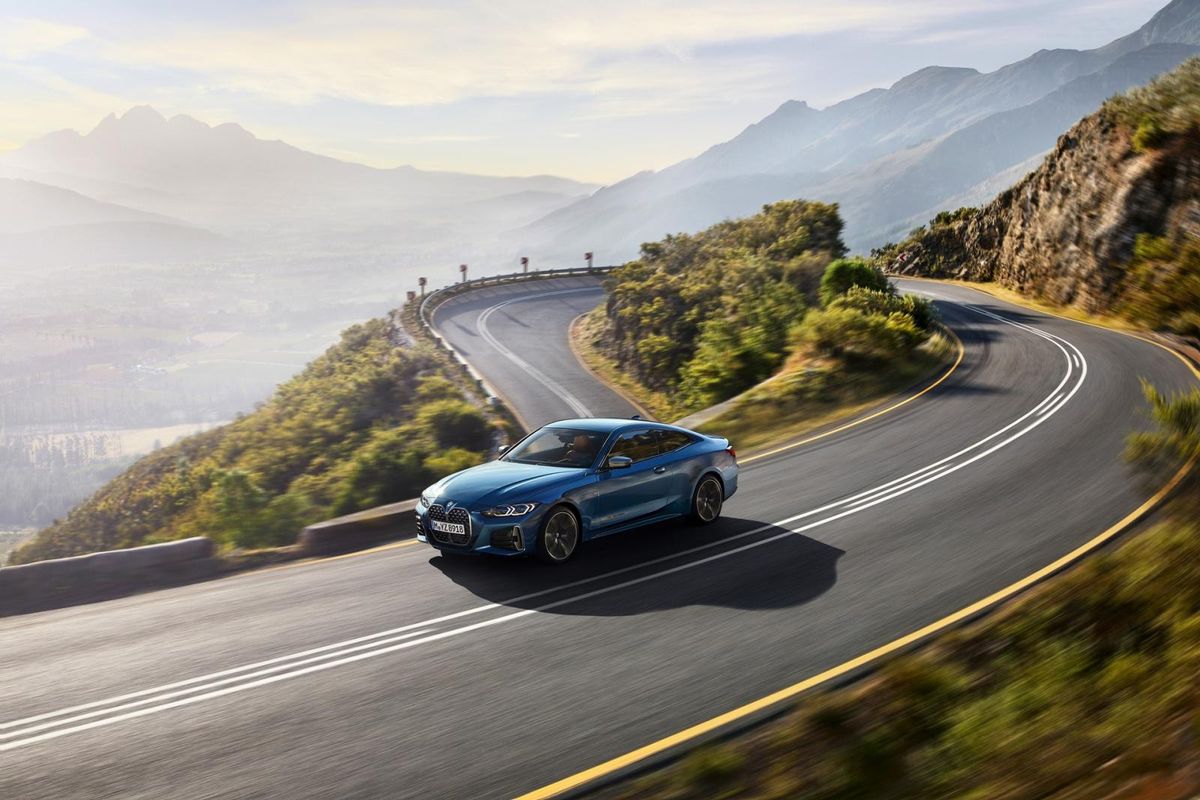
The all-new BMW 4 Series has finally been revealed. Let's take a look at what's on offer.

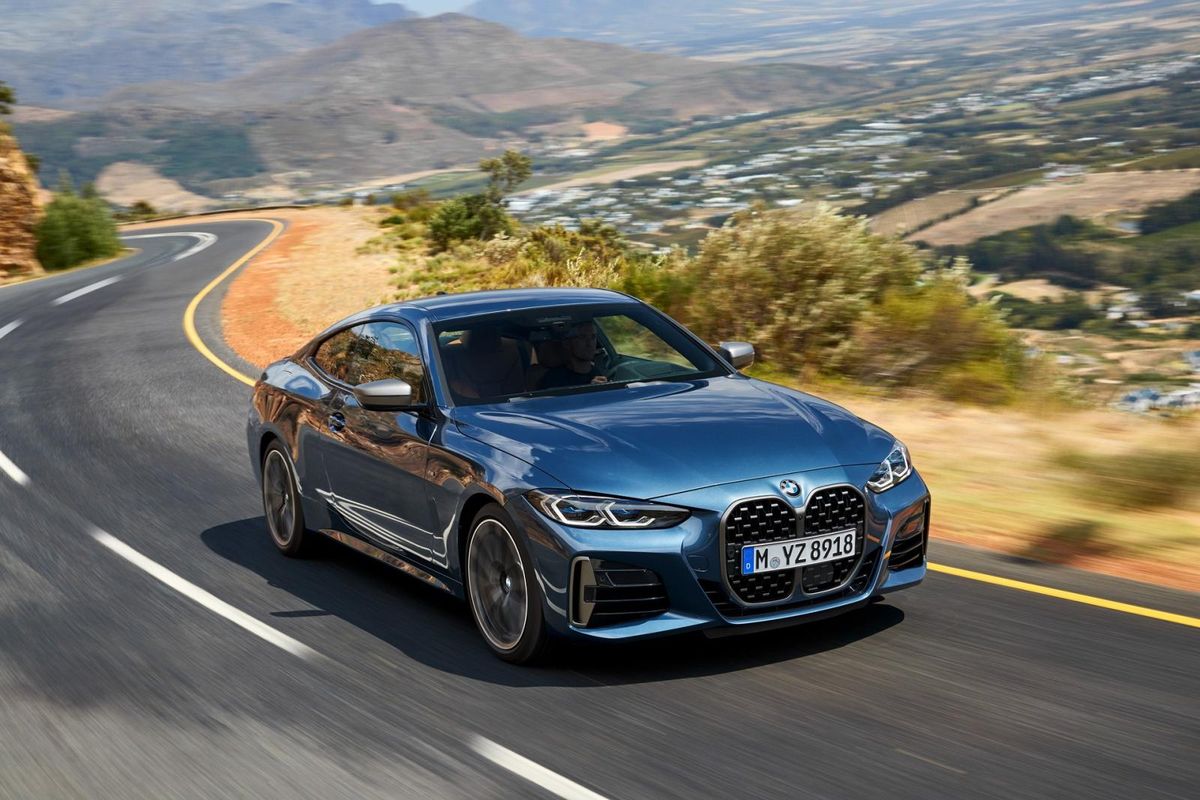
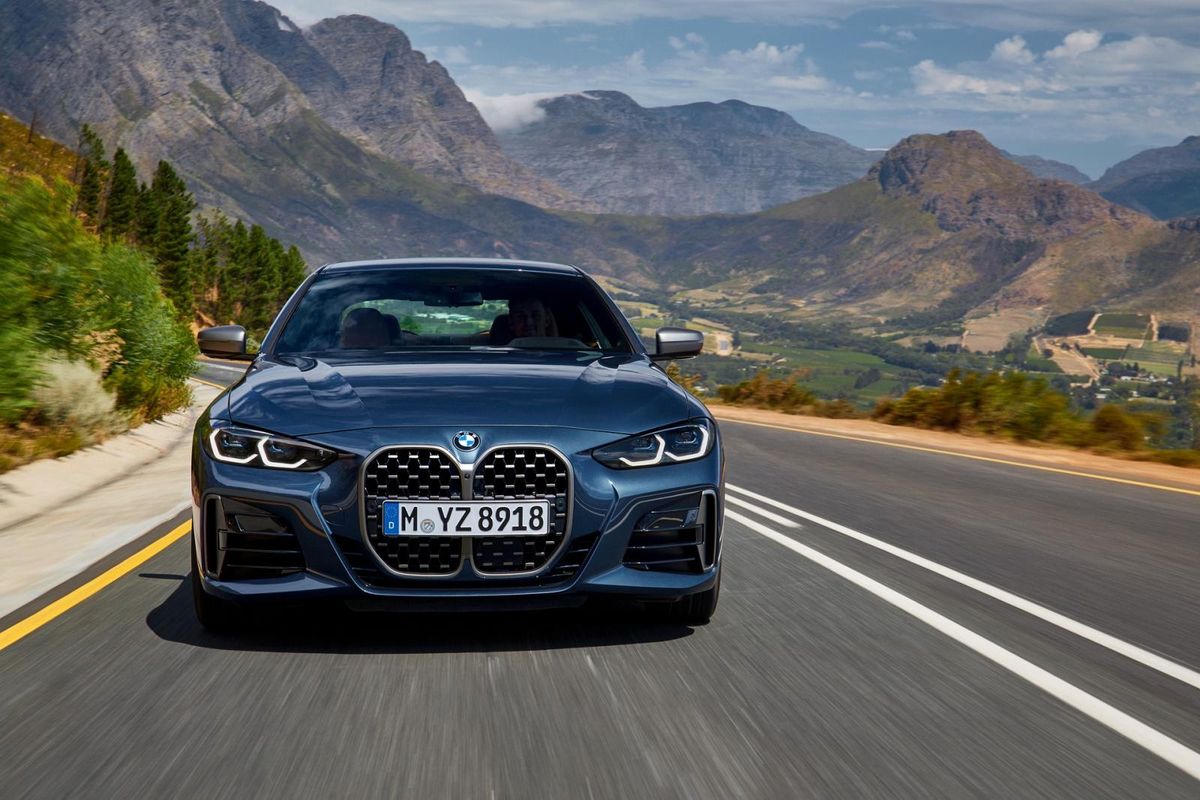
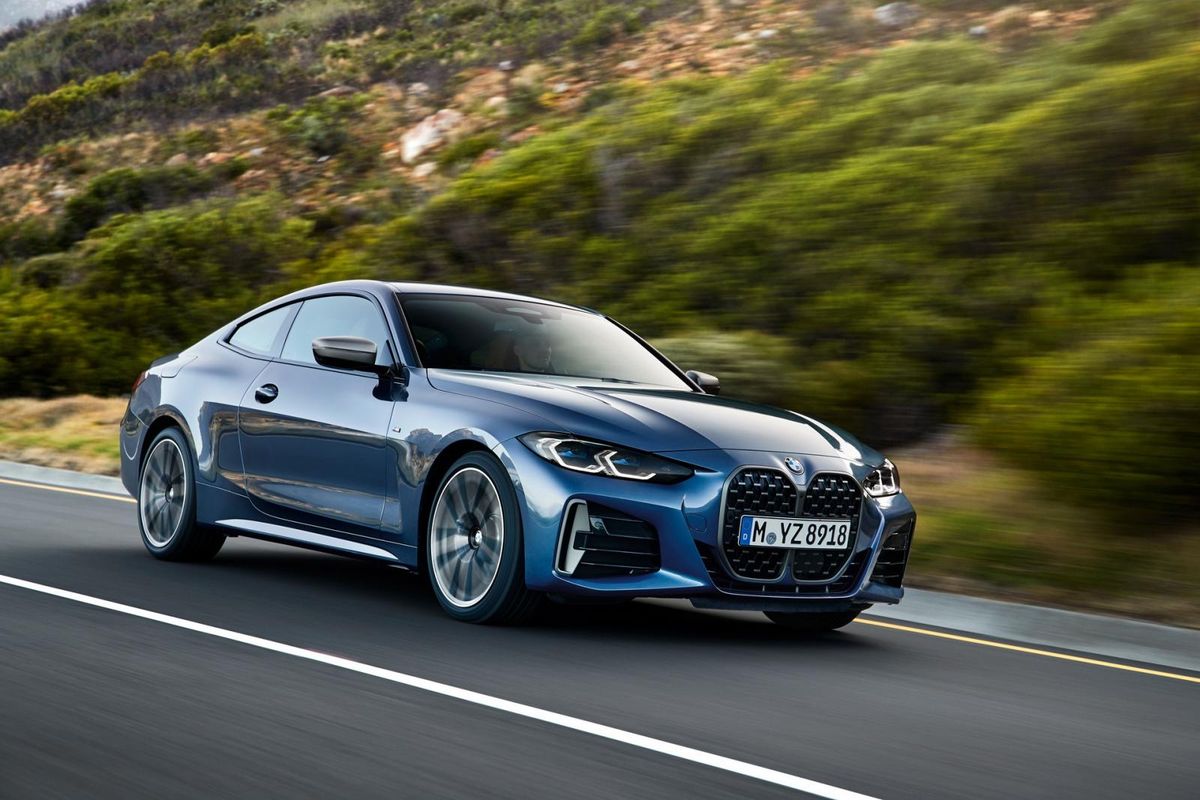
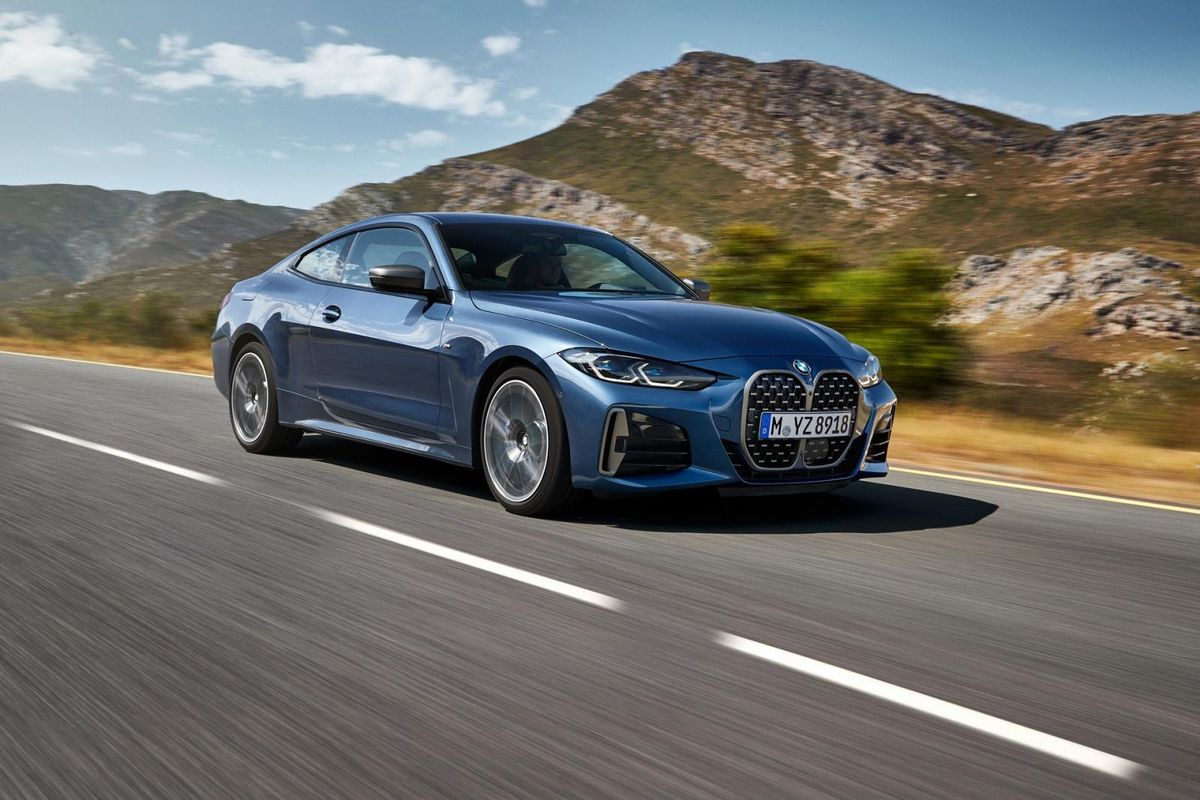
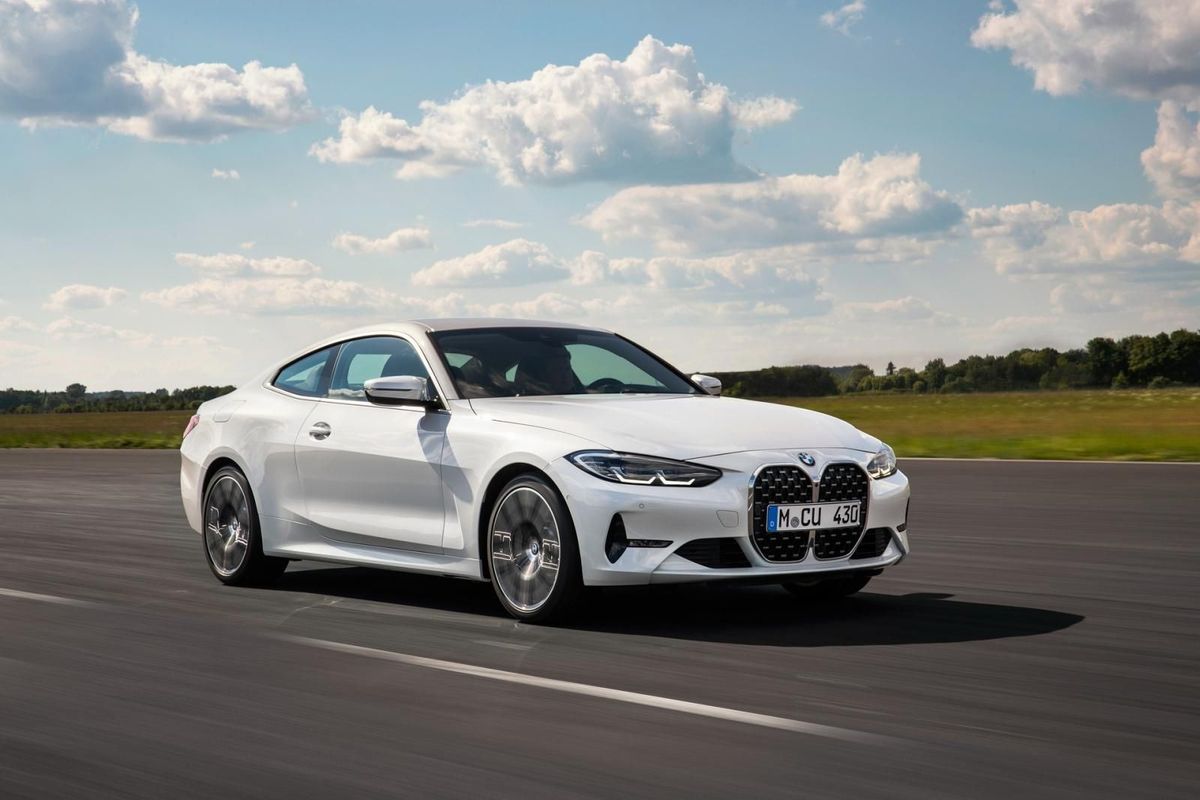
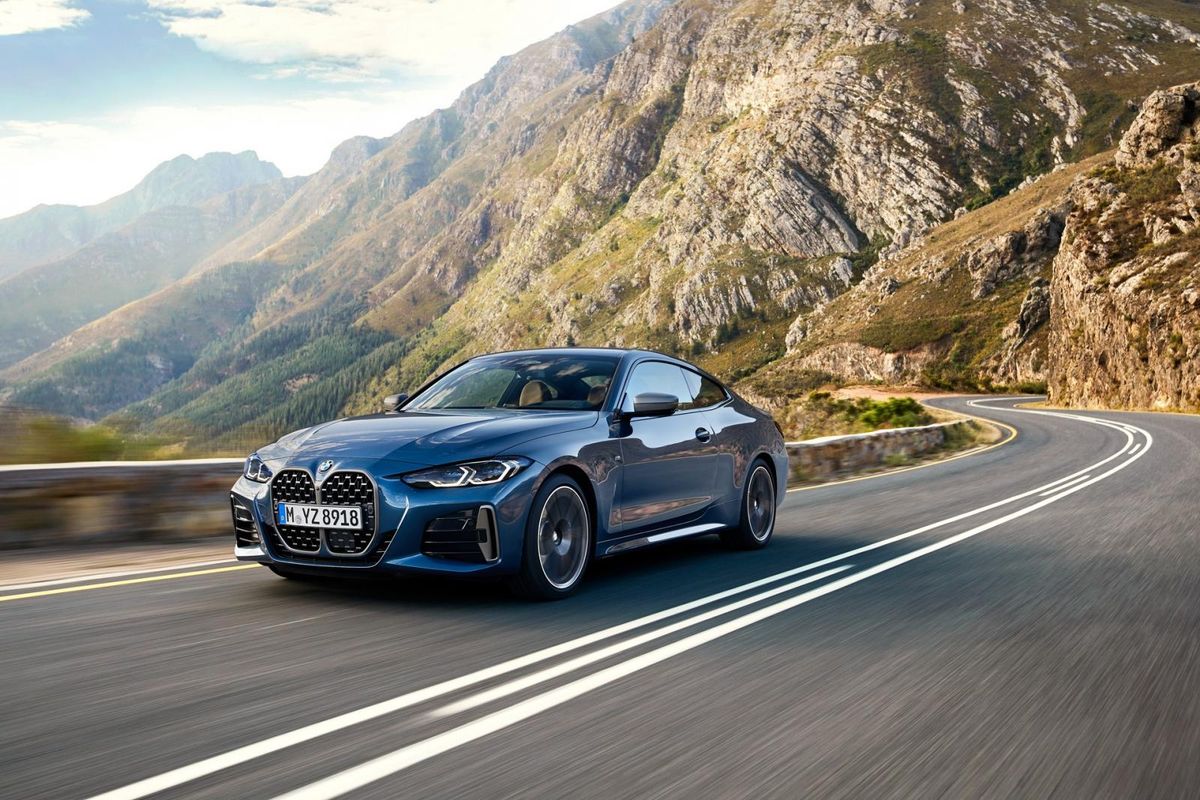
BMW has been desperate to differentiate the new 4 Series coupe from the 3 Series sedan. It's no longer the case of being simply a 2-door BMW 3 Series. The all-new G22 BMW 4 Series boasts radical styling in an attempt to break any relation to the sedan 3 Series. This design was first previewed in Concept 4 form, but that grille is the most polarising. The oversized kidney grilles are a massive talking point, but in BMW's defence, the market demands them. Apparently, the Chinese market loves that grille! 

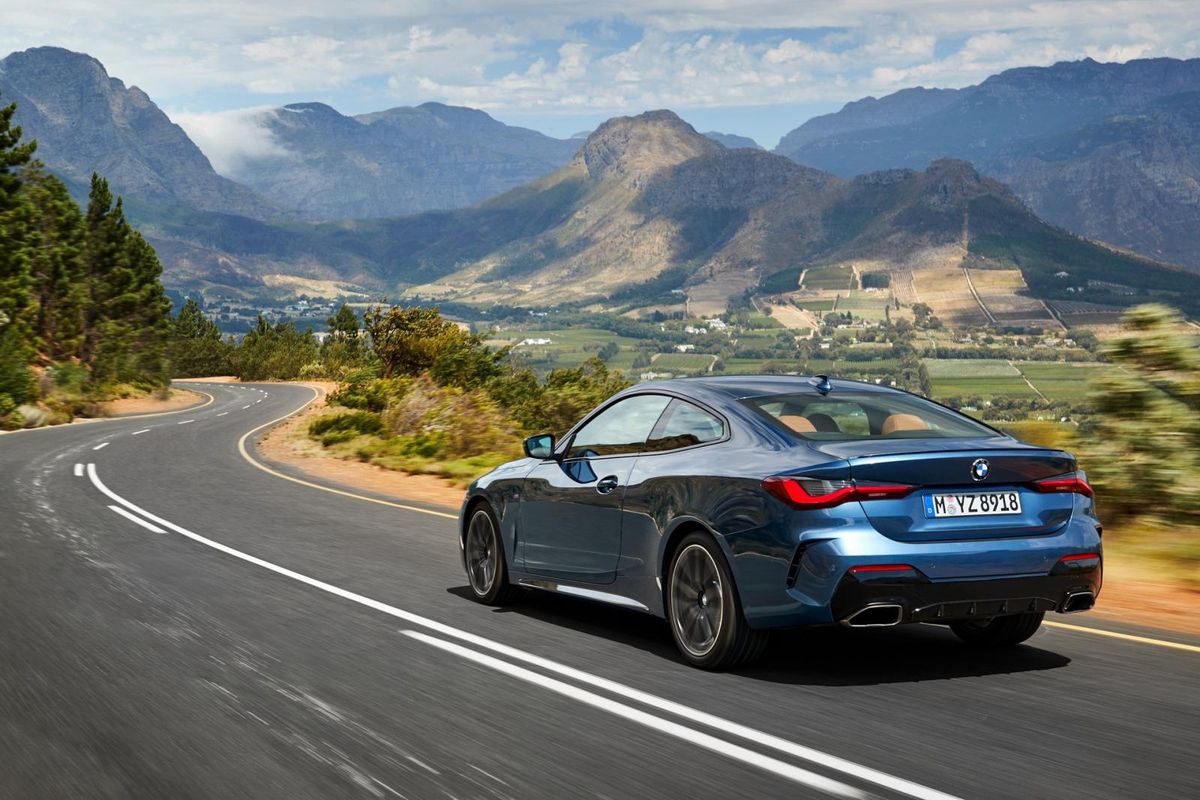
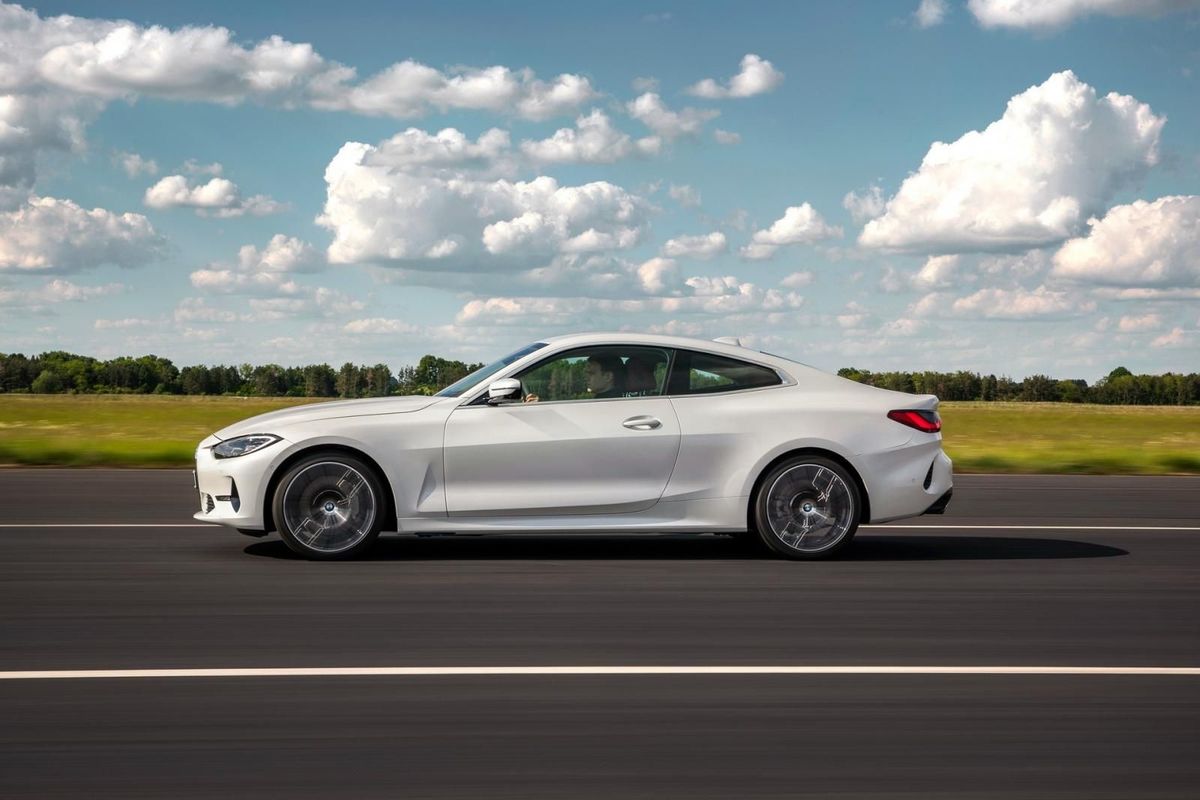
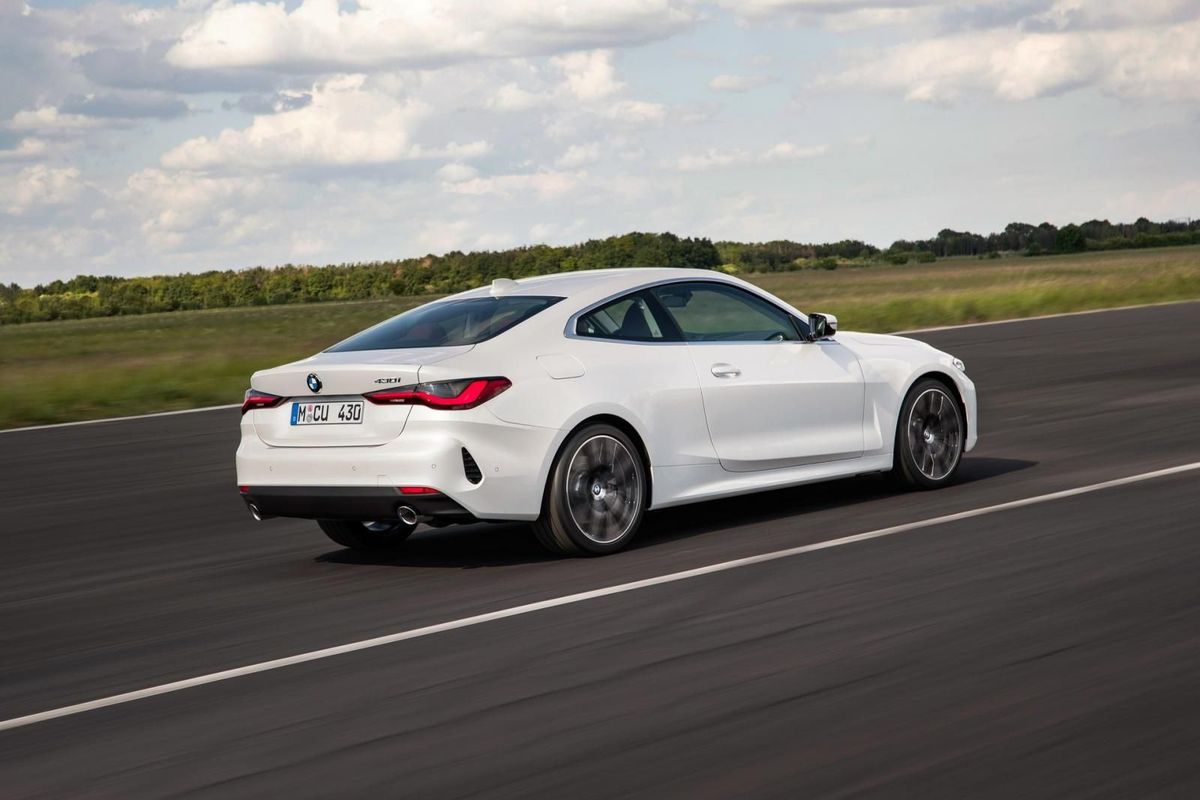
We're keen to see them in the flesh, but also it's great to see a manufacturer breaking away from traditional styling and BMW should be applauded for being bold and radical. The rest of the styling is sleek and those taillights are striking. Under the skin is the CLAR (Cluster Architecture) as all and the newcomer features a wheelbase 42 mm longer than that of its predecessor (2 851 mm). The BMW 4 Series is also slightly longer and wider, as well as being 57 mm lower, than the 3 Series. There's also a sportier suspension setup.

At the top of the range will be the M440i xDrive which boasts mild-hybrid technology. Power comes from a 3.0-litre turbocharged 6-cylinder which packs 275 kW from 5 500-6 500 rpm and 500 Nm of torque from 1 850-5 000 rpm. The M440i xDrive will be the fastest 4 Series with a claimed acceleration time of 4.5 seconds.

The 430i, meanwhile, adopts the latest version of BMW’s 2.0-litre 4-cylinder turbopetrol engine, which is tuned (as in the 330i) to deliver 190 kW between 5 000 rpm and 6 000 rpm and 400 Nm of torque from 1 640 to 5 000 rpm, giving it 5 kW and 45 Nm more than the unit it replaces.

There'll also be a 420i with 135 kW/300 Nm as well as a diesel-powered 420d with 141 kW/400 Nm. This diesel powertrain is also available in xDrive. BMW says it will be offering more engines to the 4-Series portfolio from March 2021 and all models will be fitted with an 8-speed automatic transmission.

The new BMW 4 Series will hit European markets from October 2020 and we'll be getting our units in the 4th quarter of 2020. We'll be getting the 420i, 420d and M440i xDrive. 

BMW 4 Series Video

Further Reading

BMW 4 Series (2020) International Prototype Drive

10 Cool Things: BMW 4 Series & upcoming M4
BMW Concept 4 Previews New 4 Series
That grille! BMW 4 Series images leaked

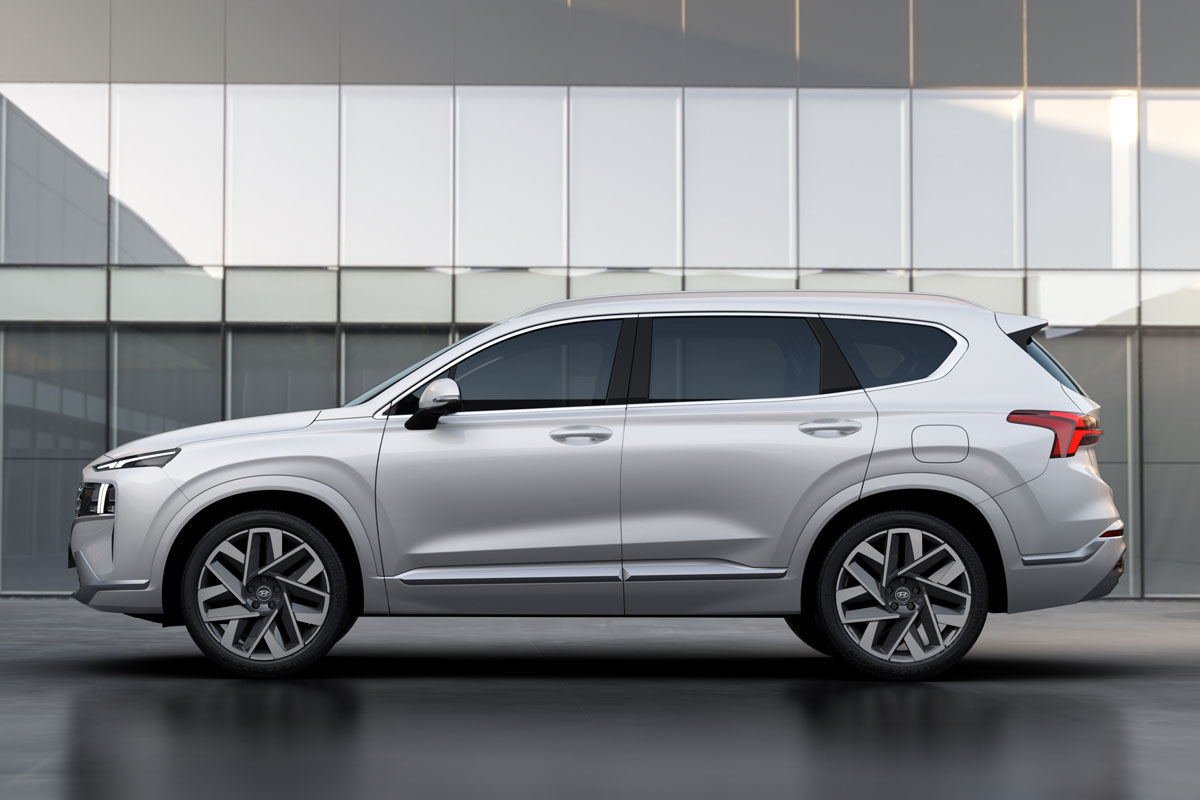
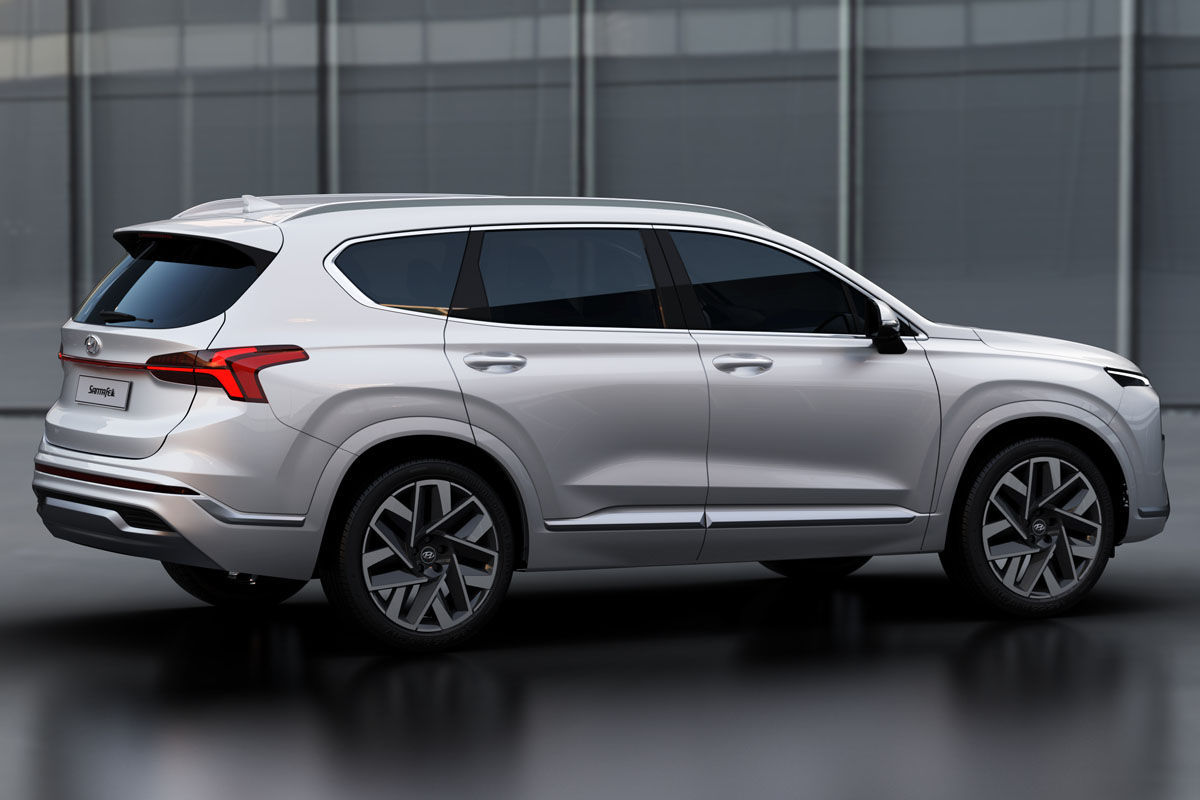
Hyundai showcases updated Santa Fe

Hyundai released its 4th-gen Santa Fe in South Africa as recently as the end of 2018, but the Korean version is preparing to roll out a majorly revised version of its 7-seater SUV.  

Hyundai says the “redesigned” Santa Fe “goes beyond a mere facelift”. Although suggesting that the newcomer offers “more space, comfort, and convenience” than its (TM) predecessor, the Korean firm stopped short of confirming that it is underpinned by the new N3 platform, on which the Santa Fe’s Kia Sorento cousin (which was officially revealed online in March) is based. We believe it is, however.

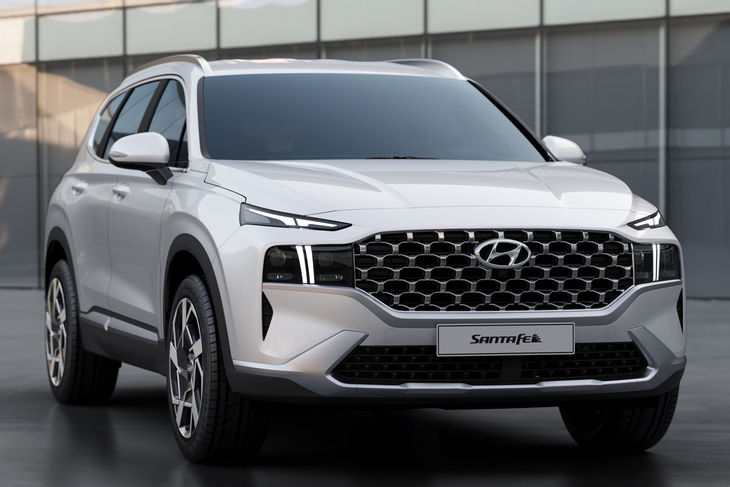
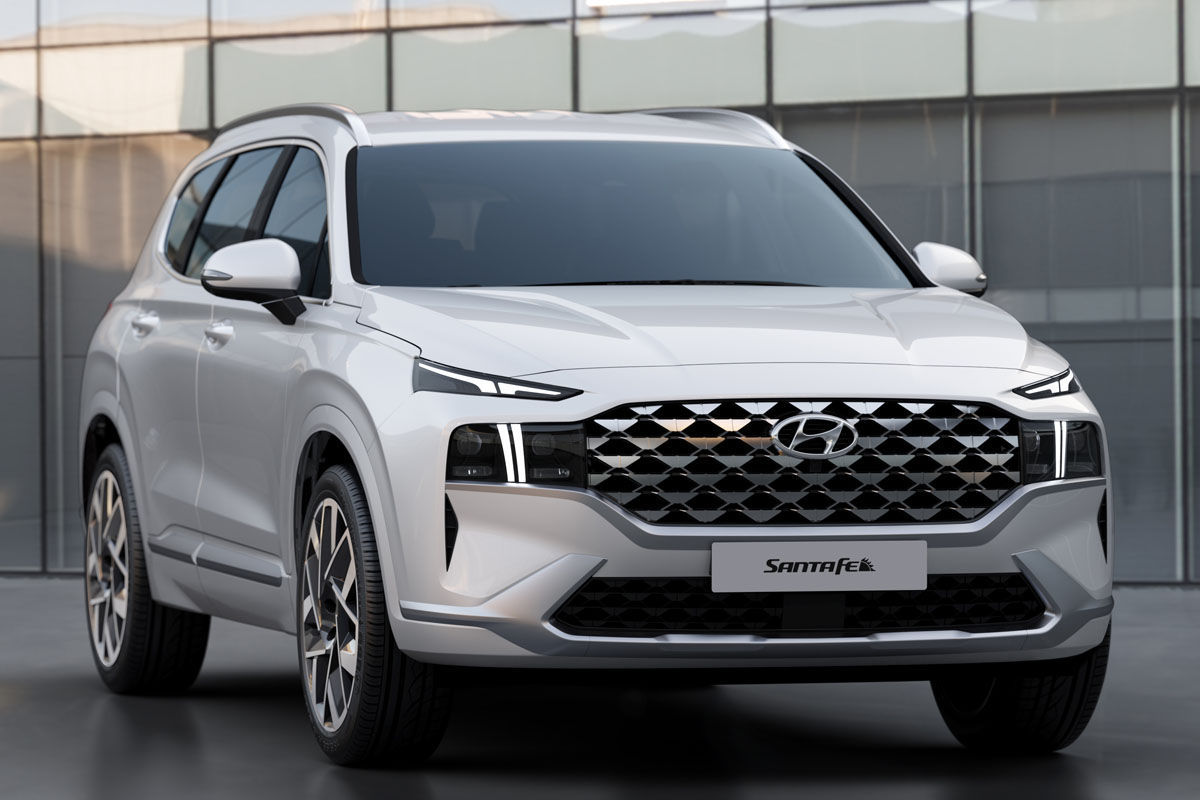
The images also confirm what we’ve known since Hyundai teased the refreshed Santa Fe’s front-end design last week… The newcomer features an elaborate grille, which practically spans the width of the car, as well as characteristic T-shaped LED daytime running lights that sprout from the ends of the slim top lamps and “extend downwards” to bisect the headlamp clusters.


The Sante Fe looks even more rugged with black cladding; the Luxury spec adds 20-inch wheels and colour-coding.

Hyundai’s new Sensuous Sportiness design language (known for its “parametric dynamics”) is clearly toned down for the “redesigned” Santa Fe, but the signature geometric-patterned mesh of the grille and the inward-facing, Y-shaped, grey bumper inserts are nods to contemporary models from the Seoul-based firm.

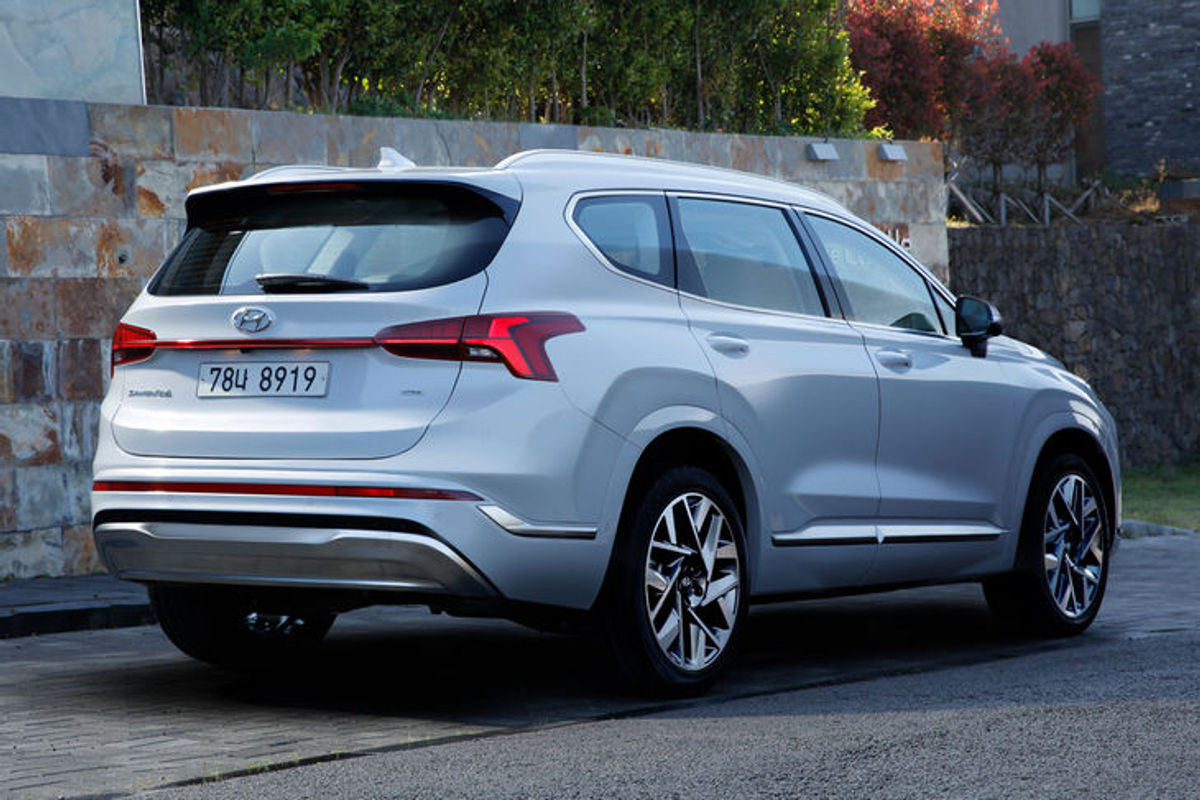
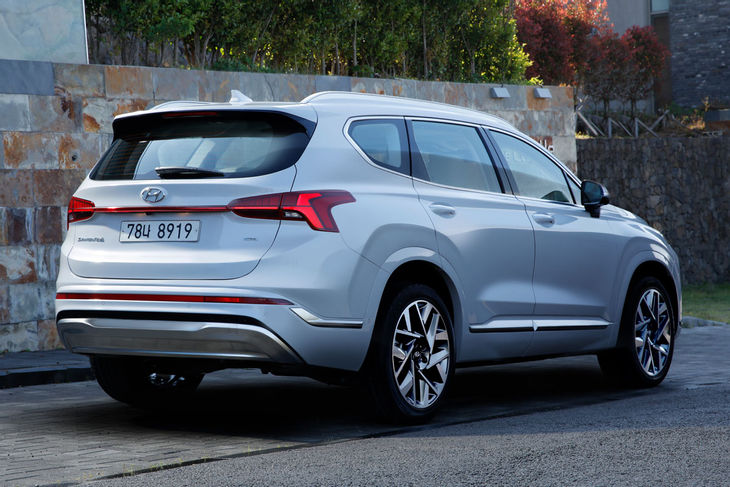
The side profile is characterised by an unbroken shoulder line that connects the DRL to the tail-lights and the 7-seater SUV's wider wheel arches house 20-inch wheels. At the back, a slim illuminated bar connects the tail-light clusters and a wide rear reflector runs parallel to it. A grey skid plate and (ice) hockey-stick-shaped inserts, meanwhile, complement the side strips and front bumper accents.


Note how the shapes of the front bumper accents are mimicked by the tail-lamp clusters; they point outward, however. 

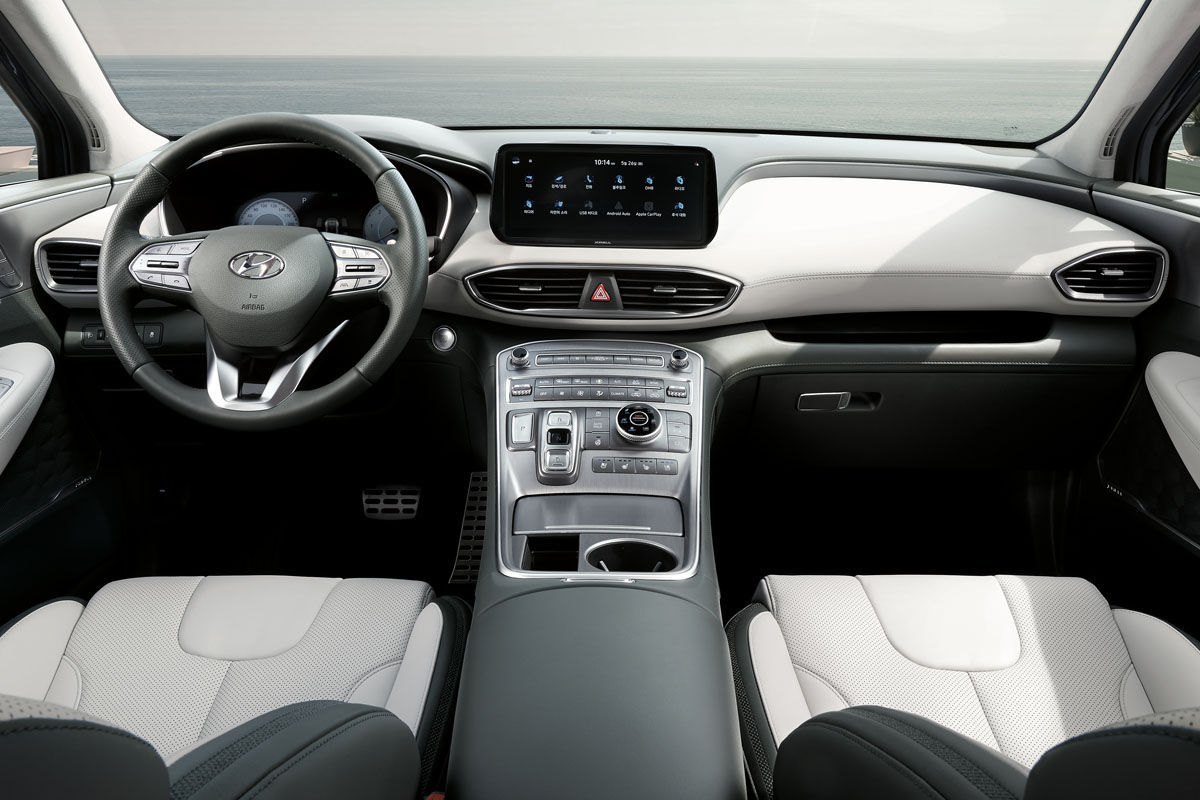
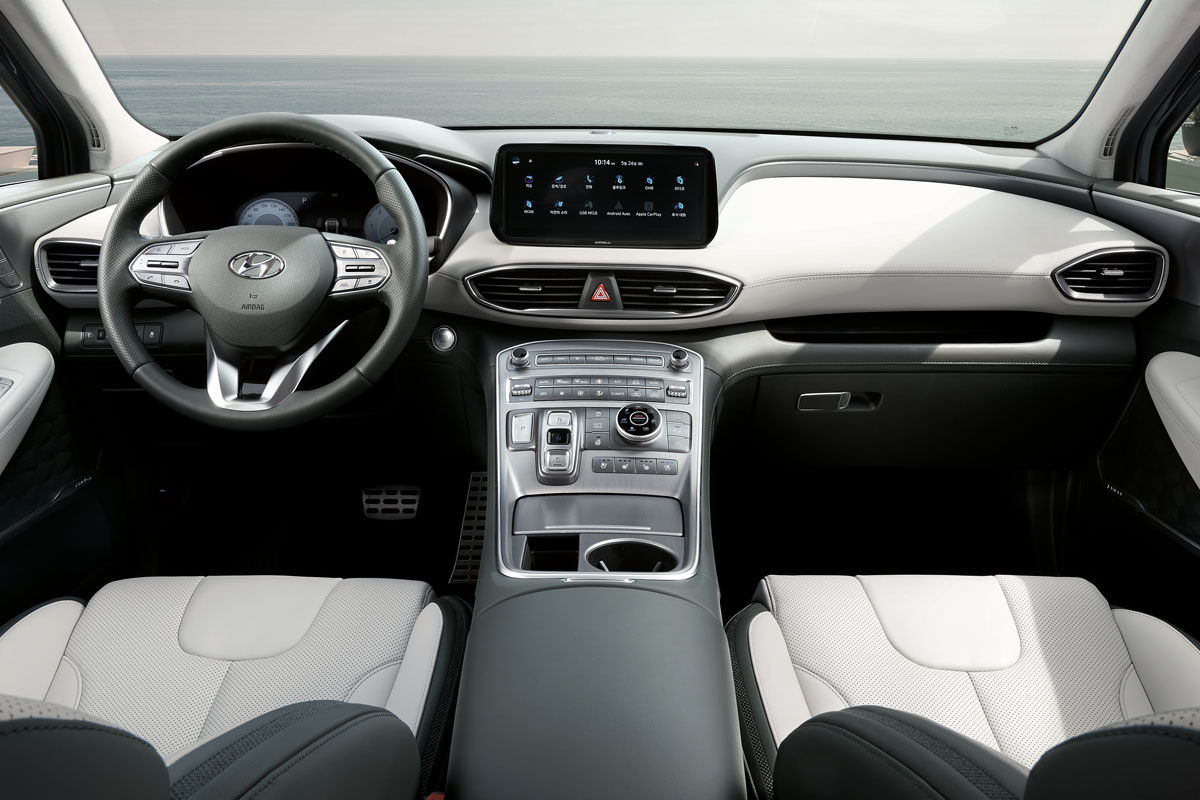
Apart from facilitating a hybrid (including plug-in) powertrain, the N3 platform provides slightly more interior space in the Santa Fe by virtue of its longer wheelbase. Apart from the redesigned dashboard, the centre console has been raised; it features shift-by-wire transmission buttons, seat heating and cooling toggles and a pair of metal-look climate control adjustment barrels.

And, for the first time, the new Santa Fe comes with a Terrain Mode selector that allows its drivers to conveniently switch between different drive modes. This feature includes unique modes for sand, snow and mud, as well as eco, sport, comfort and smart modes, the last of which automatically recognises the driving style and optimising the vehicle’s performance and all-wheel-drive settings.


The enlarged touchscreen infotainment screen complements the 12.3-inch fully-digital instrument cluster.

Apart from adorning the cabin with swathes of leather and soft-touch surfaces, the 7-inch touchscreen infotainment system has been replaced by a 10.25-inch unit with satnav, reverse-view camera display and diverse in-car entertainment and connectivity features. The new centre console layout is said to have freed up more storage space in the redesigned lower dashboard.

We'll bring you more details of the updated Santa Fe's ETA in the South African market as soon as more detail becomes available…

Related content:

Next-gen Kia Sorento Fully Revealed

Hyundai Santa Fe 2.2D Premium (2019) Review

Kia Grand Sedona 2.2 CRDi SXL (2019) Review

Spied: Hyundai Double-Cab Bakkie in Profile

World’s oldest V8 finally retiring

One of the world’s most iconic engines is being retired.

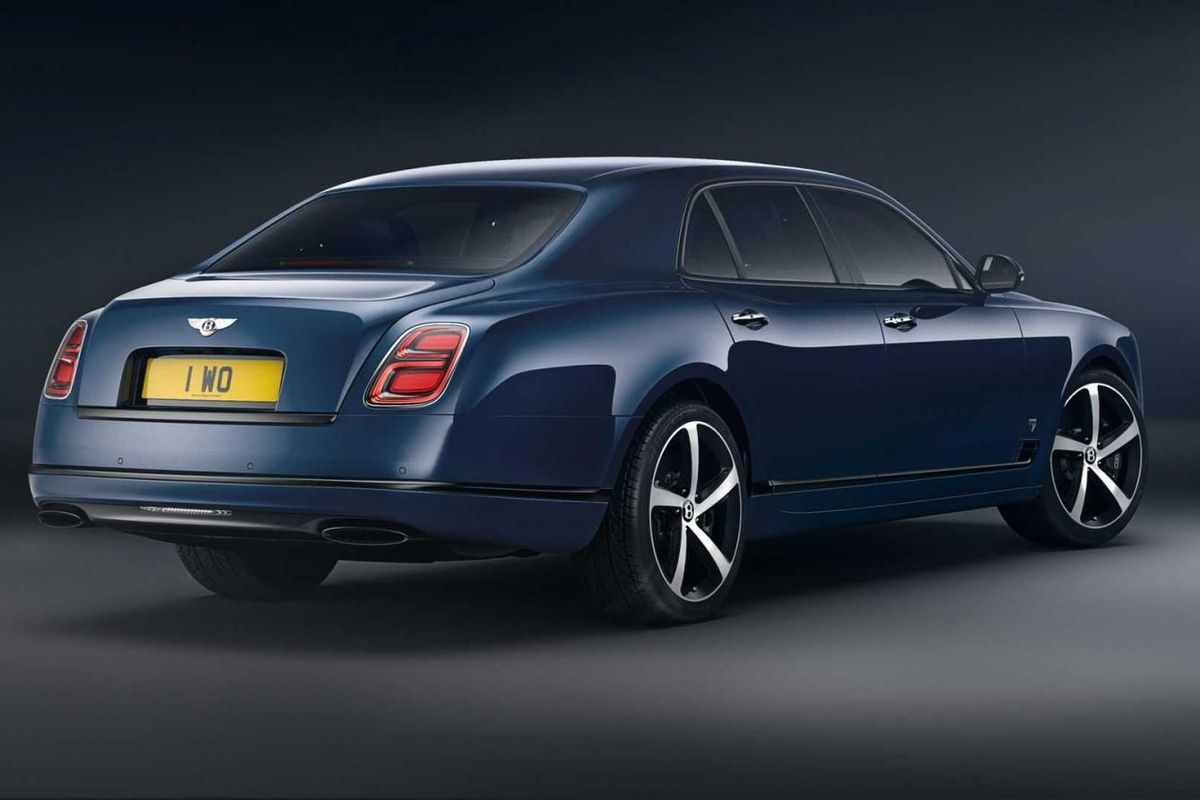
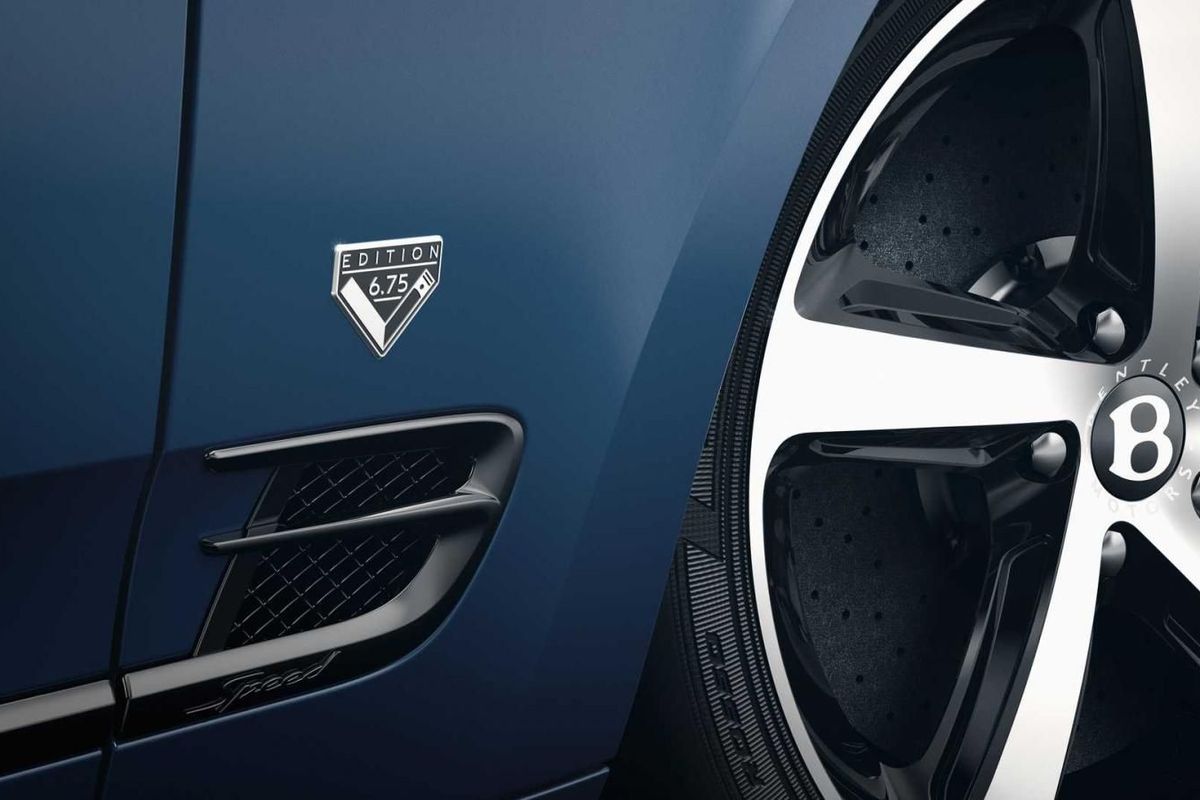
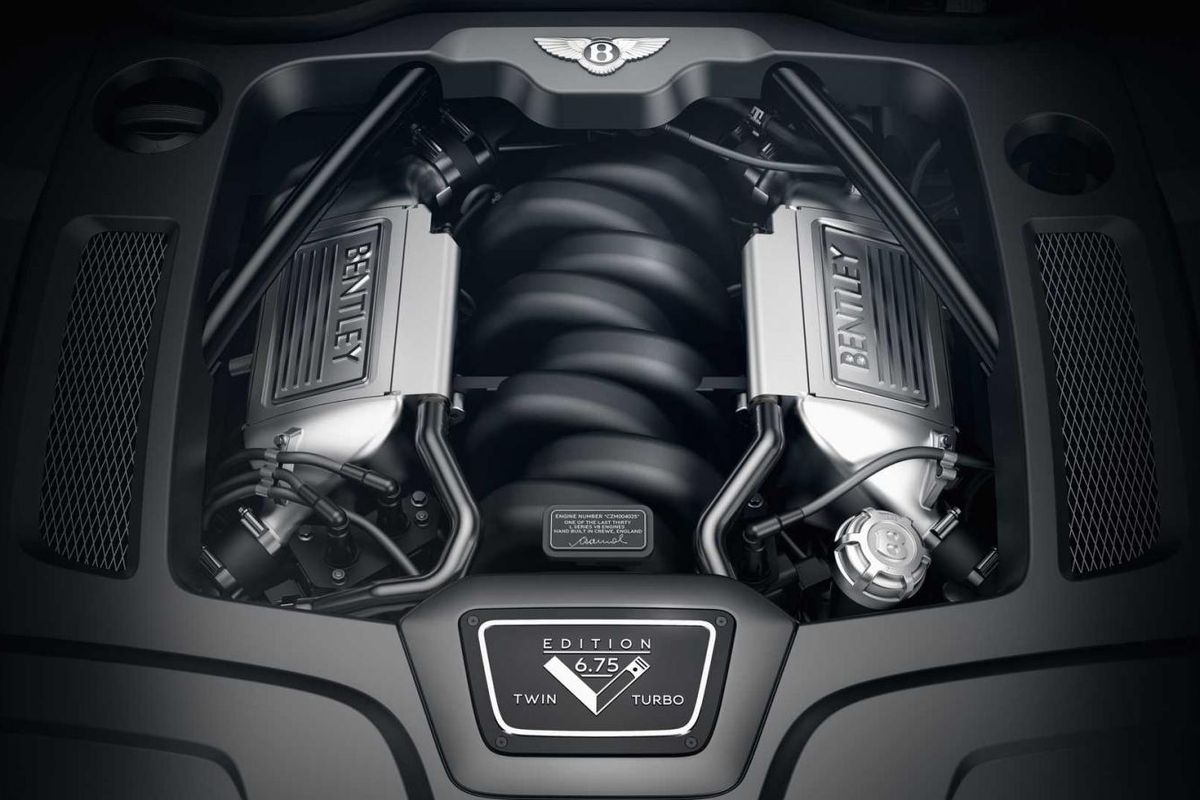
Bentley has announced the last of its L-series V8s being assembled by hand, at Crewe. These final few L-Series V8 engines will power the Mulsanne 6.75 Edition by Mulliner.

This latest announcement by Bentley ends the world’s longest-serving V8 production engine. Very few rival luxury car brands can claim to have produced an engine with the longevity of Bentley’s L-Series.

As an engineering achievement, the L-Series engine is legendary. And deservedly so. It has been in production since 1959 when the original version was created as a replacement for Bentley’s inline-six engines.

Initially a 6.25-litre displacement V8, the L-Series became a 6.75-litre in the late 1960s, when the engine was stroked, increasing capacity. The engineering goal was to deliver more torque whilst increasing smoothness.

Bentley even built an experimental 7.5-litre version, as it explored ways of delivering more performance with less vibration and noise, for its customers. Big engines turning strong performance, at lower crankspeed, was the design logic.

For decades these 6.75-litre V8 engines powered Bentleys in the most discreet way possible. The company did not disclose exact engine outputs for many years, considering it to be ‘ungentlemanly’.

Despite its ageing block design, Bentley’s engineers managed to develop and modernise the L-Series 6.75-litre V8. Technical challenges aside, it gained turbocharging, electronic fuel injection and sophisticated valve-timing, without sacrificing its unique character and power delivery characteristics.

Perhaps the most amazingly enduring technical feature of the L-Series engine has been its ability to retain a pushrod valve gear configuration, into 2020.

The final 30 engines are notably potent. Peak power ranks at 395 kW, supported by 1 100 Nm of torque.

Related content

10 Cool Things: Bentley Continental GT Mulliner Convertible

Flying Spur to Rival AMG S65

Bentley Bacalar Fully Revealed

Ford Bronco will be a Defender Rival

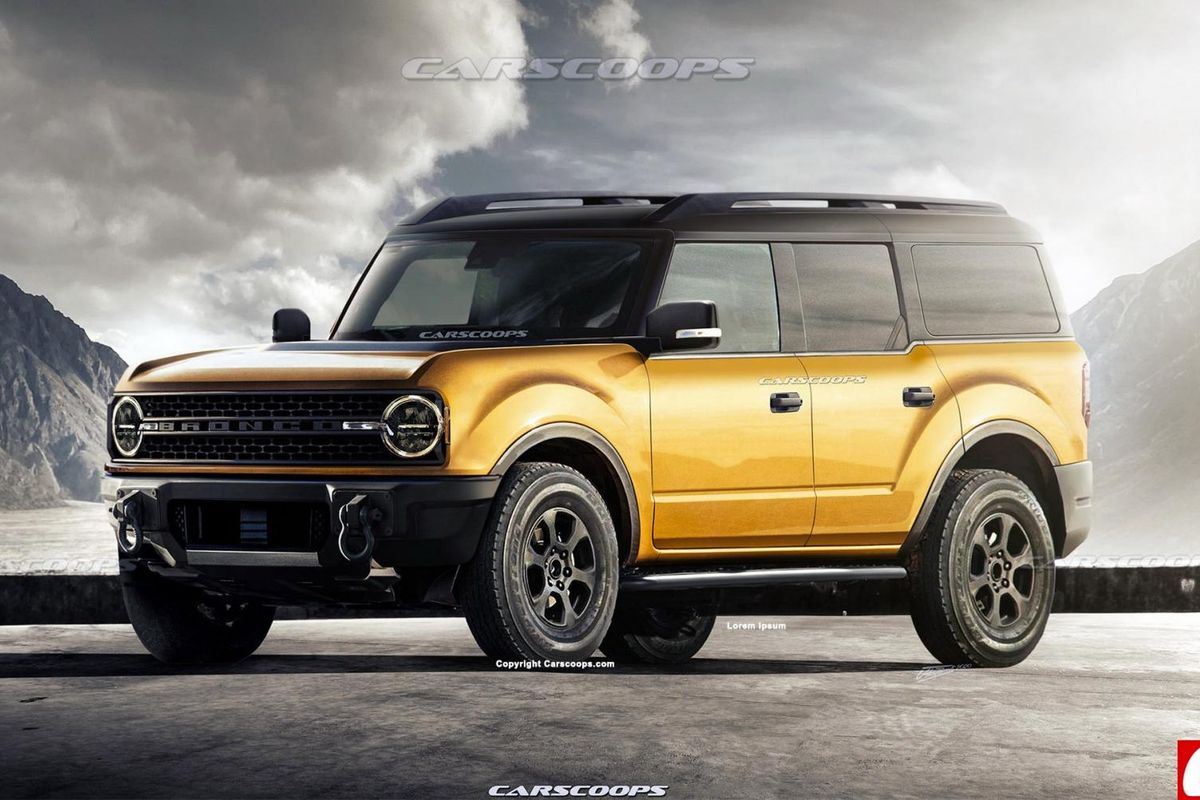
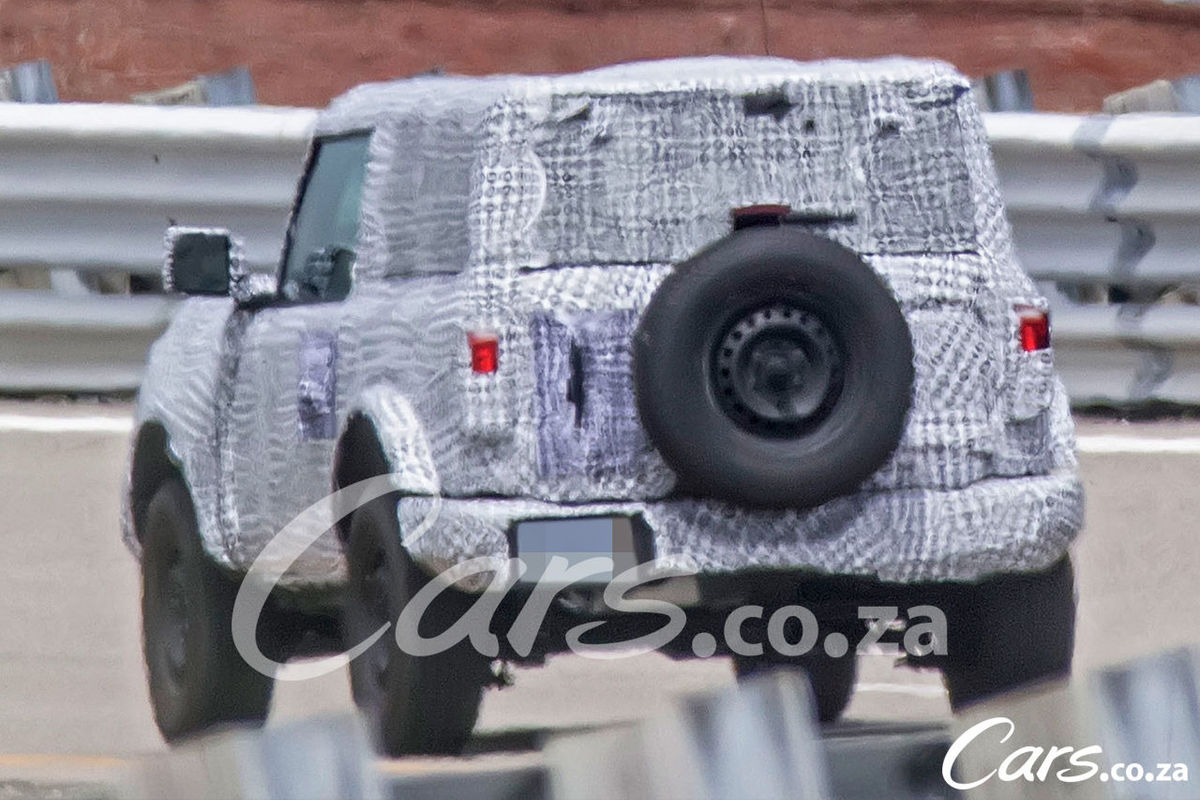
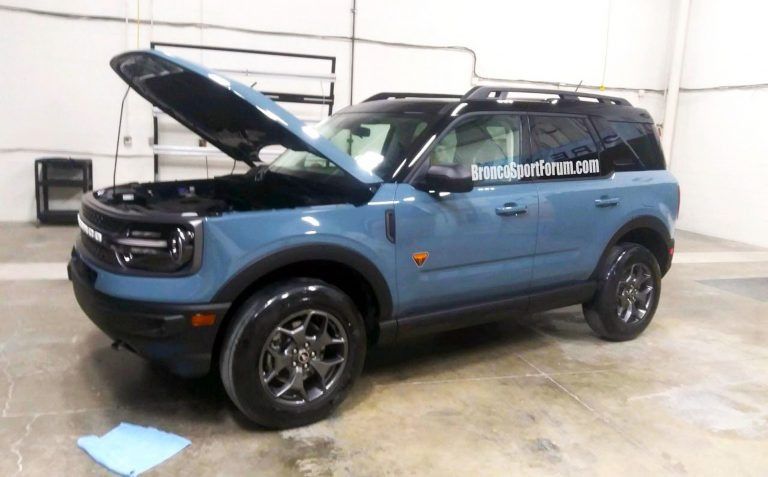
We've seen many leaks, spy shots and renders of the Ford Bronco – a compact SUV that's aiming squarely at the Land Rover Defender and Jeep Wrangler.

Picture credit: S. Baldauf/SB-Medien. We have paid for these photos and at the photographer's request, have watermarked them.

Ford has been planning to revive its Bronco name for quite some time and the successor to the iconic off-roader was due for reveal earlier in 2020. Then COVID-19 came along and ruined everyone's plans. 

The Blue Oval has big plans for the Bronco and has been working on both 4-door and 2-door models. It's being marketed as a compact body-on-frame SUV and will be more than capable when it comes to 4×4 activities. There'll be a 4-wheel drive system with low-range, independent front suspension, solid axle at the back as well as offroad modes.

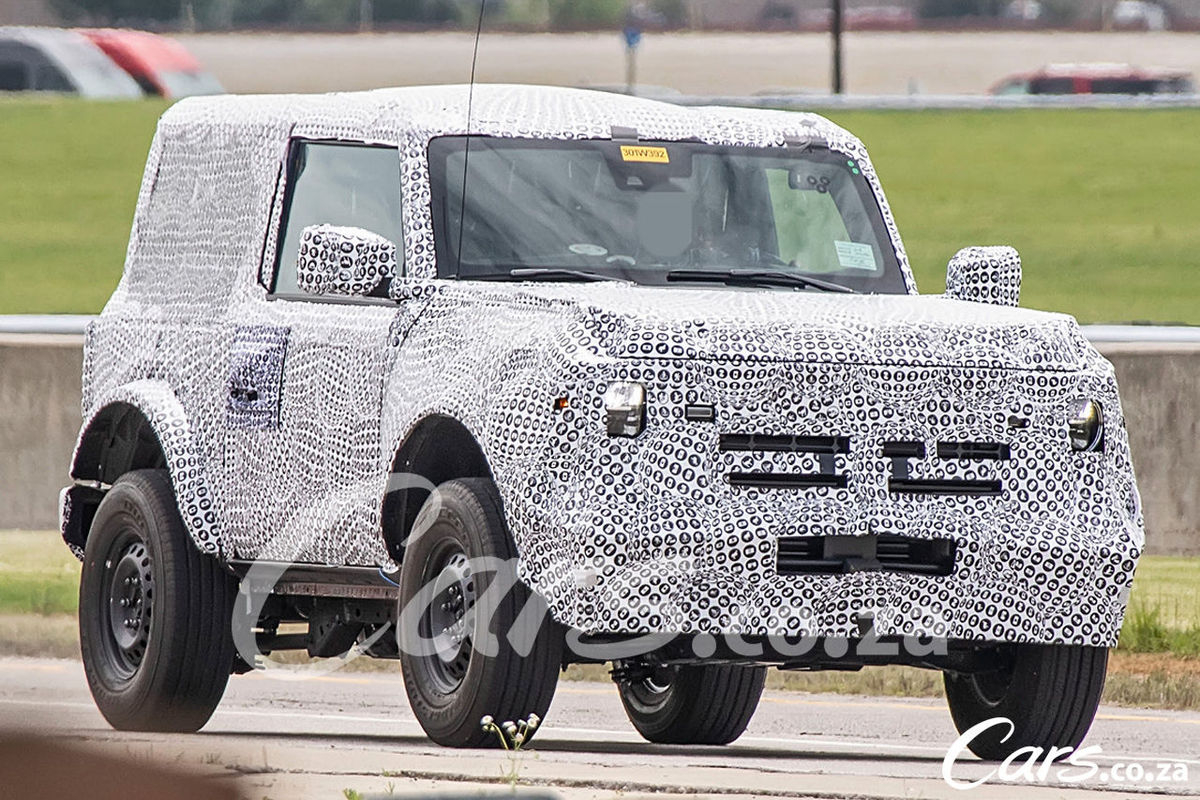
What you see here is a 2-door Ford Bronco prototype that looks like it's running a short-wheelbase setup. This model would be aimed squarely at the likes of the Suzuki Jimny. The Jimny production can't keep pace with global demand and Ford will attempt to catch some of those clients who don't want to wait.

In terms of engines, the Ford Bronco is expected to offer a 2.3-litre EcoBoost motor with around 200 kW and 420 Nm, as well as a 2.7-litre EcoBoost V6 with 240 kW and 542 Nm. In terms of transmissions, Ford's 10-speed auto is likely to be on duty and rumours suggest a manual gearbox might be available.

As for South African availability, the key thing here is the production of a right-hand-drive model and at this stage it's not happening as "There are currently no plans in place for right-hand drive Bronco," Ford Australia president Kay Hart previously told carsales.com.au.  There are a few right-hand-drive markets like Japan, United Kingdom and Australia, as well as South Africa. We'll keep our fingers crossed that Ford changes its mind.


The 4-door Ford Bronco leaked earlier in 2020.

Further Reading

Forget a Jimny bakkie, a 5-door’s coming!

New Ford Kuga Revealed

Jimny Bakkie is like a mini-tractor

Should Ford's New Freestyle Come to SA? [w/Video]

2024 BMW M5 To Go Electric?

With emissions and efficiency regulations growing ever stricter, many worry about the future of high-performance petrol vehicles. The good news is many will adopt green tech and still deliver credible performance. Rumours suggest the next-generation BMW M5 will feature plug-in hybrid tech mated to a V8 petrol engine. Wait, it gets better as there are rumours of an all-electric BMW M5 in 2024 with 750 kW!

First and foremost, this electric BMW M5 is not going to be part of the recently-unveiled facelifted 5-Series range, but rather form part of the next-generation which is expected around 2023. 

Car Magazine UK has shared some details of the 7th generation BMW M5 and we're excited. It appears there will be 2 versions, with the first adopting a plug-in hybrid strategy with a turbocharged petrol V8 motor and electric motors giving it an output of around 560 kW / 1000 Nm to all 4 wheels. This powertrain option is rumoured to be headed for the yet-to-be-revealed BMW X8.

The 2nd version is controversial as it will be an all-electric affair. The goals are a 0-100 kph time of 2.9 seconds and an electric range of 700 km on a single charge. Rumours suggest there'll be 2x 250 kW electric motors at the rear, with one 250 kW motor driving the front axle. In total, that's 750 kW or the magical 1000 hp mark. We know premium manufacturers will be pushing hard in this space and we'd bet that BMW has looked at how Porsche has engineered its Taycan electric sportscar.

While it's too early to even see prototypes on the road of this new electric BMW M5, we know BMW M is working on electrified performance vehicles as CEO Markus Flasch confirmed this on a social media livechat. 

Further Reading

2024 is a long way away, but BMW is preparing an M5 CS.

BMW M5 (2018) Review

BMW M5 Competition Review – Do we need a faster M5?

Facelifted BMW 5 Series officially revealed

Updated BMW 5 Series gets M Performance parts

New boss for Isuzu SA

Hummer man now driving Isuzu. 

With positive investment sentiment from the Japanese parent company, Isuzu’s South African operations are now properly capitalised and looking to expand. Initial spend for the D-Max totals R1.2bn and the third-generation D-Max is expected here early next year. The current Isuzu plant in the Eastern Cape is also gearing up to produce the new D-Max, which is why the new model will only see the light of day in 2021 in SA.

There has been a leadership change at Isuzu South Africa as Michael Sacke has decided to leave his position. Sacke was an experienced GM employee, having spent time in Detroit. Educated at NMU, he had guided Isuzu since its independence from GM, in 2017.

Replacing Sacke is Billy Tom, who also has strong Eastern Cape education roots, having studied at Rhodes. Tom is no newcomer to the automotive industry, having previously established the GM premium vehicle business in South Africa, which launched Cadillac and the locally-produced Hummer, back in the late 2000s.

Unlike the case with Cadillac and Hummer, which were deeply cyclical models completely inappropriate for a multi-generational South African lifecycle, Isuzu is a very stable business. It will be interesting to see what Billy Tom does with bakkies, as CEO of Isuzu.

Where Tom could be of particular value to Isuzu, is coping with the new demands of a post-Covid automotive retailing business and customer experience. Tom has worked in banking and the beverage industries and could bring new techniques and customer insights to the business of selling bakkies.

Isuzu has potential advantages in the simplification of its South African business: consisting of bakkies, SUVs and trucks. Without having to bother with compact cars, luxury sedans or high-performance vehicles, Isuzu could potentially scale its resources most efficiently, at being a pure gravel travel and logistics solution brand.

Related content

Isuzu MU-X (2020) Specs & Price

All-New Isuzu D-Max Revealed (SA Details)

5 Cheapest Automatic Double-Cab Bakkies in SA

New Cars Sales in SA: May 2020

The National Association of Automobile Manufacturers of South Africa (NAAMSA) has released new vehicle sales figures for May 2020. Take a look at what transpired under Level 4 Lockdown…

Stringent safety measures have been put into place across the board to ensure that the automotive sector can resume operations safely under Level 3 regulations. Manufacturers are ramping up production and dealers are now open for business. 

As is to be expected, new car sales statistics still reflect significant declines in May 2020 but there has been a notable uptick from April’s numbers. In May 2020, new vehicle sales declined by 68% compared with May 2019 while exports also took a major knock with a decline of 64.1%. 

Lebogang Gaoaketse, Head of Marketing and Communication at WesBank commented “These low levels of activity are no surprise,” continues Gaoaketse. “While we expect a slow resurgence of activity, necessary access to repairs and maintenance will have been appreciated by consumers and businesses alike. The move to Alert Level 3 from today (June 1) will begin to provide more general access to dealer facilities and trade.”

“These May volumes are reassuring given the slow resumption of activity during the month from such an unprecedented circumstance. With a full month of sales ahead and more freedom within Alert Level 3 regulations, we will begin to understand what the new normal level of activity will be in the new vehicle market.”

New Car Sales Summary: May 2020

  • Aggregate new vehicle sales at 12 932 units down by 68% (-27 496 units) compared with May 2019

  • New passenger car sales of 9 019 units down by 65.4% (-17 083 units) compared with May 2019

  • Light Commercial Vehicle (LCV) sales of 3 073 units down by 74.8% (-9 128 units) compared with May 2019

  • Exports of 10 819 units down by 64.1% (-19 333 units) compared with May 2019

Top-Selling Car Brands in South Africa for May 2020

  1. Volkswagen – 2 749 units

  2. Toyota – 1 848 units 

  3. Hyundai – 1 368 units 

  4. Ford – 811 units

  5. Mercedes-Benz – 795 units (estimated) 

Top-Selling Cars in South Africa for May 2020

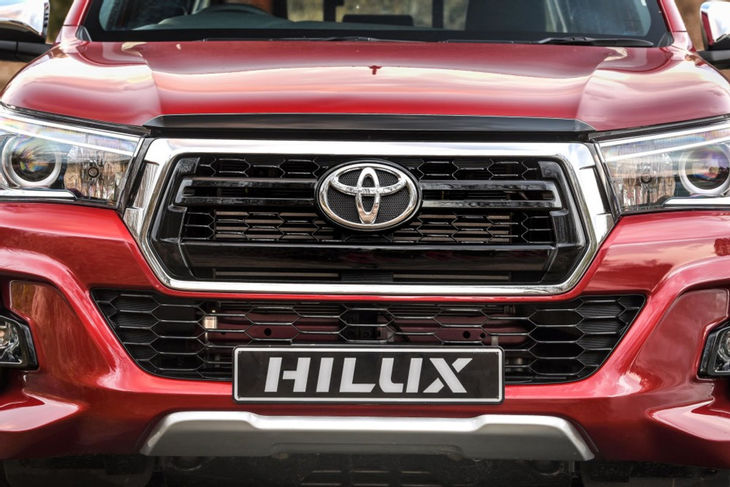
  1. Toyota Hilux – 796 units 

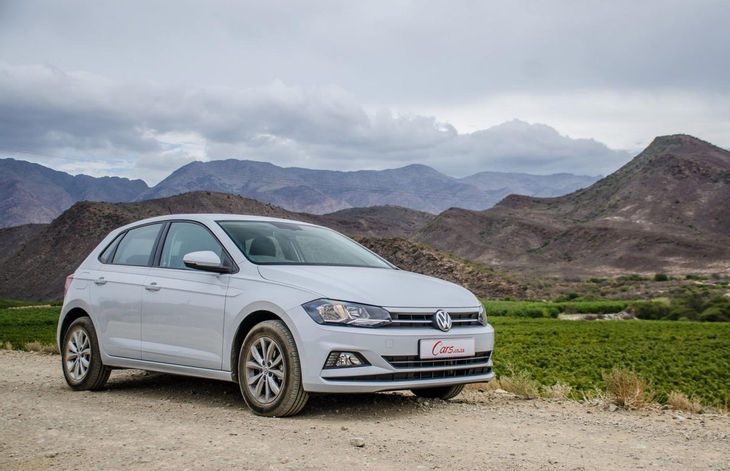
  2. Volkswagen Polo – 668 units

  3. Volkswagen Polo Vivo – 636 units

  4. Isuzu D-Max – 611 units

  5. Ford Ranger – 538 units

Sales Outlook 

Full OEM production is expected to commence from 1 June 2020 and export numbers are therefore expected to rise sharply over the course of the month. As for new vehicle sales, the market is expected to remain depressed due to weak demand and poor consumer and business sentiment as a direct result of the COVID-19 pandemic. 

The market remains very unpredictable and the industry is likely to remain depressed over the medium term. Nonetheless, current factors such as reduced fuel prices, sharp interest rate cuts, below-inflation new vehicle price increases, dealer incentives and low inflation is currently supporting the new vehicle market. However, it remains to be seen to what degree these factors will influence consumers and businesses to buy new vehicles. 

“While we were reassured by the levels of demand from consumers and business judged by volumes of applications for finance during May, we shouldn’t expect sales to return to any form of normality for the remainder of the year,” said Gaoaketse.

Export performance takes direction from global market performance and while export projections will be impacted in 2020, the severity of the impact will be determined by the projected fall in vehicle demand as a result of the COVID-19 pandemic. 

Buy a new or used car on Cars.co.za

Also see:

Most Fuel Efficient Budget Cars in SA

Fuel Price increase for June 2020

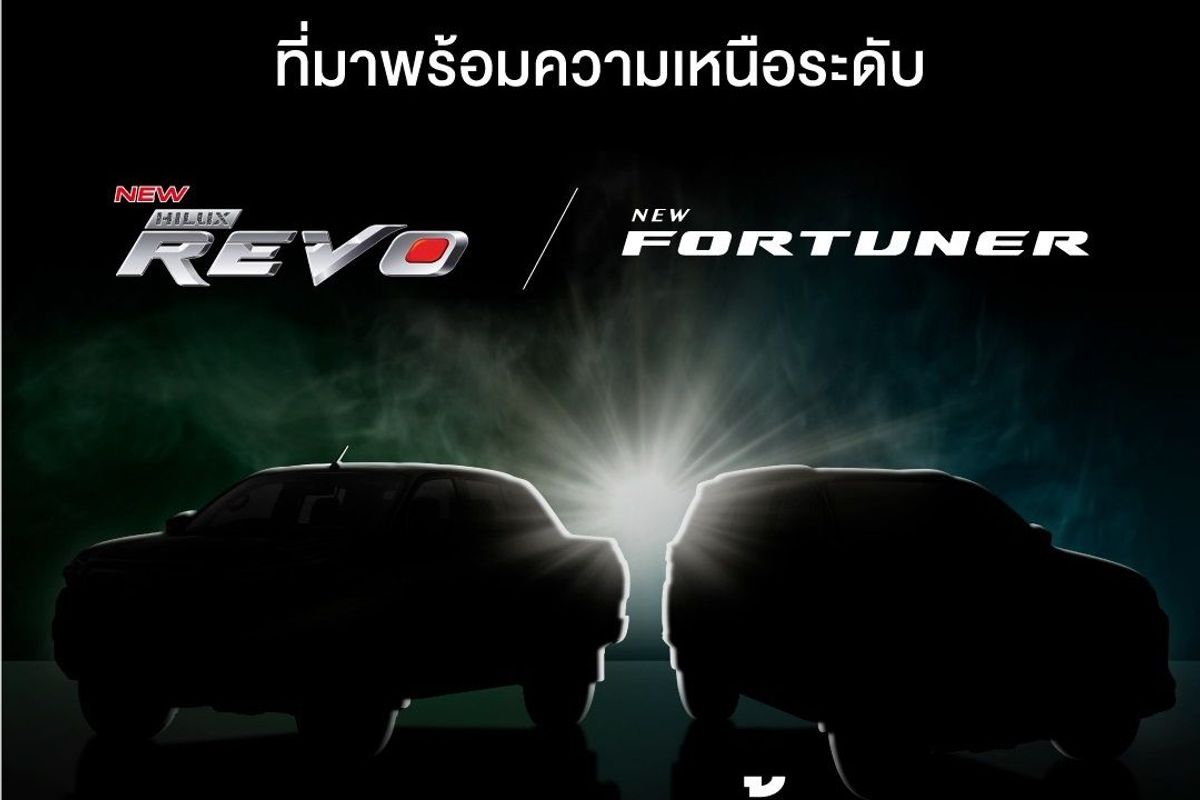
2020 Toyota Fortuner: What we know so far

Toyota is working on its updated Fortuner, which could potentially go on sale in SA before the end of 2020.

Render by Duwyne Aspeling, Cars.co.za

An article by AutoCar India suggests Toyota is working on a facelift for the popular Fortuner. First revealed globally in 2015 and with an SA launch back in 2016, Toyota's Fortuner has been a massive success for the Japanese brand. It has received a few updates here and there, but from what the source article says, this new update will be its biggest yet. 

The actual reveal of the facelifted model appears closer than ever with Thailand slated to host the event in May 2020. Although, much of that will no doubt depend on the Coronavirus pandemic and lockdown situations in that country. Update: it appears the Toyota Fortuner will be officially revealed in the first week of June 2020 thanks to a teaser.

There have been very few mules spotted and aside from a grainy picture of one spotted in Thailand, there's very little to go on in terms of visual changes. Our in-house render specialist used several camouflaged vehicle images and spy pics to conjure up what you see here. We think the updated Toyota Fortuner will receive a subtle front end upgrade that looks similar to that of the RAV4. The grille from the RAV4 will likely be carried over too and there should be subtle changes to the wheels, headlights and taillamps. Given the conservative nature of the typical Toyota customer, changes will be subtle. Inside, we assume an updated infotainment system will replace the current unit (Toyota has steadily added Android Auto and Apple CarPlay to its models) and there could be changes to the trim and materials used.

As far as engines go, we expect all engines to be carried over. Both petrol and diesel powertrains are tried-and-tested in the global market. There could be slight revisions to improve both power and efficiency, however. The current global engine portfolio ranges from the 2.7- (4-cylinder) and 4.0-litre V6 petrol engines to the 2.4-, 2.8- and 3.0-litre diesels (certain overseas markets only). Reports from Australia suggest that the 2.8 turbodiesel could get a power boost (currently 130 kW) to move it into line with competitors such as the Ford Ranger (157 kW) and Nissan Navara (140 kW).

Importantly, the Toyota Fortuner is assembled right here in Durban, South Africa and it will be critical to the economy for SA to receive the go-ahead to build this updated version. 

Further Reading

Toyota Fortuner (2016) First Drive

Best Adventure SUVs in SA – #CarsAwards Finalists 

Toyota Fortuner (2017) Specs & Price

Toyota Fortuner 2.4GD-6 (2016) Review

Extended Test: Toyota Fortuner 2.8 GD-6 4×4 Automatic [with Video]

SA Petrol Price 2020 – Where Does Our Money Go?

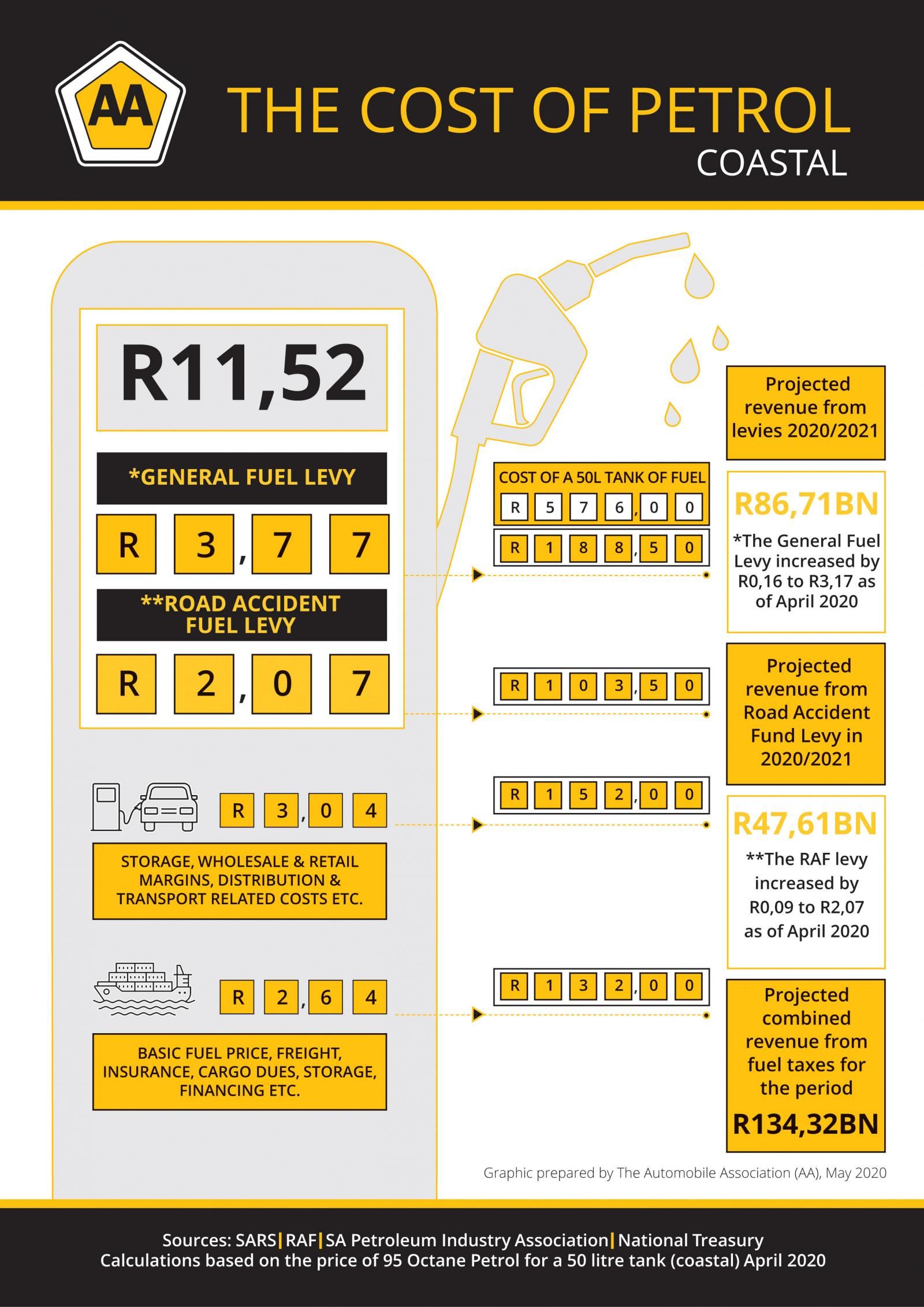
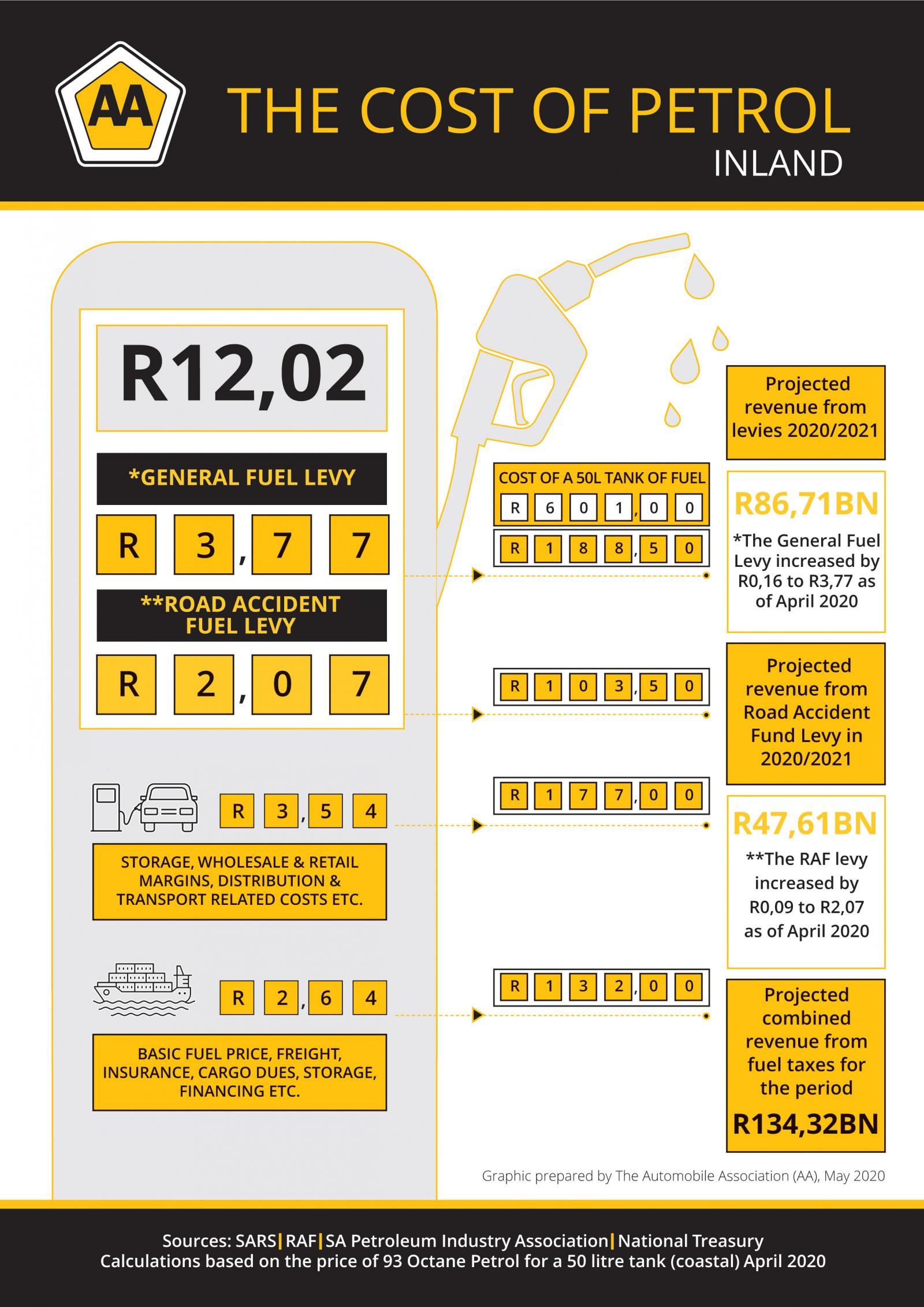
The wildly-fluctuating fuel price is a massive discussion point and we've often wondered how the numbers work. The AA has published a breakdown of the fuel price to show SA consumers where their money is going.

The past few months have been extremely volatile for the petrol price. COVID-19 combined with the oil price war as well as an unstable exchange rate has resulted in some wild decreases. Sadly, we think that's the last of them as things are slowly reverting back to normal. These decreases, however, refer to the basic price of fuel as the taxes do not change.

Let's look at these taxes that go into every litre of fuel. First up is the General Fuel Levy (GFL) which is R3.77 (31%) of every litre of inland fuel and 32% of every litre of coastal fuel. The second tax is the Road Accident Fund Levy (RAF) and its R2.07 per litre which is around 17% per litre of fuel sold. The AA is keen to point out these taxes hurt the poor the most as an increase to them always results in an increase in the cost of public transport. Together, both the RAF and GLF add up to R5.84. This is around 49% of the price of every litre of fuel sold in South Africa. It's estimated that the government will get about R135 billion from these levies, with R87 billion going directly to Treasury.

The 3rd factor in the SA fuel price is the actual cost of the petrol itself, plus the add-ons like insurance, transport, harbour fees and so on. It's referred to as the BFP and right now it's in a good place at R2.64, way lower now at the time of writing (25 May 2020) than when the Lockdown started. 

Finally, the last factors are the transport costs of getting the petrol from the harbour to inland areas (which explains the differences in coastal and inland price), as well as customs/excise duties as well as a retail margins paid to fuel station owners. Right now, the petrol station owners get R2.11 for every litre sold. The cost of secondary storage also has to be considered and in total, that's R3.54 for inland petrol and R3.02 for coastal petrol.

It's never been a better time for the SA motorist as the last time we had petrol this low, it was 2016. Unfortunately, the cost of petrol is slowly going to increase as economic activity starts to pick up.


Further Reading

Fuel Price increase for June 2020

5 Ways to Beat the Fuel Price Hike

Most Fuel Efficient Budget Cars in SA

Most Fuel-Efficient Double-Cab Bakkies in SA

5 Fuel-Saving Car Features & How They Work

Porsche releases retro-inspired 911 Targa 4S

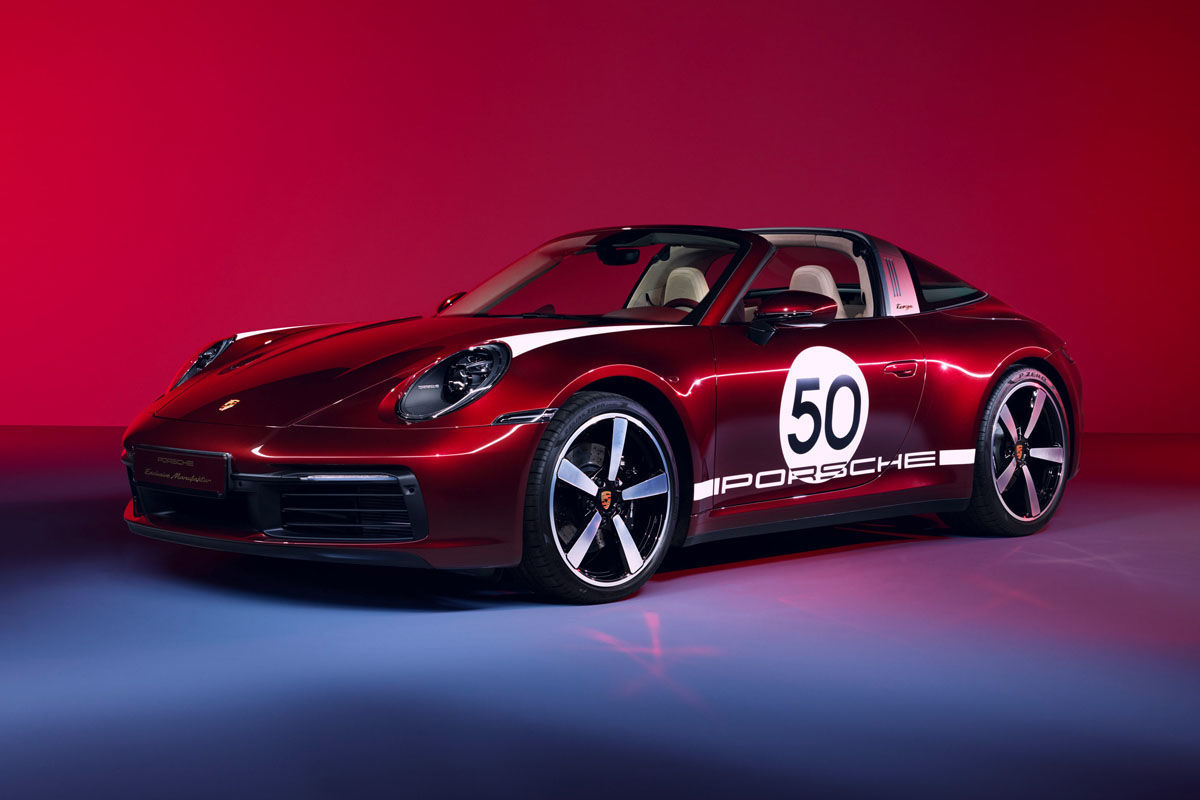
Porsche is all aboard the nostalgia train! The Zuffenhausen-based brand has released the first of 4 limited-edition Heritage Design 911 models through its Exclusive Manufaktur division. This, the first one, is based on the recently released 992-generation 911 Targa 4S and is laced with exquisite details that reference the ‘50s.

In a nod to Porsche’s model series code, only 992 examples of the 911 Targa 4S Heritage Design Edition will be built and, from a marketing perspective, selected interior elements of the car will be available as part of the Heritage Design package for all current 911s. Porsche has also created a high-quality chronograph, exclusively available to buyers of the limited-edition model, but more about that later…


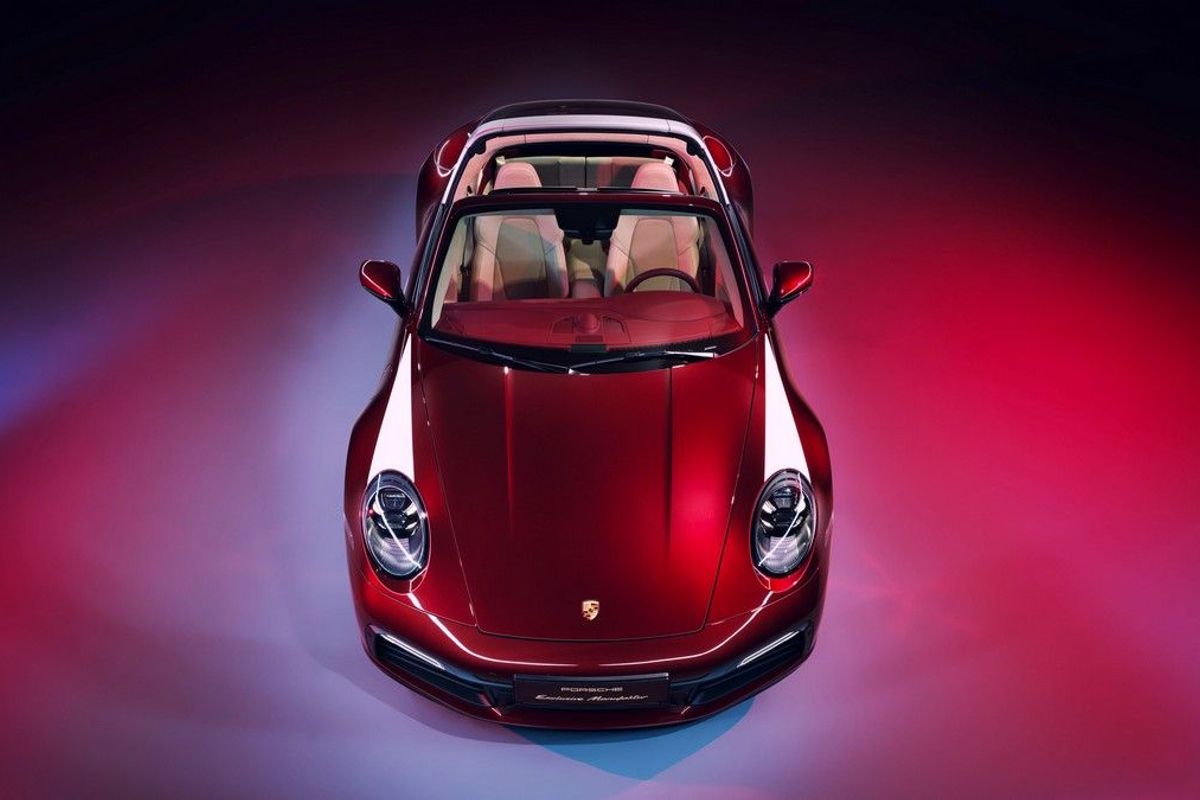
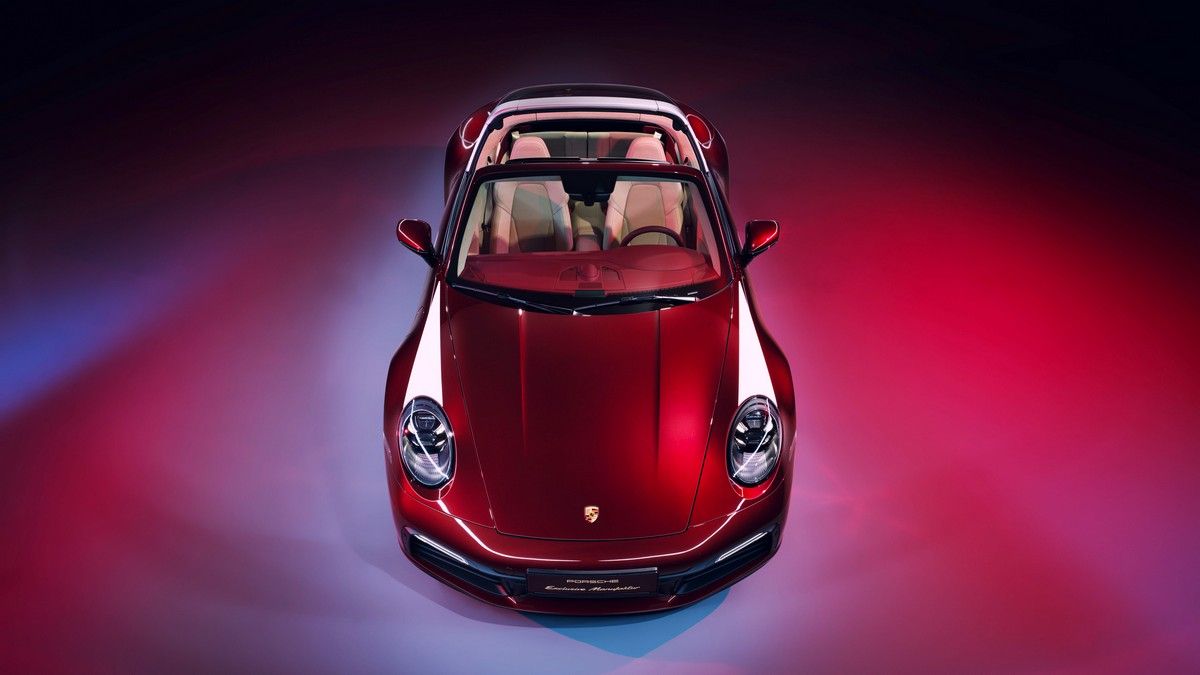
The limited-edition model features a 1963 Porsche crest on its nose and motorsport stripes on its front fenders.

“With the Heritage Design models, we are evoking memories of the ‘50s, ‘60s, ‘70s and 80s. (It’s) a new product line that represents the lifestyle dimension in our product strategy,” says Oliver Blume, Porsche AG board chairman, which suggests that the next 3 versions in the Heritage Design series will take their inspiration from ‘60s, ‘70s and ‘80s (911s) respectively.

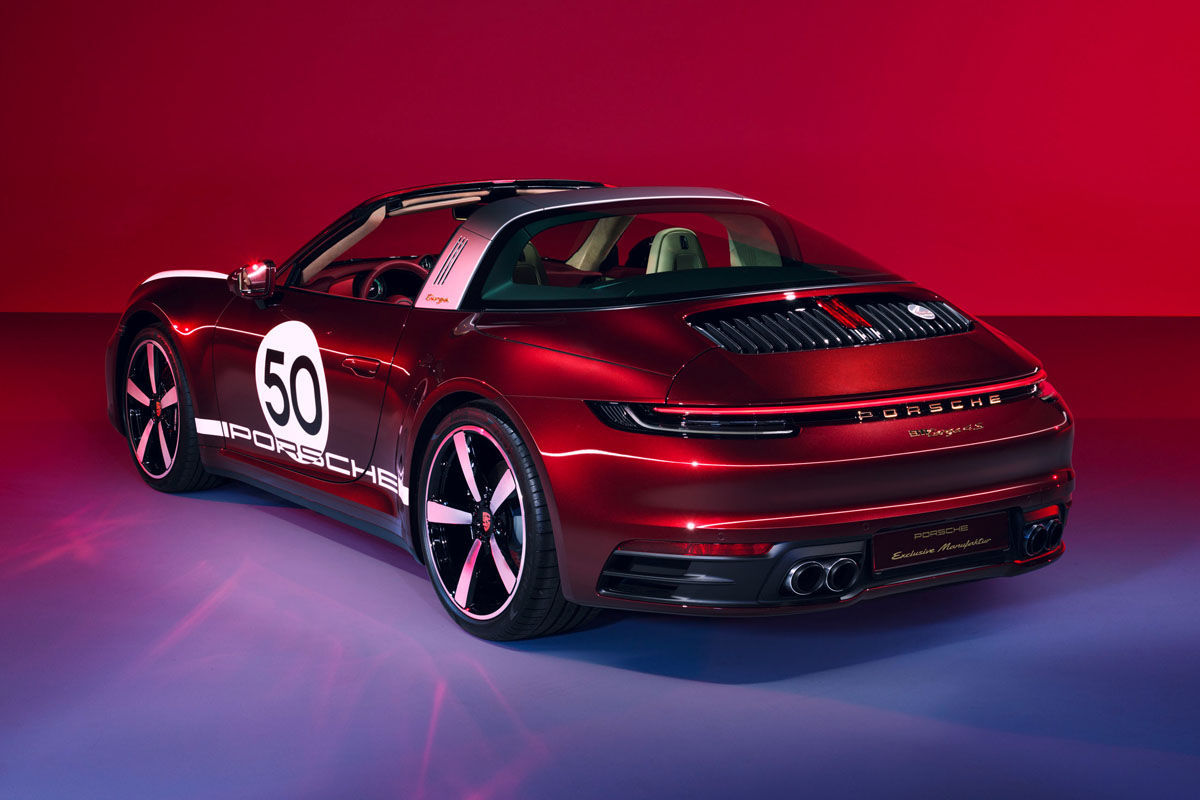
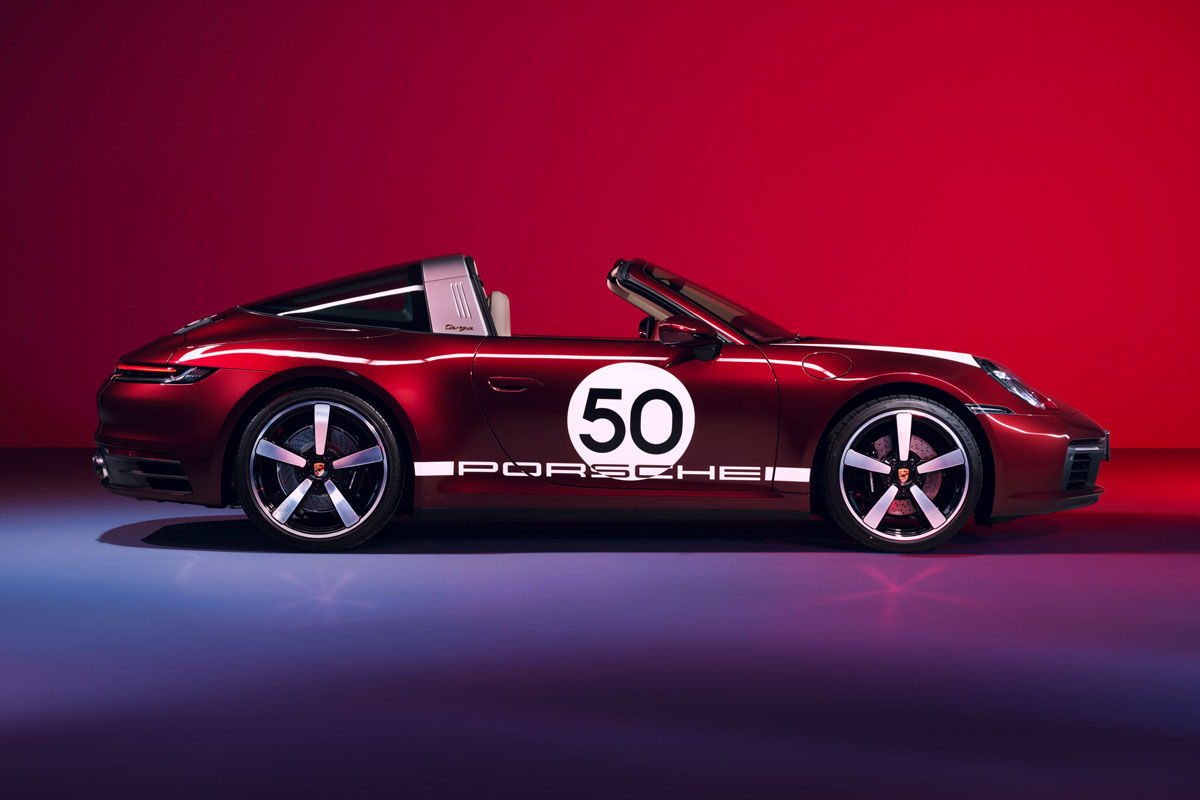
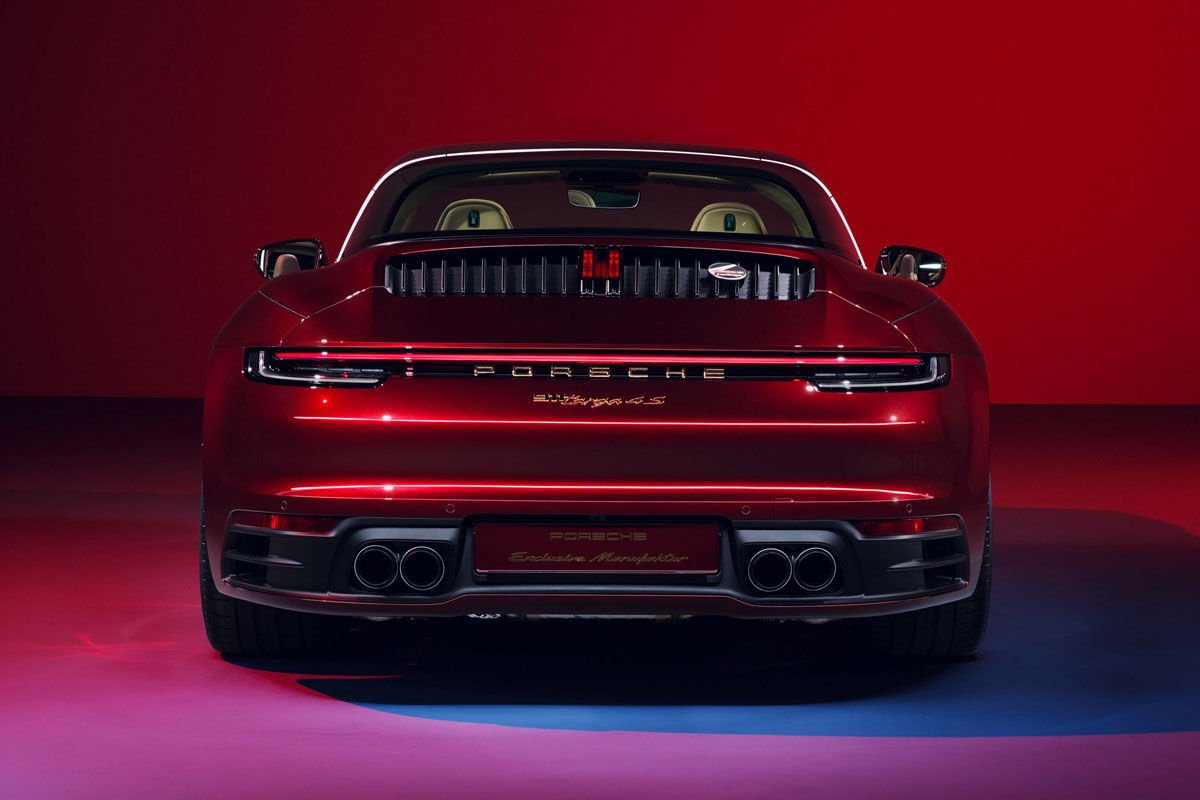
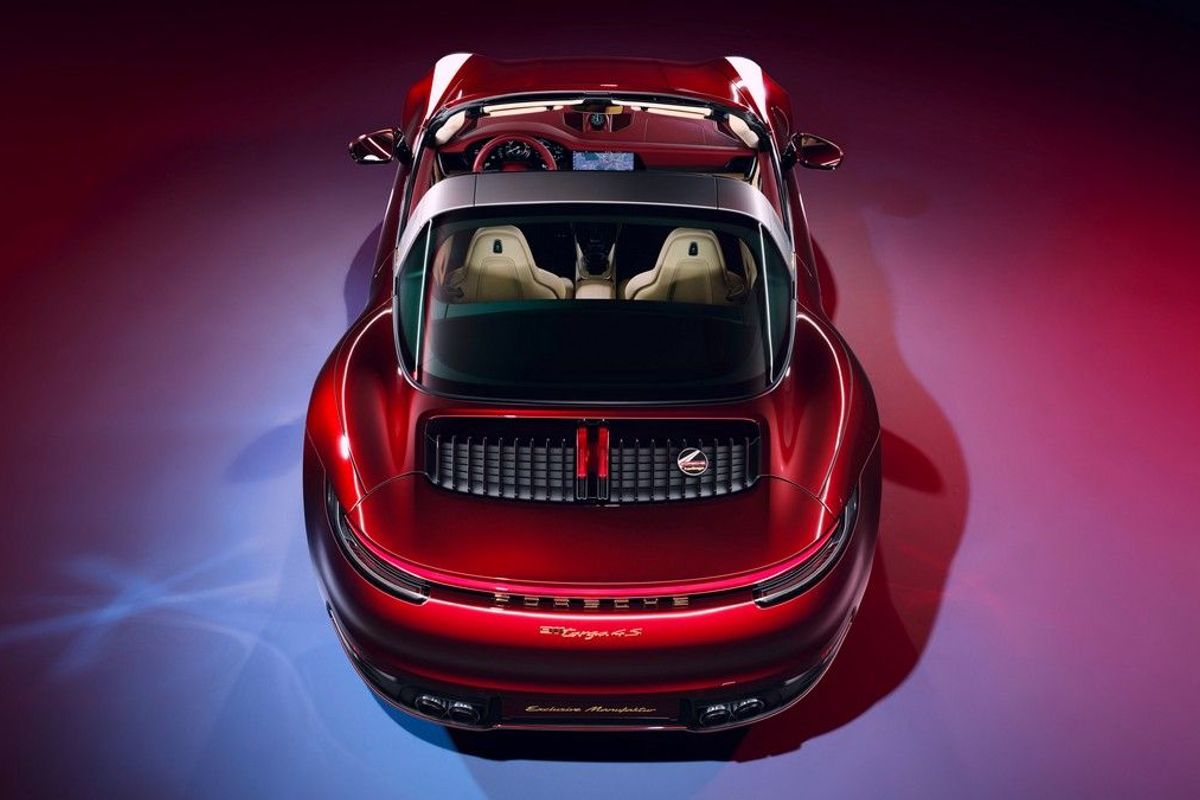
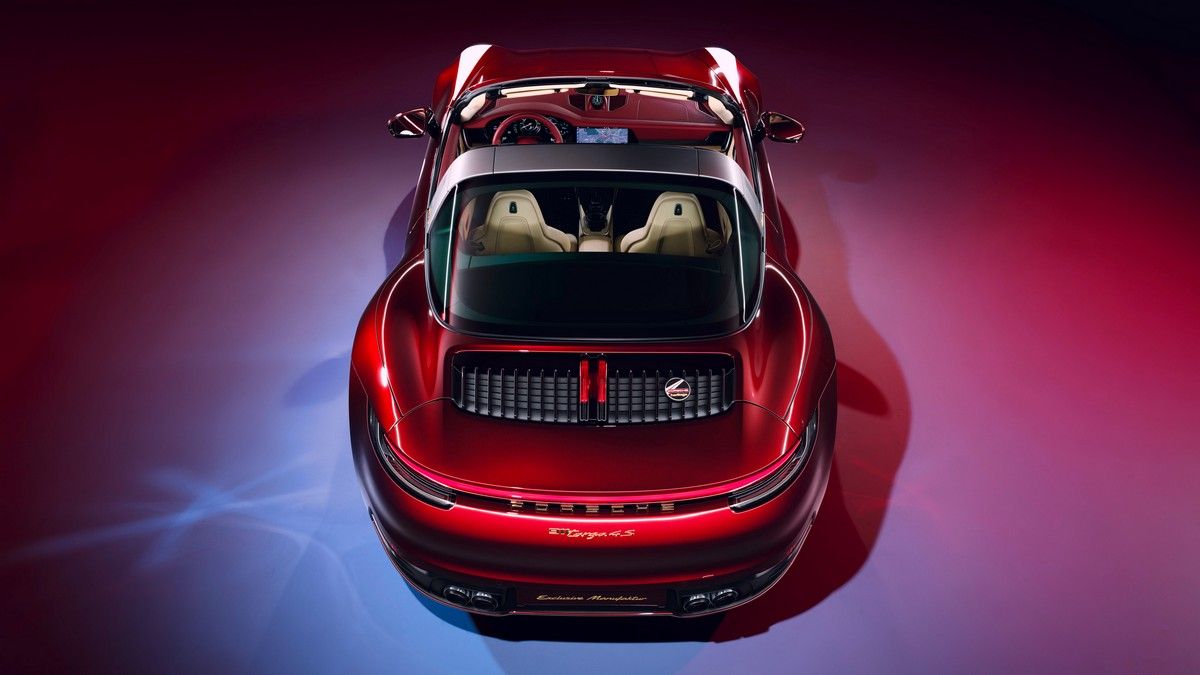
The 911 Targa 4S Heritage Design Edition is finished in Cherry Metallic (4 other exclusive exterior colours are available). Although the 911 debuted in 1963, the gold logos on the rear and targa bar are in a ‘50s style. The white side livery, matched with spear-shaped graphics on the front fenders are said to recall the early days of Porsche competition history.


The derivative designation on the bumper is finished in gold. Note the Porsche Heritage badge on the grille. 

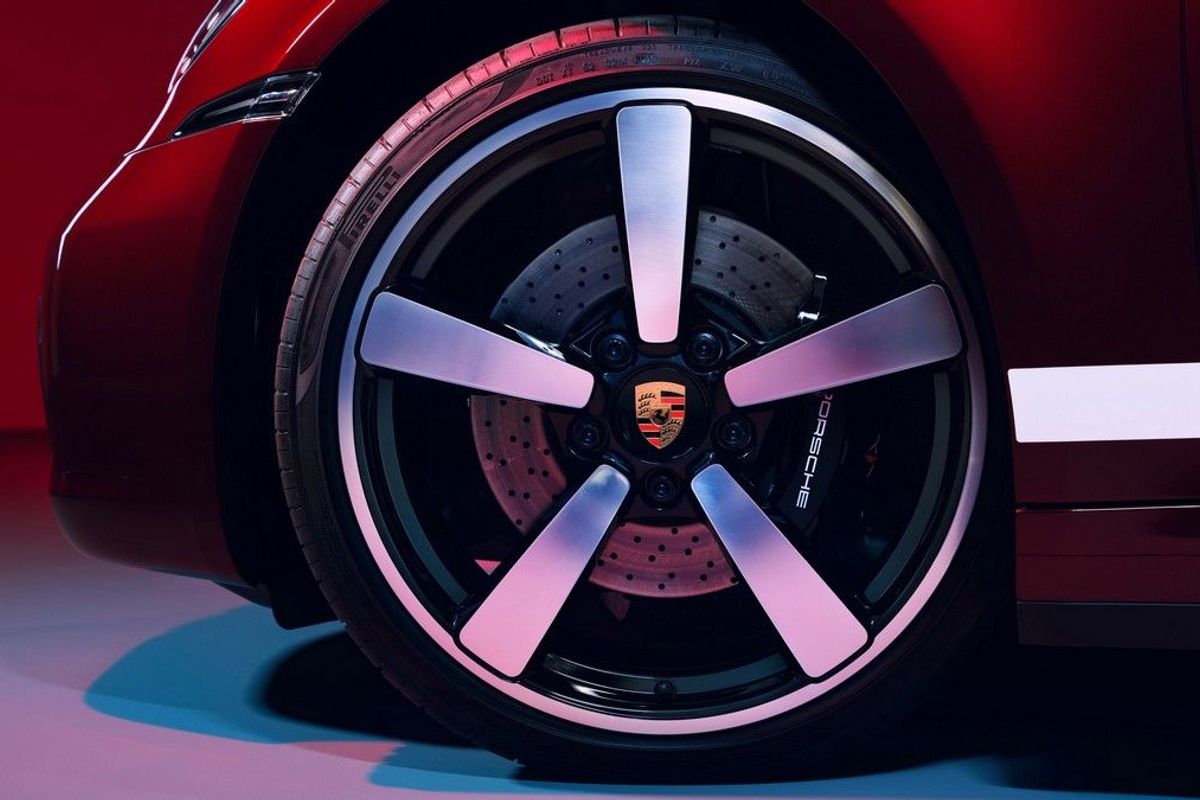
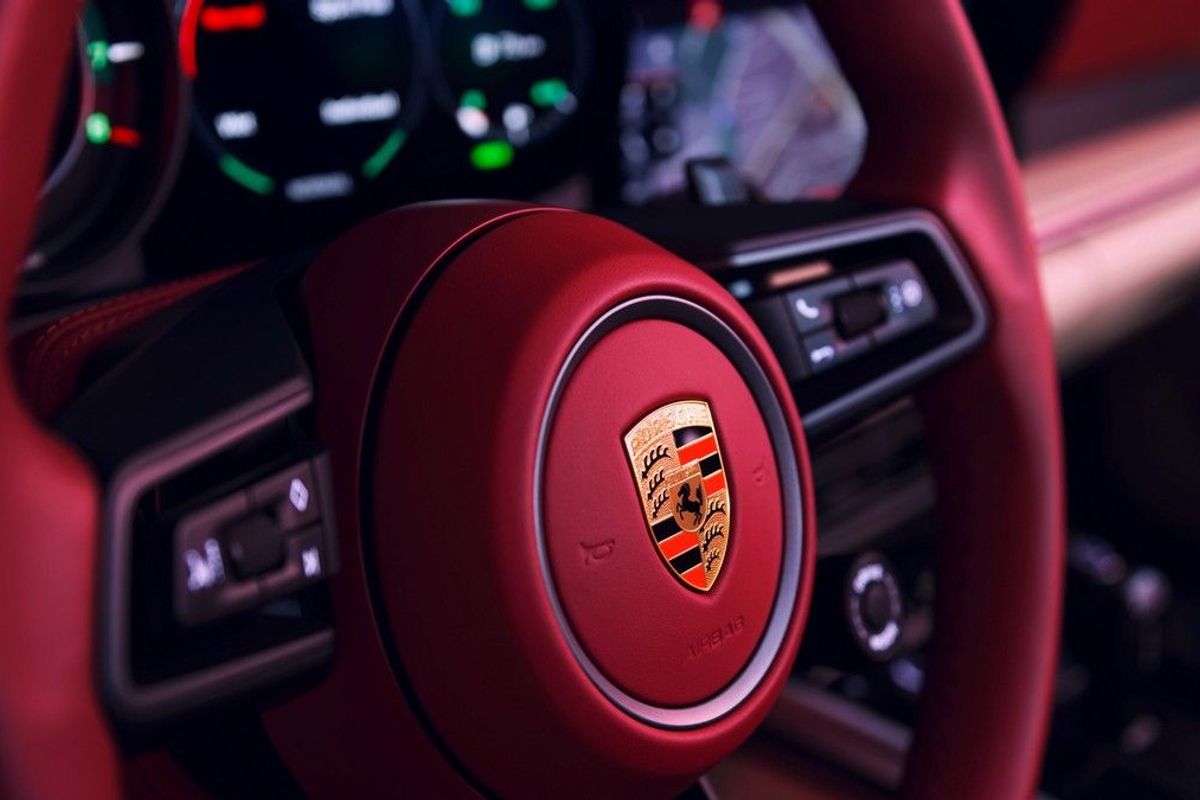
A Porsche Heritage badge – reminiscent of the one that was awarded when a 356 reached the 100 000-km mark – features on the rear grille, while the 1963 Porsche crest appears on the bonnet, steering wheel and wheel centres. To complete the look, the model comes with 20/21-inch Carrera Exclusive Design wheels accented by classic-look black brake calipers.  

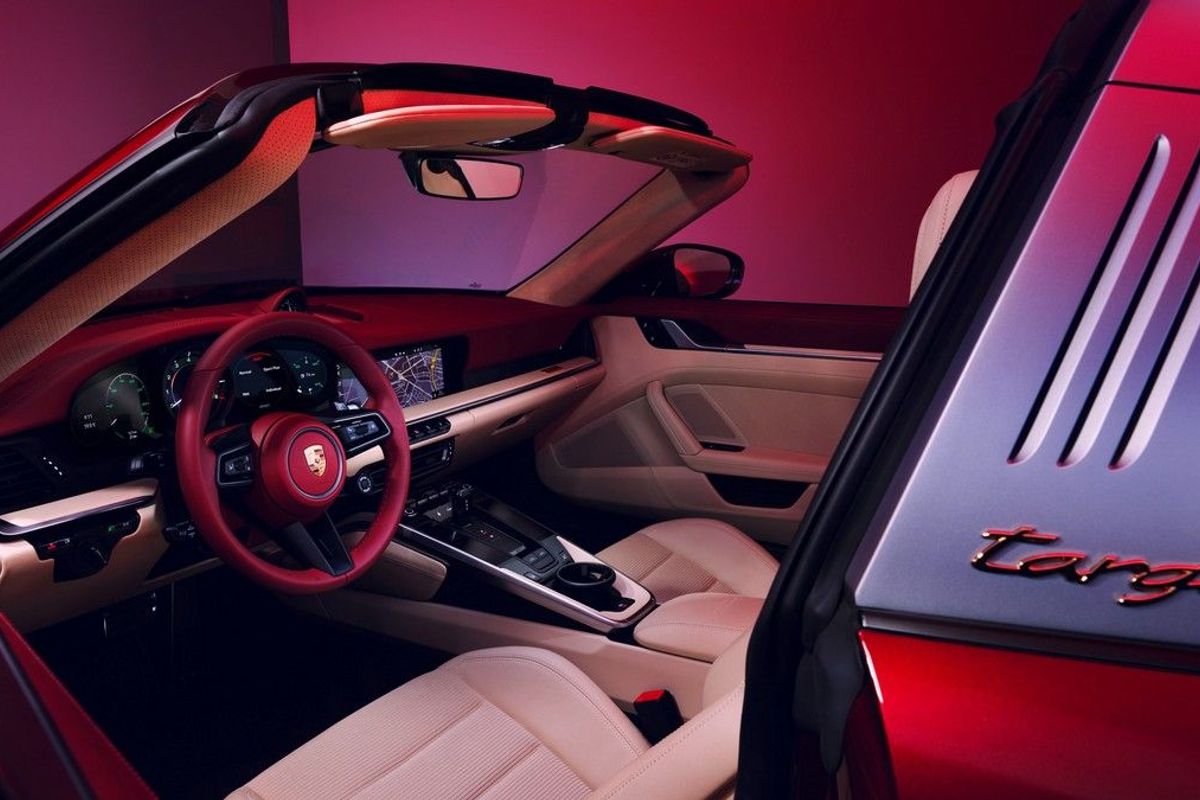
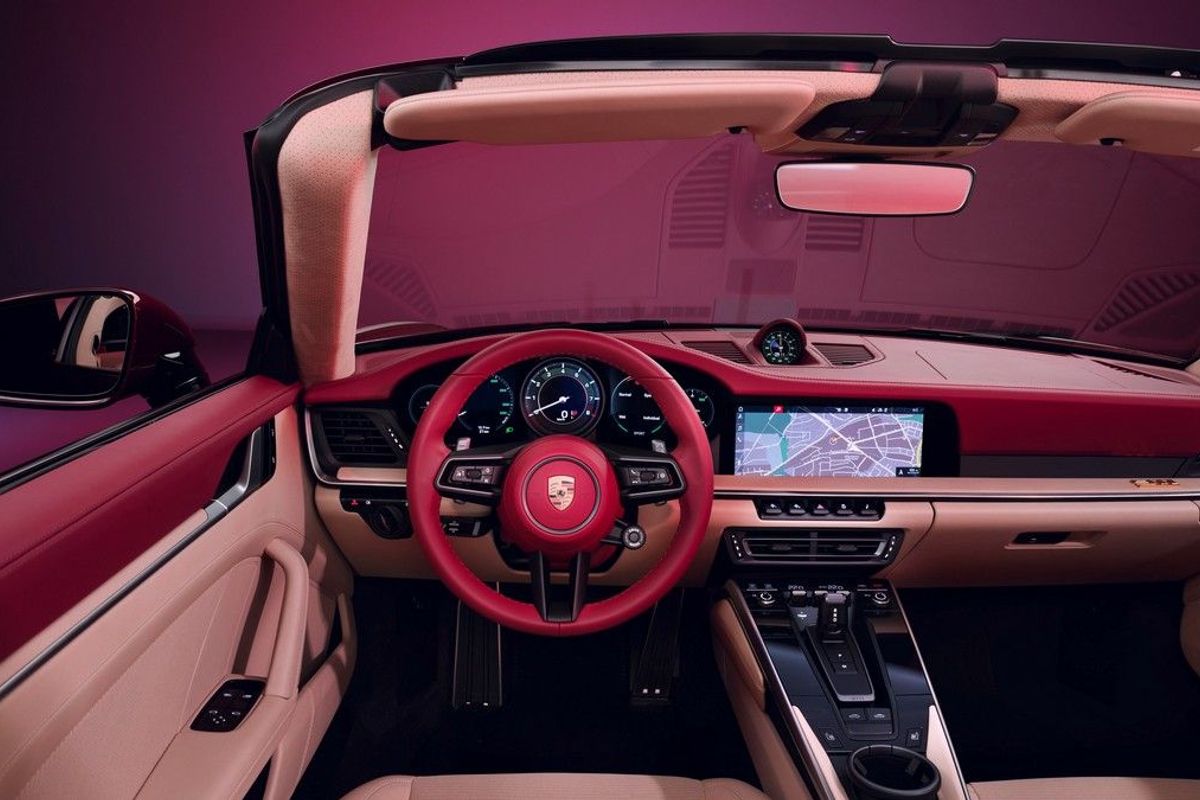
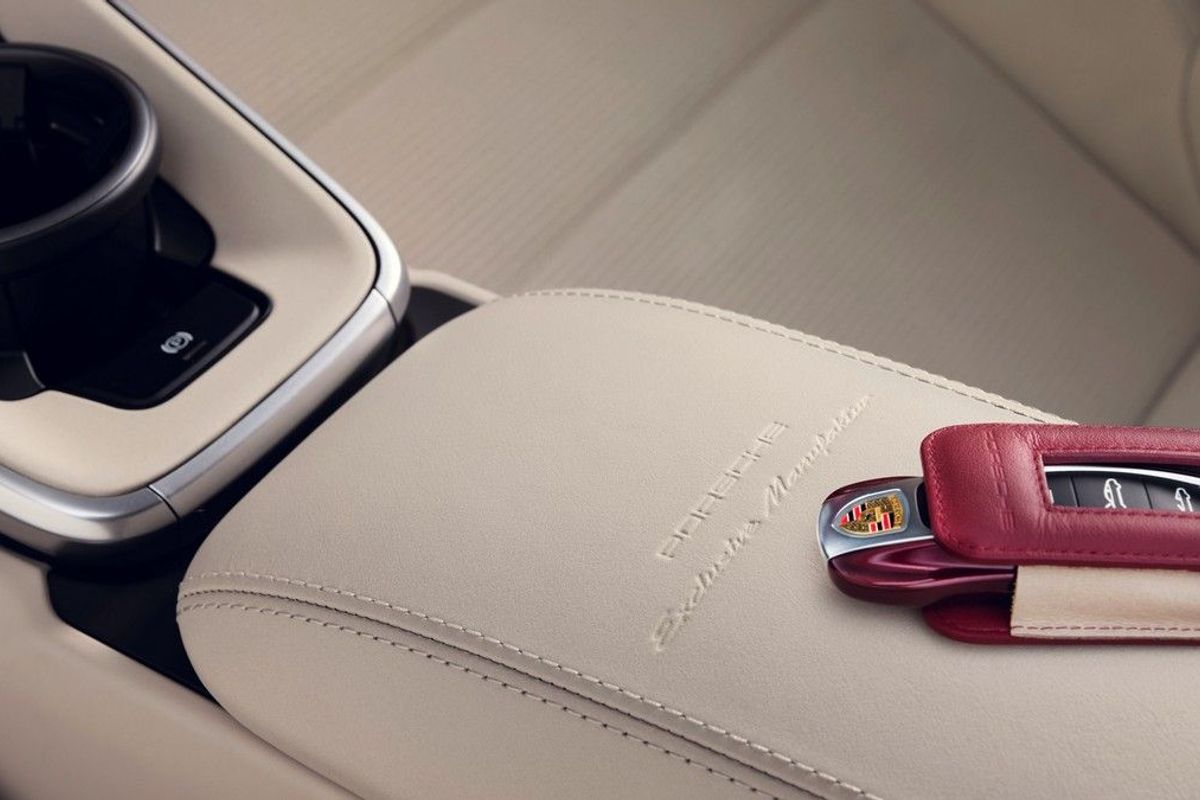
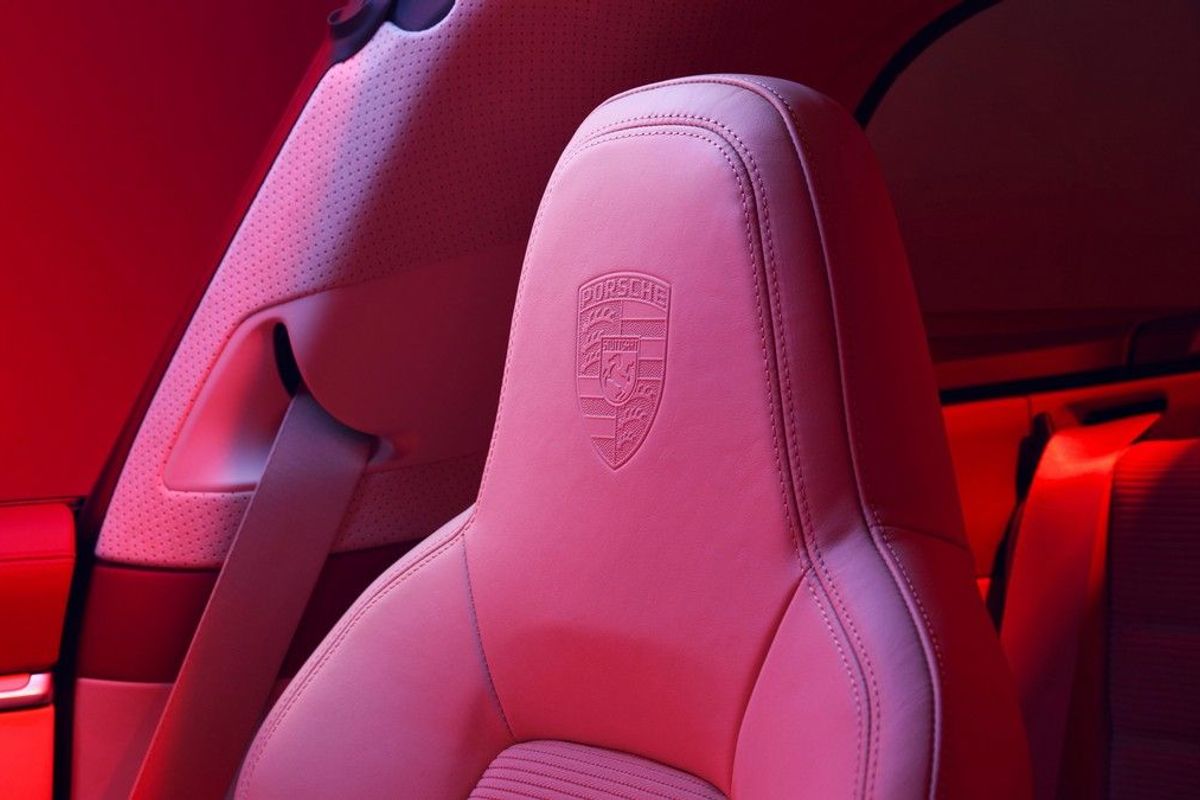
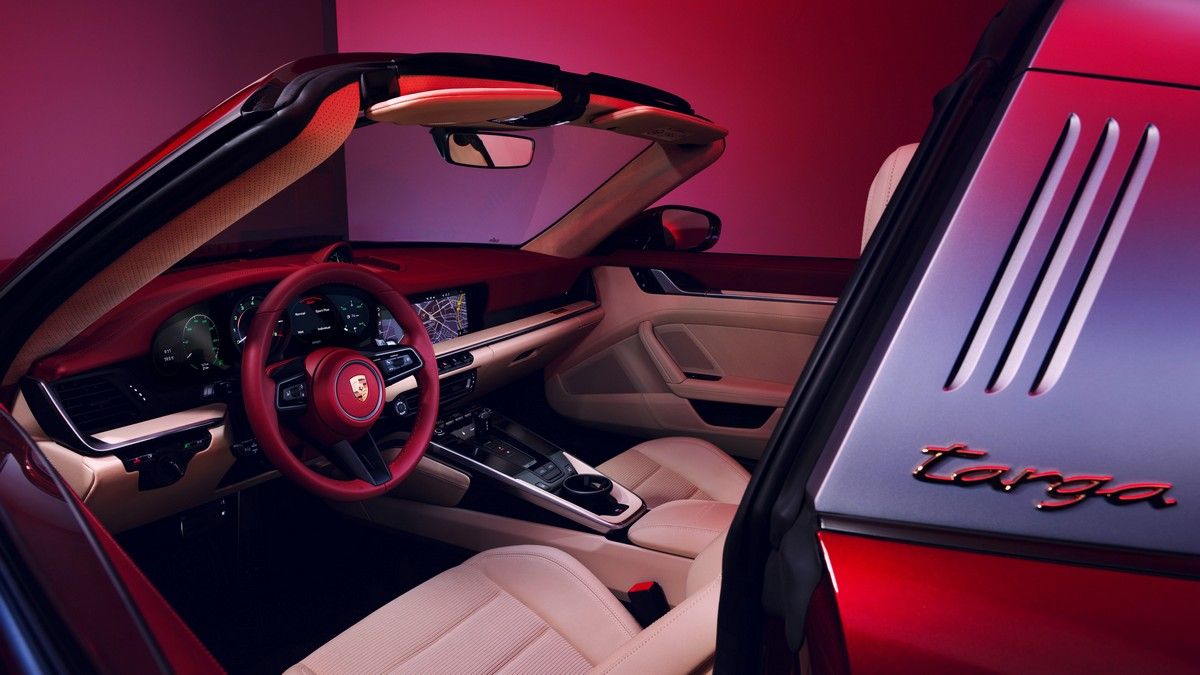
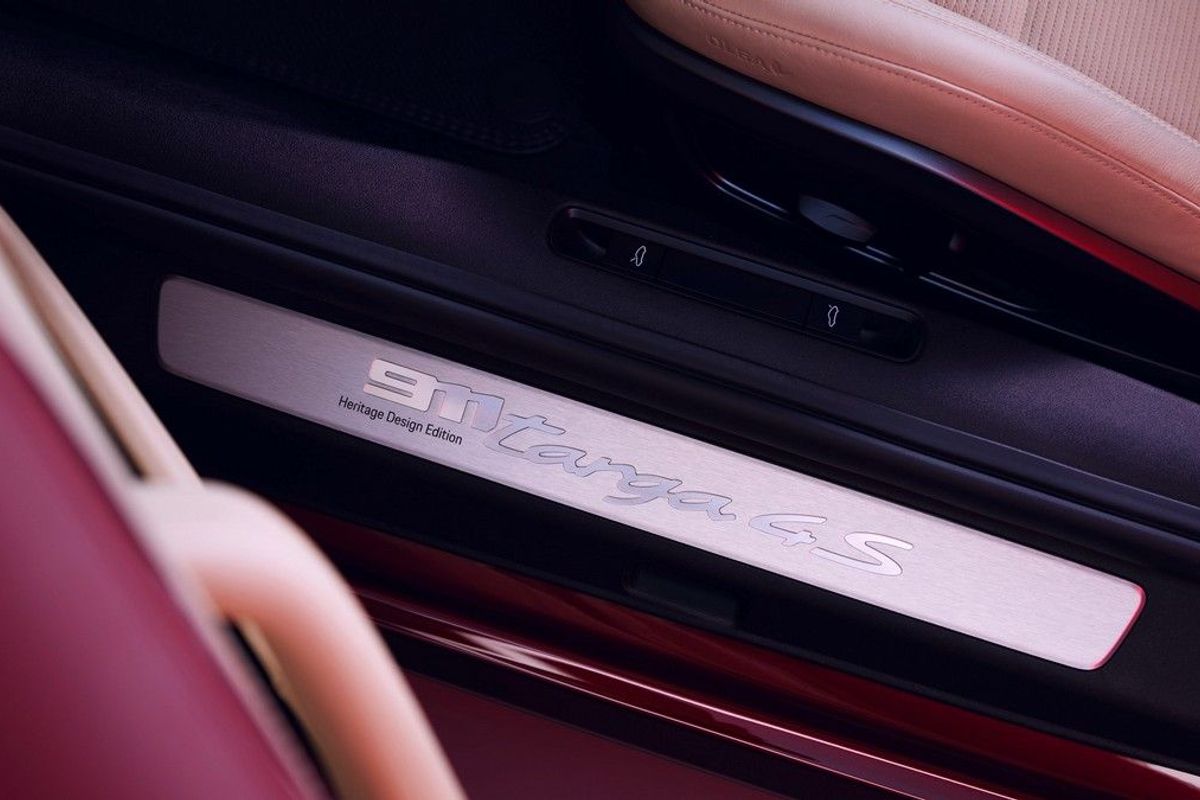
The interior is trimmed in Exclusive Manufaktur leather available in a choice of 2 dual-tone schemes: Bordeaux Red or Black leather, both in combination with OLEA club leather in Atacama Beige. The perforated roof lining is made of microfibre fabric and (wow, how retro?) corduroy fabric features on the seat and door trims – another nod to the fashion of the 50s.


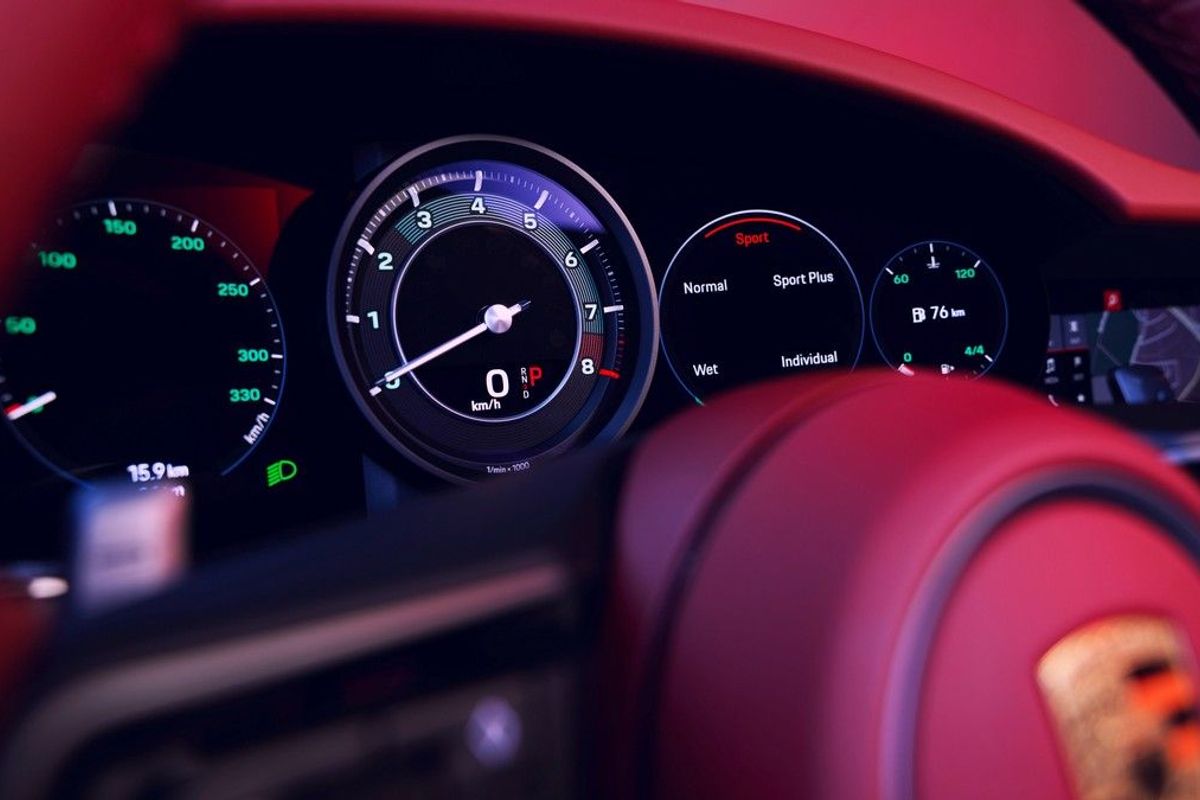
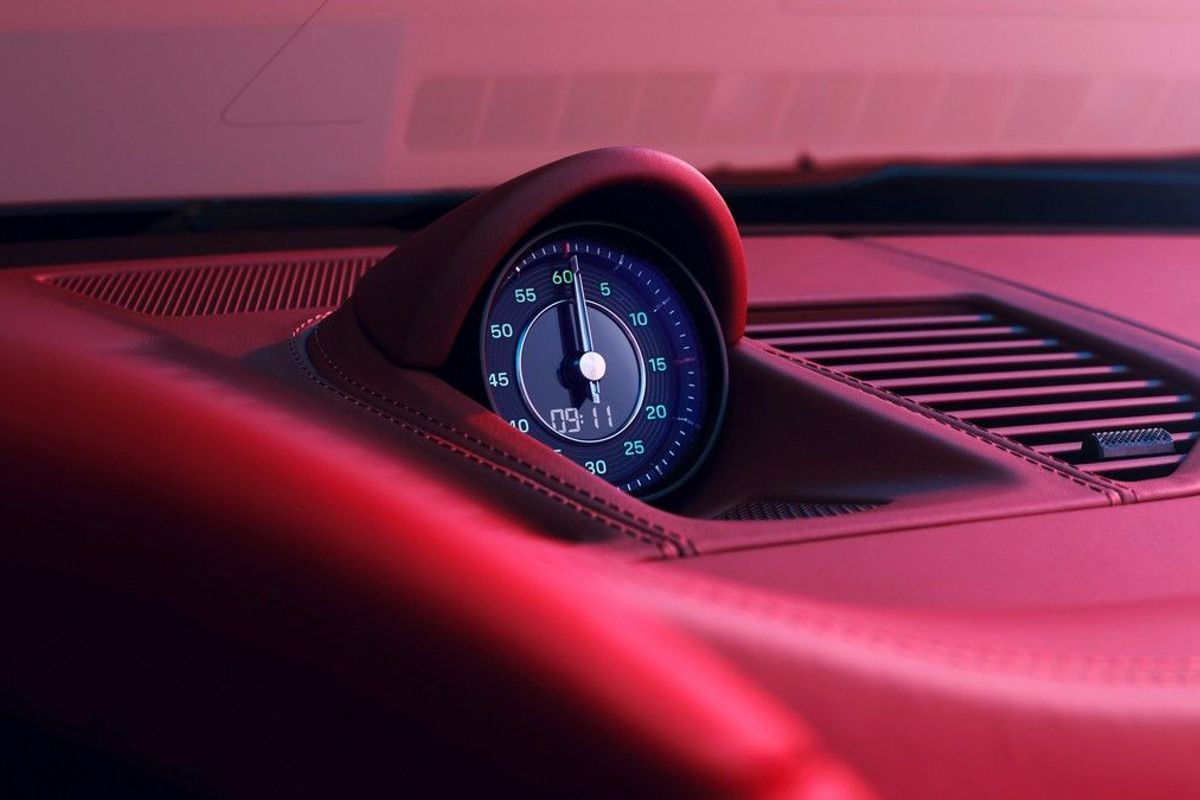
Green-backlit instrumentation and splashes of Corduroy fabric pay homage to Porsches from the '50s.

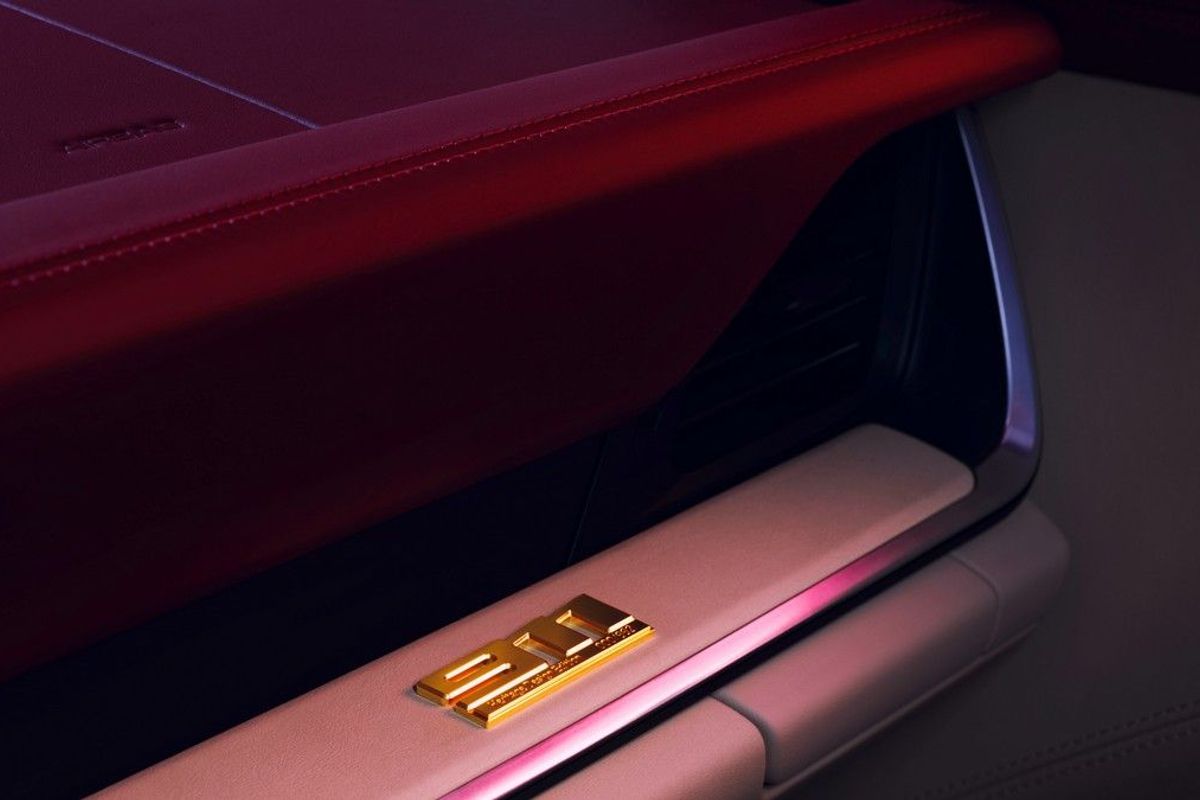
Meanwhile, the dashboard features a green-illuminated rev counter and stopwatch, a metal badge on the trim panel records the individual limited-edition number. The 1963 Porsche Crest appears on the key fob and is embossed on the head restraints and key pouch.

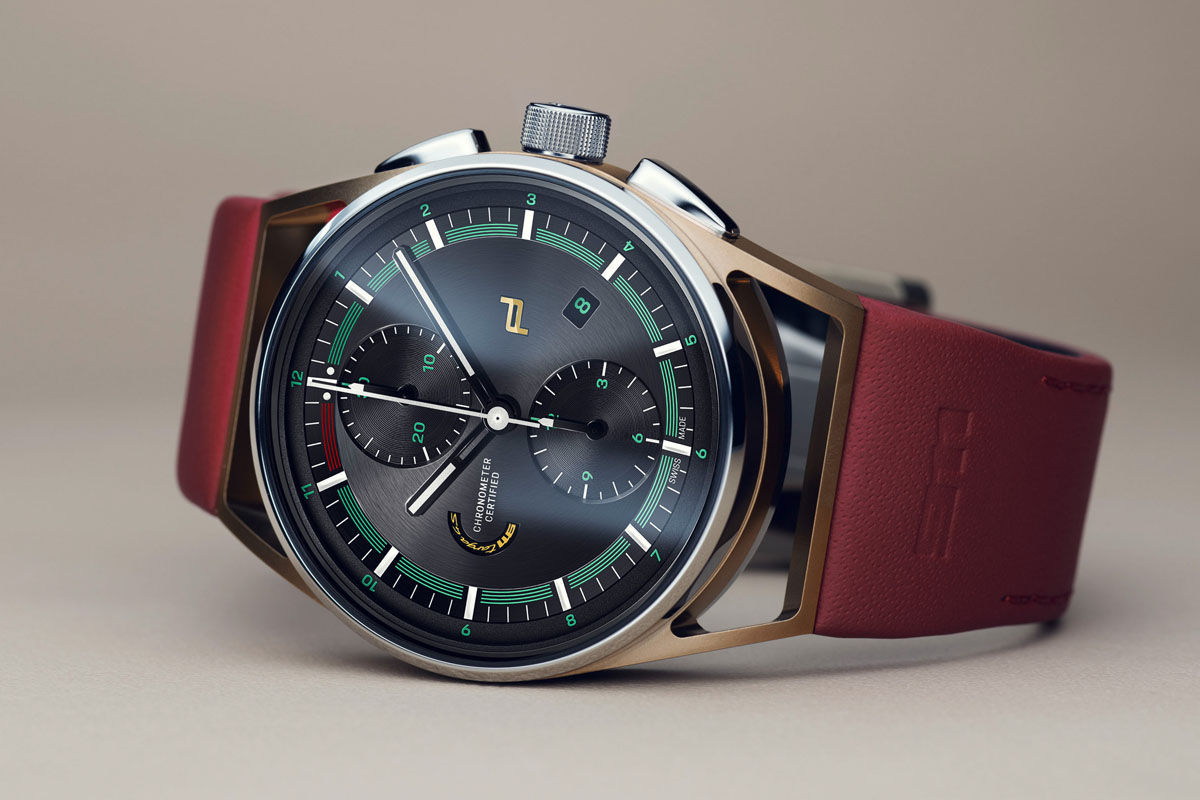
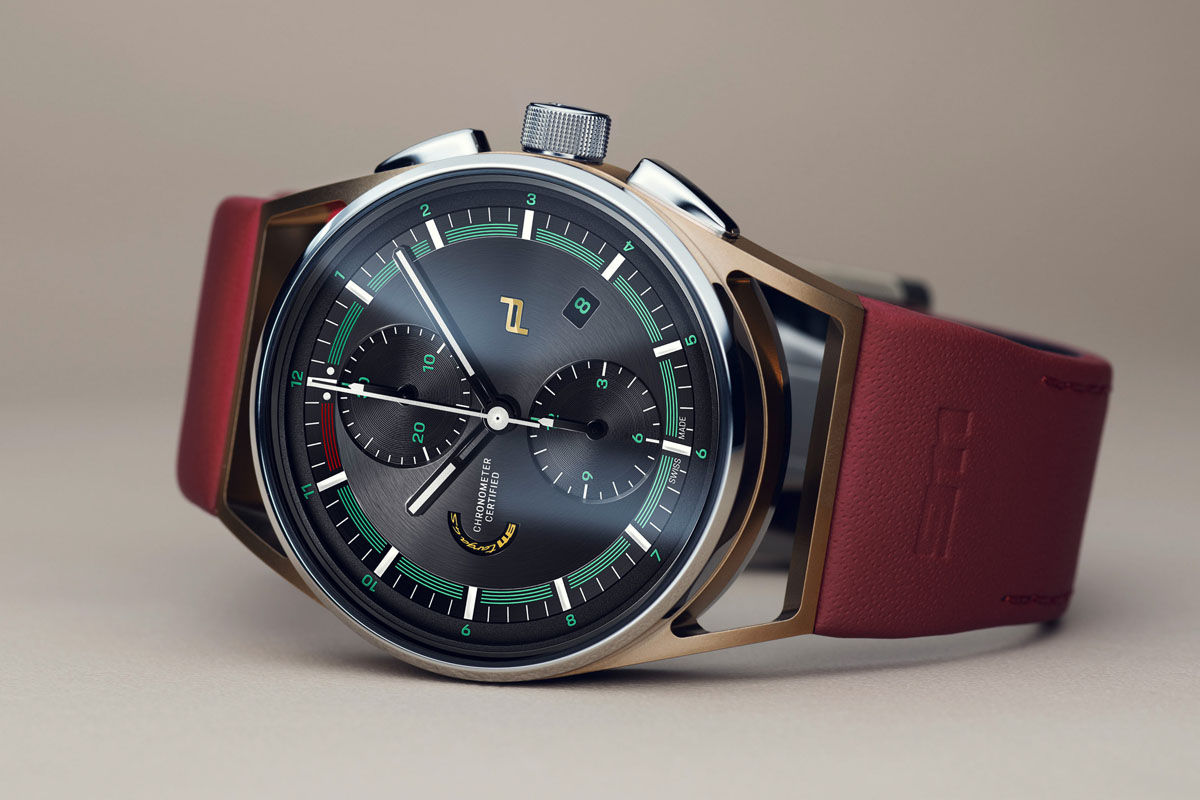
Lastly, the aforementioned 911 Targa 4S Heritage Design Edition Chronograph by Porsche Design is shown below and, seeing that it is exclusively available to buyers of the model, also limited to 992 units. Its details are inspired by those of the (‘50s) 356 and (later) first 911 Targa. The design of its watch face, with its white second hand and Phosphorus Green rings, is said to be inspired by the cars' speedometers and rev counters, while the numbers of the hours are in a Porsche font used on the old cars' dials. What's more, the watch's strap is made of genuine Porsche interior leather and embossed with the 911 logo.

The 911 Targa 4S Heritage Design Edition's mechanical configuration and performance figures are the same as its standard 4S sibling. Read about the recently-launched 911 Targa range here.

Related content:

Fancy a matching pair of Zagatos?

Porsche wastes no time to mod Turbo S

Porsche 911 Turbo S: Price in SA [w/video]

Porsche 356 B Super 90 – SentiMETAL Ep 15

Porsche Adds Base Spec 911