Chrysler has once again proven that when it comes to radically overpowered V8s, not even AMG can compete.
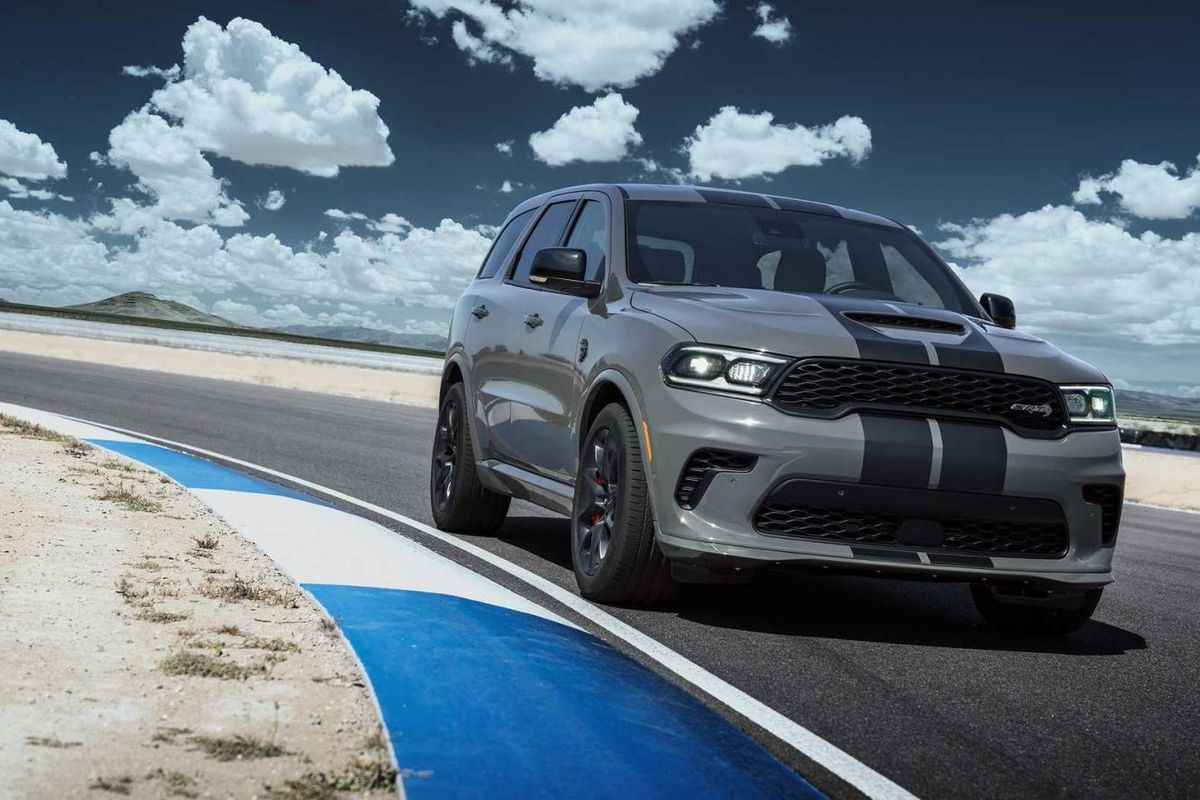
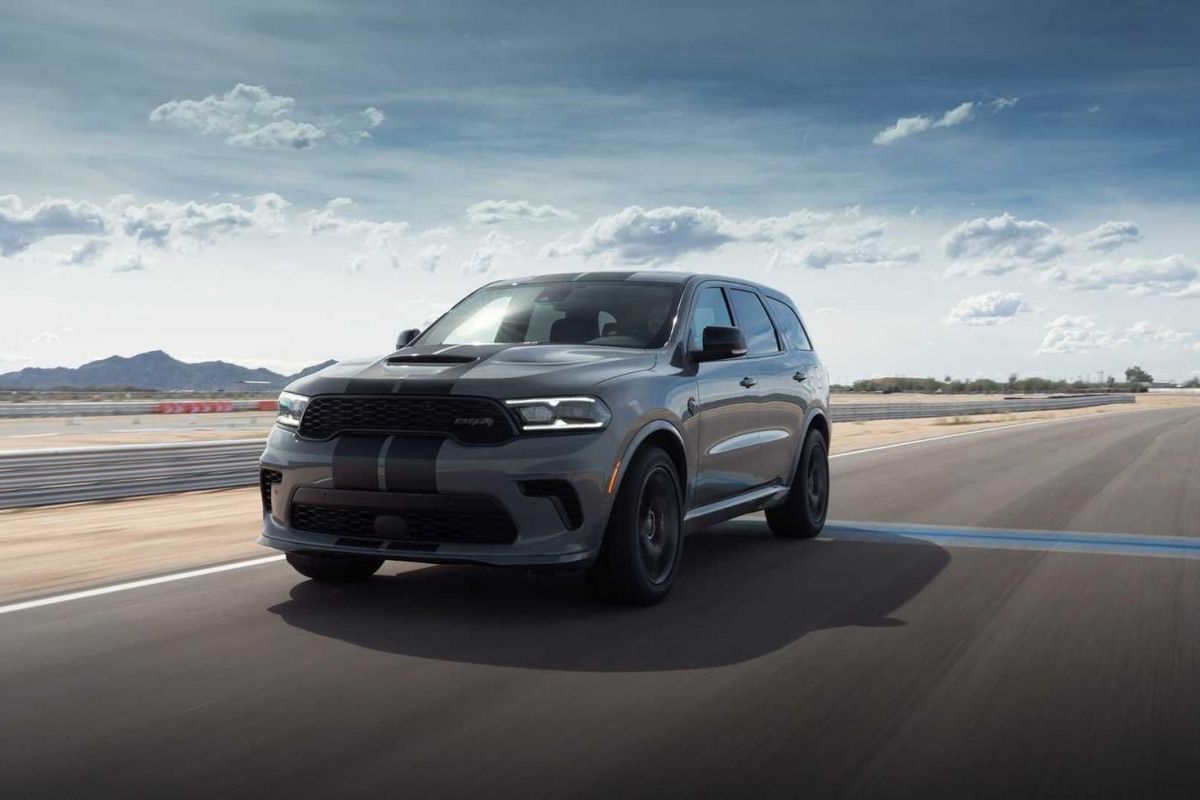
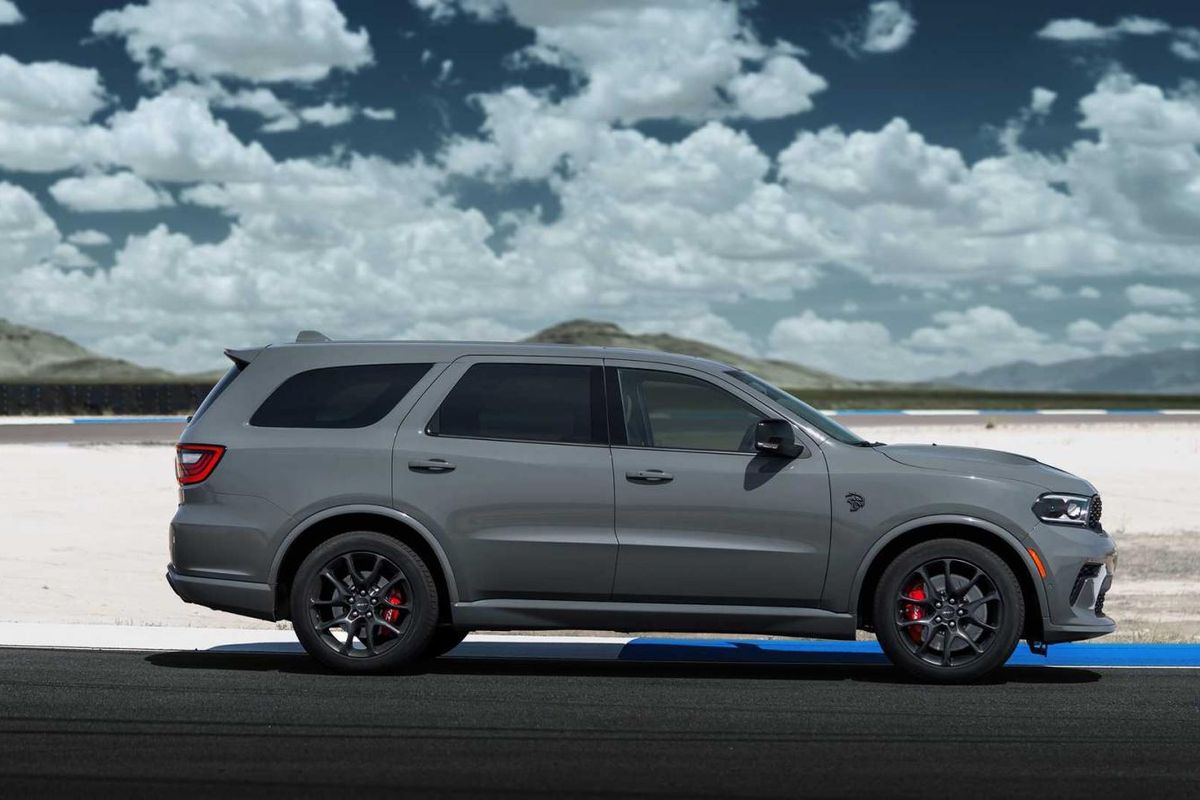
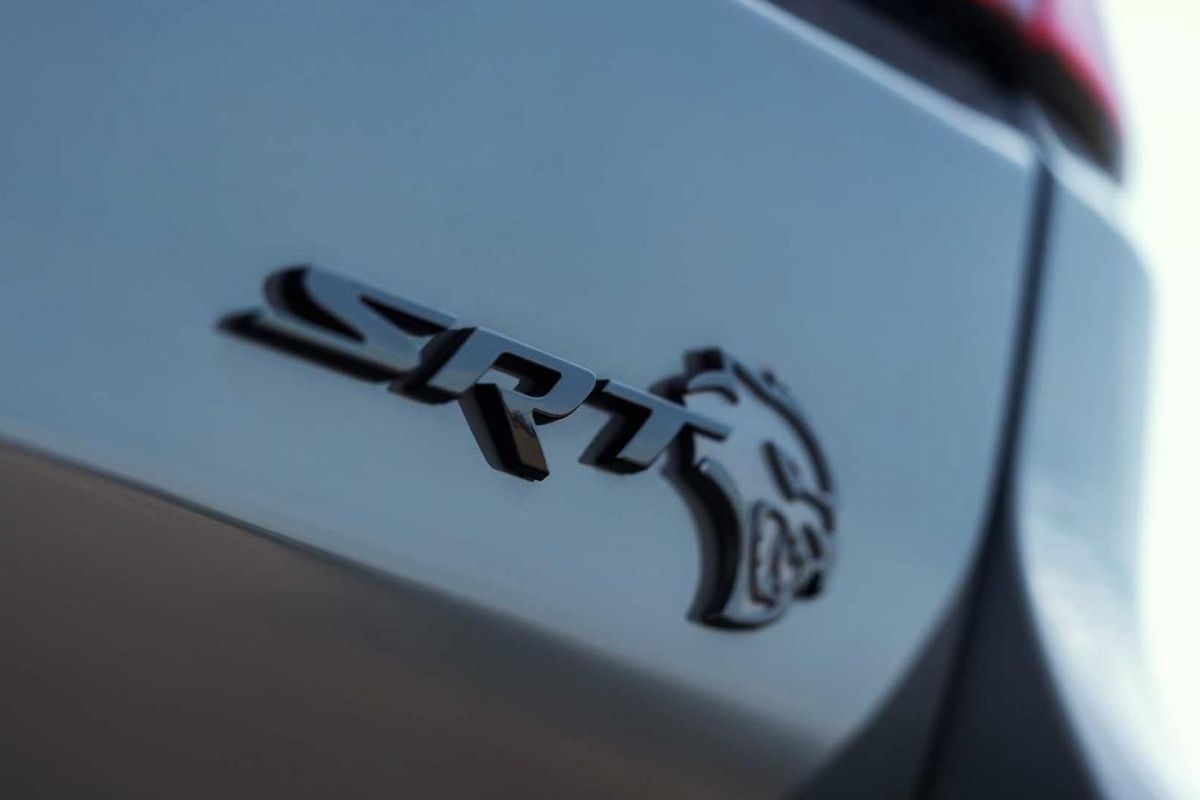
Since the introduction of its Jeep Grand Cherokee Trackhawk, Chrysler has owned the title of ‘world’s most powerful SUV’. But now it has usurped the Trackhawk with a phenomenal new Dodge Durango SRT Hellcat.
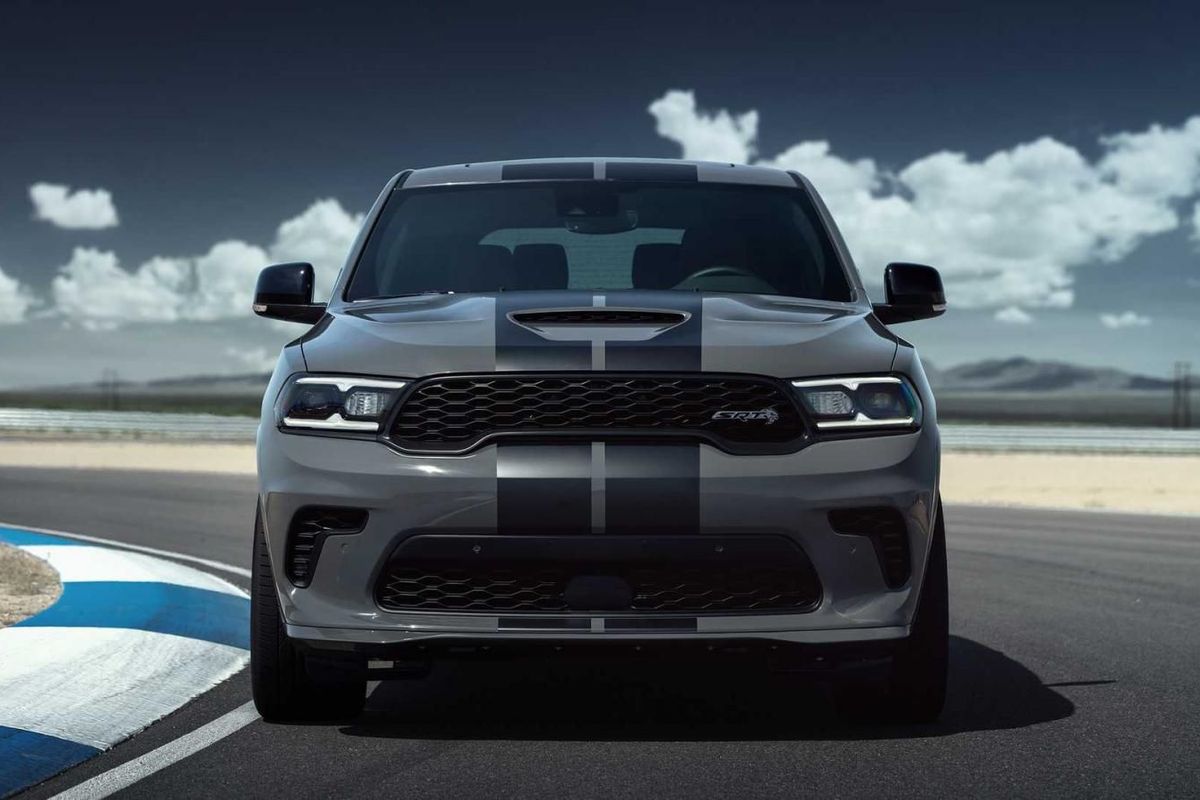
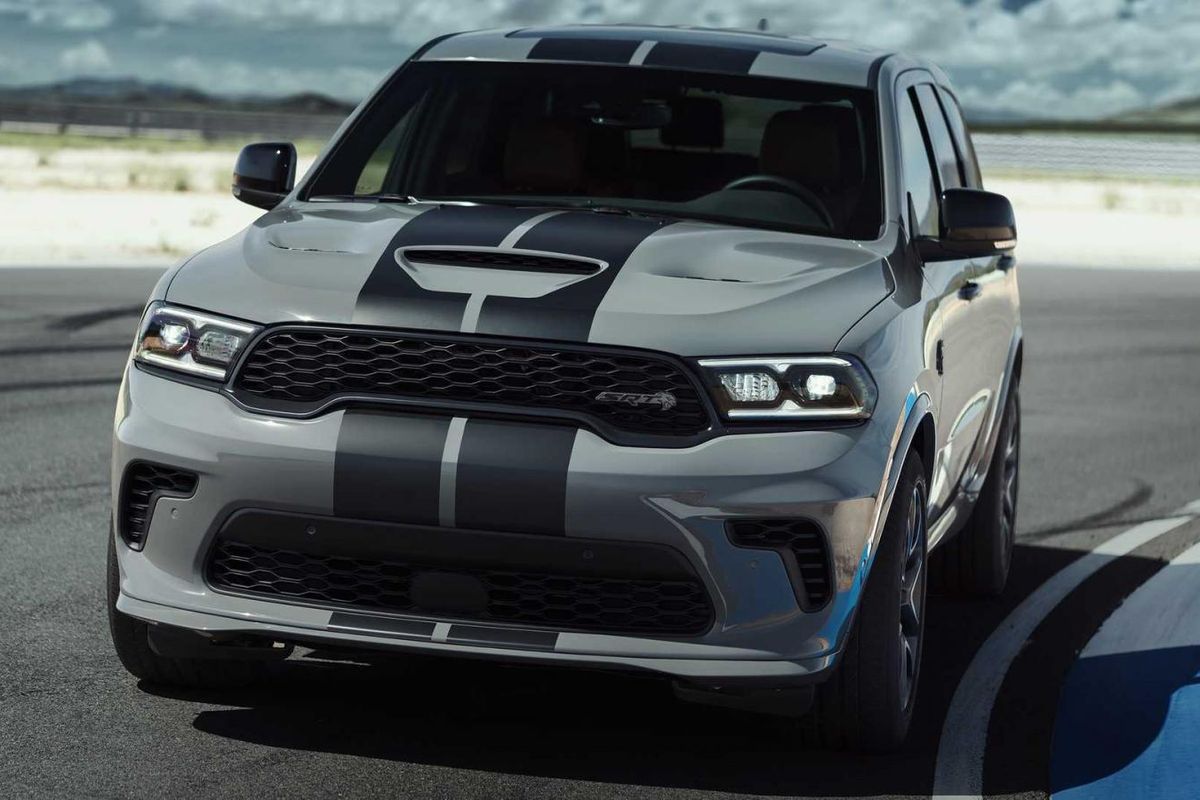
The naming convention isn’t subtle, nor is there anything conservative about the Durango SRT Hellcat’s styling. It features a deep two-piece front splitter to stabilise the front axle at speed, whilst the standard fog lights are binned and repurposed as additional cooling ports for the huge V8 engine.
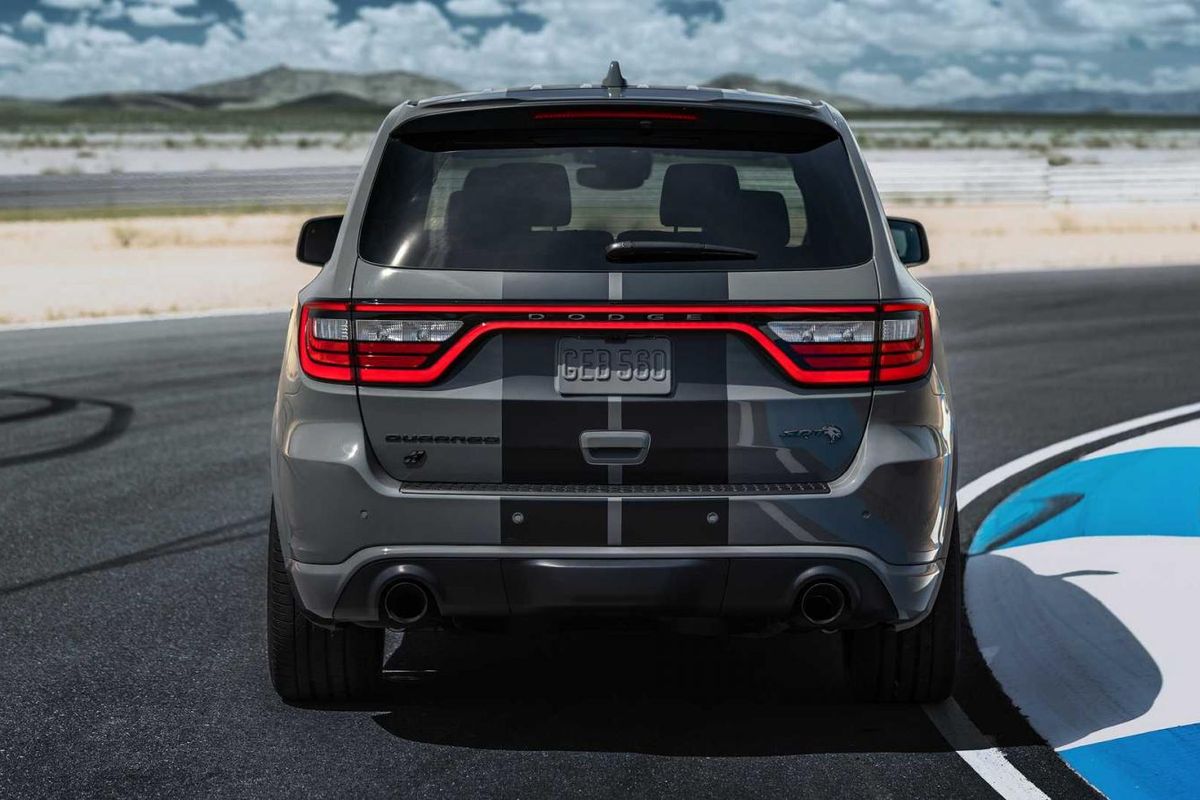
At the rear of this performance SUV, there is an aerodynamically validated spoiler which can generate 180 kg of downforce at 290 kph.
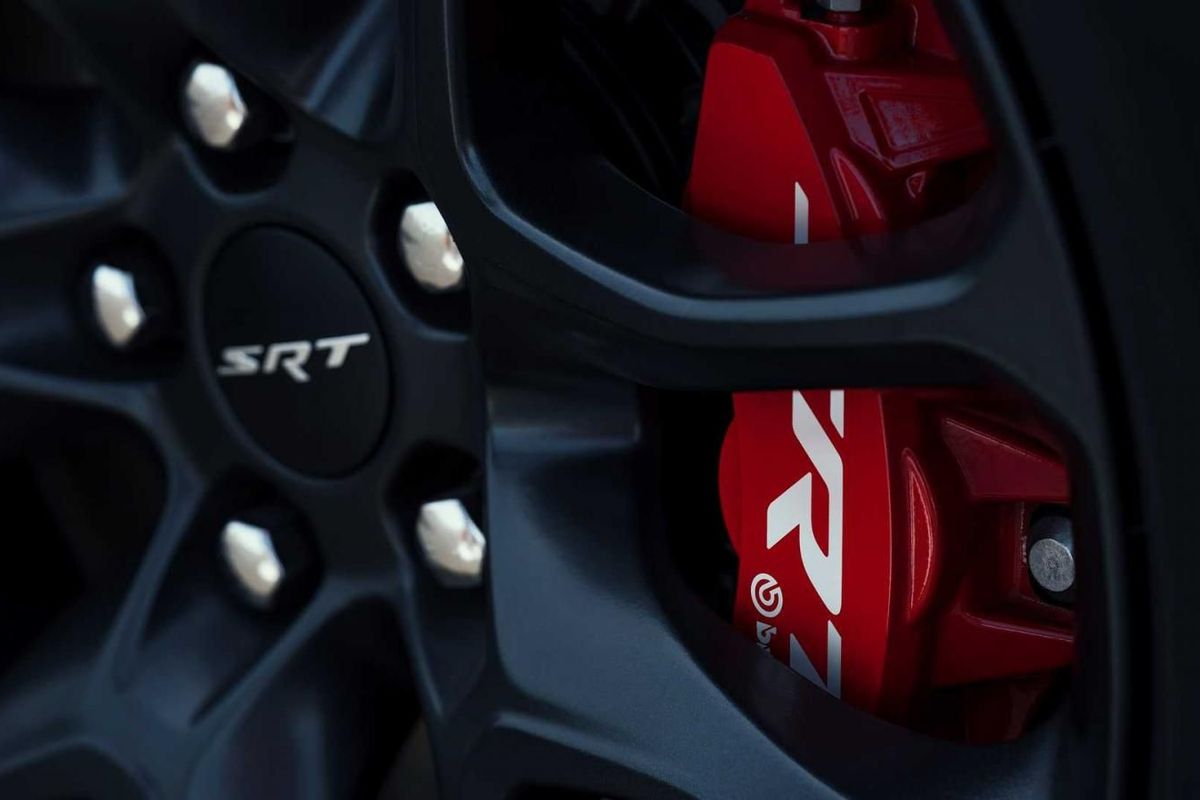
The Durango SRT Hellcat rolls 20-inch wheels, with huge Brembo brakes turning in unison. To confidently decelerate a vehicle of this size and performance, Dodge sourced 400 mm brake discs up front and 350 mm items for the rear axle.
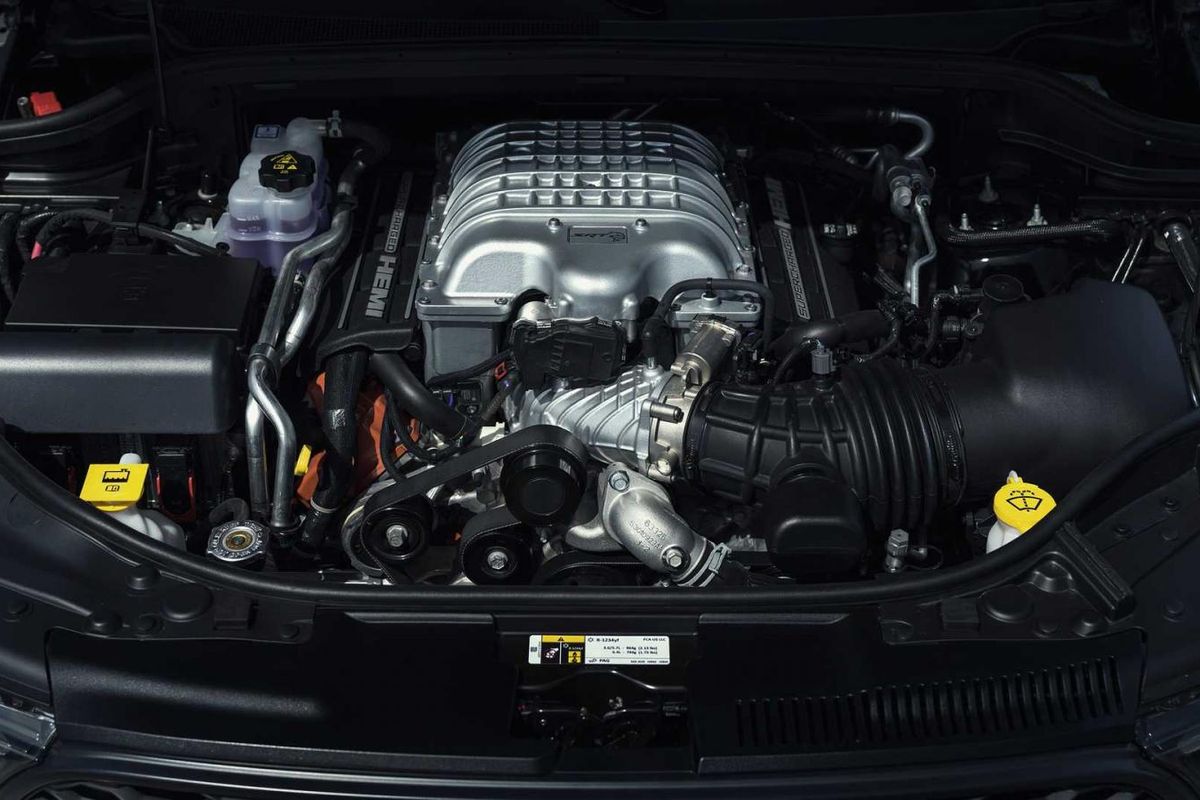
Powering the Durango SRT Hellcat is a 6.2-litre V8, boosted by a 2.4-litre capacity supercharger, capable of spinning up to 14 600 rpm. The overall boost pressure is relatively low, at only 0.8-bar, but the supercharger is a large capacity unit and helps the Durango to 530 kW of peak power, which is a smidge more than the Jeep Trackhawk.
AMG does not have a rival SUV which can touch the Durango SRT Hellcat’s engine performance. Chrysler engineers have attempted to make the best of attempting to control 530 kW in an SUV application. Compression damping is increased by 20% to better resists bodyroll, which should compensate for the higher corner entry speeds of this Durango SRT Hellcat
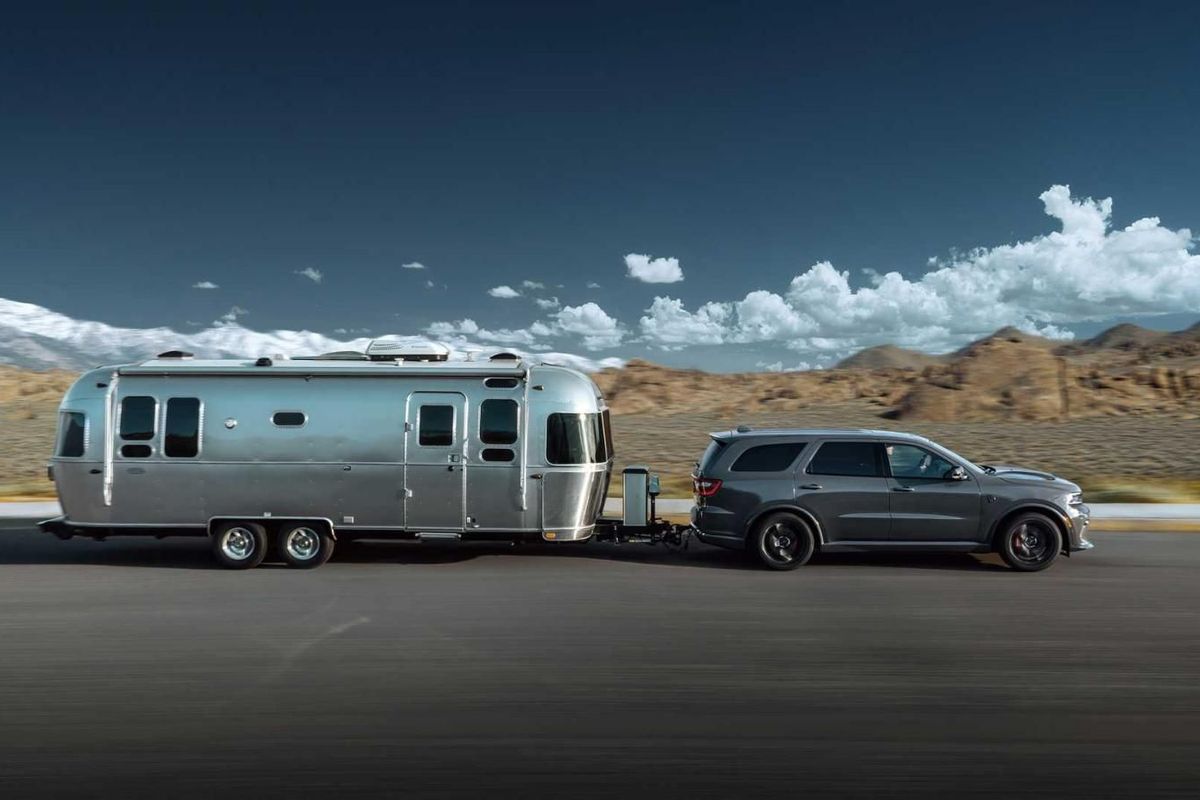
For a vehicle of such outlandish statistics, one of the Durango SRT Hellcat’s most astonishing numbers regards its utility.
Chrysler has not altered the towing capacity of its latest high-performance SUV, which means you can now have a 530 kW all-terrain vehicle, capable of towing 3 950 kg. Should make recovering other 4×4 owners an absolute breeze when things go awry in a dune field.
More and more buyers are looking for a little bit extra from their small hatchbacks, such as a modicum of added ground clearance and eye-catching off-roader inspired kerb appeal. If you're in the market for a new car, here’s how you can get "a lift" while sticking to a budget of under R200k.
If you’re looking for a car that's slightly raised because you travel on dirt or badly maintained roads or just like the "ready-for-action-looks" of a faux-4×4 crossover then we’ve compiled a list of interesting models for you to consider. R200k doesn’t go very far, but thankfully a few manufacturers have got creative with their standard models and given them a "raise".
Prices are accurate as of July 2020.
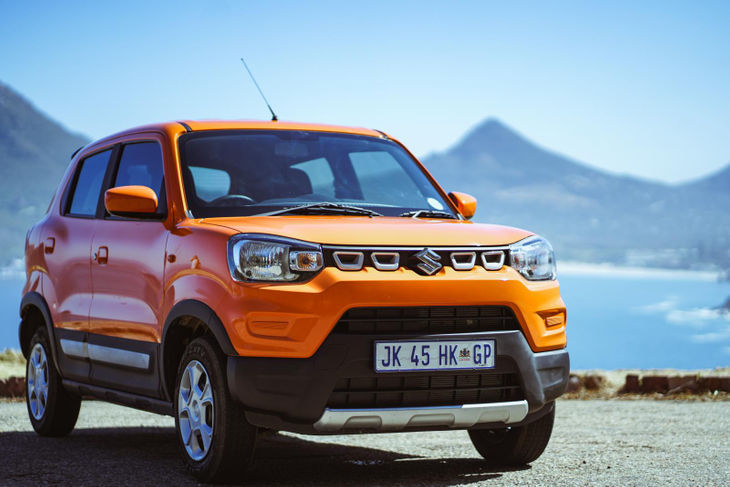
Suzuki S-Presso – From R139 900
The new S-Presso came to market earlier this year its local sales tally has yet to kick off in earnest. Now, with its first full month on sale during Level 3 lockdown, the pint-sized Suzuki was a raging success with the sales tally reaching 555 units in June 2020. Suzuki has won numerous Budget Car titles at #CarsAwards) and the Indian-built S-Spresso should continue to find favour with many more buyers in these cash-strapped times. It's powered by a 1.0-litre petrol engine that develops 50 kW and 90 Nm of torque and can be had with either a 5-speed manual or 5-speed automated-manual transmission.
There are 3 derivatives on offer for the S-Presso including GL, GL+ and a range-topping S-Edition.
The S-Presso GL (manual only) is equipped with front electric windows, remote central locking, rear parking sensors, 14-inch steel wheels and manual airconditioning.
The mid-spec GL+ derivative (manual and AMT) gains a 7-inch touchscreen infotainment system with Apple CarPlay and Android Auto capability, integrated reverse camera, Bluetooth and a USB and auxiliary port.
Moving on to the range-topping S-Presso S-Edition (from R152 900), this derivative gains styling elements such as wheel arch cladding, side body cladding, silver upper grille garnish, front skid plate and silver trim finishes seen on the centre console and doors. Safety specification includes 2 airbags and ABS with EBD. Ground clearance is claimed at 180 mm.
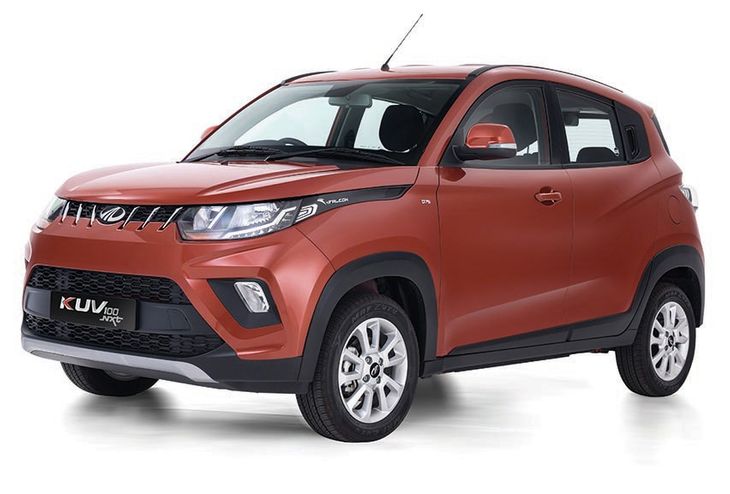
The updated Mahindra KUV100 Nxt came to market in 2018 with the range comprising petrol and diesel-engined models. It's surprisingly spacious inside with plenty of areas to store odds and ends. The ground clearance stands at 170 mm and its high-profile 185/65 14-inch tyres should render it quite competent at negotiating small obstacles, certainly gravel roads. The KUV100 Nxt G80 K2+ is powered by a 1.2-litre, naturally aspirated petrol engine with 61 kW and 115 Nm and mated with a 5-speed manual transmission. The KUV100 comes equipped with 2 airbags and ABS with EBD. If you wish to increase the level of specification in your KUV100 Nxt, then K6+ or K6+ #DARE derivatives are a good bet at just under R200k.
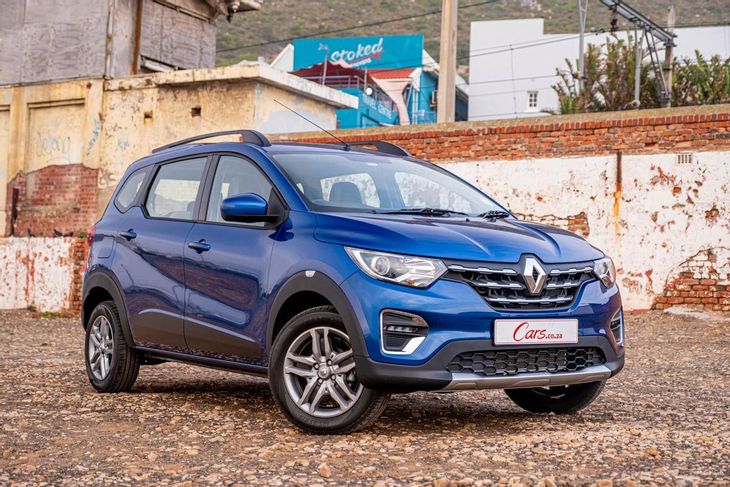
Renault recently welcomed its new Triber budget 7-seater people-mover to market earlier this year and with a ground clearance of 182 mm and some rugged plastic cladding, the Triber boasts some crossover appeal. The Triber makes use of a naturally-aspirated 1.0-litre petrol engine and is equipped with a 5-speed manual transmission. Outputs are pegged at 52 kW and 96 Nm of torque.
Key features include a removable third row of seats which increases load capacity yo 625 litres, an 8.0-inch touchscreen infotainment system with Android Auto and Apple CarPlay functionality and air conditioning ventilation for the second row. 2 airbags are standard with 4 airbags offered on the top-spec Prestige derivative. Rear parking sensors are a useful feature when parking.
The range-topping Triber Prestige breaches the R200k barrier with a price of R202 900, but even so, it's still worth considering.
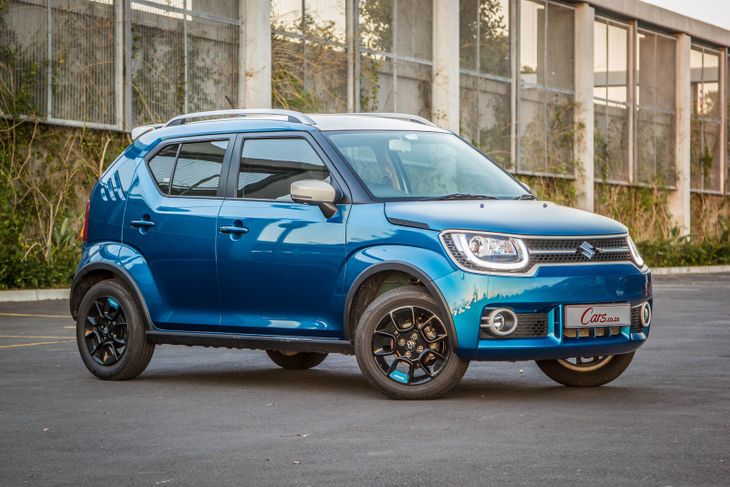
The Suzuki Ignis offers buyers something a little different in this segment of the market. The Ignis is powered by a naturally-aspirated 1.2-litre petrol engine that develops 61 kW and 113 Nm of torque with the front wheels driven via a 5-speed manual transmission. As we discovered during its test period with us, the Ignis offers perky performance in the city and its interior is relatively spacious for its size.
The Ignis GLX is equipped with the features such as a Radio/CD player (can upgrade to a touchscreen with Apple CarPlay and Android Auto), rear park distance control, climate control air conditioning, LED headlights and daytime running lights, 2 airbags, ABS with EBD and brake assist. The Suzuki Ignis GLX was also a semi-finalist in the Budget Car category of the 2018/19 Cars.co.za Consumer Awards – powered by WesBank.
The entry-level Ignis GL is the previous #CarsAwards champion and is priced from R188 900. Ground clearance on the Ignis is 180 mm. Watch our video review below for more details…
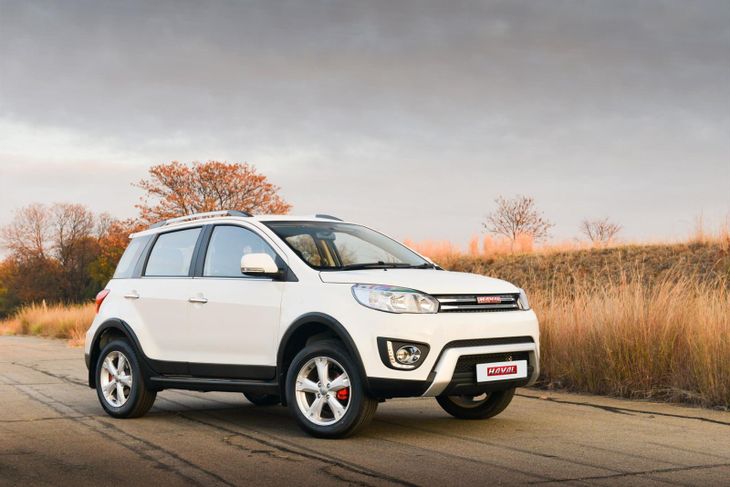
Recent price increases mean that the Haval H1 now exceeds the price limit for this list but we are leaving it here for now because it's still a vehicle you should have on your shortlist if your budget is hovering around R200k. Also, with a bit of haggling with a Haval dealer, you might still be able to secure a deal for under R200k. With the local arrival of Chinese SUV brand, Haval, in South Africa in 2017, its parent company GWM rebadged its M4 as the Haval H1. The H1/M4 is a reasonable rendition of a crossover-hatch. It’s made more to look the part than act it, but it's reasonably equipped and, yes, good looking.
Those daytime running lights are standard, as are the roof rails and 16-inch wheels, plus a 5-year/100 000 km warranty and 2-year roadside assistance that sweetens the deal. There’s good ground clearance (185 mm) and the H1's 1.5-litre petrol engine produces 69 kW and 130 Nm and uses a 5-speed manual transmission to drive the front wheels.
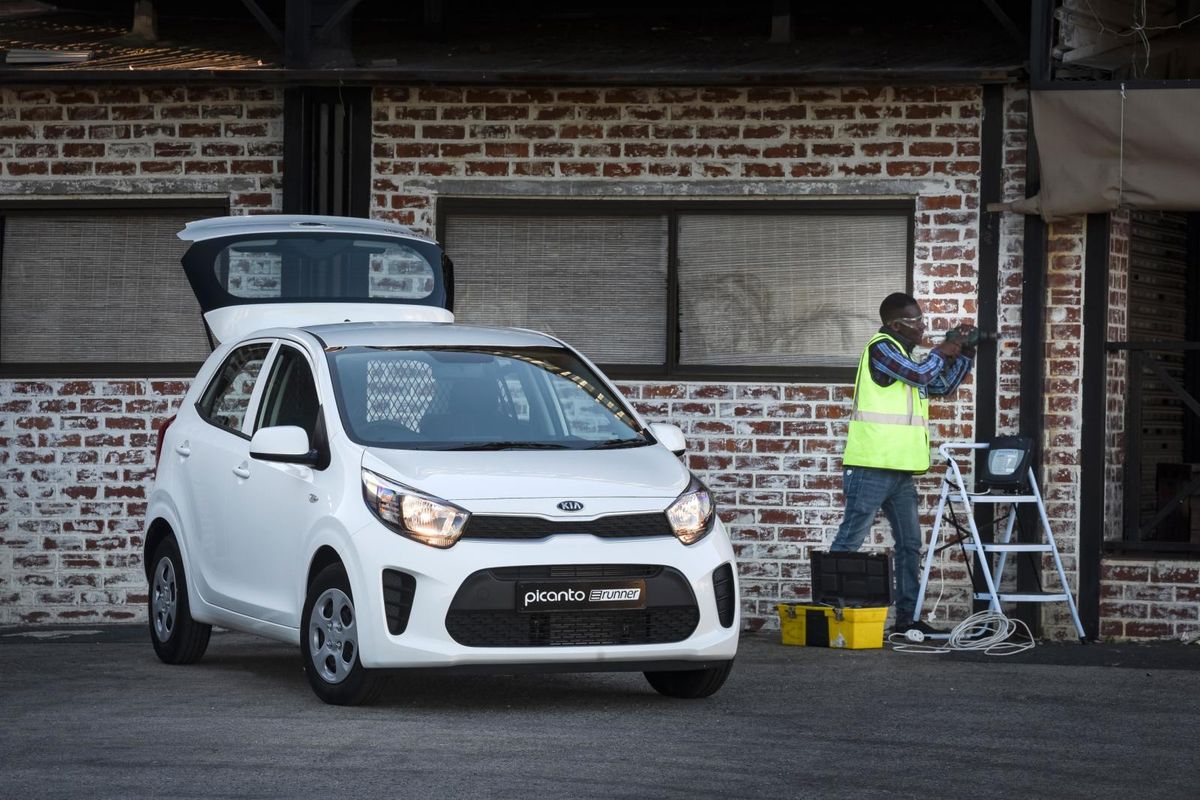
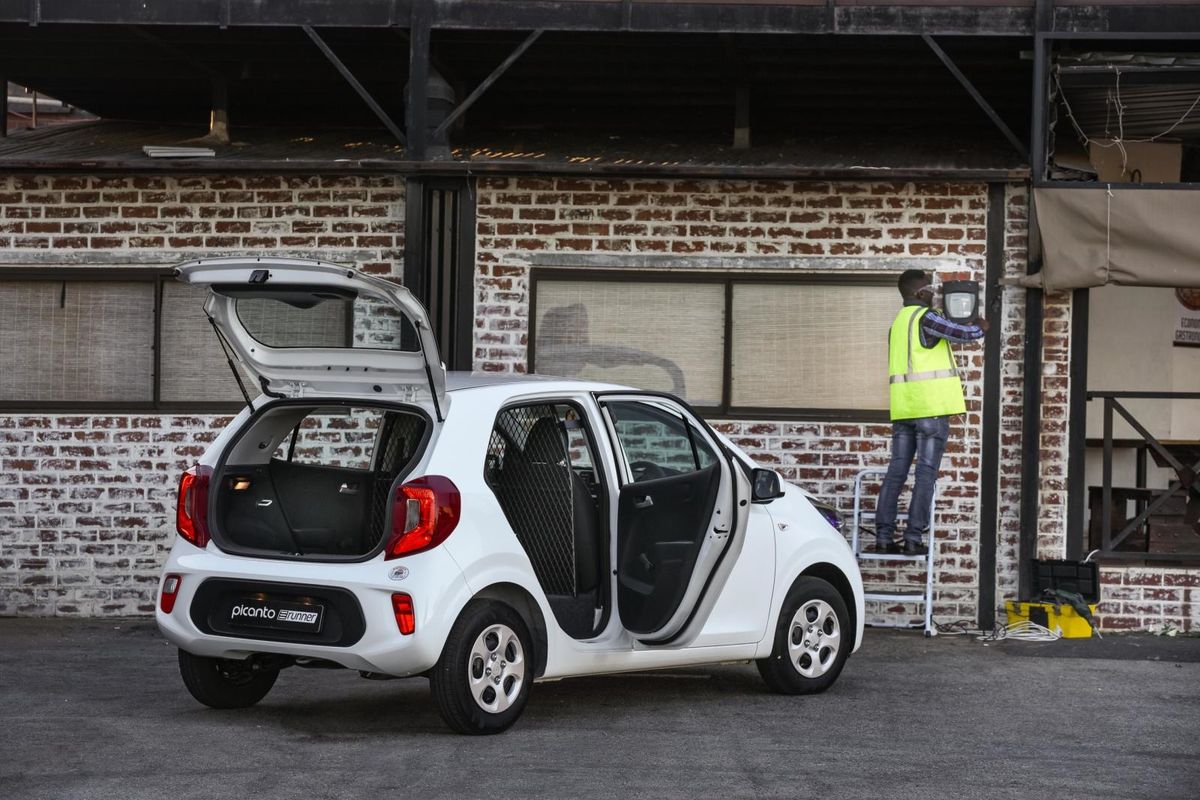
Kia Motors South Africa has introduced a commercial version of its Picanto City Slicker. Called the Picanto Runner, this vehicle is being marketed as a cost-effective urban delivery vehicle. Here are detailed specifications and pricing.
“When you consider the rise of e-commerce, small businesses and services-on-demand, especially under the ‘new normal’ brought about by the global Covid-19 pandemic, there is a clear need for a compact delivery vehicle that can deliver goods practically, quickly and at a more manageable cost,” says Stephen Crosse, Sales Director, KIA Motors South Africa.
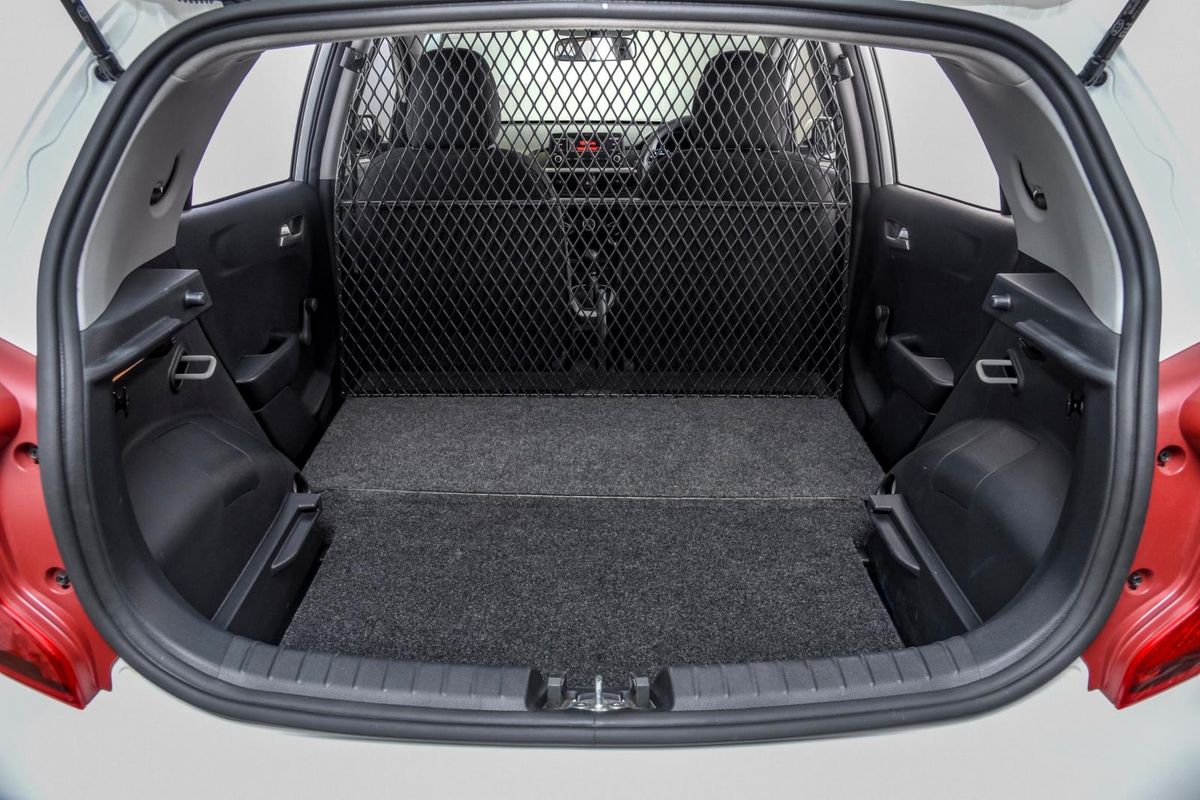
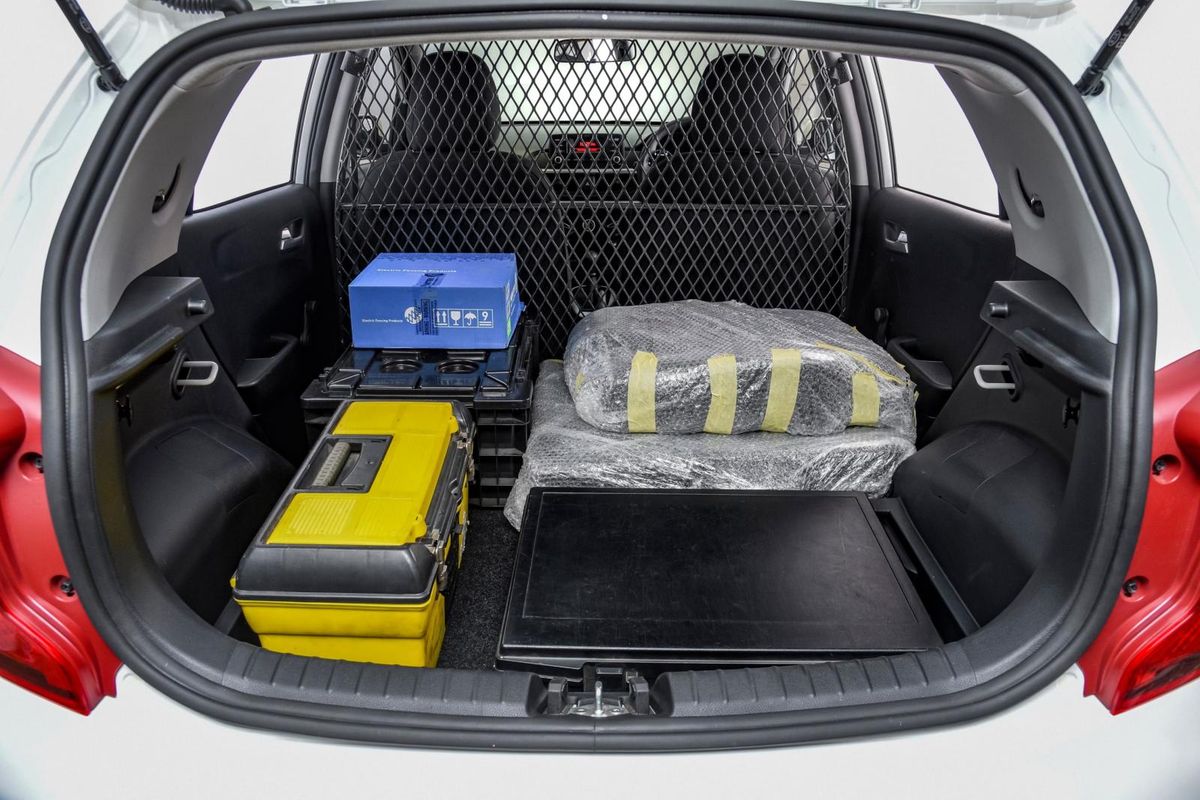
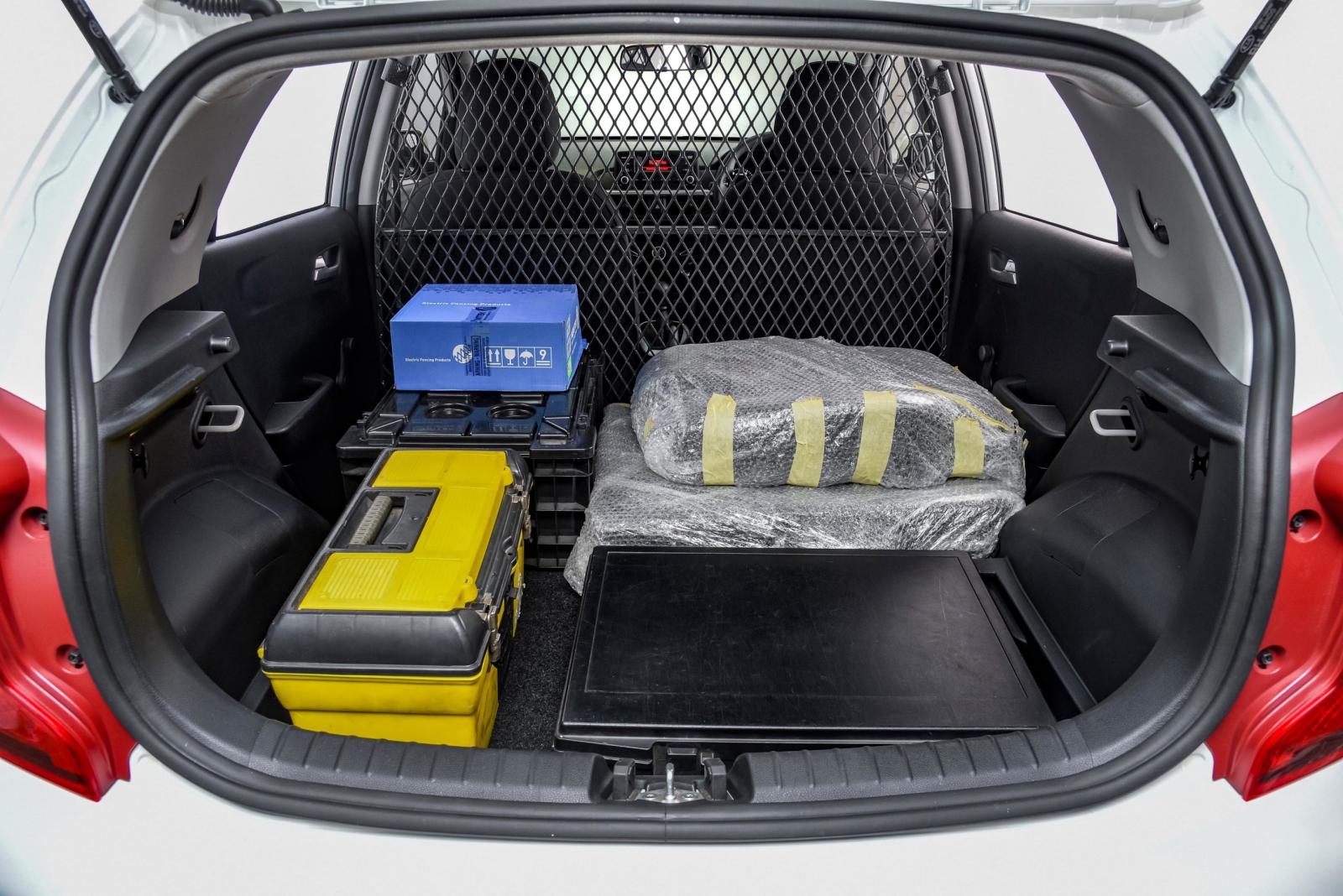
Based on the Kia Picanto Start, the Runner loses the rear seating bench and this area has become a flat loading bay. There are metal cargo dividers to keep things secure during driving and the rear windows have been given a laminate treatment to prevent prying eyes from looking in. There's 820 litres of space and it has a payload of up to 350 kg.
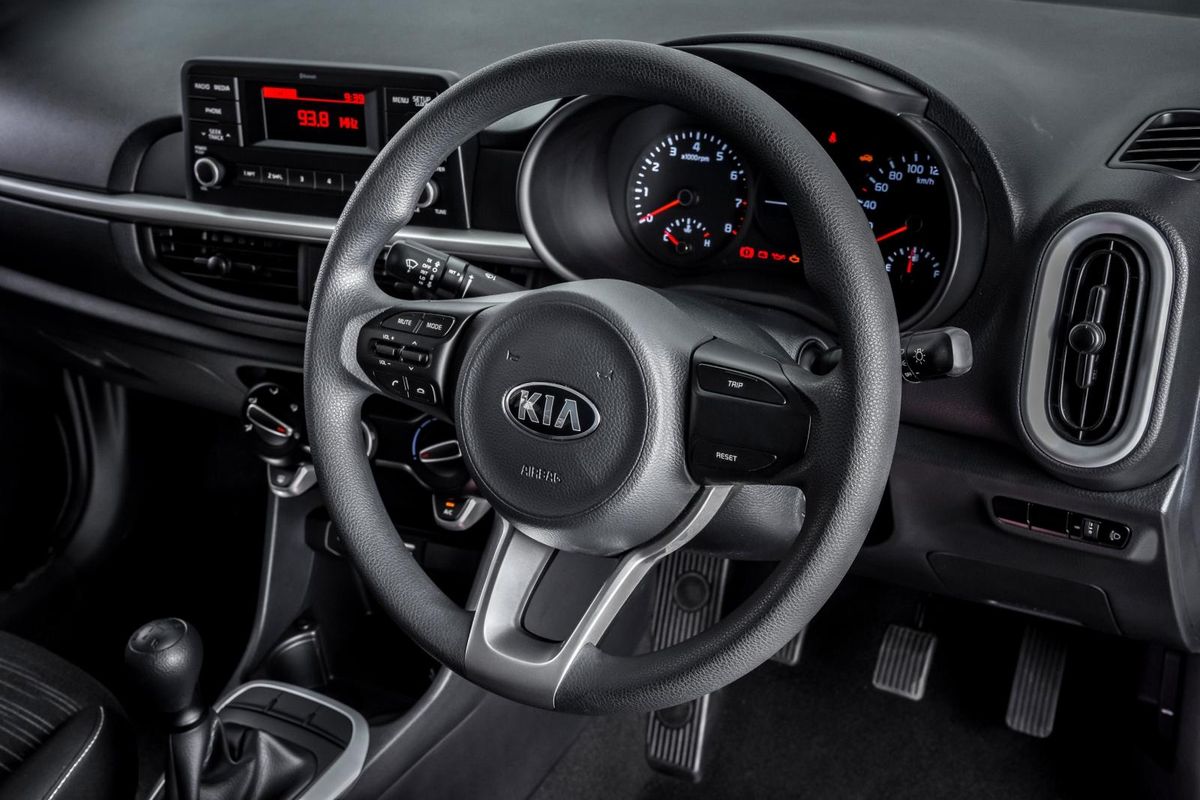
It's powered by a 1.0-litre in-line three-cylinder petrol motor which is paired to a 5-spead manual transmission. There's 49 kW and 95 Nm, which should be sufficient for inner-city work. Standard features range from driver and front passenger airbags, central locking, ABS and Data Dot to convenience features such as steering wheel controls, air-conditioning, Bluetooth connectivity, an AUX / USB connection, Radio/MP3/RDS as well as adjustable seating and steering wheel.
Kia Picanto Runner Price in South Africa (July 2020)
The new Kia Picanto Runner features a 5-year/unlimited kilometre warranty as well as a 2-year/30 000km service plan. The Picanto Runner also benefits from Kia's Corporate Fleet Care Package. This gives you the Kia 1-hour Express Service, courtesy vehicle rental and Premium Roadside Assistance, which includes minor mechanical assistance, emergency fuel delivery, flat tyre assistance, battery jump-start and towing
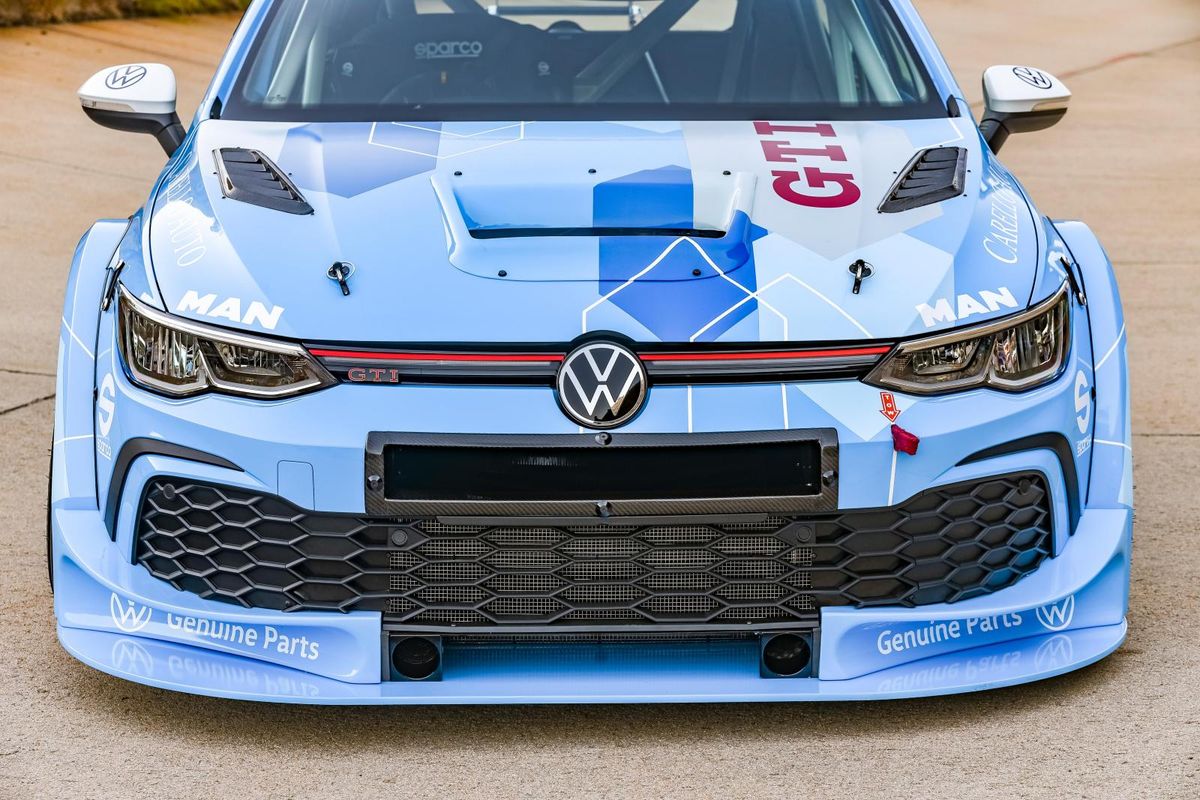
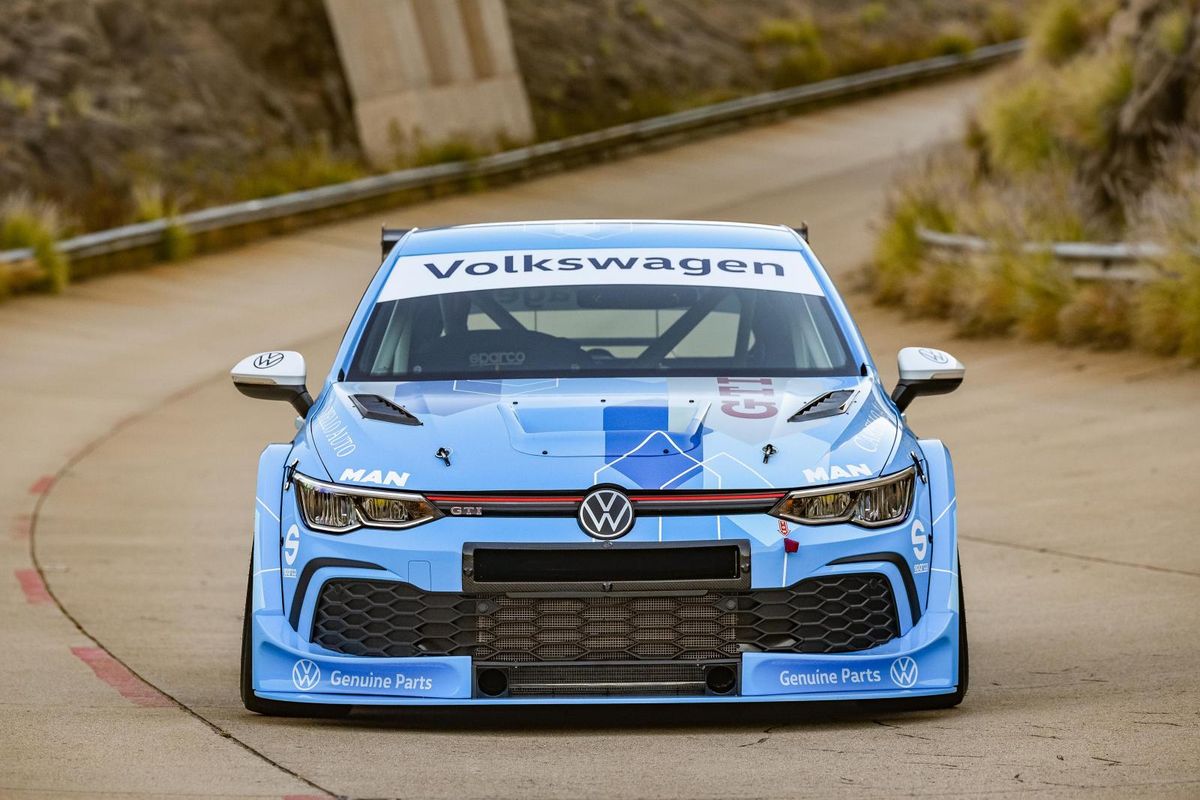
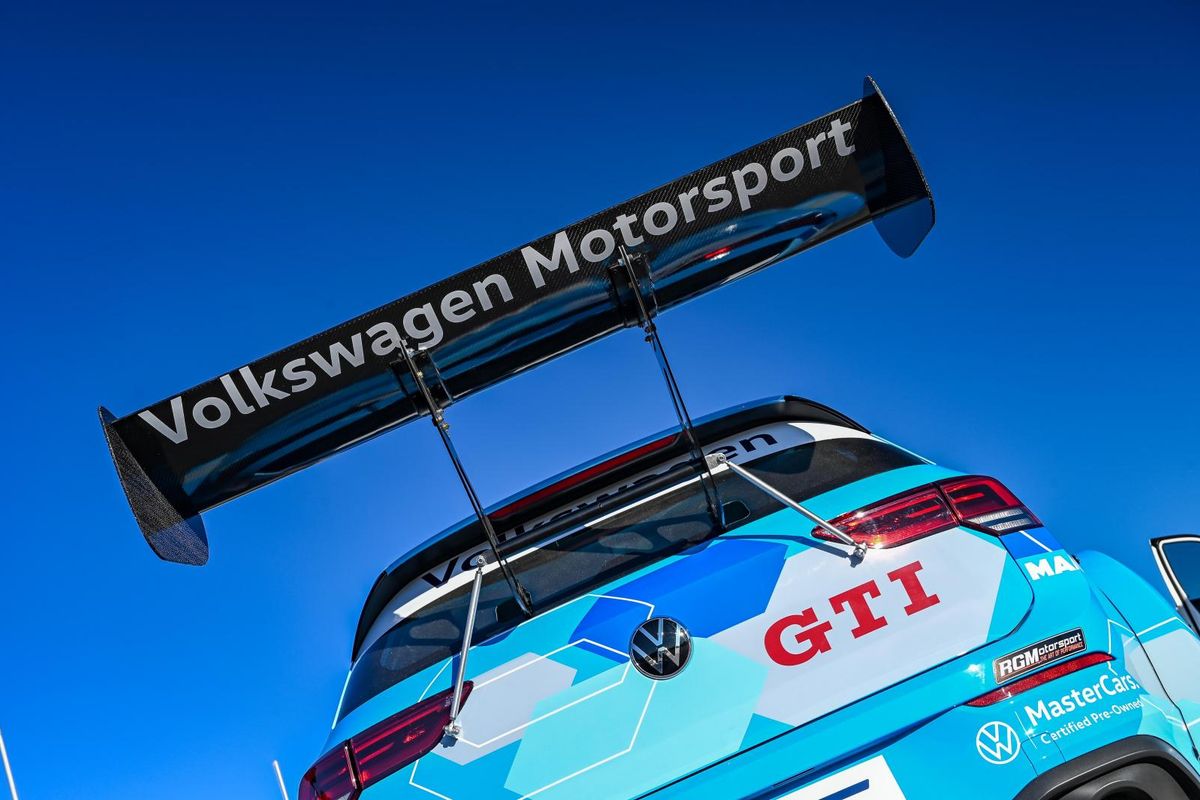
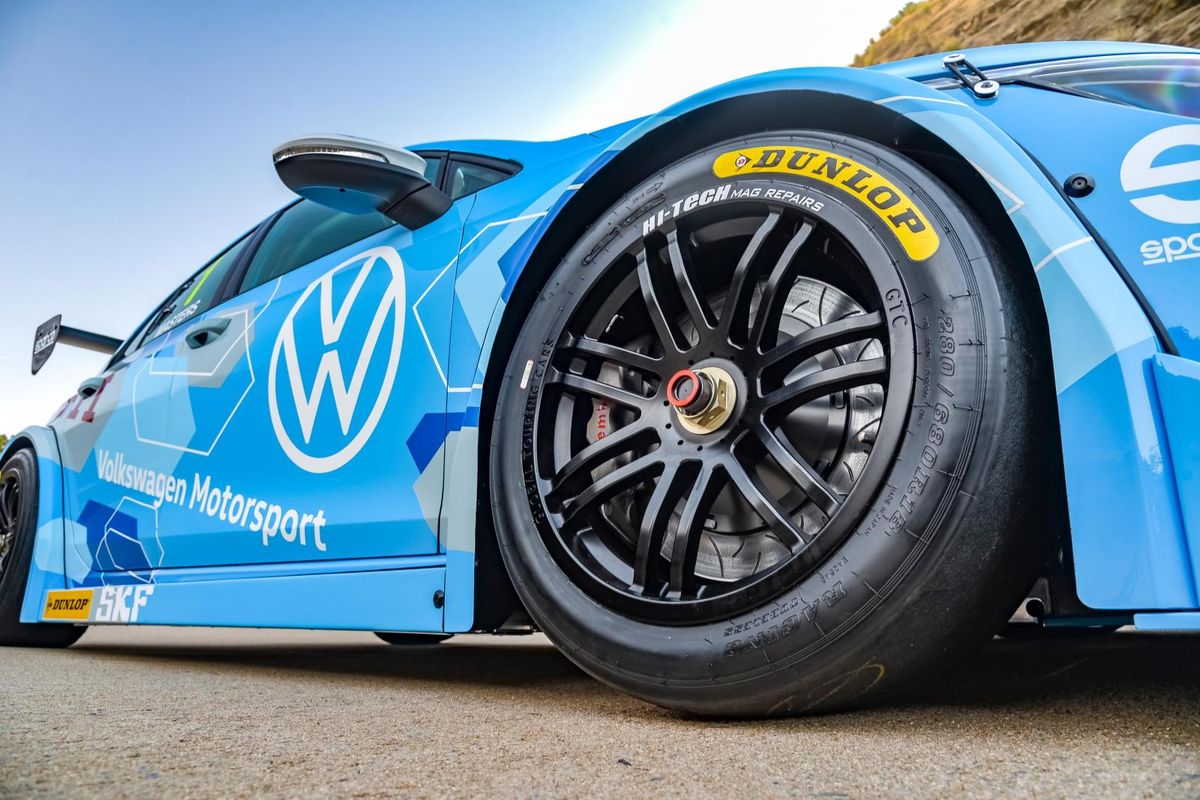
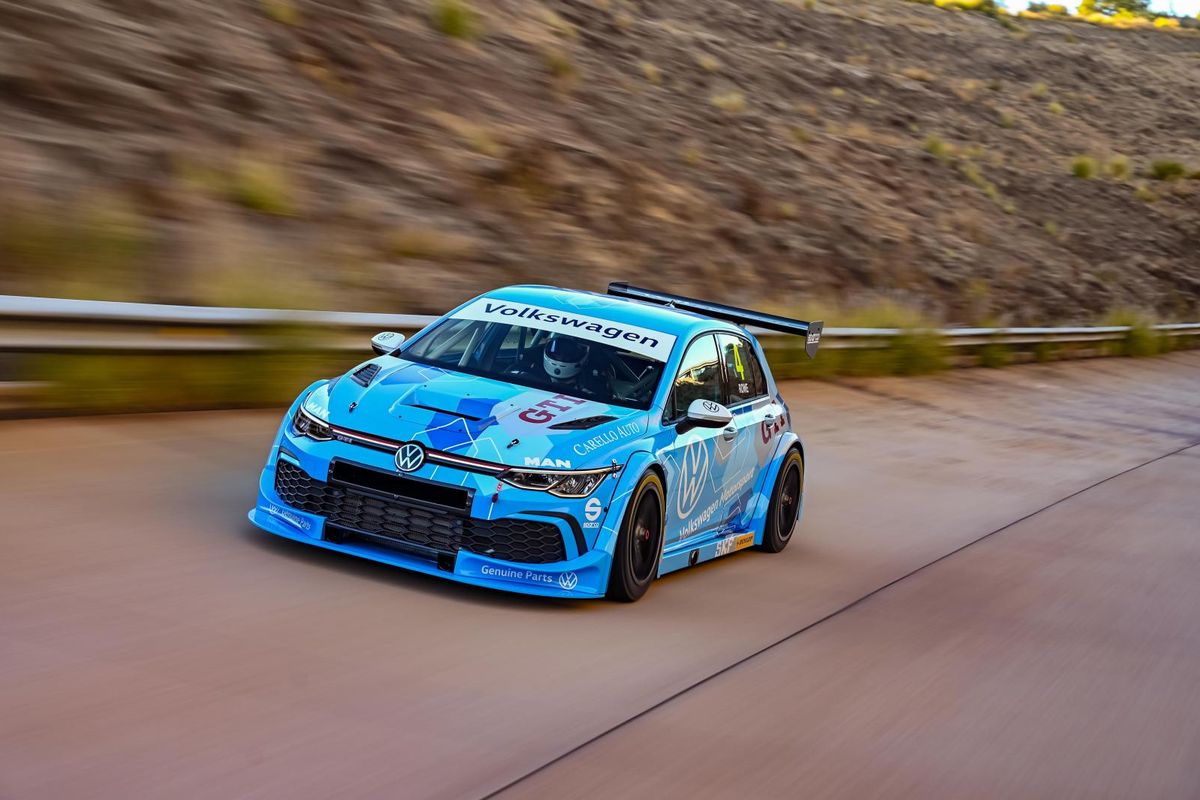
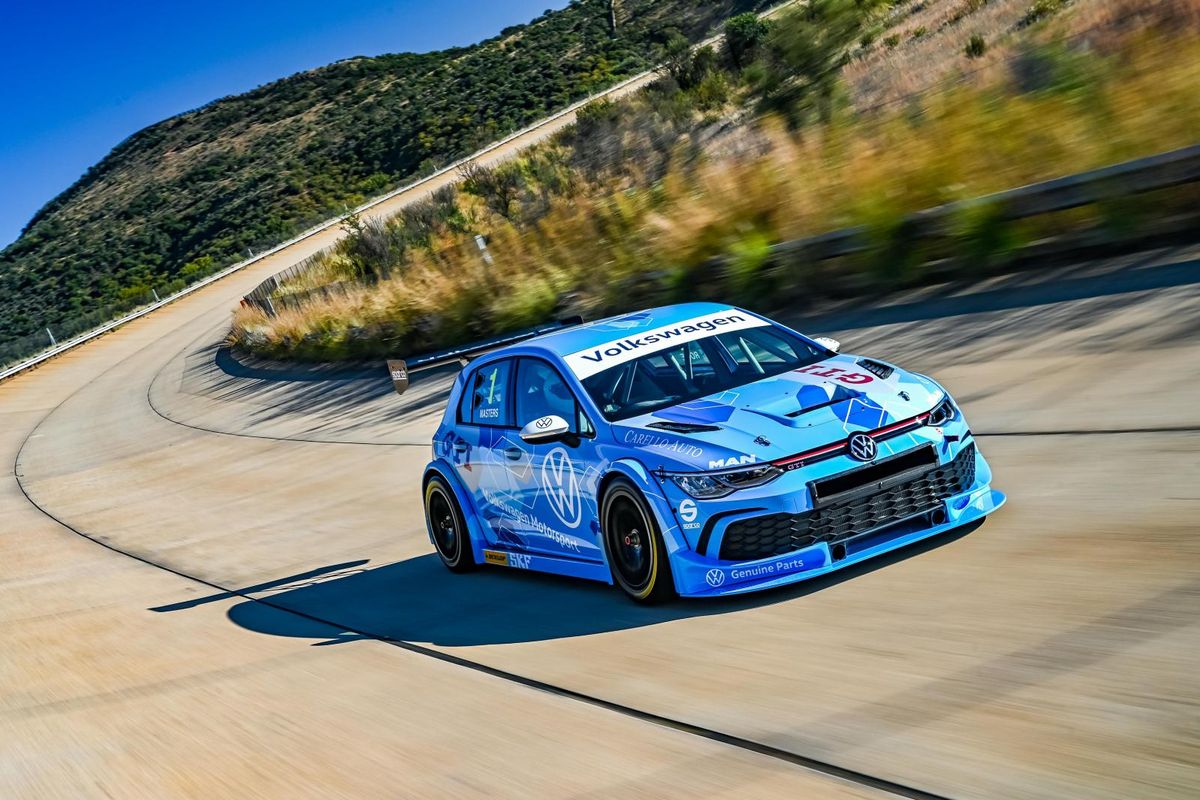
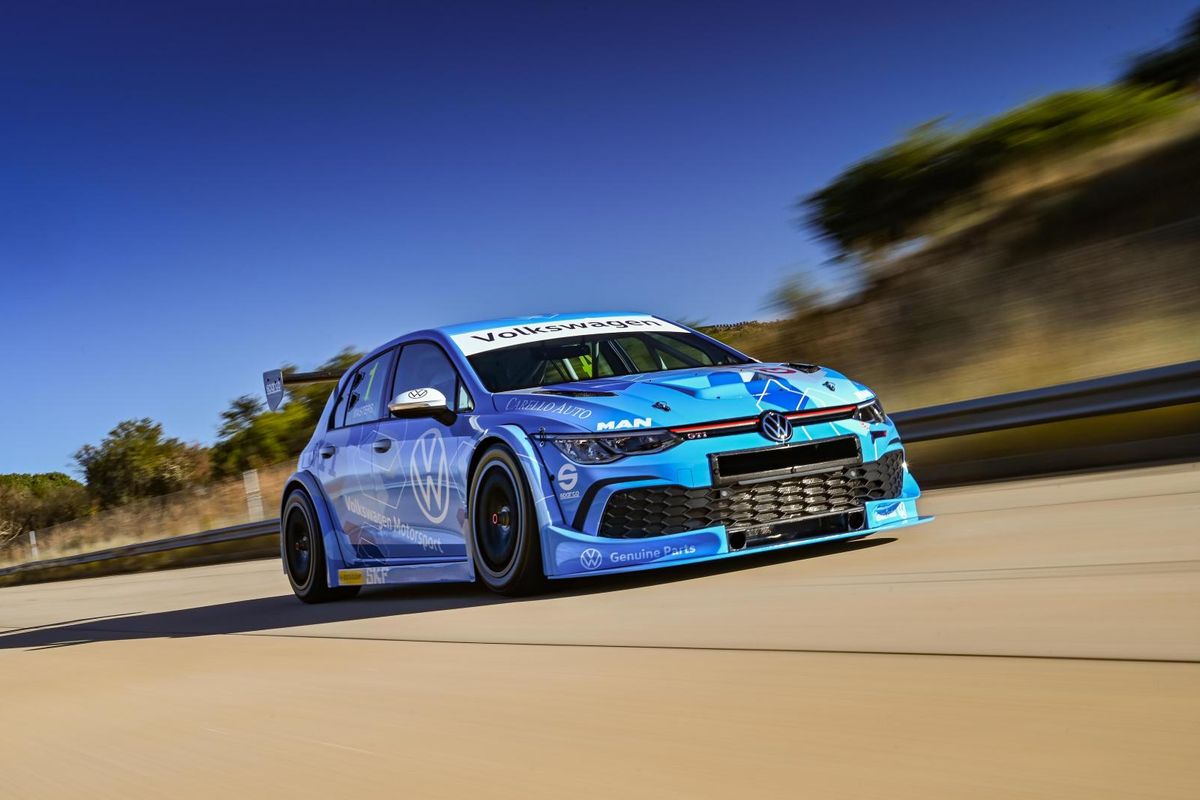
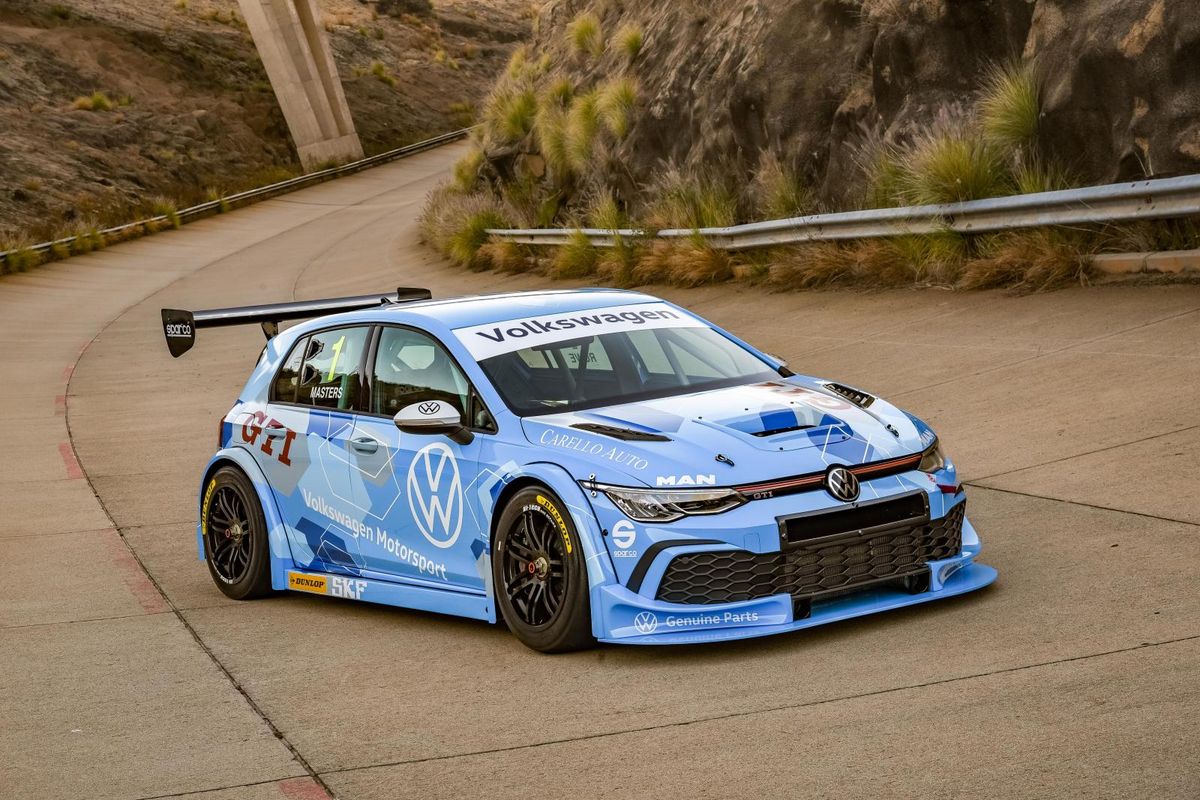
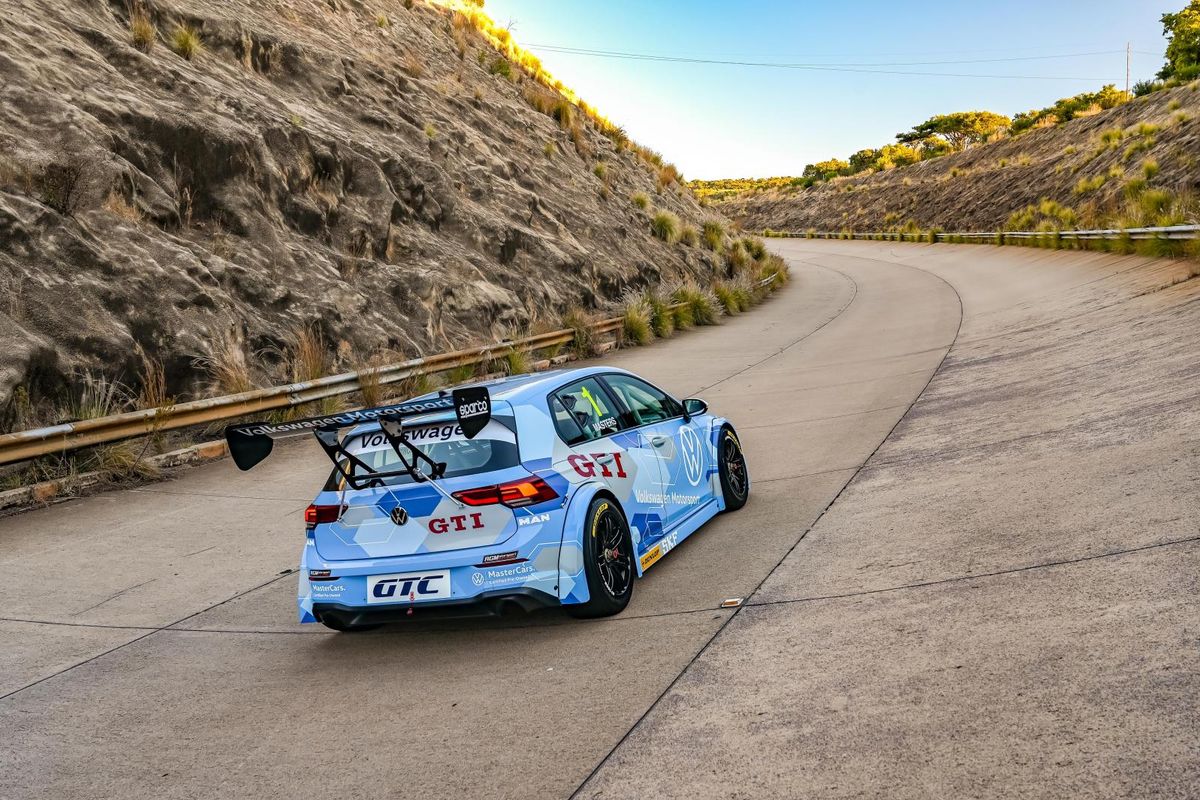
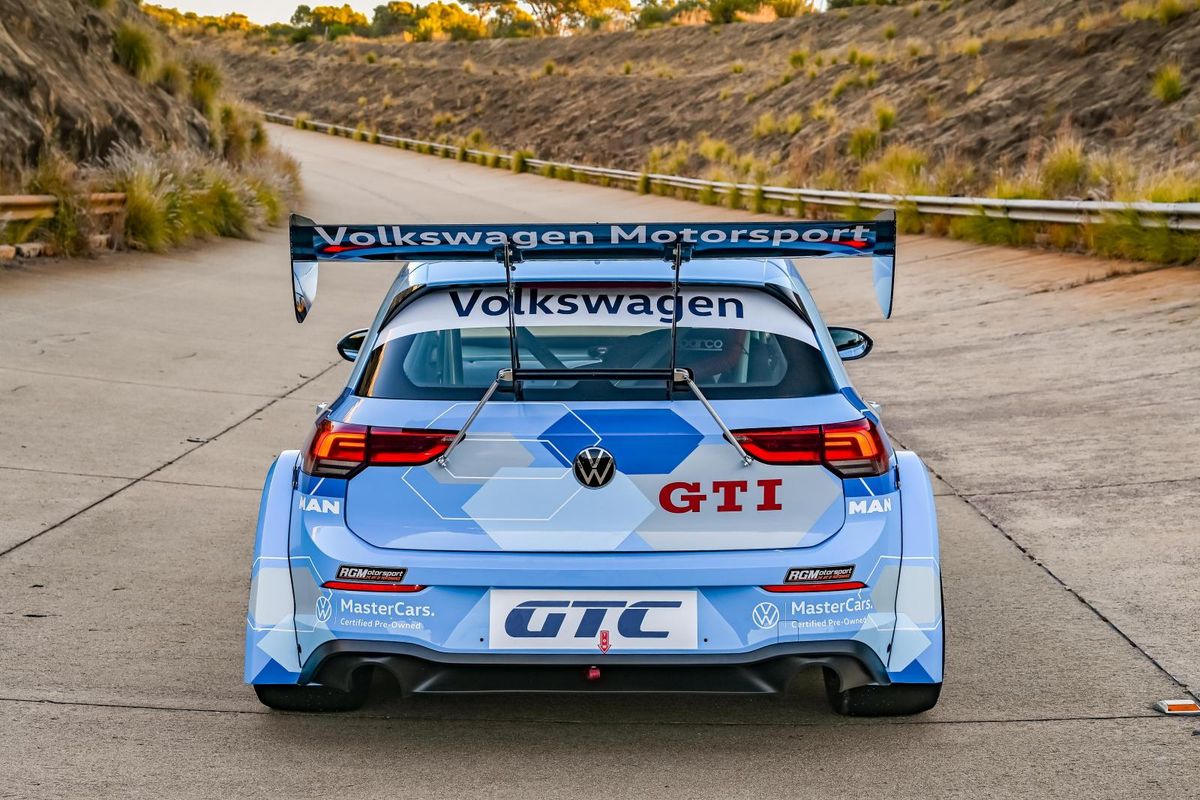
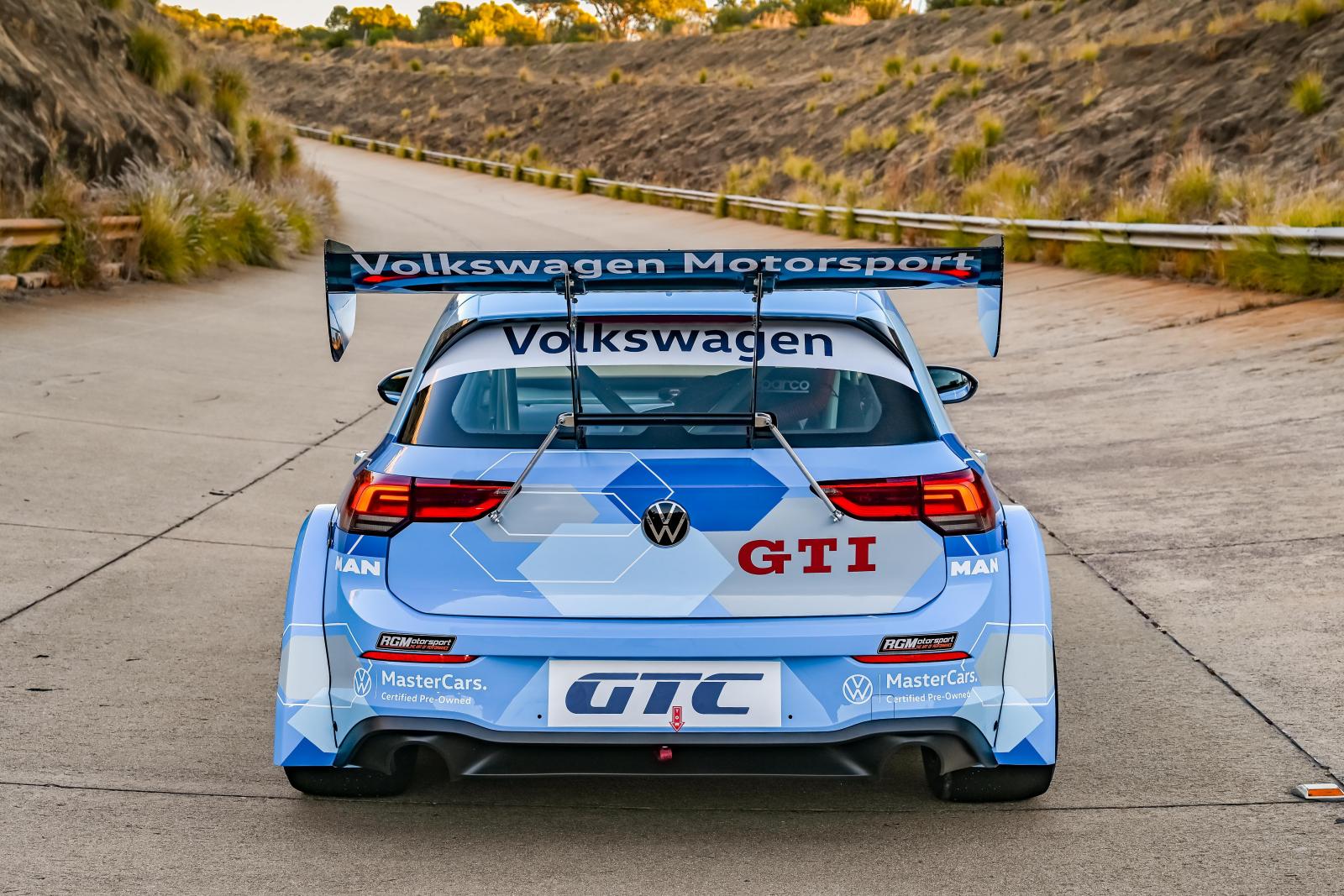
Volkswagen SA has produced the world’s very first race car version of the Golf 8.
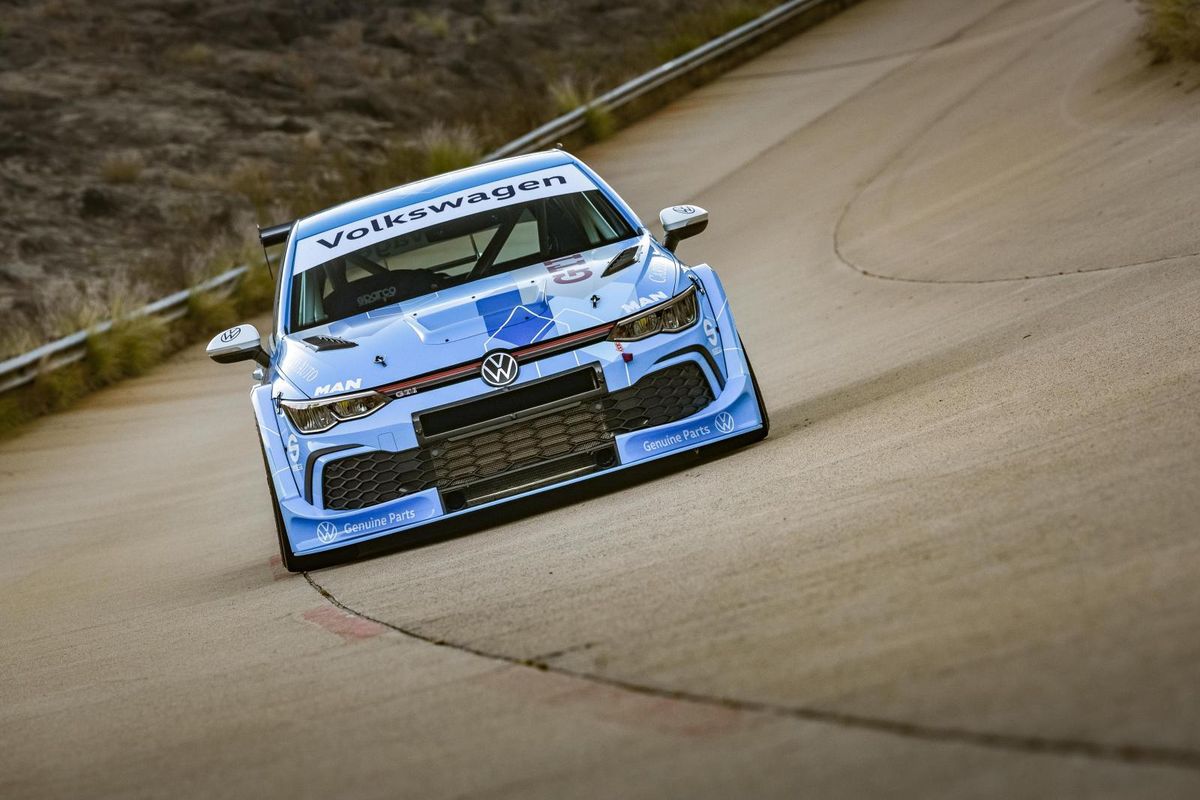
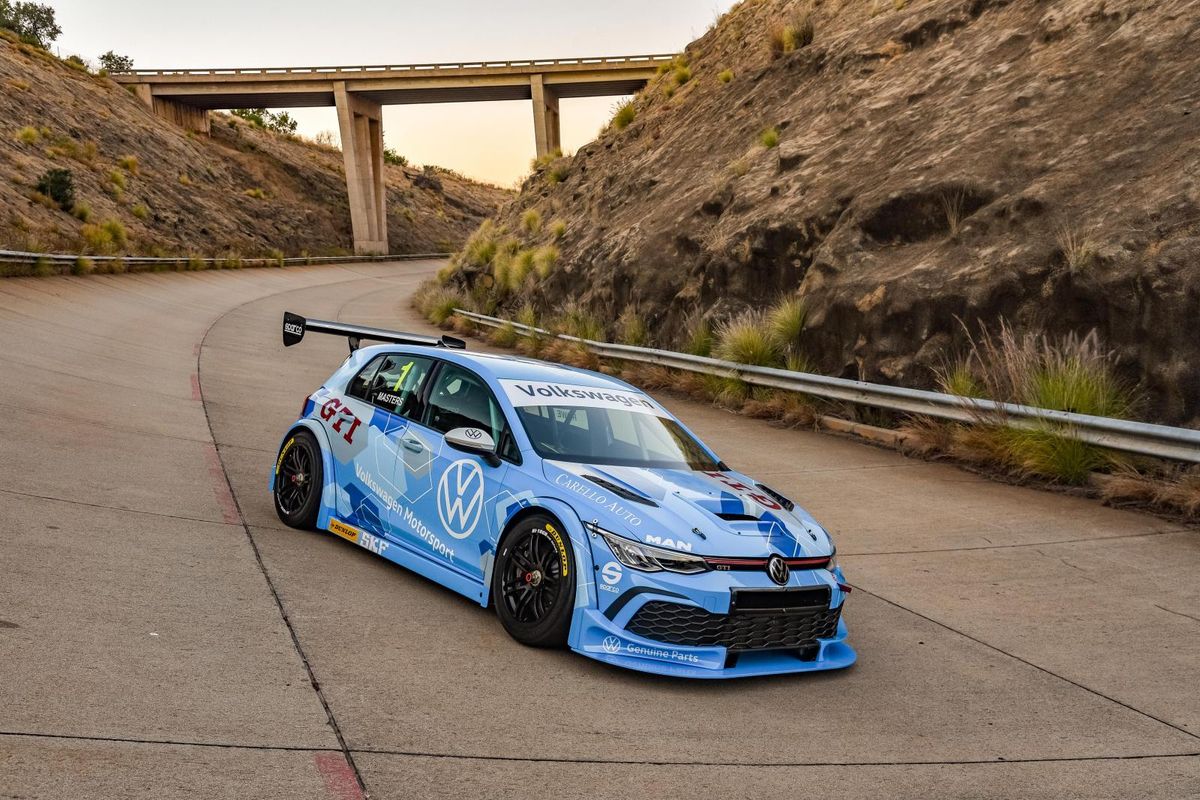
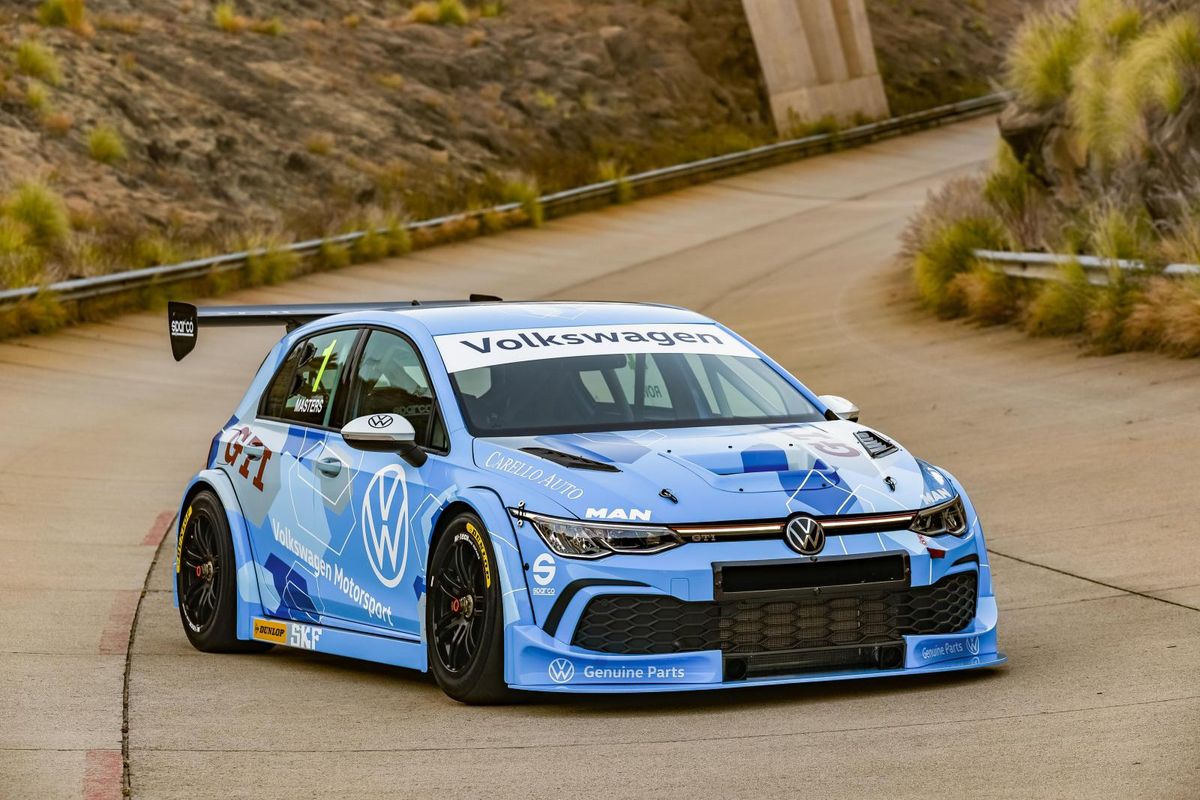
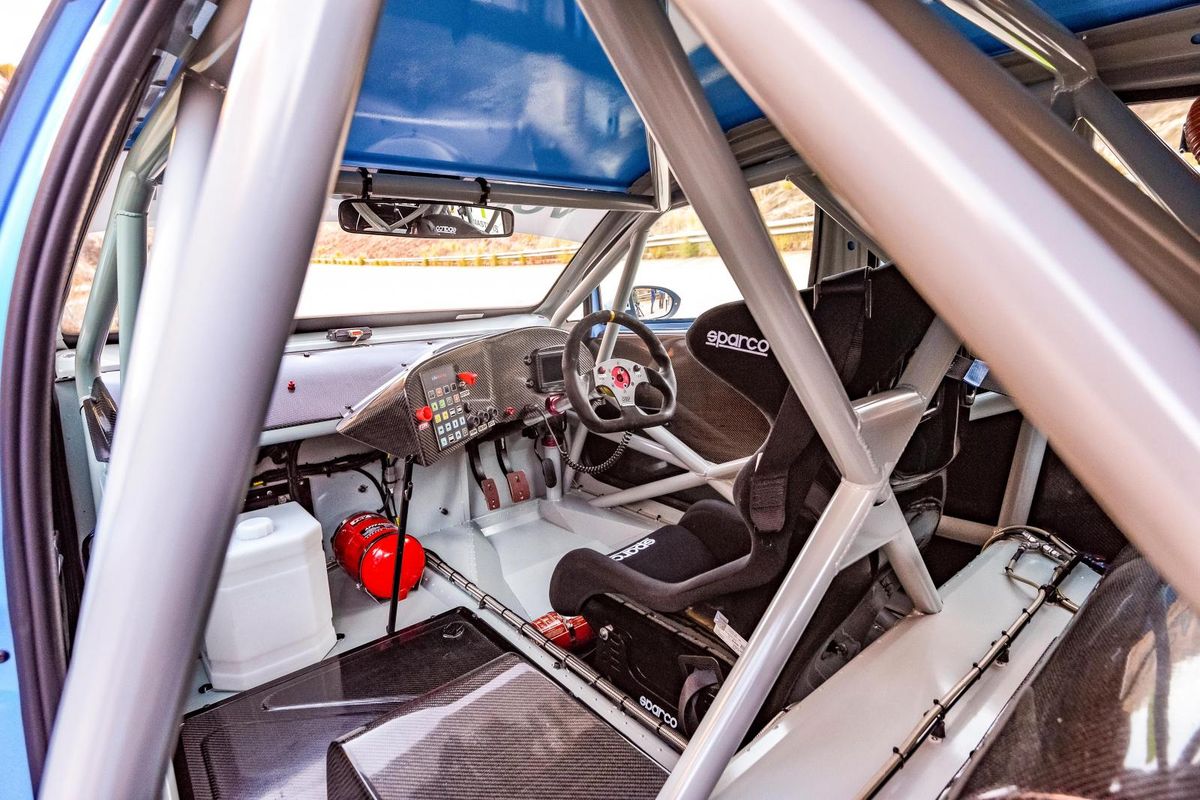
In a world-first, Volkswagen South Africa has been hard at work replacing its Jetta GTC car with an all-new Golf 8 version. The Golf 8 GTC runs the EA888 turbopetrol motor but in an extremely tuned state. It puts out around 500 hp (373 kW) and 600 Nm of torque, sending power to the rear wheels, instead of the front as it would on the road-going version.
“New features in the Golf 8 GTI racing car include an all-new chrome moly tubular chassis which is much stiffer and lighter than the previous generation GTC car,” said Mike Rowe, head of Volkswagen Motorsport. The chrome moly makes the Golf 8 GTI race car around 100 kg lighter than the Jetta it replaces. It's also more aerodynamically efficient than the Jetta despite its shorter wheelbase. In the GTC series, all vehicles have to adhere to strict control measures which feature a common chassis, running gear, a single ECU to control performance, tyres, suspension and other components.
“Even with five manufactures competing in the GTC series, it is one of the most premier circuit racing series in Africa due to its competitive nature. It is a tough championship to win, so consistent scoring of points at every round is very important,” added Rowe. “Due to the Covid-19 pandemic we have not been permitted to race and as the Motorsport fraternity we are all hoping that by August, we can get the cars on the track, although it will most likely to be without any spectators,” concluded Rowe.
Streaming services are being looked into to provide fans with an opportunity to see the new cars in action. The competition for the Volkswagen crew comes courtesy of the factory Toyota Corollas and Audi A4s. Other manufacturers have hinted at entering the series but things will only be finalised closer to the first event likely to be held at Zwartkops International Raceway in August.
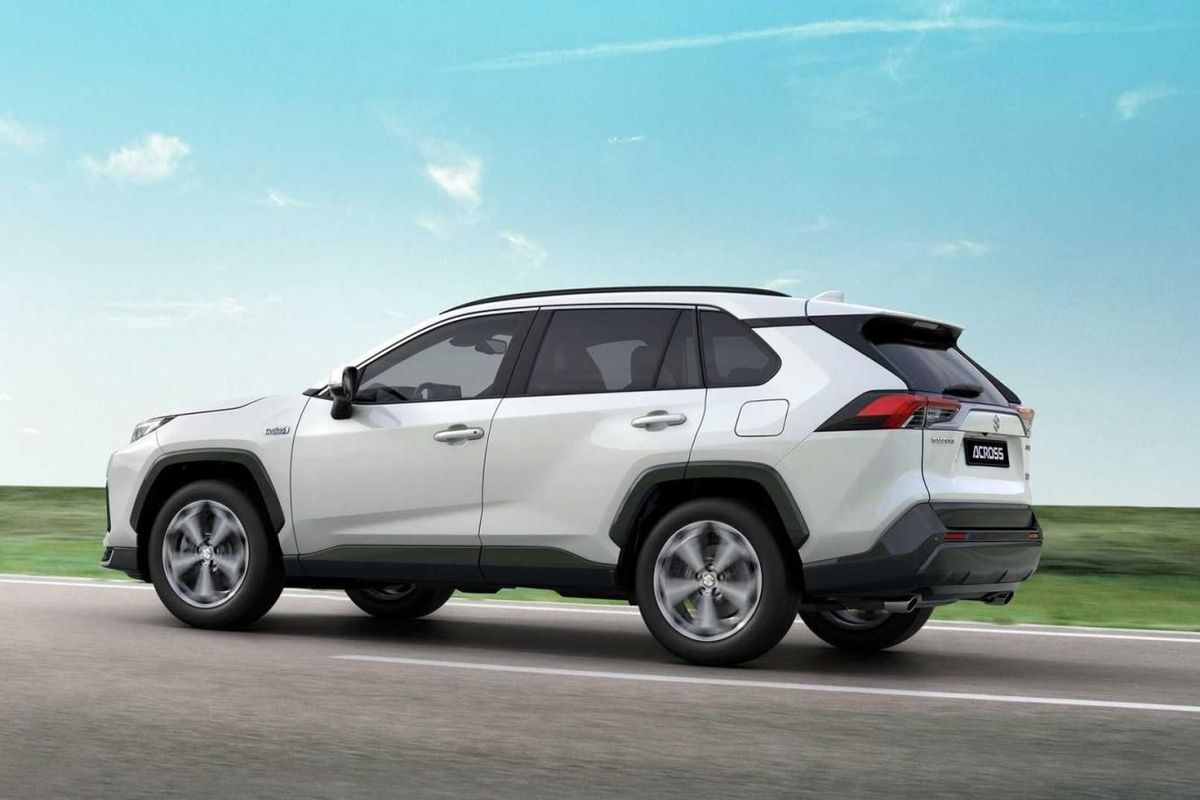
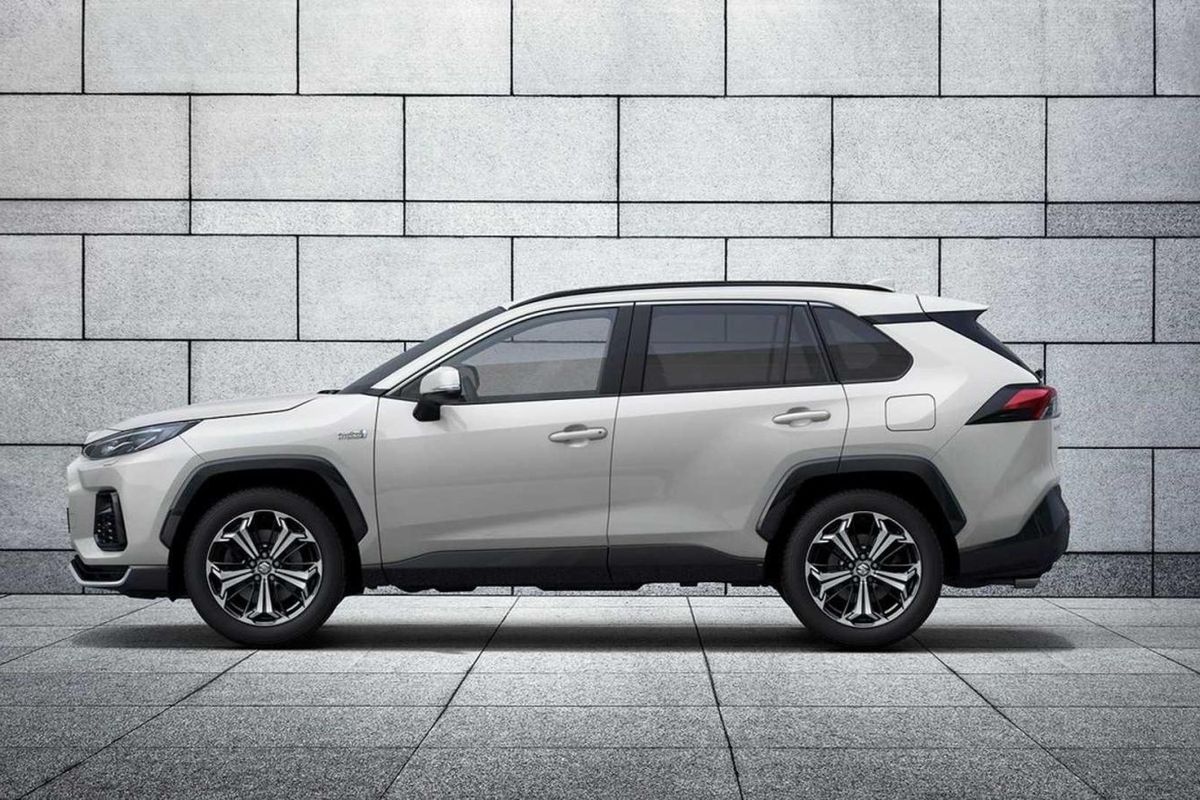
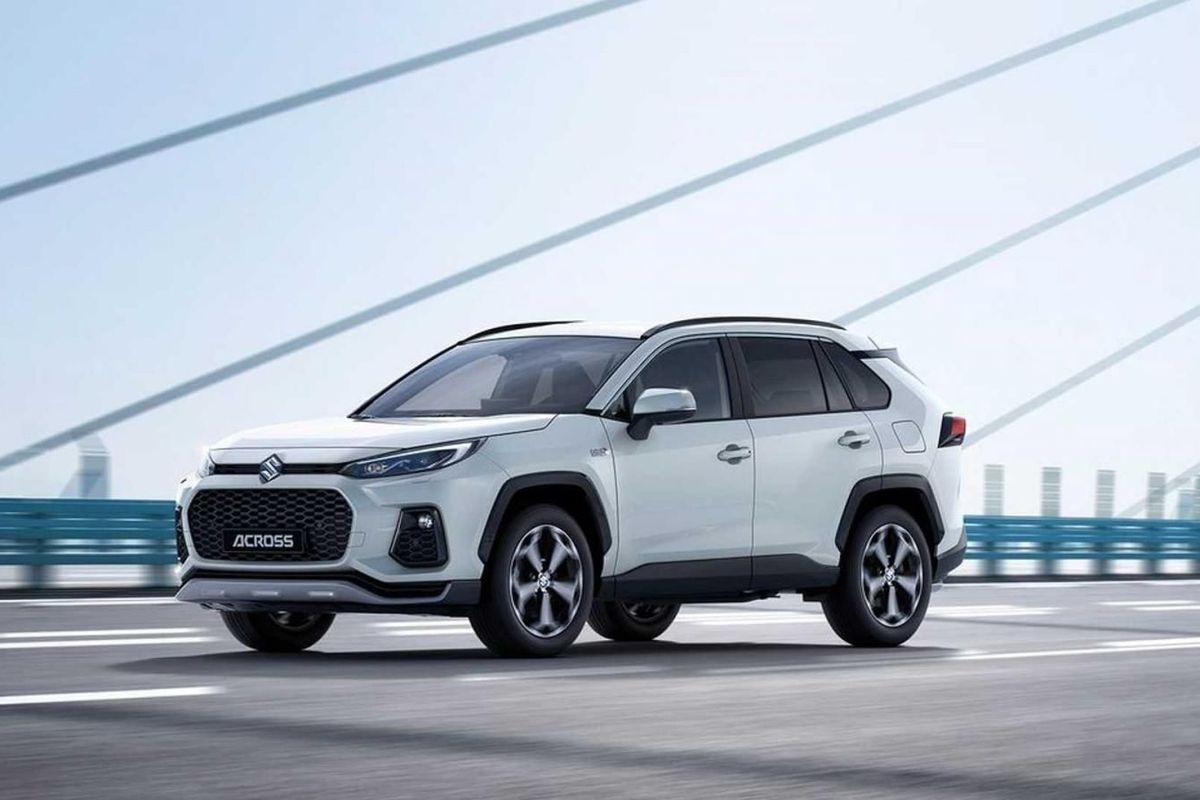
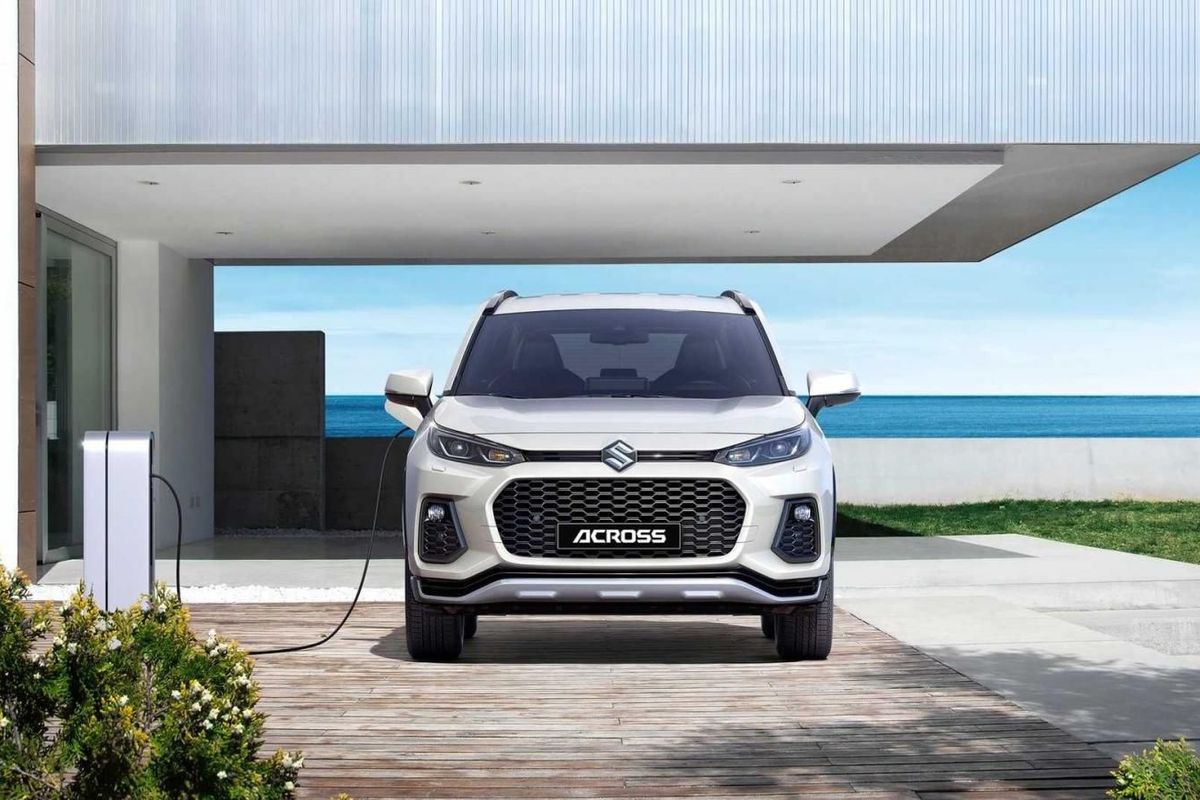
Suzuki has revealed its new Across plug-in hybrid SUV, which is in actually a rebadged Toyota RAV4 Prime. What is going on here?
The back story here is a simple one. In 2019 Suzuki and Toyota signed a deal to deepen their relationship even further. The first deal was signed back in 2017 and the two brands have since taken things up a notch. The official line for this relationship? "Toyota and Suzuki, in addition to bringing together Toyota's strength in electrification technologies and Suzuki's strength in technologies for compact vehicles, intend to grow in new fields, such as joint collaboration in production and in the widespread popularization of electrified vehicles."
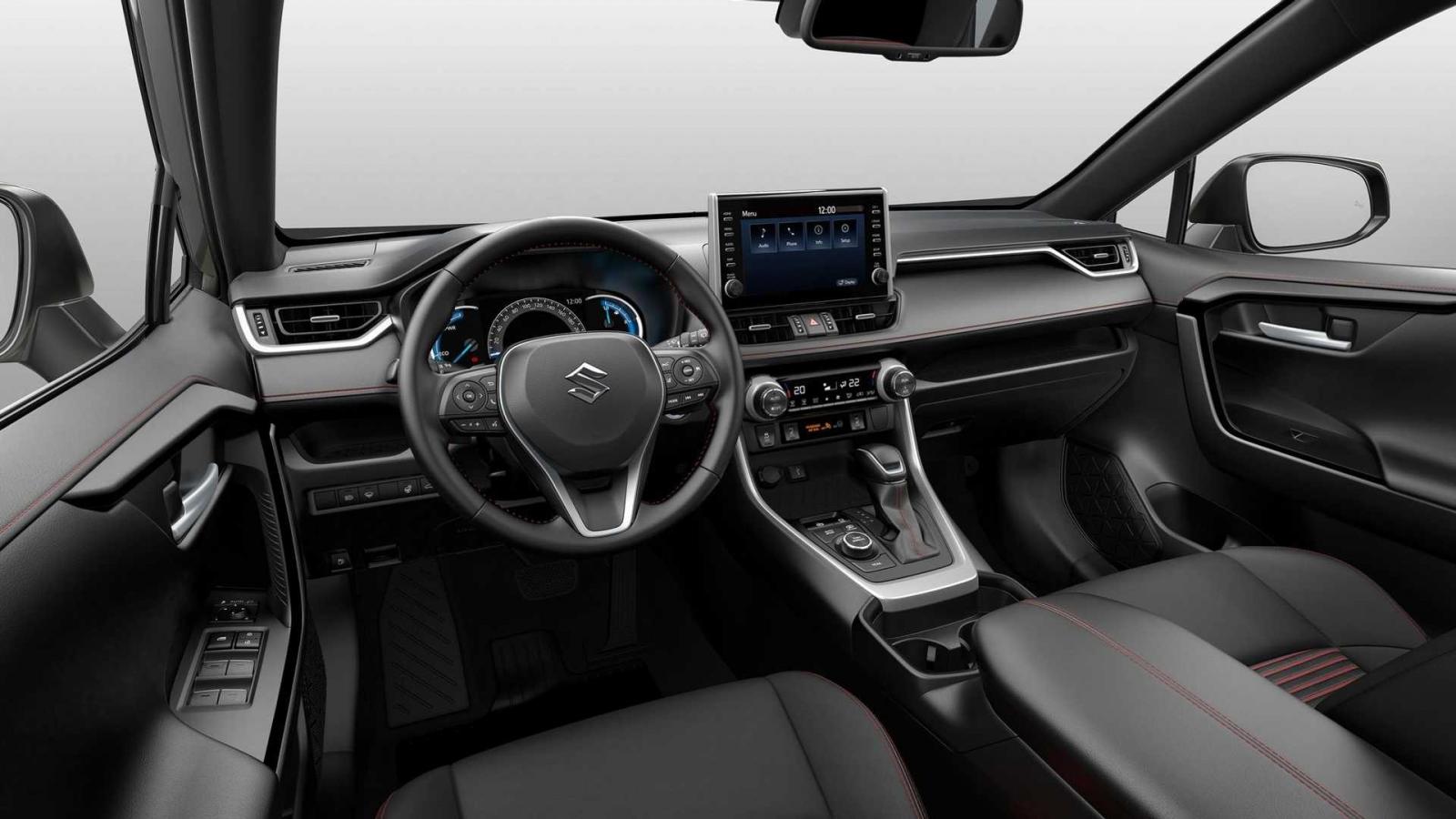
What you see here is the first product from this relationship. Its basically a rebadged version of the plug-in hybrid Toyota RAV4 Prime. Suzuki has given it a new-look front end to differentiate it from the Toyota, while the cabin gets some Suzuki branding. Under the skin, its mechanically identical and the 2.5-litre petrol engine is supplemented by 2 electric motors. In total, there's 225 kW of power and on pure electric power, it will do 75 km of emissions-free motoring. Cleverly, the powertrain acts like an all-wheel drive system and can send power to either axle. Suzuki/Toyota claims a rear torque variation ranging from 100:00 to 20:80.
Like so many South African industries, the automotive market has been hamstrung by the national lockdown, which was triggered by the outbreak of Covid-19. However, it's still entirely possible to research, find and indeed buy your next vehicle during this tumultuous time. Gero Lilleike ventured out into the used car market (armed with a mask and sanitiser) to bring you these useful lockdown car-buying tips.
Some of you may think that buying a car right now is crazy and, you might well be right. The world has changed, I know, and it’s not a particularly ideal – or pleasant – time to be wandering around a used-car lot with the threat of a Covid-19 infection seemingly looming on every surface you touch. But shop you can! During Level 4 lockdown, car dealers opened their doors to the public under strict regulations, which saw the wheels of the local automotive industry slowly start turning again after grinding to a halt earlier this year.
During Level 4 of the lockdown, we also reported that if you were in a position to do so, buying a new car sooner rather than later would be preferable as inevitable new car price hikes have already been implemented and will continue to make their presence felt in the marketplace in the months to come.
Buying conditions are certainly not what they were just a months ago and even in a time of crisis, it’s worth acknowledging that there is a silver lining for potential car buyers. Interest rates have been slashed, which makes it easier to service debt and dealers need to keep their doors open, which means there are chances to secure a great deal.
Yes, it’s true, many people have lost their jobs (to the obvious detriment of households' buying power), which is sad, but for those whose incomes have remained stable, there are deals to be had, whether you are buying-down to cut costs or venturing into the used car market to find the right replacement vehicle to suit your current situation.
It just so happened that the local Covid-19 pandemic coincided with a need for me to buy a more practical vehicle due to my changing lifestyle requirements. As an avid surfer and beekeeper, my much-loved 2004 Toyota Corolla could no longer meet my increasing need for a more practical cargo-carrying solution and so, with my mask on and hand sanitiser at the ready, I went on a car-shopping mission. Hopefully, my experience will help guide you through your car-buying journey in these uncertain times…
1. Check Your Budget
Now, more than ever, you need to check your budget extremely carefully and be sure to factor in any potential future expenses. Be brutally honest with yourself and, importantly, don’t try and justify why you should buy a car if you can’t actually afford it. That’s just silly and, if you overextend yourself, it’s a sure way to incur potentially ruinous debt.
Every cent you spend now can have a huge impact on your financial health in future. Buying a car is a significant financial commitment and a major burden for most people and while you may want a car, you need to ask yourself if you really need a car. Buy with your head, not your heart. Be smart. If you can’t afford it, walk away. It’s that simple.
If you are blacklisted, it's unlikely that you will qualify for car finance.
However, if you have sufficient disposable income to afford to pay off the kind of car you need, then you will have to decide on whether you want to buy a newor a used car.
In my case, I decided to look in the used car market for a 1- to 3-year-old used car that my budget/disposable income could accommodate without putting too much pressure on my overall financial situation. Also, remember to make room in your budget for other car-related expenses such as car insurance, maintenance requirements and fuel costs.
If you are planning to replace your current car you will have to decide if you are going to trade-in or sell your car privately (see below).
Top Tip: Used cars that are 1-3 years old represent good value because they typically have lower mileages and may still be covered by a part of a warranty and service or maintenance plan. The brunt of depreciation (the sizeable devaluation when the vehicle changes hands for the first time) has already been absorbed by the previous owner/s.
2. Trade-in or sell privately?
What if I told you that there is this wonderful vehicle-retail website through which you could sell your car quickly and without hassle? Well, you must have guessed it, it’s called Cars.co.za! If you are reading this you are in the right place. Welcome! Click here if you want to sell your car privately or to a dealer
Under normal trading conditions, I would most definitely have tried to sell my used car privately. Selling your car privately generally means that you might fetch a higher price for your vehicle whereas with a trade-in you must expect lower offers for your car based on its trade (pre-dealer-markup) value. The Used Car Search function on Cars.co.za is a great way to get an idea of what your car is generally worth in the used car market by looking at similar used cars for sale with similar mileage and condition.
However, under Level 3 lockdown and the need to be vigilant about social distancing, I wanted to save myself from experiencing the extra administration hassles of selling my car privately, such as making countless appointments for people to inspect my car at home or standing in long queues at the traffic department to process paperwork… and so forth. Instead, I accepted that I might get a little bit less for my vehicle, but I made peace with that decision and proceeded to try and find the best trade-in offer.
Cars.co.za has a great new feature that serves this very purpose and it’s called Match! You simply follow the quick process to load your car's details onto the Match! system, which will subsequently alert dealers that your car is for sale; after that, interested dealers will make offers to buy your car from you. The choice to accept or decline the offer(s) is entirely up to you. It's that easy! Match! is very much like an online dating site, but for car owners and dealerships. You should definitely give it a try!
While you work on securing the best offer for your used car (unless you simply trade it in), you can start shopping for its replacement. Again, Cars.co.za is the best place to look for a used car because the platform lists accredited car dealers and the 'site has been specifically designed to help you find the vehicle you're looking for quickly and effectively.
Start by using our Used Car Search Tool and select the various parameters you are interested in, such as specific car brands, price ranges, maximum mileage, region, body shapes, engine type, transmission and so forth, to refine the search results. Browse the used-car listings methodically until you find (a) vehicle/s you might be interested in.
Once you have found a used car you're interested in buying, it’s time to "Contact the Dealer" by filling out your details on the relevant car listing's page, which will then be sent to the dealer that stocks the vehicle. The dealer will contact you directly and you can then proceed to make an appointment to inspect the vehicle and to take it for a test drive.
Top Tip: In addition to using Cars.co.za to find your next new or used car, also be sure to liaise with the relevant dealerships in your area to find out if the outlets have any stock available of the car you are looking for. The more thorough your search process is, the wider the choice and the better the chance you'll find the exact car you are looking for.
You should aim to have at least 3 or more test drives lined up of examples of the vehicle you are looking to buy. Even before you even start negotiating a purchase price or the terms of the deal, you will learn pivotal information about your prospective purchase beyond what you can see (and read in its documentation) during the test drive experience.
Test driving is very important and ideally, you should never buy a car that you have not driven yourself. A test drive will give you the opportunity to not only sample the general condition of the car as well as its suspension, engine, transmission and features (as advertised), but you should also take your time to closely check the condition of both the interior and exterior of the vehicle and make a note of any visible defects as these could be used to negotiate the price of the vehicle with the seller or dealer.
Be as thorough in your assessment as possible. Also, insist on seeing and studying the service history of the car and, if you are seriously considering buying the vehicle, enlist a trusted mechanic to inspect the vehicle to make sure that it is mechanically sound, especially if the vehicle is being sold privately. The last thing you want to do is buy a lemon!
Bear in mind that you can no longer just pitch up at a dealership and demand a test drive. Dealers have to follow strict Covid-19 protocols in order to do business and you should, therefore, phone the dealership and pre-book a test drive appointment. Always carry your own sanitiser with you and wear a mask when you are at the dealership. The car you are test driving should be sanitised before and after the test drive by the dealership. Make sure that this is done before getting in the vehicle, if not, insist upon it.
5. Negotiate for the best deal possible
Now that you have driven the car/s you are interested in buying, you should be much closer to making a purchasing decision.
When you have decided to make an offer on a vehicle, sit down with the seller or dealership staff to discuss and negotiate the purchase price as well as the payment agreement (if you need to put down an upfront deposit and the procedure of applying for finance – if required). Whatever you do, don’t be shy to ask questions and never be afraid to haggle (negotiate a better deal). Remember, your hard-earned money is on the line and you should take it upon yourself to negotiate the best deal you possibly can. If you are not satisfied with the answers or with the outcome of your discussion, then perhaps you should consider looking elsewhere, but ultimately, only you can be the judge of that.
Bear in mind that most dealers and sellers will have made provision for negotiation (set a minimum price) and, to put it bluntly: if you don’t ask for a sweeter deal, you won’t get.
Importantly, you need to consider how you are going to pay for the vehicle and the terms offered by the dealer's financing representative (or, more to the point, whichever bank or financing house you prefer to finance the vehicle) should be discussed and clarified in fine detail. Most people apply for finance to buy a car and if this is the case you must take the time to understand how car finance is structured, so that you can opt for the best finance solution to suit your budget. Again, ask questions until you fully understand!
Remember that your monthly car instalment is determined by the cost of the vehicle, the length of the payment term, the interest rate you are offered and whether you will be putting down a cash deposit, trading-in your current vehicle or neither – or both.
As a rule of thumb, the longer the finance period, the cheaper your monthly repayments will be but the more interest you will pay over time. Similarly, if you pay your car off over a shorter period, you will pay more monthly, but you will pay considerably less in interest over time. A trade-in or cash deposit will reduce the overall loan amount and will, therefore, reduce your monthly repayments. Also, the lower the interest rate you are able to obtain, the better. The prime interest rate is currently at 7.25% (July 2020).
It's worth bearing in mind that vehicle registration will take longer than normal due to the impact of Covid-19. Many traffic departments are currently closed for decontamination and delays in processing should be expected for the foreseeable future.
Top Tip: Don’t sign any purchasing documents until you are fully aware of the financial implications thereof and the deal in general. Always sign with confidence!
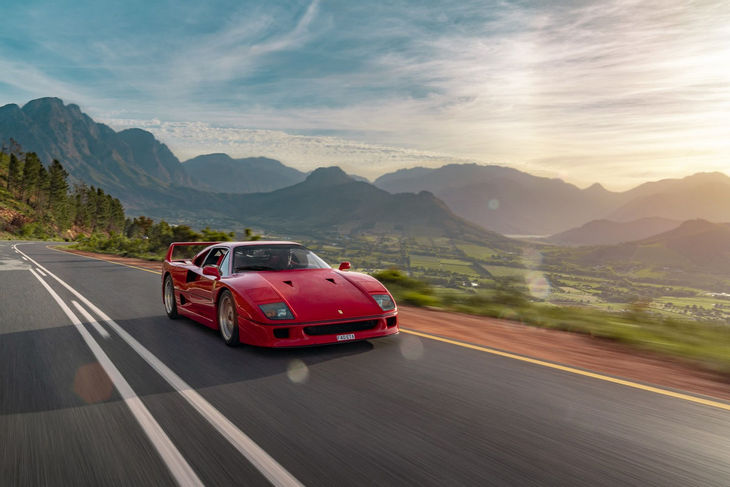
Before you make any final decision or sign documents, sleep on it. Insist on taking a day, or as long as you need, to think it (the deal) through. Review all your decisions and make 100% sure that this car is the car for you and that you can honour the financial commitment. This is important: many people rush into purchasing a car far too quickly only to find that they have either bought the wrong car or over-extended themselves financially, or both. Even people who can afford to buy a Ferrari F40 with cash need to ponder their purchase thoroughly. Buyer's remorse can be avoided if you are patient, methodical, reasonable and, most importantly, honest with yourself about what you can afford.
As for the outcome of my used-car-buying escapade, my treasured Toyota Corolla will without a doubt find a new home and I know that whoever owns that car will have many dependable kilometres ahead. As for me, a new chapter begins; I am now living the van life, as the hippies say… Find me on the Instagrams to see what I bought 🙂
I trust this article has helped you in some way and I wish you a happy car shopping experience on Cars.co.za. Stay safe and good luck!
Mercedes-Benz has gradually been broadening its designo Manufaktur business, since 2015.
Originally intended to give only the wealthiest Mercedes G-Class customers even more exclusive customisation options, designo Manufaktur is now available on more trim levels than ever before.
A team of seamstresses, leatherworkers and paint experts combine to build vehicles worthy of the designo Manufaktur name. The promise from Mercedes is simple: its designo Manufaktur vehicles are tailored to customer preferences, like no other.
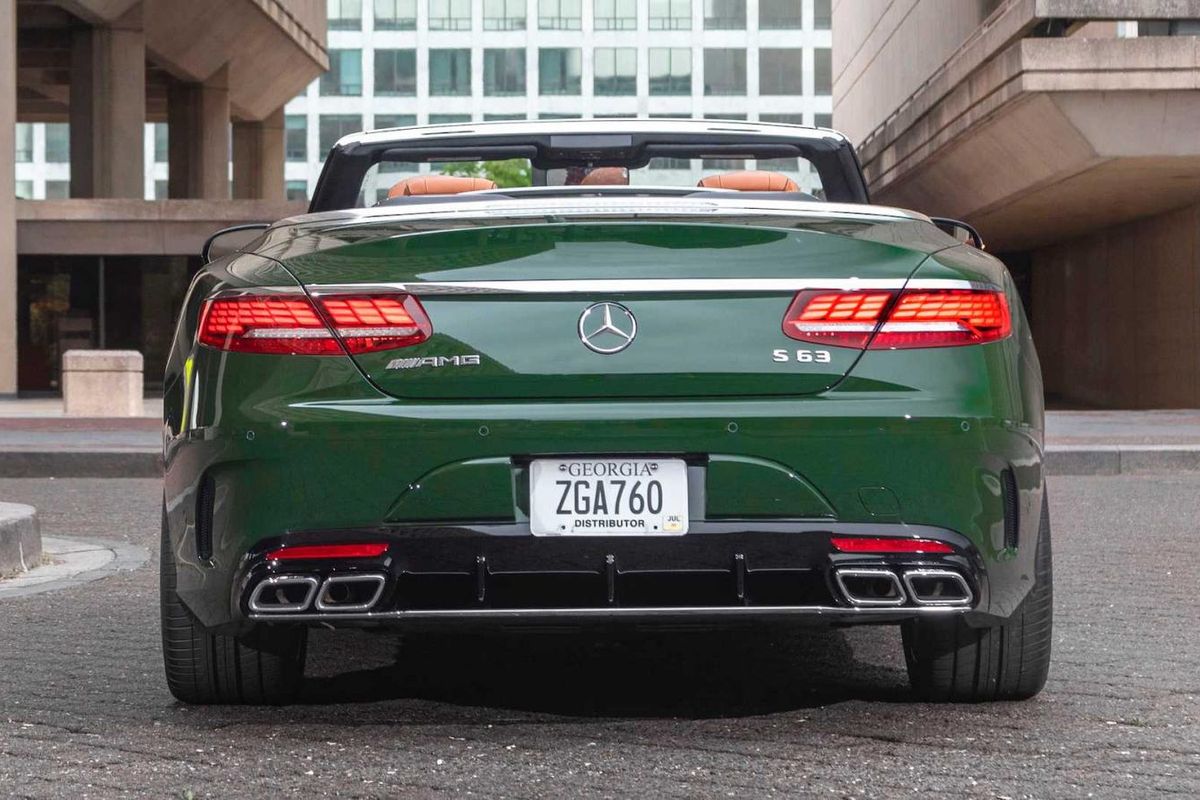
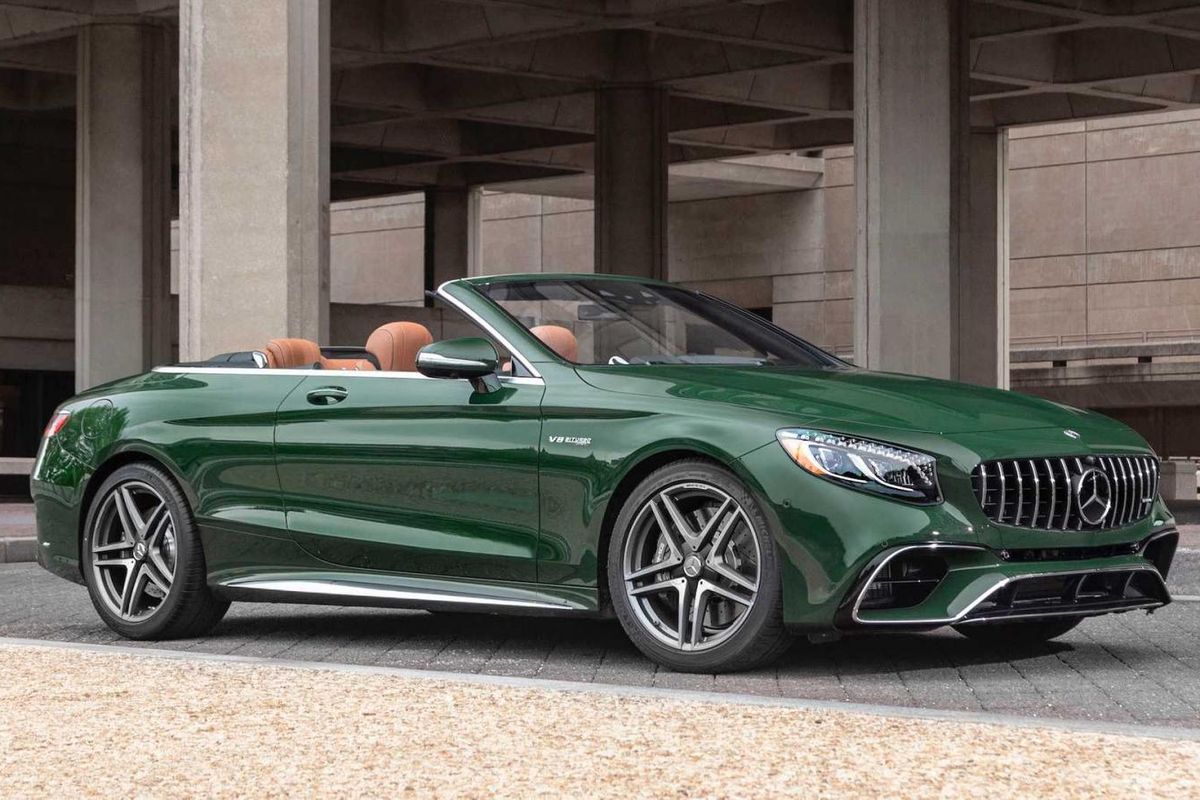
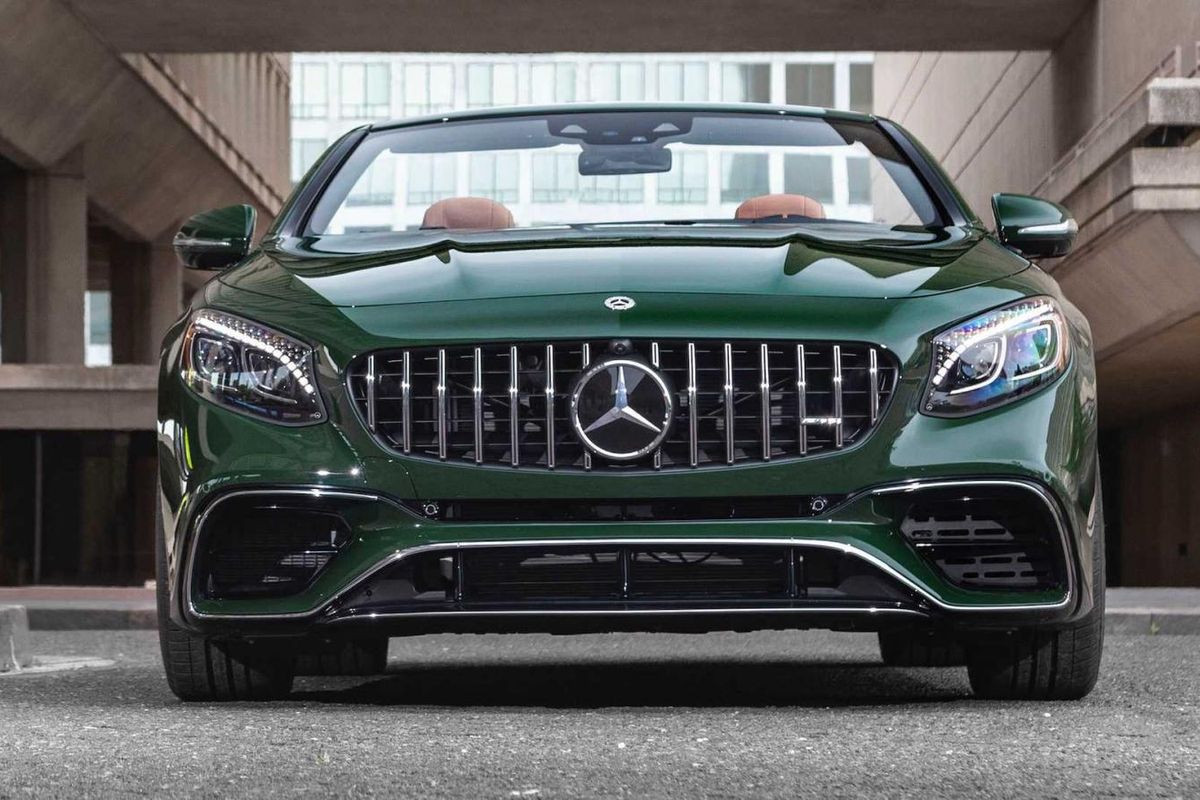
Bold colours have always been a feature of the designo Manufaktur offering and Mercedes is now going all-in, promising to paint your vehicle in any finish you wish. And by ‘any’, Mercedes is not indulging in obtuse marketing.
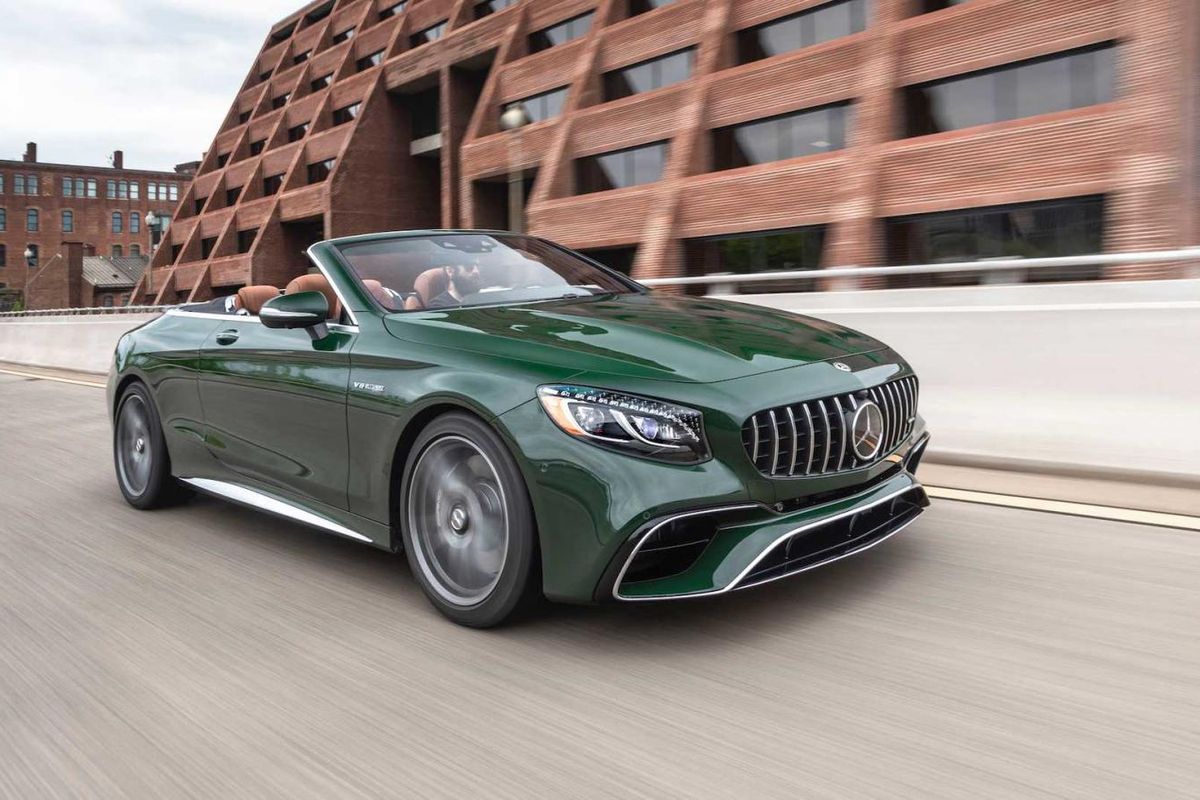
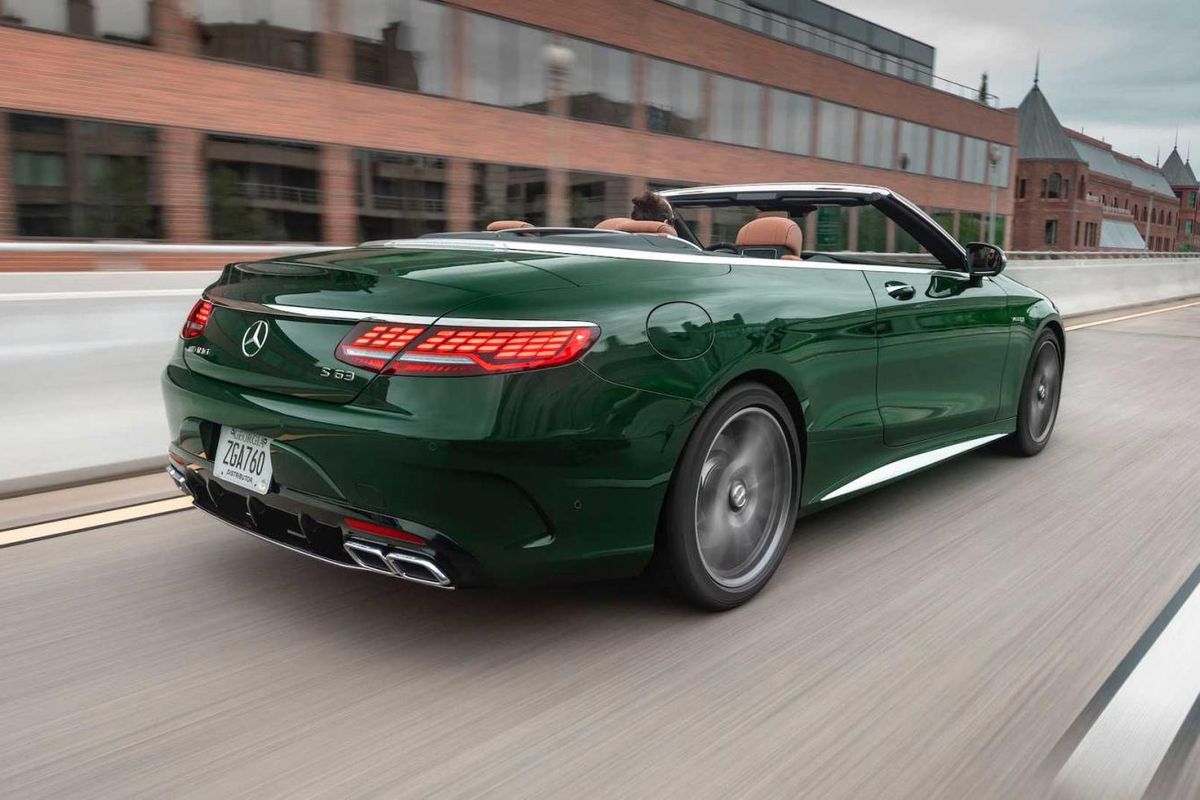
Customers can trawl through Mercedes-Benz’s own design history to make a choice, meaning that your great grandfather’s 1950s Ponton colour, could be applied to a new AMG. The attached AMG S63 cabriolet gallery shows what can be done with Mercedes-Benz's classic deep green, a colour from decades ago.
An even more radical outcome is ordering your new Mercedes in a rival manufacturer’s colour.
Mercedes-Benz will now effectively paint your new vehicle any colour you wish, even if it is from the Audi or BMW colour chart. Although this option is subject to paint availability (a smart caveat by Mercedes), it is sure to court some controversy and create doubt for confident car-spotters, as specific model lines and production years, will no longer correspond strictly to colour.
In a time when the automotive industry is under pressure, Mercedes-Benz is responding by offering its customers a greater diversity of choice and individualization.
Expanding the designo Manufaktur programme might irk some G-Class owners, who valued the exclusivity of their boldly coloured vehicles. The truth is that it generates strong demand and revenue – with designo Manufaktur orders increasing by 200% this year, even in pressurized economic conditions. Something Mercedes-Benz desperately needs.
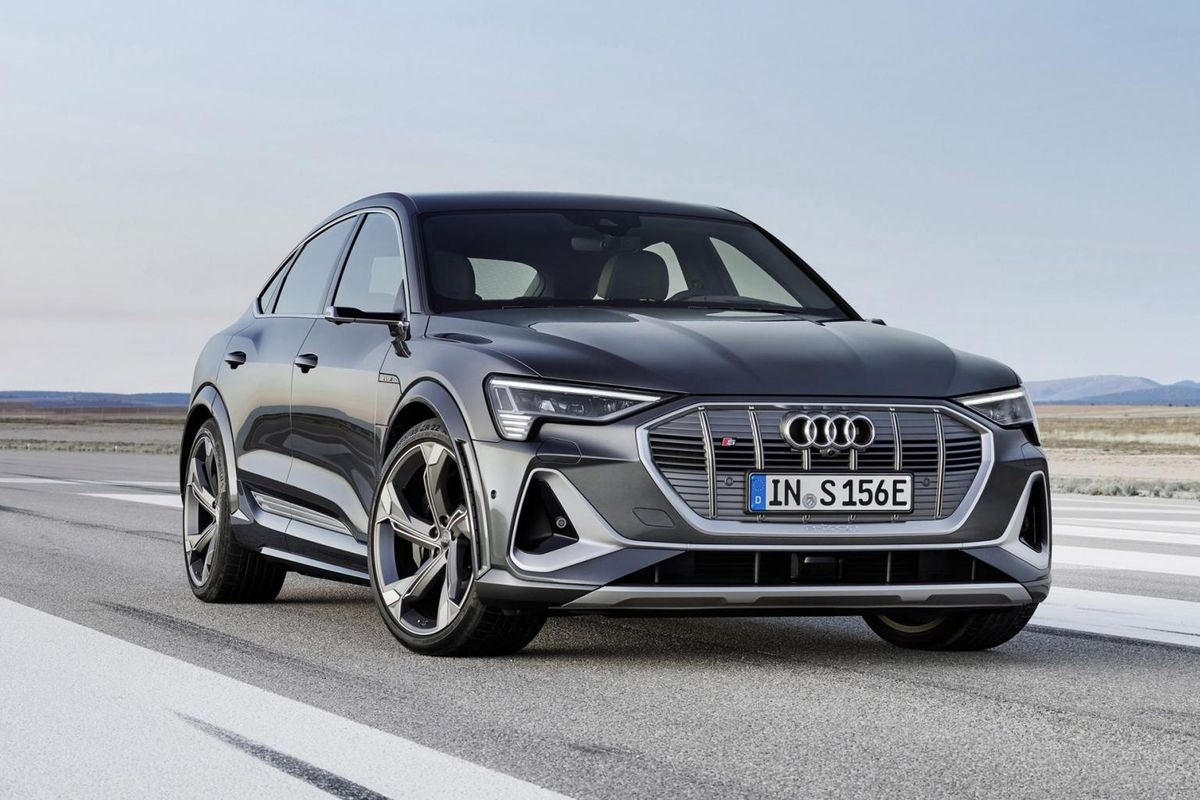
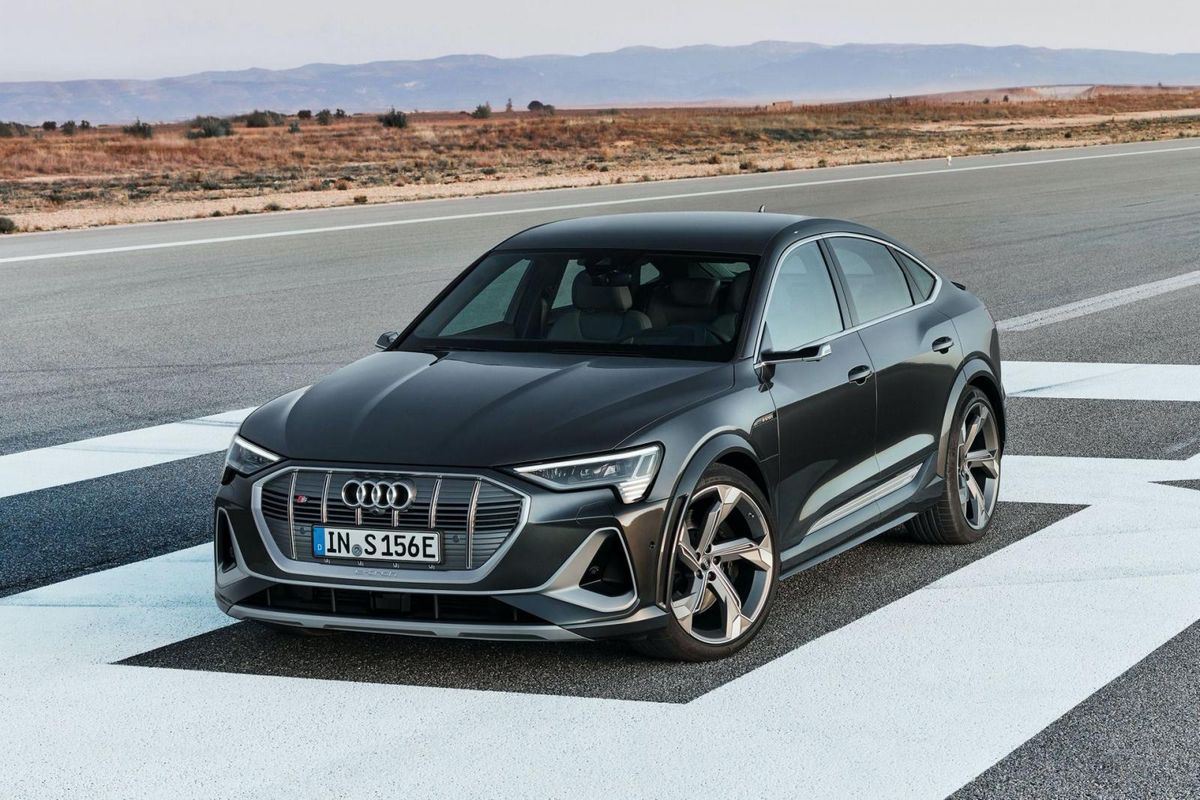
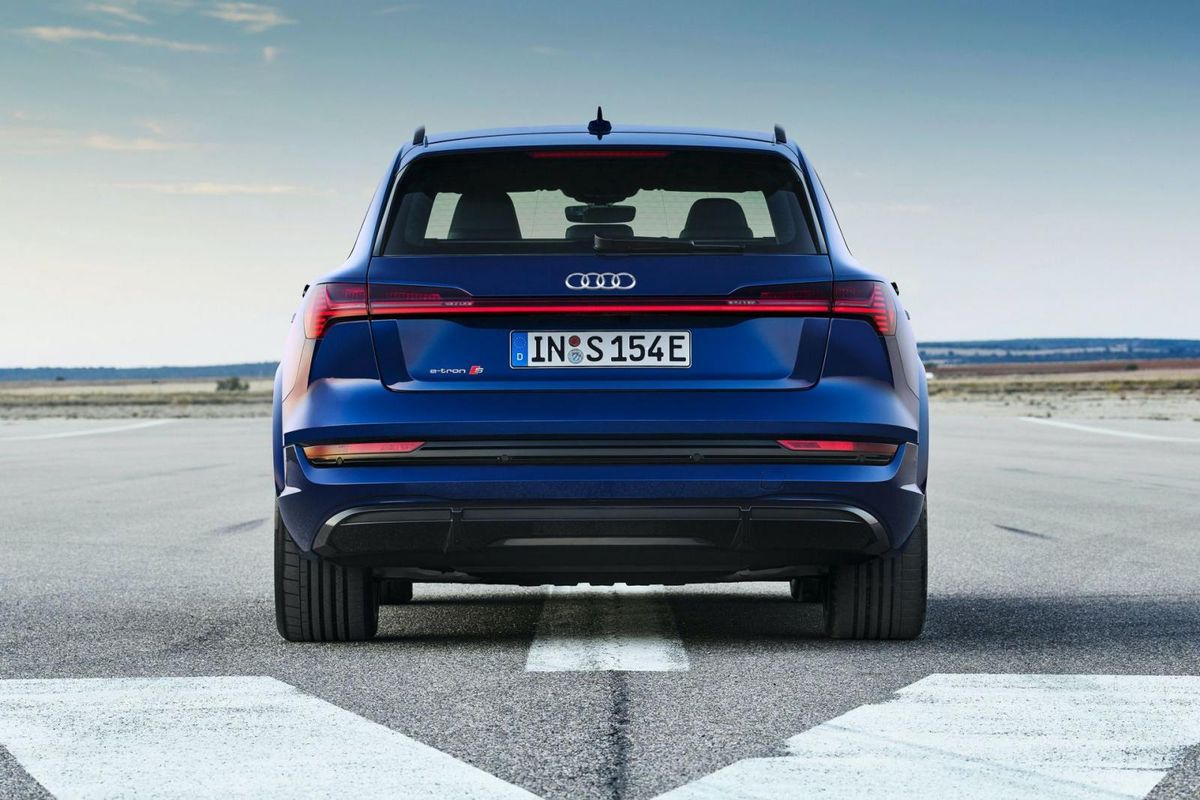
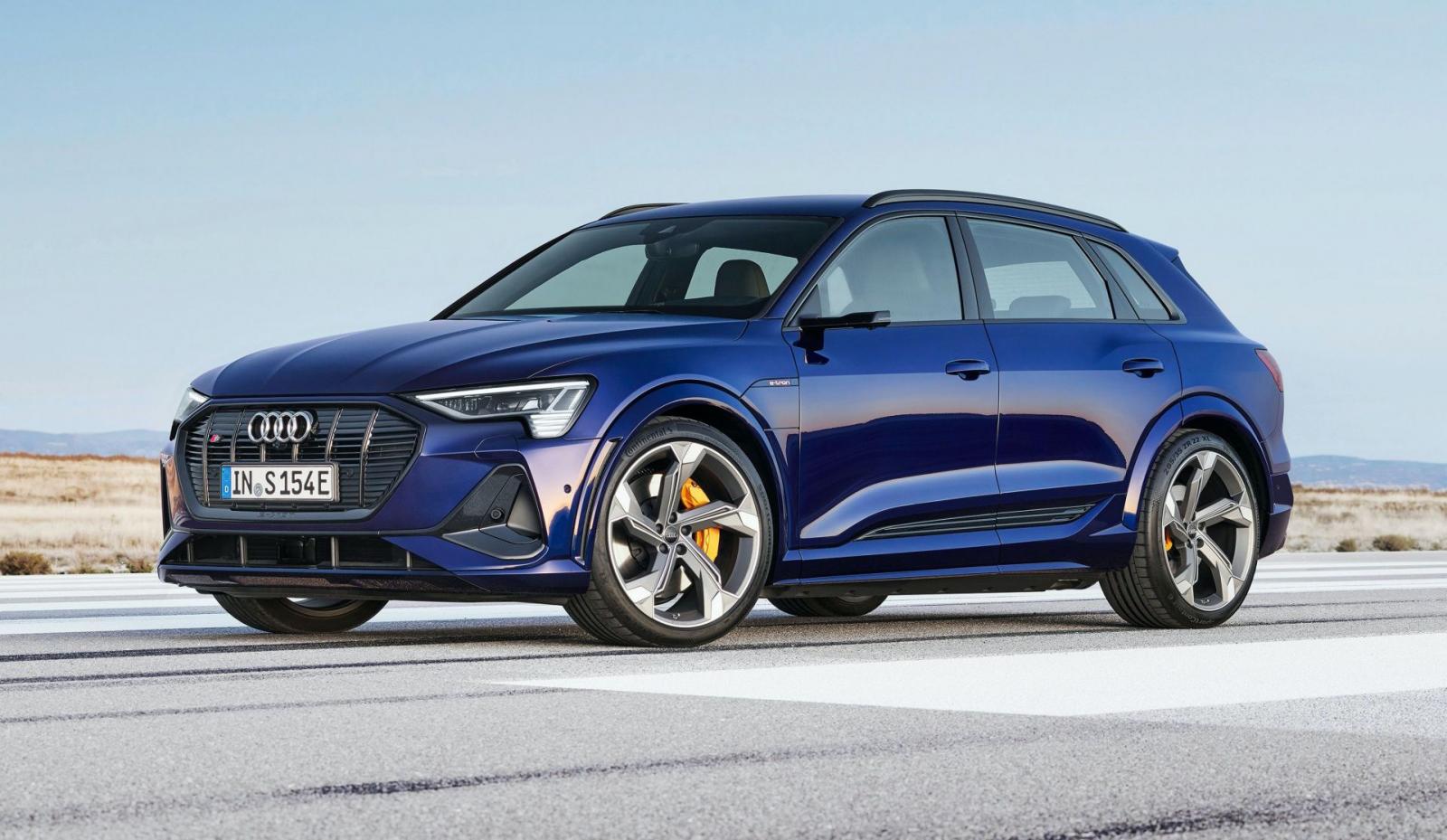
As we await the belated arrival of the e-tron in Mzansi, Audi has taken the wraps off S derivatives of the electric SUV and its Sportback sibling; the pair, which can produce 370 kW and 973 Nm, is said to be first volume-produced cars powered by a trio of electric motors.
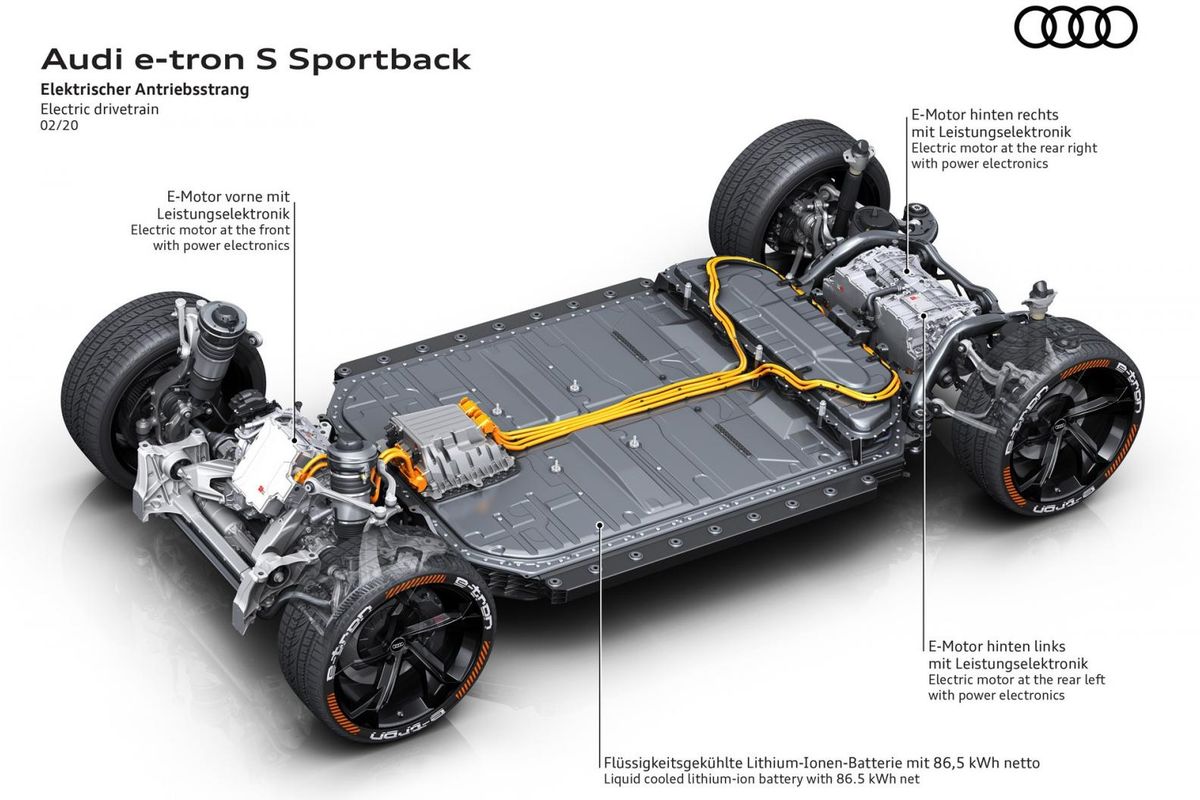
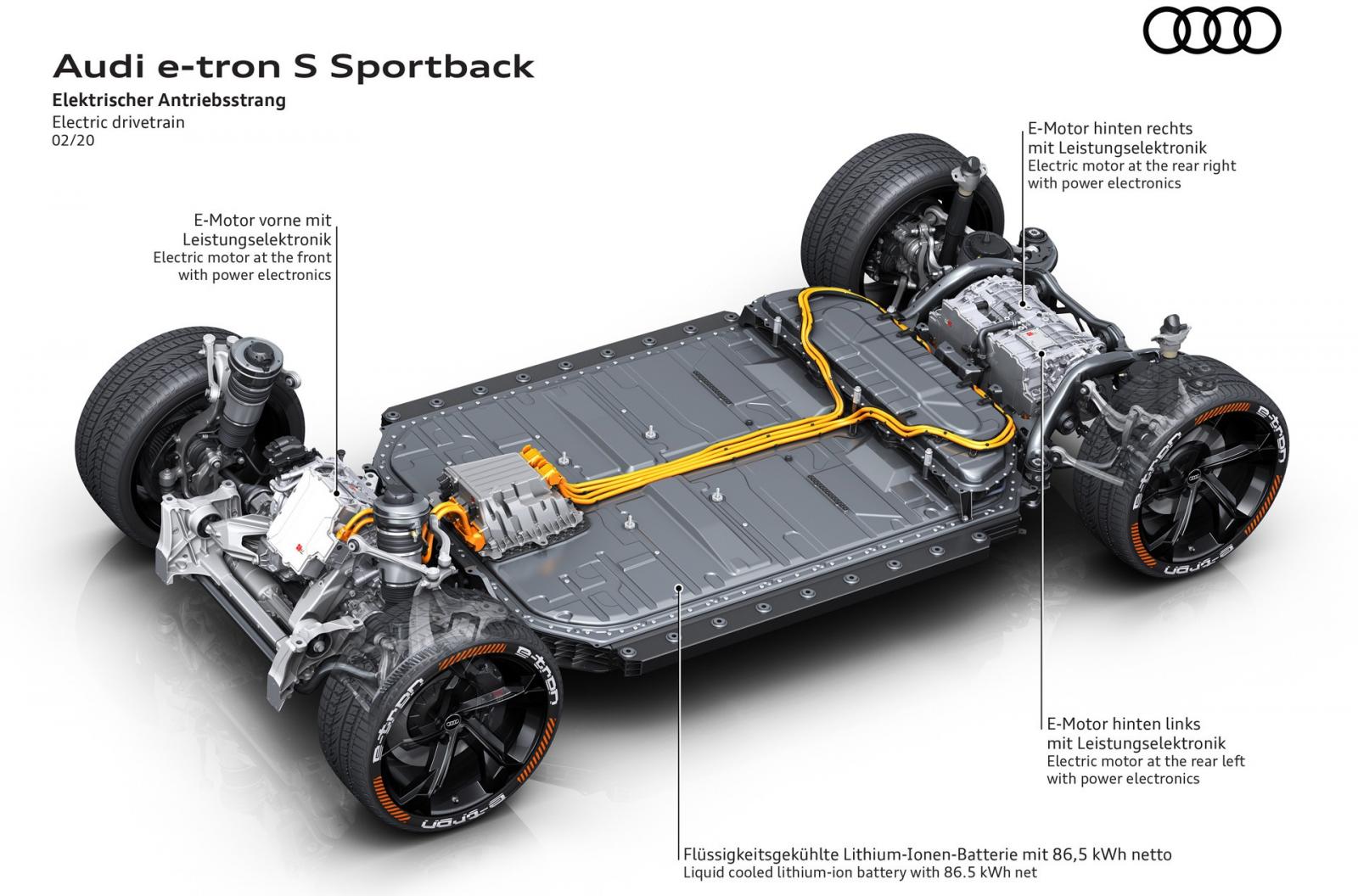
Audi previewed the launch of the e-tron S and Sportback S in March 2020 when a camouflaged pre-production unit demonstrated its drifting prowess in a teaser video. The newcomers are technically all-wheel-driven derivatives courtesy of being endowed with 2 motors that drive the rear axle, while the third propels the front wheels.
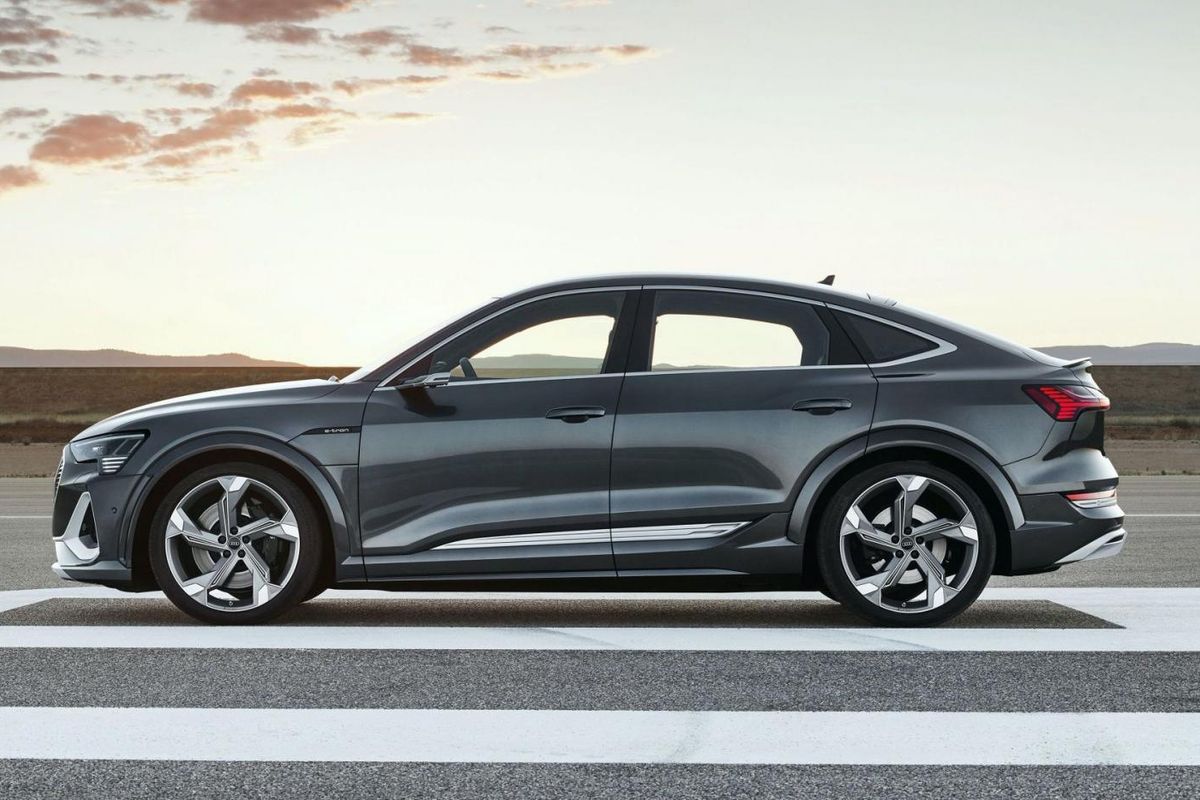
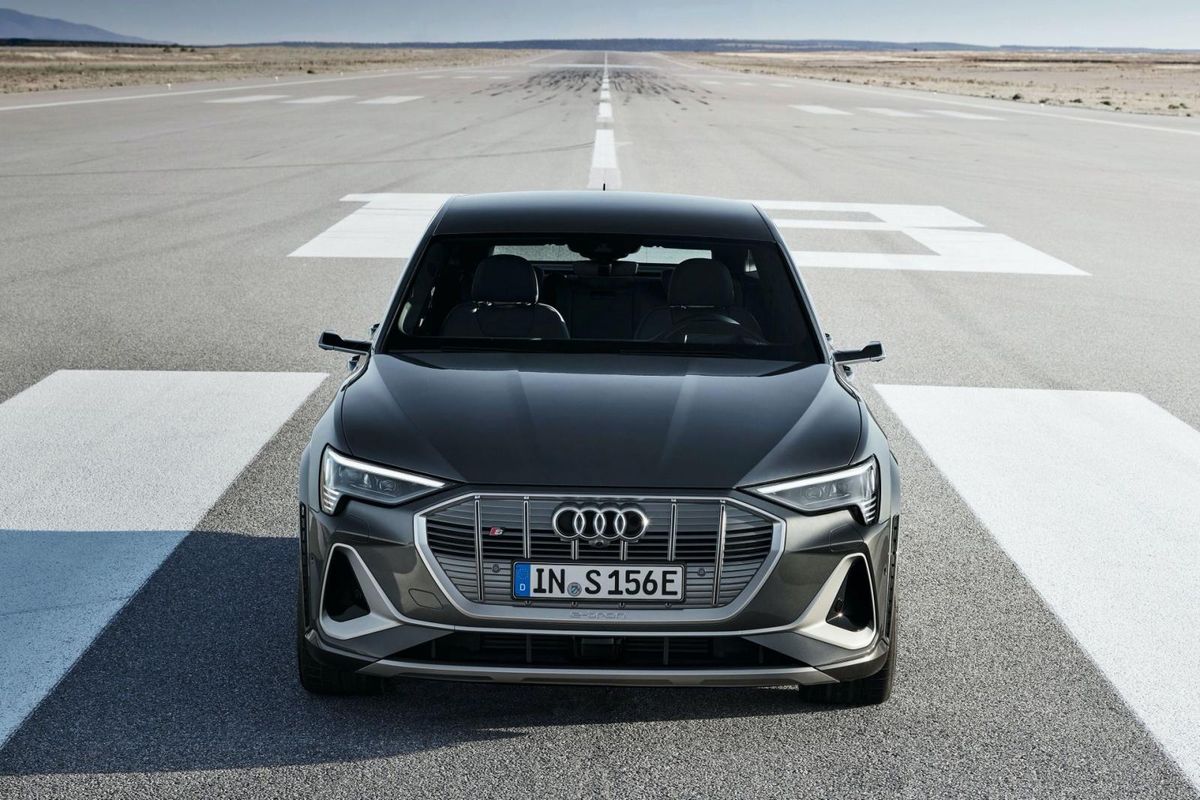
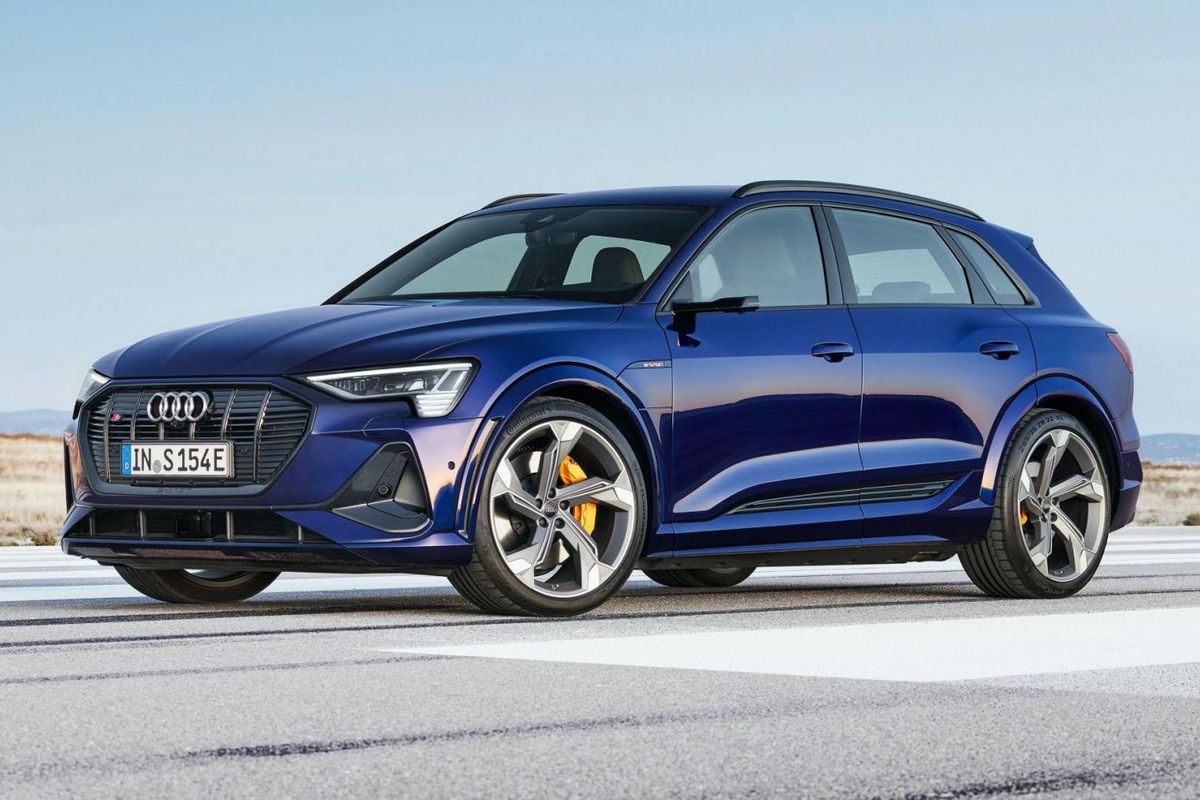
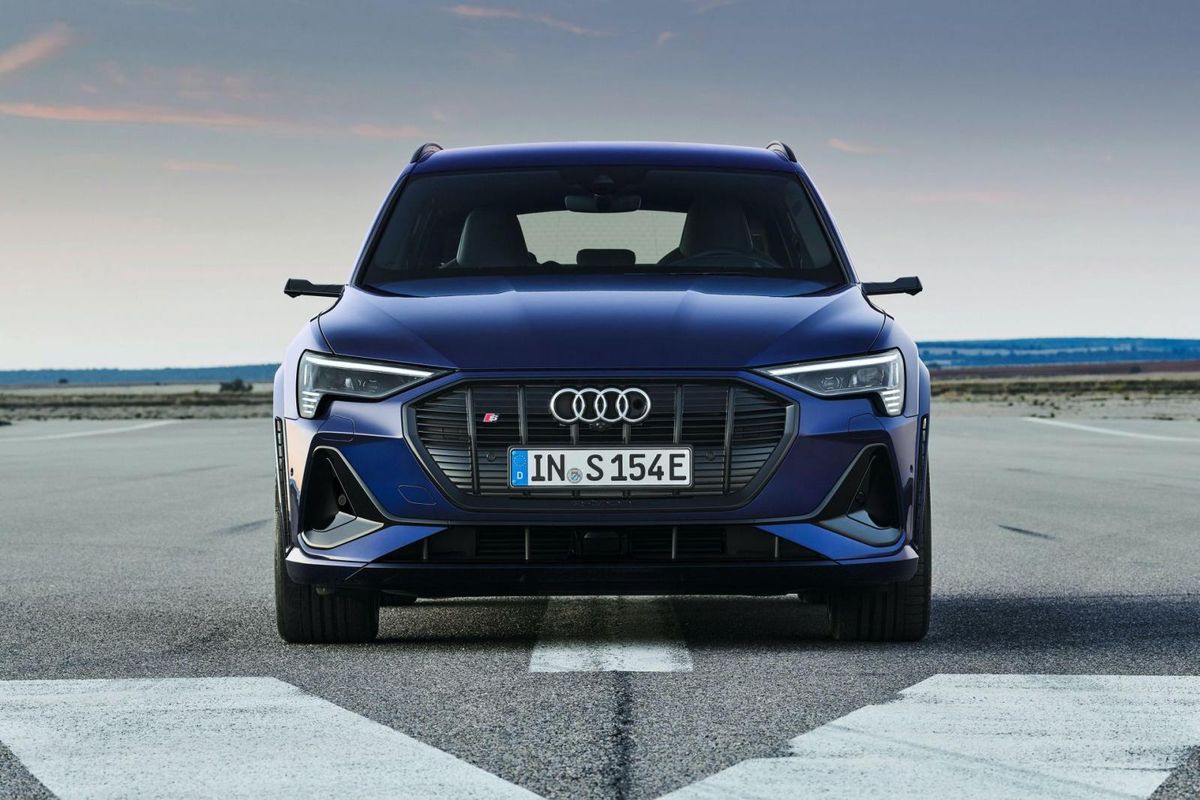
The e-tron S has a decidedly sporty stance, replete with beefed-up bumpers, flared wheel arches, large alloys and "S" badging.
What’s more, the twin-motor rear-axle configuration enables the S derivatives to apportion torque directly between their aft wheels and in Dynamic mode, the pair has more rear-biased power delivery characteristics than their standard siblings, so much so, in fact, that they can perform “controlled drifts”.
In normal driving mode, when they rely solely on the rear motors and torque is sent to each aft wheel via a single-speed transmission, the S derivatives’ peak outputs are 320 kW and 808 Nm.
However, in more dynamic driving modes – or when full performance is required – the front motor is spurred into action to work in conjunction with the rear ones. Then, the newcomers produce peak outputs of 370 kW and 973 Nm (in other words, 70 kW and 309 Nm more than standard e-tron derivatives).
The electronic management system can also predictively activate the front motor and decelerate the inside front wheel under hard cornering when a loss of grip is detected, while the adaptive air suspension has been tuned “to improve handling and steering responses, while reducing body roll”; S versions ride up to 76 mm lower than their siblings.
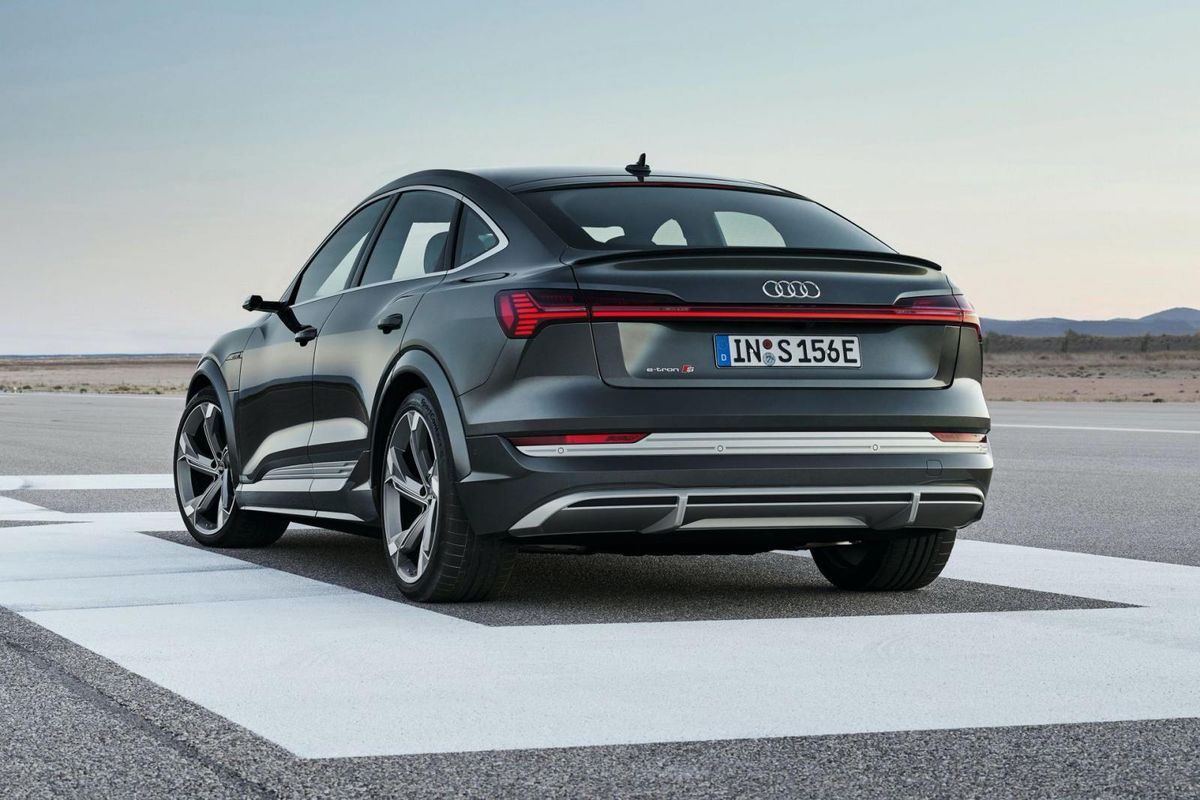
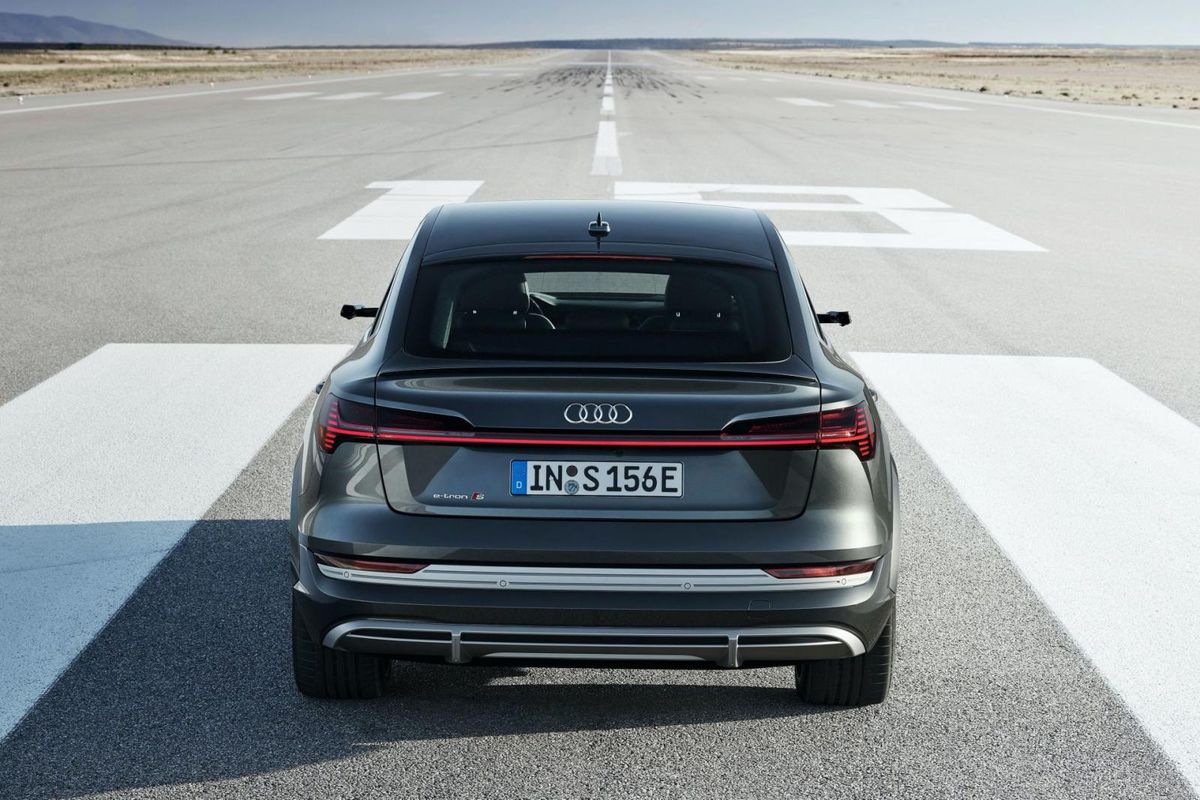
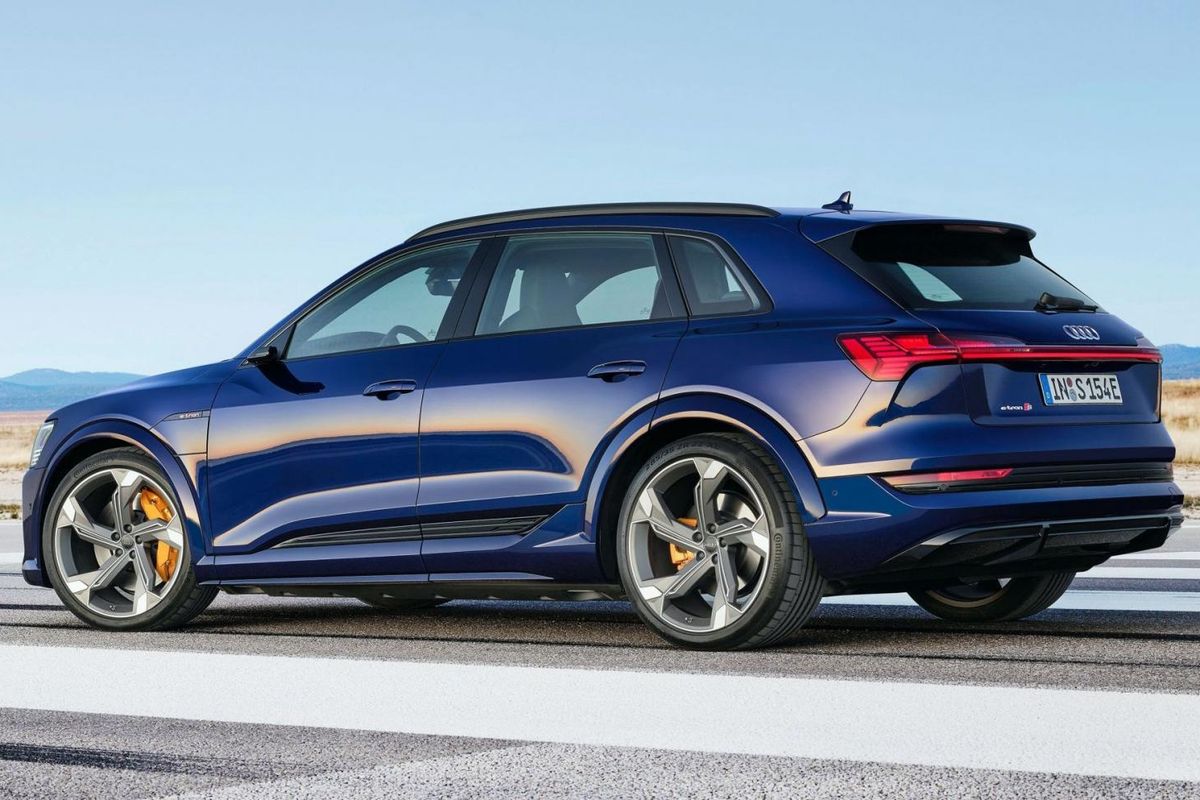
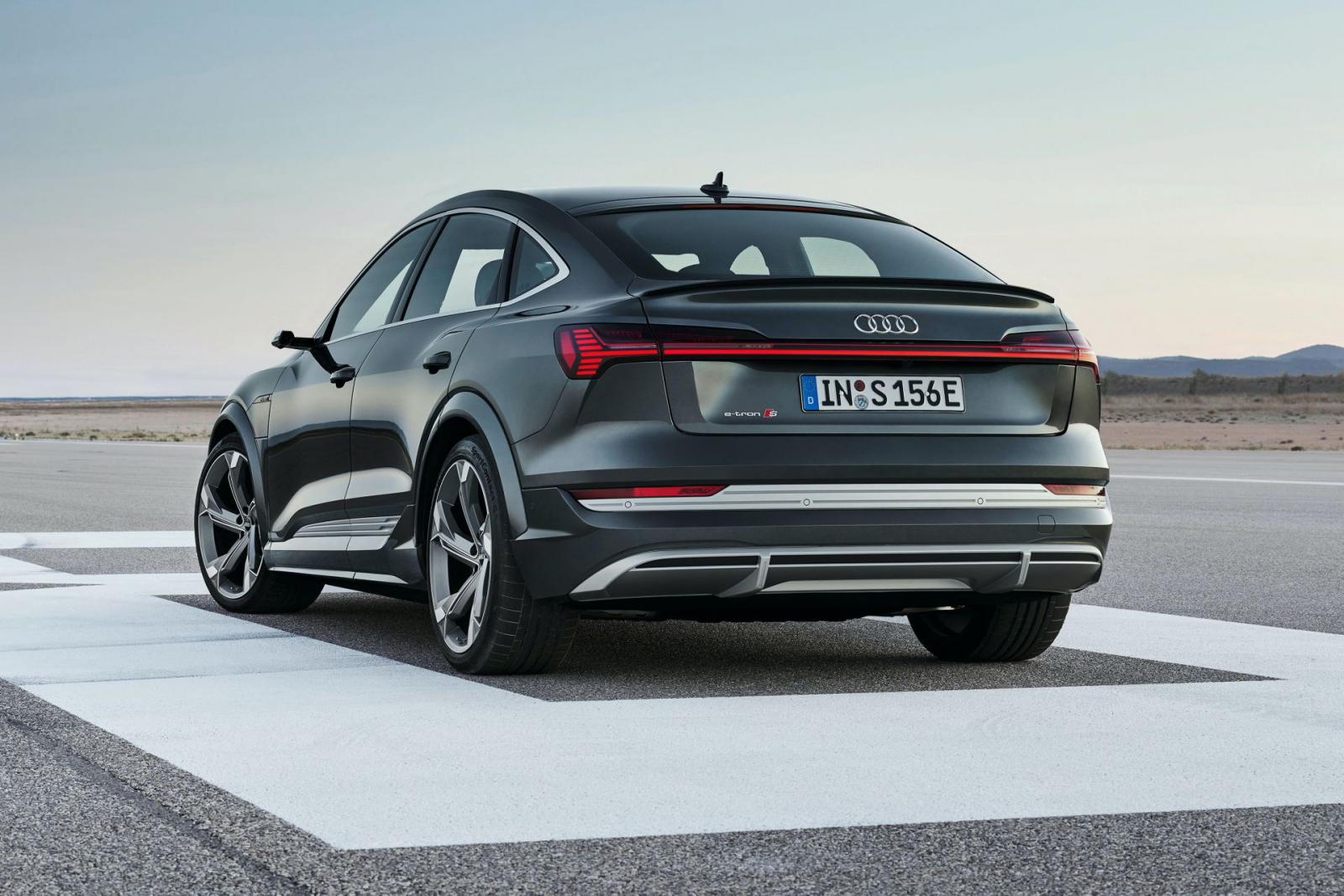
The Sportback S has a lower drag coefficient than its sibling; note the sporty rear diffuser and brushed silver detailing.
By virtue of their lofty outputs and traction, the e-tron S and Sportback are said to dispatch the 0 to 100-kph sprint in less than 4.5 seconds and achieve a top speed of 209-kph.
In line with the newcomers’ performance bent, they’re powered by a bigger-capacity battery (95 kWh, instead of 70 kWh) and the Ingolstadt-based brand claims the e-tron S has an optimal range of 359 km from a full charge, while the slippier S Sportback can travel about 364 km between full charges.
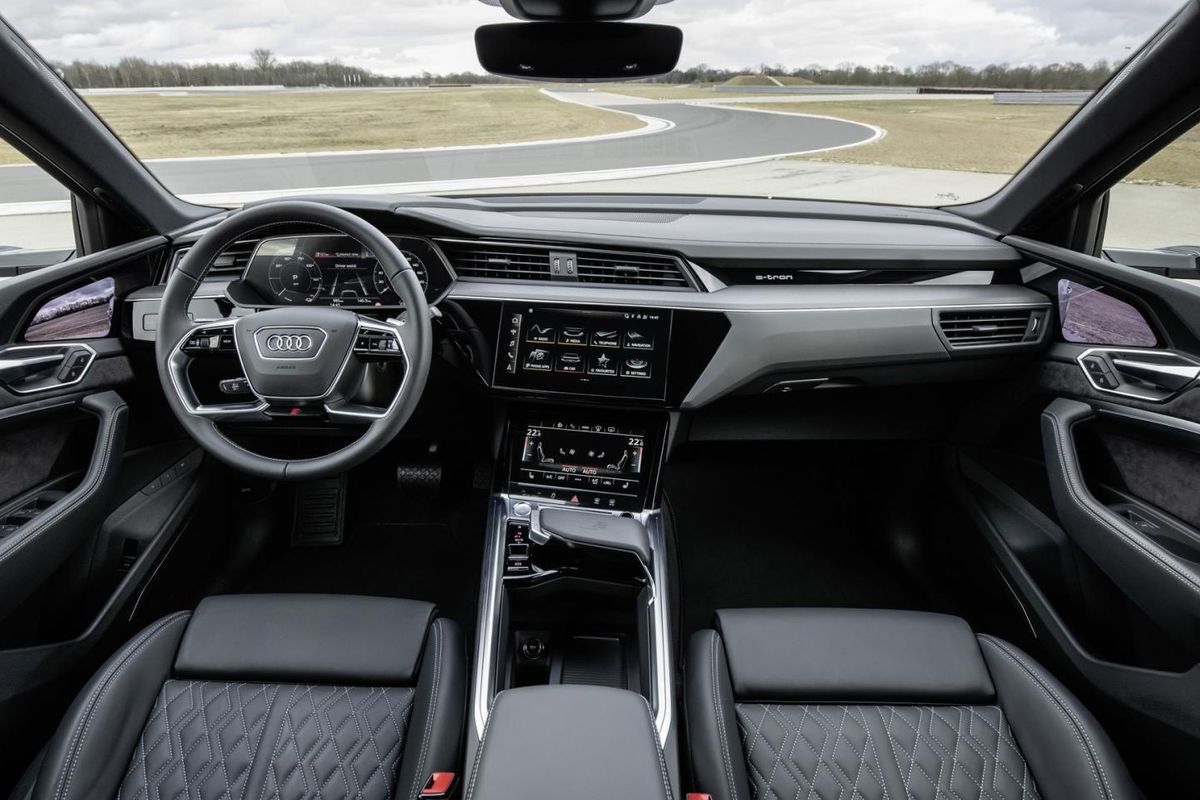
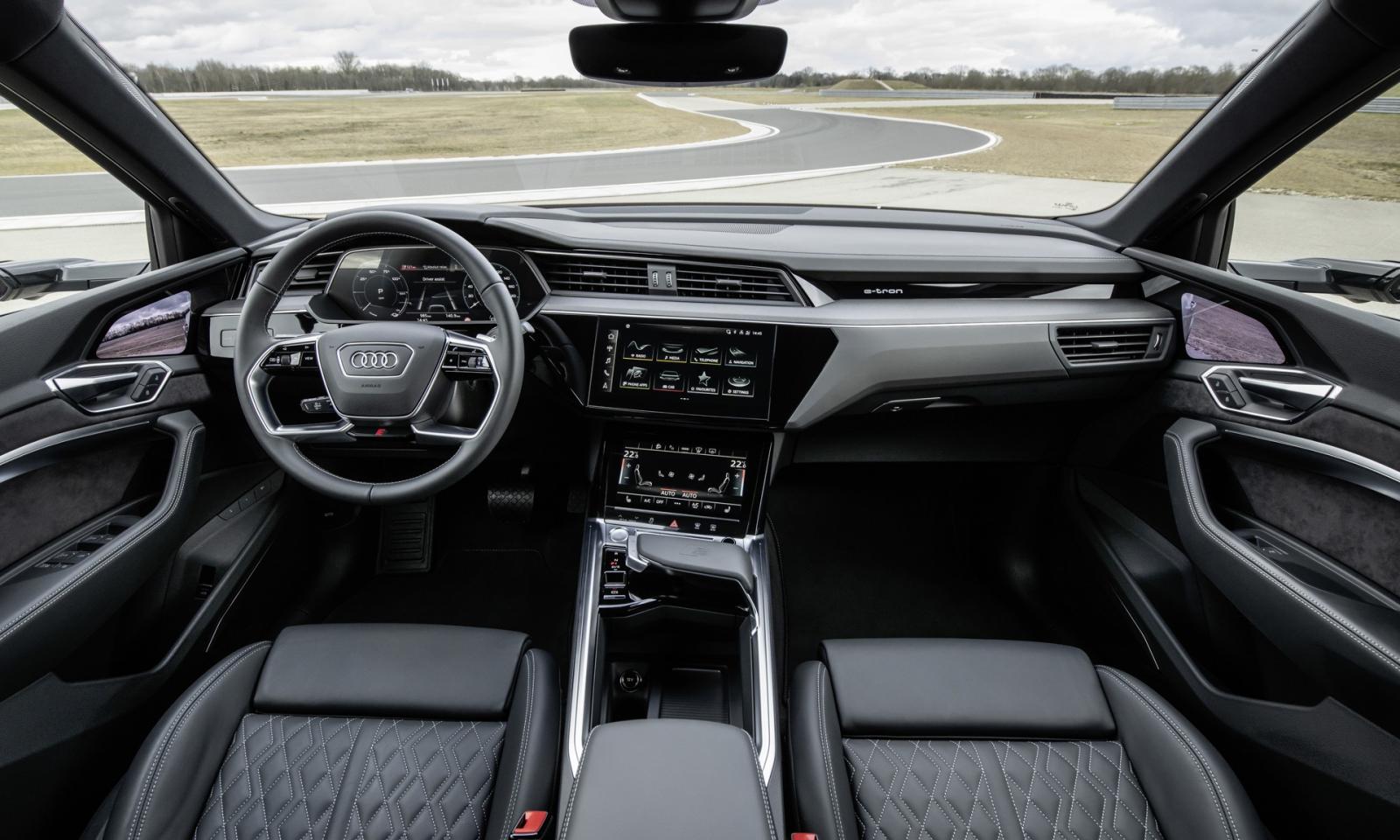
The futuristic e-tron S has no fewer than 5 digital display areas in its cabin, including 2 for the side-view cameras.
To distinguish the S derivatives from their standard siblings, they’re fitted with sportier bumpers (with distinctive triangular air intakes at the front and a diffuser at the rear), more flared wheel-arches (that make the cars 50 mm wider), brushed silver trim (in the case of the Sportback S), aluminium mirrors housing and red "S" badging.
The pair are shod with 21-inch (or optional 22-inch) alloys, while their interiors feature, inter alia, electrically adjustable sports seats, Nappa leather trim and be specified with carbon-fibre inserts at extra cost. The newcomers will go on sale in Europe towards the end of the year, while the standard e-tron, which we drove in Abu Dhabi at the end of 2018, is expected to make its South African debut in the 4th quarter of the year. Could the S versions bolster the local range in future? We dearly hope so!
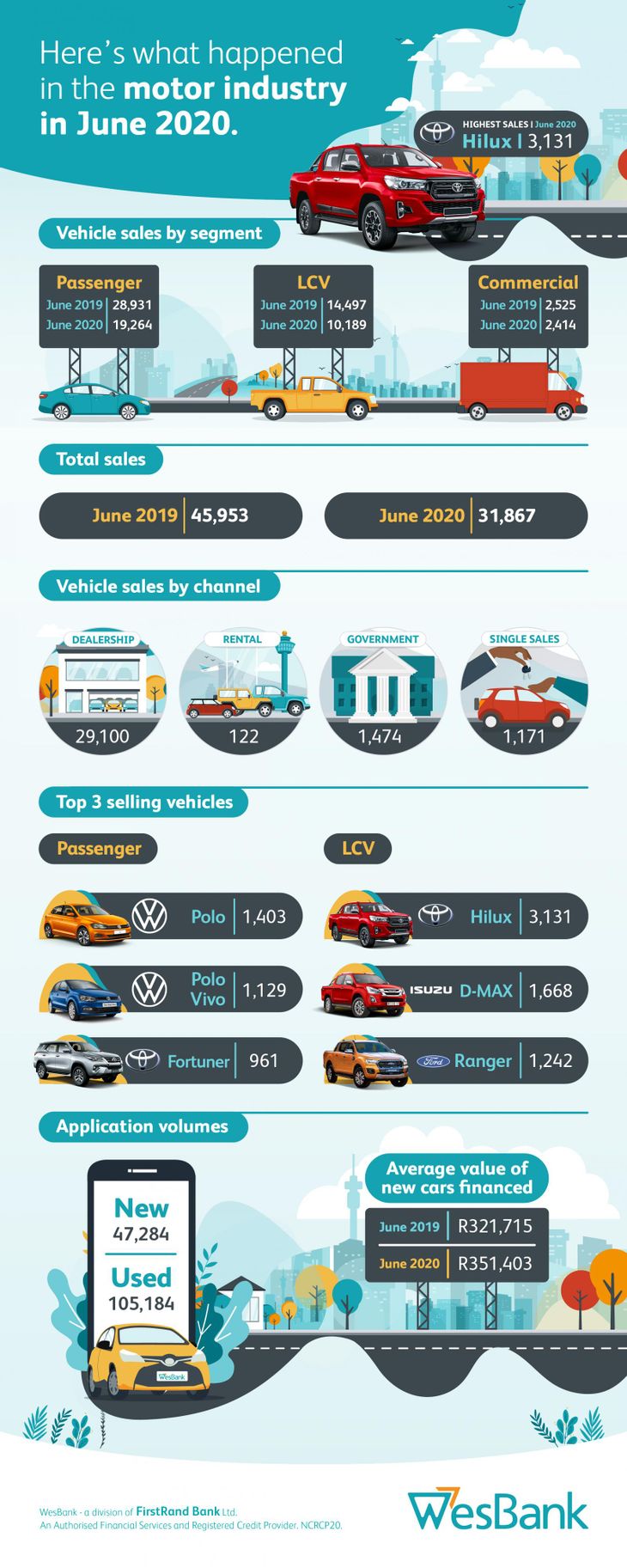
The National Association of Automobile Manufacturers of South Africa (NAAMSA) has released new vehicle sales figures for June 2020. Take a look at what transpired under Level 3 Lockdown…
June 2020 was the first full month of vehicle sales since the national lockdown. Although dealerships were open, many industries are still not back up to full speed so there is no doubt that has a knock-on effect on national vehicle sales.
June 2020 new vehicle sales still reflect a substantial decline of 14 086 units or 30.7% from the 45 953 vehicles sold in June last year compared to the aggregate domestic sales of 31 867 units in June 2020. Export sales, at 18 796 units, also registered a fall of 11 871 units or a decline of 38.7% compared to the 30 667 vehicles exported in June 2019.
New Car Sales Summary: June 2020
Aggregate new vehicle sales at 31 867 units down by 30% (-14 086 units) compared with June 2019
New passenger car sales of 19 264 units down by 33% (-9 667 units) compared with June 2019
Light Commercial Vehicle (LCV) sales of 10 189 units down by 29% (-4 308 units) compared with June 2019
Exports of 18 796 units down by 38.7% (-11 871 units) compared with June 2019
Top-Selling Car Brands in South Africa for June 2020
Toyota – 8 442 units
Volkswagen – 4 448 units
Hyundai – 2 457 units
Ford – 2 138 units
Isuzu – 2 040 units
Sales outlook
The outlook on domestic demand for new vehicle continues to remain under severe pressure. Middle-class disposable income was already under huge strain prior to the national lockdown resulting from COVID-19, which has significantly exacerbated the already weak macro-economic climate in the country. National Treasury now expects the local economy to shrink by 7,2% in 2020, its largest contraction in almost a century. Although the ABSA Purchasing Managers’ Index (PMI) shows that conditions continued to improve in the South African manufacturing sector, this should be seen in the context that most of the sector came to a near standstill during the nationwide Level 5 lockdown in April and only partially returned to normal production levels in May 2020. Despite the monthly uptick, production still remained below pre-COVID-19 capacity. The uncertainty of the anticipated impact and extent of COVID-19 cause planning constraints and the industry’s responsiveness to react and adapt to market changes remain imperative going forward. 2020 will be a difficult year for the industry with a significant projected decline in the new vehicle market and will be testing the renowned resilience of the industry.
As far as vehicle export sales are concerned, economic activity has declined drastically in countries and regions where lockdowns have been enforced and the recovery timeframe is difficult to predict. The industry’s export sales for the year will be impacted by the health of global economy and vehicle exports will likely decline due to the projected fall in global vehicle demand as a result of the impact of COVID-19.
The new BMW M3 and its M4 coupe sibling are just months away from production, but international correspondent Greg Kable has already been behind the wheel of a very-nearly finished version of the business-class performance sedan. He drove it on the Sachsenring circuit in Germany back-to-back with the old model. Has the new version moved the game on? Find out here…
BMW M3 render image credit: Duwyne Aspeling – Cars.co.za
Despite the broad disruption to its operations brought by the Covid-19 pandemic, BMW’s M division still plans to reveal both the all-new M3 and M4 this September, prior to the start of production and sales by the end of the year. Before they get that far, though, there’s a final phase of development testing to be completed and a validation sign-off by the BMW board later in the summer, ahead of which we’ve been invited to drive them both in prototype form here.
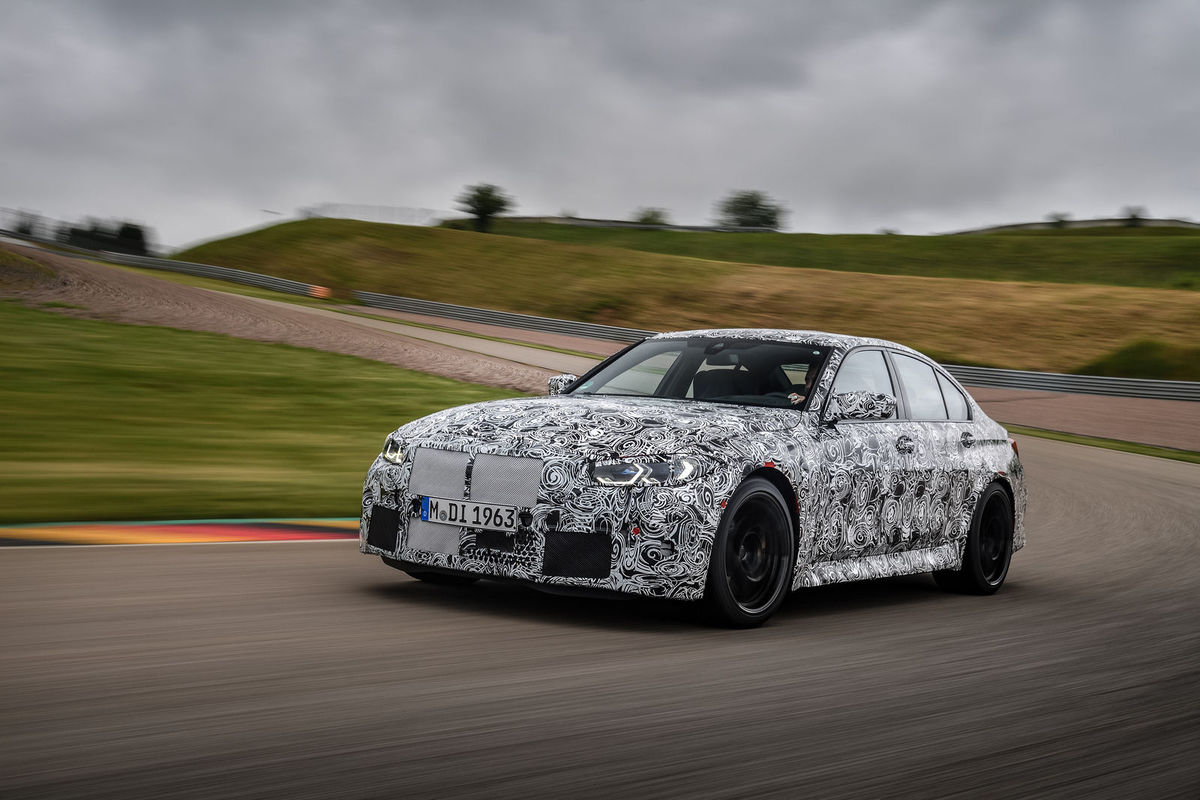
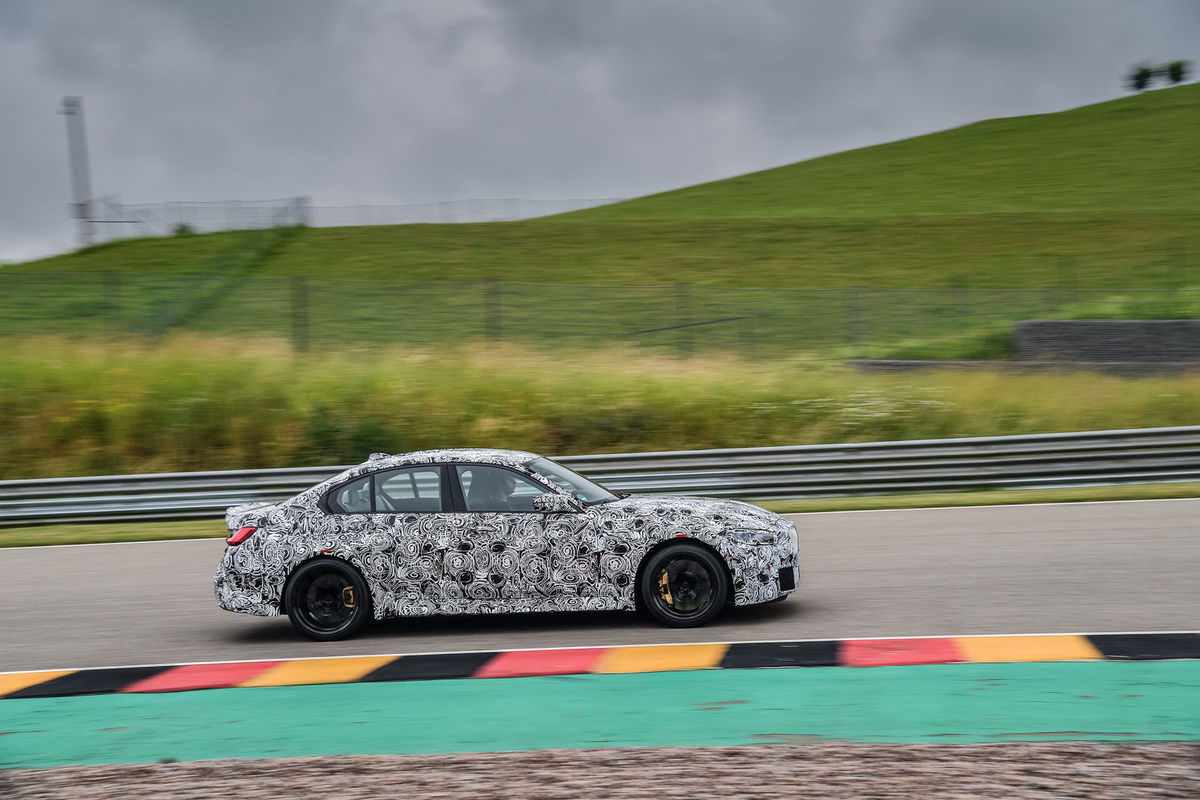
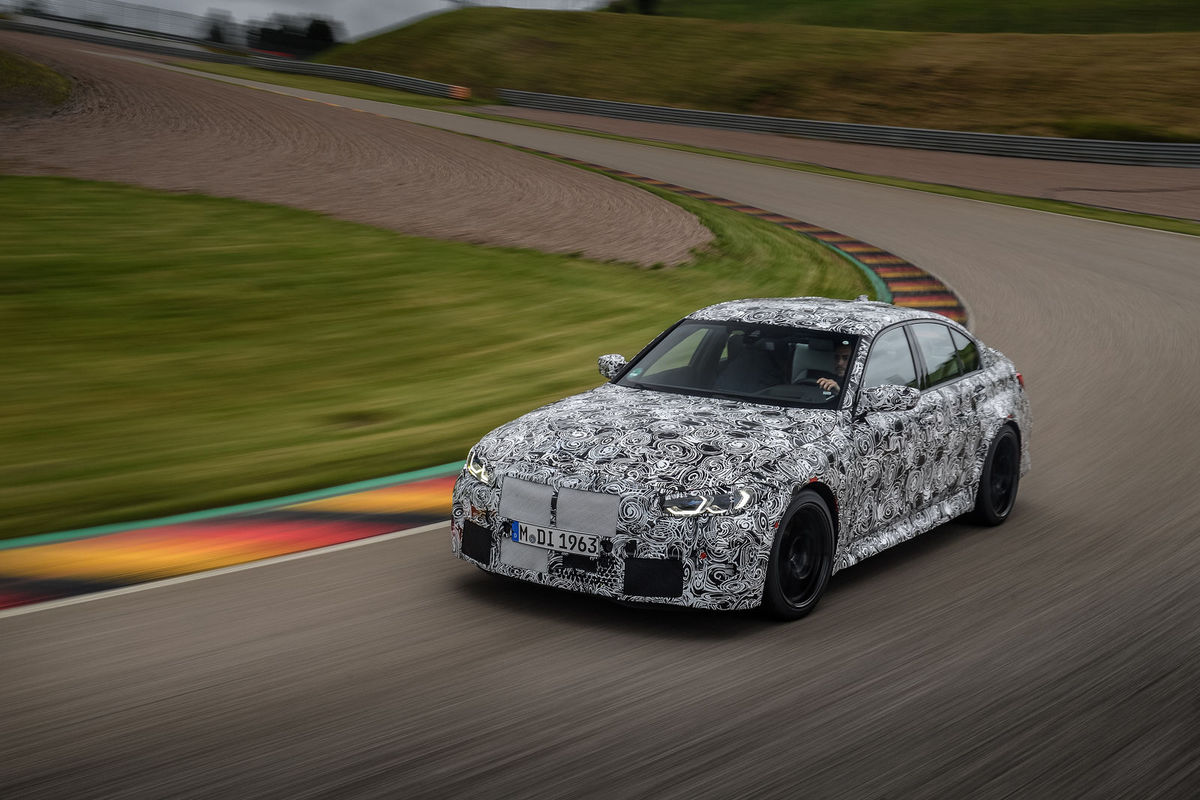
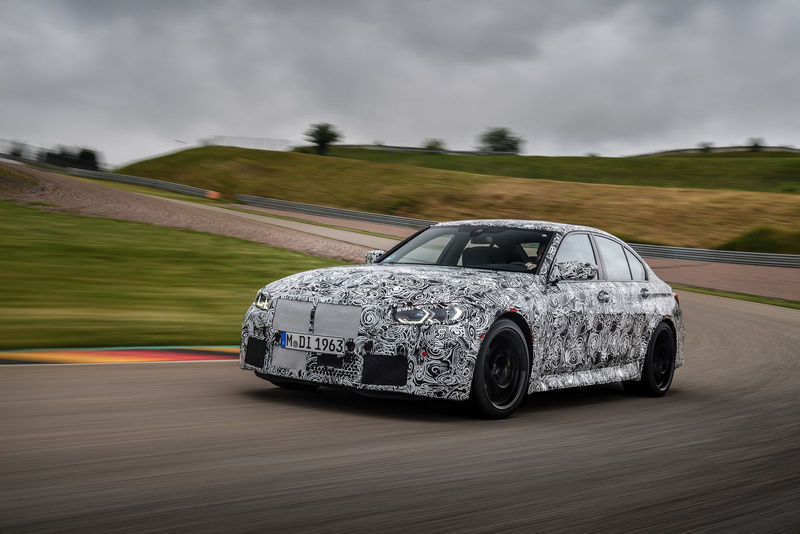
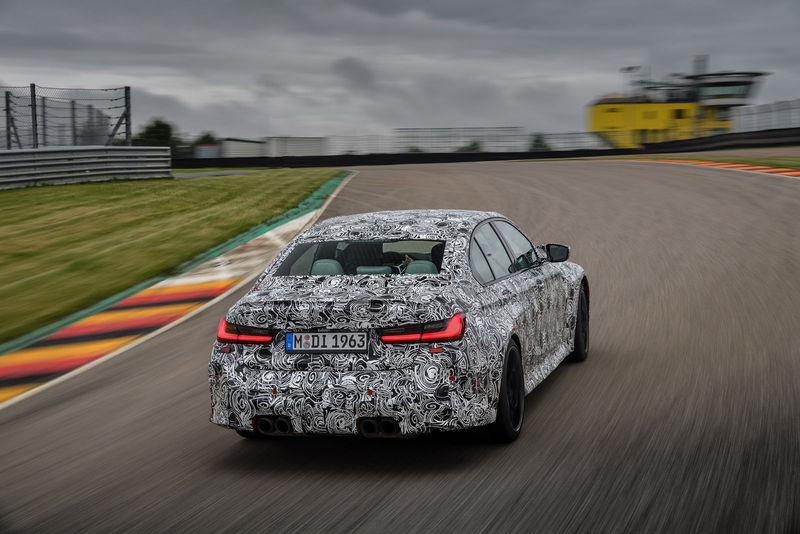
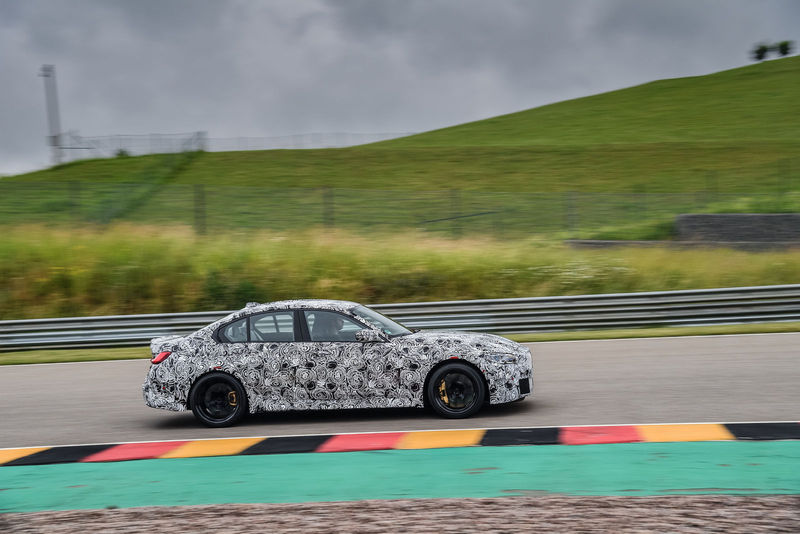
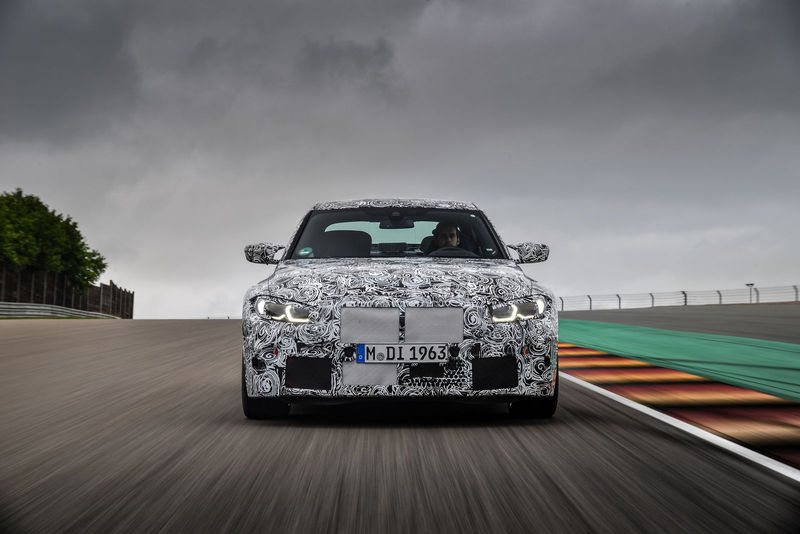
Wearing heavy camouflage, the high-mileage M3 and M4 development units that BMW M has brought to the Sachsenring have clearly had a hard life, but we’re assured they represent the latest technical standing of the car. Ignore the heavy cladding and plastic wrap in our pictures and you’ll be able to make out certain styling elements, including the new, deep kidney grille and the widened front and rear wing panels, necessitated by the adoption of wider tracks and some rather serious-looking wheel and tyres.
The M3 will likely get a bigger grille, but not like that of the 4-Series.
As they stand in the pitlane, both cars have a squat, hunkered-down stance that instantly marks them out as something a bit special. They’re quite a bit larger than their predecessors: the 5th-generation M3 and 1st-generation M4, too. Each takes on its own distinctive form: the 2021-model year M3 appears significantly more upright next to its lower M4 sibling. The rear-wheel-drive saloon and coupe models here represent only half of the planned body styles for BMW’s mid-level M-car line-up. As before, there will be an M4 cabriolet by the middle of next year and, for the first time, a new M4 Gran Coupé introduced around the same time.
In a continuation of familiar BMW M derivative strategy, standard and Competition versions of both the M3 and M4 are planned. The promised rise in performance comes after the introduction of the four-wheel-drive M340i xDrive and M440i xDrive, which plug the gap to the rest of the 3 Series and 4 Series line-up. At the heart of each new model is the M division’s new S58 engine. The twin-turbocharged 3.0-litre inline six-cylinder successor to the longrunning S55 unit delivers 353 kW and 600 Nm in the standard M3 and M4 – 21 kW and 50 Nm more than the outputs of the outgoing models.
The rear-wheel-drive derivatives will come with the choice of either a standard 6-speed manual or optional 8-speed (torque-converter, not dual-clutch) automatic transmission in combination with BMW M’s electronically controlled M Sport locking rear differential. In the new M3 Competition and M4 Competition, the output is increased by a further 22 kW to a headlining 375 kW through what BMW M describes as “some specific software changes”, although torque remains at 600 Nm. That will make the top-line versions of the BMW M3 and M4 a match for any of their direct rivals on peak power.
Unlike the standard models, though, the M3 and M4 Competition will be sold exclusively with the 8-speed auto-box and, in a big break with tradition, they will be offered with the option of BMW M’s fully variable xDrive four-wheel-drive system. It will be the first time that either the M3 or M4 has been sold with anything but traditional rear-wheel drive.
Aural pleasures
The new 6-cylinder engine sounds deeper, more brutish.
As we hit the starter button on the centre console and set the M3 prototype to ‘M1’ mode (the first of 2 preset driving modes accessed by buttons on the new multifunction steering wheel), it’s reassuring to hear that BMW M’s latest inline 6-cylinder produces a more evocative exhaust note than the engine it replaces… It’s less raspy in character than its predecessor, with a deeper, more guttural tone.
We amble past the pit garages in 1st gear and head out on to the circuit. First impressions? The new M3’s S58 engine is quite a bit sharper than the old S55 unit. Not only does it sound great, with a soaring combination of hard mechanical thrashing and a resounding exhaust as the revs rise, but it also punches with real purpose in lower gears. With added torque concentrated across a wider rev range and a useful lift in power at the top end, there’s both greater urgency and even more linearity to the delivery than the last M3 offered (which was already a particularly even revving performance engine).
The change in character is subtle – but noticeable. And the throttle response is improved, too. It is not exactly rabid, but offers greater sensitivity to inputs for more precise metering of reserves. Less well resolved is the manual gearshift. It’s quite long in throw and rubbery in feel.
Traditionalists will argue, but the truth is that the conventional 6-speed is a long way from matching the speed and precision you’d expect from a gearbox on a car bearing the BMW M badge. And that’s a pity, because the rest of the driveline feels wonderfully engineered and full of focus.
Potent performance
Plenty of choices now with RWD or AWD with manual or automatic gearboxes.
Although we have yet to see any performance claims, you can expect a 0-100 kph time under 4 seconds and, in combination with the traditional optional M Driver’s package, a top speed approaching 280 kph for the standard rear-wheel-drive version. But while the engine impresses, it’s the chassis that really moves the M3’s game along. It’s described as being all new and largely bespoke, with only the pickup points for the suspension – which will come as standard with adaptive damping – being shared with the 3 Series.
In a familiar move, BMW M has developed a new engine strut brace, which serves to stiffen the entire front end structure quite significantly, providing the basis for even more fluidity and handling poise than with standard 3 Series and prototype versions of the 4 Series we drove recently. At the same time, it has given the new M3 a much wider front track than ever before.
As it did on the M3 CS, BMW has also fitted staggered forged aluminium wheels front and rear – 19-inch front and 20-inch rear as standard – in the search of added steering response. They wear 275/35 and 285/30 Michelin Pilot Super Sport tyres, making for more rubber on the road than any M3 or M4 has had previously.
In a development first unveiled on the M8 and recently brought to the facelifted M5, the new M3 and M4 gain a function that gives access to the individual driving mode options for the engine, suspension, steering and brakes via the iDrive controller. On four-wheel-drive xDrive models, it will also allow you to alter the apportioning of the drive to give you pure rear-wheel- drive qualities on a track when desired.
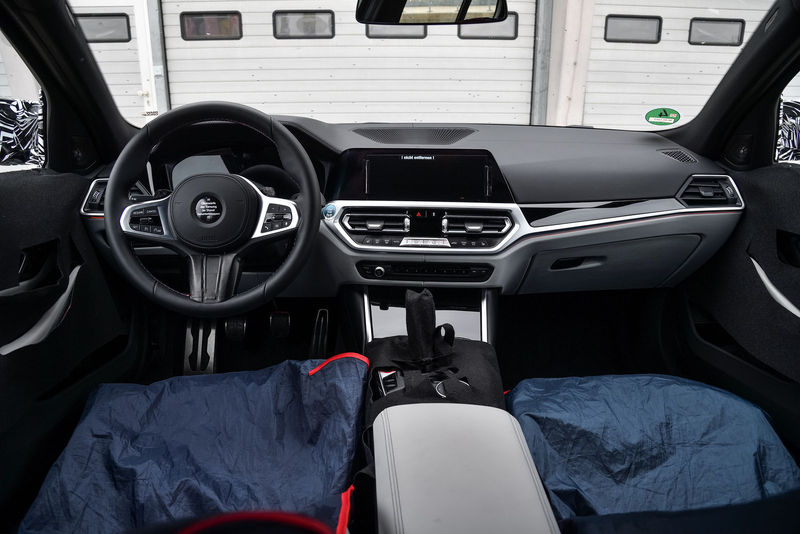
The interior is still well under wraps, but don't expect it to have any surprises in store.
The steering of our rear-driven M3 prototype is excellent – precise in action and weighted to perfection for the more demanding sections of the Sachsenring circuit. Having run a number of laps in its predecessor to form a benchmark earlier on, we can confidently say the new M3 offers greater driver involvement than the car it replaces, even in its most basic form. True, the new model lacks the compactness that once marked the M3 out among its 4-door performance car rivals; but it’s extraordinarily agile for its dimensions, with an incisive change of direction and a very direct feel to the way it turns in to corners.
There’s added grip as well. The wider front tyres deliver great adhesion, allowing the new model to carry high speed up to the apex and beyond with impressive neutrality and superb body control despite a quite heady weight transfer. There’s a generous amount of wheel travel given the performance car billing, but the car feels magnificently settled and well within its limits when hustled hard through the Sachsenring’s Castro Omega curve – a tricky off-camber downhill constant-radius right-hander that exits uphill into the equally challenging Sternquell curve.
Push the chassis hard and the car’s M Sport differential does its usual neat trick, apportioning drive to each individual rear wheel in search of optimum traction. All of which allows you to exploit the inherent balance and assuredly work up to and, with the DSC turned off, beyond the limits. And because of its added muscle and improved response, the M3’s new engine can be relied on to alter your cornering line on the throttle.
Summary
Set to arrive in SA in 2021, the new M3 looks likely to be a firm challenger for best-in-class.
It’s always tricky attempting to form an accurate impression of a new car from a handful of miles on a smooth-surfaced circuit. In this case, though, we’re confident BMW M has succeeded in injecting its revered business-class performance sedan with an added dose of performance and handling prowess. There’s still a lot to learn about it but, in back-to-back runs with the old model, it felt not only a good deal faster in a straight line – but also a more accommodating car to drive at or near its limits thanks to a new-found sense of handling delicacy. We’ll know for sure when we get to test a production version on the road later this year, but you might just be looking at the most dynamically accomplished M3 yet – one that’s bigger and heavier than ever before but, on the strength of this first encounter at least, also inherently more exciting to drive.