Now Nissan Africa, Middle East and India (AMI) will look to implement a 4-year strategy for the region, which forms part of the company’s Global Transformation Plan which was announced by Nissan CEO, Makoto Uchida, which aims to achieve sustainable growth, financial stability and profitability by the end of the fiscal year 2023.
This region accounts for roughly 10% of the world automotive market and as such Nissan will be looking to leverage its Alliance synergies while also leveraging an expansive and competitive manufacturing footprint in South Africa, Egypt, India and Nigeria.
Nissan Chief Operating Officer, Ashwani Gupta, said: “Africa, Middle East and India is an important region where we will target investment in existing strengths, including SUV, and bring eight new products to the market. By driving efficiencies through the Alliance and focusing on core competencies, we will further increase the region’s profitability, especially in key markets including the Gulf, South Africa and Egypt.”
Chairman of the Africa, Middle East and India region, Guillaume Cartier, commented: “The AMI region has enormous potential with some of the most dynamic and diverse automotive markets in the world. Nissan has already established a strong foundation for sustained growth with high brand equity, a deeply embedded heritage of Nissan DNA and culture and a long history of dedicated and experienced business partners in retail and manufacturing. Through the mid-term, we will remain focused on driving value for the business by meeting the needs of our customers across the region.”
Nissan will look to optimise its product portfolio by 20% across the region and will improve cost competitiveness at its plants and take advantage of export opportunities.
A total of 8 new models are on the cards and Nissan will focus its investment attention on profitable products with a regional priority placed on SUVs and affordable B-segment sedans.
Extensive Navara production is expected to take place at Nissan’s Rosslyn plant in 2021 following the closure of Nissan’s plant in Barcelona, Spain. Nissan invested approximately R3 billion in upgrades to accommodate Navara production at Rosslyn.
Lastly, Nissan will also aim to roll out e-Power, electric vehicles and more connected technologies across the region.
“Today, AMI is a region with opportunity for significant growth. Over the next four years we will transform opportunity to reality by bringing the right products, services and technologies to deliver lasting positive change for the business, our partners and customers”, concluded Cartier.
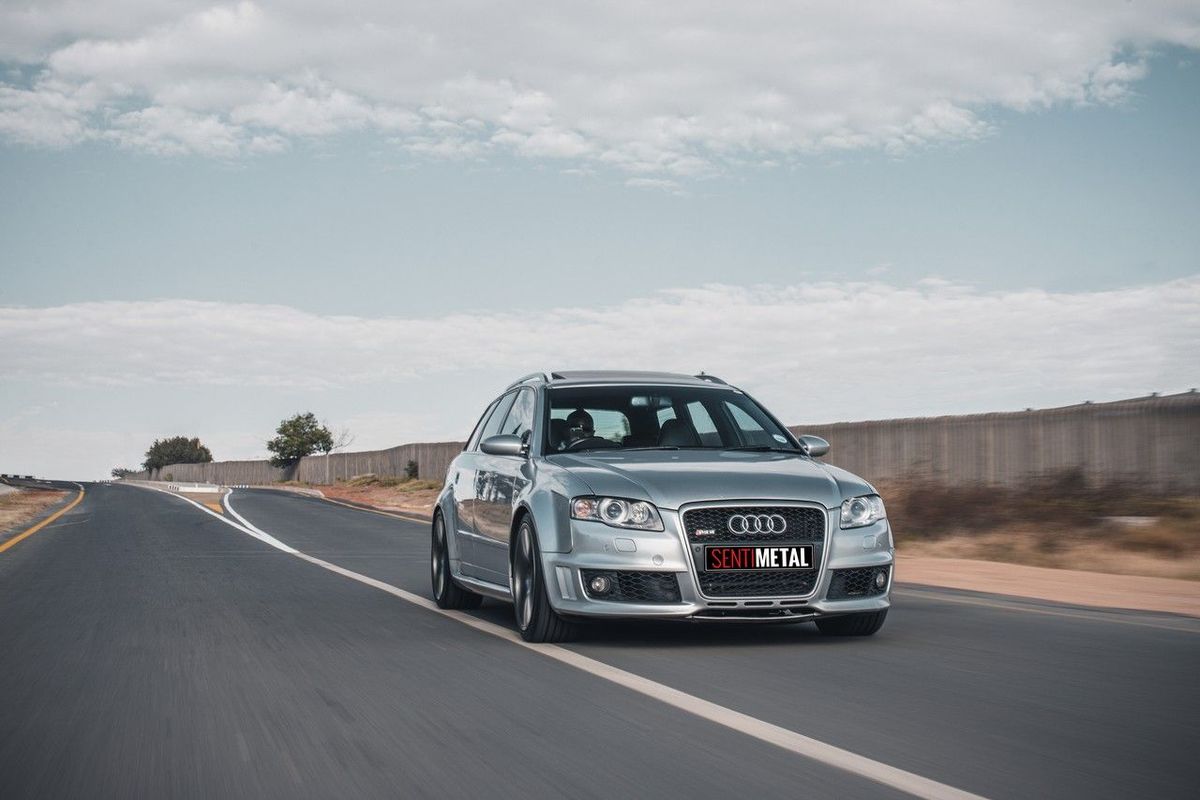
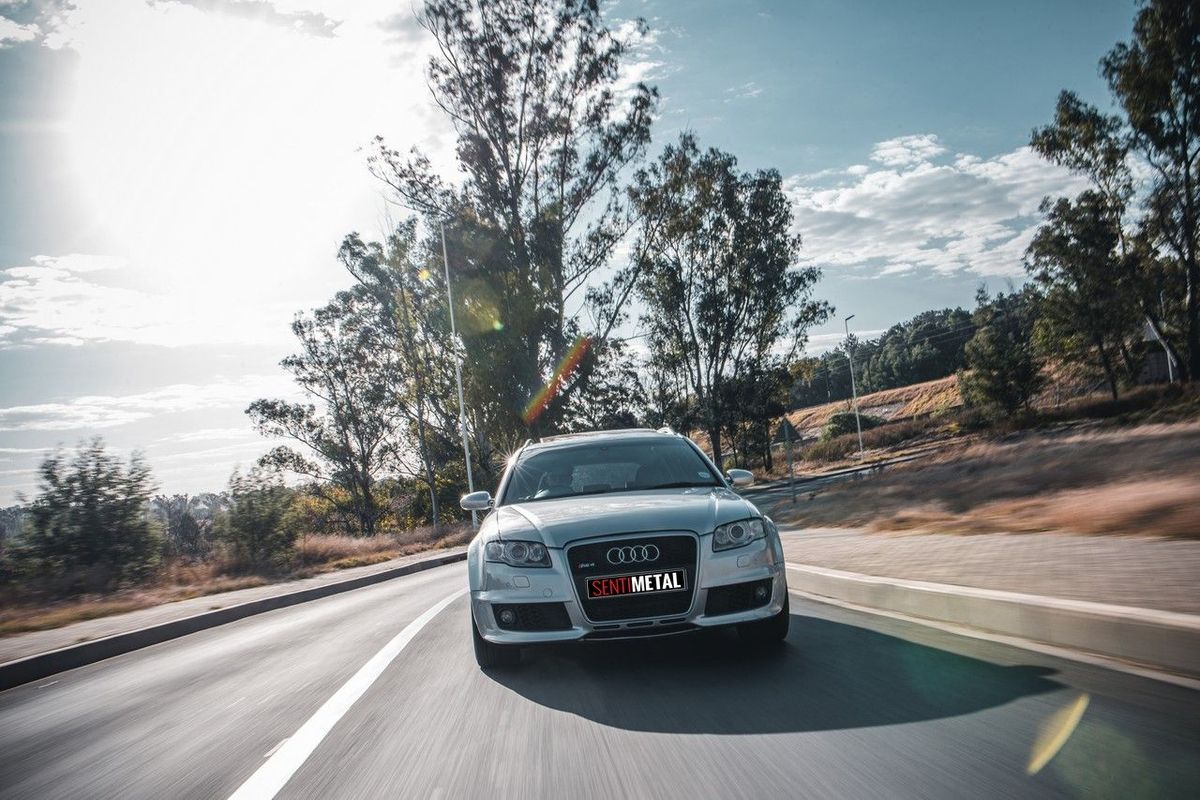
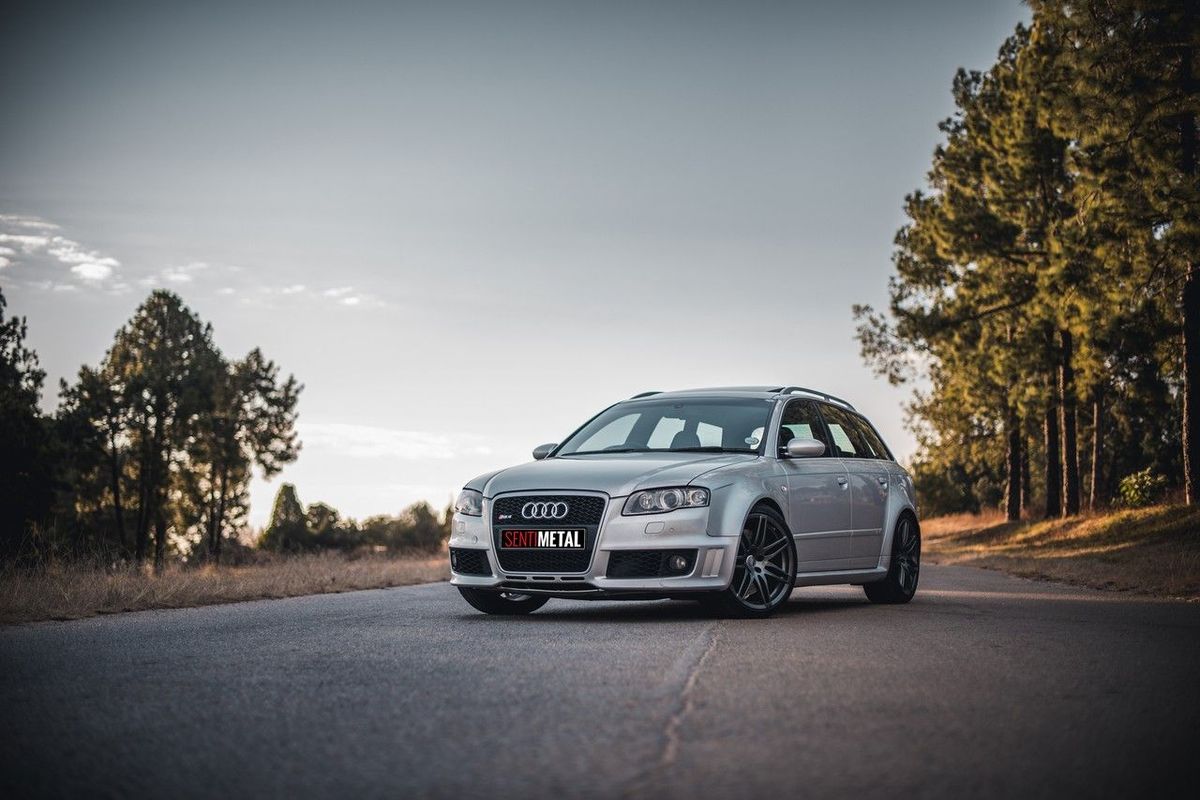
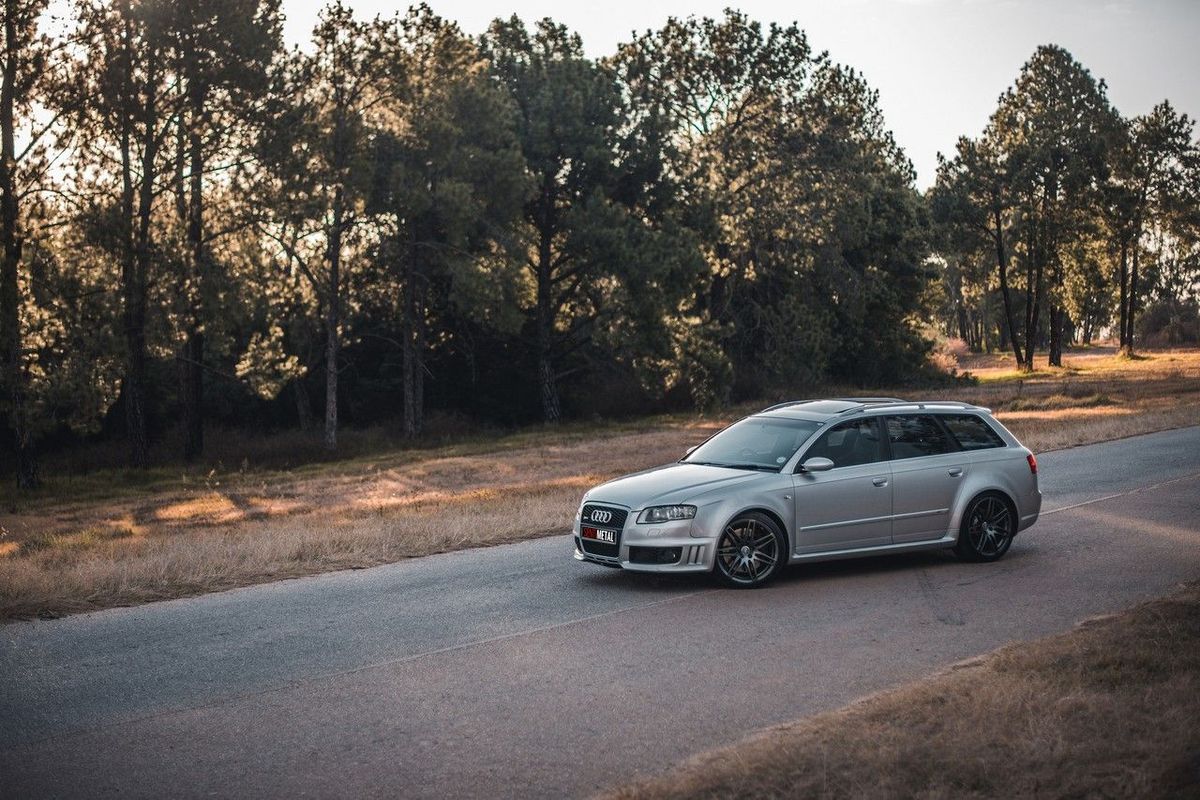
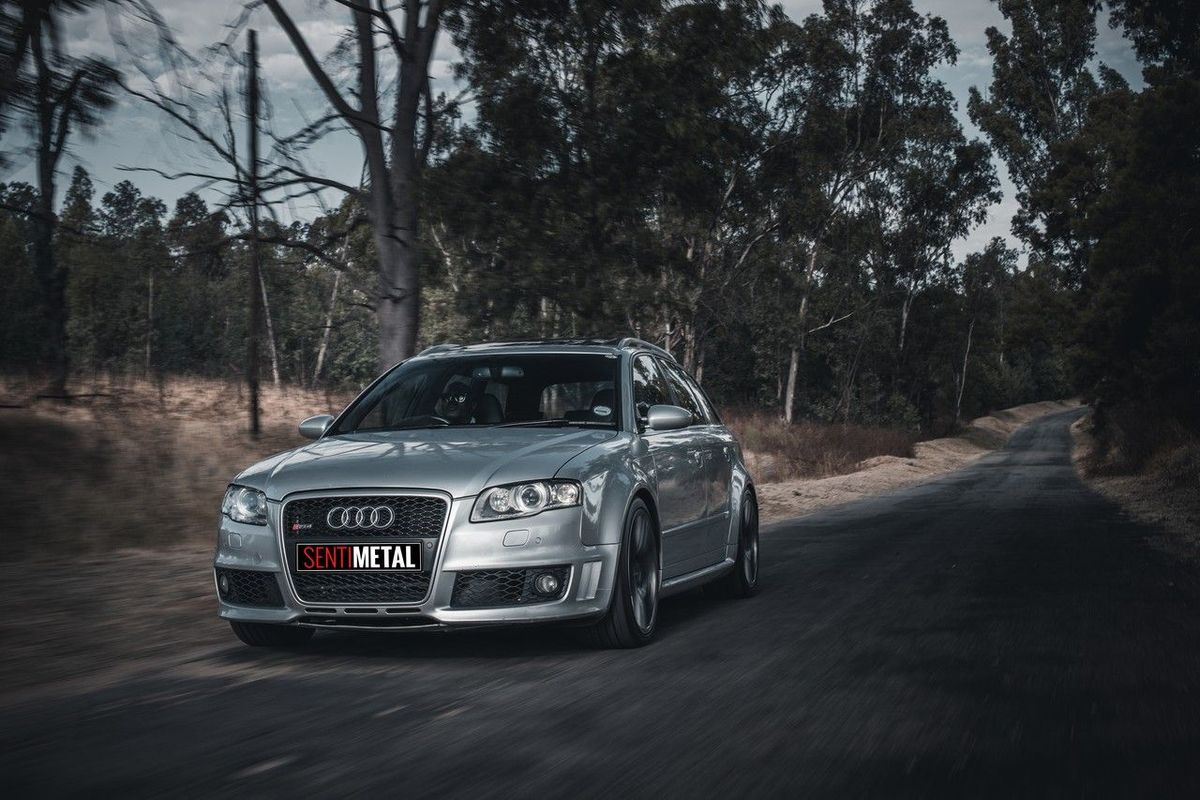
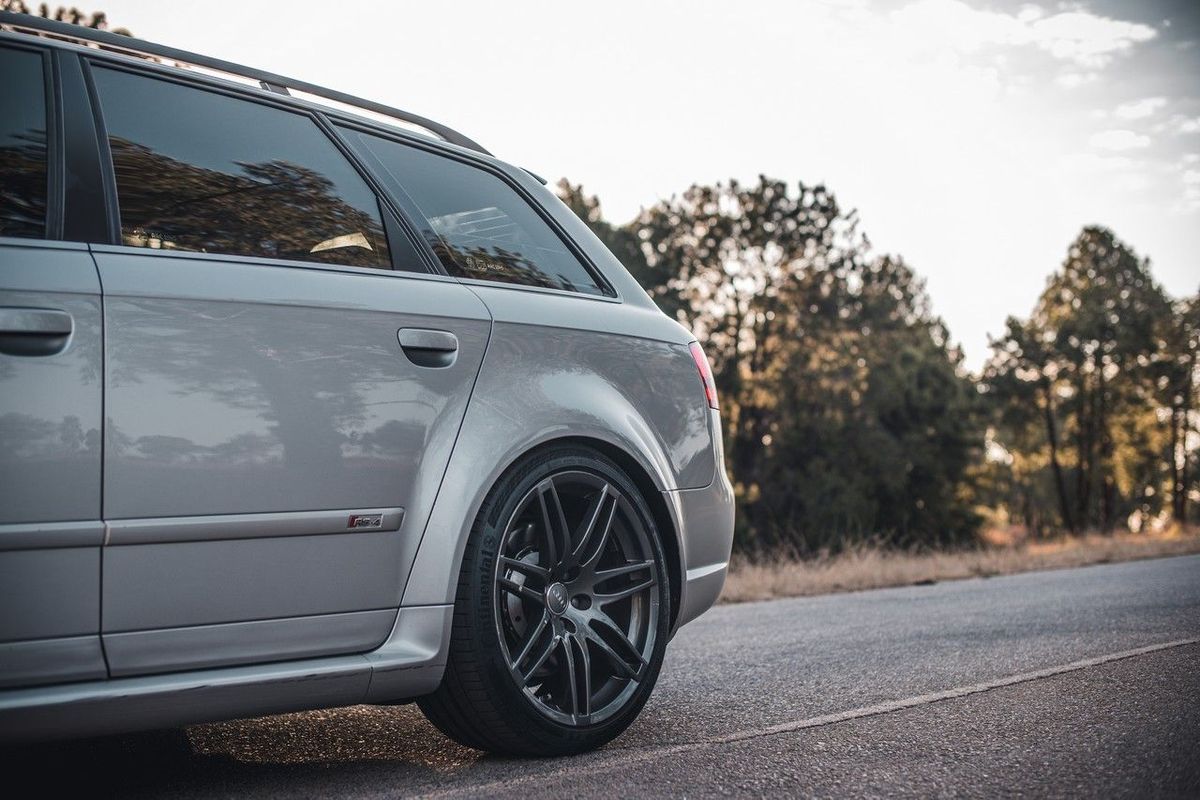
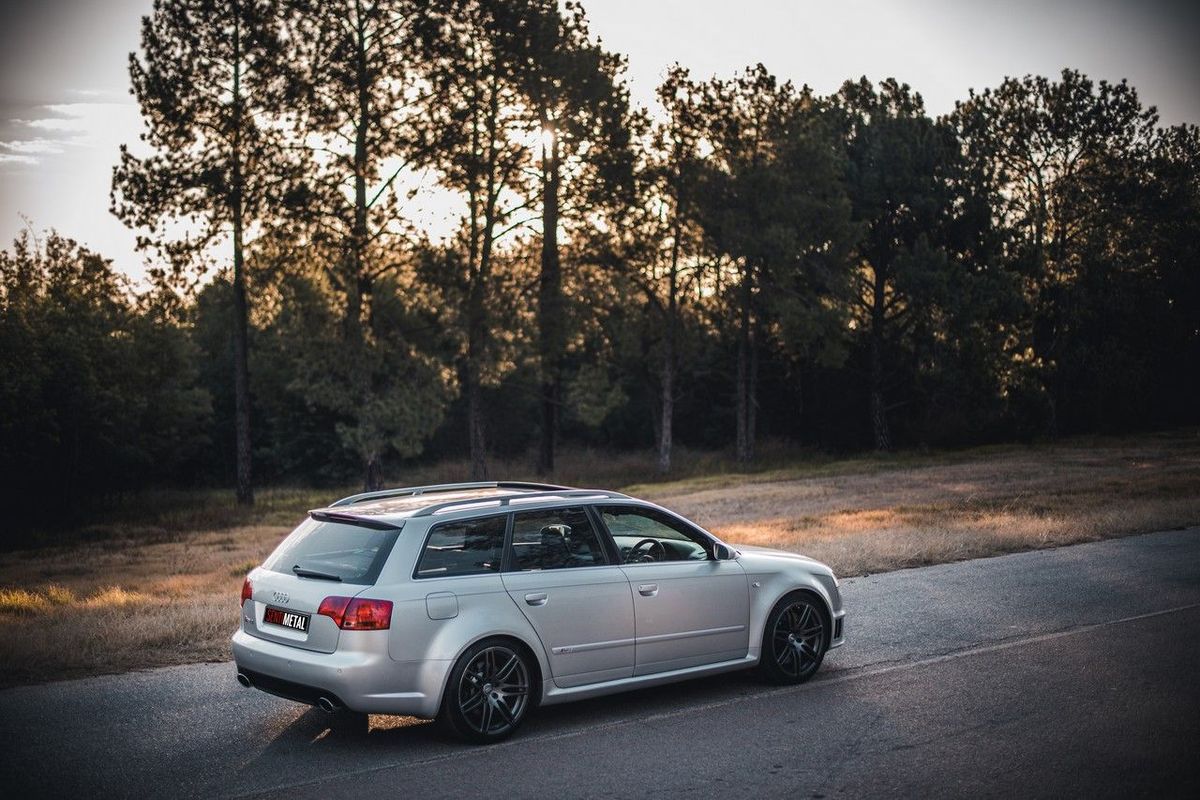
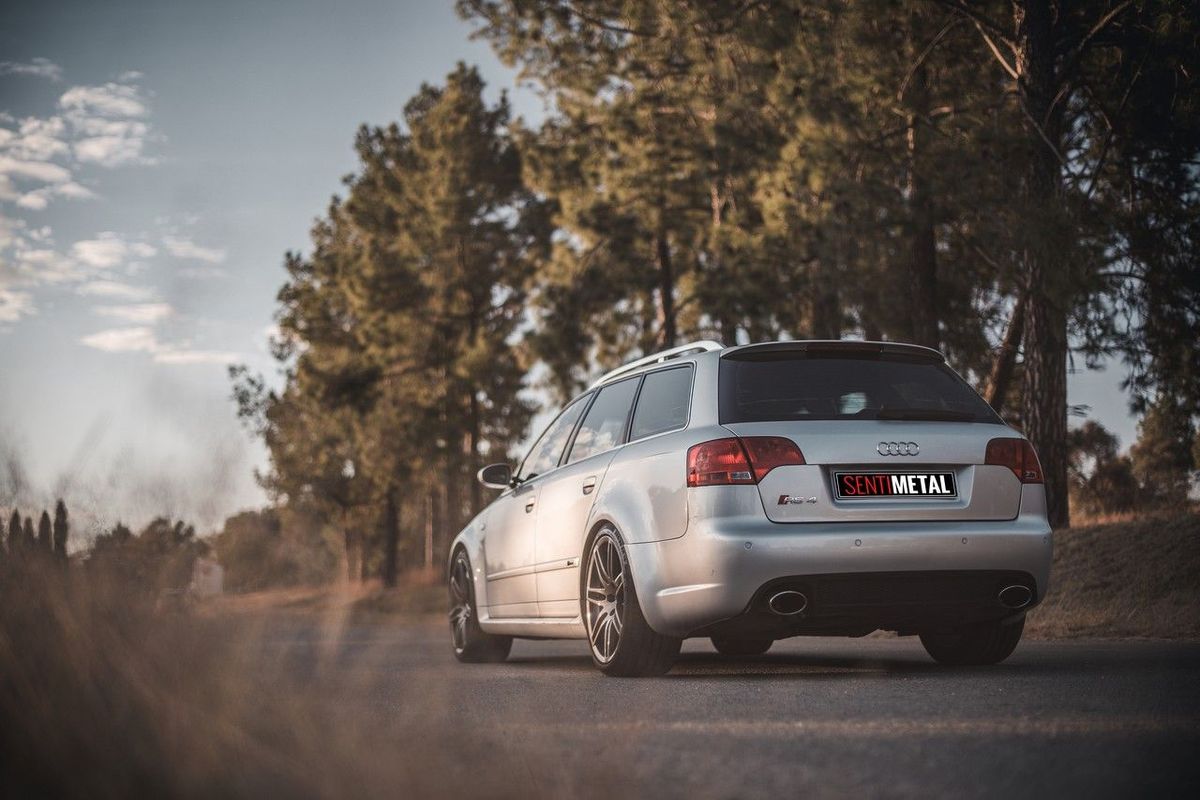
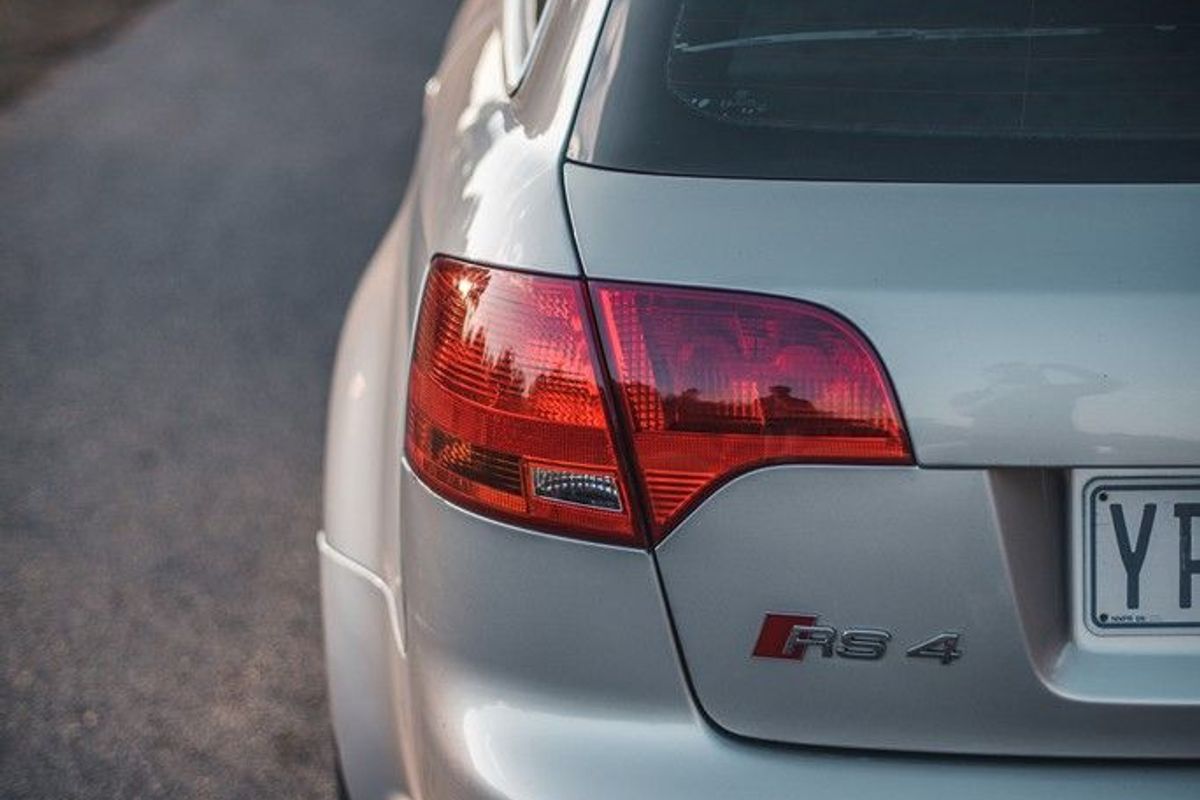
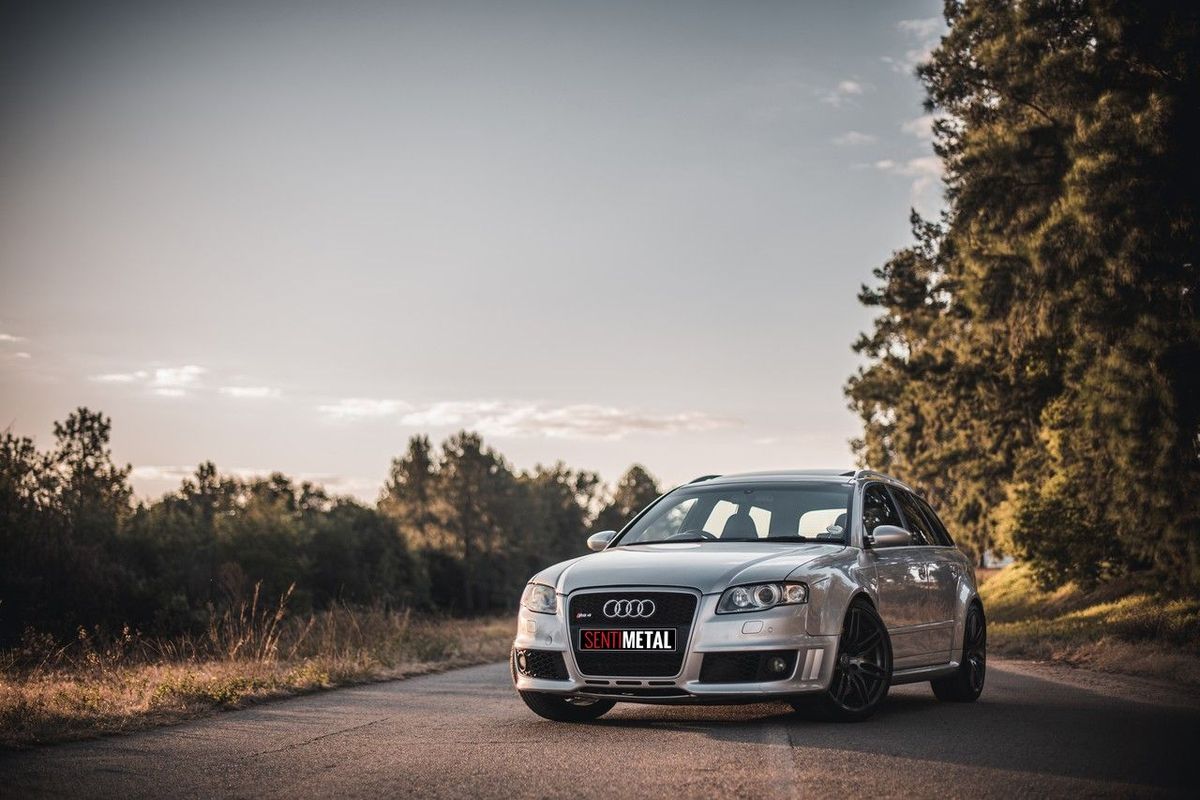
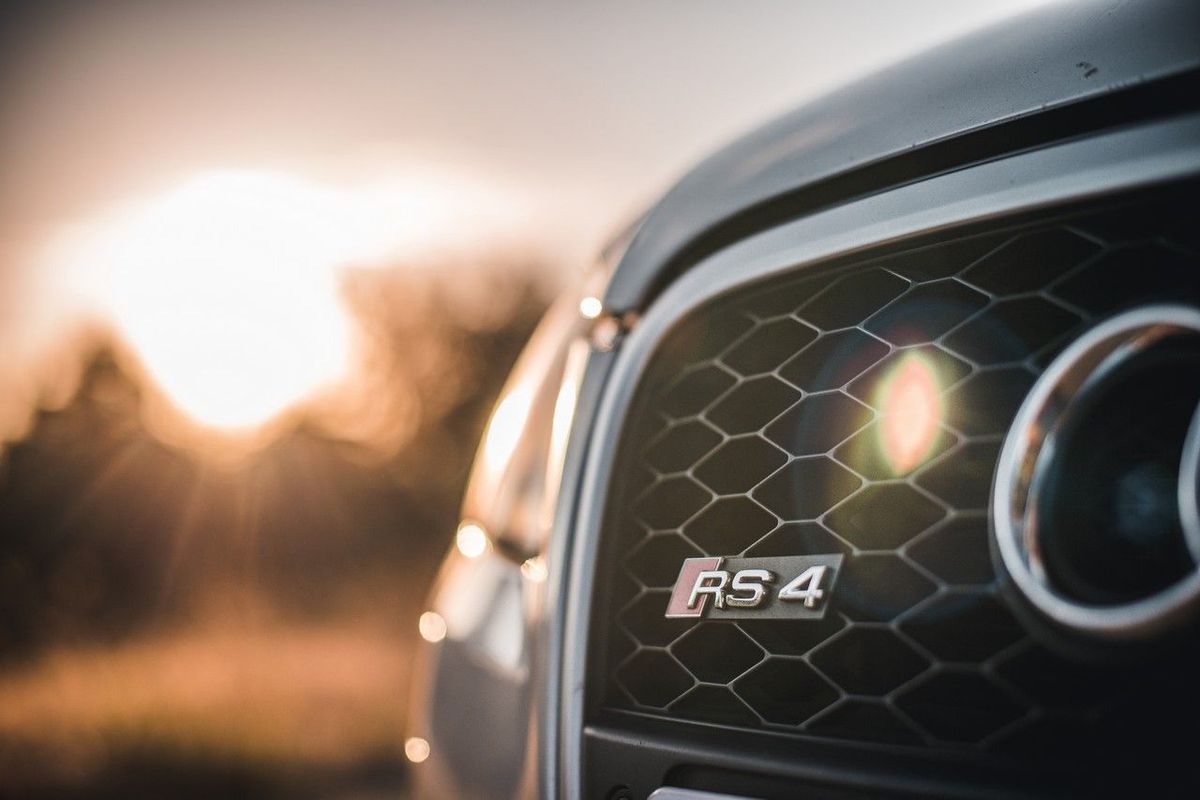
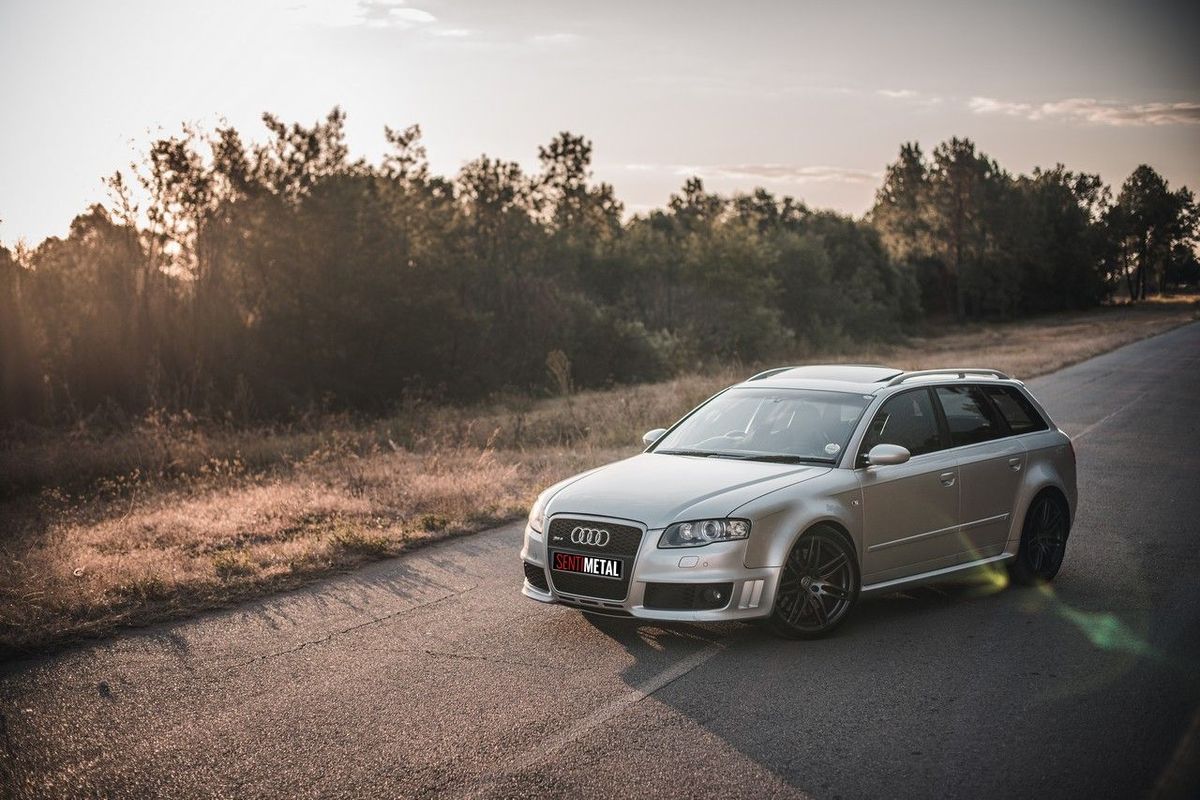
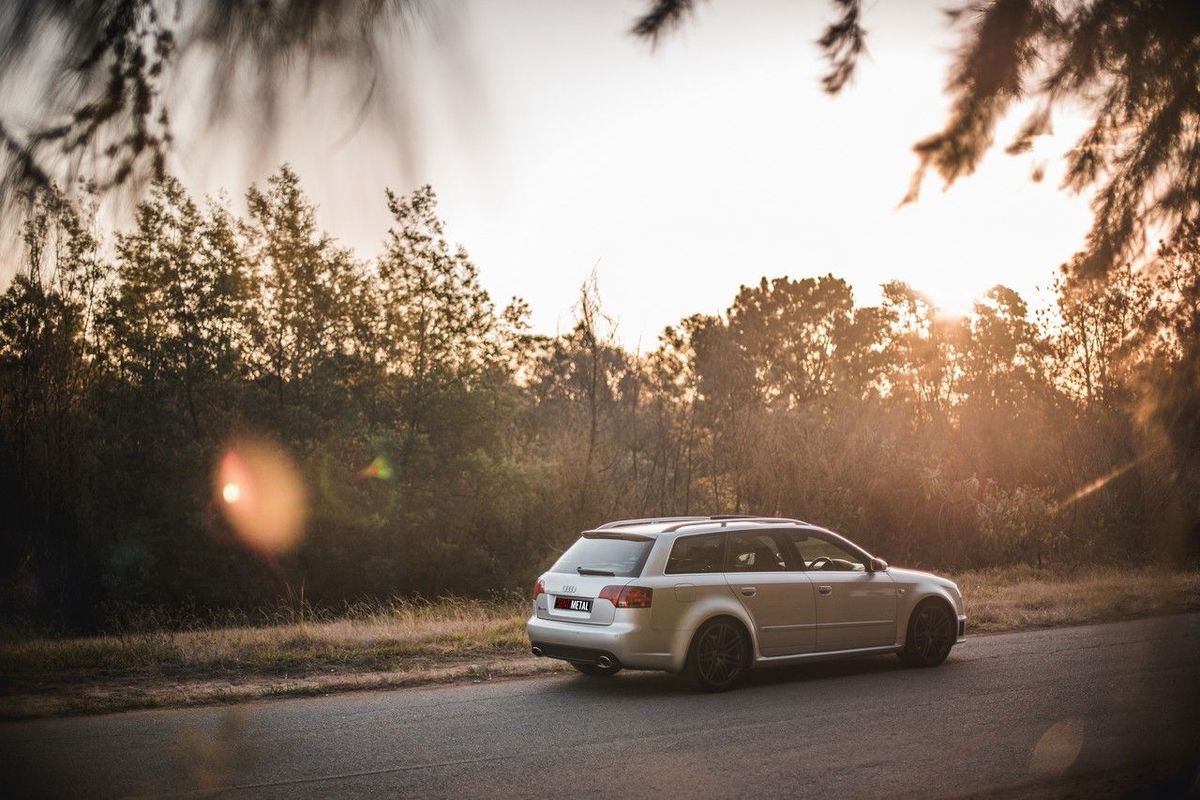
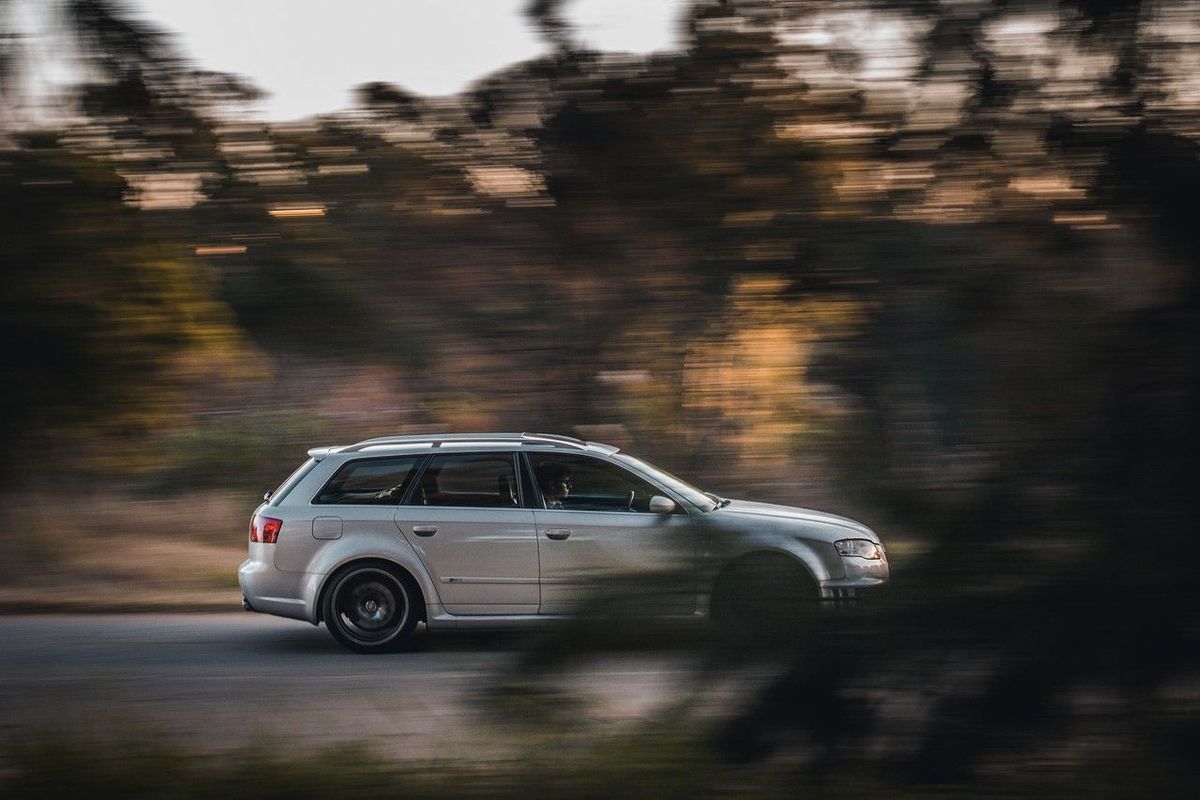
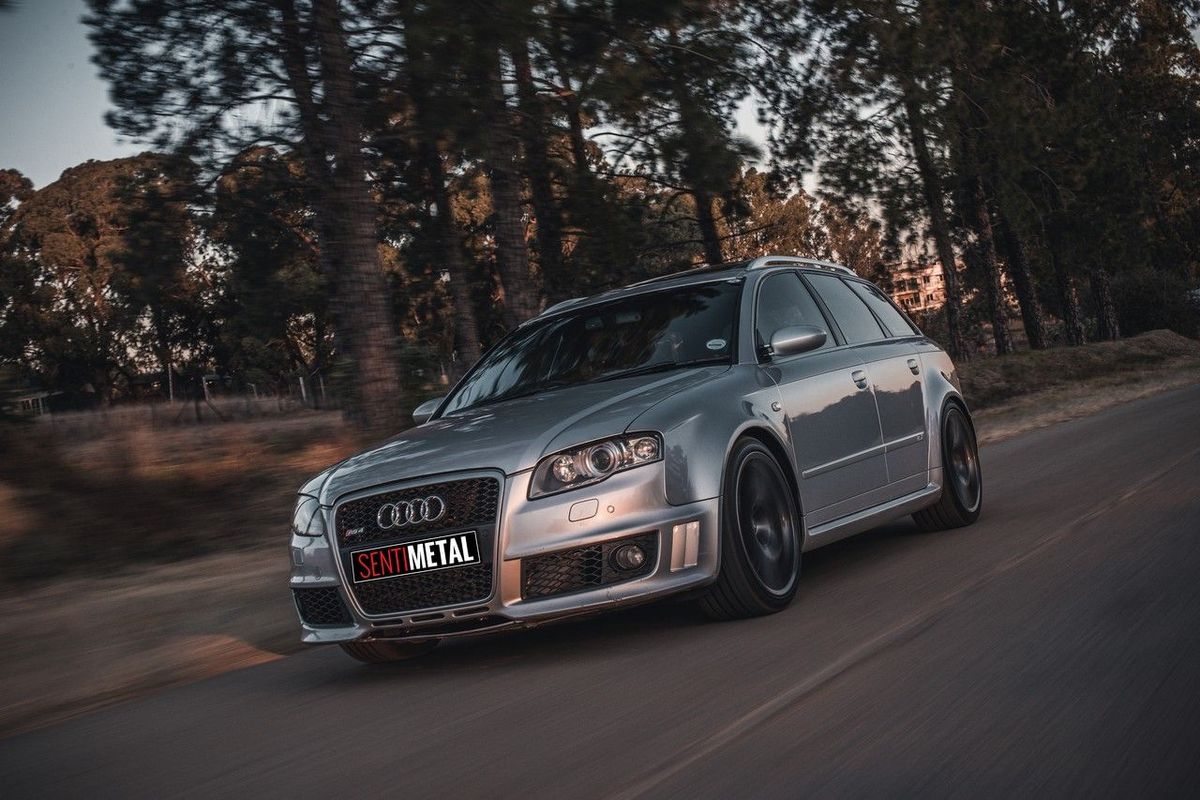
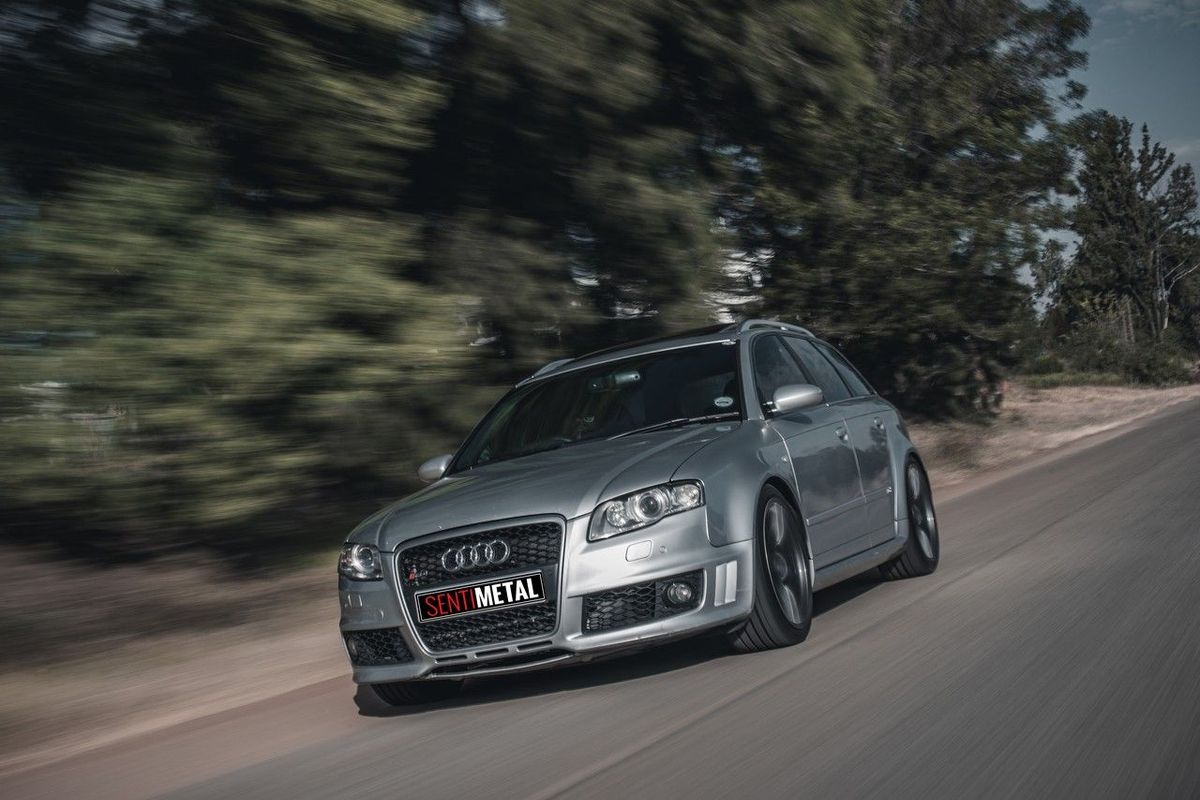
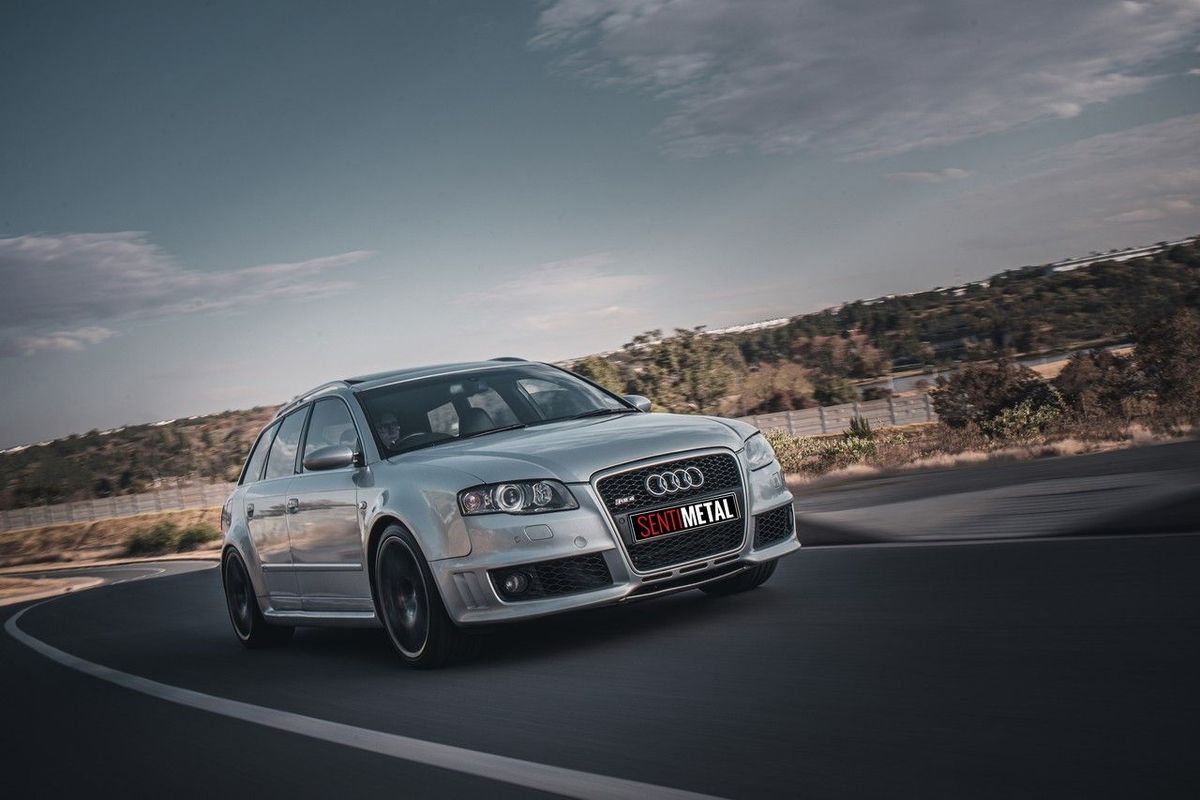
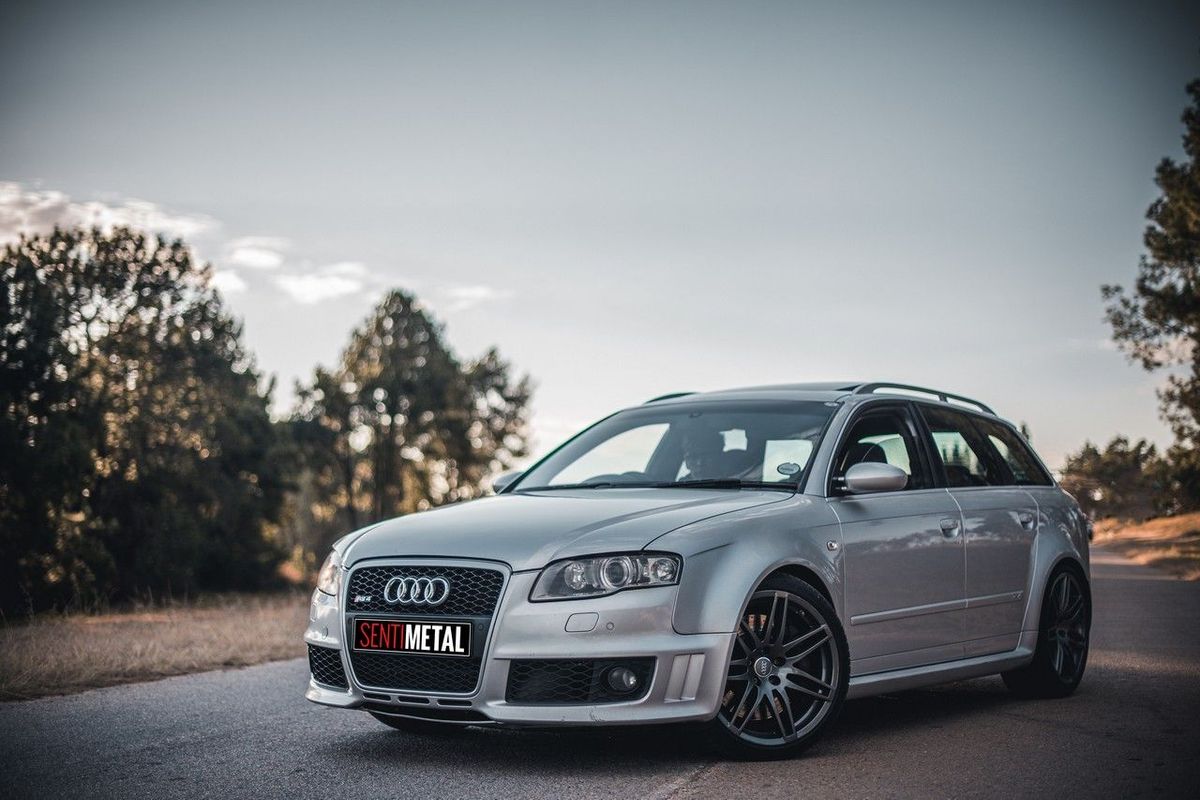
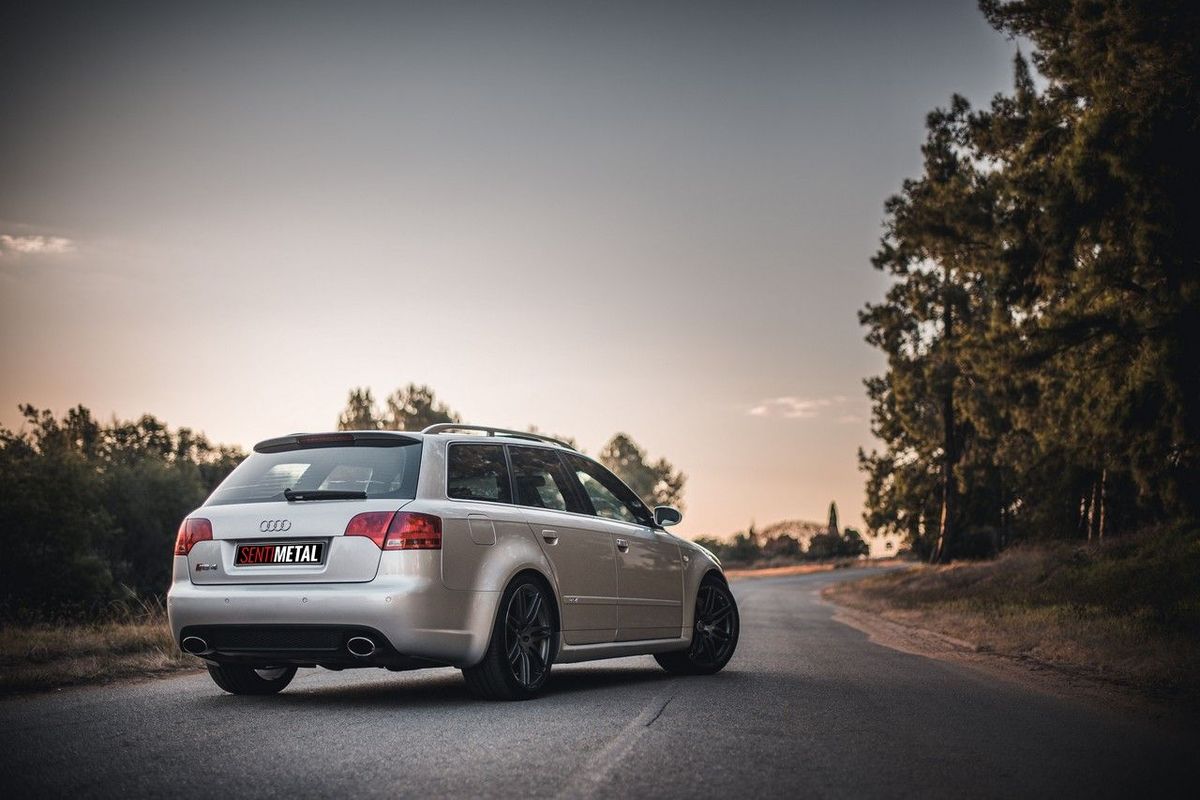
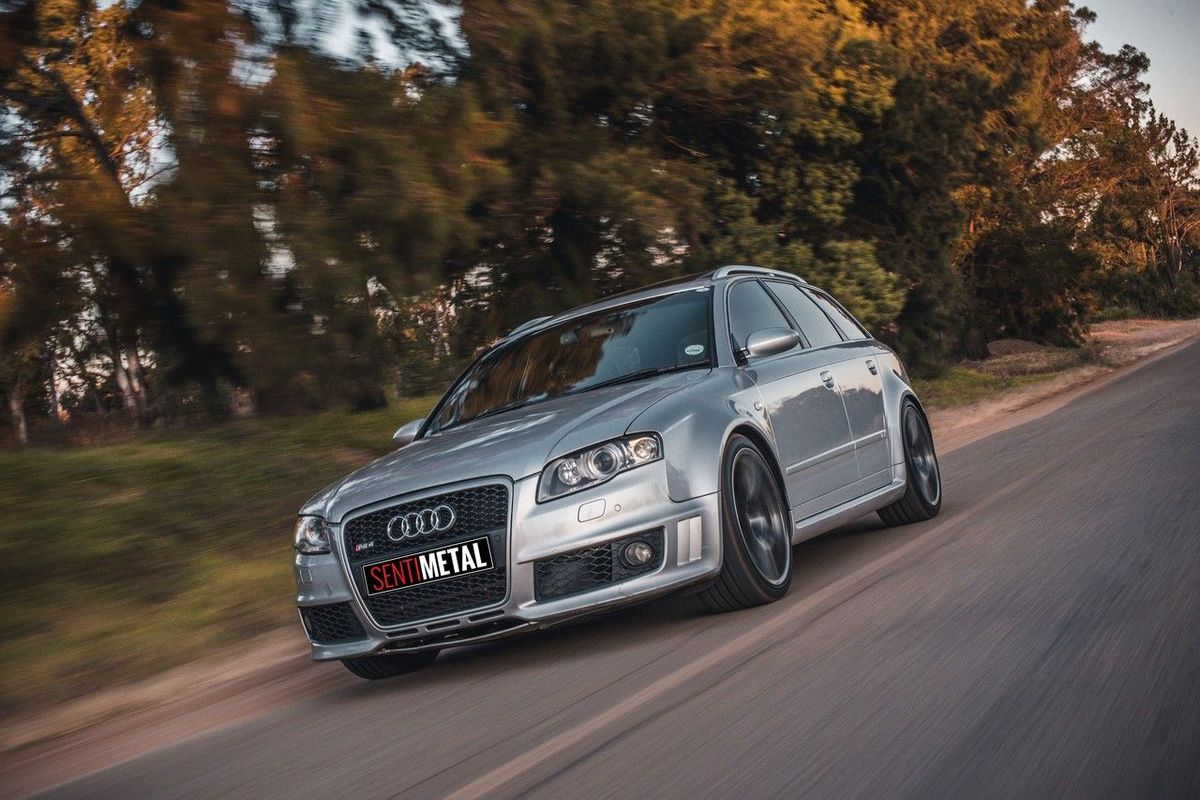
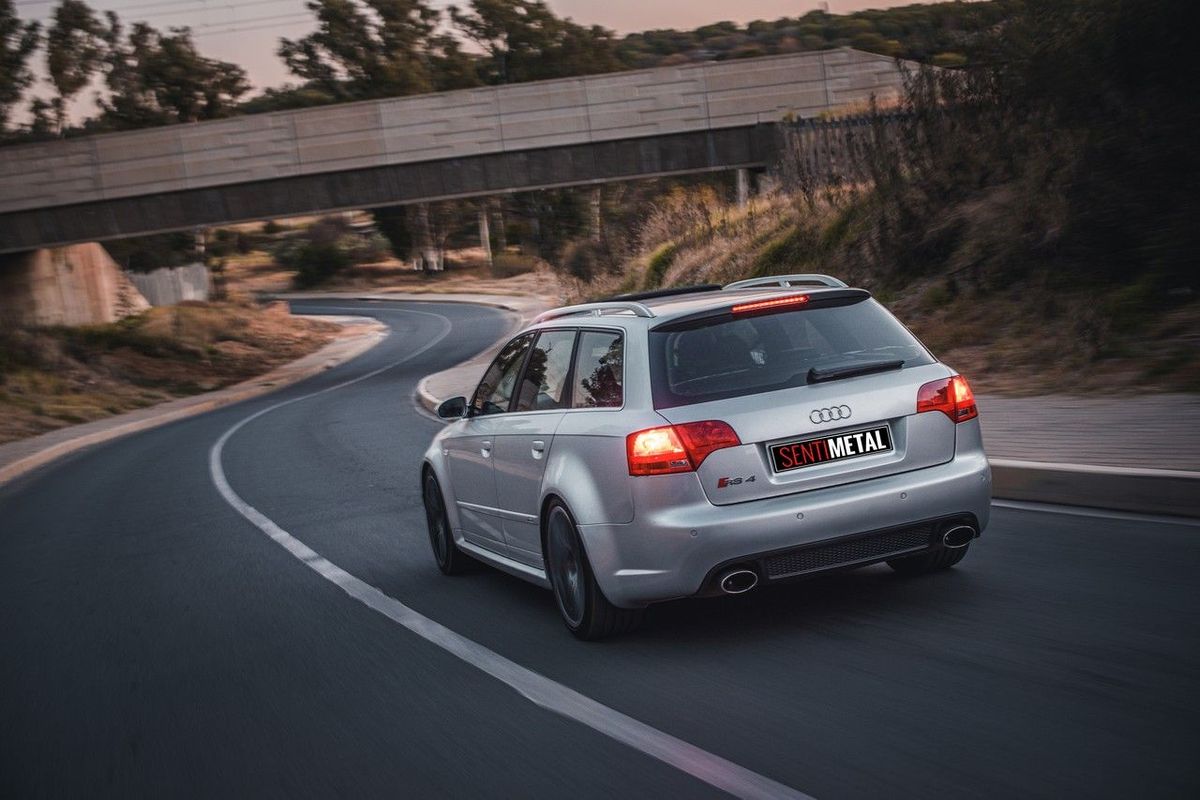
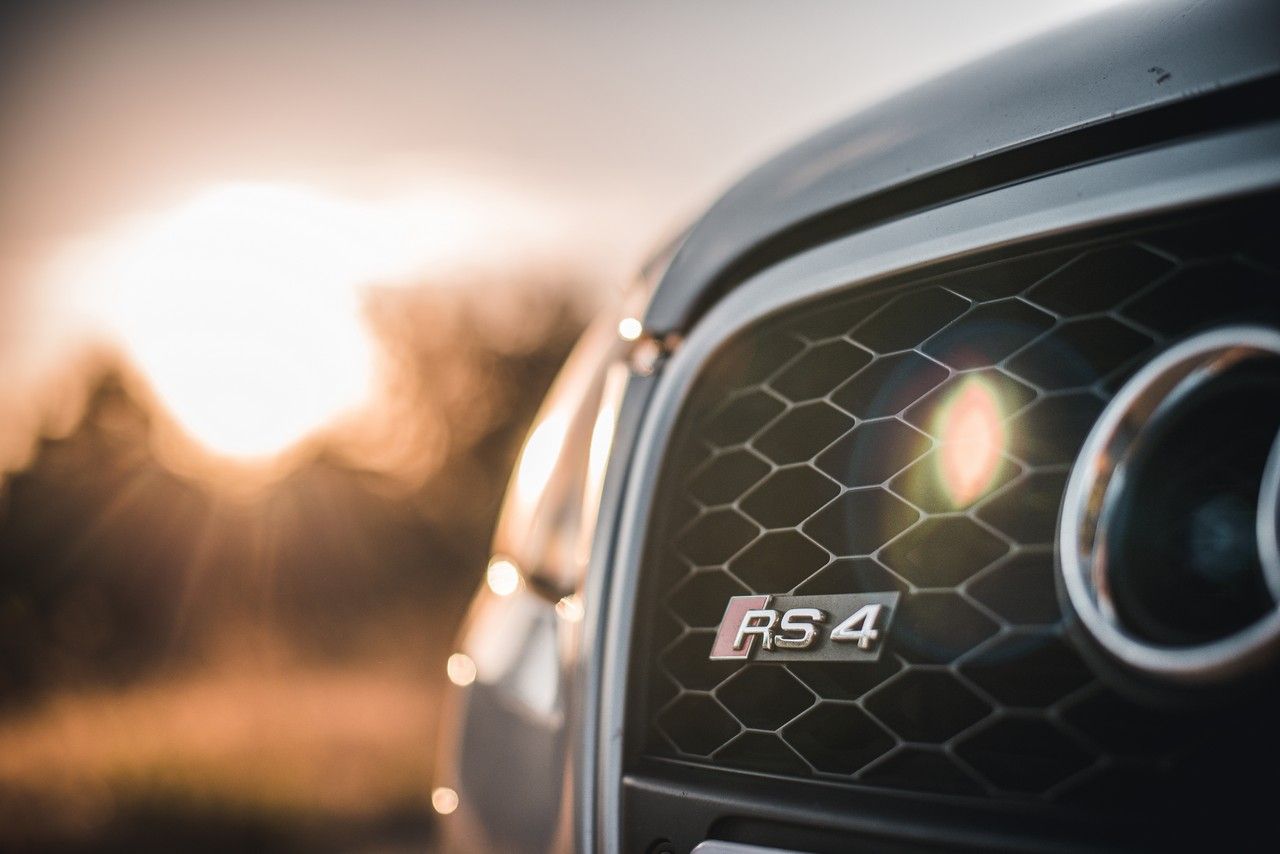
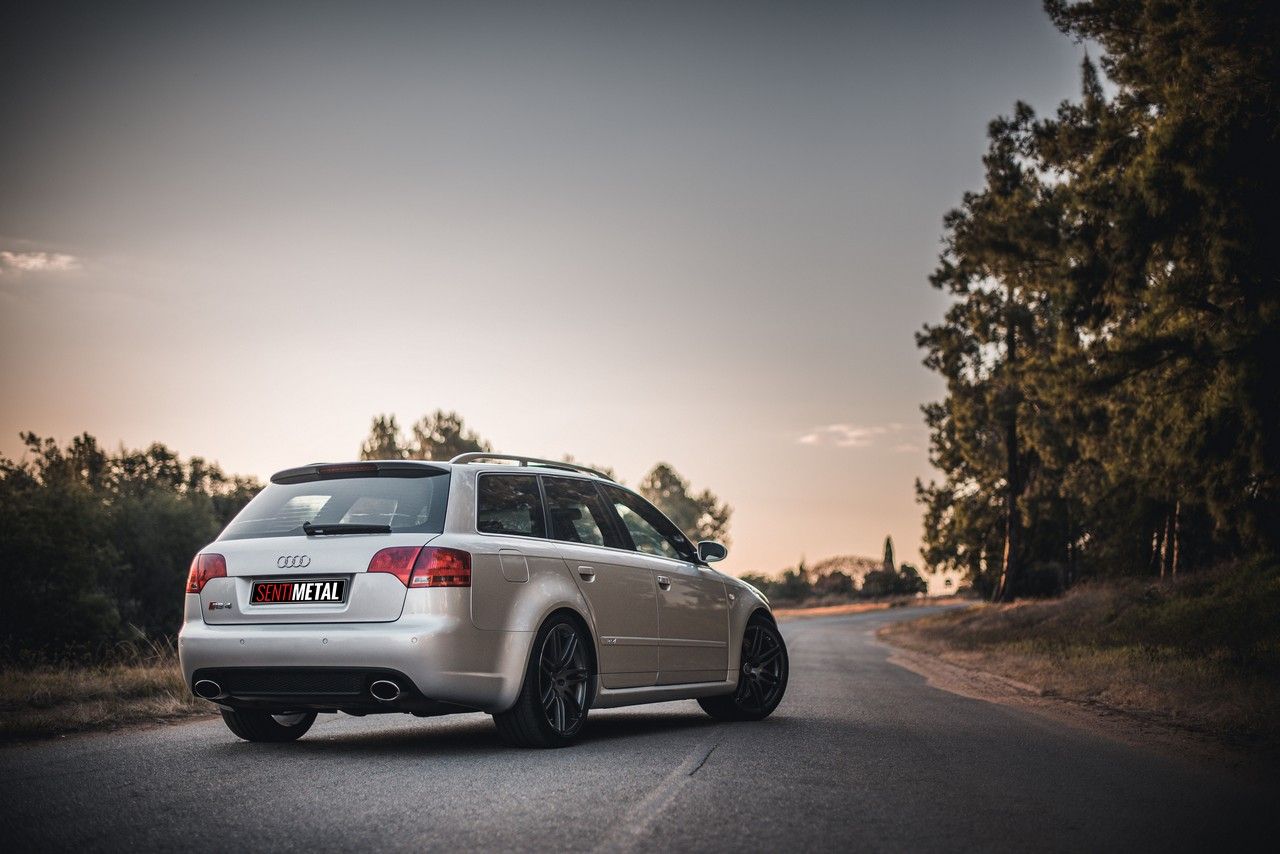
Are you looking to get into the classic car game, but want something that still offers modern appeal? Enter the B7-generation Audi RS4 – and, for an extra touch of exclusivity, the Avant derivative. Contributor John Whittle gets behind the 'wheel of the high-revving, 4.2-litre V8-engined machine (replete with its blistered wheel arches) and highlights everything you need to look out for when searching for one.
It’s an age-old question – which of the “Big Three" German brands makes the best cars? There's no clear-cut answer. If you've been exposed to a particular brand's models (appreciably more so than others) in your formative years, you're probably likely to favour that marque's products over those of its direct rivals – at least, that's been my experience. But honestly, if you've been fortunate enough to experience a variety of their cars, Audi, BMW and Mercedes-Benz are pretty evenly matched in most departments.
Still, brand bias most certainly exists; it always will. Pundits are often firmly steadfast in their beliefs and partial to voicing their oft-obstinate points of view when the Teutonic trio's performance derivatives are compared with one another. BMW M models have traditionally been heralded great driver’s cars, Mercedes-Benz’s AMG (now simply Mercedes-AMG) models are widely considered flashier and more brutish by comparison and Audi’s RS derivatives are very surefooted, more docile, but exceedingly brisk.
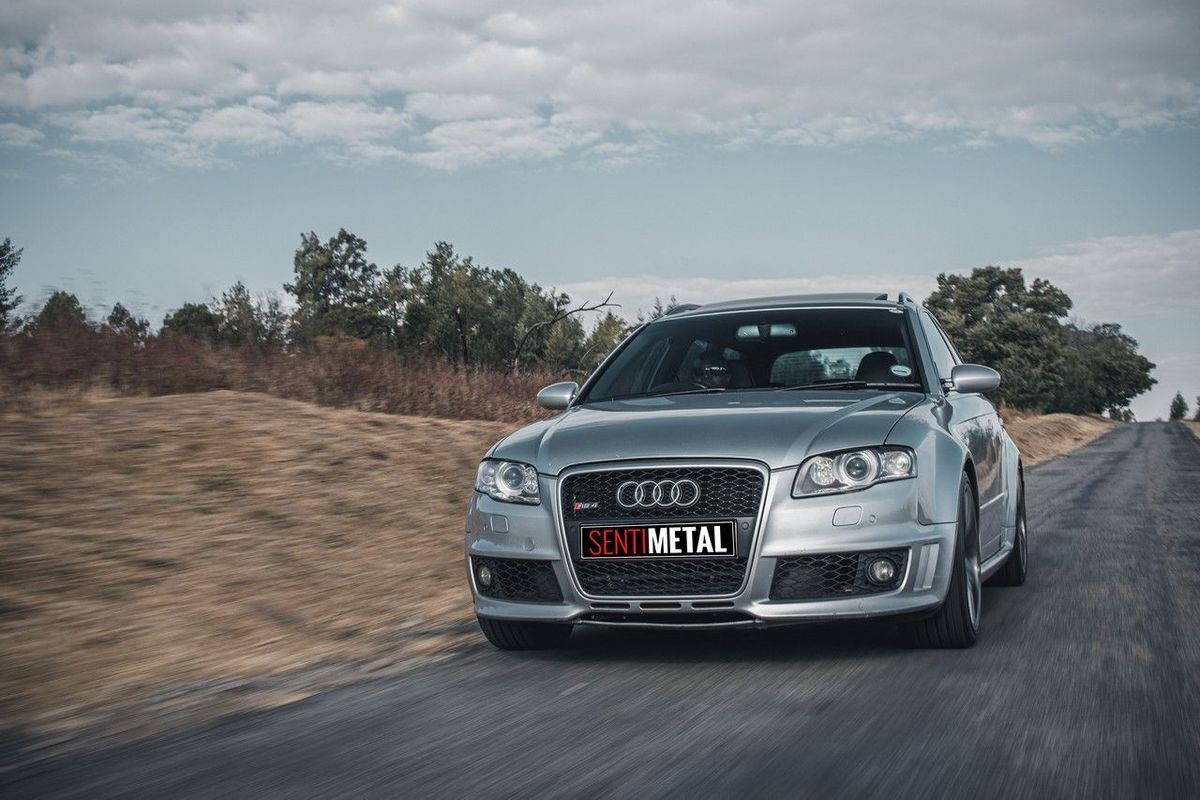
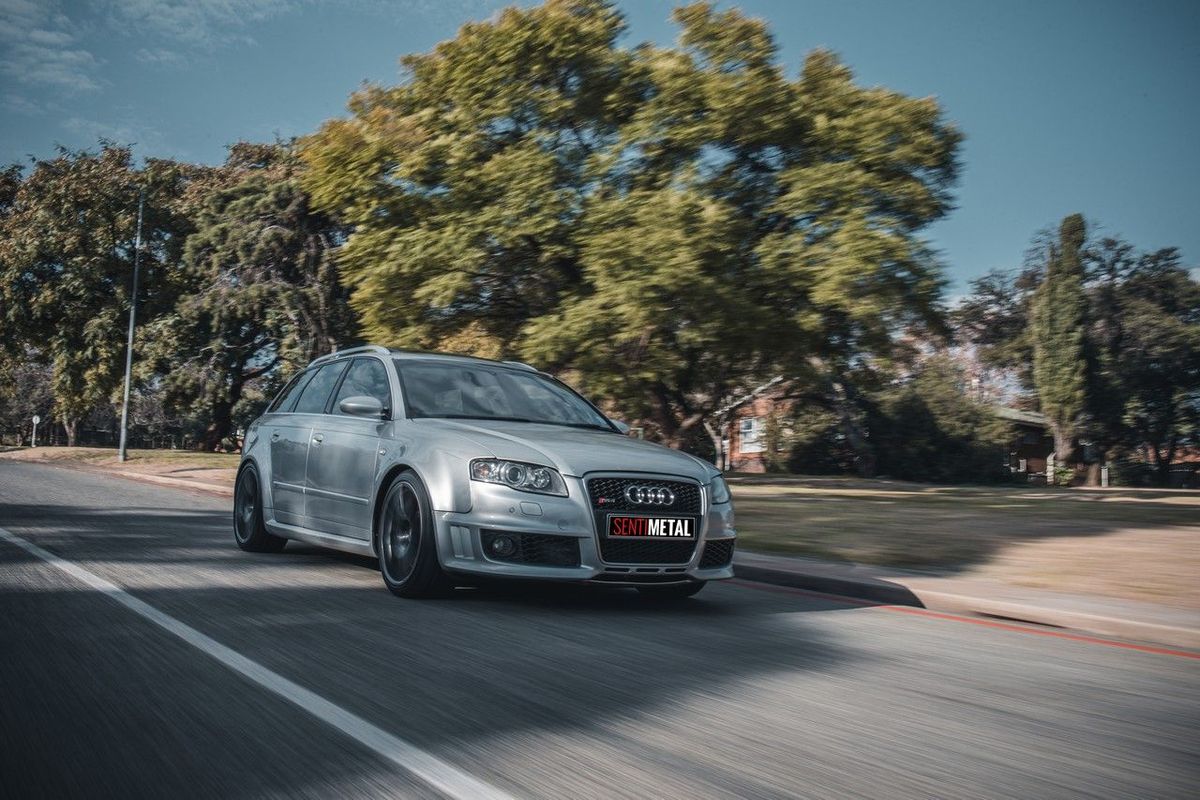
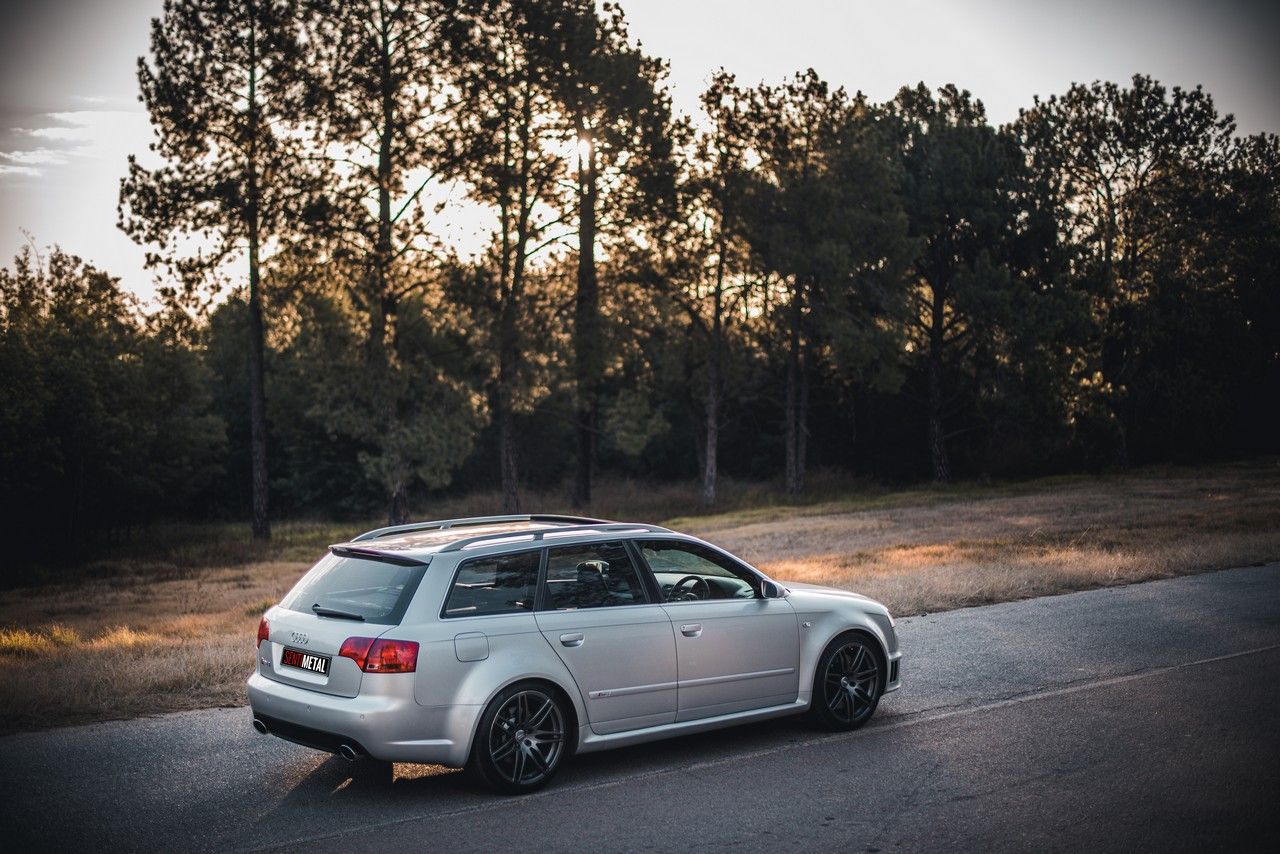
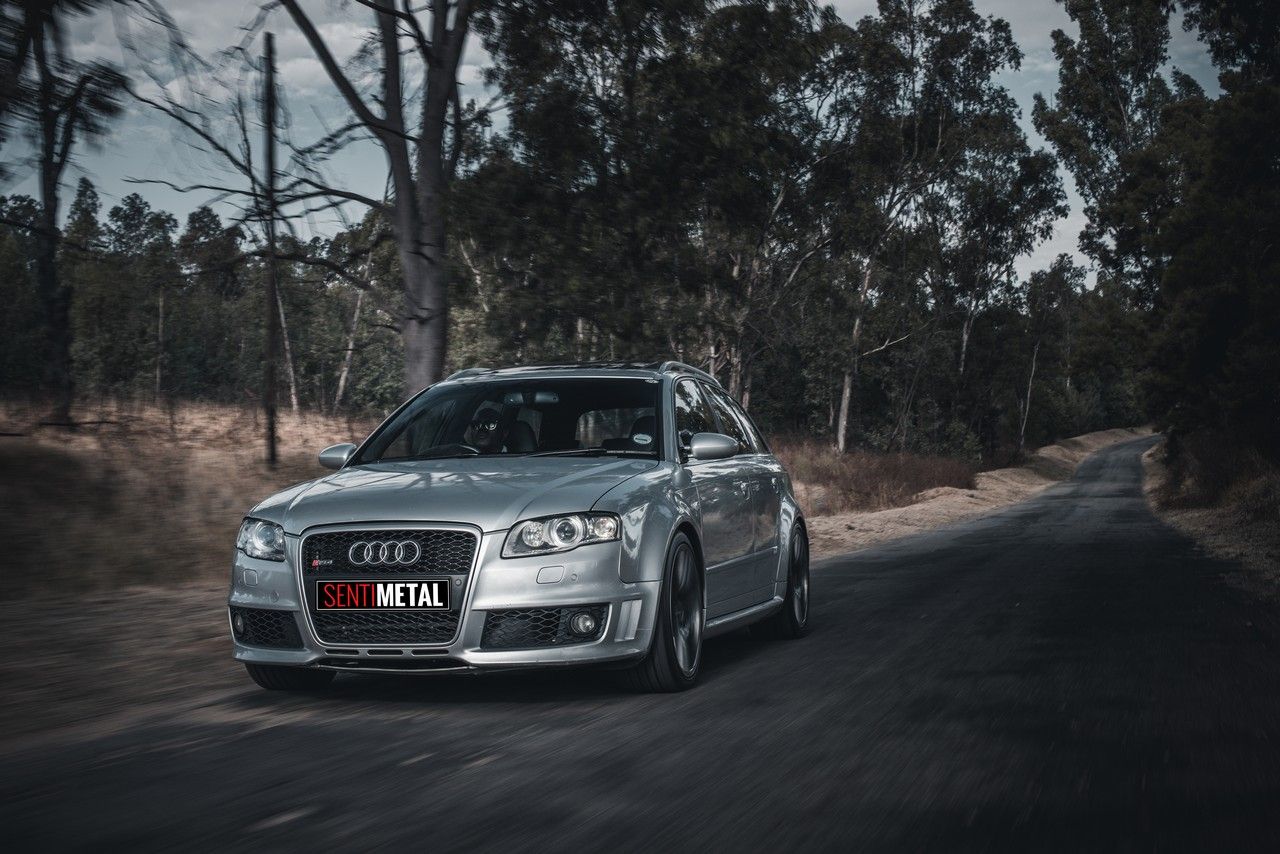
A fast 'wagon is a thing of beauty. The B7 RS4 still looks the part – even by today's standards.
Introduced in 1999, the first (B5-based) RS4 was the successor to the iconic RS2 Avant – the product of an Audi-Porsche joint venture. Although the first-gen RS4 was not sold in South Africa, it cemented Audi’s reputation for building rapid 'wagons with understated style… and staggering pace off the line thanks to quattro all-wheel drive (AWD).
Skip one generation of the A4 to the B7, and no one was quite ready for the surprise Audi had in store. The Ingolstadt-based brand's fans weren't afforded a B6-generation RS4 (alas, they had to make do with the underwhelming S4), but, when the first new RS4 in 7 years debuted at the 2006 Detroit Motor Show, the fanboys were in a veritable froth.
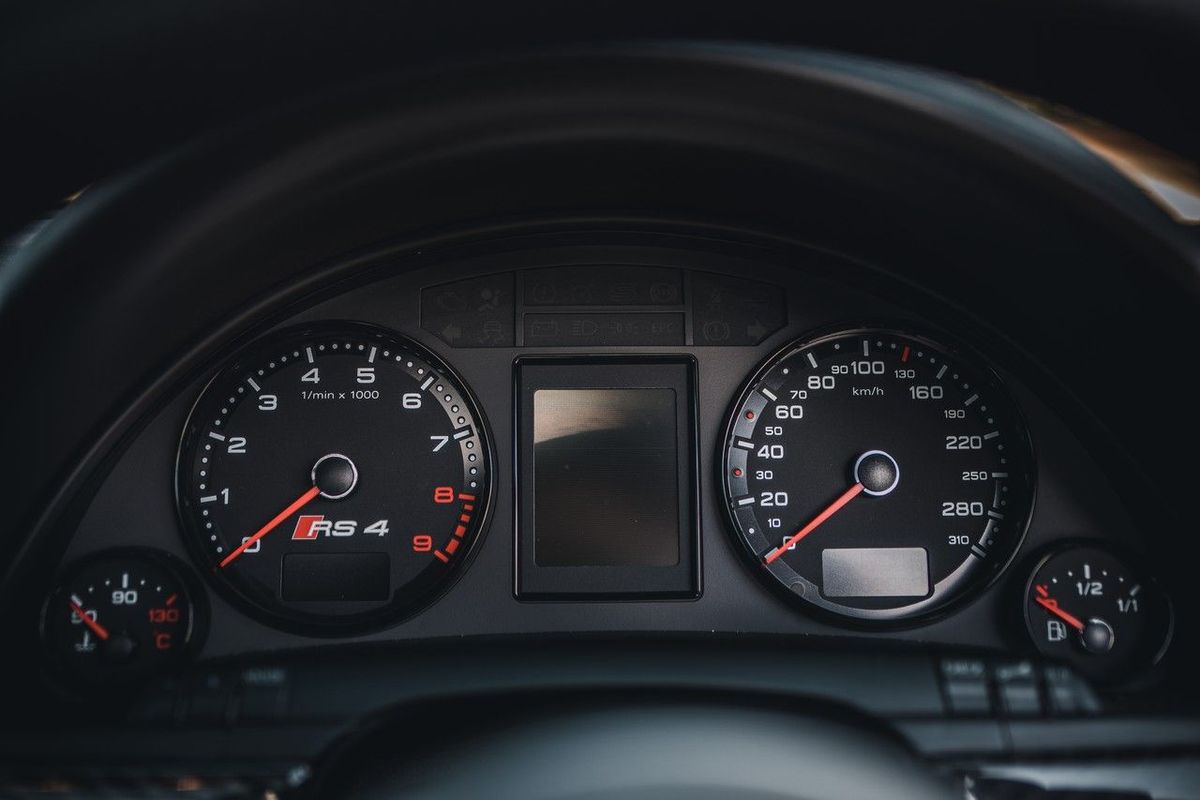
The newcomer's 4.2-litre naturally-aspirated (non-turbocharged) petrol V8 produced peak outputs of 309 kW and 430 Nm of torque and was mated exclusively with a 6-speed manual 'box. The all-aluminium motor was exceptionally light and offered a specific output of 74.2 kW per litre, which was very close to that of the E46 M3 with 78.3 kW per litre. What's more, it had a rather high compression ratio of 12.5:1 and emitted a glorious baritone soundtrack as it revved all the way to its 8 500-rpm rev limit.
It was offered in sedan, Avant (estate) and cabriolet guises and the 3 respective variants offered similar levels of performance. The RS4's quattro AWD system had a default 40/60 front-rear split, but the Audi’s electronic control unit dynamically apportioned torque as it saw fit. Other highlights included flared wheel arches, aluminium front wings and bonnet, a sport button on the steering wheel that opened up bypass valves in the exhaust and sharpened up the throttle response, as well as Dynamic Ride Control.
Was it any good to drive?
The B7 RS4 had a trick suspension setup (DRC) that reduced body roll in the corners.
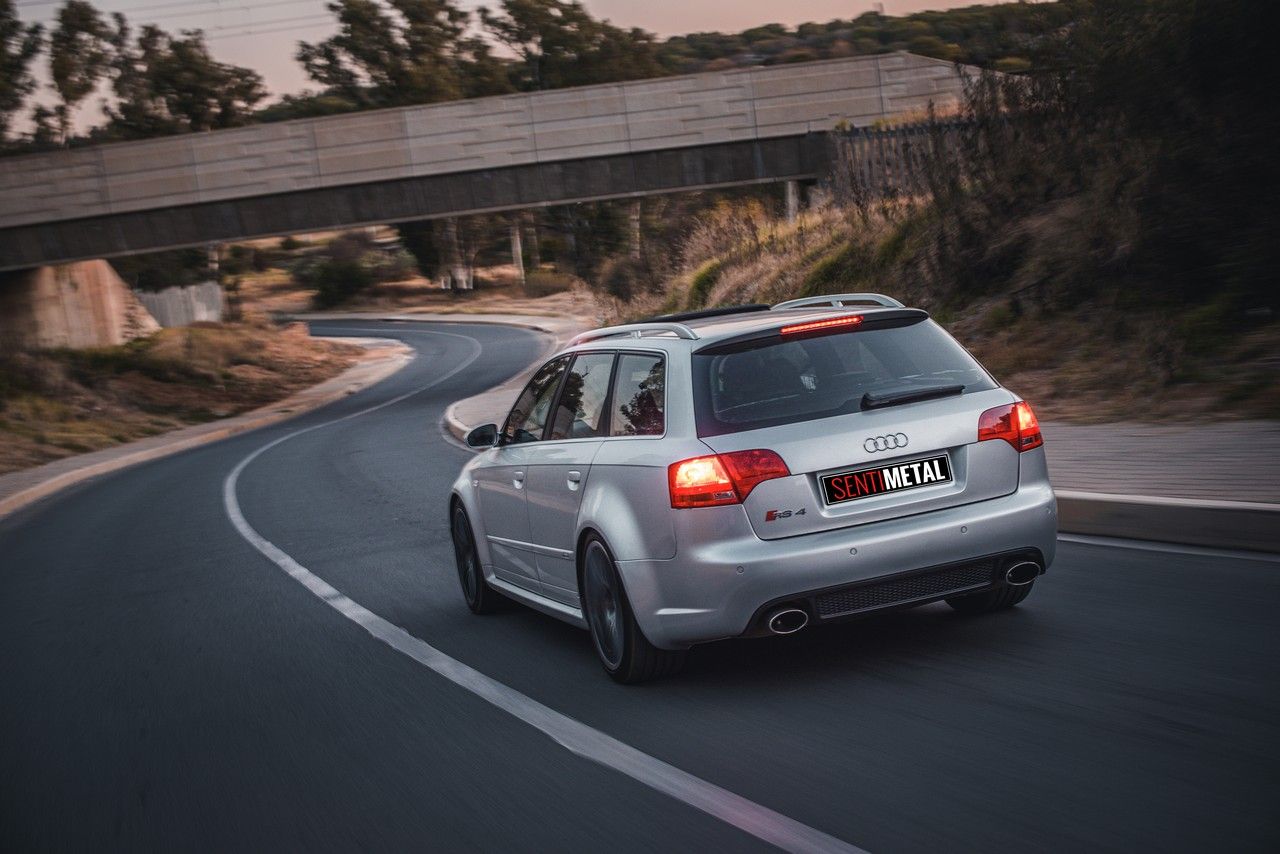
At the time of the B7-generation RS4’s launch, fast Audis had a bit of a reputation for offering lacklustre dynamics and too little driver engagement. It came as quite a surprise then when the RS4 was not only rapid in a straight line, but poised and engaging in the twisties too. The whole package offered a kind of excitement that its predecessors somehow lacked… and this was evident from the moment you prodded the start button on the transmission tunnel and the V8 erupted to life with its assertive burble.
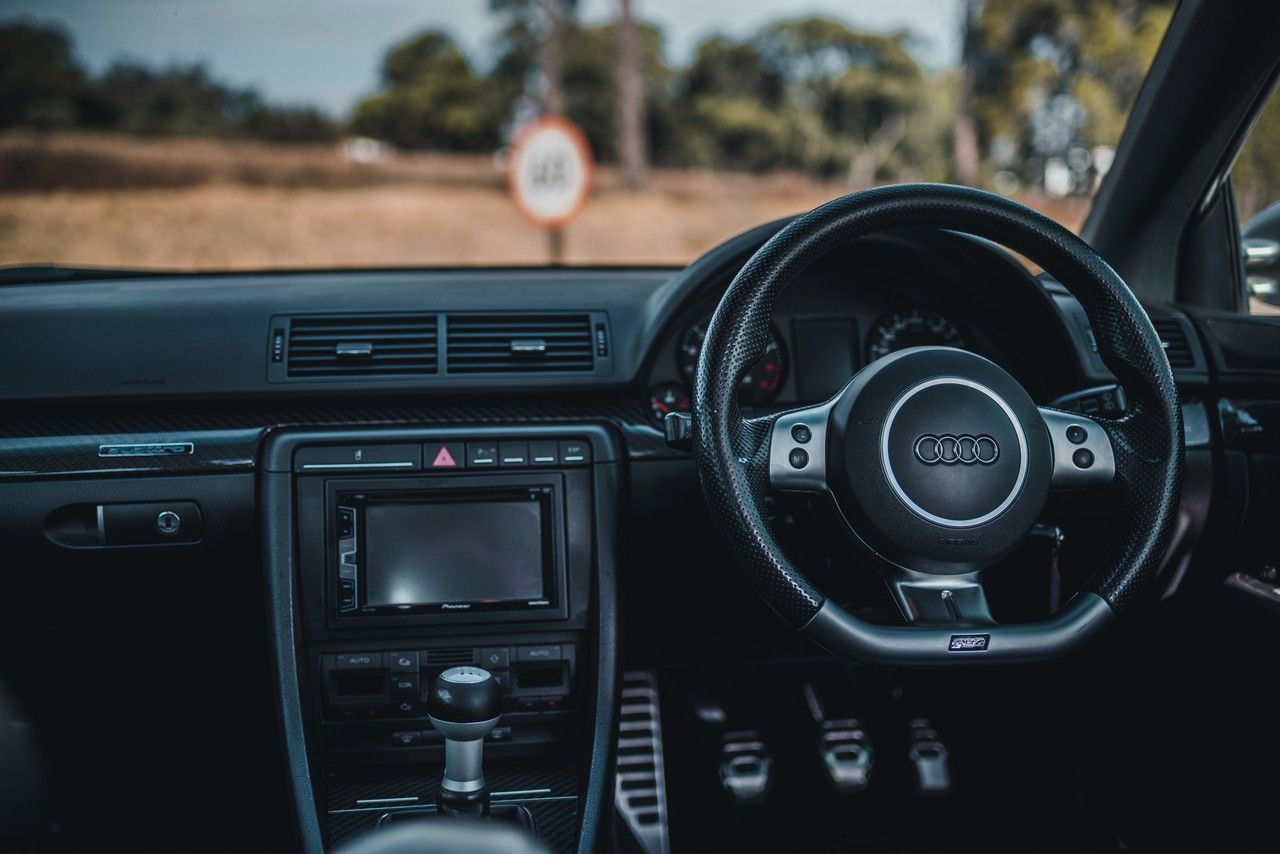
Even 15 years after its introduction, the direct injection V8’s alacrity for high revs makes for an intoxicating experience when pressing on, and even though the shift quality of the 6-speed 'box is a little hollow, the short-throw matches up perfectly with the fast steering rack, allowing for a lithe precision that one might not expect from an all-wheel-drive V8 'wagon. The chassis and powertrain complement each other well; the car exudes wonderful tension and tautness at all times, but it never feels overwhelming or unwelcome.
A lot of that has to do with the RS4’s Dynamic Ride Control (DRC). Essentially a trick suspension setup, DRC is a mechanical system featuring hydraulically linked diagonally opposed dampers. In fact, it's similar to the setup you’ll find in a McLaren MP4-12C! The system allows for an incredibly supple ride, while simultaneously reducing pitch and roll in the corners. The damping is lovely and controlled; all of the above results in the RS4 being quite forgiving – but delightfully communicative – as it approaches its limits.
If the Audi spears into a corner a little more enthusiastically than one may have intended, the weight of that V8 motor up front will cause the Audi's front end to wash a little wide, but this minor misbehaviour is easily corrected by coming off the throttle, after which the nose will neatly tuck in, and the rear should rotate just the right amount.
One may even induce a little oversteer if you’re brave, but that’ll require more speed than most drivers are likely to be comfortable with. Suffice to say the RS4 responds beautifully to driver inputs and offers a completely different experience to its contemporary M3 or C63 AMG rivals, but its performance is equally compelling and no less exciting.
Did you say a V8, manual Estate?
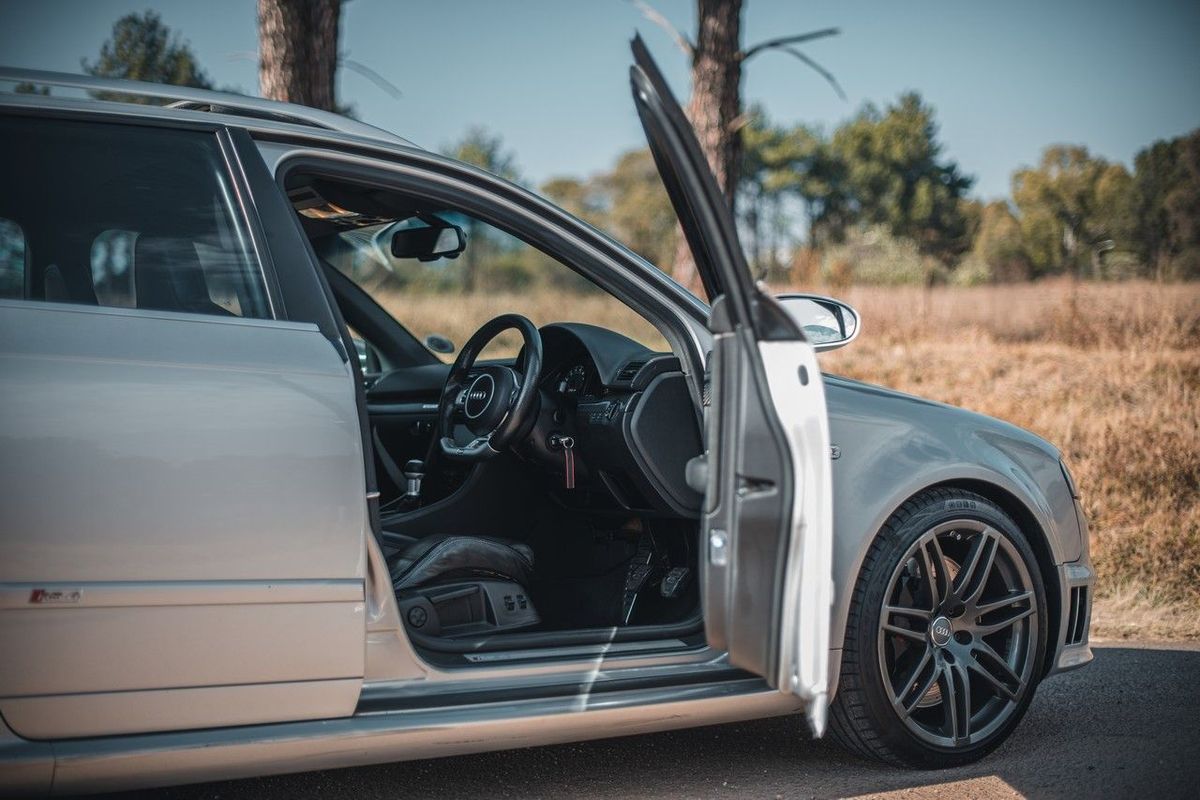
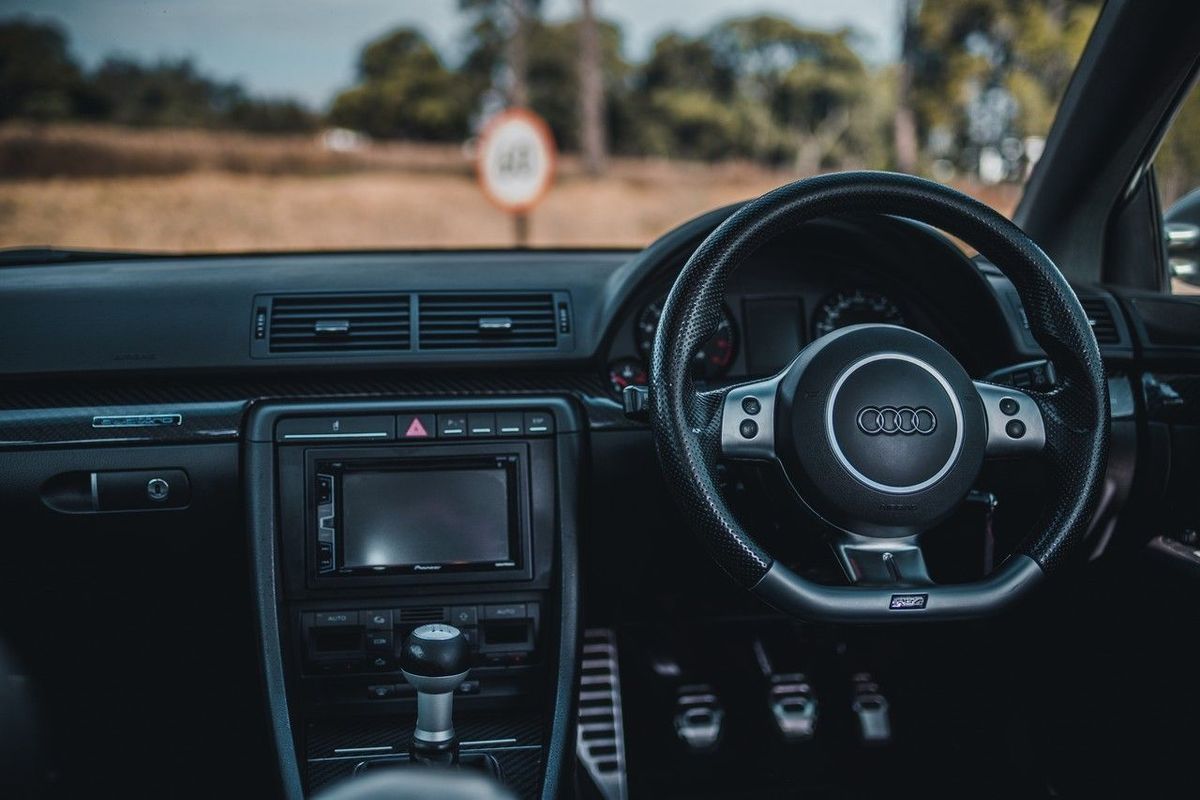
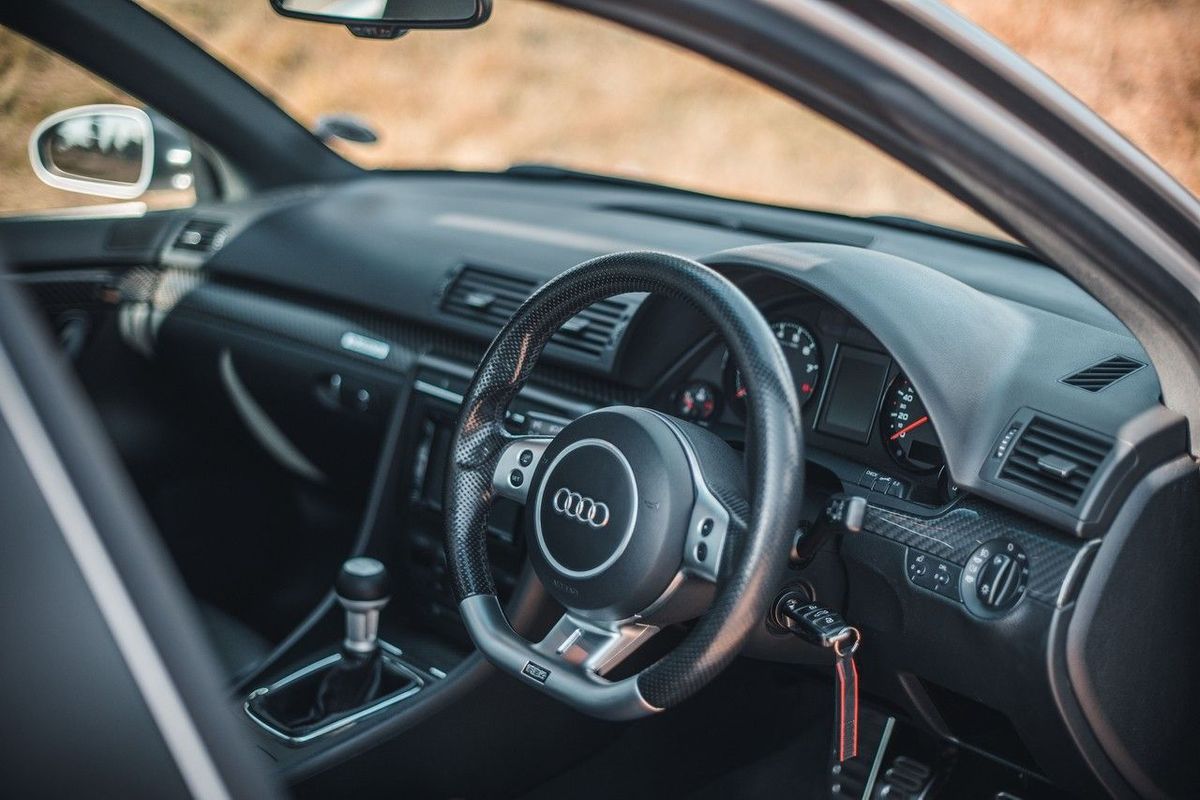
Stubby shifter provides a muscular yet fast-shifting experience.
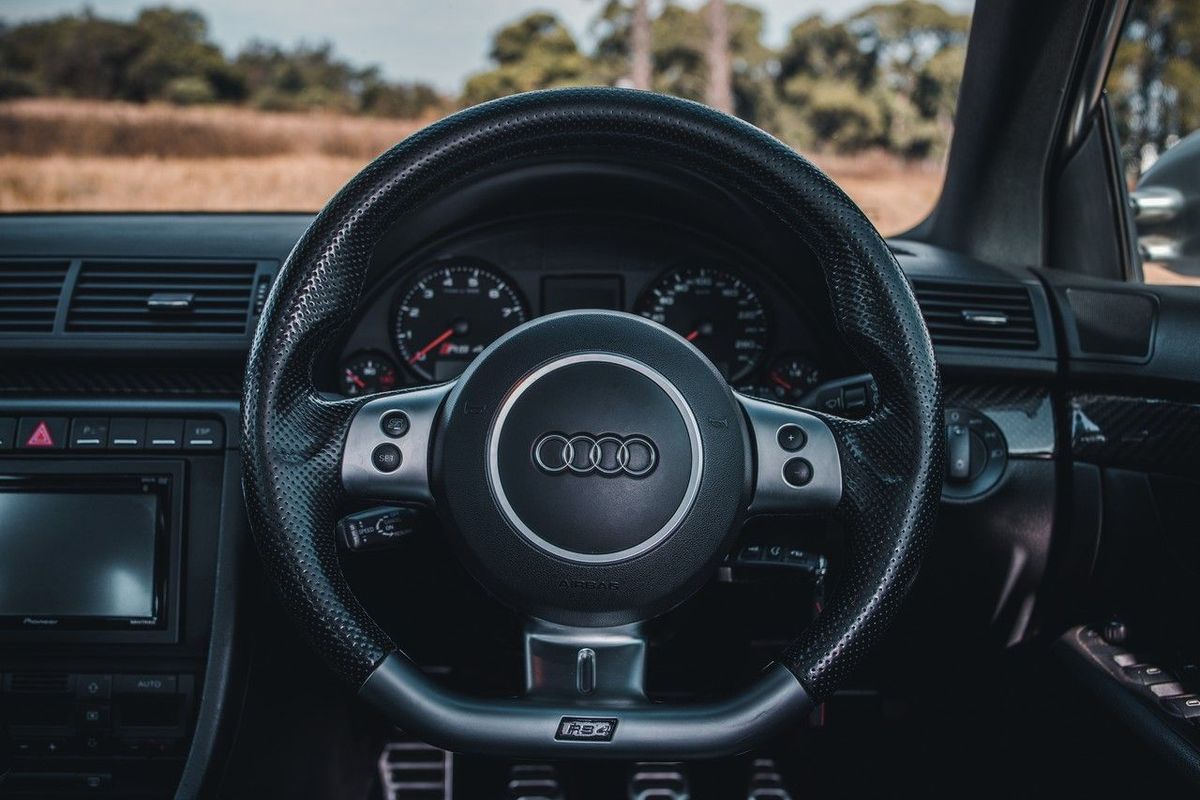
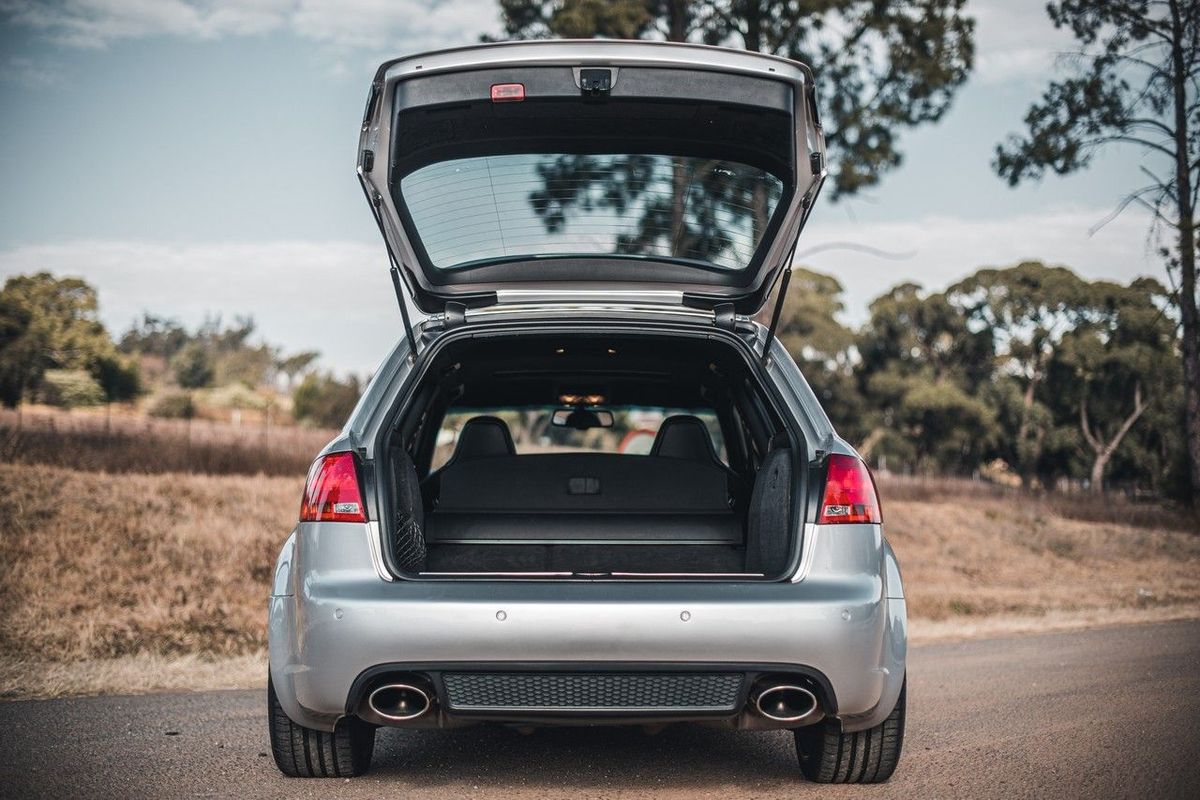
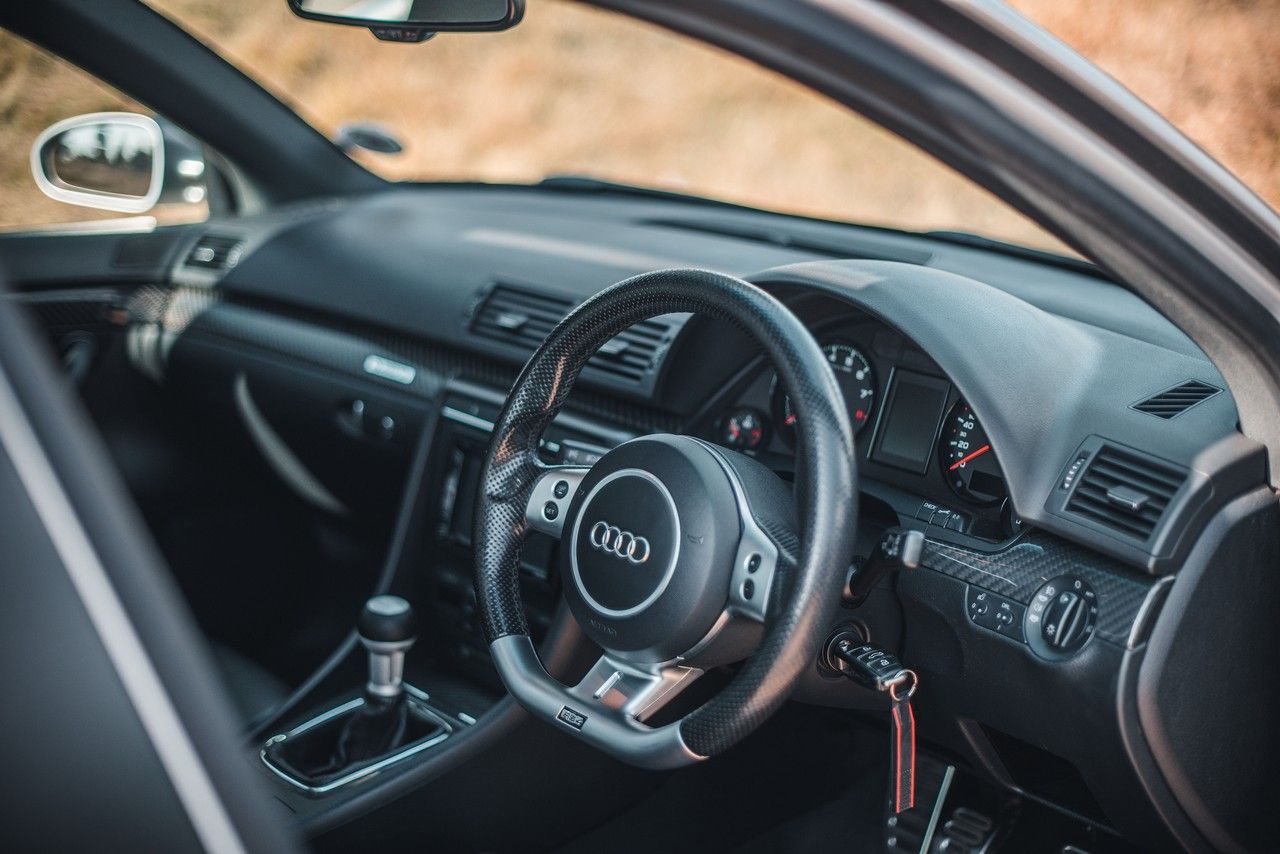
Audi South Africa imported only 32 RS4 Avants. You’ll have an easier time tracking down a hen's dentist than finding one of these; it was pure luck that we managed to source this Avus Silver example for the shoot. The owner searched for it for months and mere minutes before signing for a Sprint Blue sedan, he received a call from an Audi dealer that tracked down this particular example. It presents in good condition and has the Sport pack, which was standard from 2007 – lowered suspension, flat-bottomed steering wheel and side bolsters that give you a squeeze when you poke the sport button. This vehicle also has the Carbon Pack, which adds a smattering of carbon fibre to the interior.
So, you’d like to buy one?
Well, the asking prices for B7-generation RS4s are rather reasonable at the moment; there’s bound to be one to suit your pocket, whether you’re looking for a poked one that’ll bankrupt you in repair bills or an absolute minter that you’ll want to park forever. Somewhere in between those extremes is the sweet spot, where you’ll pay around R250k – R270k for a well looked-after example with moderate mileage (around 110 000 km). Immaculate cars will obviously demand a premium and can fetch upwards of R350k, but these are hard to come by. There are quite a few dogs out there, too (in the R150k – R200k region). These are very likely to be a good lesson in getting what you pay for.
Things that may break:
Avants were particularly rare in SA, just 32 units were imported to our market.
Serious things;
Rust and corrosion – A great deal of alloy was used in the running gear and mechanicals of the RS4. At the areas where these components come into contact with steel, there’s a good chance that you’ll find corrosion. If possible, get the car up on a ramp and whip out your torch to have a close look. This isn’t always a train smash, but in worse cases, components will need to be replaced at great cost.
Dynamic Ride Control leaks – It's a remarkable system, which will only function with the correct pressure. A common problem is that the seals tend to leak and the shocks depressurise, which renders them useless. Be on the lookout for sweating shocks. Some of the suspension pipes tend to corrode, so check them for rust too.
Coil packs – Depending on the mileage of the vehicle you’re looking at, it may be necessary to fit a new set of coil packs. Replacing one or two isn’t too costly, but these do tend to fail around the same time, in which case a set will set you back many thousands of Rands.
Cost of OEM parts – The abovementioned issues aren’t too serious, but as mentioned, OEM parts can be hugely expensive and, as is often the case with these sorts of things, the numbers start adding up rather quickly. There are some great aftermarket alternatives, though, which offer a great quality product at a fraction of the price. OEM brake discs, for example, will set you back R70k whereas an aftermarket option will cost you less than half that.
Slightly less serious things/ Things to take note of
OEM parts can be particularly expensive but high-quality aftermarket parts are also readily available.
Clutches – Early cars had a clutch-hose problem, but this was rectified by virtue of a manufacturer recall. If you’re having a look at an earlier vehicle, check the history to see that the recall was done. If the car has no history and you’re still brave enough to stick around, take down the VIN and phone an Audi dealership – its personnel should be able to give you an answer. The clutch tends to last around 75 000 km – this should have been replaced unless the vehicle you’re looking at has very low mileage.
Oil cooler pipes – Check these for leaks, they tend to corrode and can leak oil in varying degrees of “oh… no!”.
Power-steering hose – There’s a pipe that leads from the power steering pump to the rack and this tends to corrode and ultimately leak. It's difficult to spot, but feel for any stiffness in the steering, low fluid levels or whether any whiny noises become apparent when you turn the 'wheel lock to lock.
Upper- and lower suspension-arm bushings – These are prone to splitting and will need to be replaced. Listen for any knocking coming from the front suspension as this is a clear indication of this.
Upper-arm pinch bolt – Listen for knocking control arms at full lock, this would indicate that the upper arm pinch bolt has seized. This is a pretty simple fix if it can be removed but if not, a new housing will be required as well.
Oil consumption and average service cost – One may be alarmed at just how much oil the B7 RS4 consumes. Both the engine and gearbox are rather thirsty, but keeping them topped up is essential to ensure the longevity of both of these components. It’s not uncommon to use up to 3 litres of engine oil every 1 600 km.
Engine: 5W-40 (5W-30 can be used, but chain tensioners will start to rattle when cold); Gearbox and Rear Differential: 75W-90
A minor service at a reputable Audi specialist should cost you around R3 000.
Corroded battery compartment – This seems to be a common issue with B7-generation Audis and so shouldn’t be a deterrent. However, one should check for rust, as well as scrapes and scratches in the wheel arches, as these could all be signs of repair work.
Damaged sump and alternator belt housings – These sit very low underneath the car and can be damaged on nasty speed bumps and the like – check that the alternator and its housing are not in tatters and that the sump isn't leaking.
How to spot a lemon
As with purchasing any car, it’s important to take note of the overall condition of the vehicle. Worn seat bolsters are a nuisance and peeling rubbery trim on the steering wheel and radio aren’t ideal, but where one really needs to pay close attention is when inspecting the mechanical components of the car. If you start the car and the dashboard resembles a trippy trance party, it’s probably wise to stay away. If the V8 sounds like a V4 or the smoke that billows from the exhaust teleports you back to that trippy trance party, stay well away. That is, of course, unless you’re looking to find a genuine bargain and you’re certain of the work that needs to be done and the costs of carrying it out.
Popular modifications
A good detailer will always be able to restore an interior to near-showroom spec.
Decat – When you push the sport button on the RS4's steering wheel, the Audi's exhaust valves open and beef up the V8 exhaust note measurably. This, however, isn’t loud enough for some people who feel the need to “enhance” their vehicles further by splashing out on bespoke exhaust modifications. Their flagrant disregard for the wellbeing of the planet aside, this can sound quite nice, but it all depends on the quality of the work done. Straight-piping your Audi is not a good idea.
Aftermarket brakes – Due to the fact that OEM brakes are so astonishingly expensive, aftermarket brakes are not only cheaper, but one could install some "beefier" brakes to the RS4 for less than what OEM replacement items would cost.
Suspension – One of the most common modifications on the B7 RS4 is the removal of the Dynamic Ride Control system, due to the fact that it's prone to leaking and can be expensive to repair. Some of the more common options are Bilstein B14 Coilovers or kW Street Comfort shocks.
Air filter and remap – If an aftermarket exhaust is installed, an ECU remap is often done to improve mid-range torque and remove the torque limiters in 1st and 2nd gear.
Carbon clean – Not so much a modification, but rather a bit of routine maintenance, which should be done every 100 000 km (or so) due to the FSI direct injection system.
Summary
Eminently sought-after and revered by motoring enthusiasts and performance-car aficionados alike – irrespective of where their brand loyalties lie (I might add) – the B7-generation RS4 is a phenomenal performance machine that offers exceptionally good bang for your buck, as long as you're vigilant about the issues you need to look out for.
Click here to view Audi RS4s which we currently have listed on Cars.co.za.
Audi introduced its new Q5 executive SUV in South Africa in 2017 and it has now received a mid-life update. Take a look at what the updated Q5 will have to offer when it arrives in South Africa in 2021.
The Q5 has been a huge success for Audi, so much so that it’s the Ingolstadt-based firm’s most popular SUV having sold over 16 million units since its inception in 2008. It’s also worth noting that the current Audi Q5 has been a regular finalist in the #CarsAwards powered by WesBank.
What’s changed?
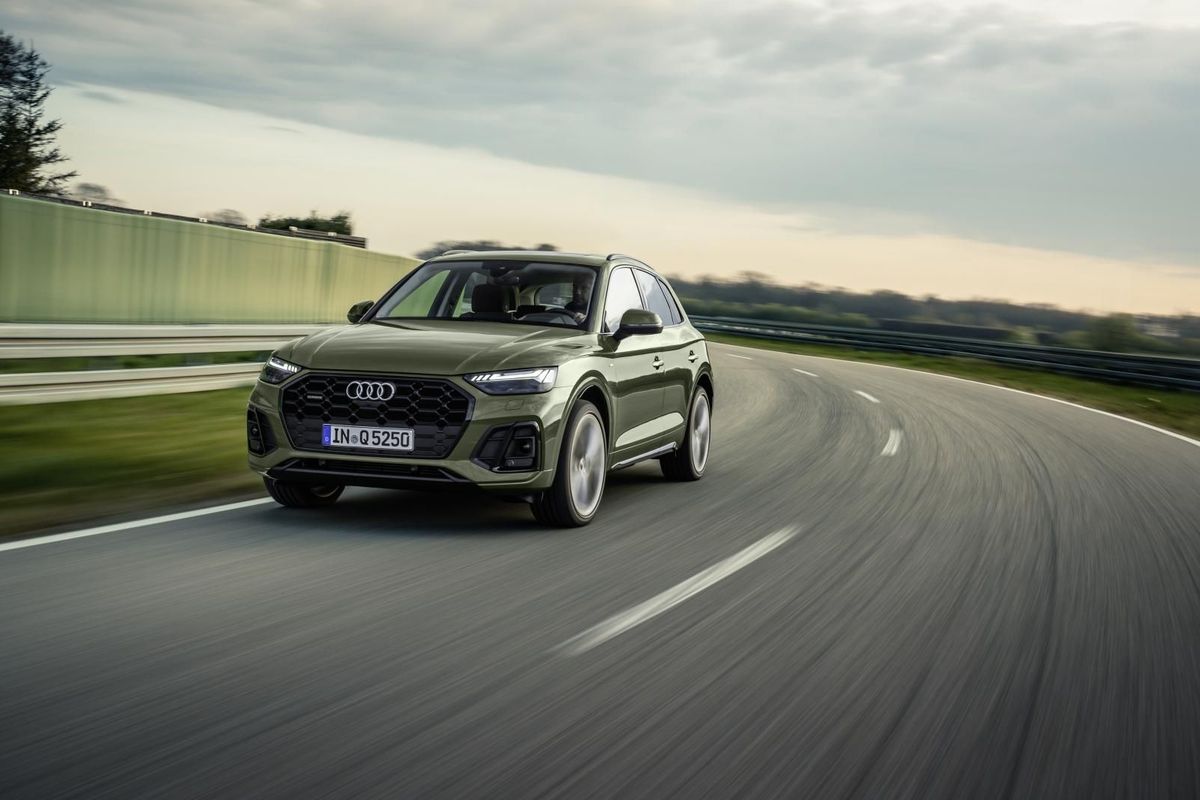
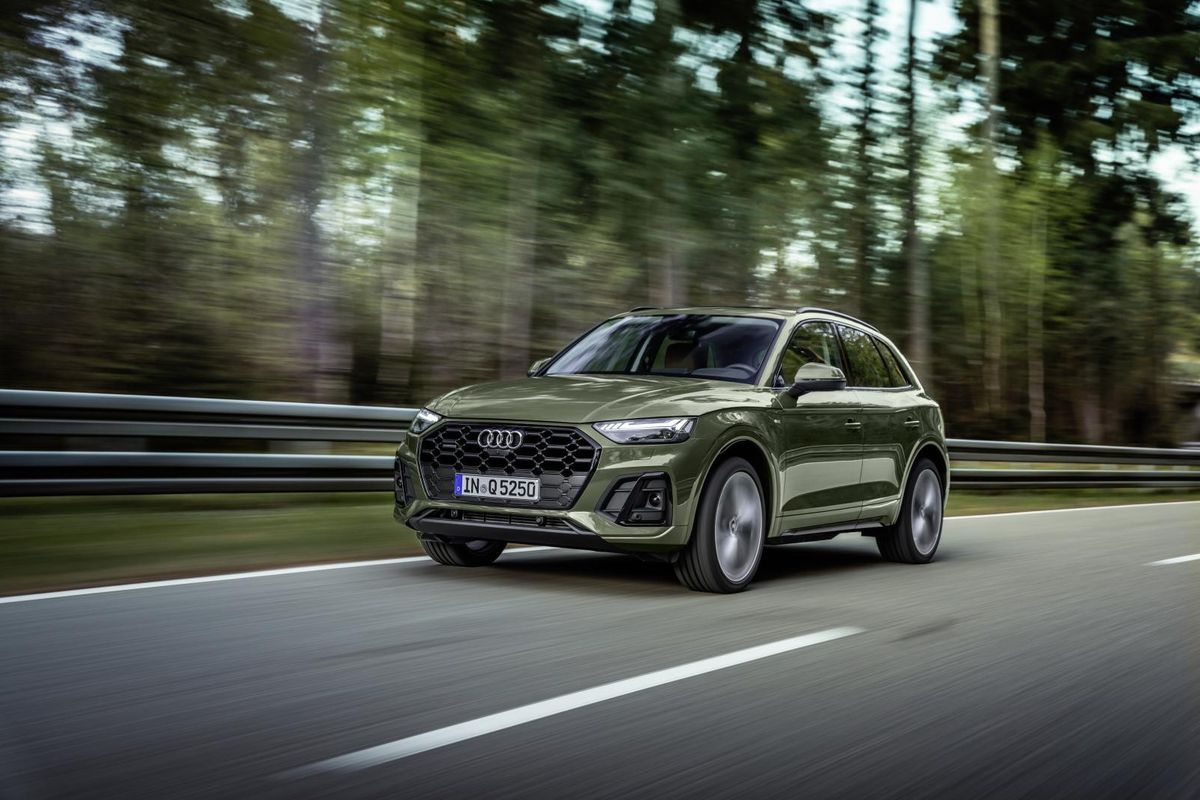
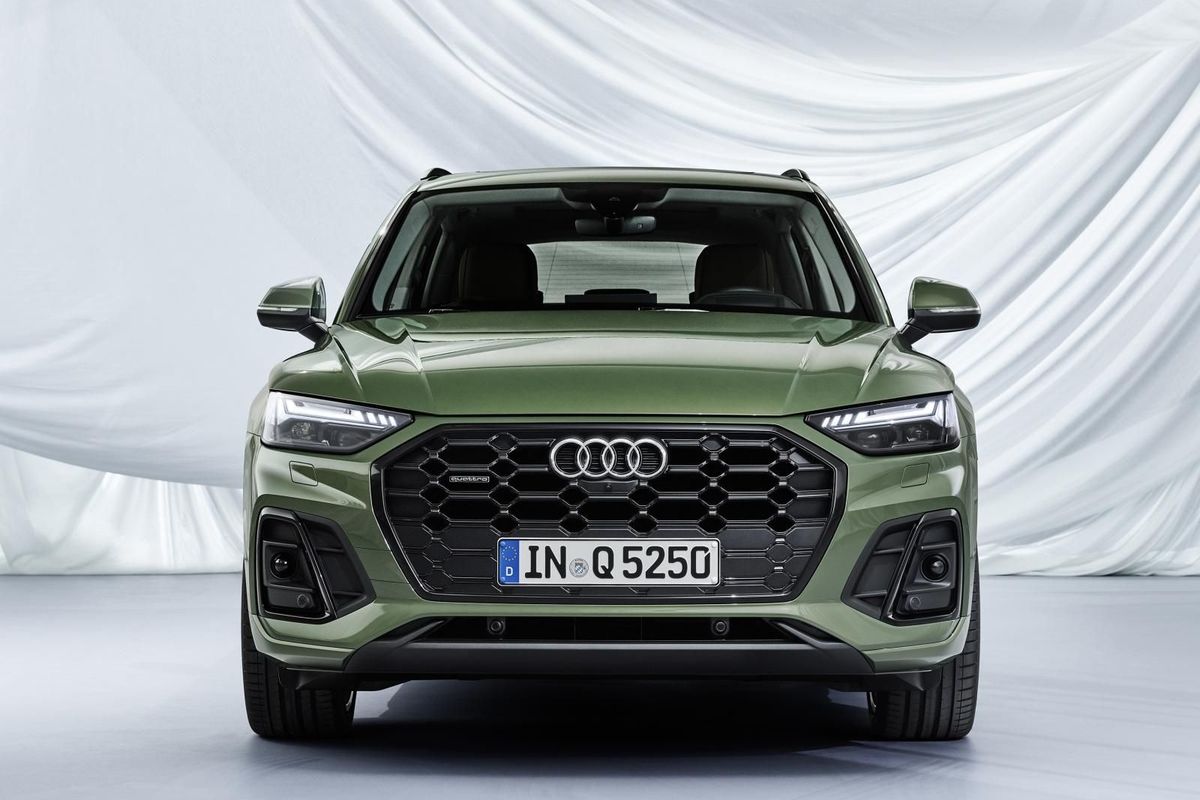
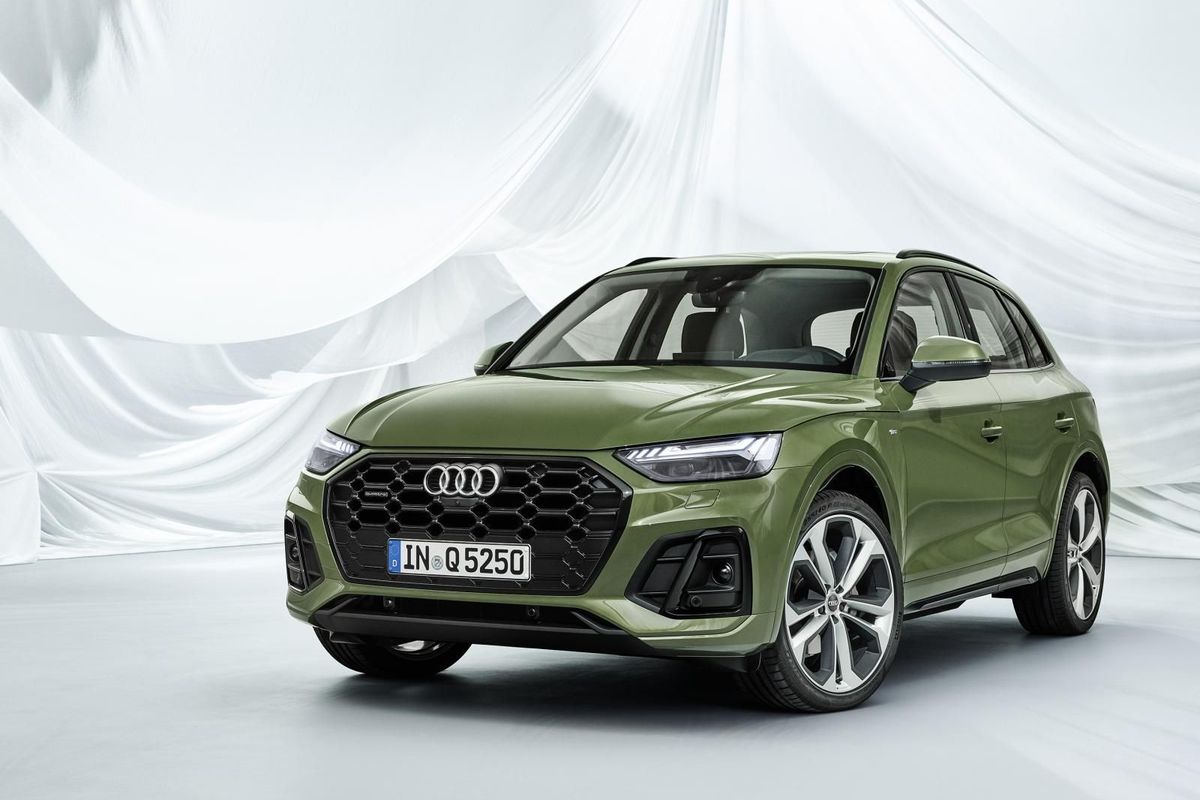
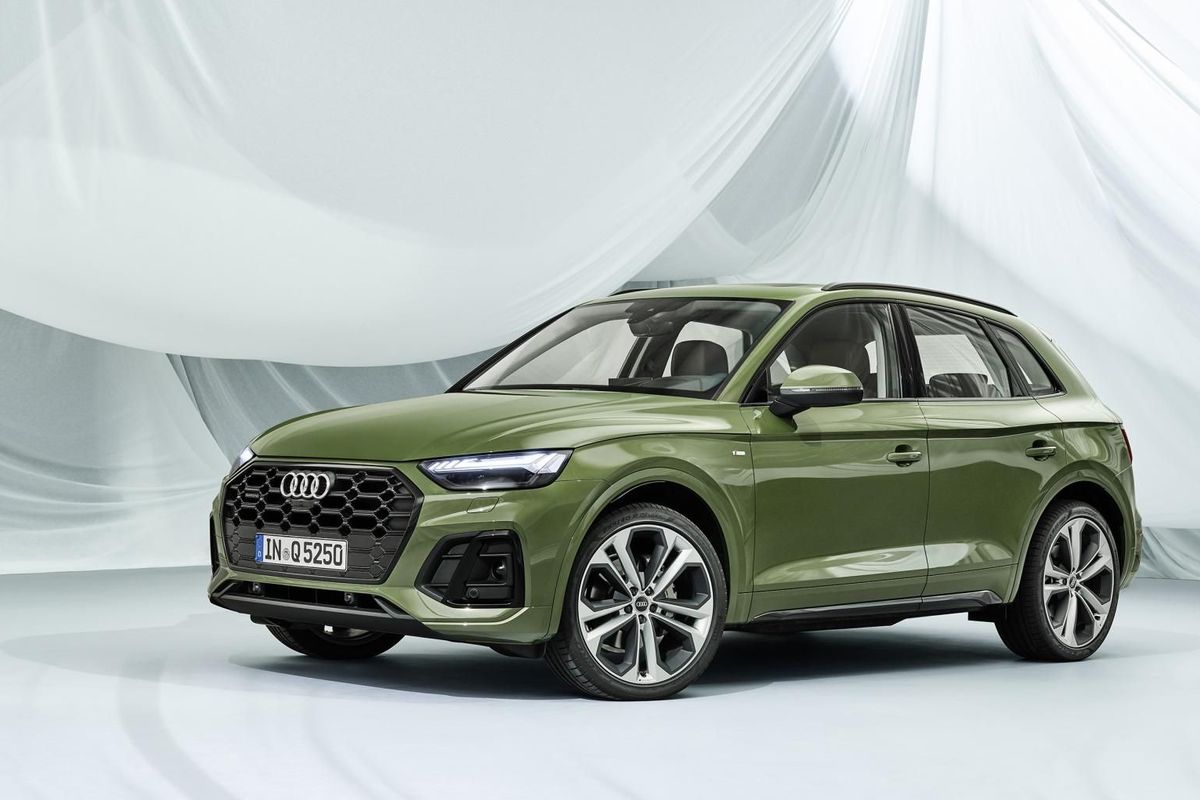
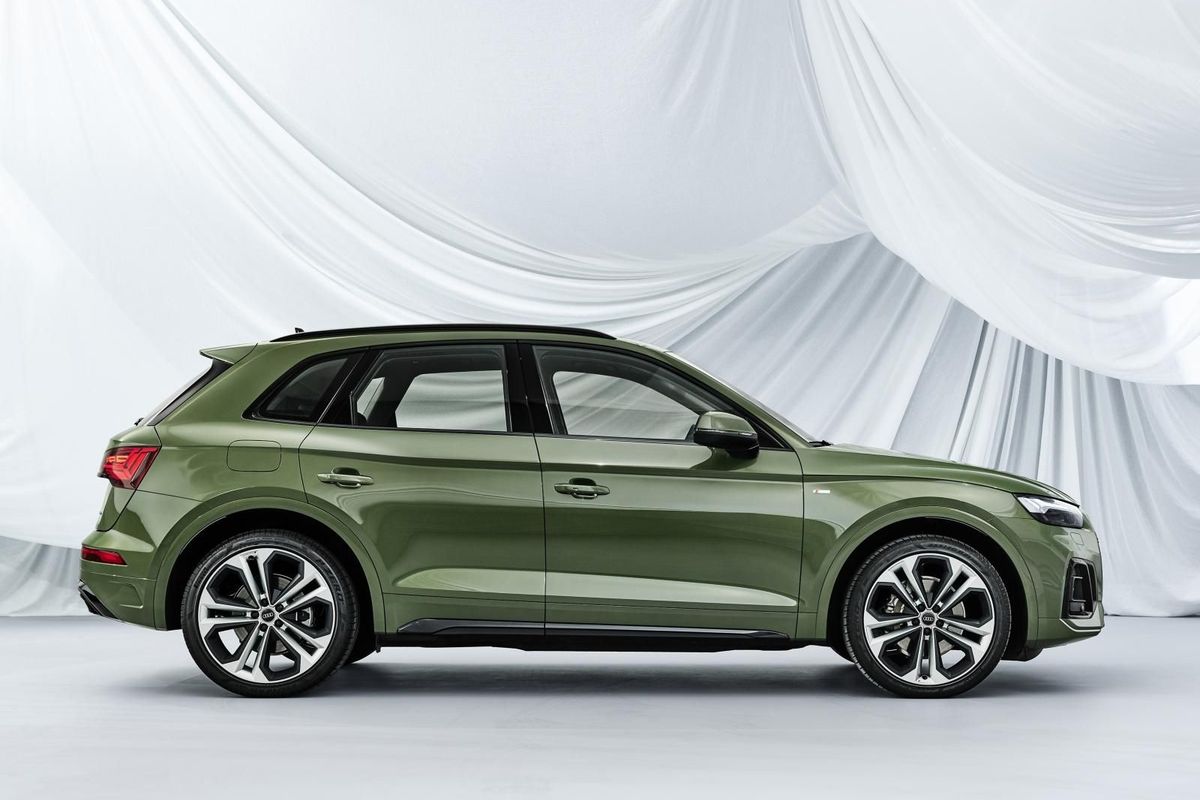
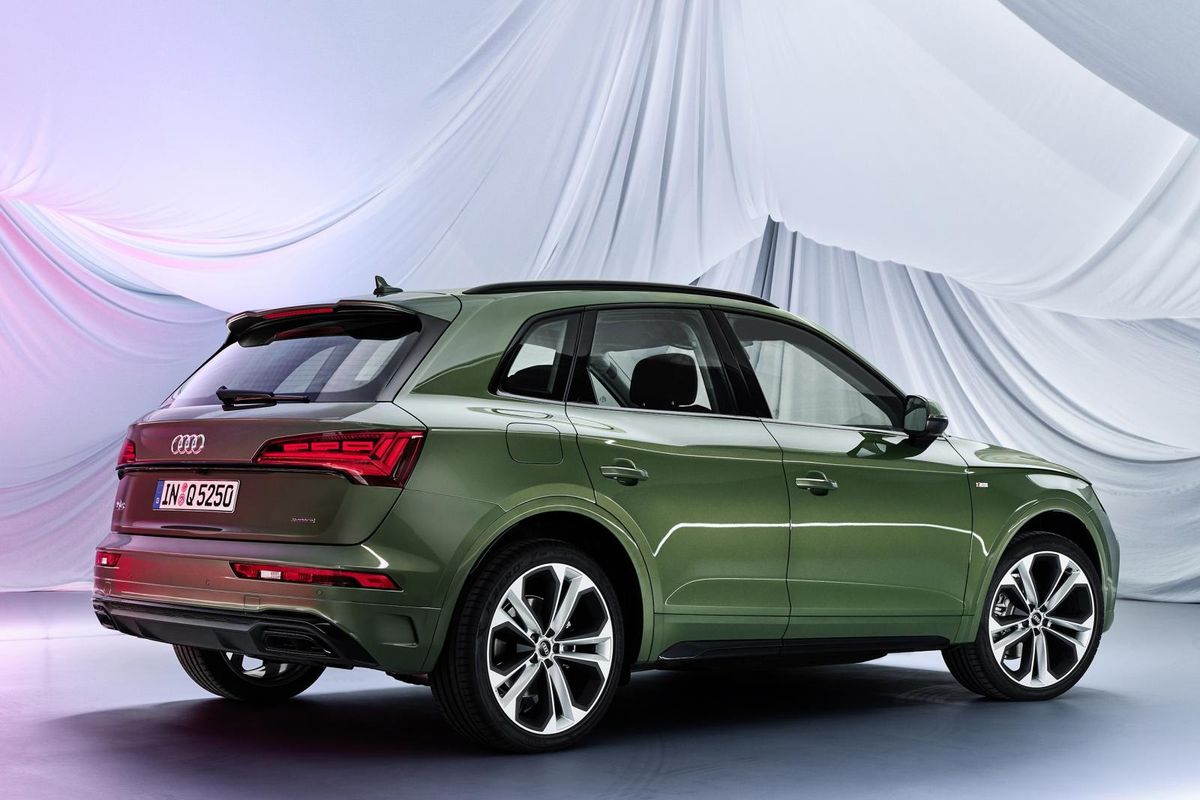
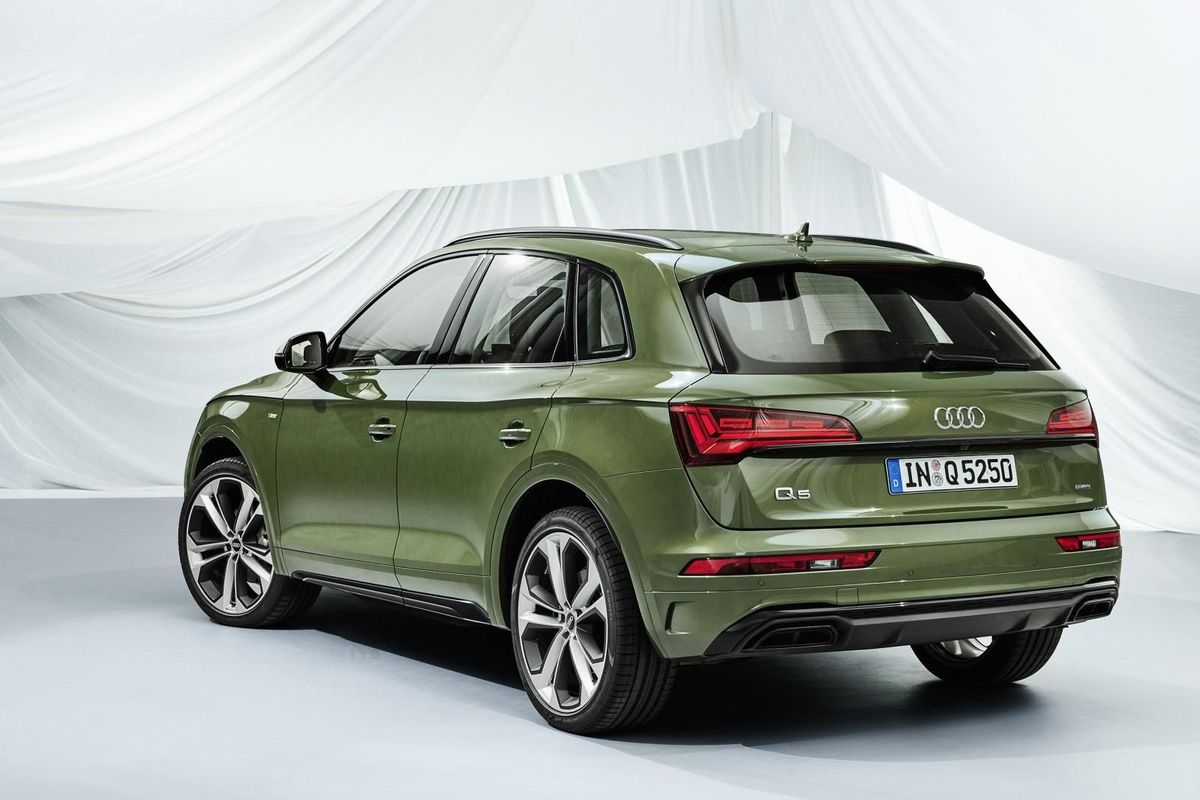
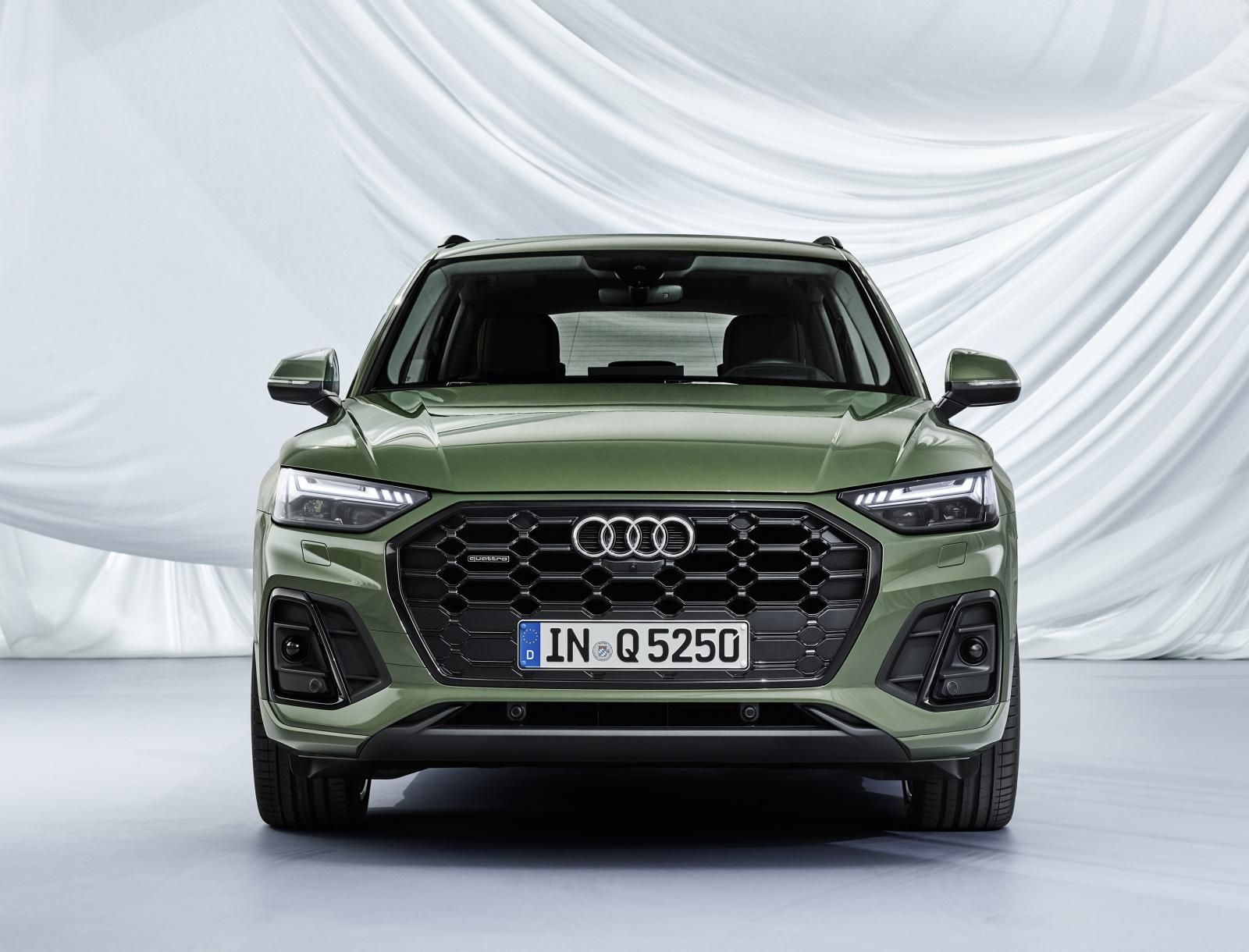
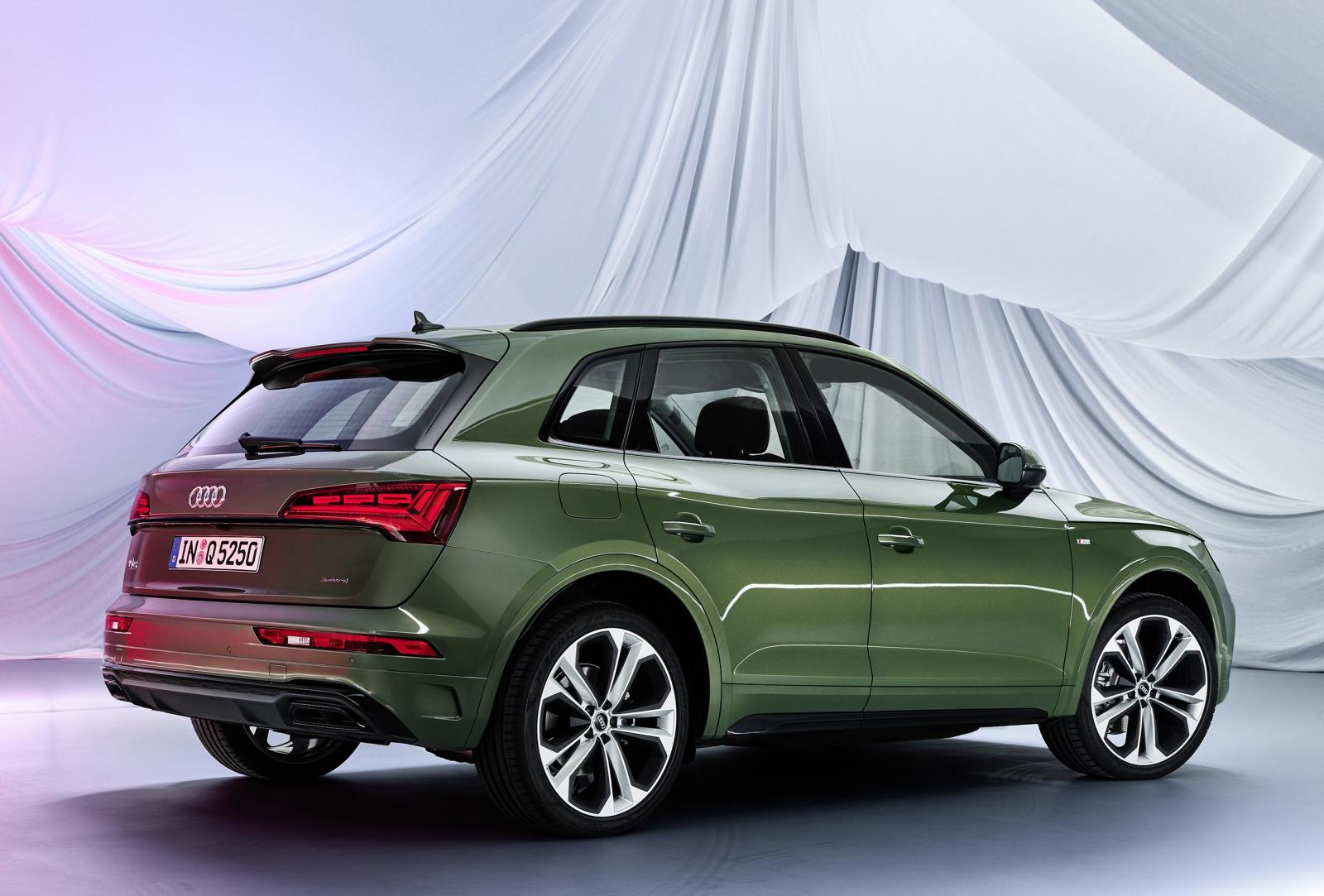
This particular Audi Q5 wears an S line trim package in the new District Green body colour. Do you like the look?
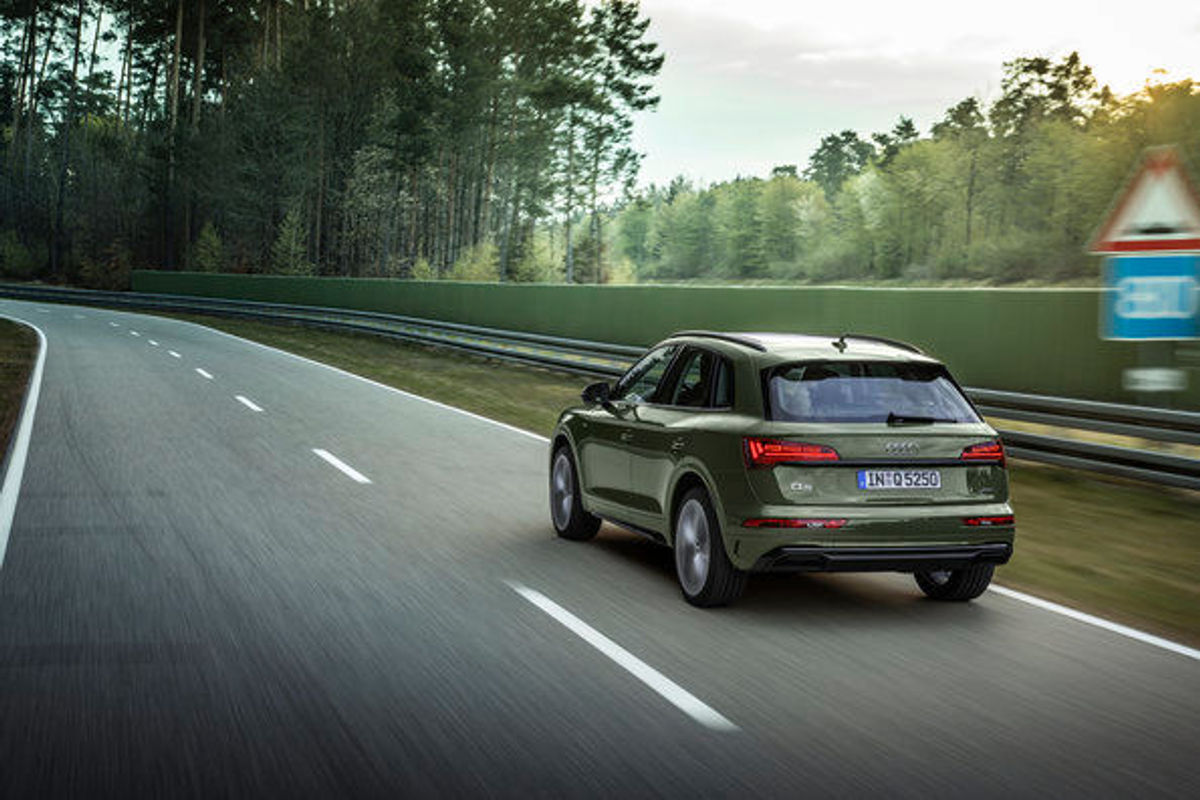
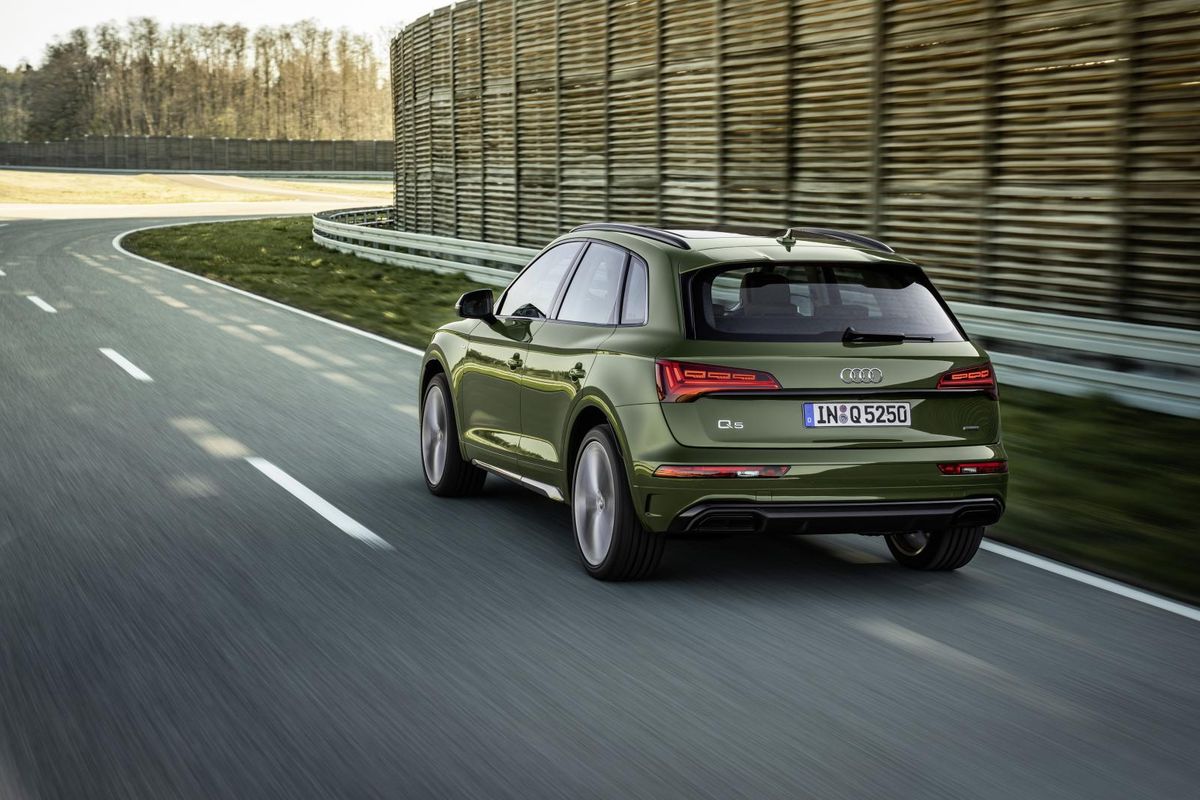
Visually, the updated Q5 wears a more refined face that incorporates a revised octagonal single-frame grille design flanked by newly designed LED headlights (Matrix LED optional) with a new, integrated Daytime Running Light (DRLs) signature. More so, the air intakes adopt a more vertical design approach which exudes more sportiness which is reminiscent of the brand’s RS models. In the Q5’s side view, Audi has added rocker panels that further boost the Q5’s athletic appeal. Moving to the rear, a new diffuser element with a horizontal fin is seen as well as a new trim element between the rear light clusters.
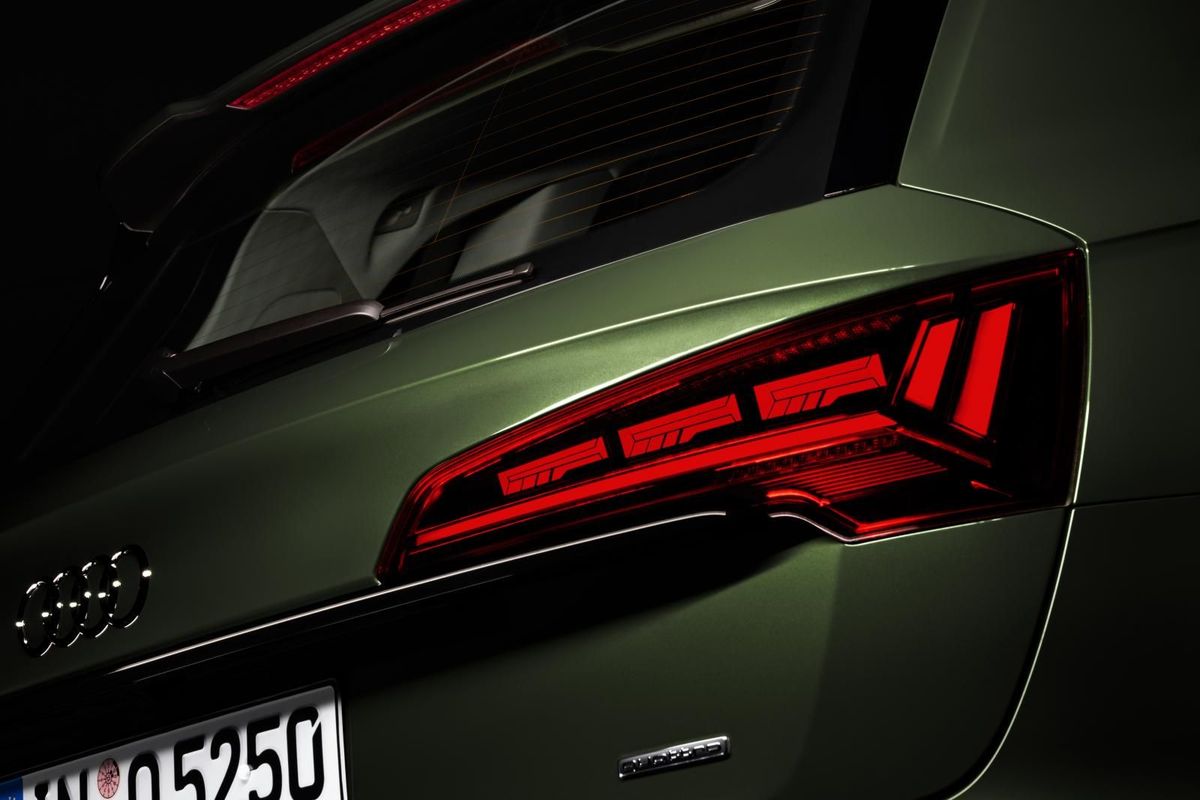
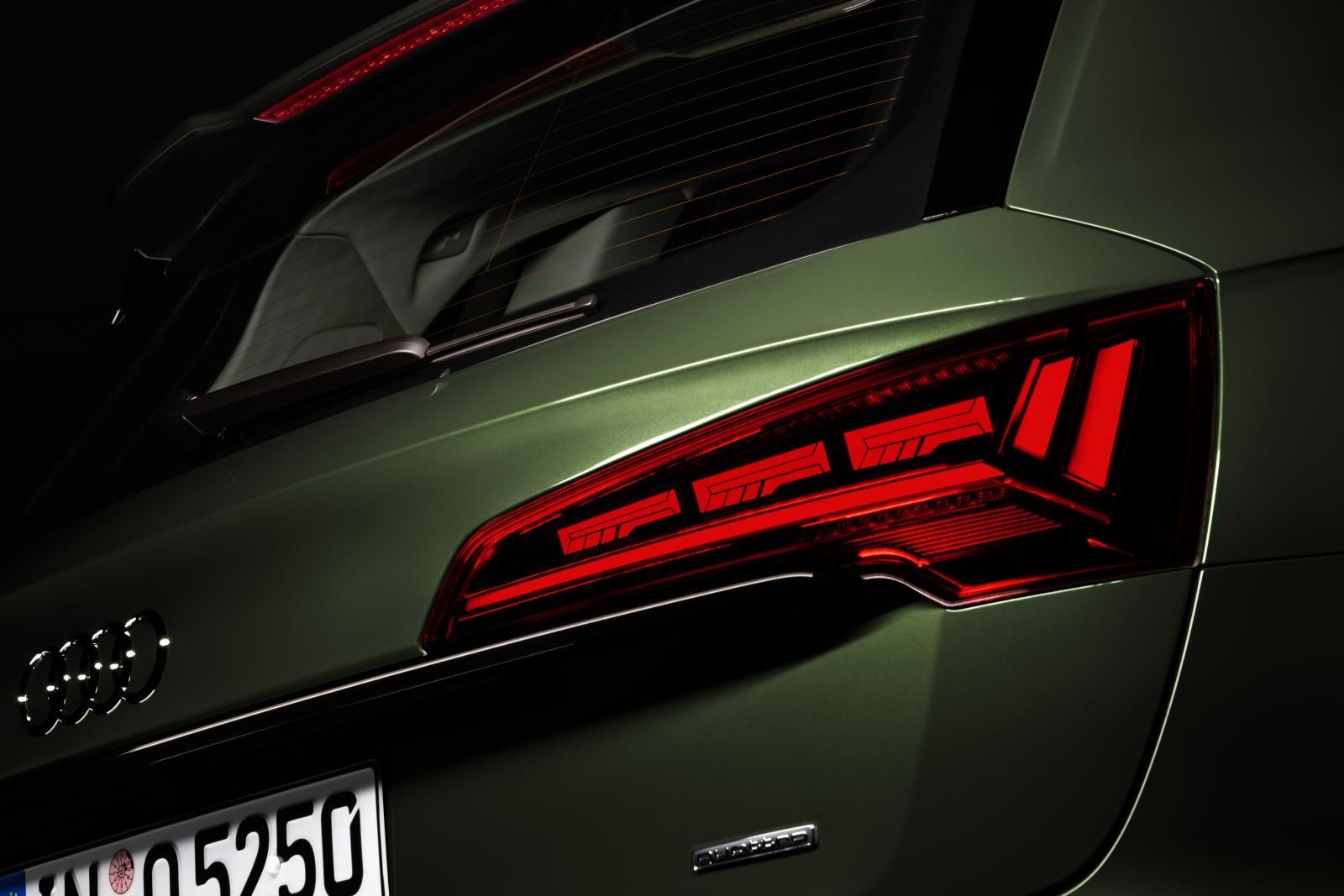
Talking about the rear light clusters, Audi has introduced digital Organic Light Emitting Diode or OLED lighting technology which now features on the Q5 for the very first time. OLED’s are said to be far more efficient than conventional or even LED lighting solutions. With the rear lights split into 3 tiles of 6 segments each, Audi is able to offer a variety of lighting signature options and further development in this regard can be expected in the future. Customers will initially be able to choose from 3 distinct lighting signatures and the new lighting system can also detect when a vehicle is approaching to closely and lights up accordingly as a warning to the driver. Audi has also added 2 new colour options for the Q5 including District Green and Ultra Blue bringing the choice of exterior colours to 12.
OLED lighting technology allows for unique lighting signatures to be created while also enhancing safety with proximity warning.
What about the interior?
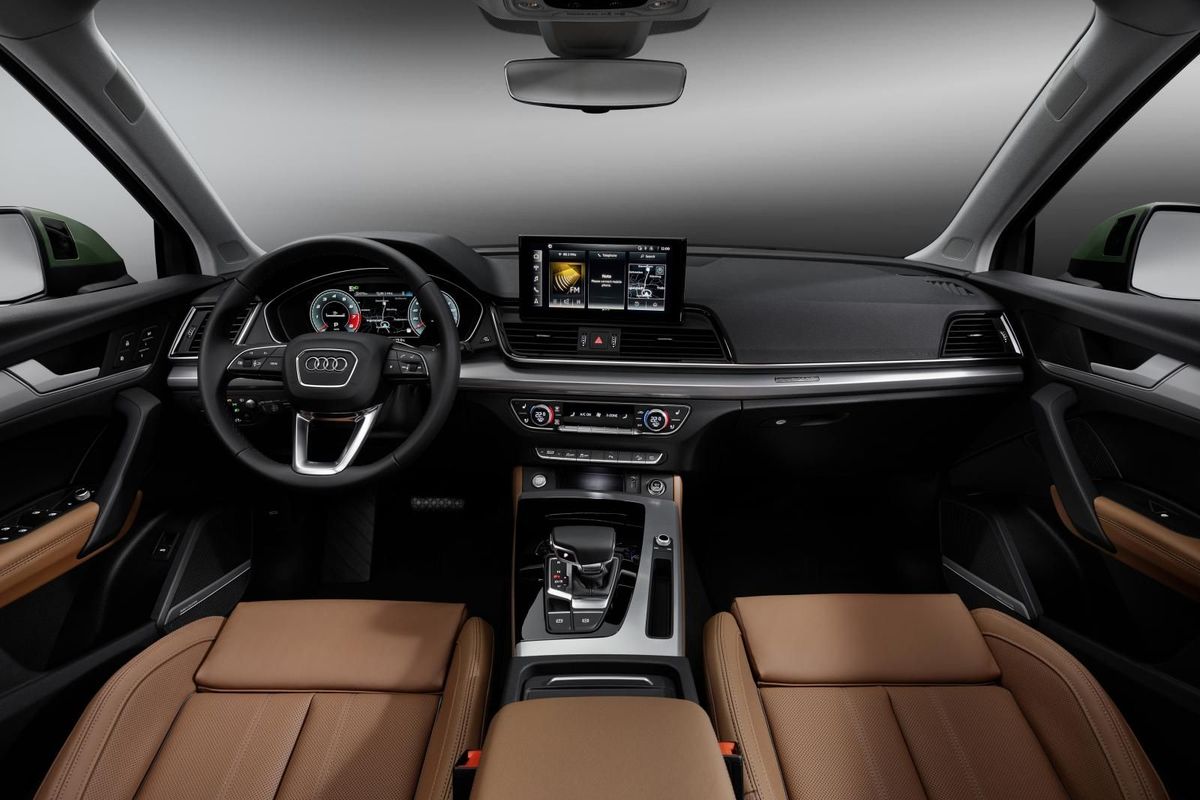
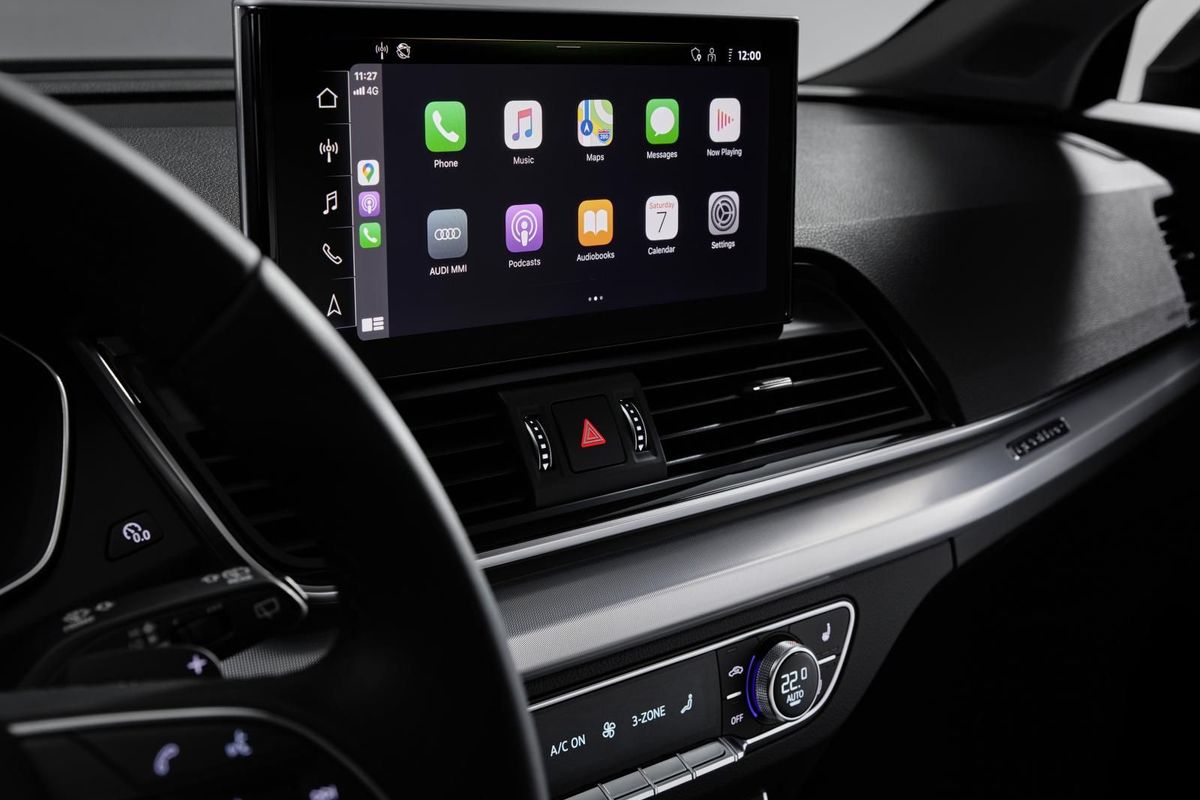
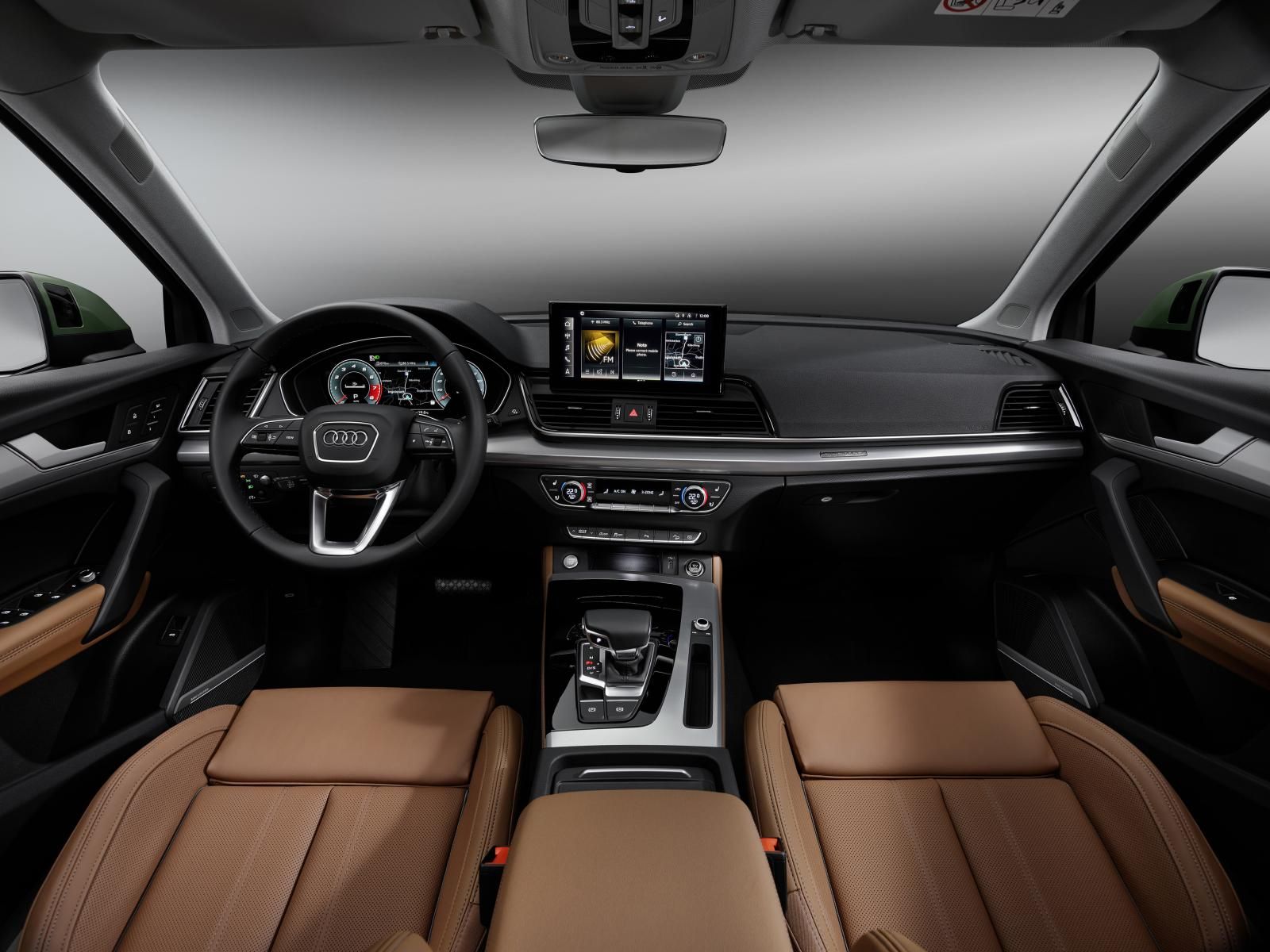
The interior of the Q5 remains mostly familiar and now features a new 10.1-inch MMI touch display with acoustic feedback while the previous rotary/push control in the centre console is no more and has been replaced with a storage bin. As always, Audi offers a wide range of trim finishes to suit your taste including base, design and S line trim finishes.
The Q5 is also equipped with the third-generation Modular Infotainment Platform (MIB 3) which is said to offer 10 times more processing power than the previous MIB 2 system. The infotainment system functions much like your smartphone and is now faster and easier to operate than ever before. Customers can, of course, upgrade the system to the MMI navigation plus with Audi connect navigation which adds flexibility with voice-control and access to the cloud. Useful real-time traffic information is presented to the driver and the system can even help you detect free parking spaces in the vicinity of the vehicle. More so, up to 6 driver profiles can now be stored on the MIB 3 system and they are accessible on the cloud which means you can access them from any other Audi vehicle you might be driving.
The Audi Q5 interior benefits from a significant infotainment update.
Audi’s familiar virtual cockpit plus which incorporates a 12.3-inch digital display with 3 layout options controlled via the mult-function steering wheel is also available along with an optional head-up display.
Audi’s pre-sense city system is standard and helps prevent collisions with other road users. Optional driver assistance systems for the Q5 include turn assist, collision avoidance assist, exit warning and adaptive cruise assist.
From a practicality point of view, the Q5 can be optionally equipped with Audi’s sliding rear bench and load bay capacity is claimed at 550 litres expanding to 1 550 litres. A variable folding floor mat is standard and an electronic tailgate is optional.
Please note that South African specification details for the Q5 will be confirmed closer to launch in the second quarter of 2021.
Engine Power
The current 2.0-litre petrol and diesel options are expected to be carried over when the Audi Q5 facelift arrives in SA in Q2 2021.
For South Africa, the current engine offerings for the Q5 will carry over which means the Q5 will be offered with a choice of a petrol and diesel engine and all Q5’s feature Audi’s quattro all-wheel-drive.
The turbocharged 2.0-litre petrol engine in the Q5 45 TFSI offers 185 kW and 370 Nm of torque.
As for the 2.0-litre turbodiesel engine in the Q5 40TDI, outputs are 140 kW and 400 Nm and 7-speed dual-clutch transmission will be standard on all Q5 derivatives.
However, performance enthusiasts will have to wait longer for answers regarding the possibility of an RS Q5 as Audi flat-out refused to comment on it during the reveal this month.
A special-edition Q5 Edition One may also be offered locally with an S line exterior and a black trim package. Other unique features for the Q5 Edition One include red brake calipers, 19-inch wheels and sports seats while exterior colour options include Glacier White, Myth Black as well as the new District Green and Ultra Blue.
The Audi Q5 is produced at the San José Chiapa plant in Mexico. We will keep you updated as soon as local specification and pricing details for the facelifted Audi Q5 become available. Until then, stay safe and stay tuned!
California has enacted new clean air regulations, which aim to change the way bakkie product planners view their portfolios beyond 2024.
America’s most powerful State, when measured in economic activity, is also one of the world’s most stringent, when it comes to vehicle pollution standards.
The broad aim of this new amendment to the California clean air act is to limit the environmental damage of large-capacity diesel truck and bakkie engines. Although most American bakkies are powered by petrol, there are heavy-duty versions which feature huge turbodiesel engines.
Californian politicians are now targeting these medium- and heavy-duty bakkies, by mandating that from 2024, 5- to 9% of all models sold, will have to be zero-emission compliant. This requirement is set to increase every few years, increasing to 30% by 2030.
Ford will be most exposed to these new regulations, as its F-250 and F-350 models fall into the category of medium- and heavy-duty bakkies. Californian regulators have set a permitted maximum vehicle weight of 3 855 kg as the qualification for its new law.
That vehicle weight number currently excludes most popular bakkie ranges, such as Ford’s F-150, the RAM and GM 1500, but it is only a question of time before regulations trickle down to America’s half-ton bakkies too. Although these bakkies don’t carry much weight above their rear axle, they are larger and heavier than a comparable Hilux and Ranger.
Although the regulations might appear punitive at first, they will also serve to incentivise the burgeoning American electric vehicle industry to develop more bakkie models. Bollinger, Tesla, Nikola and Rivian already had advanced battery-powered bakkies in development and the American auto industry enjoys a tremendous technology and demand advantage for these, compared to virtually any other market.
The controversial practise of turbodiesel bakkie owners in America ‘rolling coal’, might soon be a thing of the past.
While the upcoming unibody-based Hyundai Santa Cruz is unlikely to be produced in right-hand-drive guise (which rules it out for South Africa), the Korean firm and its sister brand, Kia, remain on track to deliver conventional ladder-frame bakkies in 2023, if not sooner.
The featured image – inspired by the Kia Mohave off-roader – was created by SRK Designs.
Earlier this month, frequent Cars.co.za contributor Calvin Fisher shared 5 reasons Hilux and Ranger should worry about a Korean bakkie onslaught. He based his opinions on, inter alia, the fact that Hyundai and Kia had achieved significant successes in virtually every new market segment the firms had launched products in recent memory.
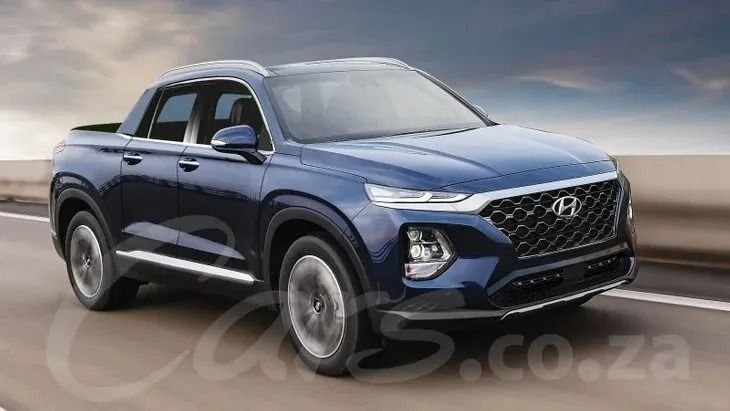
The introduction of a Hyundai-badged bakkie, in particular, is quite topical at the moment because the Korean firm is set to finally put its Santa Cruz Concept (circa 2015) into production at its Alabama plant in the States next year. We’ve published a spy photo of a side profile of the pre-assembled bakkie, as well as a render based on that image.
Cars.co.za's automotive artist Duwyne Aspeling anticipates that the upcoming double-cab will look like this.
As things stand, however, we need to curb our enthusiasm about the upcoming Santa Cruz, because, as opposed to the off-road capable and workhorse-cum-lifestyle ladder-frame-based bakkies that are so wildly popular in Mzansi, the model that’s set to debut Stateside in 2021 is a unibody-based vehicle that shares its underpinnings and powerplants with the Santa Fe executive SUV. It will indeed be offered with all-wheel-drive, but it's a highly stylised, light-duty lifestyle pick-up nonetheless…
Suffice to say the Santa Cruz wouldn’t be an ideal fit for the notoriously conservative SA bakkie market; apart from offering superior off-road capability (by virtue of superior ground clearance, -wheel articulation, -approach/departure angles, -ostensibly a diff-lock and a low-range transfer case), the venerable ladder-frame/cab-on-chassis double-cab offers a much higher payload and considerable braked-trailer towing ability compared with a unibody-based bakkie, such as the Santa Cruz…
Of much greater significance for Mzansi consumers is this: former Hyundai chief JW Lee and Kia Australia chief operating officer Damien Meredith have confirmed to CarsGuide and CarSales respectively that ladder-frame-based (body on chassis) bakkies are under development by Hyundai Kia, ostensibly with a planned launch date of 2023.
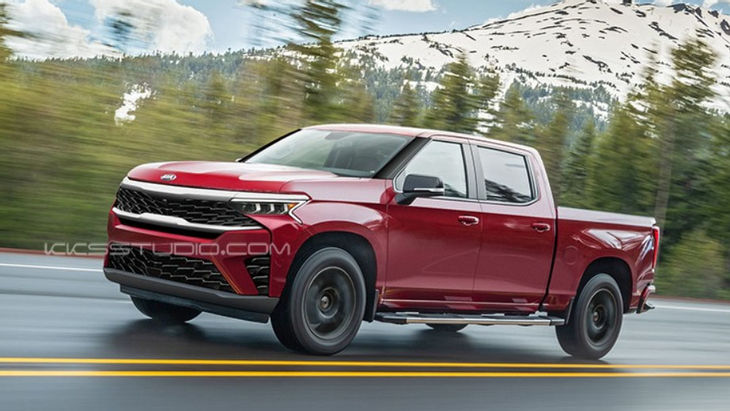
KKS Studio imagines the upcoming Kia double cab will look like a Chevrolet Silverado with a "tiger face" treatment.
"The sooner the better," Lee told CarsGuide. "I’m crying and praying whenever I have the chance to bring this issue to headquarters. (But) 2023 is our target year. It depends on production (and) where we’re going to produce those vehicles has yet to be decided."
Meanwhile, CarSales quoted Meredith as saying “work has begun (on developing the Hyundai/Kia bakkie. We’re talking about a pick-up — dual-cab, single-cab. What we’ve requested is the full gambit of a (bakkie) — (with) diesel and petrol (engines).”
Asked whether previous reports (that work had begun on the double-cab bakkie) had changed as a result of the Covid-19 pandemic, a Hyundai spokesman answered "no".
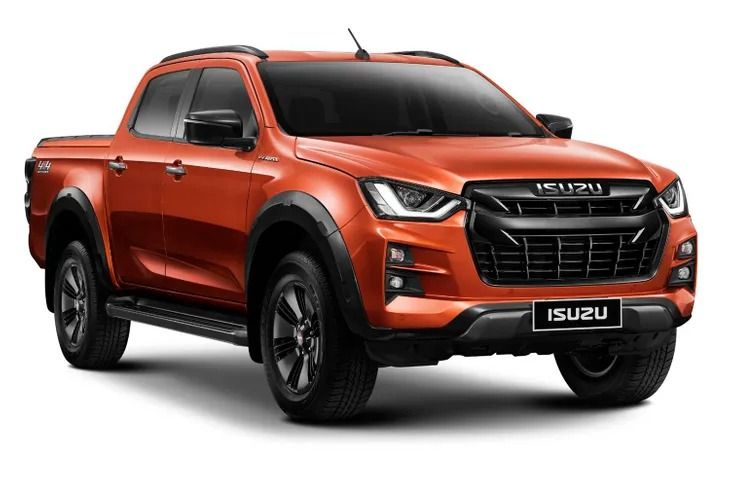
Either the new Isuzu D-Max or its Thailand-built Mazda BT-50 cousin will be the first of the all-new bakkies to arrive in SA.
Boom time for new bakkies
The following 12- to 18 months will be a very busy time in the South African bakkie market! The next-generation D-Max will go into production at Isuzu's production facility in Port Elizabeth in the 2nd half of 2021, and the new Mazda BT-50, which is based on the Japanese double cab, is also set to go on sale at some point next year. The Toyota Hilux will receive an update in the near future, while an all-new Ford Ranger will reportedly be unveiled in about a year’s time, before going into production at the Blue Oval’s Silverton plant later in 2021/early 2022, to be followed closely by the next Volkswagen Amarok (also built at the local Ford plant), with which it shares its underpinnings.
Will Hyundai, Kia win the 'torque war'?
With an arrival date of 2023 (or even 2022, depending on which reports you believe), the Hyundai and Kia double cabs might upstage their opposition in terms of peak power and torque outputs… The most powerful double-cabs in the South African market – as it currently stands – are the Mercedes-Benz X-Class X350d 4Matic (190 kW/550 Nm) and Volkswagen Amarok 3.0 V6 TDI 4Motion (165 kW/550 Nm) – with a 190-kW version, which produces 200 kW and 580 Nm on overboost, scheduled to arrive soon.
However, the 3.0-litre inline-6 turbodiesel in the new Genesis GV80 is widely believed to be pencilled in for installation in the upcoming Hyundai and Kia double-cabs. With peak outputs of 205 kW and 588 Nm of torque that motor (most likely mated with an 8-speed automatic transmission) would pip all the current contenders, although Ford’s 3.0-litre V6 Power Stroke turbodiesel, which is rated at 186 kW and 600 Nm, is lined up for the next iteration of the Ranger (and, as far as we understand, Amarok).
No Santa Cruz? Never say never
So, in conclusion, is that all there is to say as far as the Santa Cruz is concerned, at least from the South African market's point of view? Well, not necessarily. For buyers who buy double cabs as substitutes for family cars and care little for off-roading or towing trailers, the Santa Cruz might indeed fit the bill, but it needs to be a viable proposition.
Granted, the Santa Cruz is NOT slated to be produced for right-hand-drive markets, but then, neither was the Hyundai Palisade, an 8-seater luxury SUV and cousin to the 2020 World Car of the Year-winning Kia Telluride. However, the Palisade, which is built in the Korean firm’s Ulsan plant (which also produces the Santa Fe) was recently green-lit to be produced in RHD guise and confirmed for future introduction in Australia! Considering all that, it's not impossible that the plant could build an RHD Santa Cruz in future…
In our latest video review, Ciro De Siena spends some quality time getting to know the all-new Toyota Corolla. Is it worthy of a second look? Watch now!
What on earth is going on here? Is that really a Corolla? Well yes, it is, and it's a properly interesting new car from the gigantic Japanese brand. In this video, our intrepid video journalist sets out to the far-flung wilds of Hout Bay to test the new Corolla to its limits…by putting things in the boot, and imitating the CVT gearbox.
In this video, we also look at performance, features and practicality of the new Toyota Corolla.
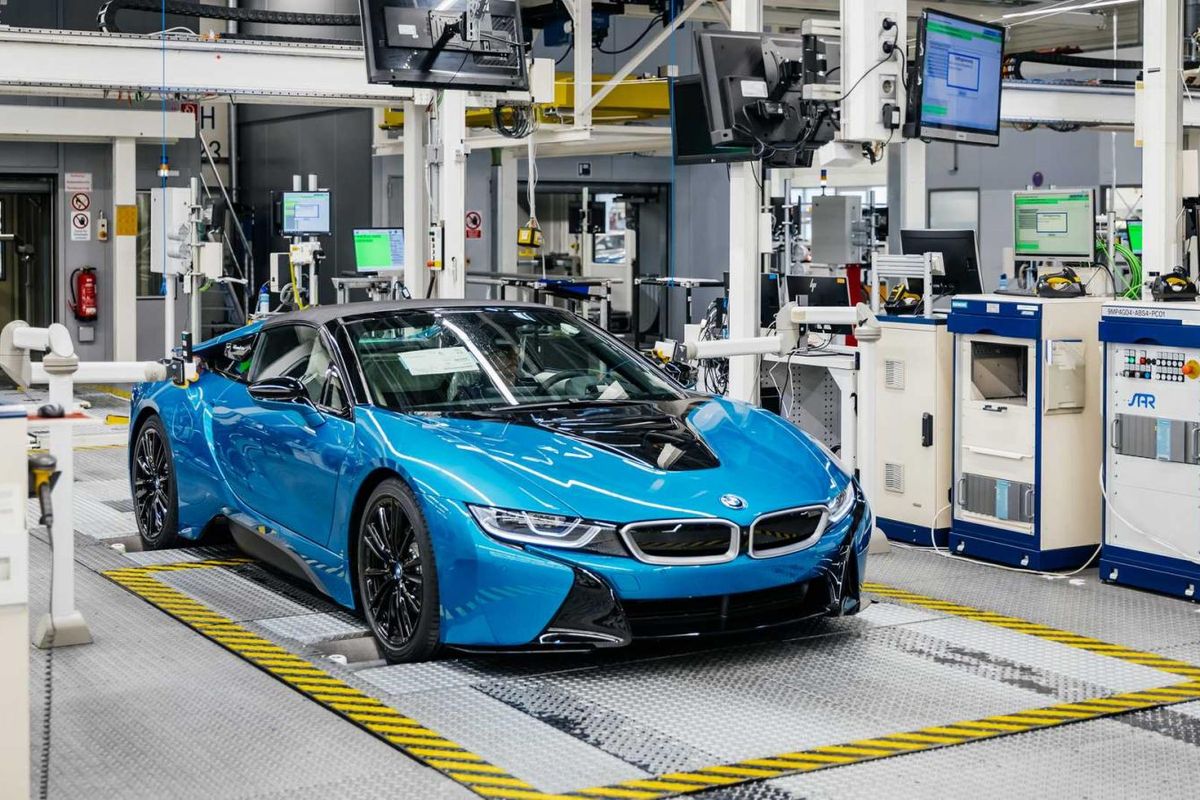
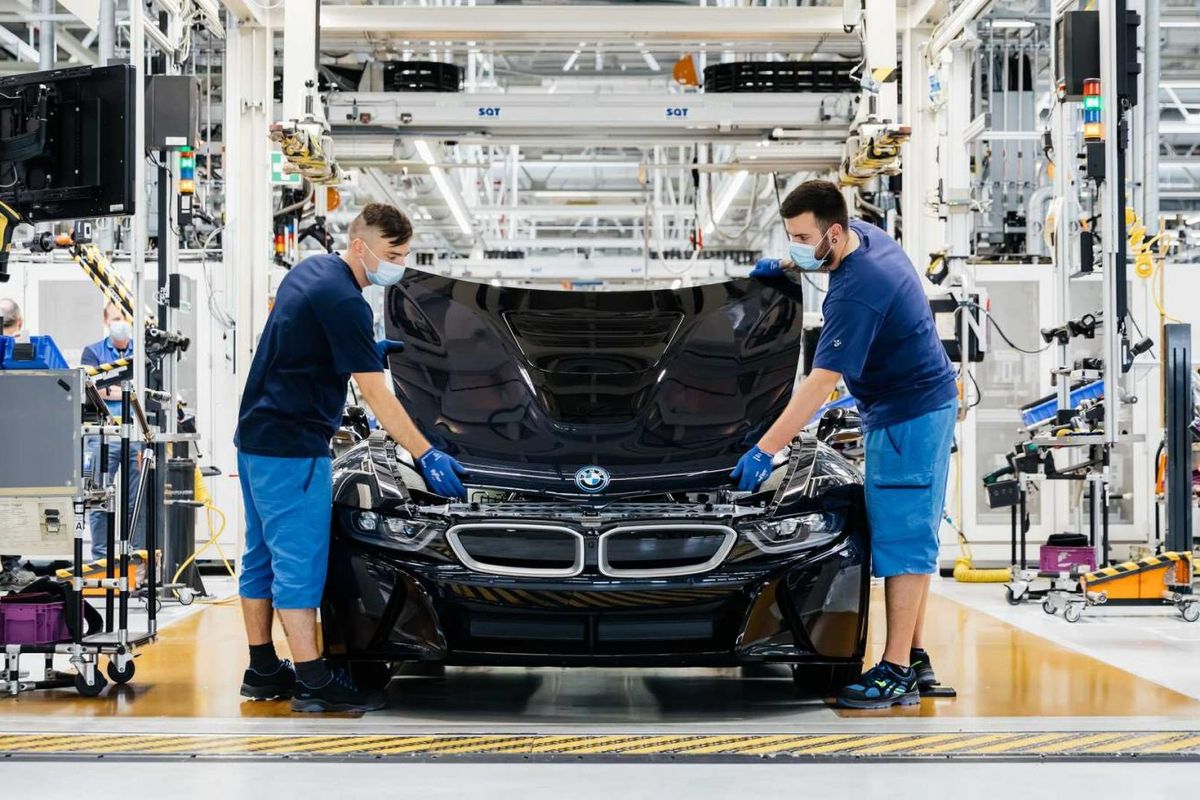
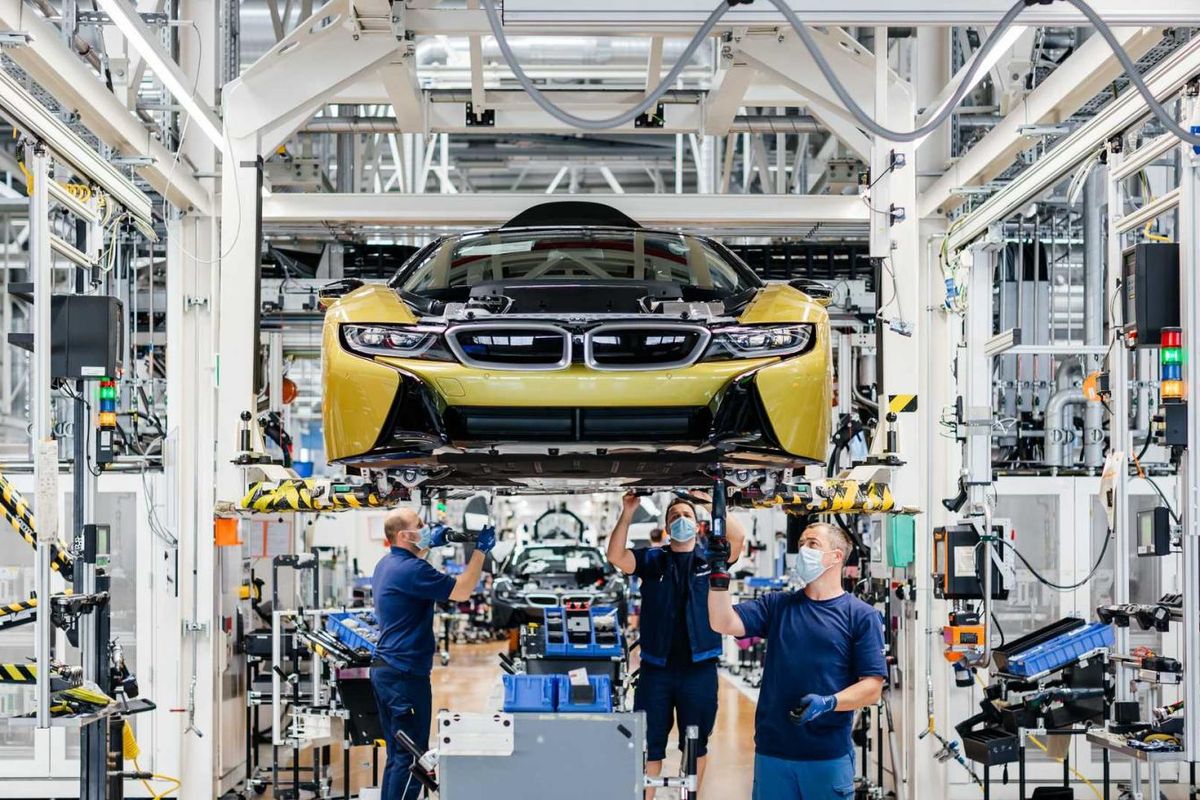
The BMW i8 has reached the end of the road as production comes to an end at the Munich-based firm’s Leipzig production facility.
We’ve known for some time that BMW would pull the plug on the i8 plug-in hybrid sports car and the news didn’t sit very well with us.
We reviewed the BMW i8 coupe back in 2017 and the combination of its timeless styling, performance and unmistakable road presence make it a car that we will sorely miss.
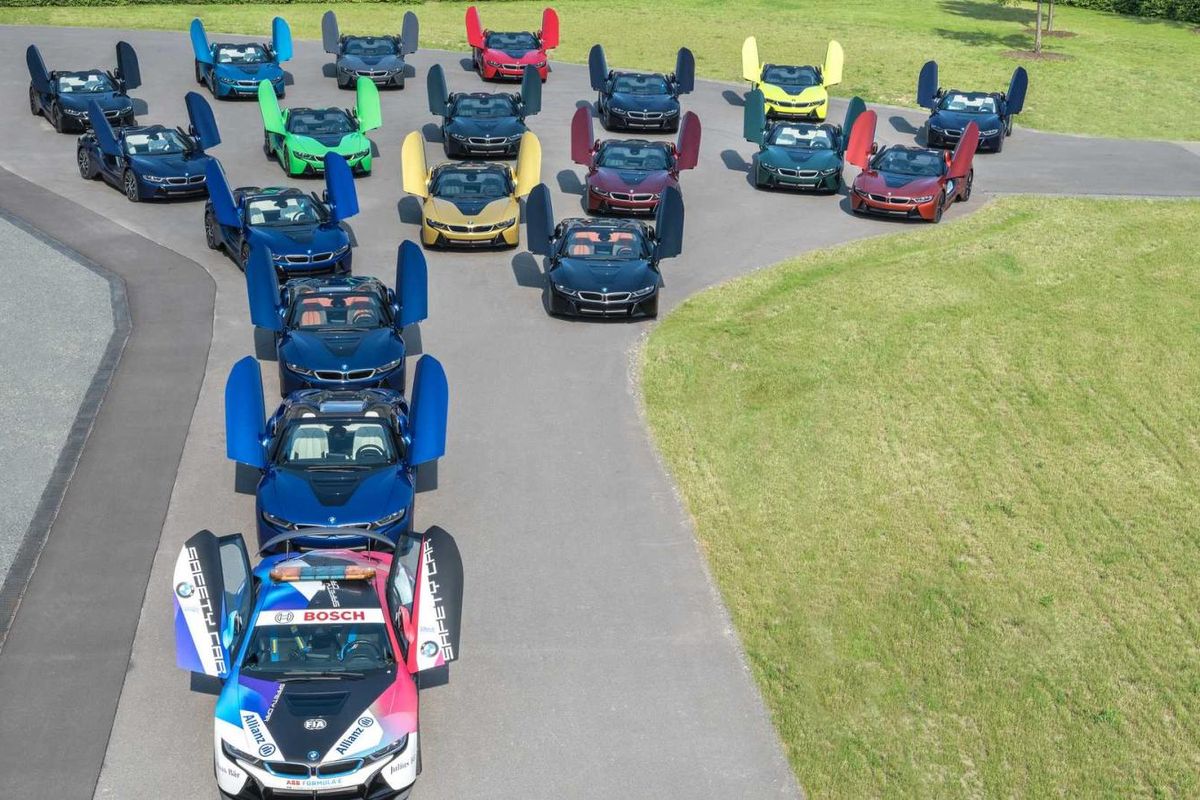
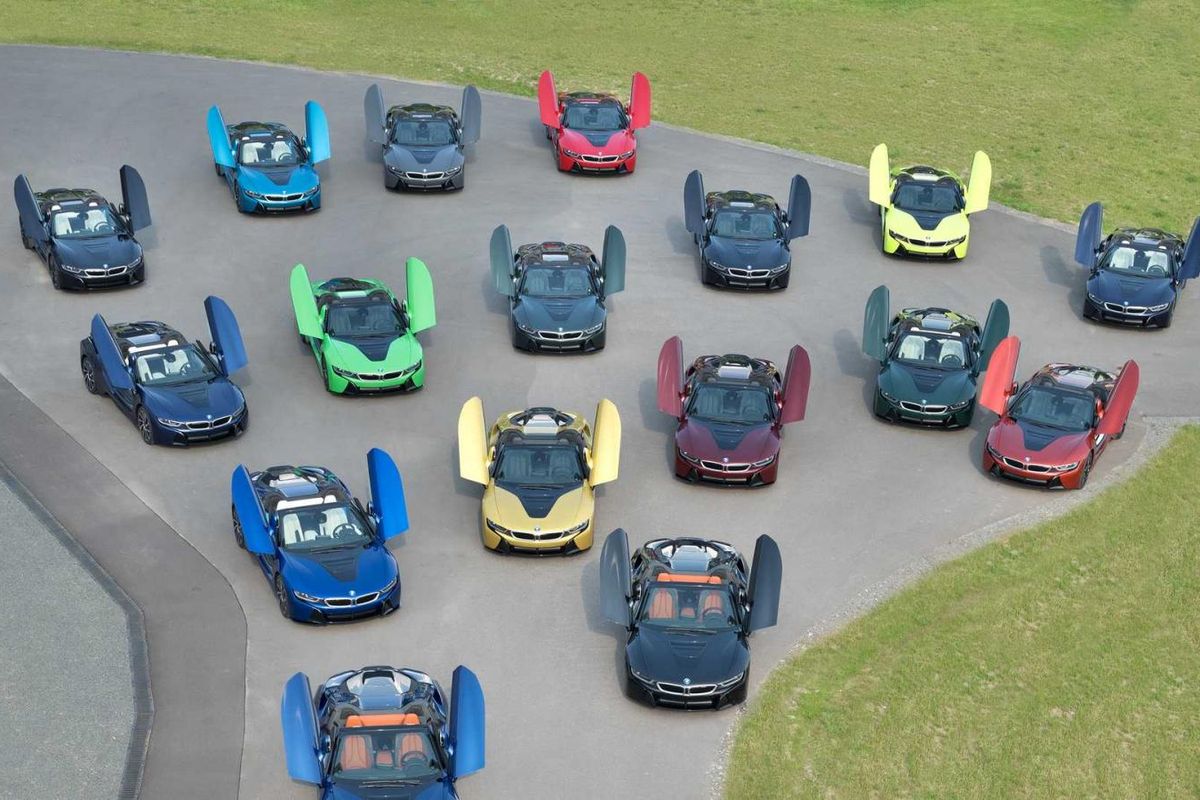
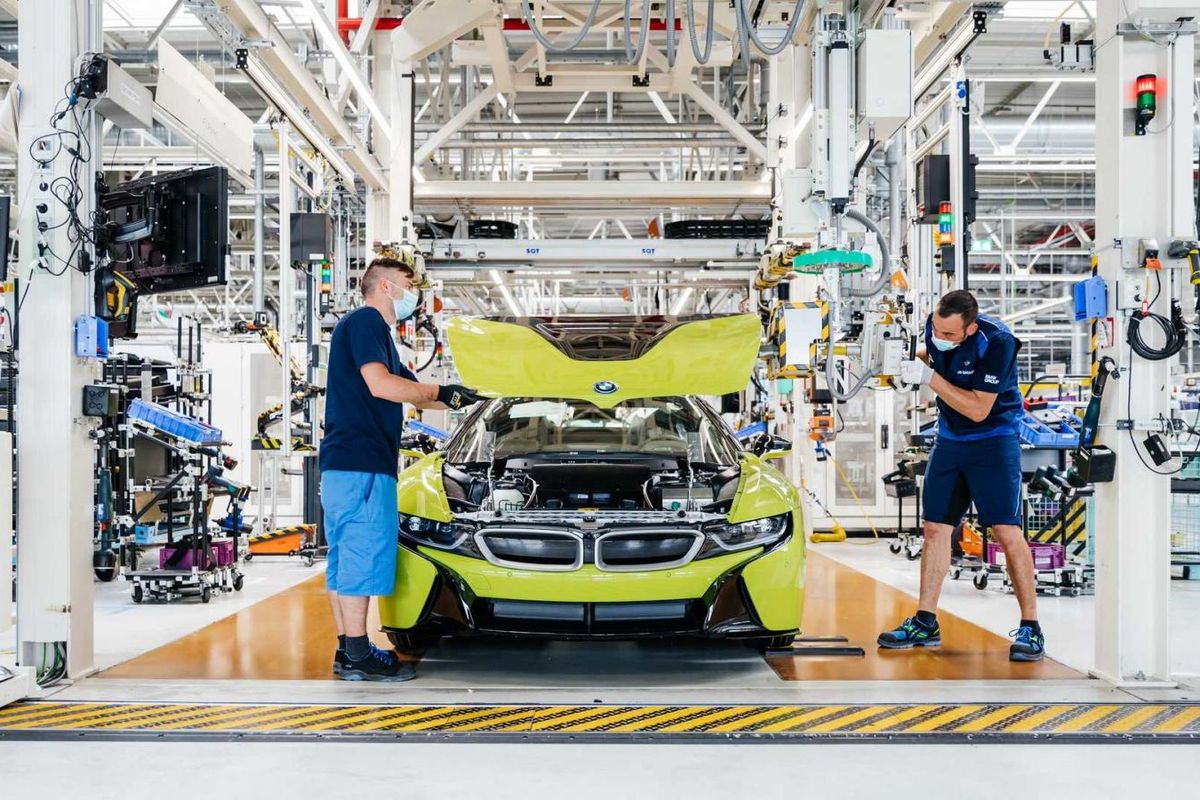
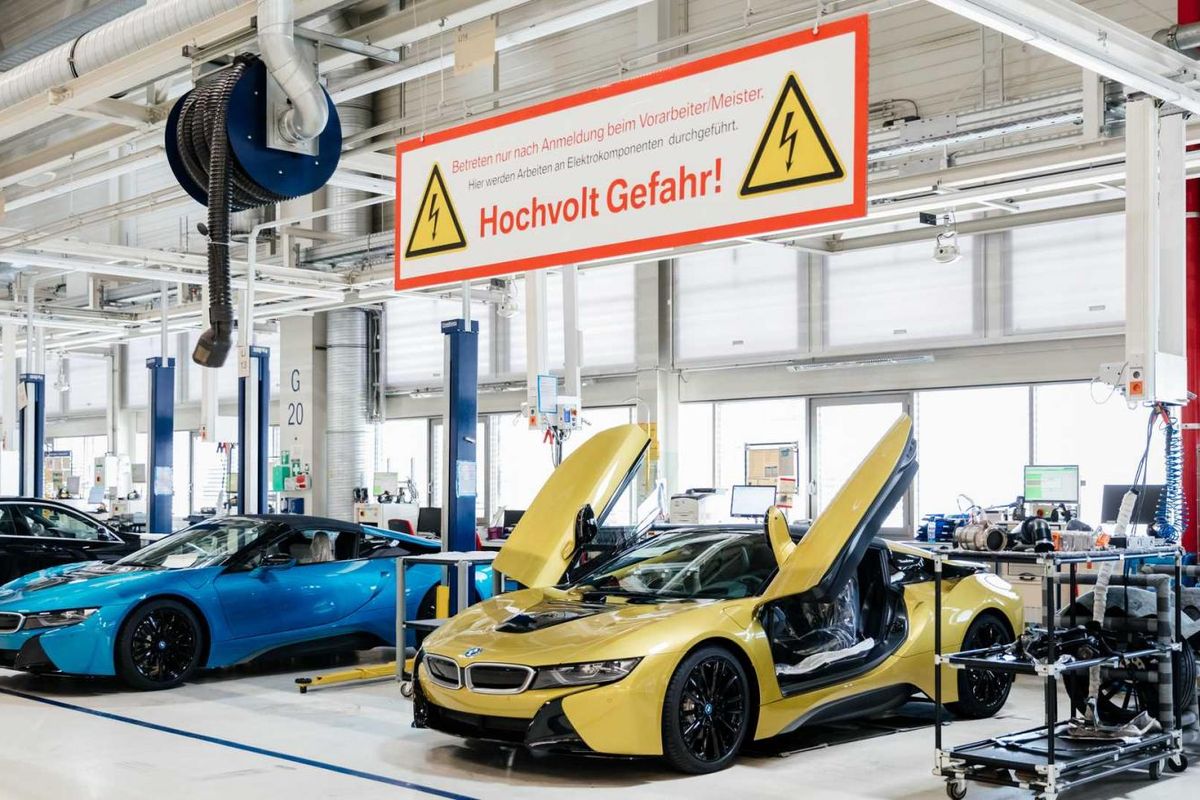
The last 18 i8 units rolled off the production line this month and BMW took the opportunity to give the groundbreaking model a fitting send-off by producing 18 one-off customer cars featuring 18 unique body colours never seen on the i8 before, including Austin Yellow, British Racing Green and Le Mans Blue.
“The degree of customisation in these vehicles threw up some major logistical and process challenges,” said Plant Director Hans-Peter Kemser. “But our i production unit has proved yet again that nothing is impossible.”
Due to the requirement for a high number of different painted parts, each body part was “virtually painted by hand” by a range of suppliers and at BMW’s Landshut plant with the key challenge being to get all the components to the production line in full premium quality.
Kemser further commented, “Yet again, we have proved our ability to meet the highly discerning standards and personal specifications of our customers with unique solutions and unparalleled skill. For BMW i8 production to end with a finale like this is something we can all be very proud of.”
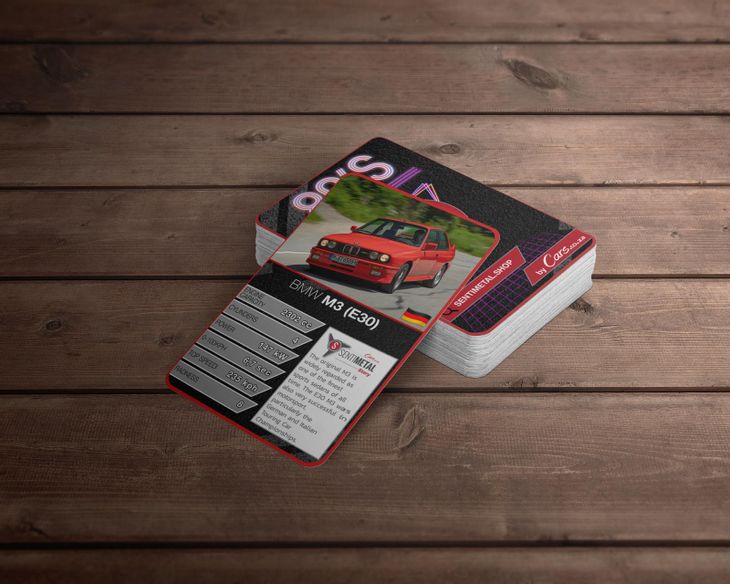
Cars.co.za's car culture sub-brand SentiMETAL is bringing back the decade of big hair, synth music and rad cars with its new Trump Cards game.
Which petrolhead didn't grow up playing car-related trump cards, a game which tests the players' motoring knowledge and luck? Still popular today with enthusiasts of all ages, the classic game gets a fresh treatment courtesy of SentiMETAL's new '80s cars Trump Card pack.
The pack features no fewer than 34 iconic cars from the '80s (see below for full list) and is available for R125 at www.sentimetal.shop. In addition to the usual specification trivia (Engine Capacity, Cylinders, Power, 0-100 kph and Top Speed), each car has a "radness" rating, and also a short paragraph on its significance or history.
Iconic cars such as BMW's e30 M3 feature in the new Trump Card pack.
The pack has a uniquely South African flavour, with several of the cars featured being homegrown homologation specials – look out for the Ford Sierra XR8, BMW 333i and Alfa Romeo GTV6 3.0 and more!
Cars featured in the SentiMETAL Trump Card pack
Alfa Romeo GTV6 3.0 (South African Special)
Audi Sport Quattro
Aston Martin V8 Zagato
BMW 333i (South African Special)
BMW 745i (South African Special)
BMW E30 M3
BMW M1
Buick Grand National GNX
Callaway Corvette Sledgehammer
Chevrolet Camaro IROC Z
De Lorean DMC-12
De Tomaso Pantera GT5
Ford Cortina XR6 Interceptor (South African Special)
As we wait patiently for the official details of the all-new BMW M3 and M4, a few new details have risen to the surface thanks to a video released by BMW.
In the latest round of publicity videos by BMW, the new M3 features on the roads around the Nurburgring and then on the track itself. The interesting part is that the engineers interviewed note that the performance sedan will be available in both rear-wheel-drive and x-Drive (all-wheel-drive). Unfortunately, they didn't let slip on the power figures but by now we all seem to have settled on the same outputs as the current X3 M/X4 M. That's the 3.0-litre straight-six with 375 kW and 600 Nm, continuing the trend of more power and more torque for every generation, whether it needs it or not.
Further into the video above, the engineers go into great detail about how each part of the Nurburgring circuit helps them develop individual areas of the car. Those who enjoy the technical side on vehicle engineering are in for a treat as they go through stability control, aero balance, braking stability as well as front end turn in and traction.
Expect to see a prototype drive of the new M3/M4 extremely soon on our site. For now, this leaked image of the rear end is the best image we have of the car without camouflage on. We expect the production version to be ready and shown to the public before the end of the year. SA introduction will likely be in 2021 although no firm date has been assigned yet.
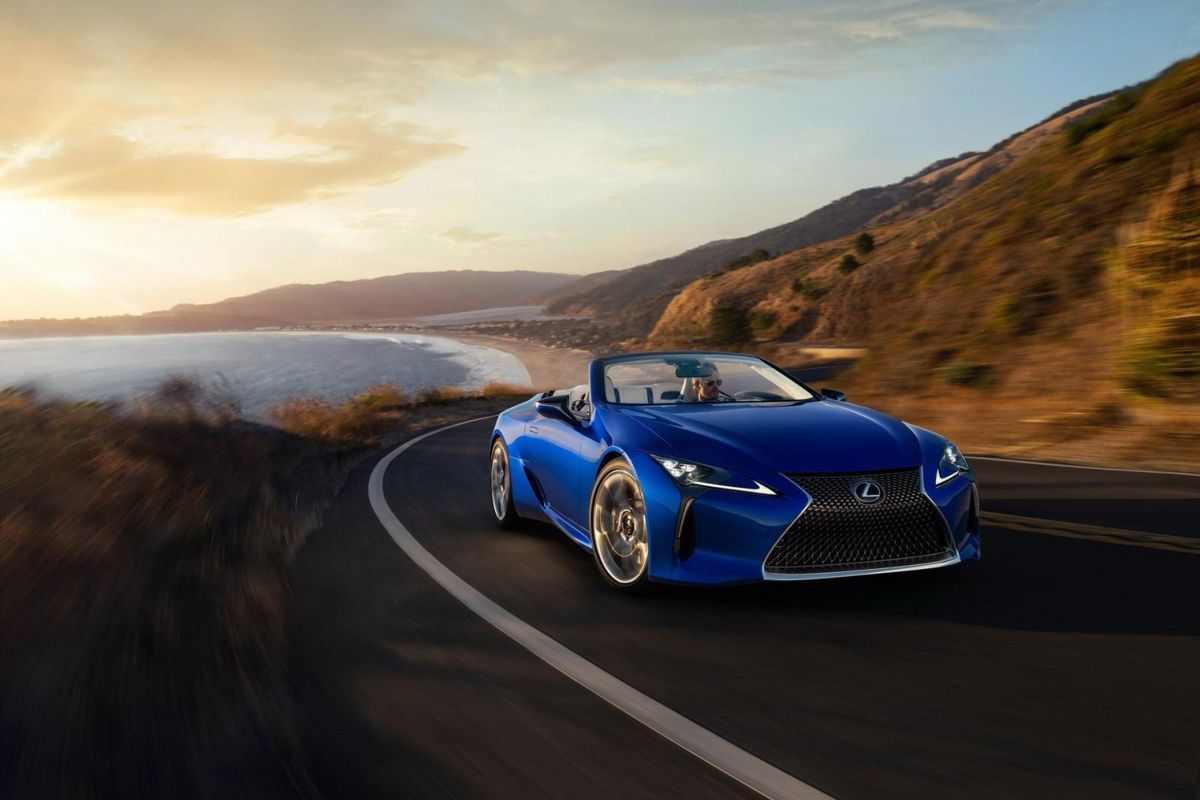
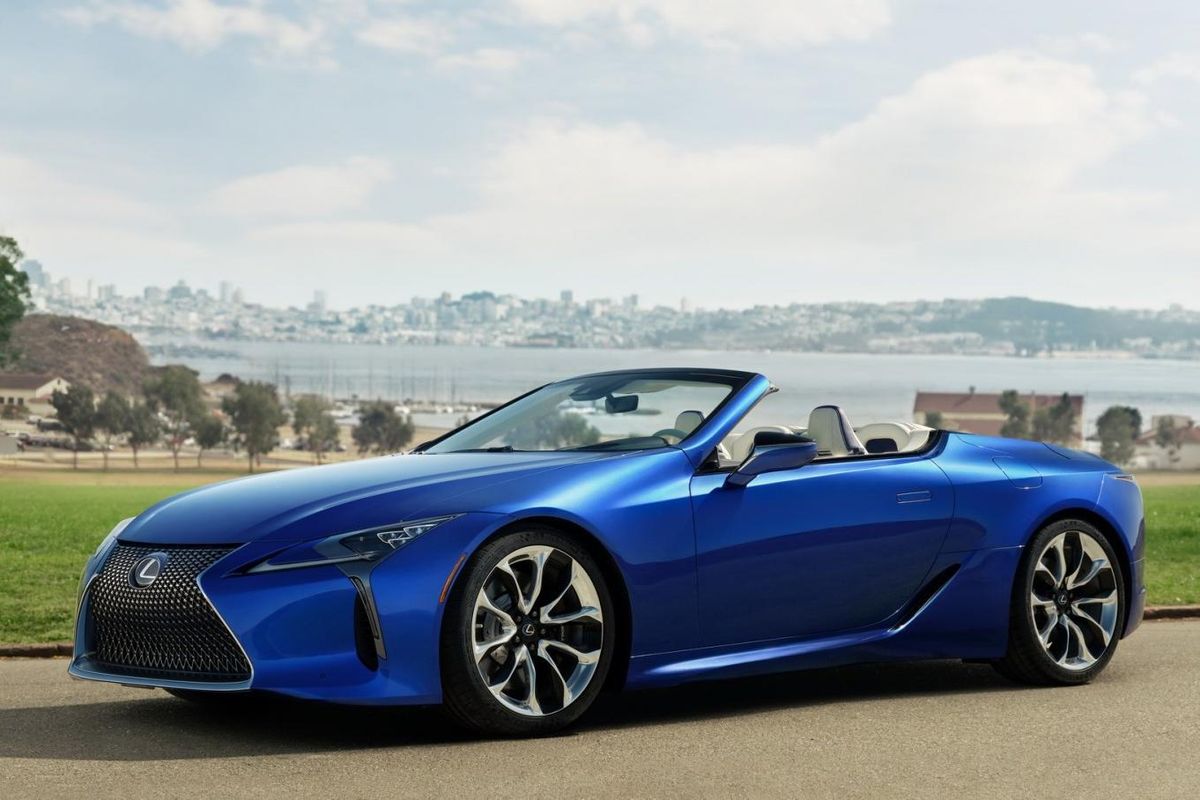
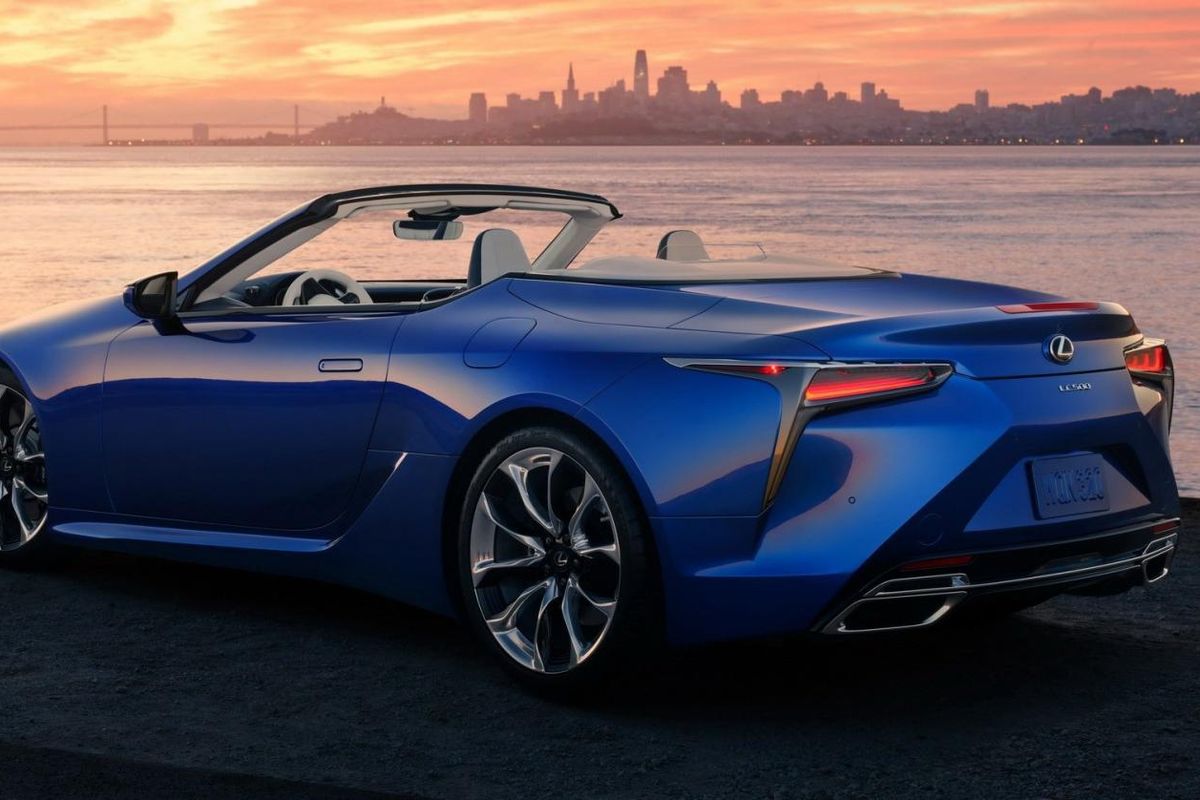
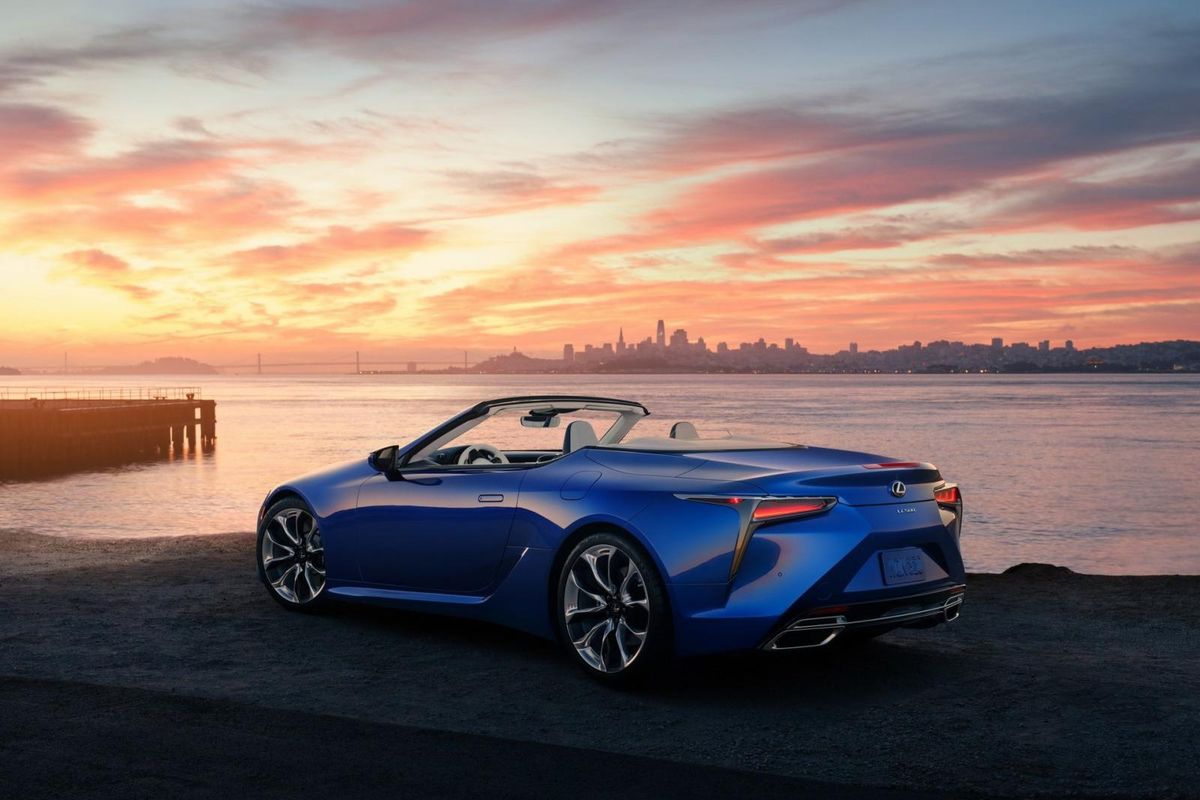
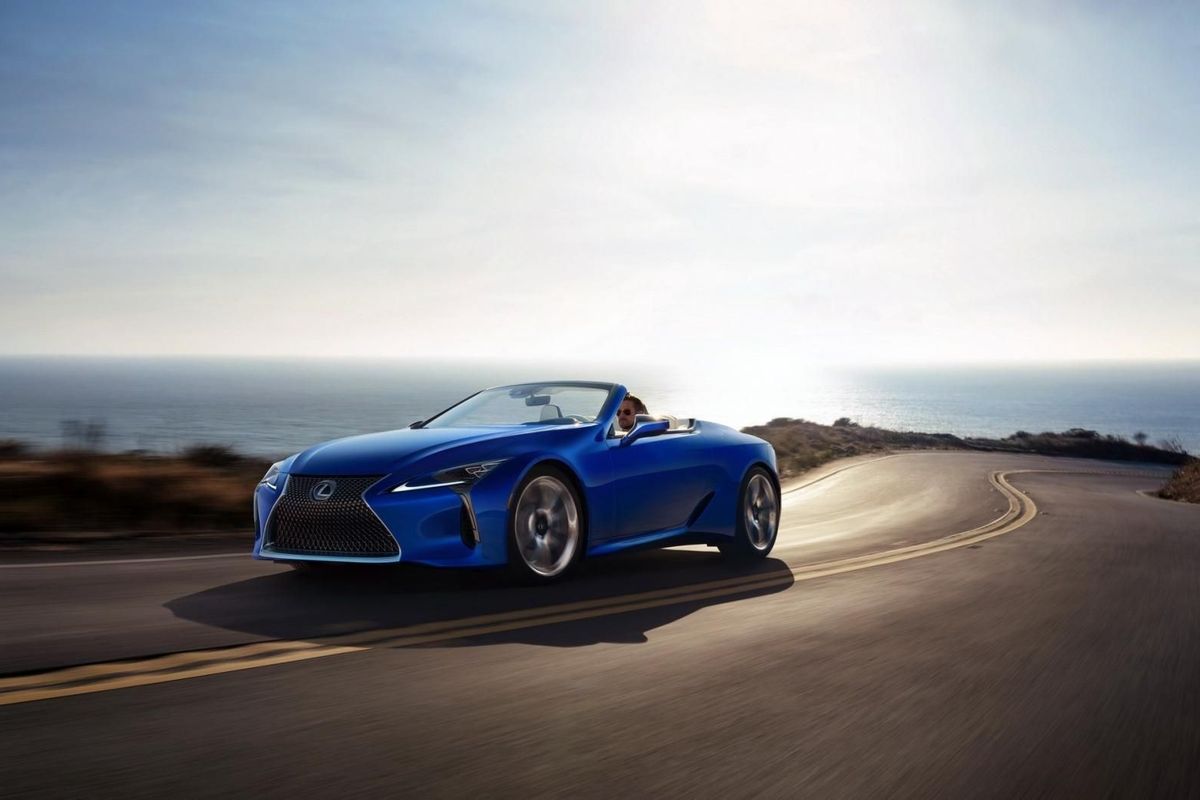
The Lexus LC 500 sports car has gone topless and it's coming to seduce you in 2021!
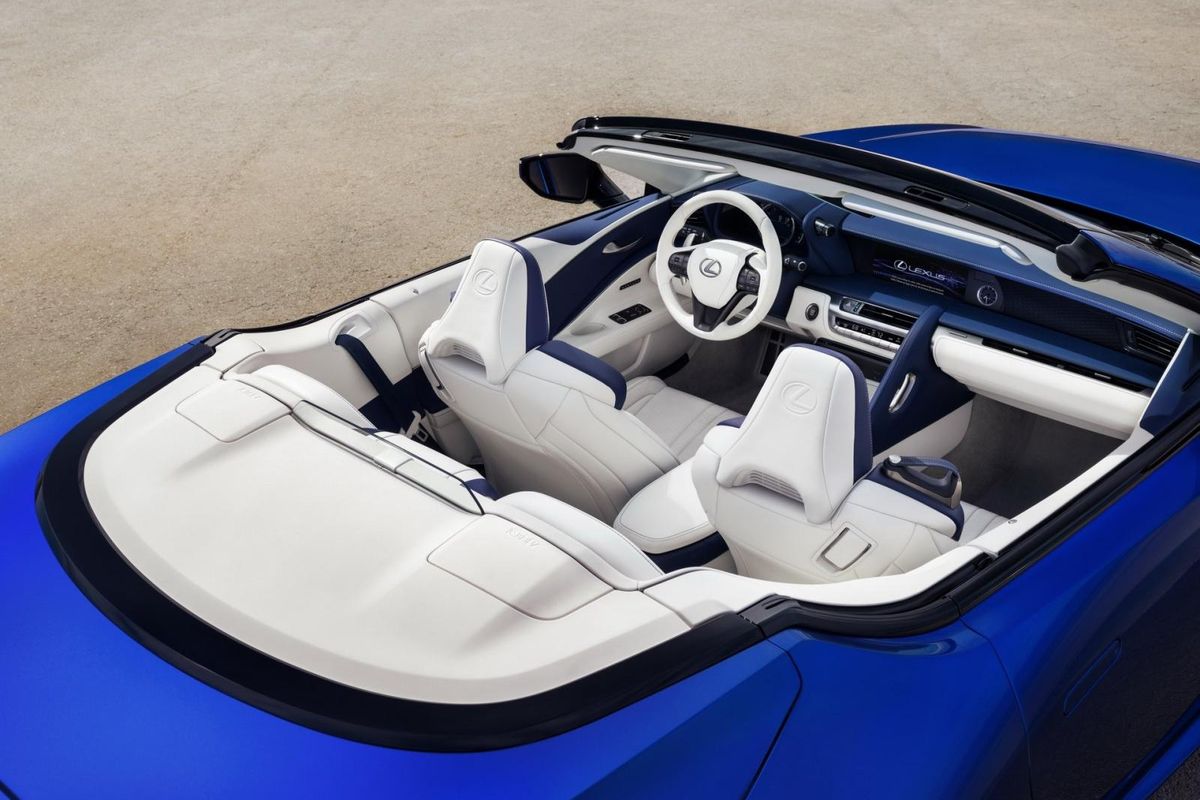
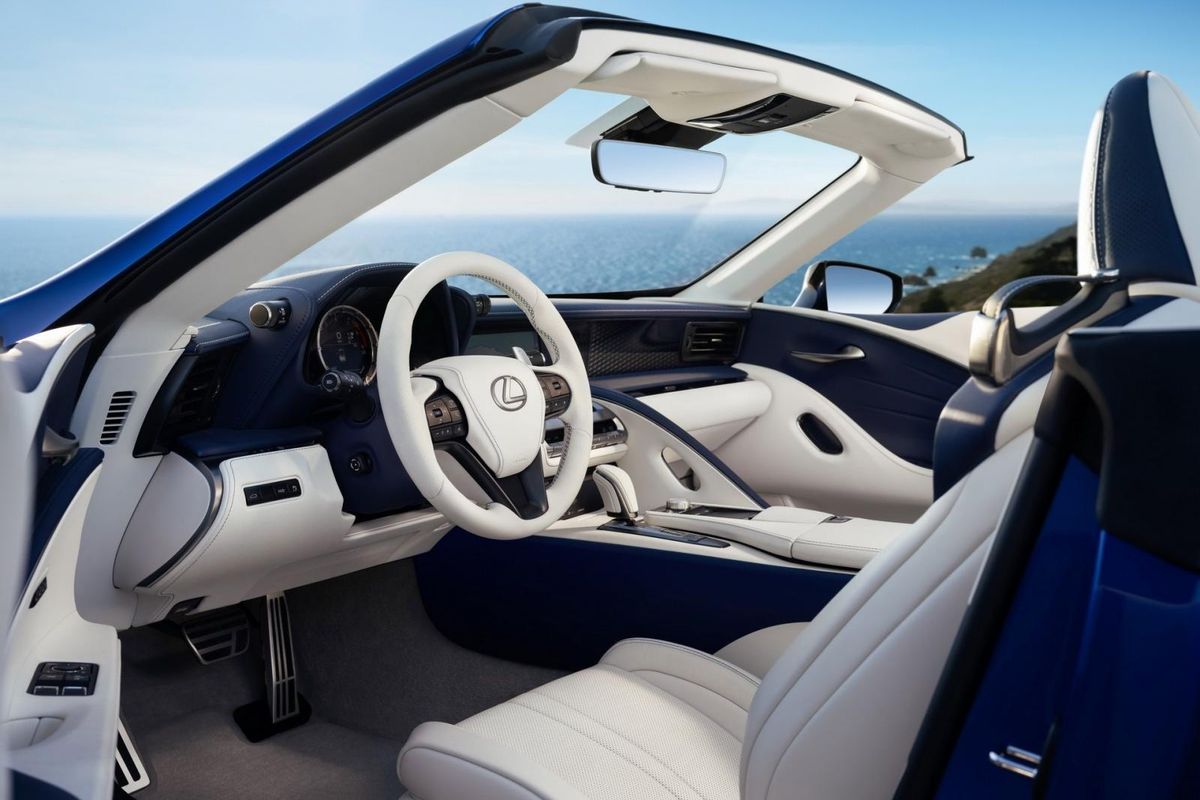
The V8-powered Lexus LC 500 coupe has been shown in the convertible form at the LA Motor Show and it looks rather appealing, don’t you think?
We drove the LC 500 coupe at its local launch in 2017 and it’s an impressive machine overall. Powered by a 5.0-litre V8 engine and paired with a 10-speed automatic transmission, the rear-wheel-drive LC 500 Convertible offers 351 kW and 539 Nm of torque.
Lexus has stiffened the chassis by adding and relocating various structural braces and the suspension has also been reworked to enhance the LC 500 Convertible’s ride and handling performance.
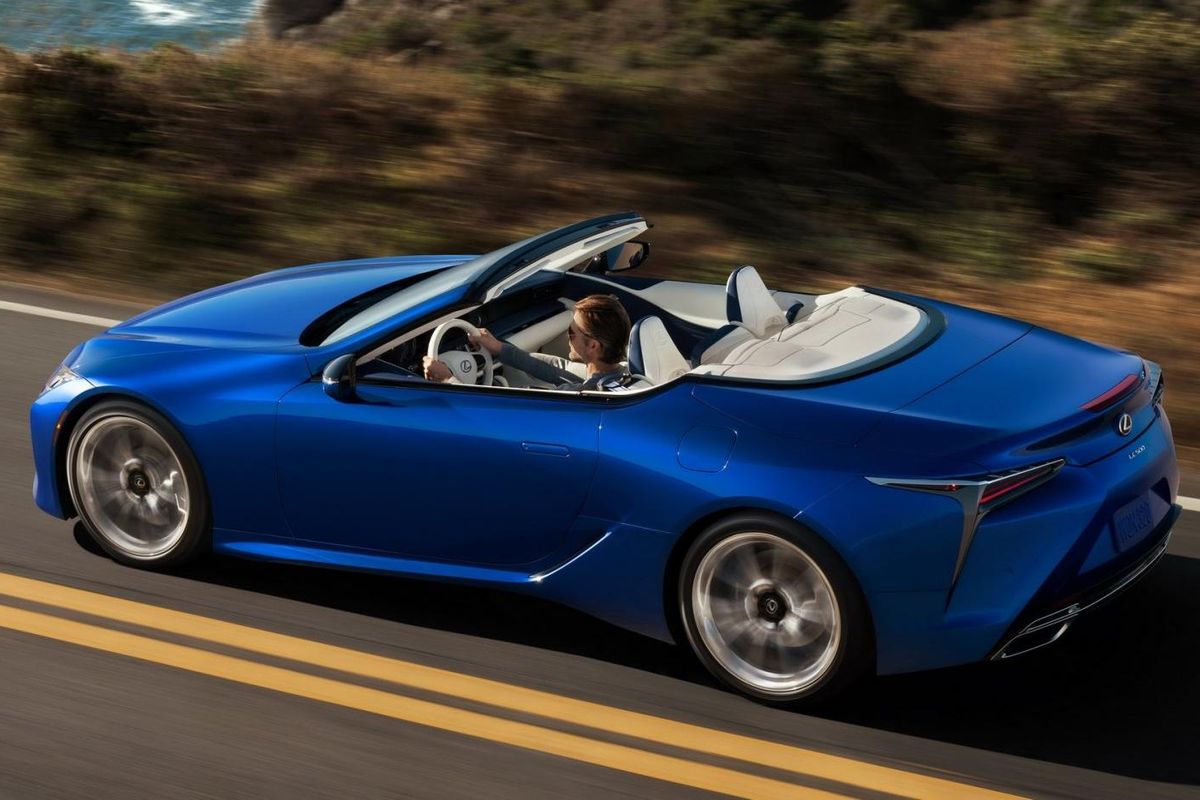
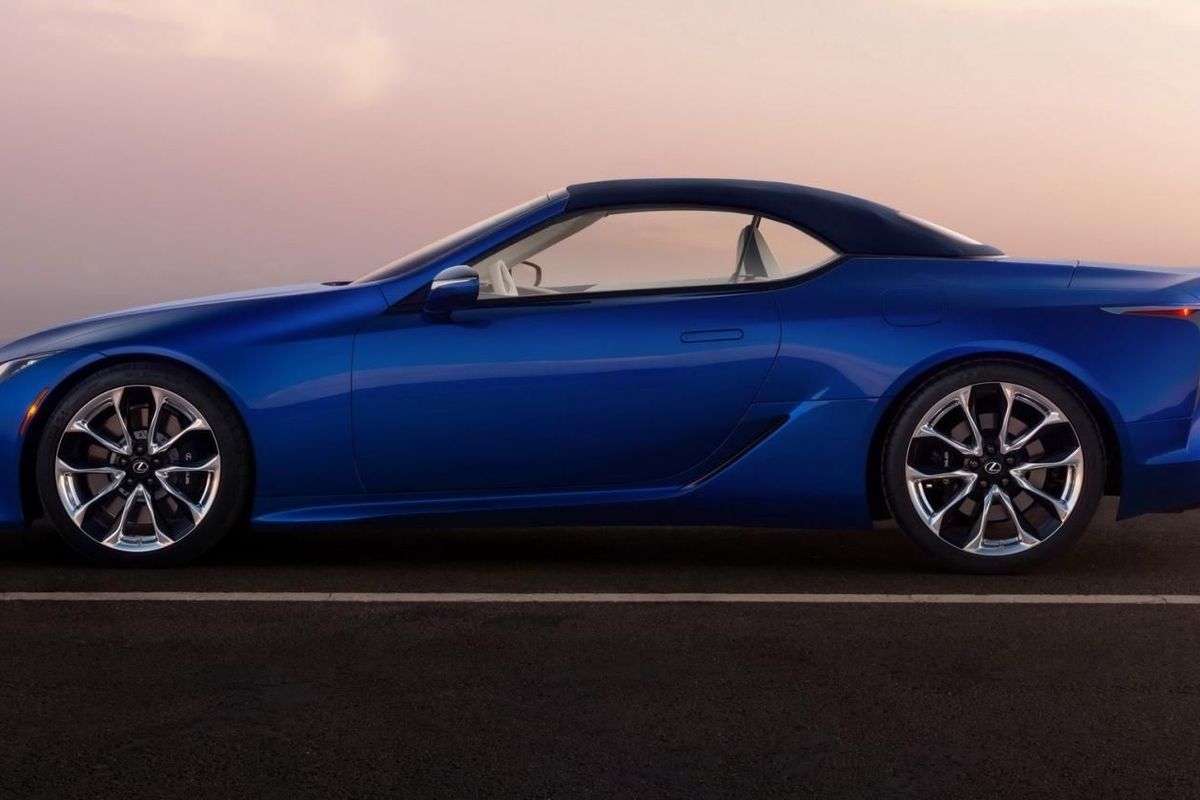
The LC 500 Convertible features a soft-top roof design with a folding mechanism that incorporates a tonneau cover to neatly store the roof. The soft-top roof can be opened and closed in about 15 and 16 seconds respectively at speeds up to 50 kph.
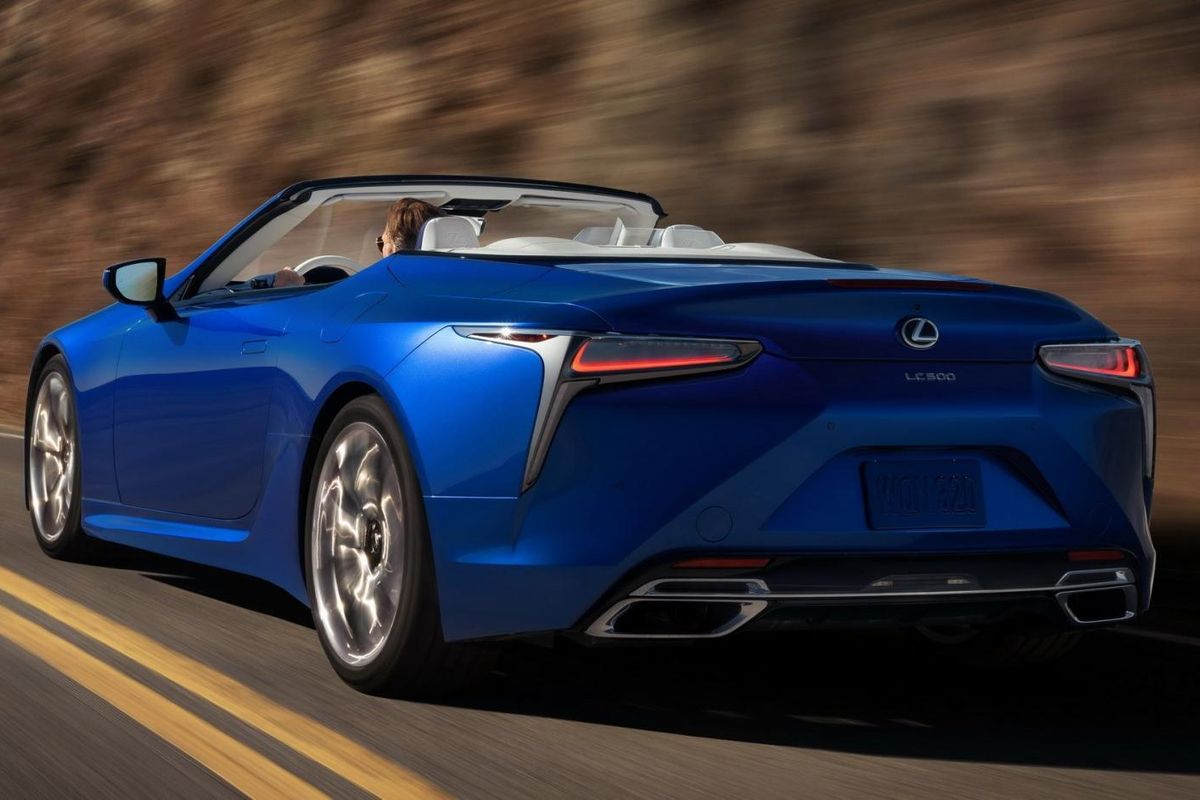
The images you see here is of the LC 500 Convertible Inspiration Series of which only 100 units are offered worldwide.
Lexus will introduce the LC 500 Convertible in 2021 for the South African market.