New Hyundai Elantra officially revealed
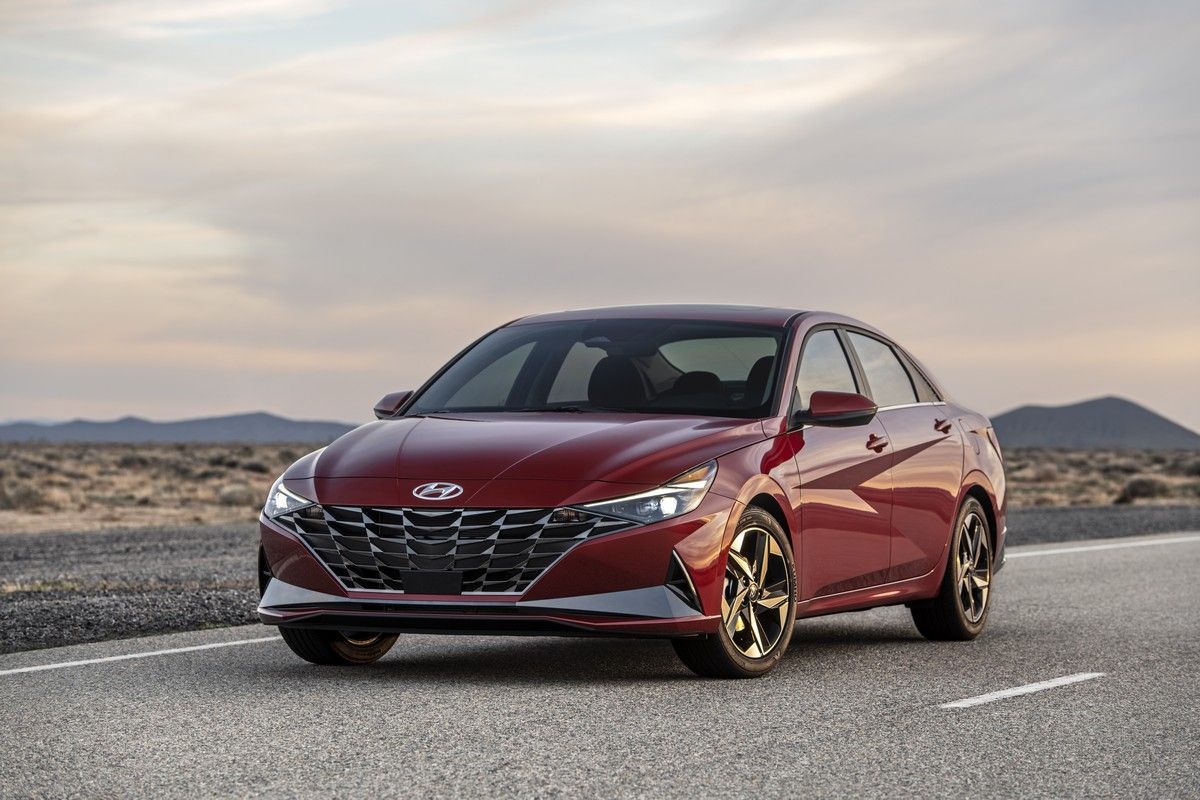
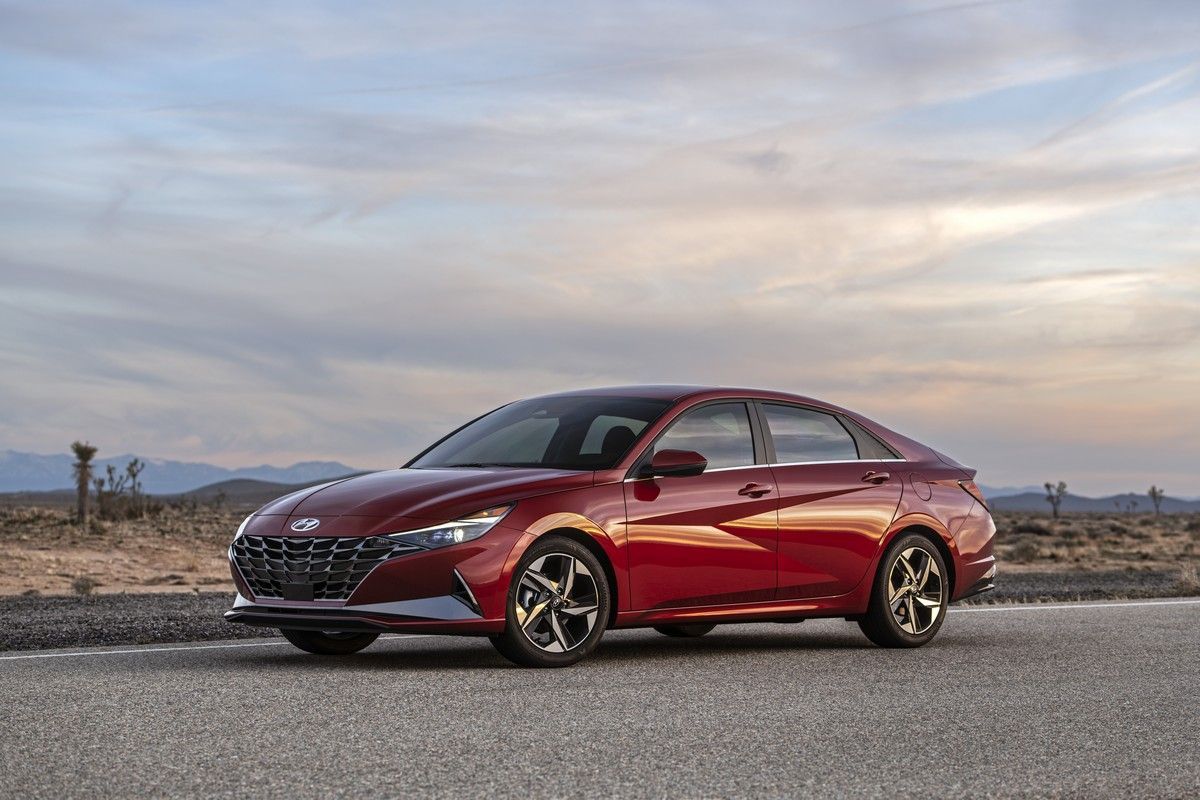
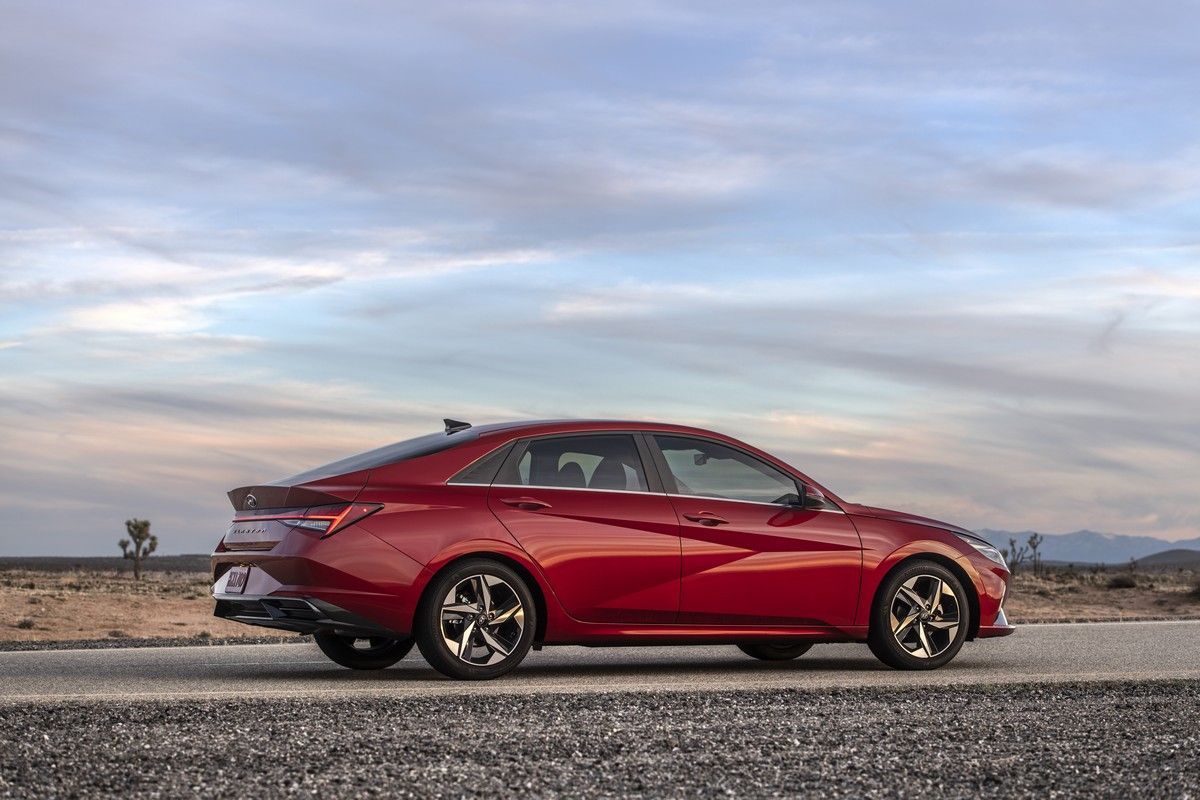
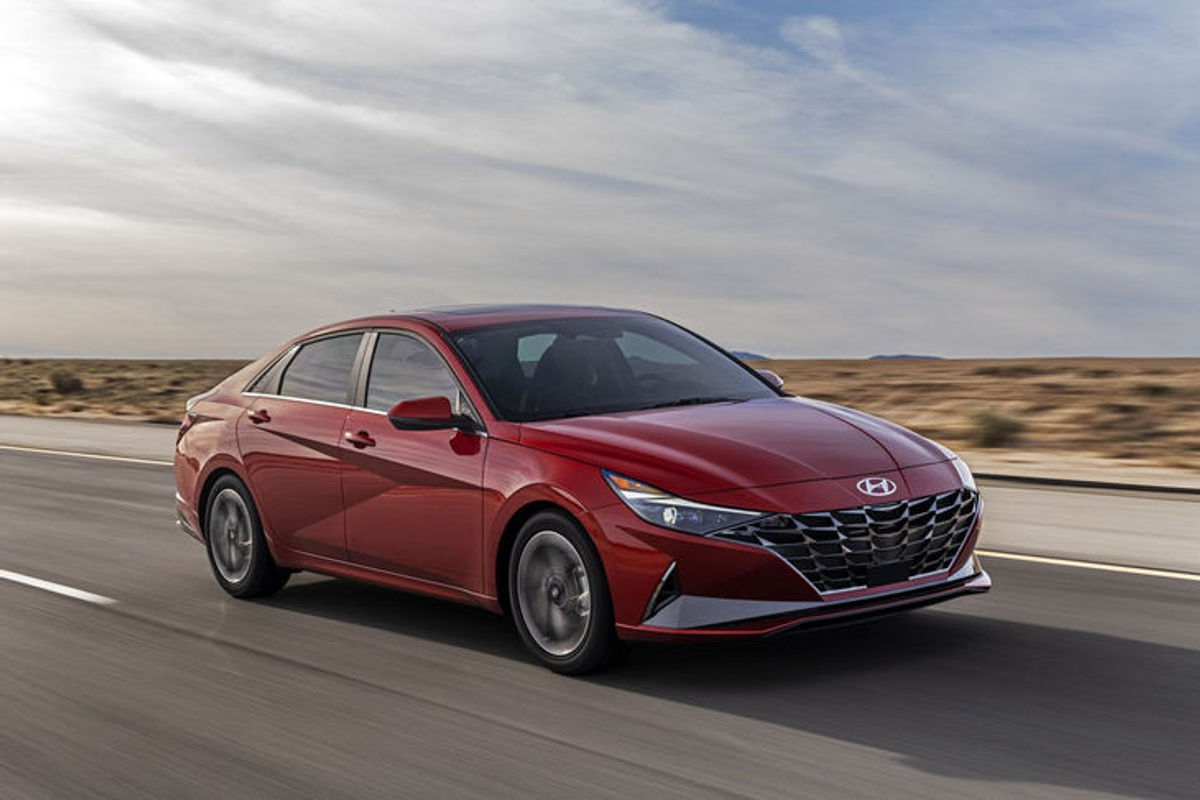
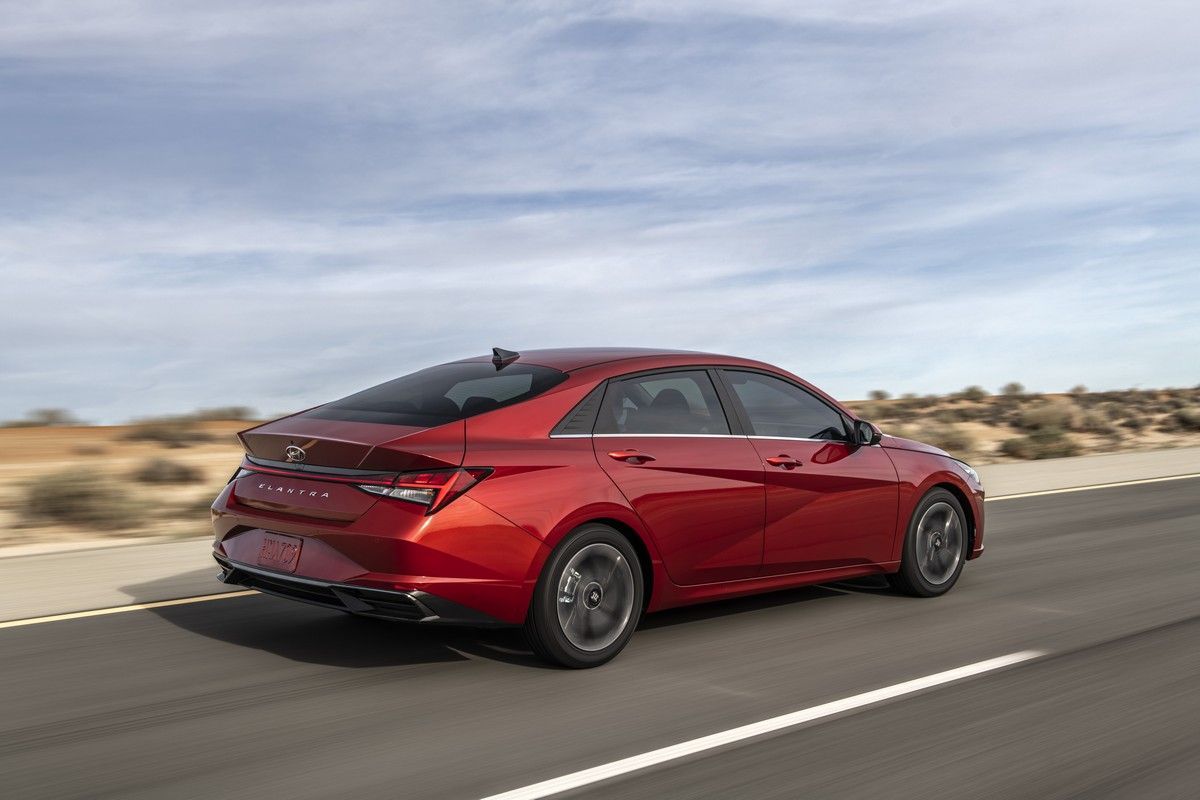
The 7th-generation Hyundai Elantra is undoubtedly the most distinctive, athletic-looking compact sedan that the Korean manufacturer has ever produced… In addition, the edgy newcomer, which was unveiled via a YouTube broadcast from West Hollywood, targets younger buyers with its plethora of highly-connected interior features.

Based on the brand’s 3rd-generation compact (K3) platform, the new Elantra sports a head-turning “4-door-coupe look” – it's only the 2nd Hyundai model to showcase the brand’s new Sensuous Sportiness design language (after the Sonata). The new model is not only longer, lower, and wider than its predecessor, but has higher structural rigidity (for improved refinement) and a lower kerb weight, which improves fuel economy. Other benefits of the new platform are a lower, more engaging, driving position, a reduced centre of gravity – which improves handling stability – and lastly, improved frontal-crash safety because of a multi-load path structure design.
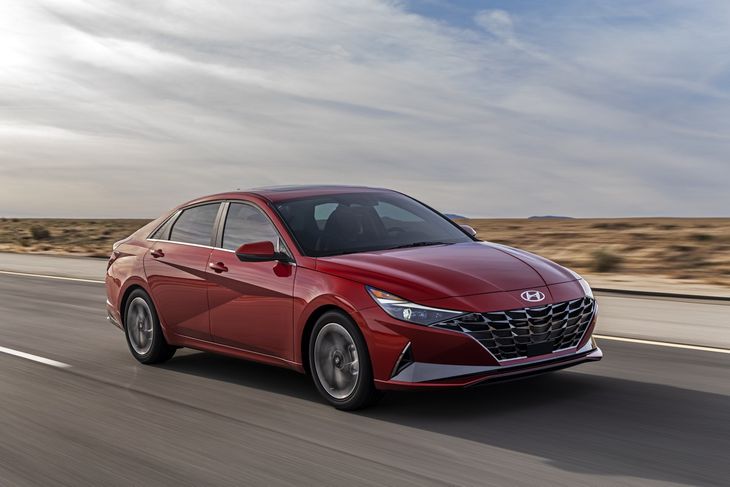

The K3 platform (on which the new Elantra is based), has facilitated a lower centre of gravity and sportier driving position.

The “parametric dynamics” to which Hyundai Motor Group chief design officer Luc Donckerwolke refers (when he describes the new Elantra’s exterior execution) can be seen in the way that the newcomer’s expansive, cascading grille, headlamp clusters and indicator elements seem to merge into a single design element, and the contours at the outer edges of the bumpers, as well as the swage lines on the car’s flanks, that “meet at one point”.  

As for the interior, the Elantra’s cabin dimensions do not suffer for the sedan’s sleeker roofline; front head- and shoulder room have increased slightly (rear headroom is unchanged) and the longer wheelbase enables the Hyundai to offer “best-in-class” rear legroom. Even the Elantra’s boot capacity is 8% bigger than that of its Corolla rival, the manufacturer claims.
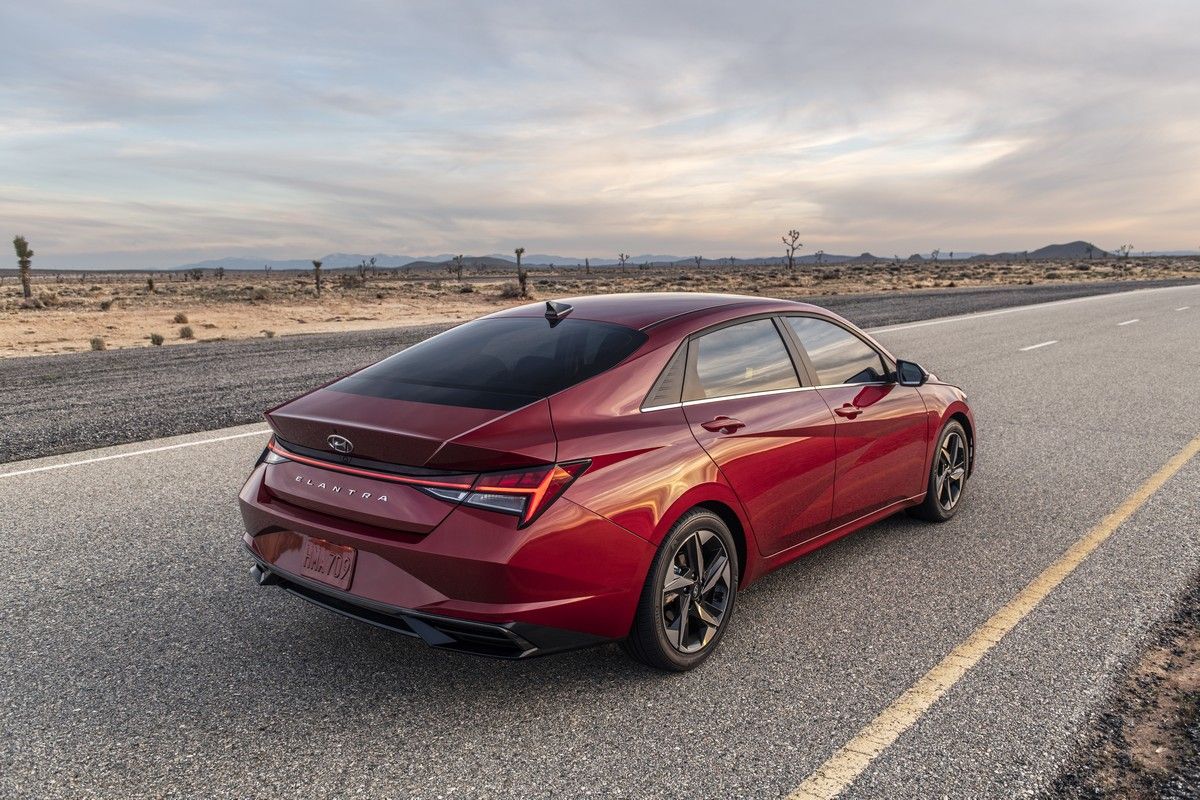

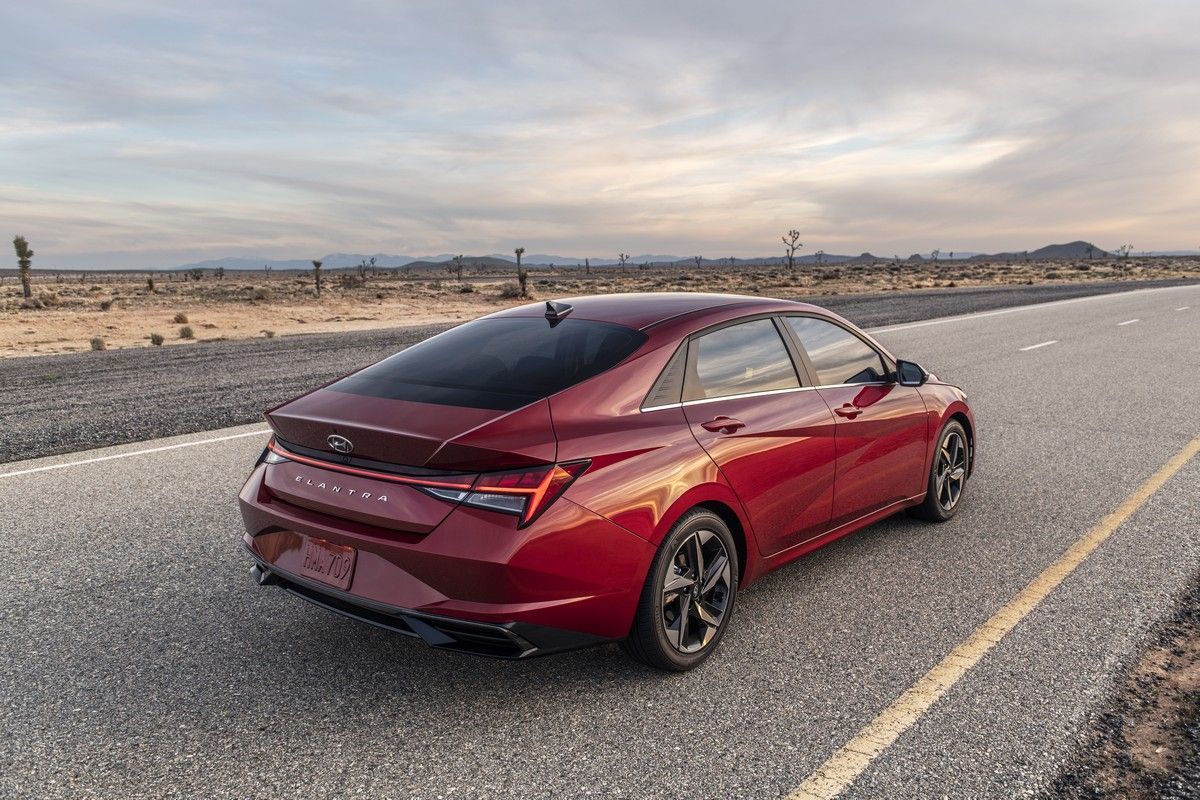
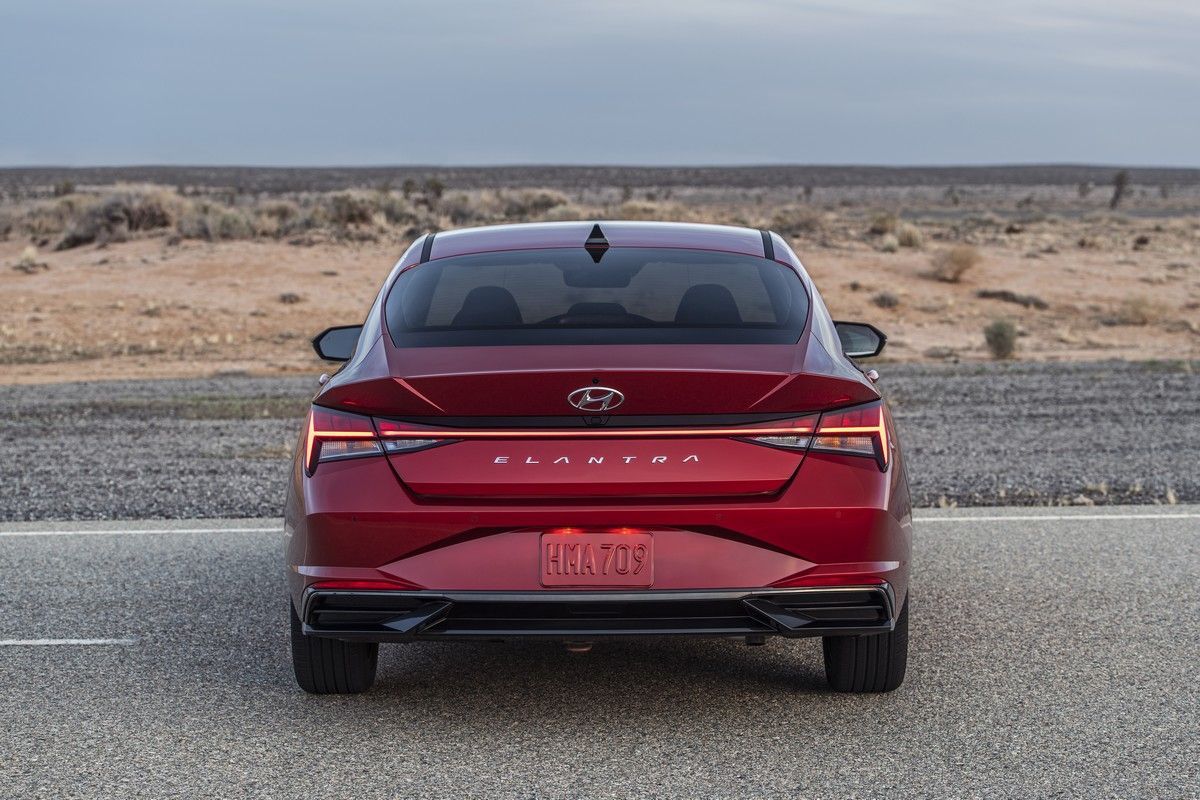
Note how the Elantra's boot line extends comfortably beyond the edges of the sedan's ornate tail-light clusters.

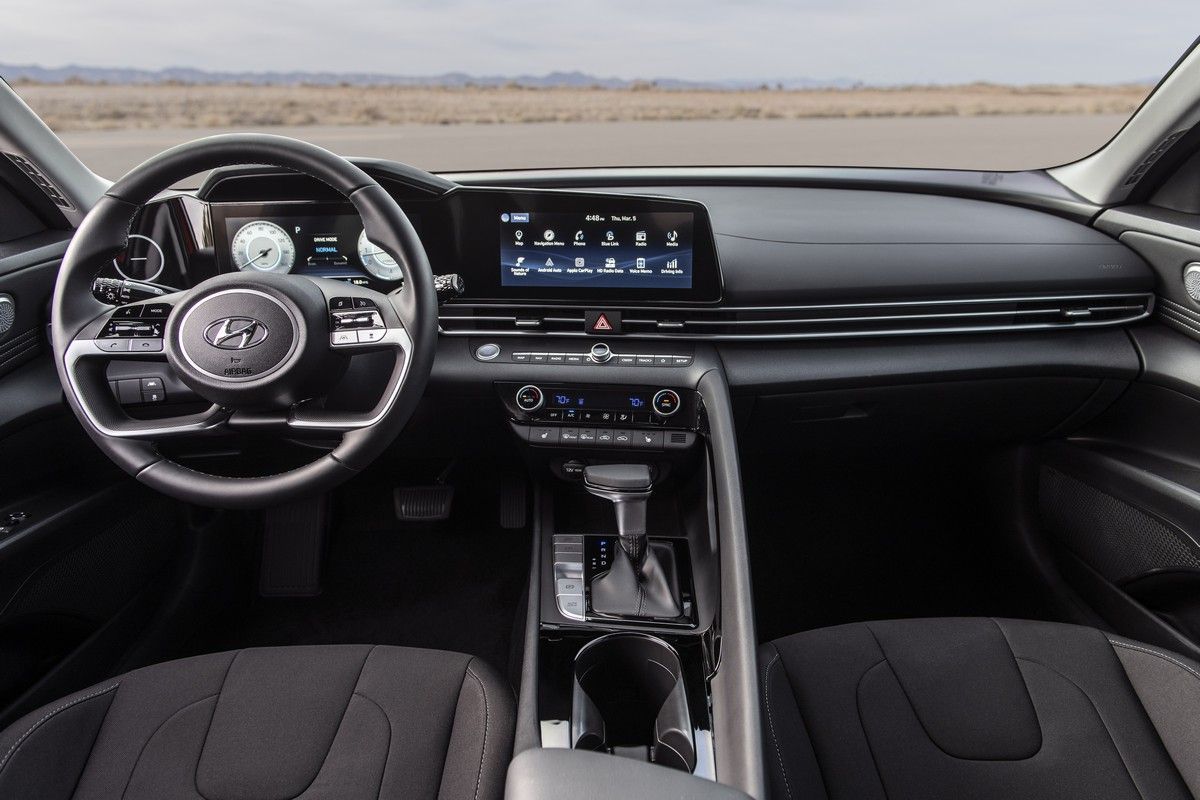
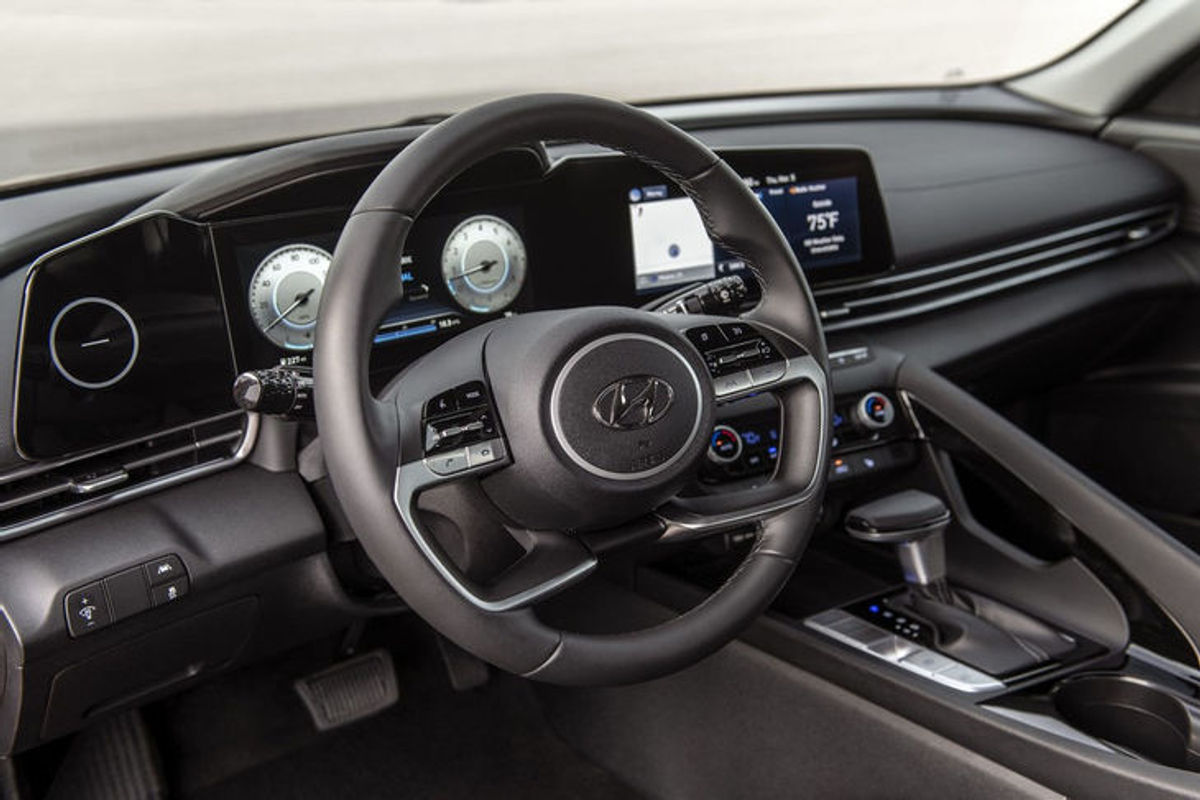
The newcomer's fascia design is sweeping – with slim vents hidden in the from-side-to-side chrome-finished louvres – and particularly driver-focused; the latter aspect is emphasised by the touchscreen being angled towards the driver and the division of the cockpit through a handle strut that stretches from the centre of the hang-down section (around the area of the HVAC controls) to the centre console.

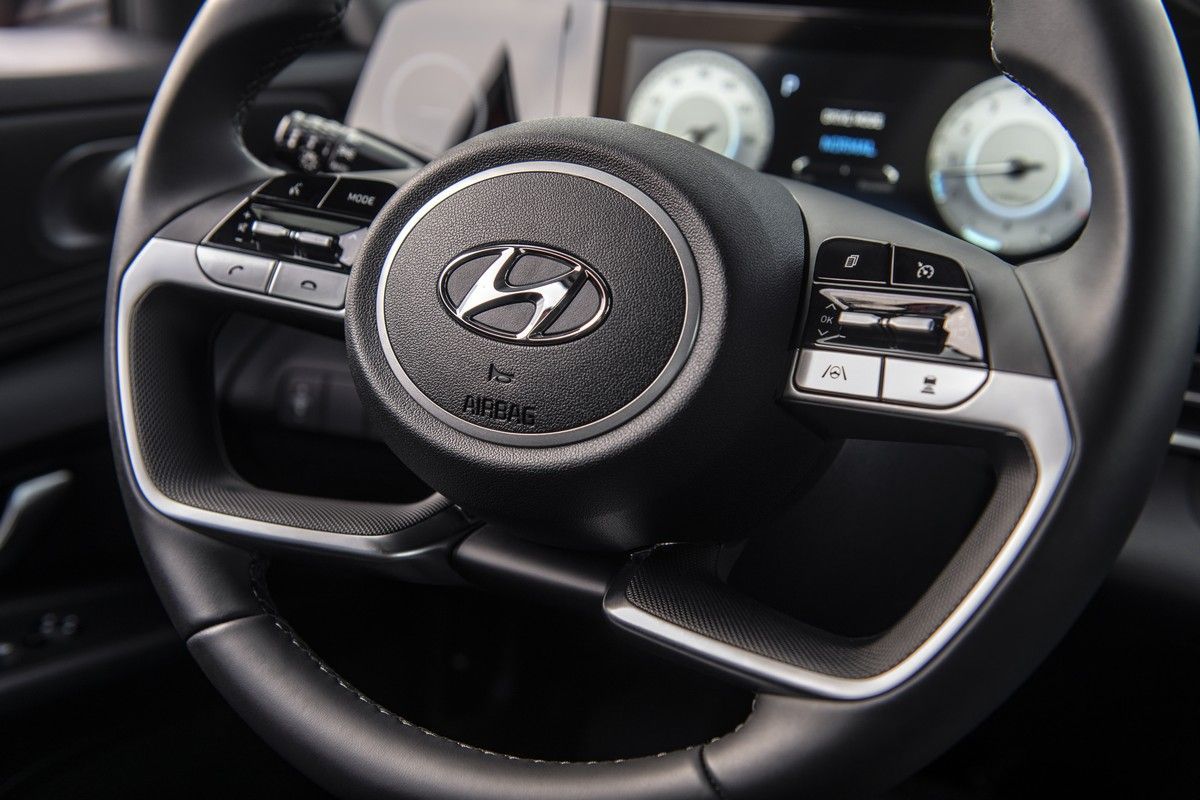
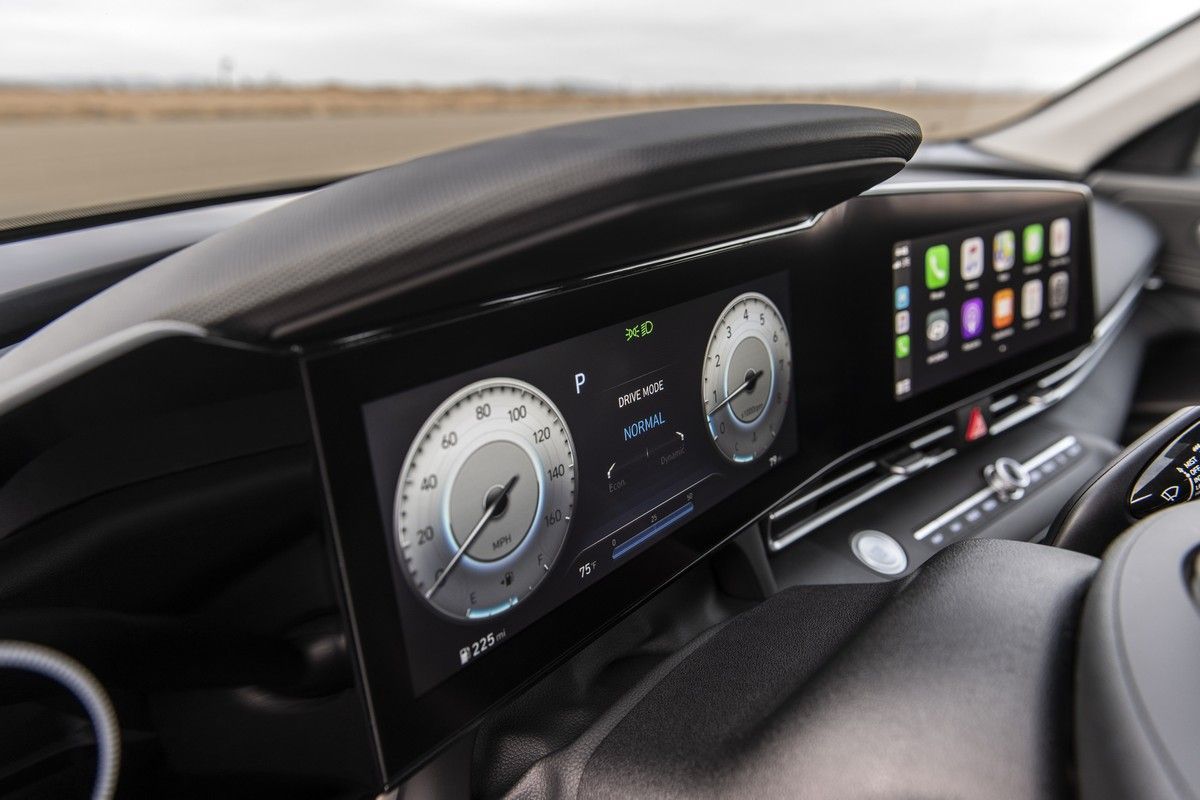
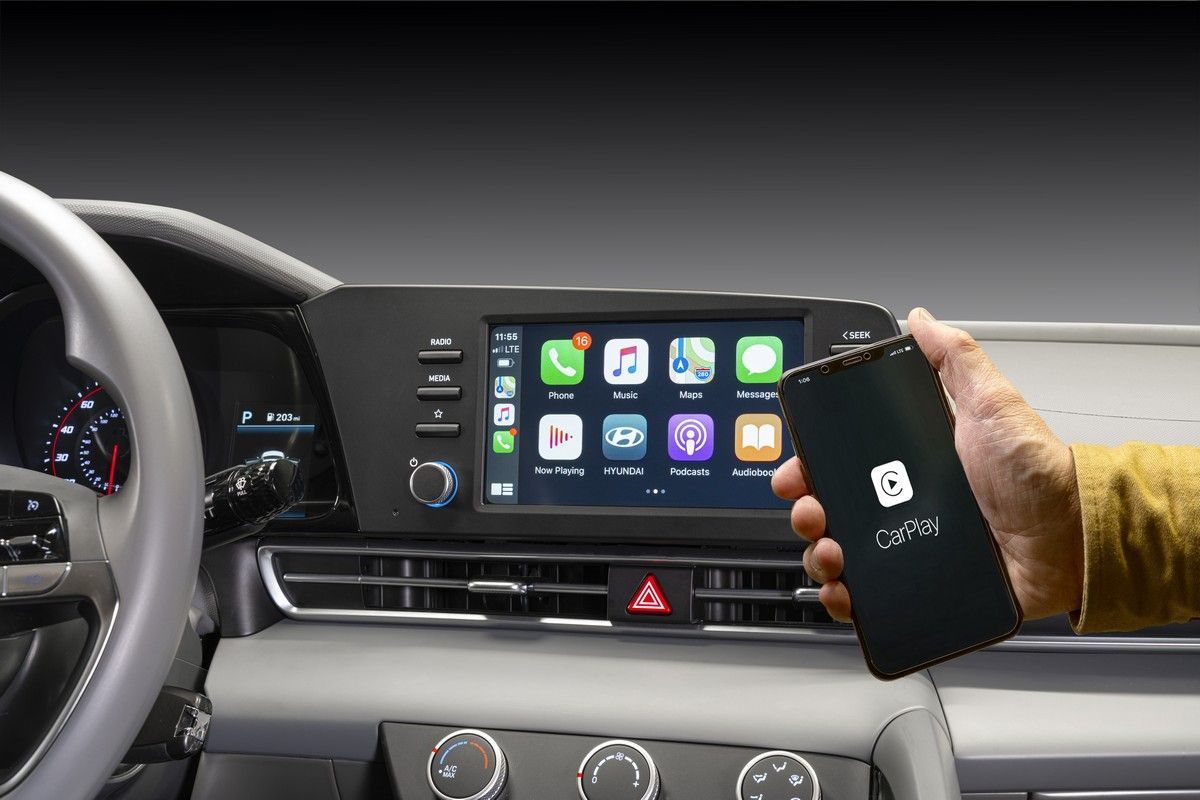
As standard, the Elantra will feature a conventional instrument cluster (with analogue dials), an 8-inch touchscreen infotainment that is Apple CarPlay and Android Auto compatible, a multifunction 4-spoke steering wheel, Bluetooth streaming and -telephony and a reverse-view camera with guiding lines. However, Hyundai took the opportunity to showcase the 8th-generation Elantra in its fanciest spec in Hollywood (as one does) – the car shown here features a pair of adjacent 10.25-inch screens: one that serves as a digital instrument cluster and the other, an extended infotainment screen.
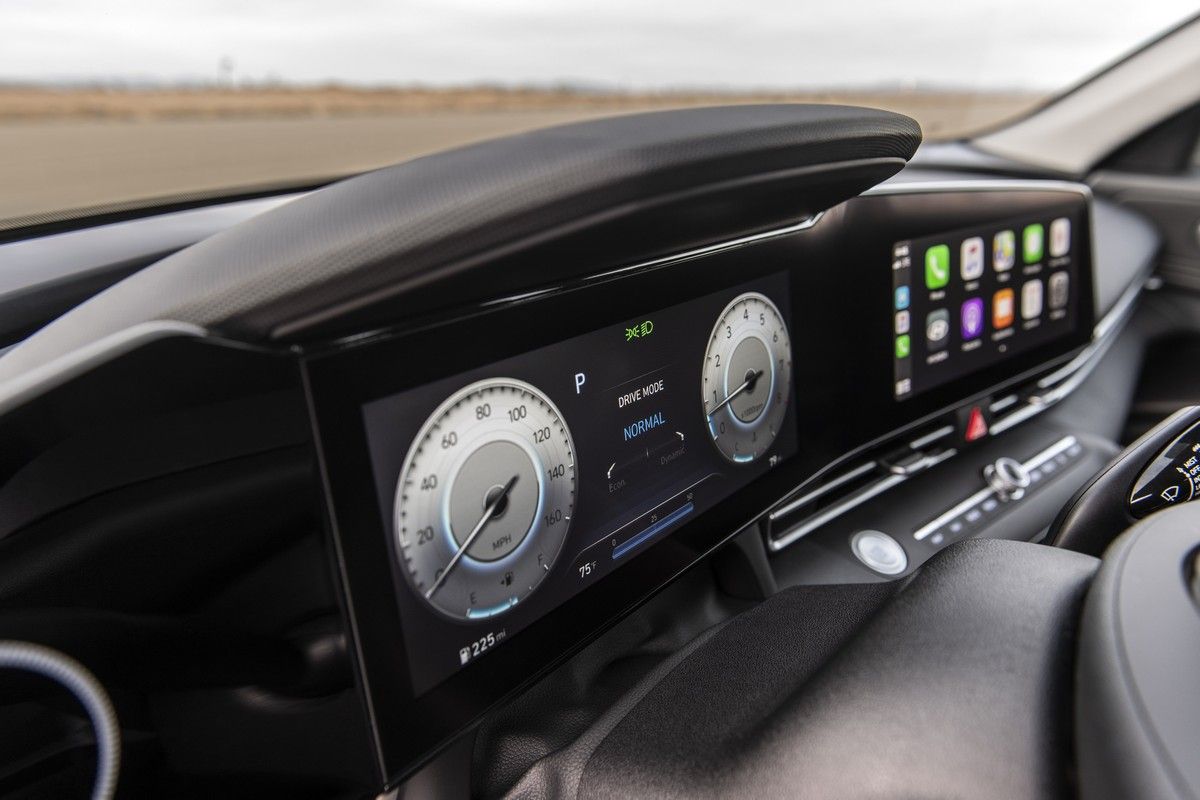

The look of the top-spec Elantra's combined instrument cluster/infotainment screen looks reminiscent of Mercedes' MBUX system.

Furthermore, an 8-speaker Bose audio system, voice recognition (through which a driver can control various of the car's onboard functions) and a digital key, which allows drivers with Android phones to access their vehicles without a key fob, are also optionally available.

The newcomer rides on a McPherson strut front- and multi-link rear suspension setup. In the States, it will be powered by either a 2.0-litre 4-cylinder engine (109 kW/179 Nm) mated with a variable automatic transmission or a petrol-electric power unit (a 1.6-litre four-cylinder petrol engine combined with a 32-kW electric motor and 1.32-kWh lithium-ion battery, which produces combined peak outputs of 103kW and 264 Nm.
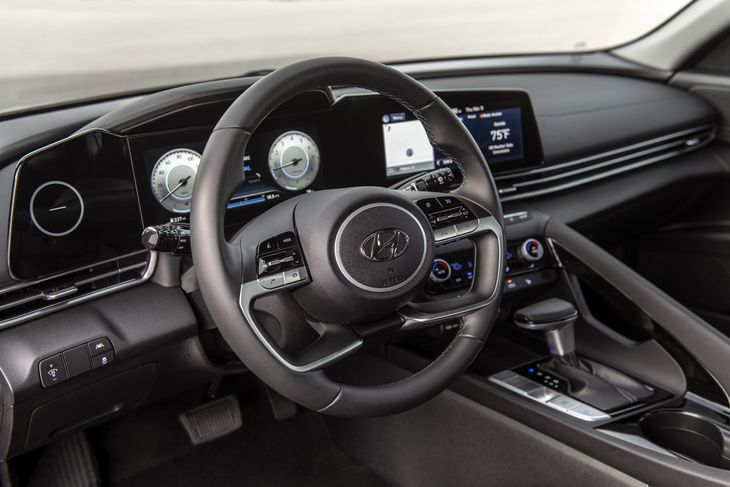

The Elantra's cockpit is decidedly driver-focused; note how the lower fascia and infotainment screen is angled inward.

In North America, forward collision-avoidance assist (with pedestrian detection), lane-keeping-, following and high-beam assist, plus driver-attention warning all come as standard (over and above ABS with EBD and front-, side- and curtain airbags). High-end features such as blind-spot collision avoidance assist (with rear cross-traffic alert), adaptive cruise control, driving assist, safe-exit warning and reverse-parking collision avoidance systems are available too.

The question is: Will Hyundai South Africa, which has removed the outgoing Elantra from its website, introduce the marque's 8th-generation sedan in South Africa? After all, the conventional 4-door family car seems under constant threat of its compact family cars, including the brand's own Creta, Kona and Venue models. Suffice to say that it was not in the importer's plans for 2020 (when we last checked). However, given the undoubted potential of the new model to spawn sportier derivatives, such as N-line and full N versions (Hyundai has 1.6- and 2.0-litre turbopetrol engines, mated with either a 7- or 8-speed dual-clutch automatic transmission, in its arsenal), well, hope springs eternal.   

Related content:

Edgy Hyundai Elantra Teased [w/video]

2021 Hyundai i20 Revealed with more Details
Toyota Corolla Hatch Updated for 2020

Toyota Corolla sedan (2020) Specs & Price

Toyota Corolla Hatch Updated for 2020

Toyota South Africa has updated the Corolla Hatch for 2020, adding a few modern features and updating some of the safety spec. 

In a bid to try and up the sales of the Corolla Hatch (sales have not met expectations) Toyota South Africa has installed a few updates for the Auris replacement. 

For starters, the whole range now benefits from wireless charging. The speed of the wireless charger is not mentioned but we suspect it to be the same as the 1.5mA USB charger. There is no mention of Apple Carplay or Android Auto being added, but we have it on good authority that the rollout to Corolla Hatch will happen during 2020.

The top-of-the-range Xr model receives the Toyota Safety Sense system, which is being rolled out across most premium Toyota models. It comprises a pre-crash system, blind-spot monitor, lane trace assist and all-speed cruise control. The Xr model also gets automatic high-beam assist.

The colour variety has been extended with Bi-tone colour options added to the colour palette in the form of Pearl White, Satin Silver, Emotional Red and Caribbean Blue – all paired with a black roof, while Pearl White and Caribbean blue have been deleted in mono-tone configuration. 

The engine remains the same (1.2 turbopetrol with 82 kW and 185 Nm) as does the 6-speed manual and CVT gearbox choices.

As for after-sales support, the Corolla Hatch is sold with a 6-services/90 000 km service plan (service intervals at 12-months or 15 000 km) and a 3-year/100 000 km warranty. It also comes with Toyota Connect telematics service and in-car Wi-Fi connectivity with a complimentary once-off 15Gb. 

Price in SA

Corolla Hatch 1.2T Xs – R 361 900

Corolla Hatch 1.2T Xs Bi-T – R 372 400

Corolla Hatch 1.2T Xs CVT – R 373 100

Corolla Hatch 1.2T Xs CVT Bi-T – R 383 600

Corolla Hatch 1.2T Xr CVT – R 412 600

Corolla Hatch 1.2T Xr CVT Bi-T – R 423 100

Related content

Toyota Corolla Hatch 1.2T XS (2019) Review

Toyota Corolla Hatch (2019) Video Review

Toyota Unveils Lukewarm Corolla GR Sport

Renault Duster to get A-Class Engine

Merc's 1.3 A200 engine planned for Duster.

The small engine cooperation agreement between Renault and Mercedes-Benz will soon benefit global fans of the Duster compact SUV.

It is no secret that many of the A-Class entry-level engine options are not researched or developed in Germany. The now tenuous Renault-Nissan-Mitsubishi alliance has in the recent past pooled resources to engineer some excellent compact turbocharged engines and the latest rollout strategy for these, includes an upgrade for Duster.

Renault’s popular gravel traveller is due to add the HR13 engine code powerplant to its line-up this year, although exact scheduling could be slightly disrupted by the influence of coronavirus on supply chain and assembly.

This HR13 engine is a 1.3-litre turbopetrol already present in a variety of Renault and Mercedes-Benz models. It features all-aluminium construction and runs a timing chain, instead of a belt, for improved durability and lower lifetime mechanical cost of ownership. Interestingly, it is built in Spain.

Adaptable to a variety of applications and environments, the HR13 engine is rated at different power outputs, depending on fuel quality in its destination market. For introduction to the Duster, this turbocharged 1.3-litre engine is expected to boost 115 kW and 250 Nm.

Drivetrain options for Dusters with the 1.3-litre HR13 engine will be either six-speed manual or CVT, but won't include Renault’s EDC dual-clutch transmission.

Offering the potential of brisk performance and less mass above the front axle, this 1.3-litre engine update could make the Duster an even more compelling gravel travel adventure vehicle. A smaller and lighter engine could yield more balanced emergency braking, with less nosedive, which should prevent sump damage if you inadvertently hit a dirt road bump at speed.

Related content 

Mercedes CLA vs Mercedes A-Class Sedan Review

Renault Duster 1.5dCi Dynamique 4WD (2019) Review

Mercedes-Benz A200 AMG Line (2018) Review

RIP BMW i8

Production of the BMW i8 will be coming to an end and we look back at how groundbreaking and revolutionary the plug-in hybrid sports car was.

When it was revealed back in 2015, the BMW i8 stunned the car community. Here was a visually striking sportscar that looked like a concept freshly revealed off a European motor show floor. Now 6 years after its launch, BMW has confirmed the i8 product life cycle is coming to an end. It sold more than 20 000 units and BMW claims more sold than all competitors in its segment combined. 

It brought a number of interesting technologies to market, like the laser headlights, the carbon fibre tub as well its unique 1.5-litre turbo-petrol 3-cylinder engine mated to an electric motor punching out 275 kW. The 113 kW per litre displacement was a new record for BMW series models when it came to high specific power output. Let's not forget how the use of sustainable and recycled materials in the cabin changed how we made car interiors, while 3D printing was used for the first time to make components for the Roadster.

Not only did it look good (the Roadster even more so) but it also drove well, with handling being one of its stand-out traits thanks to its lightweight construction as well as low centre of gravity. We won't forget that electric e-boost acceleration either. Do you think the BMW i8 will become a collector's item? There are some really nice looking examples currently on our site… 

Interested in BMW i8 ownership? Browse new and used examples for sale here.

Further Reading

BMW i8 Coupe (2017) Review

BMW i8 Roadster (2018) International Launch Review

BMW i8 Wins 2015 International Engine of the Year Award

BMW i3 and i8 First Drive

BMW i3 and i8 Roadster (2018) Launch Review

BMW Confirms Android Auto Introduction in Q2 of 2020

German carmaker BMW has confirmed it will be offering Android Auto connectivity in its vehicles from July 2020.

As it stands, BMW only offers Apple CarPlay connectivity for its vehicles and worse, it charges customers for the privilege. In a country such as South Africa where Apple sits behind Samsung and Huawei in terms of ownership reach, the lack of Android Auto connectivity is a dour point. At the launch of the new BMW 1 Series in Munich in 2019, we had a chance to chat to some of the tech engineers who mentioned that Android Auto would come at some point. 

Now, it's official and BMW confirms that not only will Android Auto be made available for its products, but Apple Carplay will be free. Impressively, Android Auto connectivity will be wireless and there'll be no need to plug the phone in. 

“Many of our customers have pointed out the importance to them of having Android Auto inside a BMW for using a number of familiar Android smartphone features safely without being distracted from the road, in addition to BMW’s own functions and services,” says Peter Henrich, Senior Vice President Product Management BMW. “We will offer this service to our customers starting in July 2020.”

From what BMW is saying, the Android Auto integration is impressive. Not only will you get the typical menu functionality you can see in the image above, but there'll also be an interface in the gauge cluster as well as the head-up display. We're assuming this compatibility is only for the latest iteration of BMW's operating system, dubbed OS 7. We'll see the first demo of Android Auto in a BMW at the Consumer Electronics Show (CES) 2020 and will be available for customers in 20 countries from July 2020.

How would you get the update if you're an owner of one of the latest BMW products? BMW Australia is one of the first regions to get Android Auto and the best part is the update will be done over the air, removing the need to take time off and head to the dealership. BMW Australia told Aussie publication carsguide.com.au, " Any BMW already on the road with our latest 7.0 iDrive operating system will be able to receive upgrades, like Android Auto over the air. We want to make sure the infotainment system in the car can be updated without having to take your car to a dealership. It’s downloadable over the air, via the SIM card in the vehicle, or you can download it to your phone at your home or office via Wi-Fi, and transfer it to your car the next time you drive it."

What is Android Auto?

Further Reading

BMW 1 Series (2019) International Launch Review

BMW 7 Series (2019) Specs & Price

BMW Teases New Infotainment System

BMW M340i xDrive (2019) Review

Refreshed Isuzu MU-X on cards for SA?

Isuzu Motors SA recently introduced the option of a diff-lock on its MU-X, but now that production of the new-generation D-Max has begun in Thailand (from where the local-spec Adventure SUV is sourced) we could soon see the underrated 7-seater feature an updated look as it inches towards the end of its lifecycle…   

Following General Motors’ departure from the SA market at the end of 2017, Isuzu took ownership of the multinational’s former production facility in Port Elizabeth. With the discontinuation of the Chevrolet Trailblazer, Isuzu introduced the MU-X (on which the former was based, anyway) in the local market in 2018. In fact, it was the first model that the (then) newly-formed Isuzu Motors SA – which finished runner-up to Volkswagen in the 2019/20 #CarsAwards Brand of the Year rankings – launched in Mzansi.

Although the sales figures of the MU-X pales into insignificance compared to those of its Toyota Fortuner arch-rival, Isuzu’s Adventure SUV was a finalist in its category of the Cars.co.za Consumer Awards – powered by WesBank in 2018/19.  


As is the case with recent revisions to the current D-Max range, black trim features prominently on the Onyx.

Meanwhile, Isuzu Motors SA continues to produce the outgoing D-Max and will begin building the next-generation bakkie in Port Elizabeth next year. That means time is running out for the current-gen MU-X (which is, after all, based on the older bakkie’s design). Reports suggest its replacement will only be revealed next year; perhaps it will arrive in South Africa in 2022.

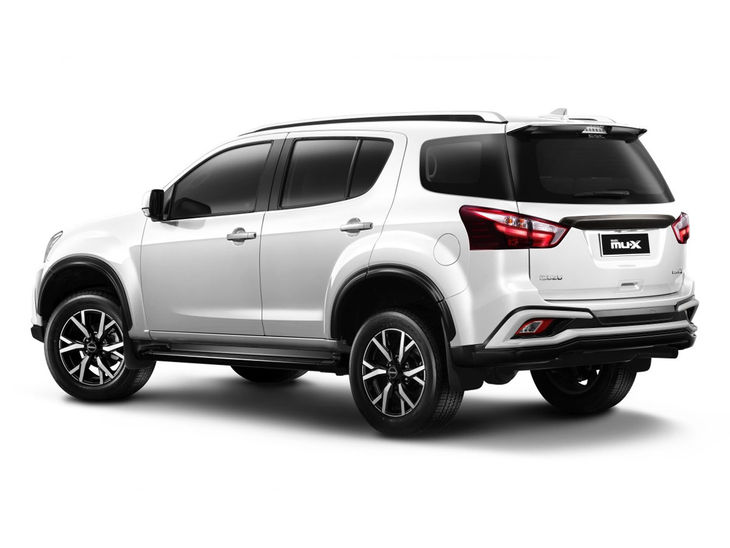
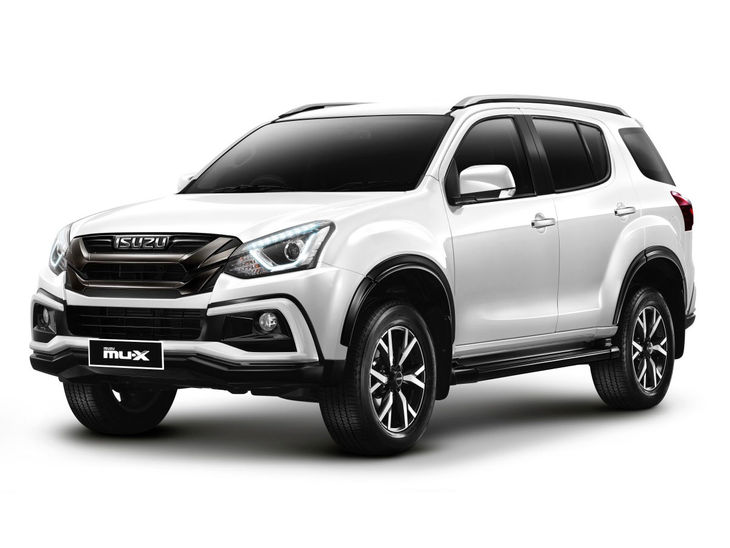
But there is life in the Japanese firm's Adventure SUV yet. Isuzu recently released an update to its MU-X in Thailand, the most stylish (and flagship) version of which is dubbed the Onyx (shown here). Depending on current stock levels of the Adventure SUV in South Africa and local demand for the model during its run-out phase, a mild series update or special editions such as this one could be introduced in the local market in the near future.


The design of the Onyx derivative's rear bumper is arguably sportier than that of the one at the front.

The exterior look of the Onyx features a plethora of black addenda: its sportier bumpers feature dark accent lines, which match the roof rails, side-window- and wheel-arch trims, as well as the grille finish. Even the 19-inch alloys have black detailing.  

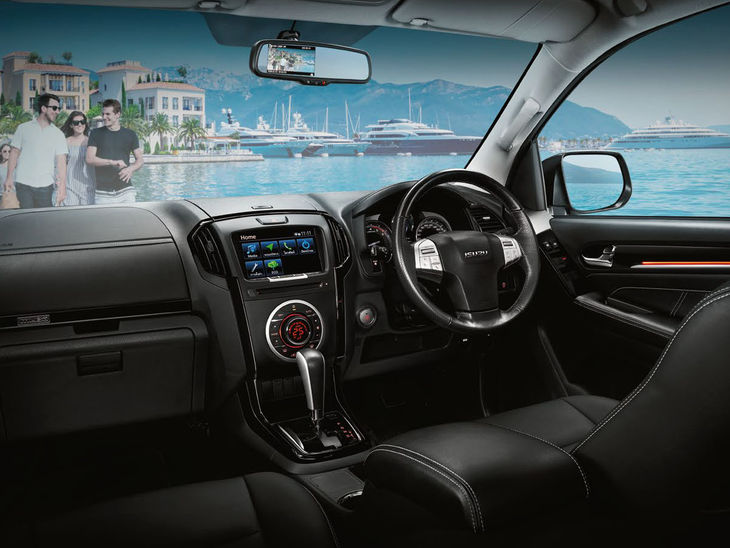
Inside, piano-black trim dominates the fascia and the door trims feature LED ambient lighting fore and aft. What’s more, a few small, but nonetheless nifty, features have been added…

According to the Thailand brochure of the Onyx flagship, the Bi-LED headlamps feature auto high/low beam technology and the auto-dimming rear-view mirror incorporates a forward-facing dash camera, while the seats are upholstered in Cool Max (we assume a leather-like) material, which is claimed to “reduce heat accumulation”.


Note how the sporty black instrument cluster complements the piano-black accents on the MU-X's fascia…

In terms of the flagship MU-X's infotainment specification, we don’t believe the Onyx’s built-in touchscreen will be available in South Africa, but perhaps the current model’s optional 9-inch system with 8 speakers, which includes navigation, Apple CarPlay and Android Auto compatibility and works in conjunction with a reverse-view camera, could become a standard feature.

If Isuzu Motors SA confirms an update (or special editions) of the MU-X – its unlikely that the name "Onyx" would be suitable for the market, but still – we'll be sure to let you know.

New Isuzu mu-X Specs & Prices in South Africa

Related content:

Isuzu finally offers diff-lock MU-X

Isuzu D-Max 250 Auto (2020) Launch Review

Next Mazda BT-50 vs New Isuzu D-Max: What's the Difference?

New Isuzu D-Max to be Built in Eastern Cape

Porsche 911 Turbo S: Price in SA [w/video]

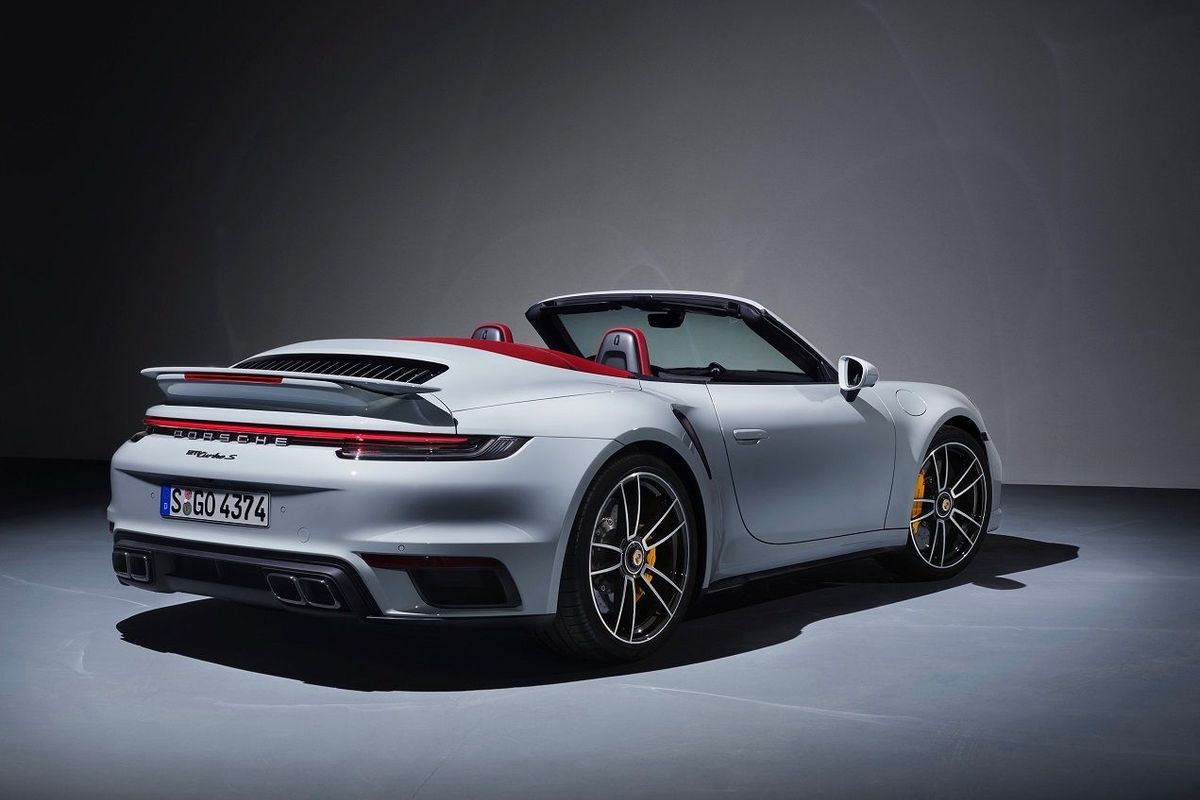
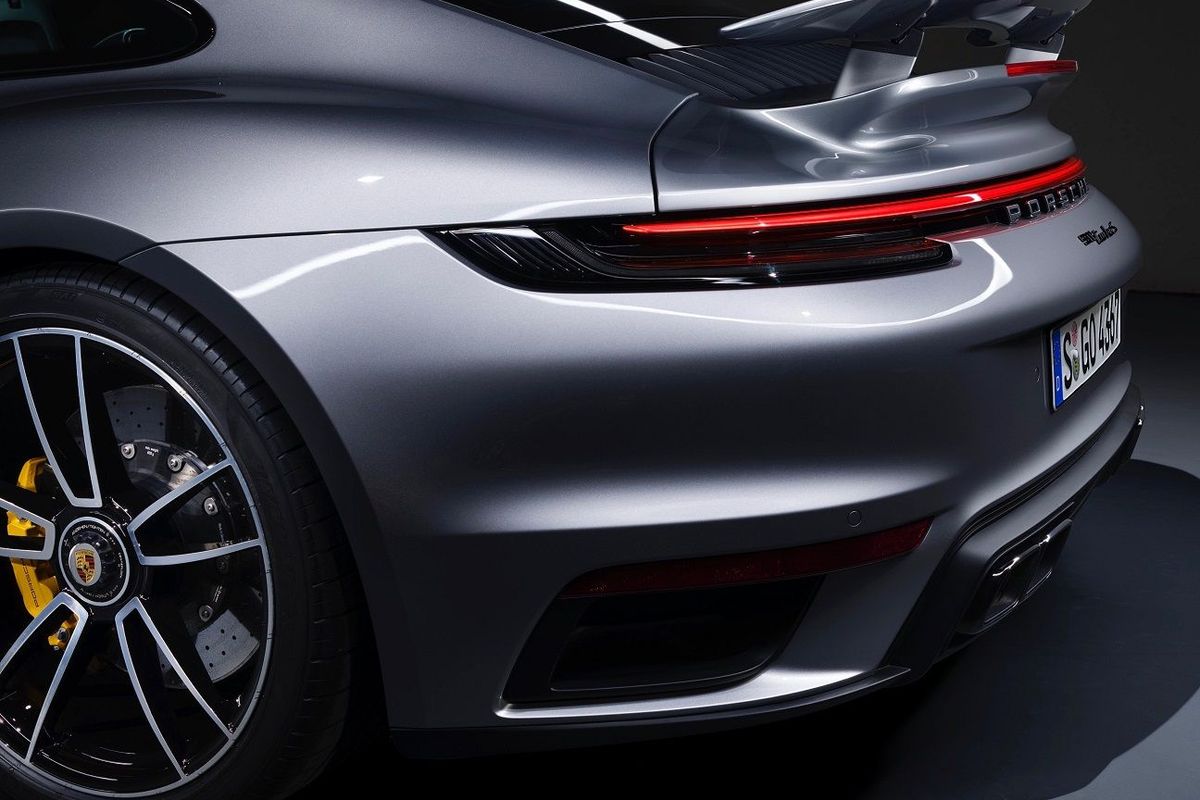
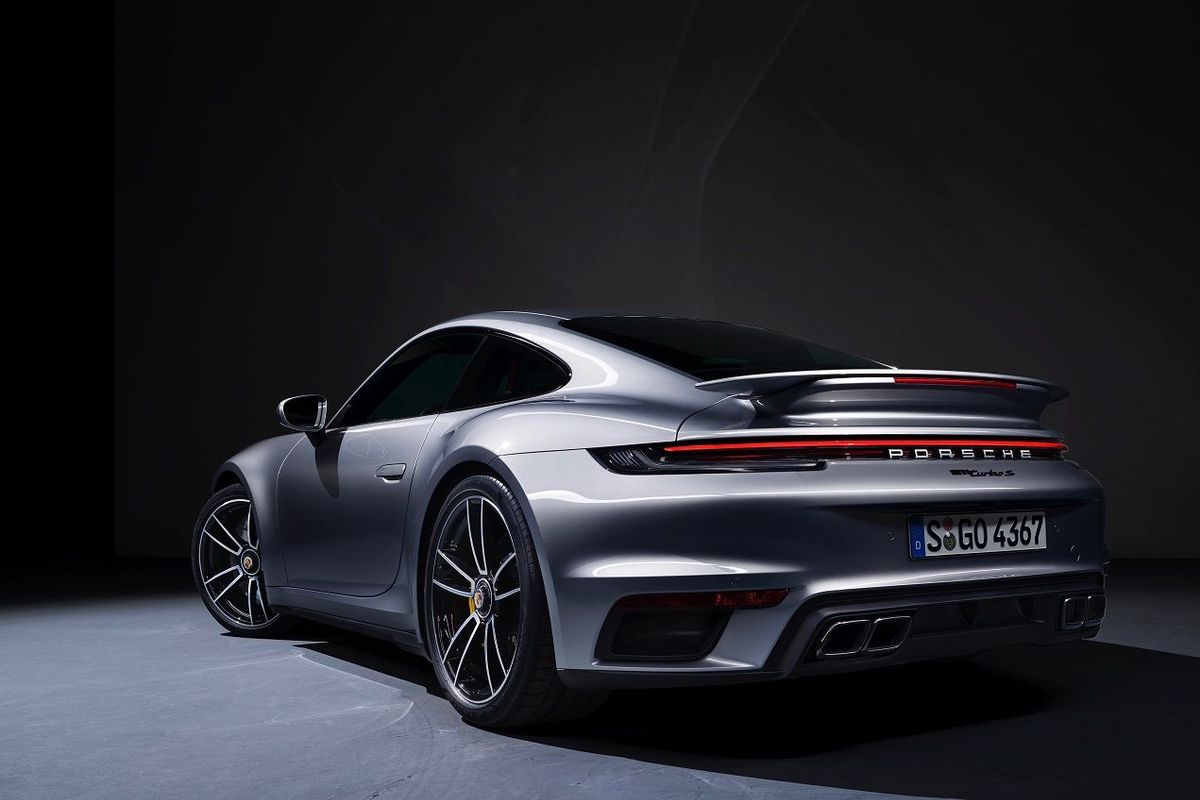
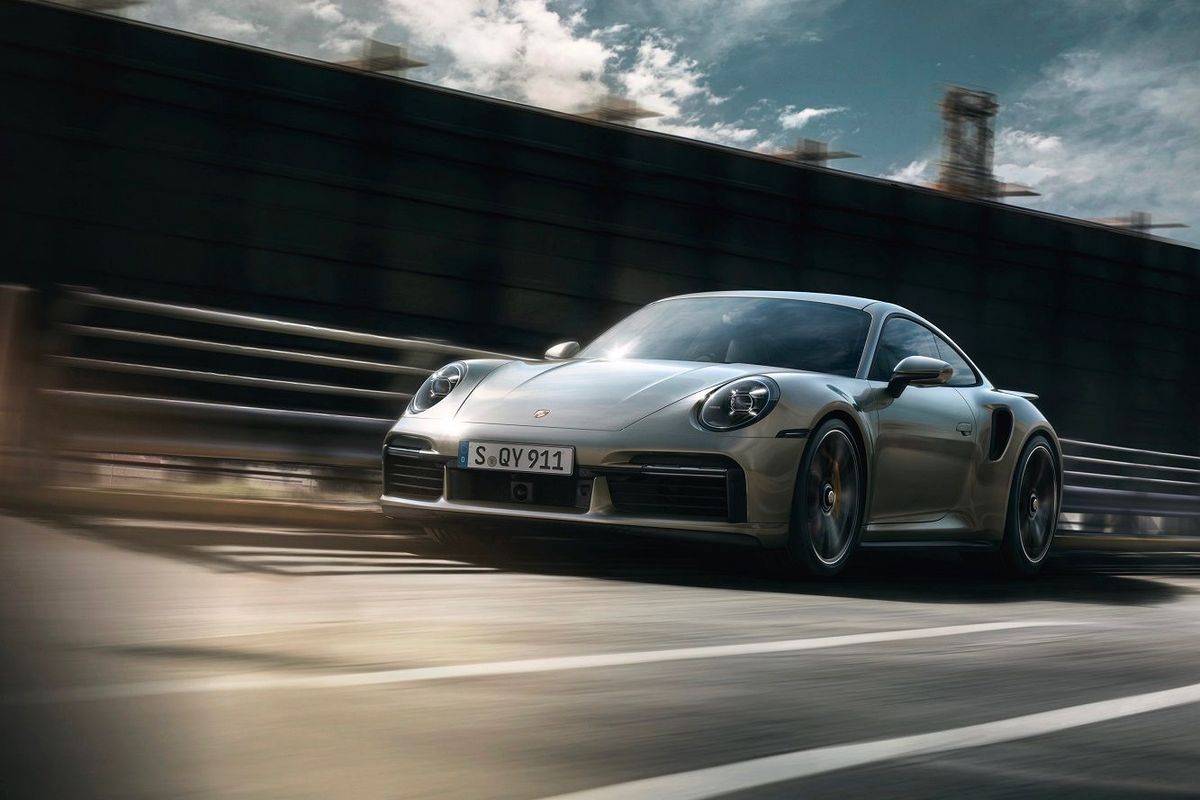
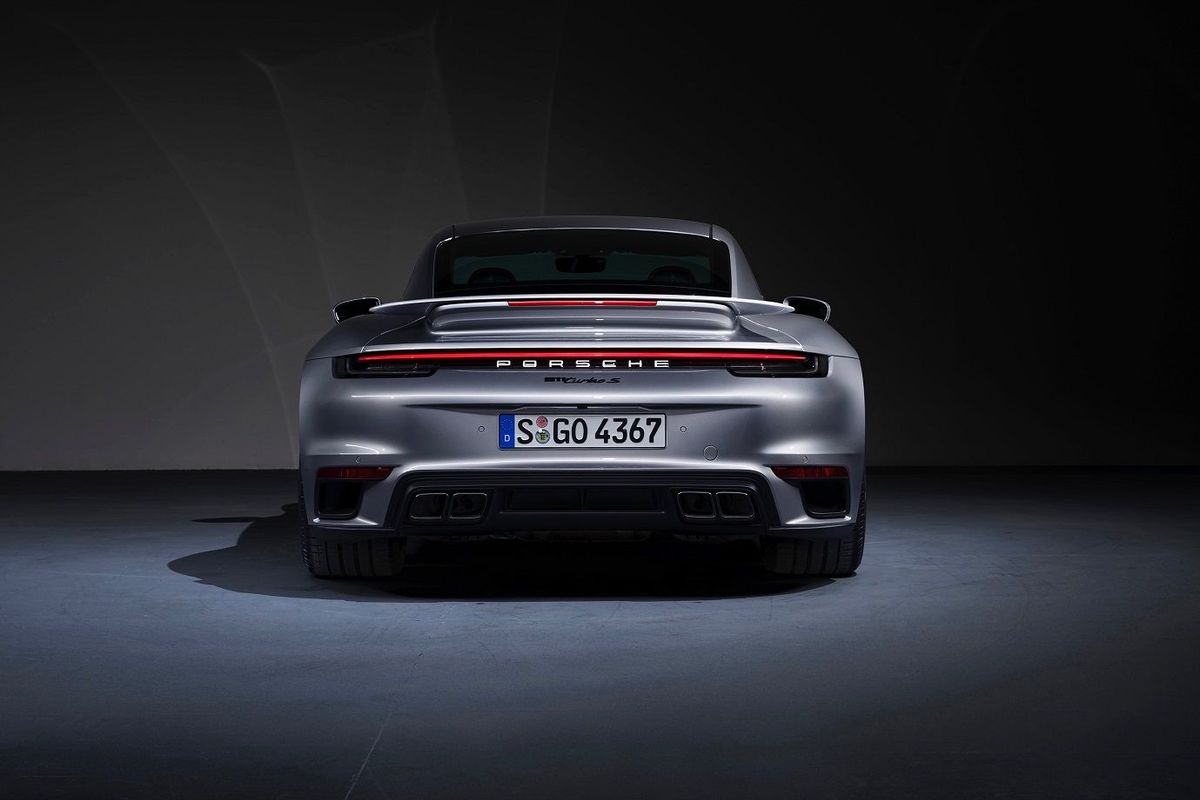
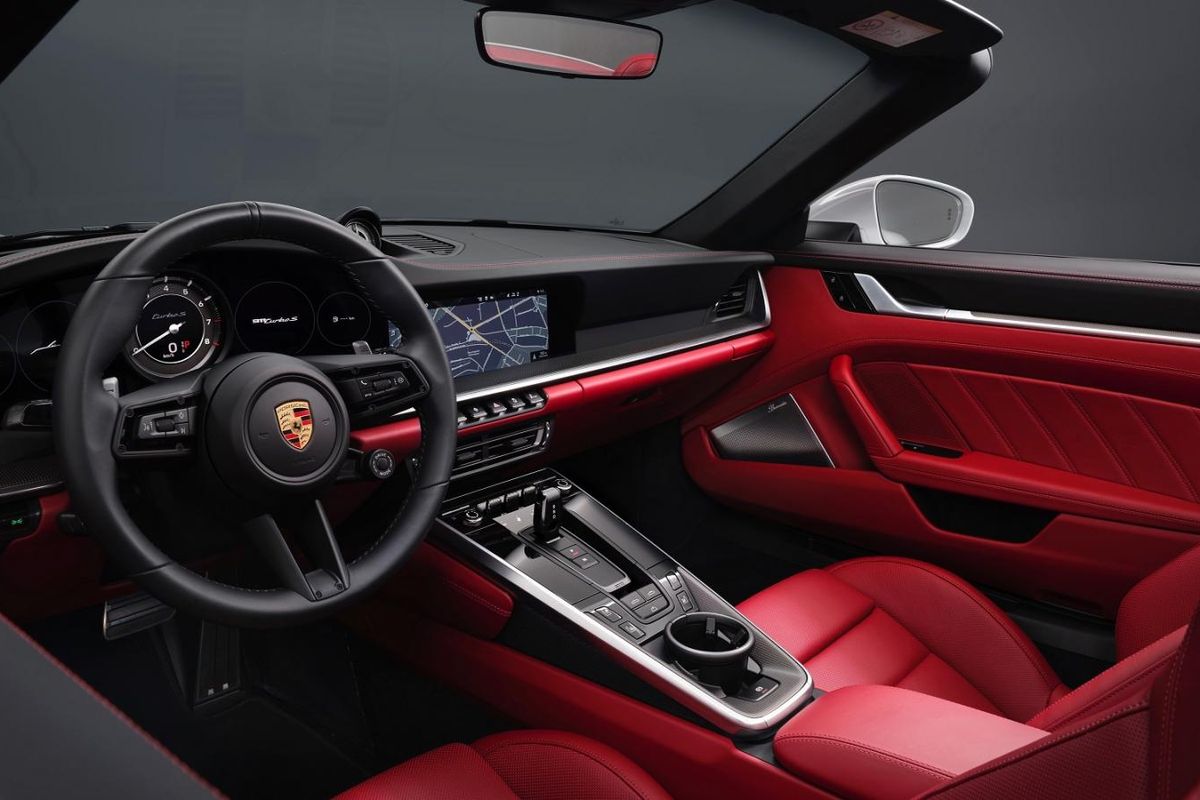
The Porsche 911 Turbo S is coming to South Africa soon. See pricing and details below.

The new 8th-generation Porsche 911 came to market last year and while it has proven to be hugely impressive in terms of execution, Porsche enthusiasts have undoubtedly been waiting to see what Porsche delivers with the potent 911 Turbo S. Well, the wait is now over!

The Porsche 911 Turbo S has a sleek appearance and is easily recognized with a large rear wing and 2 sizable oval tailpipes that communicate its performance intent. The newcomer is 42 mm wider at the front axle and 10 mm wider at the rear. There is new aerodynamics in the form of controlled cooling air flaps at the front as well as mixed-size tyres. There are 20-inch tyres with their unique 255/35 dimensions at the front and 21-inch 315/30 tyres at the rear.

The vehicle comes with the Porsche Active Suspension Management (PASM) sports chassis which lowers the car by 10 mm and for those craving that thundering Porsche sound, there's the sports exhaust system with adjustable flaps.

The Porsche 911 Turbo S is powered by a twin-turbocharged new 3.8-litre flat-six engine that develops 478 kW and 800 Nm. It makes use of a quick-shifting PDK transmission that directs power to the wheels. As you would expect, performance is impressive with Porsche claiming 2.7 seconds in the sprint from zero to 100 kph and it'll go onto a top speed of 330 kph. There's an increase of 51 kW, 50 Nm and the newcomer is 0.2 seconds faster to 100 kph.

The key to the new engines are the special VGT turbochargers, redesigned air cooling system, new air intake as well as piezo injectors.

The new Porsche 911 Turbo S is expected to arrive in South Africa in May 2020. 

Porsche 911 Turbo – Price in South Africa 

Porsche 911 Turbo S Coupe – R3 542 000

Porsche 911 Turbo S Cabriolet – R3 716 000

Prices include a 3 year/100 000 Driveplan.

Buy a Porsche 911 on Cars.co.za

Watch the Porsche 911 Turbo S highlights video below!

Related Content 

Porsche 911 Carrera S (2019) Launch Review

Manual 911 is lighter but slower…

Porsche 911 Speedster Revealed

Our Alfa Romeo GTV6 3.0 – The Restoration

Our freshly restored Alfa Romeo GTV6 3.0 was revealed to the world at the #Carscoza Consumer Awards – Powered by WesBank, earlier this year. Attendees were treated to a video that went behind the scenes of year-long restoration, and now it's your turn to have a look!

The locally-developed GTV6 3.0 is undoubtedly the most revered Alfa Romeo model ever sold in South Africa. Bred for the track, the 3.0-litre “Alfetta” GTV was, in its heyday, the most powerful Alfa road car ever produced here. You see, Alfa Romeo needed a foil for the rampant BMW 535i in Group 1 racing and its solution was this: the GTV6 3.0.

To homologate a racing car for Group One, a manufacturer had to produce at least 200 road-legal examples (fit for public consumption) and it is believed Alfa Romeo built approximately 220 units of the 3.0 – the most-often quoted number is actually 212. This particular GTV6 3.0 belonged to well-known Alfa Romeo expert and restorer, Basie Theron.

Theron had spent the best part of a decade travelling the world and collecting the best parts for the car's eventual restoration. He believes that it would not be possible to build another one like this… Theron agreed to sell this GTV6 3.0 to us on the conditions that it remained in South Africa, and that he could finish the restoration to his desired standard. Happily, we agreed, and the result is a car that stuns audiences with its attention to detail. Have a look!

Further Reading

Want more GTV goodness? Watch this.

Alfa Romeo Unveils Hardcore Giulia GTA

Drag Race: BMW X4 M Competition vs Alfa Romeo Stelvio Quadrifoglio

Alfa Romeo Tonale Production Model Leaks Early

Alfa Romeo Tonale Concept Revealed

VW to replace Up with ID.1 electric city car

The VW Group plans to launch 75 EVs between now and 2029 and its MEB all-electric platform will form the basis of most of those products, including an upcoming city car that will replace the venerable Up.

According to British Car magazine, the ID.1 will be the smallest ID model in an initial EV range of around 7 models. The electric city car, expected to make its global debut in 2023, will have a 5-door configuration, a distinctive blocky shape and minimal overhangs. It should have approximately the same dimensions as the Up, but is likely to be far more spacious inside than its predecessor by virtue of its EV-specific platform.

It’s anticipated that the Wolfsburg-based brand’s entry-level EV will borrow some of its styling cues from the ID.3 premium hatchback and underpin “ID.1 Crozz” crossover and “e-Roomzz” panel-van variants. Volkswagen seems to have taken Fiat's cue (to make the follow-up to the current 500 an exclusively all-electric model), which seemingly predicts the end of the Up in the medium term, although this has yet to be confirmed. 

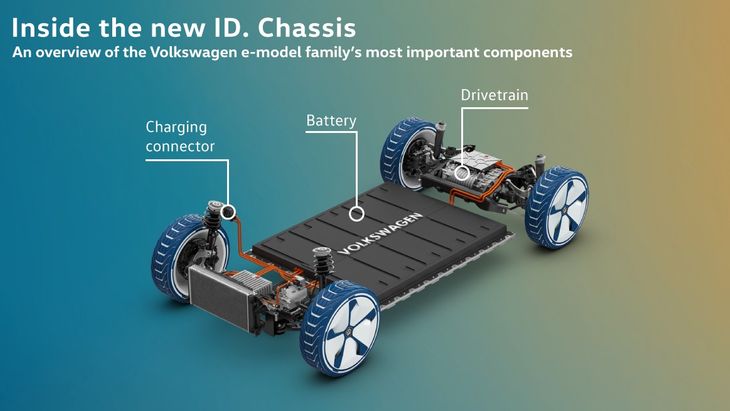
The modular electric drive matrix (MEB) is highly scalable, not only in terms of the sizes of the vehicles that can be built on its chassis (literally, see below) but also the types of batteries it can accommodate – in the case of a city car, for example, a high-capacity battery is not as critical as in family cars or SUVs, which can lower production costs. The platform is so versatile that it could even spawn a light bakkie; indeed, read our recent opinion piece: Why VW Should Build this Electric Bakkie

It is expected that the ID.1 will be offered with 24-kWh and 36-kWh battery capacities with the latter claimed to provide an optimal range of approximately 300 km between charges. The ID.1 will compete with the Honda e and recently-unveiled Fiat 500 EV and, to a lesser extent the SA-bound Mini Cooper ES.

Volkswagen has ambitious plans to sell 1 million EVs a year by 2023 and the brand’s chief operating officer, Ralf Brandstätter, suggests the production cost of MEB-based models is 40% lower than comparable EVs based on platforms designed to accommodate conventional powertrains. 

British Car quoted him as saying: “In future, it won’t make sense putting battery cells in a car designed for an engine as we have done with the e-Up. We are working on a battery-powered EV below €20,000 (the equivalent of R364 000) – we can shrink the MEB architecture with less content to get the cost down."


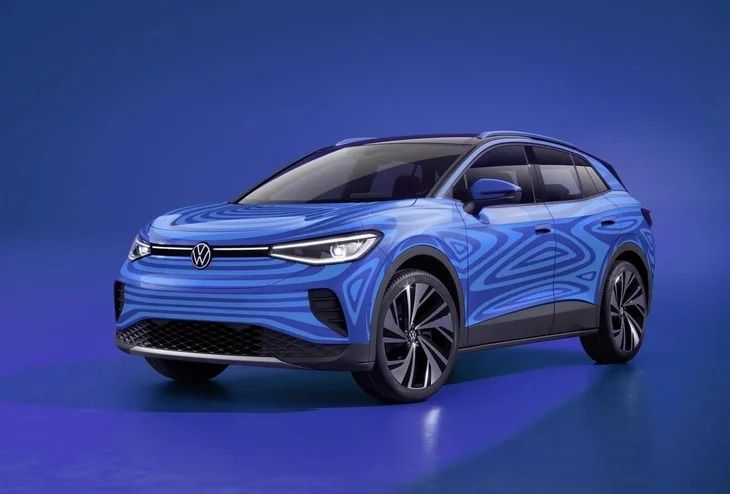
It is our understanding that the ID.4 will be first all-electric Volkswagen to be offered in the South African market.

The ID.1 will then be followed by the ID.2 – a compact hatchback to rival products such as the Renault Zoe and Peugeot e-208. Back to the here and now, production of the ID.3 has already begun and it will be followed by the ID.4 family car/crossover (based on the ID Crozz concept) towards the end of 2020, which is of particular significance to Mzansi…

Volkswagen SA recently began its EV rollout programme by launching an e-Golf pilot project to gain customer insights and -feedback ahead of introducing a range of electric vehicles in South Africa. The 2nd phase is expected in 2021, when the Uitenhage-based firm will include a fleet of ID.3s in the project (neither the e-Golf or ID.3 will be offered for sale, however). But, after that, we anticipate that Volkswagen will introduce the ID.4 in the South African new-vehicle market in 2022.

Related content:

VW's Electric Strategy Kicks off in SA

Top 10 Cool Things: Fiat 500 EV

Volkswagen's EV plans for SA

EV Apocalypse is Closer Than You Think

Suzuki New Zealand Makes Jimny Bakkie

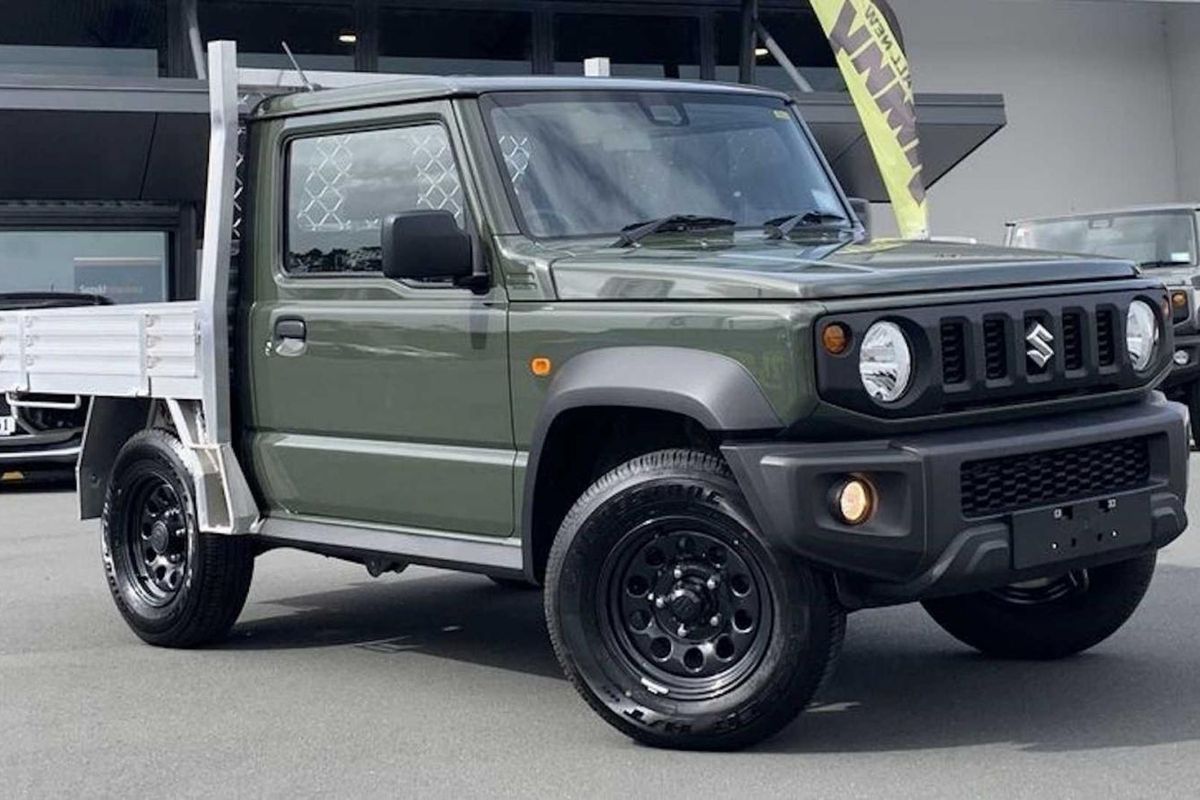
Suzuki New Zealand has made a single-cab bakkie Jimny and we love the look of it. 

It's hard to dislike the Suzuki Jimny. Not only does it look adorable, but its go-anywhere attitude and abilities have won it many fans, including us. One of the very few downsides to Jimny ownership is the lack of practicality and space. The physical boot size is barely big enough to swallow anything bigger than a laptop bag. 

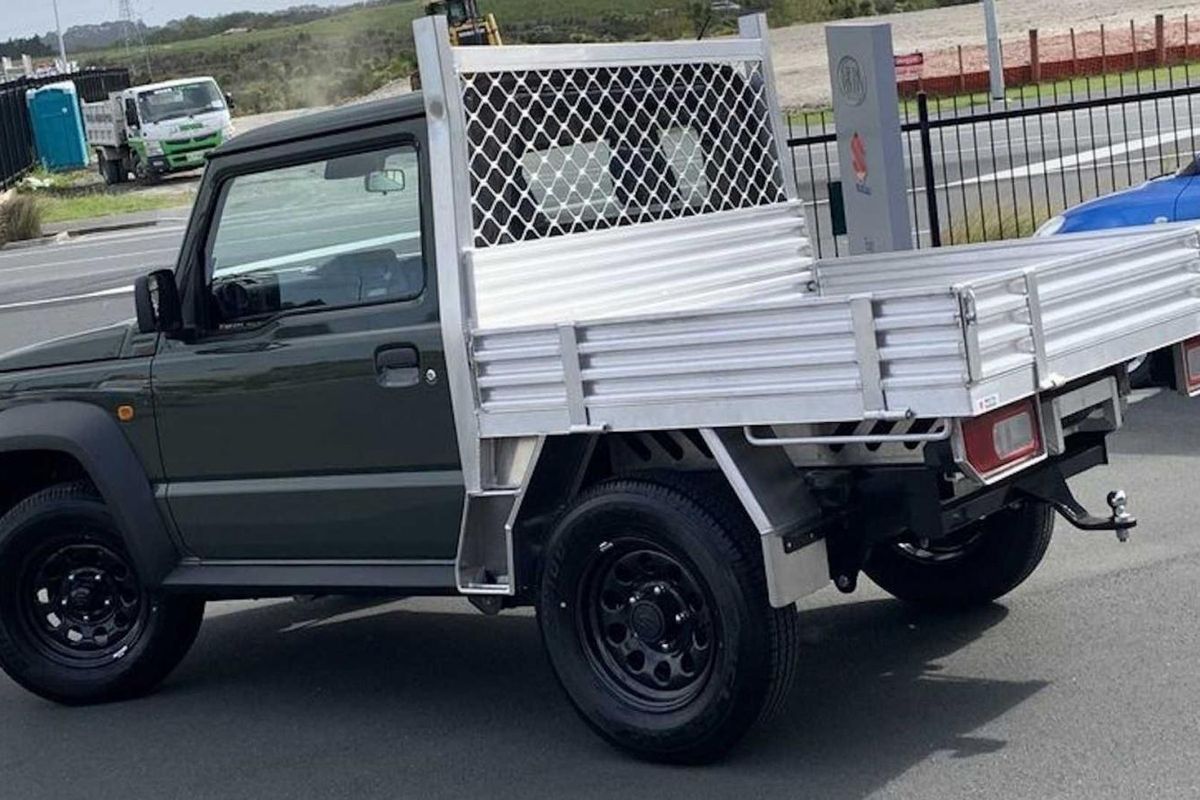
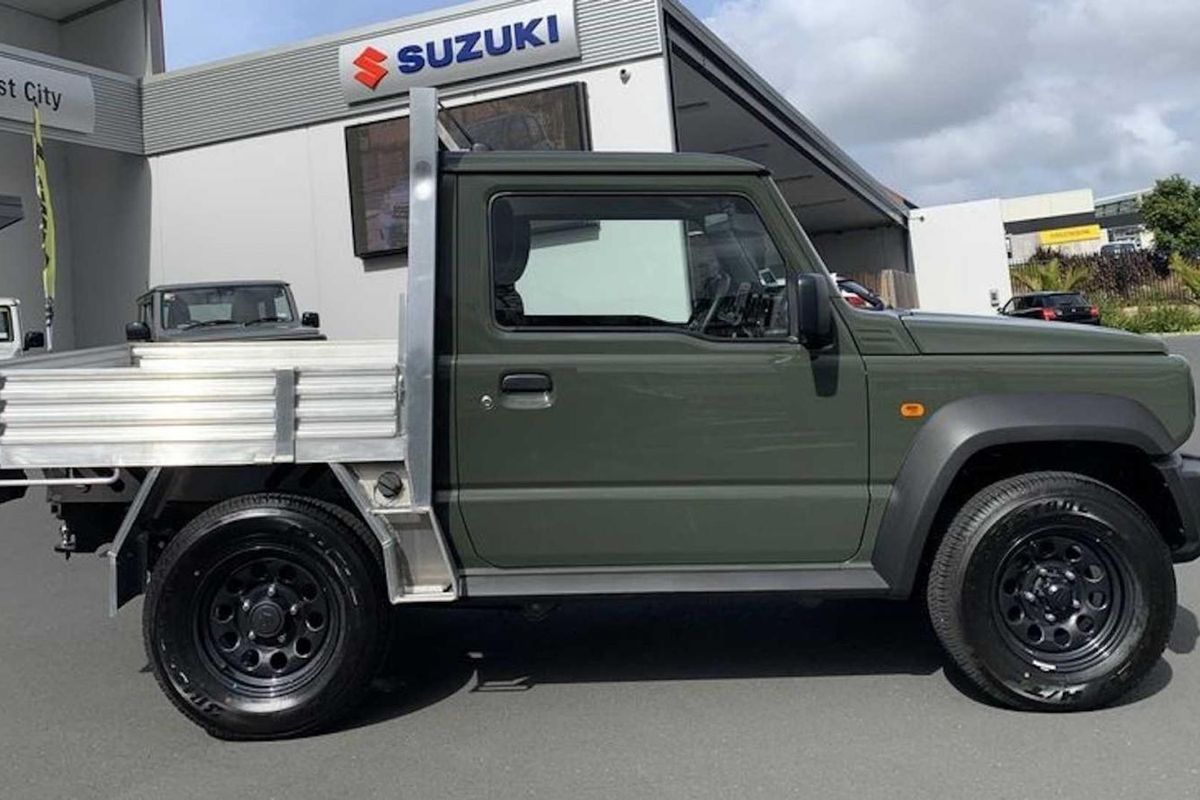
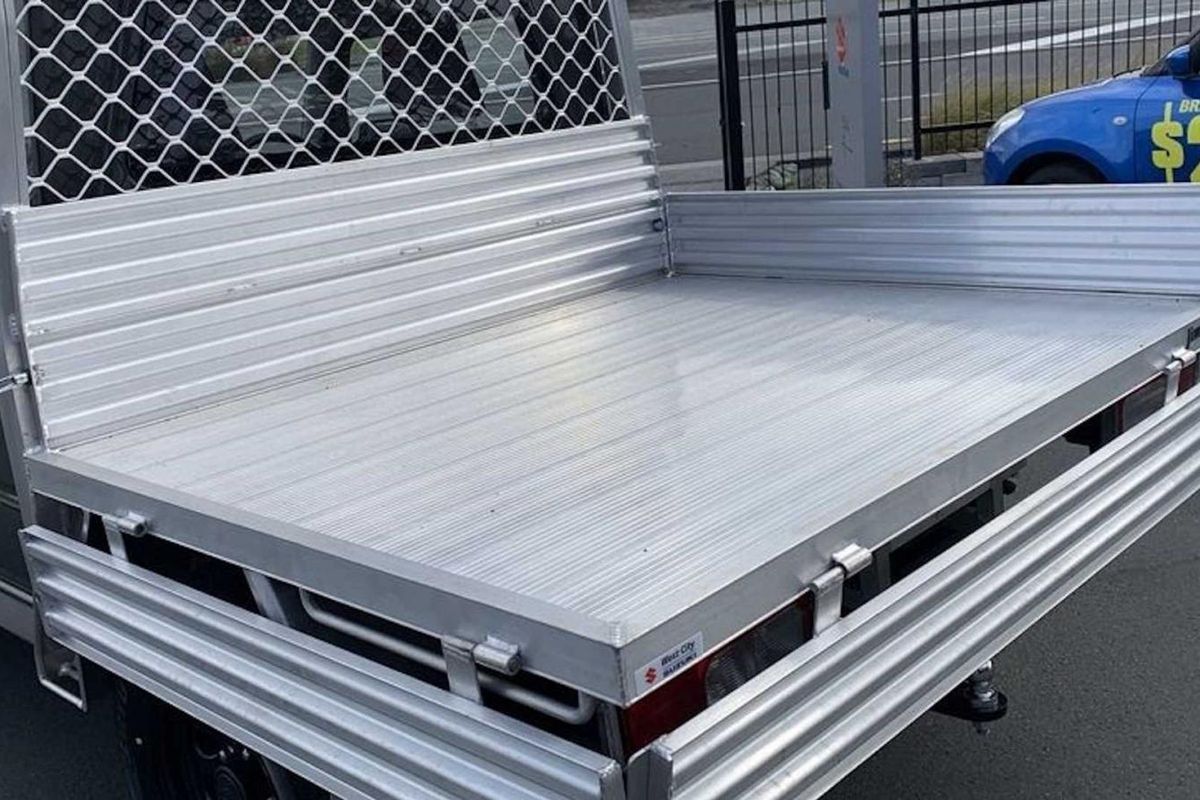
Enter Suzuki New Zealand who has made an official Suzuki Jimny single-cab bakkie. First spotted by Driven.co.nz, this is no backyard hack job either as it is an official product sold with a full warranty. It appears a standard Jimny loses its rear and on goes a small deck over the rear axle. The deck also features collapsable sidings and we estimate it has a capacity of 750 kg. A 3/4 ton in other words. Inside, there's a carpeted area behind the front seats. 

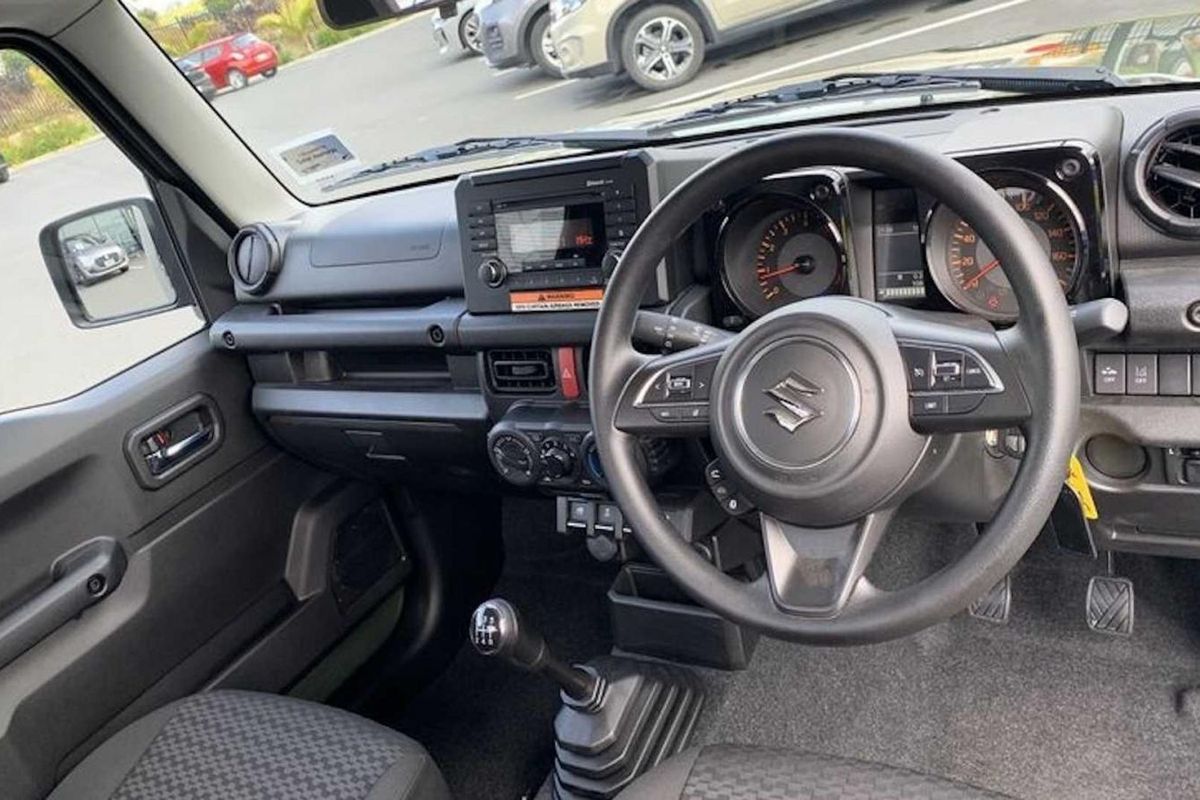
Suzuki New Zealand has based this model on a low-spec of Jimny, so it does lose comfort features like touchscreen infotainment, climate control, LED headlights, alloy wheels and the leather steering wheel. Instead, you get basic halogen lights and black steel wheels, which some will appreciate. The Suzuki Jimny is powered by a 1.5-litre naturally-aspirated 4-cylinder motor producing 75 kW and 130 Nm.

We'd love to see something like a Suzuki Jimny bakkie in SA, given our love for the workhorse. Should Suzuki SA bring some in? 

Further Reading

Suzuki Shows Sierra Marine Jimny

Suzuki Jimny (2018) Launch Review

Suzuki Jimny (2018) Specs & Price

Suzuki Jimny 1.5 GLX (2019) Review [w/Video]