New BMW 118i Review – Has Front-Wheel-Drive Ruined The 1 Series?
BMW's first front-wheel-drive 1 Series joined the market at the end of 2019. Ciro De Siena spent some time behind the wheel of the entry 118i to bring you this video review.
Platform-sharing makes a lot of sense, especially to accountants. BMW has resolutely stuck to rear-wheel or all-wheel-drive drivetrains thus far but for the 1 Series, the allure of sharing drivetrains across the MINI and BMW brands proved too strong for the company to resist.
Add to that that polling BMW customers revealed that most 1 Series drivers couldn't even tell if their very own cars were FWD or RWD. So, here we are in 2020, test driving a FWD 1 Series.
In this in-depth video, our video guy Ciro De Siena takes a detailed look at the newcomer, and tries to answer the question that most people who buy 1 Series couldn't give two hoots about, but many fanboys have lost sleep over: has front-wheel-drive ruined the 1 Series?
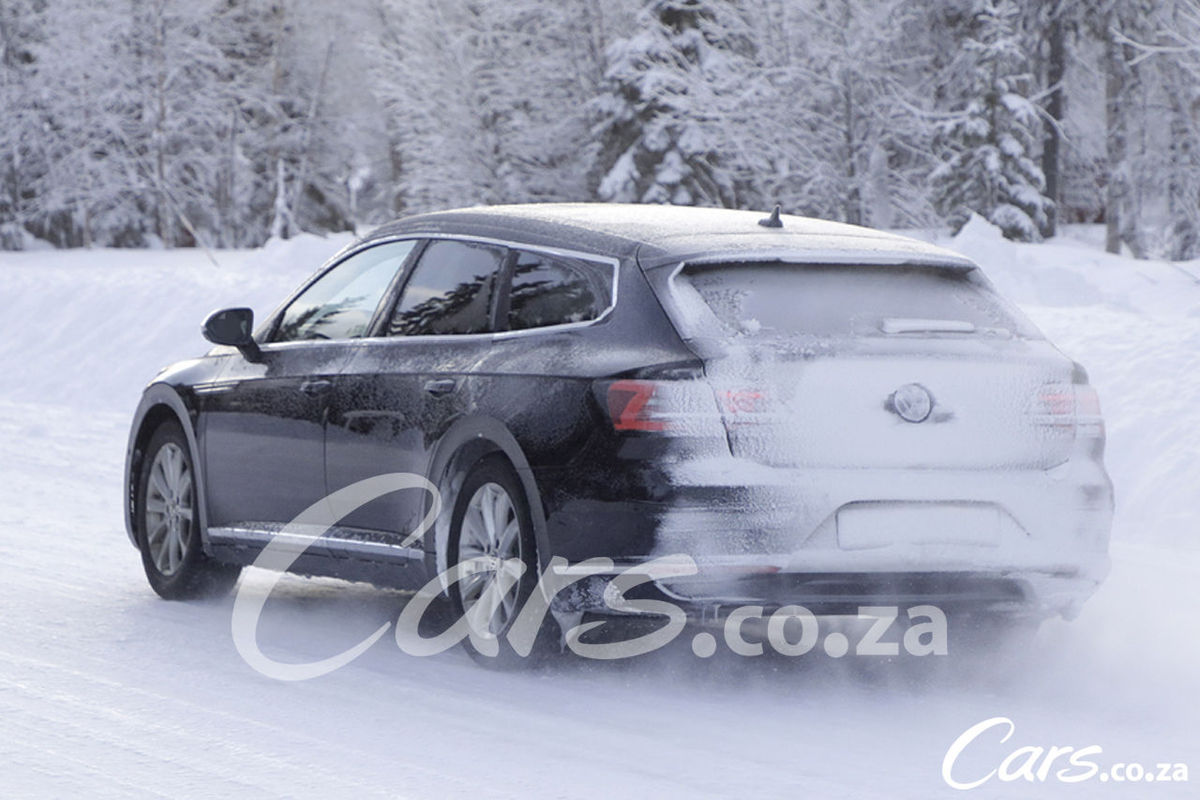
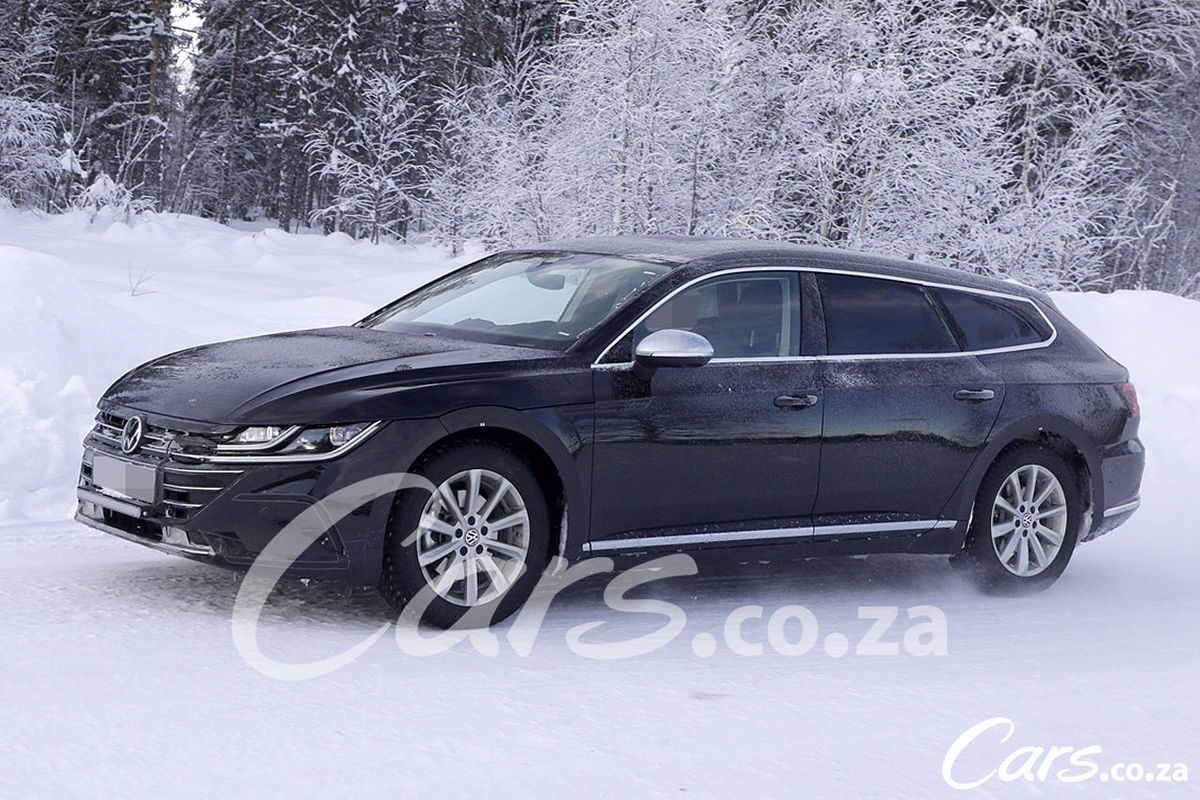
Volkswagen is readying an estate version or Shooting Brake of its Arteon premium sedan. Here's what we know so far.
Picture credit: S. Baldauf/SB-Medien. We have paid for these photos and at the photographer's request, have watermarked them.
The Volkswagen Arteon is a stylish sportback-styled luxury sedan. Powered by a choice of either turbopetrol and turbodiesel engines, the Arteon has a lot going for it. It also bagged a win in the #CarsAwards-powered by WesBank.
Now Volkswagen is working on an interestingly-styled Shooting Brake version of its Arteon which will debut alongside a facelifted model. The Shooting Brake will bring even more practicality to an already spacious vehicle.
The updated Volkswagen Arteon will feature substantial revisions both inside and out, with many speculating it'll gain the all-new infotainment system that's been seen in the new Volkswagen Golf 8. In terms of engines, we're expecting largely the same engines as before, the option of all-wheel drive on some models, which should find favour in the colder European markets. There's also a strong rumour of an Arteon R, packing the same engine from the Volkswagen Golf R.
The sad part of all of this is this is the beginning of the end for Volkswagen's internal combustion engines for this line of cars as the ID Space Vizzion previews the way for a stylish estate powered by electricity. Expect to see the updated Volkswagen Arteon as well as the Arteon Shooting Brake revealed before the end of 2020.
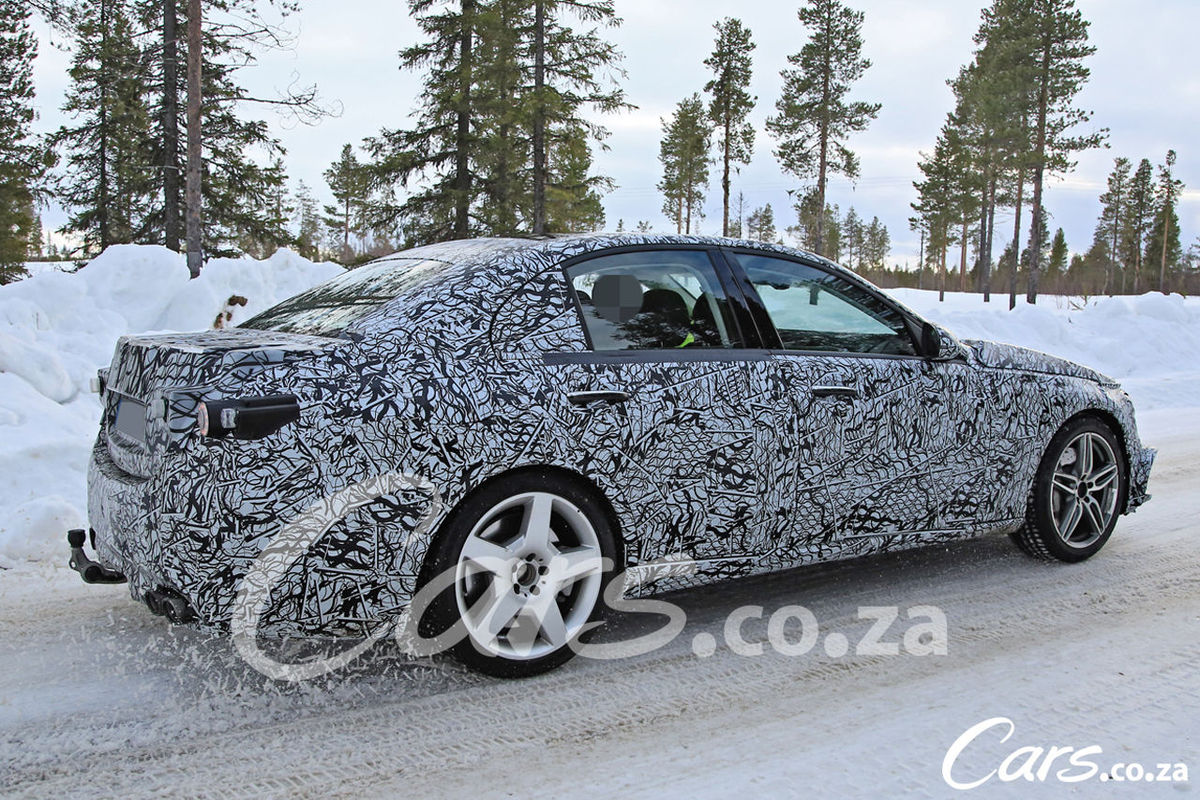
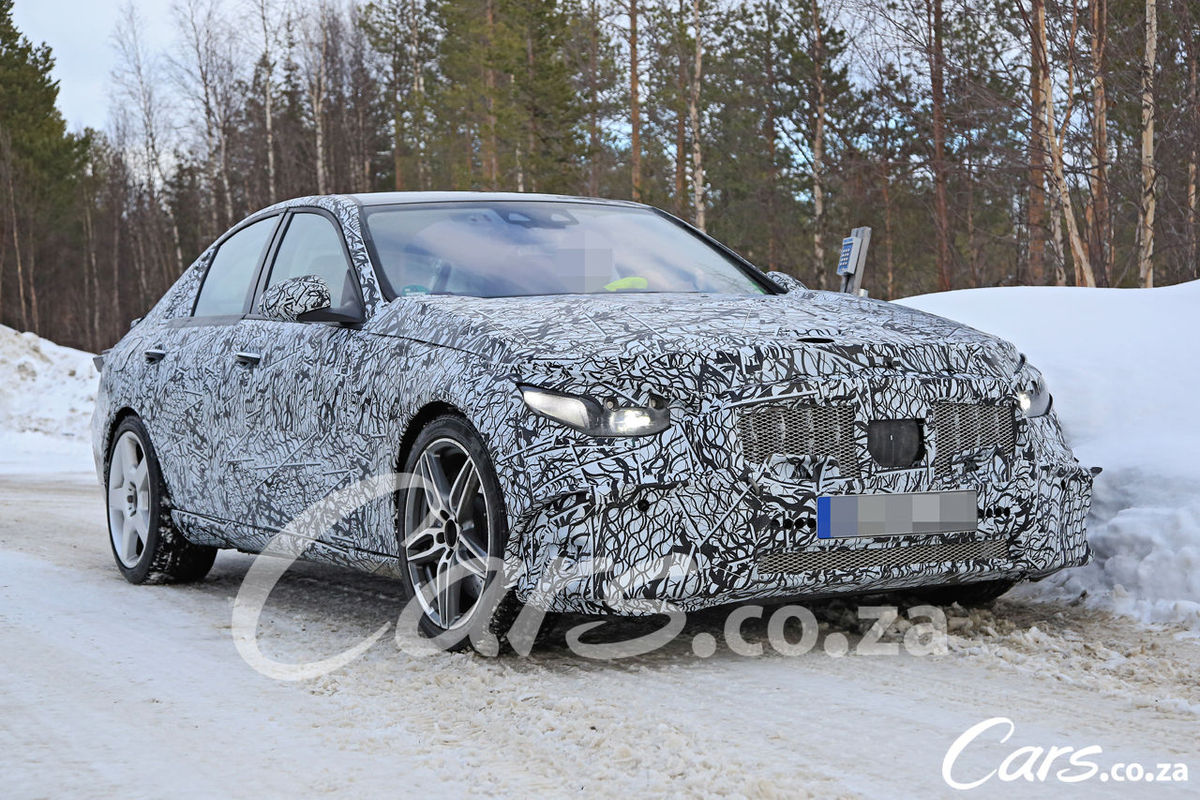
Spy shots of the next-generation performance Mercedes-AMG C-Class have emerged. This will be the new C53.
Picture credit: S. Baldauf/SB-Medien. We have paid for these photos and at the photographer's request, have watermarked them.
The new 5th generation Mercedes-Benz C-Class will be revealed soon, but attention is focusing on the performance variants. When we got wind of the Mercedes-AMG C63 losing its iconic 4.0-litre turbocharged V8 in favour of a 4-cylinder motor, we were keen to see what AMG would come up with.
What you see here is the Mercedes-AMG C53 4Matic, which will rival the BMW M340i xDrive and Audi S4. We know it's an AMG thanks to its grille, performance wheels and big brake callipers. There are also large exhaust tips, indicating this isn't your average C-Class. Under the bonnet is not going to be the 3.0-litre inline 6 like the E53 and CLS 53, but rather an advanced version of the 2.0-litre turbocharged 4-cylinder motor which we've experienced in the compact Mercedes-AMG A45 S hatchback. For the record, that motor produces 310 kW and 500 Nm. That's more power than the current C43 3.0-litre biturbo V6 which makes 287 kW.
Expect to see a production reveal of the all-new Mercedes-Benz C-Class before the end of 2020, with the AMG performance models following on in 2021.
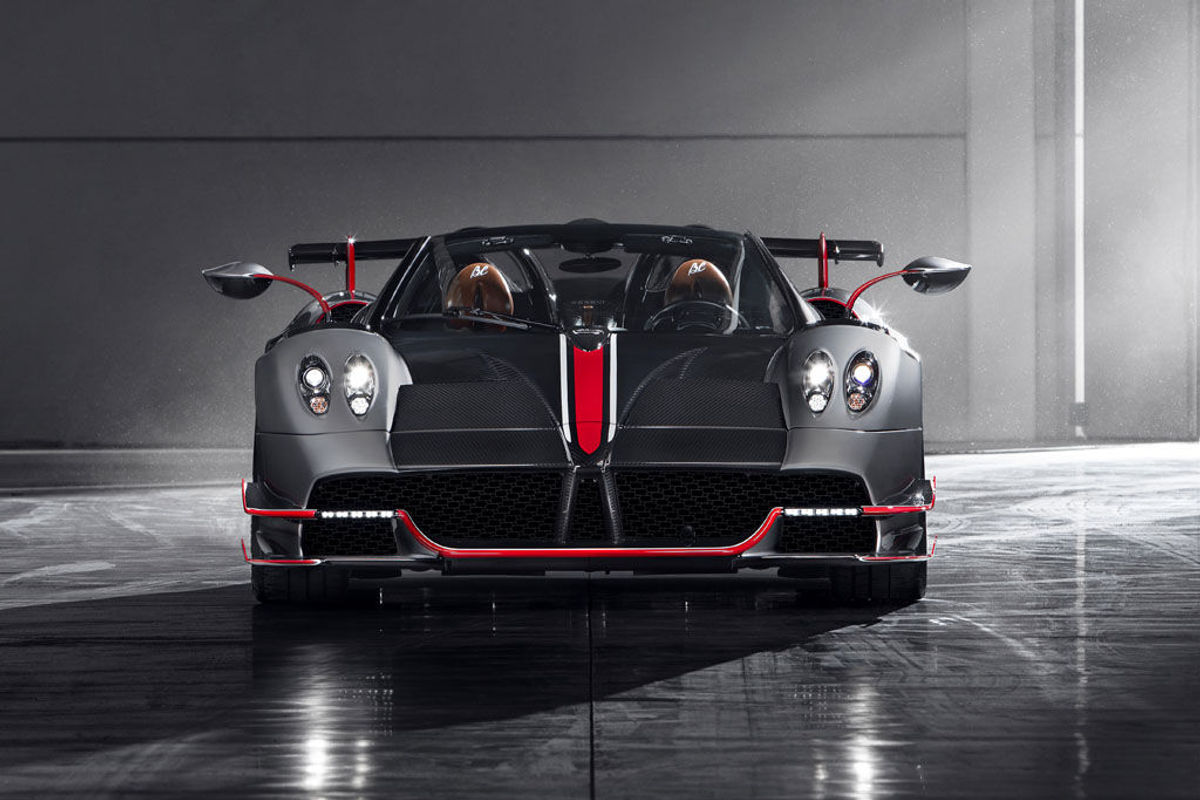
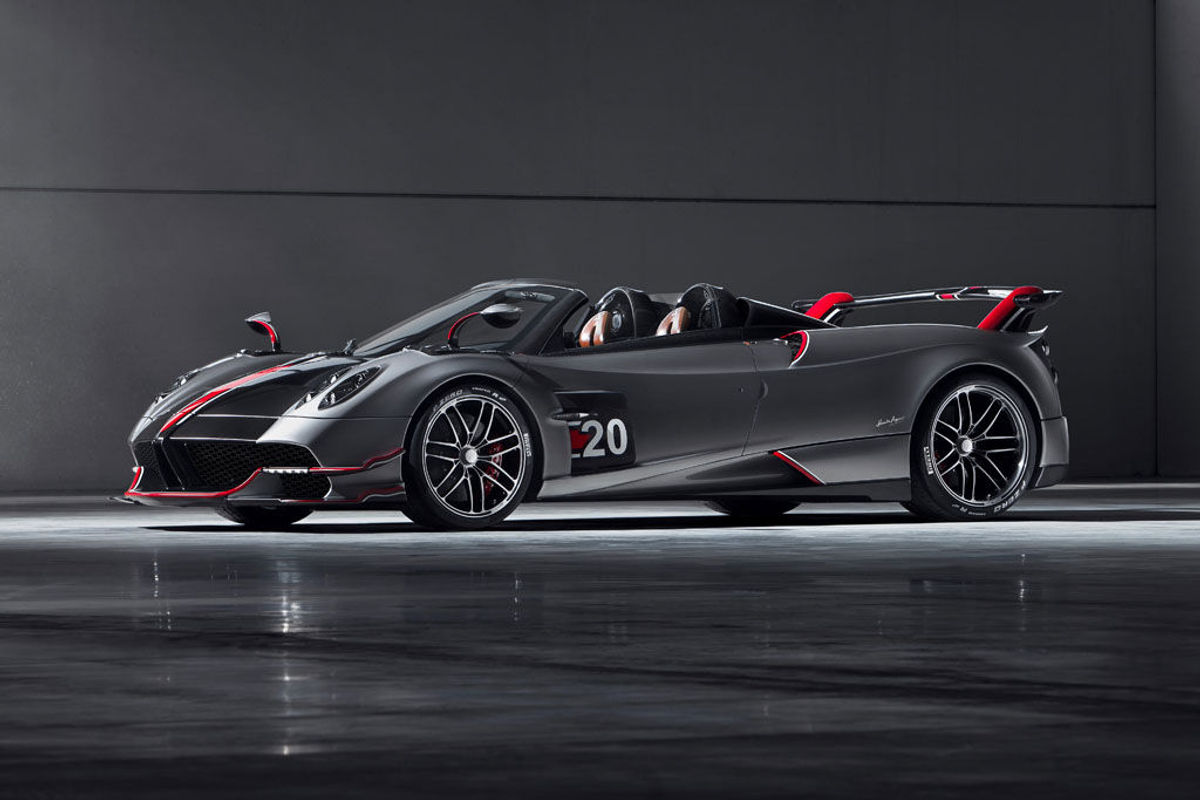
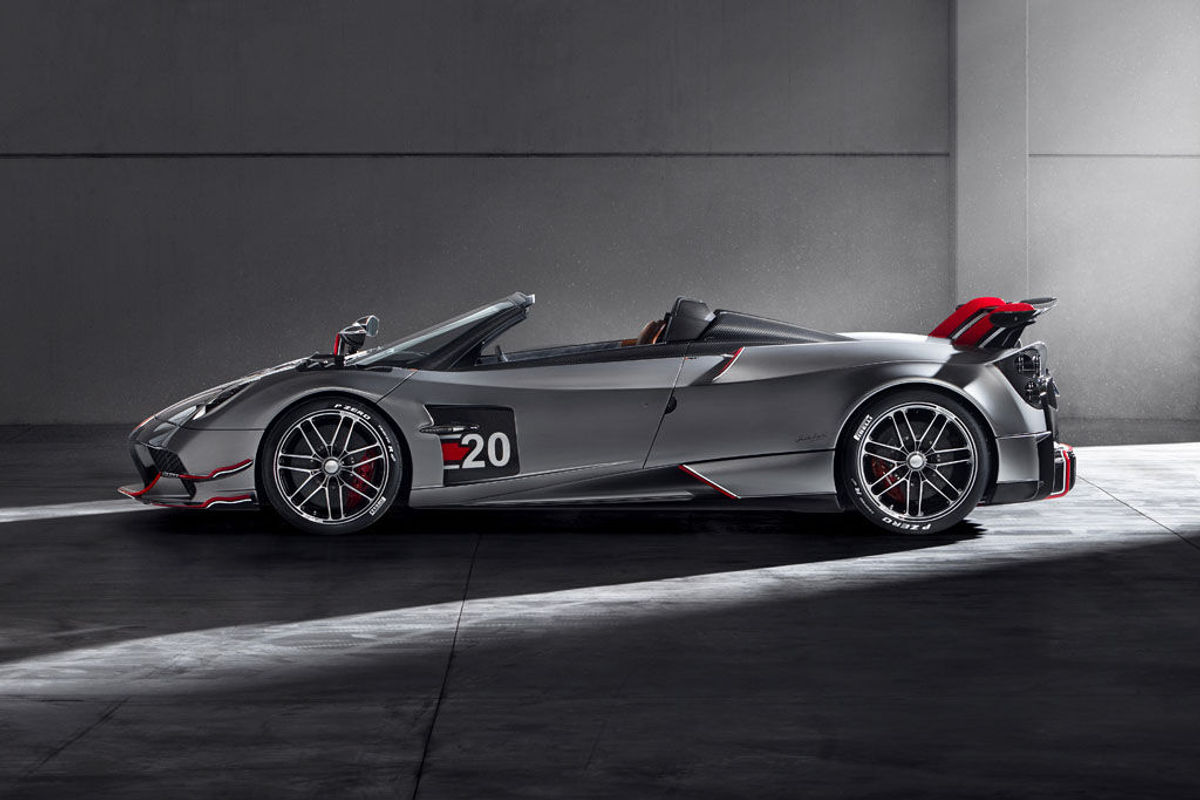
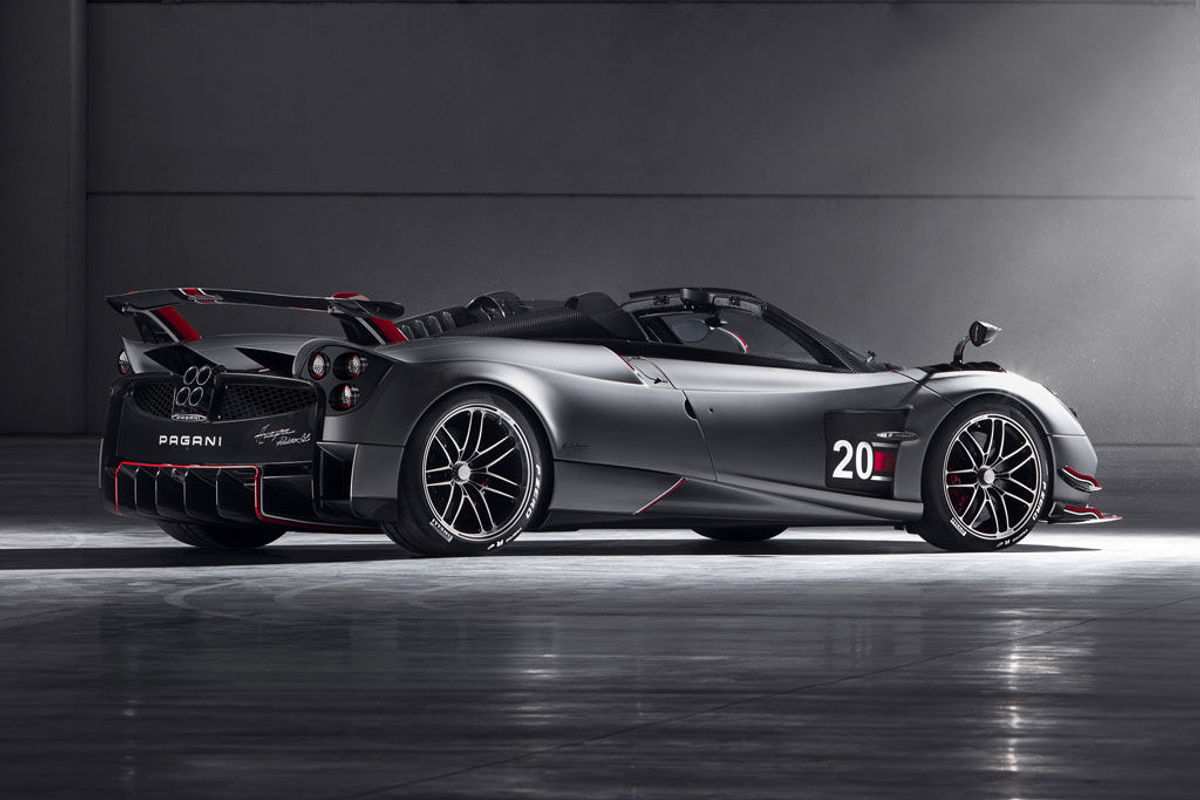
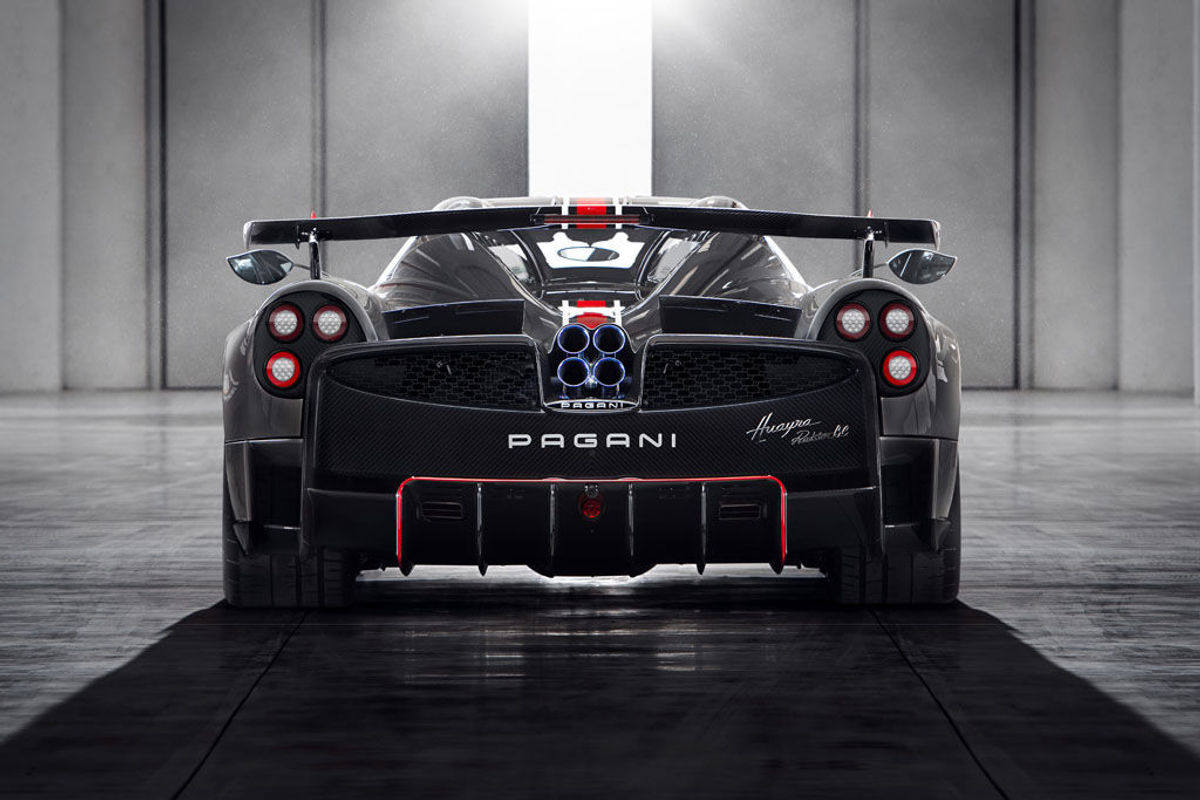
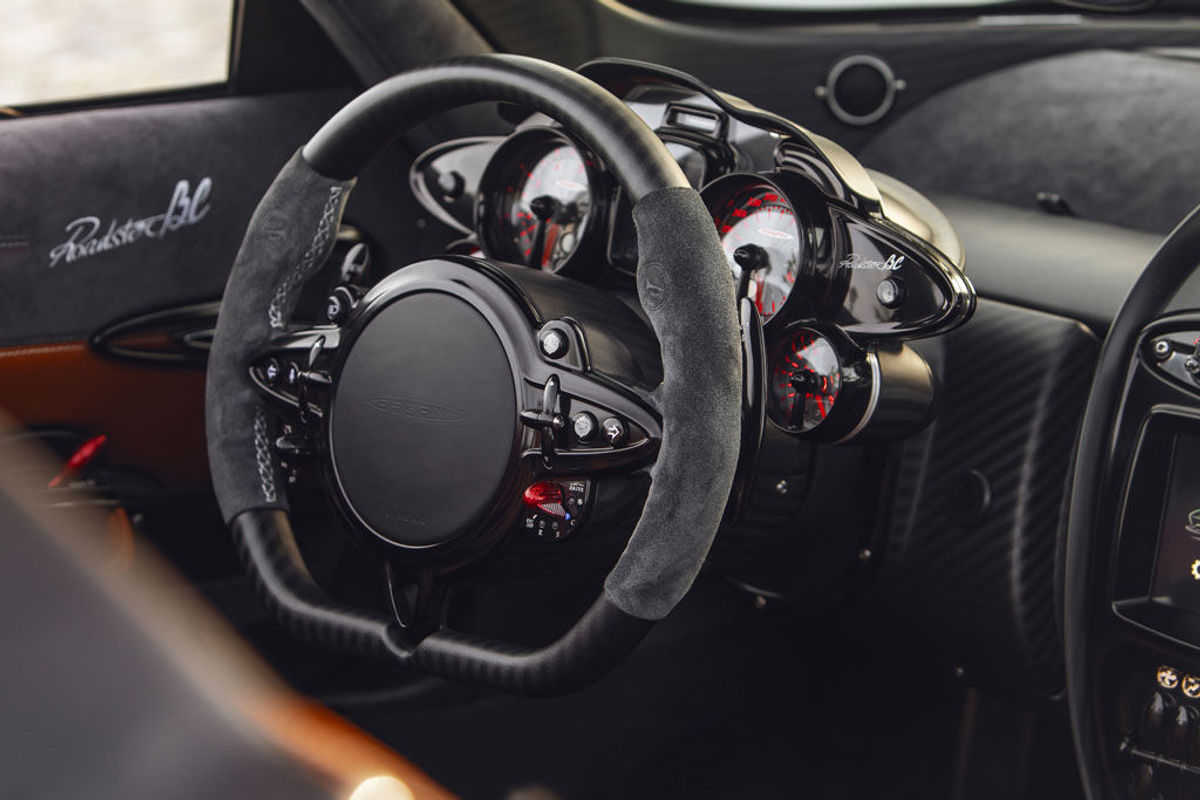
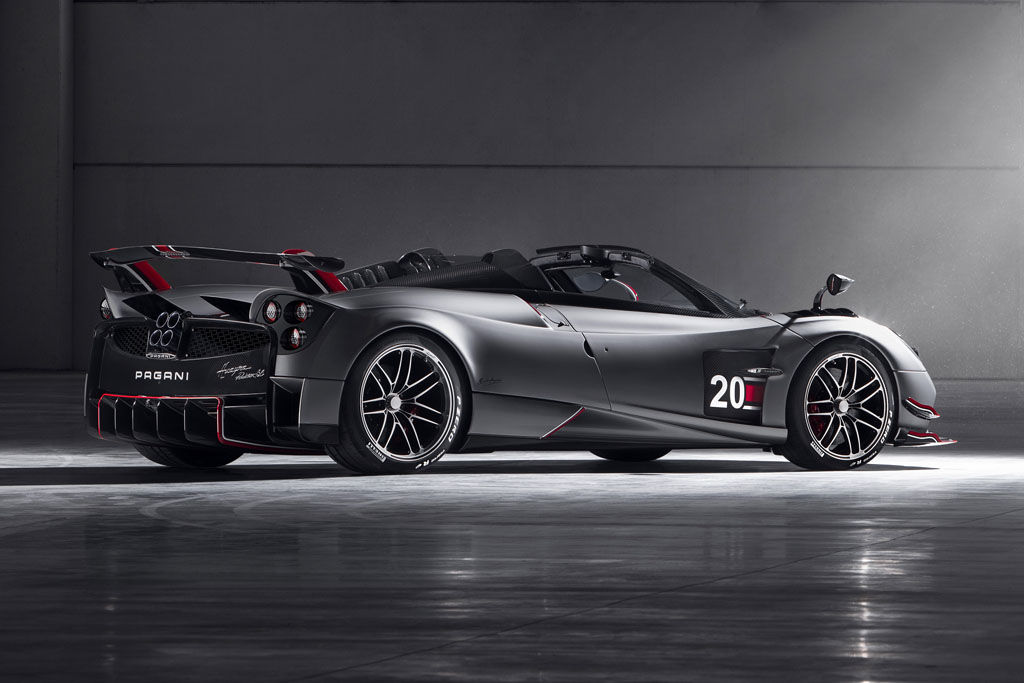
The charismatic founder of the Modena-based supercar maker has unveiled the Imola and BC Roadster derivatives of the Pagani Huayra hypercar on YouTube.
Although both cars were due to be shown at the (subsequently cancelled) 2020 Geneva Show, Mr Pagani opted to reveal both limited-edition machines in the metal, live from the company’s headquarters in Modena, Italy via its official YouTube channel.
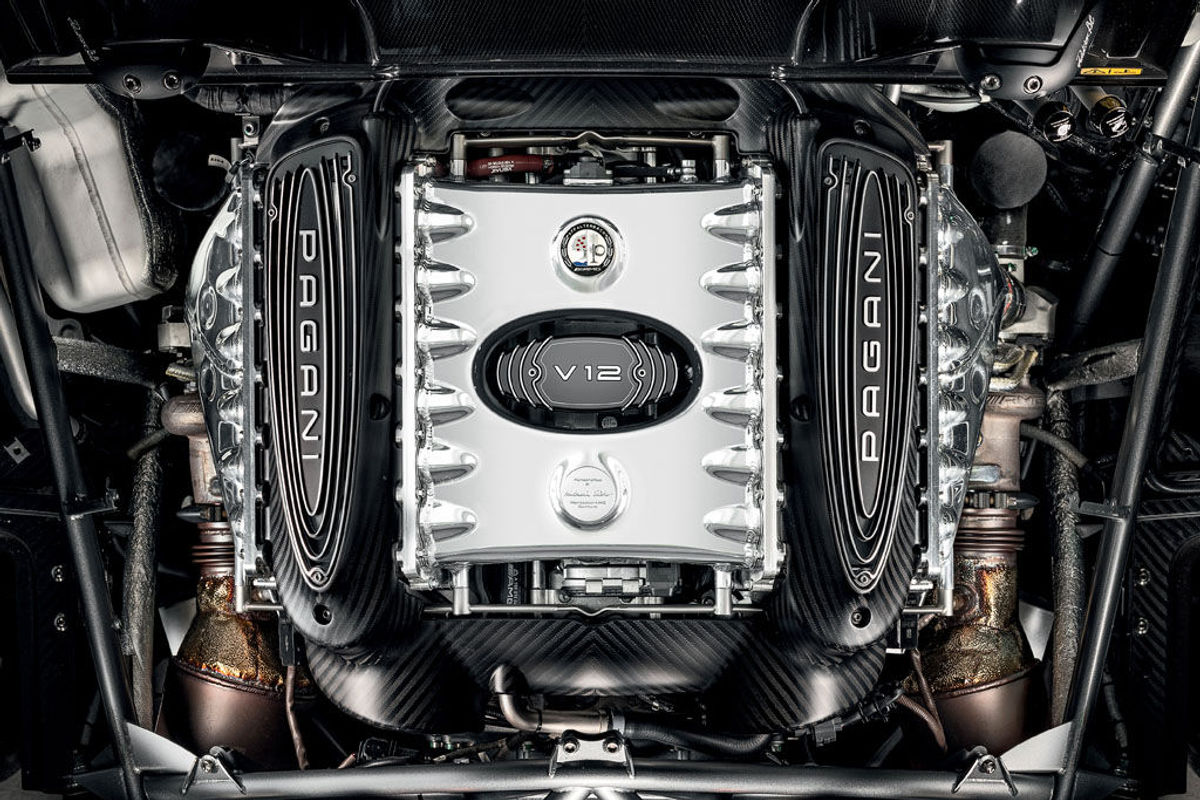
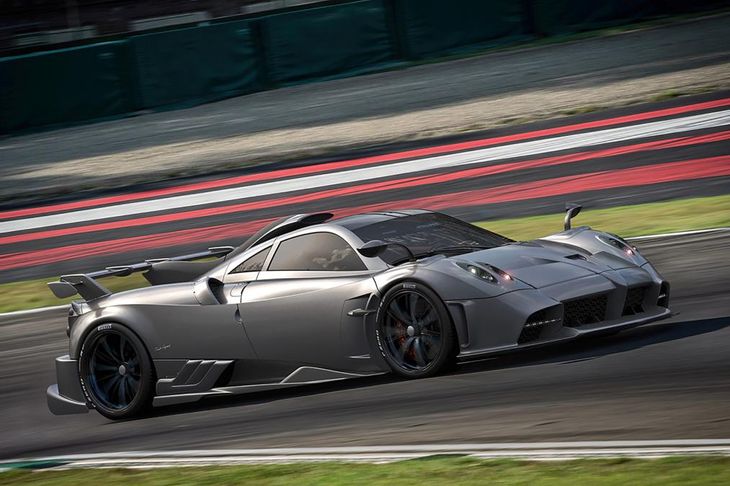
Last month we reported that Pagani would produce just 5 examples of its track-optimised Imola hypercar – the most powerful Huayra the firm has ever built and valued at approximately R80 million. Powered by a newly-developed Mercedes-AMG twin-turbo 6.0-litre V12 engine, the Imola produces peak outputs of 608 kW and 1 100 Nm, but thanks to the extensive use of composite materials, including carbon-fibre and carbon-titanium in its construction, the hypercar weighs just 1 240 kg.
The production run of the Huayra Imola is just 5 units; it features the new 6.0-litre V12 engine from AMG tuned to 608 kW.
The Imola further features a sophisticated aerodynamics package, with a roof-mounted scoop and combination of large wing/diffuser combination at the rear. In partnership with the car’s flat underside, the surface aerodynamic details generate massive amounts of downforce as speeds increase.
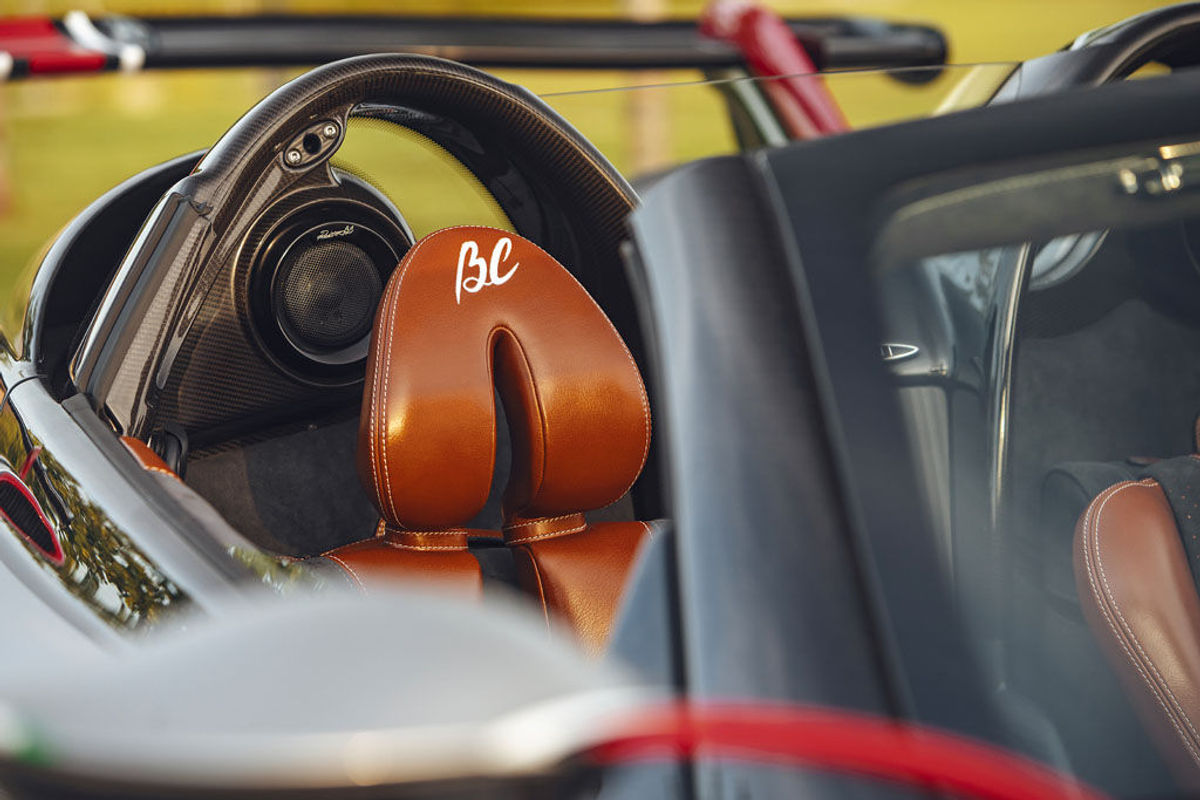
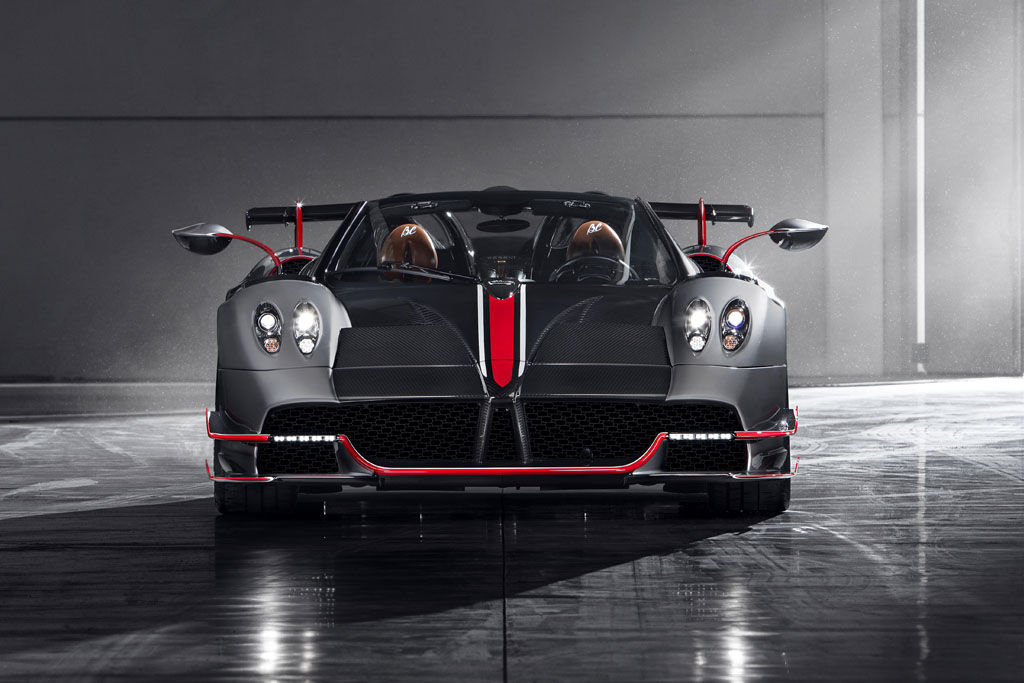
But, apart from the Imola (#3 out of 5), Pagani also showcased the Roadster BC, which tips the scales at only 10 kg more than the Huayra Imola: 1 250 kg…
The Imola and BC Roadster are believed to be two of the last derivatives of the Huayra that Pagani will produce.
In the case of the BC Roadster, its 6.0-litre twin-turbo V12 produces slightly milder outputs (590 kW at 5 900 rpm and 1 050 Nm from 2 000-5 600 rpm) and is mated with a 7-speed sequential gearbox – its flywheel-clutch unit consists of a triple-disc clutch, electronically-controlled diff and a 3-way coupling system – the complete transmission is 35% lighter than a comparable dual-clutch ‘box.
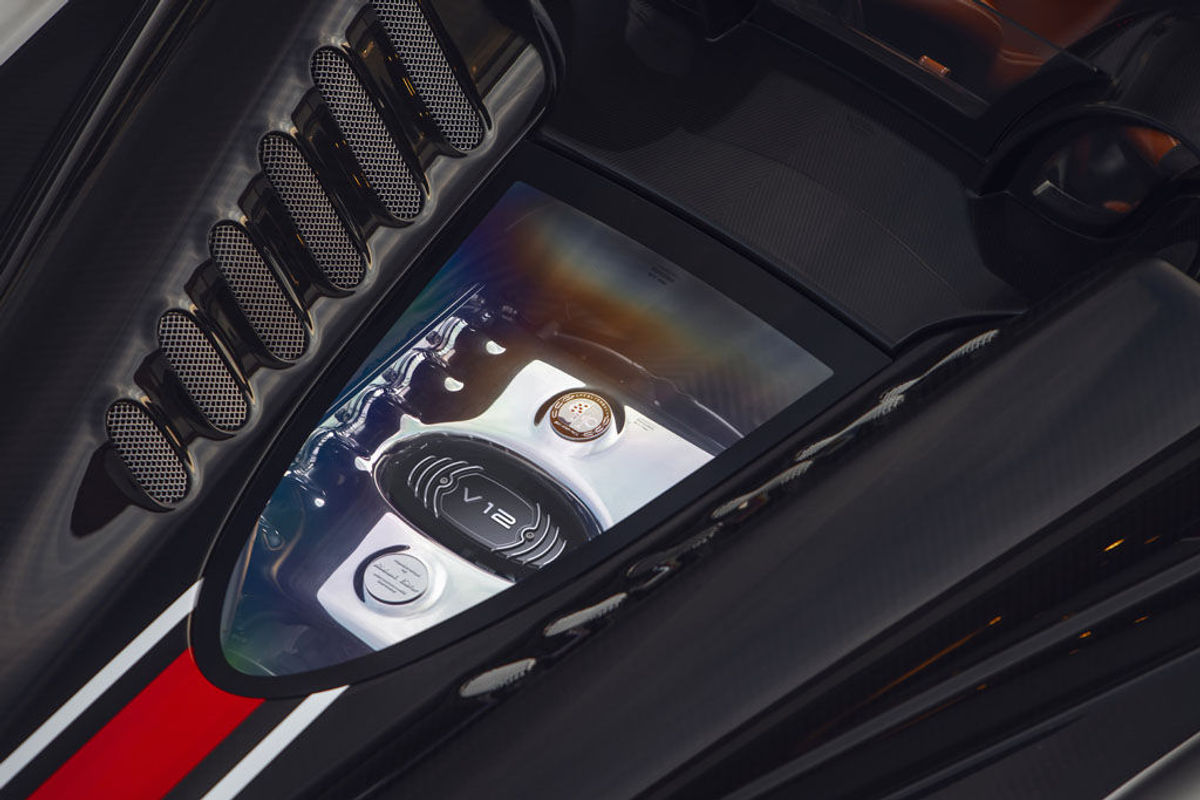
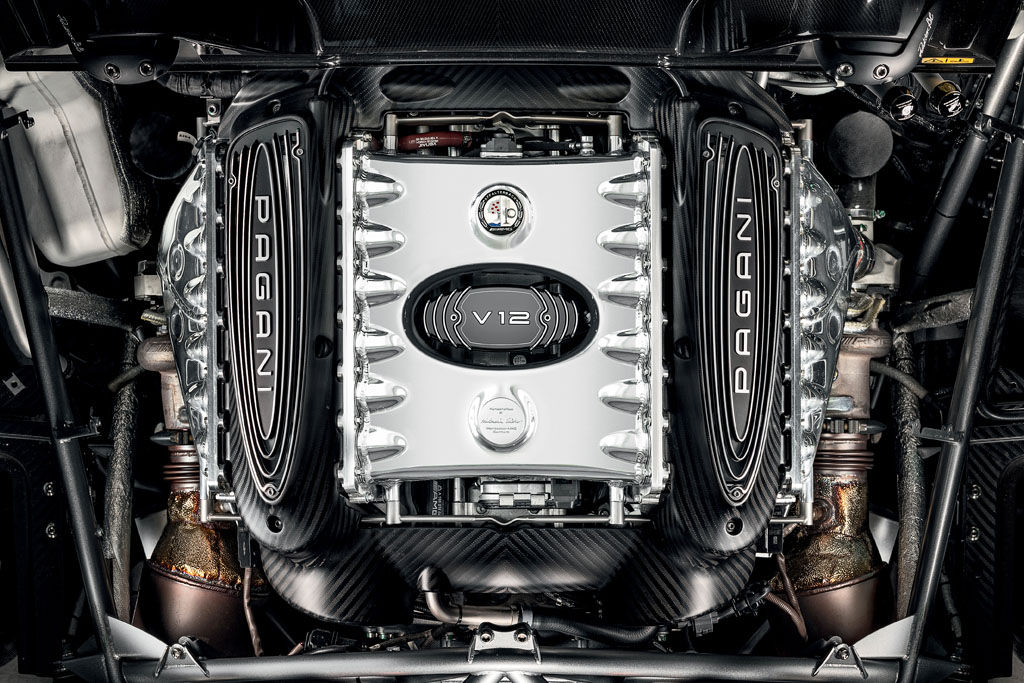
Apart from a pair of new-generation turbos, the Affalterbach-built V12 features a novel hydroformed manifold, twin throttle bodies and no fewer than 4 intercoolers. Meanwhile, the monster engine’s titanium 6-pipe exhaust features 2 extra direct outlets from the catalytic converters to exploit the “blown-diffuser” principle of the BC Roadster’s active dynamics to generate further downforce.
Mercedes-AMG builds the Pagani's twin-turbo V12 motor exclusively for the Italian supercar firm.
As such, the Roadster BC was designed to generate an aerodynamic load with a downforce target of 500 kg at 280 kph, while maintaining a ground clearance “that will allow passengers to (still) enjoy driving it on public roads".
With the benefit of Pirelli PZero Trofeo R tyres (20-inch at the front, 21-inch at the rear), which were tailor-made for the model, the open-topped Pagani is claimed to go from 0-100 kph in 3 seconds, hit a top speed of 383 kph and achieve lateral acceleration of 1.9g during constant running, with peaks of 2.2g, and a longitudinal deceleration of 2.2g.
The BC Roadster is shod with 14-spoke APP forged monolithic aluminium alloys (20-inch at the front, 21-inch at the rear).
To help the BC Roadster remain firmly (and safely) on terra firma, the newcomer is underpinned by a forged aluminium-alloy independent double wishbone suspension with helical springs and electronically-controlled shock absorbers.
Stopping power comes courtesy of a Brembo carbon-ceramic system, with 398×36 mm discs with 6-piston calipers at the front, with 380×34 mm units with 4-piston calipers at the rear.
Compared to the Imola, the BC Roadster is in relatively generous supply… Instead of just 5 cars, Pagani will build 40 units. Price? It’s yours for R57 million (we assume that excludes delivery).
Watch a video that details how the BC Roadster was developed:
Safari 911 meets Dakar 959 as legendary Porsche specialist Gemballa takes the 911 where it was never meant to go.
If a Cayenne Coupe Turbo is too tame for Porsche fans, they might soon have the option of something much wilder.
Legendary Porsche specialist, Gemballa, is planning a radical version of the 911 which might have particular appeal to South Africans wishing to explore gravel roads at supercar speeds.
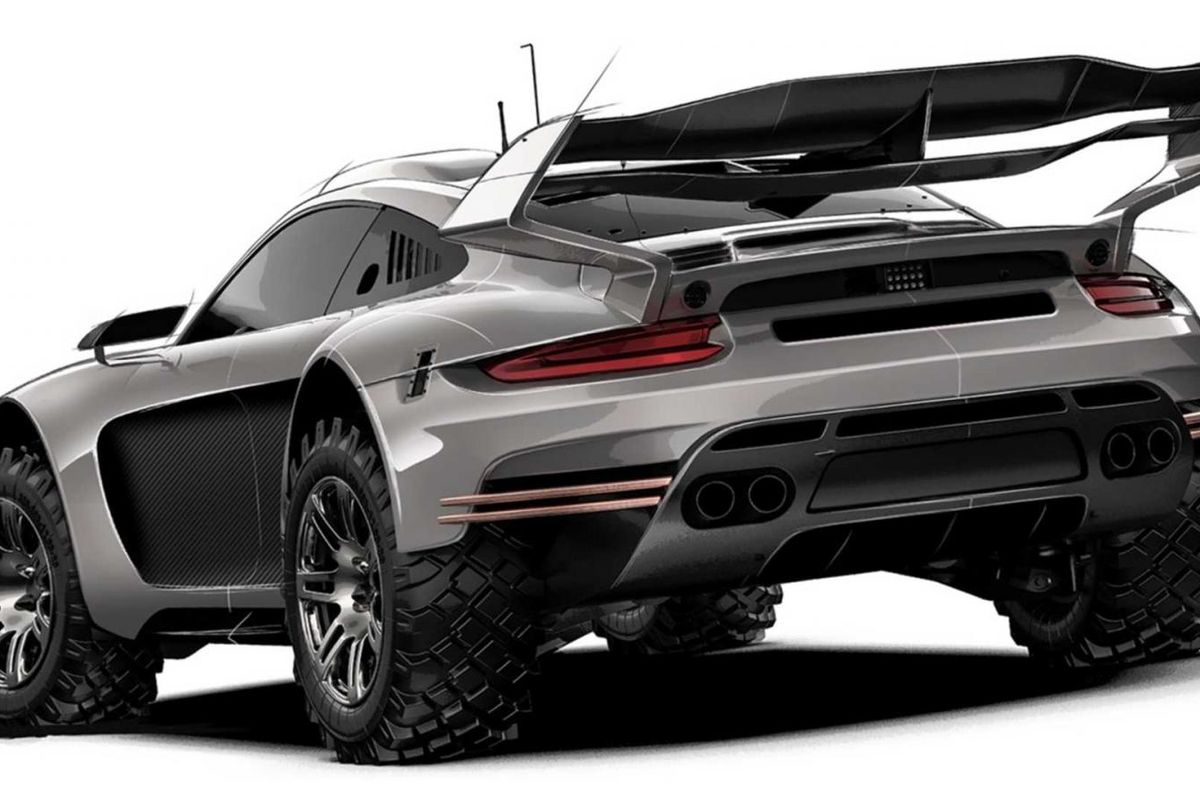
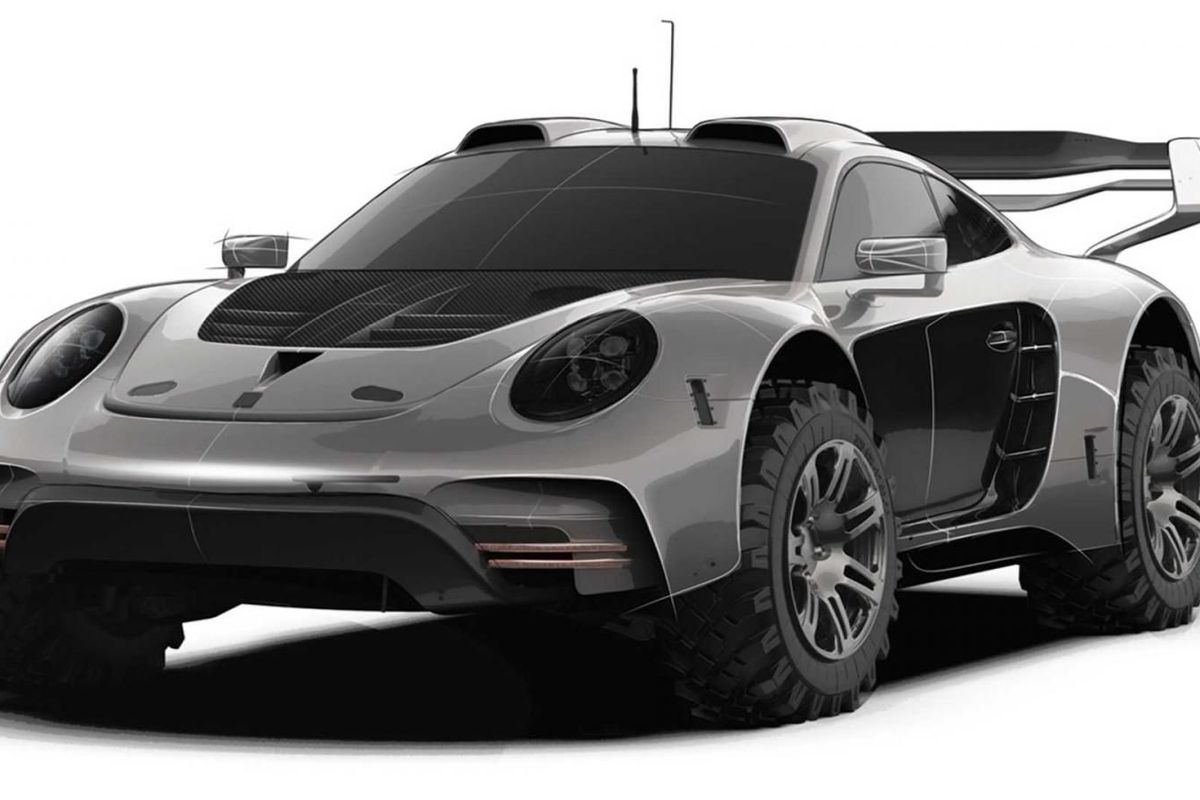
The car in question will be a high-riding version of the Gemballa's Avalanche, adding a lot of ground clearance to Porsche’s 911 platform. Porschephiles will notice the design sketches based on a 991, instead of the current 992. Gemballa is confident that its Avalanche upgrade will be applicable to the current 911 too.
In typical Gemballa style, the overall design is outrageous, with enormous wings and air inlets, all of which justify their presence by virtue of some aerodynamic or cooling benefit.
Gemballa’s Avalanche 4×4 will also feature massive wheel arches to accommodate oversized off-road tyres. The company is not yet at liberty to explain how it will achieve the huge increase in ride height shown in these 911 Avalanche design sketches, but it will certainly involve custom fabricated suspension components.
Although Gemballa gas been coy about exact engineering details or the presence of specific off-road traction system, the Avalanche should feature an abundance of power. Gemballa’s modified version of Porsche’s 3.8-litre flat-six engine is twin-turbocharged and good for 609 kW, which would theoretically give this 911 Avalanche incredible performance, over any terrain.
Production is scheduled for the end of 2020. Those Porsche followers who believe the company’s coolest ever car was the 959 Dakar racer, could have their interest piqued by this Gemballa 911 Avalanche 4×4.
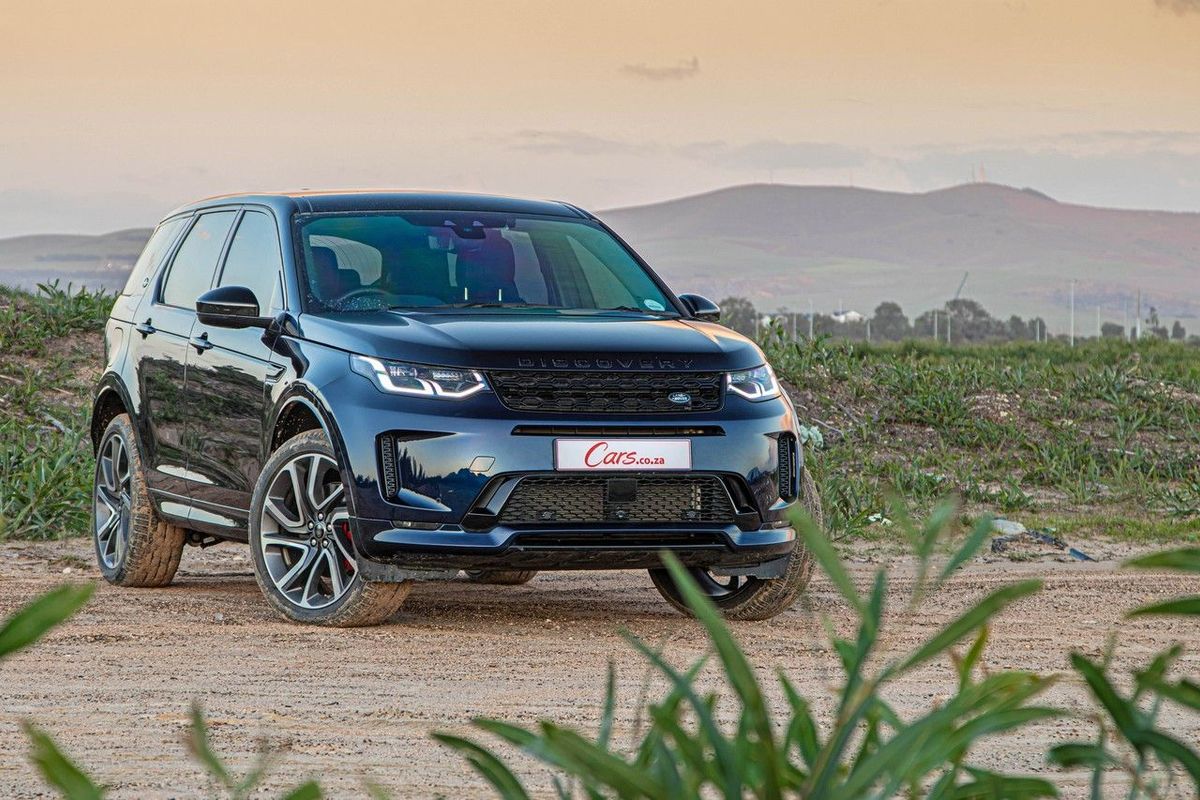
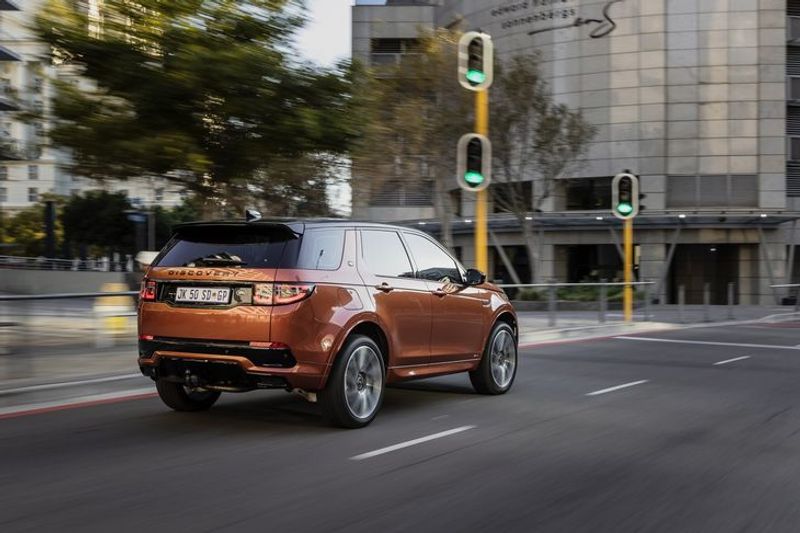
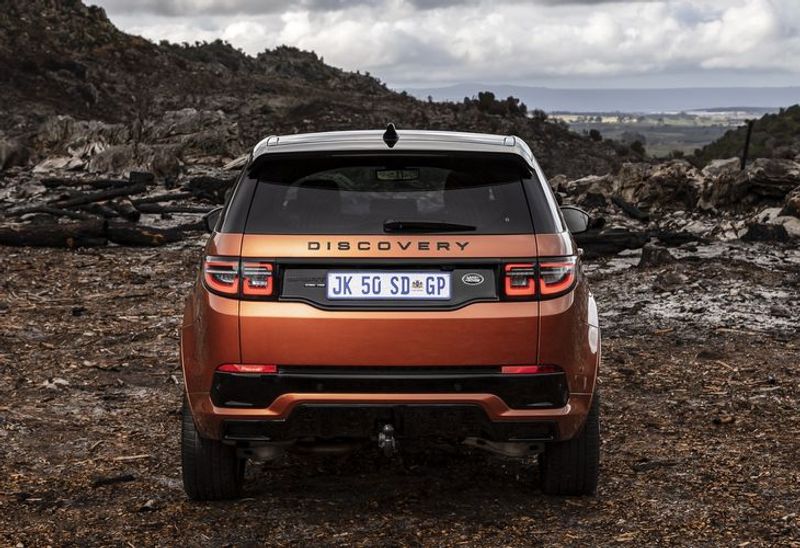
The facelifted Land Rover Discovery Sport has arrived in South Africa and we spent an extensive 2 days sampling the newcomer across a variety of terrains.
The Land Rover Discovery Sport is a 7-seater Executive SUV and a past #CarsAwards – powered by WesBank – Lifestyle SUV and Leisure Car category winner. Given how SUVs have dominated global sales charts, it's imperative that Land Rover keeps pace with its rivals and the British brand has duly released a substantially-updated version of its Discovery Sport.
What's changed & what's on offer?
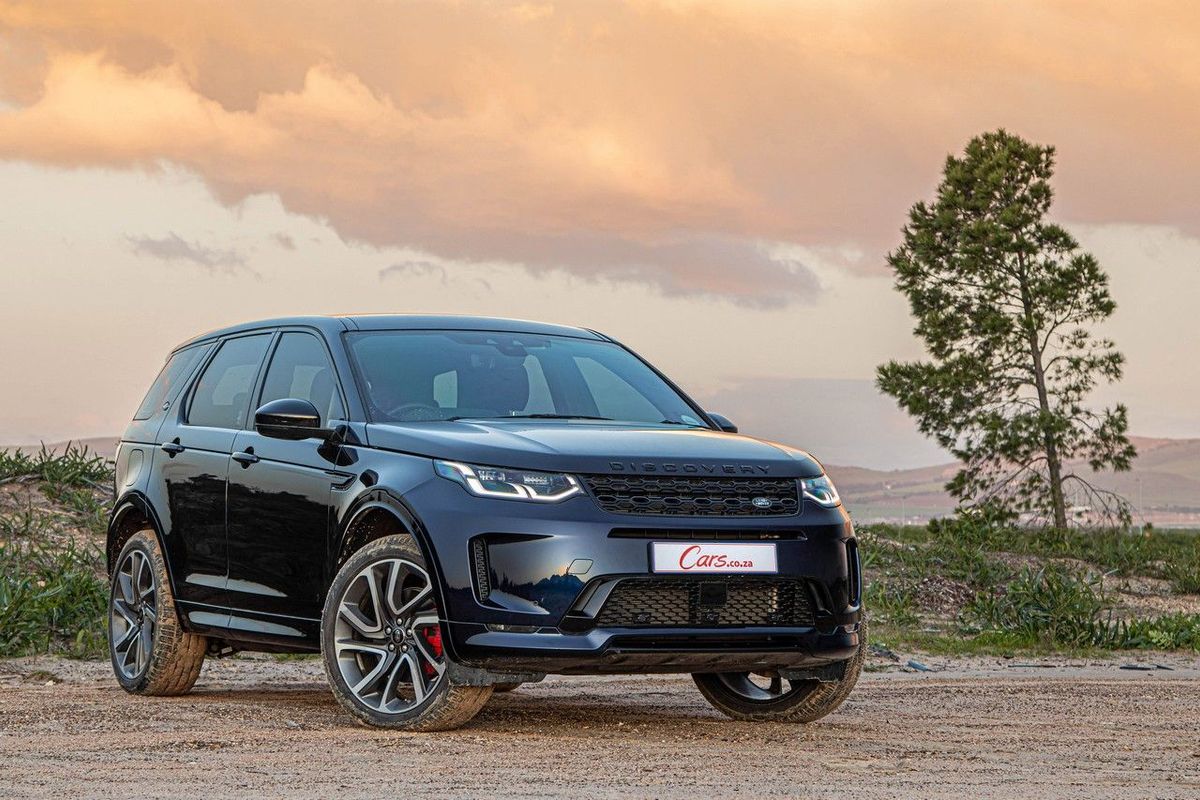
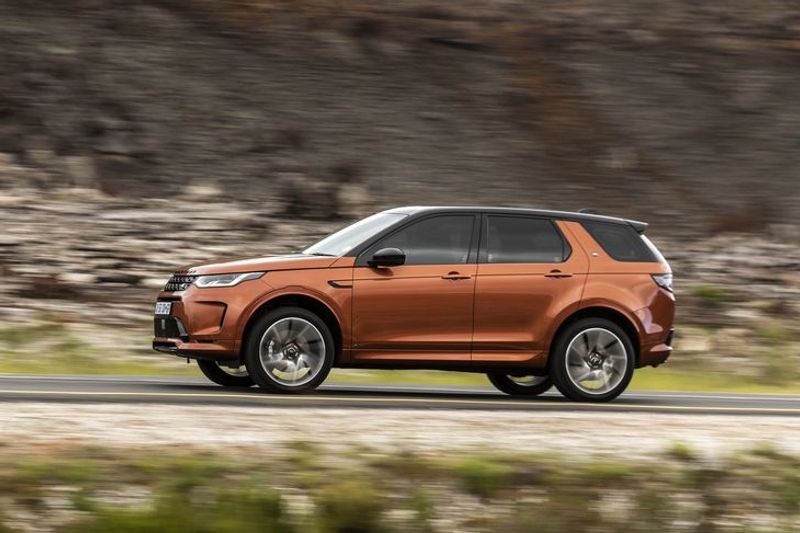
The Land Rover Discovery Sport has been given a substantial update, both inside and out.
In South Africa, the new Land Rover Discovery Sport is available in either base- or, for those want something sportier, R-Dynamic, trim, the latter of which is offered in S, SE and HSE specifications. There are 2 engines in the launch line-up; Land Rover has dipped into its diverse powertrain inventory and installed the Ingenium 2.0-litre turbopetrol and -diesel powerplants in the updated range.
We only had the turbodiesel D180 units to sample on the launch and, given our prior experience with the petrol-engined Discovery Sport, the former is the one to have based on its superior fuel economy (Land Rover claims an average consumption figure of 5.8 L/100 km). The 2.0-litre turbodiesel delivers 132 kW and 430 Nm, while the petrol equivalent produces a more performance-orientated 184 kW and 365 Nm. All derivatives feature all-wheel drive, as well as a revised 9-speed automatic transmission. An uprated fuel tank of 65 litres has also been added,
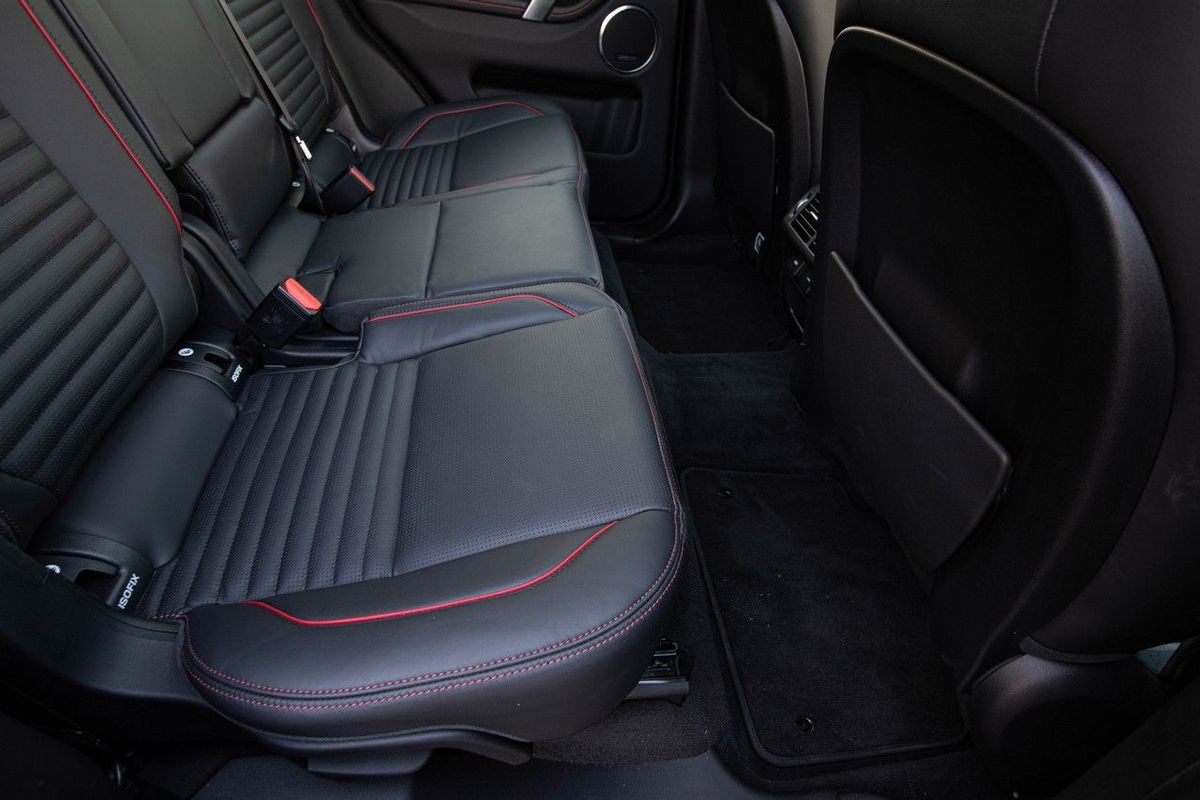
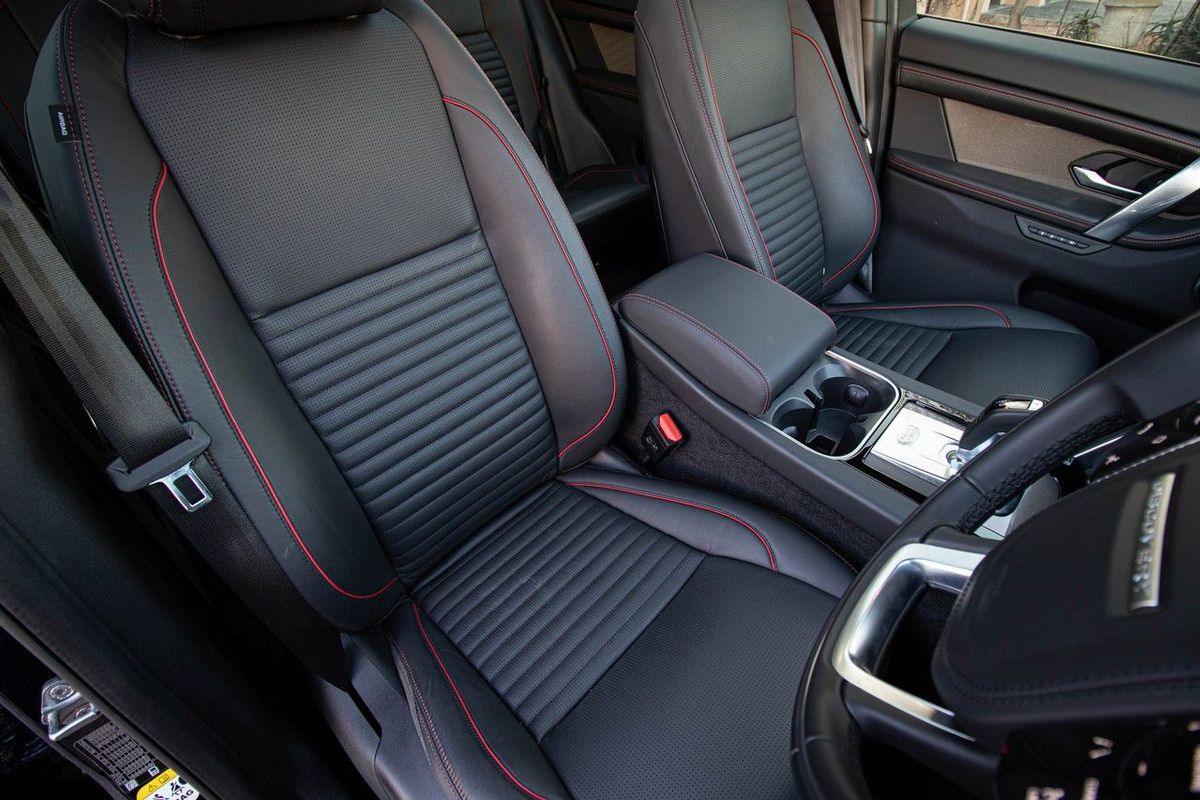
The real changes are to be found under the newcomer's sheet metal, with a switch to a more modern platform (which also underpins the new Range Rover Evoque). This new architecture is stiffer and claimed to facilitate improvements in terms of noise- and vibration reduction, occupant comfort, as well as safety. Needless to say, the newcomer's appearance has been given a subtle update and we really like the new LED headlights, while the cabin gains some more luxury trim. There's a rejigging of the seating arrangements: the Discovery Sport is marketed as a 7-seater SUV, but its 3rd row of seats is optional. If so equipped, up to 24 seating combinations are available! As for the seats themselves, Land Rover says they're brand new; the 2nd row can be folded in a 40:20:40 configuration.
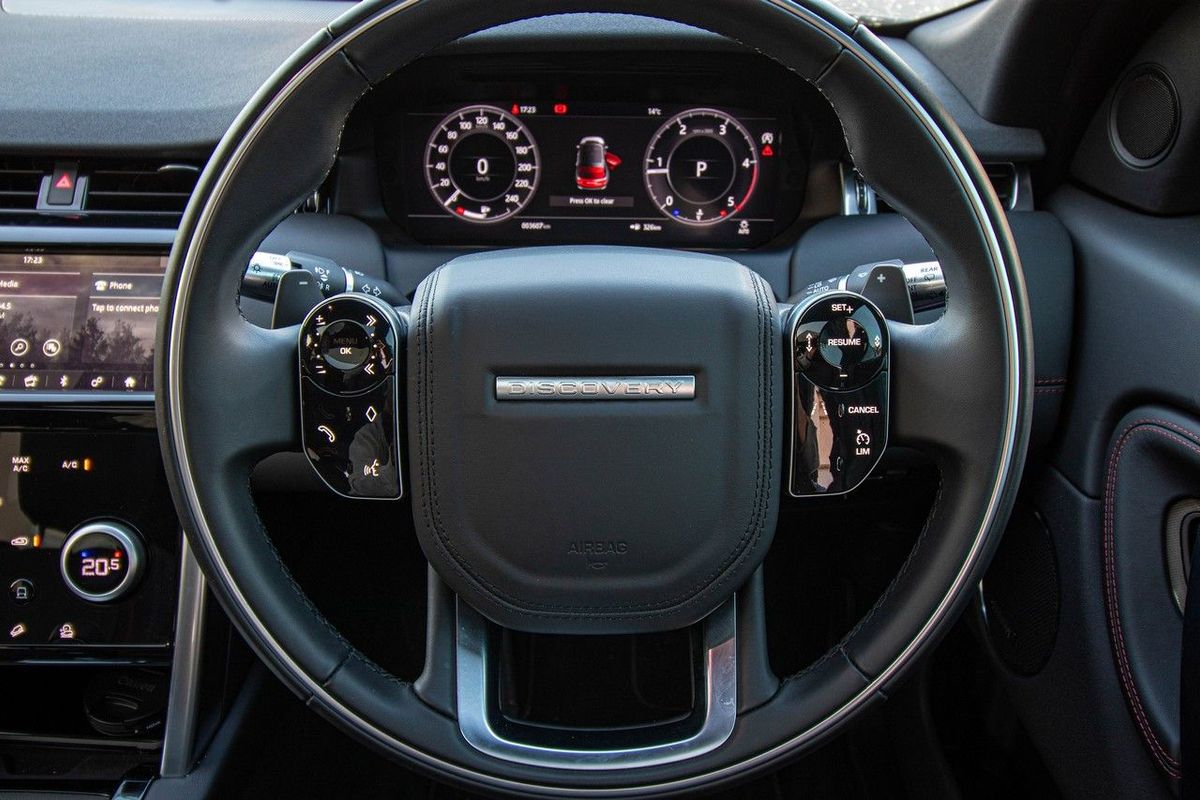
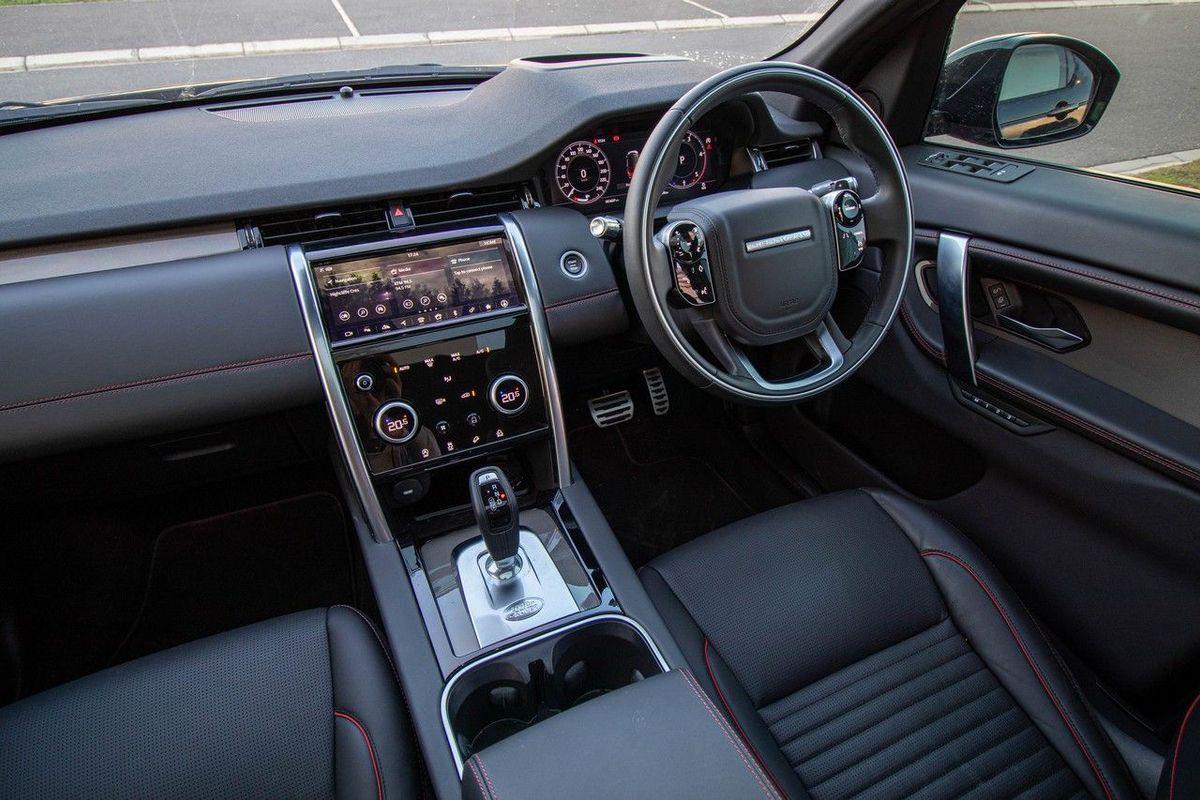
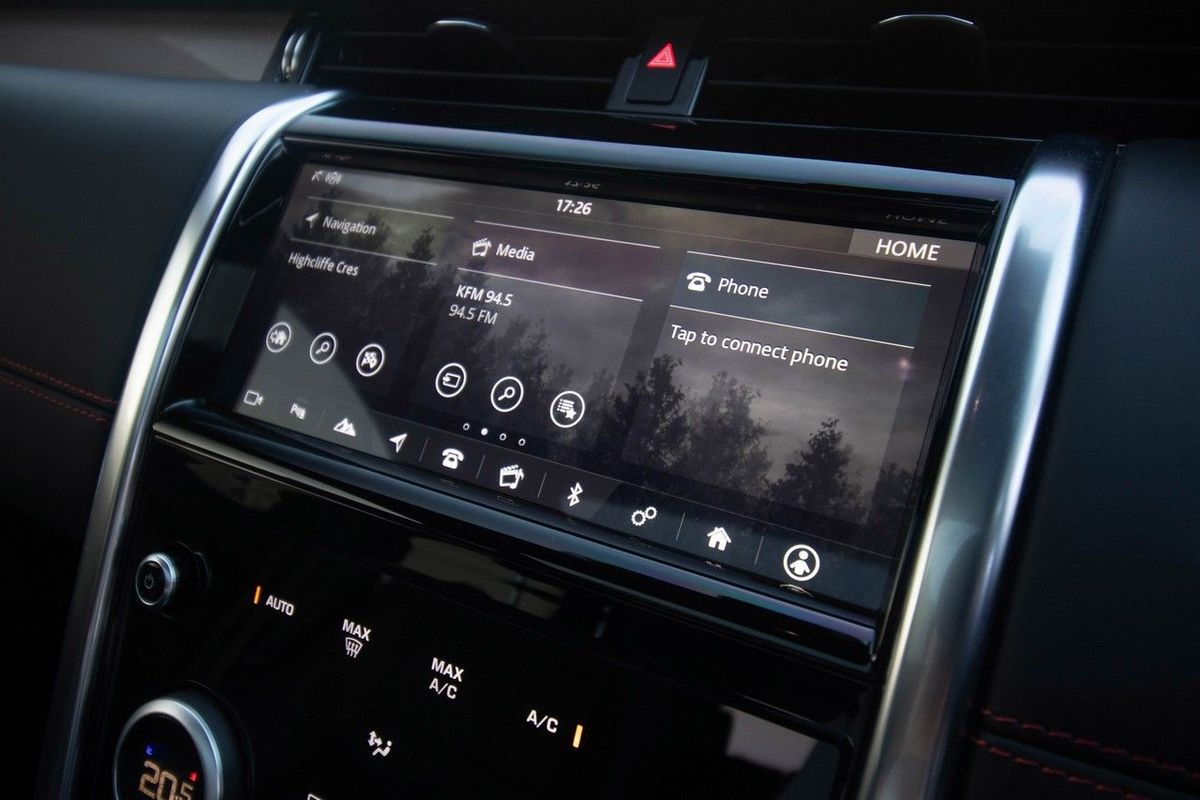
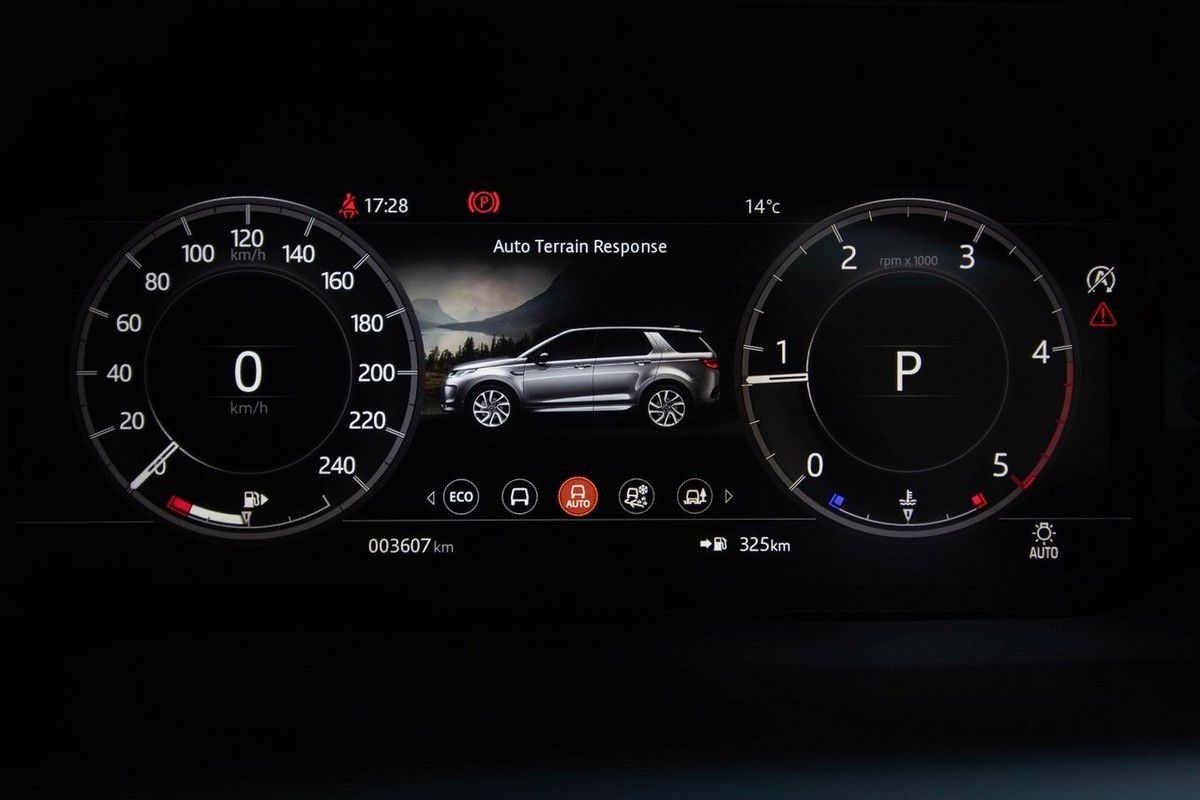
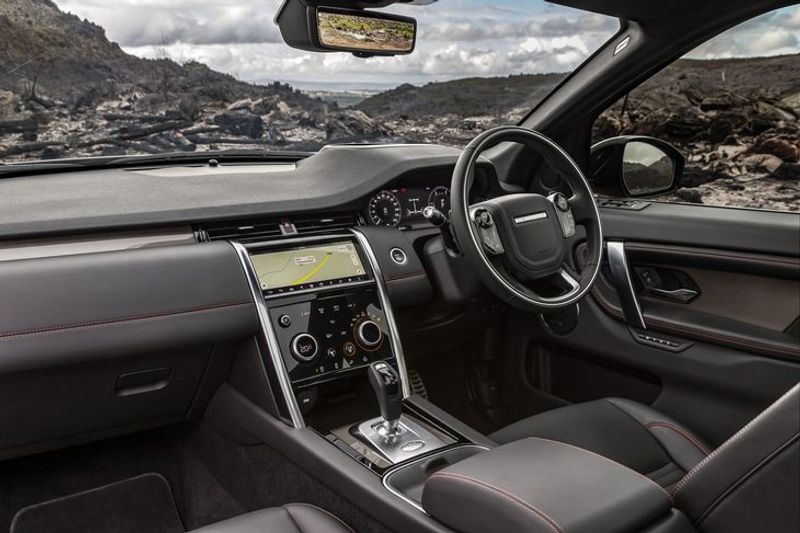
The cabin gains the latest infotainment system from JLR, while the clever rear-view mirror and digital dashboard are optional.
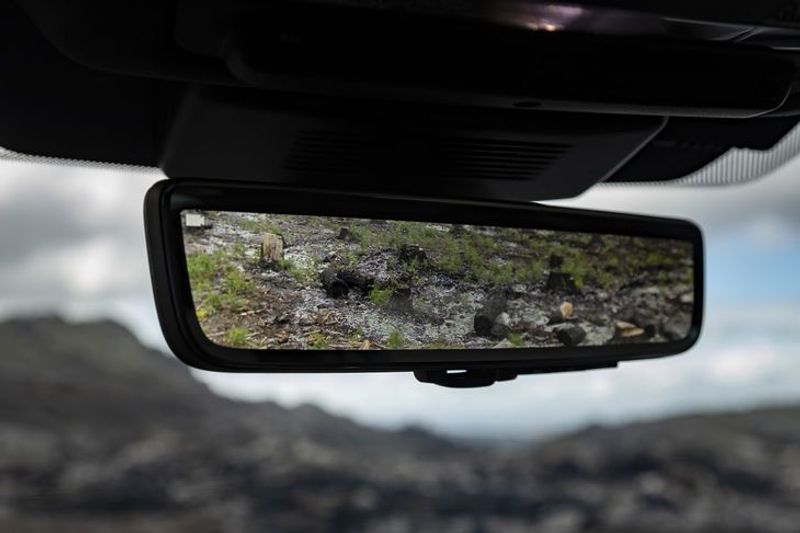
Meanwhile, the newcomer features the intuitive Touch Pro touchscreen infotainment system, which is Android Auto and Apple CarPlay compatible. The ClearSight rear-view mirror, which uses a rearward-facing camera located on the roof to provide a high-def video with a wide field of view, is particularly impressive. You have the option to turn it off, but given how much more detail it displays compared with a conventional mirror, it's a must-have. A wireless charging pad, 4G wifi hotspot, and plenty of USB power ports (to ensure devices remain charged) are other noteworthy features.
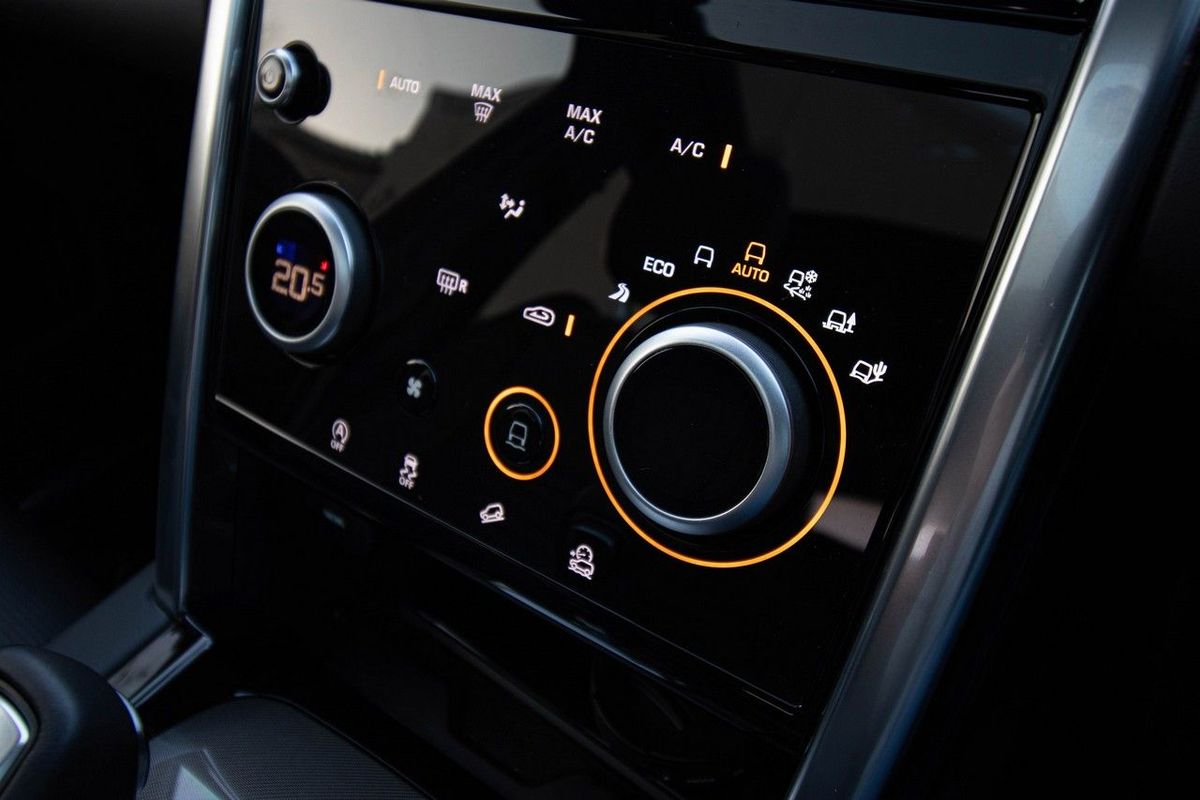
In true Land Rover tradition, the new model is just as capable as its predecessor in terms of off-road ability. It features a wading depth of 600 mm and a ground clearance of 212 mm. The vehicle features the 2nd-generation Active Driveline system, as well as Terrain Response 2. The new Discovery Sport is primarily front-wheel-driven, but if the vehicle detects a slippery road surface, its powertrain will automatically send power to the rear wheels and adjust the torque delivery to suit prevailing conditions. There are 4 offroad modes: Comfort, Sand, Grass/Gravel/Snow, Mud/Ruts.
The ClearSight rear-view mirror is a game-changing piece of technology.
What is it like to drive?
Land Rover South Africa really likes to show off its products' capabilities on new-vehicle launch events and we undertook a long road trip, the route of which comprised urban roads, national highway- as well as plenty of gravel driving. There was even a spot of off-roading, so that we could thoroughly put the newcomer through its paces… Our first impression of the Discovery Sport's open-road performance is that while the turbodiesel engine's outright power output may seem low, 400 Nm of torque is very useful, particularly when executing 80-120 kph overtaking manoeuvres. The 9-speed auto transmission does a great job of smoothly shifting cogs without interruption and while many would think 9 ratios are too many, you'll appreciate how quiet the car is when cruising in top gear.
When it comes to premium cars (with suitably premium price tags), buyers expect cabins that exude a feeling of luxury and offer refinement in abundance. In that regard, Land Rover has thoroughly fulfilled that requirement with the new Discovery Sport. We drove both an S and HSE and despite the price and spec difference, both derivatives make you feel like "you're in something expensive".
While it can go off-road and is a lot more capable than you think, the Disco Sport will usually be driven, at leisure, in the city.
Open-road refinement aside, the Discovery Sport handles with a feeling of solidity and sure-footedness, particularly when tarred roads turns into gravel routes. We comfortably traversed great swathes of loose dirt and soft sand at near the national speed limit and the Land Rover did not skip a beat. It was interesting to bring up the powertrain graphic on the infotainment system to watch the Landy's wheels and axles in action. On a notably tight corner, the all-wheel-drive system really proved its worth; the Discovery Sport mustered so much grip, the stability control didn't even need to intervene.
As the Discovery Sport is set up to favour of comfort over cornering, it's not as engaging to drive as, say, a BMW X3, but honestly, who wants to cane an Executive SUV around a mountain pass for fun? If you attempt that in the Land Rover, you feel it wallow and float about with body roll. It's a fair trade: this model's German rivals don't come with 7 seats and lack comparable off-road capability.
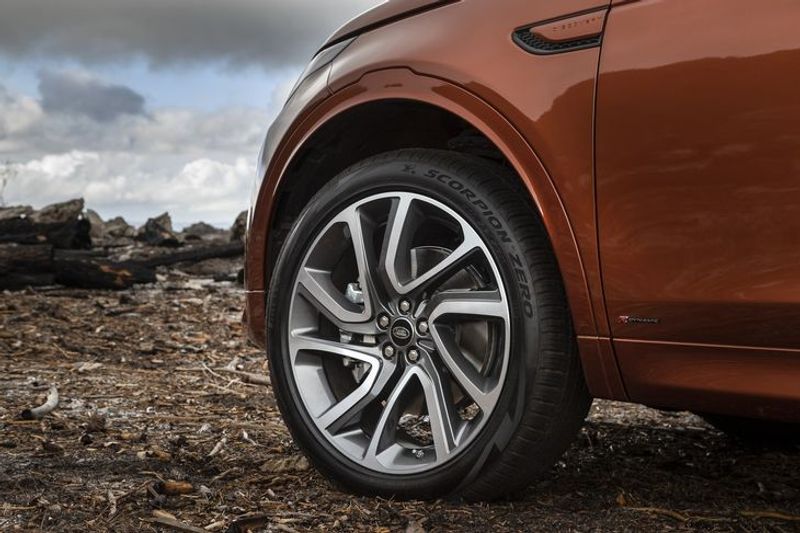
Ride quality is generally good, but be mindful of speccing the good-looking 21-inch alloys
Like its predecessor, the Discovery Sport offers a relaxed and refined ride quality, but be mindful when choosing your wheel size. The model is available with 21-inch alloys, which look great, but we'd suggest going a tad smaller (with a thicker tyre) to cope with the worst road imperfections. The big wheels contribute to a choppy ride at very slow speeds, but things improve as the pace increases.
We also had a brief chance to tackle some steep roads, riddled with ruts and loose stones, on a wine farm located near Riebeek-Kasteel. Traversing such a route with a luxury vehicle, even one with an off-road bent, is usually a daunting prospect, but the Discovery Sport's Terrain Response system cleverly juggled its power delivery across the Land Rover's axles to ensure that we didn't get stuck. Few people will want to take their brand-new shiny Disco Sports off-road, but it's reassuring to know the newcomer can actually perform like a pukka 4×4 vehicle.
Summary
It offers 7 seats and can go properly off-road – something its rivals can't do.
The updates to the Discovery Sport are substantial and make the Land Rover's Executive SUV an even stronger proposition than before. Its detractors may suggest the only reason the Discovery Sport exists is due to the fact that Land Rover doesn't want to lose customers who cannot afford the step up to a full-blown Discovery… Given its reasonable price tag (for what it is), the new model offers almost just as much luxury and comfort as its Discovery sibling; sure it doesn't have as much off-road technology, but that won't matter all that much to the Discovery Sport's target market.
Our advice to you is to spec your preferred derivative exceptionally carefully, as extra features (or option packages) can increase the asking price of your (already premium) vehicle considerably. That being said, you can't accuse Land Rover of offering minimal features on the new model; the revised Discovery Sport does come well specified from the get-go.
Should you buy one? If you want to make that bold statement that "you've made it" with a vehicle that can also transport your family in luxurious comfort, then you'd be hard-pressed to resist Land Rover's latest offering. Granted, the Discovery Sport's rivals are strong and numerous with the Audi Q5, BMW X3 and the Mercedes-Benz GLC, as well as the superb Volvo XC60, but the Land Rover differentiates itself by offering 7 seats as well as being remarkably capable when it comes to the off-road stuff. Roll on the group test!
Land Rover Discovery Sport Price in South Africa (March 2020)
All derivatives come standard with Care Plan, including a warranty and service plan valid for 5 years or 100 000 km, whichever comes first. Note the price includes VAT, but excludes the CO2 tax.
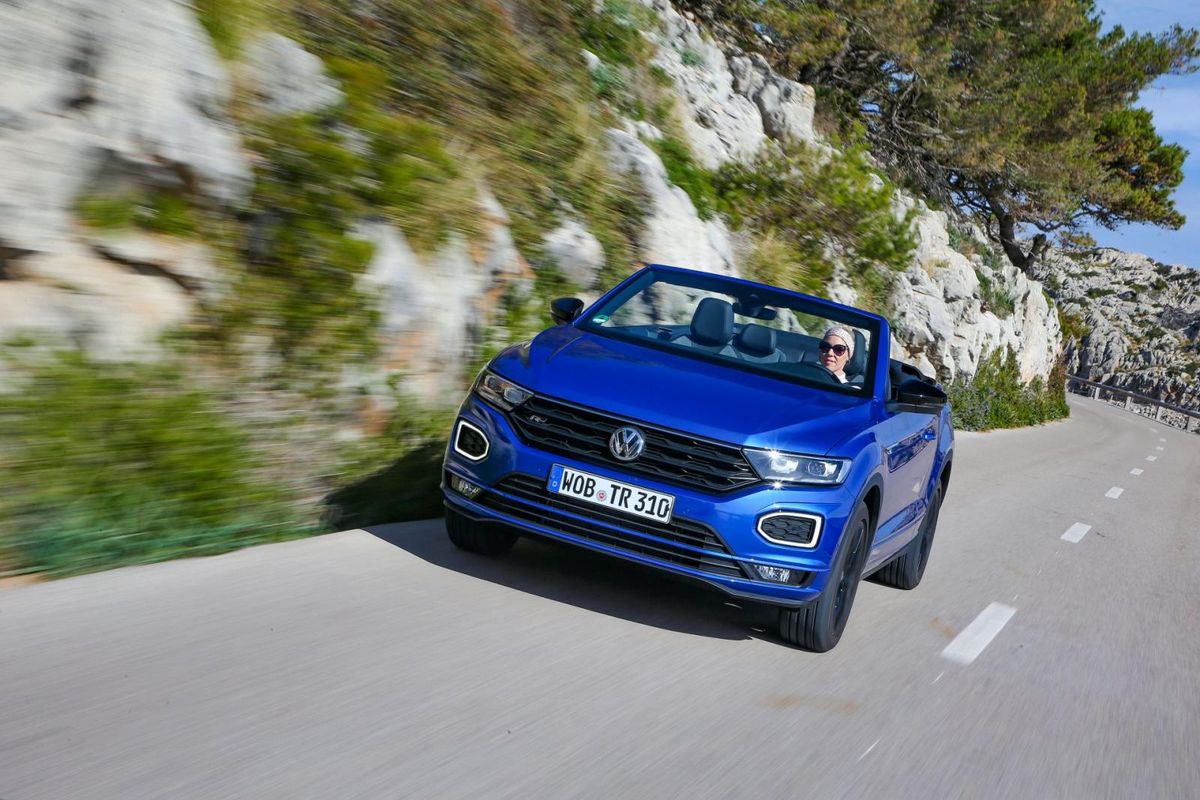
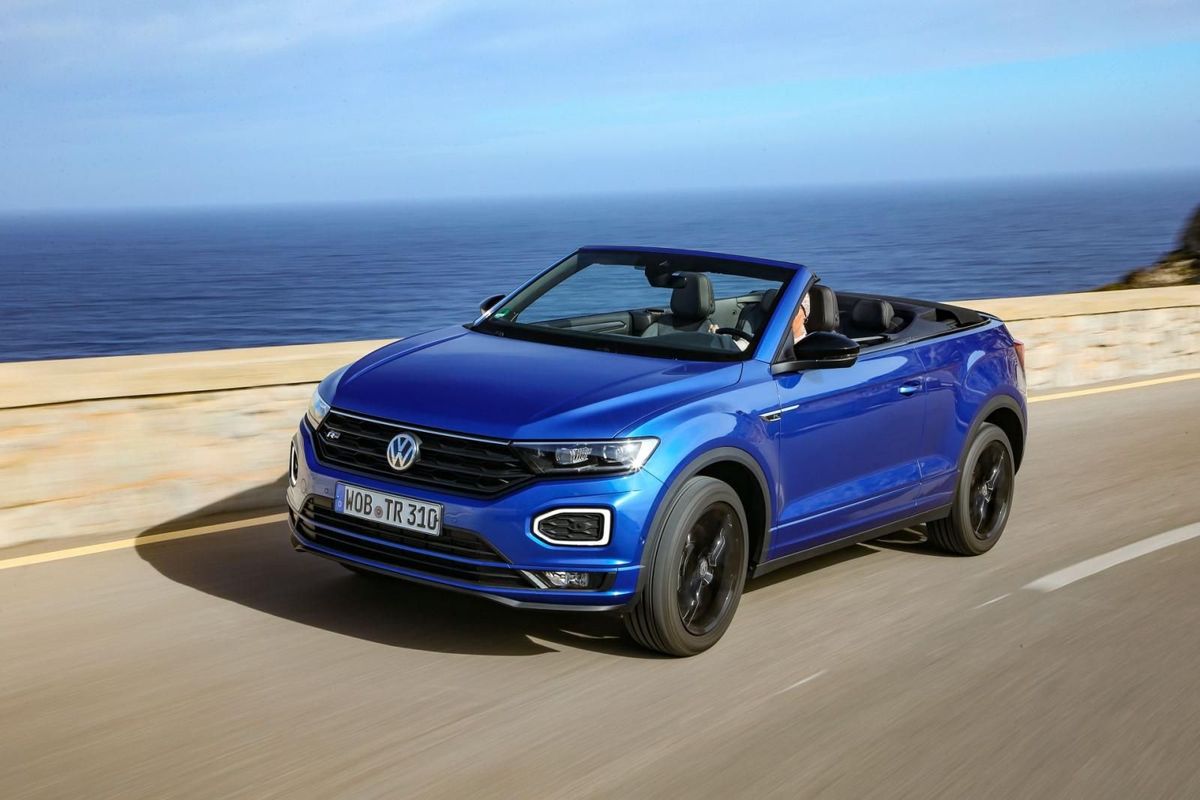
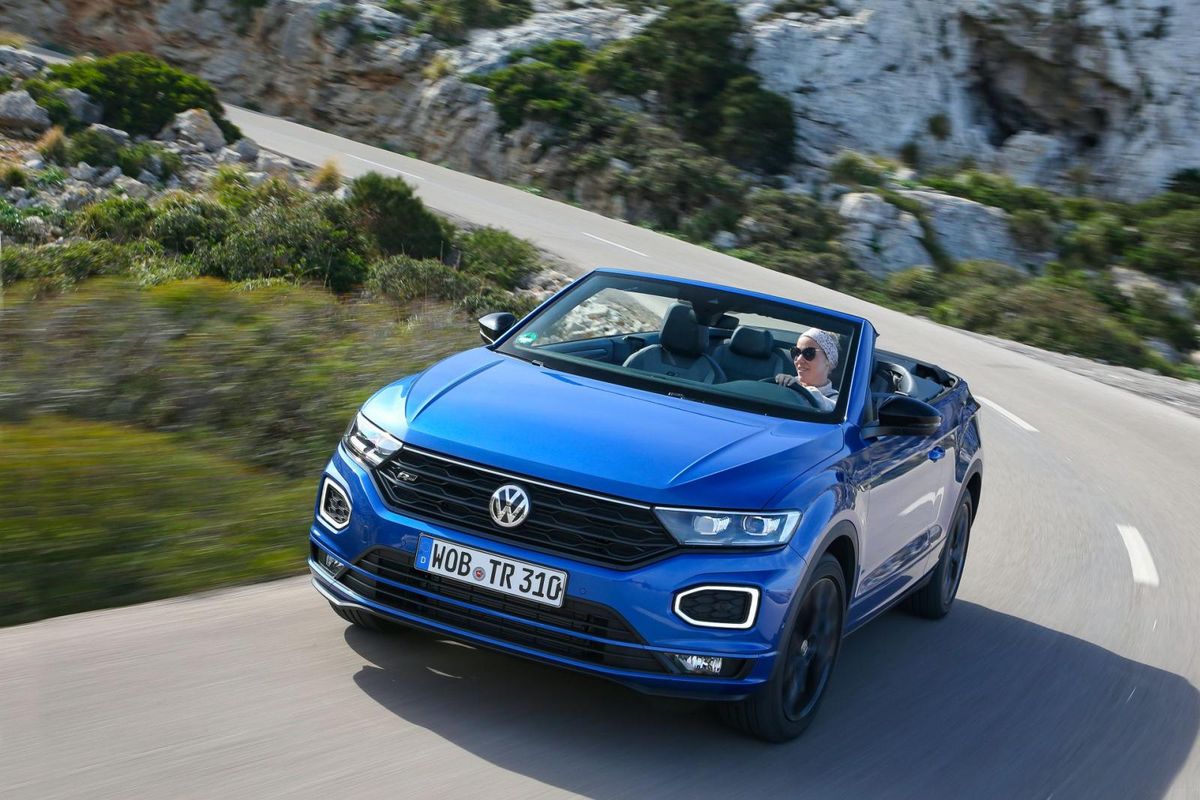
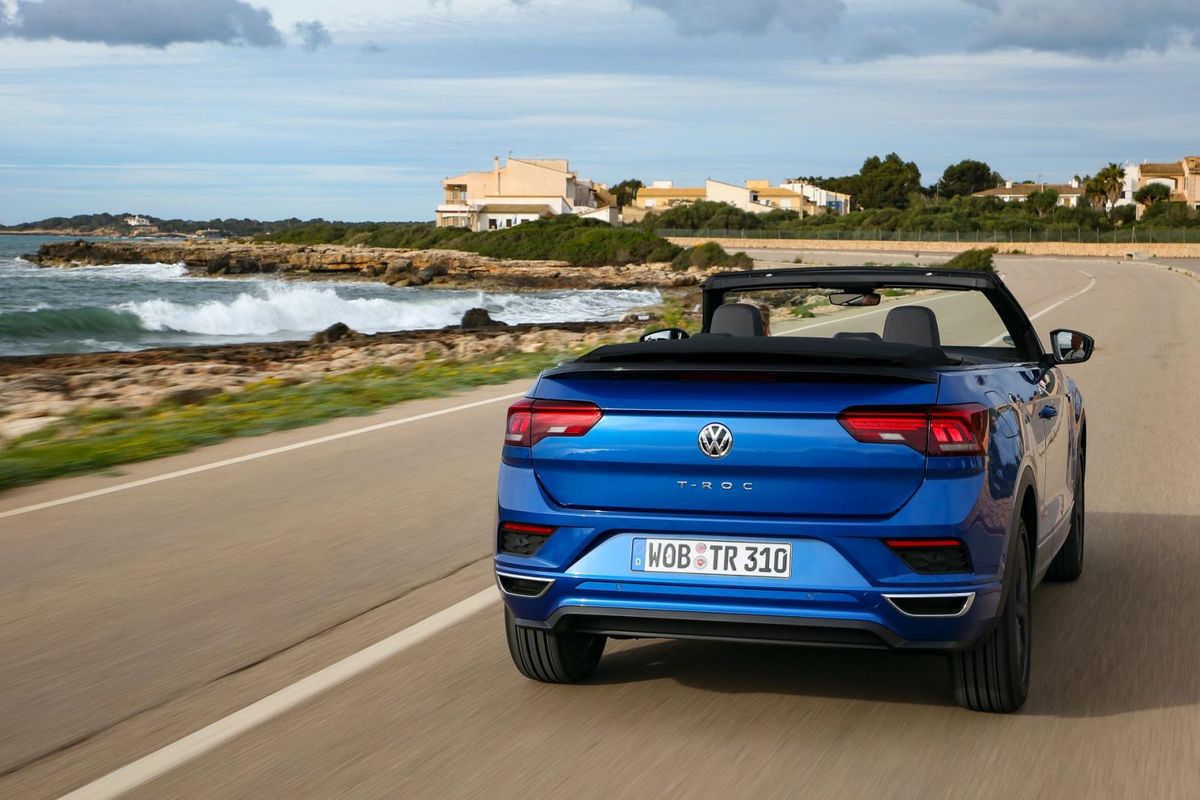
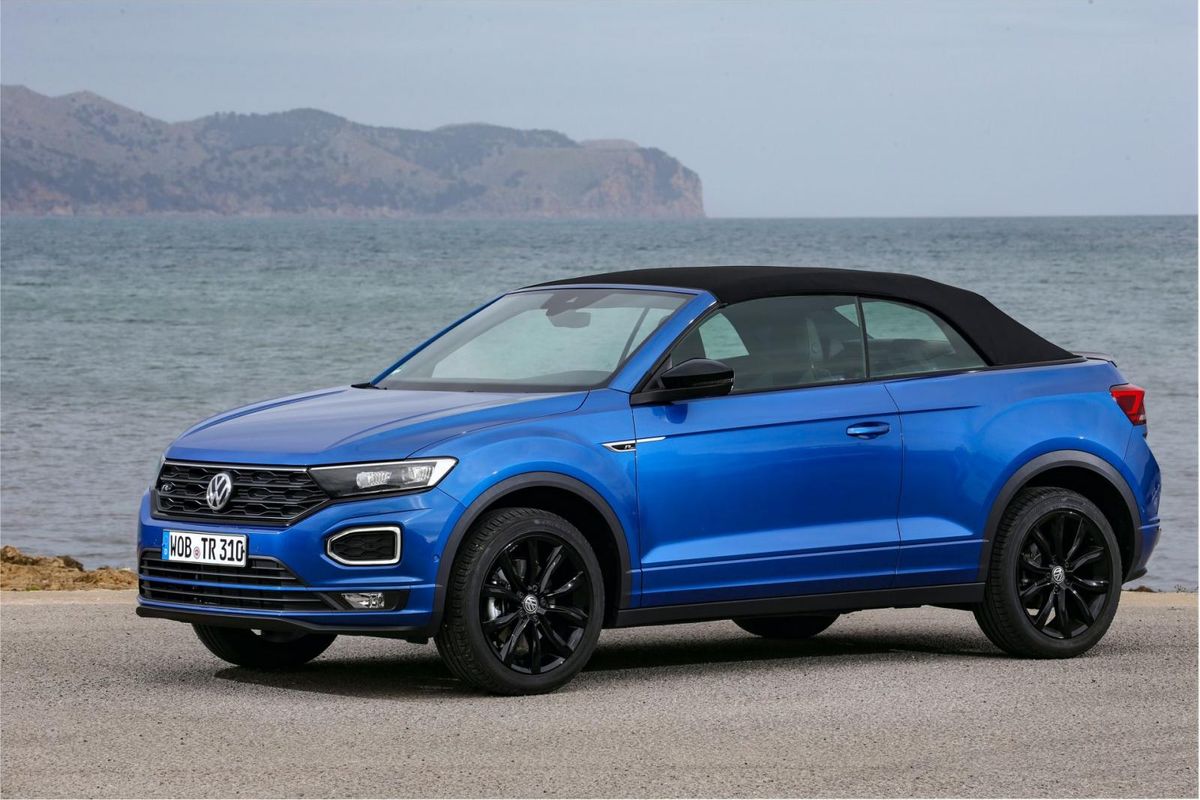
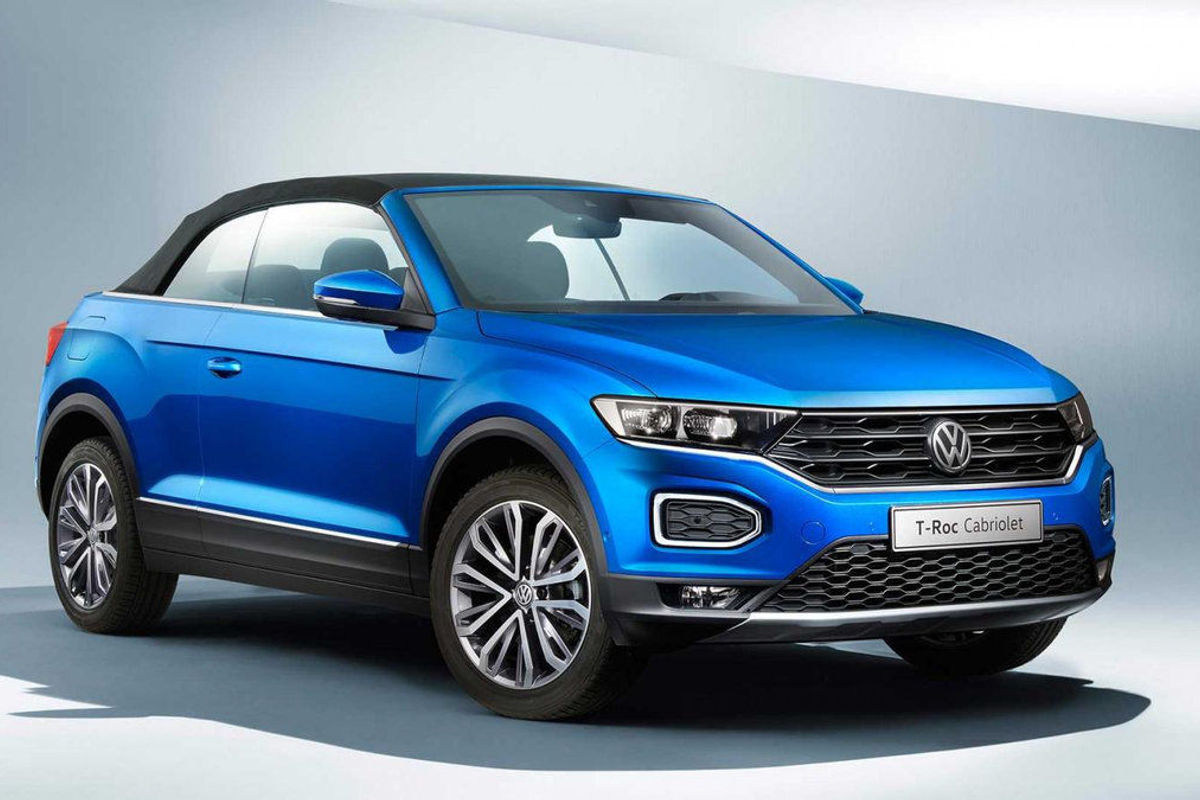
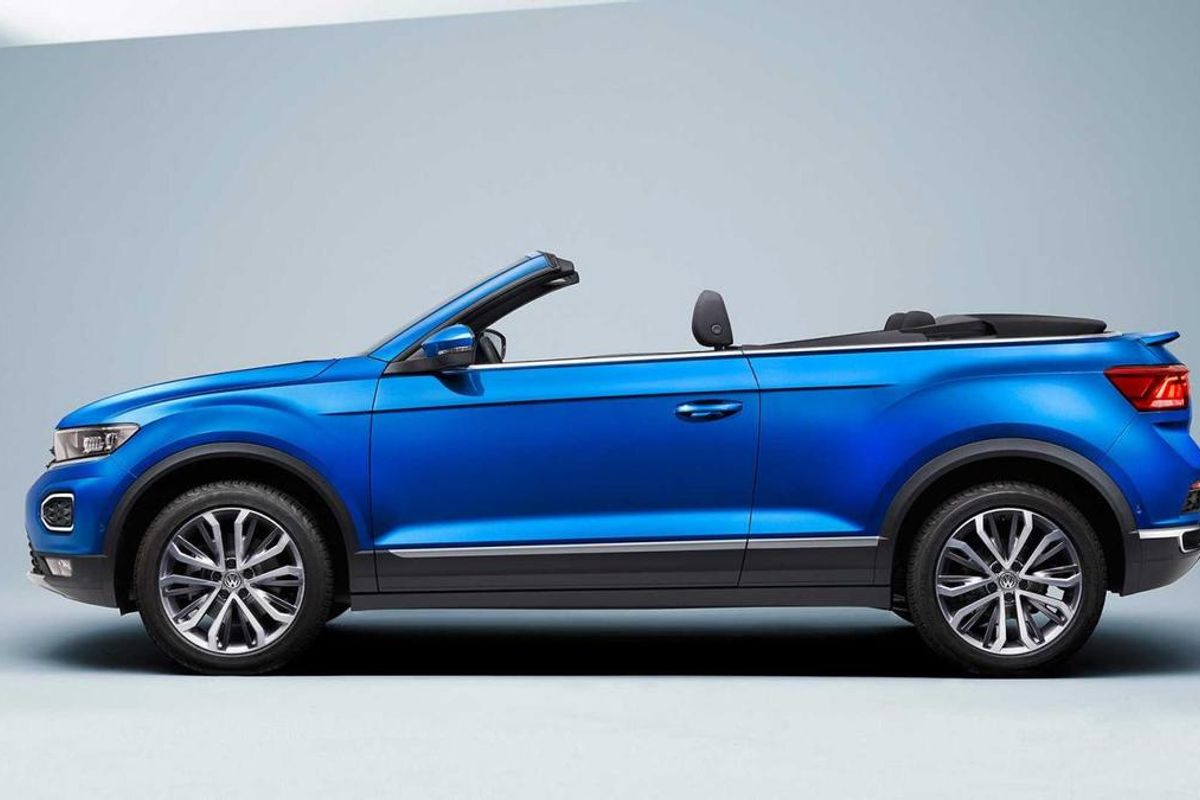
Volkswagen's ultra-niche, two-door T-Roc soft-top might look appealing to some but it sadly won't make it to South Africa.
Volkswagen's new T-Roc SUV is due to arrive in South Africa later this year (Q3) but its soft-top sibling won't be offered locally.
Nonetheless, let's dream for a second…
If you like wearing a really big hat whilst driving your Volkswagen crossover, the German brand has made your potential driving experience that much more appealing with its latest cabriolet.
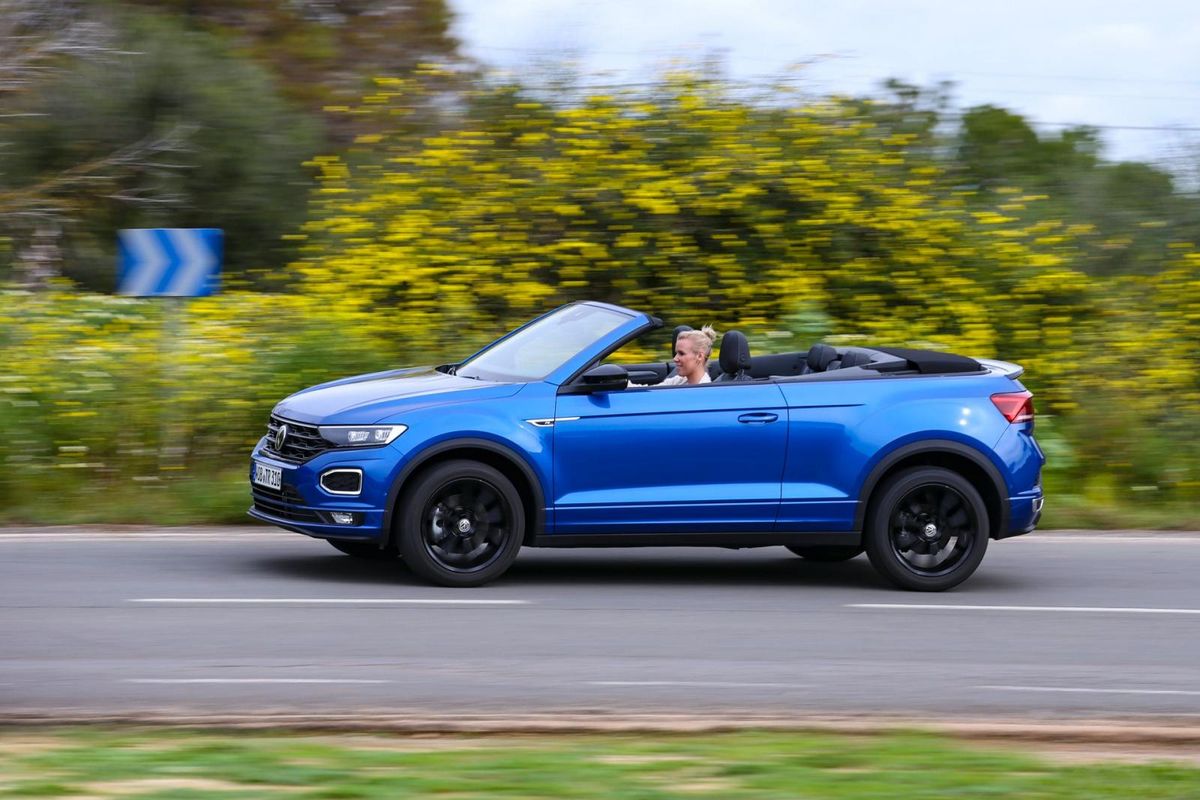
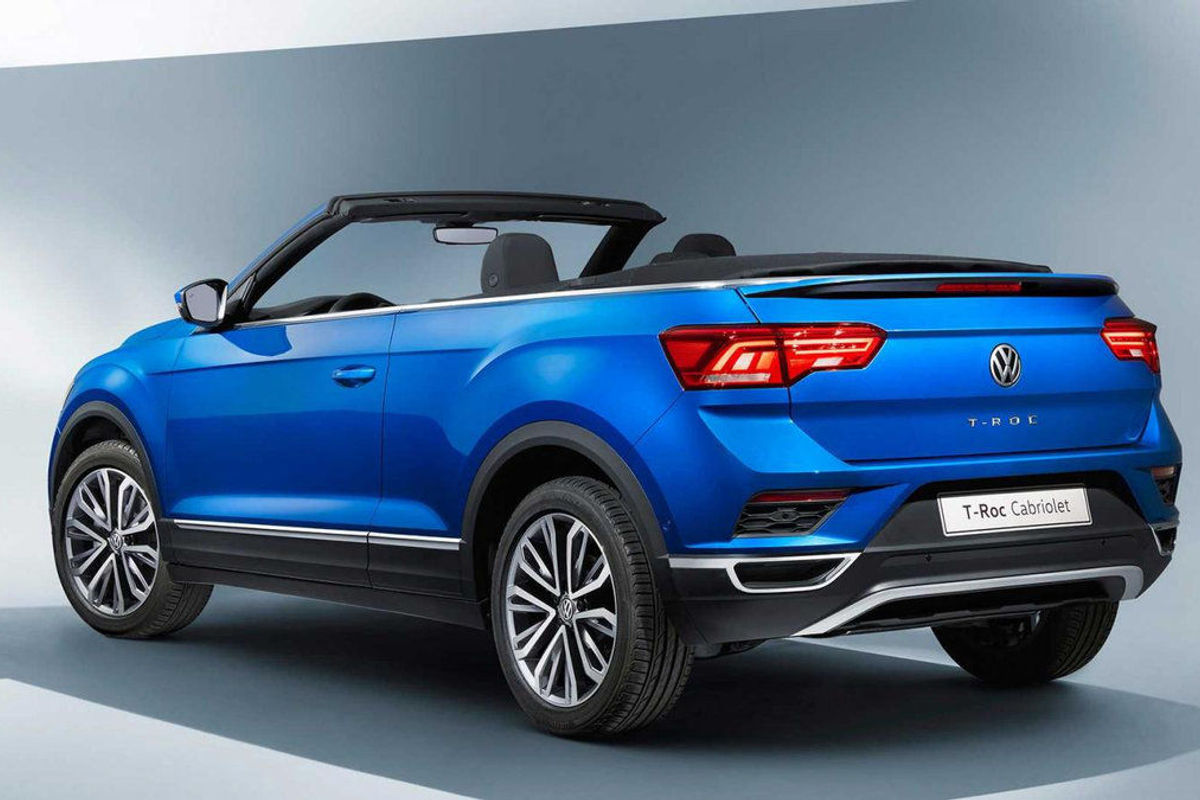
Although the folding fabric roof vehicle market is contracting, in lieu of customers choosing crossovers instead of cabriolets, Volkswagen has managed to combine both with its new T-Roc Cabriolet.
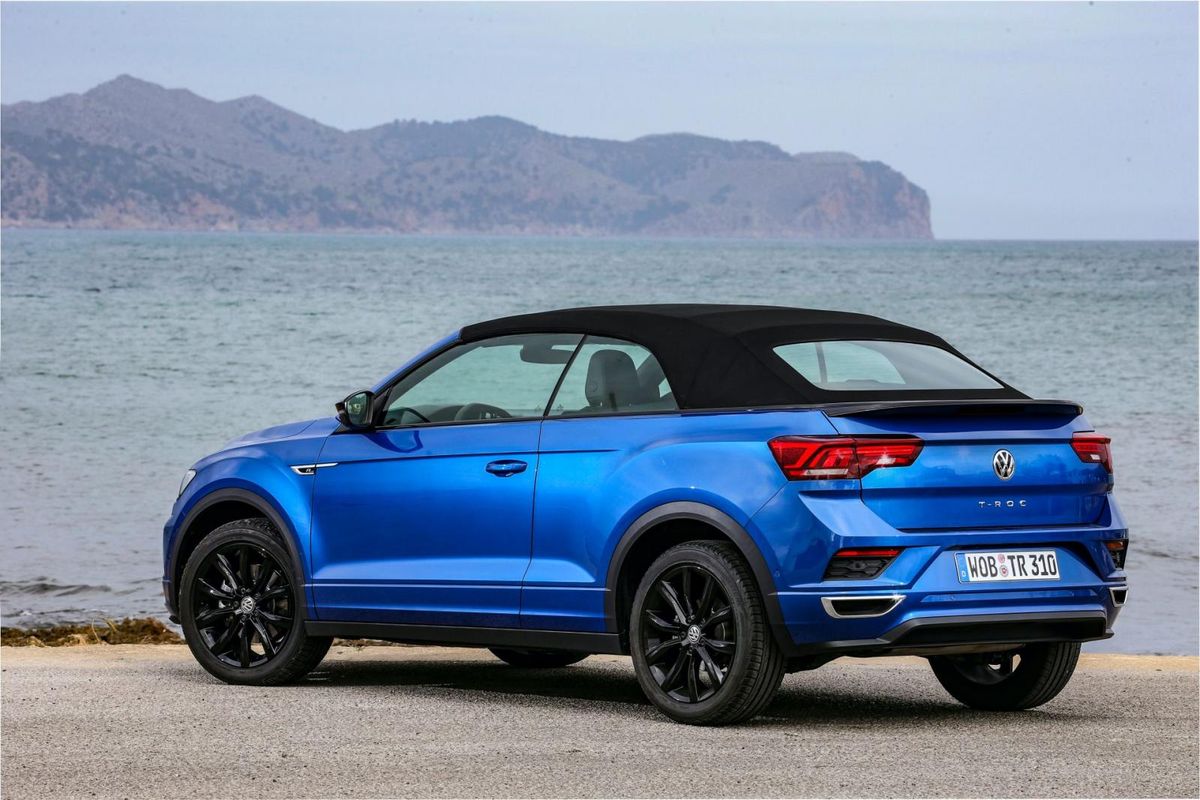
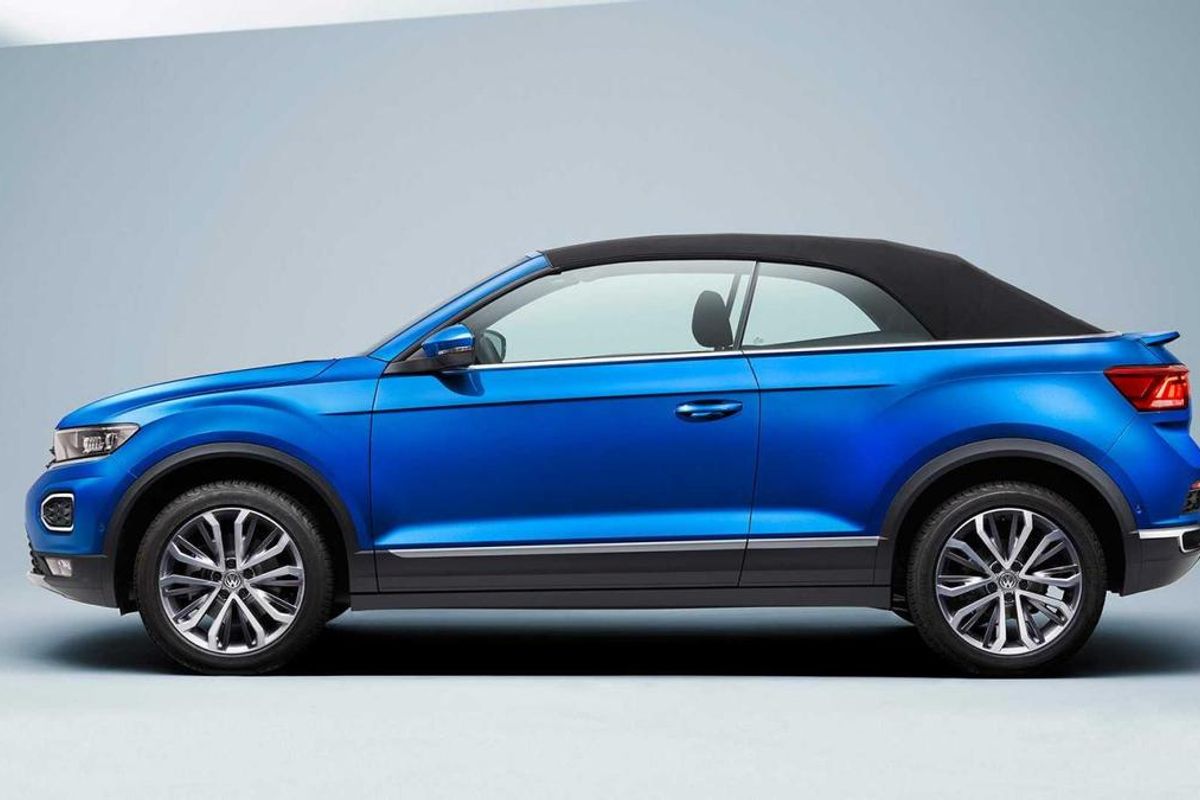
It's apparent that Volkswagen designers have done an excellent job of transforming the T-Roc from a metal-to-fabric roof vehicle, while also making it a two-door.
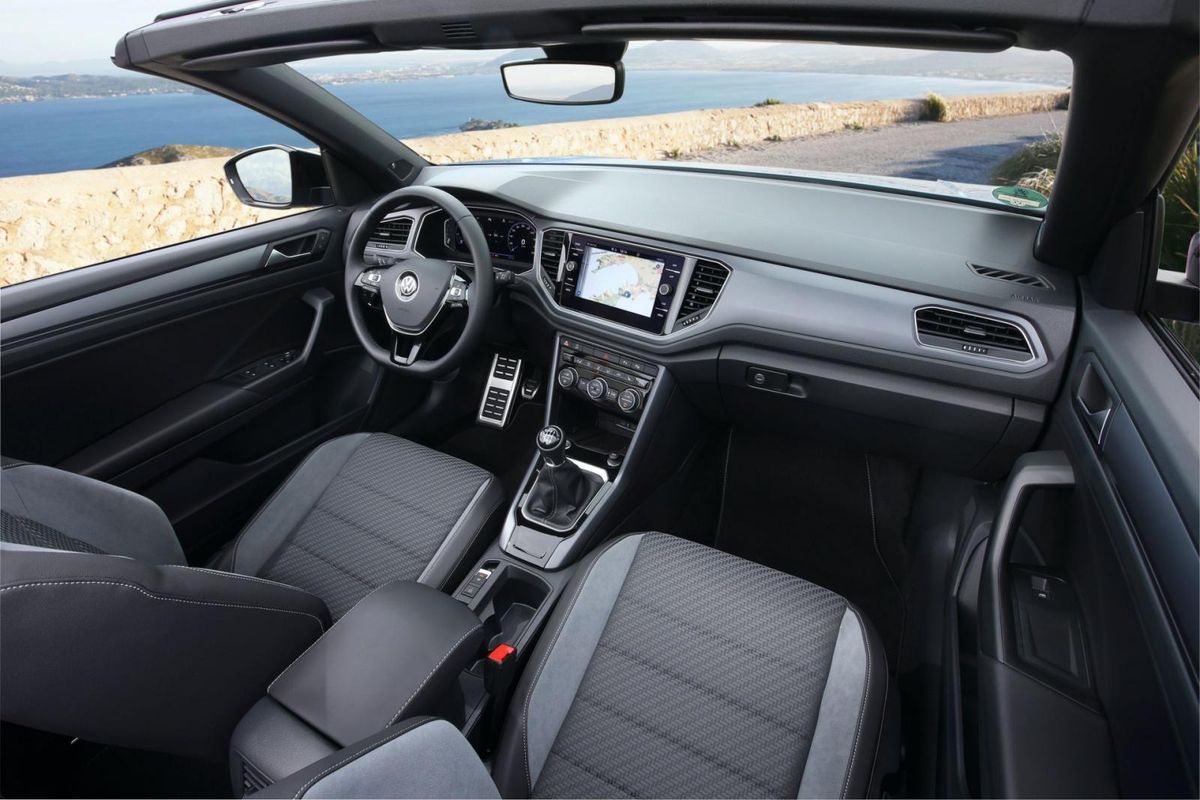
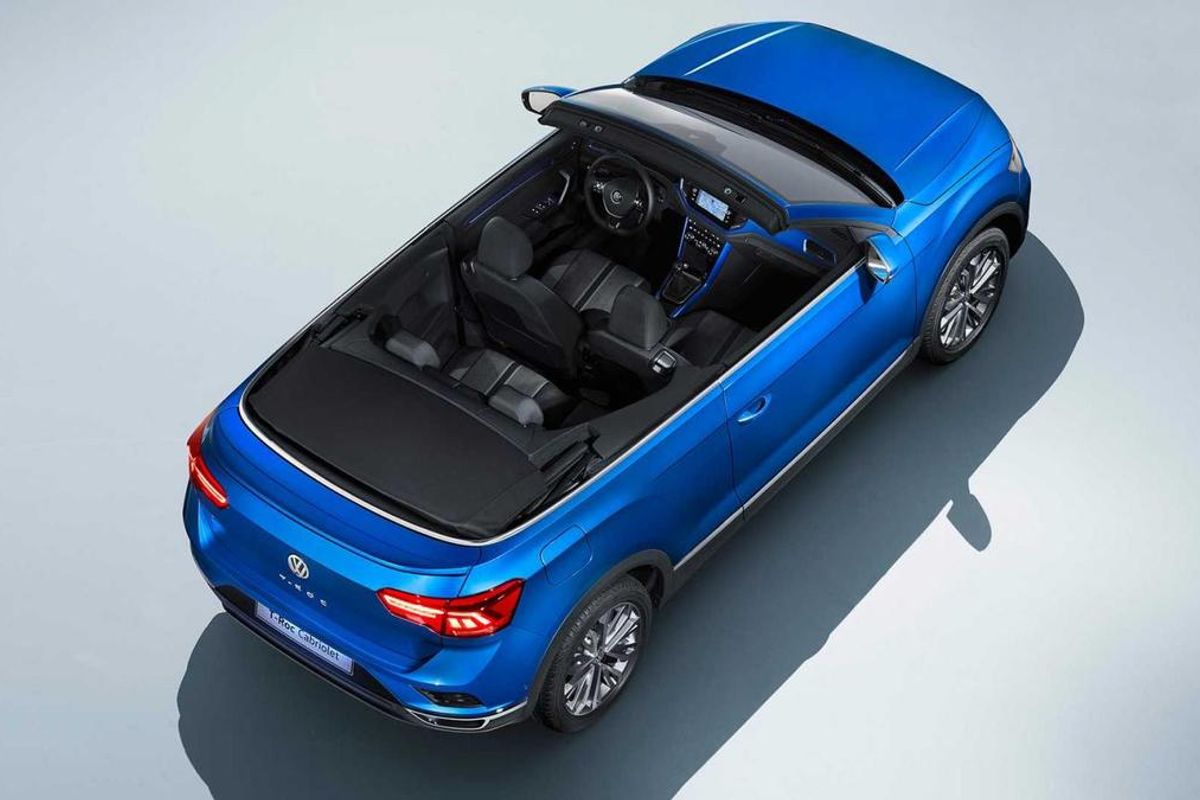
Only available in front-wheel drive, the cabriolet configuration has added 40mm of length compared with the T-Roc SUV. Volkswagen claims that it is a true four-seater cabriolet and although it only has two doors, there is a nod to practicality with ski-hatch load tunnel which opens through to the cabin when the rear seats are folded down.
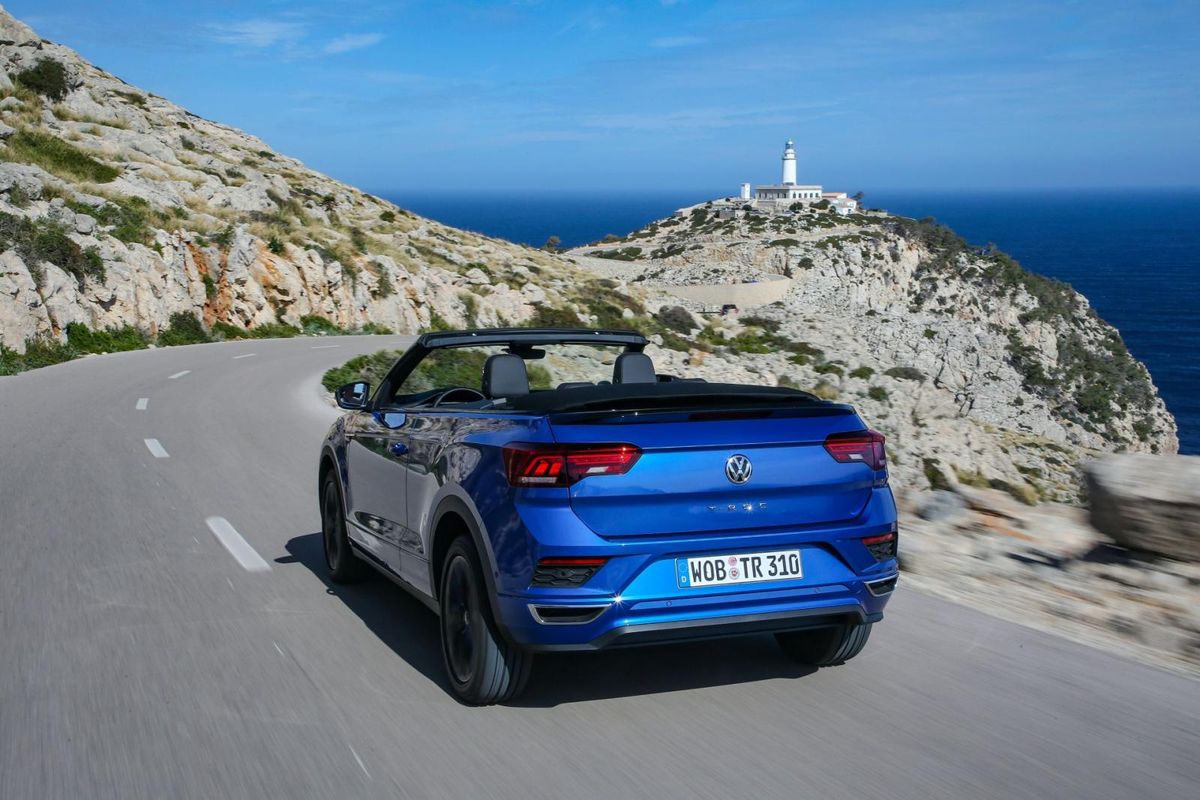
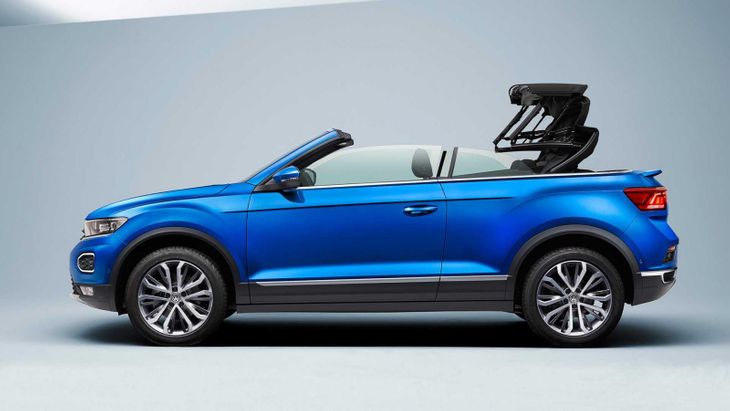
The fabric roof takes 9 seconds to open and close but space in the load bay is compromised.
For the T-Roc Cabriolet, Volkswagen is releasing 2 exterior design packages, with the Style version being a touch subtler: featuring 17-inch wheels and dark plastic body cladding. Upgrade the T-Roc Cabriolet to R-Line trim and it looks more the part of a compact summer status car: rolling 19-inch wheels and featuring more body coded exterior finishes.
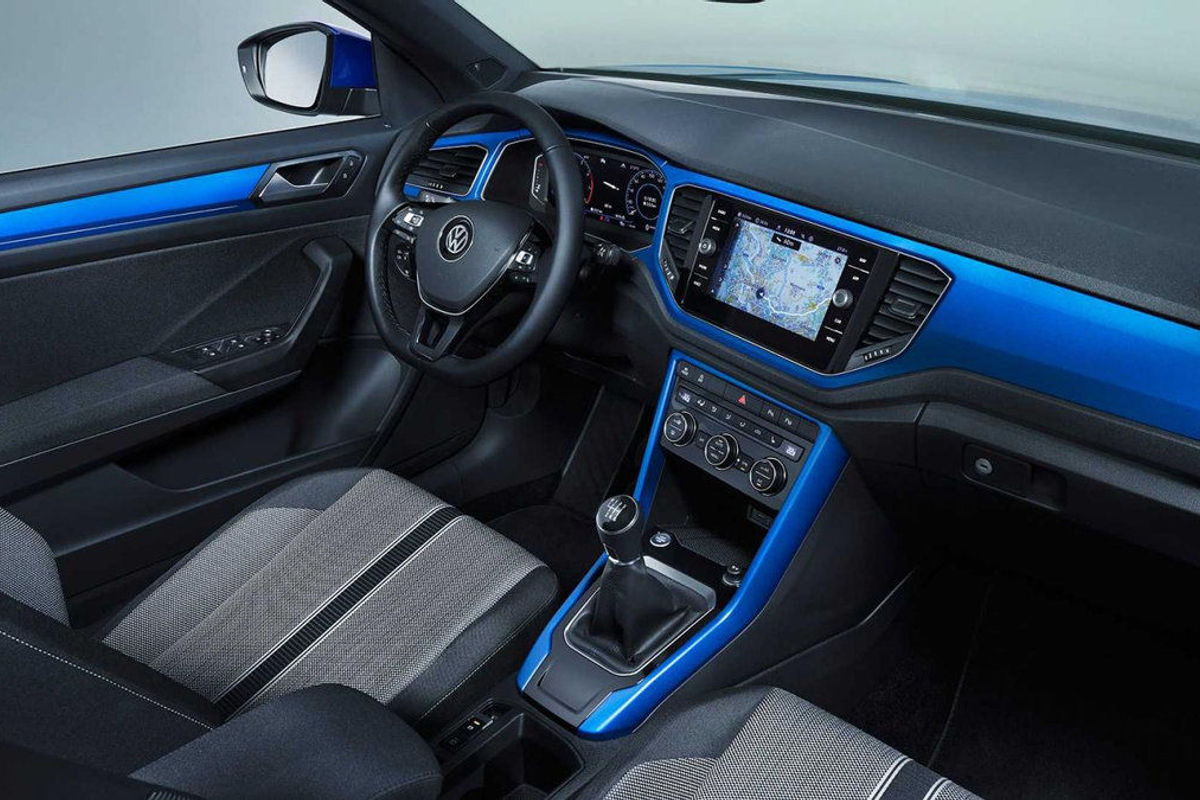
Powering the T-Roc cabriolet will be Volkswagen's 1- and 1.5-litre turbocharged petrol engines. The smaller triple produces 85kW and 200Nm, whilst the larger four-cylinder engine is good for 110kW and 250Nm. 6-speed manual gearboxes are standard, with an option to upgrade to the convenience of a seven-speed dual-clutch.
How clever is the roof mechanism? Well, Volkswagen claims that it can open or close at speeds of up to 30kph and should take no longer than 9 seconds to retract – which is impressive.
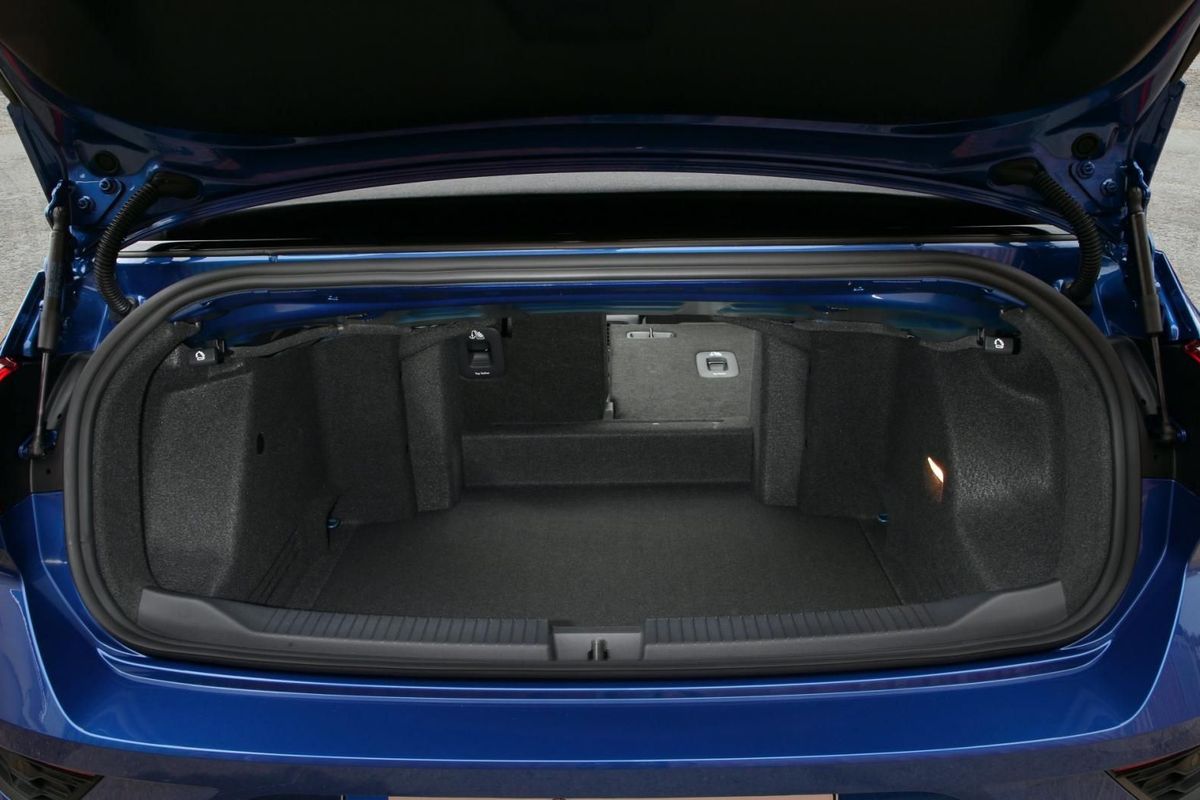
The image appeal of VW’s crossover cabriolet does come at a sacrifice to the T-Roc luggage capacity. Whereas a five-door, metal roof T-Roc can carry 445-litres of gear in the back, the cabriolet’s capacity is reduced to 280-litres.
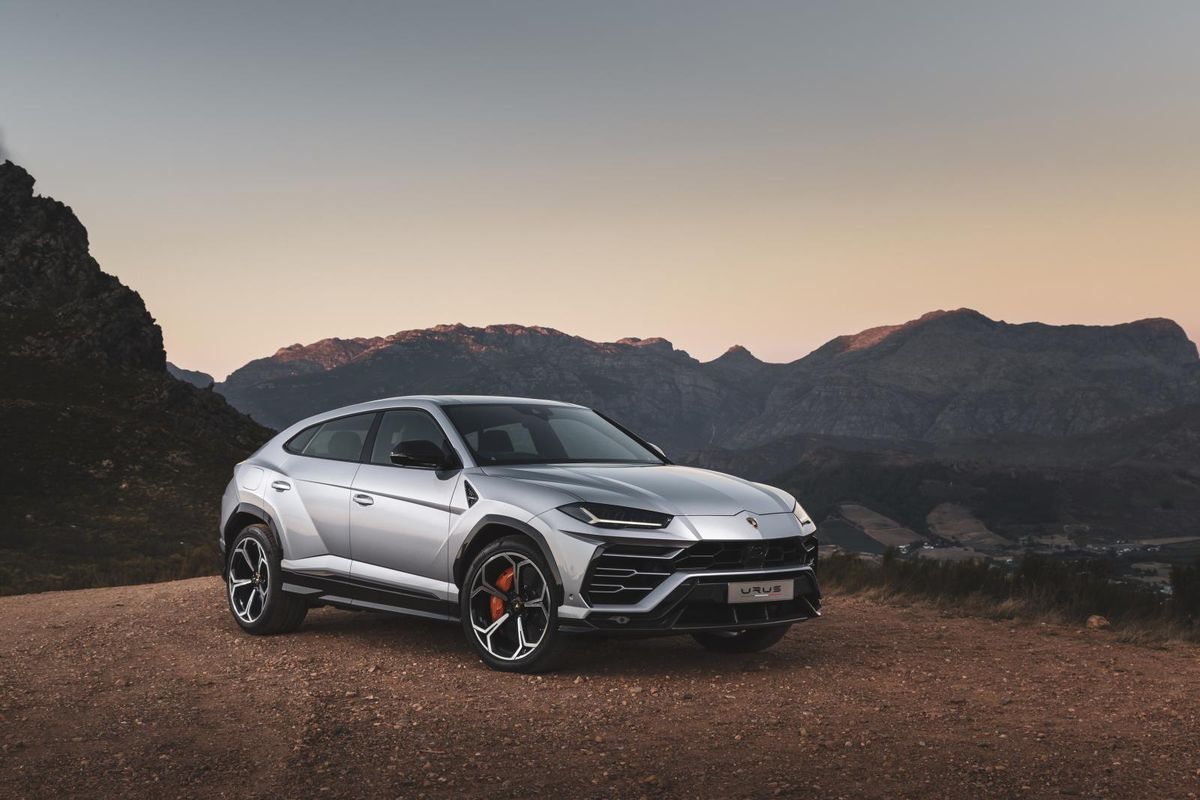
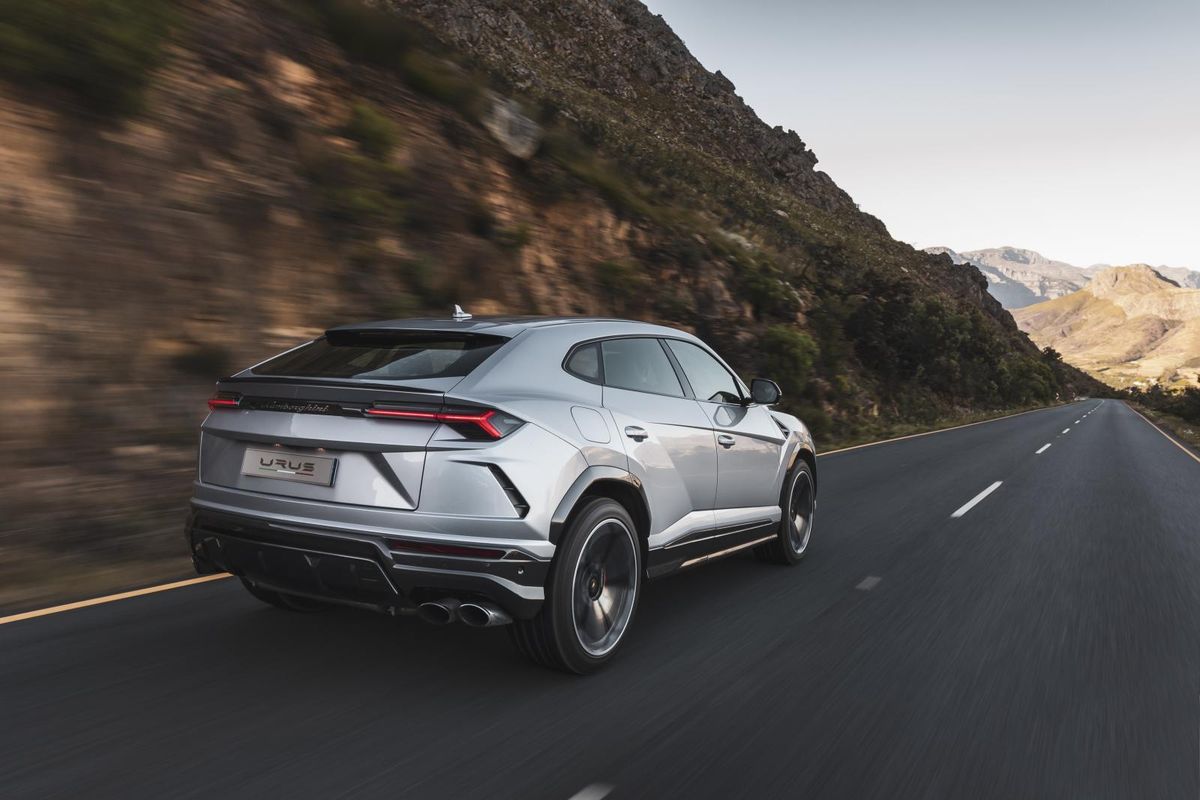
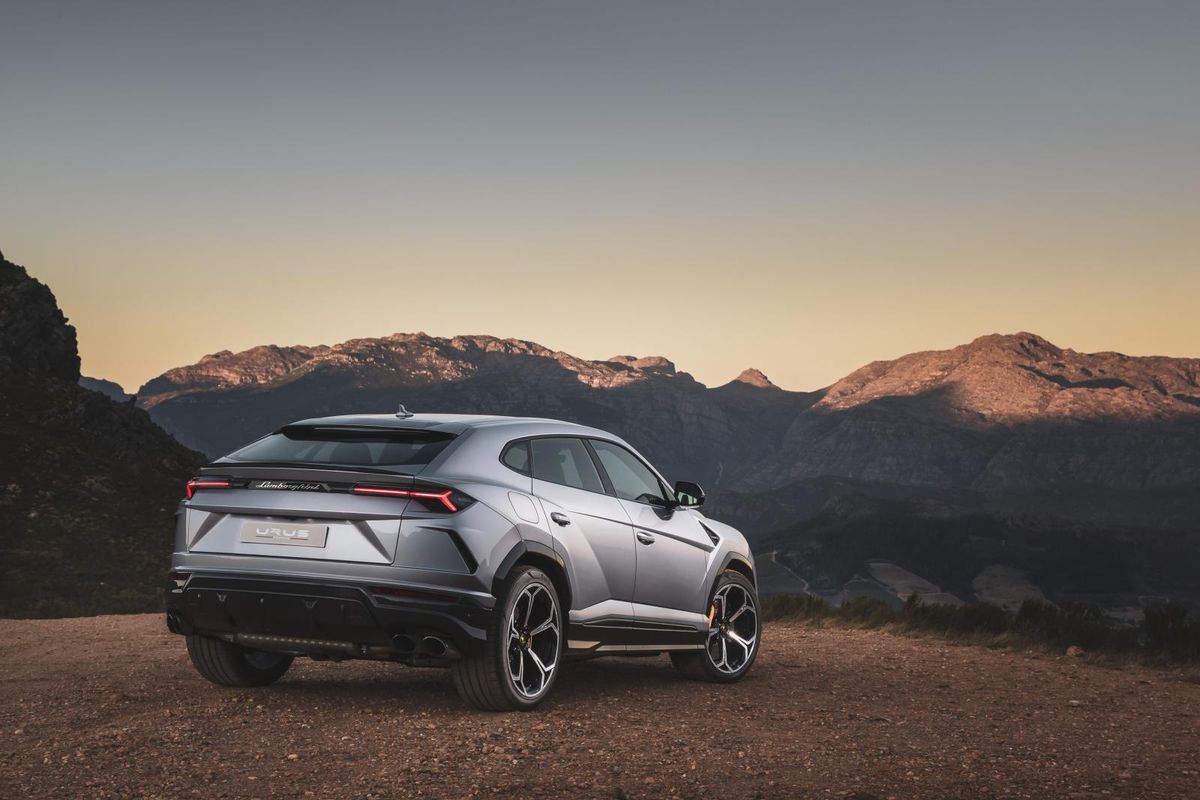
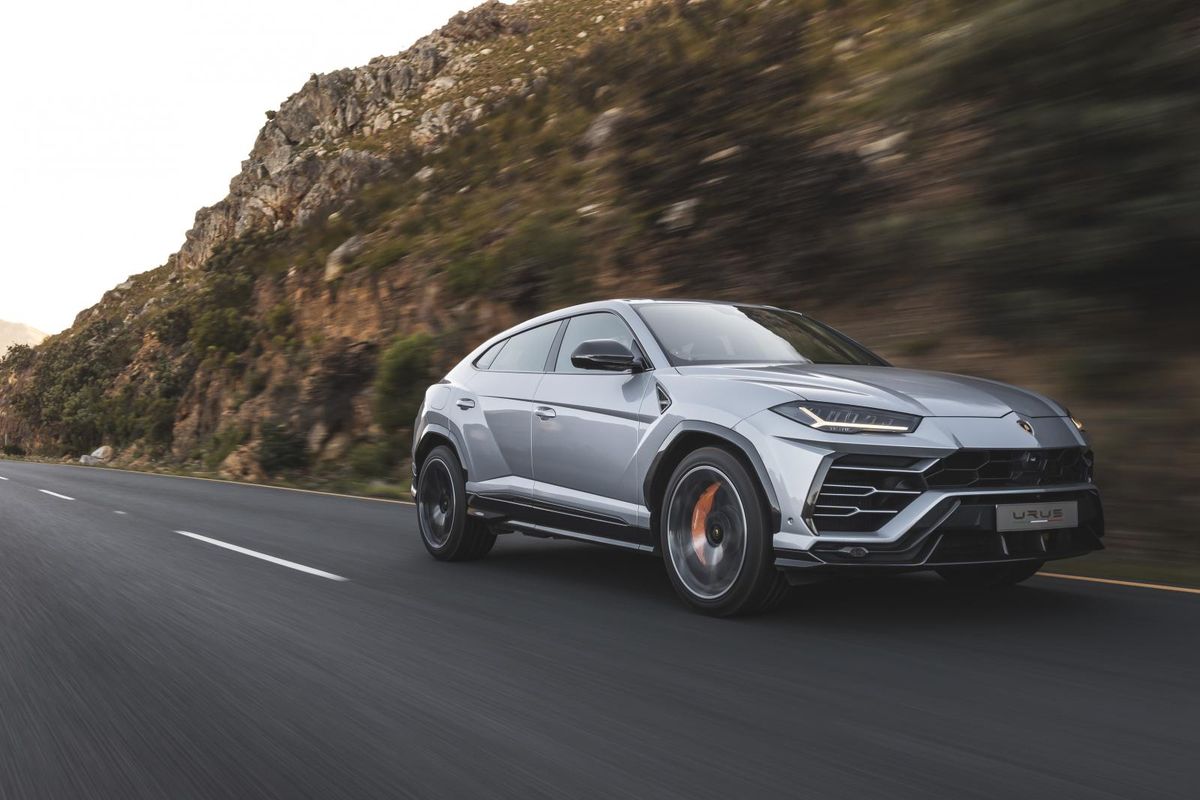
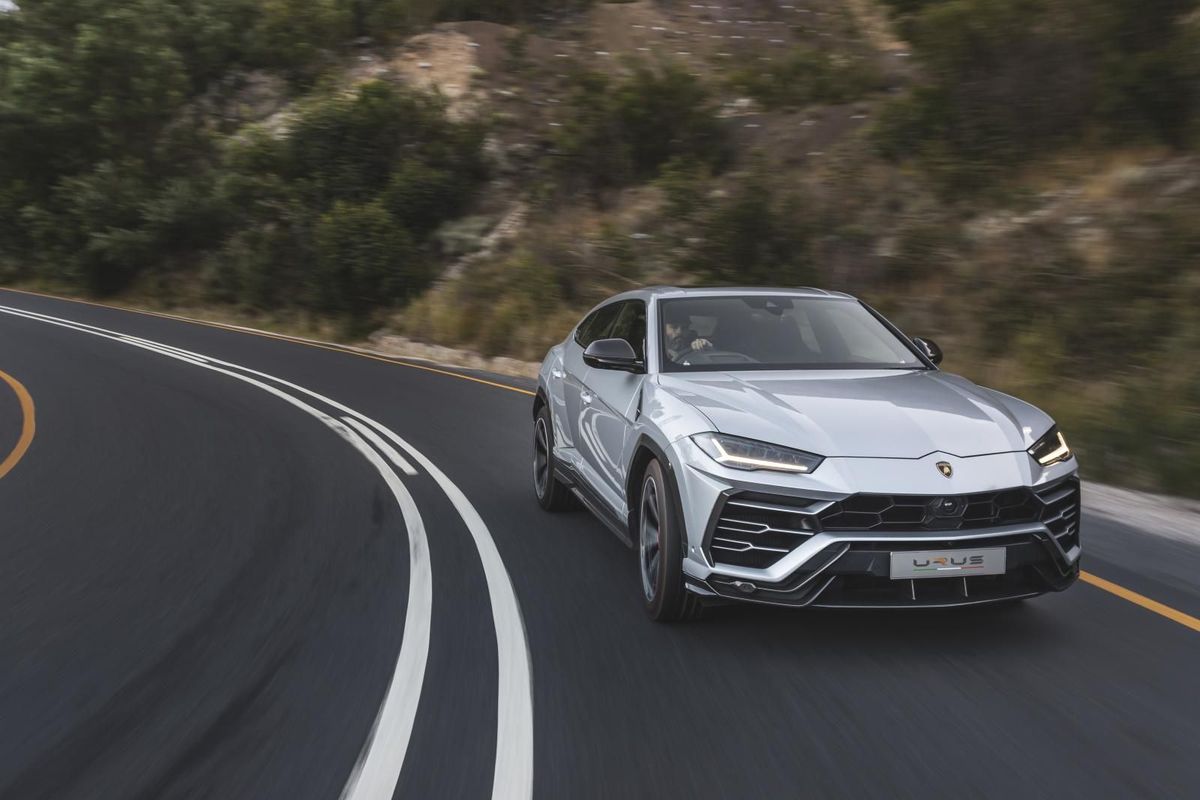
We finally get our first taste of Lamborghini's new super-SUV – the Urus – on local soil… Does it live up to the brand's near-mythical status?
The automotive world had a nightmarish 2019, but Lamborghini sold 8 205 vehicles last year, which is a whopping 43% increase over the St'Agata-based firm's 2018 sales total. So, how exactly did the Italian company manage that? The answer is very simple: the Urus (the brand's new super-SUV) accounted for than 5 000 of those 8 205 sales. But is this cause for celebration – or concern? Is Lamborghini at risk of losing that extra-special appeal that makes it uniquely hardcore, even among other supercar makers? We sampled the Urus on local roads to find out…
Fast Facts
Price: R3 495 000 (March 2020, no options)
Engine: 4.0-litre V8 twin-turbo
Gearbox: 8-speed automatic
Fuel economy: 12.3 L/100 km (claimed)
Power/Torque: 478 kW/850 Nm
Performance: 0-100 kph in 3.6 sec (claimed)
I've experienced this moment before. It was in early 2004. I had just been given the keys to the 1st-generation Porsche Cayenne. The arrival of the Zuffenhausen-based firm's premium SUV had been widely criticised; even the most ardent Porsche enthusiasts viewed the newcomer with acute scepticism. It seemed everyone was having a good, fat moan about it. To be honest, I too expected the Cayenne would be like any contemporary SUV in its segment… that it would lack that special Porsche DNA.
It took just one jaunt on Cape Town's De Waal drive at the 'wheel of that Cayenne for me to be well and truly won over. How was this possible? This awkward-looking behemoth handled and steered with uncanny precision. From that moment on, I've always had a soft spot for Porsche's SUV, and the fact that it essentially bank-rolled the marque into the powerhouse that it is today had precious little to do with it. The Cayenne was just plain good to drive, against all expectations and, importantly, Porsche-like where it needed to be – from the start, and increasingly so in later generations.
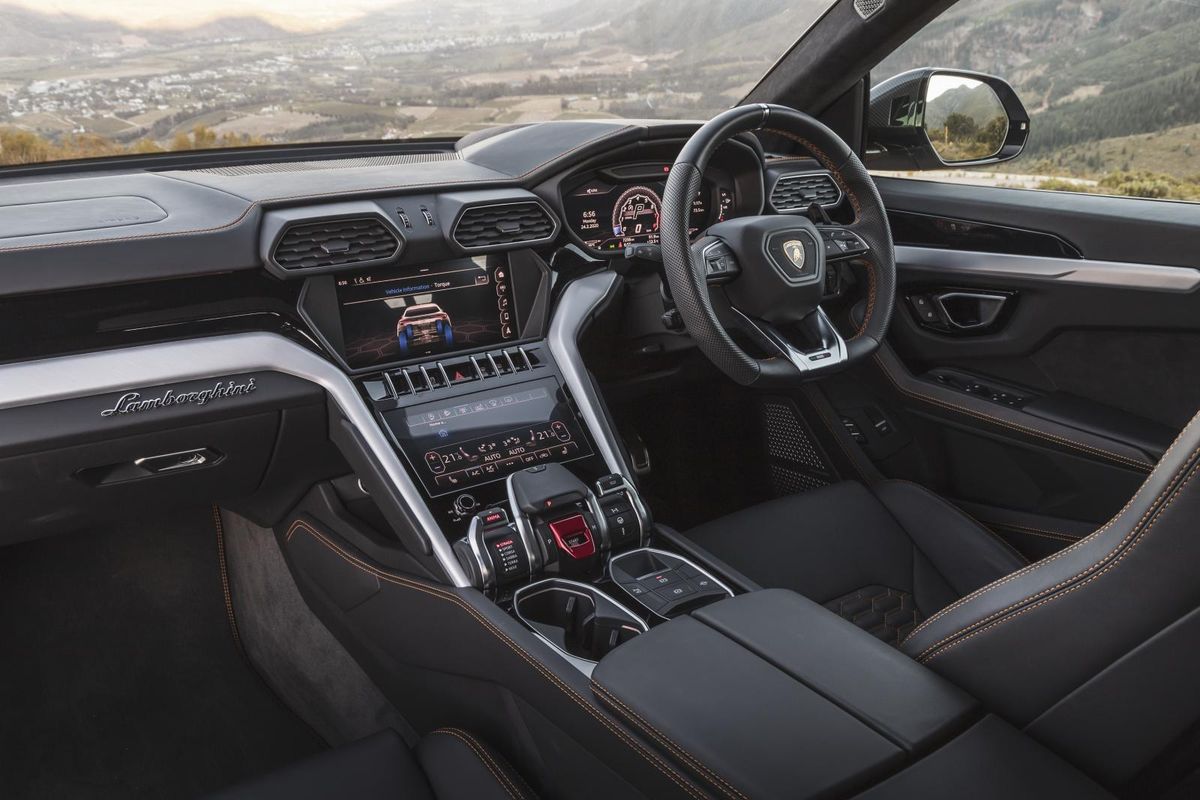
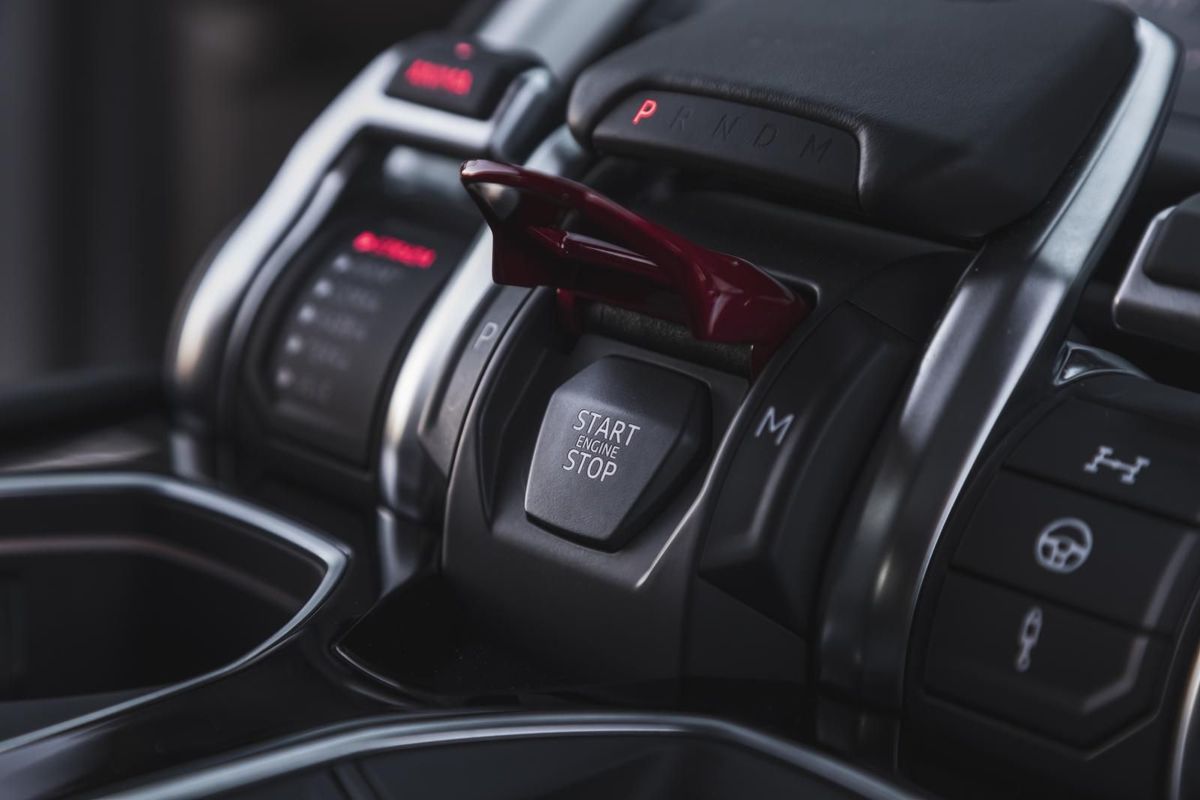
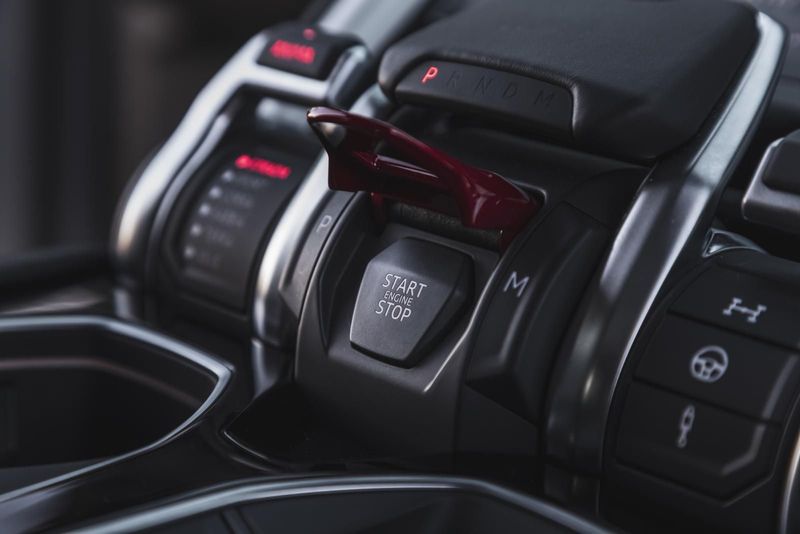
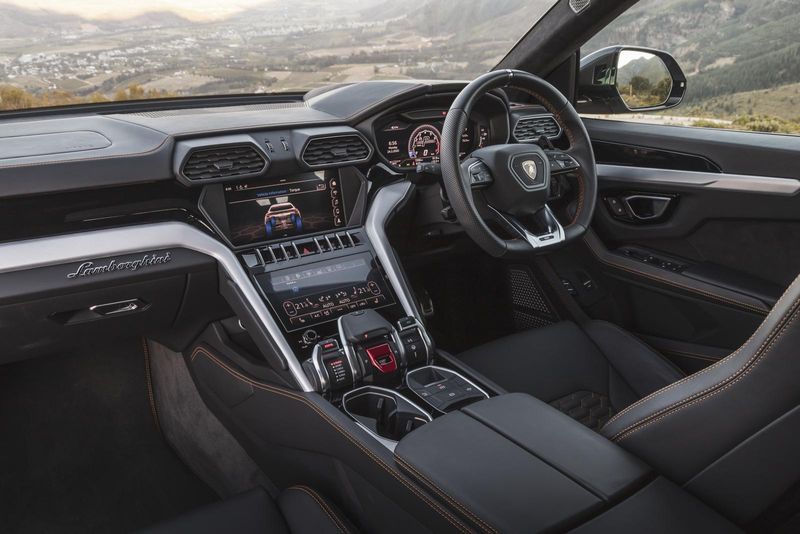
As in other Lamborghinis (and fighter jets) you have to flick open the red lid to press the starter button.
Roll on 16 years, and I'm faced with a similar situation as I slip onto the firmly-bolstered driver's seat of a dark metallic grey Lamborghini Urus. I'm really hoping that it will live up to the reputation of its revered manufacturer, because it's a brand I've always held in high esteem. I admire the marque's hard-edged, uncompromising approach to things in a world that's become so "bubble-wrapped".
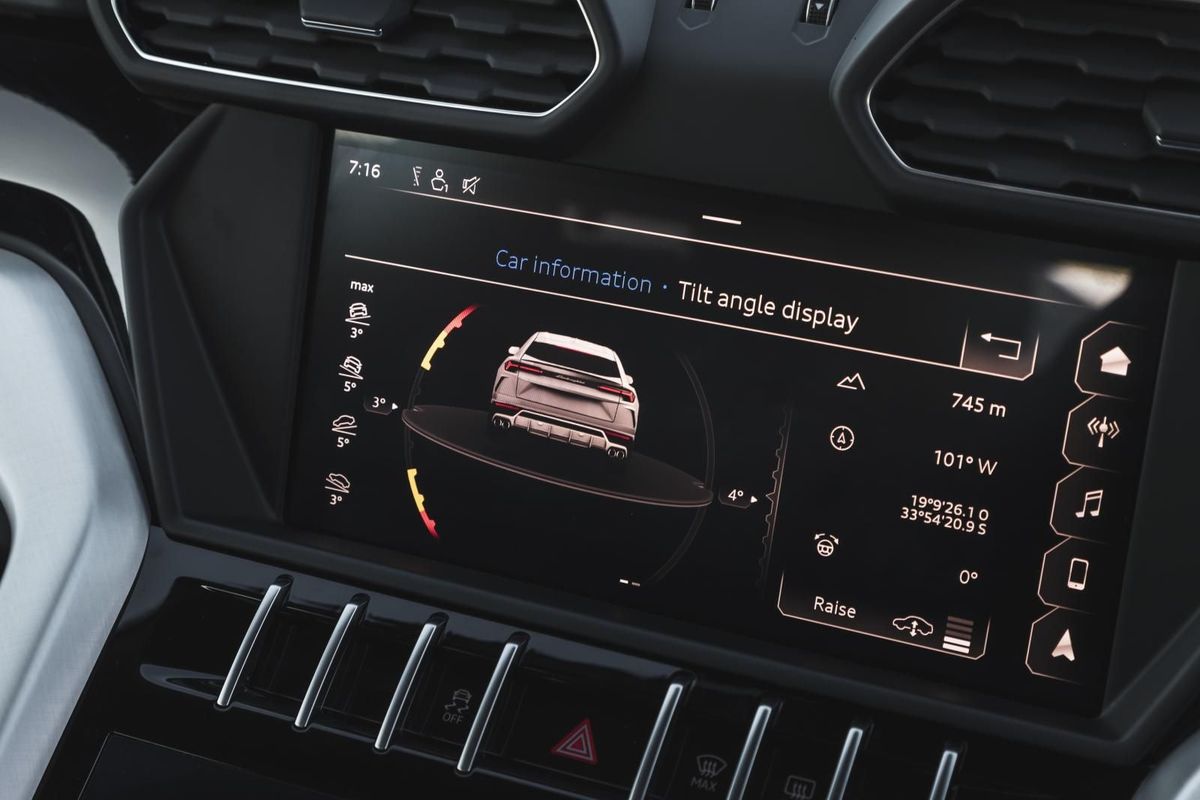
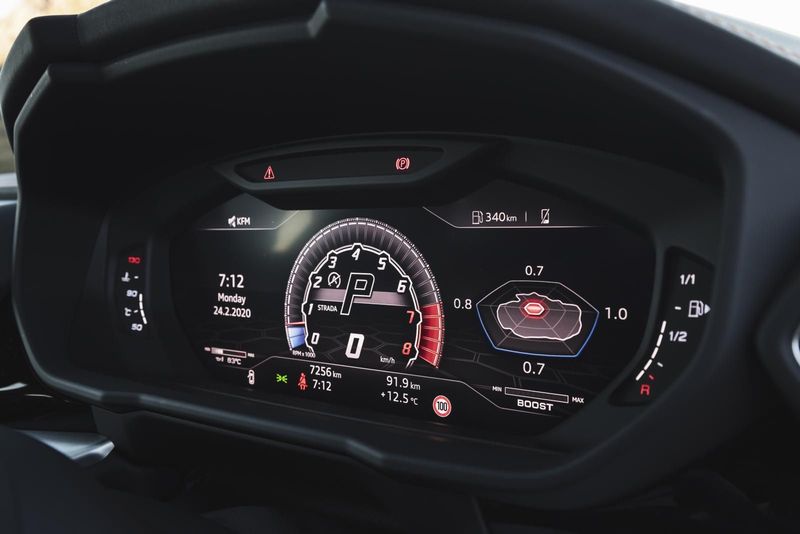
First indications are positive. Although some of the switchgear is obviously sourced from the VW Group parts bin, there's enough Lamborghini style in here to make just sitting in a Urus an occasion. There's also an awful (or wonderful, depending on your point of view) lot of Italian wording to get used to. What would typically be called something like "Drive Select" is called "Tambura" in the Urus and instead of "Normal", "Sport" and "Sport+" you get "Strada", "Sport" and "Corsa". Tick some option boxes and you also get off-road (Terra) modes, including "Neve" (Snow) and "Sabbia" (Sand).
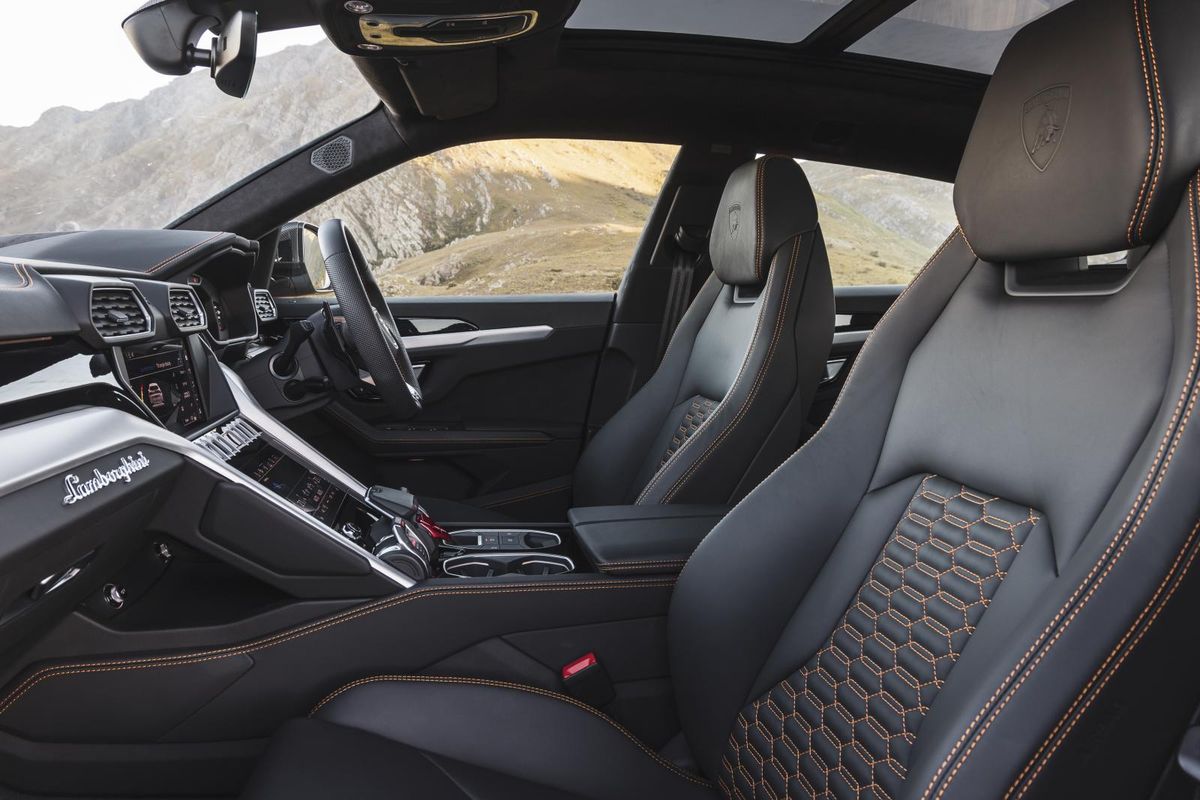
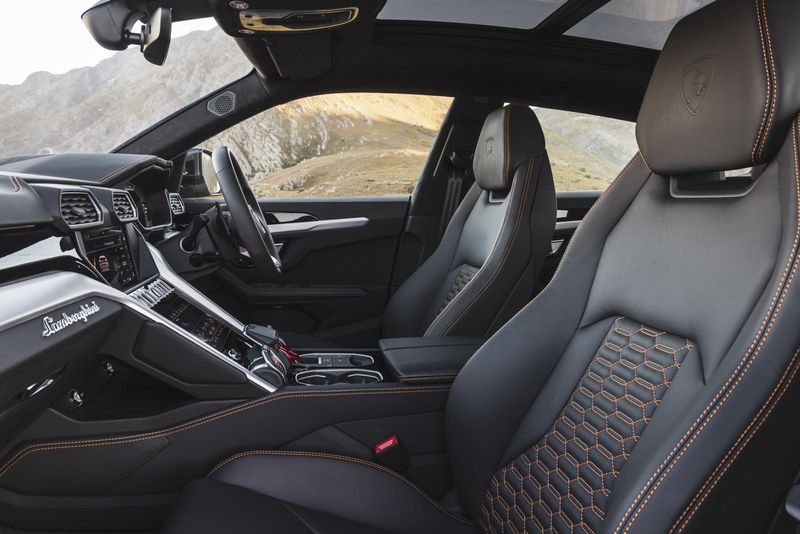
The dramatic interior is spacious (even in the rear), and though the seats are firm, they proved to be comfortable on our long-distance test drive.
There's also that cool red cap over the starter button that has to be flicked open – fighter-jet style – before the Urus can be thumbed into action. It fires up with a nice rorty crackle. I pull back on the right steering-mounted shift paddle to engage drive and we duly edge our way out of the Lamborghini showroom in Cape Town with nervous excitement. The first 2 ratios of the 8-speed 'box are short, so even in the default Strada drive mode, the Urus feels eager to respond to throttle inputs.
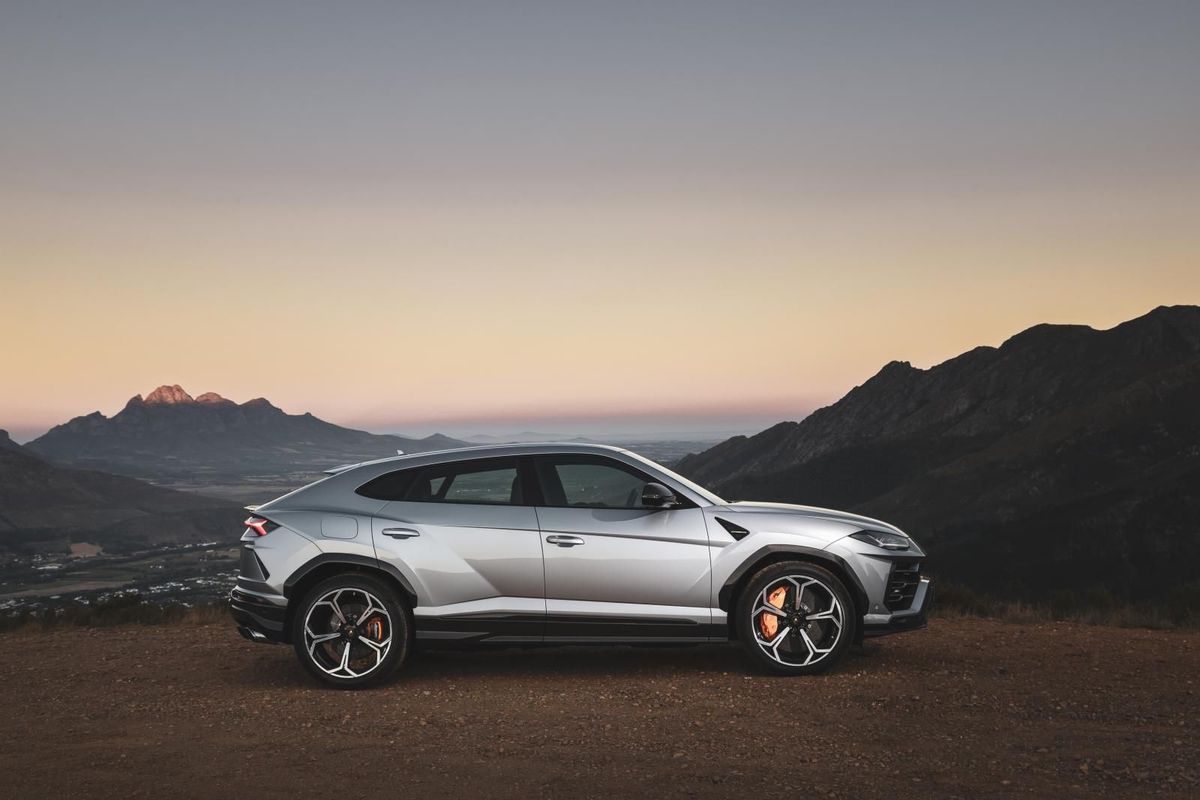
The ride quality feels firm, possibly too firm, at low speeds. I suspect this can be attributed to the Urus' massive wheels, shod with suitably low-profile rubber… 21-inch wheels are standard but our test unit featured colossal 22-inch items. If you want, you can also have 23-inch wheels. As speeds rise, however, the adaptive air suspension (with electromechanical roll-stabilisation) gains a more supple character and as we were to find out later, the Urus is a very effective high-speed, cross-continent cruiser, whatever the road surface might be like (we didn't venture off-road, however).
'Explodes into action with an almighty roar'
It's been a while since I've driven a Lamborghini, but the directness and weighting of the steering feel vaguely familiar, as does the eagerness of the drivetrain. The Urus is powered by a twin-turbocharged 4.0-litre V8 that delivers a whopping 478 kW and 850 Nm of torque, the latter figure being on tap constantly from 2 250 to 4 500 rpm. It's mighty… this bull.
The 2.2-tonne Urus can effortlessly blast to from standstill to 100 kph in 3.6 seconds, 200 kph arrives in 12.8 seconds and the top speed is 305 kph. But those astounding numbers alone don't tell the full story. While always responsive to throttle inputs, even in "normal" Strada mode, the Urus explodes into action with an almighty roar when you stomp on its accelerator pedal. That level of ferocity is bound to leave first-time Urus drivers somewhat breathless and bewildered (like I was). This. Should. Not. Be. Possible.
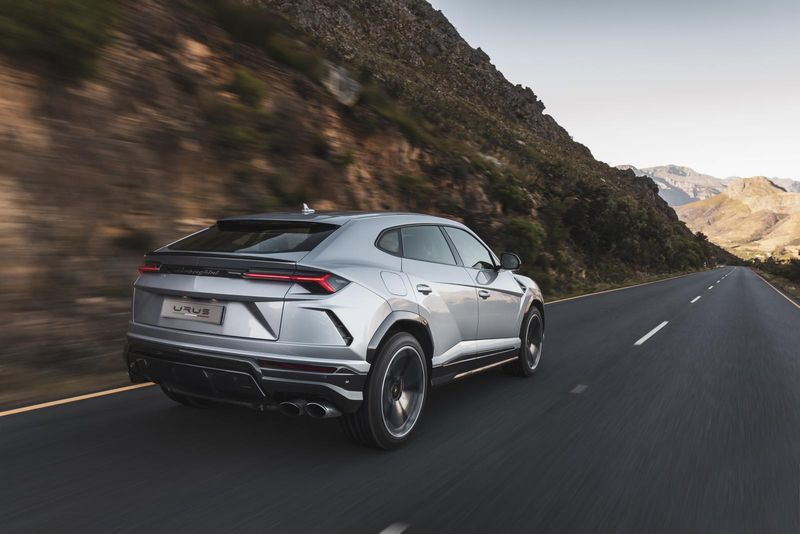
Mean machine. Dramatic looks are backed up by a driving experience to match.
There's no fancy dual-clutch transmission in the Urus, just a torque-converter 8-speed 'box, but it does a very good job. Its shifts are calibrated to ensure strong acceleration from rest, as well as efficient cruising at higher speeds. Lamborghini claims a combined cycle consumption figure of 12.3L/100 km which, during our test, was never on the cards. We were simply having too much fun!
Happily, our test drive route included some mountain passes. One wouldn't think that a tight and twisty ribbon of tarmac would be the ideal playground for a heavy, large SUV. But as the Cayenne proved many years ago, engineers are nothing if not resourceful. Torque is split 40/60 front-to-rear as standard, but the Urus can shift up to 70% of its torque to the front, or up to 87% to the rear, depending on the situation. Another feature is active torque-vectoring via a rear limited-slip differential, and in Sport or Corsa modes, the Urus adopts a more "oversteery" handling nature.
And then there's rear-wheel steering, adopted from the Aventador S hypercar. At low speeds, the rear-axle steering angle is opposite to that of the front wheels, which effectively shortens the wheelbase by up to 600 mm, with the main benefit being a smaller turning circle. At higher speeds, the rear-axle steering angle is in the same direction as the front wheels, which results, Lamborghini says, in improved stability and ride comfort as well as "optimum" driving dynamics.
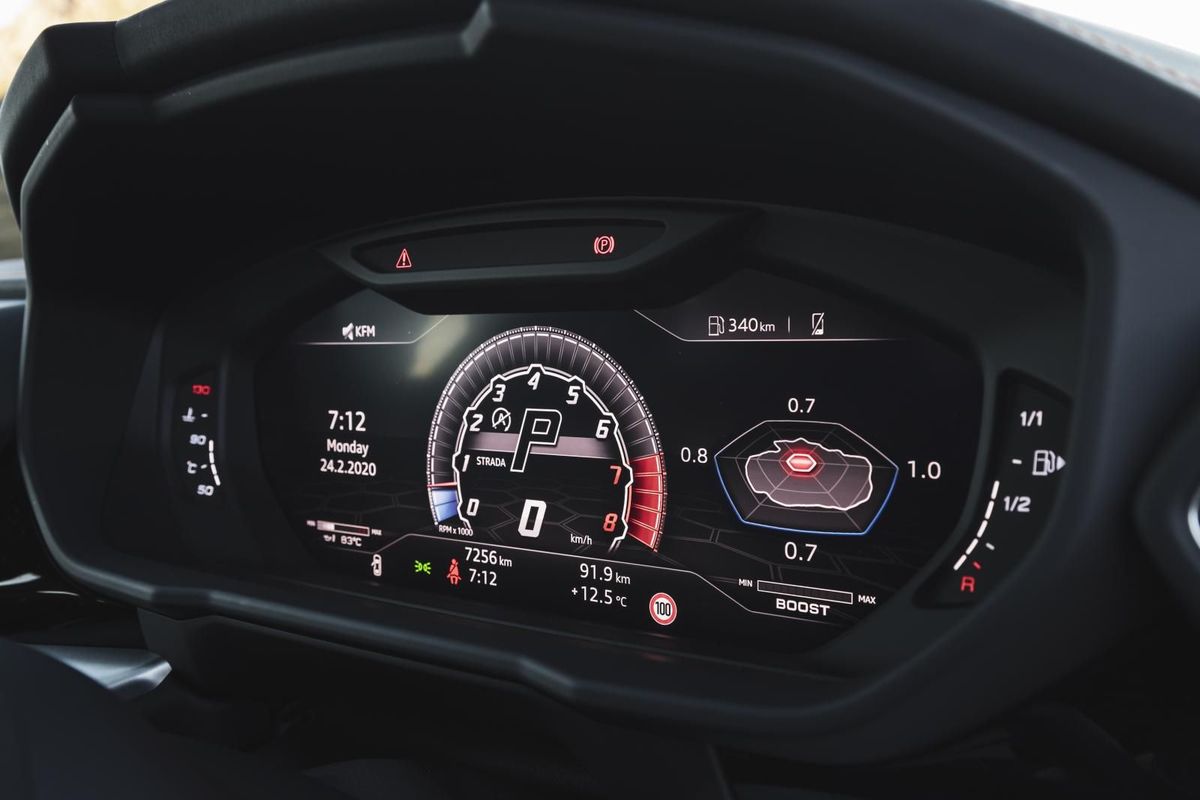
Large facia instrumentation display changes layout depending on the drive mode selected.
It works. Well, don't get me wrong… you can't expect the Urus to deliver Aventador or Huracan-like theatrics, but the Urus corners with the kind of poise and agility that a vehicle weighing this much should simply not be able to muster. To be fair, it's not a vehicle that ever feels particularly keen to slide at the rear, and even in Corsa mode a degree of body roll remains, but the Urus just has so much grip and, as a result, cornering speeds are high and the ability to rocket out of bends impressive, to say the least. And unlike many fast SUVs, the Urus is fun to drive fast – the precision and speed of the transmission play a big role in that, as do the weighting of the steering and the motor's wicked soundtrack. There just isn't another sports-SUV that feels like this. It's as simple as that.
Verdict
As ever, there are many options to choose from, but even as standard the Urus's cabin delivers a real sense of occasion.
Like the Cayenne did many years ago, the Urus has rewritten the sports-SUV rulebook. At the same time, it is helping to fund the development of future, more traditional sports machines from the Lamborghini stable. It remains to be seen what the upcoming Audi RS Q8 will cost, and how close it will come in matching the Urus for driving and emotional appeal, but for now we rate the Urus as actually attractively priced (for a Lambo) at R3 495 000, particularly because its healthy dose of emotional, irrational, typically hardcore Lamborghini appeal is matched by its real-world abilities.
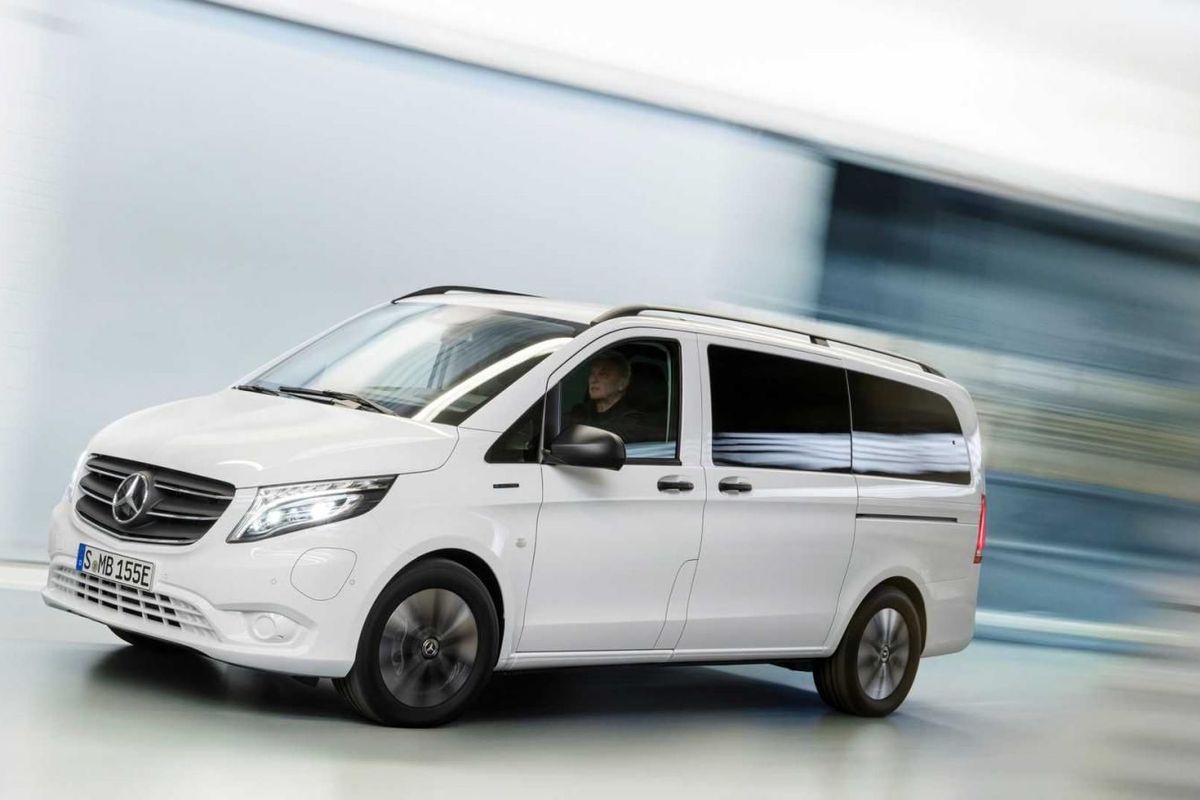
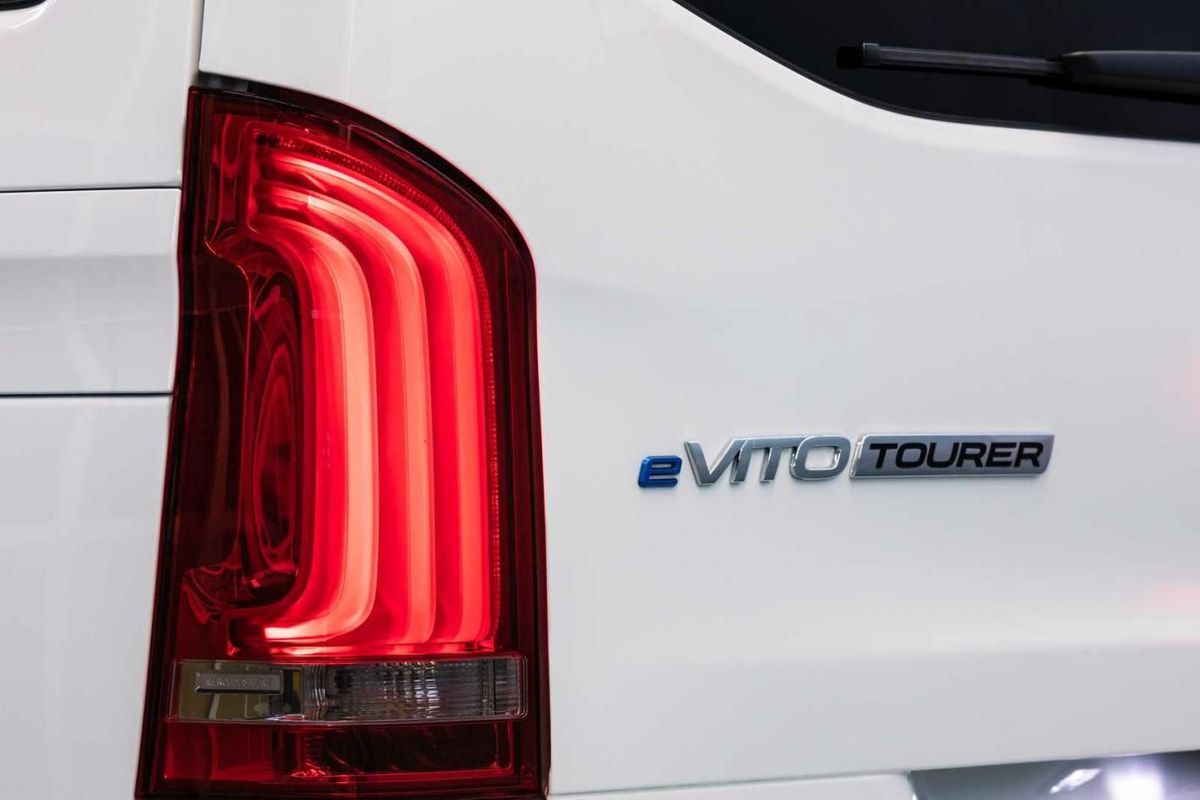
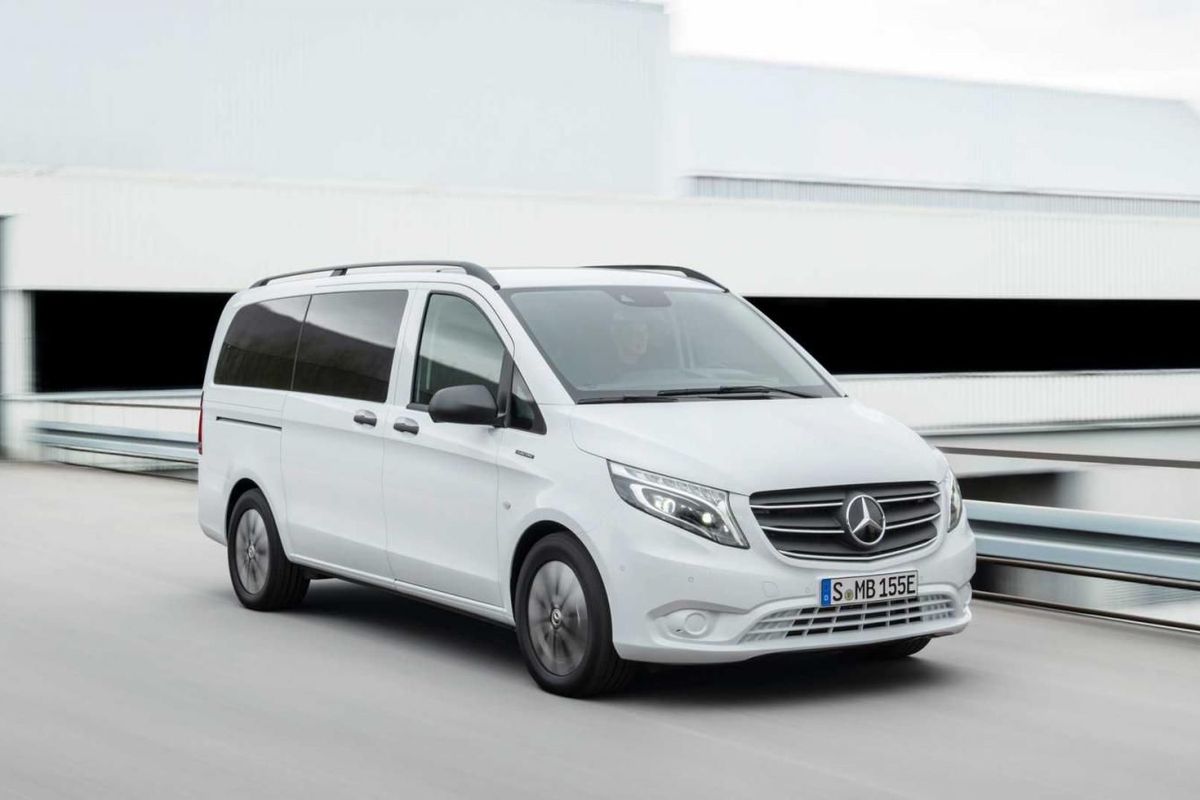
Mercedes-Benz has finally shown its electrified van.
Perhaps the Mercedes-Benz range of vehicles most suited to electrification, are the brand's vans – and there is now a Vito with battery power.
This new eVito features some very impressive numbers. It is powered by a 150 kW electric motor which produces 362 Nm. Those numbers compare favourably with the Vito range’s internal combustion engines.
Clever packaging of the battery pack, electric motor and drivetrain mean that there have been no cabin architecture compromises. All the eVito’s battery, power- and drivetrain bits are accommodated at the front of the van, under its bonnet.
Although peak electric motor outputs aren’t immense, the eVito does have a very large battery pack, comparable in size to that of many Teslas or Porsche’s Taycan. Supplying energy for the eATS electric drivetrain is a 90 kWh battery pack, which is about the largest lithium-ion energy source available for passenger cars.
Range trumps power
Mercedes-Benz’s engineers have decided to limit power output to increase range. With 362 Nm the eVito has enough overtaking acceleration and hauling force, even if it is loaded with a full complement of passengers.
By not attempting to chase radical power outputs, Mercedes-Benz has the confidence of marketing eVito with a promised range of 420 km on a single charge. That is impressive for a large battery-powered van.
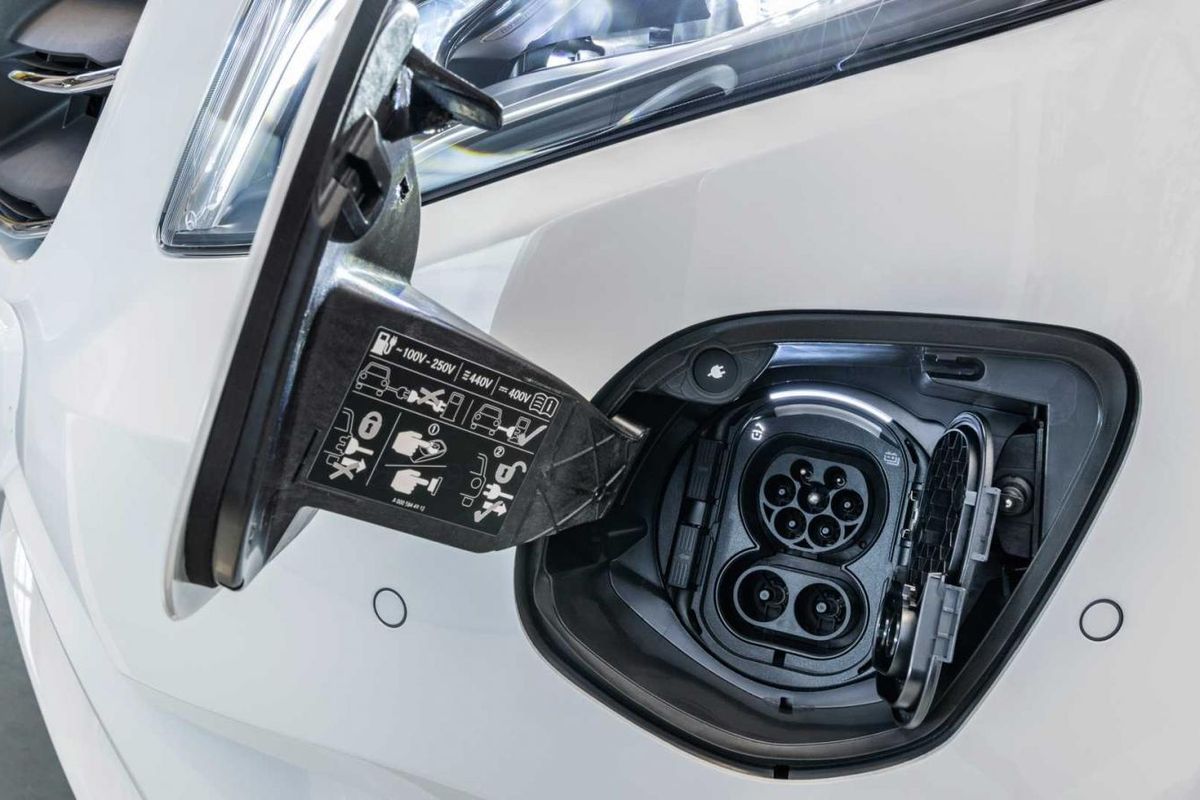
Top speed is limited to 140 kph (to conserve range) and recharging from a high output source, should equate to 80% of battery capacity in 45 minutes.
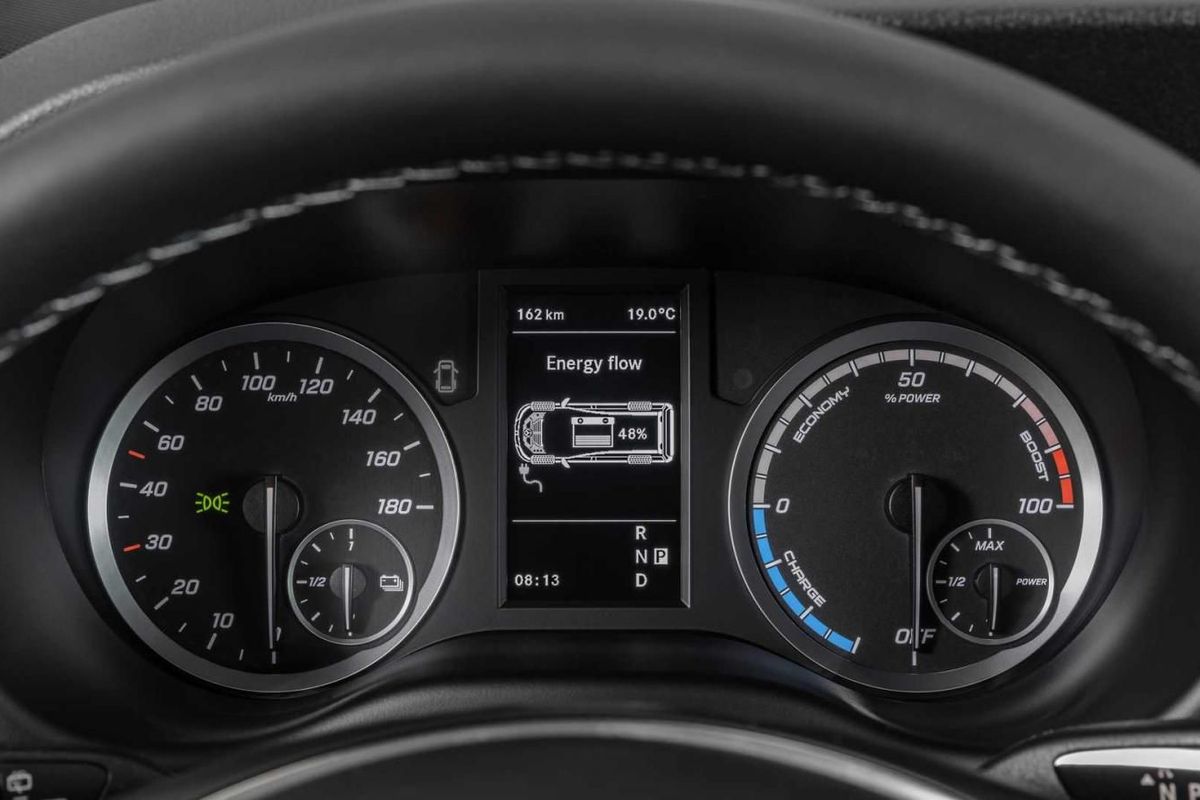
Mercedes-Benz has also equipped the eVito with new safety features. These include automated emergency braking and Distronic adaptive cruise control. A curious detail of the eVito is that for all its advanced powertrain specification, the instrument binnacle is still served by analogue dials.
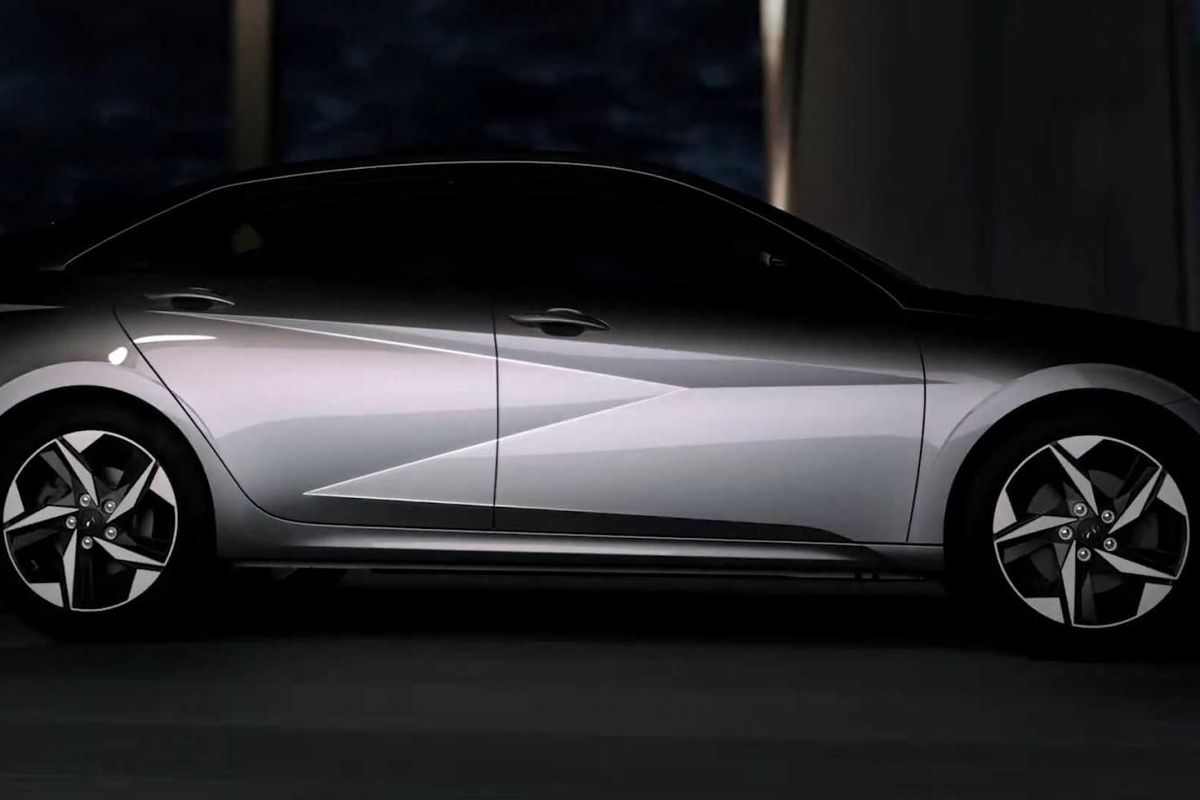
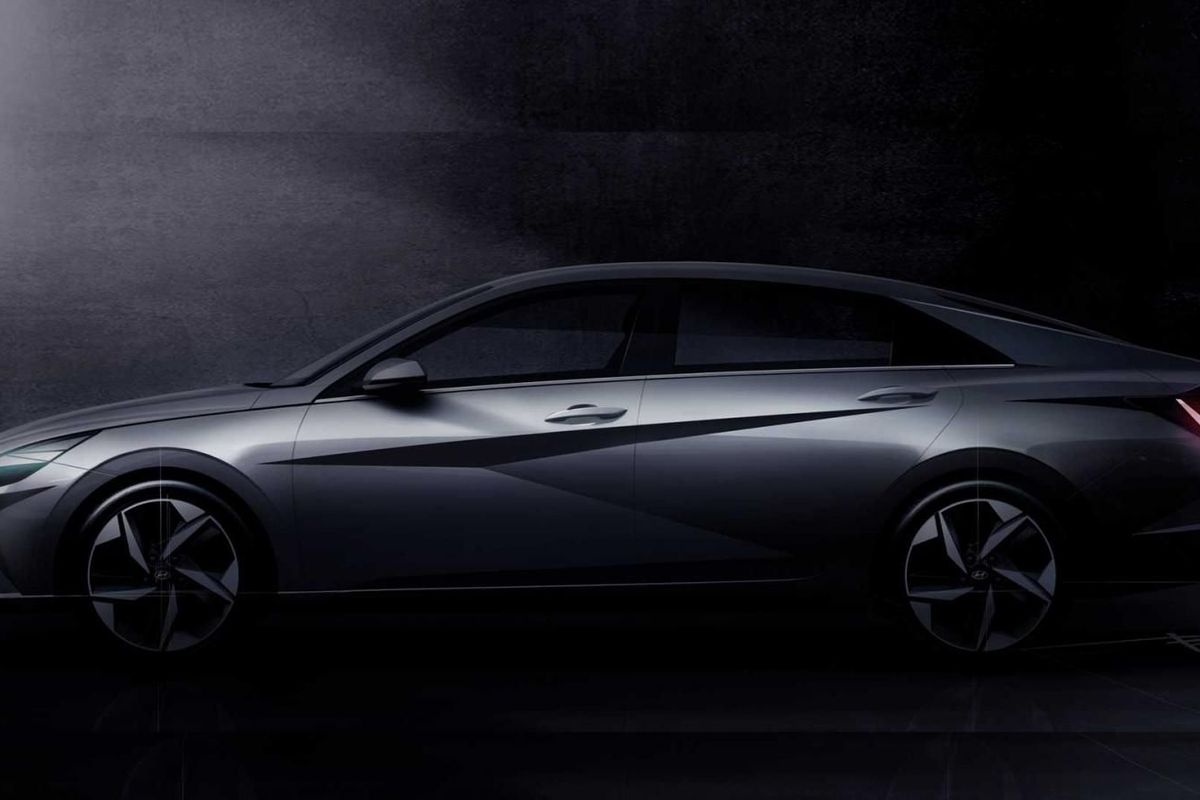
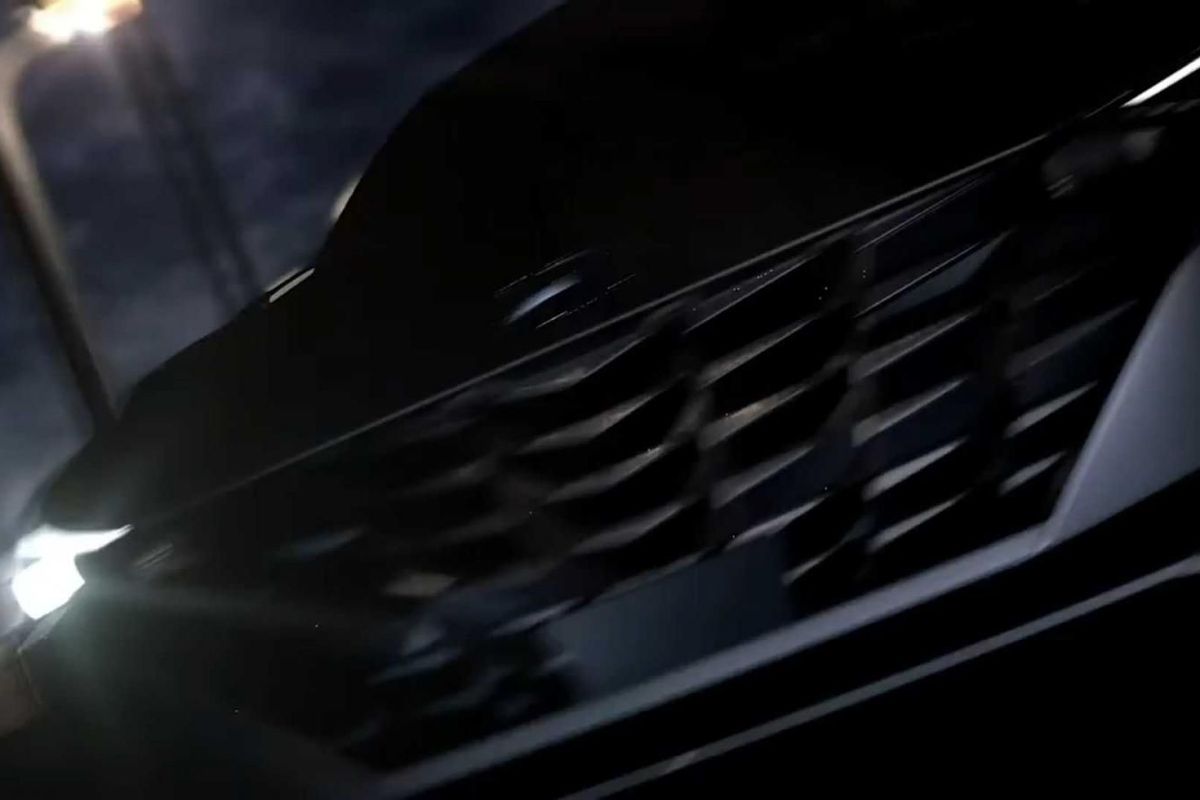
Hyundai is preparing to reveal an all-new, 7th generation Elantra on 17 March 2020 and the firm has dropped a few teaser images and a short video to whet your appetite.
Based on the teaser images you see here, the new Elantra’s design has become slick and edgy with a coupe-like silhouette and some eye-catching angular body lines. Hyundai calls it a sporty-four-door coupe and says it stands longer, lower and wider than the outgoing Elantra.
‘Parametric Dynamics’ is the term used to describe the new Elantra’s design language but perhaps the most intriguing styling feature will be its grille, which is briefly teased in the video below. It’s certainly bold but we will have to reserve full judgement until we see the new Elantra in full.
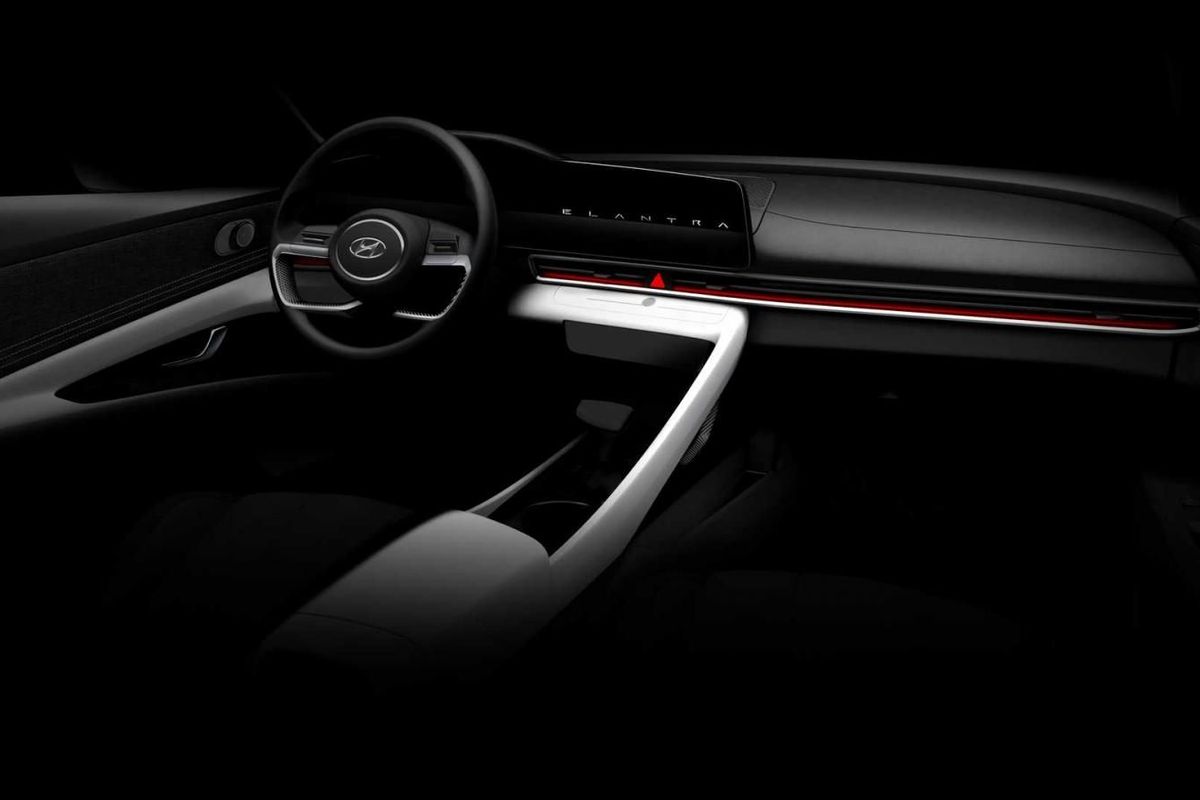
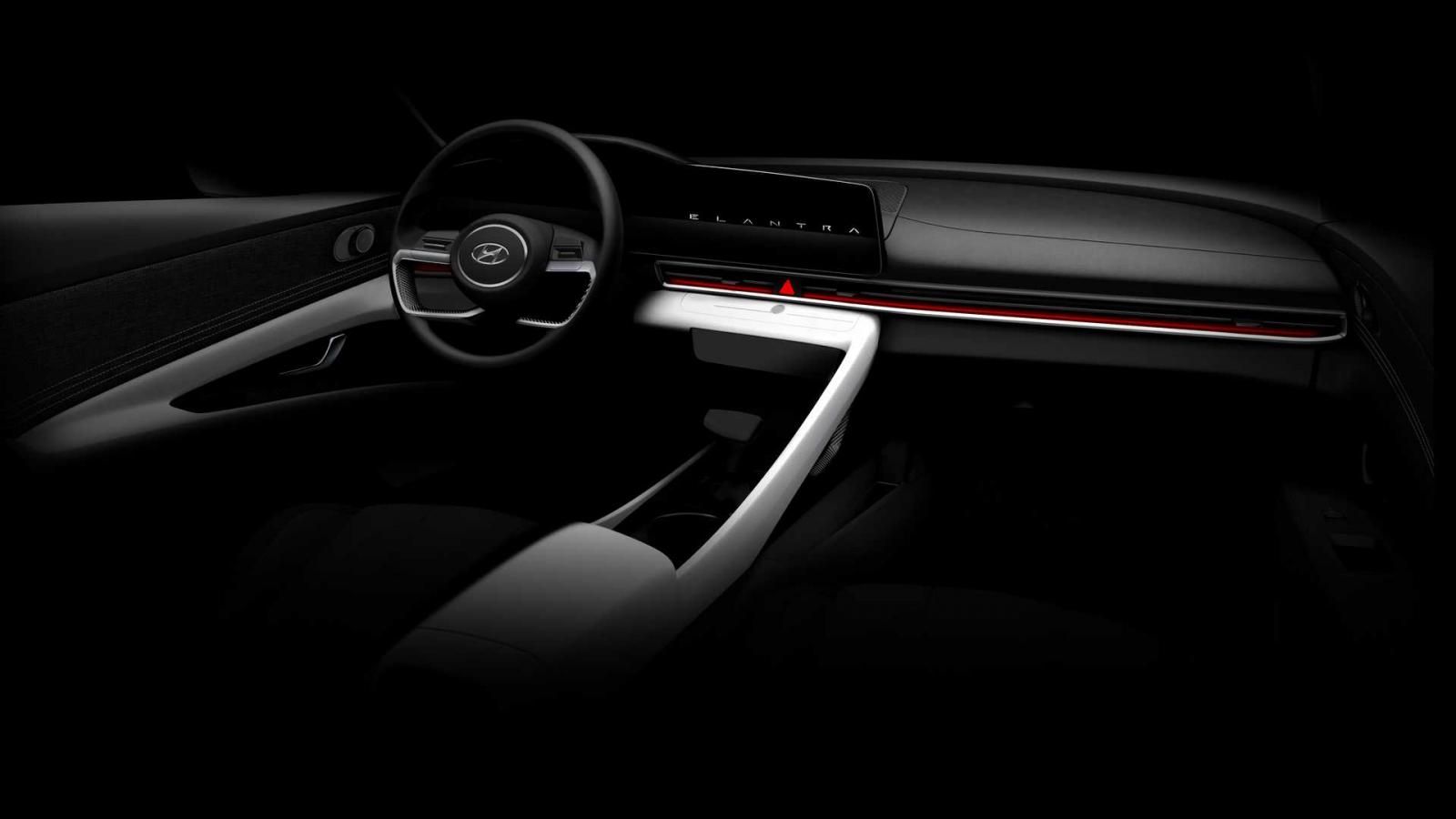
The new Elantra's interior is expected to be radically different from the outgoing version.
As for the interior, it looks slick, stylish and minimalist with very few buttons seen. Hyundai calls it an ‘Immersive Cocoon’. It appears most of the Elantra’s functions will be accessed via a large touchscreen which transitions nicely into the instrument cluster screen. Again, however, we are cautiously optimistic and we will have to wait and see how the production Elantra squares up to these teasers.
Powertrain details for the new Elantra are scarce but we hope that Hyundai matches the new sporty look with a suitable powertrain that will do the product justice. It’s worth noting that the current Elantra Turbo Elite Sport employs a 1.6-litre turbocharged engine with 150 kW and 265 Nm and is equipped with a 7-speed dual-clutch automatic transmission.
Thankfully, we won’t have to wait too long for official details as the new Elantra will be revealed in Hollywood on 17 March 2020. Stay tuned!