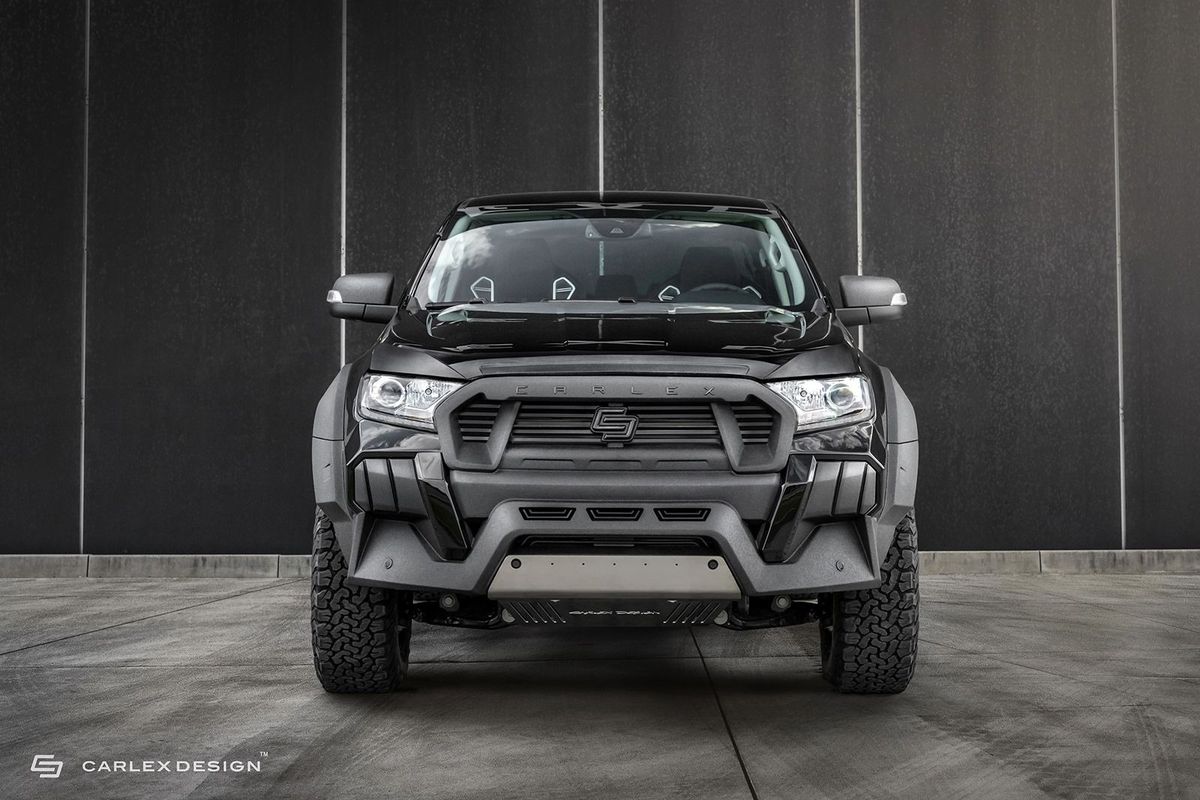
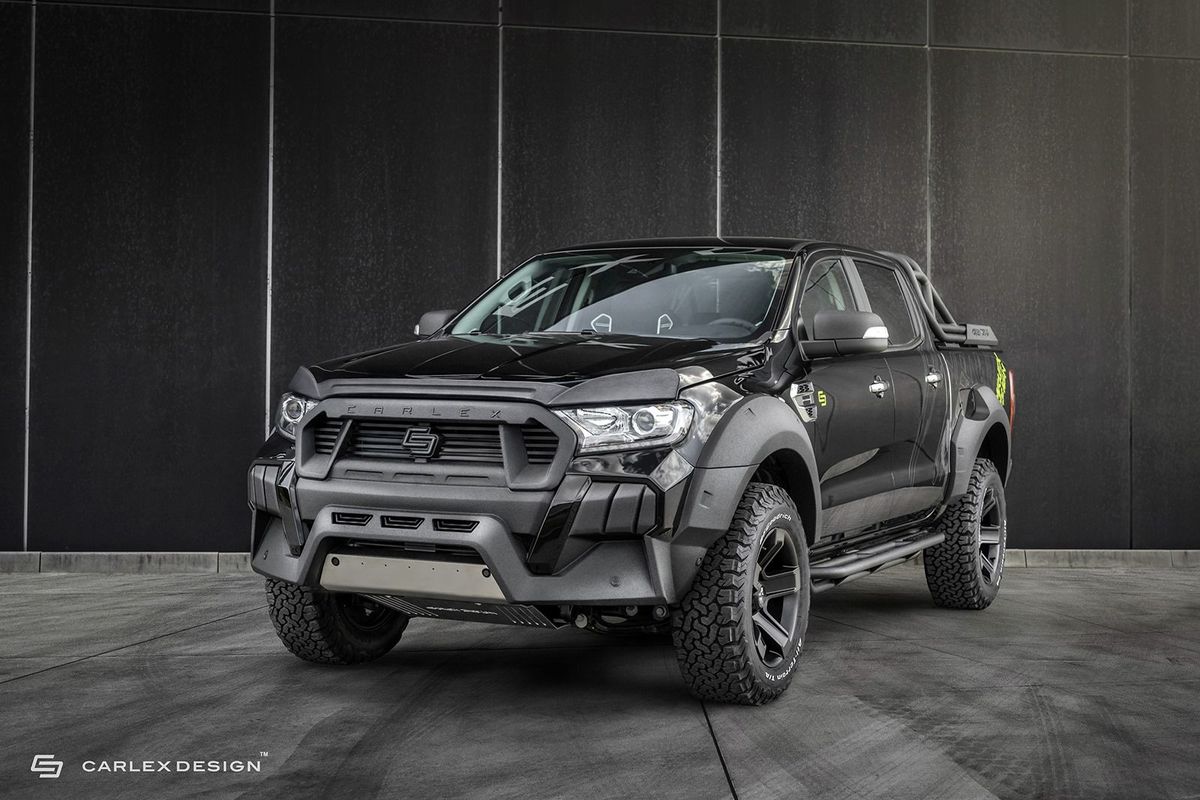
The Ford Ranger bakkie is a popular subject for making modifications and Polish-based tuning firm, Carlex Design, has gone all out to make a mean-looking Ranger. Check it out!
The broad and chiselled look of the Ford Ranger has provided the perfect canvas for avid modifiers and tuners to show off their creativity. This latest creation from Carlex Design shows just how mean the Ford Ranger can really look if you are willing to throw lots of time and money at it.
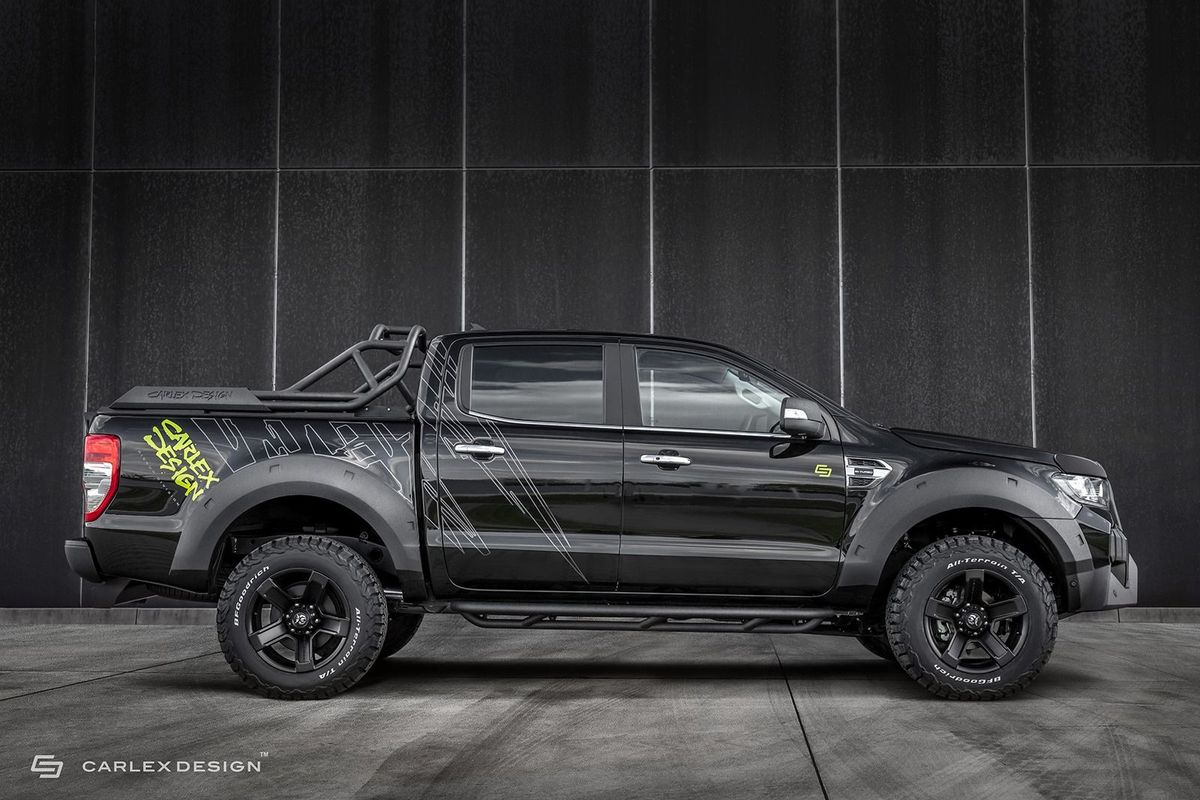
The blacked-out grille and heavily modified front bumper give this Ford Ranger an imposing presence and Carlex has also fitted a steel kid plate to protect the Ranger from dame while traversing tough terrain. The flared wheel arch extensions provide visual width to the vehicle and chunky BF Goodrich All-Terrain tyres wrapped over black rims further adds to the menacing appearance of this wild Ranger. Rock sliders are also fitted.
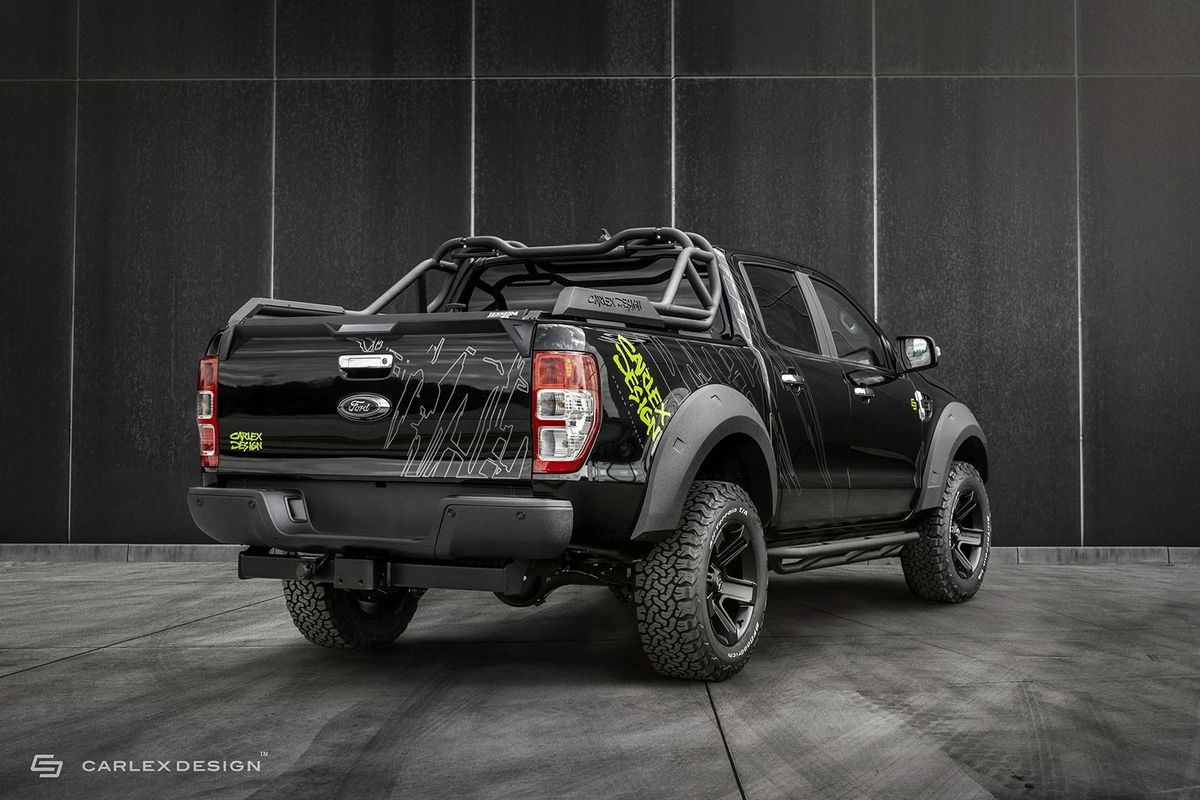
At the rear Carlex has fitted a new bumper as well as a uniquely angular, powder-coated sports bar fitted to the load bed. The exterior look is rounded off with a Carlex Design graphics.
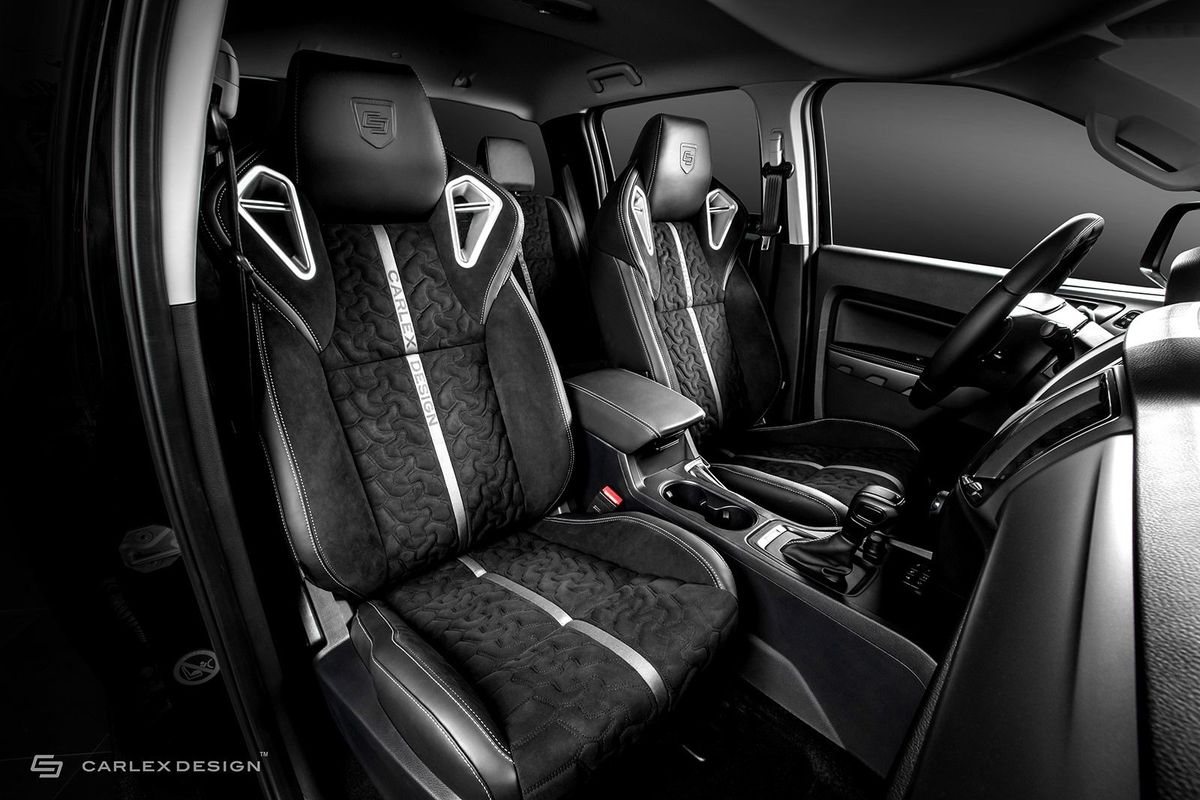
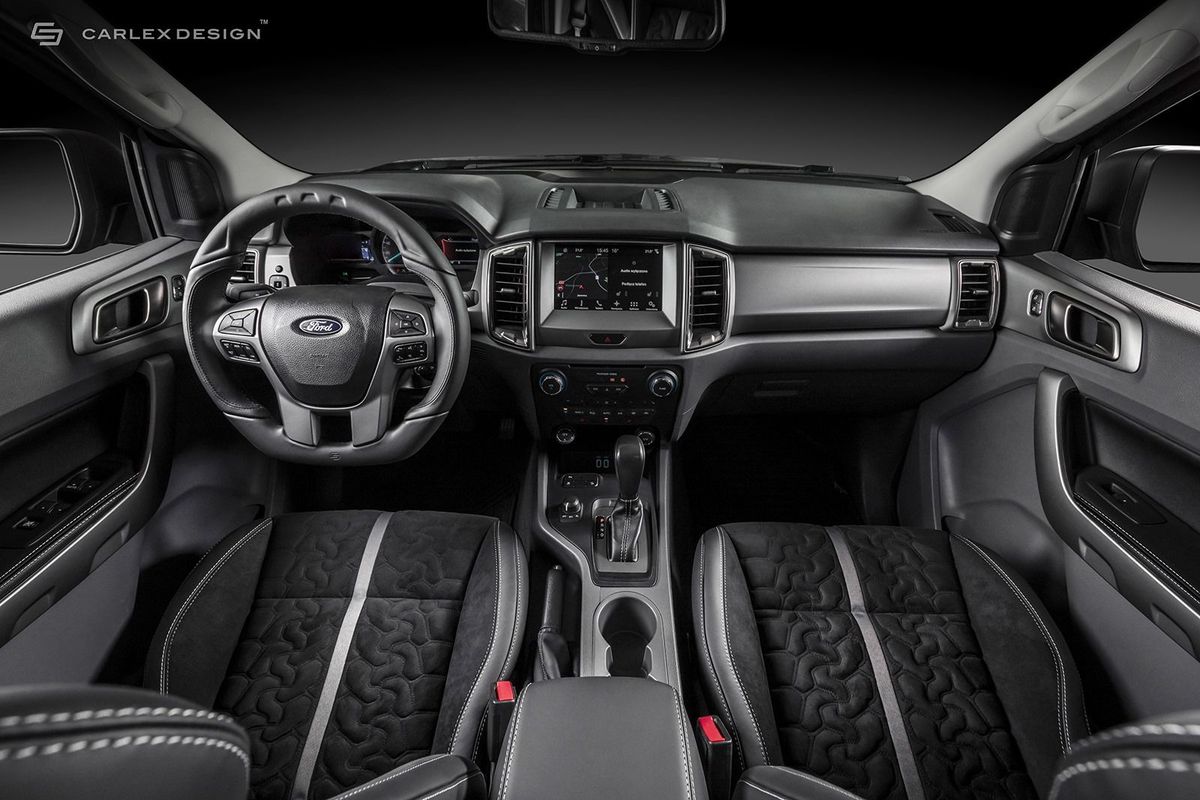
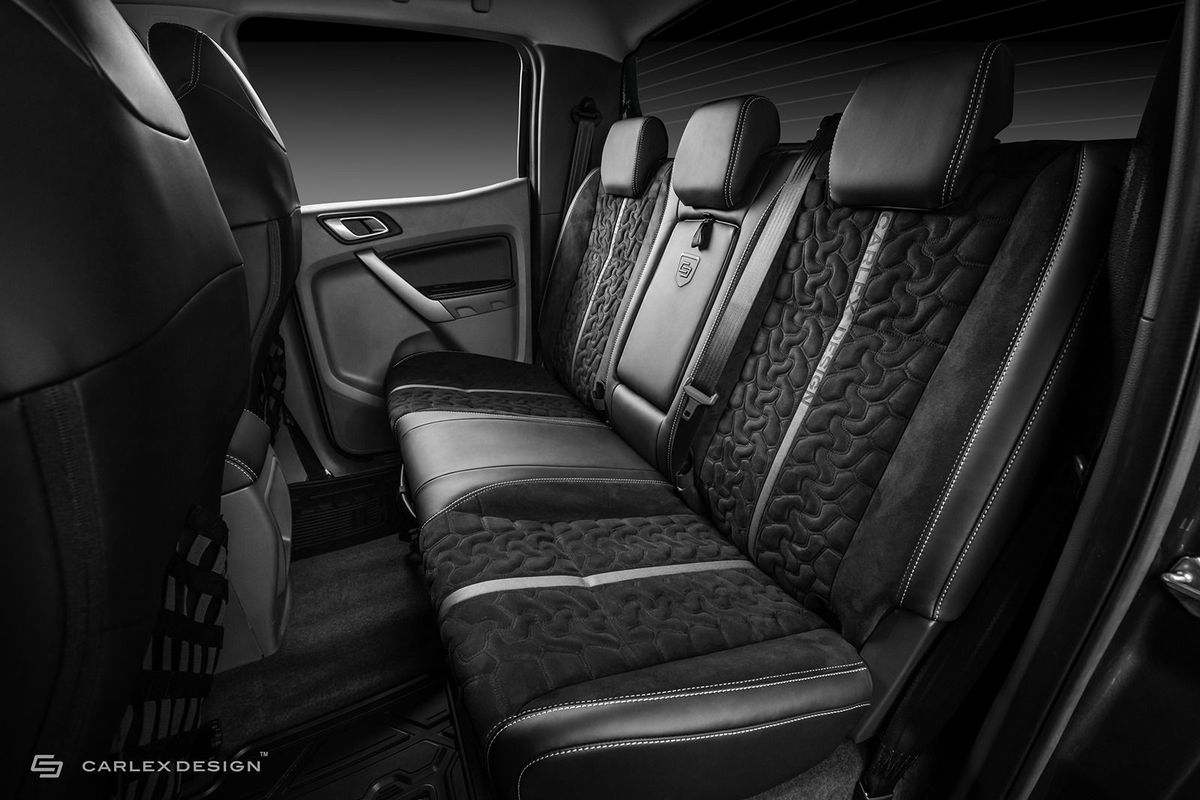
On the inside, sporty seats are wrapped in a leather and Alcantara combination with silver contrasting stitching and the obligatory Carlex badging throughout. You’ll also notice the new leather-bound steering wheel that is much thicker and more stylised than the standard steering wheel found in the Ranger.
What do you think of the look? Do you think you would be able to live with this Ford Ranger every day?
Share your thoughts with us in the comments below…
Mitsubishi has finally installed a 1.5-litre turbocharged engine in its angularly-styled Eclipse Cross. We were pleasantly surprised by the naturally-aspirated derivative of the Japanese compact family car, so does a punchier powertrain make it an even stronger proposition?
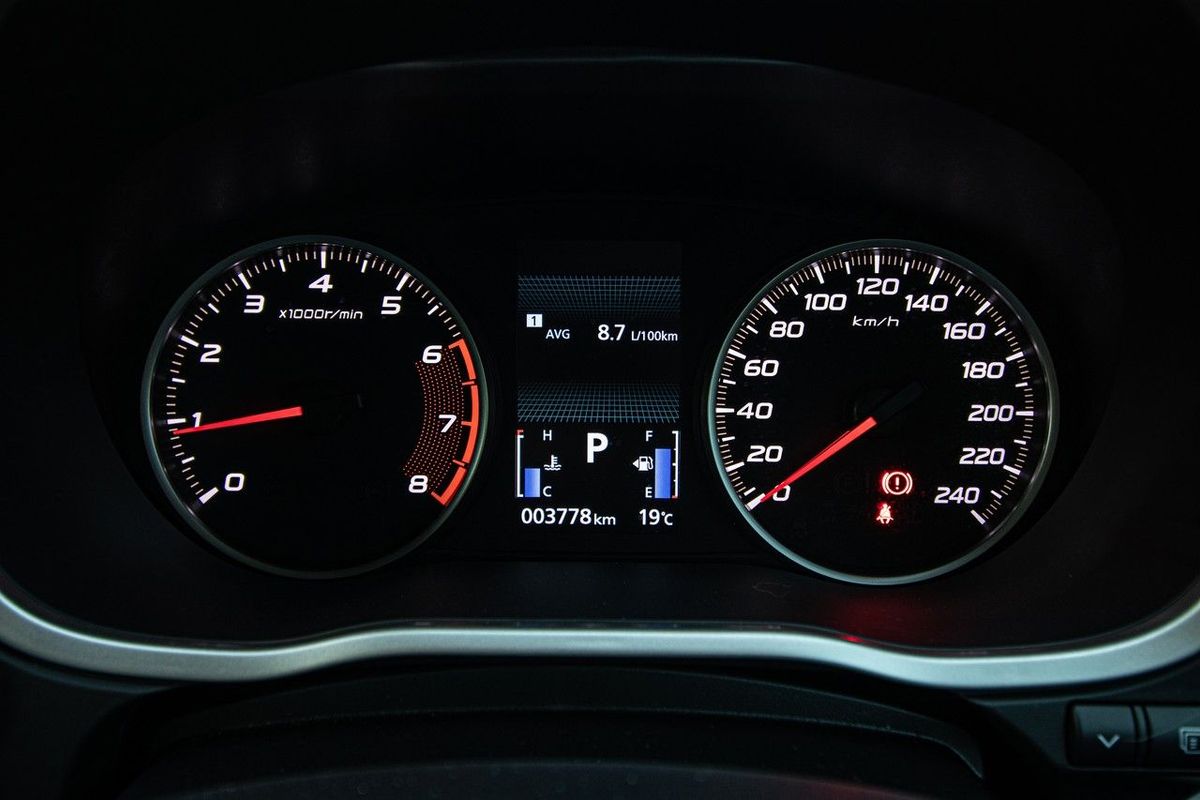
We like: Great engine, smooth ride, surprisingly economical, standard spec.
We don’t like: Limited luggage capacity, CVT lacks engagement, 1.5-litre turbopetrol only available in 2WD.
Fast Facts:
Price: R459 995 (June 2020)
Engine: 1.5-litre turbopetrol
Power/Torque: 110 kW/250 Nm
Transmission: CVT
Fuel consumption: 7.7 L/100 km (claimed)
Boot capacity: 378-1159 litres
What is it?
Now with a new turbocharged engine, the Eclipse Cross can compete with newer competitors.
This is not our first foray with the Mitsubishi Eclipse Cross; we've had considerable experience with it already. The derivative you see here, however, is powered by a 1.5-litre 4-cylinder turbocharged engine, which we've keenly awaited. While Mitsubishi has sold quite a few of the naturally-aspirated 2.0-litre derivatives, the Japanese firm has been keen to demonstrate exactly what its new powertrain is capable of. As the engine-downsizing trend continues amid increasingly stricter emissions regulations, adversity has forced innovation – we've encountered impressive compact engines. Granted, some have been a bit limp and thirstier than claimed, so the 1.5 Turbo GLS will have to prove itself.
The Mitsubishi Eclipse Cross is the Japanese brand's take on a compact family car. Like the Hyundai Creta and Kia Seltos, it's one of the larger models in its segment. In an embattled new vehicle market, demand for compact crossovers and SUVs have been resilient and, seeing as downsized forced-induction powerplants are de rigueur at the upper end of the segment, we're hoping to get the full Mitsubishi Eclipse Cross experience thanks to its promising new turbopetrol motor.
How it performs in terms of…
Exterior styling
In a way, it's unfortunate we live an era in which car styling has become such a controversial topic on social media. If a car's exterior design is too challenging (or "out there"), it gets slammed; alternatively, if designers play it too safe, it's boring. Smartphone-wielding critics tend to forget just how many fiery hoops designers need to jump through before a design is given the green light. Consider aspects such as safety and aerodynamics, to name but 2 examples. We'd bet many designers would happily incorporate flamboyant cues into vehicles, but remember those cars' production versions should minimise harm if they collide with pedestrians and have low drag coefficients to optimise efficiency, etc.
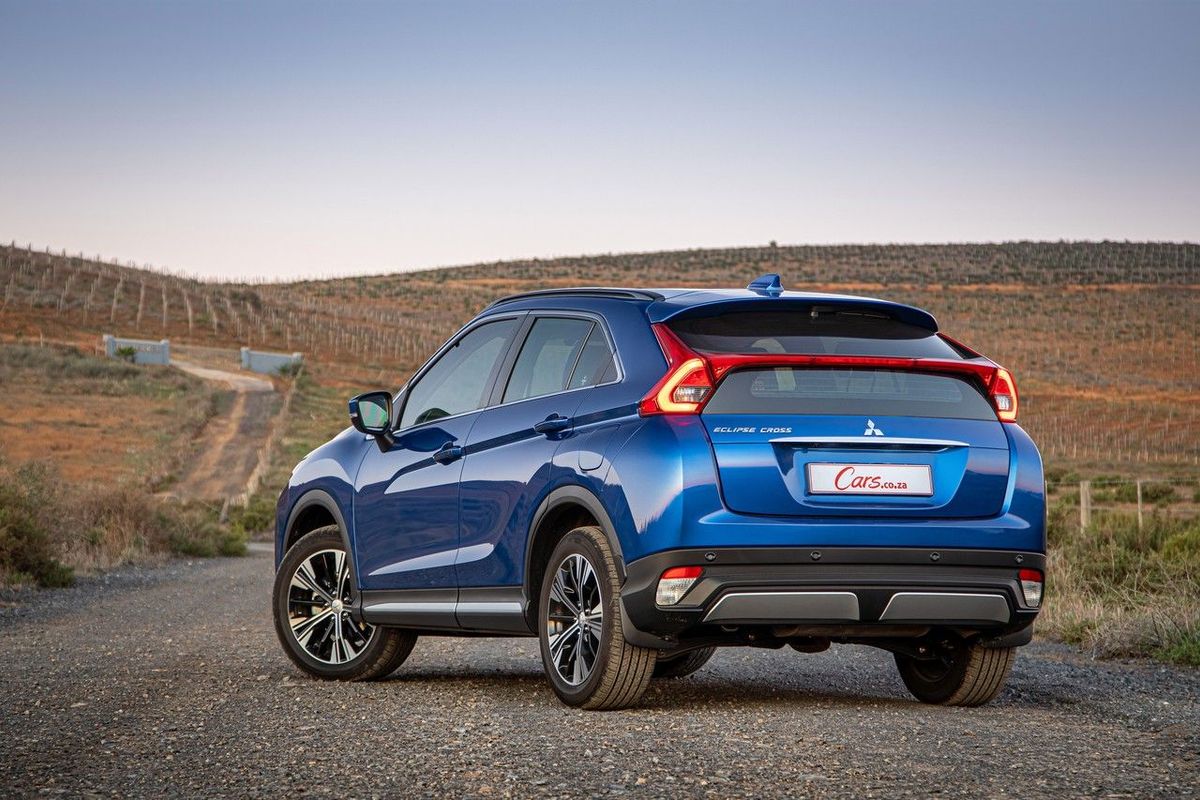
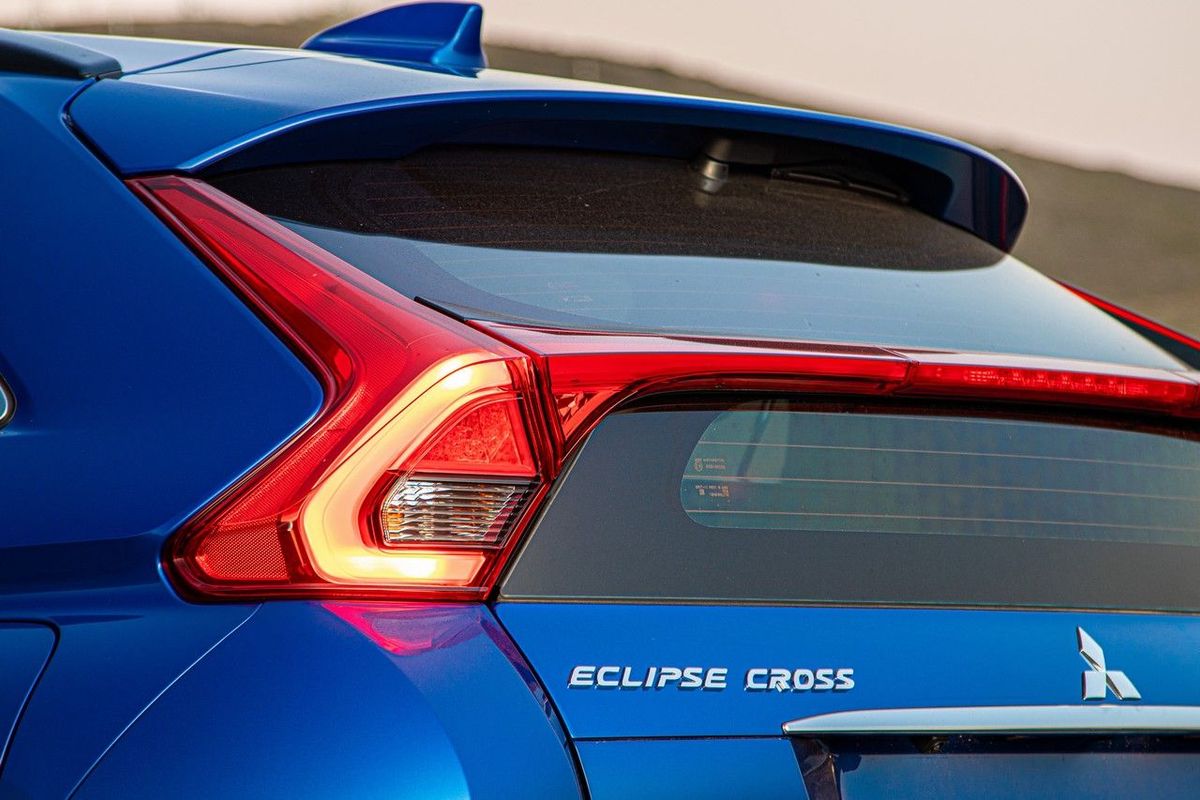
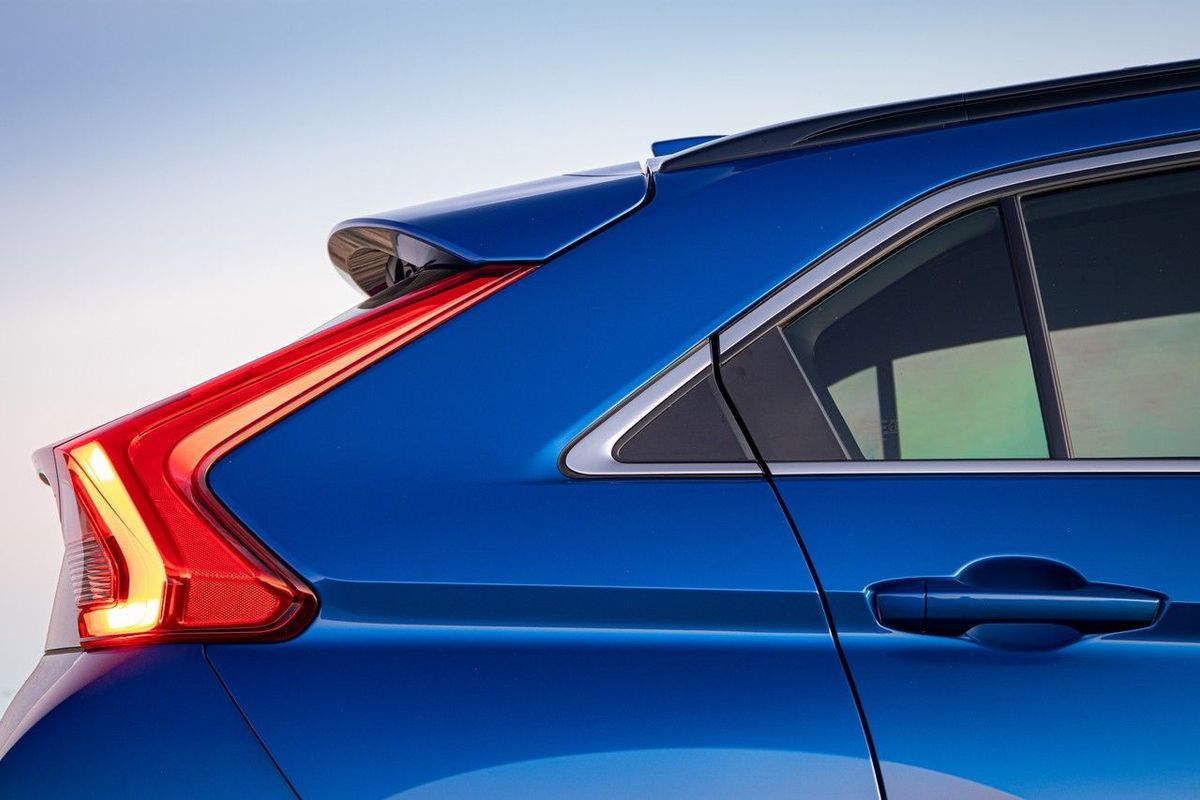
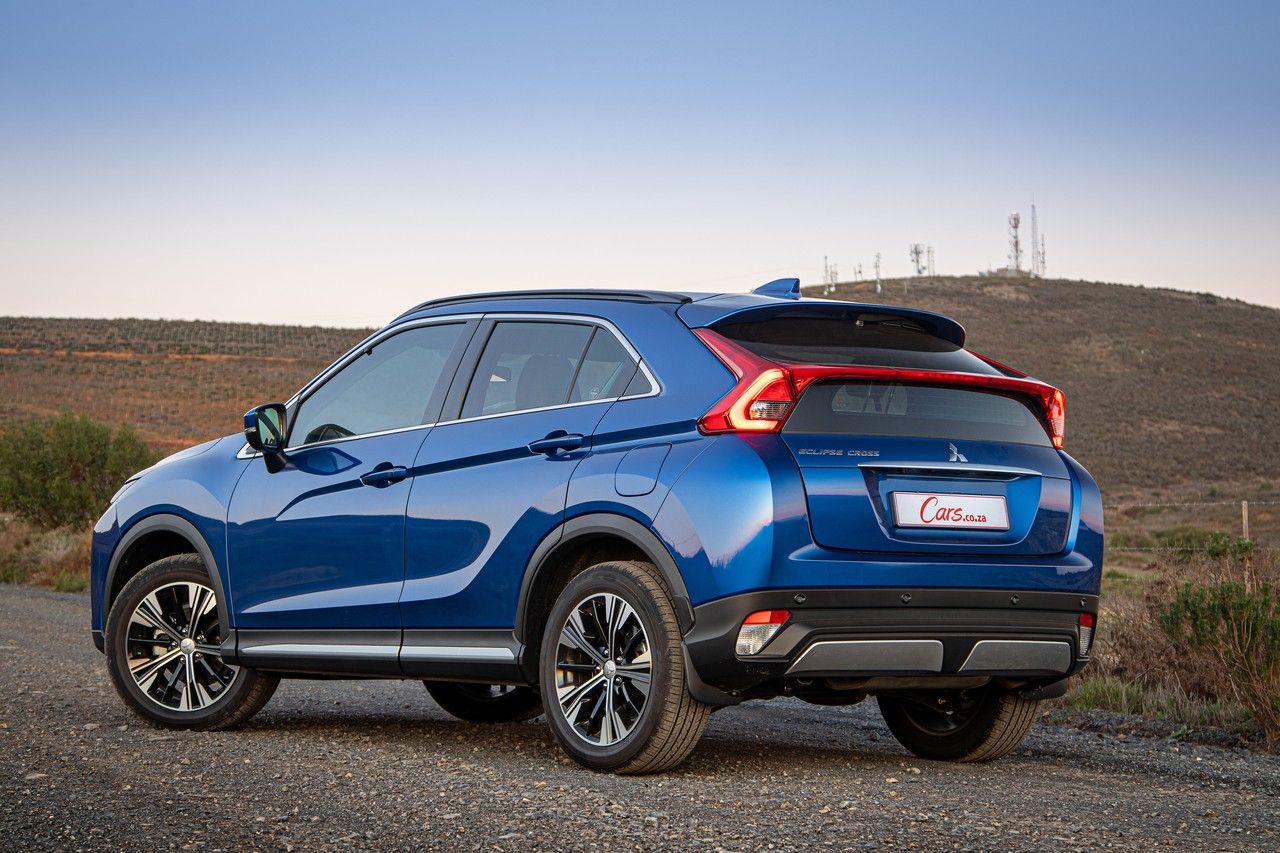
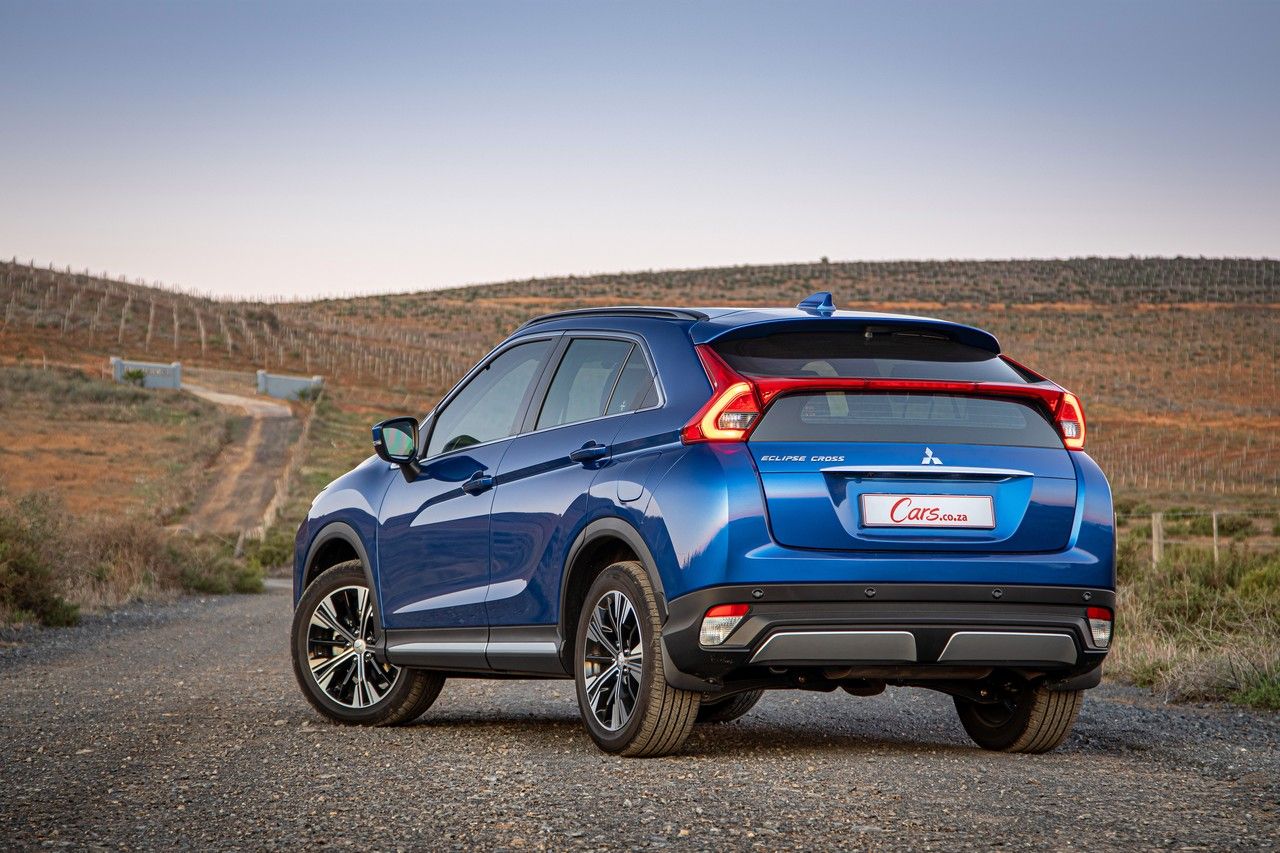
The rear of the Eclipse shows off its most unique styling attribute – the tailgate-mounted light bar.
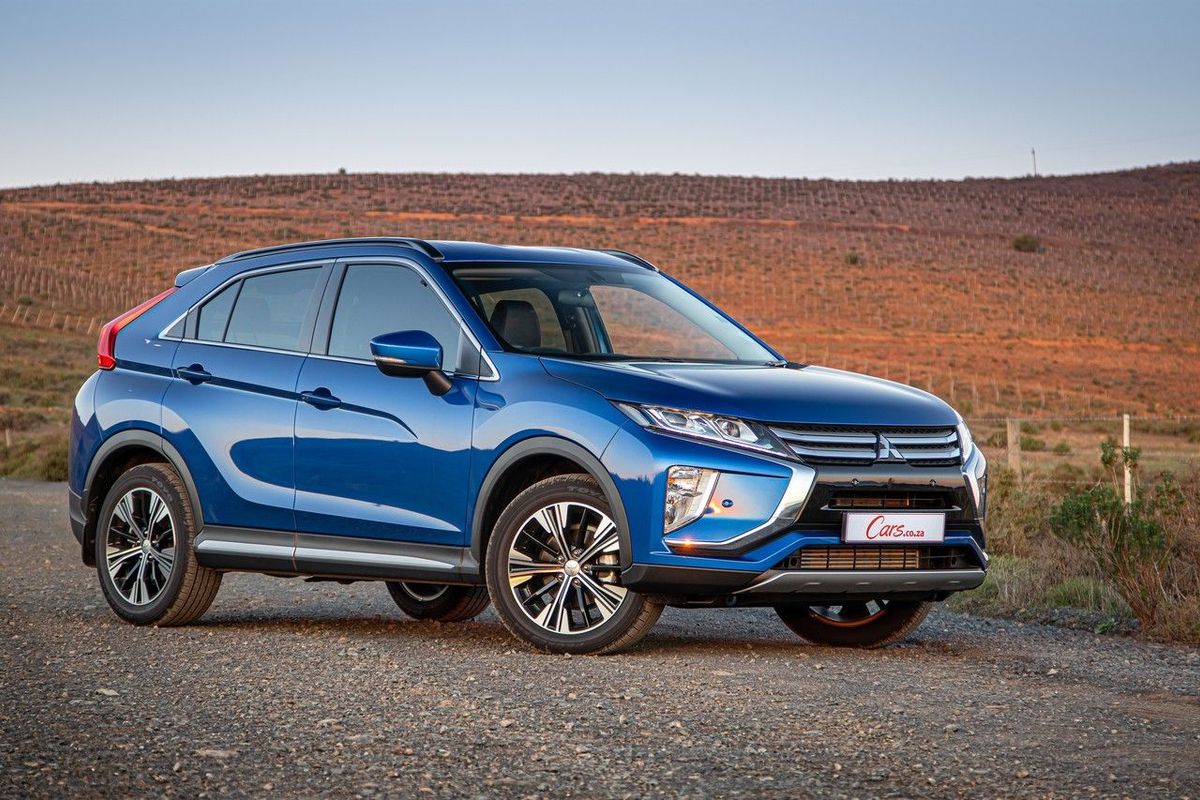
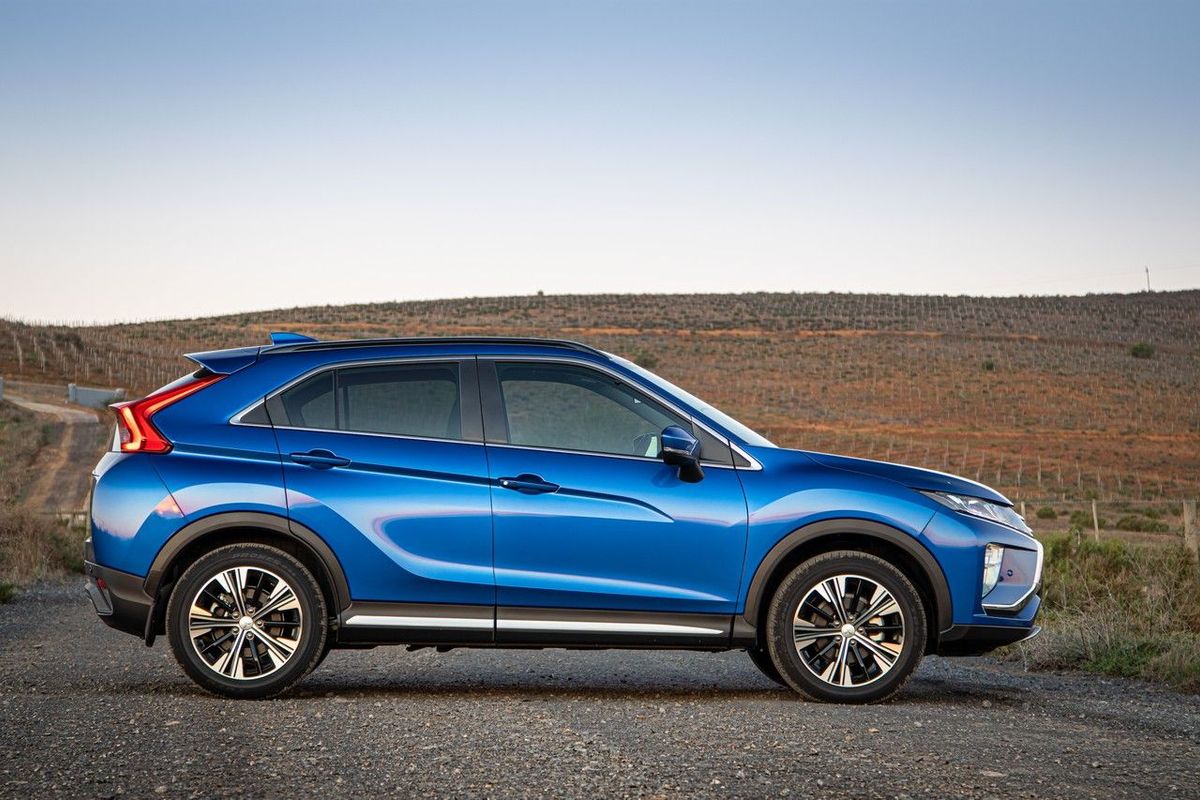
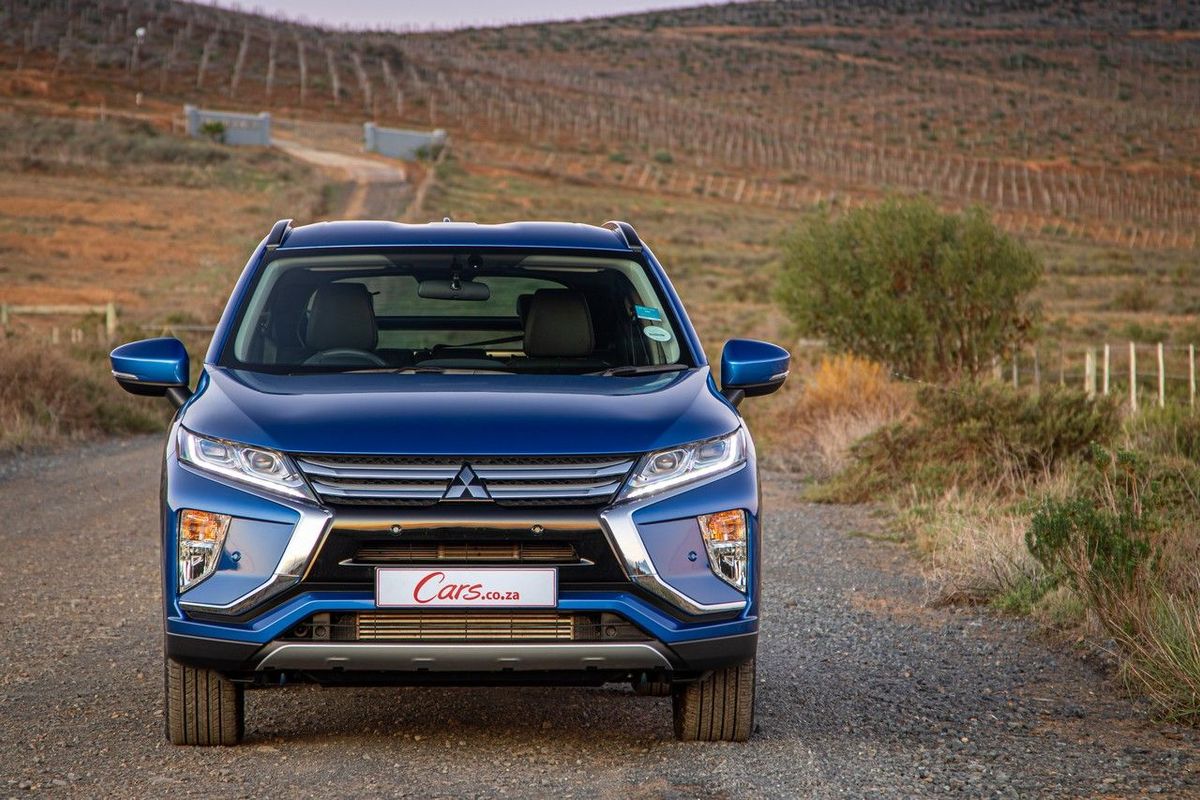
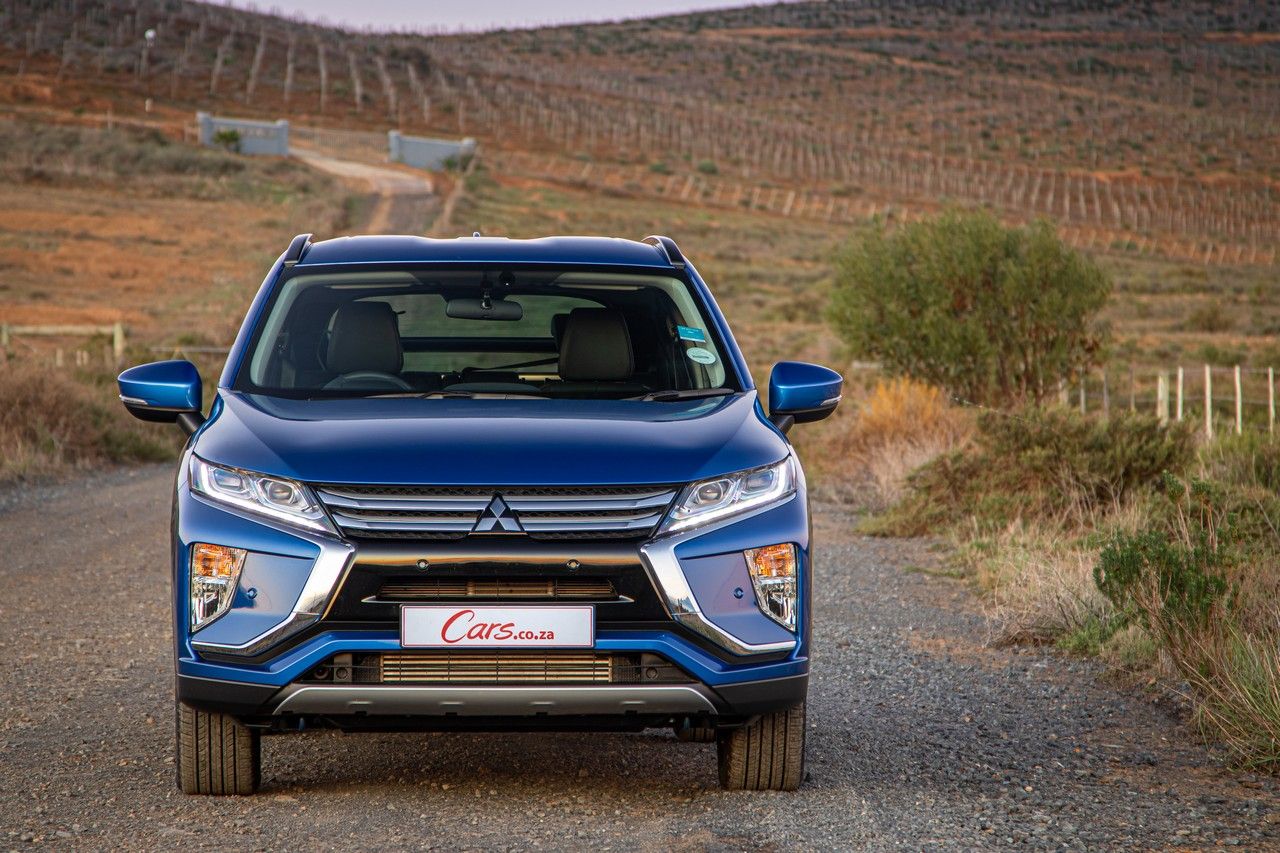
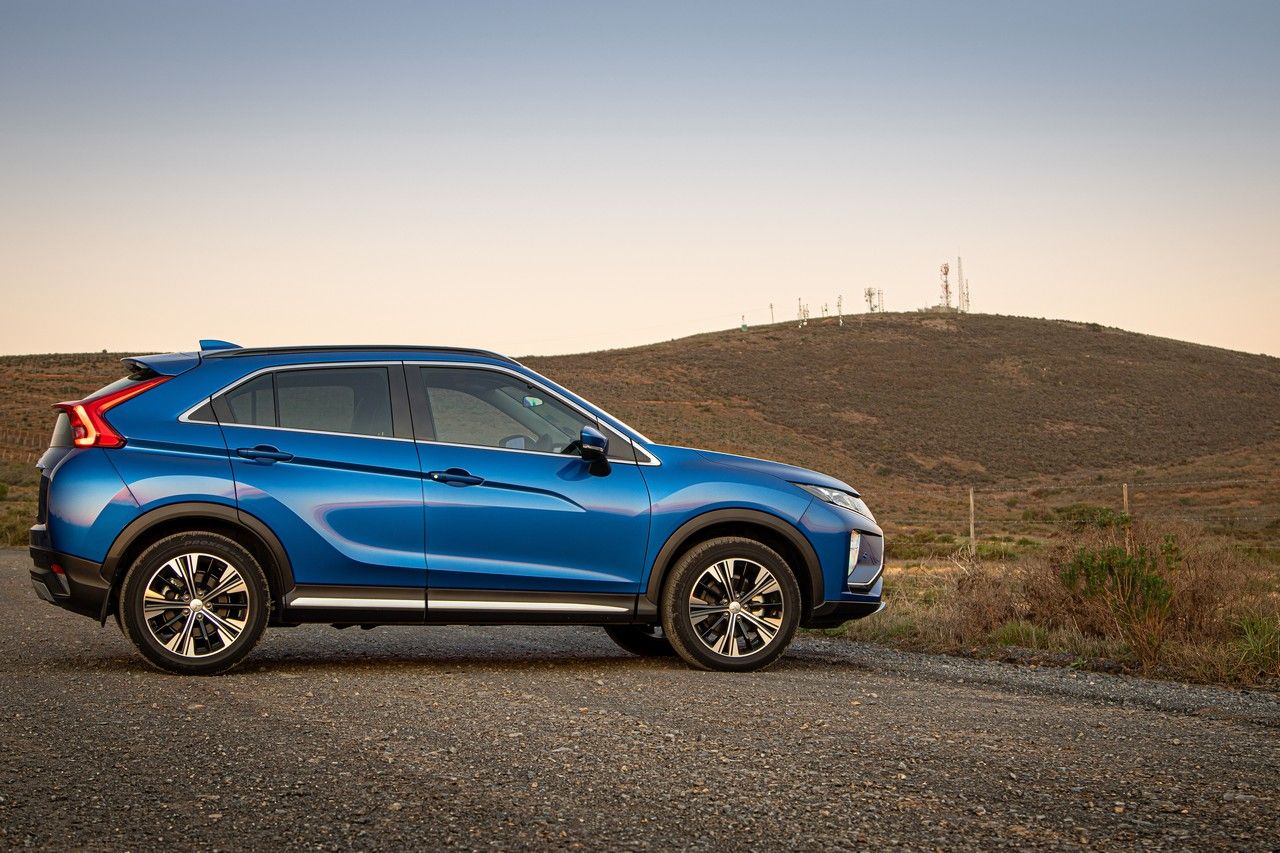
We've said this before but it warrants repeating: a vehicle's styling is completely subjective and the Eclipse Cross' distinctive rear 3-quarter aspect is particularly divisive. Many have expressed their dislike of the Mitsubishi's split rear screen and outlandish lighting signature and the Cars.co.za testers did not reach consensus about its effectiveness (or failure), but there's no denying the cues make you take a second look. If nothing else, the angular and progressive styling gives the Eclipse Cross a standout presence in a segment in which design flair is rather limited. Most compact crossovers look remarkably similar; there are only so many ways in which you can dress up a blocky SUV…
Interior execution and features
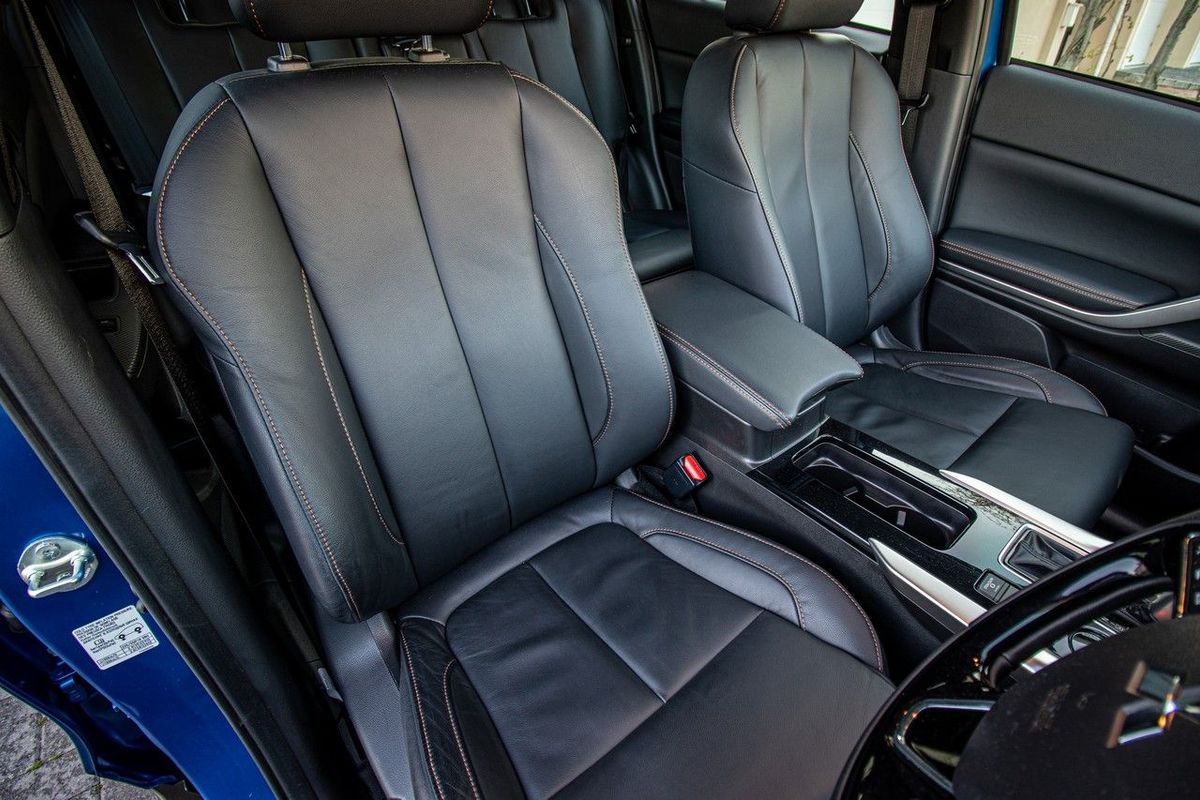
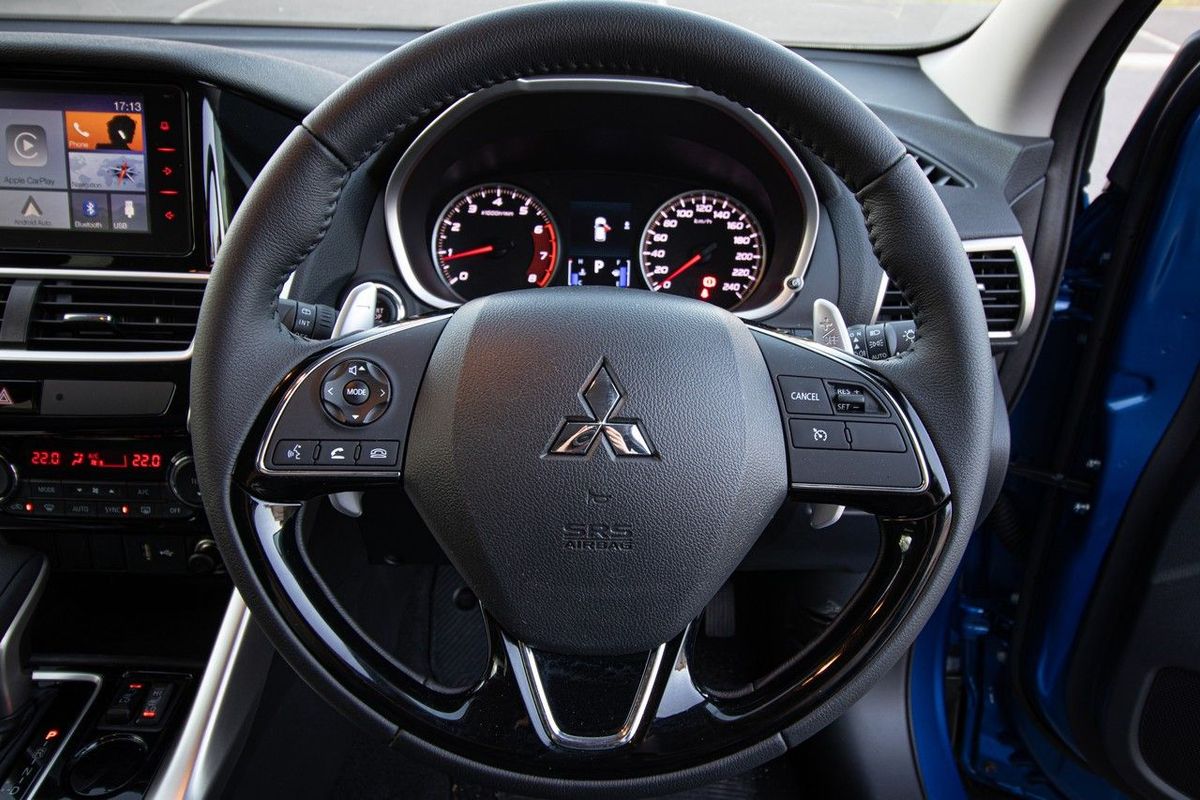
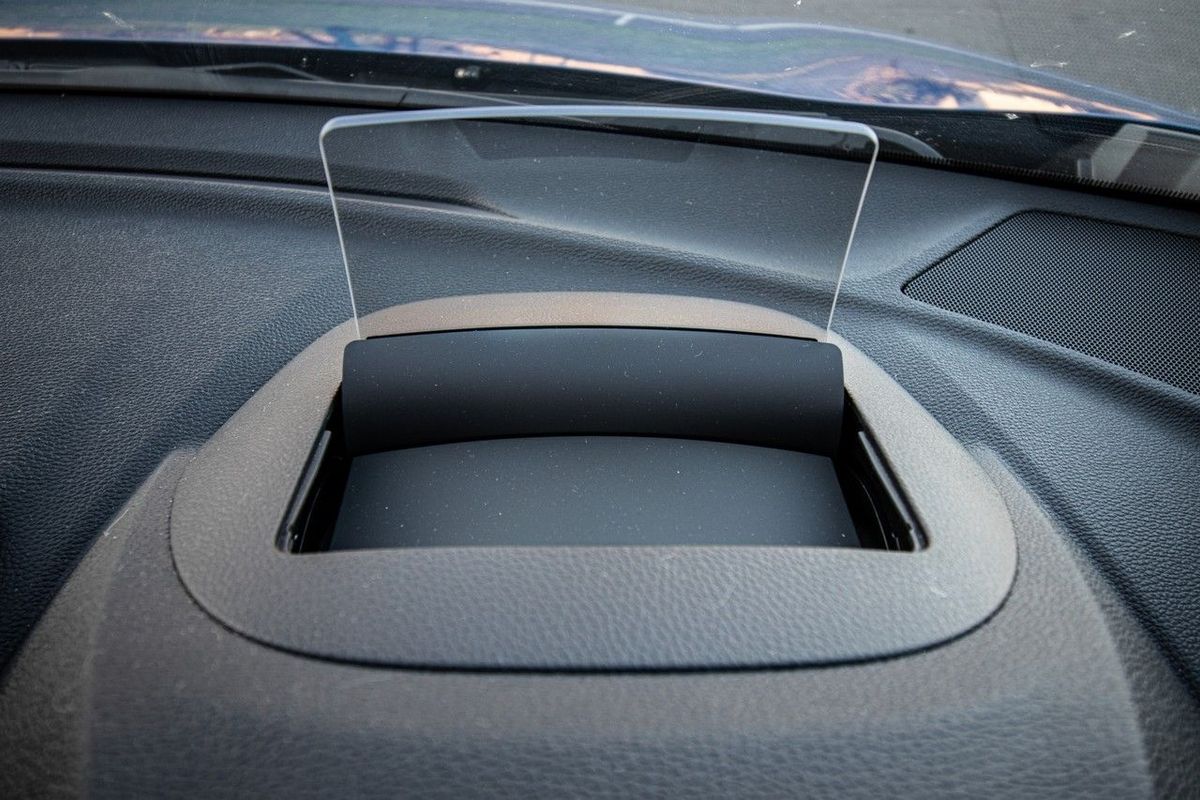
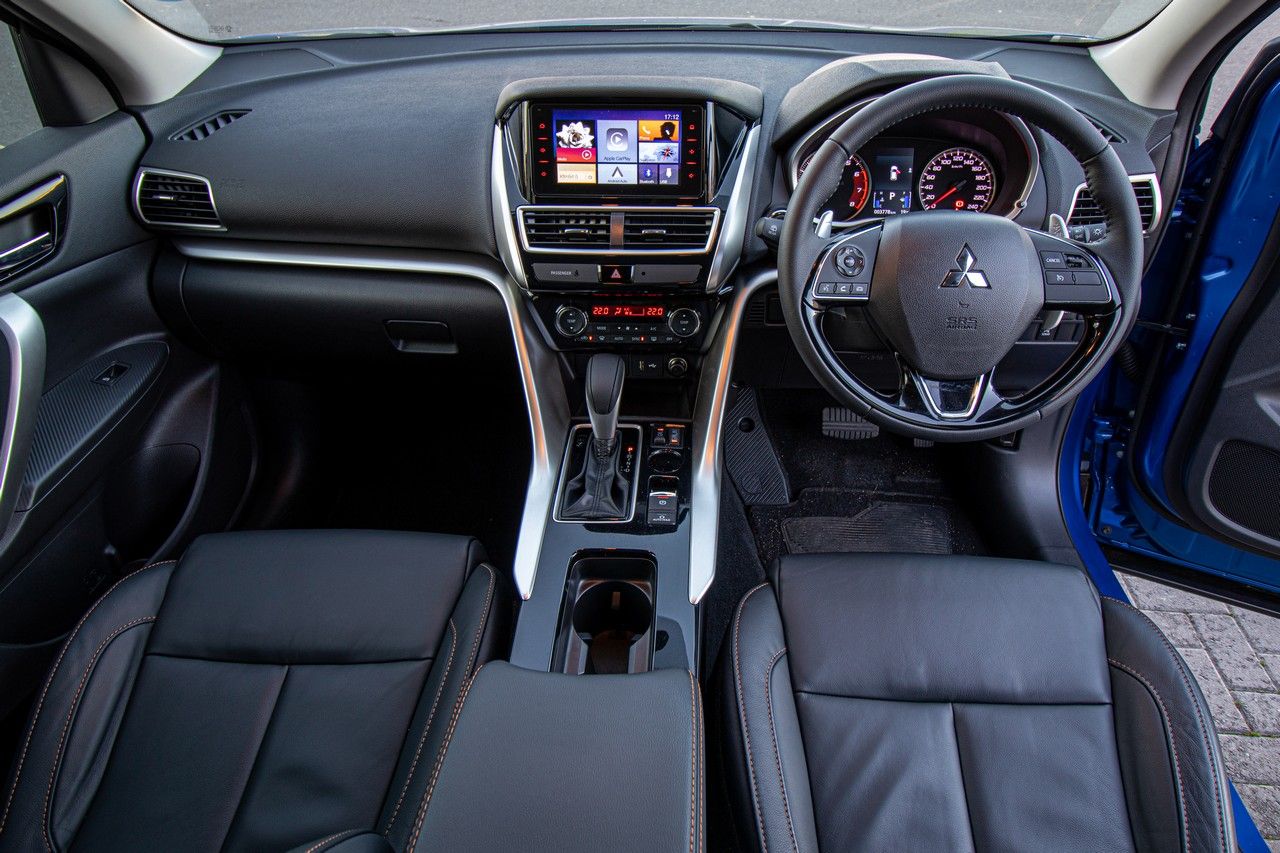
At this price point, a compact family car's interior specification list needs to be comprehensive and the Eclipse Cross 1.5 Turbo (exclusively available in GLS trim) doesn't disappoint. We evaluated this car in winter, so those heaters for the front leather seats were most welcome. Other noteworthy features include a head-up (speed) display, dual-zone climate control, automatically activated lights and wipers, front and rear park distance control, a reverse-view camera, 7 airbags as well as stability control.
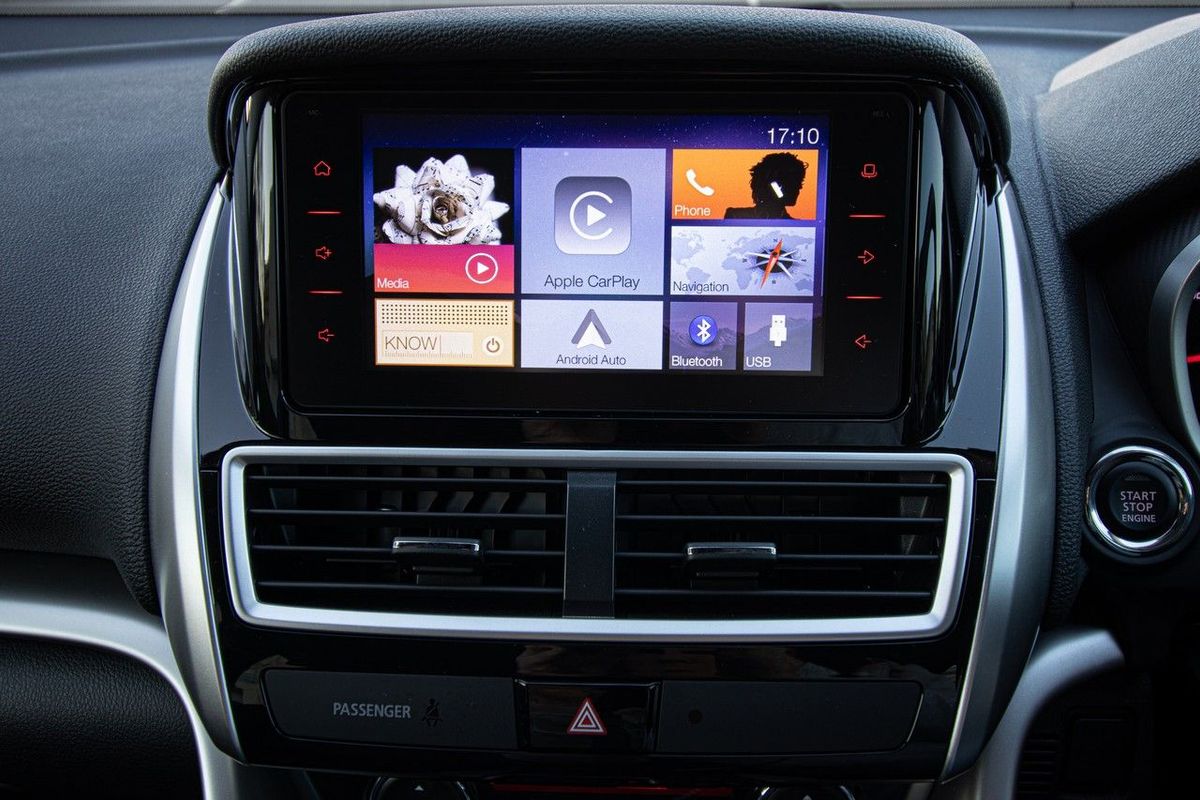
In terms of connectivity, the Mitsubishi's touchscreen infotainment system is the same as the one in the Datsun Go budget car, but that's not to say it's rudimentary; it has all the functionality you're likely to ever need, including satnav, hands-free Bluetooth connectivity, USB ports, as well as Android Auto/Apple CarPlay compatibility, which is great.
It's nicely specced inside with contrast-stitched leather, brushed metal-look accents and a few soft-touch surfaces.
As for the cabin's layout and perceived quality, well, it's not as flashy as the exterior design… Mitsubishi has adopted a more traditional, ergonomically-sound design with solid-feeling (if less-than-grand or glamorous) finishes, including piano black inserts and a healthy helping of brushed metal-look accents. Everything is right where you'd expect it.
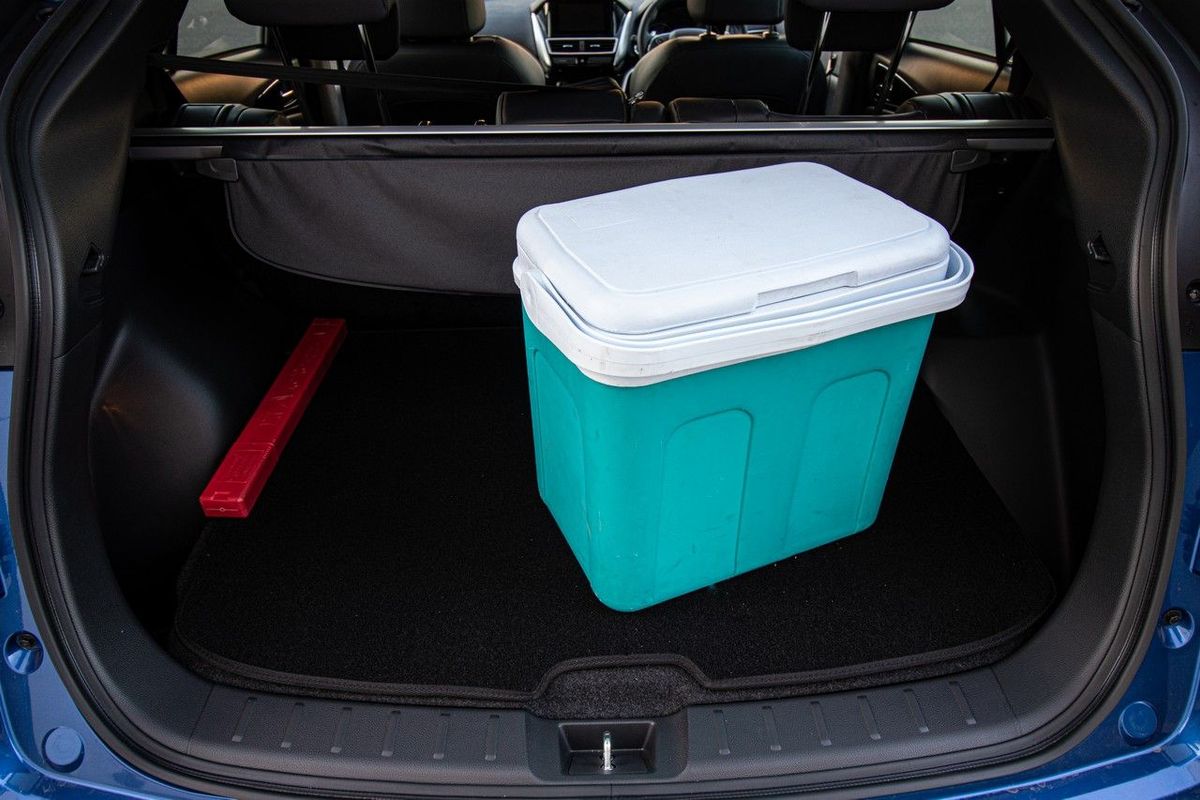
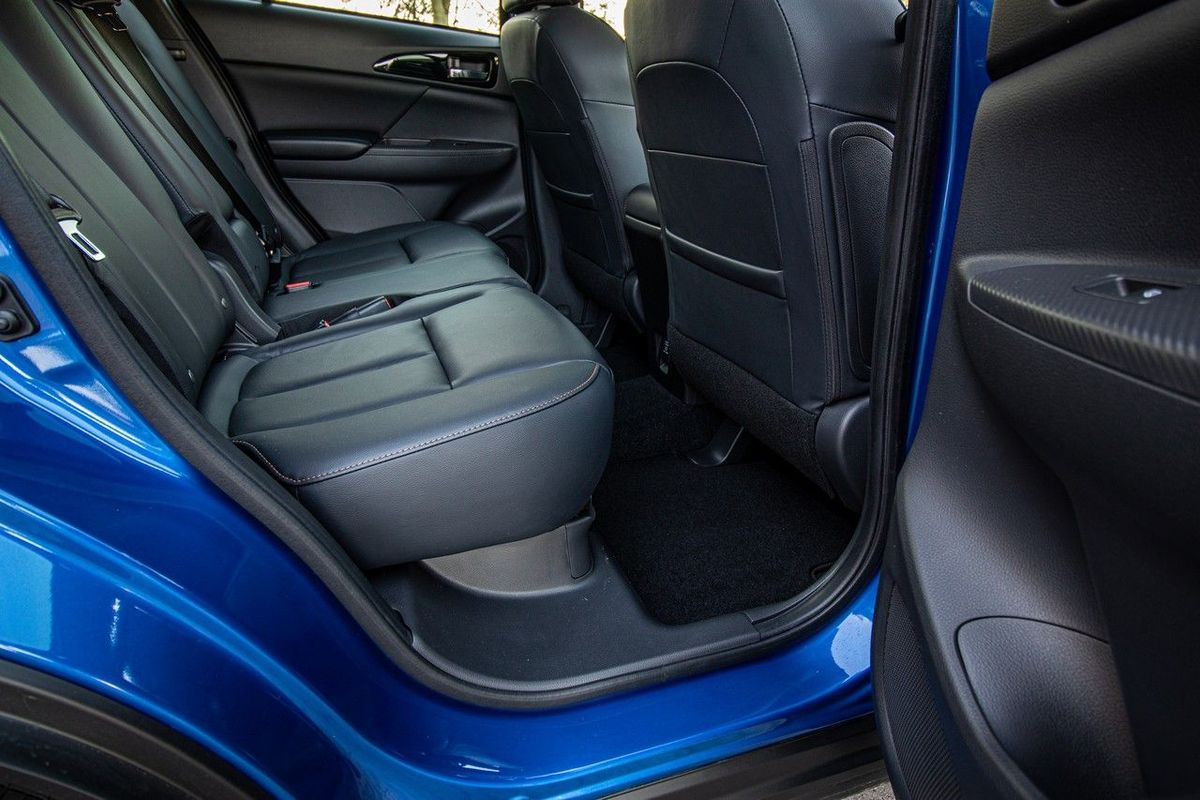
In terms of practicality, the rear bench can slide fore and aft and its backrest reclines. Should you require utility space, the aft seats can fold down in a 60/40 split. One of the aspects of the Eclipse Cross we've criticised before is its limited luggage space… at 378 litres, the load bay is small compared with those of family cars and it's also shallower than one might expect (due to the fitment of a full-size spare wheel). However, given the conditions of our roads, we'd happily sacrifice some packing space.
Performance, handling and fuel economy
The real point of this review was to gauge the merits of the 1.5-litre turbocharged engine. It's torquier than the 2.0 litre (250 Nm versus 198 Nm) but has an identical peak power output. The big difference is drivability. For those who aren't mechanically-minded, the turbo motor may have a comparatively smaller capacity, but it delivers all its torque low in the rev range (2 000 to 3 500 rpm), resulting in more immediate responses to throttle inputs; there's no need (or point) to rev the engine hard to exact spirited acceleration.
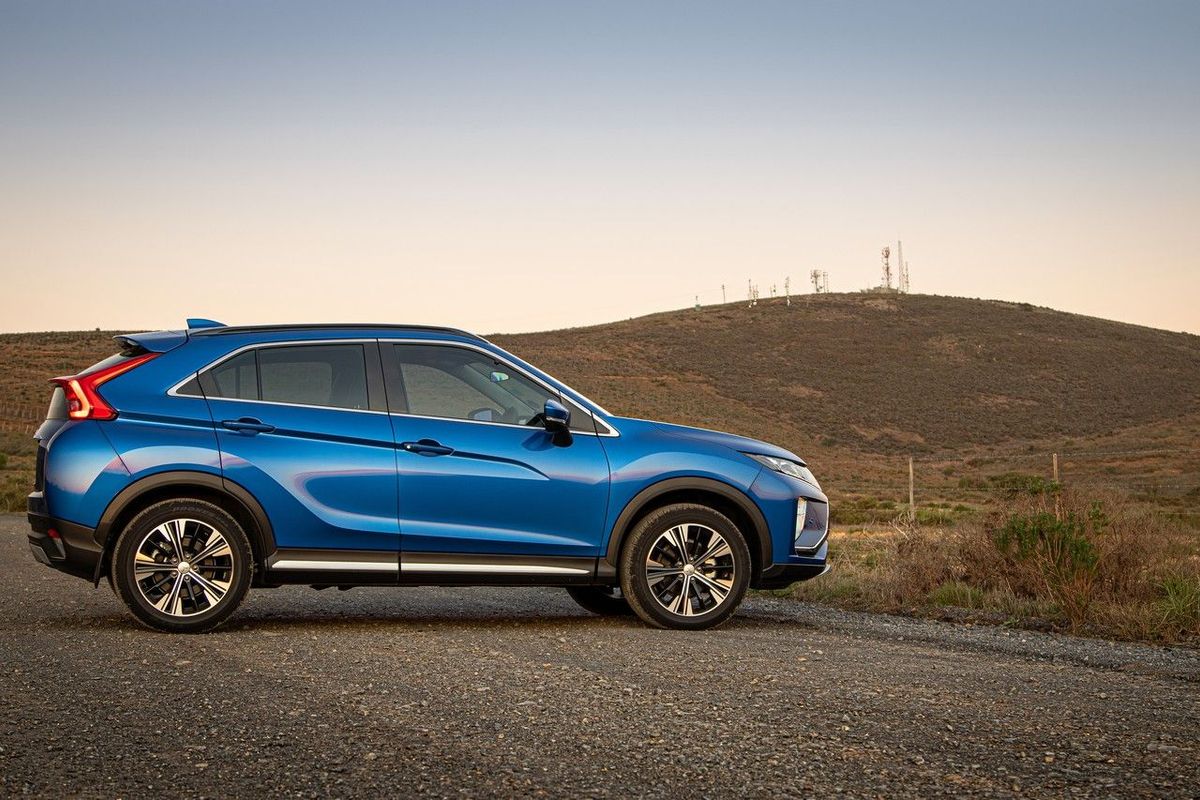
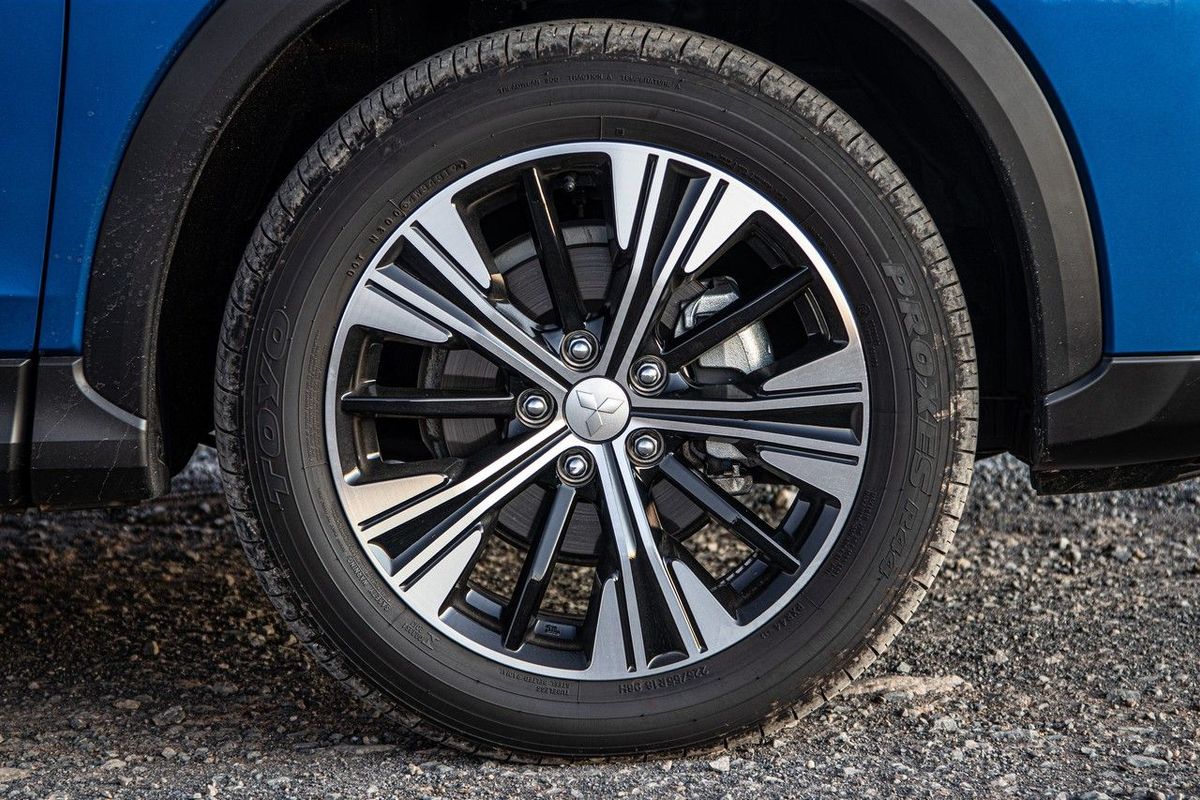
The sloping shoulder- and swage lines of the Eclipse Cross are immediately noticeable thanks to the metallic paint finish.
As there is no need to accelerate hard to get the best out of the 1.5 Turbo GLS, we saw an admirable indicated fuel consumption of around 7 L/100 km while cruising on the open road. A stint of urban commuting pushed that figure up, of course, but we were quite happy to register an average of 8.7 L/100 km. So, to sum it up, not only does the new 1.5-litre turbo motor make the Eclipse Cross adequately punchy and smooth to drive, it proved notably more efficient than its siblings' naturally-aspirated 2.0-litre powerplant.
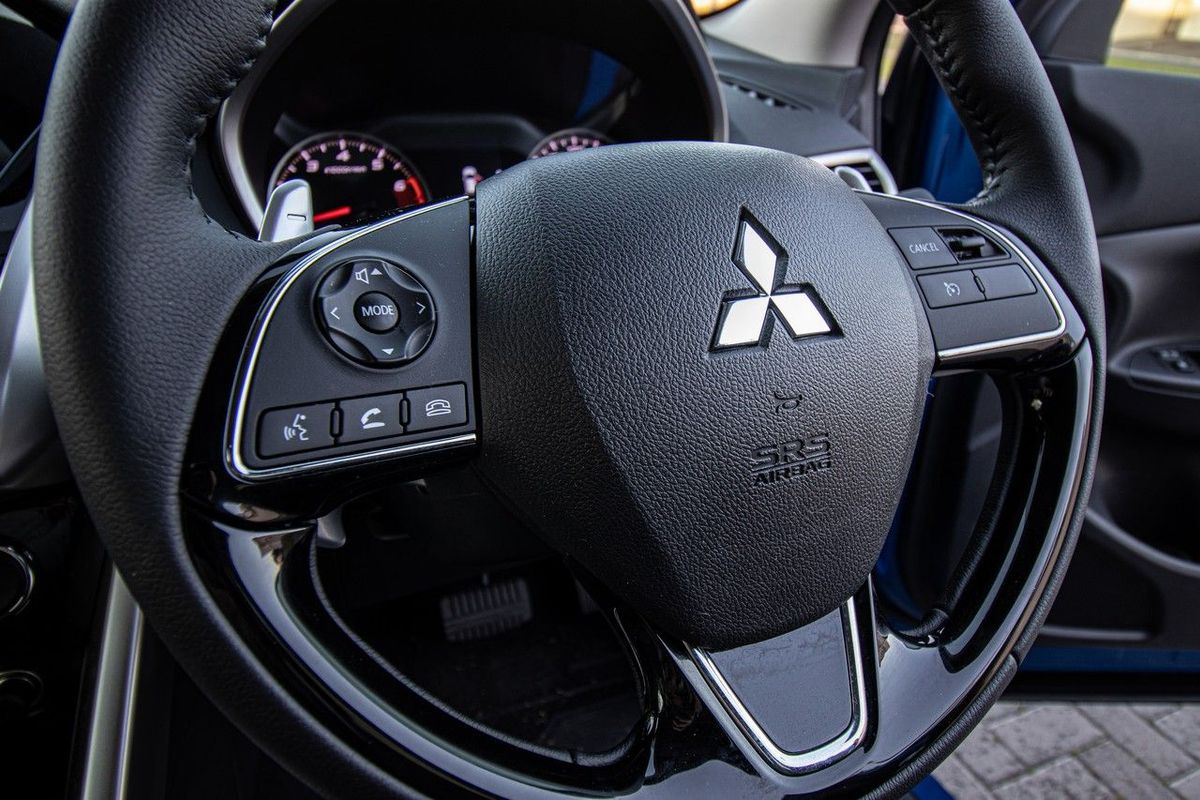
The Mitsubishi's continuously variable transmission (CVT) deserves some credit for the refined on-road progress. CVTs are loathed by some petrolheads for the droning sound they emit at full throttle – and their generally uninvolving nature is widely bemoaned, yet we believe that the technology has come a long way. If you drive the vehicle in a manner that you use measured pedal inputs (in other words, you don't treat the accelerator like it's an on/off switch), you'll be rewarded with notably refined forward progress. There are shift paddles mounted at the back of the steering wheel, which feel great, but we didn't feel inclined to use them; we left the powertrain to its own devices instead.
The overall driving experience of the Eclipse Cross is quite pleasant. It doesn't feel like a big vehicle to manoeuvre within urban confines and its solid build quality – in combination with a refined powertrain – contribute to a hushed cabin. Handling is surefooted, thanks to the light, but accurate, steering and the ride quality is generally good.
Being a Mitsubishi, you'd expect some level of off-road prowess from the 1.5 Turbo GLS, but unlike its 2.0-litre naturally-aspirated sibling, which is available in all-wheel-drive guise, the newcomer is exclusively available with a front-wheel-drive configuration. It's more suited to climbing pavements than indulging in serious offroading. That being said, the compact family car offers 180 mm of ground clearance and its suspension soaks up road imperfections well – it should handle jaunts on gravel routes with ease.
Pricing and warranty
The Eclipse Cross 1.5 Turbo GLS costs R459 995. It comes with a 3-year/100 000 km warranty, a 5-year/90 000 km service plan and 5-year/unlimited km roadside assistance.
The Mitsubishi's certainly a reliable choice, but then there are many models to choose from in this segment.
If you've had your eye on the Eclipse Cross for a while, but were waiting for this engine to become available, well, it's arguably been worth the wait. Not only is the new powerplant punchier and more responsive than the 2.0-litre, but it's lighter on fuel. It costs R10k more than the all-wheel-drive version of its naturally-aspirated sibling and a full R50 000 more than the front-wheel-drive 2.0 GLS, but in our opinion, it offers a more flexible and satisfying driving experience by comparison. The 1.5 Turbo GLS sits at the upper end of the compact family car market – in the territory of (larger) entry-level family cars – but, in its defence, its standard specification is more comprehensive.
The Mitsubishi's design won't be to everyone's taste, but, like its recently introduced Kia Seltos rival, the Eclipse Cross offers nonconformist appeal. Its performance is willing, yet frugal, it's well made and reasonably refined, plus it's well specified. If the limited luggage capacity is not a deal-breaker, consider adding this vehicle to your shortlist.
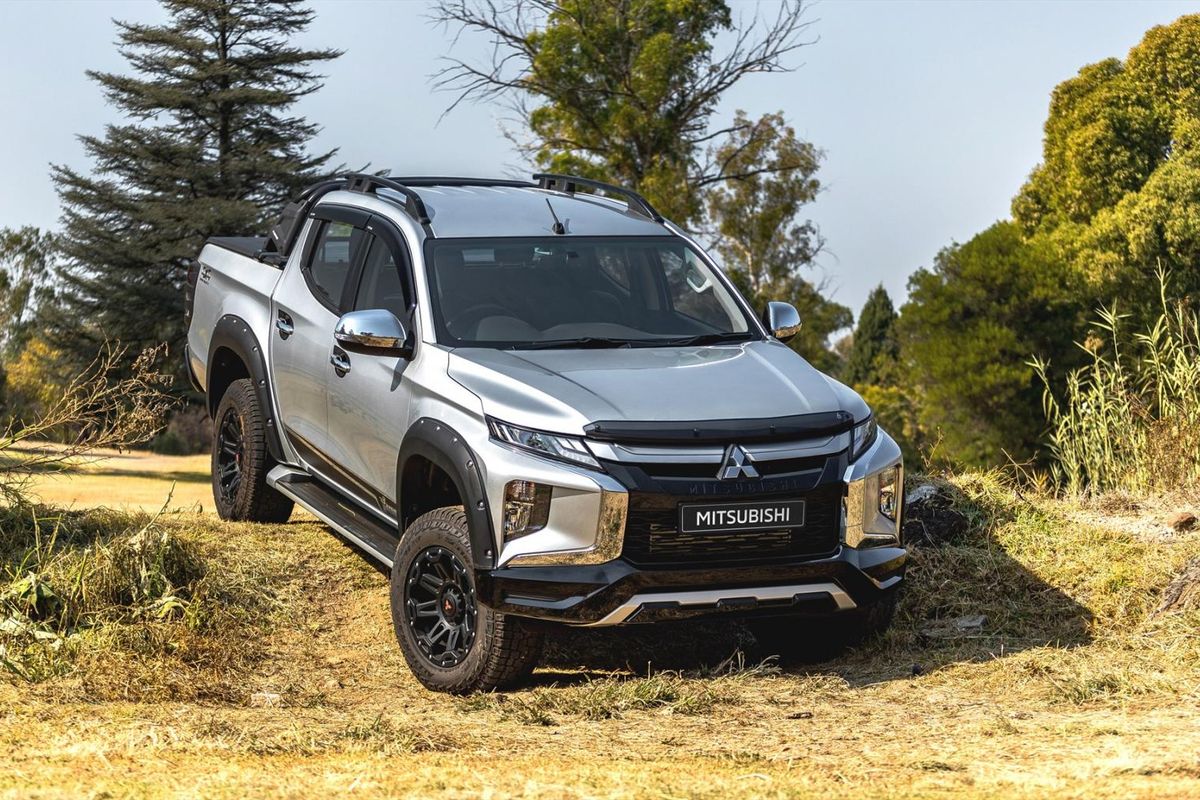
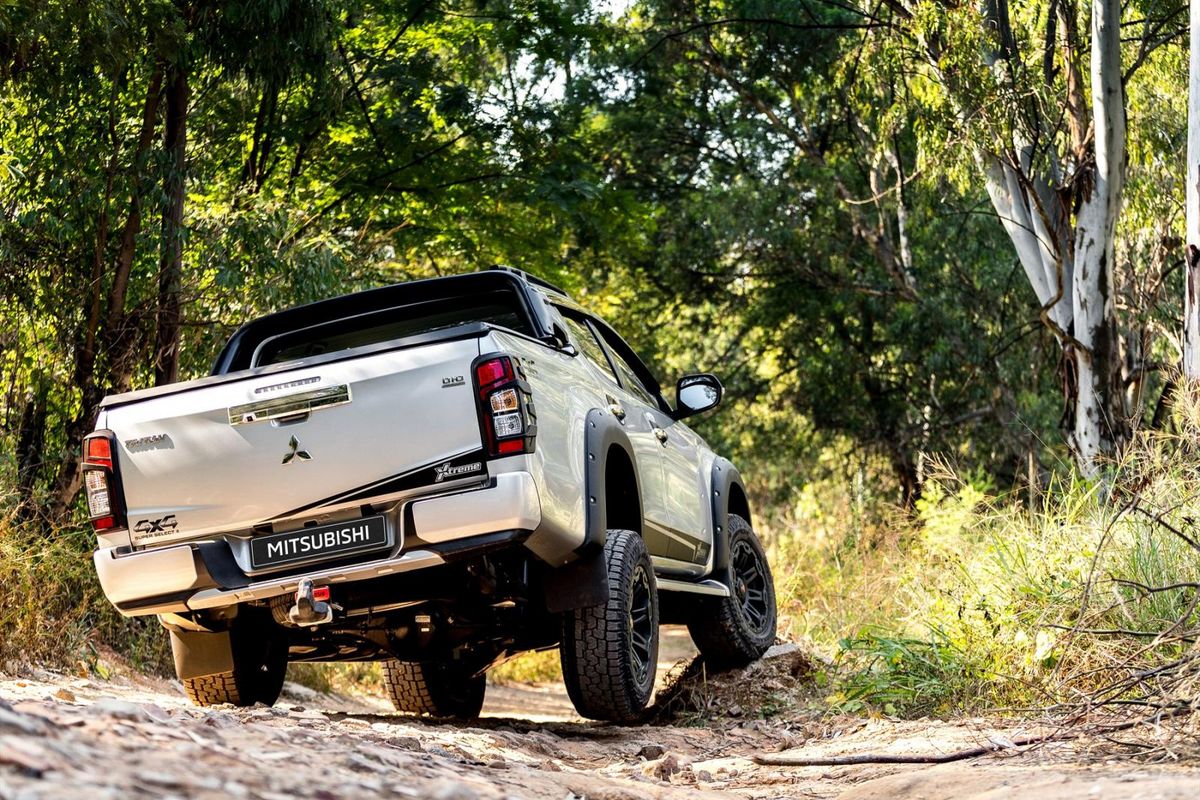
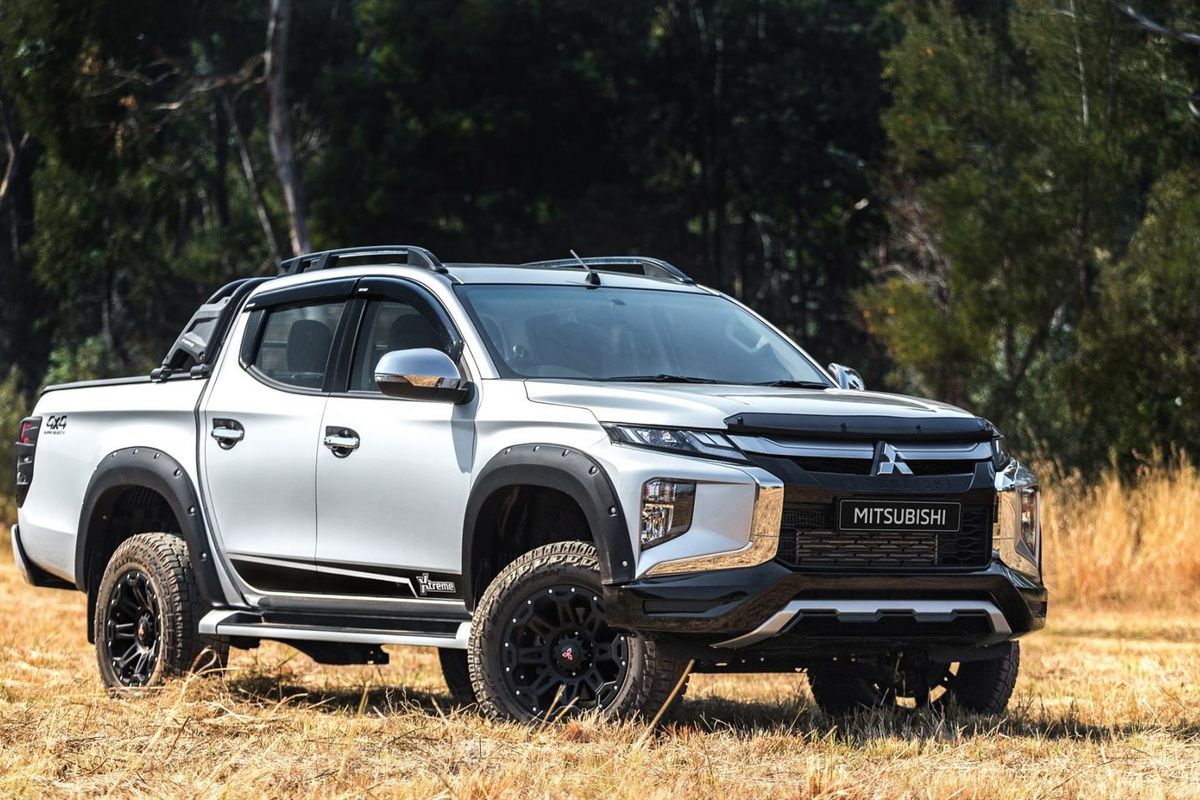
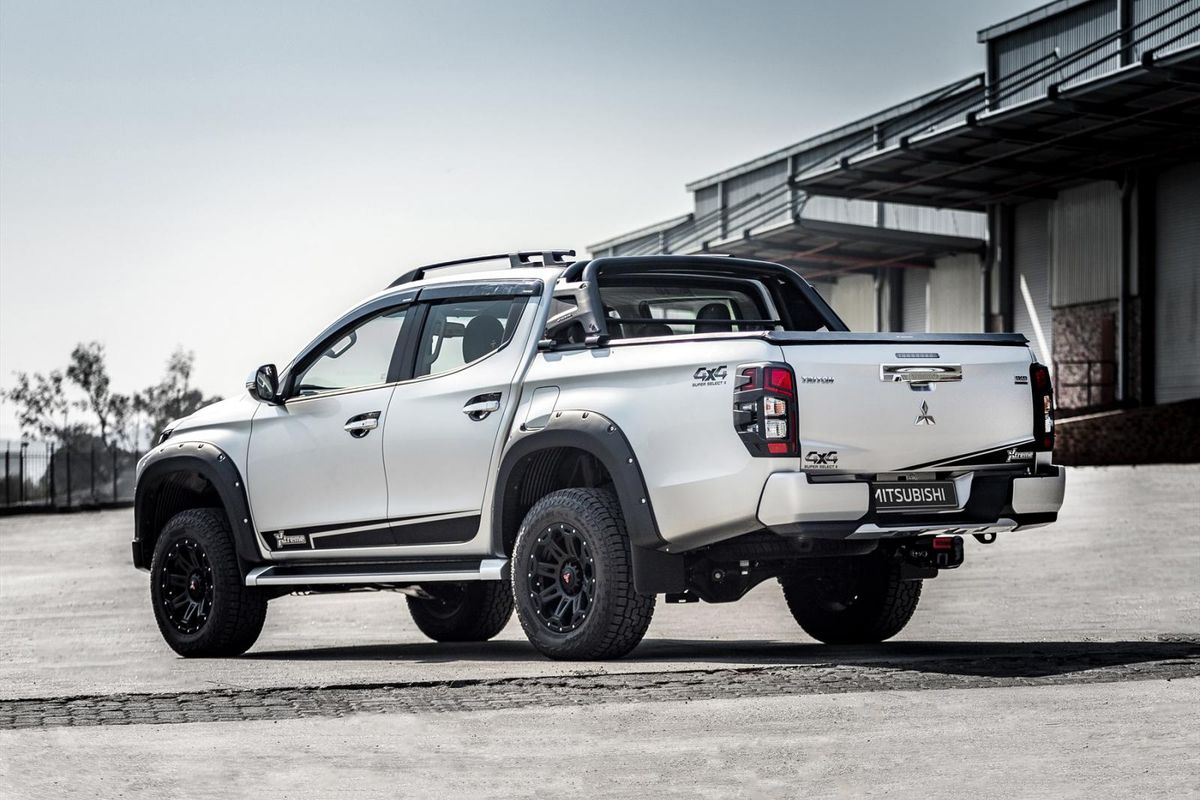
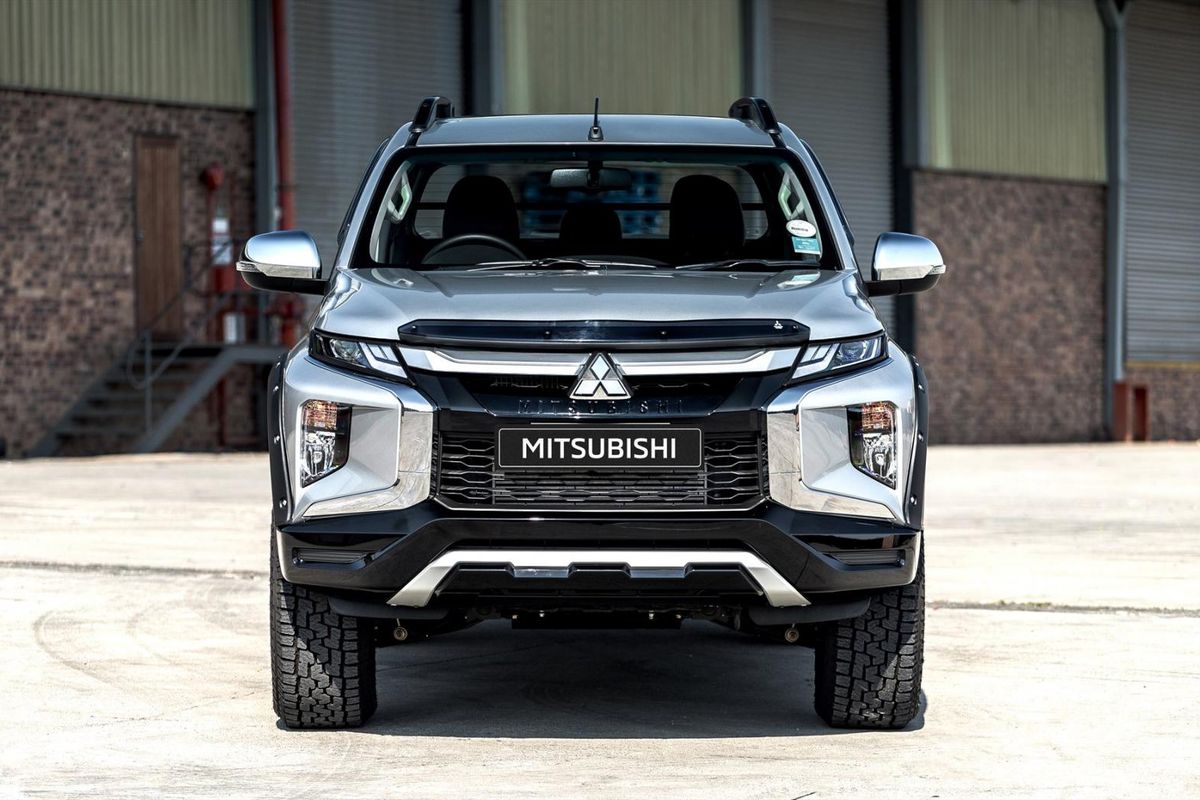
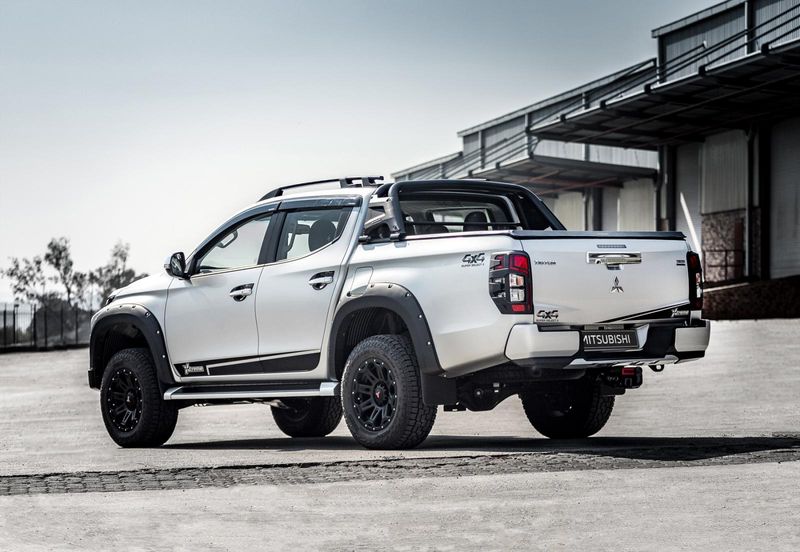
Mitsubishi South Africa has launched the Triton Xtreme, a hardcore-looking double-cab bakkie aimed at the enthusiasts. Here's how much it costs, plus details on what's new.
The Mitsubishi Triton is a capable double-cab bakkie that also happens to look quite attractive. However, Mitsubishi South Africa has introduced a fully-kitted version that's aimed at owners who want something extreme. It's no coincidence the newcomer is called the Mitsubishi Triton Xtreme. Mitsubishi SA says the Triton Xtreme boasts upgrades to the value of R100 000, but the actual price increase over the standard model comes to just R40 000.
Just look at it, it looks ready to take on everything. Available in 4×4 double-cab automatic trim, it's not just a cosmetic upgrade as the 4×4 capabilities have been upgraded as it now features a 28-degree approach angle, 23-degree departure angle and 25-degree break-over angle.
Under the bonnet, the 2.4-litre MIVEC turbo diesel engine does duty and it produces 133 kW and 430 Nm. The Super Select II 4WD system offers the option of full-time all-wheel drive with high and low range and a centre diff-lock option as well as a selectable two-wheel drive.
The cabin gains Android Auto/Apple CarPlay as well as a sport automatic gearshift knob. The rear tailgate also features the 'Ezydown' hydraulic dampers, making tailgate operation easy. The load box has also been professionally rubberised and there's a tonneau cover.
The exterior of the Mitsubishi Triton Xtreme really looks the part. The Xtreme kit comprises a new black bumper with grille, bonnet protector, headlight covers, fender flares, roof rack supports, taillight covers, style bar, A-line Hazard mag wheels wrapped in Pirelli Scorpion All-Terrain tyres as well as a Bosal tow bar.
Mitsubishi Triton Xtreme Price in South Africa (June 2020)
The Mitsubishi Triton Xtreme is covered by the original Mitsubishi Motors' Manufacturer's Warranty of 3 years or 100 000km, a 5-year/ 90 000 km Service Plan and a 5-year/unlimited mileage Roadside Assistance. Service intervals are scheduled at every 15 000 km or once a year.
Mitsubishi Triton Xtreme Double Cab 4WD Auto R639 995
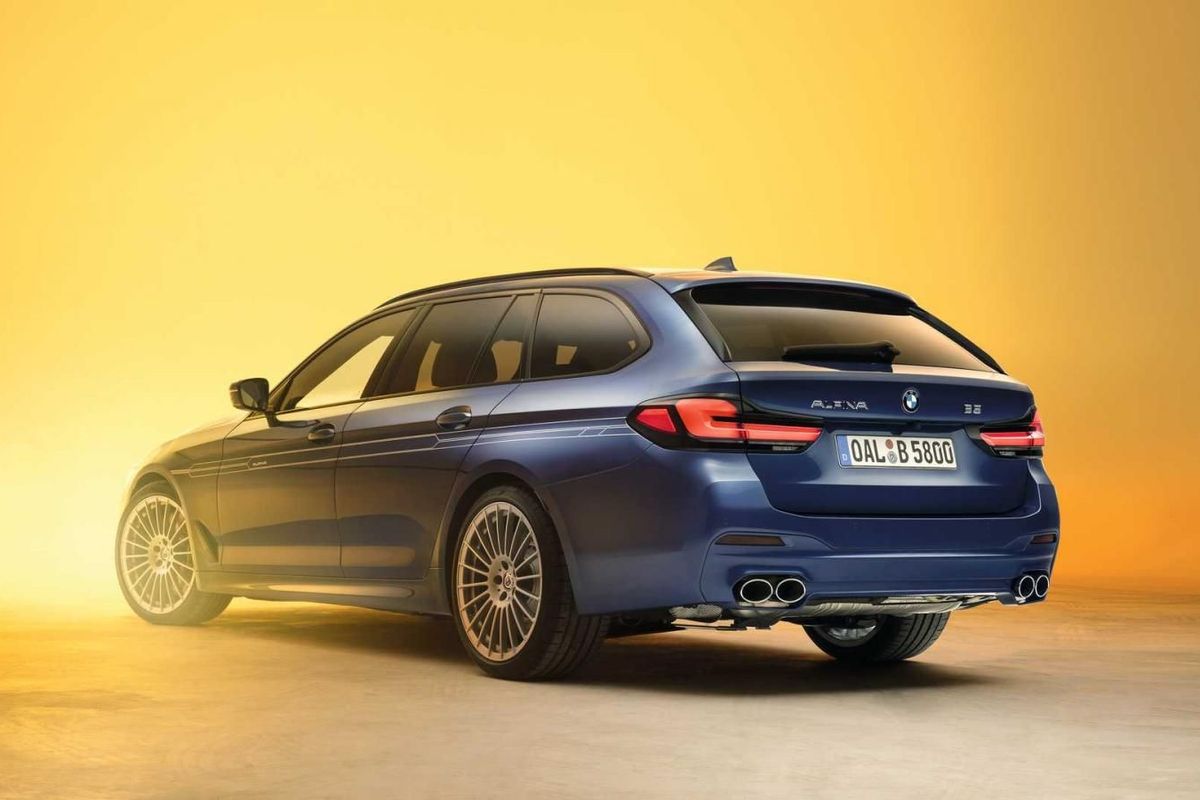
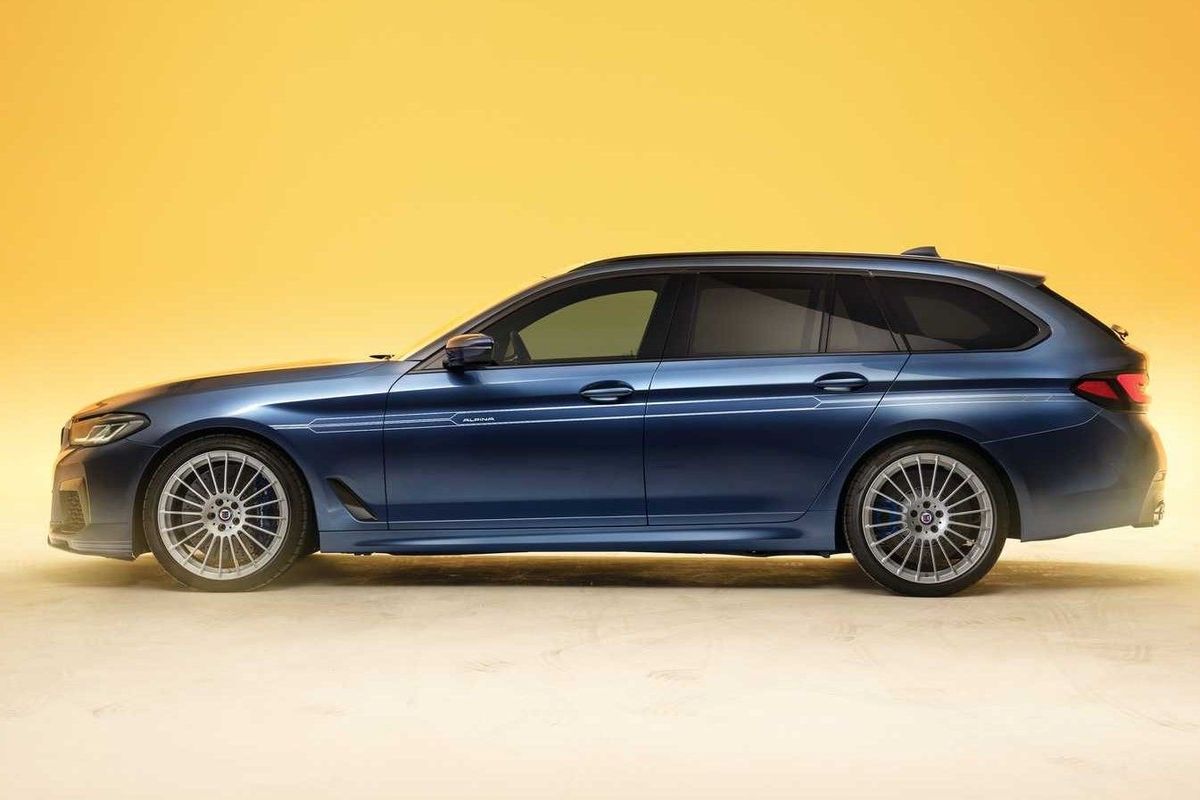
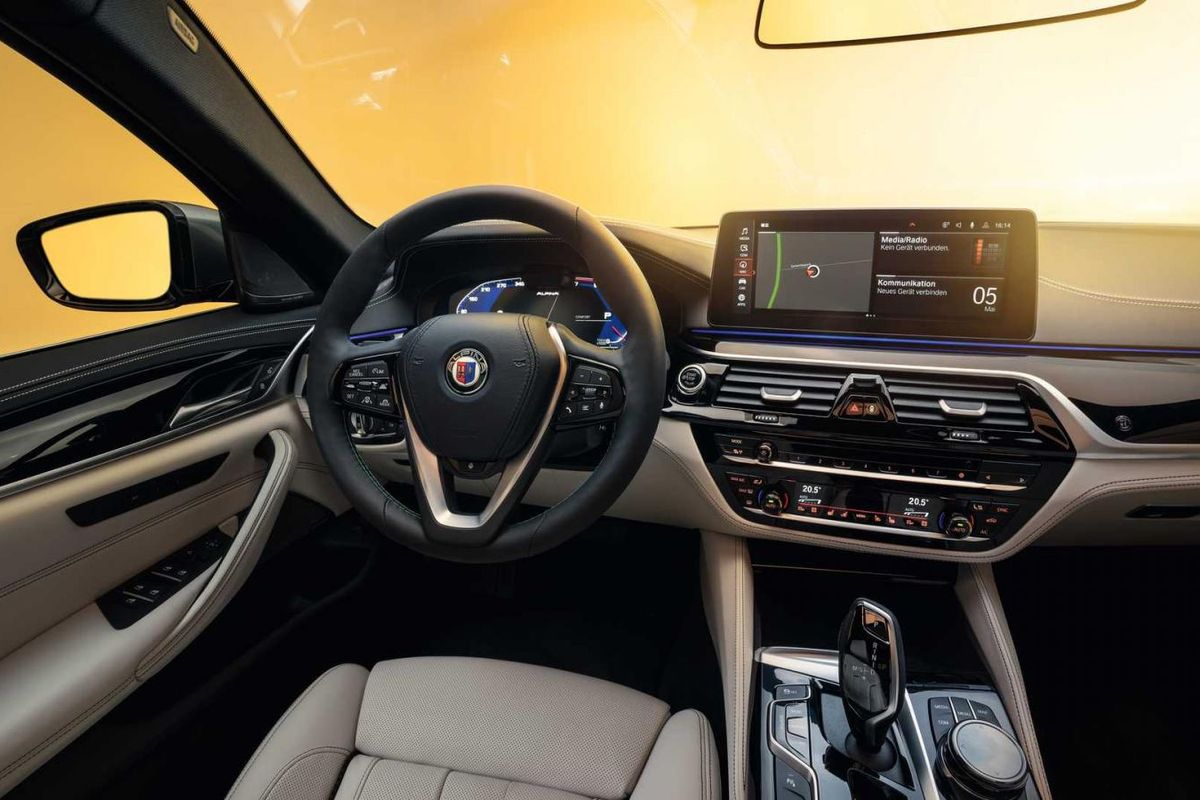
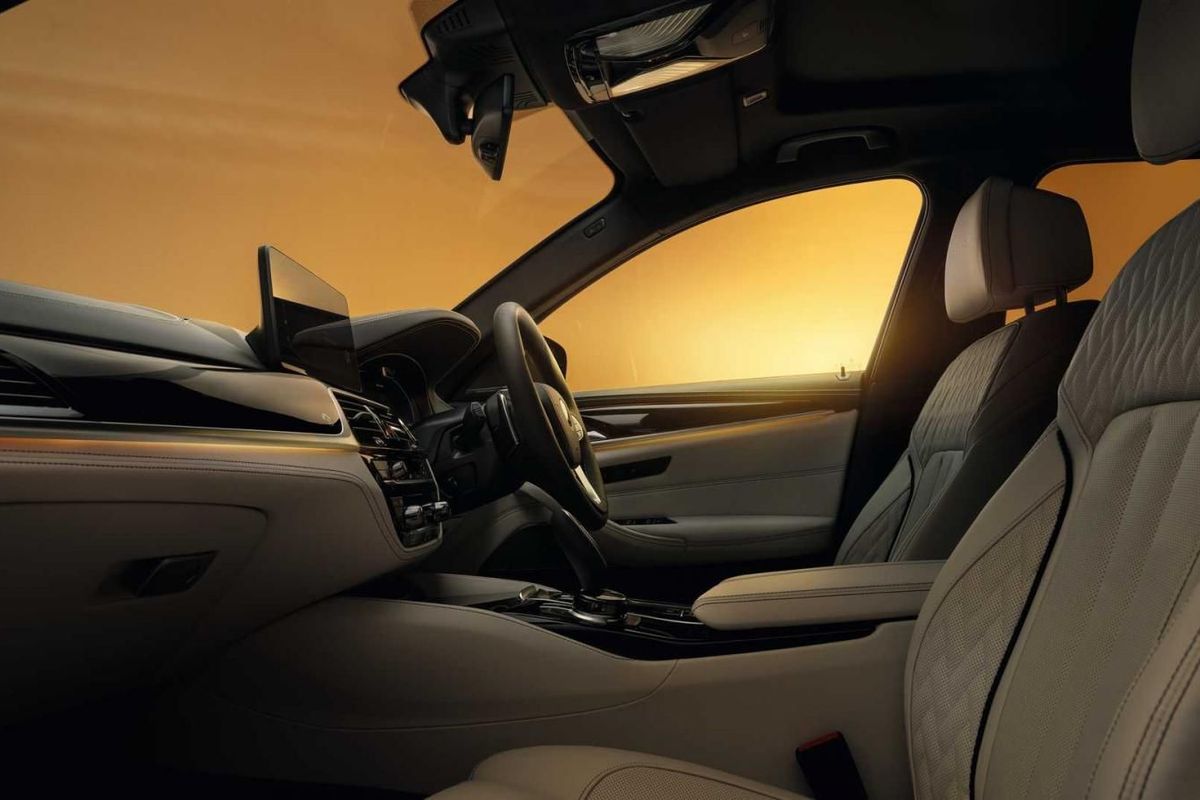
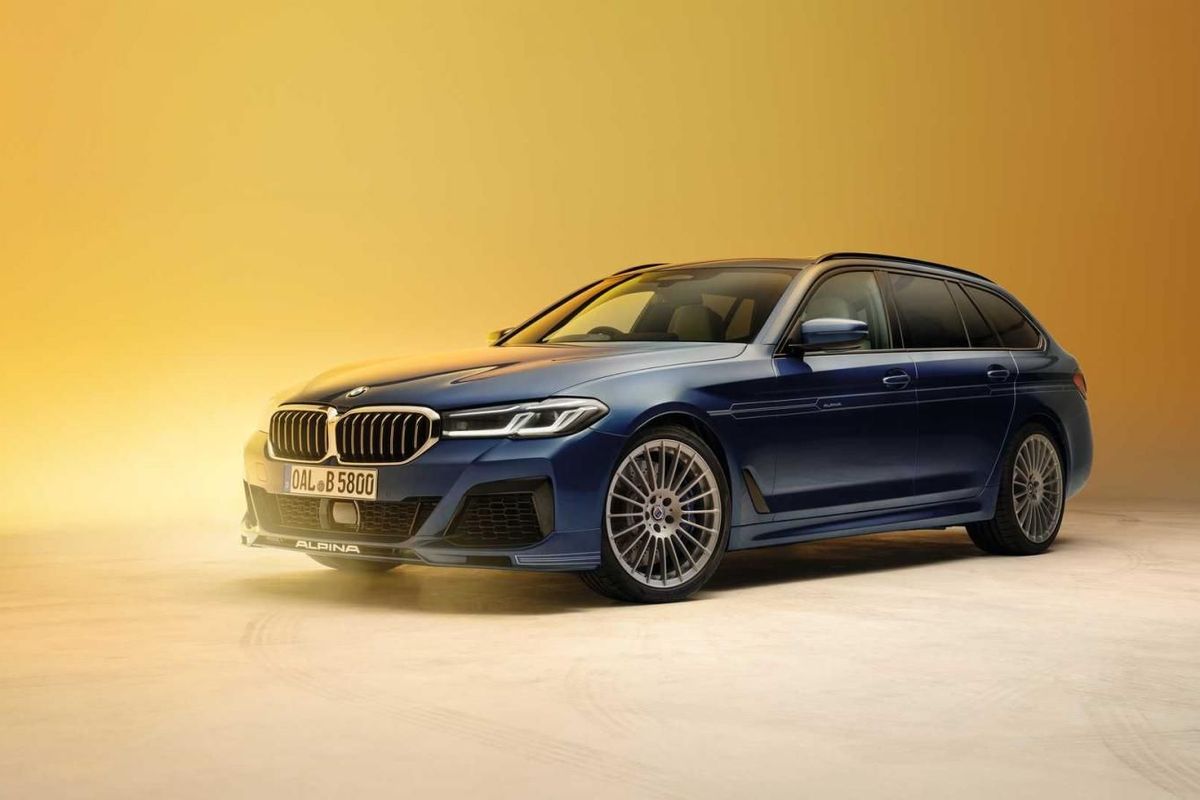
Alpina has revealed its latest take on BMW’s 5 Series, and it includes a wonderfully potent station wagon. Alpina has had a prolific May 2020, showcasing both the XB7 and the DS 3.
The German engineering specialist is renowned for adding power, pace and a sense of grace to BMW’s products. With its new B5 package, Alpina also addresses an issue which has haunted BMW ever since the e60 range was discontinued: the question of an M5 station wagon.
Styling upgrades for the B5 are subtle and stylish. Alpina adds a reshaped front bumper with 40% larger air intakes than you’d find on a factory 5 Series and its B5 rolls multi-spoke 20-inch wheels which are a signature style item, on all Alpinas.
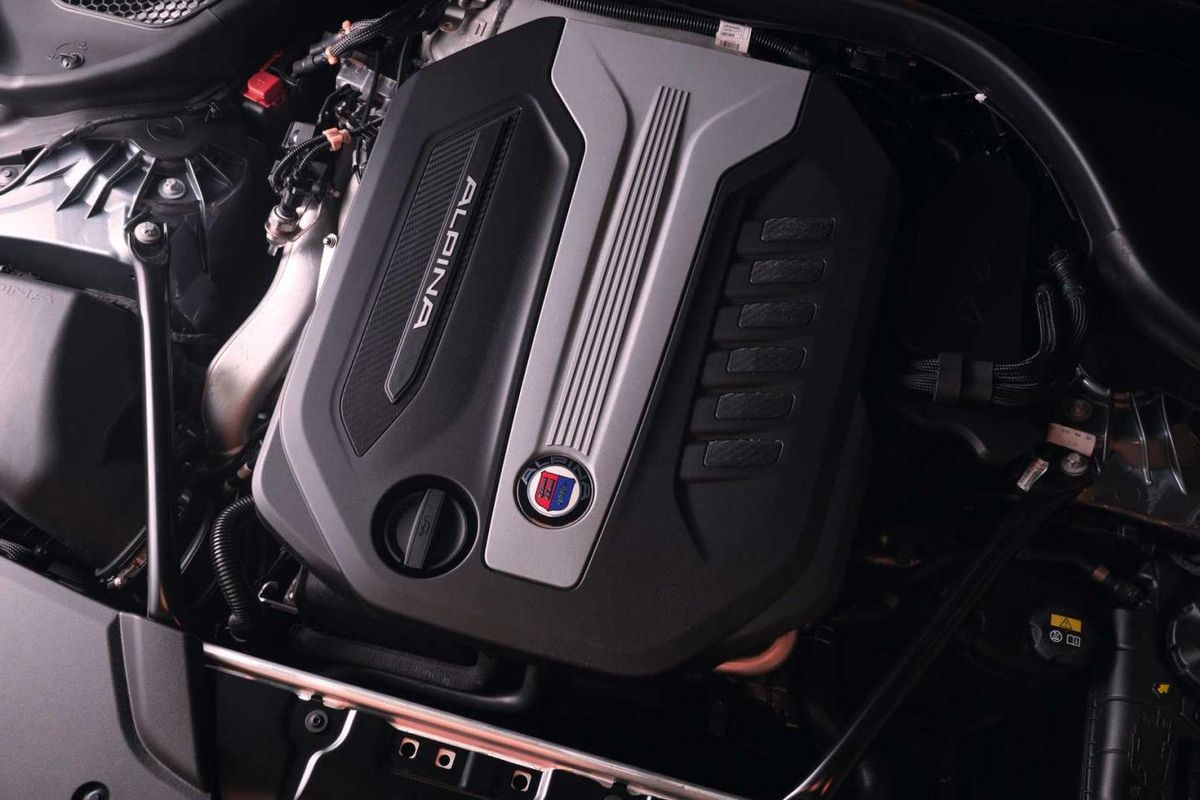
What really qualifies this B5 station wagon as the true successor to BMW’s M5 estate car heritage, is under the bonnet. Alpina’s technicians have managed to liberate some tidy numbers from the BMW 4.4-litre twin-turbocharged V8 engine.
Power peaks at 457 kW, supported by 800 Nm of torque. Those numbers compare very favourably with the M5 Competition figures of 460 kW and 750 Nm. To ensure the required acoustic drama, there are Alpina dual-outlet sports exhausts, which exit at each corner of the remoulded rear bumper.
Performance claims are dramatic, as one would expect. Alpina says that its B5 station wagon will run a benchmark 0-100 kph in only 3.6 seconds, before reaching a true top speed of 322 kph. Those numbers conclusively settle any argument that this Alpina B5 is anything but a true M5 station wagon substitute.
To improve the B5’s high-speed tracking stability, it is equipped with adaptive dampers and utilizes rear-wheel steering. With an ability to turn the rear wheels 2.3-degrees to the left or right, Alpina’s B5 should make the best of its inherently more stable station wagon aerodynamics, guaranteeing excellent steering feedback at very high speeds.
Pricing
The price for this ‘all-but-in-name’ M5 station wagon? European orders are due for fulfilment in October, at an estimated R2.2m per five-door B5.
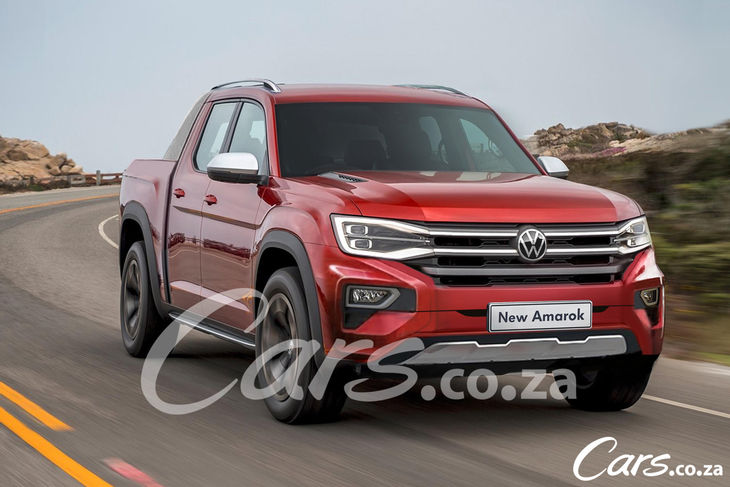
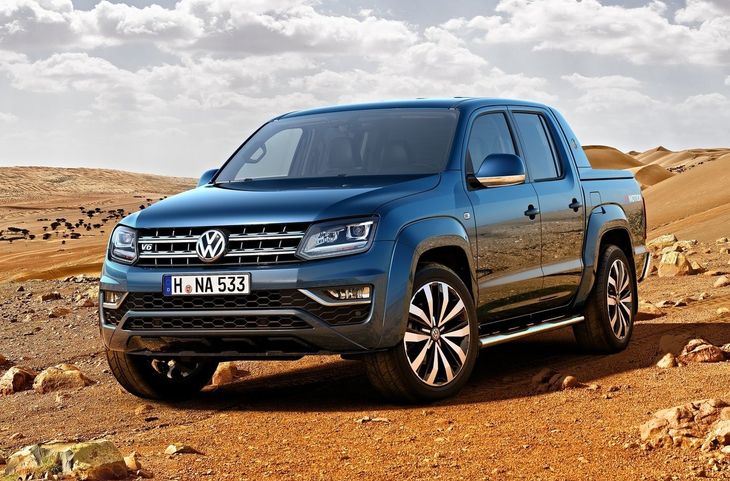
The next Volkswagen Amarok will be based on the Ford Ranger and it will be produced at Ford's Silverton facility in Gauteng, South Africa. Take a look at we know about the new Amarok below!
Renders courtesy of Duwyne Aspeling, Cars.co.za
Considering it was launched in South Africa in 2011, the Volkswagen Amarok is, by now, quite long in the tooth. There have been some mild updates along the way, like the addition of a beefy 3.0-litre V6 turbodiesel, as well as the introduction of the range-topping Canyon edition. In 2020, we're expecting an even more potent V6 motor (with a peak output of 190 kW) to make its way into the local market in the 3rd quarter (although, we hasten to add that VW has been promising this engine for a few years already). The V6 turbodiesel has been a hit for VWSA, with most lifestyle customers favouring the bigger engine over the 2.0-litre biturbo. While it may not sell in the volumes that its Toyota Hilux and Ford Ranger rivals do, the Volkswagen Amarok has proven itself more than capable and bagged 3 consecutive #CarsAwards – powered by WesBank category wins in the Leisure Bakkie category.
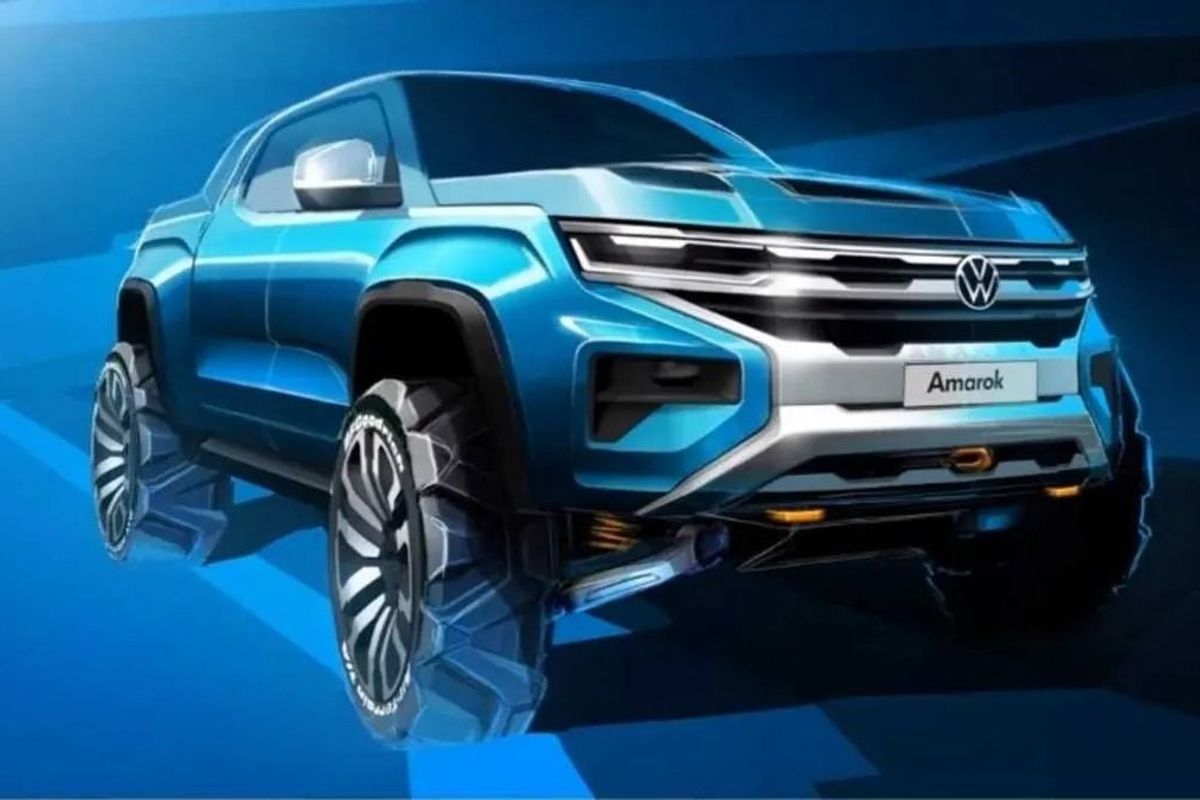
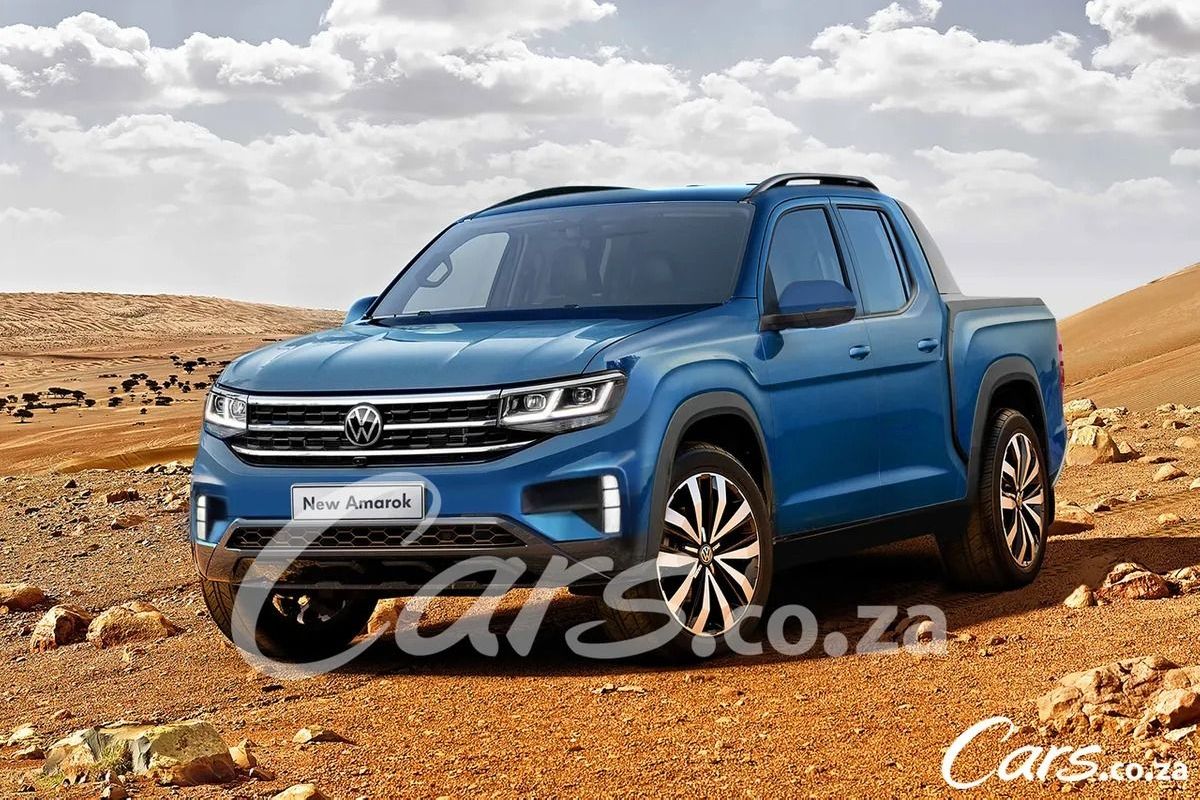
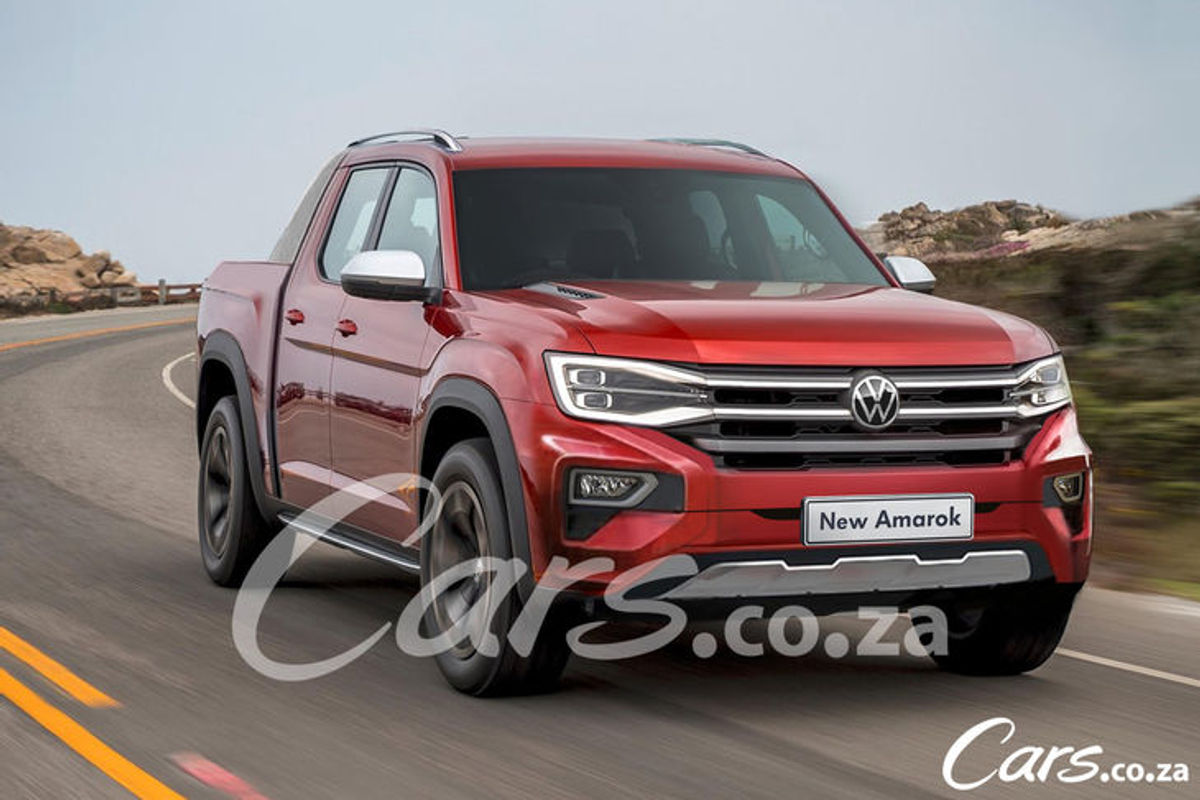
A product lifespan of a decade is long compared those of passenger vehicles, which are renewed completely every 5 to 7 years. Volkswagen recently presented a sketch of the 2022 Amarok at its annual media conference. Granted, it was a true teaser: the bakkie was proportionally over the top with outrageously huge tyres and a pedestrian-unfriendly bonnet. As wild as it looks, it confirms the German brand is working on a successor to the Amarok. We've created two renders, which we think take the elements from the concept sketch and put them into a more production-ready body.
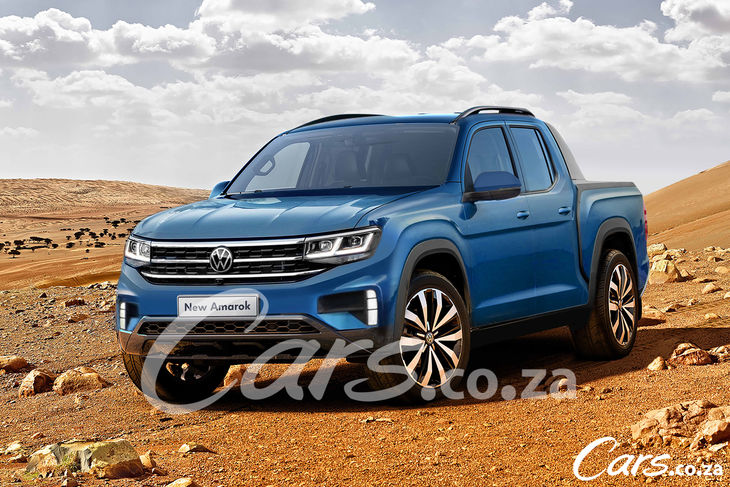
Using an existing Amarok body shape, we've taken inspiration from the latest VW design cues such as the headlights and illuminated grille
However, there's been a significant development in the new Amarok's gestation: Volkswagen and Ford signed an agreement to develop and share costs on the new generation of commercial vehicles, which includes bakkies, as well as vans. The agreement essentially means the next-generation Ford Ranger and Volkswagen Amarok will be developed as part of a collaborative effort and it has now been confirmed that the next Amarok will be produced locally at Ford's Silverton production facility as of 2022. Interestingly, the collaboration has ensured the future of the Amarok and without this alliance in place, the Amarok would have in all likelihood been shelved as pointed out by Thomas Sedran, Chairman of the Board of Management of Volkswagen Commercial Vehicles, who commented, "Ultimately it is our customers who will benefit, as without the cooperation we would not have developed a new Amarok.”
Think of it as the bakkie version of the Toyota Supra/BMW Z4 project, with the Blue Oval and its Wolfsburg-based collaborator pooling their resources. Right now, the current iteration of the Ford Ranger is arguably the most digitally-connected of all the bakkies on the market, plus it boasts impressive levels of safety technology, something we're sure Volkswagen will want to incorporate into a new Amarok.
Inspired by the Volkswagen Atlas Tanoak Concept, our 2nd render adopts a more masculine approach.
Now, this is where things get really interesting… Ford South Africa's top business priority is not the sale of vehicles, but to produce engines and vehicles for the local, as well as export, market. The Silverton facility in Pretoria is utilised to produce body panels and for the final assembly of vehicles, while the Struandale engine facility doesn't just make engines to supply South Africa… Ford produces Rangers, Ranger Raptors and Everest adventure SUVs for the right-hand drive markets of the world, while some of the engines are earmarked for products like the Transit.
Ford South Africa will be desperately keen to retain the business of building vehicles and given how popular the Ranger is in South Africa, the local sales numbers that come with it. The Ford Motor Company has made it clear this collaboration focuses on the European, African and SA markets. Interestingly, the USA was not mentioned, presumably as the F-150 dominates that (major) market.
Much of the Ranger's development and testing is done by the Blue Oval's Thai and Australian subsidiaries, whereas Ford Motor Company of Southern Africa (FMCSA) doesn't have all that much say in the final product that is released into the market. Once it begins assembly of the new model, it can localise certain aspects or fix faults quite quickly, if need be.
2022 Volkswagen Amarok
While it's very early in the development phase, speculation based on trends and past experience means we do have some idea of what could happen. Despite the Dieselgate scandal, turbodiesel will remain critical in commercial vehicles and, given how slowly the fuel quality has improved in Sub-Saharan Africa, we wouldn't be surprised if VW's current engine portfolio of 2.0-litre biturbo diesel and 3.0-litre TDI V6 diesel motors are carried over, albeit with minor revisions. For this bakkie to be sold in Europe, it's going to need to comply with harsh emissions regulations, so there's a massive question mark for that market. South Africa's emissions regulations are much less stringent. Perhaps Volkswagen will shove its Touareg R's hybrid 3.0 V6 turbopetrol motor into the engine bay?
There's is absolutely no doubt that Volkswagen is aware of how well the Ford Ranger Raptor has been received, plus there's the imminent arrival of the GR Hilux. While an Amarok V6 with monstrous tyres and offroad-racing suspension may be a bit far-fetched, Volkswagen would probably consider an R-Line body kit for its next-gen double-cab bakkie, having noted how successful that trim level has been on its other passenger-vehicle products. When last did you see a non-R Line Volkswagen Tiguan? Let's not forget this is a shared collaborative effort with Ford, so there's no reason why we couldn't see Ford engines making their way into the next-gen Amarok, similar to the Z4/Supra overlap, which sees a BMW powerplant feature in both the German roadster and Japanse coupe.
Summary
Both brands have heavily invested in their South African production operations and bakkies are such an integral part of South African motoring culture. With this in mind, the idea of next-gen Ford Ranger ladder-frame chassis units leaving the Silverton factory and heading for Volkswagen's Uitenhage plant for next-gen Amarok bodywork and final assembly is not as radical as you might think. The next-generation Amarok and Ranger are due to be revealed in their final form in 2022. Watch this space, as we're very likely to spot prototype mules undergoing testing in South Africa.
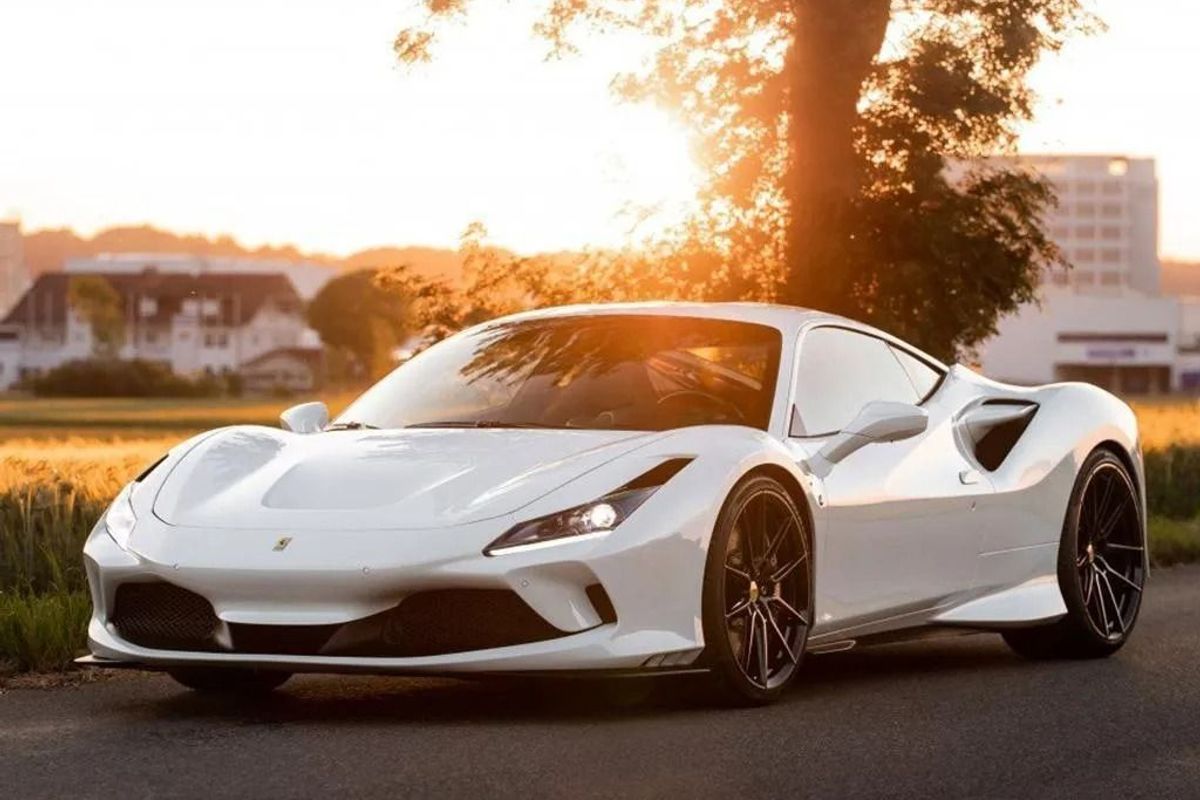
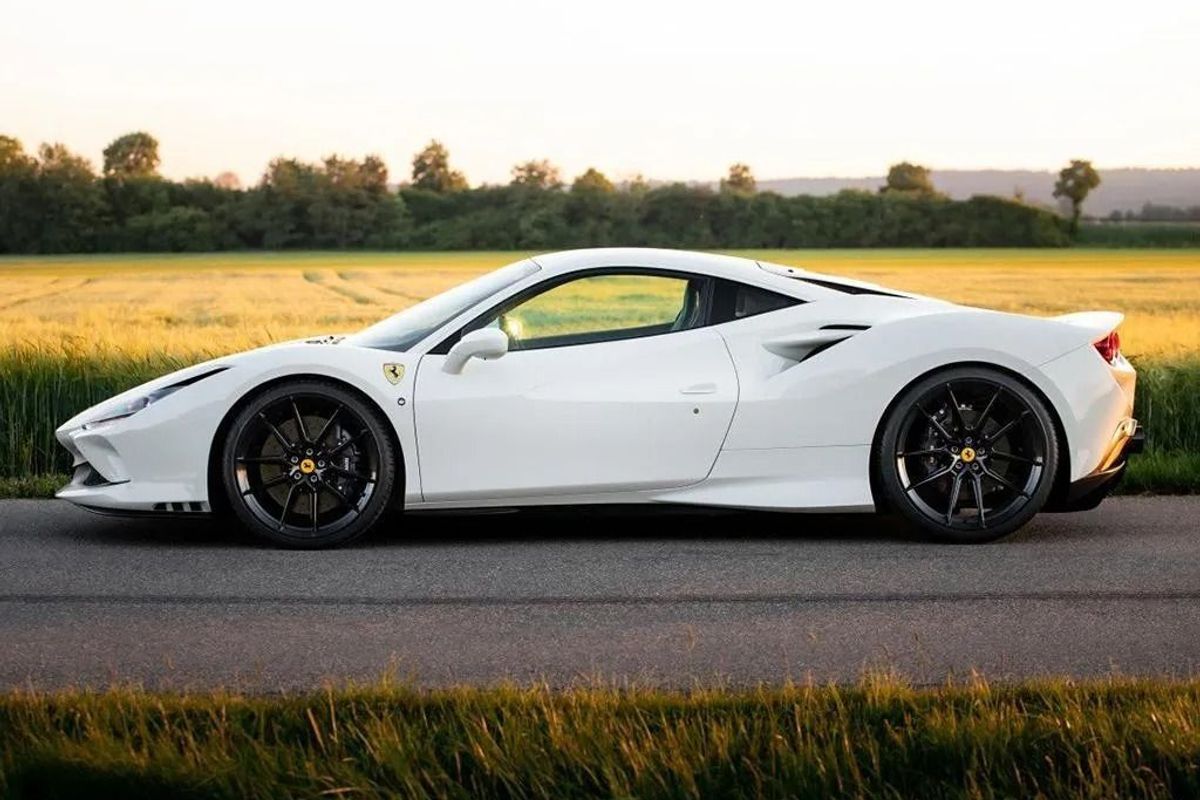
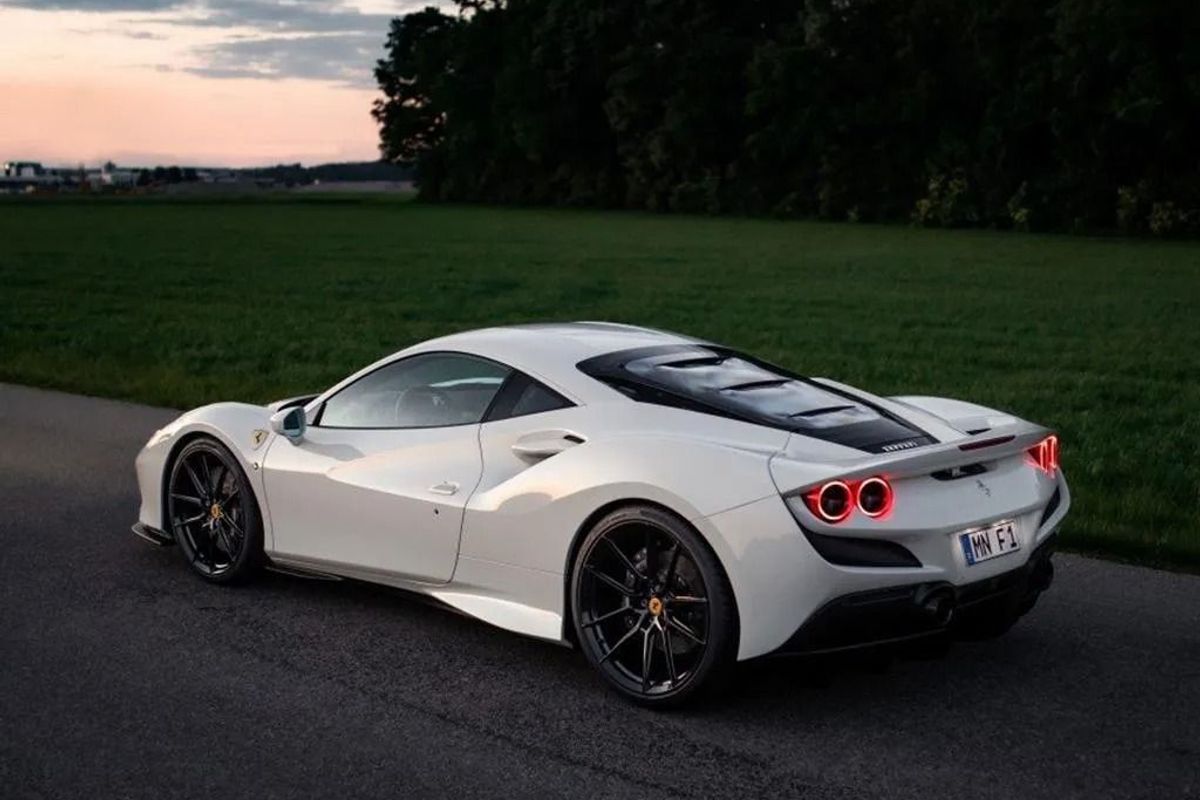
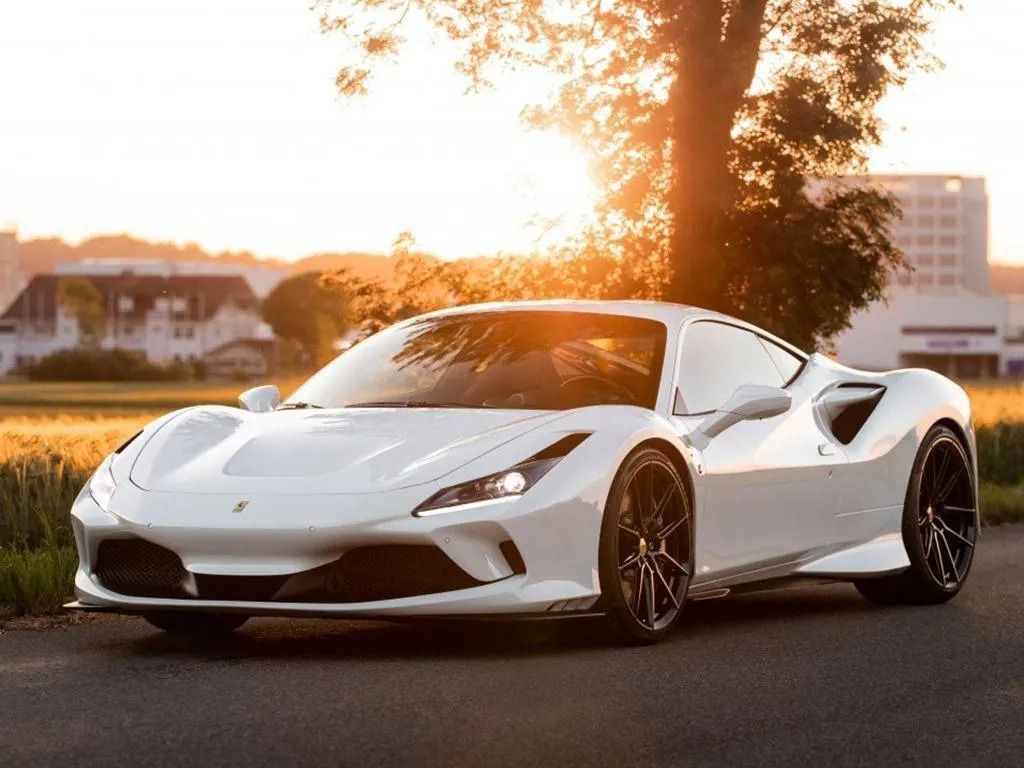
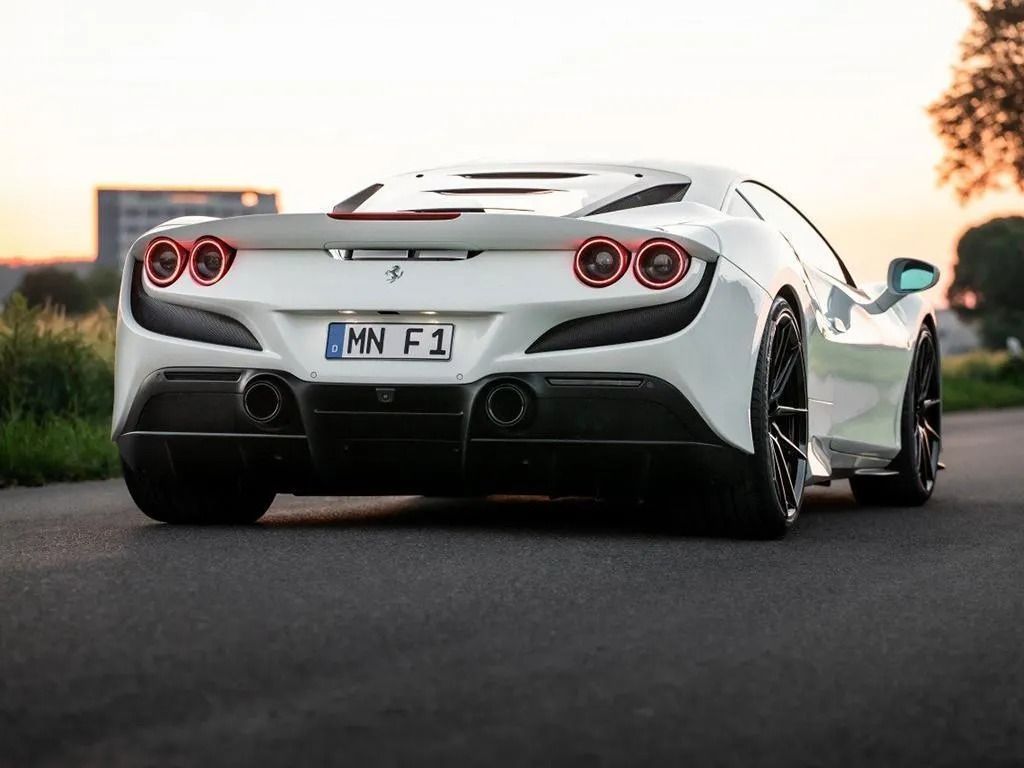
German tuning firm Novitec is renowned for extracting much more performance (let alone attitude) from exotic cars; its latest project sees the already-rapid Ferrari F8 Tributo gain more power and torque, as well as a wilder exhaust note. Have a look… and a listen.
The F8 Tributo – an evolution of the 488 – made its South African debut about a year ago, and its roadster sibling arrived on local soil as recently as March. Maranello's mid-engined supercar is still very new to the market, but Novitec has wasted no time to develop a number of initial upgrades for the 3.9-litre twin-turbo V8-engined machine.
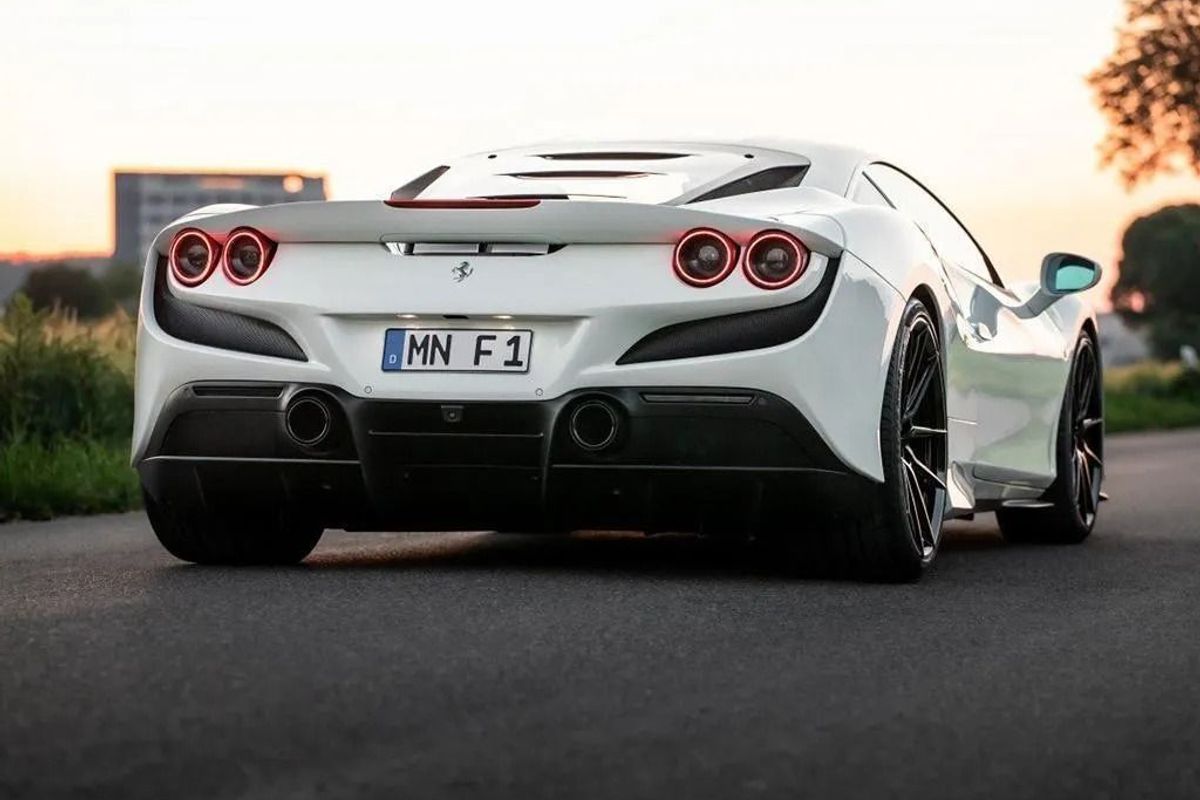
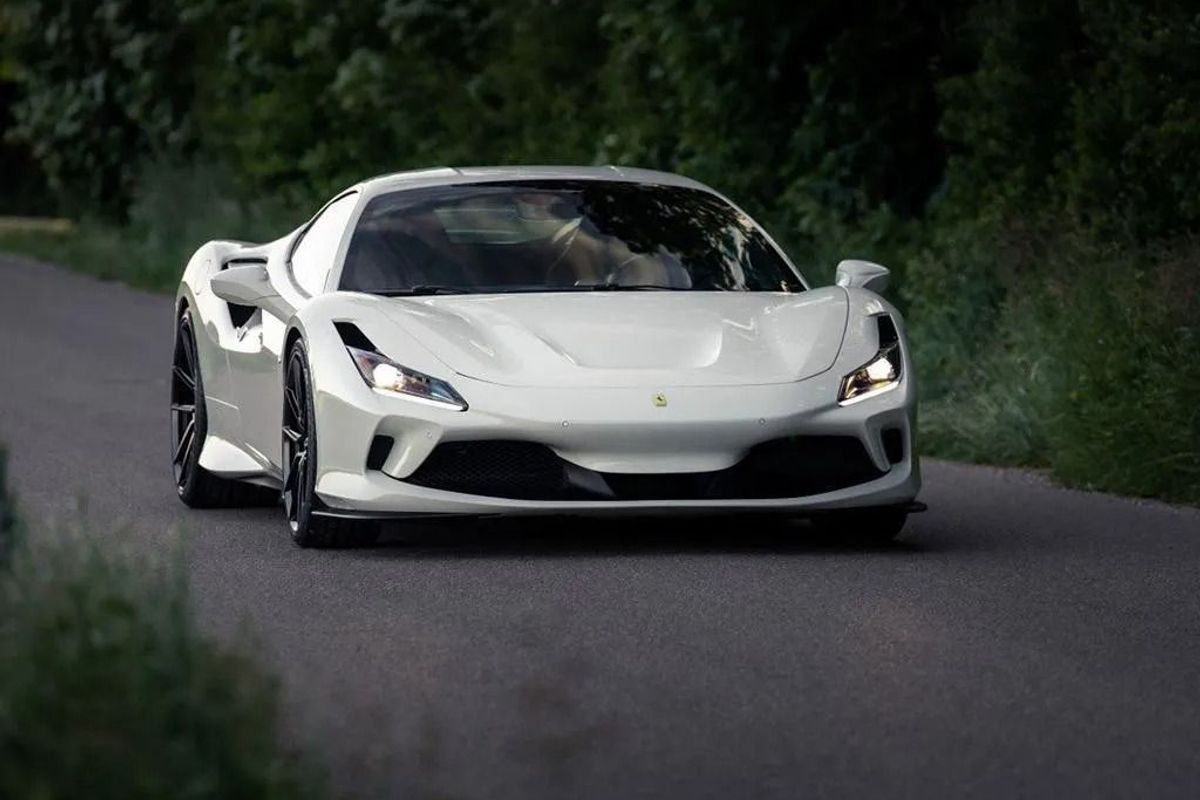
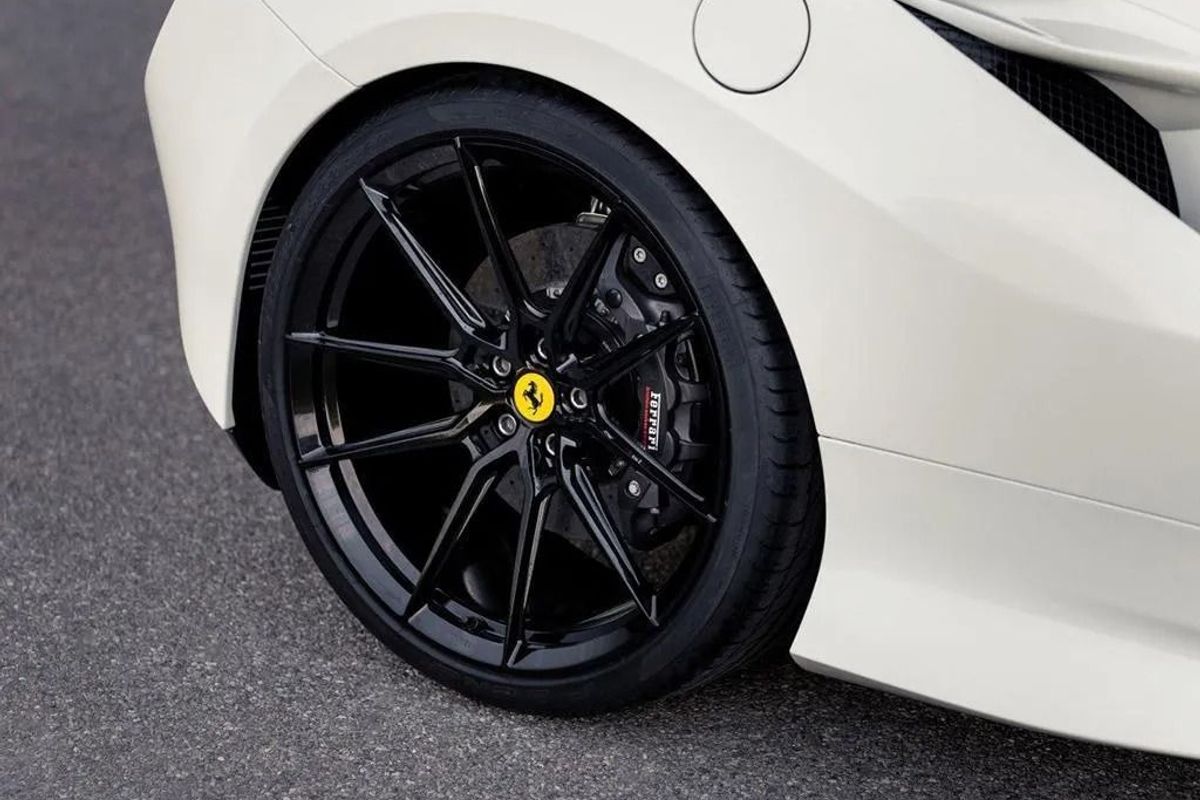
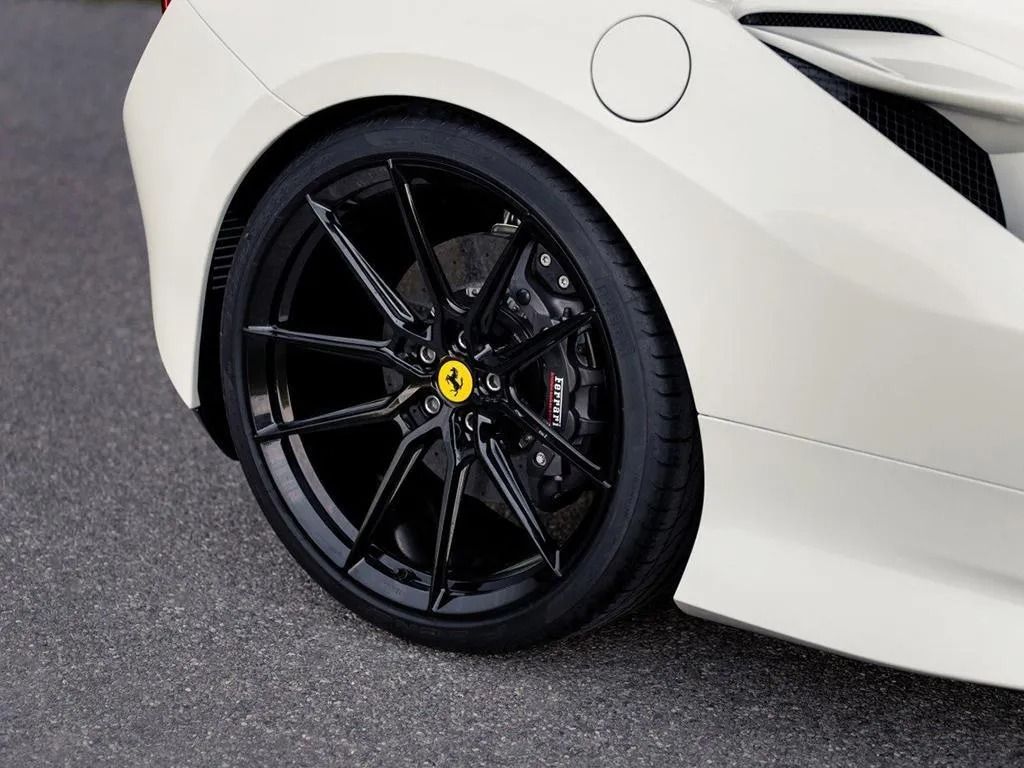
We say initial, because apart from riding on sports springs that lower the car’s ride height by 35 mm and being shod with bespoke Vossen-Novitec rims and tyres – 21-inch at the front, with 22-inch at the back – the Novitec F8 Tributo looks much like it did when it rolled out of the factory. However, the tuning firm has a series of aerodynamic addenda under development, so we can expect the tuning firm to release a melange of visual upgrades for this Prancing Horse in, um, due course.
By lowering the F8 Tributo's ride height and fitting different-sized alloys fore and aft, Novitec has given the Ferrari a meaner stance.
Up to this point, the focus of Novitec's development programme has been an upgrade of the power and torque outputs – and therefore, performance – of the F8 Tributo.
The most notable upgrade is the installation of a Novitec N-Tronic control module, which tweaks the Ferrari’s engine mapping, ignition and boost pressure. As a result, whereas the standard car generates 530 kW at 7 000 rpm and peak torque of 770 Nm at 3 250 rpm – it’s the most powerful V8 engine that Ferrari has ever produced, remember – the modified F8 Tributo produces a heady 579 kW (at 8 000 rpm) and 882 Nm at 3 000 rpm – improvements of 49 kW and 112 Nm respectively.
Look closely and you'll notice the Novitec F8 Tributo features custom black fog lamps; aerodynamic parts are in the pipeline.
The Novitec F8 Tributo can sprint from 0 to 100 kph in 2.7 seconds, which is 0.2 sec faster than its standard sibling, and, along with more ferocious in-gear acceleration and “improved throttle response”, the fettled Ferrari’s top speed is said to be “beyond 340 kph”, the tuning firm claims.
But, in the time-honoured tradition of infomercial product0pitches: wait, there’s more. Novitec has developed a bespoke exhaust "to optimise the performance further and give the engine a more thrilling exhaust note" – in fact, it’s claimed to be lighter than Ferrari's factory-fitted installation.
Black 22-inch Vossen-Novitec rims are fitted at the rear.
With the Power Stage 2 update, which combines the N-Tronic control module with the optimised stainless-steel exhaust system (replete with catalyst-replacement pipes), the Novitec F8 Tributo is said to produce 590 kW at 7 950 rpm and 898 Nm at 3 100 rpm… that’s if you want another 11 kW and 16 Nm – plus a whole lot more expensive noise.
Finally, the Novitec exhaust system can be paired with the F8 Tributo’s standard tips or the company’s bespoke carbon/stainless steel ends. Should you require to occasionally dampen the level of the mechanical din generated by the custom-piped setup, a remote-controlled flap-regulation system is also optionally available.
Last year it was announced that two of the world's biggest vehicle manufacturers had formed an alliance and would be cooperating on a number of projects, including the next Amarok, which will be built at Ford's Silverton plant. Now it's official!
Renders of the 2022 Amarok were created by Duwyne Aspeling of Cars.co.za
Given how the motoring landscape is rapidly changing and nimble brands such as Tesla has come to the fore and disrupted the status quo in the automotive market, it makes perfect sense for 2 of the biggest established players to form a product-, as well as a tech-focused, alliance.
Formally confirmed at the 2019 Detroit Auto Show, the relationship and agreements between Volkswagen AG and Ford Motor Company are in line with the brands' shared goals to satisfy customer demand and "boost competitiveness in an era of rapid change." It's a fascinating alliance in that it does not entail cross-ownership and will be managed by a joint committee led by the respective brands' bosses (Volkswagen recently appointed a new brand CEO). This is not a merger, nor is it an acquisition.
Ford and Volkswagen have now signed agreements that will expand their global alliance to meet the needs of customers around the world.
“In light of the Covid-19 pandemic and its impacts on the global economy, it is vital to set up resilient alliances between strong companies,” said Volkswagen Group chief executive Dr Herbert Diess. “This collaboration will efficiently drive down development costs, allowing broader global distribution of electric and commercial vehicles, and enhance the positions of both companies.”
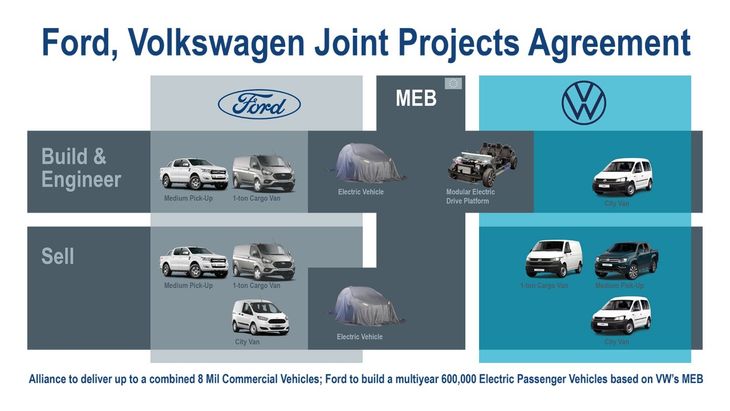
Both Ford and Volkswagen will be developing commercial vans and medium-sized bakkies for global markets, the first of which should be hitting showroom floors as early as 2022. It is expected that demand for bakkies and vans will climb in the next 5 years.
Thomas Sedran, Chairman of the Board of Management of Volkswagen Commercial Vehicles commented: “What is important for both partners is the utilisation of the same platform. At the same time, we will both be able to fully deploy our strengths. Through custom designs and interfaces we will clearly differentiate the two models. For us as Volkswagen Commercial Vehicles, our sights with the Amarok successor are on our main markets, above all in the EMEA economic area (Europe, the Middle East and Africa). Ultimately it is our customers who will benefit, as without the cooperation we would not have developed a new Amarok.”
The light commercial sector is a profitable one and both brands offer players in this segment. Both the Ford Transit portfolio and Volkswagen Transporter/Caddy family have proven popular and both brands will be venturing into these segments. Ford will be working on larger commercial vans for Europe, while Volkswagen is working on a city van, which we could see as early as 2021. The commercial part of the deal is predicted to be profitable for both parties, with pre-tax operating results in the green from 2023.
The next Volkswagen Amarok will be built at Ford's Silverton plant in South Africa. Read more about the newcomer here.
The alliance is expected to produce up to 8 million commercial vehicles collectively during the above-mentioned product life cycles.
“This alliance comes at a time of tremendous enthusiasm about the intersection of increasingly intelligent, connected vehicles in an ever-smarter world,” said Ford CEO Jim Hackett. “This creates a huge opportunity to innovate and solve many of the world’s transportation challenges and deliver extraordinary benefits to customers – even as companies need to be selective about how they use their cash.”
There's far more to this alliance than just commercial collaboration, however. Volkswagen and Ford will collaborate on autonomous vehicles, electric vehicles, and mobility services. Given Volkswagen AG's experience with electrification thus far, it's Ford who will benefit greatly. Making use of Volkswagen's MEB platform, Ford will look to develop and engineer a new electric vehicle (expected in 2023) in addition to its Mustang Mach E, which could see as many as 600 000 units delivered in Europe.
In turn, Volkswagen will benefit from Ford's extensive foray and research into autonomous driving. As such, both companies will work with Argo AI to develop capable and autonomous vehicle businesses based on Argo AI's self-driving technology. Last week, Volkswagen closed its investment in Argo AI, a Pittsburgh-based company. Ford also has ownership and development interests in Argo AI and the result will be the large-scale deployment of critical autonomous technology.
“In 2022, we will be deploying a self-driving vehicle fleet in real conditions for the first time. This test will be the first level-4 deployment using our fully-electric ID.Buzz vehicles. We’ll be collaborating closely on this with ARGO. In addition, I’m sure that ARGO is going to take a leading role in the development of self-driving systems in the entire industry, from which Ford and we will benefit greatly”, said Thomas Sedran.
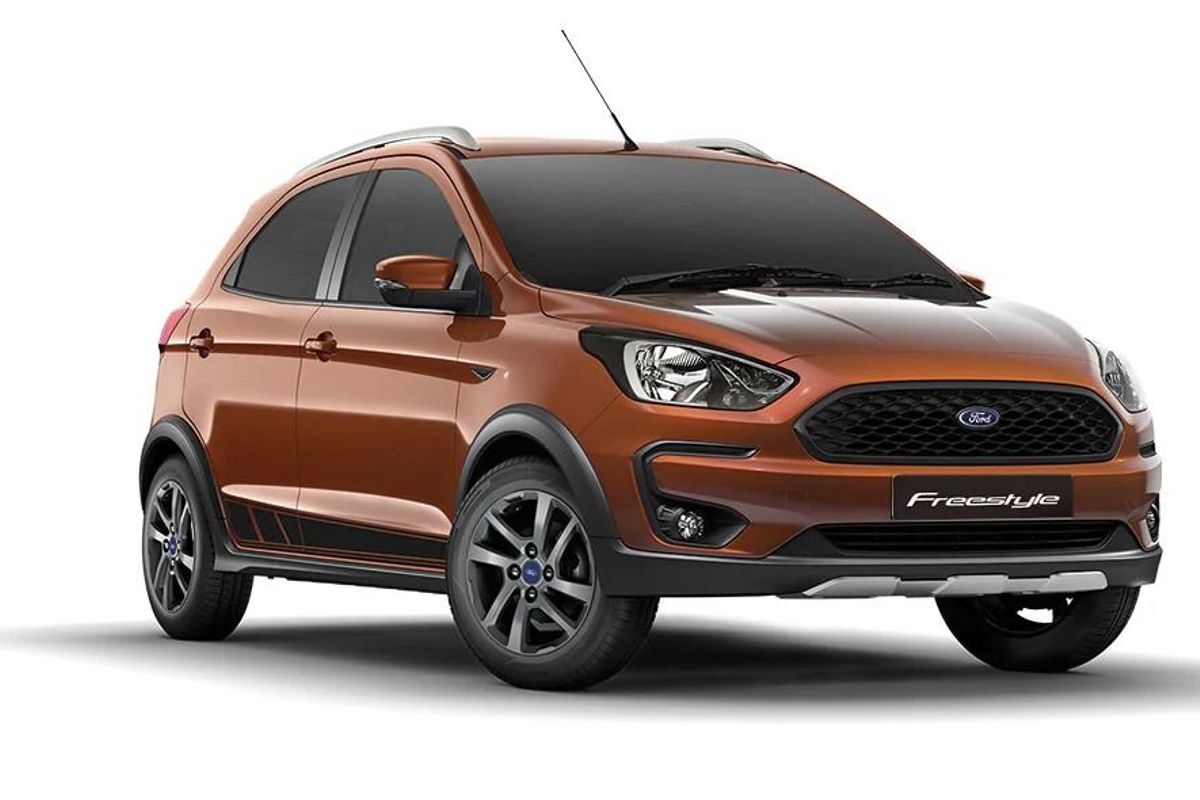
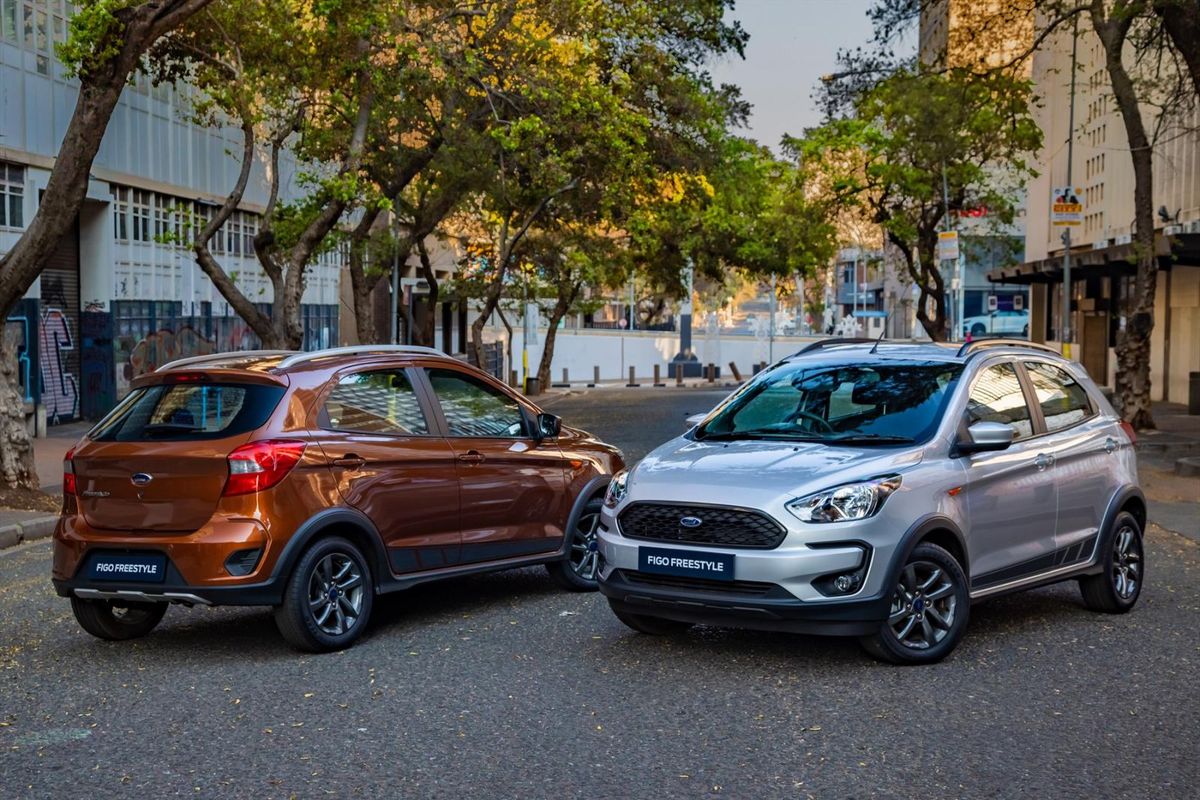
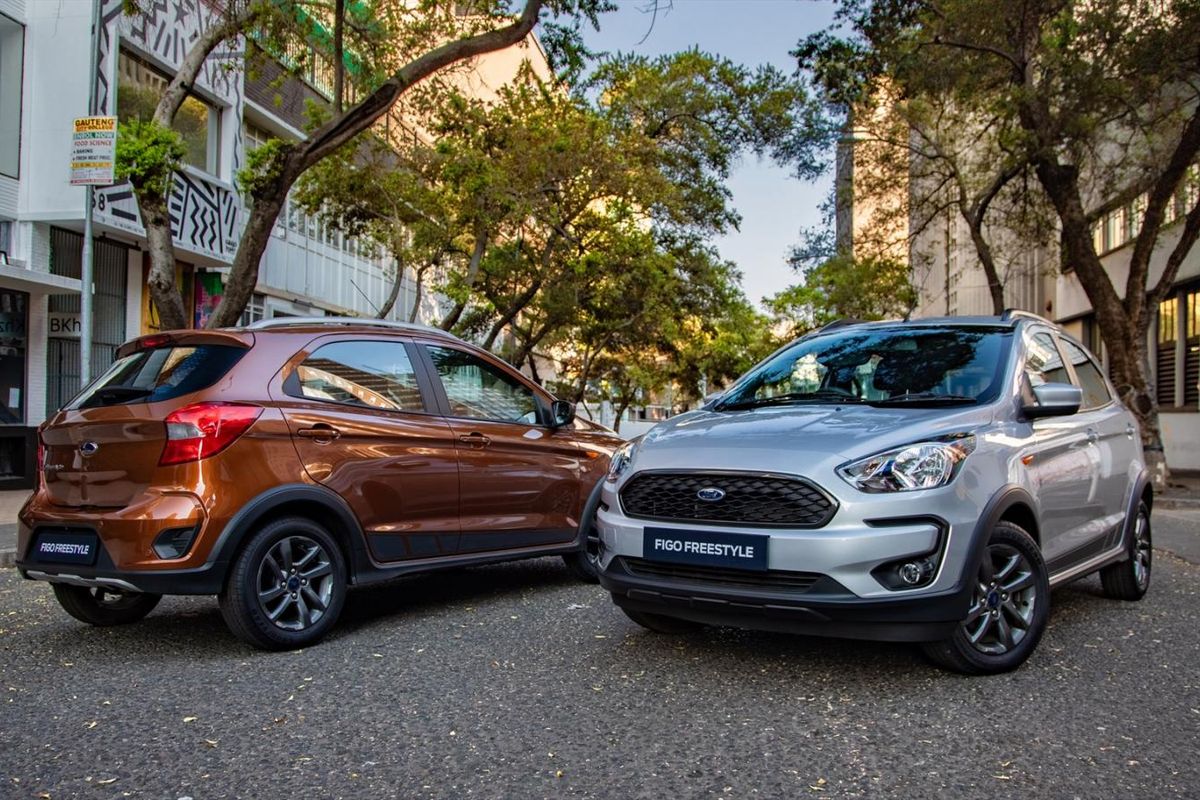
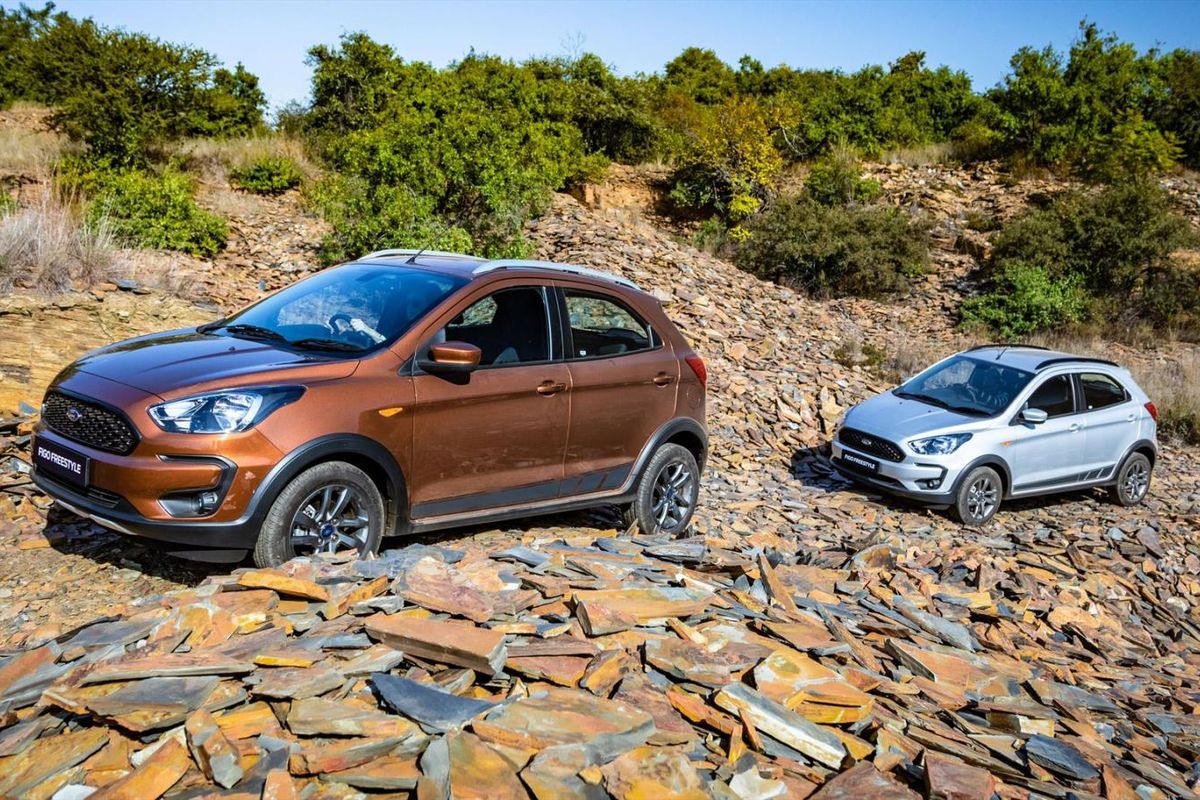
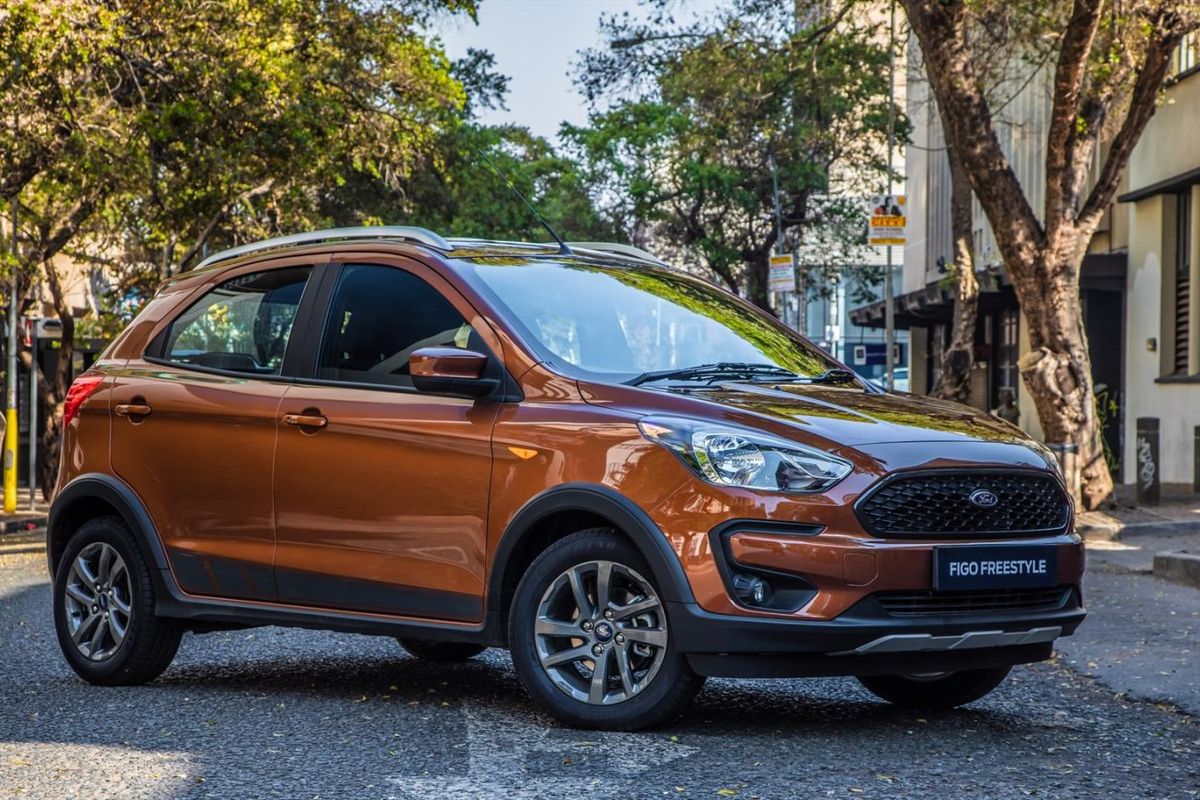
Ford South Africa has expanded its Figo portfolio and the newcomer brings some offroad ability and crossover styling to the segment. Here are specifications and pricing of the Ford Figo Freestyle.
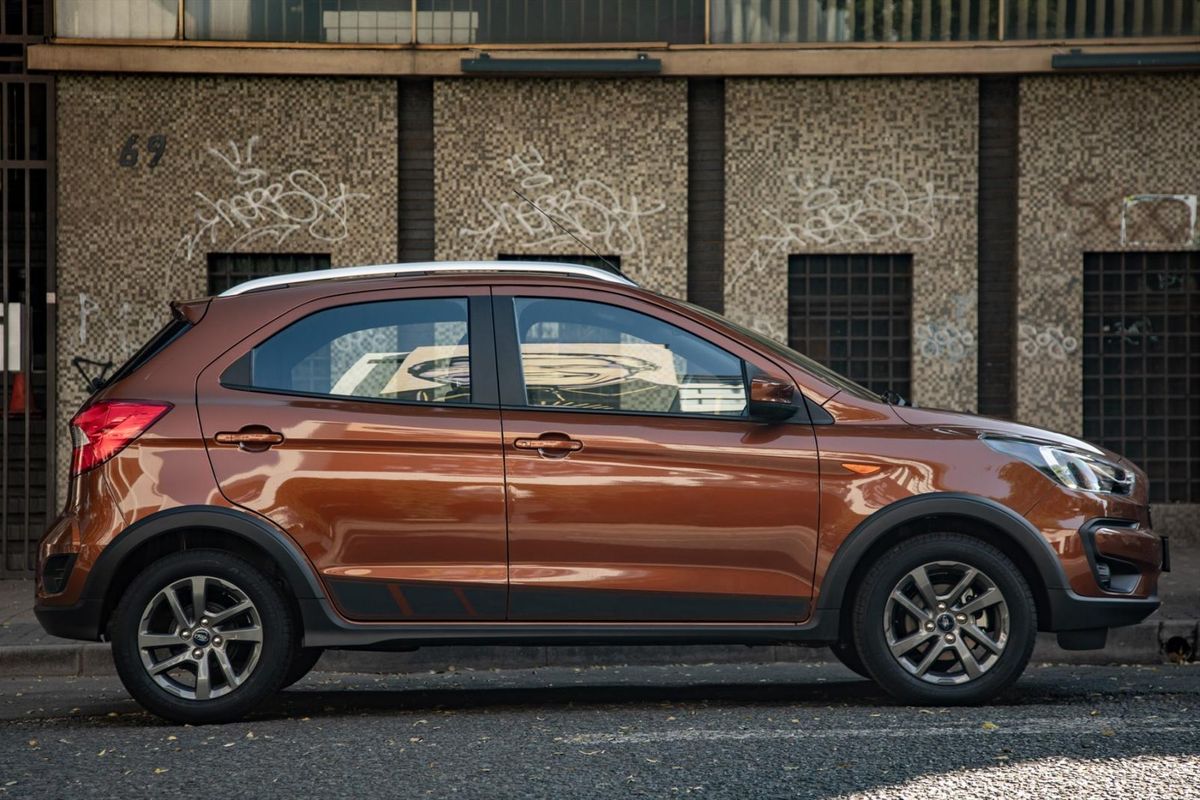
At first glance, the Ford Figo Freestyle looks quite rugged and capable. Given the market's love for SUVs, it's clear that customers are after the SUV lifestyle, but don't necessarily have the money. The answer is the compact crossover, a popular segment in the market. Think of things like the Volkswagen Polo Vivo Maxx, Toyota Etios Cross and the Renault Sandero Stepway.
There are two models on offer, with a shared engine. The motor on duty is the 1.5-litre naturally-aspirated petrol engine and it delivers 91 kW and 150 Nm. Power reaches the front wheels via a 5-speed manual gearbox. There's a 42-litre fuel tank and the claimed fuel economy sits at 5.5 L/100 km. In terms of performance, it has a top speed of 175 kph and a 0-100 kph claimed time of 11.8 seconds.
Trim Levels
Ford Figo Freestyle Trend
15-inch alloy wheels
Painted grille
Roof rails
Freestyle badge
Decals
Increased ride height
Rear parking sensors
Wheel arch cladding
Ford Figo Freestyle Titanium
Trend plus the following features:
Auto wipers
Auto headlights
Keyless start
Reverse camera
Climate control
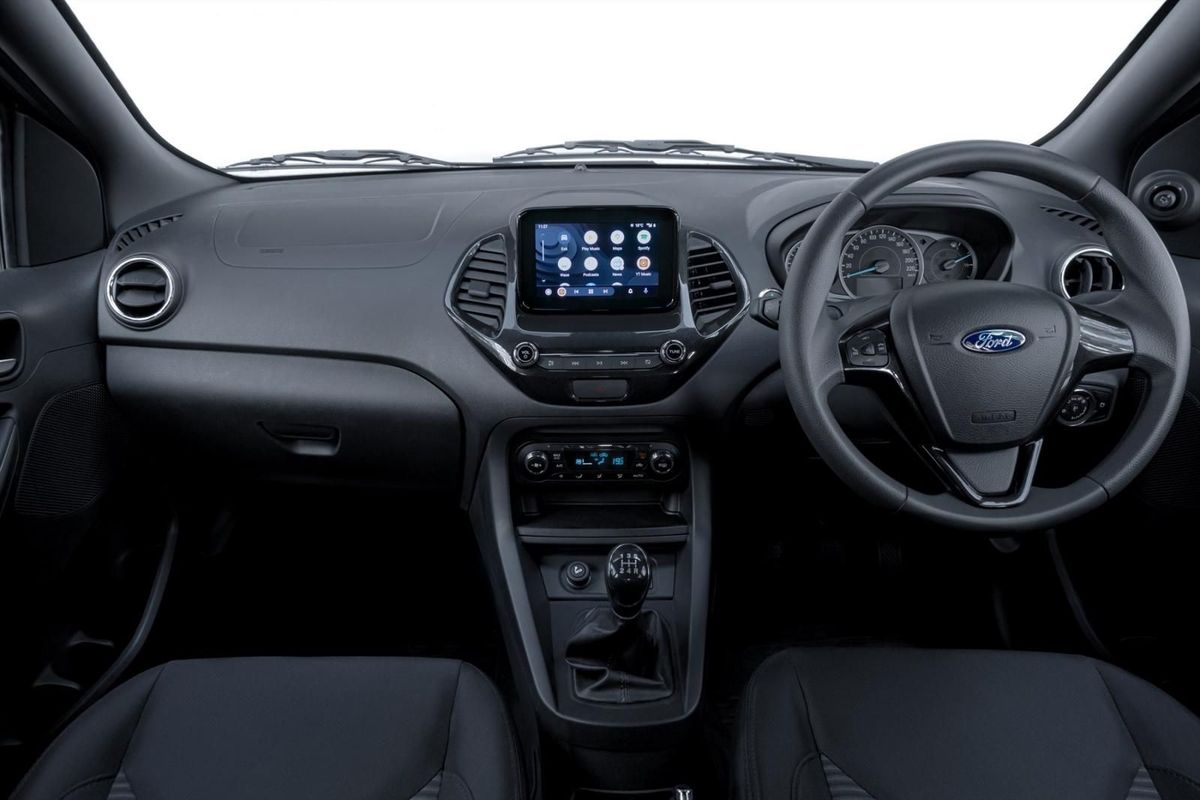
6.5-inch infotainment system with Android Auto/Apple CarPlay
Ford Figo Freestyle Price in South Africa (June 2020)
The new Ford Figo Freestyle comes with a 4-year/60 000 km service plan. In terms of warranty, Ford SA is offering a 4-year/120 000. There are 6 colours to choose from, with the metallic options costing R990.
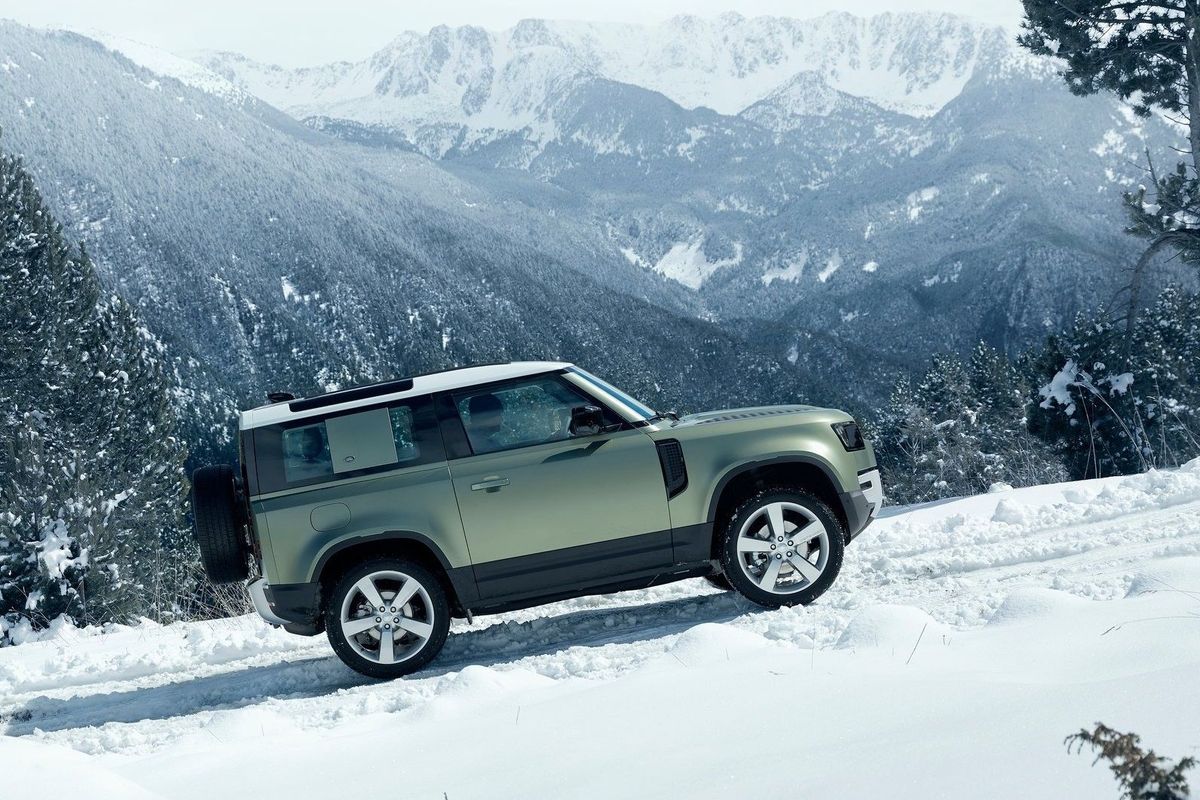
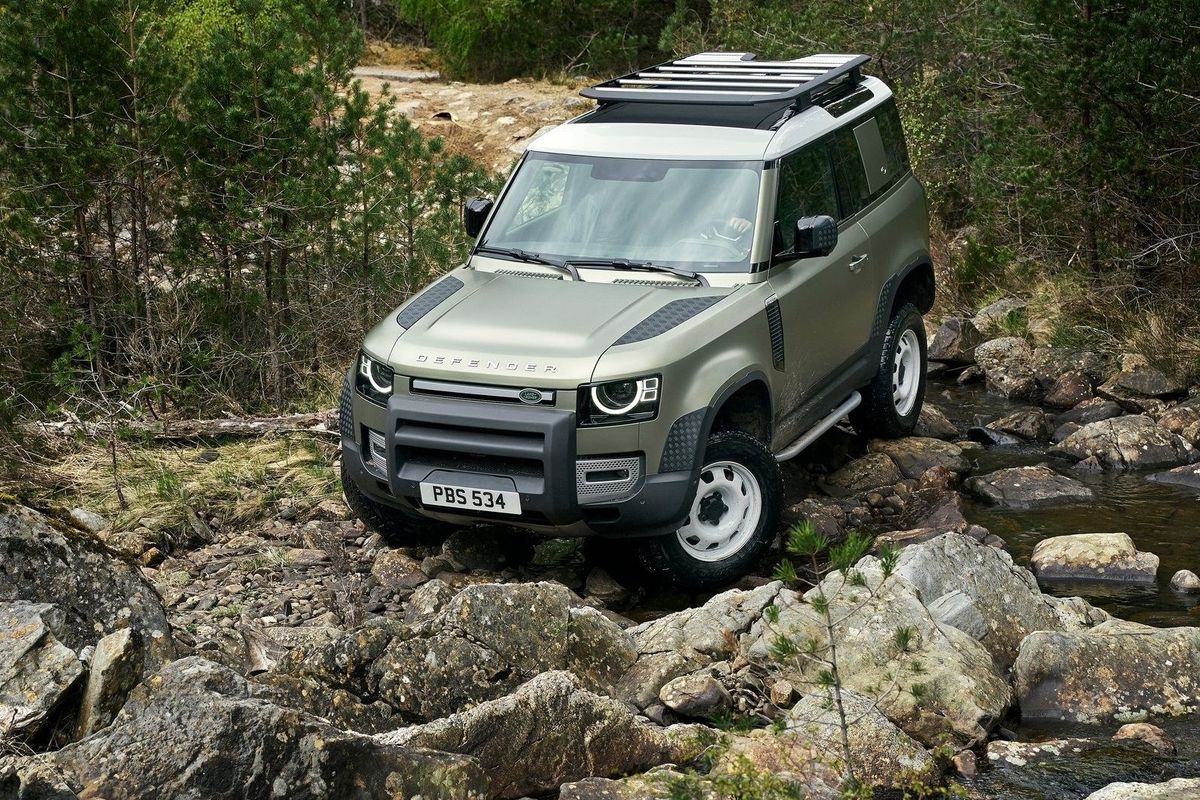
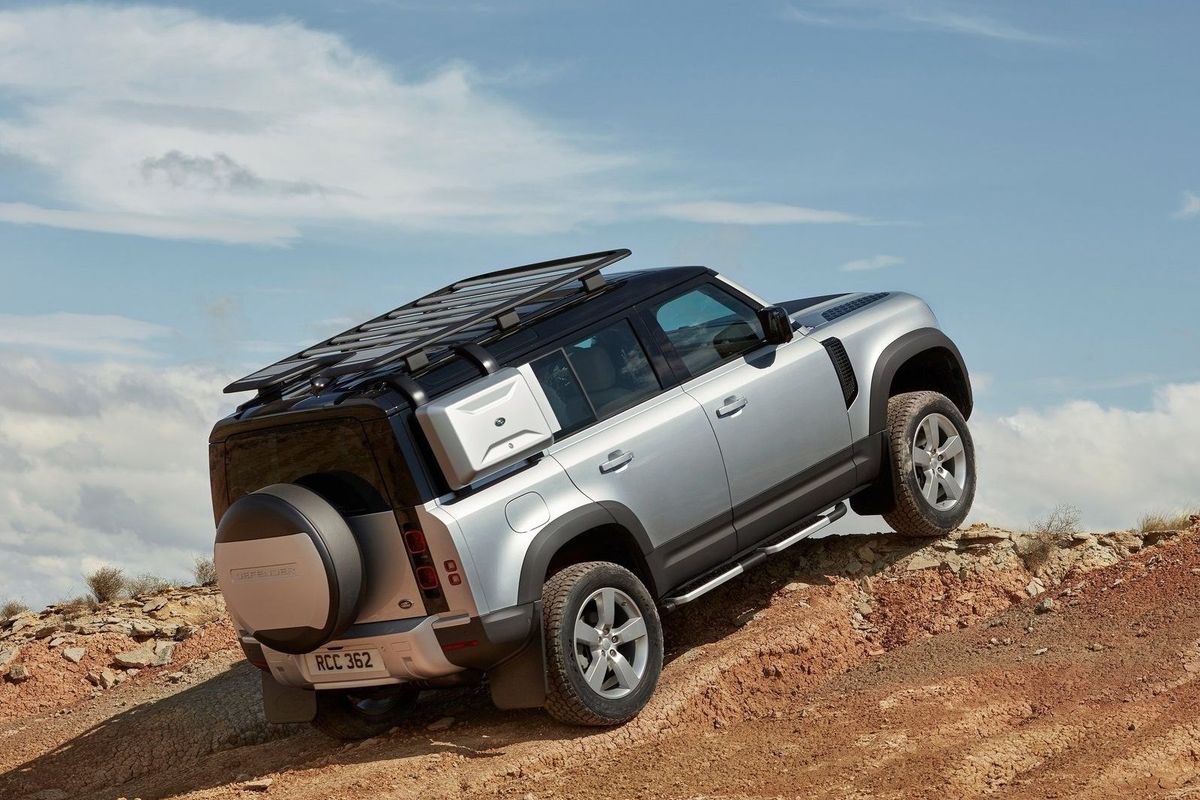
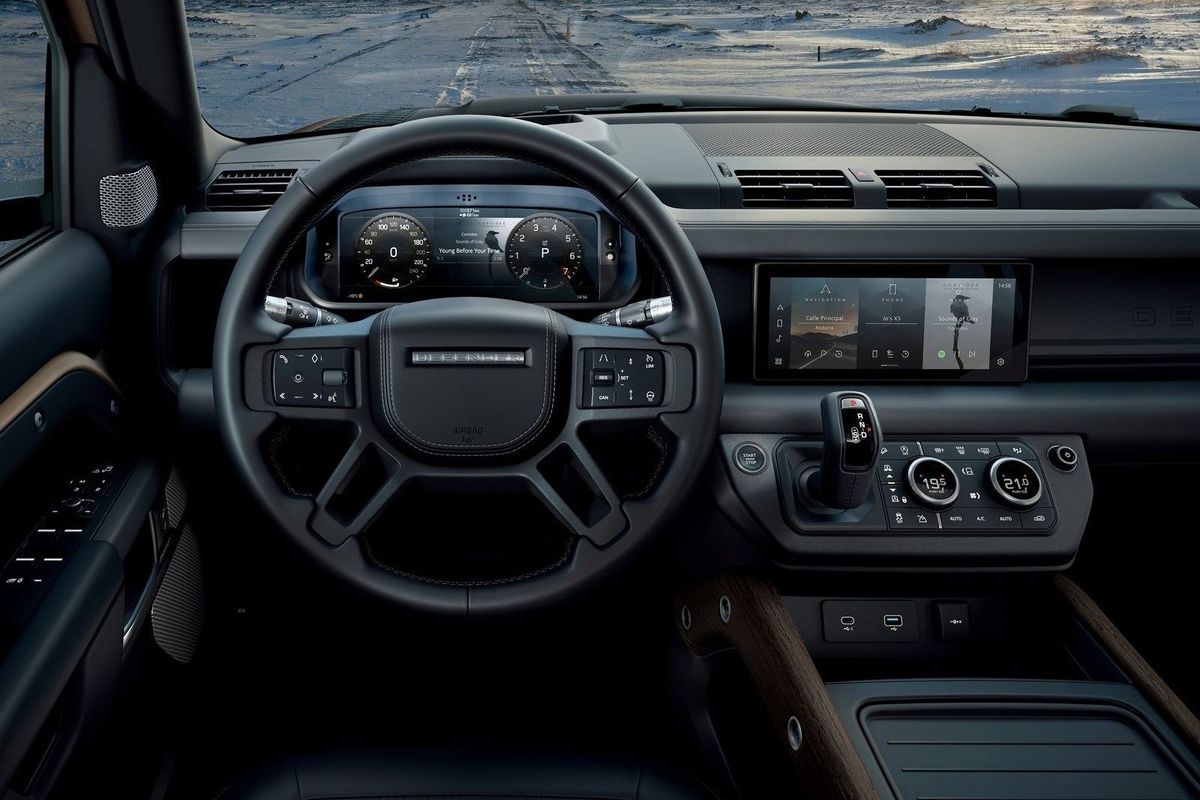
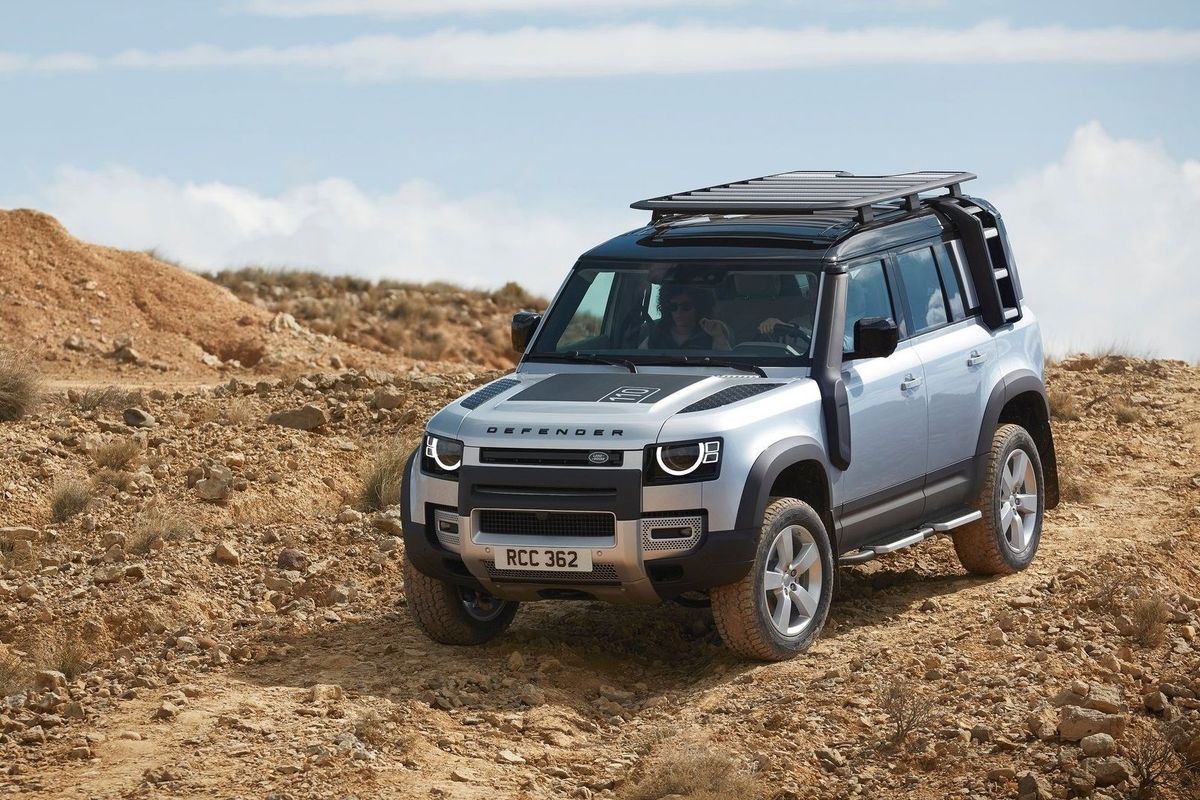
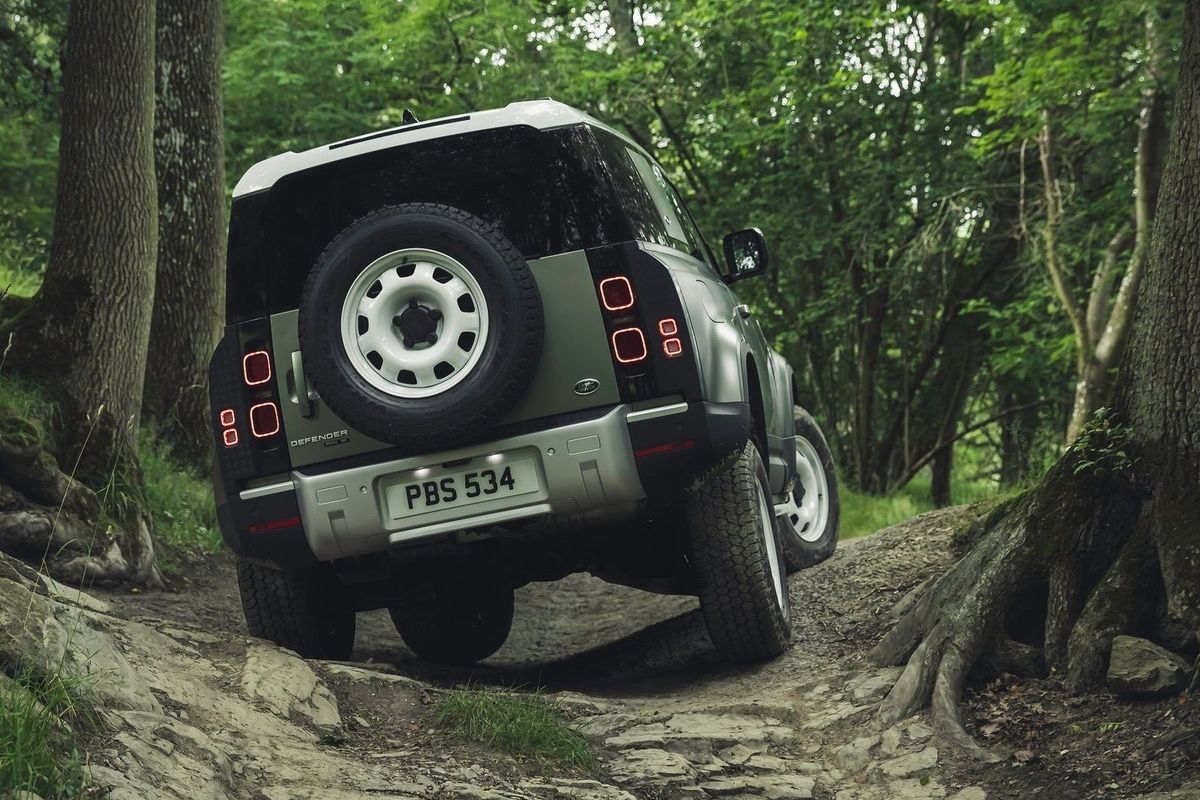
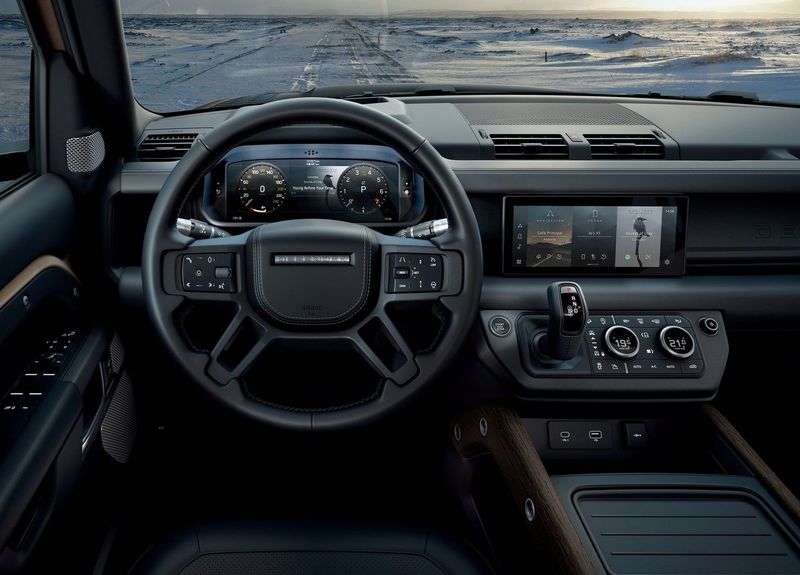
The eagerly-anticipated Land Rover Defender is due to go on sale in South Africa in coming weeks. Take a look at the specification and pricing details below.
The Land Rover Defender is almost in South Africa and while many manufacturers are experiencing production and delivery delays due to plant closures as a result of the ongoing COVID-19 pandemic, Land Rover has managed to secure the planned arrival of the Defender on local soil. This, however, hasn't come without its challenges. In the U.S. for example, it has emerged that there is a significant shortage of Defender supply to dealers, all as a result of production coming to a halt at the production plant in Nitra, Slovakia which was shut down for at least 8 weeks. The South African market is considerably smaller than the U.S. and Land Rover South Africa is therefore unlikely to experience any significant supply shortages for the Defender.
Land Rover South Africa commented, "Due to the extremely positive reaction of customers and media to the New Defender, customer demand has been very strong. Based on current production schedules Land Rover South Africa expects a stable supply of Defender 110 units for 2020. Defender 90 production and first customer deliveries have been delayed for reasons beyond our control. We anticipate Defender 90 will be available to order from September 2020."
What's on offer?
When the new Defender goes on sale in South Africa (in July 2020), it will be available with 4 accessory packs (Explorer, Adventure, Country, Urban) and, as mentioned, will initially be offered in the form of the long-wheelbase Defender 110, with the short wheelbase Defender 90 expected at a later date.
In terms of engines, a petrol, diesel and hybrid will be offered for both 110 and 90 body styles, while trim levels will range from the top-of-the-range Defender X models, as well as Standard, S, SE, HSE specification packs. There will also be an exclusive First Edition model.
Kicking off the range will be the D240, with its 2.0-litre 4-cylinder twin-turbocharged diesel motor. It produces 177 kW and 430 Nm, and is capable of a 0-100 kph sprint in 9 seconds. Next up is the P300 2.0-litre 4-cylinder turbocharged petrol motor with 221 kW and 400 Nm. It's a touch brisker, with an 8 second claimed sprint time to 100 kph. Finally, the P400 is a 3.0-litre 6-cylinder turbocharged petrol packing 294 kW and 523 Nm, and it will be the quickest Defender with a 6 second sprint to 100 kph. All vehicles feature all-wheel drive and all have automatic gearboxes.
As for off-roading credibility, the Defender has 291 mm of ground clearance. The long-wheelbase 110 has an approach angle of 38-degrees, a 28-degree break-over angle and a 40-degree departure angle (in off-road mode). It will also wade through water 900 mm deep. We're looking forward to getting behind the wheel of the new Land Rover Defender so stay tuned for more info.
Land Rover Defender Price in South Africa (March 2020)
Defender 90 177kW D240 Standard – R948 000
Defender 90 177kW D240 S – R996 500
Defender 90 177kW D240 SE – R1 060 200
Defender 90 177kW D240 HSE – R1 156 600
Defender 90 177kW D240 First Edition – R1 142 200
Defender 90 221kW P300 Standard – R948 000
Defender 90 221kW P300 S – R996 500
Defender 90 221kW P300 SE – R1 060 200
Defender 90 221kW P300 HSE – R1 156 600
Defender 90 294kW P400 Standard – R1 078 400
Defender 90 294kW P400 S – R1 113 800
Defender 90 294kW P400 SE – R1 172 500
Defender 90 294kW P400 HSE – R1 268 900
Defender 90 294kW P400 First Edition – R1 254 500
Defender 90 294kW P400 X – R1 486 700
Defender 110 177kW D240 Standard – R999 000
Defender 110 177kW D240 S – R1 042 800
Defender 110 177kW D240 SE – R1 099 500
Defender 110 177kW D240 HSE – R1 198 700
Defender 110 177kW D240 First Edition – R1 199 500
Defender 110 221kW P300 Standard – R999 000
Defender 110 221kW P300 S – R1 042 800
Defender 110 221kW P300 SE – R1 099 500
Defender 110 221kW P300 HSE – R1 198 700
Defender 110 294kW P400 Standard – R1 129 400
Defender 110 294kW P400 S – R1 164 800
Defender 110 294kW P400 SE – R1 224 300
Defender 110 294kW P400 HSE – R1 320 700
Defender 110 294kW P400 First Edition – R1 310 400
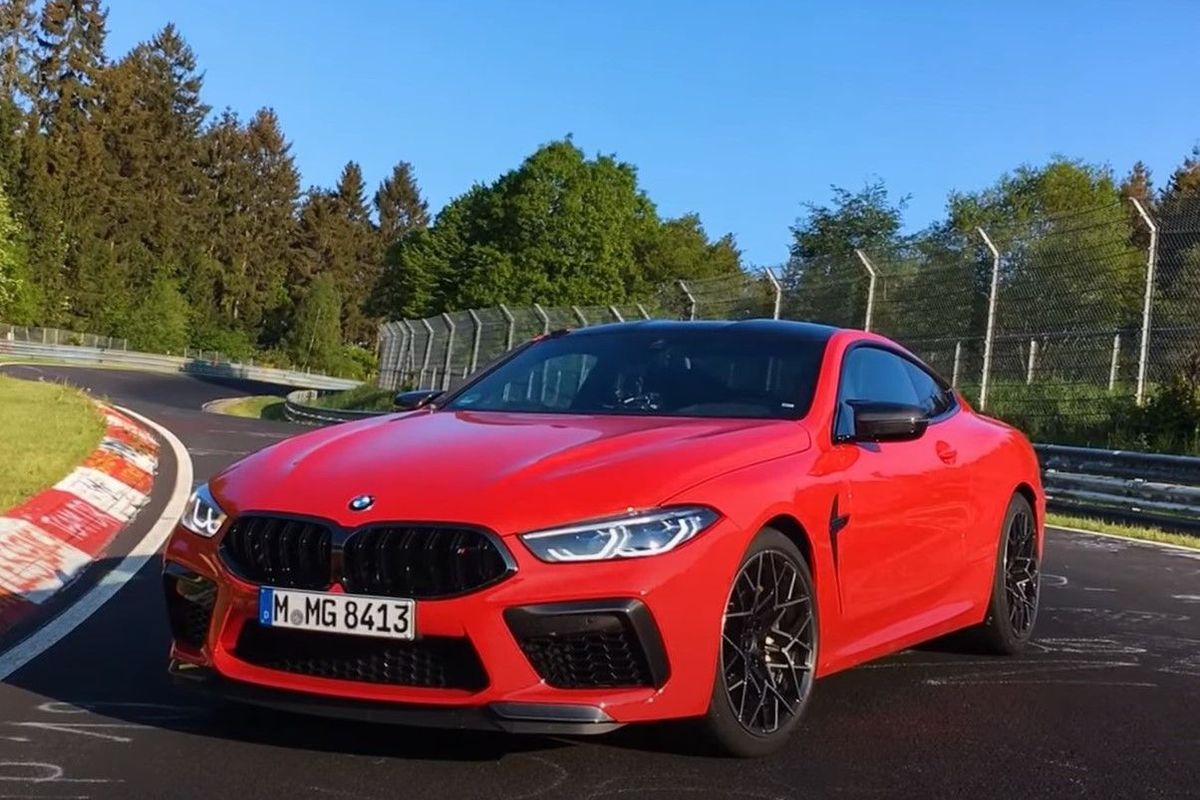
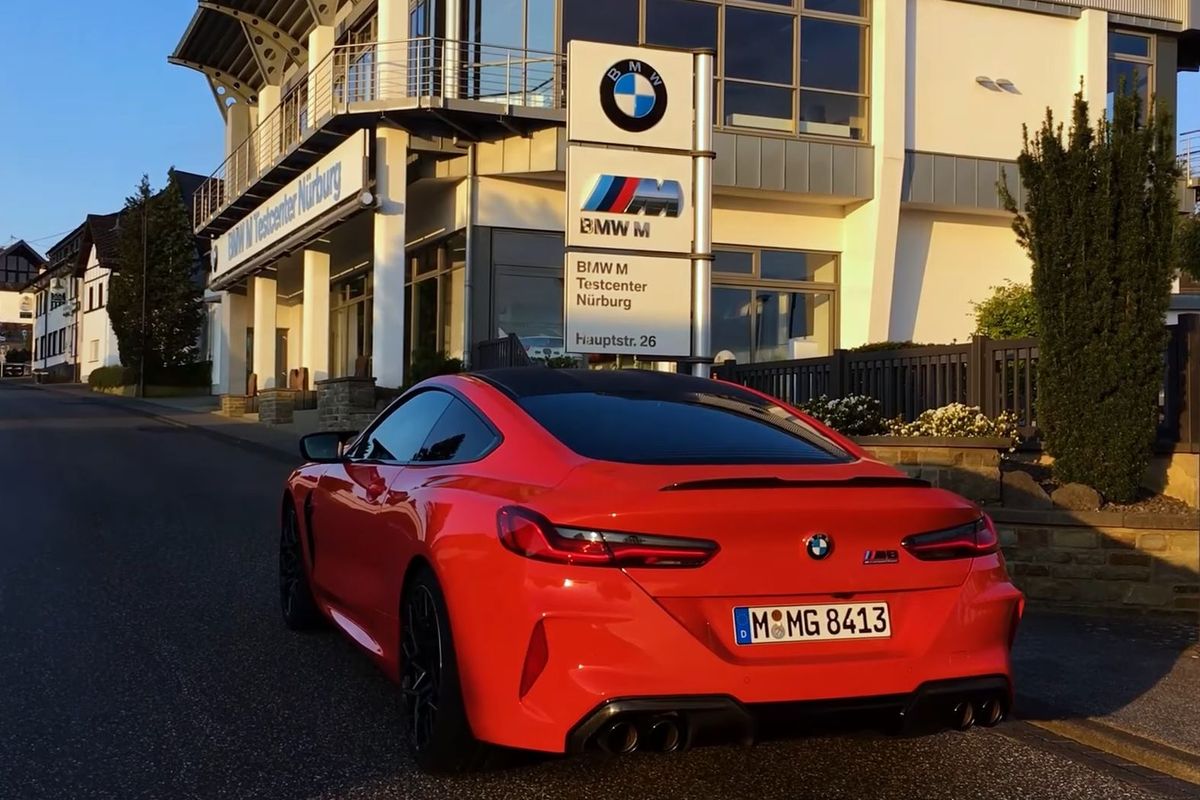
Despite its size, the BMW M8 Competition has posted an impressive time on the Nurburgring. Watch the insane speeds as it makes its way around the Green Hell.
German publication Sport Auto has taken the new BMW M8 Competition around the Nurburgring. With experienced test driver Christian Gebhardt and the running Pirelli P Zero rubber, the BMW M8 Competition completed a lap of the Nurburgring in 7min32.79, which is staggeringly quick.
In comparison, that's faster than a Pagani Zonda F, Porsche 911 GT3 RS, Ferrari F12 Berlinetta as well as some early Koenigsegg models like the CCX and CCR. Interestingly, the BMW M5 Competition managed a 7.36 with the same driver behind the wheel.
The BMW M8 Competition is on sale in South Africa with a price tag of R3 300 272. It's powered by a twin-turbocharged 4.4-litre V8 motor delivering 460 kW and 750 Nm. Power goes to all 4 wheels via an 8-speed automatic transmission and it's capable of hitting 100 kph in a claimed 3.2 seconds.