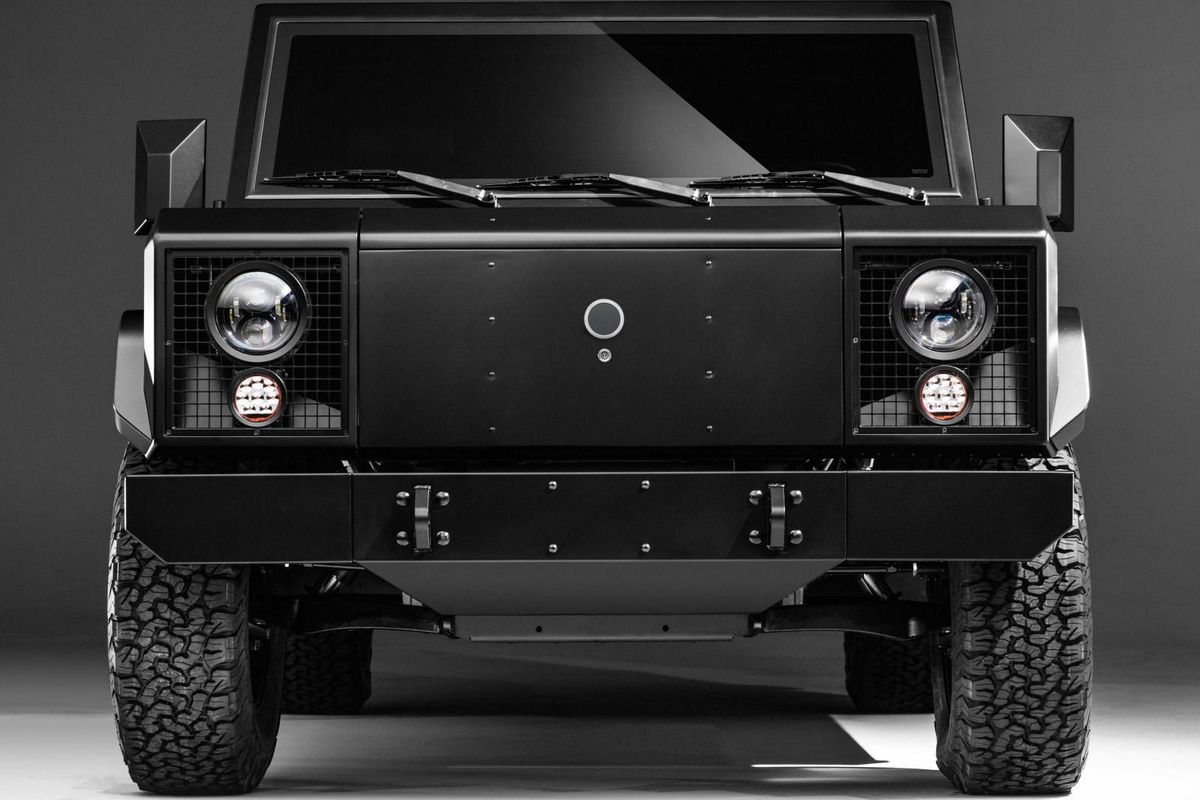
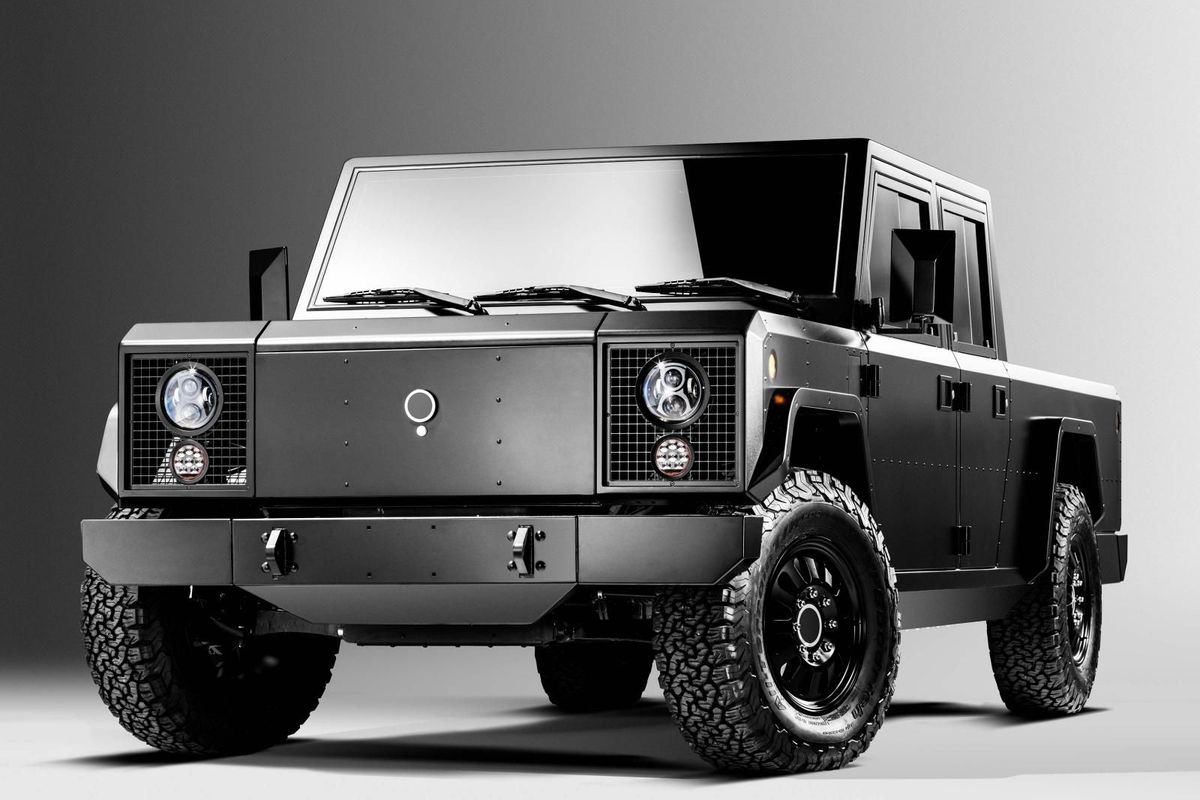
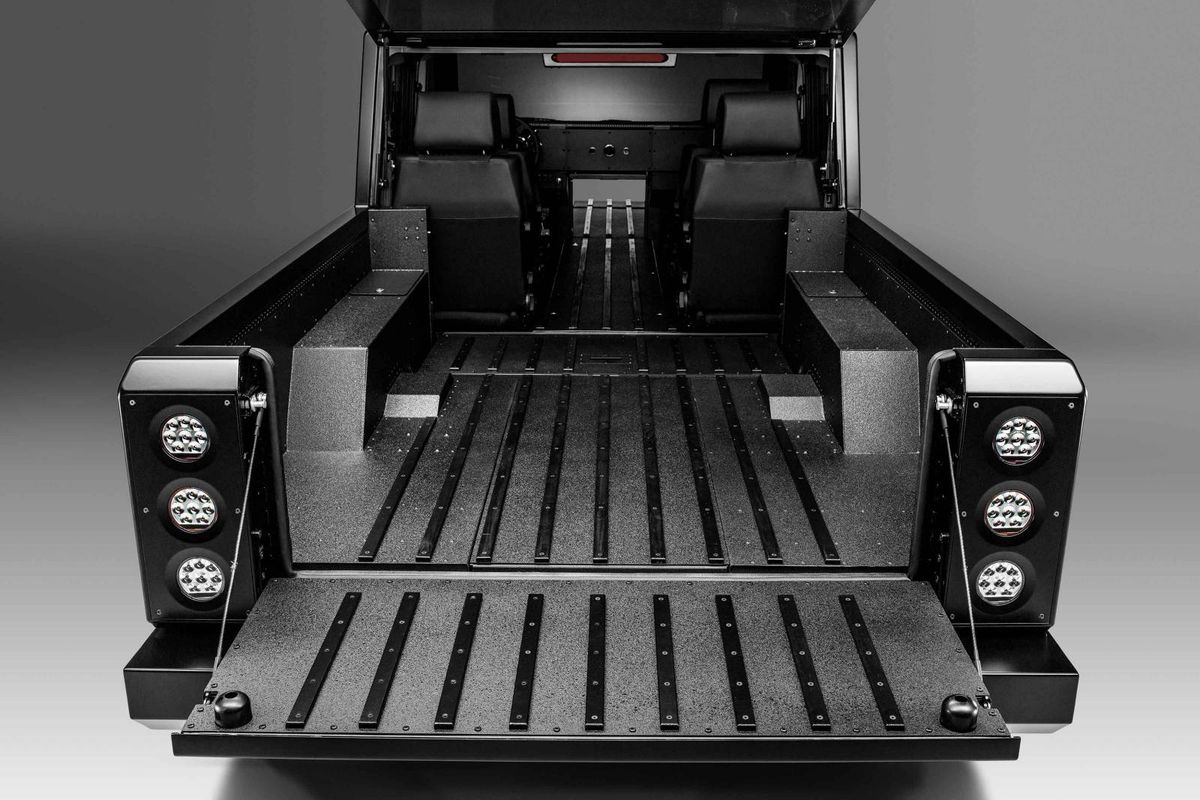
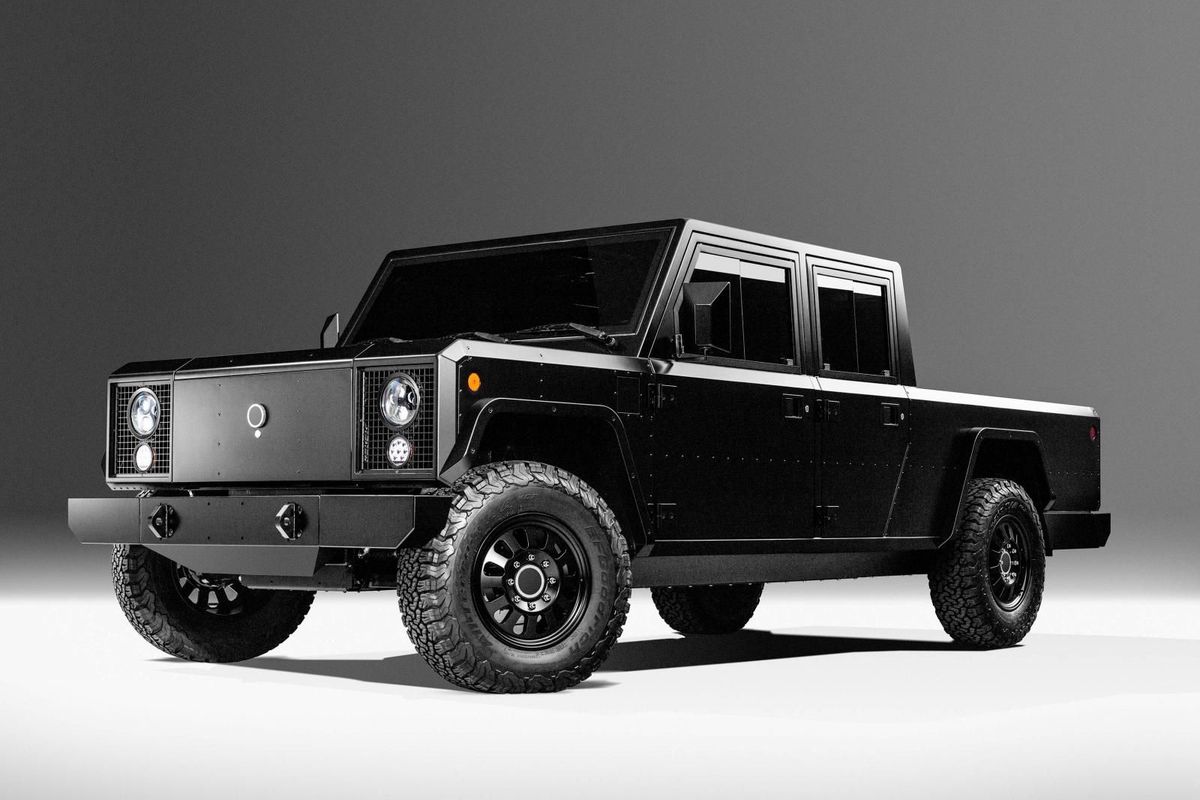
Can an electrically-powered bakkie make an impact? Bollinger thinks so.
With Tesla having proven that there is ample demand for electric luxury vehicles, the lure of that potential battery-powered utility market is strong.
Bakkies are popular and with prices surging over the last decade, they also provide a great profit opportunity for manufacturers. Thus far, few have appeared willing to invest and risk with a battery-powered bakkie.
Recognising the immense potential for an electric bakkie, are two start-up vehicle brands: Rivian and Bollinger. Ford has invested a lot of money into Rivian, which is based in California and appears to have a very sophisticated design.
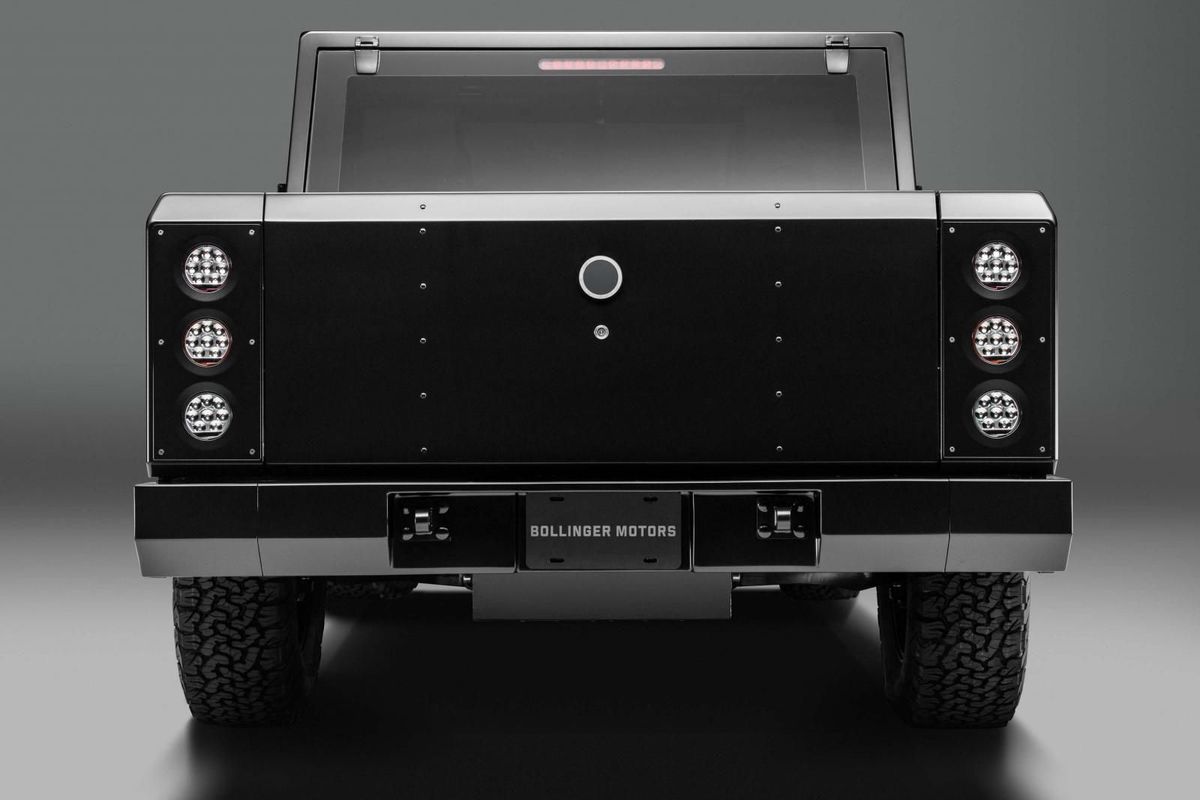
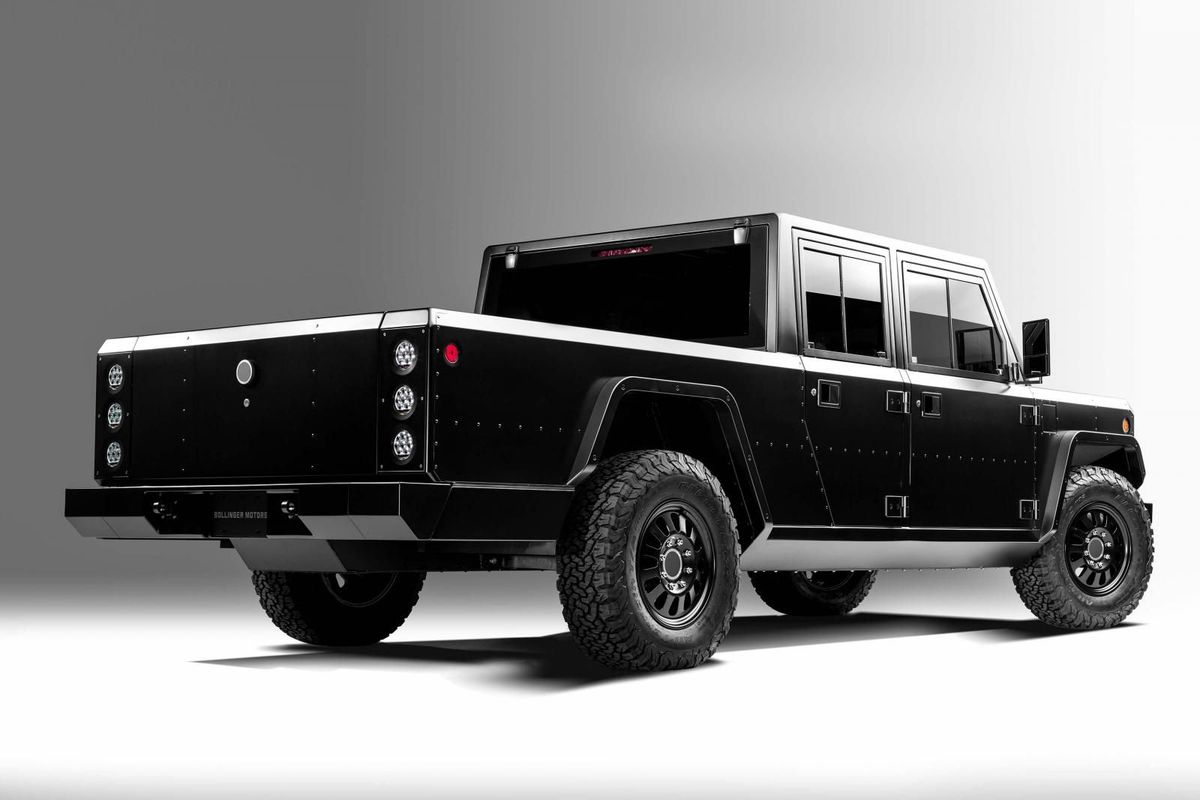
Then there is the alternative: Bollinger, operating from Michigan. It has built a more no-frills electric bakkie. One without airbags, for instance.
The styling of its B2 bakkie is purposefully utilitarian. Aerodynamics are certainly not a primary consideration and Bollinger might be correct in that assumption as these bakkies are set to be marketed as a workhorse and off-road exploration vehicles, not high-speed autobahn cruisers. With an overall design aesthetic that could best be described as ‘charming’, the B2 features some clever industrial engineering details. The bodywork and platform are mostly aluminium, which means it is light and somewhat compensates for the presence of those heavy battery packs.
Powering the B2 bakkie is a huge 120 kWh battery pack, good for 452 kW and 906 Nm. Those outputs are superior to the original prototype bakkies, which featured a 100 kWh battery and had only 230 kW. These Bollinger bakkies are all-wheel drive, with an electric motor driving each axle, and despite a kerb mass of beyond 2 000kg, performance is deeply impressive.
Bollinger has limited top speed to 160 kph, to conserve battery range and not burden the vehicle’s unsophisticated aerodynamic profile, but it will run 0-100kph in 4.5 seconds. Designed to offer tremendous off-road ability, the B2 can be configured with up to 500 mm of ground clearance, double that of most diesel-powered double-cab bakkies, and it has electronically locking differential at both axles.
Despite the huge torque reserves (906 Nm), Bollinger has given its B2 a two-speed gearbox, which differentiates it from most electric vehicles, which only have a single gear. This two-speed design allows for low-range gearing which should make the B2 truly unstoppable off-road. Payload capacity is a massive 2.4t but towing capability is a disappointing 3.4t, which is less than Ford’s new Ranger. Why can’t it tow more, if it has 906Nm? The suspicion is that Bollinger’s aluminium frame isn’t quite rated for the tensile pull strength of going beyond 3.4t of trailered weight.
Bollinger has committed to deliver its B2 double-cab battery bakkie to market by 2021.
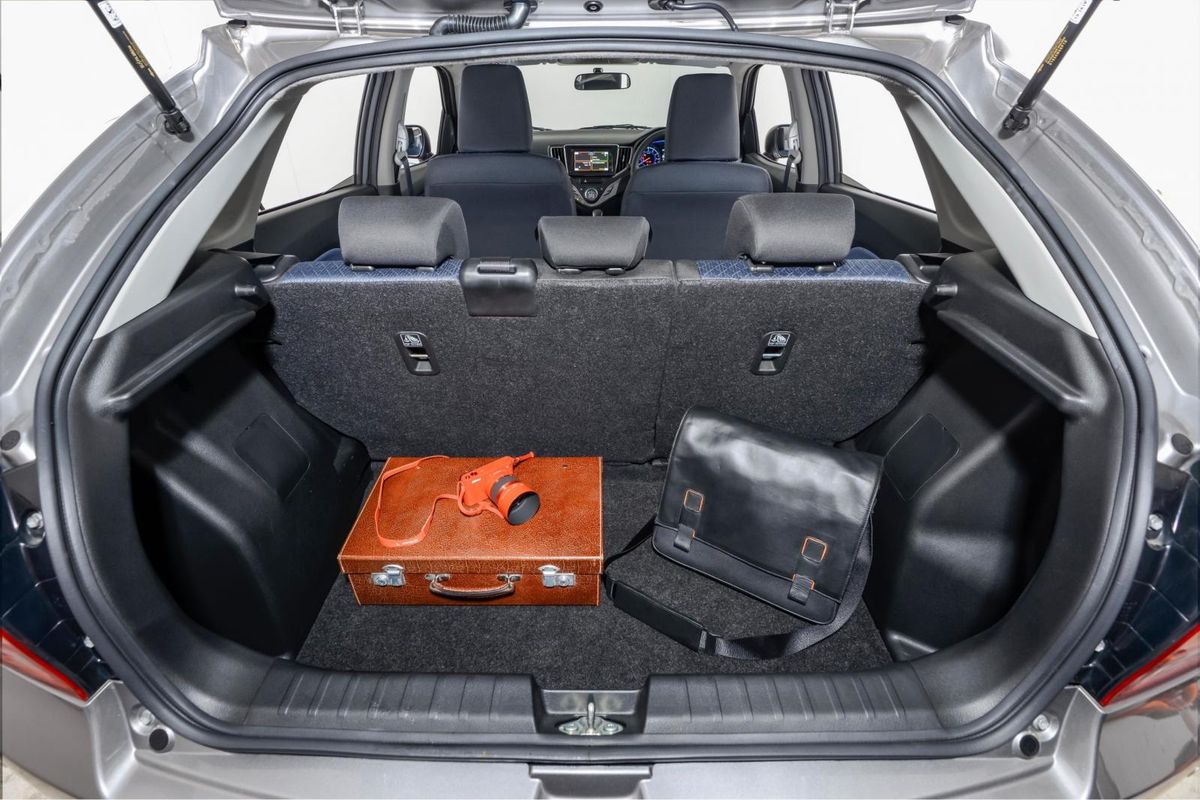
The Suzuki Baleno hatchback has been updated and is now available in South Africa. See details below…
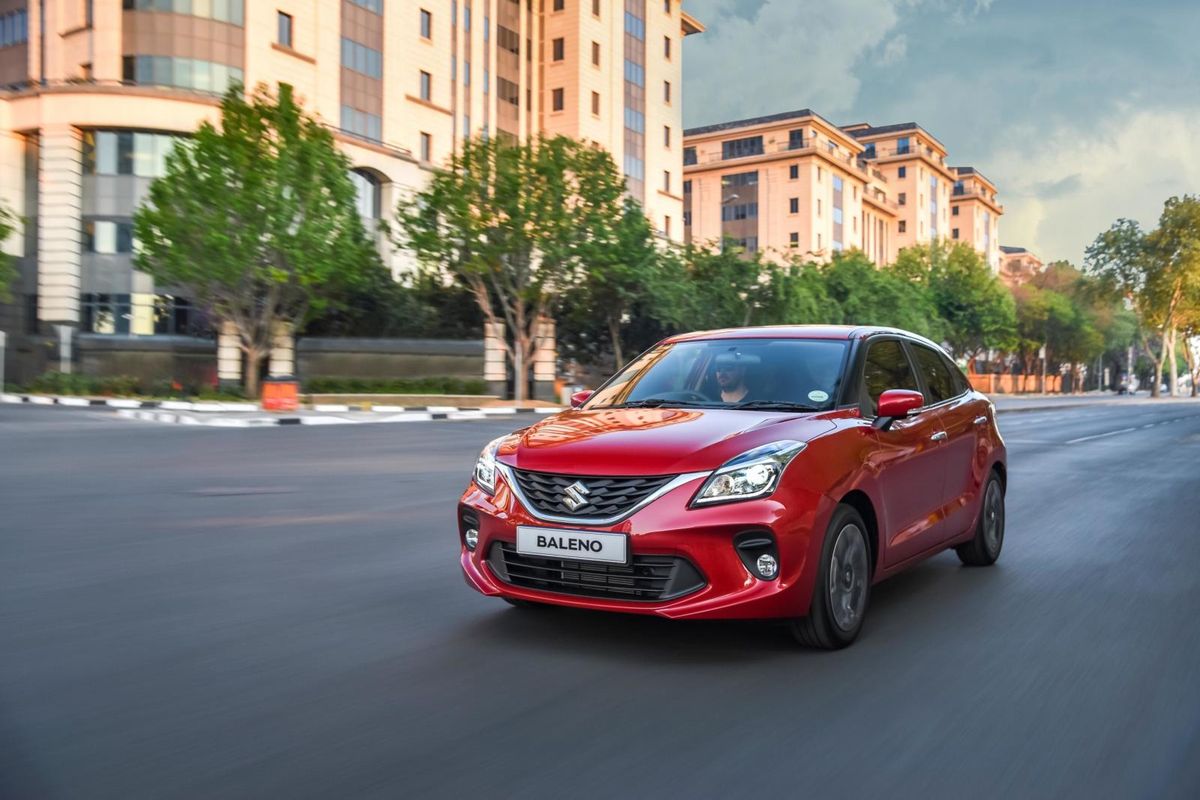
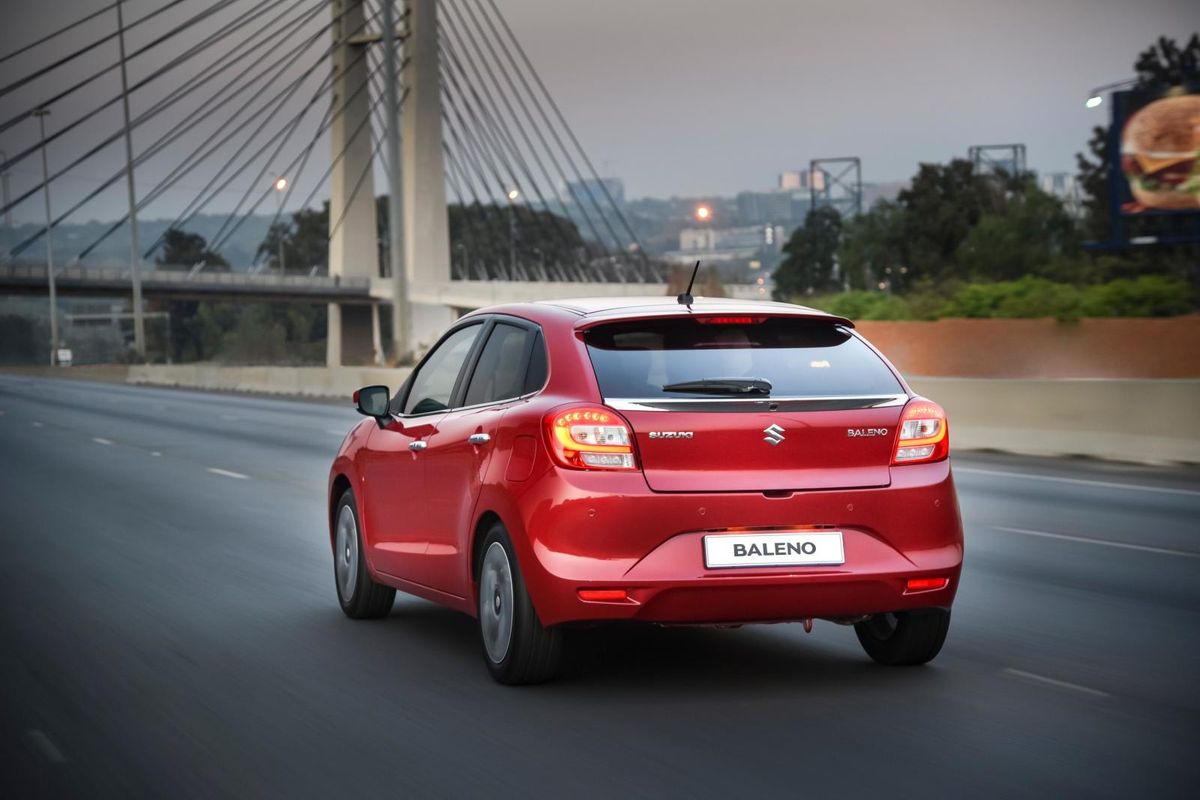
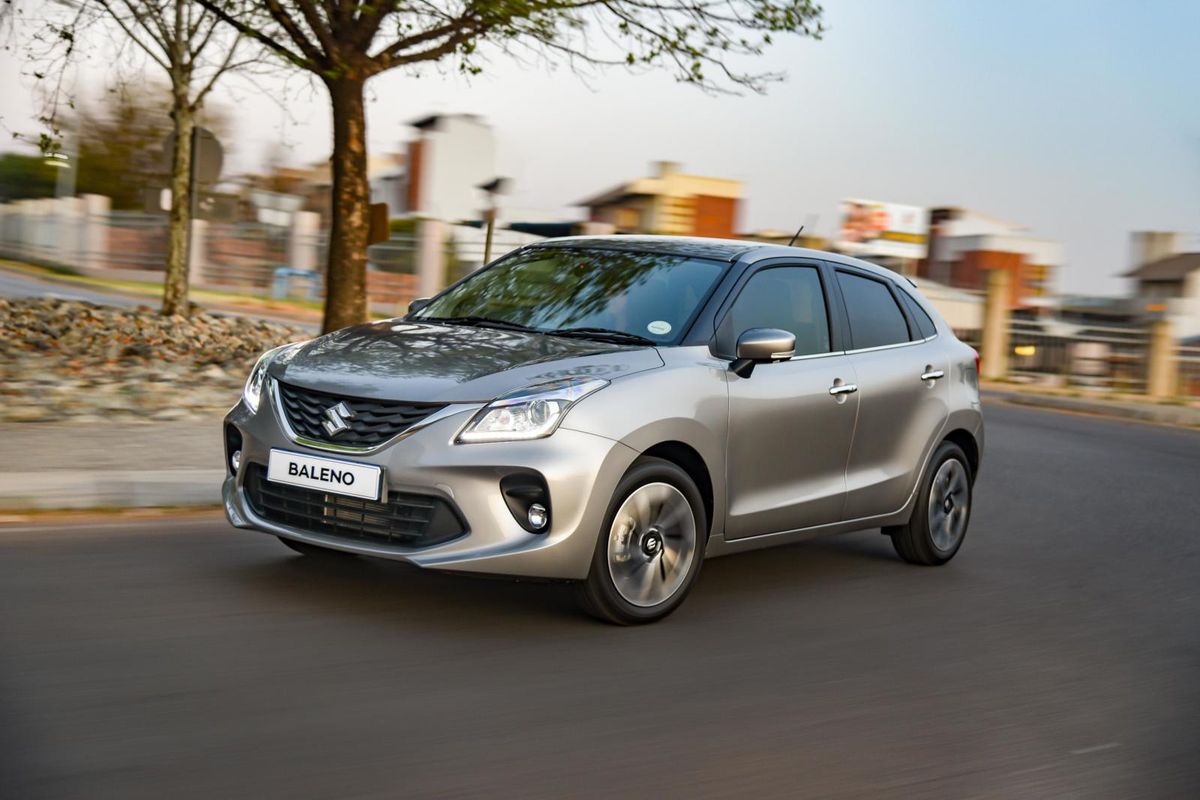
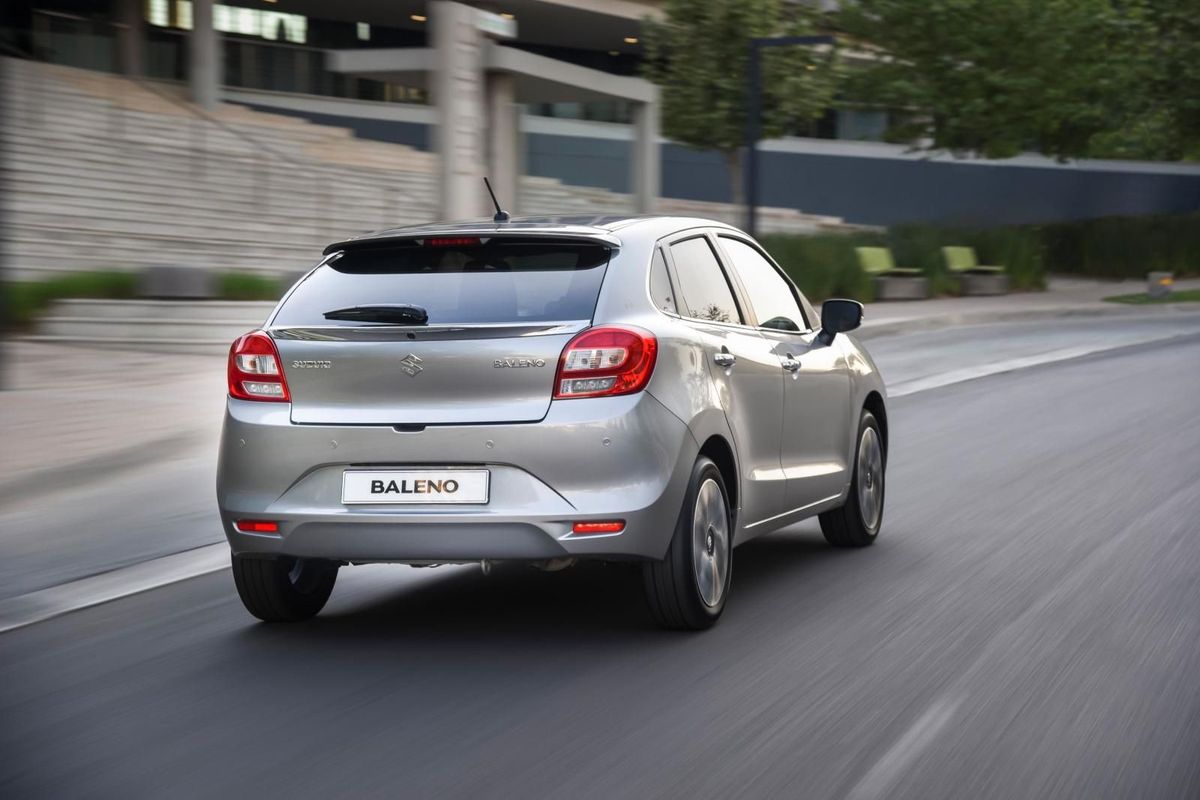
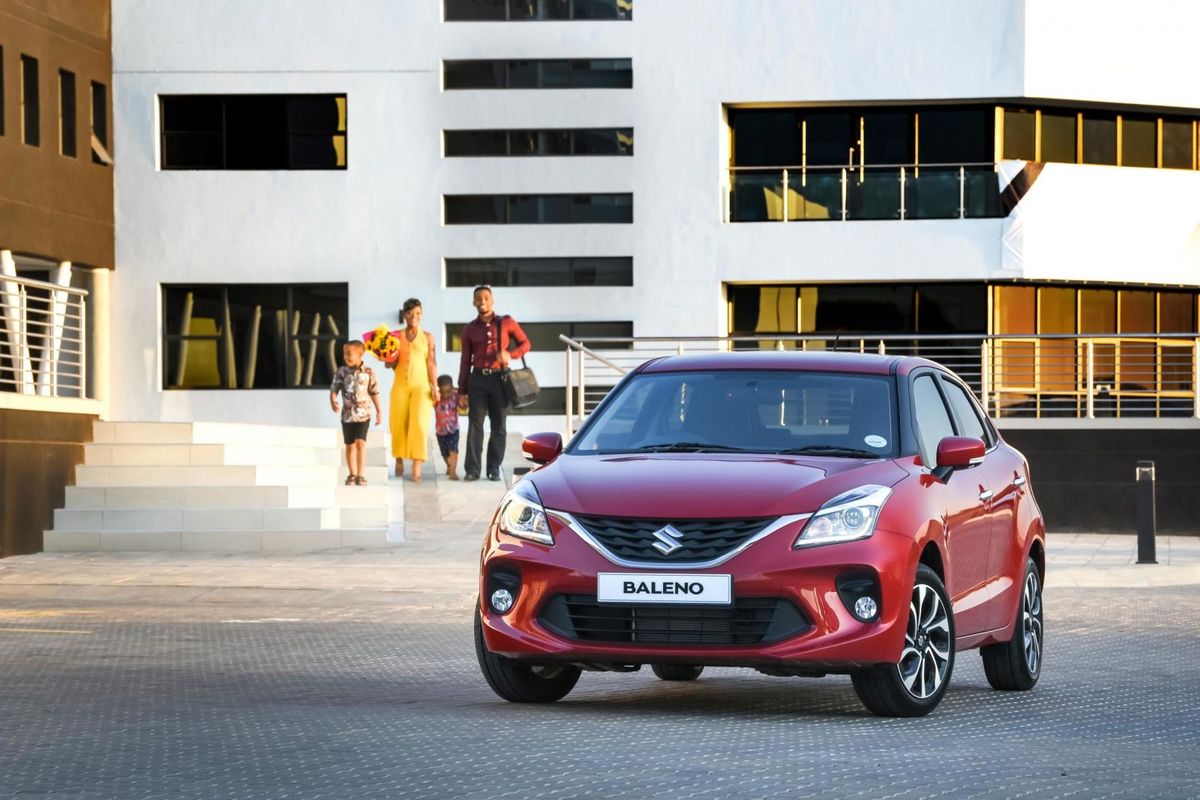
A new-look Suzuki Baleno is now on offer at your nearest Suzuki dealership with a new range of colours, upgraded trim and upholstery and improved standard specification for GL and GLX derivatives.
Styling Changes
In terms of styling, the grille has been revised with a wider, 3D chrome strip while the grille itself look more aggressive. The chrome strip now runs through headlights, which now feature a new 3D design. On the GLX derivative, LED headlights replace the high-impact discharge (HID) headlights. A new colour, Magma Grey metallic, is also available.
The lower bumper has been revised with a hexagonal centre air intake and fog lamps are found on the GLX derivative. The Baleno GLX also rides on diamond-cut alloy wheels and features chrome door handles as well as a chrome beltline and chrome trim on the tailgate. A tailgate-mounted rear spoiler and privacy glass is fitted.
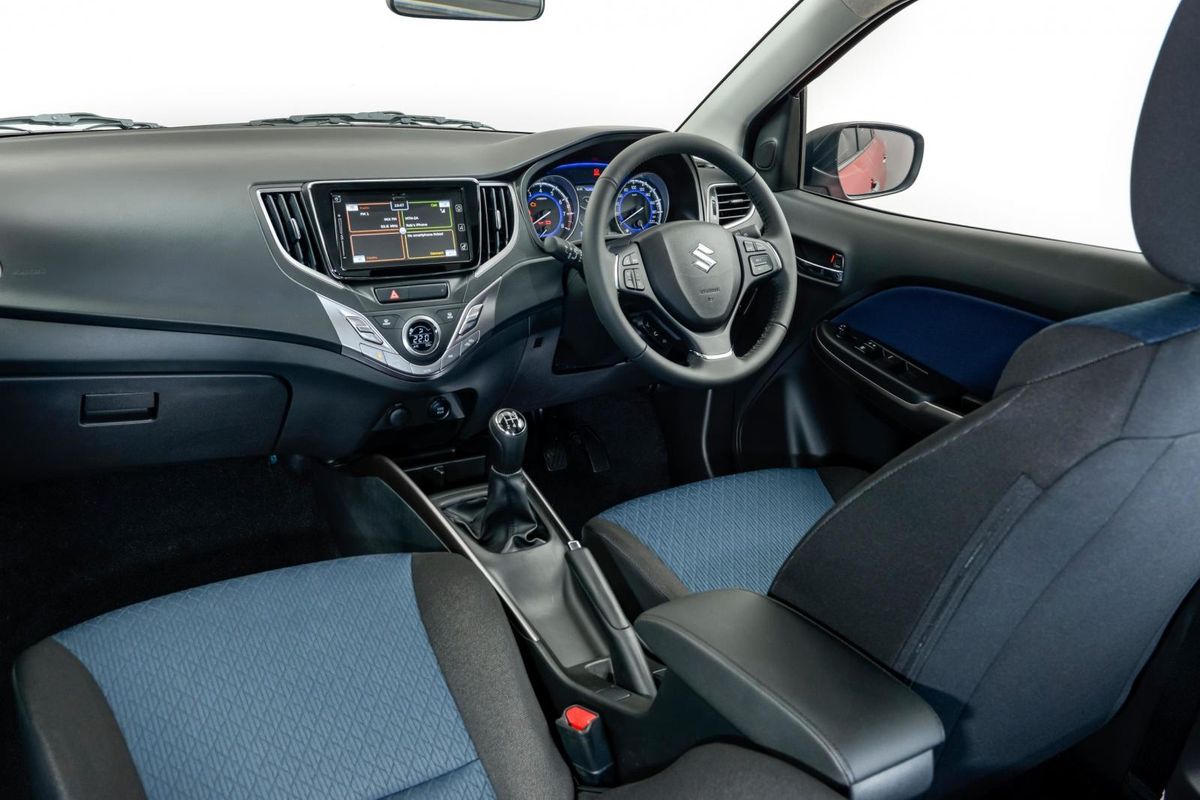
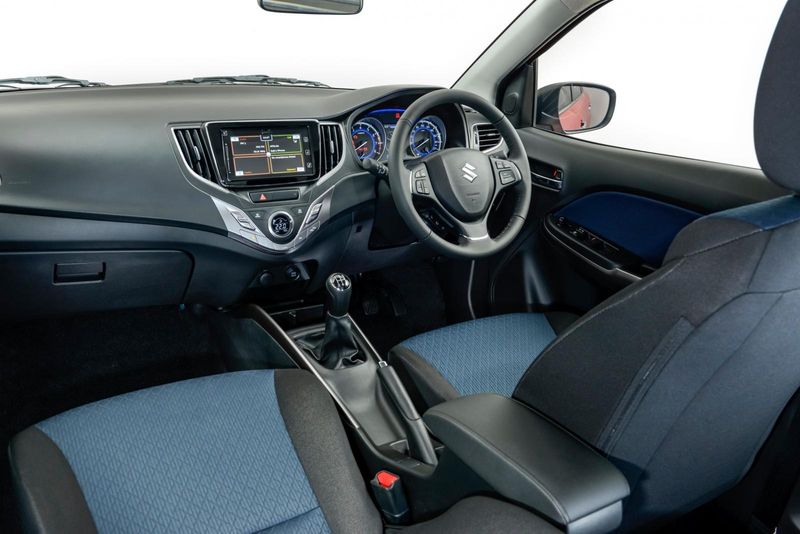
Inside, the Baleno features a new two-tone colour upholstery treatment and the door trim is new too. New centre sections are found on the seats in deep-blue cloth which is mirrored on the door panels. There’s also new brushed aluminium trim across the dashboard and on the air conditioning vents, steering wheel and instrument cluster.
Standard Features
Suzuki has taken the opportunity to refine the Baleno's interior. Note the new infotainment system.
The Baleno GL is equipped with features such as air conditioning, power steering, electric windows (front and rear), a radio with Bluetooth, MP3 playback, USB socket and CD player and steering-mounted audio controls. Keyless access, a 12V socket (front and rear), height-adjustable driver seat and a luggage light is also fitted.
The Baleno GLX gains extra features such as cruise control, fully automatic climate control, keyless entry with a push button start, leather trim on the steering wheel, rear park distance control with camera and a front armrest.
The GLX also benefits from a new infotainment system which integrates the reverse camera and offers Android Auto and Apple CarPlaydisplayedd on a 7-inch, full colour touch screen.
Standard safety features on the Baleno GL includes 2 airbags, ABS with EBD and brake assist. The Baleno GLX has 6 airbags.
Engine Power
In terms of engine firepower, the Baleno retains its naturally-aspirated 1.4-litre petrol engine with 68 kW and 130 Nm of torque. Both the GL and GLX can be had with a 5-speed manual transmission while a 4-speed automatic transmission is also offered for the GLX derivative.
In manual guise, Suzuki claims 5.1 L/100km while the automatic Baleno is said to consume an average of 5.4 L/100km.
Suzuki Baleno – Price in South Africa
Baleno 1.4 GL M/T – R209 900
Baleno 1.4 GLX MT – R239 900
Baleno 1.4 GLX MT SLDA – R244 900
Baleno 1.4 GLX AT – R254 900
Baleno 1.4 GLX AT SLDA – R259 900
The Baleno is sold with a 5-year/200 000 km promotional warranty and a 4-year/60 000 km service plan.
Are you looking for a new Toyota Hiace Ses'fikile to kickstart your taxi business? Take a look at specs and pricing for the Toyota Hiace Ses'fikile below…
The locally-manufactured Toyota Hiace Ses'fikile is hugely popular in South Africa and it to a large extent forms the backbone of South Africa’s transport system. These people movers transport millions of South Africans to and from work every single day in all major city centres across the country.
Built at Toyota’s Prospecton plant in Durban, the Hiace Ses'fikile is a big money-spinner for Toyota locally. For context, in August 2019, a total of 1 578 Hiace Ses'fikile units were sold, which is more than most passenger cars sold in the country. The Hiace Ses'fikile remains the entry point to Toyota’s minibus taxi range while the new, recently-introduced Quantum is considered to be the more ‘upmarket’ people-moving solution.
Engine Power
There are 2 Hiace Ses'fikile derivatives on offer, both offering seating for 16 passengers. There are 2 engine options available.
The first is a naturally-aspirated 2.7-litre petrol engine with 111 kW and 241 Nm and mated with a 5-speed manual transmission. Fuel consumption is claimed at 14.3 L/100km.
The diesel option is a 2.5-litre turbodiesel engine with 75 kW and 260 Nm of torque which is mated with a 5-speed manual transmission. Toyota claims a fuel consumption figure of 9.9 l/100km.
Toyota Hiace Ses'fikile – Price in South Africa
Hiace Ses'fikile 2.7 Petrol – R426 300
Hiace Ses'fikile 2.5 D-4D – R451 600
The Hiace Ses'fikile is sold with a 3-year/100 000 km warranty and a 6 Services/60 000 km service plan.
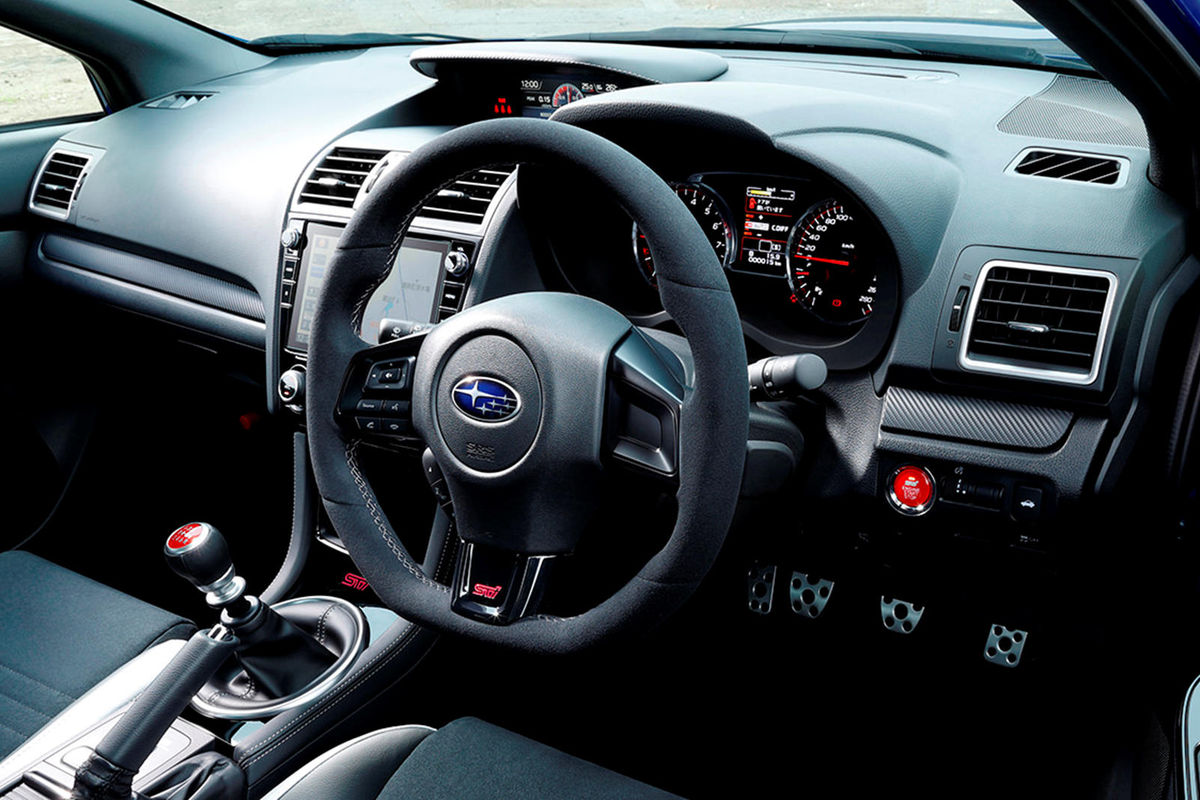
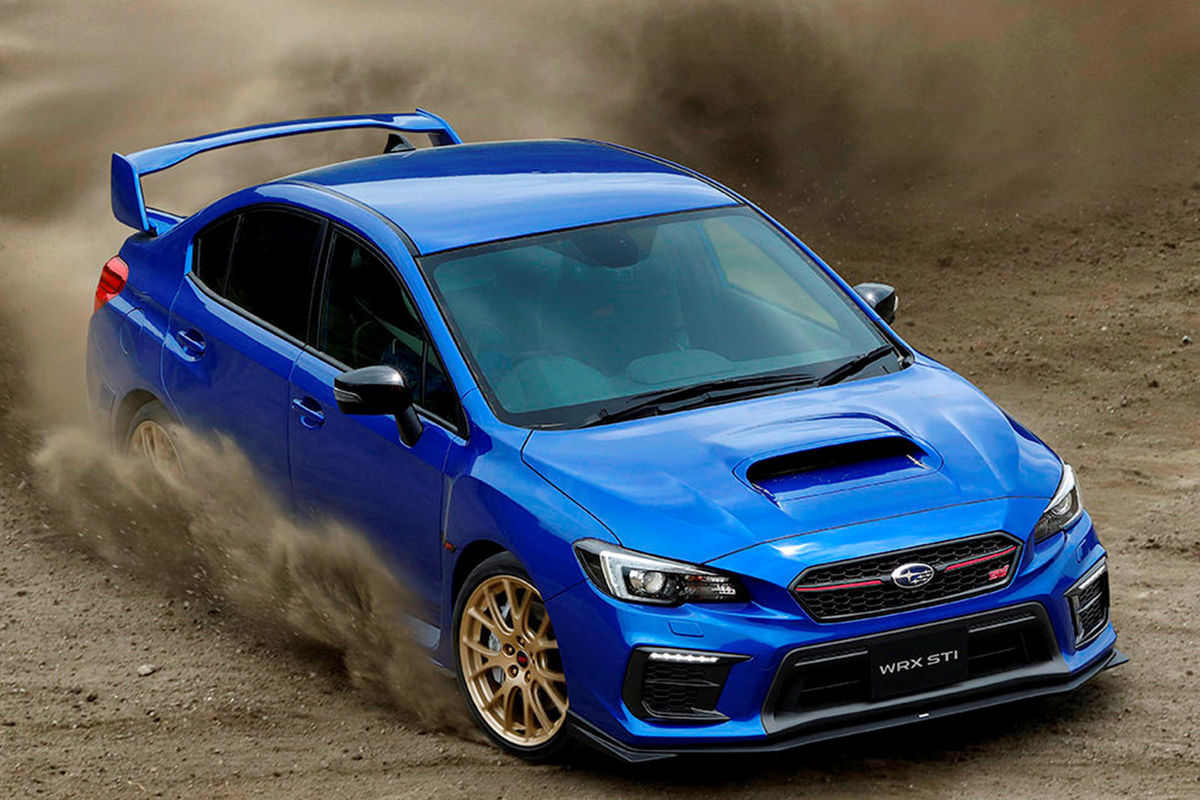
Subaru is paying homage to three decades of its most renowned engine, with a special edition of the Impreza WRX STI.
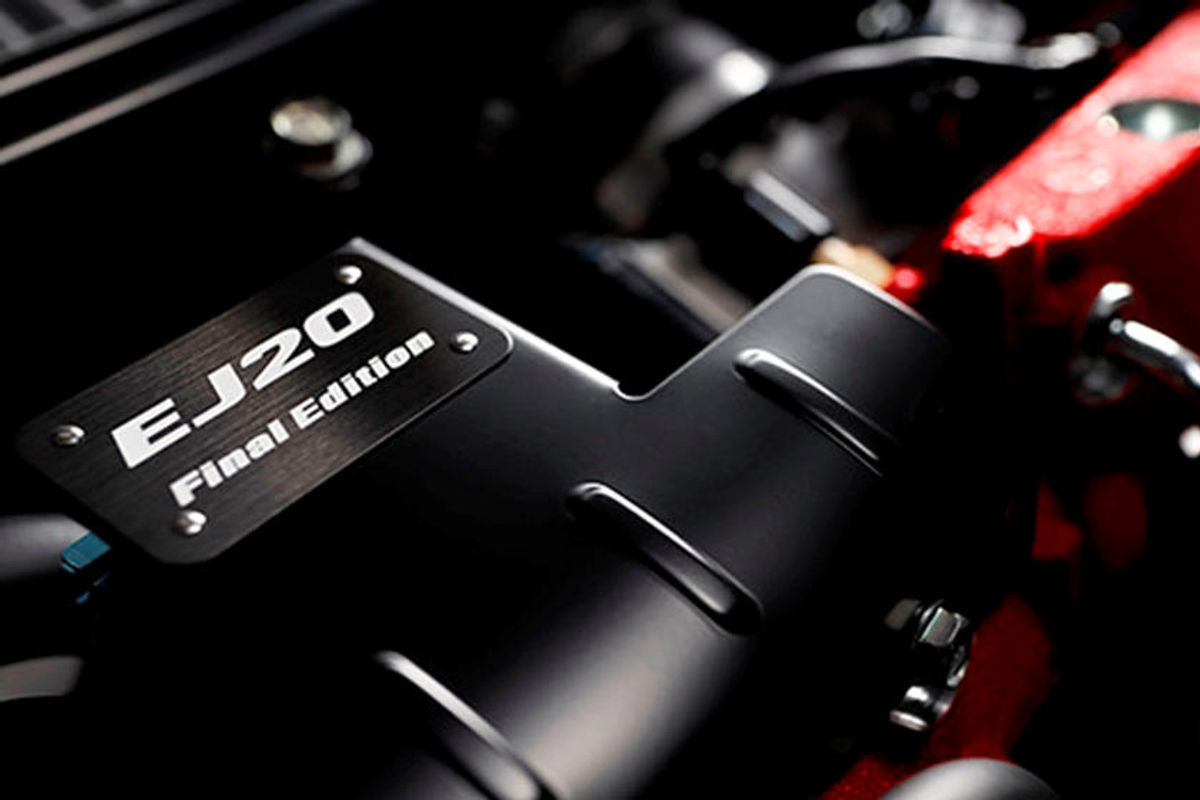
The new release is named EJ20 Final Edition and if you know Subaru’s technical codes off by heart, that naming convention will make a lot of sense.
Since 1989, the EJ20 boxer engine architecture has been the basis for most of Subaru's performance cars. This engine brought the brand great cachet and in Japan, followers of Subaru remain fanatically committed to it.
Although the EJ20 design has aged, Subaru wishes to give it the best possible going away party, in the guise of this new EJ20 Final Edition, which debuts at the Tokyo auto show, during the last week of October 2019.
Design elements which have been applied to the EJ20 Final Edition include gold BBS alloys wheels and pink grille surround edging. Subaru isn’t confirming the power outputs for its EJ20 Final Edition, yet, as these will only become official closer to the Tokyo auto show. The most potent version of its current EJ20 engine, boosts 242 kW and 432 Nm, so those figures would establish a baseline target for the EJ20 Final Edition engine’s statistics.
The EJ20 Final Edition will be a very limited build project for Subaru and as is the case with many of the brand’s most desirable vehicles, it will only be available for customers in the home market of Japan.
Following on from our March report regarding Project Genadier (a remake of the Defender), our UK contributor Wayne Gorrett met with senior executives from Ineos Automotive in London last week and filed this update exclusively for CARS.co.za
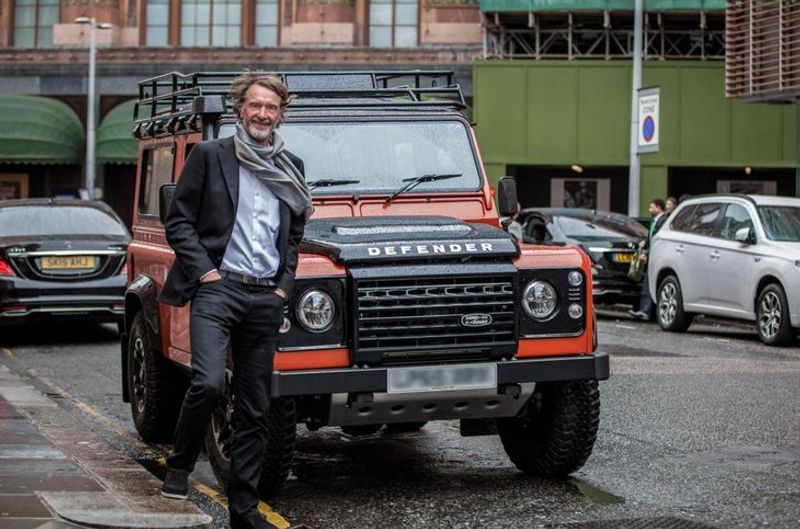
It started with an informal chat over a beer or three in a pub called ‘The Grenadier’, located in the ultra-posh London neighbourhood of Belgravia. It was the spring of 2016, just a few weeks after the last Land Rover Defender rolled off the production line after 67 years in production.
The concept of a utilitarian, Brit-built 4×4 was just an idea back then, but two and a half years on, the prospect of an Ineos Automotive Grenadier 4×4 just became very real. The factory is already under construction and prototypes are being tested in Austria.
The age-old story of a pub meet up that turns into an automotive venture.
The car will be revealed around this time next year, with production and sales scheduled for early 2021. Already, there is talk of the second-generation hydrogen fuel cell version – which is handy for Ineos Chemicals UK, as it produces hydrogen on an industrial scale.
‘Project Grenadier’ is the brainchild of self-made UK billionaire Sir Jim Ratcliffe – owner of Ineos Chemicals and its offshoot Ineos Automotive. Sir Jim saw a chasm emerge in the market after the demise of the Land Rover Defender. His vision was to design and build a rugged, no-nonsense 4×4 as a tool for farmers, foresters, utility companies and aid agencies, not a statement of seasonal fashion.
I met with Sir Jim’s senior executive team to get some answers to further questions on the project…
Where will the Ineos Grenadier be built?
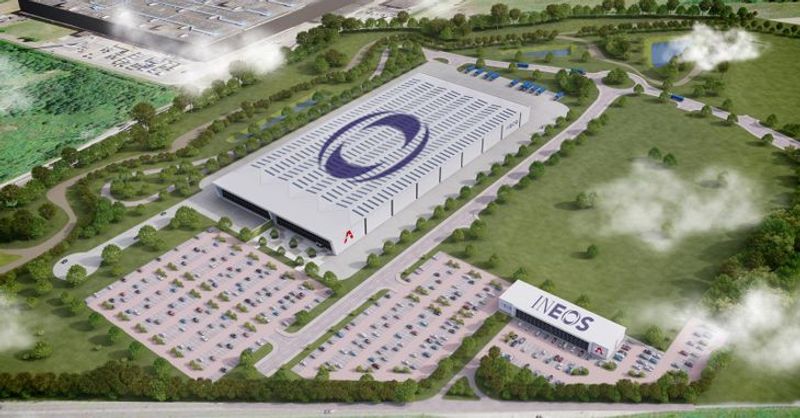
The vehicle will be manufactured at an all-new, purpose-built factory currently under construction in Bridgend – the southern Welsh town recently T-boned by Ford’s announcement that it’s closing its engine plant there (in an ironic twist, the building in the top left-hand corner of the architect’s aerial perspective is the very same building).
Ineos Automotive is building its factory opposite the recently shut down Ford assembly plant.
The Welsh government has helped Ineos Automotive acquire the site and will assist with staff training – expected to be up to 500, eventually – as well as making a financial contribution to the project – the amount of which was not revealed.
Commercial director Mark Tennant went on to explain: “Infrastructure development is already underway, we have broken ground in Bridgend and there are lots of diggers running around.” He suggested that within four years, the facility could be producing as many as 18 000 Grenadiers a year.
Although final assembly will be done at Bridgend, the engines and transmissions will be shipped in from Germany and body panels and other parts will arrive pre-painted from a new plant being developed in parallel in Estarreja, just south-west of Porto in Portugal.
“It’s very much a pan-European supply base for the project,” said Tennant.
What more can you tell us about the 4×4?
Tennent explained that the Grenadier will be an “uncompromising 4×4 with a ladder chassis, beam axles and locking differentials.” It would initially be in station wagon guise, but other bodies would follow, starting with a twin-cab pick-up. “Aftermarket specialists would be encouraged to come up with their own configurations and accessories. There will be long and short wheelbases.”
Tennant added: “We are essentially dropping the ‘S’ from ‘SUV’. The Grenadier will be a utility vehicle, a working tool. It may be a more lifestyle fit in the SA, where it might be used at the weekend as well as in the working week, towing a horsebox or a jet ski.
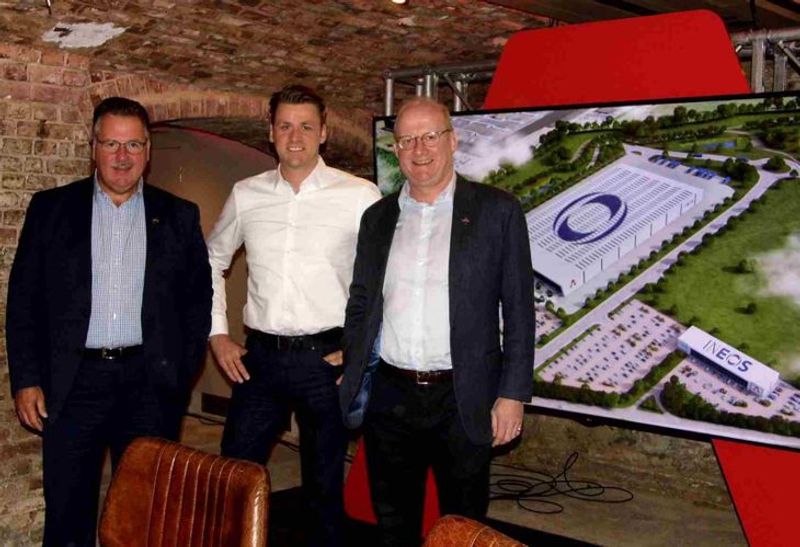
The management team behind the reborn Defender project.
Expect dimensions of the Grenadier to be roughly the same as the old Defender, with short overhangs and sharp approach and departure angles. It will be narrower than the current BMW X5, and low enough to fit into a typical garage.
It was confirmed that due to a worthwhile number of enquiries received from South Africa and the region, Ineos Automotive is currently in talks with two potential importers.
What final decisions have been made about engines and transmissions?
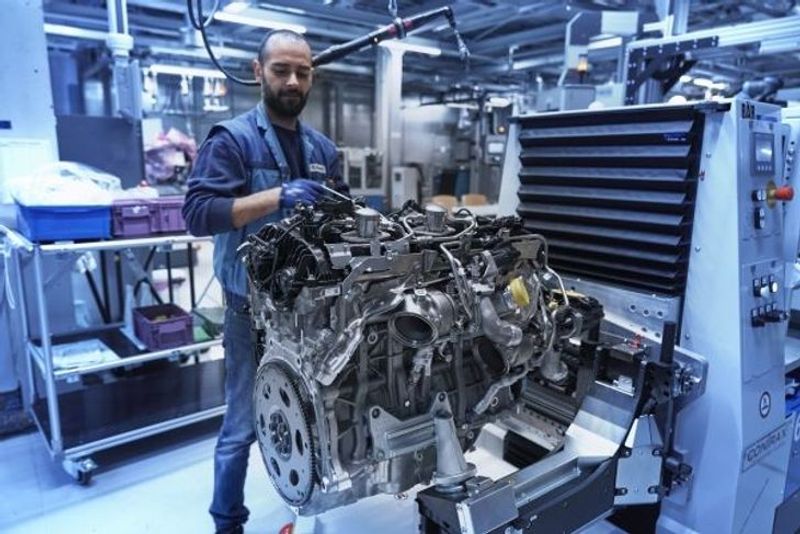
All models will house diesel or petrol versions of BMW’s latest-spec 3.0-litre straight-six engine, driving through an automatic gearbox – likely to be an eight-speed ZF or Aisin unit, but CEO Dirk Heilmann would not be drawn on which, nor whether a manual option will be offered – although that does now seem unlikely.
Brand new 6-cylinder BMW engines will power the Grenadier.
The suspension will be a non-independent arrangement with coil-sprung live axles front and rear, a new system specially designed by Ineos Automotive engineers with extreme durability in mind.
The adoption of such a simple suspension configuration with a tough ladder chassis and a separate body will allow a number of body styles to be offered should the market need arise. Heilmann said he is taking what he calls an ‘open-source approach’ and actively encourage aftermarket suppliers to propose their own special equipment for the Grenadier.
What about greener powertrains?
Ineos Automotive thinks hybrids and plug-in hybrid electric are not in the future of its vehicles.
“It’s not just the weight of the battery pack, but there aren’t many chargers in the Australian outback or on the Serengeti. We’re already beginning to look at hydrogen fuel cells, with Innovate UK help,” said Tennant.
“As a group, we already supply hydrogen to buses, small trucks and the like. We’ve built up a degree of expertise and see it as a good solution for the future.”
How will it look?
Although not likely to look exactly like the old Defender, it will be a utility vehicle first.
Of equal importance for the Grenadier is how it looks. “We’ve got to get that right,” said Tennant. “We’ve contracted specialists in Germany and we are now testing that design on potential customers,” said Tennant.
Tell us more about the interior
”We know we need to keep it as simple as possible, but we also have to be aware of our customers’ expectations. The 21st-century hammer invariably involves plugging something in,” added Tennant.
“We will meet all the regulations of each market we enter. For example, regulations in the states dictate that all new cars sold must have a reversing camera – so, we will factory-fit one on all our vehicles for the USA.
“We will have an abundance of USB sockets and Bluetooth, but we won’t have tech for its own sake. This vehicle needs to be self-reliant in the field and incredibly reliable.”
What affect will the new Land Rover Defender have on the future of the Grenadier?
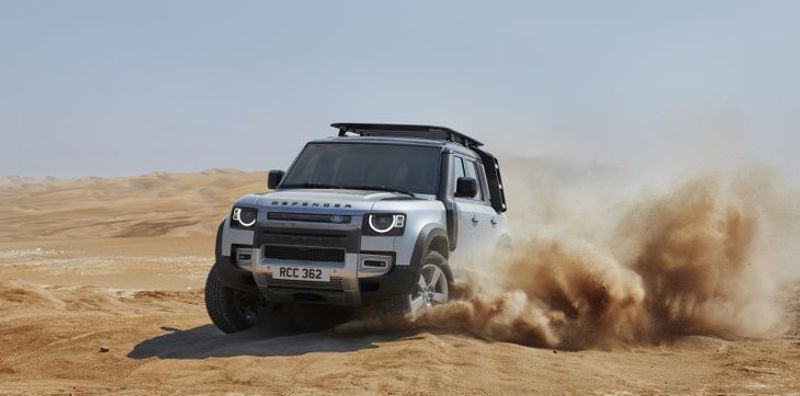
The new Defender has gone a little soft for some hardcore enthusiasts.
The unveiling of the new Defender in Geneva last week confirmed their view that Land Rover has moved out of the pure-utility market.
“It’s a great looking vehicle and we wish them every success, but we don’t see any toe-treading between them,” said Tennant.
How much will the Grenadier cost?
Although prices are expected to undercut its Land Rover rival, the brand has hinted it could target high-spec pick-up trucks such as the Ford Ranger Wildtrak. That’ll give it a price range of around £35,000 – £45,000 (SAR600-700k).
Tennant said: “We can’t get to the price of the old Defender, so it will be above that.”
Dirk Heilmann, Chief Executive Officer of Ineos Automotive, concluded: “We are progressing well with the design and engineering work, as well as our marketing and distribution plans. In the months ahead, we look forward to sharing more information about the Grenadier and engaging with local suppliers, the community and respective regions, in advance of the start of production in 2021.”
There are no “taboos” at BMW M: Markus Flasch speaks out
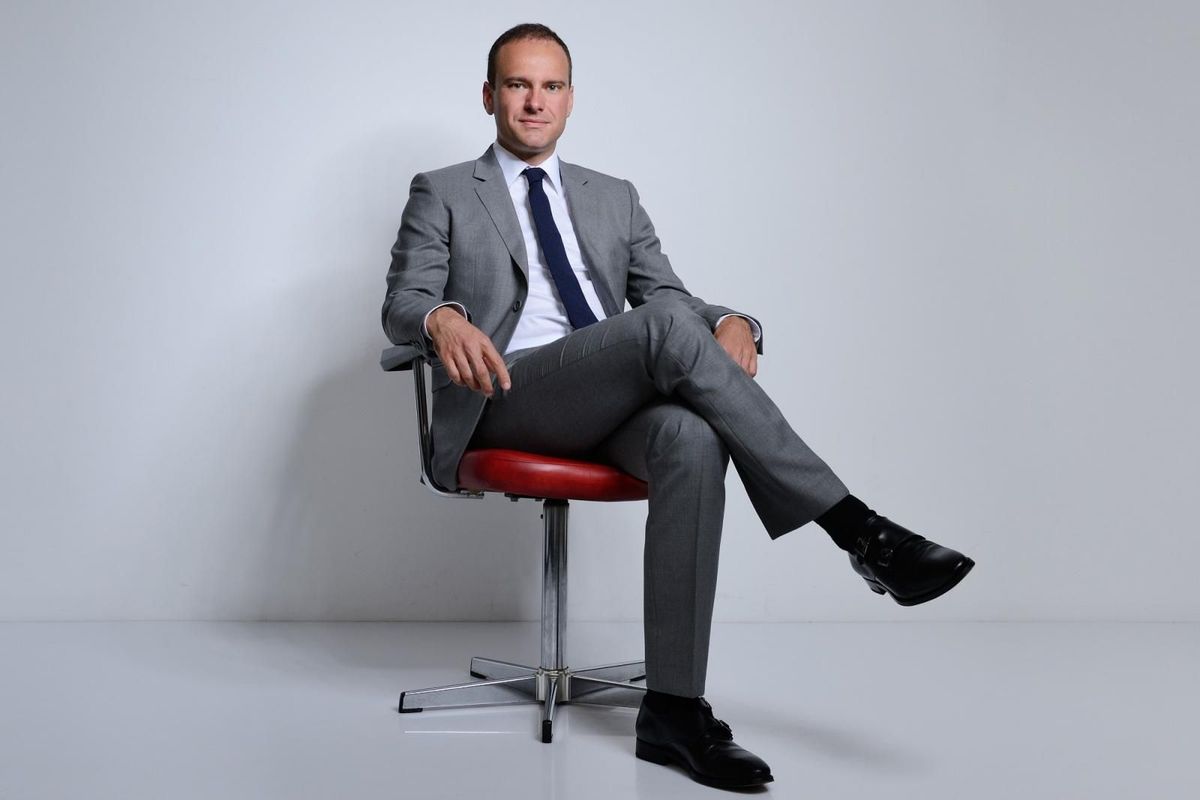
In a rapidly changing world, how does a traditional, petrolheaded-to-the-core brand such as BMW M plan to future-proof itself? We spoke to the Head of BMW’s M division, Markus Flasch at the Frankfurt Motor Show.
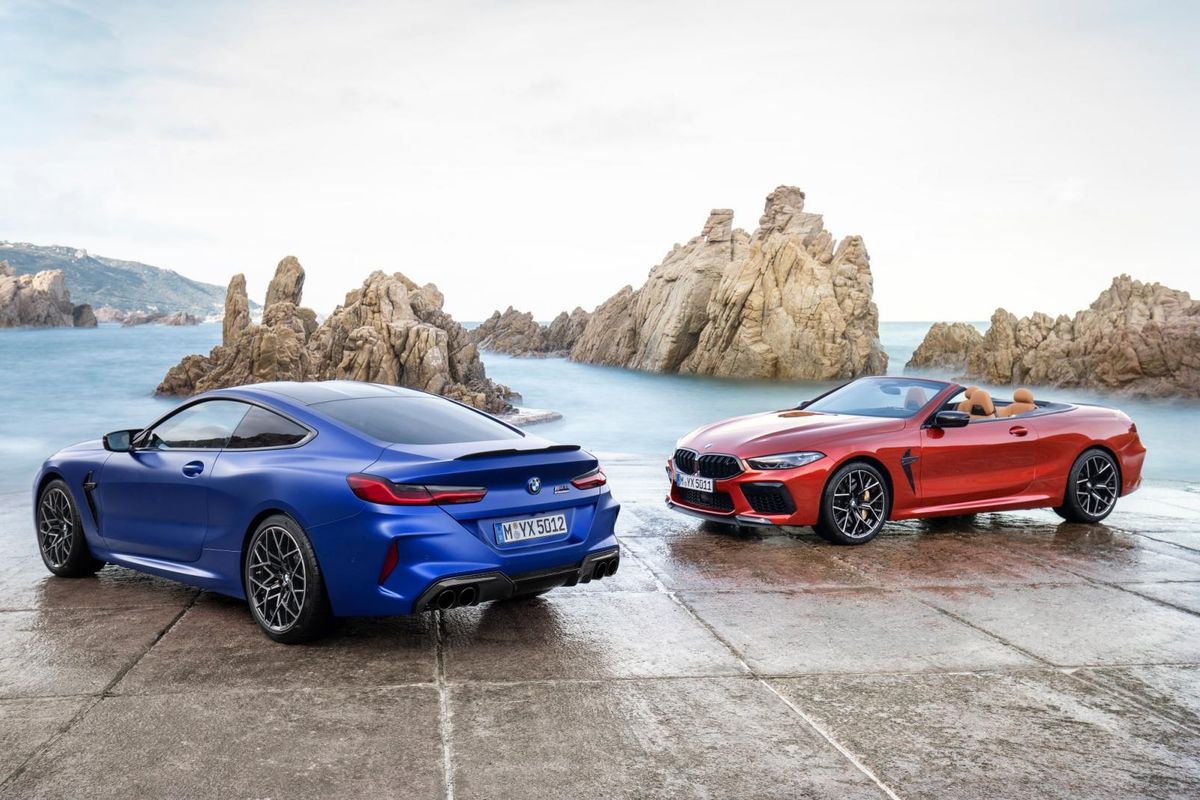
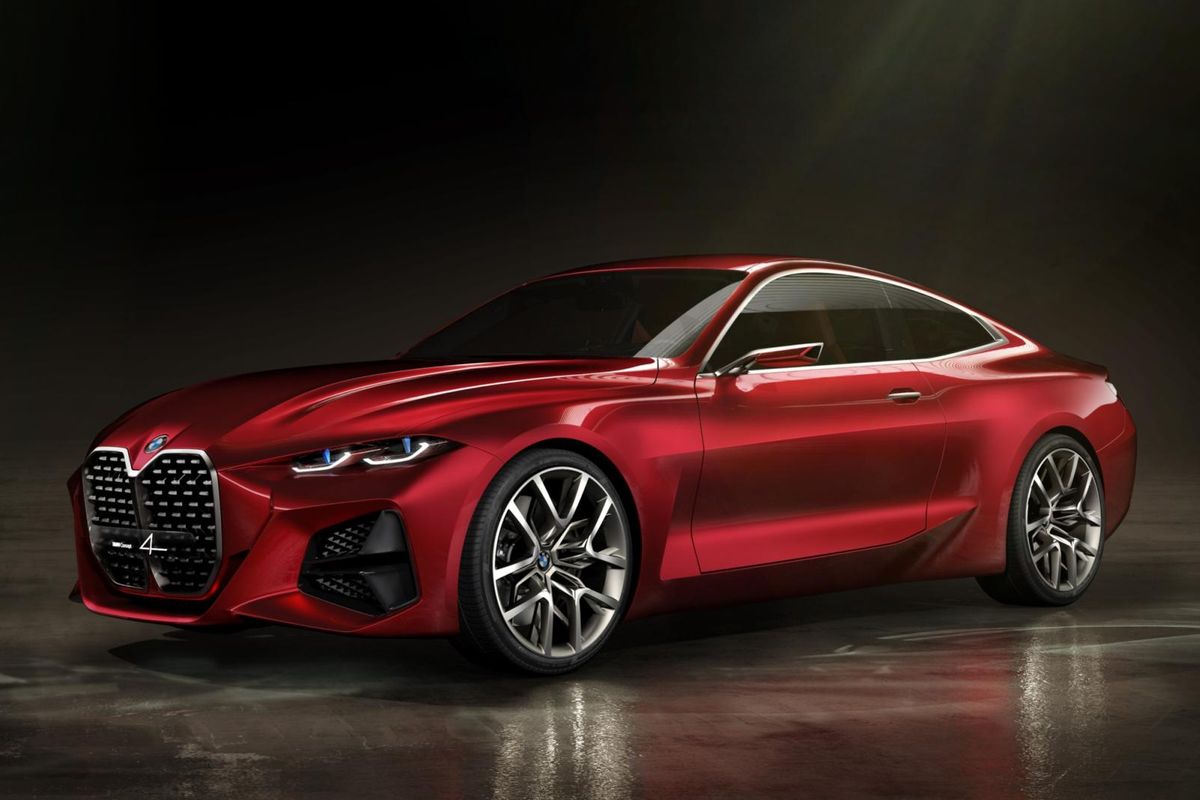
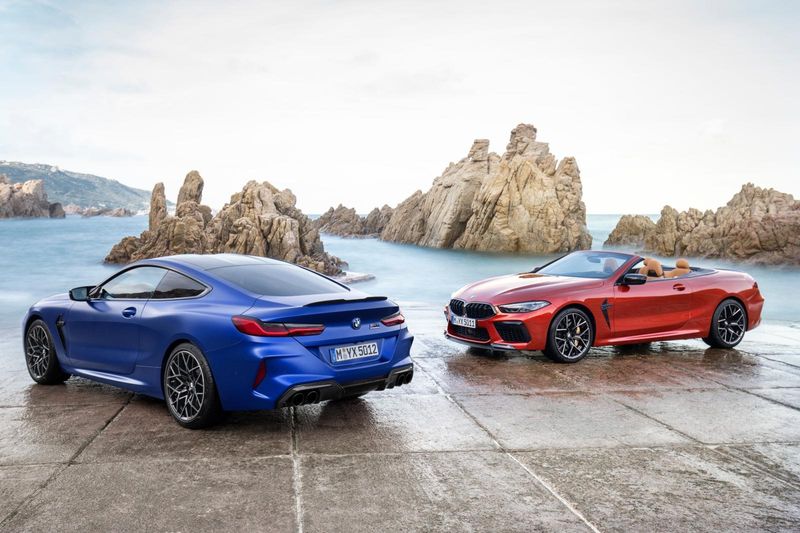
Sitting in BMW’s hospitality area not far from the flashing lights around the controversially “grilled” BMW Concept 4, Markus Flasch, head of BMW M’s division is confident and relaxed, even though he is about to be “grilled” by the media. Flasch moved into the M hot seat last year, but just prior to the shift he was in charge of bringing the 8 Series first-class coupe to the market. He describes the timing of the move into his “dream job” as entirely logical. “Now we have a logical sequence,” he says, “first launching the base car and then being able to put something on top, with the M8.”
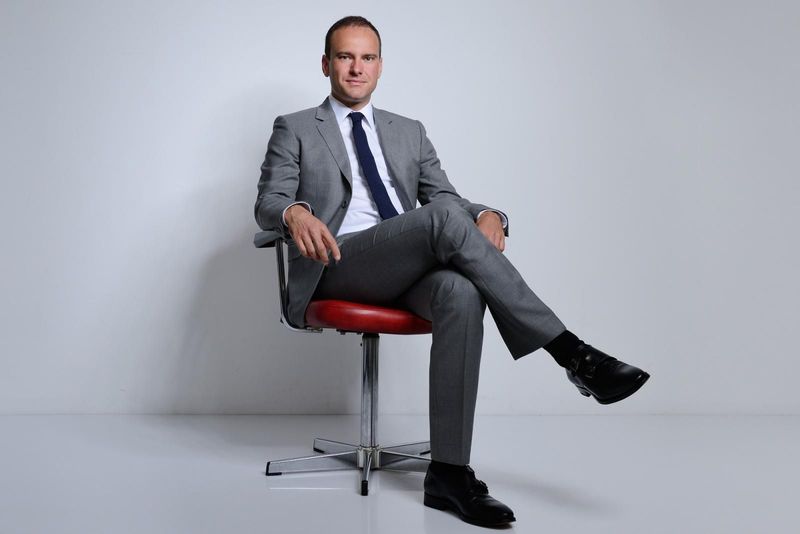
Markus Flasch has been the Head of BMW M since last year, and previously worked on bringing the 8 Series to market.
But what does the future hold for BMW M? After all, as we walked the halls of the Frankfurt Motor Show the themes were clear – electrification, autonomy, connectivity…
“The goal for our team is to keep the character of our cars and to let the heritage that we have as M live on in our future models,” says Flasch. “This heritage that we have as M is something that really sets us apart from our competition. We need to be very careful and keep it this way. Our customers are very loyal and very sensitive to how we treat our heritage, so it’s a dream job, but it’s a huge responsibility. But I love it.”
The M non-negotiables
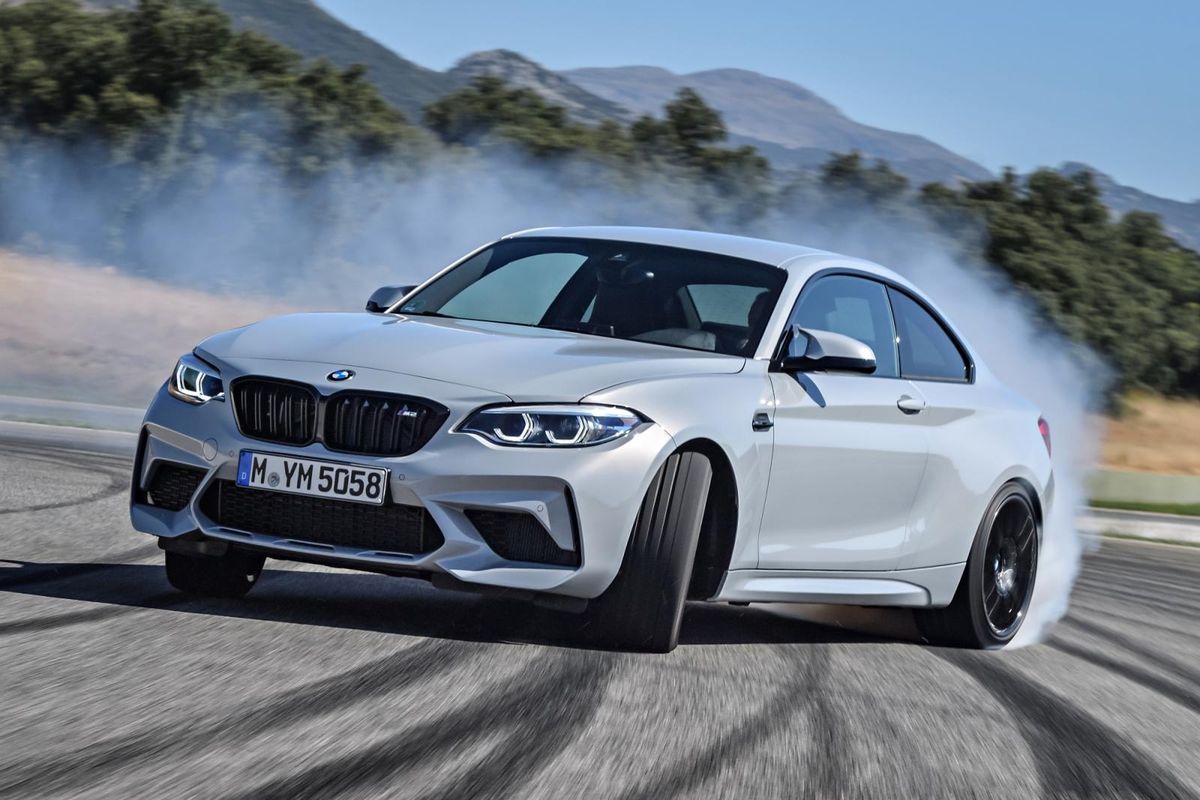
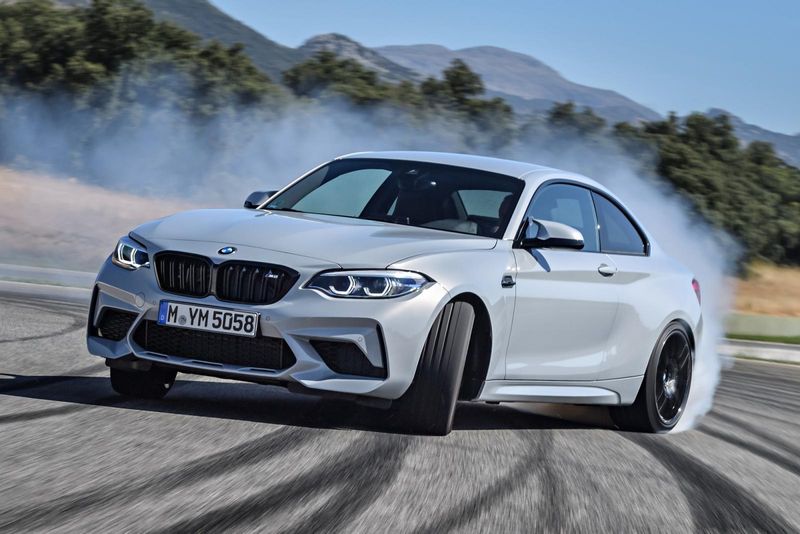
As far as an entry-level 6-cylinder, rear-wheel-drive M car goes, the M2 is probably as small as it’s going to get according to Flasch.
Though the automotive world is shifting rapidly, there are certain things that are simply not negotiable for a BMW M product.
“It would be unacceptable if a new M car doesn’t offer better performance than its predecessor,” Flasch says. “We will never deviate from our heritage and what we’ve always stood for. Outright performance is important, yes, but a high level of performance that is easily accessible on an every-day basis is a classic trait of the M Division’s products, as is handling precision. We will never only focus on longitudinal performance (straight-line), transverse performance is equally important, so our future cars will be as engaging to drive as they are today, if not more so.”
That said, Flasch also makes it clear that nothing is off the table…
Expect special, more hardcore versions of the M8 (and other M cars, not only the M4), in the future.
“There are no taboos. M will be electrified… we are already working on this. And as our CEO said this morning, we will have a diverse offering. We will have SUVs, we will electrify, but we will also offer more classical and special-edition models, like the GTS, but not just for the M4.”
And what about an M car that is entirely an M product and not based on an existing BMW? “This is possible. I’d even say it’s likely,” he says.
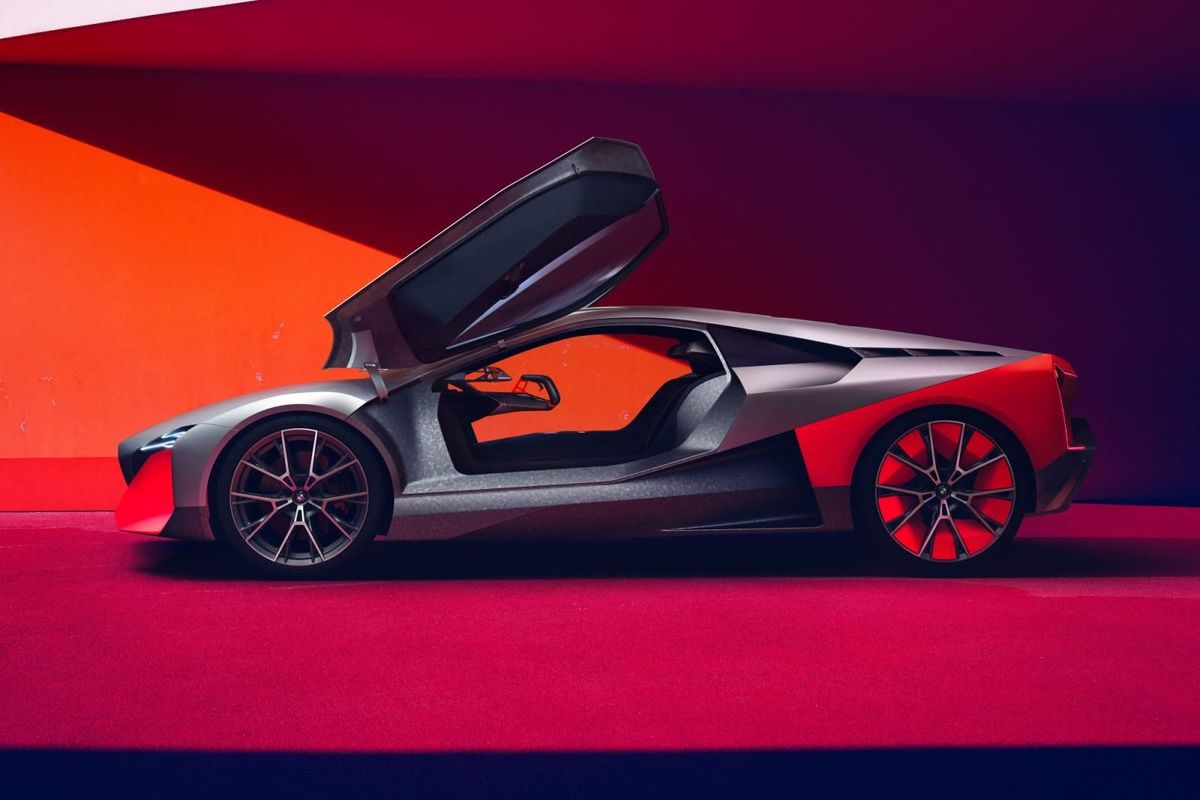
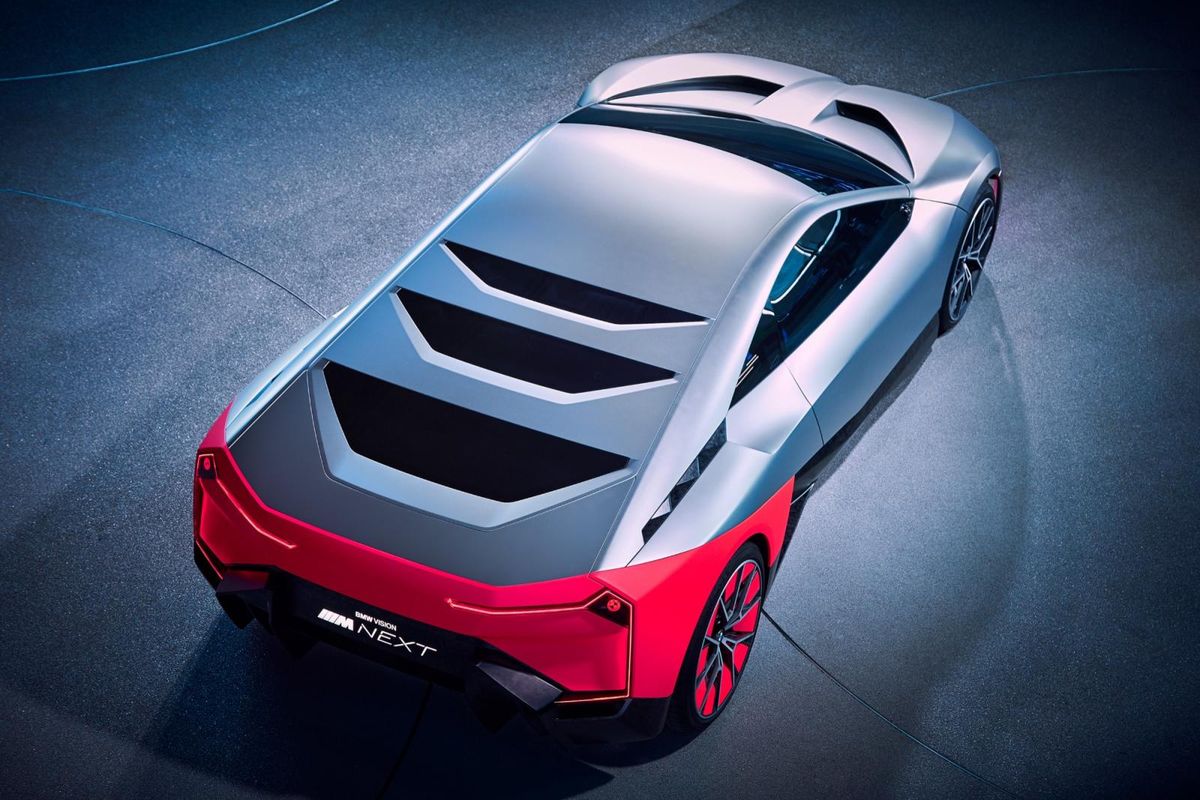
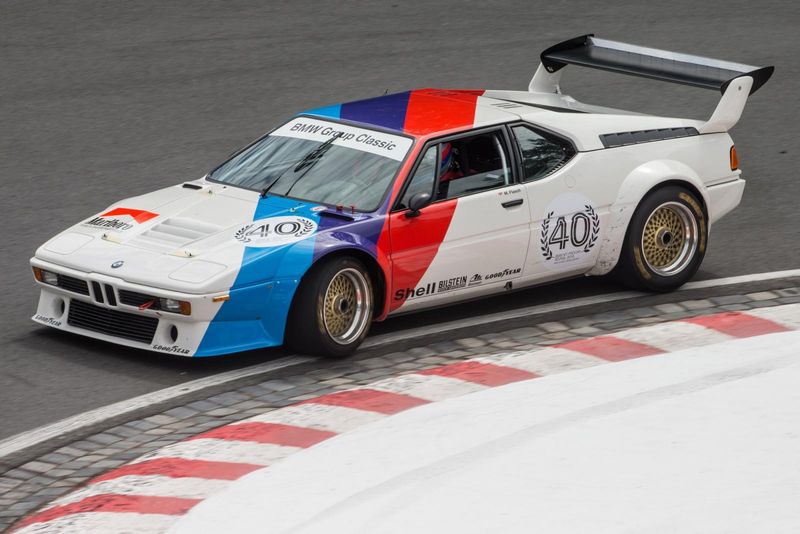
It is widely believed the BMW M Vision Next concept provides an indication of what this standalone M model will look like. When asked which M car he thinks was the most special, he’s quick to name the M1 Procar, and the M Vision Next is very much a modern take on the M1’s shape…
On electrification
“We will never shift to a new technology just because it is fashionable,” explains Flasch. “In our team of 800 people, most are car lovers and some of them even compete in motorsport. To motivate them to do something, just because everyone else is doing it… that would be difficult.
“But if I were to give them the challenge to develop our future drivetrains and they have to come up with ways to increase performance in the M way at the same time, then they are very open to it. It’s just intrinsic to the team. The M team is not against electrification. I’ve always said… we don’t have to be first, but we have to be the best.”
But back to the importance of heritage
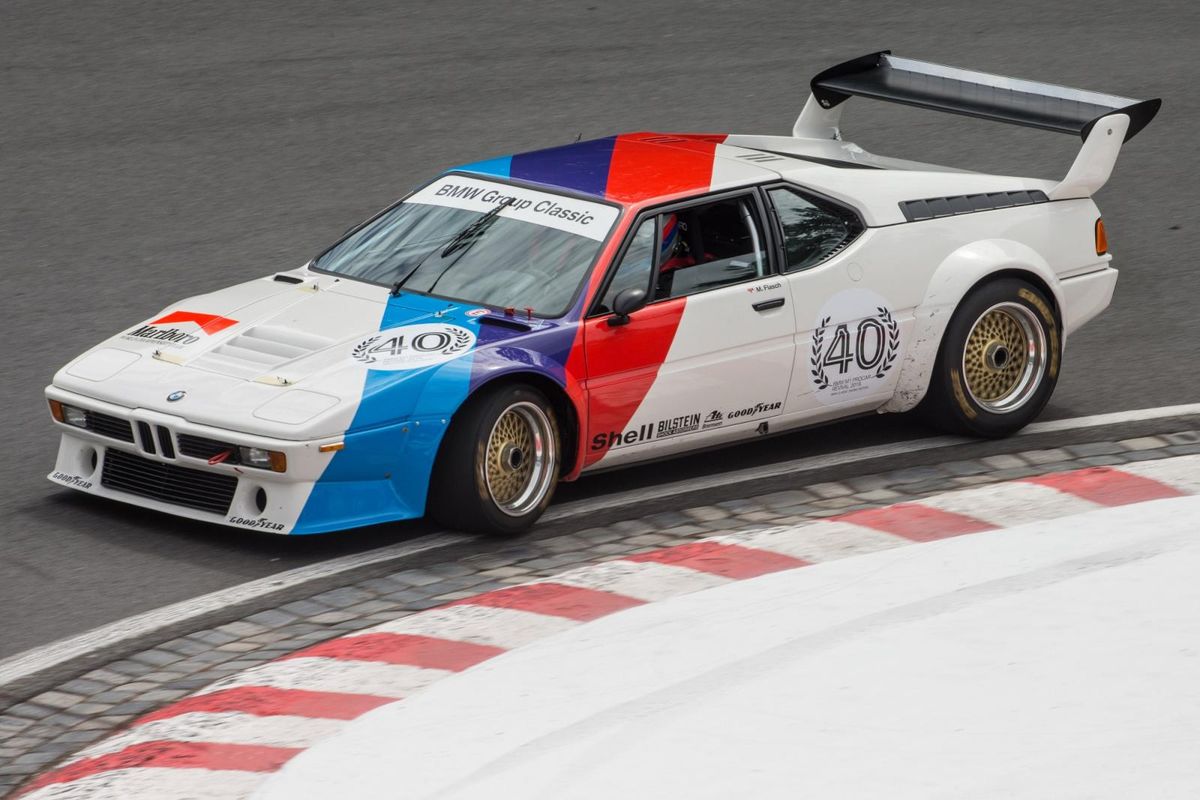
Motorsport and iconic cars such as the M1 Procar are vital ingredients to the M Heritage recipe, and one that Flasch is very keen to nurture.
“The most heroic M car ever is the M1 Procar… I had the opportunity to drive the M1 Procar at the Norisring DTM race… it’s 40-years old, but it’s still an up-to-date construction and when running on modern tyres we were on the pace of today’s supercars. And it still looks modern!
“This heritage is something that really sets us apart. Porsche has maybe a similar heritage in motorsport that comes through to its road cars, but this is something we want to safeguard.”
So, is the manual transmission safe? “As long as I’m here!,” Flasch’s face lights up. “But not in every car though, there’s no point in an SUV. But in a rear-wheel-drive coupe or sedan, it’s fantastic.”
“Heritage is one of the main differences between us and our competition. We have a very loyal fanbase. It’s like a community. It’s like a tribe of people. I’m being followed on the autobahn, and people are taking photos of my car because they just want to be part of this “thing”, this “M Movement”. We have to protect it,” he adds.
Flasch then starts talking about the next-generation M3 and M4, of which much is already known. The cars will feature the option of all-wheel drive, and its most poweful straight-6 cylinder engine ever, the S58 that’s fitted to the X3 M and X4 M. In those crossovers, the engine delivers 375 kW and 600 Nm of torque (Competition), but according to Flasch, those figures are not the maximum that can be extracted from the engine… We can’t wait.
With the hype of the Toyota Supra launch subsiding, attention now turns to the tuners who will be rubbing their hands in anticipation. The previous-gen Supra was very tunable and hopes are high that the new one is just as responsive. A South African tuning outfit is claiming 310 kW from its Supra project.
Gauteng-based RG Motorsport are well-known for their bakkie and Mustang projects, but have started working on the all-new Toyota Supra.
Powered by the B58 3.0-litre straight-6 engine, the Supra develops 250 kW and 500 Nm from the factory. However, RG Motorsport have developed a Stage One upgrade comprising a dual Techniflow 76 mm stainless steel exhaust, decatted exhaust downpipe, performance air filter and a software remap. RG Motorsport claims 310 kW for the Supra on the dyno, putting that power figure somewhere around the 350 kW mark.
That's not all though as there's more to come. RG Motorsport is working on even more power with a revised intercooler arrangement as well a larger turbocharger.
It’s Heritage Month in South Africa and Ford is celebrating with this one-of-a-kind Heritage Ranger art bakkie.
Ford has transformed a Ranger Wildtrak into an art car to celebrate South Africa’s rich and diverse heritage.
The Ranger bakkie is assembled at Ford’s Silverton Plant and a team from the plant’s Paint Shop was commissioned to create this unique South African-inspired bakkie.
A total of 5 artists worked on the project from concept to completion, using 35 litres of automotive paint, paint brushes, spray guns and a total of 650 hours to finish this piece of art.
The artwork includes elements such as the South African flag which is seen over the grille, bonnet and roof, Ndebele tribal art on the tailgate and a map of South Africa with the location of Ford’s plant in Gauteng and Eastern Cape included. Furthermore, collages on the side of the vehicle depict an array of cultural elements and artefacts including the Protea, South Africa’s national flower as well as San rock art.
“It is a great privilege to be part of the team that worked on this incredible project, and delivering a product that every Ford employee from every cultural background can be proud of,” said Queeneth Buthelezi, who led the project.
“What stands out for me about this project is how it merges South Africa’s various cultural and heritage symbols and artefacts into one cohesive unit, just like how Ford brings together people from different backgrounds who work towards one common goal,” added Wiseman Mngadi.
“The project was a great learning experience for me, and an opportunity to demonstrate my skills,” said Alana Jansen. “It validates my ability and competence as a woman in the automotive industry.”
Motorists in South Africa can expect fuel price increases in October 2019.
Consumers remain under considerable pressure in South Africa and motorists are facing yet another fuel price increase next month. According to the Automobile Association (AA), international oil prices increased in September 2019 and spiked further following the drone attacks on the Abqaiq oil refinery in Saudi Arabia.
Current predictions point to increases of 19 c/l for 95 Octane petrol and the price of diesel could go up by 25 c/l. The price of 93 Octane, however, is predicted to come down by 4 c/l.
"The landed price of fuels in South Africa jumped by as much as a Rand a litre in just three days after the attack, before settling back slightly. This turned a generally stable price picture into a negative one," says the AA.
Furthermore, the AA commented that the Rand performed strongly against the US Dollar which helped to offset the impact of higher oil prices.
"Without the Rand's performance, we could have been looking at price rises in excess of 40 c/l for some fuels," said the AA.
The threat of attacks on oil refineries and storage depots remains a major concern and if repeated, could cause further unpredictable price shocks for liquid fuels.
"South Africa's transport economy is underpinned by liquid fuels and is extremely vulnerable to price impacts and fuel shortages. Government should urgently prioritise mitigations to protect against the potential of conflict-related instability in oil supply and pricing," the AA concludes.
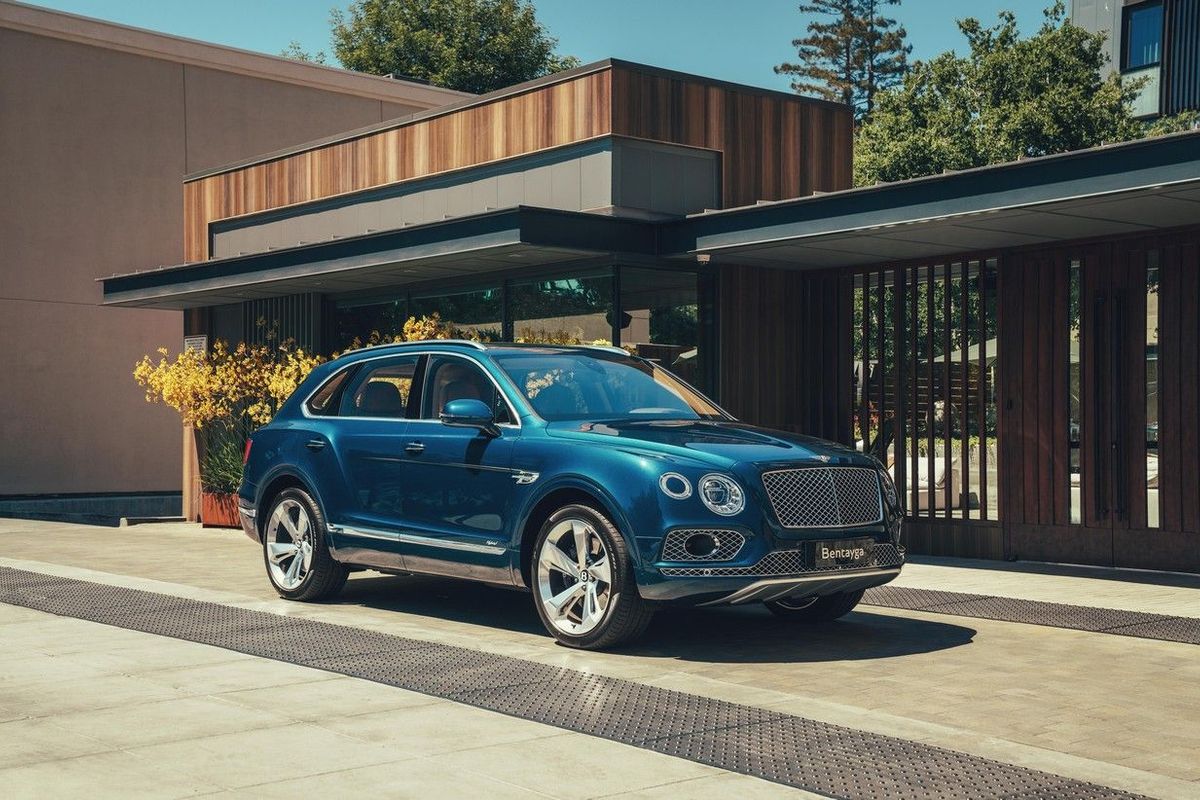
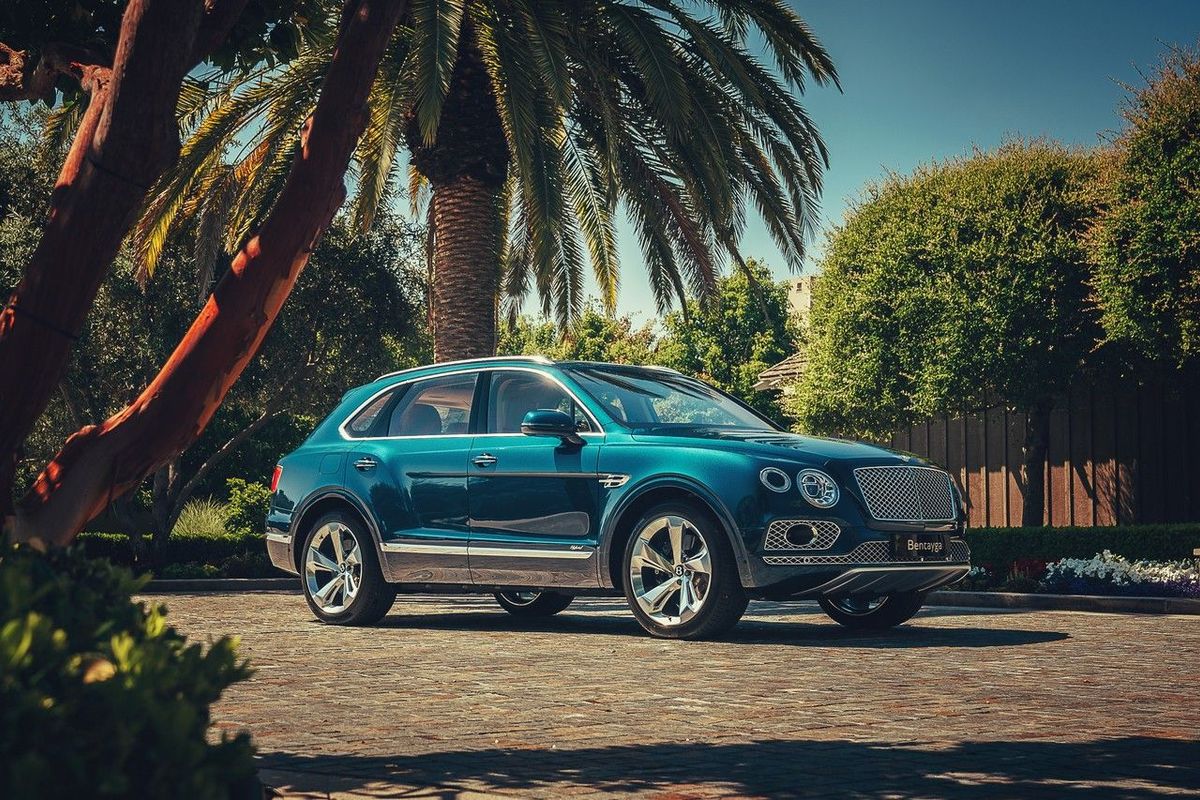
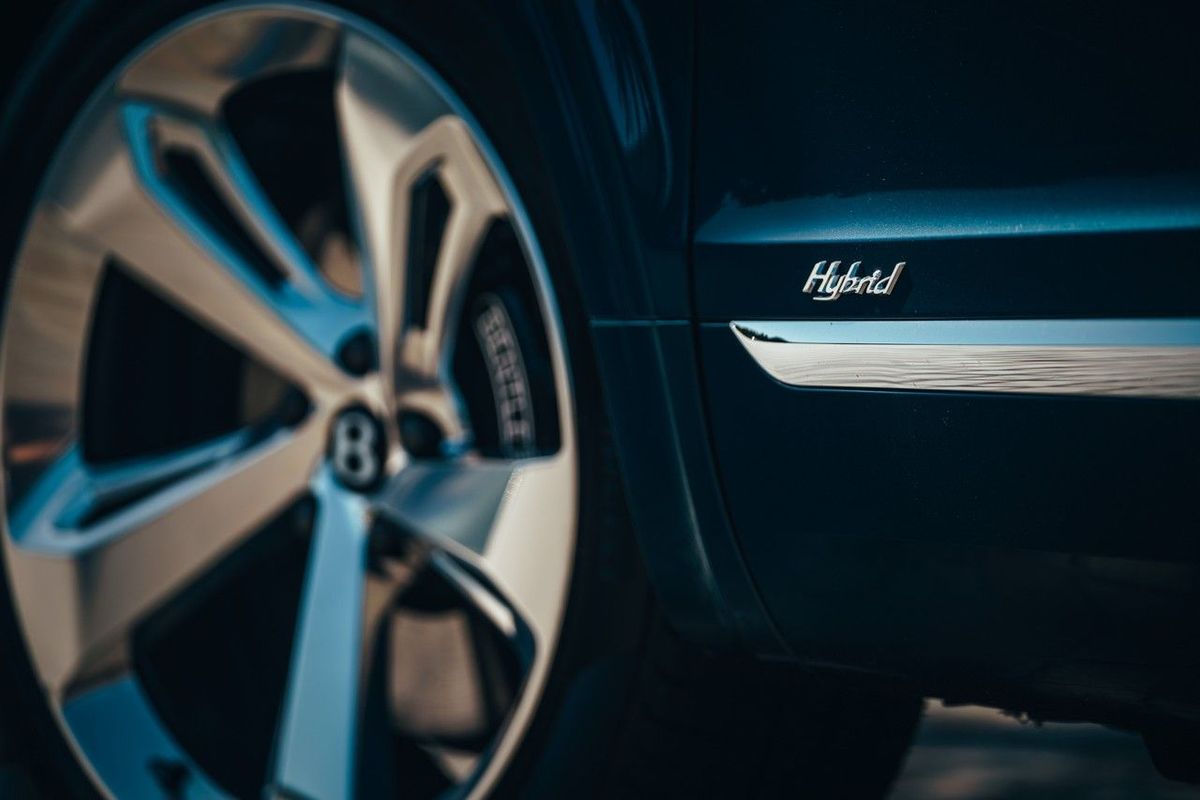
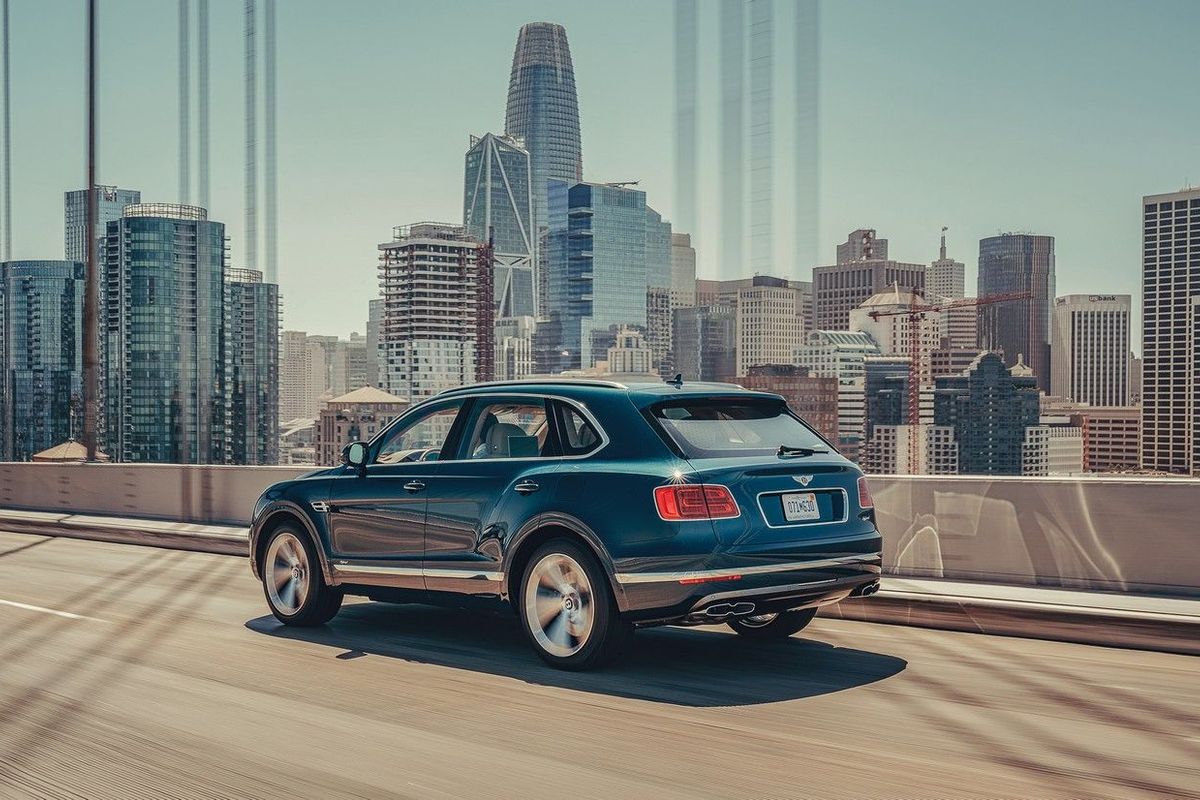
Luxury car brand Bentley has announced a hybrid version of its Bentayga luxury SUV. The numbers make for very impressive reading and the vehicle has just gone on sale in Europe. Some details…
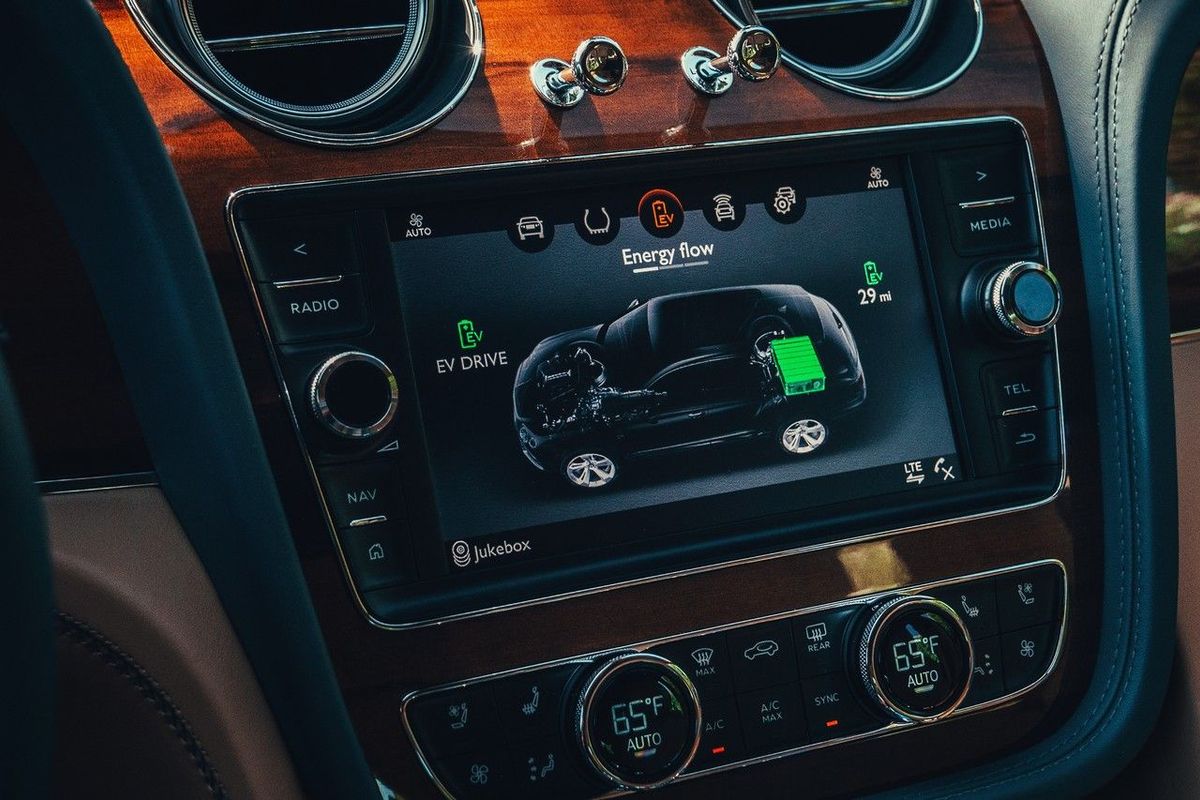
Built in Crewe, England, the Bentley Bentayga comes to market with a highly-advanced powertrain. Using a 3.0-litre turbocharged V6 petrol engine mated to an electric setup, the Bentley Bentayga Hybrid promises fantastic performance without compromising on economy.
The advanced E motor serves up 94 kW and 400 Nm, mated to the petrol V6's 250 kW and 300 Nm, giving it total outputs of 330 kW and 700 Nm. In terms of performance, the Bentley Bentayga Hybrid can sprint to 100 kph in just 5.5 seconds and run to a top speed of 254 kph. The modern high voltage battery can be recharged in just 2.5 hours. Driven solely under electric power, the Bentley Bentayga Hybrid can go 39 km on the WLTP cycle, with total driving range claimed at 747 km. The fuel economy claim sounds almost too good to be true at 3.5 L/100 km.