Opel Combo 1.6TD Panel Van (2019) Review
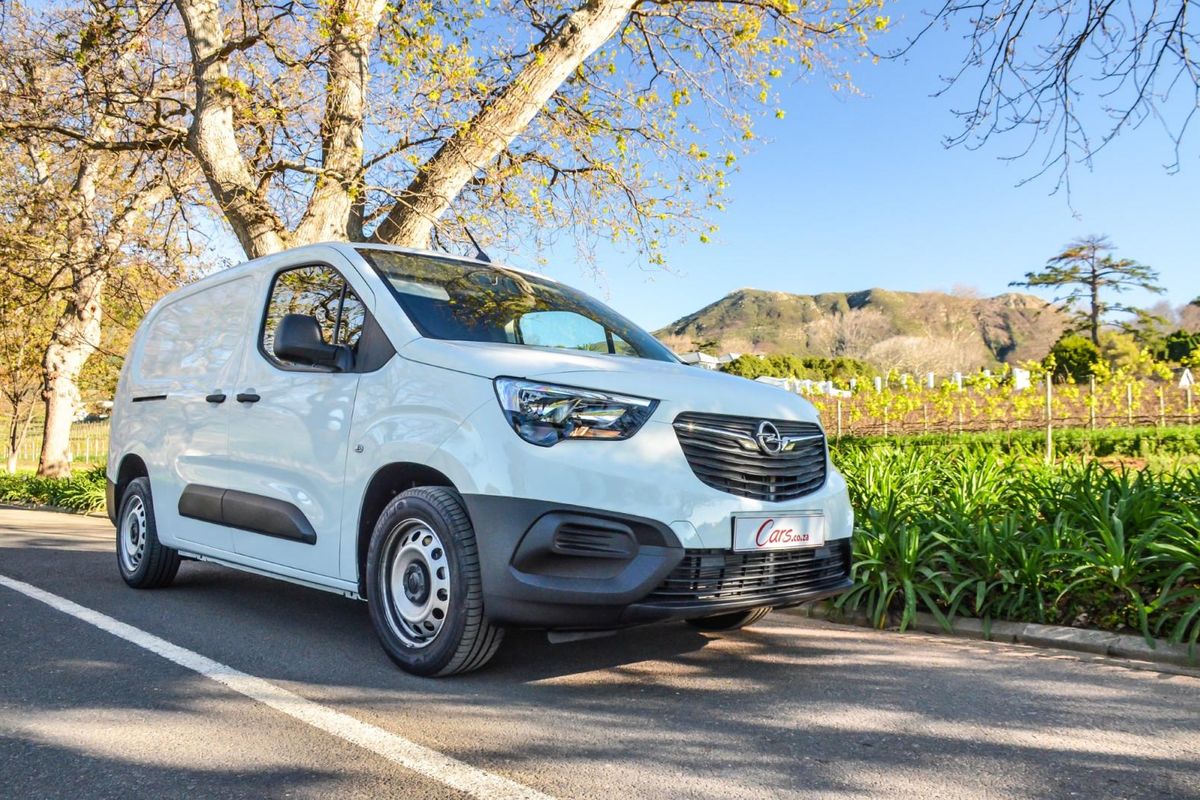
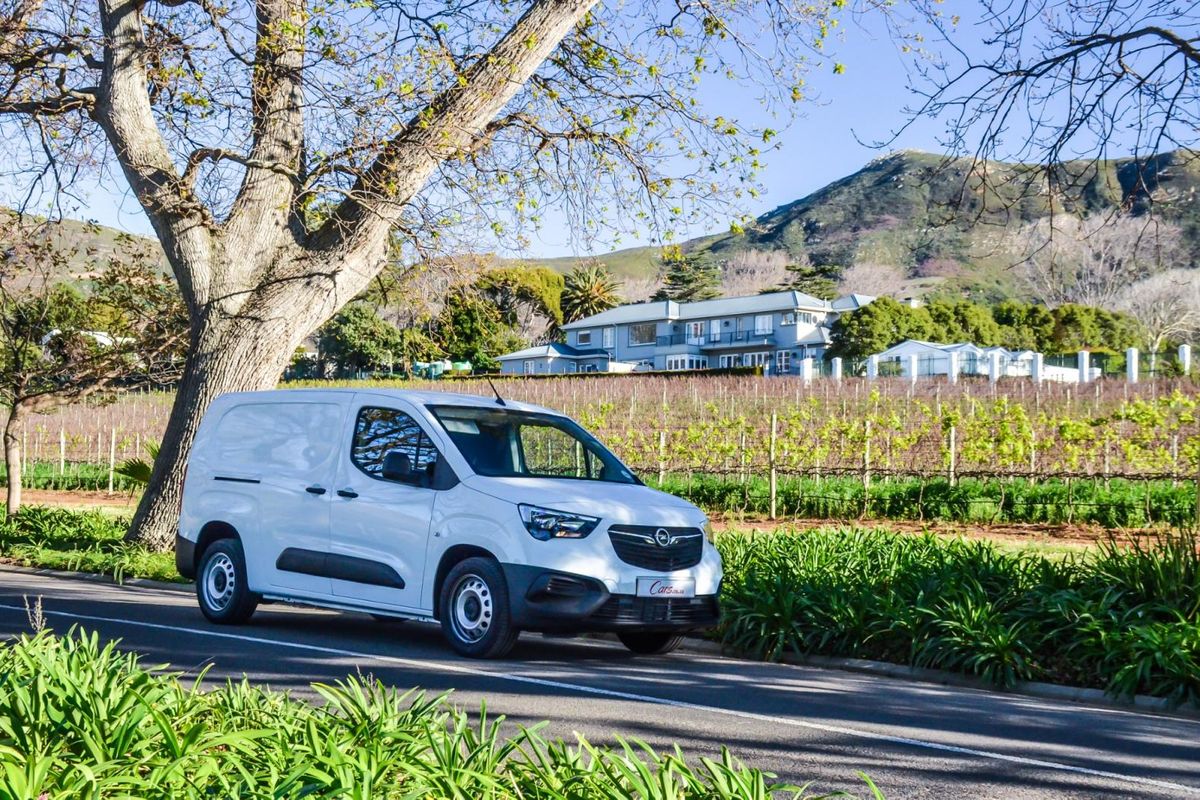
Panel vans are hard-working commercial vehicles that are often required to carry all kinds of loads, sometimes over long distances, day in and day out. Should you consider the recently launched Opel Combo Cargo for your business… over a conventional single-cab bakkie, for example? Let’s take a closer look…

We Like: Engine performance, ride and handling, practicality

We Don’t Like: Rearward visibility is problematic, no rear PDC 

Fast Facts

  • Price: R315 675 (August 2019)
  • Engine: 1.6-litre turbodiesel 
  • Outputs: 68 kW/230 Nm
  • Transmission: 5-speed manual 
  • Fuel economy: 4.8 L/100 km  

What is it? 

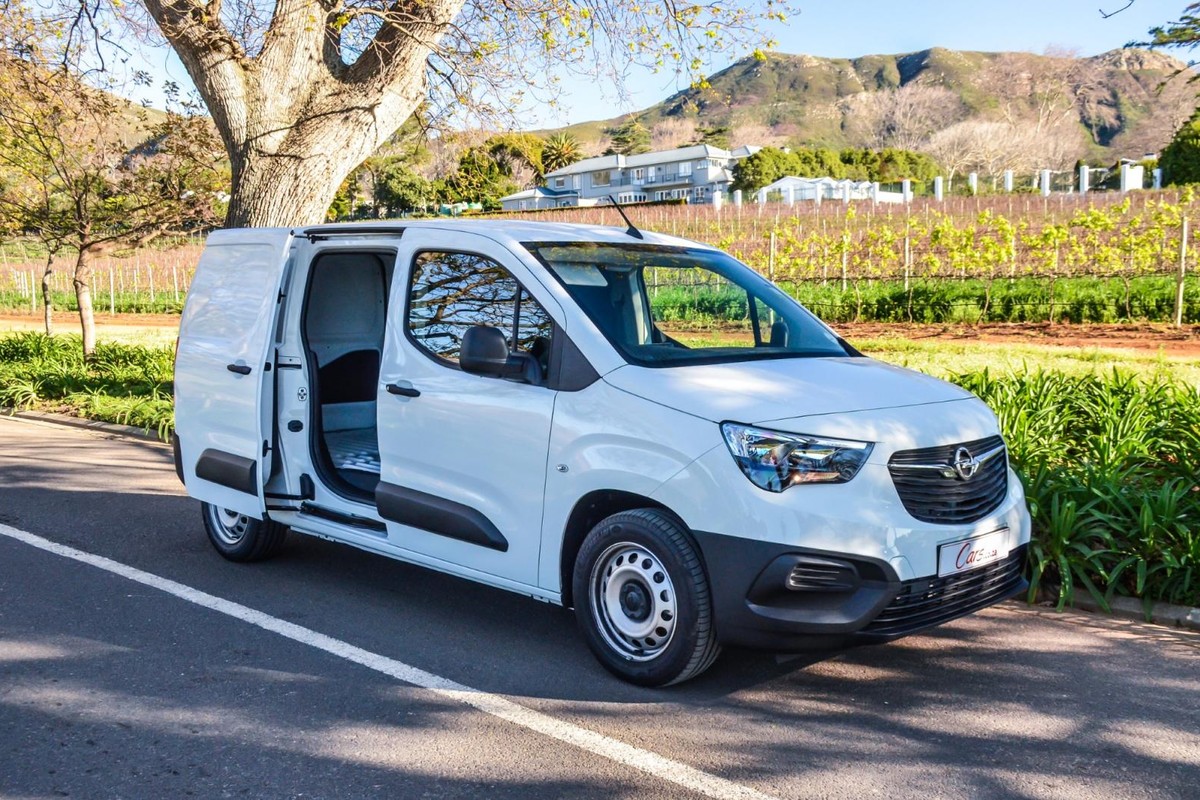
Opel welcomed the Combo Cargo to the local market in April 2019 – it’s aimed at small and medium businesses that require a safe, practical vehicle to execute daily business activities with confidence. The Combo is a rival to the Volkswagen Caddy and Peugeot Partner, to name 2 examples, but it’s also an alternative option for those who may be considering buying a single-cab bakkie for business use. Of course, if you are in the business of moving people or simply looking for a practical MPV, Opel offers an option in the form of the Combo Cargo's sibling, the new Combo Life

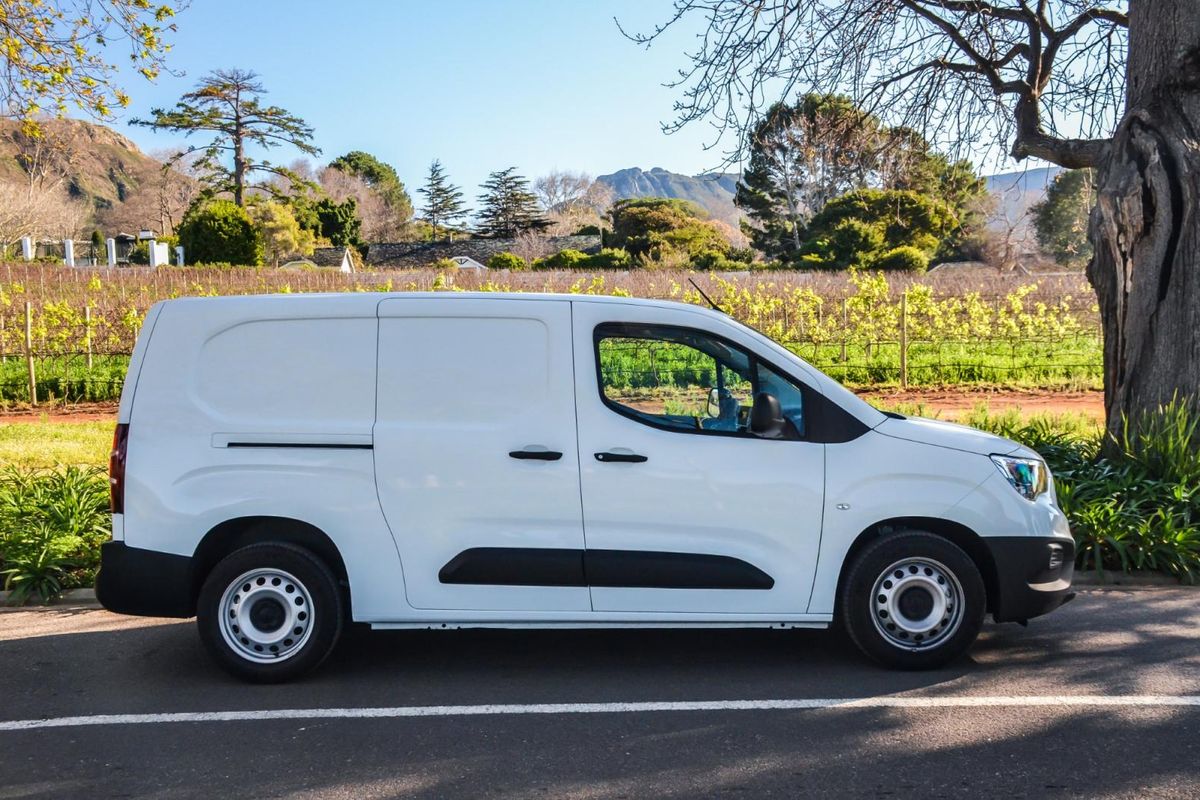
The Combo Cargo, however, is offered in both short and long-wheelbase configurations (with the former on test here) and it’s worth mentioning that the Combo currently holds the 2019 Van of the Year title. 

How it performs in terms of…

Performance & Handling
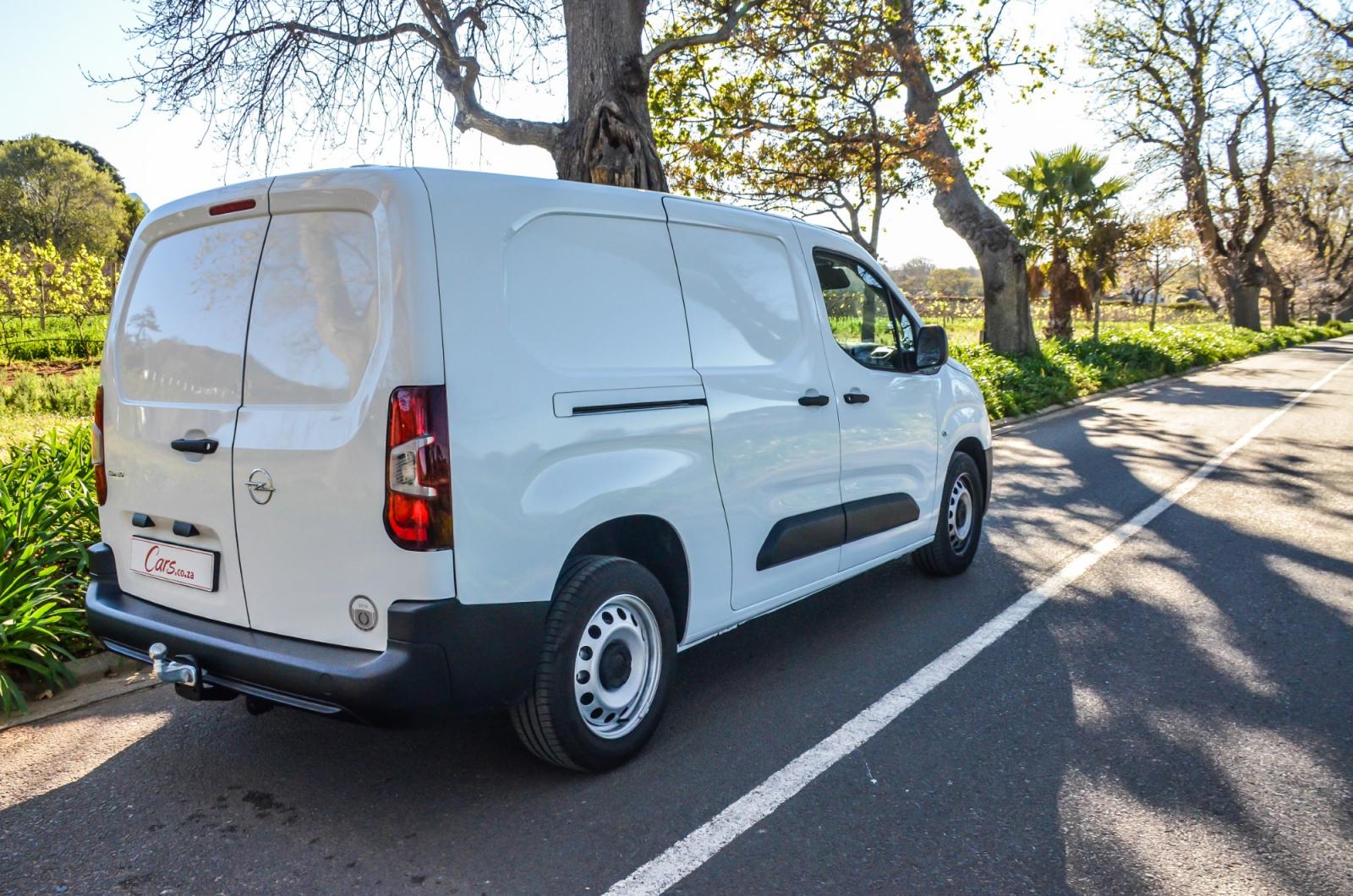

A punchy engine and good overall ride quality are key strengths of the Combo Cargo.  

The Combo Cargo makes use of a 1.6-litre turbodiesel engine (the same unit that powers the recently-introduced Opel Crossland X 1.6TD Enjoy turbodiesel derivative); it produces peak outputs of 68 kW and 230 Nm of torque and is mated with a 5-speed manual transmission as standard. 

The engine does sound a bit gruff and unrefined when you start it up first thing in the morning, but it quietens down notably once it has reached its optimal operating temperature. The Combo Cargo impressed us by delivering commendable in-gear punch, which is useful when you need to execute quick overtaking manoeuvres on the highway – it’s surprisingly nippy between "robots" too. Despite being marginally notchy in feel, the transmission has a direct shift action and executes gear changes positively. Efficiency is another highlight of the 1.6 TD… while Opel claims 4.8 L/100 km for this short-wheelbase derivative, you can expect returns closer to 6.0 L/100 km, depending on how heavily you load (and drive) it. 

Another impressive feature of this Combo Cargo is its ride and handling balance. Ride comfort is not something one would typically associate with a panel van, but we found the Opel to be comfortably sprung to cope with road imperfections (the South African road network offers a plethora of those!) and it offers a level of ride comfort comparable with that of a typical compact passenger car, perhaps even better than some budget-oriented ones, which is quite an achievement.  The steering is direct and responsive to inputs, which contribute to a generally-positive driving experience. 

Interior quality and features
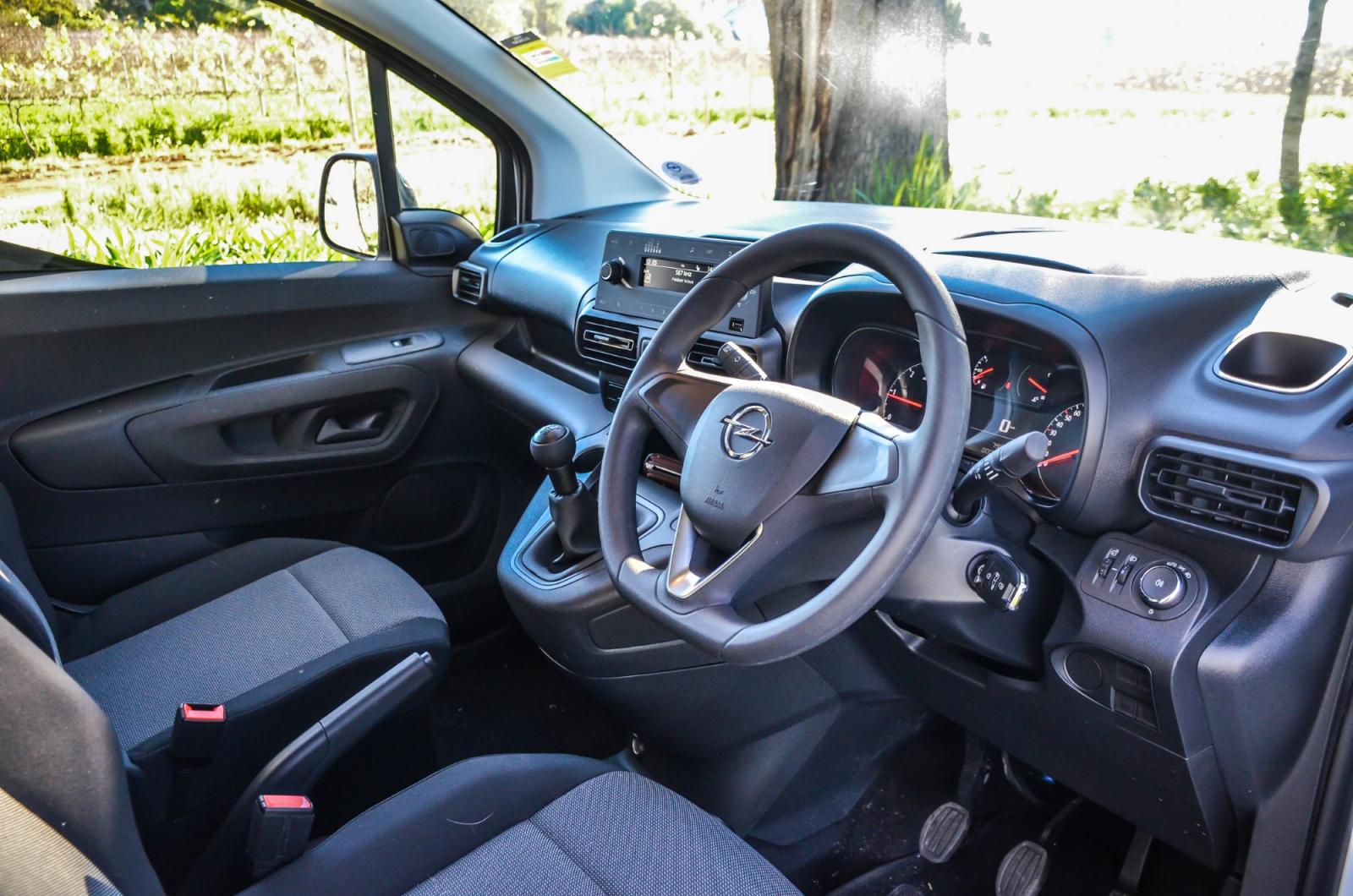

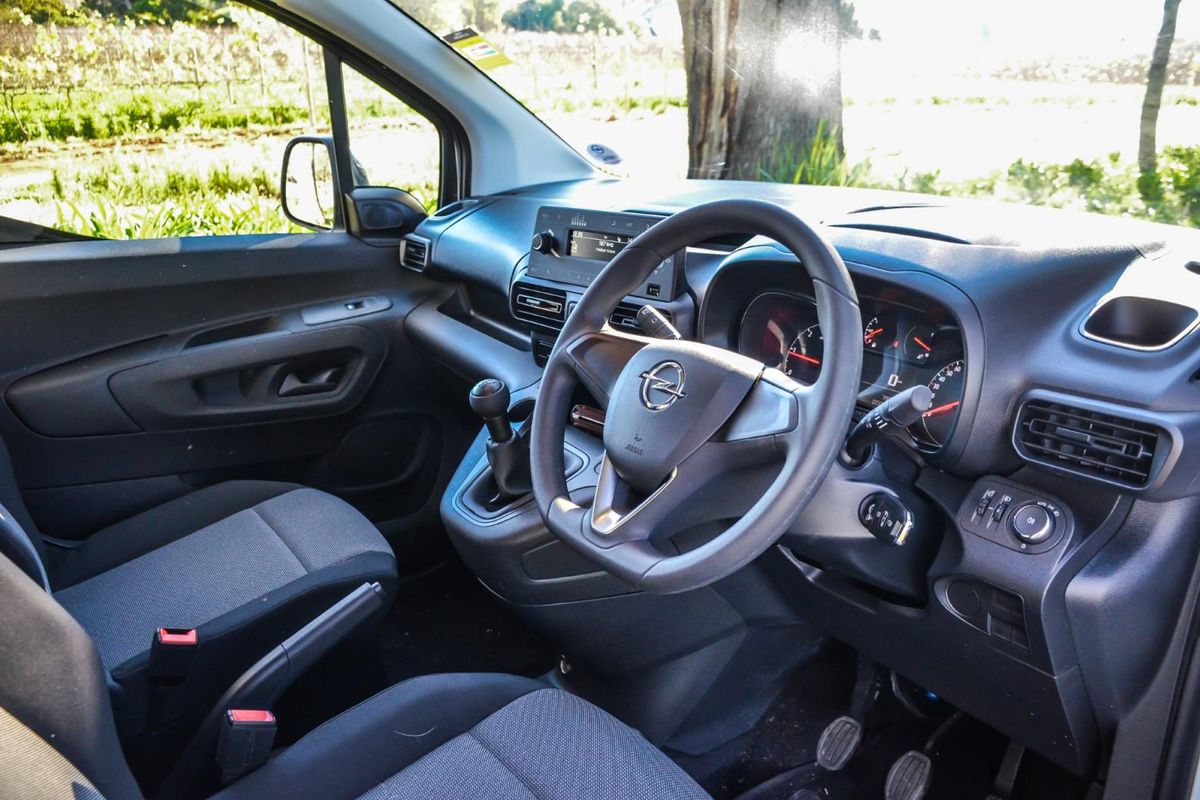
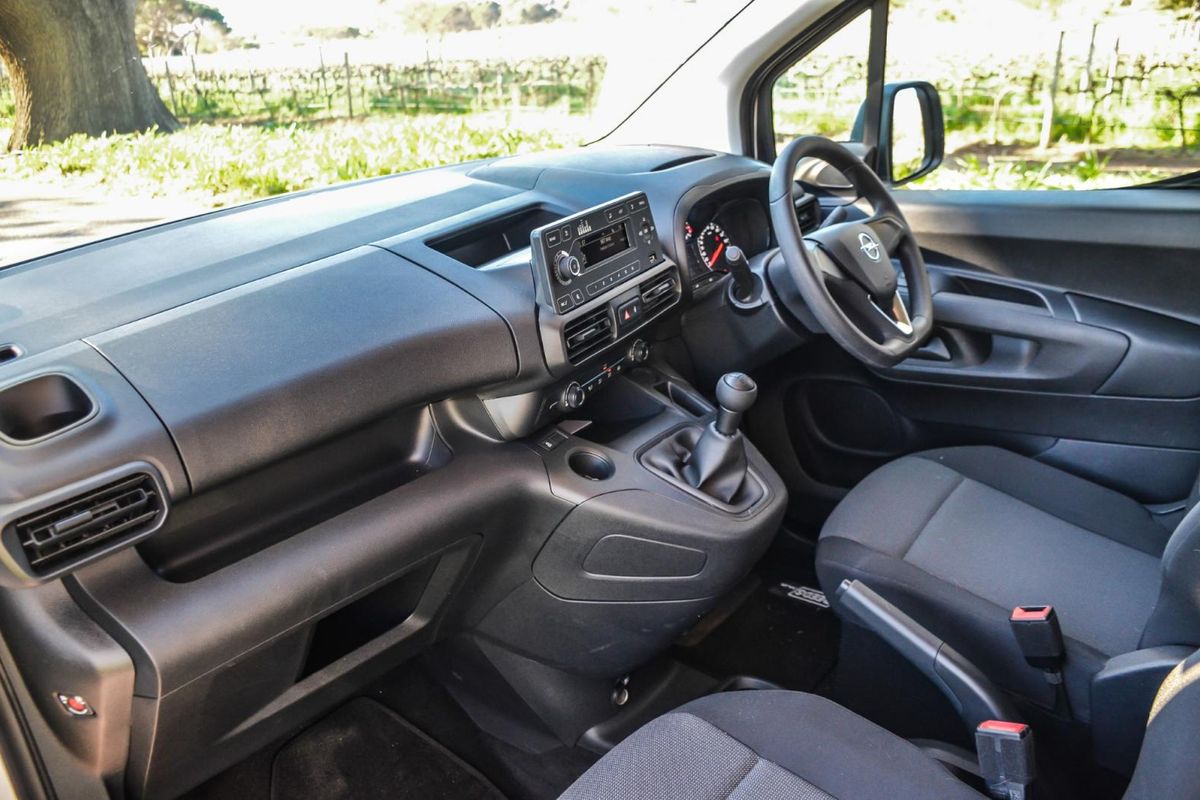
The interior is robust and well screwed together while also offering reasonable levels of comfort for its intended purpose.

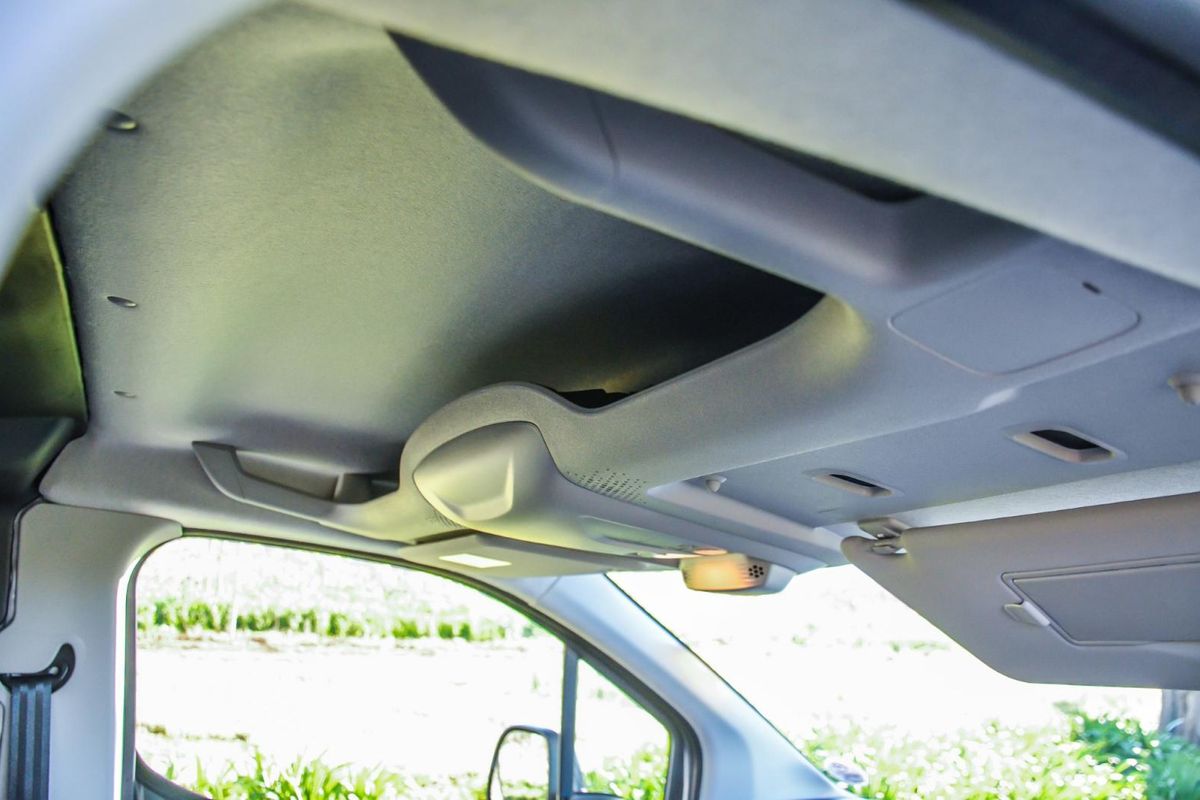
The Combo Cargo’s interior, in contrast with that of a typical workhorse bakkie, is not utterly utilitarian. The cabin feels solidly-made, the cloth seats are comfortable and there is considerable storage space available under the roof of the cabin, where things such as files and paperwork can be stored without cluttering the passenger cell. We also like the grab handles, which are handy for lifting yourself into the cabin, if needs must. 

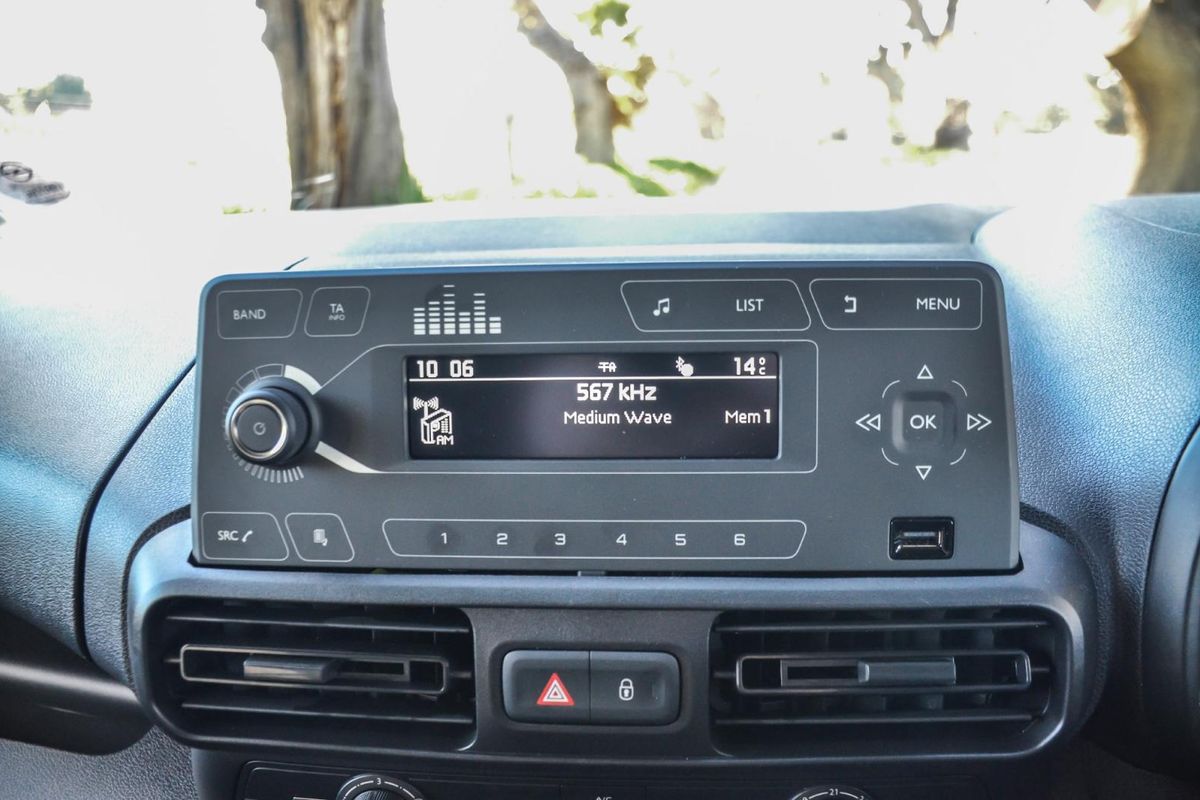
A basic 4-speaker radio system with Bluetooth functionality and a USB port is fitted as standard, as is air conditioning. What's more, the Combo Cargo is relatively well-equipped with safety features, including 2 airbags, ABS with EBD, stability control and hill start assist. 

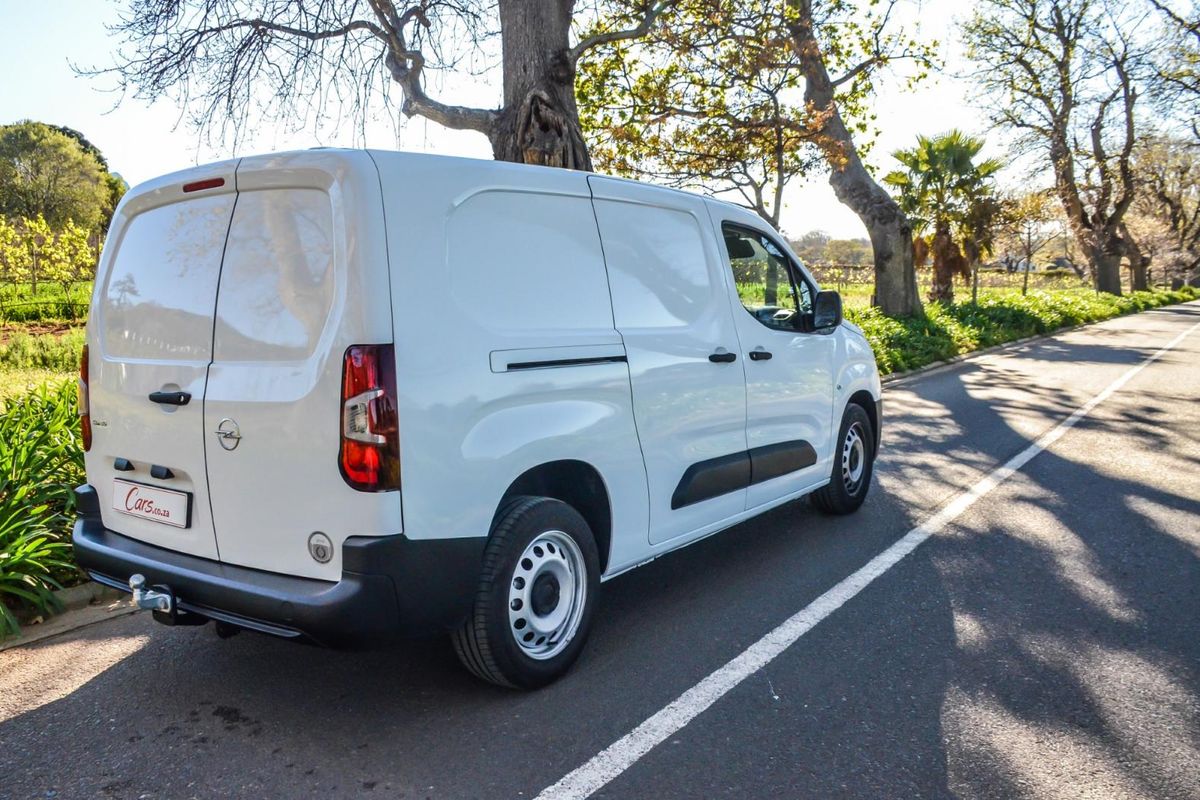
By virtue of the enclosed load bay, there’s no rear-view mirror, so rearward visibility is provided by the side mirrors only. Therefore, with the absence of rear park distance control and a reverse-view camera, the driver needs to be vigilant when reversing to avoid unwanted bumper scrapes/bashes. 

Practicality


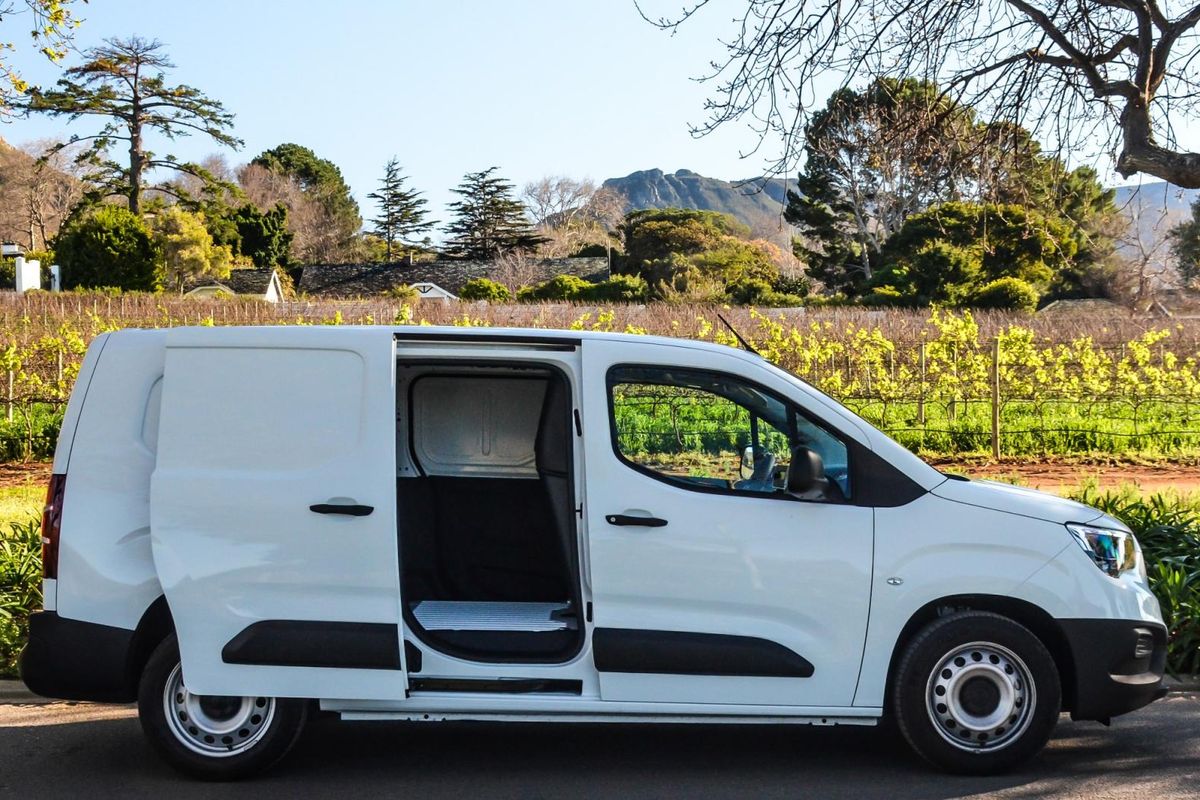
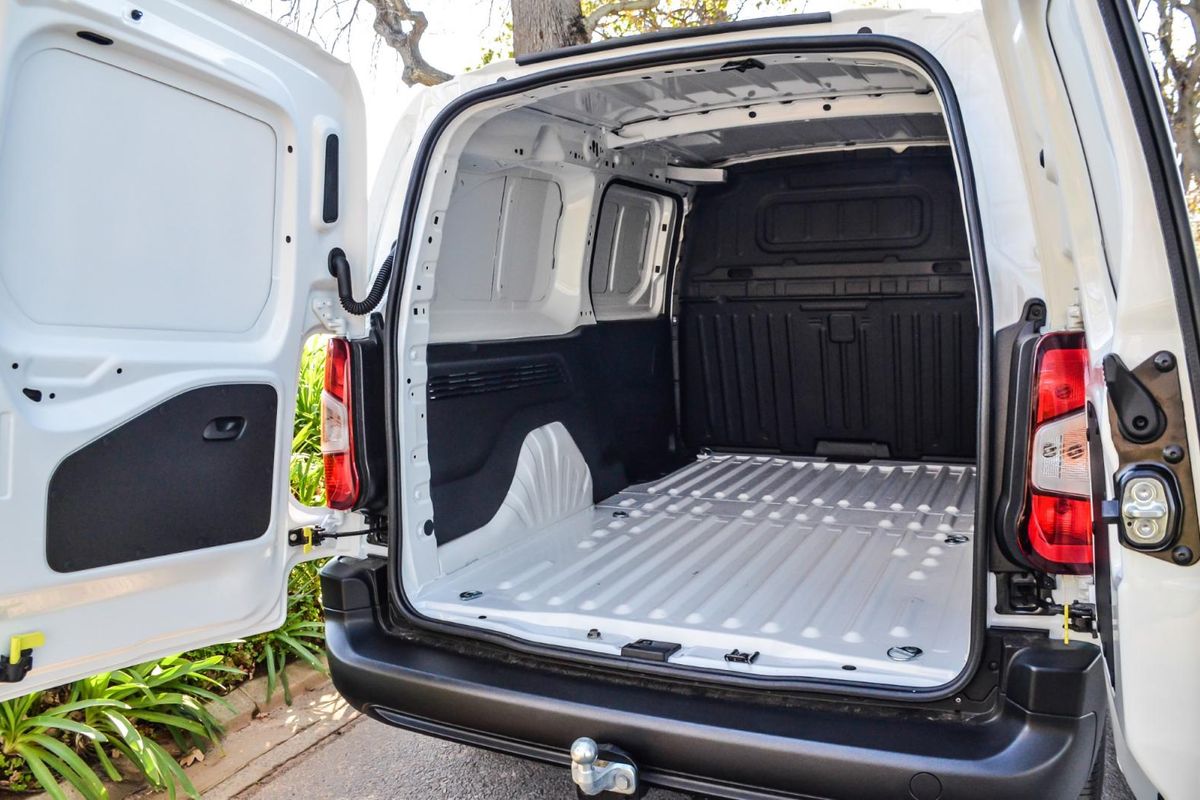
The Combo Cargo's load space is generous and easily accessed from either the rear or sides of the vehicle. 

In an effort to test the Combo’s outright practicality, we put it to work! We loaded it up with a rather large consignment of wine, as well as a variety of household items that needed to be moved (see above).

Needless to say, the Opel swallowed the load with ease. Loading is made easier with a low floor as well as with 2 sliding side doors and double rear (cabinet-style) doors that provide easy access to your cargo. Loops located on the load floor can be used to secure items (in other words, prevent them from shifting around while you are driving). The maximum payload capacity of this short-wheelbase derivative is rated at 600 kg, while the long-wheelbase version can carry up to 1 000 kg. Maximum towing capacity with a braked trailer is rated at 1 250 kg. 

From a security perspective, the Combo Cargo offers greater protection from theft than a single-cab bakkie because its cargo area is enclosed. 

Price and warranty

The Opel Combo is priced from R315 675 and comes with a 3-year/120 000 km warranty and a 3-year 60 000 km service plan. 

Buy a new or used Opel Combo on Cars.co.za

Verdict

The Opel Combo Cargo is eminently capable and worthy of consideration if you need a practical vehicle to serve your business. 

The Combo Cargo proved a very capable mover of goods and bulky items. The 1.6-litre turbodiesel engine is impressively tractable, even when the Opel's loaded to near-capacity, and offers good fuel efficiency, while the cabin is surprisingly comfortable and has ample oddment storage space.

Most importantly, the 1.6 TD panel van's cargo-carrying capabilities and general practicality are notable. Opel's newcomer also happens to be keenly-priced compared with its Volkswagen Caddy rival and is only slightly more expensive than the equivalent Peugeot Partner derivative.

In some respects, the Combo Cargo represents a more astute purchasing proposition than a single-cab bakkie. Given the Opel's competitive price point, its secure load bay is a major advantage. If you operate a rubble-removal business, for example, a single-cab bakkie would be a better option, but if you need to deliver valuable or fragile items, then the 1.6 TD panel van is perhaps more suitable. It’s also worth mentioning that the Combo Cargo offers, comparatively, much more advertising space across its elevated sheet metal, which makes it simpler to market your business boldly.   

Related content:

The Journey Karoo: Opel Crossland X Tackles Swartberg Pass

Opel Combo Life (2019) Specs & Price

Opel Astra Receives Mild Facelift
6th-Generation Opel Corsa Fully Revealed

New Diesel Opel Crossland X for SA

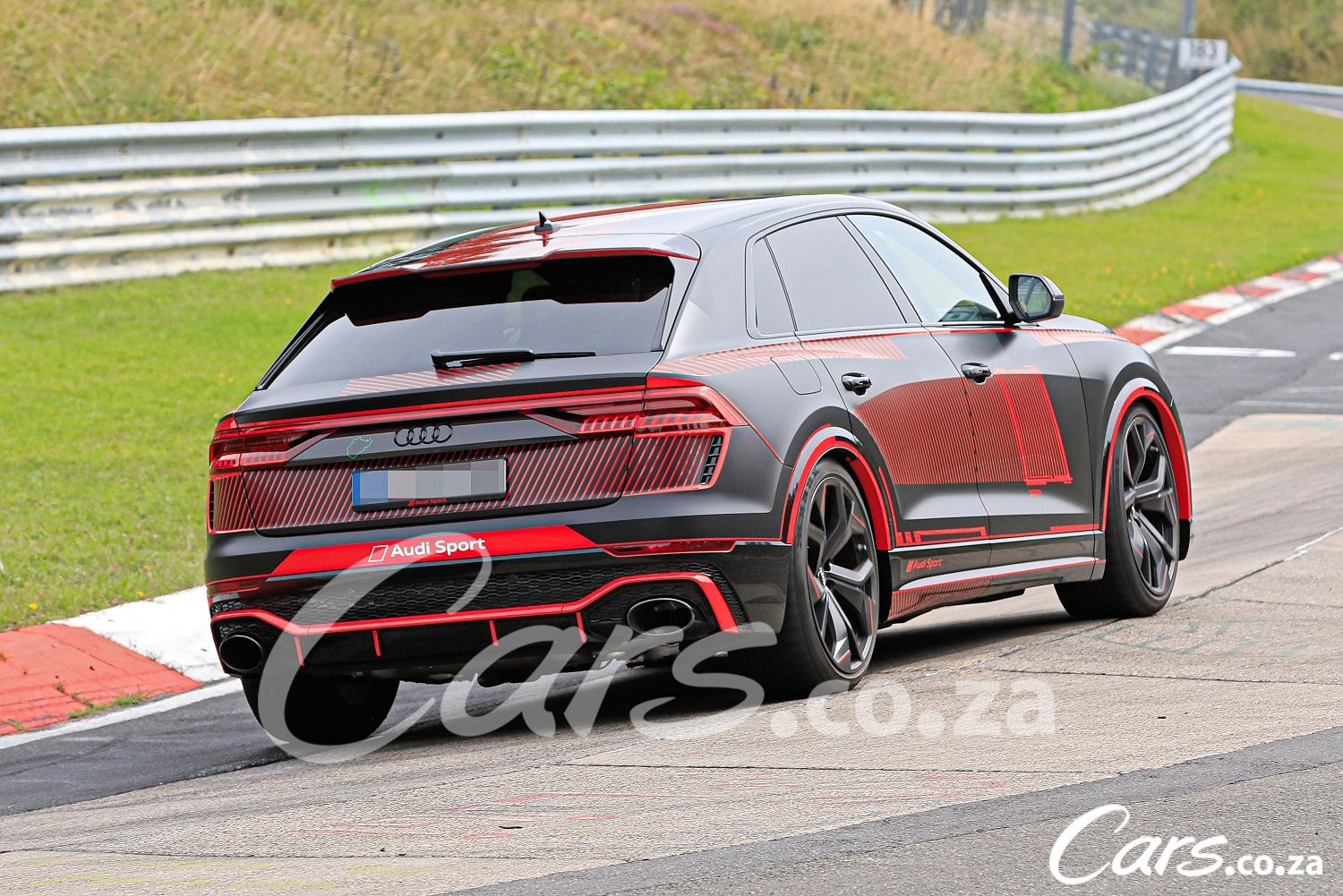
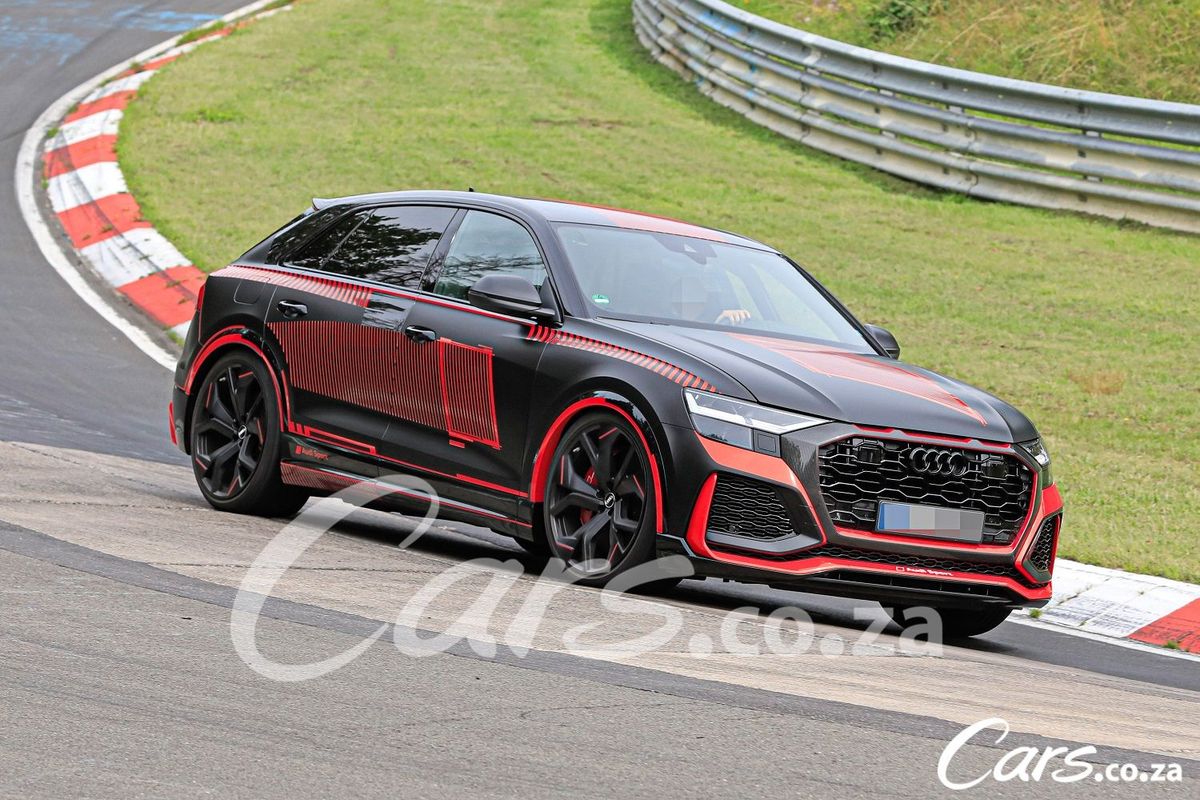
Spy Shots: 2020 Audi RS Q8

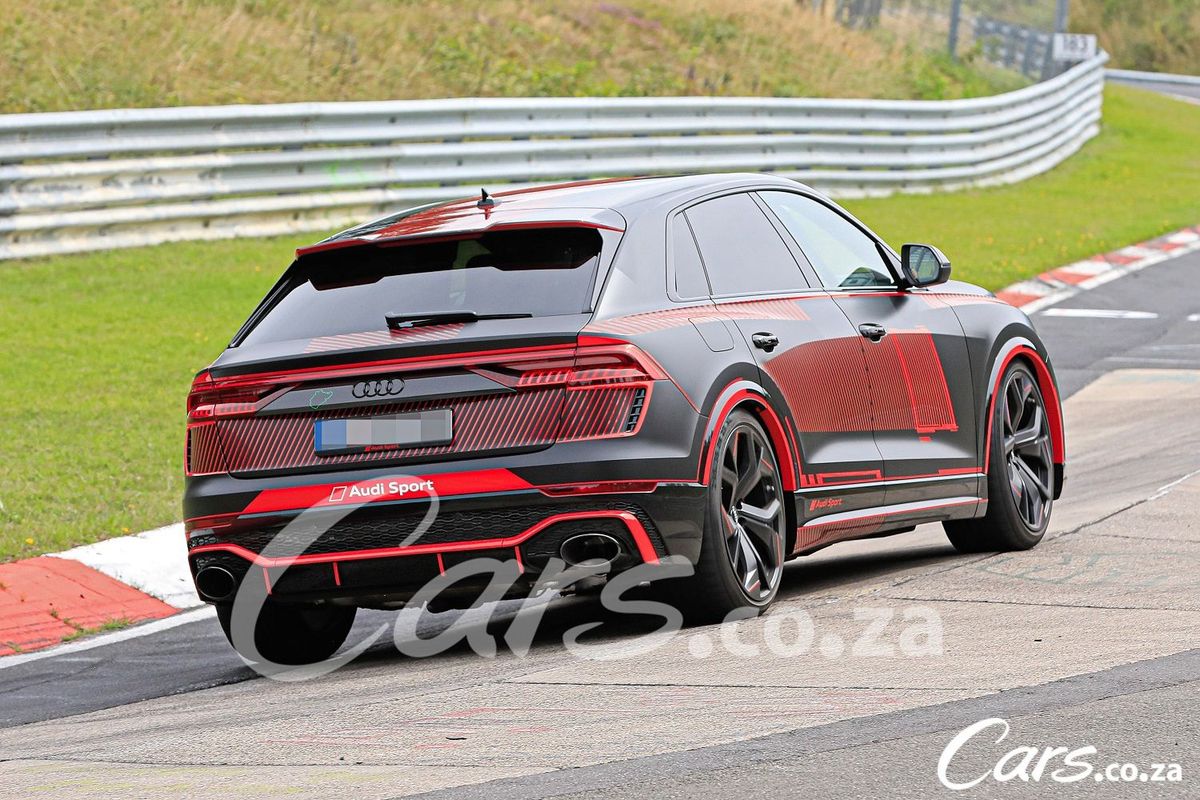
This is the Audi RS Q8, spotted in its lightest camouflage yet. When it comes to market, it will be the most powerful SUV offered by the Ingolstadt-based brand.

Picture credit: S. Baldauf/SB-Medien

After Audi revealed its SQ8 SUV with its monstrous diesel power, we did wonder if there was going to be something for the petrol fans. The rumours were rife that an RS Q8 was in the offing and our previous spy photos just showed a heavily camouflaged Q8. Now, we get to look at the near-ready RS Q8. Spotted by our photographers at the Nurburgring, this unit has the full bodykit on display showing off the massive intake, wheels and RS sports exhausts at the rear. 

The only question left to answer is what engine will be under the bonnet? There's talk of the 4.0-litre twin-turbo V8 setup from the Lambo Urus doing duty, while another school of thought suggests the 4-litre twin-turbocharged V8 engine with electric assist will make an appearance. The second engine produces 500 kW and 900 Nm, making the Audi RS Q8 one very brisk machine.

Further Reading

Audi SQ8 Is a 900 Nm Monster

Porsche reveals 500 kW Cayenne E-Hybrid

Audi Q8 55TFSI quattro (2019) Review [w/Video]

Volkswagen Polo Vivo Sound Edition Price in South Africa

Volkswagen SA has created a special-edition Polo Vivo to celebrate the love of music and it's on sale now!

The Volkswagen Polo Vivo is one of South Africa's most popular cars. Based on the previous generation Volkswagen Polo, the Vivo offers good levels of spec and space. It's available with a naturally-aspirated petrol engine, while a range-topping turbo GT has a slight performance edge.

Now for 2019, Volkswagen SA has created the Polo Vivo Sound Edition, which will go on sale in South Africa in the third quarter of 2019. It's claimed to be a celebration of the love of music as well as the success of the Vivo brand in South Africa and offers some interesting features.

Visually, it has orange wing mirrors and audio-themed decals on the sides. There are also tasty-looking 16-inch Rivazza alloy wheels. Inside, there's an uprated audio system comprising R340G Radio with App-Connect and a 6-speaker system with subwoofer. 

The Polo Vivo Sound Edition is based on the Polo Vivo Comfortline, which is powered by a 1.4-litre naturally-aspirated 4-cylinder engine with 63 kW and 132 Nm. Power goes to the front wheels via a 5-speed manual gearbox. 

Volkswagen Polo Vivo Sound Edition Price in South Africa (August 2019)

Polo Vivo Sound Edition 1.4 63kW Comfortline                     R220 000

The Polo Vivo Sound Edition comes standard with a 3-year/120 000km warranty and a 6-year anti-corrosion warranty. Volkswagen South Africa maintenance or service plans are optionally available. Service intervals are every 15 000 km.

Want to buy a Volkswagen Polo Vivo? Browse new and used examples here.

Further Reading

Volkswagen Polo Vivo GT (2018) Quick Review

Volkswagen Polo Vivo 1.4 Comfortline (2018) Review

Volkswagen Polo Vivo (2018) Launch Drive

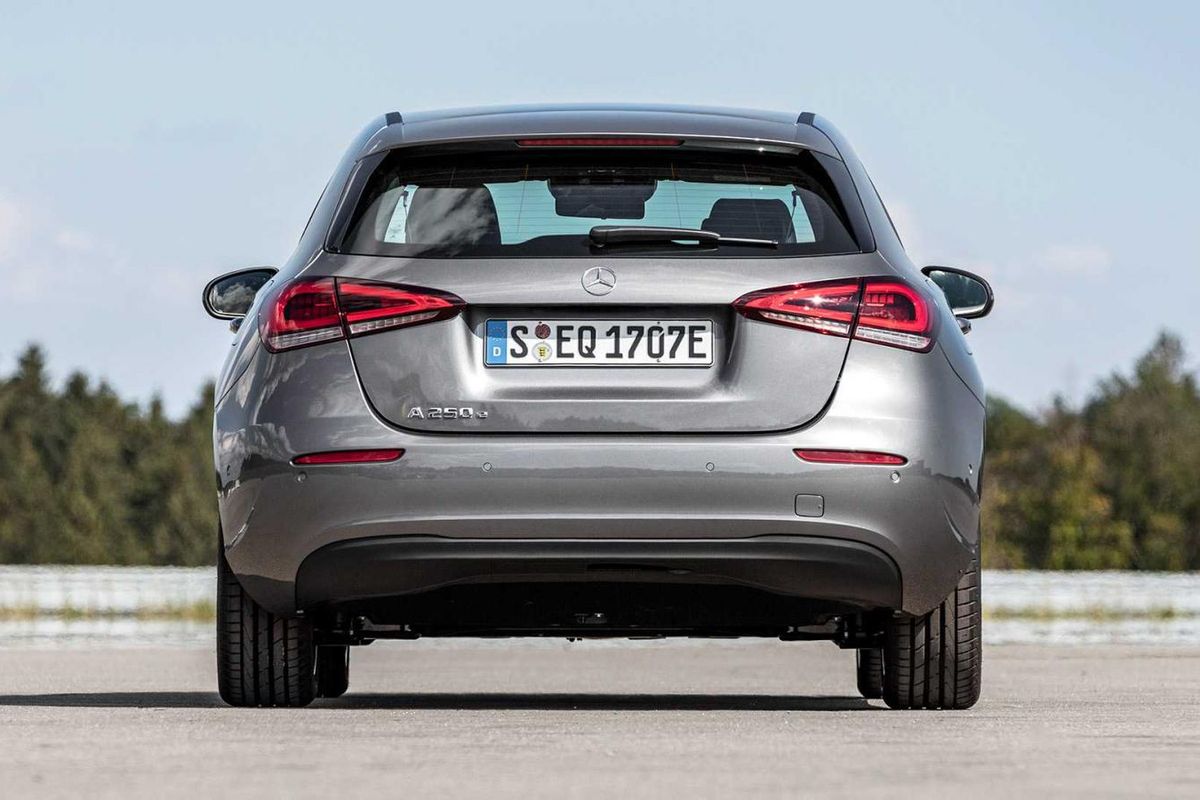
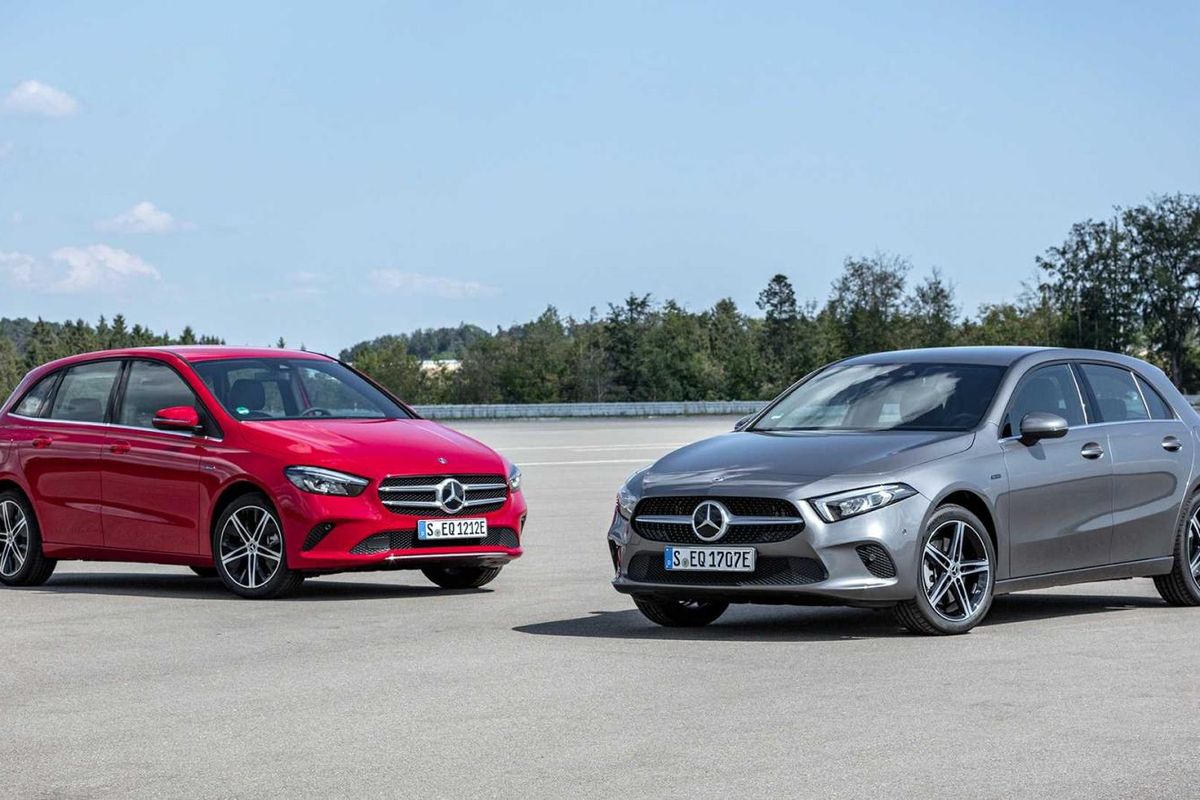
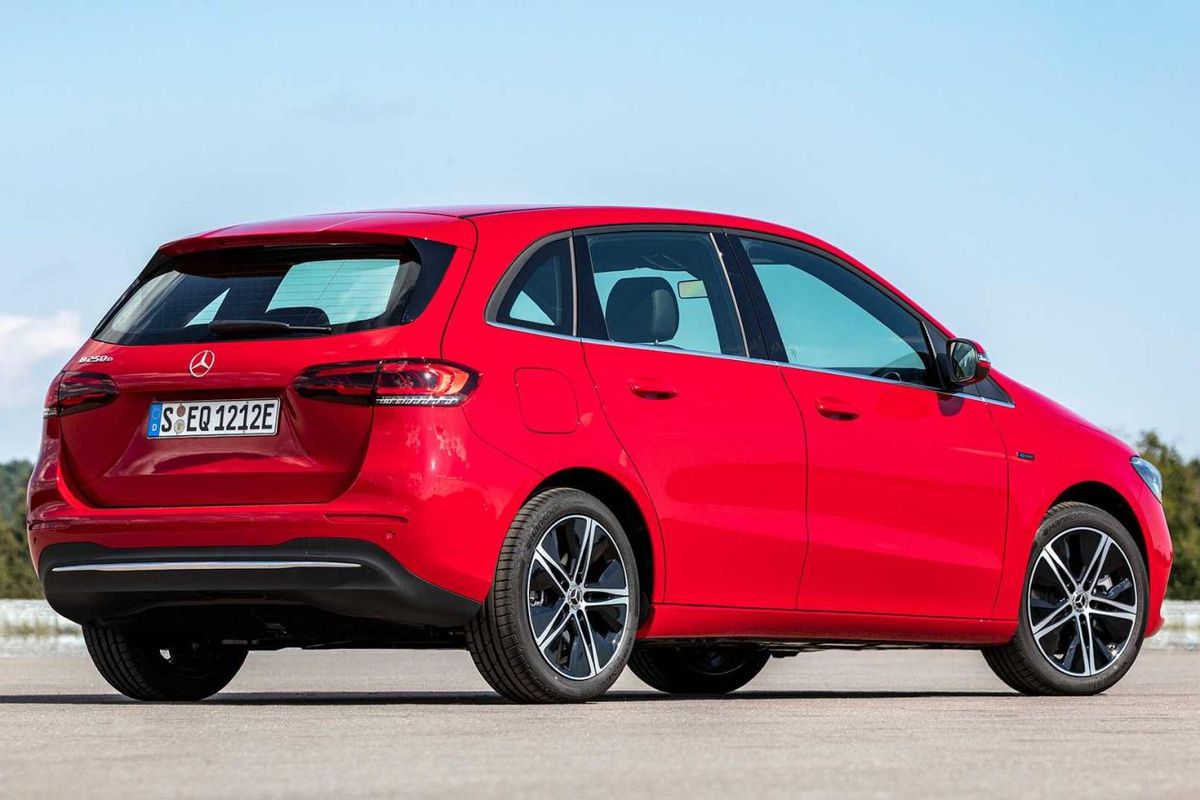
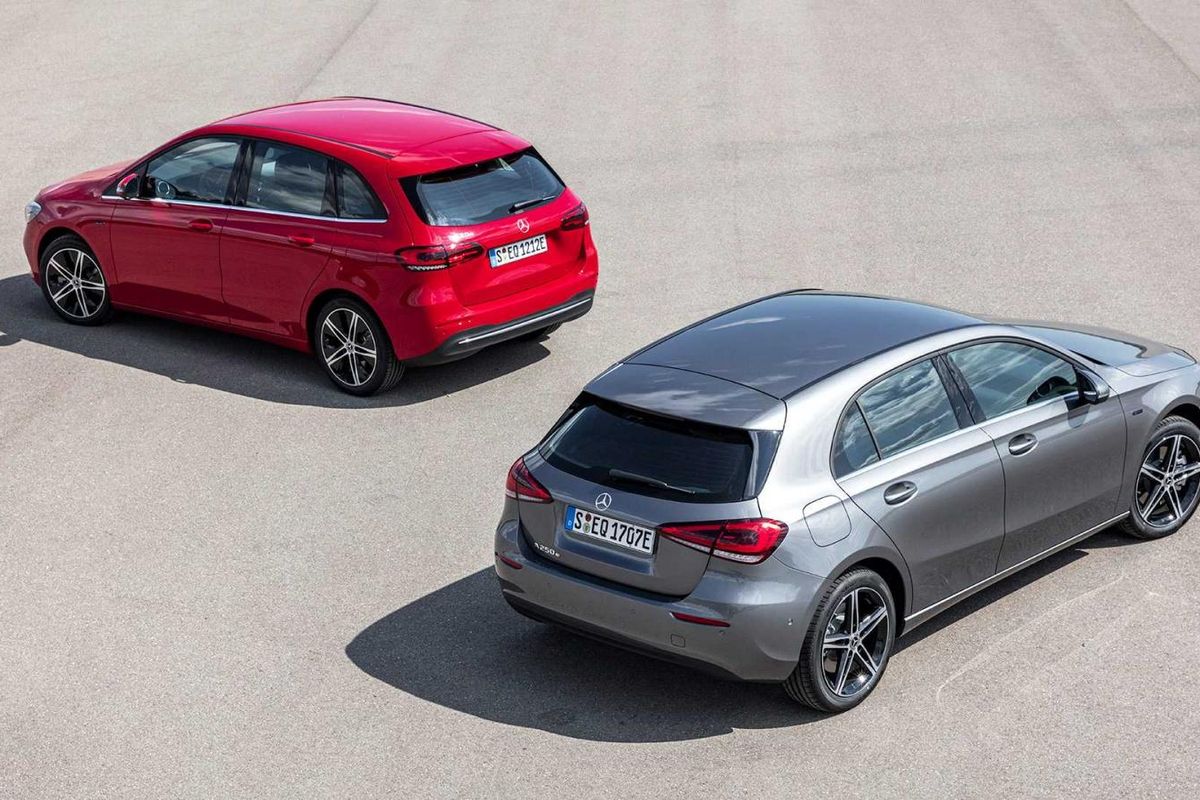
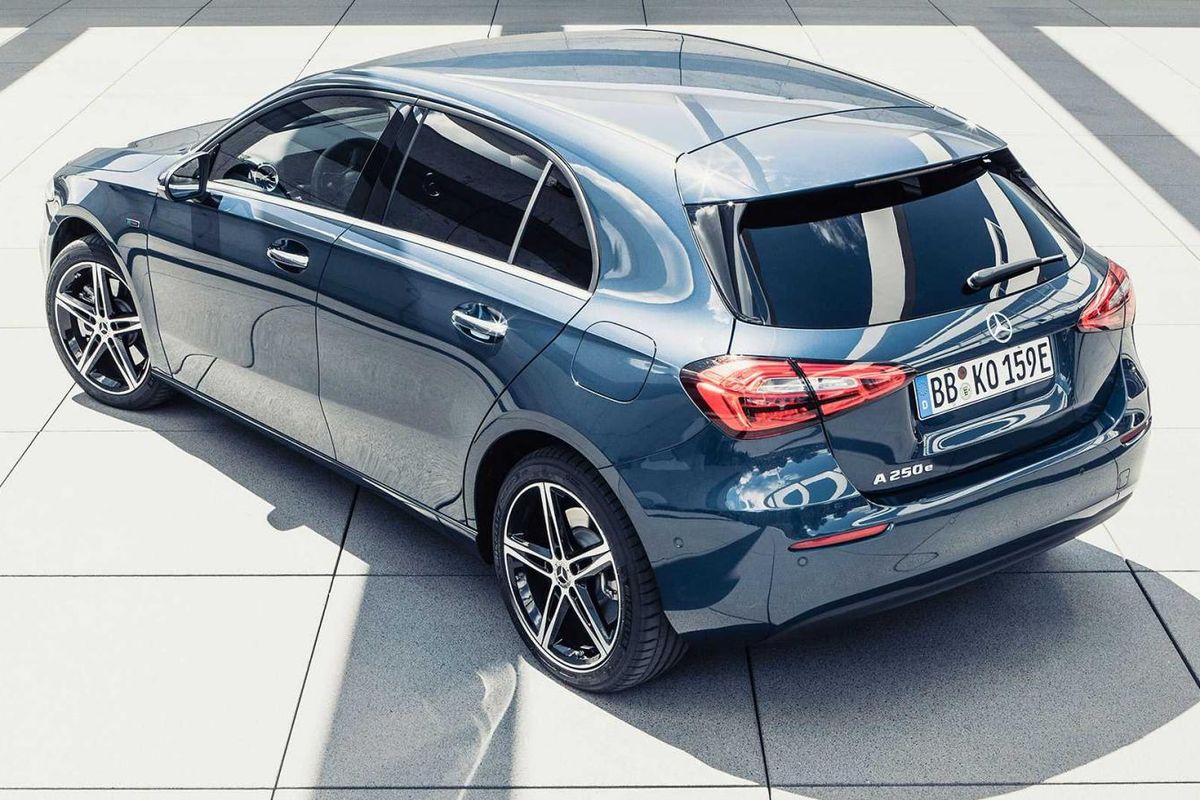
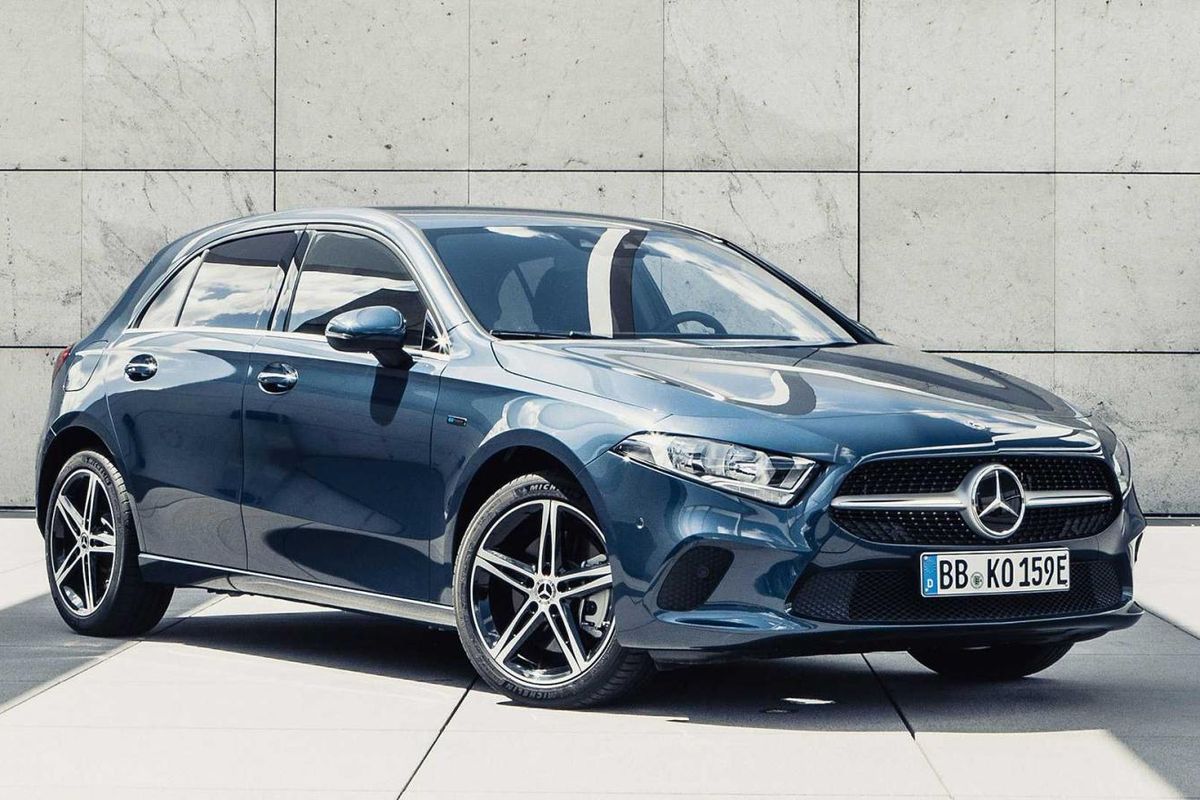
Merc A250e is Merc’s Electric Hot Hatch

Rapid and economical new compact hybrids from Merc. 

Mercedes-Benz has broadened its electrification strategy by revealing two new plug-in hybrid vehicle options.

Instead of applying its advanced hybrid technology to a large SUV or luxury limousine, Mercedes-Benz has added lithium-ion battery packs and plug-in recharge capacity to its smallest vehicle lines: A- and B-Class.

These are the cars most likely to be used by owners of the brand who live in crowded inner-city areas and as a plug-in hybrid, the A-Class platform makes a lot of sense.

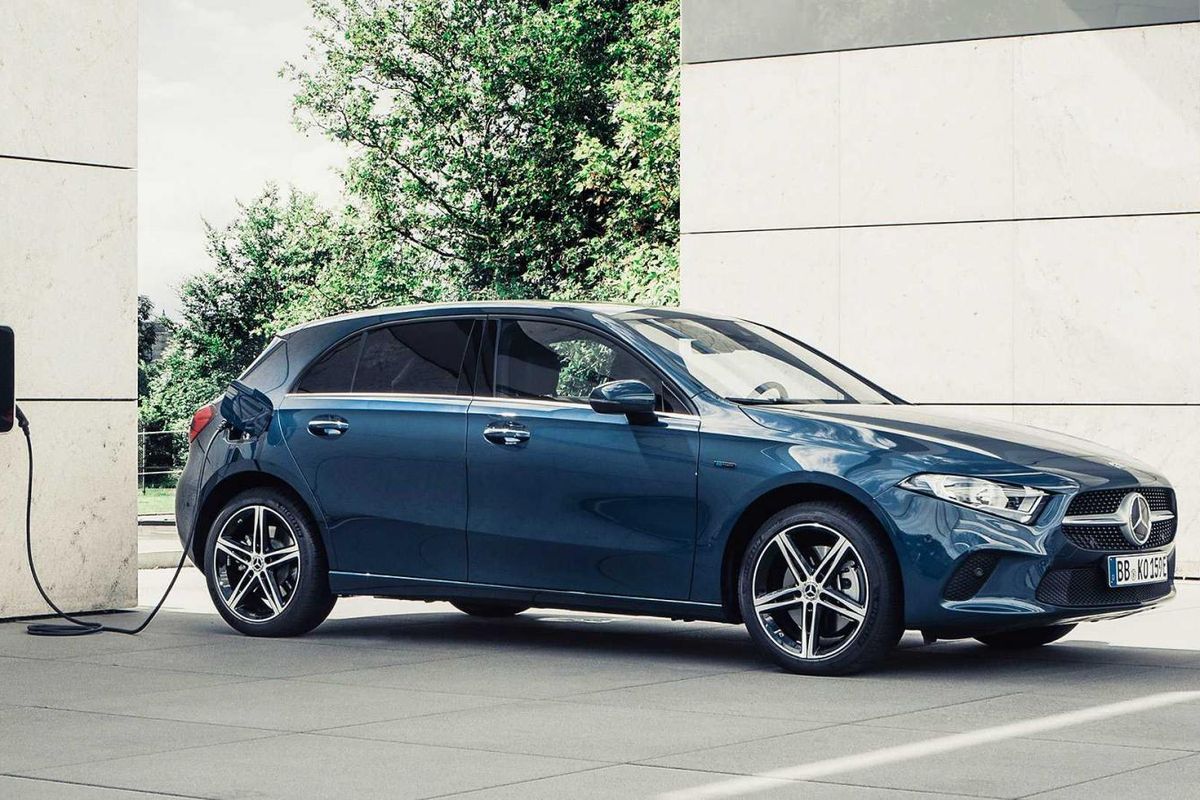
Although efficiency is the goal, these new Mercedes-Benz compact hybrids offer very impressive performance. A 15.6kWh lithium-ion battery pack powers an integrated electric motor housed in the eight-speed automatic transmission, which make the new A250e and B250e very fast – and light on fuel. 


Combine the electric and petrol motors and the A250e will crank out 160 kW and 450 Nm.

Combined outputs, with the 1.33-litre four-cylinder and electric motor working together, rate at 160 kW and 450 Nm – and yes, that is a lot of torque for an A- or B-Class. The electric motor can draw 75 kW and 300 Nm of energy conversion from its battery pack. It can also power these new Mercs on pure electric power for up to 70 km, which is great news for any potential A250e or B250e owner who has a traffic dense daily commute.

Acceleration is very much hot hatch credible, with both these new Mercedes hybrids capable of 0-100 kph in only 6.6 seconds, whilst top speed is claimed at 235 kph. Best of all, is the ridiculously low average fuel consumption of only 1.4l/100 km.

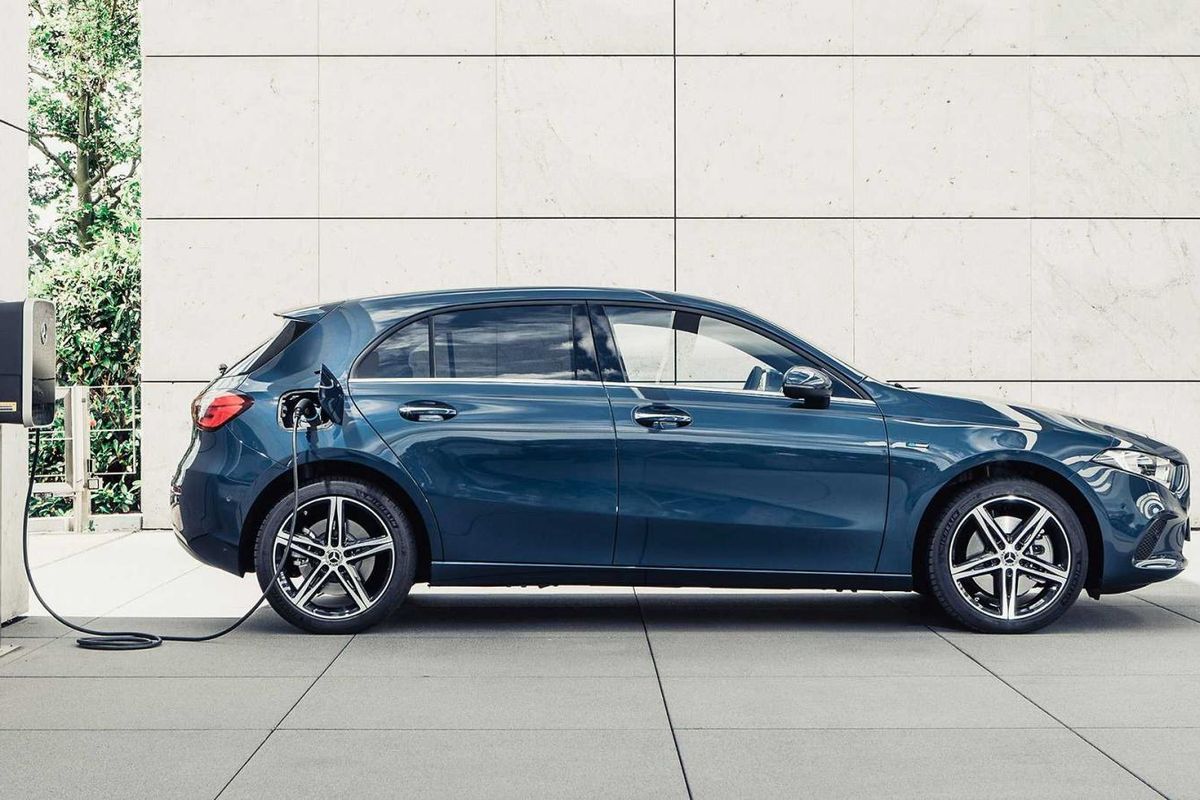
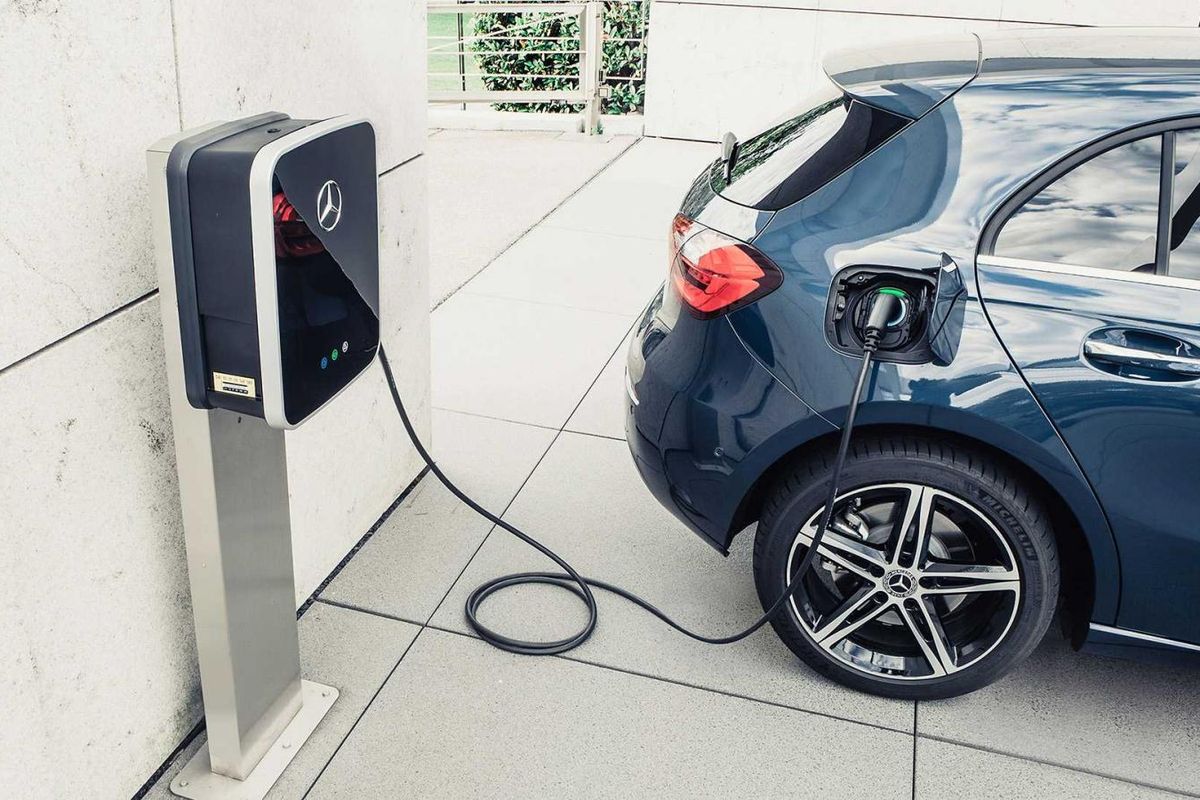
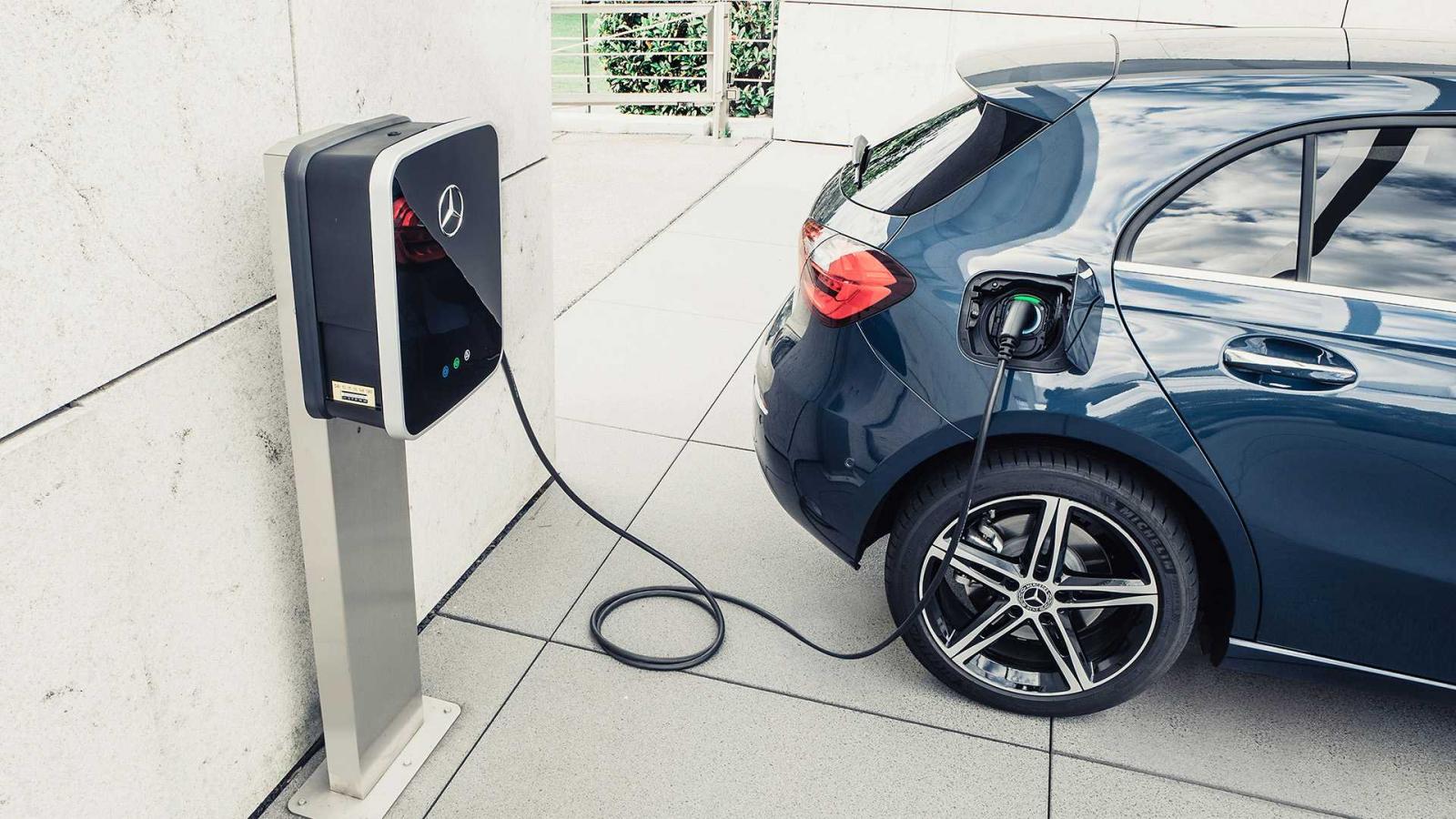
Recharging the A250e or B250e isn’t an issue either. Using a 7.4 kWh wall unit charger will repower the battery to full capacity, from a 10% power level, in 1hr and 45 min. If you have access to a rapid charger unit, only 25 minutes of plug-in charging will repower 70% of the battery capacity.

Hot hatch performance with absolutely unbeatable fuel economy. Mercedes-Benz appears to have struck upon an inspired hybridisation product with its new A250e and B250e models. The only debit would be mass, with these cars being 150 kg heavier –  but with the performance and economy benefits they offer, does that even matter?

Here's our review on the A200 we drove in 2018.

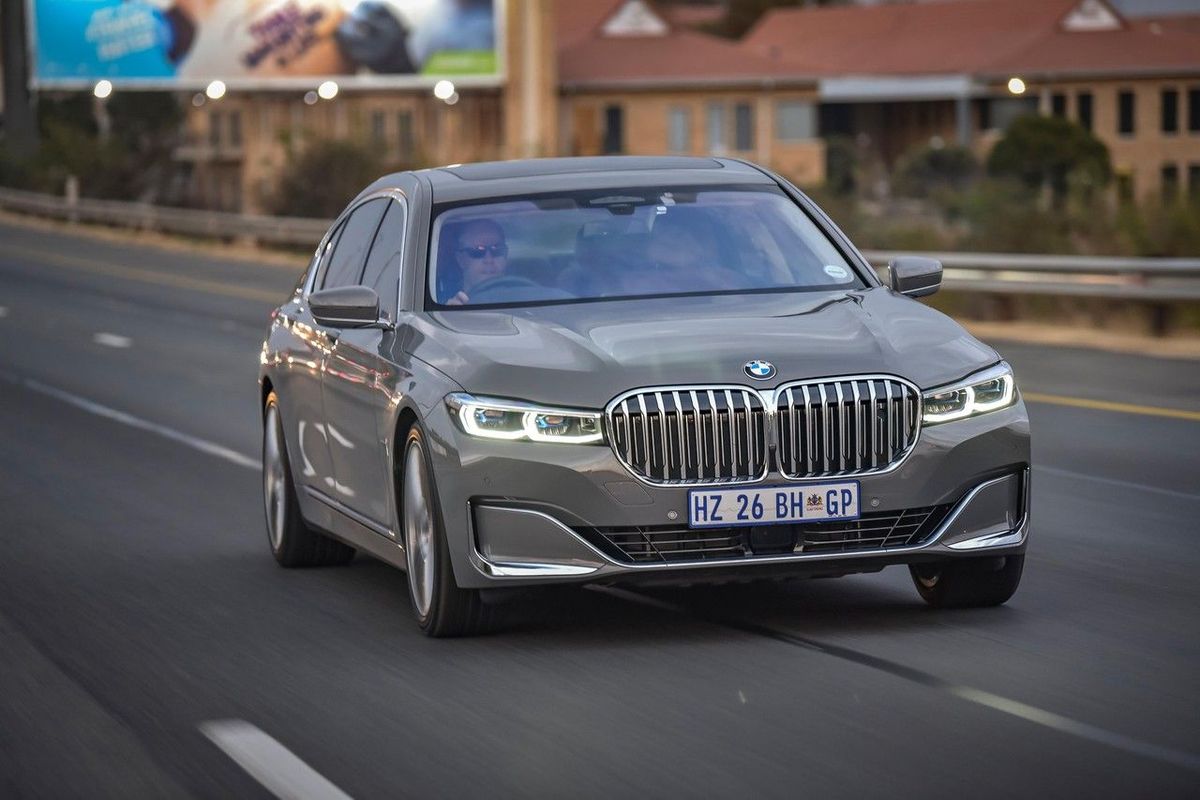
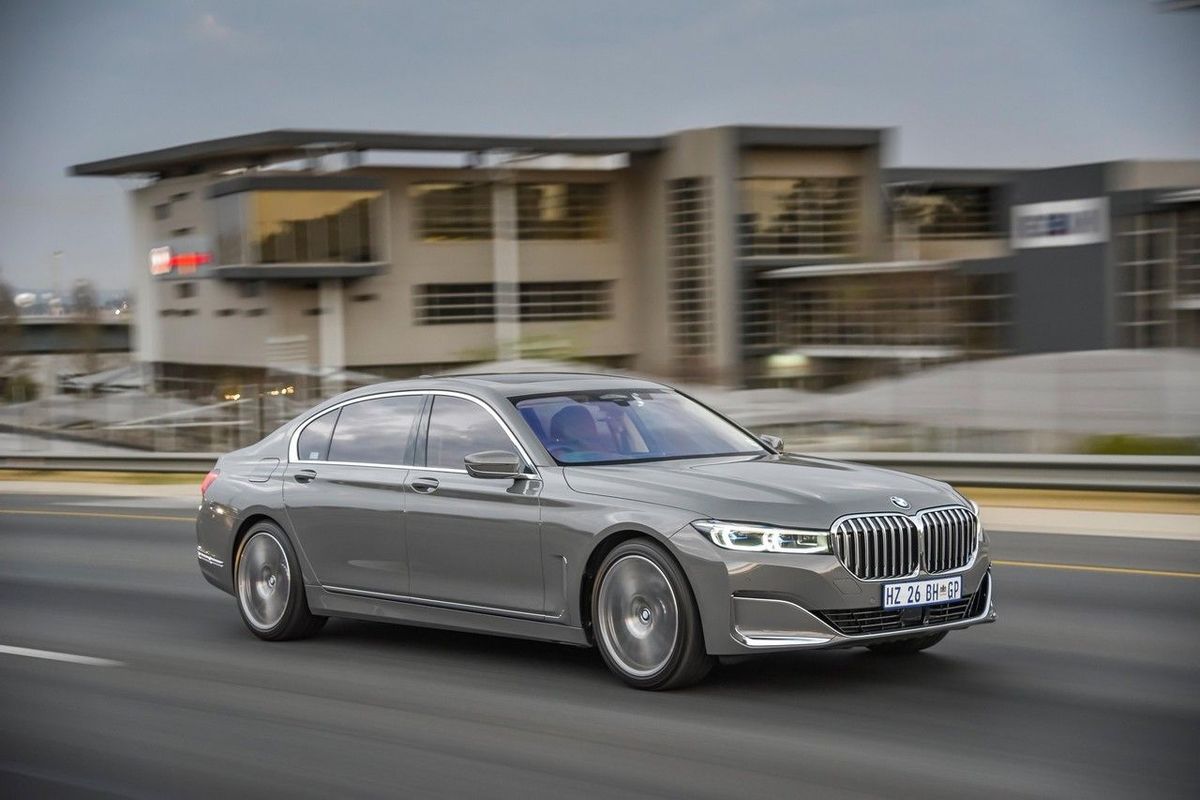
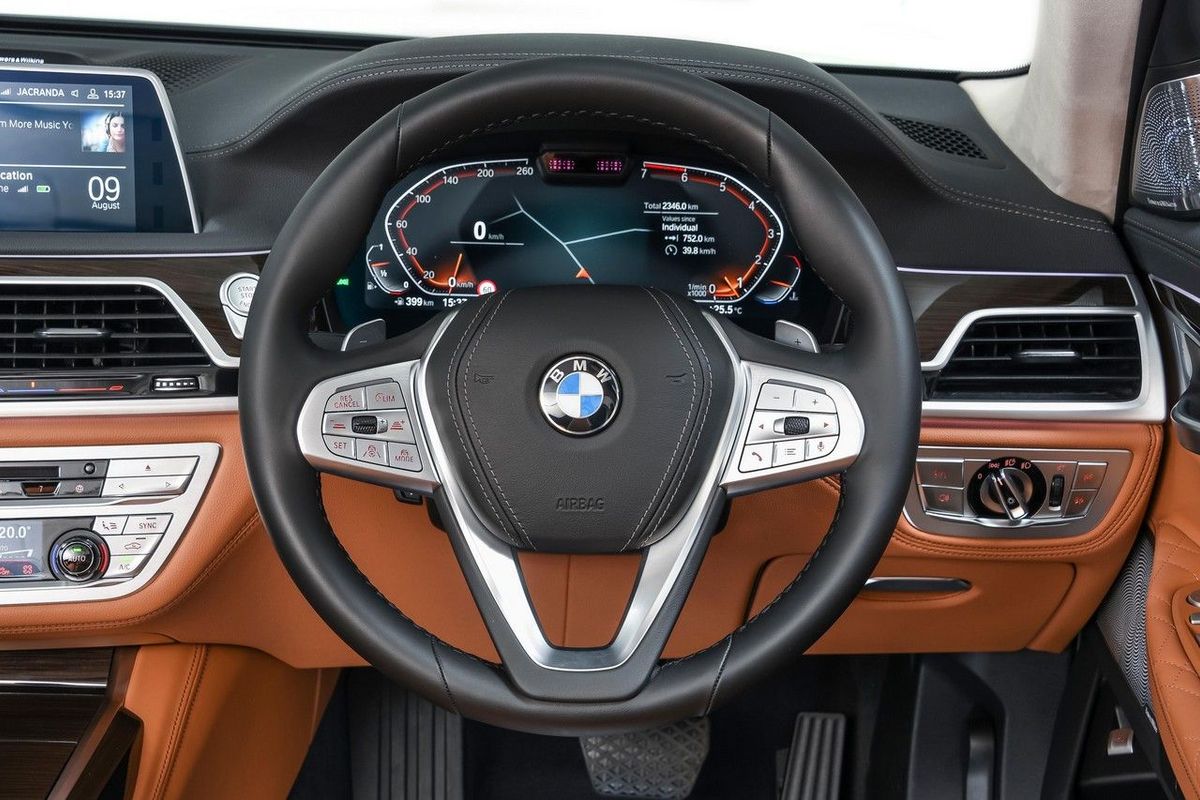
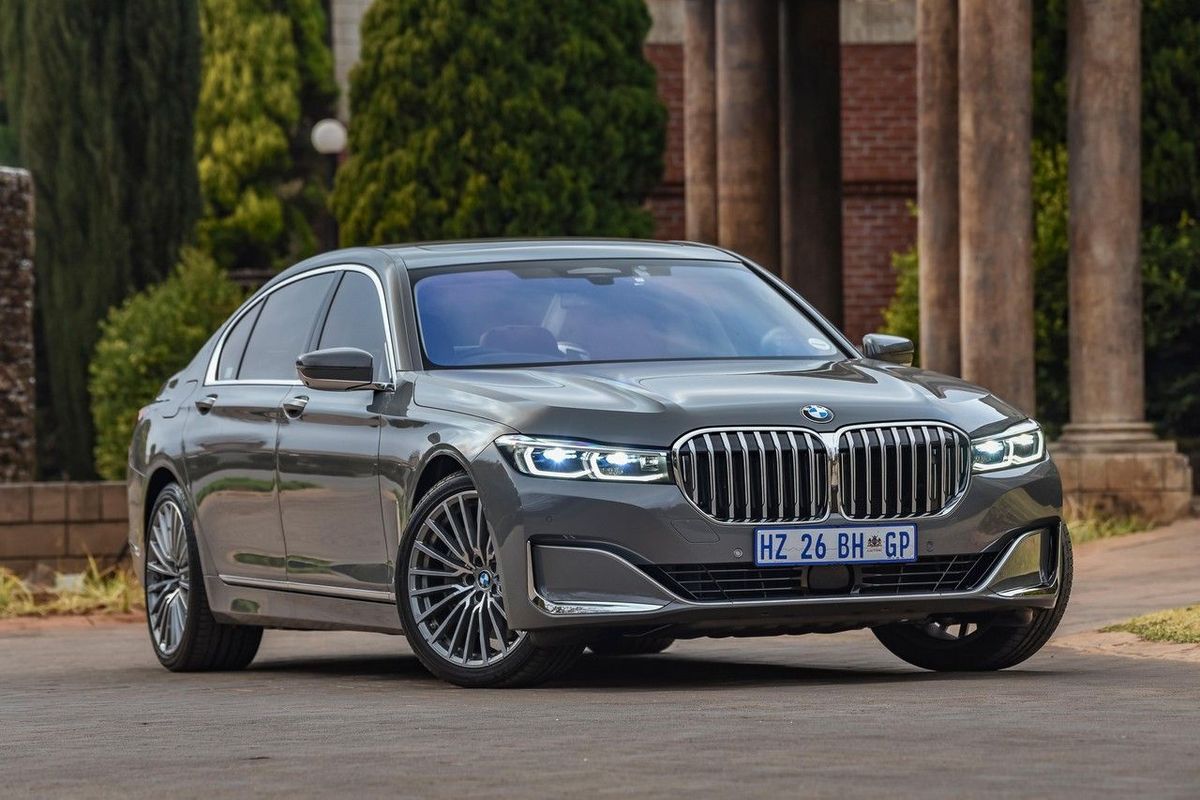
BMW 7 Series (2019) Specs & Price

The facelifted BMW 7 Series has arrived in South Africa. Here are the specifications and pricing for the luxury executive sedan.

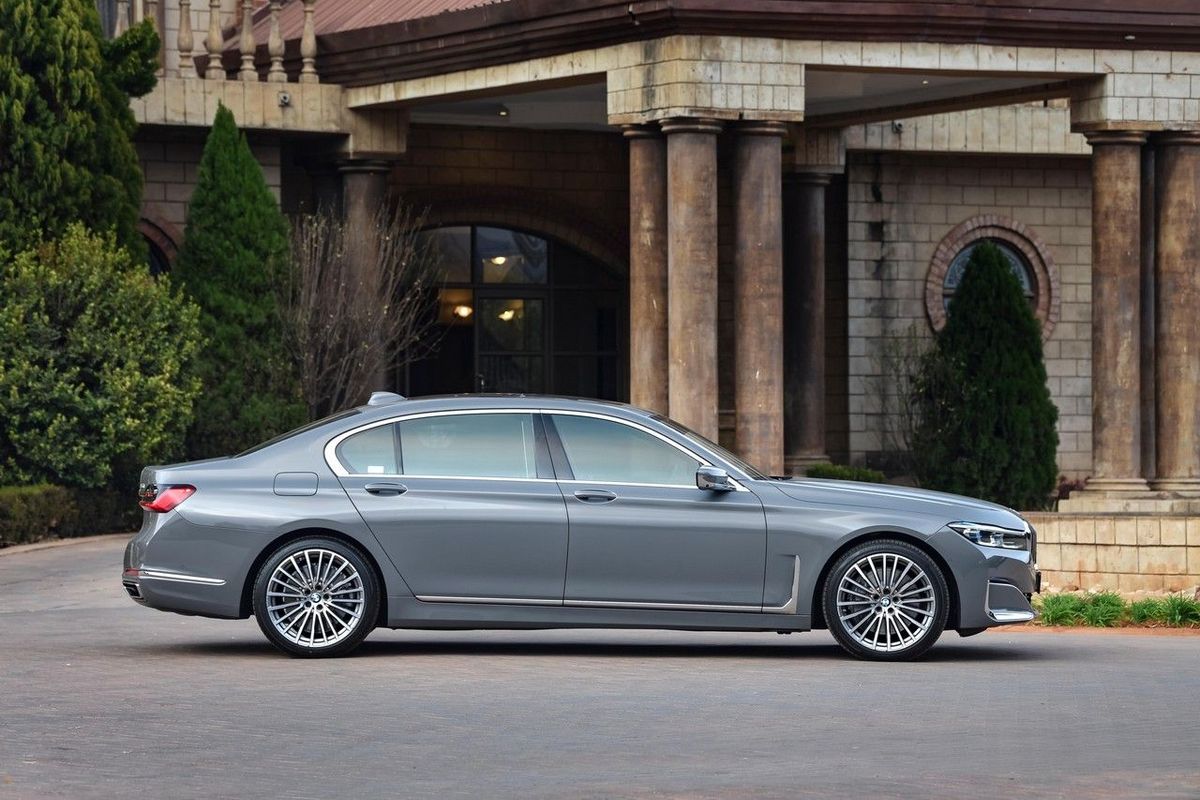
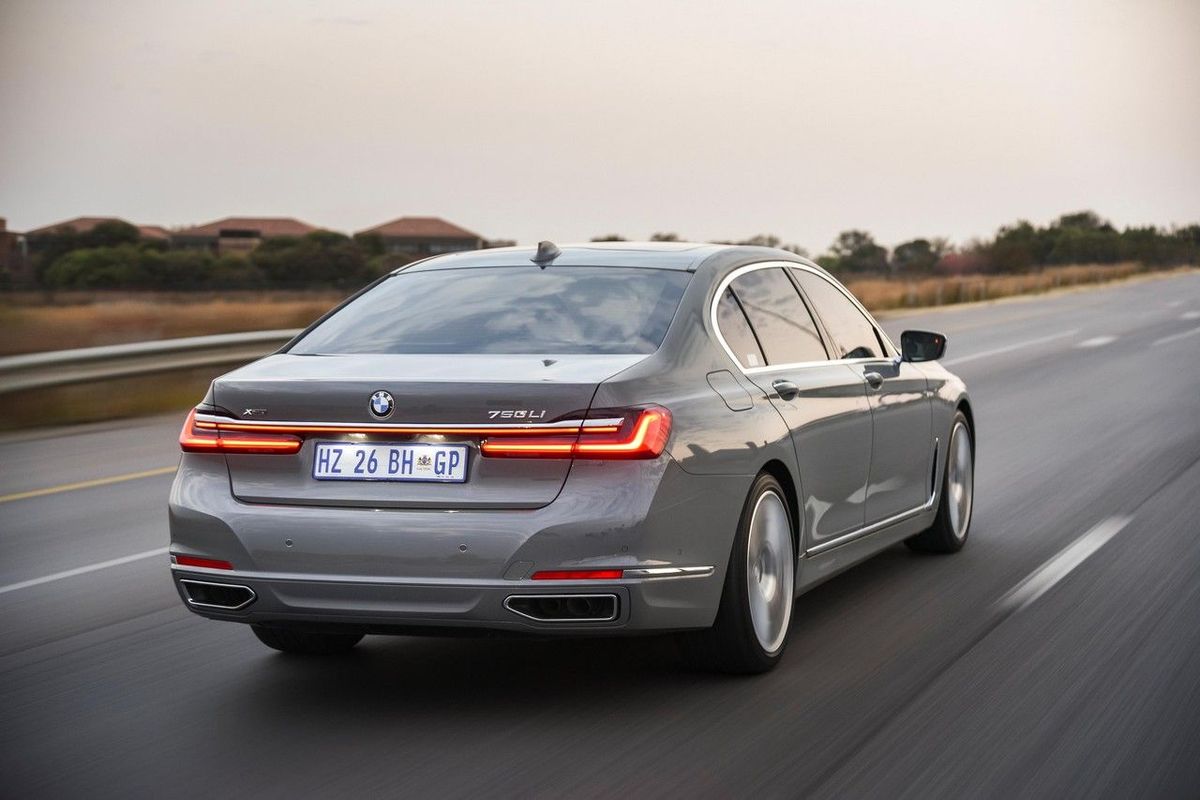
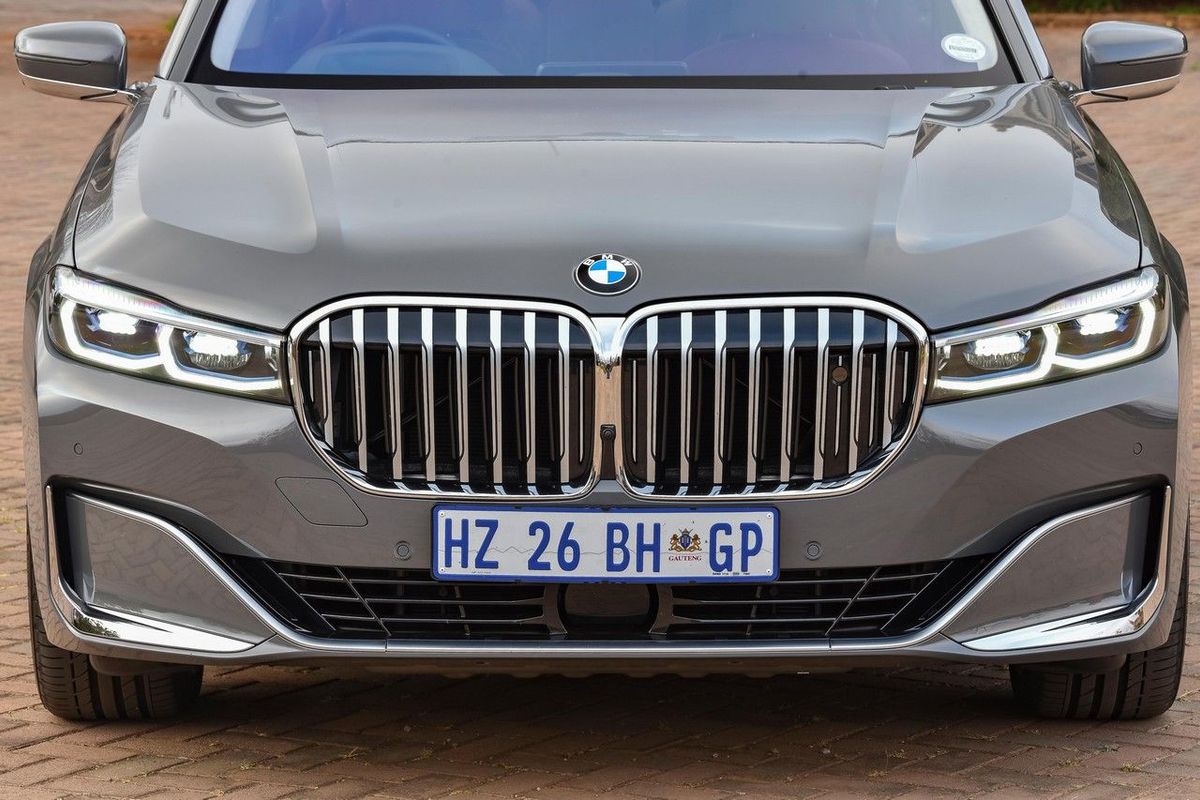
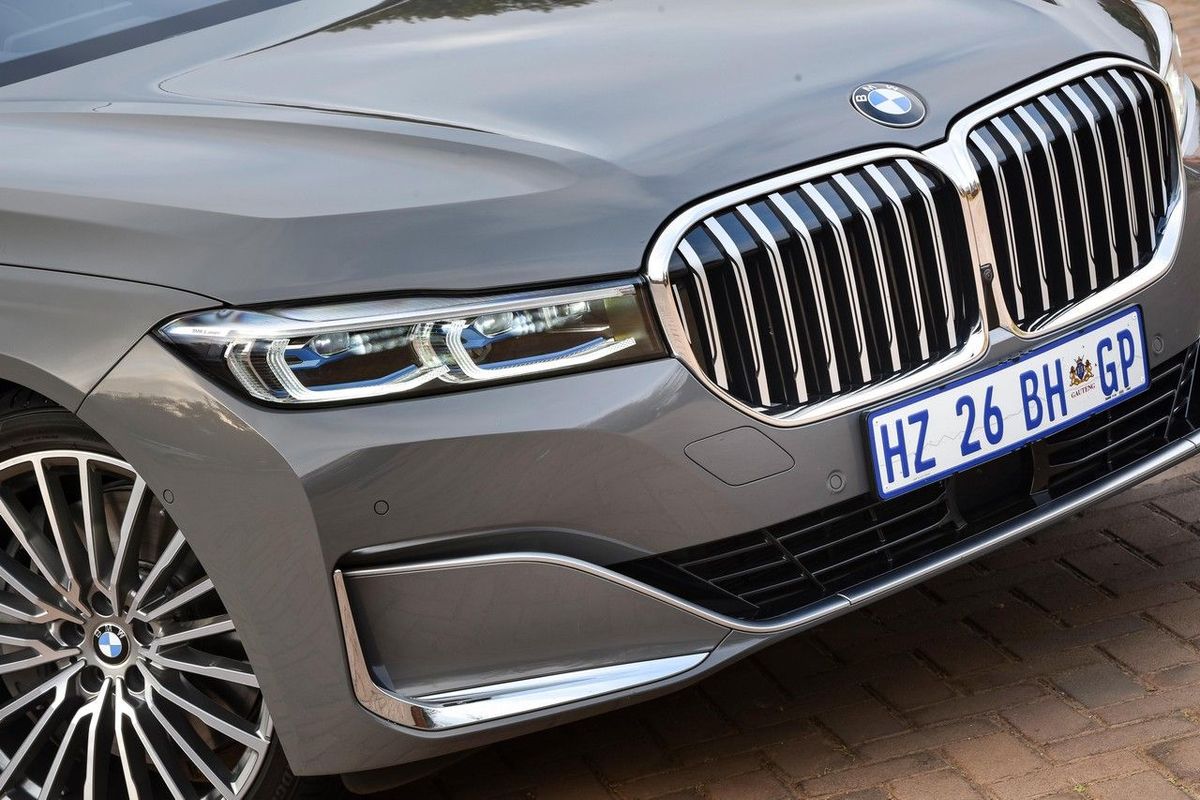
The updated BMW 7 Series is here. Available in either standard length or long-wheelbase, the big and bold 7 Series is 22 mm longer than the outgoing model and yes, it's dominated by the imposing grille at the front. There are also tweaks to the rear design, giving it a fresher and more modern look. 

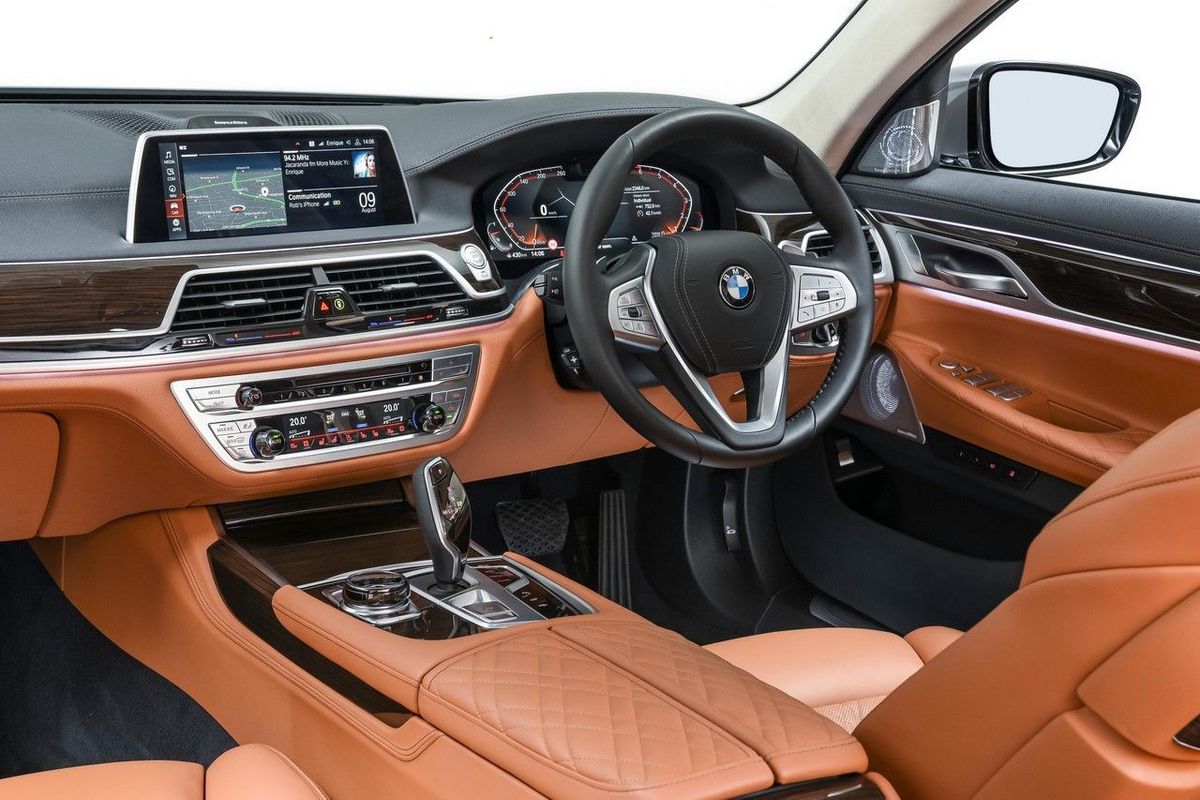
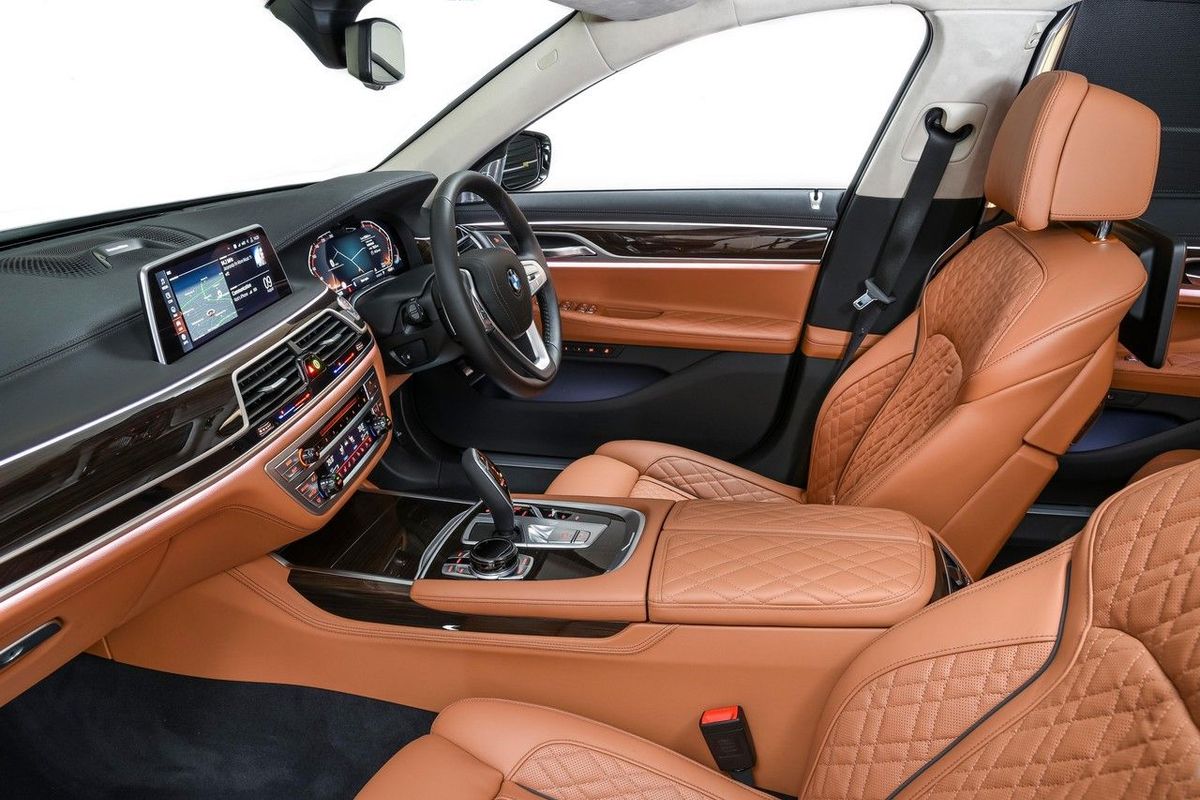
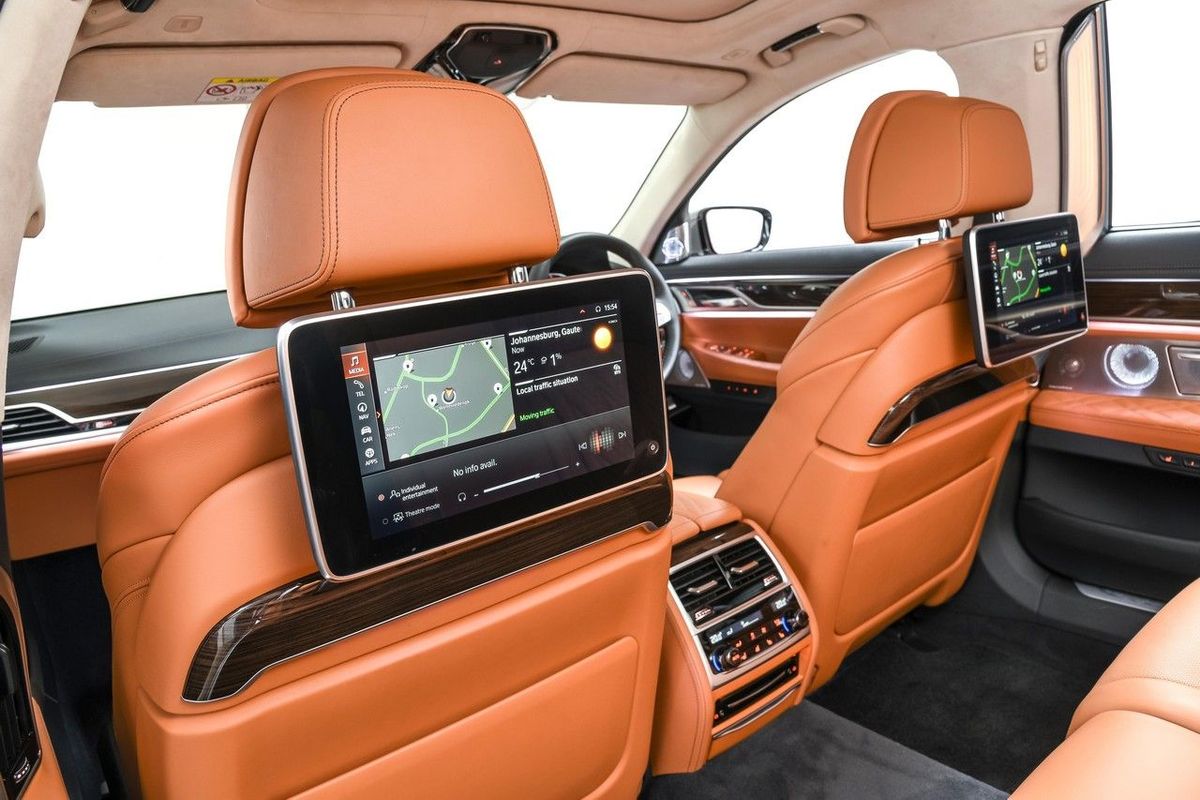
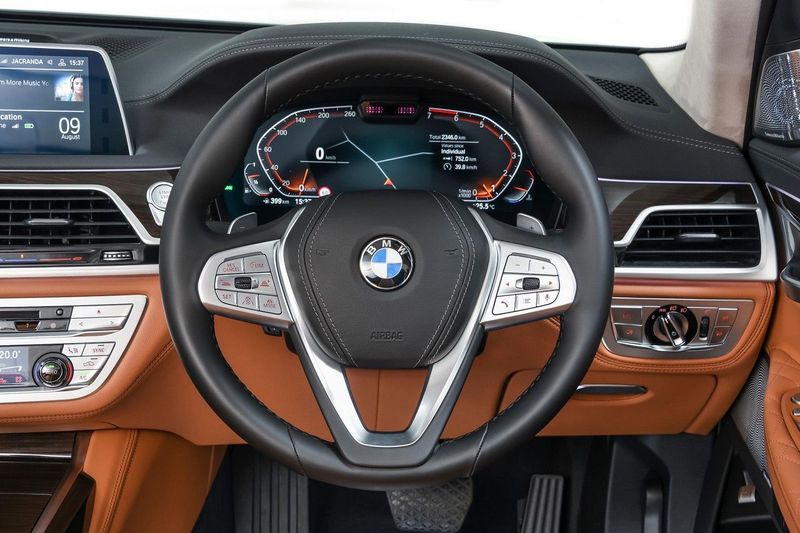
Inside, there's a big focus on prestige and status, with attention to the acoustic treatment. There are also new cabin material options. BMW's new dashboard makes its debut here, as does the 'Hey BMW' digital assistant. In terms of powertrain, BMW has tweaked the engine lineup. Starting us off is the 740i, with a 3.0-litre turbocharged 6-cylinder with 250 kW and 450 Nm. It's capable of a 5.6 second claimed sprint to 100kph and consuming just 7.9 L/100. 

Next up is the 4.4-litre turbocharged V8 750Li, with 390 kW and 750 Nm. It's a brisk limousine, with BMW claiming 4.1 seconds to 100 kph and consumption of 10.2 L/100 km. The 6.6-litre twin-turbocharged V12 engine does duty in the M760Li and with 448 kW and 850 Nm, this is the fastest 7 Series you can get. It'll dispatch the 0-100 kph in a claimed 3.8 seconds. 

For those wanting diesel, a 3.0-litre 6-cylinder turbodiesel with 195 kW and 620 Nm is available. BMW claims 5.7 L/100 km for consumption, but it's still going to offer impressive performance (6.2 seconds to 100 kph) for such a large vehicle. Finally, there's a plugin hybrid option with the 745Le. The petrol/electric 3.0-litre 6-cylinder setup produces 290 kW and 600 Nm, while the economy claim of 2.8 L/100 km sounds incredible! 

The BMW 7 Series is available in either Standard, M Sport or Individual specification. All versions of the new BMW 7 Series feature adaptive suspension including electronically controlled dampers and two-axle air suspension with automatic self-levelling as standard.

BMW 7 Series Price in South Africa (August 2019)

BMW 740Li                                                     R1 638 400

BMW 750Li                                                     R2 156 700

BMW M760Li xDrive                                       R2 806 400

BMW M760 Li xDrive V12 Excellence            R2 806 400

BMW 730Ld                                                    R1 669 400

BMW 745Le xDrive                                         R1 755 300

Further Reading

Facelifted BMW 7 Series Announced – Coming to SA in Q2 2019

BMW 7-Series (2016) First Drive

BMW 740e (2017) Quick Review

BMW M760Li xDrive (2018) Quick Review

BMW 7 Series: A Tech Showcase [with Video]

Drag Race: BMW M4 Competition Pack vs BMW M760Li

Special Edition Lambos for Company Birthday

Lamborghini gives itself a pretty impressive 63rd birthday present. Or two. 

As summer peaks in the Northern Hemisphere car enthusiasts gather in the exclusive Californian enclave of Monterey, for a week of celebrating exotic cars.

A highlight of this year’s Monterey car week will be two limited-edition offerings from Lamborghini, both debuting at the American event.

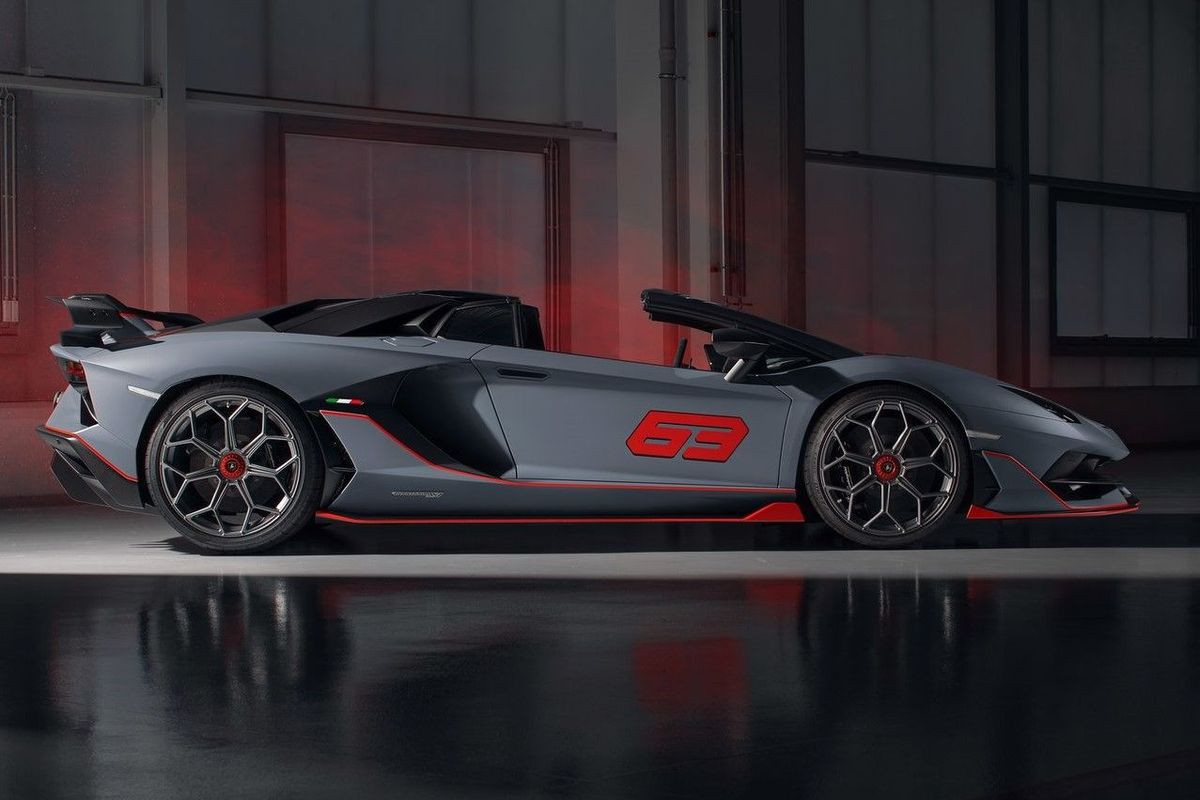
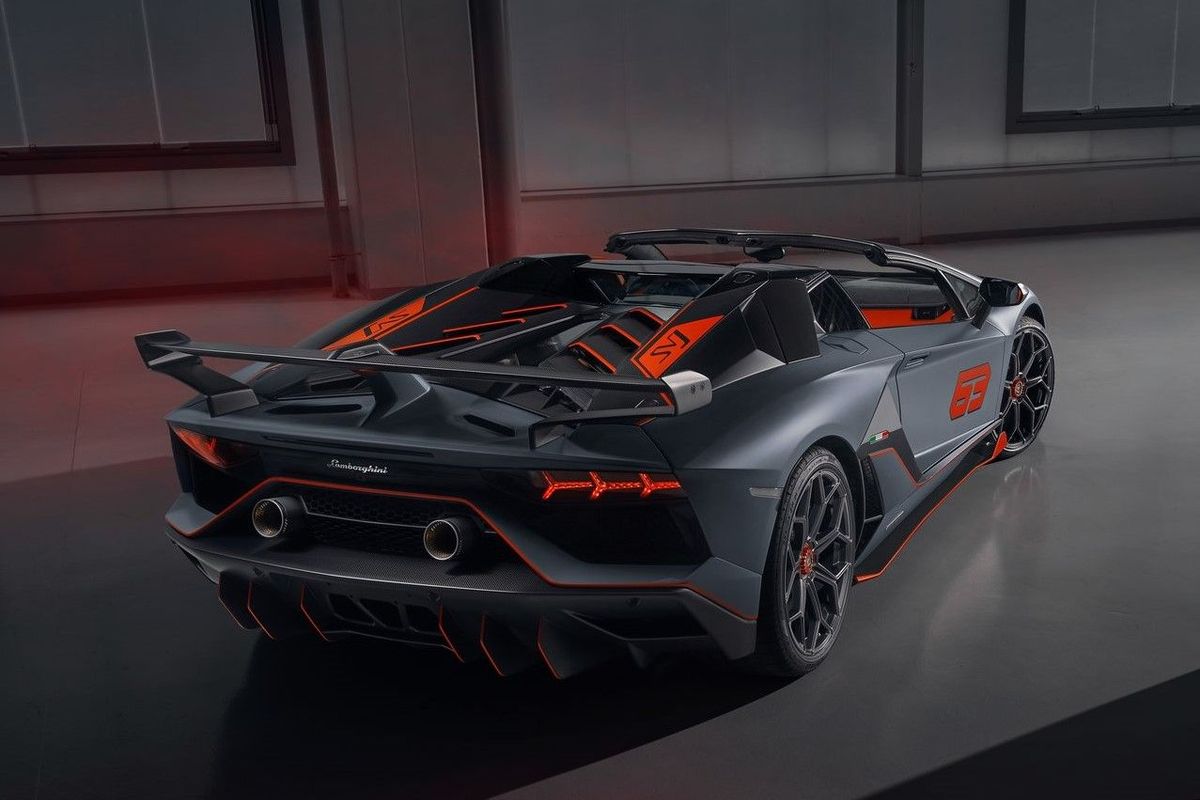
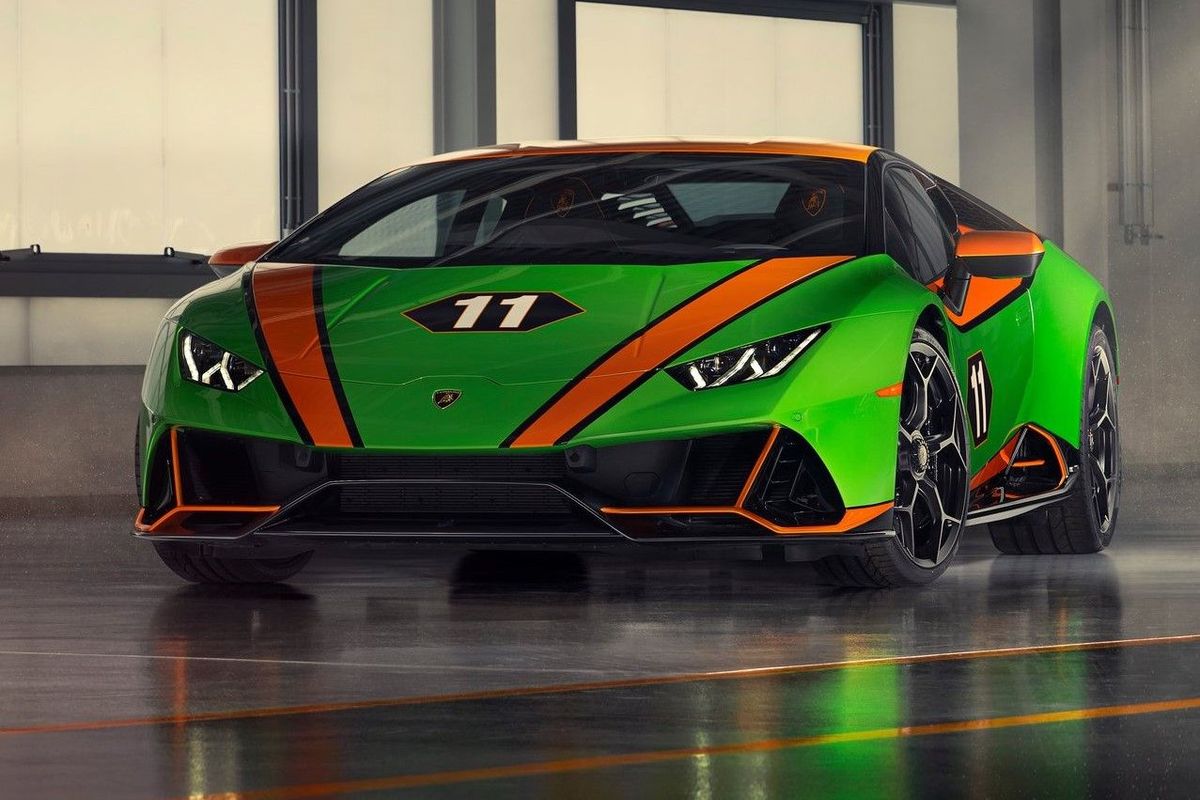
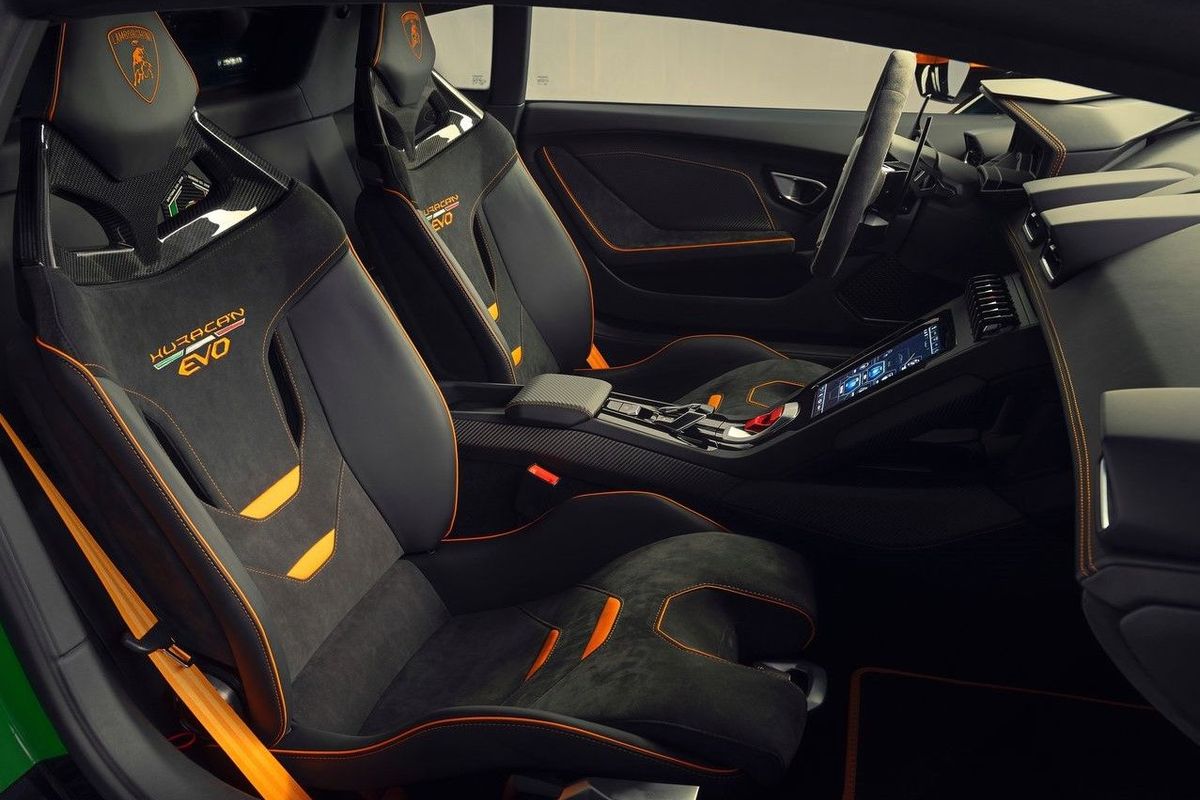
The Aventador SVJ 63 Roadster and Huracan Evo GT Celebration are the latest releases from Lamborghini and for keen followers of the brand, these two new cars are sure to become future classics.

With even bolder styling than the standard Aventador SVJ, the ‘63’ car adds additional carbon-fibre roof and cabin trim, special edition badging and a set of forged titanium wheels. Its purpose is to celebrate 63 years of the Lamborghini brand. 


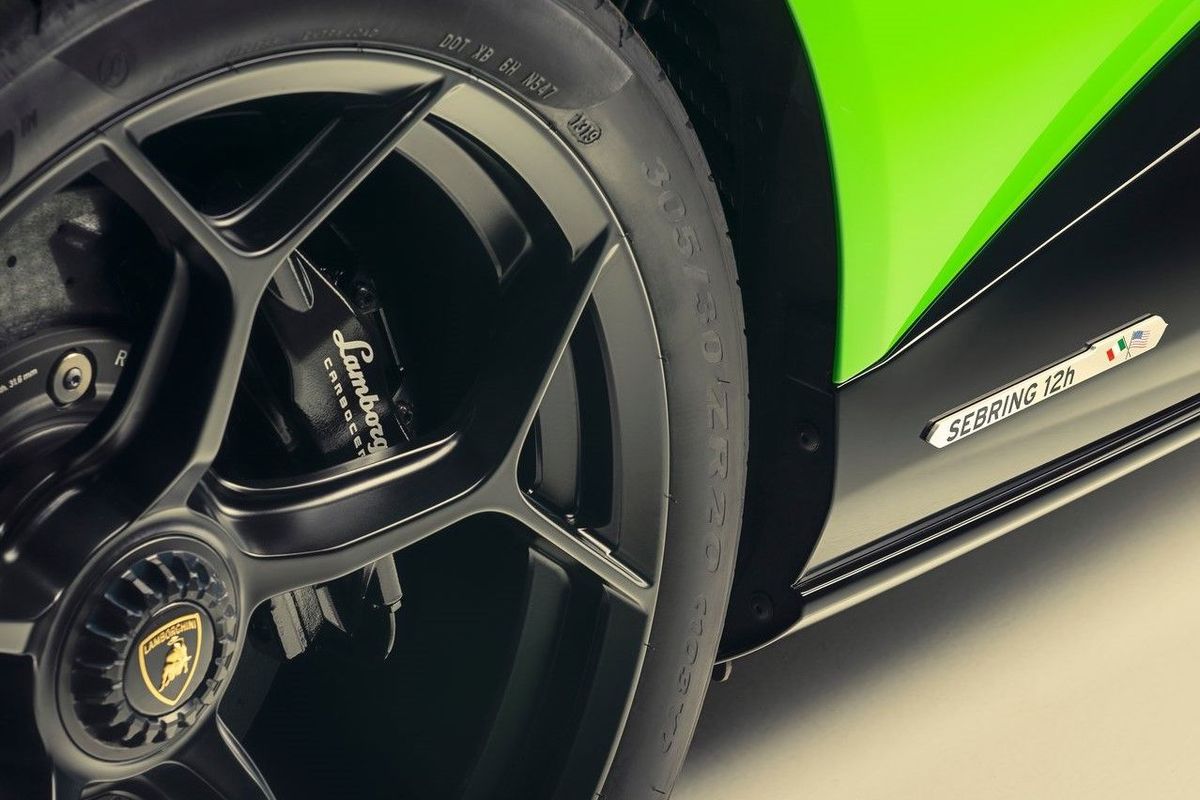
Huracan Evo GT pays tribute to its Sebring 12h wins.

Powering the Aventador SVJ 63 Roadster is Lamborghini’s celebrated 6.5-litre naturally-aspirated V12 engine, producing 566 kW and 720 Nm. Performance is guaranteed to be dramatic and Lamborghini claims 0-100 kph n 2.9 seconds and a top speed well in excess of 300 kph.

Lamborghini will only be producing a total of 63 of these special edition roadsters – as you might have guessed from the naming convention.

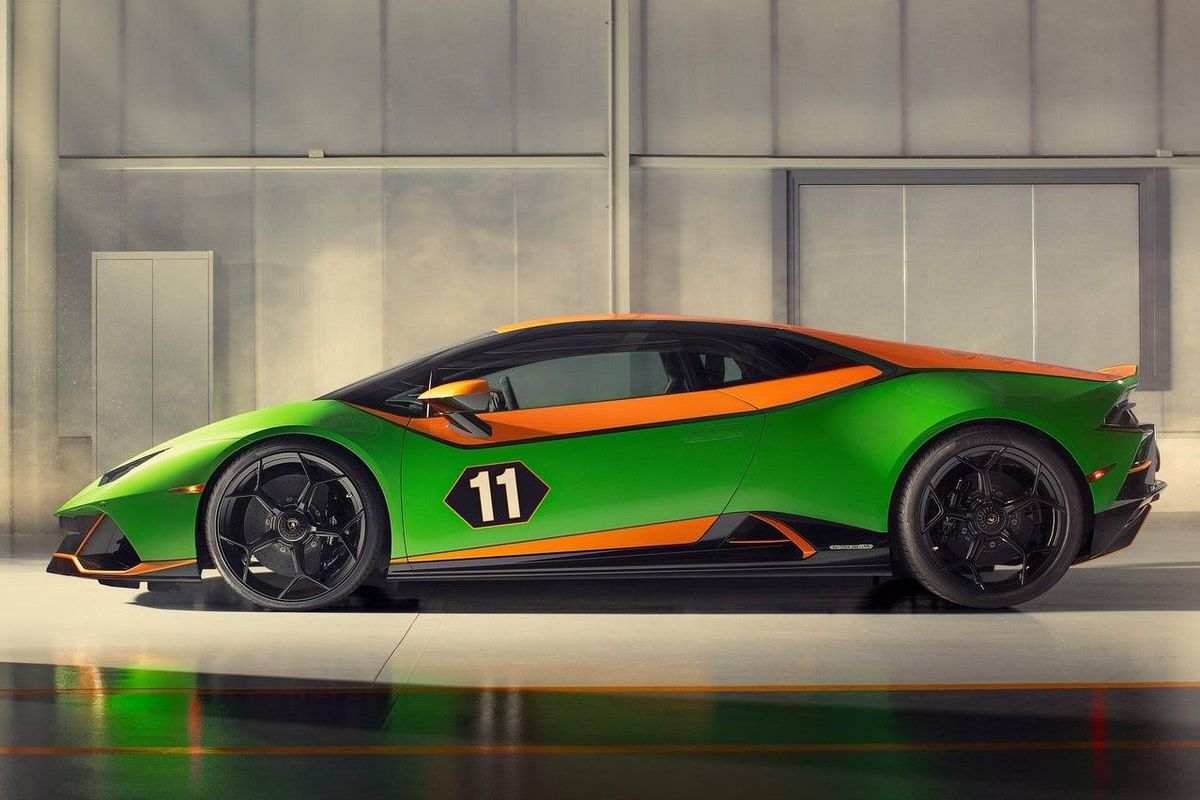
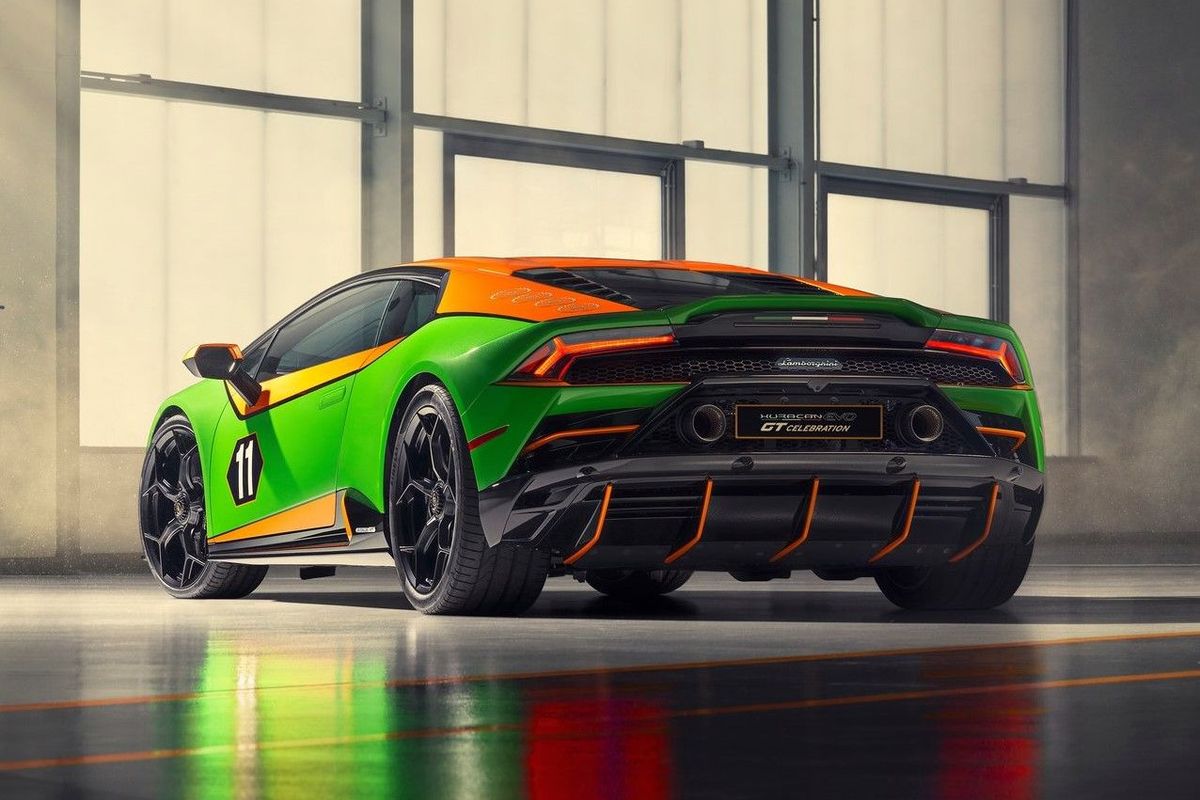
If you prefer a smaller special edition Lamborghini, with a fixed metal roof, the Huracan Evo GT Celebration might pique interest.

With a total production run of only 36 examples, it more exclusive than the V12 SVJ 63 Roadster and traces Lamborghini’s motorsport heritage, celebrating the brand’s the 24 Hours of Daytona and 12 Hours of Sebring wins.

The Huracan Evo GT’s striking livery and colour combinations are inspired by the same graphic work present on the Grasser Racing Team cars. Besides the exclusive exterior colour finishes, these Huracan Evo GTs feature an array of number ‘11’ badges, applied to the frunk-lid, wheel centres and door trim.

Related content

Lamborghini Huracan Evo (2019) International Launch Review [w/Video]

Lamborghini's Gravel Travel Huracan


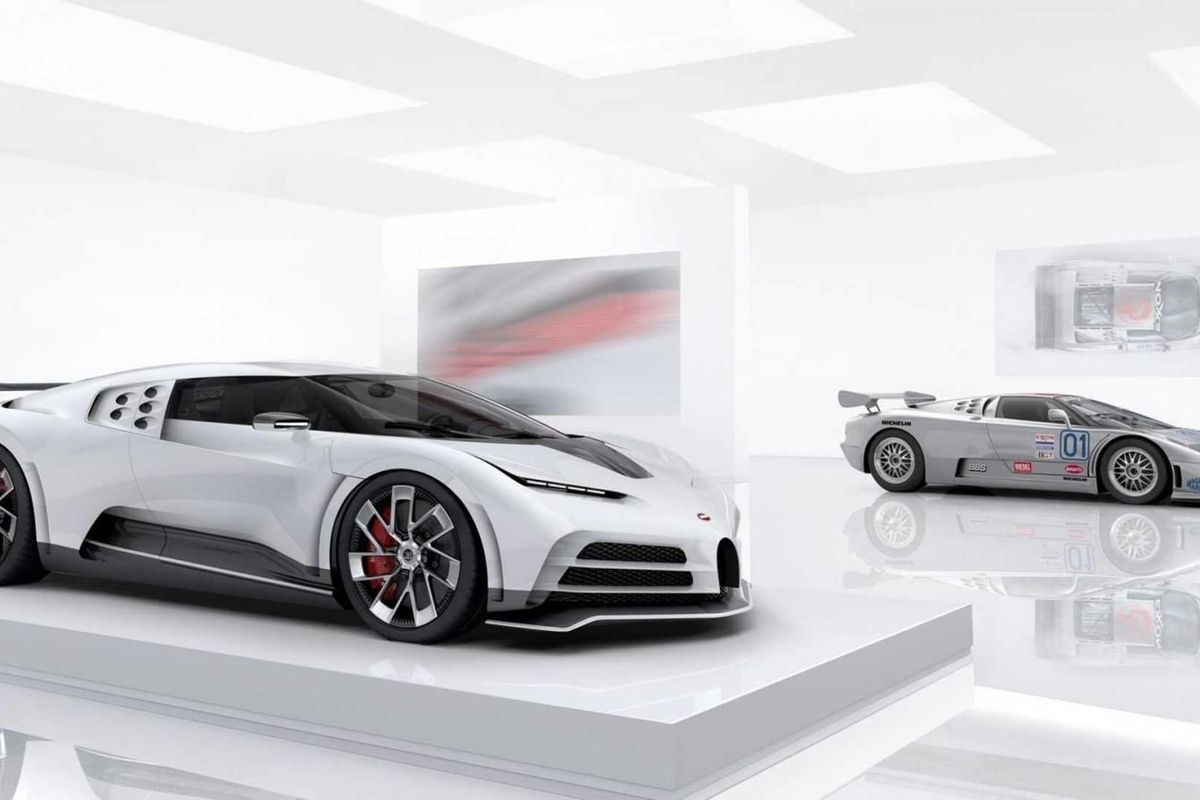
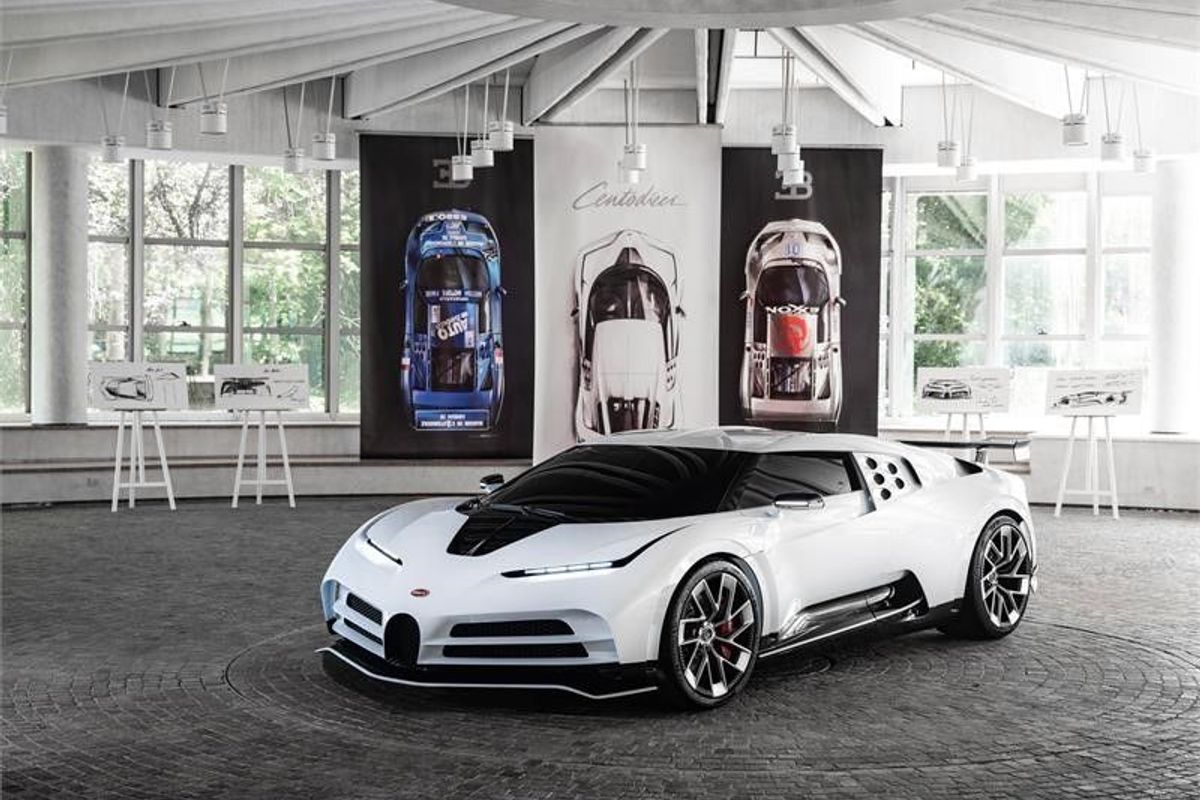
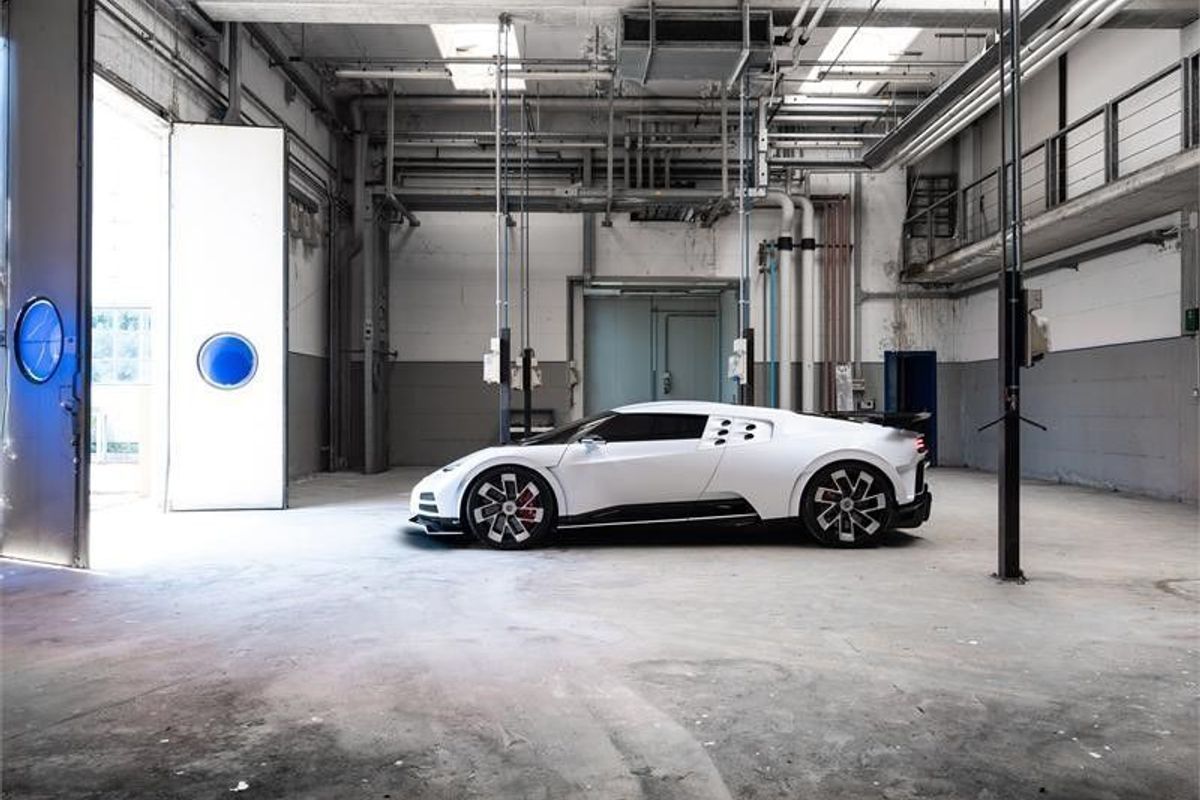
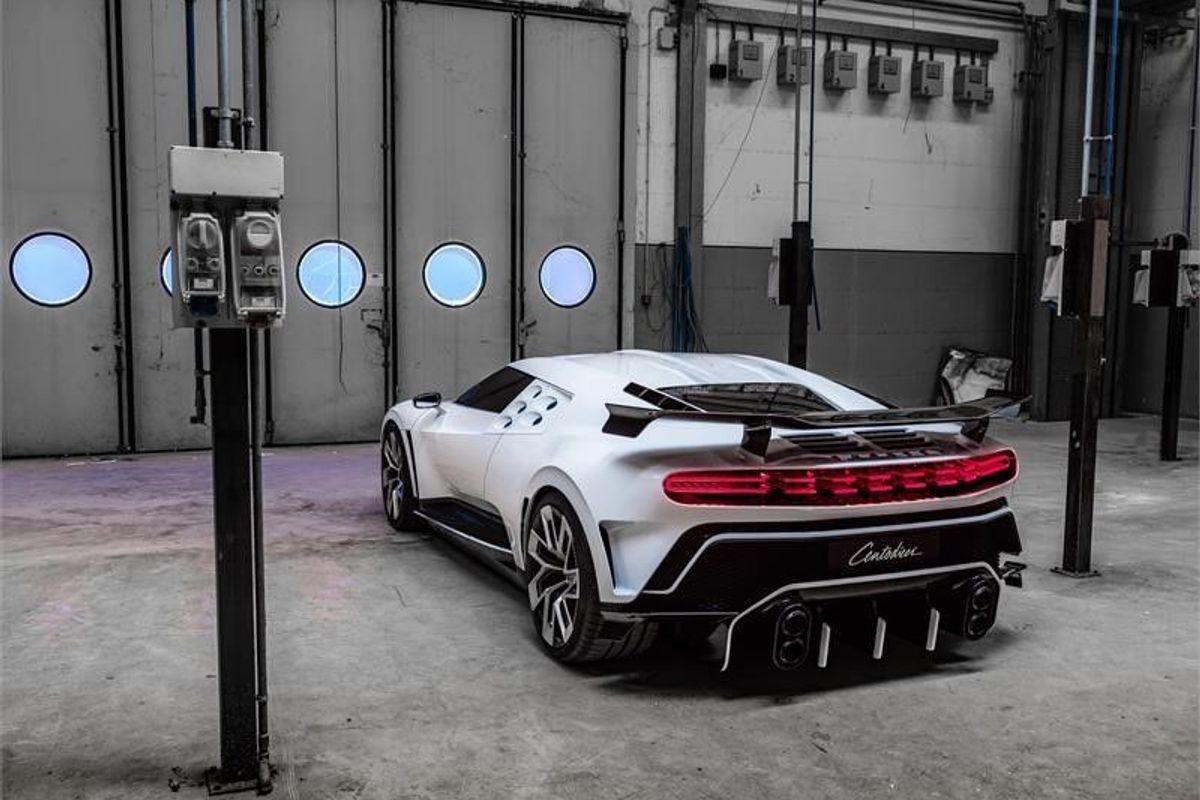
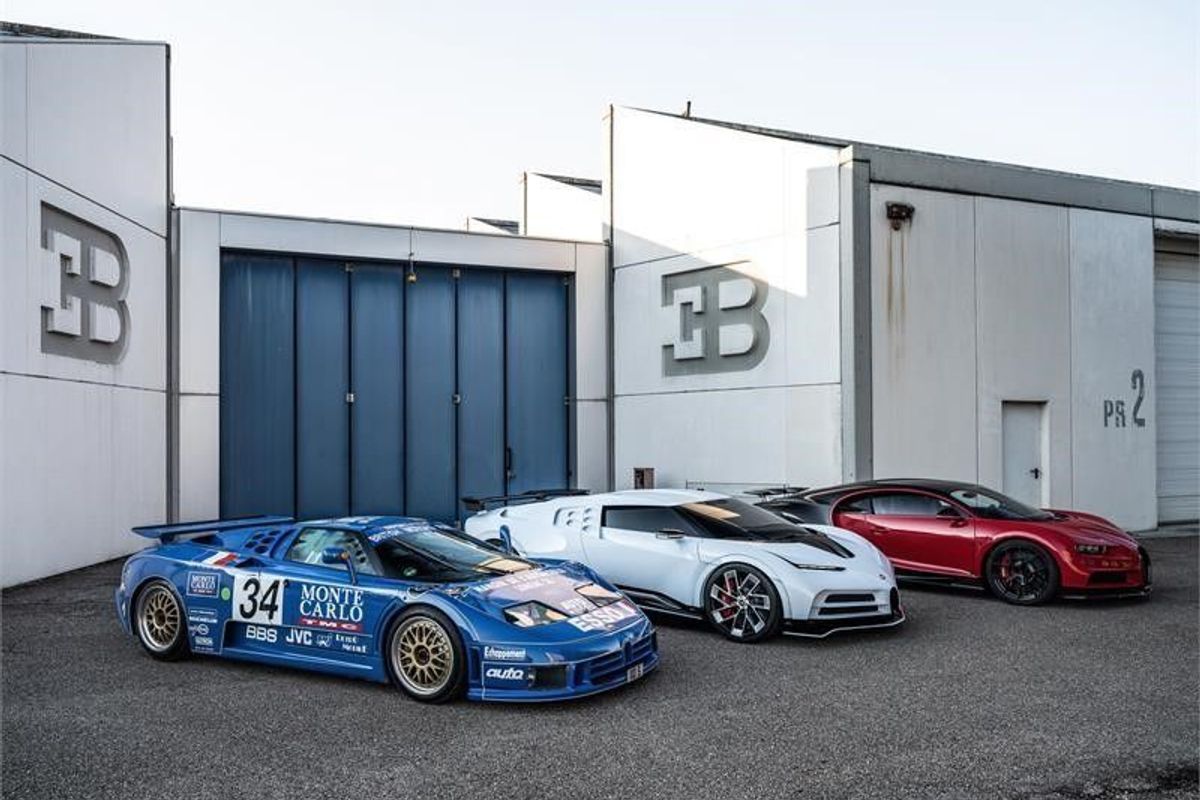
Powerful Bugatti Centodieci Revealed

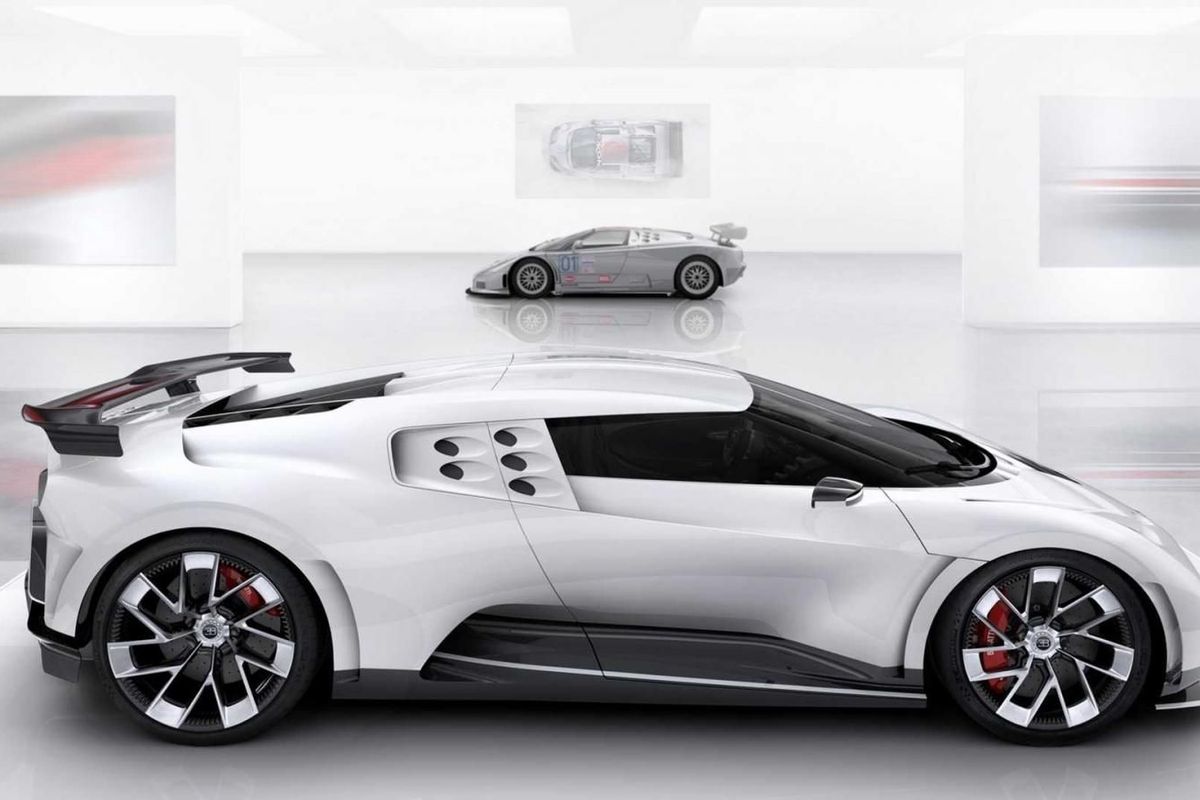
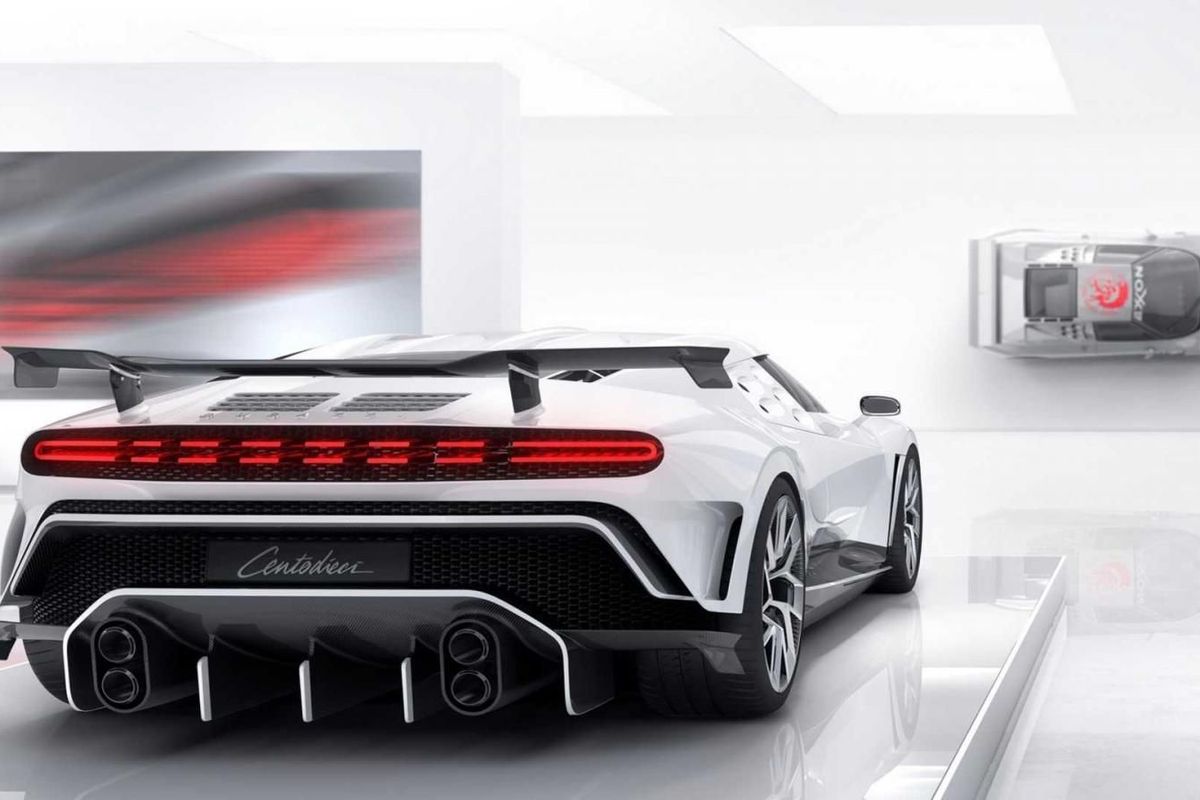
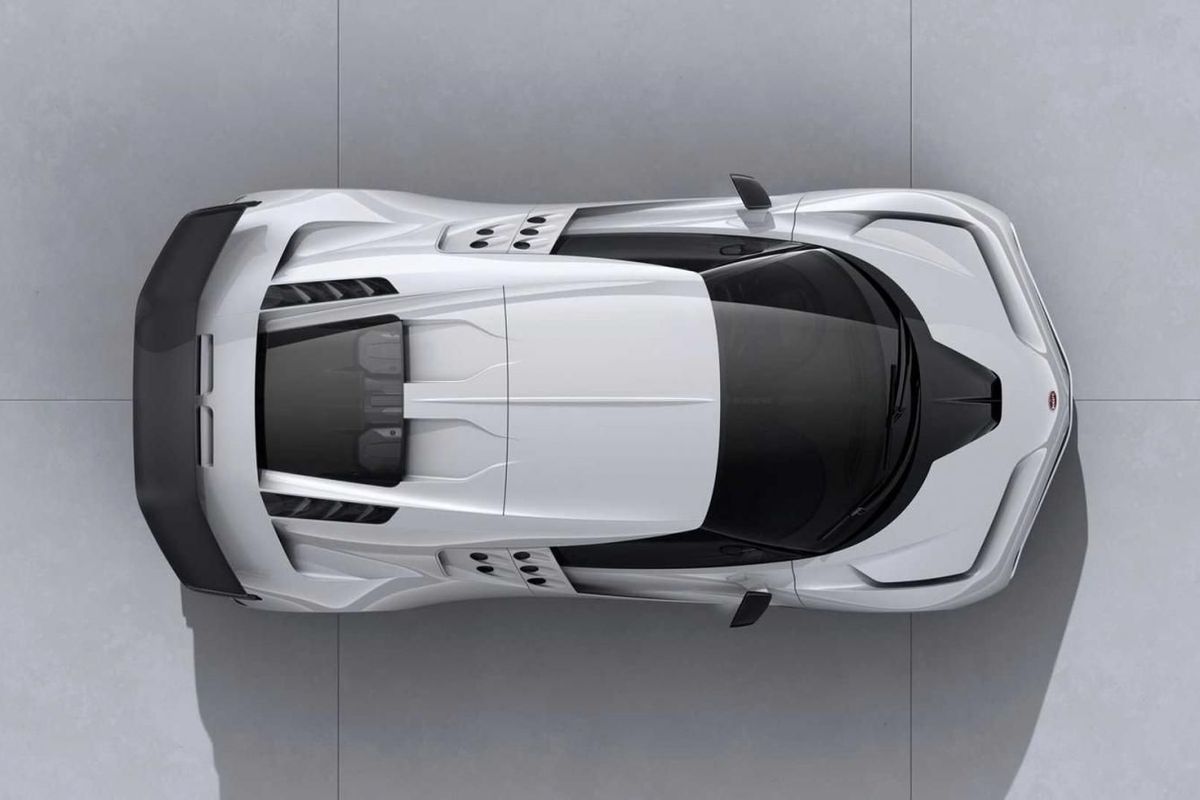
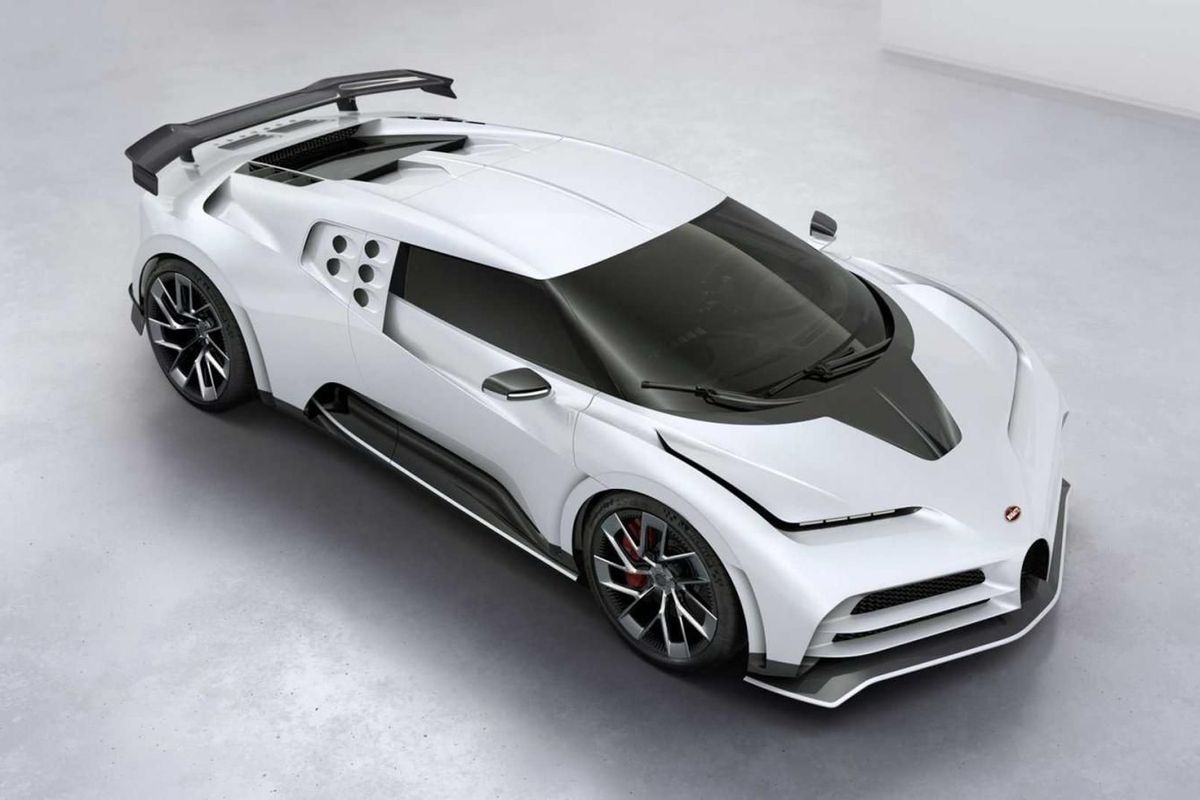
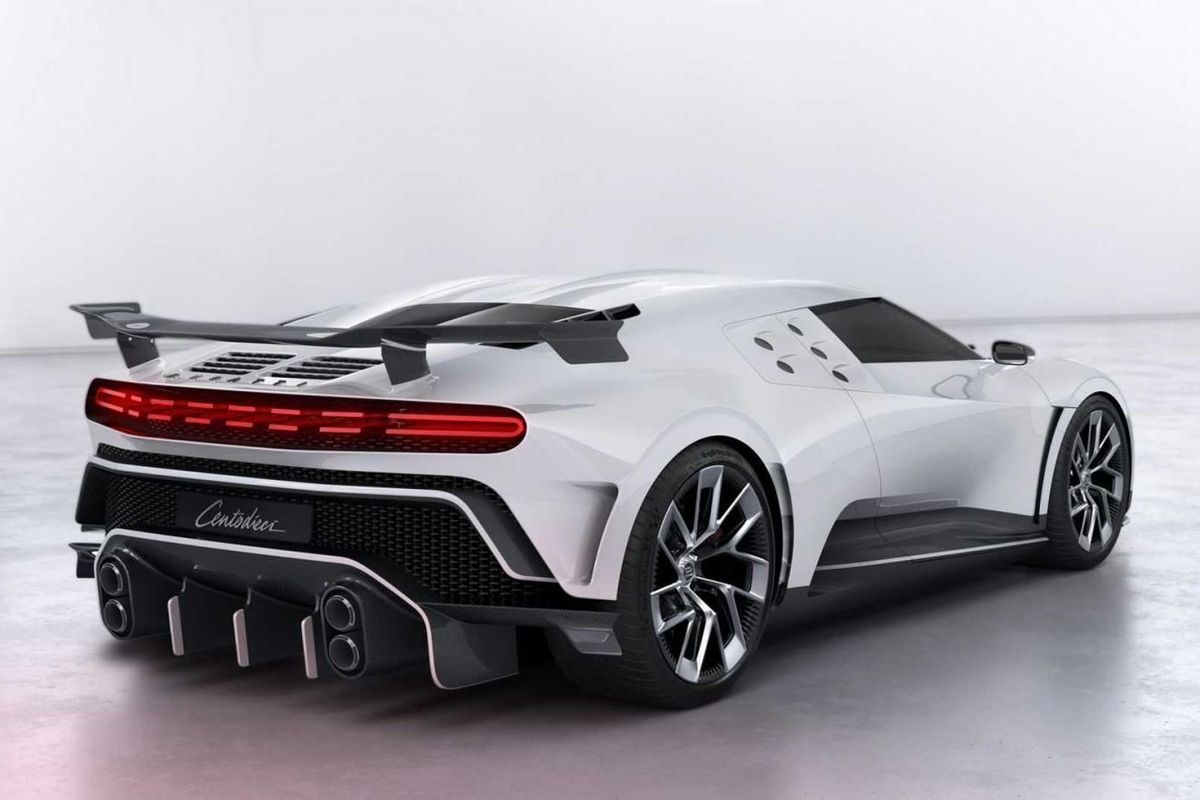
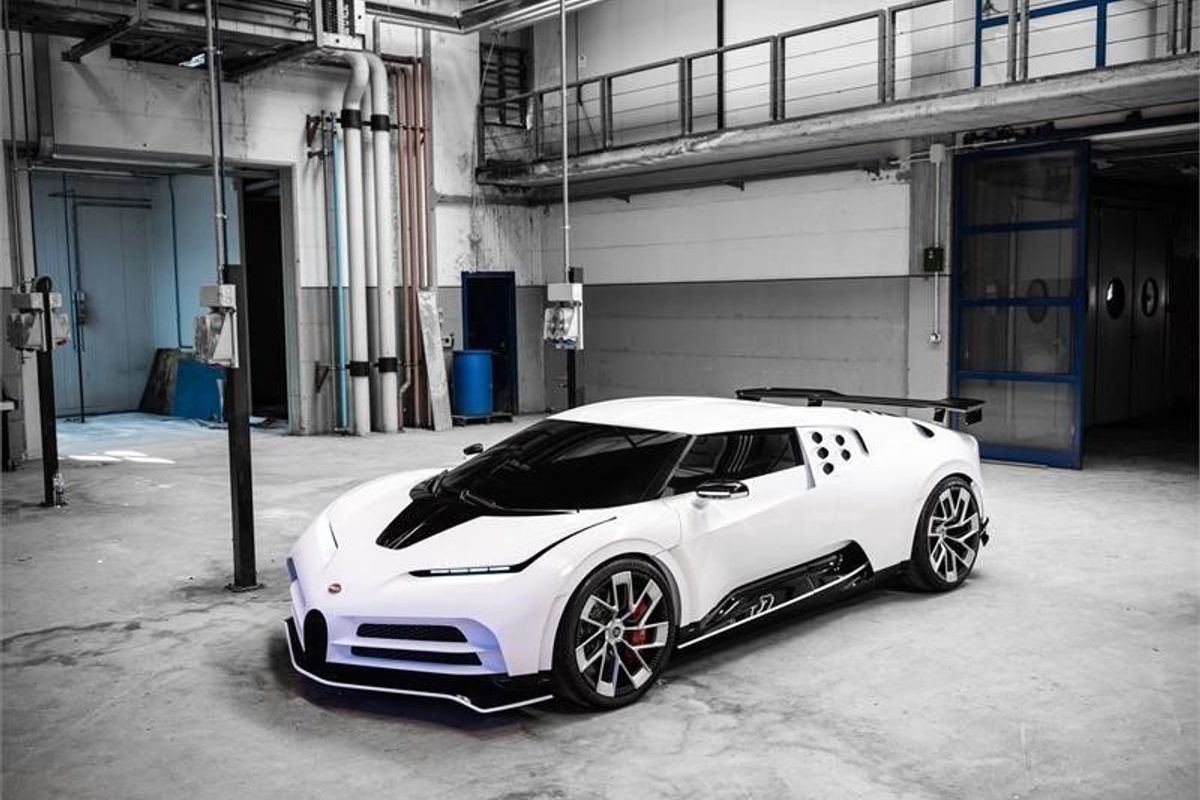
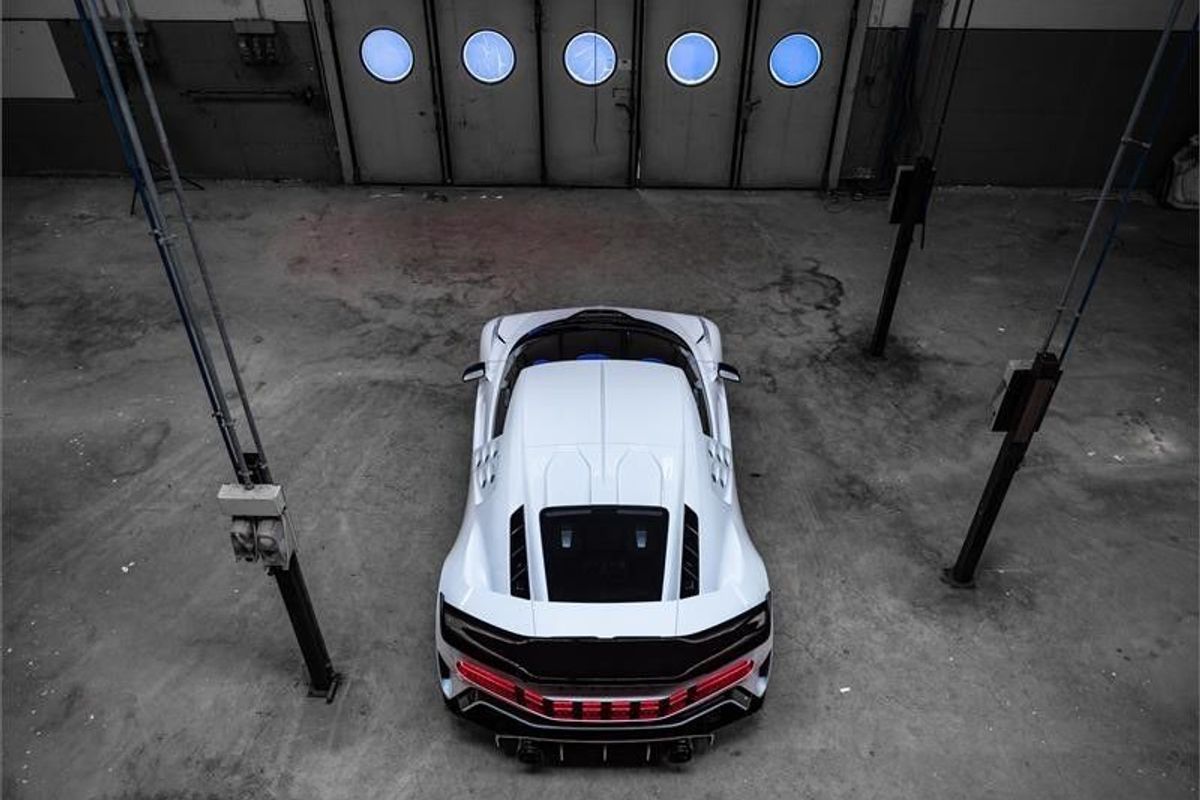
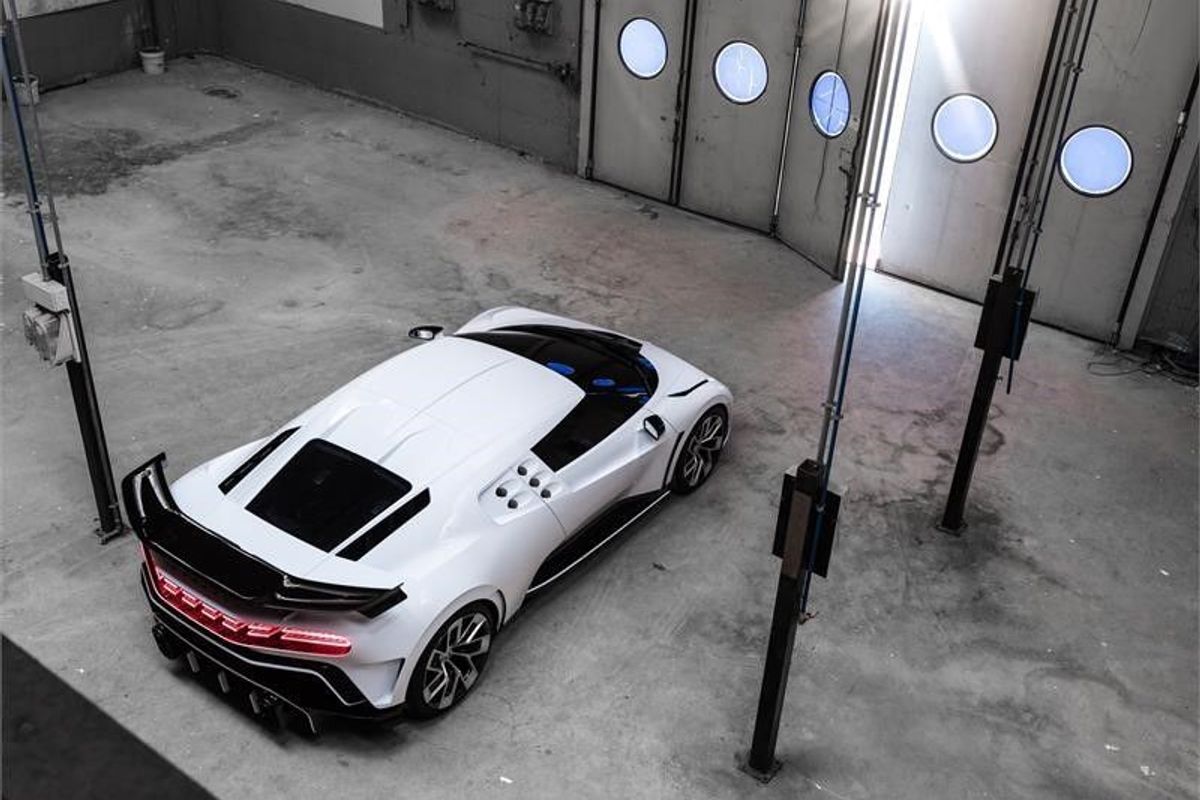
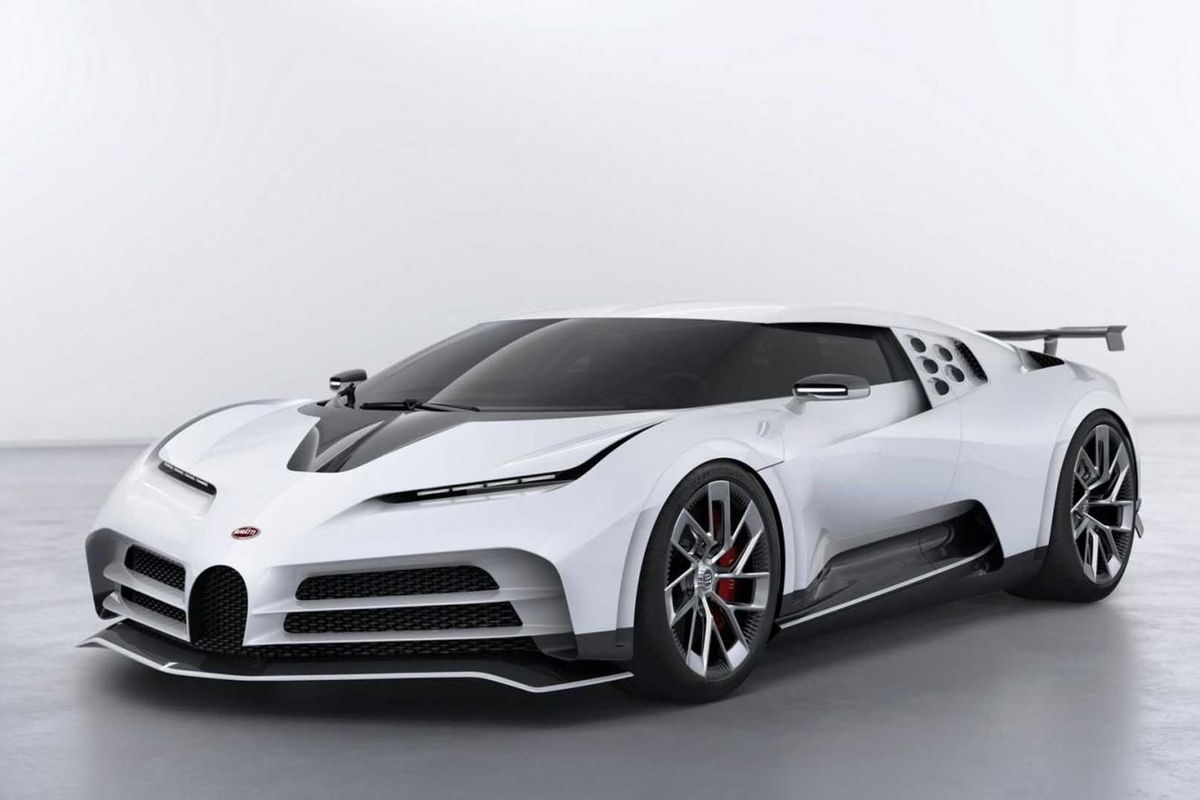
Bugatti’s latest creation, the Centodieci, which pays homage to the EB110 of the '90s, has been revealed at the Pebble Beach Concours d’Elegance over the weekend.  

Taking inspiration from the Chiron and the Bugatti EB110 Super Sport (produced between 1991 and 1995), Centodieci looks menacing. The most recognisable throwback to the EB110 Super Sport is its wedge shape and the 5 cut-outs seen behind the windows, as well as that large rear wing, which undoubtedly keeps the vehicle glued to the road at speed. 

Talking about speed, the Centodieci features a W16, quad-turbocharged 8.0-litre engine which produces stellar outputs of 1 176 kW and it will smash zero to 100 kph in just 2.4 seconds and go on to reach a top speed of 420 kph. 200 kph comes up in just 6.1 seconds while getting to 300 kph will take just 13.1 seconds. Top speed is electronically cut off at 380 kph. 

"It's not just the top speed that makes a hyper sports car. With the Centodieci, we once again demonstrate that design, quality and performance are just as important. The increased power and lower weight further improve performance – for even better acceleration at high speeds. The Centodieci offers our customers an improved power-to-weight ratio and even more dynamic handling," says Stephan Winkelmann.

Only 10 units will be produced with each unit priced at €8-million which translates to an eye-watering sum of over R135-million. Yikes! According to Bugatti, all 10 are already spoken for. 

Related Content

This is the world's most expensive new car

Bugatti Showcases Divo Hypercar [Gallery]

Suzuki Swift Sport (2019) Specs & Price
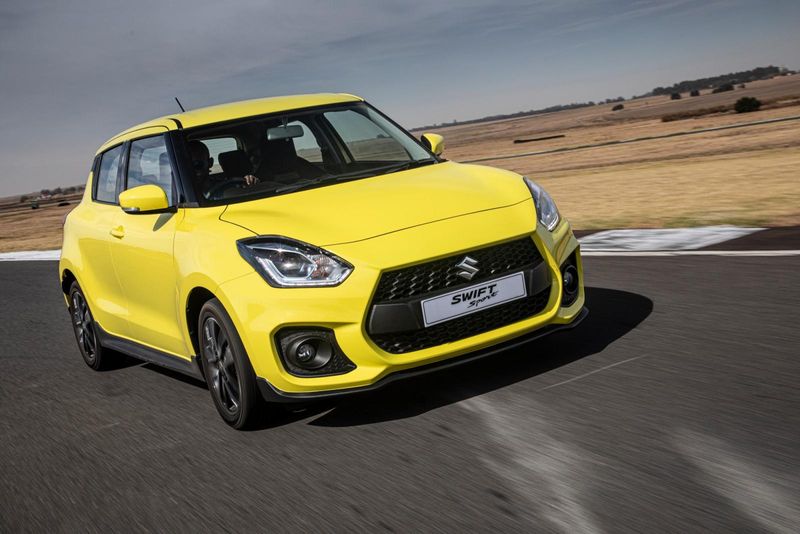
The new-generation Suzuki Swift Sport was recently launched in SA. In a major departure from its much-loved predecessor, the Hamamatsu-based firm's feisty compact hatch eschews a rev-happy 1.6-litre mill for a new 1.4-litre turbopetrol (BoosterJet) motor. Herewith the specs and prices for the manual and auto versions of the 1.4T Sport… 
At the heart of the newcomer is a direct-injection 1.4-litre 4-cylinder BoosterJet turbopetrol that features roller rocker-type variable valve timing, a revised air intake (with dual air-intake pressure sensors and a pair of electric radiator fans), an integrated exhaust manifold, a pendulum-style engine mounting system and Swift Sport-specific mapping. It delivers 103 kW at 5 500 rpm and 230 Nm of peak torque between 2 500 and 3 500 rpm. 


By virtue of turbocharging, peak torque has climbed despite a smaller capacity engine – 230 Nm is available from 2 500 rpm.

The 2019 model is claimed to accelerate from 0 to 100 kph in 8 seconds and reach a top speed of 205 kph. The performance figures are identical for both derivatives, irrespective of whether they're equipped with the uprated 6-speed manual 'box (with a shorter throw, tweaked clutch profile and revised synchromesh) or new 6-speed auto transmission (the latter of which is augmented by 'wheel-mounted shift paddles). 

The Swift Sport weighs 970 kg, which makes it 90 kg lighter than before ­– Suzuki lightened the car’s doors, body construction, alloy wheels, engine, seats and interior fittings. However, the newcomer has twice as much ultra-high tensile steel as its predecessor (it is underpinned by a continuous-frame chassis, as opposed to the previous generation’s segmented frame) and engineers have added more welding spots than the standard Swift to ensure “very little body flex or shudder will enter the vehicle, even when driven very hard on uneven surfaces.” 


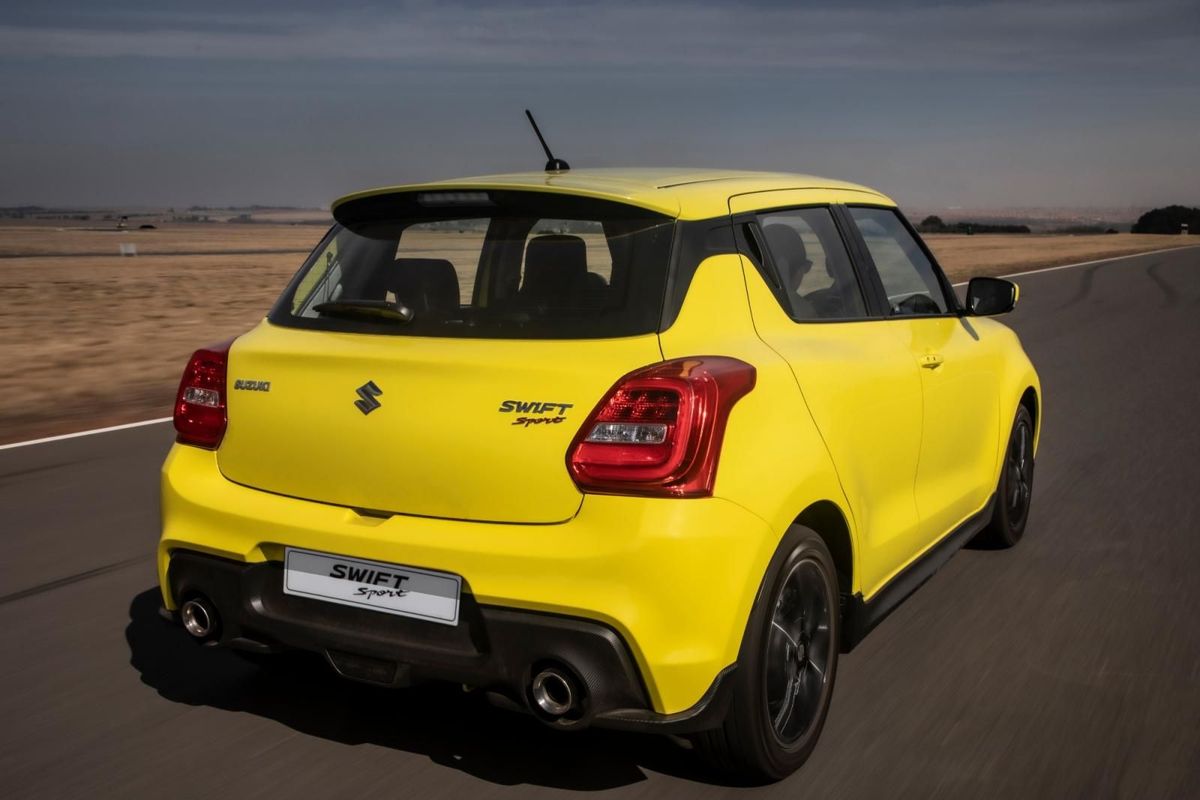
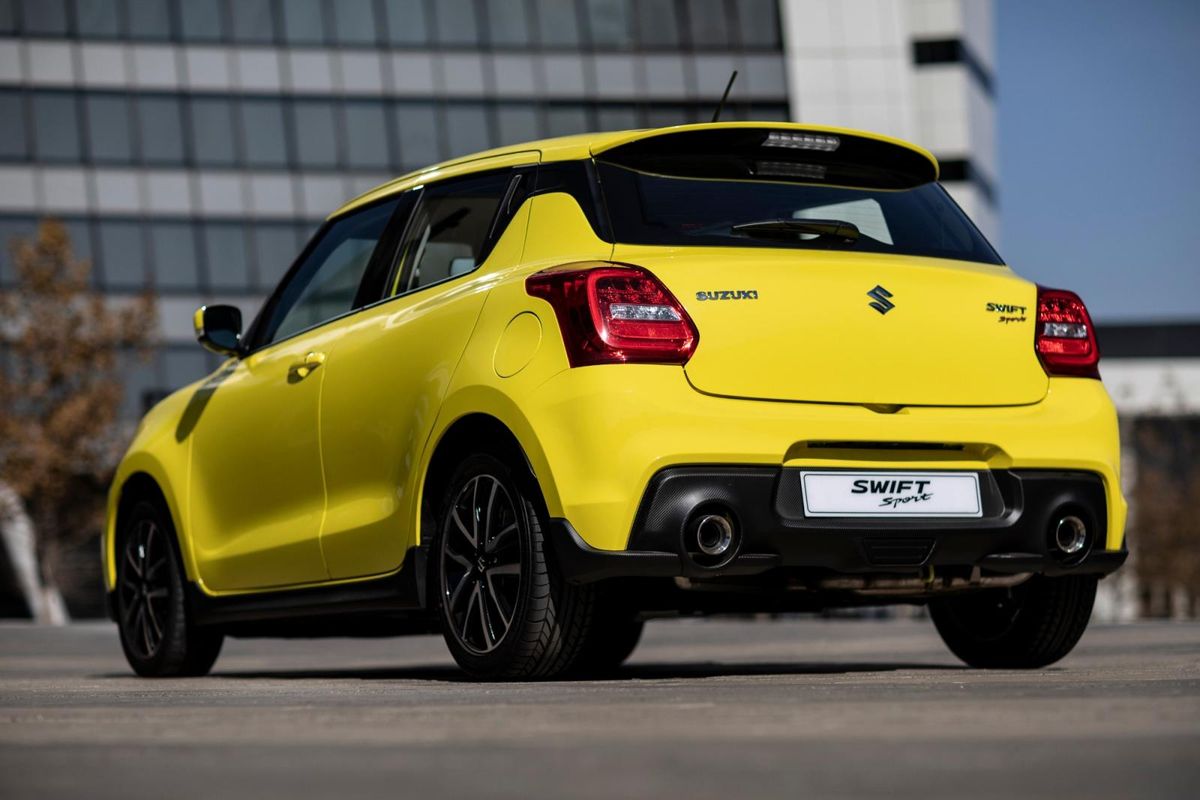
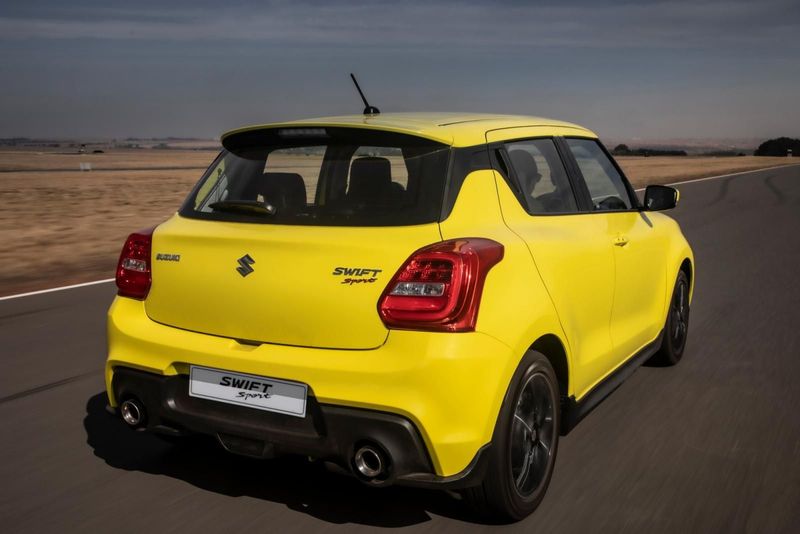
The chrome-tipped exhaust ends, located at either end of the rear valance, emit a rorty exhaust note.

To aid ride and handling, the car’s custom-designed Monroe shock absorbers have been tuned for minimal body roll and progressive understeer in fast corners. Engineers have also fitted thicker anti-roll bars, an integrated single-unit solution for the wheel hub and bearings, as well as increased spring and damper rates at the front. There is a unique trailing arm suspension at the rear to improve tracking between the front and rear wheels.

For improved stopping power (and efficiency), Suzuki has further increased the size and thickness of the front ventilated disks, while the solid disk brakes are made from a new material that is less prone to fade under hard use, the firm claims. 


The Swift Sport's body kit is not just for show, the adornments are said to help improve the aerodynamic efficiency by 10%.

Eye-catching exterior execution

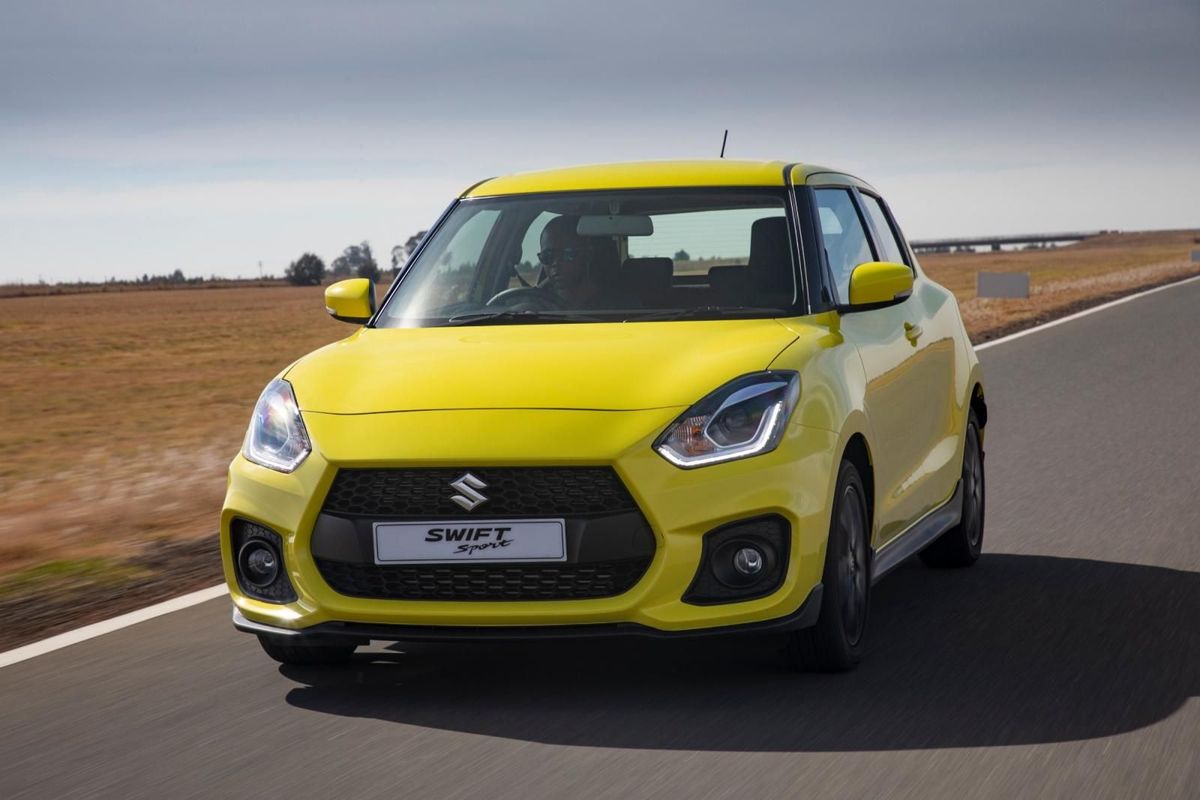
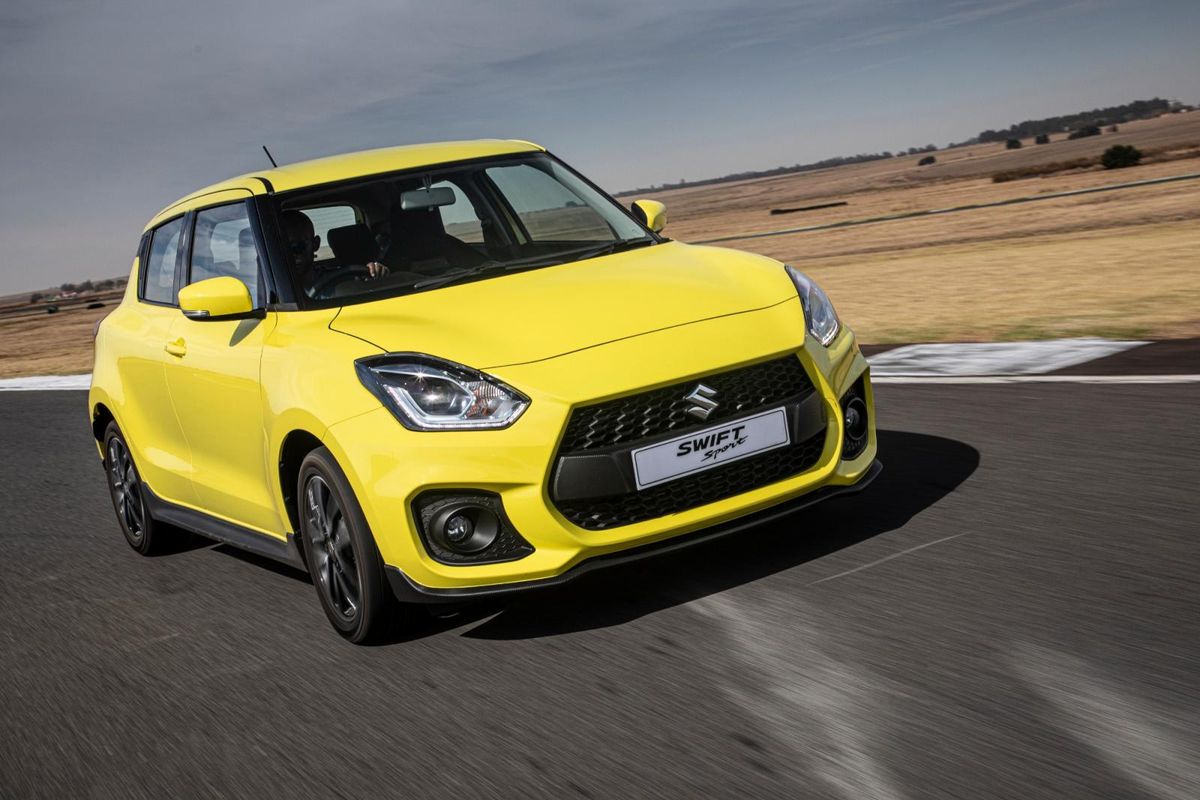
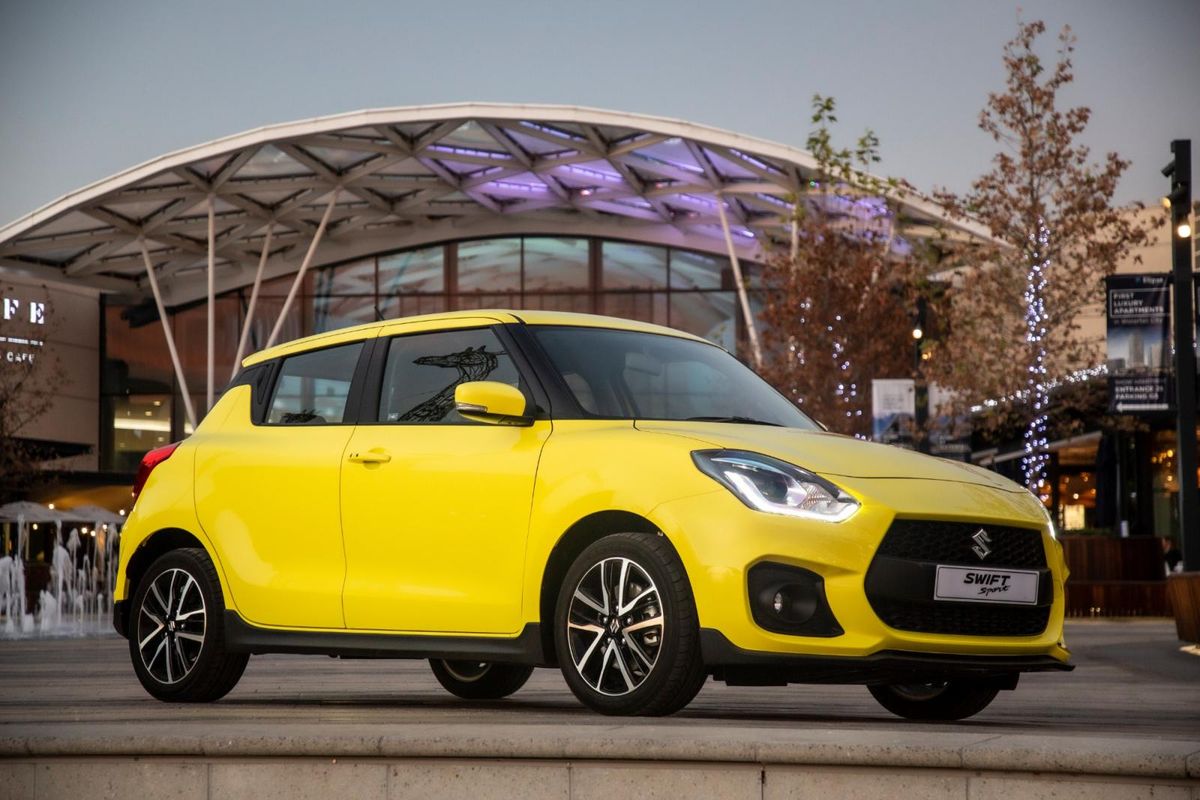
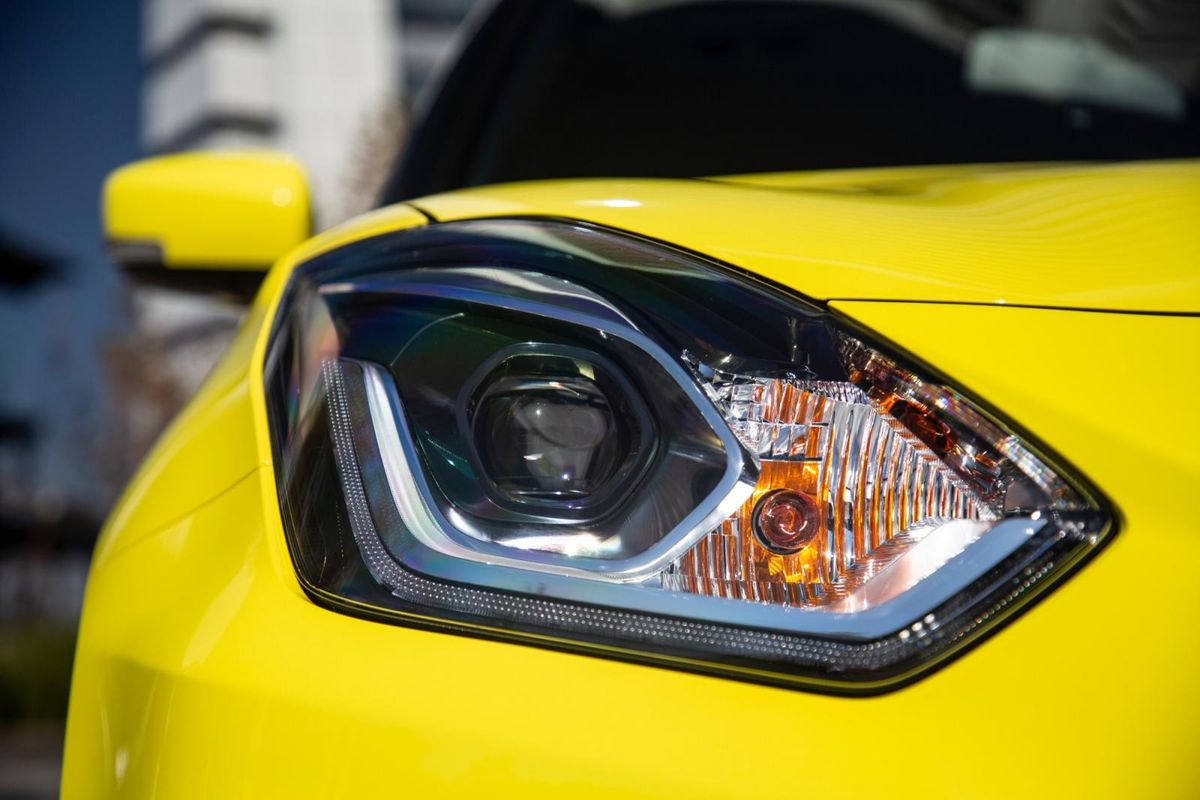
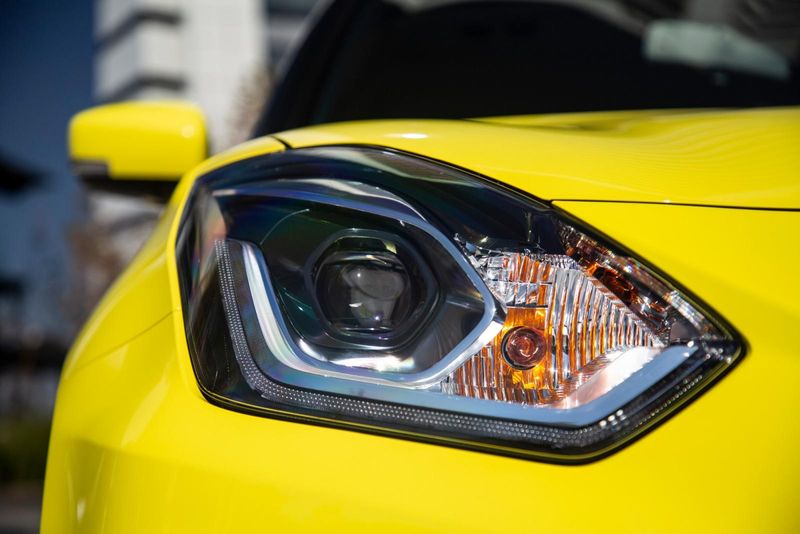
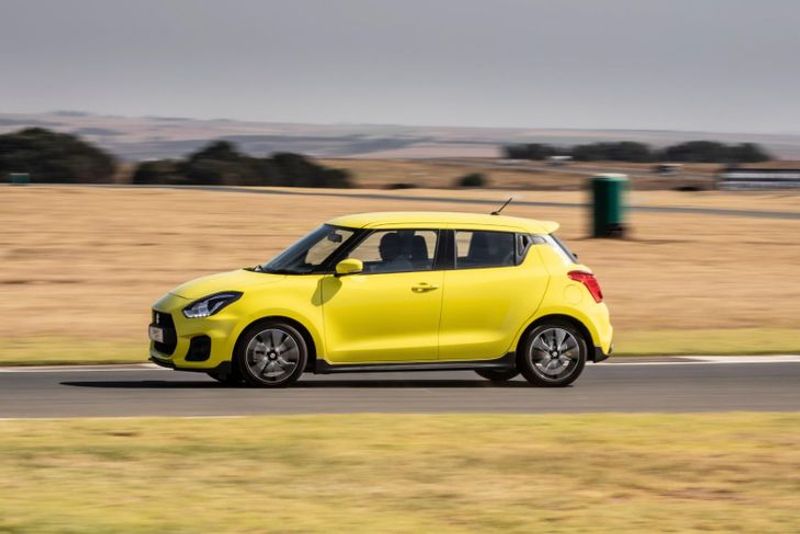
From the front, the new Swift Sport is distinguishable by its reverse-slanted front grille with honeycomb pattern, LED headlamps with elongated light-bar-type DRLs, two large bumper cut-outs that house integrated fog lights and a front splitter with carbon-fibre type patterning.

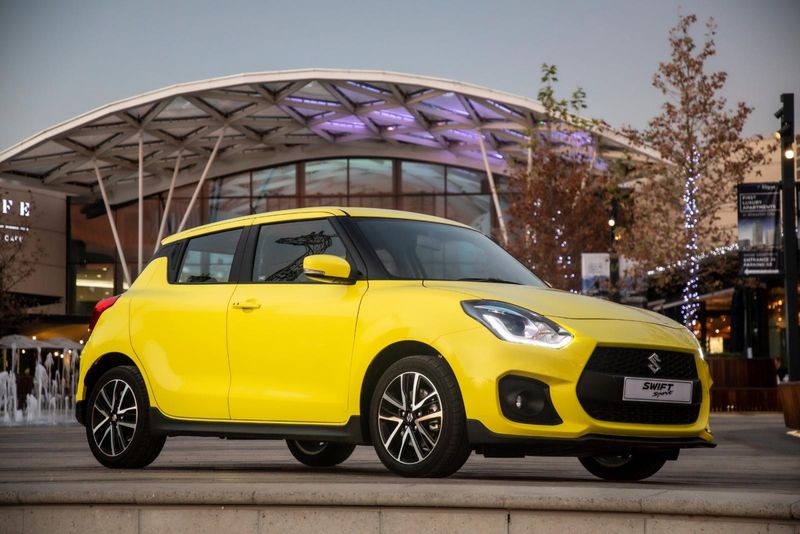
The flanks are accentuated by 16-inch diamond-cut and polished alloy wheels, shod with 195/50R16 low-profile tyres, darkened privacy glass to the rear windows and carbon fibre-patterned side underspoilers. These spoilers, combined with the redesigned tailgate spoiler, new flat covers under the engine and main floor and new, larger front strakes, are said to boost the 1.4T's aerodynamic efficiency by 10% over its predecessor. 


The Swift Sport's headlamps are full-LED units, replete with elongated light-bar-type DRLs.

Meanwhile, the 1.4T’s rear end features LED-taillamps, the aforementioned enlarged, integrated spoiler, plus a fully-redesigned bumper finished off with 2 chrome-tipped exhaust ends, one on either side of the valance, which “have been acoustically engineered for a deeper sound at low engine speeds”, Suzuki claims. A rear splitter, in the same design and style as the underspoilers and front aerofoil, round off the exterior execution. 

Decidedly sporty cabin

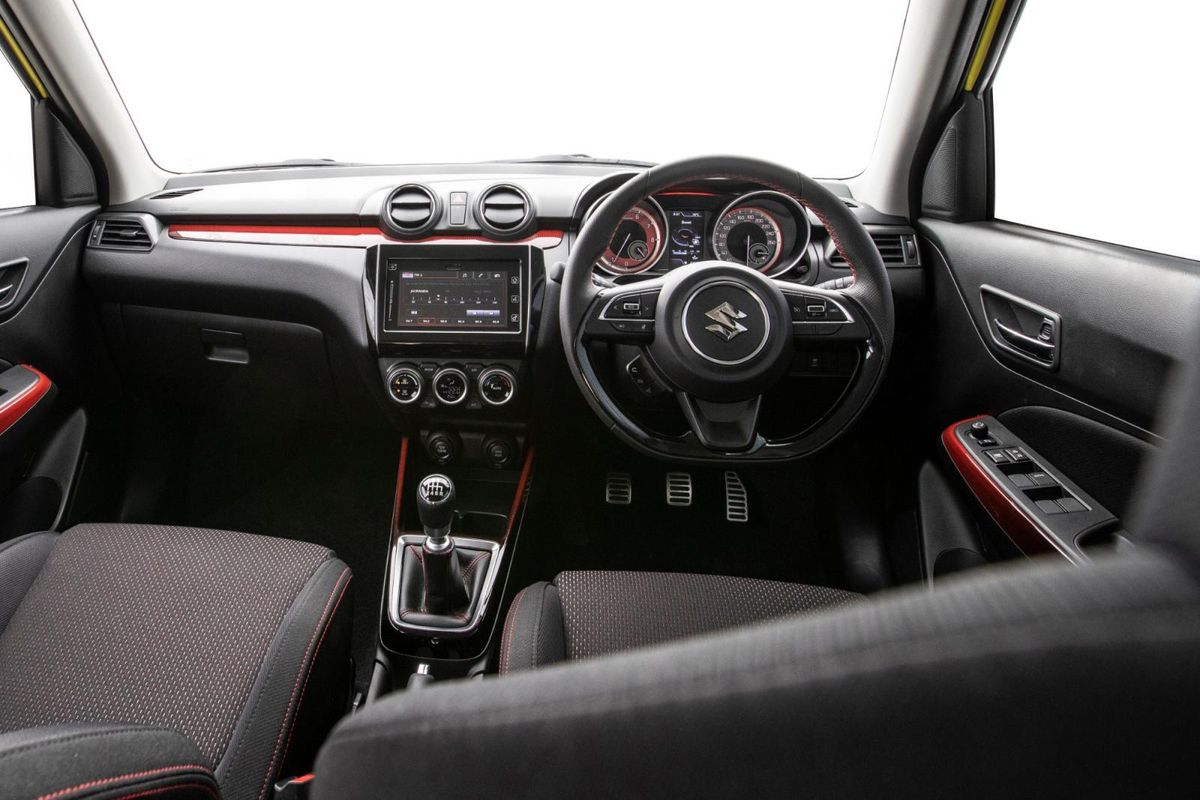
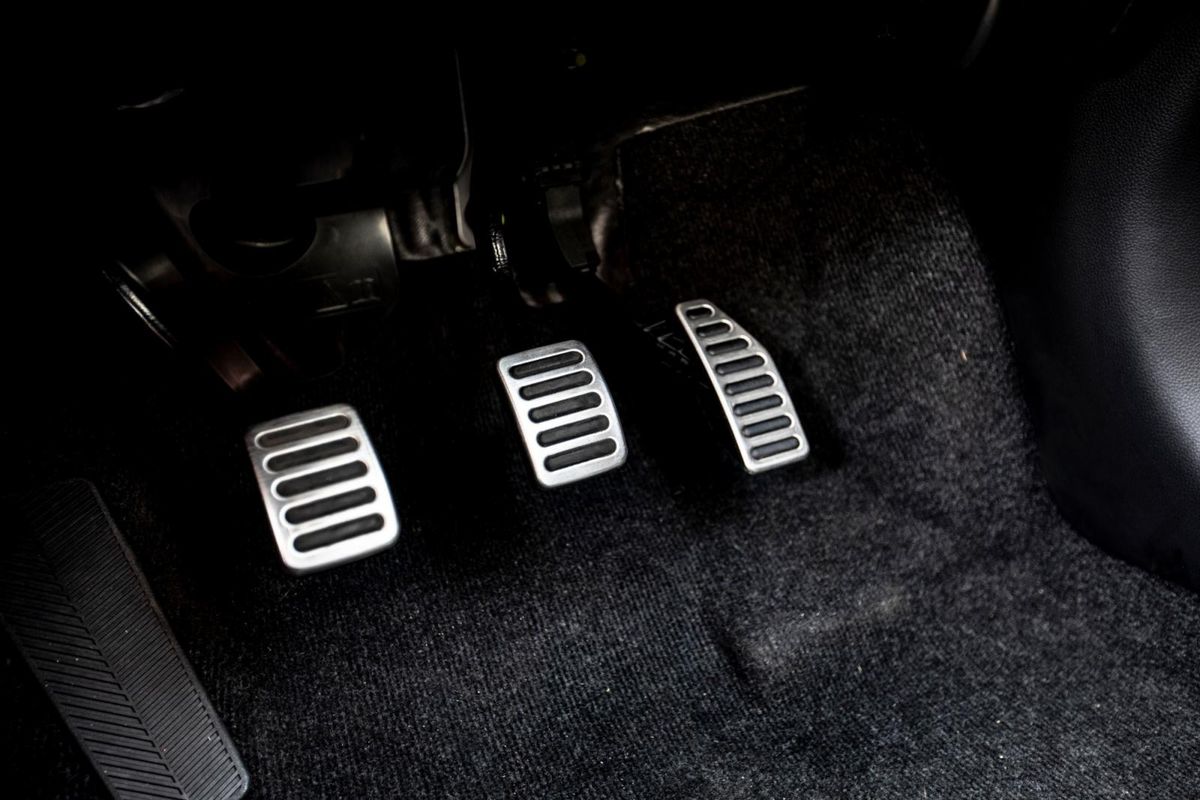
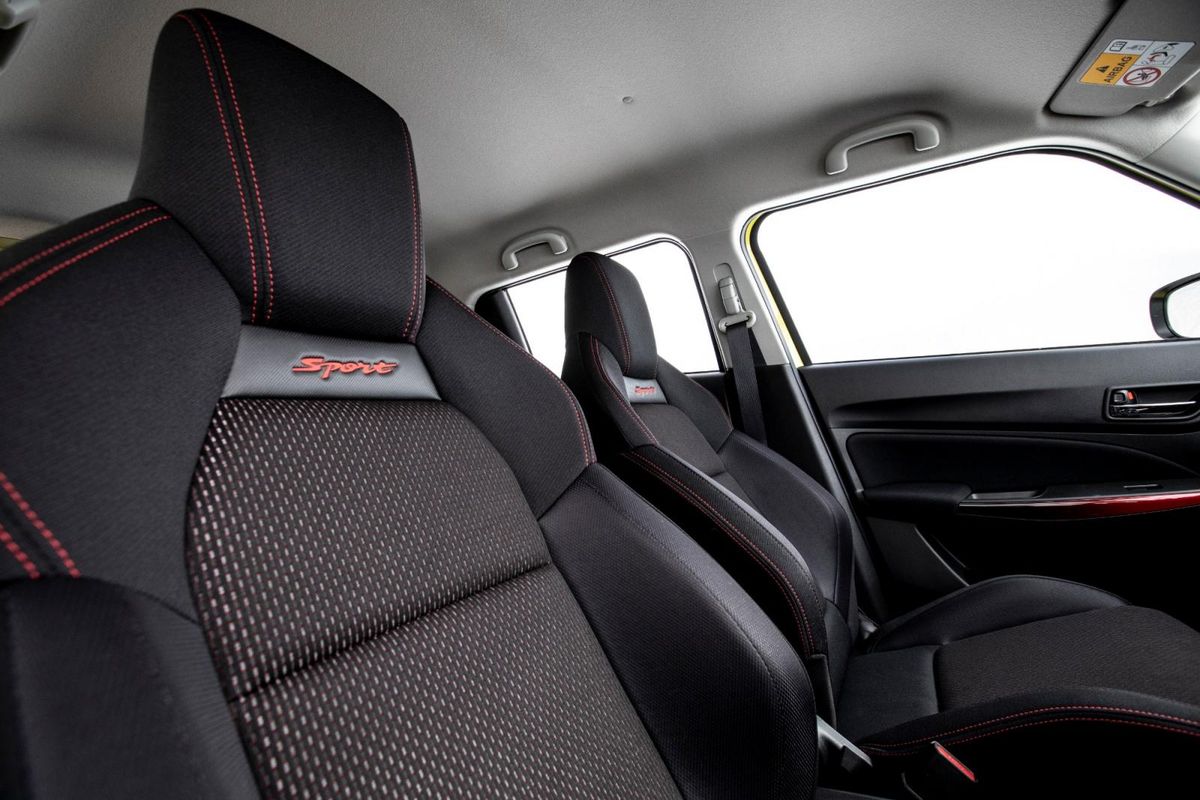
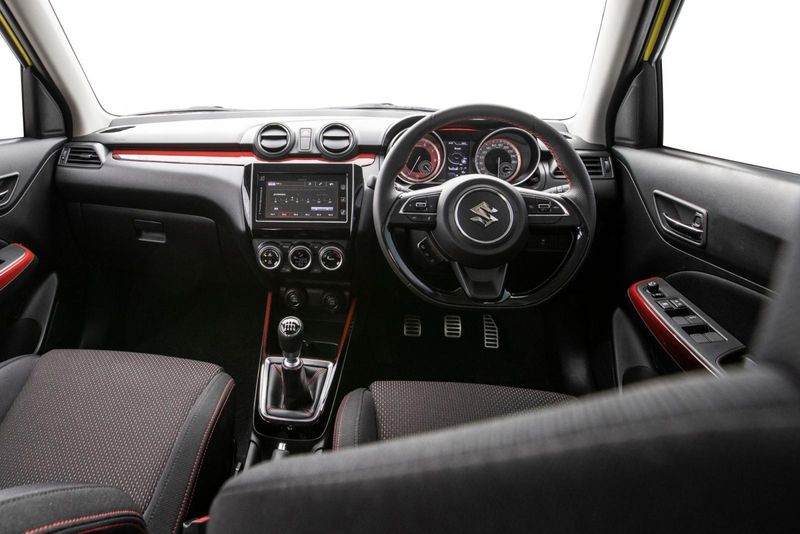
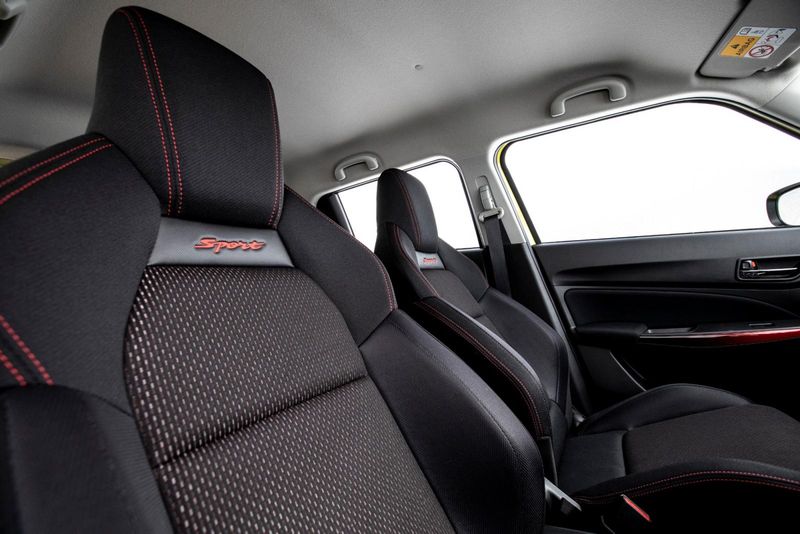
Inside, there are grippy semi-bucket front seats with extra side bolstering, stainless-steel sport pedals, as well as red and chrome detailing, such as contrast stitching on the gear-lever boot, steering wheel and seats and a special red-to-black gradation on the fabric upholstery.


Red accents, similar-coloured contrast stitching and sporty speedometer and tachometer dials add a sense of occasion.

The rev counter has a red backing and the speedometer’s face is deep silver in colour. Suzuki has added fine scaling to the pair of dials to create the impression of ultra-sporty mechanical instrumentation. What’s more, serious petrolheads will appreciate the central colour LCD trip computer, which can be configured to display values such as boost- or oil pressure.

Meanwhile, the 1.4T offers such luxuries such as a height-adjustable driver’s seat, multifunction steering wheel (with controls for the audio system, handsfree telephony and voice command recognition), automatic climate control, electrically adjustable (and folding) side mirrors, electric windows and a keyless access system with Start/Stop button.


The front sport seats are unique to Swift Sport; they feature integrated headrests and beefed-up side bolsters.

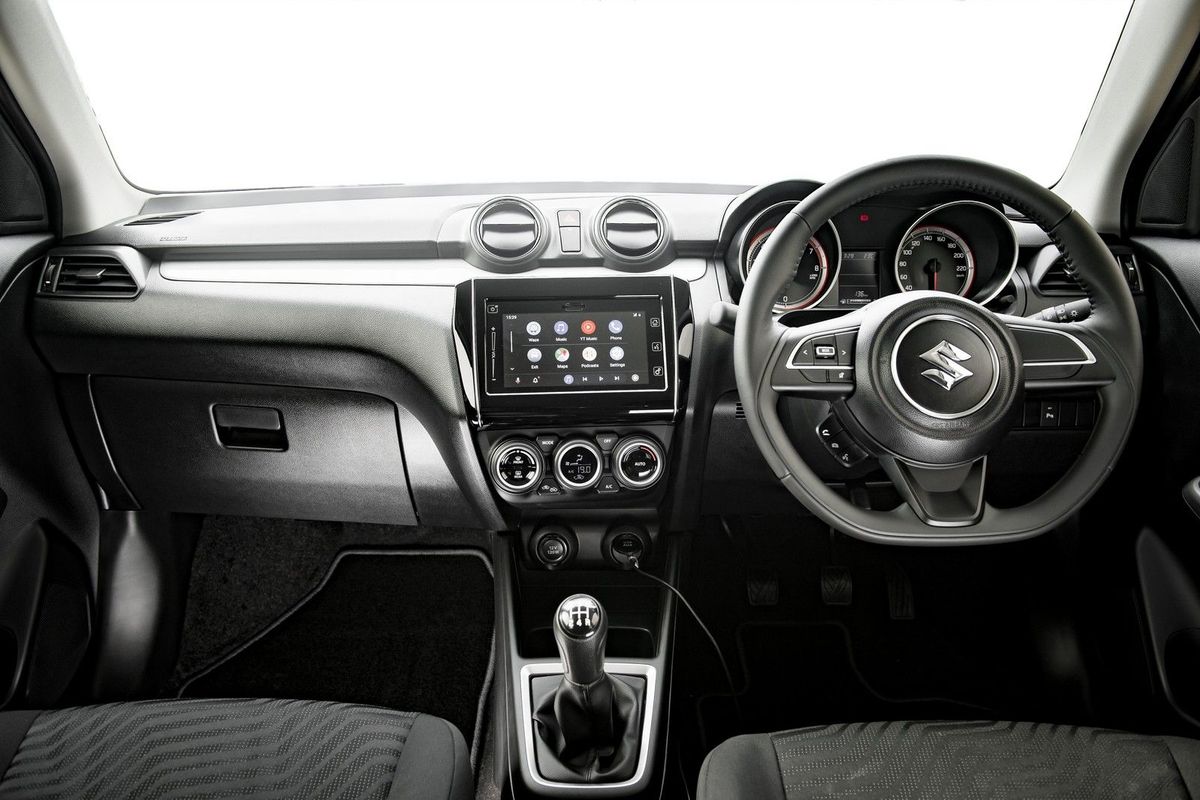
The 7-inch colour touchscreen infotainment system built into the Swift Sport’s fascia is fully compatible with Android Auto and Apple CarPlay compatibility, offers Bluetooth streaming and USB connectivity and displays the feed from the integrated reverse-view camera.

In terms of safety features, the newcomer features ABS with EBD and electronic stability control are standard. It offers a complement of 6 airbags (dual front-, side- and curtain ‘bags) ISOfix child-seat mounting points, LED combination tail lamps, a high-mounted LED stop lamp (built into the rear spoiler), an immobiliser and integrated alarm system.

Read our launch review of the 1.4T (Swift) Sport. 

Swift Sport (2019) price in South Africa 

Both Swift Sport derivatives come with a 4-year/60 000 km service plan and a 5-year/200 000 km manufacturer warranty. 

1.4T Sport             R315 900
1.4T Sport auto  R335 900

Get a quote / Request a test drive on Cars.co.za

Further Reading:

Suzuki Swift (2019) Specs & Price

Suzuki Swift 1.2 GL (2018) Review

Suzuki Swift (2018) Launch Review

Suzuki Swift (2018) International Launch Drive [w/Video]

Suzuki previews Swift Sport, Extends Warranty (Updated)

New Suzuki Swift (2017) First Drive

Want to purchase a Swift? 

Browse through new and used stock here

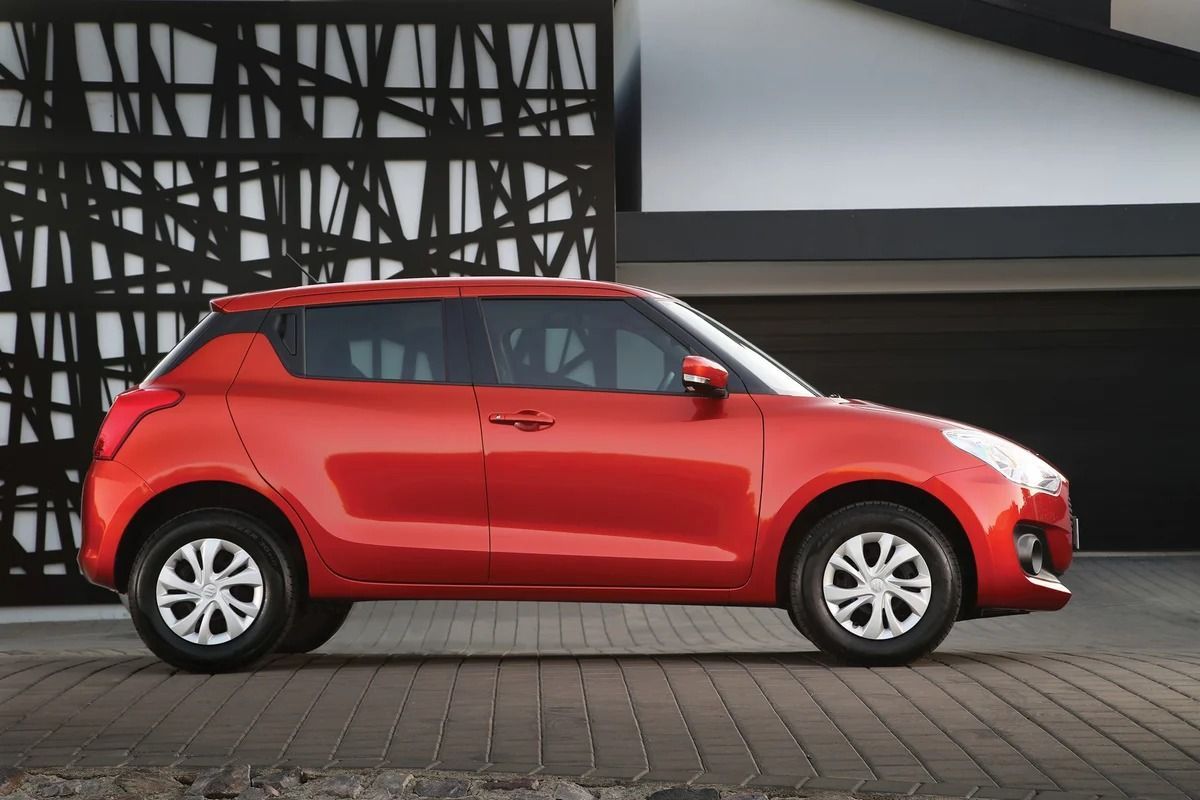
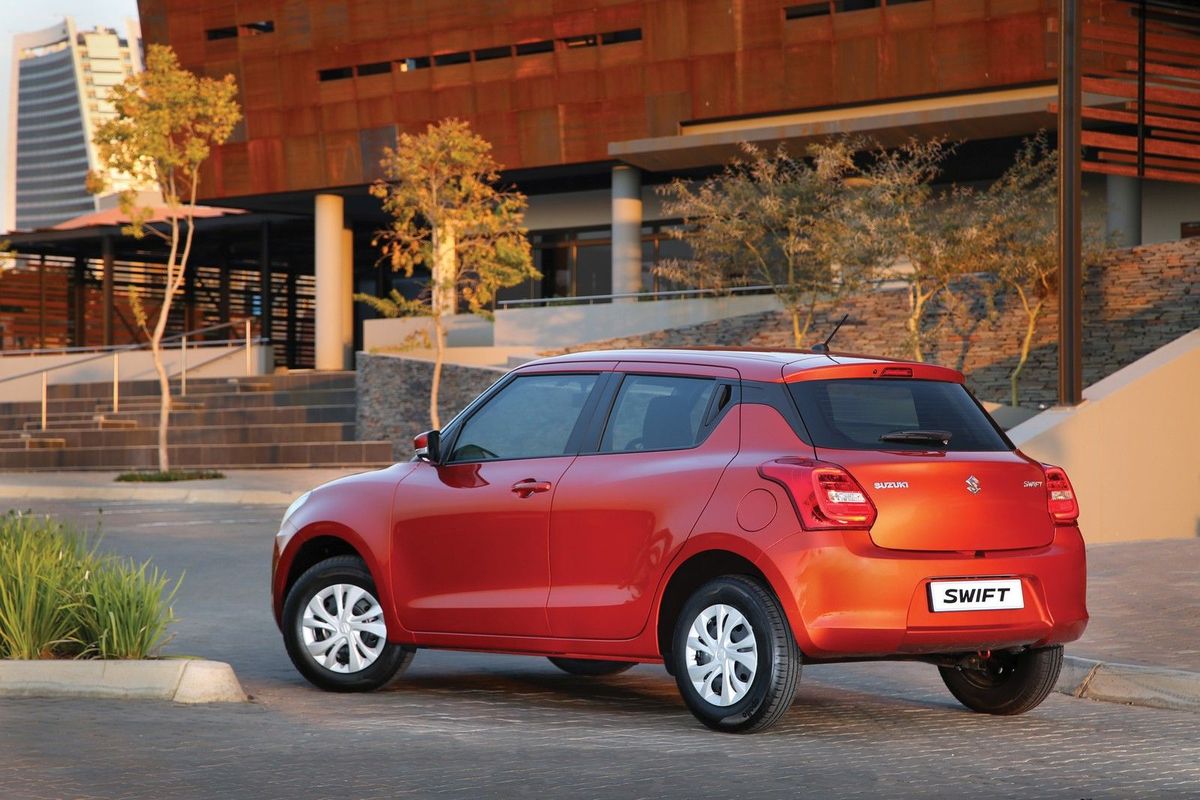
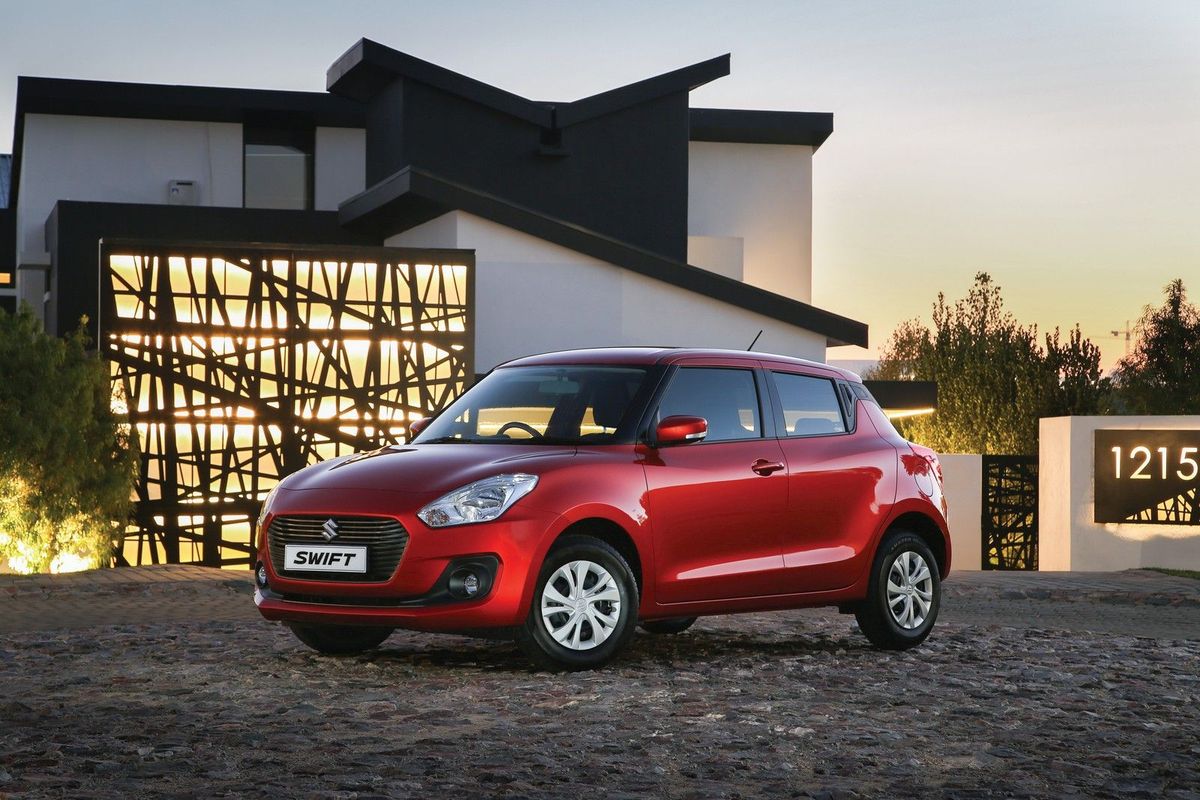
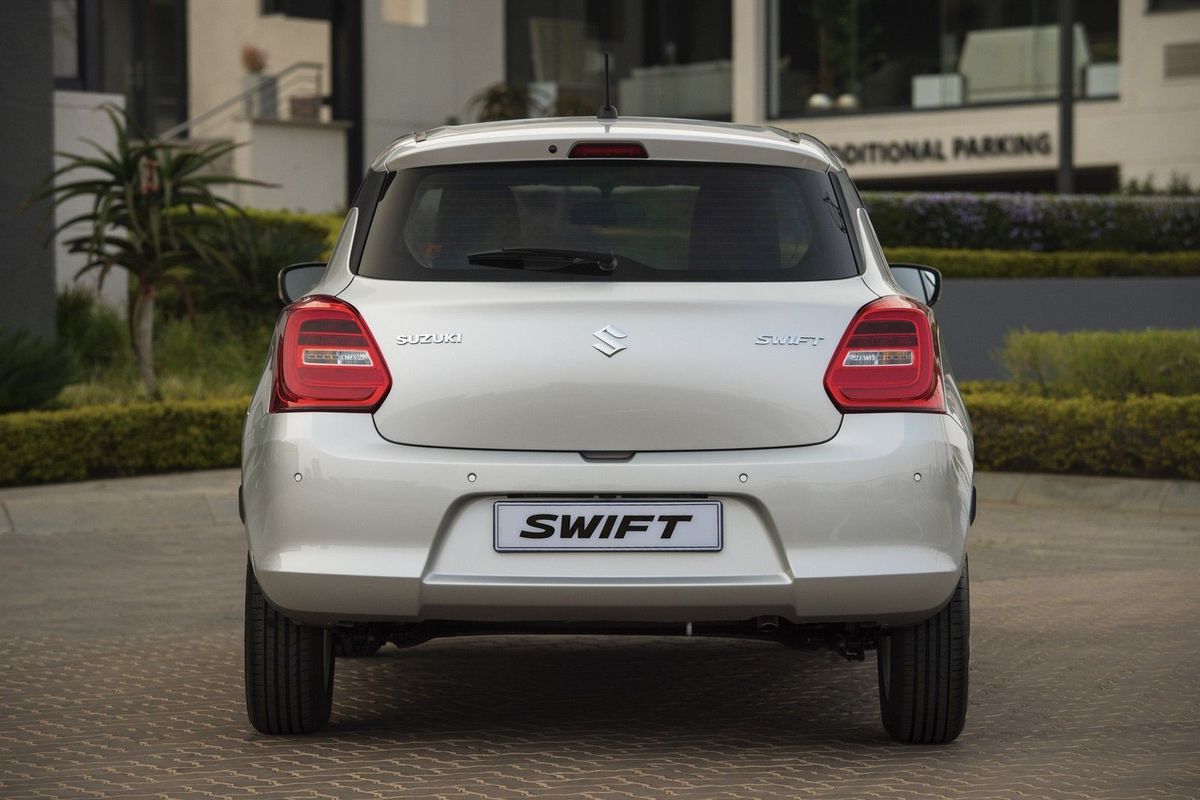
Suzuki Swift (2019) Specs & Price

Suzuki, which introduced its 4th-generation Swift in South Africa in 2018, recently expanded the compact hatchback's line-up through the addition of 1.2 GLX and 1.4T Sport derivatives. Herewith specs & prices for the full range.

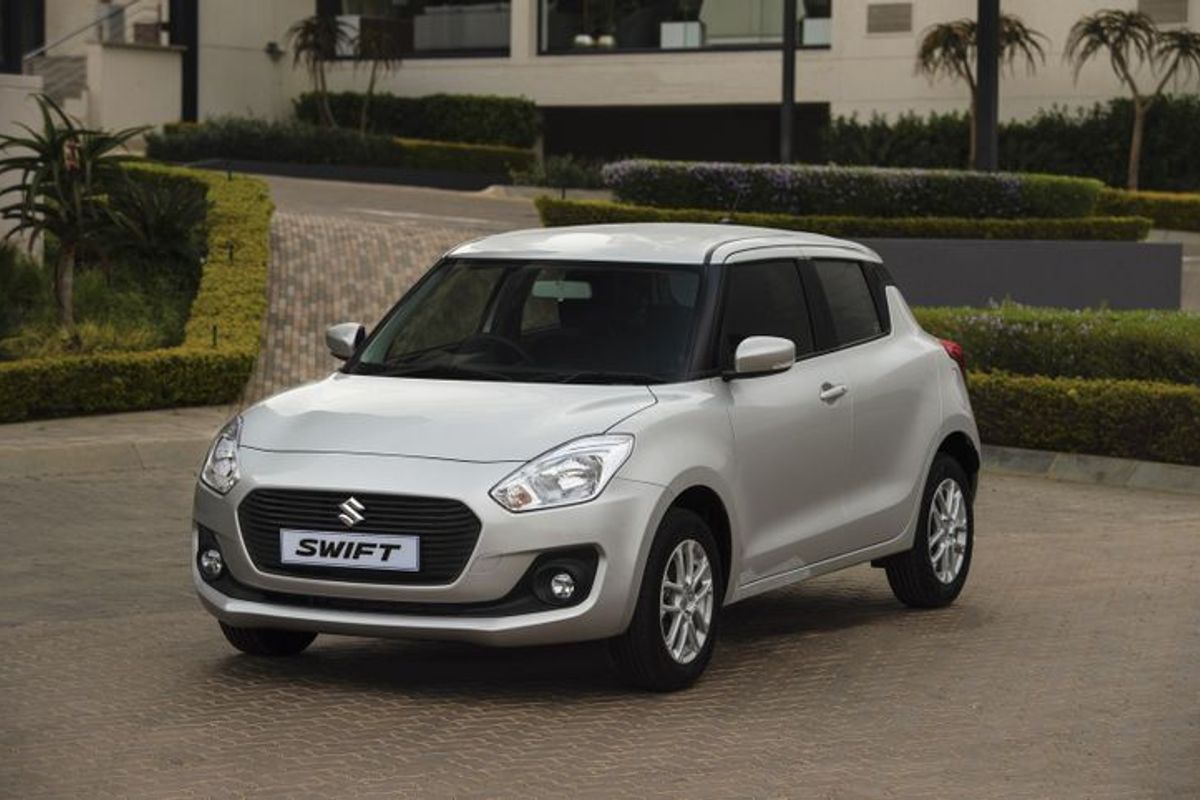
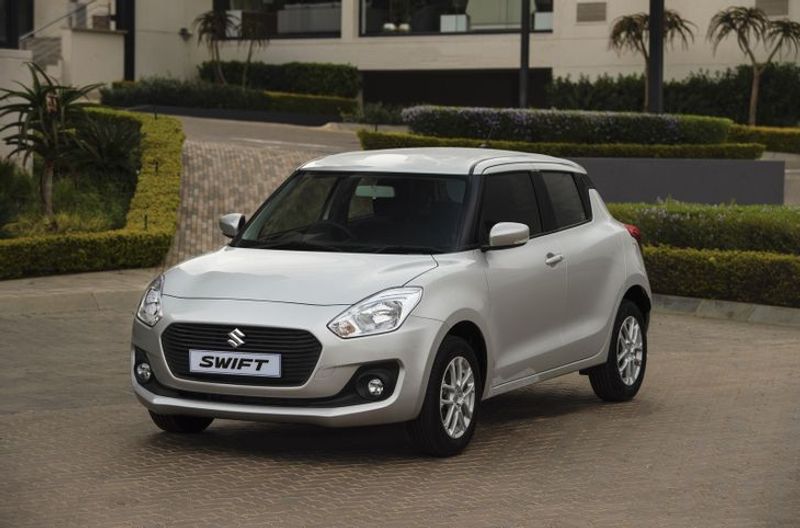
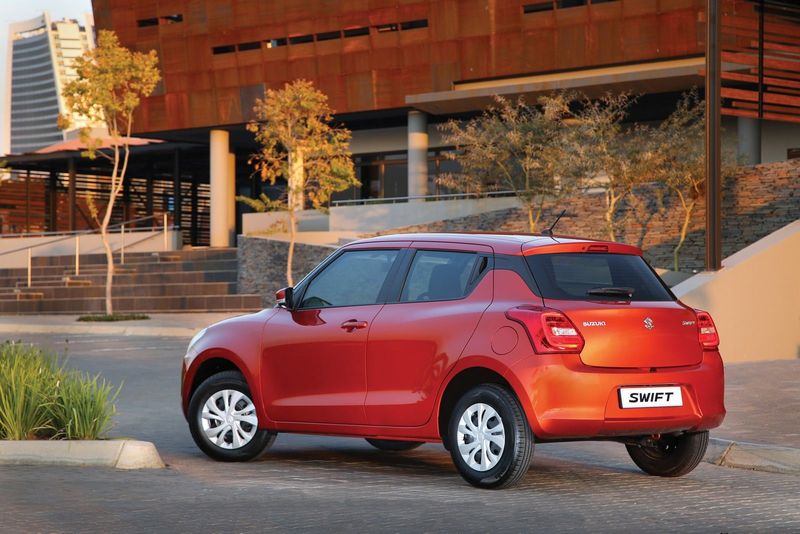
Characterised by a youthful styling and an all-new platform, the Swift is a top-seller for Suzuki Auto in South Africa and the 1.2 GL derivative famously won the budget car category of the 2018/18 Cars.co.za Consumer Awards – powered by WesBank. Compared with its predecessor, it is 10 mm shorter, but 40 mm wider and repositioned to appeal to top-end budget-car, rather than traditional compact hatchback, buyers. However, the introduction of the higher-spec 1.2 GLX and 1.4T Sport versions, both available in manual or automatic guise, sees the Swift move upmarket.


The 1.2 GLX is new to the range. It can be easily distinguished from the 1.2 GL derivative by its 15-inch alloy wheels.

The wheelbase has been extended to 2 450 mm (making the Swift almost as long as the Ciaz sedan) and the tracks are wider at each end: by 40 mm (front) and 35 mm (rear). The increased dimensions have led to improved interior space… Suzuki claims front passengers benefit from more shoulder room and rear occupants are afforded a bit more headroom. Plus, everyone sits a little lower down, which gives the car a sportier feel.

One of the criticisms of past Swifts was stingy luggage capacity. This has been increased to 268 litres (a 58-litre increase) and the rear seatback folds down in a 60/40 split. Furthermore, Suzuki claims the Swift is 95 kg lighter than its predecessor, which benefits fuel efficiency.


The Swift 1.2 GL was named the best budget car in the 2018/19 Cars.co.za Consumer Awards – powered by WesBank.

Engine line-up

Most Swift derivatives are powered by the same 1.2-litre 4-cylinder petrol engine as the outgoing car. It produces 61 kW and 113 Nm, fuel consumption is rated at 4.9 L/100 km. It has a fuel tank capacity of 37 litres. You have the choice of either a 5-speed manual gearbox or an automated manual gearbox (AMT). An AMT behaves much like a manual gearbox except the operation of the clutch is controlled by the vehicle. 

1.4T Sport derivatives (lower and lighter than their predecessors) are powered by a direct-injection 1.4-litre 4-cylinder BoosterJet turbopetrol that features roller rocker-type variable valve timing, a revised air intake system (with dual air-intake pressure sensors and a pair of electric radiator fans), as well as Swift Sport-exclusive engine mapping. It delivers 103 kW at 5 500 rpm and 230 Nm of peak torque between 2 500 and 3 500 rpm. 

The 1.4T Sport is claimed to accelerate from 0 to 100 kph in 8 seconds and reach a top speed of 205 kph. The stated performance figures are identical for derivatives equipped with the uprated 6-speed manual 'box or new 6-speed auto transmission (with 'wheel-mounted shift paddles). 

Features


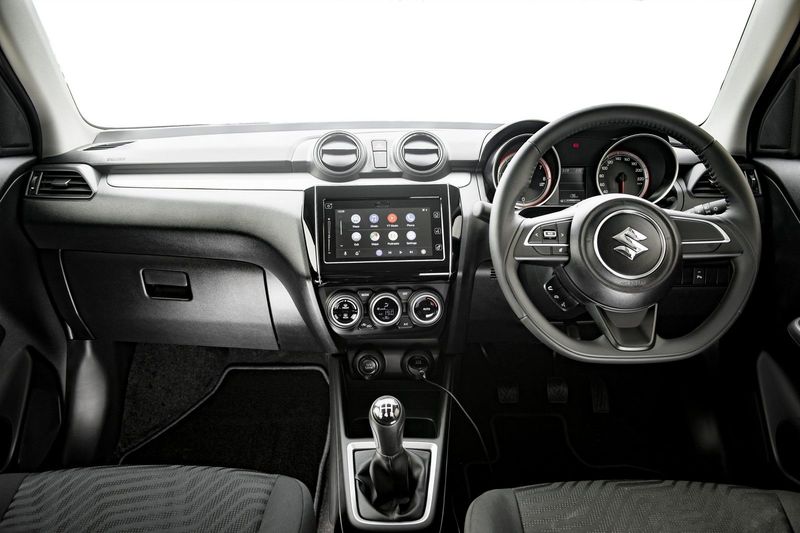
The 1.2 GLX's fascia sports a 7-inch colour touchscreen infotainment system that is Andriod Auto and Apple CarPlay compatible. 

All Swift derivatives come equipped with a sporty steering wheel, tilt (or rake) adjustable steering column, a trip computer, air conditioning, front/rear electric windows, power steering and remote central locking. 

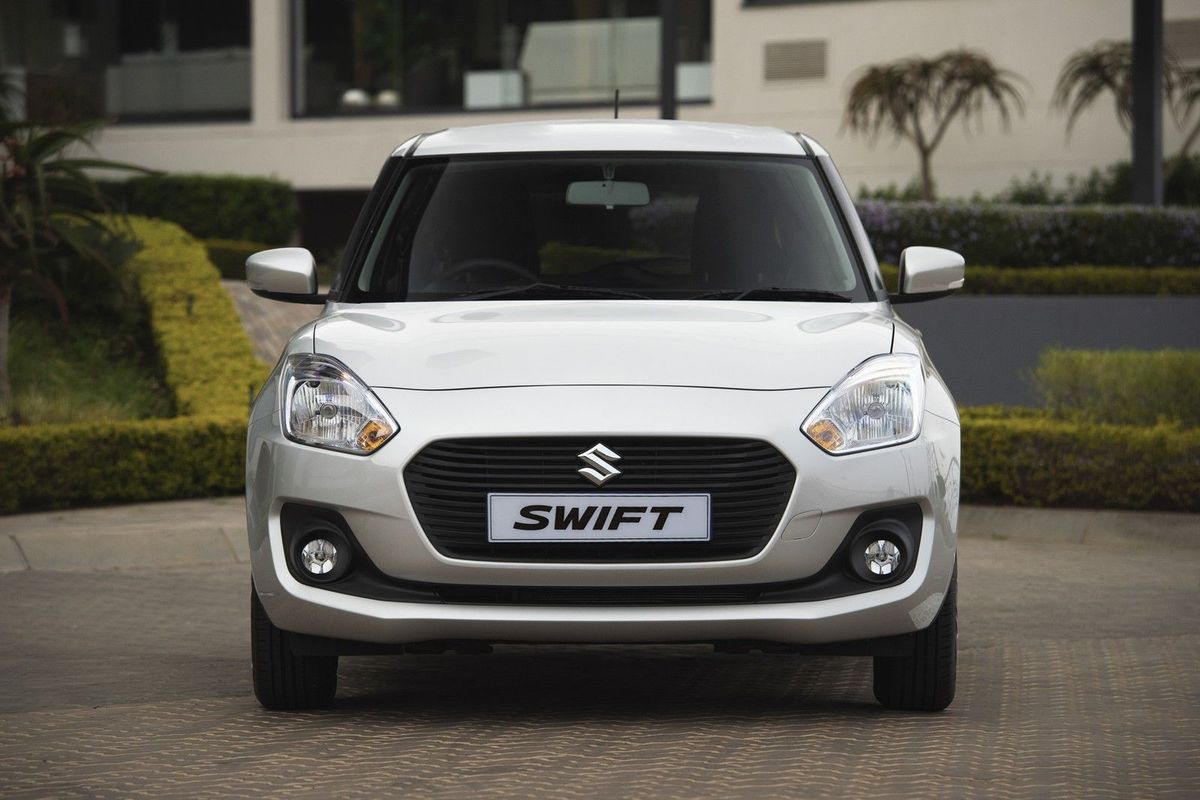
Compared with the entry-level 1.2 GA, 1.2 GL and 1.2 GL automatic derivatives can be distinguished by colour-coded side mirrors, front fog lamps and a rear luggage cover/parcel shelf. They additionally feature chrome accents and a chronograph-design instrument cluster, an audio system with Bluetooth/USB connectivity, audio controls on the steering wheel and electrically adjustable side mirrors. 

The recently introduced 1.2 GLX and 1.2 GLX automatic come with 15-inch alloy wheels, shod with 185/65 profile tyres, while their grilles, A- and B-pillars and C-pillar inserts are blacked out. The derivatives' rear bumpers feature recessed, colour-coded parking sensors.


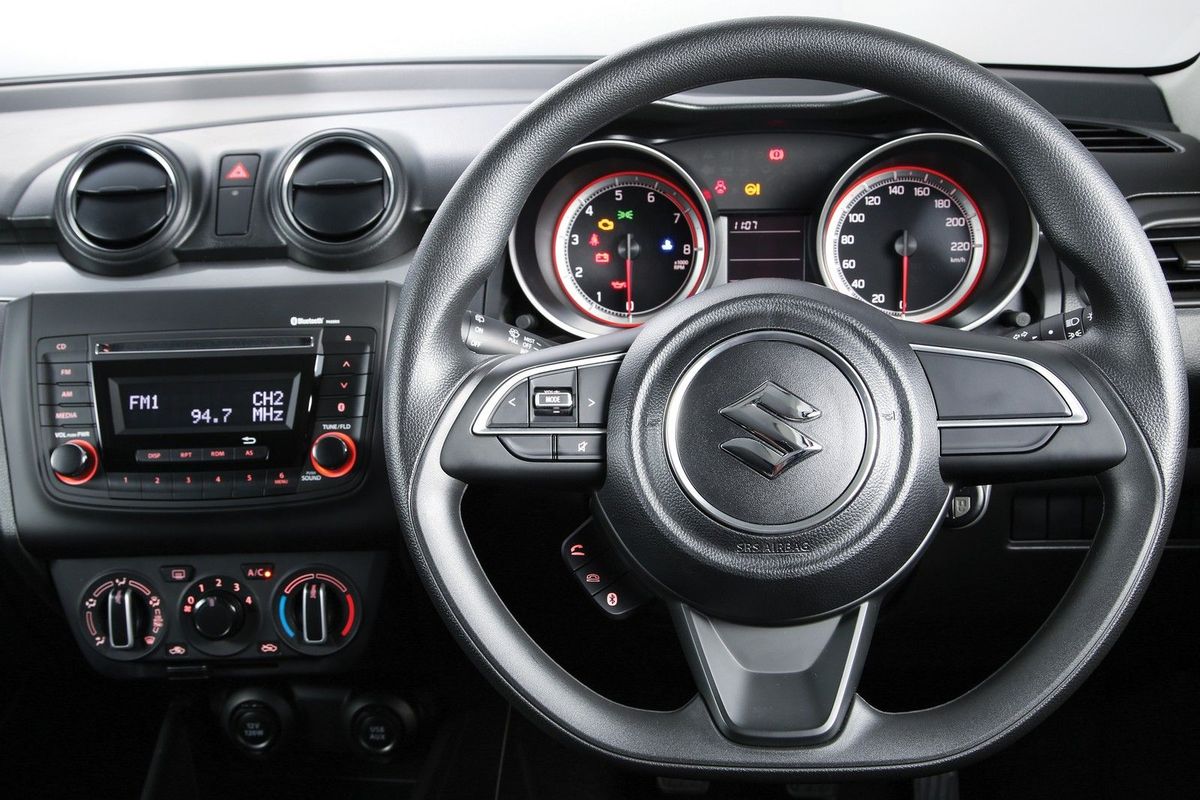
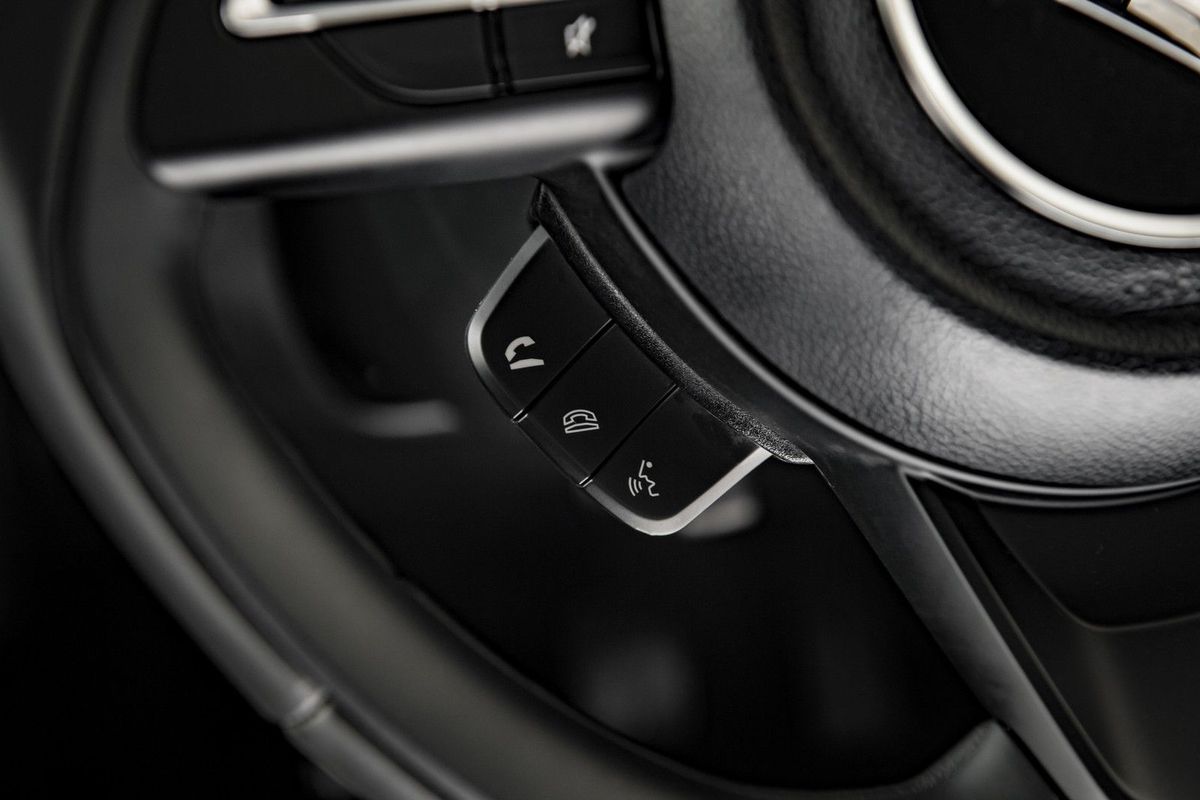
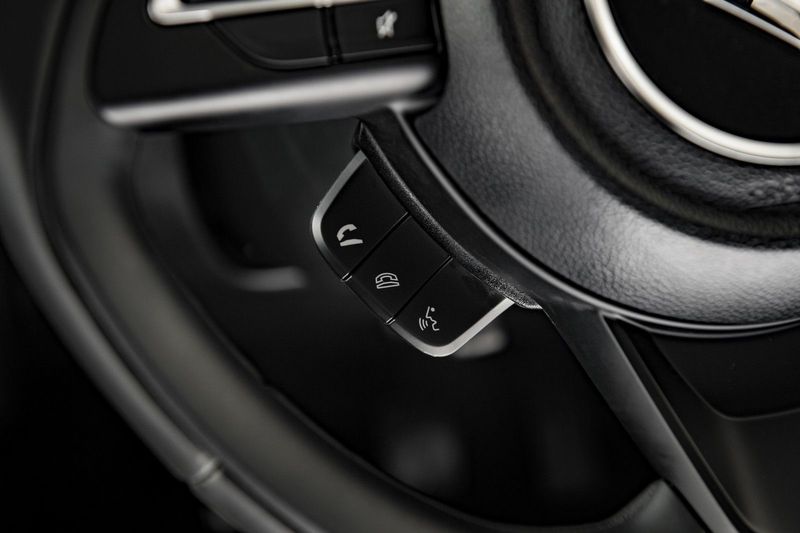
The 1.2 GLX further features a leather-wrapped steering wheel with handsfree telephony and voice command satellite buttons.

Inside, a 1.2 GLX cabin comes equipped with a leather-clad steering wheel, height-adjustable driver’s seat, automatic climate control and a keyless access system with Start/Stop button. The 7-inch colour touchscreen infotainment system offers voice command integration, full Android Auto and Apple CarPlay compatibility, Bluetooth and USB connectivity and also displays the image from the integrated reverse-view camera.

Click here for detail specifications of the Suzuki Swift Sport.

Read our launch review of the 1.4T (Swift) Sport. 

Safety-wise, 1.2-litre Swift derivatives are equipped with dual front airbags, ABS with electronic brake-force distribution (EBD), ISOfix child-seat mounting points, LED combination tail lamps (including a high-mounted LED stop lamp), an immobiliser and integrated alarm system. 1.4T Sport derivatives feature all of the above, as well as 4 additional airbags (side and curtain 'bags) and electronic stability control (ESP).


With the introduction of a turbocharged 1.4-litre BoosterJet engine, the 1.4T Swift Sport offers much more flexible performance. 

Suzuki Swift (2019) price in South Africa

All 1.2-litre derivatives are sold with a 2-year/30 000 km service plan and 5-year/200 000 km promotional mechanical warranty, whereas 1.4T Sport derivatives come with a 4-year/60 000 km service plan and a standard 5-year/200 000 km vehicle warranty (prices as stated in August 2019). 

1.2 GA R162 900
1.2 GL R179 900
1.2 GL auto (AMT) R193 900
1.2 GLX R199 900
1.2 GLX auto (AMT) R214 900
1.4T Sport R315 900
1.4T Sport auto R335 900

Get a quote / Request a test drive on Cars.co.za

Further Reading:

Suzuki Swift 1.2 GL (2018) Review

Suzuki Swift (2018) Launch Review

Suzuki Swift (2018) International Launch Drive [w/Video]

Suzuki previews Swift Sport, Extends Warranty (Updated)

New Suzuki Swift (2017) First Drive

Want to purchase a Swift? 

Browse through new and used stock here

Ford Reveals 2020 Ranger Upgrades

Hopefully, these upgrades are coming to local Rangers soon…

Ford has responded to customer feedback from Australian bakkie buyers and will execute some small upgrades to the facelifted Ranger.

With the South African and Australian bakkie markets being so similar, what happens in Australia is usually repeated locally within a few months. 

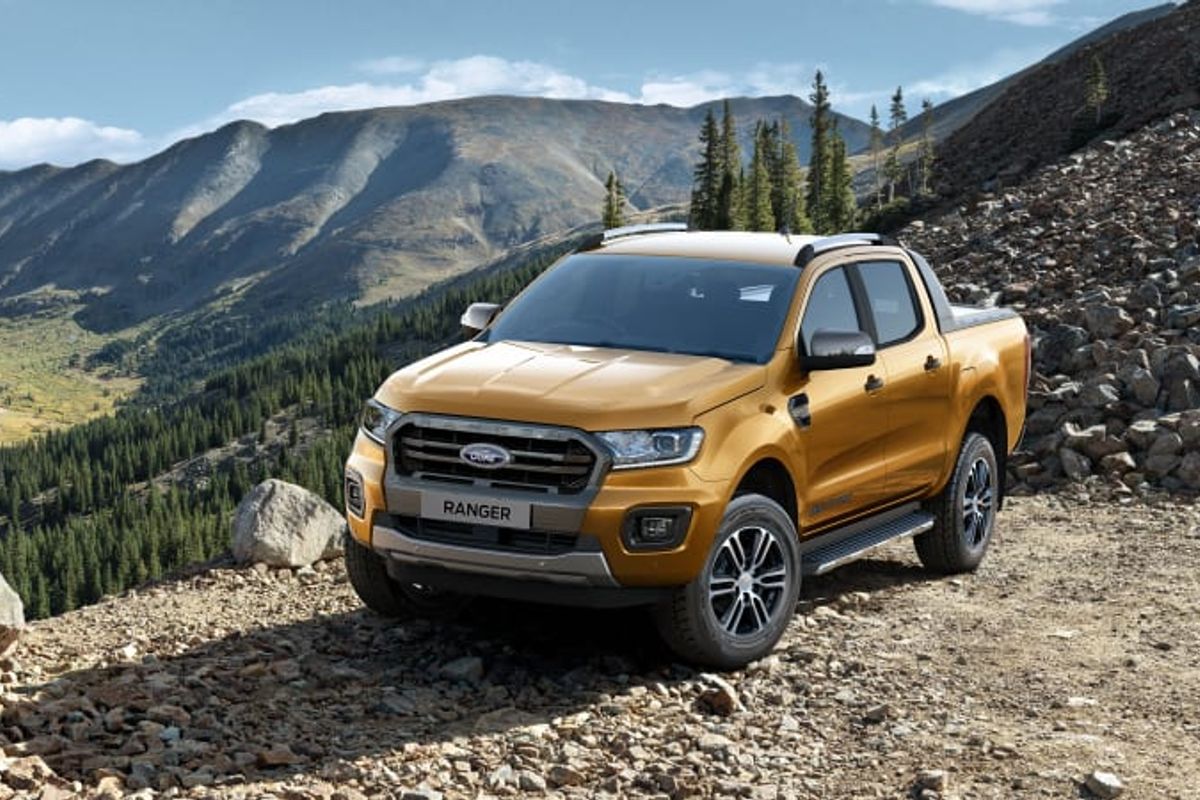
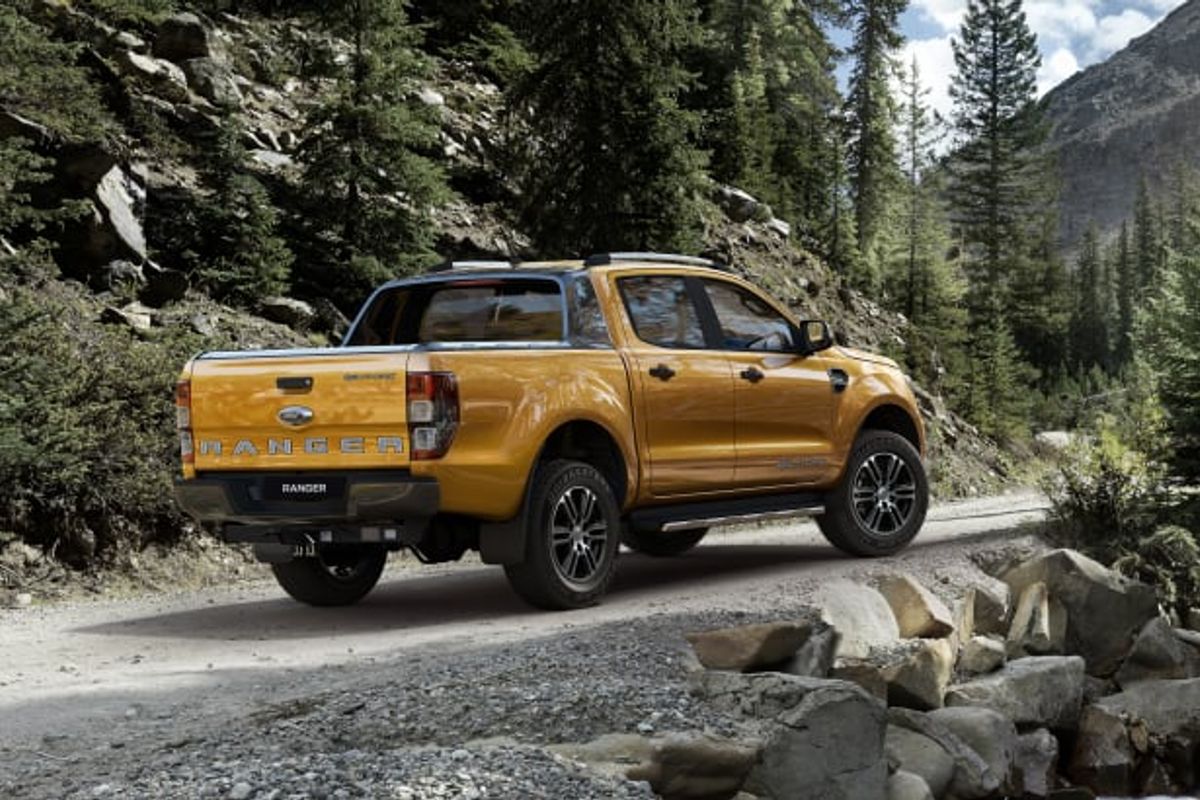
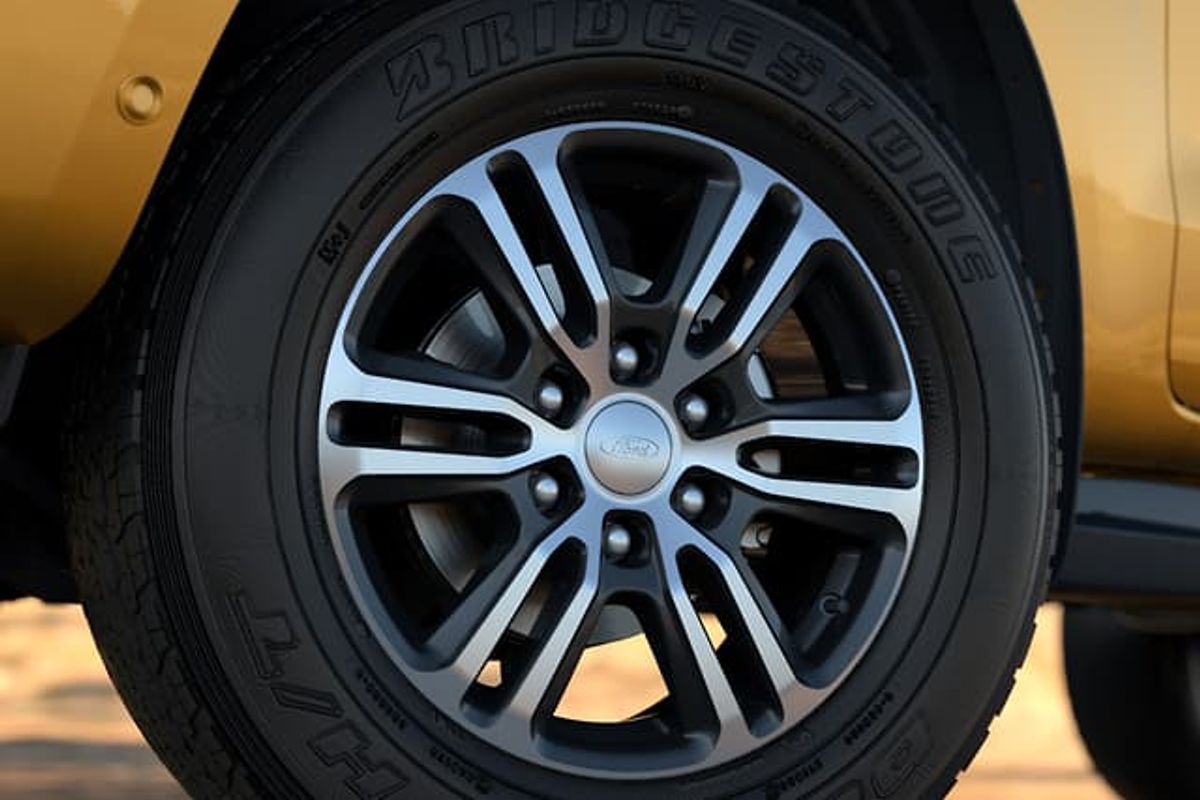
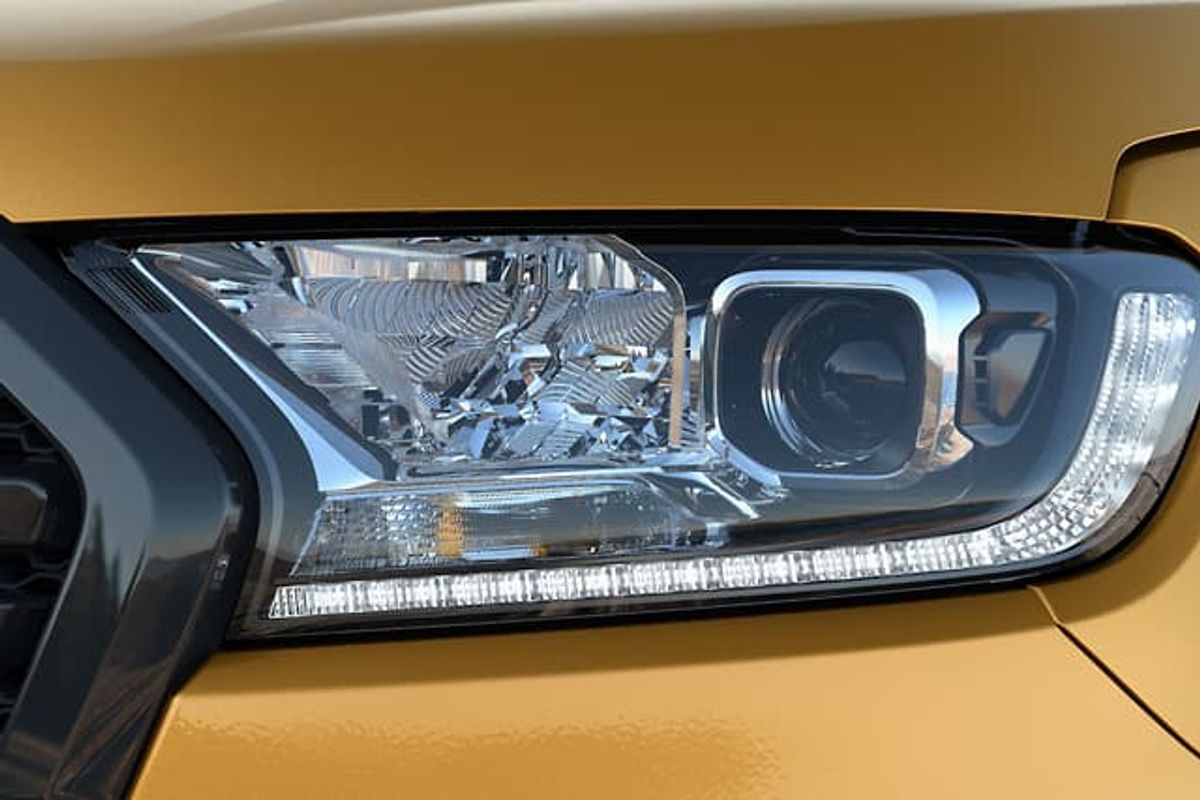
So what are the Australian Ford Rangers getting? Well, from the outside, not much. On Wildtrak models there is a new 6-spoke alloy wheel design and redesigned Bi-LED headlights – which improve both illumination and appearance.

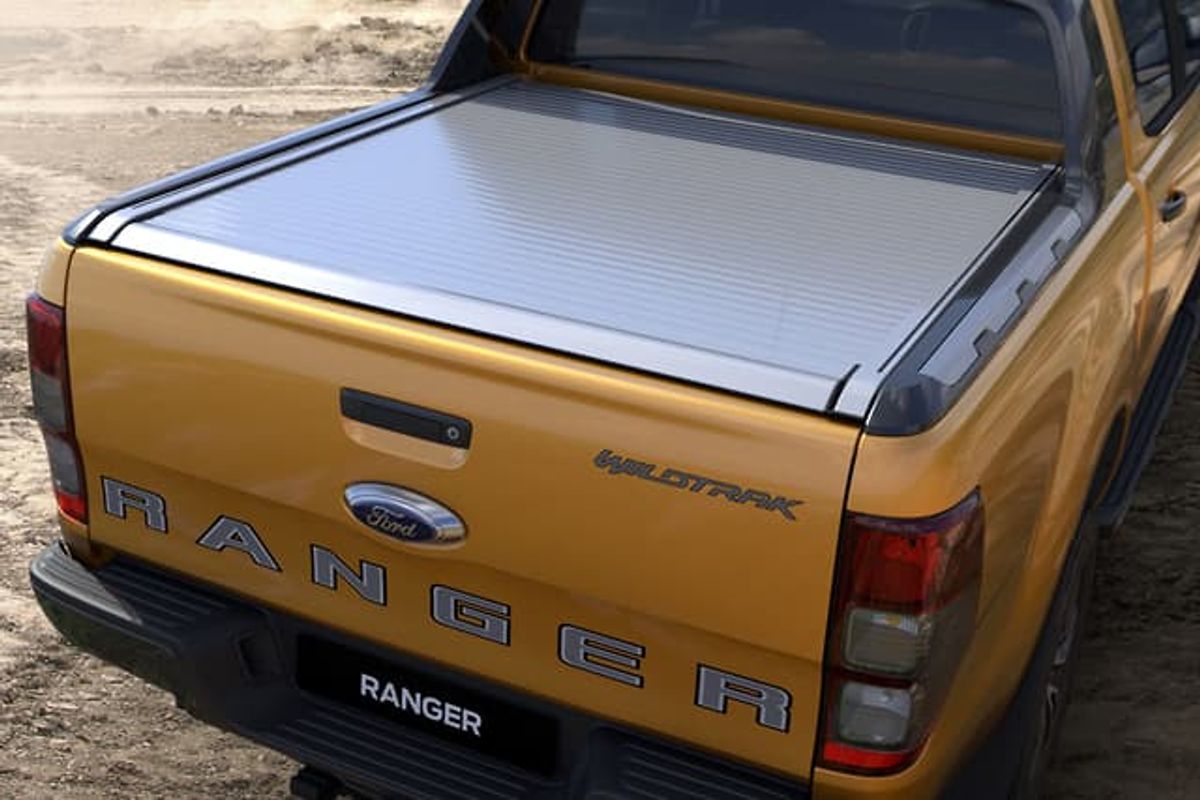
The Wildtrak’s loadbox shutter cover is now power-operated and can be controlled remotely via the key fob or a cabin switch. This is a notable improvement over the current manually operated cover and will greatly increase ownership convenience, especially if you are in a hurry and stopping to buy a load of braai wood next to the road. 


An electric load bay cover is a useful upgrade for the Ranger Wildtrak. 

Inside, the 2020 model-year Ranger upgrades tally Ford’s latest 8-inch SYNC3 touchscreen infotainment systems, featuring both Apple CarPlay and Android Auto. Ford has also added a USB port in the roof console, behind the rear-view mirror, to power dashcams.

Mechanically there are no significant changes, except for the option of a new heavy-duty suspension package. With revised spring rates and damper settings, Ranger’s heavy-duty suspension package is aimed at those users who regularly load their Ranger to capacity and travel on gravel.

The most notable detail of this heavy-duty suspension upgrade is that Ford’s engineers have been able to increase bump stop clearance by 70%. This means that if you hit a pothole at speed with a fully loaded Ranger, the risk of blowing through its suspension travel and potentially losing control, is greatly reduced.

Ford has committed to delivering all the abovementioned upgrades to its Australian customers by December 2019. The heavy-duty suspension package and powered roller shutter on Wildtrak would be very welcome additions to the South African Ranger product portfolio in 2020…

Buy a new or used Ford Ranger on Cars.co.za

Related Content 

Ford Ranger Raptor (2019) Video Review

Ford Ranger 2.0 4×4 XLT Automatic (2019) Review

Ford Ranger 2.0Bi-T DC 4×4 Wildtrak auto (2019) Review

Toyota Hilux vs Ford Ranger (2019) Comparative Test