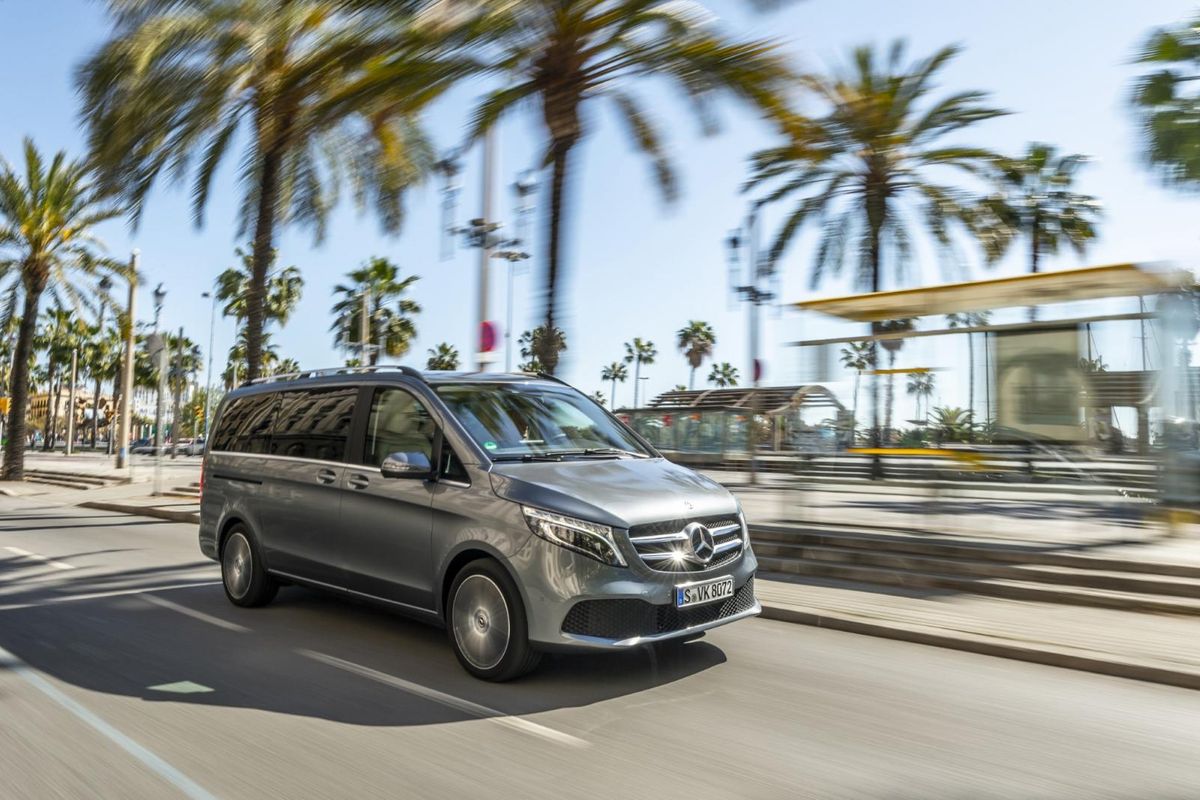
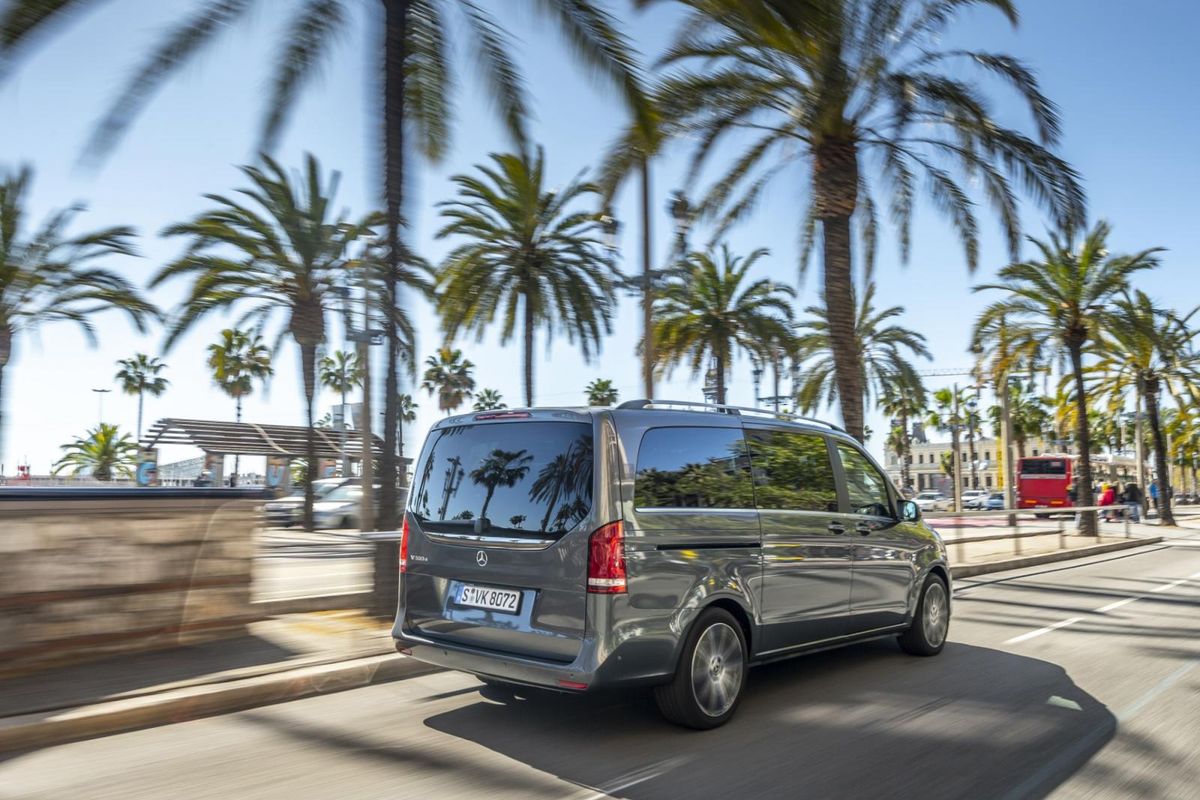
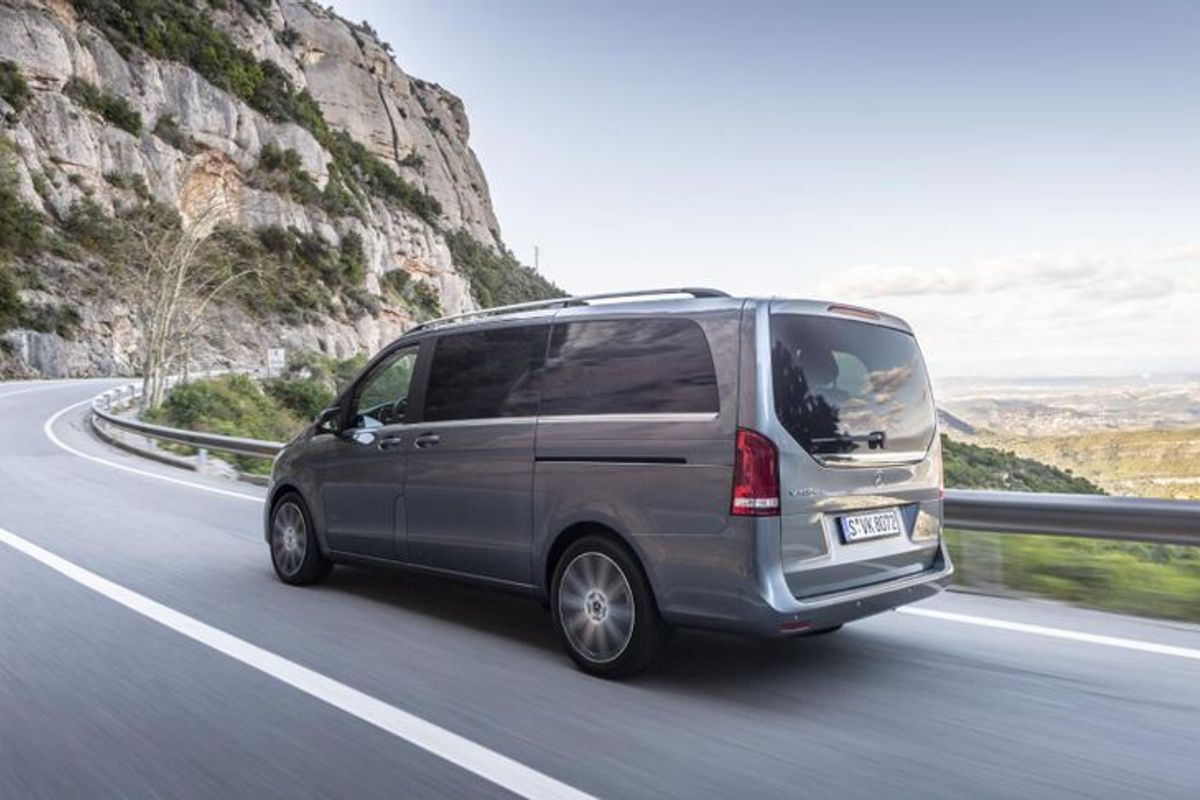
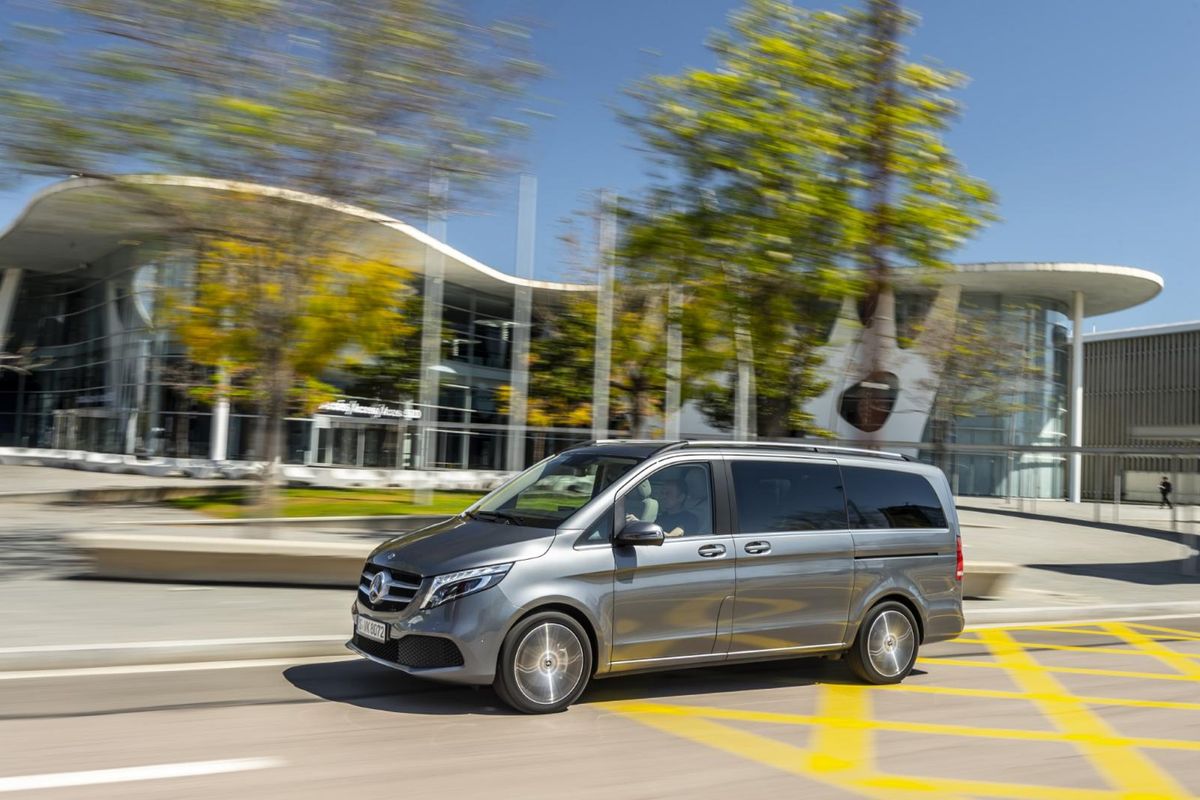
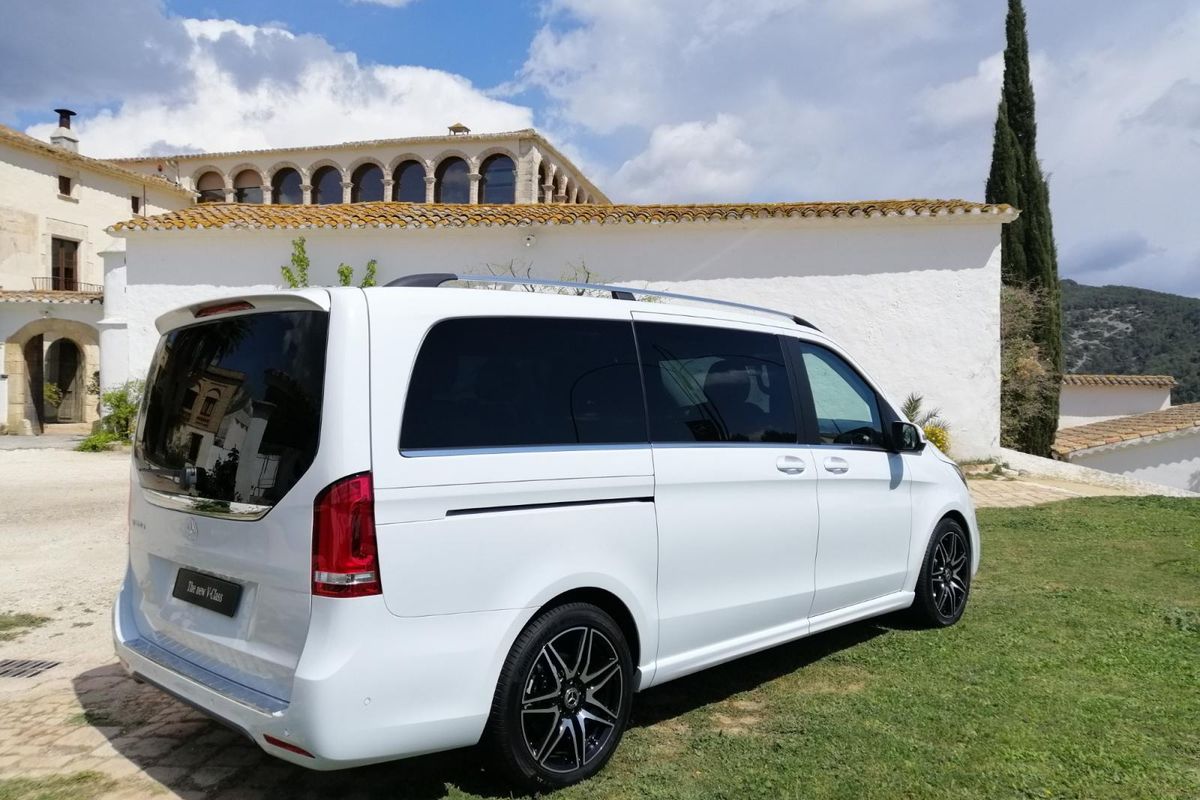
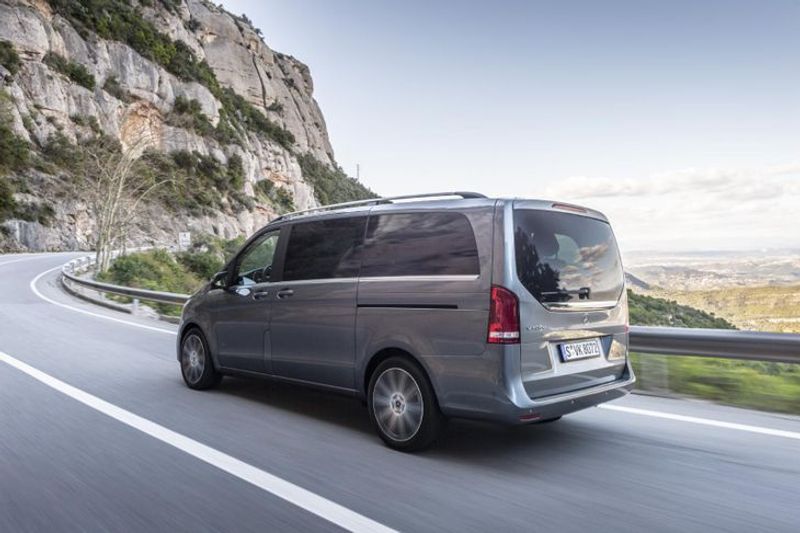
Four years since its introduction to the South African market, the W447-generation V-Class has undergone a mild facelift. Although its mechanicals remain the same, the luxury MPV sports aesthetic updates all-round, optional luxury rear seats and added safety features.
Given the refreshed range’s lofty starting price (of in excess of R900k) and the shrinking market for conventional MPVs (let alone full-sized luxury ones), the V-Class’s customer base appears small. However, Mercedes-Benz Vans SA vice-president Nadia Trimmel says the firm “remains convinced that families who place value on an active life, leisure time and a good work-life balance”, as well as “leisure-activity enthusiasts who have the need for a vehicle to transport the most varied types of equipment” are potential customers.
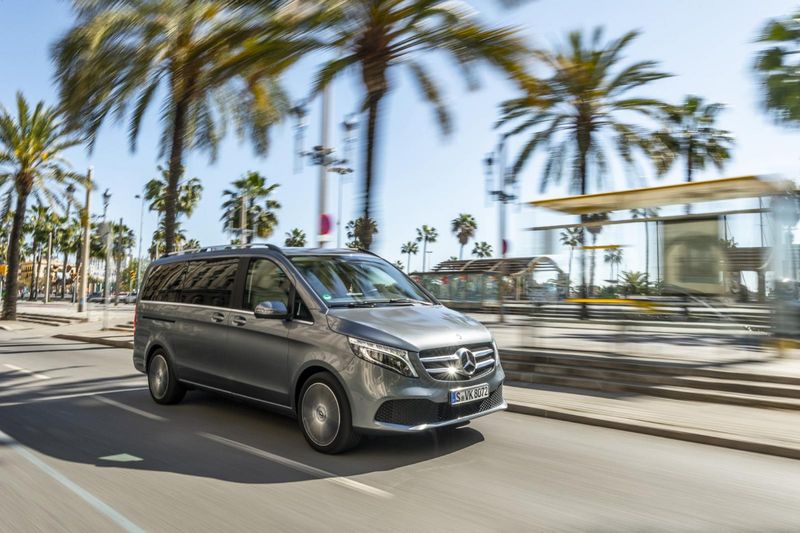
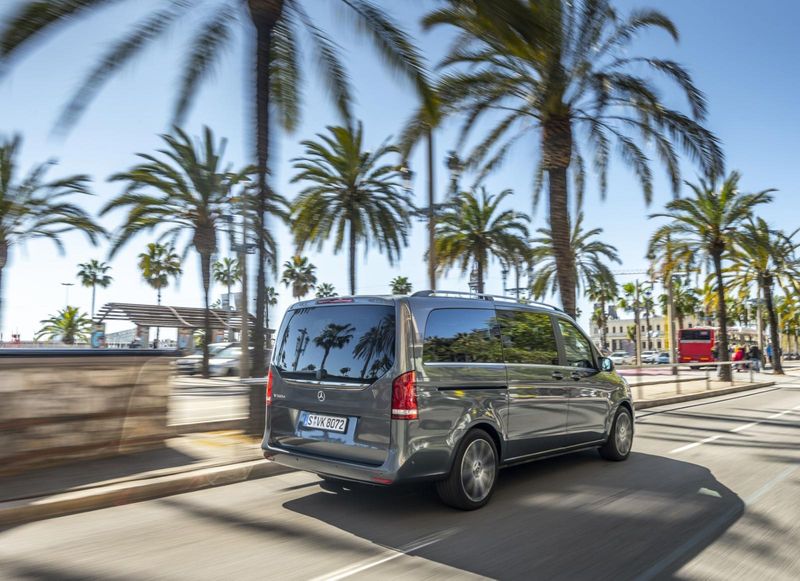
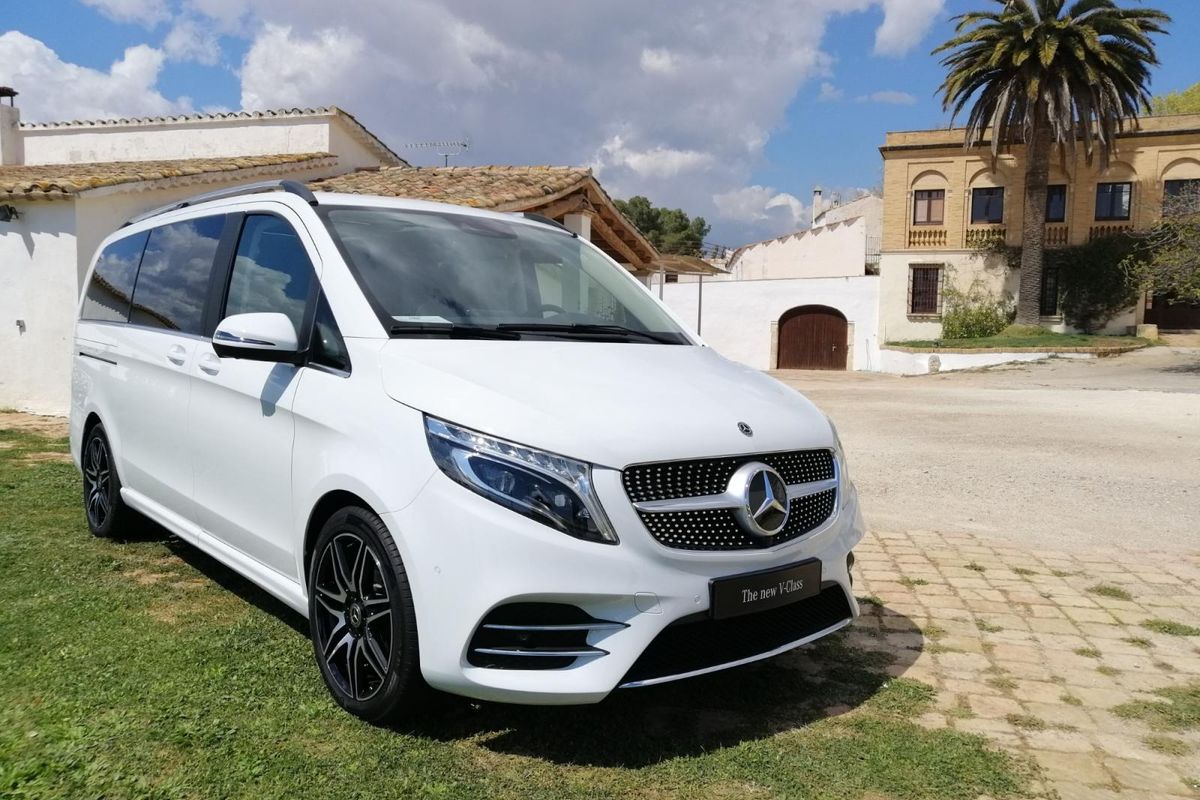
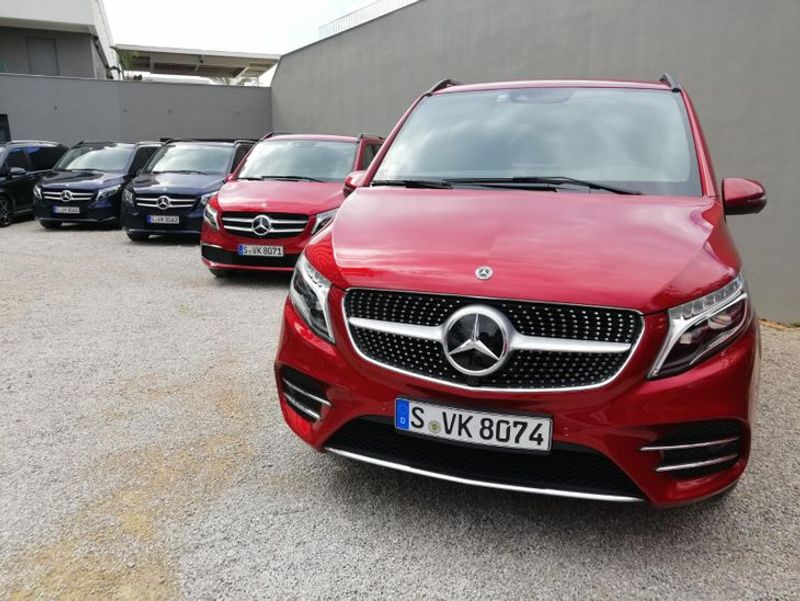
The V-Class boasts what is arguably the sportiest front bumper ever fitted to a people-mover (straight off the showroom floor).
Even if Mercedes-Benz Vans SA might be a bit ambitious in terms of its hopes for significant private-buyer sales of the updated V-Class, we anticipate the newcomer will definitely appeal to companies that provide VIP transport, luxury hotels (shuttle services), high-end tour operators and business owners who need their vehicles for work as well as private use.
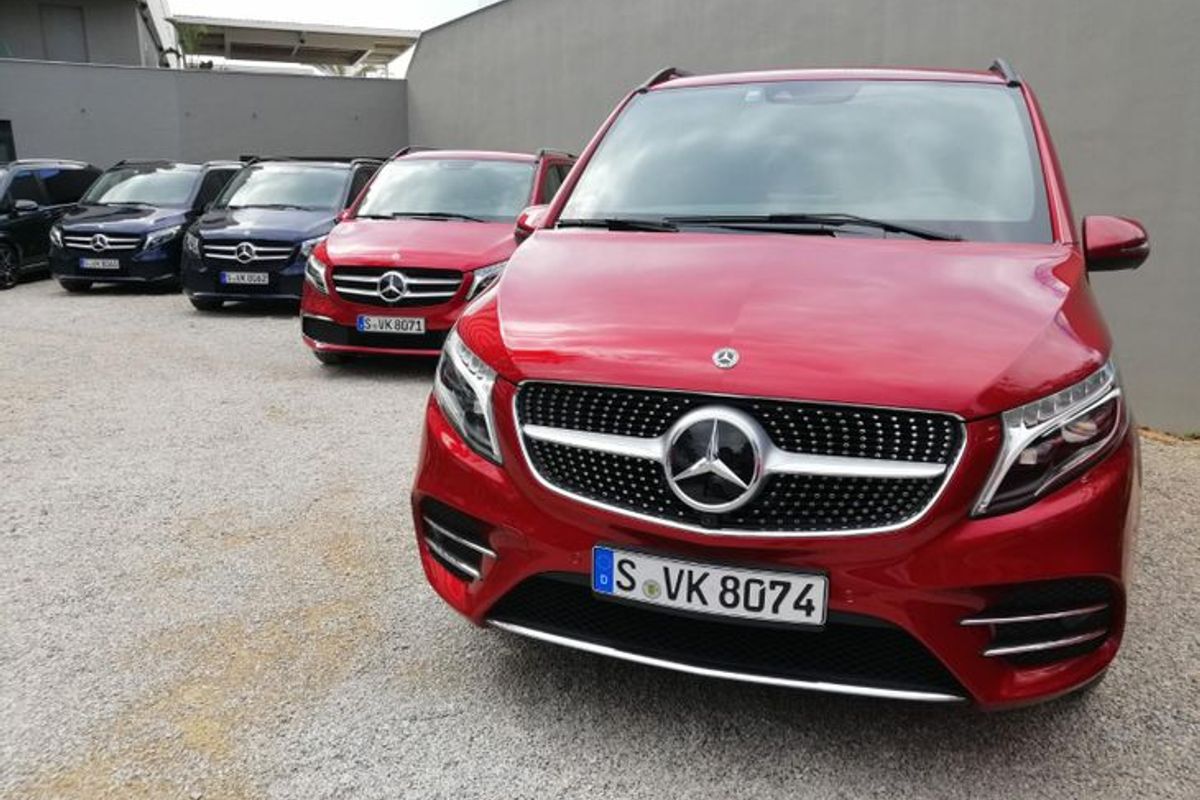
In terms of its exterior treatment, the updated V-Class facelift sports a broader-looking front end by virtue of a new front bumper design with revised air inlets, while the grille sports a pair of silver slats and a revised black mesh. If you opt for the AMG-Line trim, the big Benz's grille gains diamond-pattern chrome pins that imbue the V-Class with a decidedly sportier, punchier look.
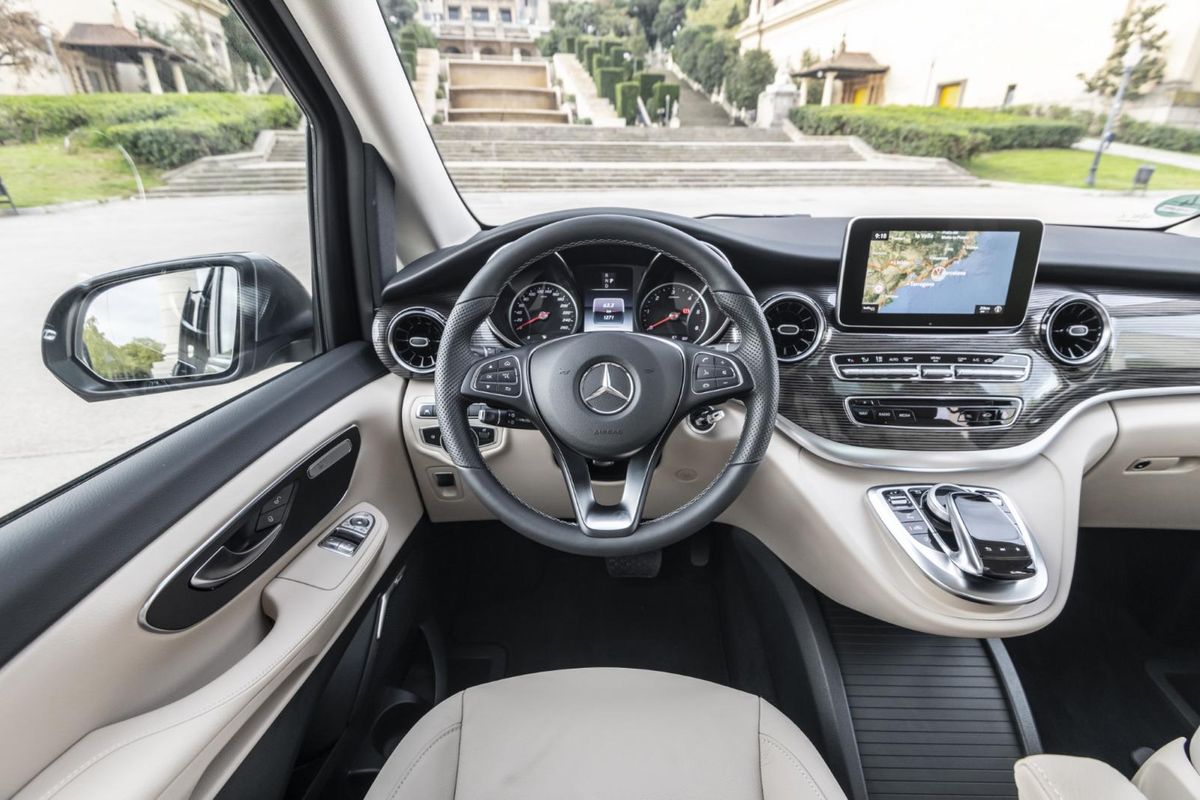
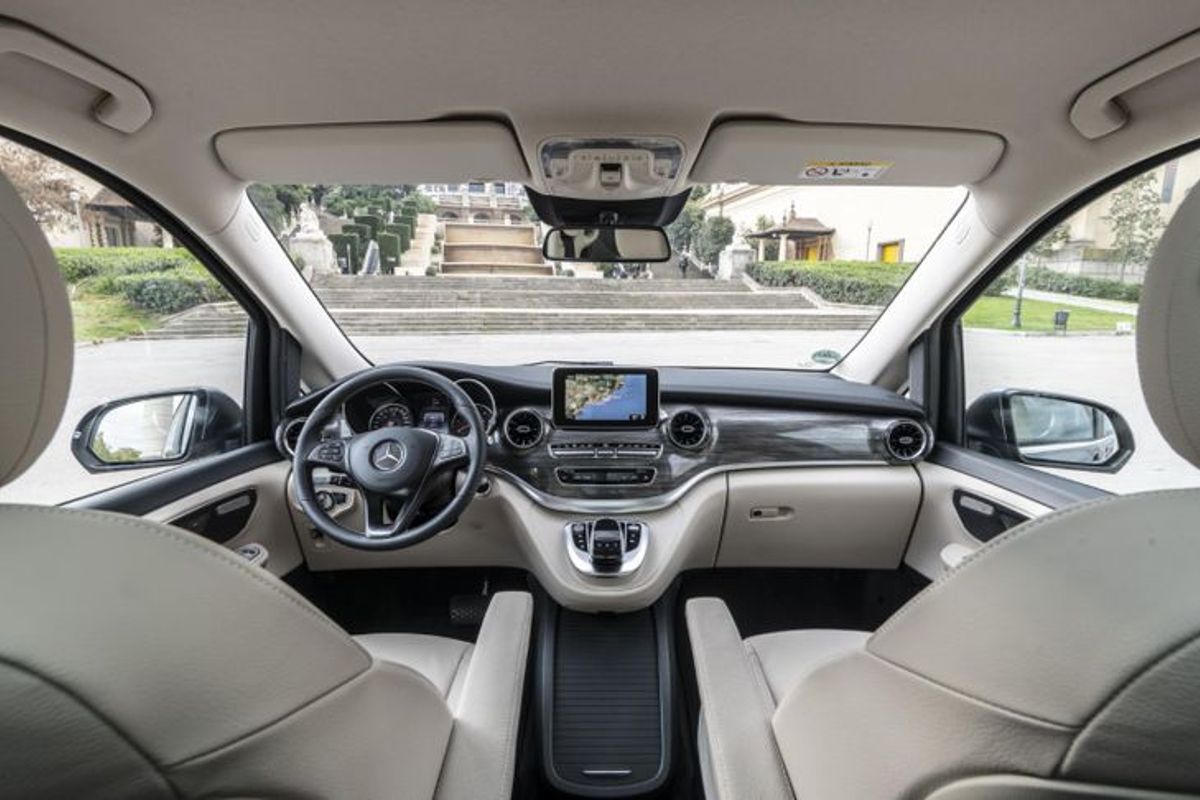
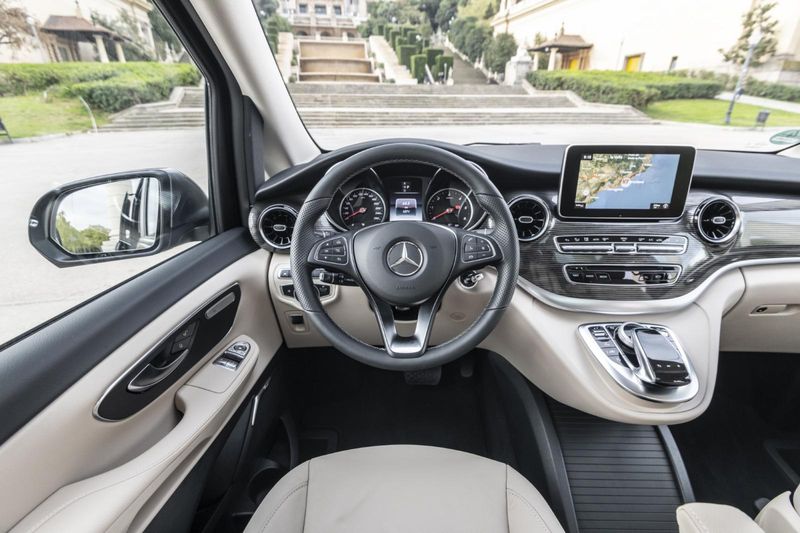
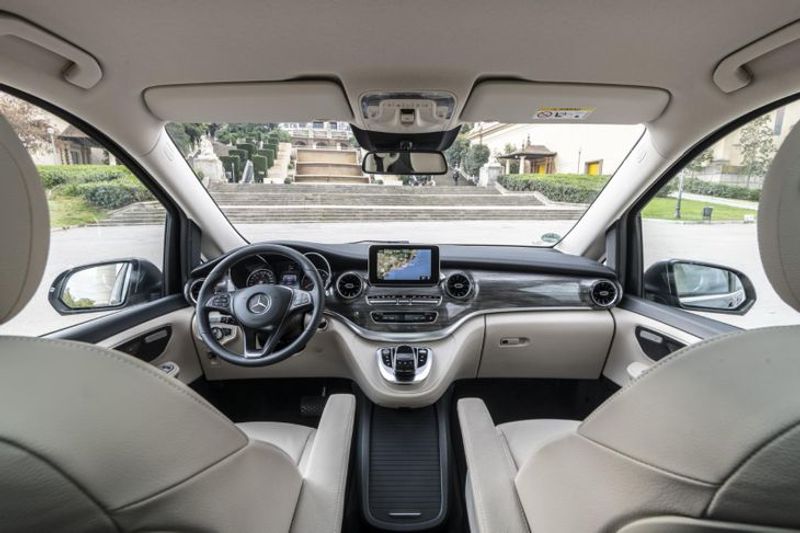
An updated instrument cluster and modernised trims further enhance the V-Class' luxury car feel from behind the 'wheel.
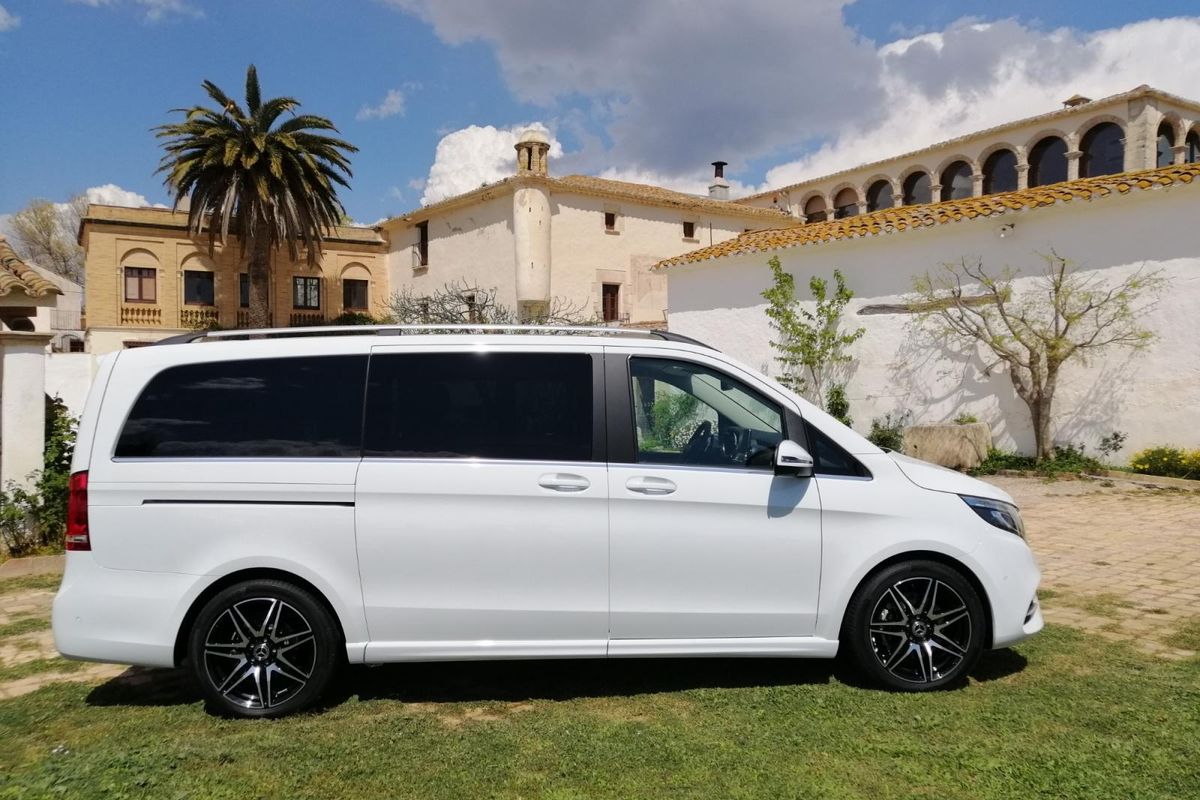
What’s more, a range of new exterior colours and revised wheel designs (ranging from 17- to 19-inches in size) has been availed to customers. The 17- and 18-inch light-alloy wheels in tremolite grey or black, come with a 5 twin-spoke design and, at the upper end of the new-wheels portfolio, are black-painted 19-inch 10-spoke light-alloy wheels with a high-sheen finish.
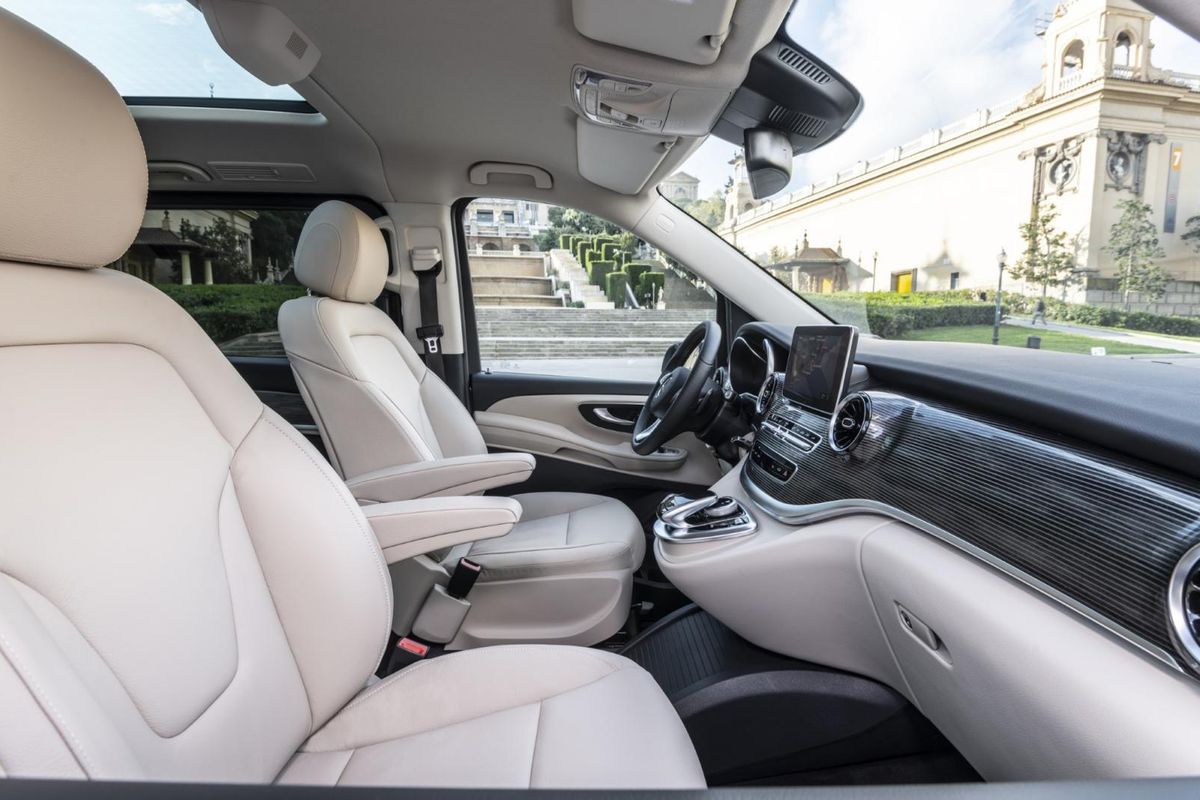
As for the bus' interior, the Benz's instrument dials have been refreshed, as have the air vents (they now sport a turbine-look, which will be instantly recognisable to owners of the new A-Class, for example) and the fascia panelling features a twin-stripe look. What's more, various upholstery (including Tartufo Nappa leather) and trim accent (such as piano lacquer, ebony wood, carbon-fibre and brushed aluminium) options are available.
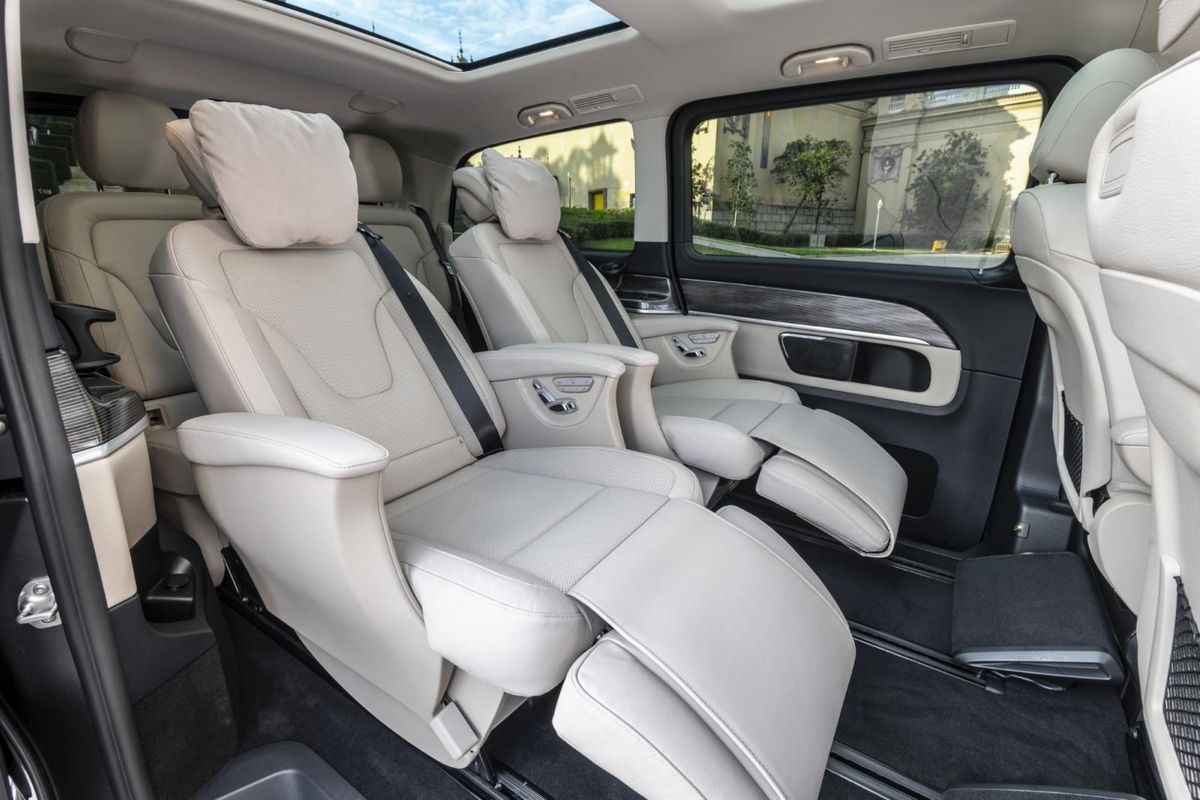
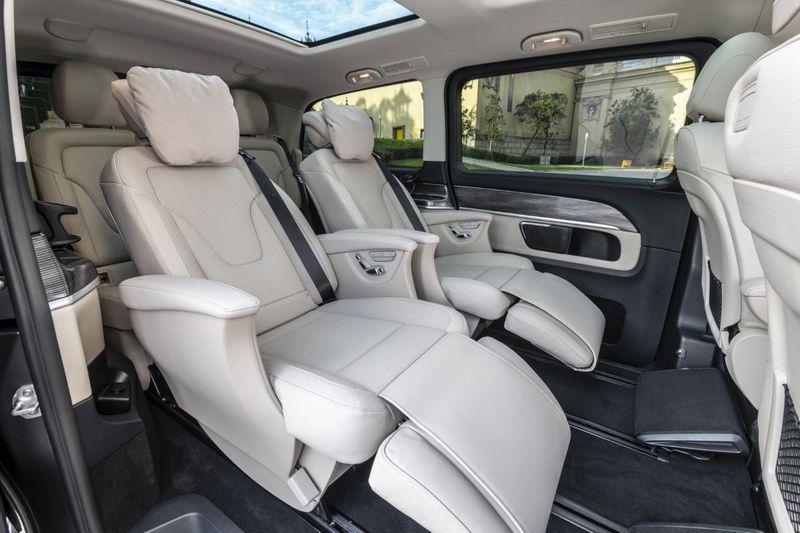
The contoured (optional) middle-row luxury seats offer a host of creature comfort functions…
For buyers looking to specify their V-Class to offer ultimate occupant comfort, middle-row luxury seats can now be specified (at extra cost, of course) in the local market… These seats can be fully reclined and offer a range of massage, as well as heating (and cooling) functions.
Furthermore, the Benz’s suite of safety features has been bolstered with the addition of Active Brake Assist, which detects impending collisions and, if necessary, will intervene by automatically applying the brakes if a driver fails to react to visual/acoustic warnings.
High-Beam Assist Plus, meanwhile, provides optimised illumination of the road. In the event of vehicles in front or oncoming traffic, the LEDs of the main-beam module are partially deactivated, creating a U-shaped cut-out in the cone of light. The remaining areas of the road continue to be illuminated with the main-beam headlamps (partial main beam).
As a limited introductory offer, Mercedes-Benz Vans SA is offering the facelifted V-Class with a 6-year/100 000 km maintenance plan.
Other notable safety features include Crosswind Assist, Attention Assist, as well as the fitment of 6 airbags, ABS with EBD and electronic stability- and traction control.
Unchanged powertrains
In the South African market, the V-Class continues to employ the 2.1-litre turbodiesel engine paired with a 7-speed automatic transmission. Buyers still have the choice between the V200d with 100 kW/300 Nm, the V220d with 120 kW/380 Nm and the V250d with 140 kW/440 Nm. The latter is claimed to accelerate from 0 to 100 kph in an unmatched 9.1 seconds.
Lastly, whereas the V-Class is usually covered by a 5-year/100 000 km maintenance plan, Mercedes-Benz Vans SA is offering all V-Class derivatives with a complimentary top-up to a 6-year/100 000 km plan as a limited special launch offer (August 2019).
Mercedes V-Class (2019) pricing in SA:
V200 d R913 951
V220 d R955 518
V250 d R 1 027 686
V220 d Avantgarde R1 247 819
V250 d Avantgarde R1 292 474
Roush unleashes 500 kW+ Stage 3 Kit for 2019 Mustang
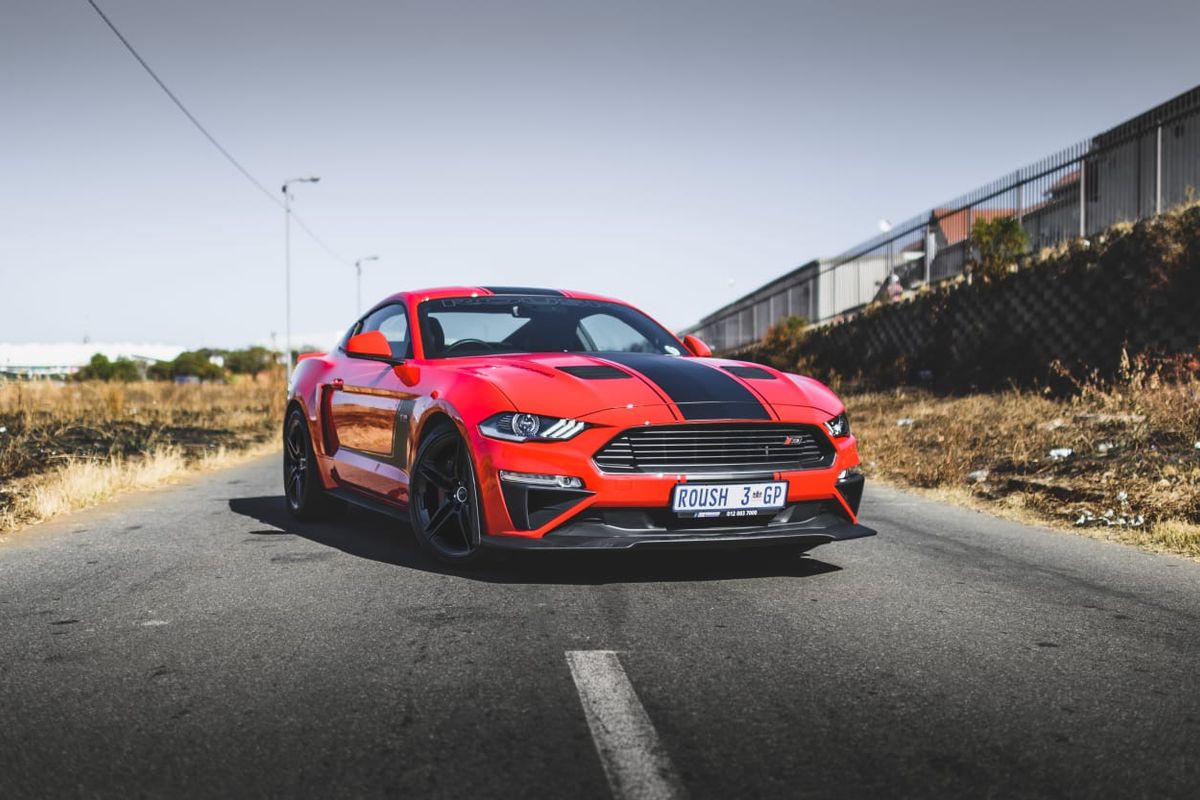
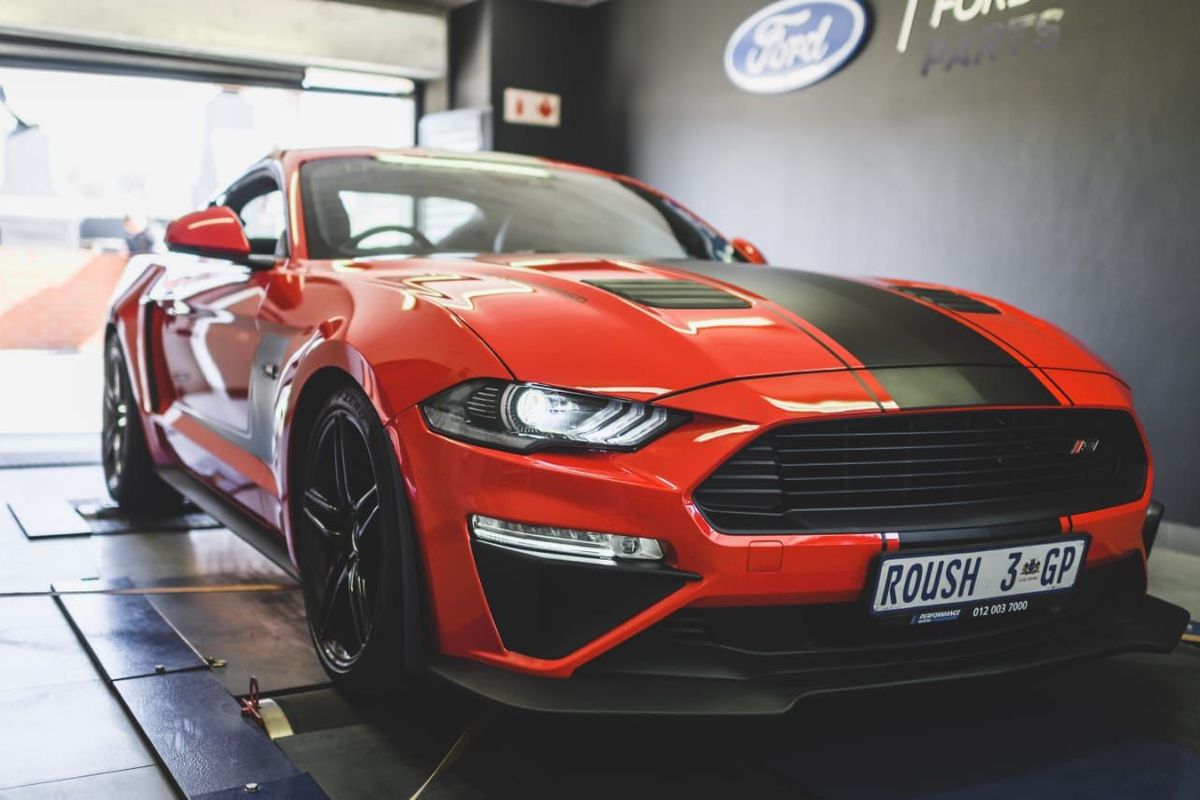
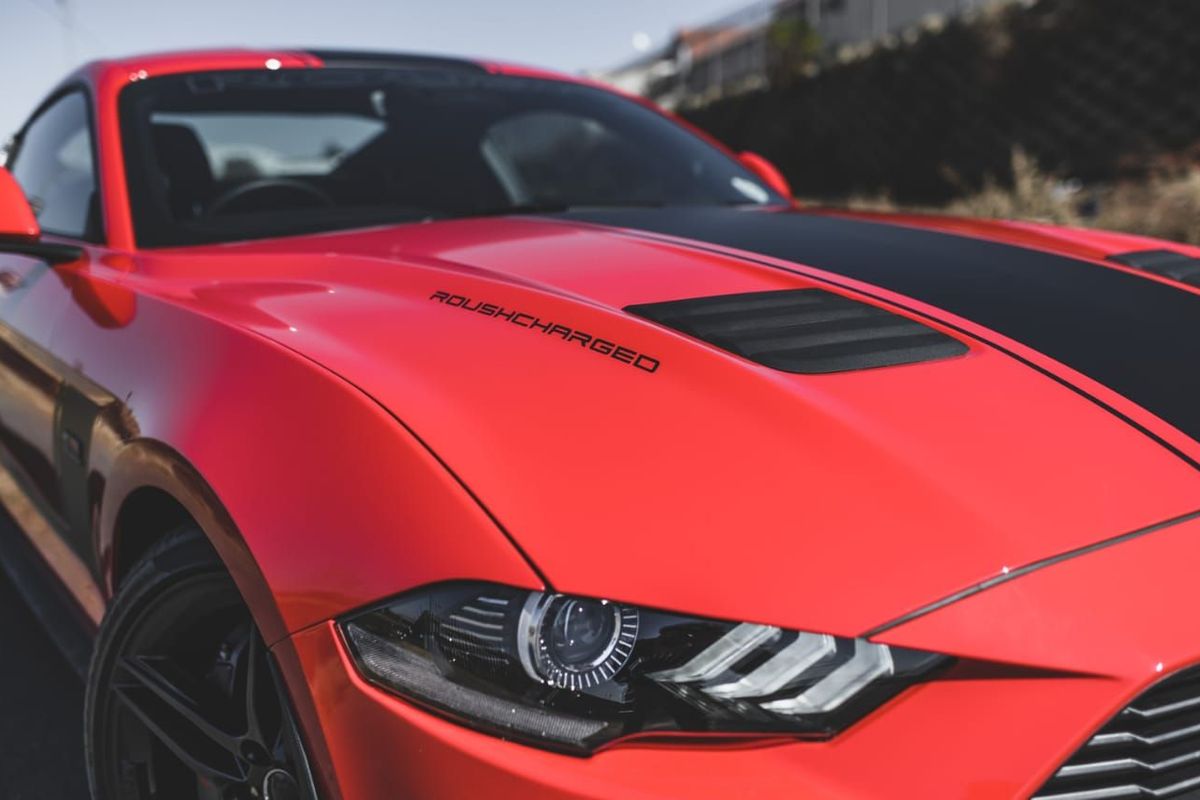
Performance Centres in Centurion and Pietermaritzburg now offer a 529 kW/827 Nm Roush Stage 3 upgrade for the 2019 Ford Mustang 5.0 GT Fastback, replete with a number of mechanical and cosmetic upgrades and backed by a 3-year/60 000 km limited drivetrain warranty.
Performance Centre SA, US tuning firm Roush’s agent in South Africa, has offered several stages of upgrades for Mustang derivatives since 2016 – the year the Blue Oval’s muscle car was introduced in South Africa. Now, to coincide with the recent local introduction of the facelifted Mustang, Performance Centre SA has released details of its ultimate upgrade for the 5.0-litre V8 derivative, which produces 331 kW in standard form.
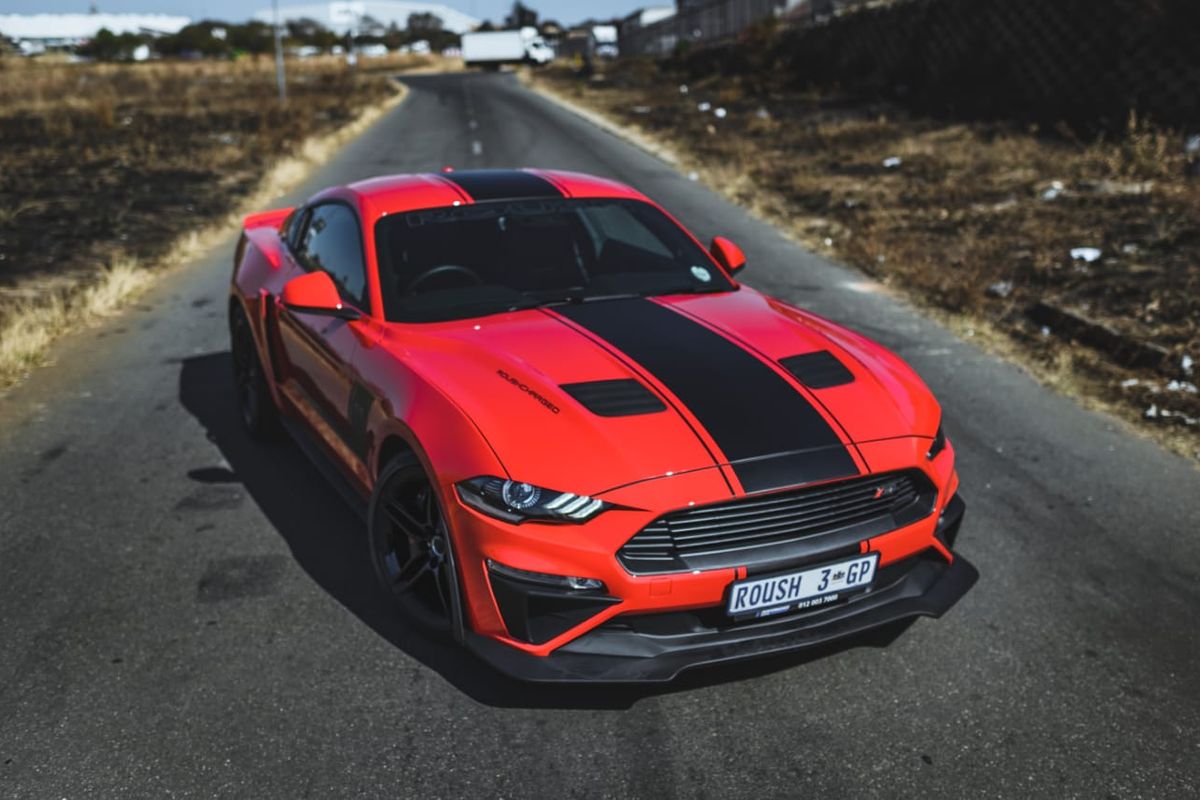
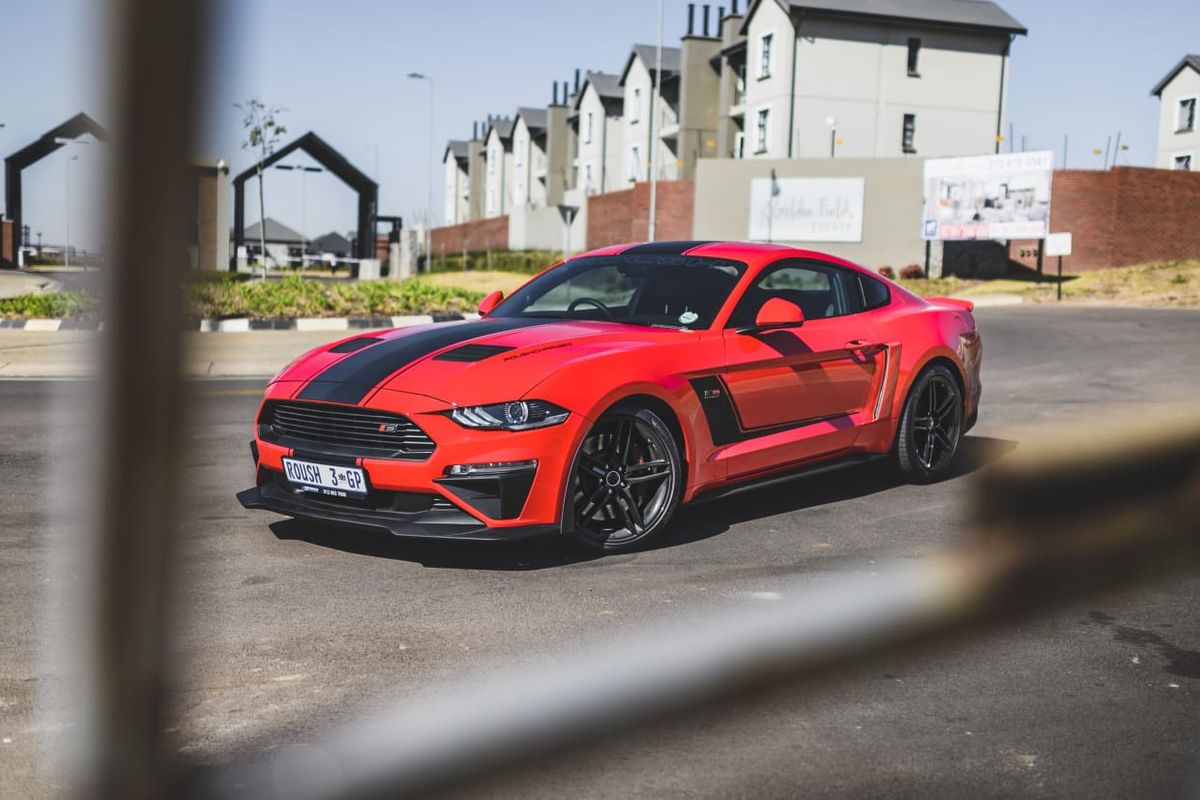
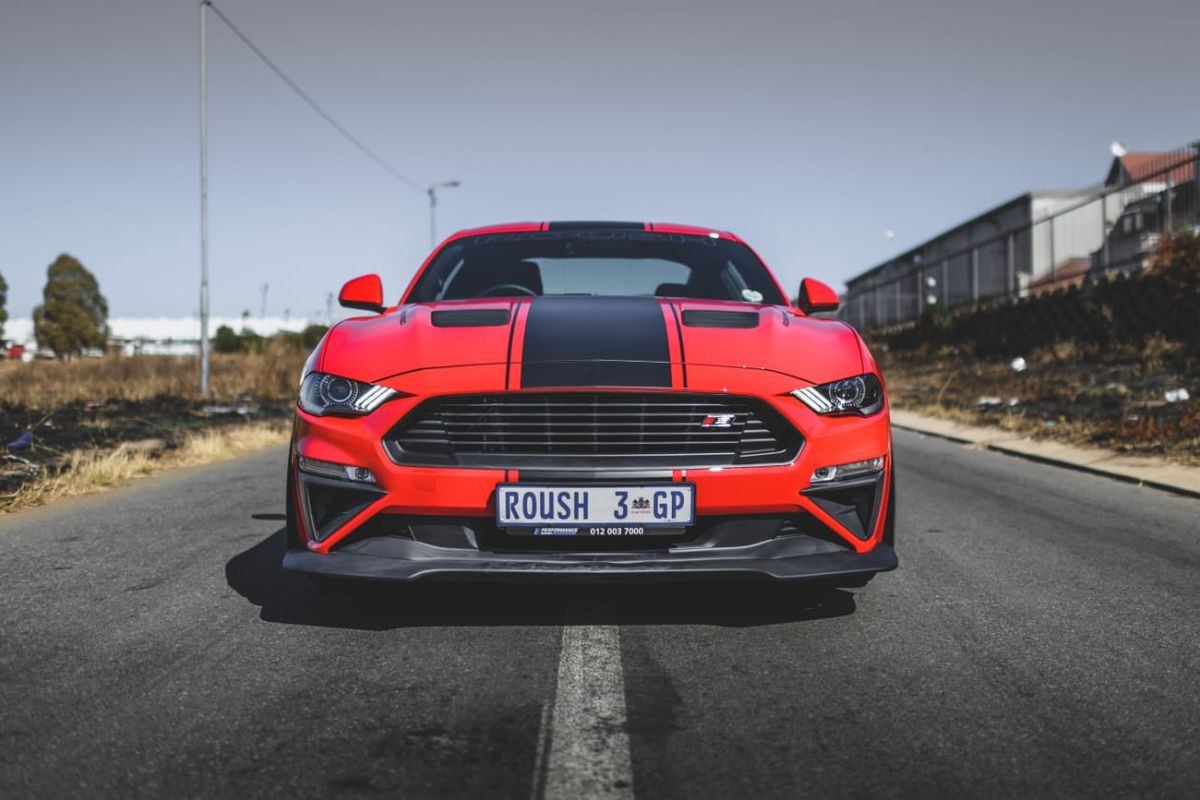
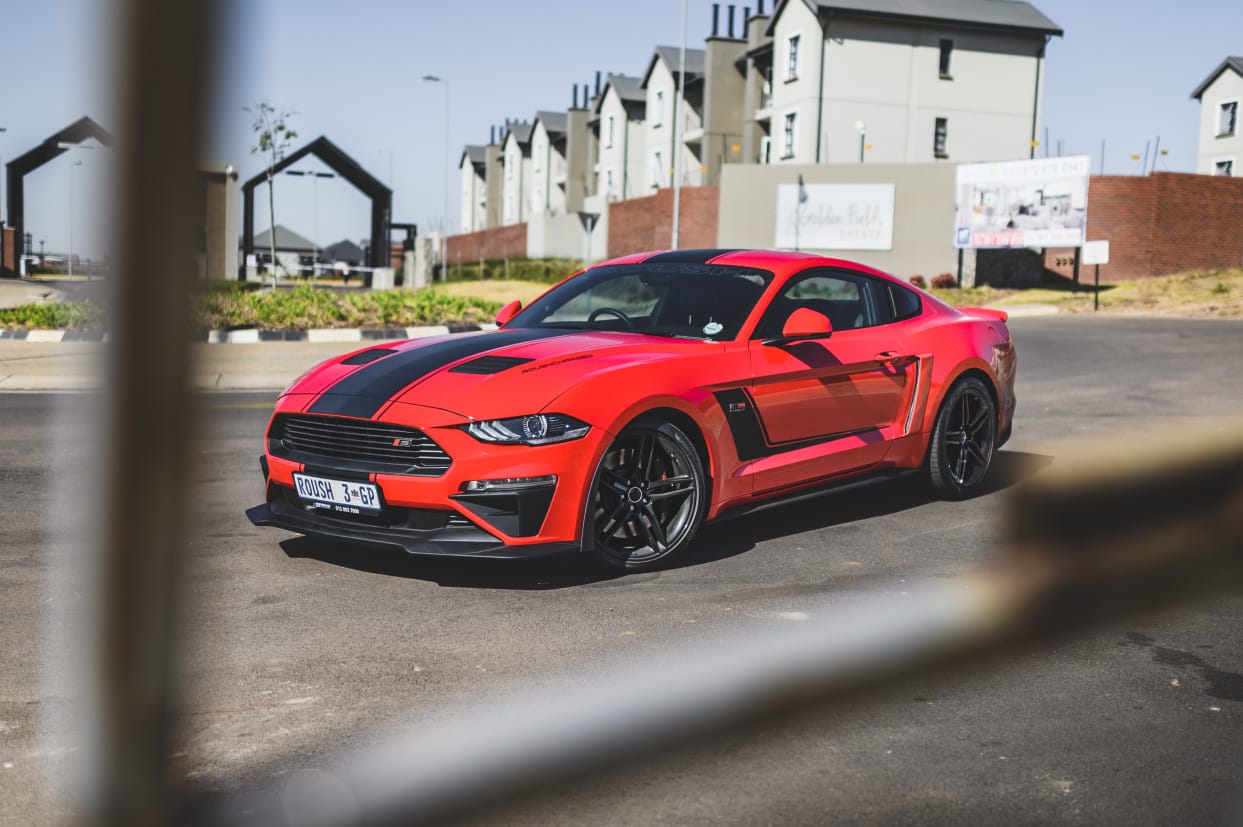
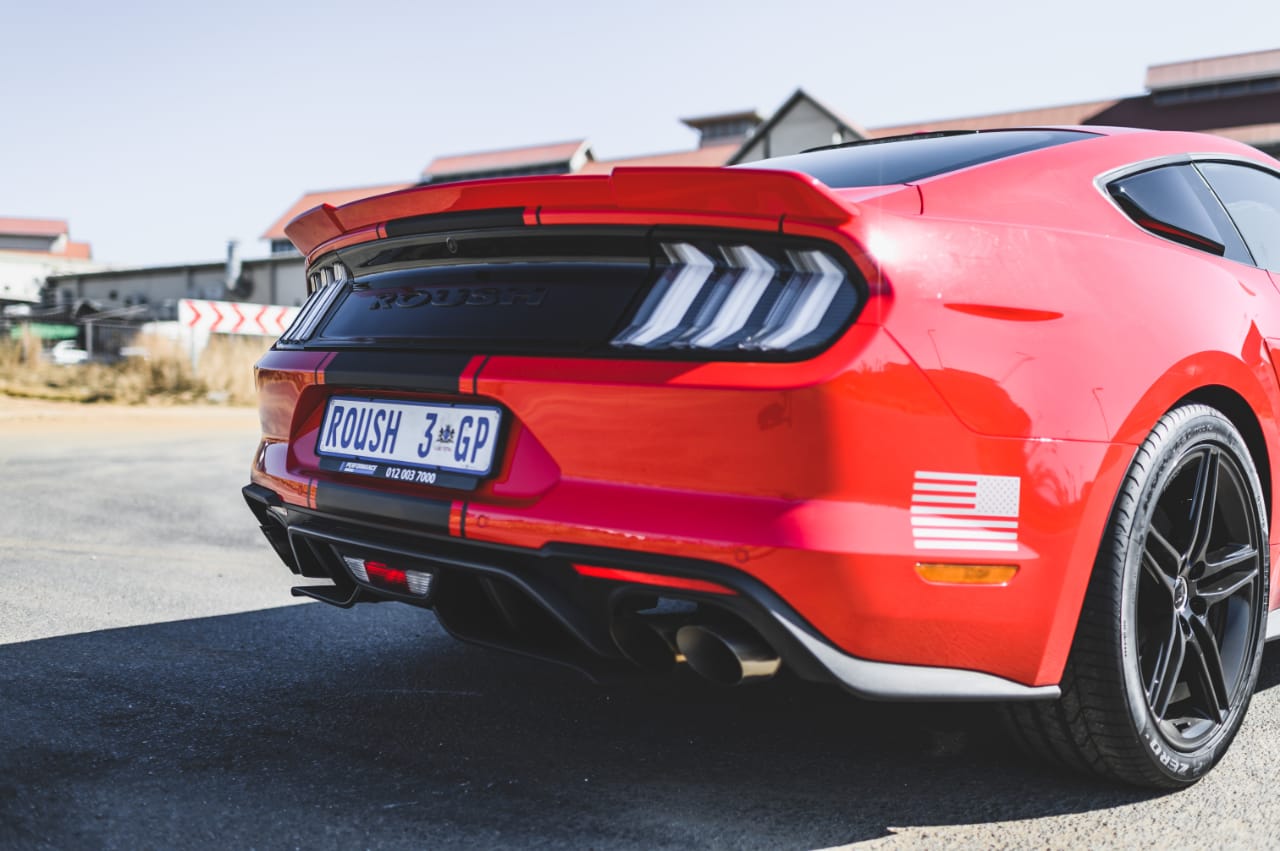
A host of aerodynamic addenda and racy graphics set the Roush Stage 3 Mustang apart from its standard siblings.
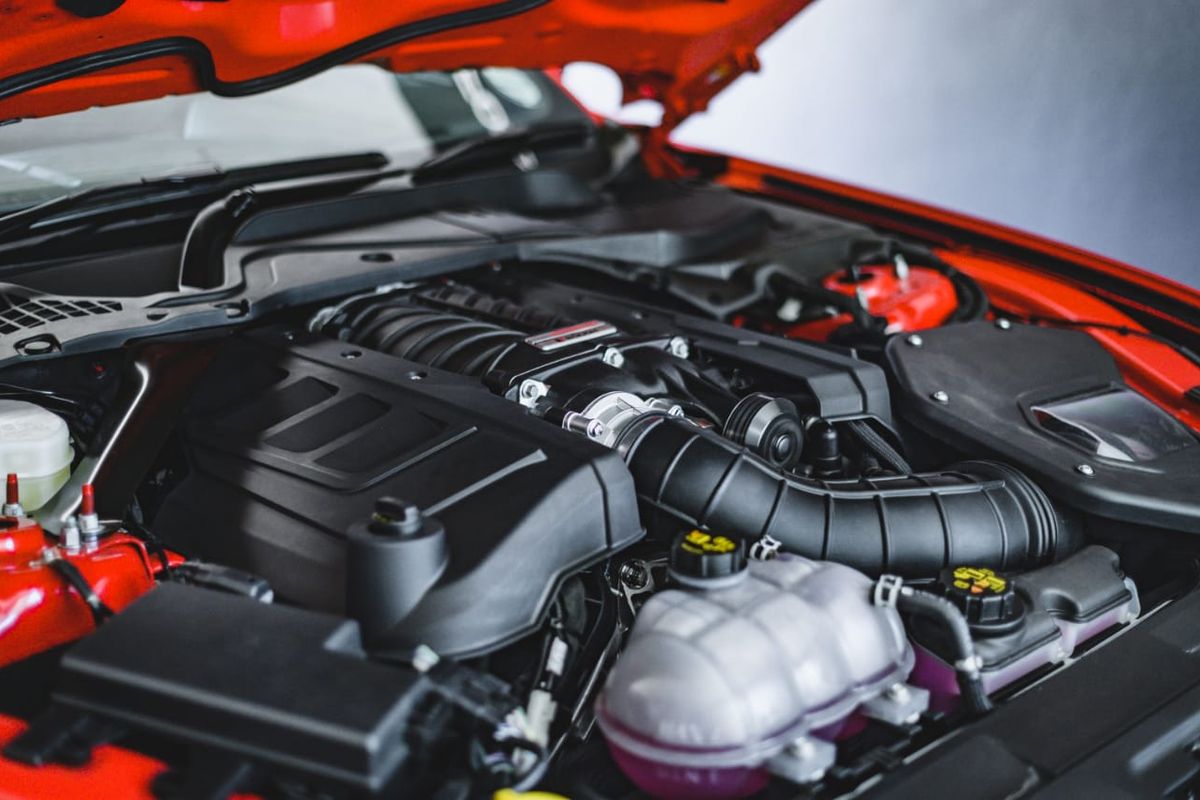
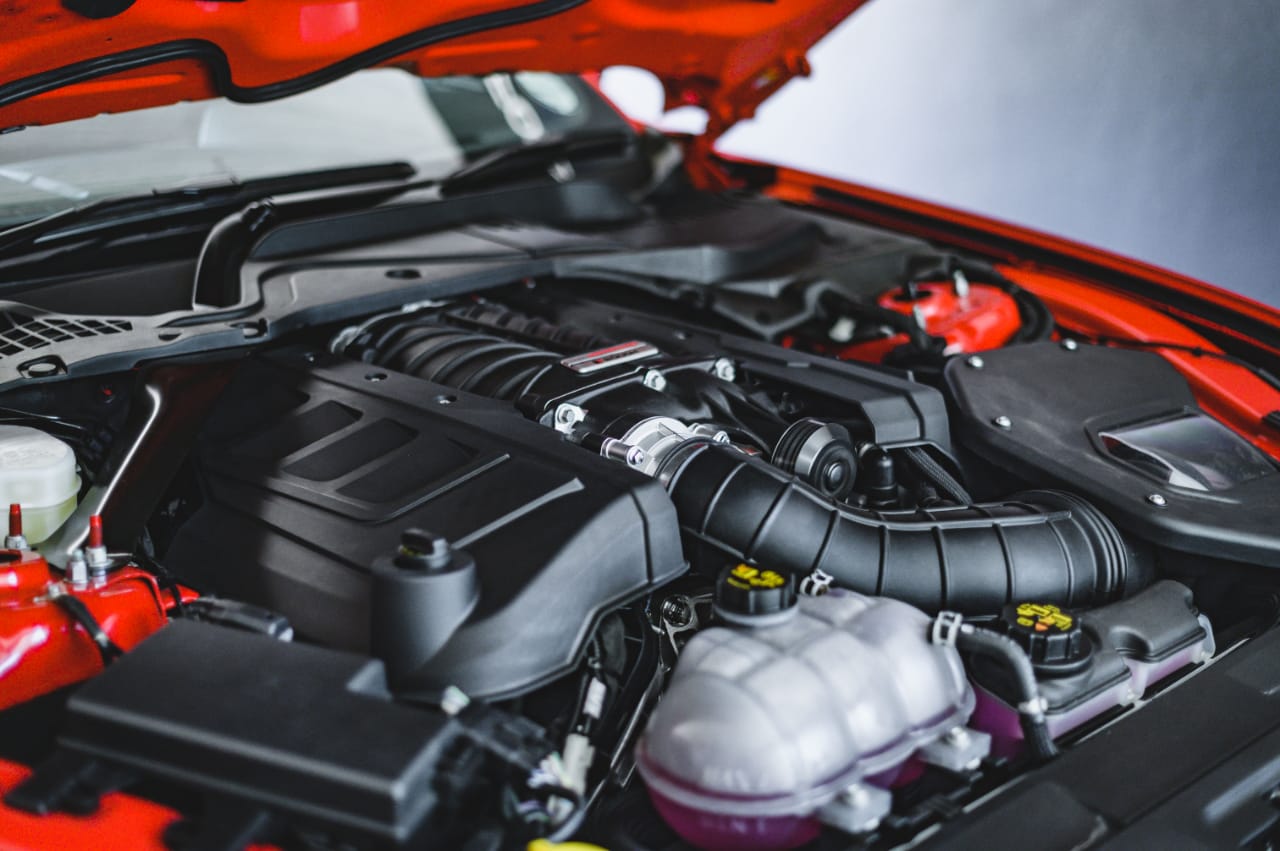
The meteoric hike in maximum power (+198 kW) and torque (+298 Nm) from the standard car to the Roush Stage 3 offering come courtesy of the fitment of a R2650 TVS (Twin Vortices Series) roots-type positive-displacement supercharger, which features Eaton's new twin 4-lobe rotors with an added helix angle of 170-degrees, in combination with newly-designed air inlet as well as outlet ports for the 5.0-litre V8 engine.
Performance Centre SA claims the supercharged setup is preferable to turbocharging because “it provides instant throttle response and… increased power through the engine’s entire power band”. Other benefits include: “enhanced thermal efficiency, higher volumetric capacity, higher operating speeds, more efficient airflow into the engine, and improved noise and vibration characteristics”.
With peak power in excess of 500 kW, the Roush Stage 3 Mustang should offer performance to embarrass some supercars.
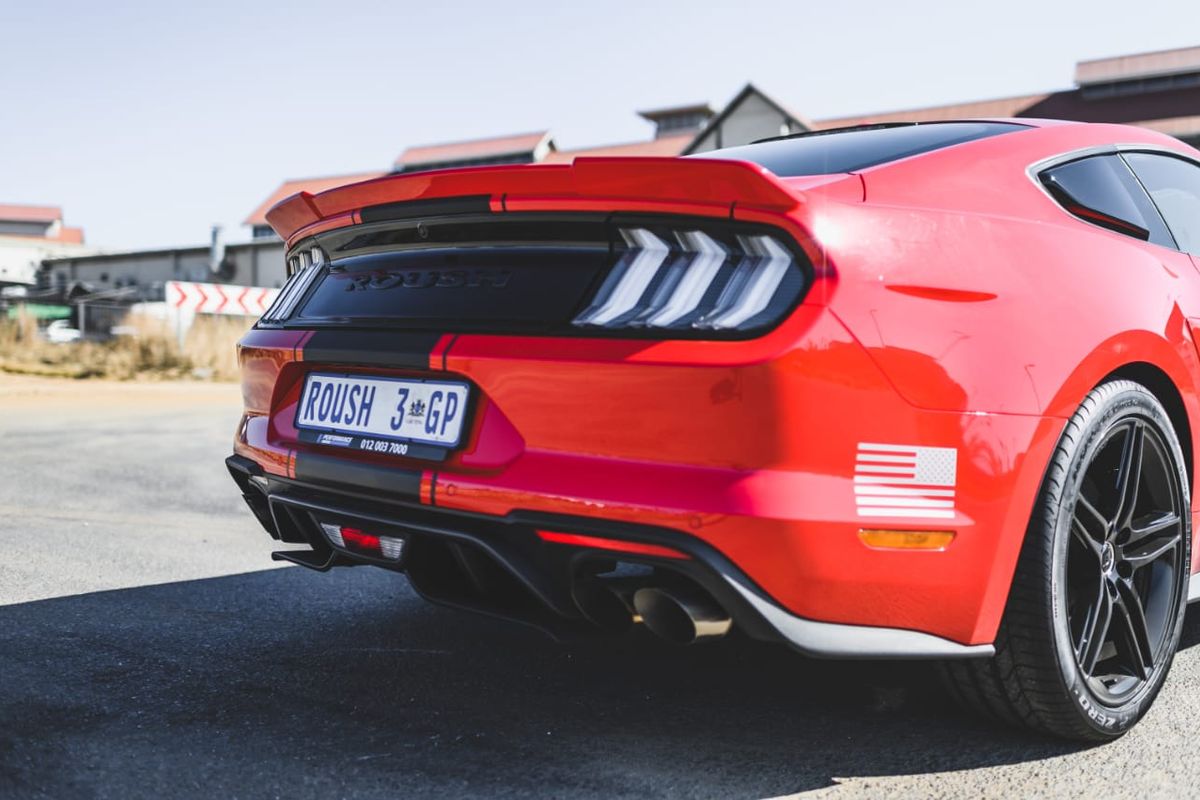
Although the US-based tuning firm has not released claimed performance figures (but given the engine’s extreme peak outputs, they should be in another league to the off-the-showroom 5.0 GT), the Stage 3 upgrade looks a lot faster… The bespoke Roush aero package features a high-flow upper grille with an iconic “3” badge, functional bonnet vents, a widened lower grille, chin spoiler with wheel shrouds, a body-coloured rear wing, aero corner pockets, body-side scoops and more.
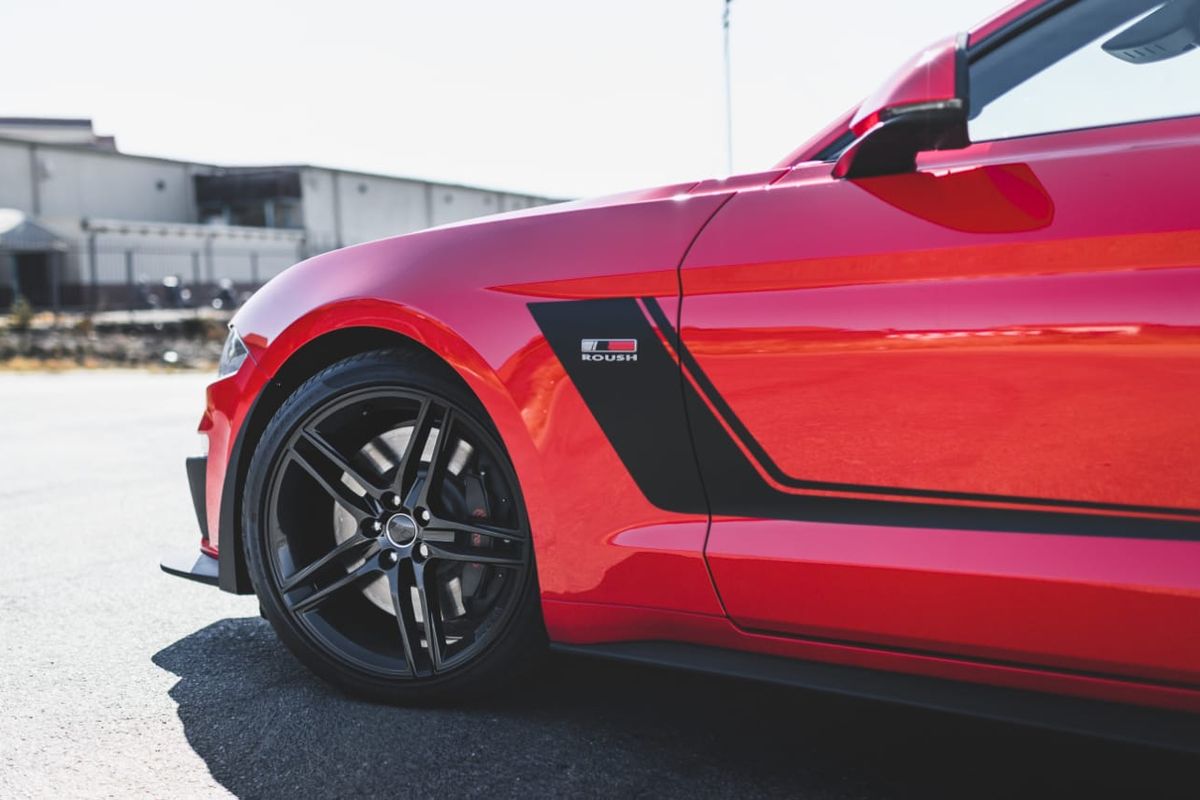
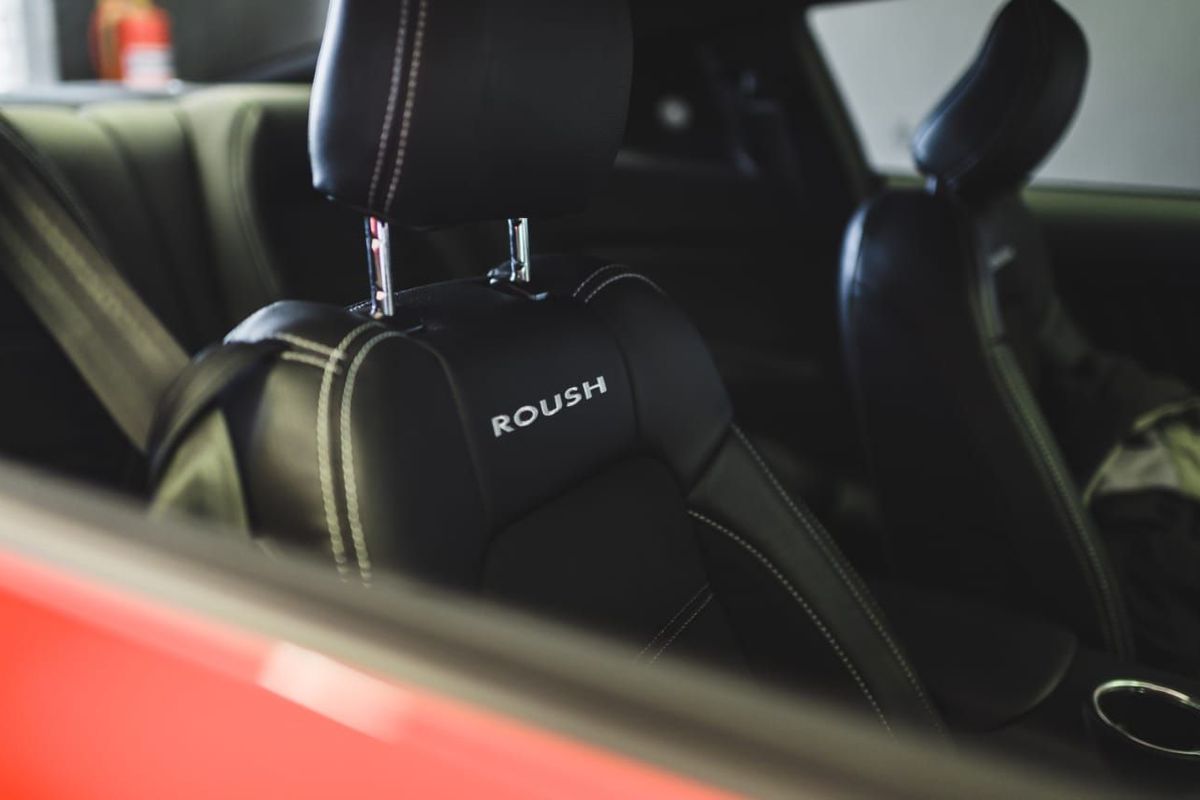
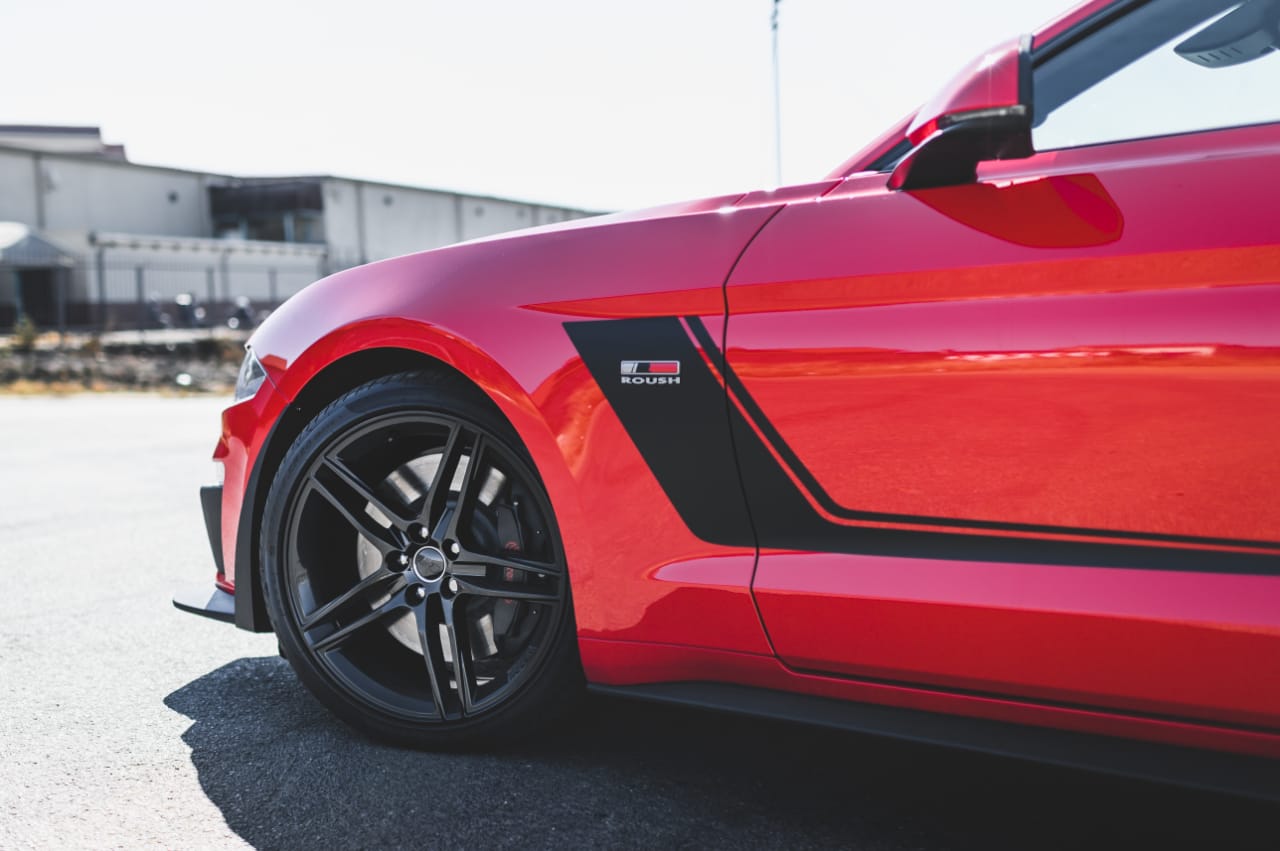
In terms of finer aesthetic details, the Roush Stage 3 Mustang’s exterior treatment bears an accented hockey-stripe graphic, Roush-branded fenders, -windshield banner, -bonnet graphics and -rear blackout panel, while on the inside, the much-fettled muscle car features a Stage 3 serialised dashboard plaque, as well as branded embroidered floormats, illuminated door-sill plates, black leather upholstery (with either silver or red contrast stitching) and billet performance pedals.
The "hockey stick' black side stripe is complemented by the "Jack Black" Roush-designed 20-inch wheels.
The standard wheels are custom Roush-designed 20-inch items finished in black and wrapped in Continental ExtremeContact tyres. They’re optionally available with ebony or quicksilver finishes, plus buyers can add a number of extras, such as 1-way or 3-way “TrakPak” adjustable coilover suspension setups, or an active exhaust system. The latter allows owners to download a smartphone application to create a customized tone and volume for the Stage 3’s exhaust system, so that they can drive in "stealth mode" or "race mode"… or anything in between.
Performance Centre SA states that each Roush-upgraded vehicle is uniquely serialised and registered on the US firm’s international registry. Each Roush stage (the firm also offers Stage 2 on 5.0-litre and Stage 1 on 2.3-litre Mustangs) has its own M&M Code and, therefore, individual trade and retail "book" values. “Therefore all major banks will finance the upgrade value of your vehicle and insurance companies can insure the full value of the vehicle,” the company said in a statement.
When optioned with an active exhaust system, the Roush Stage 3 Mustang's exhaust note can be tailored to taste (and mood)…
Furthermore, Roush upgrades are fully supported by Ford Motor Company of South Africa. Each vehicle is built and certified by a Ford-accredited Level 3 master technician, is covered by a Ford Protect (3-year/60 000 km) drivetrain warranty and registered on the firm’s “Service 2” system.
Although Performance Centre SA has not released pricing for the Stage 3 kit, the ultimate upgrade on pre-facelift Mustangs was stated at R700 000 (or thereabouts). Should you be interested in procuring the Roush Stage 3 upgrade or other enhancements, visit performancecentre.co.za.
Volkswagen has confirmed that the Mk7 Golf R has ended production, making way for the all-new Volkswagen Golf 8 which is due for a reveal later this year.
The story which first appeared Motor Authoritysaid Volkswagen had finally ceased production of the Golf 7R in preparation of the all-new Volkswagen Golf 8. The Golf R has been a very popular model in South Africa and has had considerable sales successes.
We've been fans of the Volkswagen Golf R and have loved its accessible performance and giant-slaying capability. Packing a 2.0-litre turbocharged 4-cylinder with 228 kW and 400 Nm, the Golf R was a weapon off the line with its quick-shifting gearbox and launch control. Volkswagen claimed a 0-100 kph sprint time of 4.6 seconds and we can imagine how many bigger and more prestigious vehicles were slain by this potent combination.
We've driven pretty much every iteration of Volkswagen Golf R, both 7 and 7.5, including the Akrapovic-equipped units, and have loved them all. The next Volkswagen Golf R is likely to only see the light of day in 2021.
Now's a good chance to get your hands on a great deal as the Volkswagen Golf R is on runout. Browse through stock here.
Update: Volkswagen SA has confirmed that its Golf 7 range will be available well into 2020.
The return of the Toyota Supra has been one of the most widely-discussed topics in petrolhead circles. Developed alongside the BMW Z4 roadster in partnership with the Munich-based firm, the new Supra has an enviable reputation to uphold. Does the 5th-generation coupe deliver sufficient driving thrills and, does it live up to expectations?
We like: Headturning styling, generous spec, power delivery, soundtrack, ride quality, performance
We don't like: We'd have liked a few more Toyota cues in the cabin, there are many BMW bits in there.
Some Toyota dealers regularly offer specials: Have look here.
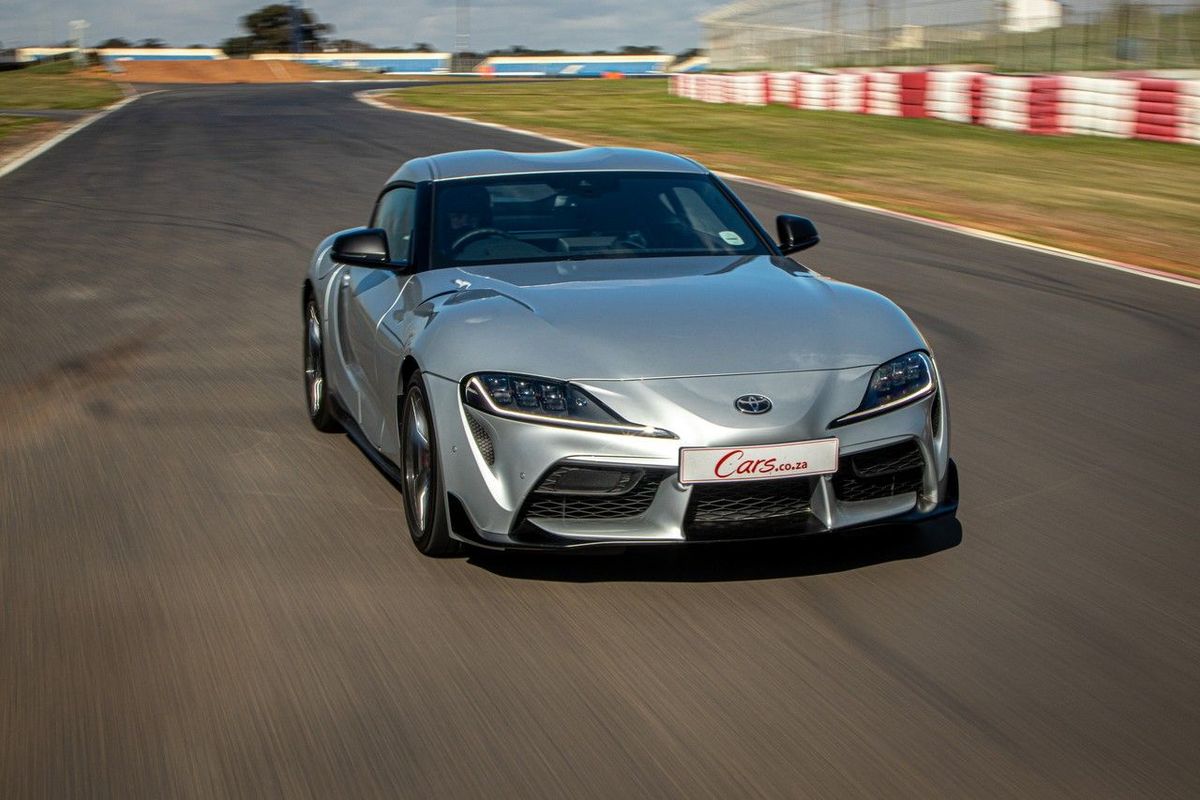
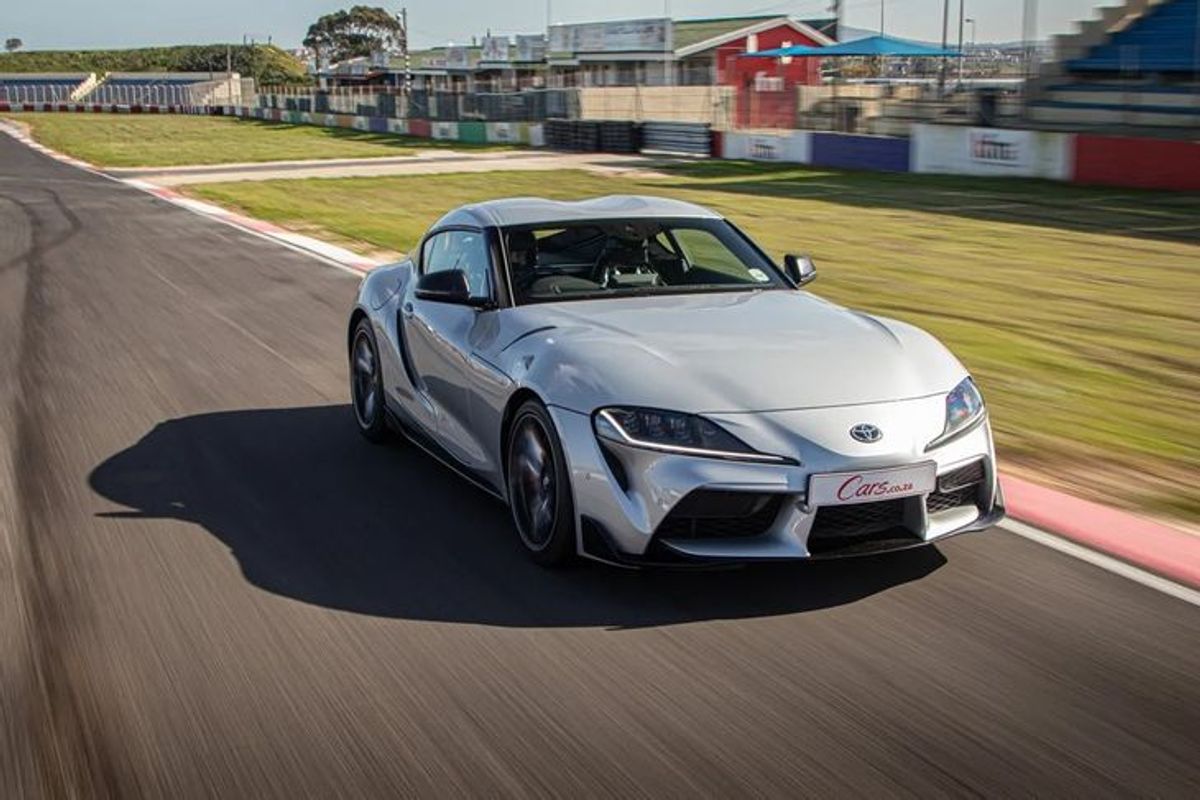
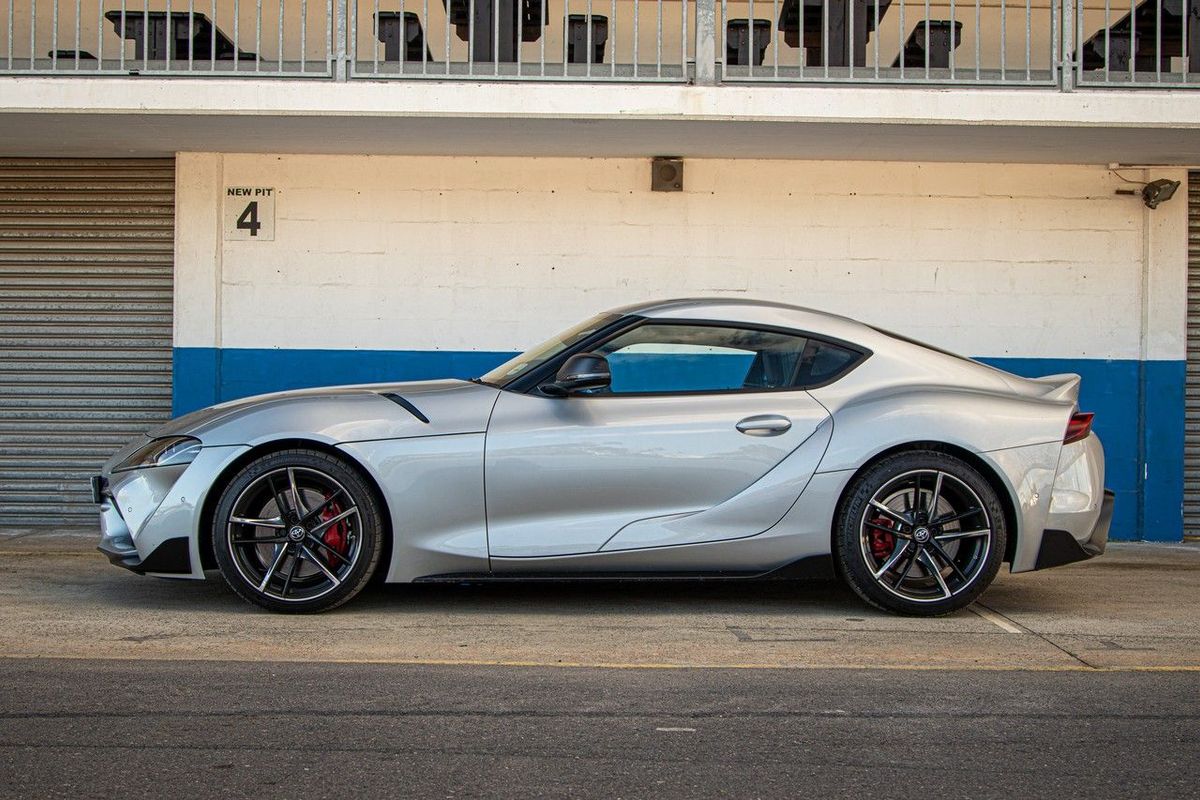
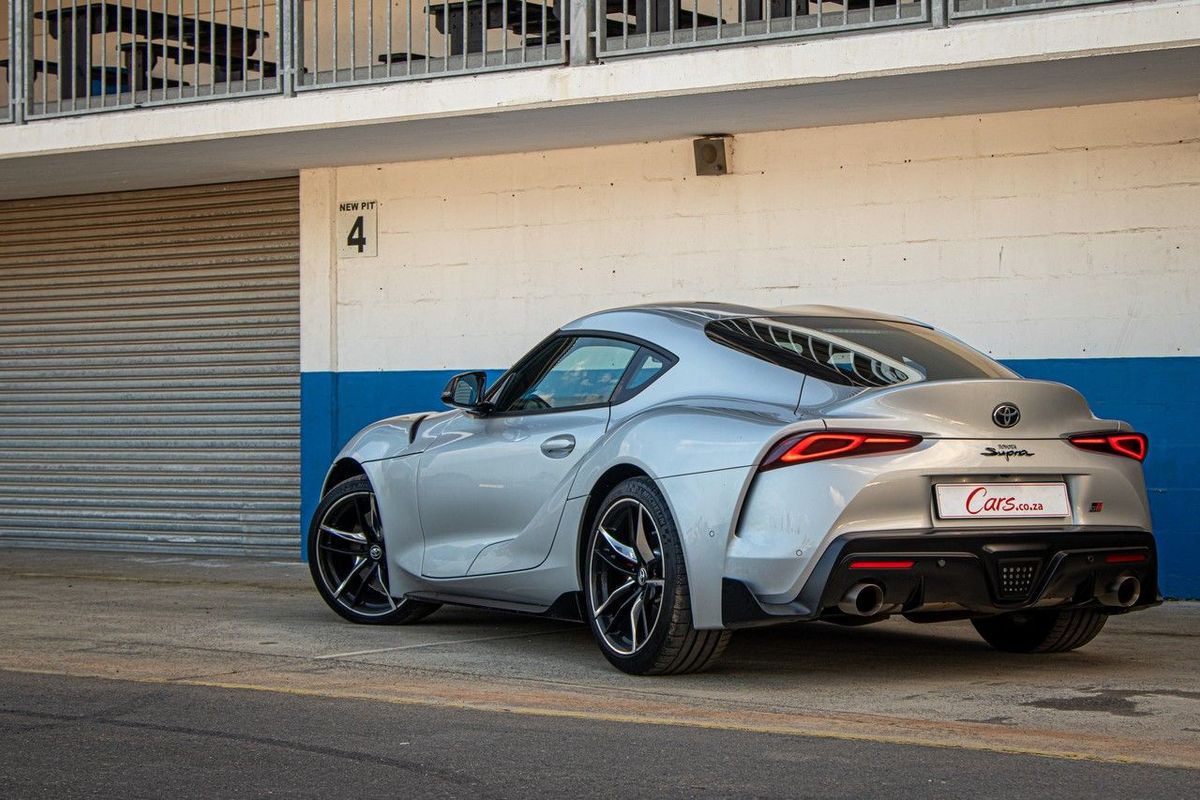
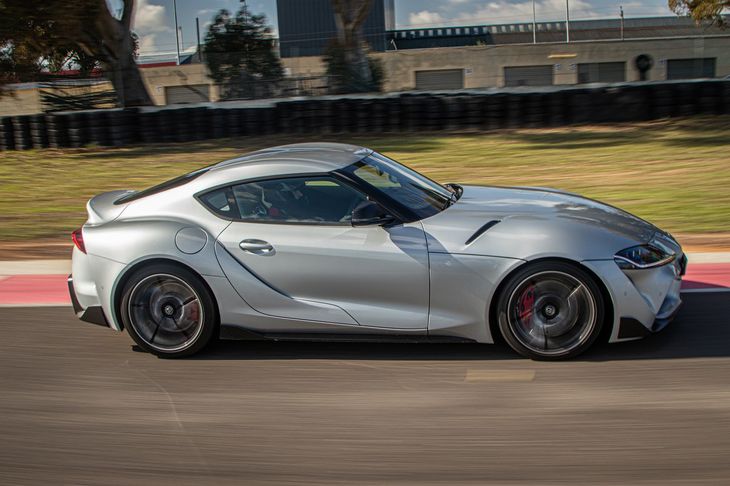
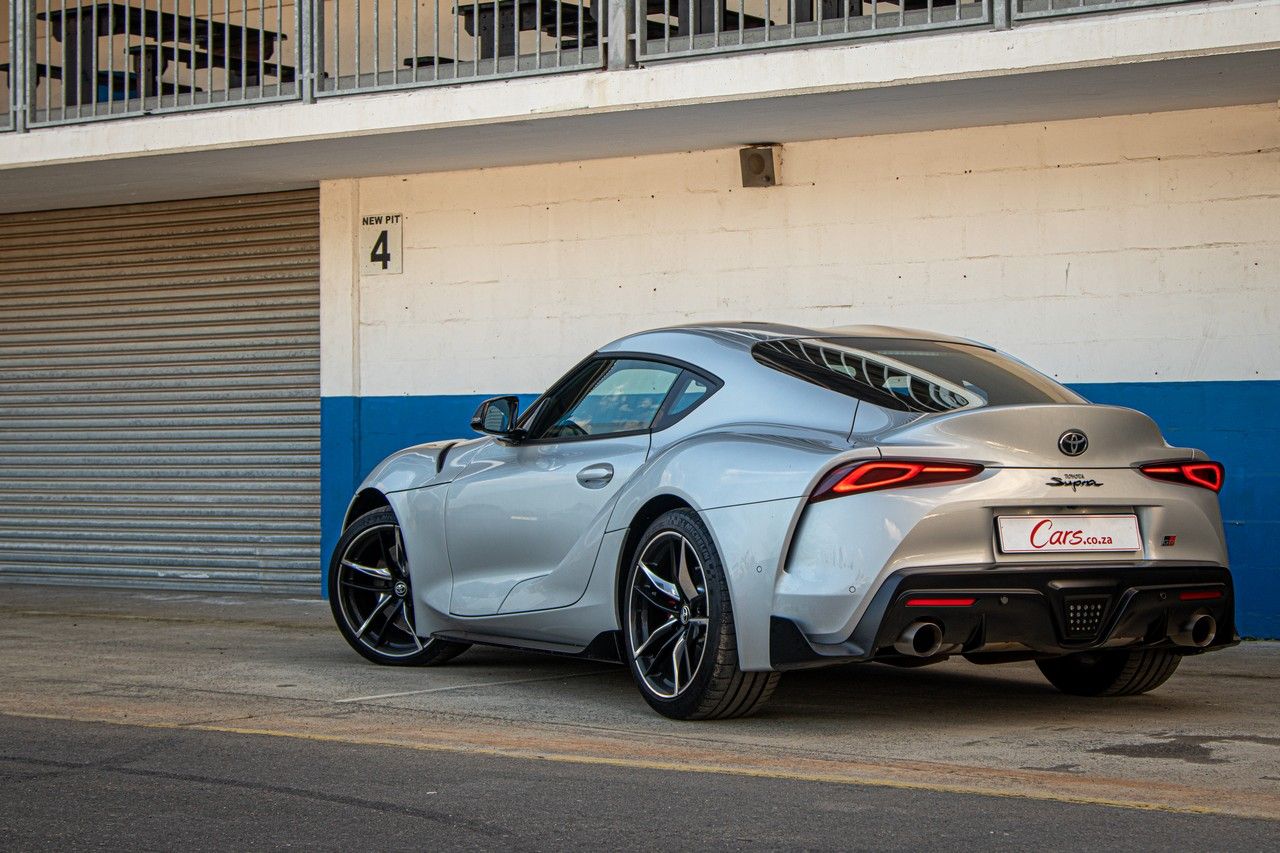
The GR Supra's exterior design appears muscle-bound but sinuous at the same time; its profile is unmistakable.
Where does it fit in?
Toyota's revival of the Supra name for a product developed in partnership with BMW was always going to be controversial. The Supra recipe calls for a 2-seater coupe, with a straight-6 engine and rear-wheel-drive, which is non-existent in Toyota's current product line-up, so the Japanese turned to specialists in this area, BMW. The collaboration has resulted in a new iteration of the Z4 and the introduction of the GR Supra. GR is the abbreviation for Gazoo Racing, which is Toyota's motorsport division; it has achieved numerous successes, most notably in the 2019 Dakar Rally.
The application of Gazoo Racing branding in roadgoing Toyotas works as follows: GR is standard fare, GR Sport adds mild suspension and cosmetic upgrades, while GRMN is reserved for the most hardcore applications. We've had our first taste of GR, with the Hilux GR Sport and the fiery Yaris GRMN. So seeing as there's GRMN, does this mean the GR Supra will get an even faster version? It's too early to say, but perhaps so.
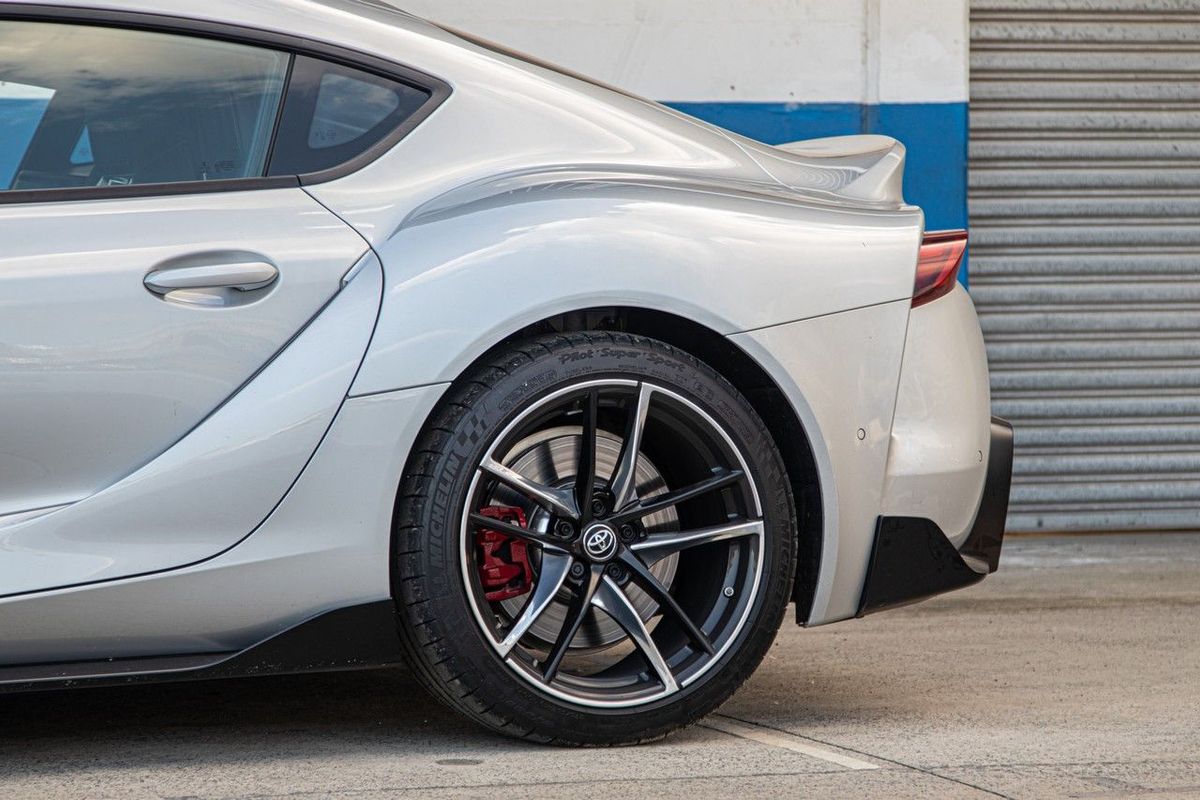
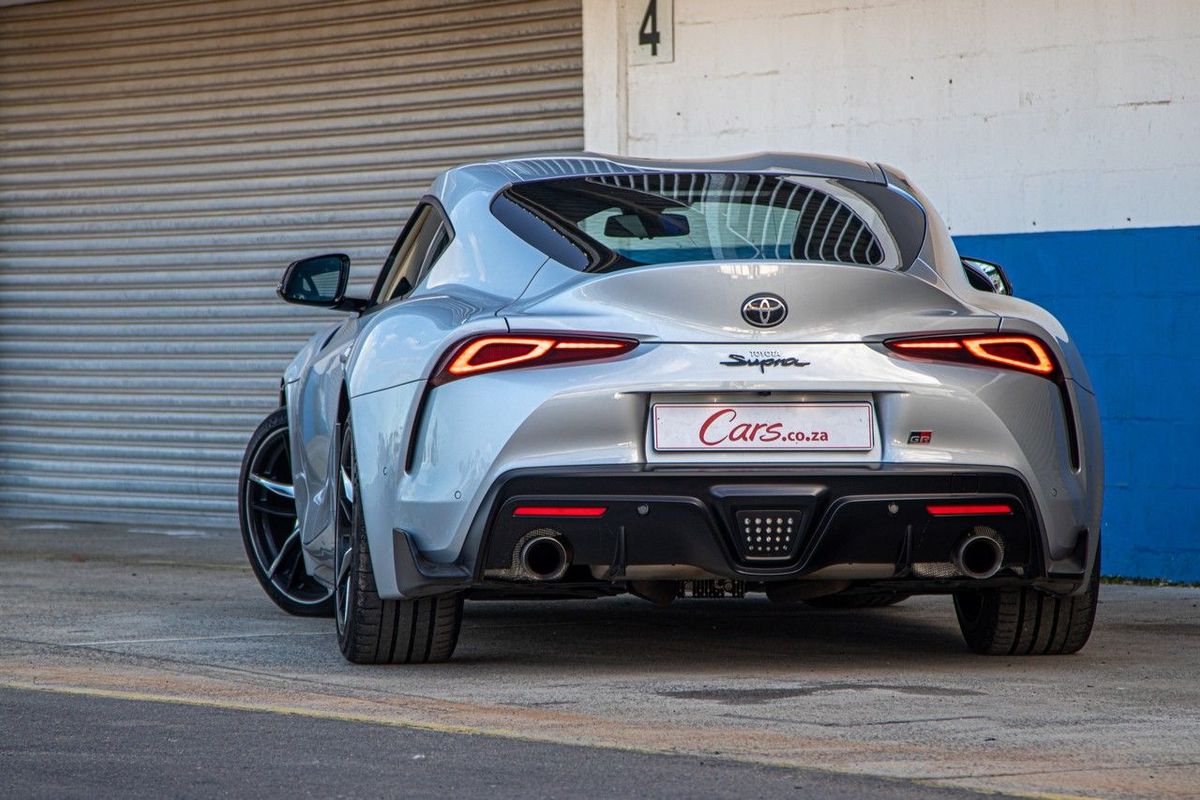
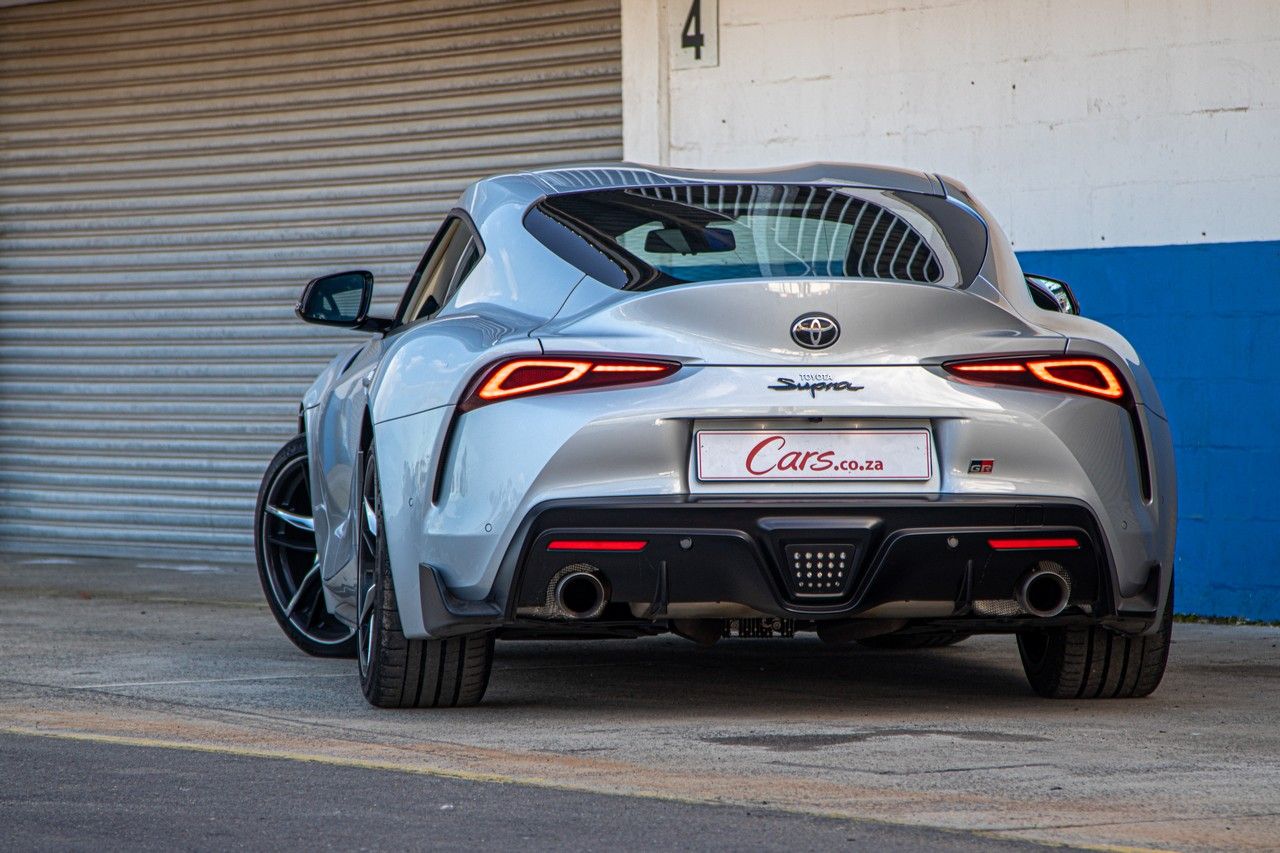
The rear 3-quarter aspect presents our favourite view of the GR Supra. It's rear-end styling is particularly resolved.
How it fares in terms of…
Performance & Efficiency
First things first: Does the GR Supra deliver the goods in terms of performance? With a mighty B58 3.0-litre 6-cylinder nestled in the engine bay, the numbers make for good reading. The motor produces peak outputs of 250 kW and 500 Nm and Toyota claims its newcomer will sprint from 0 to 100 kph in 4.3 seconds. The 3.0T is also equipped with a launch control system. However, given the cool and damp weather in the Cape area during the test period, we found that dialling up launch control would result in tremendous wheelspin, negating performance. It's far easier and more efficient to launch the car using your right foot to modulate the accelerator, otherwise, the straight-6's sheer torque delivery just overwhelms the rear tyres.
Once the Toyota's moving, its engine revs beautifully and quickly until it reaches the redline just before 7 000 rpm. You don't need to wring the motor's neck either to get the best out of it, either – the turbocharged mill delivers plenty of shove throughout the rev range. But given the glorious noise it produces, it's worth revving it out now and again… There's a majestic howl on the uptake, with plenty of pops and burbles on downshifts. Okay, so it doesn't sound any different to a 6-cylinder BMW performance model, but we don't care. There are only 2 drive modes: Normal and Sport. Sport can be configured to adjust the engine's responsiveness, the damping, the steering wheel – and it most certainly makes the car louder.
The in-gear acceleration of Toyota's newcomer is particularly impressive; its engine and transmission are superbly calibrated.
While Toyota claims a sub-5-second 0-100 kph sprint time, we think the real strength of the Supra's powertrain lies in its sheer flexibility. With 500 Nm on tap and negligible turbo lag, the Supra is a potent weapon when it comes to overtaking. It's spectacularly quick when accelerating from 80 to 120 kph, for example. There's no need to frantically bang down the gearbox either, as the car starts pulling the moment you mash the throttle pedal. When the 'box is in automatic mode, it will kick down predictably, but we did relish shifting manually (with the mounted paddles) for most of the test.
The 8-speed transmission shifts briskly, considering it is not a dual-clutch setup, but a torque converter unit. Thanks to its clever calibration, the 'box shifts crisply and promptly. Interestingly, the shift patterns change as you climb through the rev range in manual mode. Reach for the right shift paddle at low revs and the gears will melt into each other, but when you're pressing on, the shifts engage sharply, along with a reassuring thud.
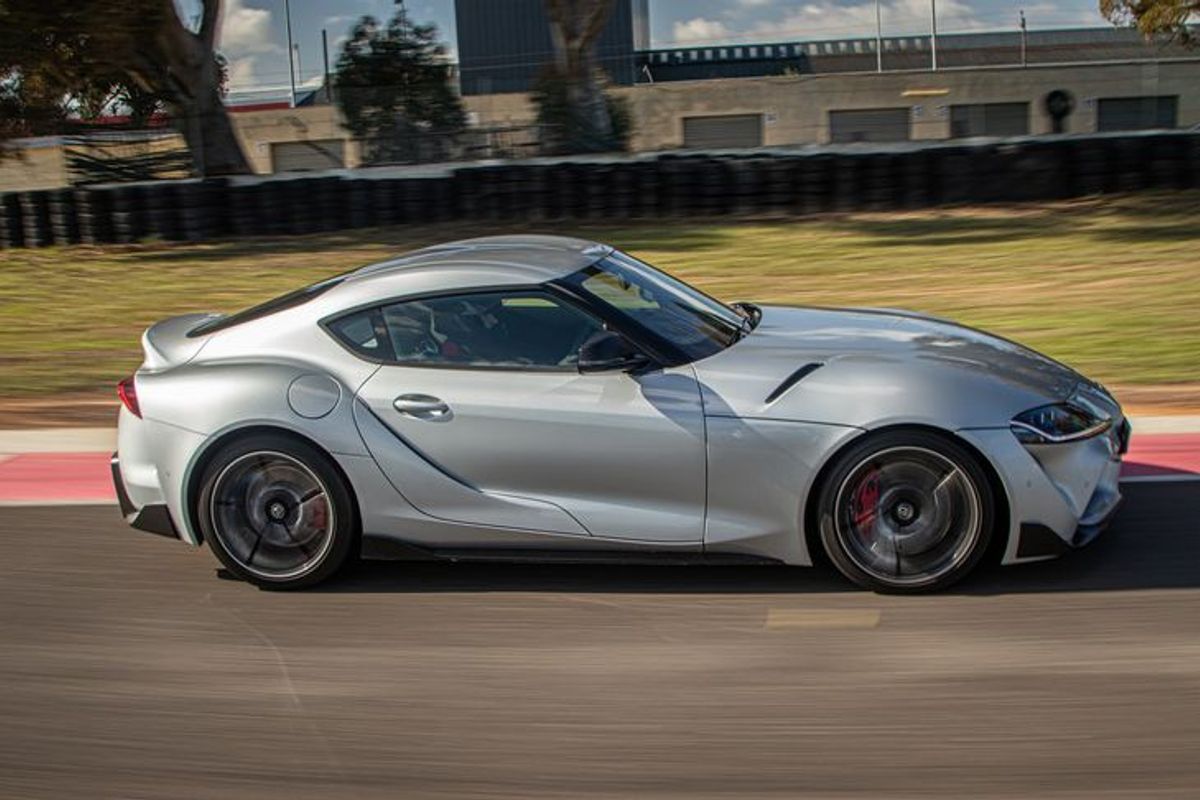
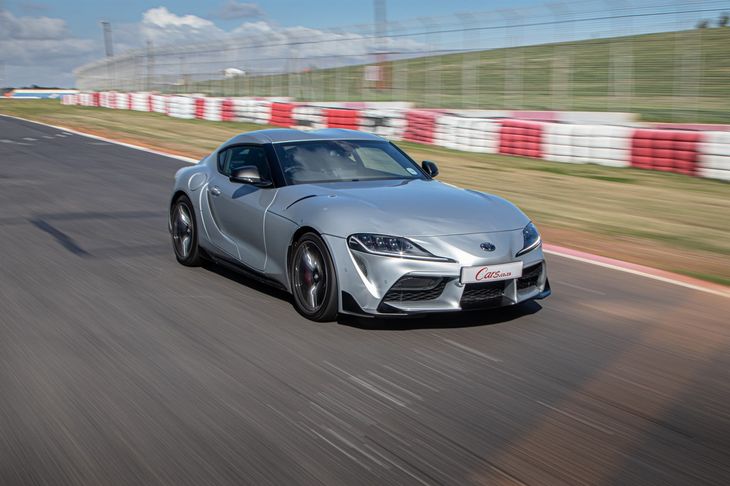
Oodles of front-end grip and excellent rear-end stability under hard acceleration make the GR Supra particularly wieldy.
Ride & Handling
If there was a recommended recipe for a perfect driver's car, it would need the following ingredients: a 50/50 weight distribution, rear-wheel drive (if only to please the purists), a responsive powertrain and a communicative steering setup. Toyota brand loyalists will be pleased to know that the GR Supra 3.0T comes awfully close to the perfect mix, but, alas, its steering is not perfect. Perhaps as a sop to cruising comfort, the tiller is a touch too light and lacking in feel. To its credit, the rim of the wheel is not as thick as standard BMW M Sport examples; it fits most hands perfectly.
When it comes to tackling a challenging ribbon of asphalt at (let's say) enthusiastic speeds, the GR Supra offers surfeit front-end grip and plenty of sticking power under power, courtesy of its Michelin Super Sport tyres. It instantly instils driver confidence. There's a pleasant directness about the car's cornering characteristics: we noticed little body roll thanks to the new coupe's good torsional rigidity (Toyota claims it's stiffer than the Lexus LFA hypercar) and, thanks to the short wheelbase, the 3.0T feels particularly agile and nimble. For the average driver, that "innate predictability" is a boon: the GR Supra is unlikely to snap into sudden oversteer, unless you deliberately seek it, but even then, it takes some monkey business to get the rear to step out. It's also important to note that the Toyota is around 100 kg lighter than its BMW relative, which helps in the handling stakes.
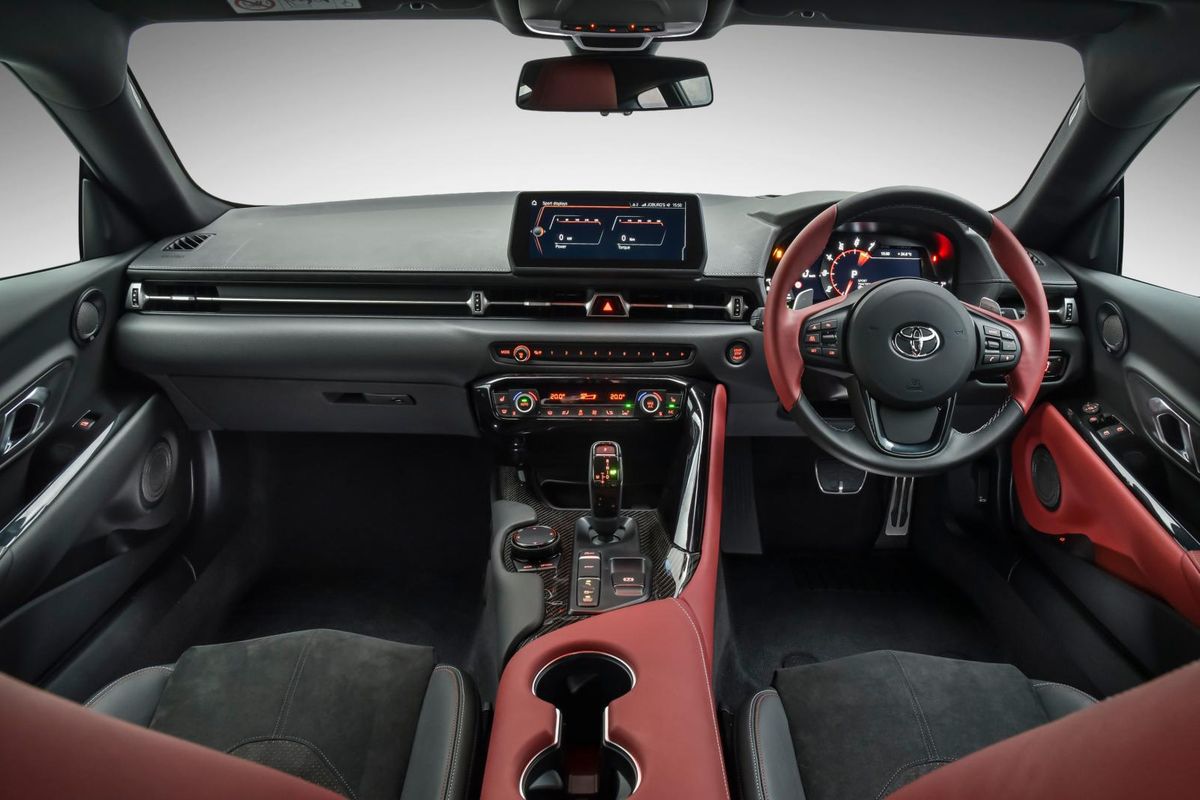
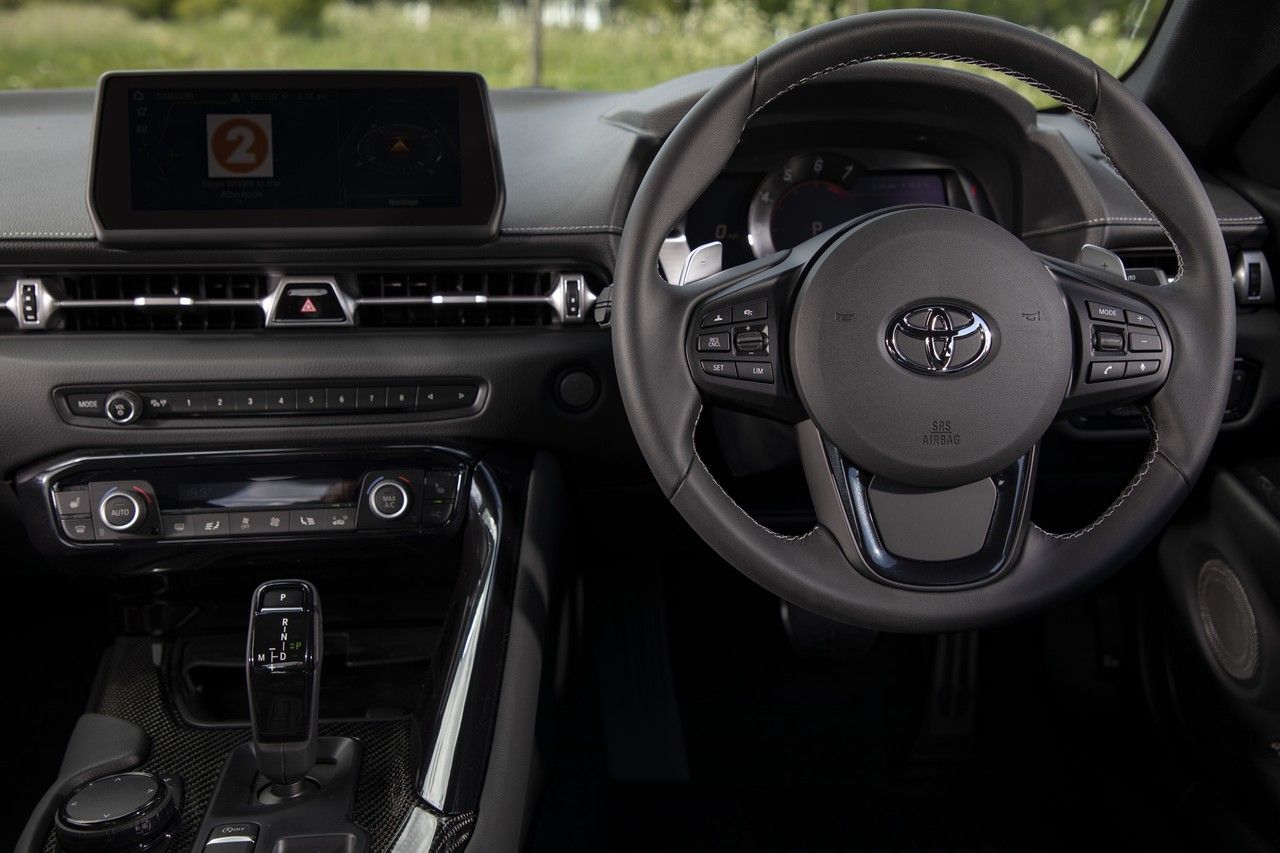
The GR Sport offers an engaging, yet comfortable driving position and the steering wheel rim is of just the right thickness.
Ride quality is a critical factor in sportscar ownership. While we may dream of putting performance cars through their paces on near-perfect stretches of tarmac every day, the sad reality is that we'll often drive those machines on iffy road surfaces. And while it's important for sportscars to handle direction changes positively (that's why they need firmly-tuned suspensions), cars that regularly jolt or jar their occupants are far from ideal. Well, the GR Supra's ride quality is excellent, compared with other performance cars with similar outputs. We were honestly expecting a crashy, overly-firm ride from Toyota's newcomer, but it's more comfortable to drive daily than some of the hotter, more focused hot hatches on the market.
The GR Supra's overall performance, ride quality and handling dynamics are very well balanced, but what's most impressive is its day-to-day usability. Many times performance cars have dazzled when it comes to the speed, only to come unstuck in stop-start traffic. This is one of the best aspects of the Supra experience: it's comfortable, quiet and refined, irrespective of speed. What's more, is it's one of the few cars that makes you feel that you're driving briskly even when you're barely caressing the throttle. Your drives, be it on back roads or highways, will always be involving.
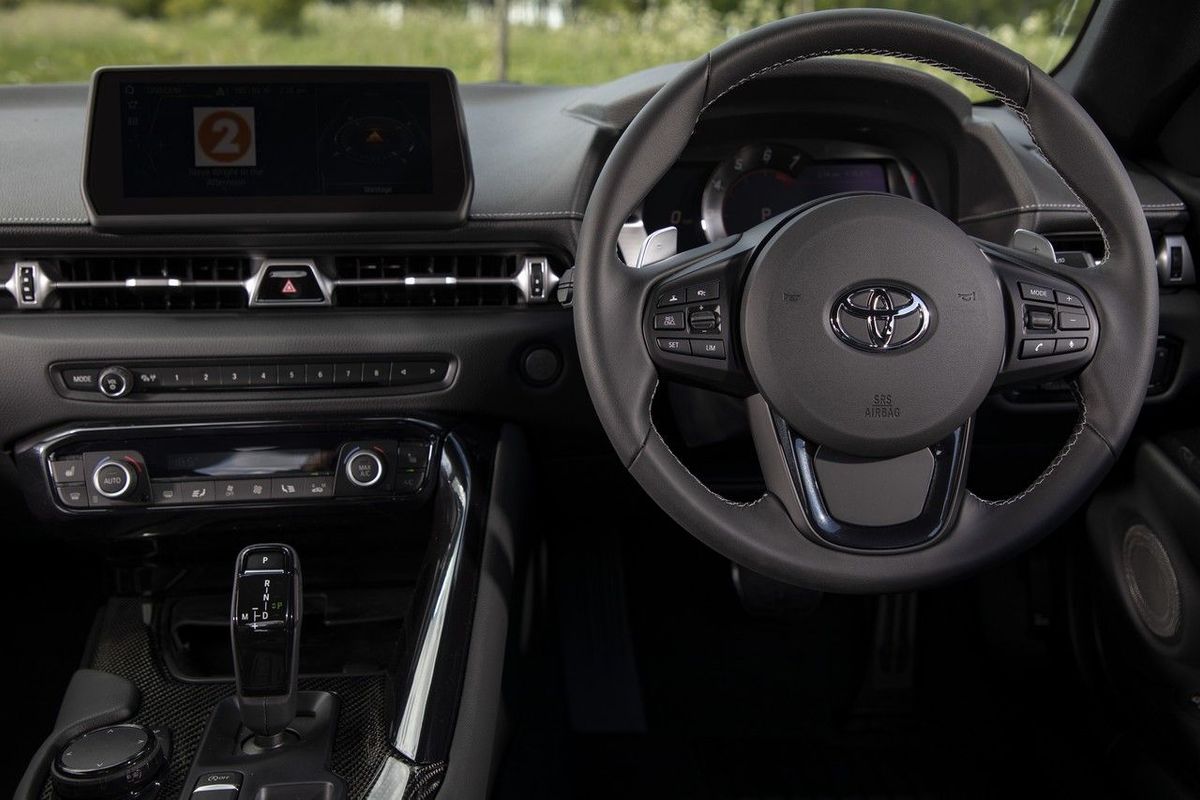
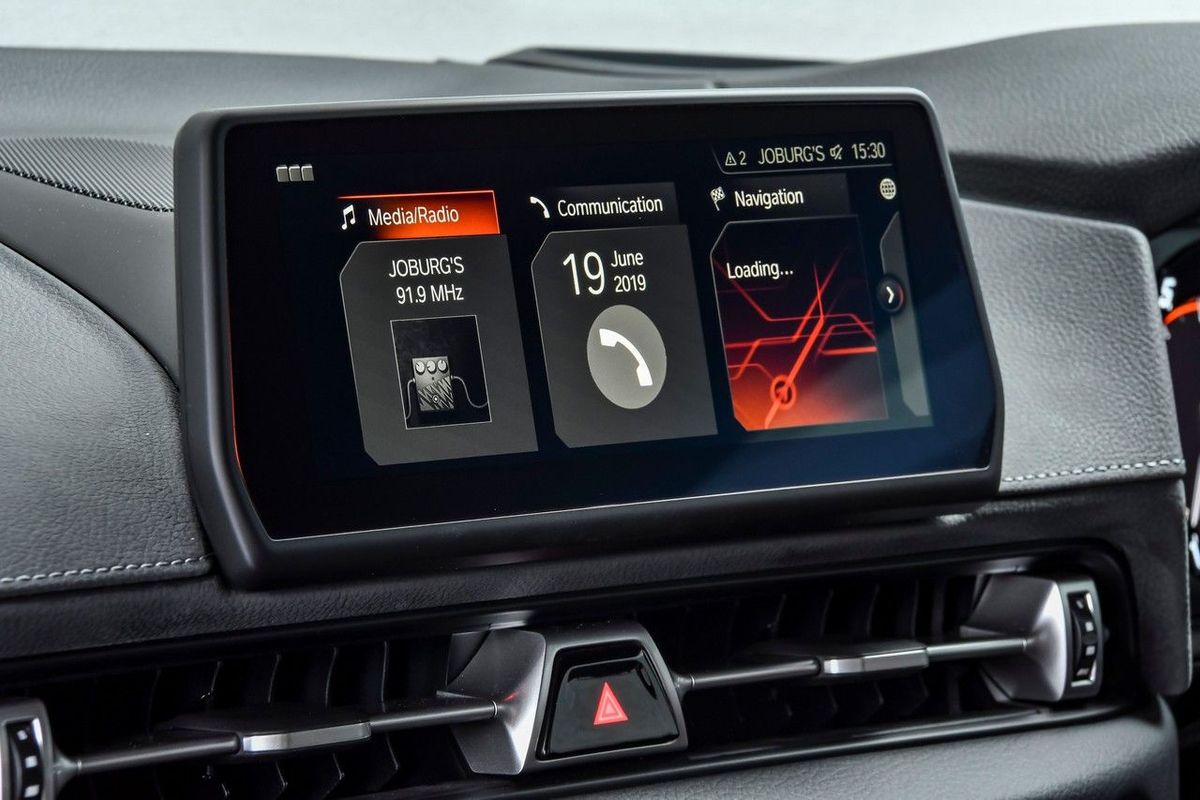
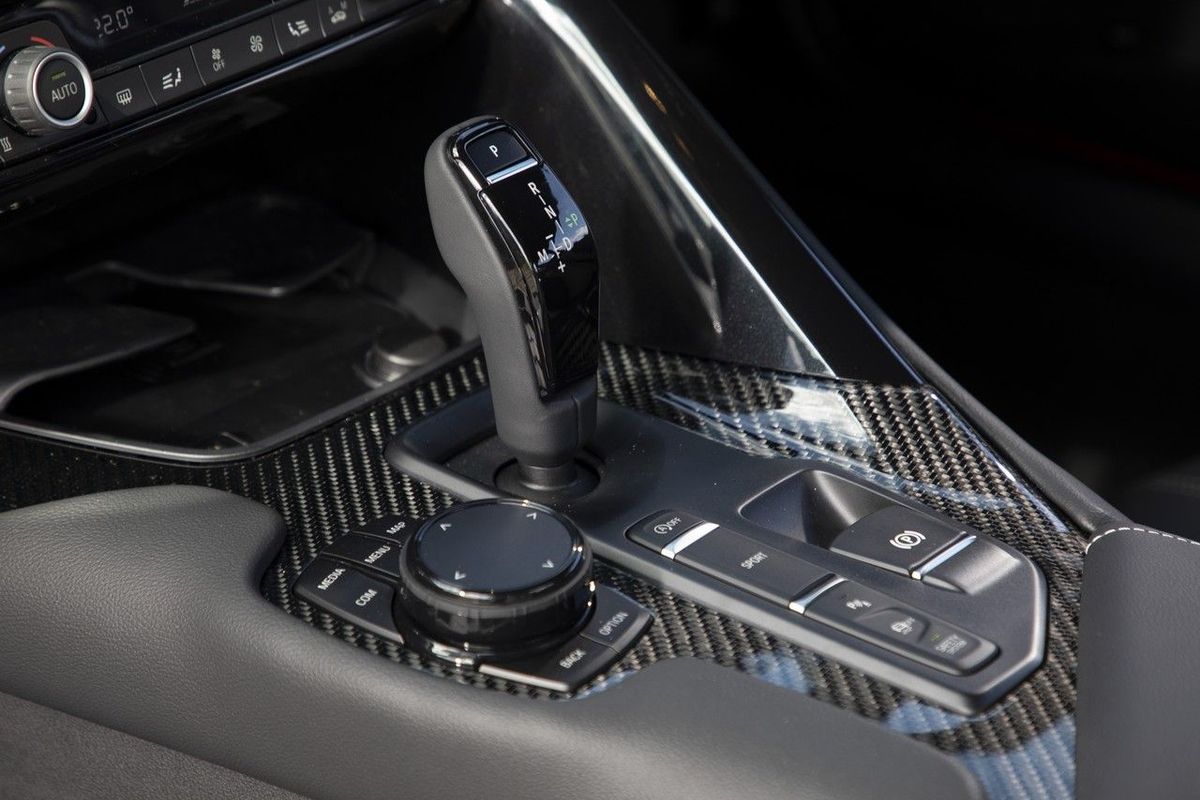
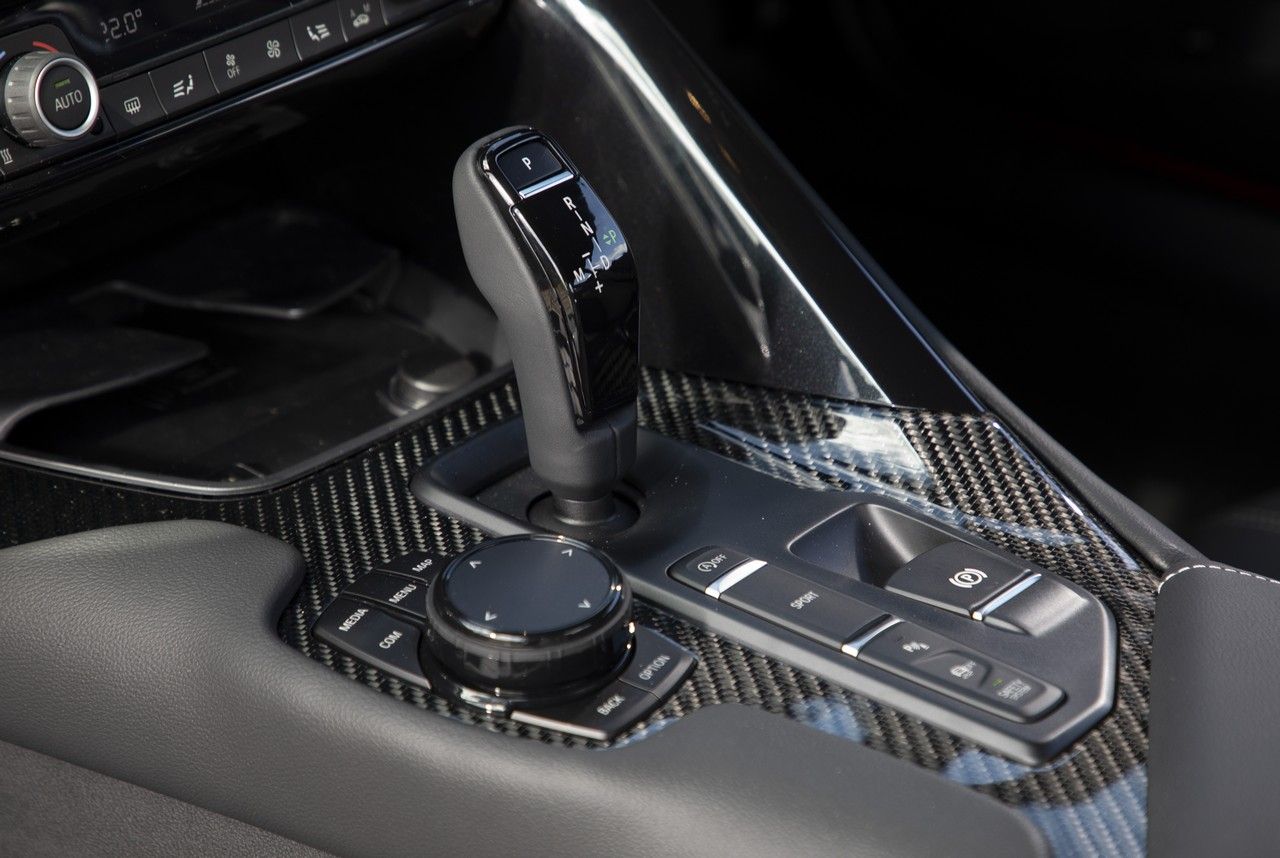
The Toyota's transmission lever, driving mode- and infotainment consoles will look very familiar to owners of contemporary BMWs.
Design & Packaging
Styling is always going to be a subjective issue – "one man's art is another's trash," as the saying goes… However, there is no denying that the exterior execution of the new GR Supra is utterly distinctive and head-turningly attractive. It thankfully retains some of the design language introduced in the FT-1 Concept from a few years back and Toyota's newcomer looks striking, regardless of which angle you view it from. We're particularly fond of the rear 3-quarter look, which shows off those hips and derriere. It's a strict 2-seater though (there's little chance of anyone fitting in behind the front seats). Commendably, the boot is usefully sized (290 litres); you can squeeze a lot more cargo in there than you think.
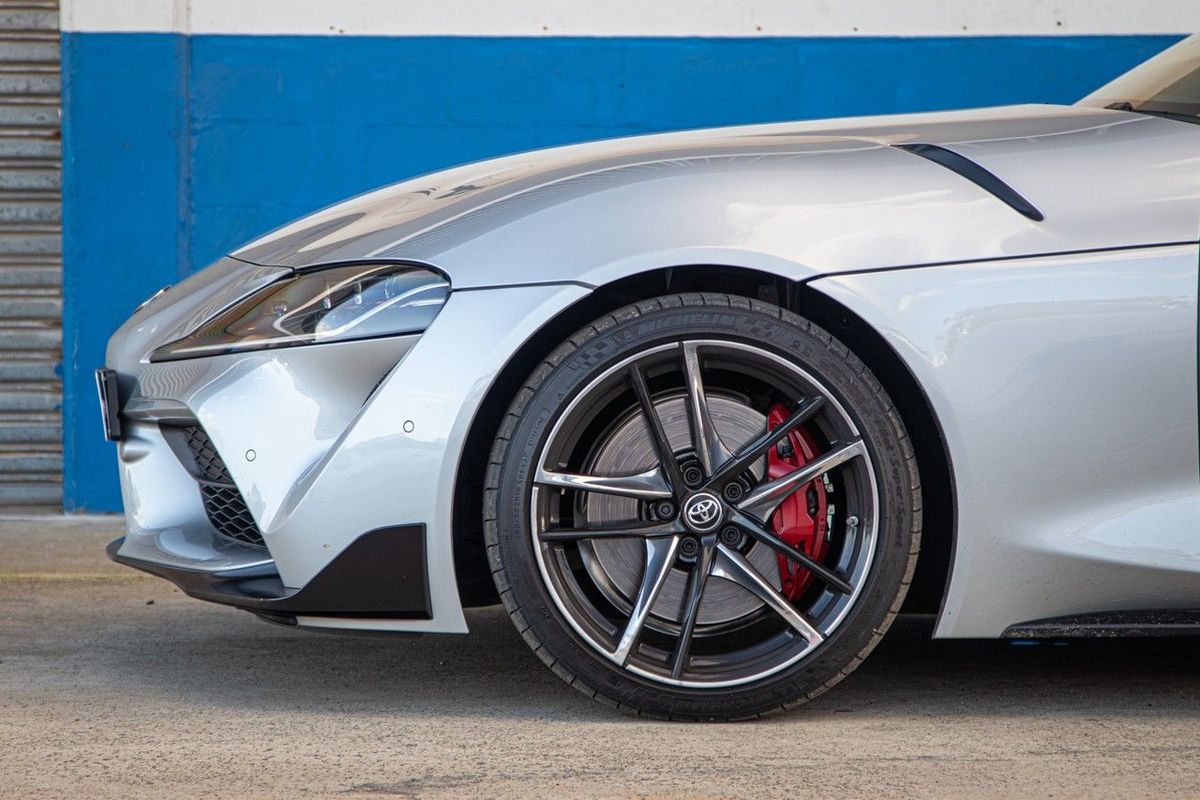
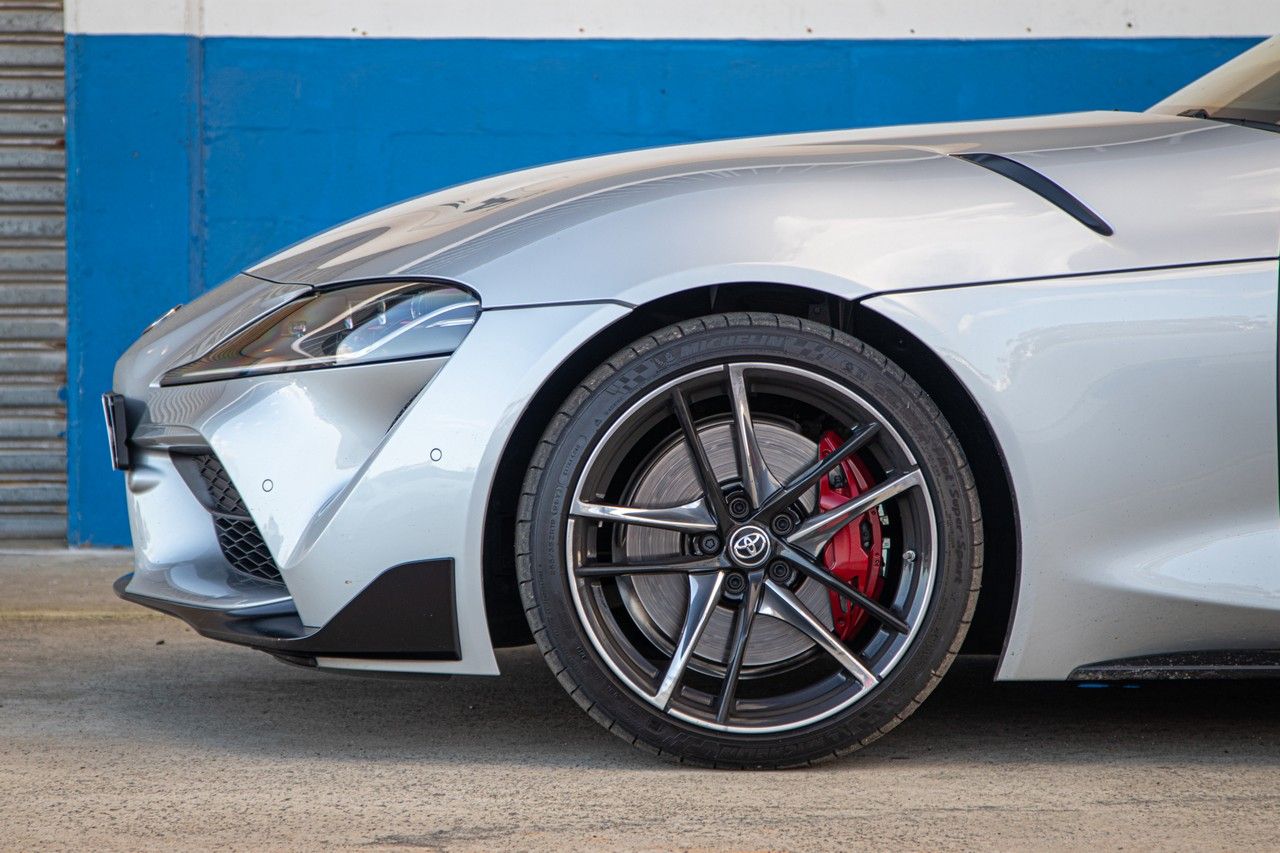
Handsome 10-spoke alloys are shod with 19-inch Michelin Pilot Sport tyres. The front-end detailing is subtle, but effective.
Comfort & Features
Available in 2 trim levels for South Africa, the GR Supra we tested was the higher-spec derivative. Also available is the Track version, which does away with some of the luxury features and focuses on further weight saving (ostensibly to ramp up its appeal to driving aficionados). Spec-wise, the top-spec Supra comes liberally equipped with niceties such as navigation, a wireless charging pad, 8.8-inch touchscreen infotainment system, 12-speaker JBL audio setup, a head-up display, adaptive cruise control and leather sports seats (heated and electrically adjustable). In terms of safety, a tyre-pressure monitoring system, reverse-view camera, PDC, blind-spot monitoring as well as pre-collision- and rear cross-traffic alert are fitted.
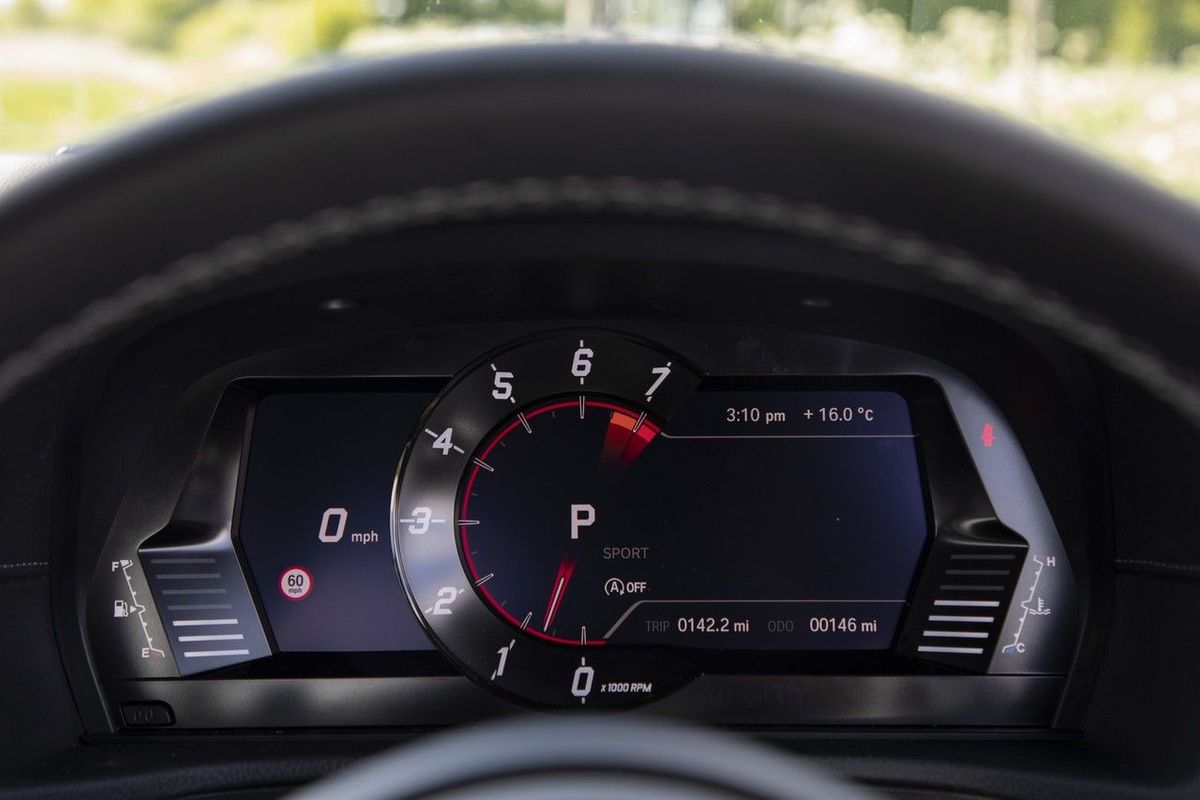
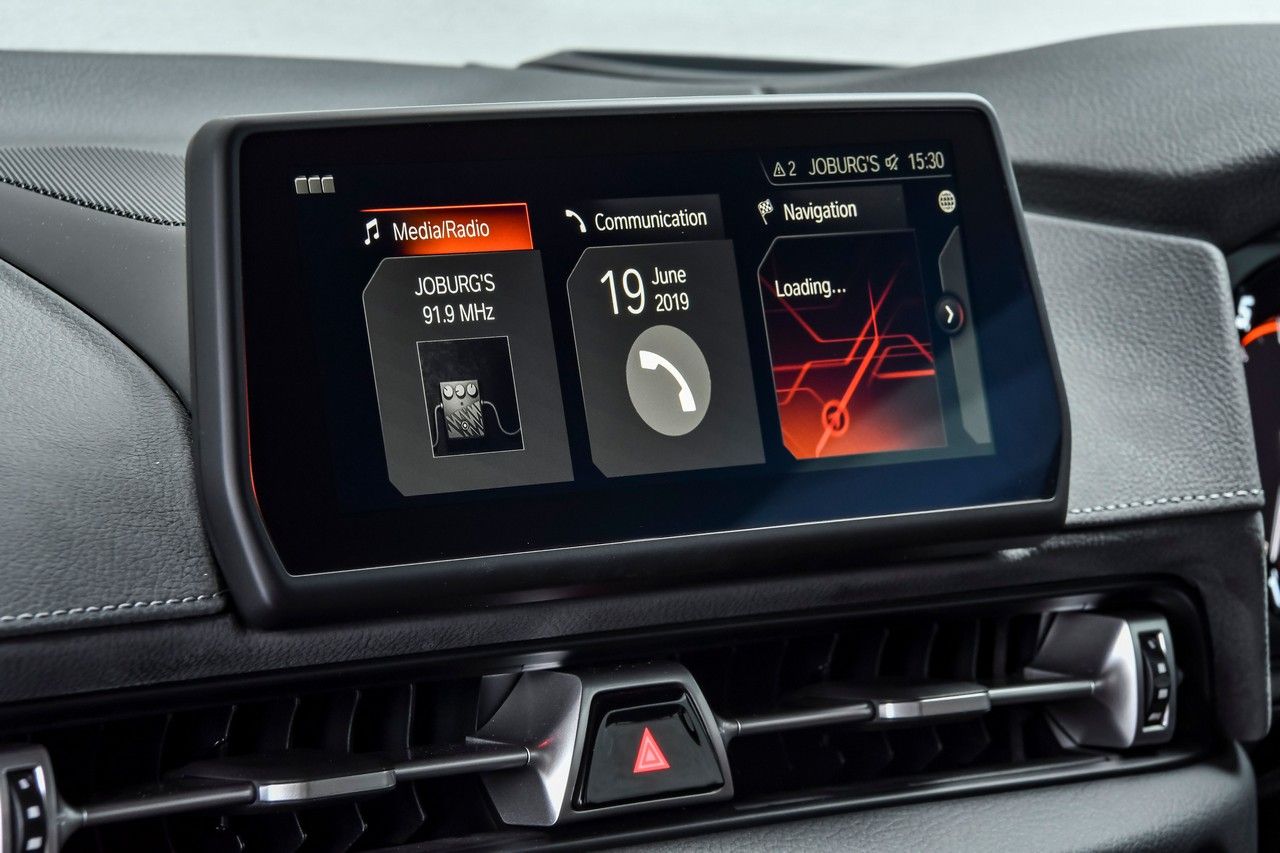
The driving position is well-balanced: it's suitably engaging (as it should be in a sportscar) yet a driver could easily spend longer journeys behind the 'wheel without suffering too much discomfort. The cabin is neatly laid out and we like the retro-inspired instrument cluster, which looks like it's from an early '90s video game. However, if you're familiar with the interiors of contemporary BMWs, you're bound to recognise many of the GR Supra's buttons and minor controls. The infotainment system, for example, looks like a reskinned version of a previous-gen BMW unit, while much of the Toyota coupe's switchgear (such as the transmission lever and the exterior lighting controls) come straight from the German firm's parts bin.
The infotainment system is very user-friendly, even if its menu system has a certain Teutonic crisp orderliness about it…
While we understand that platform sharing is cost-effective and an integral part of product development for so many car companies, the interior commonality between the Japanese model and its German relative does rob the GR Supra from a distinctly Japanese (JDM, if you will) ambience. Surely there are some nice Lexus/Toyota buttons lying around to give the car a more "Oriental feel" inside? While we're slightly disappointed by a bit "too much BMW" in the newcomer's cabin, the chances are that the vast majority of owners will not care about that and see what the car for what it is: a pure driving tool. That being said, there's nothing wrong with BMW cabin componentry, it exudes a luxury feel and the cabin feels well-made.
Price and warranty (August 2019)
The Toyota GR Supra costs R1 072 300 (Prominent Red), R1 082 300 (Metallic Silver) or R 1 092 300 (Matte Grey), which includes a 4-services/80 000 km service plan and 3-year/100 000 km warranty. Customers can also purchase extended service plans via their Toyota dealer.
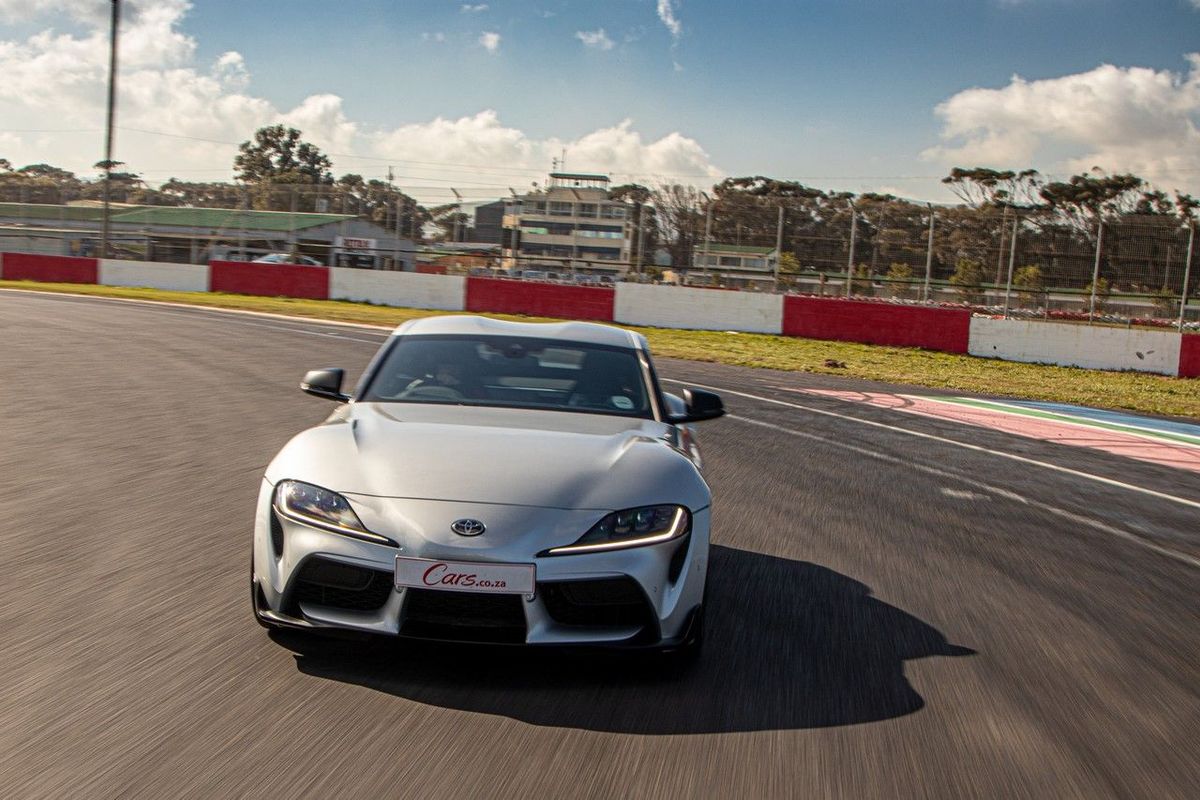
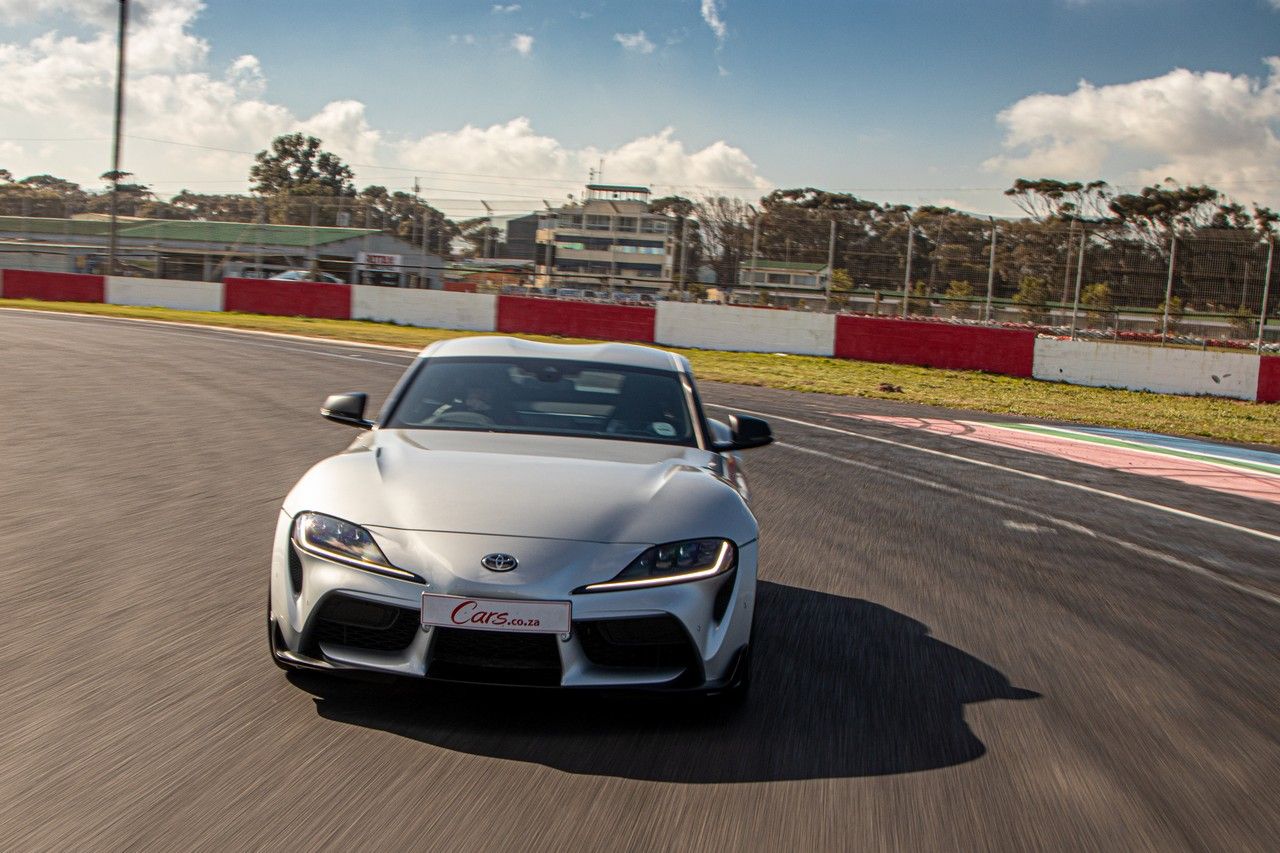
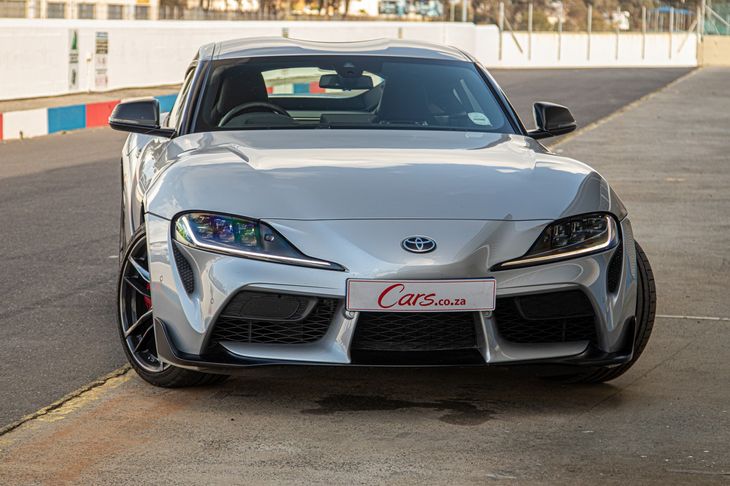
When you view the GR Supra from front-on, its gaping, sculpted front spoiler and indented roof instantly add to its kerb appeal.
Verdict
Has Toyota taken BMW's recipe and made it even better? In some ways, yes. While this article focuses on the GR Supra, comparisons with its Z4 relative are inevitable. Past experience with the latter's M40i derivative suggests it's a brash and twitchy proposition when you pile on the pace; it requires dexterous steering inputs and vigilance with the throttle pedal, particularly on damp tarmac. By comparison, the GR Supra, thanks to its lighter mass and greater rigidity, tends to hunker down, grip and go, with minimal fuss, even in less-than-ideal conditions. The balance is superb – at no point do you sense the GR Supra is about to "turn around and bite you" – a fear that did lurk at the back of our minds when piloting the Z4.
While we can accept the use of a BMW straight-6 motor and the ZF-sourced 8-speed transmission (a match made in heaven), it's hard to ignore the plentitude of BMW switchgear in the Toyota's cabin. It's true that the Toyota 86's interior looks much like that of the Subaru BRZ and the Abarth 124 Spider's cabin closely resembles that of the Mazda MX-5. However, the GR Supra is not a rebadged clone of the Z4, that's abundantly clear from its striking and sinuous exterior styling. We just wish that more of the Toyota's distinctiveness could have spilled over into its (albeit smart) interior…
Should you buy one? If you're in the market for a gorgeous, engrossing new sportscar, one that provides an abundance of driving thrills and allows you to rediscover the lost art of driving, then go for it. The GR Supra is an eminent all-rounder. Past experience with performance vehicles suggests that while many of them are adept at tackling mountain passes or racetracks, they're often awful to drive on a daily basis. By contrast, the Toyota is refreshingly refined and happy to potter along at 40 kph in early-morning traffic jams. Its levels of specification and occupant comfort make it more than bearable and, as this reviewer's partner pointed out, "there's enough boot space for a weekend away, and it's not that bumpy". Praise indeed.
Enlarged dual exhaust ends emit a magical mechanical crescendo and the elaborate diffuser creates a delicious race-car look.
In conclusion, Toyota has created an attractive yet potent performer in the GR Supra. The car's easygoing nature made us want to drive it again and again and it notably reminded us that you don't need astonishing power at your right foot's disposal to have a jolly good time behind the wheel. We pitted the 3.0T against the BMW M2 Competition for a video shoot at Killarney and afterwards, our test team members were clamouring for the Supra key – everyone wanted to drive it home. If that doesn't speak volumes for how this car makes you feel, then we don't know what does.
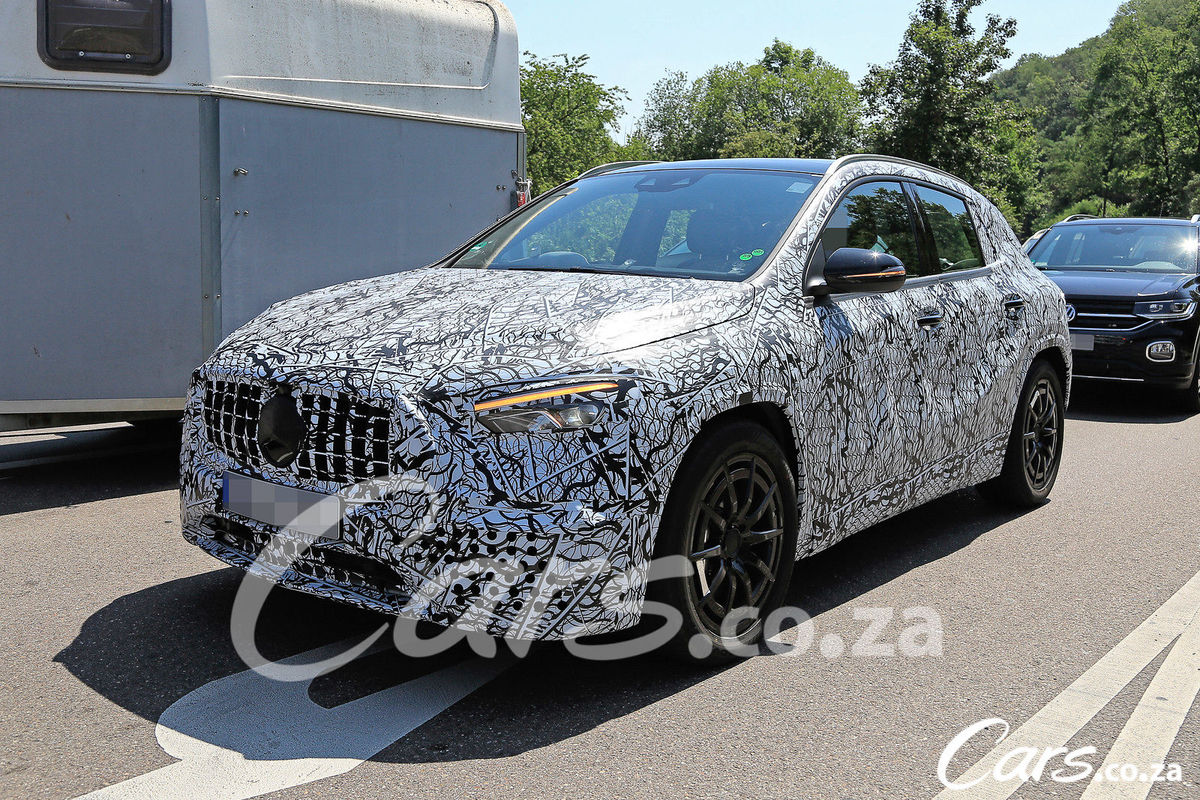
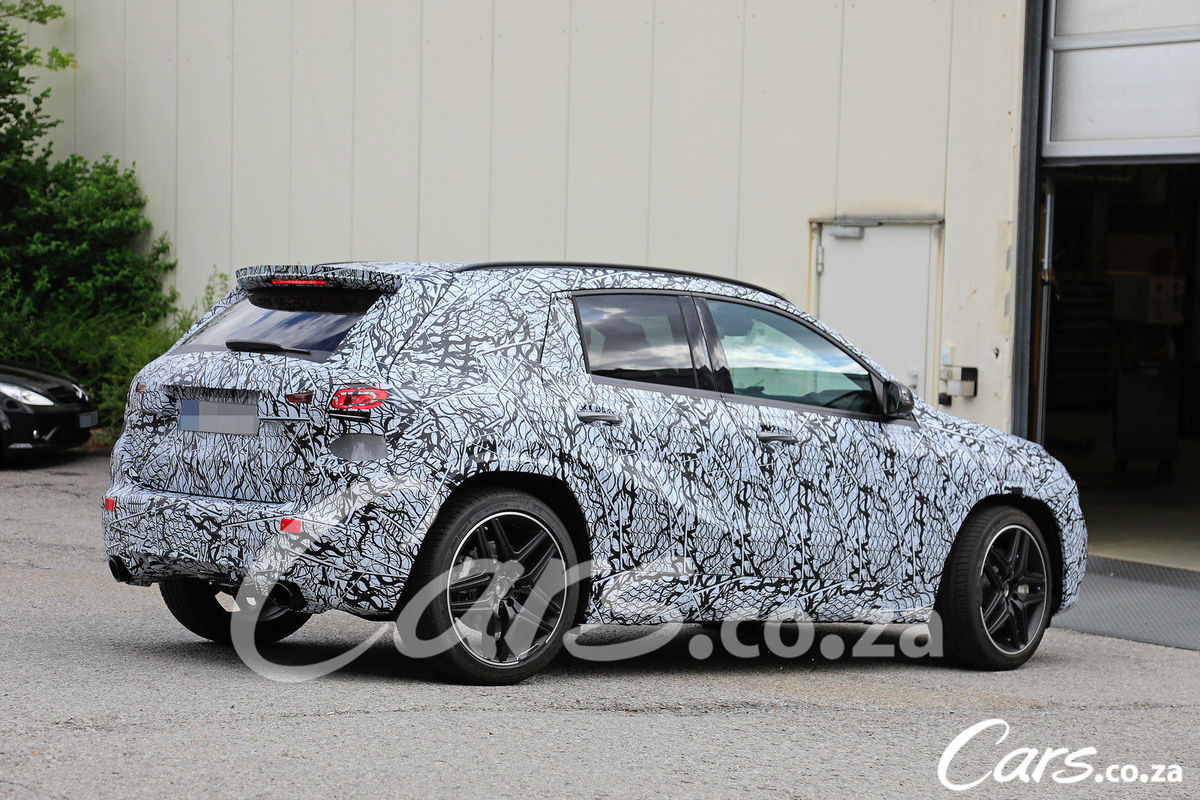
The compact performance range from AMG is due for expansion as our car photographers have sent us pictures of the GLA 35 and GLA 45 AMG. Here's what we know so far.
Picture credit: S. Baldauf/SB-Medien
The Mercedes-AMG GLA 45 offered something different for those who thought the A45 and CLA 45 were a tad mainstream. Now an all-new GLA is due for reveal in the next few months and naturally, there will be AMG versions. Sharing the same engines as the recently-revealed A35 and A45, the GLA range will boast similar performance figures.
The GLA 35 boasts a 2.0-litre turbopetrol engine pumping out 225 kW and 400 Nm. It also makes use of the all-wheel-drive 4Matic system that can send up to 50% of the power to the rear axle. At the top of the range sits the GLA 45, which in S designation pumps out 310 kW and 500 Nm from its 2.0-litre turbopetrol. The GLA 45 will feature the same Panamericana grille as its siblings, while the GLA 35 makes do with a less aggressive front. As you can see from the photos, the prototype GLA 45 already has the grille, while the GLA 35 shows off its exhaust setup.
Mercedes-AMG will soon be launching the performance range of CLA models to South Africans, here's what you can expect to pay.
The AMG army is set to launch a barrage of product to SA before the year is out. On the list to come are both A35 and A45 S, CLA 35 and CLA 45 S. There is also the possibility we will see performance version of the A-Class Sedan before 2020 if Merc can get them int the country fast enough.
As for the CLA, the AMG 35 is powered by a 2.0-litre turbopetrol engine pumping out 225 kW and 400 Nm. It also makes use of the all-wheel-drive 4Matic system that can send up to 50% of the power to the rear axle. The CLA 35 appears to be somewhat of a competitor the Audi S3 Sedan and by somewhat, we mean much more expensive rival. CLA 35 pricing starts at R855 566 including CO2 tax.
The CLA 45 S is more of a brute, making use of Merc-AMG's all-singing, all-dancing 310 kW and 500 Nm 2.0-litre turbopetrol. We've driven the A45 S, which is near identical in execution and you can read about that here. It too has a very premium price tag starting at R1 093 749? including CO2 tax.
The CLA models usually offer a slight premium over the standard A-Class models so expect A 45 S pricing to come in a little under the CLA 45 S.
The 2nd generation of Range Rover's Evoque has arrived in SA. Is the style icon still a head-turner in a crowded segment? Ciro De Siena spends some time behind the wheel of the new petrol version.
The Range Rover Evoque is the best-selling Range Rover ever. Having defined a segment for nearly a decade, the new Evoque has more competitors than ever. What has Range Rover done to fend them off? We test out some of the new features, new turbopetrol engine and its wet weather ability in this very British summer-looking video.
Conservative appearance a thing of the past for Hyundai's city car.
Hyundai has released a teaser of its next-generation i10 and the Korean city car is certainly going to be a lot bolder than is currently the case.
The third-generation i10 is due to be revealed at this year’s Frankfurt auto show in Germany, scheduled for the second week fo September.
From the sketch that Hyundai has released, detailing its new i10, the evidence is clear that the new car will feature a significantly sharper design.
Proportions are larger too, with the i10 growing in both width and height. It also rolls larger wheels, which help to fill out the car’s side profile.
The front view is particularly dynamic, with triangular aero ducts in the bumper and a larger, wider, grille. Hyundai has also added daytime LEDs.
Although Hyundai has not released an image of the i10’s interior, they have confirmed an impressive level of specification. Inductive Smartphone charging, Apple Car Play and Android Auto functionality will all be present. A rear-view camera has also been added, for parking convenience.
Safety specification for the new i10 gains radar-guided forward collision assist, which recognises both vehicles and pedestrians, and lane-keep assist.
While the i10 is not sold in SA (we have an Indian built Grand i10) it is under consideration for our market. Hyundai SA plans to introduce the new Atos first.
Mercedes-Benz V-Class (2019) International Launch Review
A refreshed Mercedes-Benz V-Class, which appeals to well-heeled people-mover buyers and executive-transport operators, is now available in South Africa. We drove it during its international launch in Spain earlier this year.
Since its introduction in 2014, the luxurious people-moving V-Class from Mercedes-Benz has experienced relative success worldwide with sales exceeding 209 000 units – and we've been told that it has sold relatively well on local soil too (Mercedes-Benz only reports aggregate monthly sales).
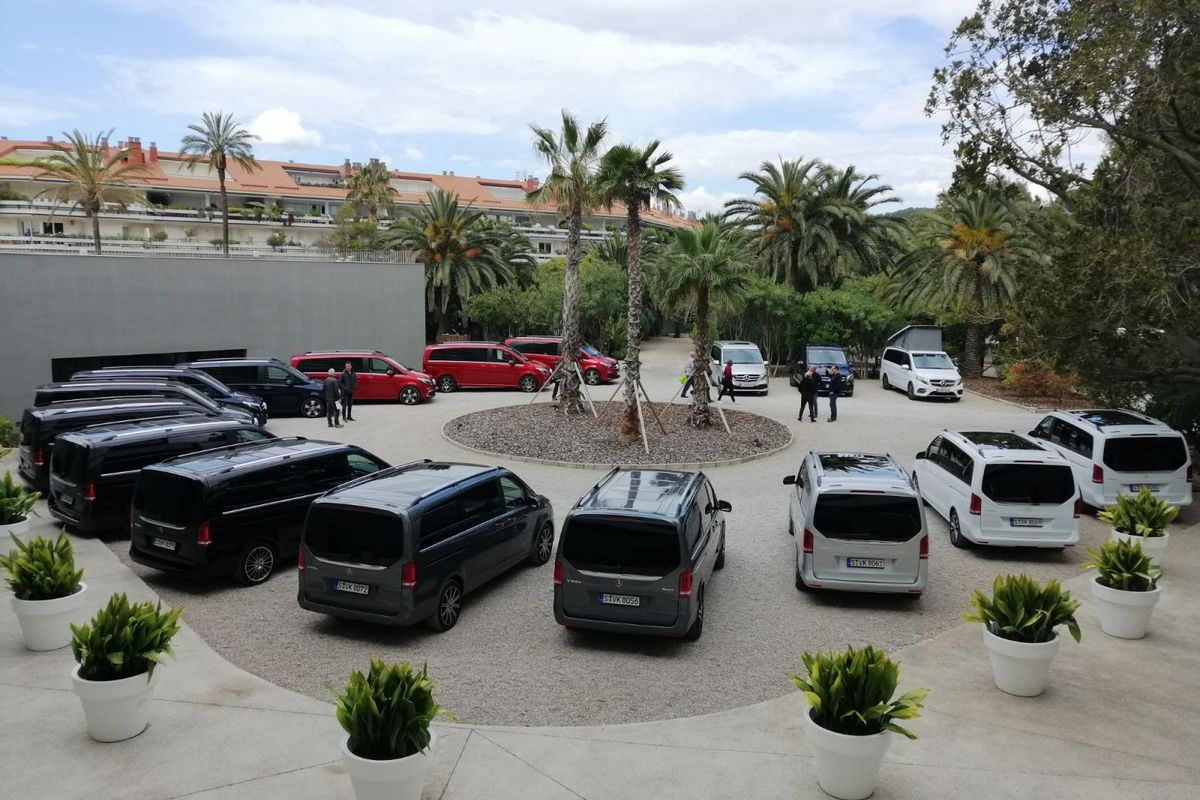
The V-Class has now been afforded a rather subtle facelift and we travelled to the sunny seaside town of Sitges (on the outskirts of Barcelona, Spain) to experience the updated V-Class in the metal. A throng of shiny V-Classes, as well as a few outdoor lifestyle derivatives (called Marco Polos, although the luxury-spec Benz camper vans are not sold in South Africa), stood in wait in the hotel courtyard. After a formal product presentation, we set the V-Class loose in the Spanish countryside…
The changes are subtle but the V-Class is still the most luxurious MPV money can buy.
Play a game of "spot the difference" and you will soon realise that, by the standards of most mid-lifecycle model updates, this is a rather subtle facelift. The visual changes include a new front bumper and air inlet design, while the grille sports 2 silver slats and a revised black mesh. Opt for the AMG-Line trim and the grille gains diamond-pattern chrome pins that imbue the V-Class with a bit more visual punch. A range of new exterior colours and revised wheel designs (ranging from 17- to 19-inches in size) is also available.
As for the bus' interior, the instrument dials have been refreshed, as have the air vents (they now sport a turbine-look, which will be instantly recognisable to owners of the latest A-Class). What's more, there’s an updated range of upholstery and trim options available, including Tartufo Nappa leather. Incidentally, it has been confirmed that Mercedes-Benz SA offers the optional middle-row luxury seats in the local market…
New luxury seats will be offered in South Africa for ultimate rear passenger comfort.
These seats are fully reclinable and offer a range of massage, heating (and cooling) functions to maximise occupant comfort. As always, various seating configurations and equipment will be offered to suit buyers' personal needs and preferences.
Furthermore, the list of safety features offered on the V-Class has been bolstered with the addition of Active Brake Assist, which detects impending collisions and, if necessary, will intervene by automatically applying the brakes if the driver fails to react to visual and acoustic warnings. High-Beam Assist Plus has also been added and other notable safety features include Crosswind Assist, Attention Assist, as well as the fitment of 6 airbags, ABS with EBD and electronic stability- and traction control.
New turbodiesel engine, but not for SA…
The facelifted V-Class welcomes a new engine but it sadly won't be offered in SA.
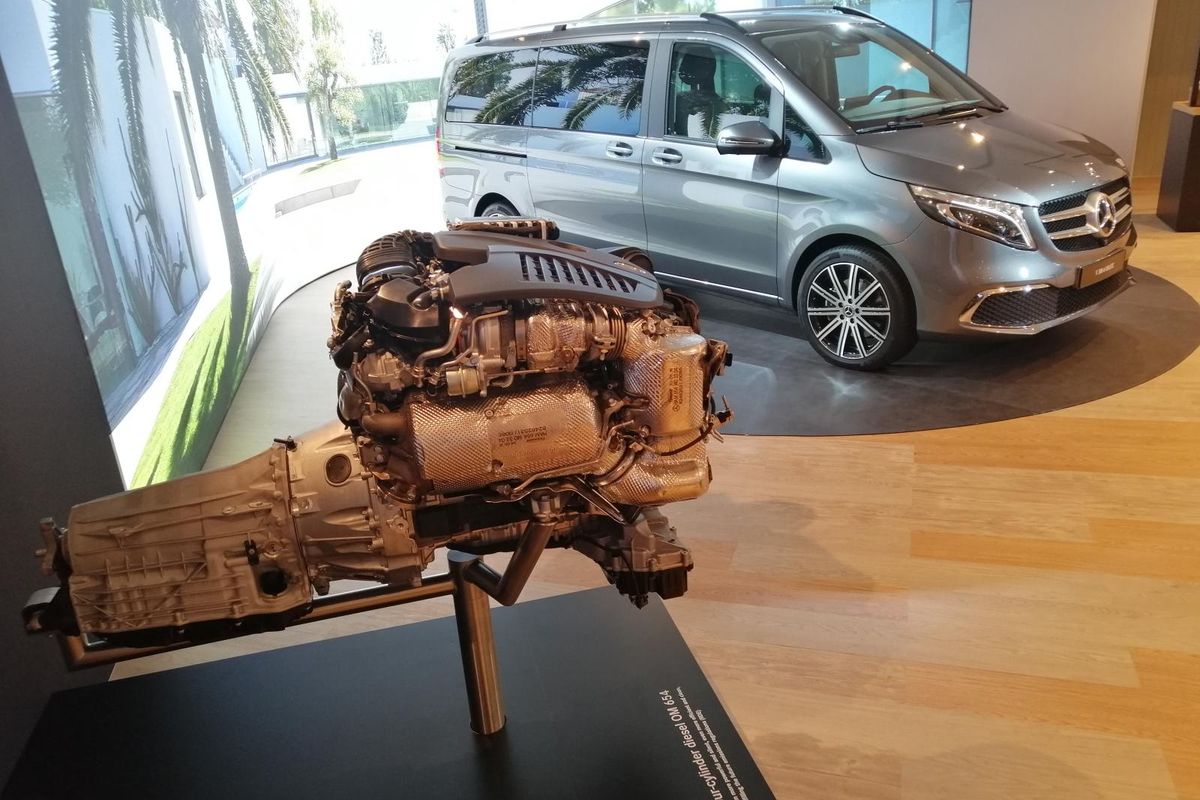
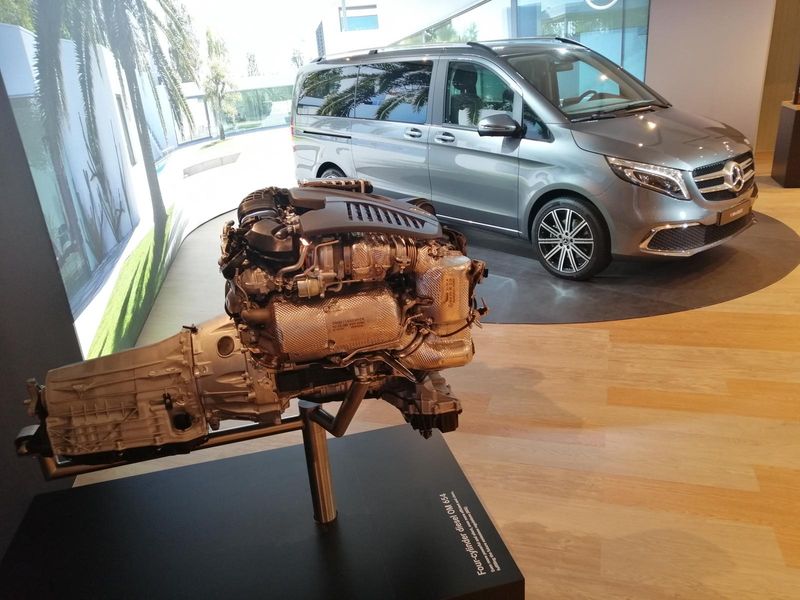
The big news regarding this latest V-Class is the introduction of the Three-pointed Star's latest-spec 2.0-litre turbodiesel engine (OM 654). It is offered in various states of tune: 120 kW (V200d), 140 kW (V250d) and a whopping 176 kW in the top-of-the-range V300d derivative, plus it's mated with a 9-speed automatic transmission, which replaces the previous 7-speed auto 'box. The new powertrain, Mercedes-Benz claims, offers improved overall performance in conjunction with reduced fuel consumption and carbon dioxide emissions.
Sounds great, doesn’t it? Well, not so much. Sadly this new engine and transmission won't be offered locally – Mercedes-Benz Vans points to compliance complications even though this engine is offered locally in the E-Class (E220d). Perhaps you might feel better knowing that the Australian and Russian markets will also be excluded from this engine upgrade…
This is a great pity for potential buyers, because this engine is far more refined than the familiar 2.1-litre turbodiesel engine, which will soldier on in Mzansi. The motor offered impressive performance on our drive in Spain and we had the opportunity to test both the V250d and the more powerful V300d (both equipped with the new 9-speed automatic transmission).
Power delivery was more than sufficient in both variants and the slick 9-speed 'box proved a good match for this engine. In addition to the 500 Nm of peak torque (offered in the V300d), an additional 30 Nm of overboost gives the flagship derivative some handy extra overtaking urge. The V-Class range comprises both rear-wheel- and all-wheel-drive configurations.
On-road comfort levels are impressive but rearward visibility could be better.
Mercedes-Benz says that fuel efficiency has improved by up to 13% by virtue of the new engine/transmission combination, but we were surprised to see consumption figures of above 11.0 L/100km on the V-Class' trip computer. Those indicated returns were surprisingly high, considering that Mercedes-Benz claims optimal figures of between 6.1 and 5.9 L/100 km.
The V-Class’ ride-handling balance was a highlight; it doesn’t feel like you are driving a van – in fact, it’s quite car-like to pilot. The steering is nicely weighted and provides positive feedback. Given the V-Class’ shape, one would expect considerable body roll when cornering, but it turns in with stability and delivers a smooth, comfortable ride (it should cope well with harsher South African road surfaces). We found rearward and blind-spot visibility less than ideal, which means drivers will need to be more vigilant when crossing lanes or reversing.
To reiterate, the South African market continues to employ the older 2.1-litre turbodiesel engine paired with a 7-speed automatic transmission. Buyers still have the choice between the V200d with 100 kW/300 Nm, the V220d with 120 kW/380 Nm and the V250d with 140 kW /440 Nm.
New interior trim and leather options will be on offer when the V-Class arrives in Q3 of 2019.
Summary
We are disappointed that South Africa won’t receive the new diesel engine and 9-speed automatic transmission. As a result, you may argue that this facelift is underwhelming, and you may be right… However, in the V-Class’ defence, it remains the go-to choice if you are in the market for a luxurious and stylish family or business MPV/people-mover. If you don’t agree, you may want to consider alternative products such as the Volkswagen Caravelle and even the Kia Grand Sedona, which offers very good value (read our latest review), if that’s what you are after…
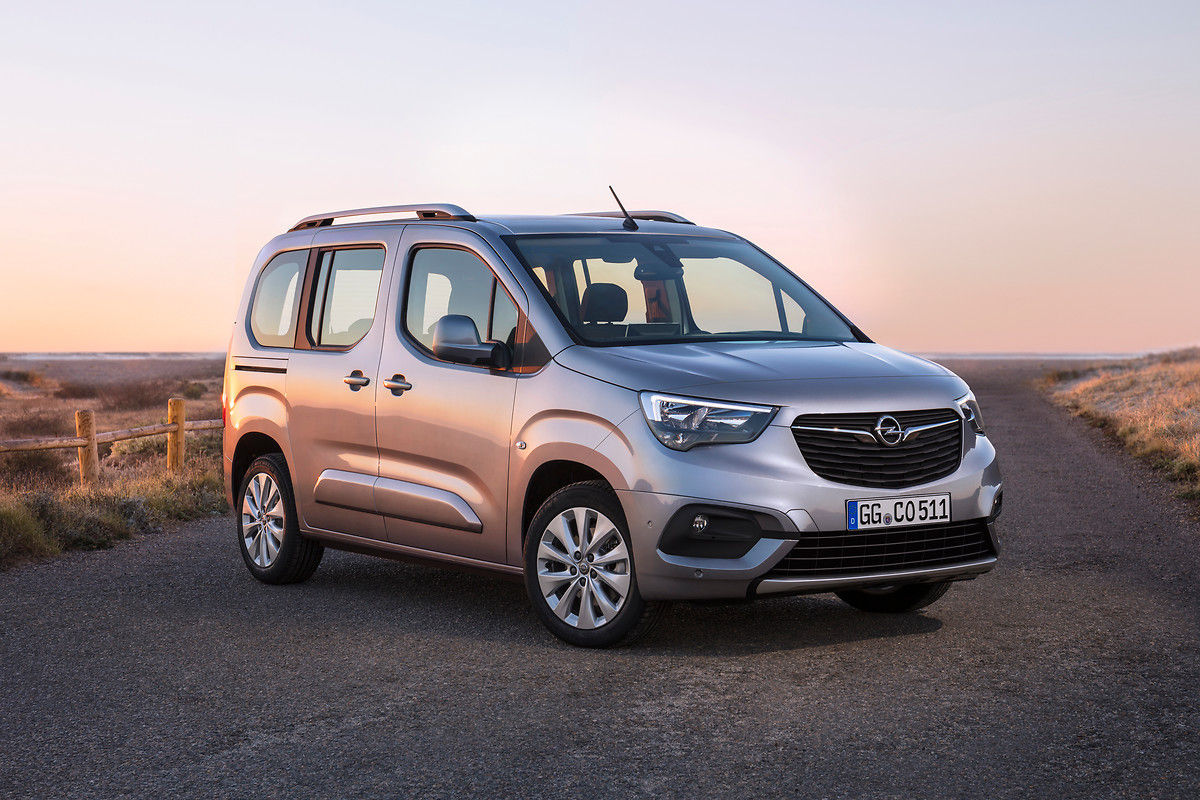
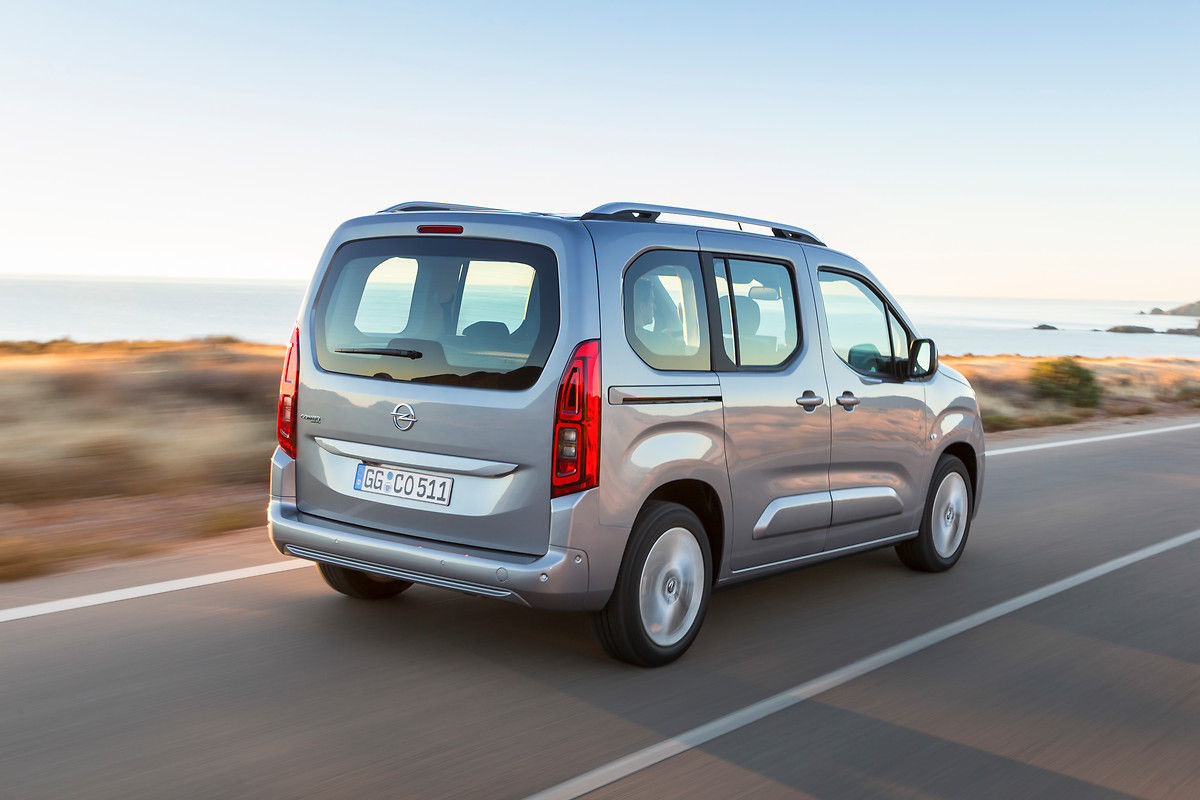
Following the recent launch of the Opel Combo Cargo, the Russelsheim brand is rolling out a people-mover version of its panel van in the South African market. In a market dominated by SUV-flavoured (but compact hatchback-based) crossovers, the newcomer is a conventional MPV that offers an impressive value and practicality for R369 900.
* Note that the vehicle pictured here is of Euro specification, the local model will have a slightly different mix of features, Opel notes.
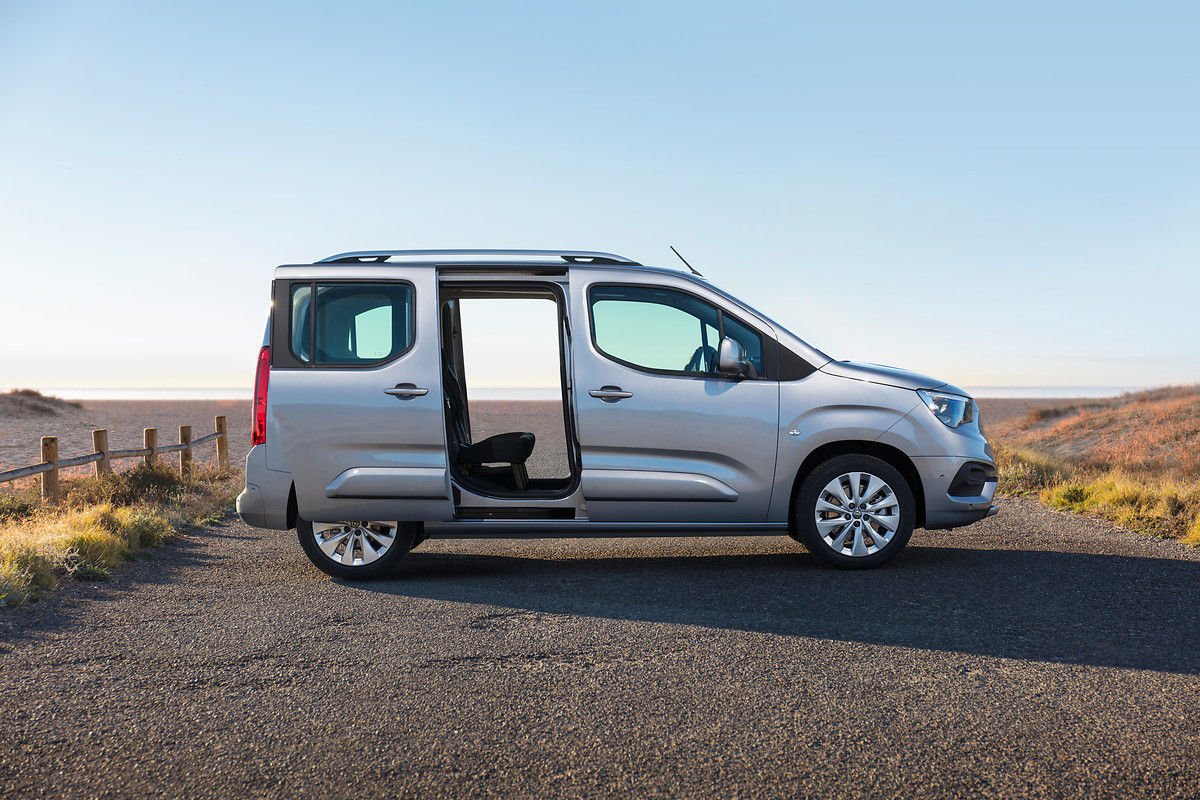
Compared with its Cargo commercial-vehicle sibling, the Life’s exterior treatment is more in keeping with a compact MPV. It features colour-coded bumpers, -door handles and -side mirrors, plus protective side-mouldings, left- and right sliding rear doors (the former with a tiltable window and latter with a fixed pane), plus a tailgate (instead of cabinet-style doors) with a separately-opening window.
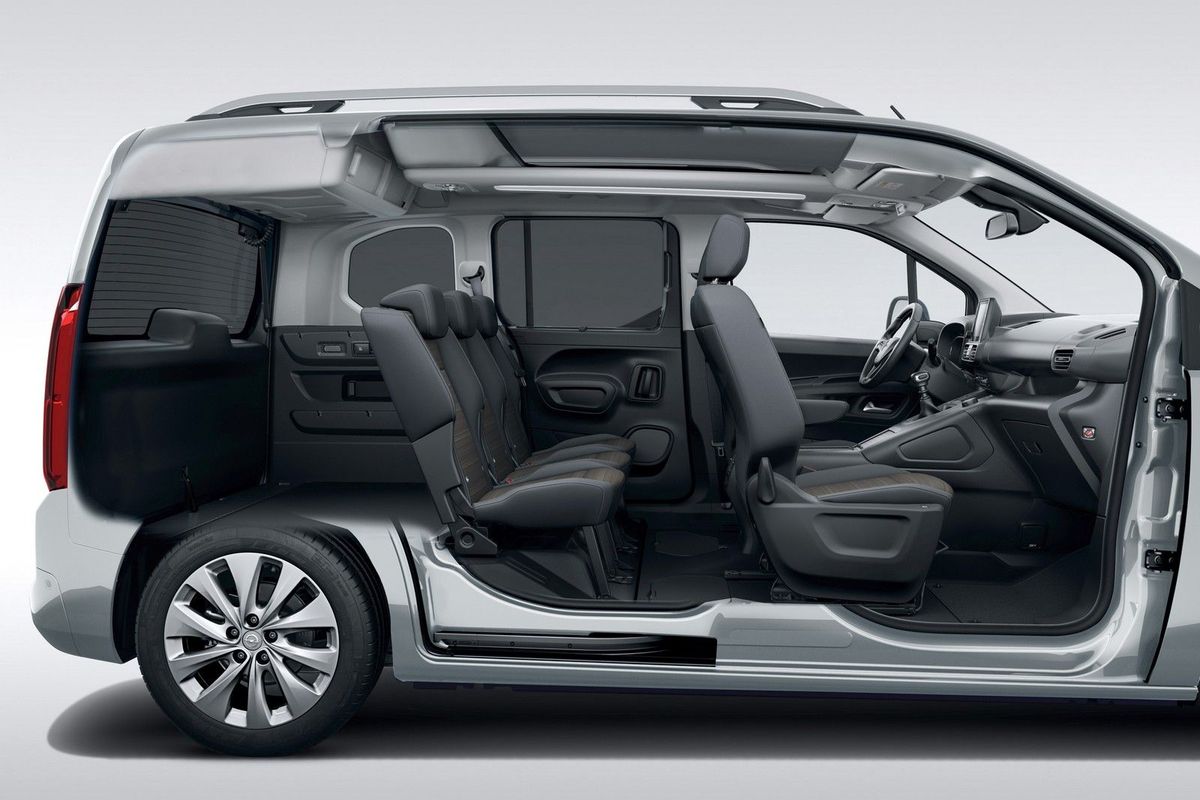
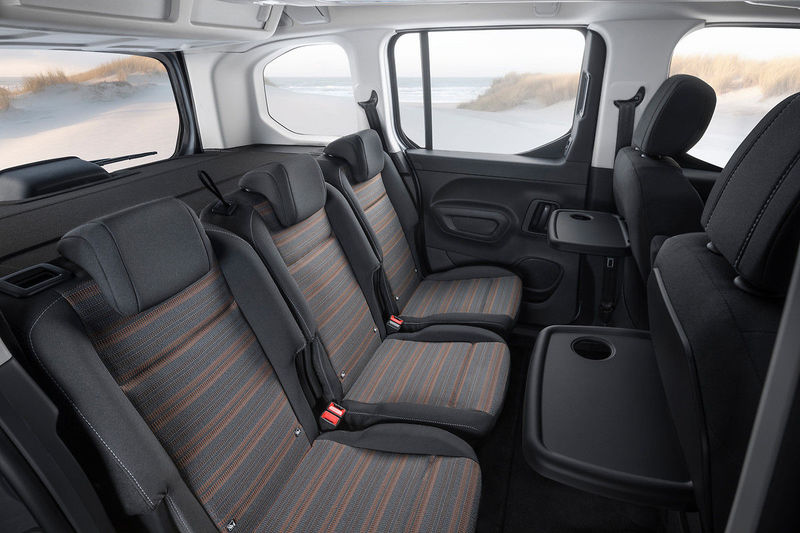
Large side-glass areas create a roomy-feeling interior.
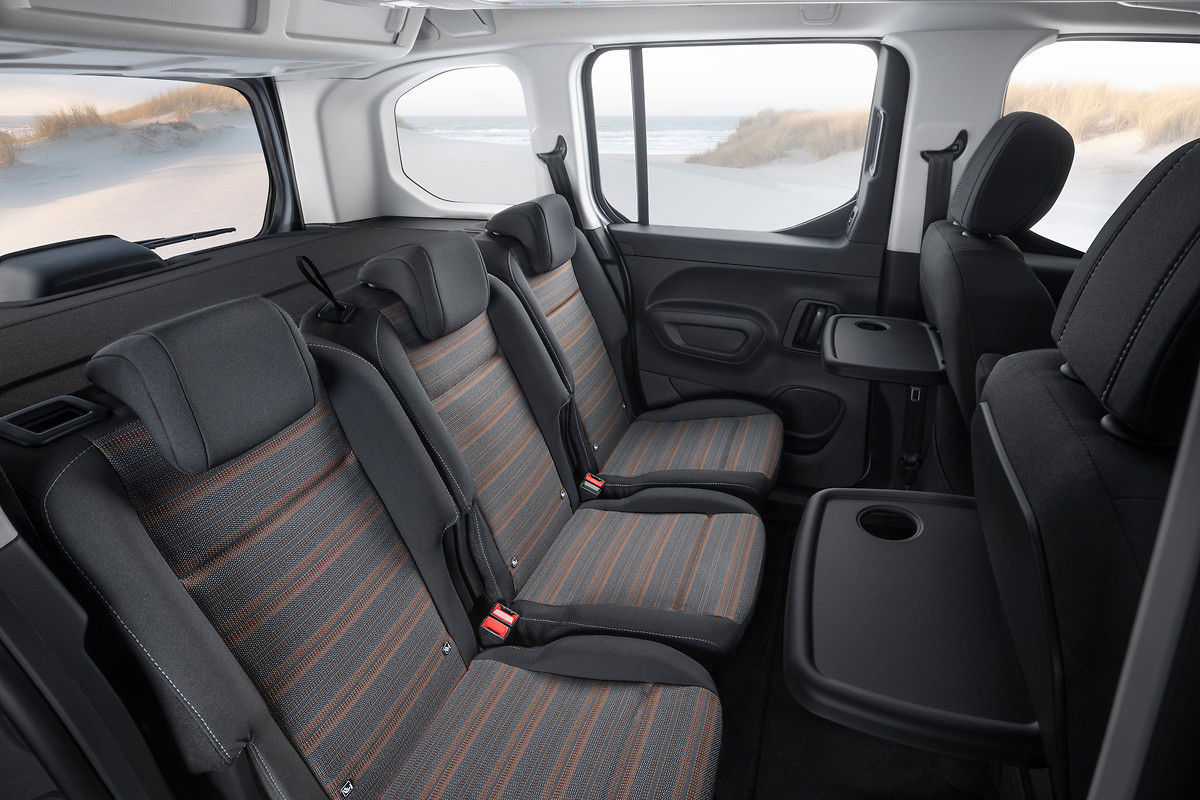
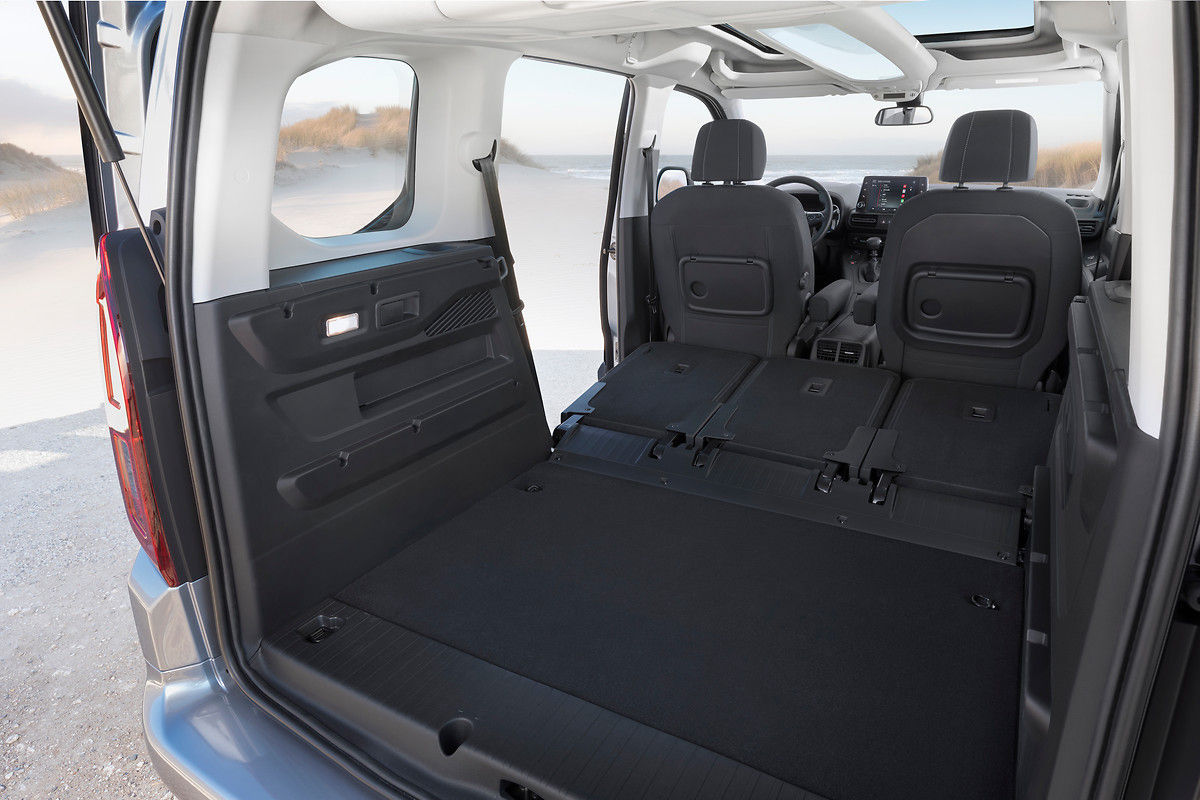
The newcomer is a 5-seater with 60/40-split rear seats that can accommodate loads of up to 690 kg when they’re folded forward, Opel claims.
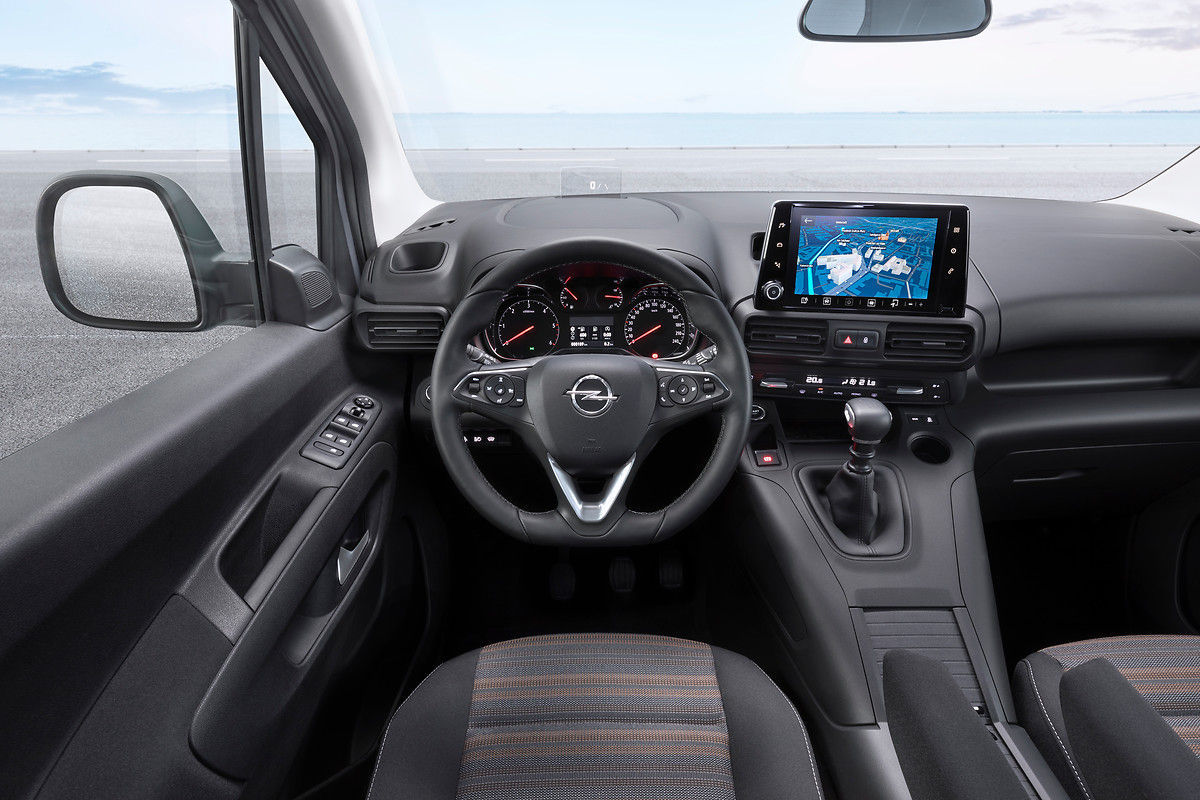
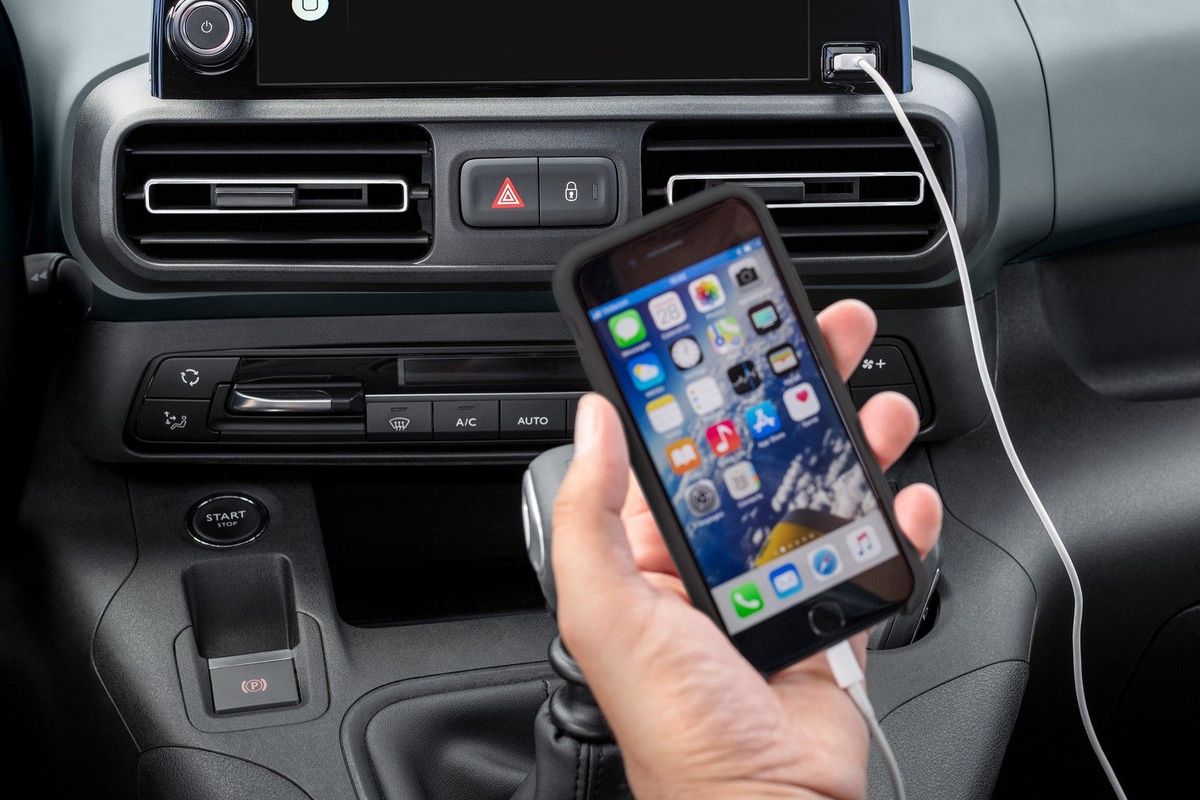
Standard features include, inter alia, a height-adjustable seat with lumbar support, a rake- and reach-adjustable multifunction steering wheel, which is power-assisted, cruise control, a 7-inch Intellilink touchscreen infotainment system (with smartphone-screen projection technology, in conjunction with a 6-speaker audio setup) and automatically activated headlamps. Roof rails are optional, however.
The Combo Life is powered by a 68 kW/230 Nm 1.6-litre turbodiesel engine mated with a 5-speed manual gearbox. Opel claims the model will consume an average of 5.0 L/100 km and the newcomer is rated to tow trailers of up to 720 kg (unbraked) and 1 100 kg (braked).
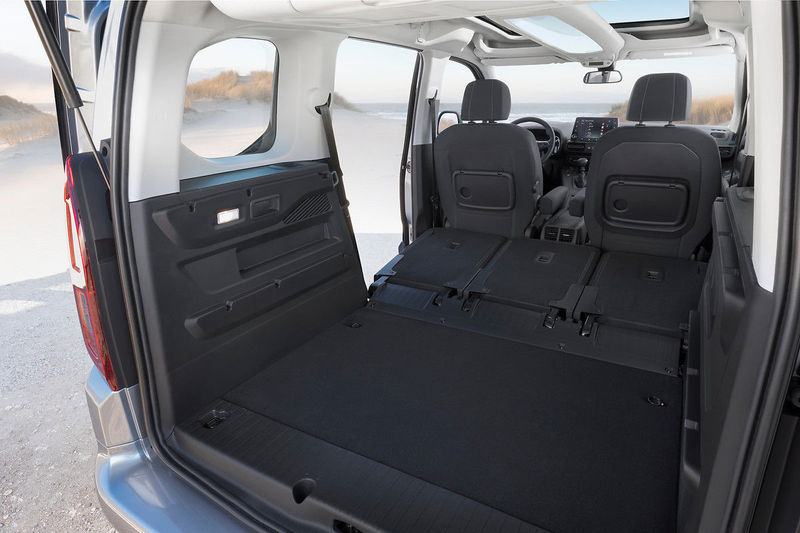
As befitting an MPV, the Combo Life affords generous utility space with the rear seats folded flat.
In terms of safety equipment, the Opel is equipped with 6 airbags (driver-, front-passenger, front side and full-length curtain units), ABS with EBD, a high-level brake lamp, electronic stability programme (ESP), traction control and hill-start assist. Security measures include remote-controlled central locking, an anti-theft immobiliser and electronic child locks for the rear sliding doors.
Opel Combo Life Price in South Africa (August 2019)
The new Opel Combo Life is offered with a 3-year/120 000 km warranty and roadside assistance cover and a 3-year/60 000 km service plan (with service intervals at 12 months/15 000 km.