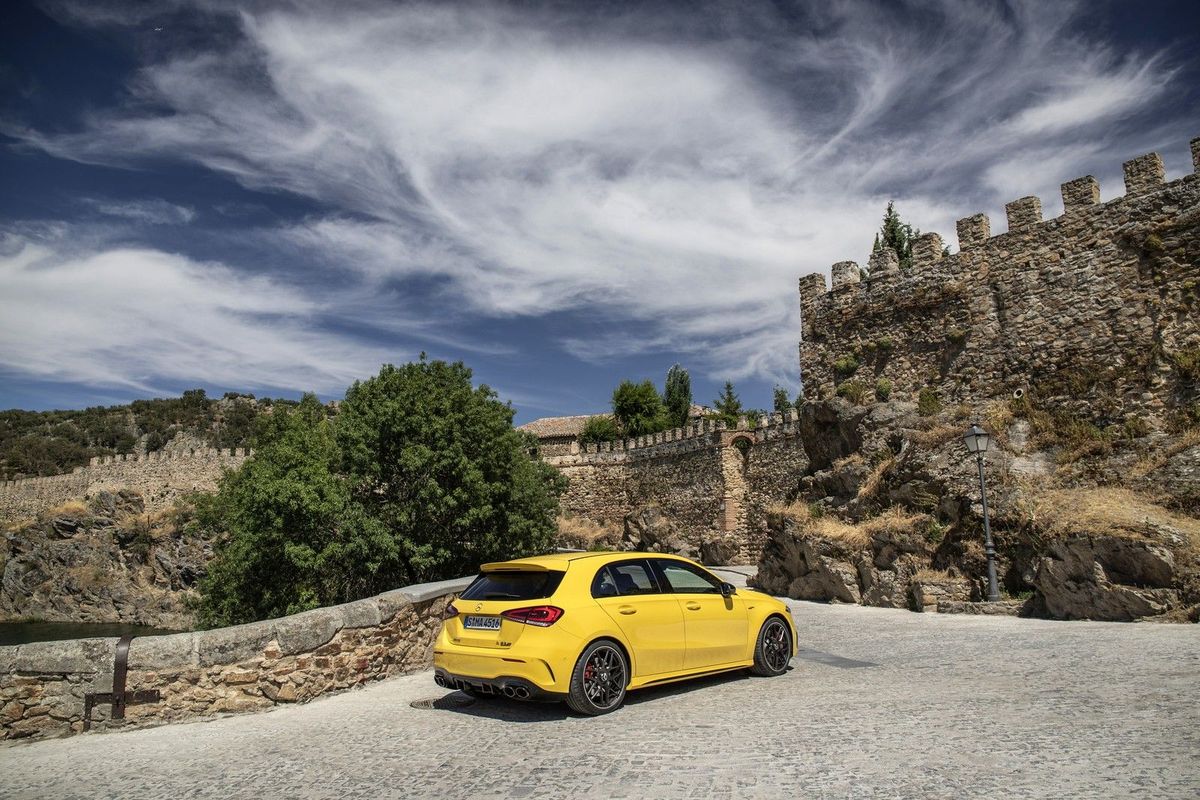
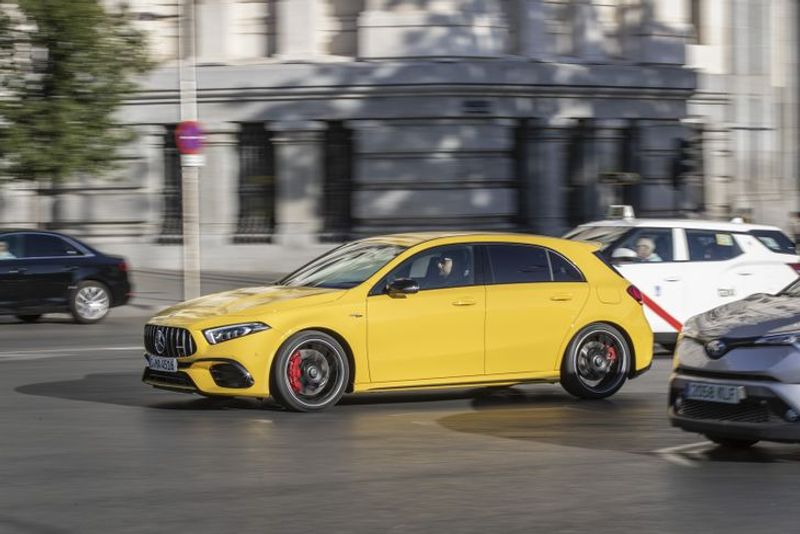
Lexus RC F/Track Edition (2019) Launch Review
Few of us believed it would ever happen, but Lexus has introduced performance rivals to the Audi RS5, BMW M4 and Mercedes-AMG C63 Coupe in the local market. The RC F and its Track Edition sibling go about their business in very different ways – we drove them on track and KZN's back roads to get a feel for the Japanese speed merchants.

What is it?

The RC F and the RC F Track Edition are the first Lexus performance cars to be sold in South Africa since a couple of LFA supercars were quietly delivered to (very) well-heeled enthusiasts in Mzansi a number of years ago. Think of them, if you will, as Lexus' foils to the BMW M4 and M4 CS/Competition, or Mercedes-AMG's C63 and C63 S. These 2-door coupes focus on performance thrills, aural excitement and engaging handling.

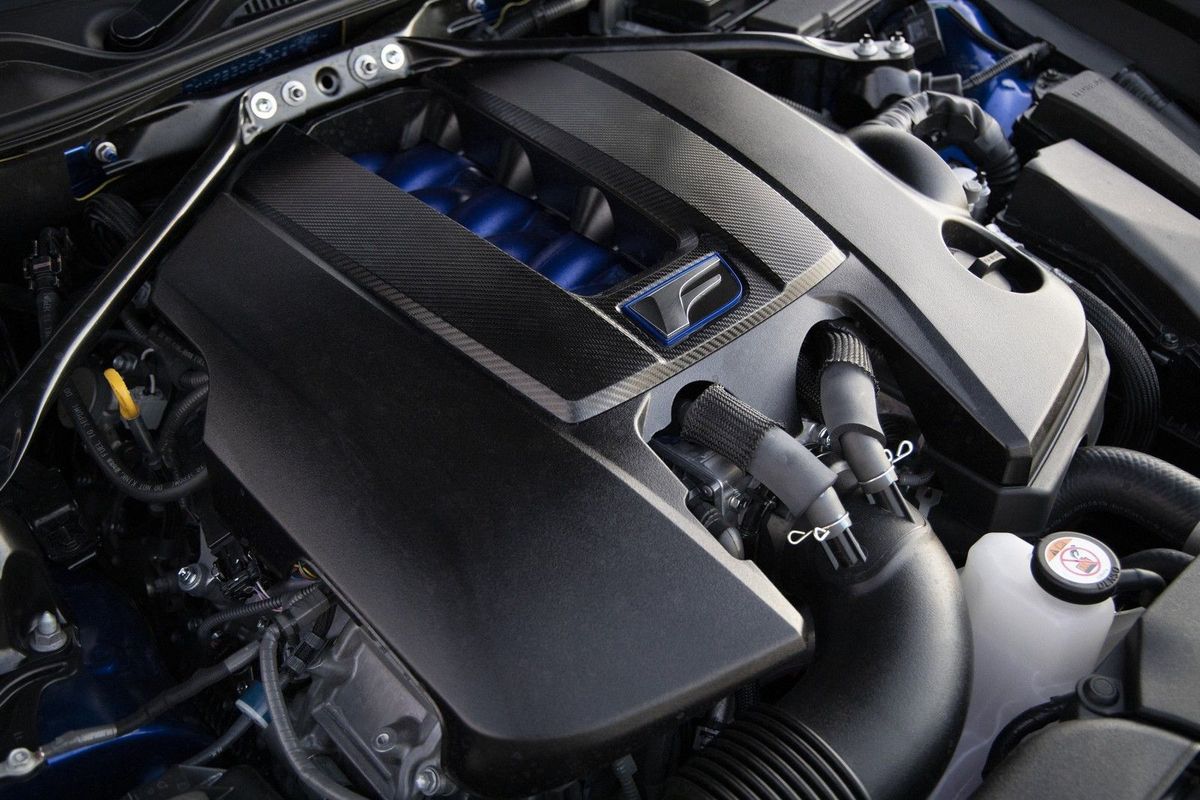
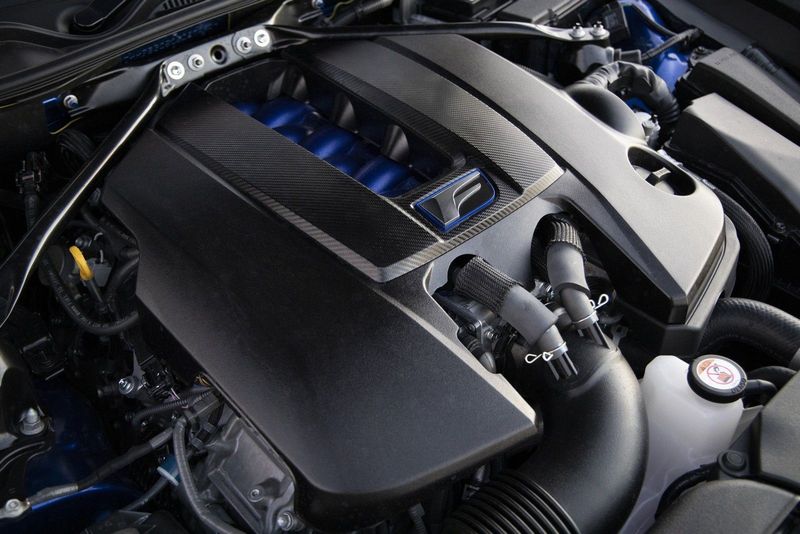
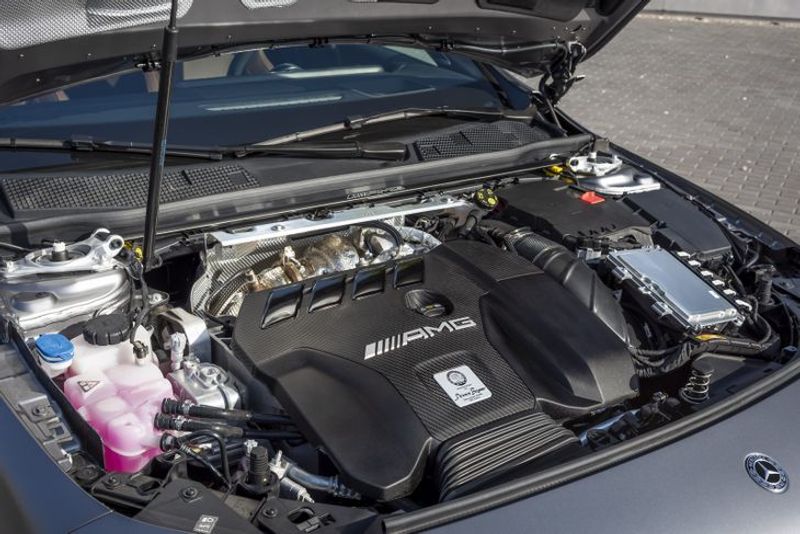
Under their bonnets you'll find a 5.0-litre V8 with no turbocharger/s – that’s correct, the pair utilise nothing but good old-fashioned natural aspiration to power them down the road. Power is then sent only to the rear wheels via an 8-speed auto 'box, while the front wheels deal with the steering.


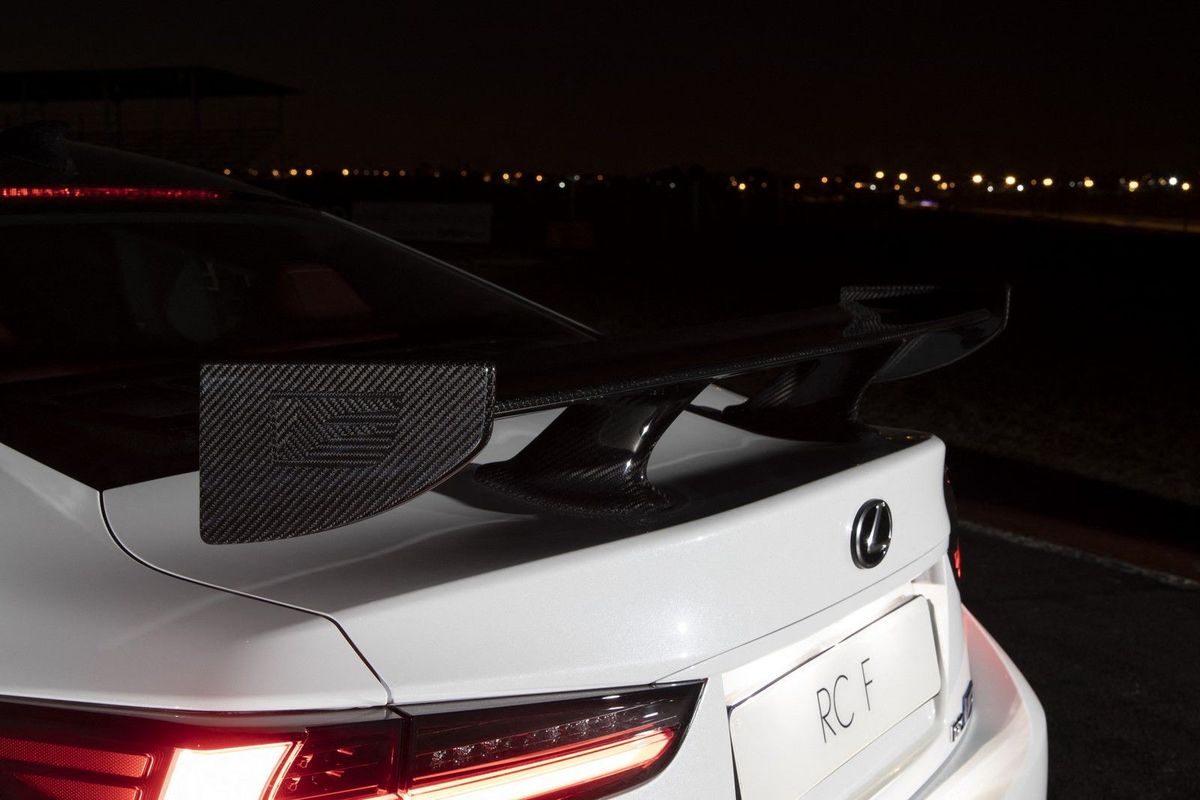
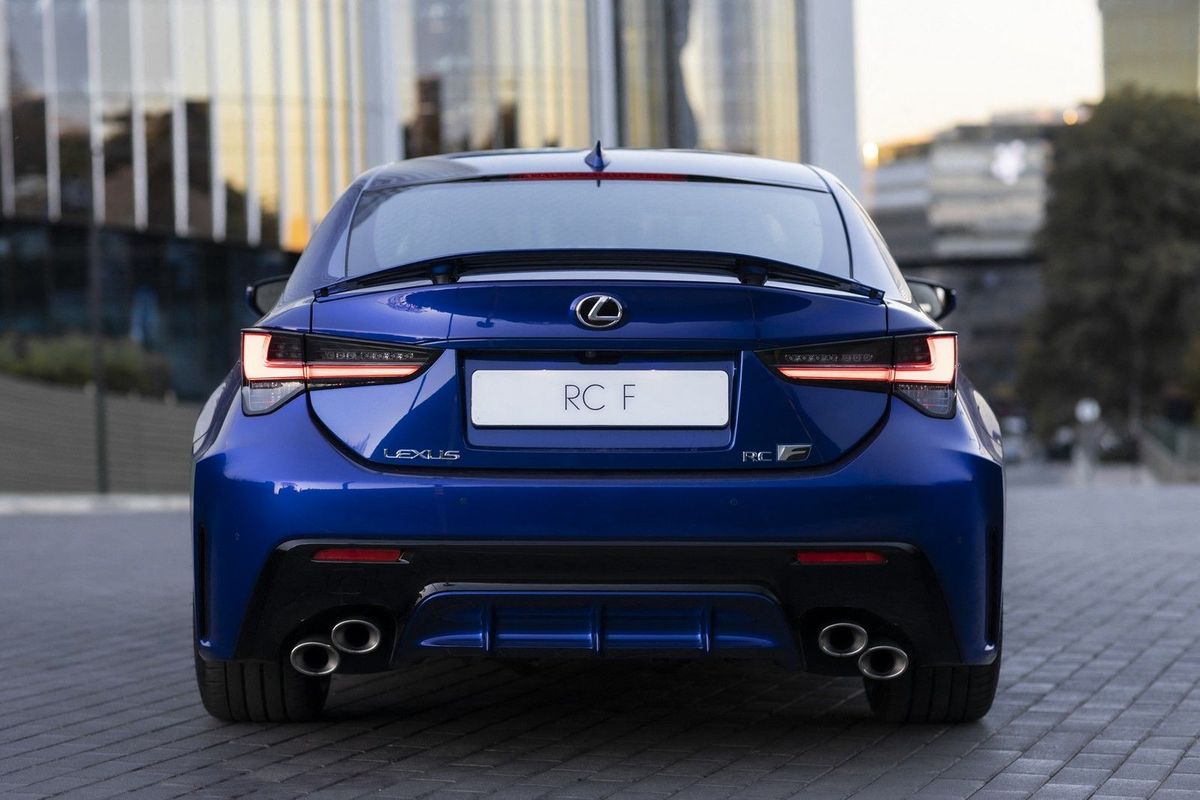
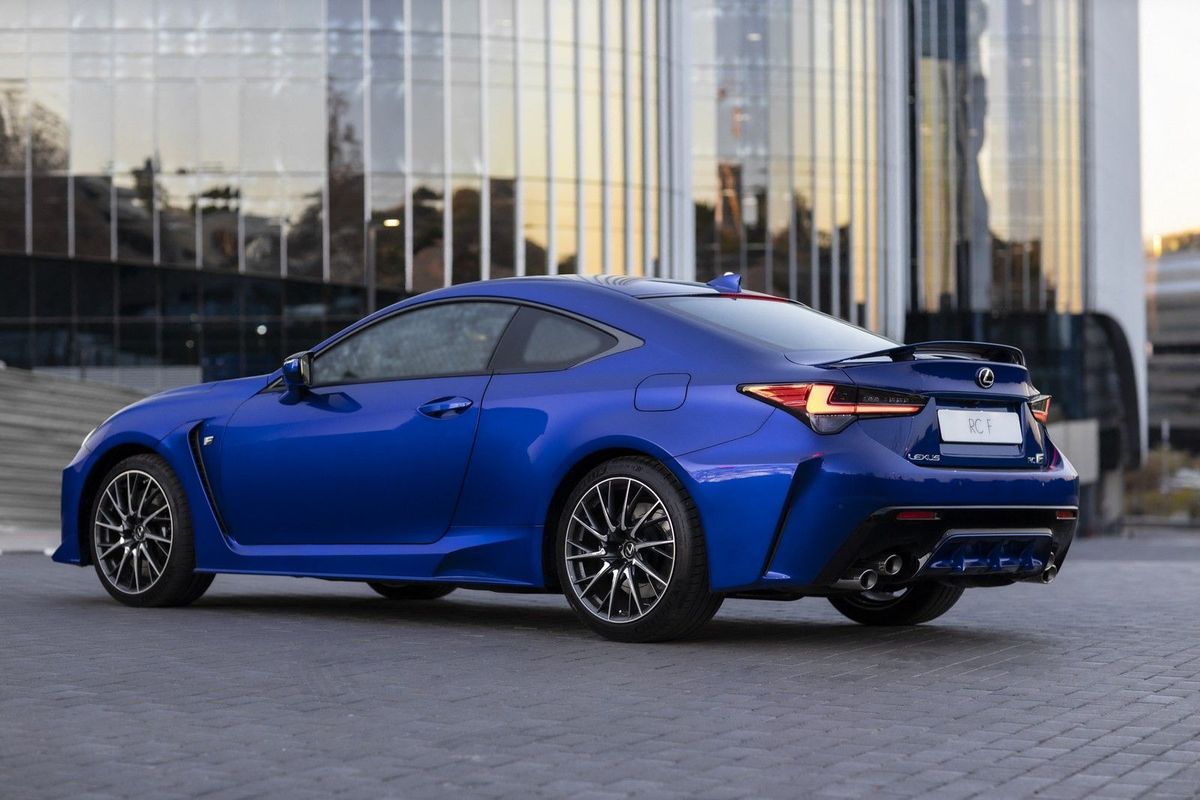
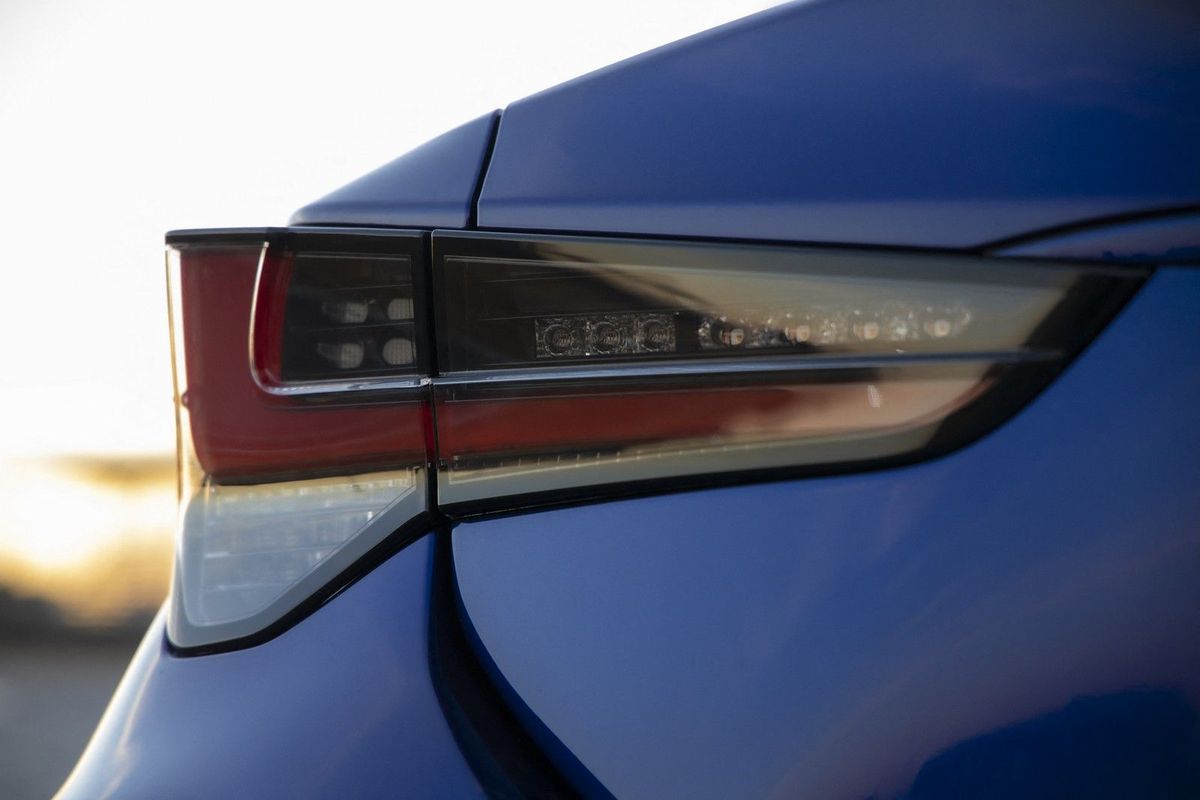
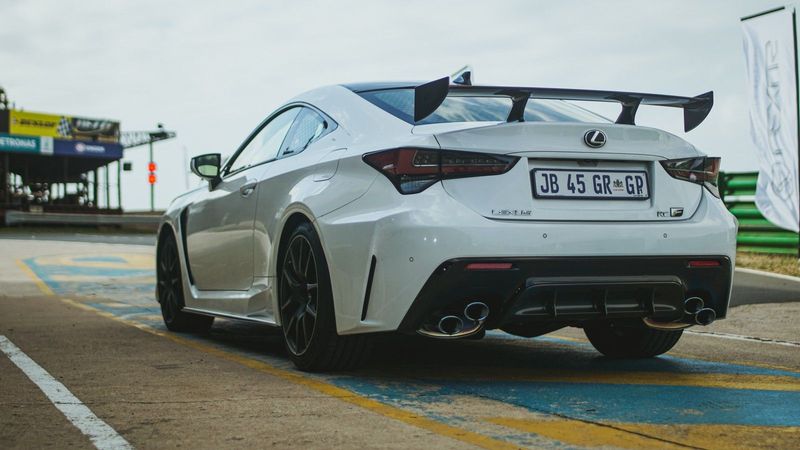
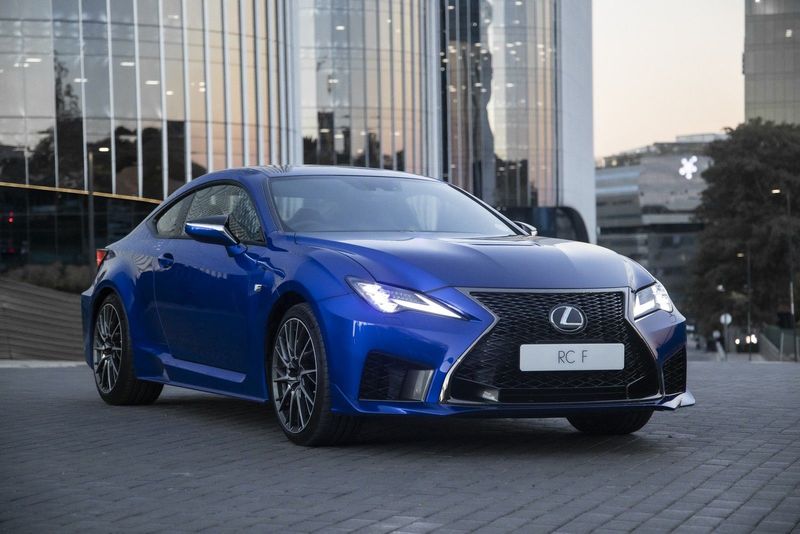
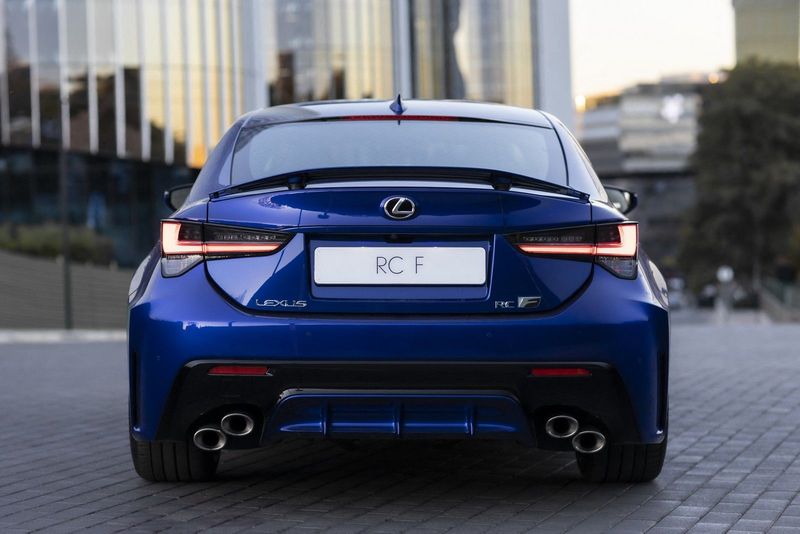
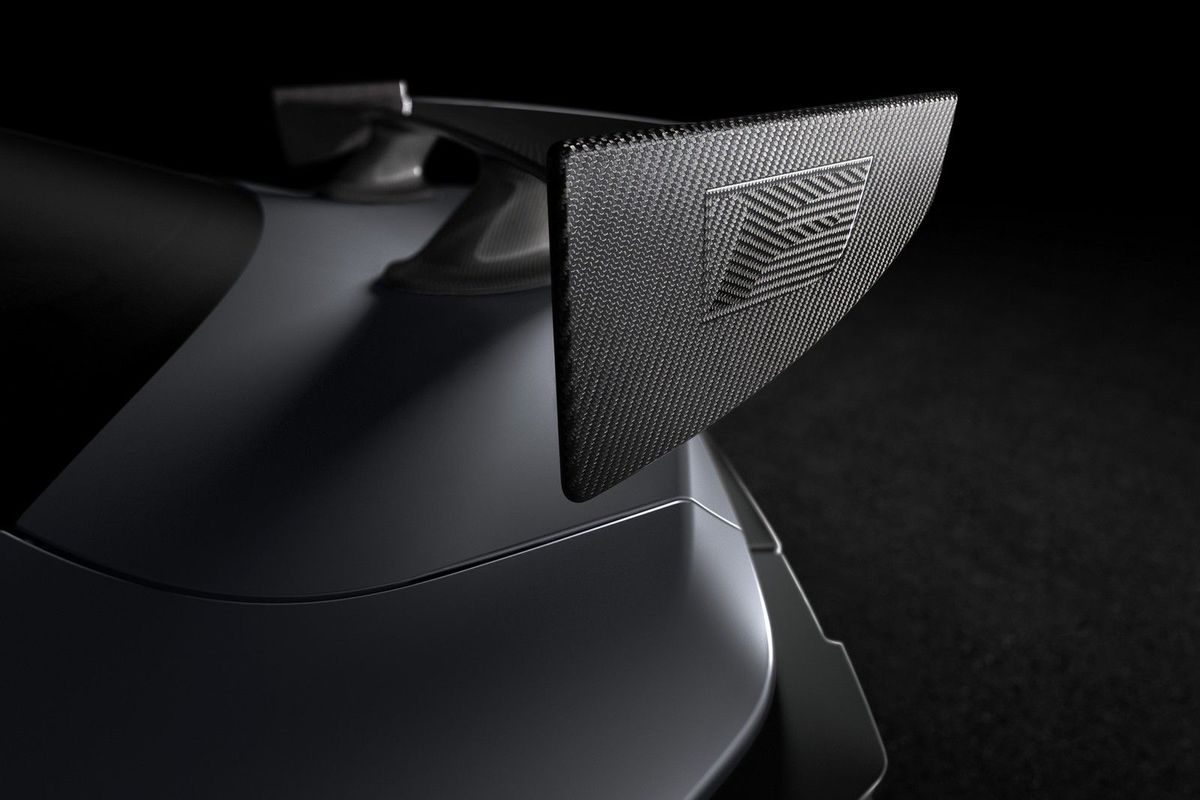
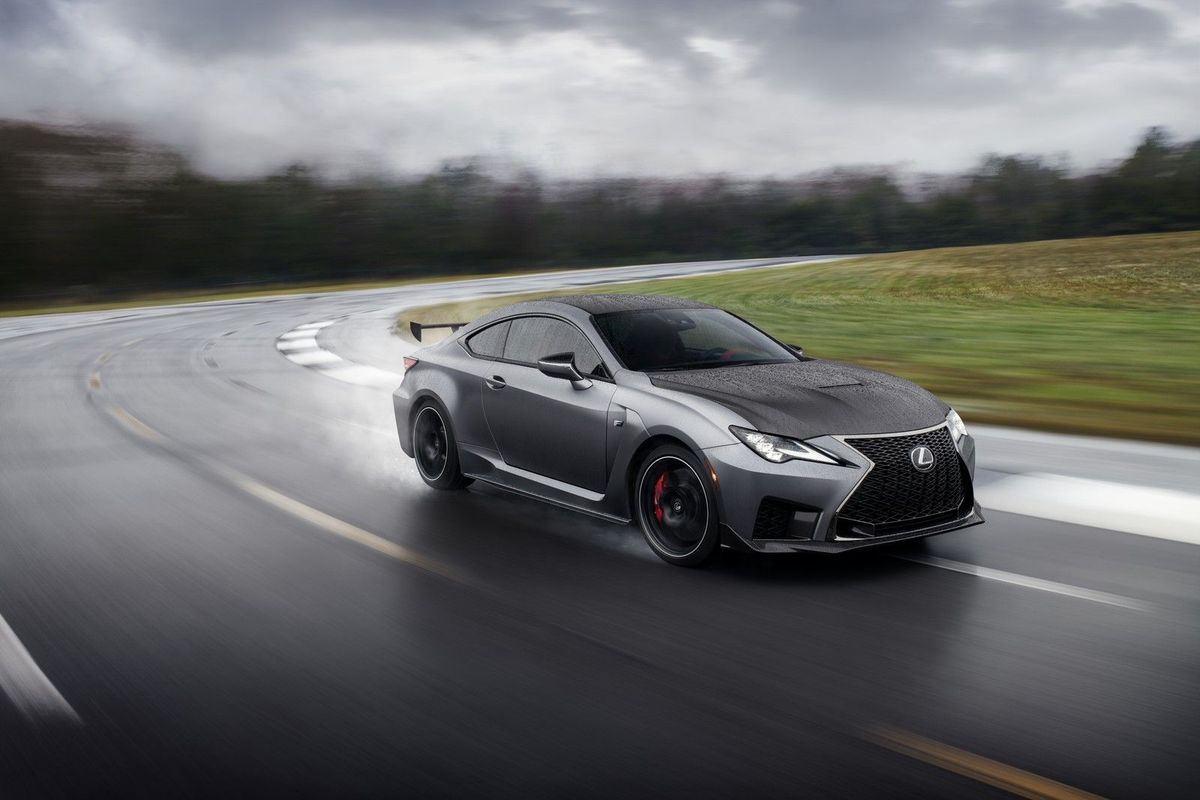
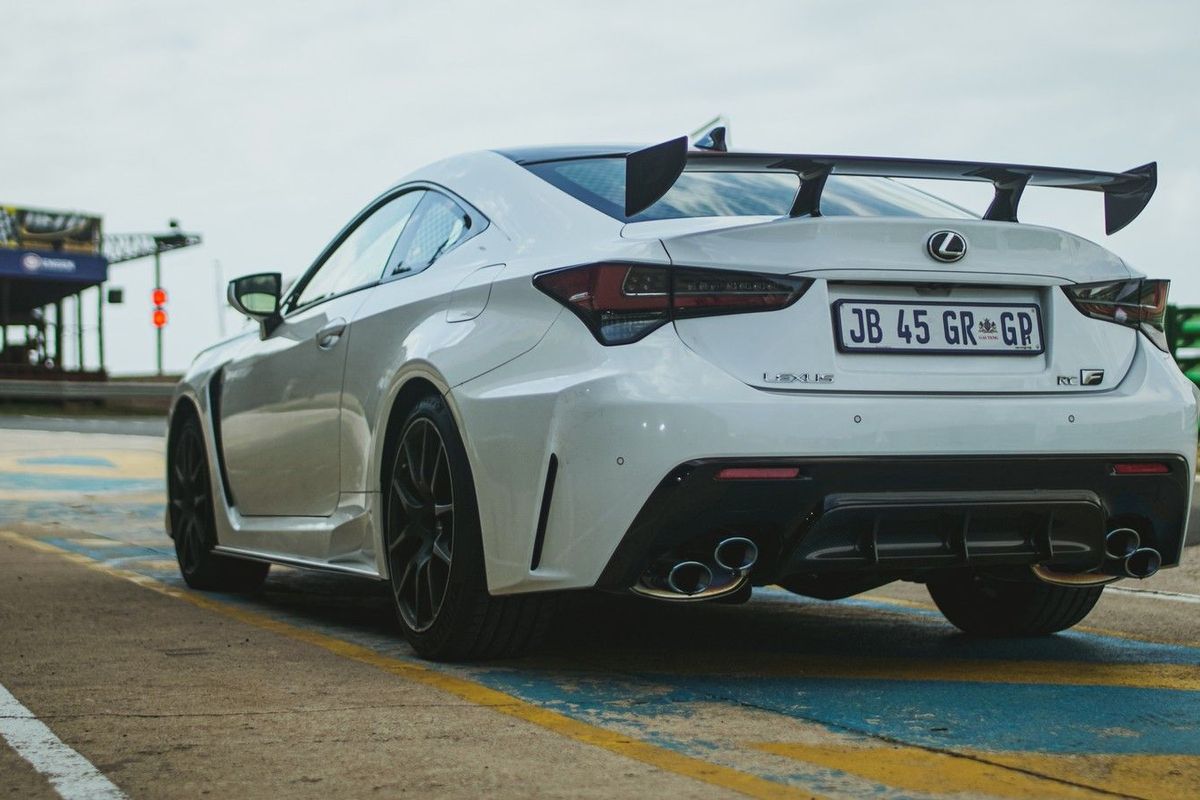
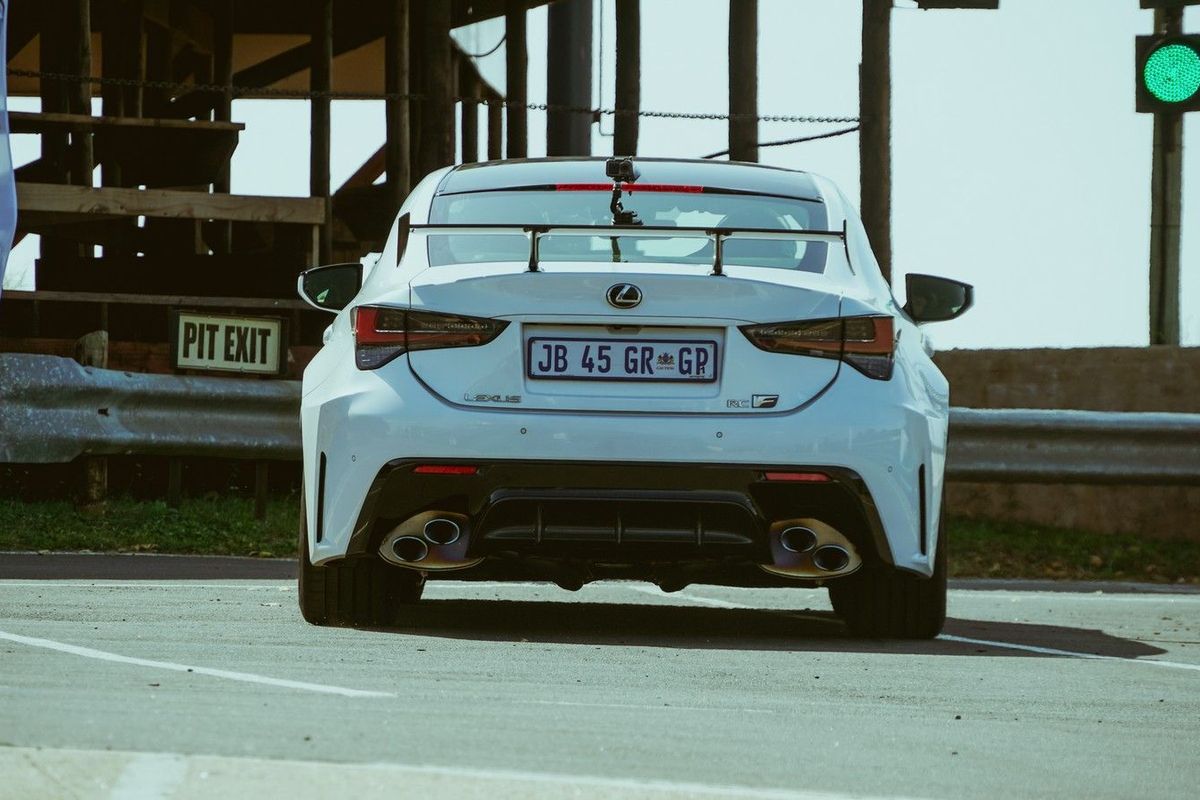
The RC F Track Edition comes with a fixed rear wing and Titanium exhaust tips.

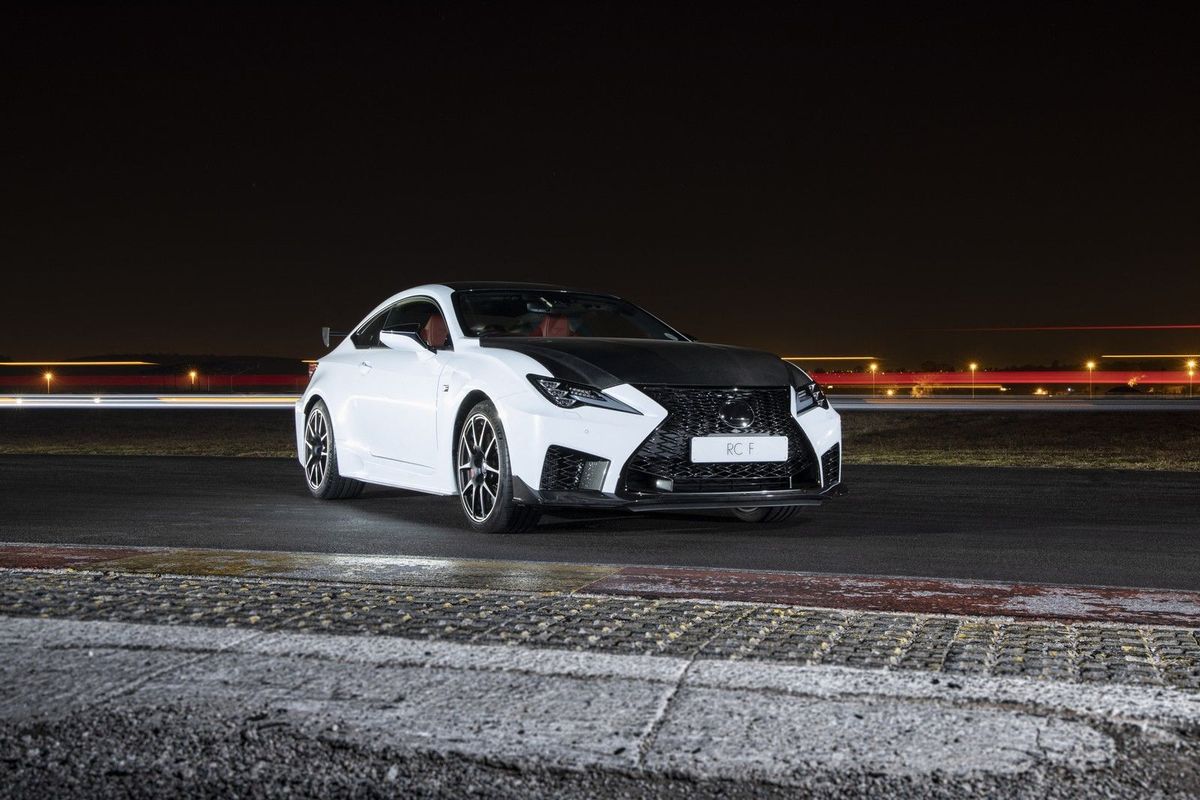
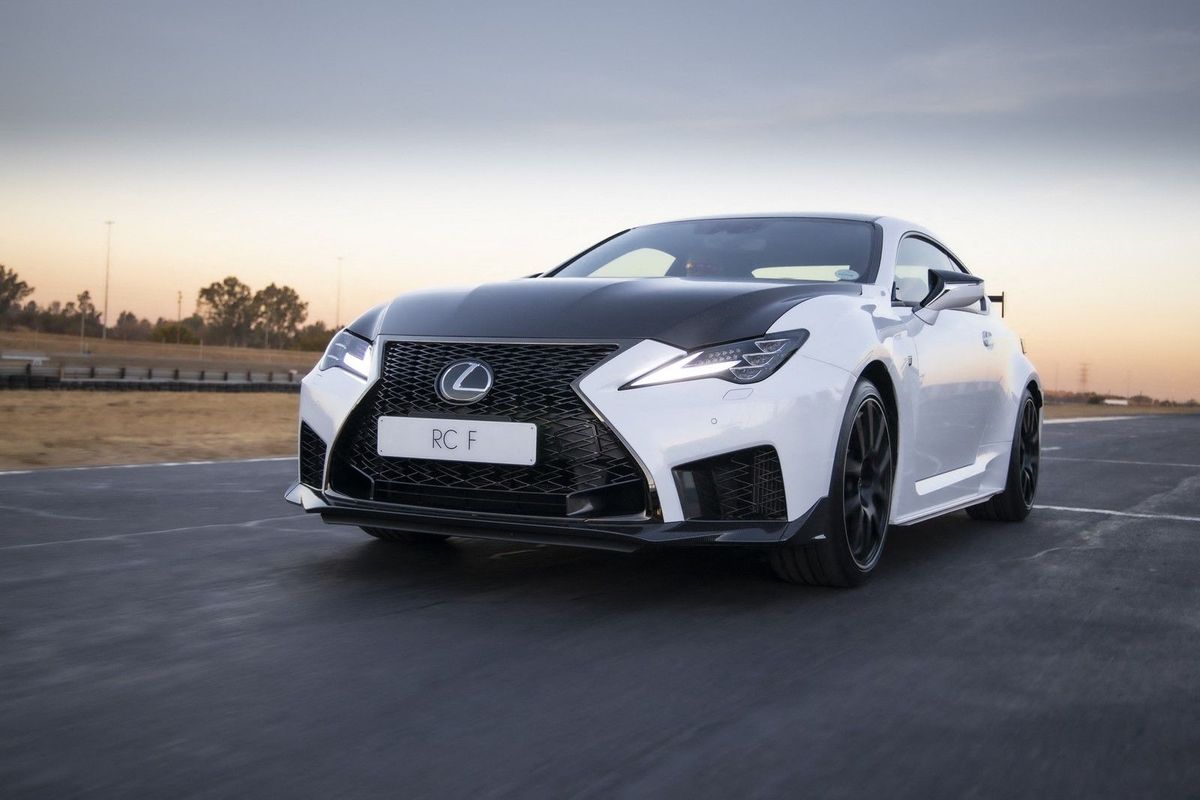
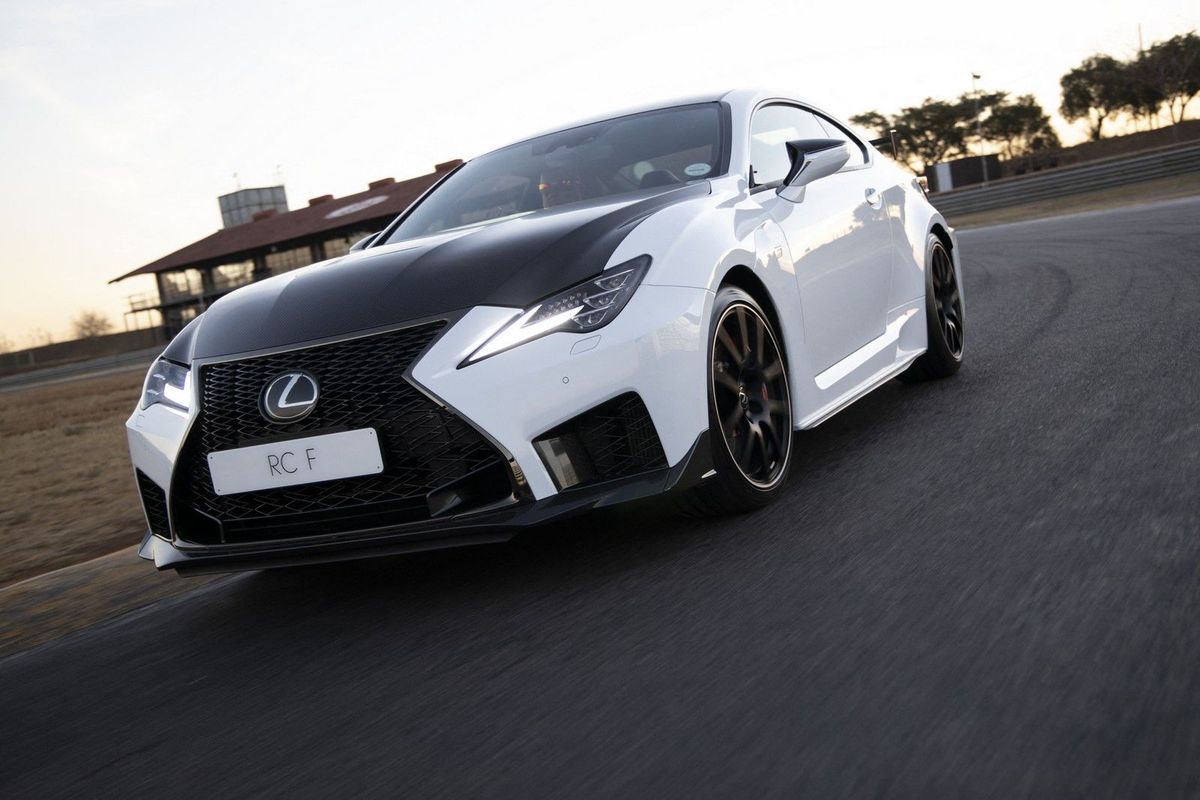
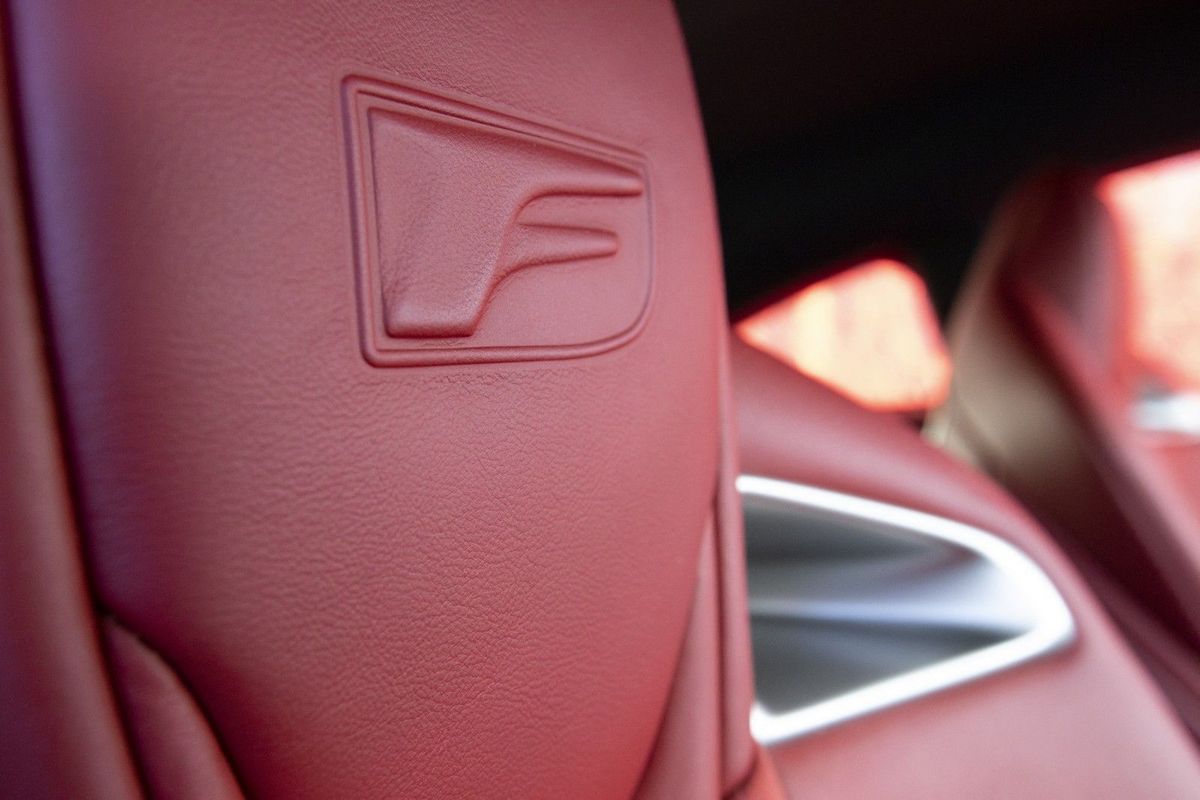
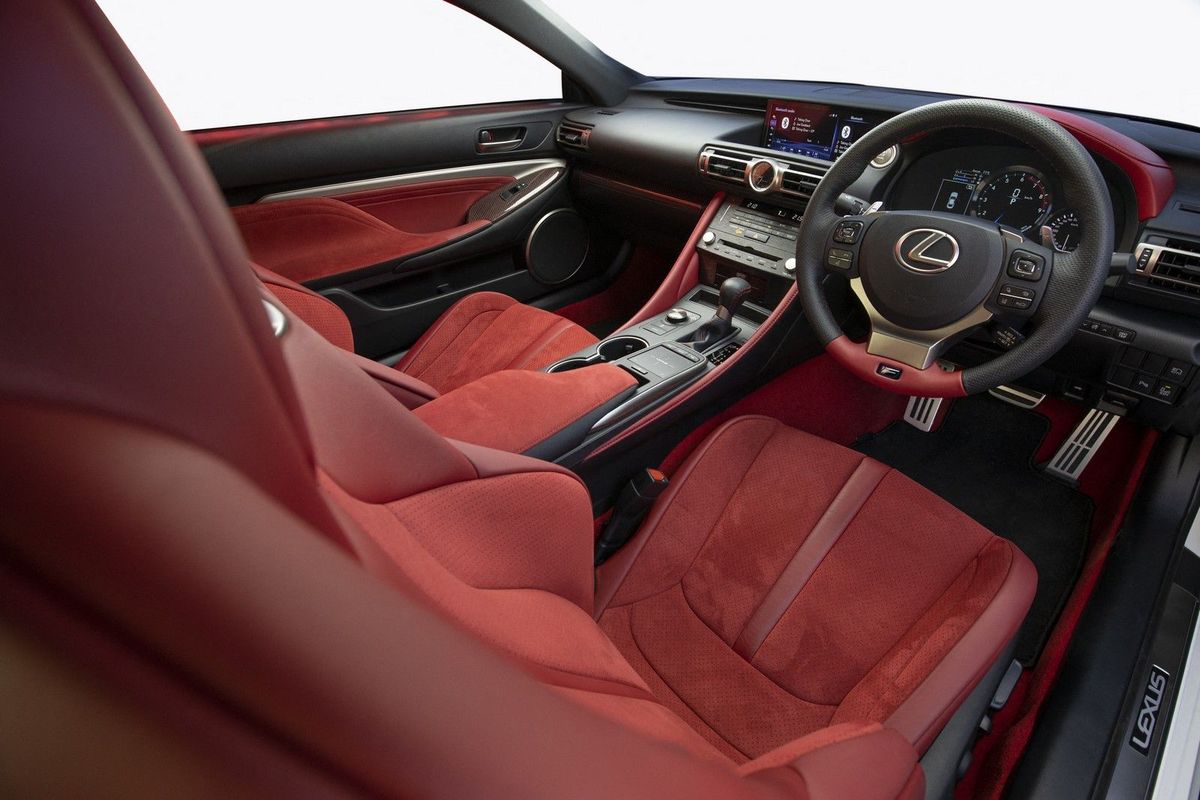
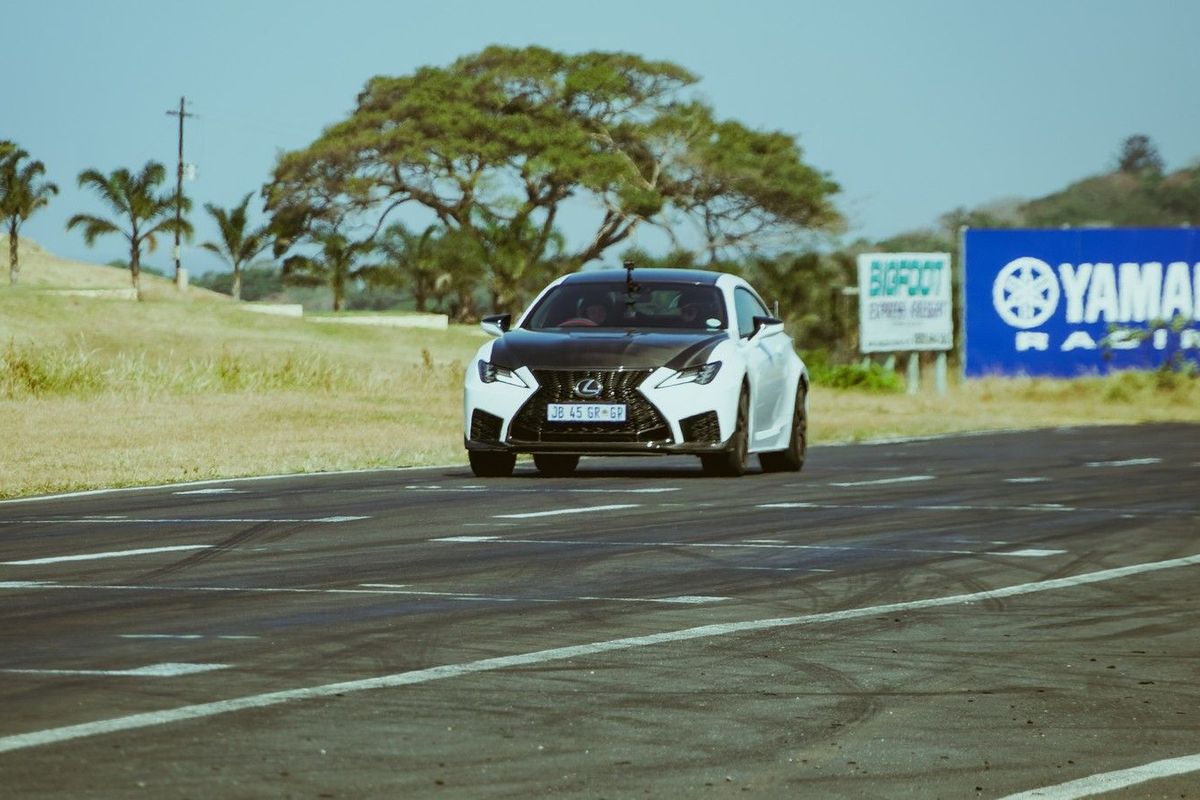
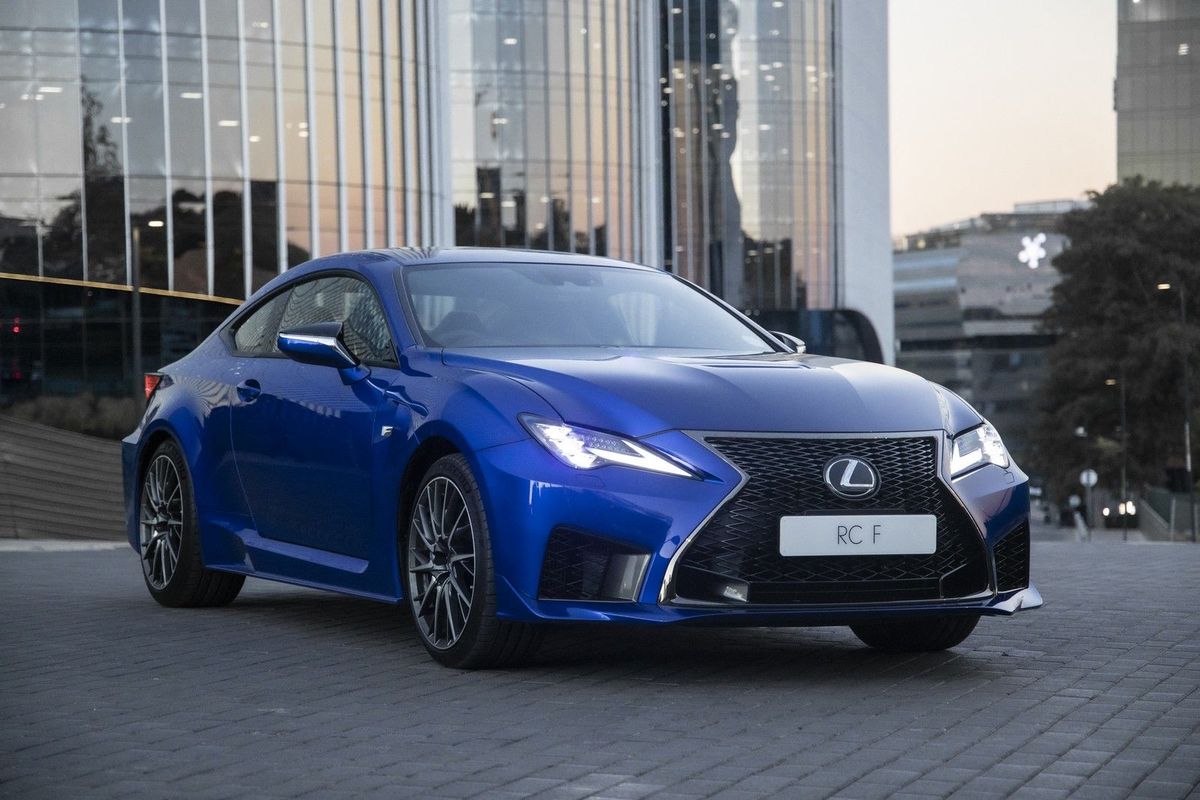
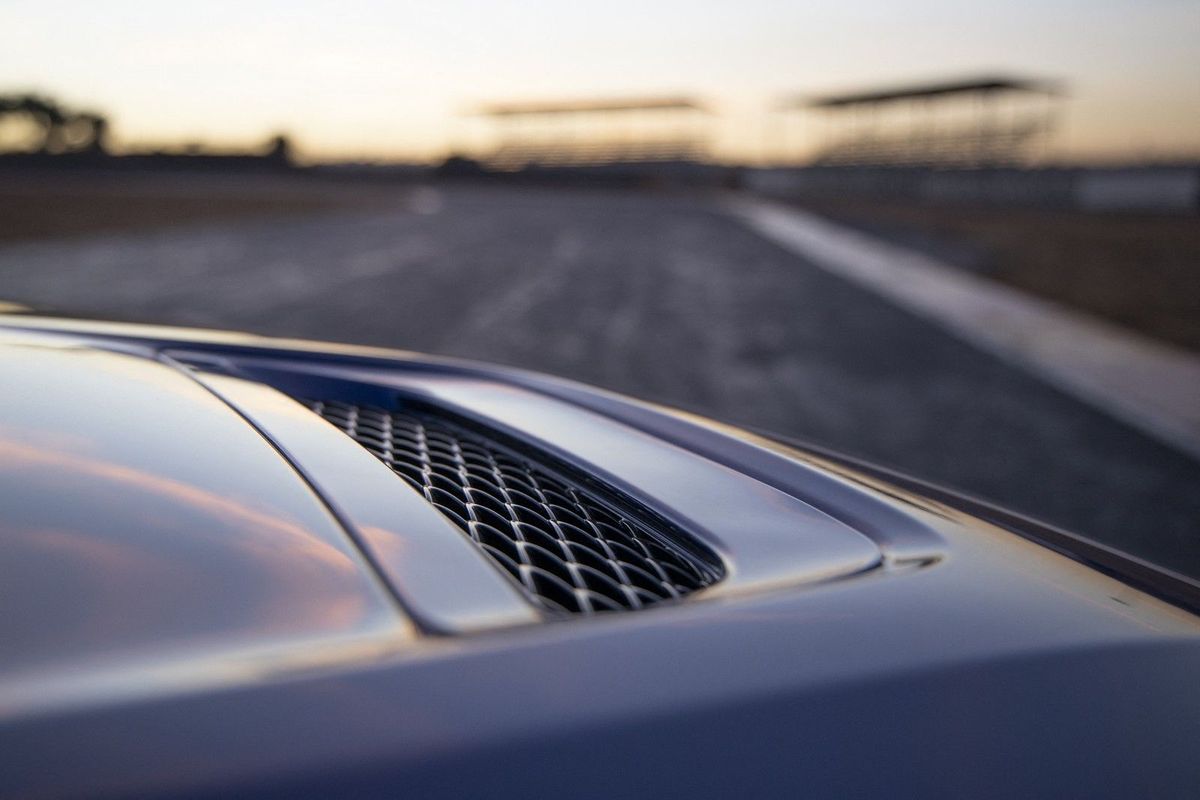
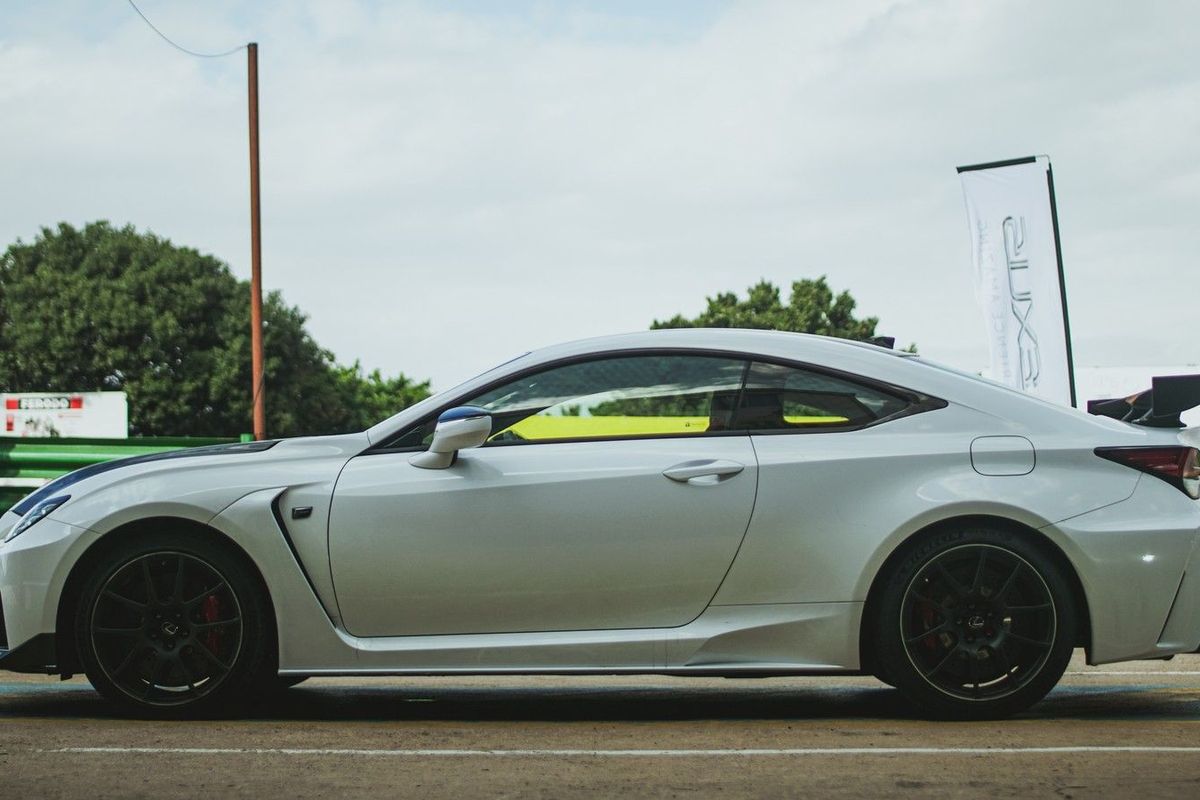
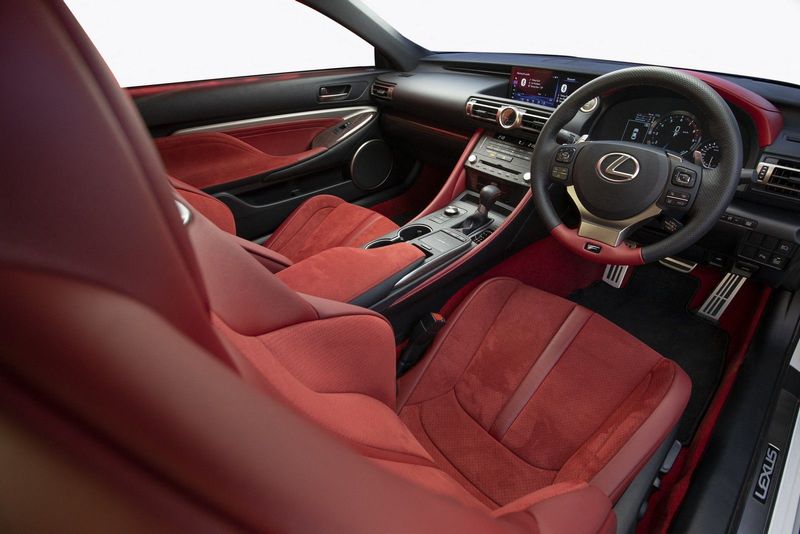
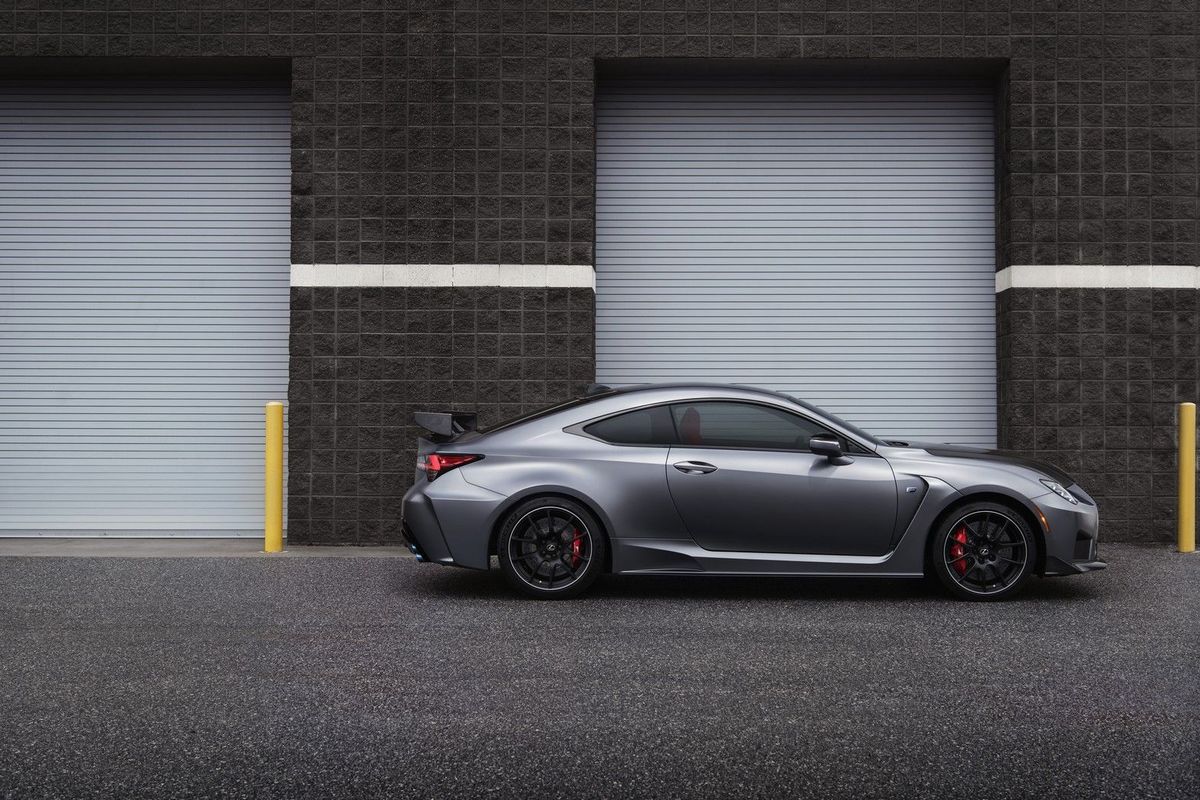
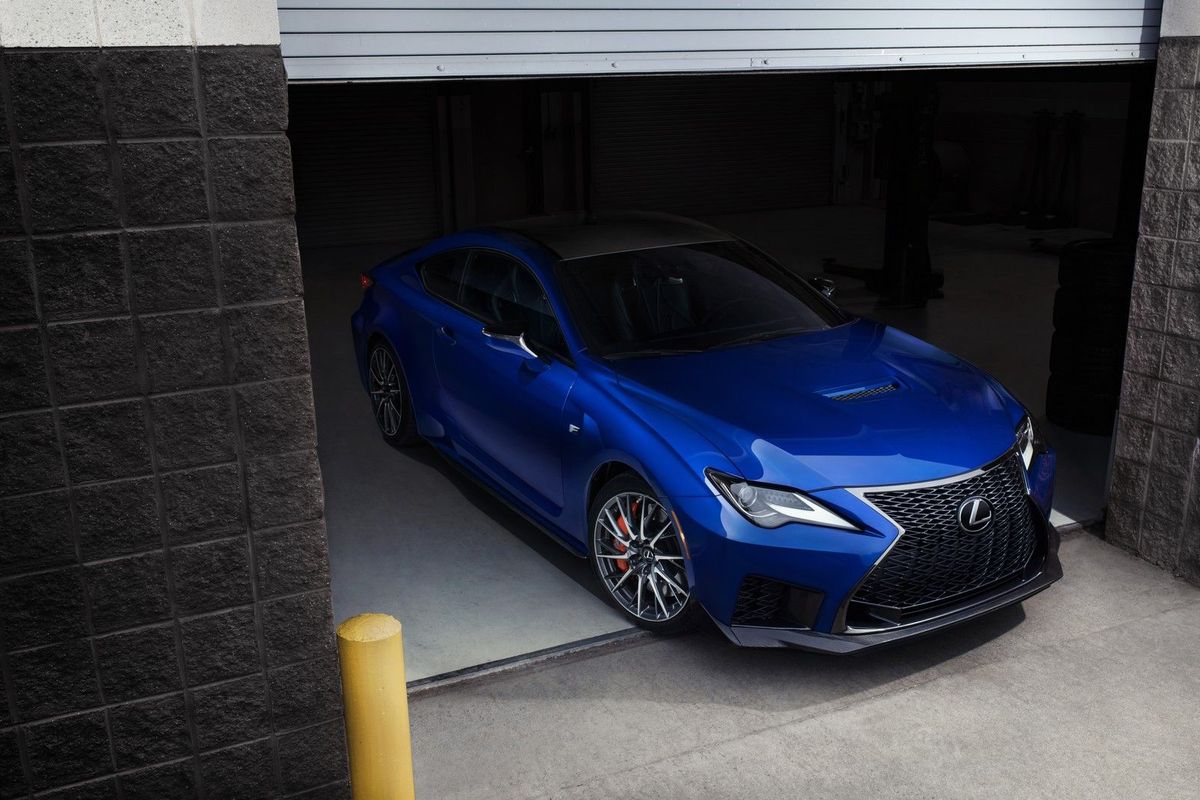
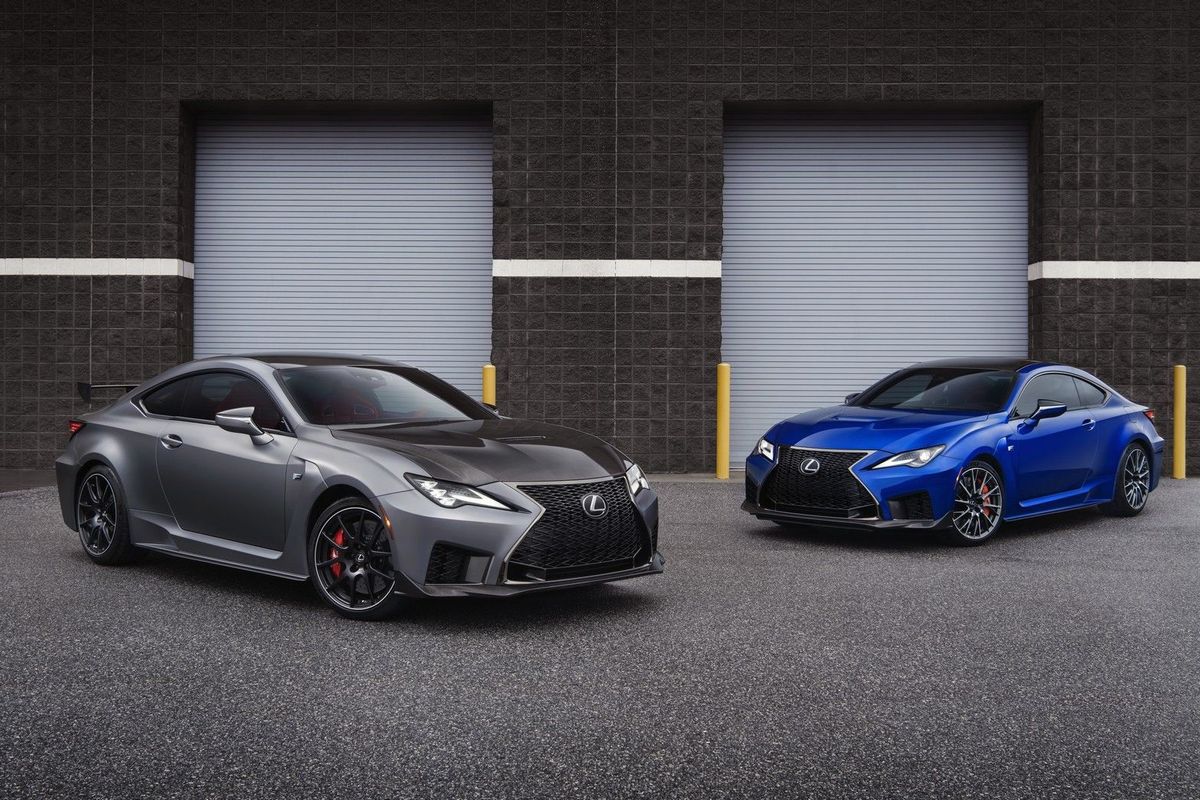
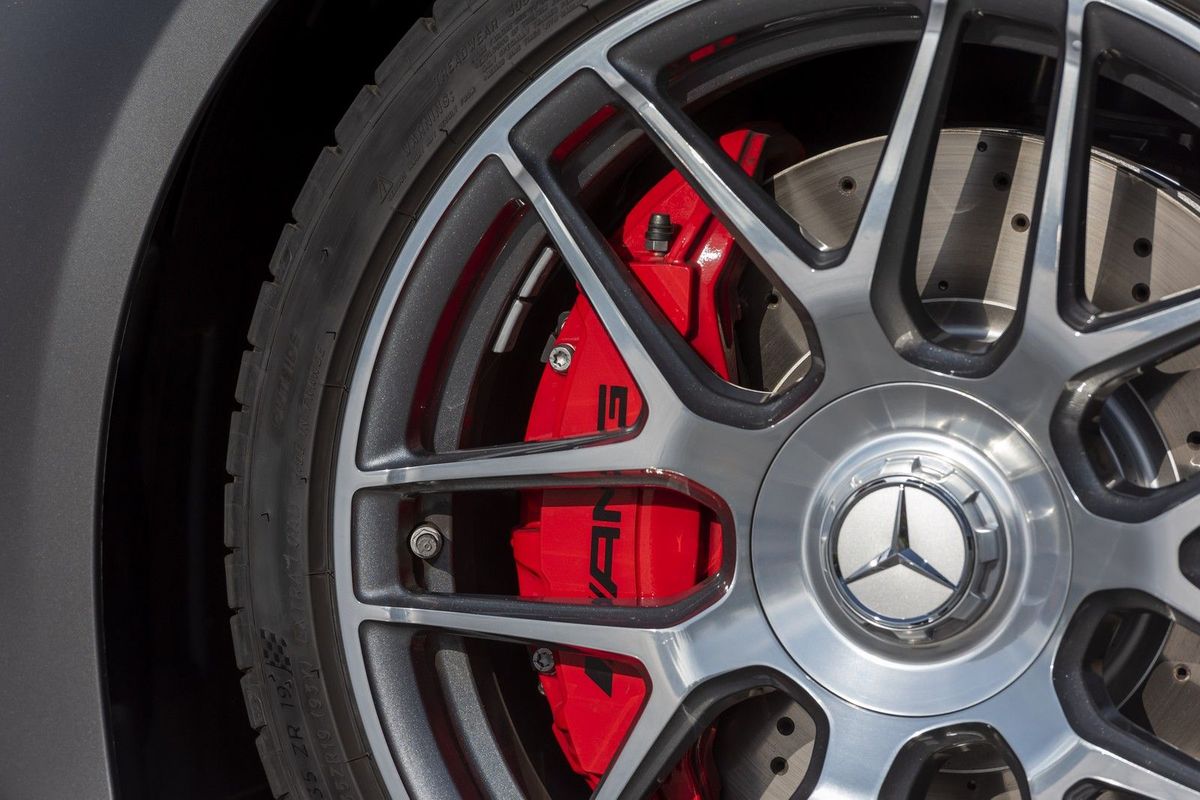
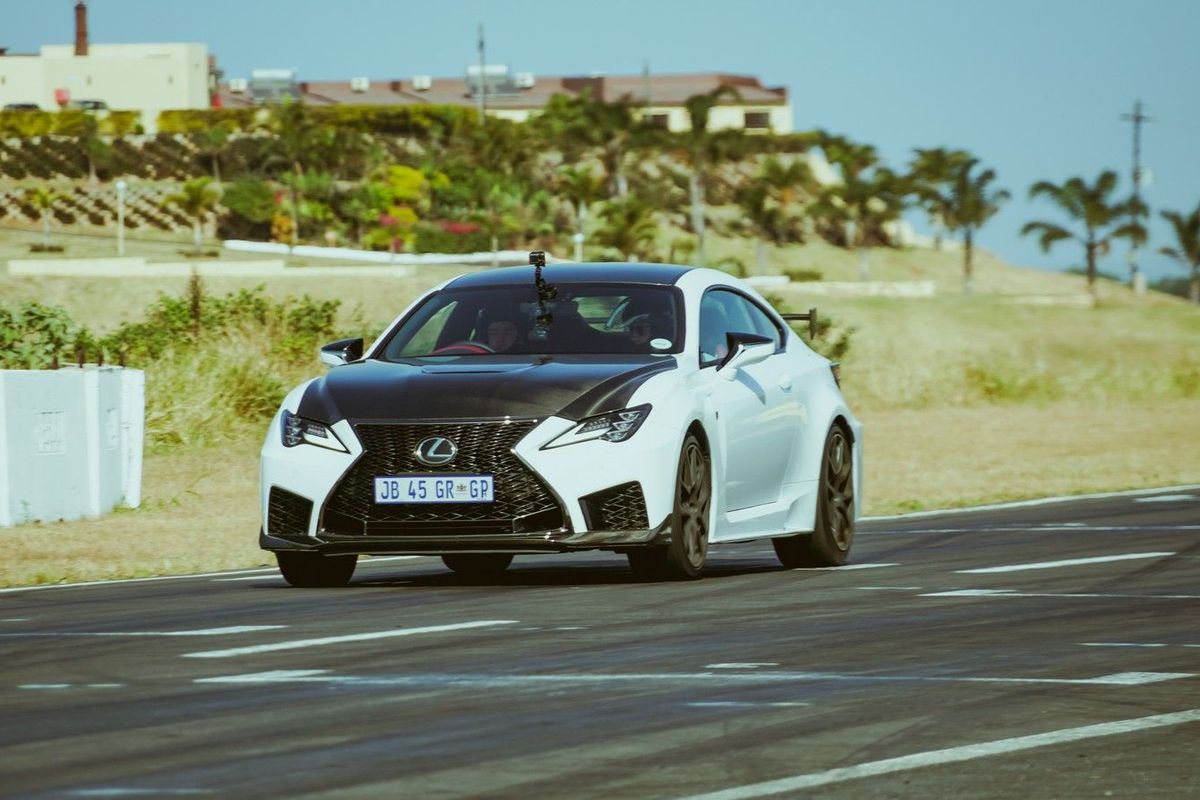
The Track Edition is easily distinguishable by its carbon fibre reinforced plastic (CFRP) bonnet, roof and static rear wing. It also gets lighter 19-inch wheels, carbon-ceramic Brembos and a red Alcantara interior. The standard RC F, by contrast, comes equipped with a (relatively demure) rear wing that pops up at 80 kph, is available with a wider array of exterior colour choices and its interior is trimmed in tasteful leather.

Read our full review of the 2019 Audi RS5 here

What makes them different?

While performance figures, design and pricing will no doubt flag the RC F and RC F Track Edition as rivals to the RS5, M4, C63 and their more track-focused derivatives (BMW and Mercedes-AMG), they're very different to their German rivals; even a little bit old-school, especially in terms of the engine they share. The art of natural aspiration has been lost in the quest for performance and efficiency gains. We can’t blame manufacturers for going that route, but when it comes to pure sensation, sound and skin tingling excitement, you still can’t beat a high revving naturally-fed engine.


Natural aspiration, no turbo(s). More of these in performance cars, please.

The 5.0-litre V8 under the bonnet of the RC F and RC F Track Edition deals out respectable power: 351 kW, even if the 530 Nm of torque is the same as a Ford Mustang 5.0 GT. The motor delivers that power more responsively and more progressively than a turbocharged mill, which tends to kick you in the back all in one go. The immediate response from the throttle is refreshing, and it's a rewarding challenge to work the shift paddles to keep the revs high, where the power is. Revs top out just over 7 100 rpm, but I would have liked an extra 500 rpm, just to hear it howl a little longer.

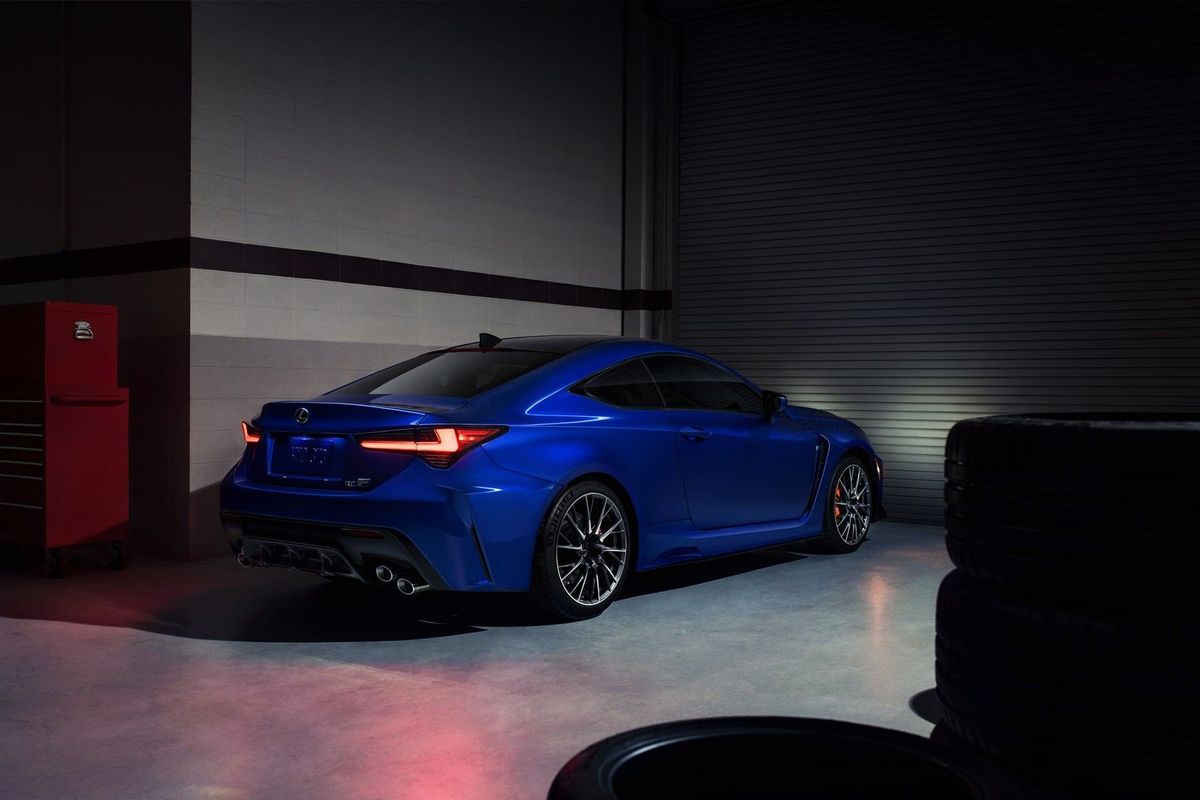
The engine sound itself is unencumbered by turbos and exhaust flaps; Lexus has not resorted to piping in "manufactured" engine sounds like some members of the forced-induction brigade. It sounds true, raw and with the Track Edition, you get Titanium pipes (with tell-tale blue exhaust tips) that emit a more metallic, high-pitched wail. The standard RC F has a more typical V8 growl to it. But this is a Japanese V8 though, not an American V8 – so don’t expect a muscle car belch and cough when you rev it to high heaven. It sings from an opera, but dubbed over a Jimmy Page guitar solo.

Is it any good to drive?


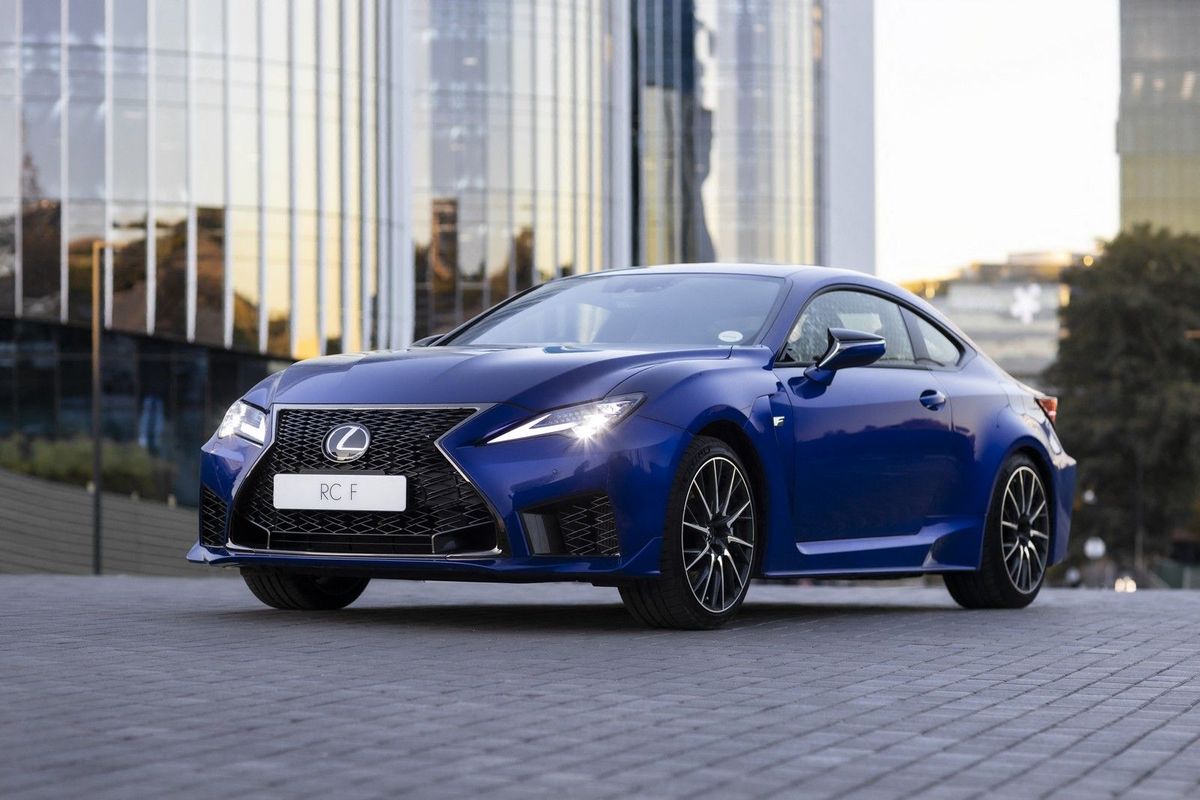
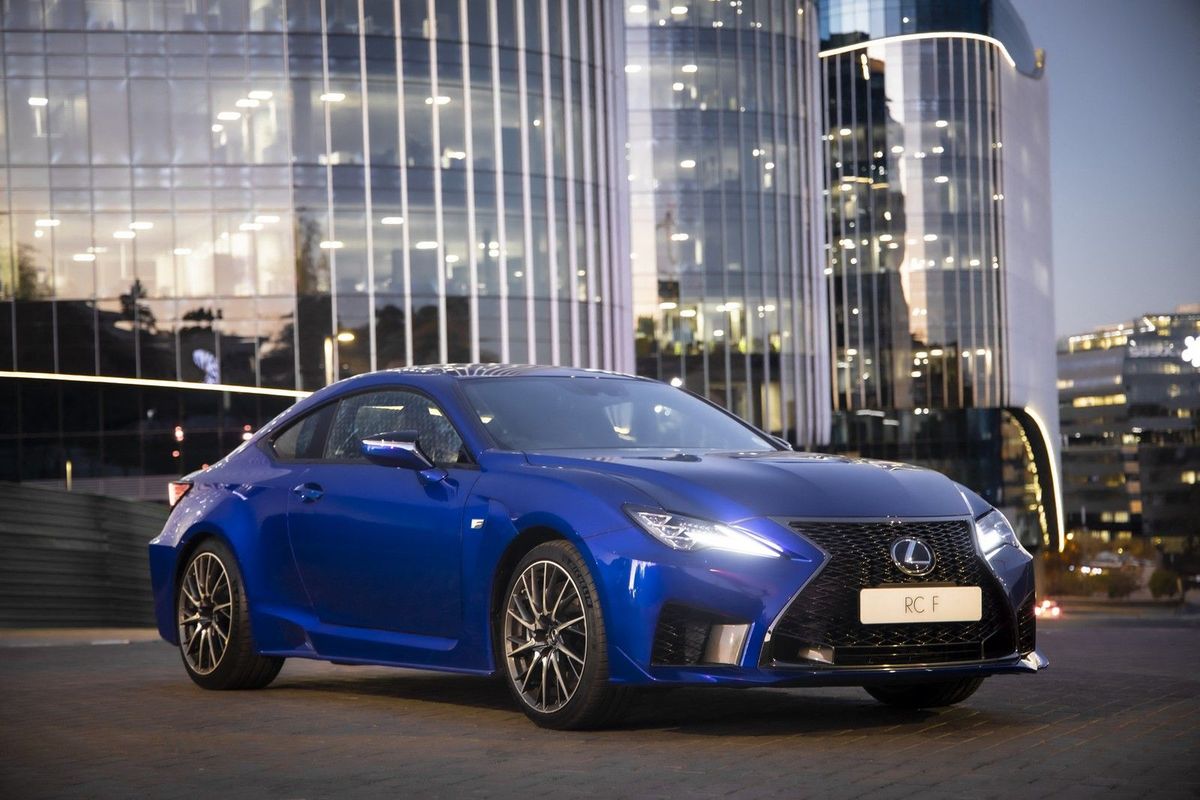
The standard RC F looks more subtle than the RC F Track Edition and weighs 80 kg more.

The RC F is not going to challenge BMW or AMG for lap records around a track. It’s not as pinpoint accurate as the M4 and not as powerful or brutish as the C63, for example. Character-wise, it's closer to the RS5, to be completely honest. The RC F knows full well that it’s a Lexus, so it’s a little bit softer-sprung and, a result, has a pliant ride quality. It’s a better daily driver than the aforementioned cars and certainly easier to live with. For the driving-enthusiast, it may lack the last little bit of edge that makes it an apex-eater and corner-dispenser, but for the most part, it does an acceptable job. The steering could do with a bit more feel from the front wheels and that would probably make it more engaging at speed as well.

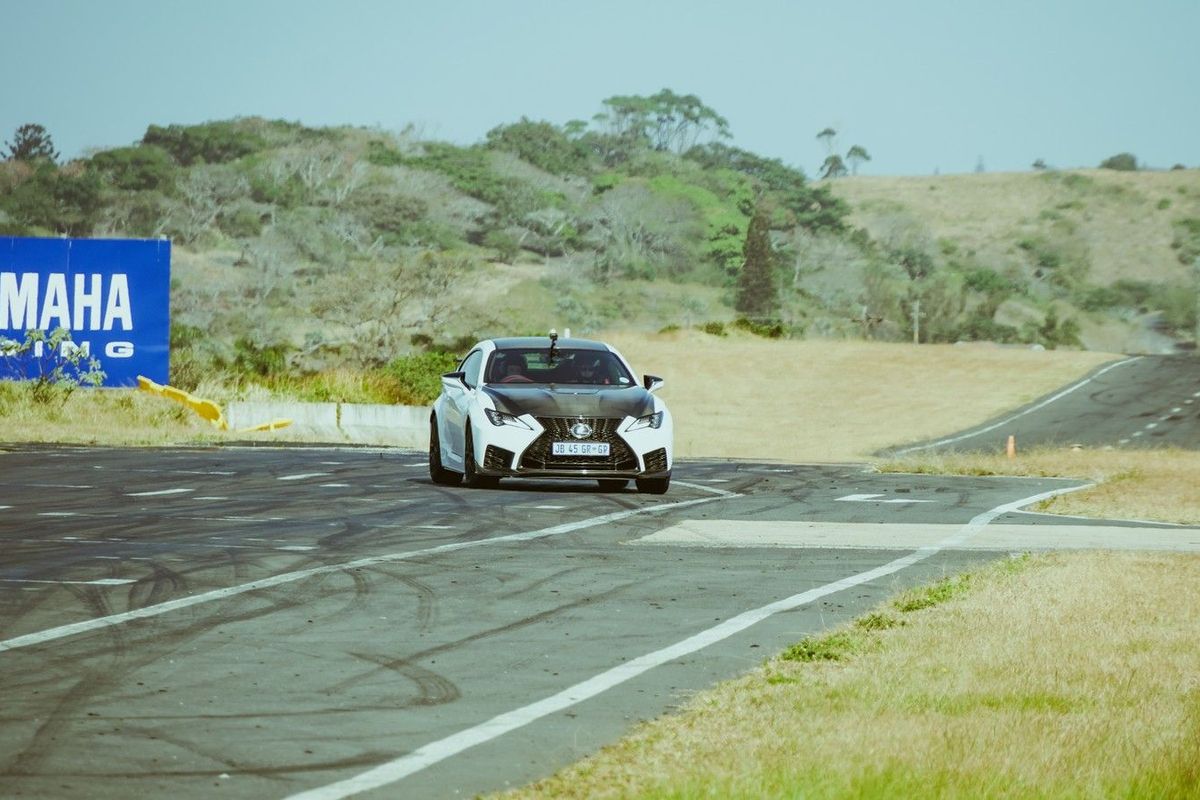
Comparatively, the RC F Track Edition (with its carbon bits, lightened wheels and special brakes) feels much more like a track weapon than the standard car. The steering still lacks feel, but the front end responds quicker and there’s marginally less body roll. We were turning hot laps at Dezzi Raceway, where the corners are taken at medium-speed and are quite long (they seem neverending!), which is brutal on the cars' front tyres.

The RC F is heavy (it weighs in at 1.7 tonnes, in fact) and you feel that in long corners and direction changes. You have to wait for a few extra tenths of a second before you can get back on the power or for it the car to settle before you can feed in the throttle again. Thankfully the loud pedal is beautifully responsive and rear traction excellent. There is fun to be had on the way out of corners, however. The rear end will step out of line if provoked, but with such a long powerband, you can keep your foot in it and drag out extended (and more manageable) slides than in turbo cars.

What else is interesting?


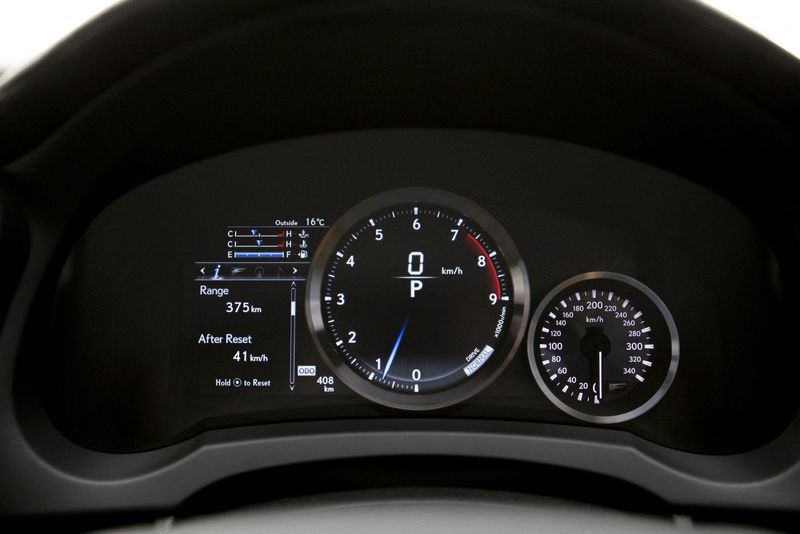
Analogue speedo on the right feels redundant with the bigger digital version in the centre.

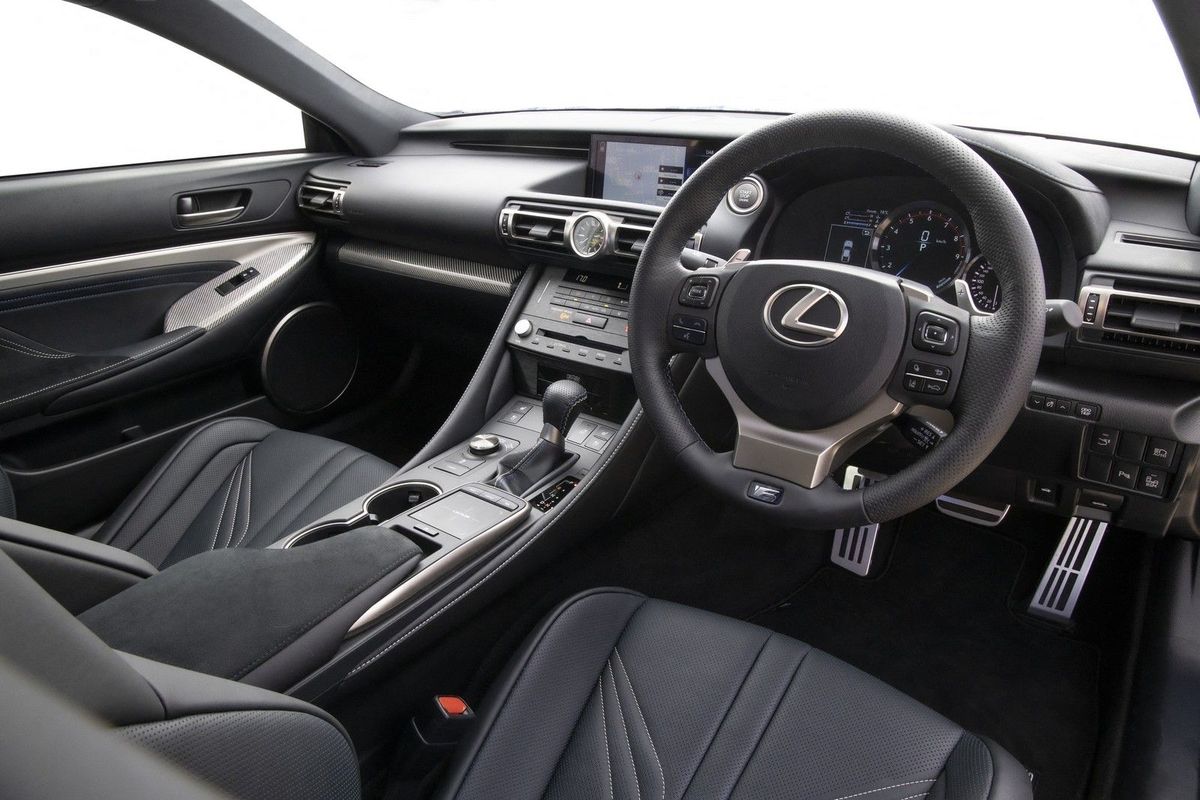
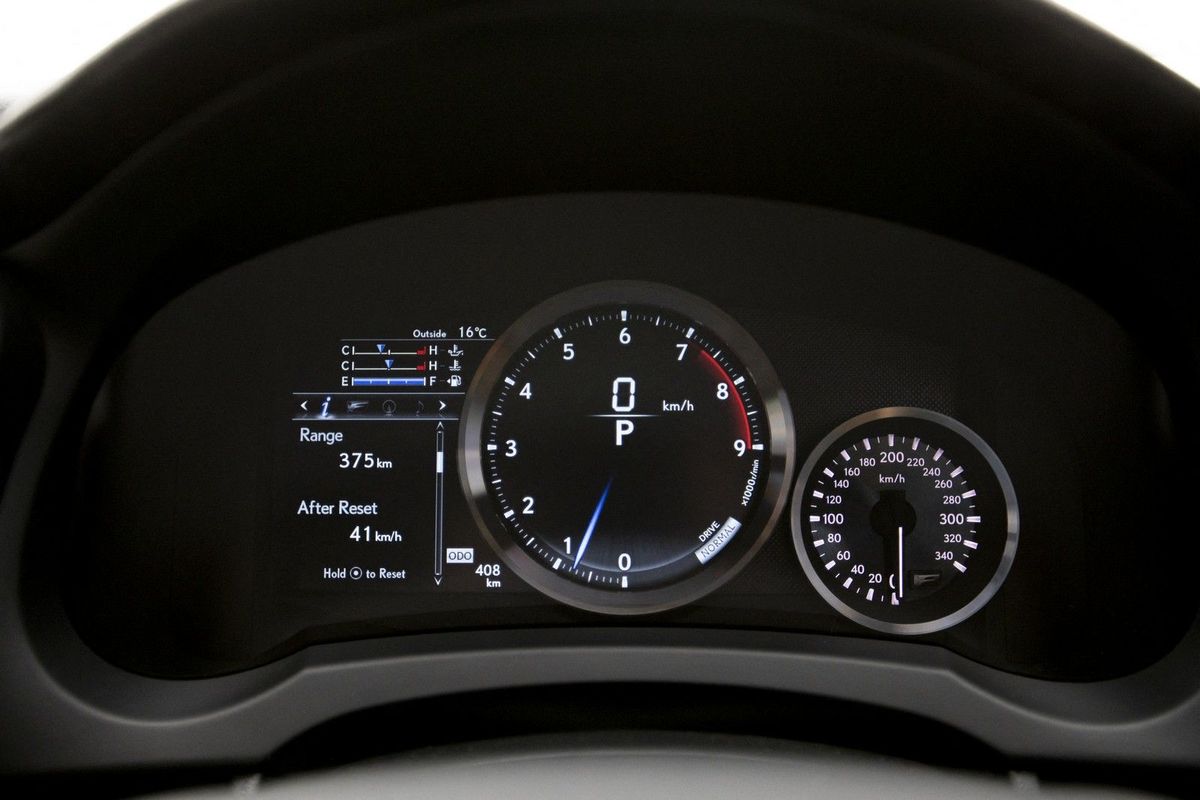
The interior of the RC F and RC F Track Edition is typically Lexus: well-made, luxurious and superbly insulated from exterior-, road- and wind noise. The instrument binnacle mixes a digital rev counter and kph readout with a separate analogue speedometer that feels superfluous as your eyes tend to focus on the central readout. That space could be better used to display other info or to create a bit more space between all the dials.

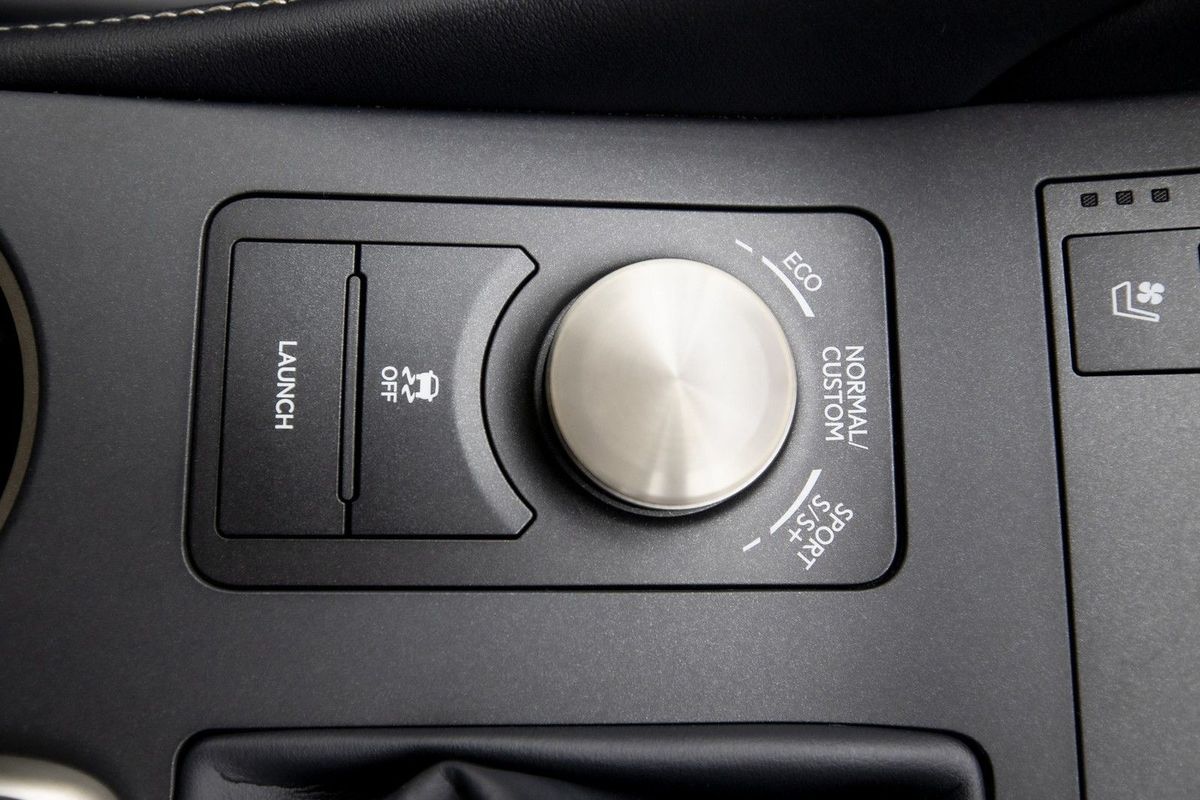
To engage the driving modes you have to reach over the transmission lever and twiddle the rotary dial, which is a little awkward. The infotainment system itself requires time and patience to figure out and acclimatise to – but that’s a bugbear across the Lexus range, not just an RC F issue…


Track Edition gets these semi Alcantara seats, in red!

The RC F comes with a very inclusive maintenance plan. There’s a 7-yr/105 000 km warranty and 7yr/105 000 km maintenance plan with very few exclusions. In fact, if you take the RC F or RC F Track Edition to the track it doesn’t void the warranty and what’s more, if your brakes are shot, Lexus SA claims they’ll replace them for you under the maintenance plan! Well, that awfully nice of them to offer. Wouldn't you agree, petrolheads?

Summary


The RC F is a good blend of performance and everyday usability. Did we mention it sounds great?

The Lexus RC F is quite refreshing – it combines a dollop of old-school performance with modern design and satisfactory dynamics. But the engine is undoubtedly the star of the show. The naturally aspirated 5.0-litre V8 under the bonnet is more responsive than a hair-trigger, it sings a haunting, tear-jerker of a tune at high revs and propels the coupe to heady speeds fast enough to get you fizzing in the driver’s seat.

Dynamically the Lexus is not a match for its German rivals, but it’s good enough that only the very best driver would pick up its weaknesses. It’s firmly-sprung, but rides comfortably enough, like a road-going business class-based coupe needs to be. It’s not trying to set lap records, but it is sufficiently fast and there’s fun to be had if you like to provoke the rear-end to step out from time to time.

The RC F Track Edition is certainly the more exciting car to drive, but it costs a lot more money – nearly R700k more, in fact. The standard RC F is better value (if there is such a thing at R1.3 million) and aside from the visual drama, doesn’t lack for fun factor. If you’re looking for an alternative to the RS5/M4/C63 brigade, then the Lexus pair offers real-world options that don’t disappoint.

Pricing

There's a specs and pricing article here

Lexus RC F – R1 318 300

Lexus RC F Track Edition – R2 098 200

Related content:

The BMW M4 Video We Never Published – Flashback Friday (2014)

BMW M4 GTS (2016) Review

Mercedes-AMG C63 S (2019) Launch Review
Ford Mustang (2019) Launch Review
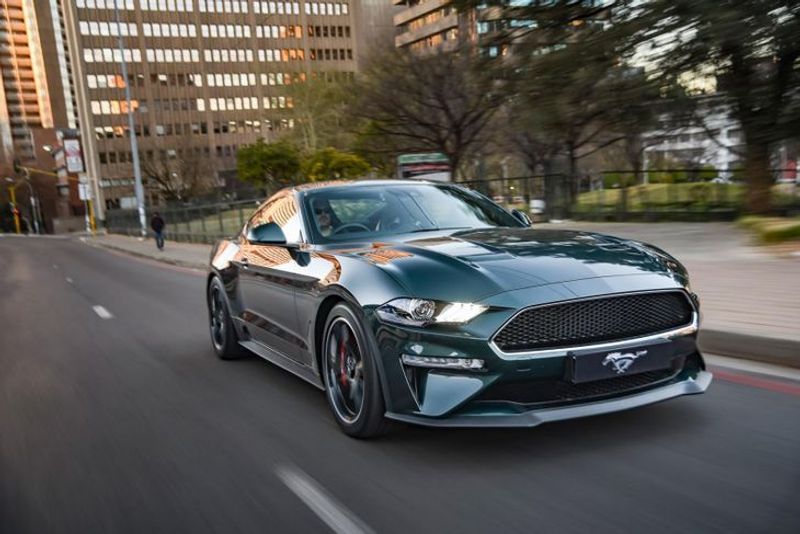
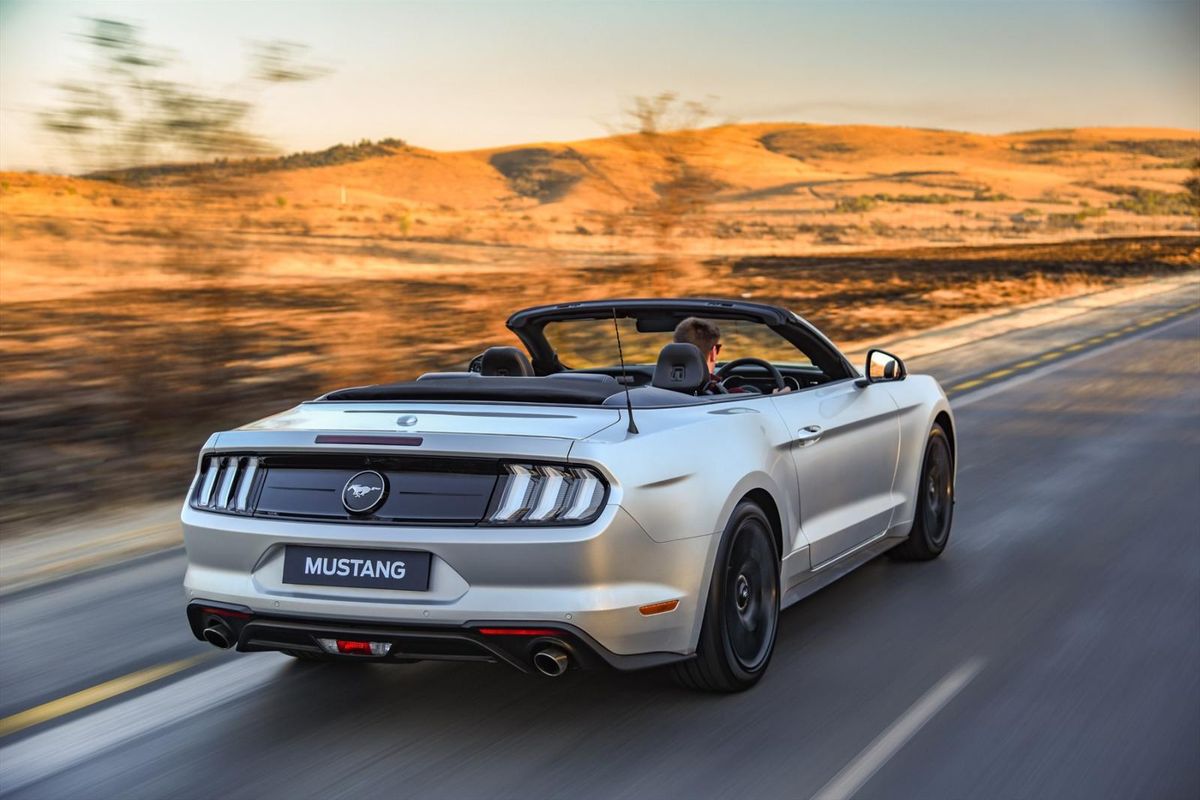
The updated Ford Mustang has now arrived in South Africa and we've had a chance to drive the newcomer. Also added to the mix is the fearsome Mustang Bullitt – a limited-edition muscle car that tugs at your heartstrings. Is the facelifted Ford Mustang worthy of your attention or should you seek your performance thrills elsewhere?

The Mustang is one of the world's most famous vehicle nameplates, an icon of the North American auto industry that's woven into popular culture. Ford's muscle car has been around since the Sixties, but it took some time to make its way to South Africa, at least in an official capacity… We had to wait until 2016 before the Mustang, in right-hand-drive guise, appeared on Mzansi's new vehicle price lists. Dripping in character and charm, the Mustang represents an emotional (and, for some buyers, a nostalgic) purchasing proposition and we can fully understand why petrolheads quickly snapped up the first consignment of units delivered to South Africa. A Mustang with a growling V8 under its "hood" represents a champion of the blue-collar brigade – "a working-class hero", to quote John Lennon. It had a few build-quality issues, but we were prepared to cut it some slack. 

Now, for 2019, the Ford Mustang has been revised. As before, it's available as a "Fastback" coupe and convertible and powered by either a 2.3-litre Ecoboost or 5.0-litre V8 petrol engine. Now we've grown accustomed to its presence in our market, does it still enthral us in the way it did in 2016?  

What's new?


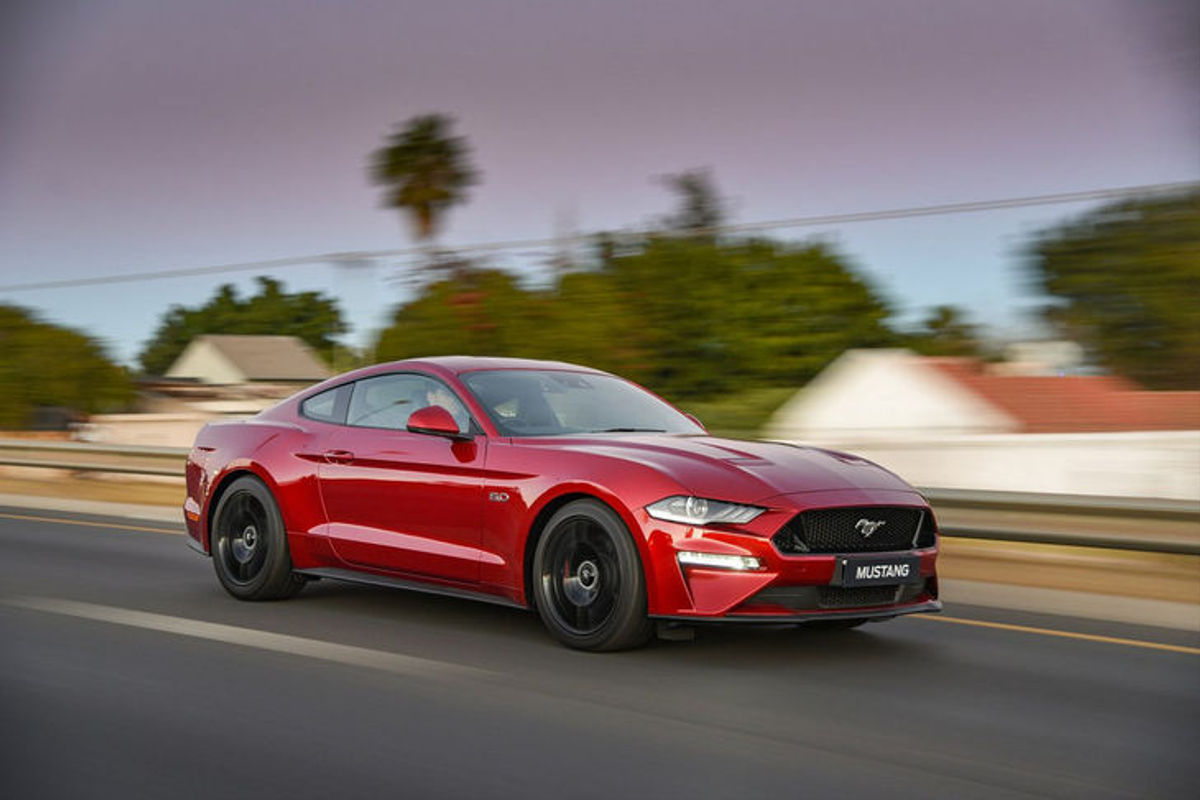
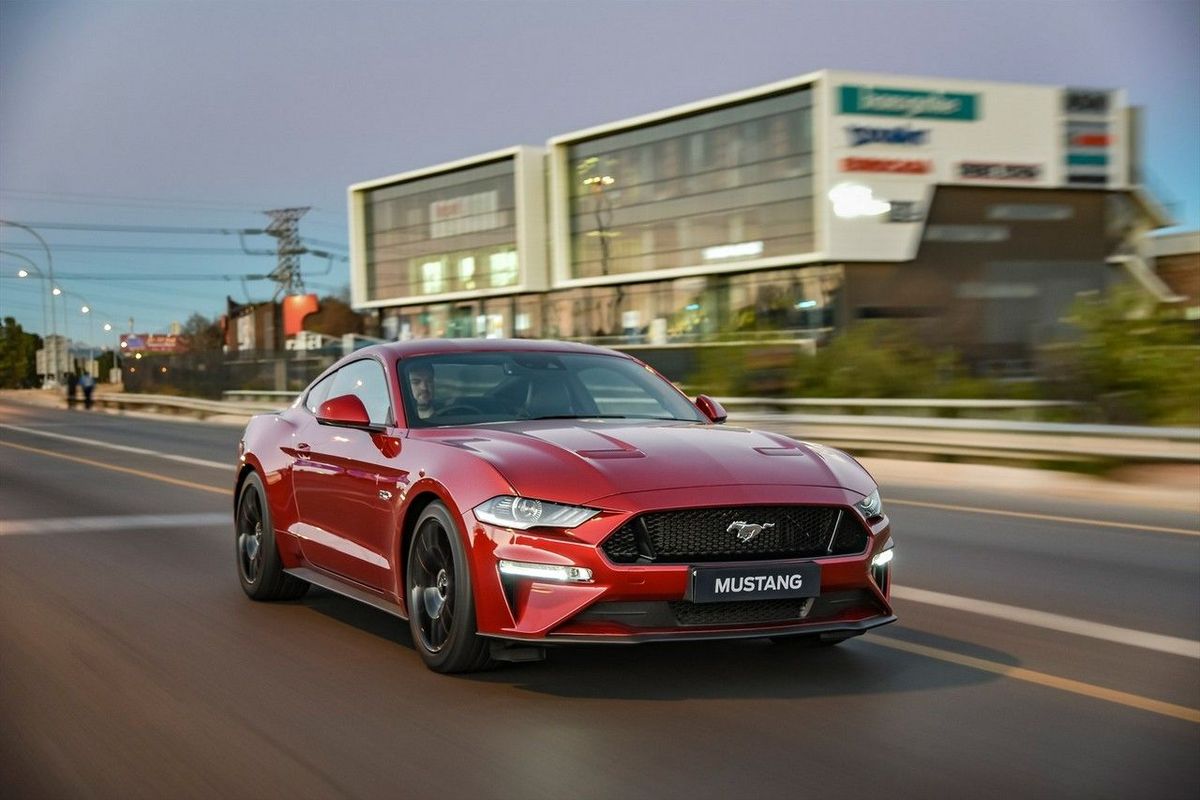
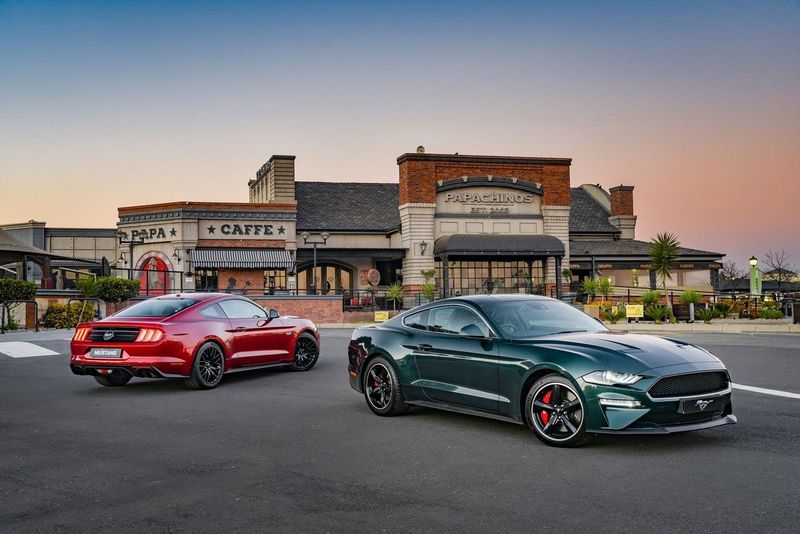
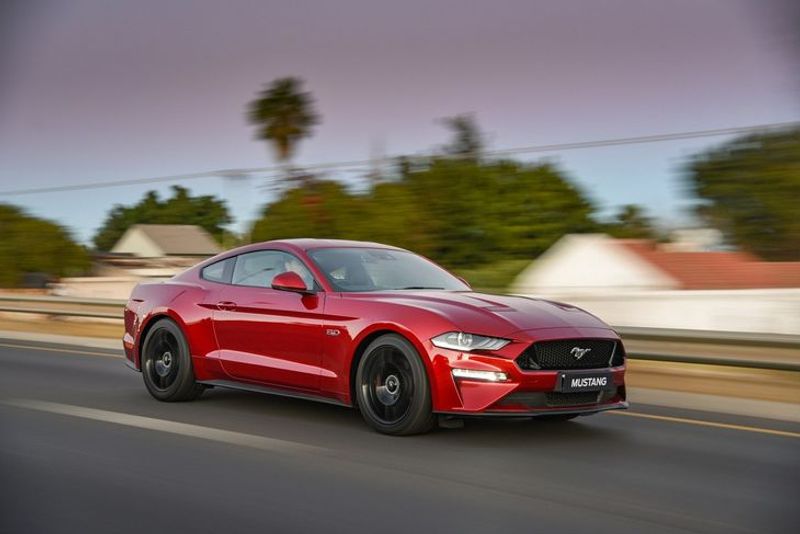
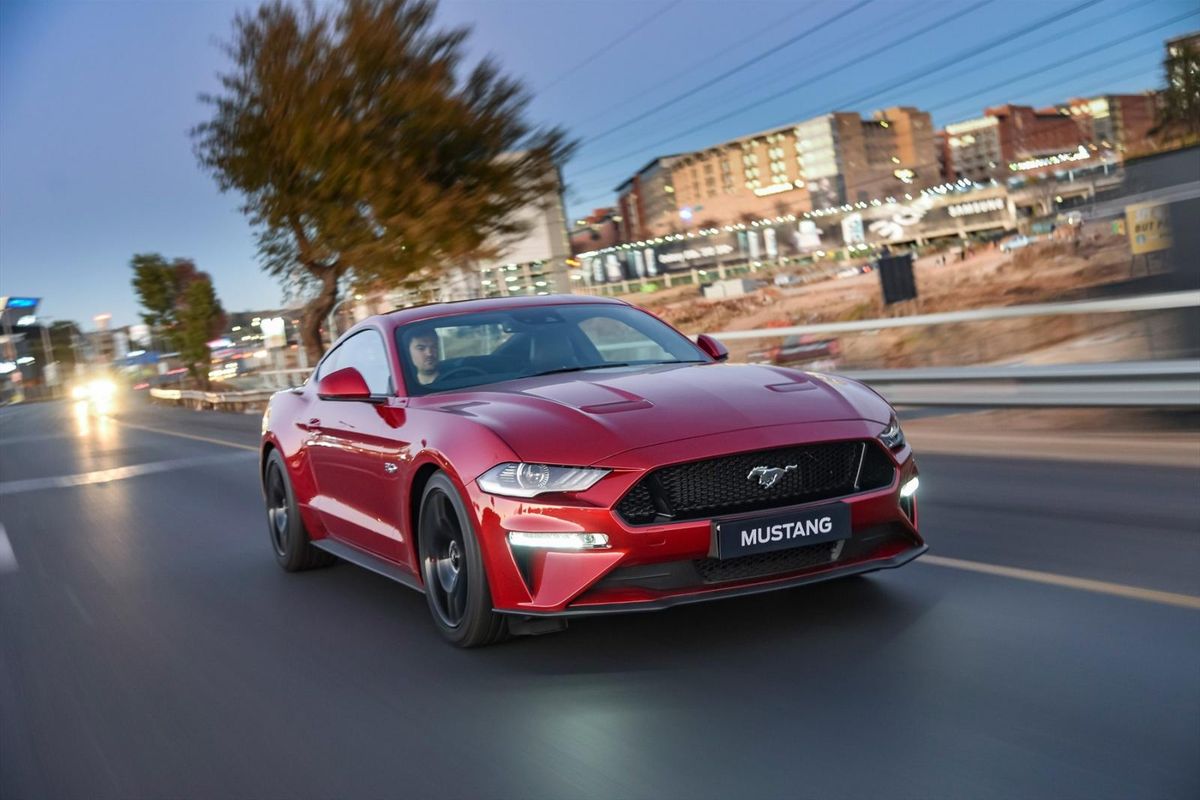
The sharper looking Ford Mustang is joined by the limited edition Bullitt

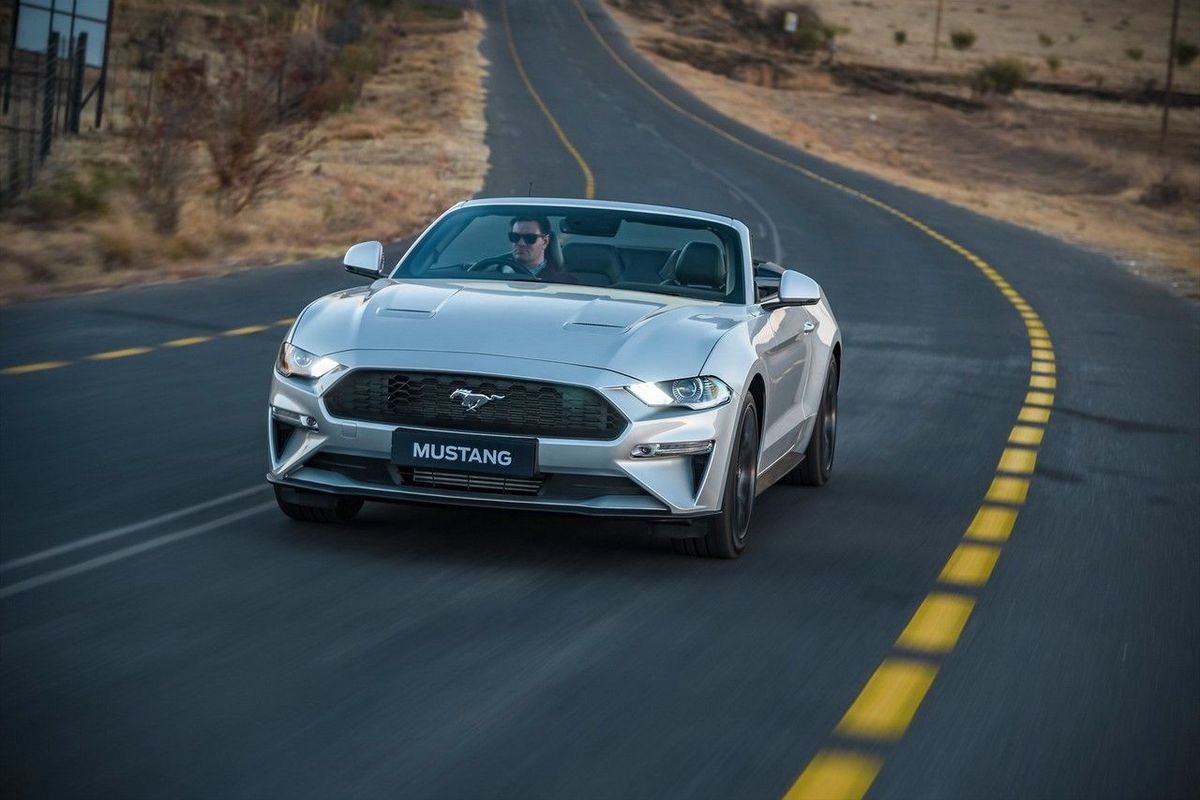
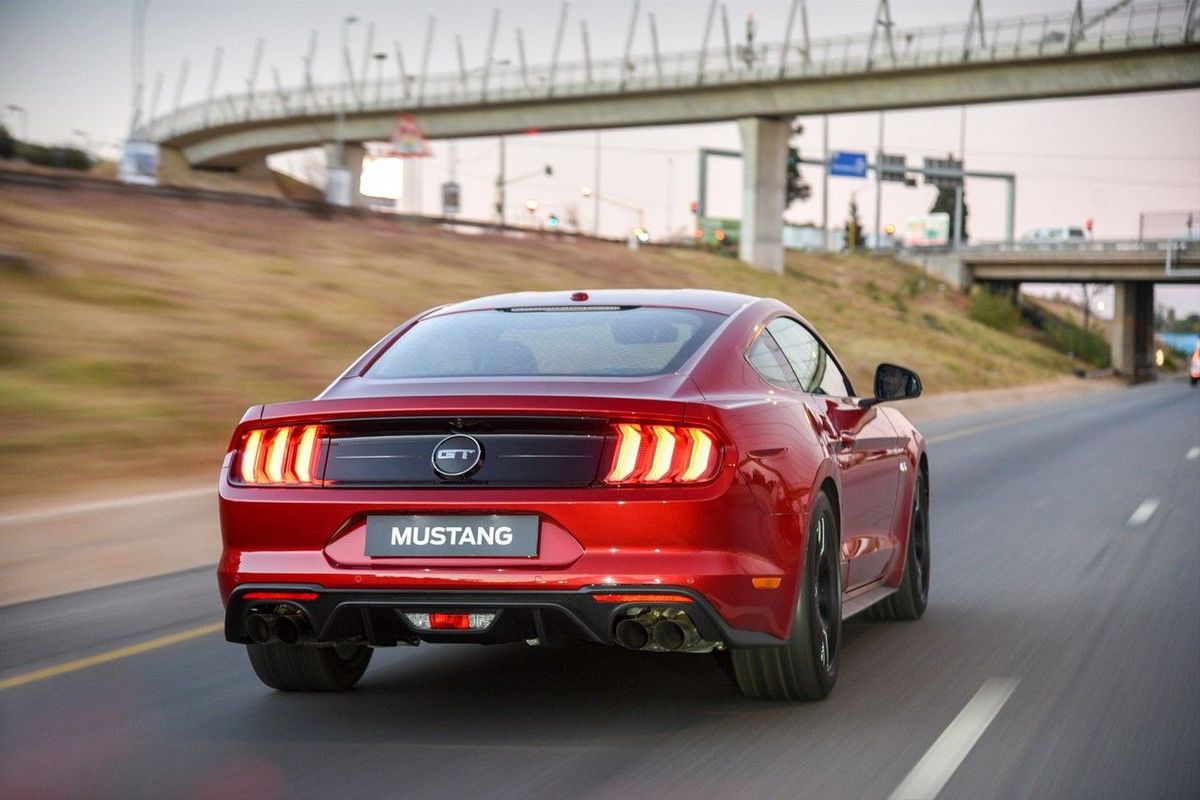
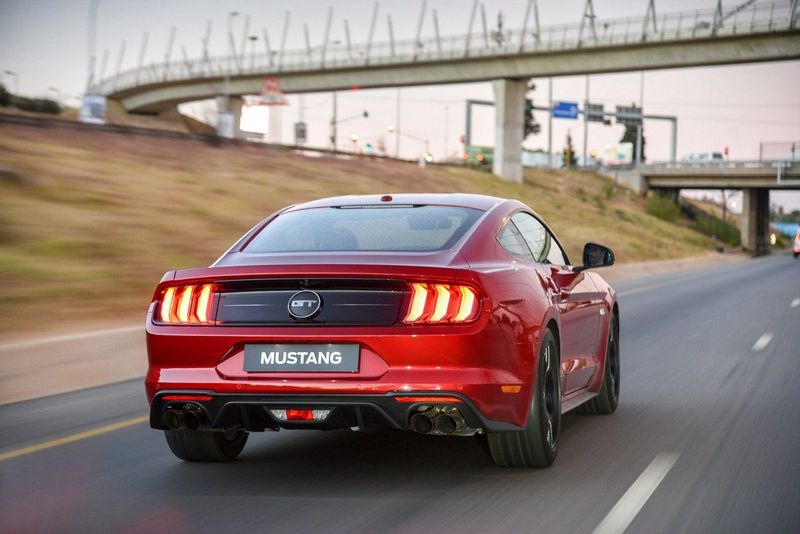
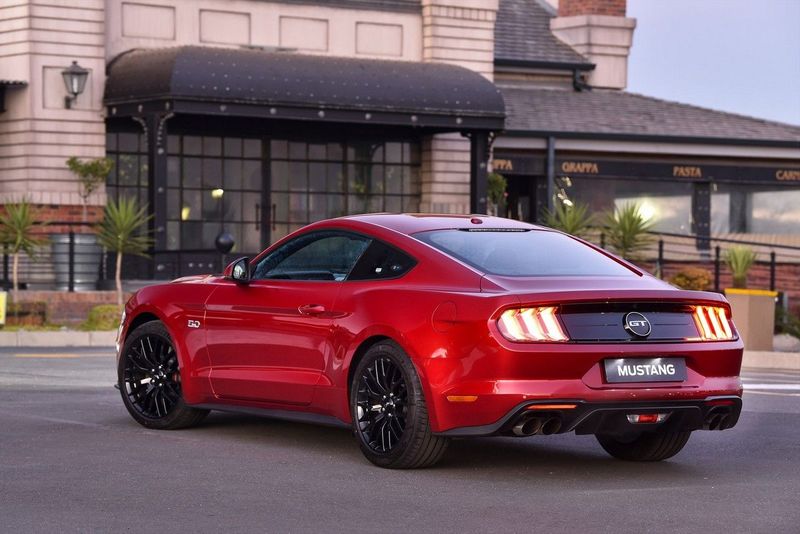
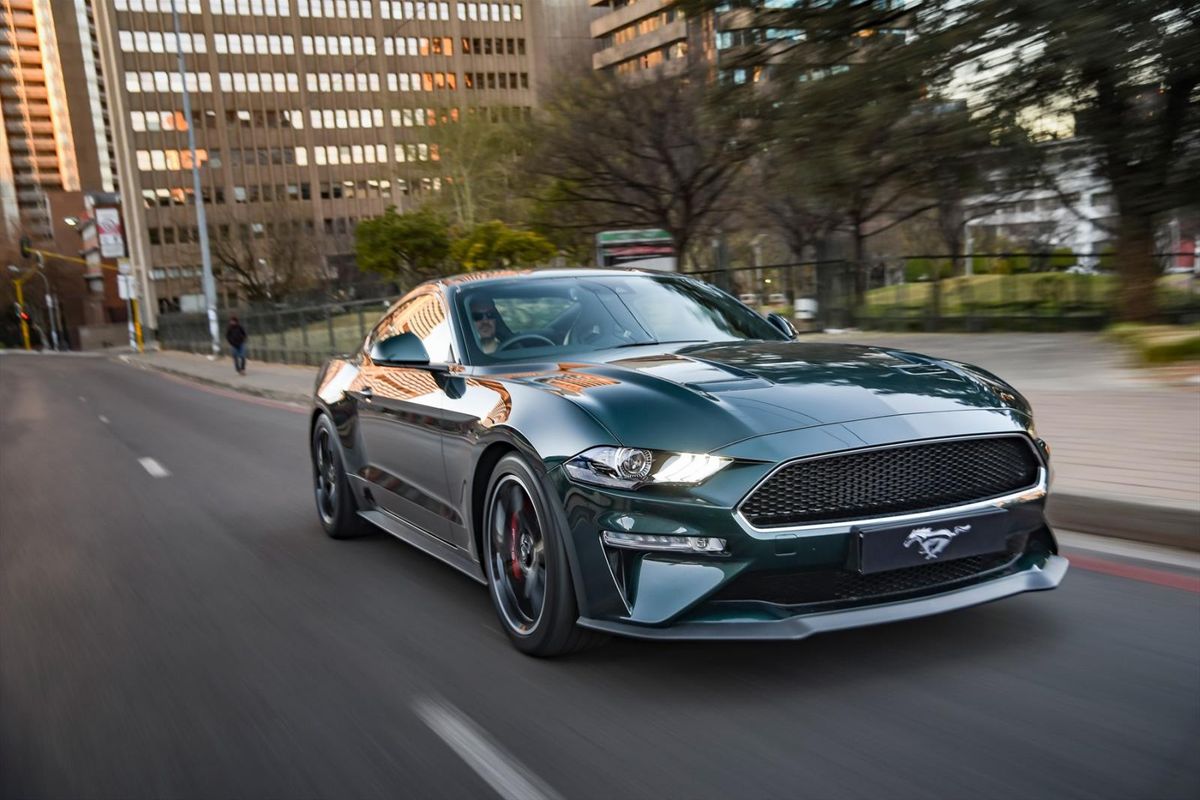
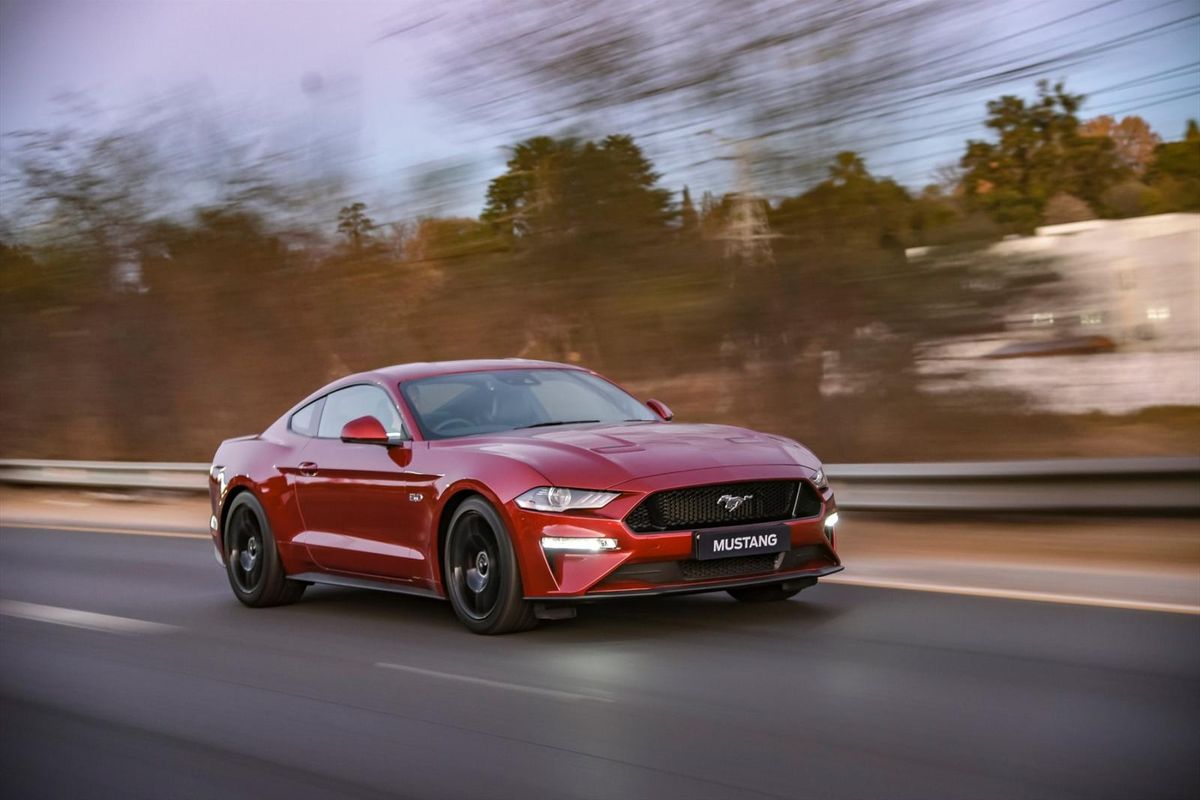
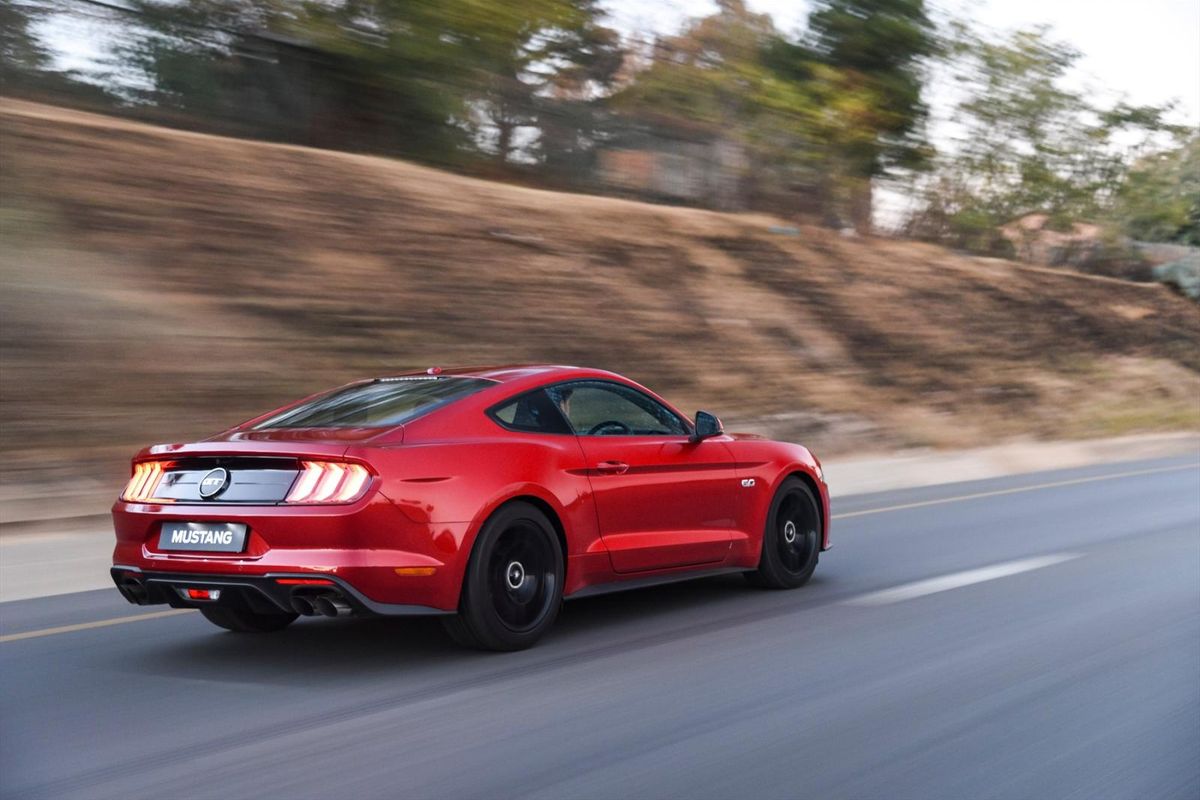
Just look at it. We imagine the brief to Ford's designers for the 2019 car was straightforward: "Just make it look more badass". In fact, Ford South Africa unapologetically claimed the new car's face was inspired by none other than Darth Vader! The 2019 version boasts new headlamp clusters, a revised grille and an awesome sloping (and vented) bonnet. Under the sheet metal, there's some smart tech in the way of adaptive damping, a revised chassis, semi-autonomous safety systems, as well as selectable driving modes. Ford has stiffened the Mustang's rear suspension to reduce body flex and fitted thicker anti-roll bars to sharpen up the handling. The V8 version gains quad exhaust pipes and they're not just for show…


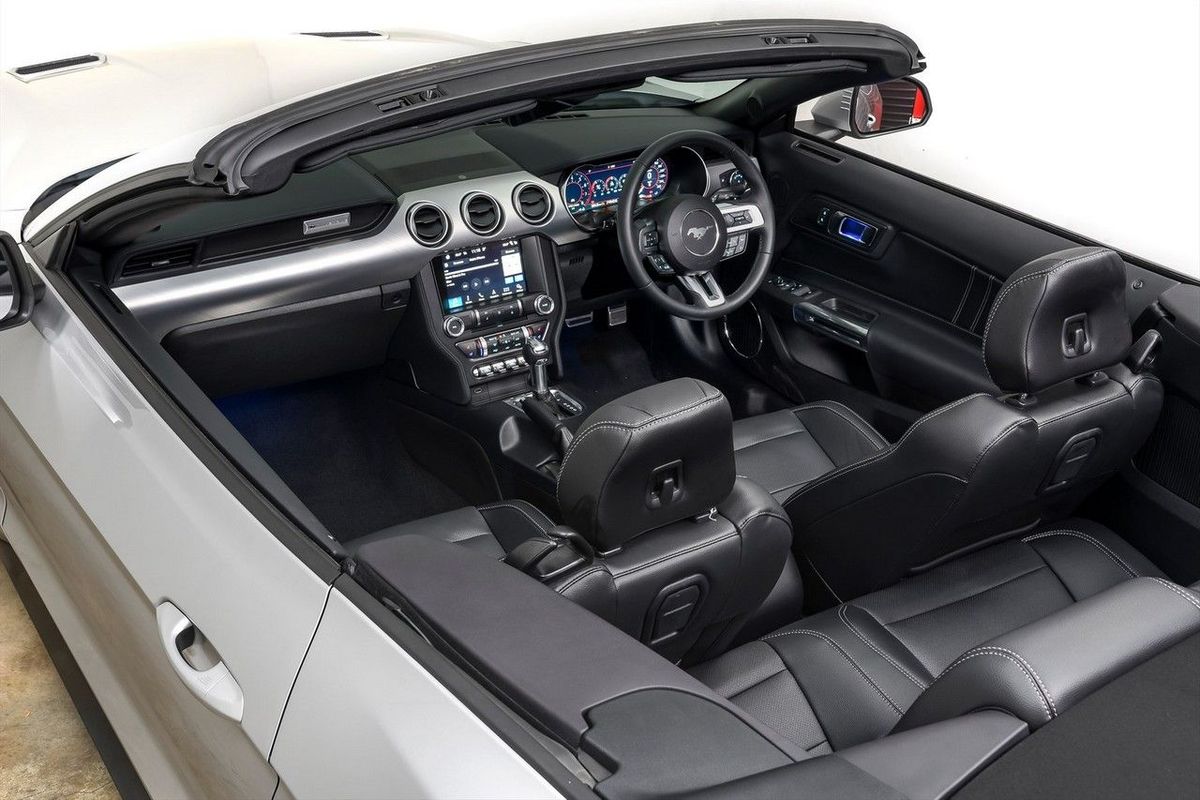
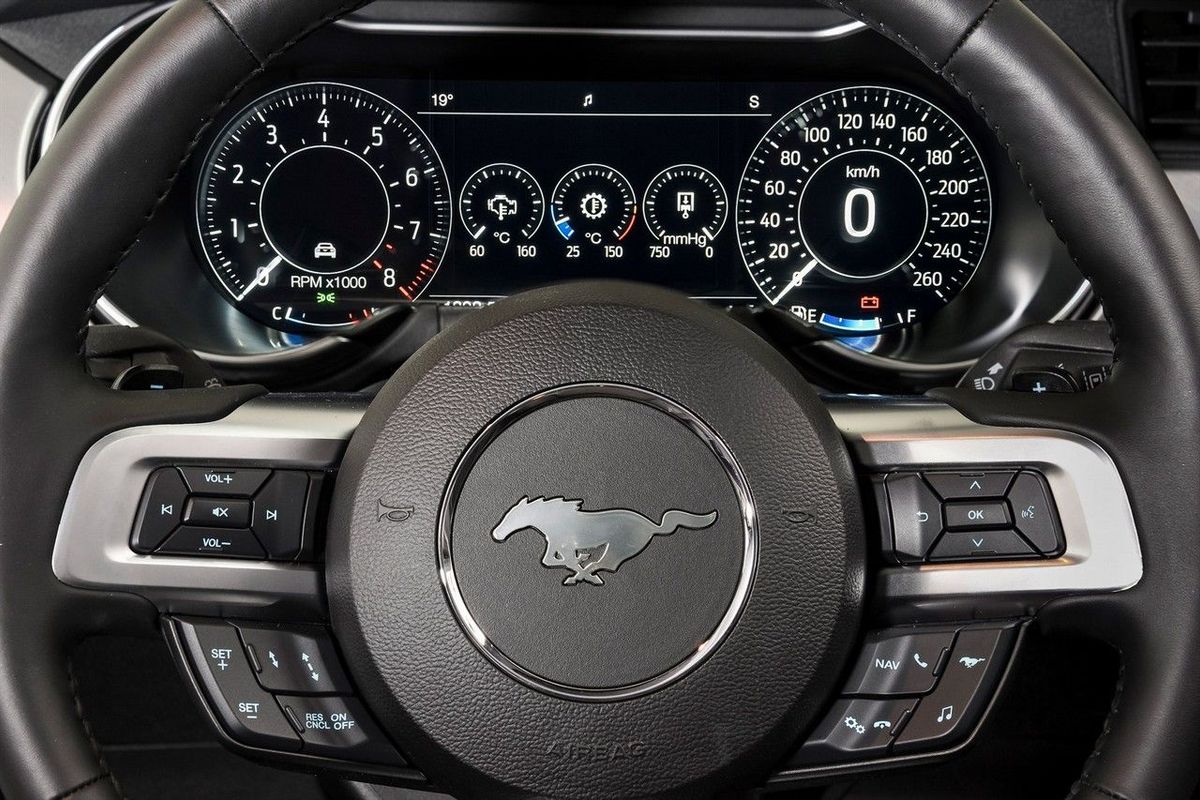
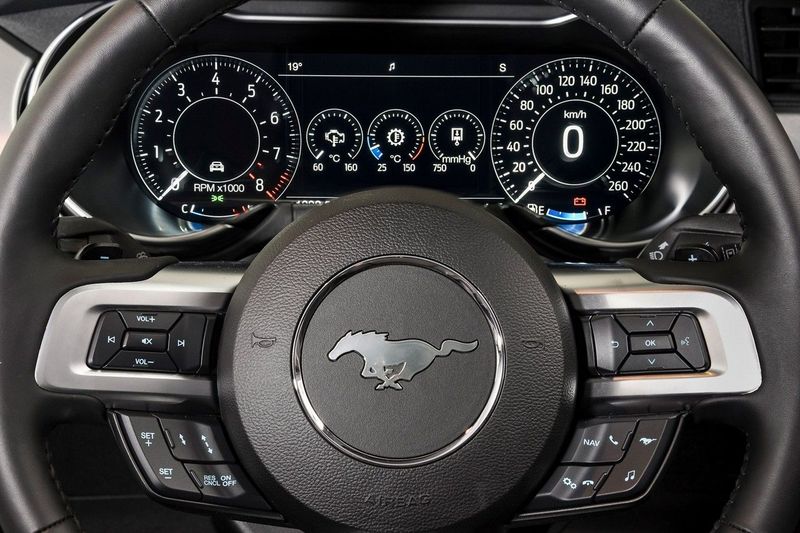
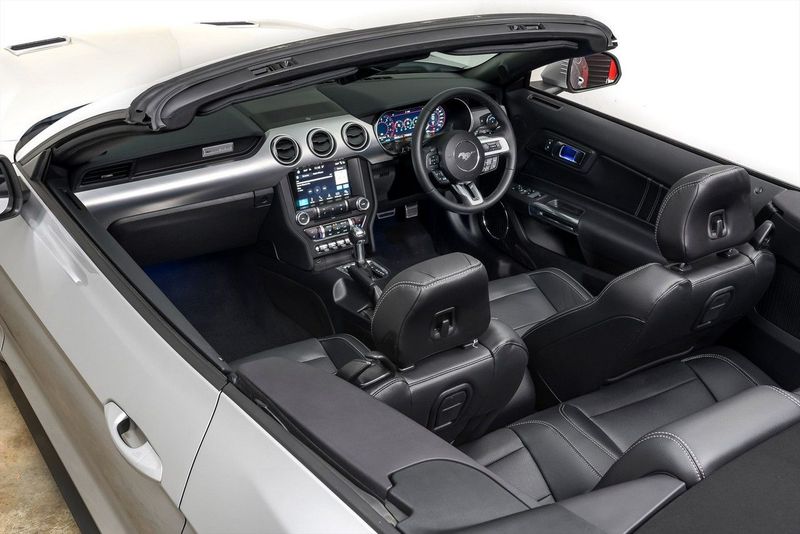
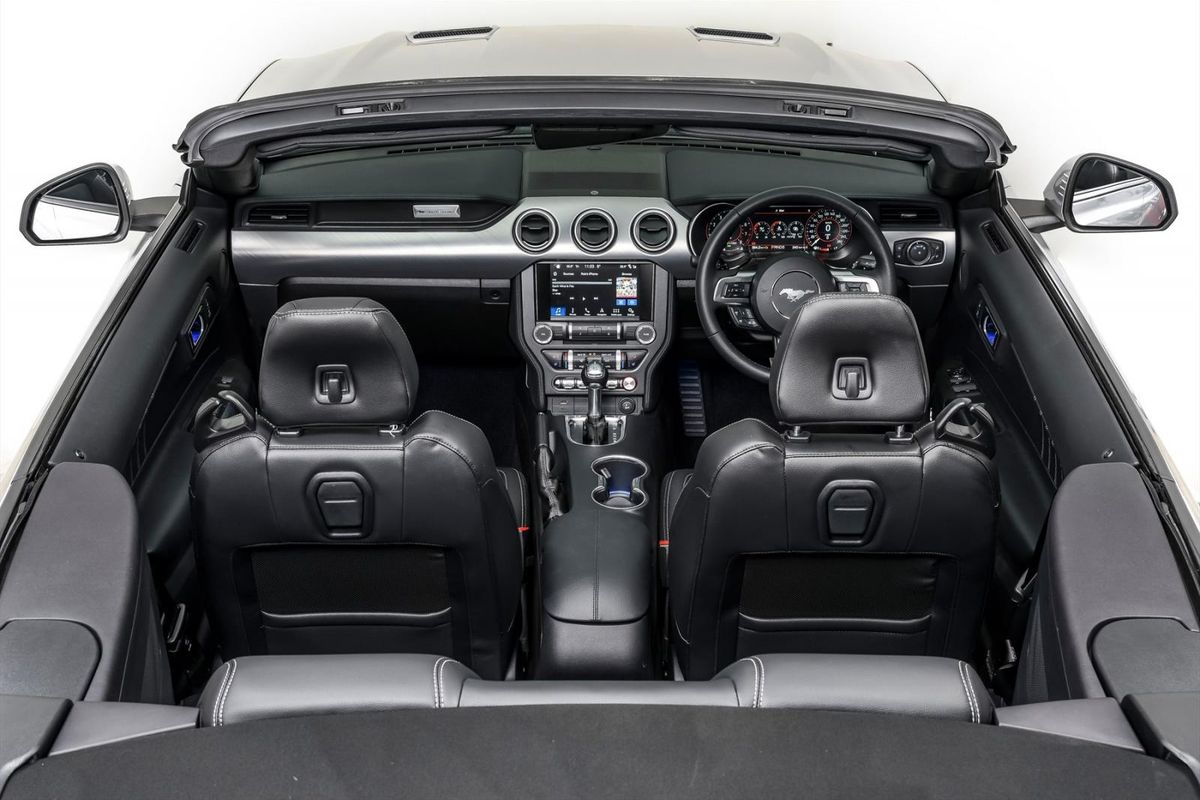
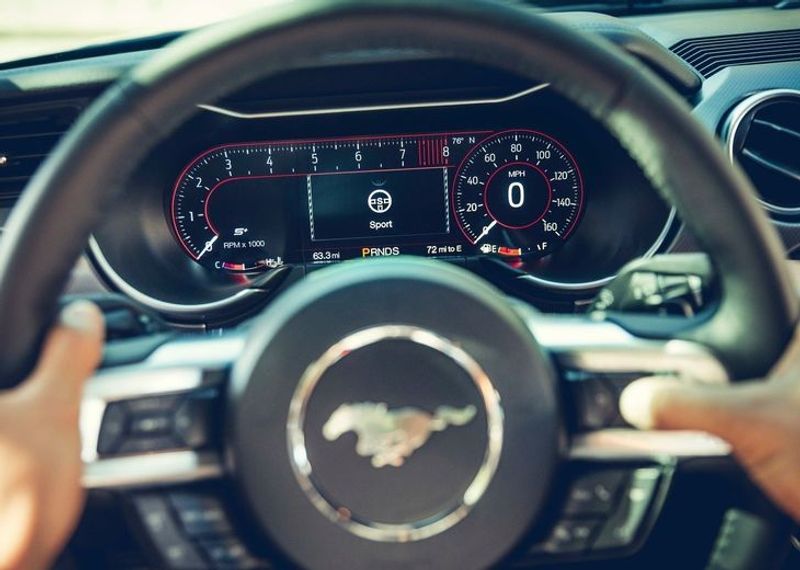
An all-new instrument cluster is the first thing you'll see when you step inside

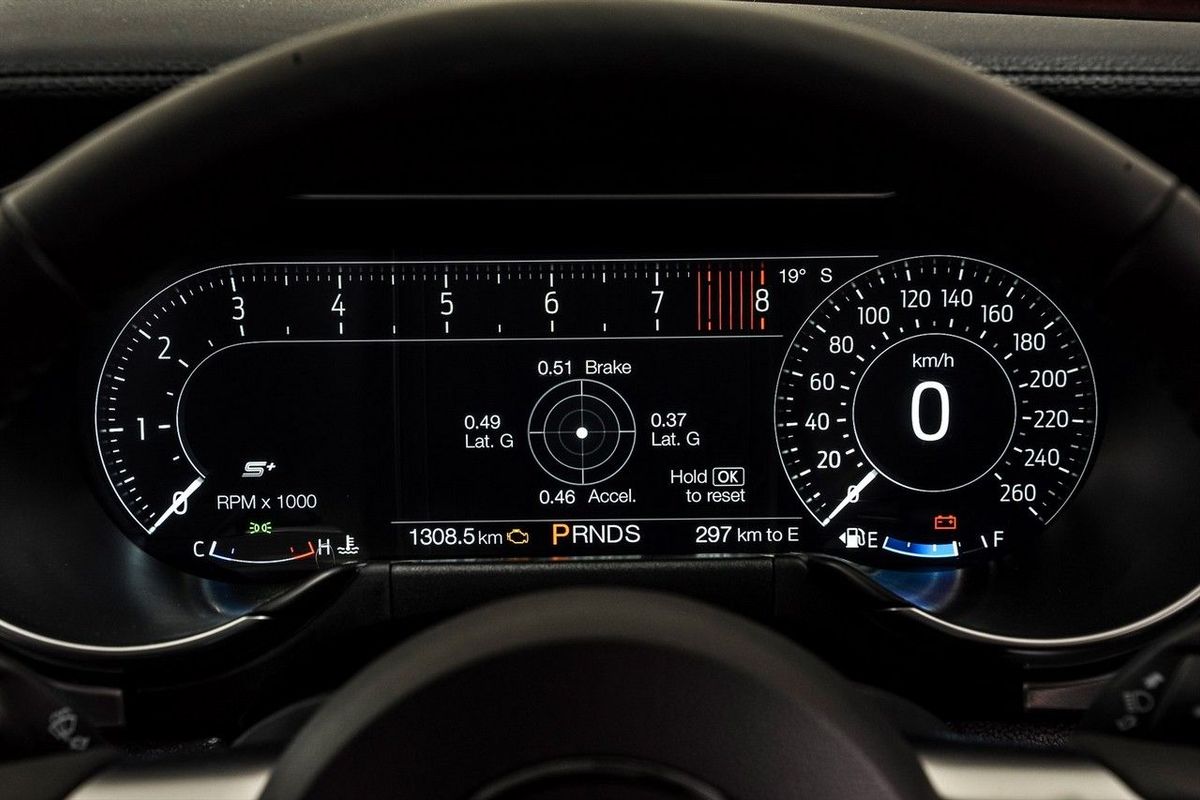
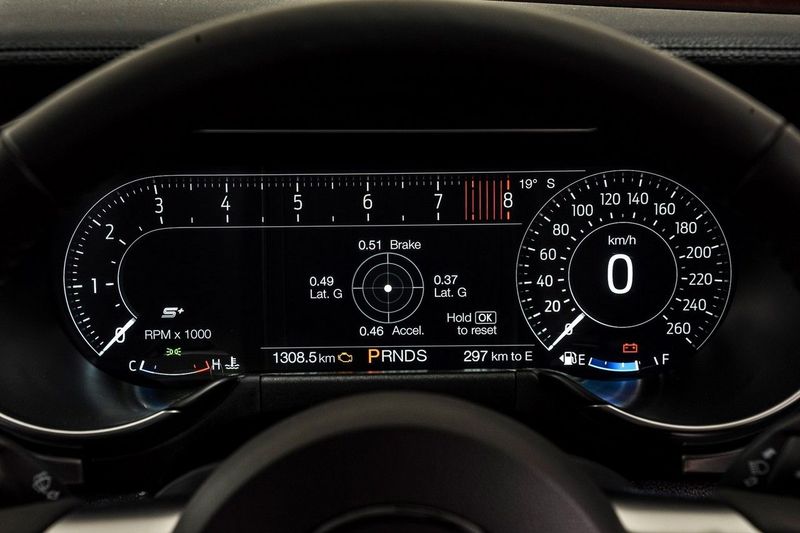
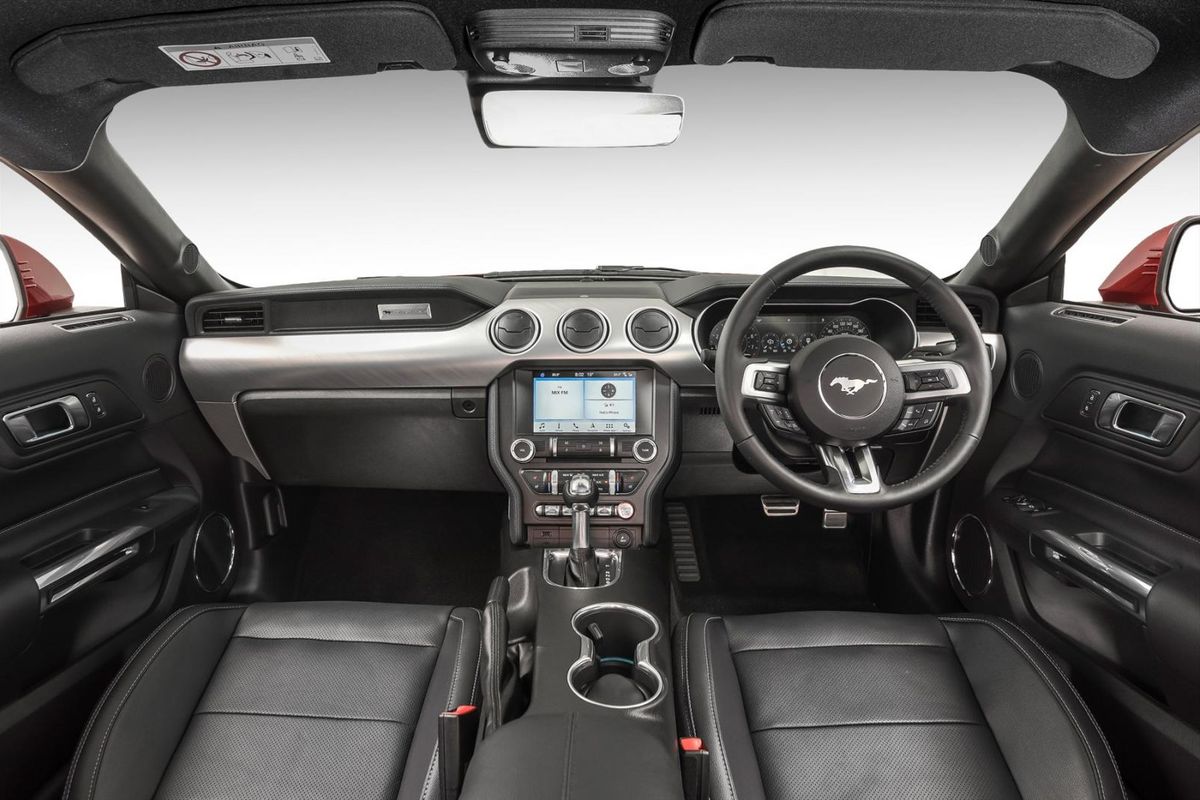
Inside, the first thing you'll notice is the all-digital instrument cluster, which complements the touchscreen infotainment system in the fascia. Not only does it look crisp and smart, but its layout changes completely when you toggle between the car's driving modes. If you select Race Track mode, for example, the rev counter becomes a horizontal band – a tribute to classic '60s Mustangs and the coolest retro touch ever! The newcomer is also well-specced… Luxury features include heated/cooled leather seats, adaptive cruise control, SYNC3 infotainment with 2 USB ports, Apple Carplay and Android Auto compatibility, as well as a B&O audio system. Ford further claims that it has improved the quality of some of the cabin materials. 


Such retro goodness!

Engine choices

Both the 2.3-litre 4-cylinder Ecoboost turbopetrol and naturally-aspirated 5.0-litre V8 have been tweaked for 2019. With peak outputs of 213 kW and 441 Nm of torque, the 2.3-litre EcoBoost motor produces 20 kW less, but 11 Nm more than its predecessor. The 5.0-litre V8, in turn, produces an additional 25 kW but 1 Nm less than before (for 331 kW and 529 Nm). Both engines are now exclusively mated with the new 10-speed automatic transmission, because derivatives with a 6-speed manual gearbox are no longer offered in South Africa, well, apart from the limited-edition Bullitt.


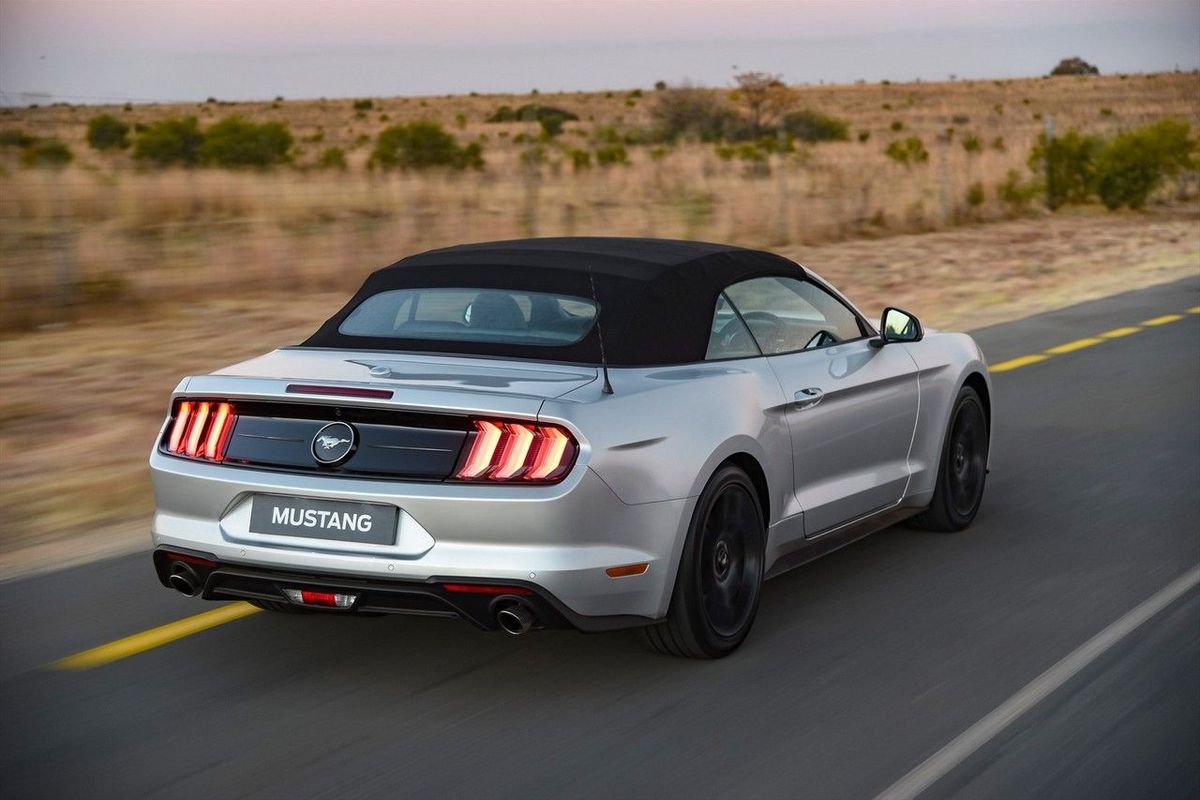
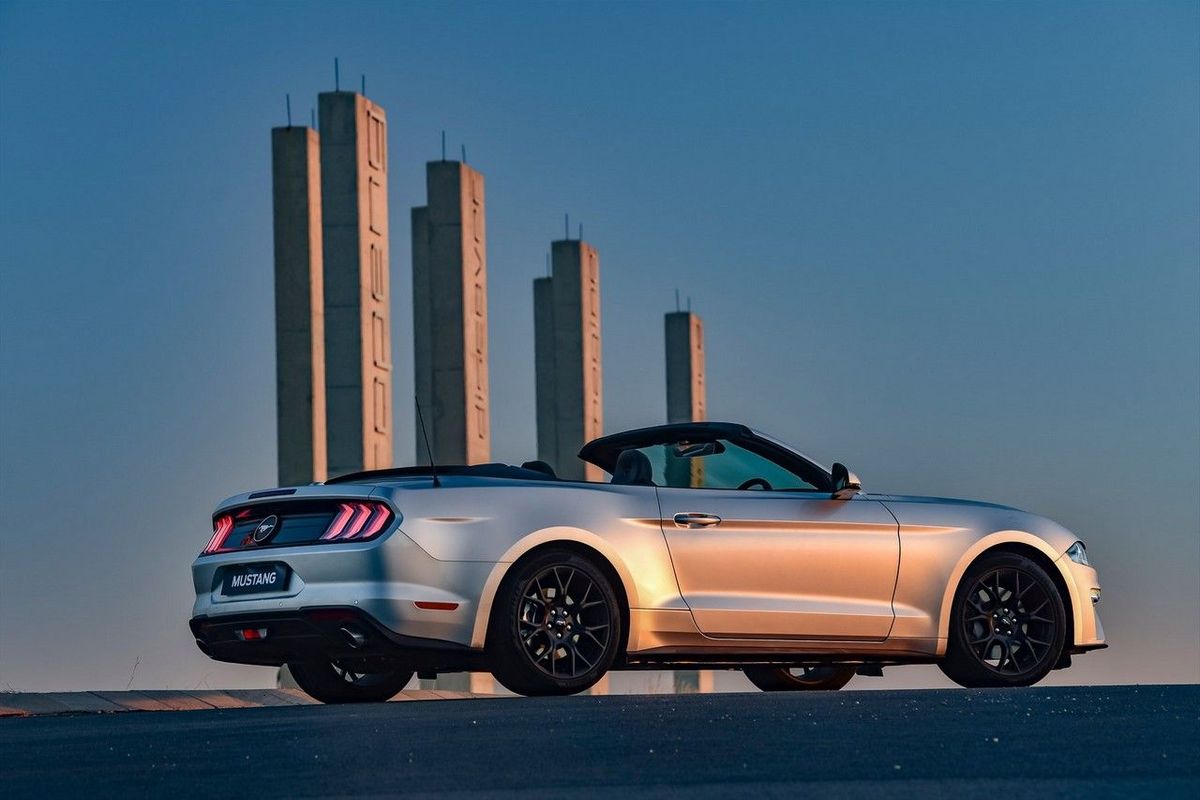
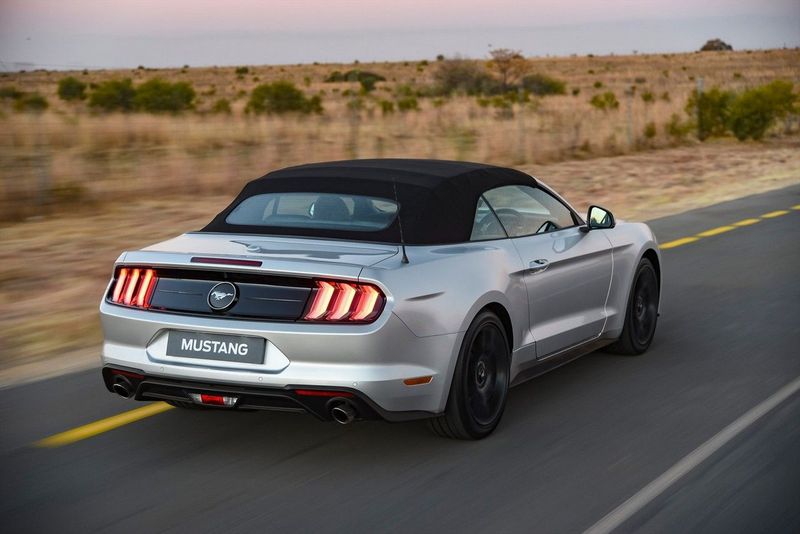
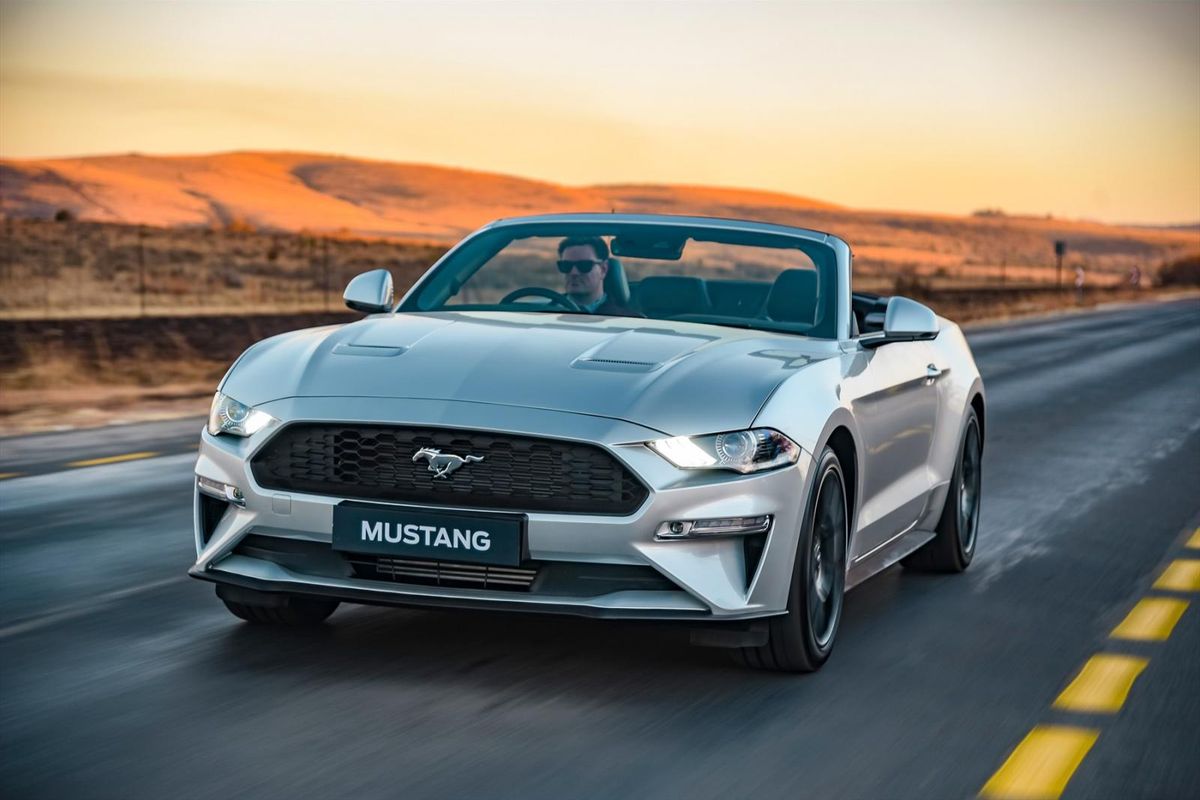
The Ford Mustang is available in both Convertible and Fastback coupe body styles

Performance? 

We're glad you asked. Detractors may sneer at the 2.3-litre EcoBoost motor because "it's missing 4 cylinders" (or something to that effect), but with a claimed 0-to-100 kph time of 5.8 seconds, it may not sound like a classic Mustang, but it surely performs better than its entry-level predecessors. As for the crowd-pleasing V8, Ford claims 5.0-litre derivatives can hit 100 kph from a standstill in just 4.8 seconds. Both versions have fair top-end claims too; the 2.3-litre Ecoboost has a stated Vmax of 233 kph, while its V8-powered sibling has an electronically-limited top speed of 250 kph.


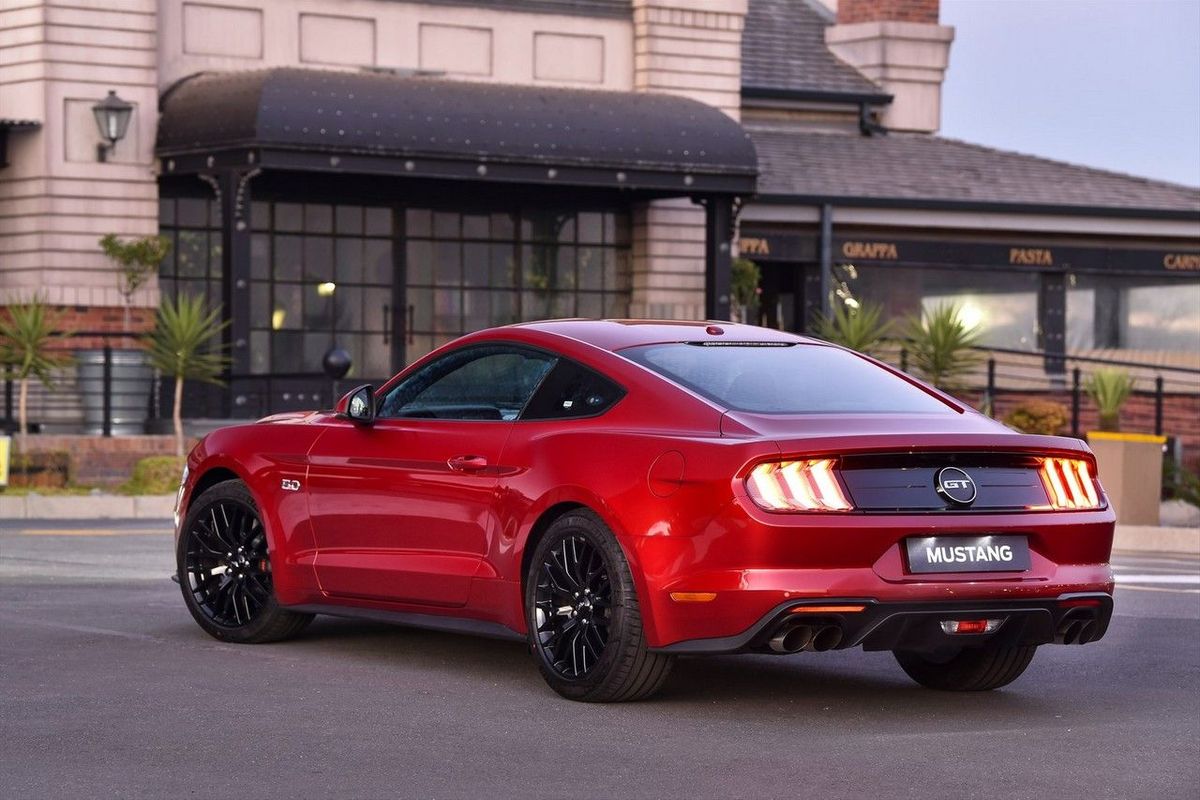
Quad exhausts sing the magical V8 song

What's it like to drive?

Our launch route comprised vast swathes of open tarmac, including remote roads and serpentine mountain passes – they were ideal to test the cruising and dynamic abilities of the Mustang. First up I drove a 2.3 Convertible. It's difficult to take a liking to the 4 cylinder because the V8 is such a charismatic powerplant, but we understand the Ecoboost's role in the line-up. It delivers decent mid-range punch and credible in-gear acceleration, but while the 10-speed transmission does an admirable job of swapping cogs, the Ecoboost-engined derivative does not score highly in terms of driver engagement. For that, we'd recommend switching to a sportier driving mode and utilising the 'wheel-mounted shift paddles.


It's comfortable on the open road, but it does lack the precision offered by benchmark performers

It's near impossible not be blinded by the allure of the Mustang badge, but the car does have its shortcomings. The Convertible, for example, suffers from a common affliction of ragtop vehicles – it tends to shimmy and wobble when it traverses uneven road surfaces, including bumps and dips. Scuttle shake is not unique to the Mustang (the phenomenon is caused by a loss of rigidity due to the lack of a solid roof), but it's still disappointing. The steering has some heft to it, but lacks feedback when you're pressing on (we'd say it's acceptable considering Ford isn't marketing its Mustang as an out-and-out sportscar). The ride quality is not up to sportscar standards either; Ford chose to focus on comfort rather than overt sportiness. 

But then we had the chance to sample a 5.0 GT Fastback! With middling peak torque of 529 Nm (by modern V8-engined sportscar standards) at its disposal, one could be forgiven for thinking the Mustang's transmission has 2 (or even 3) ratios too many, but somehow the powertrain works well. Irrespective of whether it is installed in the 2.3 or 5.0, the transmission is well calibrated to cleverly select the right ratios for virtually every driving situation, and despite the fact that is not a dual-clutch unit, the 'box is quite responsive and quick-changing in its more aggressive driving modes.

Another benefit of the 10-speed 'box is better-than-expected fuel economy. On our return leg, which admittedly consisted of open road cruising, the trip computer in the 5.0-litre Fastback returned a figure of 10 L/100 km. We reckon if you drove really conservatively, 9 L/100 km is achievable. 


The Mustang in its natural territory: open road cruising

The respective driving modes make quite a difference to the Mustang's demeanour. The efficiency-minded Normal mode is ideal for the daily commute, but when you select Sport or Sport+, the exhaust valves open and you're treated to a delightful mechanical soundtrack. Not only does the V8 rumble at idle, but it emits a grin-inducing howl at high revs that can be heard from some distance away. It's a good thing Ford has created a startup sequence named "Good Neighbour" mode, which fires up the motor in the quietest way possible. Or, you could be like us and start the morning with the Ford in Race Track mode (and its exhaust in full voice), just to remind everyone in the neighbourhood the Mustang is around! 

Is the 2019 Mustang the most precise performance vehicle we've ever sampled? No. At a similar price for the 5.0 GT Fastback, you can jump into a Porsche 718 Cayman S, which will run rings around the Ford. But then you don't have to thrash the Mustang to gain maximum enjoyment from it –that's why so many people would love to park one in their garage. It's happy to cruise through traffic with its V8 lazily burbling away, but always at the ready to deliver delicious shove when you need to overtake. Also, few cars this side of a Lamborghini attract as much attention. The launch took place in and around Montagu in the Western Cape and the townsfolk may indeed be talking about "the week the Mustangs came" for years to come.

It's Bullitt time!


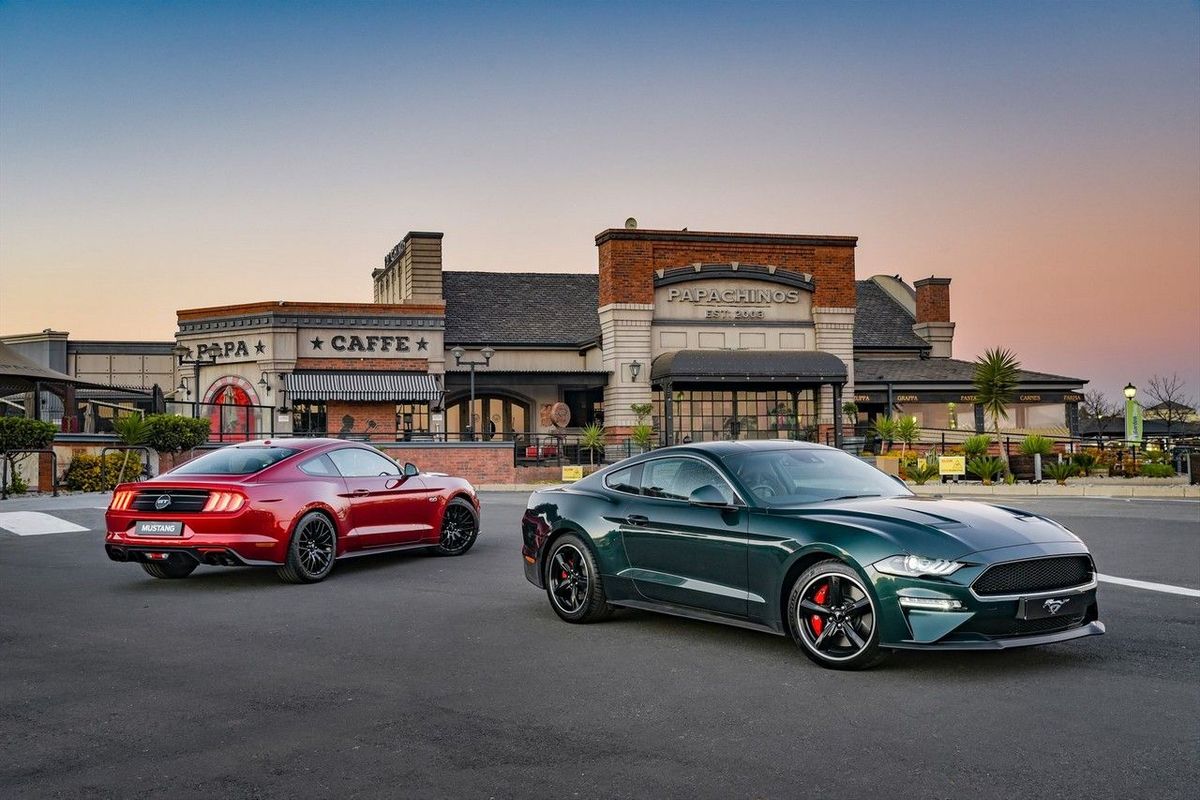
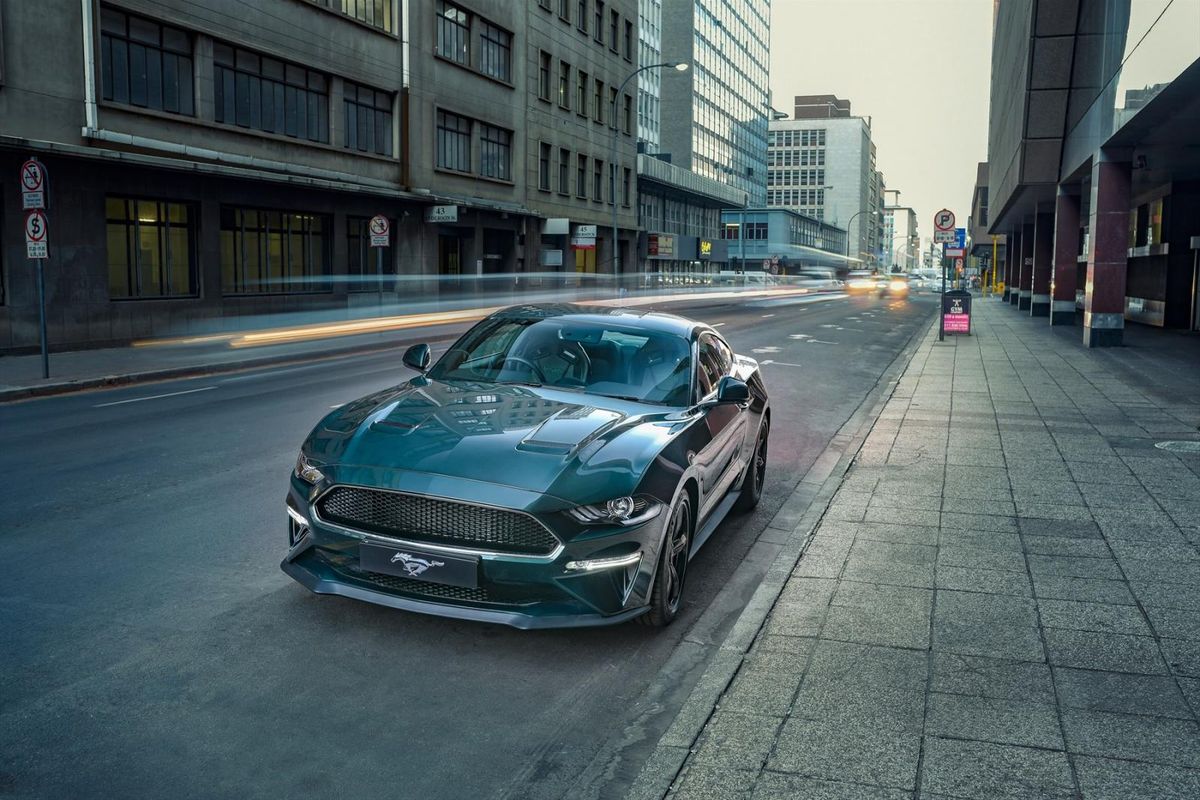
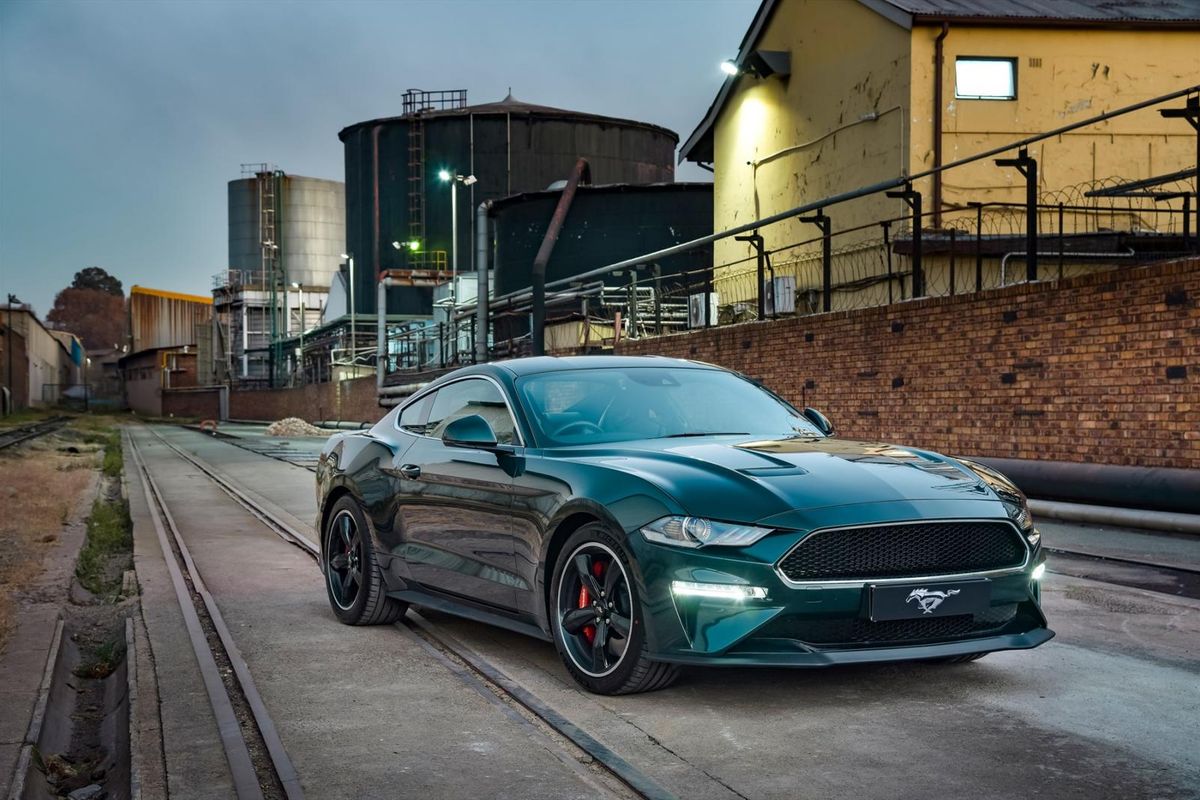
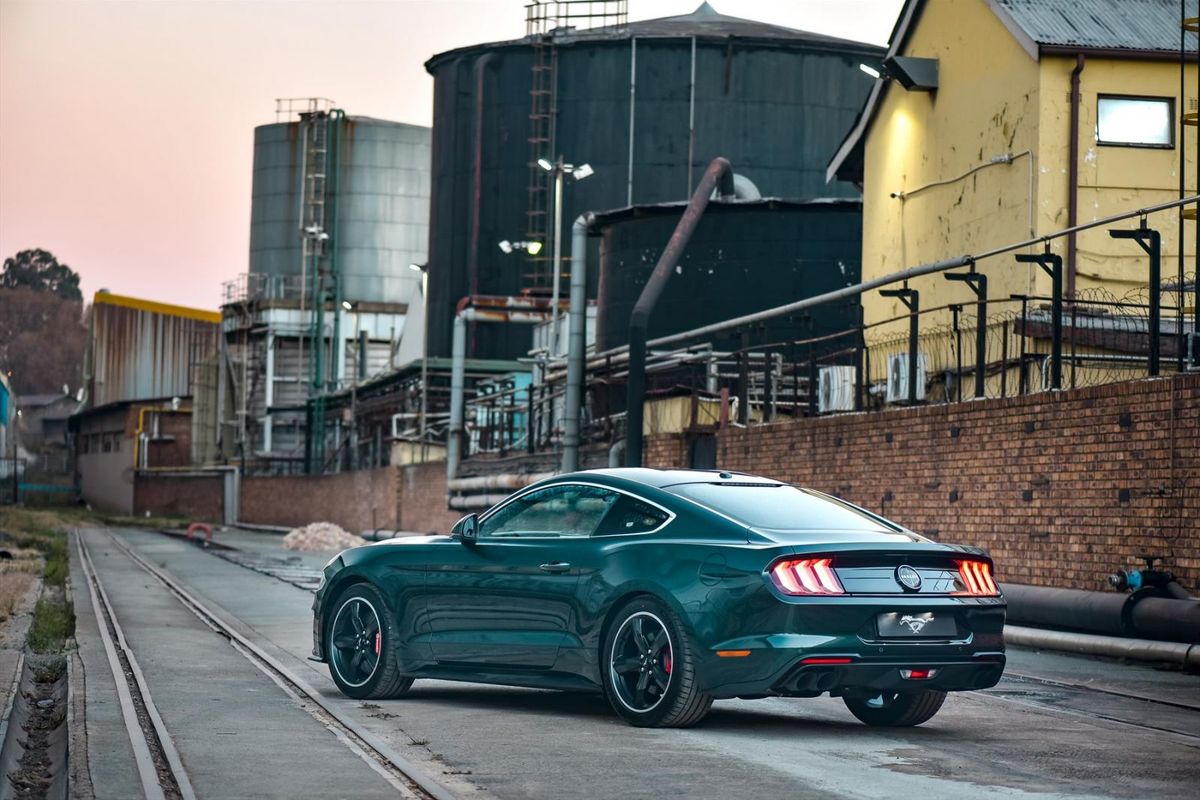
What an instant classic the Bullitt will turn out to be!

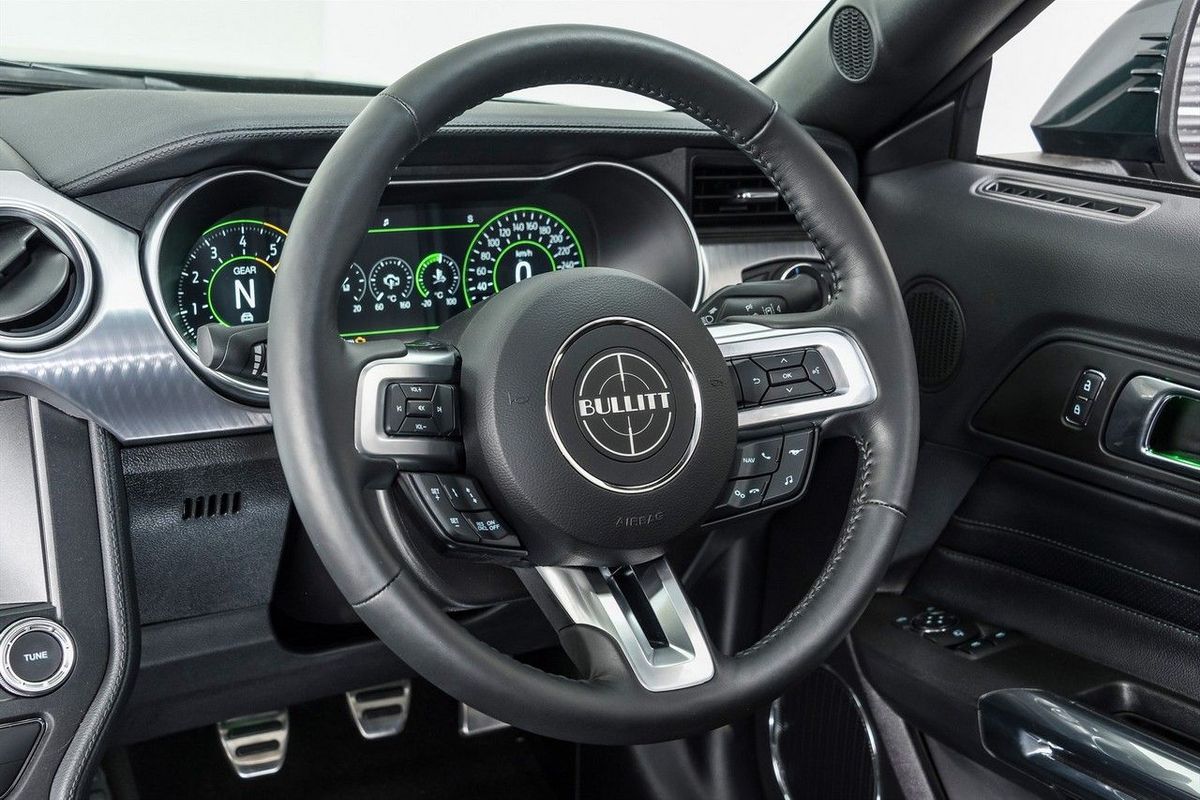
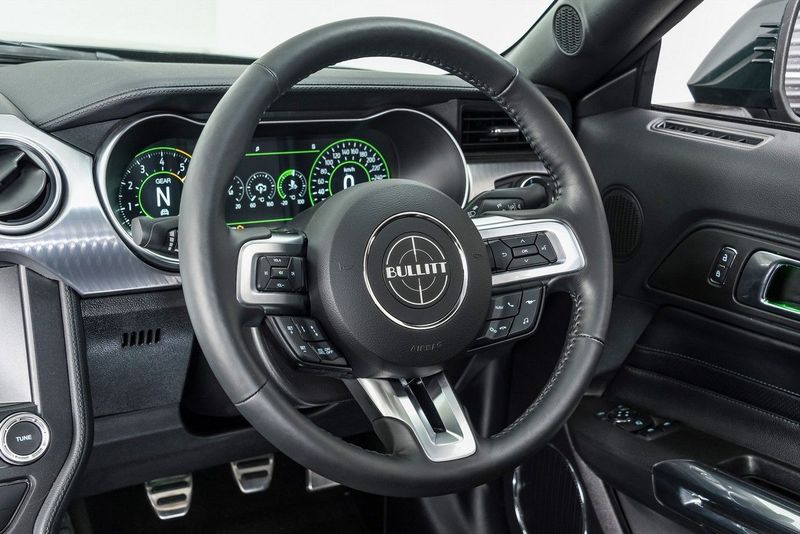
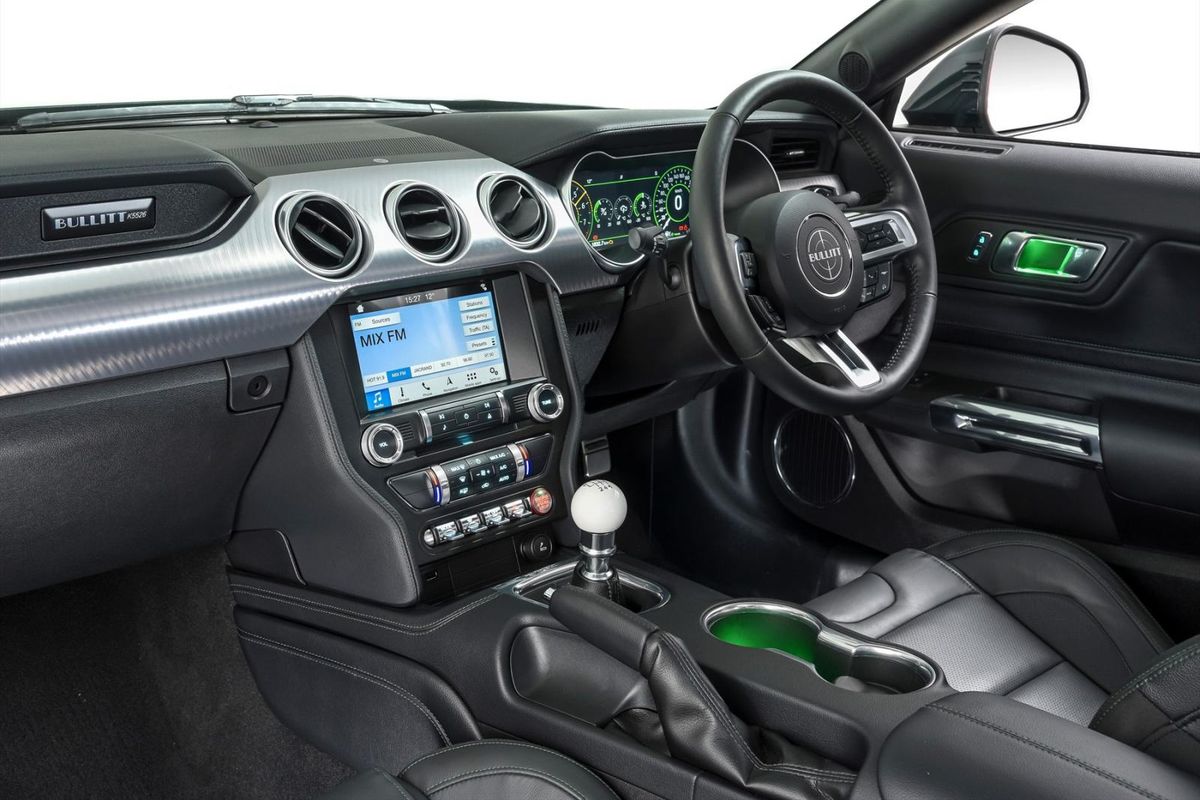
We also had an all-too-brief stint in the Ford Mustang Bullitt. Built to celebrate that iconic car chase scene featuring a 1968 Ford Mustang Fastback GT 390 in the film of the same name, this limited-edition Mustang is only available with a 6-speed manual gearbox, delivers a few extra horses, has a bespoke exhaust setup and a higher top speed. It's only available in a green or black finish and features unique touches, such as black wheels with red callipers, while the cabin gains a Bullitt-branded steering wheel, sportier seats and bespoke graphics on the instrument cluster. 


Green lighting and a Bullitt steering wheel add to the cool factor

As few as 50 units of the Mustang Bullitt have been earmarked for South Africa and the chances are that most (if not all) have been snapped up. What's it like to drive? Well, compared with the 5.0 GT Fastback, this is an animal! In the age of digitally-assisted launch starts and lightning-fast dual-clutch gearboxes, the Bullitt reminded us of what it's like to drive properly. It demands your full attention and makes you work hard for your driving thrills. There's no such thing as a relaxing cruise in the Bullitt and it requires real effort to get the best from it. The clutch pedal travel is long, as is the throw of the gear lever. In its most aggressive driving mode, the Bullitt has a cacophonous exhaust note that's bound to upset the snooty neighbours! It has a B&O audio system, but who cares when you have such a majestic orchestra emanating from the Ford's quad-tip exhausts? 

Verdict


Dripping in old school charm, the Ford Mustang is a must-have in our dream garages

It's sad, in a way, that we live in a world dominated by stats and data. The outright engine outputs and performance figures of the respective derivatives in the 2019 Mustang line-up are likely to be lambasted and derided by motoring enthusiasts who are traditionally fans of German performance- or sportscars. Granted, products that fall into the latter grouping are comparatively faster and more sophisticated, but they cannot match the magnetic charm and easygoing character of the Ford. There's nothing quite like it and the gentle rumble of the 5.0-litre V8 has such a magical ability to bring smiles to onlookers' faces. Its build quality and finishes still aren't great, but the range is competitively priced. It's a real challenge to dislike the Mustang because of the way it makes you feel. We're delighted it exists, even though muscle cars are on borrowed time. 

Should you buy one? If you're looking for a new car priced under a million Rand that can effectively announce to the world that all your blood, sweat and tears have finally paid off, this would be it. The Mustang is one of a few cars equally adored by princes and paupers. Just go for broke and get the V8 for the most authentic Mustang experience, you won't regret it. It's not perfect, but we won't care. Any colour will do, as long as it's the V8.

Further reading:

Updated Ford Mustang in SA (2019) Specs & Price

Ford Mustang Bullitt (2018) Launch Review [w/Video]

Ford Mustang Shelby GT500 Revealed

Ford Mustang Price in South Africa (August 2019)

In terms of options, there are some alloy wheels to choose from as well as adaptive damping for the 5.0 GT. The pricing below includes VAT and emissions tax.

Ford Mustang 2.3 Fastback                        R768 000

Ford Mustang 2.3 Convertible                     R831 000

Ford Mustang 5.0 GT Fastback                   R915 800 

Ford Mustang 5.0 GT Convertible               R978 400

Ford Mustang Bullitt 5.0 V8 GT Fastback   R995 400

Spy Shots: 2020 BMW M2 CS On Track

We're one step closer to the reveal of the BMW M2 CS. Here are even more tantalising details.

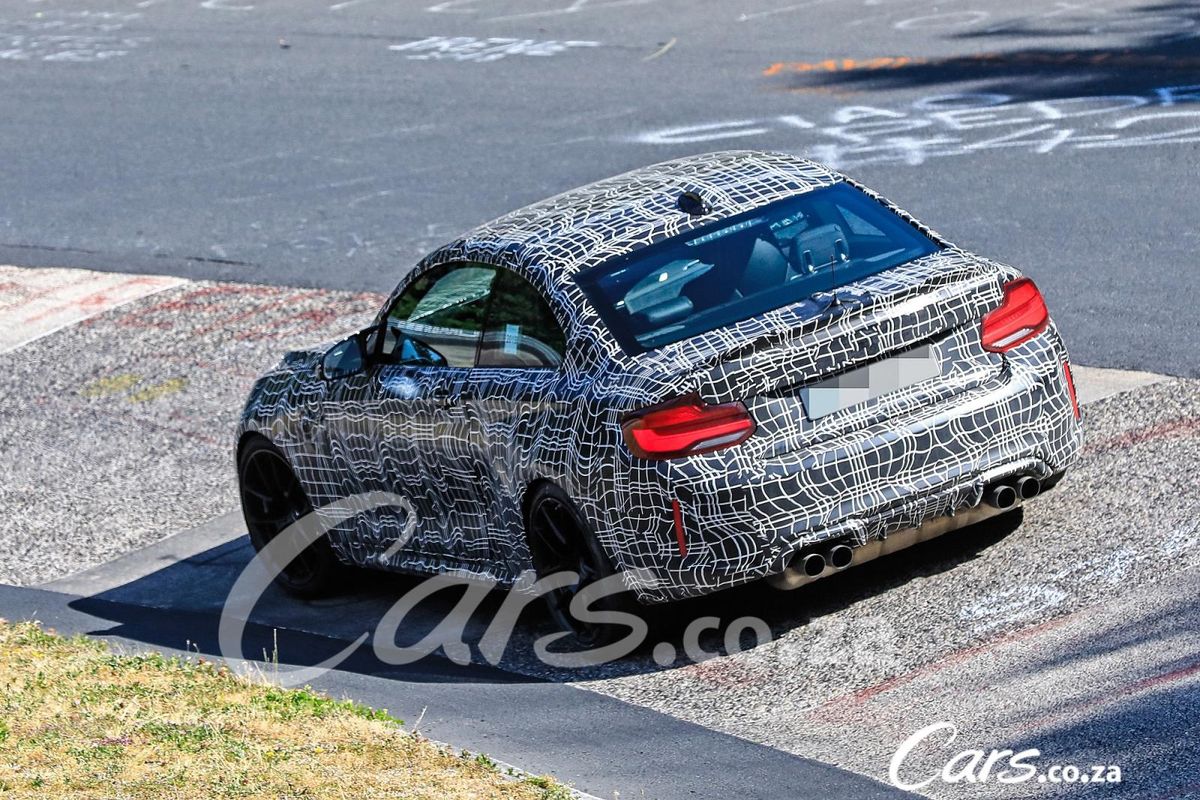
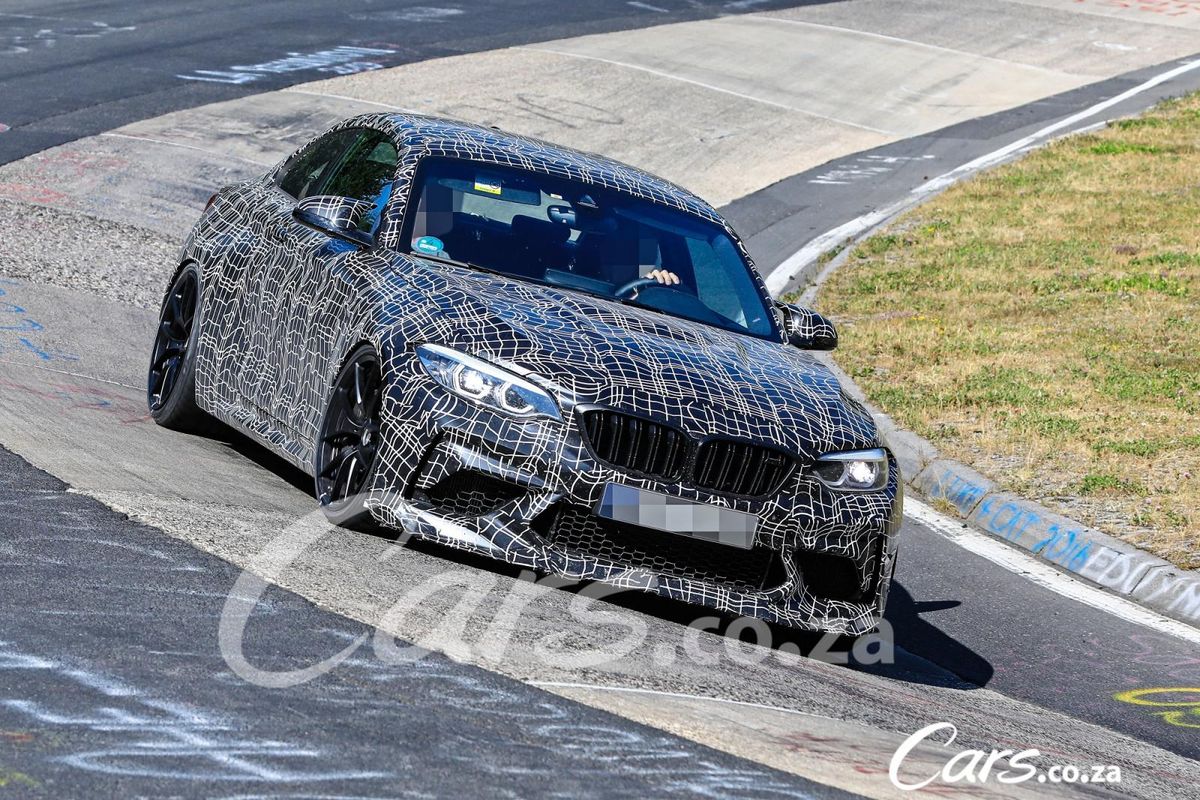
Spotted undergoing performance testing at the Nurburgring was this BMW M2 CS prototype. Our spy photographers always send us some info along with the images and the big news they shared is the presence of a 6-speed manual gearbox! When it comes to market, the BMW M2 CS will be packing more power and torque, as well as a lower kerb weight. This will be the most hardcore iteration of the BMW M2 and should provide the purest form of driving. The recipe sounds glorious: a 3.0-litre turbocharged 6-cylinder driving the rear wheels packaged in a lightweight coupe body. 

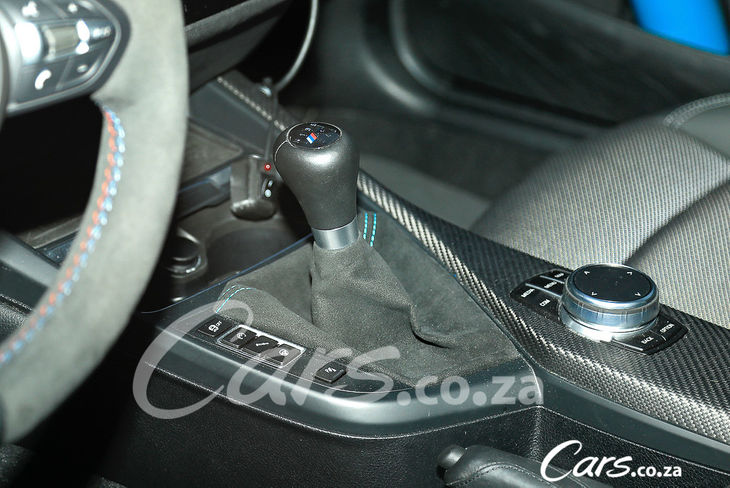
Our photographers also said there was a pure Alcantara steering wheel and hardcore race seats in the front. On the exterior, there will also be a carbon fibre roof. For those of you who were disappointed by the downsizing of the BMW M135i xDrive, you can rejoice as we think this new BMW M2 CS will be the perfect rival to the recently-revealed Mercedes-AMG A45 S. 

As for power, outputs are yet to be confirmed, but we suspect the car will use an uprated version of the current 3.0-litre turbocharged 6-cylinder. In Competition trim, it delivers 302 kW and 550 Nm. We know this engine is capable of more, as demonstrated by the BMW M3/M4 Competition which had 331 kW. We don't think the M2 CS will offer that much to avoid standing on sibling's toes, but it could be close.

Further Reading

Spy Shots: 2020 BMW M2 CS

Preview: BMW M2 CS Coming in 2020

BMW M2 Competition Video Review

BMW M2 Competition (2018) International Launch Review


Lexus RC F Track (2019) Specs & Price

Lexus introduces the very sporty RC F and track-focused RC F Track Edition to SA. It's pricey but sure to stand out in a crowd.

The RC F range comprises style with substance as the coupe aims to please the eye as well as the hardened track enthusiast. The refreshed lineup makes use of a single engine, namely the 5.0-litre naturally aspirated V8 that thumps out a claimed 351 kW and 530 Nm. Zero to 100 kph is dispatched in 4.5 seconds for RC F and 4.3 seconds for RC F Track Edition.

Lexus models with ‘F’ badges are performance-oriented and thus, the RC F is lighter and more capable dynamically. On the Track Edition, the claim is that it is up to 80 kg lighter thanks to a carbon fibre bonnet and roof. Carbon ceramic Brembos are used to stop the RC F and Michelin Pilot Sport 4S rubber stick it to the tarmac.

The Track Edition also benefits from some added aero aids like a rear diffuser and fixed rear wing. Final tweaks are then made to the suspension to make it handle better and roll less when cornering with enthusiasm. Lexus claims it tapped into its motorsport division and took aerodynamic elements from the GT500 and GT3 race cars. The Track Edition also features a carbon-fibre reinforced plastic (CFRP) bonnet and roof to reduce weight by 9 kg.

All RC F versions feature an expansive 10.3-inch widescreen centre display featuring satellite navigation, digital radio and Bluetooth® phone and audio streaming including voice recognition. A 17-speaker Mark Levinson audio system is also added. The seats are heated and ventilated, while on the safety side of things, the vehicle features the Lexus Safety System+ suite of driving aids: Pre-crash (Brake Synchronised) safety system with pedestrian detection, Standard-Adaptive Cruise Control, lane-departure warning with steering assist and LED-Automatic High Beam. Also thrown in are Blind-spot monitor, reversing camera, front clearance and rear parking sonars and rear cross-traffic alert.

Lexus Sales and Marketing Vice President, Glenn Crompton says the RC F and RC F Track Edition make a formidable pair in the performance-enthused South Africa market: "Offering an aggressively-priced RC F and a more aggressively dynamic RC F Track Edition is an ideal twin-strategy in this performance-loving South Africa market," Crompton adds. "These highly sophisticated, proudly-unique normally-aspirated V8-powered coupes have never been better represented than after such comprehensive upgrades." The new RC F range is available at Lexus dealerships now. Allocation of the RC F Track Edition is strictly limited." 

Pricing

Both the RC F and RC F Track Edition come with the Lexus 7-year / 105 000 km warranty and full maintenance plan. The vehicle’s service intervals are at every 15 000km, alternatively every 12 months.

Lexus RC F – R1 318 300

Lexus RC F Track Edition – R2 098 200

More power for your Land Rover Defender

Make you Defender a lot faster than it should be

As anticipation for the reveal of Land Rover’s new Defender grows, the British off-road vehicle specialist has announced an official upgrade for its existing carpark of Defenders. Production might have ended in 2016, but Land Rover is not allowing the opportunity to reengage and profit from existing Defenders owners pass it by.

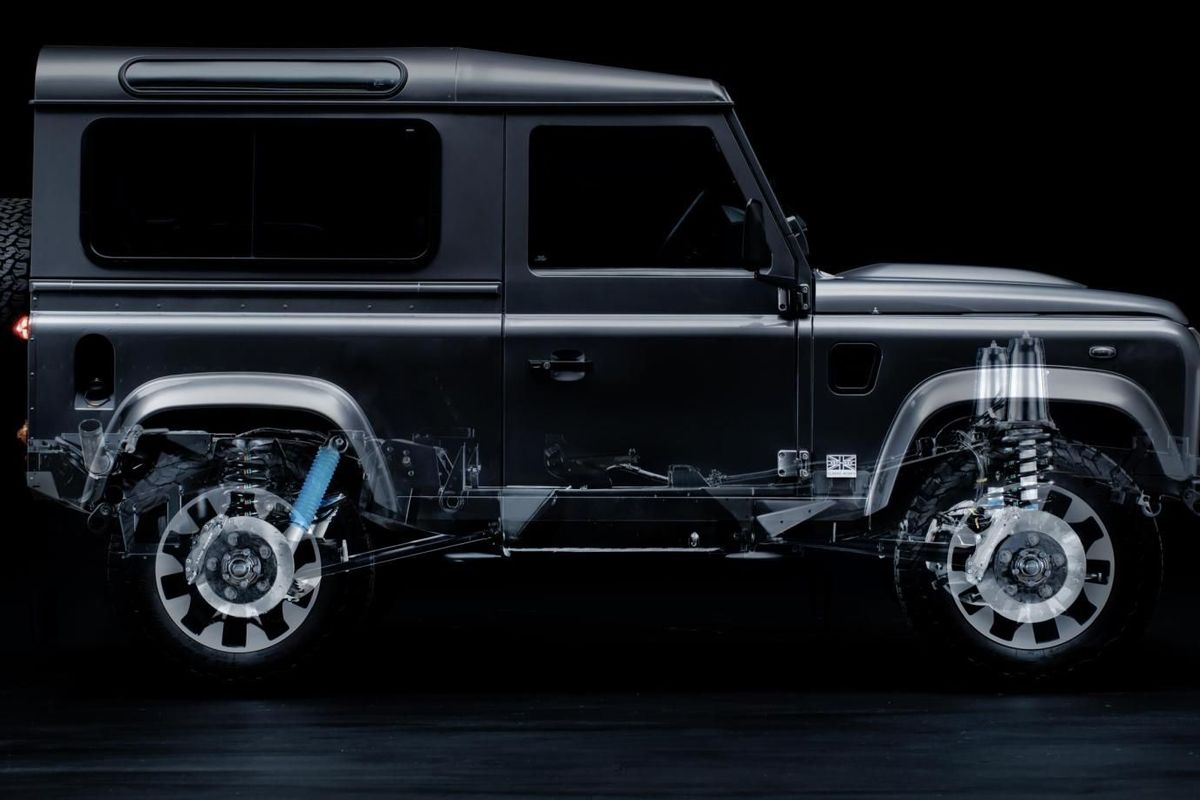
If you own a Defender built between 1994 and 2016 Land Rover’s very own classic workshop has a selection of design and engineering upgrades available for your vehicle. The exterior enhancements are limited to ‘Classic Works’ door badges and 18-inch Sawtooth design alloy wheels. Behind those wheels you can order more powerful brakes and significantly improved suspension.

Nearing the specification of Land Rover’s limited-edition Defender V8 Works, the suspension and brake upgrade is only applicable to vehicles newer than 2007. It tallies more rebound resistant coil spring rates, high volume dampers and new anti-roll bars, links and bushes. What will be of most interest to owners of the 2.2-litre turbodiesel Defender models is an official Land Rover sanctioned power boost for the engine. This kit releases 30kW of additional power to peak 120kW and 463Nm. Those numbers enable Defender to run a true top speed of 170kph, which should be novel and terrifying all the same.

At a time of great disruption for the British automotive industry, the Land Rover Classic upgrade kit will be applied to vehicles at a special workshop in Essen, Germany, in addition to Land Rover's own Coventry facility. These upgrades are also only applicable to the 90 and 110 wheelbase Defenders, precluding you from potentially building a 170kph capable 130 double-cab. The option for South African Defender owners, relating to the classic upgrade kit, remains unclear.

Further Reading

Land Rover Defender Interior Leaked

Lego Leaks New Land Rover Defender?

New Land Rover Defender Unleashed in Kenya

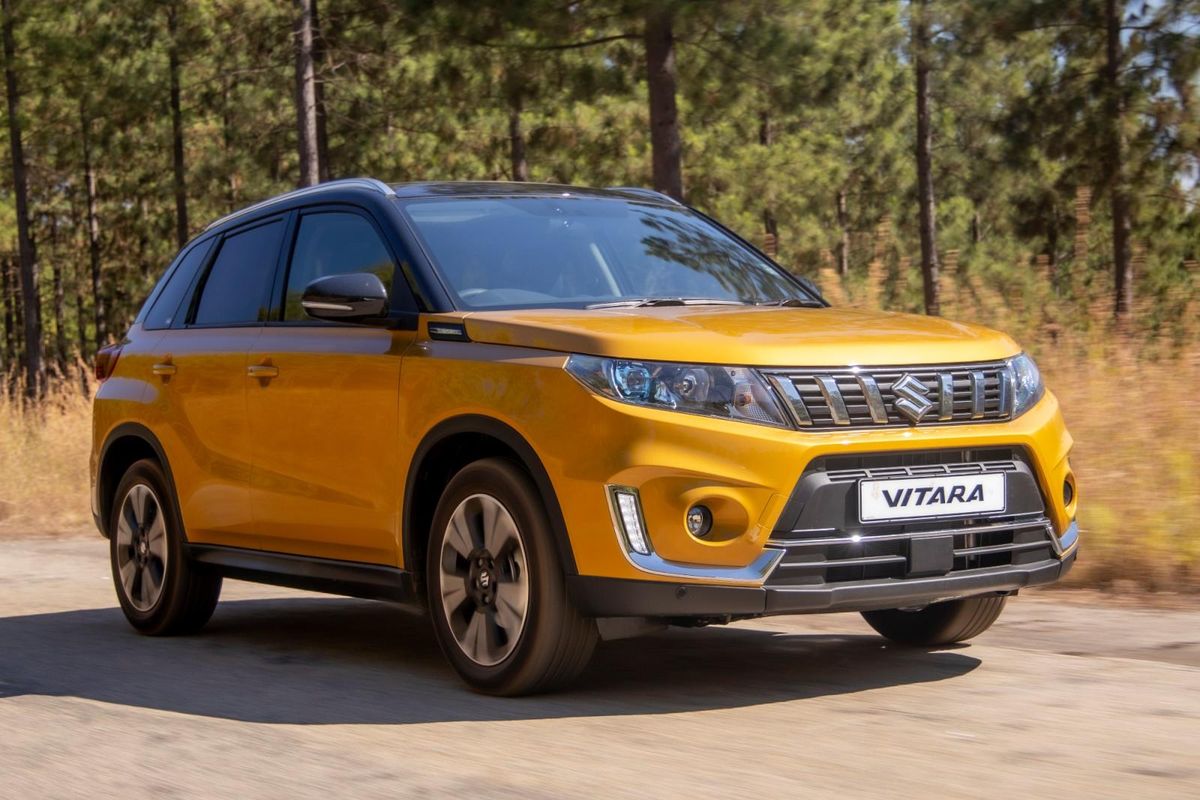
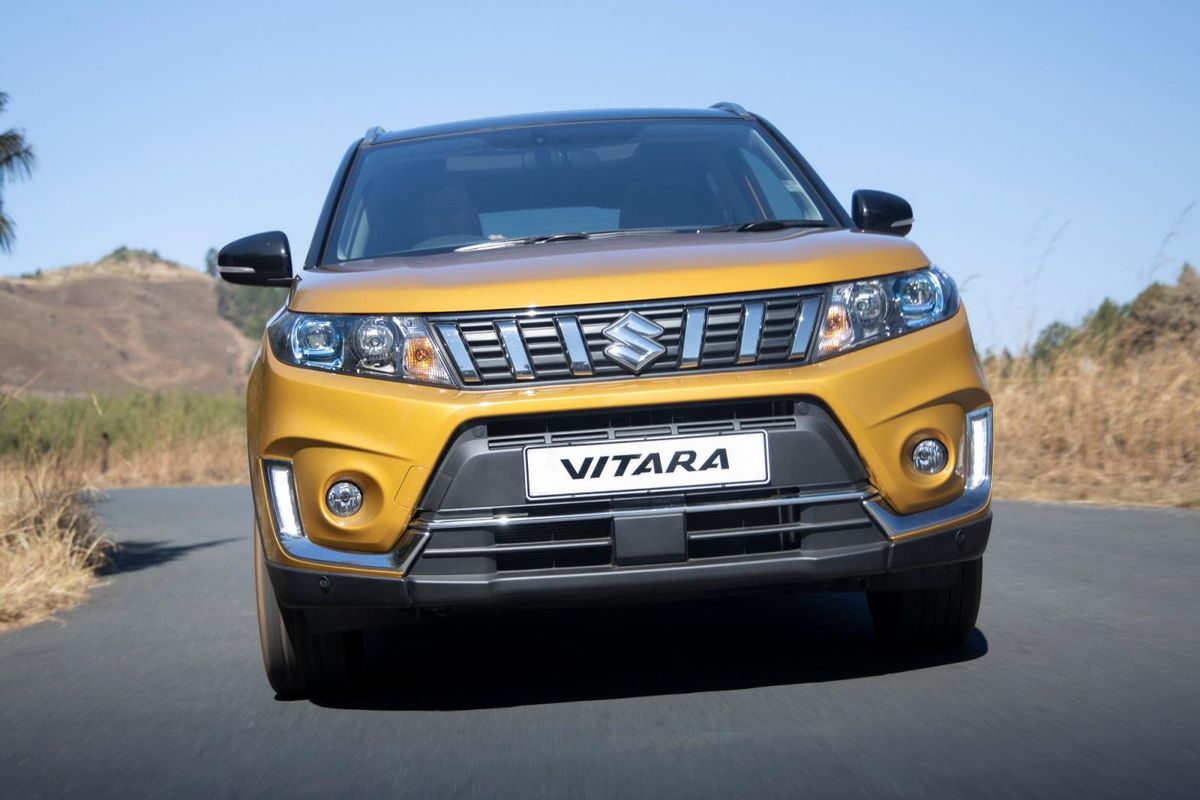
Suzuki Vitara (2019) Spec & Price

The award-winning Vitara compact crossover gains Suzuki's punchy and efficient BoosterJet engine. 

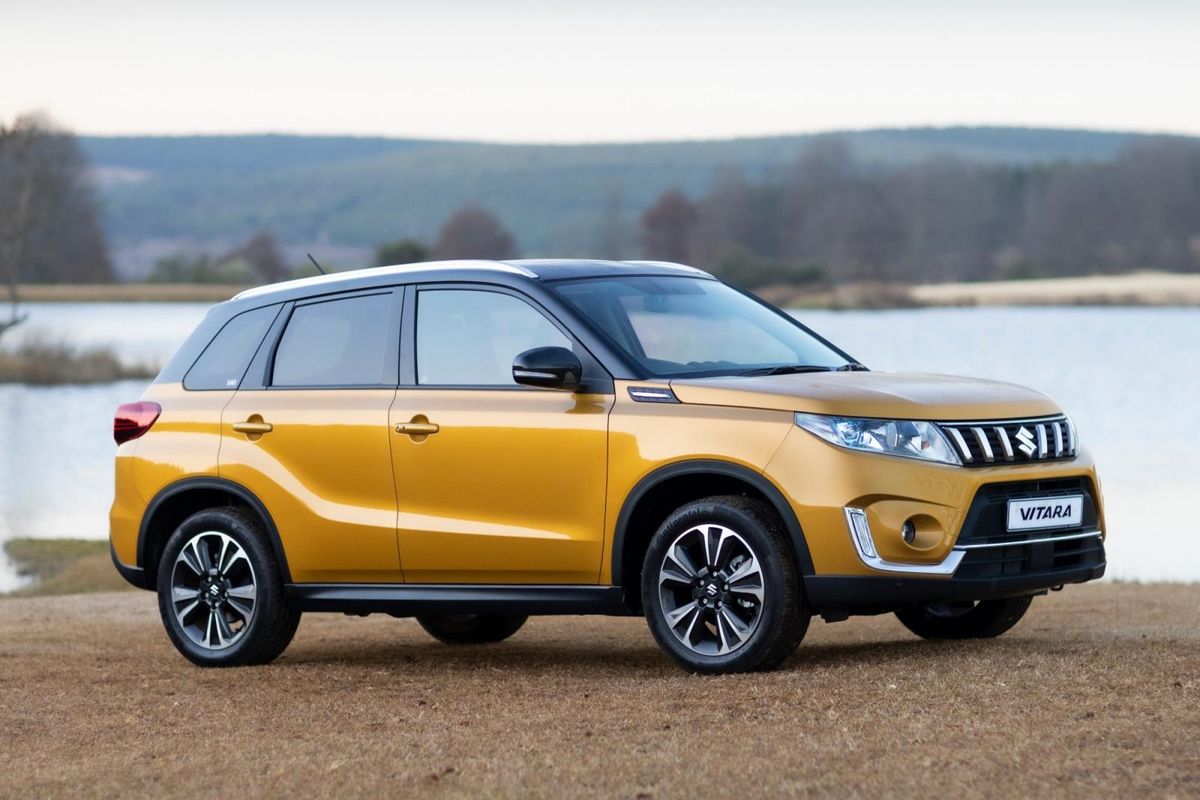
Suzuki updated its award-winning Vitara earlier this year with a raft of cosmetic changes, trim upgrades and some additional infotainment and comfort features. You can read more about those details here. Now, however, the line-up gains new flagship models in the shape of 2 variants powered by the marque's new 1.4L turbopetrol, dubbed the BoosterJet. Available exclusively in top-of-the-line GLX trim, you can have either a 6-speed manual (R378 900) or a 6-speed automatic (R397 900), the latter also offering paddle shifters.

The engine delivers 103 kW at 5 500rpm and a healthy 220 Nm of torque from 1 500 to 4 000 rpm. This results in a vehicle that is significantly more responsive than the continuing 1.6L petrol derivatives. Impressively, Suzuki still claims an excellent combined cycle fuel consumption figure of 5.8 L/100km for the manual-transmission model, and 5.9L/100km for the automatic. 


Comprehensively specified and featuring a full suite of safety and infotainment features, the GLX offers a lot of car for the money.

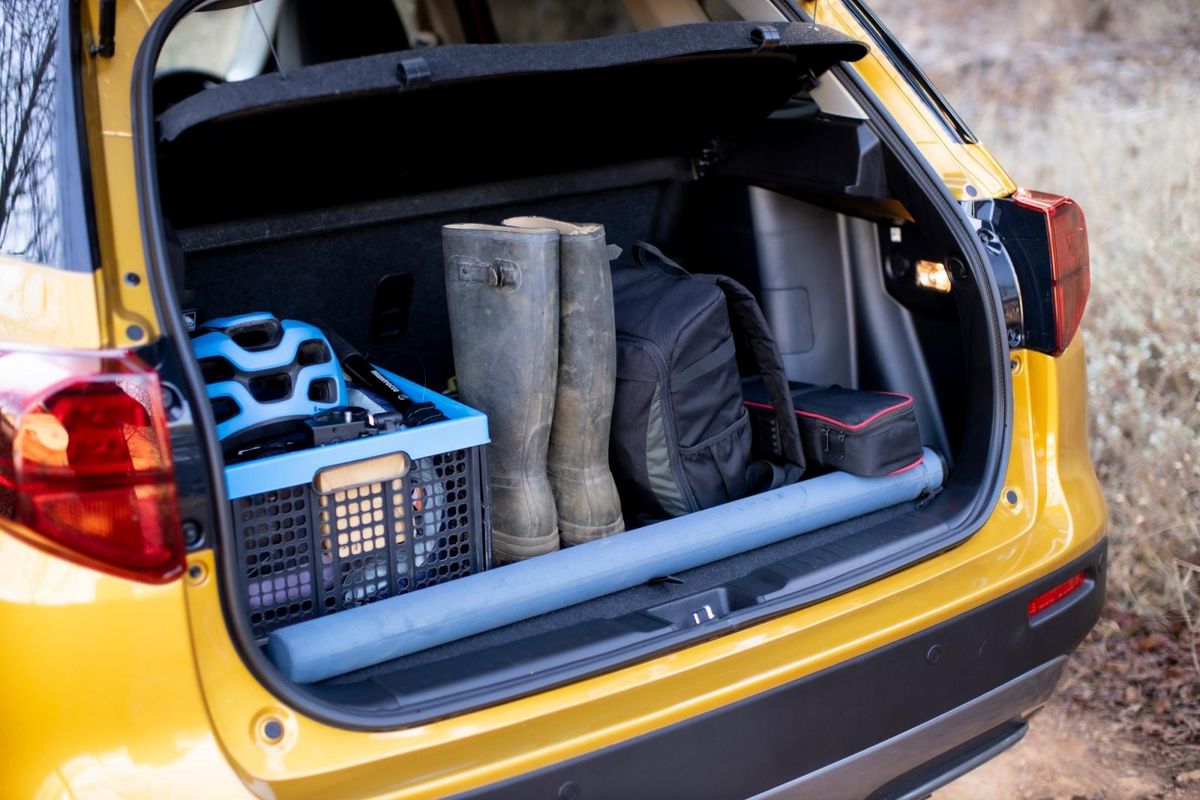
I spent most of the day in the manual and suspect that a realistic real-world consumption figure is in the region of 7L/100km, which is still very good indeed. The test route included some badly rutted gravel sections, too, and once again came away impressed with the solidity of the Vitara – it's certainly not just a city slicker. As a compact family car, it continues to make a lot of sense, with a practically shaped/sized boot and decent rear passenger space (we travelled as a group of four above-average height males). Just a pity there are no rear ventilation outlets.

Still, overall, I can see it mounting a strong challenge in the upcoming iteration of the Cars.co.za Consumer Awards – Powered by WesBank, where it won the Compact Family Car crown in the 2017/18 competition.

Comprehensive features


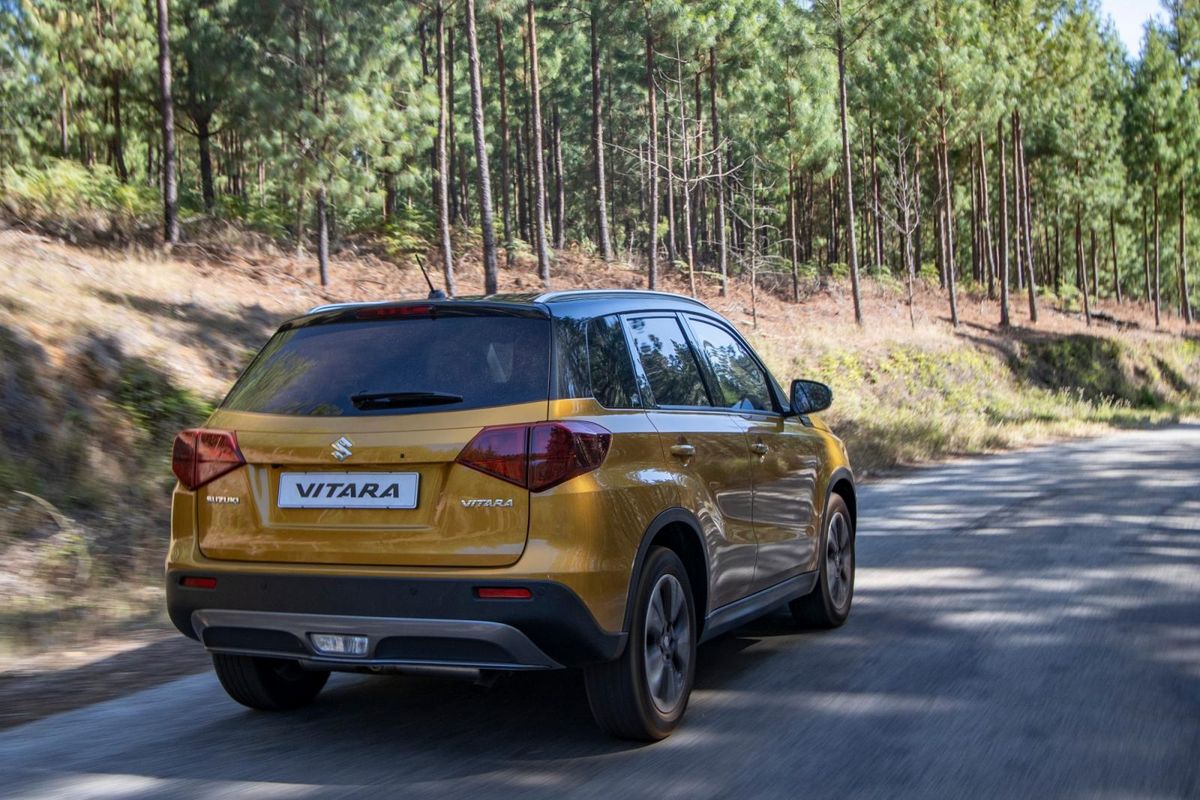
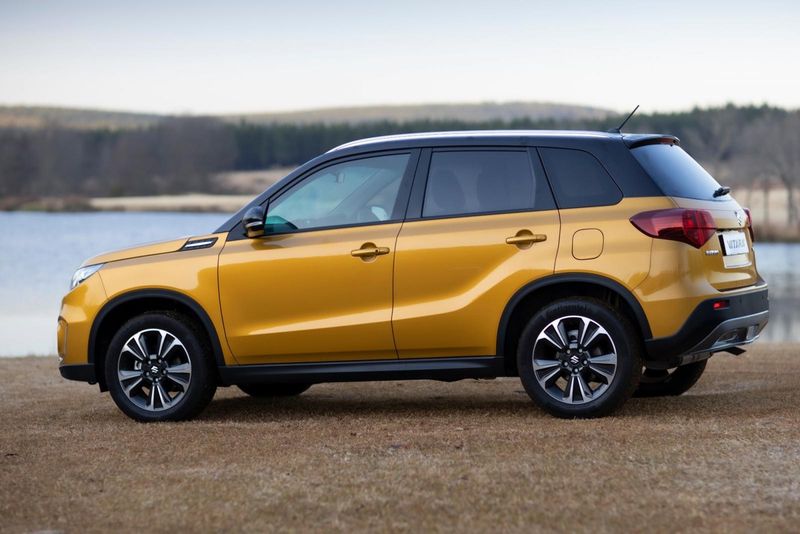
Offered exclusively in GLX trim, the new Vitara Turbo can be ordered in seven dual-tone colours.

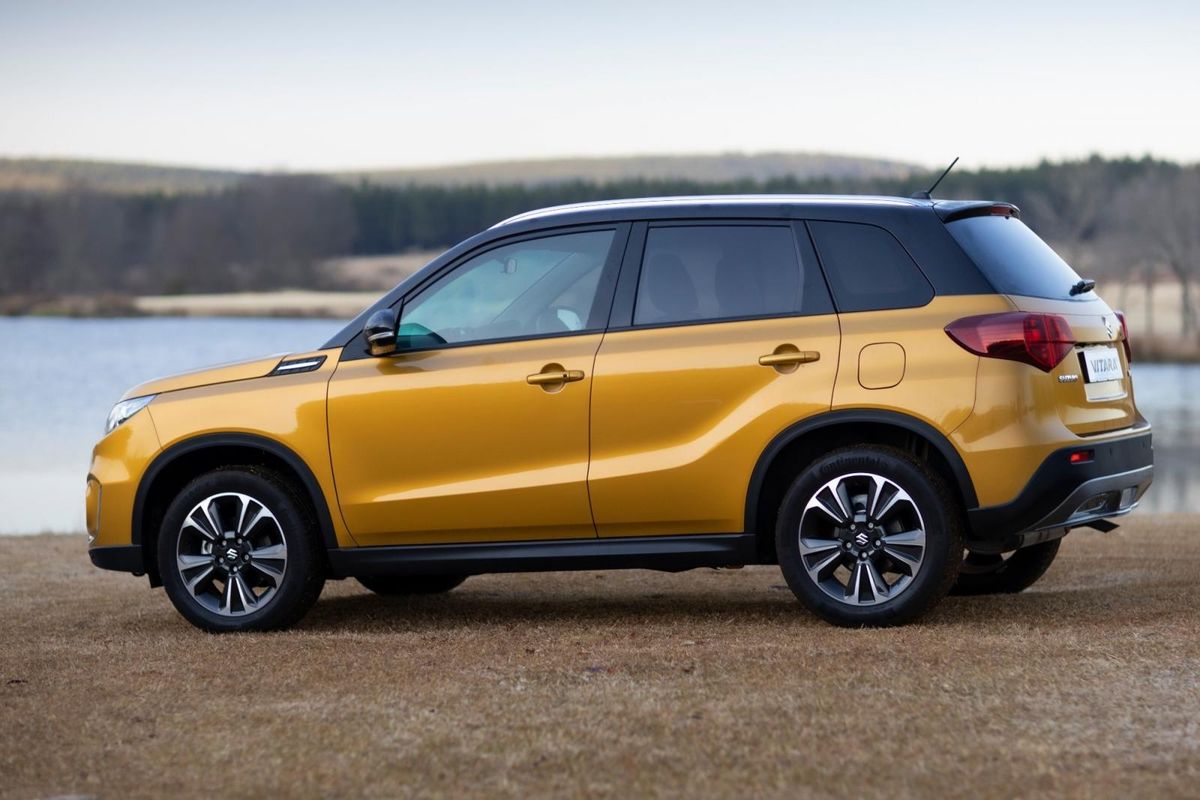
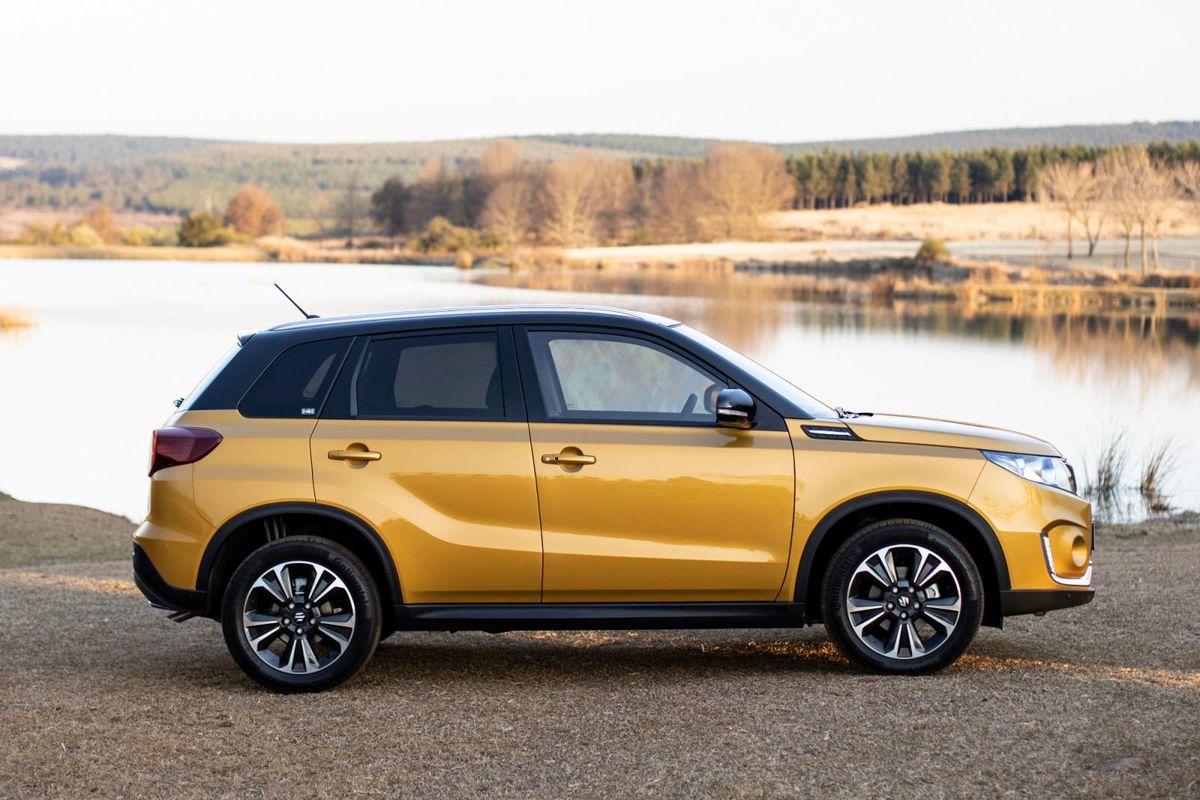
GLX specification is very comprehensive and there are more interesting colours (and colour combinations) to choose from at this spec level too. You get 17-inch alloy wheels and the choice of 5 solid body colours or seven dual-tone combinations (I am quite partial to the metallic blue body combined with black roof option). LED lights are used front and rear, and there are satin silver roof rails and chrome accenting in the grille.

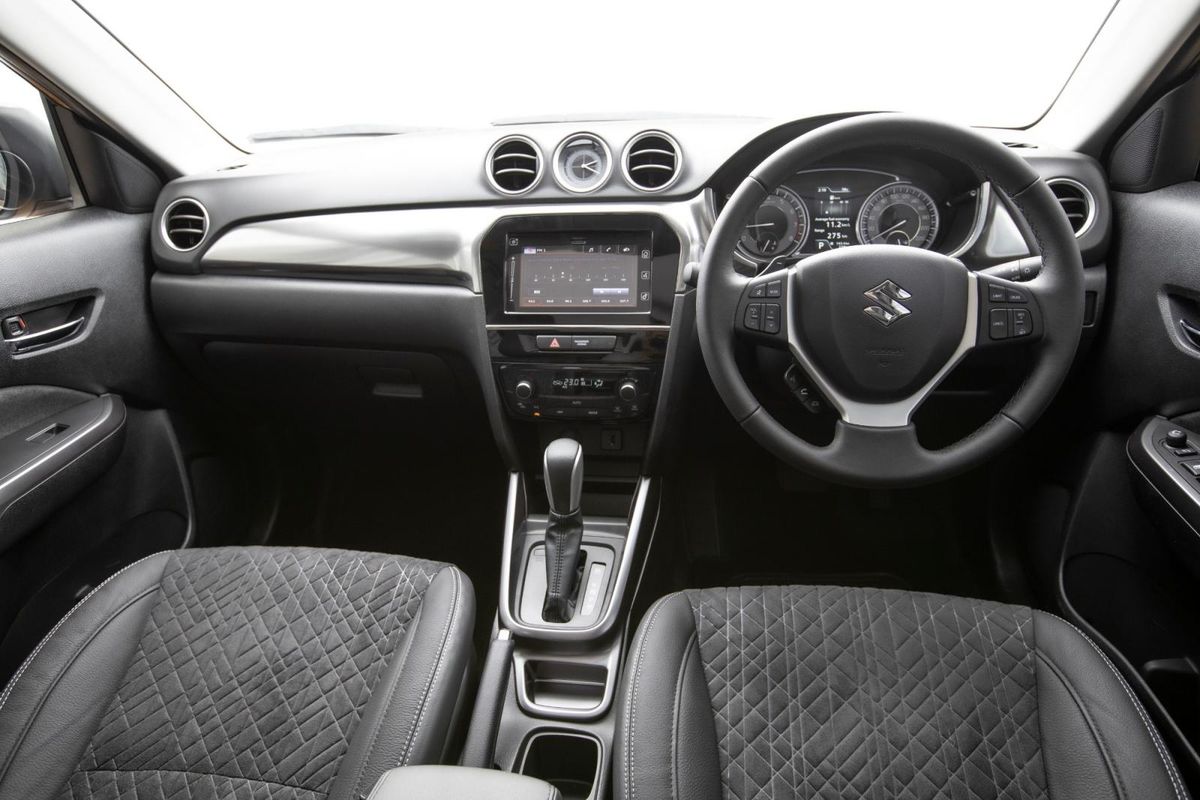
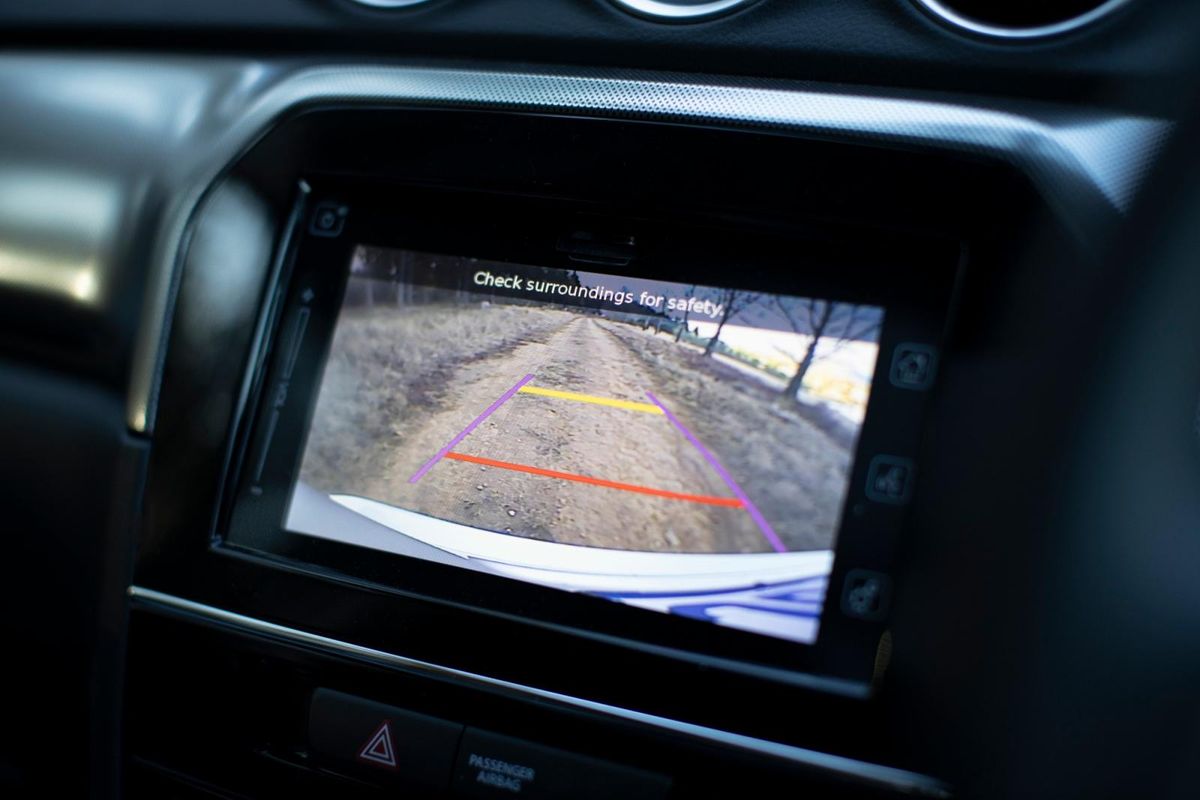
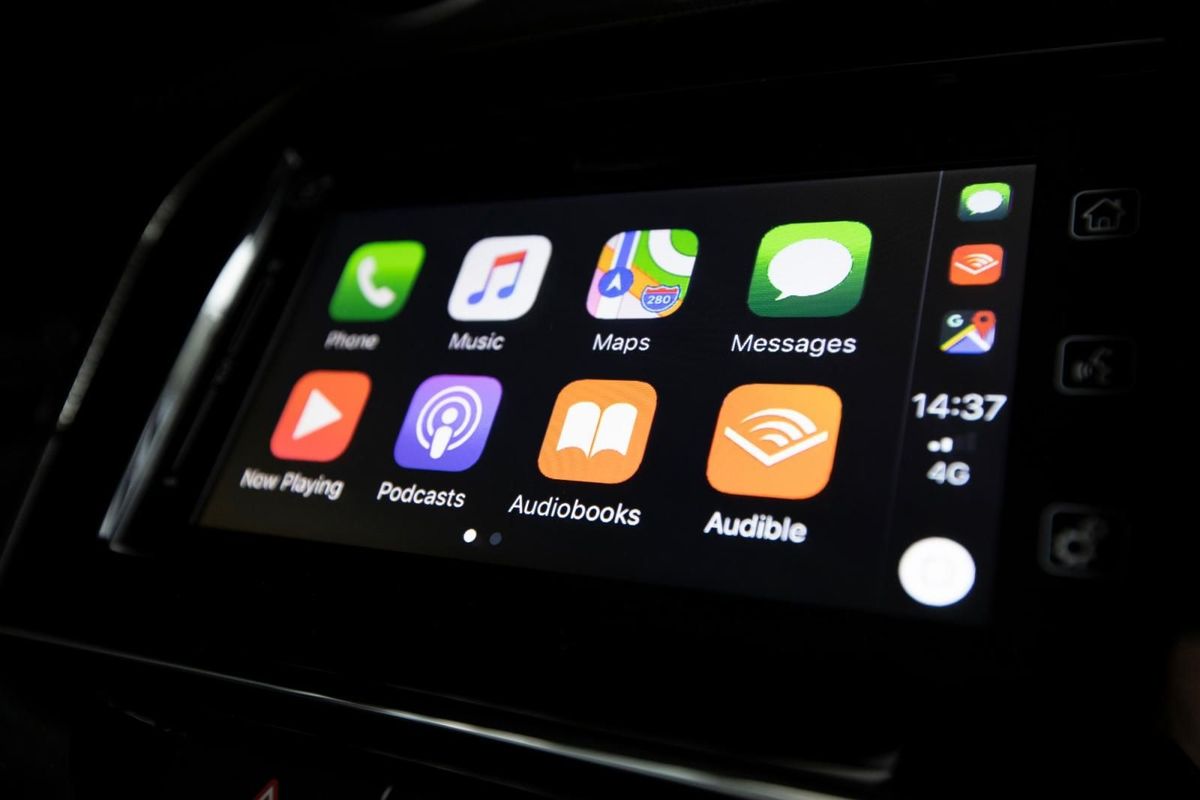
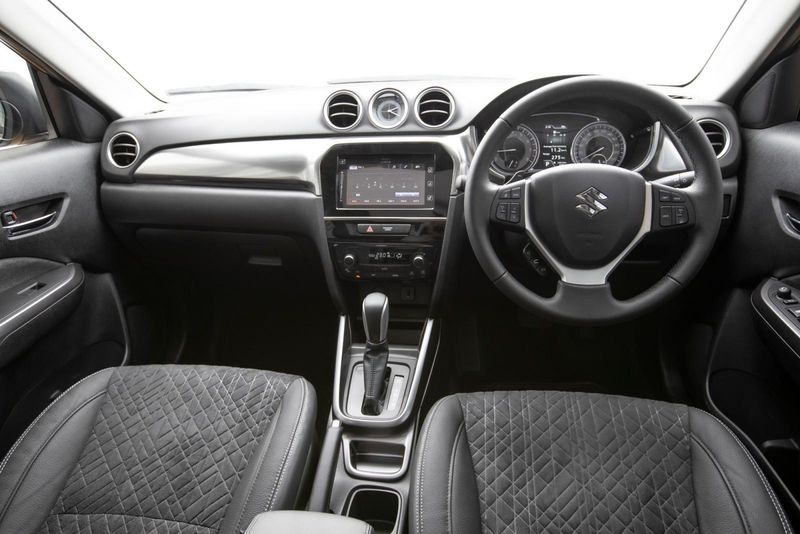
Inside, there is a 7-inch touchscreen infotainment system that doubles as a display for the rear-view camera, and which offers complete mobile integration with Apple CarPlay, Android Auto and MirrorLink systems. The updated Vitara's classier cabin materials (particularly the soft-touch upper facia panel) are joined by smart leather/suede combination upholstery, cruise control (with a speed-limiting function), front/rear park distance control, auto lights and auto wipers, among many others.

The safety package is equally comprehensive, with 7 airbags, ABS with BAS/EBD, ESP (electronic stability control) and rear Isofix child seat anchorage points.

Suzuki Vitara pricing in South Africa

The newcomers join the existing range and comes standard with the promotional 5-years/200 000km warranty and 4-years/60 000 km service plan. 

Suzuki Vitara 1.4 Turbo GLX manual       R378 900

Suzuki Vitara 1.4 Turbo GLX automatic   R397 900

Interested in buying a new / used Suzuki Vitara?

Find one today on Cars.co.za by clicking here

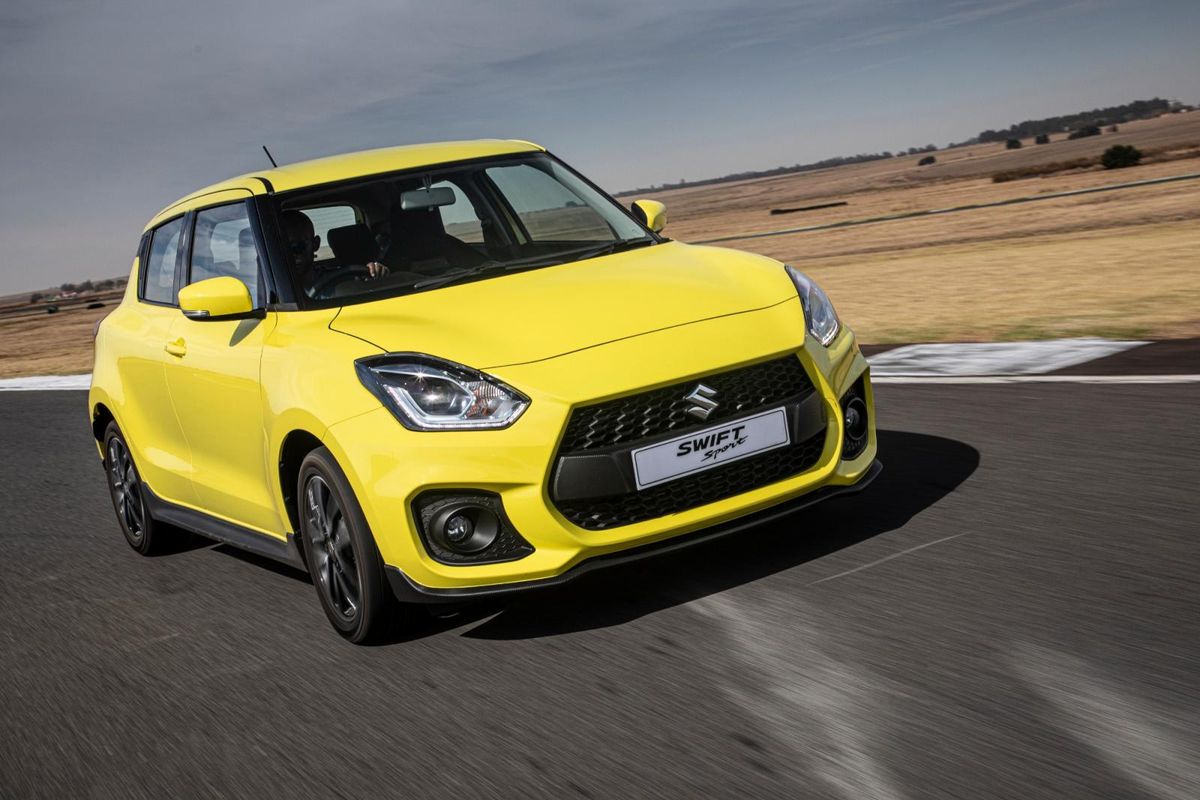
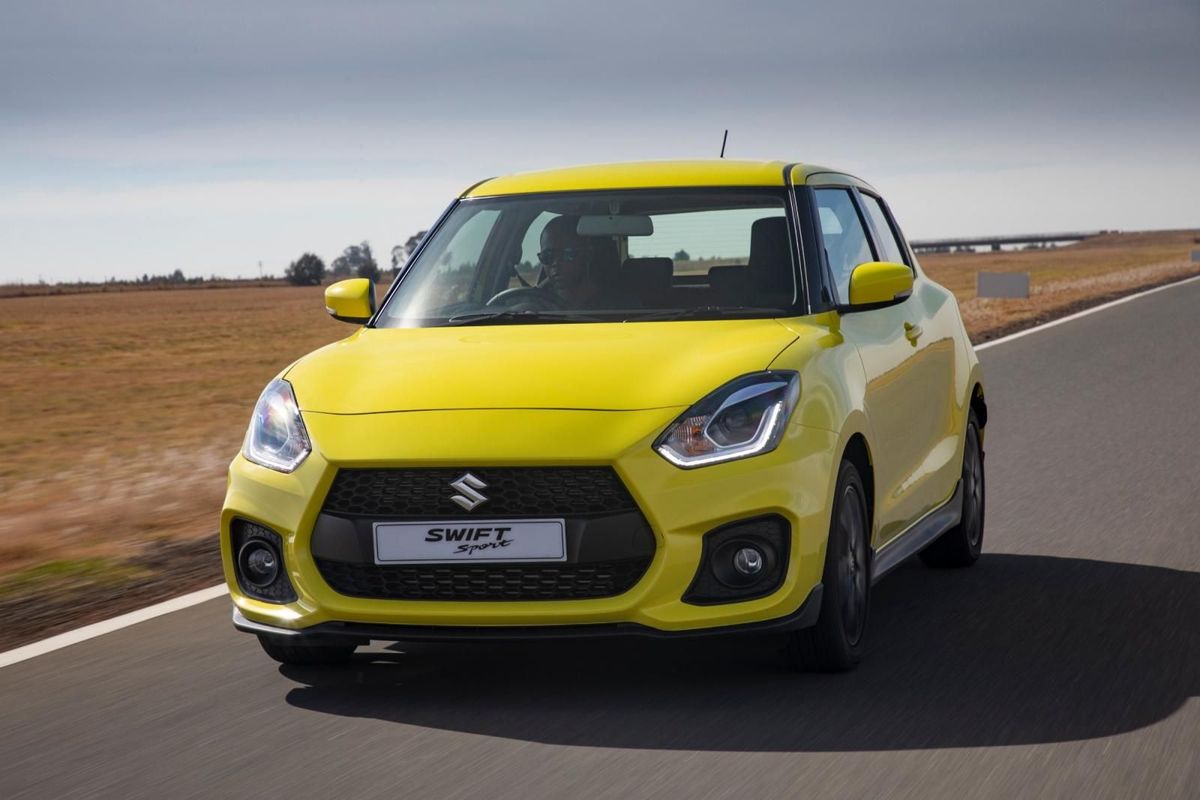
Suzuki Swift Sport (2019) Launch Review
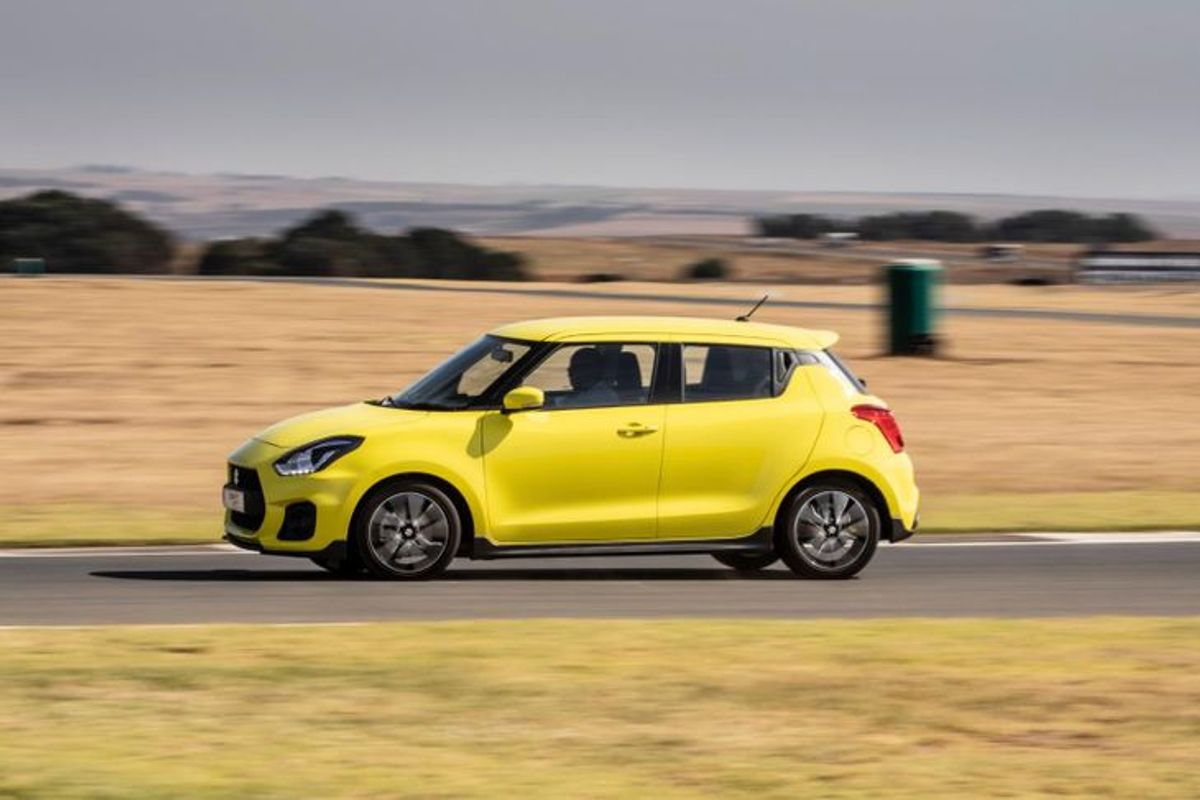
Its predecessors attracted such a cult following that there is a considerable weight of expectation on the (broader) shoulders of the turbocharged Suzuki Swift Sport. Now that the newcomer has finally been made available in South Africa, we were keen to find out: Has the Swift Sport retained its verve, or grown up too much for its own good?
When it comes to determining what makes a great driver's car, or even a "fun-to-drive" car, there are various measurable yardsticks – peak power, or, more to the point: where in the rev range it's developed, 0-100 kph times, and even just plain old top speed, are some of them.

Judged against any of those measurables, the new Suzuki Swift Sport is hardly likely to induce sweaty-palmed excitement. But then, it's always been that way. The Swift Sport recipe is different and it's one that has yielded the previous 2 iterations of the little scorcher a cult following. A blend of throttle adjustability, chassis balance and a zingy, high-rev power delivery provides genuine sportscar-like thrills at a fraction of the price.


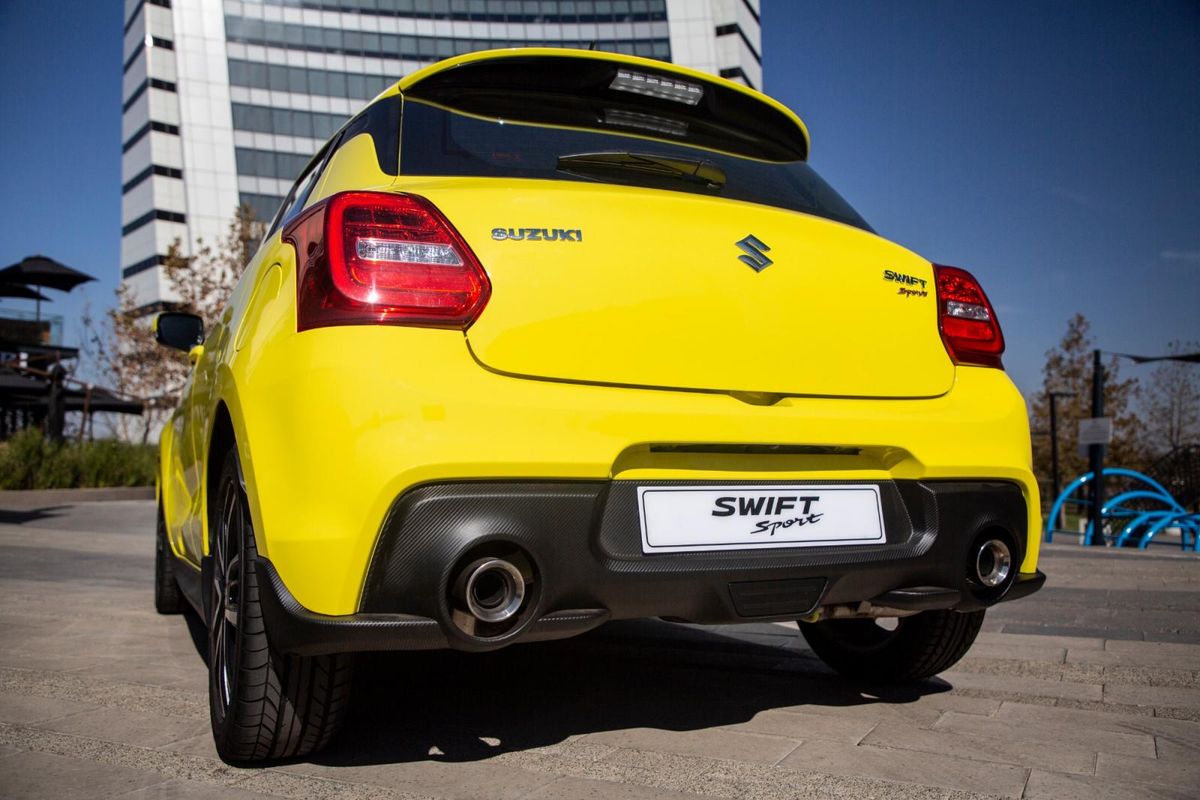
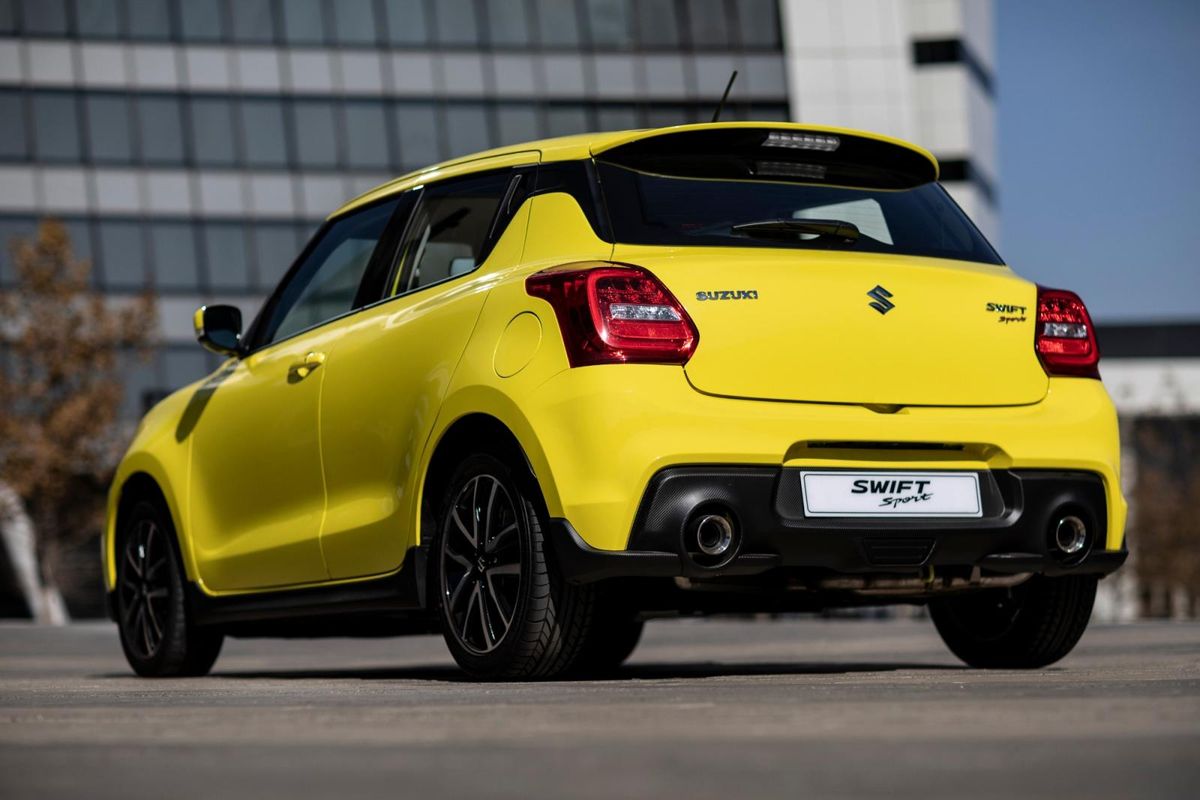
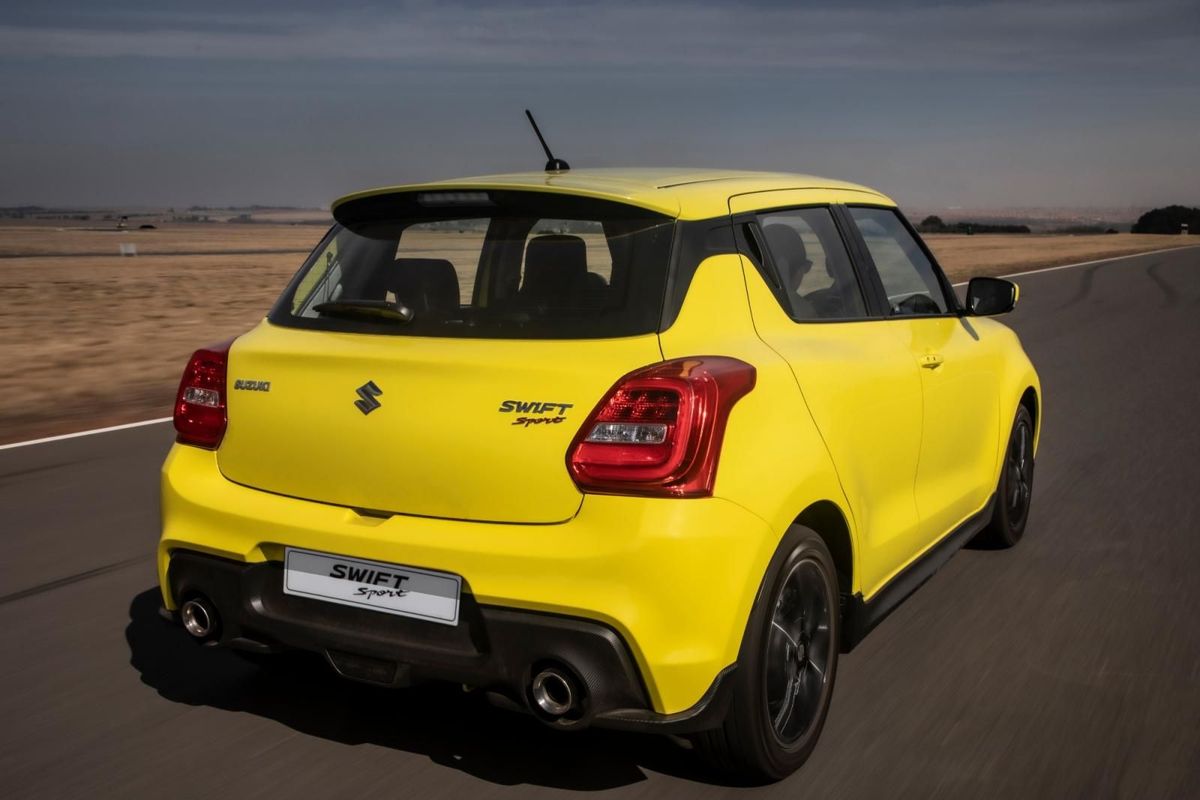
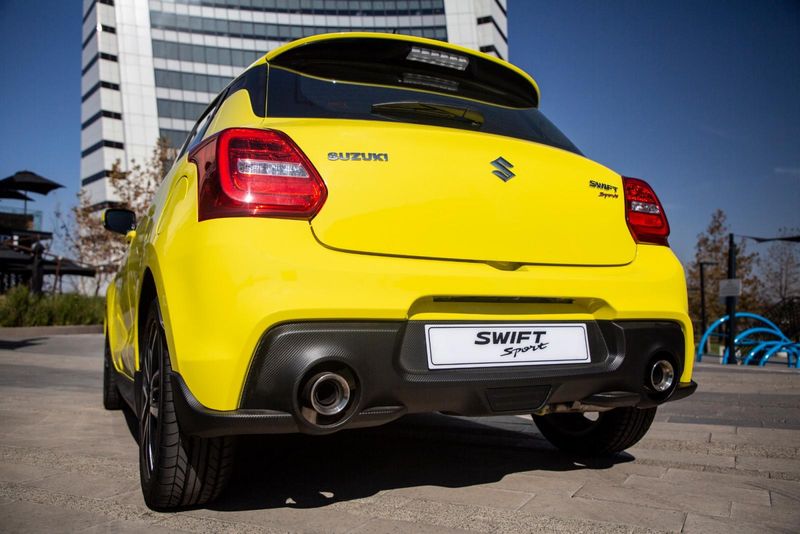
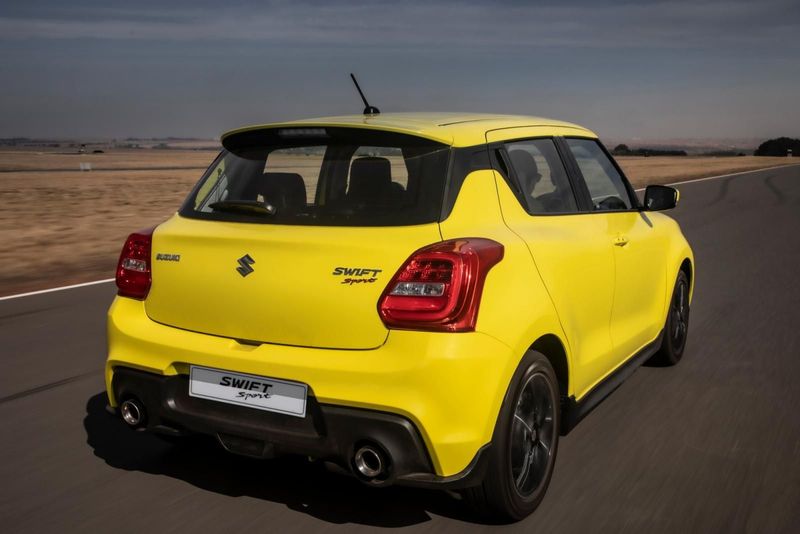
Twin large exhaust outlets and a faux carbonfibre diffuser make the Swift Sport easy to spot from behind.

This new model marks a departure from the norm for the um, swiftest of the Swifts, however. The main change is that it trades that zesty high-revving naturally aspirated powerplant for a grunty turbocharged one. That's a rather fundamental change, isn't it? Does it mean that the new, 3rd-generation car has matured into a refined, warm hatch, from the effervescent little "Jack Russell on wheels" it used to be?

We visited the Red Star Raceway in Gauteng to find out…

First… the facts

Firstly, let's get some of those aforementioned measurables out of the way. The new turbocharged 1.4-litre direct-injection "BoosterJet" engine delivers 103 kW at 5 500 rpm (only 3 kW more than before), and 230 Nm between 2 500 and 3 500 rpm – that's a 70 Nm jump in peak torque. Suzuki Auto SA claims a 0-100 kph time of 8 seconds and 205-kph top speed for the 3rd-gen Swift Sport. The newcomer is offered with either a 6-speed manual or 6-speed automatic (with paddle shifters) transmission and the performance figures quoted for them are identical.

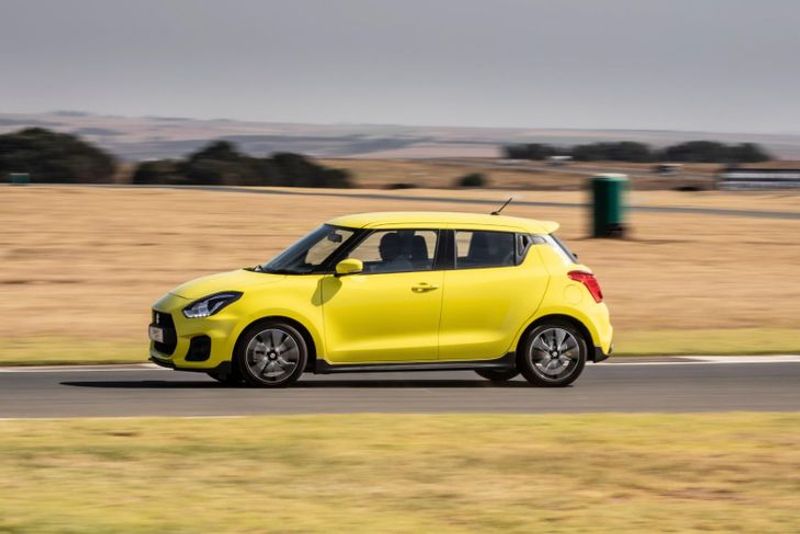
Significantly lighter than before and with far more torque, the Swift Sport is a delight on a tight, twisty track.

But there's a key figure we haven't mentioned yet: kerb weight. The new Swift Sport tips the scales at only 970 kg, that's a full 90 kg lighter than before. This gives it the new car an impressive power/weight ratio (106.2kW/tonne) and means that, theoretically at least, it should be able to trade punches with cars that offer more outright power… rivals such as the Opel Corsa GSi, Mini Cooper S and… yes, even the VW Polo GTI.

I was fortunate enough to be allocated a manual Swift Sport for the track session, and the instructor told us that we should aim to do the entire lap in 4th gear, because the power delivery was so linear and strong from low down. I had my doubts but nearly 10 laps later I must admit that it started to sound less like PR speak, and more like reality. The torque may start peaking at around 2 500 rpm, but there's a lot lower down as well, so the Swift Sport pulls very strongly out of slow corners and, yes, indeed, even in 4th gear. The newcomer certainly has sufficient grunt in reserve, but some enthusiasts will undoubtedly miss the wring-it-by-its-neck nature of its predecessor. This new engine makes it almost too easy to extract performance!

What about the handling?


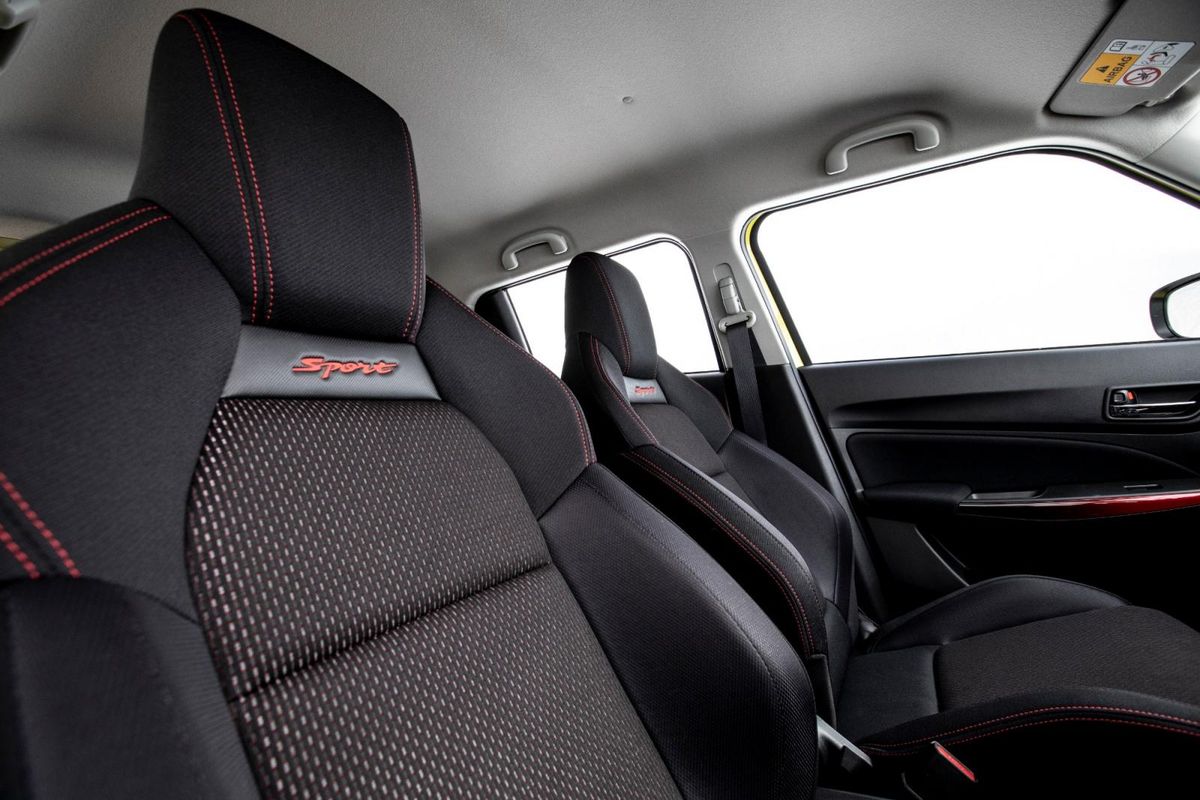
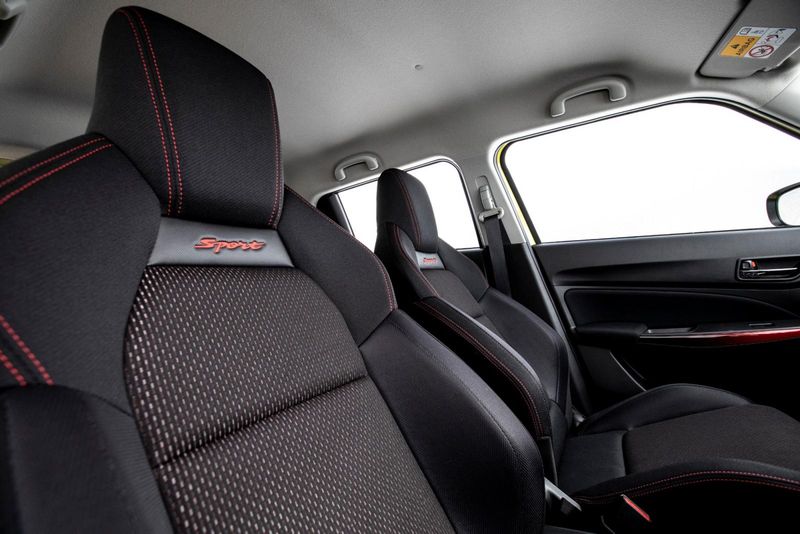
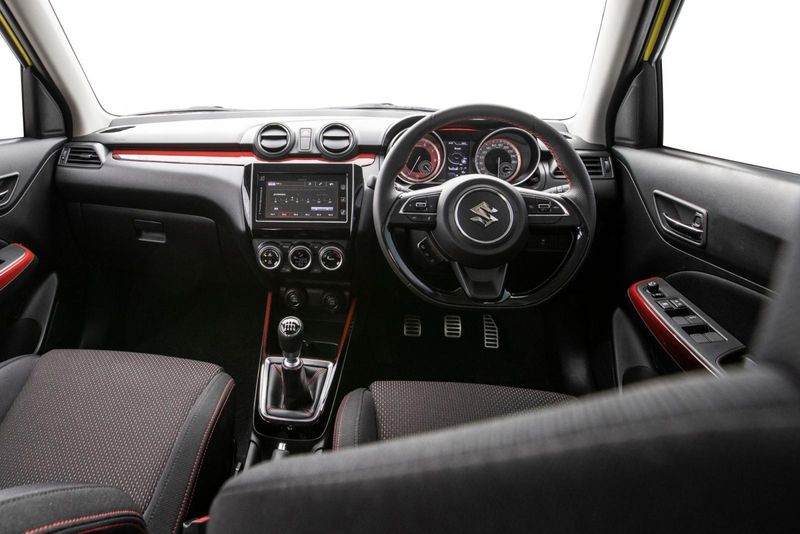
Grippy sports seats look the part and also provide sufficient lateral support in the twisties. Black/red theme carried throughout.

For the sake of testing the Swift Sport's transmission, I did start playing around with ratios other than 4th, however. This is a car that still offers a high degree of "chuckability" or, to put it another way: you (almost always) feel that you can carry almost silly speeds into corners and quell any understeer with a quick lift of your right foot from the throttle pedal. The gearshift action could perhaps be a little sharper – it feels slightly vague/rubbery as the lever slots in the gate, but overall this car quickly instils confidence in its abilities. Sadly I only got to drive the new 6-speed automatic during a gymkhana session, which is not really the best place to evaluate a transmission. Let's hope we get our hands on a test unit soon.

To create the Swift Sport, Suzuki's engineers didn't simply fit a turbocharged engine to the standard hatchback and leave it at that. The company again approached Monroe to develop shock absorbers specifically for the Sport derivative, which are claimed to counter body roll and deliver more progressive understeer in the corners. I can certainly vouch for the latter claim: it's been a while since I've driven on such a tight, twisty track and I regularly found myself entering corners way too fast and, while the front tyres certainly squealed in protest on occasions, it was all easy to correct.


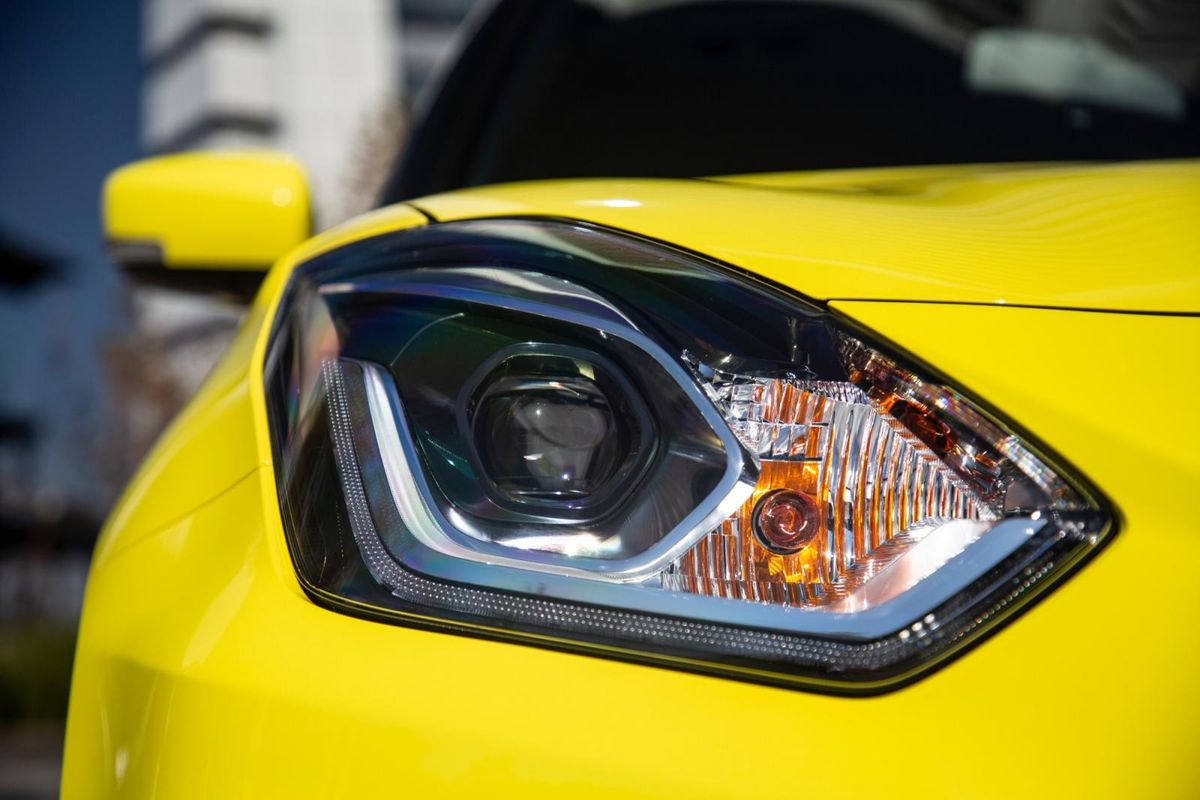
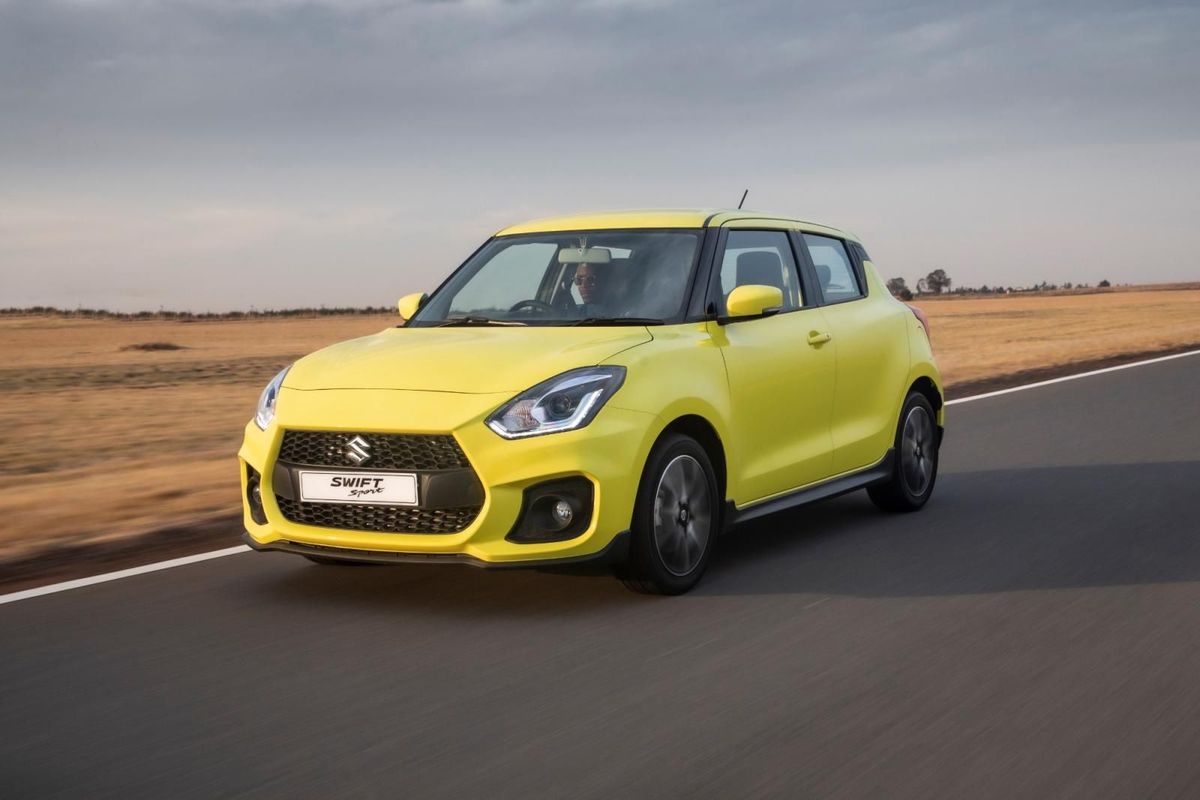
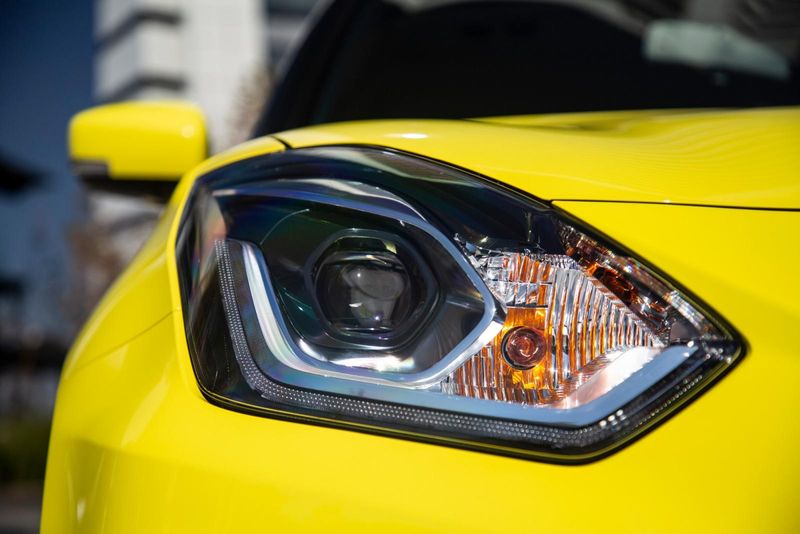
LED lights are used front and rear and the Swift Sport has a slightly more protruding grille. 

The Swift Sport also has thicker anti-roll bars, an integrated single-unit solution for the wheel hub and bearings, as well as increased spring and damper rates at the front. There is a unique trailing arm suspension at the rear, which is said to improve tracking between the front and rear wheels.

On a track (where we were advised to stick to 4th gear, remember?) hard braking was obviously not of tremendous importance, but we later also participated in a gymkhana session where we punished the thicker/bigger front ventilated discs and rear solid discs. The fastest gymkhana time was achieved by a driver in the 3rd and last group (there were numerous media representatives at the event), so it seems the brakes are up to the job.

Best bang-for-buck?

Suzuki has priced the newcomer at R315 900 (manual) and R335 900 (automatic), which includes of a 5-year/200 000km promotional warranty and 4-year/60 000km service plan. For your money, you're getting a fully-loaded vehicle, with standard features such as a touchscreen infotainment system (with integrated reverse-view camera display), Apple CarPlay/Android Auto, cruise control, climate control and a full suite of safety features.


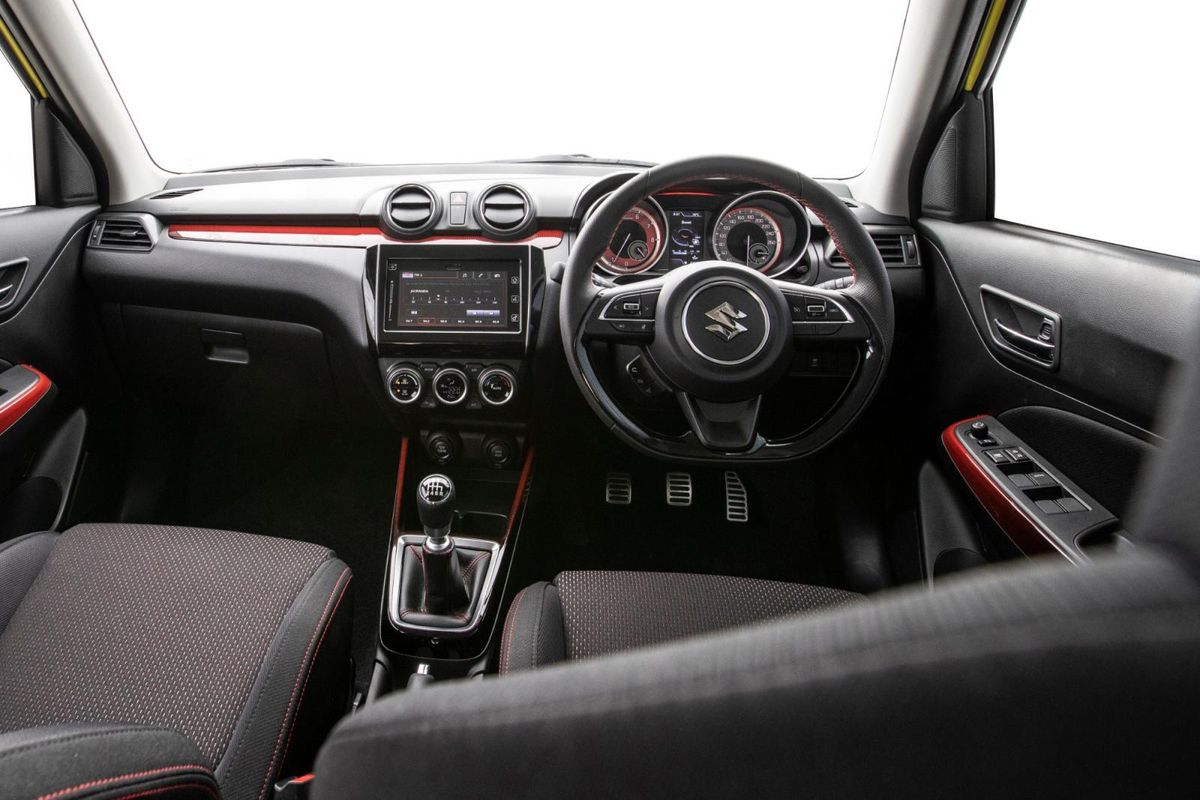
Black and red theme for the racy cabin, but note standard touch-screen and extra LCD display between dials.

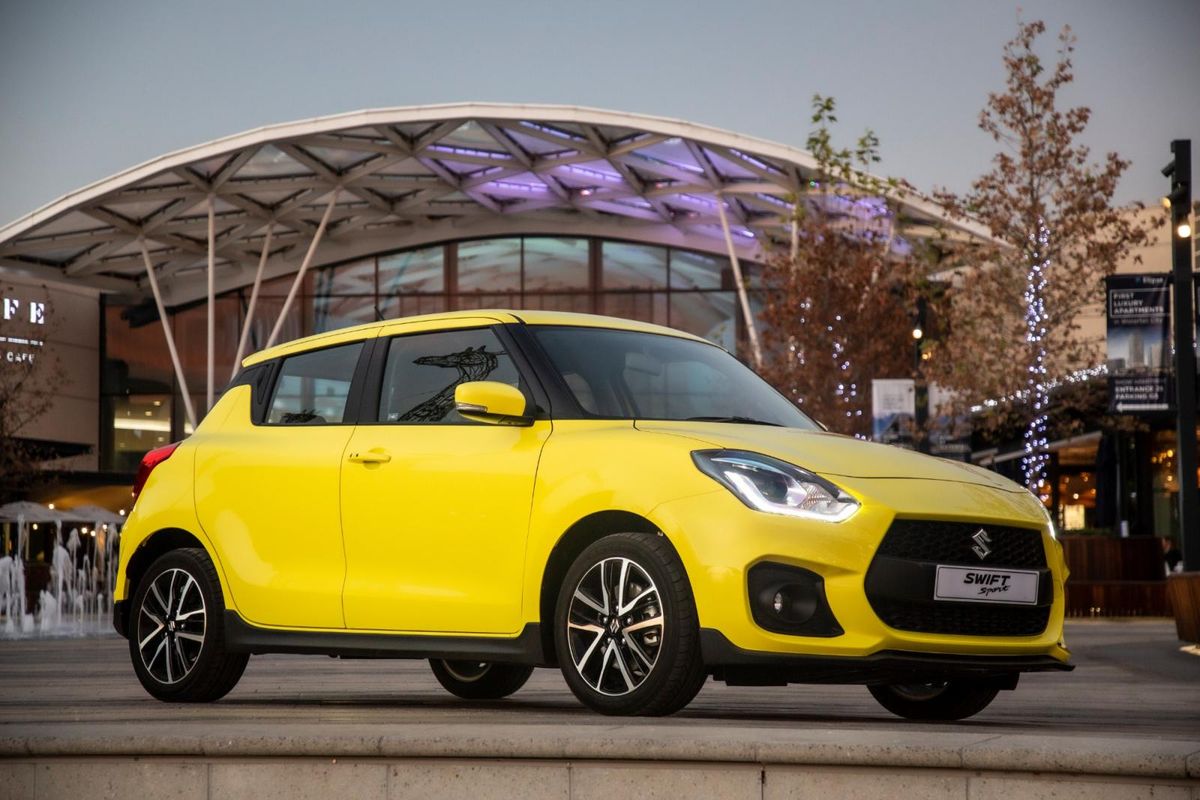
Make of the exterior design what you will – I'm quite partial to it in the Champion Yellow colour finish – but, in terms of differentiating the Swift Sport from its lesser siblings, you get 16-inch alloy wheels, a "carbon-fibre" front splitter, side skirts and rear diffuser, a pair of blingy tailpipes, a different grille, LED front and taillamps, and a subtle wing spoiler.

Inside, there are grippy new seats, and subtle red accenting to remind you that you're seated in something special. Serious petrolheads will also appreciate the digital display that can be configured to display values such as boost- or oil pressure.

But none of those features really matter where we drove the car during the launch (on the track only), and while they do add to the showroom appeal of the car, and will for some help justify the price, the reality is this… those fripperies (gimmicks, even, if you were to be cynical) are representative of a car that Suzuki hopes will appeal to a wider audience than the circle of near-fanatical fans that its predecessors attracted. 

Summary


Different in character, but still fun, the new Swift Sport offers a compelling purchasing argument for any petrolhead.

Yes, guys (and gals) in other cars may beat you in traffic lights grands prix… in fact, it's highly likely that they will. Their cars will make crowd-pleasing farting noises while yours, unfortunately, doesn't have a particularly distinctive sound at all. If that matters, then this is not the car for you.

However… if finding joy in the simple act of driving a car briskly is what you're after, then you should give the Swift Sport a long, hard look. You know what I'm talking about… you're not driving to get from A to B, but you're out there just to enjoy your driving. That's where the ever-engaging Swift Sport beats anything in its price range. But now it also gets you from A to B in greater comfort and refinement than before when you need that.

Yes, so while some of the cheeky, pugnacious and "or-die-trying" character of its predecessors has been lost and, as a consequence, this 3rd-generation car might struggle to achieve the same fanatical following as previous Swift Sports, its priced and packaged in a way that makes it far less compromised as a package. And, all the while, it still retains a healthy dose of that "immeasurable" X-factor that previous models had. 

Looking for a Suzuki Swift to buy?

Find one today on Cars.co.za by clicking here

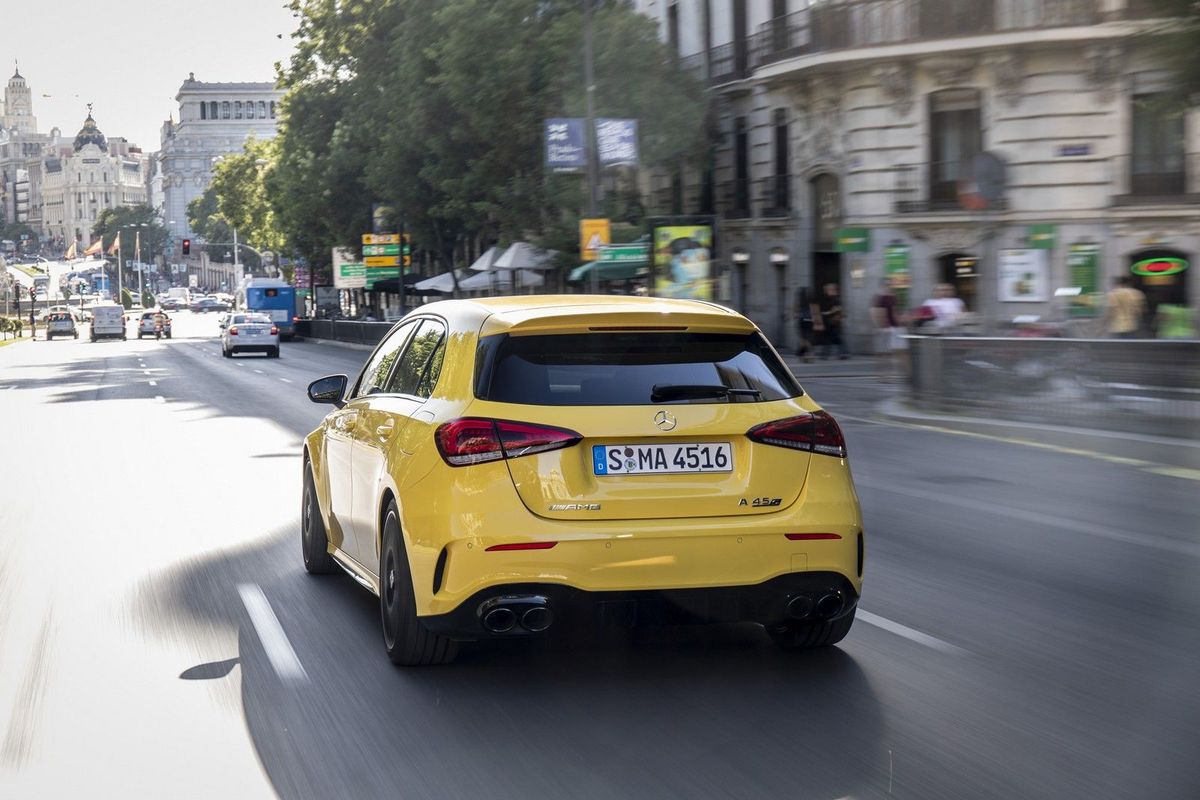
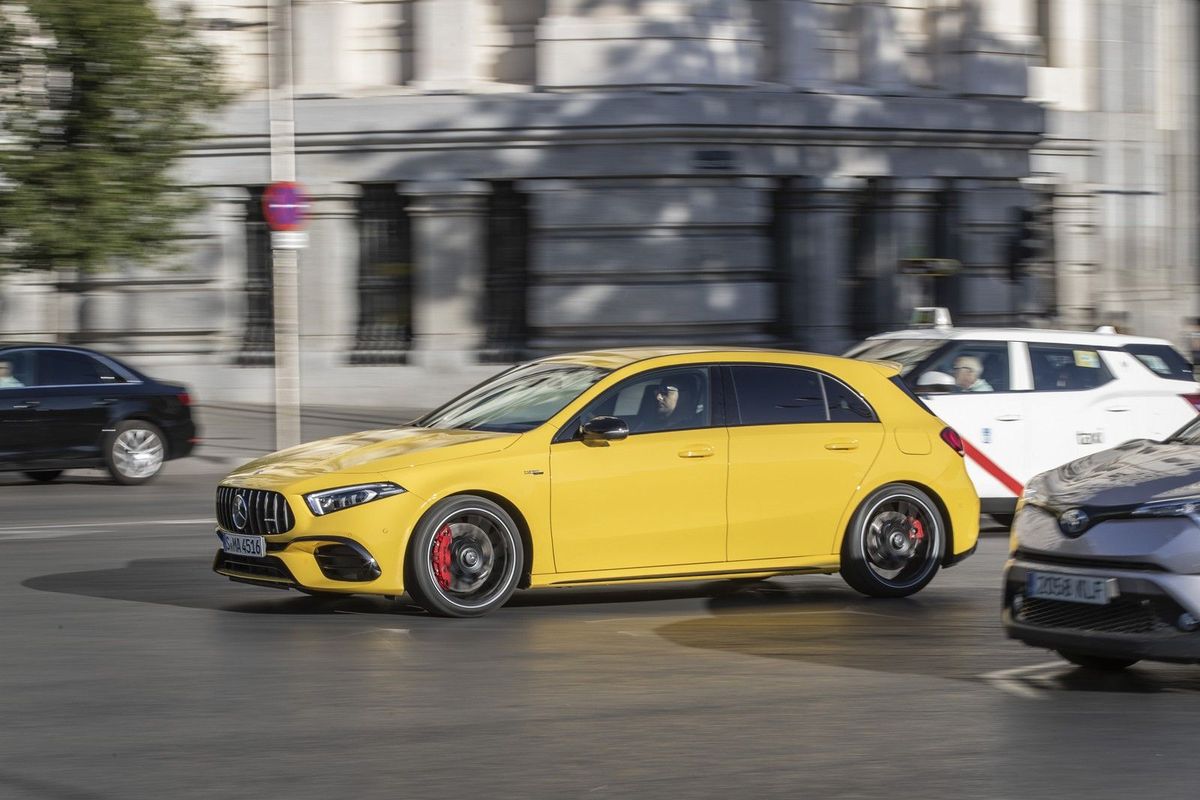
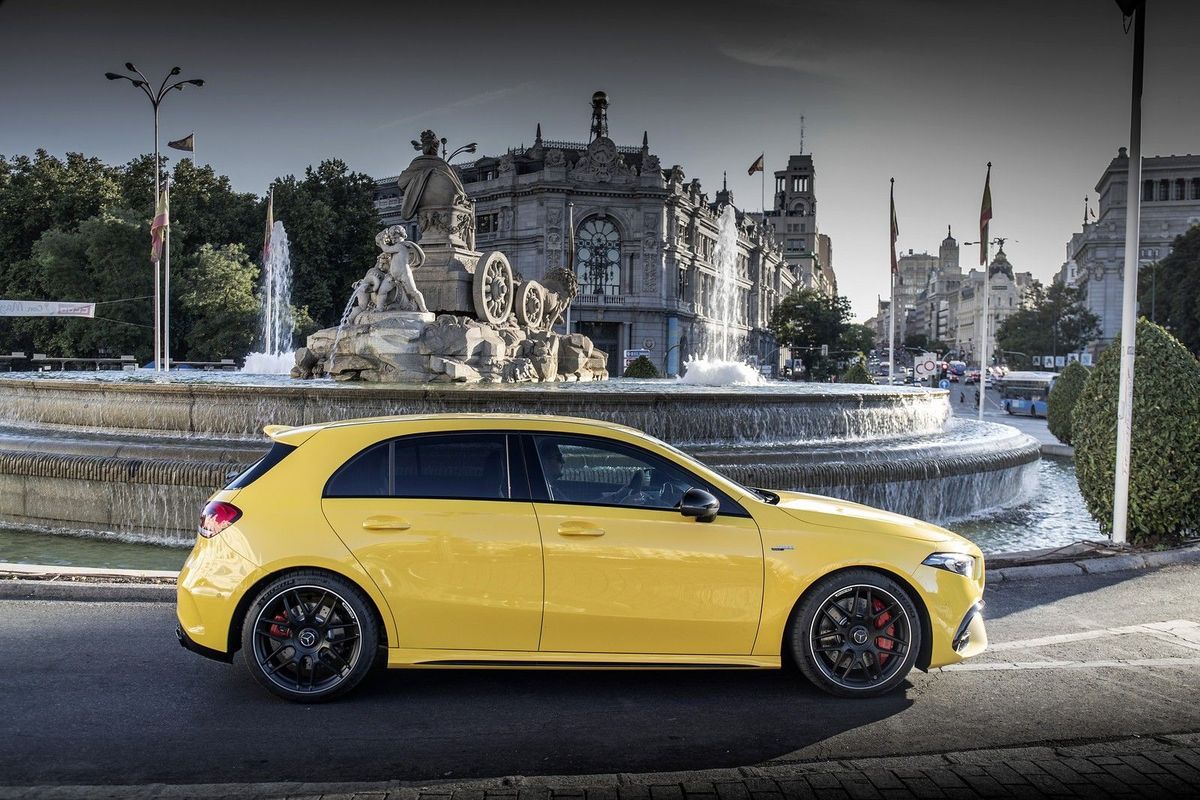
Mercedes-AMG A45 S (2019) International Launch Review

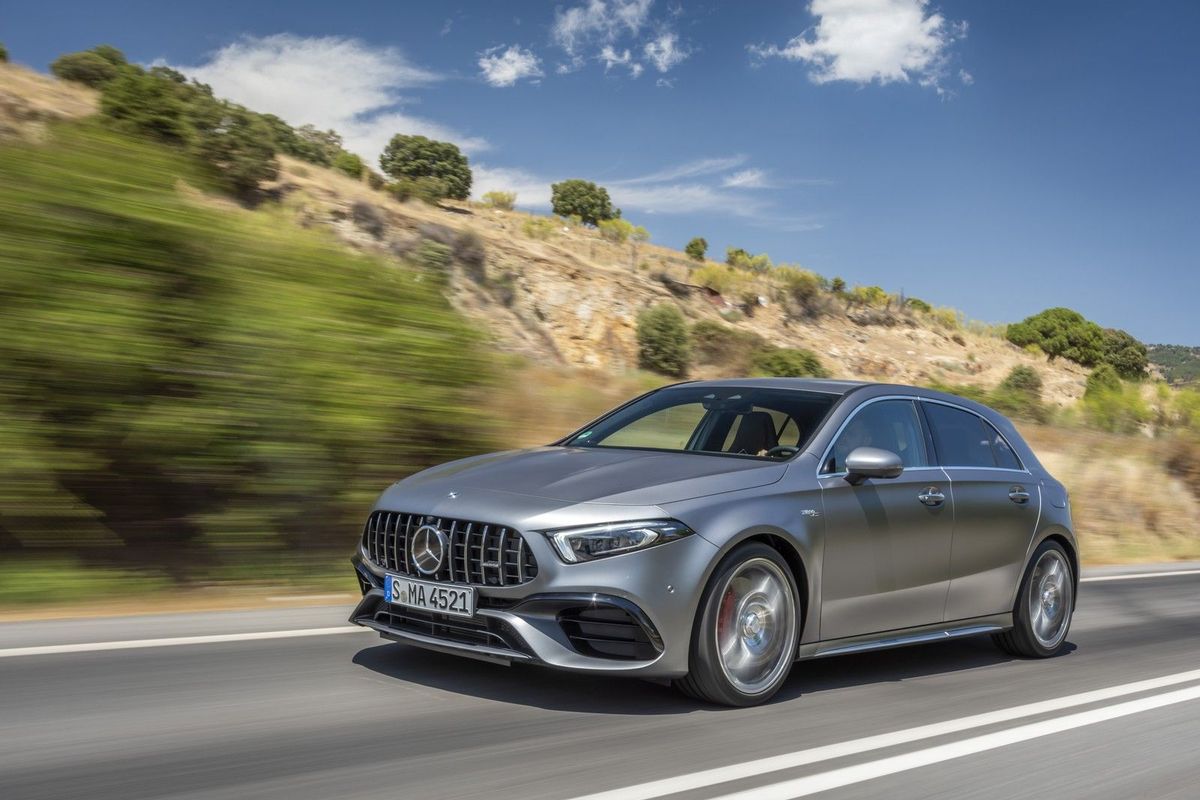
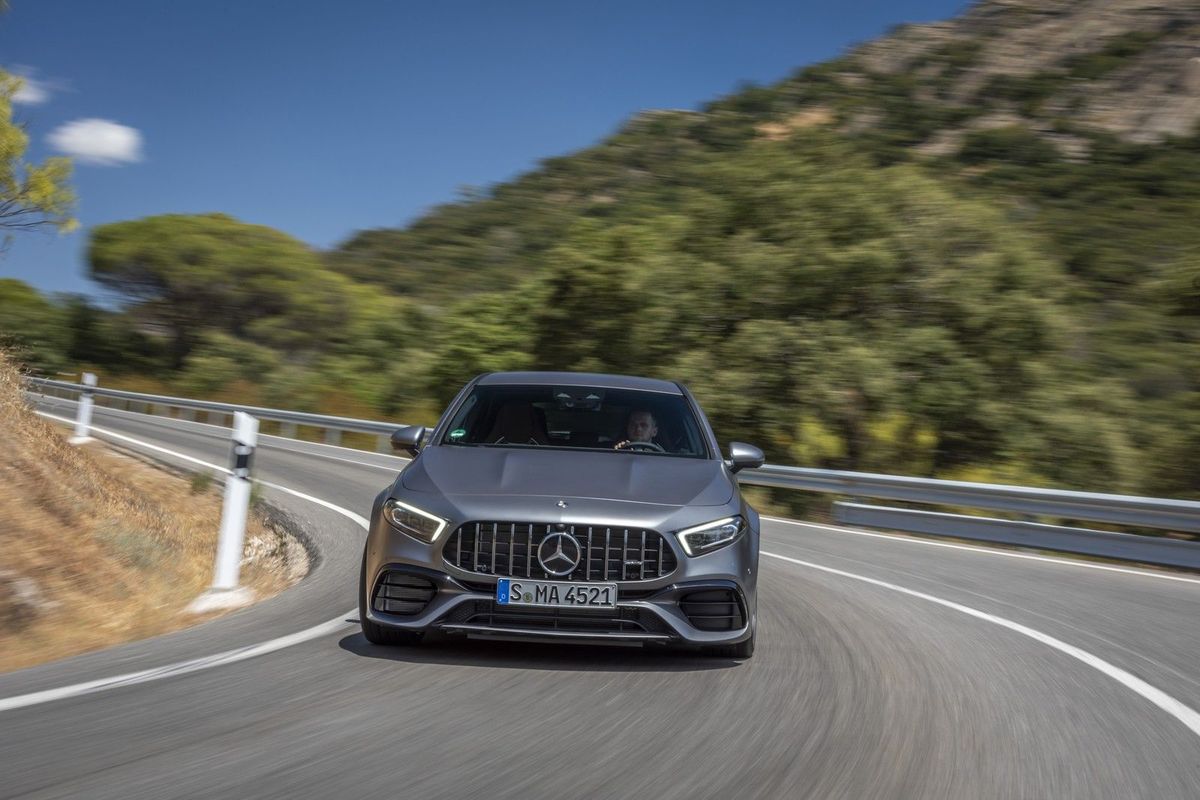
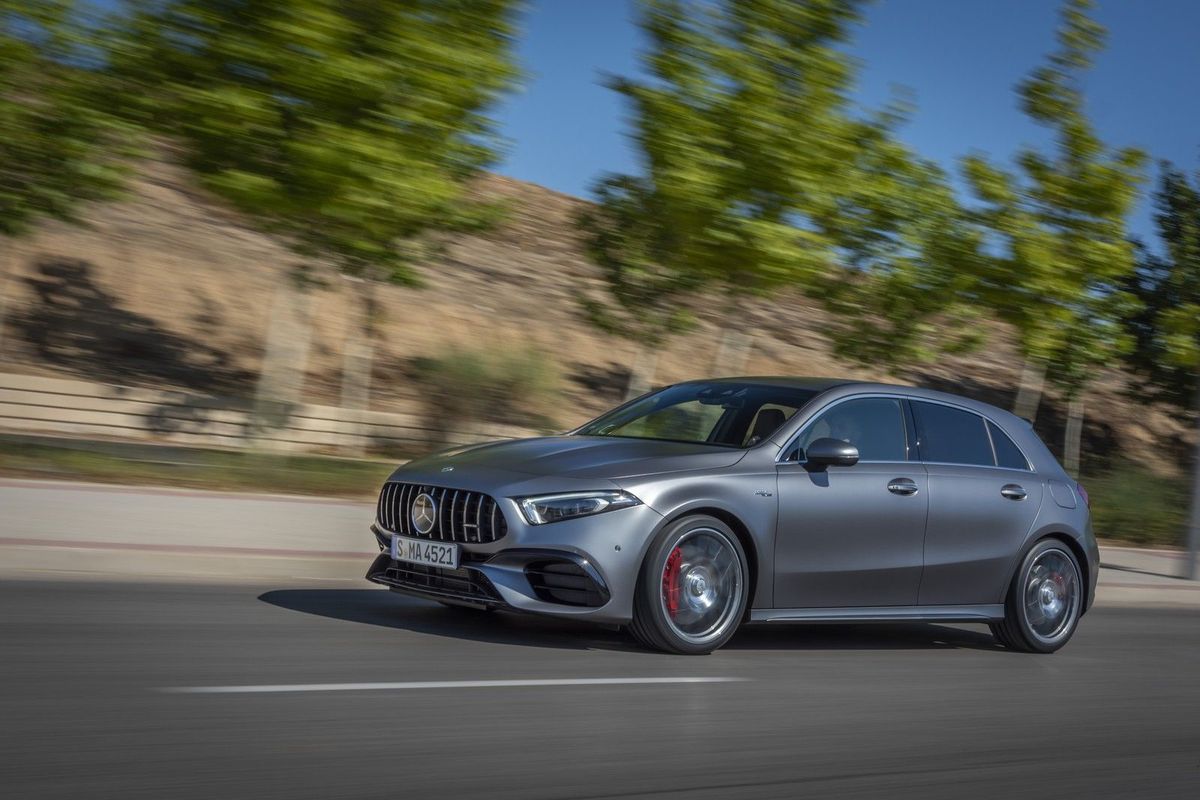
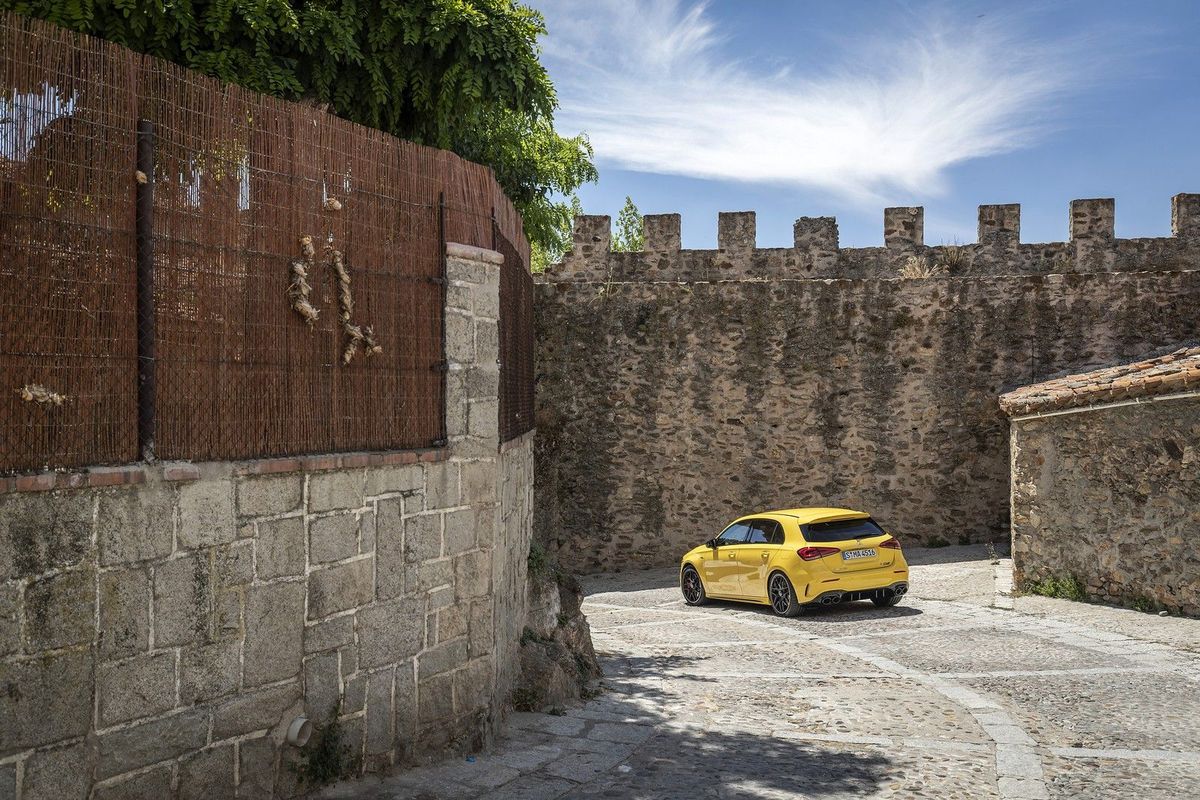
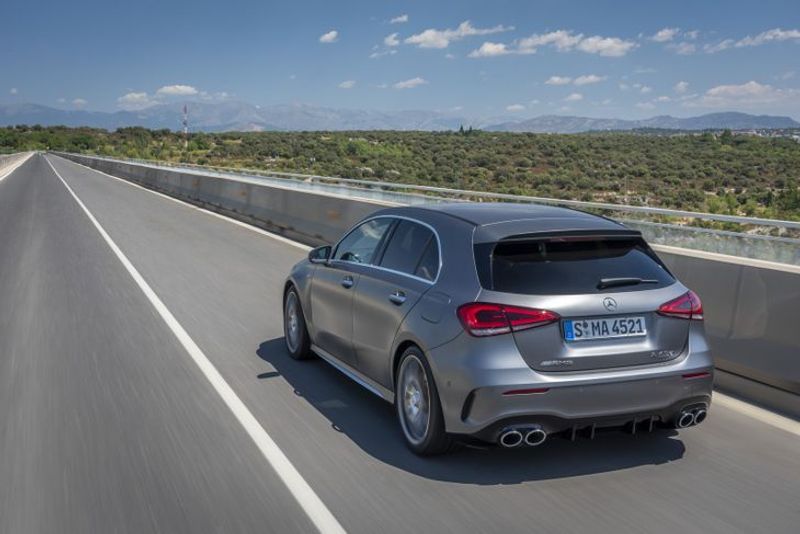
Why did Mercedes-AMG develop its 2.0-litre 4-pot to produce near-ludicrous peak outputs of 310 kW and 500 Nm? Well, so that the engine could power the flagship of the W177-generation A-Class, which (again) moves performance goalposts in the "hyper hatchback" segment… We headed to the ex-F1 Jarama circuit in Spain to sample the A45 S.

What’s new?

First shown at the recent Goodwood Festival of Speed, the A45 S is the first 45-series Mercedes-AMG to be spun from the new A-Class. The A35 has had a month or 2 to shine, but now it’s time for the real McCoy to grab the limelight, which few would argue it doesn't deserve. The headline news is that the newcomer's 2.0-litre 4-cylinder turbopetrol develops no less than 310 kW and 500 Nm of torque. Those numbers see the Benz leave the hot hatch brigade well in its wake and move towards the realm of the hyper hatch; its an engineering achievement that beggars belief.


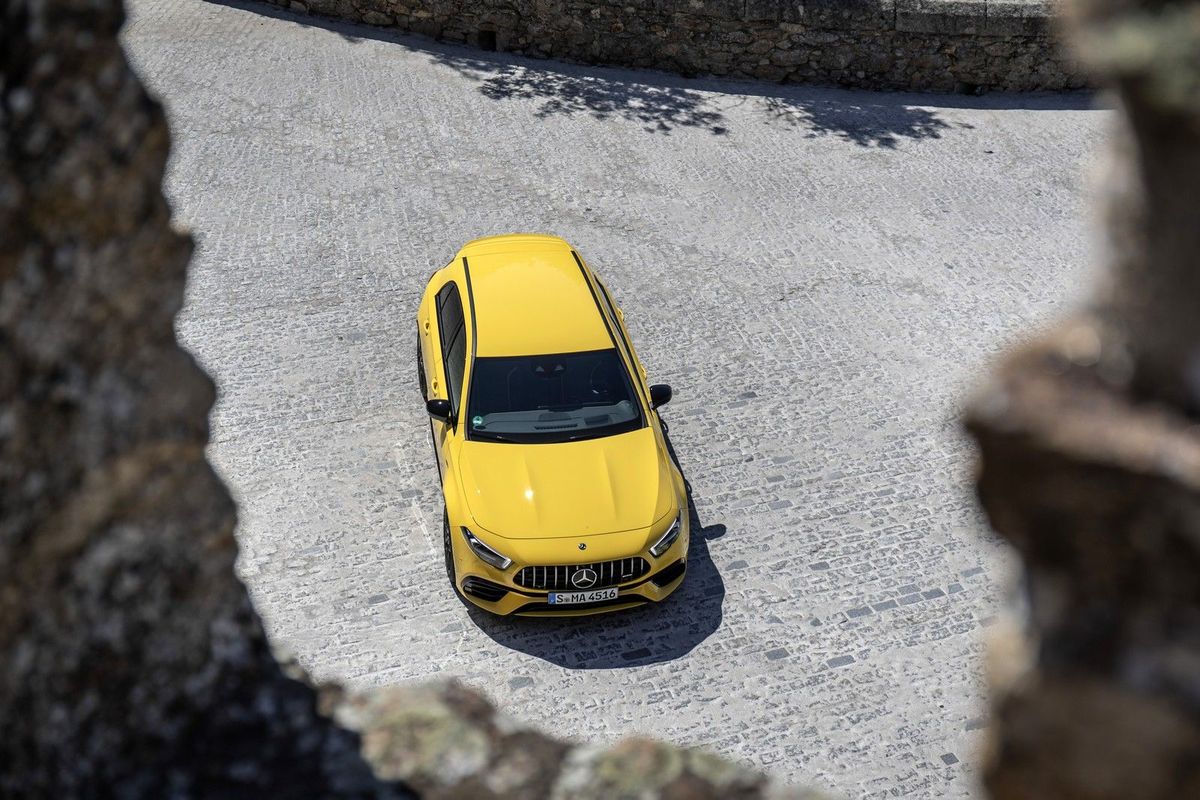
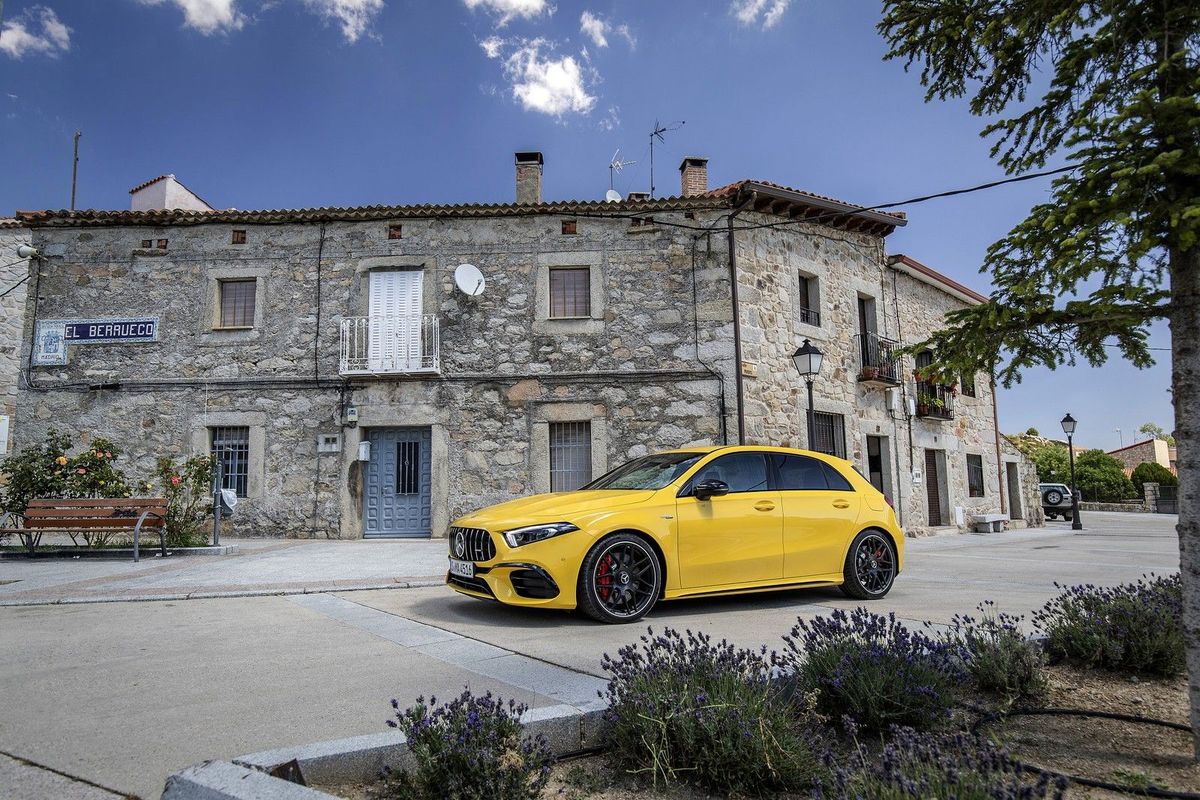
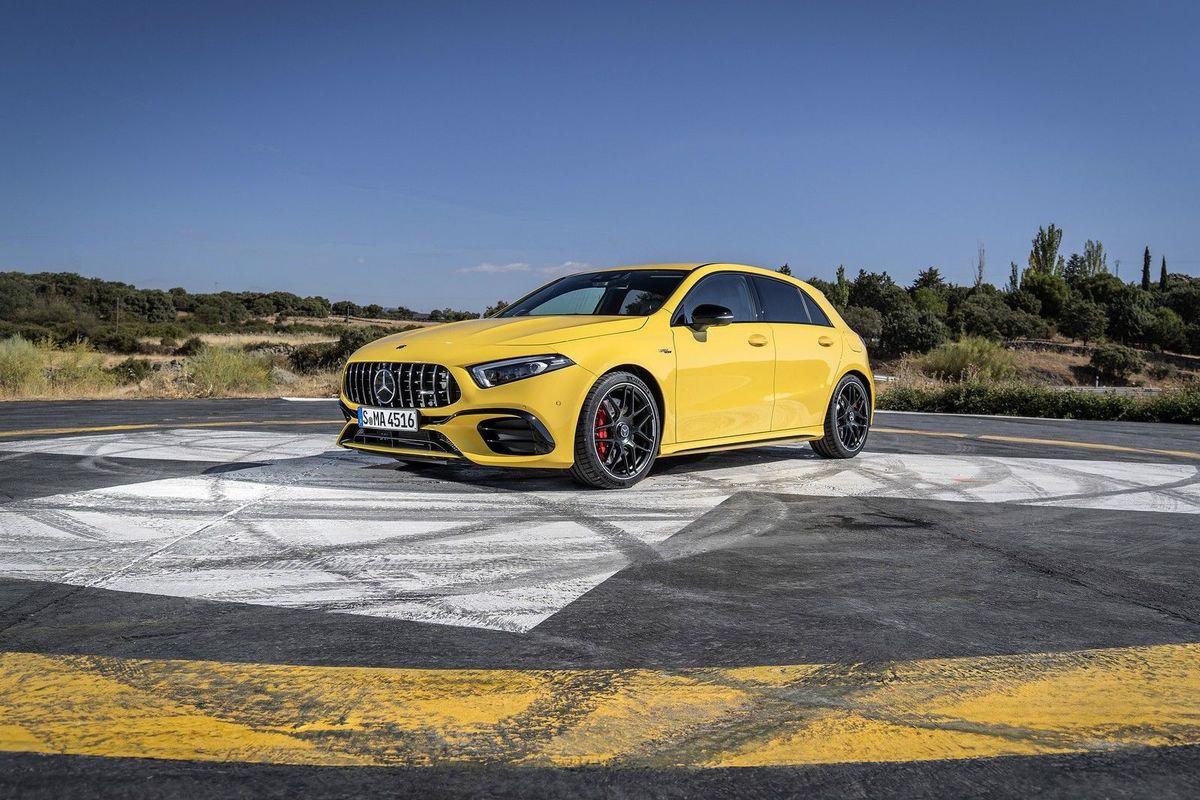
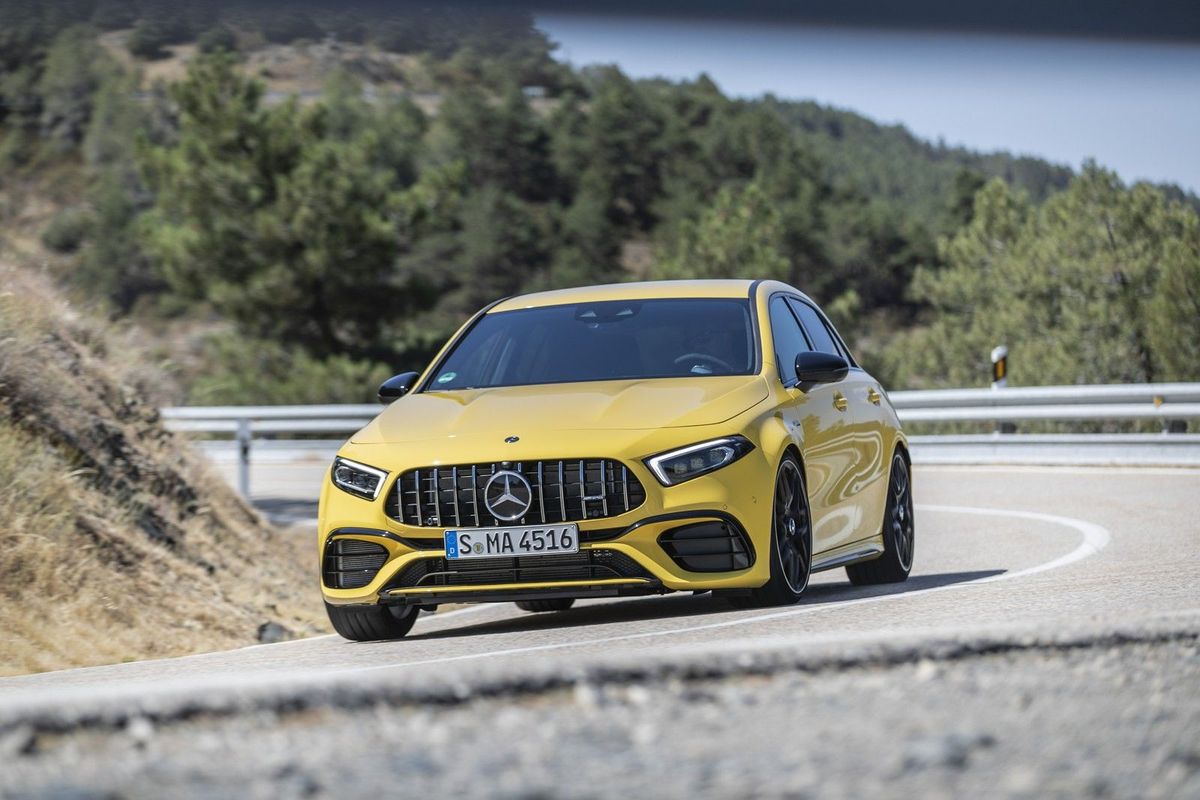
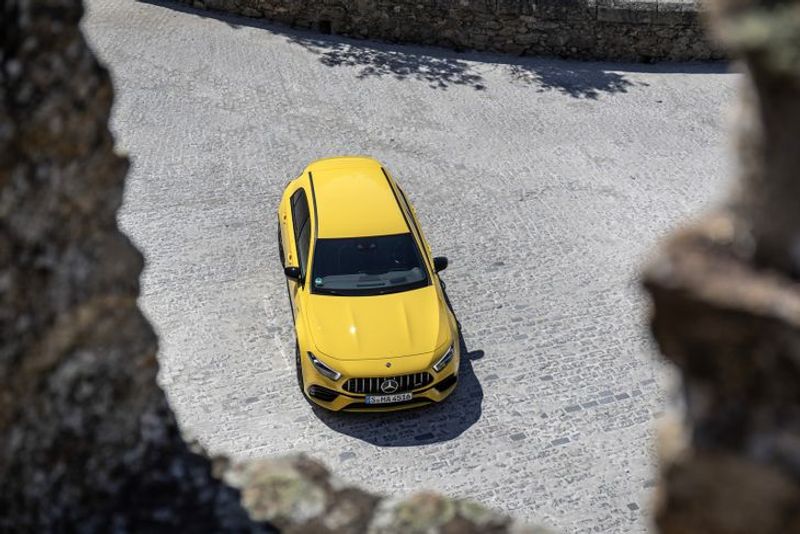
Don't confuse this with the A35, this one gets the full Panamericana grille.

The A45 S – the only version of the W177 A45 hatchback that will be released in South Africa – has undergone a raft of improvements to optimise its handling, performance and even comfort. It doesn’t appear to be all about statistics and numbers with this version, either: Mercedes-AMG seems to have endeavoured to transform the A45 from an electronically-aided marvel to more of a driver-focused machine. Has Affalterbach succeeded?

Have a read of our A35 launch review here

Engine wizardry

The A45's potent powerplant is nothing short of a gem; it's positioned differently to the comparatively mild 2.0-litre motor in the A35 (turned by 180 degrees, with its turbocharger and exhausts at the back and the intake facing towards the front bumper). This configuration aids aerodynamics and shortens piping distances. The twin-scroll turbocharger has been cranked up to boost to 2.1 bar (it’s where the bulk of the performance gain comes from), while new roller-bearings within the turbo's internals allow it to spin up faster and reach optimal pressure sooner, which reduces turbo-lag.

In action, the enhancements prove… extremely effective! The responsiveness and immediacy of power delivery when exiting corners with the A45 S is quite unlike any turbocharged petrol engine that I’ve driven to date (well, at least ones without electric assistance). The motor easily spools up to 7 200 rpm, where the acceleration sensation just starts to taper, before you summon the next gear and the surge repeats with renewed brute force.


Intake at the front exhausts at the back, it's turned 180 degrees compared to A35.

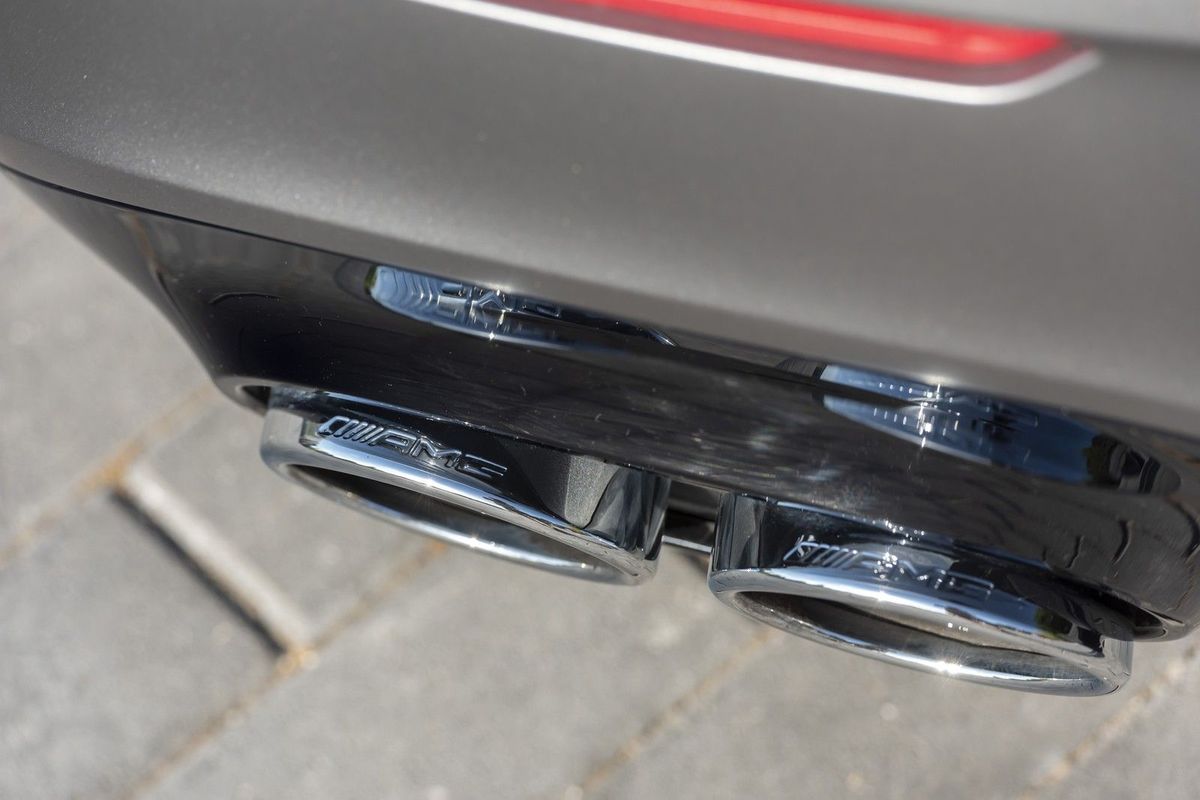
The engineers have attempted to give this engine a unique soundtrack and the way they've gone about it is the product of a fair bit of hocus pocus. The sound is conjured up through a combination of exhaust flaps that open up as well as special engine sensors that pump actual engine sound into the cabin. When out on the road, short bursts of acceleration make the A45 S sound beastly, really raspy and loud, much like you’d expect from a shouty hatchback with flared arches, a front splitter, rear diffuser and 4 exhaust ends. On track, when you’re on maximum throttle for long periods, it’s a bit droney and tiresome, but come off the throttle (while in Sport plus or Race mode) and it'll rattle off a hilarious volley of cracks and backfires.

All of this translates into some manic acceleration times, as you may imagine. If you utilise launch control in Race Mode, the A45 S will propel itself from 0 to 100 kph in a ballistic 3.9 seconds – it marks the first time one of the German Big 3 (Audi, BMW and Mercedes-Benz) officially claim to scrape under the 4-second barrier with a compact performance model. The 8-speed dual-clutch ‘box fires though shifts with the ferocity of an '80s headmaster’s cane. Downshifts are met with rev blips, but are engaged with alarming speed, especially when using the manual paddle shifters. 

Mercedes-AMG will launch the A45 S and CLA45 S during Q4 of 2019.

Is it good to drive?

Okay, so the original A45 had a few issues, many of which we've reported on. Its ride quality was overly rigid (almost bouncy at times) and it wasn’t very involving to pilot – the whole driving experience seemed to revolve around the front differential helping to steer the car out of corners.

Fortunately, the new A45 S represents a vast departure from its predecessor in terms of its general demeanour. The newcomer's body is admittedly fundamentally stiffer and its suspension is still taut, but not in a way that it jolts its occupants around or skips across uneven surfaces. Out in the hills around Madrid, the roads wind for tens of kilometres; they're perfect for getting into a rhythm and assessing the nuances of the new A45 S’ handling talents. The front end bites more than before, reducing some corner-entry push and increasing agility when changing direction. It still requires soft, guiding inputs to alter direction, more so than in hot hatches like a Fiesta ST or Megane RS, which can be "thrown about" merrily, if at lower speeds.


The ride is much-improved from the bumpy and crashy previous generation.

Much of the improved handling can be attributed to the talents of the A45 S' new differential, which can divert torque to individual rear wheels, where before it could only send it fore or aft. To put it another way: you can now achieve power-on oversteer in an all-wheel-drive hatchback. The Jarama circuit starts with 3 alternating slow-speed hairpins and with the bitier front-end you can snap up an apex and then bury the throttle early. Instead of boring understeer (so characteristic of AWD hatches) the rear actually starts to come around in a controlled easy-to-catch slide. It adds another, unexpected, element to driving the A45 S. Previously, it lacked the driver engagement of the rear-wheel-drive BMW M2, but now there’s something less predictable about going fast in the flagship A-Class. It's also equipped with a Drift Mode, which adapts the ESP to facilitate power slides.

If the slidey stuff doesn’t interest you, simply slip the drive mode back into Sport or even Sport Plus and let that confidence-inspiring 4Matic all-wheel-drive system ensure that all 4 corners of the A45 S remain in check/solidly-glued to the road. The steering deserves more credit than most electrically assisted setups for providing good feel and feedback; although it weights up artificially the more angle you apply, it feels quite natural.

Take a look at the CLA 45 S here.

Performance add-ons


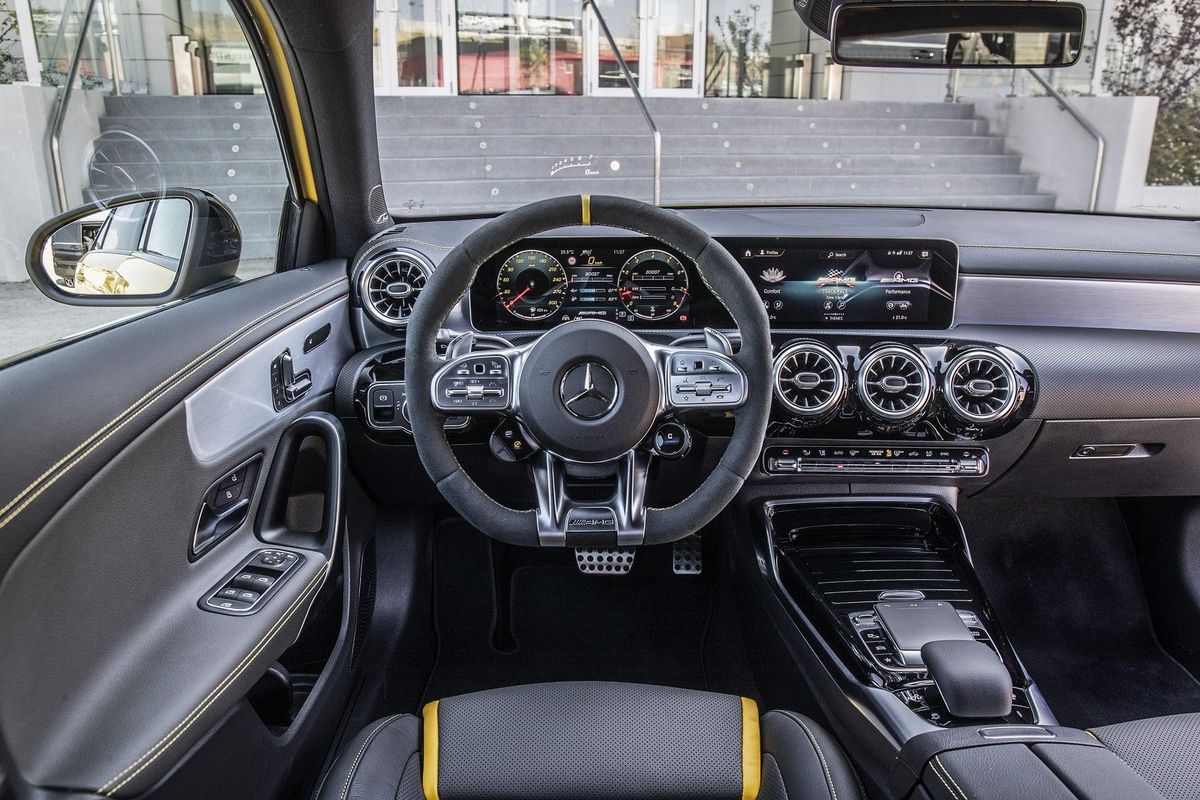
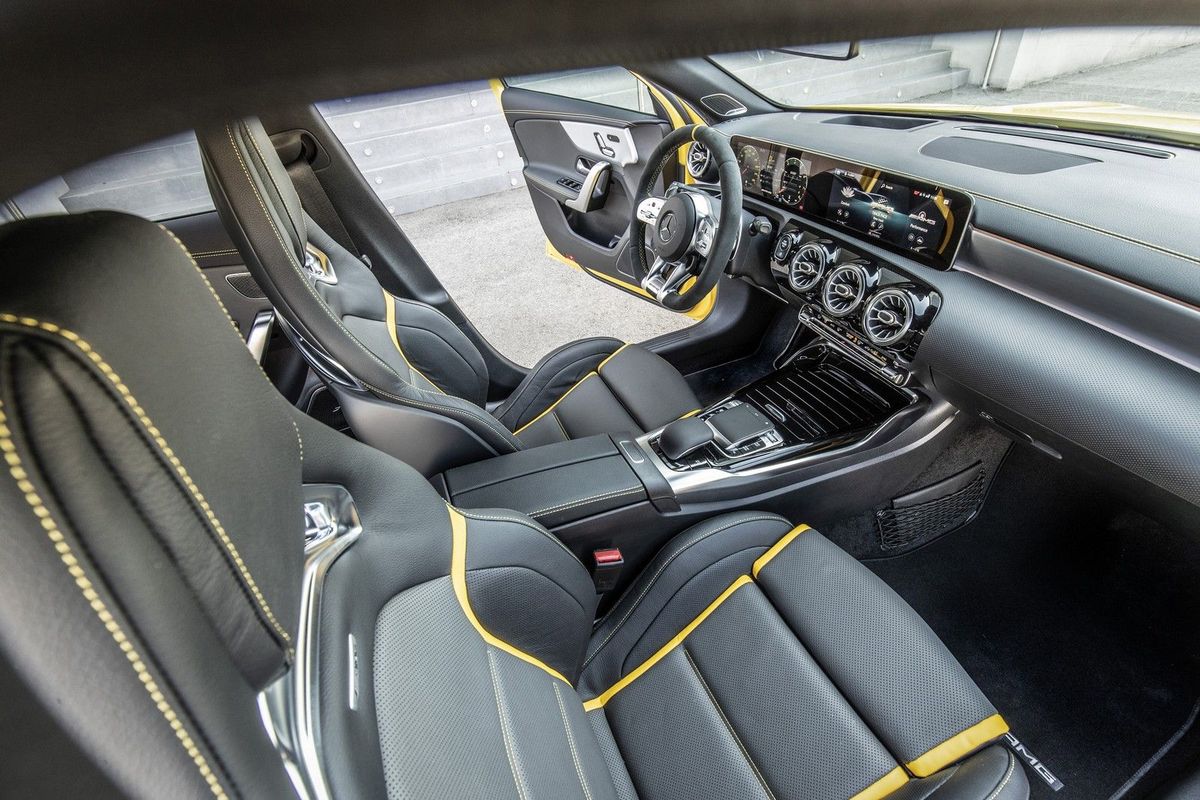
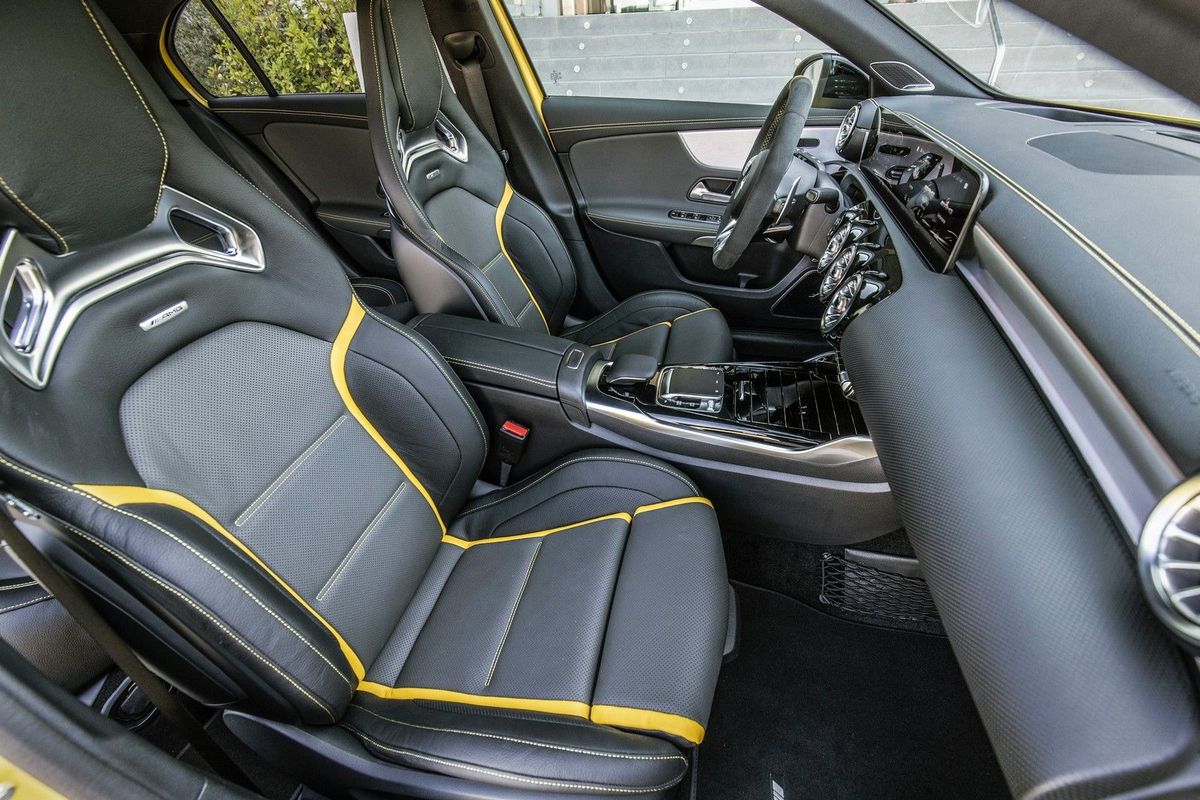
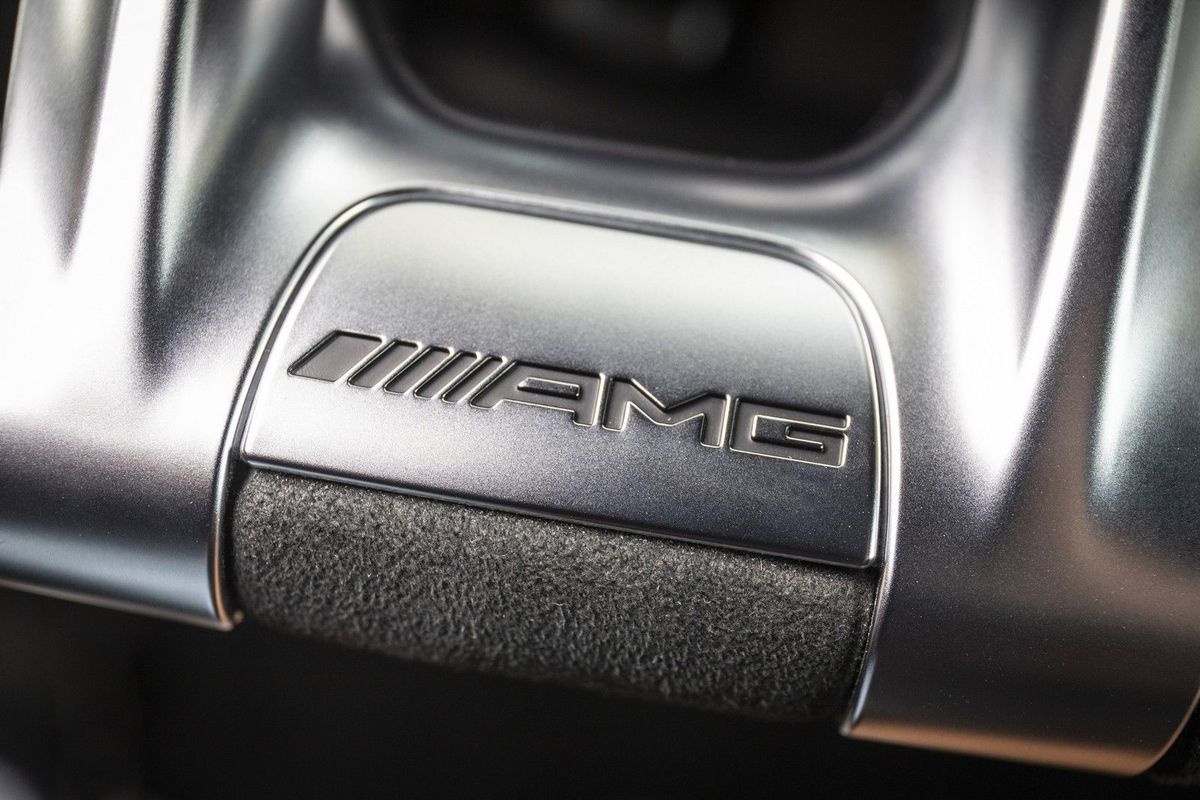
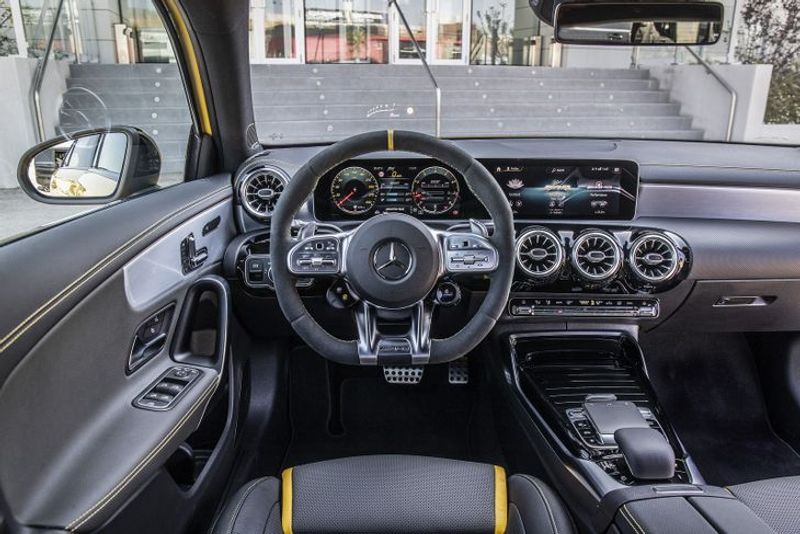
The A45 S interior can be specced with yellow stitching, stripes and an Alcantara wheel.

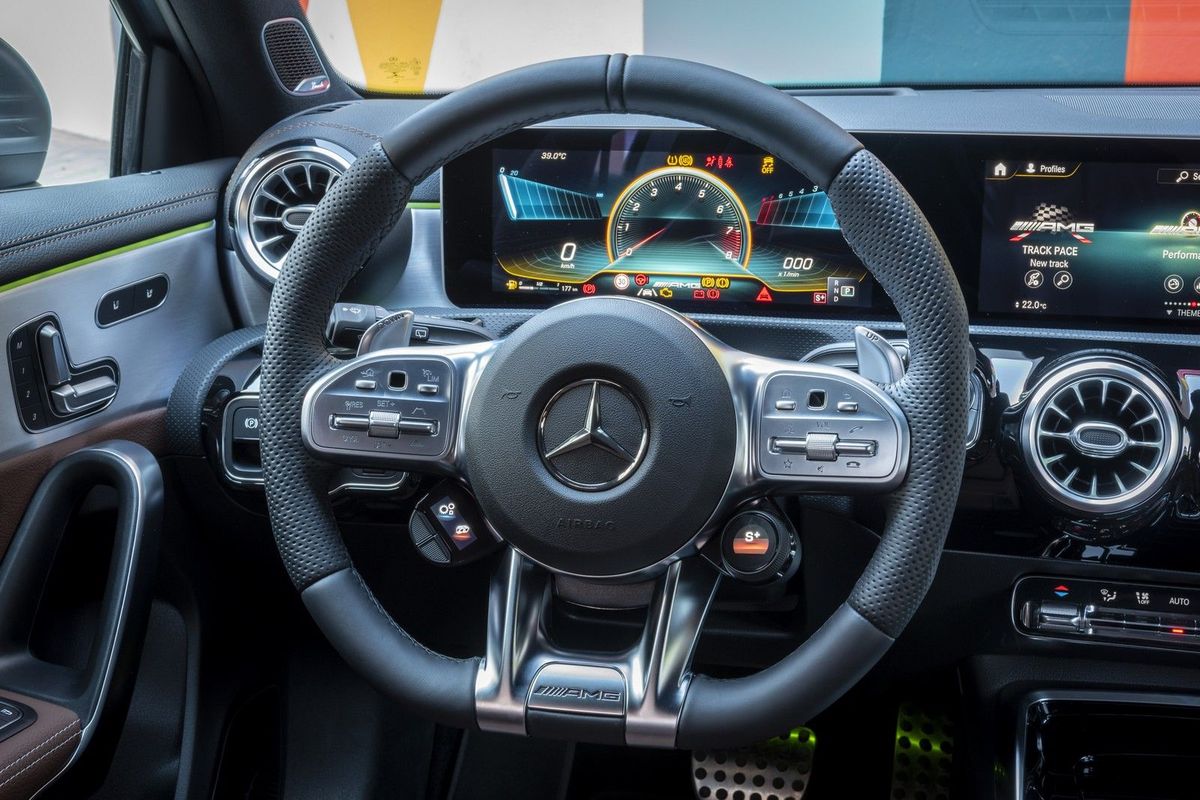
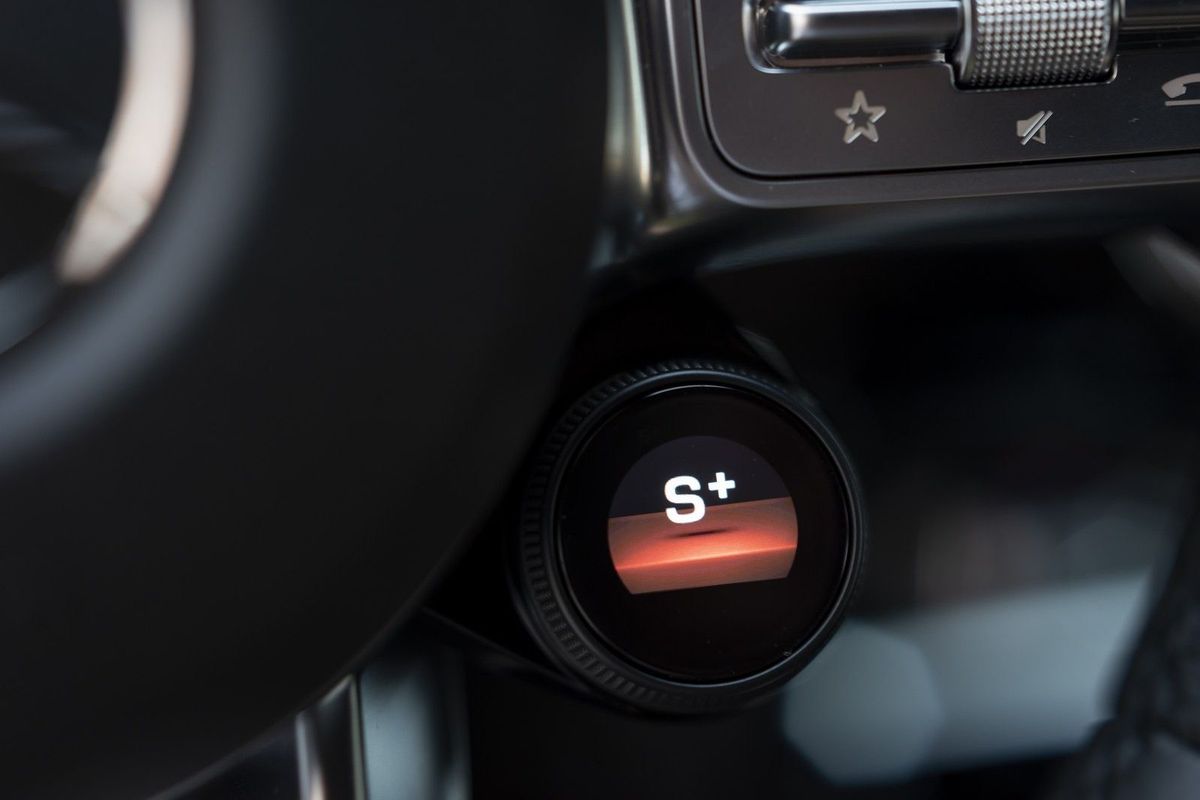
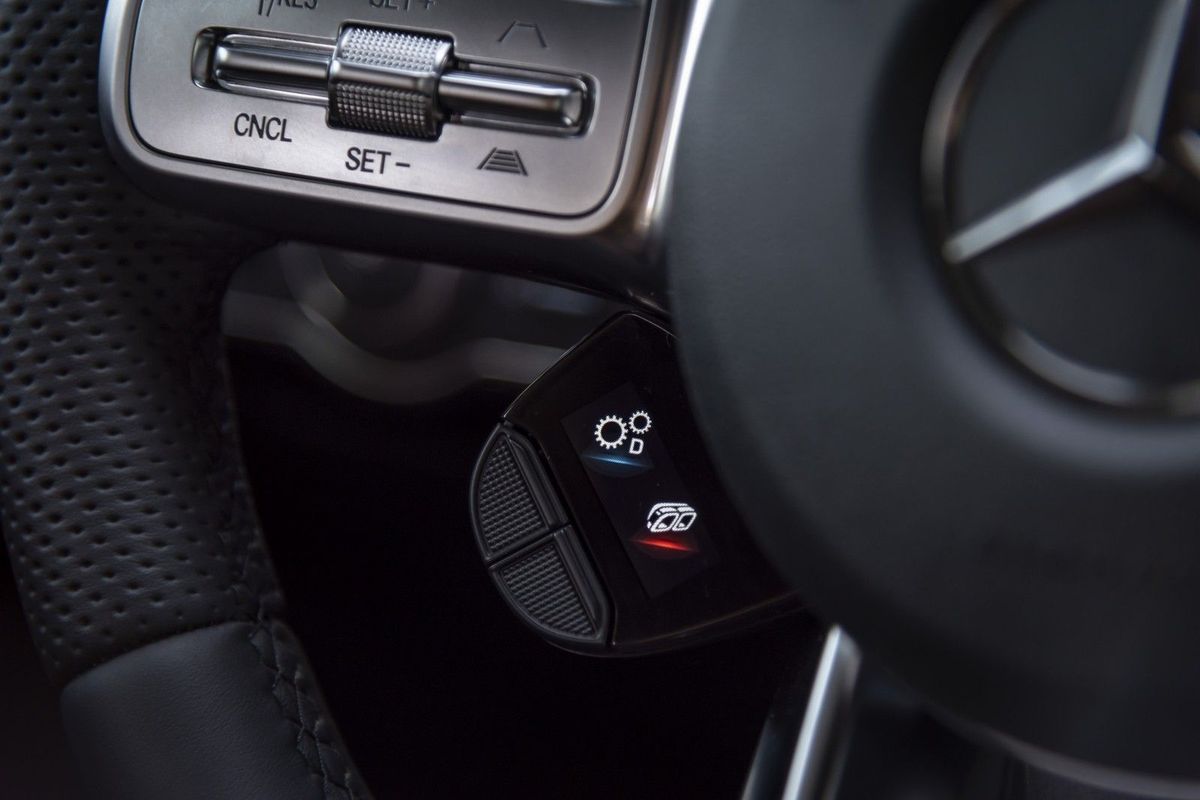
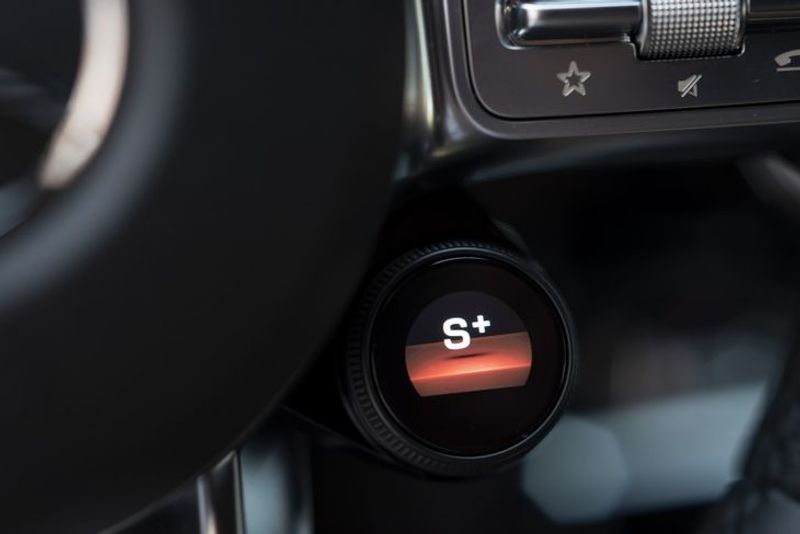
There are notable changes to the interior. Keenly-eyed observers will note the rotary dial within the steering wheel and the adjacent toggle buttons. The rotary dial deals with the driving modes, making it easy to scroll through modes without having to peer at the transmission tunnel. The toggle buttons on the left allow for transmission adjustments, exhaust loudness, suspension setup and traction control settings. It’s a clever, uncomplicated solution, but it feels plasticky to touch where it could have been rubberised or even metallic. The iffy finish lets down an otherwise intuitive design.

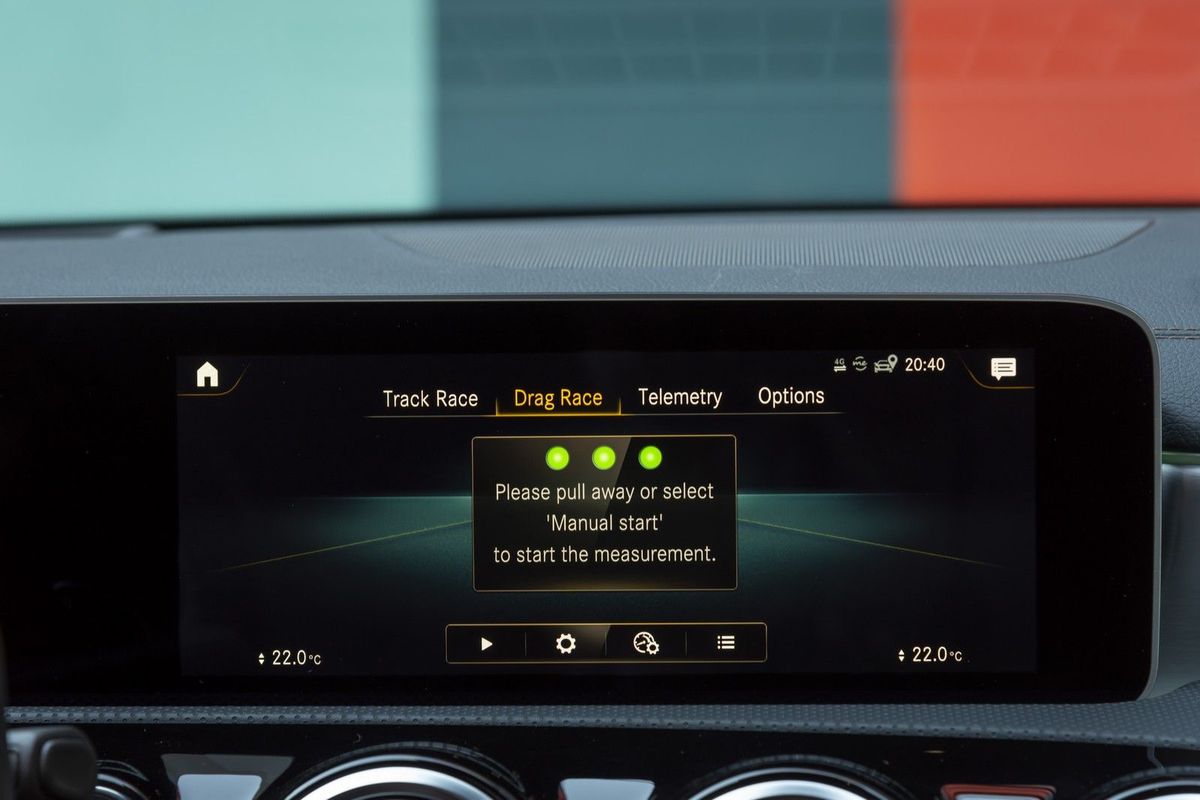
Meanwhile, onboard data logging is becoming a must-have for modern performance cars. Evidently, some owners don't only want to flail and cane their performance machines on race circuits; they want to record electronic records to prove their track work and compare their lap times (and other herculean feats achieved by their cars, such as g-force) with other drivers. The AMG Track Pace system tracks all performance telemetry, which you can download to your phone/computer for closer inspection later on. It will also sync video footage to the telemetry if you use your phone’s camera.


This steering-wheel-mounted dial lets you quickly scroll through driving modes. It feels a bit too plasticky to operate, however.

As for the quality of front-passenger accommodation, the Mercedes-AMG single-piece man-made leather sports seats are comfortable and offer ample lateral support. The sporty ambience is heightened by the flat-bottomed steering wheel covered in dimpled leather. This can be upgraded to Alcantara at extra cost and there’s the option of adding yellow stripes to the seats, steering wheel and centre-console stitching. It ups the sporty atmosphere in the cabin, but, as with most of Benz’s current A-Class derivatives, the fit-and-finish and material choices could be more luxurious.

Summary


Overall the A45 S feels more engaging to drive than its immediate predecessor, which was already a very rapid car.

Whereas the Mercedes-AMG A45 S' predecessor was a potent performer, it proved a bit of a blunt instrument when driven on a track. By contrast, the new more powerful and, therefore, faster W177 version offers much-improved dynamics, rides less harshly on public roads and is better to drive on an everyday basis. On a track (with Race Mode engaged) you can play around with the rear end under power while the front- is more eager to turn in. Plus, the new differential adds an extra dimension to the A45 S it didn’t have before – drift mode should facilitate raucous fun on a skid pan.

To sum it all up, the newcomer's engine is a technological masterpiece. It somehow produces tremendous outputs while all-but-banishing boost lag from its turbocharged setup. As a whole, the A45 S feels more engaging to drive and more of a driver’s car than ever before. Qualms about interior quality aside, this AMG is wholly better than its predecessor and deserves a seat at the head of the table in the battle for hyper-hatch supremacy.

Related content:

2020 Mercedes-AMG CLA 45 Goes Official

New Mercedes-AMG A45 for SA in 2019

Track Race: Audi RS3 vs Mercedes-AMG A45

Drag Race: Audi RS3 vs Mercedes-AMG A45

Drag Race: BMW M2 vs Mercedes A45 AMG [Video]

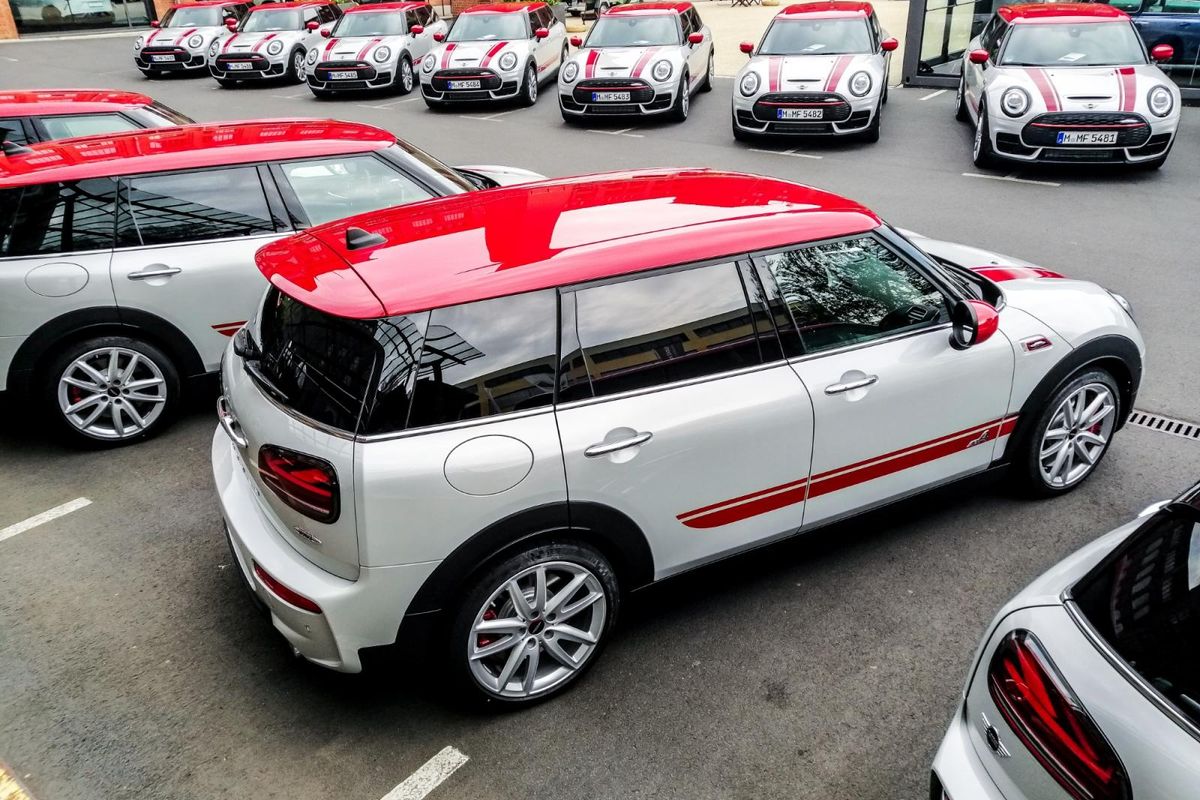
Mini Clubman JCW (2019) International Launch Review

Mini has rejuvenated its Clubman compact 'wagon (or 6-door hatchback, if you really want to split hairs about it) and the Oxford-based marque is gearing up to bring its most potent version, the Clubman John Cooper Works (JCW), to South Africa before the end of 2019. Gero Lilleike travelled to Frankfurt, Germany to give it a whirl…

The year 2019 is quite a significant one for the Mini brand, which is celebrating 60 years of producing fun-to-drive cars and instilling youthful energy into thousands upon thousands of nostalgia-enthused car buyers across the world. But whereas the original Mini was designed to bring compact car transportation to the masses, the current iteration of the iconic British marque is more of a niche brand that caters to particular tastes in terms of design. And, while its products may not be for everyone, performance remains a key deliverable and plays a vital role in the brand's success story. 

While we eagerly await the full reveal and arrival of the latest Mini JCW GP, which looks like a properly focused track toy, the latest Mini Clubman JCW has the same engine as the GP and we were eager to see how it performs. Europe was experiencing a heatwave last week and Frankfurt was boiling at over 40°C – a record for the German city. Was the Clubman JCW responsible for bringing the heat? We were keen to find out…

Better looks, more power


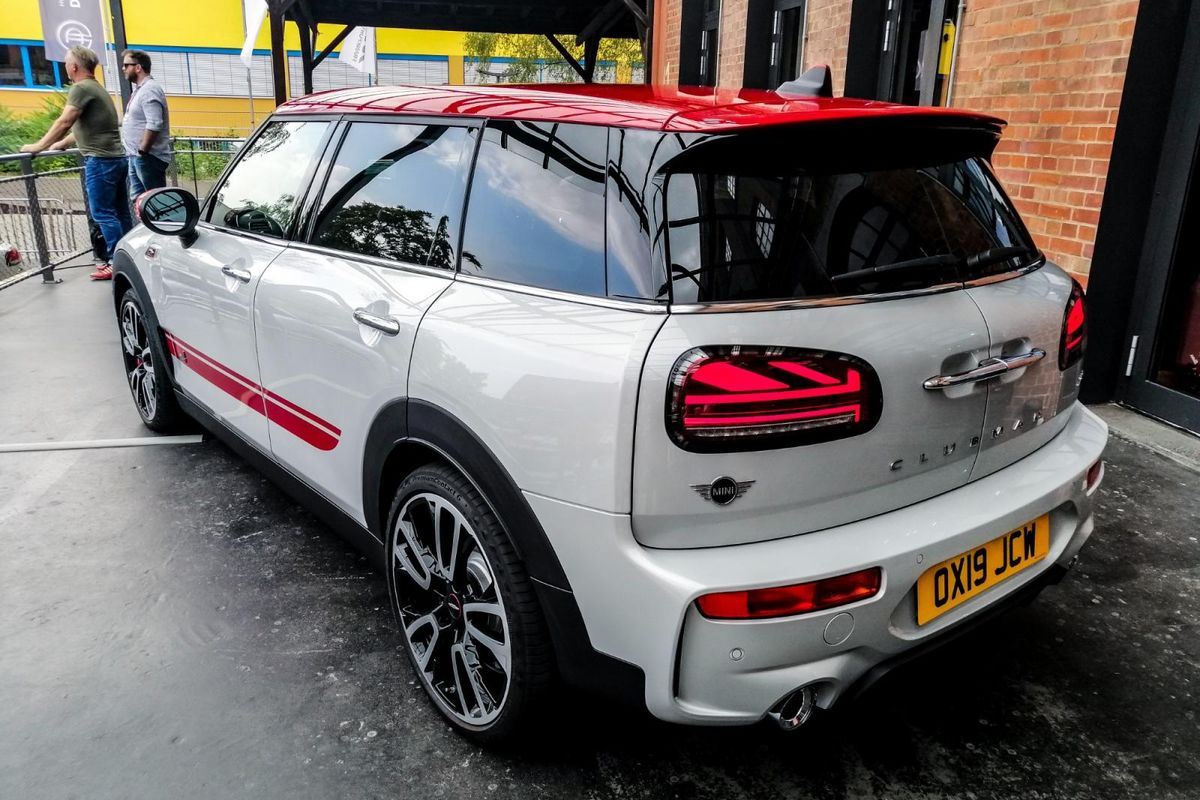
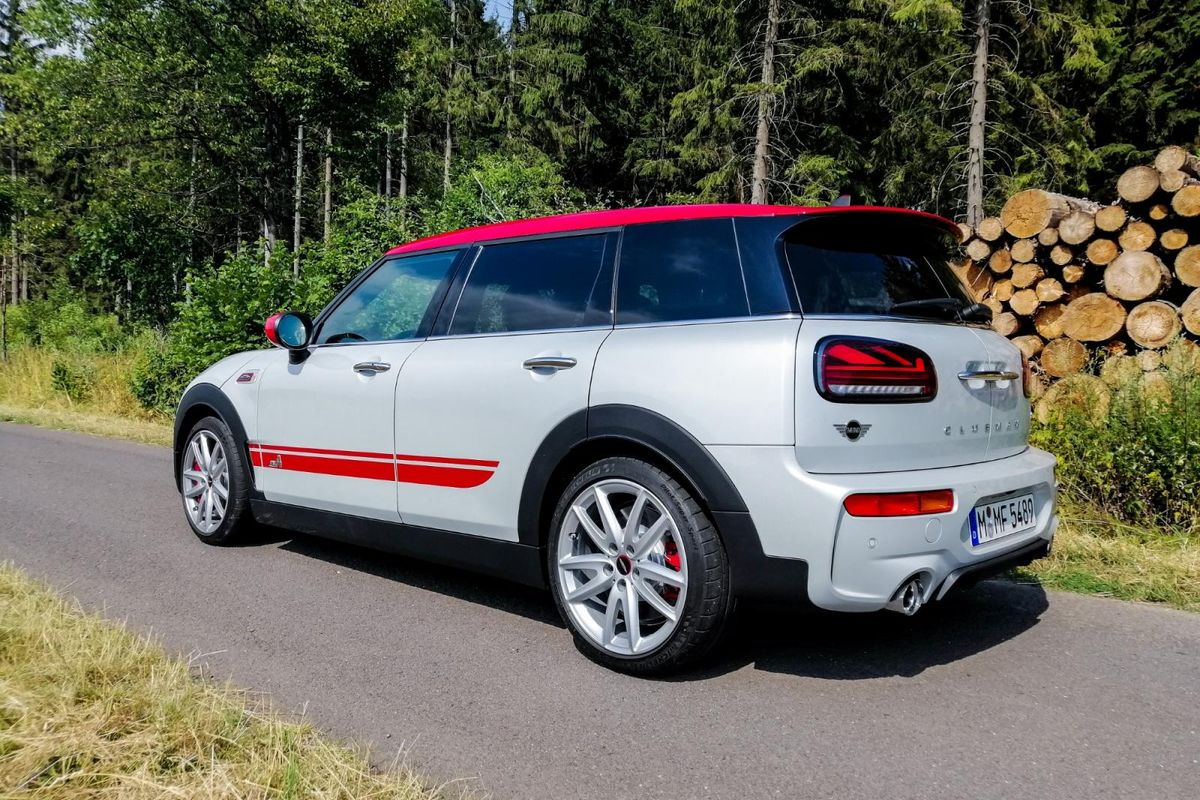
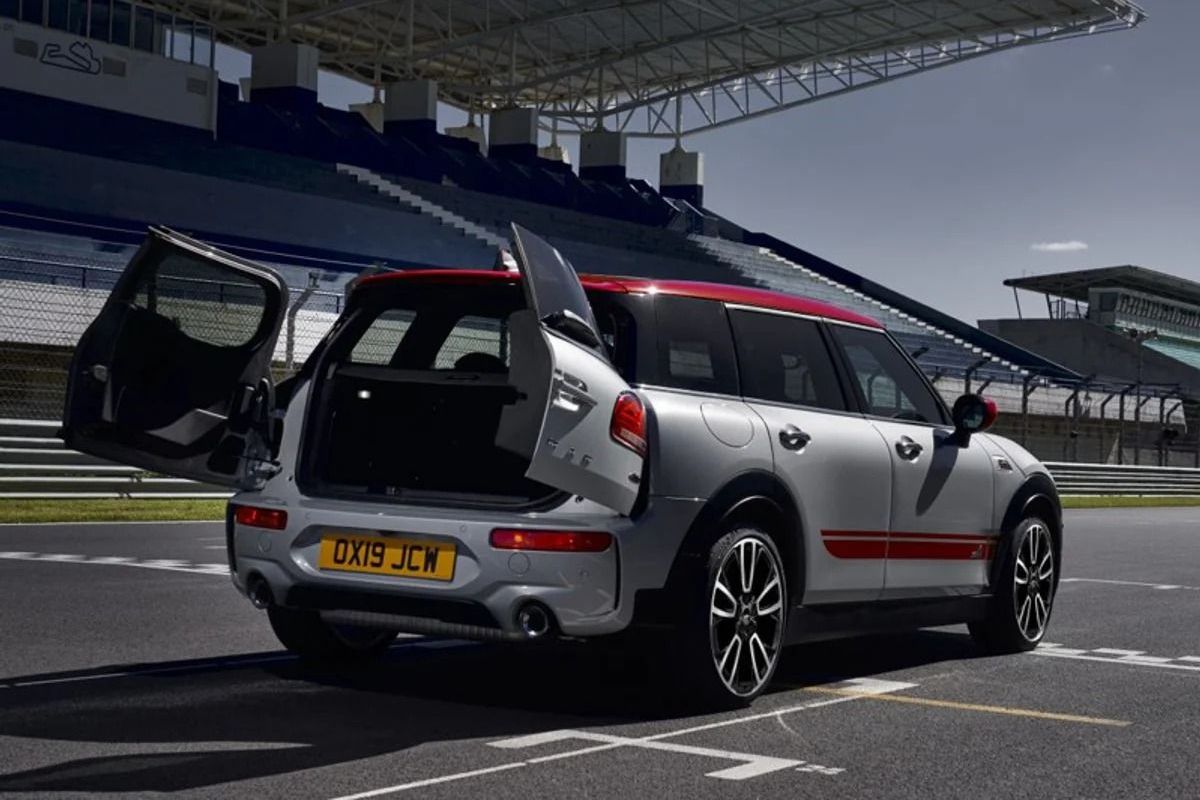
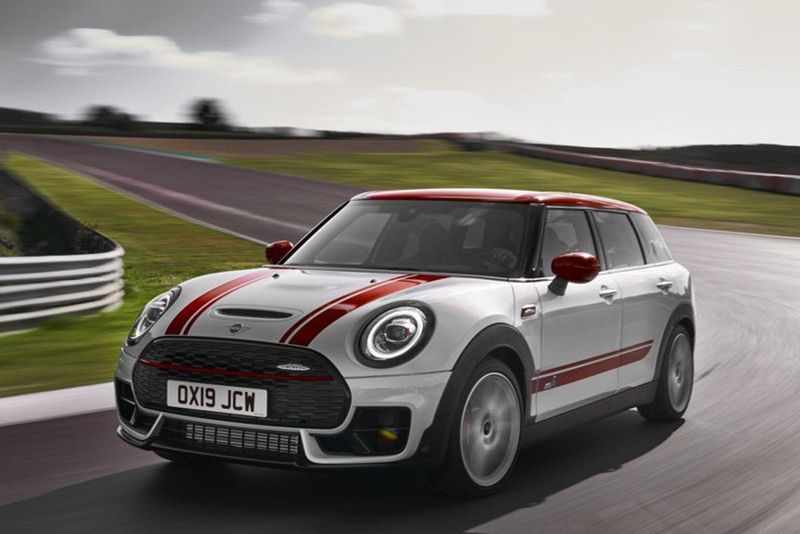
A major increase in power and torque is a key highlight of this latest Clubman JCW. The Union Jack taillight design is a nice touch too…

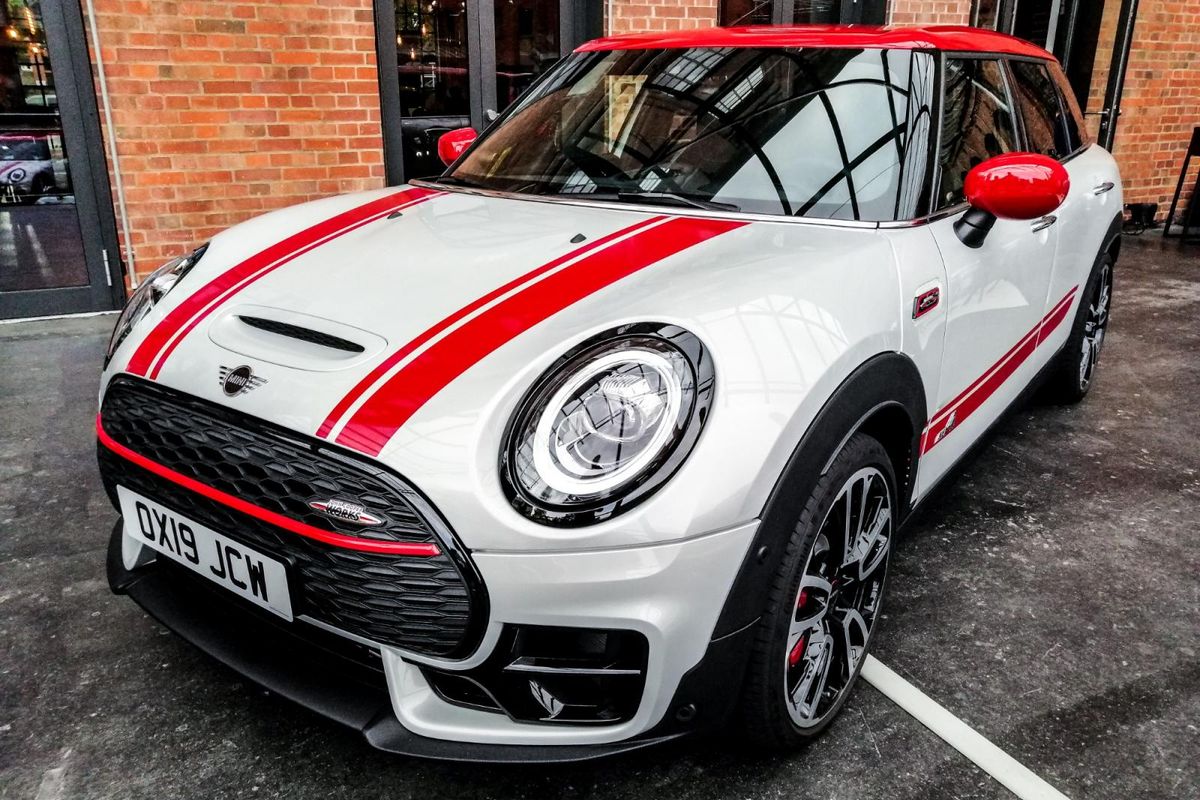
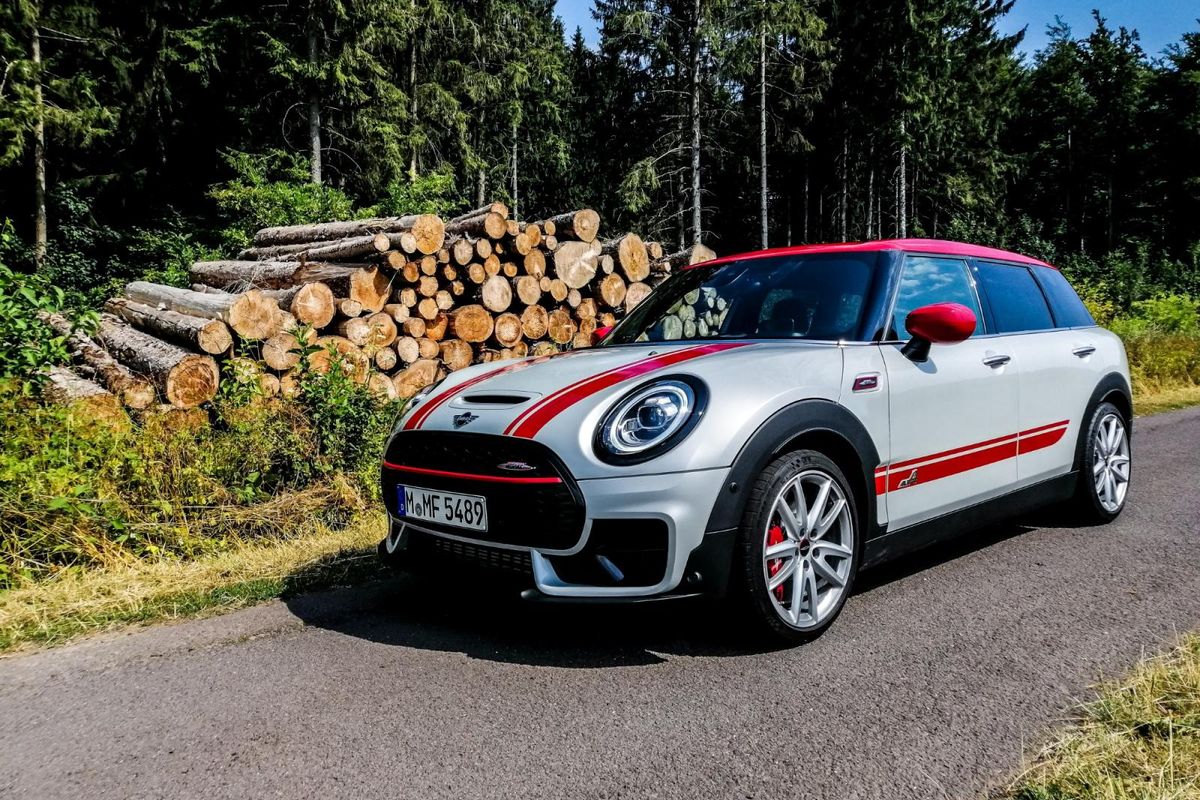
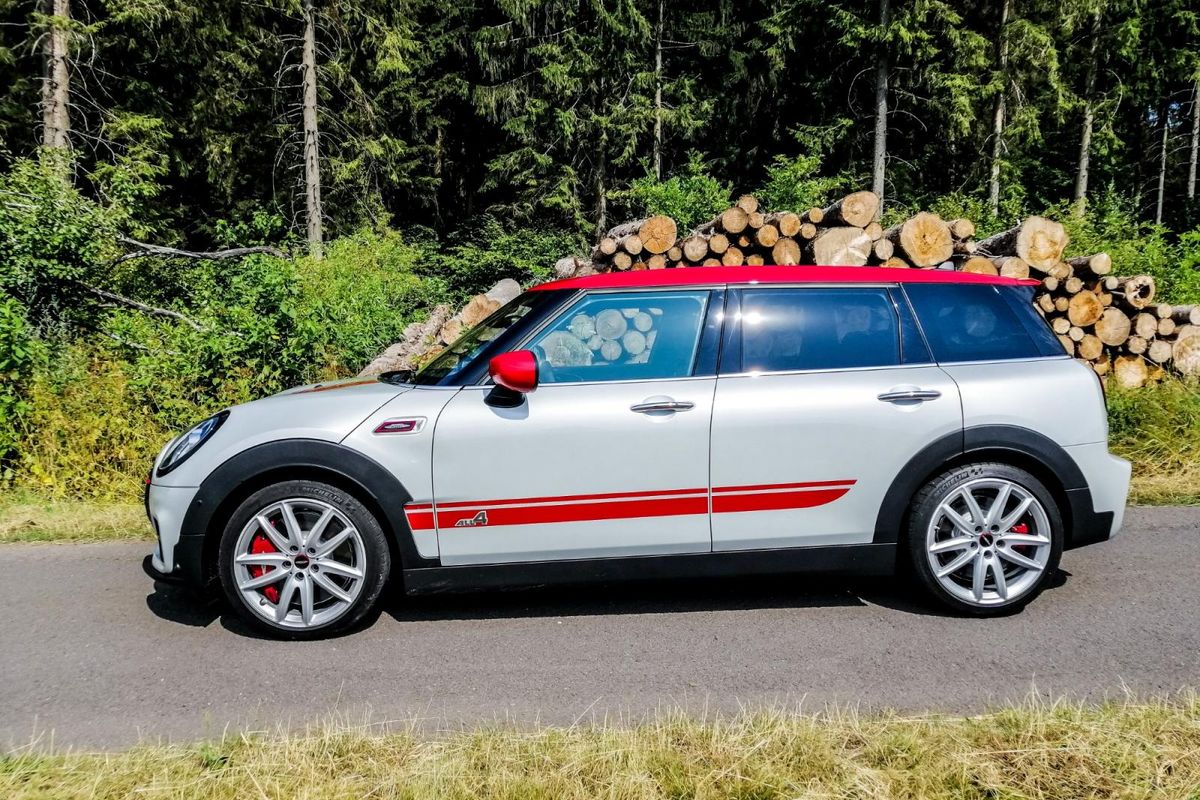
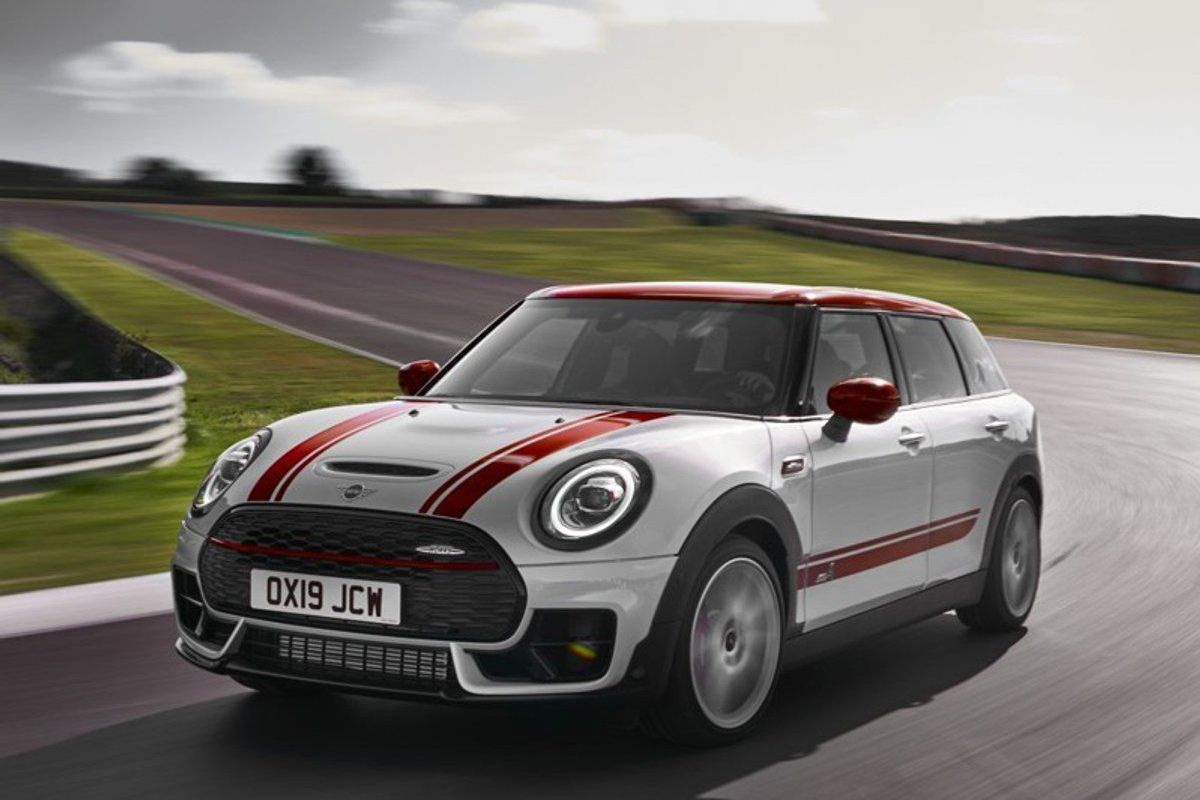
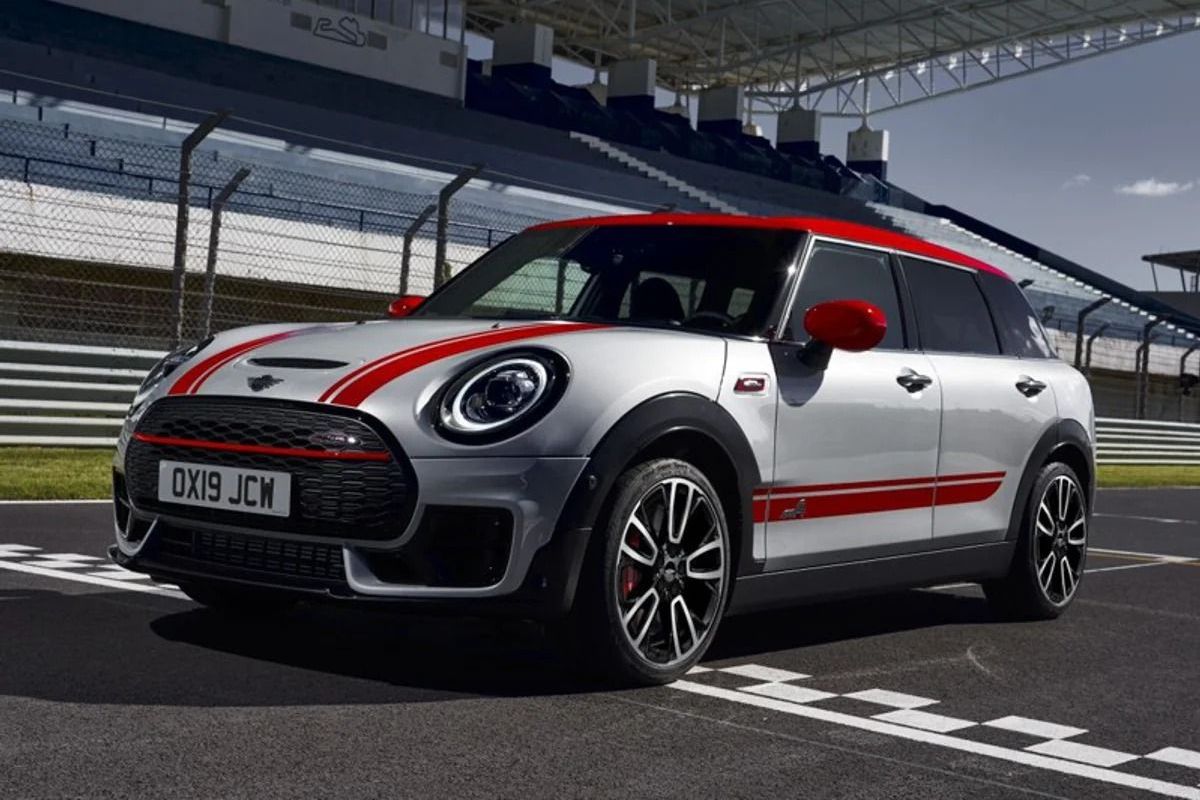
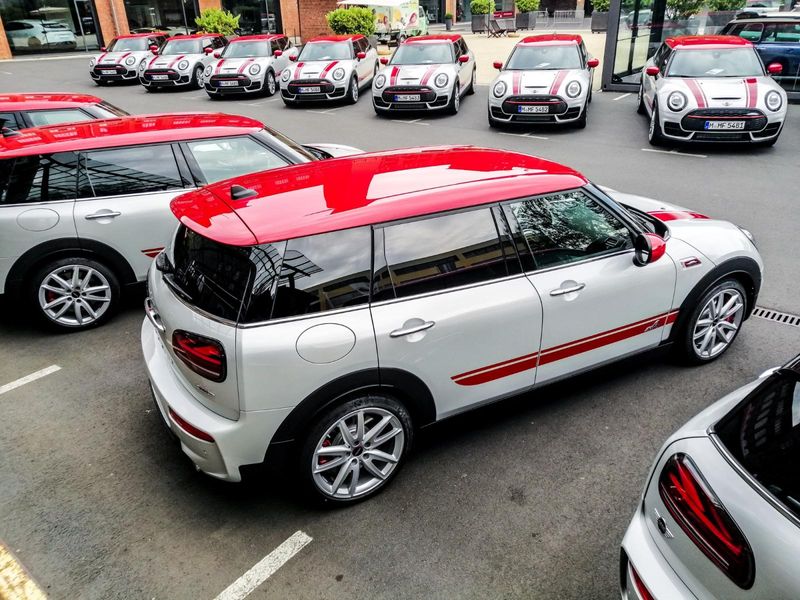
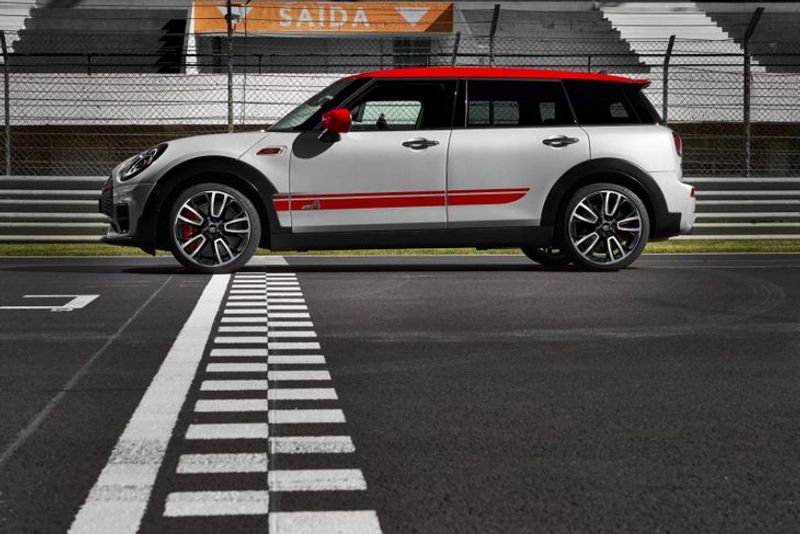
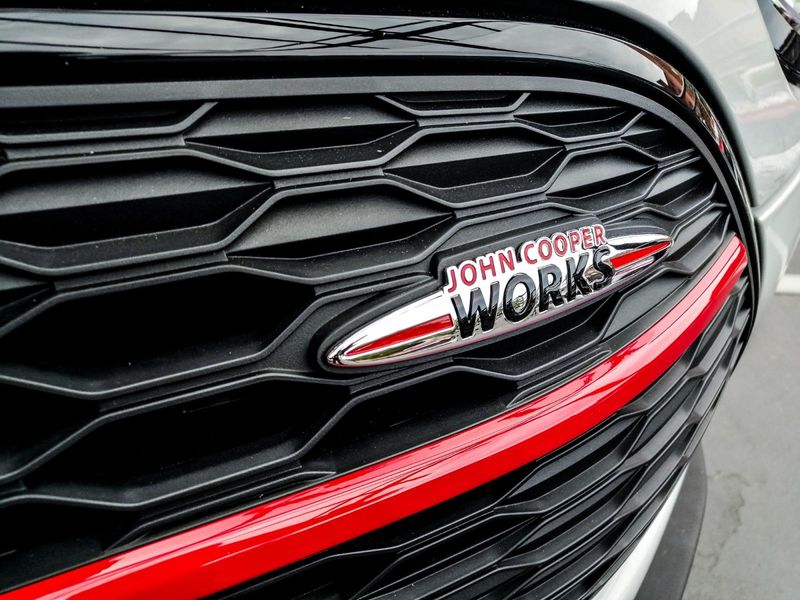
The aesthetic changes to the Clubman are subtle. A keen eye would notice the newly designed grille flanked by revised LED Matrix headlights as well as the unique Union Jack taillight design, which are the key identifiers for this latest Clubman. Exterior colours, mirror cap choices, wheel designs, exterior trim packs and interior trim and leather options have also been revised and expanded to meet the needs of potential buyers. 

The big news for the Clubman, however, pertains to the JCW derivative, which boasts a host of exciting upgrades, the most notable of which are sizeable increases in its peak power and torque outputs. By virtue of its thoroughly redesigned twin-turbocharged 2.0-litre 4 cylinder petrol engine, the Clubman JCW's now produces 55 kW and 100 Nm more than the outgoing version, with outputs totalling 225 kW and 450 Nm, which is mightily impressive. In fact, this powerplant makes the Clubman JCW the most powerful road-going Mini in the brand’s 60-year history…


Decisively sportier than the outgoing version, the latest Clubman JCW is 1.4 seconds quicker from standstill to 100 kph.   

The Clubman JCW's potent motor is mated with a new 8-speed Steptronic transmission, which works in conjunction with an integrated font-axle differential lock and a revised ALL4 all-wheel-drive system. Mini claims a 0 to 100 kph sprint time of 4.9 seconds for this version, which is 1.4 seconds faster to the mark than the previous Clubman JCW. It’s also the first time that a Mini’s top speed has been electronically limited to 250 kph.

What's more, chassis strengthening measures and a revised sport braking system all contribute to improved performance and hot-hatch aficionados may be happy to know that the Clubman JCW comes equipped with a sport suspension, which lowers the vehicle by 10 mm, as well as an adaptive damping system. Lastly, a new model-specific sports exhaust system is fitted to provide added aural pleasure via the 95-mm dual tailpipes. 

On paper, this all sounds tantalising, but how does it perform on the road? 

What’s it like to drive? 


The engine is impressively refined and power delivery is commendable thanks to a slick new 8-speed transmission.  

Mini utilised the KlassikStadt in Frankfurt as a base for the international launch event of the Clubman JCW and the media contingent was duly set loose to complete a 190-km route, which would take us through Frankfurt city, on the autobahn and through windy roads in the German countryside. 

Of course, the newcomer's interior is familiar and youthful in that unmistakably-Mini way. At start-up, the Clubman JCW emits a throaty thrum as its exhaust ends warm the air with a low hum. Like in South Africa, the road quality around Frankfurt is generally uneven and the firm, sporty suspension setup immediately makes its presence felt over poor sections of road, but thankfully it isn't overly intrusive. 

Acceleration from standstill is impressive and when left to its own devices, the transmission delivers quick, smooth and seamless shifts. The throttle is responsive to inputs and the Clubman JCW feels sprightly on its rubber. I got the distinct sense that it wanted to stretch its legs… 

30 kph…

As I turn onto the freeway with a long, straight span of tar before me, I select Sport mode and bury my foot deep into the right corner of the Clubman JCW's driver's footwell. The Mini barely hesitates and lunges forward with intent. The exhaust sounds racy, but to my surprise, it doesn’t emit crackles or barks. As my fingers work the steering wheel-mounted shift paddles, the JCW gathers pace. Gears flick by with direct, well-timed shifts. 

150 kph…

The Mini's acceleration feels so effortlessly refined. The speed piles on.

180 kph…

The Clubman JCW's forward thrust just keeps going, it seems relentless. The newcomer feels solid, comfortable, unphased, predictable.

200 kph…

I come to my senses and tap off to a gentle cruise at 180 kph with little effort, if at all. Only in Germany can you legally drive a car in this manner.

We turn off the highway and head into the countryside, passing through a series of small German towns along the way. The speed limit is restricted but the sinewy sections of tar shed light on the Clubman JCW’s ability to claw through corners, something it does with reassuring confidence, which is a product of a well-sorted all-wheel-drive system, which, in conjunction with Dynamic Stability Control (DSC), is able to calculate and apportion power to the front and rear wheel wheels as required to ensure maximum dynamic ability in relation to the driving situation. Furthermore, the steering is communicative and the car's front end bites into corners with precision. It feels fun and playful, just like a Mini should feel. 


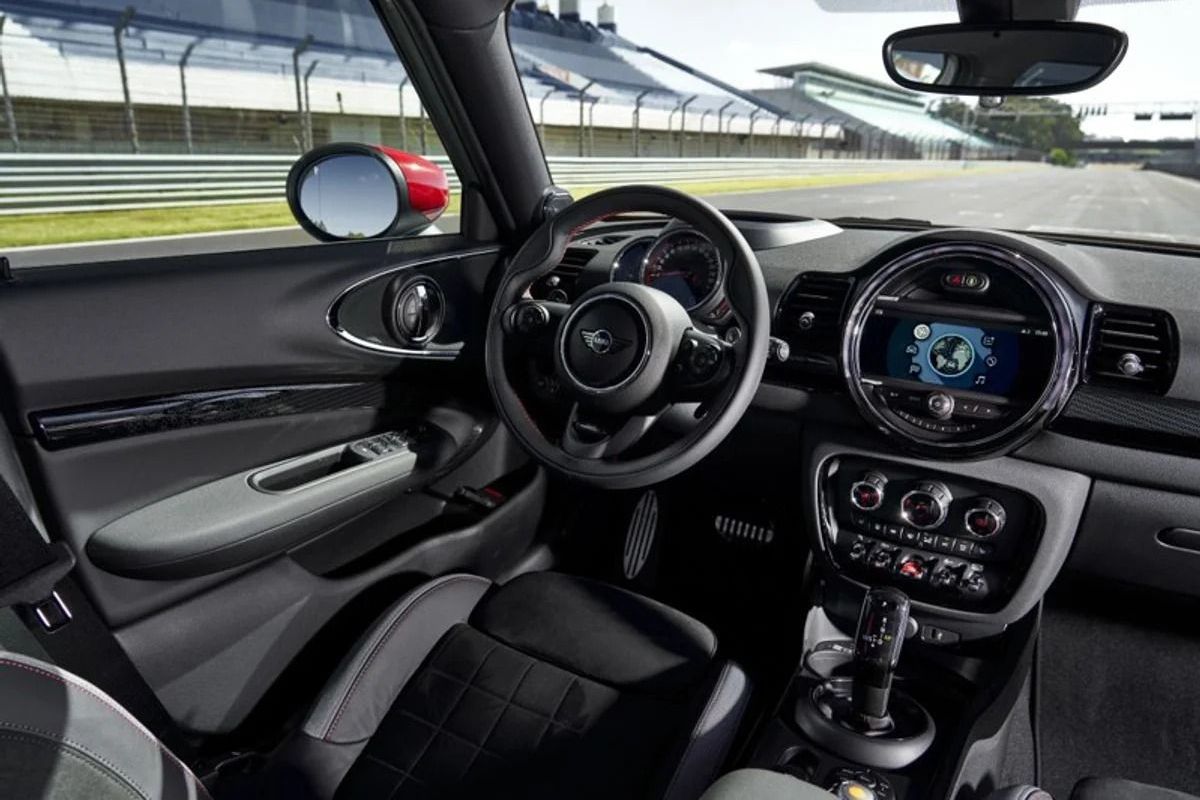
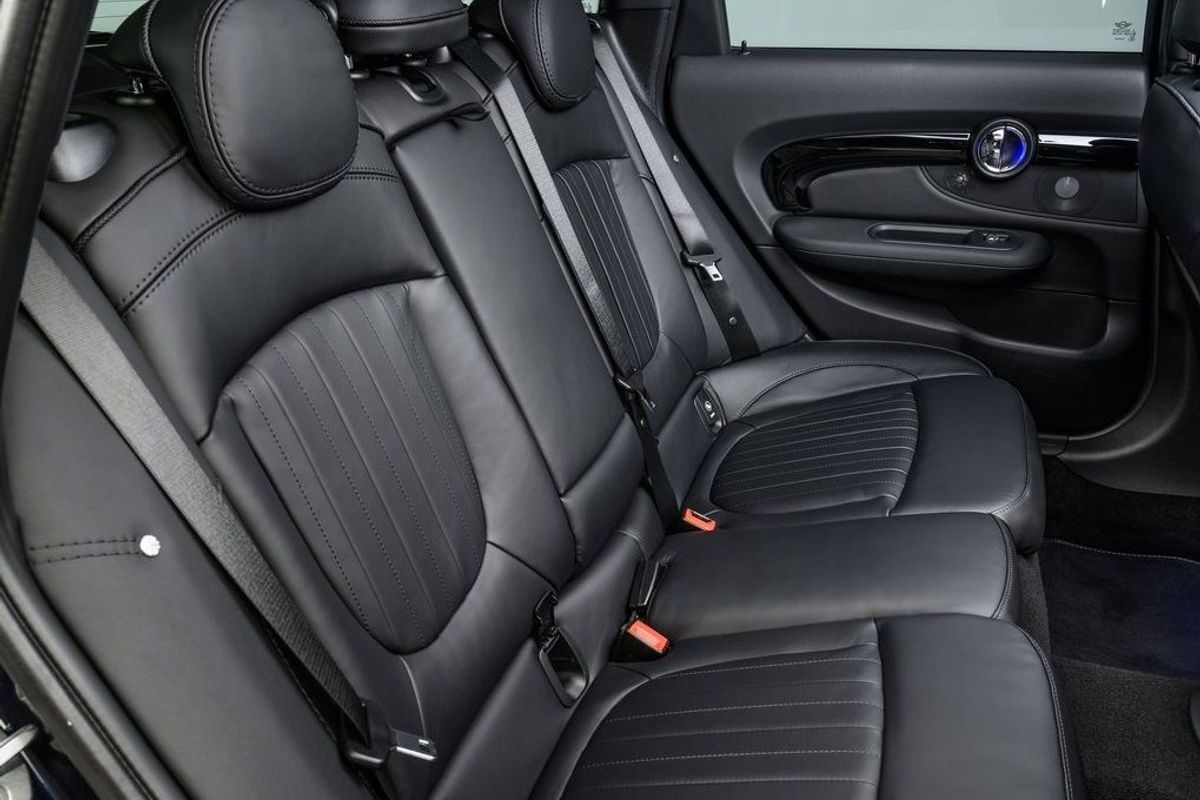
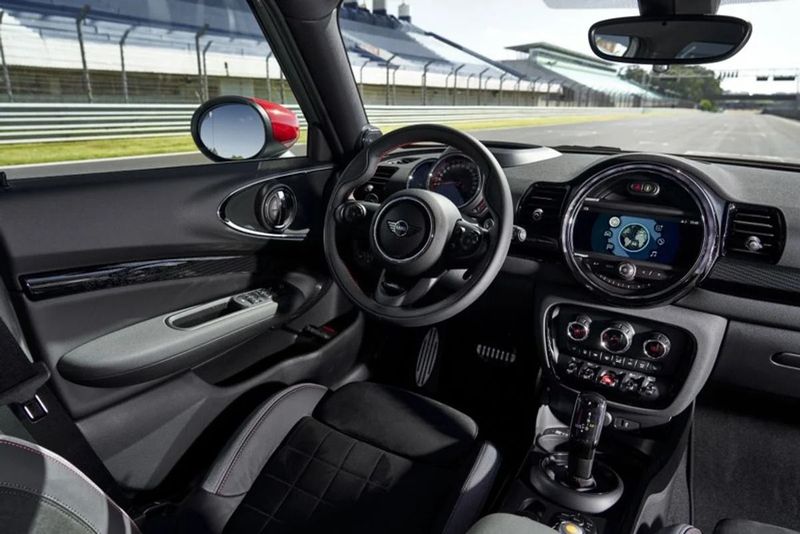
Not much has changed inside the Clubman. The sport seats are comfy and the cabin has youthful appeal. 

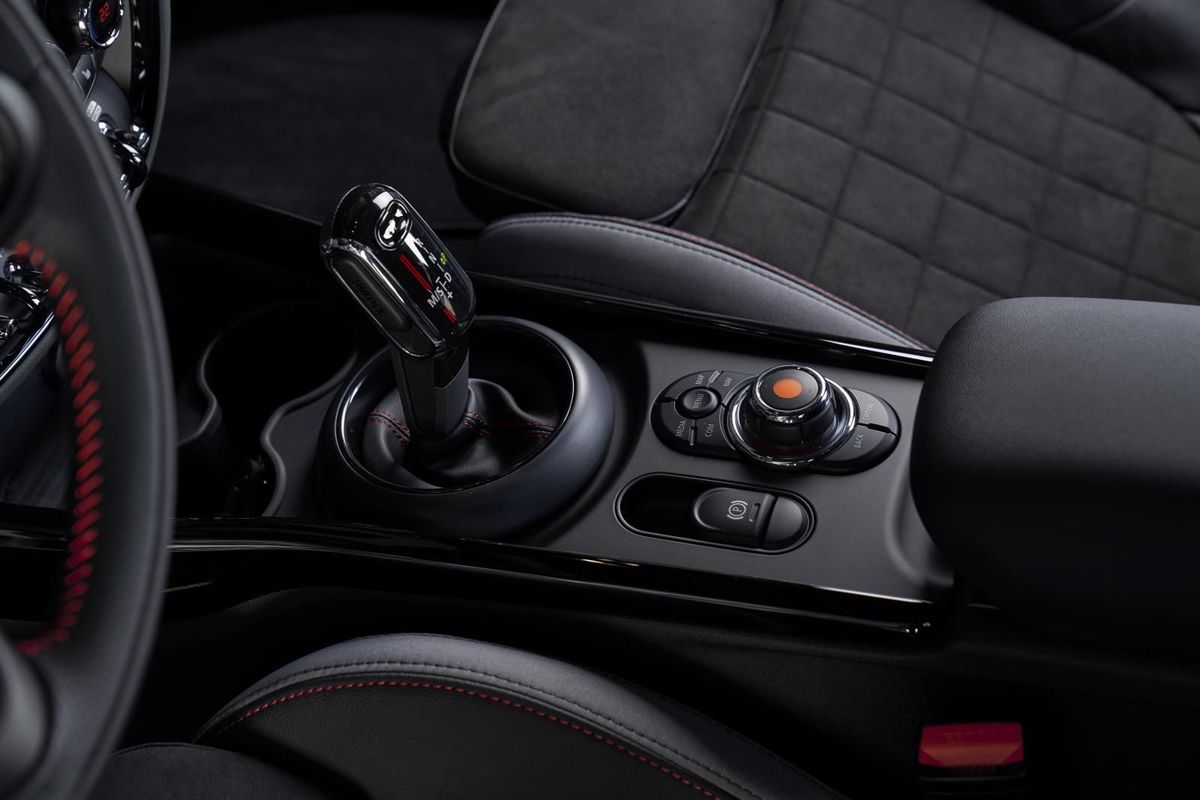
For the second half of the drive, I have time to reflect on the JCW Clubman's interior from the passenger seat, which happens to be well-bolstered and heated – not that I could be bothered to test the latter function in the sweltering heat. The dual-zone climate control was working overtime and the large, central 6.5-inch infotainment touchscreen system, with integrated navigation (optional), prevented us from getting lost in the German countryside forever (note that the system can also be controlled using the familiar Mini Controller on the centre console). The funky, changeable light-surround adds splashes of colour to the interior; I felt at least 10 years being shaved off my age by just by looking at it. It’s so disco… 

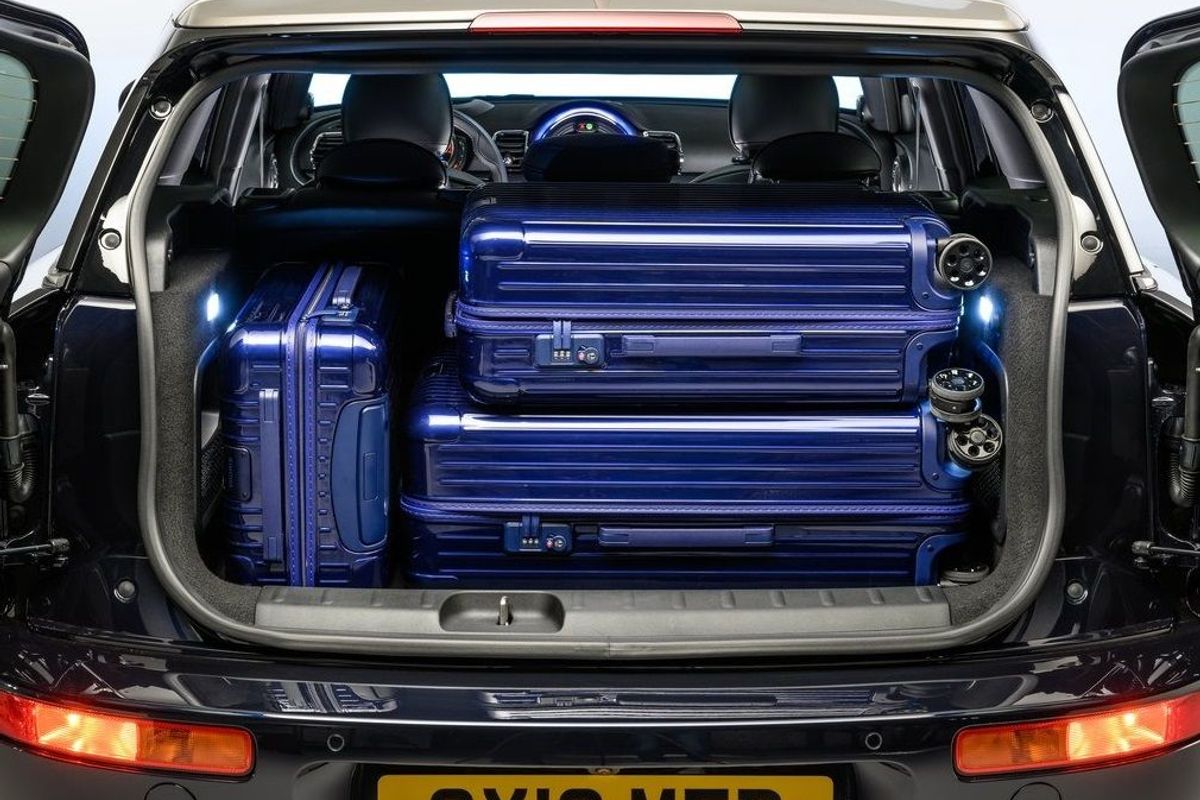
At a stopover, I slide onto the back seat to test rear passenger space and find space is ample in all directions. Open the unique double-door tailgate and a 360-litre luggage bay is at your disposal, expanding to 1 250 litres if you fold the rear seats down. So yes, the Clubman JCW is practical too…

Final ramblings


The Clubman JCW is undoubtedly fun to drive, but the subdued exhaust note was underwhelming. Just a little louder please, Mini.  

In the blink of an eye, our drive was over and it was time to head back to South Africa. Just hours later, at 37 000 feet in the air and rocketing south at 900 kph, I reflect on the merits of this latest Mini Clubman JCW…

I am deeply impressed with the performance of the Mini. It's fast (courtesy of a magnificent engine), refined and clearly competent through the twisty stuff. There’s a lot to like about the Clubman JCW, but I can’t help but think that there is something missing, as if it fails to land a knockout punch.

Perhaps it was the Clubman JCW's muffled soundtrack that planted the seed of doubt in my mind. I honestly expected more drama or perhaps a greater sense of occasion when I flicked the drive mode switch into Sport and mashed the Mini's throttle pedal. Instead, I was treated to a car that sounds good and performs admirably, but the overall driving experience just wasn’t eventful enough to match my (and I feel that of many others') perception of what a JCW derivative is supposed to be: an unashamedly sporty, loud and slightly unhinged car that oozes youthful rebellion. Perhaps ever-tightening European noise regulations are to blame and Mini's engineers felt inclined to dial back on the pops and bangs to prevent suburban pooches from piping up into a barking frenzy and ruining people's peaceful rest on Sundays… My response? "If it’s too loud, you’re too old."

The updated Clubman is expected to arrive in South Africa towards the end of 2019 (Q4). The local range will start with the Cooper Clubman powered by a 1.5-litre 3-cylinder turbopetrol engine with 110 kW and 220 Nm of torque. The Cooper Clubman S will up the ante with a 2.0-litre turbopetrol engine developing 141 kW and 280 Nm of torque and of course, the Clubman JCW will top the range. See pricing for the range below…

Mini Clubman Price in SA

Cooper Clubman – R433 000

Cooper S Clubman – R519 000

Clubman All4 JCW – R642 000

A 2-year/unlimited warranty and 5-year/100 000 km maintenance plan will be offered as standard. 

Buy a new or used Mini Clubman on Cars.co.za

Related Content

New Mini Clubman Revealed

New JCW Clubman most powerful Mini yet

Updated Ford Mustang in SA (2019) Specs & Price

The facelifted version of the Ford Mustang has arrived in South Africa! Here are specification and pricing details for the newcomer. 

The Ford Mustang has been updated for 2019 and the changes are significant. The Ford Mustang will be available in South Africa in 5 flavours including coupe and convertible derivatives, with the choice of either the 2.3-litre 4-cylinder turbocharged petrol engine or the 5.0-litre naturally-aspirated V8 petrol motor. The Mustang Bullitt special edition is also on offer.

The 2.3-litre turbocharged 4-cylinder produces 213 kW and 440 Nm, while the mighty 5.0-litre V8 engine packs 331 kW and 529 Nm. Power goes to the rear wheels via a new 10-speed automatic transmission. The Mustang Bullitt, on the other hand, makes 338 kW and 529 Nm. The 2.3 Fastback will hit 100 kph in a claimed 5.5 seconds, while the 5.0 GT Fastback does the same sprint in 4.3 seconds. The convertibles do the 0-100 kph dash in a claimed 5.7 seconds and 4.5 seconds respectively.

Inside, there are new trims for the seats, updated infotainment system, and an all-new digital dashboard. The new Mustang can be spotted with its new-look front end, revised grille, sporty bonnet, and new-look headlights. Under the skin, there's a revised chassis, the option of adaptive damping dubbed 'MagneRide', and an active exhaust system.

Look out for our impressions from the local launch this week and feast your eyes on the prices below. We think the Mustang has become quite a bargain at under R1 million.


The new digital dashboard of the facelifted Ford Mustang which is due for imminent release

Updated Ford Mustang Price in South Africa (July 2019)

In terms of options, there are some alloy wheels to choose from as well as adaptive damping for the 5.0 GT at a cost of R15 300. The pricing below includes VAT and emissions tax.

Ford Mustang 2.3 FASTBACK                        R768 000
Ford Mustang 2.3 CONVERTIBLE                 R831 000
Ford Mustang 5.0 GT FASTBACK                  R915 800 
Ford Mustang 5.0 GT CONVERTIBLE            R978 400
Ford Mustang Bullitt 5.0 V8 GT FASTBACK   R995 400

Further Reading

Ford Mustang Shelby GT500 Revealed

Ford Mustang (2016) First Drive

Ford Mustang Bullitt (2018) Launch Review [w/Video]