New Toyota Supra vs BMW M2 Competition – Hot Lap Shootout
The new Toyota Supra meets the BMW M2 Competition on a fresh winter's morning in Cape Town, South Africa. Which one is fastest around a circuit? Watch the video.
It is very tempting to make BMW vs BMW jokes here but we're going to behave ourselves because the reality is that this is an epic match-up. Both of these cars cost roughly a million Rand and of course, both are powered by turbocharged BMW straight-6 engines – not the same engines, however.
But that's about where the similarities end. While the Supra is outgunned here in terms of sheer power, offering 50kW and 50Nm less power and torque, it is lighter and lower-slung than the BMW. And according to our in-house race-ace Ashley, the addition of the outgoing M3 motor has made the M2 Competition pretty damn wild.
So, how will these cars fair on the Killarney Racetrack in Cape Town in a one-lap hot lap shootout? Well, you've come this far, probably time to watch the video now.
Pricing for the all-new Audi Q3 has been loaded into the Audi South Africa website. Here's how much the new SUV costs.
The all-new Audi Q3 will be launched to the South African market in August 2019 and we can confirm the engine lineup and some trim details. From what we can see, there'll be just 1 petrol engine on offer, with 3 levels of trim (Q3, advanced, S Line.) The 2nd-generation Audi Q3 has grown up considerably. It's longer, wider and boasts a longer wheelbase than the outgoing model, which means that it's more spacious overall. It is built on the VW Group's MQB platform, which is renowned for its ride quality and space utilisation.
The petrol engine offered is badged 35, which means it's a 1.4-litre turbocharged 4-cylinder engine. It offers up 110 kW and 250 Nm. Power goes to the front wheels via an S Tronic dual-clutch gearbox. With a claimed 0-100 kph time of 8.9 seconds and a top speed of 204 kph, performance should be adequate. It should be fairly frugal too, with claimed returns of 5.9 L/100 km. The fuel tank has a capacity of 60 litres.
Naturally, there are more than a few options available. Customers have a variety of paints to choose from, bigger alloy wheels, Matrix LED headlights, uprated audio system, some safety cameras as well as the acclaimed Audi Virtual Cockpit. Granted some of the features loaded into Audi SA's configurator were incomplete, so we'll have to update this piece closer to the official launch, which we're told is in the last week of August.
No, BMW has not chosen to revive a legendary VW narrow-angle V6 engine.
Important people with enemies who like driving BMW SUVs will be heartened that the latest armoured X5 has been revealed.
There is absolutely no ambiguity from BMW about this X5’s customer profile with the company stating that it "offers private individuals and persons at risk customised protection against violent attacks, kidnapping or organised crime. This is often a decisive criterion, especially in regions like South America, Africa or Russia.” Indeed.
So what differentiates this X5 VR6 from other large BMW five-door SUVs? Well, it has 33mm thick safety glass and an armoured passenger compartment which BMW claims will keep occupants unharmed in the event of an AK-47 or hand grenade attack.
The luggage compartment is sealed and there is an additional aluminium underbody shield (in case somebody rolls a grenade underneath).
Improvised explosive devices have become a tactic of vehicle ambushes and to this end, BMW says that its X5 VR6 can resist a 15kg TNT blast from a distance of 4 meters. An optional armoured roof can also be fitted to resist attacks from above (such as drones).
BMW’s engineers have also ensured that there is sufficient composite armour overlap in all this X5’s panels and joints, to eliminate any vulnerable areas.
Despite its VR6 naming convention, this armoured X5 is powered by BMW’s 4.4-litre twin-turbocharged V8 engine, boosting 390kW and 750Nm. Although kerb weight remains classified, the use of composite anti-ballistic panelling must make this X5 VR6 a lot lighter than previous armoured vehicles of its size, as the 0-100kph time of 5.9 seconds does not indicate a huge increase in mass.
BMW offers an extensive list of additional options for its X5 VR6 customers, including a comprehensive blue-light kit – which will be very popular with you know who…
Porsche Taycan Claims 4-Door EV Record at Nurburgring
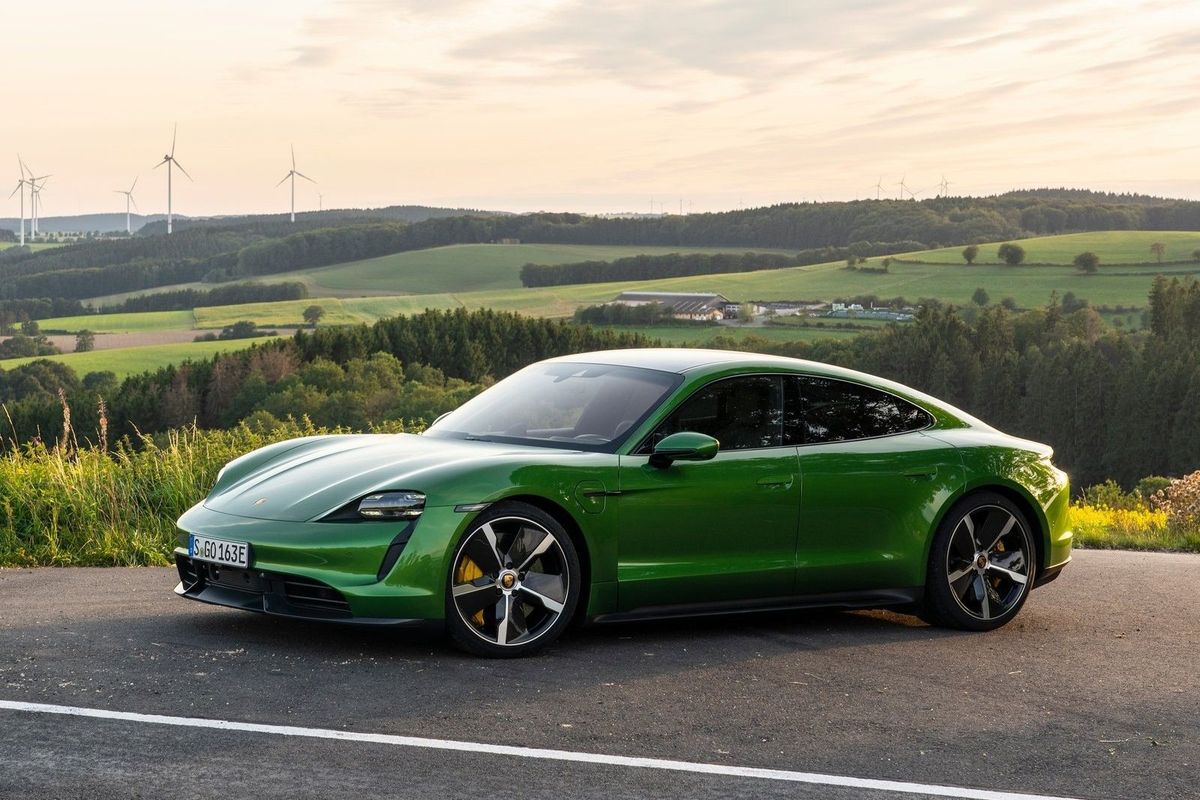
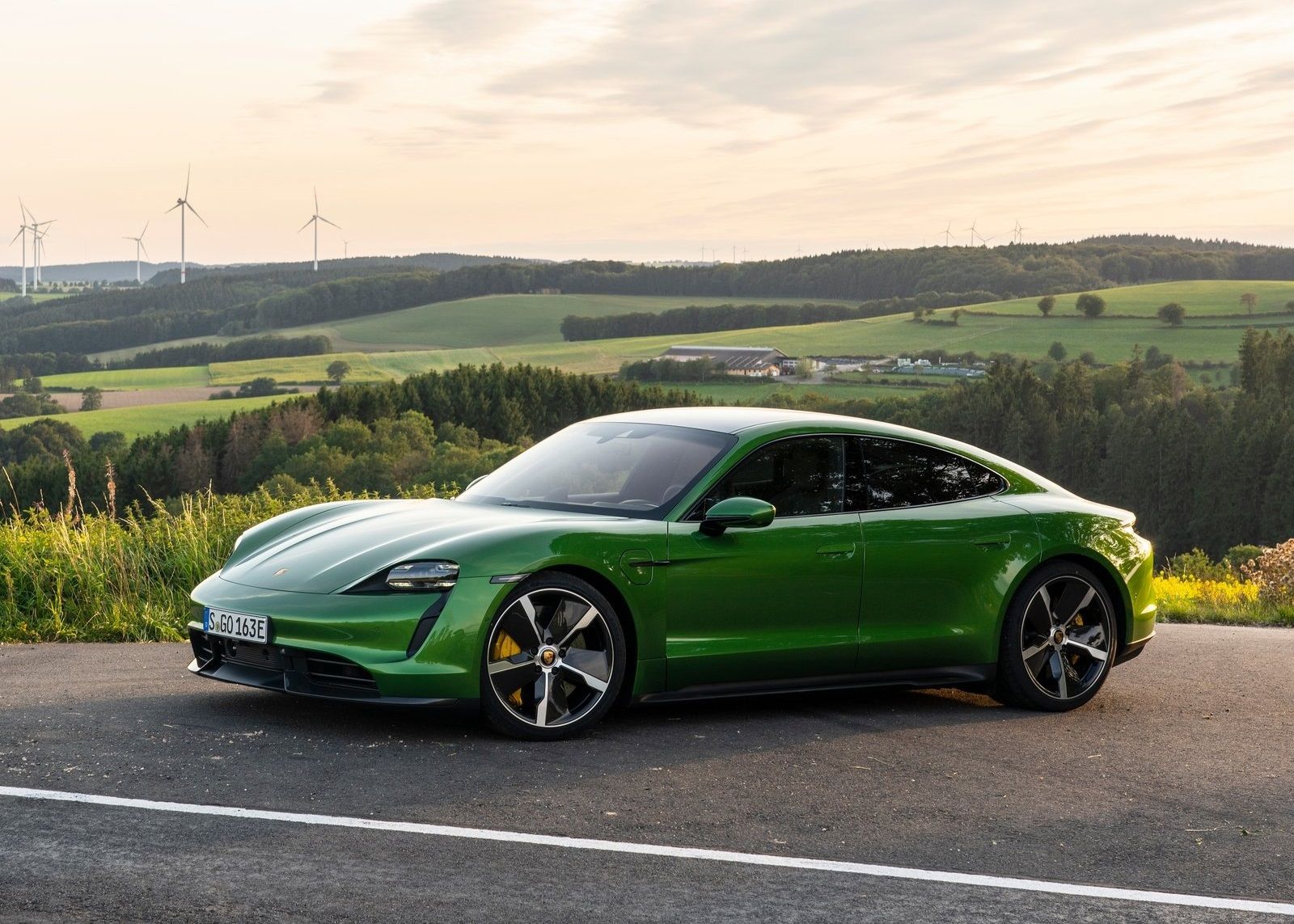
Just days ahead of its official reveal on 4 September 2019, Porsche’s new all-electric Taycan has set a new record for 4-door electric vehicles at the famous German proving ground, the Nürburgring Nordschleife.
We were recently treated to interior images of the forthcoming Porsche Taycan and needless to say it certainly looks to be an exciting addition to the Porsche family.
Now, however, a Taycan prototype has set a new record for 4-door electric vehicles at the Nurburgring, completing the challenging course in a time of 7 minutes and 42 seconds. The Taycan was driven by Porsche test driver, Lars Kern.
For perspective, the Taycan was only 4 seconds slower than Panamera Turbo’s run in 2016 at 7 minutes and 38 seconds. The Porsche 919 Hybrid Evo, driven by Timo Bernhard, still holds the overall Nurburgring record with a blistering time of 5 minutes and 19.55 seconds set in 2018.
The Taycan makes use of 2 electric motors fed by a battery pack comprising 4-volt cells, which equates to a range of 500 km. The battery pack can be fast-charged to 400km (80%) in just 15 minutes.
The combined power output of the synchronous electric motors – each of which powers an axle – is confirmed at 440 kW making the Taycan a rather lively machine. It can sprint from zero to 100 kph in under 3.5 seconds!
Watch the video below to see the Porsche Taycan smash the record at the Nurburgring.
SA’s Top Classics get ready for Concours SA
Some of the rarest and most valuable cars in South Africa will battle it out for the silverware during this coming weekend's Concours South Africa, and we'll be there.
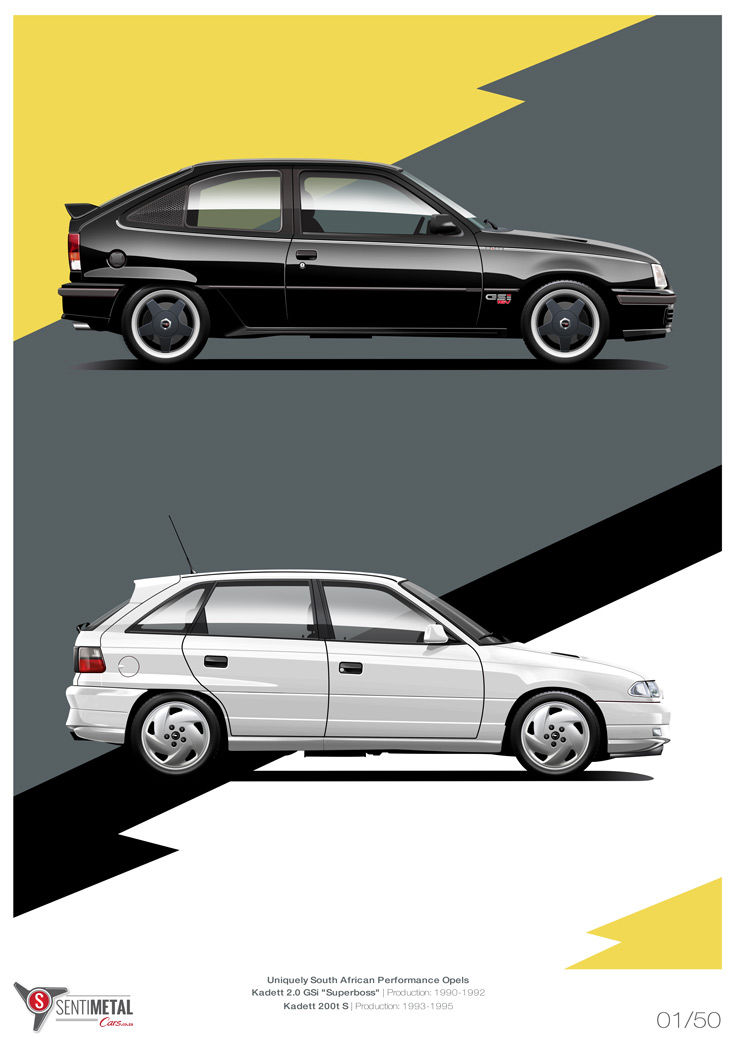
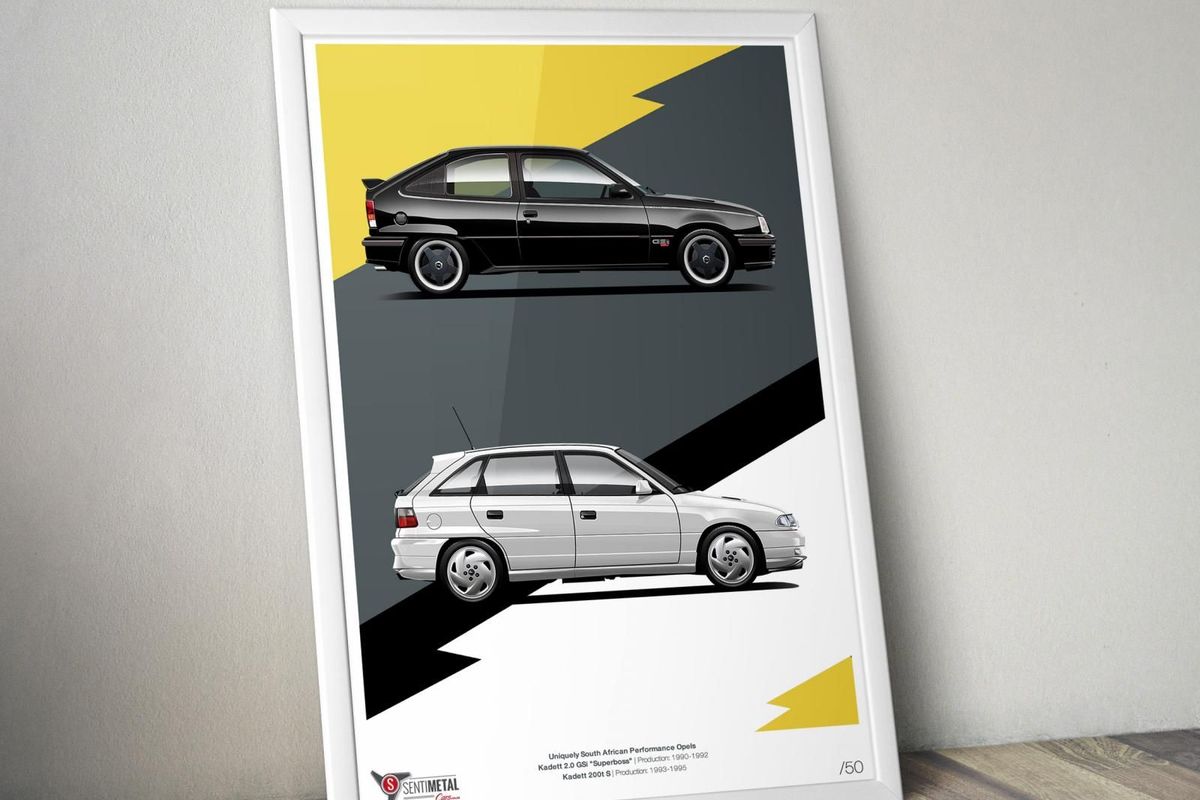
The glamorous event will again take place in the beautiful parklands of Johannesburg's upmarket Steyn City lifestyle resort, and you can expect to see anything from pre-war vintage cars (such as an Oldsmobile Curved Dash) to modern supercars (like the Pagani Huayra and McLaren Senna) at this high-profile event. You'll also see our very own Opel Kadett Superboss vying for the title.
It's important to note that tickets are not for sale on the days of the event – if you are interested in attending, then visit www.concourssouthafrica.com
"Pre-book your attendance as tickets will not be available for sale at Steyn City on the day," says organiser Paul Kennard. "This is an exclusive event for those who appreciate the finer things in life".
Our very own Opel Kadett 2.0 GSi Superboss will be competing at this year's Concours South Africa.
The fun starts on Friday at midday when 120 classic and supercars will be moving into their "arena", a dedicated 8-hectare site where the coveted "Best of Show" will be judged. Friday evening sees motorsport legends Graham Duxbury and Basil Green's induction into the South African Hall of Fame. This gala event follows last year's Concours South Africa-hosted induction ceremony where Rory Byrne, Michael Schumacher's seven-time championship-winning Formula 1 designer, was inducted at Steyn City.
On Satuary the iToo Classics-sponsored judging panel, which comprises 8 of the continent's foremost classic car afficionados, starts judging the various cars present. It's all about originality and provenance, says the organisers.
The final showdown happens on Sunday when the top 10 cars will be assessed by all eight discerning judges. Last year Zia Wort drove away with the top prize in her Ferrari 328 GTS. Who will it be this year?
Interested in buying some petrolheaded limited edition art or apparel, then head to theSentiMETAL store, here.
We certainly have high hopes for our own entrant, the first car to be included in the SentiMETAL South African specials collection, a 1992 Opel Kadett 2.0 GSi "S", or better known as a Superboss. The result of a nuts-and-bolts restoration by none other than local Superboss master Werner Meyer, our car is in the final stages of preparation by the experts at Black Pearl Master Detailing.
Full details from Sabrina Morris on 082 902 6244 or via [email protected] . Here's another tip… dress to impress! There is also a prize for the best-dressed lady.
The forthcoming Mercedes-Benz GLE is due in SA imminently and we have pricing for this luxury SUV.
From launch, there'll be just 3 engine options available and all feature the 9G-Tronic gearbox and all-wheel drive. First up we have the GLE 300d which boasts 180 kW and 500 Nm from a 2.0-litre turbocharged diesel engine. Mercedes-Benz claims a fuel economy figure of 6.1-6.2 L /100 km for this model.
The next model in the range is the GLE 400d, which has 243 kW and 700 Nm from its 3.0 turbodiesel mill. In terms of economy, Mercedes-Benz claims returns of 7.0-7.5 L/100 km.
For those wanting some petrol-powered goodness in their life, Mercedes-Benz is offering the GLE 450. It features a 3.0-litre turbocharged inline-6 petrol engine with the new EQ Boost function, comprising of a 48-volt integrated starter generator. Mounted within the forward section of the gearbox, it uses energy from a lithium-ion battery to provide an added 16 kW and generous 250 Nm of torque under acceleration in a mild hybrid process that is not only claimed to enhance performance but overall economy, too. Total power is rated at 270 kW and 500 Nm.
With the arrival of the new fourth-generation model, the GLE has taken on a clearly more up-market role in the Mercedes-Benz line-up, offering greater space, markedly higher levels of refinement and a range of standard features not even available in the German car maker's upper luxury models. With revisions to the Audi Q7 due soon and an all-new BMW X5 having just landed in SA, it looks like 2019 will be the year where the battle of best big luxury SUV will take place. Mercedes-Benz claims a fuel consumption figure of 8.3-9.4 L/100 km.
We'll have final specification at the vehicle's launch later this year.
2019 Mercedes-Benz GLE Price in South Africa (February 2019)
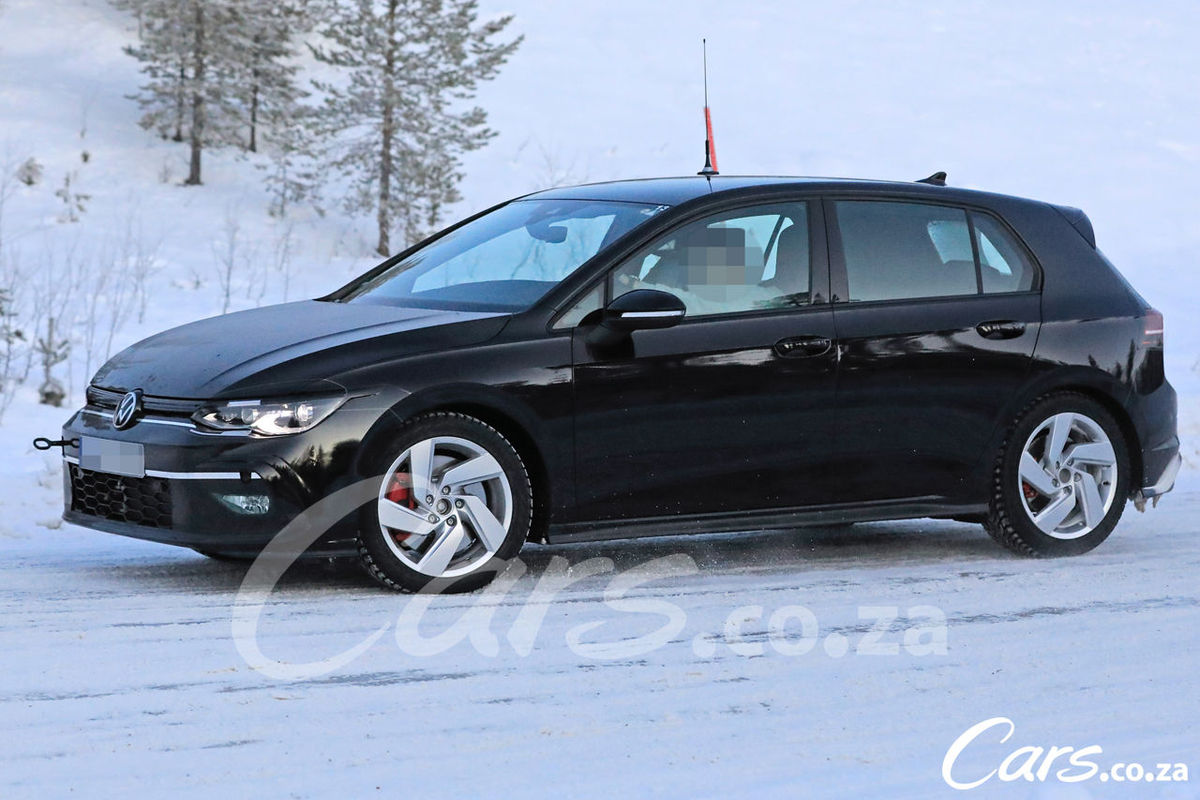
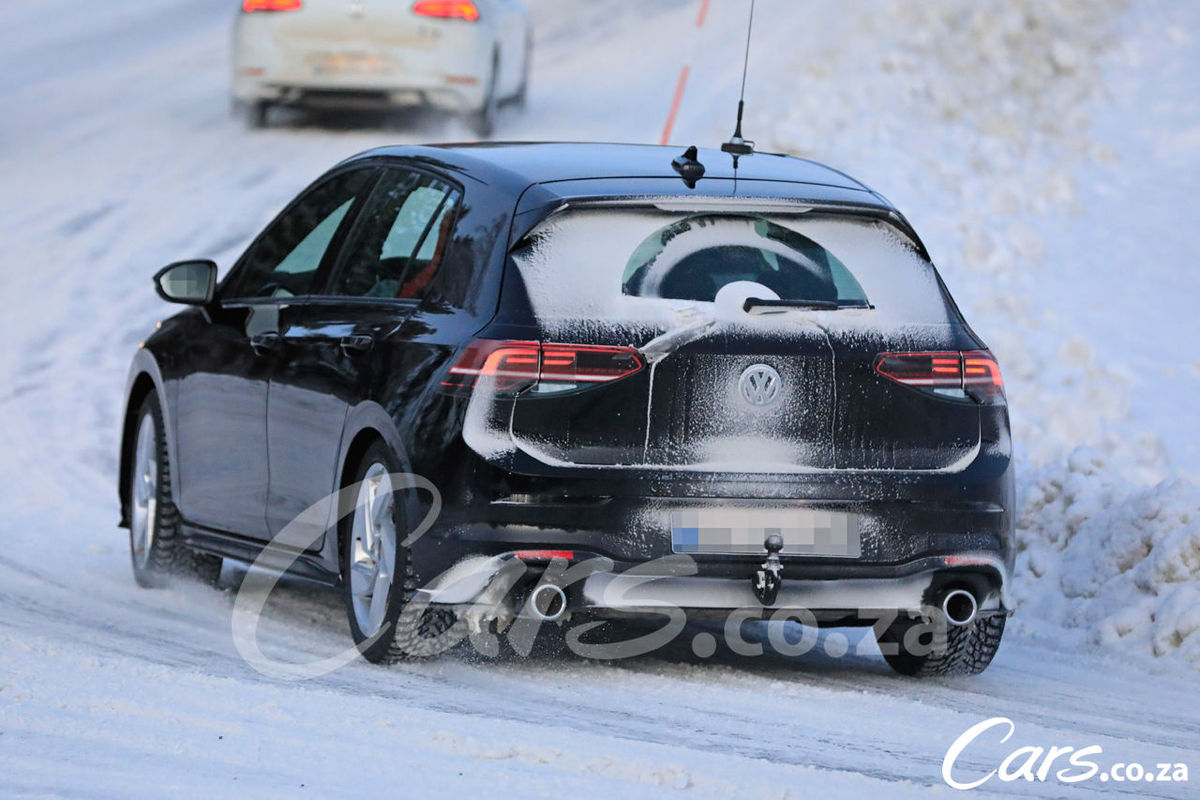
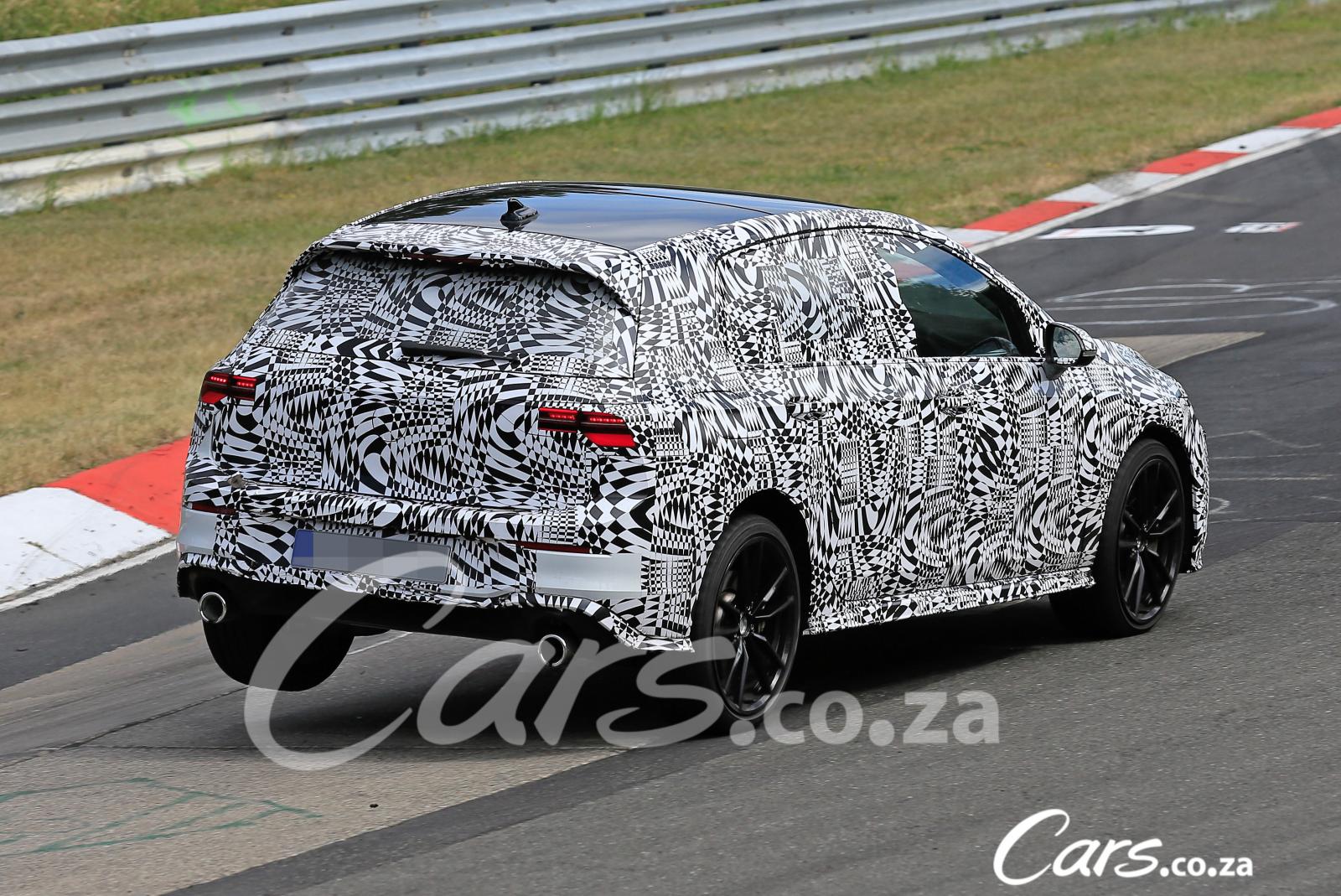
2020 Volkswagen Golf GTI TCR vs GTI – What’s the difference?
So, Volkswagen has confirmed that it will offer 300 Golf GTI TCRs in South Africa. The news has lit up our social media channels with various opinions, but there appears to be some confusion regarding what the differences are between the standard Golf GTI and the GTI TCR. Let’s set the record straight then, shall we?
The Golf GTI TCR is the last swansong of the Golf 7 generation before the new Golf 8 is expected to be revealed in October 2019. In August 2019, Volkswagen SA sneakily used the 2019 Festival of Motoring to announce its intentions to bring the GTI TCR to market in SA and the good news is it's arriving in July 2020.
Let’s take a closer look at the key differences between the Golf GTI TCR and the standard Golf GTI
1. It has more power and it’s faster
Like the standard GTI, the Golf GTI TCR has a 2.0-litre turbopetrol engine but it has been uprated to produce 213 kW and 380 Nm. Note that the GTI TCR makes use of a 6-speed dual-clutch transmission. In comparison, the Golf GTI employs the same turbocharged 2.0-litre engine but with 169 kW and 350 Nm of torque using the same 'box.
In terms of performance, the GTI TCR is significantly faster than the standard GTI and Volkswagen claims 5.6 seconds in the sprint from zero to 100 kph while the GTI claims 6.4 seconds. The GTI TCR’s top speed can also be optionally increased to 260 kph by removing the electronic Vmax limiter.
2. It handles better
The GTI TCR offers superior handling performance over the GTI by offering a number of upgrades. The GTI TCR not only sits lower than the GTI and it also features a front-locking differential to enhance traction and handling. Damper and spring rates have been altered and the brakes are uprated with perforated brake discs and special brake pads to improve stopping power. More so, the electronic power steering has also been tweaked to offer a more direct feel, making it a more agile handler than the standard GTI.
3. It looks and sounds better
The Golf GTI TCR has more racy appeal over the standard GTI. Key features include LED headlights, black exterior mirror housings, sill extensions, front splitter, a TCR roof spoiler and a rear diffuser. Additional styling options include a carbon mirror housings, black painted roof, honeycomb decor side panel foils and 19-inch wheel options.
Vrrphaa pleasure comes courtesy of a standard stainless steel exhaust system that’s been tuned for increased performance and it features large-bore dual exhaust tips that sit on either side of the rear diffuser.
The interior features sports seats with a new microfibre fabric design, a perforated sports steering wheel and seat belts with red edging.
4. It has some cool track options
The Golf GTI TCR rides on 18-inch ‘Belvedere’ forged alloy wheels as standard but bespoke 19-inch ‘Reifnitz’ and ‘Pretoria’ wheels will be offered as an option.
It’s also worth noting that the GTI TCR will be offered with semi-slick tyres if you opt for the ‘Pretoria’ wheel option which also includes sportier rear shock absorbers and adaptive Dynamic Chassis Control (DCC). Both 19-inch wheel options also include the removal of the Vmax limiter which increases the top speed to 260 kph.
5. It’s pricier than a GTI
Current pricing for the Volkswagen GTI is pegged at R565 800, which is a fair sum for a car (a very good one at that) on its last legs before retirement. The GTI TCR, according to VWSA, will be priced under R700k.
Some people feel that it’s a rip-off and merely another opportunity to make a quick buck from GTI-crazed consumers, and while there may be a sprinkle of truth in that sentiment, it can be countered by all the information above. There’s a lot that sets the GTI TCR apart from the regular GTI and on paper at least, it’s the better car. We can’t wait to drive it…
The all-new Mercedes-Benz CLS is on sale in South Africa. While the 53-powered AMG derivative of Stuttgart's executive-class "4-door coupe" is bound to attract the most attention, we recently tested the turbodiesel-powered 400d version… and it proved to be a genuine surprise package.
We like: Superb engine performance, open-road refinement, high levels of comfort and spec.
We don't like: Rear passenger access is a bit awkward, suspension crashes over sharp ridges.
It's subtly-styled in its non-AMG spec, but the CLS is a striking and elegant vehicle nonetheless.
Some may accuse Mercedes-Benz of cramming its executive- and first-class product portfolio with too many sedans, especially when sales stats indicate sedans aren't as popular as SUVs. There's already the impressive E-Class (also available in coupe and cabriolet guises), the CLS, and if you stretch your budget a tad more you're in S-Class and AMG GT 4-Door territory. Interestingly, the CLS is underpinned by the E-Class chassis, which isn't a bad thing – we've been impressed with the latter's refinement. So, essentially, the new CLS (now in its 3rd generation) is an E-Class in a sexier suit. The local market's limited to just these 2 flavours for now: the CLS 400d and CLS 53 AMG. We had the chance to drive the CLS 53 AMG at Kyalami during its launch, but logic and common sense suggest that the real value lies in the less glamourous turbodiesel derivative. Should you resist the temptation to buy a soon-to-be-launched GLE and opt for the effortless style of the CLS? Our 400d test unit was (surprisingly) devoid of many optional extras, which allowed us to examine the derivative with a more prudent spec, and, of course, focus on that all-new powertrain.
The steering wheel boasts Blackberry-like touchpads as well as gearshift paddles.
When it comes to inline-6 engines, Mercedes-Benz is not the first brand that comes to mind (we see you, BMW) and yet, somehow, the Stuttgart-based brand's latest powertrains of that configuration are sublime. From the get-go, the CLS 400d's 2.9-litre straight-6 turbodiesel is a delight! It delivers tremendous outputs and emits hardly any "diesel clatter". Usually, there's little interest in non-AMG motors, but with 250 kW and 700 Nm on tap, this turbodiesel is worth getting excited about. Mercedes-Benz claims a 5.0-second 0-to-100 kph dash, which will humble even a Volkswagen Golf R. We suspect the Benz would obliterate the Golf R from 100 kph onwards too, thanks to its colossal torque. Not bad for a 'diesel luxobarge!
Thanks to that 700 Nm, which is available from as low as 1 200 rpm, the CLS 400d's overtaking prowess is excellent – the svelte Benz positively lunges towards the horizon with satisfying verve, which furtively pushes passengers deeper into their seats. It's a creamy motor that delivers surfeit shove right across its rev range. There's little need to engage the sportier driving modes: even in Comfort and with modest right-pedal inputs, the CLS 400d dispatches slower traffic with ease. For science's sake, we lined the Benz up on a straight road and dialled up its most aggressive settings. Engage Sport+ mode, flatten the accelerator and just let the 9-speed automatic do its thing. The 'box change cogs briskly, with each change accompanied by a percussive thud. Suffice to say there's more than enough performance available; this Benz could embarrass boy racers.
Meanwhile, in Comfort and Eco (the modes we engaged most often), the CLS 400d's gear shifts blend into one another with hardly any interruption. If a car is marketed as an elegant and refined luxury sedan, it needs to get "supreme comfort" right first and foremost and, yes, the Benz ticks that box. Interestingly, you'd think 9 ratios are too many, but somehow the transmission's software is adaptable enough (well-calibrated) to ensure the 'box never hunts for gears or hangs onto high revs for too long. The combination of a punchy turbodiesel, an engaging transmission and rigorous testing meant the CLS 400'd economy suffered a little. Benz claims 6 L/100 km and we saw an indicated 8.2 L/100 km, but that's hardly scandalous.
Ride & Handling
Our test unit came specified with these smart-looking 20-inch AMG alloy wheels.
Considering that this Mercedes-Benz's pricetag breaches the R1-million mark, we had justifiably high expectations of the driving experience it would deliver. Fortunately, it met all our expectations and we were impressed with the Benz's sheer cruising ability on the tarmac. Until said tarmac quality deteriorates. We noticed a peculiar trait when piloting the CLS 400d… When traversing large speedbumps, the Benz's ride quality was composed; it gliding over them with ease. But, when encountering minor road-surface disturbances, such as protruding tree roots or "cat's eyes" on a freeway, the suspension tended to crash over them, with awful jolts and thuds translating to the cabin. It would be best to avoid driving on iffy roads, if you can.
In its Eco driving mode, the CLS can be super frugal. However, the throttle response dies considerably, so we think Comfort is the best option.
In the handling stakes, the CLS 400d produced more than a few pleasant surprises. While it physically resembles a sleek land yacht (and probably weighs about as much as one), the big Benz proved to be quite nimble in the corners. With the safety net of 4Matic all-wheel drive, you can press on a bit and you'd be unlikely to encounter sudden handling maladies; the entire package feels planted and sure-footed, with loads of grip. We did try to get the Benz's rear-end unstuck, but to no avail. The steering is pleasantly responsive too, with a direct and solid feel – its weighting will increase if you activate the sportier modes. If you pitch the car into tight corners, its heft becomes apparent, but, in our opinion, the engine, transmission and chassis are well-harmonised. Our test unit was shod with optional 20-inch AMG wheels, but the wide rubber didn't generate much more road noise.
Design & Packaging
The CLS' cabin is smart, modern and luxurious, but upon closer inspection, there are some cheap touches.
While there's no doubt that the Mercedes-Benz CLS is endowed with a tastefully designed and eminently upmarket interior, its cabin unfortunately suffers from the same affliction as many contemporary products from the Three-pointed Star: the build quality is good, but not great. Upon closer inspection, we noticed some cheaper finishes, something you definitely won't see in equivalent Audis or BMWs. Despite our test unit not coming with fully electrically-adjustable front seats, we had no difficulties finding comfortable driving positions by using the manual fore/aft slider and powered backrest control. It's an absolute joy to feel totally refreshed when you emerge from a touring vehicle's cabin after a long journey.
Our test unit came equipped with a digital instrument cluster, which renders clear and modern graphics. It also offers drivers the ability to customise the instrumentation themes on the display – we opted for the single-dial minimalist approach, but you can alternatively choose the more traditional speedometer/rev counter setup. Standard specification is impressive, with 2 USB ports, front and rear PDC, a reverse-view camera, Bluetooth connectivity, cruise and climate control, daytime running lights, navigation, auto lights and wipers, plus keyless entry and start, to name but a few.
Ashley Oldfield demonstrates the ample rear legroom thanks to the curvature of the front seatback. Don't bash your head when getting out, though.
If there's a downside to the CLS' smart styling, its the rear egress and headroom. Taller folk may find the roofline a bit low, but the cleverly-designed front seatbacks ensure that aft legroom isn't an issue. If you transport rear passengers, just remind them to "watch their heads" when they get out.
Price and warranty (August 2019)
The Mercedes-Benz CLS 400d 4Matic costs R1 194 834, including a 2-year/unlimited km warranty and a 5-year/100 000 km maintenance plan.
Do you really need a CLS 53 AMG? We think not. There's ample performance available from the new turbodiesel engine.
Verdict
The new Mercedes-Benz adds much-needed variety to the rather predictable executive sedan segment, especially now that BMW has discontinued its 6 Series Gran Coupe. Also, in a market seemingly obsessed with all things SUV, it's really good to have some diversity. The CLS brings some elegant style and tremendous performance to the table… the 400d 4Matic's motor provides generous in-gear acceleration and can cruise at heady velocities with little effort. The bonus is that, if you drive considerately, the fuel consumption will be moderate, unlike its petrol-powered AMG sibling.
Should you buy one? If you think the E-Class is a bit bland (or a trifle passe), don't want an SUV (unlike the rest of the world) and you absolutely need 4-doors, then this is your answer south of the S-Class or AMG GT 4-Door Coupe. Just please do us a favour and fork out for the AMG styling package, which would endow the CLS with some added visual punch. We adored our test unit, but couldn't help but think it was a bit plain-looking, despite the optional bigger wheels. "Oh, how ordinary" is not what you should hear when you've spent more than R1 million on a luxury vehicle.
Suzuki has revealed its six-seater Ertiga, the new XL6.
Although the XL6 evolves from Suzuki’s popular Uber-MPV platform, it features notably different styling and is a touch longer than the Ertiga.
The XL6 features a new headlamp design, remoulded bumpers, pseudo skid-plates and some cladding around the rear LEDs.
It also rolls 15-inch alloy wheels and measured bumper-to-bumper, the XL6 is 50 mm longer than Suzuki’s current Ertiga.
The most noticeable change inside this new Suzuki is its seating configuration, which features accommodation for six, whilst the Ertiga is a seven-seater. Owners can also have the option of ordering captain’s seats for the middle row passengers, which should yield a significant improvement in comfort for second-row passengers.
Standard features for the new XL6 include cruise control, a height-adjustable driver’s seat, dual front airbags and a touchscreen infotainment system incorporating both Apple CarPlay and Android Auto.
Powering the XL6 is Suzuki’s proven 1.5-litre naturally-aspirated four-cylinder engine, good for 78 kW and 138 Nm. Drive is to the front wheels, via either a five-speed manual or four-speed automatic transmission. The Suzuki XL6 also features mild hybridization, with an integrated starter-generator.
And the name? Well, if you are a dedicated follower of the brand, then you’ll remember the XL7 SUV – and this XL6 is a continuation of that naming lineage, in the form of a compact MPV.
Suzuki South Africa is currently "studying" the possibility of bringing the XL6 to South Africa. We will keep you informed as soon as a decision is made.
The Porsche Taycan’s interior has been revealed and it’s rather pretty…
Porsche is currently in the process of bringing its first all-electric car to market and the model will be fully revealed on 4 September 2019. Nonetheless, Porsche has released images showing us what the interior of the Taycan will look like and it looks impressive.
It’s a display of displays and the cabin can be equipped with up to 4 screens, all serving different functions, not only for the driver but the passenger too.
Firstly, the 16.8-inch instrument cluster is free-standing and curved. It doesn’t have a cowl to reduce glare but instead features a vapour-deposited polarising filter that reduces reflections. As you would expect, the screen is adjustable with 4 modes on offer including Classic, Map, Full Map and Pure. Note the touch-points on the sides of the instrument cluster which provides quick touch-access to features such as lighting, suspension and traction control settings.
Directly to the right of the instrument cluster is a 10.9-inch infotainment screen with voice control responding to the words ‘Hey Porsche’ and here the driver has access to features such as media, navigation, telephone and Porsche Connect, and so forth.
The instrument cluster looks quite similar to the 2015 Mission E Concept on which the Taycan is based.
Below that and angled into the centre console is an 8.4-inch touchscreen with haptic feedback, providing access to the climate control system and allows setting of the seat ventilation. This screen also has handwriting recognition technology which allows the driver to write addresses for easier navigation.
As an option, Taycan owners will also be able to spec a fourth 10.9-inch screen placed directly in front of the passenger. But that’s not all as a fifth 5.9-inch screen can be fitted in the rear to give rear passengers something to play with where they can operate climate control settings as part of the optional 4-zone climate control package.
A great touch to the interior is the use of recycled materials including optional Race-Tex upholstery made from recycled polyester fibre while the floor carpets are made from Econyl which is made from recycled fishing nets. Nice one, Porsche!
Electric Power
Previously, Porsche confirmed that the Taycan will make use of 2 electric motors fed by a battery pack comprising 4-volt cells, which equates to a range of 500 km. The battery pack can be fast-charged to 400km (80%) in just 15 minutes.
The combined power output of the synchronous electric motors – each of which powers an axle – is confirmed at 440 kW making the Taycan a rather lively machine. It’s zero to 100 kph sprint time of under 3.5 seconds puts it ahead of the Panamera Turbo Sport Turismo in the acceleration stakes.
We will provide more details when the Porsche Taycan is revealed, so stay tuned!