VW California Ocean Better Than Airbnb

This new California Ocean could be nicer than your beach house for a weekend away. 

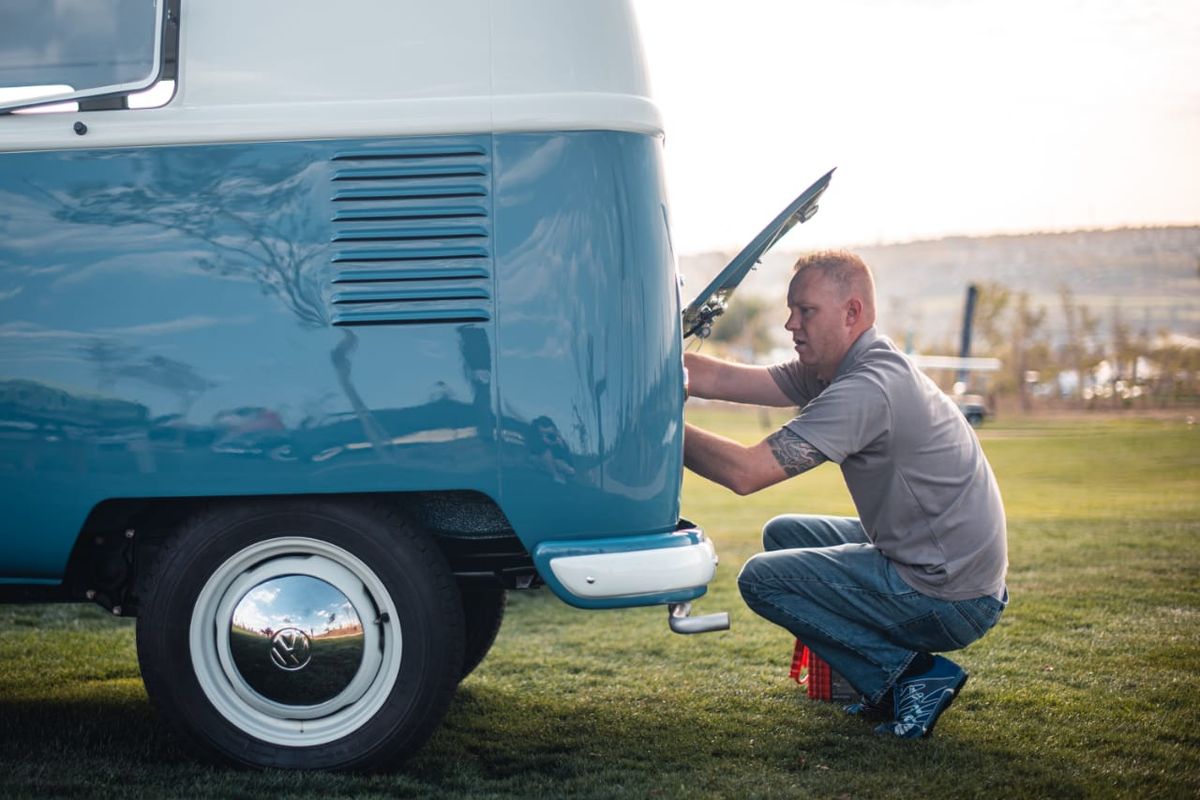
VW has updated its California range of T6 MPVs, possibly making them even more comfortable and nice inside than your actual home.

This latest product update is based on the existing T6 Transporter platform, adding minimal mechanical refinements. The design has been refreshed with VW’s latest LED daytime running lights and additional chrome detailing for the grille and front bumper.

Read our review of the 2019 Mercedes-Benz V-Class here

As with any large van, the California’s most impressive features are inside. There’s a new overhead control console, which manages the MPV’s cabin lighting and pop-up roof functions. Cleverly, VW has also added a digital pitch and roll indicator, which isn’t meant to help you guide the California through rough terrain, but rather park it level, to ensure all peripheral camping gear and functions are easily attached. And that you sleep on level ground.


VW's California offers Airbnb quality sleeping arrangements.

The refreshed California range features a range-topping Ocean derivative, which has push-button convenience for its kitchen accessories (sink, cooker and fridge). VW’s interior architects also decided to replace the rear cupboard shutters with sliding doors, which are less prone to develop a rattling issue on gravel roads over time.

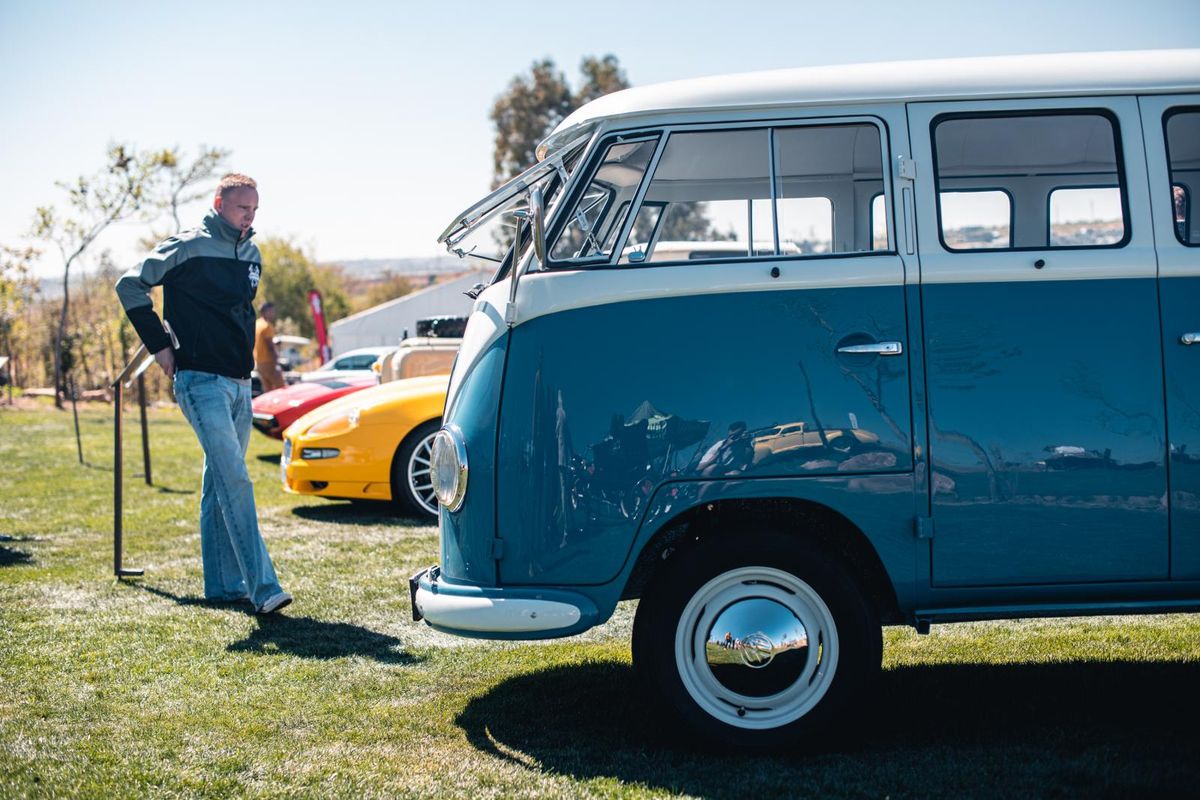
5 Reasons we love the VW Kombi

Sleeping comfort has been enhanced too, with the cabin bed having gained a sprung base – to allow easy height adjustment. There are also additional USB points and LEDs inside the cabin, to make finding things at night easier and charging multiple devices possible.

Beyond the configurable cabin and host of ergonomic improvements, the sole mechanical change to California is its steering system, which now features electrical assistance – instead of hydraulic. This running change allows VW to add an array of driver assistance functions, such as lane assist, park assist, trailer assist and (crucially for a large side-surface MPV), crosswind assist.

Powertrains for the revised California will be VW’s familiar fare of 2-litre turbodiesels, driving either the front- or all four wheels, depending on customers preference. And yes, you still get an integrated camping table, mounted within the California’s sliding door, with camping chairs stowed in its tailgate.

Audi Teases RS Family for 2019

Audi's performance arm has teased its forthcoming arsenal of high-powered vehicles due to be revealed sometime in 2019.

Audi's RS division has been hard at work and will be revealing a flurry of high-performance vehicles in 2019. Granted, we're already halfway through the year, so there's not much time left. This teaser image shows what's coming and we're quite excited to see what RS can offer, especially as rivals AMG and M have been hard at work.

We think the following cars are in this lineup: Audi RS6, RS7, RS Q3, RS Q3 Sportback and RS Q8. However, that's 5 vehicles and there are 6. So what is the mysterious 6th car? Some suggest its a facelift to the RS4.

We think the existing 4.0-biturbo V8 will be carried over, with some revisions and enhancements. Previously, this mill produced 412 kW and 700 Nm, which is fast for sure, but not enough to take the fight to the current versions of BMW M5 and Mercedes-AMG E63. We think this new Audi RS6 will need to be playing in the 440 kW / 800 Nm ballpark.

The RS Q3 and RS Q3 Sportback will be powered by the 2.5-litre 5-cylinder turbo engine, but we suspect it'll be producing similar numbers to the current RS3 hatchback. Previously, it was detuned, but if rumours are to be believed, 300 kW is the figure.

Finally, at the end of the queue is a big SUV. It can only be the Audi RS Q8, which we think will have the same powertrain as the Lamborghini Urus. For the record, a 4.0-litre twin-turbo V8 produces 478 kW and 850 Nm.

Further Reading

Lamborghini Urus (2018) International Launch Drive

Audi RS6 Avant vs Jaguar F-Type Coupe AWD R – The Final Showdown

Audi Plans A Big 2019

New V6 Audi RS4 Avant – More Torque, More Fun?

Facelifted Audi TT (2019) Price in SA

The final instalment of the petrol-powered TT has just been introduced in South Africa. Here's what the design icon/sportscar goes for.

Audi announced earlier this year that this is the last version of its beloved TT that will be powered by an internal combustion engine. Future generations will be electrically powered and may not even carry the TT badge when the changeover occurs.

The last generation has just gone on sale in SA, in its facelifted form. The major changes include an updated infotainment system and more standard spec pumped in. The engines have also received a small power hike. The basic version of the new model now features the Audi drive select dynamic handling system, Audi smartphone interface, parking aid plus, power-adjustable front seats and the multifunction steering wheel plus, with which the infotainment and voice control system can be controlled entirely using the steering wheel. Also standard are the illuminated USB ports as well as MMI navigation plus.


Enjoy the TT while it lasts. This will be the last generation.

The exterior design has had some subtle modifications to update its appearance. The front-end now features a 3-dimensional grille with honeycomb inserts and matching air dams that flank it. The rear-end features more honeycomb design around the rear diffuser. A neat trick is the capless filler cap underneath the metallic-looking fuel flap, meaning you can fill it up racecar style without unscrewing a cap.

Engine performance bonuses come in the form of a 169 kW 45 TFSI unit and a 228 kW TTS quattro S tronic. The former is paired to a 7-speed dual-clutch 'box while the TTS gets a 6-speed S tronic. If you option in the S line sport package or Audi magnetic ride, the body is lowered by 10 mm. 

Pricing

Audi TT Coupé 45 TFSI S tronic – R 670 000 

Audi TTS Coupé quattro S tronic – R 782 000.

Suzuki XL6 Previews New Ertiga

Uber drivers rejoice, for there is a new Ertiga in the works.

Suzuki has teased a rendering of its new compact seven-seater station wagon, the XL6.

This new XL6 MPV measures 50 mm longer, 40 mm wider and 10 mm taller than the current Ertiga and those numbers should provide for better passenger comfort and superior luggage volumes.

Significant styling upgrades tally LEDs for both the head- and taillights (dramatically improving the overall design), and an all-new fascia, representative of Suzuki’s current global design language.

Suzuki’s cabin architects have added more black trim to the cabin, while ergonomics improve with the introduction of a height-adjustable driver’s seat. The middle-row occupants also benefit from an upgrade to individual seats, with armrests, instead of the Ertiga’s bench.

The most significant interior equipment upgrade is a 7-inch infotainment touchscreen, which is both Apple CarPlay and Android Auto compatible.

General specification includes dual front airbags, brake force assisted ABS and rear parking sensors linked to a reversing camera.

Powering the XL6 is a 1.5-litre four-cylinder petrol engine, good for 78 kW and 138 Nm, driving the front wheels via a five-speed manual or four-speed automatic transmission.

The official global reveal of XL6 is expected later this month, with distribution to individual markets being confirmed after that date.

Related content

Suzuki Ertiga (2019) Launch Review
Suzuki Swift Sport (2019) Launch Review
Honda BR-V 1.5 Elegance Manual (2016) Review
 

2019 Audi A1: A First Look

The all-new Audi A1 is due to be revealed in South Africa in the next month or two, but Ciro de Siena had a chance to meet the newcomer early. Here's a preview of the Audi A1.
The A1 is Audi's gateway into the brand. Now built on the MQB platform, the newcomer is larger than the outgoing model and will be going on sale in the next 2 months. You can see the all-new Audi A1 at the SA Festival of Motoring, being held at Kyalami from 22-25 August 2019.

Further Reading

Audi A1 Citycarver Revealed

2019 Audi A1 Revealed

Audi A1: Old vs New

Audi A1 Price in South Africa

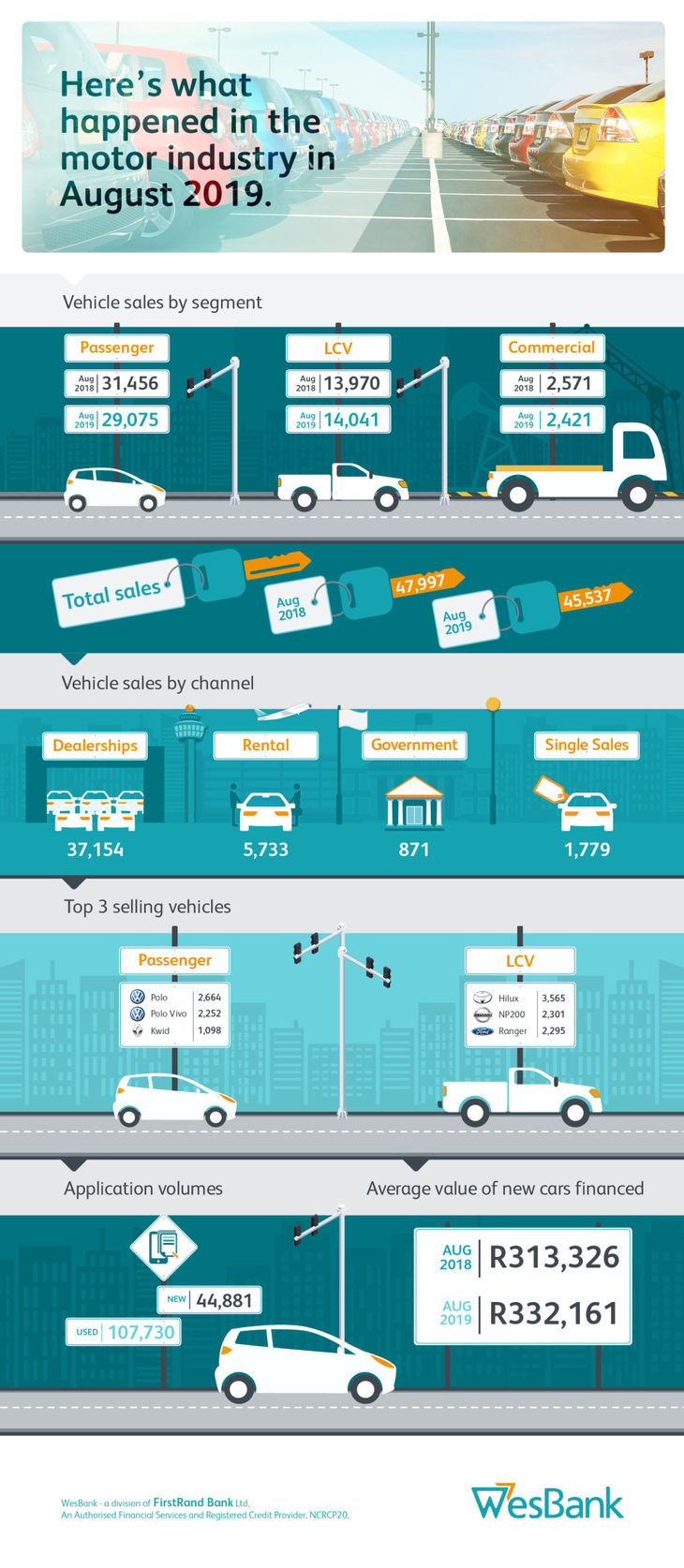
New Car Sales In SA: July 2019

According to the National Association of Automobile Manufacturers of South Africa (NAAMSA), the declining sales trend persisted during the month of July 2019. Take a look at the new car sales summary below…

2019 has been a tough year for the local car market with retractions being a common theme every month. July was no different and in the event, aggregate domestic sales declined by 3.7% while the passenger car market shrunk by 8.2%. 

However, on the positive side, export sales surged by 21.1% and Light Commercial Vehicle (LCV) sales improved by 2.9%.  

Ghana Msibi, WesBank Executive Head of Motor commented, “While the small interest rate cut during July was warmly welcomed by industry and consumers alike, it may take some more incentive from the Reserve Bank to jump-start the economy and entice consumers back into the new vehicle market. While small, its effects will be enjoyed by household incomes in the longer term, but another cut before the end of the year would be welcome and effective.”

New Car Sales Summary – July 2019

  • Aggregate new car sales of 46 077 down by 3.7% (-1 779 units) compared with July 2018. 
  • Passenger car sales of 29 477 down by 8.2% (-2 617 units) compared with July 2018. 
  • LCV sales of 13 852 up by 2.9% (+391 units) compared with July 2018. 
  • Export sales of 34 297 up by 22.1% (+6 216 units) compared with July 2018. 

Most popular car brands in SA

  1. Toyota – 10 142 units

  2. Volkswagen – 7 617 units 

  3. Nissan – 4 820 units

  4. Ford – 4 289 units 

  5. Hyundai – 2 787 units

Best-selling cars in SA

  1. Toyota Hilux – 2 996 units 

  2. VW Polo Vivo – 2 621 units 

  3. Ford Ranger – 2 217 units 

  4. VW Polo – 2 076 units 

  5. Nissan NP200 – 1 730 units

Sales Outlook

Despite interest rate cuts in July 2019, market conditions remain challenging. 

“The economy remains tough,” says Msibi. “Retrenchments across the board are hitting all sectors hard and the motor industry is feeling the effects of significantly reduced spending power. Consumers simply cannot afford to replace their vehicles, never mind enter the market for the first time.”

However, a better second half of the year is expected to materialise and exports will remain strong for the rest of the year with large gains expected. 

Related Content

Toyota Hilux Legend 50 (2019) Launch Review
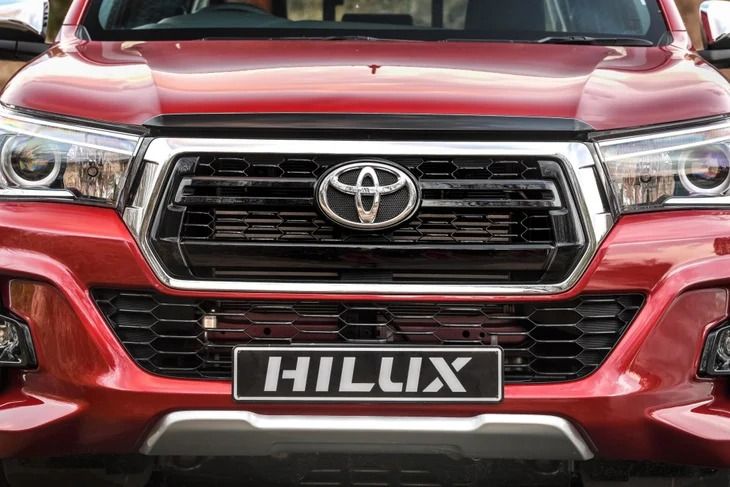
Toyota Hilux GR Sport (2019) Launch Review
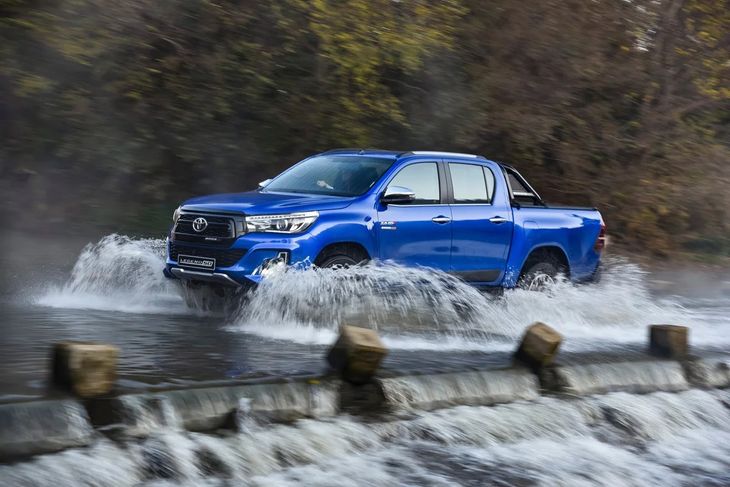
Toyota Hilux vs Ford Ranger (2019) Comparative Test

The Journey Karoo: Opel Crossland X Tackles Swartberg Pass

Cars.co.za, in association with Opel South Africa, will be seeking adventure and fine food in the Karoo for the next episode of The Journey taking place from 6-9 August 2019. Here’s how you can follow The Journey and engage with us on social media!

Since the inception of The Journey (#TheJourneyAfrica) back in 2016, we have visited incredible places and driven countless kilometres in an effort to showcase the diverse natural beauty of South Africa and its people, but also Africa in general, and we hope that The Journey series has inspired you, to get into your car, and experience and savour the world in which you live.

So far, we have explored unforgettable landscapes in South Africa, Namibia, Mozambique and Zambia. We have surfed a wild river wave far from any ocean, ridden waves in the Atlantic and the Indian Ocean, dived for sunken Land Rovers and even scaled mountains in the Drakensberg and Lesotho. The Journey has been amazing, but it’s far from over…

Watch previous episodes of The Journey on our YouTube Channel (and don't forget to subscribe!)

Where to next?


The diesel-propelled Opel Crossland X will be taking The Journey team to Die Hel and back…

For the next iteration of The Journey, we are 'Crosslanding' into the heart of the Karoo behind the wheel of the recently introduced and diesel-powered Opel Crossland X 1.6TD Enjoy. Special guest appearances will be made by talented Karoo chef, Hendry 'Kokkedoor' Olivier, whom you will recognise from the Kokkedoor TV series on kykNET. Fashionista and TV presenter Danine Naidoo will be accompanied by captivating model and actress, The Little Harlequin. Our guests will be hosted by Journey veterans, Cars.co.za Co-Founder, Ross McIlroy and our very own motoring journalist and photographer, Gero Lilleike.

To Die Hel and back! This the first time that we will be going to such a remote location in front-wheel-drive cars and Chef Hendry Olivier will be presiding over the first-ever Journey Karoo Potjiekos Cook-Off that will see guests preparing traditional Karoo recipes in the remote cultural heritage site of Gamkaskloof, also known as ‘Die Hel’, which forms part of the Swartberg Nature Reserve, a World Heritage Site.

The Journey team will also be visiting the well-known Karoo town of Prince Albert as well as traversing the famous and spectacularly beautiful Swartberg Pass. 

The Swartberg Pass is roughly 24 km long and was the last major pass constructed by renowned South African road engineer and pioneer, Thomas Bain, in 1884 and was completed in 1887. It's considered to be the crown jewel in Bain’s historically significant roadbuilding career. 

The Journey Karoo is taking place from 6-9 August 2019 so be sure to follow the accounts below and track the #TheJourneyAfrica to see what we are getting up to along the way! Please note that due to the remoteness of Die Hel, coverage during The Journey will be limited, but we will do our best to share as much with you along the way as possible. 

Follow The Journey Karoo on Social Media

The Journey

Instagram – @thejourneyafrica and follow #TheJourneyAfrica

Opel South Africa

Instagram – @opelsa 

Twitter – @OpelSA

Facebook – @OpelSA

Chef Hendry Olivier (Instagram – @hendryolivier)


Photo Credit: Netwerk24

Danine Naidoo (Instagram  @daninenaidoo, Twitter – @daninenaidoo)


Photo Credit: On-Air Entertainment

The Little Harlequin (Instagram – @the_little_harlequin)


Photo credit: LuceD

Gero Lilleike (Instagram – @GeroLilleike & Twitter – @GeroLilleike


Photo Credit: Luke Patterson

Ross McIlroy (Instagram – @rizziziousmar)


Photo credit: Troy Davies


Volvo XC40 T3 R-Design (2019) Review

This T3 R-Design was a finalist in the Premium Compact category of the 2018/19 #CarsAwards and it's one of the most affordable derivatives in the local Volvo XC40 line-up. Nonetheless, it still costs nearly R600 000. Is there enough substance to its undoubted style? Is there merit in choosing such a vehicle equipped with a manual 'box?

We like: Refinement, quality, efficiency, practicality

We don't like: Slightly too firm-riding, you should really rather buy an automatic

Fast Facts

  • Price: R565 400 (August 2019, without options)
  • Engine: 1.5-litre 3-cylinder turbopetrol
  • Gearbox: 6-speed manual
  • Fuel economy: 6.3 L/100 km (claimed)
  • Power/Torque: 120 kW/265 Nm

Own a Volvo? Tell us about your experience here

SERIOUS ABOUT BUYING?

Where does it fit in?


Stylish, and even more so in R-Design trim, the XC40 remains one of our favourite premium compact crossovers.

For a start, the market for manual-transmission premium crossovers is ridiculously small. According to Lightstone Auto, only 9 XC40 T3 R-Designs have been registered in the first half of the year, one of which we assume is pictured here. And it's not just Volvo… An obvious rival is the BMW X1 sDrive18i (also with a manual transmission), but BMW SA has sold the sum total of 1 (yes… ONE), of them in the first 6 months of 2019. 

And that's it… The new Audi Q3 will arrive on the local market soon and we already have pricing for the Ingolstadt-based firm's local line-up – check it out here – there won't be a manual derivative. We're pretty sure the next-generation Mercedes-Benz GLA won't be offered with a clutch pedal, either. So… we guess that if you really don't want an automatic, then at least the Swedes are catering to your preference. But, given the indications from the market (sales figures), we wouldn't be surprised if this particular variant quietly disappears from the price lists in the coming months/years. 

All of which makes this review quite tricky. So, we're going to look at the XC40 T3 R-Design in general, without focusing too much on the manual transmission (which is pretty good, to be clear), and imagine that you'd rather buy the automatic, which costs only about R30 000 more.

How it fares in terms of…

Design & Packaging


With its striking design, dual-tone finish and large wheels, the XC40's design hides very practical packaging. 

We're big fans of the design of the XC40 – it simultaneously manages to look premium and youthful, and its overall appeal is enhanced by the R-Design package. So equipped, most of the accented features become gloss or matte black, and you also get the dual-tone exterior paint finish that works so well with this car's design. R-Design brings 19-inch wheels as standard, but our test unit featured even larger 20-inch items (R15 500). The wheels look the part, but they may play a role in the slightly too-firm ride – remember R-Design includes a slightly firmer "Sport" suspension.

Compared with the more basic Momentum specification, the cabin of the T3 R-Design is suitably more "posh". It feels like a quality product from the moment you take a seat behind the height/reach adjustable, leather-wrapped steering wheel. Leather upholstery is standard on this derivative, and adds significantly to the overall premium ambience, as do the standard digital instrumentation and large Sensus infotainment touchscreen. 

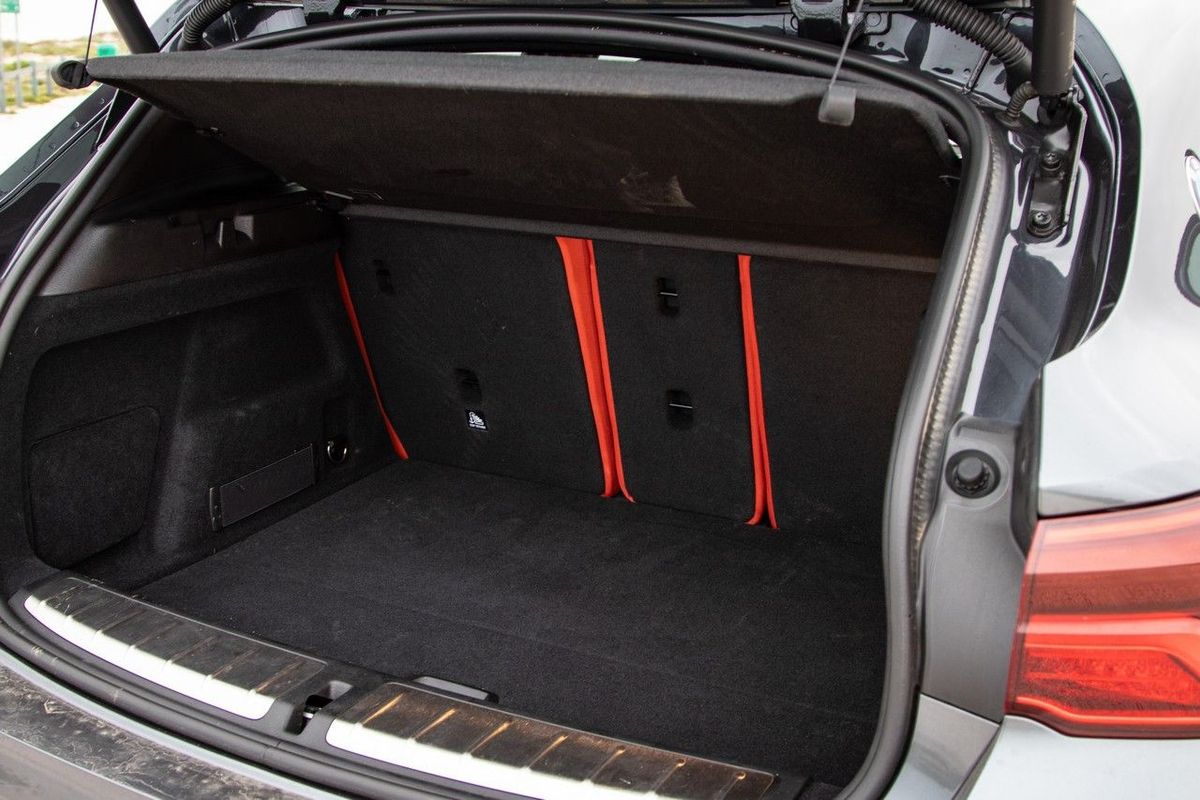
But strip away the veneer of what is undoubtedly a very stylish offering, and you're left with a car that also offers impressive practicality. It's spacious all-round (rear legroom, in particular, is quite impressive), and the load bay is a sizeable 460 litres, expanding to 1 336 litres with the rear seats folded down. Suffice to say the XC40 is clearly not just a pretty face… it also can function as a practical – yet very stylish – family car, with aplomb.

Comfort & Features


Quality and "interesting" material choices imbue the XC40 cabin with a premium, but fun air.

For nearly R600 000 (base price) the T3 R-Design represents a decently equipped vehicle, although there are plenty of nice-to-have features that remain on the optional extras list. Still, leather upholstery is standard, the front seats feature electric adjustment (and memory for the driver), and there's a more comprehensive smartphone integration system included in the price, as well as an inductive charging pad. 

You also get dual-zone climate control (operated via the Sensus touchscreen), cruise control, rear park assist, keyless entry, navigation and a whole raft of safety systems; 7 airbags, ABS with EBD, ESP, hill-hold, hill-descent control, lane-keep assistance and Isofix child-seat anchorages for the outer rear seats.

The seating position is superb, and it's likely to be that way for a driver of almost any size, because the steering column covers a generous range of rake- and reach adjustment, and the front seats (with manually extending cushions) are highly adjustable too. It is clear that careful attention to detail was paid to the layout of the cabin and particularly storage spaces – a well-sized pad is located close to charging outlets (2 x USB ports), plus the door pockets are sizeable and, in the case of our test unit, featured neat, durable-looking black carpeting. Nice touches abound…

Performance & Efficiency


Equipped with a 6-speed manual transmission, this XC40 is claimed to consume an average of 6.3 L/100 km.

The XC40 appears quite compact in the metal, but it's longer and wider than a Mini Countryman, to name but 1 example, and every bit as large as the more conventionally-styled BMW X1. This means it's no lightweight – its kerb weight of 1 497 kg actually makes it heavier than the entry-level X1 derivative. So the plucky 1.5-litre 3-cylinder turbopetrol underneath the Gothenberger's bonnet will clearly have its work cut out for it…

Having said that, the XC40 makes admirable use of the peak outputs (120 kW and 265 Nm of torque) at its disposal. Maximum torque is available from 1 850 to 3 850 rpm, and if you use the gearbox considerately, you will rarely stray out of the motor's ideal powerband. That said, most drivers will definitely miss having a self-shifter, particularly in typical city-traffic situations. Volvo claims a 0-100 kph time of 9.3 seconds and a 200-kph top speed, but all you need to take away from that is that the XC40 comfortably – and surprisingly, quietly – reaches swift speeds. 

One of the most important characteristics of this downsized motor is fuel efficiency. Volvo claims a consumption figure of 6.3 L/100 km; we achieved an indicated 7.8 L/100 km, but we still rate that as good, considering the mixed driving conditions the test unit endured during its time in our fleet.

Ride & Handling


The going is by no means harsh, but the XC40 rides better with the standard suspension and smaller wheels.

The XC40 is one of the higher-riding compact premium crossovers, with a ground clearance of 211 mm (compared with the Mini Clubman's 165 mm). The seating position is also quite high, so from behind the 'wheel you feel like you're in command of a bigger vehicle than you are. And yet, the XC40 never lumbers like an unwieldy SUV – it feels light and nimble. There's also a lovely uniformity to the way its controls are harmonised, and consequently, the Volvo makes an impression of quality, refinement and comfort. But its excellence could be further boosted by 2 things, however…

Firstly, though the ride is well-controlled, it's just a tad too firm on poor surfaces. It might be possible to achieve greater suppleness in your XC40 by not opting for the Sport suspension (part of R-Design) and bigger wheels fitted to this particular test unit. Secondly, while the manual 'box is a good one, we can't quite understand why this derivative exists, because an automatic transmission would far better suit the character of this vehicle.   

Price and warranty

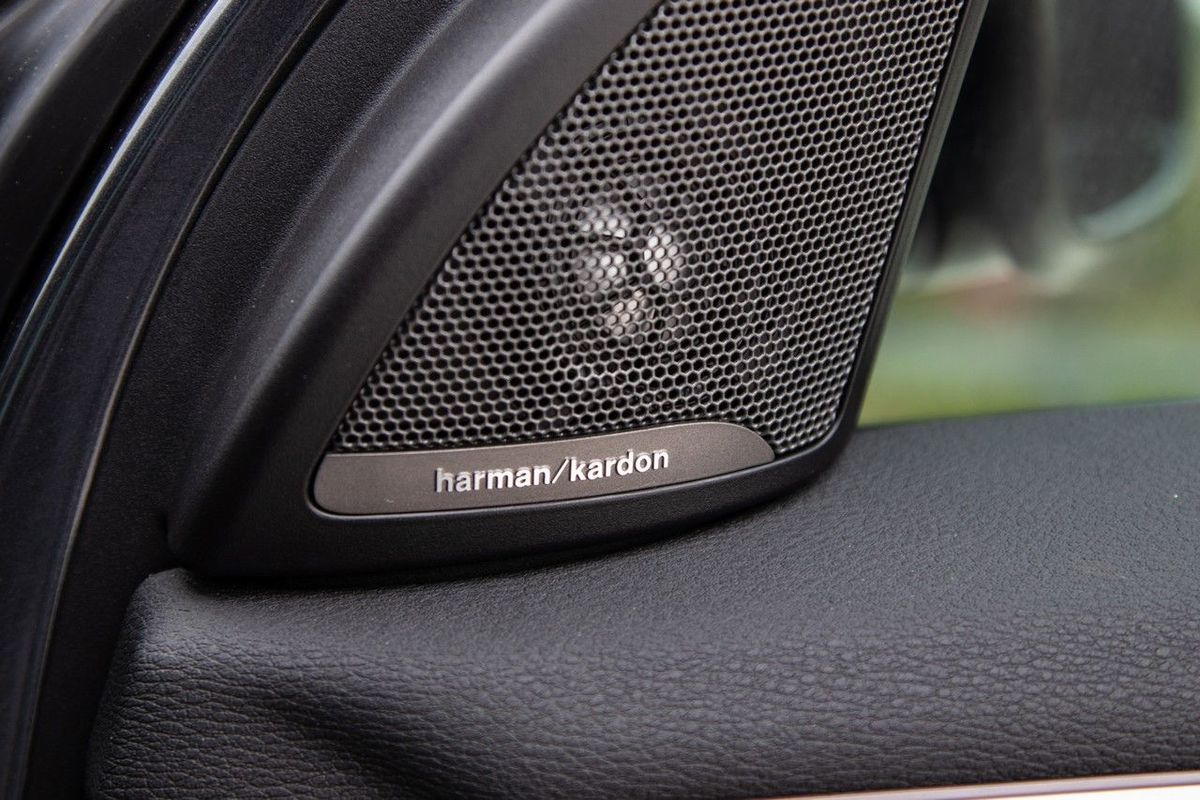
The Volvo XC40 T3 R-Design costs R565 400 as standard, but there are many options to consider. The striking Fusion Red metallic of this test car is a R2 950 option, and the bigger wheels (which we would not recommend, unless an overly firm ride quality would not bother you) cost R15 500. There are also 3 comprehensive packs to choose from that bundle together attractive features, but you can individually specify items, such as a front and rear park assist setup (R5 750), a reverse-view camera (R6 400) and a high-performance Harman/Kardon audio system (R10 750).

The standard price includes a 5-year/100 000 km warranty and 5-year/100 000 km maintenance plan which is, of course, excellent.

Verdict


Given its all-round excellence, the XC40 deserves to sell in far greater numbers. But we'd suggest opting for an automatic derivative.

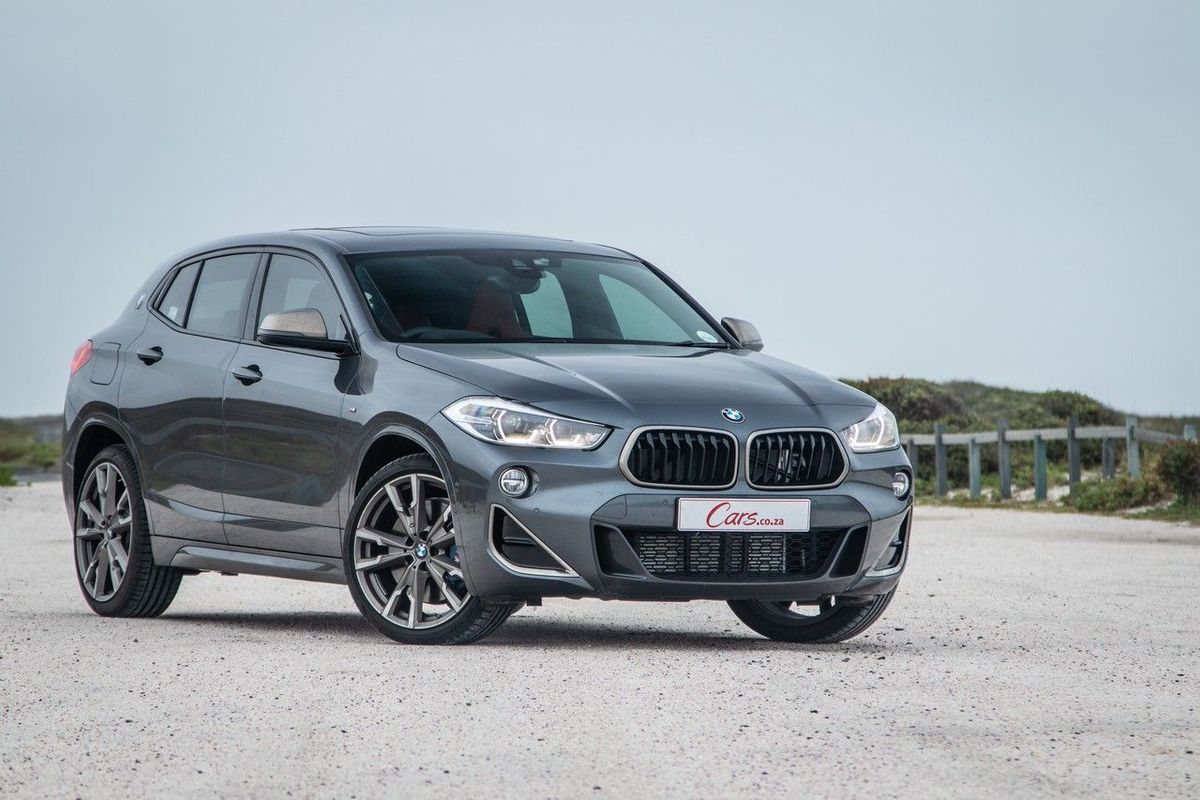
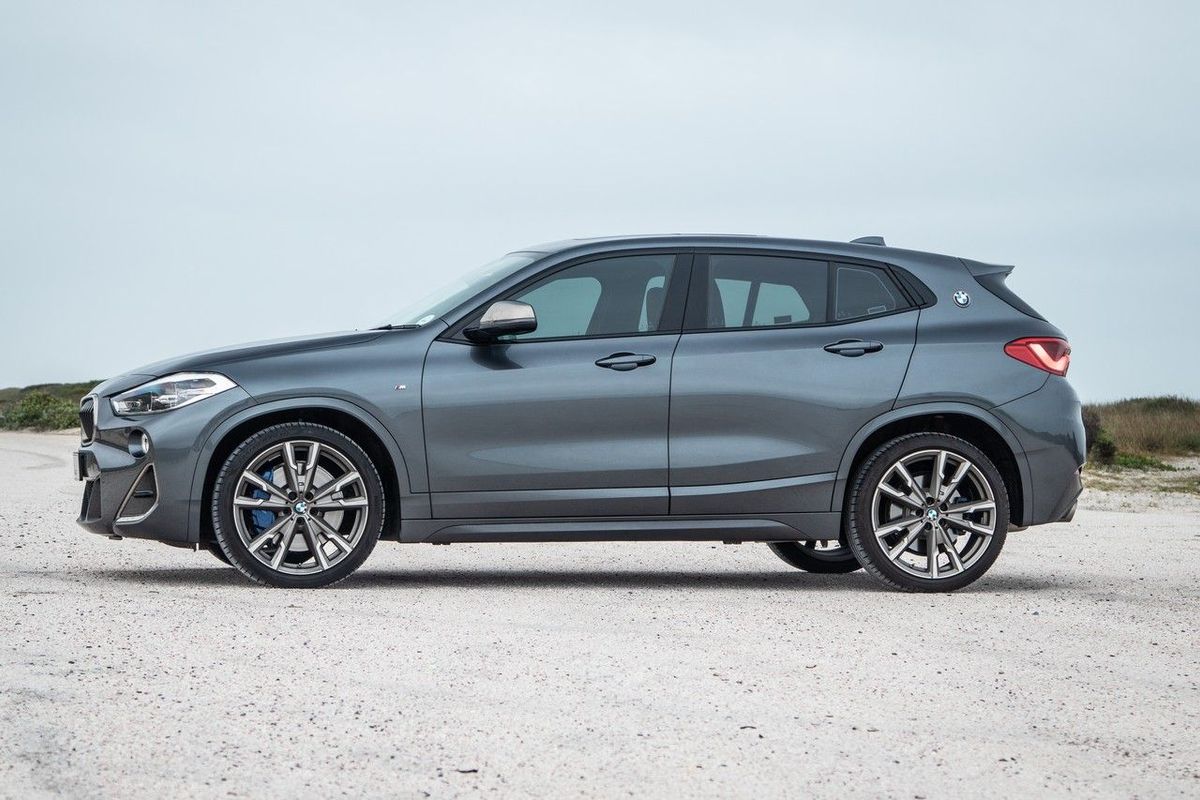
The Volvo XC40 has not garnered so many award nominations (and reaped the silverware, in many cases) without good reason. More practical than, say, a BMW X2, and more stylish than, say, a BMW X1, it strikes a perfect balance between practicality and stylishness. We can't really think of a reason why you should buy this manual-transmission variant, however, but we can recommend this car, in automatic guise, without hesitation. 

Looking to buy a new/used Volvo XC40?

Find one on Cars.co.za by clicking here

Ford Confirms Huge 7.3-litre V8

Ford is going big and betting on the future of a massive petrol V8. 

In a global automotive supply chain where engines are getting smaller and vehicles electrifying, Ford has shown it has no fear of being contrarian, very contrarian…

The American brand’s bakkie business is a crucial aspect of its profitability and to keep customers happy, Ford is now going to build an enormous naturally aspirated V8 engine.

This new petrol engine has been engineered specifically for heavy-hauling duty in Ford’s F-Series bakkies. It makes relatively modest power for its capacity and will be available in 2 grades, with the more powerful version curiously destined for Ford’s smaller F-250 and F-350 bakkies, and the less potent V8 doing duty in the huge F-450 and F-550 bakkies.

Displacing 7.3-litres, Ford’s new V8 is the largest new mass production petrol engine revealed in a very long time. It features oversized main bearings, sitting on a forged steel crankshaft, and special piston cooling jets to keep combustion temperatures lower when hauling heavy loads. Like many large capacity American V8 engines, it does not feature overhead camshafts but instead secures valve actuation by a pushrod system.

The lower output version peaks at 261 kW and 645 Nm, whilst a more potent grade of the 7.3-litre petrol V8 is good for 320 kW ad 644 Nm. And yes, it is curious that the lower power engine makes a smidge more torque, but those are the figures that Ford has confirmed.

Proving the adaptability of Ford’s 10-speed automatic, which does duty in the local Ranger, Everest and Mustang product lines, the 7.3-litre V8 will be available with this transmission – which should make towing heavy rigs, an absolute breeze.

Although Ford’s new 7.3-litre V8 makes very little power for its displacement, the marketing impetus is exceptional engine longevity – especially for those bakkie owners who work their vehicles hard by towing massive loads. 

If you have not done so yet, give our Ford Ranger Raptor video a watch, it's awesome!


Related Content 

Ford Ranger 2.0Bi-T DC 4×4 Wildtrak auto (2019) Review

Toyota Hilux vs Ford Ranger (2019) Comparative Test

Buy a new or used Ford Ranger on Cars.co.za

Lexus RC F/Track Edition (2019) Launch Review

Few of us believed it would ever happen, but Lexus has introduced performance rivals to the Audi RS5, BMW M4 and Mercedes-AMG C63 Coupe in the local market. The RC F and its Track Edition sibling go about their business in very different ways – we drove them on track and KZN's back roads to get a feel for the Japanese speed merchants.

What is it?

The RC F and the RC F Track Edition are the first Lexus performance cars to be sold in South Africa since a couple of LFA supercars were quietly delivered to (very) well-heeled enthusiasts in Mzansi a number of years ago. Think of them, if you will, as Lexus' foils to the BMW M4 and M4 CS/Competition, or Mercedes-AMG's C63 and C63 S. These 2-door coupes focus on performance thrills, aural excitement and engaging handling.

Under their bonnets you'll find a 5.0-litre V8 with no turbocharger/s – that’s correct, the pair utilise nothing but good old-fashioned natural aspiration to power them down the road. Power is then sent only to the rear wheels via an 8-speed auto 'box, while the front wheels deal with the steering.


The RC F Track Edition comes with a fixed rear wing and Titanium exhaust tips.

The Track Edition is easily distinguishable by its carbon fibre reinforced plastic (CFRP) bonnet, roof and static rear wing. It also gets lighter 19-inch wheels, carbon-ceramic Brembos and a red Alcantara interior. The standard RC F, by contrast, comes equipped with a (relatively demure) rear wing that pops up at 80 kph, is available with a wider array of exterior colour choices and its interior is trimmed in tasteful leather.

Read our full review of the 2019 Audi RS5 here

What makes them different?

While performance figures, design and pricing will no doubt flag the RC F and RC F Track Edition as rivals to the RS5, M4, C63 and their more track-focused derivatives (BMW and Mercedes-AMG), they're very different to their German rivals; even a little bit old-school, especially in terms of the engine they share. The art of natural aspiration has been lost in the quest for performance and efficiency gains. We can’t blame manufacturers for going that route, but when it comes to pure sensation, sound and skin tingling excitement, you still can’t beat a high revving naturally-fed engine.


Natural aspiration, no turbo(s). More of these in performance cars, please.

The 5.0-litre V8 under the bonnet of the RC F and RC F Track Edition deals out respectable power: 351 kW, even if the 530 Nm of torque is the same as a Ford Mustang 5.0 GT. The motor delivers that power more responsively and more progressively than a turbocharged mill, which tends to kick you in the back all in one go. The immediate response from the throttle is refreshing, and it's a rewarding challenge to work the shift paddles to keep the revs high, where the power is. Revs top out just over 7 100 rpm, but I would have liked an extra 500 rpm, just to hear it howl a little longer.

The engine sound itself is unencumbered by turbos and exhaust flaps; Lexus has not resorted to piping in "manufactured" engine sounds like some members of the forced-induction brigade. It sounds true, raw and with the Track Edition, you get Titanium pipes (with tell-tale blue exhaust tips) that emit a more metallic, high-pitched wail. The standard RC F has a more typical V8 growl to it. But this is a Japanese V8 though, not an American V8 – so don’t expect a muscle car belch and cough when you rev it to high heaven. It sings from an opera, but dubbed over a Jimmy Page guitar solo.

Is it any good to drive?


The standard RC F looks more subtle than the RC F Track Edition and weighs 80 kg more.

The RC F is not going to challenge BMW or AMG for lap records around a track. It’s not as pinpoint accurate as the M4 and not as powerful or brutish as the C63, for example. Character-wise, it's closer to the RS5, to be completely honest. The RC F knows full well that it’s a Lexus, so it’s a little bit softer-sprung and, a result, has a pliant ride quality. It’s a better daily driver than the aforementioned cars and certainly easier to live with. For the driving-enthusiast, it may lack the last little bit of edge that makes it an apex-eater and corner-dispenser, but for the most part, it does an acceptable job. The steering could do with a bit more feel from the front wheels and that would probably make it more engaging at speed as well.

Comparatively, the RC F Track Edition (with its carbon bits, lightened wheels and special brakes) feels much more like a track weapon than the standard car. The steering still lacks feel, but the front end responds quicker and there’s marginally less body roll. We were turning hot laps at Dezzi Raceway, where the corners are taken at medium-speed and are quite long (they seem neverending!), which is brutal on the cars' front tyres.

The RC F is heavy (it weighs in at 1.7 tonnes, in fact) and you feel that in long corners and direction changes. You have to wait for a few extra tenths of a second before you can get back on the power or for it the car to settle before you can feed in the throttle again. Thankfully the loud pedal is beautifully responsive and rear traction excellent. There is fun to be had on the way out of corners, however. The rear end will step out of line if provoked, but with such a long powerband, you can keep your foot in it and drag out extended (and more manageable) slides than in turbo cars.

What else is interesting?


Analogue speedo on the right feels redundant with the bigger digital version in the centre.

The interior of the RC F and RC F Track Edition is typically Lexus: well-made, luxurious and superbly insulated from exterior-, road- and wind noise. The instrument binnacle mixes a digital rev counter and kph readout with a separate analogue speedometer that feels superfluous as your eyes tend to focus on the central readout. That space could be better used to display other info or to create a bit more space between all the dials.

To engage the driving modes you have to reach over the transmission lever and twiddle the rotary dial, which is a little awkward. The infotainment system itself requires time and patience to figure out and acclimatise to – but that’s a bugbear across the Lexus range, not just an RC F issue…


Track Edition gets these semi Alcantara seats, in red!

The RC F comes with a very inclusive maintenance plan. There’s a 7-yr/105 000 km warranty and 7yr/105 000 km maintenance plan with very few exclusions. In fact, if you take the RC F or RC F Track Edition to the track it doesn’t void the warranty and what’s more, if your brakes are shot, Lexus SA claims they’ll replace them for you under the maintenance plan! Well, that awfully nice of them to offer. Wouldn't you agree, petrolheads?

Summary


The RC F is a good blend of performance and everyday usability. Did we mention it sounds great?

The Lexus RC F is quite refreshing – it combines a dollop of old-school performance with modern design and satisfactory dynamics. But the engine is undoubtedly the star of the show. The naturally aspirated 5.0-litre V8 under the bonnet is more responsive than a hair-trigger, it sings a haunting, tear-jerker of a tune at high revs and propels the coupe to heady speeds fast enough to get you fizzing in the driver’s seat.

Dynamically the Lexus is not a match for its German rivals, but it’s good enough that only the very best driver would pick up its weaknesses. It’s firmly-sprung, but rides comfortably enough, like a road-going business class-based coupe needs to be. It’s not trying to set lap records, but it is sufficiently fast and there’s fun to be had if you like to provoke the rear-end to step out from time to time.

The RC F Track Edition is certainly the more exciting car to drive, but it costs a lot more money – nearly R700k more, in fact. The standard RC F is better value (if there is such a thing at R1.3 million) and aside from the visual drama, doesn’t lack for fun factor. If you’re looking for an alternative to the RS5/M4/C63 brigade, then the Lexus pair offers real-world options that don’t disappoint.

Pricing

There's a specs and pricing article here

Lexus RC F – R1 318 300

Lexus RC F Track Edition – R2 098 200

Related content:

The BMW M4 Video We Never Published – Flashback Friday (2014)

BMW M4 GTS (2016) Review

Mercedes-AMG C63 S (2019) Launch Review