If there was one easy criticism of the Ford Ranger Raptor, it would be the choice of a diesel powertrain. Petrolheads are craving authentic muscle and it appears that Hennessey Performance has the solution.
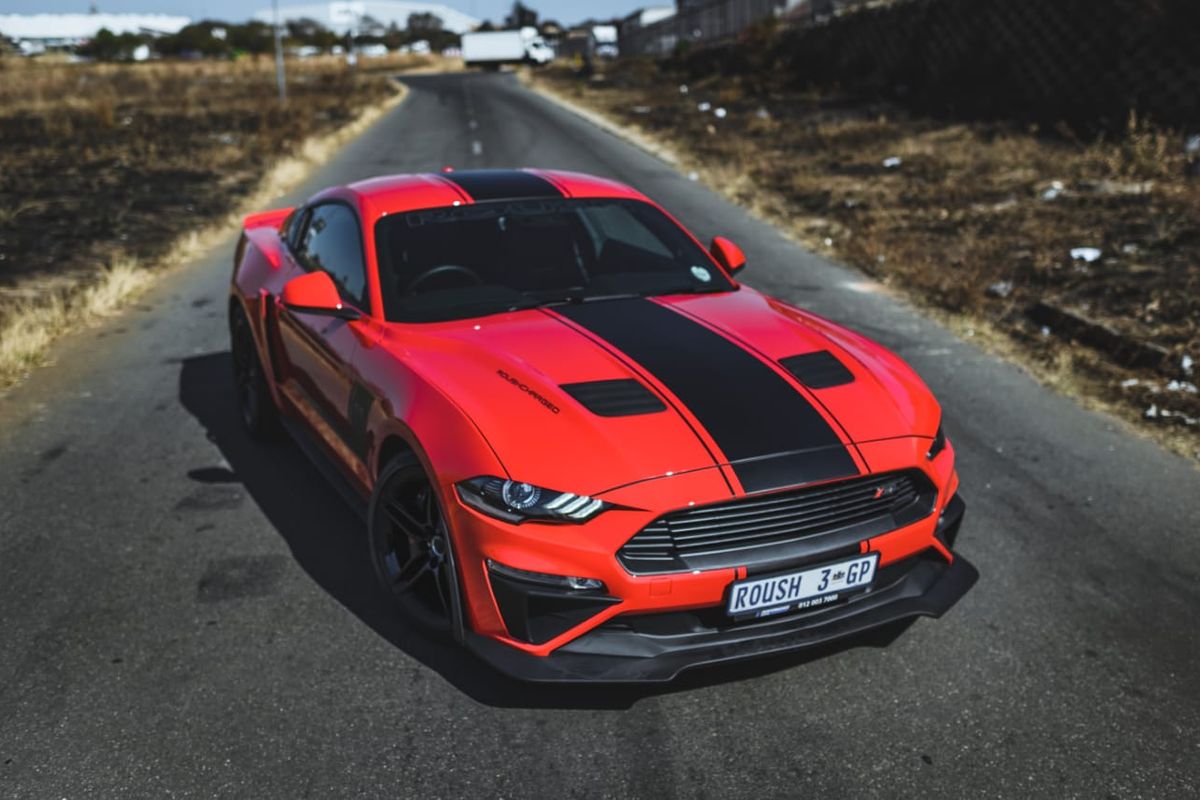
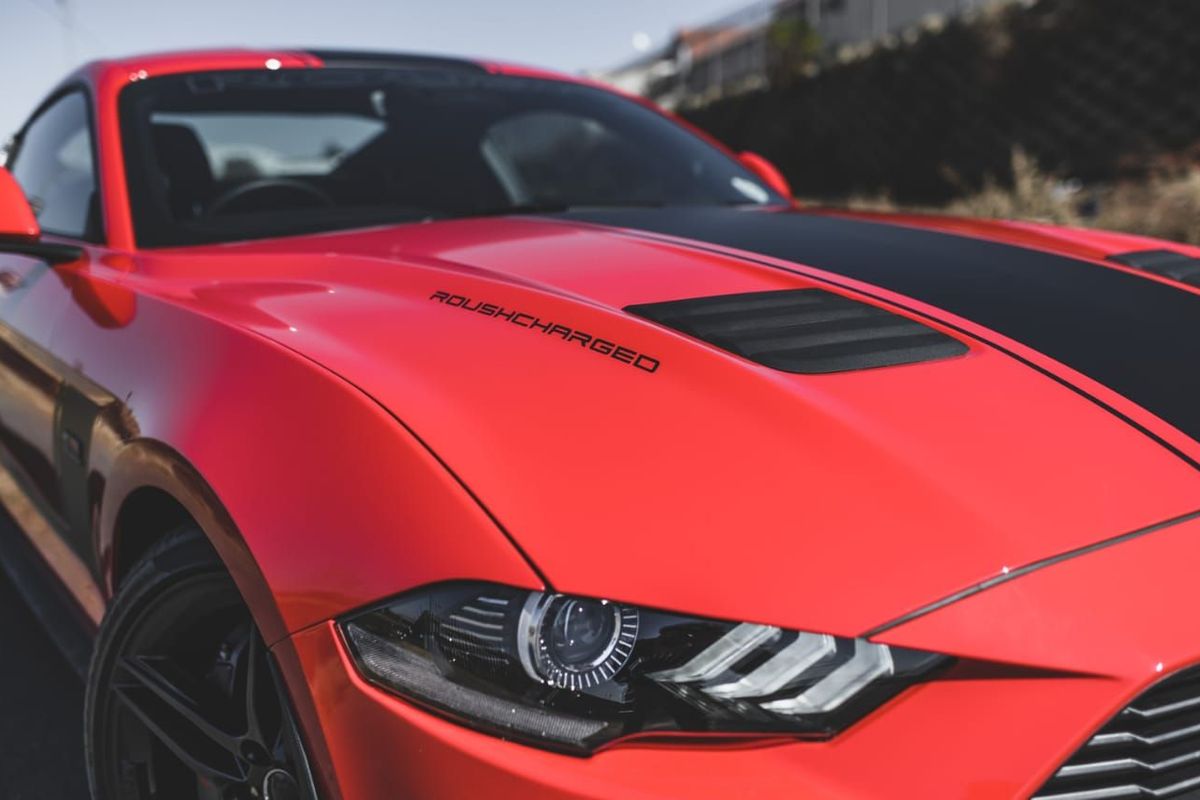
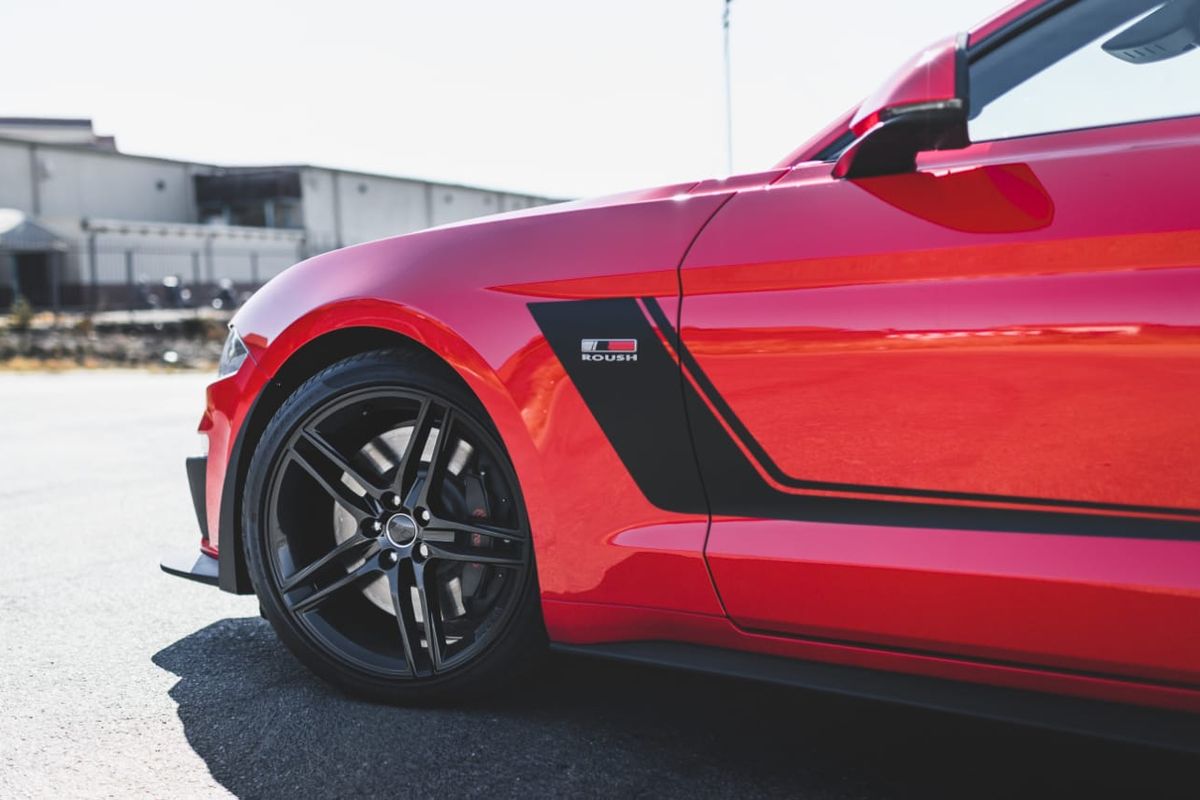
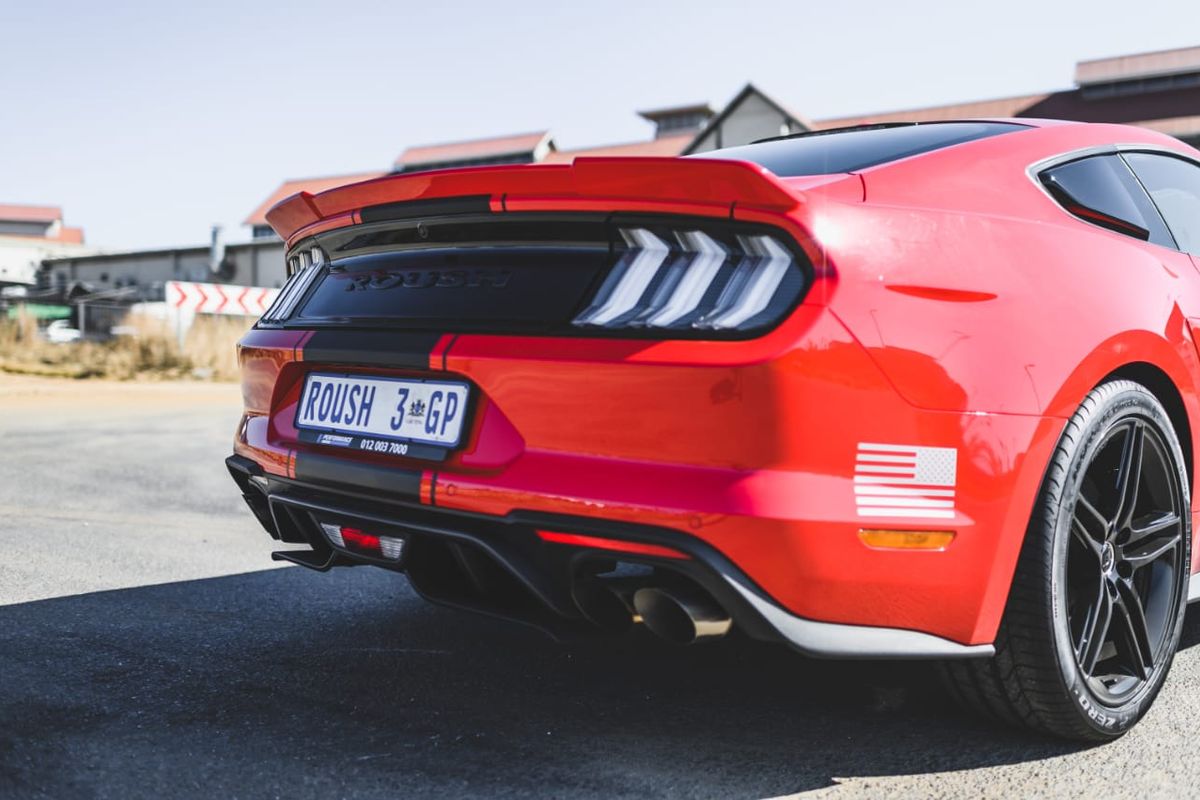
While we like the 2.0-litre twin-turbocharged diesel setup in the new Ford Ranger Raptor, we do find ourselves asking if diesel is the most appropriate fuel for a performance bakkie. Hennessey Performance has killed 2 birds with 1 stone as it not only replaces the diesel engine with a petrol-powered engine but also gives the American market a hardcore Ranger as the Ranger Raptor is not sold there. This is the 2019 Hennessey VelociRaptor Ford Ranger!
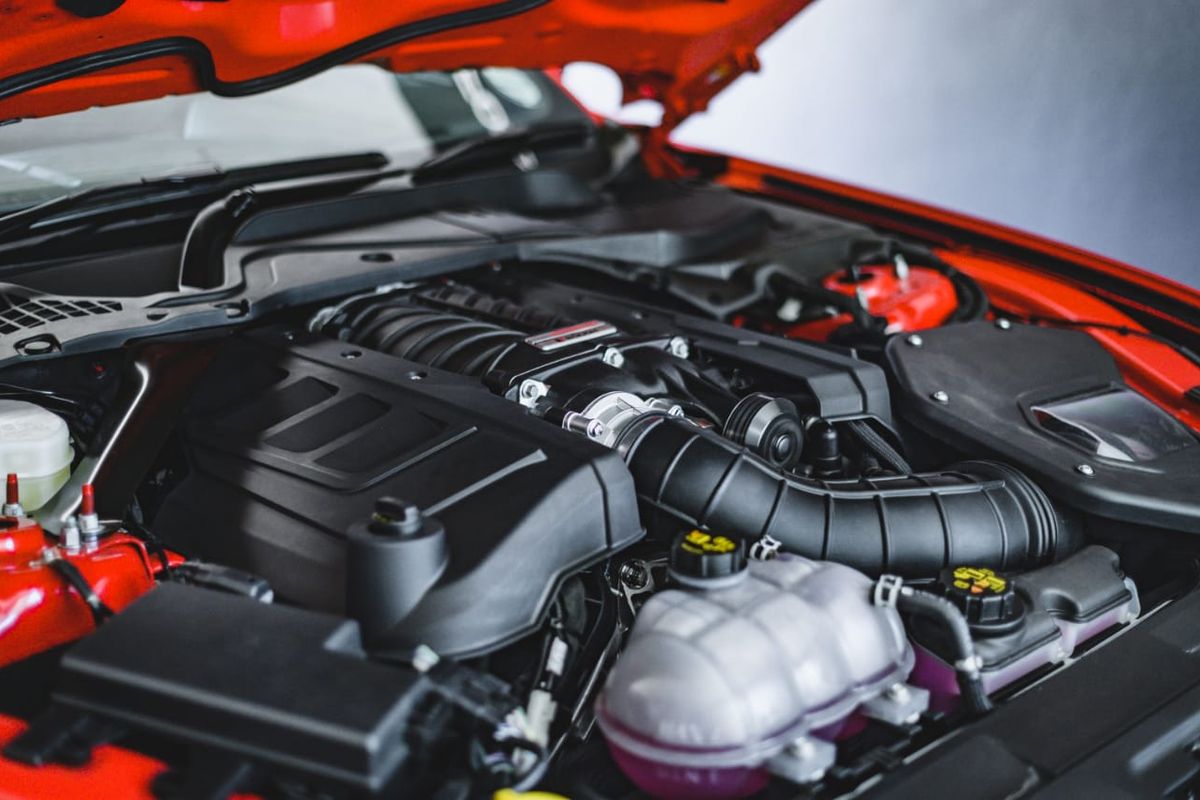
Hennessey Performance is famous for its work on the F-150 Raptor and has used its bakkie expertise on the current Ford Ranger, which is sold in the United States with a turbocharged 2.3-litre petrol engine. In stock tune, it delivers 200 kW and 420 Nm, but after some under-the-bonnet work from Hennessey Performance, power is increased to 261 kW and 521 Nm. These gains are achieved thanks to the addition of a new high-flow air induction kit, less restrictive stainless steel exhaust system as well as an engine control unit (ECU) reflash. In terms of acceleration, the uprated Ranger hits 100 kph in a claimed 6.1 seconds, which is a 1.3-second improvement.
However, there's so much more to this vehicle than just engine performance. It also features proper offroad kit in the form of Hennessey's Stage 1 suspension upgrade which sees ride height increased by 10 cm. There are also monster BF Goodrich All-Terrain Tires 285/70 R17 offroad tyres and for those wanting more offroad goodies, you can opt for a winch too. Flared wheel arches are thrown into the mix for some proper visual appeal.
“We are so excited to introduce our 2019 Hennessey VelociRaptor upgrades for the 2019 Ford Ranger truck,” said company founder & CEO, John Hennessey. “The demand for our VelociRaptor upgrades for the Ford Raptor truck has been incredible over the past 10 years. We are thrilled to be able to offer increased power, performance – on and off-road all packed in our exclusively-branded VelociRaptor package.”
As for the price, well Hennessey will sell you one for $64 950 which comes to around R900 500, before import duty. Hennessey will be making just 500 of these bad boys, and for the American market who don't have access to the Ranger Raptor, this is the next best thing.
Hennessey VelociRaptor vs Ford F-150 Raptor Drag Race
Rumours are rife that Daimler will be killing off the Mercedes-Benz X-Class double-cab bakkie completely. Here's what we know.
According to Automotive News Europe, the Mercedes-Benz X-Class is going to be cancelled as parent company Daimler posted another profit warning recently.
Much was expected of the X-Class when it was launched back in 2017, but it was simply too expensive in comparison to its more established rivals and lacked the premium feel that most expect from the 3-pointed star. Automotive News Europe reported that only 16 700 units were sold in 2018 around the world, which is pitiful, given the numbers that Toyota Hilux, Ford Ranger, Nissan Navara and Volkswagen Amarok are doing.
Perhaps the worst business decision was to not offer the X-Class to the bakkie/pickup-crazed Americans where it surely would have had some degree of success. The writing was already on the wall as former Daimler boss Dieter Zetsche cancelled plans to build the Mercedes-Benz X-Class in Argentina for the South American markets.
As for the profit warnings, this is Daimler's 4th forecast in 13 months, with the brand preparing to pay dearly for diesel emission irregularities and vehicle recalls.
Volkswagen has engineered a new six-speed manual that should reduce consumption.
VW might be directing most of its engineering resources at electrification, but it remains committed to providing updated elements for its internal-combustion vehicles too.
Although manual transmissions might be featuring on fewer vehicles than a decade ago, they do reduce the purchasing price point of any model – making them particularly attractive to buyers in the more affordable segments, where a few thousand Rands make a real difference.
The latest transmission advancement from VW carries an internal company codename of MQ281, and it is a six-speed manual transmission with significantly reduced friction. Built around a 2.5 shaft concept, the MQ281 boasts a high gear spread peak of 7.89, which should allow you to short-shift it into higher ratios at cruising speeds – reducing fuel burn.
VW’s engineers focussed on incorporating smoother running bearings and slicker seals to improve the mechanical meshing and optimise lubrication. This new six-speed manual also requires less oil than any of VW’s previous manual transmission.
Housed in a new casing the MQ281 transmission externalises less vibration too, which should improve the NVH of those VW’s optioned with it. The company has not confirmed an exact production roll-out of the new transmission, beyond that it will debut in the Passat – with Golf8 the next likely candidate.
According to VW’s technical specification for the MQ281 transmission, it is torque output rated for between 200- and 340Nm, which covers a very broad spread of the brand’s current 1- to 2-litre engines.
The rare BMW M1 supercar – the first official "M model" that the Bavarian brand produced – is an icon, but the racing version, the M1 Procar… that's the stuff dreams are made of! Cars.co.za attended the BMW M1 Procar revival held at the Norisring, in Nuremberg, Germany in July 2019.
In celebrating 40 years since the M1 Procar appeared on a race circuit, BMW Group Classic unleashed not just 1, but 14 examples to the street circuit of the Norisring. Not only were the cars present, but some of the original drivers were there too. Jan Lammers and Marc Surer, both of whom are former F1 and Le Mans 24 Hour drivers, raced these cars competitively 40 years ago; it was epic to see them pilot these machines again.
The creation of the M1 and M1 Procar is a fascinating story. Designed by Giorgio Giugiaro, the mid-engined BMW M1 was created for homologation purposes (the Bavarian manufacturer hoped to compete with Porsche in the Group 5 championship). Interestingly, it had a Lamborghini connection as the Sant Agata-based supercar firm was contracted to supply the body and the chassis. However, the Italians ran into cashflow difficulties and Italian companies Marchesi and T.I.R. took over to supply the M1's spaceframe and glass-fibre reinforced plastic bodyshell respectively.
Designer Giugiaro's outfit ItalDesign assembled and supplied the interiors for the M1s, after which the vehicles were shipped to Germany for the fitment of mechanical components and final assembly. The BMW M1 made its official debut in 1978 and came to market with a 3.5-litre 24-valve straight-6 petrol engine. With outputs of 204 kW and 330 Nm, it was capable of a top speed of 260 kph – potent for the era. It's interesting to note that this engine also featured in the E28 M5 (the world's first super saloon) and E24 M635i CSi, as well as the South African special 745i.
After the Norisring event in Nuremberg, we caught up with a pair of BMW M1 Procars arriving back at BMW Group Classic in Munich
However, when BMW developed the road-going supercar into a track-focused racer (as it had originally intended), things changed dramatically. As you can see, the bewinged M1 Procar looks race-ready, with a dominant rear wing, flared wheel arches and, depending on which category it competed, a more powerful motor. Revisions to the M88 saw power climb to 345 kW and 390 Nm, while later Group 5 versions were turbocharged, with cars developing between 630 kW and 745 kW (1 000 hp)! The additional power meant the top speed moved beyond 320 kph. Under the skin, there were revisions to the suspension and braking setups, to cope with the extreme stresses of demanding circuit racing.
Few things are as emotional as watching a BMW M1 Procar hurtle down the main straight at full throttle.
The Procar Series formed part of a typical European Formula 1 race weekend, where 5 of the fastest F1 drivers in practice would be invited to race BMW M1 Procars against one another, as well as other racers. In terms of marketing and public relations value, the strategy was priceless. In its first season in 1978, the overall winner was the late (3-time F1 champion) Niki Lauda, with (another 3-time F1 champion) Nelson Piquet taking the title the following year. The BMW M1 Procar wasn't just an F1 attraction though – it competed at Le Mans as well as many championships around the world. The BMW M1 Procar series lasted just 2 seasons and was cut short when BMW shifted focus from Procar to creating F1 engines.
Watch SA-born DTM racer meet the iconic BMW M1 Procar
11 minutes of glorious BMW M1 Procar goodness…
Why BMW’s Supercar is an unnecessary risk
At a time when mass manufacturers, especially premium marques, are racing towards electrification, BMW announces a new supercar project. Can the Bavarian brand not learn from its past mistakes?
BMW does not often make a product planning error, but its M1 mid-engined supercar remains the brand’s most heroic failure.
During the tumultuous '70s, a decade which saw fuel rationing and huge energy price surges, the wedge-shaped supercar emerged. Lamborghini’s Countach created a product target with the promise of enticingly fat margins and the technically resource-rich German brands responded.
Mercedes-Benz’s 1970s supercar was the C111 – but sense prevailed and it was never produced in notable numbers beyond a few concept cars. BMW was far more daring. It built the M1, a homologated supercar with great agility, but one crucial issue – way too few cylinders for its purpose.
As a supercar, the M1 had too few cylinders and not enough power.
Supercars are about dramatic design and the promise of crushing performance. Owners might never use even a fraction of the performance available, but statistics support status and a supercar must either have a large engine or a very powerful one – preferably both.
The M1 was powered by naturally-aspirated 3.5-litre 24-valve in-line six, whilst its rivals featured much larger V8 and V12 engines. Complicating matters even more for M1 was the presence of Porsche’s first 911 Turbo, which came to market at the same time.
History has chronicled the M1 as a heroic failure, but now BMW has confirmed that it is going to try a supercar again. Is that a better idea, this time around?
The 1990s BMW supercar revival – that didn’t happen
A decade after the M1 disaster, BMW was convinced to attempt another supercar, lured by the extreme automotive materialism of the 1980s.
By 1991, a concept, called the Nazca, was ready. It looked fantastic and was powered by a V12 engine instead of an in-line six, but BMW became nervous and cancelled the project. Shortly thereafter, BMW supplied a V12 engine for McLaren to use in one of the most iconic supercars, the F1.
The 90s BMW Nazca, a supercar project BMW binned before production.
Without any threat of a pending supercar from Mercedes-Benz, there was no need for BMW to develop anything of the type during the mid-1990s.
Today’s supercars are massively expensive vehicles that share virtually no components with any other platform – and that makes them very problematic for large automotive companies to produce. The profit margins and brand development might entice, but often the production cost of designing, engineering and manufacturing a low-volume supercar is ruinous and can create unnecessary drag on an automotive company with a large and/or diverse product portfolio.
Supercars don’t make sense if you build sedans and SUVs
If you list brands that dominate the market for outrageous road machines, they mostly have 1 thing in common: their raison d'être is the production ofsuper- and hypercars. McLaren. Lamborghini. Ferrari. Pagani. Koenigsegg. But for Lamborghini, none of these car companies does anything else but produce exotic supercars (the St'Agata-based firm recently branched off with the Urus performance-SUV based on the VW Group's MLBevo platform). Their staffing, design resources and production assets are expertly tailored for low-volume, labour-intensive production.
There is no distraction among the staff of McLaren or Ferrari to collaborate on a new hatchback – or autonomous driving technology. All the focus is on producing a supercar without any pressure to find synergies that share components or optimised clustering costs. For BMW, as a car company that sells a broad portfolio of models and volumes in excess of 3 million units a year – the sacrifice to produce a supercar could be very risky.
BMW's most successful supercar venture to date: the V12 motor that powered the McLaren F1.
Supercars are a low-volume game, with terrible economies of scale, which is why mainstream brands face huge risks with any supercar projects (it was reported a few years ago that Volkswagen (Bugatti's parent company) lost money on each and every Veyron sold). Custom componentry requires delicate planning. You must own all the risk and become your own supply chain. And if you share components from within your larger product parts-bin, there is the risk that customers and the market will question the authenticity of your supercar (when it finally goes on sale).
Nobody questions McLaren or Ferrari for producing only supercars, because there is never an expectation for the Woking- and Maranello-based brands to do anything else. In a world where analysts and governments want to see autonomous tech and electric vehicles from manufacturers who produce in excess of 100 000 units a year, is a supercar project really that appropriate for a 3 million vehicle-per-annum brand such as BMW?
Supercars and a share price slide
If Mercedes-Benz identifies a performance car profit opportunity surrounded by all the risks associated with low-volume production, it can simply task its (now wholly owned) AMG division to execute. And for every action of Mercedes-Benz (and by implication Mercedes-AMG), there be an equal and opposite reaction from BMW – and vice versa.
Mercedes-AMG’s One hypercar is a very ambitious project. BMW feels it must now do the same with the Vision M Next supercar. But the automotive realm is changing, rapidly. Over the last 5 years, Mercedes-Benz and BMW have seen their share prices halve as the cost of developing technologies to meet changing consumer demands have drained their finances. BMW announced a profit warning in May, after announcing its first loss in a decade.
Is a supercar likely to improve profits and share prices?
On 13 March 2013, both companies saw share price peaks. For BMW, it was €119.95. Mercedes-Benz topped-out on the same day, at €93.10. This week, those same shares are worth 44- and 48% less. If we imagine that most automotive design projects run on a 5-year development horizon, what appeared affordable in 2013, is suddenly a potential debt burden in 2019.
BMW’s supercar concept has previewed many futuristic technologies, but the risk of making those a reality – will burden the company's design and engineering teams. Some of the technologies are very clever, such as the head-up display, which projects idea cornering lines and braking points. This is also technology which could prove litigious if driver’s make an error of judgement and crash. And the Vision M Next’s facial recognition technology? Perhaps that's not quite as necessary.
For BMW, the Vision M Next won’t be easy to bring to market. If it contains too much common componentry from series-production BMWs, it will be dismissed as derivative. If BMW dedicates too many engineering resources to make it a custom platform with unique trimmings, the input costs soar and potential profit margin shrinks – which will have shareholders asking questions.
Another issue is its actual positioning. Can BMW expect to sell a car at mid-engined supercar prices to rival McLaren, Lamborghini or Ferrari? Its current most expensive sportscar is the new M8, which at R3 million, is still priced some distance below a new Lamborghini Huracán or Ferrari 488. Will there be demand if BMW positions the Vision M Next supercar to compete directly with Italian and British rivals?
BMW has a habit of pulling out of supercar projects well into the process.
Supercar pricing power increases proportional to exclusivity and there is a thread of logic which says that nobody will pay true supercar money for a vehicle which shares its badge with a hatchback…
There is also a unique continuation trap with supercars. Once you do one, the pressure is always to do another. Staff seconded to the Vision M Next project must jealously regard the immense success McLaren has had with reviving its road car division, effectively leveraging off the F1’s legendary status – a vehicle which would have been impossible without BMW’s V12 engine involvement.
Adding to the pressure is BMW having to decide on replacing its CEO within this month. The Vision M Next project could either be a phoenix or Icarus moment for the brand's supercar ambitions.
A stronger rand and oil price has a mixed effect on presumed fuel prices for August.
The Rand has firmed to the Dollar over the first half of July but the global oil price has increased of late. Concern over oil stocks and more than usual political instability in the Middle East has pushed the price of ‘black gold’ upwards of $67 (Brent Crude).
The result is split depending on whether you fill with diesel or petrol. Diesel is set to decrease by 20 cents while petrol could increase by 7 cents a litre.
The AA makes these predictions at the half-way mark of the month, but are not a dead certainty as both prices could deviate further before month end. We will update you later on this month when the outlook is confirmed.
The Toyota Supra launches this week and we have pricing. Here's how much the Japanese sportscar will cost.
Under that curvy and striking body is a 3.0-litre twin-scroll turbocharged 6-cylinder motor. It produces 250 kW and 495 Nm. Power goes to the rear wheels via an 8-speed automatic transmission and Toyota claims that it's offering will hit 100 kph in just 4.1 seconds.
It's the under-the-skin details which have us interested. Toyota is claiming a 50/50 weight distribution, high structural rigidity, and a low center of gravity which should make for an entertaining drive. While the platform is shared with BMW, Toyota tuned the spring and shock absorber settings for the new double-joint spring strut front suspension and multi-link rear suspension. Toyota also set specific parameters for the Supra's stability control system performance. Adaptive Variable Suspension is standard and features 2 modes: Normal and Sport. There is also an active differential.
Toyota is marketing its new Supra as a premium Grand Tourer and there will be considerable premium features fitted like Keyless Smart Entry, dual automatic climate control, auto-dimming rearview mirrors, rear camera, rain sensor windshield wipers, garage door opener, power folding mirrors, and a leather-wrapped steering wheel will be standard. There will be a high-end multimedia setup, satellite navigation, Apple CarPlay as well as a JBL audio system, but we're going to wait for official local confirmation to see what SA-spec Supras will receive in terms of tech.
We'll be driving the Toyota Supra in SA this week, and we'll have final confirmation of specification and features then, as well as a launch review.
Slight rear-end redesign enables big-rig hauling capability for BMW
Engineers have added a great deal more credibility to the ‘utility’ aspect of BMW’s SUVs, by announcing a 30% increase in towing capacity for the brand’s luxury gravel travel vehicles.
All three of BMW’s new large SUVs – X5, X6 and X7 – have been technically reinforced to meet Australia’s increasingly stringent design rule requirements.
Some of the most stringent homologation requirements in the world are found in the Australian automotive market. BMW realised that its hugely powerful engines available in the X5, X6 and X7 were being underutilised by customers who wanted to tow horseboxes or watercraft.
Responding to the Australian towing regulation challenge was not a momentary decision. Engineers at BMW have been working for nearly five years to find a solution for boosting the tow-capacity of its CLAR platform SUVs.
Customers Down Under will now have the choice to option a strengthened aft section for their X5, X6 or X7, which supports a tow ball and wiring harness unique to the design. The entire upgrade increases tow capacity from 2.7t to 3.5t and positions BMW’s large SUVs as serious heavy hauling alternatives to some very robust legacy off-road SUVs.
Other vehicles which feature 3.5t towing capacity are Toyota’s Land Cruiser 200 and Range Rover’s Vogue, both of which are traditional luxury SUVs with proven off-road exploration pedigree and low-range gearing.
Although the upgraded tow-capacity X5, X6 and X7 are only being launch for the Australian market at first, it would make a very appropriate South African product evolution too – consider the similar road conditions and towing requirements of customers in both markets. And of course, the convergences in both markets being right-hand drive.
Mazda has launched the 5th member of its global SUV range, the CX-30, in Europe. The strangely-named newcomer, which squeezes between the Hiroshima-based firm's existing CX-3 and CX-5 models, will be launched in South Africa during the 1st quarter of 2020. Is it worth waiting for? Let's find out…
One could argue that the only thing that doesn’t make sense about Mazda’s new CX-30 is its name. SUVs are selling in droves globally, city-SUVs (or crossovers) are all the rage and Mazda finds itself on more shopping lists thanks to its development of additional family-friendly high riders.
The move to expand Mazda’s SUV line-up to 5 models is quite logical, but why didn't the brand name this in-betweener the CX-4, given its size, expected price point and position in the product line-up? Well, it turns out Mazda already sells a "CX-4" in China, and didn’t want to double up.
Black cladding appends the CX-30's crossover looks. It's longer and more spacious than a CX-3, but it's no taller than its smaller sibling.
Three’s company
Naming conventions aside, the vehicle the CX-30 has most in common with is the Mazda3, which will be introduced in Mzansi shortly. The CX-30 shares the compact hatchback’s platform, suspension, electronic architecture and powerplants.
Under the body, the newcomer features a MacPherson strut front and torsion beam rear configuration – borrowed from the Mazda3, but tweaked for this high-riding application. Equally, the CX-30’s wheelbase is 70 mm shorter, while it gives best 65 mm in total length, at a pinch under 4.4 metres.
A narrow side glass area, defined bonnet lines and chrome-accented slimline headlamps add distinctiveness to the CX-30.
At the same time, the newcomer differentiates itself substantially from the CX-3 and CX-5: it is 120 mm longer than (but just as tall as) the former, and 150 mm shorter than the latter. It stands 1 795-mm wide and its wheelbase is 85 mm longer than the former and 45 mm shorter than the latter.
In South Africa, it's likely that the CX-30 will be offered with 1.5-litre- and 2.0-litre four-cylinder naturally aspirated petrol engines. Test cars at the CX-30’s launch sent drive to their front wheels via 6-speed manual or 6-speed automatic transmissions; we expect automatic versions to sell best.
The CX-30's rear aspect is sporty, replete with an integrated tailgate spoiler, sculpted taillight clusters and side-mounted exhaust tips.
None of those aforementioned engines was available at the global launch, so we’ll reserve judgement on those until a more thorough local drive.
So, what’s it like to drive?
Based on our first impression, the CX-30 bears all the hallmarks of a typical city-SUV. It’s light, nippy and easy to manoeuvre through the various tight, undulating streets, and is an easy car to navigate through intersections despite. The only anomaly in terms of navigating foreign roads is a partially obscured rear view: the newcomer’s raked roofline, narrow rear window and bulky C-pillar combine to block out much of your rear vision.
There is a price to pay for those low-slung looks and chunky C-pillars: rearward visibility out of the CX-30 is less than ideal.
However, decent-sized side mirrors, a reverse-view camera and strong forward visibility help to offset this. Otherwise, the steering is light at low speeds, while the body feels well controlled (if a tad firm) over bumps – we believe the latter trait is owed, in part, to the 18-inch wheels.
The CX-30 is not just a city slicker, however. Its broader footprint (widened track, compared with the CX-3) endows it with genuine long-journey pretensions that are not all that removed from the larger CX-5. The suspension shakes off longer, drawn-out dips in the road with aplomb, and the CX-30 gently navigates bends with confidence. Indeed, a cross-country South African adventure would not be out of the question at all…
Although the newcomer's suspension is tuned for sporty handling, it rides acceptably well over poorer surfaces.
As with any new Mazda, the ride and handling tuning (ostensibly for the European market, in this case) naturally subscribes to a sporty brief. As a consequence, the CX-30 feels comfortable and competent when pushed through a corner. In these conditions, the steering, for example, imparts excellent weighting, feel and feedback, while the kerb weight (approximately 1 400 kg) feels well-controlled through fast changes in directions.
Refinement plus
Mazda has made huge in-roads with its noise and vibration levels in its cars in the past few years. Whereas earlier versions of Mazda3 cabins were filled with tyre roar, particularly on coarse asphalt, the newer model and its latest-generation siblings have climbed to class benchmark levels.
As is the case with the new Mazda3, the CX-30 has a sporty driving position and well-made cabin with quality finishes.
The CX-30 only reinforces this theme, such is the quietness and refinement of the newcomer's cabin. At highway speeds, the cabin is serene and devoid of squeaks or rattles – merely bolstering the car’s quasi-CX-5 open road characteristics.
Mazda reps claim that much of the CX-30’s 50 kg weight penalty over the Mazda3 is contributed by added sound insulation. We believe them.
The car’s on-road polish is supported by another quality interior layout replete with excellent materials and craftsmanship, and quality finishes. In European trims, there are soft-touch materials at the various contact points, supported by clear driver instrumentation and a swish centrally-mounted infotainment screen accessed via touch and rotary dial features.
Rear legroom is appreciably better than in the CX-3; note the narrow side glass area, which limits outward visibility.
The CX-30 is further endowed with "human-centric seats", Mazda claims. The Japanese marque says it has put a lot of focus into the positioning and shape of the front pews, so as to follow the natural S-curve of the human spine. The CX-30’s seat hip point – the one in which you pivot into the vehicle – is also elevated 45 mm from the Mazda3, which the larger framed and more seasoned among us will undoubtedly appreciate.
Is it family-friendly?
That will depend entirely on the size and age of the family, but yes, the CX-30 does have some family-friendly attributes. Mazda proudly proclaims the CX-30 as being able to accommodate a quartet of adults, by virtue of better-than-expected aft leg room, rear air vents and adequate head and shoulder room. The fitment of a flip-down armrest and bottle-friendly door pockets are noted inclusions at this end of the market, too.
With 430 litres of luggage space available, the CX-30 does justice to its "in-betweener" compact SUV/crossover billing.
The fitment of child anchorage points on the outer rear seats (with ISOfix attachments) reinforces the car’s family-carrying attributes, along with a 60:40 folding function. However, some parents may take issue with the car’s high-set window line, which impinges on outward visibility for aft occupants. Similarly, the car’s 430-litre load bay will be adequate for many families, but those with 2 prams might find the compromise too big.
Summary
Based on our first impression, this is another stellar effort from Mazda, and subscribes to the well-worn SUV theory of "if you build it, they’ll come". Like the Haval H2, Hyundai Creta and, to an extent, Nissan Qashqai, the CX-30 straddles the compact family car (Ford Ecosport, Renault Duster, Suzuki Vitara and Volkswagen T-Cross) and family car (Peugeot 3008, Toyota RAV5, Volkswagen Tiguan et al.) segments virtue of its in-between size. Either way, Mazda CX-30 is a name you’ll soon remember – and likely for all the right reasons. In fact, depending on its yet-to-be-confirmed price point, it might ultimately prove more popular than the car (Mazda3) it's based on in South Africa – as scandalous as that may sound.
SentiMETAL OutRun – Bastille Day special to Franschhoek Motor Museum
With a record number of cars entered, Cars.co.za's SentiMETAL project kicked up several gears this past weekend when a feast of exotica travelled from Cape Town and surrounds to the Franschhoek Motor Museum on Bastille Day.
Photos by Calvin Fisher
As we pulled up early in our office '67 Citroën DS19, we noticed several examples of Americana already parked, including a rare example of a 1959 Cadillac Eldorado Coupe, a Chevrolet Corvette C3 Sting Ray and a modified Chevrolet Corvette C2. Already crowds were gathering, but the parking lot was full and so we proceeded to what was communicated as the actual meeting spot, the spacious truck stop at the back.
Here, our collective jaws hit the floor. Visible through the mist was a staggering array of collectable and exotic cars, including a very rare and valuable AC Bristol, Ferrari 512BB, generation-one Audi Quattro, Porsche 930 Turbo, Hudson Step-Down and many more. And they kept coming… until around 120 cars were assembled and crowds from the petrol station were now gathering to view what appeared to be an impromptu motor show.
Through the thick fog, hundreds of people and countless special cars appeared.
"When we started the SentiMETAL project the goal was to keep kindling the flame that burns so brightly between man and machine. We have such a rich automotive history in South Africa and we want to play our part in preserving it," says Cars.co.za's Hannes Oosthuizen. We started the OutRuns earlier this year to bring likeminded people together and it has just exploded, indicating that there is a real need for an event that cuts across the usual brand and generational stereotypes. If you think your car is cool and you're passionate about it, it's probably good enough for one of these runs."
Stunning AC Bristol was a surprise at the OutRun, and drew many admiring glances.
Wayne Harley, curator at the Franschhoek Motor Museum, attended the first Cape Town run earlier this year in the museum's Alfa Romeo Brera, a modern classic. "There is nothing more rewarding than being involved with groups of people who are genuinely partaking in something just because they truly love it. This past Sunday's SentiMETAL drive was again proof that like-minded people with the right attitude and a common goal can have tons of fun and all that can happen without the regular hullabaloo commonly associated with arranging of a rally, drive, or motor show. The Franschhoek Motor Museum was packed to the brim with stunning cars, owners and spectators all sharing the joy we call CARS".
"Moderns" such as the iconic BMW 1 M Coupe and rare Renault Avantime were also in attendance.
It's impossible to list all the highlights here, but having the only 2 Dodge Viper GTSes in South Africa (separated by 1 VIN number) present is quite a special treat. A bright-yellow Lotus Europa joined two other vehicles (Audi Quattro and Porsche 930 Turbo) from Crossley & Webb, while The Archive attended its first run with a Ferrari 512 BB and an Aston Martin AM Vantage. A pair of bright red and wedge-like Lotuses, an Esprit Turbo and Excel, certainly turned many heads, as did some achingly pretty Mercedes-Benz SL "Pagodas".
Oddities included a modern rarity such as a Renault Avantime, that bizarre MPV/coupe from the French marque that was never sold here, and a cute-as-a-button Volvo P1800ES. Numerous Porsches were in attendance, including pristine 356es, a 1958 Chrysler Windsor and even the Jaguar E-Type that featured in the pilot episode of the SentiMETAL video series.
A real crowd pleaser was this 1959 Cadillac. Immaculate and through sheer size, it was simply hard to miss!
"It was really great to see collectors and car fanatics of different backgrounds get together and just talk cars," said Oosthuizen. "And also excellent to see a lot of youngsters brought along to get exposed to these incredible machines."