The Boutique Car Show that Still Draws a Crowd
Is staring at concept cars in a Parisian tent your idea of fun? Step this way.

International motor shows, with their copious chunks of new-metal shine and glitz, should be a type of Nirvana for any car-obsessed human. And sometimes they are. But, they can also be stabs of foot pain and claustrophobic frustration as you wrestle along kilometres of interlinked hallways with higher population densities than Manila, sneaking glimpses of a Fiat fender or a Honda boot spoiler.

And then there’s the lighting. With gigawatts worth of spots employed, the cars can be as hard to assess as they are to photograph. Add the enormous costs involved for car makers and it’s easy to see why the popularity of traditional motor shows is waning. It’s also why boutique expositions such as Grand Basel and Festival Automobile International are gaining traction. While the former celebrates automotive excellence regardless of age, in very grand style, the latter has many of the previous year’s most influential concept cars as its stars with a sprinkling of highly varied supporting acts.

Just following the event on Facebook was never going to be enough for a concept car junkie like me, so this year I bought a €15 show ticket, hopped on a plane and then caught a train into central Paris.

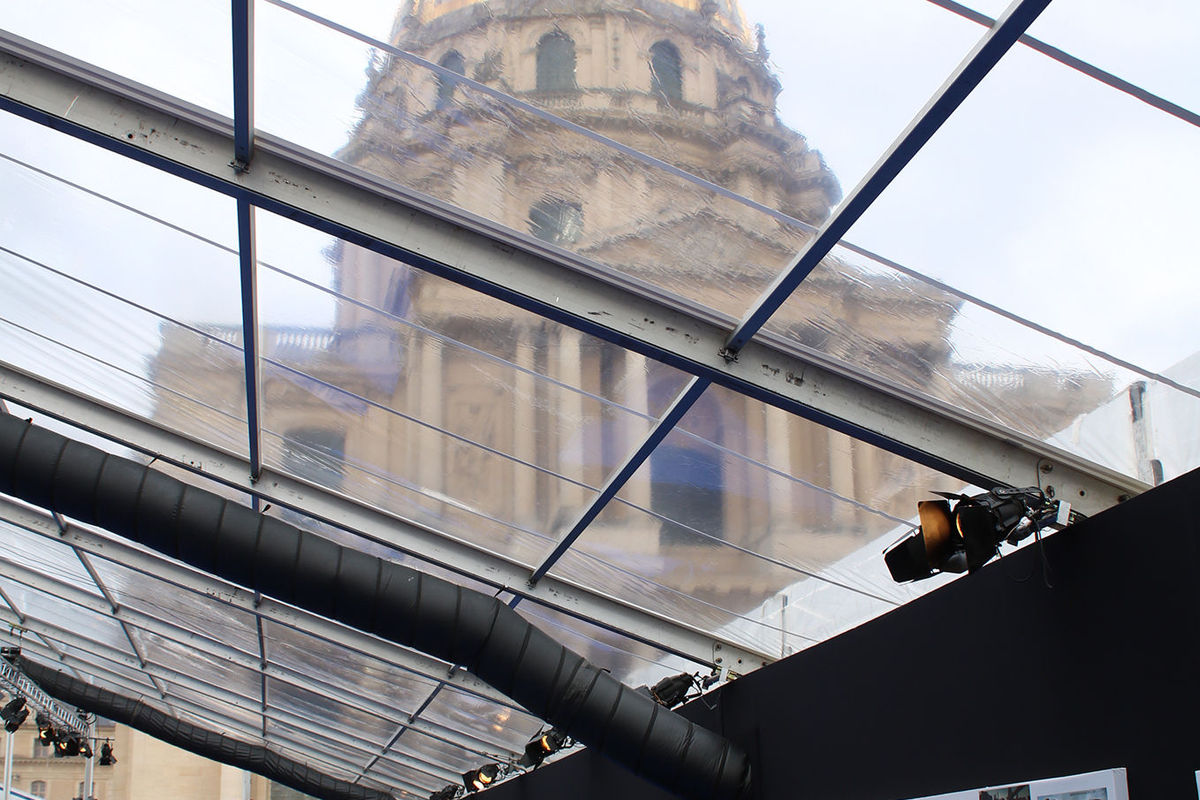
Walking from the Metro station around the magnificent gold-capped dome of the Hôtel des Invalides into large, exhibition-style tents is somewhat of an anti-climax but then you notice the clear plastic roof and all the natural light it affords the venue – you don’t get that at the Messe Frankfurt.
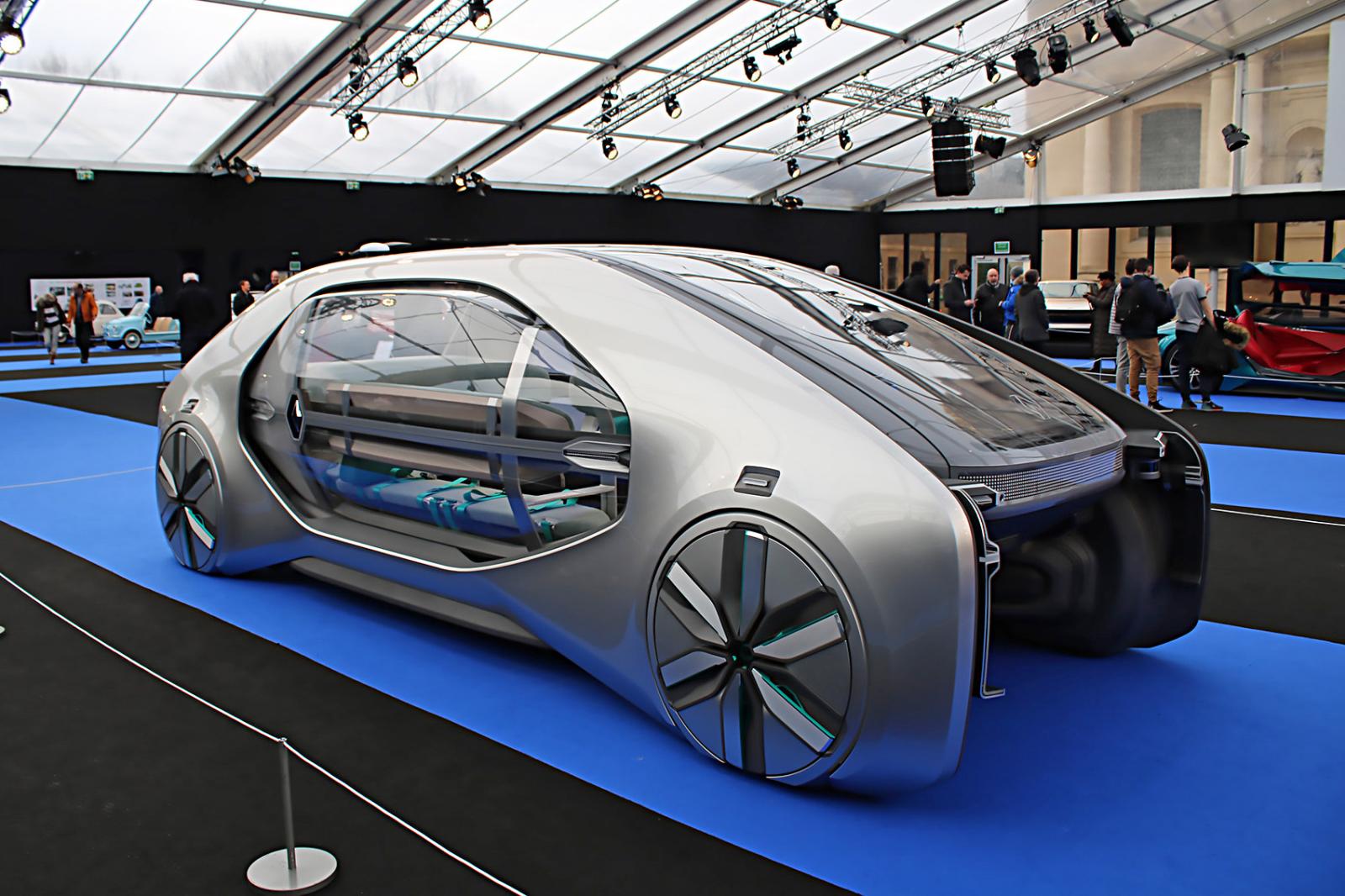

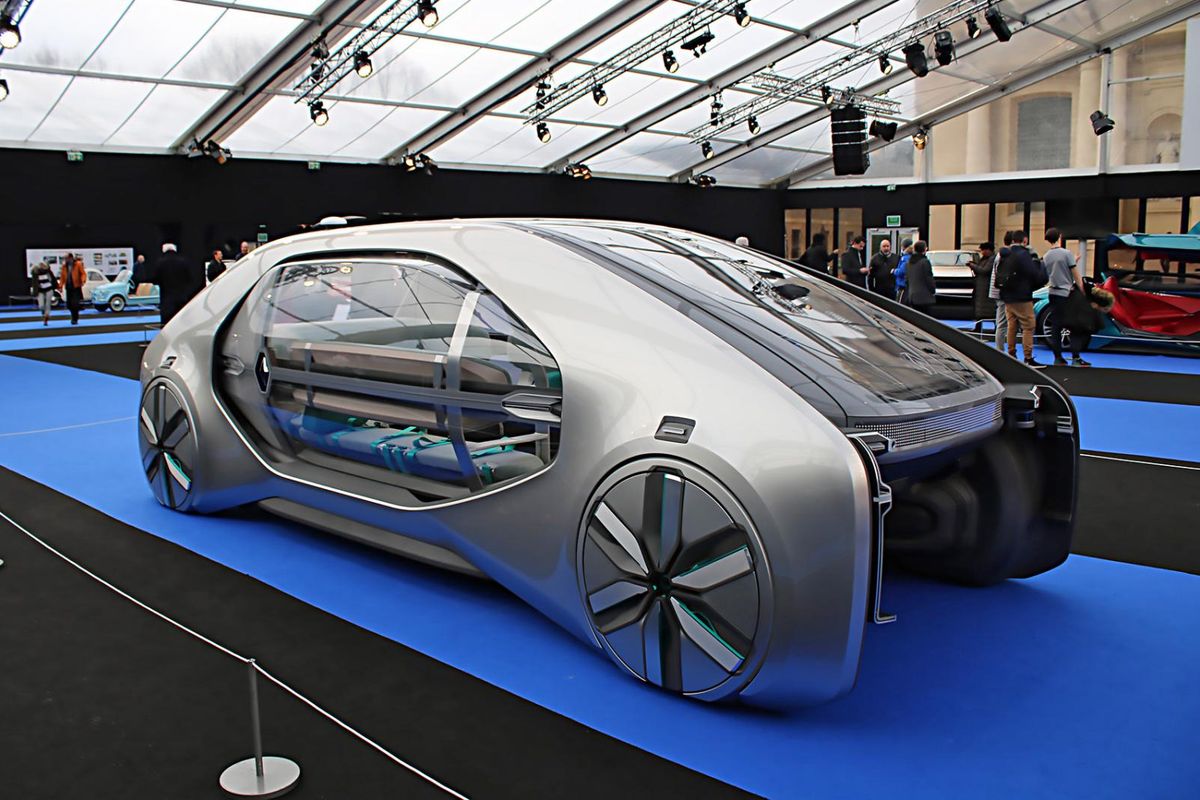
The Renault EZ-GO, blending building architecture and public transport.

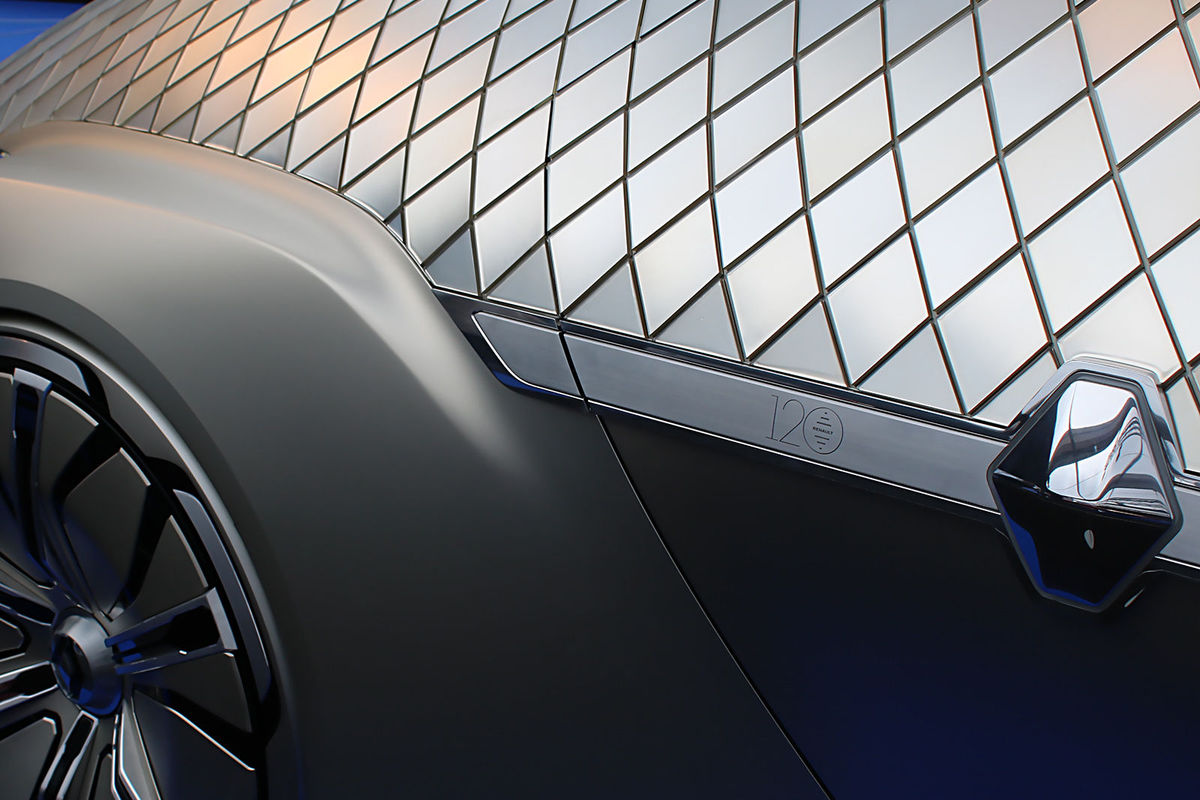
First up was the massive Renault EZ-GO with its commuter-style bench seats and walk-in rear access – I’m sure I would have given it more attention if it looked less like a blend of public transport circa 2030 and a rejected architectural proposal. Quickly skirting that, I paused to take in its even larger EZ-Ultimo sibling, admiring if not actually liking its soldered glass surfacing effect. If Renault’s designers were attempting to merge a dull disco ball with a futuristic autonomous hearse, they nailed it.
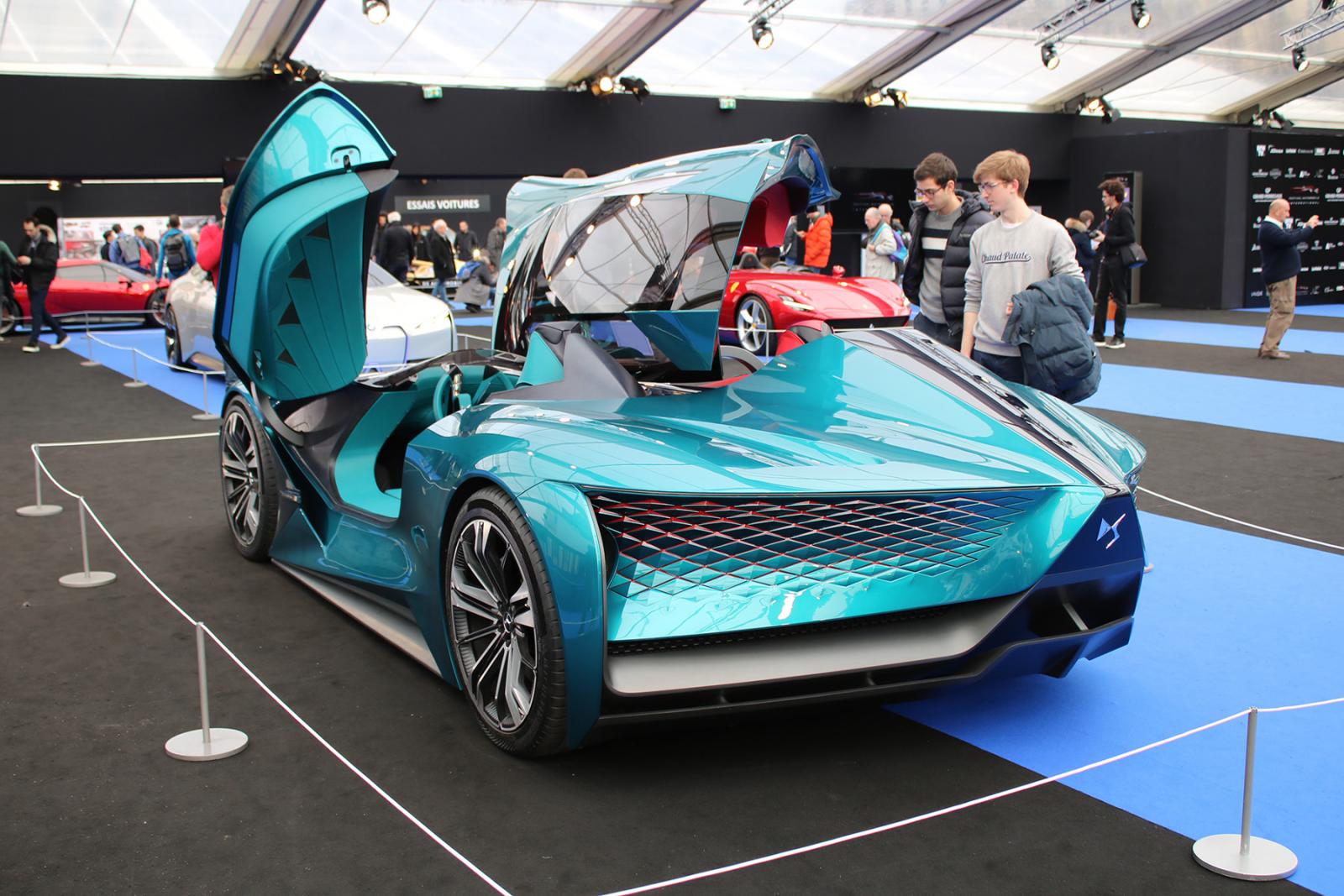

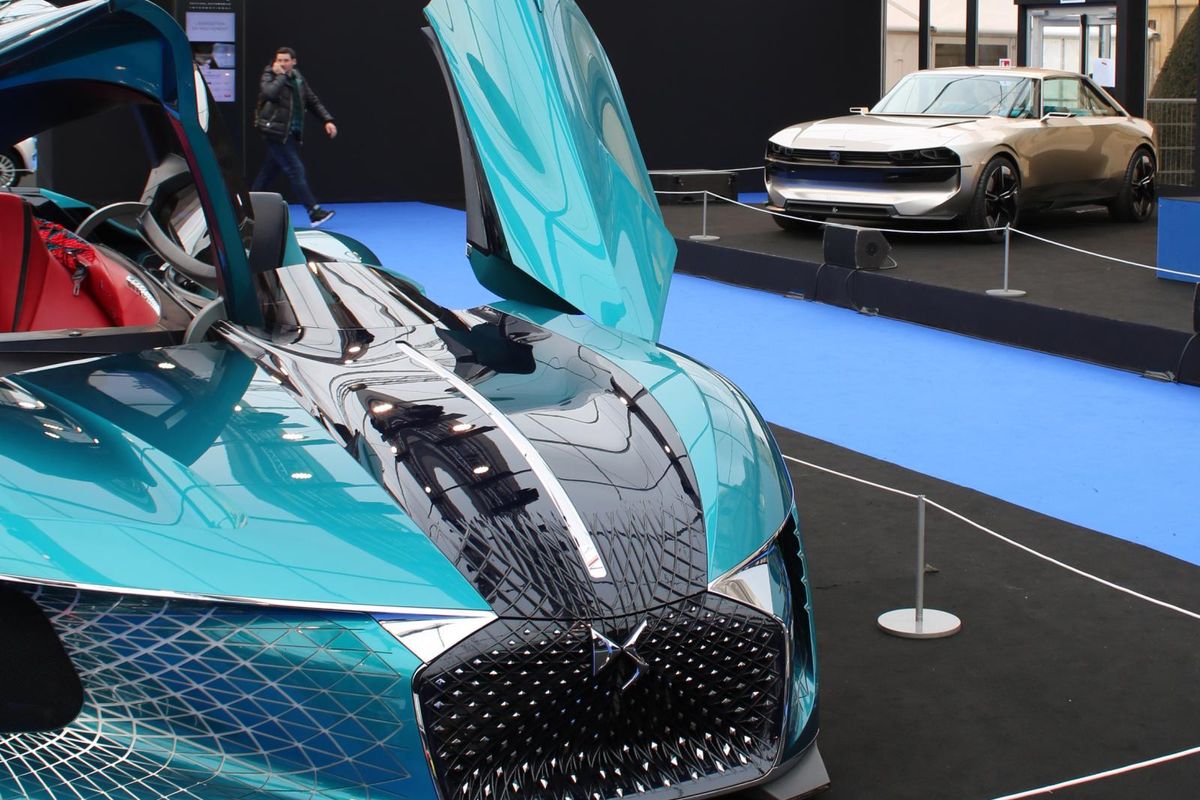
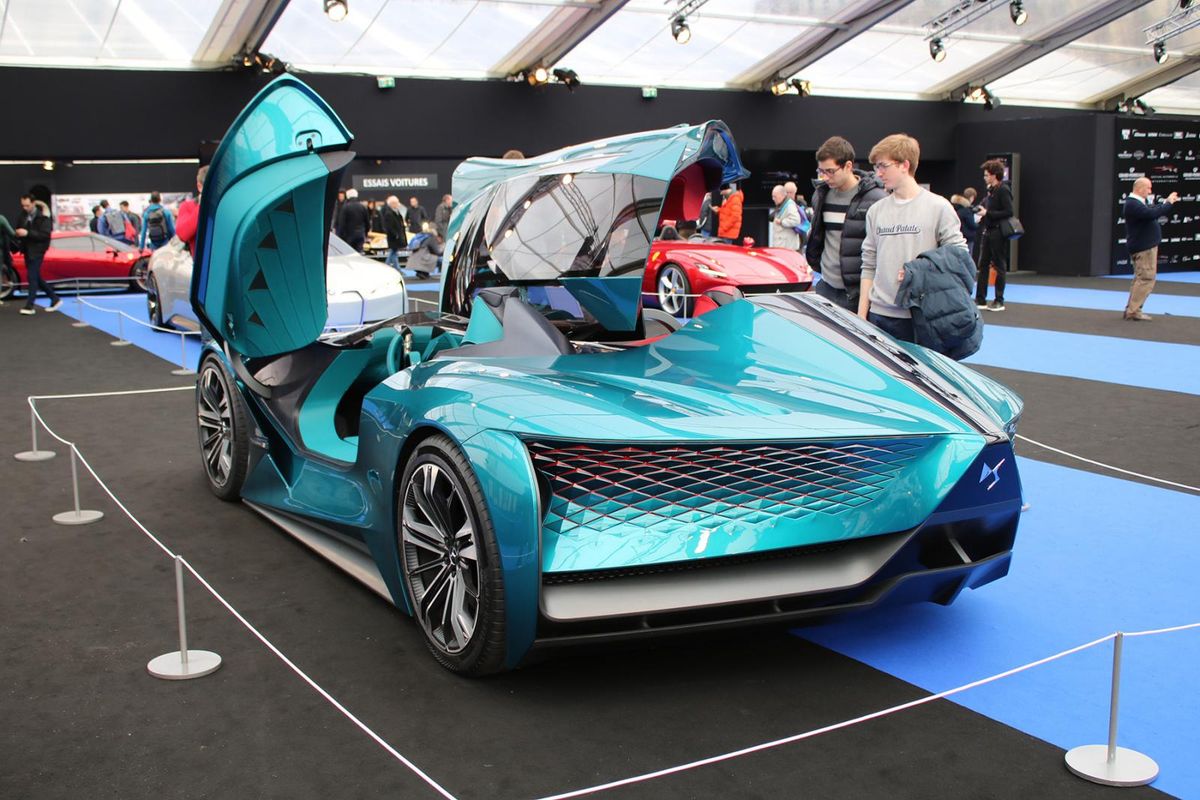
The DS X E-Tense, testing out asymmetry and catch-fencing in one design.

More French madness, in the form of the DS X E-Tense, demanded attention with its split cockpit, disturbingly offset front grille, diamond mesh graphics and two-tone paint job  – a real car crash of two design ideas that I can only (mischievously) ascribe to cost-cutting on the part of parent brand Citroen. Asymmetry rarely works on a car, and in this case, apart from the initial wackiness factor, perhaps twin concepts would have ultimately had more impact.
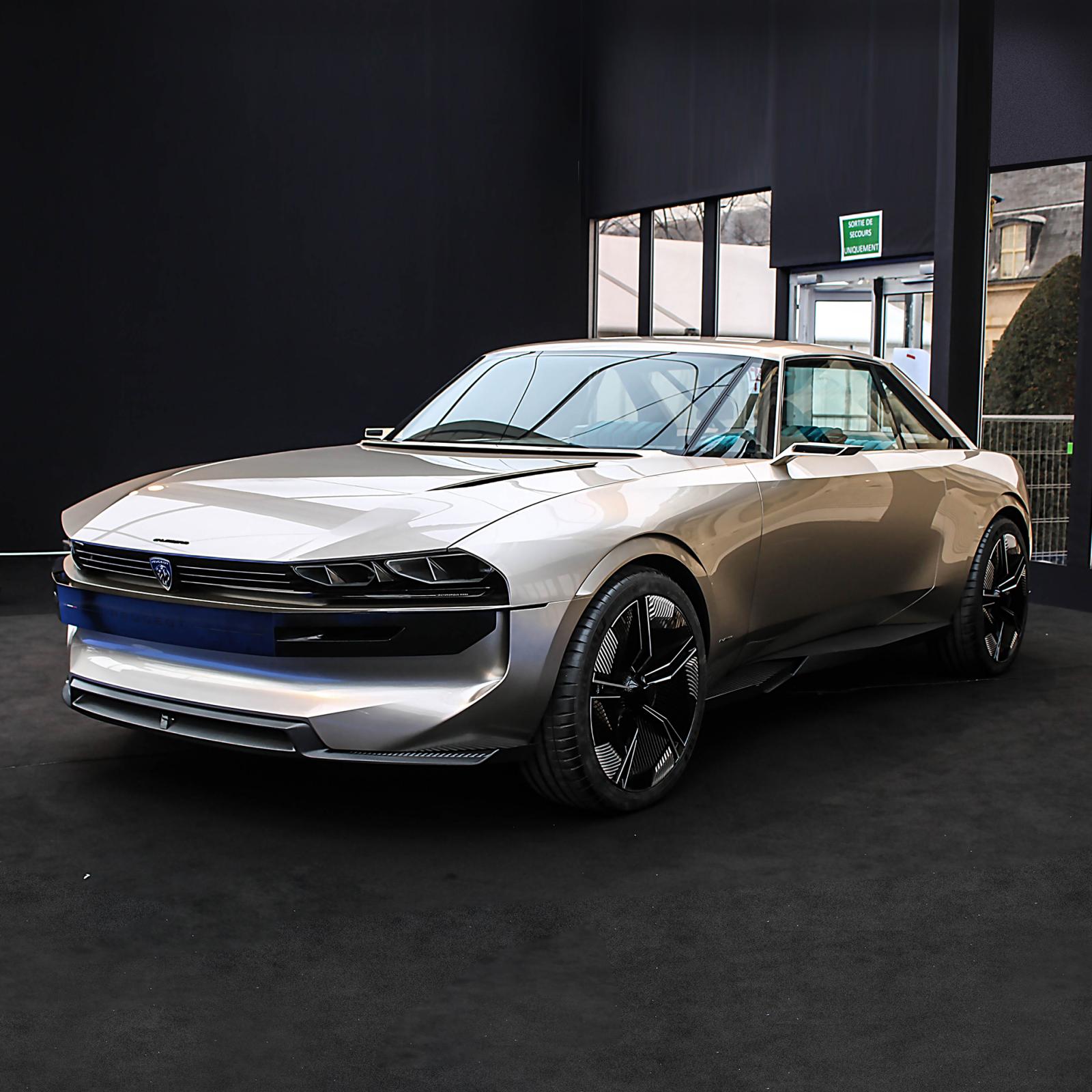

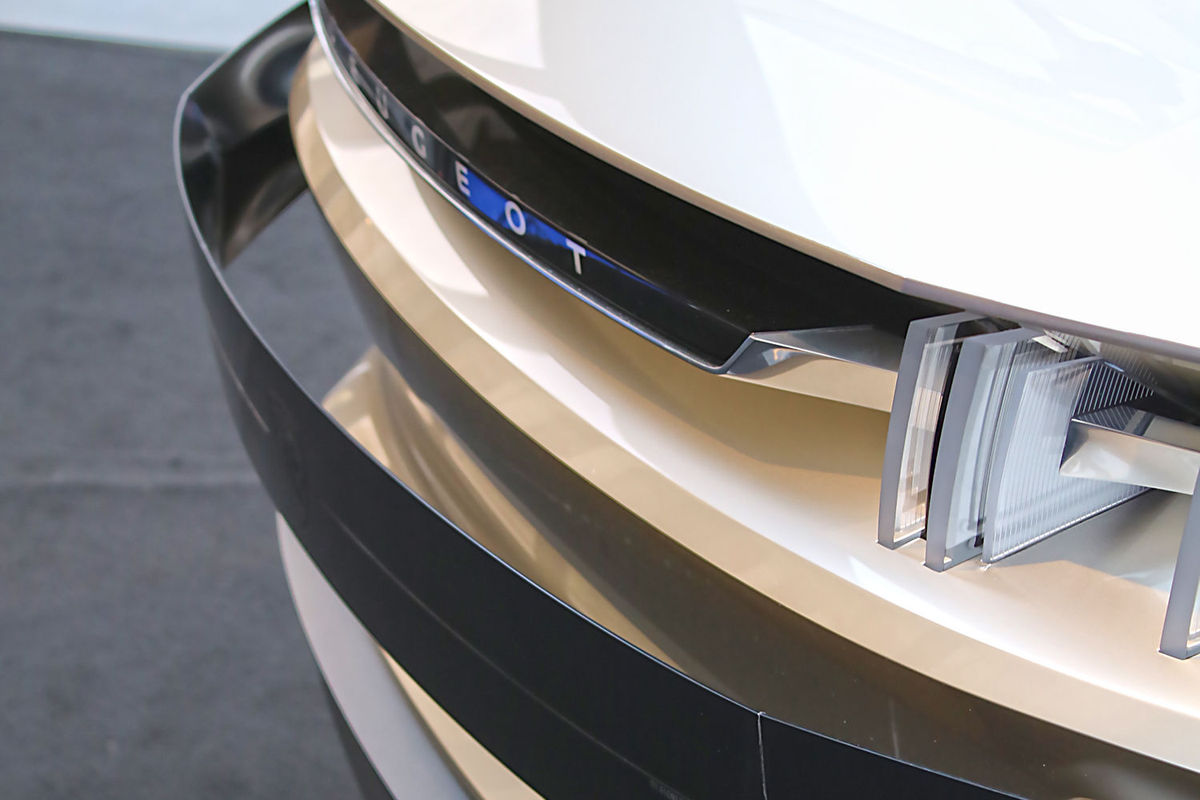
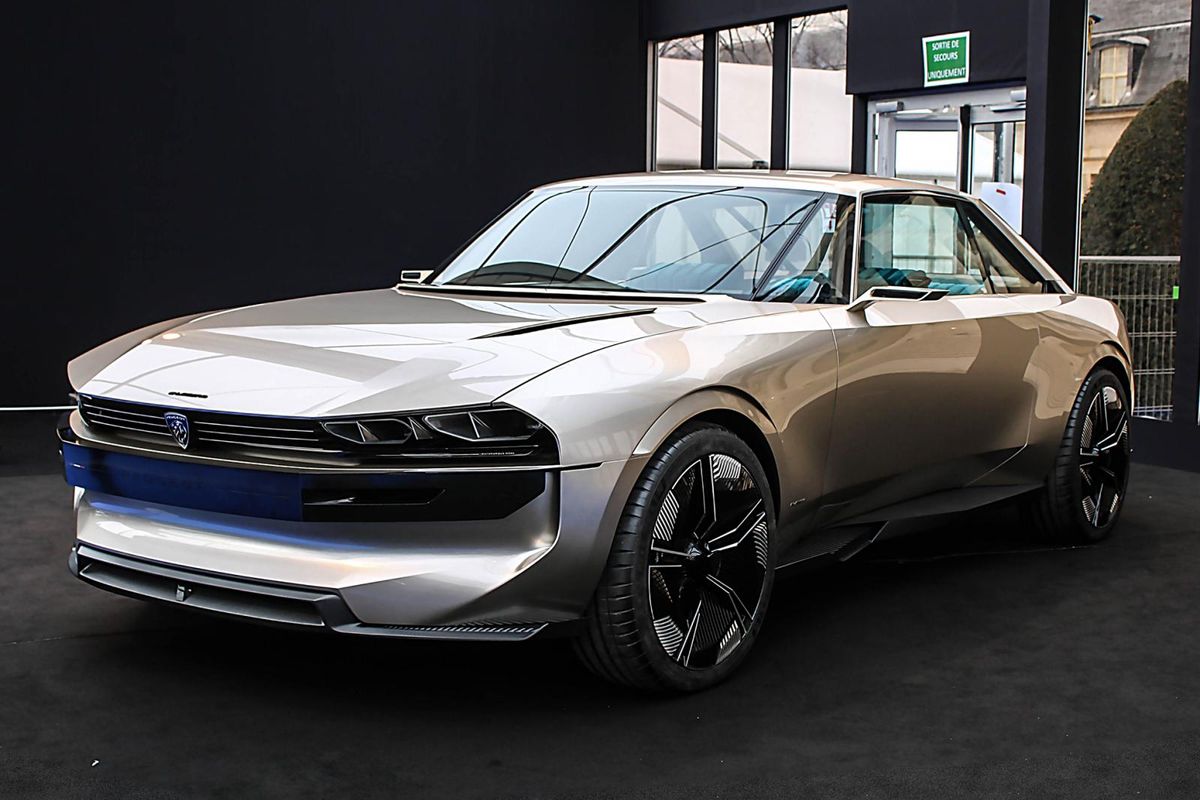
A retro take on the Peugeot 504 Coupe, the e-Legend is one of our favourite current concepts.

Fortunately my faith in French concept car design was quickly restored by Peugeot’s brilliant e-Legend – a retro-modern love letter to the 504 Coupe. It’s a wonderful reinterpretation of a classic car that honours yet also radically upgrades its style. The proportions, surfacing and jewellery are all perfect – easy to love in pixels, even easier in the metal. However, the car’s ‘floating’ black metal bumpers, not that noticeable on screen, are an under-developed, poorly integrated eyesore. So, it’s a good thing they wouldn’t pass pedestrian impact legislation anyway.
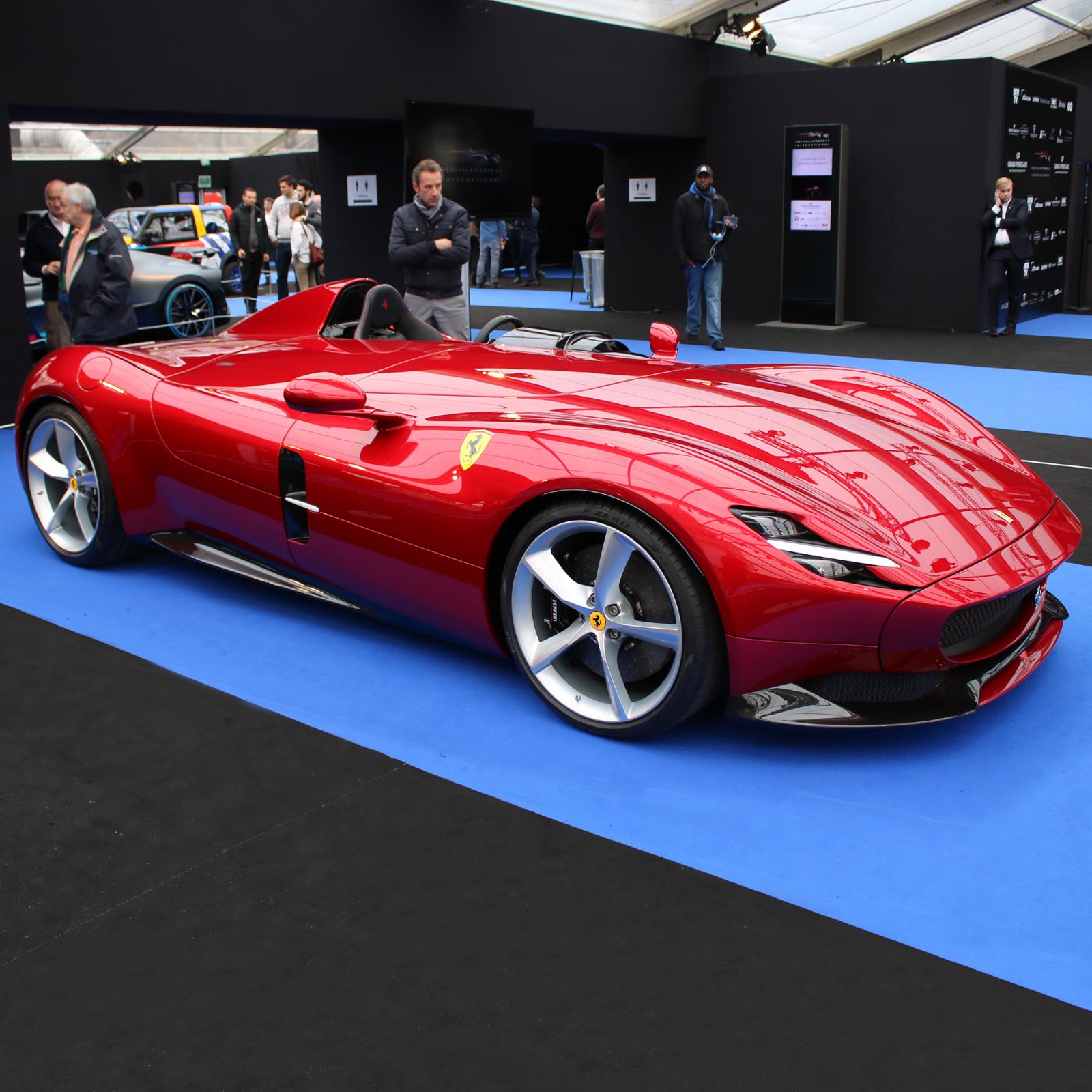

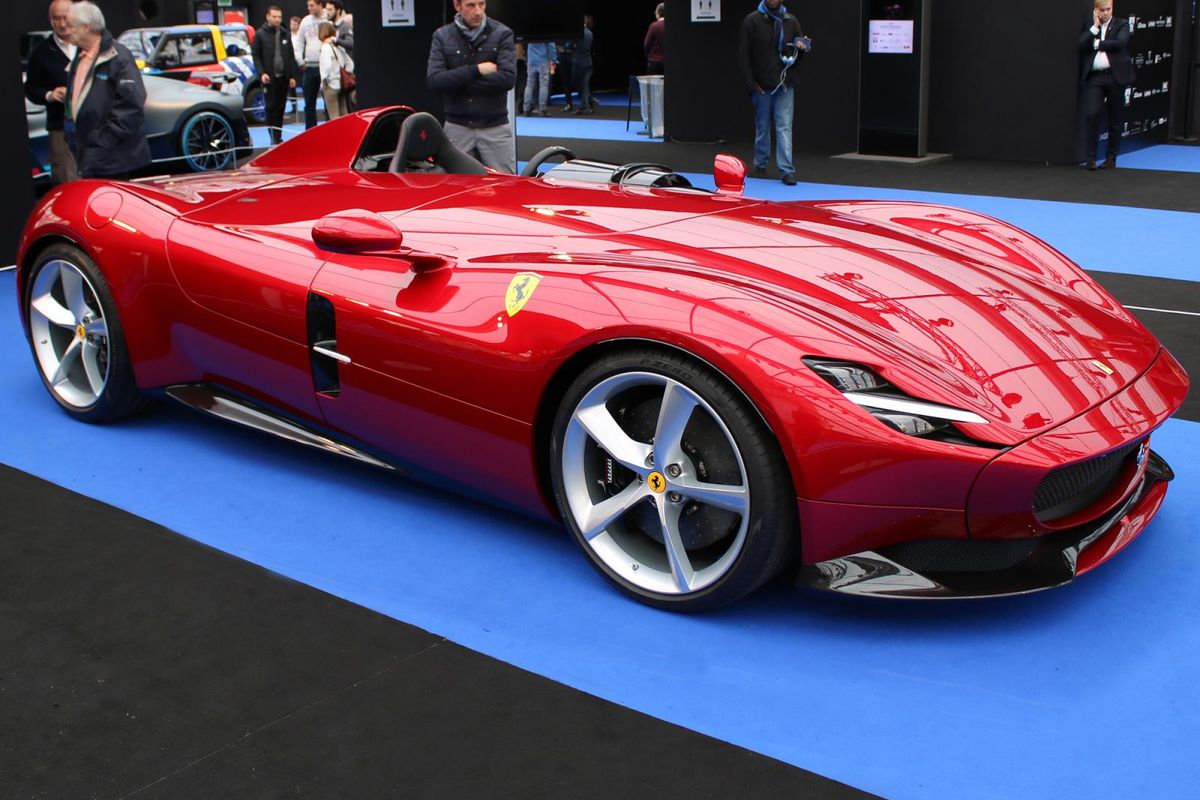
The single-seater Ferrari Monza SP1, achingly beautiful.

Hunkered down low just a few metres away was Ferrari’s Monza SP1 single-seat speedster which, along with its two-seat SP1 twin, will be produced in limited numbers. The design – apparently inspired by various cars from the brand’s back catalogue including the 1954 750 Monza – is an absolute triumph. It is so refreshing to see voluptuous, clean, beautiful surfaces completely devoid of the slash and crease disease infecting so many car makers’ studios of late.
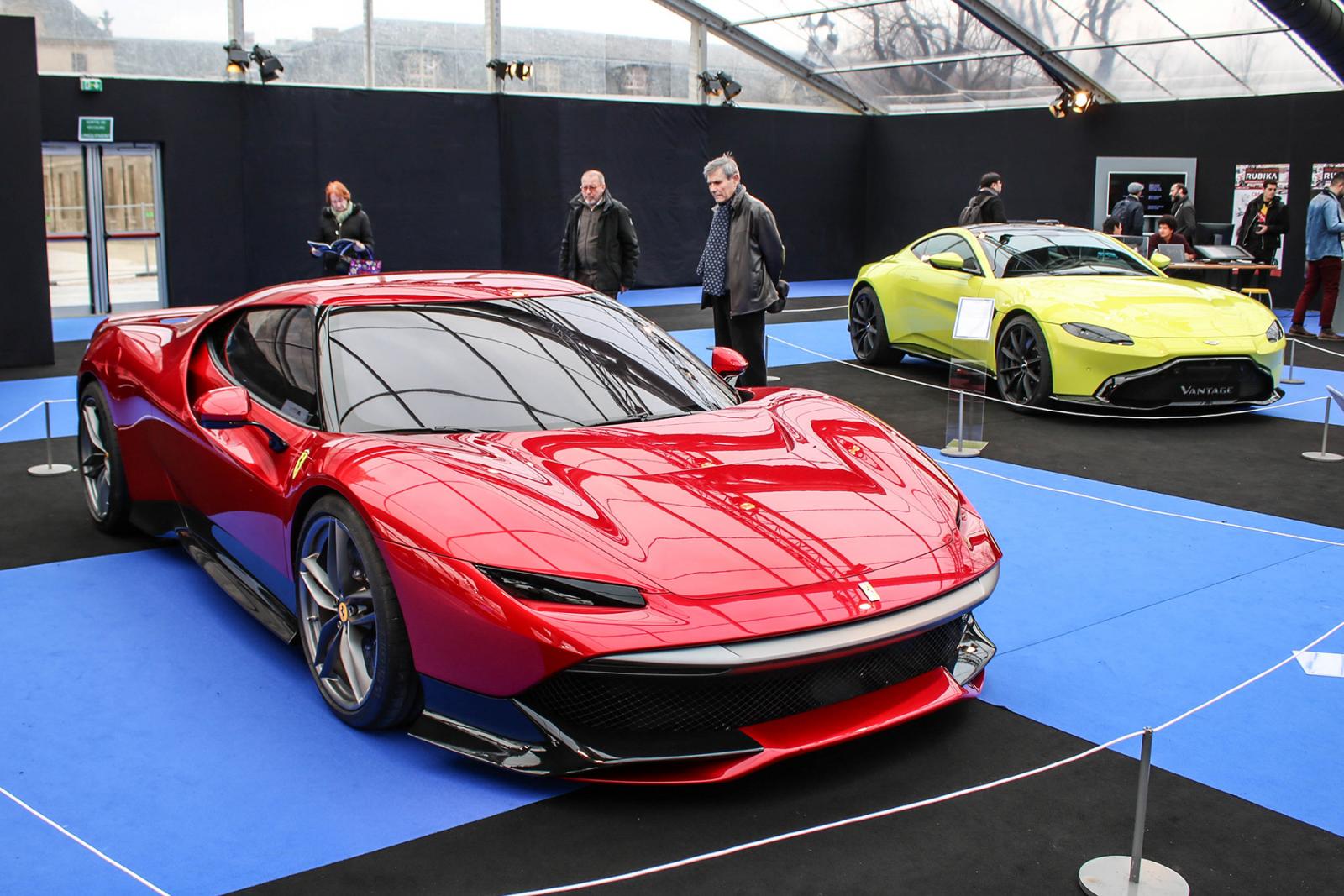

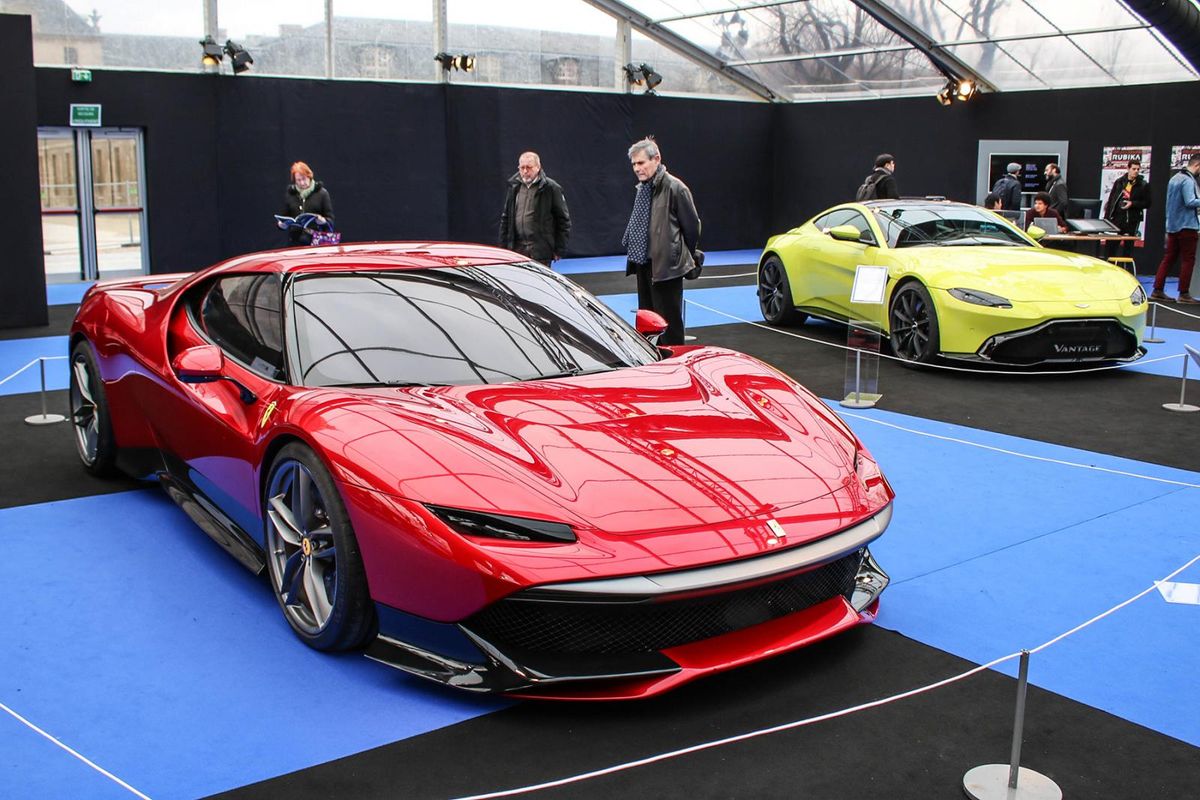
The Ferrari SP38 Deborah, proof that a modern Ferrari can actually be pretty.

Ferrari’s other exhibit was the SP38 Deborah, a one-off special customer commission that is one of the most compelling pieces of in-house coachbuilding yet. A seasoned motoring journalist colleague called it, “The first truly beautiful Ferrari in years”.  As it was first shown before the SP1, I can’t argue with that.
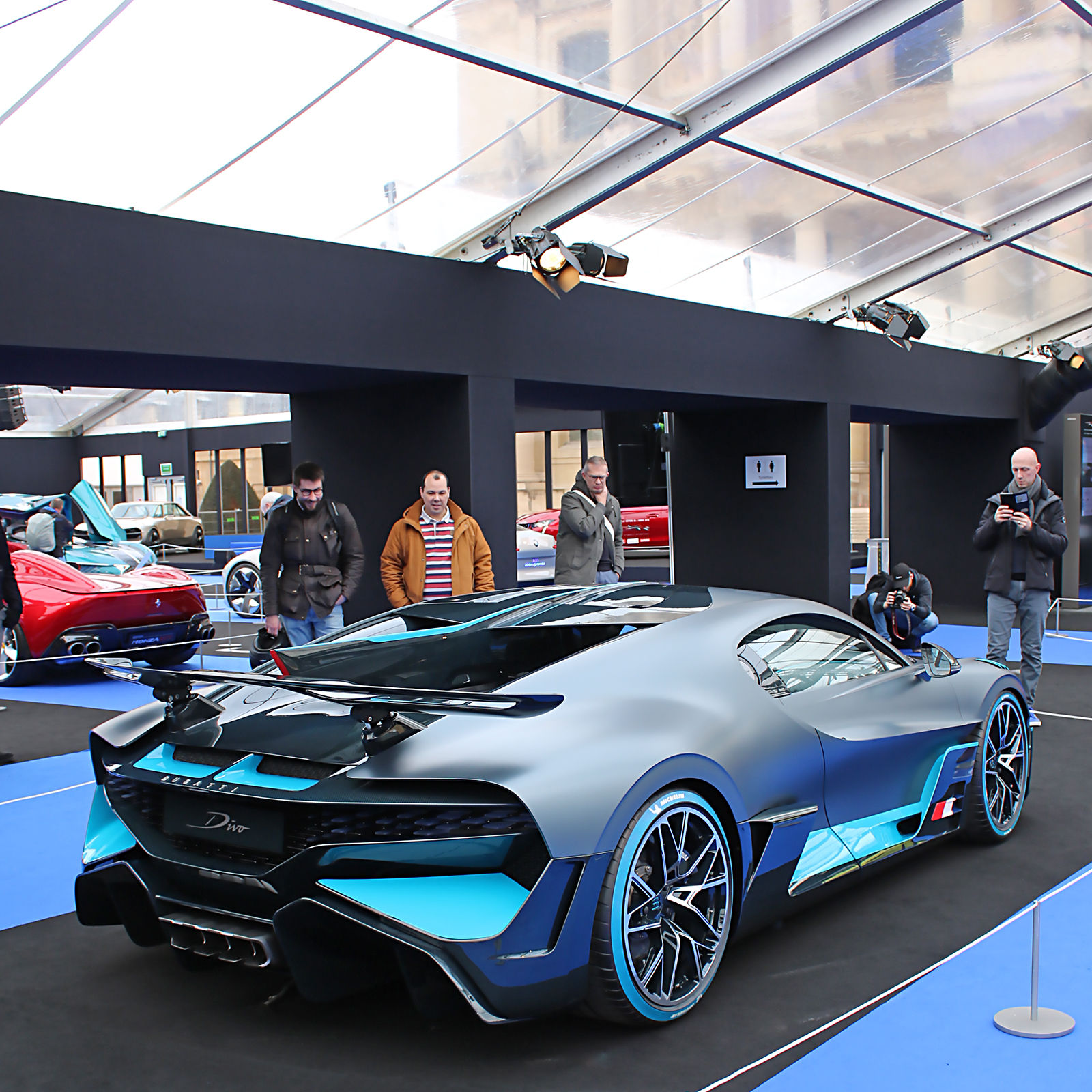

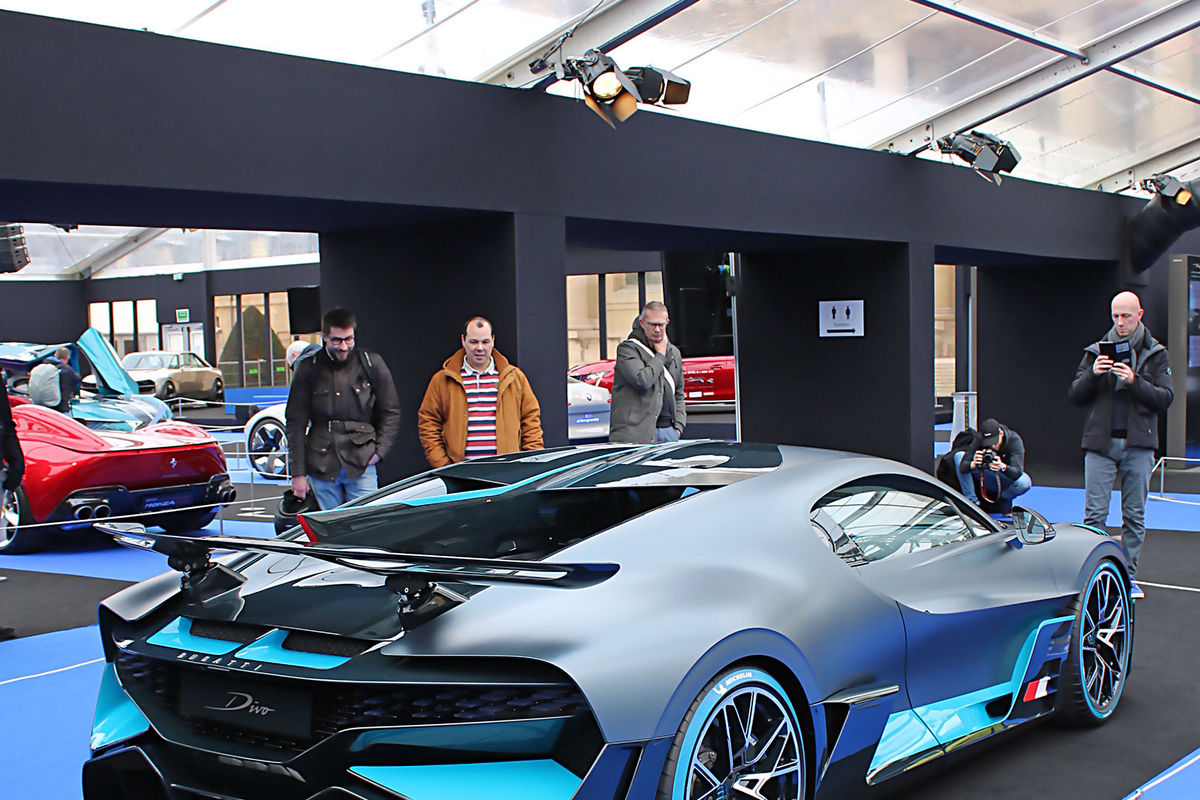
The Bugatti Divo is probably worth an estimated R75 million.

At five million Euros a pop, Bugatti’s Chiron-based, track-focused Divo provided much mega-money visual entertainment. I spent ages ogling the thing, attempting to fully assess a design lathered in racecar-inspired details including fender vents, barge boards, splitter, diffuser, wings and strategic dabs of race-ready war paint. Verdict: I’ll have to get back to you on that.
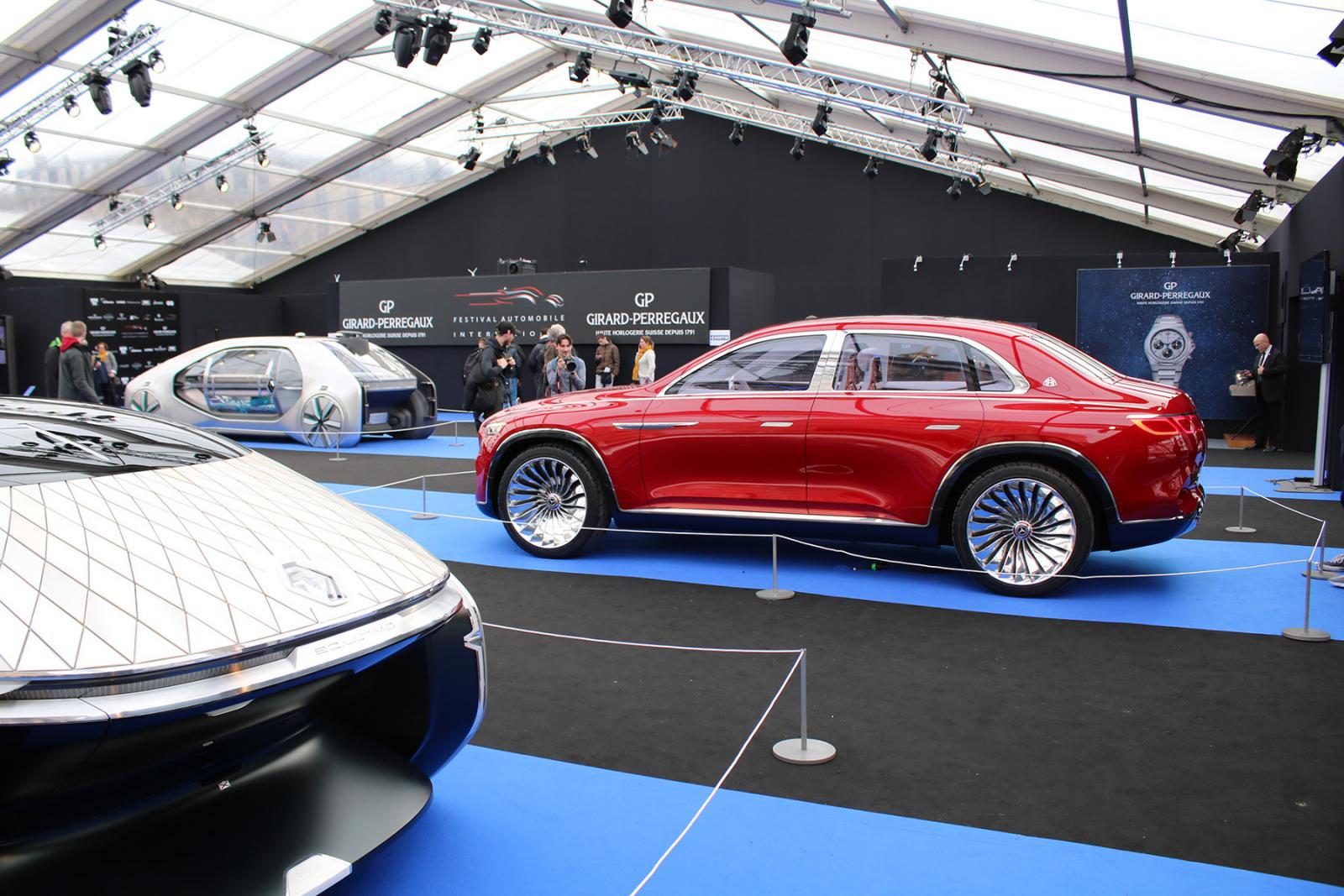

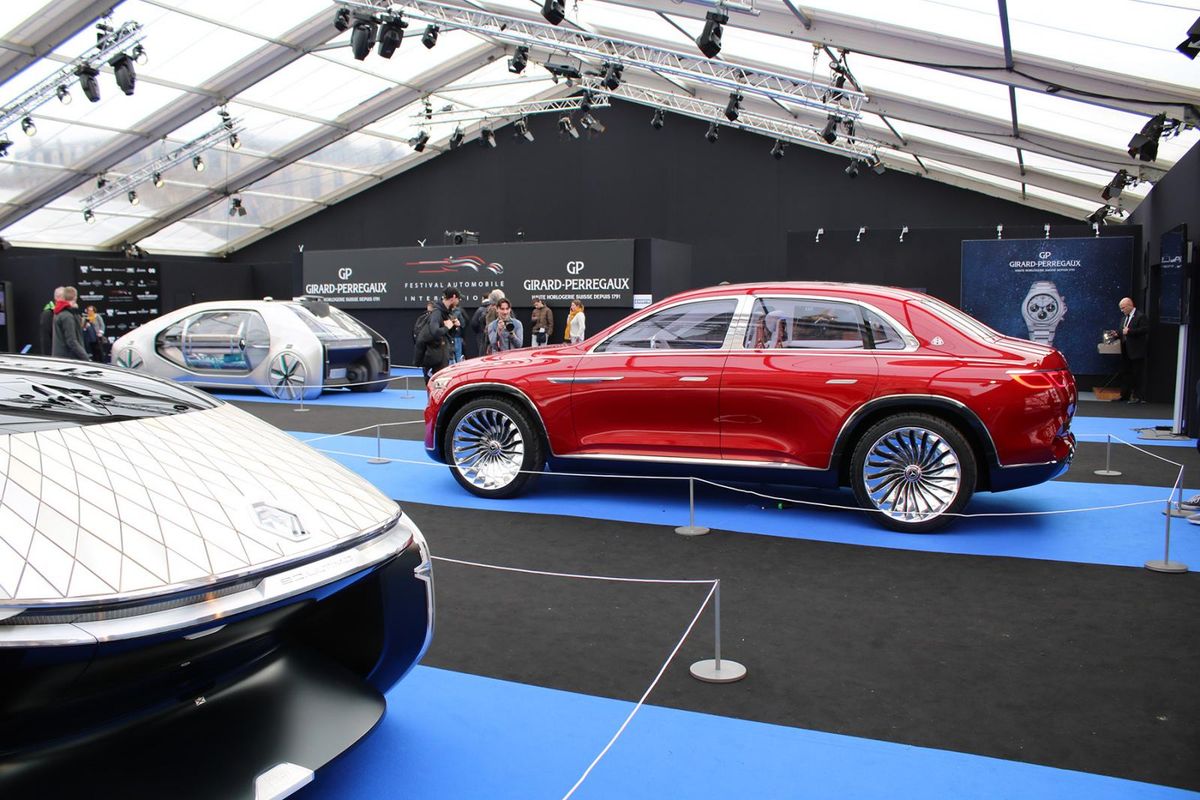
The Maybach Ultimate Luxury… is that a bit of Suzuki Dezire in the rear there?

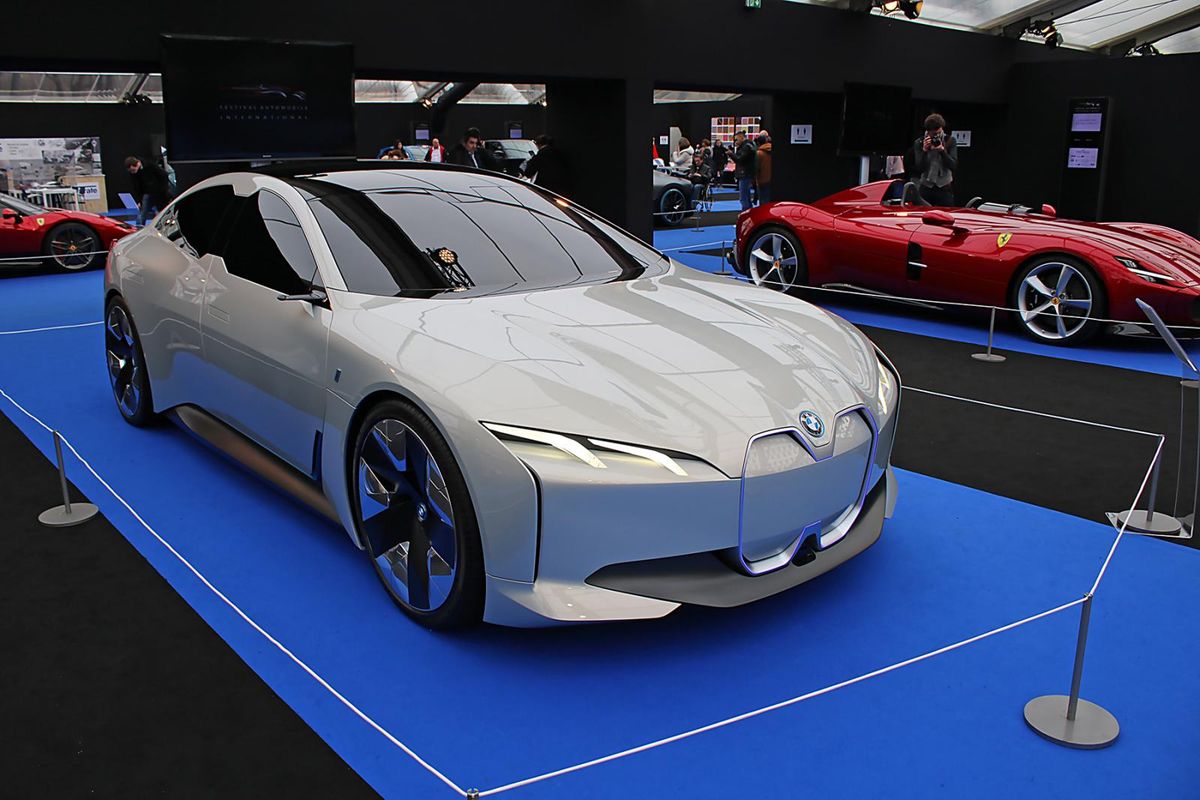
Verdicts on the two German concept offerings, namely the Mercedes-Benz Vision Maybach Ultimate Luxury and the BMW i Vision Dynamics, are far easier. The Maybach’s name is as haughty as its design – a vulgar display of wealth if ever there was one, while the BMW’s name is as clinical as the car’s surfacing. It does have promise though, I’m sure there is a very fine electric-drive 3 Series in there somewhere.
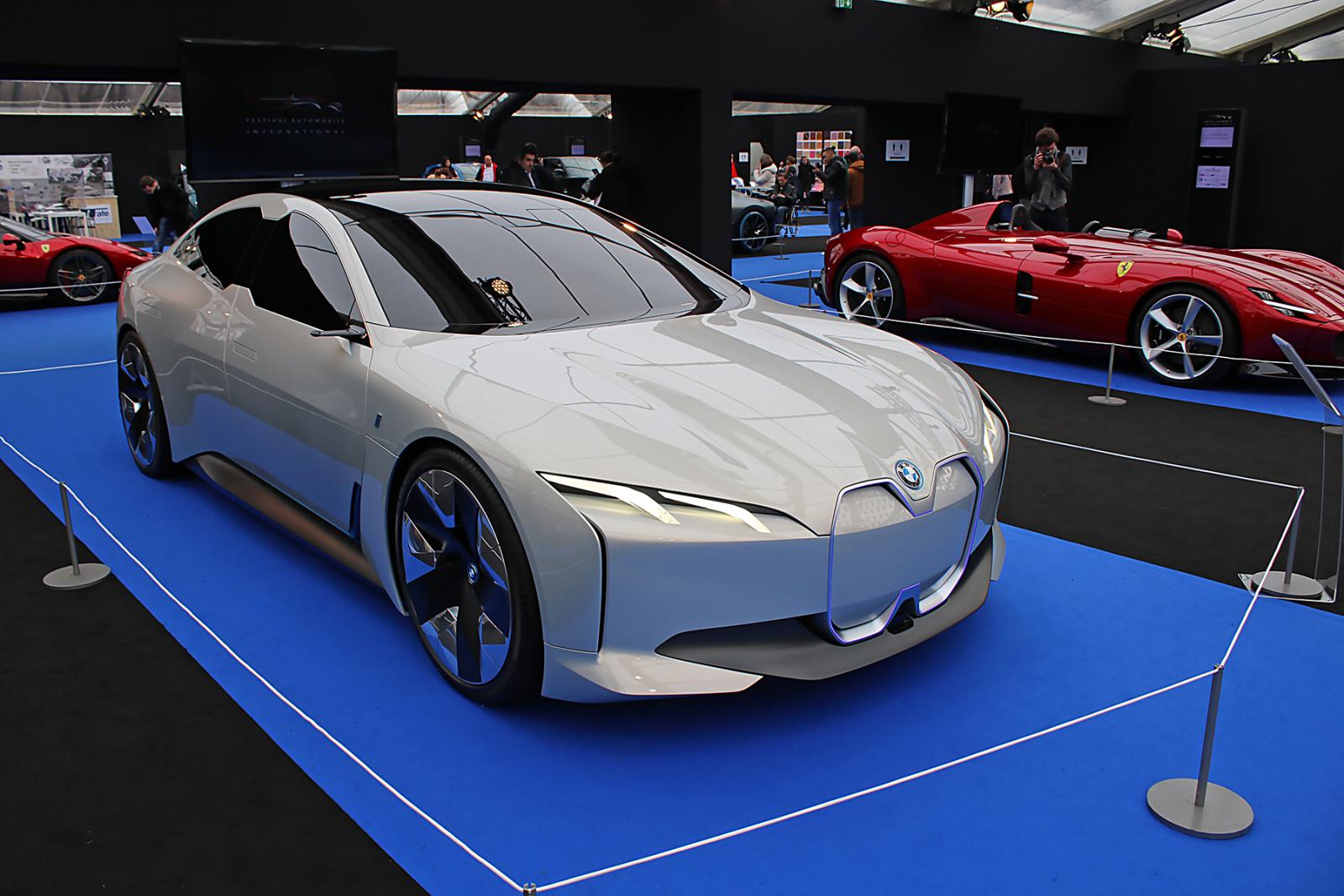

BMW's i Vision Dynamics possibly has the beginnings of an electric 3 Series, somewhere.

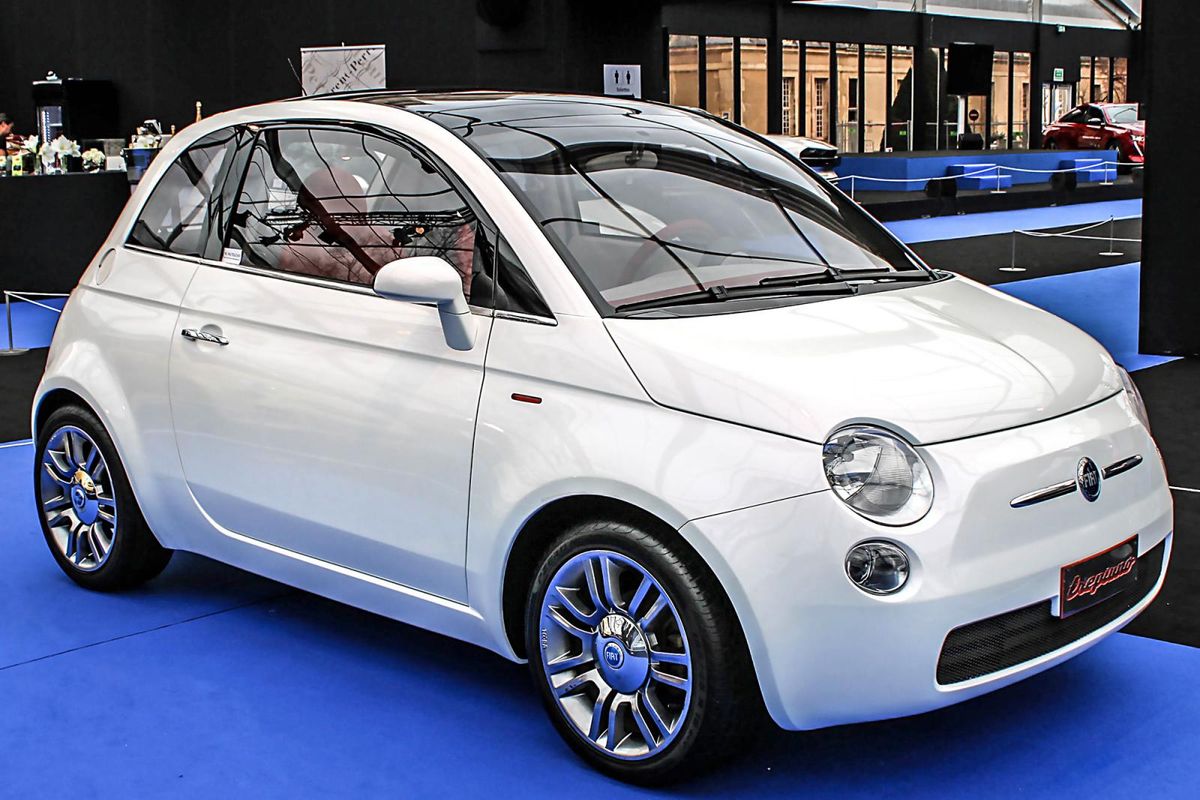
Turning the clock back in the next tent was a tribute to the Fiat 500. Seeing the Dante Giacosa-designed original Cinquecento is always a treat but the real surprise was finding the 2004 Trepiuno concept that previewed the 2007 production remake. Roberto Giolito's 15-year-old design is still as fresh and chic as ever. It’s amazing so little had to change for production – a sure sign of great conceptual work.
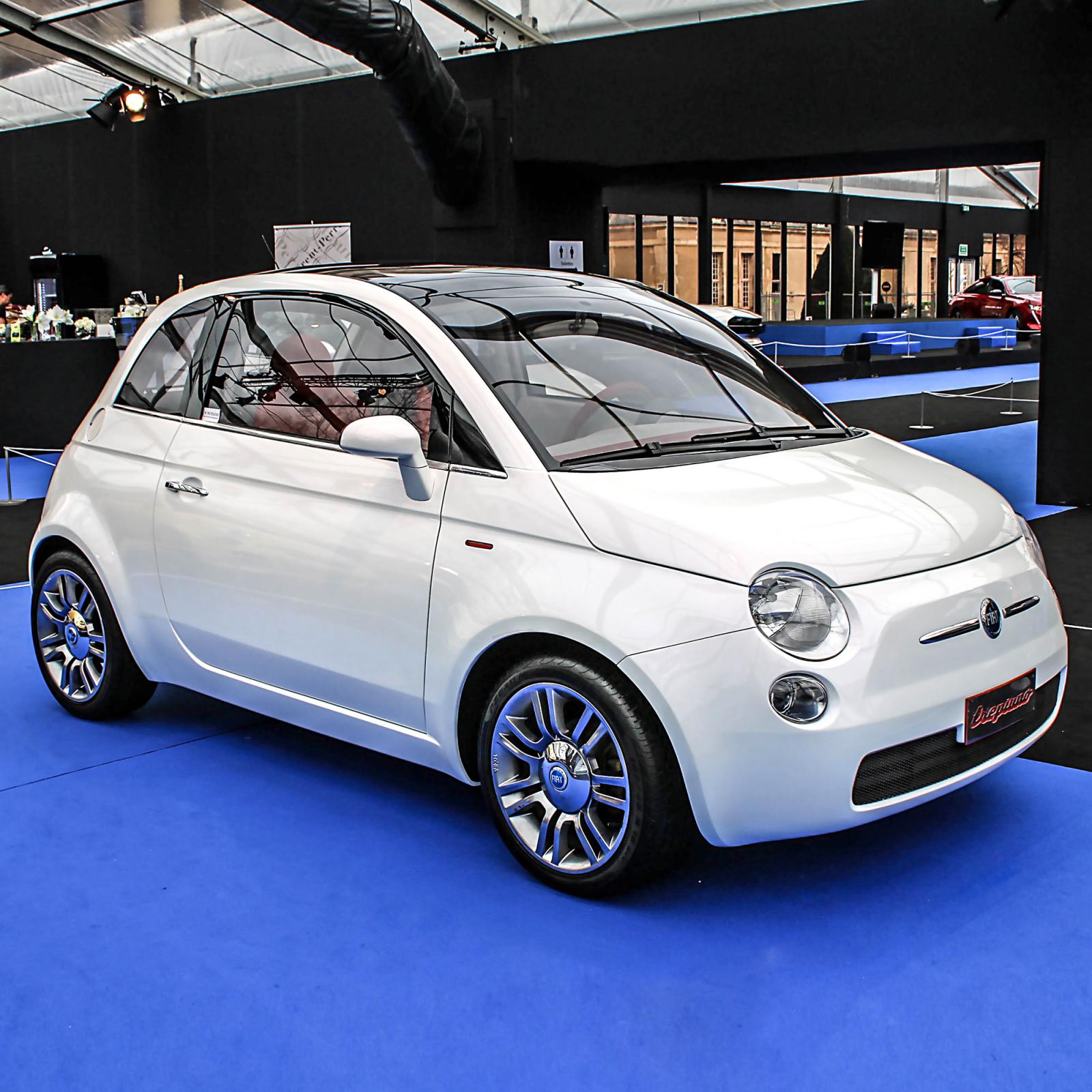

The concept that inspired the modern Fiat 500, the 2004 Trepiuno concept.

More Fiat concept goodness, complete in striking ‘Pop Yellow’ hue, was the 500 Coupe by Zagato. First shown in 2011 at the Geneva motor show, the little tyke’s reworked profile, double-bubble roof and X-graphic C-pillar deserved its own Pinocchio moment, as an Abarth perhaps?    
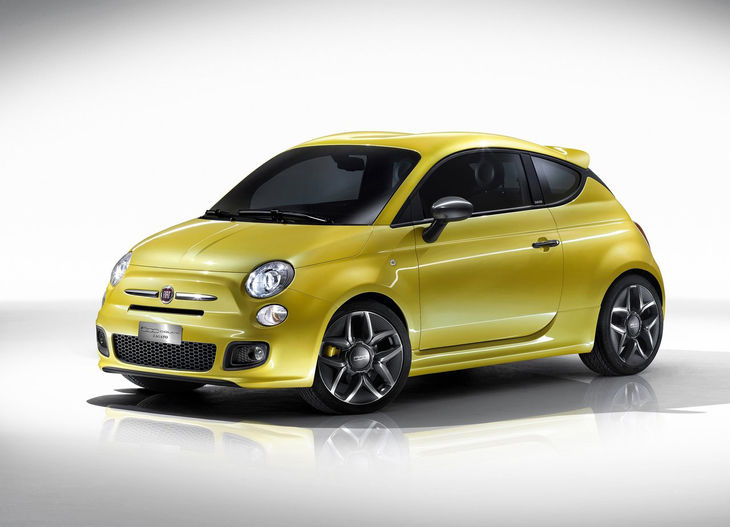

It should have been made, in fact, there's still time. The 500 Coupe by Zagato

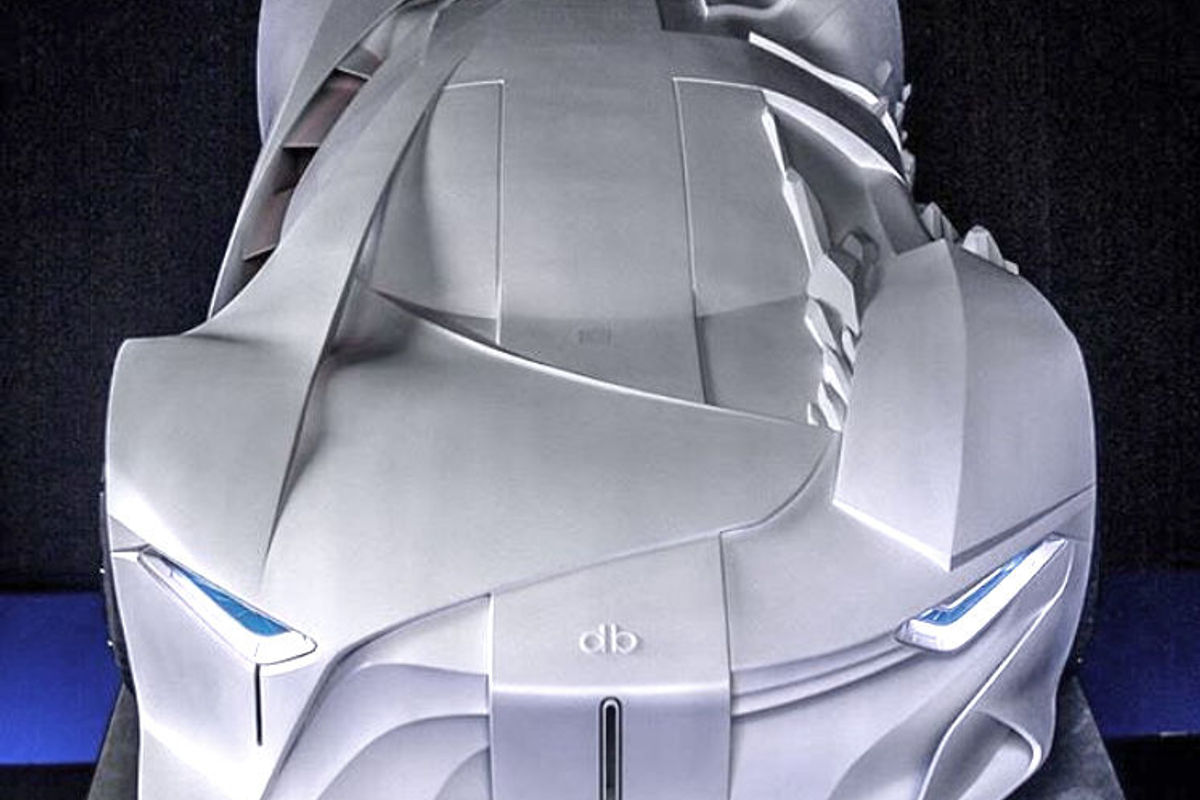
As for the eclectic mix of sideshows, they included a fully 3D-printed and crazily asymmetric sportscar tribute to David Bowie (words cannot do it justice), a DS Formula E racecar, a Lancia 037, a Ligier JS P4 endurance racer, and several production cars ranging from the Citroen E-Mehari art car by Jean-Charles de Castelbaja to the Jaguar I-Pace.

In relative terms, and despite being the 34th edition, this car show is tiny, specialist and spread a tad thin – the Infiniti Prototype 10 and Genesis Essentia were sorely missed. However, viewing these cars with the luxuries of space and natural light as constant companions made it feel as if I’d stumbled across an exclusive, almost secret event, and you don’t get that in Detroit. Rounding off a short but splendid time in the shadow of the towering Les Invalides was a wallet-draining selection of pastries and champagne – très chic indeed.
Goodbye Volkswagen Passat

Dwindling sales of the Volkswagen Passat has resulted in its discontinuation in the South African market.

The Passat, which was first introduced to the world in 1973 and currently in its 8th generation, the 30 millionth Passat will roll off the production line this year, making it the second most popular model in Volkswagen's stable behind the Golf. Despite its worldwide success, the sedan market in South Africa is shrinking, mainly due to higher demand for crossovers and SUVs which has put the business case for the Passat under pressure.  

The facelifted Passat was recently revealed in Europe but sadly, a local Volkswagen South Africa spokesperson has confirmed that the latest Passat will not make it to our market. The stylish Arteon, which recently won the Business Class category of the #CarsAwards powered by WesBank, serves as the brand’s flagship sedan model.

Prior to the introduction of the Arteon in 2018, Passat sales were relatively poor, despite it actually being a very compelling and well-rounded product offering. When the Arteon arrived, Passat sales took a nosedive and has left Volkswagen with no choice but throw in the towel.

Volkswagen is currently selling the last available Passat stock, after which the model will no longer be listed on the company’s local website. From a buying perspective, you may very well be able to negotiate a good deal at your nearest VW dealer…

Buy a new or used Volkswagen Passat on Cars.co.za

Related Content

Volkswagen Passat 2.0 TDI Luxury DSG (2017) Quick Review

Volkswagen Passat 2.0 TSI R-Line DSG (2015) Review

Cars Coming to SA in 2019

Mahindra XUV300 (2019) International Launch Review

The all-new Mahindra XUV300 is on its way and will reach South Africa at the end of the 1st quarter of 2019. We travelled to India to experience the newcomer on its home turf and, judging by our first impression of the "3 Double Oh", Mahindra could well become a force to be reckoned with in the fiercely-contested compact family car segment…

As we sit in the departure lounge at Chennai Airport and take stock of the past few days with Mahindra, there's a strong feeling of positivity. We all love an underdog story and Mahindra’s past has been chequered in South Africa. Mahindra not only suffers from the same perception problem as the Chinese marques (customers are wary of new/unproven brands in the local market), it's largely viewed as a maker of "rudimentary off-roaders". 

However, Mahindra South Africa believes it is now well-positioned: an ever-growing number of customers are willing to "take the plunge" with a new Mahindra. Buoyed by some credible sales success in our market, it has undertaken an expansion programme. It's interesting to note that in January 2019, Mahindra SA outsold Honda, Jaguar Land Rover, Volvo, and Opel. Some of the success can be attributed to the launch of the updated budget-friendly KUV100 Nxt and Mahindra Finance, which offers enticing deals. The Pik-Up bakkie is also achieving considerable sales success. 

Own a Mahindra? Tell us about your experience here

Enter the XUV300


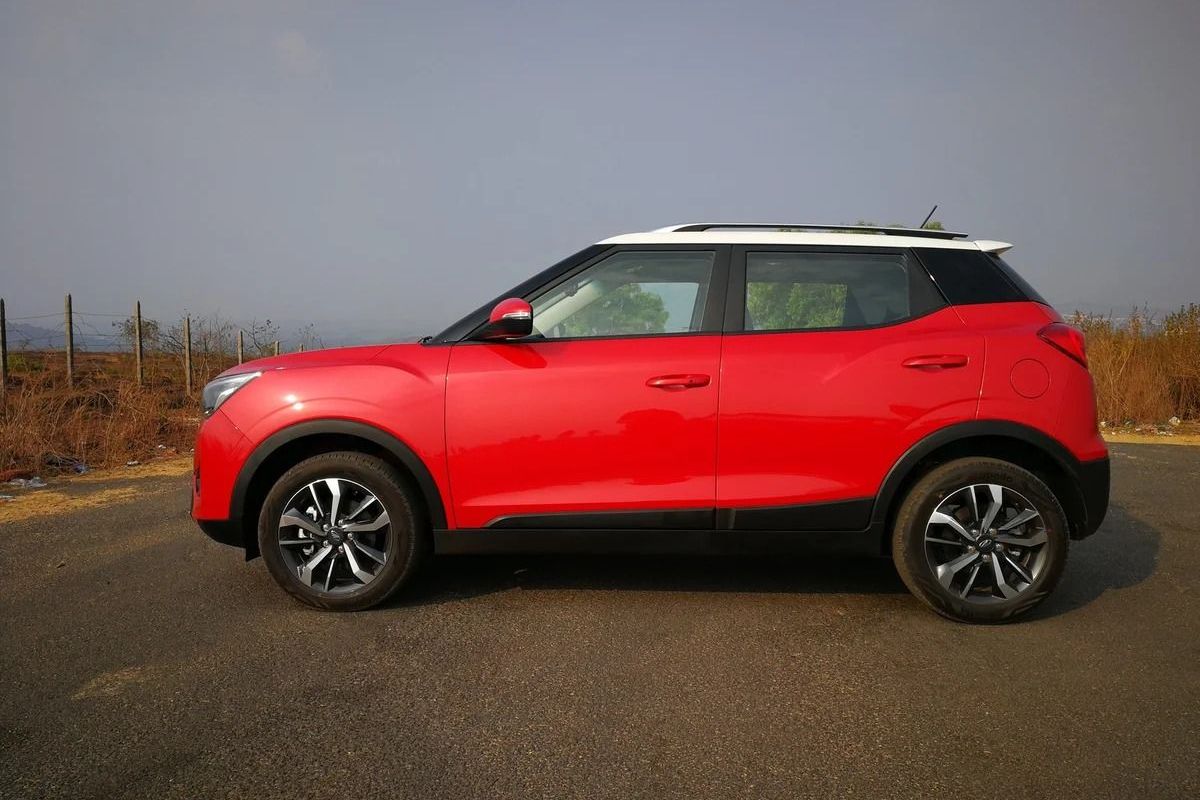
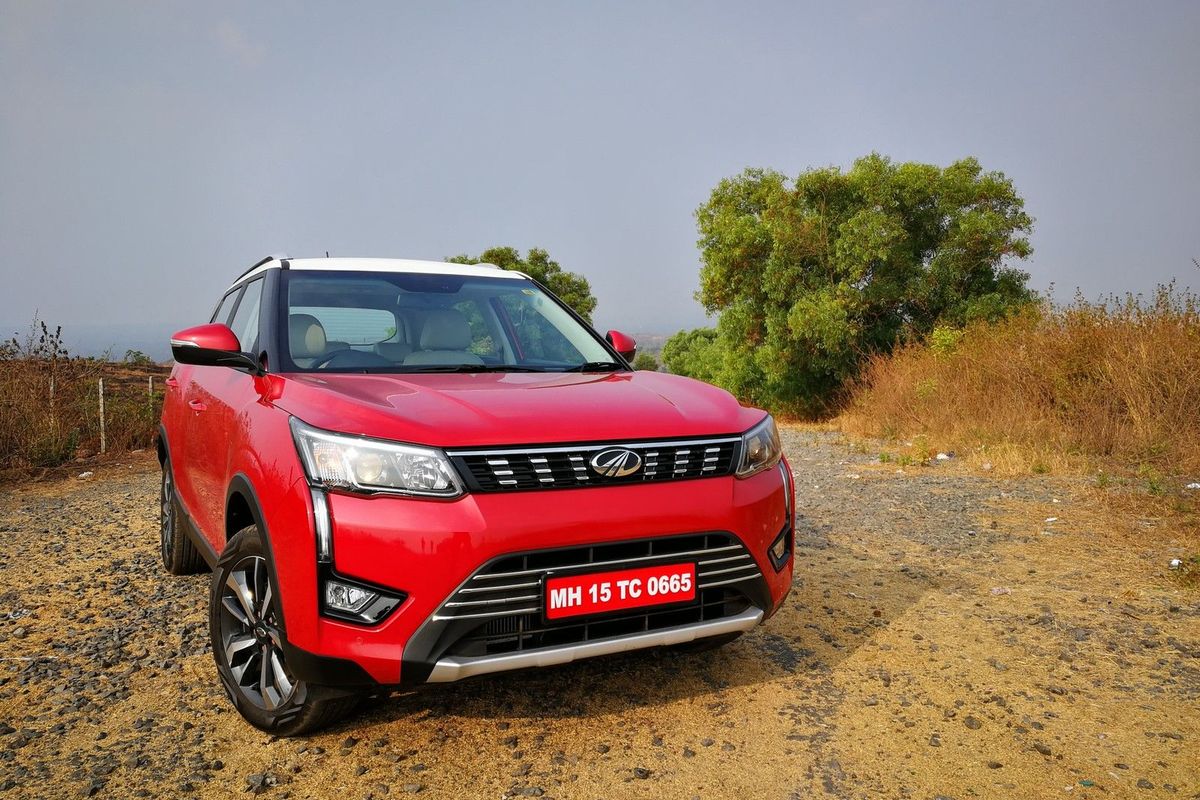
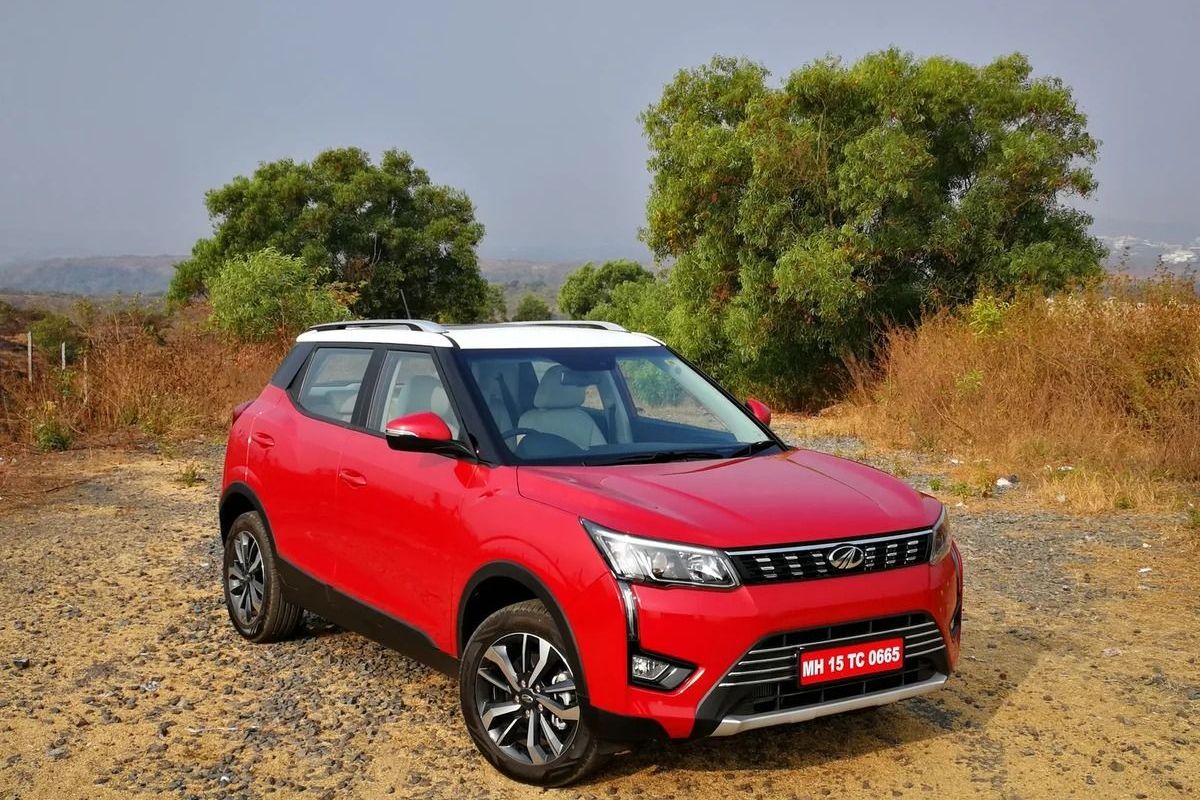
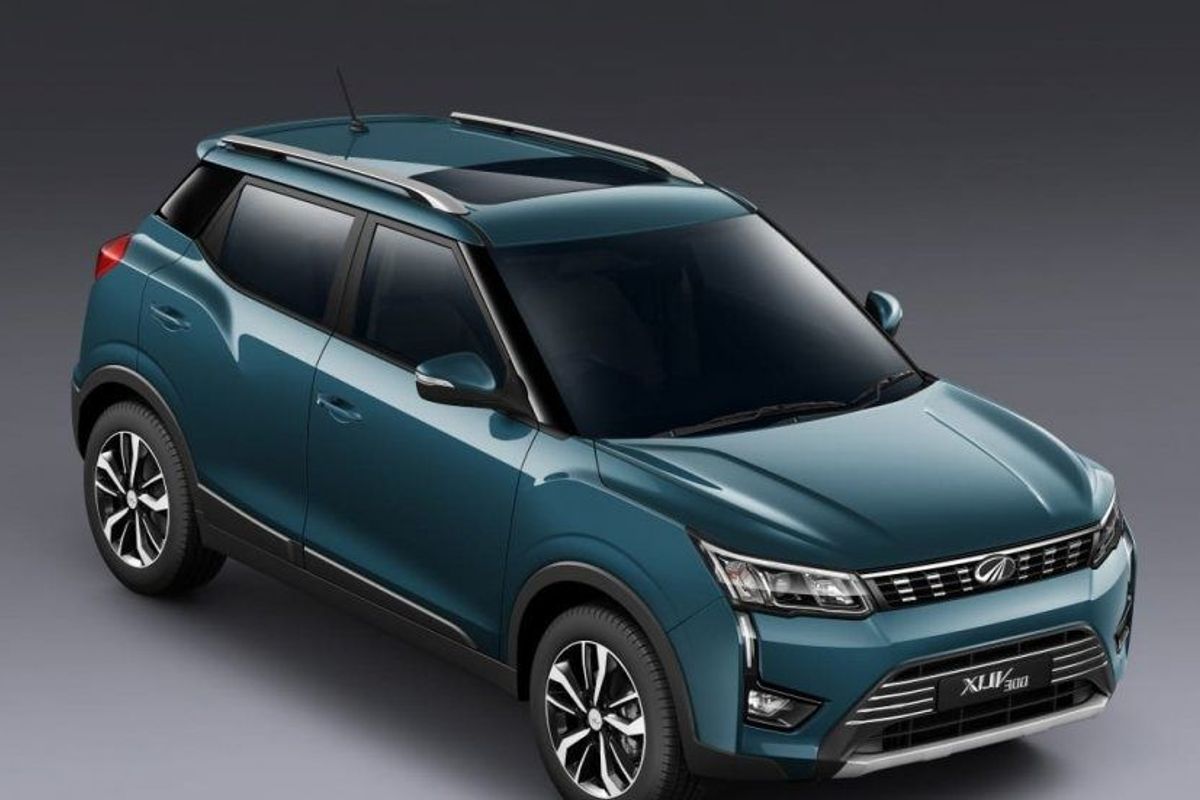
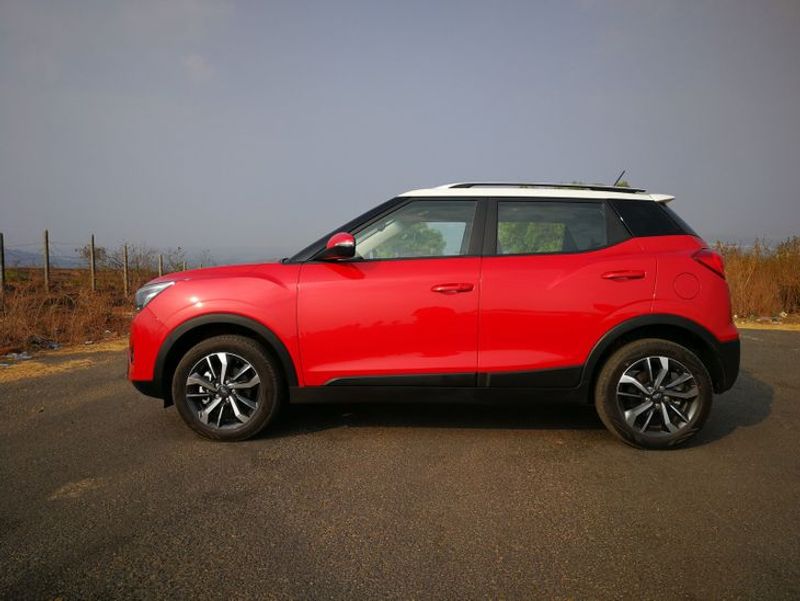
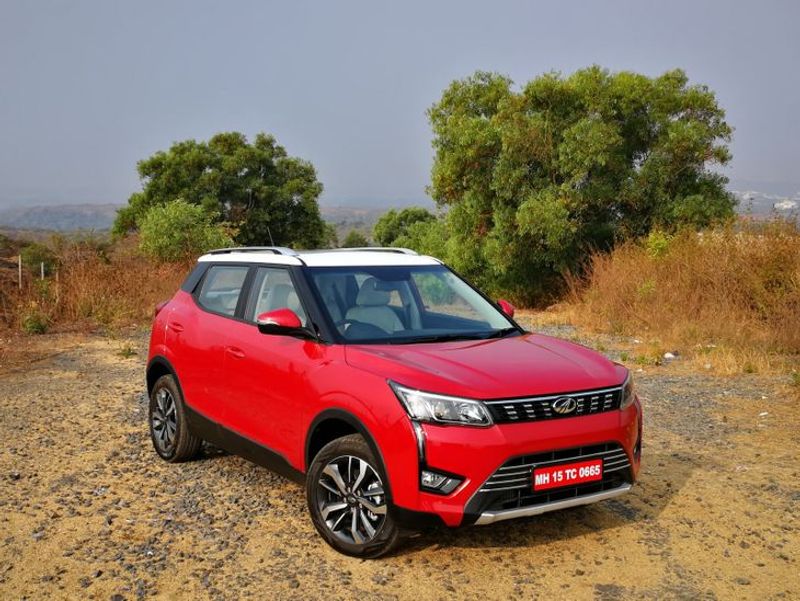
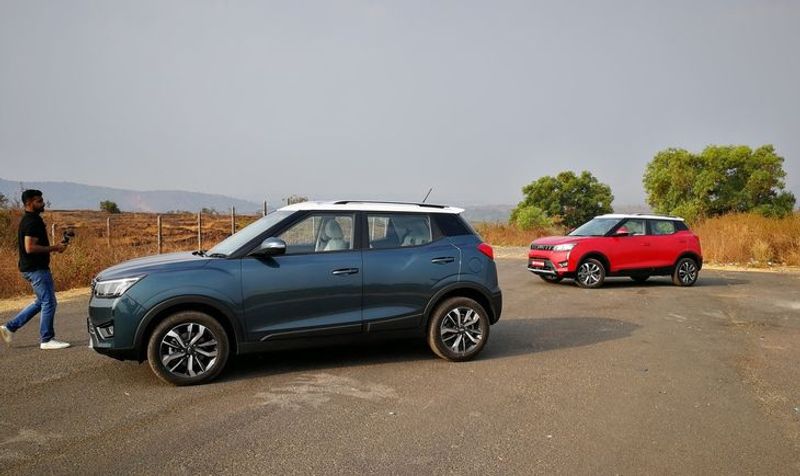
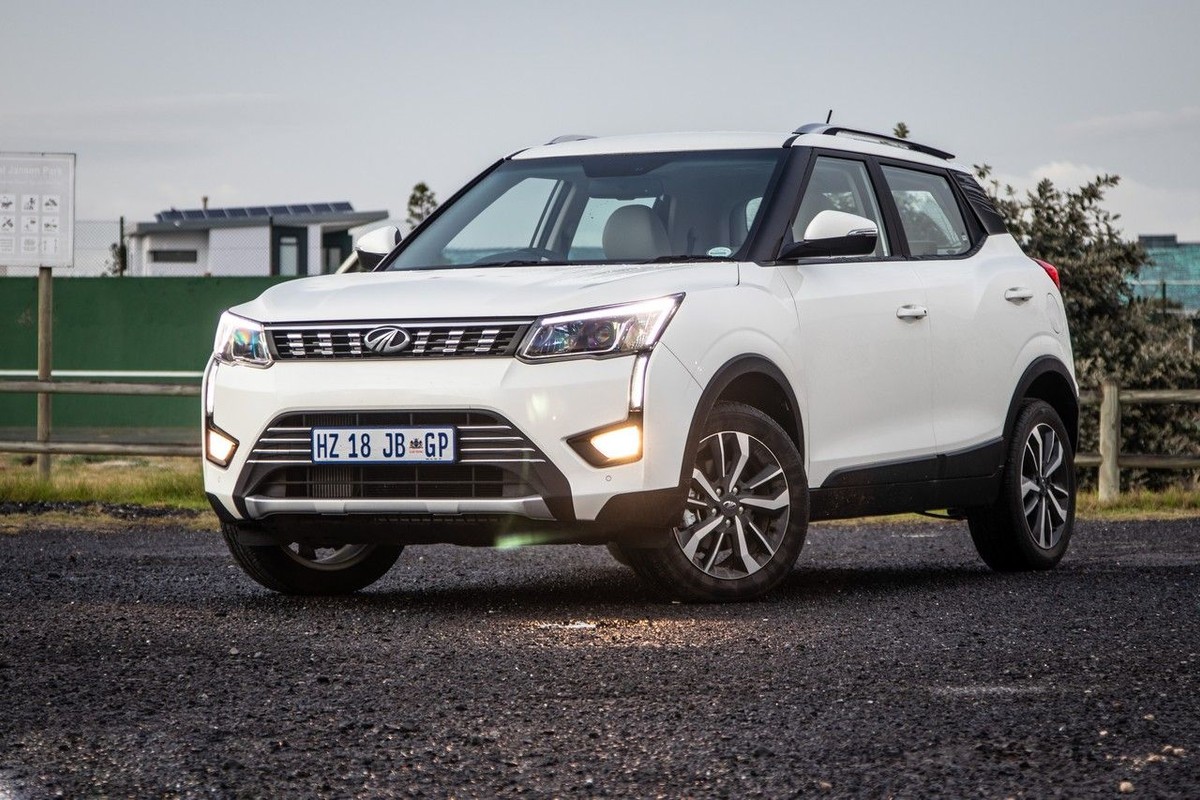
The dual-tone colour scheme gives the new Mahindra XUV300 some modern personality – we think it works.

First things first: the new model's name is pronounced XUV 3 Double Oh, not XUV 3 hundred. The new offering from Mahindra plays in an extremely competitive space and will be going head-to-head with the likes of the Ford EcoSport, Hyundai Creta, Haval H2 and the #CarsAwards-winning Suzuki Vitara (to name just a few examples). Given the standard of the competition, it'll have to be good. Is it? Read on and find out. 

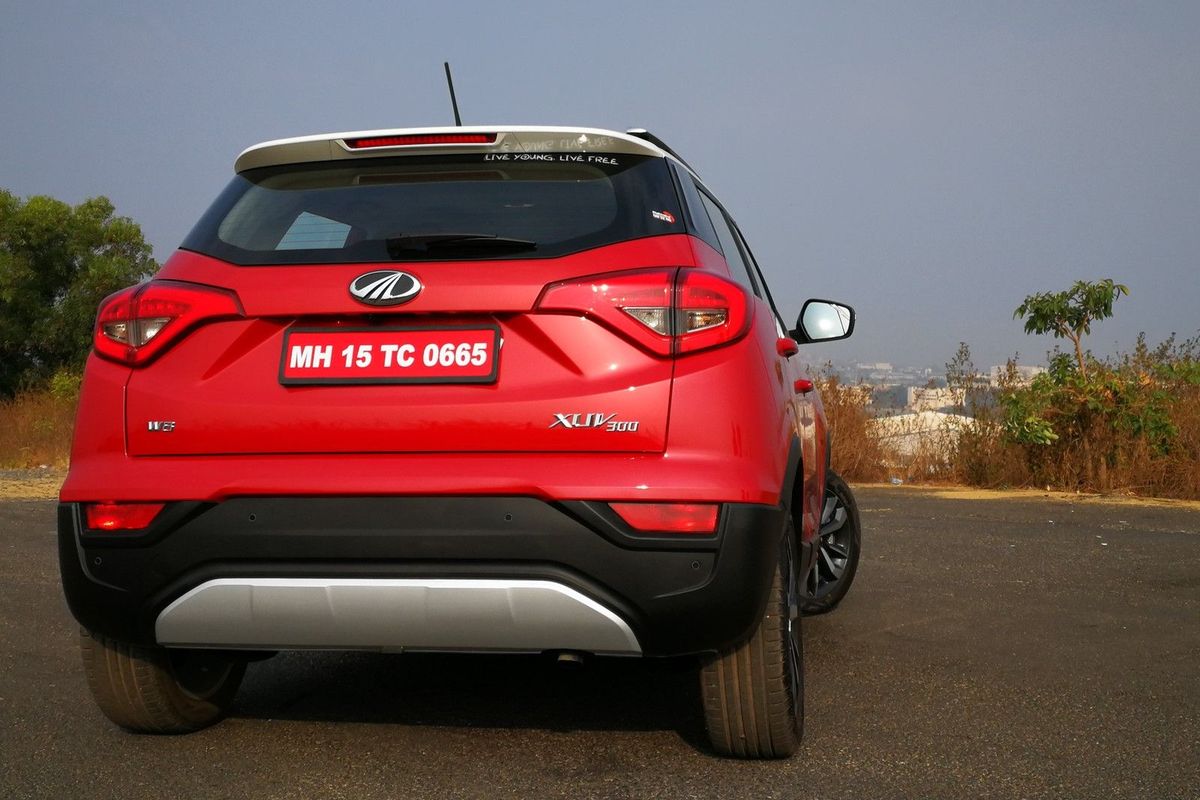
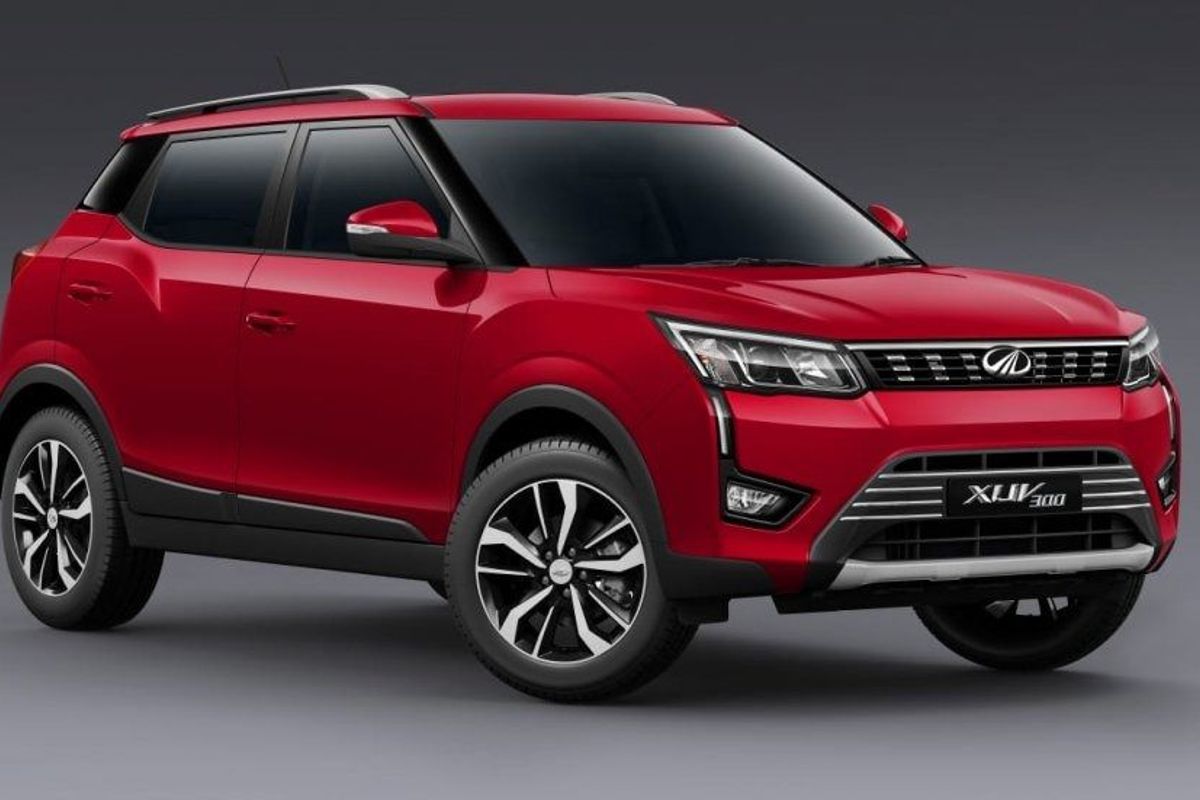
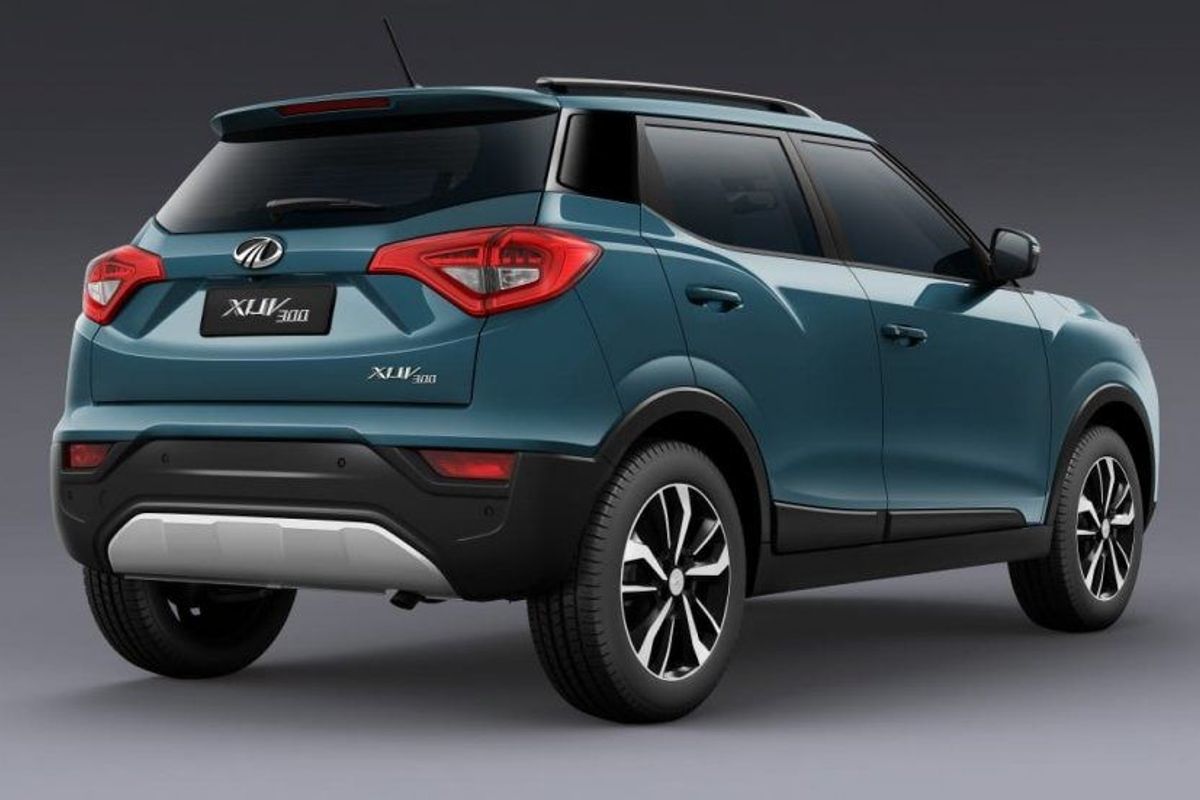
Let's now talk about the newcomer's looks. With a purposeful, contemporary and, in our opinion, instantly-likeable design, the XUV300 isn't burdened with its predecessor's love-it-or-hate-it exterior execution. Instead, it has a fresh, simple design devoid of chintzy paraphernalia. At the front, it sports eye-catching daytime running lights and you can readily expect heightened kerb appeal to become a defining characteristic of future Mahindras. Evidently, the Indian company makes the most of its 76% stake in Italian design house Pininfarina, which it acquired back in 2015.

The XUV300 is based on the Mahindra X100 platform and shares some tech with the SsangYong Tivoli. Mahindra owns 74.65% of the Korean manufacturer and while there are some similarities and overlaps between the XUV and the Tivoli (of which its predecessor was once under consideration for SA), the design and engines are exclusive to Mahindra. Speaking of engines, there are 2 options available. First up is a 1.5 CRDI 4-cylinder turbodiesel engine with outputs of 85 kW and 300 Nm. The next engine is a 1.2-litre turbocharged 3-cylinder petrol unit, which produces  82 kW and 200 Nm. Both engines are mated with 6-speed manual gearboxes, but there's talk that automatic versions will come at a later stage.


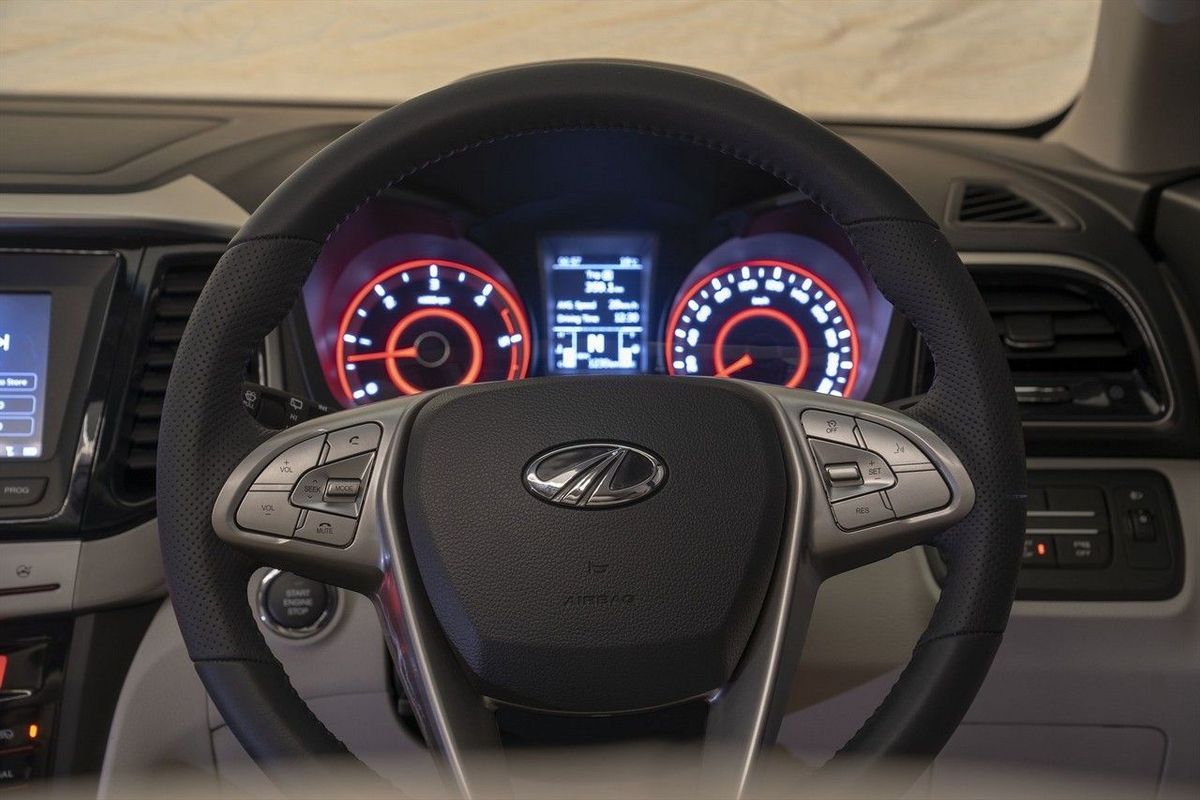
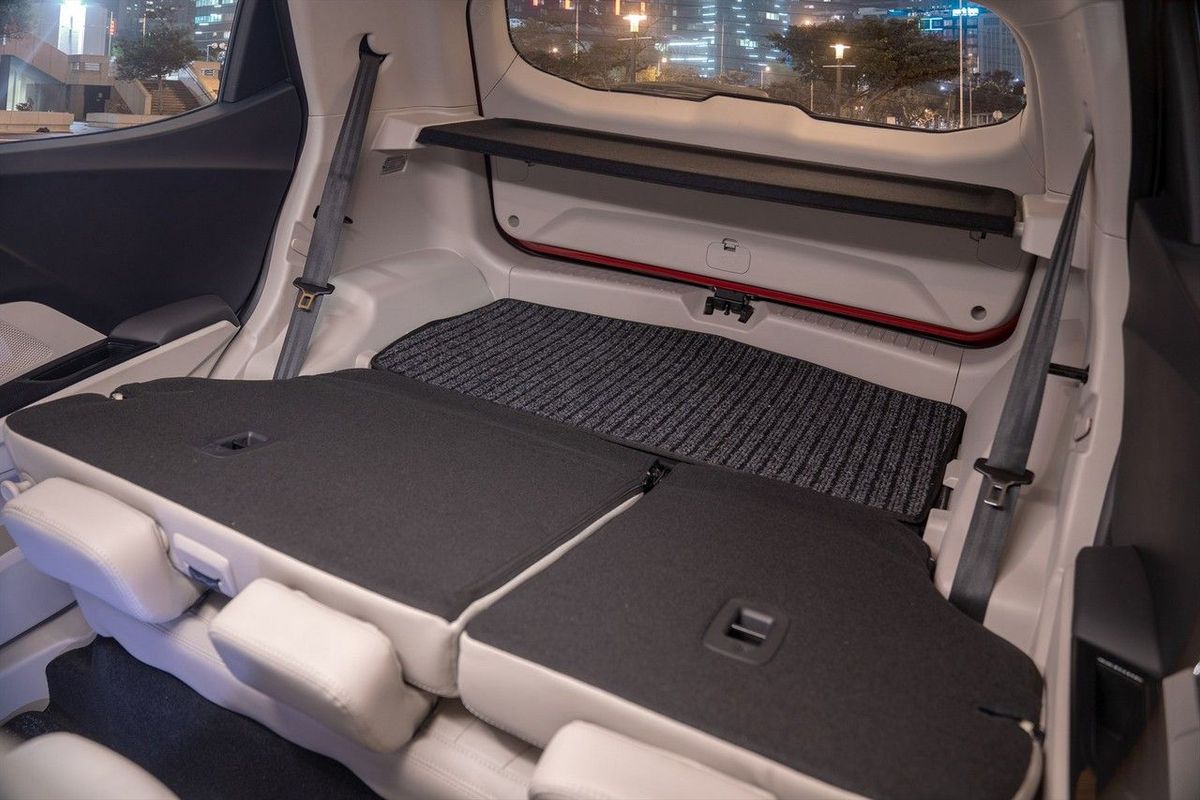
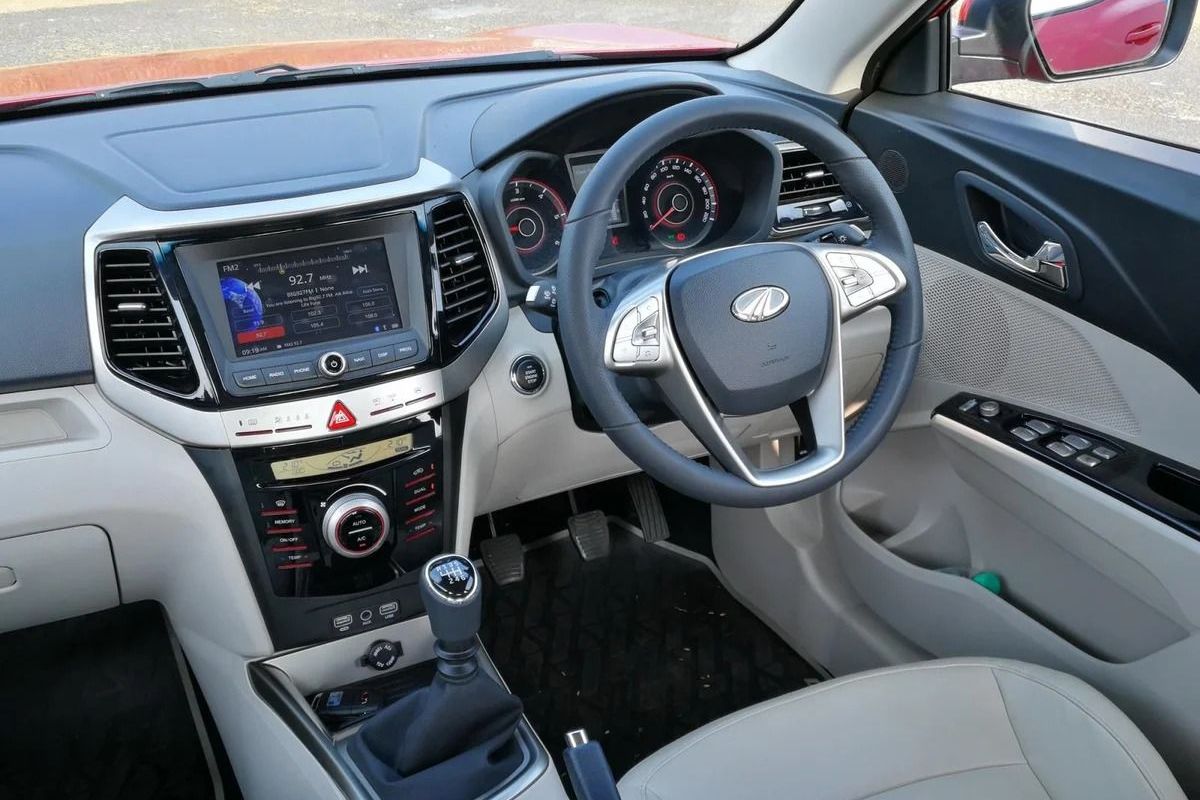
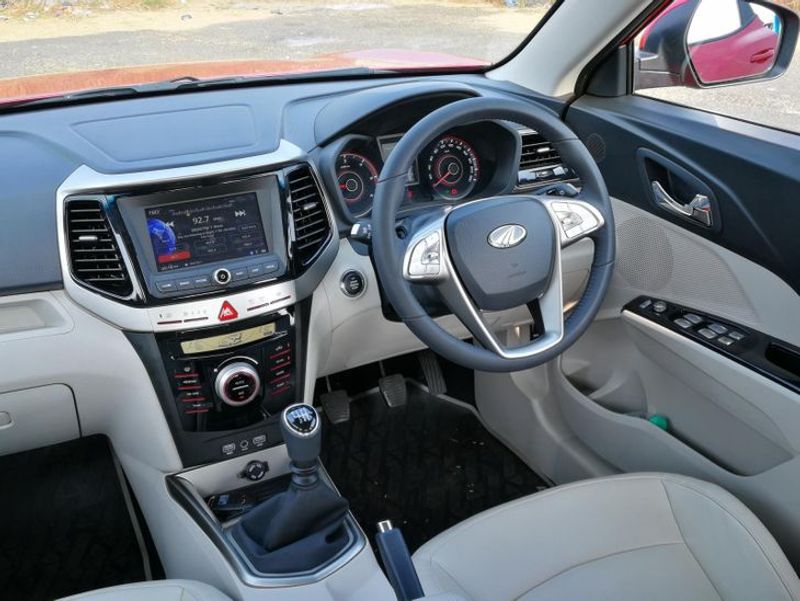
The cabin is well-made and there are plenty of storage spaces. Top-spec versions will be fitted with a comprehensive infotainment system.

What's it like to drive?

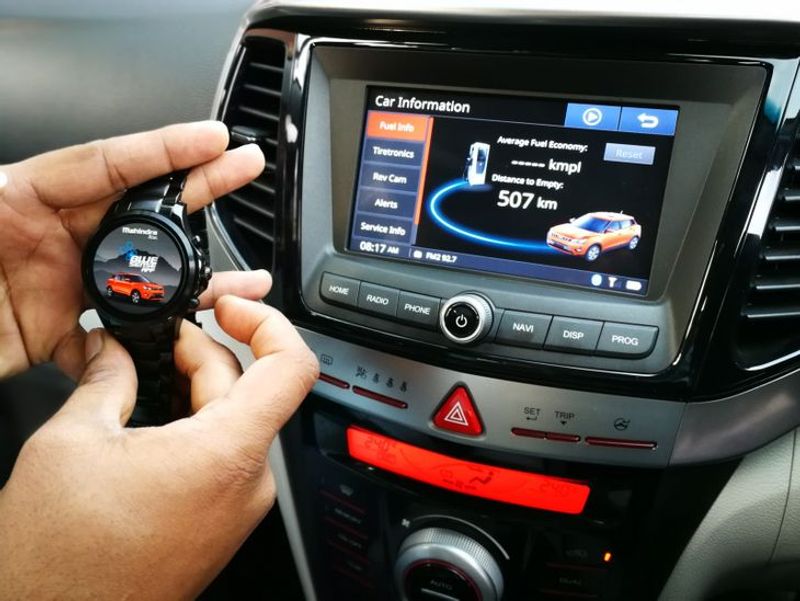
We had the chance to drive the top-spec 1.5-litre turbodiesel version and we were blown away by the specification. The cabin is neatly laid out and feels solidly assembled (although we hope the beige-coloured interior will be replaced by a dark grey trim in SA-spec units). The infotainment  system is operated by a 7-inch touchscreen and is complemented by a pair of USB ports, Android Auto and Apple CarPlay compatibility, satellite navigation… and there's even an app for smartwatch integration. It's safe too, with 7 airbags, ABS with EBD, disk brakes all round and stability control. In terms of comfort features for the top-spec version, 3-mode adaptive steering (it allows you to adjust the steering feel), dual-zone climate control, park sensors (front and rear), a reverse-view camera, auto wipers, cruise control, keyless start and a start/stop system are fitted.

Our test drive of the new XUV300 took place in the tropical holiday province of Goa. The benefits of these roads range from less traffic to more dynamic surfaces and corners. Driving in some of the big cities like Chennai and Mumbai is not for the faint-hearted (if you've never done it before), but our route through Goa was much quieter and allowed us to evaluate the claim that the XUV300 is "the most dynamic offering in its segment".


A first for the segment is smartwatch integration and you can get a nifty app to control some car functions

Initially, we were a mite sceptical about the claim… "Dynamic" is one of those buzzwords marketing execs use to convince the media (and public) that their brands' latest sensible/practical offerings are not boring to drive. Surprisingly, with its steering feedback set to Sport, which offers a meaty feel through the tiller, the XUV300 felt appreciably agile (but not at the cost of poise) when we hustled it along some windy roads around the beach area of Palolem. It's not sporty per se, but at least engages the driver and rewards enthusiastic driving to an extent. The steering is reassuringly direct and, when switched to Comfort, light and lovely to wield in driving situations where tight parking manoeuvres would need to be executed.

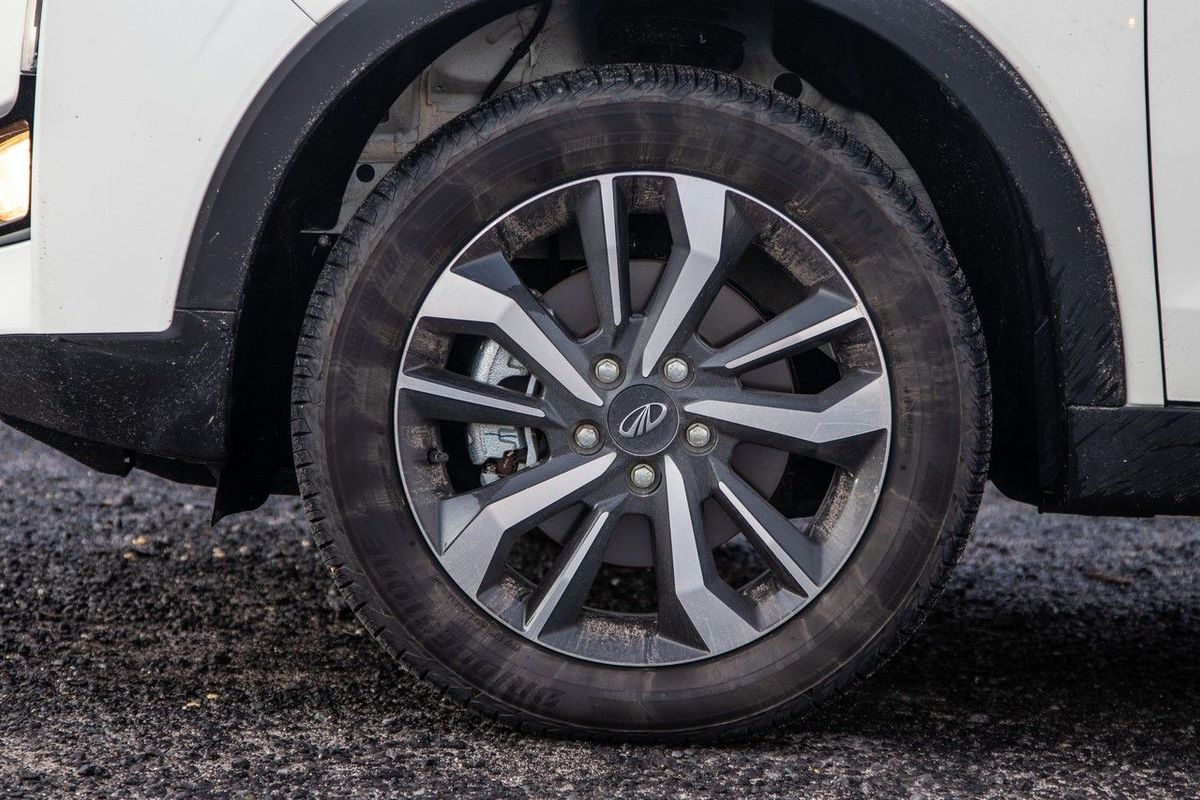
The ride quality (given the varied qualities of road surfaces and 17-inch alloy wheels) was particularly impressive. The suspension is firm, but at no point did it crash over any uneven ruts or corrugations in the road. Quality is a critical word in our brand-sensitive market and some people may have preconceived notions that the Mahindra is marginal in that regard. That couldn't be further from the truth, as this latest offering from the Indian firm demonstrates you can get excellent build quality, finishes and refinement from a brand that is not Japanese, Korean or European. Despite our test unit being driven all week by motoring journalists, it showed no sign of wear and tear, and the cabin was vault-quiet. Mahindra representatives revealed NVH suppression was a key pillar of the XUV's development: making the cabin as quiet and refined as possible was a critical objective. 

The turbodiesel powertrain proved intriguing. Unlike some diesel engines in this segment, which are loud and clattery, this powerplant is quite quiet and refined. While the maximum power output (85 kW) is on par for the segment, 300 Nm of torque is exceptionally useful for in-gear overtaking, something we did a lot of on our test route. Once you're past that peak torque plateau, the dropoff is evident even before the redline. This could be a small cause for concern, but the 6-speed manual gearbox comes to the rescue. Not only is it light and easy to use, but the ratios are engineered to make the most of the engine's perkiness. If you feel you're running out of puff, simply drop a gear and the car will surge forward.


With 180 mm of ground clearance, the Mahindra XUV300 can traverse some gravel roads with confidence.

On our test route, we frequently found ourselves needing to overtake slower traffic and the turbodiesel engine was sufficiently responsive to execute those manoeuvres with ease. The real acid test will be to see how the car responds on the open road, where the 80-120 kph test is critical in our market. In India, there are few opportunities to reach 100 kph given the congested traffic and sometimes tricky road conditions. For those who like to venture off the tarmac and indulge in a spot of gravel grinding, the Mahindra XUV300 boasts 180 mm of ground clearance, which is useful.

Which XUV300 Will SA Get?


Cars.co.za joined Indian motor journalists in Goa, India for the launch of the Mahindra XUV300

While final pricing and specification for the range are yet to be confirmed, we've been told that the local market will probably see the introduction of 3 spec levels, with the new model's launch expected around April 2019. Mahindra Global regards the South African introduction of the XUV300 so seriously, that it has sent some units to Mzansi to undergo accelerated durability testing to make sure that the newcomer's suitable for our market.

First impressions count for so much and we're happy to say that the Mahindra XUV300 delivers great build quality, generous features and a refined drive all around. Pricing will be critical and given where its rivals play, we think that Mahindra will come in with an aggressive strategy right from the get-go. No longer should the word "affordable" be automatically associated with "poor quality". We expect that the top-spec derivative will cost around the R300 000 mark, which undercuts its competition significantly and, hopefully, we won't lose too much in the way of spec. We can't wait to evaluate the new XUV300 on local soil and if our first drive is anything to go by, the XUV300 will find its way into several South African homes.

Further reading:

Mahindra to build bakkies in SA

Mahindra S10 Karoo Edition for SA

Mahindra XUV500 (2018) Specs & Price

Mahindra KUV100 NXT (2018) Specs & Price

Suzuki Jimny 1.5 GLX (2019) Review [w/Video]

There's a tremendous demand for the 4th-generation Jimny and, having put the newcomer through its paces, we completely understand why that's the case… The Suzuki seems even better in every single facet that gave its predecessors legendary status in the off-roader community. It's still very singleminded in purpose, however.  

We like: Chunky retro styling, class-unique off-road ability

We dislike: Middling road manners, impractical packaging

Fast facts

  • Price: R299 900
  • Engine: 1.5-litre, four-cylinder petrol
  • Gearbox: 5-speed manual
  • Power/Torque: 75 kW/130 Nm
  • Fuel economy: 6.3 L/100 km

Own a Suzuki? Tell us about your experience here


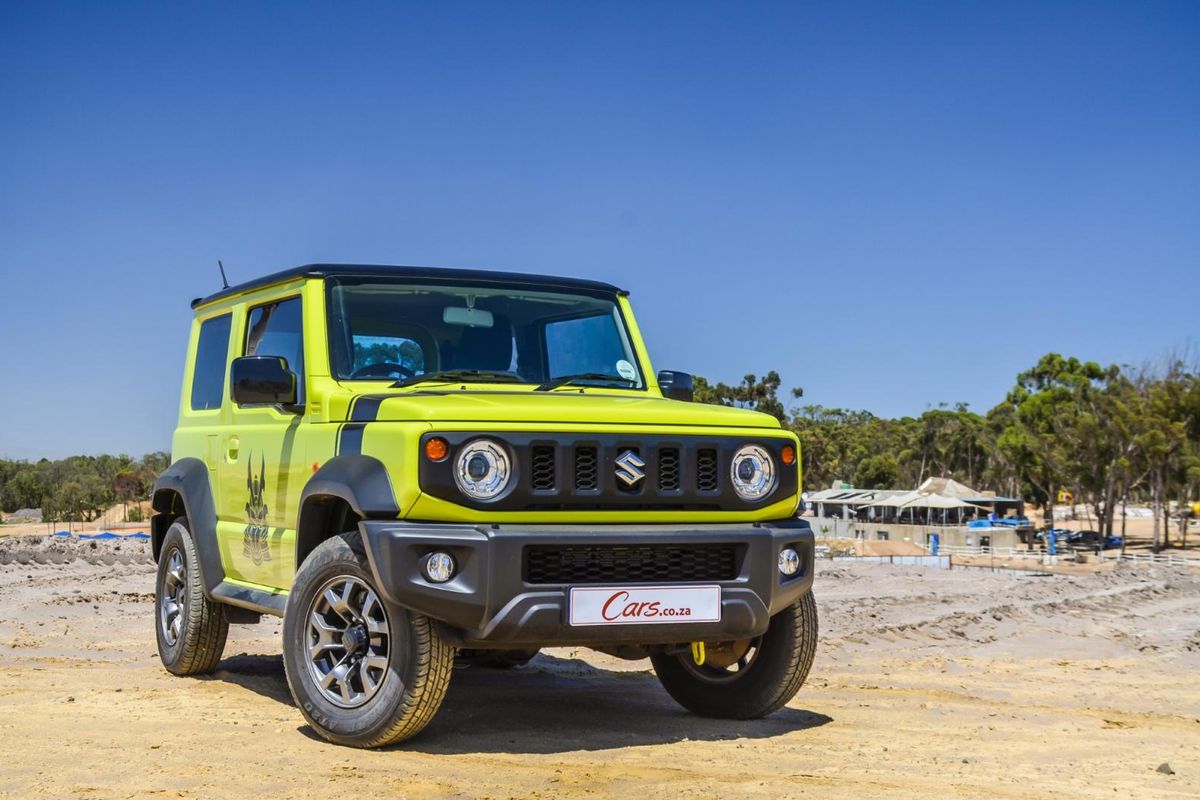
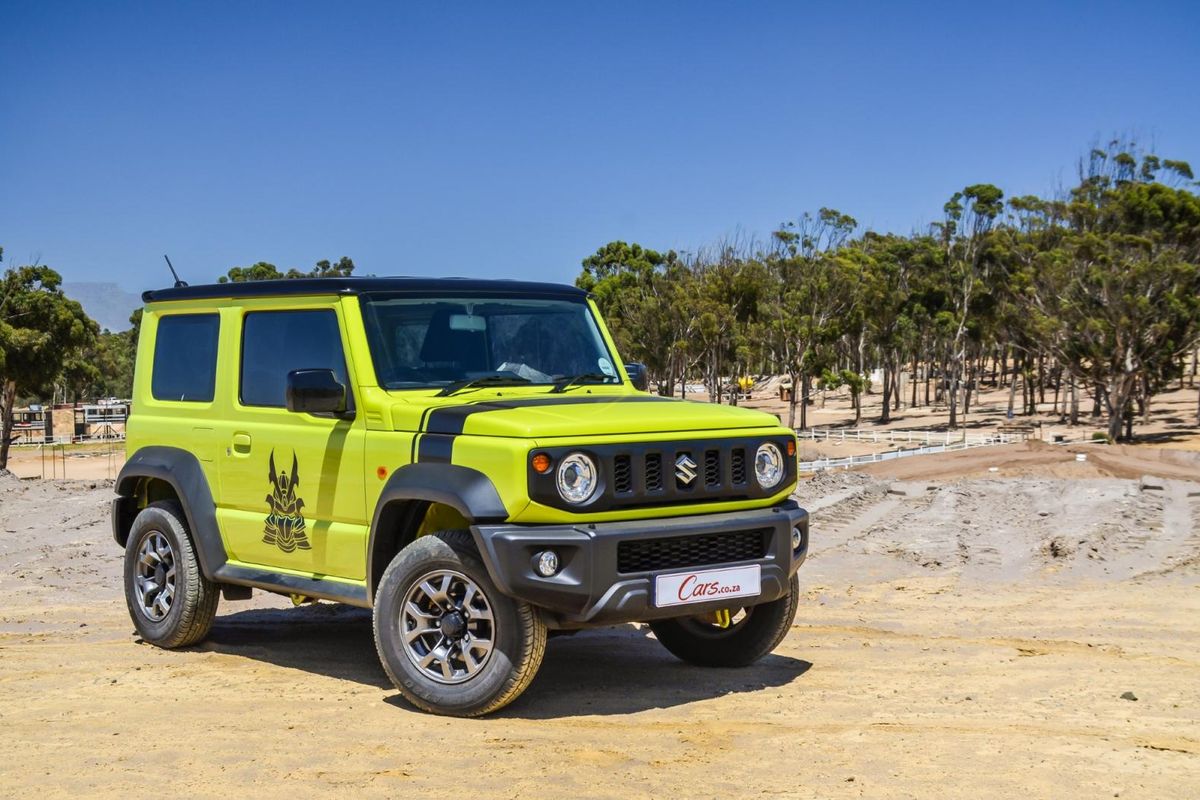
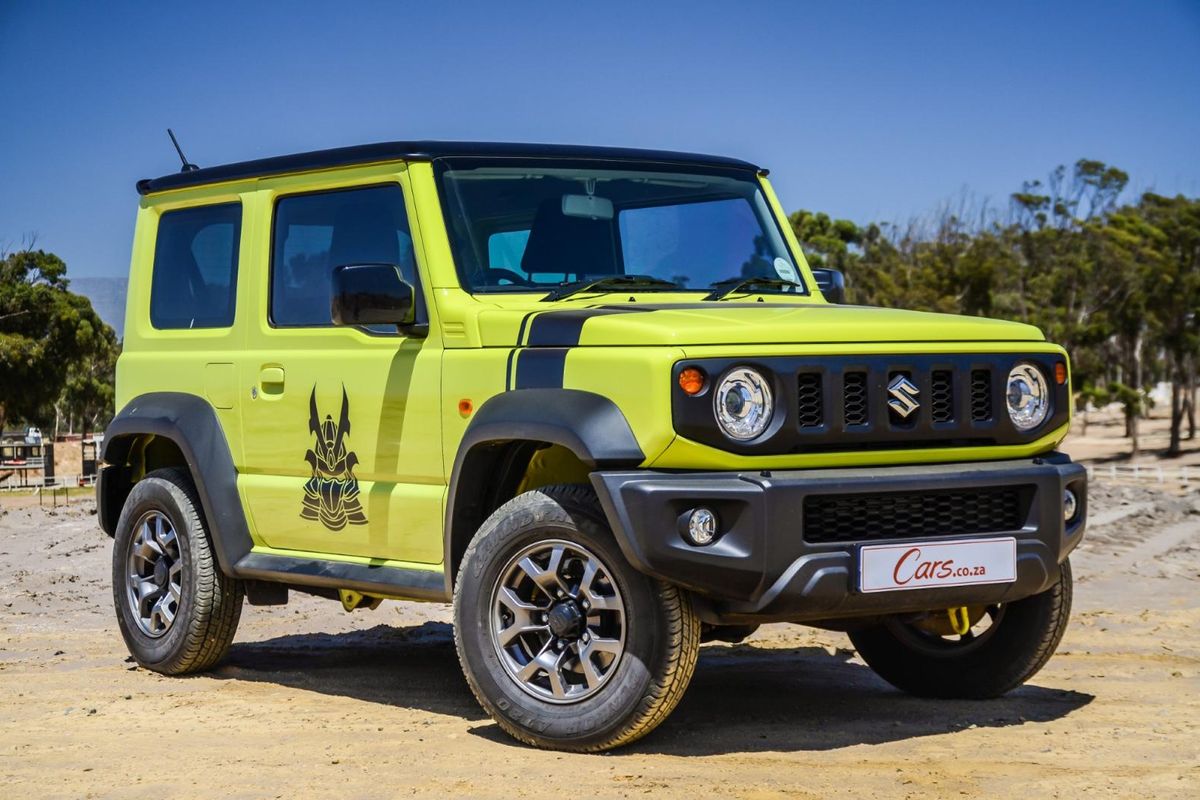
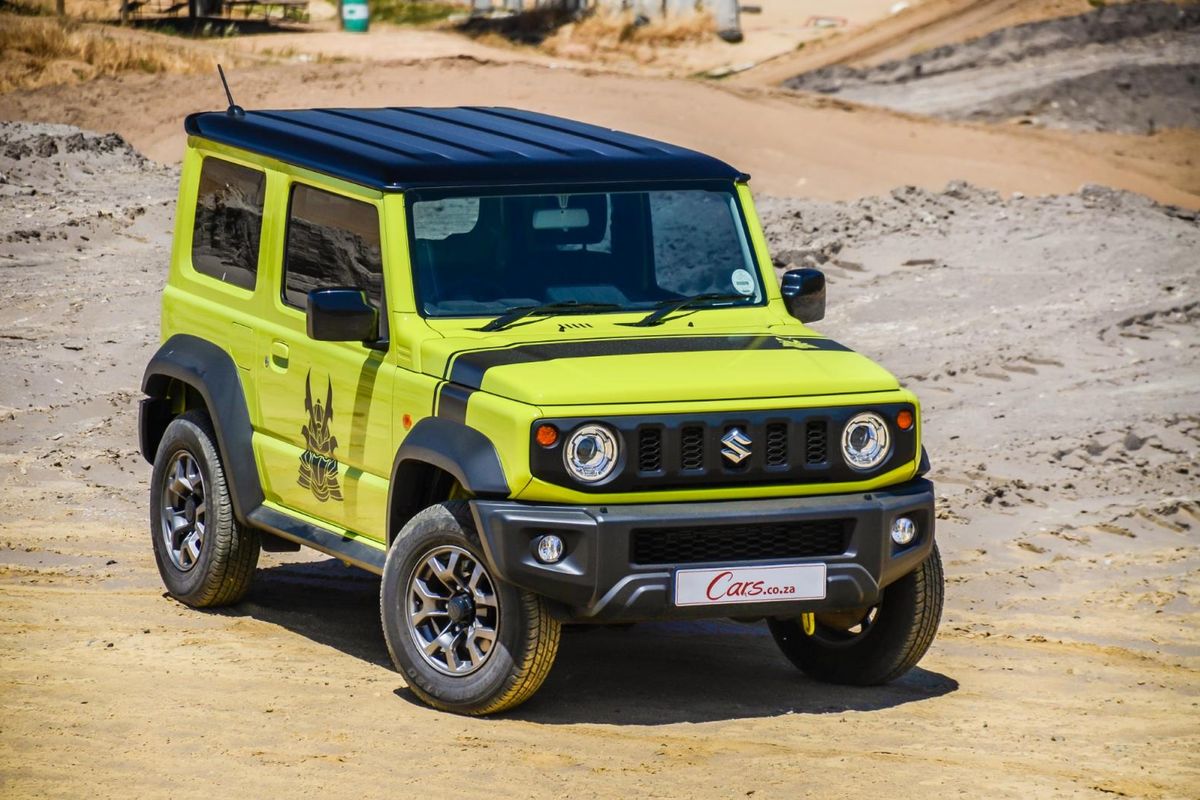
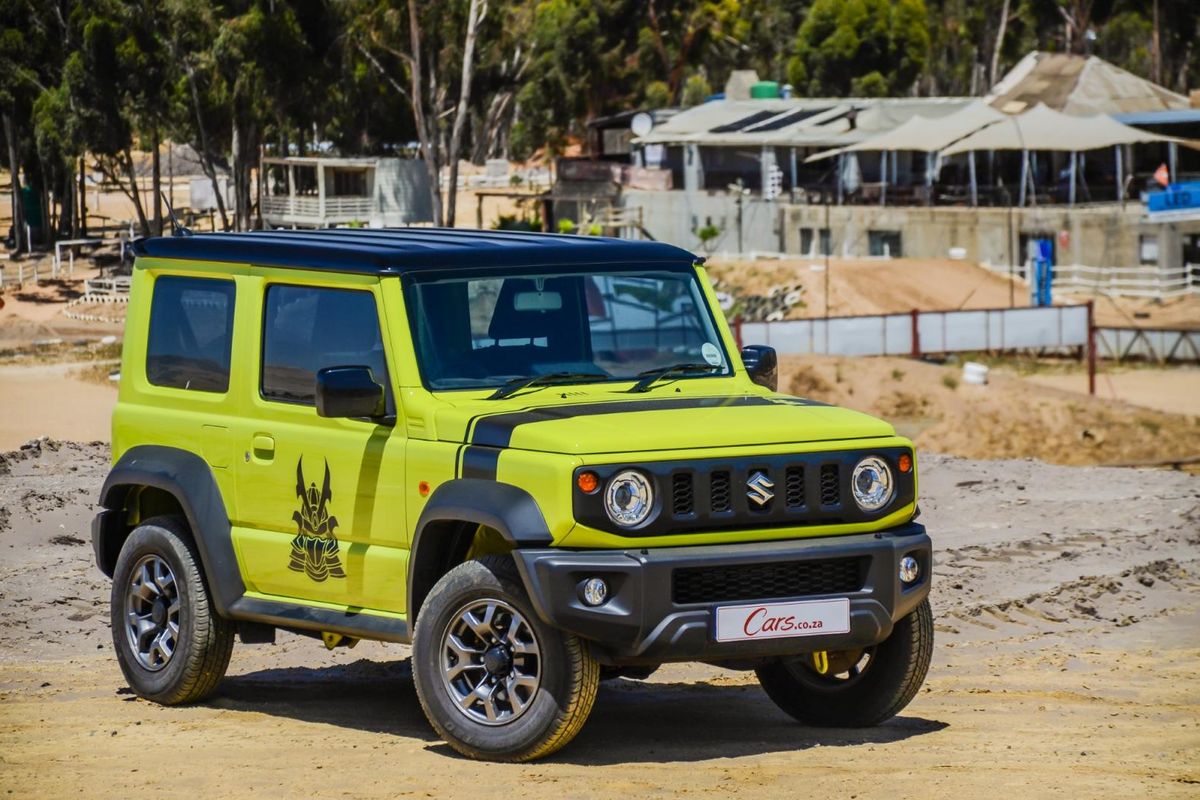
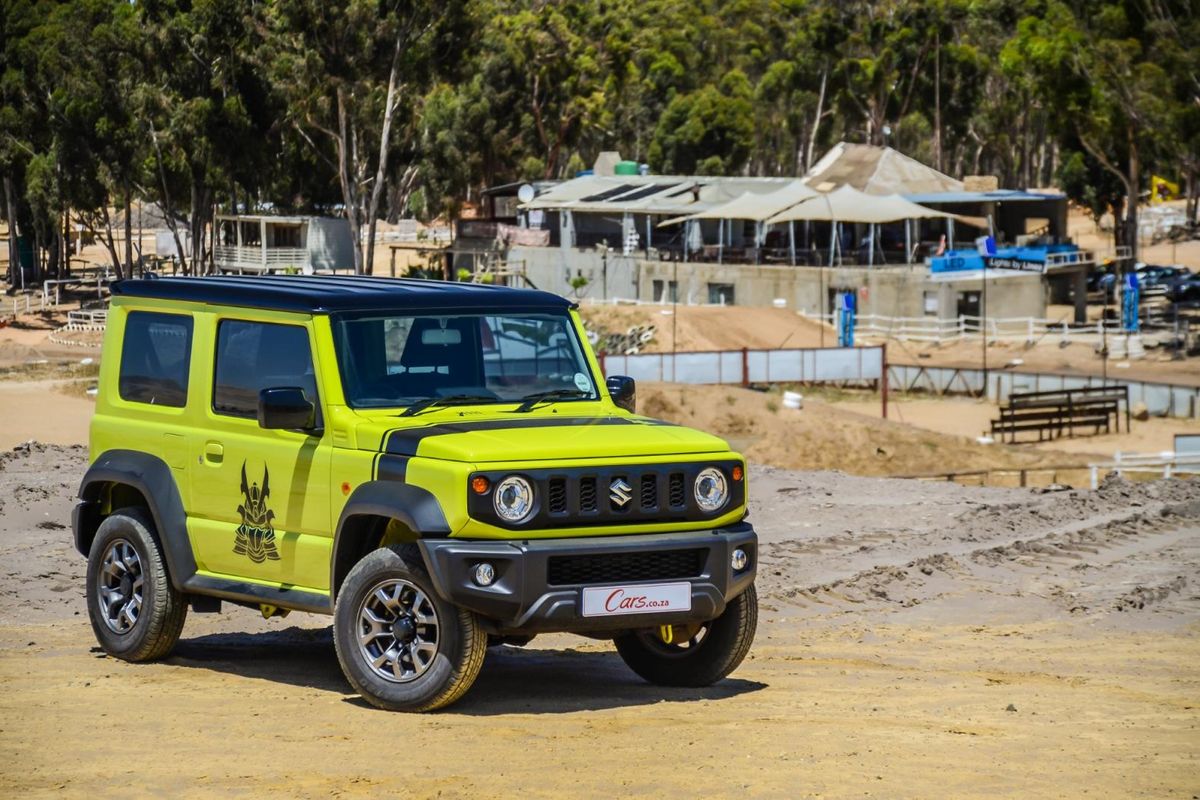
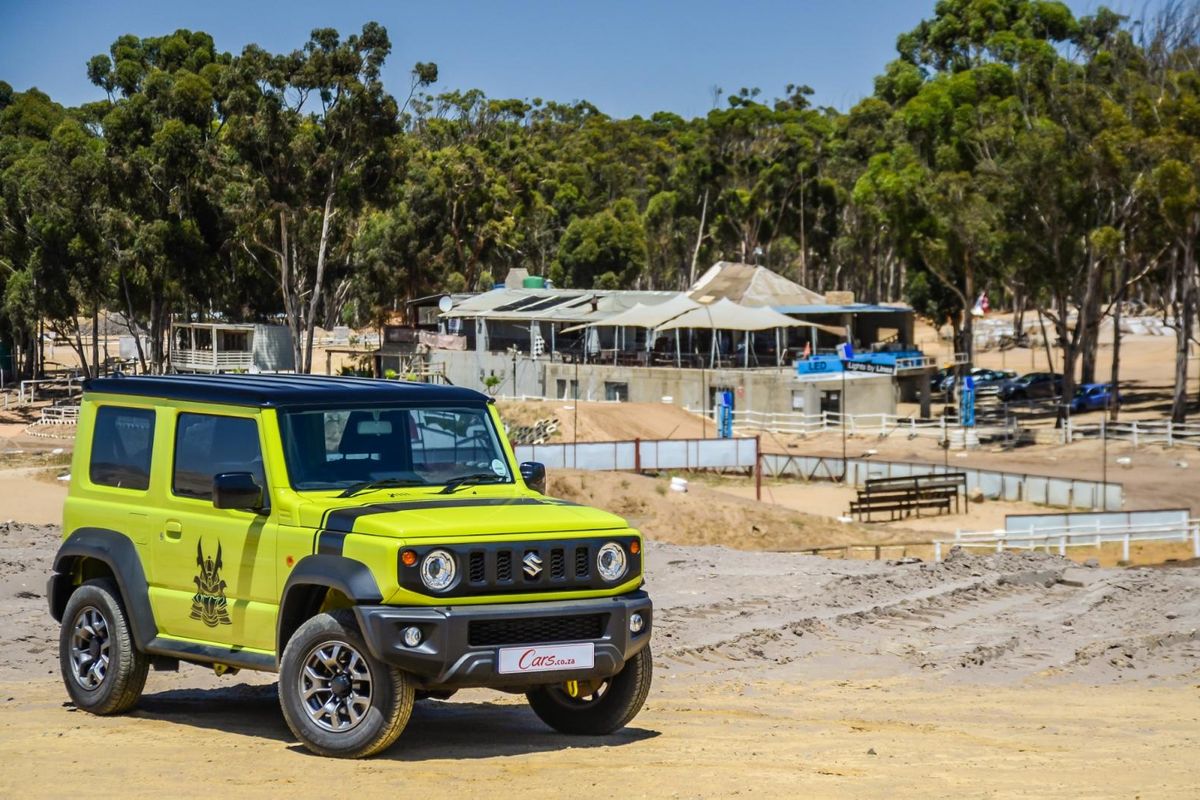
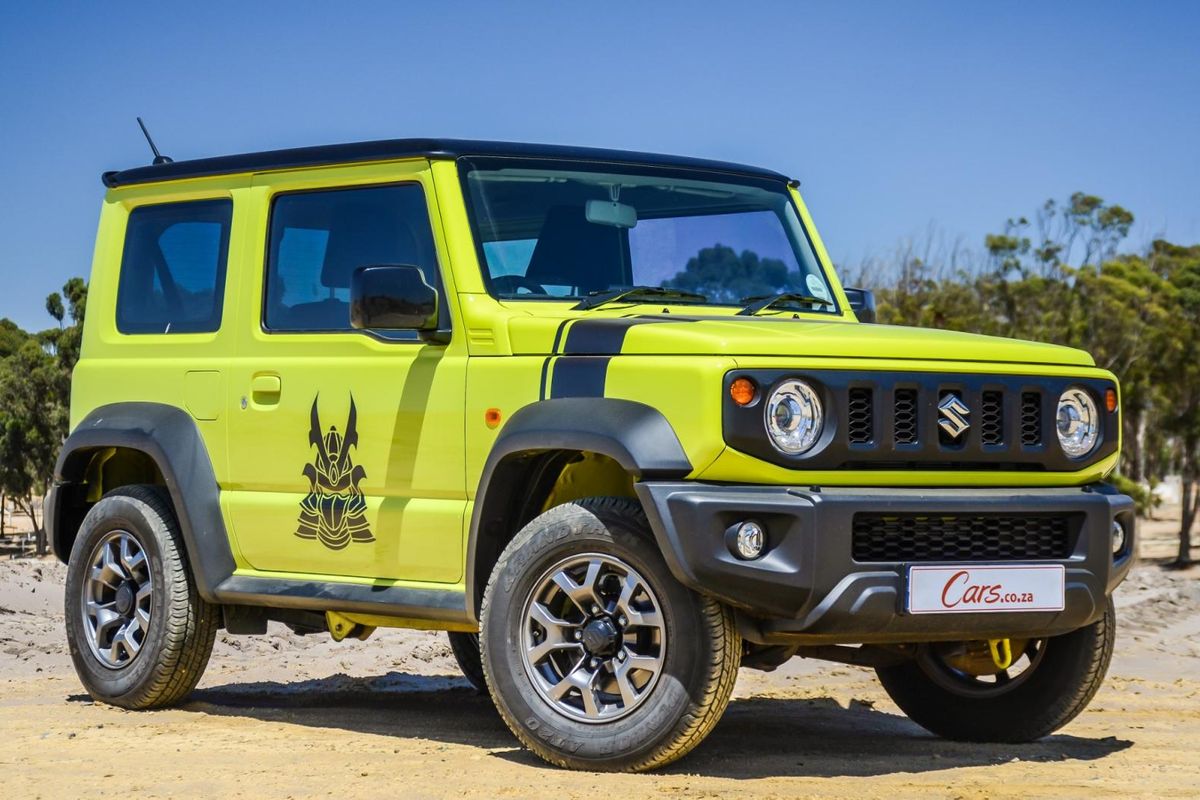
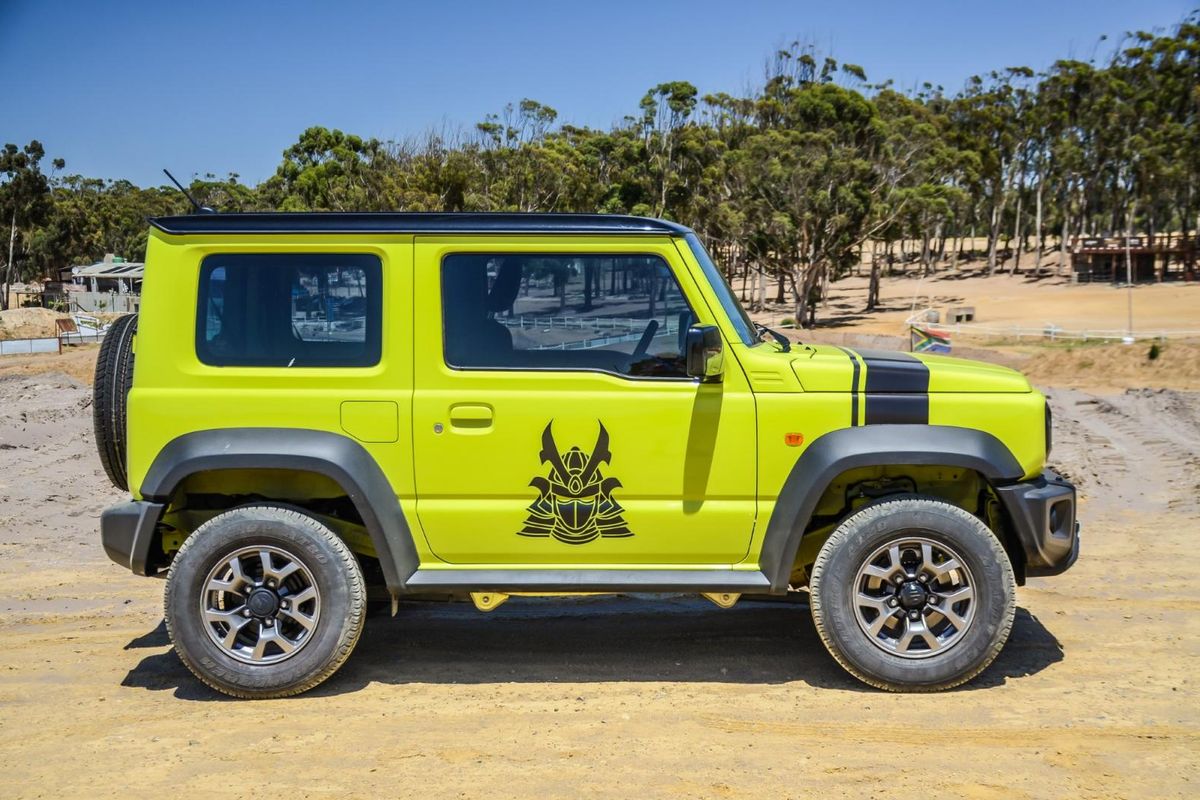
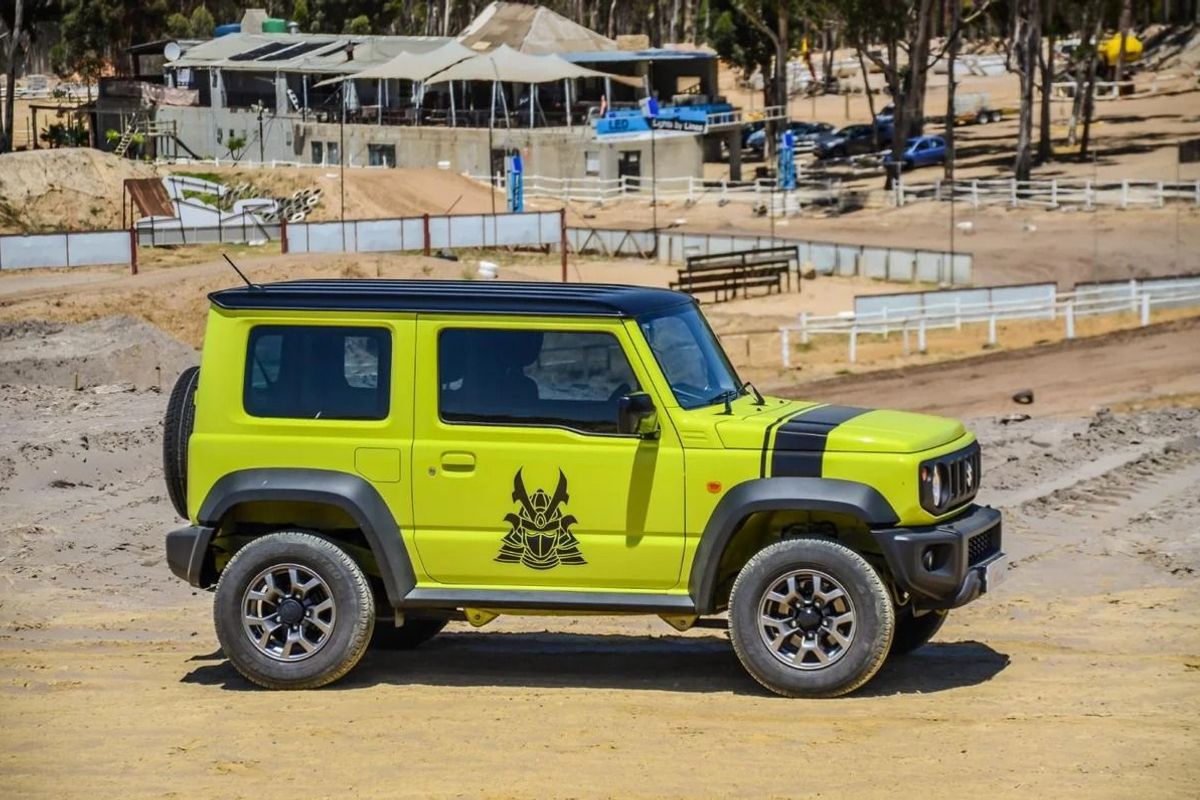
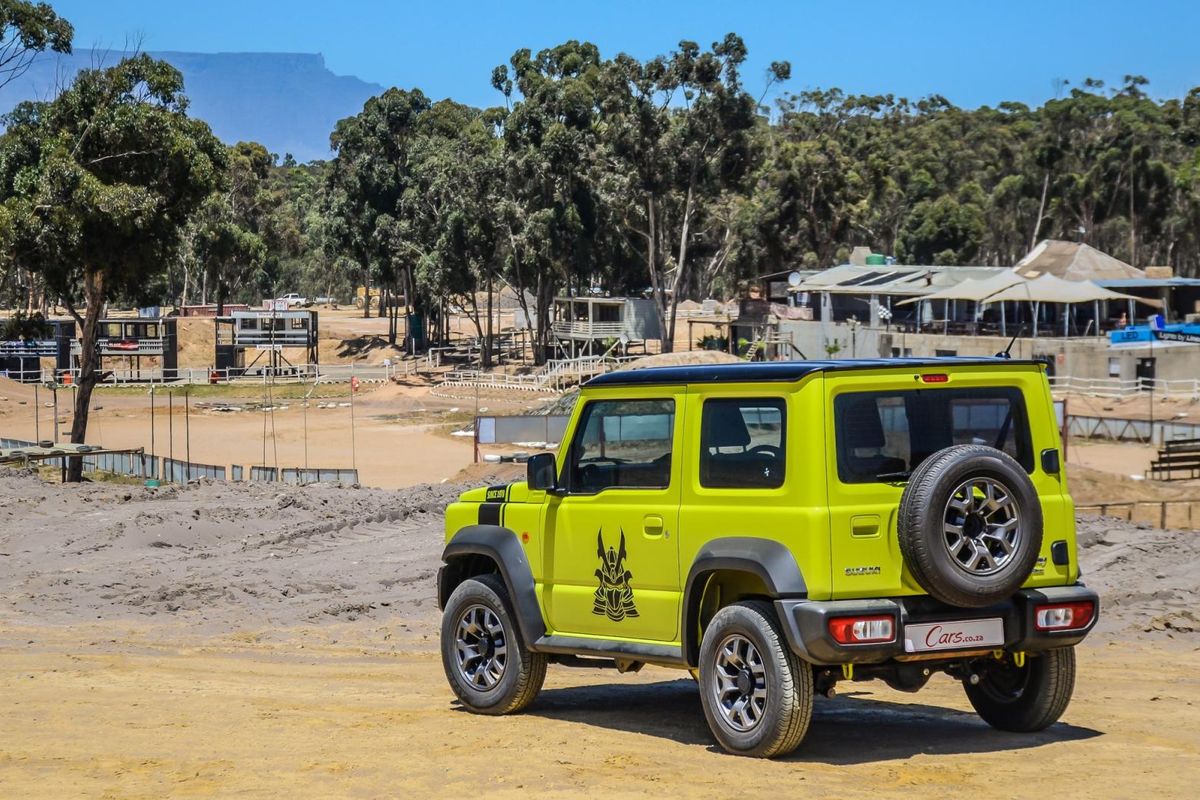
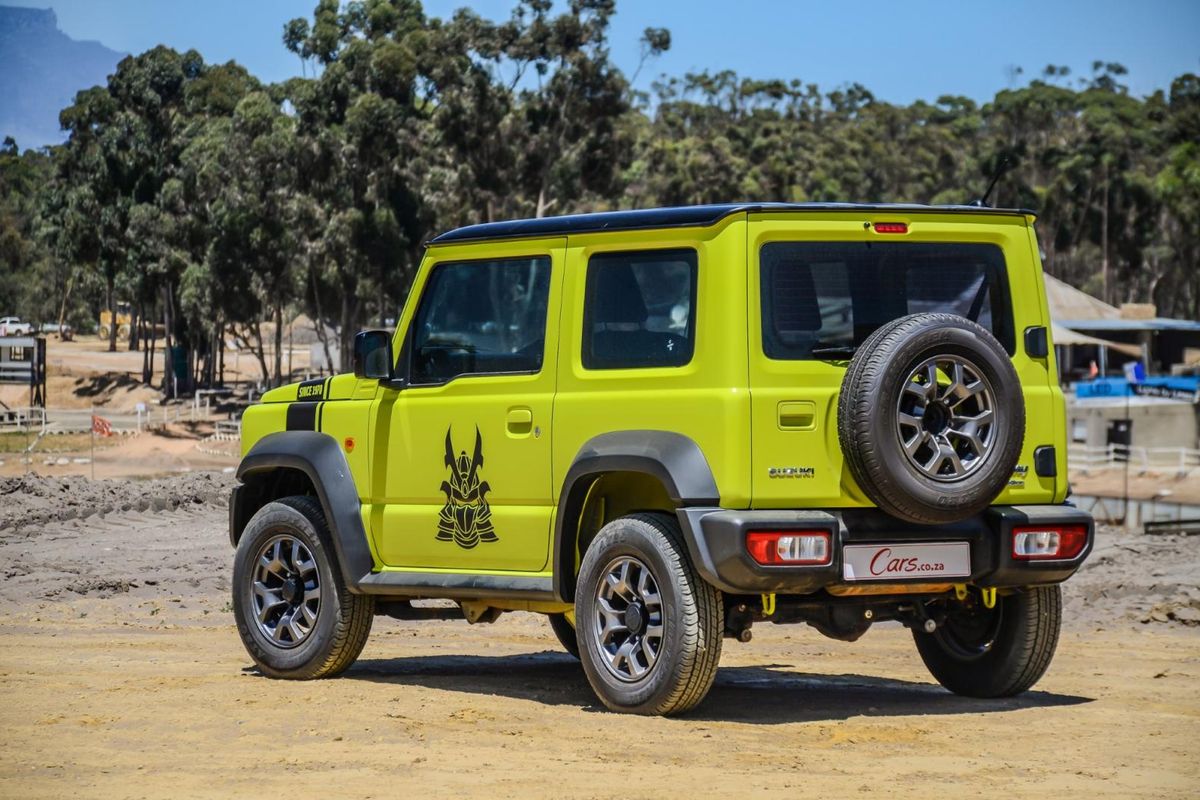
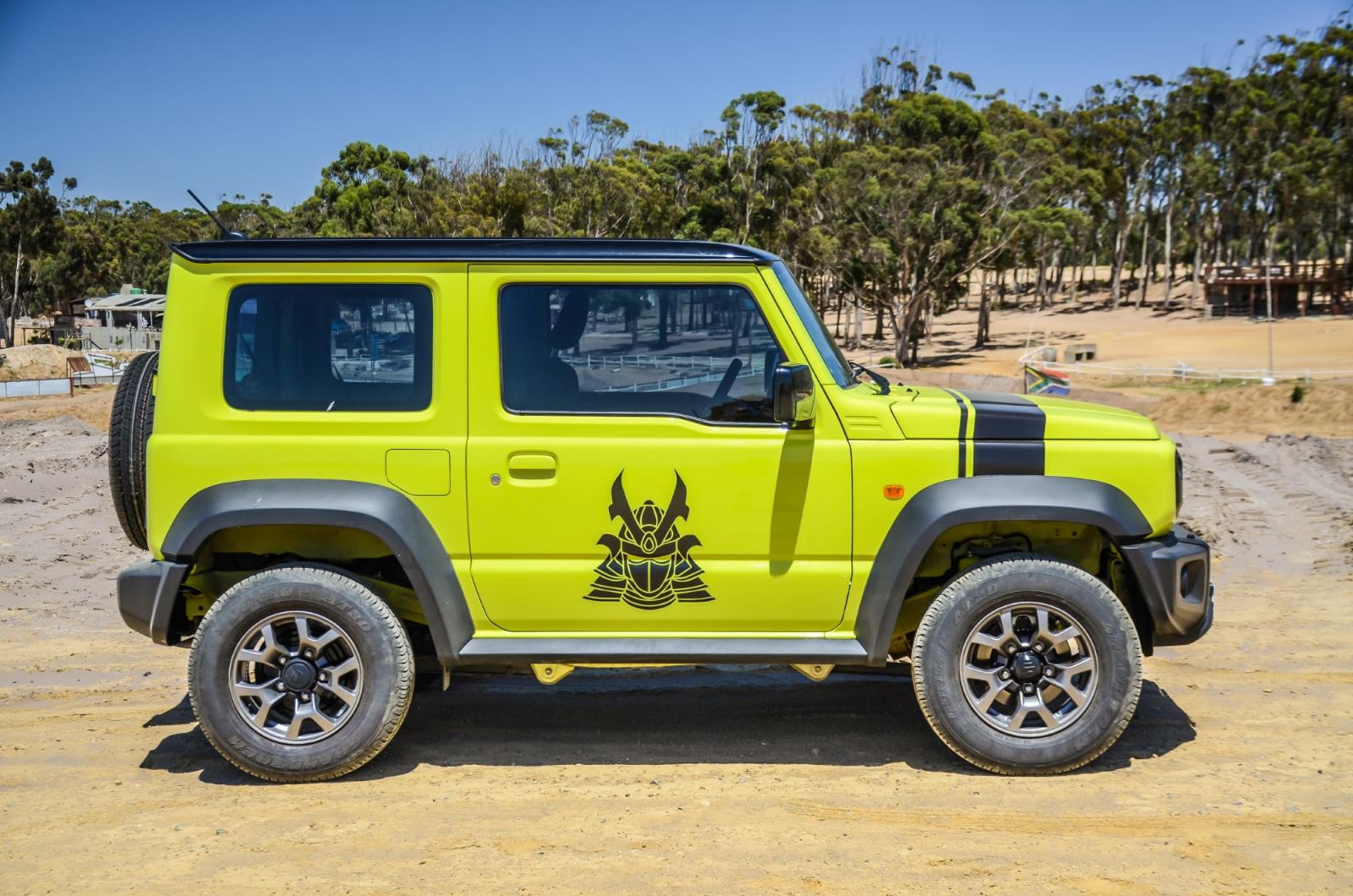
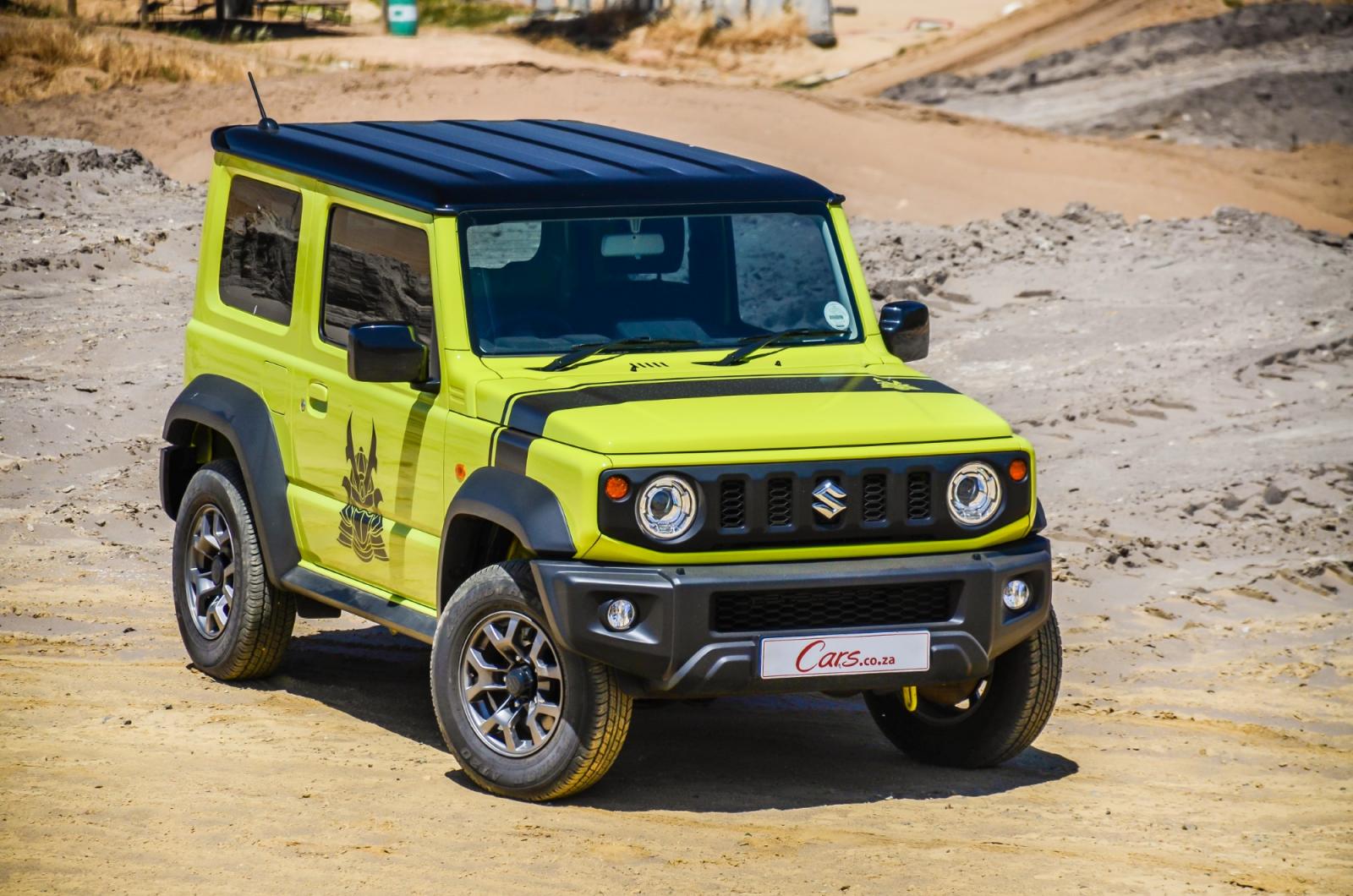
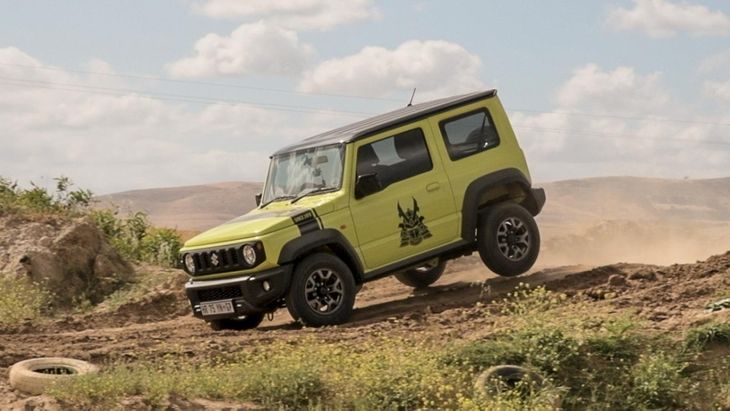
The new Jimny in its Kinetic Yellow hue complete with Samurai decals.

Where does it fit in?

What were you doing twenty years ago? At the very least you weren’t quite as follically challenged and soft around the middle as many of us… perhaps you were still in high school, or maybe even little more than an amorous thought between your parents. In Suzuki’s case, 1998 marked the launch of the rugged but cute 3rd-generation Jimny, a model that, remarkably, has only just been put out to pasture. Suzuki claims the latest iteration of its capable little SUV still has the rock-hopping capability of its predecessors, but adds a more refined motoring experience to the mix.

Although it occupies a space between uncompromising SUV and compact boutique crossover, the Jimny sits in a rare niche that leans more towards the former, offering more off-road ability than anything in its price range or segment. Only the likes of Fiat's ageing Panda Cross and Renault’s recently updated Duster comes close to rivalling the Jimny’s cutesy-tough package, although they couldn't dream of matching its off-road prowess.

What’s good about it?

It looks like a box of fun


It still has that miniature toy car feel to it, but it's still as good as ever off-road. 

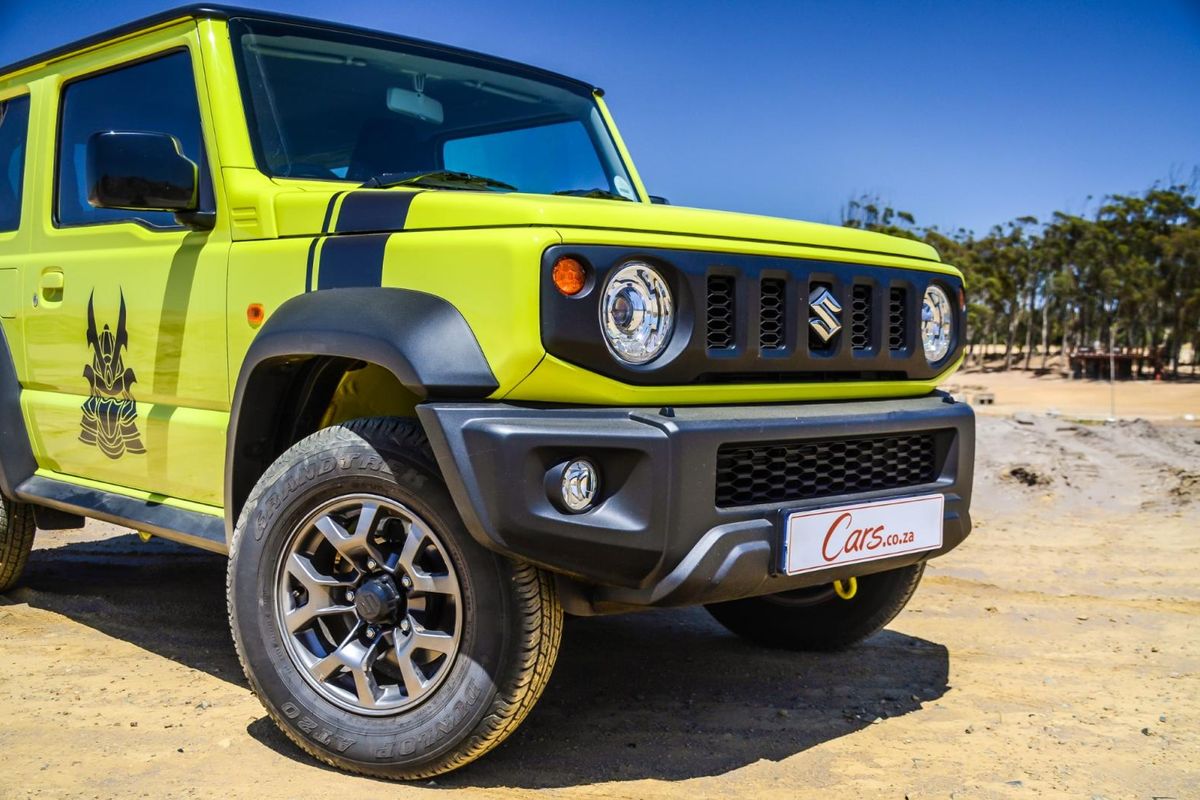
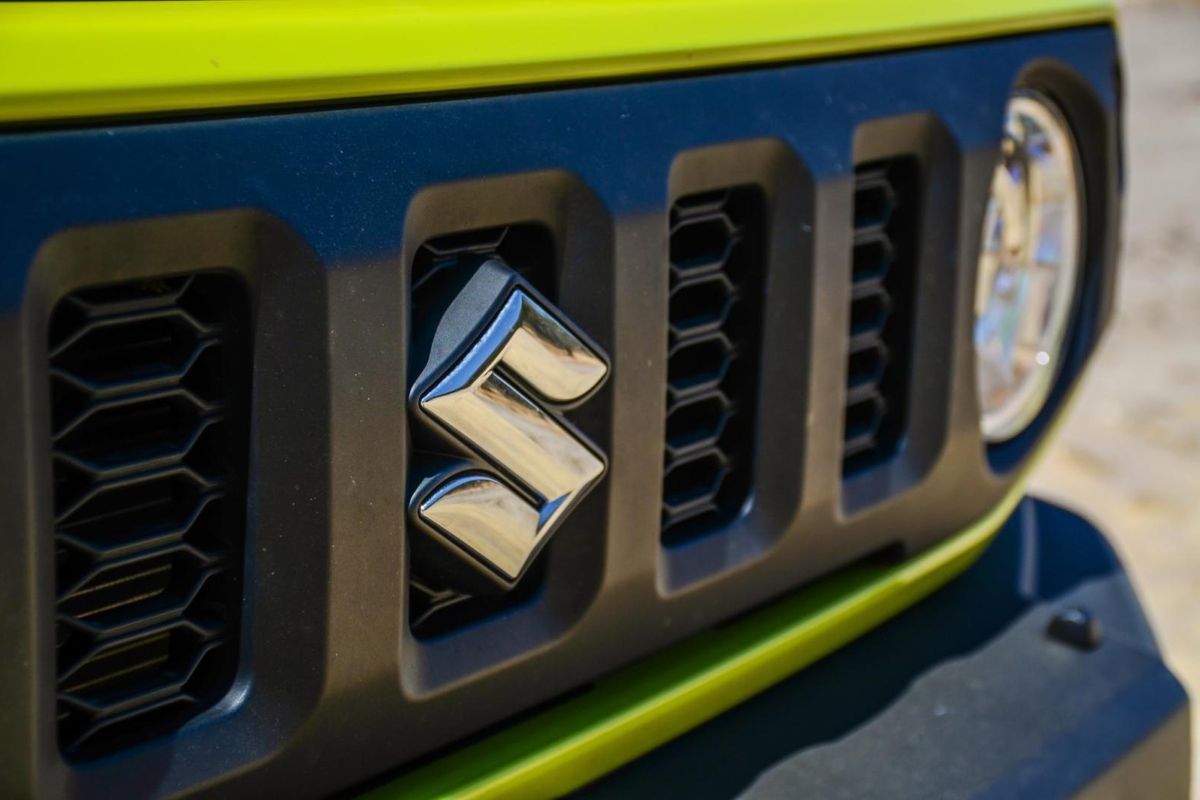
The Jimny’s boxy, retro frame will likely be its strongest drawcard, and with good reason. It has styling cues drawn from 3 generations of precursors – including the 1st car’s bluff, rhomboid nose with round headlamps, the 2nd-generation SJ’s clamshell bonnet and the 3rd generation's five-slot grille – that amount to a product that’s both utilitarian and stylish.

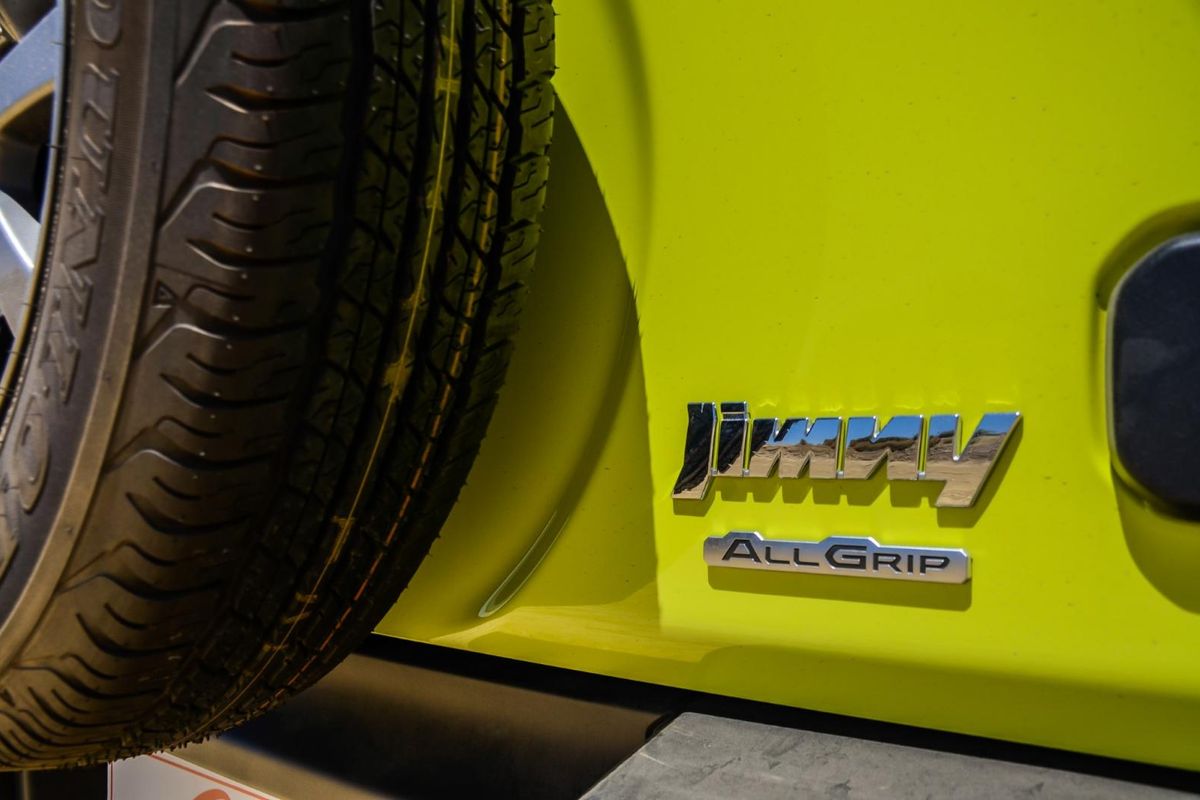
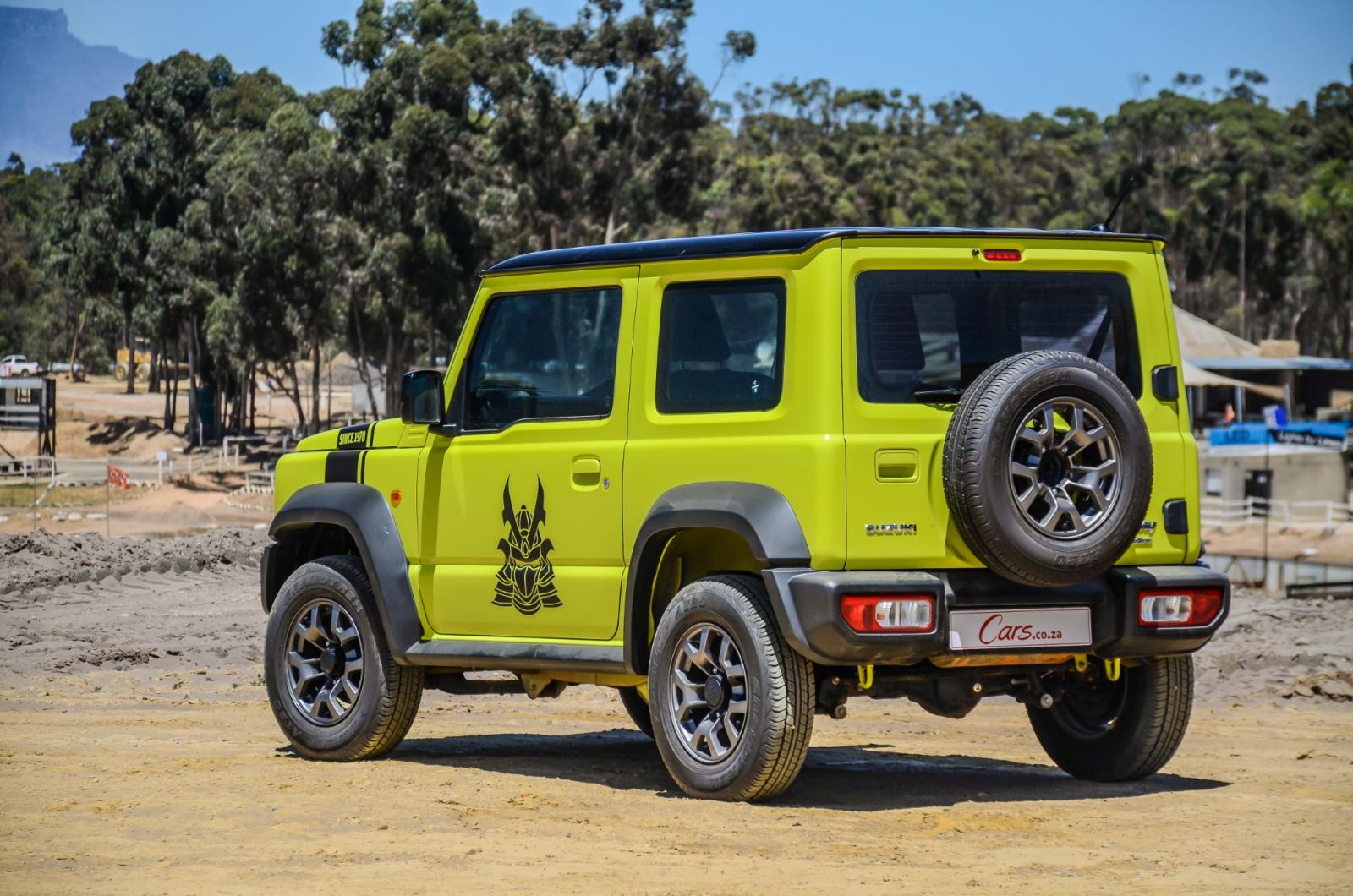
According to Suzuki, the retina-searing Kinetic Yellow hue adorning this test unit is meant to aid visibility in the bush and can be supplemented with suitably retro decals, including the samurai shown here. With the GLX-specification’s alloy wheels it treads a neat line between boutique town-goer and rugged off-roader, but the base-level GA has a certain charm as well; its simple finishes and steel wheels making it the automotive equivalent of the green Hunter Wellington boot.

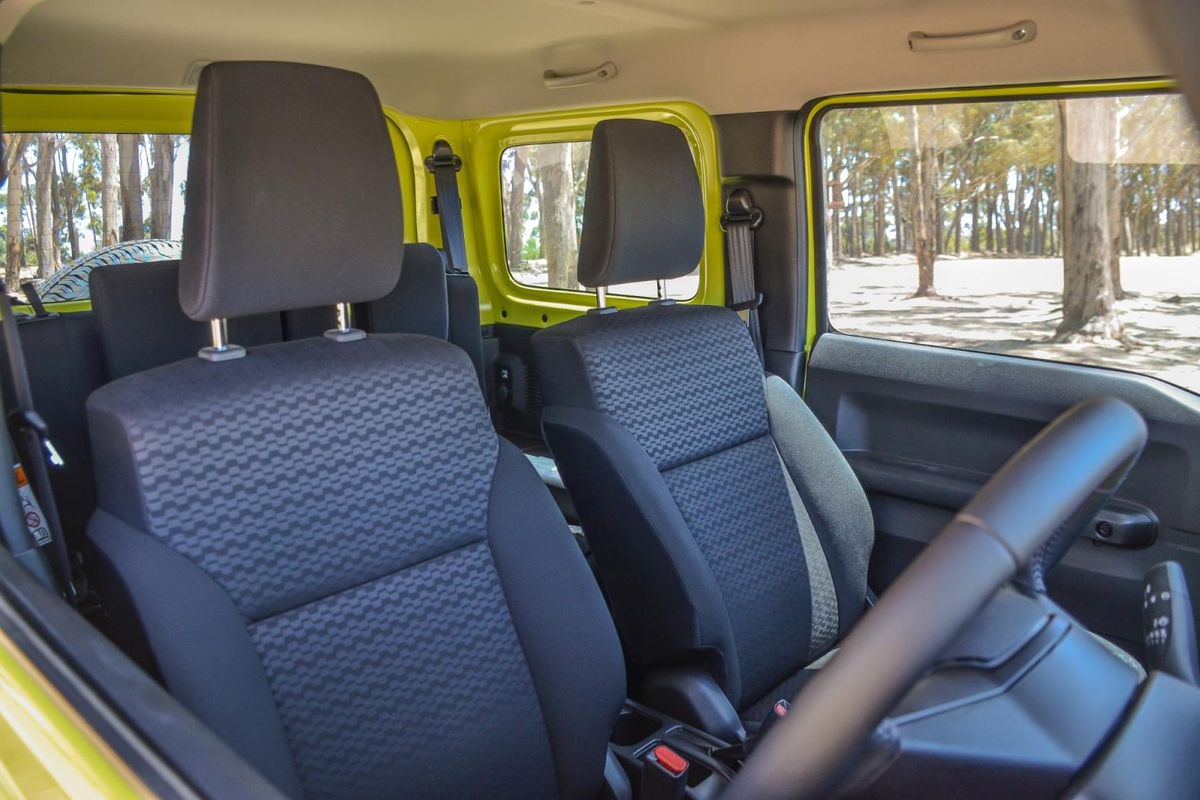
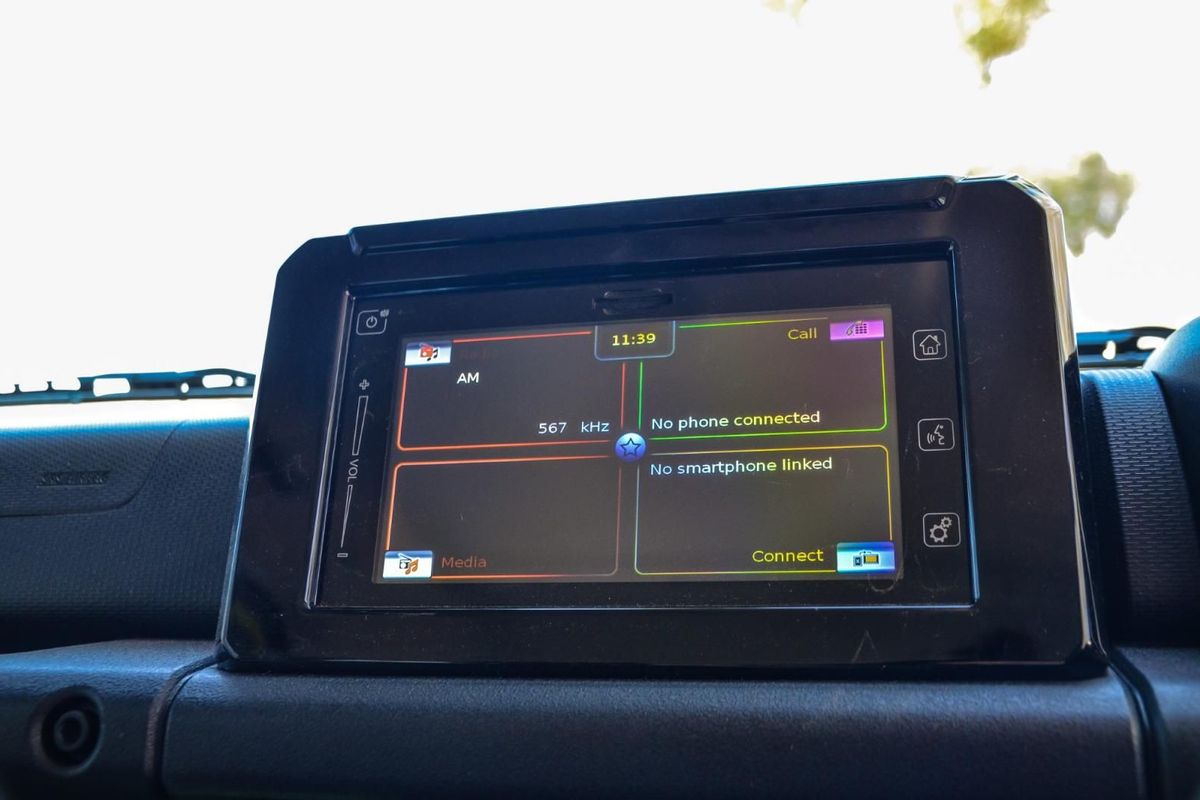
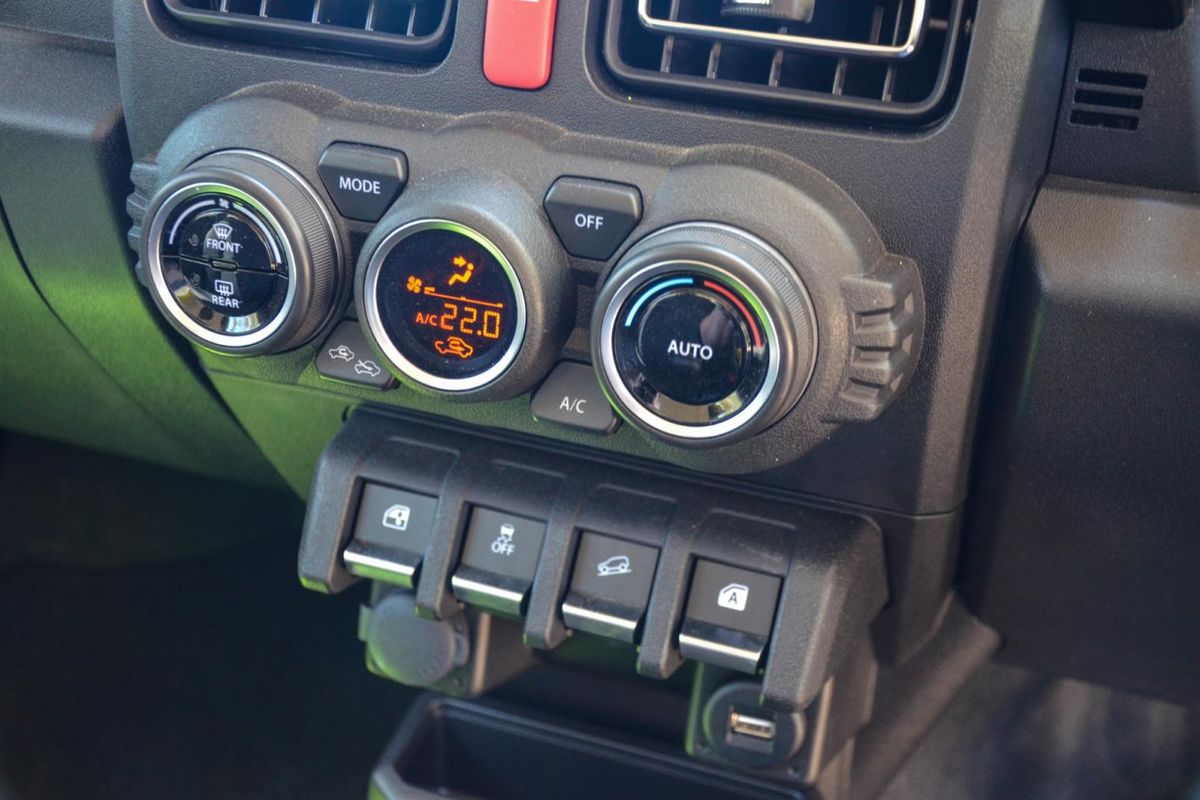
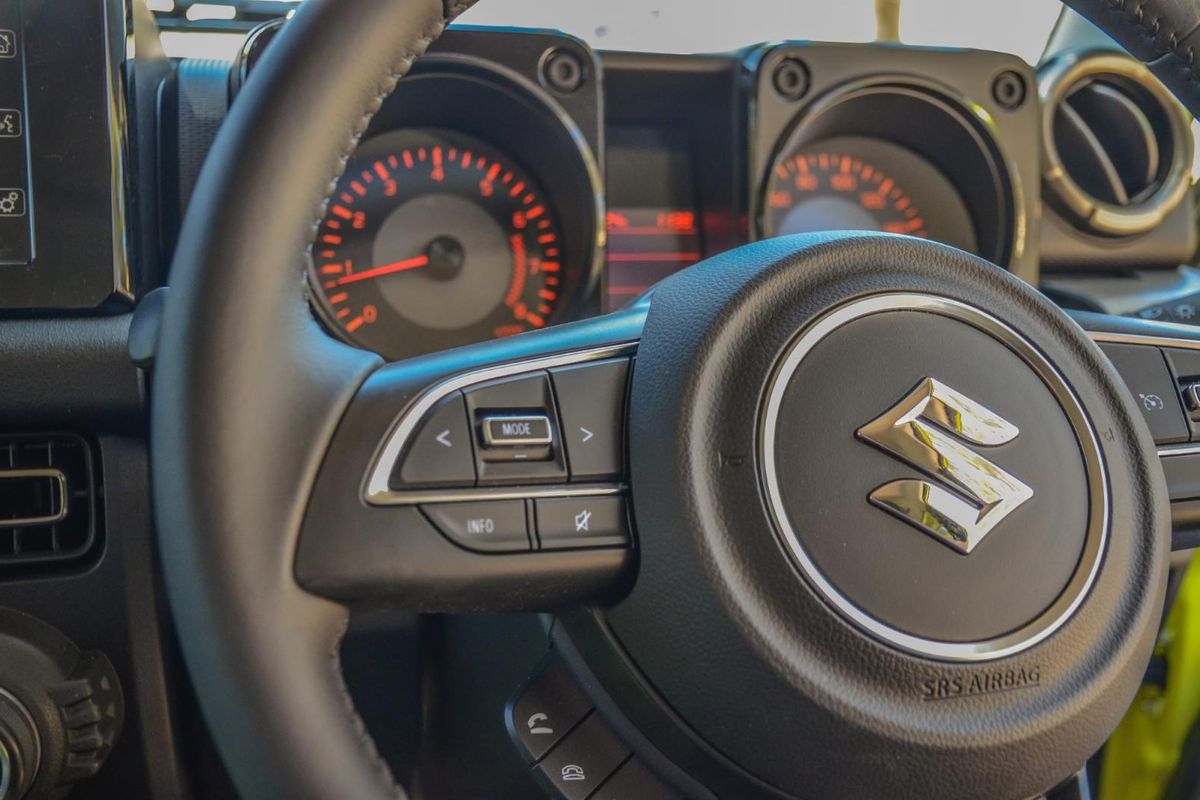
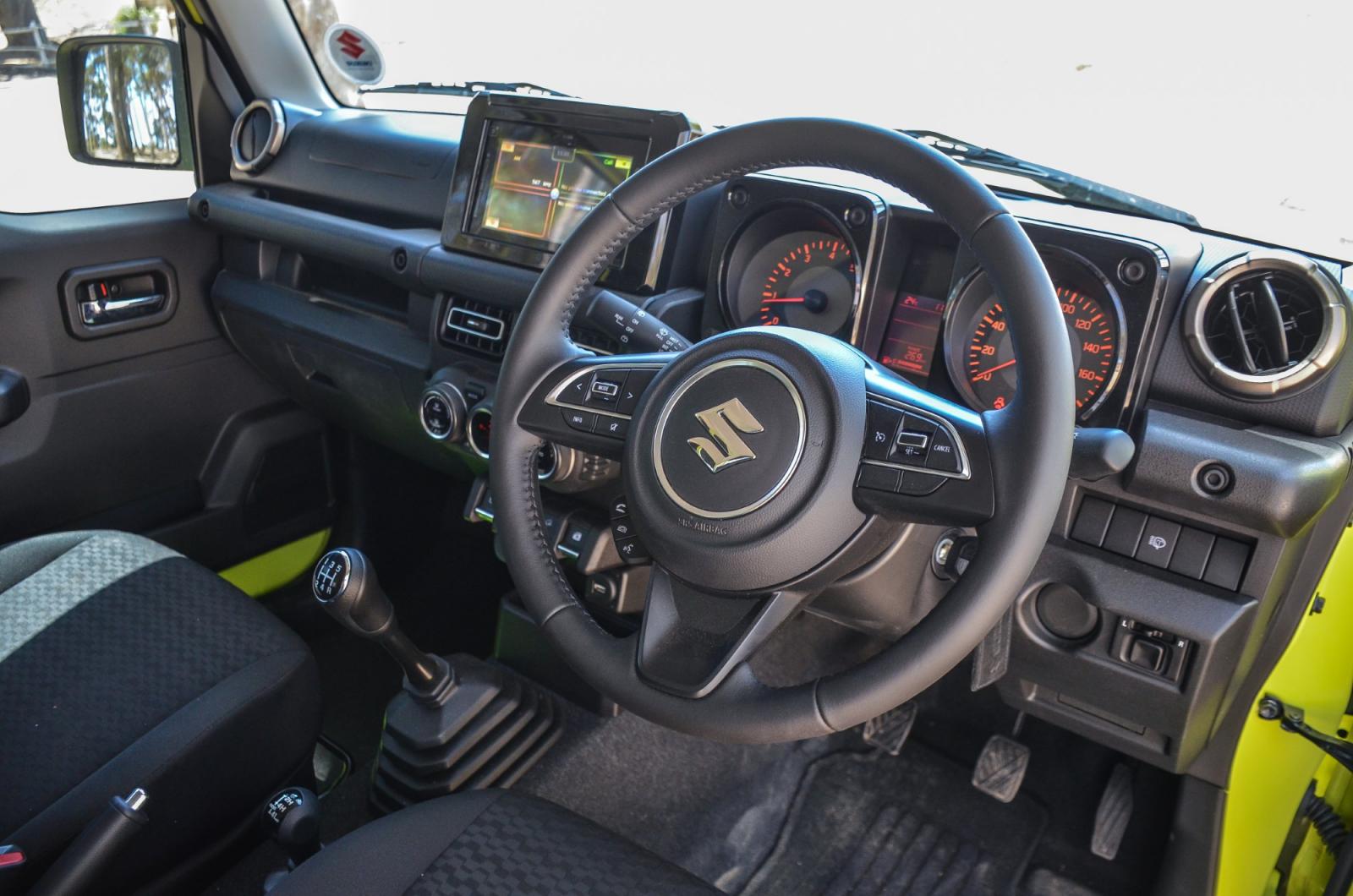
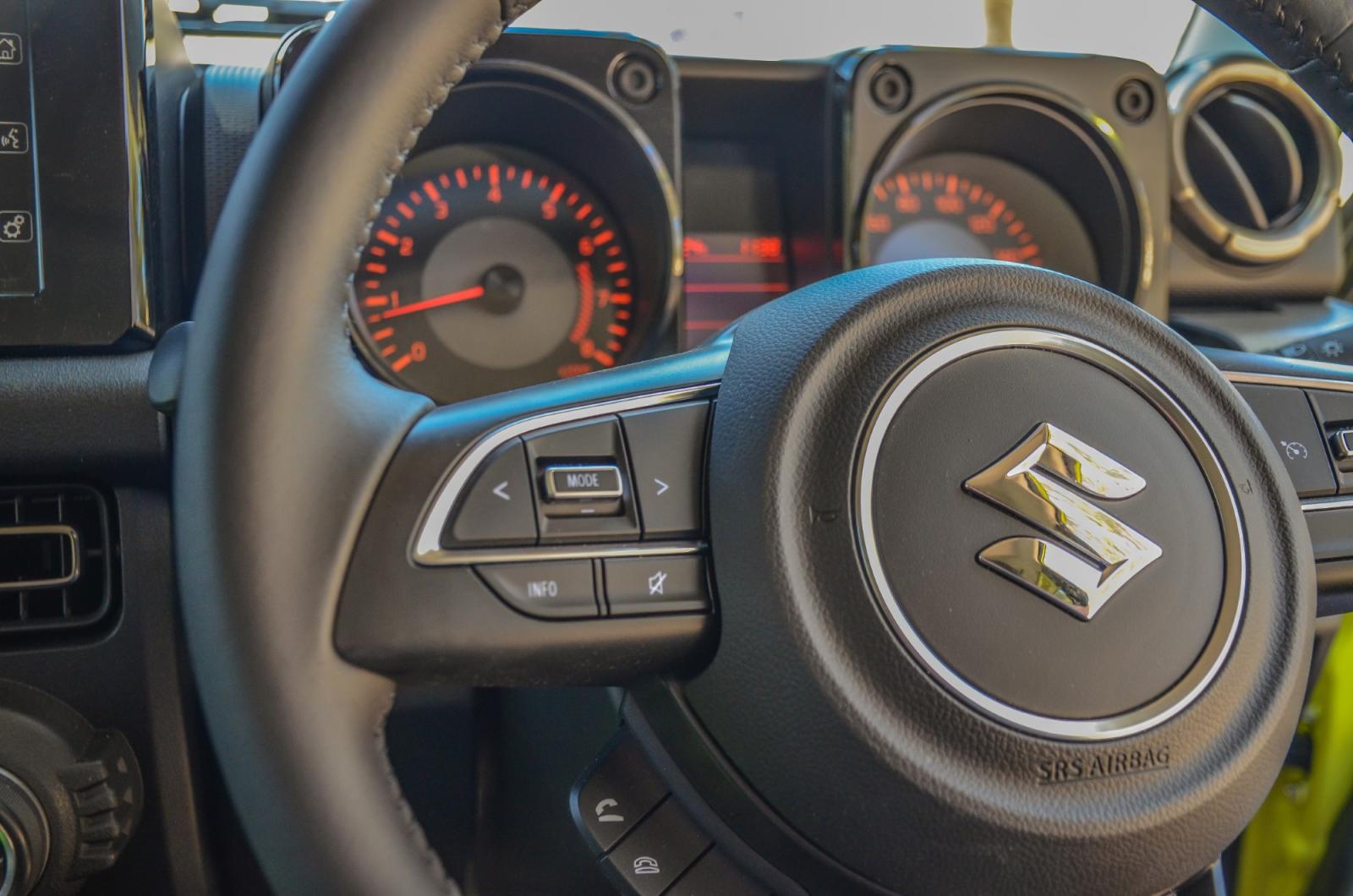
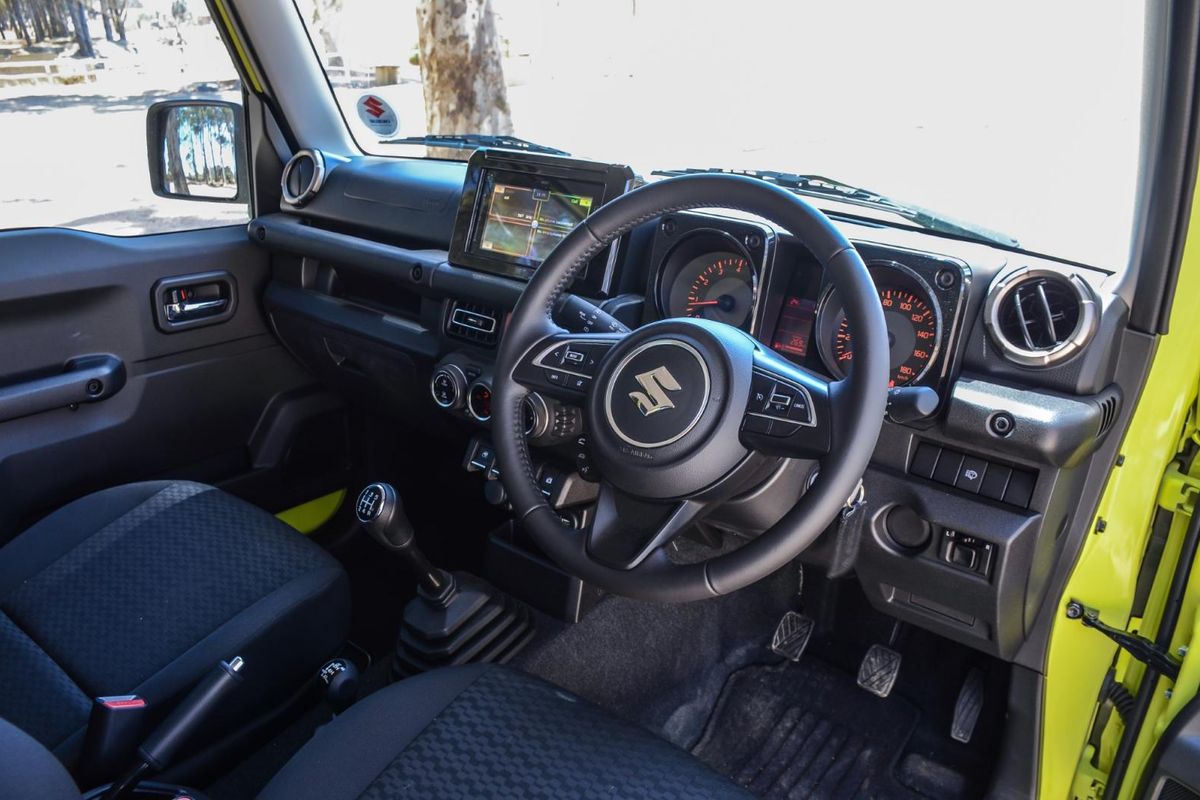
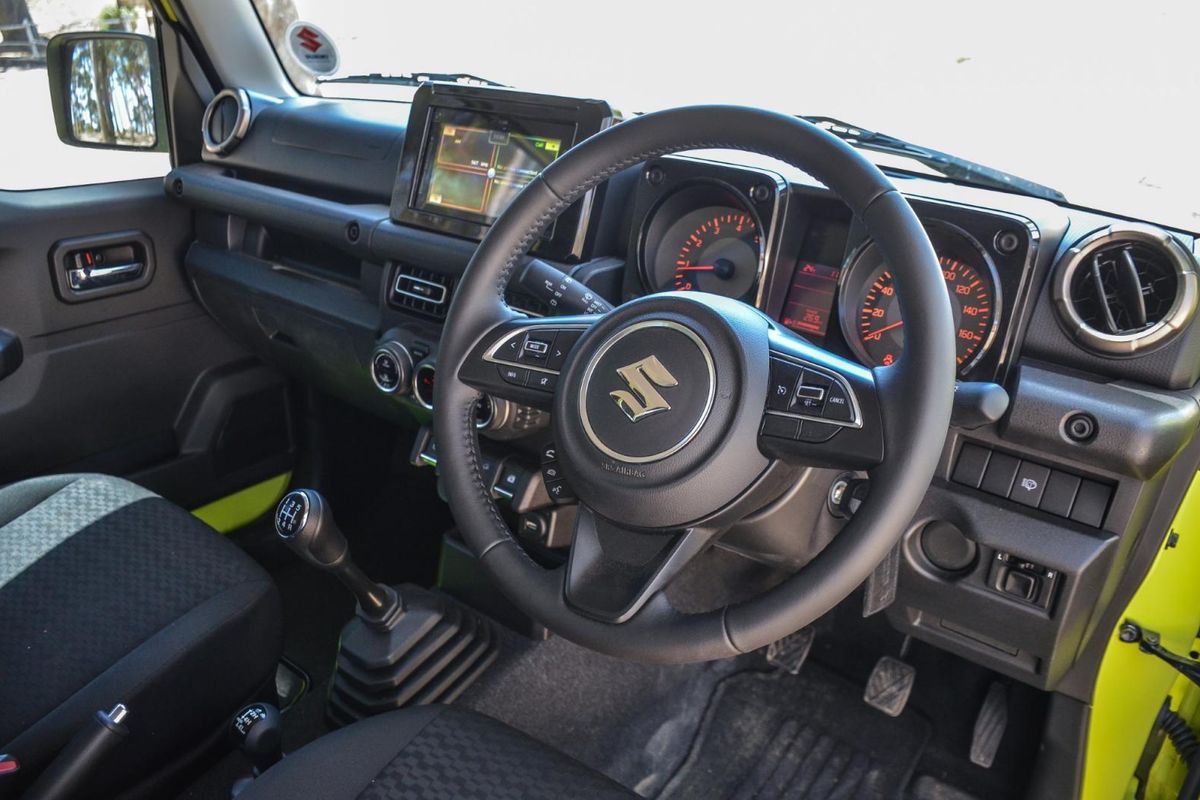
It’s a similar story inside, where squared-off dial housings with rivet details and a tiered dashboard that, in the case of the GLX with its neat touchscreen infotainment system, manages to meld retro and modern. As is often the case with Suzuki’s cars, the interior plastics are hard but the fit and finish feel pretty solid.

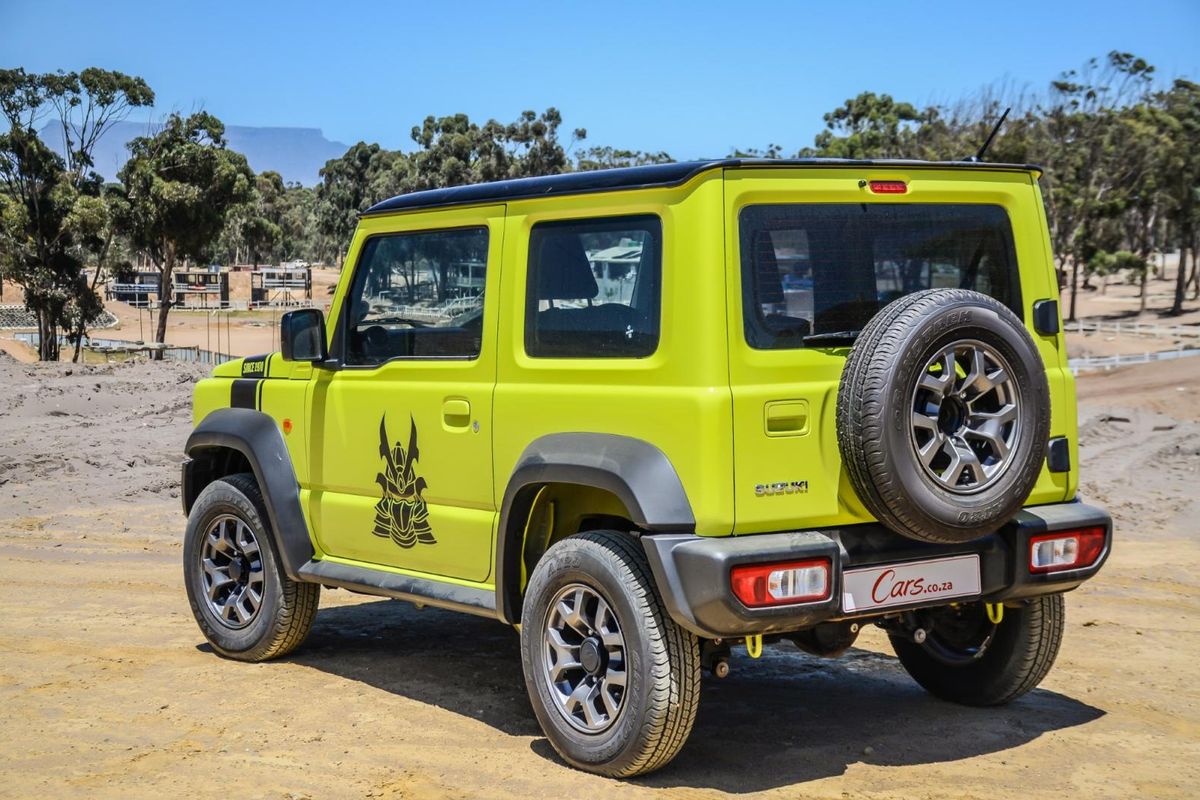
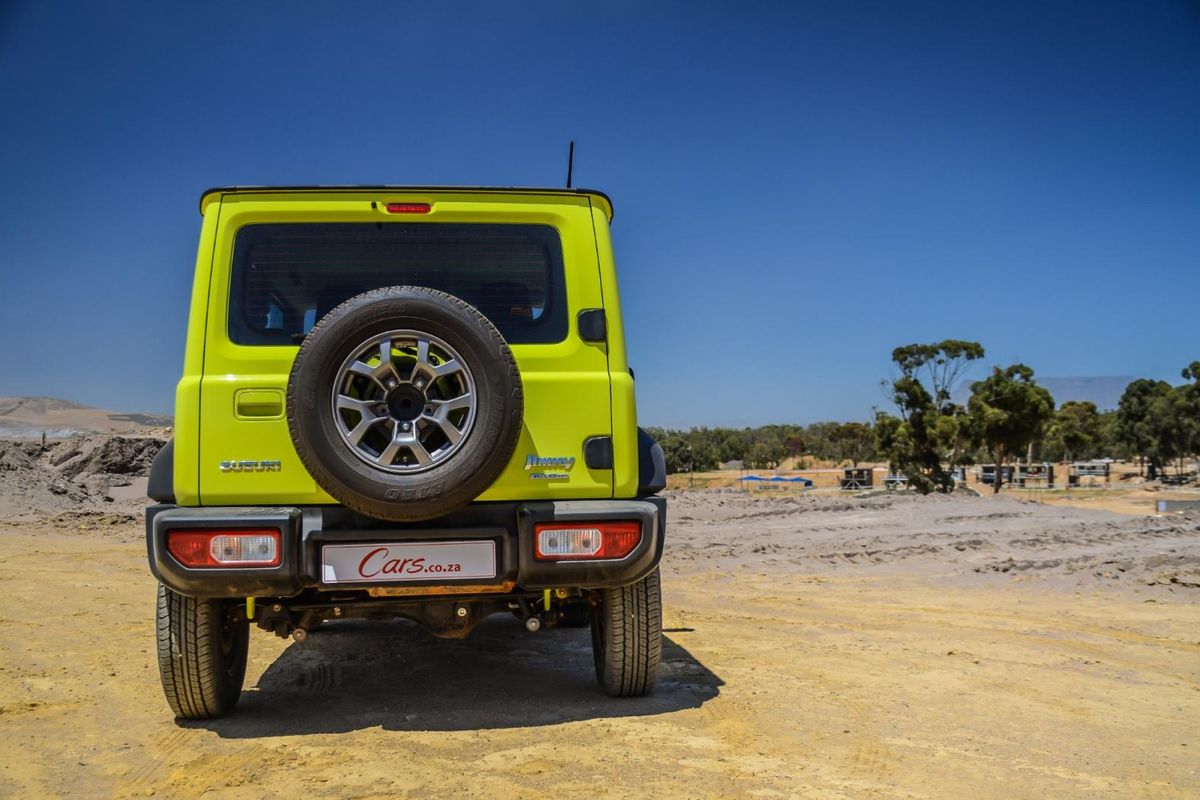
But in the Jimny’s typical fashionable-but-functional approach a number of seemingly cosmetic touches actually have some practical merit. The squared-off wheel arches, with their plastic cladding, not only aid wheel travel, but makes for easier access when changing wheels and help protect the paintwork. Similarly, the high-mounted spare wheel not only looks the part, but is located away from points of the bodywork that would otherwise see it rubbing on the rocks when tackling steep obstacles.

Boldly goes where no light SUV would normally go


Raised wheel arches make it easier to change tyres and clean.

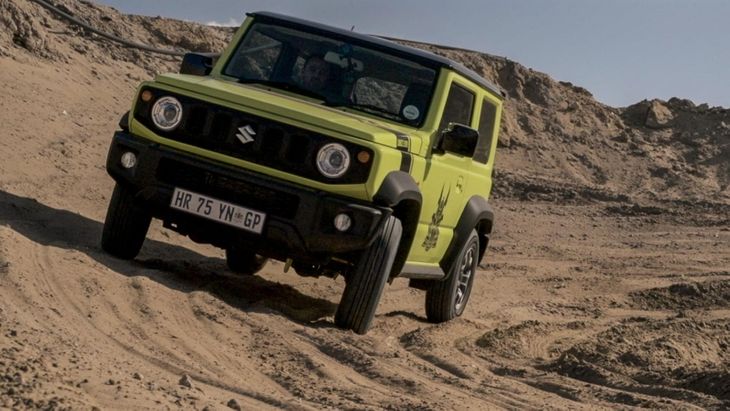
Those concerned that the Jimny’s modernisation would come at the cost of its off-road ability have nothing to worry about; it remains an off-road giant-slayer. New underpinnings comprise a ladder chassis with an X-shaped cross member that joins the axles in an arrangement that improves body rigidity by as much as 50% over the previous model; improved rubber body mounts reduce body shudder when traversing rough terrain.

With 210 mm of ground clearance, angled bumpers that afford approach and departure angles of 37 and 49 degrees, respectively, and a kerb weight of just over 1 100 kg, the Jimny has all the requisites of a proper off-roader. Where tackling off-road obstacles in a heftier SUV would normally have you grimacing in anticipation of a concussive meeting of wheel and rock, or the scraping of the vehicle's undercarriage when traversing prone obstacles, the Jimny simply trundles over the rough stuff and doesn’t need to be barrelled into uphills like larger SUVs.

Another area where the Jimny trumps larger SUVs is tight-spot manoeuvrability. Its 2 250 mm wheelbase may be marginally longer than before, but it still affords the Suzuki a turning circle of just 9.8 metres, allowing you to coast around tight obstacles without having to saw at the wheel.

Equal footing across the range


All Jimny models come with low range and all-wheel-drive.

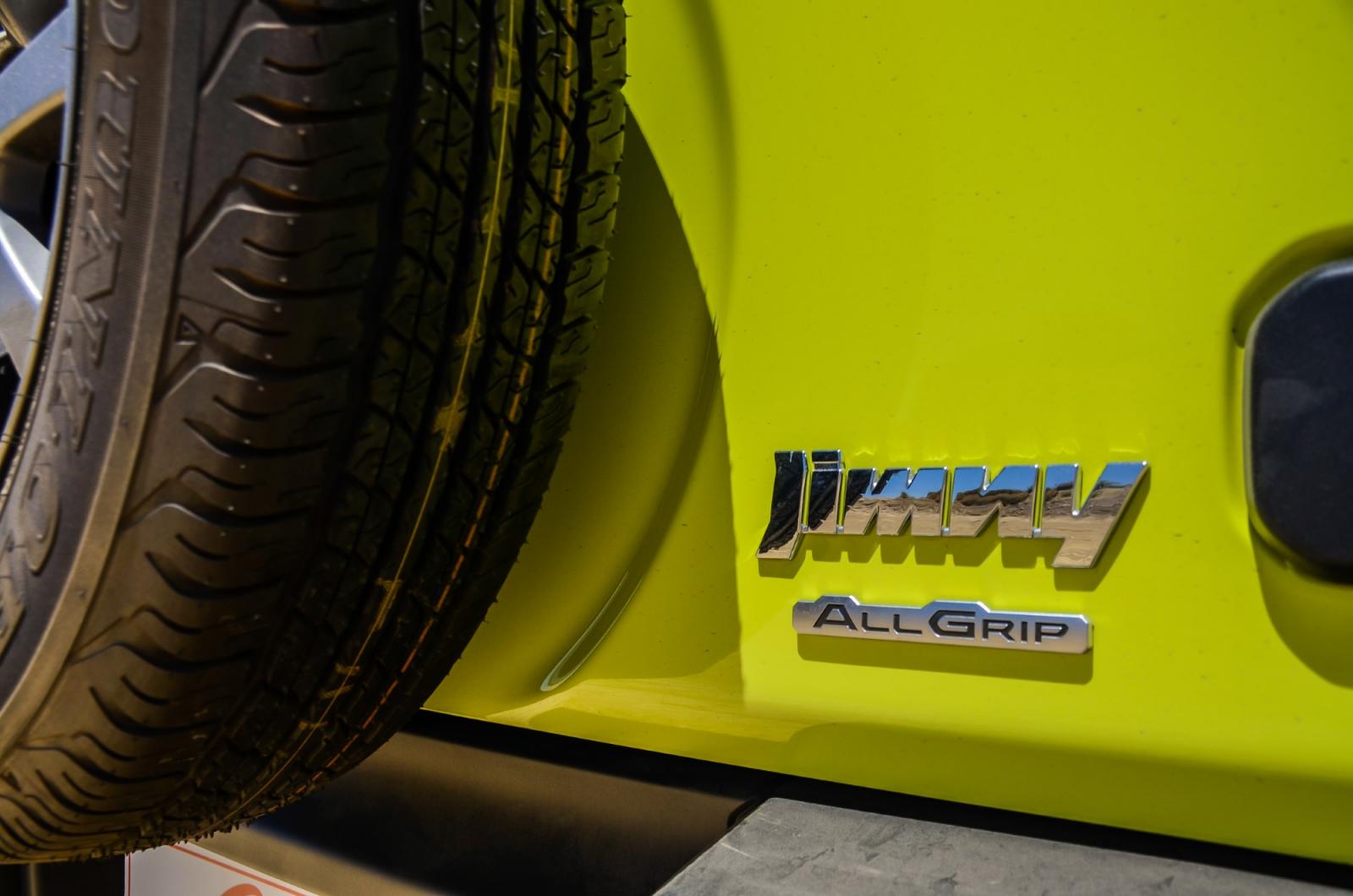
Where opting for a lesser specification in an SUV usually sees off-roading features relegated to the options list, Suzuki has cleverly opted to include all of its terrain-tackling technology across the Jimny range. The AllGrip Pro 4-wheel drive system incorporates such features as a low-range transfer case and a stability control system that imitates the action of a mechanical limited-slip differential – pumping torque to whichever wheel has the most grip on its respective axle. By and large, the system works well and only misses a beat or 2 when the surface gets very muddy.

Where accessing 2H (rear-wheel drive), 4H (AWD high range) and 4L (AWD low range) required prodding a bank of buttons on the previous car’s dash, the new Jimny returns to its roots by adopting a more traditional secondary lever that allows the transfer between 2H and 4H at up to 100 kph. On solid axles with an impressive degree of articulation, the Jimny does a good job at keeping its rubber on the ground, only cocking a wheel and hesitating slightly when confronted with particularly deep axle twisters.   


Armed with its AllGrip Pro 4-wheel drive system and a generous range of axle articulation, the Jimny is not averse to roughing it!

There’s also hill descent control with a hill-hold function, which uses brake assistance to keep the Jimny’s speed constant on steep downhill sections, just be aware that dropping into a steep slope in high range (4H) will set the Jimny rolling downhill at a rather brisk 10 kph. Stick it in low range and that speed drops to a more stable-feeling 5 kph.

What could be improved?

Better off- than on-road


The materials used are far better than previous versions but still appear to be hard-wearing and retro-styled.

Much like its predecessor, the new Jimny isn’t as settled on tarmac as it is on rough terrain. Although the overall driving experience has taken a step up over the previous car’s: the ride no longer pogos over bumps or disconcertingly wafts around corners, and the steering feels more responsive, its road manners are still some way behind those of its contemporaries.  

The 1.5-litre powertrain’s 75 kW and 130 Nm is 22 kW and 20 Nm up on the previous 1.3-litre engine, but you still get the feeling that the gearing of the 5-speed ‘box is on the off-road-low side. This is fine when nipping around town, but on the motorway with the rev counter’s needle hovering around the 4 000 rpm mark at the national speed limit, longer journeys in the Jimny become tiresome, droning affairs that will have you yearning for a sixth gear. Those modest outputs and high-end breathlessness also means overtaking requires a good deal of forethought. That waif-like kerb weight, while useful off-road, often sees the bluff-sided Jimny bullied by even moderate crosswinds and mechanical refinement also trails that of its rivals, although the 1.5-litre engine feels as though it can withstand the punishment required to keep the Jimny honest at speed.
It’s cute, but compromised


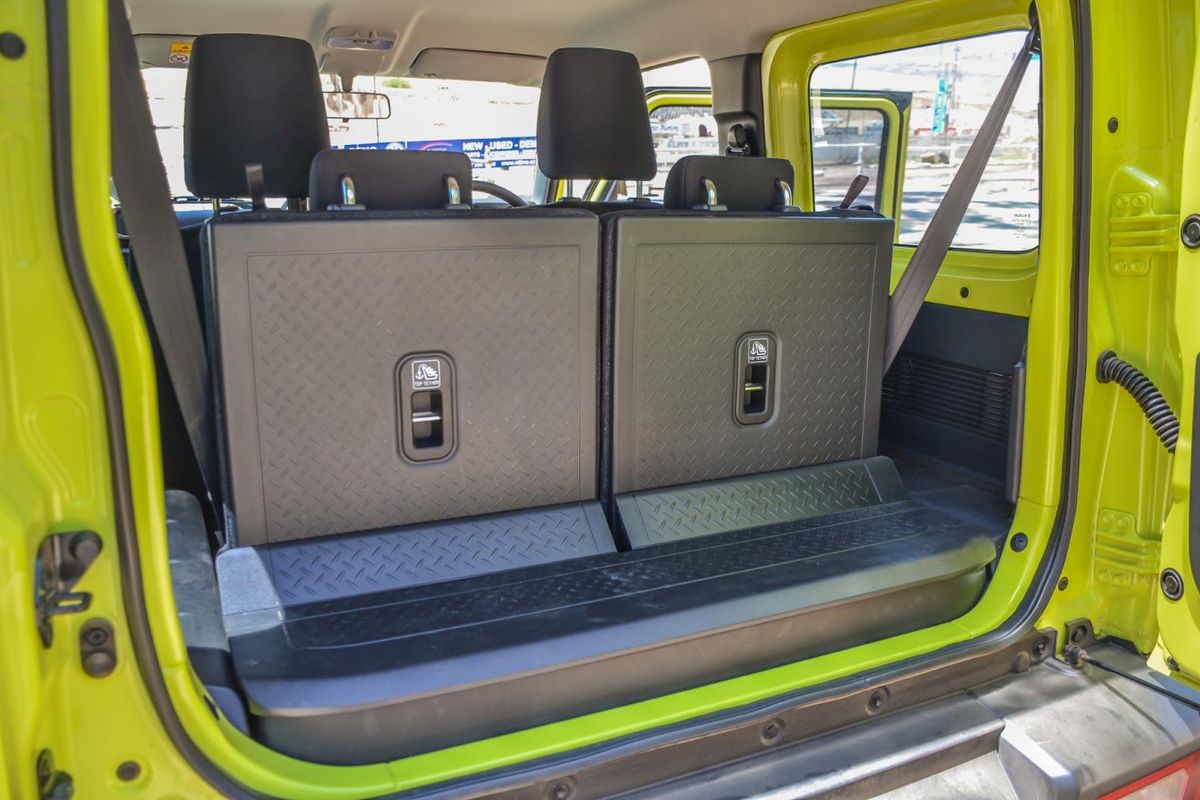
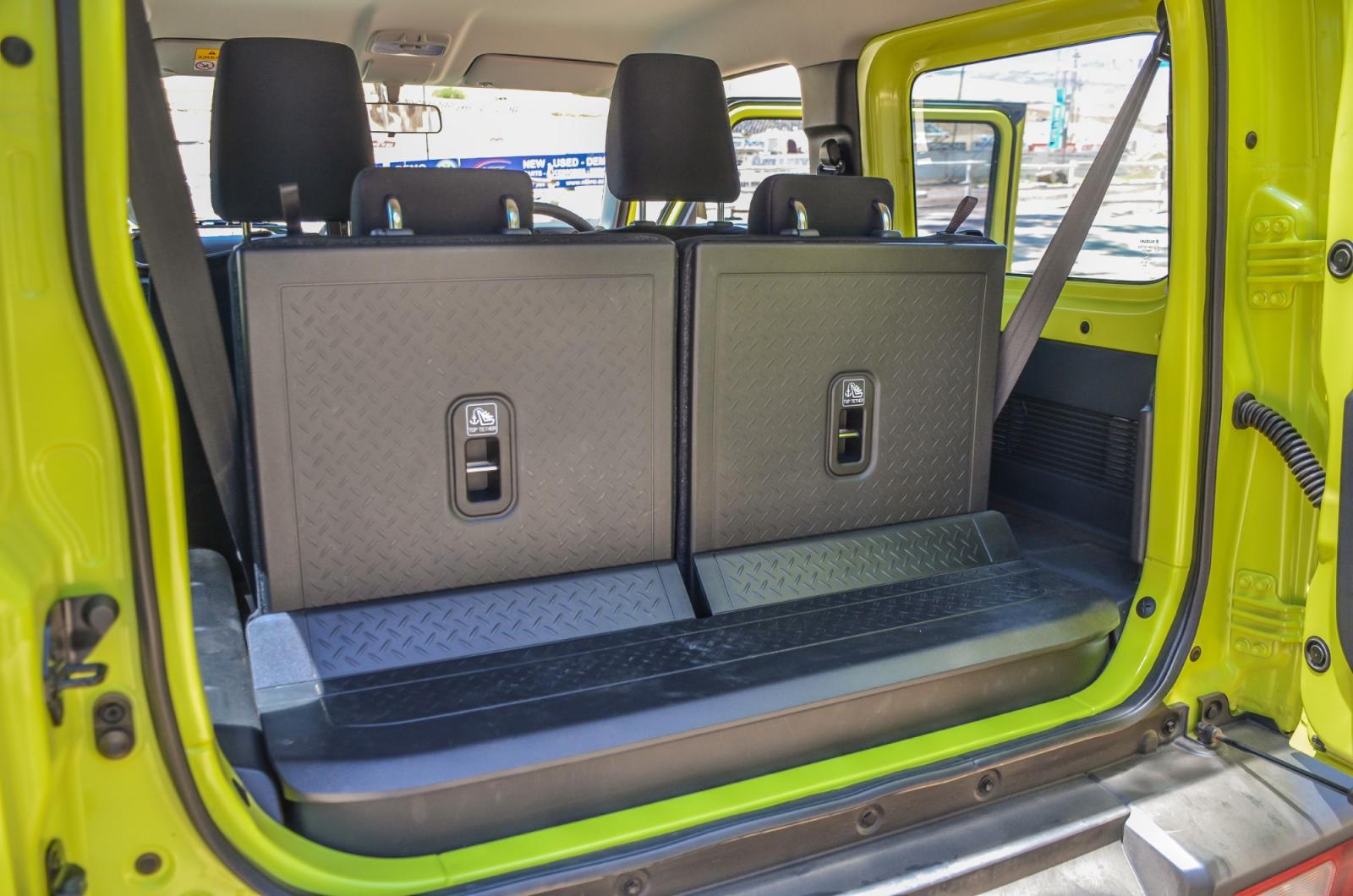
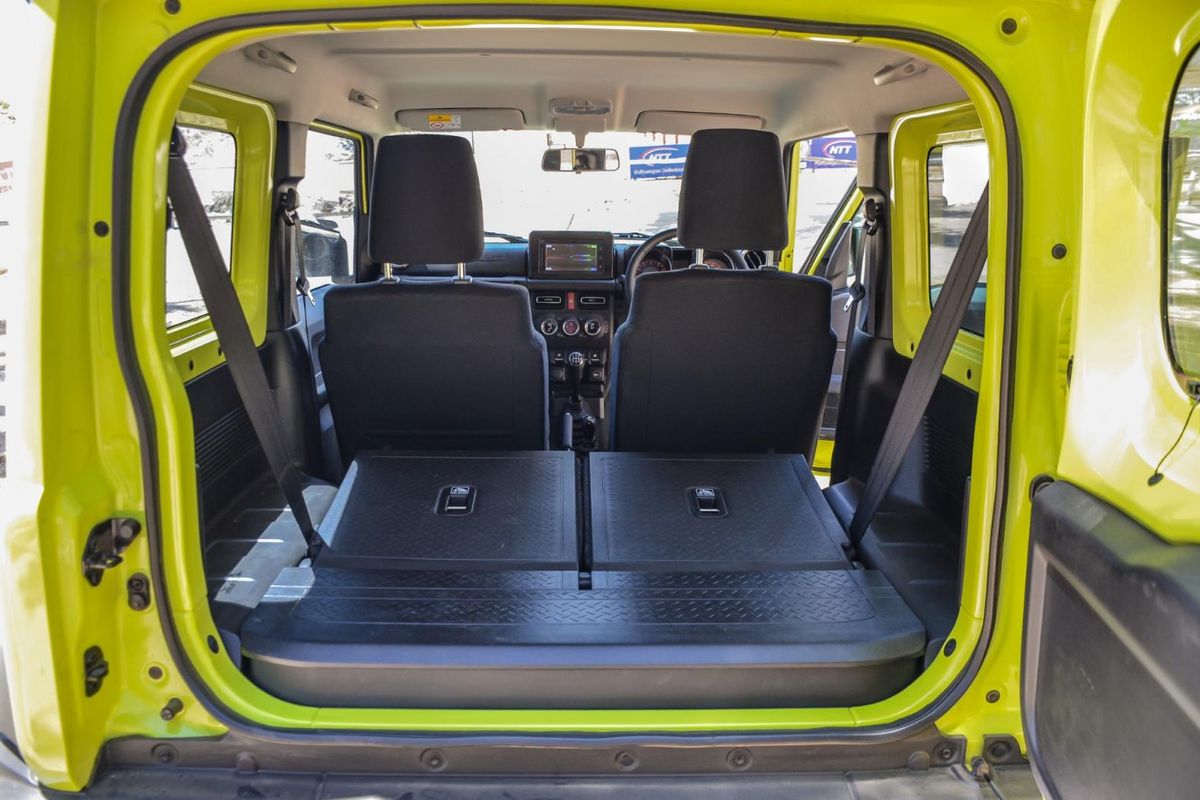
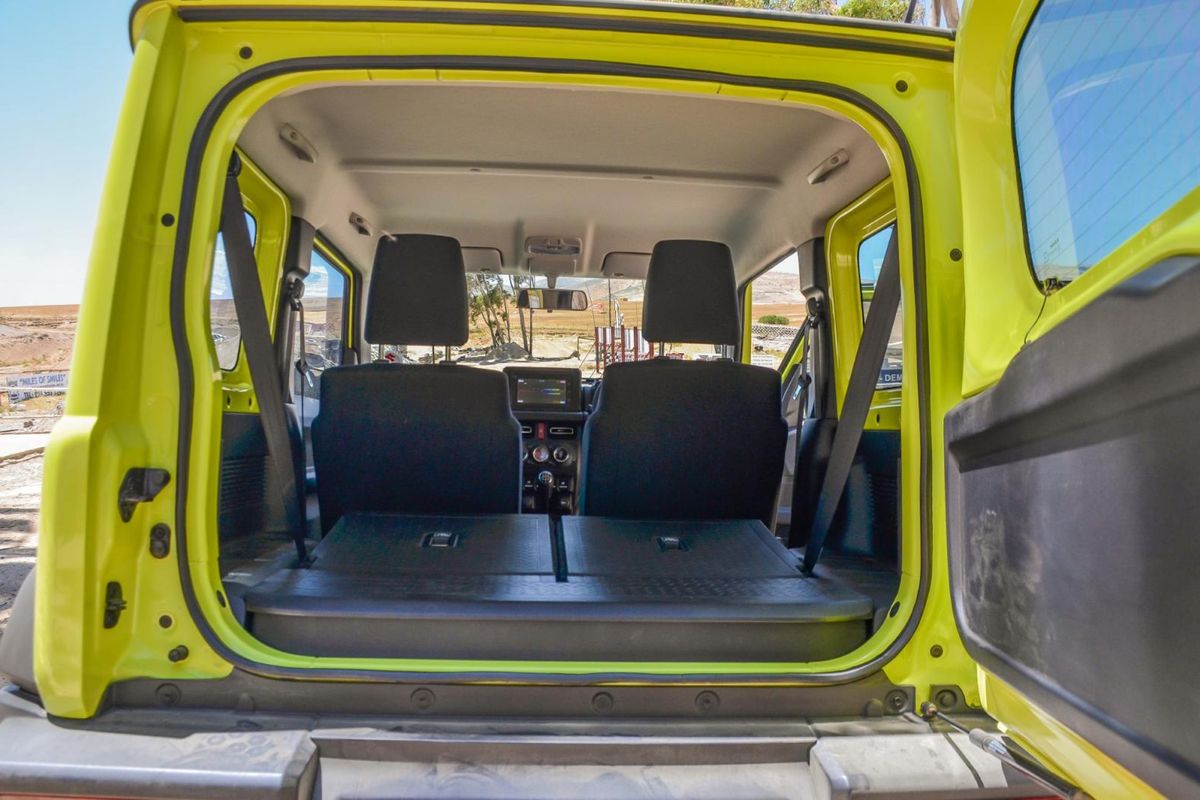
With the rear seats up, there isn't much room for more than a small bag or 2.

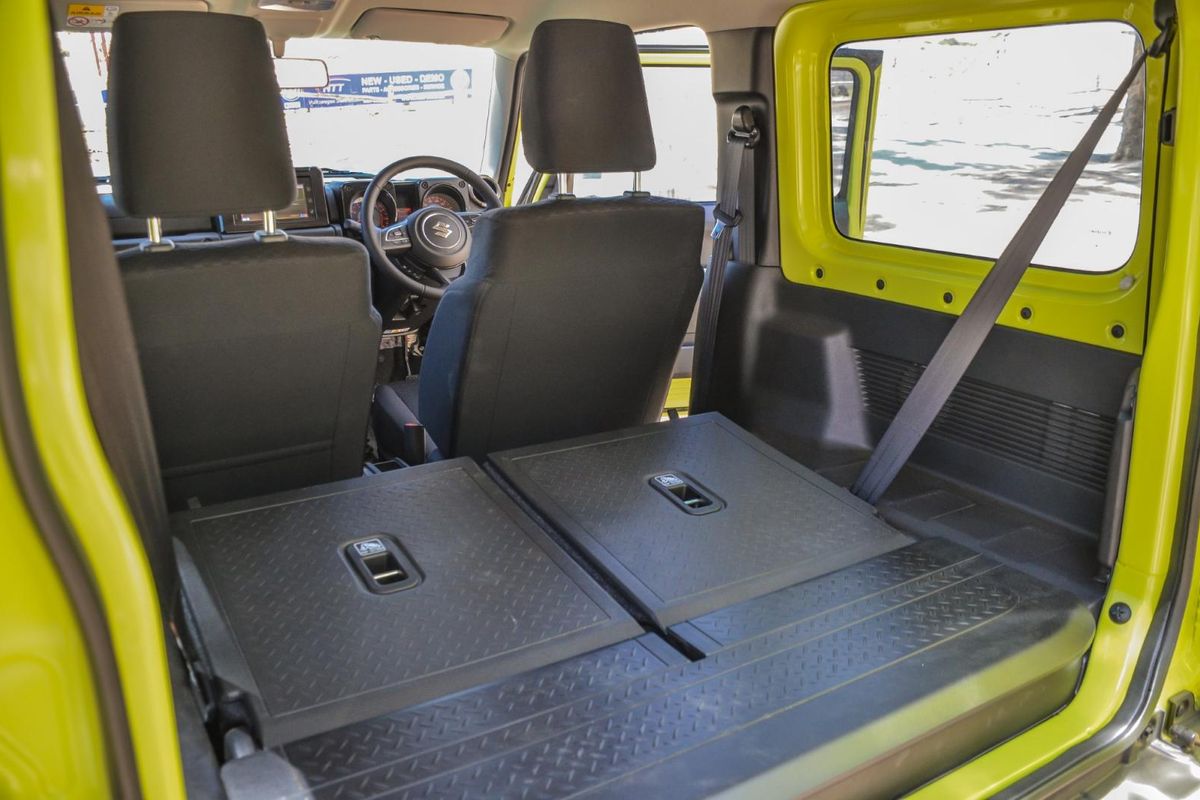
With its tight cabin and minute load bay, the Jimny is impractically packaged. Suzuki claims rear legroom has improved, but anyone over 1.75-metres tall is going to have a miserable time of it when seated back there. When they peer over their shoulders, aft occupants will also notice there’s virtually nothing in luggage space. If you’re single, one half of a young couple, or an empty nester, there’s some usable room to pack things when the rear seatback is folded, but those looking for something practical and family friendly, the Jimny simply won’t fit the bill.
Pricing and warranty

The Jimny range kicks off R264 900 for the GLA and tops out at R319 900 for the GLX automatic. The GA’s service plan spans 2 years or 30 000 km, while the GLX gets a 4-year/60 000 km plan. A 5 year/200 000 km mechanical warranty is standard.
Verdict

The new Jimny has surpassed its predecessor in pretty much every measurable area, not to mention styling that’s a touch more gender-neutral than before. It remains in a league of its own off-road, albeit at the cost of overall road manners and packaging that's less than that practical. But its competitive pricing and sheer appeal will ensure waiting lists are long and 2nd-hand values will hold strong…here’s to the next 20 years of Jimny.
Alternatives (click on the names for specification details):

Renault Duster

It’s the only car out there with a skillset close to that of the Jimny, and it's almost as rugged and stylish. A recent overhaul has improved the cabin quality and there’s more passenger and utility space on offer than in the Suzuki.

Fiat Panda 4×4 Cross

Its styling is an acquired taste, but the Cross has enough off-road ability for most and its pricing is competitive. The 2-cylinder engine is a weak performer, though.

Related content:

5 Moments that Defined the Suzuki Jimny

Next Land Rover Defender: Why the long wait?

Mercedes-AMG G63 (2018) Launch Review

Aston Martin Lagonda SUV Teased

A decade after previewing a rather awful SUV concept, Aston Martin is heading back to Geneva, with something much better.

Despite the looming spectre of uncertainty caused by Brexit, Aston Martin will reveal its much anticipated Lagonda SUV at the Geneva Auto Show in early March 2019. The ambitious luxury SUV project, which has been previewed – and stalled – since the 2009 Geneva Auto Show, is now believed to be ready for execution.

Although the skilfully shadowed teaser image doesn’t reveal much of the Lagonda’s detailed appearance, it will undoubtedly be a world better looking that Aston’s original SUV concept attempt, a decade earlier.

Renowned for its V12 and supercharged engines, Lagonda will be a departure into sustainability for James Bond’s car company of choice. The Lagonda SUV, characterised as an ‘all-terrain’ vehicle by Aston insiders, will not offer the option of a conventional liquid-fuelled engine. All Lagondas will be battery-powered.

Aston Martin boss, Andy Palmer, believes the all-electric powertrain architecture is a perfect foil for navigating uncertainties which are clouding the automotive industry at present. “The Lagonda All-Terrain Concept offers explicit clues regarding what will be the first Lagonda model to enter production, and further demonstrates how Lagonda’s zero emission powertrain enables us to create spectacular cars that will radically redefine their sectors of the market.”

Buy a new or used Aston Martin on Cars.co.za

Related Content 

Aston Martin DBS Superleggera – First Drive

Aston Martin launches EV conversion programme for classics

Aston Martin DB11 Unleashed (w/Video)

Aston Martin Vantage (2018) Launch Review

Brexit: What Does it Mean for Car Industry and SA?

Cars Coming to SA in 2019

And the World’s Most Popular car is…

Bakkies might be more popular than any car in South Africa, but global trends show that the world still favours a more traditional vehicle configuration. 

The world’s most popular vehicle is not a bakkie or SUV. With comprehensive sales data from 2018 finally collated and verified, Toyota’s Corolla has been classified as the most in-demand car of all.

Ford’s F-Series bakkie finished as the second most popular vehicle, an achievement made even more credible by the fact that it is essentially only sold in the North American market – whereas Corolla is a true global product, sold in a multitude of geographies. 

Statistically, Corolla sold 1 181 445 units, with Ford delivering 1 080 757 F-Series bakkies to new customers last year. These two models were the only vehicles to sell in excess of a million units each. 

The top ten list of most prevalent automotive products is dominated by Toyota, Honda and VW. Rav4 ranked third and Camry ninth, whilst Honda occupied fourth (Civic) and seventh (CR-V). VW’s Tiguan and Golf were fifth and sixth, with Polo eighth. Only one other bakkie, besides F-Series, ranked in the top ten most sold vehicles for 2018, and that was Chevrolet’s Silverado. 

In a world where product development and marketing strategy is anchored by a mission to serve bakkie and SUV demand, these global sales numbers tell a very different story. The presence of Camry, Corolla, Civic, Golf and Polo making up half of the most popular top ten vehicles, illustrate that the market is telling a truth very different from what product planners are strategizing. 

Top 10 best-selling cars in the world 2018

1. Toyota Corolla

1 181 445

2. Ford F-Series

1 080 757

3. Toyota RAV4

837 624

4. Honda Civic

823 169

5. Volkswagen Tiguan

791 275

6. Volkswagen Golf

789 519

7. Honda CR-V

747 646

8. Volkswagen Polo

725 463

9. Toyota Camry

661 383

10. Chevrolet Silverado

651 090

Volkswagen T-Roc R Burns the Ring

Hot hatches aren't cool anymore. In rolls the performance crossover and German car manufacturer, Volkswagen, has confirmed that it will be making the T-Roc R. Some details…

While the Volkswagen T-Roc is not available in South Africa currently, we're told that Volkswagen SA has not completely ruled out the midsized-SUV which slots under the Tiguan. What's really exciting is that Volkswagen has confirmed its first-ever performance SUV will be based on the T-Roc.

Seen here undergoing testing at the punishing Nurburgring is the all-new Volkswagen T-Roc R. While the vehicle remains camouflaged for now, we've had a good look at the video repeatedly and can see that the vehicle sits lower to the ground and boasts quad exhausts. There'll be bigger performance brakes naturally too. The big question is which engine will find its way into the T-Roc R. Given Volkswagen's business practice of sharing engines across its portfolio, we're expecting to see the 2.0-litre turbocharged 4-cylinder found in the Golf R. Mated to an all-wheel-drive platform and with a fast-shifting dual-clutch transmission, we estimate the Volkswagen T-Roc R should be able to reach 100 kph from standstill in around 5 seconds.

In terms of outputs, you'll be aware by now that Volkswagen SA has launched the full-fat 228 kW and 400 Nm Golf R. In light of the new strict WLTP regulations, this variant of the EA888 motor has been detuned to 221 kW and its this which we think the Volkswagen T-Roc R will use. It's interesting to note that this is not the Volkswagen Group's first attempt at a compact performance SUV as sister brand SEAT recently launched its Cupra standalone brand and one of the first models released is the Cupra Ateca, which has the same output.

Watch this space for official photos of the production version to be released. Estimates suggest the Volkswagen T-Roc R could be revealed as early as the 2019 Geneva Auto Show.

Watch the new T-Roc R being pushed to its limits on the Nurburgring

Further Reading

VW Gives an Extra 15 kW to Golf R

Volkswagen T-Roc (2018) International Launch Review

Volkswagen Officially Unveils T-Roc Compact SUV

VW T-Roc Convertible SUV Coming in 2020

2019 World Car of the Year – Meet The Finalists

It's that time of the year again. The World Car of the Year is in its 15th year and the finalists have been announced for 2019.

The World Car of the Year is broken into 6 World Car Awards categories. Judged by a panel of 86 motoring journalists from around the world, the World Car of the Year is arguably the most prestigious when it comes to recognising excellence. Our very own Consumer Experience Manager Hannes Oosthuizen is 1 of only 2 South African judges on the illustrious panel.

The judges are only allowed to score vehicles they have driven, and award points in sections labelled Value, Safety, Environment, Emotional Appeal, Market Significance etc. Some of these cars are not available in South Africa but feel free to click on selected highlighted vehicles to read more about them.

Top Ten World Car of the Year finalists

Audi e-tron
BMW 3 Series
Ford Focus
Genesis G70
Hyundai Nexo
Jaguar I-PACE
Mercedes-Benz A-Class
Suzuki Jimny
Volvo S60/V60
Volvo XC40 (Cars Awards winner)

Top 5 World Urban Car finalists

Audi A1
Hyundai AH2 / Santro
Kia Soul
SEAT Arona
Suzuki Jimny

Top 5 World Luxury Car finalists

Audi A7
Audi Q8
BMW 8 Series
Mercedes-Benz CLS
Volkswagen Touareg

World Performance Car top 5 finalists

Aston Martin Vantage
BMW M2 Competition
Hyundai Veloster N
McLaren 720S
Mercedes-Benz AMG 4-door Coupe

World Green Car 5 finalists

Audi e-tron
Honda Clarity Plug-In Hybrid
Hyundai Nexo
Jaguar I-Pace
Kia Niro EV

World Car Design of the Year

Citroen C5 Aircross
Jaguar E Pace
Jaguar I PACE
Suzuki Jimny
Volvo XC40

Judging car design requires a specialised skillset and 7 highly-respected design experts have been called upon to share their expertise. Anne Asensio (France – Vice-President, Design – Dassault Systemes), Gernot Bracht (Germany – Pforzheim Design School),  Patrick le Quément(France – Designer and President of the Strategy Committee – The Sustainable Design School), Sam Livingstone (U.K.  – Car Design Research and Royal College of Art), Tom Matano (USA – School of Industrial Design at Academy of Art University in San Francisco), Gordon Murray (U.K. – Gordon Murray Design) and Shiro Nakamura (Japan – CEO, Shiro Nakamura Design Associates Inc.).

Further Reading

2018/19 Cars.co.za Consumer Awards – powered by WesBank; Finalists

Winners: 2018/19 Cars.co.za Consumer Awards – powered by WesBank

Cars Coming to SA in 2019

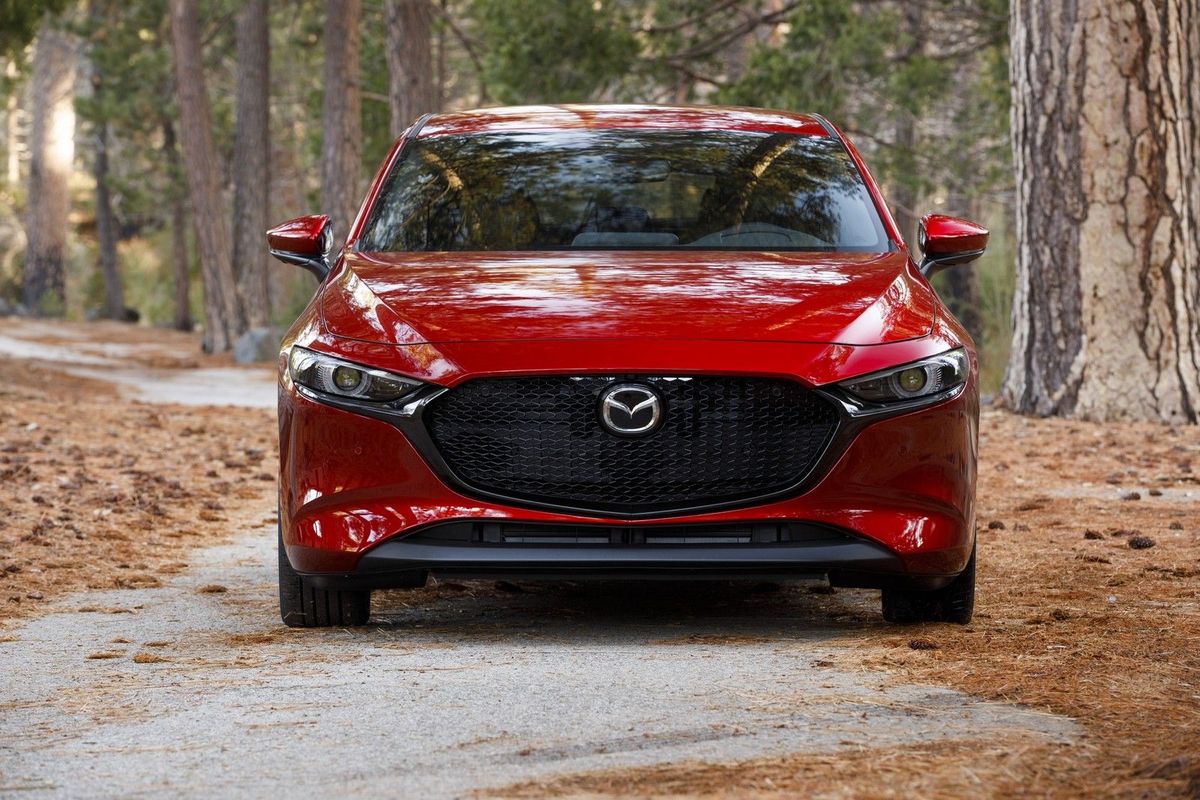
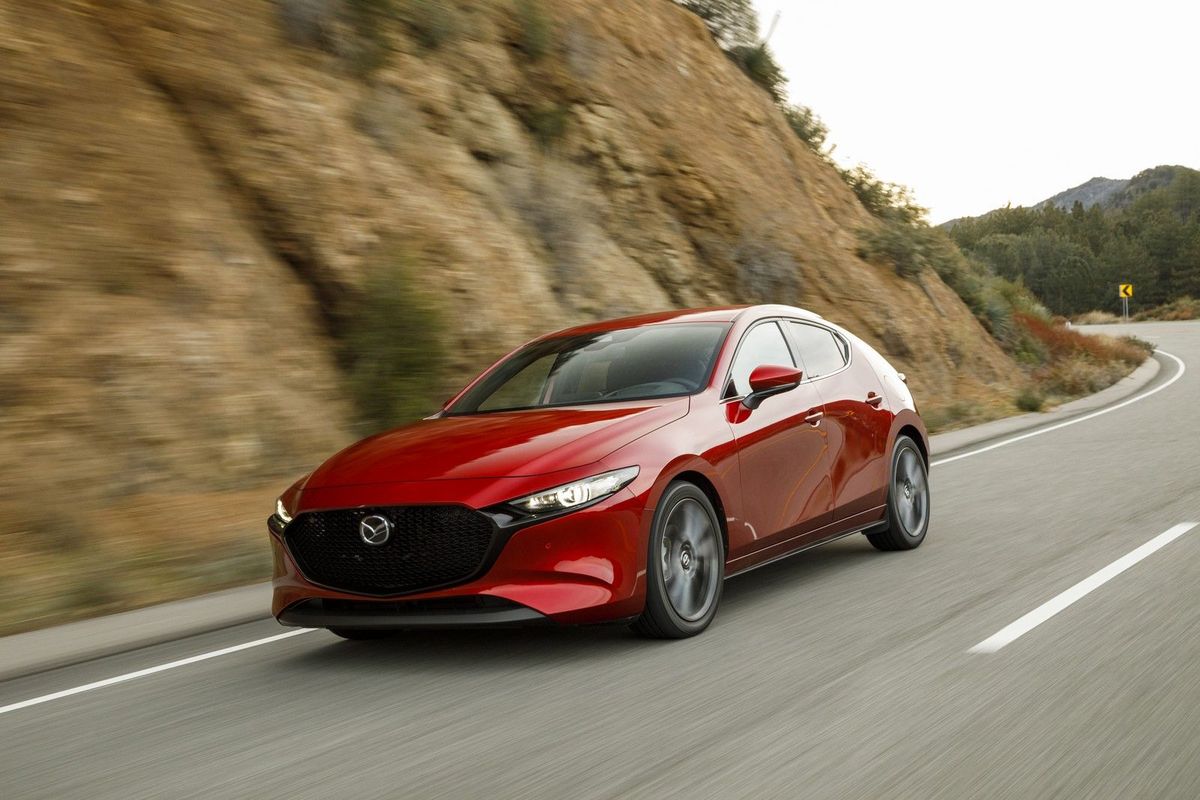
Mazda3 (2019) International Launch Drive

With the 4th-generation Mazda3, the Hiroshima-based firm draws clearer distinctions between the sporty hatchback and stylish sedan versions of its compact car. It's also keen to challenge volume-selling and premium marques alike with its sophisticated, engaging and upmarket newcomer, which will arrive in South Africa in the 2nd half of 2019. Our Australian correspondent, Matt Campbell drove the newcomer in Los Angeles…

The 2019 Mazda 3 pairing look as though they could be completely different models – the visual difference is that large. And it’s important that Mazda gets it right with the new-gen compact car – since the Mazda 3 was launched back in 2003 more than 6 million examples have been sold across the globe. That’s only about a 5th of all Toyota Corollas sold to date (since 1968), but the smaller brand has a solid foundation nonetheless.

Arresting styling

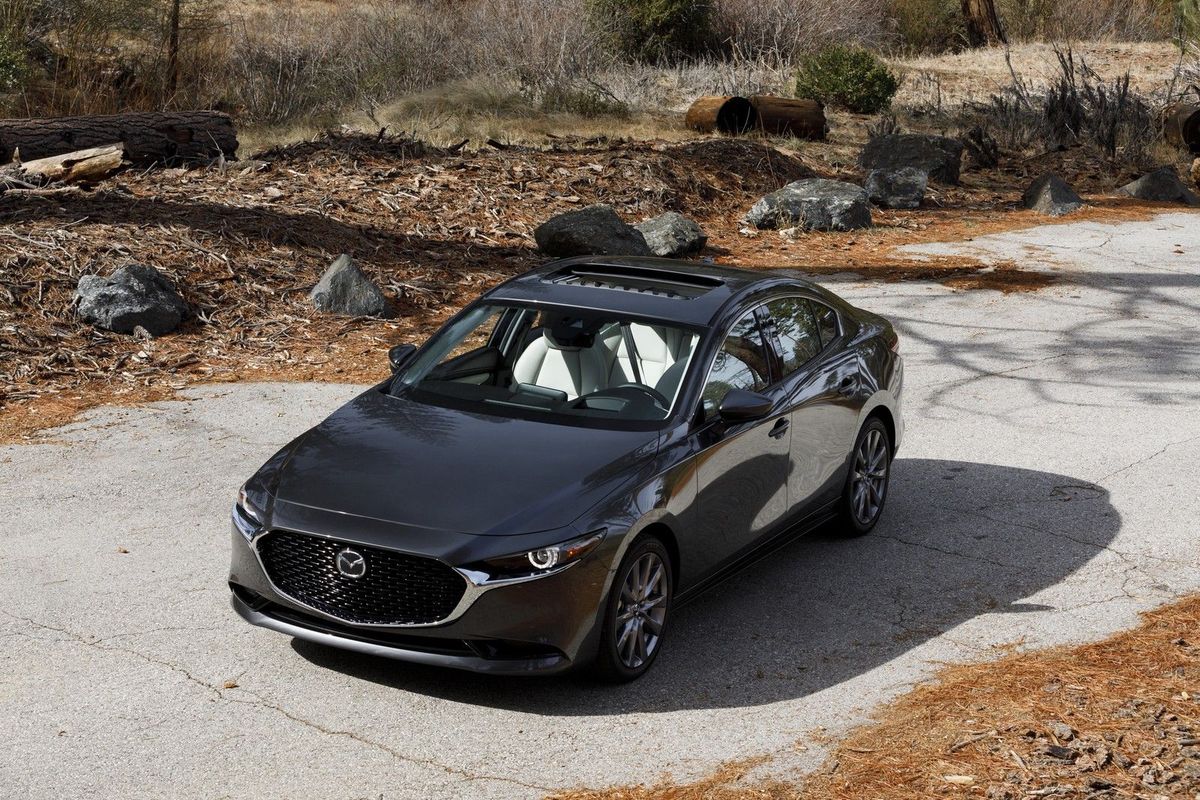
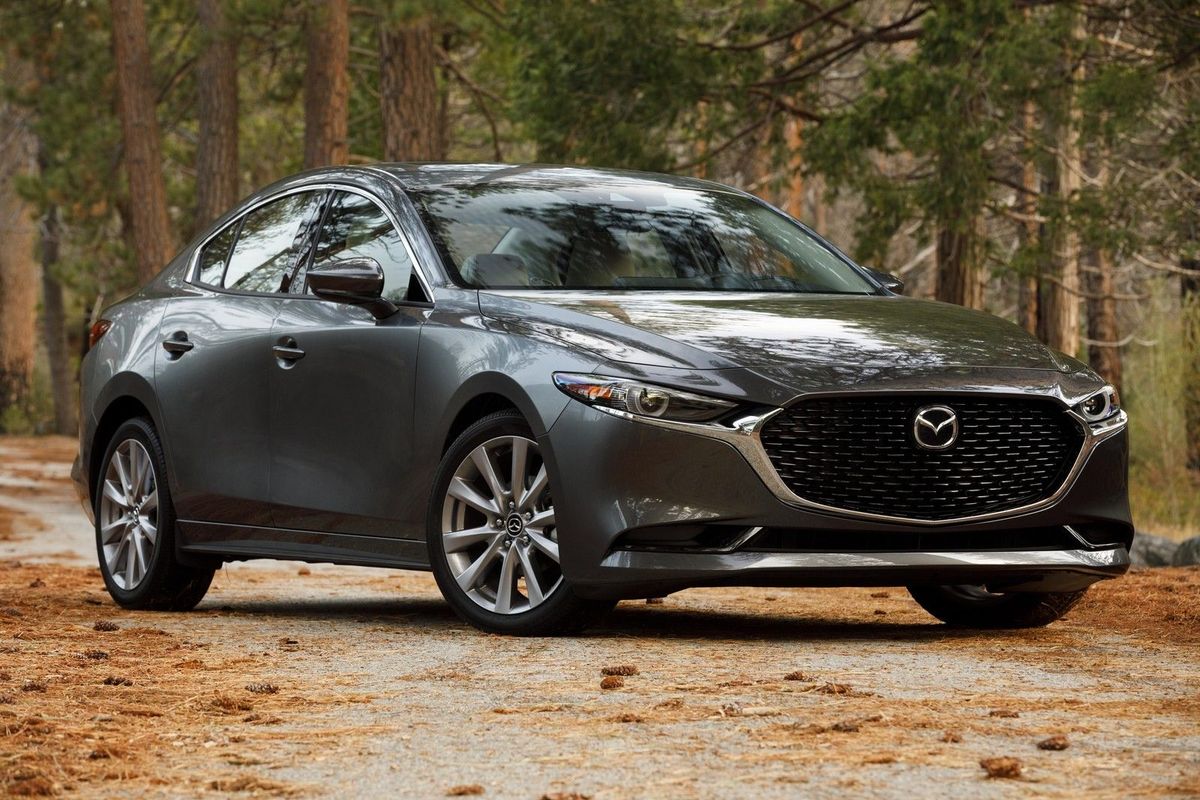
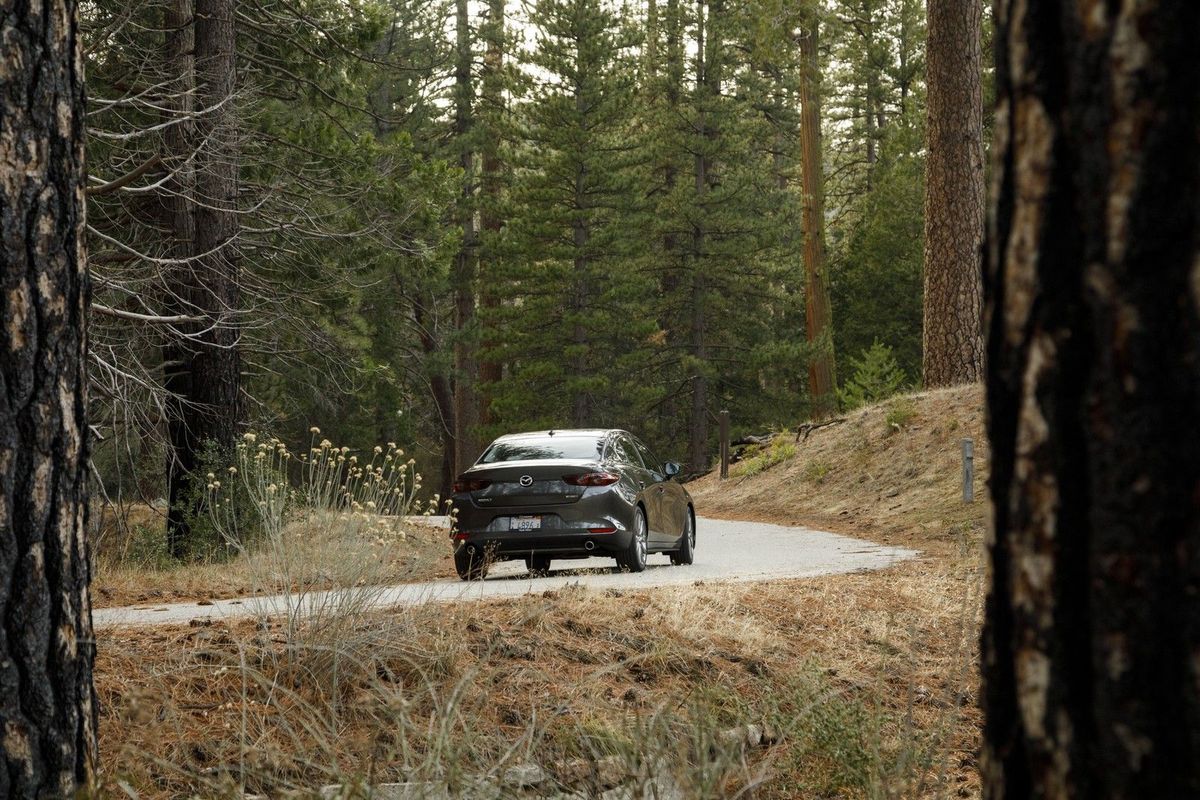
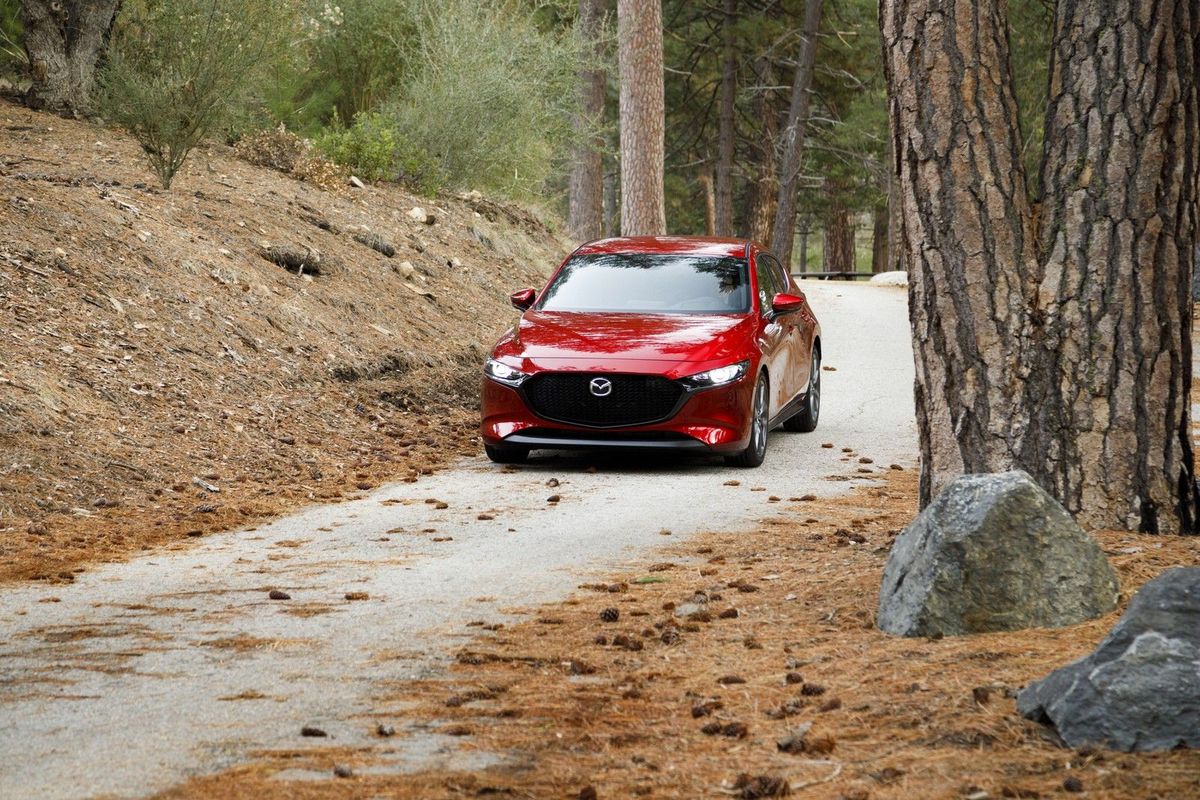
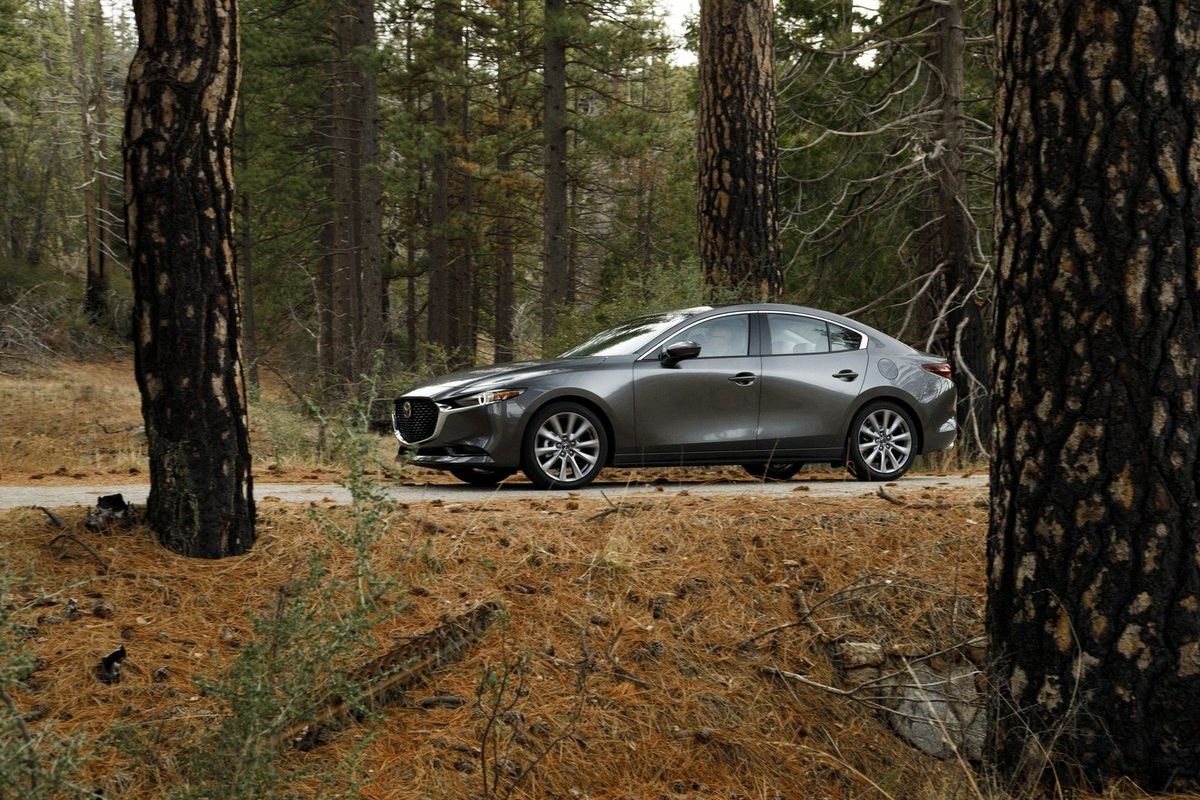
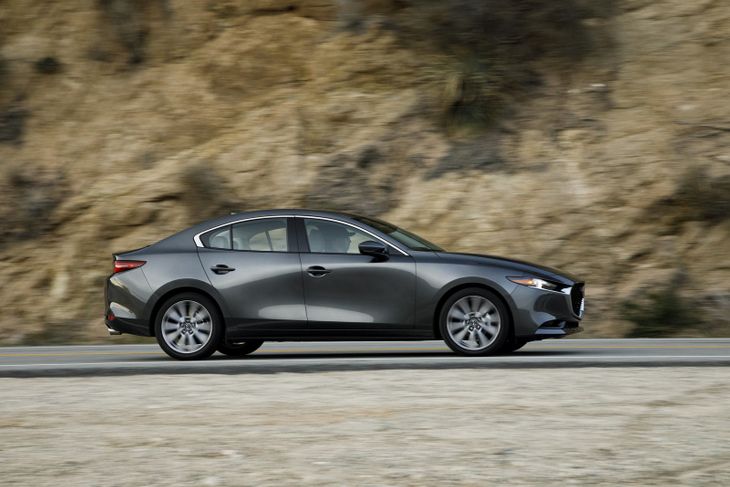
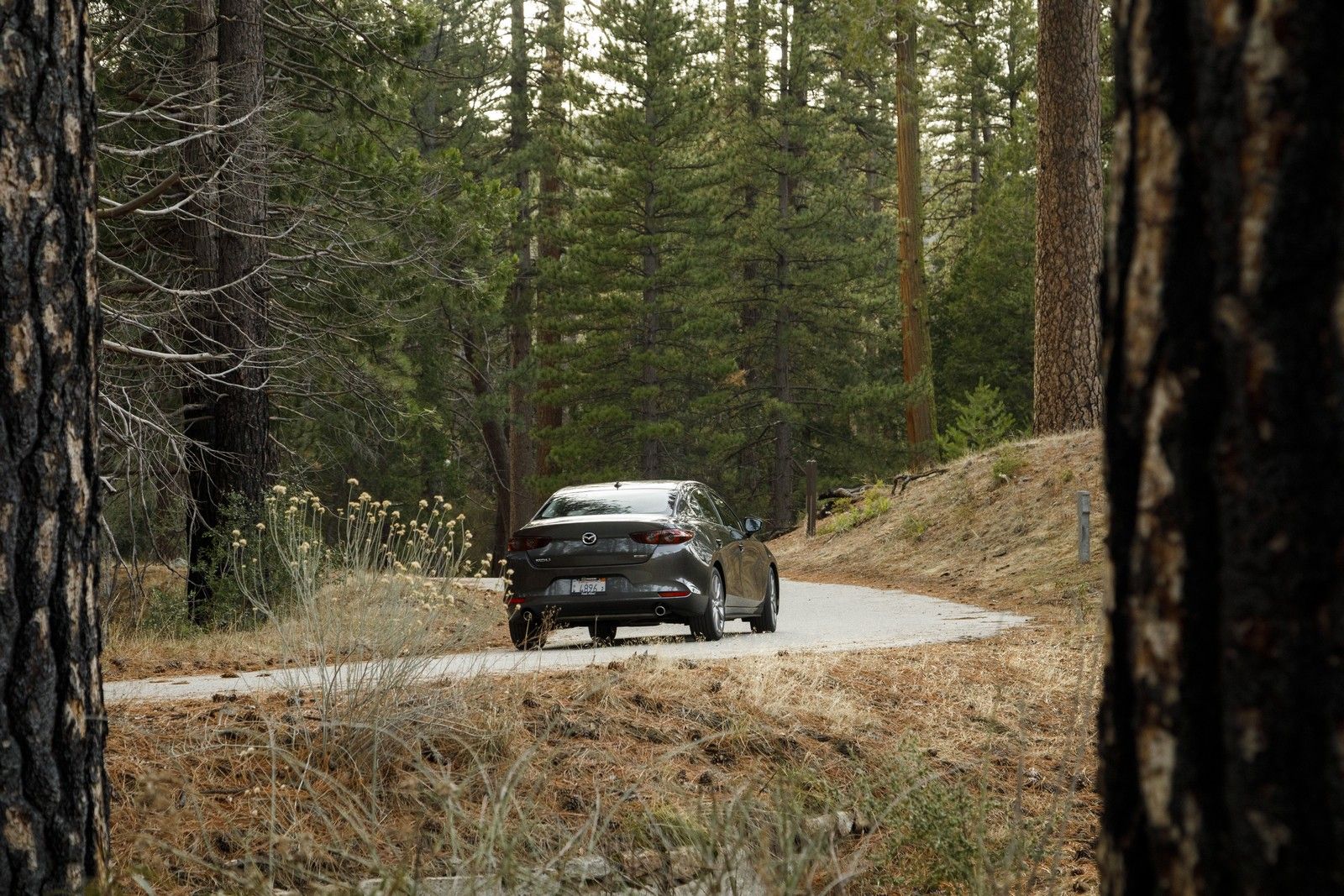
The Mazda3 grabbed an inordinate share of the limelight when it made its debut (in production form) at the Los Angeles Show late last year and, now I've seen the newcomer in the metal, it's easy to understand why. The sedan, in particular, is sinuous, replete with sleek lines and shapely chrome trim that outline the side windows. It sits beautifully on the road and looks good at a standstill. It’s sleek and suave – gorgeous, even.


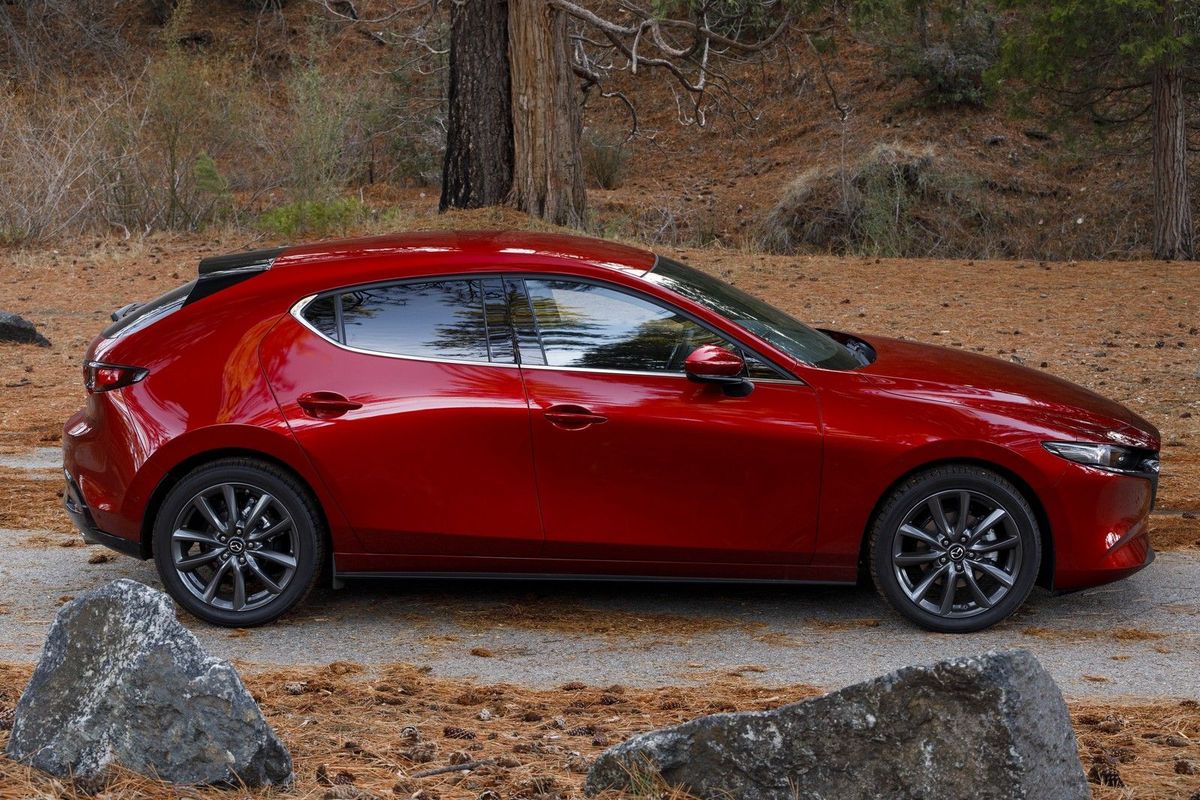
The sedan is the sleeker and less controversial looking variant in the range.

It’s all about the proportions. This new version is 82-mm longer (4 662 mm) than its predecessor, which pushes it towards the business class sedan segment in terms of length. Mazda admits that its new compact offering has effectively become a "big small car", but the firm is quick to add: "that’s what (our) customers want". It’s also 2-mm wider (1 797 mm) and sits 5 mm lower to the ground (1 445 mm).

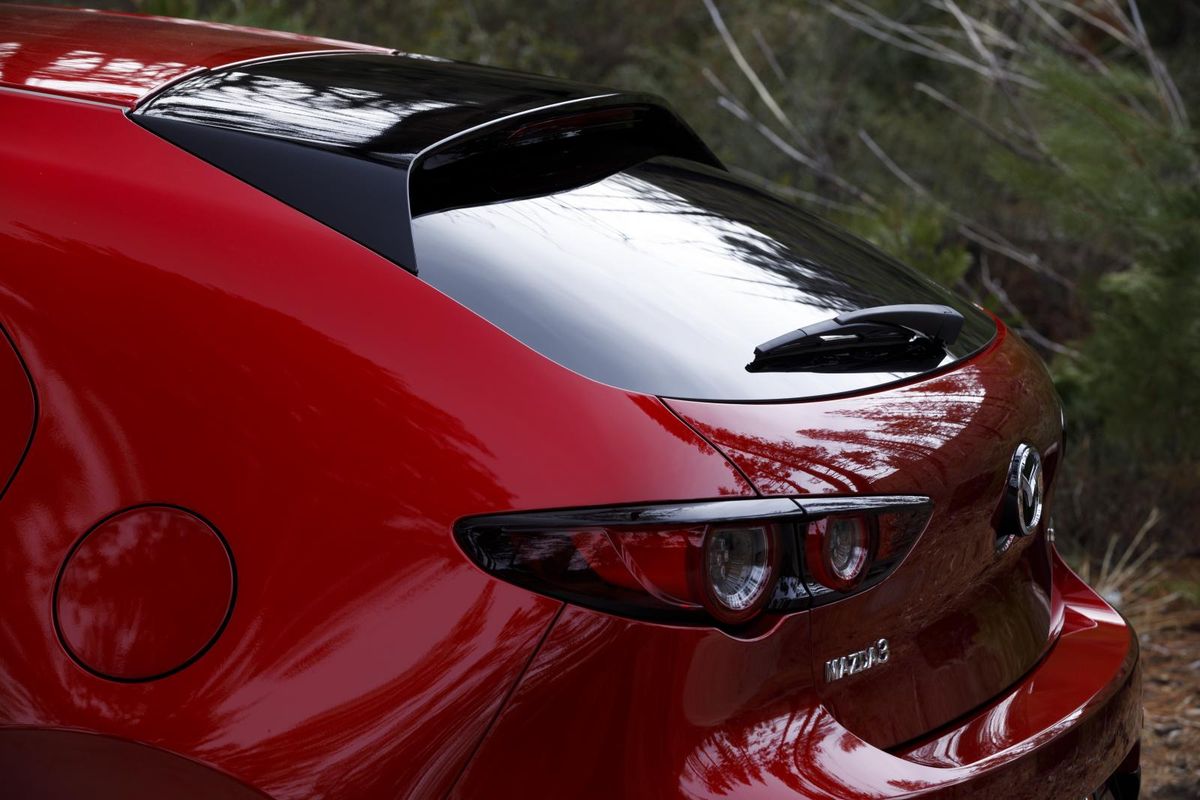
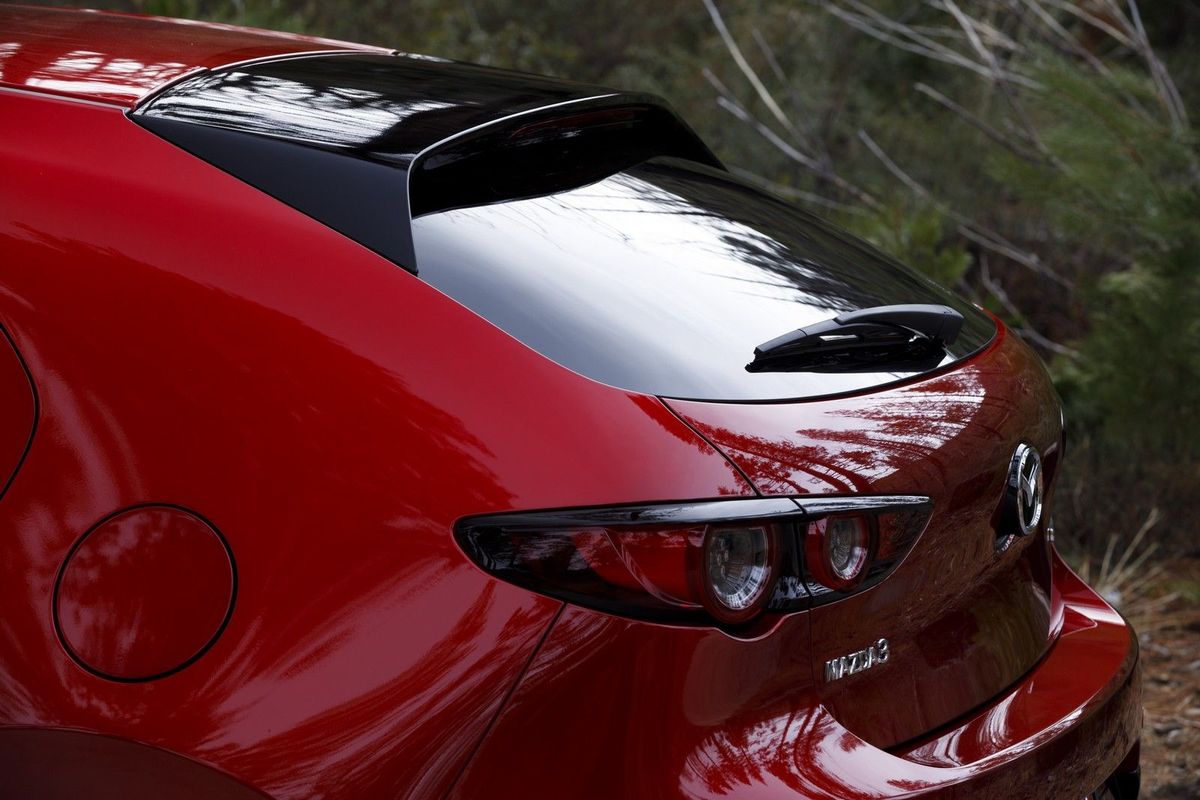
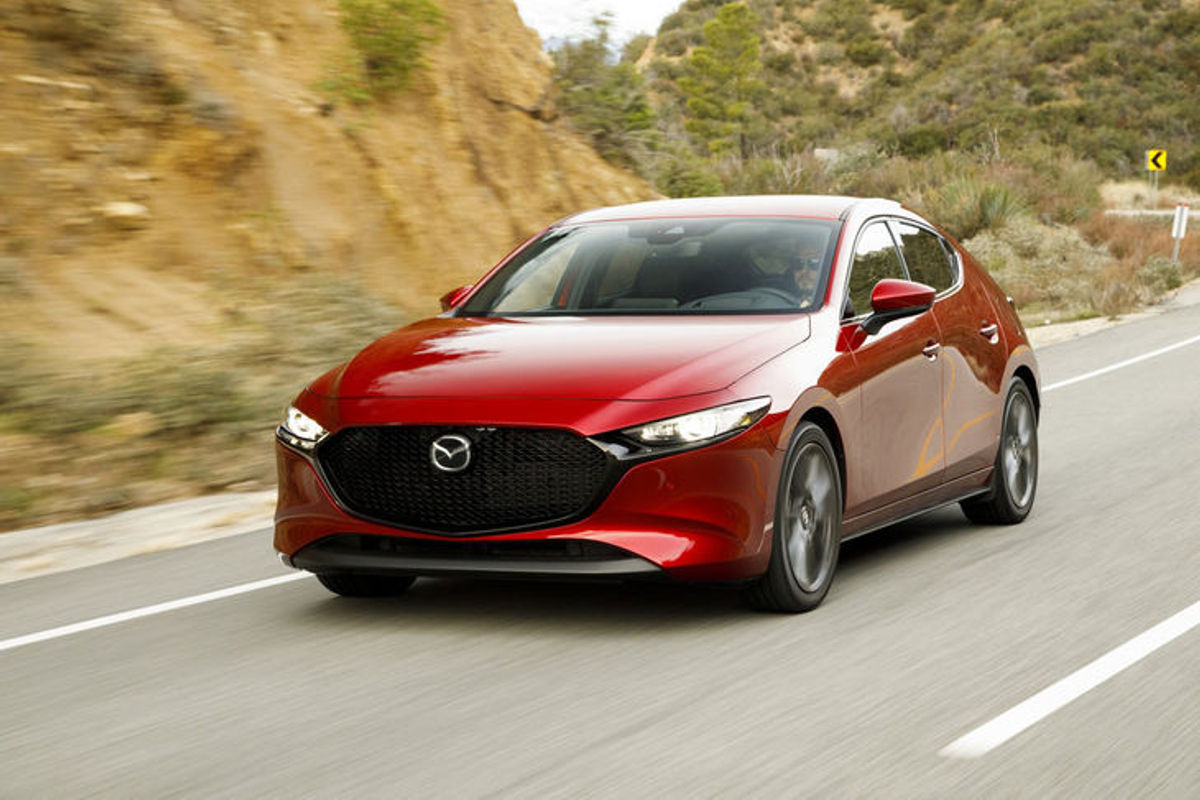
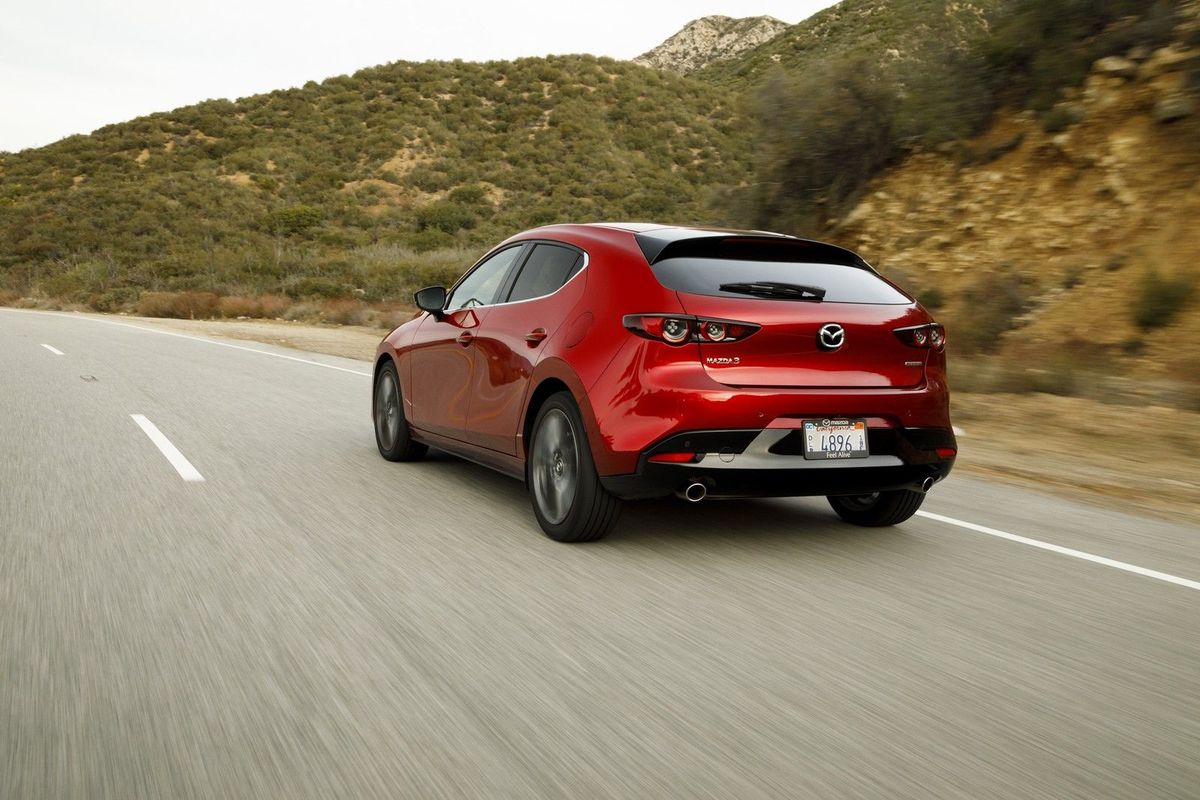
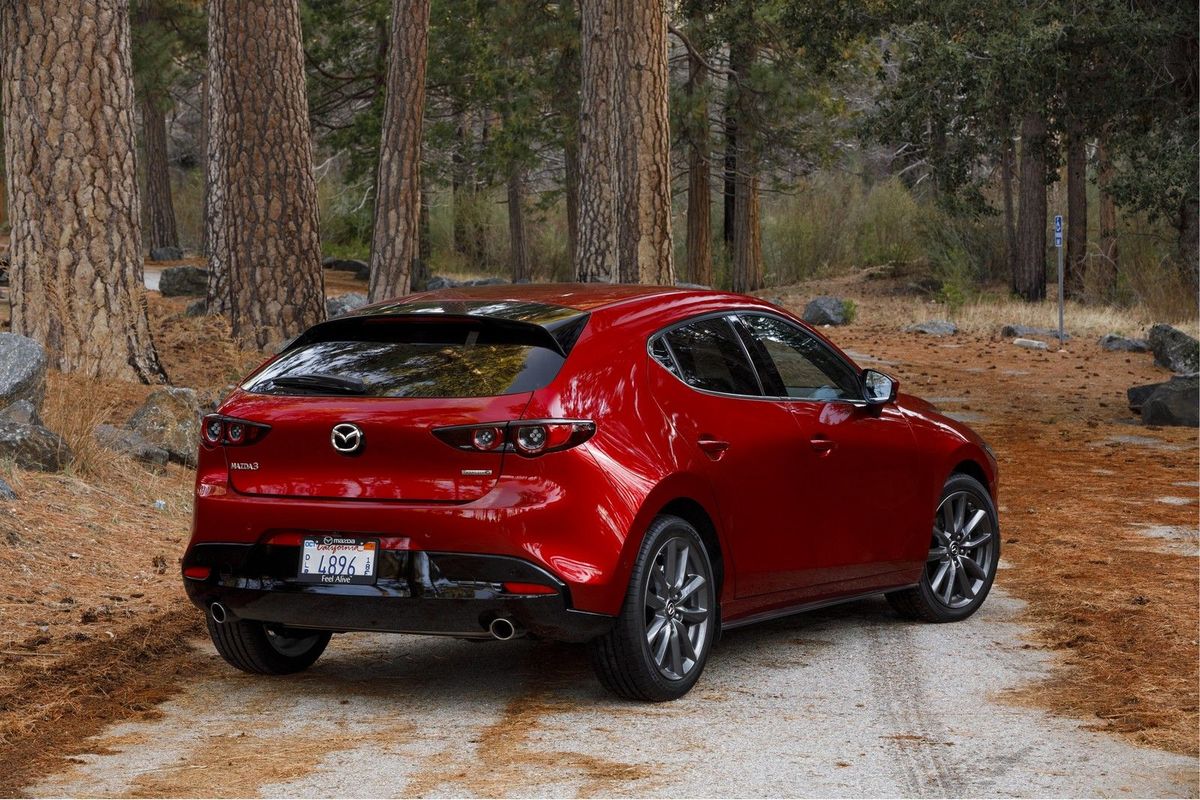
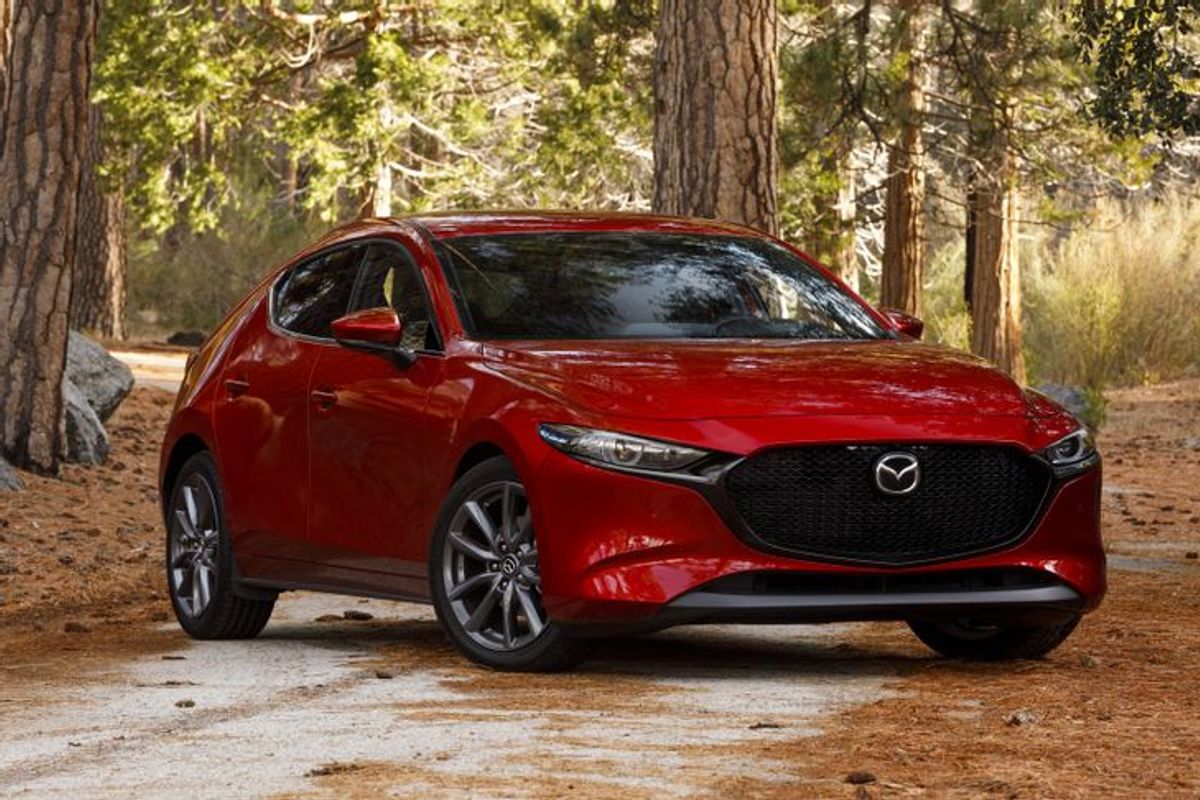
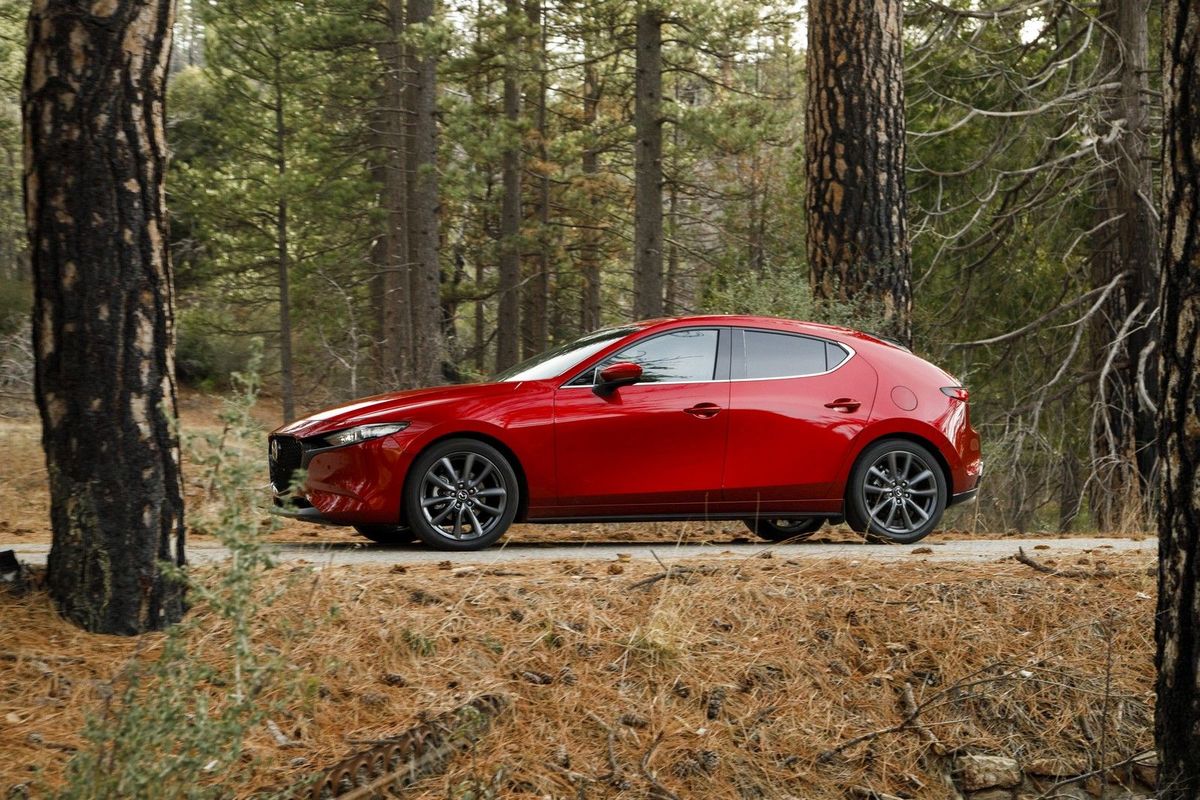
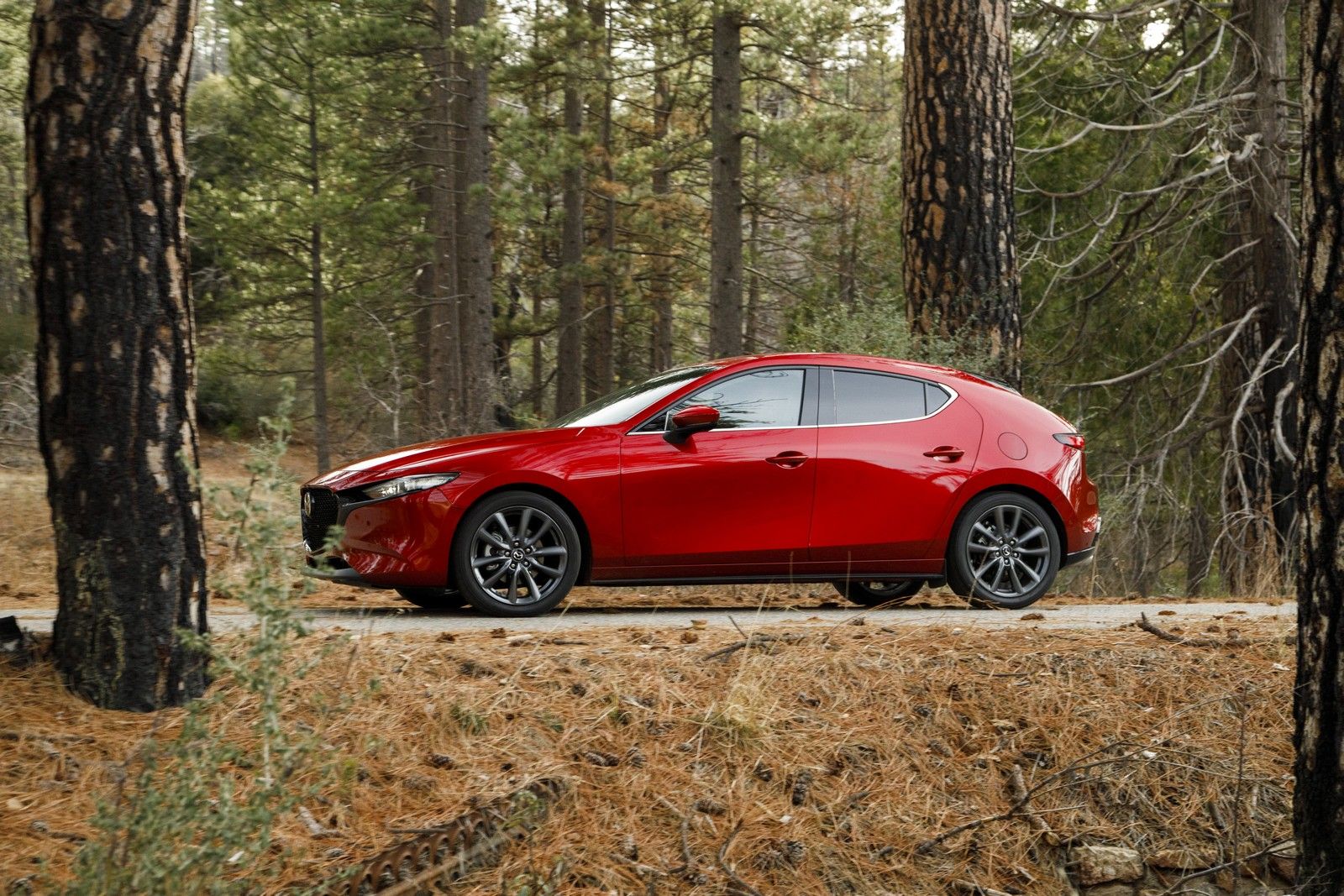
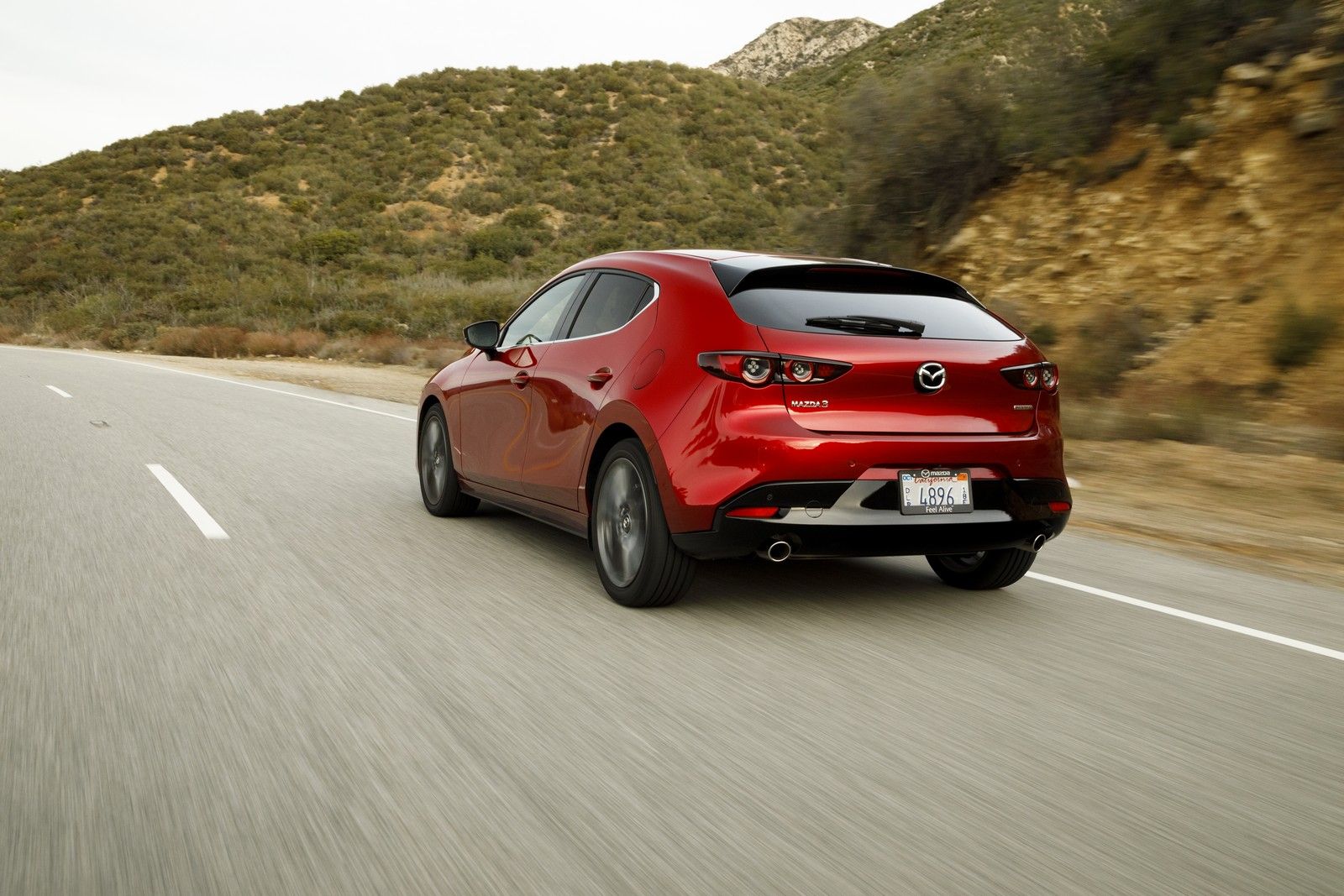
The hatch, on the other hand, is more eager looking; its bulbous backside makes the 5-door look a bit more snouty than the sedan. That chunky C-pillar (rear 3-quarter) treatment, in particular, is a love-or-hate proposition… you’ll likely have to see it in the metal to make up your mind.

But before you make a call either way, make sure you sit in the driver’s seat and try to glance over your shoulder… the rearward vision is poor, even if it's “to Mazda standards”. In markets like Australia, though, there will be technological assistance – blind spot monitoring will be standard there and elsewhere, along with an extensive range of active safety equipment. Full specifications for the SA market will be confirmed closer to launch.


The styling of the hatch is likely to stir up a love/hate reaction.

The hatch is 10 mm shorter than the current Mazda3 (4 460 mm), while it remains the same width (1 795 mm) and is 15-mm lower (1 435 mm).

Both body styles ride upon a stretched wheelbase that is 25 mm longer than before (2 775m m), which has been done to allow the company to offer some Mazda3 derivatives with all-wheel drive. No, it’s not to improve interior space, Mazda execs told us. Weird, right?

So, what about the interior?

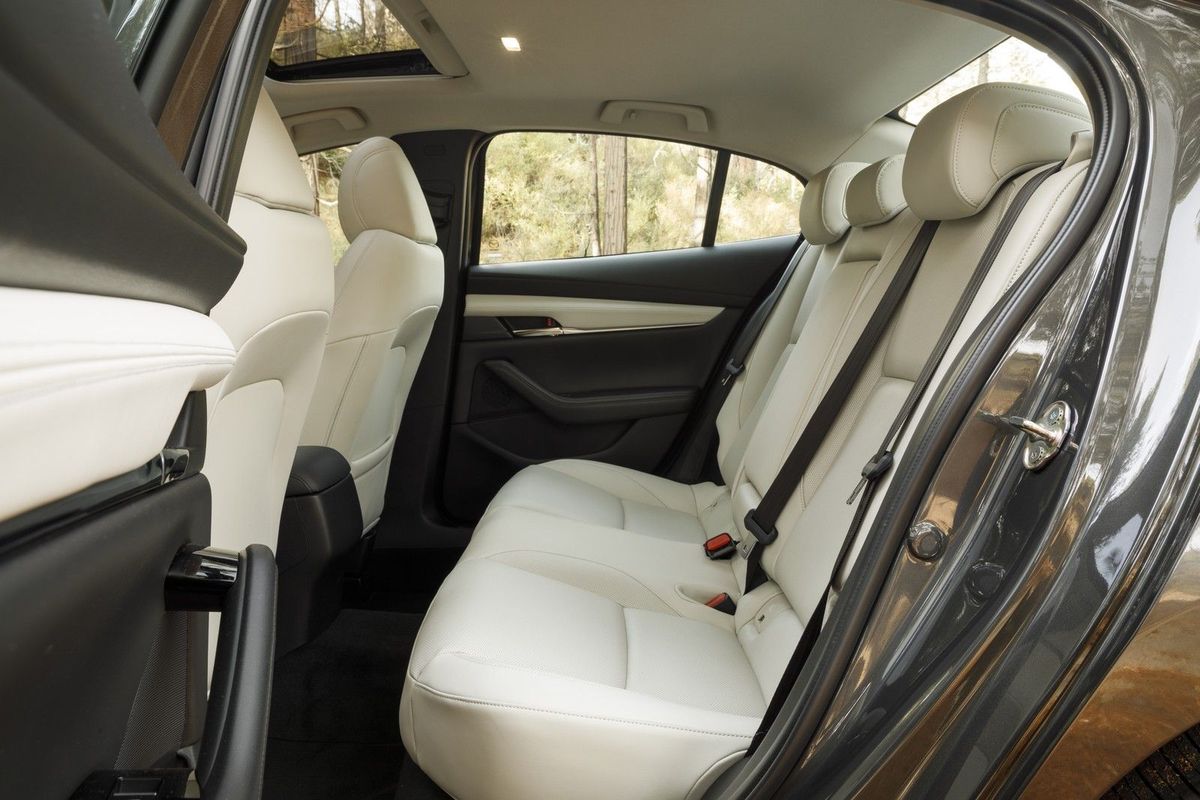
Many would expect the longer wheelbase to result in more cabin space, but that’s not really the case. Aft accommodation is certainly more occupant-friendly in the sedan, although that’s mainly due to its less pronounced roofline, which doesn’t rake up as aggressively as on the hatch. The back seat isn’t a benchmark setter, with reasonable leg, shoulder and headroom for a 1.82m adult seated behind someone of the same size.

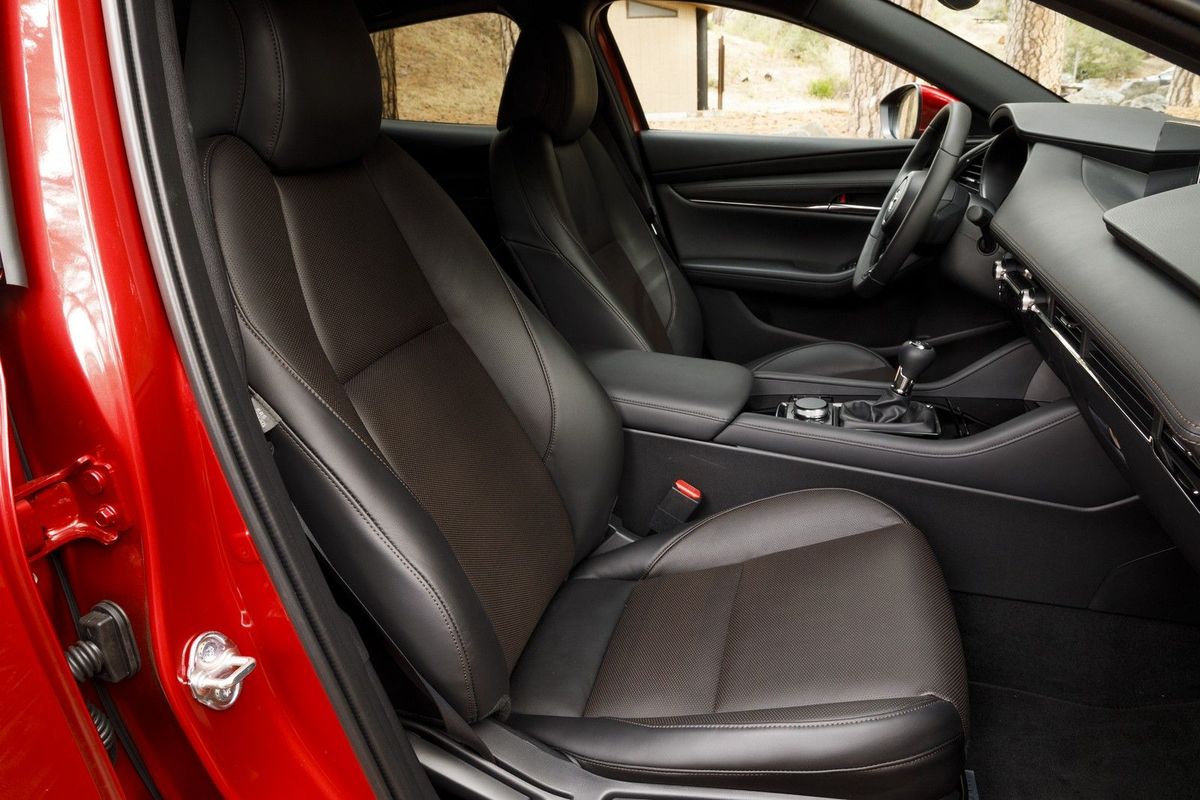
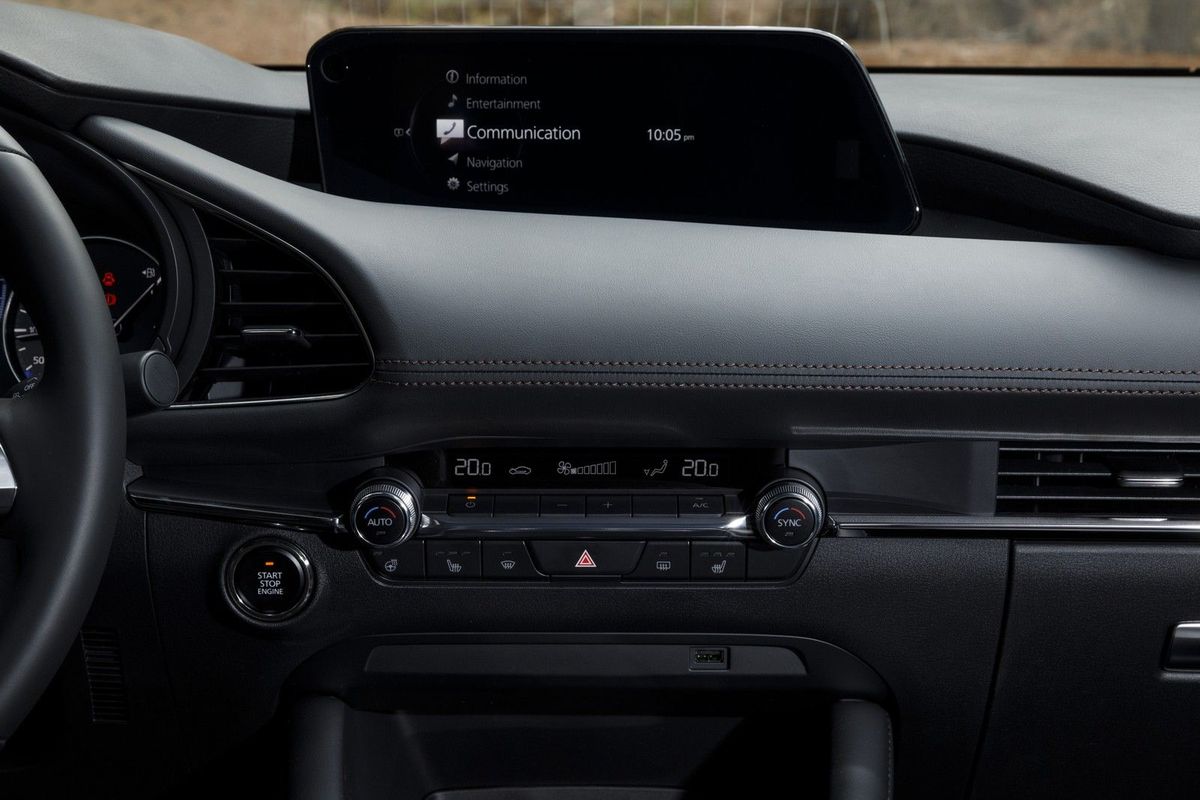
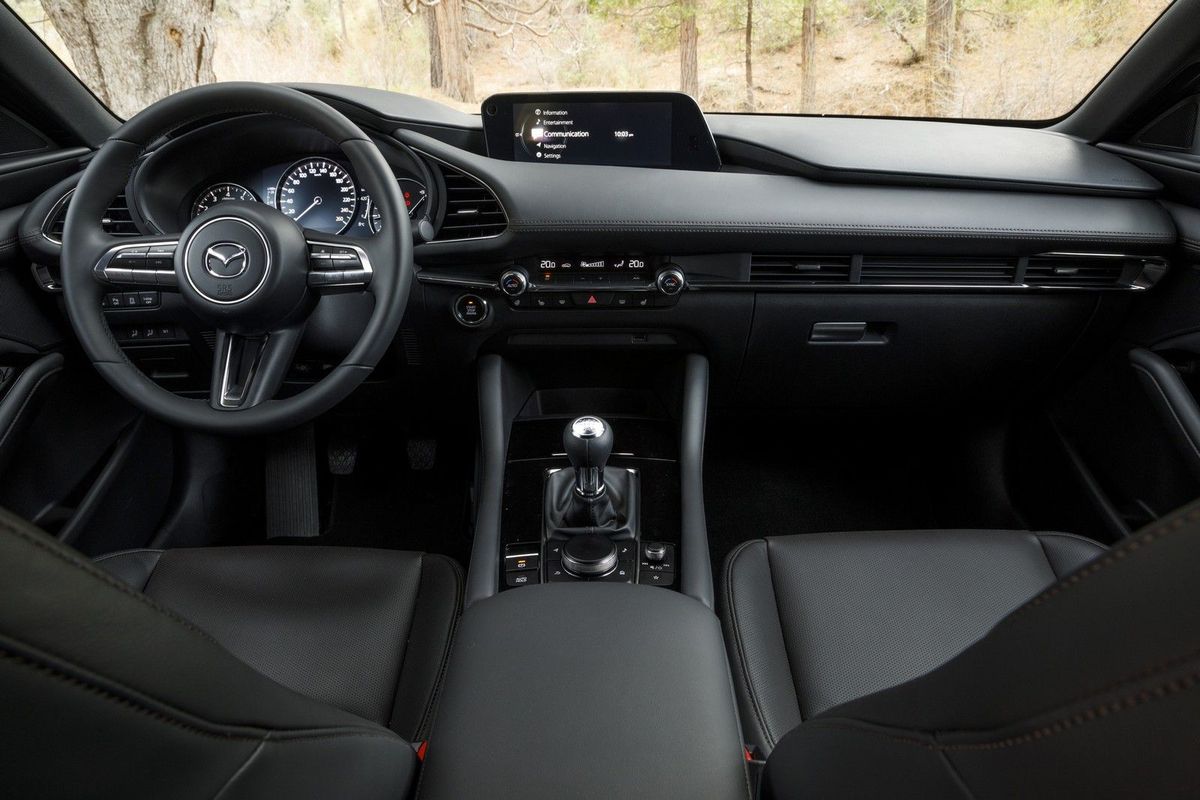
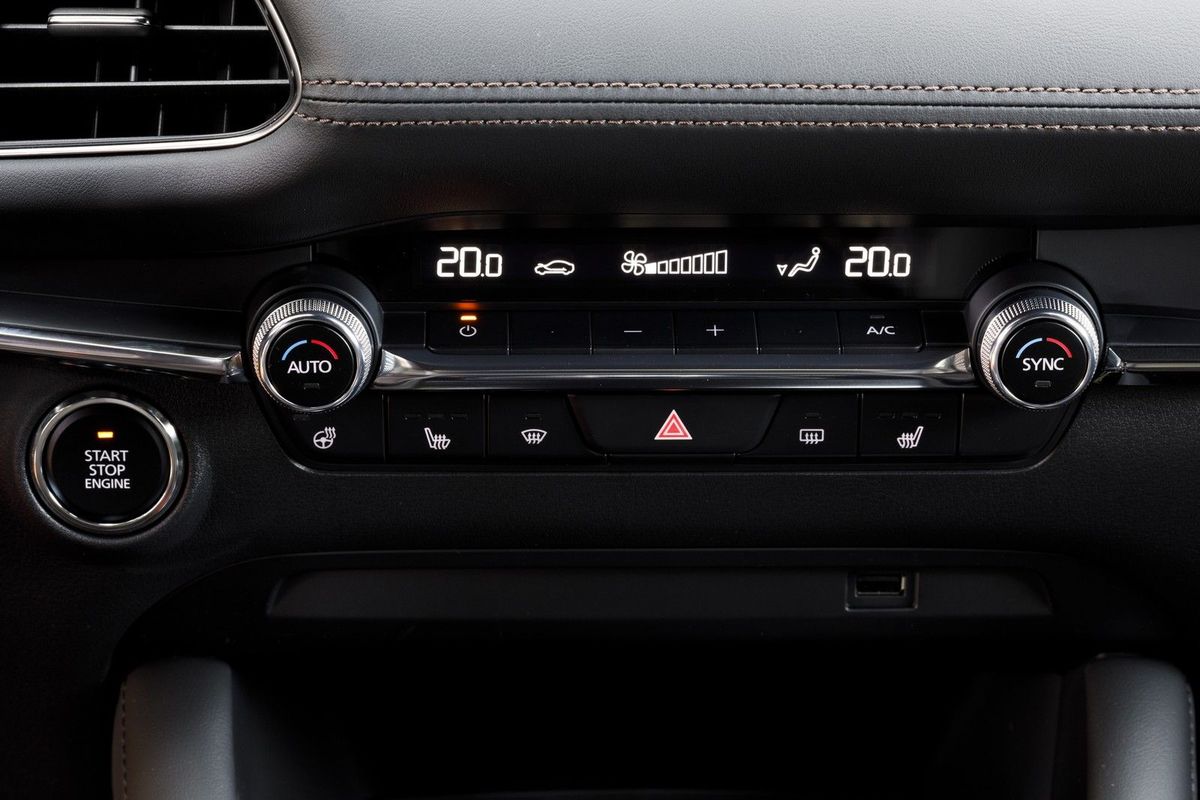
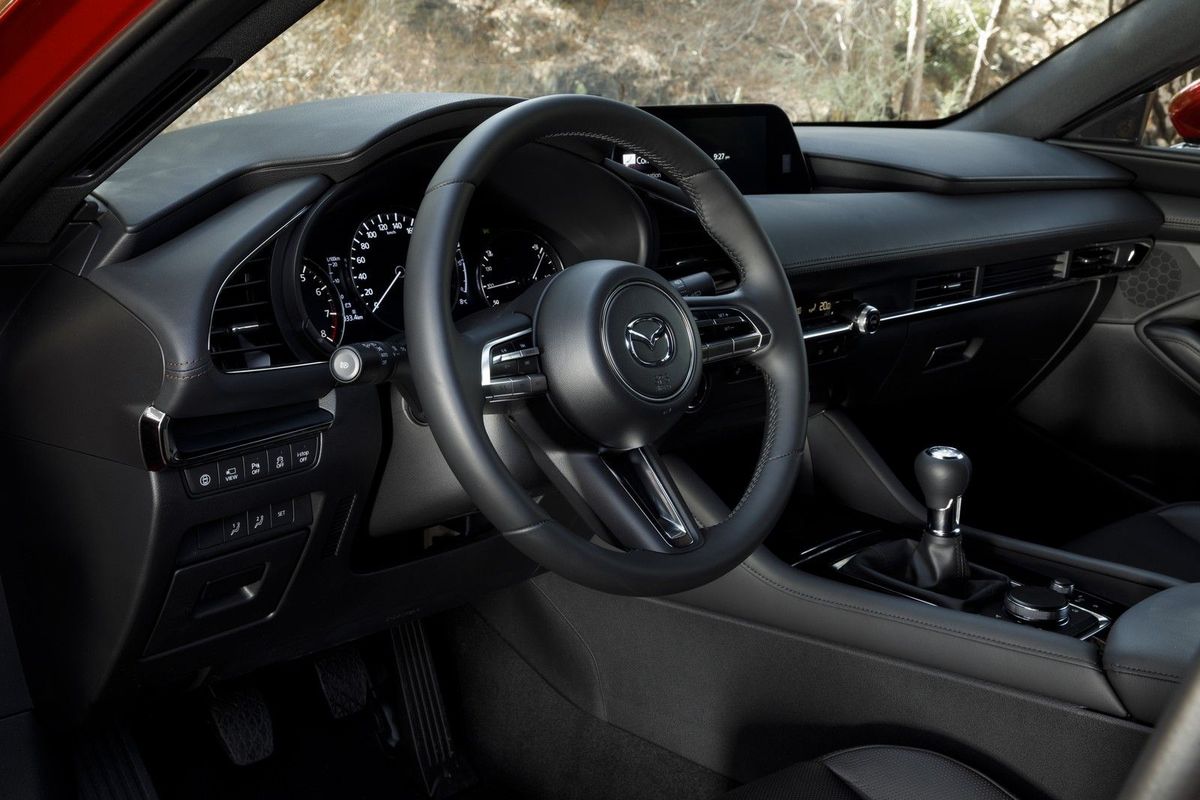
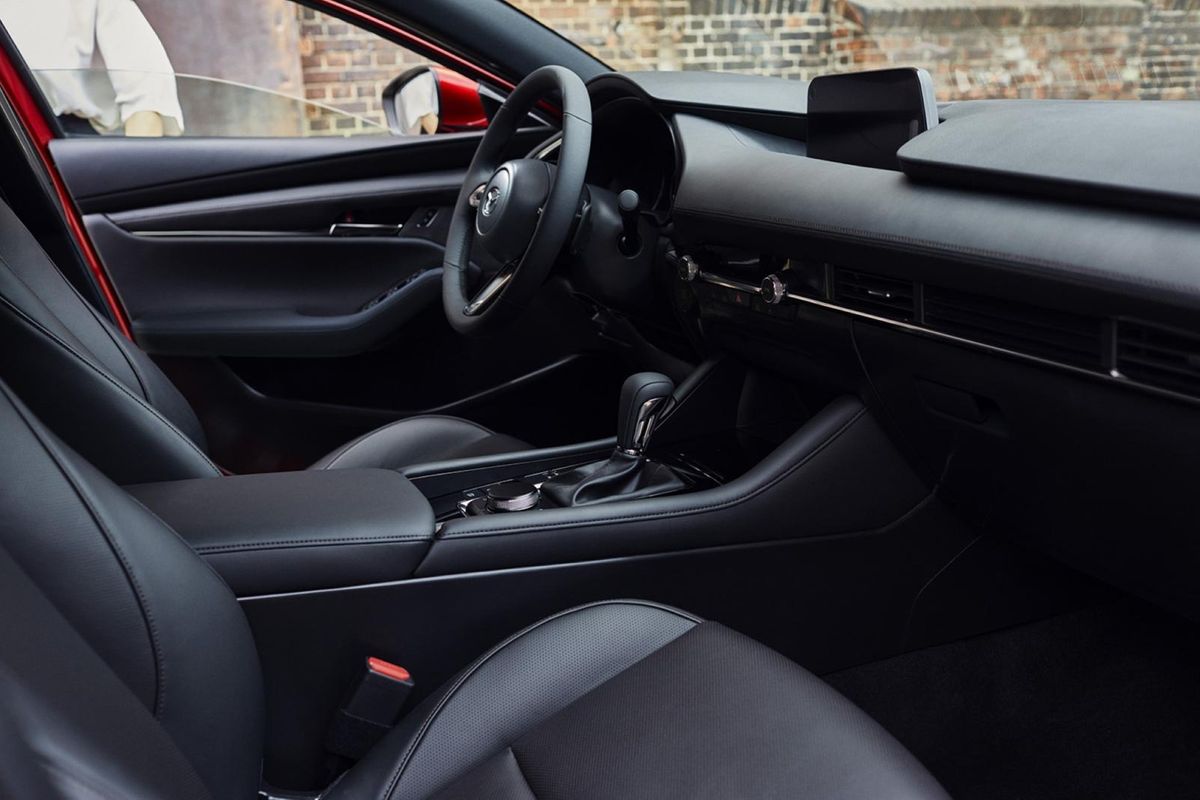
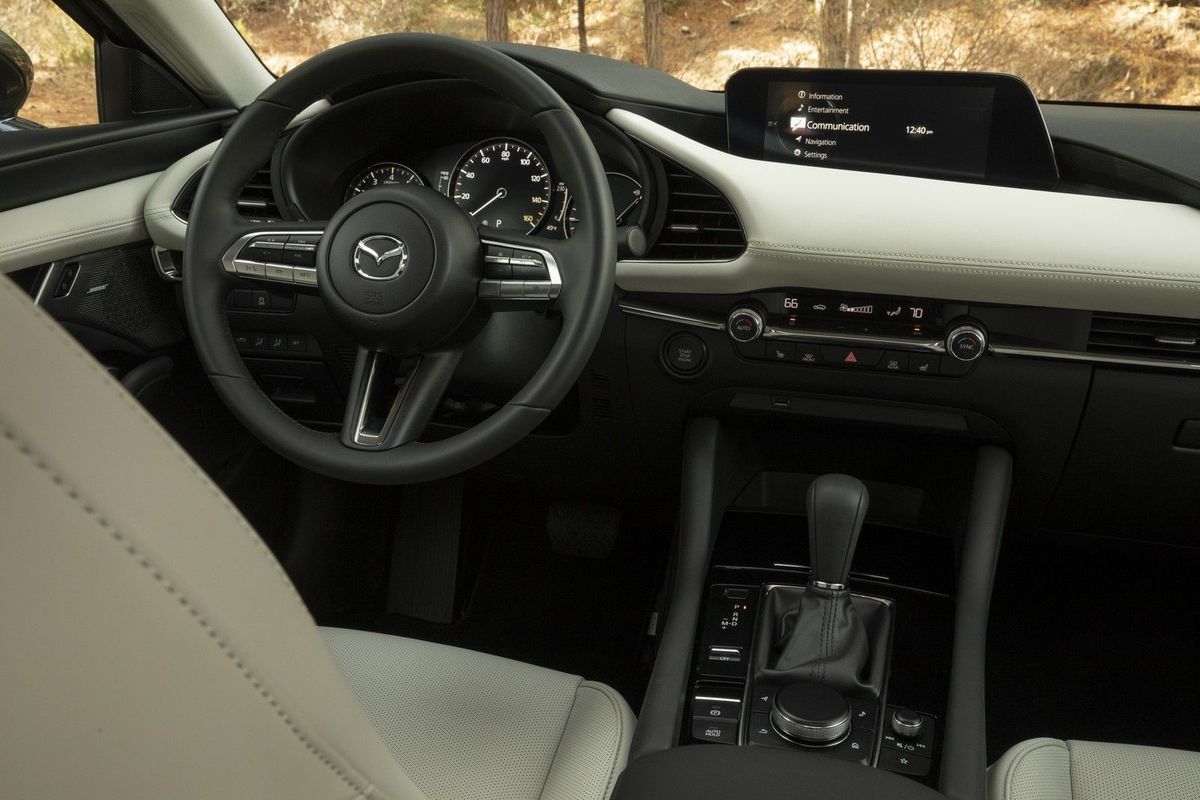
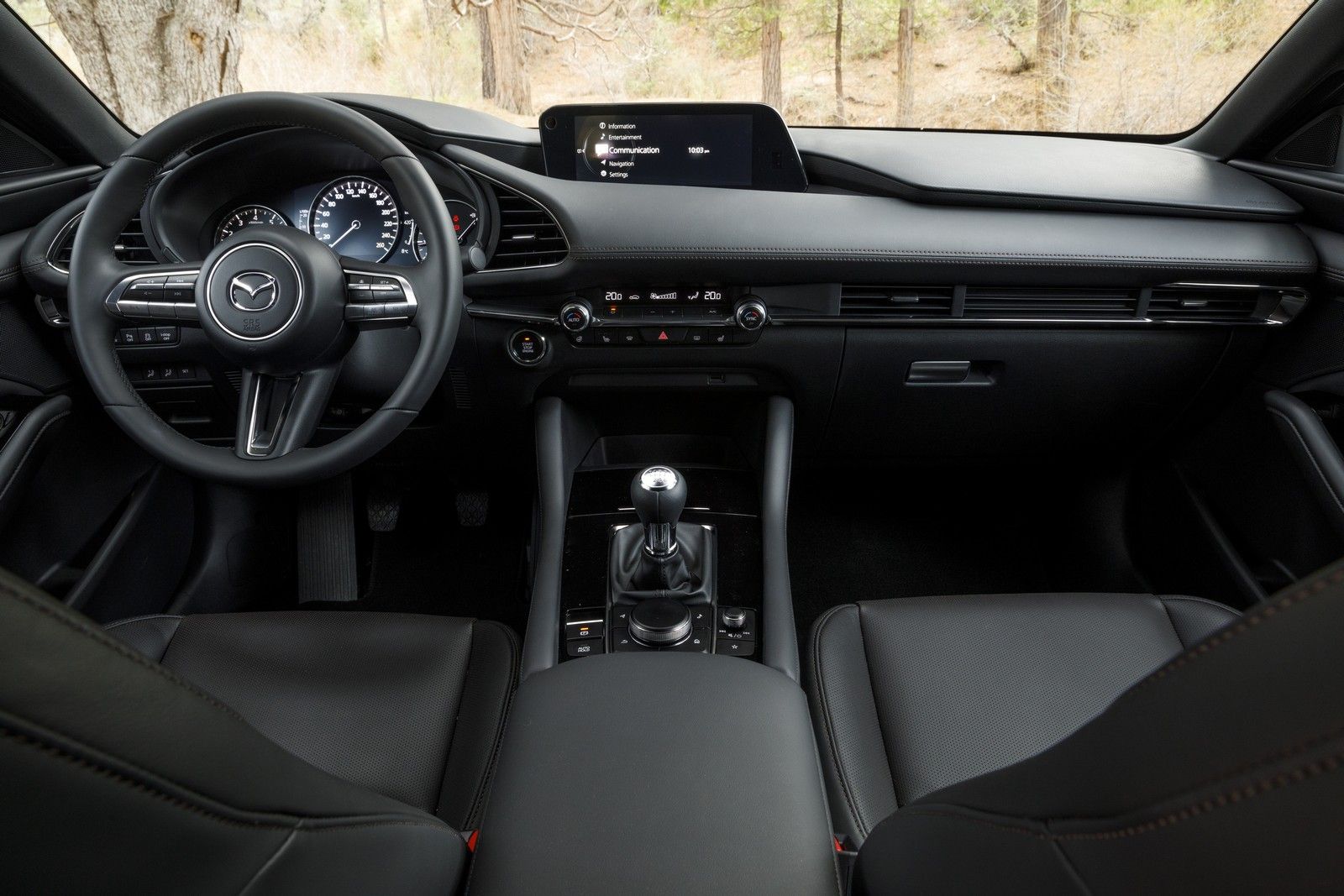
But the back seat isn’t where the new Mazda 3 impresses – the front seats offer by far and away the best experience. The dashboard has been redesigned (with a more intuitive and driver-oriented layout); it's made up of new stitched materials and has a considerably more upmarket feel.


The interior has more upmarket materials and a practical layout with a bigger centre console.

The cup holders have been repositioned, and the centre console is now larger than before – it’s all a bit more functional than the model it replaces, and that’s a welcome change.

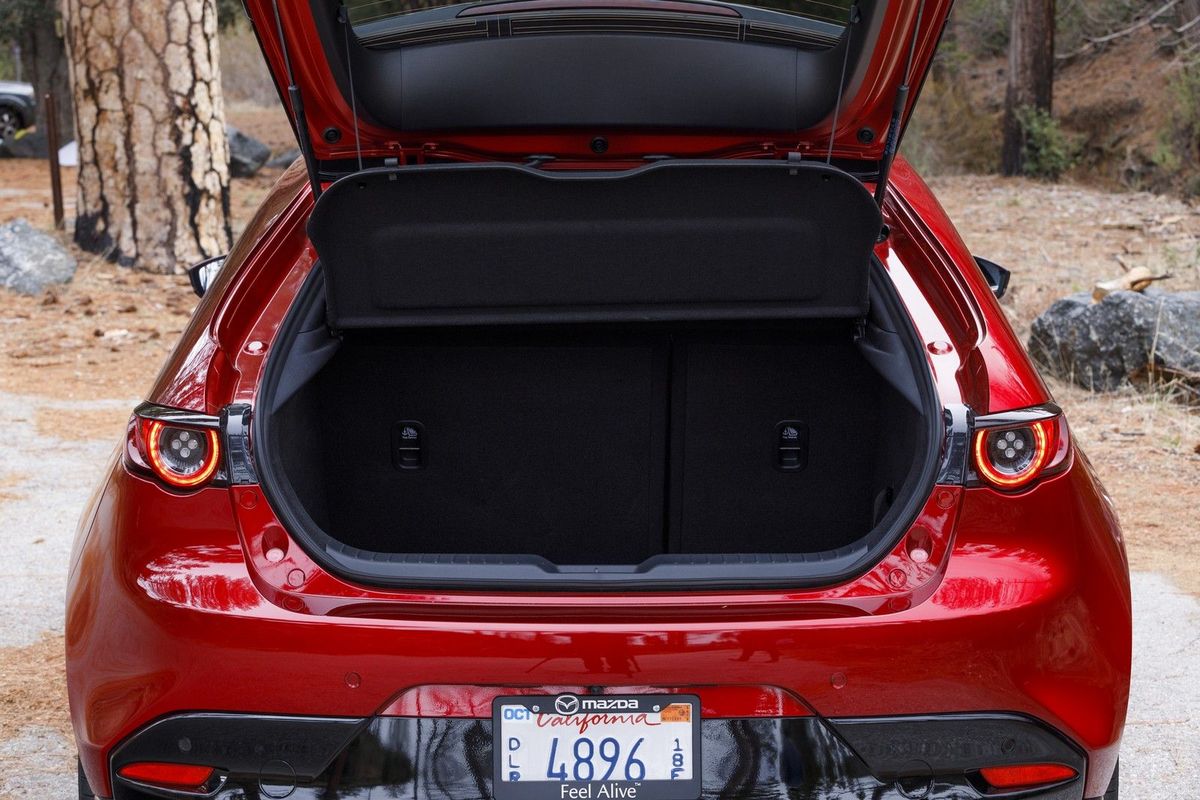
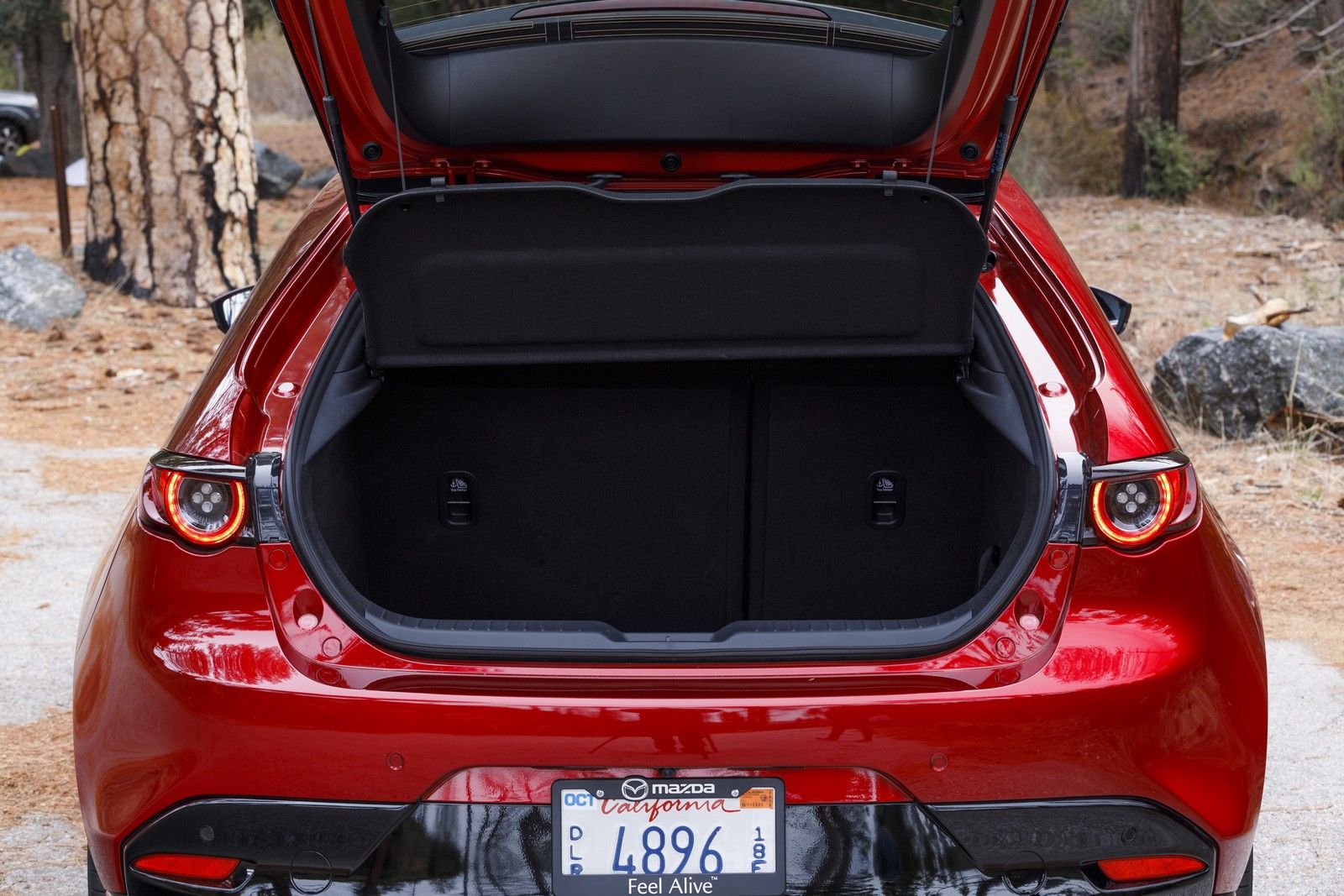
Regrettably, the load bay of the hatch is actually smaller than it used to be (295 litres), while the sedan again stands out, with its bigger, um, bustle incorporating 444 litres of cargo capacity, which is almost 10 per cent better than before.

Pump up the volume!

Mazda has completely rethought the sound system in the new 3. The company has developed new speakers and fit them in new positions to offer a superior audio experience (even in the base version of the car, the firm claims).

With 8 speakers – and, importantly, none of them down low in the doors – the new sound system pushes the brand’s in-car experience upmarket. A cynic might suggest the company’s engineers have just come up with a way to repudiate the road noise its compact cars have suffered from for what seems to be aeons… but it’s a genuinely excellent audio setup.


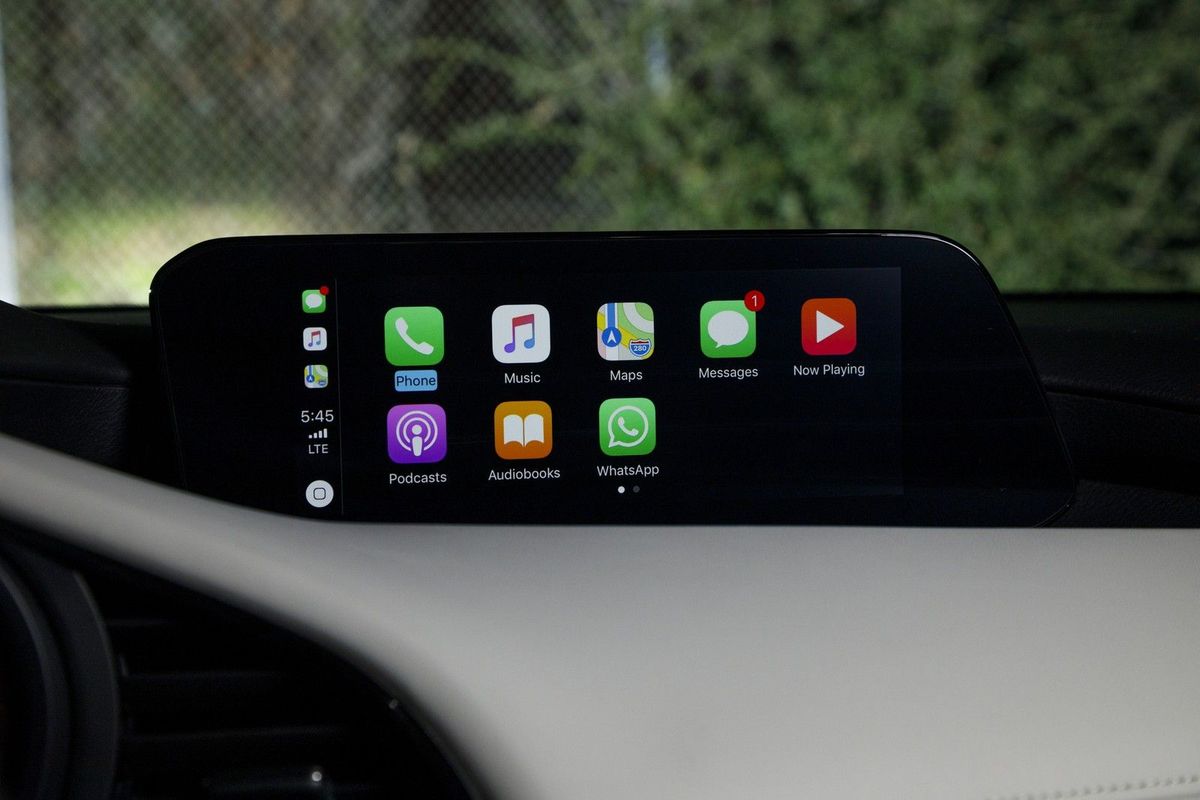
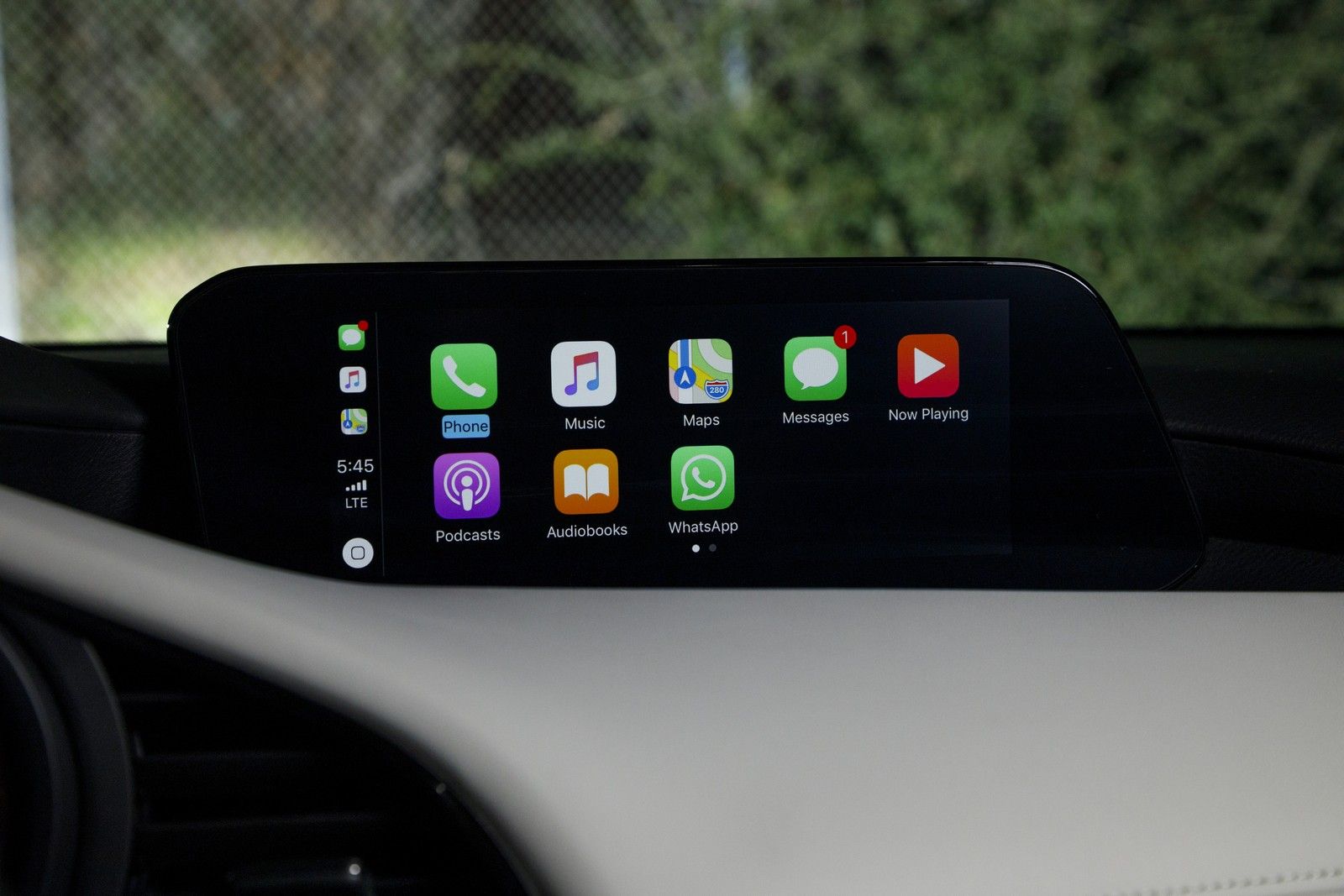
You no longer need to retrofit Android and Apple Carplay. The infotainment screen is not a touchscreen, unusually.

And if you don’t think that’s good enough, higher-grade models will be offered with a 12-speaker Bose system including a subwoofer and satellite tweeters. Plus there’s a new 8.8-inch media screen atop the dashboard, which sits further back to improve line-of-sight vision for the driver.

It is not only bigger and easier to read than before, but offers improved connectivity by way of standard Apple CarPlay and Android Auto compatibility. The bad news? Those mirroring systems work best when there’s a touchscreen, but the new display isn’t receptive to touch inputs…

I asked the engineers why Mazda chose to buck the touchscreen trend and they said that it was a safety concern, because the driver might affect the steering by leaning forward to touch the screen. Wait until you try using Apple CarPlay or Android Auto with a rotary dial… those same engineers reckoned it’d take owners about a fortnight to get used to it, and all I can say is that Mazda must have very patient customers…

What’s it like to drive?


Improvements to the NVH levels have been made without detracting from its spirited driving experience.

There is no denying the new version of the 3 is better than it ever has been – and that’s based on a short stint in some cars that weren’t representative of what will be sold in South Africa (or Australia, where I’m based). Engine details for this market are to be confirmed, but – as with the current version – a 2.0-litre engine is most likely to be offered, with the choice of 6-speed manual or automatic transmissions.

I got to drive the new mild-hybrid version of the Skyactiv 2.0-litre engine, which was mated with a manual transmission in the demo unit. This one will be popular in Europe, as it teams the current 2.0-litre powerplant with a newly integrated starter generator and 24-volt lithium-ion battery pack. This works in tandem with regenerative brakes, and the stored energy can run the car’s electrics and also add a little extra power, Mazda claims.

Engines for our local market have not been decided yet, but we expect a 2.0-litre with 6-speed manual and auto to be on the list.

It was only a short drive in this car, but I can attest to the effectiveness of the engine stop-start system, which cut the engine out gracefully and restarted smoothly. There are no official figures on how much power it can add, nor how much fuel it will save, nor any indication as to how widely it will be rolled out. Then there’s the Skyactiv-X engine, an all-new motor that uses a diesel-like compression ignition system in favour of spark plugs (though they are also fitted and may be used in certain instances). Sadly, this car wasn’t available to test, but it will arrive towards the end of 2019.

Refinement gains

Meanwhile, the suspension has been fettled to be softer and more compliant, but without demeaning the Mazda3's agile handling characteristics in the process – and that’s even after the brand moved from an independent rear suspension setup to a simpler (and cheaper) torsion beam layout.


The load bay on the hatch is actually slightly smaller than the model it replaces with only 295 litres of load space.

The steering offers better (more linear) responses, while still hitting the target for engagement for the driver. Through a series of flowing high-speed corners on the outskirts of Los Angeles, the Mazda3 gripped the road nicely, allowing me to link up a line of bendy bits with barely any fuss.

Oh, and good as the stereo may be (and it is!), there have undoubtedly been big gains made in terms of NVH suppression (quieting the cabin). Now, you can actually hold a conversation without raising your voice, be it on smooth roads at low speeds or coarser surfaces at pace.

Summary

The Mazda3 duo lives in the shadow of its CX-3 and CX-5 siblings in the South African market, which speaks volumes of the crossover craze and its detrimental effect on C-segment (compact car class) sales. But for those who need more practicality and sophistication than the Mazda2 and other light hatchbacks, the new Mazda3 hits the mark on many fronts. It’s more upmarket and nicer to drive than its predecessor, which is exactly what we expected from Mazda. And whereas the hatchback marks a noteworthy evolution of the current 5-door model, the reimagined sedan has the added kerb appeal and required sophistication to make the Toyota Corolla, let alone the Honda Civic and Hyundai Elantra feel somewhat uneasy. In fact, some people may consider the 4-door Mazda3 a bit of bargain compared with small sedans from the premium marques (Audi and Mercedes). 

Related content:

New Mazda3 Revealed [w/video]

Ford Focus (2018) International Launch Review

New Toyota Corolla Revealed

Volkswagen Golf 8 (2019) What It Could Look Like

Interested in buying a used Mazda3?

Search for one on Cars.co.za

VW Gives an Extra 15 kW to Golf R

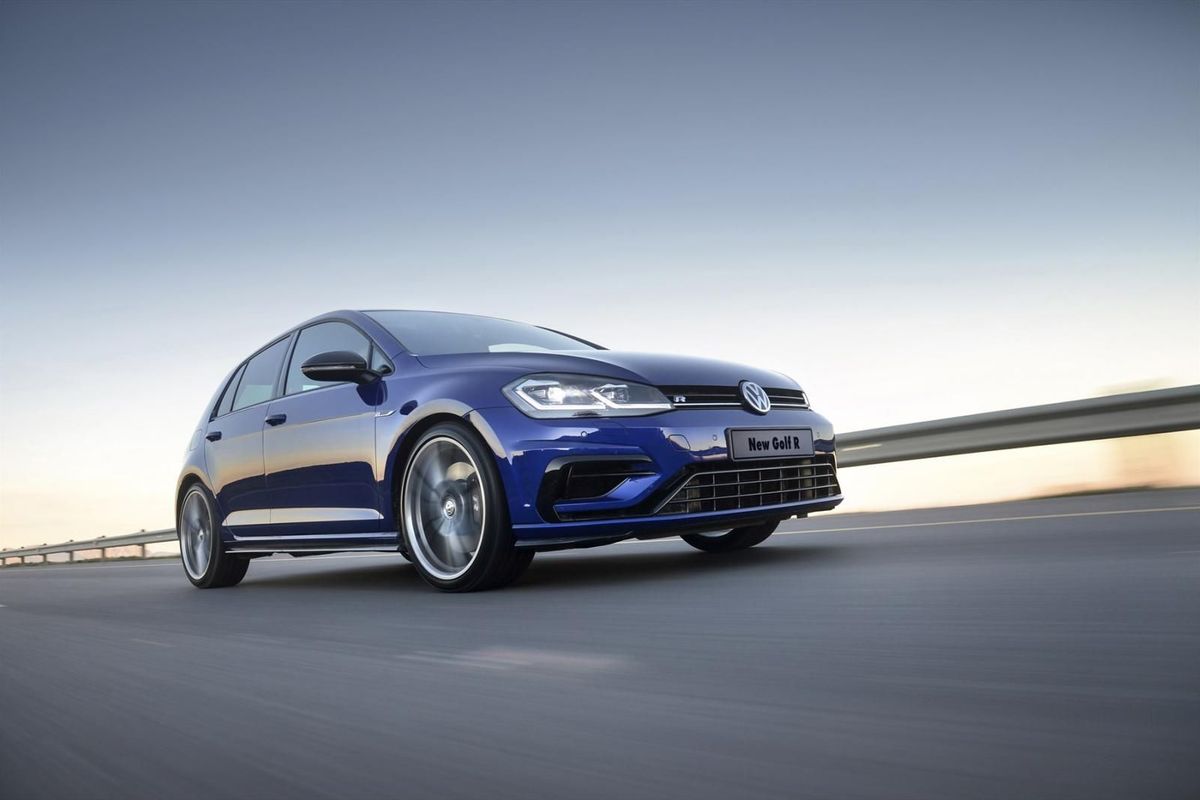
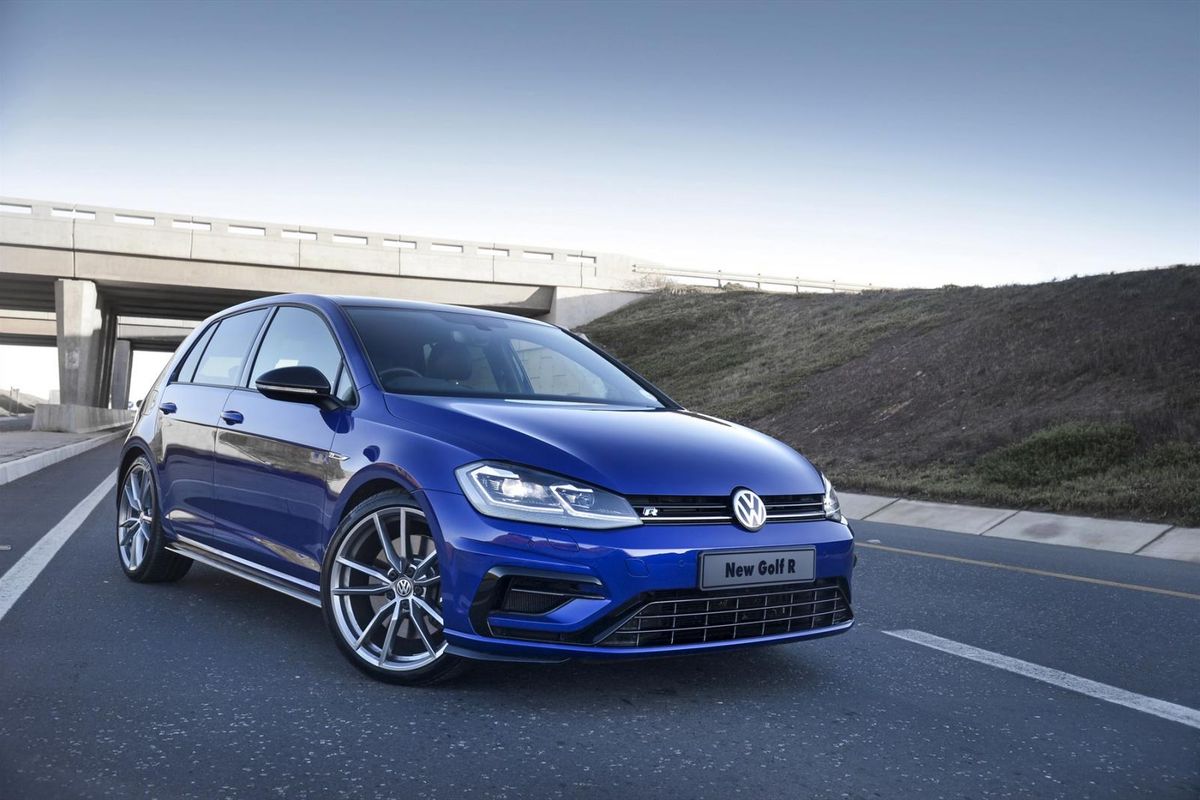
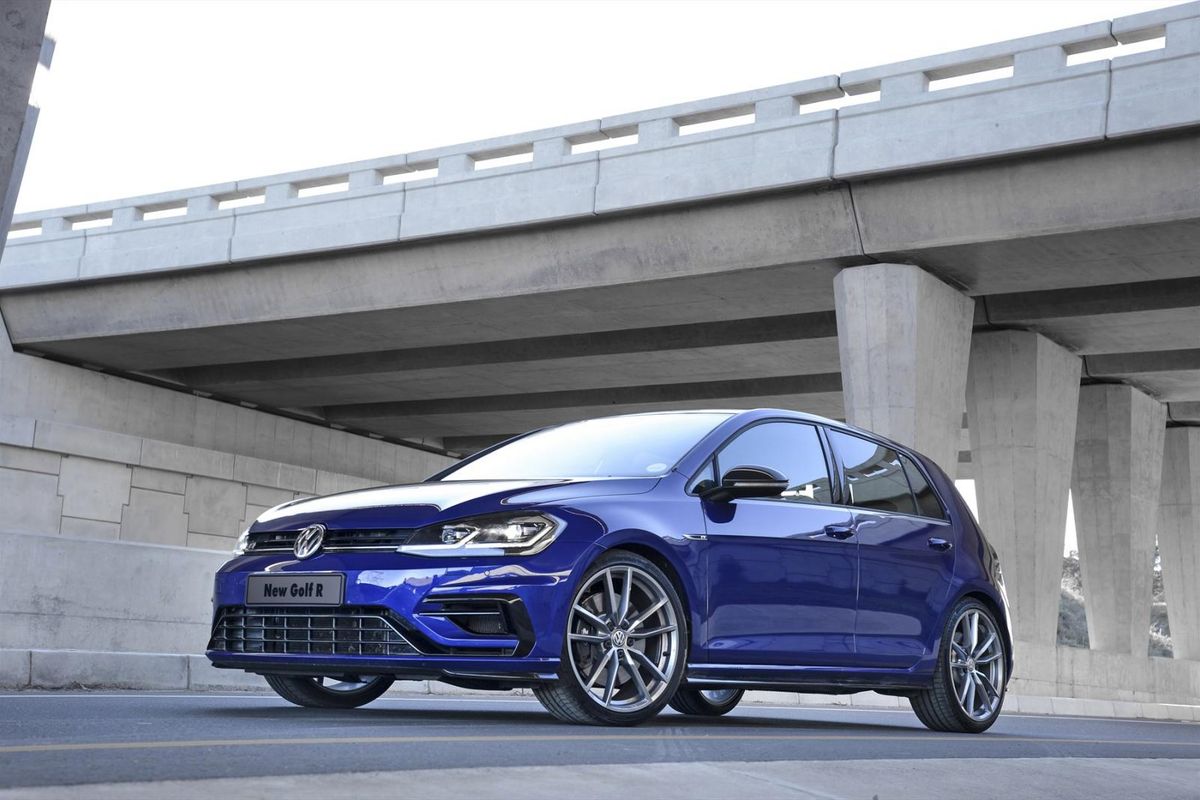
Volkswagen SA has finally given the Golf R the power it deserves (and was always meant to have).

When the latest edition of the Golf R arrived in SA, it had to be slightly detuned to adhere to our market's "hot weather climate" status. The result was a 213 kW Golf R instead of the European-spec 228 kW car. What made matters worse for Golf R owners was that Audi SA was able to introduce the same engine (in its S3) with the full 228 kW.

Finally, the Golf R produces the full 228 kW and 400 Nm of torque (up 20 Nm as well) in our market. Unfortunately, the acceleration time doesn’t improve with the extra power and torque, as the R still hits 100 kph from standstill in 4.6 seconds.

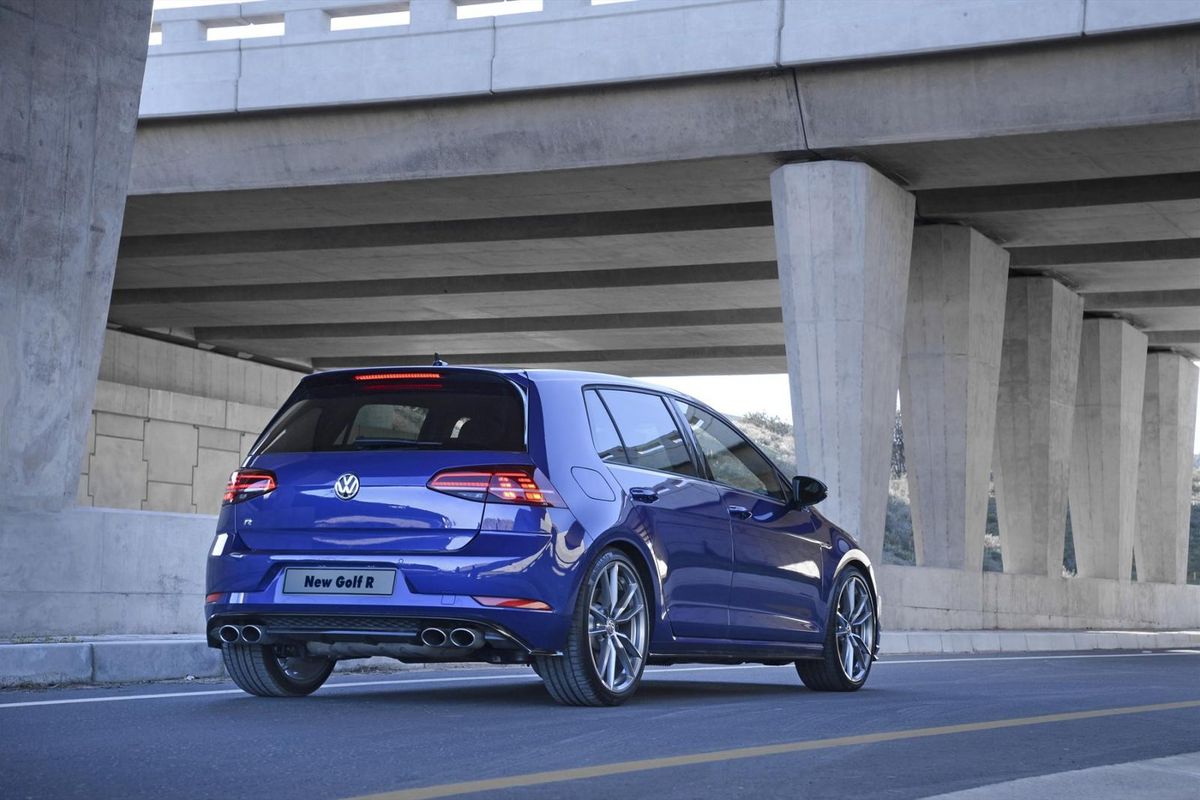
A few extra design options are also available on the updated car, including R Performance Titanium exhaust and -brakes with black calipers.

Pricing  

2.0 TSI R 228kW DSG                                            R676 000

The Golf R comes standard with a 5 year/90 000km Service Plan,

3 year/120 000km warranty and a 12-year anti-corrosion warranty. Service interval is 15 000km.

Related content

Volkswagen Golf R (2017) Quick Review

Drag Race: VW Golf R vs Golf GTI [Video]

Mercedes-AMG A35: A true Golf R rival