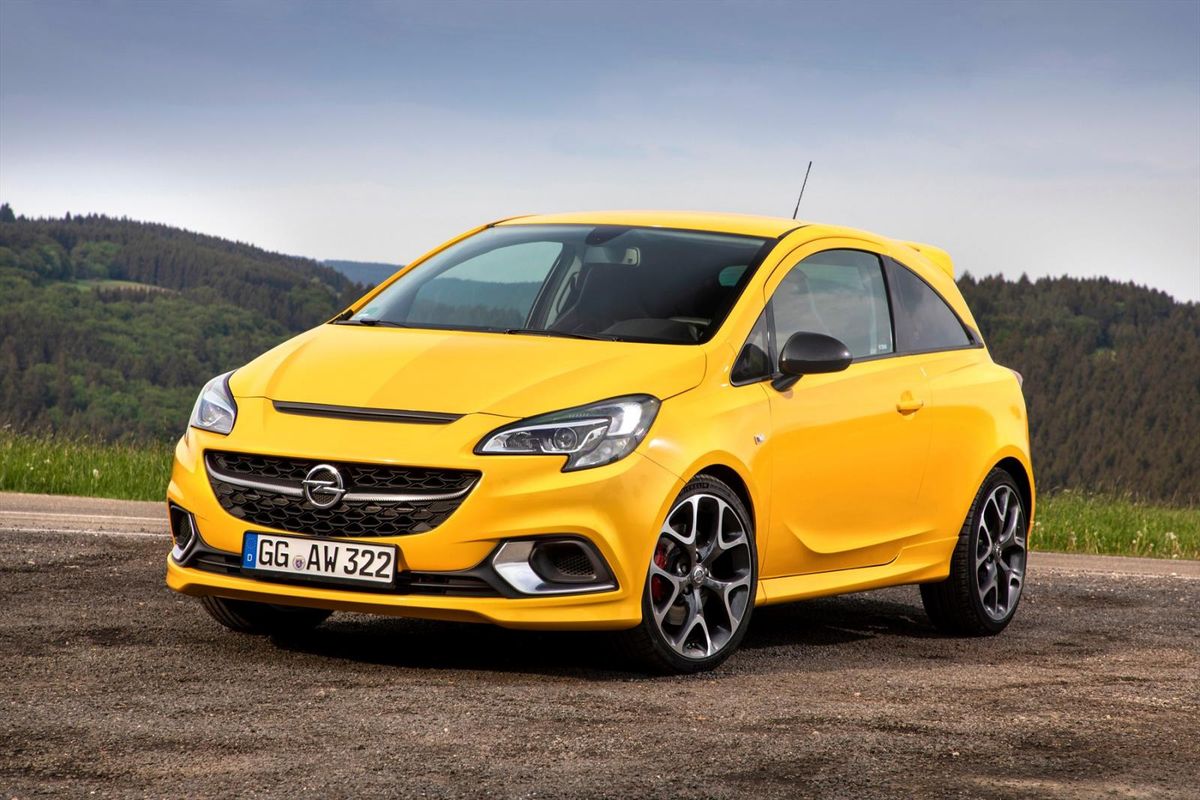
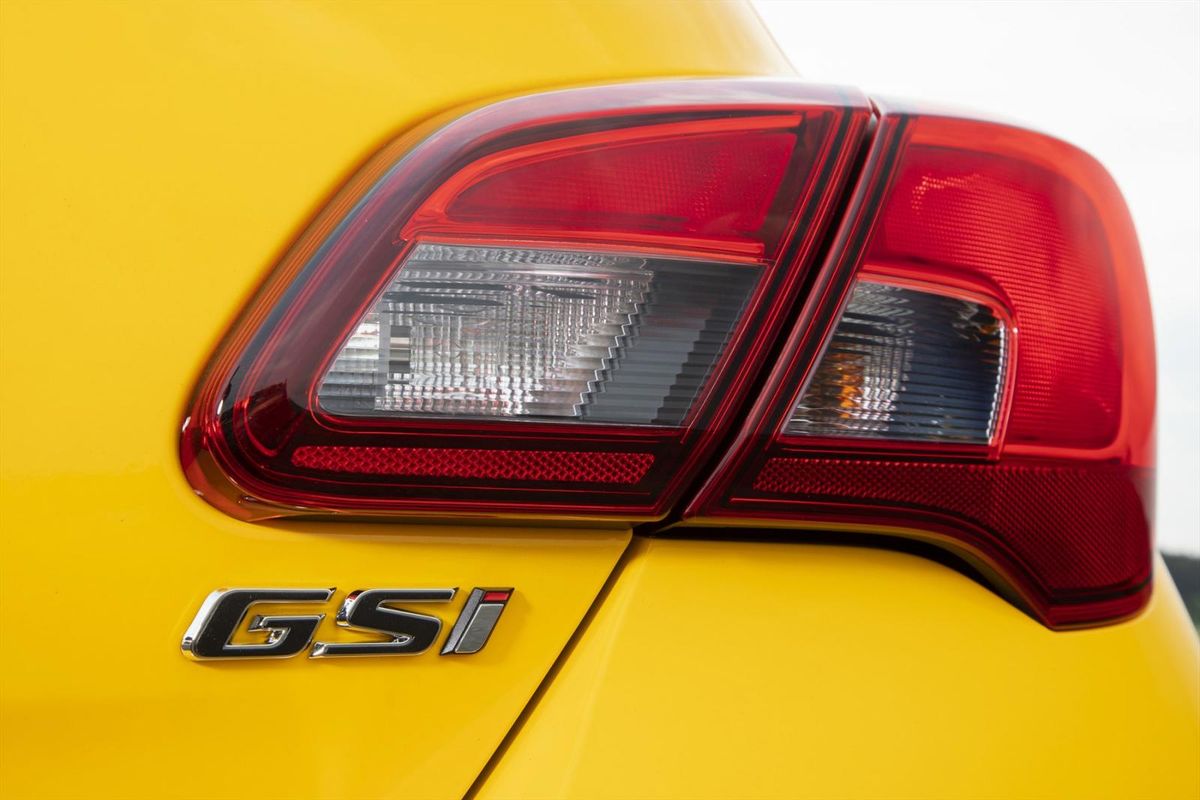
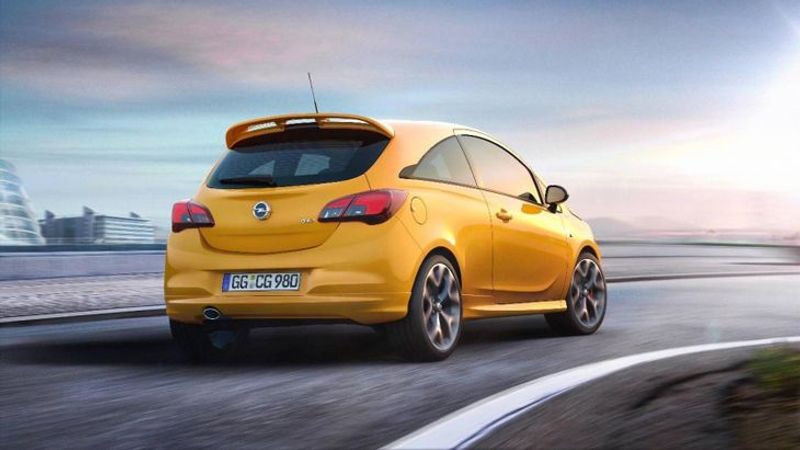
The evocative GSi nameplate will soon be back in the South African market. Opel will introduce a new, sporty 3-door Corsa GSi to its local lineup in May, with an asking price of R365 900?. Take a look at what this hot number offers…
With the next-generation Corsa expected to be unveiled in the near future, this flagship Corsa derivative appears to be a fitting send-off for the current model. It needs to be noted, however, that Opel intends to reposition the GSi badge to symbolise "sport luxury with a powertrain (that) focuses on everyday driving needs", or, to put it another way: "gently distance the new GSi badge from its historical pure performance roots."
Key features
With its OPC sports chassis, the Corsa GSi promises agile handling.
Powered by a 1.4-litre turbopetrol engine that delivers 110 kW/220 Nm and is mated with a short-ratio, 6-speed manual gearbox, the GSi is said to offer "outstanding punch in 2nd and 3rd gears". Reports say the derivative has a claimed 0-100 kph time of 8.9 seconds, a 207-kph top speed and an average fuel consumption figure of just over 6.0 L/100 km.
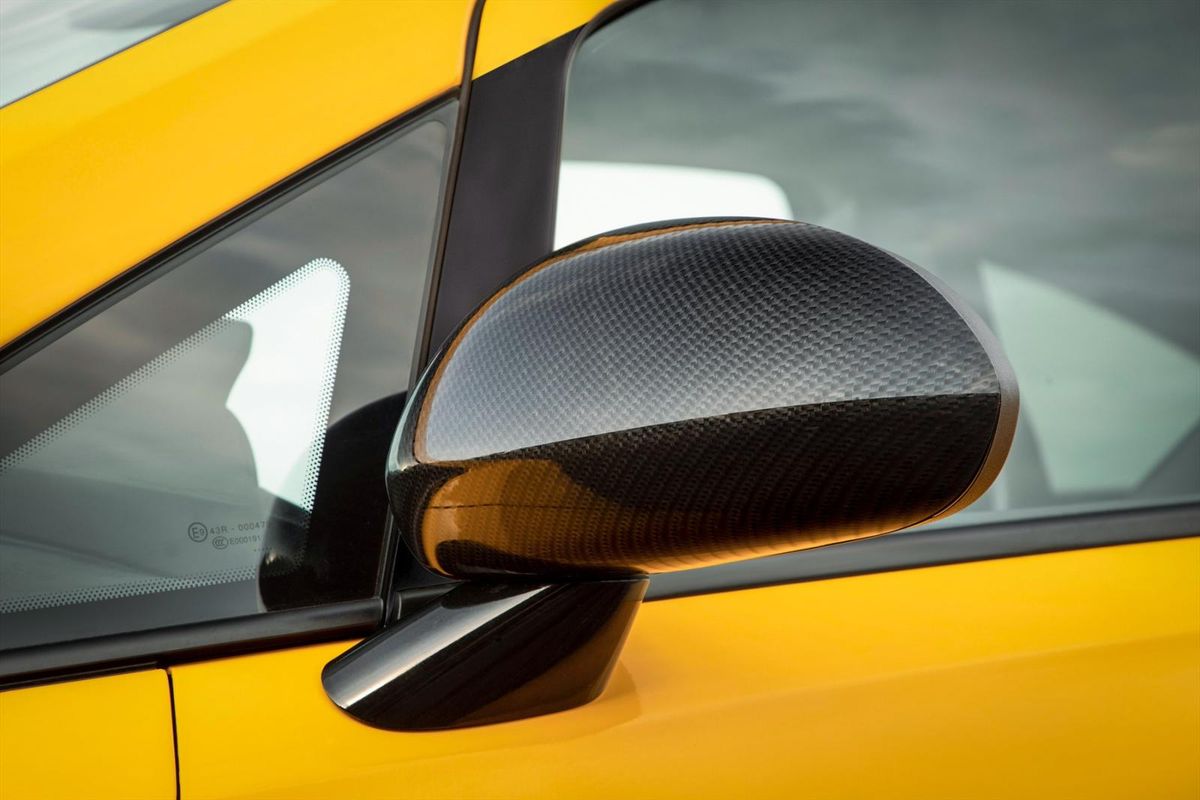
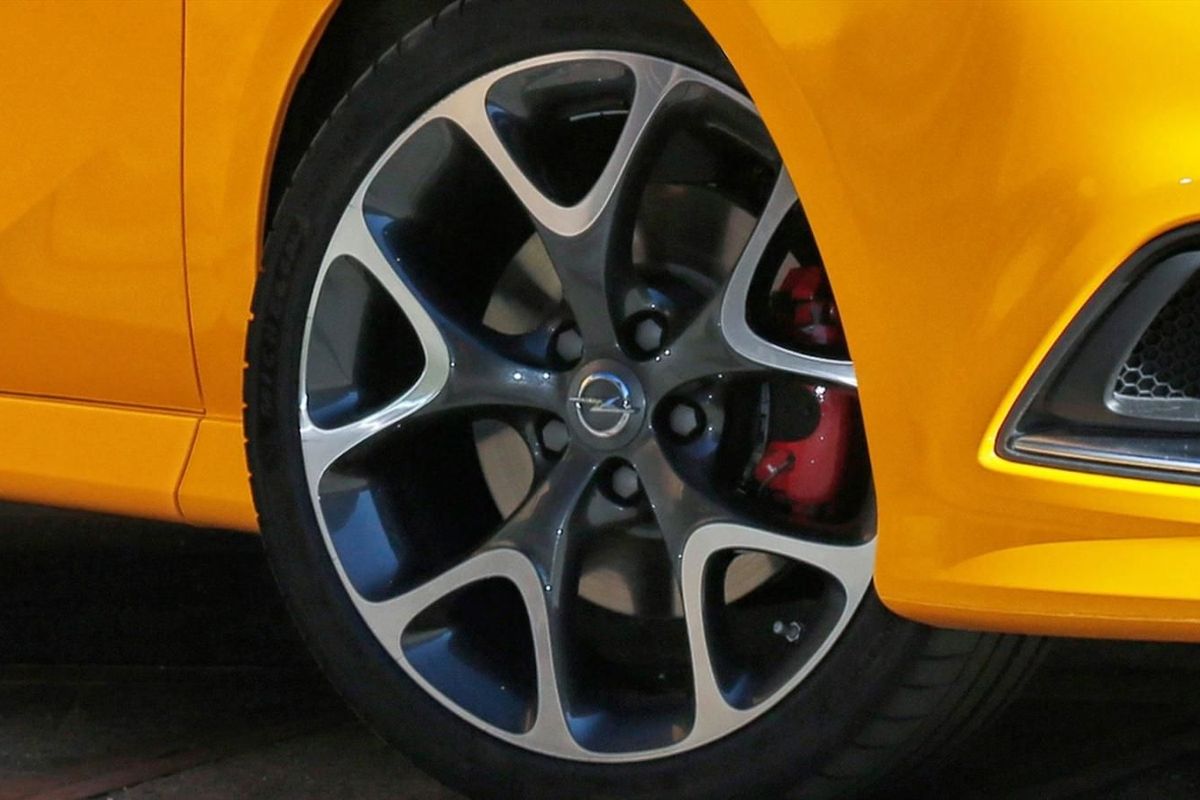
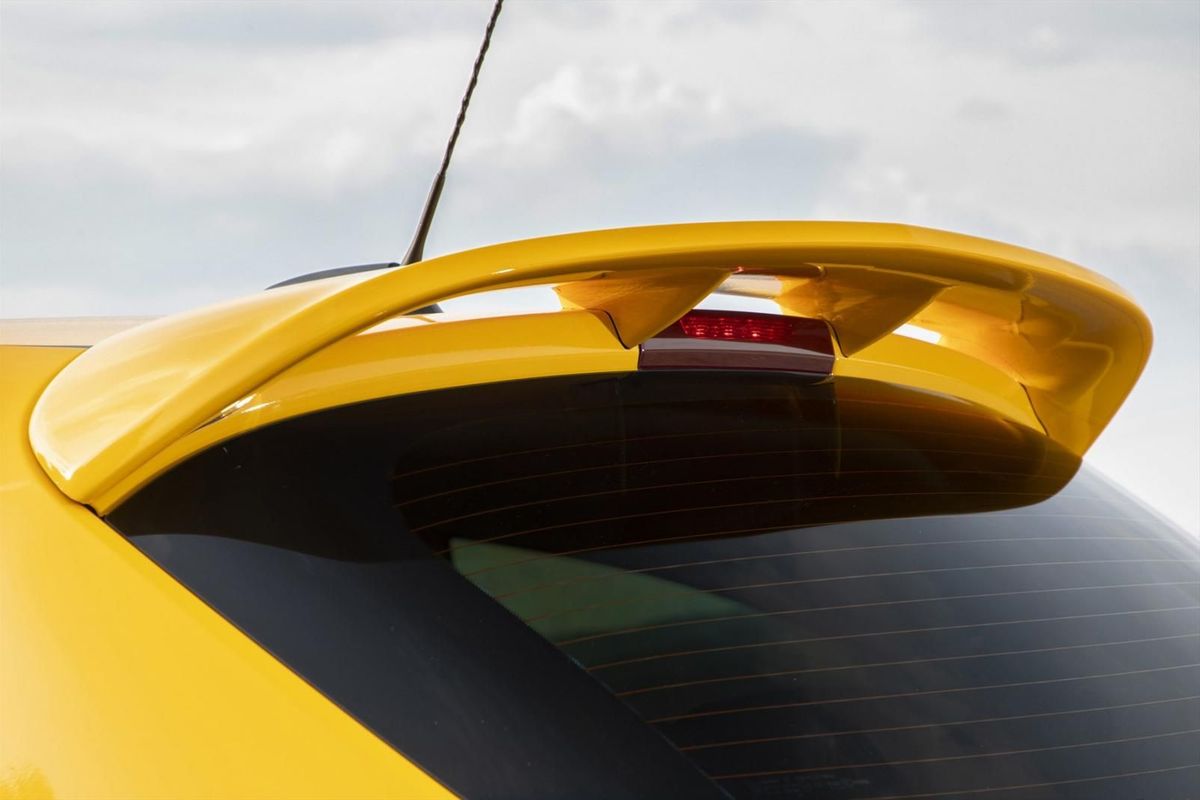
The newcomer borrows its Nurburgring-honed sports chassis from the Corsa OPC, which should ensure nimble cornering ability. The 3-door has been spruced up visually too and features a sizable honeycomb grille with large air intakes, a sculpted bonnet, rear spoiler, carbon-look side mirrors, red brake callipers and 18-inch light alloy wheels that give the self-styled "warm hatchback" a racier edge.
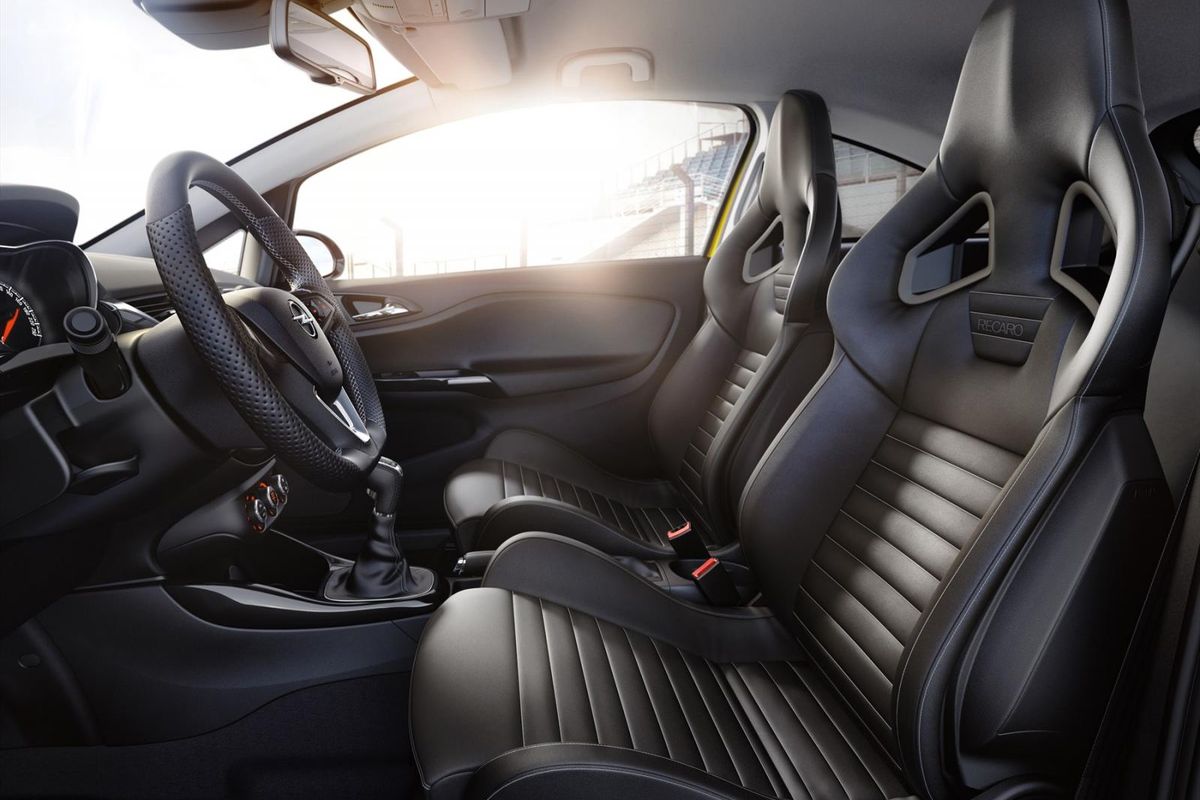
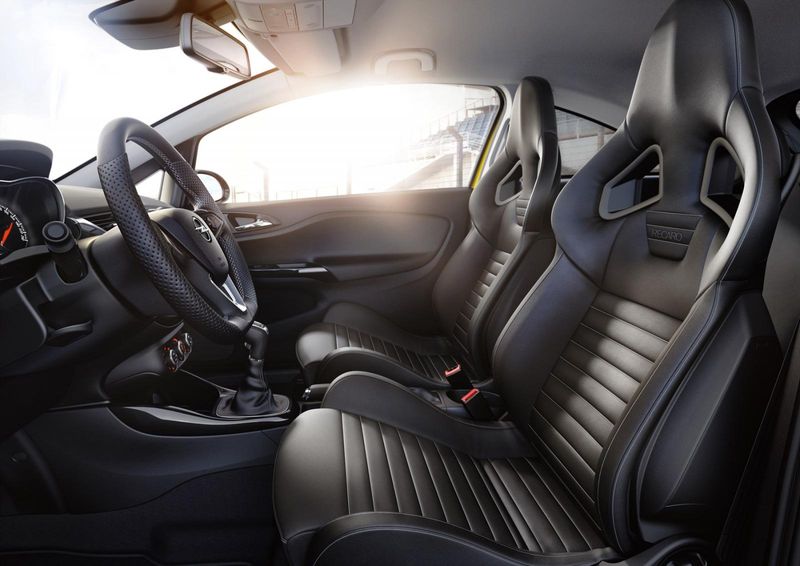
The Corsa GSi's sculpted Recaro sports seats should offer ample body-hugging support in the twisties!
On the inside, the Corsa GSi features Recaro sports front seats, leather cladding, a sports steering wheel, leather wrapped gear lever and aluminium sport pedals. In-car connectivity comes in the form of Opel’s IntelliLink infotainment system.
It's highly likely that, like its local siblings, the newcomer will be sold with a 3-year/120 000 km warranty and 3-year/60 000 km service plan.
Haval H6 & F7 Driven: Coming to South Africa in 2020
Currently doing brisk business in South Africa with particularly its well-priced H2 small SUV/crossover, Haval South Africa plans to add some exciting product in the near future. We travelled to China to drive them…
If you live in one of South Africa's bigger cities, you'll have undoubtedly noticed a steady increase in the number of Haval products on our roads. Attractive product at the right price, is a combination that is increasingly winning over once sceptical South Africans. But the best, as the saying goes, is yet to come.
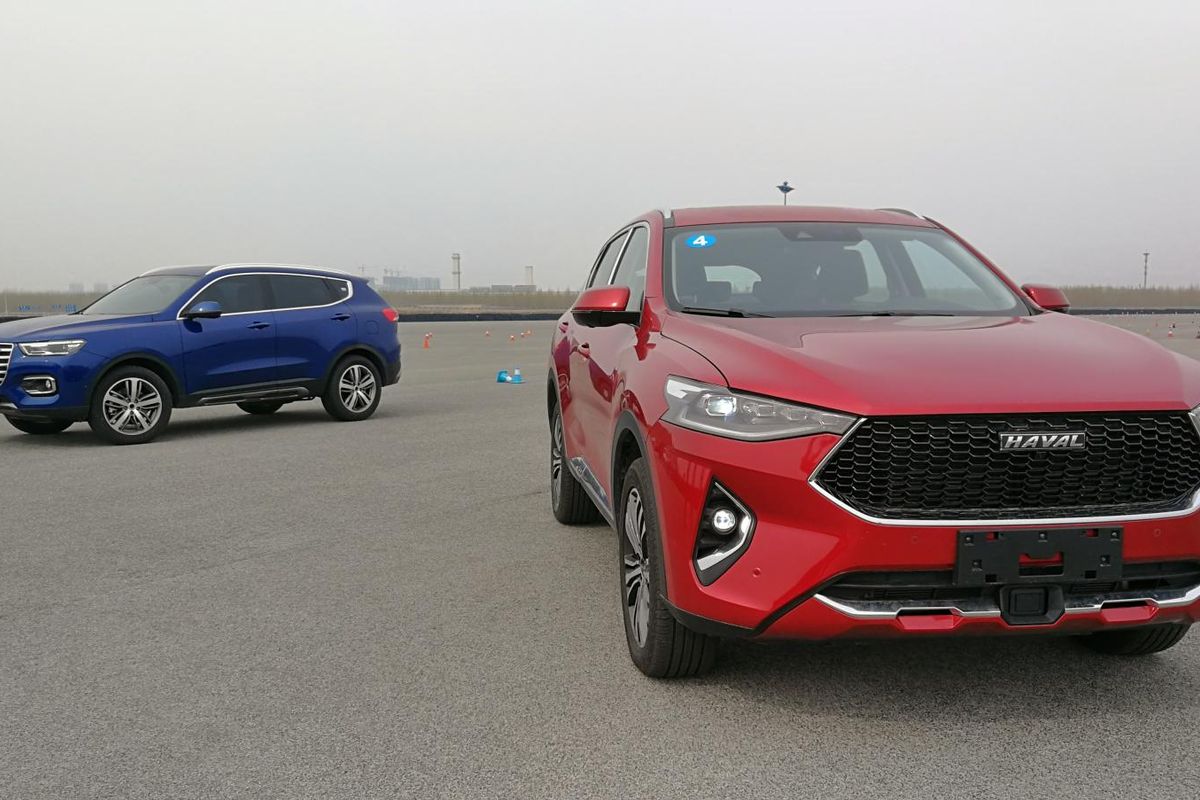
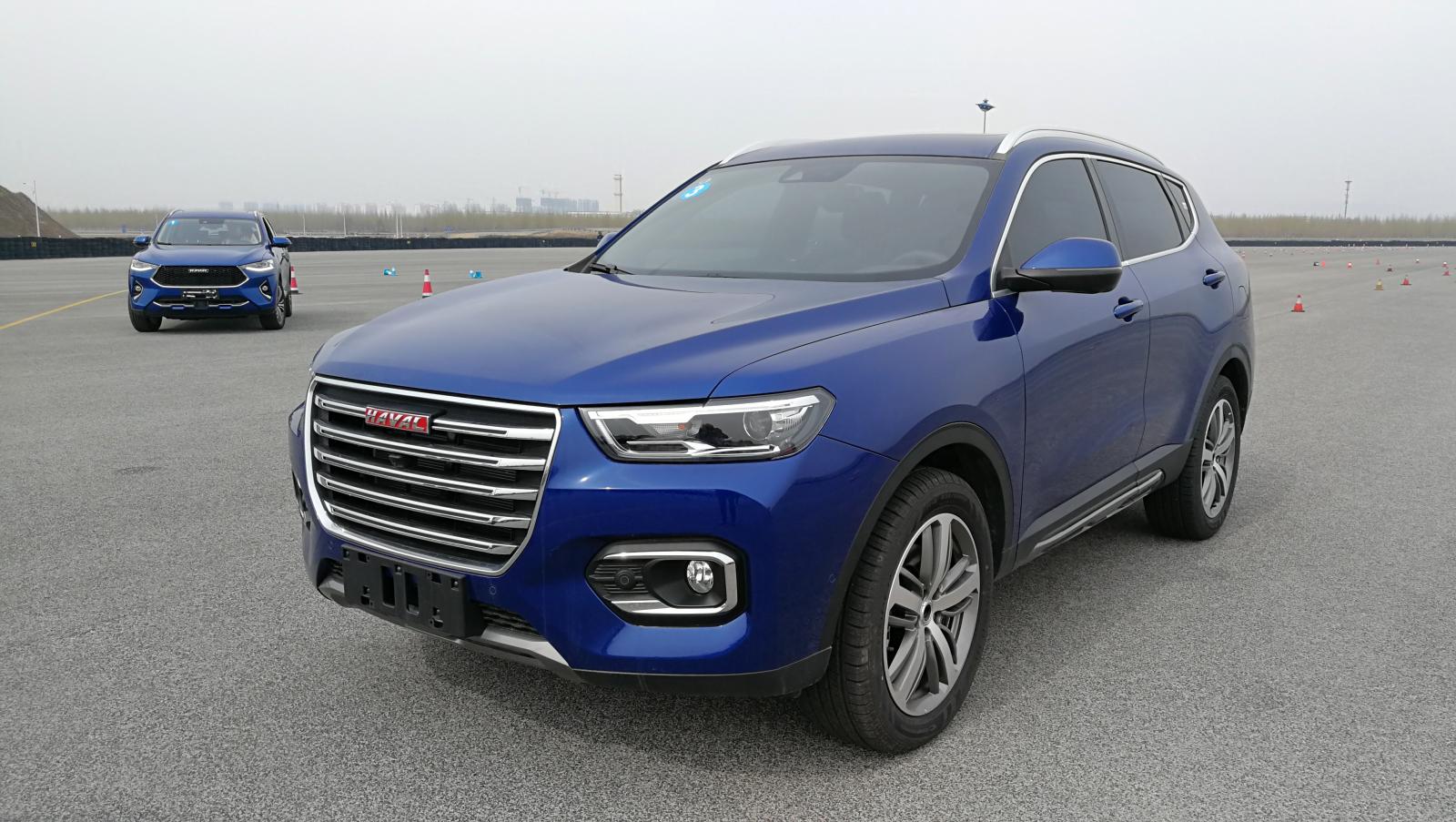
Haval's bread-and-butter offering in China remains the H6, but it's not the vehicle that you can currently buy in South Africa. No, the all-new vehicle was introduced at the Shanghai Motor Show 2 years ago and has now, finally, been confirmed for South African introduction during the second half of 2020 (estimated).
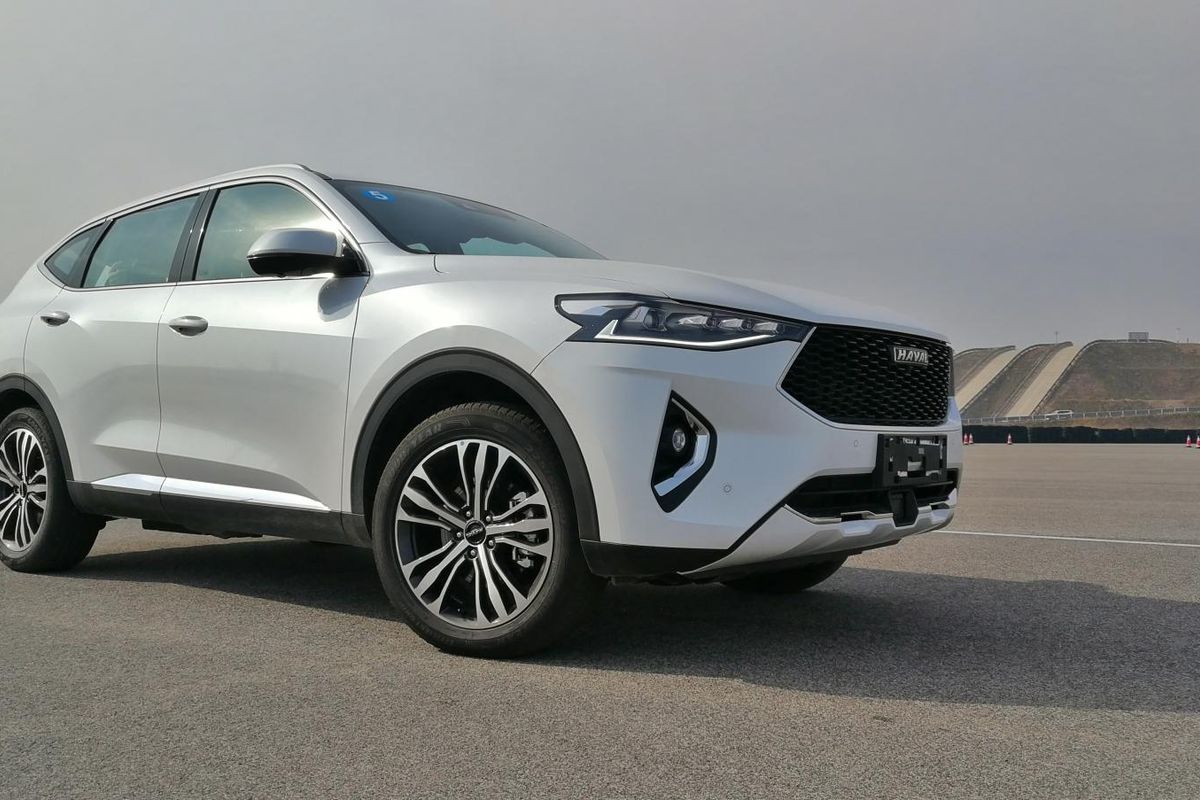
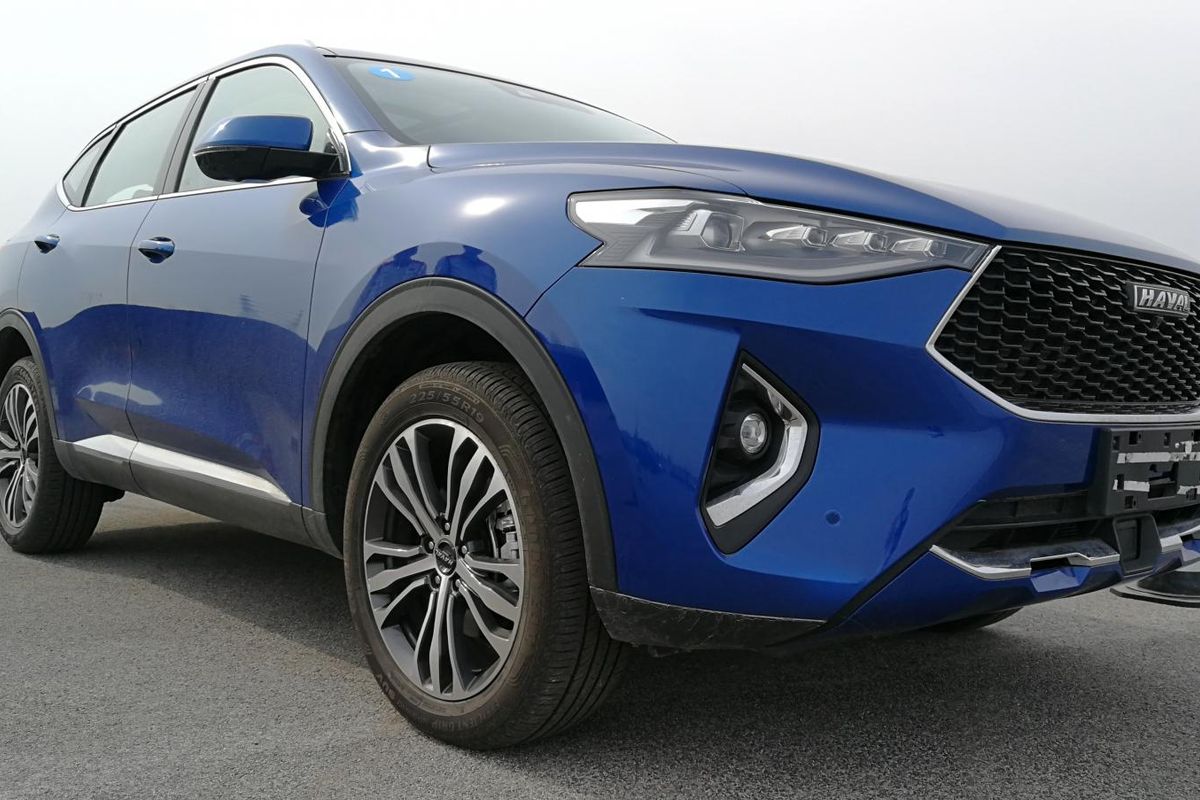
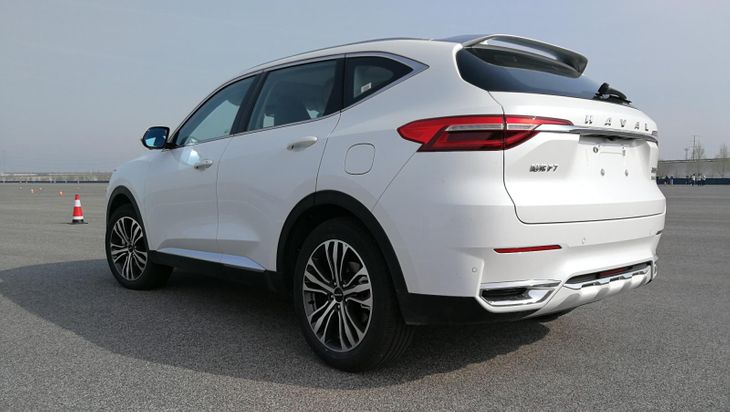
The new F7 is one of Haval's "international products" and has now been confirmed for South African introduction.
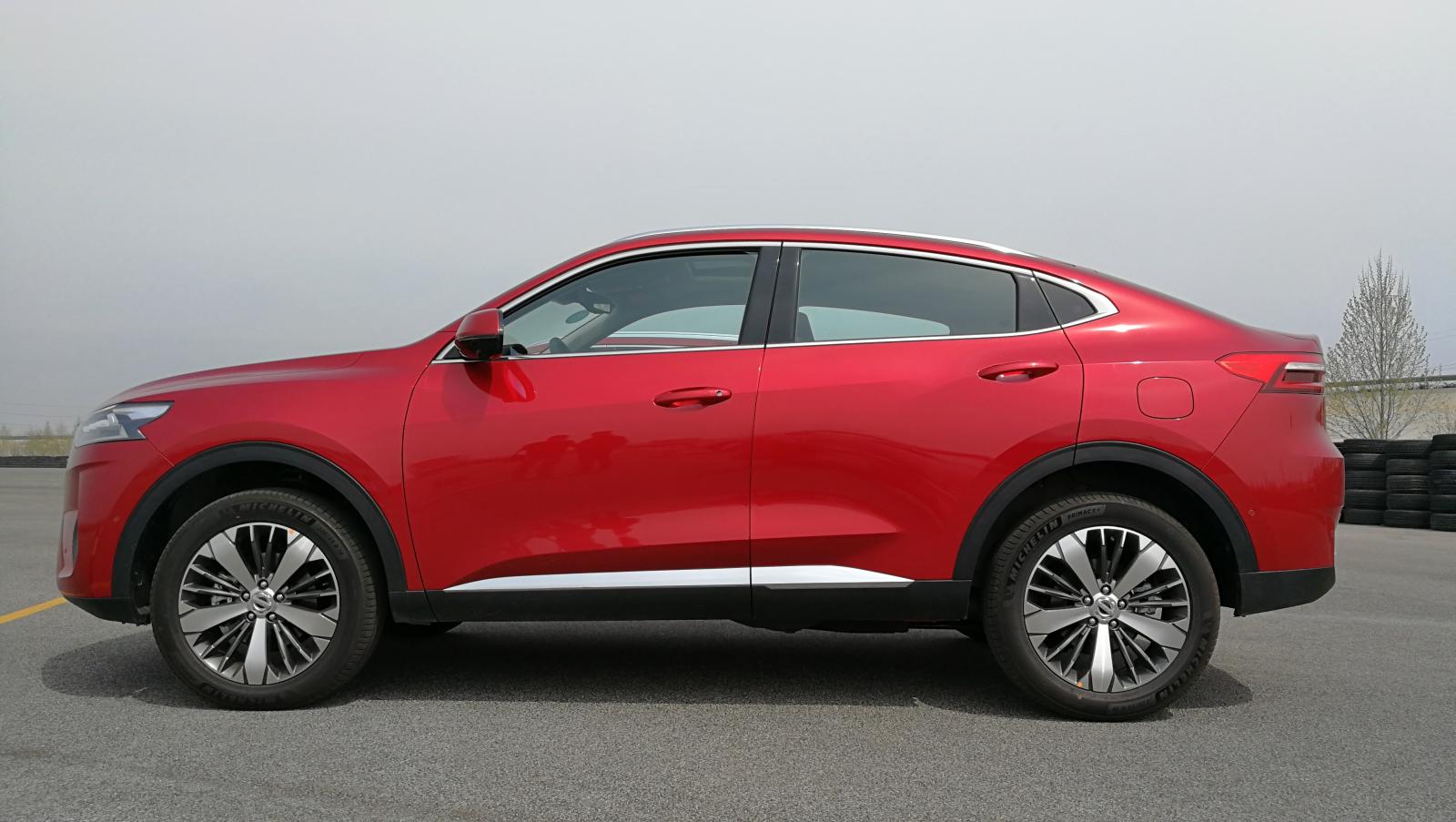
Joining it in Mzansi will be the stylish new F7, a similarly sized SUV that features more expressive styling and which is likely to be positioned slightly higher upmarket. The F7 will also be offered in a "coupe" variant, called the F7x, which perhaps surprisingly is also headed for our shores. It might go on sale as a cut-price BMW X4 rival.
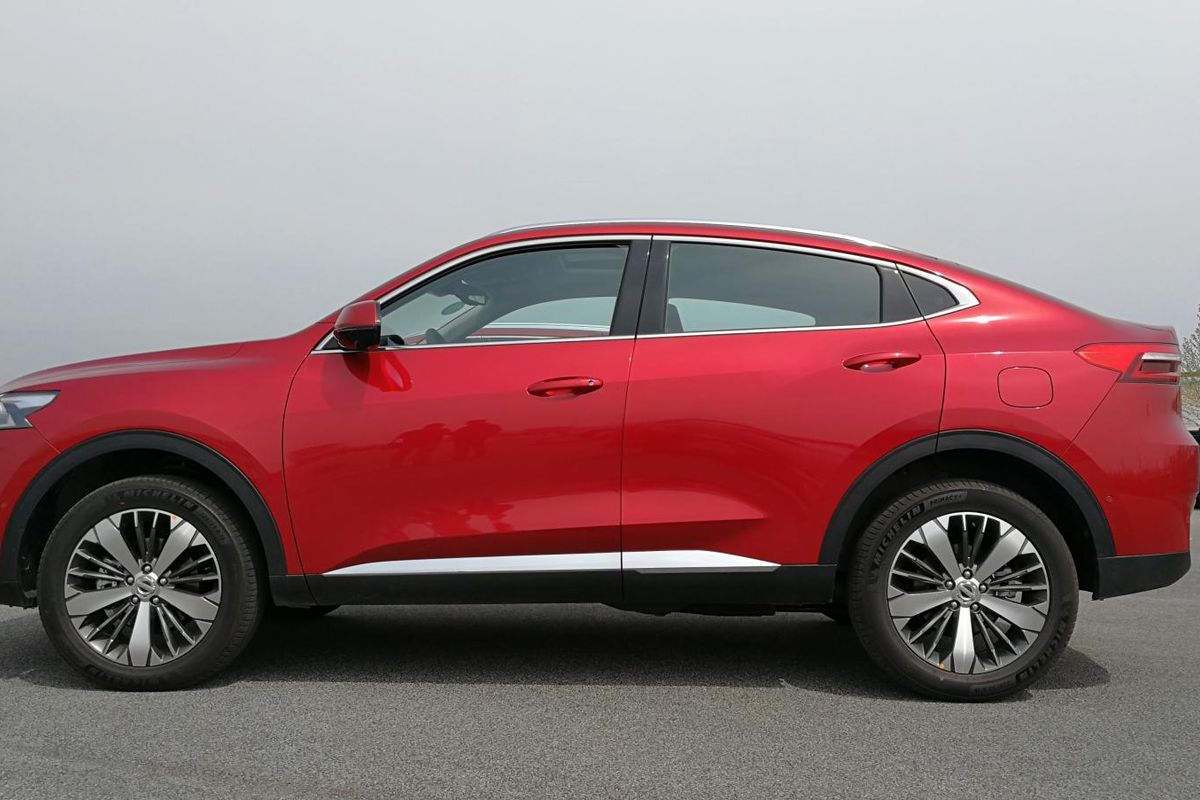
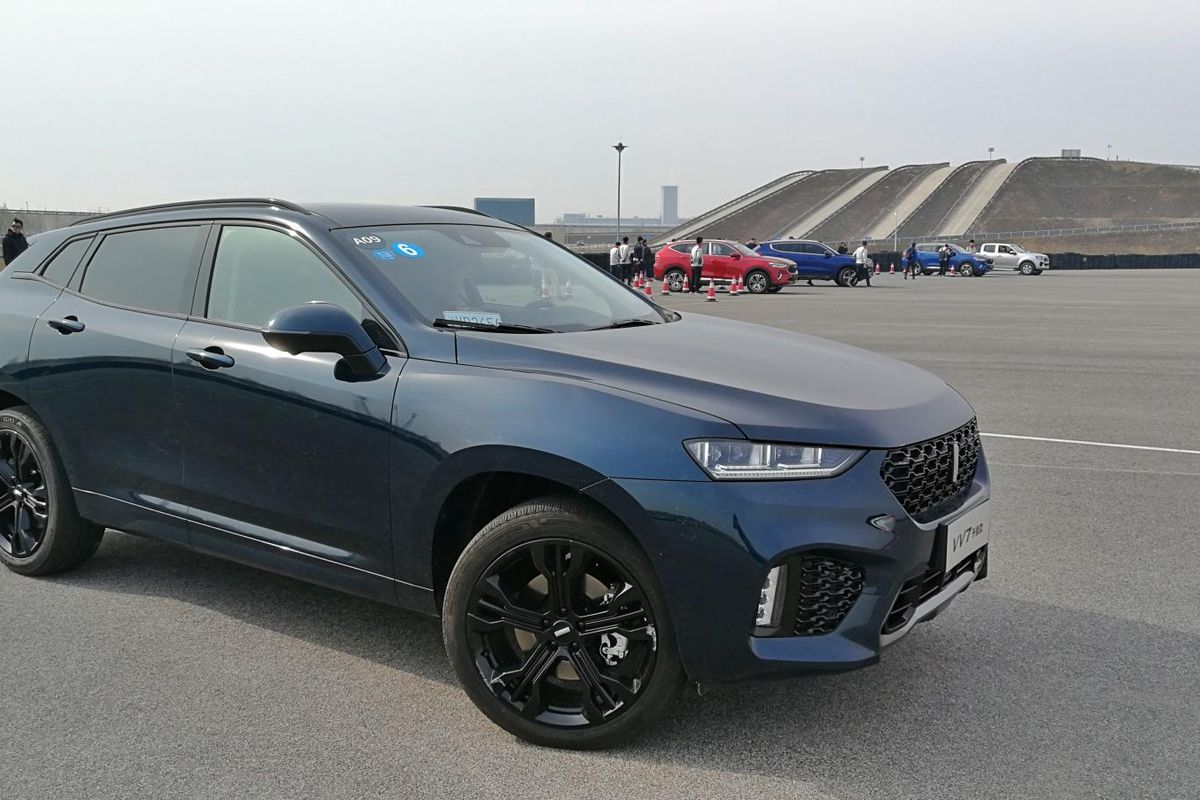
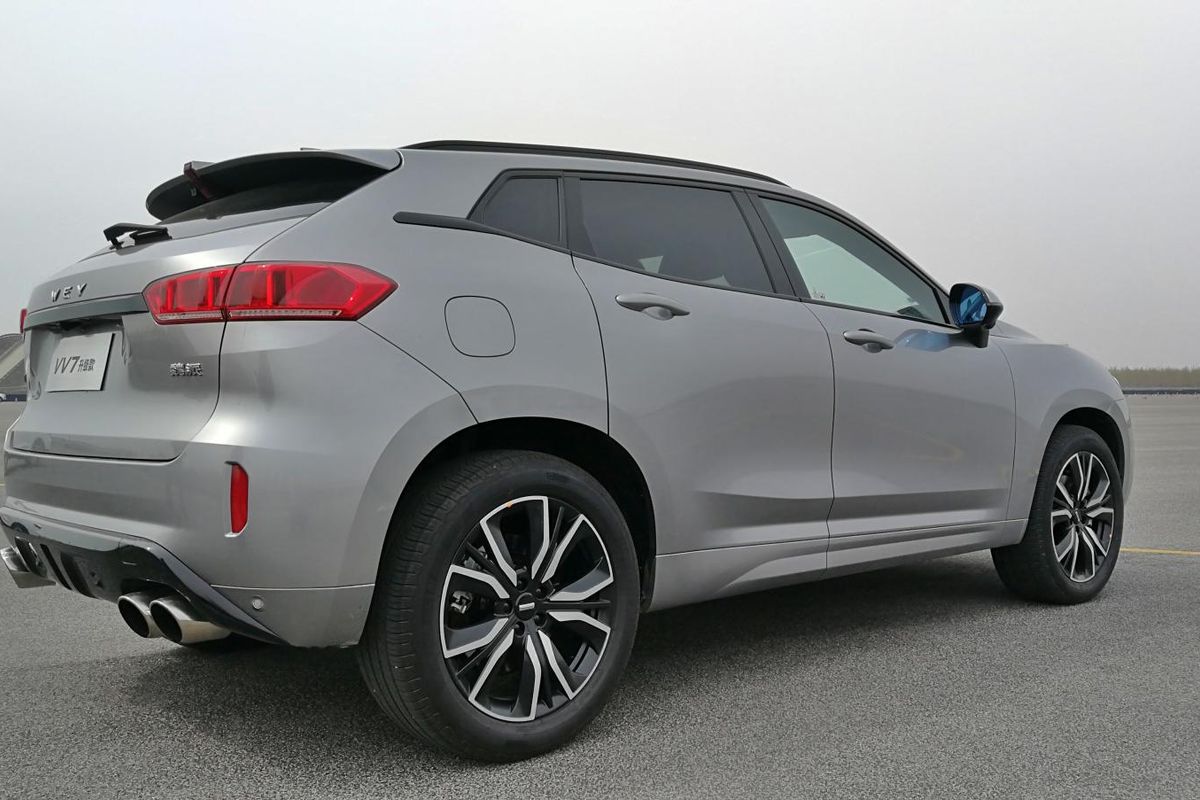
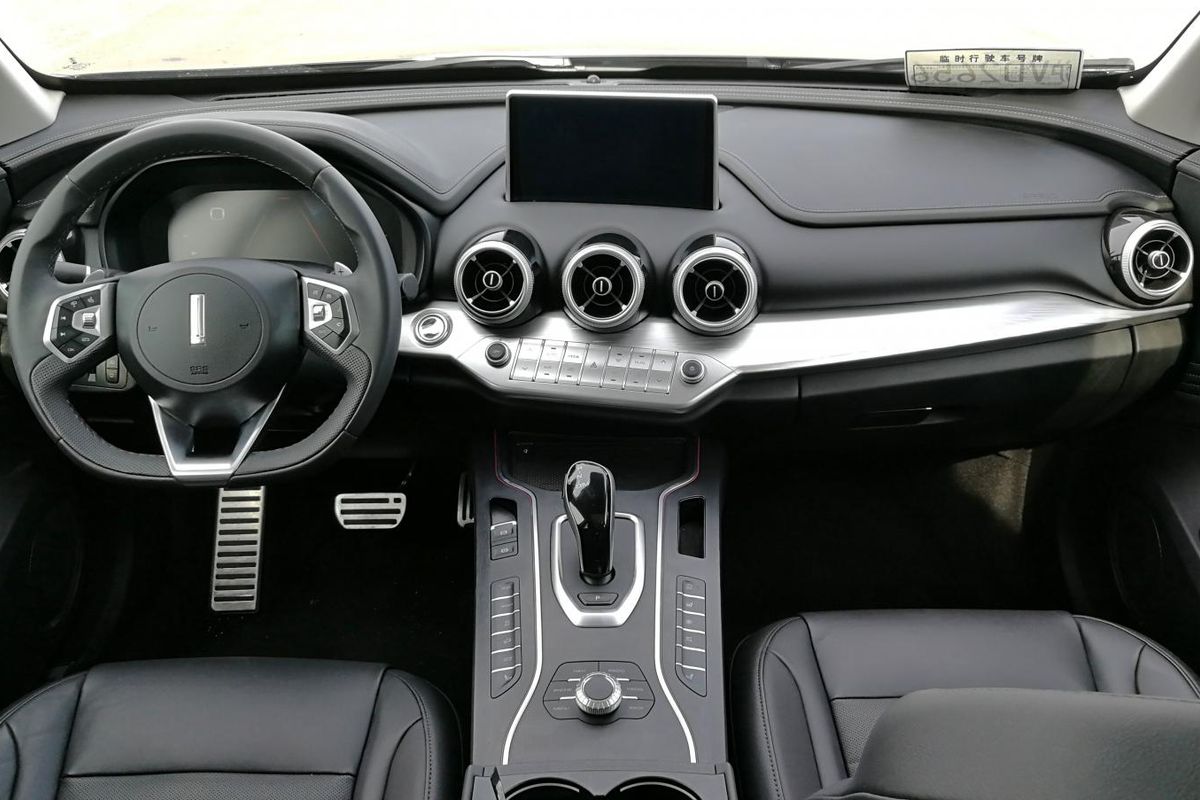
While in China, we were also afforded the opportunity to drive the marque's flagship product, the Wey VV7, which is a sporty, premium SUV and the new GWM Steed 7 pick-up, but neither of these are likely to make it to South Africa. Regarding the latter, GWM South Africa has stated that it will rather stick to the Steed 5/5E and Steed 6 models for the commercial vehicle market, while the all-new leisure pick-up, which is due to be unveiled at the Shanghai Auto Show next week, will compete with the Toyota Hilux/Ford Ranger when it comes to SA… possibly in 2021.
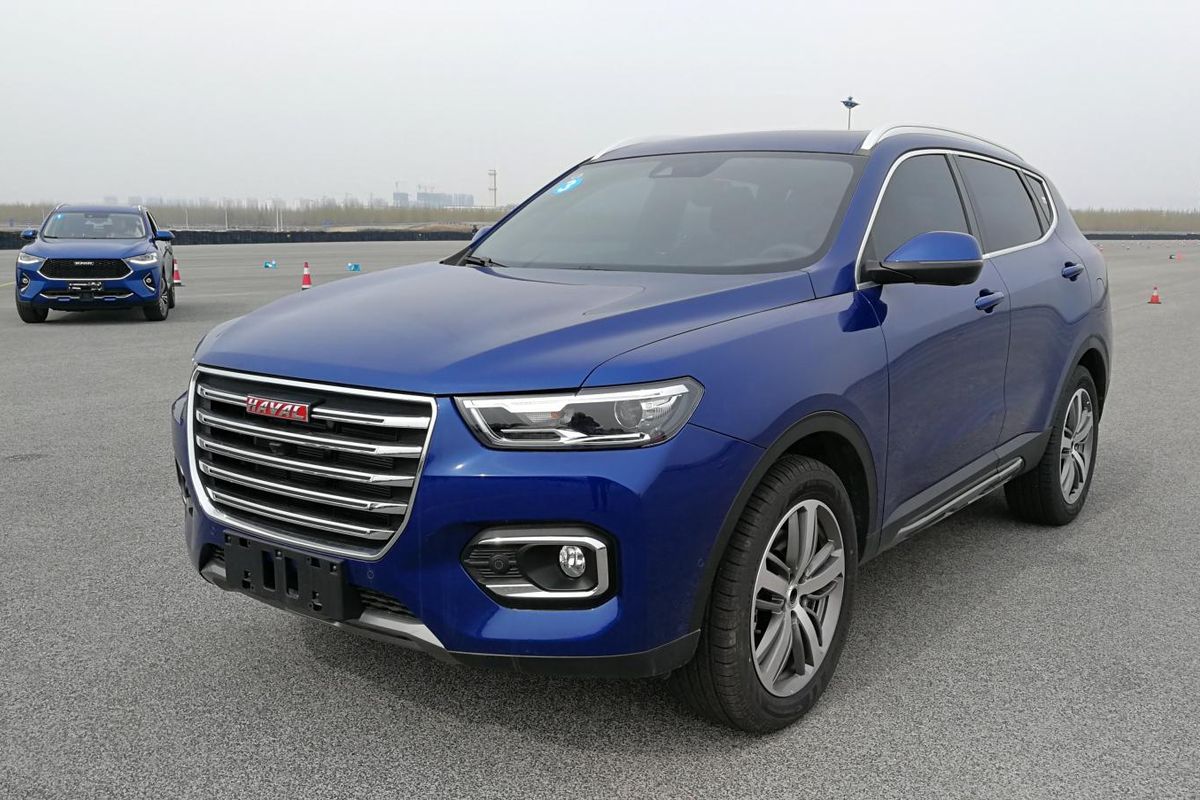
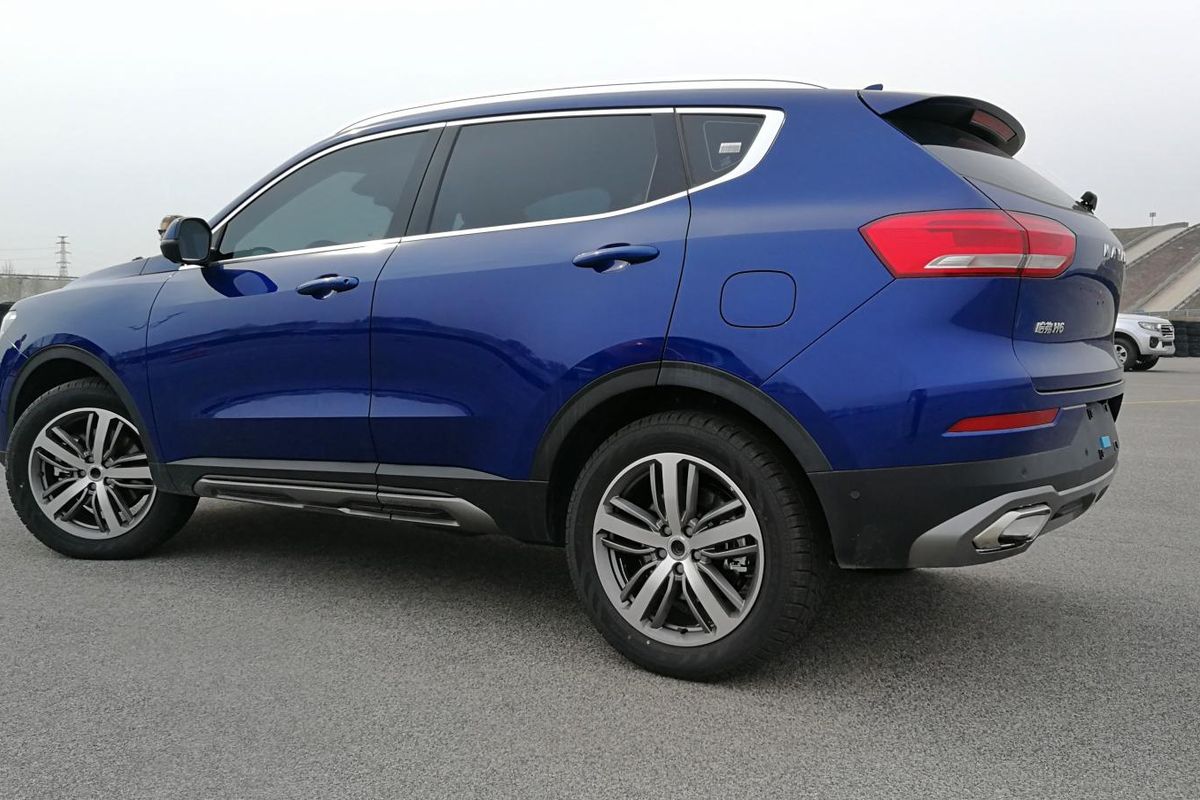
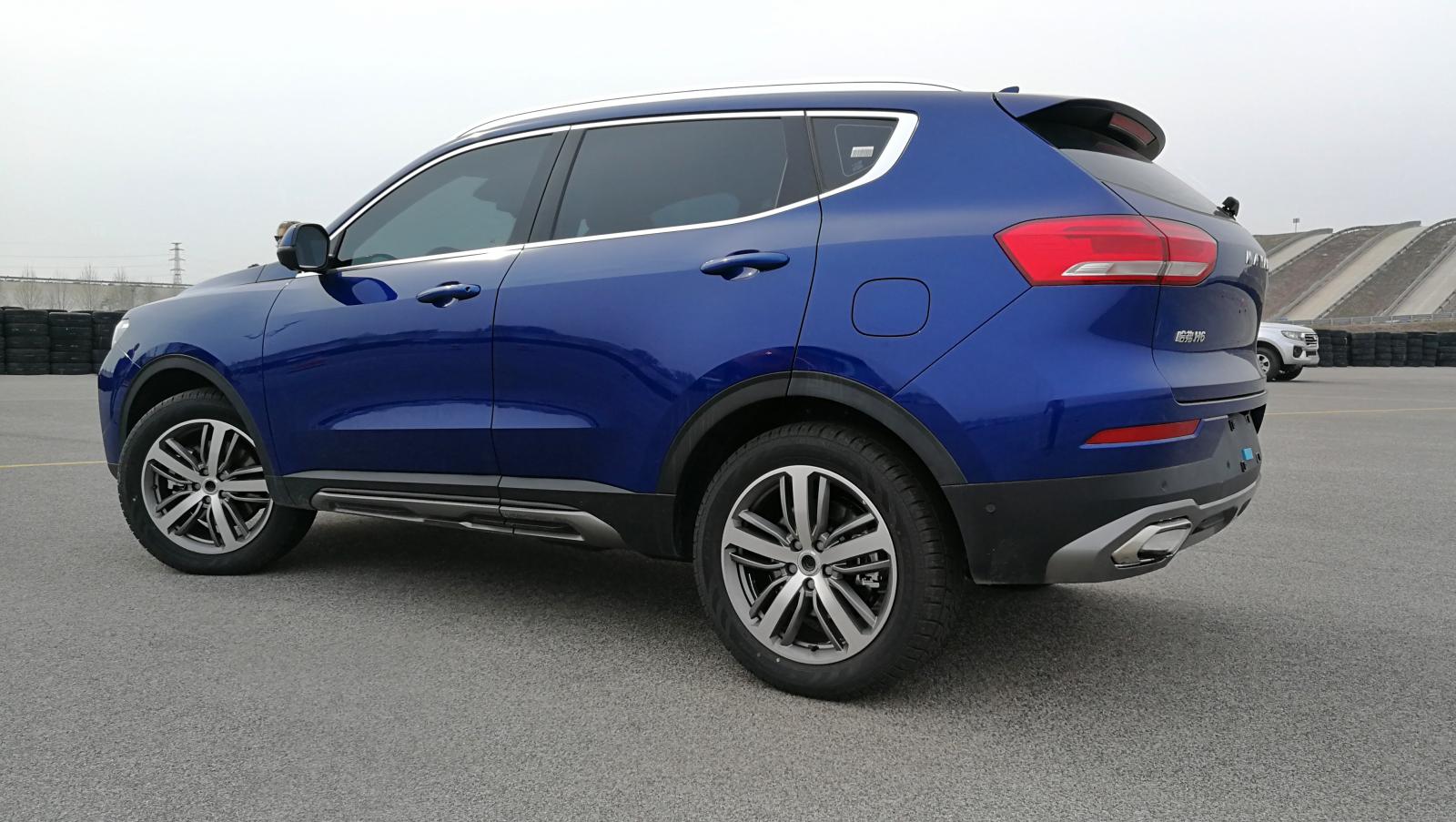
Smooth and sophisticated in appearance, the H6 is one of the largest vehicles in its segment.
The H6 is one of China's most popular vehicles overall, regularly topping sales charts and easily outselling the SUVs South Africans will view as its most obvious rivals, the Volkswagen Tiguan, Mazda CX-5 and Toyota RAV4.
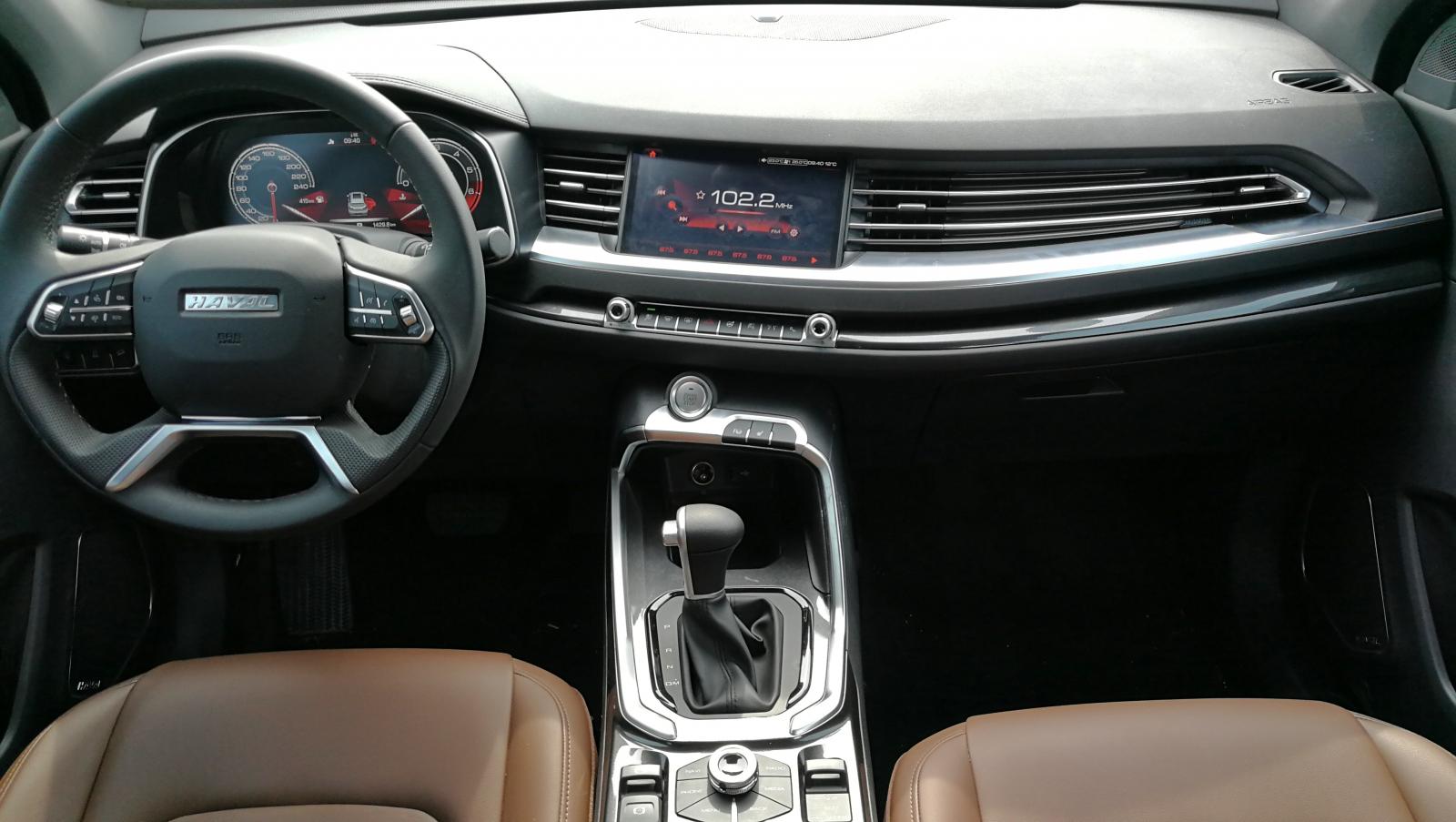
It's one of the larger offerings (4 610mm long, 1 860mm wide) in its segment, and its dimensions translate into excellent passenger space – legroom in the rear is particularly impressive. But passenger space has always been a hallmark of the H6, so that's no surprise. What is a surprise is how upmarket the cabin looks and feels… Usually it's round-about here where we would insert the usual caveat "… for the price…", but that no longer applies. The new H6's facia design, trim fittings and ambience are easily a match for the best from Germany and Japan in this segment. It feels like a substantial vehicle from behind the steering wheel, a perception that was reinforced when our test driver took the H6 over some of the poor surface test routes at the company's sprawling proving grounds in Baoding. There wasn't a rattle or squeak.
The H6 is powered by a 2.0L turbopetrol with 145kW and 345Nm of torque.
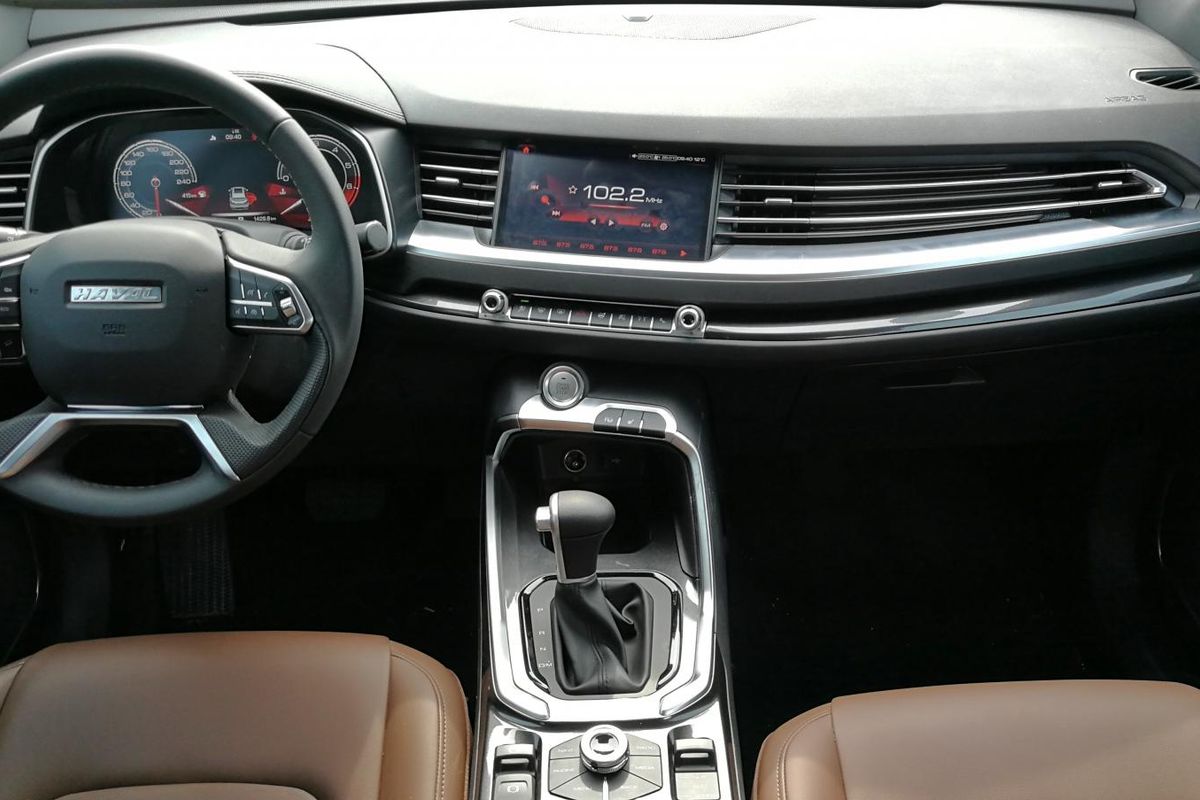
South African specification still has to be finalised, but the H6 is offered in China with items such as wireless charging, partly automated parking, multiple camera views and panoramic sunroofs. The smart 9-inch touchscreen infotainment system and 12.3 inch digital instrumentation are likely to make it to South Africa too, but it remains to be seen what functionality that screen will provide. Haval is very aware of the need for Apple CarPlay and Android Auto in markets such as ours but as of yet there's no offering. We're told it's currently in Research and Development and were quizzed extensively about usage patterns in our country. Hopefully these items become available soon.
Under the bonnet is a 2.0L turbocharged four-cylinder engine that delivers 145kW from 5 200 to 5 500 rpm and 345Nm of torque from 2 000 to 3 200rpm. It is mated with a 7-speed dual-clutch transmission that also offers a manual shifting mode (via the lever, no paddles), and there are 3 pre-programmed driving modes (Sport, as per usual, makes the car more responsive).
With premium materials, a fully digital dashboard and striking facia design, the H6's cabin is right up there with the Germans.
We weren't allowed out on China's public roads but were give the opportunity to drive the H6 over short test routes at the Baoding/Xushui test facility. Later we were also taken onto the high-speed oval with the same vehicles.
It's really difficult to form a definitive view on a vehicle in such a short space of time, but based on the time we had with the cars, it is quite clear that the H6 represents a big step forward for the company (compared with what South Africans have experienced from the brand thus far). It's a quiet, comfortable-riding car that has more than enough power, but there are possibly 2 areas that could do with further improvement (these also apply to the F7).
Firstly, there's still noticeable turbolag… It has to be said, however, that Chinese-market vehicles often have a different mapping to our local vehicles, so we'll reserve final judgement until it's been driven on local soil. Secondly, the engine is not the most free-revving unit in its segment – there's a coarseness to it that comes to the fore particularly under hard acceleration. Similarly, the transmission feels perfectly fine during "normal" driving, but can be caught out when driven more enthusiastically. And we can only hope that the current line-up's fuel thirst has been improved. The claimed consumption for the 2.0L is around 8.0L/100km.
The H6 could be sold locally with 1.5L turbopetrol (120kW/280Nm) engines, too, but a diesel is unlikely at this stage. When it arrives later in 2020 it will have to compete not only with the current segment leaders from Toyota, VW and Mazda, but there might also be an all-new Kuga to contend with, as well as the Koreans (Kia Sportage and Hyundai Tucson). As it stands right now and provided GWM/Haval gets the local specification/pricing right, it would appear that the contender from China is no longer knocking on the door, but has taken a seat in the club with the big boys.
Haval F7 and F7x
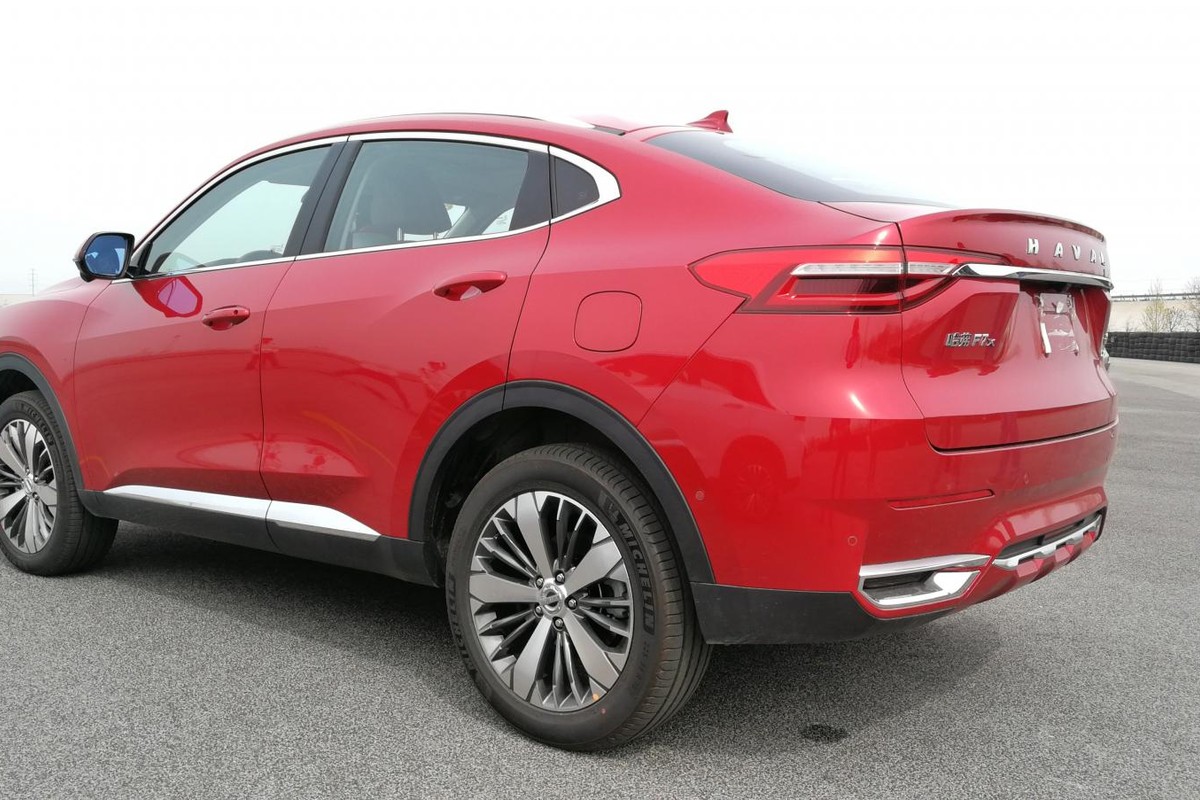
The F7x features the type of fashionable sloping roofline first brought to the market by the BMW X4 and Mercedes-Benz GLC Coupe.
This boldly styled newcomer is likely to be positioned slightly higher up the pricing ladder than the H6, but is actually very similar in overall size (though a tad longer, and with a longer wheelbase), and even makes use of the same drivetrains (1.5L and 2.0L turbopetrols).
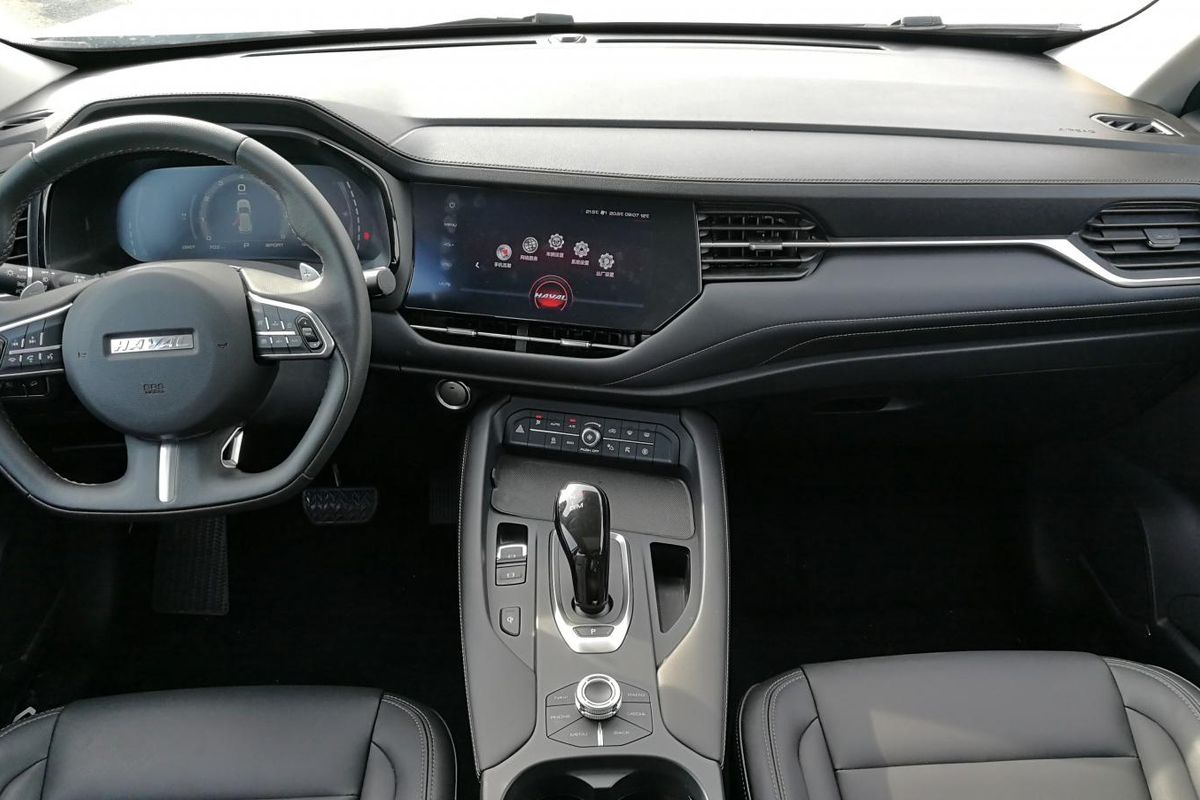
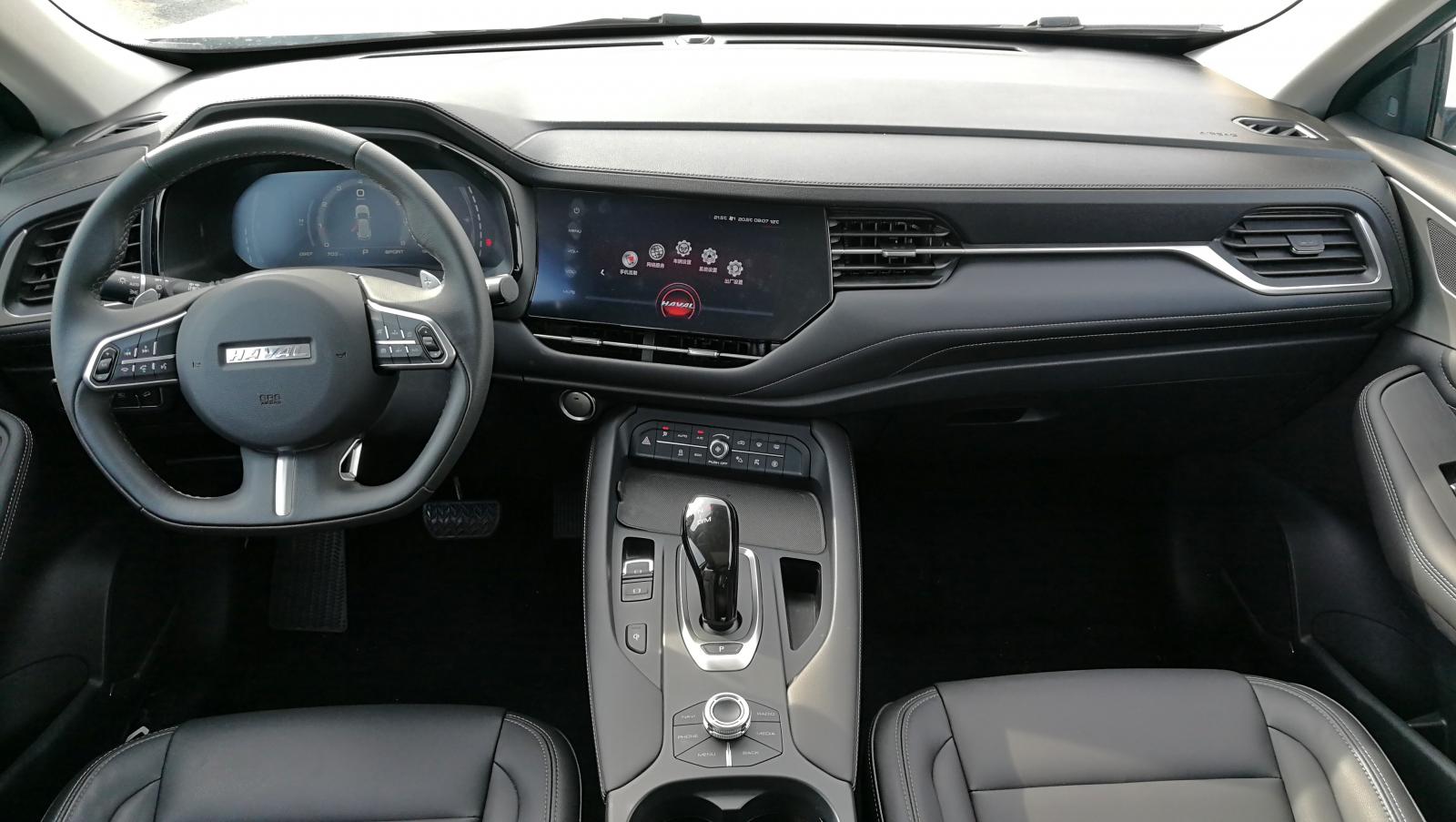
Inside the cabin it is however completely different to the H6, with its own unique facia layout that's both attractive and very modern. It's rare to see a car at this price level with such crisp and clear digital displays, for example. A variety of trim options are offered and one of the vehicles available for testing even had an oxblood red leather interior. Again… the quality of the actual trim items will raise eyebrows. When specified, the leather trim extends to the dashboard and the doors, too, creating a very "premium" ambience.
Although the H6 and F7 are closely related, their exterior and cabin designs are very different. Note integrated large touchscreen.
An interesting variant that is also apparently coming to South Africa during the second quarter of 2020 is the F7x. Think of BMW's X4 and you won't be far off the mark… The only difference between it and the standard F7 is the sloping tailgate. Rear space remains good, but if you're taller than 1.8m your head may touch the rooflining.
As the F7 and F7x use the same engine and transmission combination as the H6, and ride on the same basic underpinnings, the driving experience is similar. These new SUVs are set up for comfort, so the ride is on the soft side, which is good for a family SUV, and the cabins are quiet. The steering is perhaps slighly too vague, but this won't bother too many likely customers.
We did notice, however, that the F7 featured steering-mounted shift paddles, which the H6 didn't have. In China, the F7 is also available with all-wheel drive, but the availability of this remains unconfirmed for South Africa. As is the case with the H6, the F7 is available with a wide range of safety features, including rear cross traffic alert, lane change warning/assist and a 360-degree camera view system.
We suspect Haval will use very high standard specification to position the F7 and F7x above the H6 in the local market. It's worth noting, therefore, that in some markets the F7 is offered with features such heated/ventilated seating, active cruise control with automated braking, automated parking and even a fragrance system.
Wey VV7
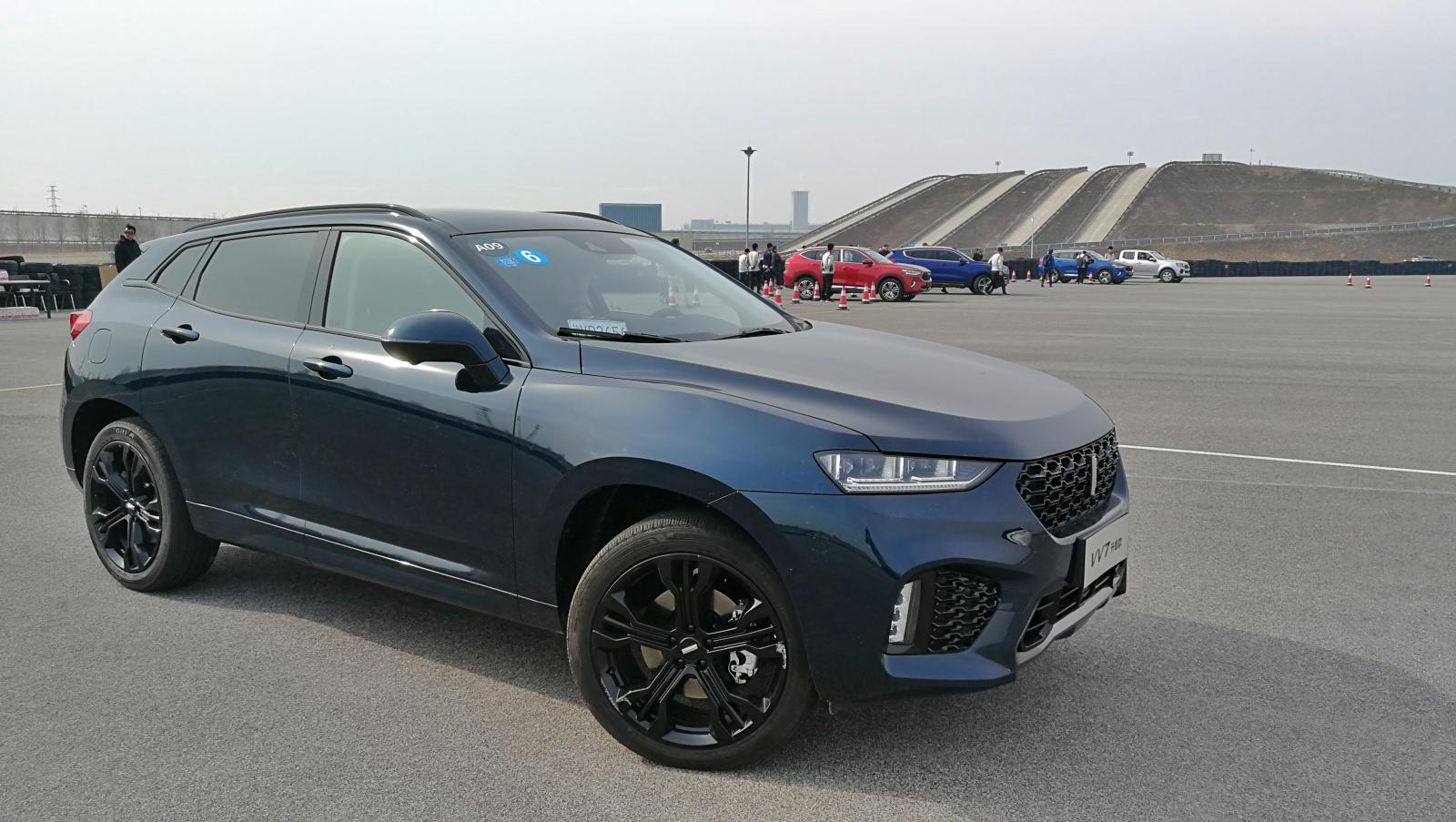
Sadly not likely to come to South Africa, the Wey VV7 is a stylish crossover that's also good to drive.
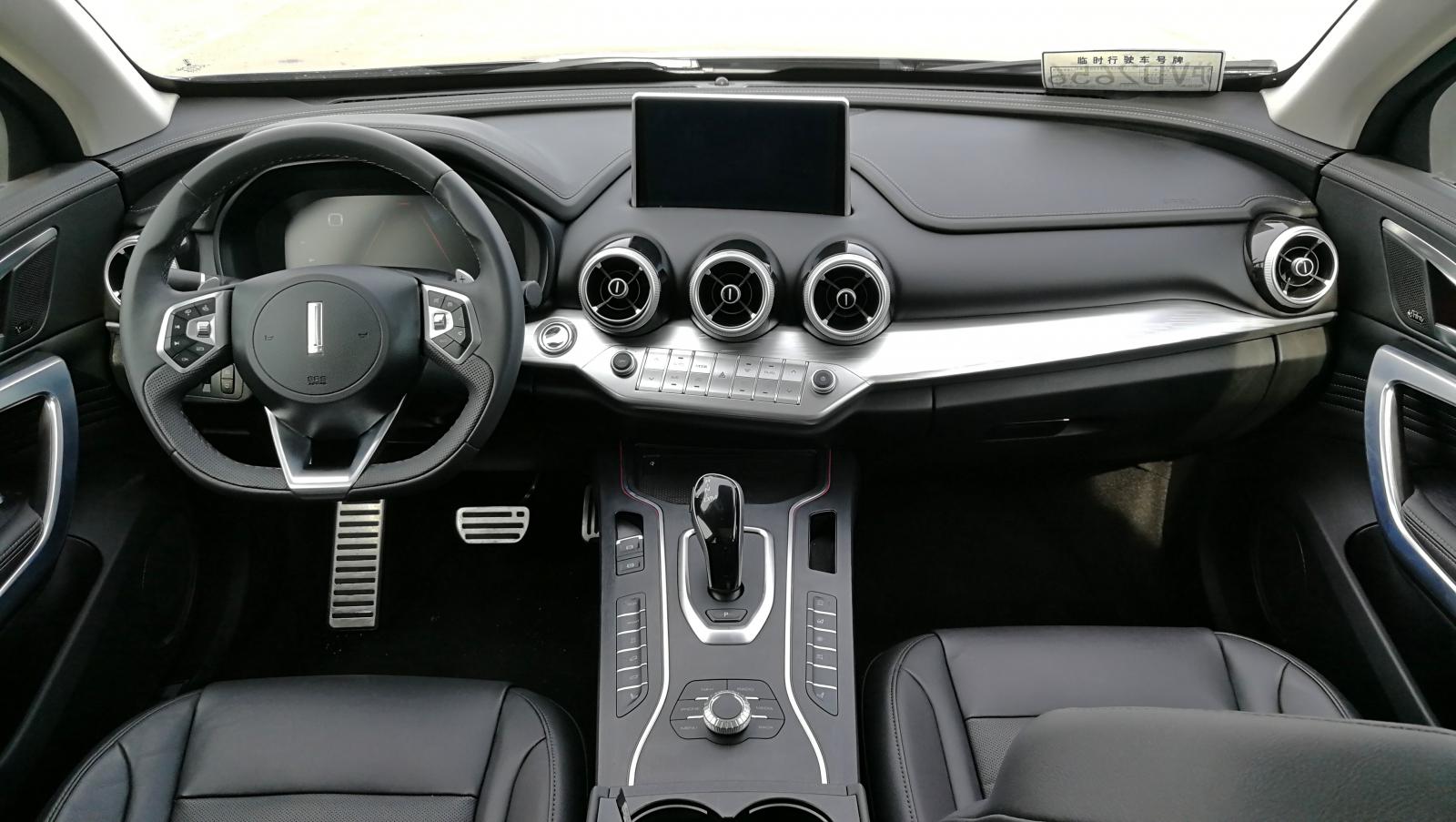
Named after the chairman of the company, Wey is to Haval what Lexus is to Toyota. Compared with already upmarket Havals, Wey products are sportier in their design, more powerful, more dynamic and, inside, even more luxurious.
Based on the social media response to our images from China, this is a vehicle that potentially could resonate well with South Africans but it's not likely to reach our shores. This is a pity, as it was rather impressive during our short test drives, feeling more responsive, more refined and sharper dynamically than its more comfort-oriented siblings. Plus, it has a 172kW/360Nm version of the 2.0L turbopetrol engine, and you can feel it… The tie-up with German tuning firm Brabus to further "enhance" Wey products therefore makes perfect sense.
Wey is GWM's flagship brand and as such offers the company's most advanced features and best finishes.
Wey has already made an appearance at the Frankfurt Motor Show and several prototypes have been caught testing in Europe, so this very likely is a product that will reach those sophisticated markets in the near future. Styled under the guidance of Haval's former design chief Pierre Leclercq (ex BMW), the VV7 looks like a potential Range Rover Evoque rival in the making. Who knows… maybe next iterations of this vehicle will reach our shores. Wey has already rolled out an even more advanced plug-in hybrid version called the P8.
With very few Chinese marques left in South Africa after the big initial influx of about a decade ago, GWM/Haval is now comfortably the most established and successful. Now, with these new products it is rapidly moving up the desirability ladder into direct confrontation with the market's big hitters. Several of our readers suggest that Haval could be the Huawei of the car world, due to its ability to offer quality products that effectively rival offerings from premium brands, but at a significant price advantage. After experiencing the new H6 and F7 in China, that description doesn't feel inaccurate at all.
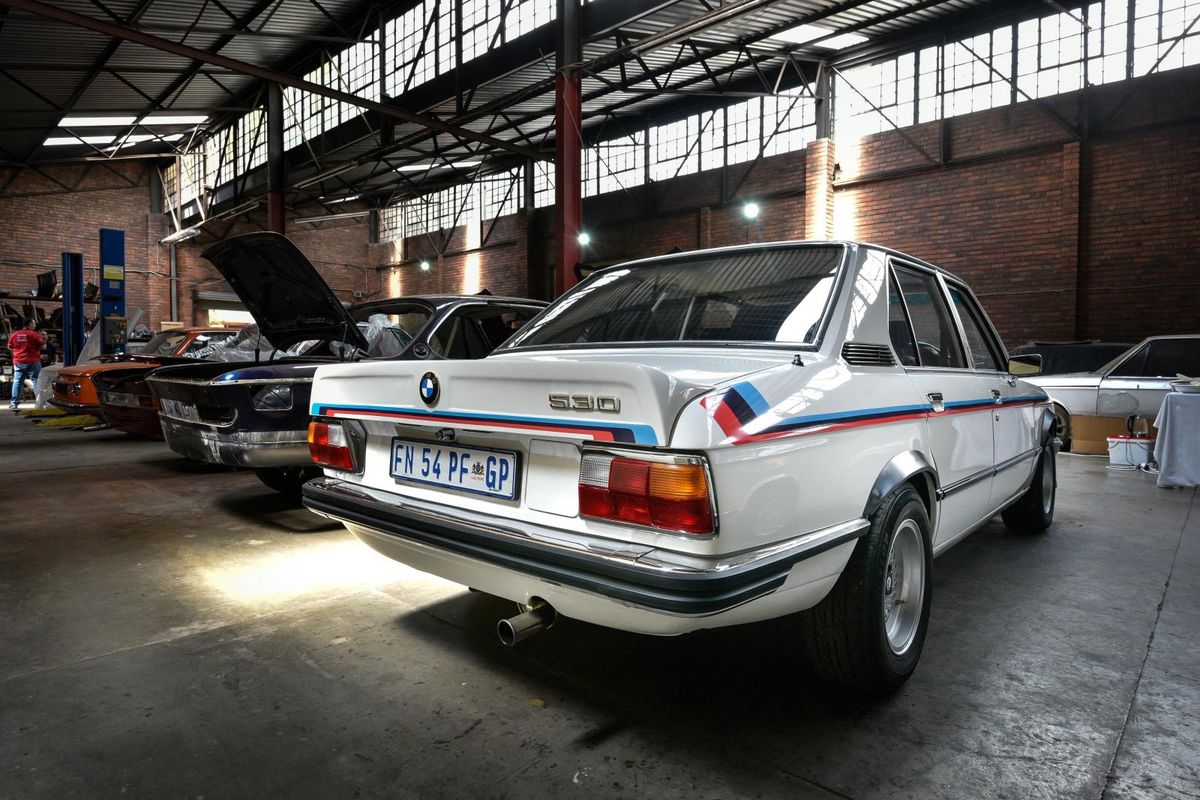
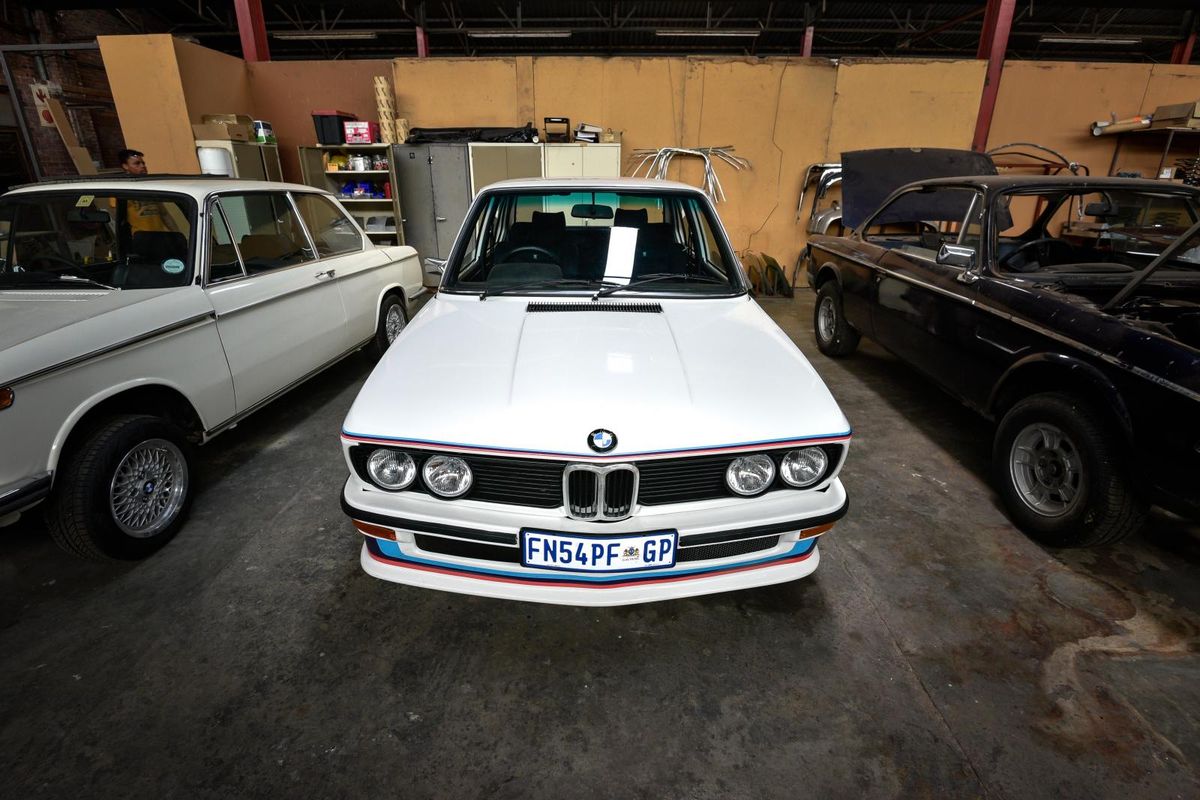
The expression “Win on Sunday, sell on Monday” may have originated in North America, but in 1976 it was a call to arms for a fledgling South African subsidiary of a famous Bavarian marque. BMW SA recently tasked Luis Malhou of Custom Restorations in Vereeniging to restore unit number 100 of the locally made homologation-special 530 MLE.
For those who’ve never heard of the "Win on Sunday…" expression, it was coined by American marketing executives many, many moons ago. Those inimitable Stateside spin-doctors believed that car manufacturers should enter motorsport as a means of advertising their passenger cars. The theory was that if racing versions of manufacturers’ products were successful in race events (usually held on weekends), spectators would be inspired to march into showrooms soon thereafter to buy roadgoing versions of those cars. Ah, the Mighty Buck!
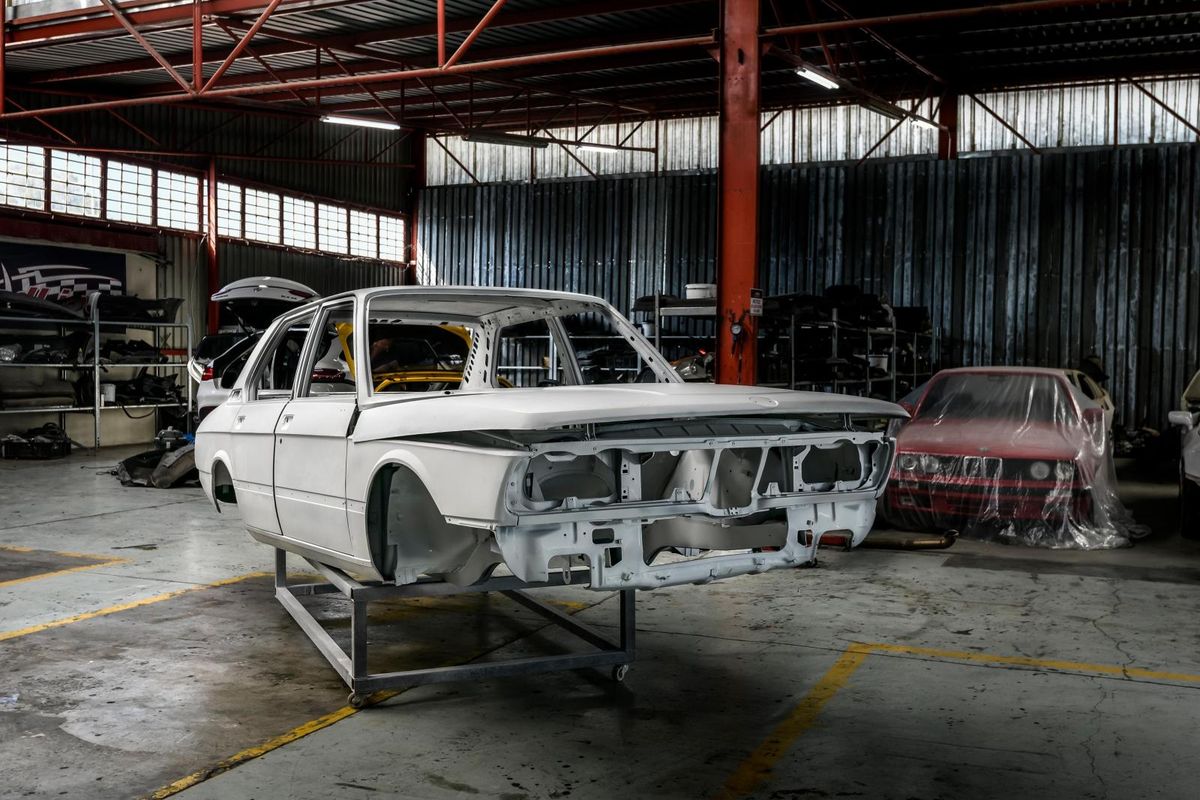
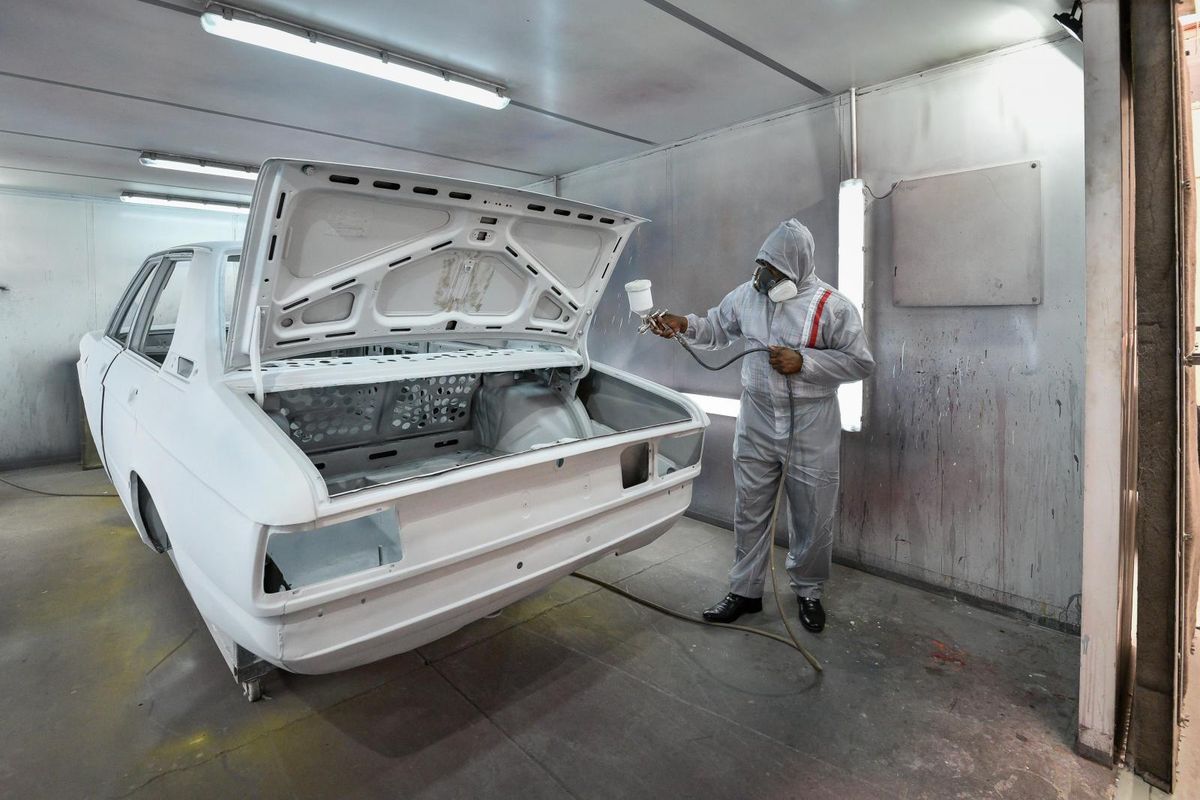
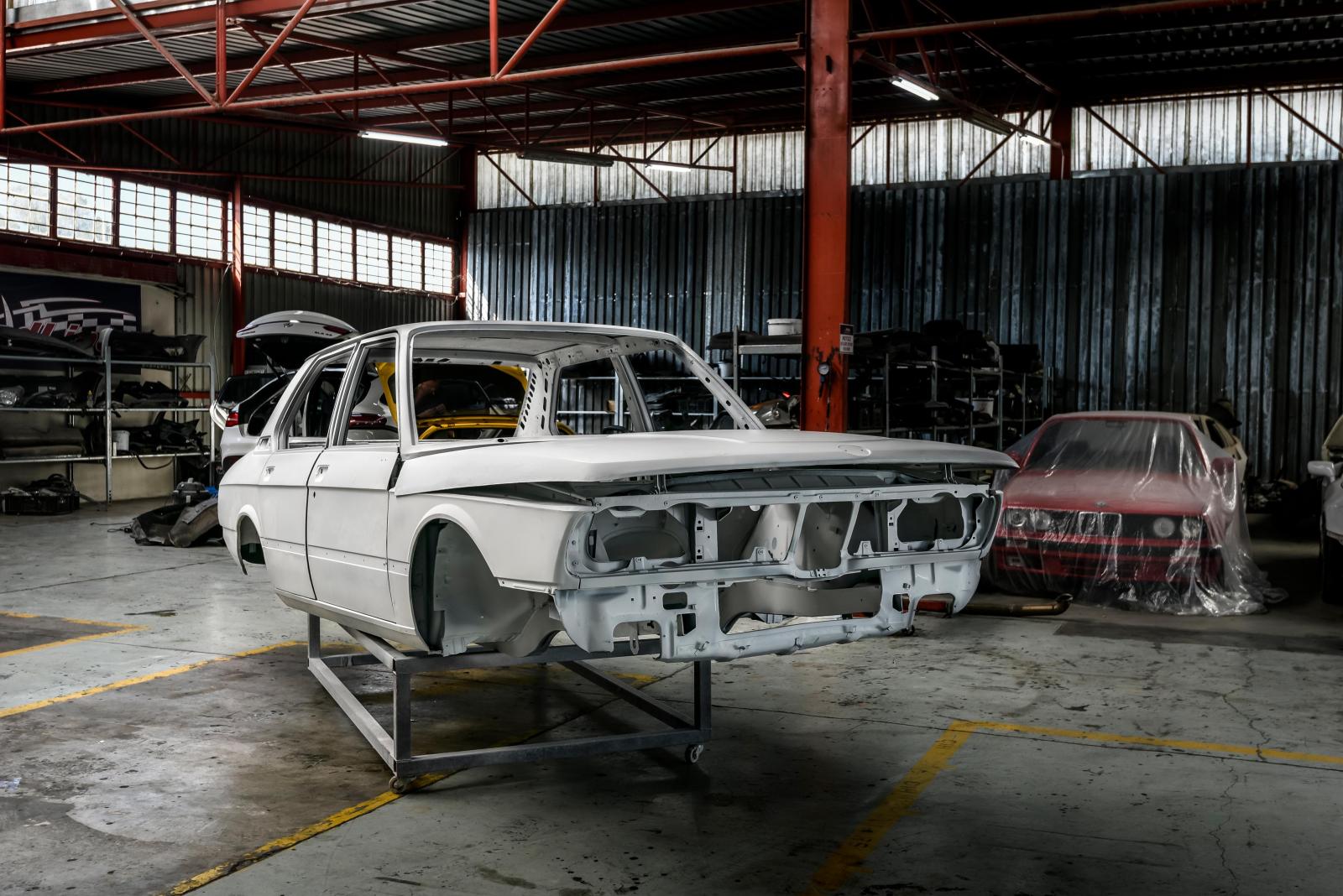
The ex-Peter Kaye-Eddie car is undergoing a nuts-and-bolts restoration, which means the body is stripped bare and refurbished.
What's more, the homologation rules of certain motorsport formulae, which dictate that cars can only be entered in a racing series if a predetermined number of those vehicles are produced for public consumption, spawned “bred for racing” models that could be driven out of dealerships. The cars were easy to identify: they were either retailed to those who were invited to buy them, or had put down a deposit to get their names on waiting lists. Prime examples were lightened, big-wheeled, adorned with spoilers and motorsport-inspired decals and stripes and, of course, they were powerful and very fast. BMW South Africa produced a number of them in the ‘80s and early ‘90s: the 745i, 333i, plus Evo 1 and “Evo 2” versions of the 325iS.
BMW SA’s cavalier beginnings…
But those cars, which have become highly sought-after collectors' items by virtue of their motorsport reputation and scarcity, would probably never have existed had it not been for BMW South Africa adopting a “Win on Sunday, sell on Monday” marketing approach in its early days. BMWs have been assembled in South Africa since the late Sixties, but the Munich-based company gradually grew its involvement in Mzansi: first, it took over the management of the Rosslyn assembly plant in 1973 and then established a fully-owned subsidiary – BMW South Africa – in 1975. At the time, BMW produced the E12-generation 5 Series at Rosslyn, which was notably the first BMW production location outside of Germany…
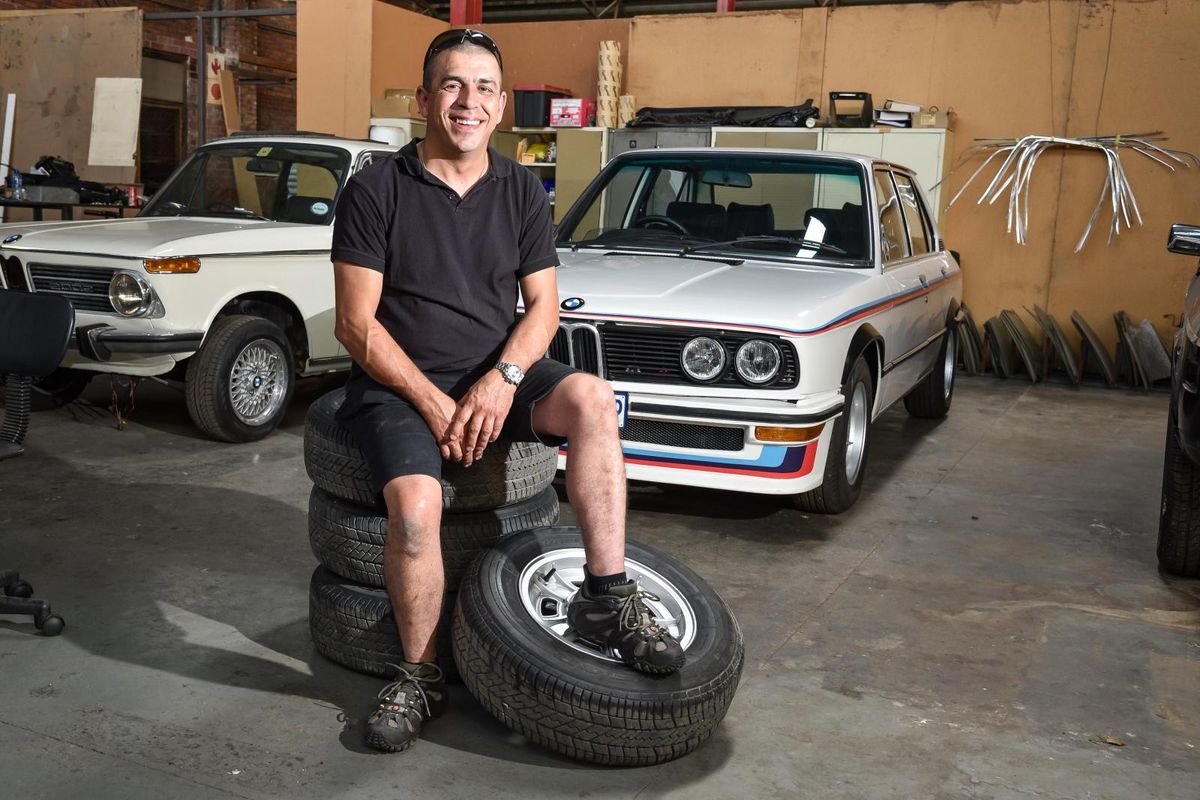
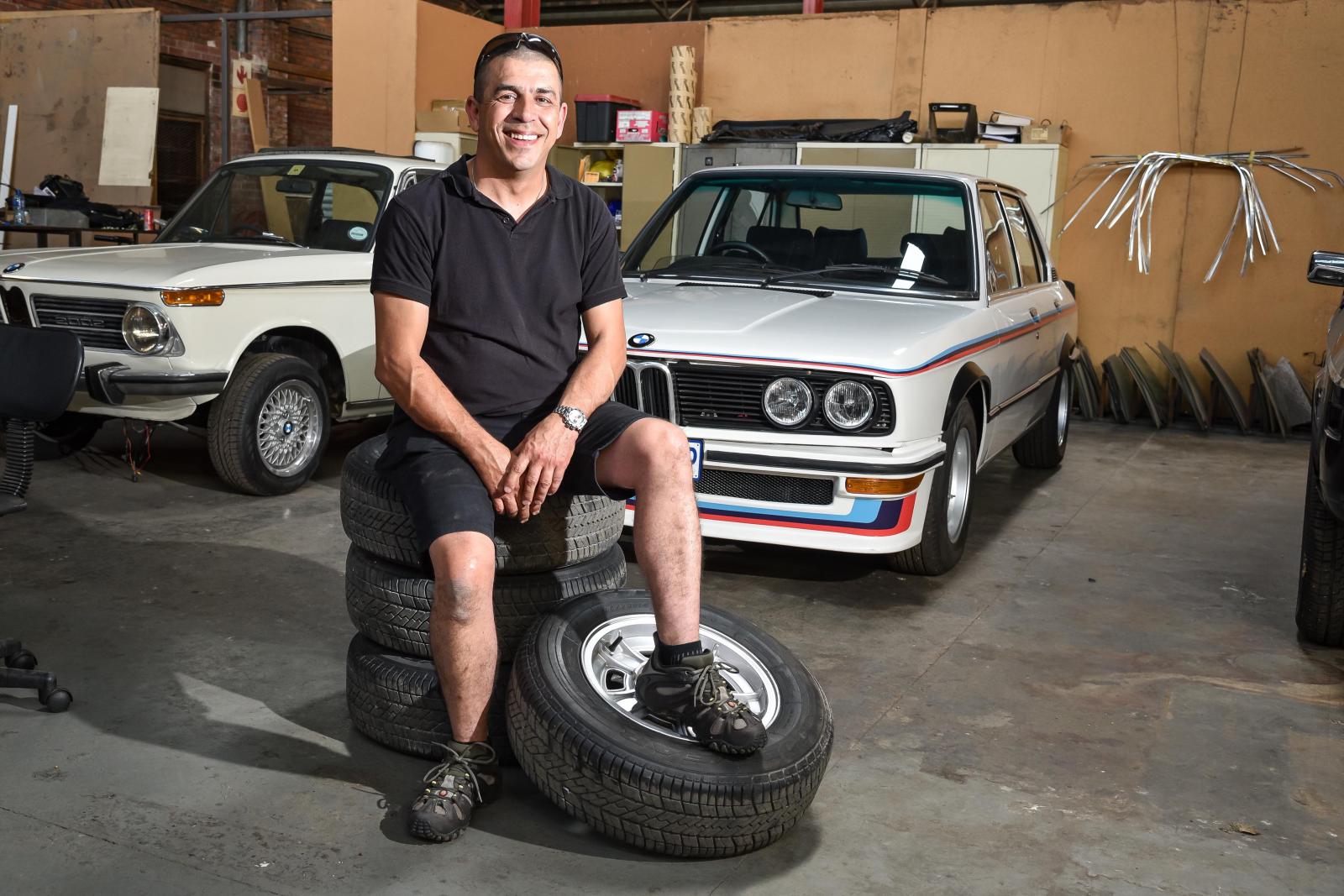
Respected BMW restorer Luis Malhou owns a pair of 530 MLEs and spearheads the car number 100 restoration project.
At the time, the 5 Series was BMW's volume seller and the marque wasn't nearly as well-established in the market as arch-rival Mercedes-Benz… Suffice to say BMW SA needed to its ramp up its public profile and market the 5 Series aggressively, so it turned to BMW Motorsport chief Jochen Neerpasch (with the help of renowned tuning firm AC Schnitzer) in Germany to produce a car with which the local firm could compete in The Star Modified Championship, which was one of the premier circuit-racing categories of the time.
Birth of the 530 MLE
According to Classic Car Africa, BMW Germany shipped 1 complete unbadged E12 to South Africa as a template for the development of the locally-made race car, which would wear the 530 badge. The prototype was stripped out and fitted with a modified 3.0-litre engine (ostensibly sourced from the 3.0CS coupe) that produced 202 kW at 6 500 rpm, 318 Nm at 5 500 rpm and a top speed of 235 kph. Eddie Keizan and Alain Lavoipierre debuted the 530 in race guise at the Republic Day Trophy race in June 1976. It was immediately successful. The 530 won the national championships in '76, '77 and '78, with Keizan scooping the 1977 championship with an astonishing 15 wins from 17 races, the magazine said.
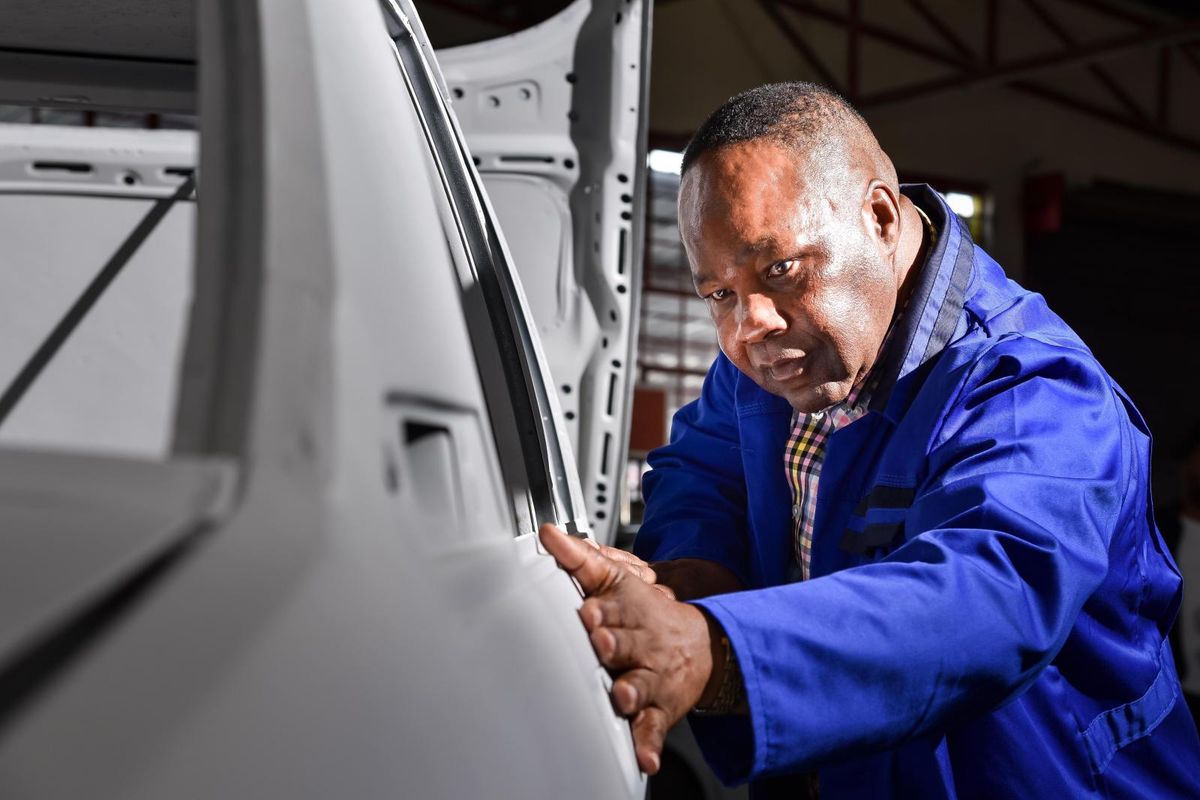
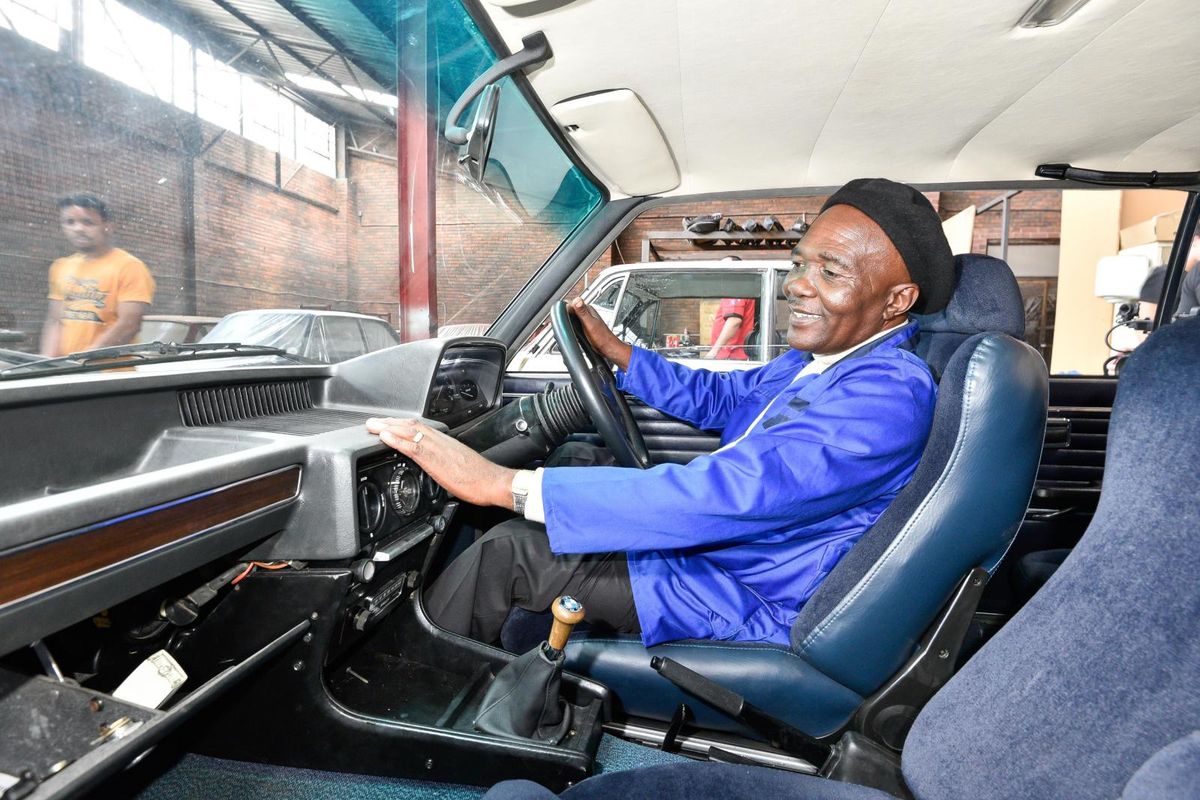
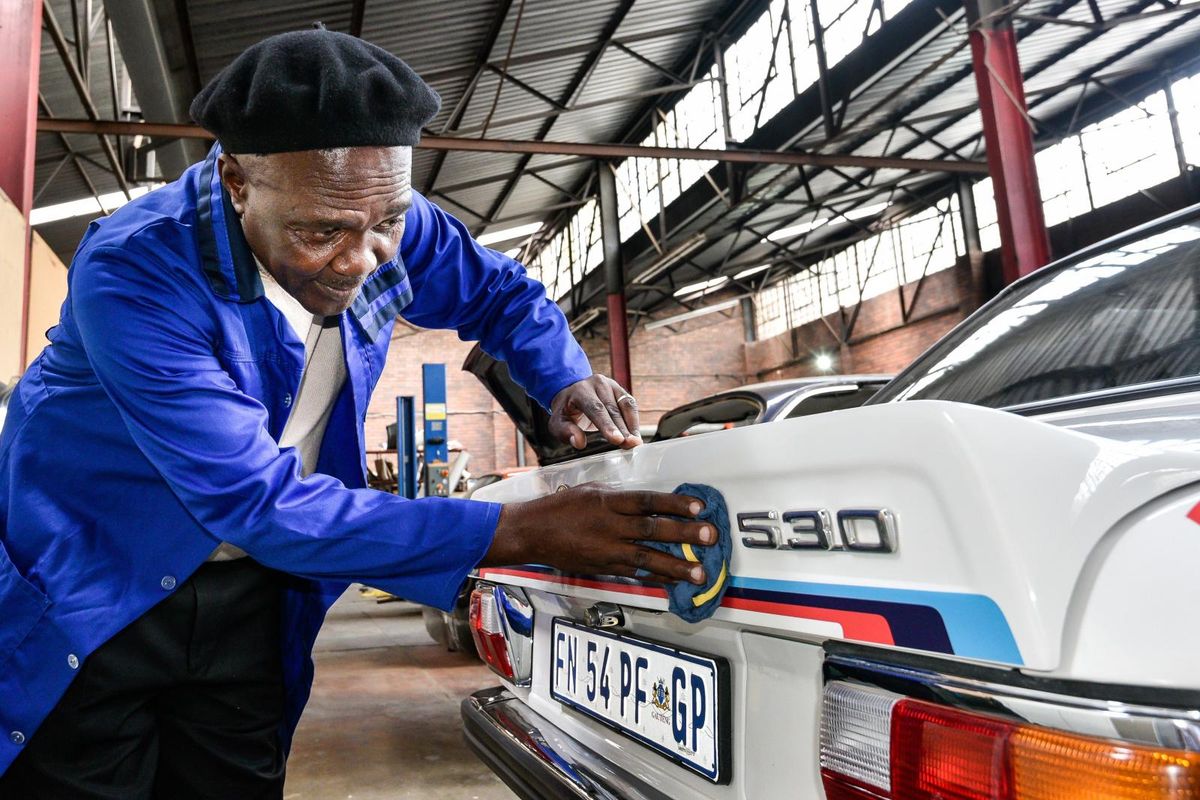
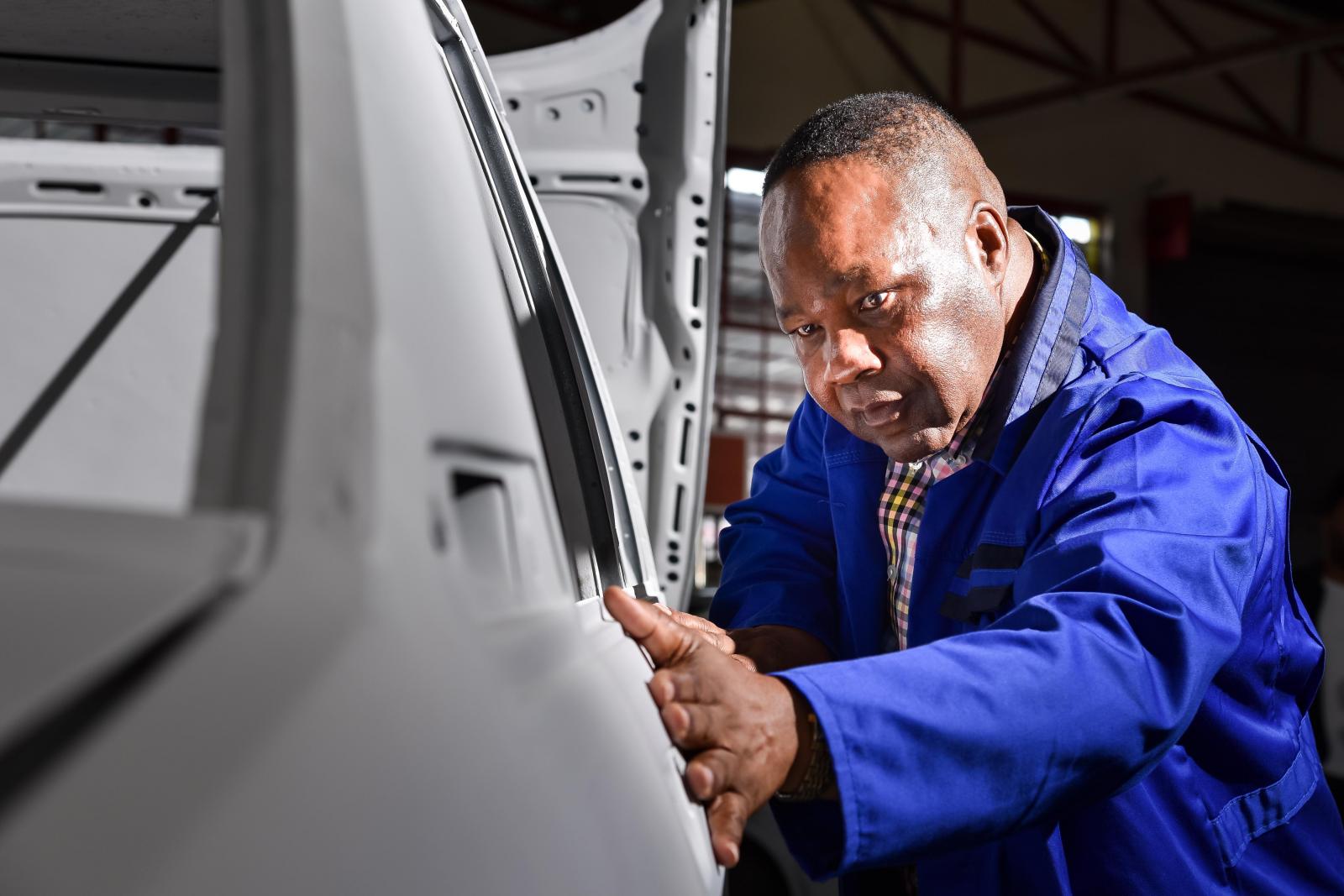
Before his retirement, Walter Mahlangu worked as a panel beater and spraypainter on the E12 5-Series production team.
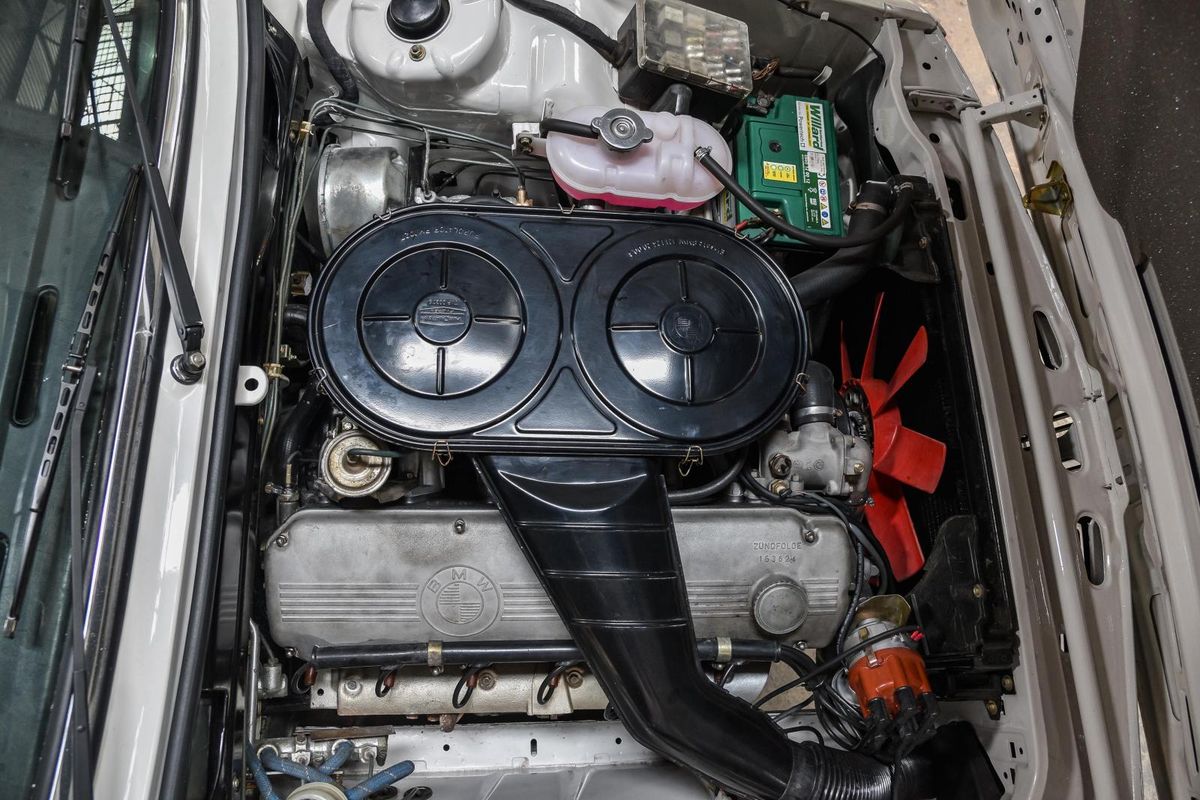
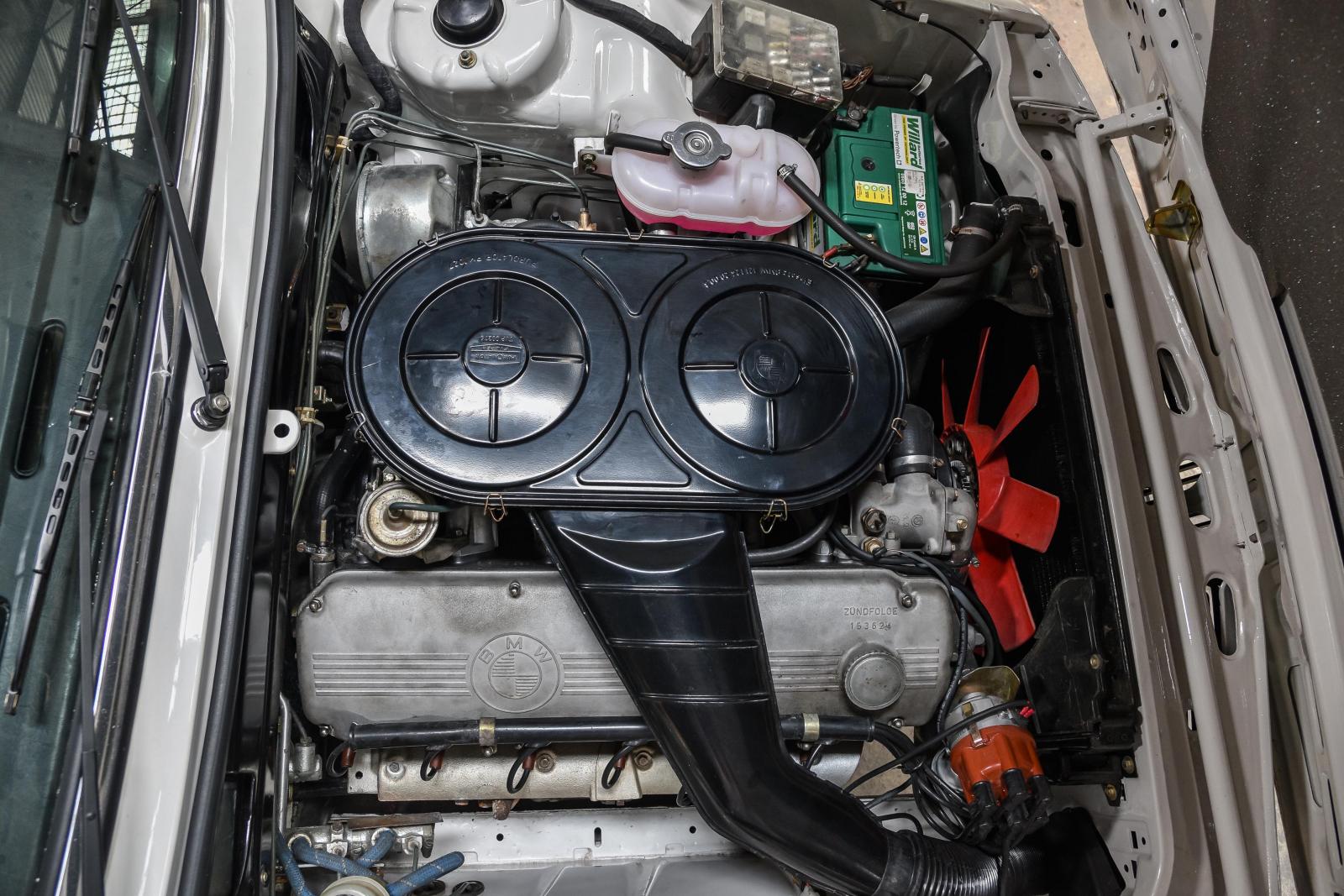
Homologation rules stipulated BMW South Africa had to sell at least 100 road-going versions of the unique-to-Mzansi 530 to the public. Compared with its race-car siblings, the 530 Motorsport Limited Edition (MLE)’s AC Schnitzer-tuned M30 3.0-litre straight 6 (fed by a pair of Zenith 38/40 INAT carburettors) produced 147 kW at 6 000 rpm and 277 Nm at 4 300 rpm (so it was notably tamer than the competition version). It had a Getrag 5-speed dog-leg manual gearbox, a limited-slip diff, a top speed in excess of 200 kph and a 0-to-100 kph time of just over 9 seconds.
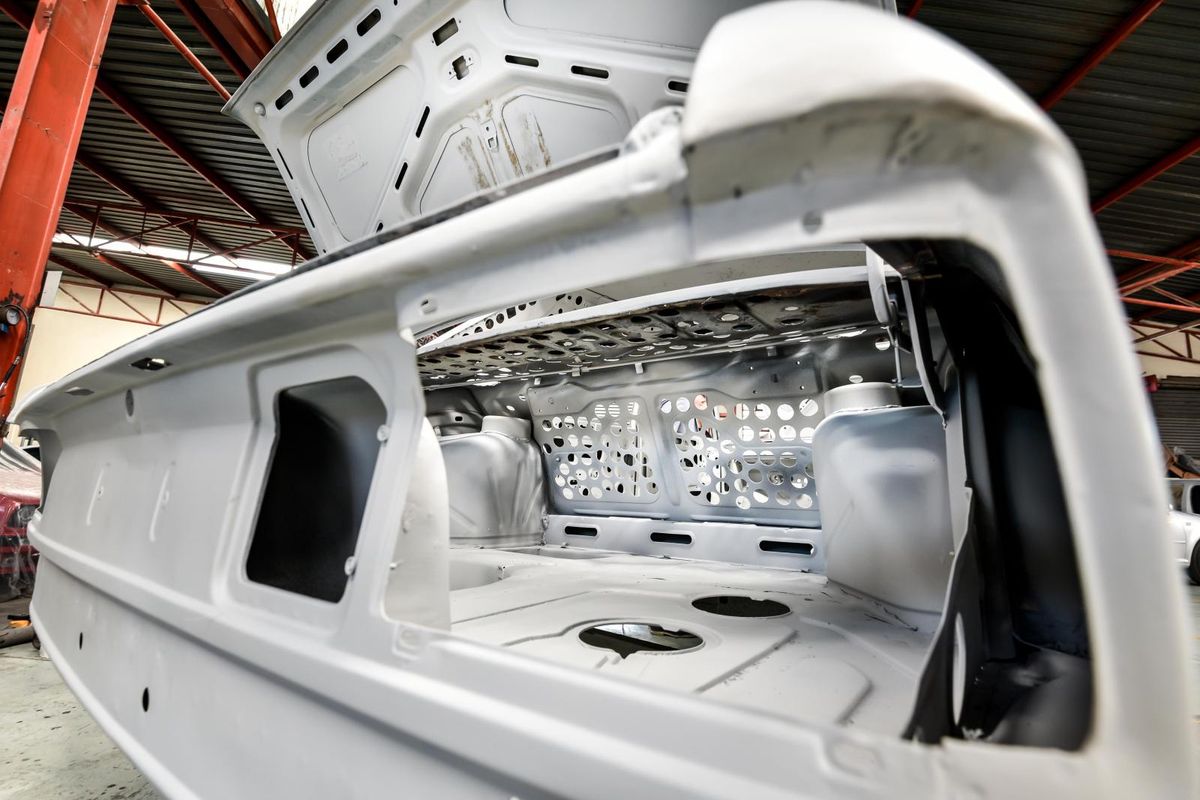
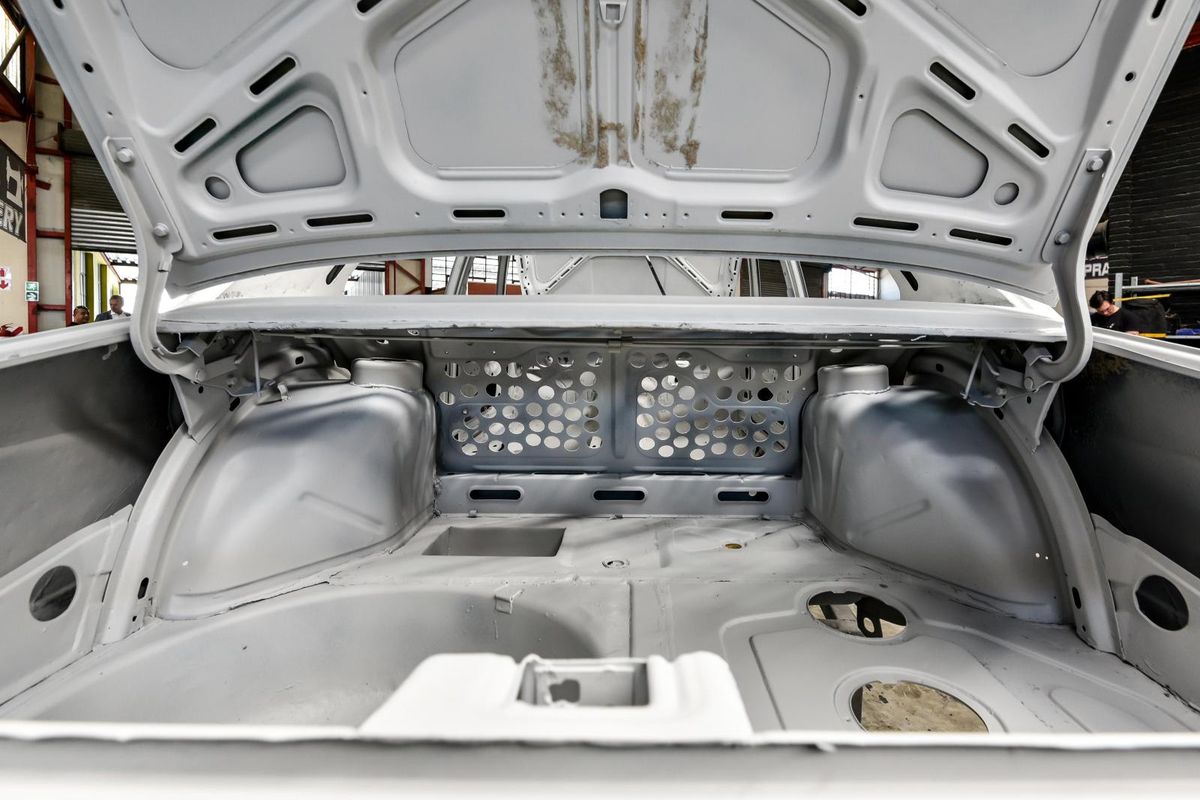
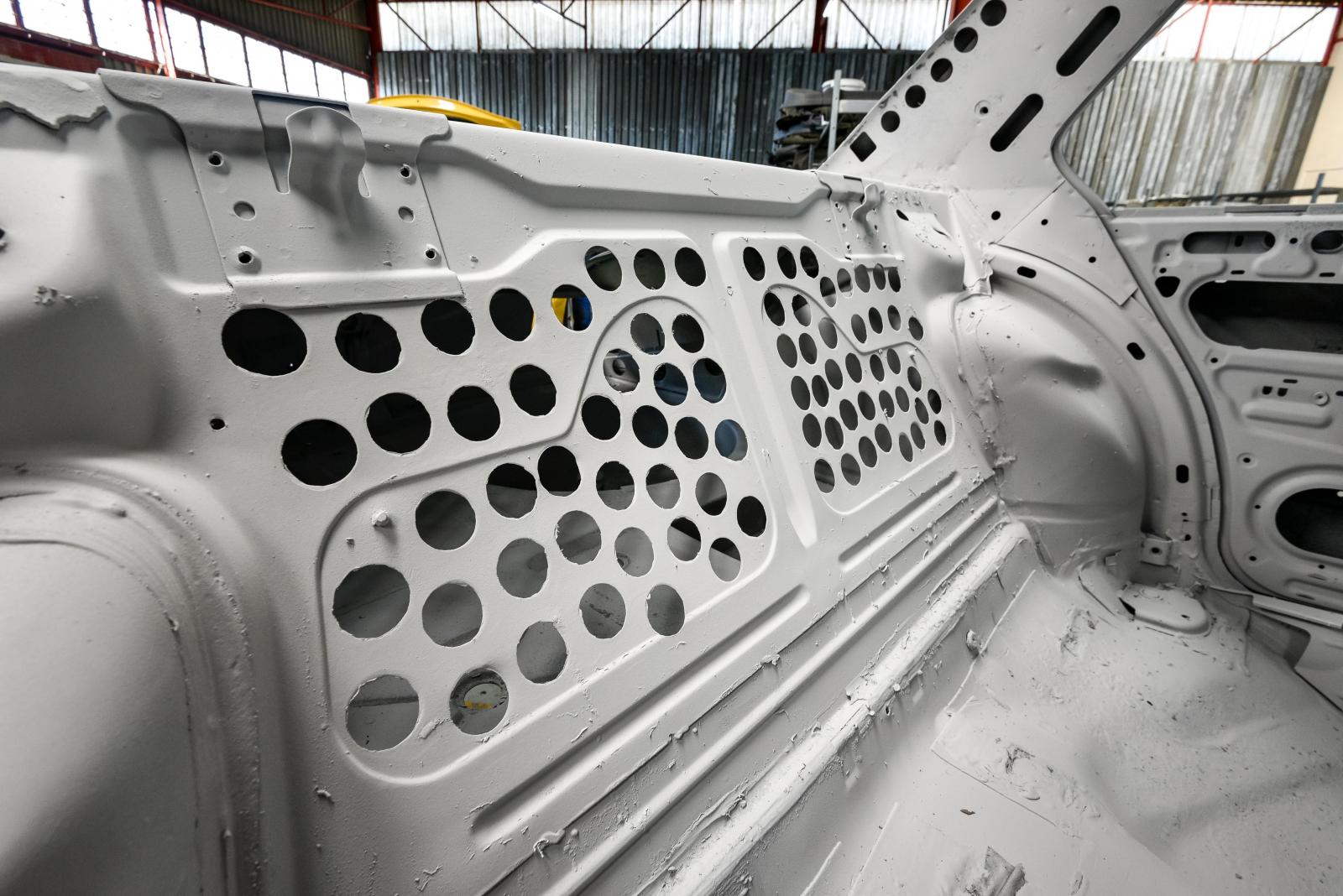
Classic Car Africa reported late last year that the 530 MLE had discs brakes all round (ventilated at the front), Bilstein shocks with upgraded springs and anti-roll bars. The weight-saving programme was carried over to the road car, so holes were drilled in almost every bit of non-structural steel (which, of course, owners would never see), the side glass was only 5-mm thick and aluminium panels were used wherever possible. And, to ensure ideal weight distribution, the car’s battery was placed on the left side of the boot to offset the driver’s mass, the magazine said.
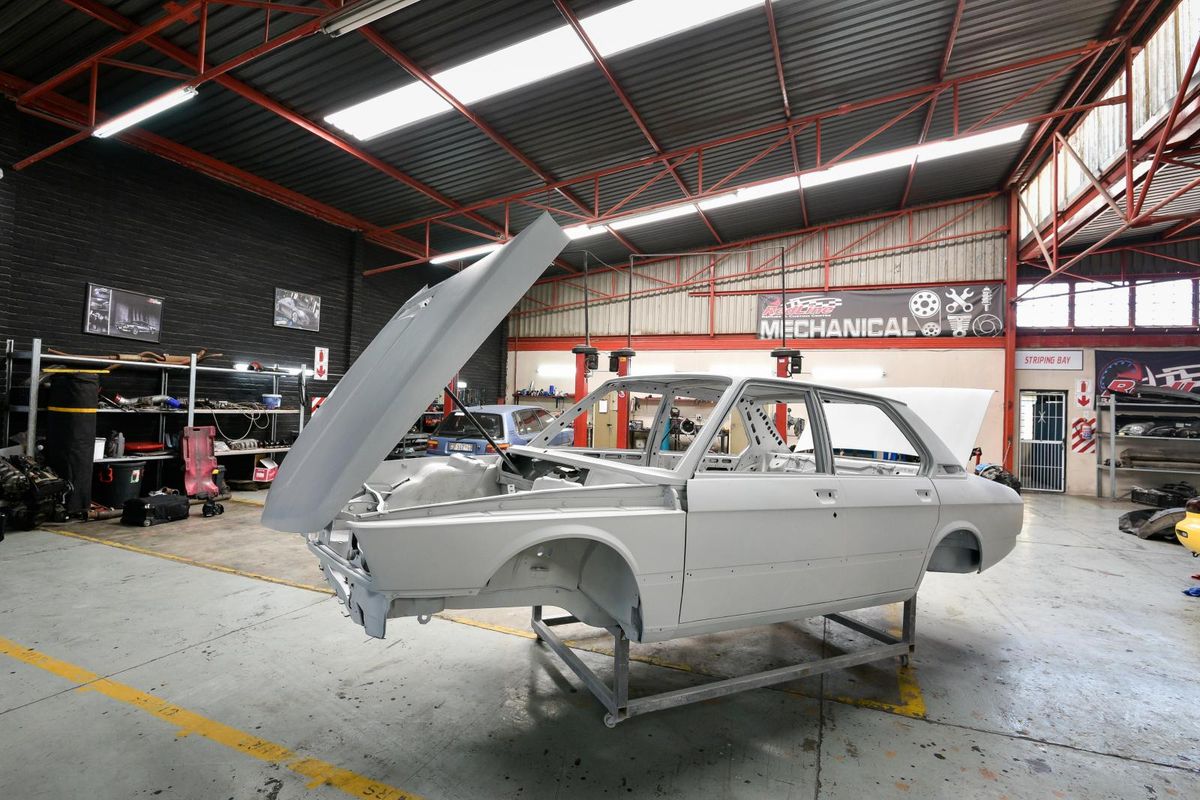
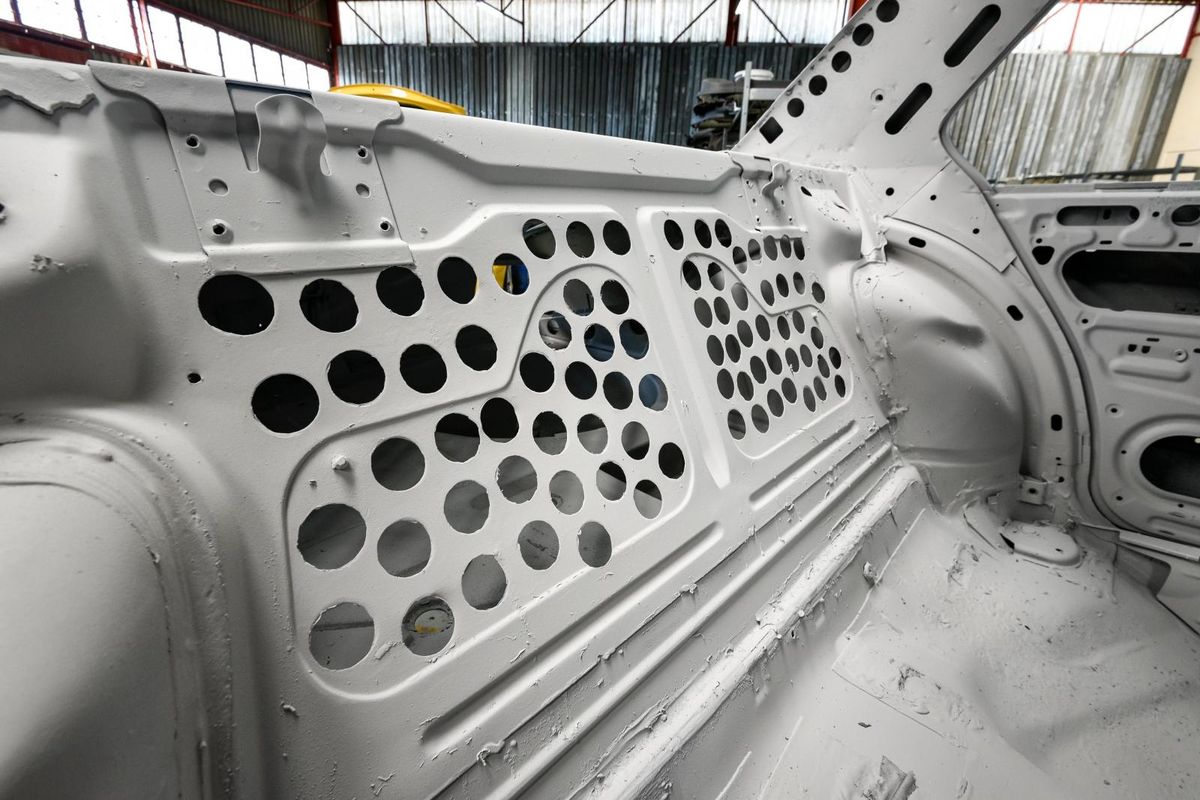
If the drill-pattern looks random, that's because it was done by hand, to make the racing- and production cars as light as possible.
Cosmetically, the car was festooned with sculpted front and rear spoilers, distinctive Mahle wheels and BMW Motorsport-coloured stripes, while the interior was left Spartan (no aircon or electric windows). Scheel front bucket seats and a 3-spoke Italvolanti Sport steering wheel were fitted.
BMW SA says that 110 units of the Type 1 were produced (in 1976), while 117 units of the Type 2 rolled off the production line in 1977. Luis Malhou, who owns a pair of 530 MLEs, of which number 13 is pictured here, says Type 1s are far more collectable because, by comparison, the Type 2 was less related to the racing car. It featured fewer aerodynamic adornments and, by virtue of its more executive spec, was aimed at luxury car buyers.
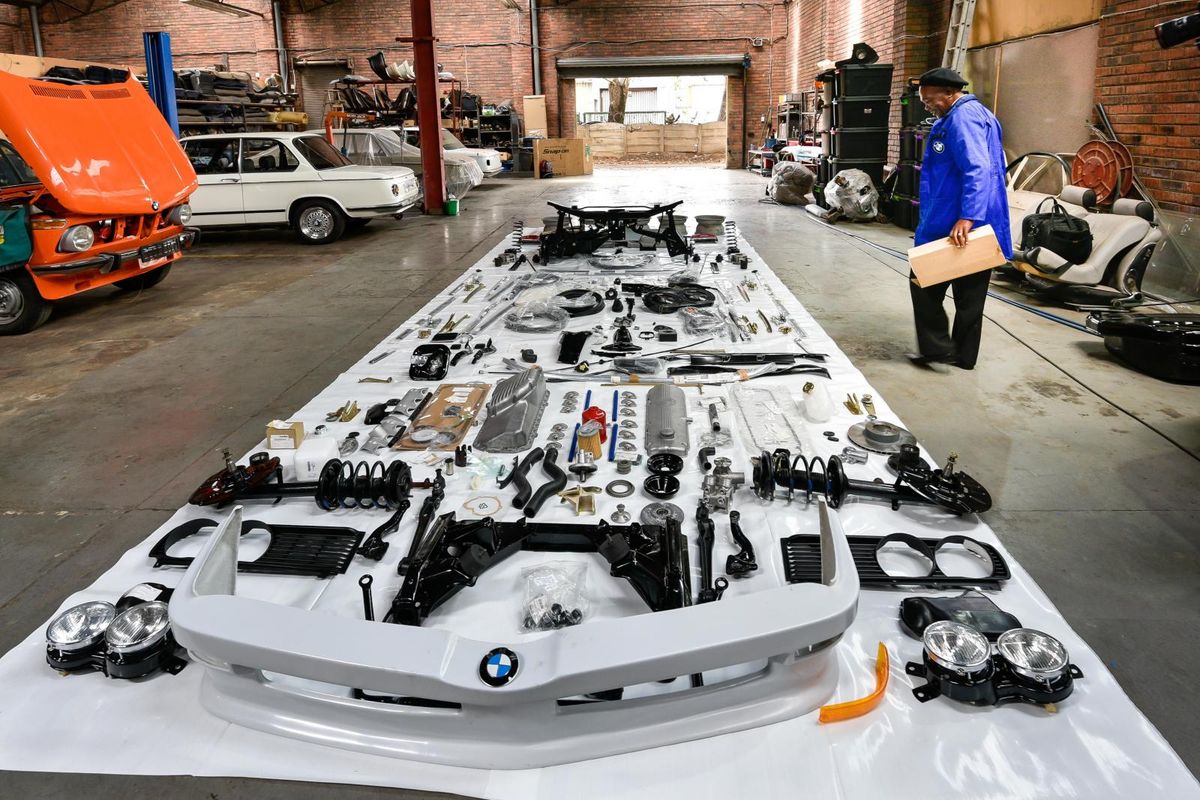
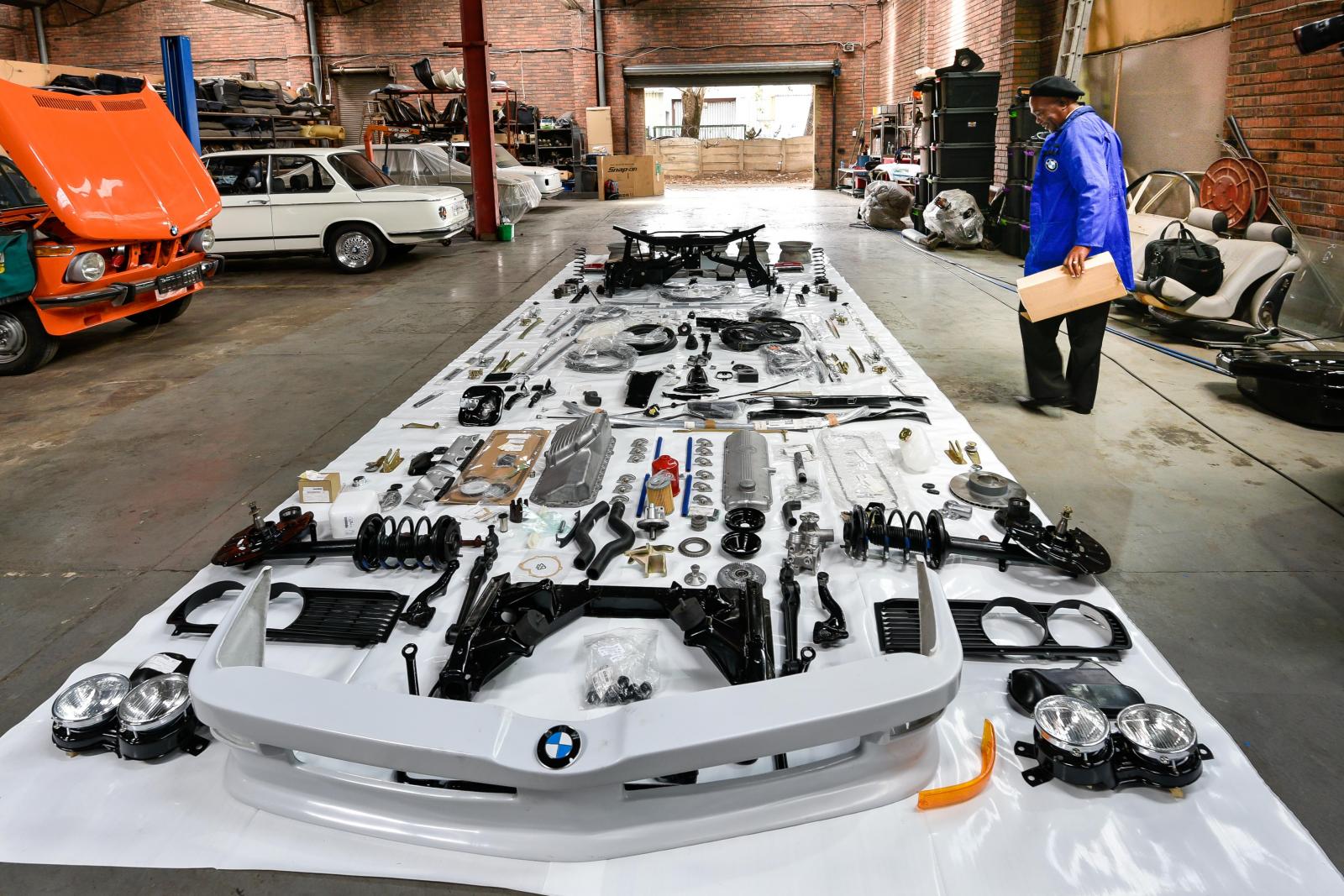
Jacob Matabane, who worked for BMW SA for 35 years, surveys the many parts that have already been collected and catalogued.
Serial number: 770100
Late last year, BMW South Africa commissioned the full restoration of car number 100 (#100) of the 530 MLE production run. The Rosslyn-based firm, which already has an M1 supercar, 333i and 325iS in its heritage fleet, enlisted Malhou (a renowned BMW restorer) to work on the car, which used to be owned by retired racing driver and 530 MLE racing team manager Peter Kaye-Eddie (its engine and chassis numbers match).
Malhou says the number 100 car was left in a state of disrepair in Kaye-Eddie’s garden for 20 years and even though it took a lot of convincing for the former owner to part with it, this project is the most extensive nuts-and-bolts 530 MLE restoration that he has undertaken to date. This week, BMW exhibited the #100 car at Redline Panelbeaters in Vereeniging and to mark the occasion, 2 retired BMW employees (Walter Mahlangu and Jacob Matabane) who worked at BMW’s Rosslyn assembly plant in the 1970s and helped to build the legendary cars, were in attendance.
The E12-generation 5 Series was not intended to have a 3.0-litre engine, but then Herr Neerpasch and AC Schnitzer intervened.
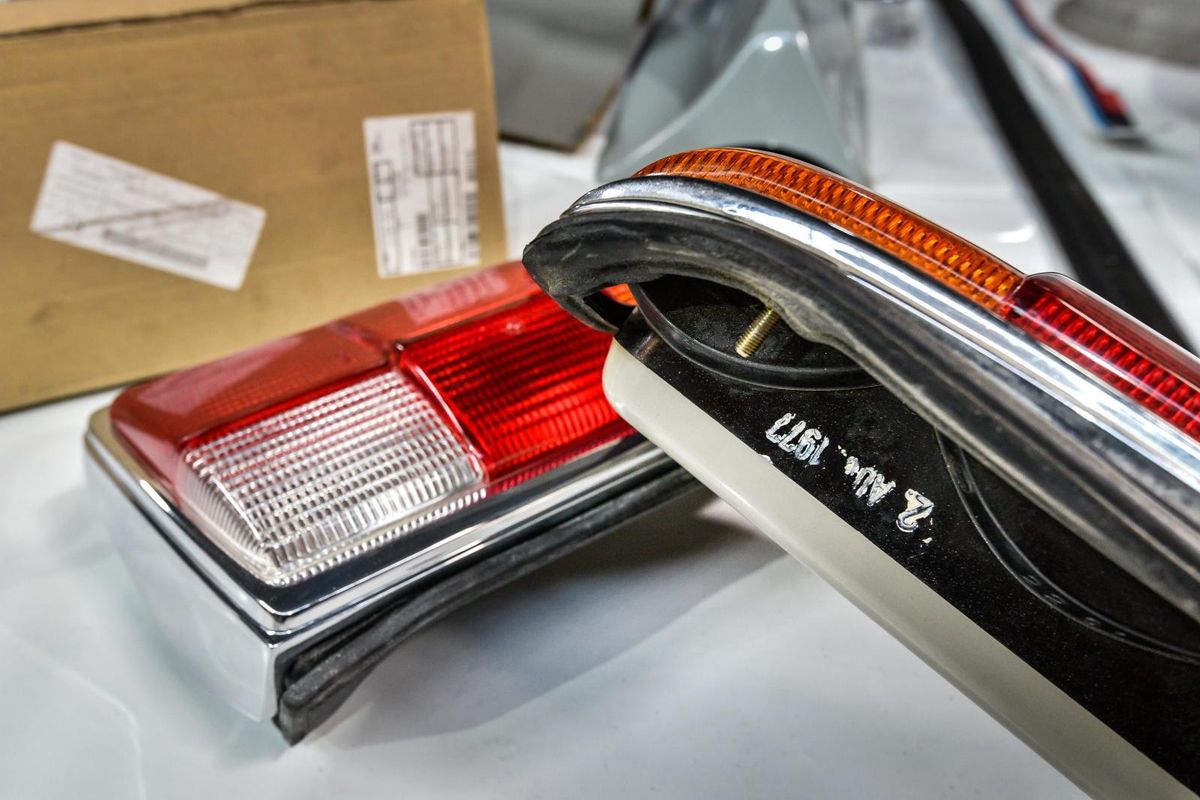
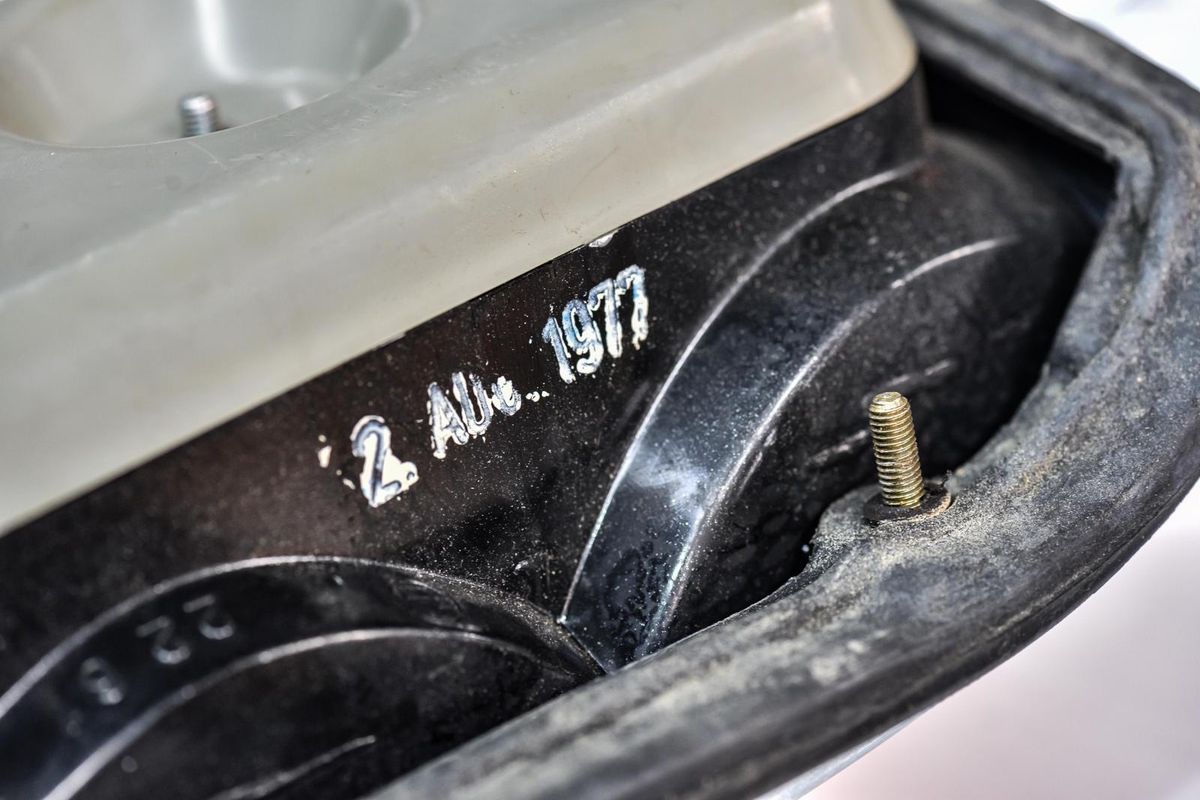
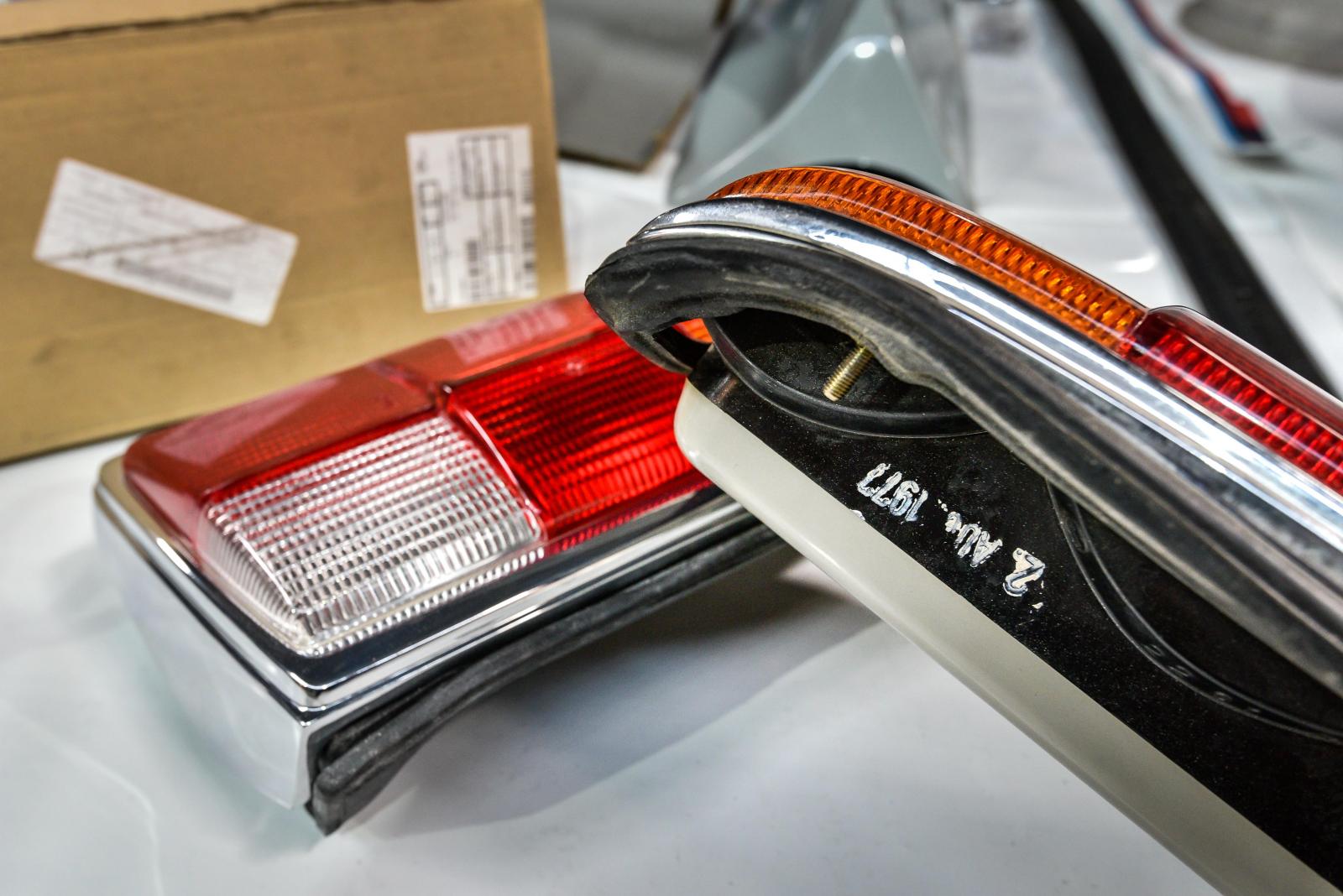
In its primer coat, the threadbare body of the 530 MLE resembles Swiss cheese in many areas – evidenced by the numerous holes that were purposely hand-drilled into the steel more than 42 years ago. The doors, too, are wafer thin. Fortunately, BMW SA has high hopes that the restoration will be completed before the end of 2019, because the overwhelming majority of parts required to reassemble the car have already been sourced. Surprisingly, BMW SA managed to find period correct (and never unboxed) parts, such as the tail lights, from its own parts warehouse.
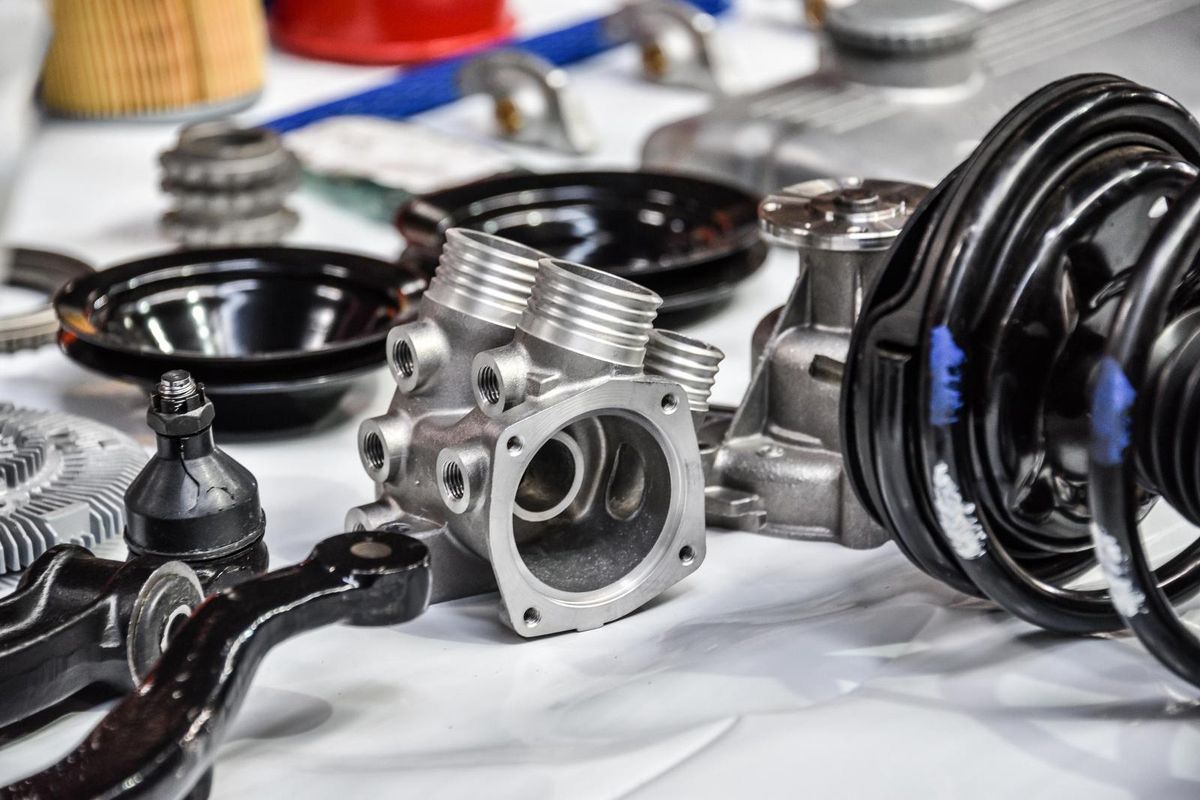
Period-correct parts and trims can be difficult to find, but BMW is sparing no effort to keep the 530 MLE as authentic as possible.
The legacy
The BMW 530 MLE was the most successful racing BMW 5 Series in history when it was retired in 1985, but, at the time, few had any inkling that the production versions of the racing car would become so valuable. It needs to be noted however that, apart from gestating locally-produced models, BMW SA spearheaded the involvement of the company’s sedans in motorsport, much more so than BMW in Germany. The Rosslyn-based campaigned the 530 and (also locally developed) 745i, as well as the 535i and later, the 525i, in domestic modified saloon racing formulae.
BMW began its line of M models somewhat inauspiciously with the Group B-inspired M1 supercar, which was considered a commercial failure at the time, and introduced the 1st of its legendary M5 performance sedans (the E28) in 1984. Significantly, the 530 MLE of 1976, pre-dates both of them.
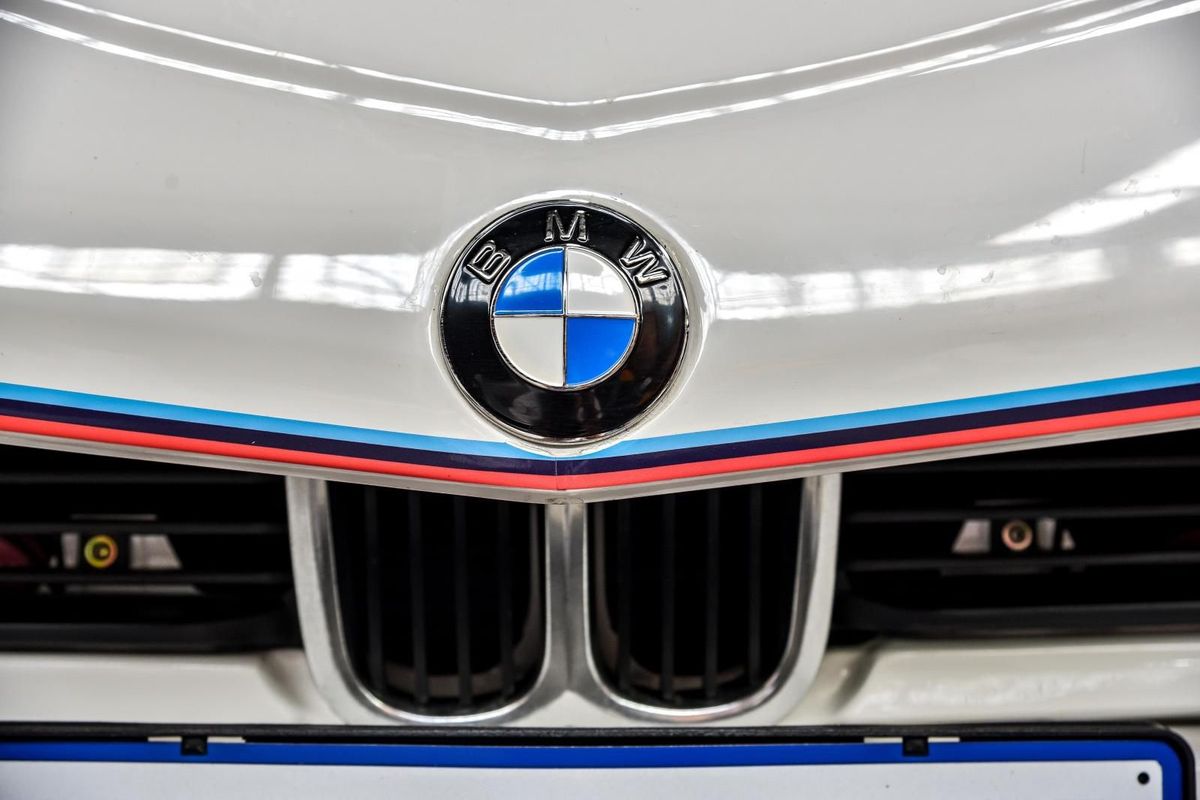
BMW Motorsport stripes and chrome-look wheel arch trims… Malhou hopes to make car number 100 even better than his own 530 MLE.
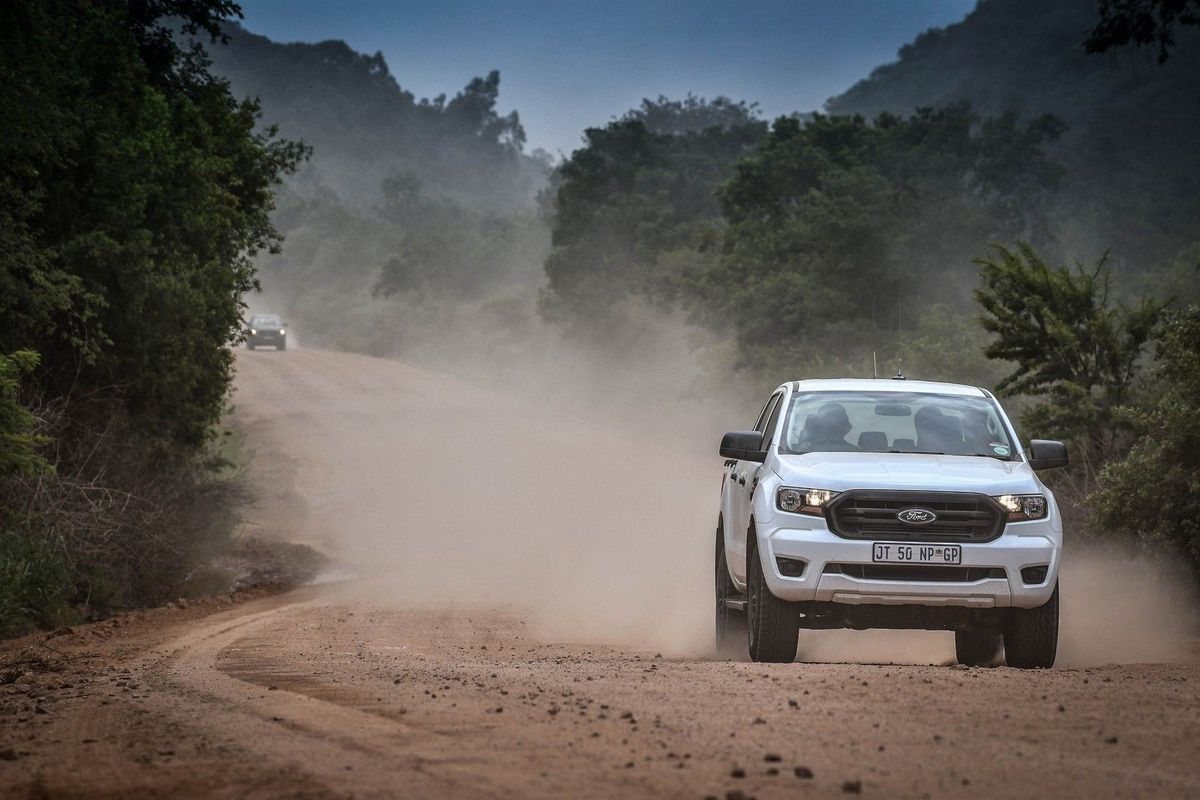
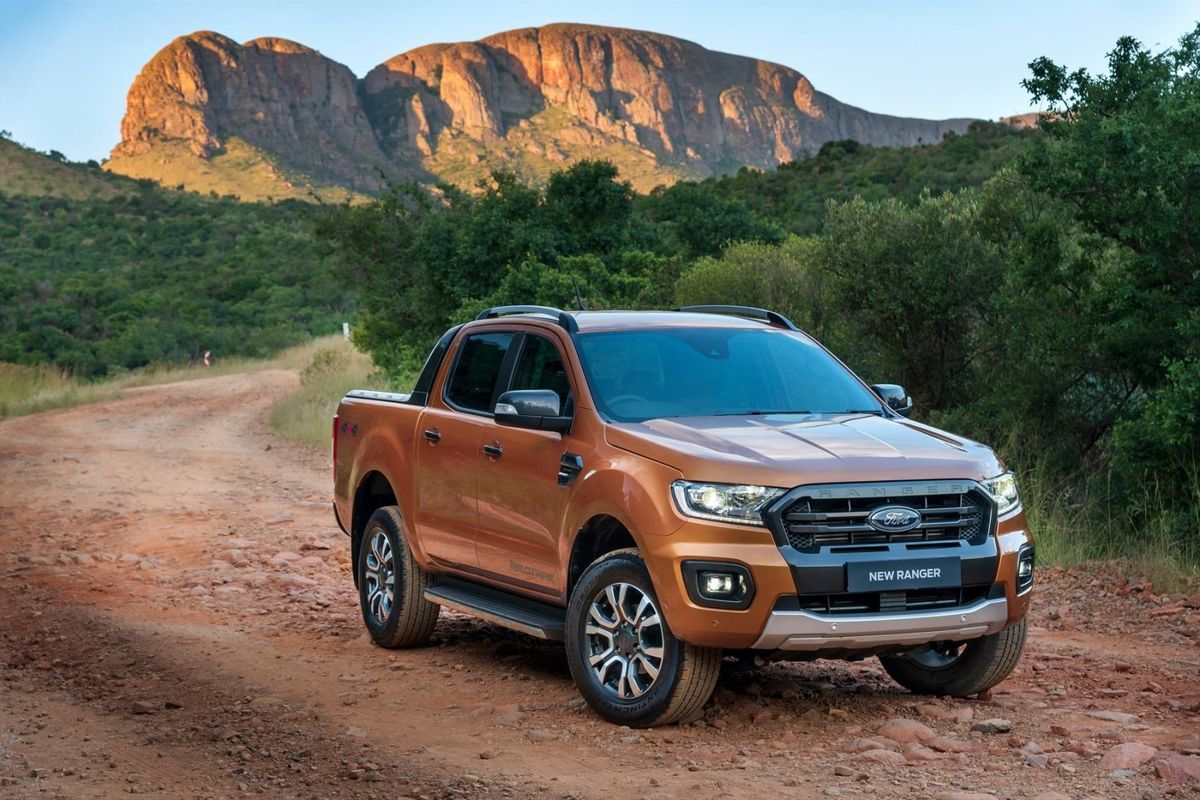
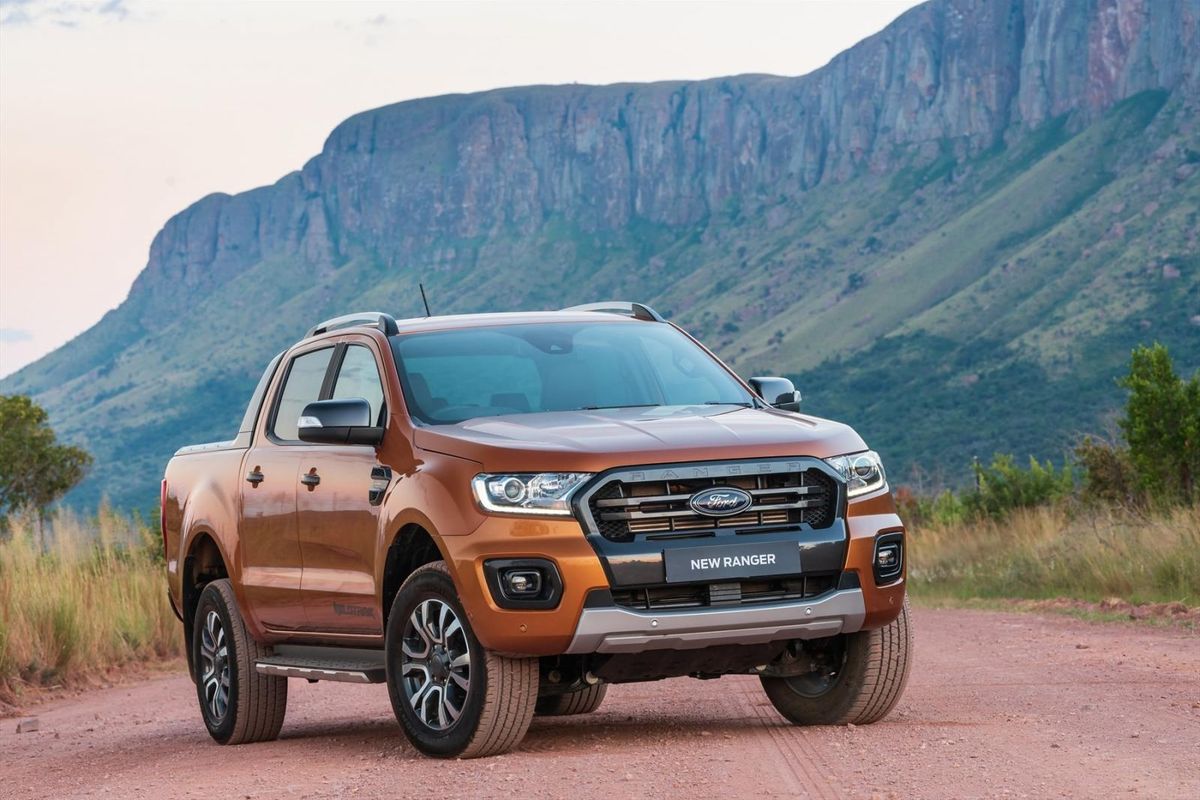
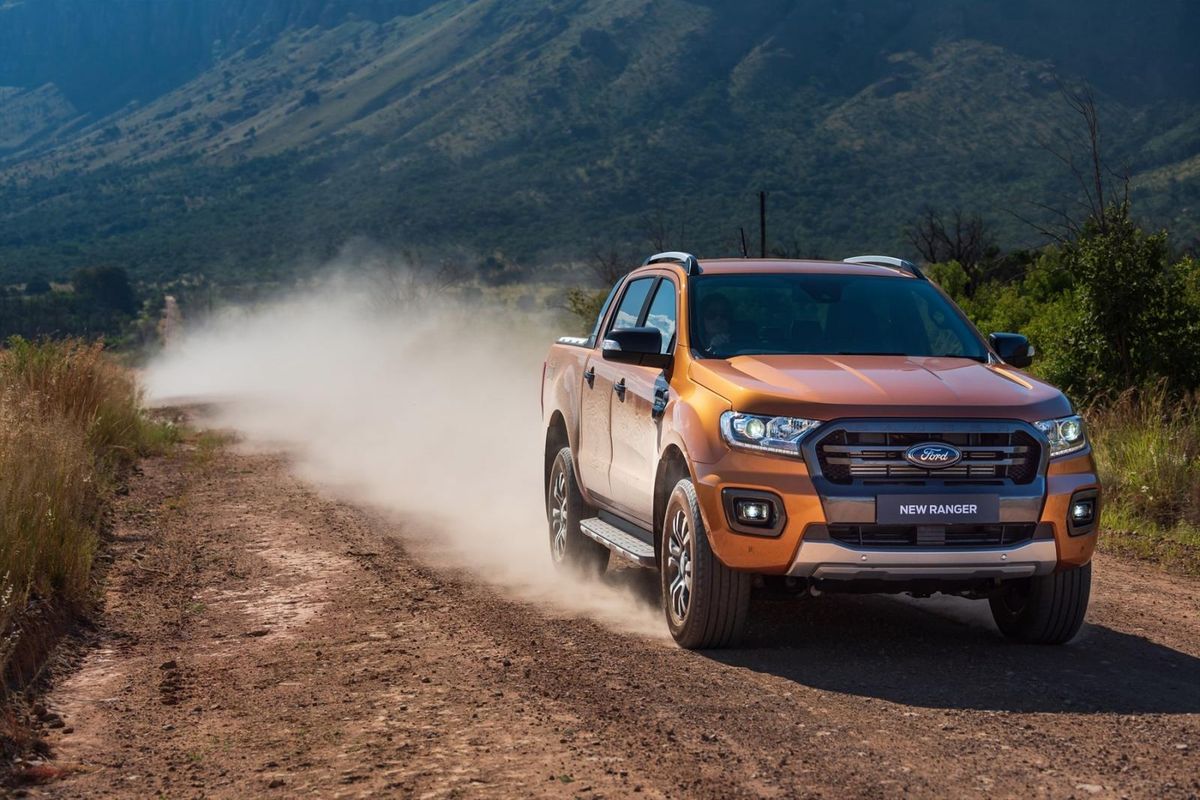
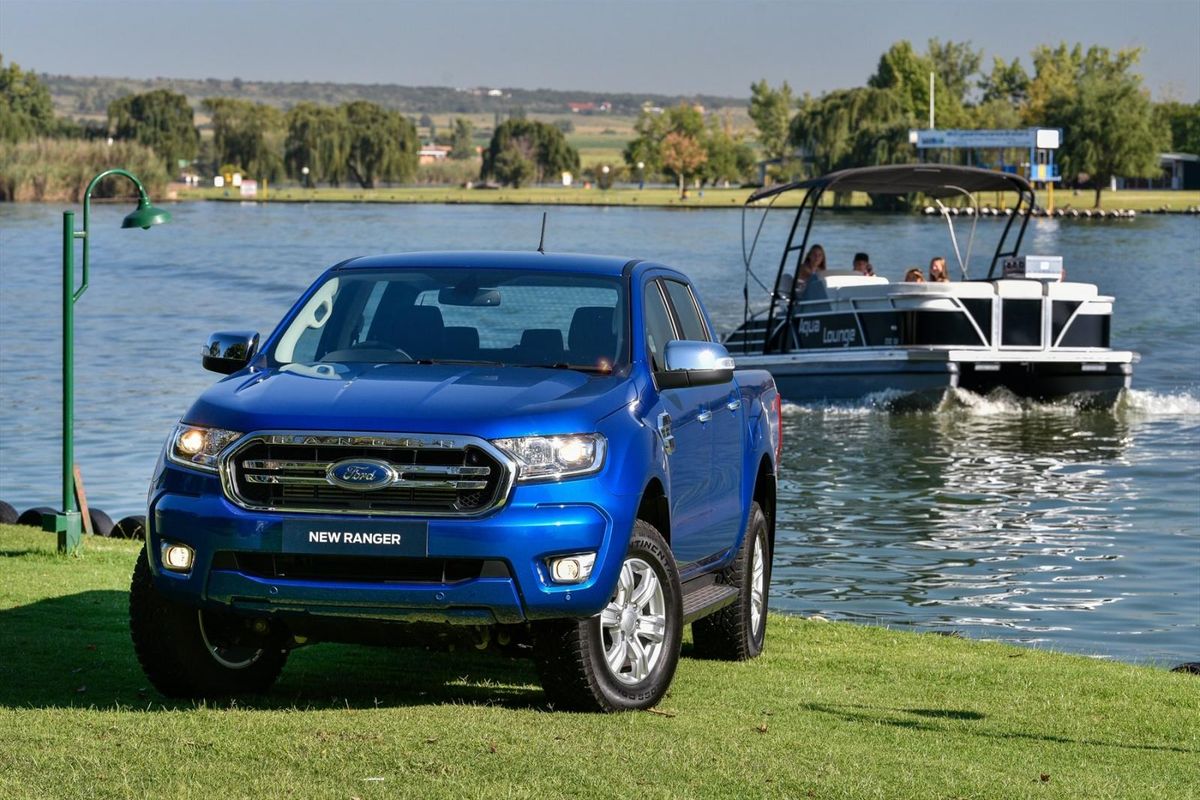
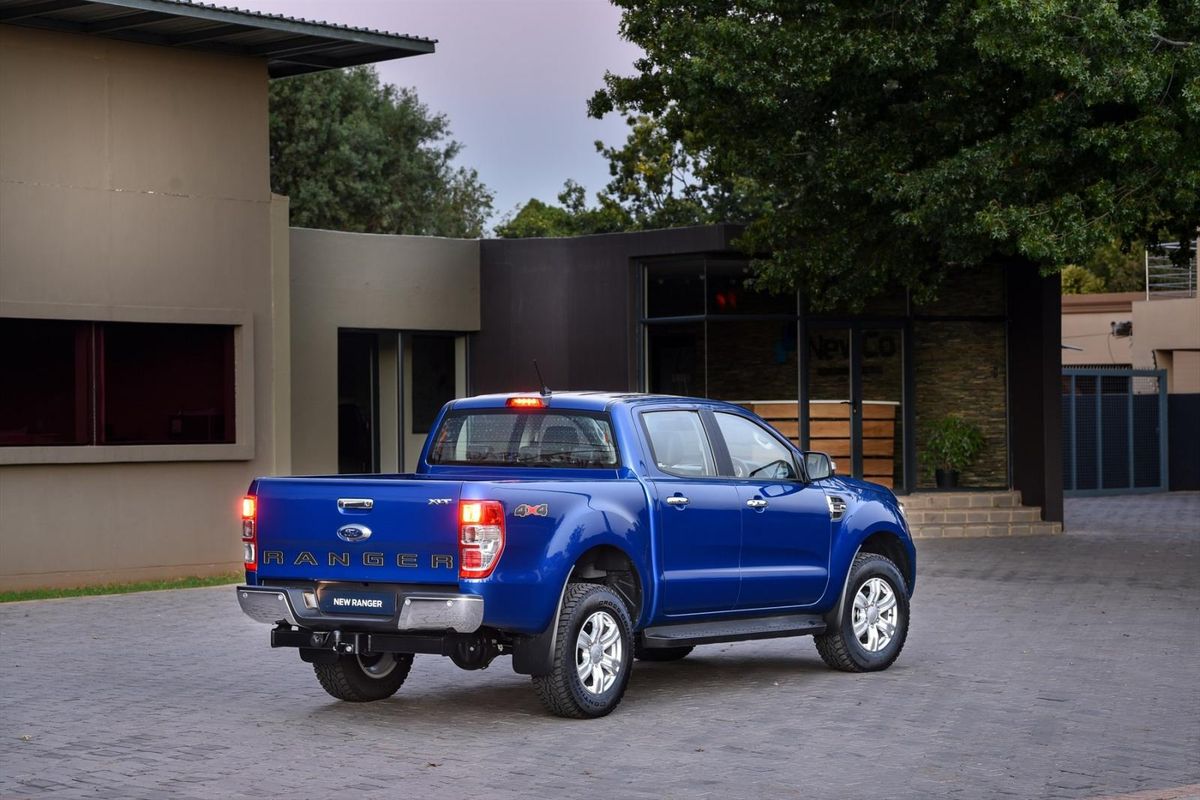
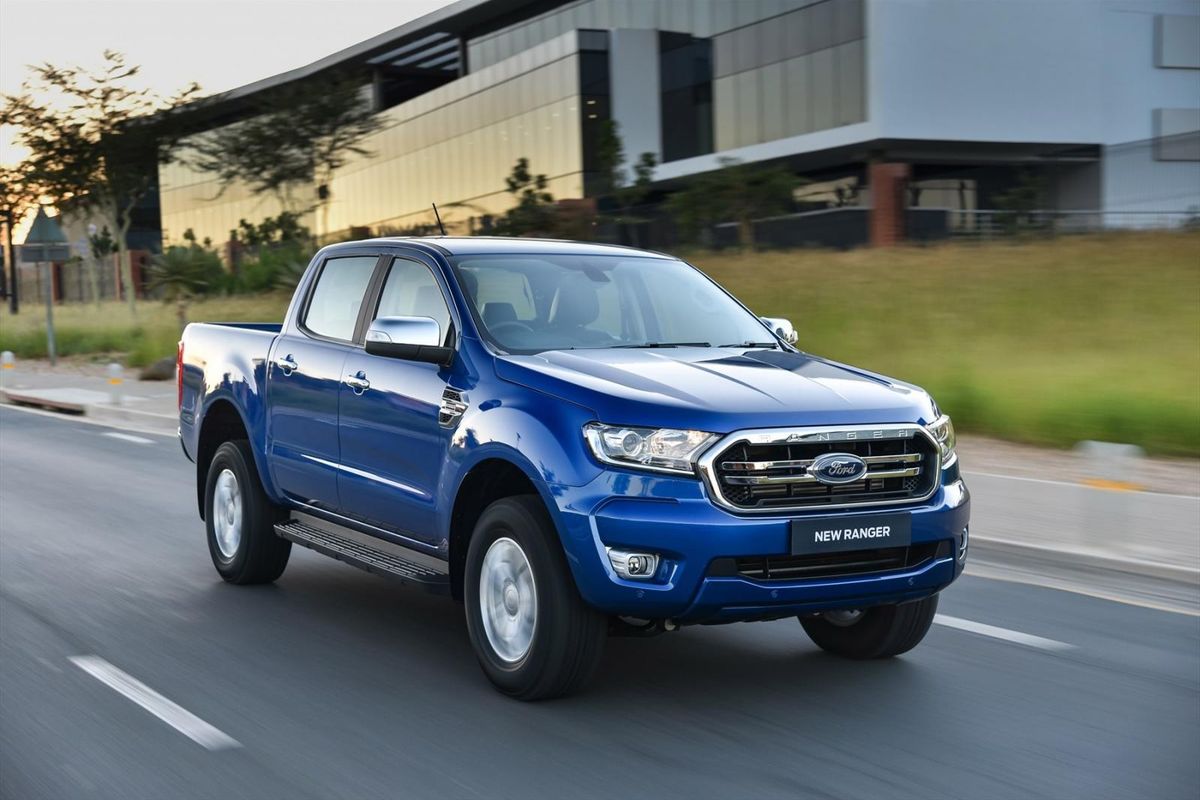
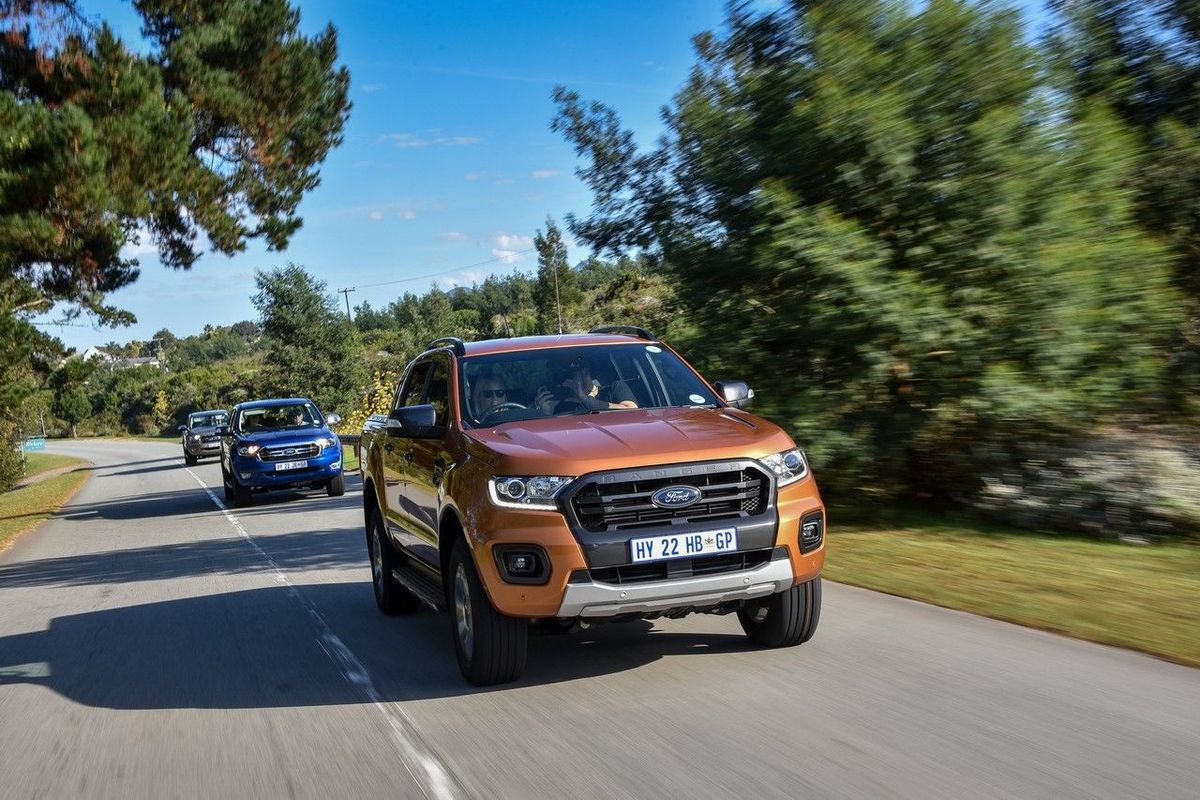
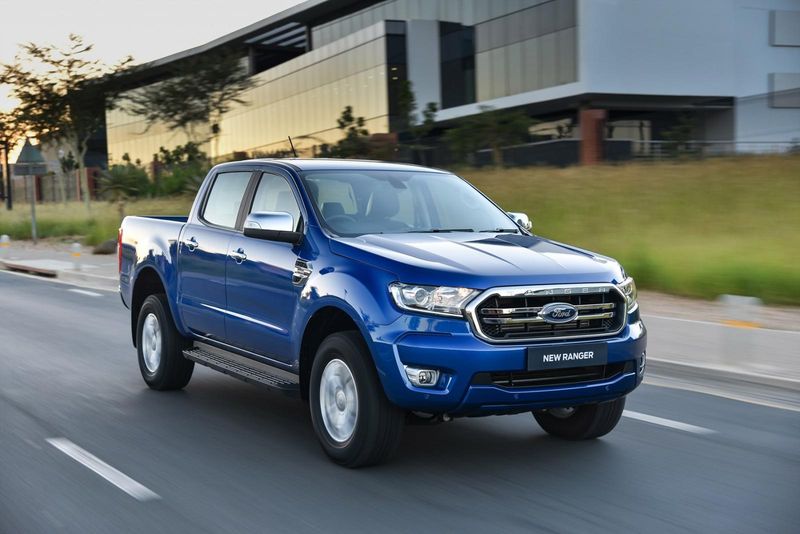
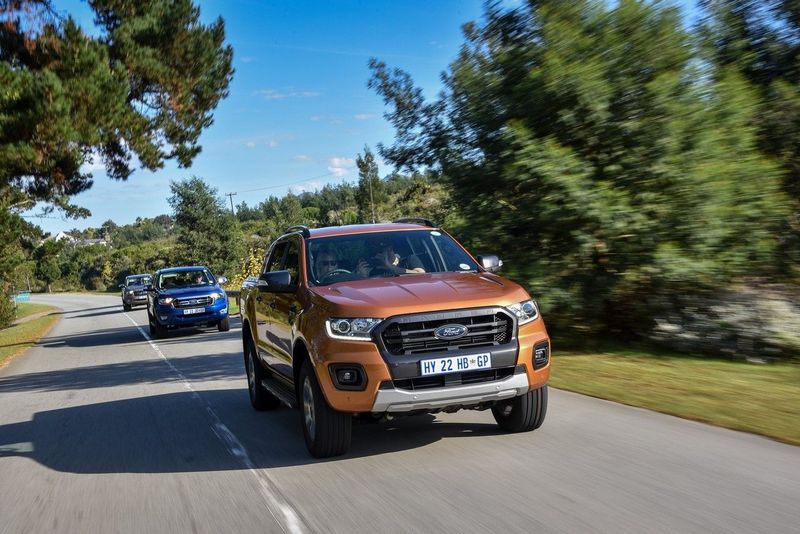
The 2019 Ford Ranger has made landfall in South Africa and we attended the updated bakkie's local launch in the Southern Cape. While changes to its exterior are minimal, the Ranger has received a substantial mechanical overhaul. The facelift represents a big leap forward for both the model… and the bakkie segment as a whole.
The Ford Ranger is bakkie available in single-, crew- and double-cab configurations. It's been on the market for some time in South Africa and has been a finalist in the #CarsAwards – powered by WesBank. The Ford Ranger is sold in 149 countries and a substantial number of those vehicles are assembled right here in Pretoria, South Africa.
The bakkie market receives new or updated models fairly regularly, so Ford has had to raise its game in the segment. The 2019 Ford Ranger has been subjected to an in-depth overhaul and while changes appear minimal, we can assure you there is a lot of new goodness under its sheet metal.
Aesthetically speaking, there are some slight trim changes both inside and out. The big change pertains to the powertrain and the updated model marks the debut of all-new 2.0-litre bi-turbo and single-turbo diesel engines. There's also a new transmission in the form of a 10-speed automatic 'box. In terms of suspension, the setup has been completely revised with the goal of improving the Ranger's on-road refinement and handling.
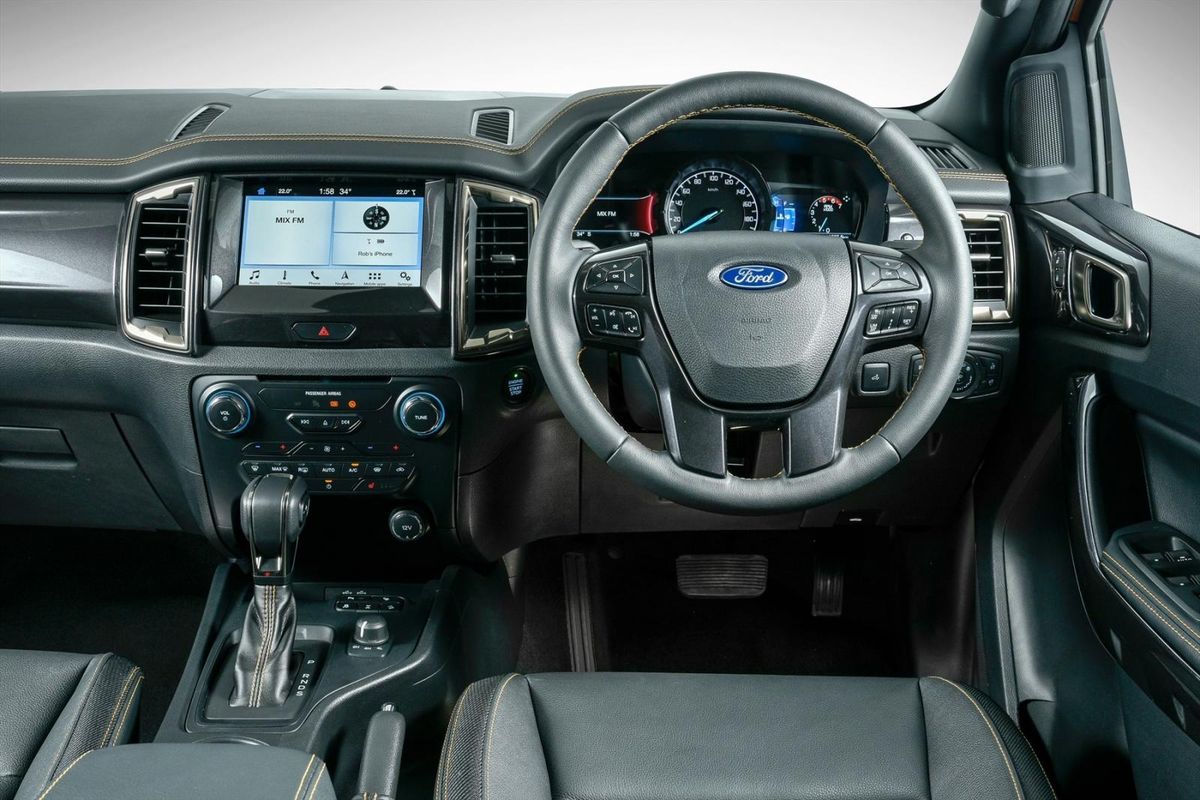
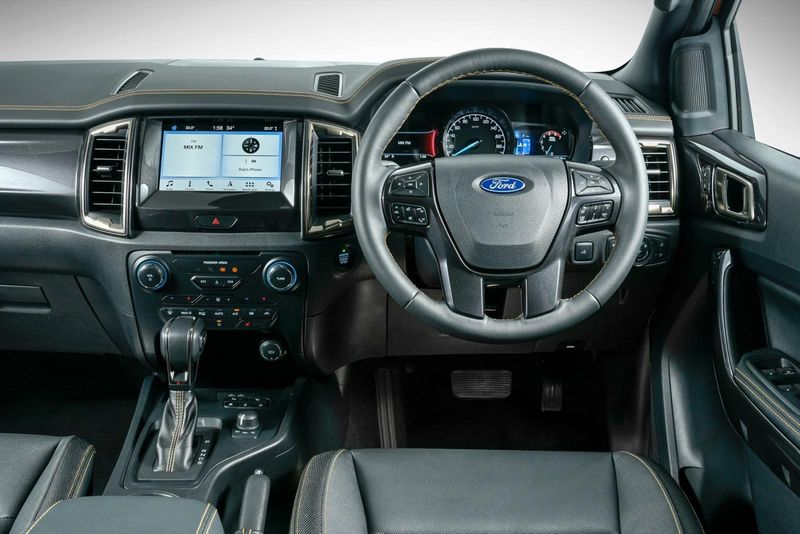
Inside, the 2019 Ford Ranger boasts a darker and more premium-look Ebony Black finish. Ford claims the painted surfaces in its revised bakkie's interior have been given greater shine and depth…
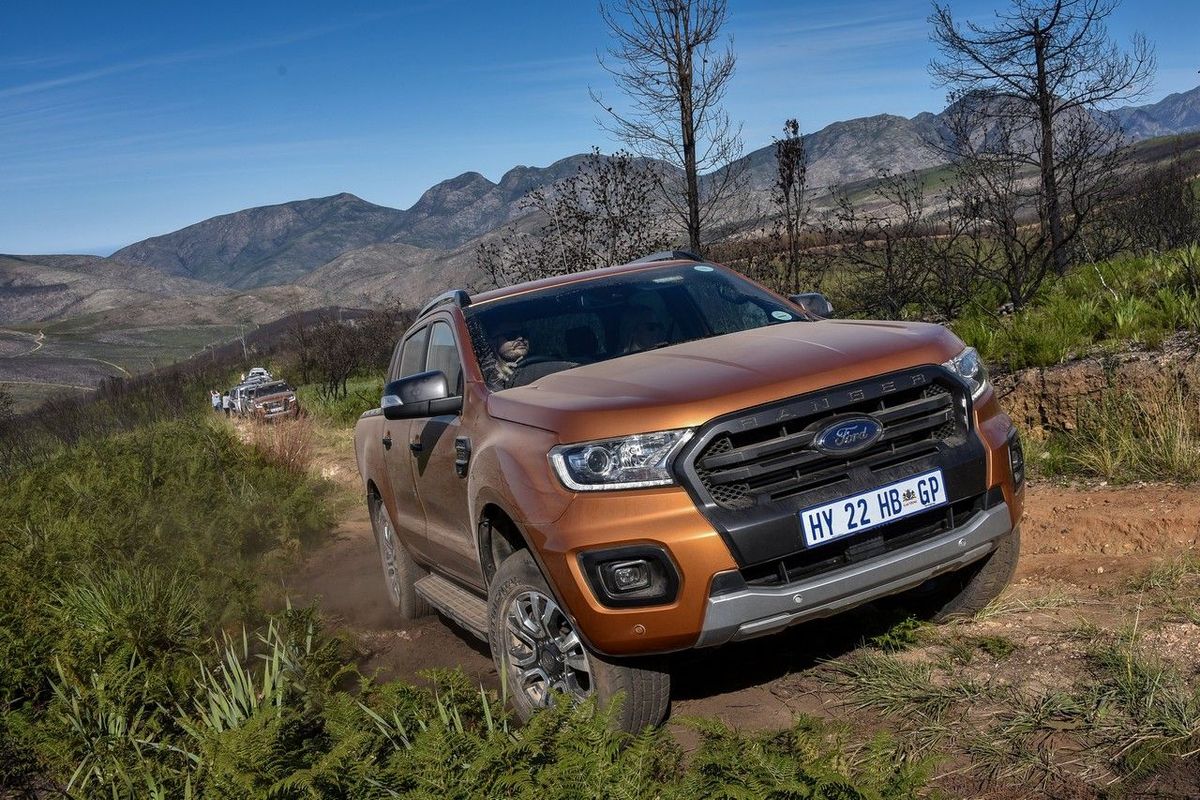
The Wildtrak cabin loses some of the pre-facelift version's orange accents and gains a darker finish for a classier look.
Powertrain
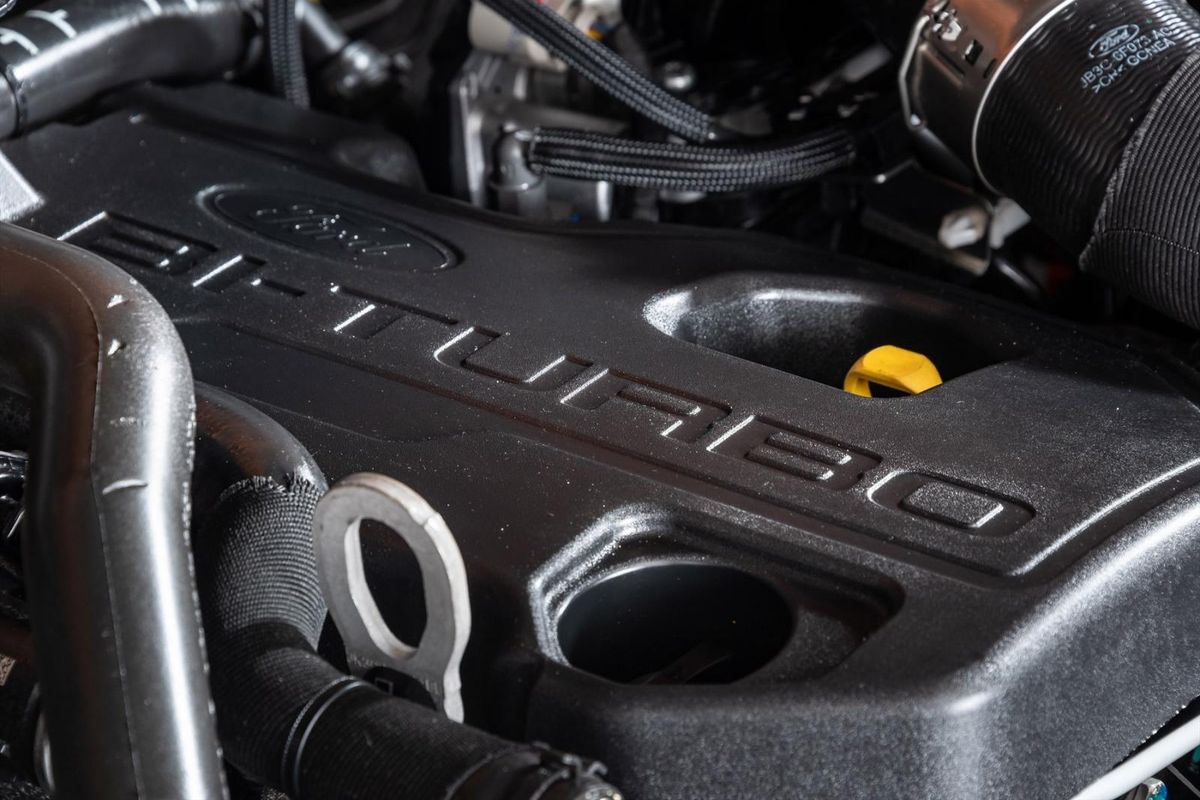
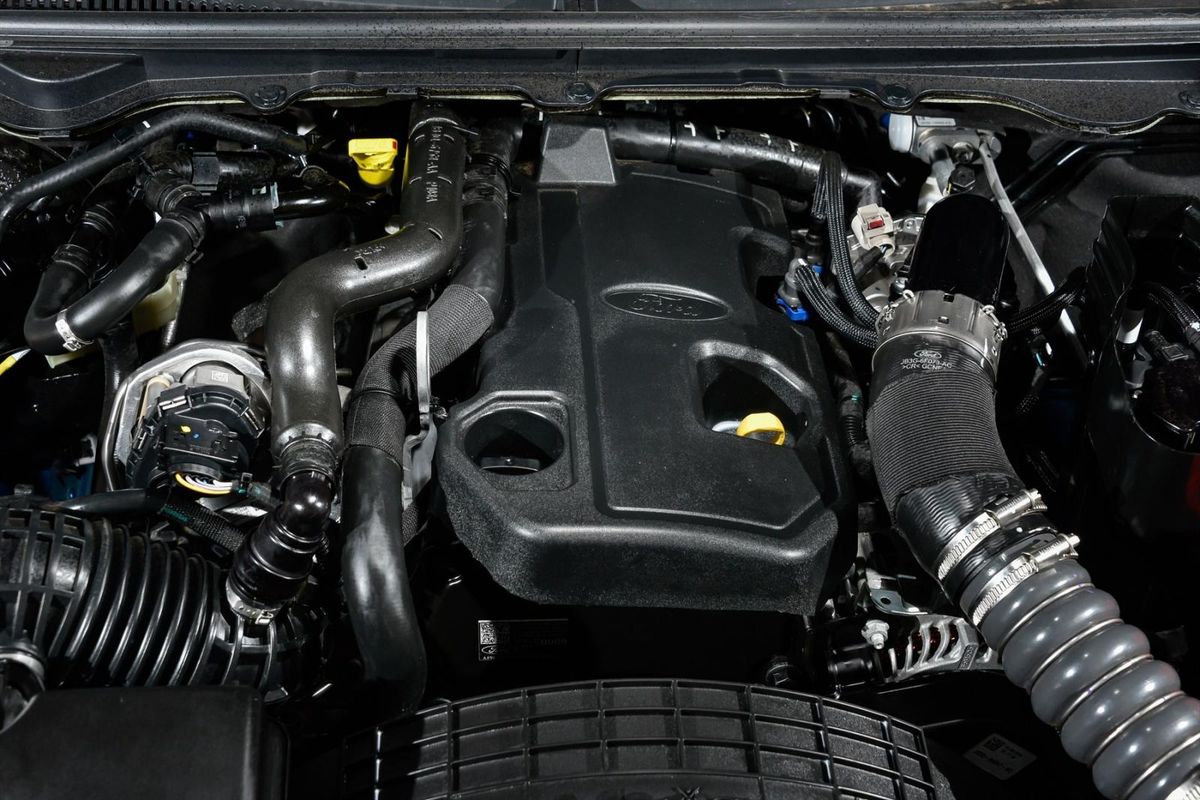
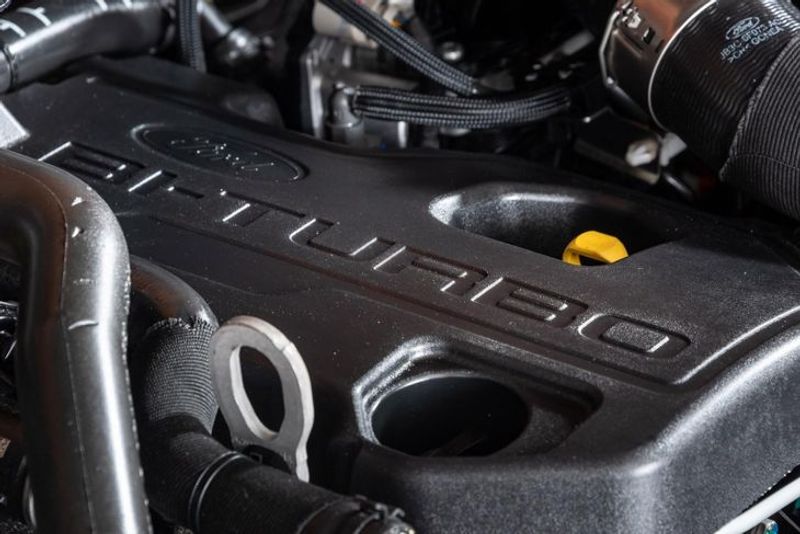
These new 2.0-litre turbodiesel engines are assembled at Ford's engine plant in Struandale, Port Elizabeth. The 2.0-litre bi-turbo diesel engine can be found on the new-spec Ford Ranger Wildtrak and it will also power the eagerly anticipated Ranger Raptor version, which is due to be launched in May 2019. The motor's peak outputs are 157 kW and 500 Nm, with maximum torque available around the 1 750-rpm mark. The new 2.0-litre (single) turbodiesel engine has outputs of 132 kW and 420 Nm, again with maximum torque coming in at 1 750 rpm.
The benefits of the new engines are numerous. Not only are they quieter and more refined than the current offerings – they offer lower levels of vibration (which reduces NVH). Speaking of existing engines, the 5-cylinder 147 kW Wildtrak is still available, as is the trusty 2.2-litre TDCi
Then there's the new 10-speed automatic transmission. It's not a new gearbox per se, because it does duty in the F150 and Mustang models. Ford claims its transmission is smart (it can adapt to changing conditions, to ensure there's no hunting for gears and the correct ratio is always selected).
According to Ford, the benefits of the 10-speed automatic are: a fuel economy improvement of up to 9% compared with the current 3.2-litre Wildtrak engine, plus the 'box is said to be capable of locking out selected gears, which should be advantageous when towing or climbing a steep gradient.
The new 2.0-litre bi-turbo engine produces no less than 157 kW and 500 Nm.
Reworked Suspension
The current bakkie's traditional ladder-on-frame setup is not the most conducive to ride comfort, but Ford has reworked the Ranger's suspension to improve on-road pliancy. The anti-roll bar has been repositioned to behind the axle, which improves roll control, which, in turn, facilitates lower front spring rates. There are now 4 damper rates based on individual derivatives and the standard tyre pressure has been reduced from 2.4 to 2.1 bar.
Specification and Features
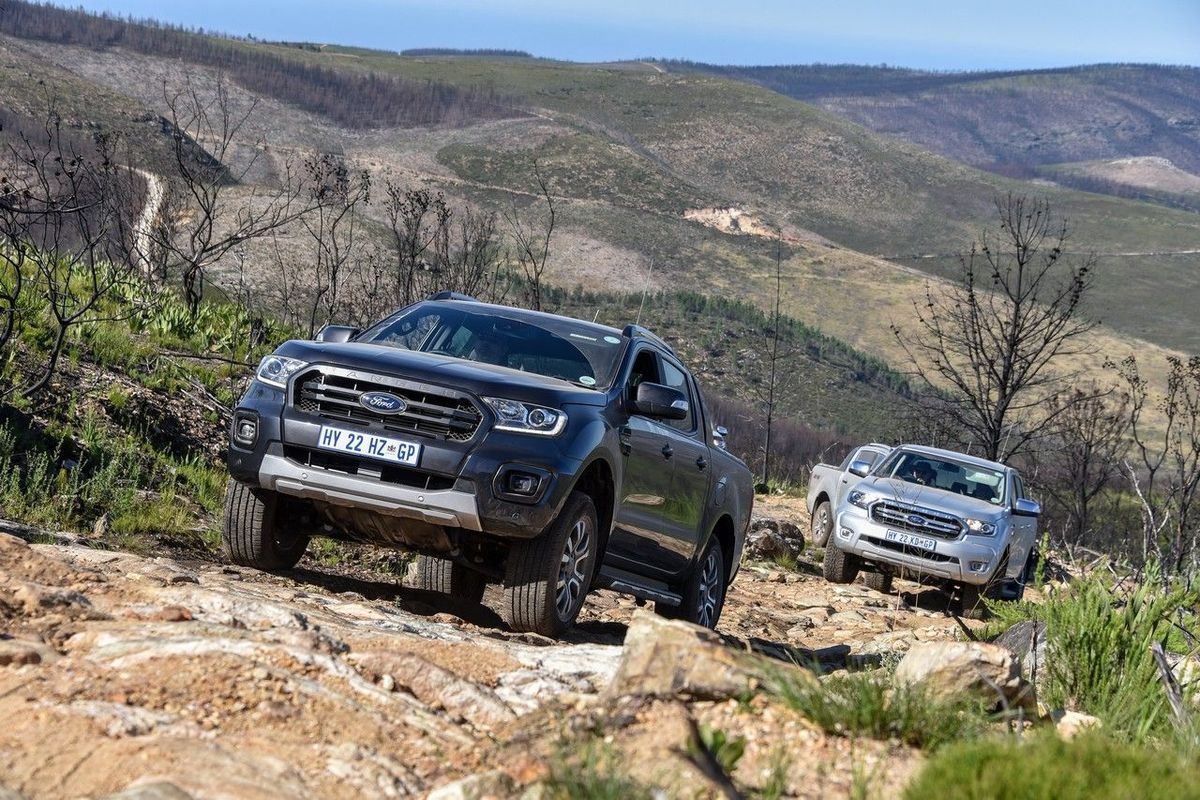
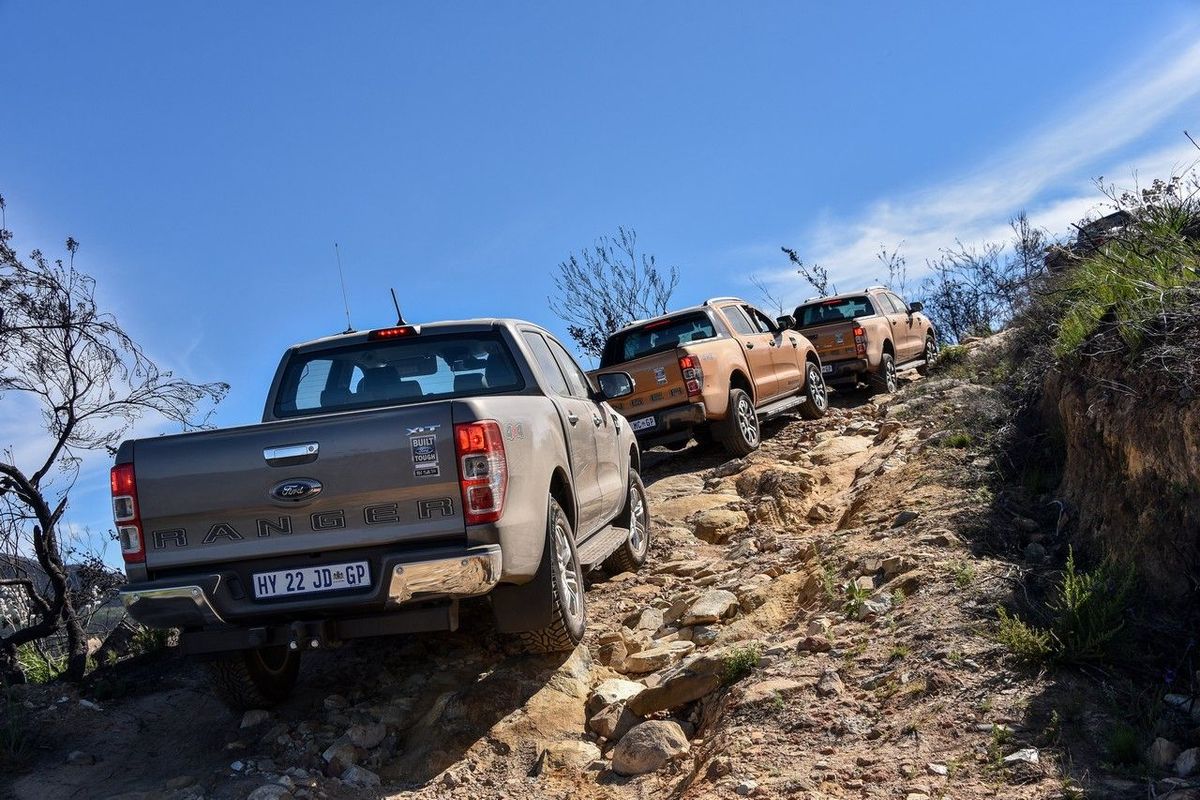
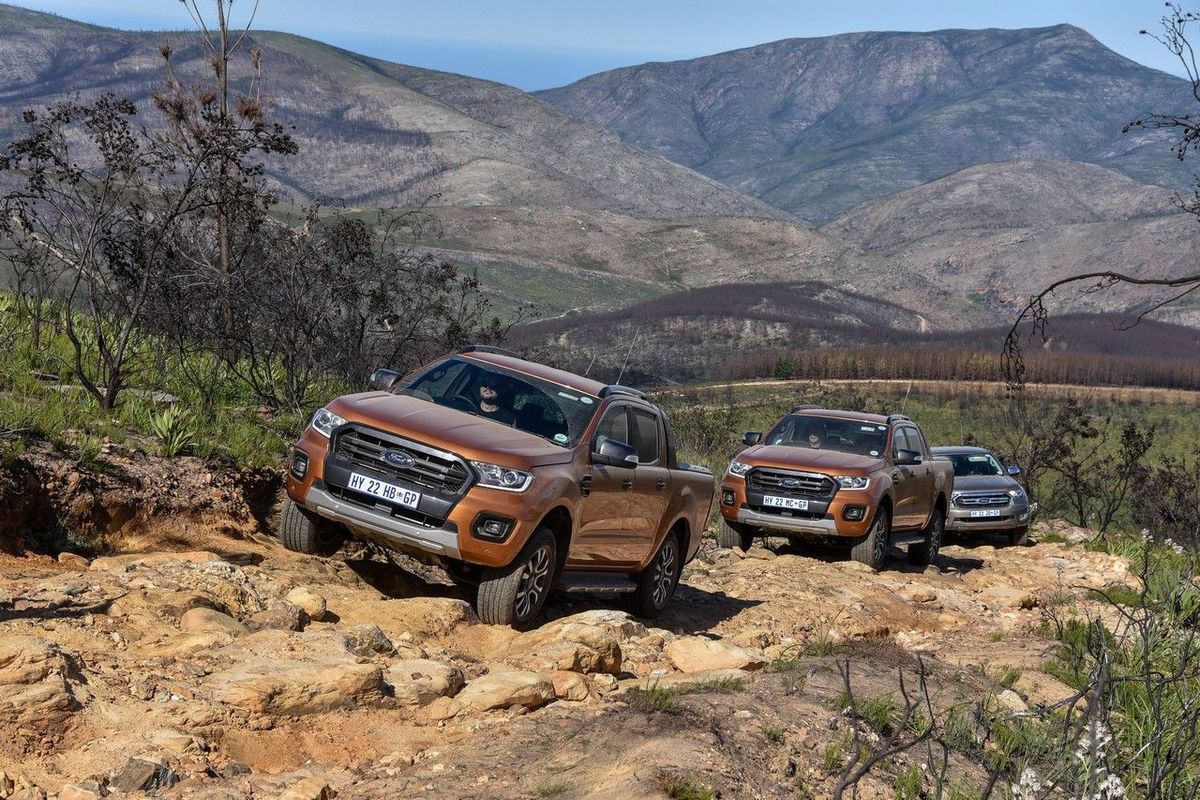
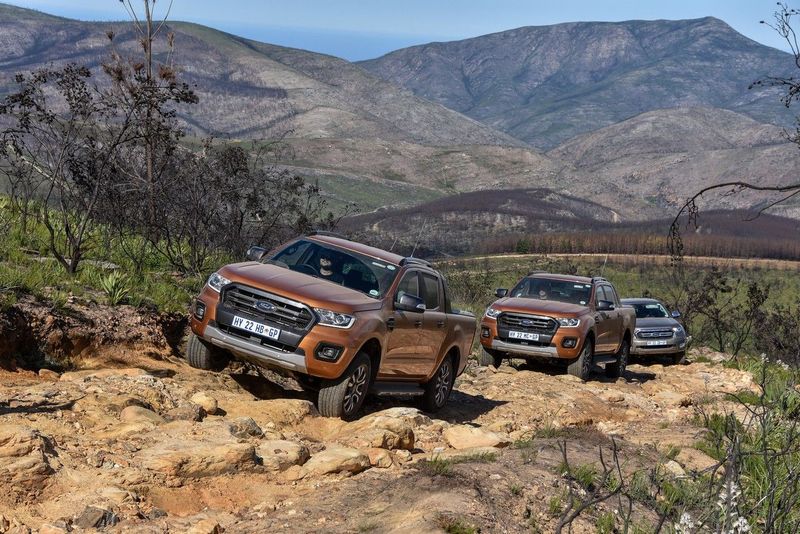
The challenging and tough 4×4 course which we completed with ease in the new Ford Ranger
We had the opportunity to drive the Ford Ranger Wildtrak and Ford Ranger XLT derivatives, which are both comprehensively specced given their respective price points. Wildtrak boasts an impressive level of safety tech, such as adaptive cruise control with forward-collision alert, lane-keeping alert and lane-keeping aid, plus automatic high-beam control. The new Ford Ranger also boasts keyless start as well as a new engine-start button.
As is the case with virtually all modern Fords, the Ranger benefits from the latest SYNC3 infotainment system. Not only does it offer an intuitive and easy-to-use 8-inch touchscreen interface – navigation and Apple CarPlay/Android Auto compatibility are included. An interesting addition to the range is the Category 1 Thatcham alarm, which is now standard across all Ranger XL, XLS, XLT and Wildtrak derivatives.
On road, the Ford's cabin is markedly quieter thanks to the addition of noise-cancelling technology, which has been carried across from the Ranger's Adventure SUV sibling, the Everest. Special lamination has been fitted around the B-pillar to further keep the noise intrusion to a minimum.
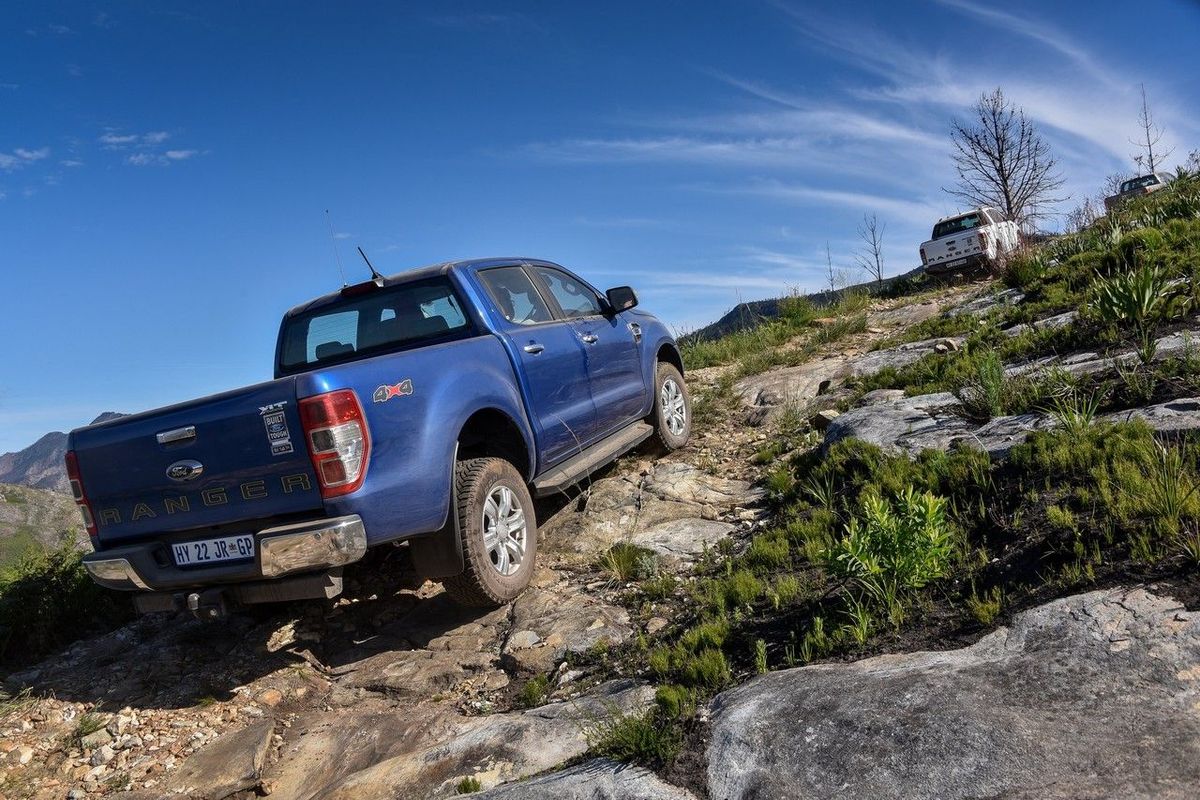
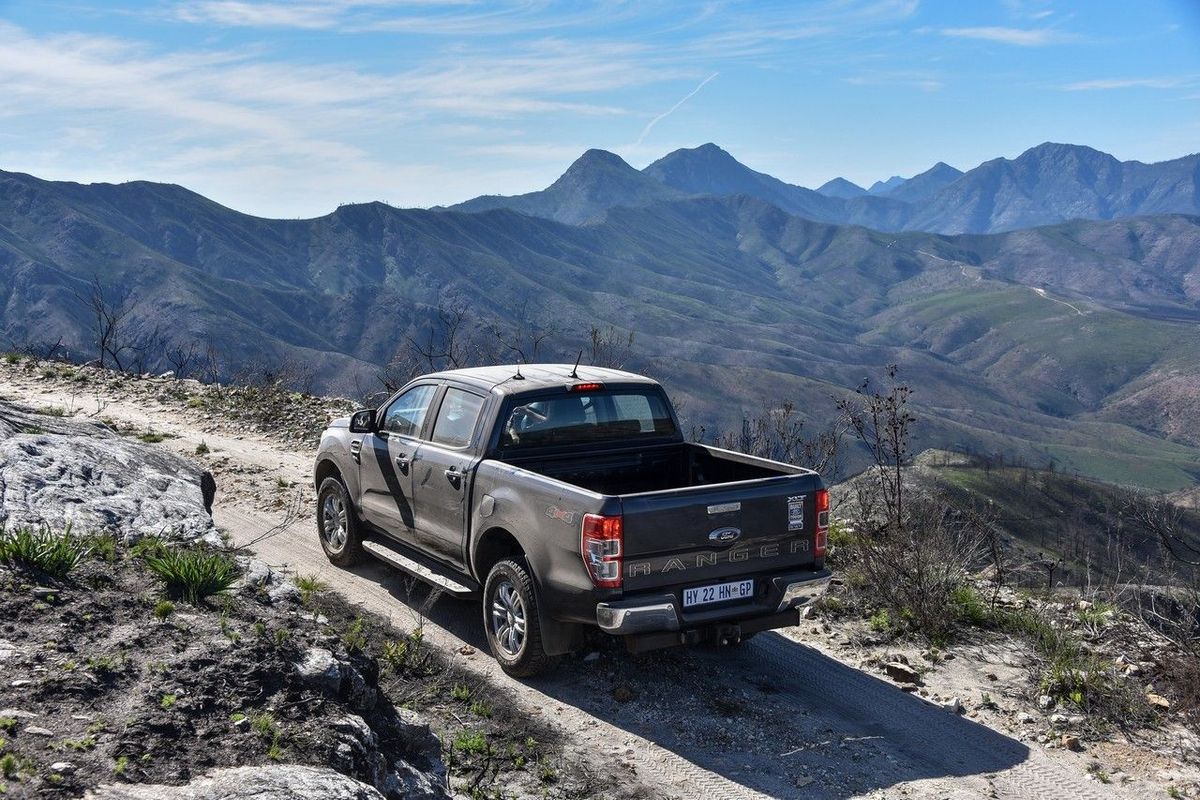
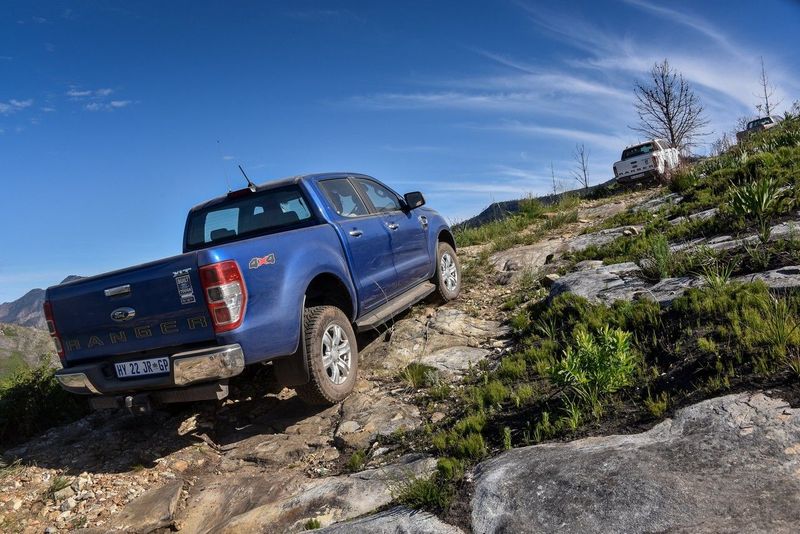
Our XLT Ranger in low range, ready to tackle the summit
What's it like to drive?
We had the opportunity to drive updated Wildtrak and XLT derivatives on a variety of surfaces, plus the route included a sojourn through the immense Outeniqua mountain range. The Ford's 4×4 capability remains impressive and, for the record, the Ranger offers up to 800 mm of water wading depth and 230 mm of ground clearance. The 10-speed transmission works in conjunction with a low-range transfer case, hill descent control and diff lock. You can switch from 2H to 4H on the go, which is handy, and we used all of those functions to traverse the majestic mountains.
To call the route we drove a "road" would be remarkably kind. The route was recently impacted by fire damage, rock falls and water erosion; it was barely passable. Yet somehow, the Rangers took it all in their stride. The 10-speed auto 'box does a fine job of keeping the engine in the sweet spot of its torque delivery (its electronic mapping is excellent). When you traverse extreme terrain, responsiveness is key… and the Ranger delivers.
Open-road cruising allowed us a chance to evaluate improvements to the Ranger's refinement levels. The suspension update, in particular, has improved ride comfort substantially; there's less of that wallowing sensation when road quality deteriorates. It's still a bakkie though and a leaf spring setup will never provide a perfect ride quality. We anticipate that if you put some weight over the rear axle, bump absorption would be even better!
And boy, the new engines are refined. The single- and bi-turbo 2.0 motors are punchy, with responsiveness galore thanks to that adaptive 10-speed transmission. It never "hunts for gears", because the clever software does a sterling job of selecting the right gear at the most appropriate moment.
With 500 Nm on tap, the bi-turbo motor bodes well for the forthcoming Ranger Raptor. It delivers considerable shove with little effort and in-gear acceleration, in particular, is potent. While some commentators have been unconvinced about this engine's suitability for the Raptor, we think it has sufficient grunt for what the vehicle is designed to do. It's going to take something special for another bakkie to match the Raptor's off-road prowess.
The new suspension setup has resulted in improved on-road manners
Summary
If you are in the market for a new bakkie, particularly a double cab, should the updated Ranger be near the top of your list? Most definitely. If you're looking to replace your current Ranger, the newcomer's well worth a look. Don't be put off by 1 fewer cylinder and a smaller displacement in the Wildtrak, it offers commendable performance, plus it's quieter and more rounded than the outgoing model. We think the pick of the bunch is the XLT, which offers a fair balance of spec, performance and value for money. Given the array of improvements in this new Ranger, we expect that Ford South Africa will continue selling these bakkies in vast numbers. The improvements make the 2019 Ford Ranger one of the most complete bakkies on sale in South Africa. Not only have some of the previous issues been addressed, but the overall package is comprehensive, safe and capable.
Be it XLT or Wildtrak, the Ford Ranger is going to prove popular amongst existing customers and newcomers alike
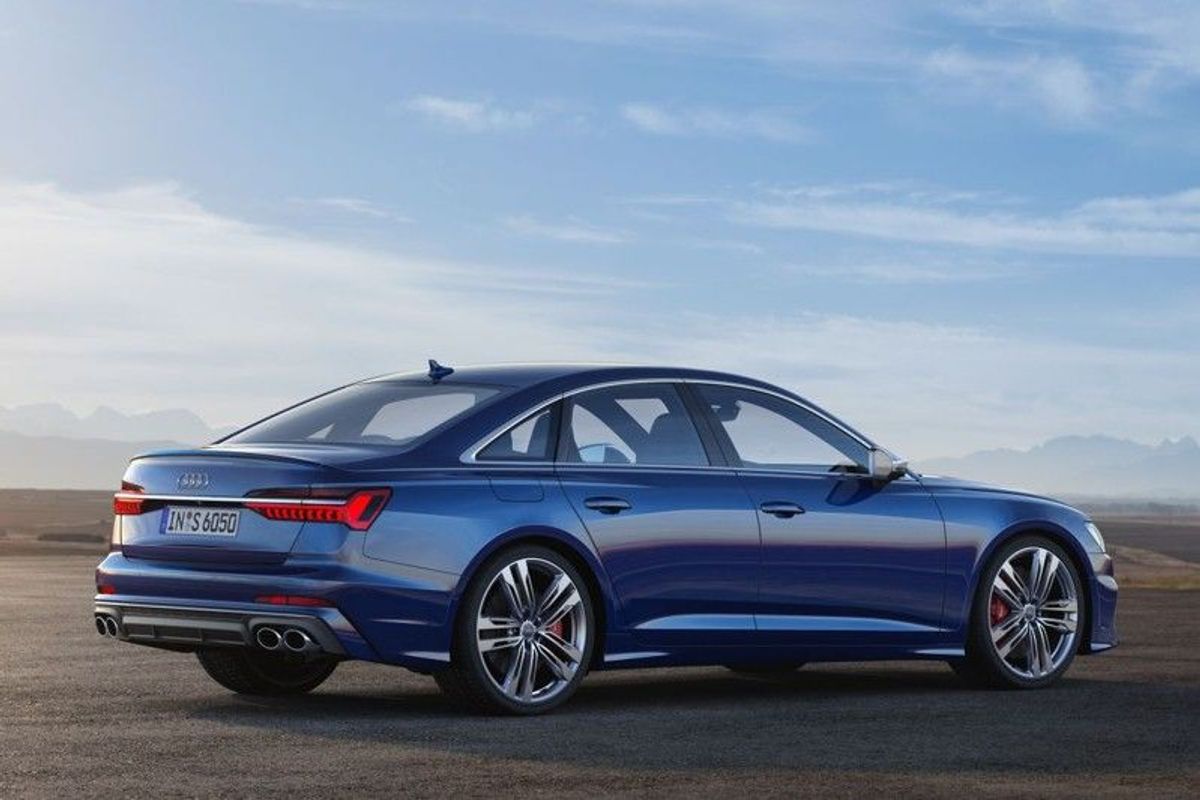
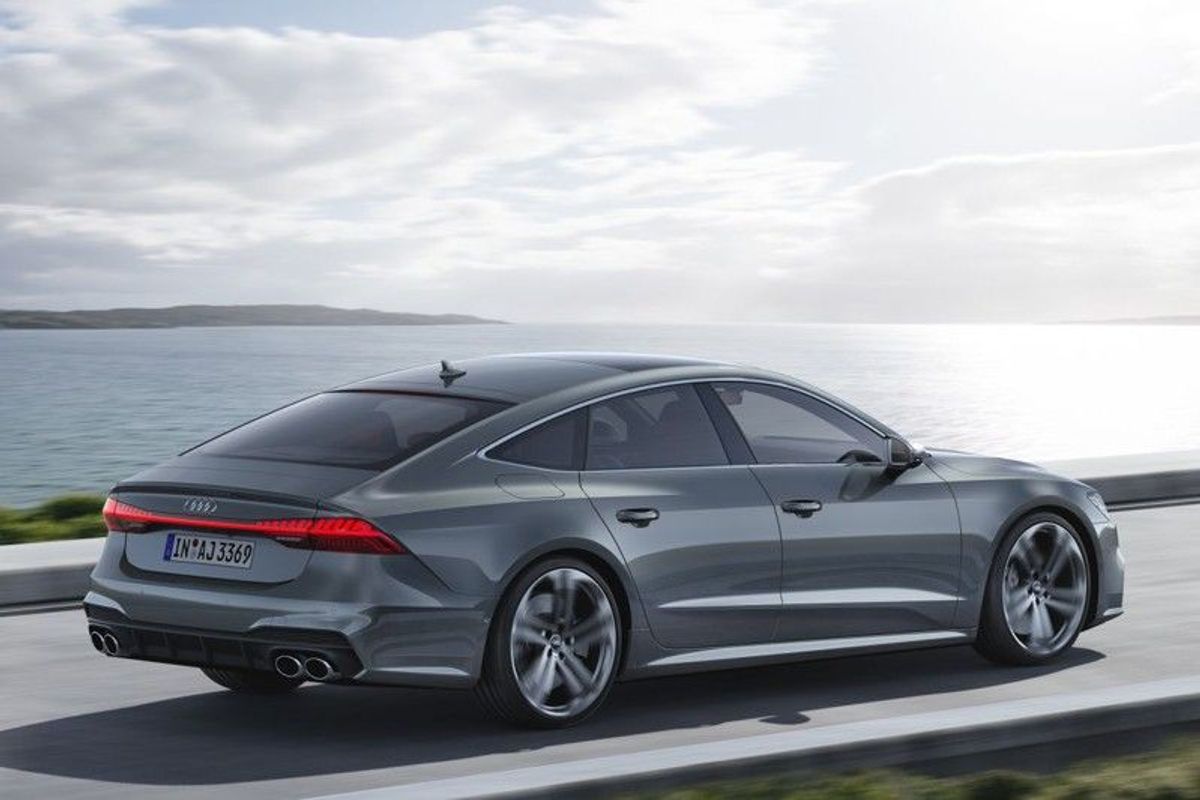
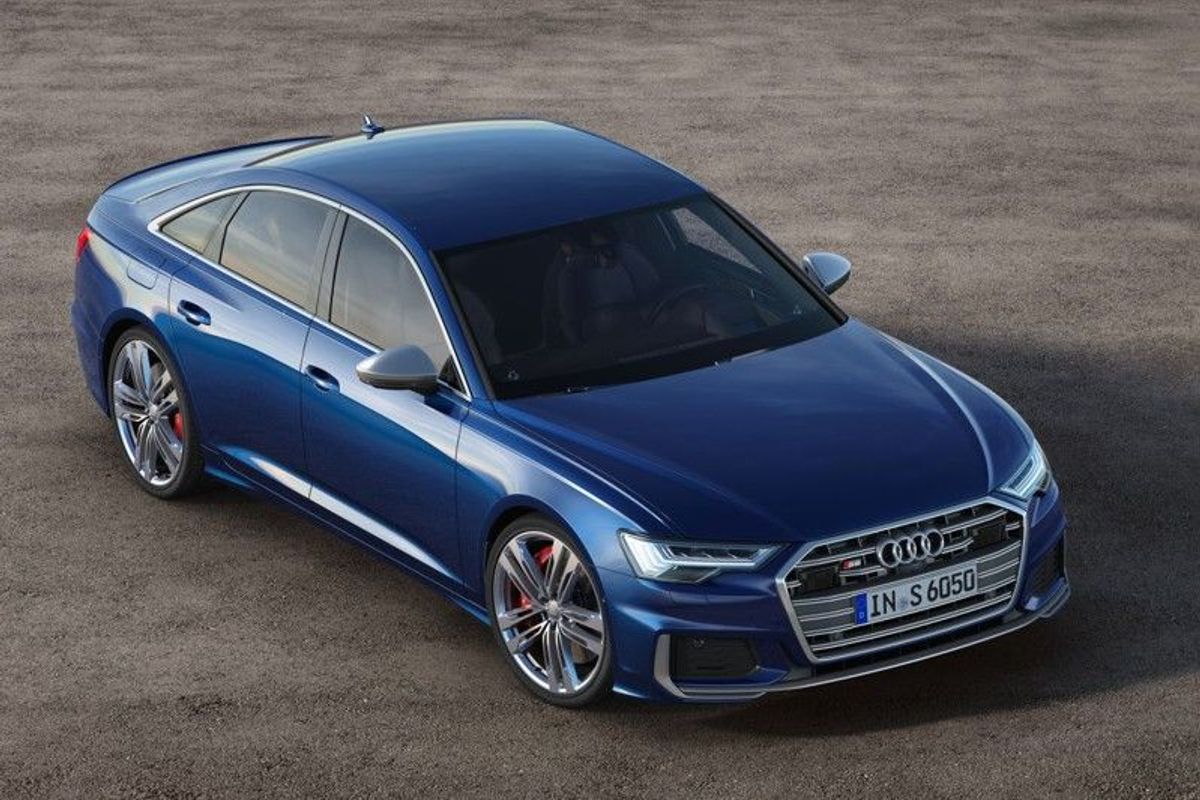
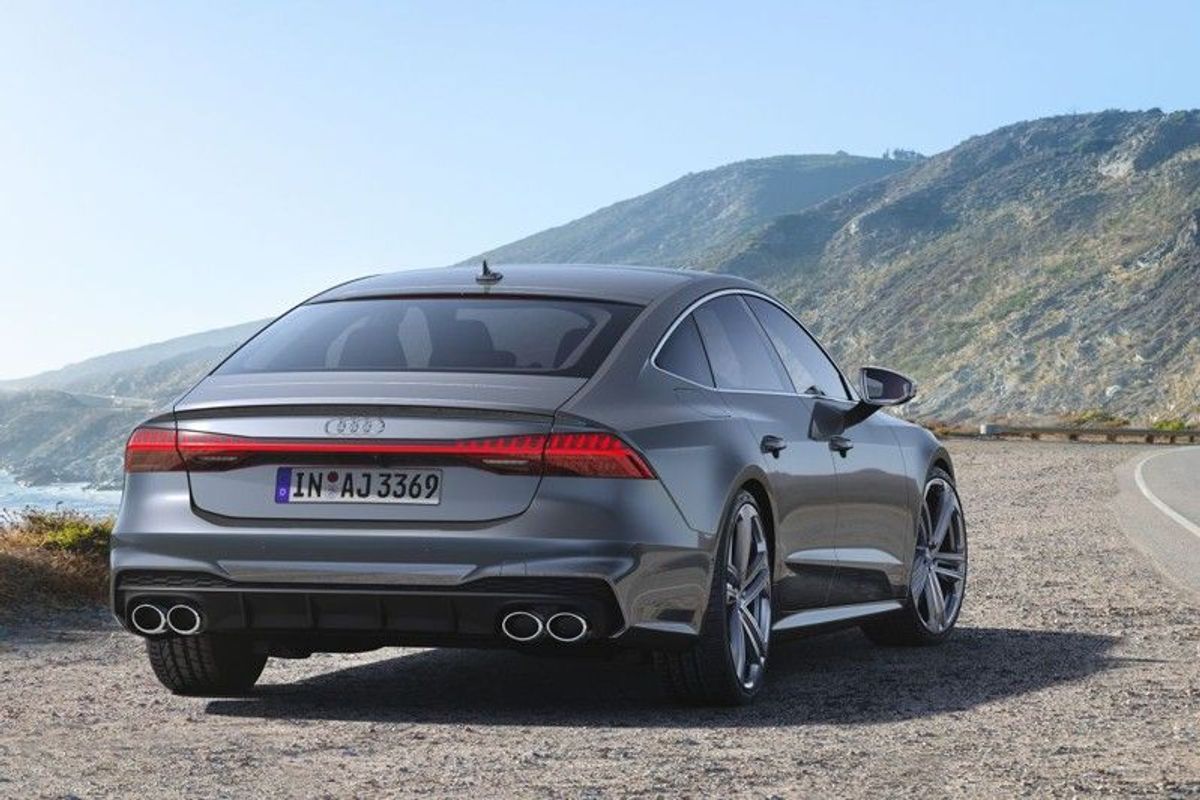
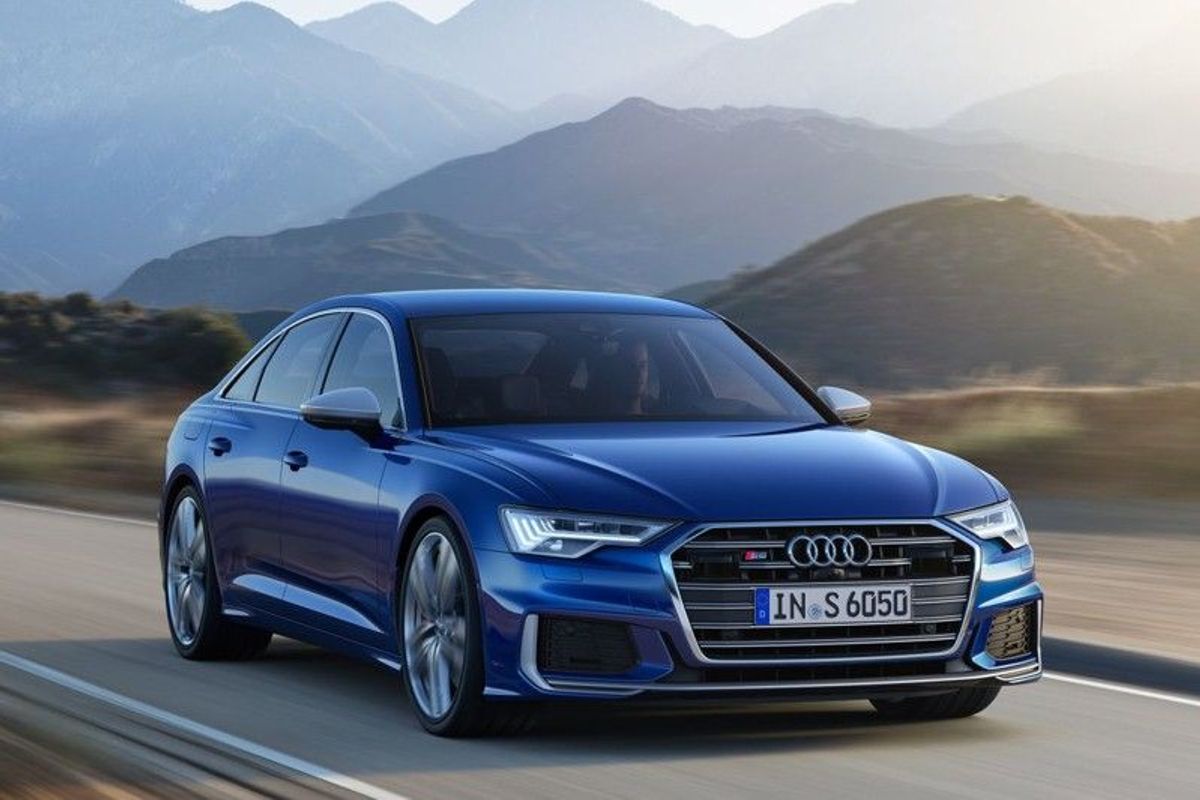
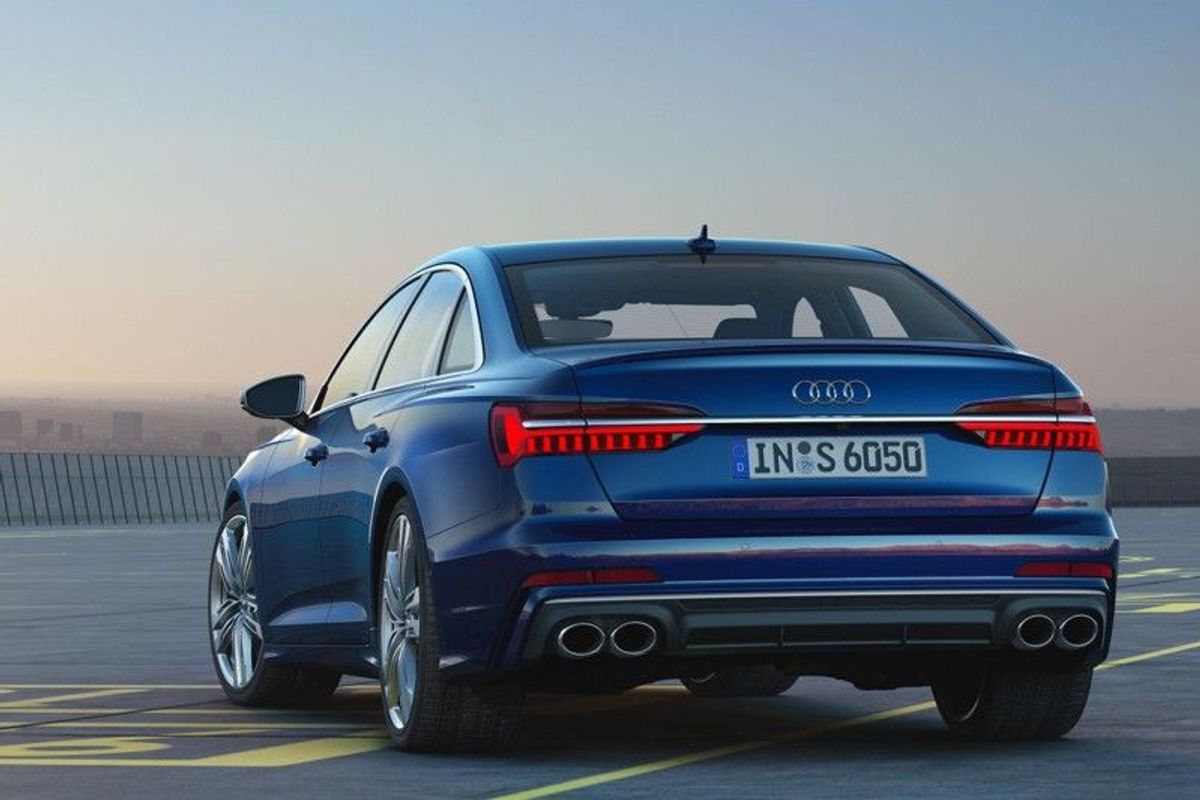
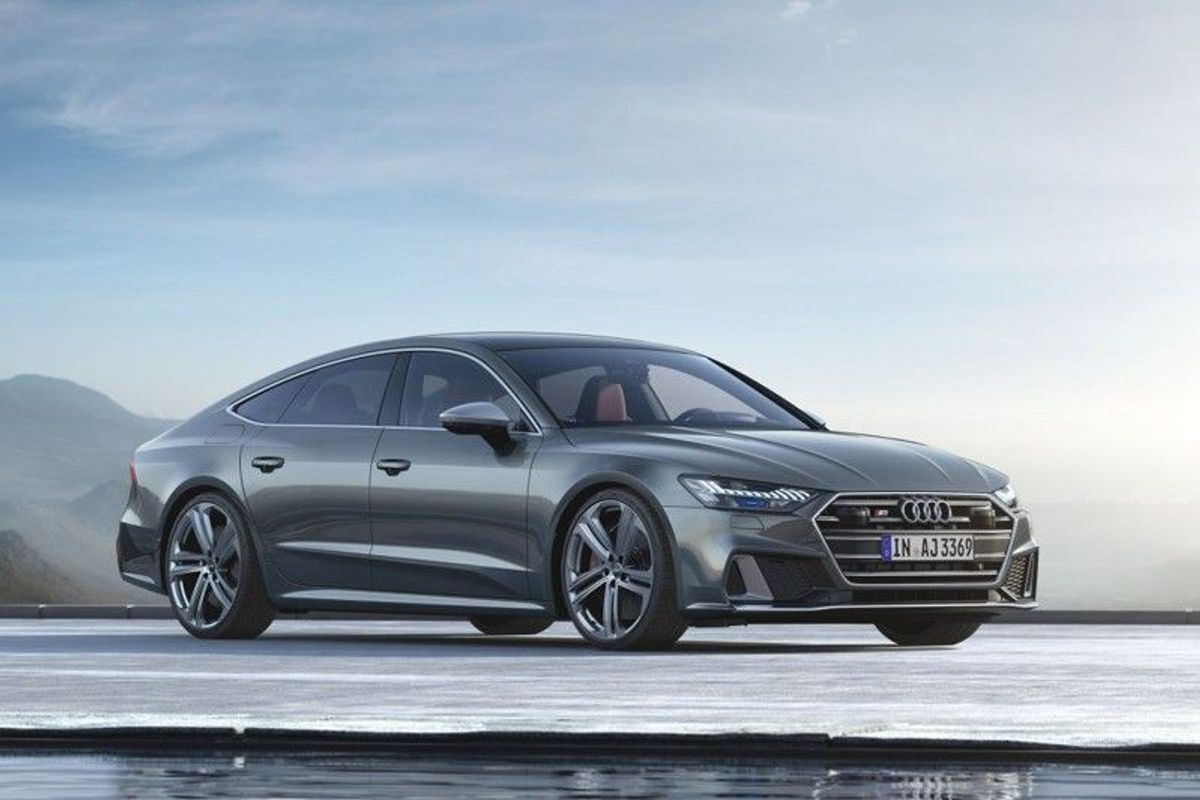
Smaller engines and diesel fuel option for Audi’s latest S6 and S7.
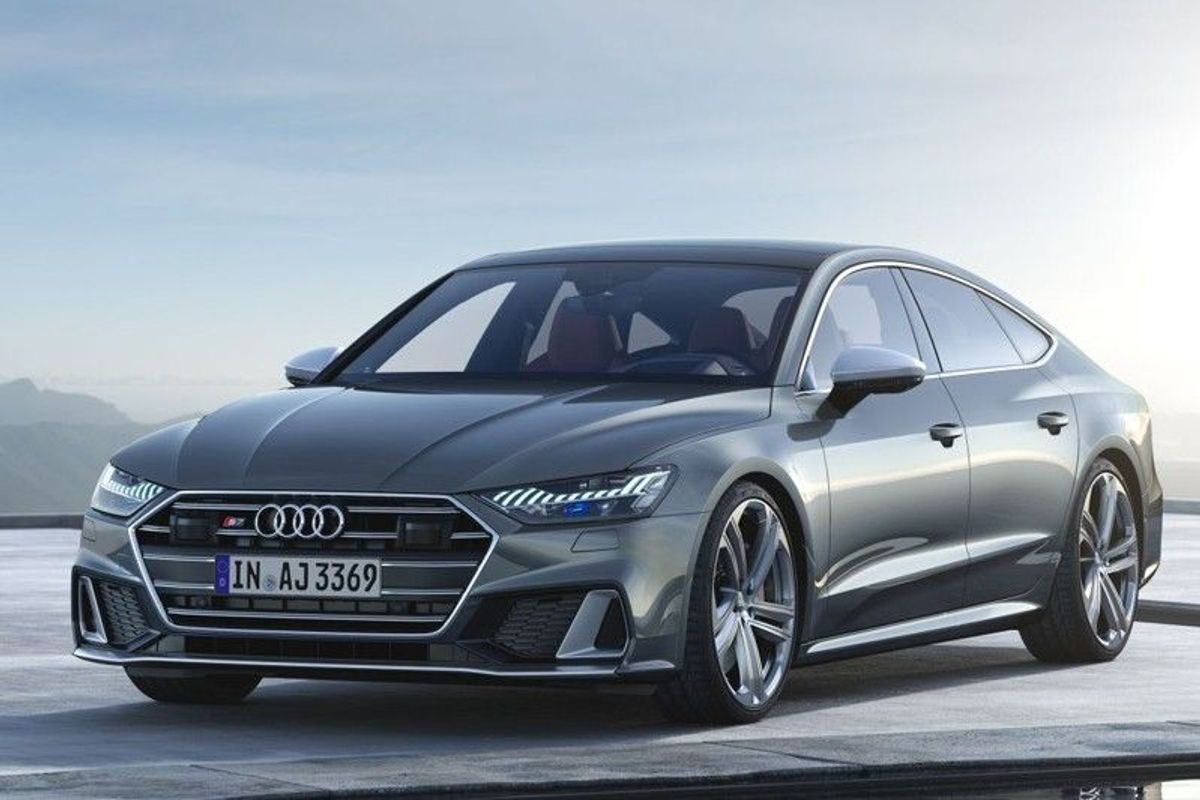
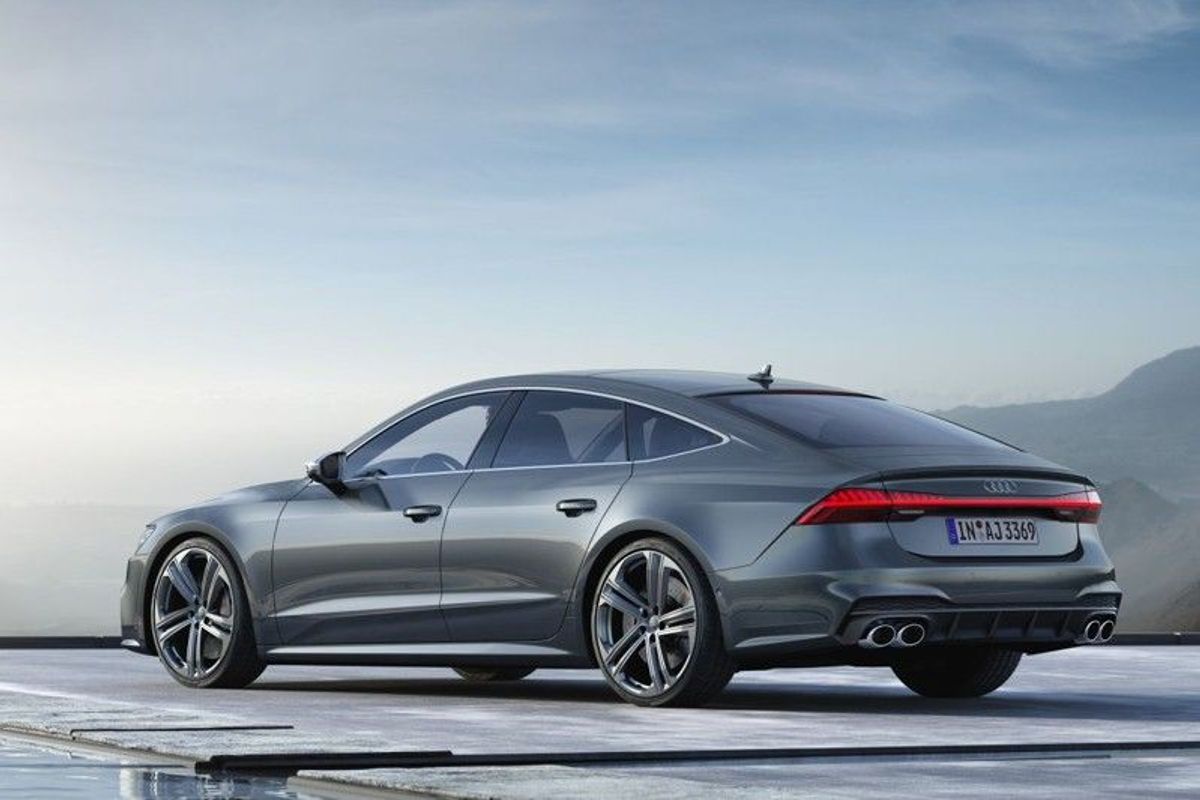
Audi has revealed the latest iterations of its renowned S6 and S7 luxury car performance platforms and the most surprising feature is the presence of TDI badging.
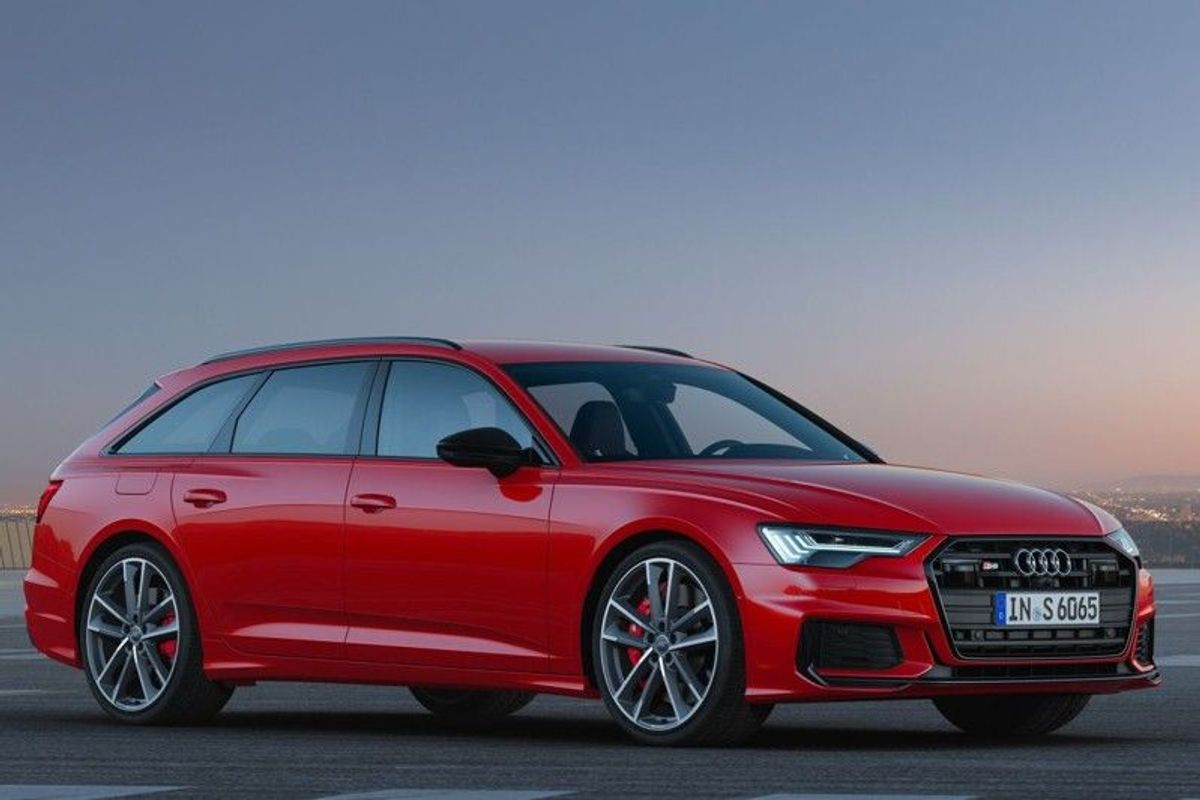
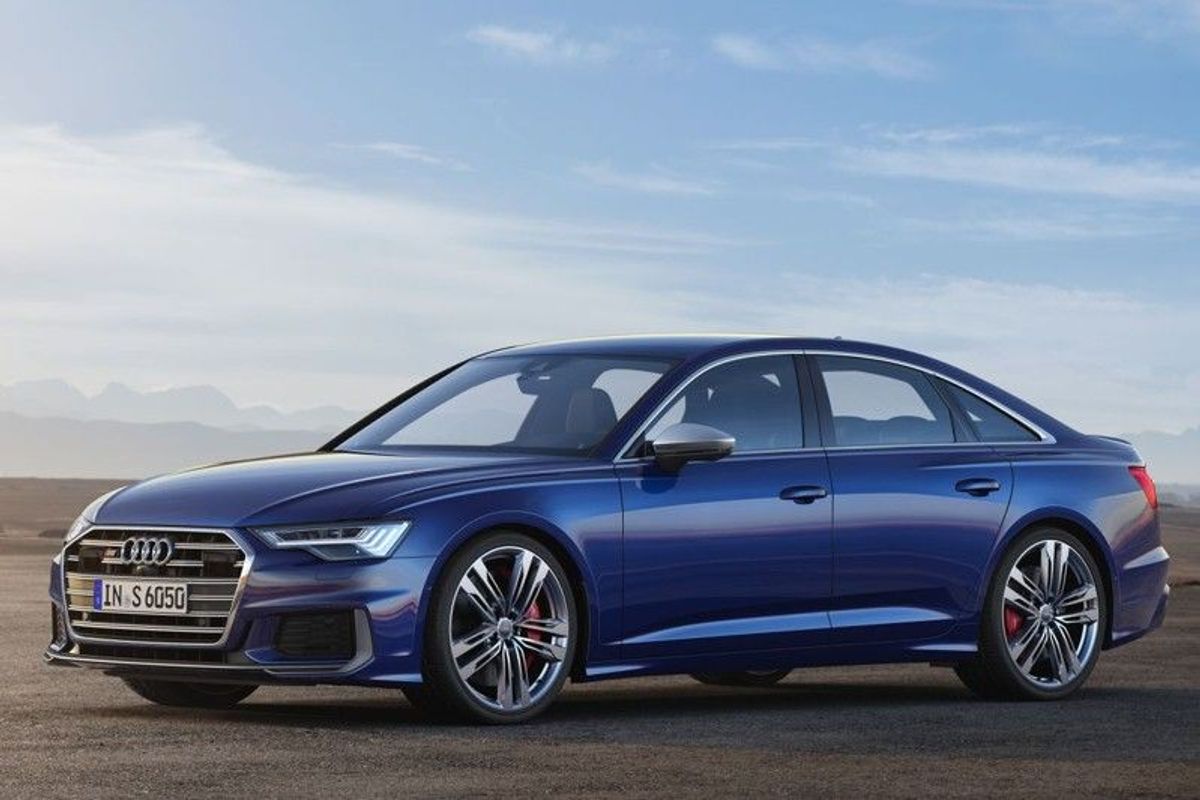
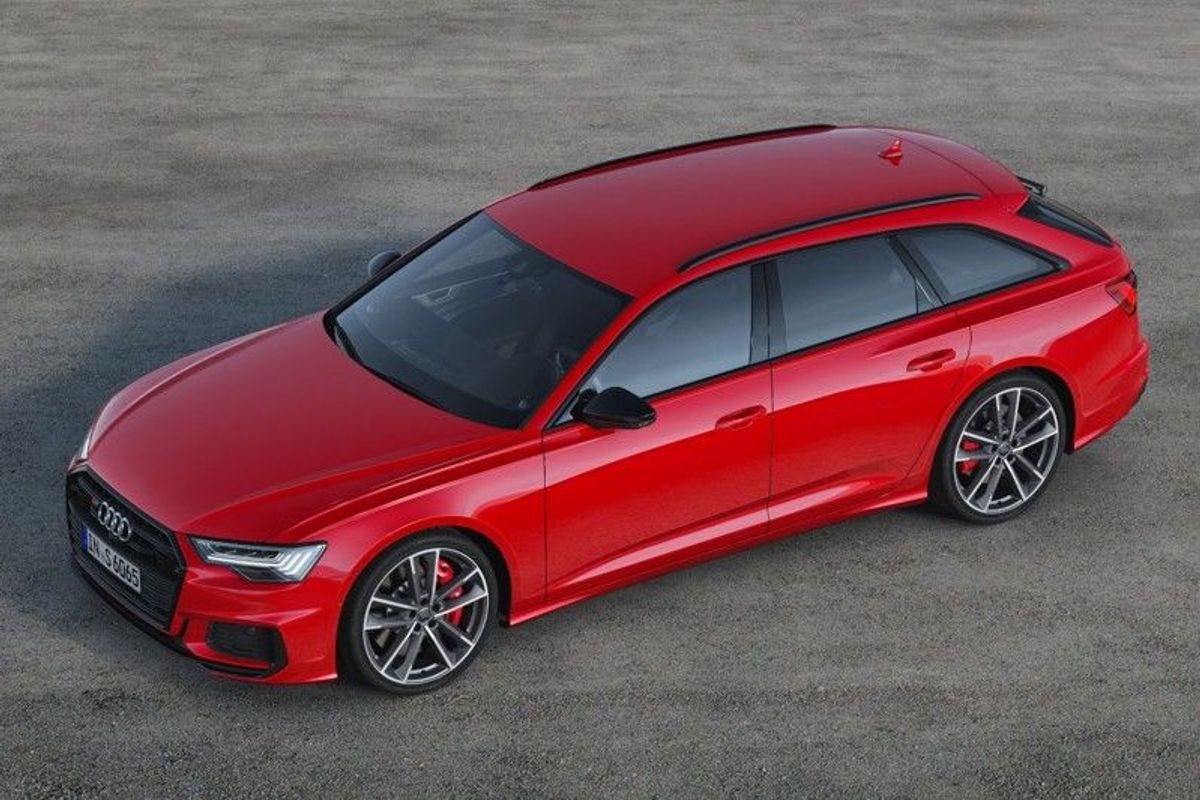
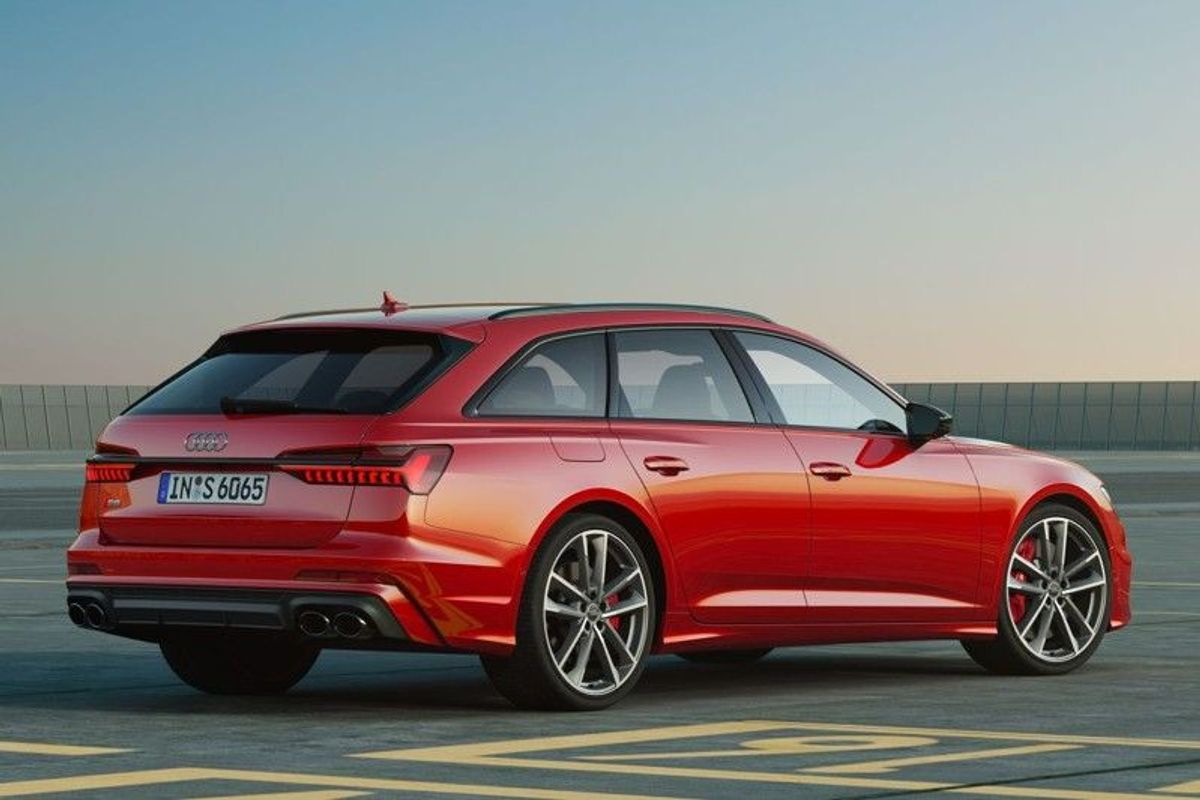
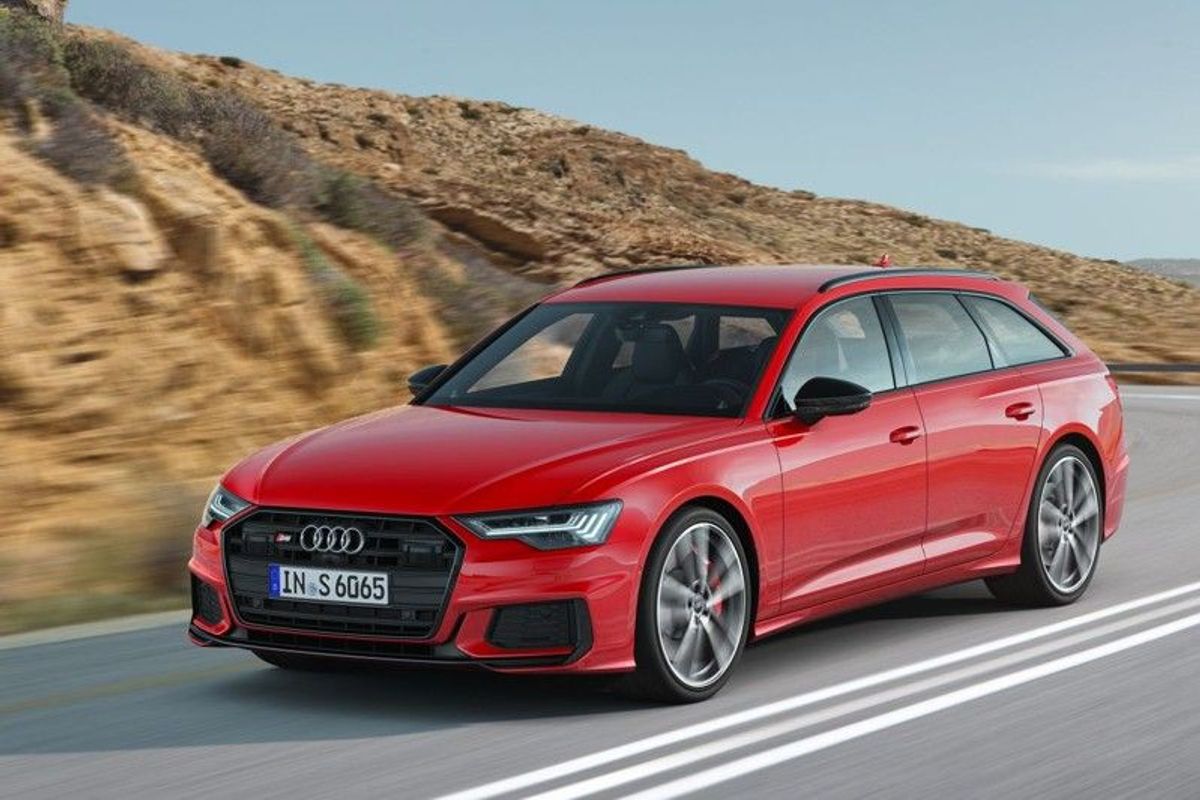
The new S6 is available in sedan and station wagon (Avant) configuration, while the S7 retains its liftback body style.
All these new Audi high-performance vehicles feature the brand’s latest 48v electrical architecture, which allows for mild hybridization in terms of brake energy harvesting and storage. Up to 8 kW of harvested energy can be used when pulling away in traffic, at speed up to 22 kph, in bursts of 40 seconds – which is sure to save fuel in heavily trafficked commuting conditions.
Powering the new S6/7 range are a choice of two engines: both turbocharged V6s, which replace the twin-turbocharged 4-litre V8 engine previously nestling above the front axle of S6 and S7 Audis. The distribution of these new V6 engines will vary by market, with a 2.9-litre V6 turbocharged petrol, boosting 335 kW and 600 Nm, destined for most geographies outside of Europe.
There will also be a diesel-powered option for prospective new generation S6/7 owners, essentially the engine which debuted in SQ7. This 3-litre turbodiesel is good for 257 kW and 700 Nm, and unlike the petrol powered S6/7s, Audi has released preliminary performance numbers for its new diesel-powered performance cars. Those statistics read as 0-100 kph in 5 seconds for the S6 sedan, whilst the S6 Avant and S7 Sportback, due to their slightly heavier mass, run the benchmark acceleration test in 5.1 seconds.
Beyond the striking styling and gorgeously detailed cabin architecture, these new Audis feature a host of mechanical details which make them deserving of their ‘S’-badge lineage. Buyers will have the option of adaptive air suspension with a rear sports differential and enormous carbon-ceramic brakes, measuring 400 mm behind the front wheels and 350 mm in diameter at the rears. Factory fitted S6/7 wheels are 20-inches, with an inched-up ’21 rim optional. All S6/7s will be built with Audi’s comprehensive digital cockpit, featuring a 12.3-inch infotainment display, as standard equipment.
The new S6/7 range are large luxury cars and to ensure they exhibit greater agility when parking or manoeuvring at slow speeds, there is also an optional all-wheel steering system which turns the rear wheels in a five-degree opposing angle to the fronts, up to 60kph. At speeds beyond 60 kph, this action is synchronised, with rear wheels turning in unison with the front axle steering input, at an angle up to two degrees, thereby increasing tracking stability.
Audi South Africa has pencilled in the S6 and S7 models for SA, but is not sure on when it will make them available for purchase. The S6 Avant will not be making its way to SA unfortunately, no matter how much we like station wagons, they just don't sell enough here.
VW Golf R – More Power + Titanium Exhaust – How Does it Sound?
The Golf R returns with more power and a fancy exhaust system. We make a video showing you these things.
There’s a new-ish Golf R on the market. It’s pretty much the same Golf R you could have bought at the beginning of the year, except now it offers 228kW, up 15kW from the long-standing special state of tune for our hot weather market.
But more excitingly, VW SA offers a titanium Akrapovic exhaust, straight out of the factory. The Golf R was never exactly a dull car to listen to but this upgrade has certainly given that exhaust note much more drama and much more power.
In this video we set out to properly capture the sound of the Golf R’s titanium exhaust, using some traditional, and, um, not so traditional methods.
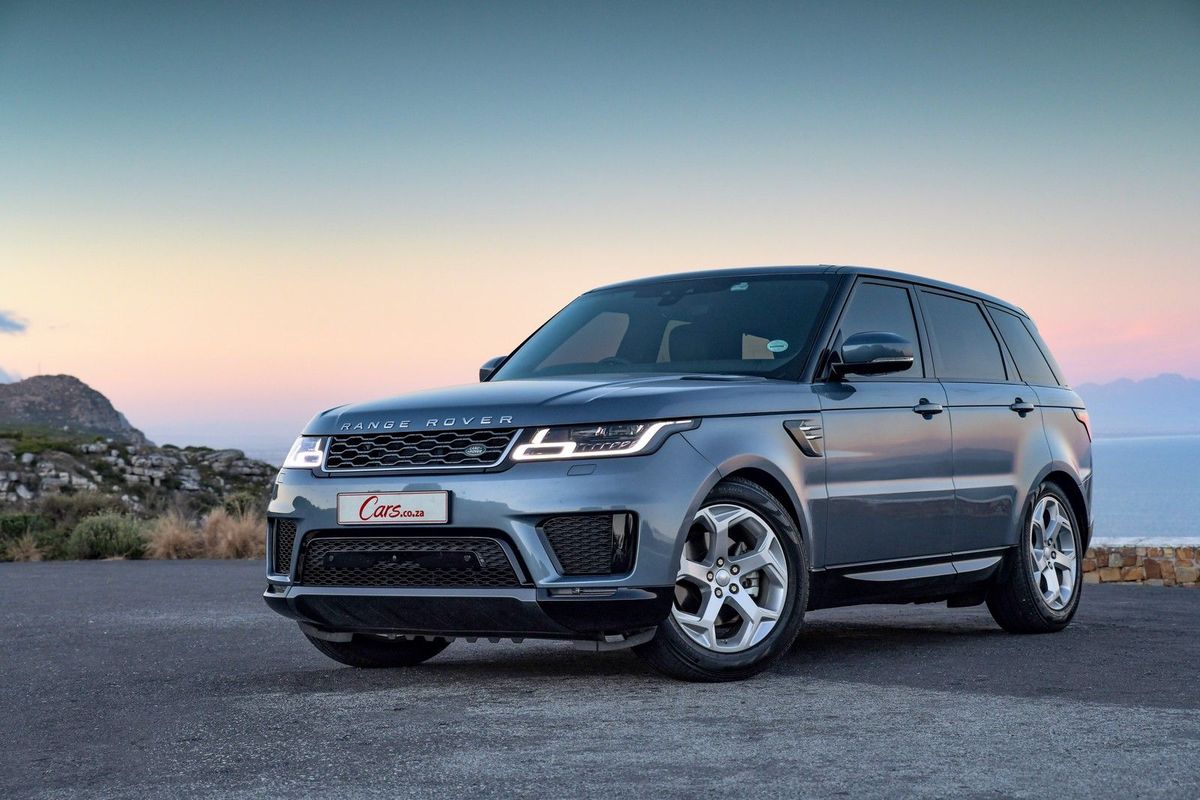
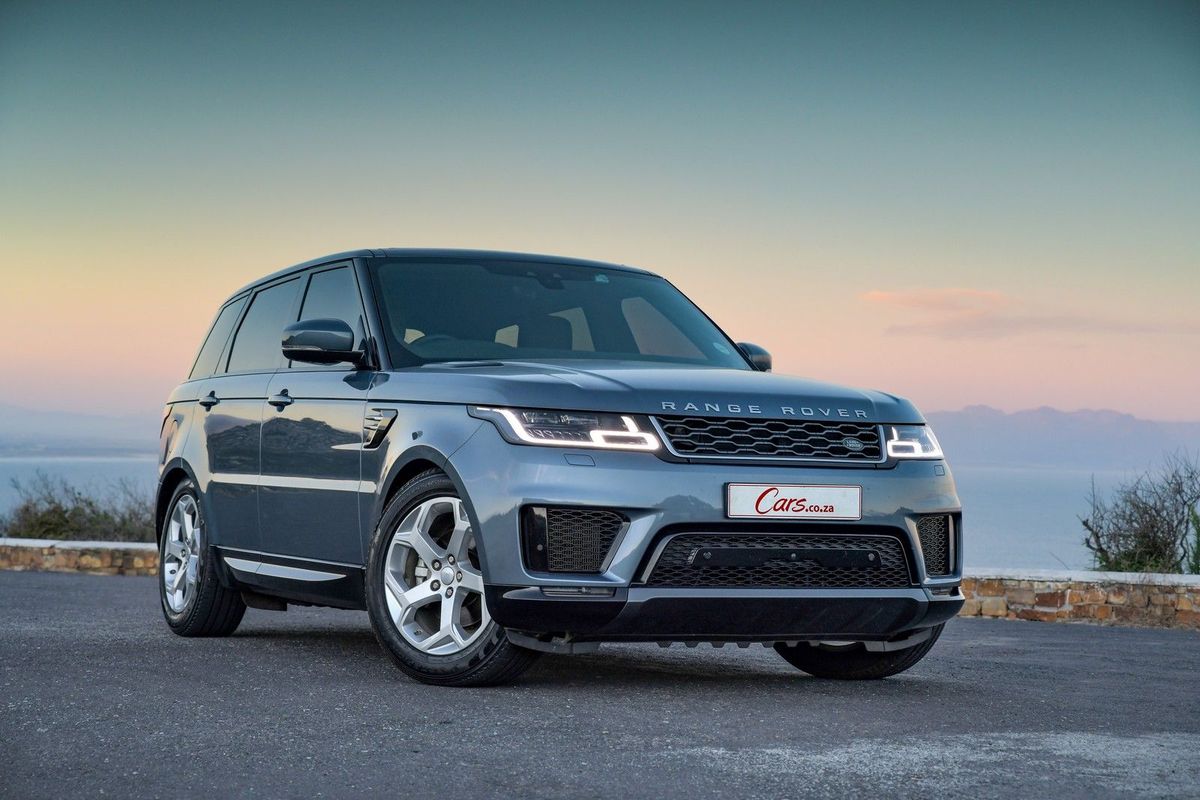
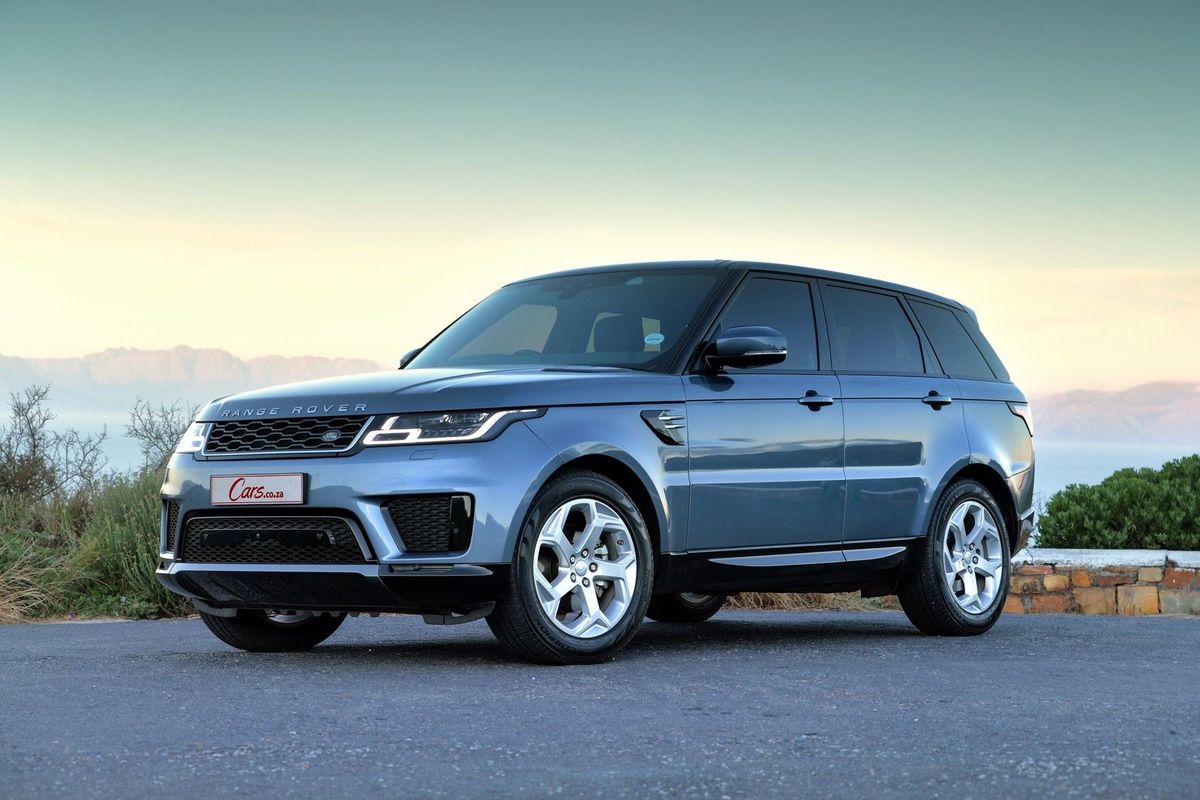
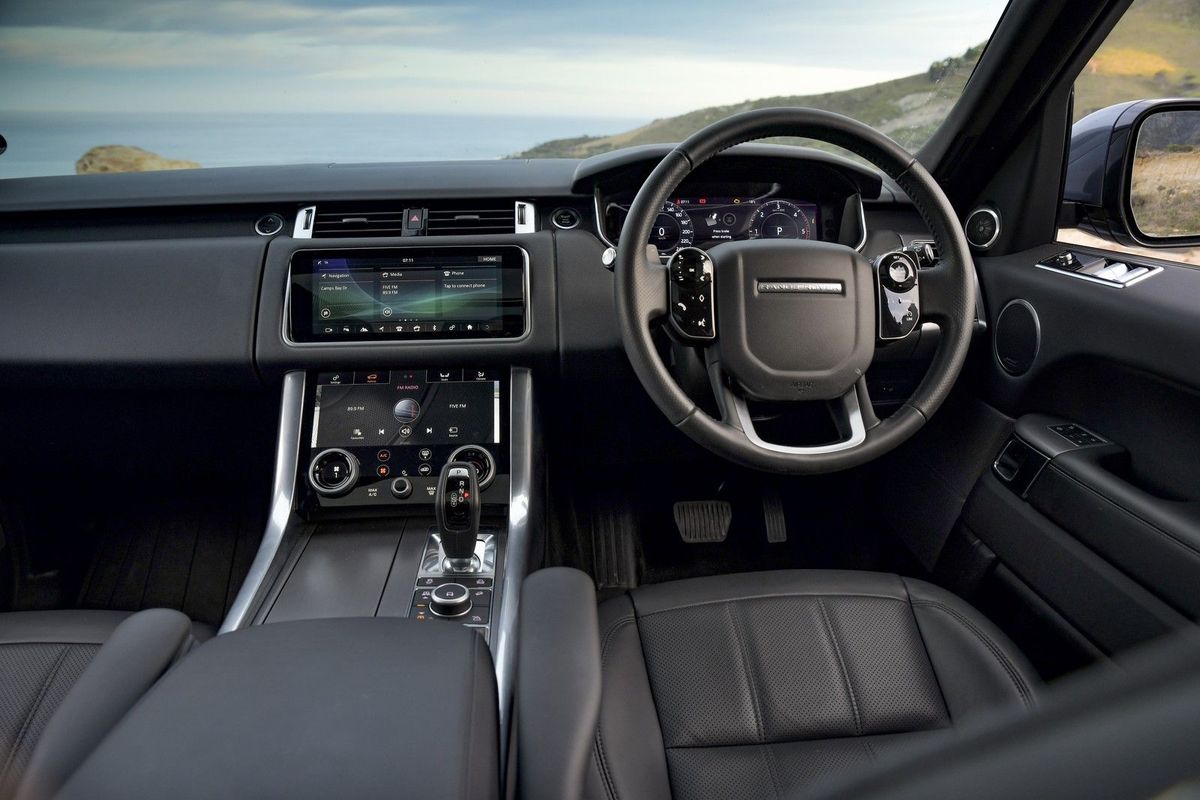
Range Rover quietly introduced an updated Sport model into its product line-up at the back end of 2018. We’ve finally had a go in the Solihull-based premium marque's "Street-cred King" and eagerly put it through its paces.
Land Rover dealers regularly offer specials: Have look here.
What’s new?
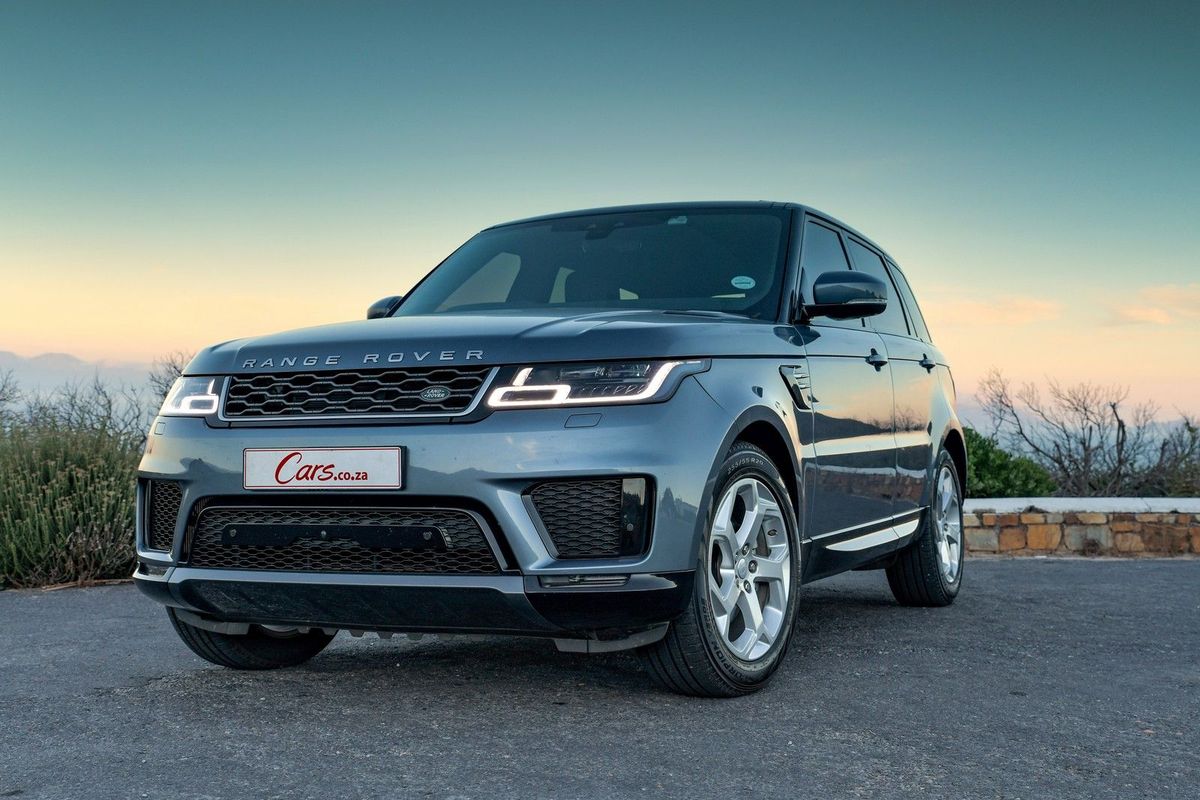
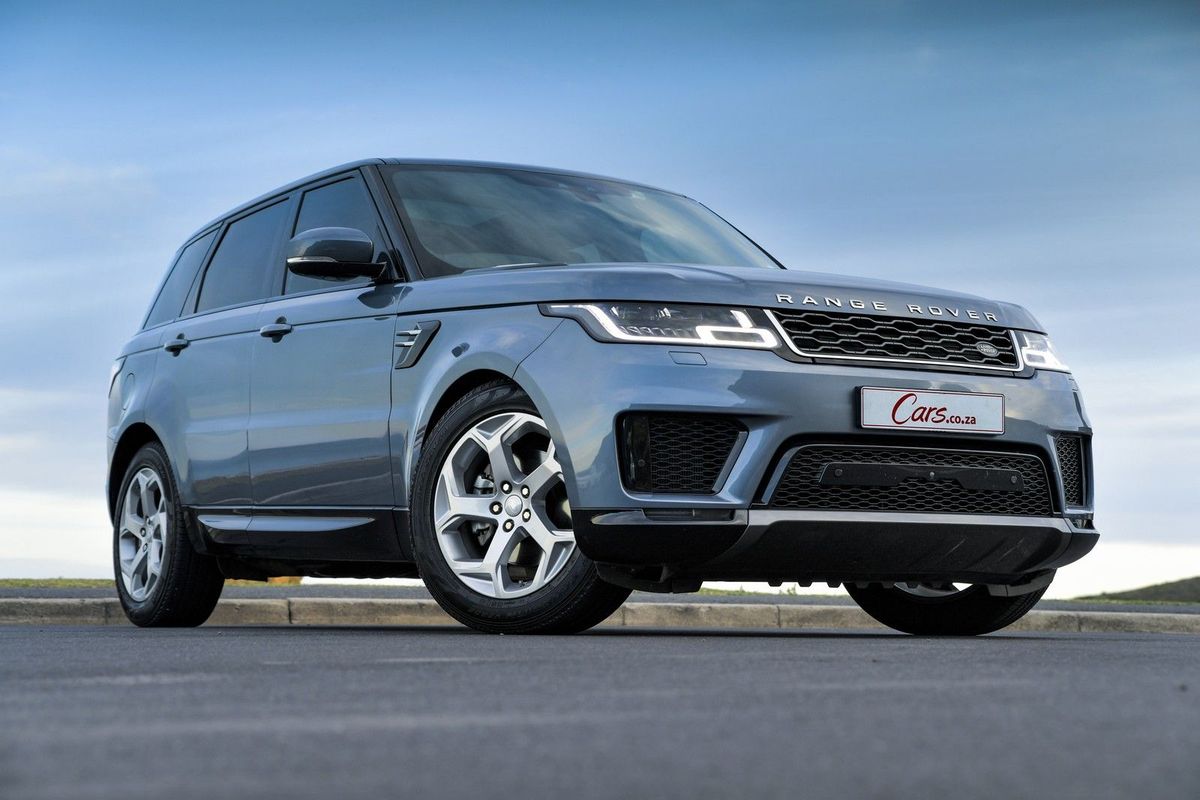
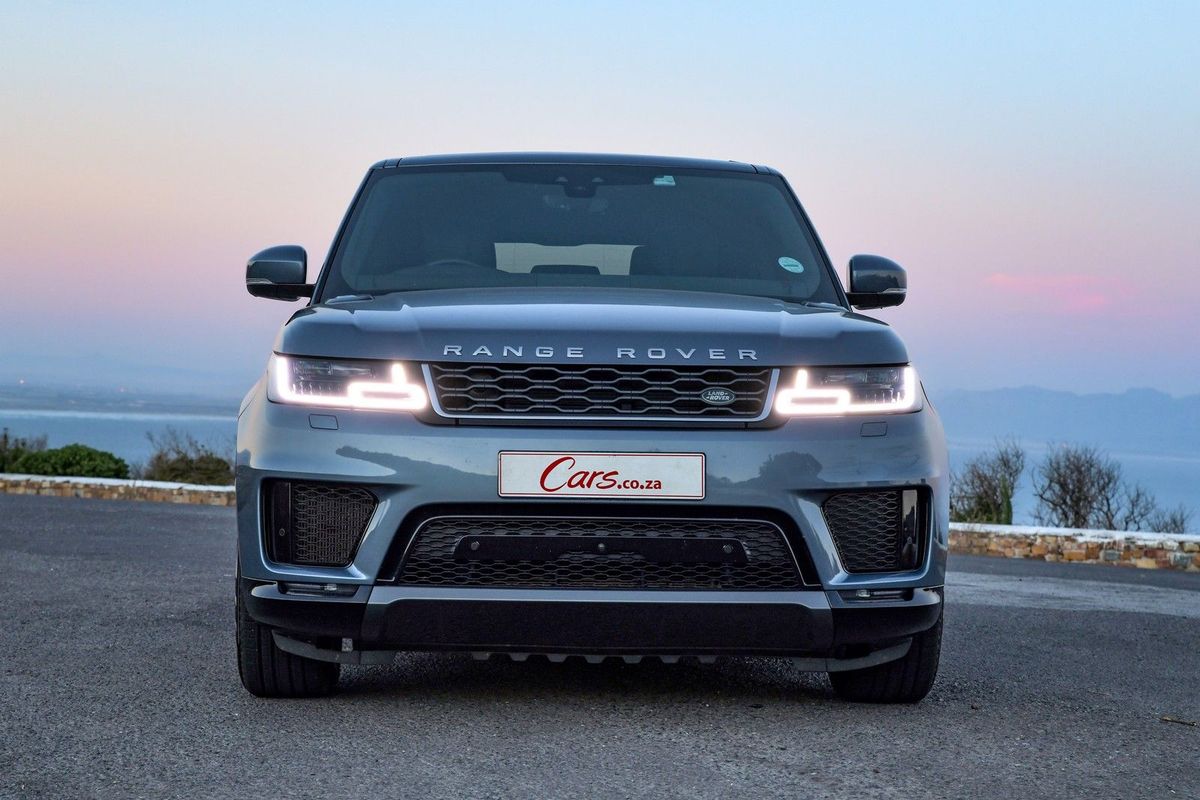
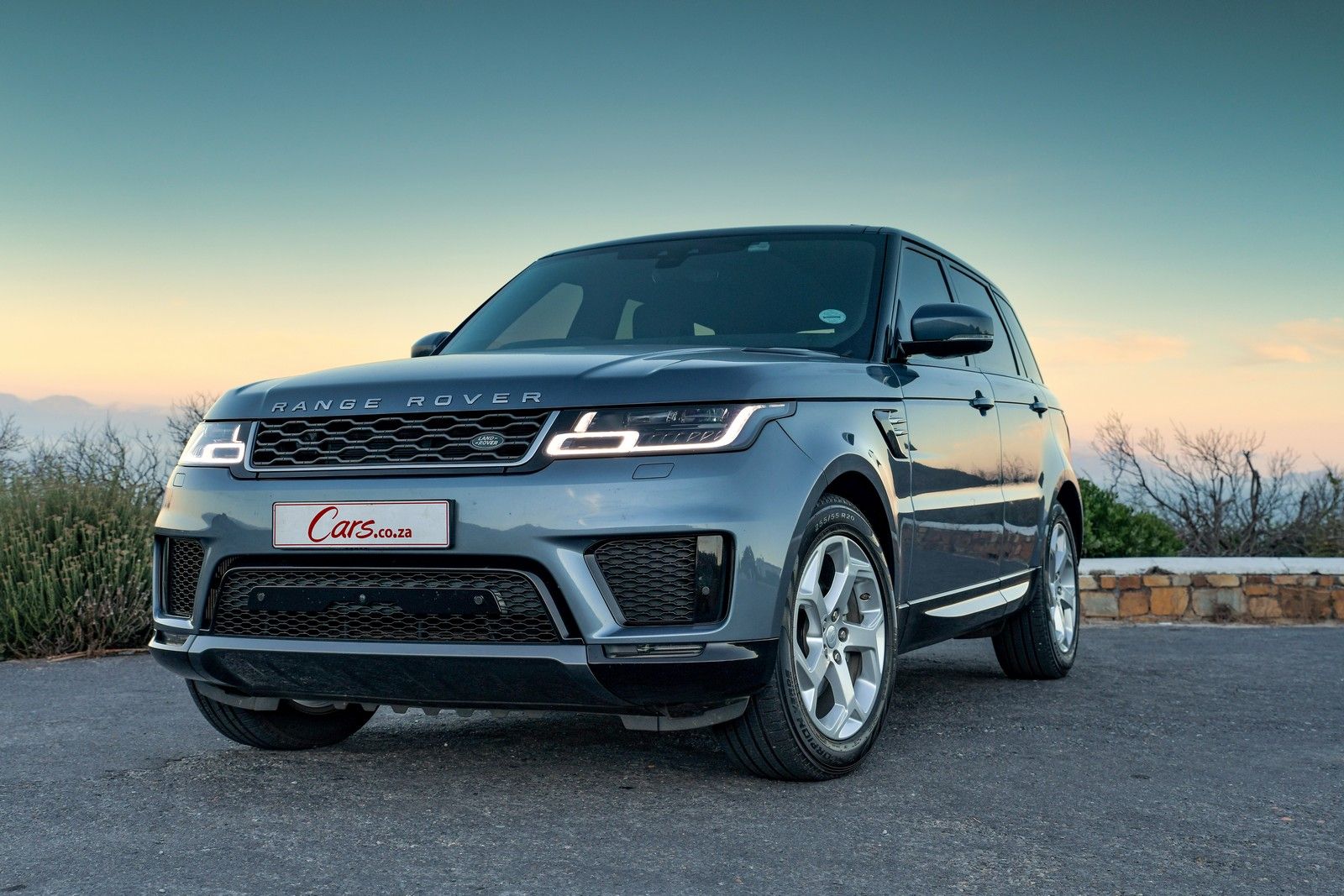
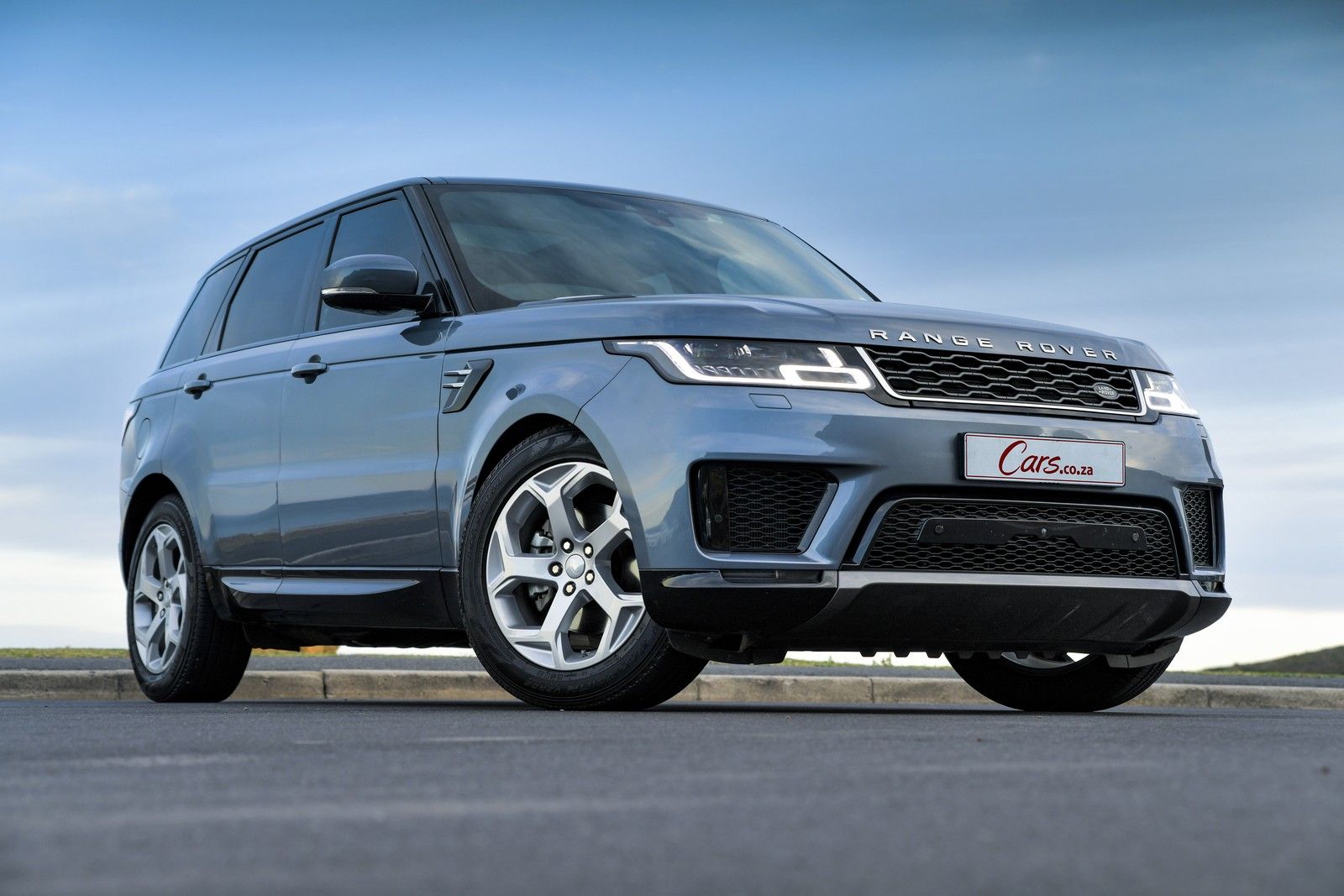
More distinct LEDs and a 1-piece grille up front is the easiest way to spot the facelift.
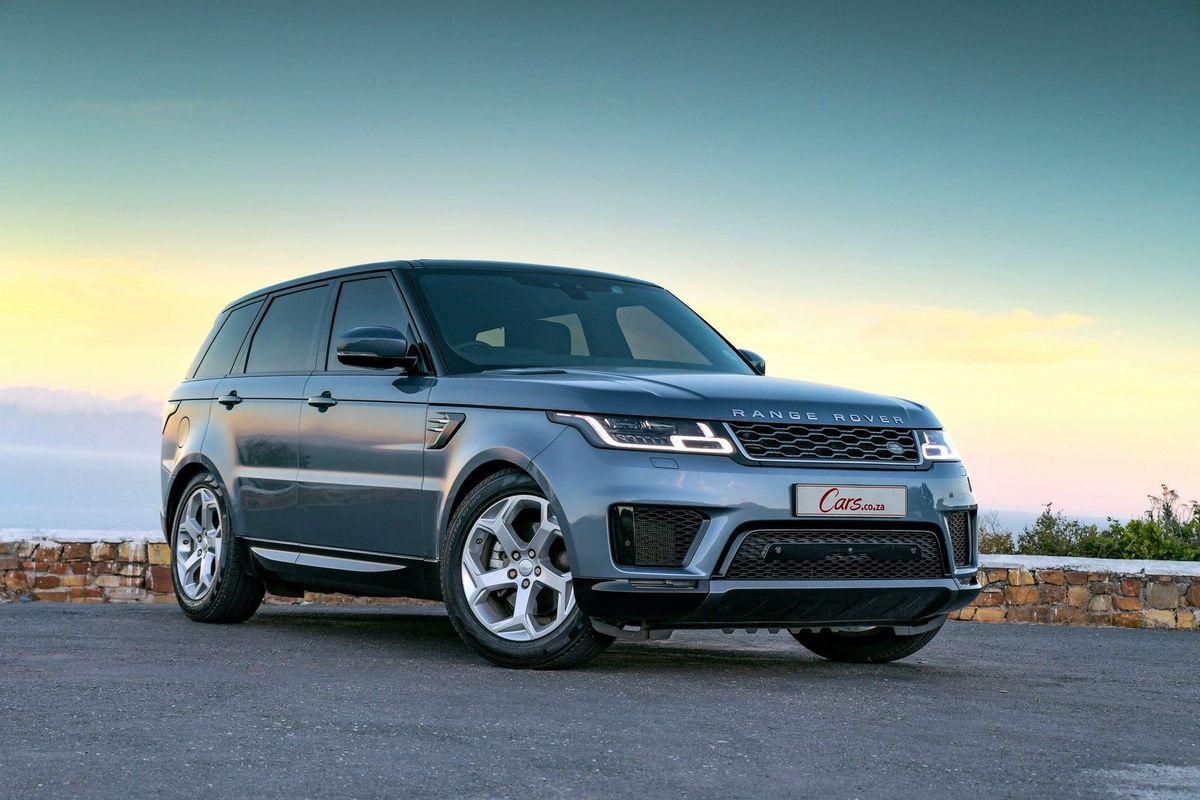
As far as facelifts go, this one is particularly mild, especially the exterior. The design team at JLR hasn’t got too much wrong over the last decade, aside from the latest Discovery, so they may have been a little circumspect when penning modifications to this facelifted Range Rover Sport.
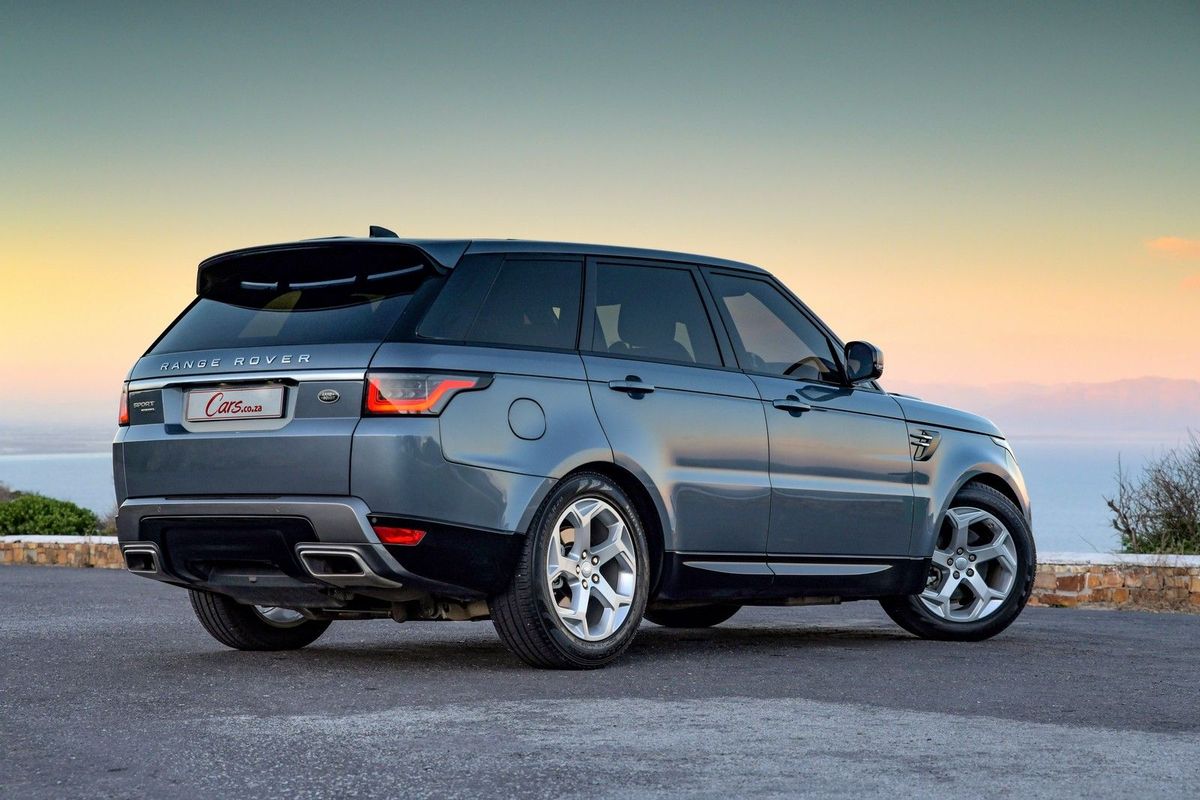
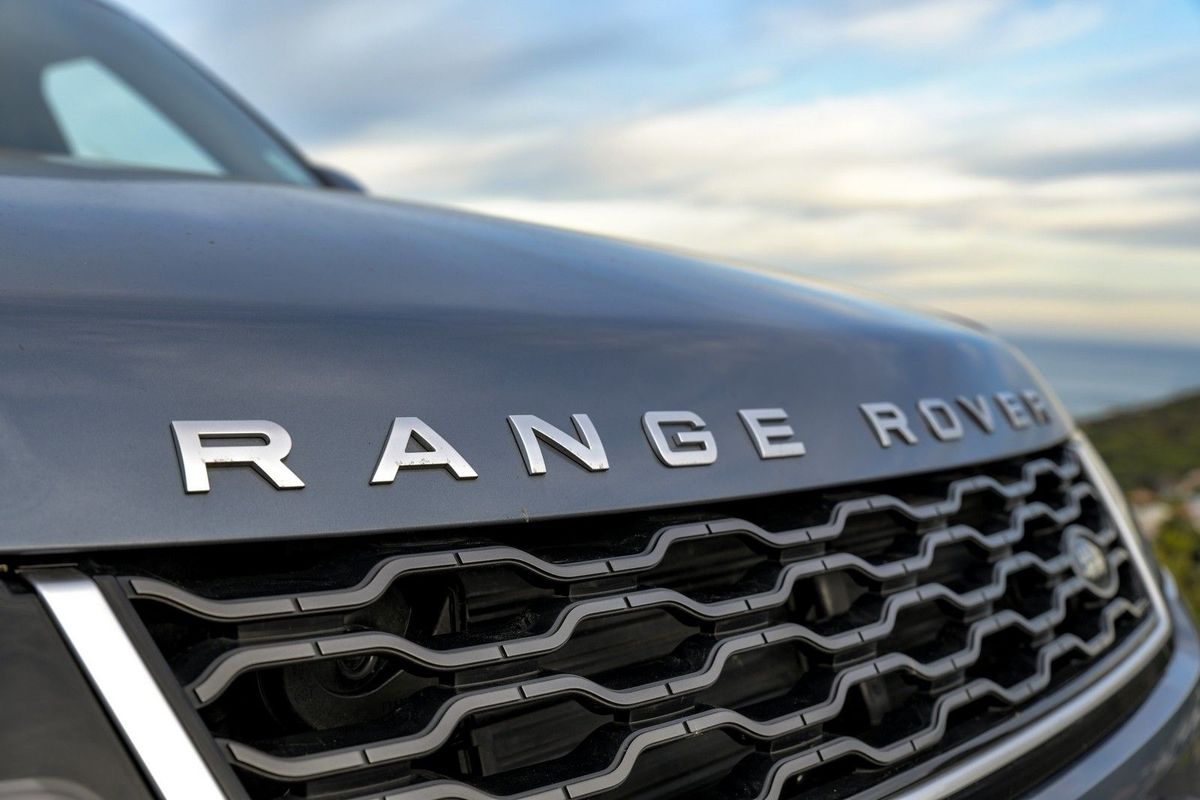
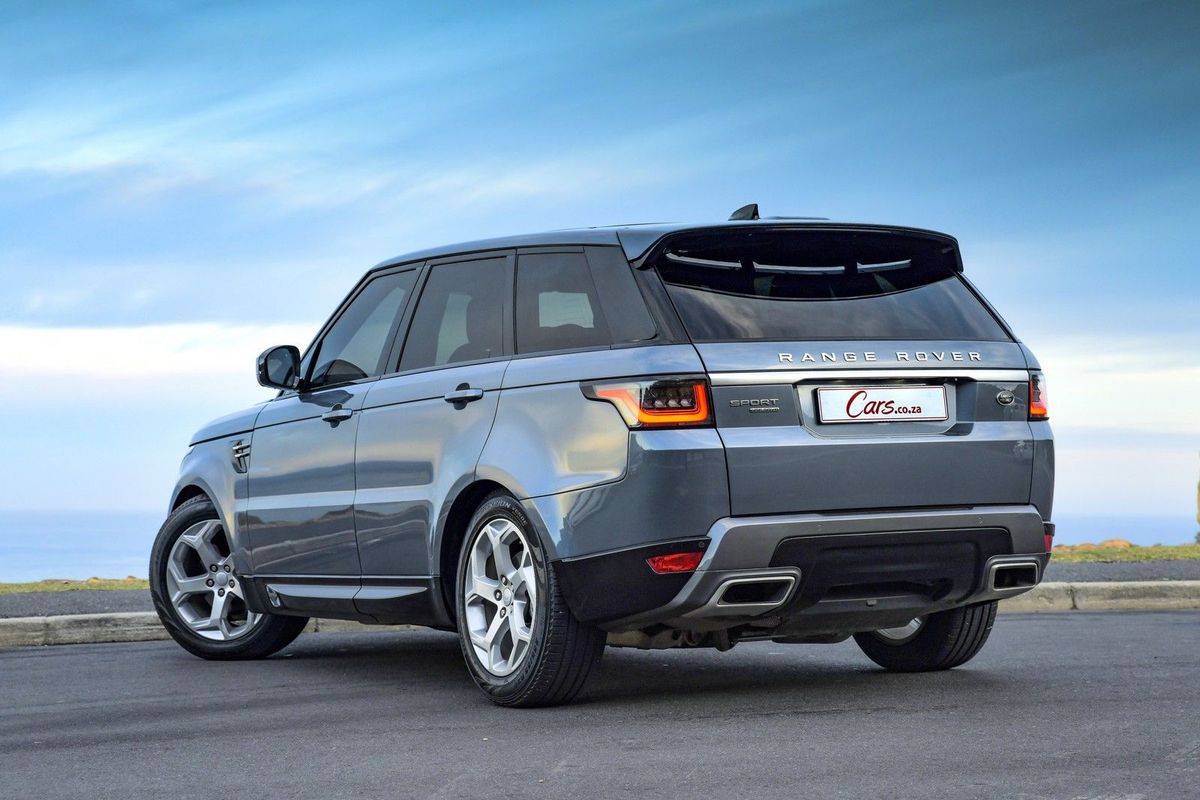
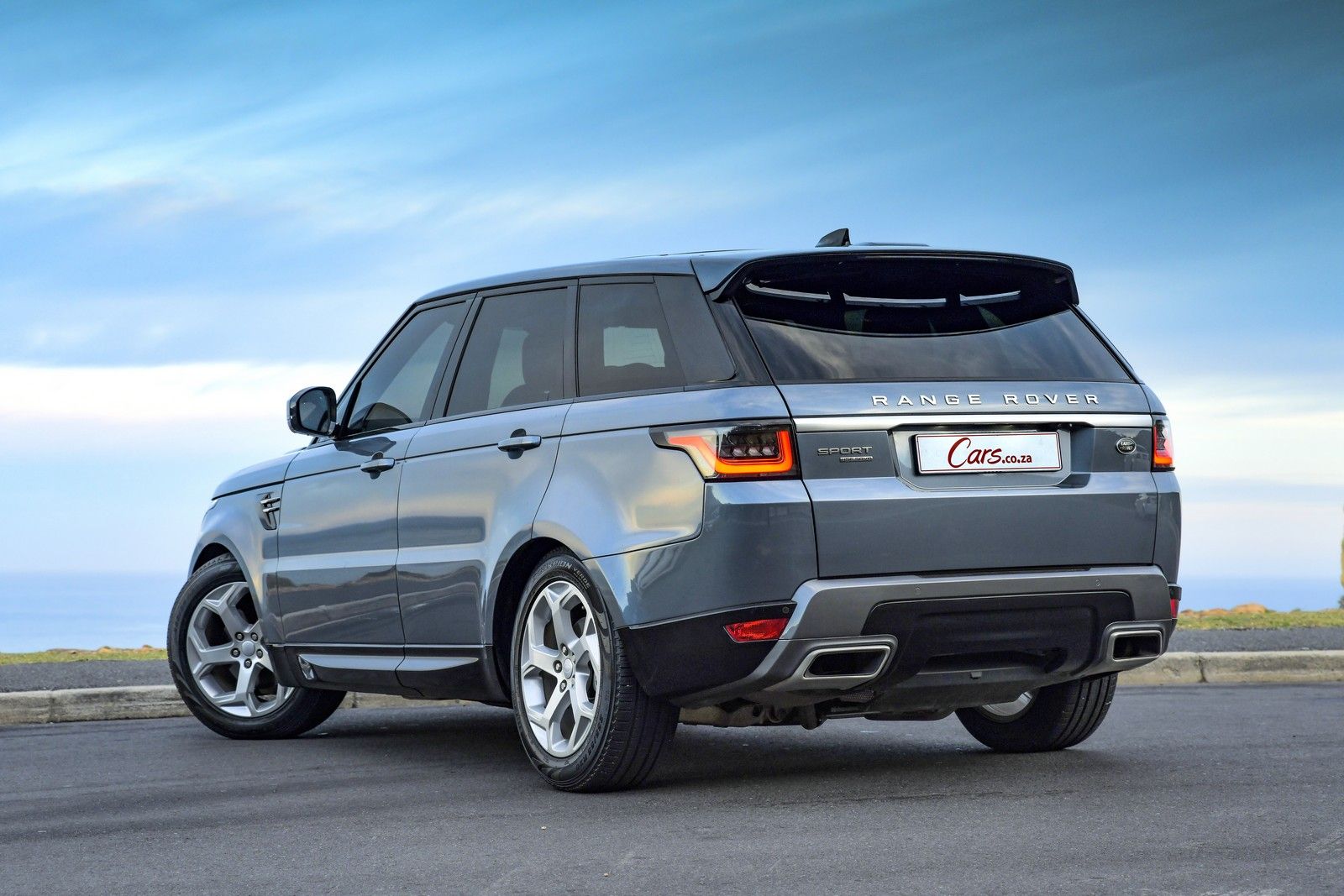
Front and rear bumpers have been given new treatment, enlarging the opening below the grille. The grille is now a single unit (where before it had 2 tiers) endowing the Sport with a more distinct and less fussy face. The LED lights are thinner but have a more pronounced design that’s easily recognisable in a rear-view mirror.
The rear bumper has also undergone a redesign and features more prominent exhaust tailpipes that are integrated into the aft diffuser.
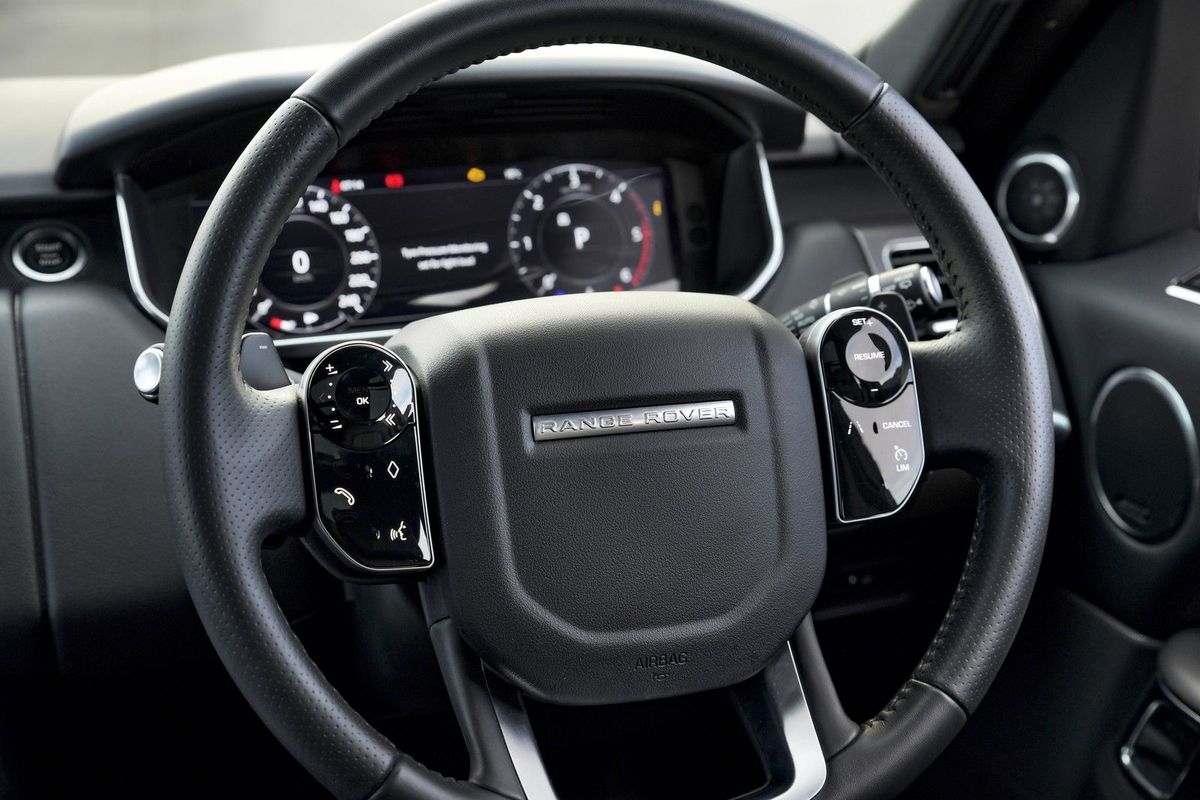
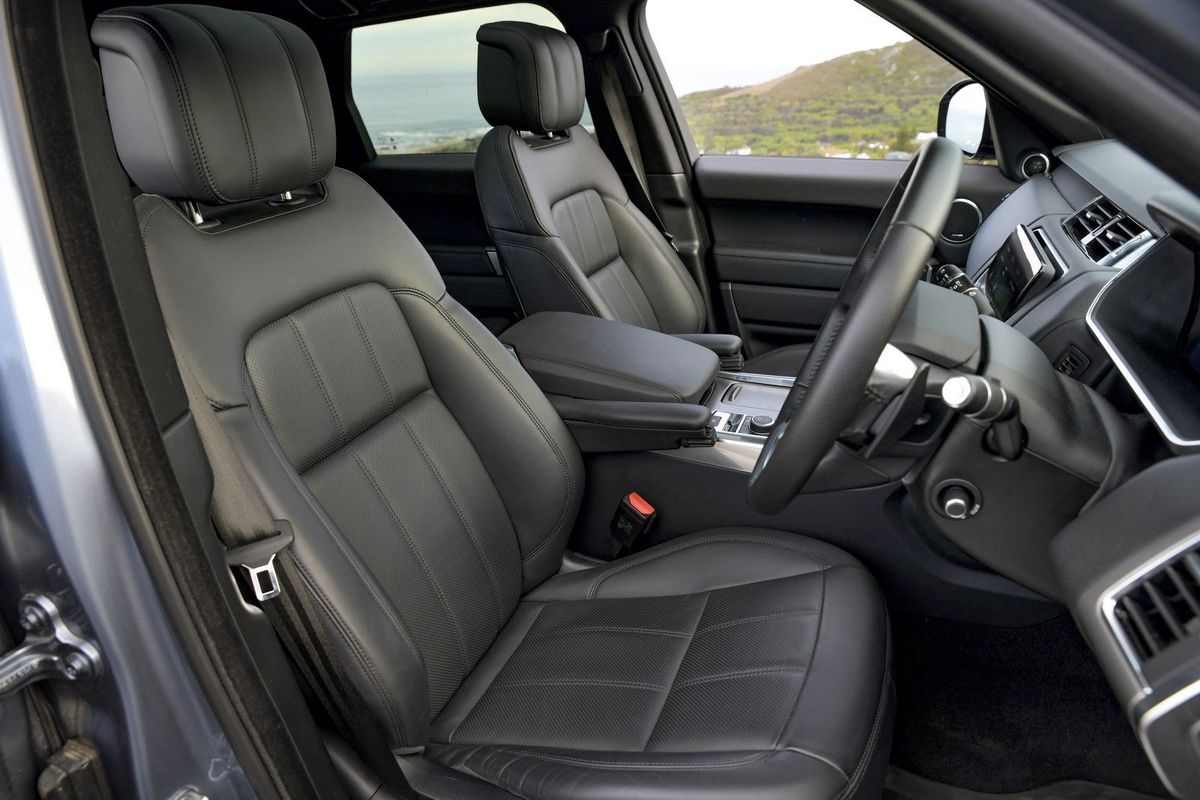
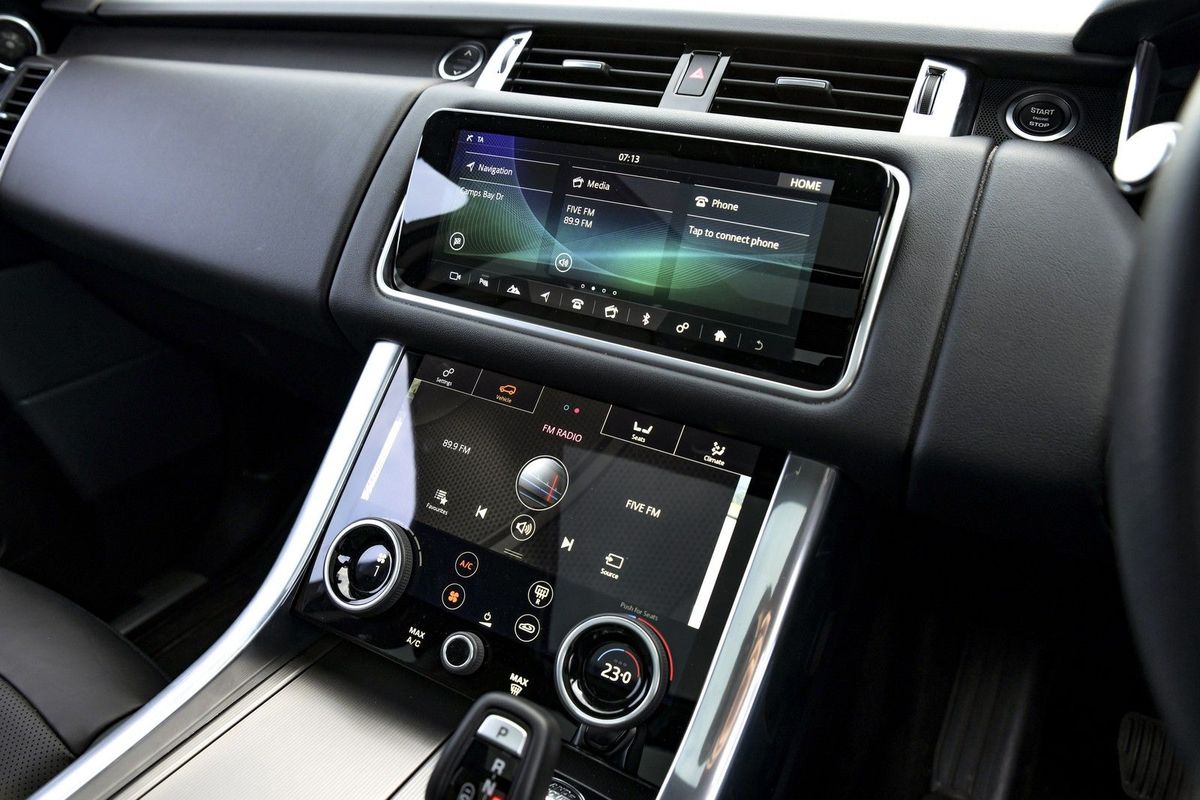
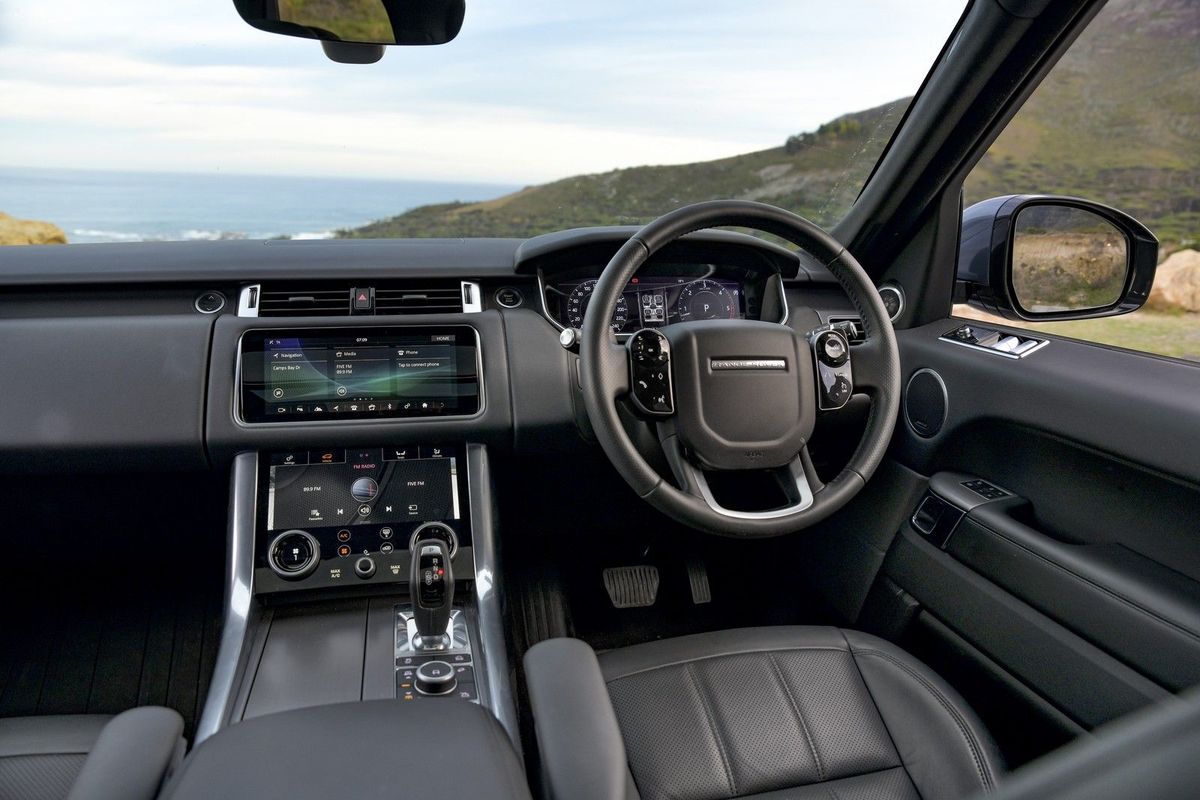
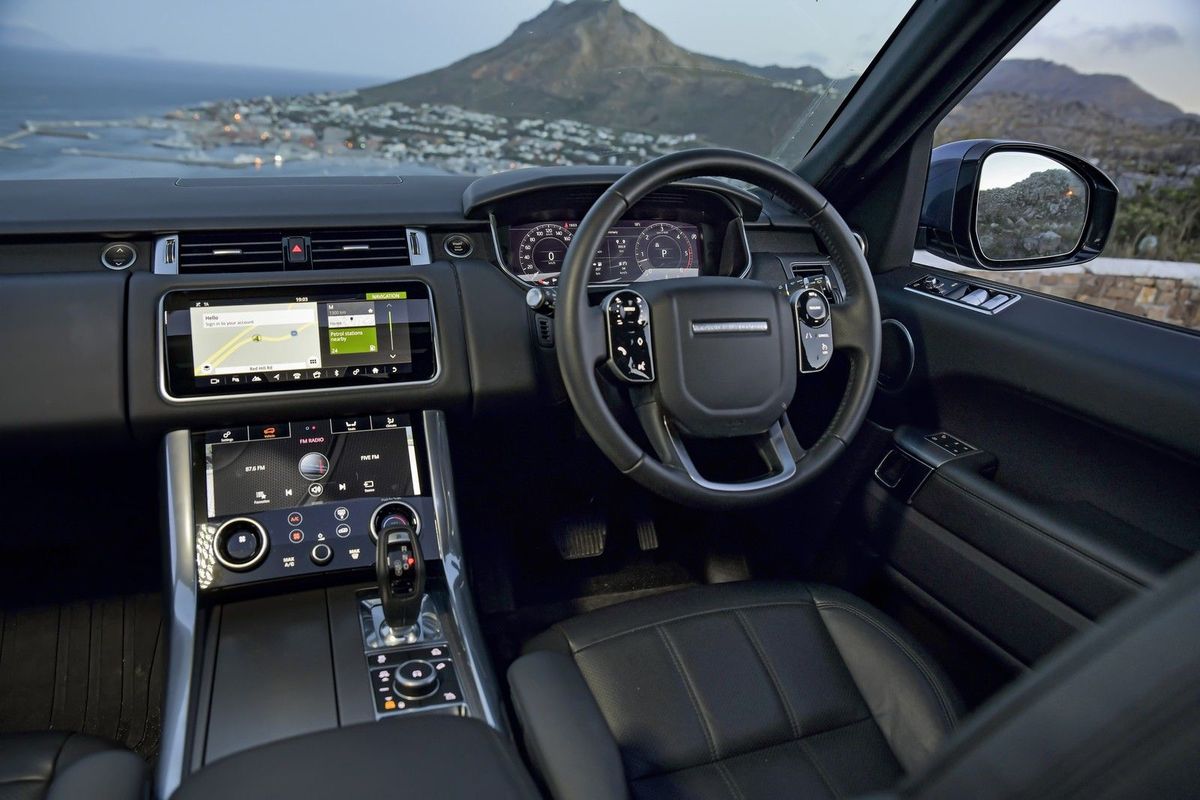
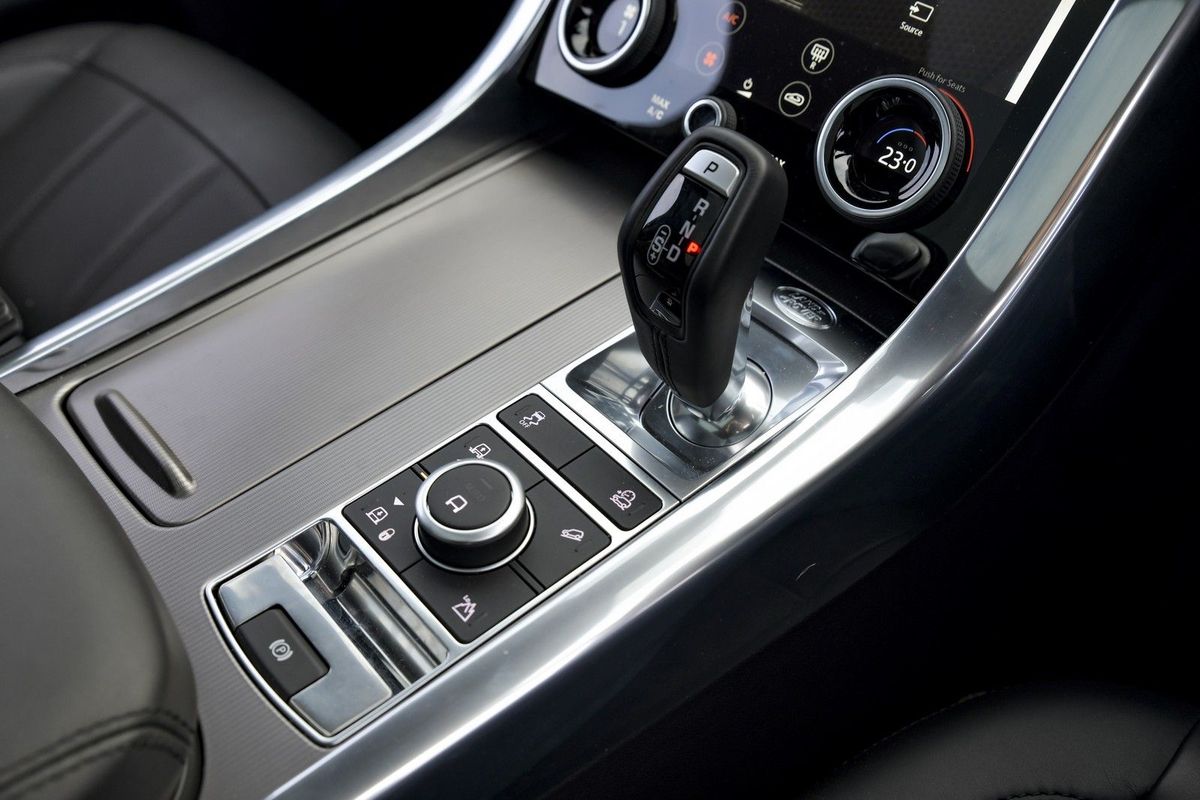
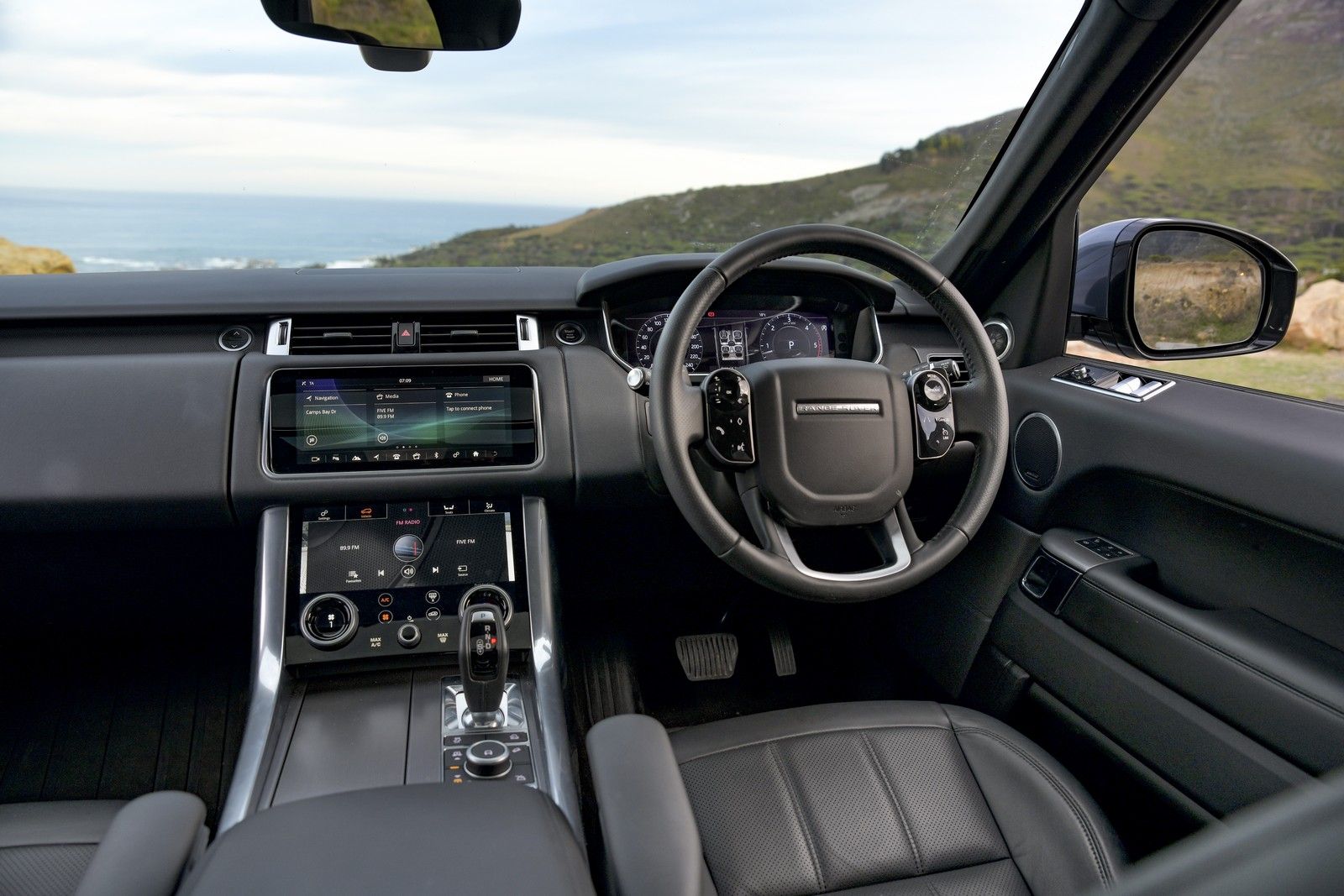
The major update is installed in the cabin, where the infotainment system from the Range Rover Velar has been installed. It includes two crisp 10-inch touchscreens and some new seats that hug your torso a little tighter than the previous items.
The good
That opulent feel
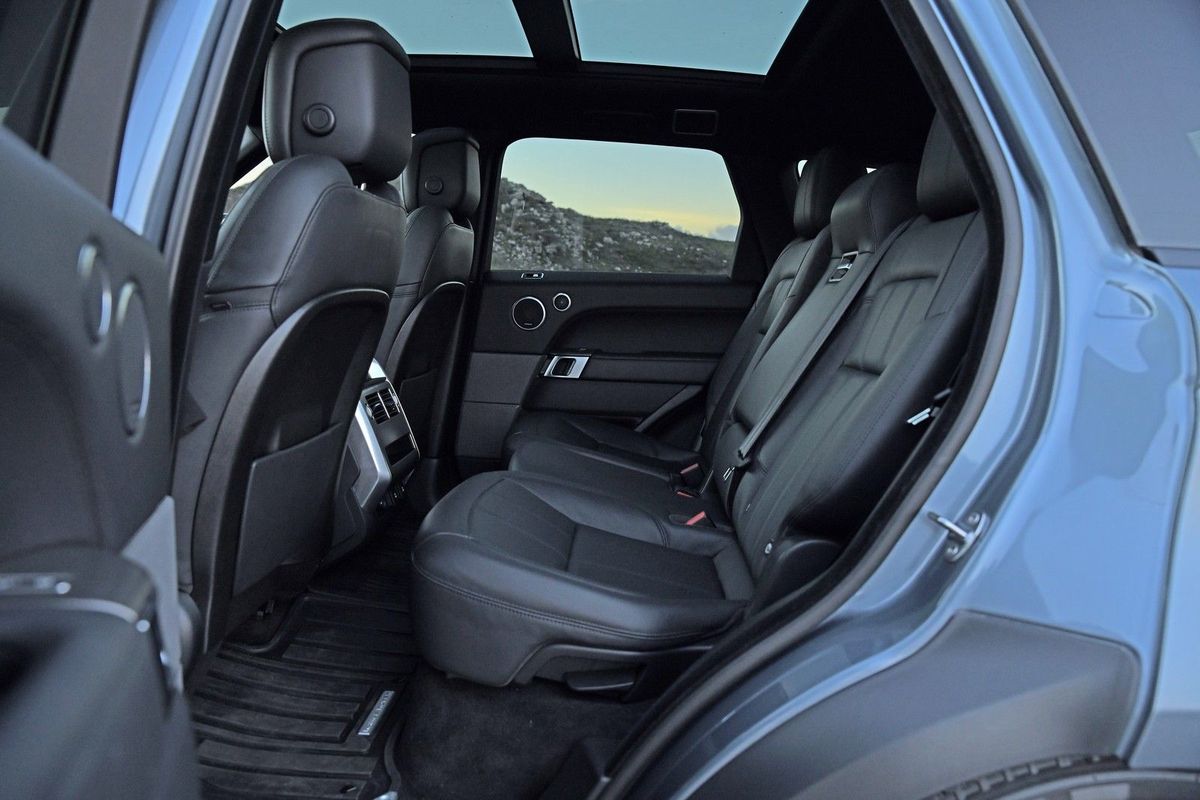
A Range Rover always feels more spacious inside.
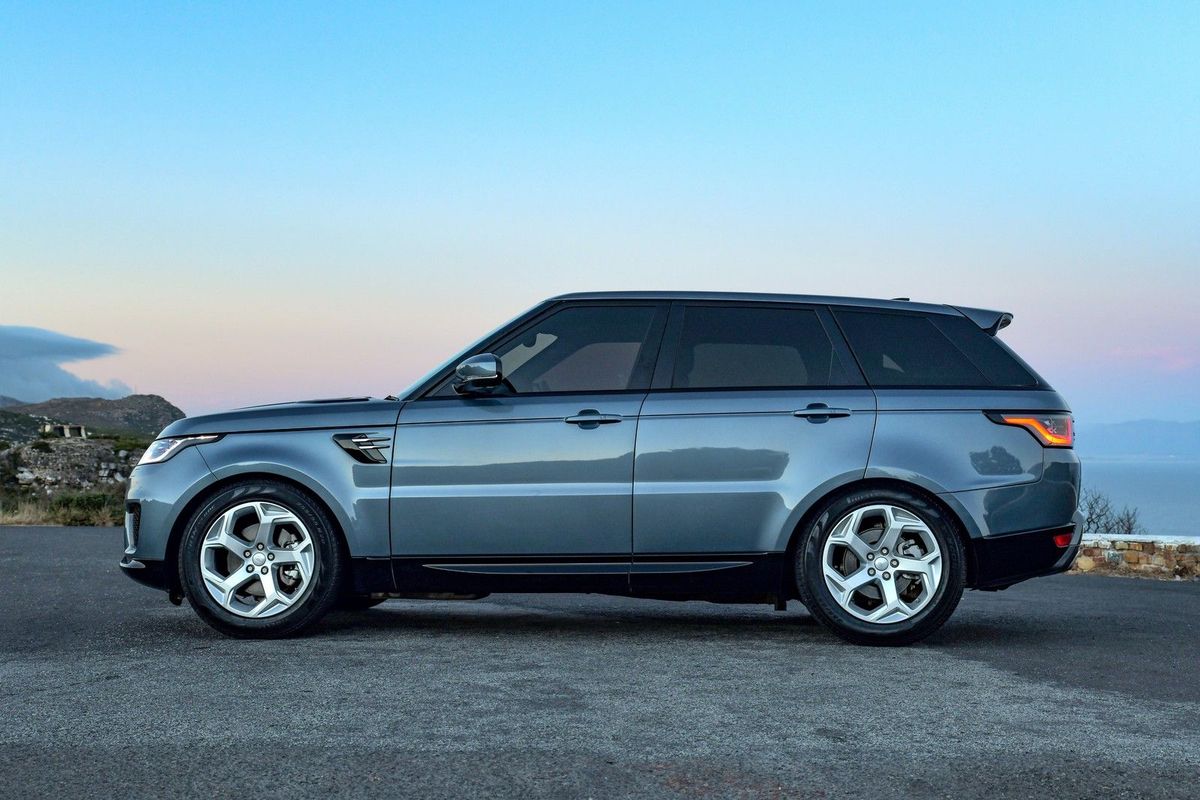
The Range Rover Sport sits below the big-daddy Range Rover in the lineup, but it doesn’t feel like it lacks for anything, at least upon the first impression. The styling remains muscular and squared off, it’s distinctive and stands apart from the curved and rounded body shapes of the vehicles it competes with. In terms of sheer kerb presence, it has real street appeal when parked in the city that not many can match.
It’s not just the outside that’s appealing either, step inside and there’s an air of quality and opulence, something that Range Rover has managed to instil in the Sport while adding more gadgets, gizmos and mobile connectivity options.
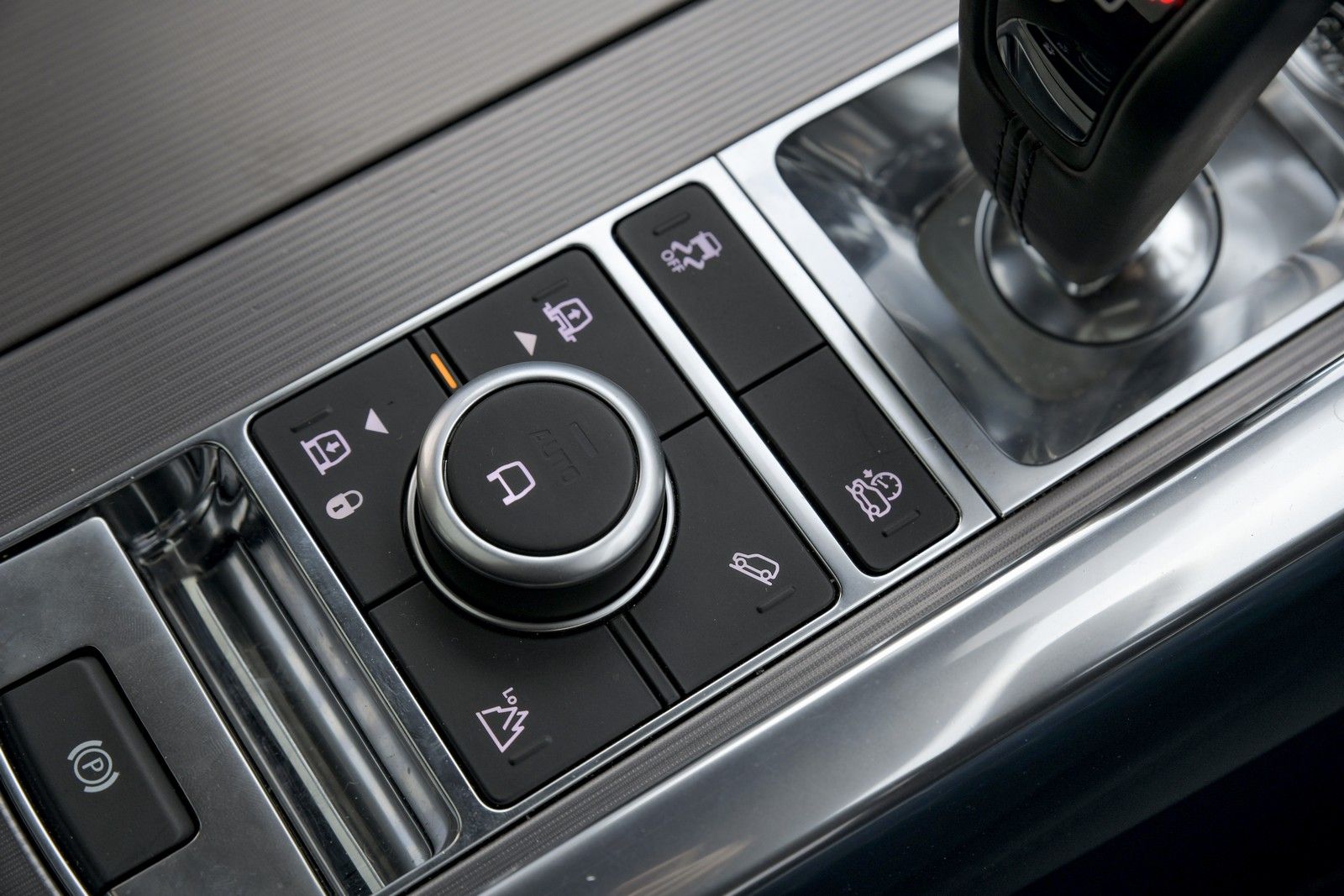
There is a plethora of buttons on the fascia, but it doesn’t feel cluttered or overwhelming and the huge centre console acts as a "room divider" between the driver and front passenger. It feels much bigger in here than it actually is. The armrests are also quintessential to the Range Rover cabin experience as is the buttery smooth leather that’s lavishly plastered throughout the cabin.
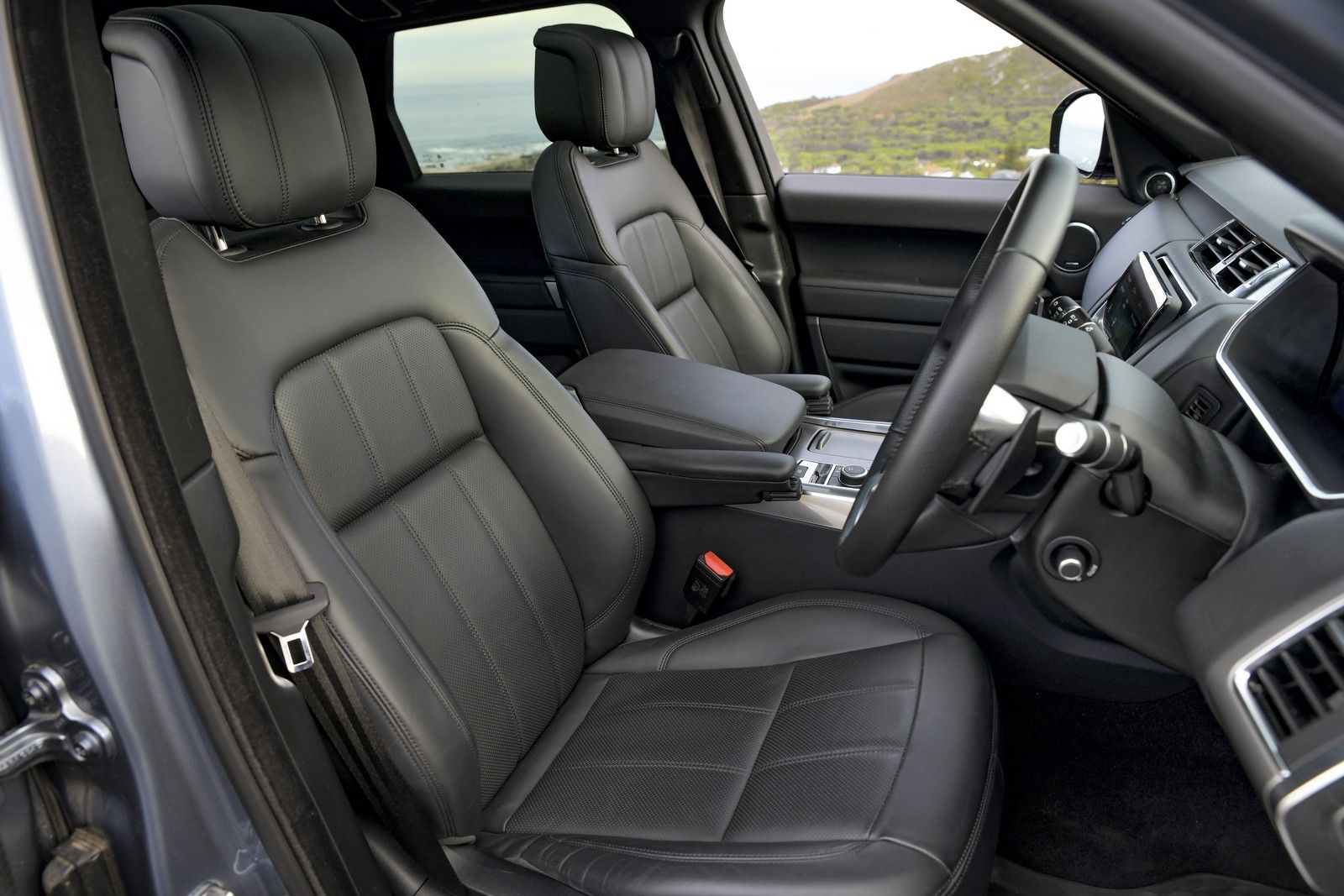
The new seats offer more lateral support.
The new seats fit more snugly and do a better job of holding you upright when cornering than their predecessors. They still give that "up high and above everything else" seating position that allows you to look down on other road users.
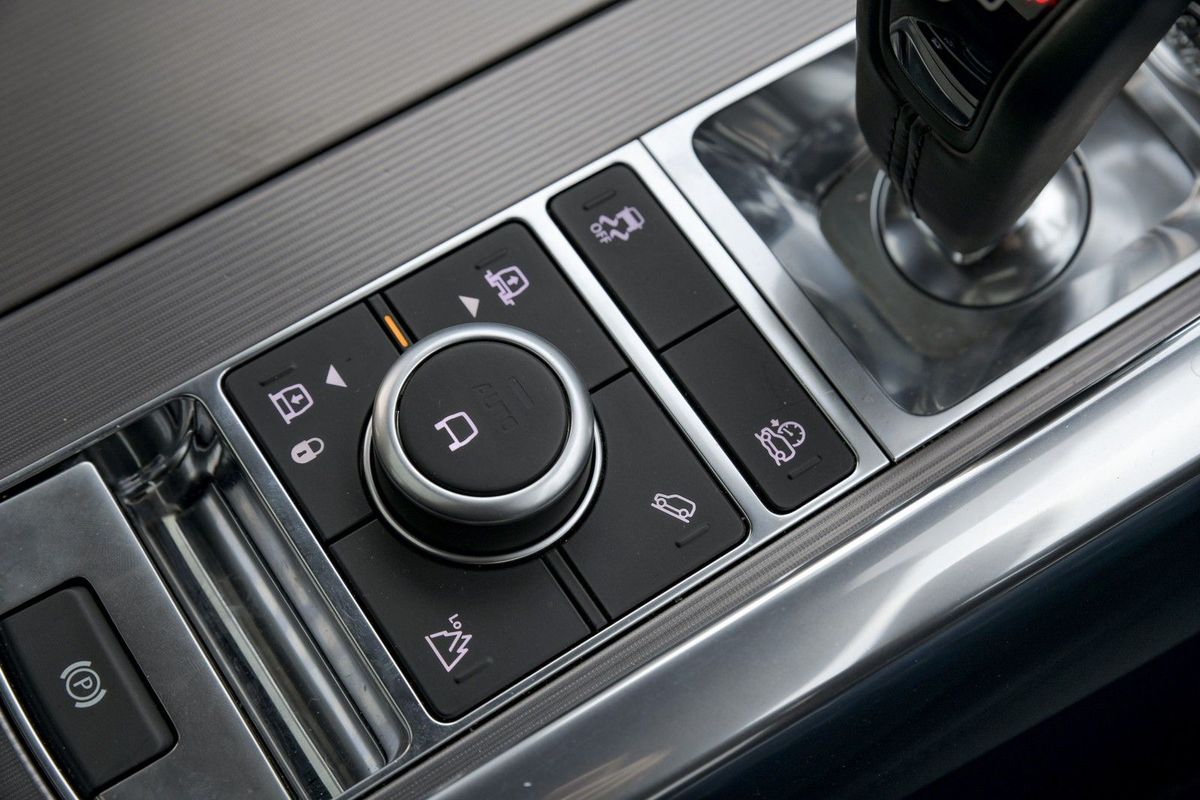
What's more, the updated infotainment screens constitute a welcome connectivity update. The high-res screens respond quickly to touch – the top screen deals with infotainment duties, navigation, your personal settings and the Apple Carplay/Android Auto display. The bottom screen is utilised for climate control (and seat heating) settings and vehicle mode adjustment (off-road modes as well). It’s very simple, yet classy interface.
Smooth operator
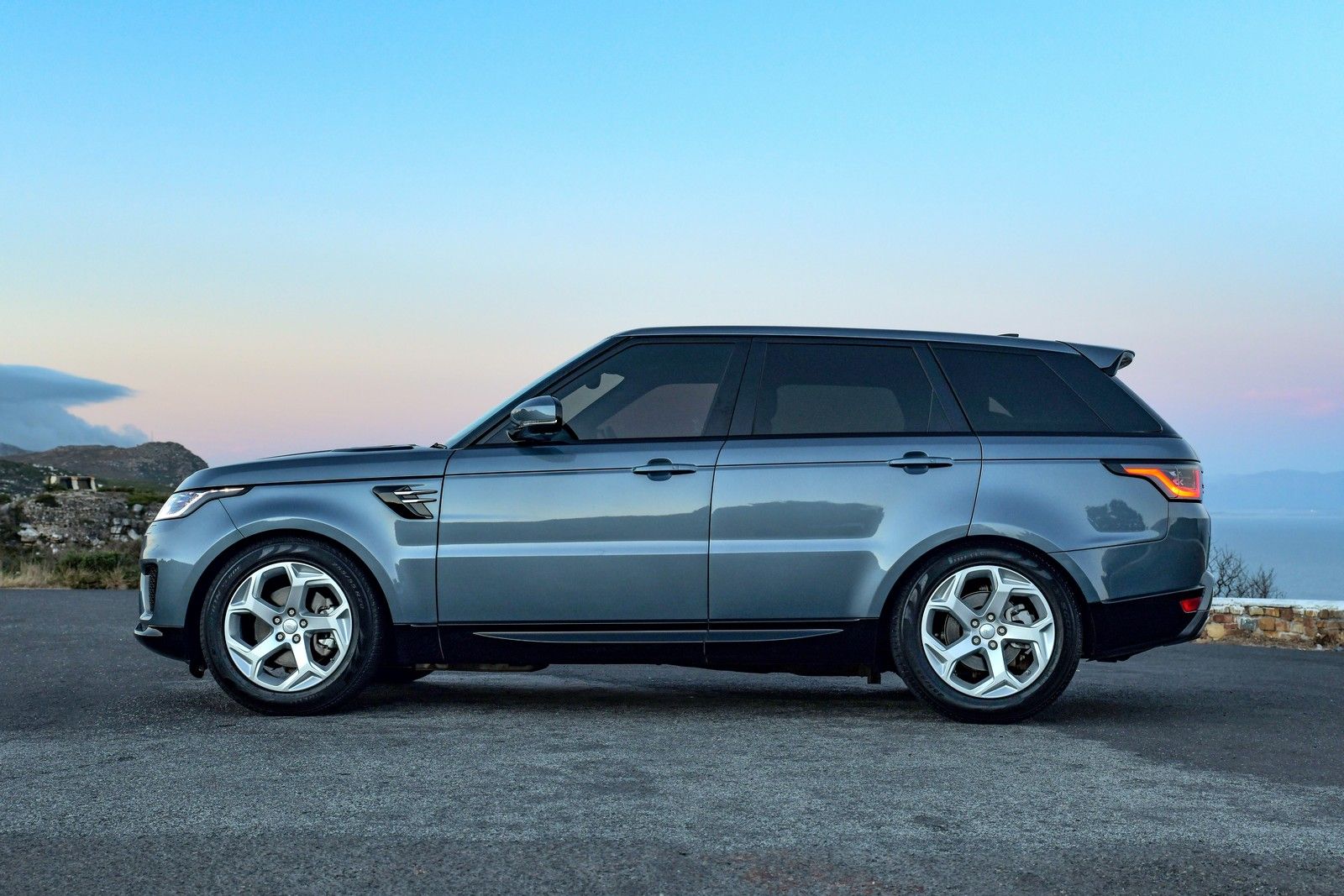
The 20-inch wheels on this model can be optioned up to 22-inch.
The "Range Rover Sport as a turbodiesel" is a peculiar combination; the two don’t usually go together that well. Over the last few years, turbodiesel technology has really started to push the boundaries of performance (in spite of the VW Dieselgate scandal) and the 3.0-litre turbodiesel V6 lump beneath the Sport's bonnet thumps out 225 kW and 700 Nm of torque. Compare that to the supercharged petrol model’s output of 250 kW and 450 Nm and it seems that the diesel has more strings to its performance bow. There is a difference of some R130k between the derivatives, however.
Connected to an 8-speed automatic transmission, the SDV6 is capable of leaping from 0 to 100 kph in 7.1 seconds (1 tenth faster than the petrol as well) and while that’s not quite as potent as a BMW X5 M50d or Audi Q8 50 TDI, it’s enough to feel fast when you plant the throttle from a standstill.
It may not look like it's built to go off-road, but it sure can.
In day to day use, the self-shifting transmission and engine work well in tandem, smoothly shifting and anticipating your next move. There’s only a hint of hesitation when you ask for more performance as the 'box shuffles for an extra gear before the 2.5-tonne British behemoth is on its way again. When less performance is required, it’s smoother/the hesitation falls away; as if the cache of torque keeps things moving effortlessly…
The HSE rides on 20-inch rubber (options go up to 22-inch), but combined with standard adaptive air suspension the ride quality is superb. Small bumps or big bumps, the air suspension soaks them up and settles quickly thereafter. The weight is a little harder to hide in corners and Rangey leans when taking bends at a brisk pace. If cornering performance is what you desire from your Range Rover, the Velar a better bet.
The not-so-good
On the heavy side
There's a little more lean in the corners from the tall Rangie.
The Range Rover Sport’s heft is more noticeable than in a brand new X5, for example, especially when the road gets a bit bendy. As a buyer, you would need to decide how much tarmac cornering dynamics counts in an SUV that’s this capable on every surface.
The weight has an effect on the fuel consumption too. A few years ago, it was unheard of to get an SUV of this size to average 7.0 L/100 km, but that’s now on the high side considering most of the competition claims in the 6s with faster 0-100 kph times. The HSE SDV6 averaged 8.9 L/100 km.
Hefty asking price
The current exchange rate must be hurting the whole of JLR in South Africa. This derivative retails for R1 622 223 before options (this one came fitted with R100k worth of extra kit) and that’s a lot more than a BMW X5, even when propelled by the M50d's muscular turbodiesel engine. It’s also more than a Porsche Cayenne S, a brand that probably matches the mighty Range Rover in the hierarchy of motor manufacturers.
The Sport still turns heads and with its immense badge appeal can command a higher price tag. Or so Range Rover would say…
Verdict
The facelifted Range Rover Sport retains that something special that makes a Range Rover such a sought-after vehicle. The ambience and spaciousness of the cabin is 2nd to none and, with the new infotainment screens, hits the mark in terms of onboard technology and modern connectivity options (to reiterate, Apple Carplay and Android Auto compatibility are standard).
The powertrain is refined and imbue the 2-tonne SUV with sufficient propulsion, but if it’s performance statistics you’re after, there are faster and more efficient competitors out there. At this sort of price, buyers tend to buy what looks best and gives them the biggest fizz when driving. The Sport definitively ticks those boxes and offers the most capable off-road experience for a luxury SUV (without a Land Rover Discovery badge on it).
If you’re willing to part with R1.7 million, then value for money probably doesn’t rank very highly on your prerequisite list for buying a car. In that case, the Range Rover Sport remains the SUV with most street cred (if at the highest premium in its particular segment).
Alternatives (click on the names for specification details):
The brand-new X5 launched was in SA late in 2018. It's more refined and smoother than ever. It lags behind the Rangie in terms of looks and overall appeal (despite the huge grille), but it's more efficient and less expensive than the RR Sport.
If you're looking for sportiness, then the Cayenne has the equipment to thrill. It's petrol-powered but at a similar price to the RR Sport you get 324 kW. It's a touch bland in terms of interior execution and the looks aren't for everybody, but you do get that very sought-after Porsche badge.
Audi Q8
As of writing the Q8 is 1 month away from being launched in South Africa. It may strictly be a coupe SUV, but it has great visual clout and an uprated turbodiesel engine that's a near match for the RR Sport.
Meet the Volkswagen Group’s New Engine for SA
The Volkswagen Group has a new engine for South Africa. Codenamed EA211, the engine has been confirmed for South African market introduction. Here's what you need to know about it.
The Volkswagen Group has an array of engines at its disposal. Many of these have made it to South Africa, but one engine which we encountered by chance back in 2017 on the international Volkswagen Golf 7.5 media event was the 1.5-litre 4-cylinder turbopetrol.
This engine is called the 1.5 TSI Evo. This turbocharged petrol engine boasts outputs of 110 kW and 250 Nm, with maximum torque coming in at 1 300 rpm. There's a strong focus on emissions and economy, as it works on the Miller combustion cycle and features variable geometry turbocharging. Interestingly, it's 22 kg lighter than the 1.4 twin-charged motor which it replaces. To further save fuel, Volkswagen gave this engine cylinder deactivation. The 2nd and 3rd cylinders can be shut down during what Volkswagen calls low and medium load states. Volkswagen claims a reduction in fuel consumption by as much as 0.4 L/100km on the European driving cycle.
South African applications
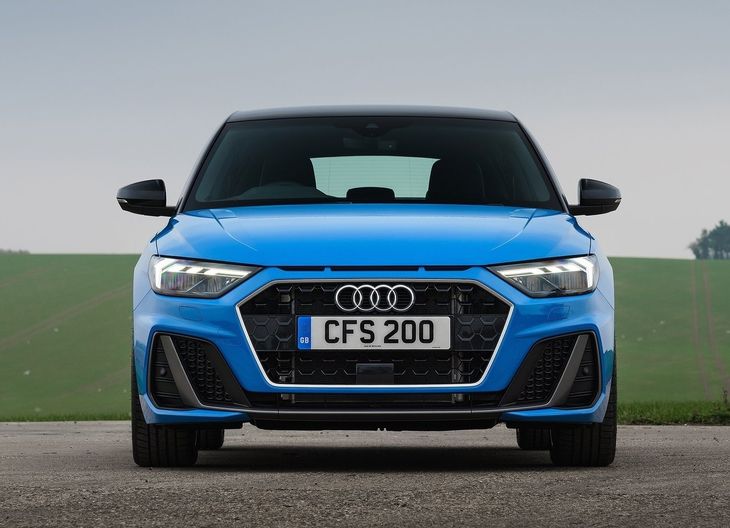
The forthcoming Audi A1 will feature the new 1.5-litre engine. Outputs are commendable, at 110 kW and 250 Nm.
When we first drove this unit, we were told by Volkswagen that SA petrol quality wasn't up to scratch. Fast-forward to 2019 and we have confirmation that this engine will be coming to South Africa, but it won't be Volkswagen SA who will introduce it. Instead, Audi South Africa confirmed at an international driving event that the 1.5-litre motor will be available in the soon-to-be-launched compact Audi A1. Expect this engine to make an appearance in the next-gen Audi A3 too, which is due for an international reveal towards the end of 2019.
A Volkswagen representative said, "For now, the 1.5 engine is currently not under consideration for Volkswagen introduction in SA." Internationally, the 1.5 TSI Evo can be found in the Golf, Polo, T-Roc, T-Cross, and the Arteon. This doesn't mean that Volkswagen SA is not bringing in any 1.5-litre powered products at all, rather it's not on the immediate horizon. We predict we'll see this engine eventually come to South Africa and given the current lineup in the Polo, for example, will bridge the gap perfectly between 1.0-litre Highline and the 2.0-litre GTI. Watch this space.
If bakkies are so popular, why hasn’t anyone built a battery-powered one?
The world’s best-selling vehicle is a bakkie: the Ford F-150. South Africa’s best-selling vehicle is also a bakkie: the Toyota Hilux.
Despite the surging popularity of bakkies, there is not a single battery-powered pick-up or double cab on sale. At a time when nearly all automotive brands are rushing battery-powered electric vehicles to the market in some form or another, why is there a complete void of plug-in double cabs?
One cannot have a sensible discussion on anything related to electric vehicles without mentioning American automotive disruptor in chief, Tesla. Elon Musk’s controversial car company has managed to produce battery-driven sportscars, SUVs and even a sedan. It has offered a plug-in power alternative to all the segments dominated by German brands, which are the most powerful car companies around.
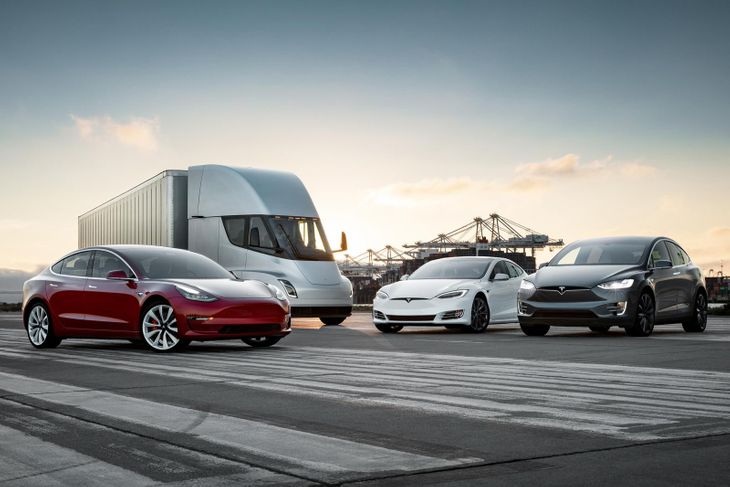
Tesla makes an array of electric vehicles, but no bakkies.
Tesla doesn’t have a bakkie, at least not yet. You would think that a bakkie would have been Tesla’s priority, seeing as the United States is its most important market and bakkies are the vehicle of choice for most Americans. Yet Tesla has only teased concept sketches of a bakkie, instead of committing to building one.
Bakkie customers are demanding – in the extreme
The reasons for Tesla’s resistance to building a battery-powered double-cab is strategically the same for any brand. Those consumers who are voluntarily becoming early adopters for the electric vehicle revolution mostly live in cities, and have very predictable driving patterns, across excellent road networks – with a high frequency of recharging points.
Most bakkie drivers work their vehicles much harder than average commuters. They load them, tow with them and drive them to isolated locations, where charging infrastructure doesn’t exist. Adding load to any vehicle necessitates it to use more energy. Electric vehicles already engender range anxiety and if you are going to load 1 tonne to your battery-powered bakkie, or tow 3 tonnes, chances are that the range reduction will be significant.
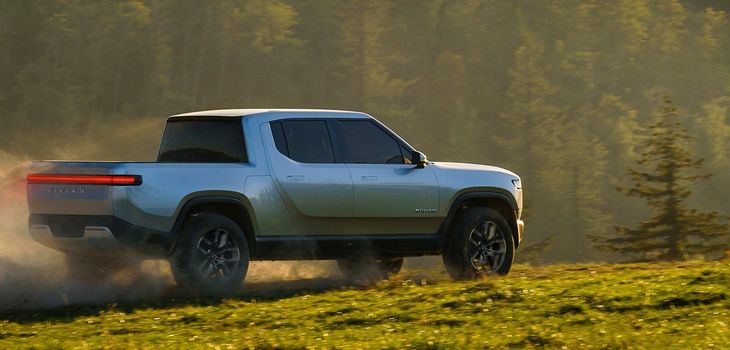
Rivian is a company pioneering the electric-powered bakkie.
In February of this year, a blizzard swept over the northern region of the United States. Temperatures fell to -17° Celsius and those few road users who were piloting electric cars saw their available ranges (from full charges) shrink dramatically, in some cases by nearly 50%. Contrast this with petrol- and diesel-powered vehicles, which retained their normal driving range endurance during the extreme weather. Ranchers and other bakkie users in the north of the US would be left stranded if their vehicles suddenly suffered massive range reductions during bitterly cold weather.
A useful comparison is to think of a local scenario pertaining to bakkie use. South African bakkie owners often plot an adventurous route for off-road driving expeditions into neighbouring countries. Refuelling stops are carefully calculated, and additional diesel is carried along, in jerry cans, as a contingency. With a battery-powered bakkie, if the weather starts to dramatically shorten your range, or you wish to embark on a journey where recharging points are near the limit of our vehicle’s abilities – there is no option to load up extra batteries, as you would with liquid fuel in jerry cans.
Theoretically, a battery-powered bakkie offers more space for covered storage and better ride quality.
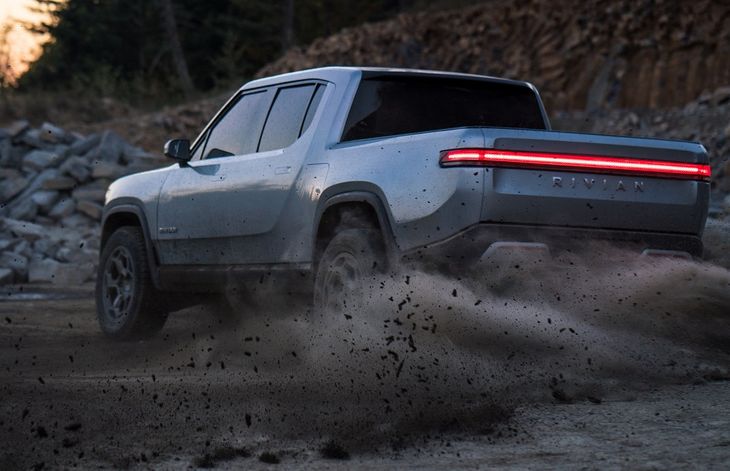
Despite the many arguments against battery-powered bakkies, they are very attractive from a conceptual point of view. By far the most compelling battery powered double-cab yet produced as a "proof of concept", is the R1T, produced by American company Rivian.
Without the need for driveshafts or differentials, this bakkie possesses incredible off-road ability thanks to immense individual wheel articulation and 360 mm of ground clearance. There is no engine in the front, either, which means you can use that cavity as an additional 330-litre lockable stowage area and, with all the bakkie’s mass concentrated in its floorplan, it's likely to exhibit a lot less body roll than its conventionally engined rivals.
Ranger and Amarok
The Rivian R1T illustrates that a battery-powered double-cab can have tremendous capability and "loadability", but who will be the first mainstream company to bring one to market?
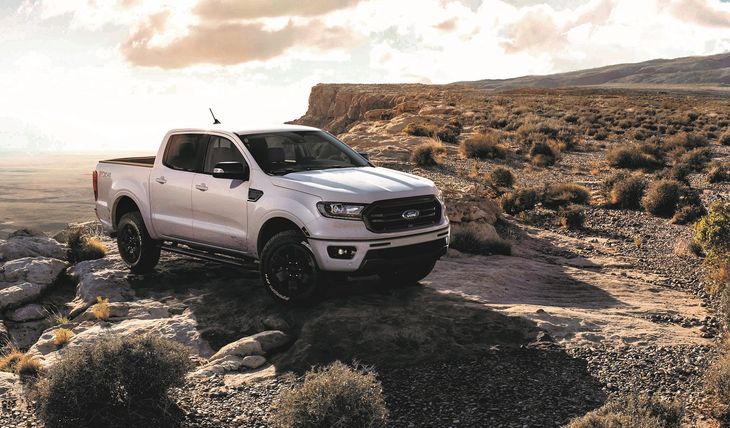
Ford builds the world’s most popular bakkie, but it lacks EV drivetrain technology. The Blue Oval has signed a cooperation agreement with VW to effectively develop the next generation Ranger and Amarok bakkies together, which could mean access to VW’s growing battery-drive resources.
Not many charging stations in sight here.
Mercedes-Benz is also forging ahead with an array of ambitious battery vehicles. The Sindelfingen-based firm could possibly release powertrain technologies that might come to power future versions of the X-Class.
Toyota? Don’t expect a battery-powered Hilux on local roads soon. The Japanese brand has built its renowned bakkie business by being perfectly intuitive to customer needs, instead of following trends. It would take a huge uptick in the rollout of battery-powered bakkies to convince Toyota.
The only market where its Hilux features strongly and has a high frequency of recharging points is Australia. All other Hilux markets are decidedly liquid-fuel biased for the time being – including our own.
The Chinese
Bakkies from the People’s Republic have not had as big an impact on South African new vehicle sales figures as their importers would have liked, but one would be greatly ignorant to underestimate the Chinese automotive industry and its ability to learn and adapt.
With the current trade impasse between America and China, there is little incentive to build large F-150 sized vehicles that cater to the world’s most popular bakkie market – but that’s potentially very good news for the rest of us. Especially South Africa, a market where the majority of bakkies are categorised as medium-sized pick-ups, the exact classification of vehicle that GWM builds.
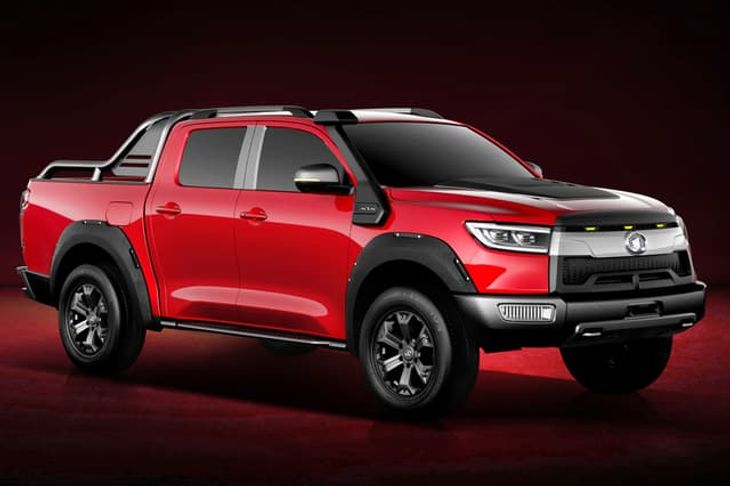
GWM’s Steed range has been one of the very few credible Chinese bakkie offerings and the brand has just revealed its new 4×4 pickup double-cab. It’s an impressive bakkie with 3 differential locks, not to mention a thoroughly-modern design. Clearly, GWM is aiming to conquer Ranger and Hilux customers with this 4×4 pickup.
GWM's new bakkie appears thoroughly modern. Could it be the first manufacturer to go down the electric route?
What is most symbolic about the new GMW bakkie is that China is both the world’s largest market and producer of electric vehicles, raising the probability that the 1st battery-powered bakkie could be Chinese in origin. An electrically powered bakkie, with a claimed range of 500 km, is scheduled as the star attraction of GWM’s Shanghai auto show display this month.
Battery-powered bakkies have an array of possible advantages over the double-cabs we currently drive. Cabin comfort will be hugely improved, with the annoying transmission tunnel no longer taking up so much interior floor space. The fact that all that room above the front axle, where the engine traditionally resides, can be converted to a secure, weatherproof, storage space – is a great boon too.
They should also be inarguably better to drive… Electric vehicles have an incredibly low centre of gravity, making them a great deal more rollover resistant – something which could reduce accident fatalities in bakkies, which routinely cover great distances on SA's gravel roads – at speed!
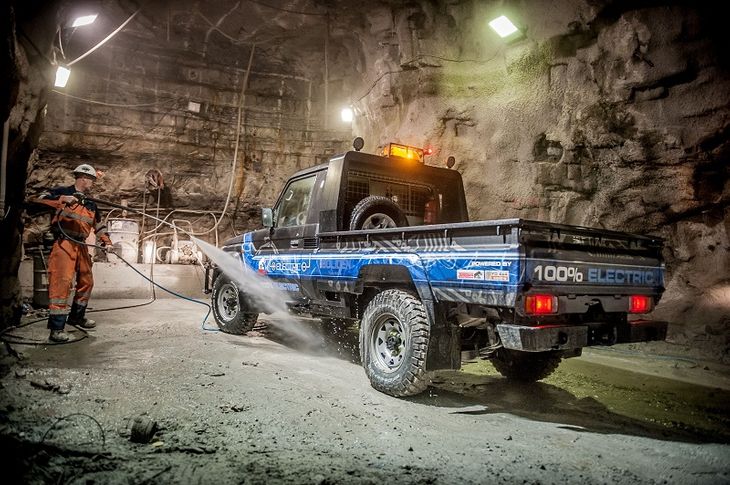
Dutch company Tempo 4×4 does an electric swap-out Land Cruiser.
Whichever automotive company brings the first battery-powered bakkie to market – be it Ford, Volkswagen, Mercedes, Rivian or GWM – "e-bakkies" will be held to a higher standard than has been the case with any electric passenger car. Bakkie owners are demanding, their vehicles are an integral part of their livelihood and are expected to perform faultlessly in rough terrain, often many hundreds of kilometres away from support.
When the first battery-powered bakkies come to market, early adopters of electric double-cabs will not be wealthy tech entrepreneurs or those who live in lifestyle security estates with off-grid solar power. They will be farmers and ranchers, with solar panels, in the middle of nowhere.
One suspects the demand for battery bakkies from South Africa’s Land Cruiser single-cab heartland, the Northern Cape, will be substantial. They have abundant sunshine and a notable awareness of solar generation in South Africa’s largest province. Greatly ironic, too, is that one of the few aftermarket electric motor engine swap-outs available, built by Dutch engineering specialist Tempo 4×4, is for the uber-utilitarian Land Cruiser 79…
The Volkswagen family of performance SUVs is set to gain a new member. A Volkswagen Tiguan R is on the way and was spotted testing. Here's what we know so far.
Image credit: S. Baldauf/SB-Medien
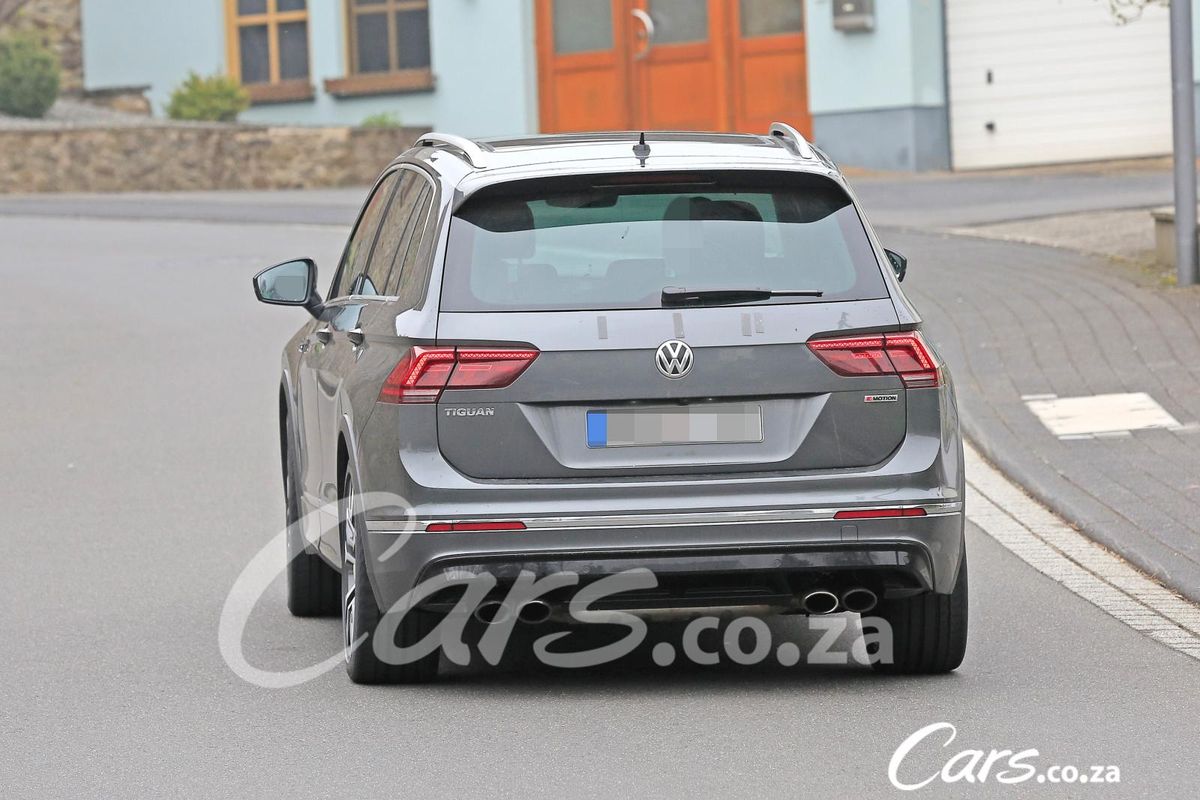
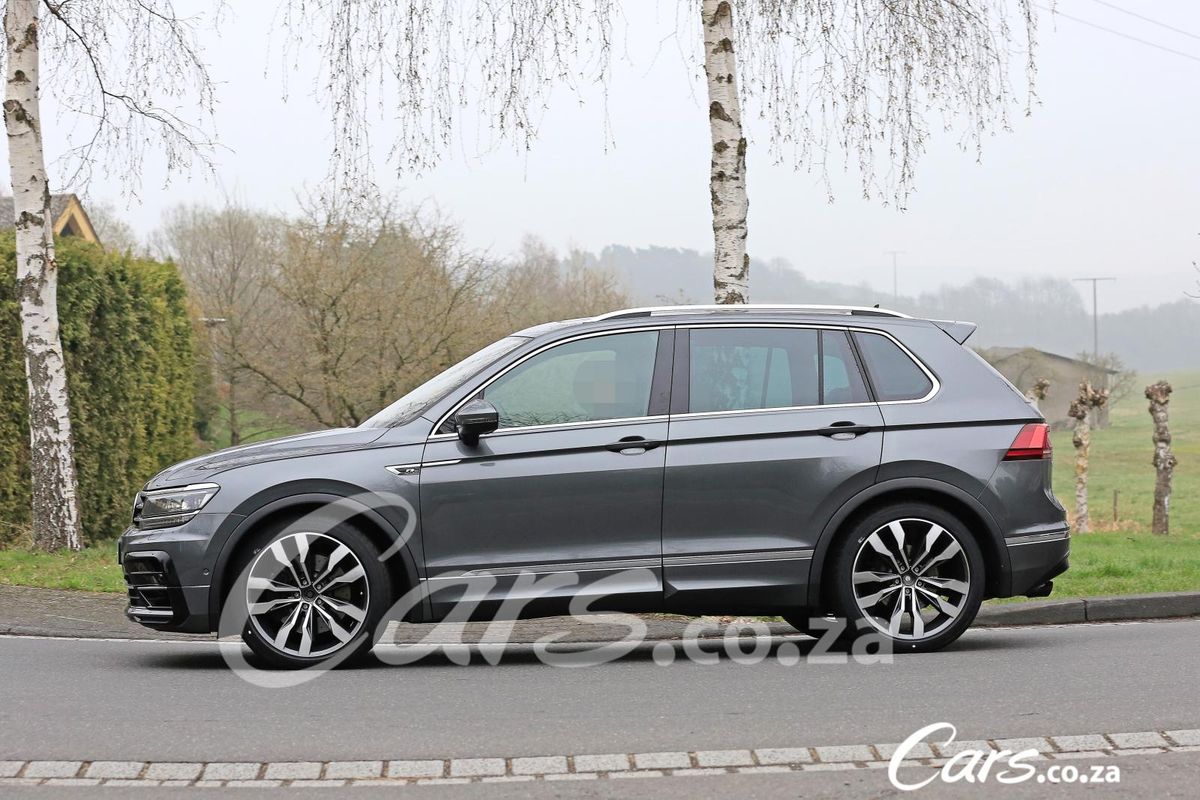
After the Volkswagen T-Roc R was officially confirmed and revealed, it was only a matter of time before the same treatment was applied to the rest of the VW SUV range. Spotted recently was this Volkswagen Tiguan, but if you look closely, you'll see the trademark 4-exhaust setup which is commonly seen on products like the Golf R. We had a chance to look at the high-resolution versions of these photos and also noticed the front brakes are of the performance variety.
Our spy photographers said that this vehicle sounded like the Golf R and the 4-exhaust setup confirmed that this indeed is a performance derivative. As for power outputs, the 2.0-litre EA888 turbocharged 4-cylinder engine is capable of 228 kW and 400 Nm. Mated to a 4Motion and DSG setup, we expect the Tiguan R to hurtle to 100 kph in under 6 seconds.
When will it come? Well, given the timeframe, we expect to see a global reveal of the Volkswagen Tiguan R in 2020, with a potential South African introduction sometime later.