Aston Martin Lagonda SUV Teased

A decade after previewing a rather awful SUV concept, Aston Martin is heading back to Geneva, with something much better.

Despite the looming spectre of uncertainty caused by Brexit, Aston Martin will reveal its much anticipated Lagonda SUV at the Geneva Auto Show in early March 2019. The ambitious luxury SUV project, which has been previewed – and stalled – since the 2009 Geneva Auto Show, is now believed to be ready for execution.

Although the skilfully shadowed teaser image doesn’t reveal much of the Lagonda’s detailed appearance, it will undoubtedly be a world better looking that Aston’s original SUV concept attempt, a decade earlier.

Renowned for its V12 and supercharged engines, Lagonda will be a departure into sustainability for James Bond’s car company of choice. The Lagonda SUV, characterised as an ‘all-terrain’ vehicle by Aston insiders, will not offer the option of a conventional liquid-fuelled engine. All Lagondas will be battery-powered.

Aston Martin boss, Andy Palmer, believes the all-electric powertrain architecture is a perfect foil for navigating uncertainties which are clouding the automotive industry at present. “The Lagonda All-Terrain Concept offers explicit clues regarding what will be the first Lagonda model to enter production, and further demonstrates how Lagonda’s zero emission powertrain enables us to create spectacular cars that will radically redefine their sectors of the market.”

Buy a new or used Aston Martin on Cars.co.za
Related Content 

Aston Martin DBS Superleggera – First Drive

Aston Martin launches EV conversion programme for classics

Aston Martin DB11 Unleashed (w/Video)

Aston Martin Vantage (2018) Launch Review

Brexit: What Does it Mean for Car Industry and SA?

Cars Coming to SA in 2019

And the World’s Most Popular car is…

Bakkies might be more popular than any car in South Africa, but global trends show that the world still favours a more traditional vehicle configuration. 

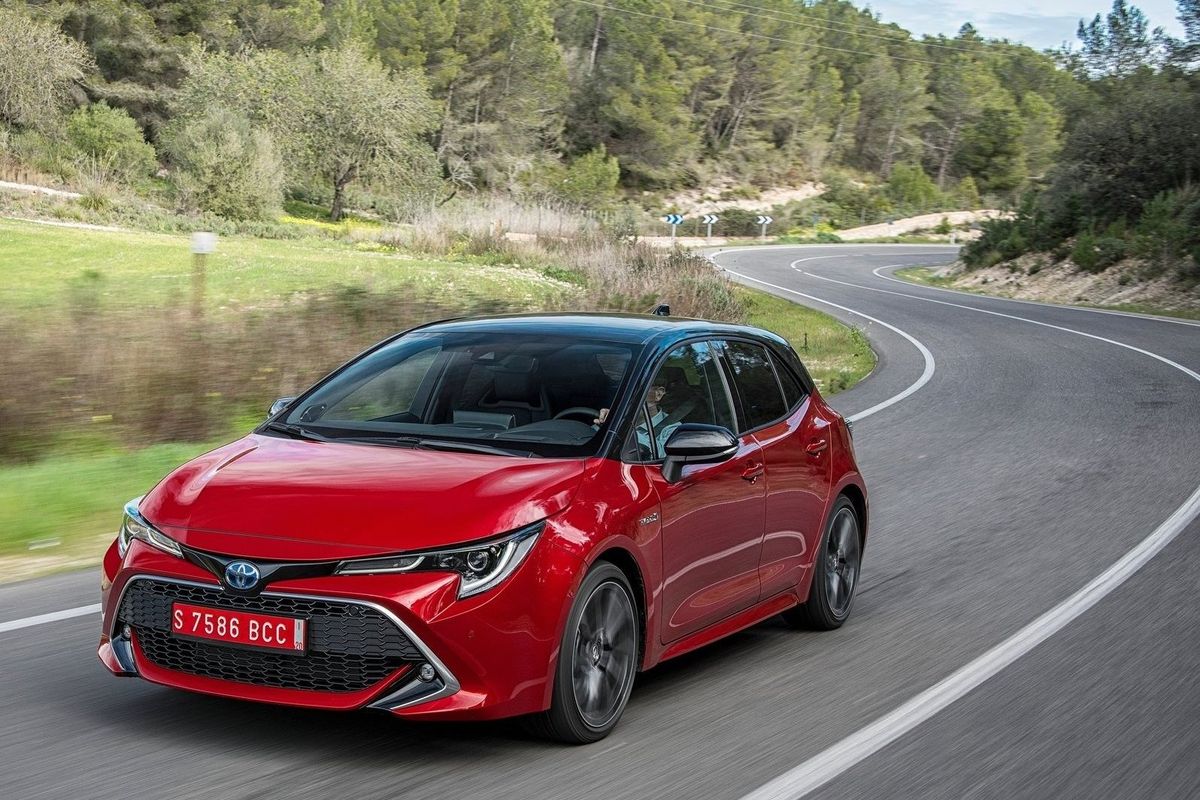
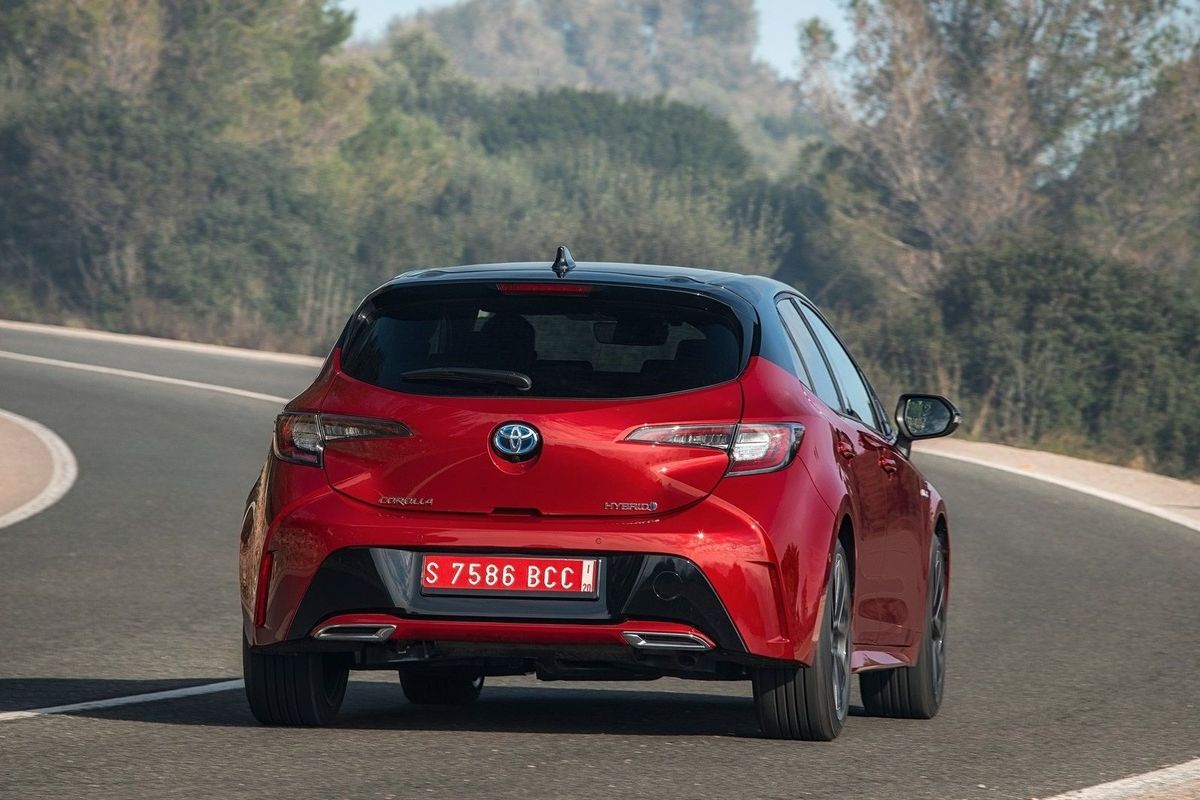
The world’s most popular vehicle is not a bakkie or SUV. With comprehensive sales data from 2018 finally collated and verified, Toyota’s Corolla has been classified as the most in-demand car of all.

Ford’s F-Series bakkie finished as the second most popular vehicle, an achievement made even more credible by the fact that it is essentially only sold in the North American market – whereas Corolla is a true global product, sold in a multitude of geographies. 

Statistically, Corolla sold 1 181 445 units, with Ford delivering 1 080 757 F-Series bakkies to new customers last year. These two models were the only vehicles to sell in excess of a million units each. 

The top ten list of most prevalent automotive products is dominated by Toyota, Honda and VW. Rav4 ranked third and Camry ninth, whilst Honda occupied fourth (Civic) and seventh (CR-V). VW’s Tiguan and Golf were fifth and sixth, with Polo eighth. Only one other bakkie, besides F-Series, ranked in the top ten most sold vehicles for 2018, and that was Chevrolet’s Silverado. 

In a world where product development and marketing strategy is anchored by a mission to serve bakkie and SUV demand, these global sales numbers tell a very different story. The presence of Camry, Corolla, Civic, Golf and Polo making up half of the most popular top ten vehicles, illustrate that the market is telling a truth very different from what product planners are strategizing. 

Top 10 best-selling cars in the world 2018

1. Toyota Corolla

1 181 445

2. Ford F-Series

1 080 757

3. Toyota RAV4

837 624

4. Honda Civic

823 169

5. Volkswagen Tiguan

791 275

6. Volkswagen Golf

789 519

7. Honda CR-V

747 646

8. Volkswagen Polo

725 463

9. Toyota Camry

661 383

10. Chevrolet Silverado

651 090

Volkswagen T-Roc R Burns the Ring

Hot hatches aren't cool anymore. In rolls the performance crossover and German car manufacturer, Volkswagen, has confirmed that it will be making the T-Roc R. Some details…

While the Volkswagen T-Roc is not available in South Africa currently, we're told that Volkswagen SA has not completely ruled out the midsized-SUV which slots under the Tiguan. What's really exciting is that Volkswagen has confirmed its first-ever performance SUV will be based on the T-Roc.

Seen here undergoing testing at the punishing Nurburgring is the all-new Volkswagen T-Roc R. While the vehicle remains camouflaged for now, we've had a good look at the video repeatedly and can see that the vehicle sits lower to the ground and boasts quad exhausts. There'll be bigger performance brakes naturally too. The big question is which engine will find its way into the T-Roc R. Given Volkswagen's business practice of sharing engines across its portfolio, we're expecting to see the 2.0-litre turbocharged 4-cylinder found in the Golf R. Mated to an all-wheel-drive platform and with a fast-shifting dual-clutch transmission, we estimate the Volkswagen T-Roc R should be able to reach 100 kph from standstill in around 5 seconds.

In terms of outputs, you'll be aware by now that Volkswagen SA has launched the full-fat 228 kW and 400 Nm Golf R. In light of the new strict WLTP regulations, this variant of the EA888 motor has been detuned to 221 kW and its this which we think the Volkswagen T-Roc R will use. It's interesting to note that this is not the Volkswagen Group's first attempt at a compact performance SUV as sister brand SEAT recently launched its Cupra standalone brand and one of the first models released is the Cupra Ateca, which has the same output.

Watch this space for official photos of the production version to be released. Estimates suggest the Volkswagen T-Roc R could be revealed as early as the 2019 Geneva Auto Show.

Watch the new T-Roc R being pushed to its limits on the Nurburgring

Further Reading

VW Gives an Extra 15 kW to Golf R

Volkswagen T-Roc (2018) International Launch Review

Volkswagen Officially Unveils T-Roc Compact SUV

VW T-Roc Convertible SUV Coming in 2020

2019 World Car of the Year – Meet The Finalists

It's that time of the year again. The World Car of the Year is in its 15th year and the finalists have been announced for 2019.

The World Car of the Year is broken into 6 World Car Awards categories. Judged by a panel of 86 motoring journalists from around the world, the World Car of the Year is arguably the most prestigious when it comes to recognising excellence. Our very own Consumer Experience Manager Hannes Oosthuizen is 1 of only 2 South African judges on the illustrious panel.

The judges are only allowed to score vehicles they have driven, and award points in sections labelled Value, Safety, Environment, Emotional Appeal, Market Significance etc. Some of these cars are not available in South Africa but feel free to click on selected highlighted vehicles to read more about them.

Top Ten World Car of the Year finalists

Audi e-tron
BMW 3 Series
Ford Focus
Genesis G70
Hyundai Nexo
Jaguar I-PACE
Mercedes-Benz A-Class
Suzuki Jimny
Volvo S60/V60
Volvo XC40 (Cars Awards winner)

Top 5 World Urban Car finalists

Audi A1
Hyundai AH2 / Santro
Kia Soul
SEAT Arona
Suzuki Jimny

Top 5 World Luxury Car finalists

Audi A7
Audi Q8
BMW 8 Series
Mercedes-Benz CLS
Volkswagen Touareg

World Performance Car top 5 finalists

Aston Martin Vantage
BMW M2 Competition
Hyundai Veloster N
McLaren 720S
Mercedes-Benz AMG 4-door Coupe

World Green Car 5 finalists

Audi e-tron
Honda Clarity Plug-In Hybrid
Hyundai Nexo
Jaguar I-Pace
Kia Niro EV

World Car Design of the Year

Citroen C5 Aircross
Jaguar E Pace
Jaguar I PACE
Suzuki Jimny
Volvo XC40

Judging car design requires a specialised skillset and 7 highly-respected design experts have been called upon to share their expertise. Anne Asensio (France – Vice-President, Design – Dassault Systemes), Gernot Bracht (Germany – Pforzheim Design School),  Patrick le Quément(France – Designer and President of the Strategy Committee – The Sustainable Design School), Sam Livingstone (U.K.  – Car Design Research and Royal College of Art), Tom Matano (USA – School of Industrial Design at Academy of Art University in San Francisco), Gordon Murray (U.K. – Gordon Murray Design) and Shiro Nakamura (Japan – CEO, Shiro Nakamura Design Associates Inc.).

Further Reading

2018/19 Cars.co.za Consumer Awards – powered by WesBank; Finalists

Winners: 2018/19 Cars.co.za Consumer Awards – powered by WesBank

Cars Coming to SA in 2019

Mazda3 (2019) International Launch Drive

With the 4th-generation Mazda3, the Hiroshima-based firm draws clearer distinctions between the sporty hatchback and stylish sedan versions of its compact car. It's also keen to challenge volume-selling and premium marques alike with its sophisticated, engaging and upmarket newcomer, which will arrive in South Africa in the 2nd half of 2019. Our Australian correspondent, Matt Campbell drove the newcomer in Los Angeles…

The 2019 Mazda 3 pairing look as though they could be completely different models – the visual difference is that large. And it’s important that Mazda gets it right with the new-gen compact car – since the Mazda 3 was launched back in 2003 more than 6 million examples have been sold across the globe. That’s only about a 5th of all Toyota Corollas sold to date (since 1968), but the smaller brand has a solid foundation nonetheless.

Arresting styling

The Mazda3 grabbed an inordinate share of the limelight when it made its debut (in production form) at the Los Angeles Show late last year and, now I've seen the newcomer in the metal, it's easy to understand why. The sedan, in particular, is sinuous, replete with sleek lines and shapely chrome trim that outline the side windows. It sits beautifully on the road and looks good at a standstill. It’s sleek and suave – gorgeous, even.


The sedan is the sleeker and less controversial looking variant in the range.

It’s all about the proportions. This new version is 82-mm longer (4 662 mm) than its predecessor, which pushes it towards the business class sedan segment in terms of length. Mazda admits that its new compact offering has effectively become a "big small car", but the firm is quick to add: "that’s what (our) customers want". It’s also 2-mm wider (1 797 mm) and sits 5 mm lower to the ground (1 445 mm).

The hatch, on the other hand, is more eager looking; its bulbous backside makes the 5-door look a bit more snouty than the sedan. That chunky C-pillar (rear 3-quarter) treatment, in particular, is a love-or-hate proposition… you’ll likely have to see it in the metal to make up your mind.

But before you make a call either way, make sure you sit in the driver’s seat and try to glance over your shoulder… the rearward vision is poor, even if it's “to Mazda standards”. In markets like Australia, though, there will be technological assistance – blind spot monitoring will be standard there and elsewhere, along with an extensive range of active safety equipment. Full specifications for the SA market will be confirmed closer to launch.


The styling of the hatch is likely to stir up a love/hate reaction.

The hatch is 10 mm shorter than the current Mazda3 (4 460 mm), while it remains the same width (1 795 mm) and is 15-mm lower (1 435 mm).

Both body styles ride upon a stretched wheelbase that is 25 mm longer than before (2 775m m), which has been done to allow the company to offer some Mazda3 derivatives with all-wheel drive. No, it’s not to improve interior space, Mazda execs told us. Weird, right?

So, what about the interior?

Many would expect the longer wheelbase to result in more cabin space, but that’s not really the case. Aft accommodation is certainly more occupant-friendly in the sedan, although that’s mainly due to its less pronounced roofline, which doesn’t rake up as aggressively as on the hatch. The back seat isn’t a benchmark setter, with reasonable leg, shoulder and headroom for a 1.82m adult seated behind someone of the same size.

But the back seat isn’t where the new Mazda 3 impresses – the front seats offer by far and away the best experience. The dashboard has been redesigned (with a more intuitive and driver-oriented layout); it's made up of new stitched materials and has a considerably more upmarket feel.


The interior has more upmarket materials and a practical layout with a bigger centre console.

The cup holders have been repositioned, and the centre console is now larger than before – it’s all a bit more functional than the model it replaces, and that’s a welcome change.

Regrettably, the load bay of the hatch is actually smaller than it used to be (295 litres), while the sedan again stands out, with its bigger, um, bustle incorporating 444 litres of cargo capacity, which is almost 10 per cent better than before.

Pump up the volume!

Mazda has completely rethought the sound system in the new 3. The company has developed new speakers and fit them in new positions to offer a superior audio experience (even in the base version of the car, the firm claims).

With 8 speakers – and, importantly, none of them down low in the doors – the new sound system pushes the brand’s in-car experience upmarket. A cynic might suggest the company’s engineers have just come up with a way to repudiate the road noise its compact cars have suffered from for what seems to be aeons… but it’s a genuinely excellent audio setup.


You no longer need to retrofit Android and Apple Carplay. The infotainment screen is not a touchscreen, unusually.

And if you don’t think that’s good enough, higher-grade models will be offered with a 12-speaker Bose system including a subwoofer and satellite tweeters. Plus there’s a new 8.8-inch media screen atop the dashboard, which sits further back to improve line-of-sight vision for the driver.

It is not only bigger and easier to read than before, but offers improved connectivity by way of standard Apple CarPlay and Android Auto compatibility. The bad news? Those mirroring systems work best when there’s a touchscreen, but the new display isn’t receptive to touch inputs…

I asked the engineers why Mazda chose to buck the touchscreen trend and they said that it was a safety concern, because the driver might affect the steering by leaning forward to touch the screen. Wait until you try using Apple CarPlay or Android Auto with a rotary dial… those same engineers reckoned it’d take owners about a fortnight to get used to it, and all I can say is that Mazda must have very patient customers…

What’s it like to drive?


Improvements to the NVH levels have been made without detracting from its spirited driving experience.

There is no denying the new version of the 3 is better than it ever has been – and that’s based on a short stint in some cars that weren’t representative of what will be sold in South Africa (or Australia, where I’m based). Engine details for this market are to be confirmed, but – as with the current version – a 2.0-litre engine is most likely to be offered, with the choice of 6-speed manual or automatic transmissions.

I got to drive the new mild-hybrid version of the Skyactiv 2.0-litre engine, which was mated with a manual transmission in the demo unit. This one will be popular in Europe, as it teams the current 2.0-litre powerplant with a newly integrated starter generator and 24-volt lithium-ion battery pack. This works in tandem with regenerative brakes, and the stored energy can run the car’s electrics and also add a little extra power, Mazda claims.

Engines for our local market have not been decided yet, but we expect a 2.0-litre with 6-speed manual and auto to be on the list.

It was only a short drive in this car, but I can attest to the effectiveness of the engine stop-start system, which cut the engine out gracefully and restarted smoothly. There are no official figures on how much power it can add, nor how much fuel it will save, nor any indication as to how widely it will be rolled out. Then there’s the Skyactiv-X engine, an all-new motor that uses a diesel-like compression ignition system in favour of spark plugs (though they are also fitted and may be used in certain instances). Sadly, this car wasn’t available to test, but it will arrive towards the end of 2019.

Refinement gains

Meanwhile, the suspension has been fettled to be softer and more compliant, but without demeaning the Mazda3's agile handling characteristics in the process – and that’s even after the brand moved from an independent rear suspension setup to a simpler (and cheaper) torsion beam layout.


The load bay on the hatch is actually slightly smaller than the model it replaces with only 295 litres of load space.

The steering offers better (more linear) responses, while still hitting the target for engagement for the driver. Through a series of flowing high-speed corners on the outskirts of Los Angeles, the Mazda3 gripped the road nicely, allowing me to link up a line of bendy bits with barely any fuss.

Oh, and good as the stereo may be (and it is!), there have undoubtedly been big gains made in terms of NVH suppression (quieting the cabin). Now, you can actually hold a conversation without raising your voice, be it on smooth roads at low speeds or coarser surfaces at pace.

Summary

The Mazda3 duo lives in the shadow of its CX-3 and CX-5 siblings in the South African market, which speaks volumes of the crossover craze and its detrimental effect on C-segment (compact car class) sales. But for those who need more practicality and sophistication than the Mazda2 and other light hatchbacks, the new Mazda3 hits the mark on many fronts. It’s more upmarket and nicer to drive than its predecessor, which is exactly what we expected from Mazda. And whereas the hatchback marks a noteworthy evolution of the current 5-door model, the reimagined sedan has the added kerb appeal and required sophistication to make the Toyota Corolla, let alone the Honda Civic and Hyundai Elantra feel somewhat uneasy. In fact, some people may consider the 4-door Mazda3 a bit of bargain compared with small sedans from the premium marques (Audi and Mercedes). 

Related content:

New Mazda3 Revealed [w/video]

Ford Focus (2018) International Launch Review

New Toyota Corolla Revealed

Volkswagen Golf 8 (2019) What It Could Look Like

Interested in buying a used Mazda3?

Search for one on Cars.co.za
VW Gives an Extra 15 kW to Golf R

Volkswagen SA has finally given the Golf R the power it deserves (and was always meant to have).

When the latest edition of the Golf R arrived in SA, it had to be slightly detuned to adhere to our market's "hot weather climate" status. The result was a 213 kW Golf R instead of the European-spec 228 kW car. What made matters worse for Golf R owners was that Audi SA was able to introduce the same engine (in its S3) with the full 228 kW.

Finally, the Golf R produces the full 228 kW and 400 Nm of torque (up 20 Nm as well) in our market. Unfortunately, the acceleration time doesn’t improve with the extra power and torque, as the R still hits 100 kph from standstill in 4.6 seconds.

A few extra design options are also available on the updated car, including R Performance Titanium exhaust and -brakes with black calipers.

Pricing  

2.0 TSI R 228kW DSG                                            R676 000

The Golf R comes standard with a 5 year/90 000km Service Plan,

3 year/120 000km warranty and a 12-year anti-corrosion warranty. Service interval is 15 000km.

Related content

Volkswagen Golf R (2017) Quick Review

Drag Race: VW Golf R vs Golf GTI [Video]

Mercedes-AMG A35: A true Golf R rival

Mahindra S10 Karoo Edition for SA

Following the introduction of the S6 Karoo Edition late last year, Mahindra is now introducing the S10 Karoo Edition to market with a higher level of specification and additional accessories. Herewith the details…

Mahindra welcomes the S10 Karoo Edition Pik Up to the South African market which closely follows the introduction of the S6 Karoo Edition in December 2018. It will be available in limited numbers.

However, in S10 guise, features such as satellite navigation, cruise control and a multifunction steering wheel are standard fare. This Limited Edition model also benefits from a black cosmetic package which includes blacked-out alloy wheels, a dark nudge bar and a dark roll bar.

A tonneau cover, wind deflectors on the front and rear windows and flared wheel arches further complement the look. The S10 Karoo Edition is offered in either white or silver body colours.

Buyers will also have the choice between a Karoo Edition cosmetic package or a colour-coded Beekman canopy, for the same price.

The Mahindra S10 Karoo Edition is powered by a 2.2-litre turbodiesel engine with 103 kW and 320 Nm of torque on offer and comes mated with a 6-speed manual transmission. It is available in both in 4×2 and 4×4 guise.

The Mahindra S10 Karoo Edition Pik Up is built at Mahindra’s new assembly facility in Durban, KZN where the entire Pik Up range is now produced. You can expect to see more locally-produced, special edition models from Mahindra in the future.

Mahindra S10 Karoo Edition – Price in South Africa

S10 Karoo Edition Double Cab 4×2 – R337 999

S10 Karoo Edition Double Cab 4×4 – R368 999

A 4-year/100 000 km warranty and 5-year/90 000 km service plan is standard.  

Buy new or used Mahindra Pik Up on Cars.co.za
Related Content

Mahindra Karoo Pik Up in SA

Mahindra takes aim at EcoSport with new XUV300

8 New Cars Under R3 000 p/m

High-Powered Range Rover Velar for SA

A high-powered version of the stylish Range Rover Velar is headed for South Africa in the second half of 2019. Meet the Velar SVAutobigraphy Dynamic Edition!

The forthcoming Velar SVAutobiography Dynamic Edition will top the local range when it arrives later this year and not only will it offer higher levels of luxury and exclusivity, but it will feature more performance too.

A supercharged 5.0-litre V8 engine with 405 kW makes it the most powerful Velar to date and it will sprint from zero to 100 kph in 4.5 seconds before reaching a top speed of 274 kph using an 8-speed automatic transmission to power all 4 wheels via a reworked AWD system. The model is also equipped with uprated brakes, active rear locking differential, air suspension and a Variable Active Exhaust System. An advanced Intelligent Driveline Dynamics system allows as much as 100% to be directed to the rear wheels, depending on the conditions.

Michael van der Sande, Managing Director, Land Rover Special Vehicle Operations, said: “Developing the Range Rover Velar SVAutobiography Dynamic Edition is the kind of task Special Vehicle Operations was made for. The challenge here was to increase performance without compromising the composure, capability and refinement inherent in Range Rover Velar. We’ve done this and, in the process, created an SUV that strikes a brilliant balance between go-anywhere practicality, dynamic performance and relaxing comfort – it truly is an SUV for any occasion.”

Unique styling


The Velar SVAutobiography Dynamic Edition will offer bespoke exterior and interior design details. 

The Velar SVAutobiography Dynamic Edition is equipped with a new grille and front bumper with larger air intakes to help cool the engine and brakes. The revised rear bumper houses integrated quad exhaust finishers. This Velar will also be exclusively available in Satin Byron Blue metallic paint finish in combination with a Narvik Black contrasting roof. Other colours include Firenze Red, Santorini Black, Corris Grey, Fuji White and Indus Silver.

The model rides lightweight 21-inch forged aluminum wheels with 22-inch wheels optionally available.

On the inside, the Velar SVAutobiography Dynamic Edition features exclusive twin-stitched, perforated and quilted Windsor leather offered in either Ebony, Cirrus, Vintage, Tan or Pimento. The front seats are heated and cooled and are 20-way adjustable with massage and memory function as standard.

Other notable features include a sports steering wheel with aluminium gear shift paddles, a 12.3-inch Interactive Driver Display and Touch Pro Duo infotainment system.    

Stuart Adlard, SV Senior Vehicle Engineering Manager, Land Rover, said: “The Velar SVAutobiography Dynamic Edition retains the all-terrain capability and comfort customers expect from a Range Rover, with an even more rewarding and engaging driving experience. The result is a composed and luxurious SUV that looks, sounds and feels unique.”

It's worth mentioning that the Range Rover Velar D300 R-Dynamic SE was crowned as the Premium SUV champion in the recent 2018/19 Cars.co.za Consumer Awards – Powered by WesBank
Range Rover SVAutobiography Dynamic Edition – Price in SA

The Velar SVAutobiography Dynamic Edition will be priced from R1 714 000. 

Buy a new or used Range Rover Velar on Cars.co.za

Related Content

Range Rover Velar P380 HSE (2017) Video Review

Range Rover Velar P380 R-Dynamic HSE (2017) Review

Range Rover Velar: 5 Cool Features

Cars Coming to SA in 2019

Spy Shots: Audi RS Q8

There’s a hotter RS version of the flagship Q8 SUV in the making and our spy photographers have captured images of a prototype testing near the Arctic Circle.

Picture credit: S. Baldauf/SB-Medien

While the new flagship Q8 SUV is destined to arrive in South Africa in Q2 of 2019, the Ingolstadt-based firm is hard at work preparing its high-performance sibling, the RS Q8, which will go head-on against the BMW X6 M and Mercedes-AMG GLE 63.

Seen here testing in icy conditions near the Arctic Circle with partial camouflage, the RS Q8 will feature an aggressive face with a large, gaping grille and air intakes, complemented with slim and edgy headlights. At the rear, large oval tailpipes communicate its performance intent.

The RS Q8 will likely feature a bi-turbo 4.0-litre V8 petrol engine, the same powering the Lamborghini Urus, but it will likely offer slightly less power but similar torque with as much as 447 kW and 850 Nm of torque on offer with an 8-speed automatic transmission directing drive to Audi’s quattro all-wheel-drive system. A hybrid powertrain, as seen in the Porsche Panamera Turbo S E Hybrid, is a possibility too, which may see power inch towards the 500 kW mark.

Unsurprisingly, the RS Q8’s performance will be impressive for an SUV and you can expect a zero to 100 kph sprint time of well under 4 seconds.

On the inside, a sporty interior with all the latest gadgetry that Audi has to offer, including a 12.3-inch Virtual Cockpit and dual touchscreens equipped with the latest MMI operating system can be expected.
The RS Q8 is likely to be revealed later this year before going on sale in 2020.

We will keep you updated as soon as more details are revealed.

Buy a new or used Audi on Cars.co.za
Related Content

Audi Q8 (2018) International Launch Review

Flagship Audi Q8 Revealed [w/video]

Cars Coming to SA in 2019

Top SUVs for SA in 2019

Lexus ES 300h SE (2019) Review

The 7th-generation Lexus ES (but only the 2nd version to be offered in South Africa) enters a shrinking executive sedan market armed with grand exterior styling, an extensive safety spec, a plush and feature-packed interior and, in 300h SE guise, a hybrid powertrain. On paper, it represents astonishingly good value for money, but is its “old-school luxobarge” demeanour somewhat out of step with other cars in its segment?

We like: Grand kerb appeal, plush interior, lavish spec, excellent warranty and maintenance plan

We don’t like: Stodgy dynamics, hesitant braking performance

Fast facts

  • Price: R843 800
  • Engine: 2.5-litre 4-cylinder + electric motor
  • Transmission: e-CVT (automatic)
  • Fuel economy: 4.6 L/100 km
  • Power/Torque: 160 kW (combined)/221 (+electric) Nm

Own a Lexus? Tell us about your experience here

SERIOUS ABOUT BUYING?

Check out full specification details and finance estimates here.

Some dealers regularly offer specials: Have a look here.


Clad in Opulent Blue dark metallic paintwork, the 300h SE looks expensive and futuristic, even if its very cruiser-like to drive. 

What is it?

Whereas the ES used to represent a high-spec D-segment contender (in other words, a sedan that’s slightly bigger than a business class model… if not quite as sophisticated), in Lexus’ local sedan line-up, the new iteration effectively replaces the underappreciated GS executive sedan in South Africa. The new range’s line-up is quite limited compared with those of its BMW 5 Series, Jaguar XF, Mercedes-Benz E-Class and Volvo S90 rivals, but both the ES 250 EX and range-topping 300h SE versions are positioned to compete with 2.0-litre offerings from competing manufacturers.

Whereas most of its rivals blend refinement and sophisticated tech with a modicum of sportiness, the Lexus ES is more akin to the Volvo S90 insofar as it seems to prioritise occupant comfort and a luxurious driving experience above everything else, which is perhaps a bit predictable, even staid. However, when you consider the eye-catching packaging and eminently plush interior of especially the 300h SE derivative, Lexus clearly purports to know exactly what its (more mature) clientele is looking for from an executive sedan. The difference is: the new ES makes its pretentions abundantly clear; it’s much more distinctively styled and decidedly upmarket than its forebears and, critically, highly unlikely to fade into the scenery.


The ES arguably looks its best in profile, it's well-proportioned front-to-rear and its 18-inch alloys fill the wheel arches with aplomb.

How does it fare in terms of…

Head-turning looks?

Can you think of a more imposing front-end treatment in the (admittedly conservative) executive sedan segment? With each evolution of Lexus’ characteristic spindle-grille, the Japanese frim adds greater sculptural detail to its products’ frontal aspects (and associated brightwork), while the adaptive LED headlamps become slimmer, more ornate and seem etched into the bumpers, replete with zigs and zags in their outlines. To reiterate, such design cues are usually reserved for Lexus’ IS business class range or its coupes, but this ES is evidently meant to draw admiring glances.

The test unit appeared thoroughly resplendent in its metallic “Opulent Blue” paintwork, which is tastefully contrasted with an assortment of chrome trim. The dark hue of the exterior successfully minimised the bulk and general slab-sidedness of the ES’ sheet metal, but upon closer inspection you may notice low swage lines that kick up towards the rear wheel arches (on the sedan’s flanks) and the smartly-profiled aft bumper that accentuates the characterful tail lamp clusters, which are separated from the prone spoiler lip by a thin stretch of wraparound satin chrome. Very neat.


Note how the contour of the rear bumper's lower chrome garnish mimics the outlines of exhaust ends; those are just for show… 

Of course, the relative “shoutiness” of the newcomer’s exterior execution, at least by Lexus' traditional standards, is bound to divide opinion. It does not have an F-Sport styling pack per se, but we don’t believe the 300h ES, which looks dapper with its elaborately-spoked (and titanium-coloured) 18-inch alloys, should have to stand back to any M Sport, Avantgarde, R-Sport or R-Design specced rival in terms of outright kerb appeal.         

Surfeit interior comfort?

Irrespective of whether prospective buyers find the ES 300h’s exterior design to their taste, or merely acceptable (for that matter), the Lexus’ lavishly trimmed interior is elegant, old-school smart (in a good way) and hard to fault, at least from a fit and finish point of view. Swathes of semi-aniline leather with embossed stitching are complemented by wood trim with a pleasing natural finish (yes, natural veneer still looks attractive if executed well), as well as a plethora of soft-touch finishes and multiple modes of electric adjustment; the cabin exudes opulence in almost anyone's book!


Tasteful natural wood inserts frame the sumptuous interior of the ES 300h. There is no lack of electronic gizmos or -adjustment.

The front seats are cossetting and offer electric adjustment (including lumbar support) as well as heating, with a memory function for the driver, which stores the position of the seat and (also power-adjustable!) steering column and the angle of the right side mirror. As for the rear passengers, they’re availed generous leg- and good headroom, plus, when you fold the centre armrest out, you’re greeted by a console that allows aft occupants to set the 3rd zone of the climate control system to a temperature of their choice, activate seat heating if and when required (there are 3 settings to choose from), recline the outer seatbacks to angles that they prefer, and even operate some of the infotainment system’s functions.

What’s more, the occupant seated behind the front passenger can electrically adjust the chair in front of them to free up even more legroom; the ES 300h SE is certainly not a first-class sedan (there is an LS model for exactly that purpose), but it certainly incorporates a few limousine-like features.


The kids are going to love this! There is a console built into the rear centre armrest that affords a number of comfort adjustments.

And criticism? Well, the cabin has a few minor ergonomic issues. As in other Lexus products, the infotainment system is operated by a square “Remote Touch” pad located next to the transmission lever. Unfortunately, those who are accustomed to using a clickable knob to sift through onboard menus are bound to find the interface imprecise, even fiddly, at first. We appreciated the crisp graphics of the 12.3-inch infotainment screen and how well it matched the look of the (mostly digital) instrument panel, but why do the lower fascia’s temperature readouts have to look so plain?   

Luxurious specification?

Most impressively, Lexus’ policy to equip its models with a comprehensive list of standard features makes the 300h ES (in particular, because it’s notably better equipped than the 250 EX) a tantalising proposition, compared with its continental rivals. Over and above the features we’ve already mentioned, the Lexus sports a wireless phone charger in its centre console, satnav, adaptive cruise control, a head-up display, a 17-speaker, 835-Watt Mark Levinson surround sound audio system, a surround-view monitor (including the reverse-view monitor) and expansive sunroof.


The Remote Touch controller has received quite a bit of criticism in the past. It requires familiarisation, but not as much as you'd think.

Of course, all of that excludes the safety specification, with incorporates a Pre-Crash System (underpinned by the radar and camera technology of the Dynamic Radar Cruise Control) with synchronised braking, lane-departure alert with lane-keeping assist, ABS with EBD, vehicle stability control, hill assist- and traction control, blind-spot monitor, PDC all round, and a total of 8 airbags, including a pair of knee 'bags up front.

Performance and refinement?

Let’s start with the good news first. Whether mostly as a result of aerodynamic efficiency and superior acoustic insulation, or a superbly pliant, comfort-biased suspension configuration (more likely a near-perfect combination of the two), the ES 300h has utterly refined road manners.

The Lexus positively wafts down the road in a way that few executive sedans, most of which ride on somewhat sportily-sprung suspensions and are probably shod with large alloys wrapped in low-profile tyres, can. Few driving experiences are as relaxing, or indeed as mindlessly luxurious, as cruising on the highway with the Lexus’ safety systems taking care of several of the driver’s responsibilities (there is no active cornering assist system, which is, perhaps, a bit of an oversight). We traversed a few marginal roads in the Lexus and its progress was mostly unflustered.


The placement of the drive mode selector (atop the instrument binnacle) is a bit strange. It's of little use in the ES 300h, anyway.

The downside to that easy-going on-road demeanour is that in terms of dynamism, the Lexus offers little in the way of driver involvement. The smooth, effortless steering feels largely inert, even remote, and, as efficient as the petrol-electric powertrain can be if driven with a measured approach (an ambitious consumption figure of 4.6 L/100 km is quoted for the 300h SE), it offers a merely moderate torque output, which means overtaking thrust is limited – or at least takes a while to make its presence felt. Most disappointing, however, is the lumpy braking performance… The Lexus has to use its brakes to harvest kinetic energy (which it uses to add charge to the battery) and, of course, haul around the added weight of the battery, motor and peripherals. As a result, the car feels heavy and the brake pedal requires firm pressure to scrub off speed in the twisties.

Price and Warranty

The 300h SE derivative of the ES range retails for R843 800 (February 2019), which includes a 7-Year/105 000 km warranty and an industry-leading 7-year/105 000 km maintenance plan.


What would it take to park these in your driveway? Lexus offers an impressive warranty, maintenance plan and guaranteed future value deals…

Verdict

Suffice to say the flagship of the new Lexus ES range makes a very strong first impression – and grows more likeable the more you drive it. Its aesthetic packaging has a great sense of occasion, the interior looks and feels grand and, what’s more, the feature-packed specification adds a sense of value for money, which seems odd at the 300h SE’s price point, but makes sense if you consider the lengths of its rivals’ options lists.

Alas, it’s not an all-rounder – it’s a handsome, spacious, luxurious and comfortable cruiser that reminds of plush land yachts of yesteryear, but then that might be exactly what most members of its target market are looking for. We sense that Lexus’ 2.0-litre turbo motor or even the venerable naturally aspirated 3.5-litre V6 might add a bit more pizzazz to the ES' driving experience, but as things stand, the hybrid setup is probably best suited to well-heeled commuters who need to negotiate gridlock traffic on the way to (and back from) their offices as (fuel) efficiently as possible.

Also consider that thanks to the 7-year/105 000 km maintenance plan, the Lexus represents a better-than-most long-term ownership proposition, which is a big plus, seeing that rapid depreciation hurts executive sedans (across the board) harder than hatchbacks and SUVs… Let us put it this way: you don’t want to sell on these cars after a couple of years of ownership unless you absolutely have to. To soften the blow, however, Lexus offers a number of guaranteed future value deals on the ES range from the outset – click here to learn more about Future Drive packages.  


In a shrinking segment, Lexus has stuck with what it does best: comprehensive luxury. However, it looks much more enticing than before.

Alternatives (click on the names for specification details):

BMW 520i M Sport

The Bavarian manufacturer’s self-styled “business athlete” offers reasonable performance and verve in 520i M Sport guise, but, expect to pay handsomely to spec it up to near the ES 300h SE’s level of appointment.

Jaguar XF 25t Prestige

Although the current generation of XF doesn’t quite excite the senses in the way its predecessor did, there’s much to like about the spirited Jag, including its dynamic character. It's not quite as well made as the Lexus, however, and not particularly well equipped in Prestige spec either.  

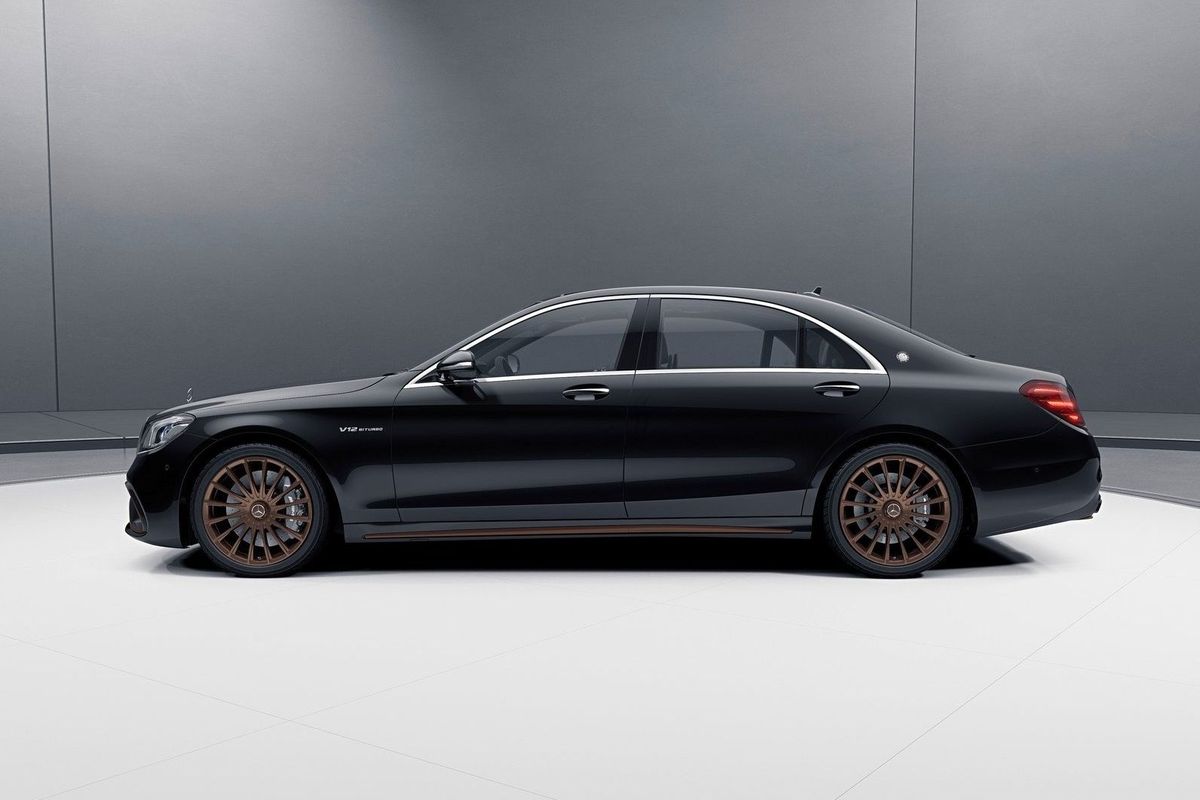
Mercedes-Benz E250 Avantgarde

The Three-pointed Star’s E-Class has won the executive sedan category of the Cars.co.za Consumer Awards, powered by WesBank, for 2 years in a row, although not in E250 guise. The E-Class has an impressive melange of talents, although the ES, in 300h SE form, feels more luxurious.
Volvo S90 T5 Inscription

Widely regarded as the best-kept secret in the segment, the S90 exudes cool elegance and tasteful understatement. With the Inscription package, the T5 derivative lacks very little and Volvo offers enticing deals to get you behind the ‘wheel. You can even rent one for 6, 12 or 24 months

Related content:

Lexus ES (2018) Spec and Price

Lexus ES (2018) Launch Review

BMW 540i M Sport (2017) Review [with Video]

Jaguar XF Special Edition for SA

Volvo S90 T6 R-Design (2017) Quick Review