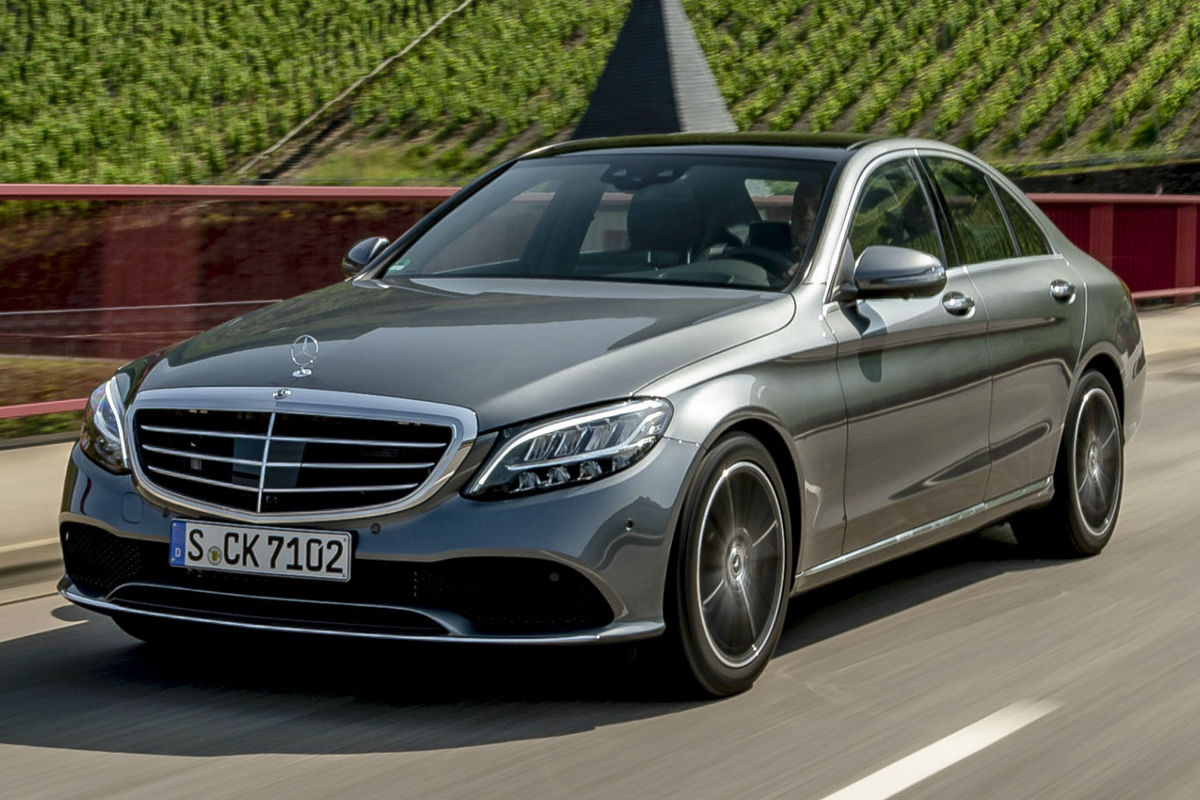
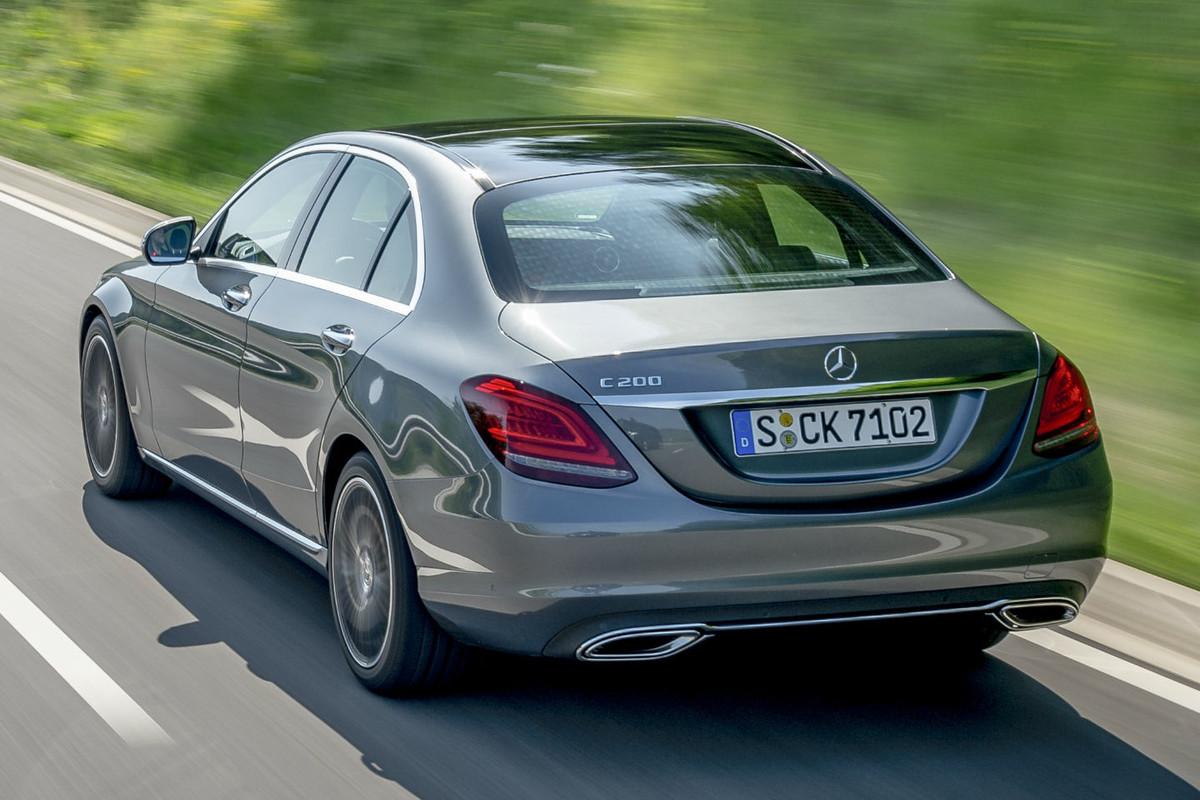
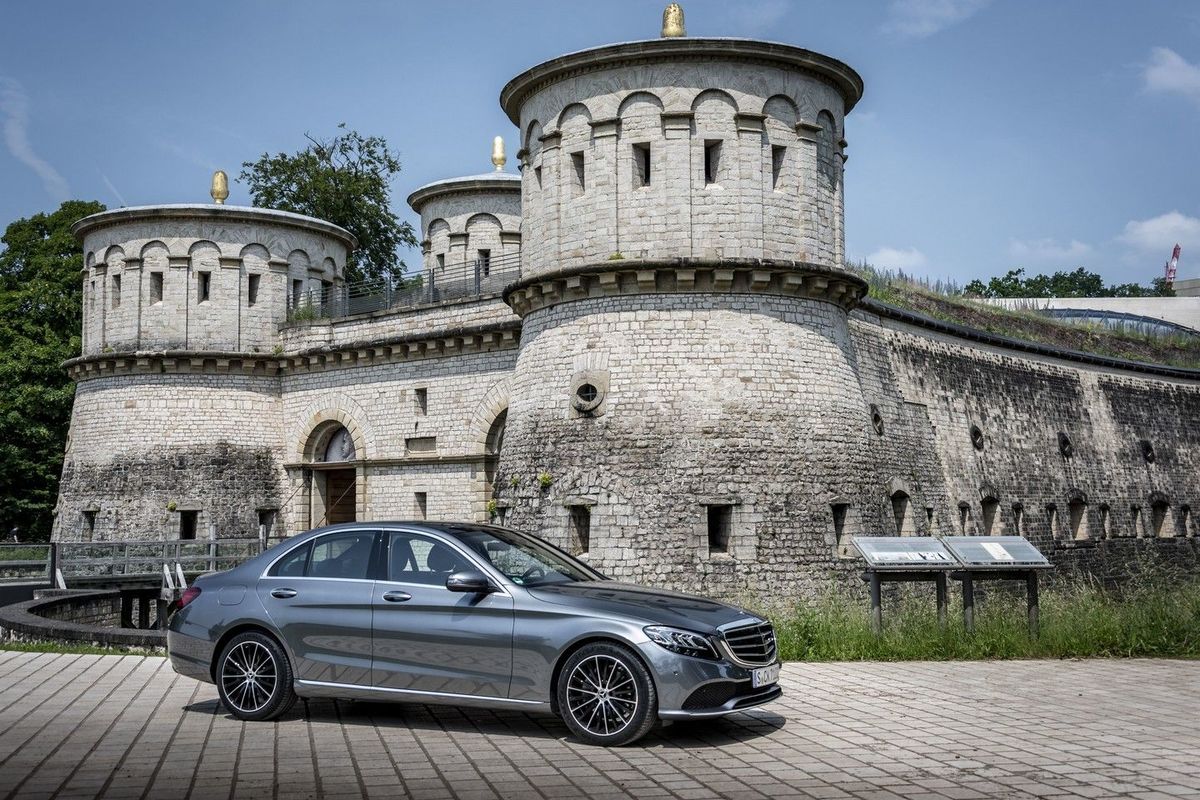
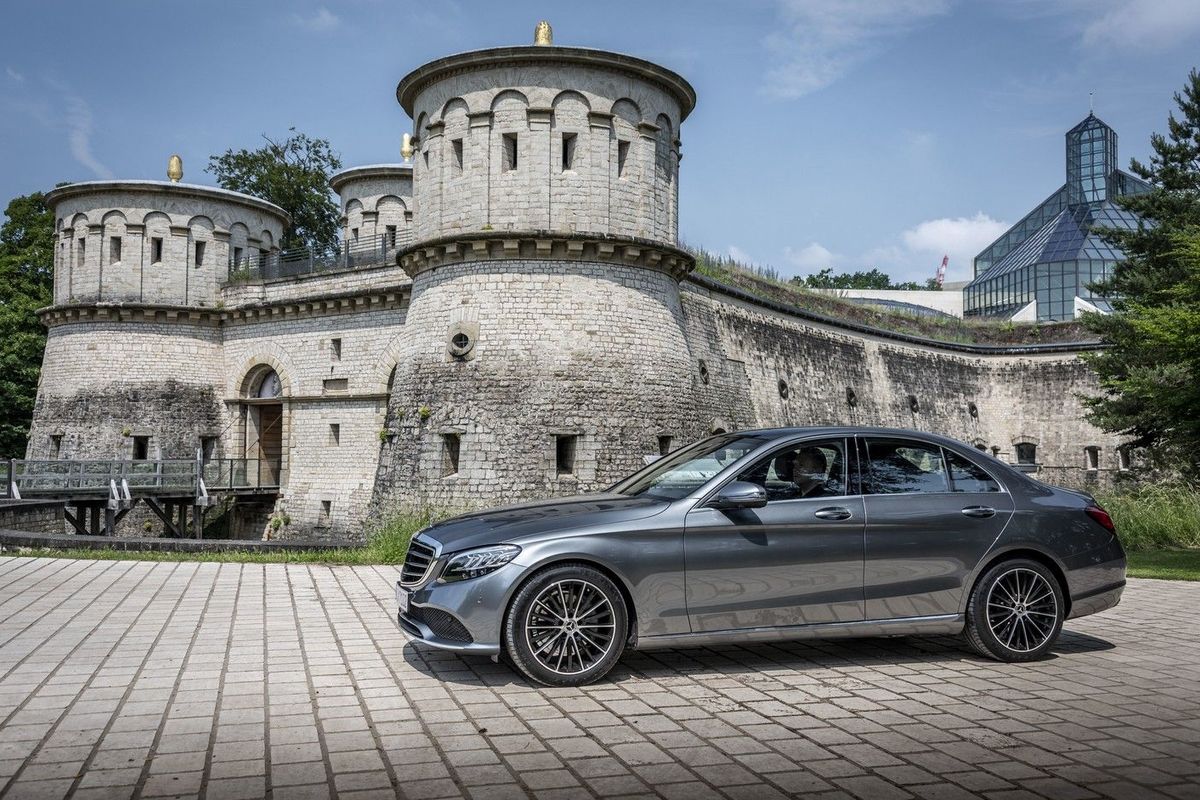
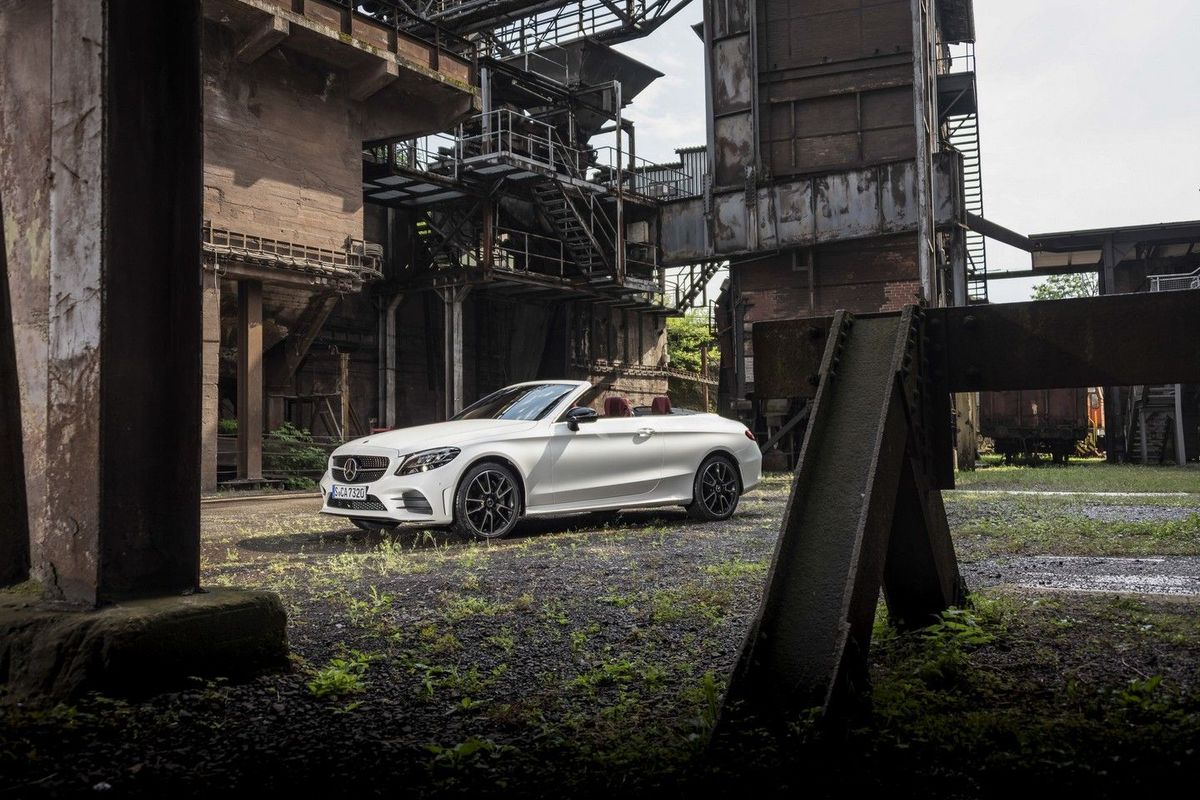
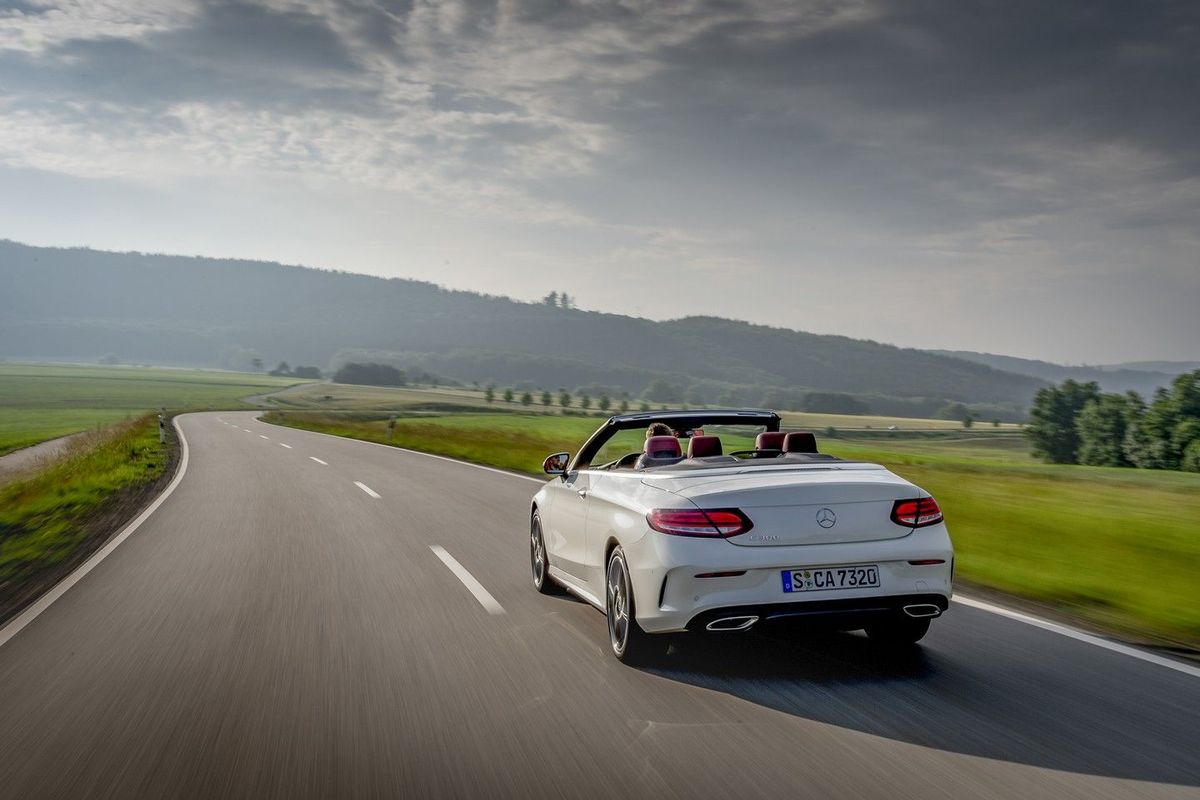
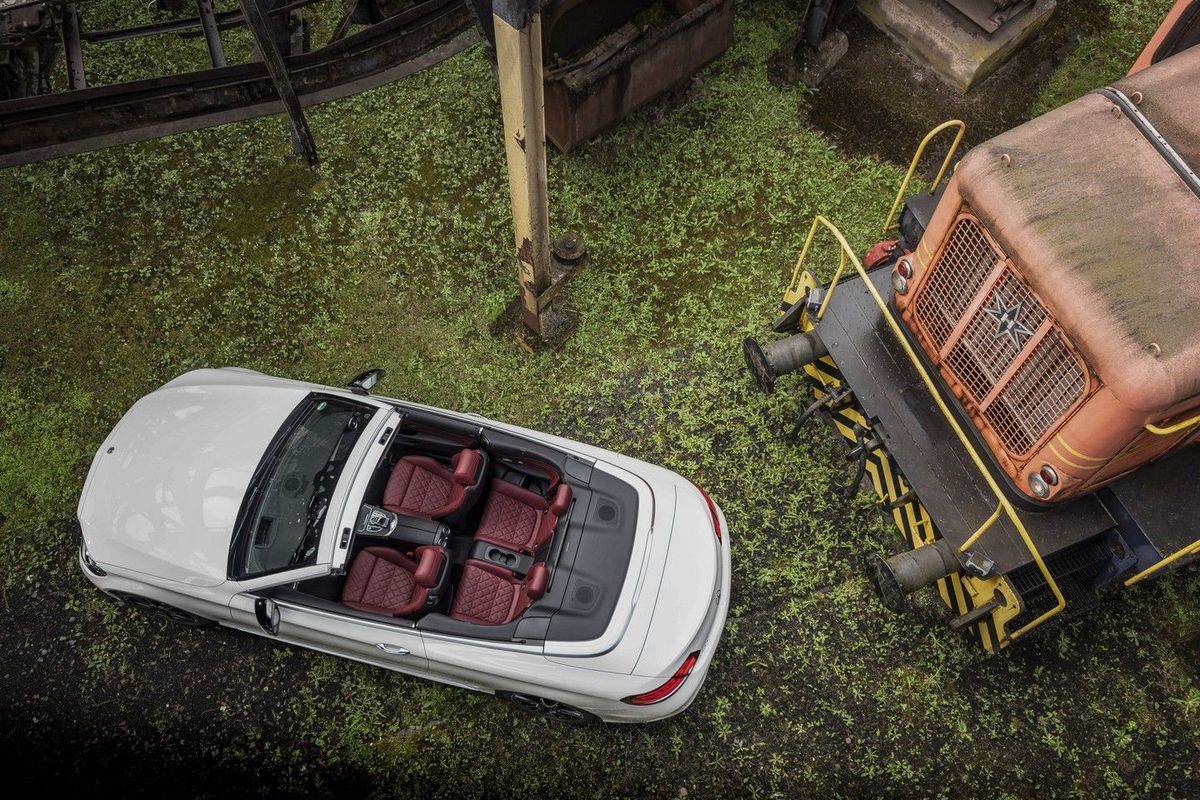
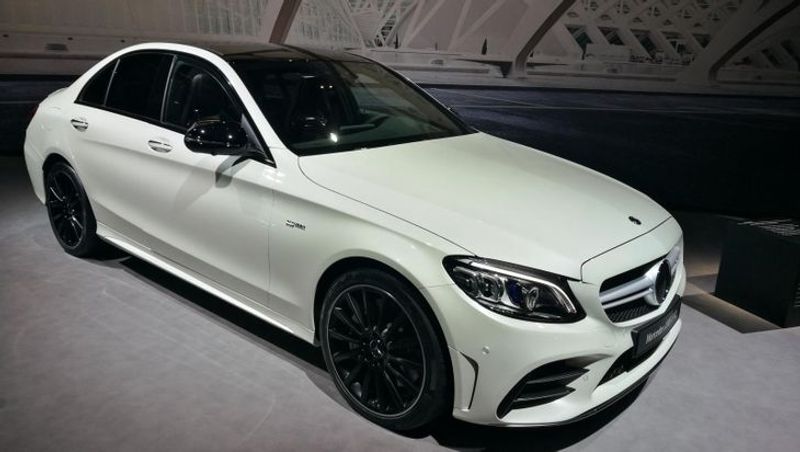
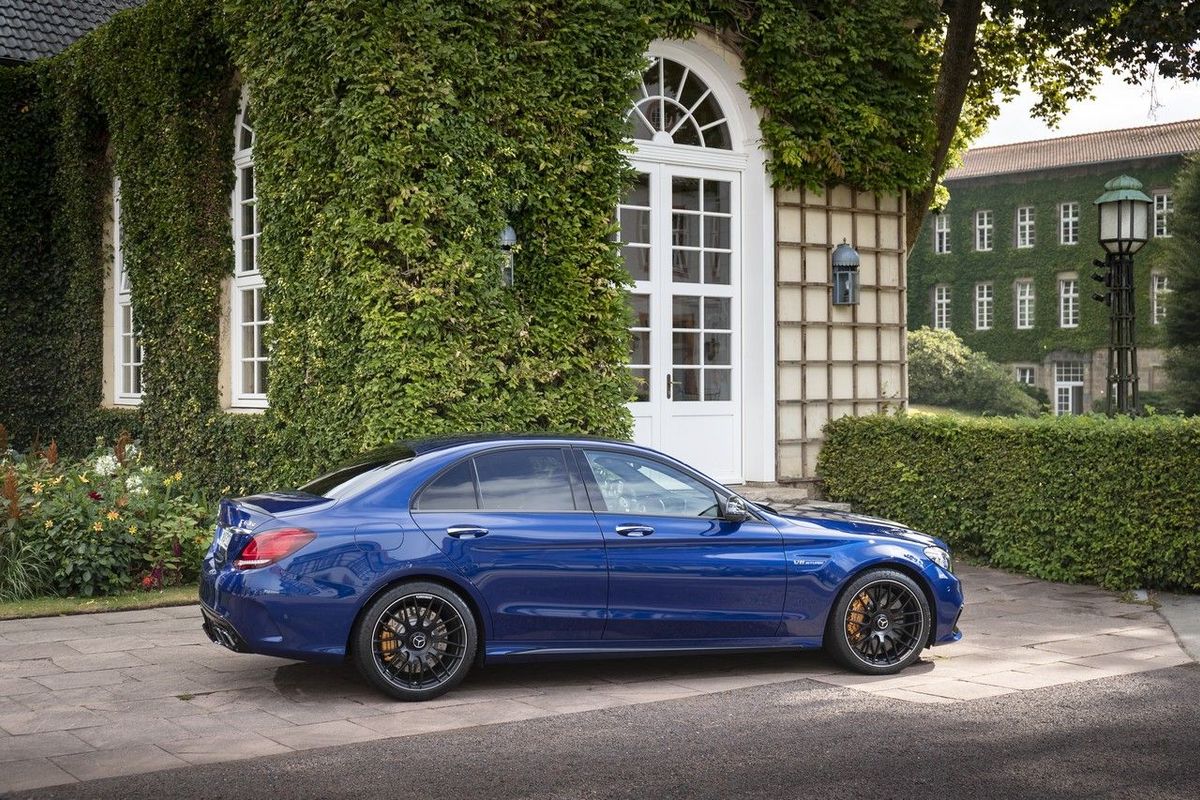
The Mercedes-Benz's refreshed C-Class business class sedan, which is produced at the Stuttgart-based firm's East London plant, is now available in the local market. Herewith the prices and specifications of the updated range.
Although the updates incorporated in the C-Class may be perceived as relatively minor, the Stuttgart-based brand claims the changes are the most significant in the history of its business class sedan range!
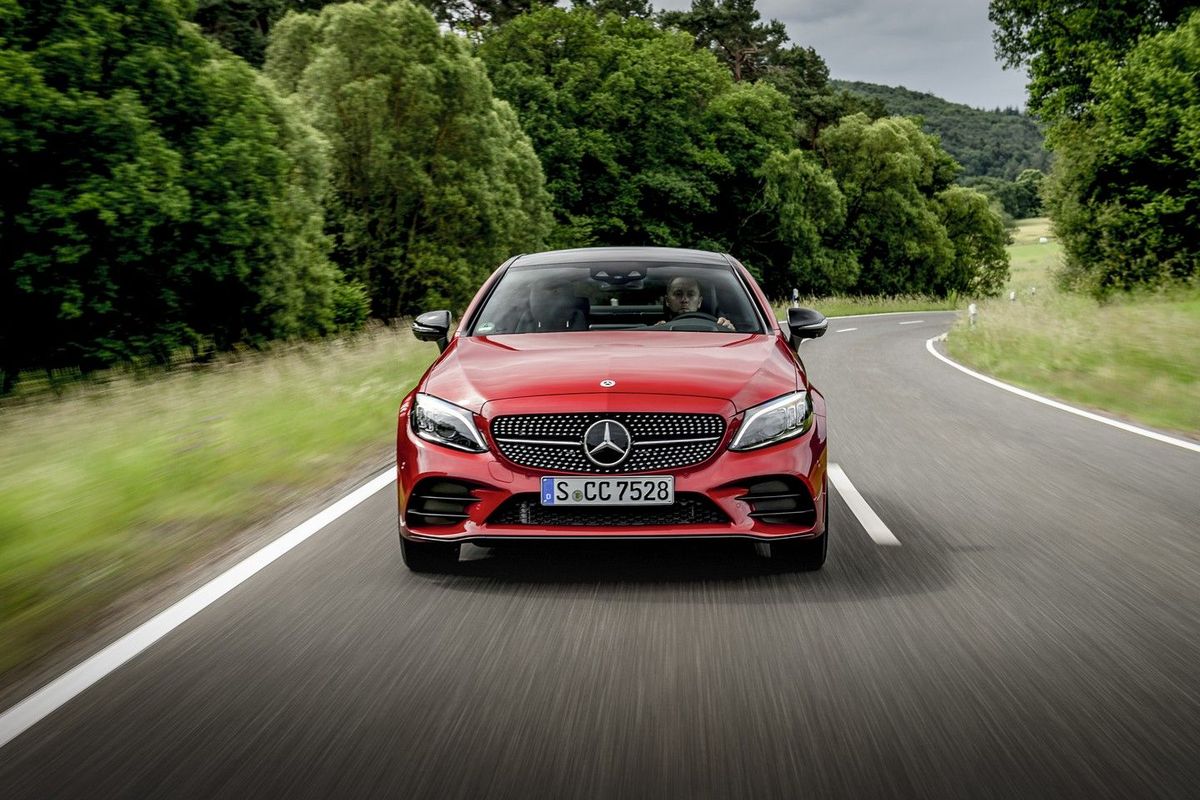
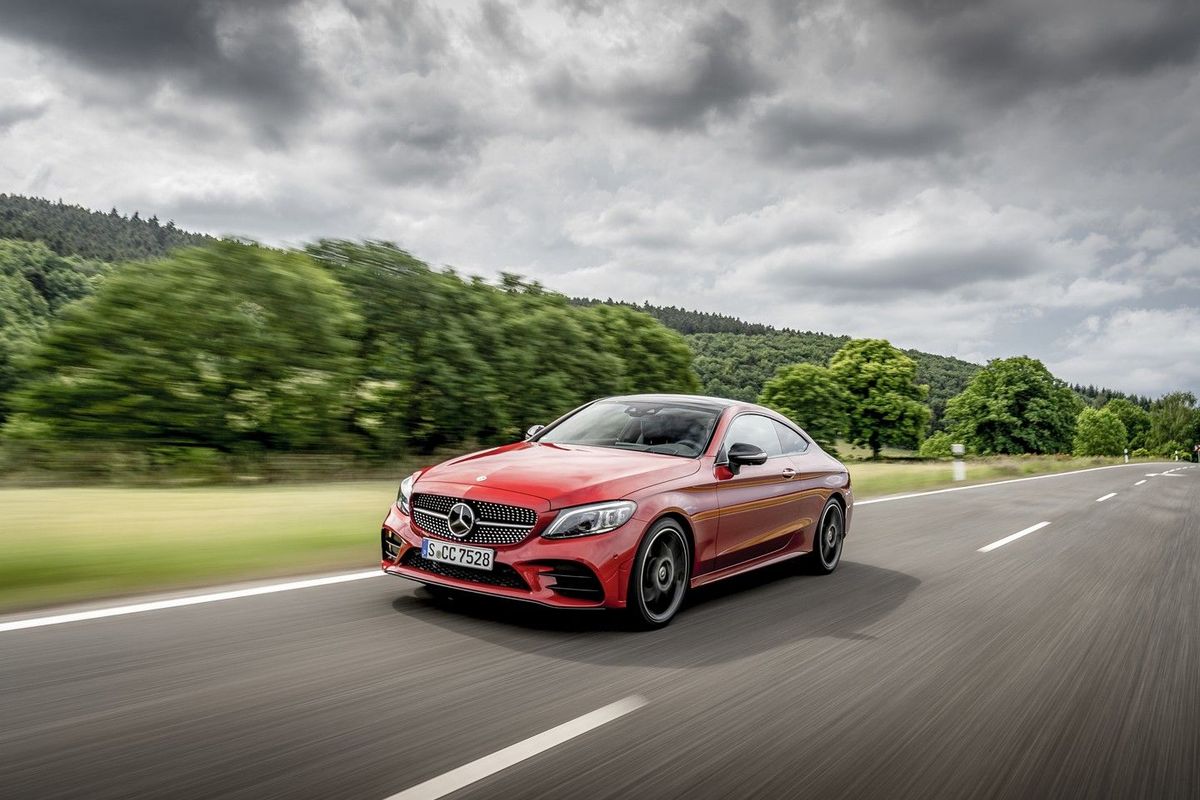
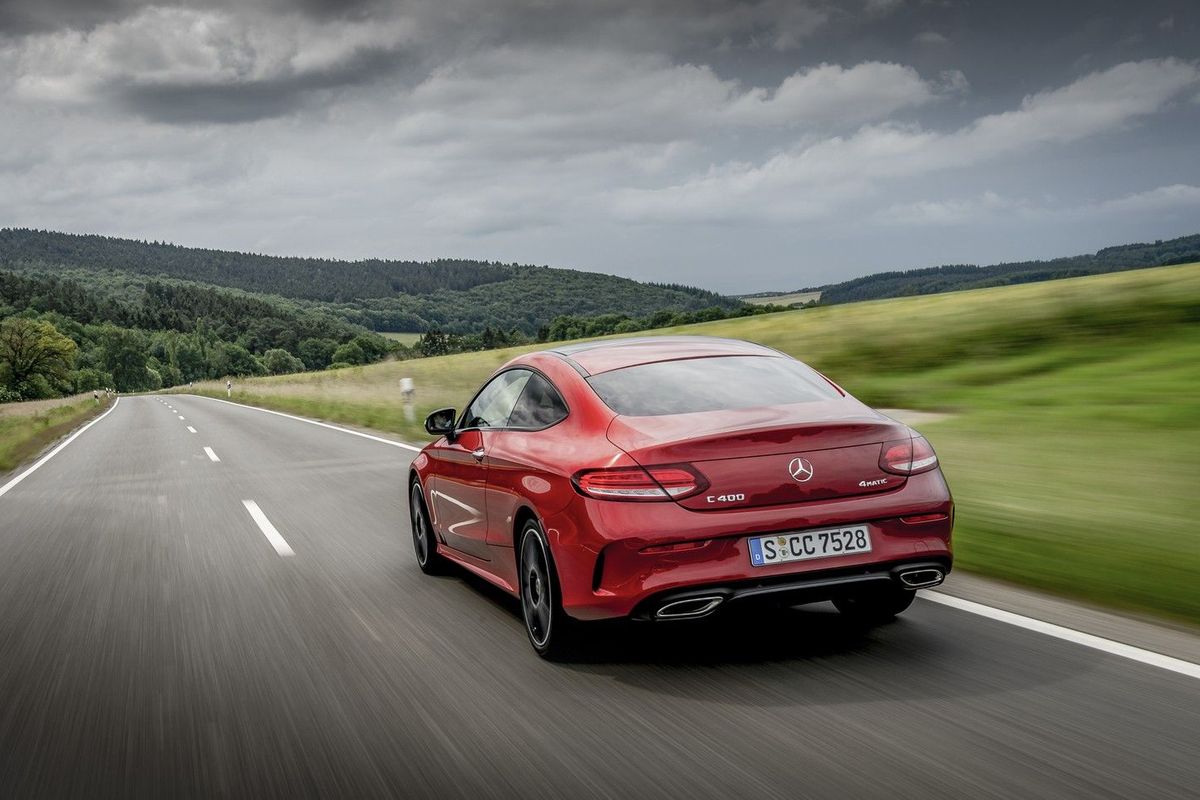
The C-Class’ exterior has received only a mild tweak and features the eye-catching diamond grille as standard (in combination with AMG Line), redesigned LED headlamps (Multibeam LED units with Ultra Range high beam-function are optional), with revised front bumpers (for all lines), as well as updated taillight clusters. The rear bumper treatments vary according to the selected equipment and engine variant.
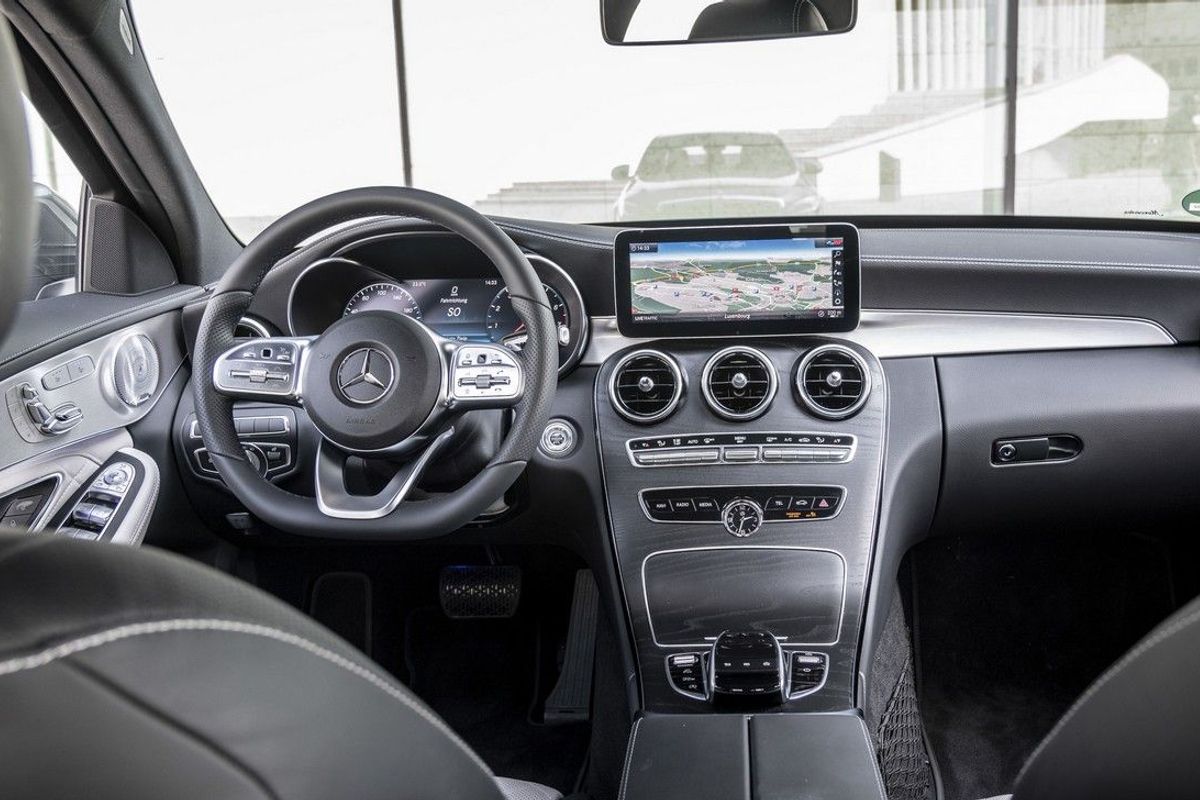
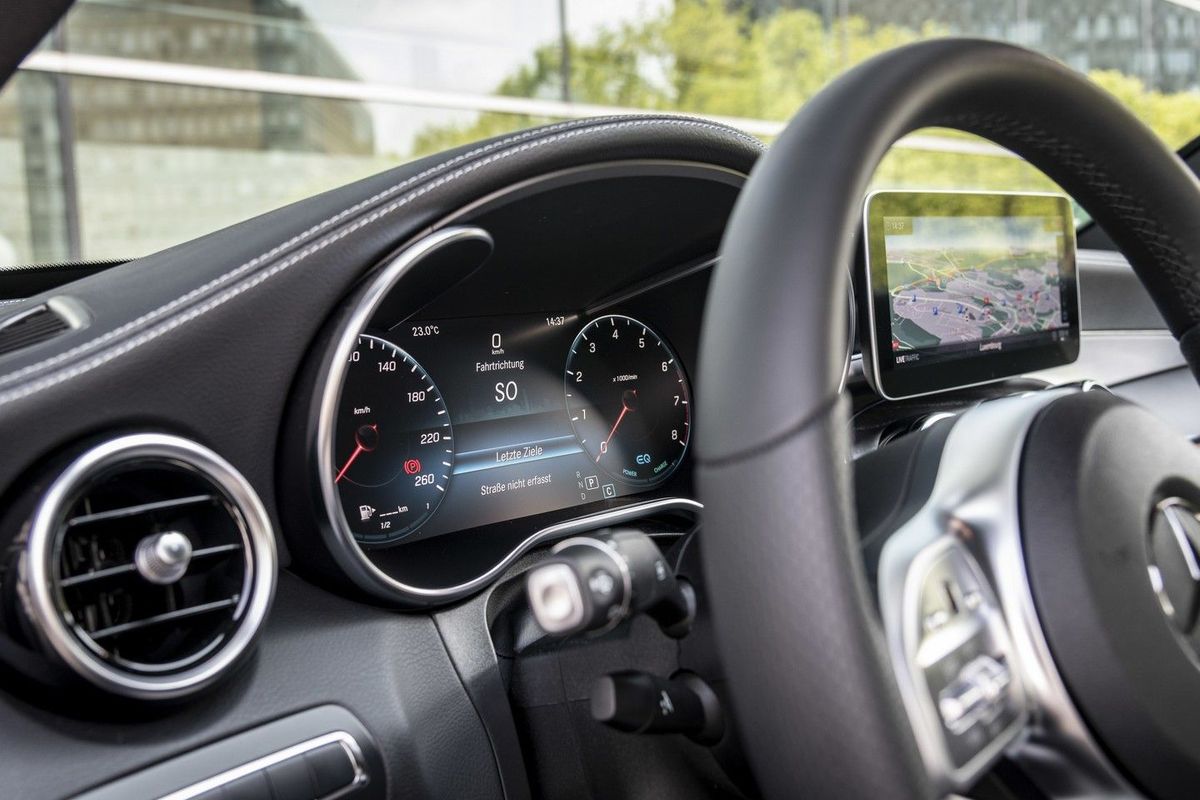
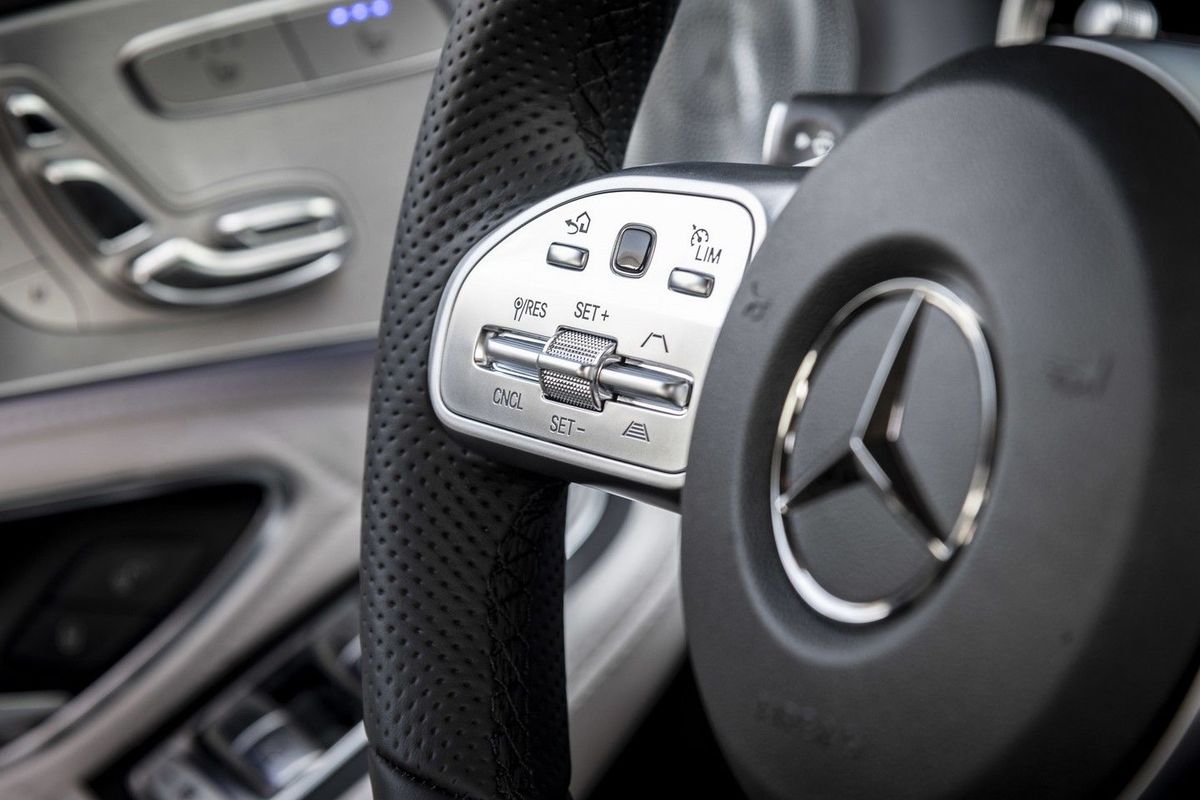
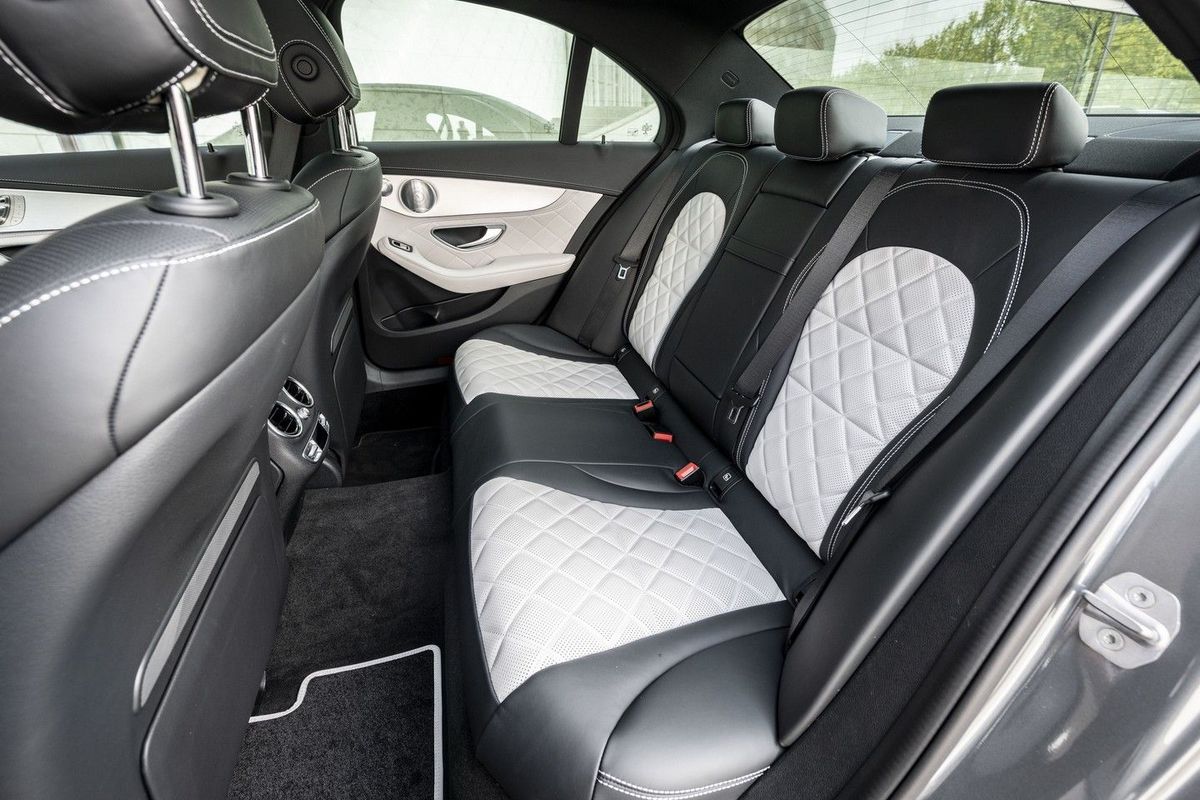
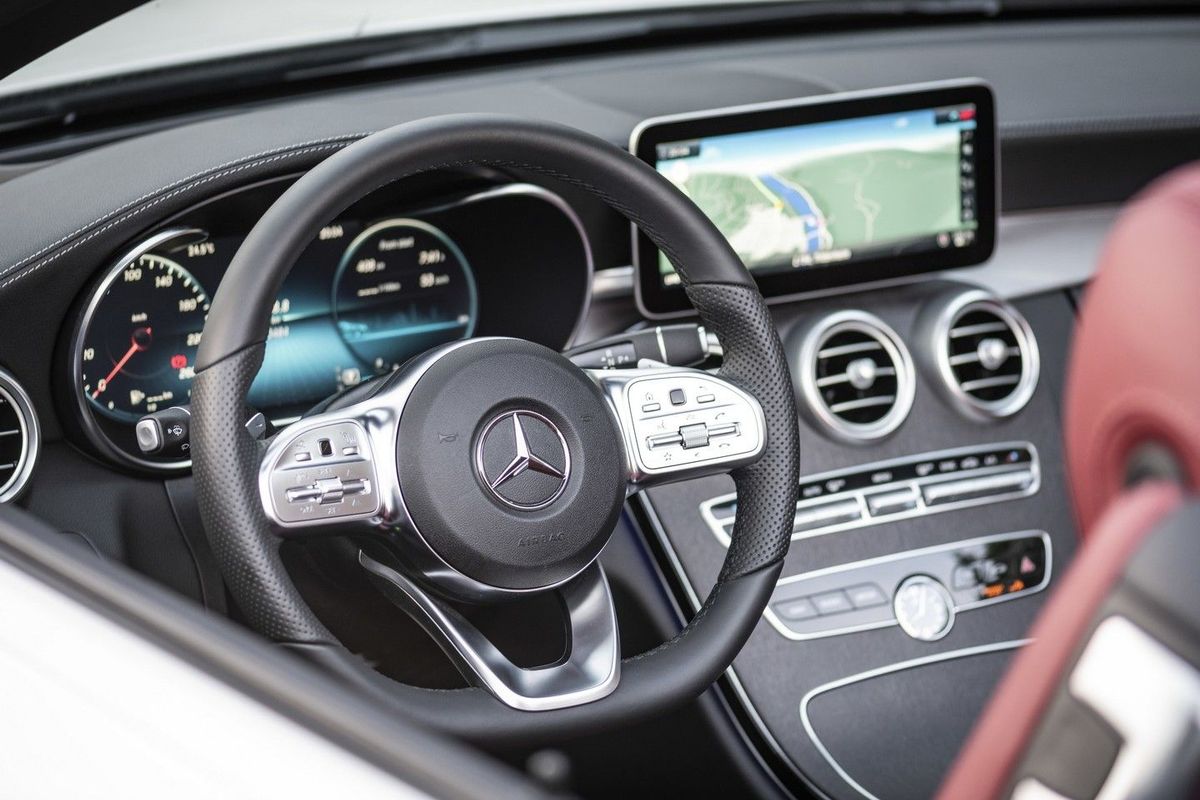
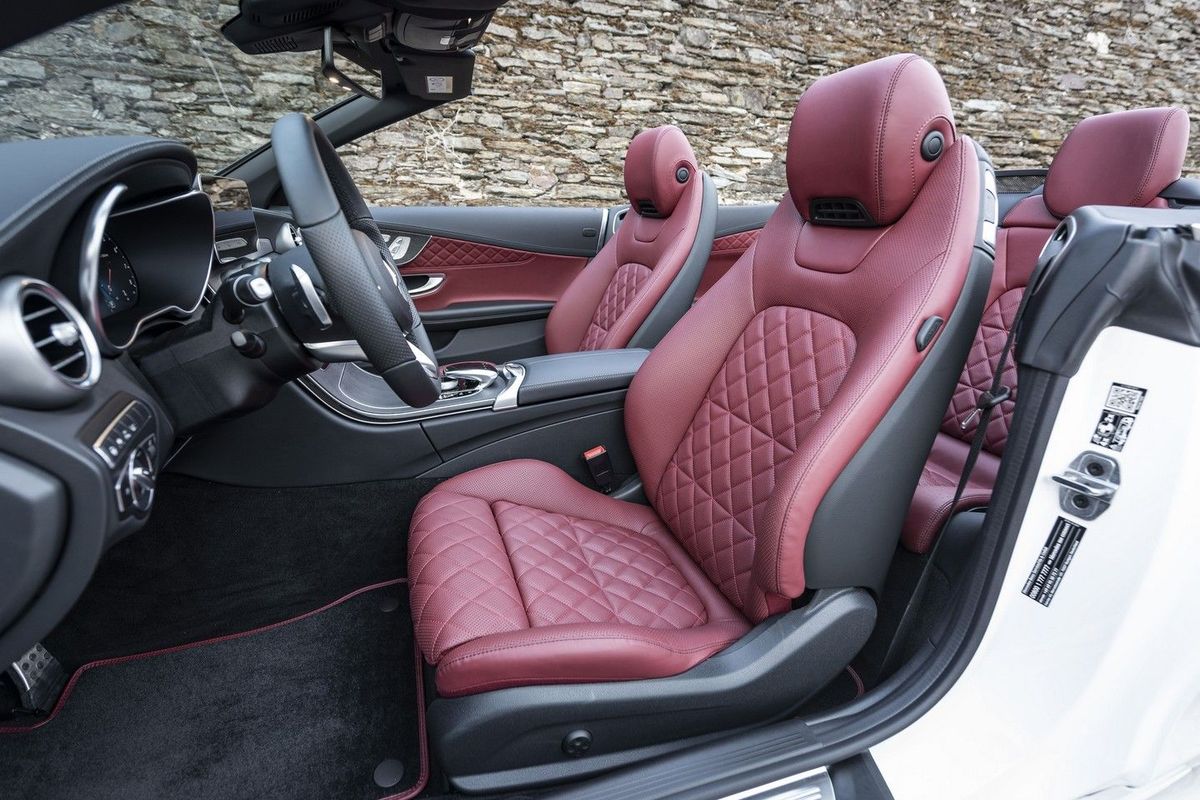
The interior, however, incorporates a host of new technologies, including a fresh electronic architecture, which is said to be on par with that of the S-Class. An all-digital 12.3-inch instrument cluster is available as an option and the newly designed steering wheel now affords access to more onboard and infotainment systems (including Distronic active cruise control – if specified) and its control buttons respond to sweeps of the thumb.
Predictably, the infotainment system has been upgraded too, with a new 10.25-inch screen offered on high-end models (smartphone integration is now standard) and there are a handful of new interior trims, such as open-pore brown walnut and anthracite oak trim inserts, to choose from.
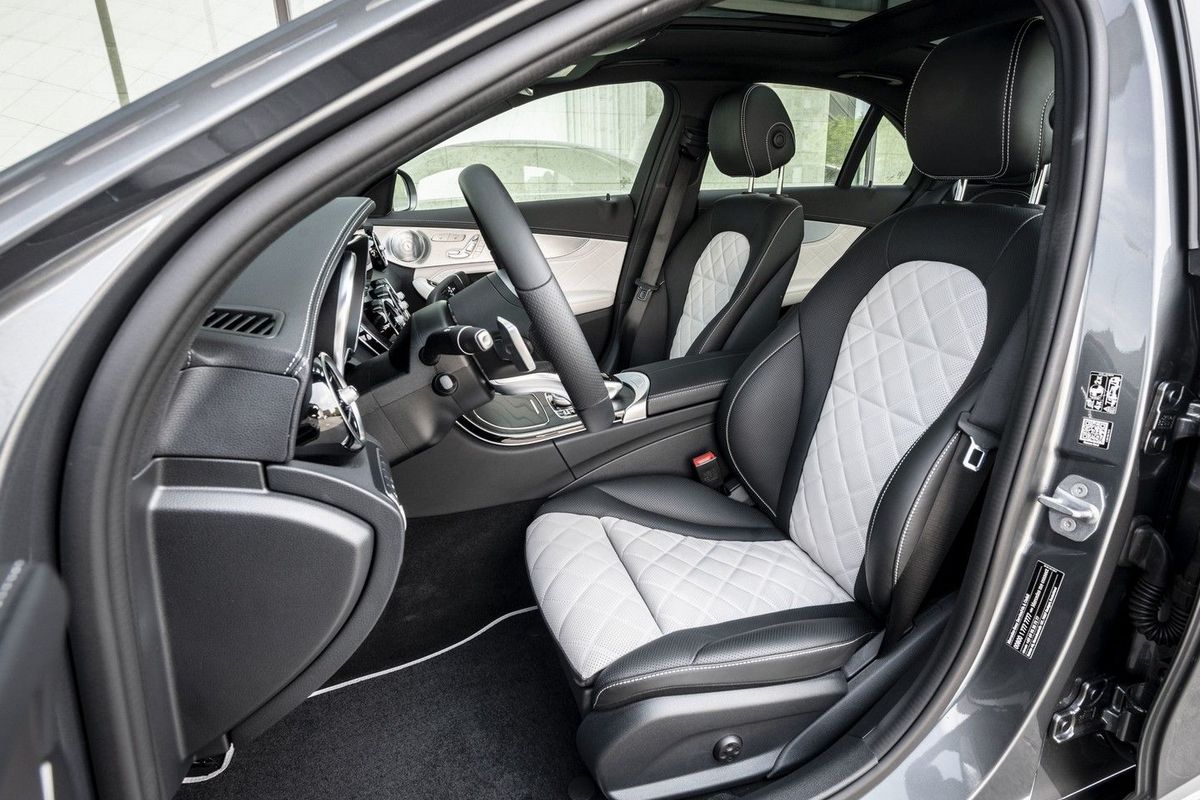
Meanwhile, a number of Intelligent Drive electronic assistance features, which offer a higher degree of semi-autonomous driving functionality, have made their way to the options list, which also includes a new Multicontour Seat package that Benz claims "literally offers a massage – the side bolsters and lumbar support can be individually adjusted by an electrically-driven pneumatic pump (to create) a massage effect in the lumbar area".
Engine Choices
The facelifted C-Class range is headlined by this, a more powerful C43 4Matic with 287 kW and 520 Nm.
As for engines, a new 4-cylinder, 1.5-litre turbopetrol engine, mated with a 9-speed automatic transmission, makes its way into the C200. This mild hybrid offering is supplemented with a 48-volt onboard network and the EQ Boost integrated starter-generator that produces an additional 10 kW and 160 Nm when the sedan's accelerating. The C300 is powered by a new-generation 2.0-litre turbopetrol that produces peak outputs of 190 kW and 370 Nm, while the range-topping Mercedes-AMG C43 4Matic boasts a more powerful twin-turbocharged 3.0-litre petrol V6 engine with outputs of 287 kW (17 kW more than before) and 520 Nm (unchanged). Benz claims the C43 4Matic will sprint from 0 to 100 kph in 4.7 seconds.
On the turbodiesel front, the C220 d 4Matic is powered by a 1.6-litre engine that provides peak outputs of 143 kW and 400 Nm.
Another new feature is an automatic notification if the vehicle suffers an impact caused by another vehicle when parked, is towed away or there is a break-in attempt. The highly sensitive sensors of the standard Anti-theft alarm system (ATA) can detect such situations and immediately send a "push notification" message to the Mercedes me App. The optional feature includes the new sensors and the corresponding software, Benz says.
Local pricing (July 2018)
Prices include a 6-year/100 000 km maintenance plan.
BMW M2 Competition (2018) International Launch Review
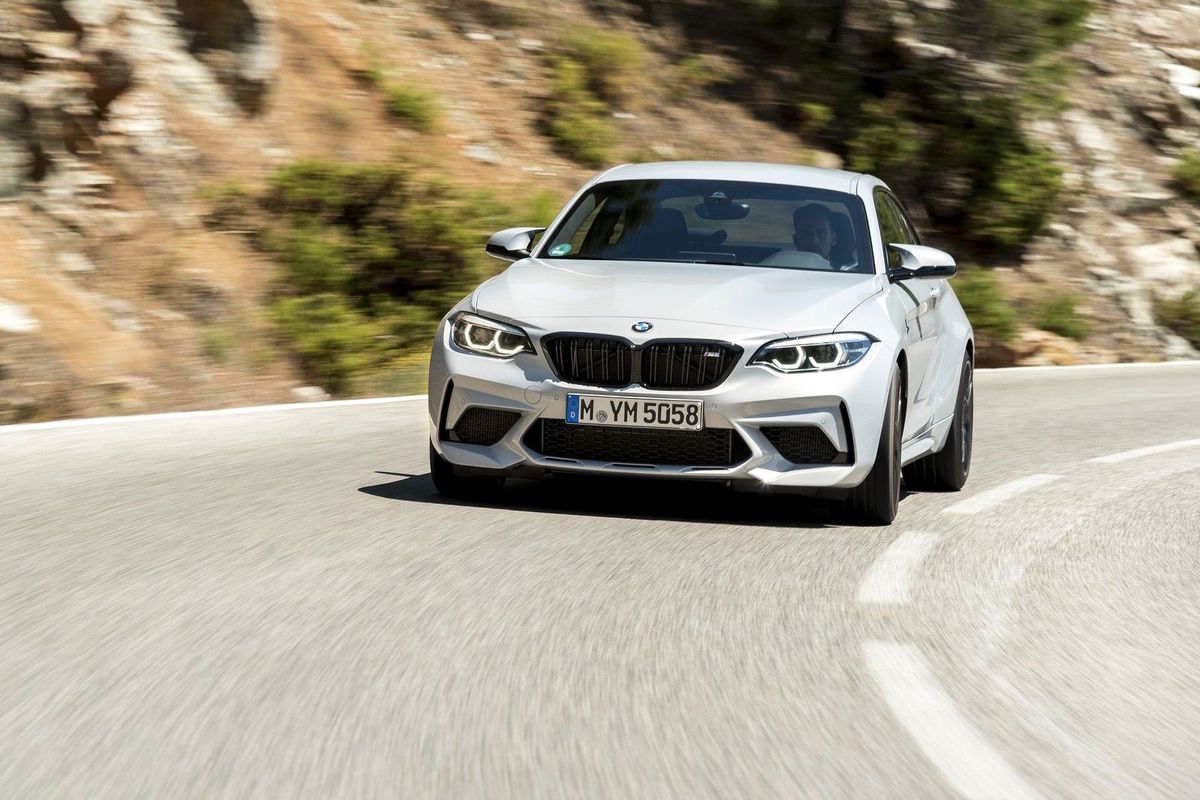
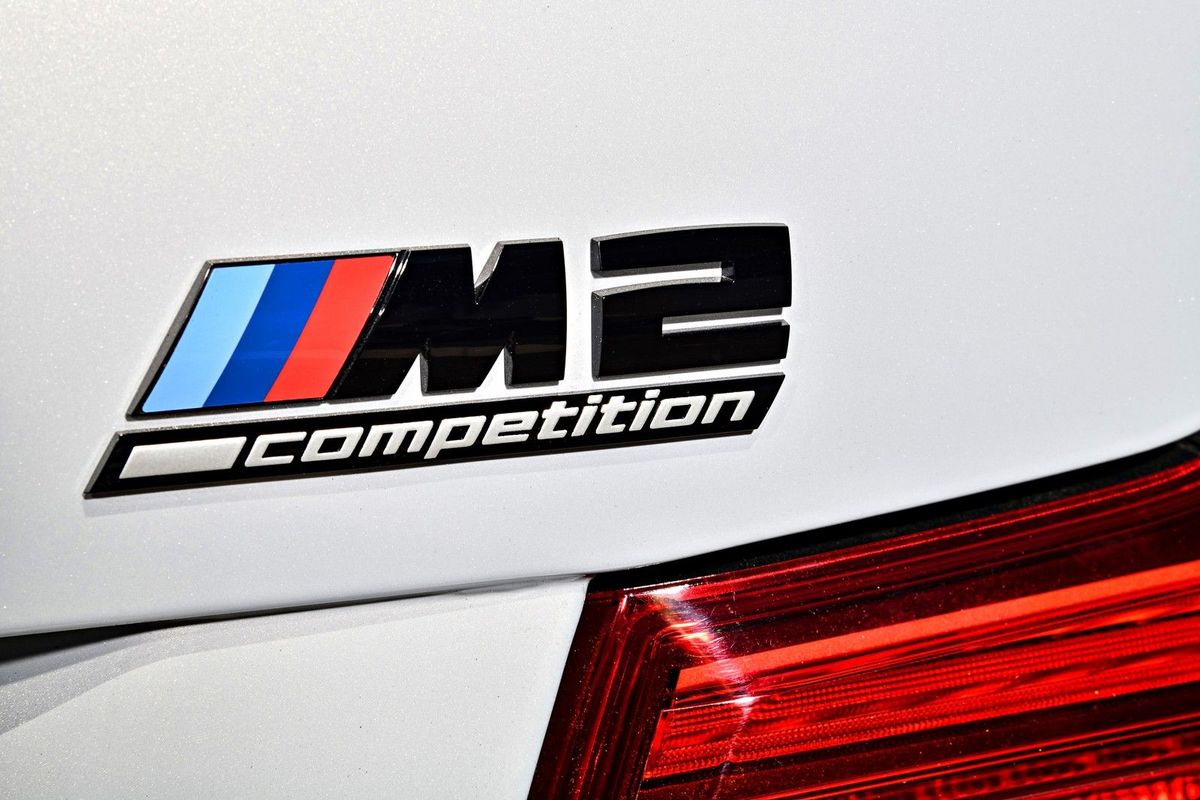
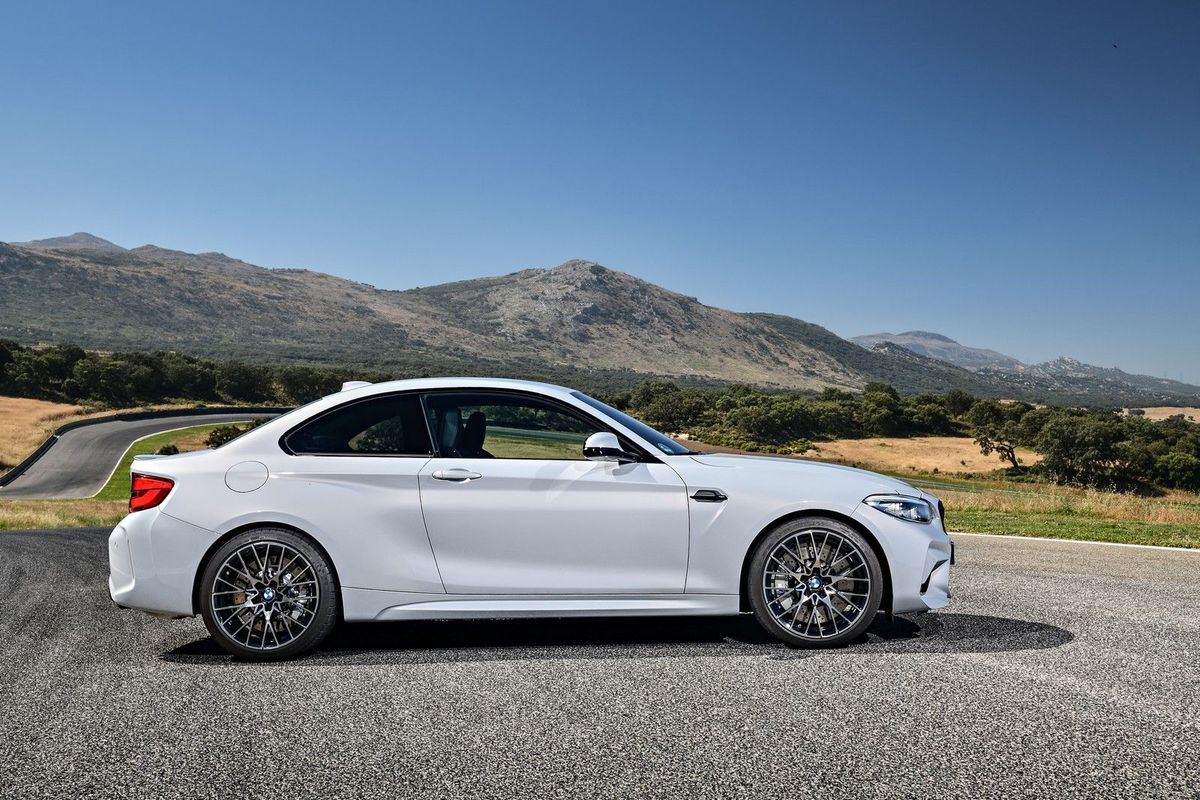
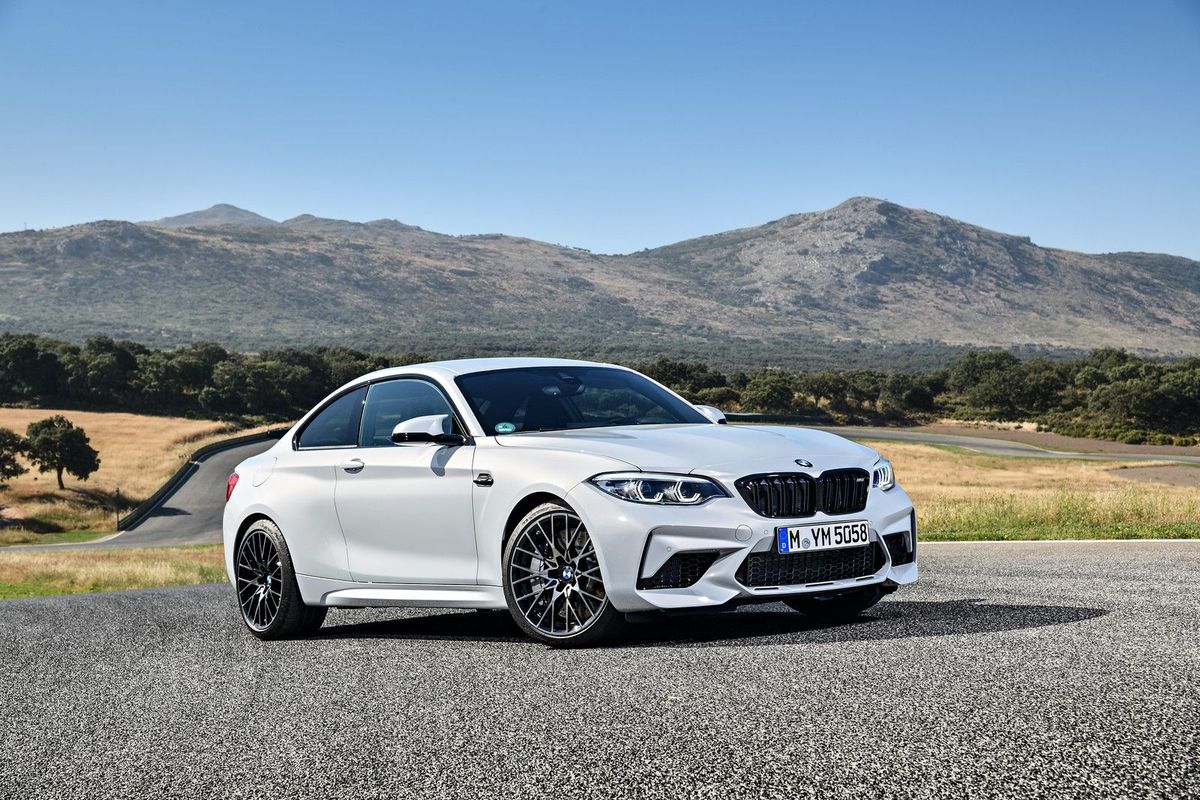
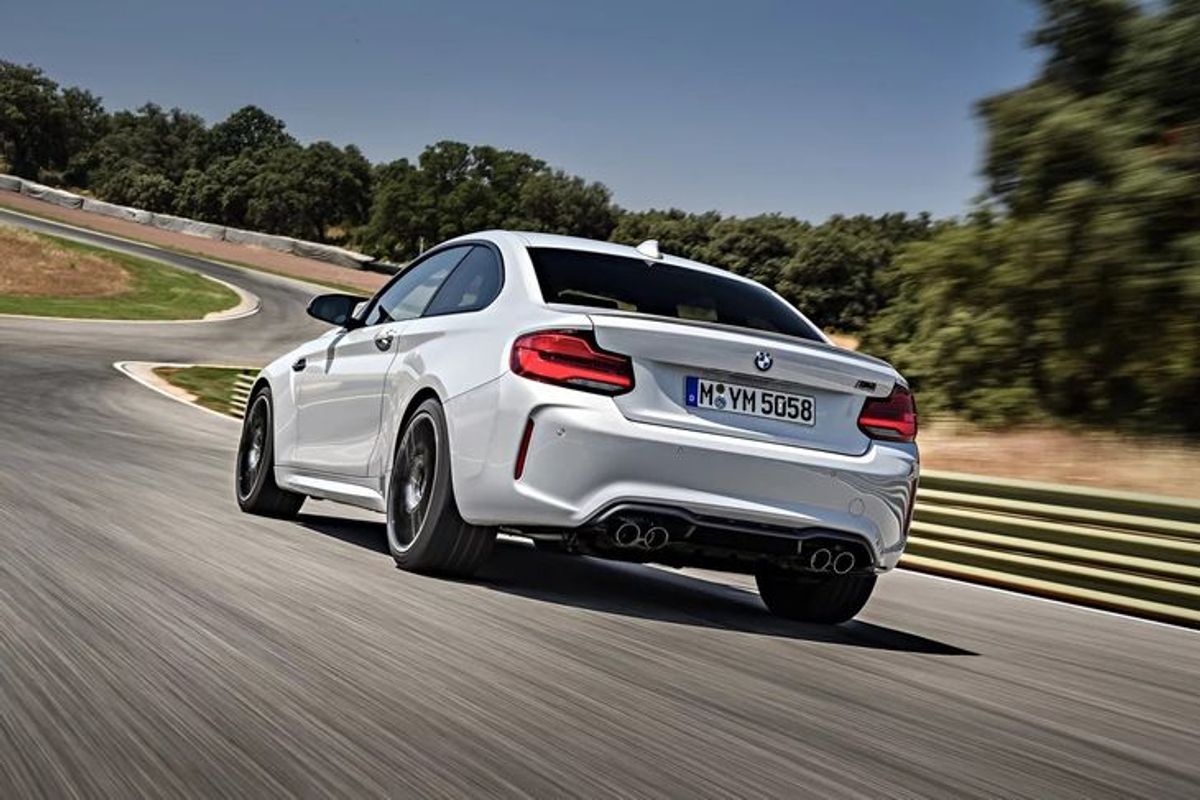
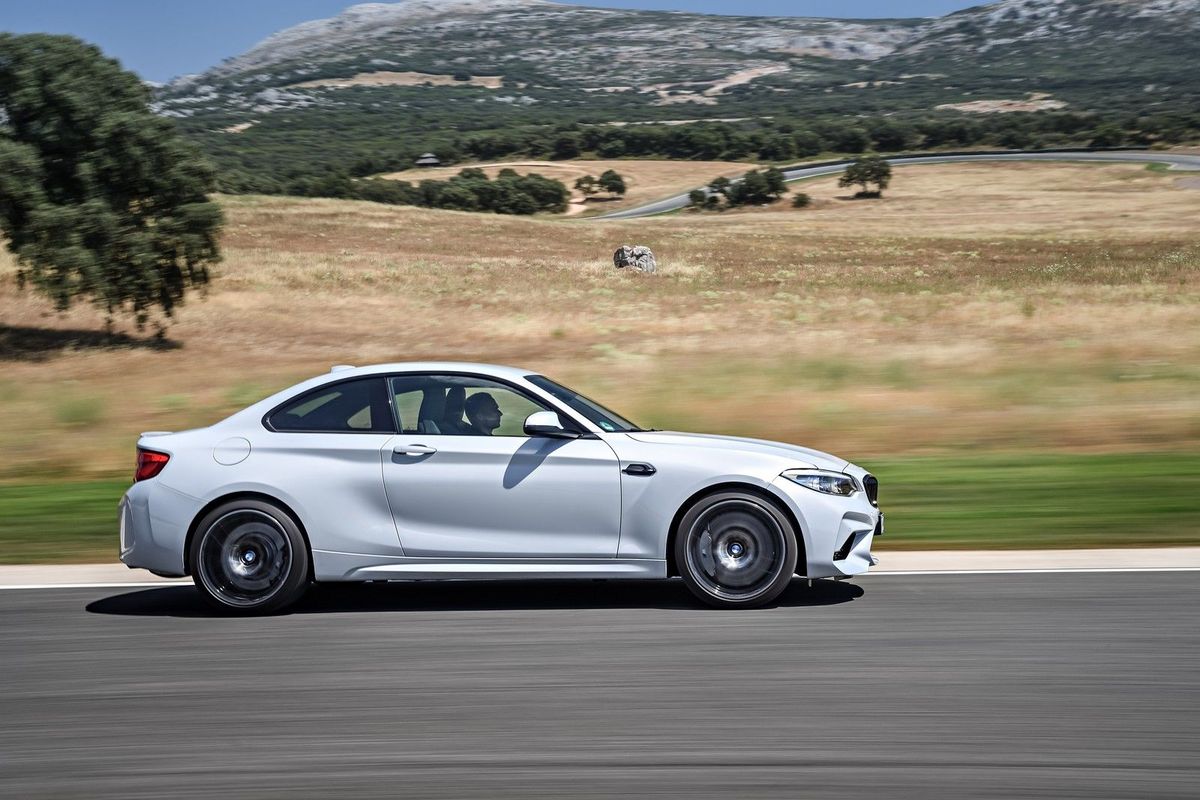
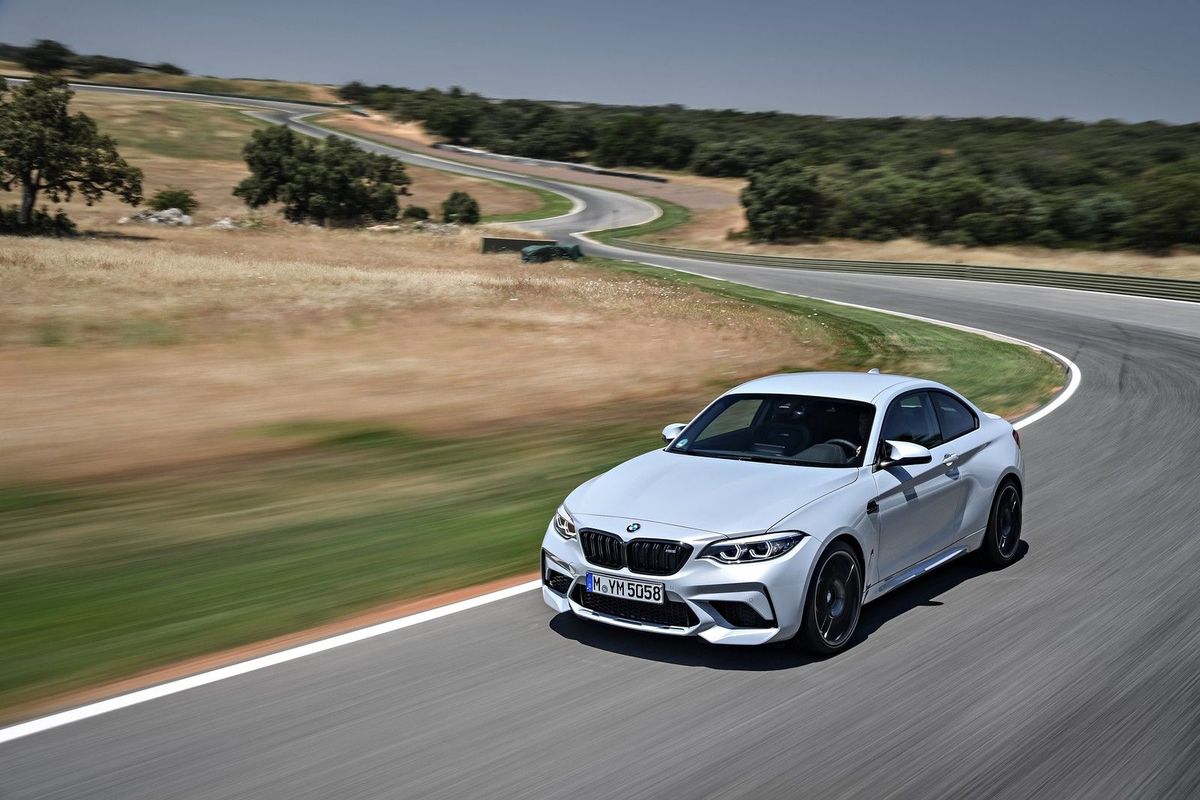
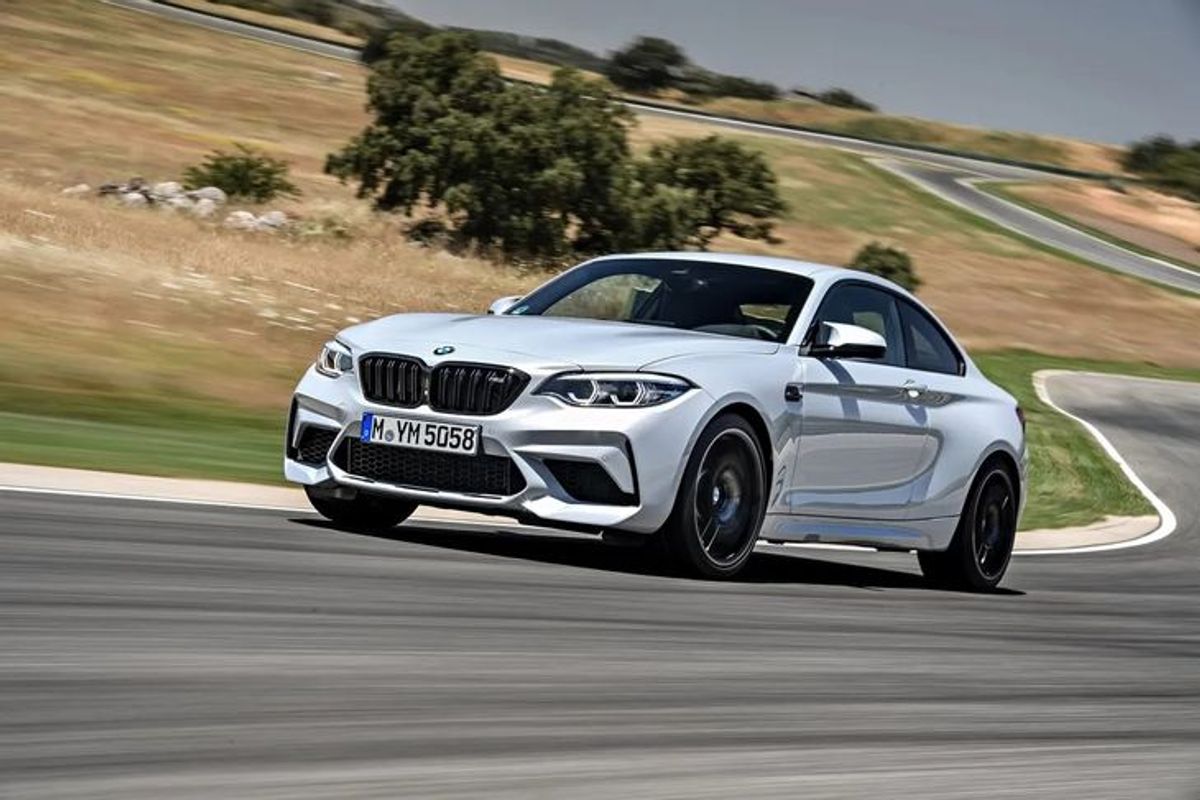
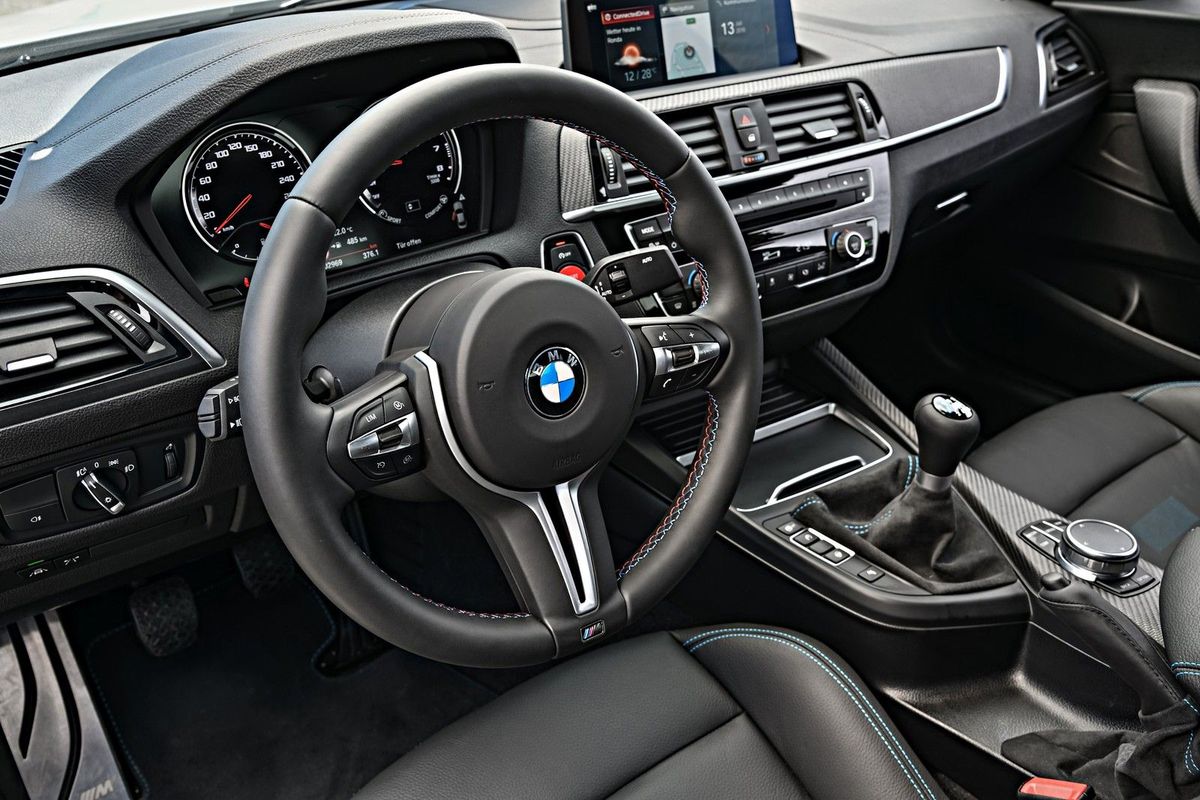
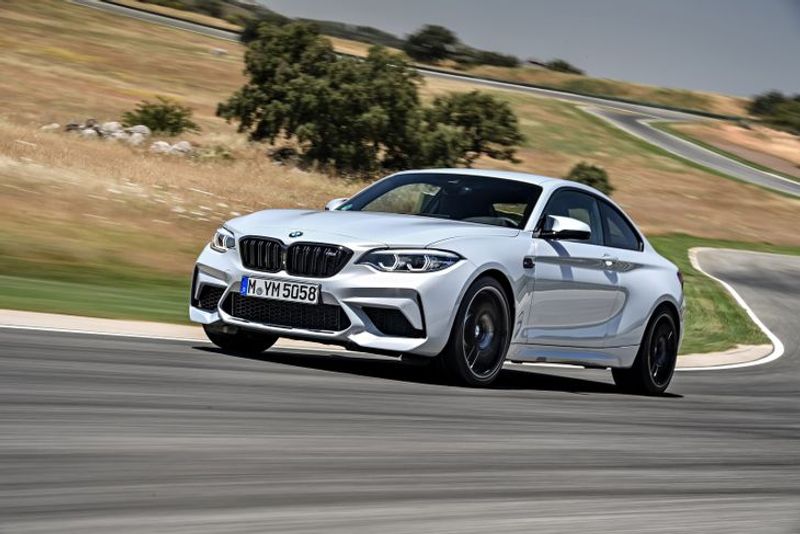
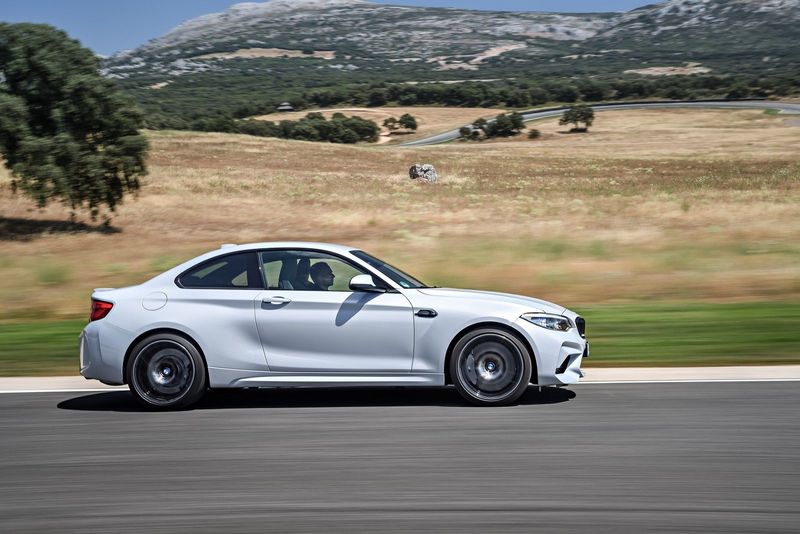
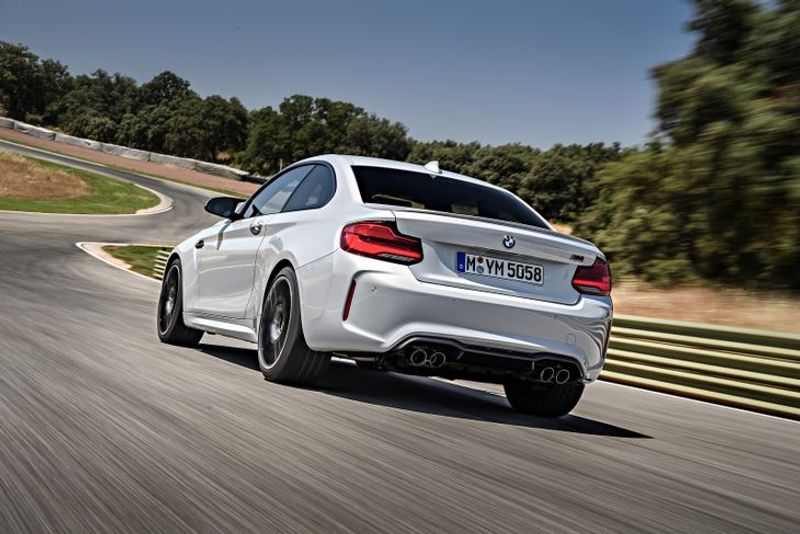
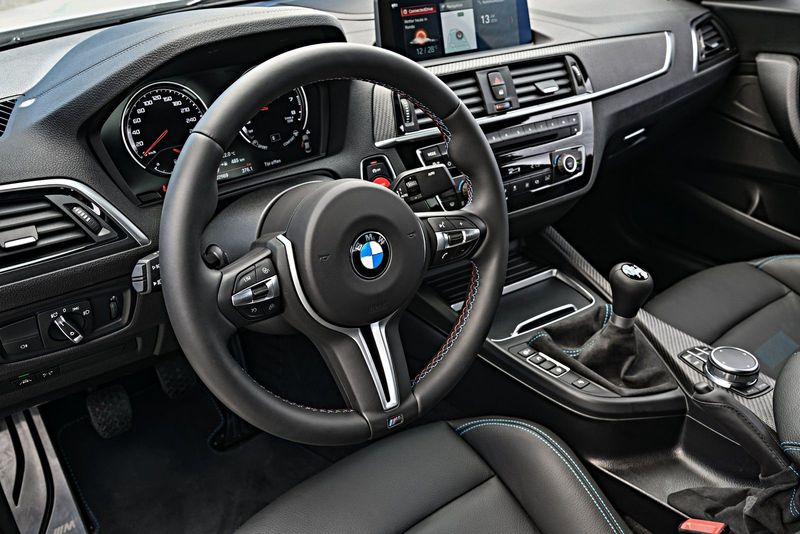
BMW has beefed up its M2 with a few more go-faster bits – and a whole new engine. Does it make what's already the best M car (in our opinion) even better? We drove it on the track and on the roads in the south of Spain to find out.
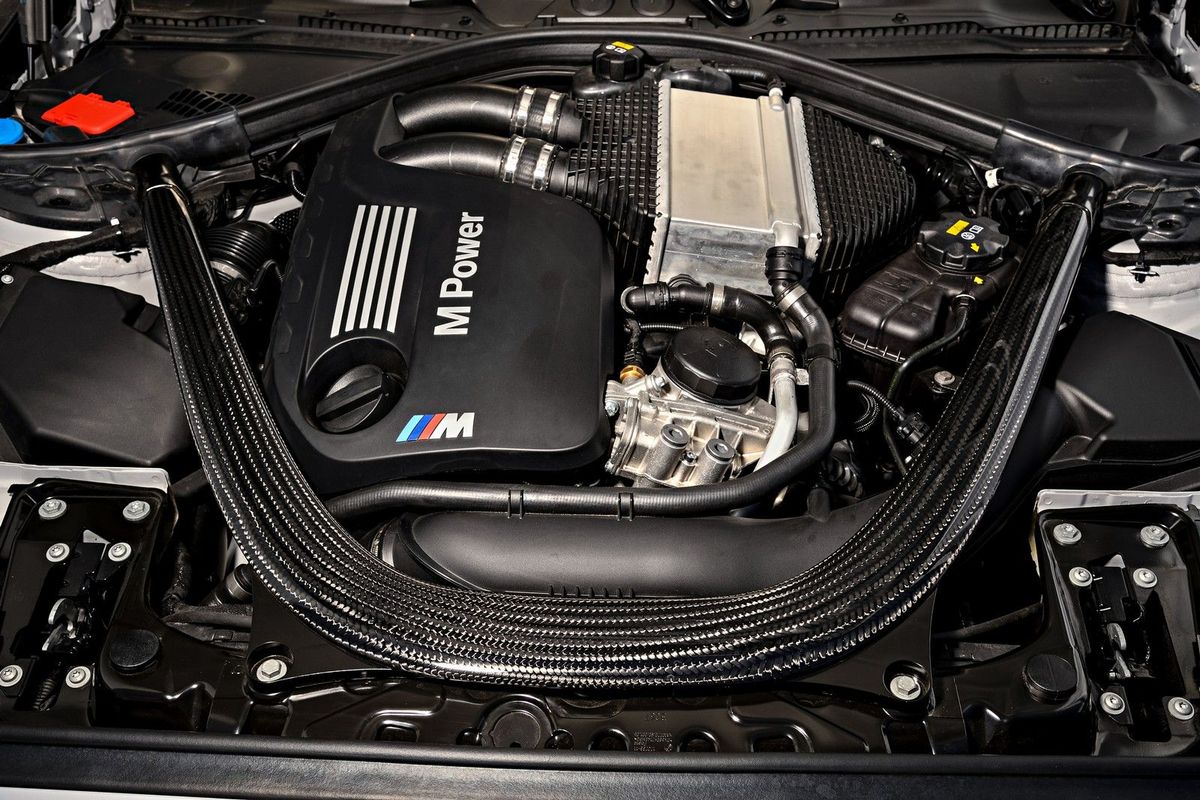
The M2 Competition keeps the formula the same, but adds a dollop of extra power in the form of the M3/4 twin-turbo motor.
What is it?
The M2 is widely acclaimed as an exceptional M car and, quite possibly, the best M car in BMW's entire product line-up. Suffice to say that it won the title of Best Performance Car title in both the 2016/17 and 2017/18 Cars.co.za Consumer Awards – powered by WesBank.
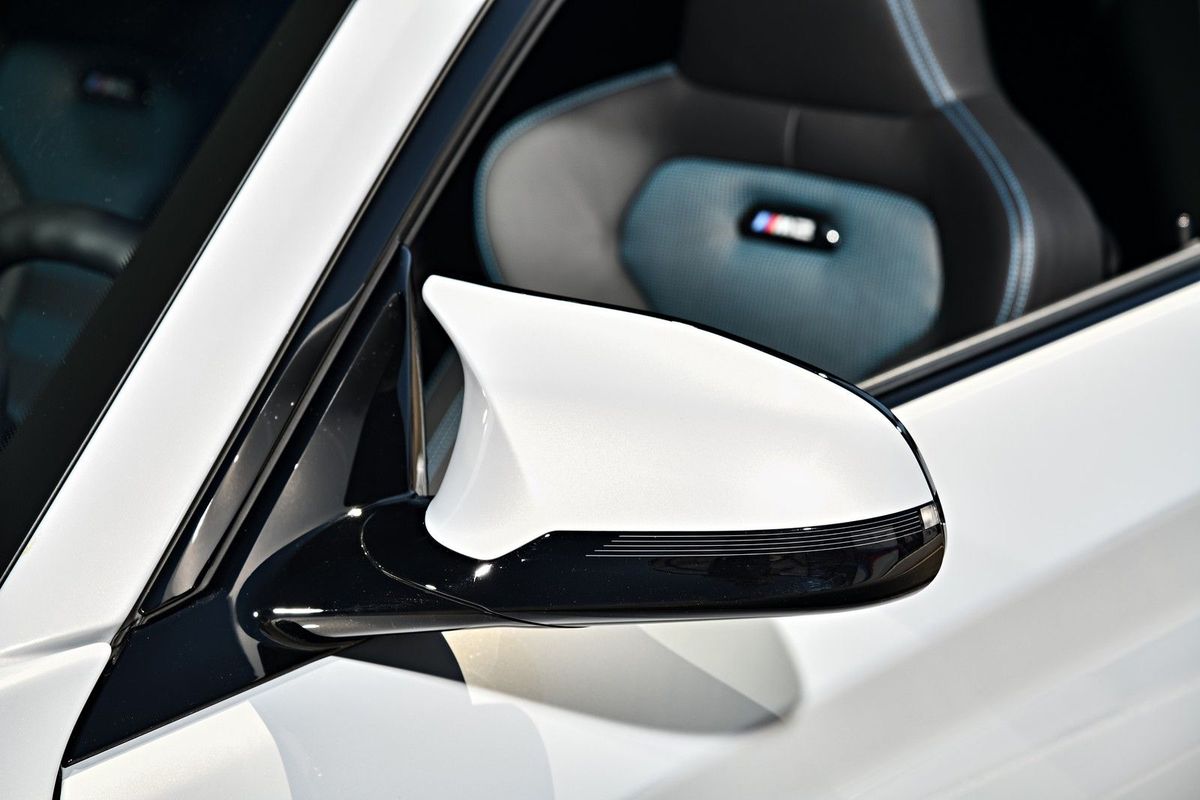
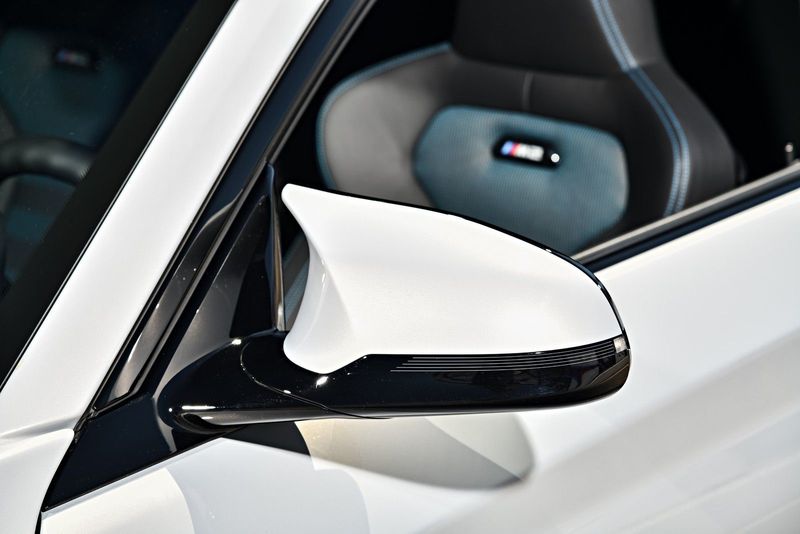
So why mess with the winning formula? Well, because BMW always believes it can do more, and better. And so, to catapult its littlest M car into another league, BMW has tossed out the 135i-based single-turbo engine and dropped in a (detuned) twin-turbo motor from the M3/M4, improved the chassis rigidity by fitting a carbon-fibre engine brace, added a set of special M mirrors, recalibrated the DSC software that controls the Active M Differential (to offer a bit more leniency) and enlarged the air intakes in the front skirt aid to the cooling system (lifted from the M4 Competition).
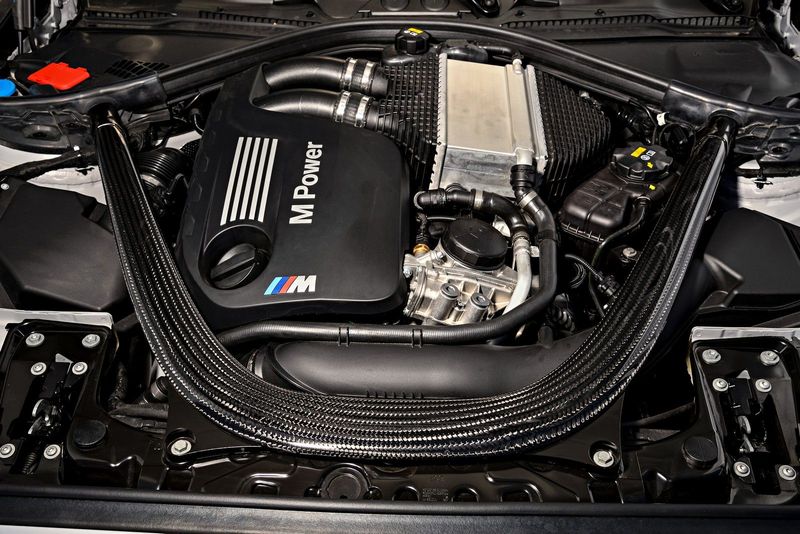
The new more powerful motor for the M2 Competition, or a detuned M3/4 motor if you look at it differently.
So it goes like the clappers?
Yep, like it's fleeing from an axe murderer! The M2 Competition produces 30 kW (302 kW) and 50 Nm (550 Nm) more than the first M2, which was launched here in 2016. But it's not just about piling on more power to make the newcomer faster, there are distinct differences in the characters of the 2 engines. The single-turbo unit delivered linear power, especially for a turbo, it revved cleanly and strongly right up to the 7 500 rpm redline.
Now, with the twin-turbo straight 6 unit, there's a distinct kick in power and torque early on in the rev range. BMW said it wanted the M2 Competition to feel like it was decidedly more powerful than its predecessor and that the extra surge would be physically perceptible. Indeed, whether out on the track or on the road, the power increase is noticeable, not by a sensation of speed, but by the sudden impact of boost being sent to the rear wheels.
The Competition only launches to 100 kph 0.1s faster than the standard M2.
The stats suggest a (claimed) zero to 100 kph time of 4.2 sec (auto, manual is 4.4 sec), which is enough to hold an Audi RS3 to task, even with the Quattro's advantage of tractable (all-wheel-drive) launch starts. But bear in mind this engine usually appears in a higher state of tune, 317 kW in the M3/M4 and 331 kW in their respective Competition derivatives. It's quite obvious the drop in power is to not step on the toes of its bigger brothers.
Is it competitive when the road isn't straight?
We first sampled the M2 Competition on the Ascari private track before heading into the hills surrounding the circuit to get a balanced feel for the newcomer. Ascari has plenty of corners, which were famously copied from those of great tracks around the world (it features names such as Bathurst, Copse, Spa and Daytona). That renders Ascari more than suitable as a proving ground on which to find the M2 Competition's limits.
The new engine delivers more of a torque thump than the previous engine, but is that a good thing?
It doesn't take long to understand this M2 Competition needs to be driven differently to its predecessor. You now ride the wave of torque rather than revving the motor to its limits. Second-gear corners become 3rd with the torque providing more meaningful acceleration and forward momentum. Yes, some of the fun has gone from a really revvy engine, but the extra torque provides its own challenge.
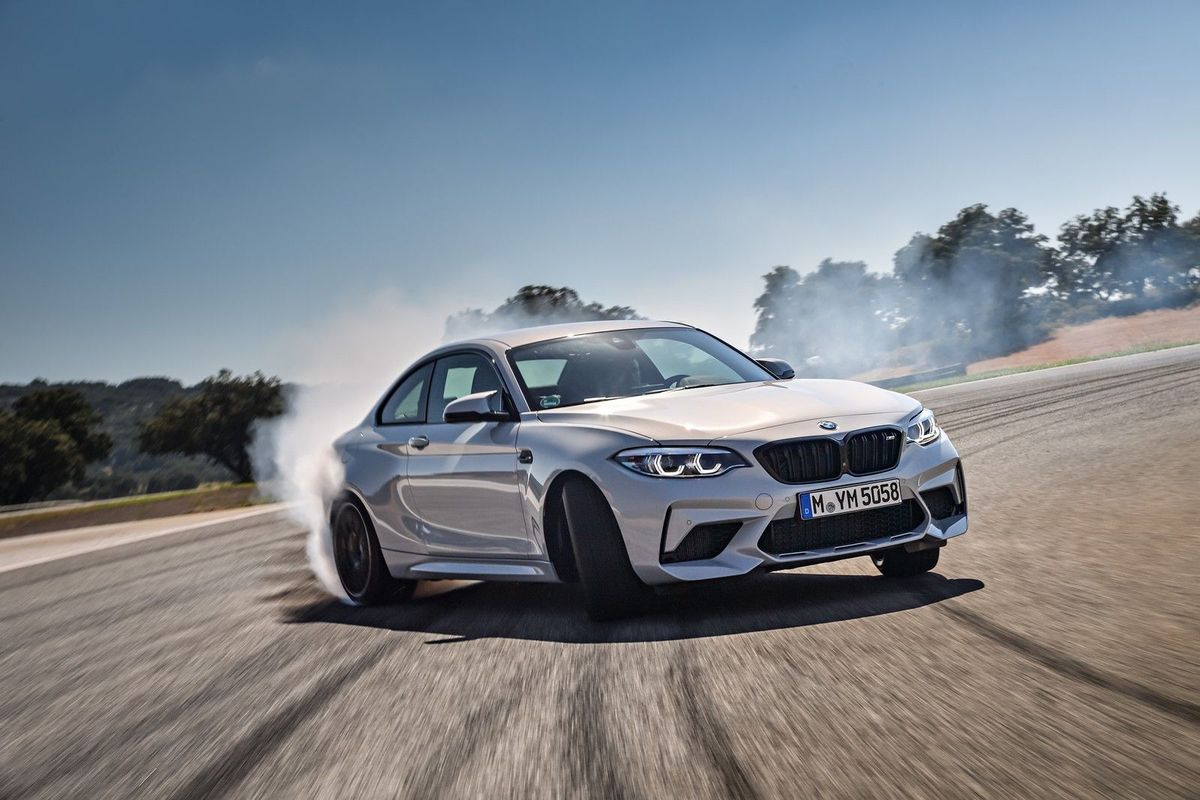
The M2 Competition begins to squirm and wriggle under hefty throttle applications far earlier and requires more quick countersteering inputs from the driver on corner exits than before. It's not a brutal wallop of torque that requires armfuls of lock… quick but small balances of the steering are enough to gather up the rear and accelerate cleanly.
It's the same out on the road where traction isn't always as consistent. The rear-end is playful (prone to sliding) and easily controlled when provoked; the short wheelbase provides that immediate response from steering to axle that makes the M2 Competition brilliantly reactive.
The manual may be slower than the auto, but it's serious fun to drive if you're not in search of ultimate lap times.
That's the core of the M2, a trigger-happy tail that's easily manipulated but without that knife-edge limit that often accompanies a pinched wheelbase. The M2 Competition still retains the almost instinctive handling facets that made the original so fun to drive in the first place. BMW didn't change the M2's suspension; make it lower or stiffer. The recipe was perfect, it just found a different way of cooking it.
What's not great?
While the front end darts into corners with attacking intent, it could do with a bit more feel through the steering. The M2 Competition's tiller never quite communicates enough feedback to give you that 6th sense of where the ultimate limit is, at least at the front.
These 2-tone mirrors are part of the Competition kits modifications.
Summed up?
When I asked BMW’s engineers why they didn't further develop the rev-happy 135i engine, they said that they had achieved the limit (in terms of reliable power output) of that motor and felt the extra kick from the twin-turbo would give the M2 Competition a more muscular driving experience. That makes sense, but a report suggests the first M2's motor would not comply with the new Worldwide Harmonised Light Vehicle Test Procedure (WLTP) for emissions, whereas the M3/M4 motor does, which is why the one was swapped for the other.
It's true that the extra torque gives the rear tyres more to think about when they're groping the asphalt, but that also makes the newcomer more akin to its mercurial M3/M4 siblings when you mash its throttle pedal. It gives up a bit of that pliable, even-tempered M2 character we enjoyed so much.
Thankfully, the M2 Competition’s chassis is good enough to steal the show on its own. It's fun in a way that's not as threatening as when you're at the wheel of an M3/M4 at (or near) the limit; the thrills are more accessible and it still feels fast, plenty fast in fact. You don't need to take your big and brave pills to have a little fun in the corners, the MDM mode will allow you enough slide and angle to not mute the enjoyment or reign you in.
The M2 Competition is a great BMW M car, it ticks all the boxes for a driver who takes driving seriously and wants to have fun. But is it better than the M2 that preceded it? Nope, unfortunately, the initial excitement of having an M3/4 motor under the bonnet subsides as the fierce torque distribution (to get the tyres working under power) take something away from the M2's purity. That said, the M2 Competition is still the best M car available (because it replaces the outgoing M2). In spite of its engine it's still an M2 – its sweetly-balanced handling characteristics remain.
Local pricing:
The M2 Competition will be available in SA from September 2018 and is priced at:
BMW M2 Competition 6-Speed manual: R972 029
BMW M2 Competition M-DCT (7-Speed): R1 026 505
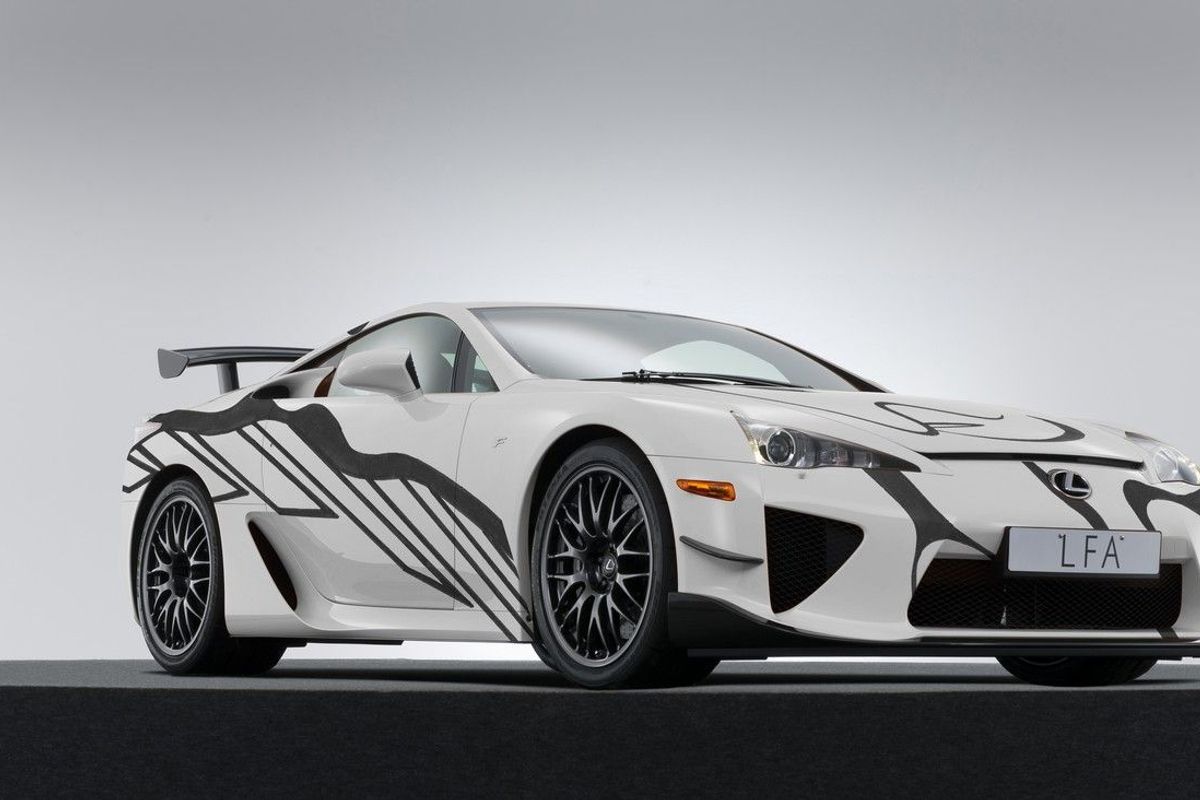
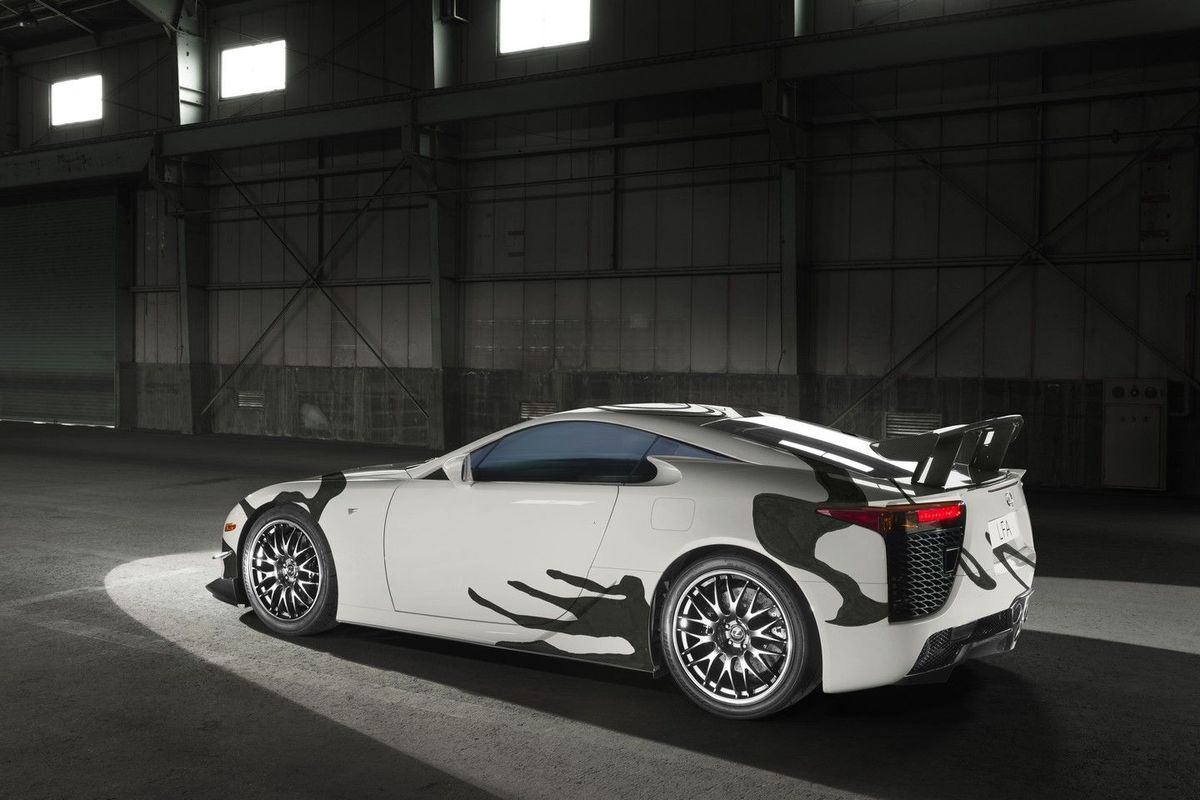
To commemorate the 10-year anniversary of the F -Performance moniker, Lexus revealed a special-edition LFA at the Total 24 Hours of Spa endurance race this weekend.
The LFA is an exquisite thing to behold – bold and outlandish it represents one of the last naturally aspirated supercars of its generation. It’s only fitting then that the Japanese automaker chose this particular model for Portuguese conceptual artist Pedro Henriques to use a blank canvas.
While simple in appearance, the black-on-white graphical pattern accentuates the car’s lines by creating the sensation of movement. According to Henriques his inspiration stems from the ever-present fluidity of contemporary life – where everything we encounter is in a constant state of flux.
“The lines in the drawings follow this feeling of going everywhere and never stopping; a progressive life,” said Henriques. “I wanted to reach an organic feeling by using handmade material and liquid lines in the elements spread through the car. By doing this I hope to express a feeling where the car becomes a less defined shape, in constant mutation in its movement."
Apart from its bespoke livery the LFA follows very much the same visual recipe as that of the Nürburgring-edition LFA, distinguishable by its rear wing, front splitter and canards. While the final product does look particularly striking, we feel the artist could have injected it with more kerbside drama to further validate its credentials; the LFA is after all one of the foremost supercars of its generation.
In South Africa the Lexus LFA is somewhat of a unicorn – only three examples were ever brought to the country.
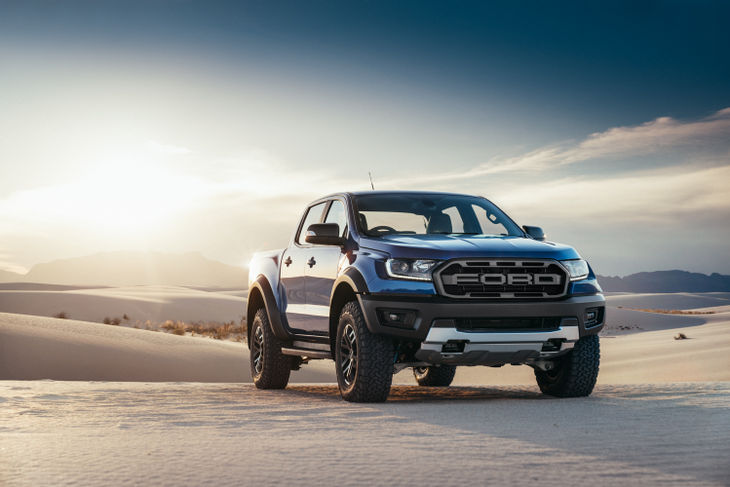
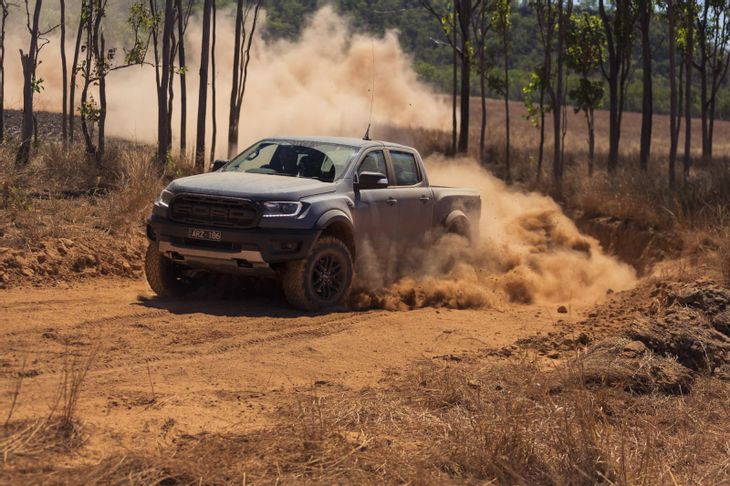
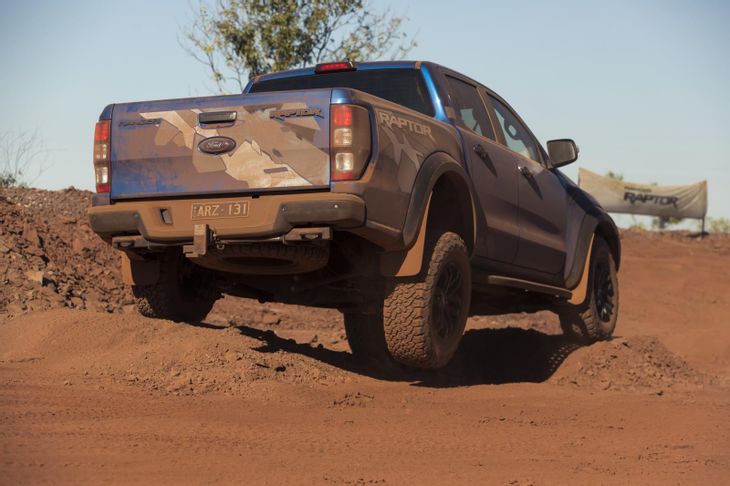
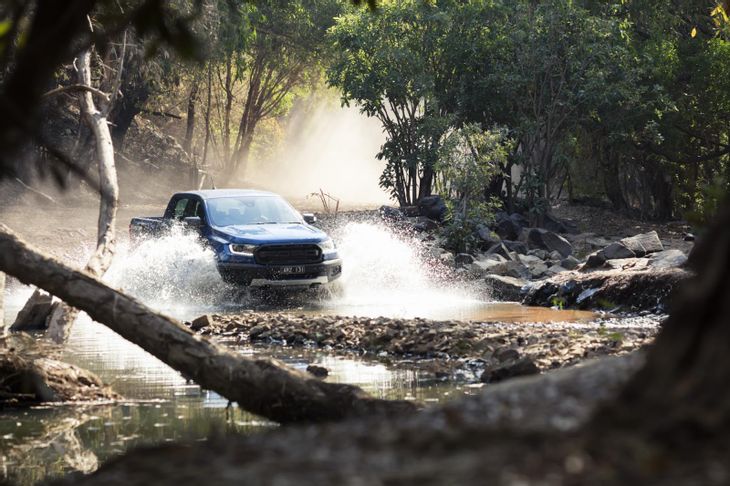
For Ford, the Raptor brief was simple: fit heavy-duty shock absorbers, widen the tracks, wrap its alloys in super-grippy knobbly tyres and turn up the grunt. The result? A properly powerful and capable off-road hooligan. Here’s everything you need to know about the Raptor…
1. Looks to thrill
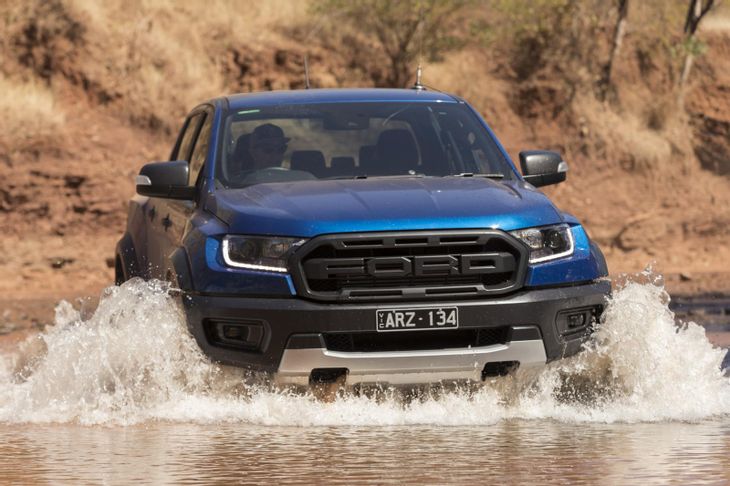
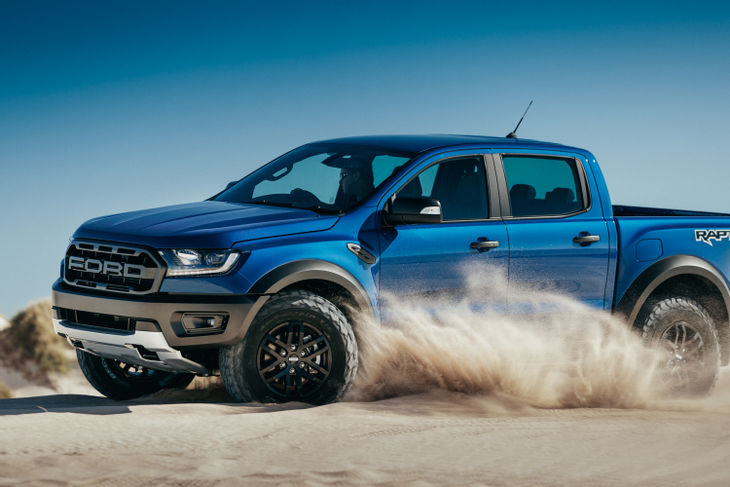
It’s by no means just a pretty face. In fact, it’s quite the antithesis with a bold and expressive grille replete with Ford wordmark logo bestowing it with an undeniable and imposing Raptor facade. Other notable visual touches include the blistered fenders that have been shaped to accommodate the long-travel suspension and off-road tyres. This thing means business.
2. Race-honed cabin
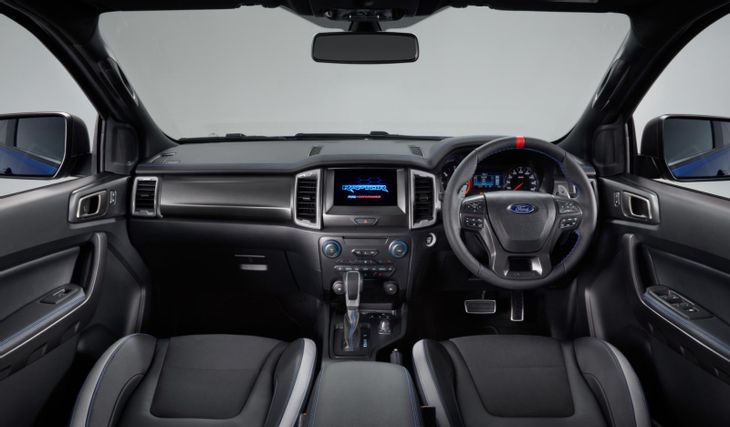
Climb inside and the sculpted sports seats echo the rugged raciness of the exterior quite superbly, as does the blue stitching and aggressively styled instrument cluster. Take a closer look and you’ll notice the steering wheel comes laden with lightweight magnesium paddle shifters, a red-stitched on-centre mark and a Raptor logo. It’s all very feral and with good reason…
3. It’s not about the engine
To quote Jamal Hameedi of Ford performance: "If you think a Raptor is about performance figures, then you don’t know what a Raptor is." See, the ethos behind the Raptor goes a whole lot deeper than the performance figures petrolheads often obsess over.
Peel away its skin and the Raptor’s unique underpinnings point towards a uniquely developed frame that’s been modified for the high speeds and rigorous demands of off-road driving – 283mm of ground clearance (that’s 16% more than the current Ranger) and a wider front and rear track (150mm). Despite the social media fracas around its engine configuration, the 157kW/500Nm 2.0-litre bi-turbodiesel mill is a pretty remarkable unit.
Its Jekyll and Hyde-type personality means the Raptor is able to deliver a combination of gut-wrenching performance mixed with superlative fuel efficiency that will accommodate all driving styles.
4. It runs Fox shocks, like a mountain bike
Well, sort of. While Fox is better known for making suspension systems for mountain bikes, the suspension wizards have done extensive work in vehicles before – namely in Baja- and truck racing in the United States. The Raptor’s shocks were naturally developed for racing and feature long travel and an internal bypass system that makes landing jumps less intrusive. The real kicker, however, is the Raptor’s ability in terms of everyday on-road comfort and cornering – it can be used as your daily drive to work.
5. Technically it’s got 20 gears!
The Raptor utilises an American-built 10-speed automatic transmission (identical to the F150), which enables a wider span of gears for better acceleration and responsiveness – 10 gears in high range and 10 gears in low range. It has been thoroughly tested in the harshest conditions, having to survive millions of testing kilometres of abuse in the dunes. Worried that the extra grunt will prompt you to drive it more enthusiastically than usual? Well, the real-time adaptive shift-scheduling indicator has been engineered to optimise gear selection and foster better fuel economy.
6. There’s a special Baja mode
Further enhancing its off-road bent is the Terrain Management System (TMS) which includes something Ford calls ‘Baja mode’ – inspired by Mexico’s famous Baja Desert Rally. In this mode a lenient Traction Control system together with the Fox-developed Position Sensitive Damping (PSD) shock absorbers, allows you to experience its broad depths of talent with less interference from the on-board nanny.
7. It will be built in SA, but not soon
Ford South Africa spent around R3-billion last year upgrading its plant in Silverton so it can produce Ranger Raptors for our local market. Pegged to launch in the first quarter of 2019, the Raptor looks tailor made to be a huge hit here in South Africa, where it will add a dollop of variety to a market that has traditionally been ruled by Toyota and its ubiquitous Hilux. In terms of pricing nothing has been confirmed yet, but considering the amount of extra R&D that’s gone into the Raptor, we expect a price point of around R750k.
China’s 5th largest manufacturer, BAIC has begun assembly of its X25 compact crossover in Port Elizabeth as part of an R11-billion joint investment with the Industrial Development Corporation (IDC). BAIC, which entered the local new vehicle market in 2017, will also increase its dealer footprint to 27 outlets by the end of the year.
Like most of us, I hadn’t heard of BAIC (pronounced “Bike”) until quite recently, but the Chinese vehicle manufacturer is one of the largest manufacturers in the world. China is a vast car market that has largely kept to itself (that is to say it has made relatively minor forays into Western markets, including ours), but currently, with the backing of the Chinese government, the multi-billion-dollar industry is keen to expand globally.
This week the Chinese President, Xi Jinping, alongside President Cyril Ramaphosa unveiled the very first South African assembled BAIC X25, which was produced at the manufacturer’s South African factory, located in Port Elizabeth’s Coega Special Economic zone, via live video link. As reported in the general media recently, this historic event marks the start of strong SA-China economic relations over the coming years.
Record-breaking investment
BAIC claims that since the start of the project, more than 1 540 construction jobs have been created and local SMMEs have secured R200-million worth of contracts associated with it. The BAIC agreement was signed in 2015 and is one of 26 bilateral agreements signed between South Africa and China. Together this agreement totals a staggering R94 billion, of which R11 billion will be invested by BAIC.
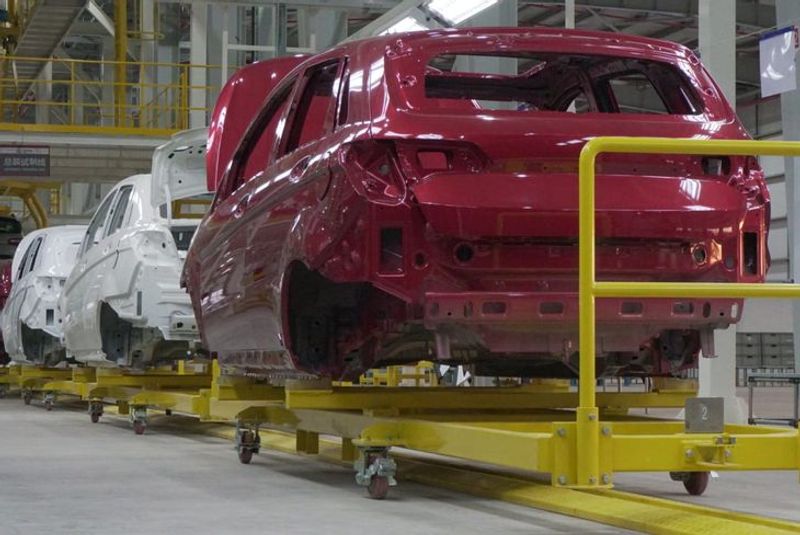
The recently completed 1st phase includes the ability to assemble vehicles that are shipped into South Africa in semi-knocked-down (SKD) form. The SKD vehicles will be built on a rudimentary production line until the production switches to completely-knocked-down (CKD) later this year. BAIC aims to roll off the first (CKD) X25 in the final quarter of 2018 and to increase the number of its dealers from 17 to 27 by the end of the year.
A big concern for South Africans is how foreign investment affects our local economy – if the local industry will benefit from these investments. It is with that in mind that BAIC SA will endeavour to set up relationships with local business to supply up to 30% of the parts needed for BAIC cars by 2019. The next milestone will be to increase that ratio to 60% within the next few years. For context Volkswagen South Africa sources around 70% of its Polo Vivo parts from local suppliers.
BAIC chairman Xu Heyi said South Africa was a gateway to other African nations and the factory was a way for BAIC to expand into the Middle East and Latin America. BAIC intend to ship 60% of the cars manufactured in South Africa to other nations, thus increasing the worldwide footprint of BAIC and simultaneously setting up a satellite plant in a strategic location. Incidentally, the Coega plant is the first BAIC plant outside China.
BAIC X25 compact crossover
The X25 is a 1.5-litre compact crossover that competes with products such as the Renault Duster and Ford Ecosport. BAIC CEO is confident that thanks to the experience the company has gained in their domestic market, “BAIC can compete with any car company in the world,” Xu Heyi said, before adding that producing the X25 locally would ensure that the price of the vehicle would be much lower than if it was imported from China.
China's 5th largest manufacturer, BAIC has begun assembly of its X25 compact crossover in Port Elizabeth as part of an R11-billion joint investment with the Industrial Development Corporation (IDC). BAIC, which entered the local new vehicle market in 2017, will also increase its dealer footprint to 27 outlets by the end of the year.
Like most of us, I hadn't heard of BAIC (pronounced “Bike”) until quite recently, but the Chinese vehicle manufacturer is one of the largest manufacturers in the world. China is a vast car market that has largely kept to itself (that is to say it has made relatively minor forays into Western markets, including ours), but currently, with the backing of the Chinese government, the multi-billion-dollar industry is keen to expand globally.
This week the Chinese President, Xi Jinping, alongside President Cyril Ramaphosa unveiled the very first South African assembled BAIC X25, which was produced at the manufacturer's South African factory, located in Port Elizabeth's Coega Special Economic zone, via live video link. As reported in the general media recently, this historic event marks the start of strong SA-China economic relations over the coming years.
Record-breaking investment
BAIC claims that since the start of the project, more than 1 540 construction jobs have been created and local SMMEs have secured R200-million worth of contracts associated with it. The BAIC agreement was signed in 2015 and is one of 26 bilateral agreements signed between South Africa and China. Together this agreement totals a staggering R94 billion, of which R11 billion will be invested by BAIC.
The recently completed 1st phase includes the ability to assemble vehicles that are shipped into South Africa in semi-knocked-down (SKD) form. The SKD vehicles will be built on a rudimentary production line until the production switches to completely-knocked-down (CKD) later this year. BAIC aims to roll off the first (CKD) X25 in the final quarter of 2018 and to increase the number of its dealers from 17 to 27 by the end of the year.
A big concern for South Africans is how foreign investment affects our local economy – if the local industry will benefit from these investments. It is with that in mind that BAIC SA will endeavour to set up relationships with local business to supply up to 30% of the parts needed for BAIC cars by 2019. The next milestone will be to increase that ratio to 60% within the next few years. For context Volkswagen South Africa sources around 70% of its Polo Vivo parts from local suppliers.
BAIC chairman Xu Heyi said South Africa was a gateway to other African nations and the factory was a way for BAIC to expand into the Middle East and Latin America. BAIC intend to ship 60% of the cars manufactured in South Africa to other nations, thus increasing the worldwide footprint of BAIC and simultaneously setting up a satellite plant in a strategic location. Incidentally, the Coega plant is the first BAIC plant outside China.
BAIC X25 compact crossover
The X25 is a 1.5-litre compact crossover that competes with products such as the Renault Duster and Ford Ecosport. BAIC CEO is confident that thanks to the experience the company has gained in their domestic market, “BAIC can compete with any car company in the world,” Xu Heyi said, before adding that producing the X25 locally would ensure that the price of the vehicle would be much lower than if it was imported from China.
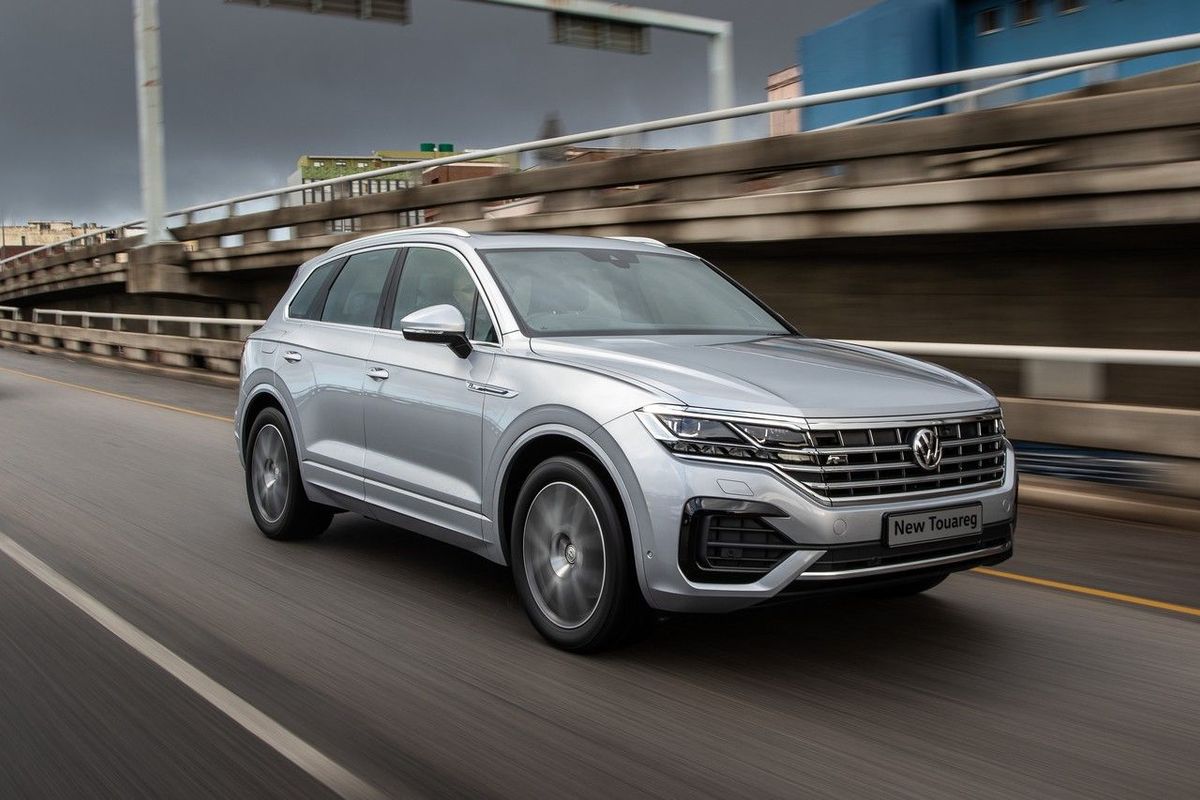
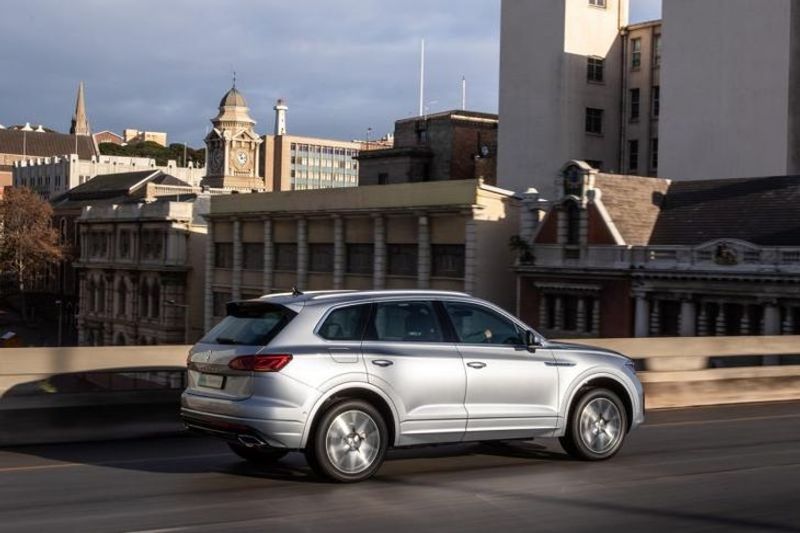
The new Volkswagen Touareg has touched down in South Africa. It's crammed with technology and luxury comfort features, plus offers genuine off-road capability. However, in the status-obsessed premium SUV segment, the badge on a car's nose carries so much weight. Will the newcomer attract customers in the way its predecessors couldn't?
Much is expected of this, the 3rd generation Volkswagen Touareg. It's predecessors, most notably the 2nd iteration, offered a commendable blend of comfort, sophistication, practicality, off-road prowess and even value for money. However, in this segment of the market, brand image counts for a lot and the Touareg has been overshadowed by more glamorous competitors. Despite this, it still managed to tally up a reasonable number of sales; in fact, almost a million units found homes globally. Third time lucky is the saying which comes to mind with the latest generation Touareg. After spending 2 days driving the newcomer across multiple terrains, we hope to answer the question: Can Volkswagen's premium SUV beat the best?
What's new?
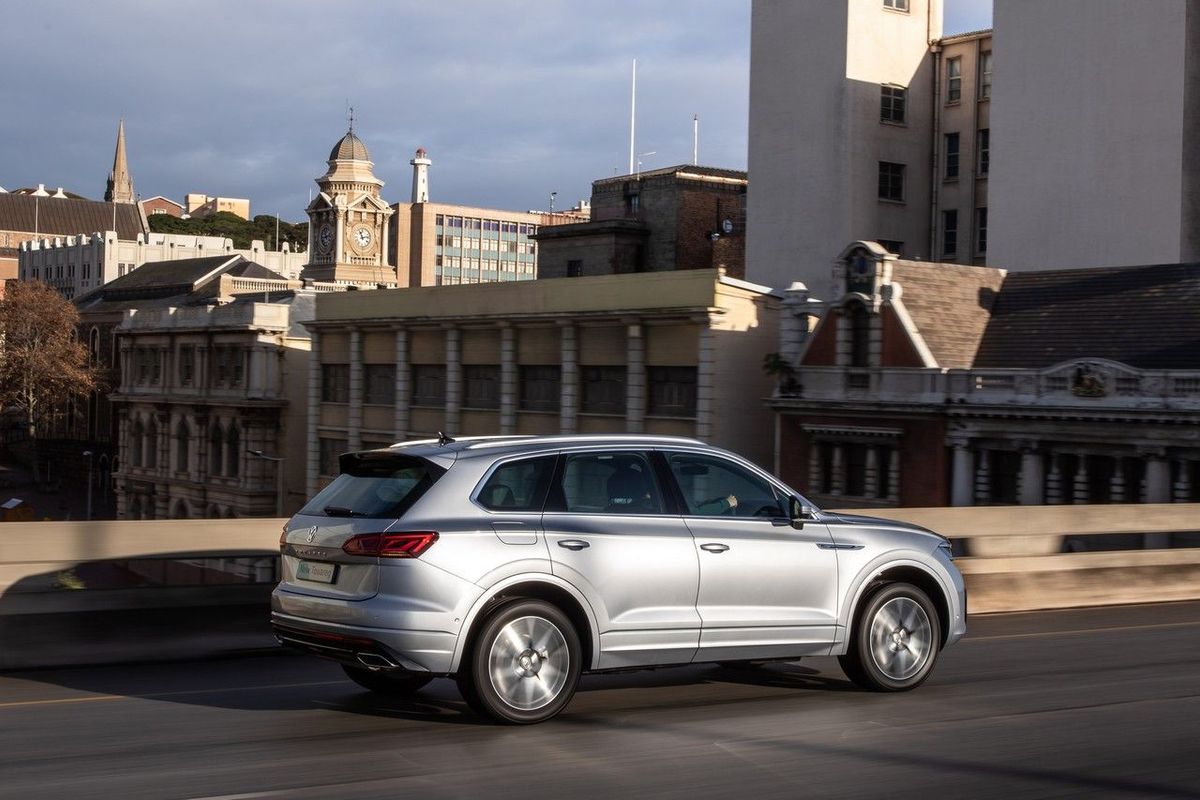
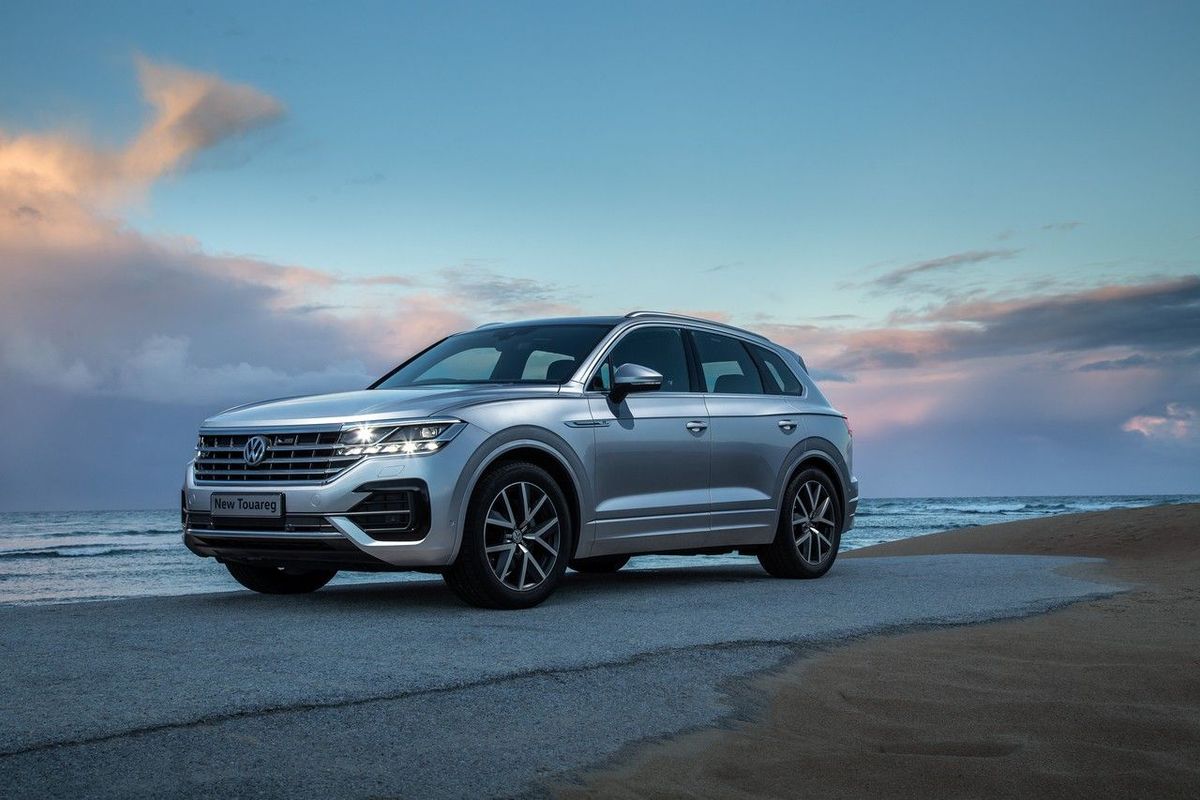
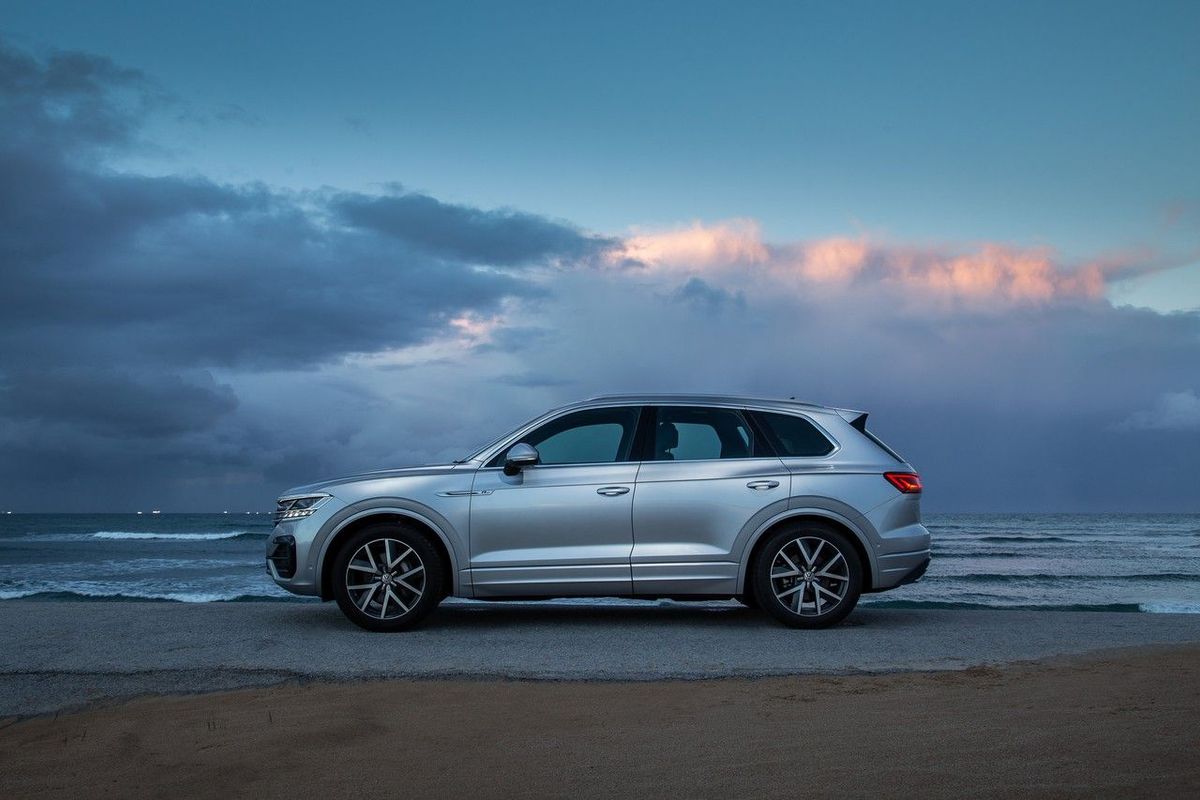
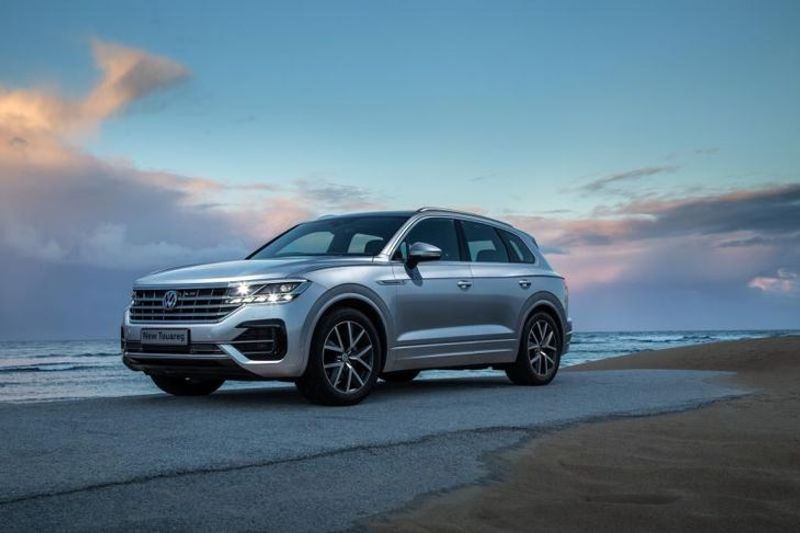
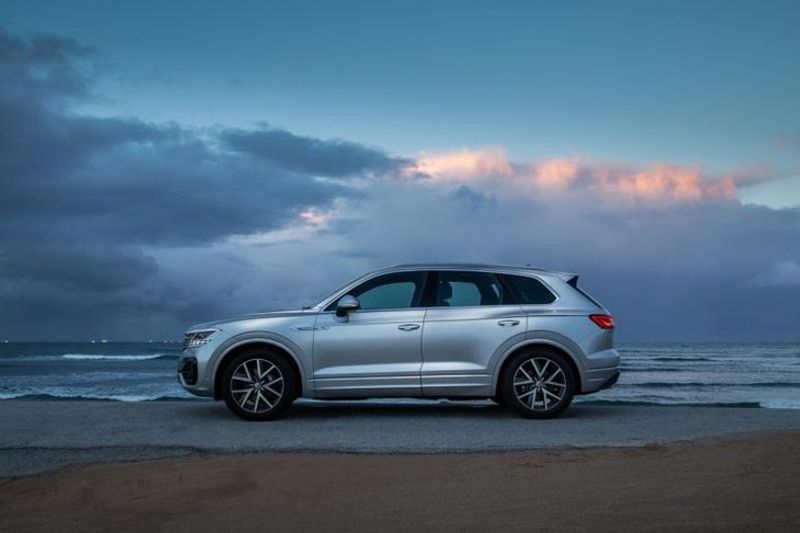
With some R-Line bits in the Executive spec, the Volkswagen Touareg certainly looks the part
Underpinned by the Volkswagen Group's MLB platform which also forms the basis of the Audi Q7, Bentley Bentayga, Lamborghini Urus and Porsche Cayenne, the new Touareg is wider and longer than its predecessor, but slightly shorter in height. Interestingly, the overall mass of the vehicle has declined thanks to the clever use of lightweight materials. Volkswagen claims it's up to 106 kg lighter, which is a substantial weight saving.
Under the big bonnet of the Volkswagen Touareg, you'll find a big 3.0-litre V6 turbodiesel. We've seen this engine before in other applications such as Amarok V6 and it is a commendable engine due to its refinement and power delivery. Power is rated at 190 kW, with 600 Nm of torque going to the Volkswagen 4Motion all-wheel-drive system via an 8-speed automatic gearbox.
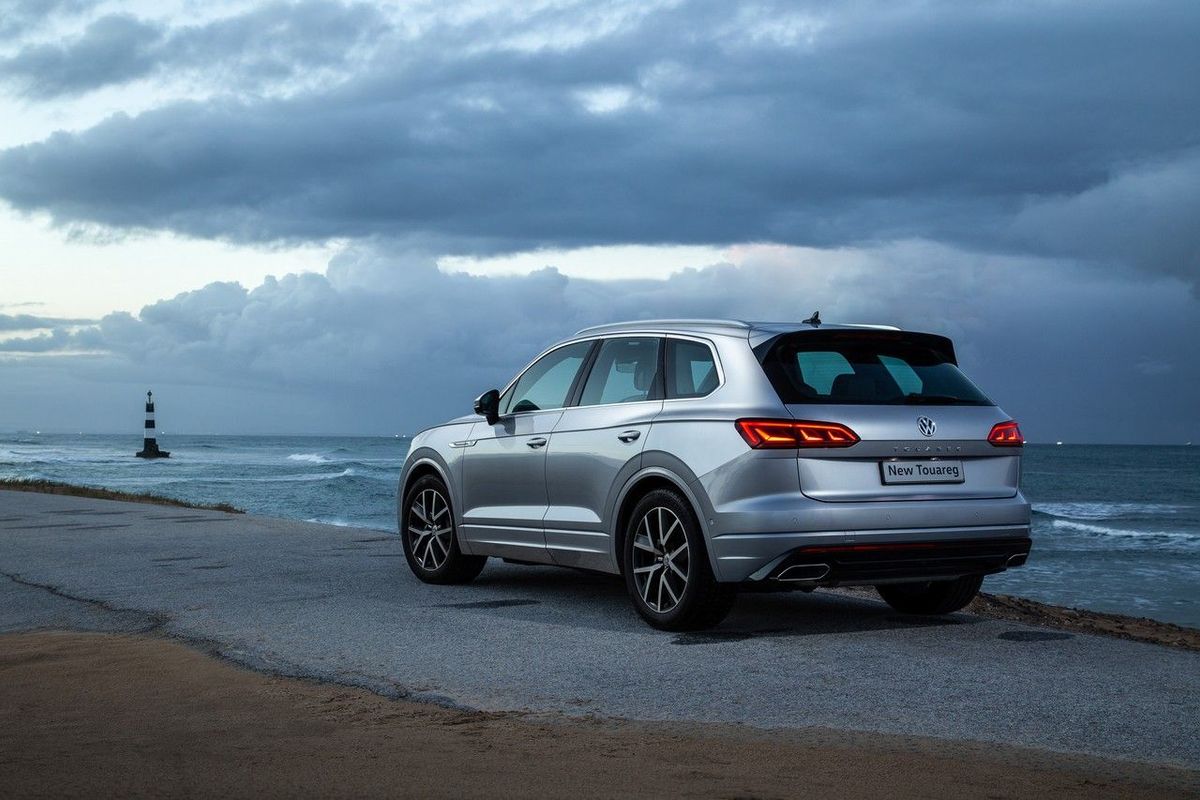
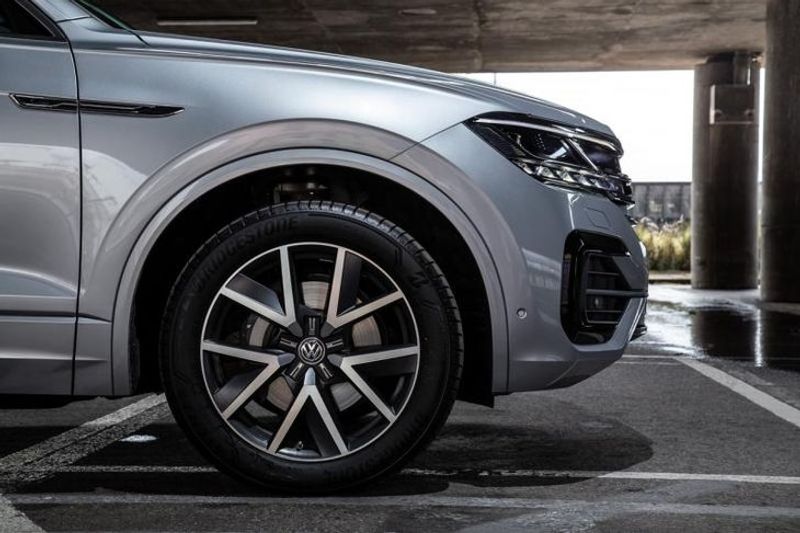
In terms of looks, we quite like what we see. It's sharp and angular, particularly with the R-Line kit that comes standard with the higher-specced Executive. If you opt for one of the darker hues of colour, you're able to appreciate the intricate front end design more. In white, a fair amount of detail is lost. One of the highlights is the IQ Light Matrix LED headlights, which features 128 LEDs.
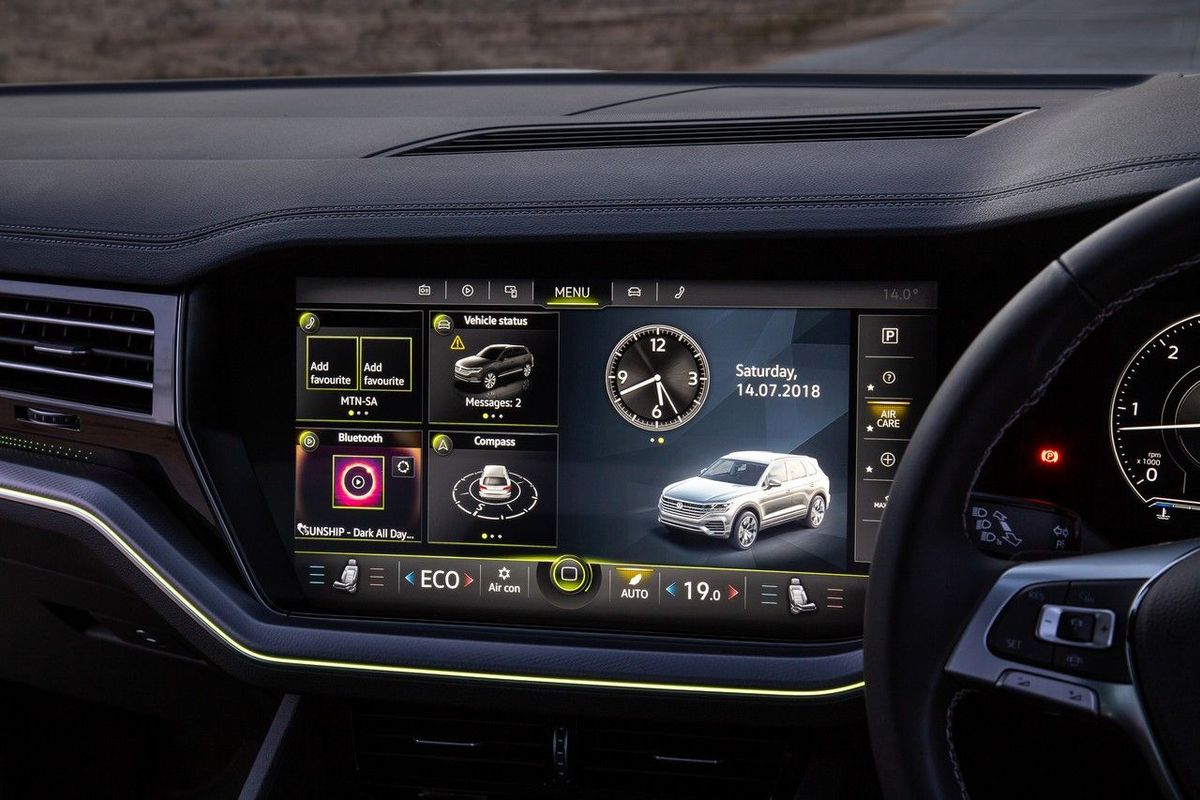
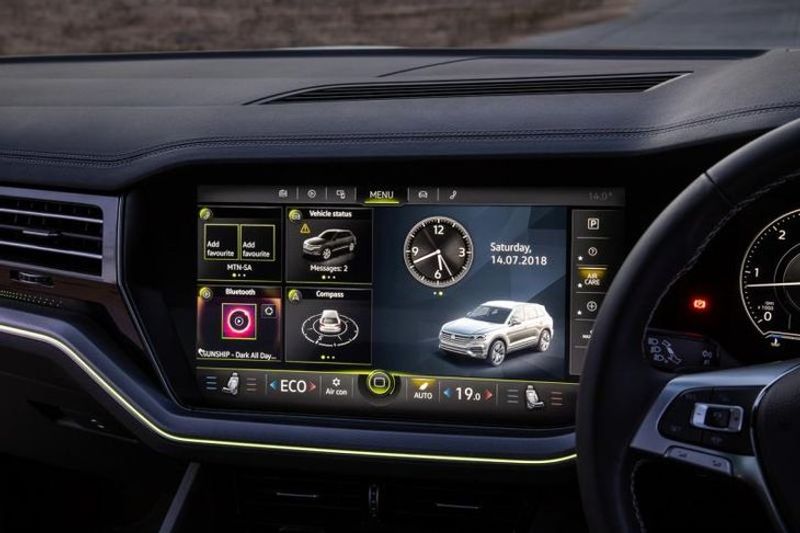
Volkswagen Innovision system. All the infomation you need in one slick and intutive layout
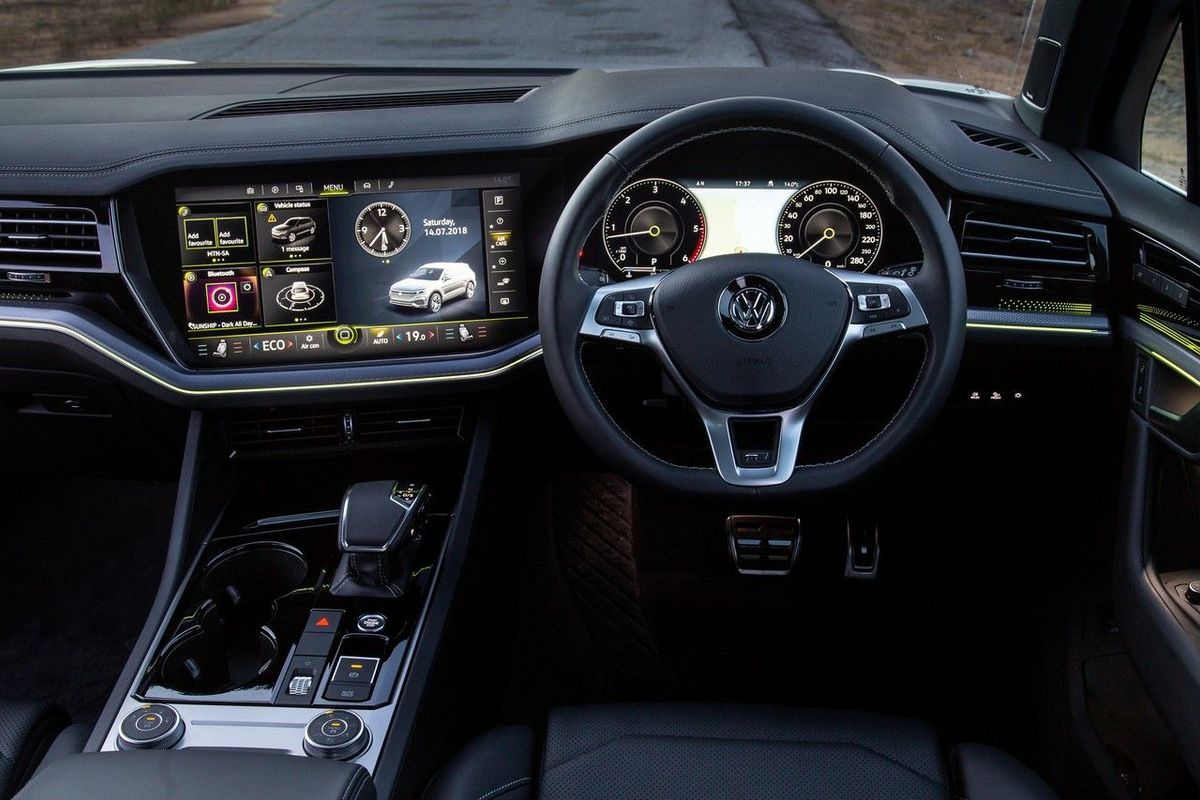
The cabin has seen a raft of changes and while it is an option, the Volkswagen Innovision infotainment system is highly commendable. Not only does it incorporate everything you'd ever need in a car, it's also magnificent to look at, thanks mostly to the size and resolution of the screen. Essentially, Innovision merges the digital dashboard with the Discover Pro premium infotainment system, to form one unit. There's plenty of customisation options and themes to make it your own.
Connectivity is key and when you're going for a flagship offering, you expect only the best, and the Volkswagen Touareg delivers. There's a wireless charging pad and two USB ports in the front, as well as Bluetooth. The safety tech is worth a shout too. Volkswagen has introduced a night vision camera, the car features lane assist, there's a heads-up display (which is one of the better units we have experienced) and there's even active 4-wheel steering. For ultimate comfort, the seats are heated and cooled too.
The MLB platform lends itself to excellent practicality, and cabin space in the new Volkswagen Touareg is good. Rear legroom is more than enough to accommodate adults in comfort and the luggage space (a claimed 810 litres) generous. Volkswagen claims the load bay is 113 litres bigger than that of the previous-generation Touareg; it certainly seems larger than the BMW X5, for example, but is slightly smaller than the Audi Q7 (890 litres).
The Volkswagen Touareg is at home on the open road where it impressed us with its quietness and refinement. V6 engine is stonking.
Several big Volkswagens have endeared themselves to us with their excellent refinement (low NVH) and premium feel, and the new Touareg is no exception. The high driving position is commanding and outwards visibility is good. You sit high up and you have that big car feel in abundance.
One of the many things we were really impressed by was the refinement of the V6 turbodiesel engine. It's capable of delivering impressive shove, yet there's hardly any noise from the motor. Only when you're really stretching its legs, do you hear some sort of V6 grumble, but the cabin is so well isolated, you could probably drown it out with some music from the high-quality sound system. The 8-speed transmission is refined and smooth too, and while the car does offer steering-wheel gearshift paddles, we left them alone and let the car do all the work.
It features various driving modes such as Comfort, Sport and Offroad (including Snow, Gravel and Sand). In Comfort, the suspension is almost too soft: there was a slight wallowing feel when cornering, which we'll put down to the air suspension. The air suspension is a decent setup and you can raise/lower the car to suit your needs. Activate one of the Offroad modes and the vehicle rises up to clear obstacles, which is handy. The steering is not the most direct and there's not much feedback through the 'wheel, but that's acceptable in this segment. Indeed, driving the Touareg over long distances is a very relaxing affair – after travelling around 250 km in one stint, we ended the journey feeling quite comfortable and refreshed.
We had the chance to pilot the Touareg through some forestry plantation roads and while the course wasn't going to provide a stern test of the Volkswagen's off-road capabilities, it was a scenario where we'd tread carefully with a normal passenger car. With the Offroad gravel mode engaged, the Touareg didn't bat an eyelid and there was no loss of traction. Through some of the rockier sections, it felt surefooted and we're confident that it'll take some serious terrain to throw a Touareg off. Look, it's no Land Rover Discovery when it comes to the traversing technical 4×4 courses, but that's okay as the Disco costs substantially more and doing serious 4x4ing is not something these premium vehicles do often.
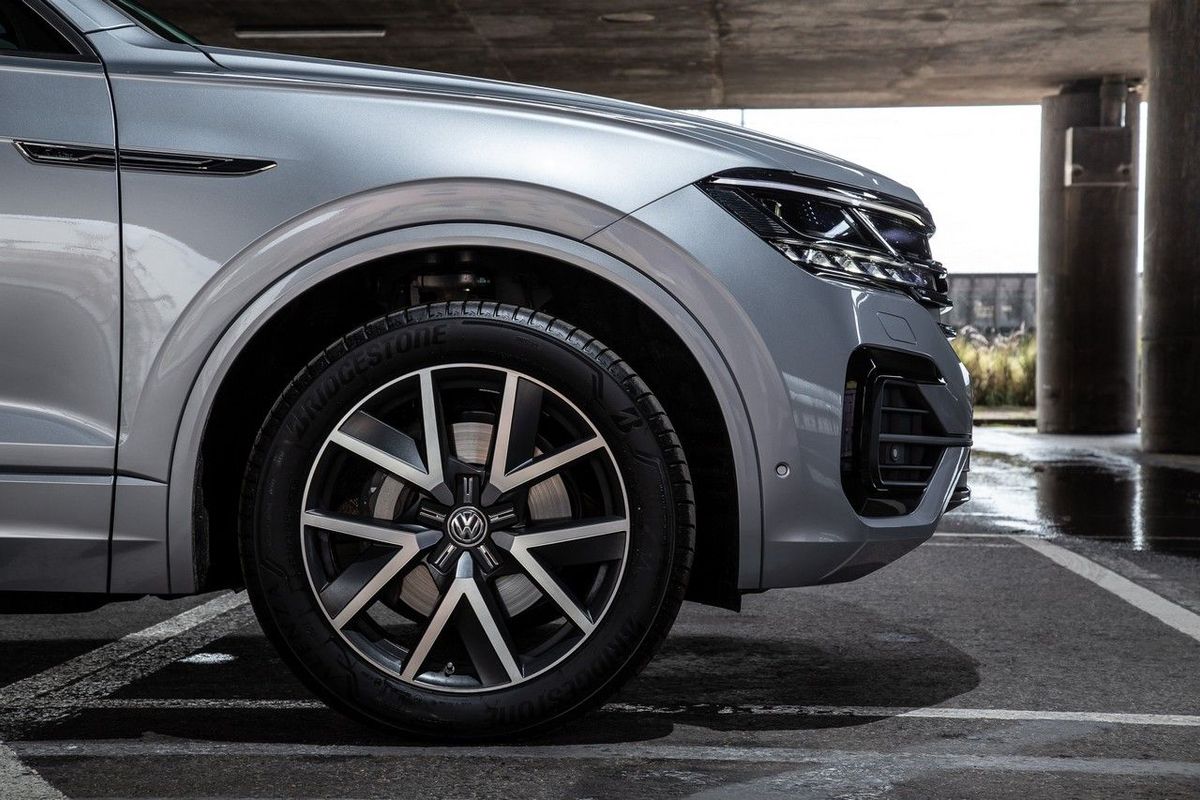
Even on big wheels, the Touareg's ride quality is excellent and cabin noise minimal
Summary
When you pitch a premium SUV with a Volkswagen badge into a market dominated by high-end brands such as Audi, BMW, Mercedes-Benz and Volvo, the odds are not stacked in your favour. People are unfortunately brand snobs and are likely to look down on Wolfsburg's offering, which is a real shame because this new Touareg is very good. Not only is it refined and comfortable, but its also superbly finished and there are enough tech toys to satisfy everyone. The engine is a peach too and there's plenty power for towing. Thanks to all that torque, overtaking is effortless.
Volkswagen knows the Touareg has its work cut out, so the newcomer has an ace up its sleeve. Unlike most high-end German products, you don't get a basic specification, which you then have to load with options (you could almost double their list prices!). Nope, not with the Touareg… It's already comprehensively kitted out and even in basic spec without the digital dashboard, there's enough luxury and tech to satisfy the vast majority of customers. In terms of price, it substantially undercuts those high-end rivals, which may be enough to sway some customers in favour of the Volkswagen. With the market expanding in 2018 with an all-new BMW X5, Mercedes-Benz GLE and Audi Q8, we expect the prices of those vehicles to start around the R1.3 million figure, before extras, making a fully-loaded Volkswagen Touareg look like the premium SUV bargain of the year.
It's big and stylish, drives well and boasts one of the most advanced infotainment systems
Volkswagen Touareg prices in South Africa
The new Touareg comes standard with a 5-year/100 000km maintenance plan, 3-year/120 000 km warranty, 12-year anti-corrosion warranty and space saver spare wheel. Service intervals are set at 15 000 km.
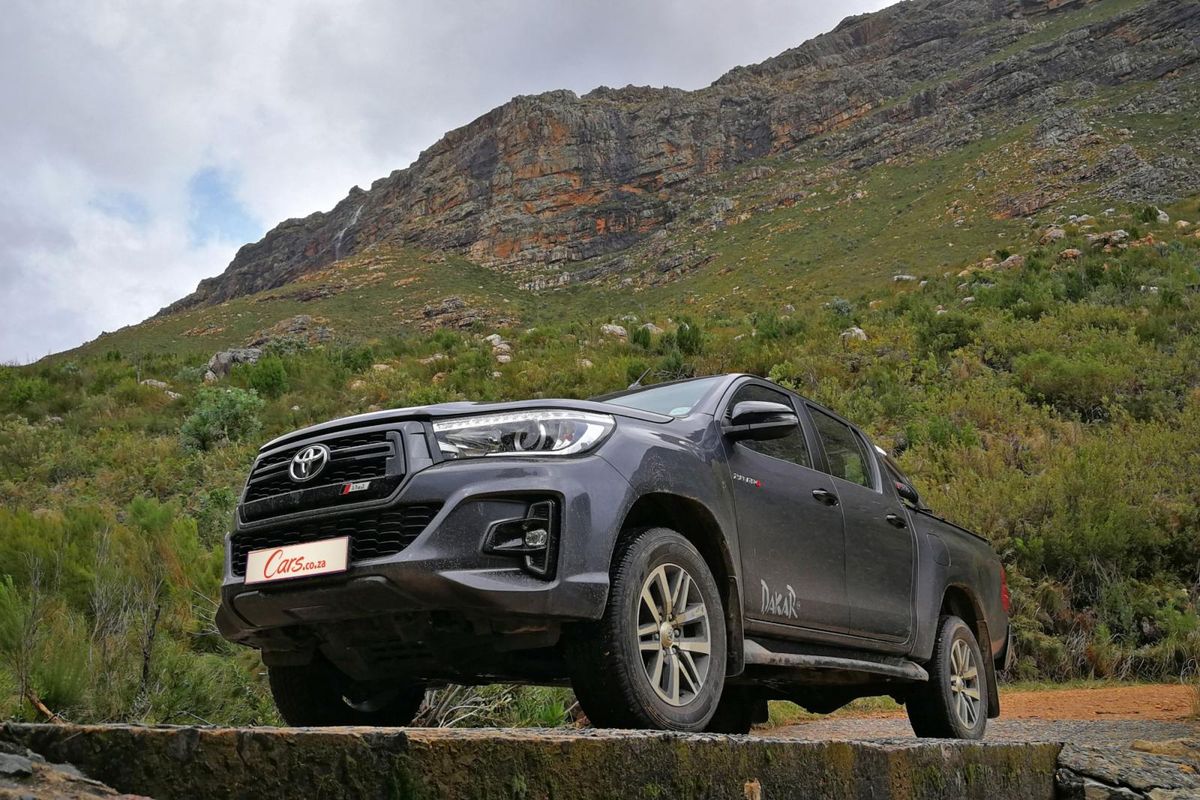
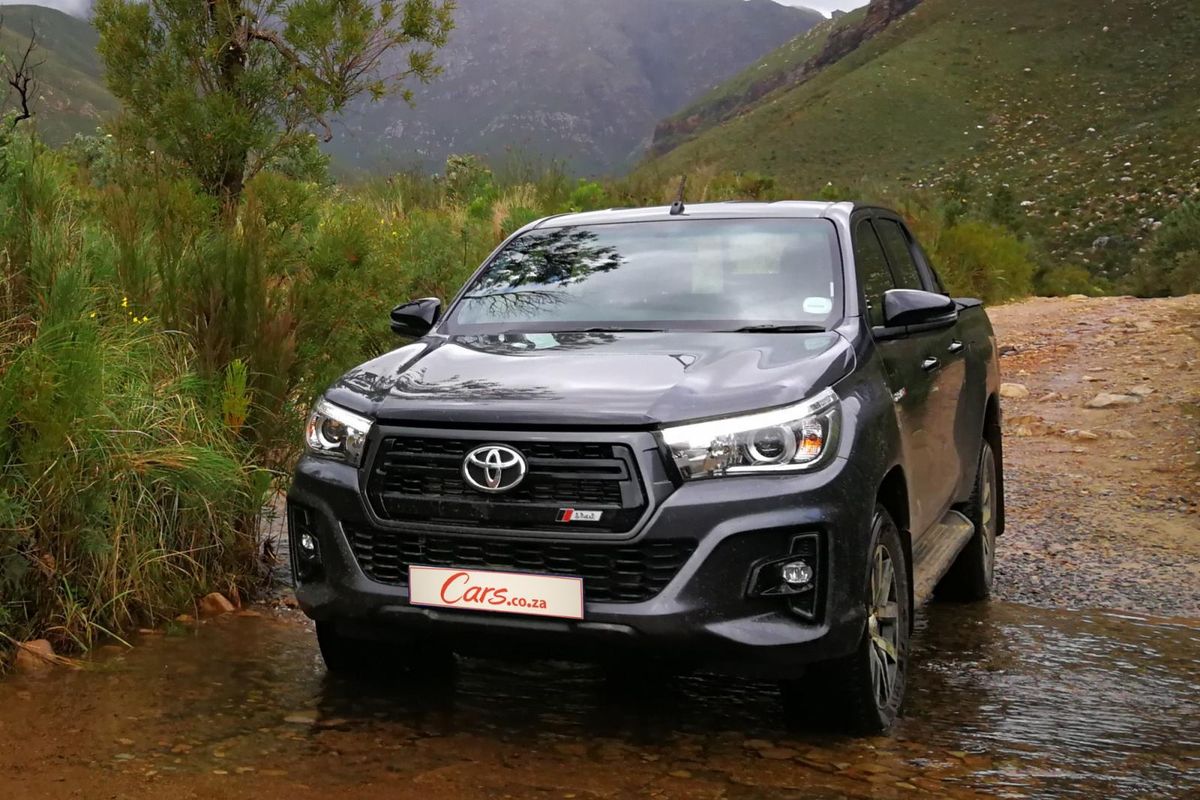
Toyota's limited-edition Hilux Dakar may focus on the visuals, but in a cut-throat segment where status and desirability are increasingly important, that may be a very good play.
We like: Handsome styling revisions, inclusion of navigation, refined powertrain, rugged off-road feel
We don’t like: Clumsy infotainment system
Alternatives (click on car names to view specs and request test-drives)
Ford Ranger 3.2 Double-Cab Wildtrak 4×4 Automatic: Ford no longer offers a manual Wildtrak 4×4, so you'll have to spend about R30k more than the (manual) Hilux Dakar if you want to get into the Ranger flagship. Of course, you could then also consider the automatic Hilux – which you really should – which costs around R10k less than the big Ford. We think the Ranger has the edge on the road, while the Toyota leads in the rough stuff. The Ford's infotainment system is also better and it has more rear legroom.
Mitsubishi Triton 2.4D-ID double-cab 4×4 Extreme: Sadly Mitsubishi's latest Triton has not quite gained the market acceptance the brand might have hoped for. This bakkie does a lot of things right… the engine is refined and powerful, the cabin spacious and the price good. It may lack some of the frills of the Toyota and Ford, but given its positioning and standard specification, it is well worth a look. This Extreme special edition comes with a lot of extras, including a tonneau cover, all-terrain tyres etc. For similar money, you can also consider the newer Athlete special edition, which comes only in automatic and at a more affordable price than the Toyota.
Nissan Navara 2.3D Double Cab 4×4 LE: Another new entrant that has underperformed in the local market, Nissan's new Navara is better than its sluggish sales suggest. The engine is smooth, powerful and efficient and the standard features comprehensive. It's also good off-road and comes backed with a lengthy 6-year/150 000 km warranty. Read our review here.
Some Toyota dealers regularly offer specials – have look here.
Where does it fit in?
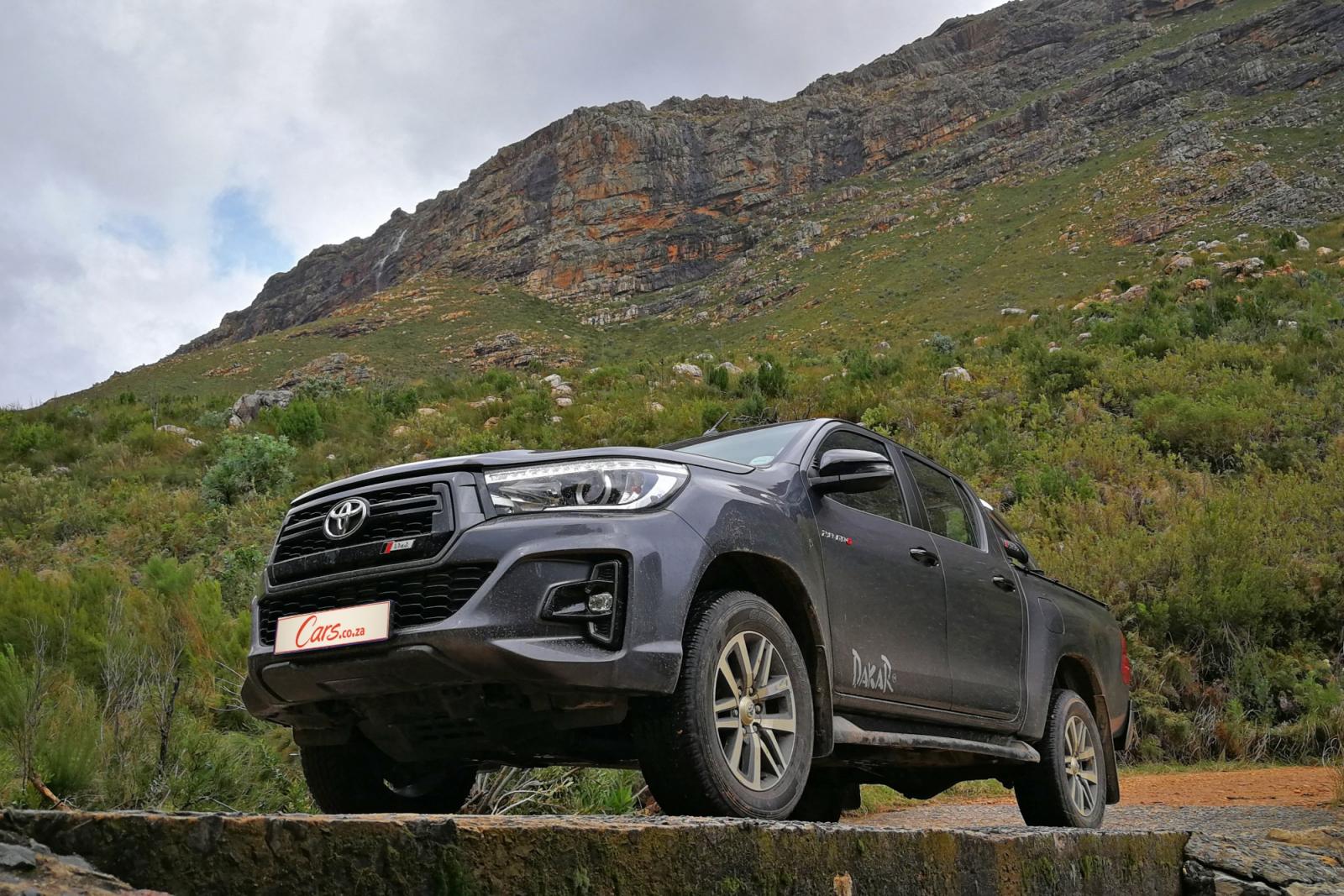
With excellent off-road ability, the new Hilux does its Dakar stickers proud.
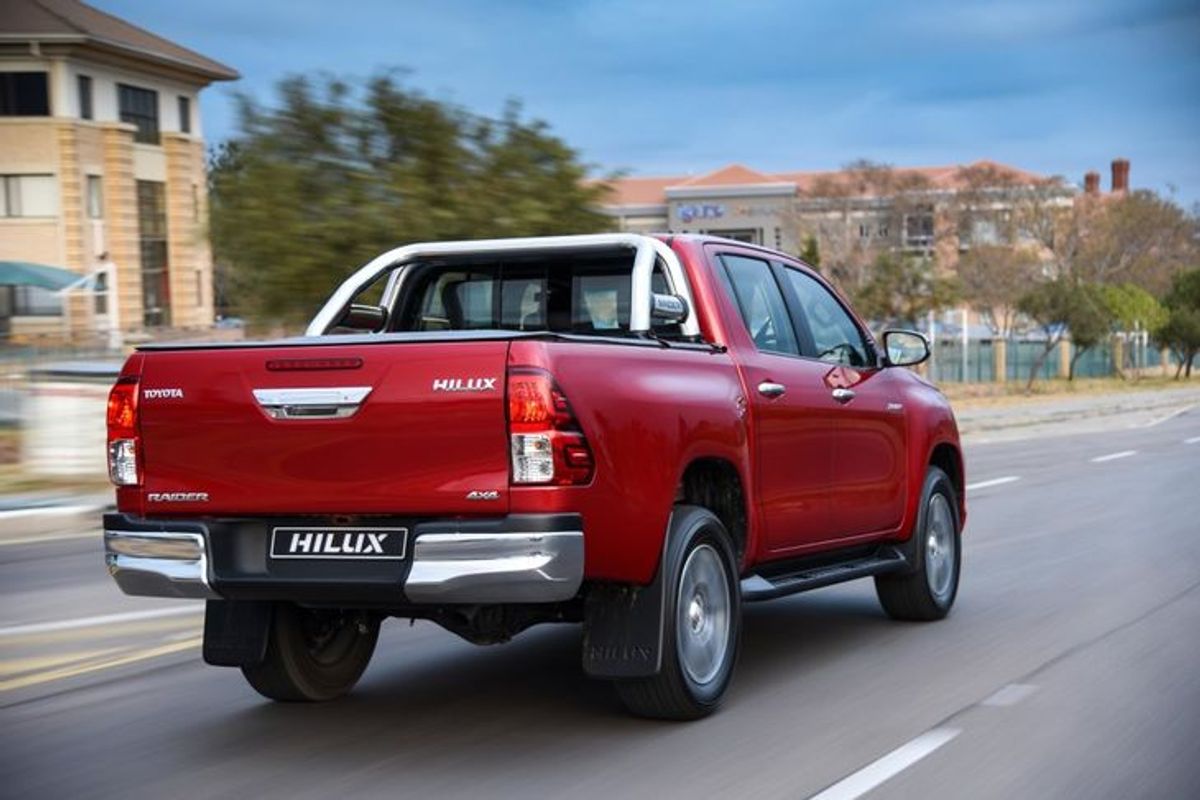
While the Dakar name is not new to the Toyota Hilux stable, recent podium achievements in the famous desert race by locally made Hiluxes, driven by a local hero (Giniel de Villiers) have made the application of the badge to the top-selling local bakkie more fitting. Special-edition bakkies are big business in South Africa and Ford has done particularly well with its leisure-oriented Wildtrak Ranger derivative, which strictly speaking isn't a limited-run vehicle, but has gained an almost independent brand aura of its own. Toyota's current Raider flagships perhaps don't offer enough "wow" factor to garner the same enthusiasm around the braai… and that's where the Dakar comes in…
The Good
Improved styling
New front-end is a significant improvement on what has been used for the "new" Hilux thus far.
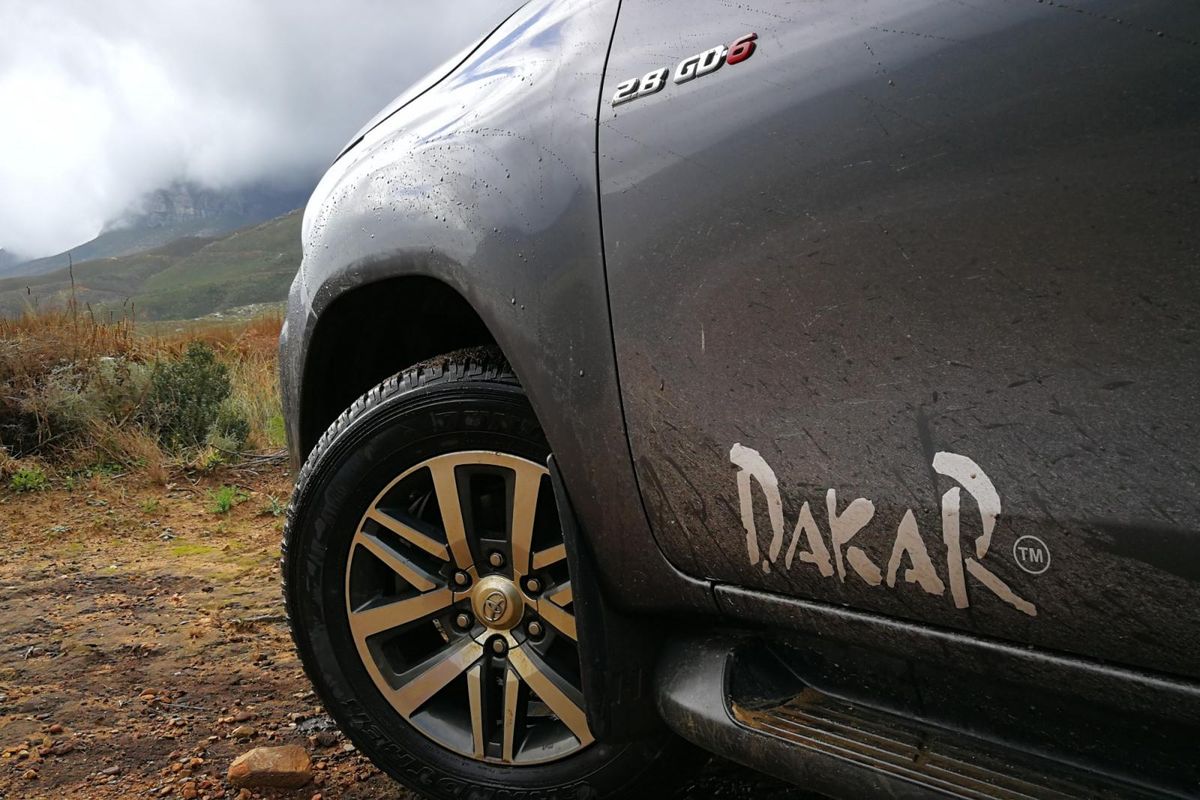
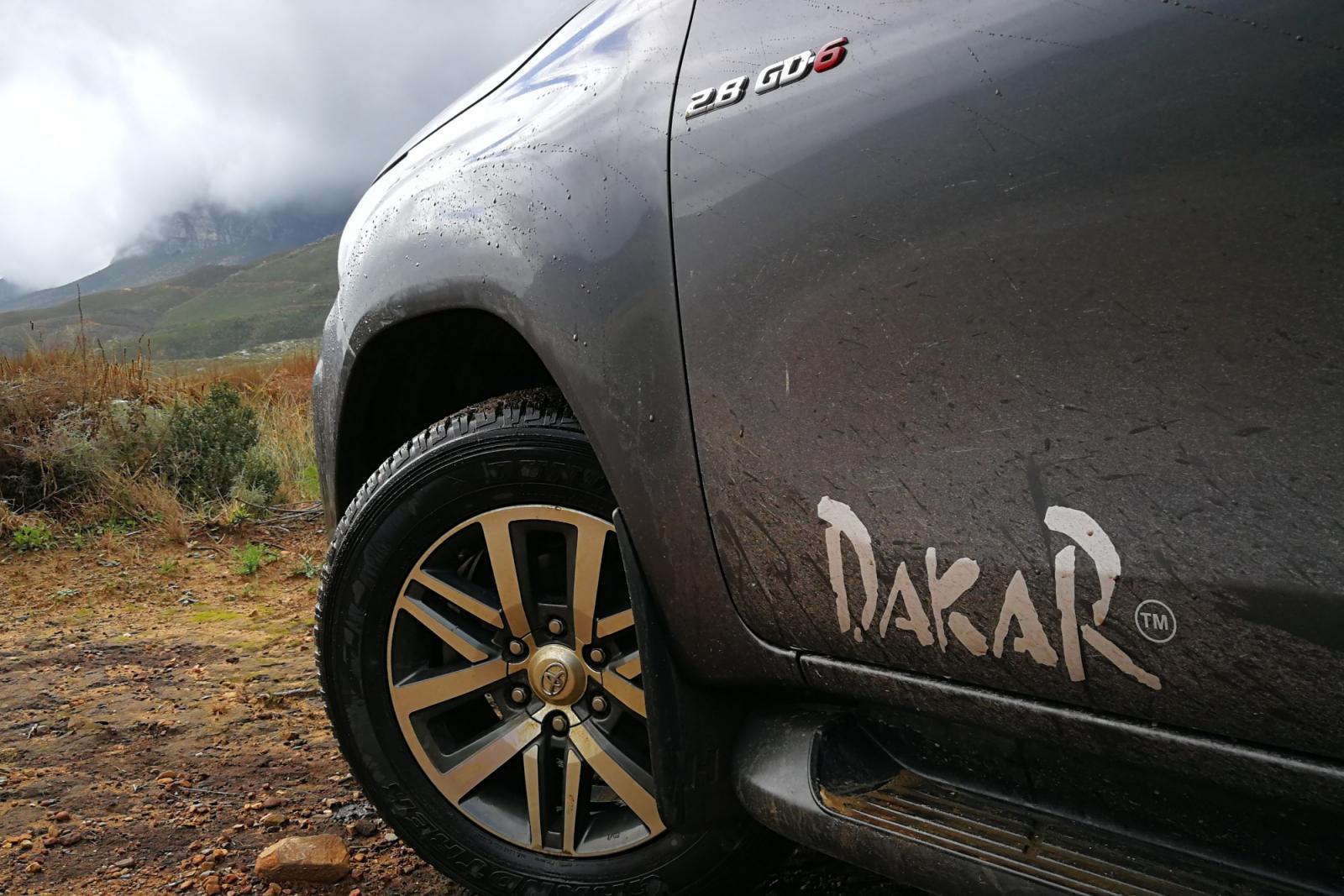
These days flagship bakkies are desirable, status-enhancing family cars that need to look the part. Consequently, that's where a lot of the focus falls with the Dakar edition. What do you get? Well, a significantly revised front-end design which received an enthusiastic double thumbs-up from our test team is the biggest news, but look closer and you may spot gloss-black exterior finishes for the door handles and side mirrors, for example. Dakar edition Hiluxes are also only available in 4 colours, of which a Ford Ranger Wildtrak-rivalling hue called Inferno metallic is the most eye-catching. Our Graphite Grey metallic test unit also sported various optional extras, including a tonneau cover and Dakar-branded "styling" bar.
We do think the changes have been successful in not only creating a more desirable flagship from a styling point of view, but, like the Wildtrak, which has a distinct character of its own, this Dakar looks rather different to the Raider it is closely based on. The market will undoubtedly like this "exclusivity".
Excellent drivetrain
The 2.8L engine delivers its power eagerly and smoothly. It's also far more efficient than Ford's 3.2L.
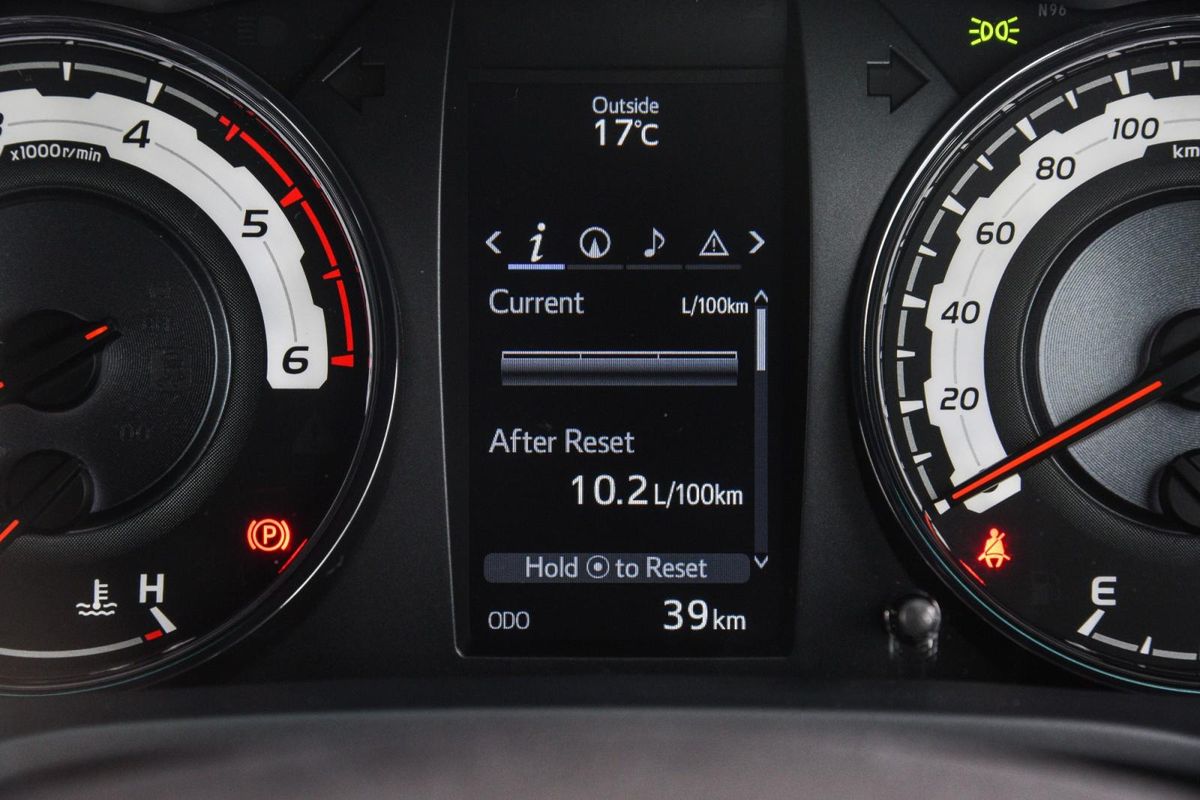
We continue to rate Toyota's 2.8-litre turbodiesel engine highly – it delivers a great combination of refined power and efficiency. The outputs of 130 kW and 420 Nm compare well with the competition, but where the Hilux really beats the bigger-engined Ford (for example) is in how responsive it feels to driver inputs. The 3.2-litre engine in the Ford feels comparatively sluggish. And then there's the fuel consumption advantage, of course. Toyota claims a combined cycle figure of 8.5 L/100 km which comfortably beats the Ford, but not the Mitsubishi or Nissan offerings. Nevertheless, our real-world figure of around 10 L/100 km is good for this kind of vehicle.
Our test unit was fitted with Toyota's robust-feeling (and rev-matching) 6-speed manual gearbox, and while there's nothing wrong with it, we would highly recommend the smooth 6-speed automatic that only adds R20k to the price. The decline in demand for manual leisure-oriented 4×4 bakkies has resulted in Ford no longer offering such a vehicle. We suspect more brands will follow.
Still, if you like shifting gears yourself, then the manual 'box in the Hilux won't disappoint. Shift-on-the-fly four-wheel drive is offered and there is a rear diff-lock too. The Hilux Dakar genuinely feels unstoppable off-road and it's worth emphasising the solidity of the vehicle in off-road conditions, too – there wasn't a creak, rattle or squeak to be heard from anywhere inside the cabin.
More upmarket cabin
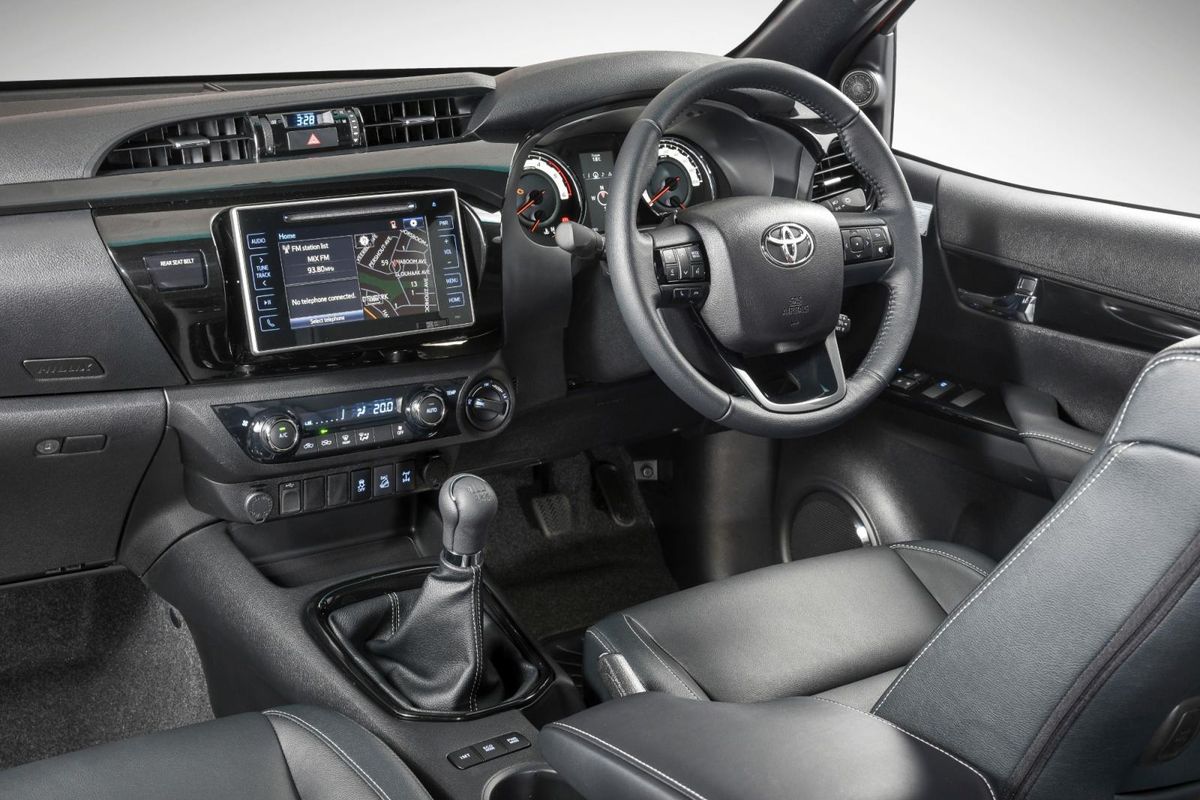
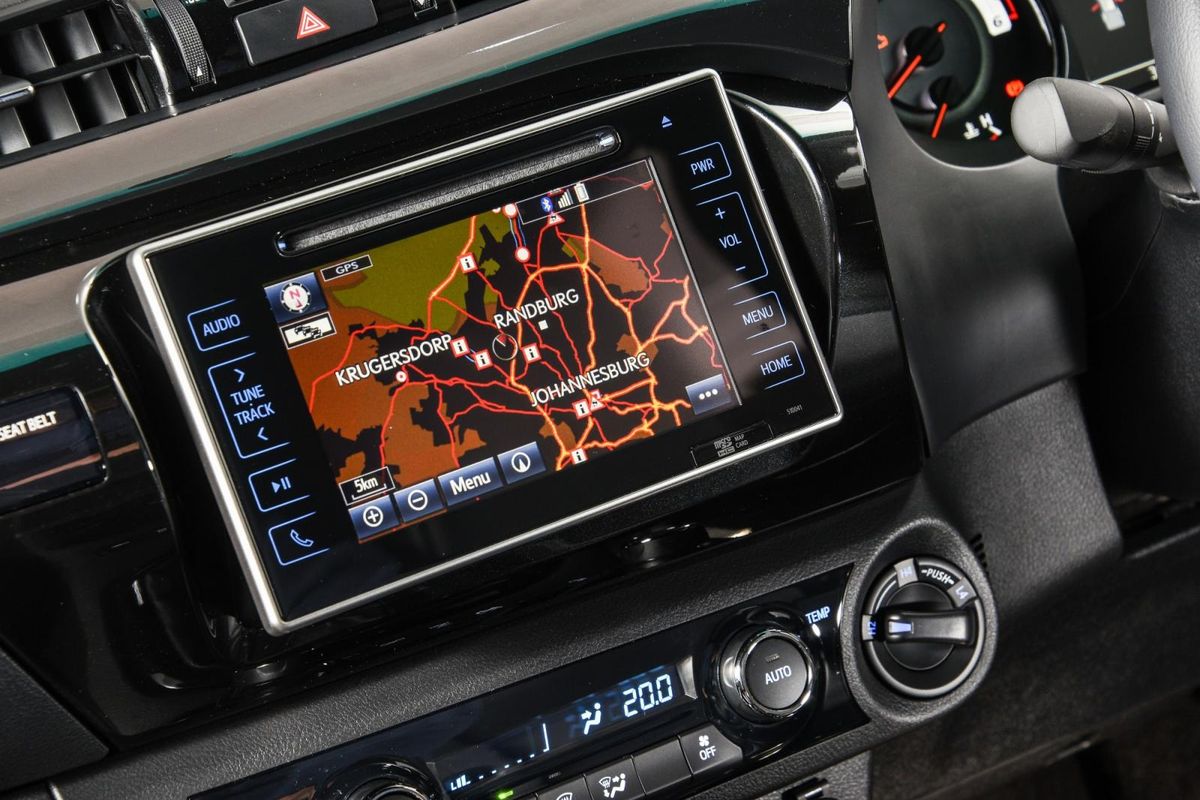
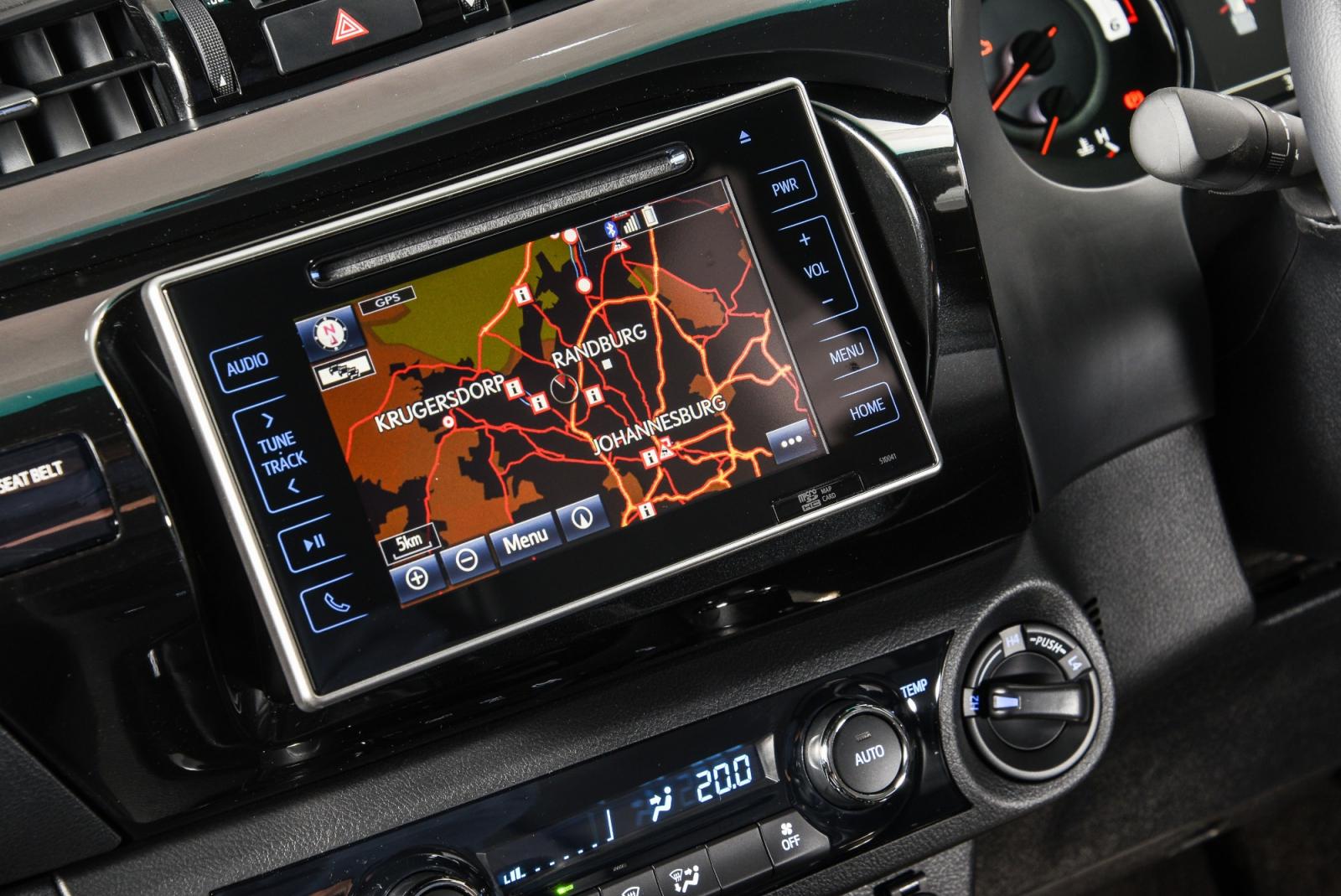
SD-card-based navigation is included with the deal. Infotainment system remains clunky to use.
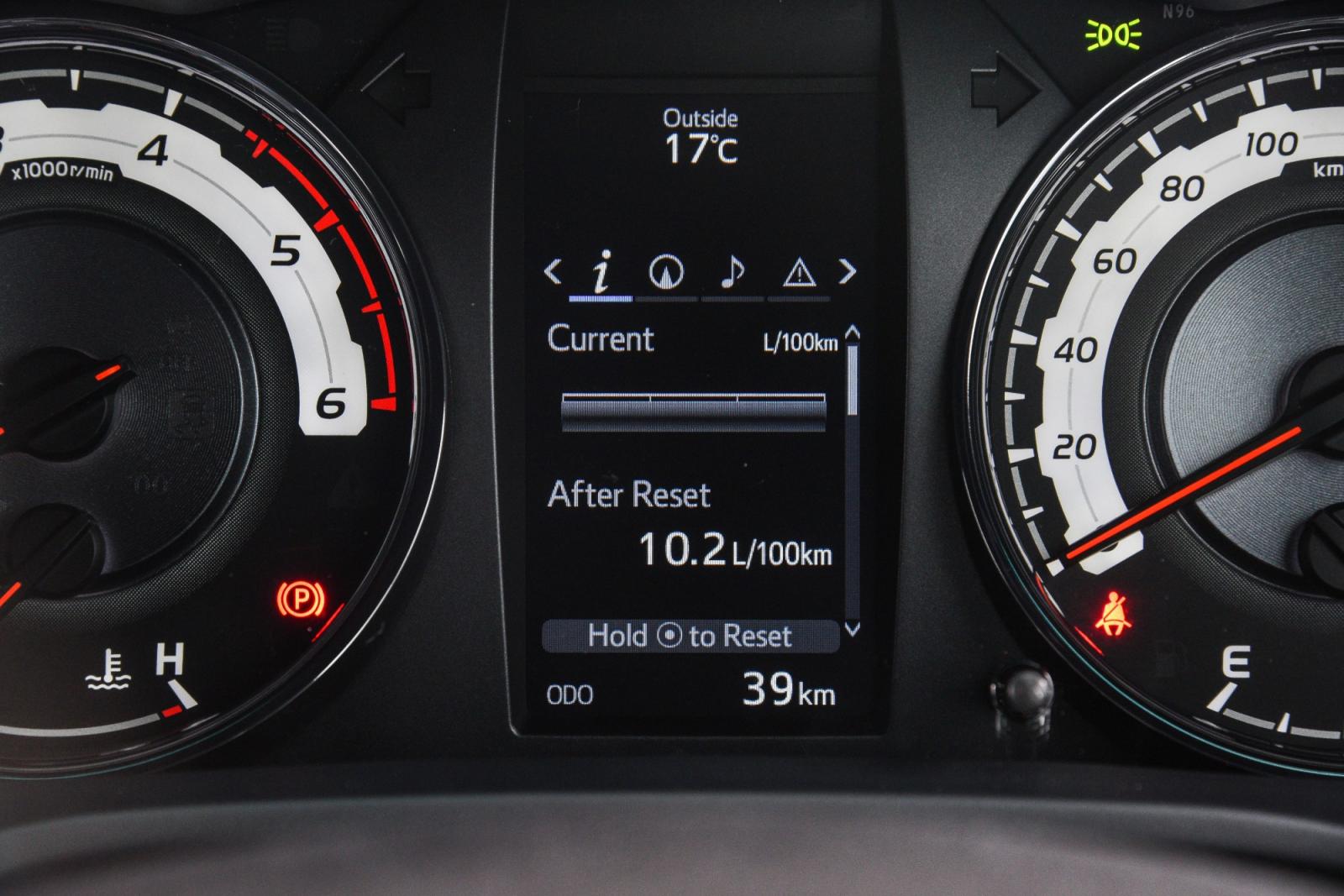
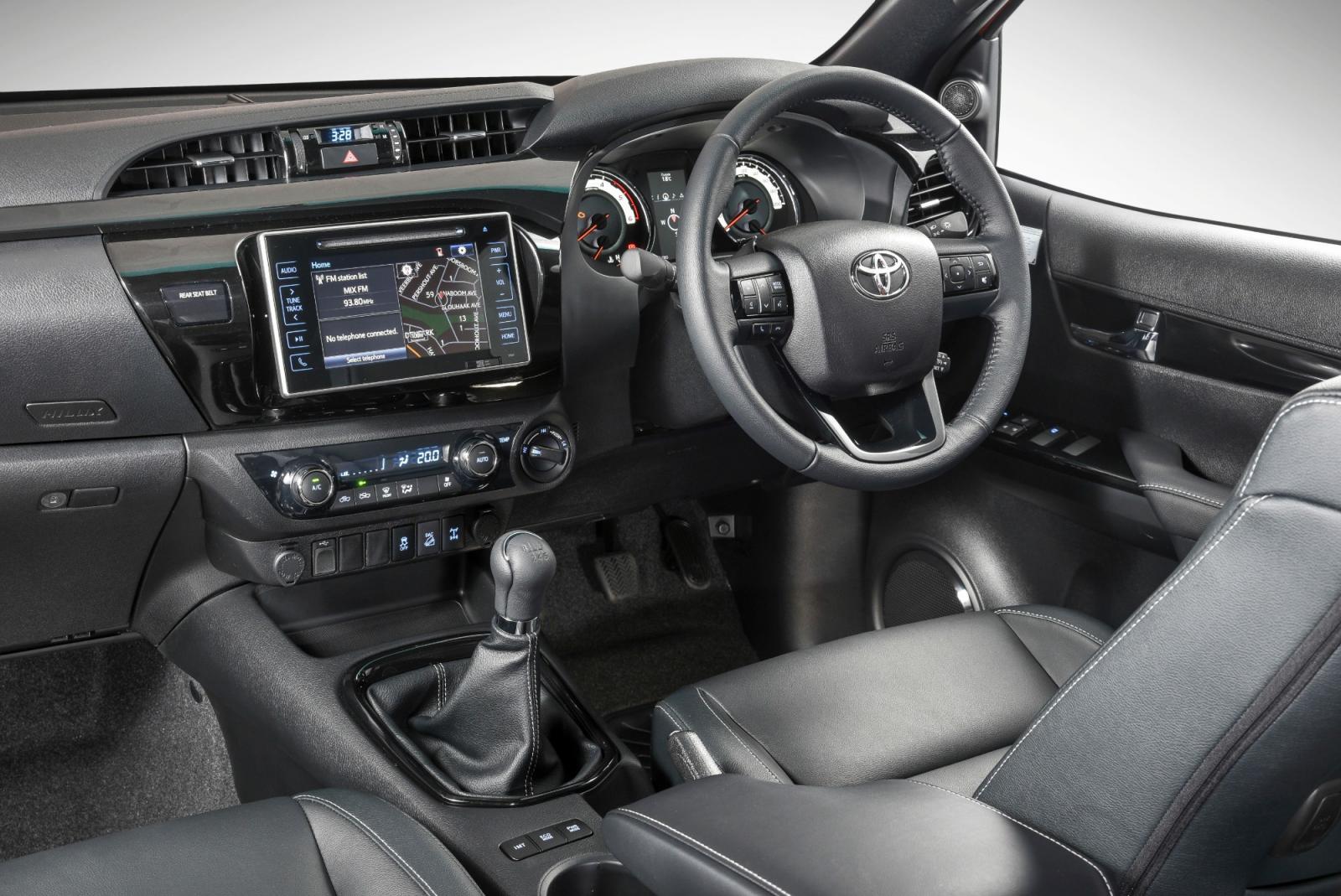
Inside there are also easy clues to this Hilux being a Dakar edition – the roof lining is black (as opposed to light grey on Raider), silver trim inserts have been replaced by metallic black, the upholstery is black leather as opposed to cloth and there's also new instrumentation (both in terms of the dials and digital display). From a usability point of view, the addition of SD-card-based satellite navigation is probably the most important, but we still rate the touchscreen infotainment system's user friendliness as being relatively poor.
Standard specification is good, with climate control, cruise control, auto lights, reverse-view camera view, 7 airbags and vehicle stability control (including trailer sway) all standard.
The (not so) good
Much the same as before
Leather upholstery is part of Dakar specification, along with the greater use of metallic black trim inserts and a black roof lining.
Seeing as the Dakar edition represents merely a style upgrade of the tried-and-tested Raider, the flaws inherent to the design remain the same. We've already mentioned the clumsy (though now more comprehensive) infotainment system, and the relatively tight rear legroom remains an irritation, more than a deal breaker.
Furthermore, the ride quality remains on the firm side and this is an area in which the Ranger arguably remains the class leader.
Pricing and Warranty
The Hilux Double Cab 4×4 Dakar costs R601 100 (July 2018) and comes backed with Toyota's usual 3-year/100 000 km warranty and 5-year/90 000 km service plan. Service intervals remain relatively short at 10 000 km. For a comprehensive specification breakdown (as well as finance estimations), please visit this page.
Verdict
If you've been looking at buying a Hilux 4×4 but found its design a trifle dull compared with, for example, the Ford Ranger Wildtrak derivative, then this Dakar edition may just be the solution. It offers significantly greater design appeal than the standard Raider for very little more and comes with the useful additions of navigation and leather upholstery. Underneath the shiny bits it remains the trusty, rugged, refined do-all we rate so highly. We do highly recommend spending a little more for the automatic, however.
We review two newcomers to the budget car market. Not new by name but new by model, it's the all-new Ford Figo up against the all-new Suzuki Swift.
When it comes to getting into a budget car, you want to know that you're getting the absolute most for your money. We've found two great offerings that offer quite good value for money if you're shopping in the R200k range. Ford's new Figo has a new 3-cylinder engine while the Suzuki Swift carries over its tried and tested 1.2-litre petrol.
In this video, Ciro goes through all the nitty-gritty bits that budget car buyers fret over. Which one is best? Check out the video and find out.
Mercedes-AMG C63 S (2018) International Launch Review
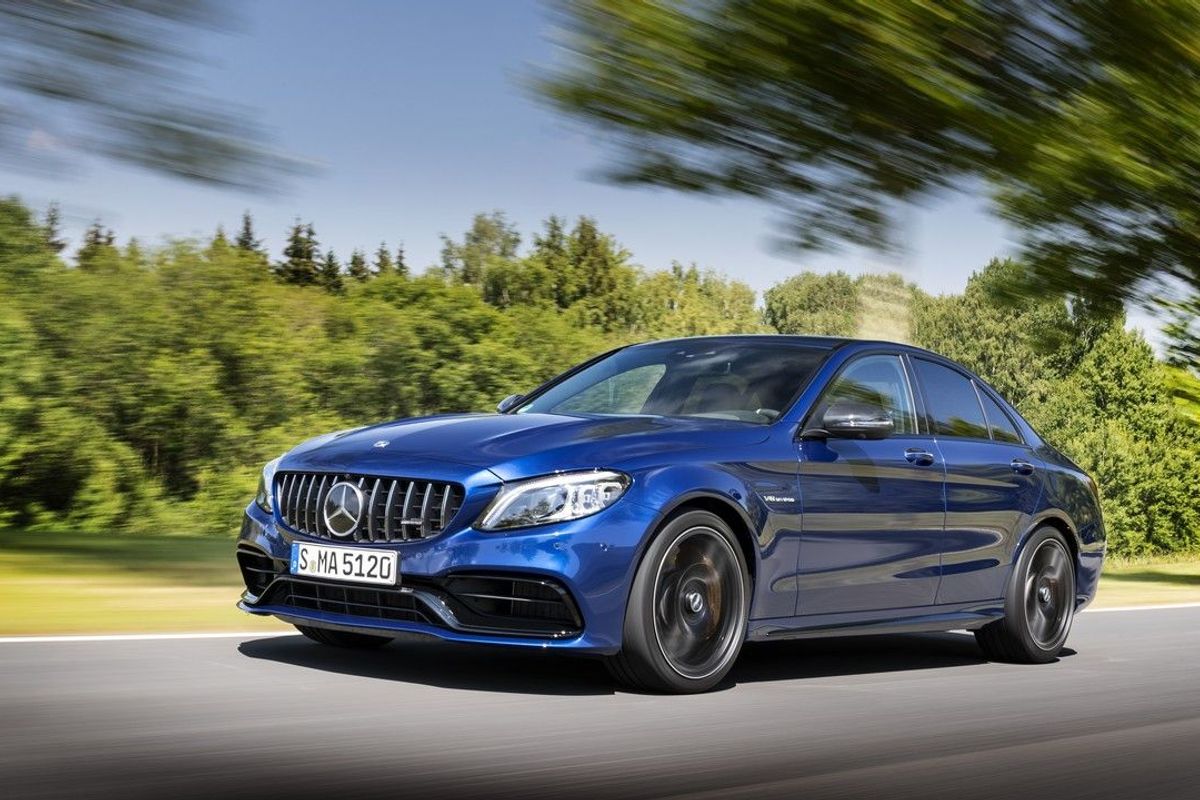
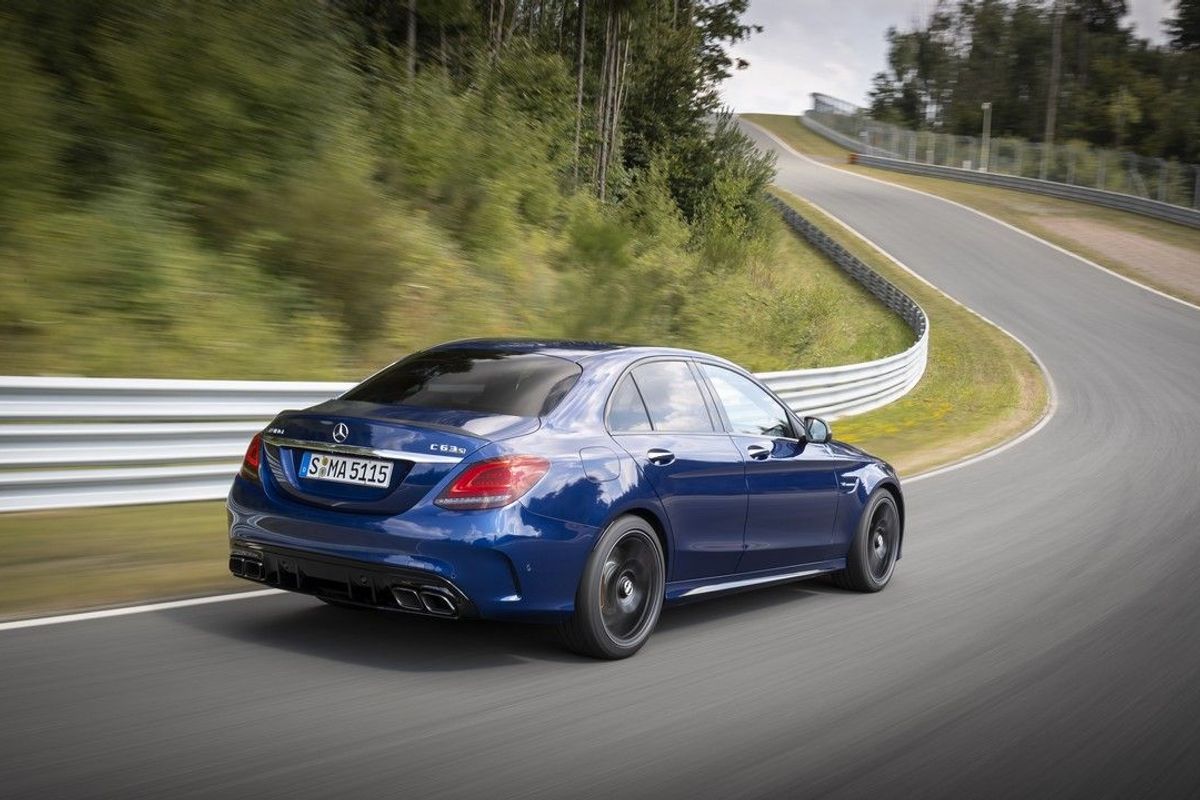
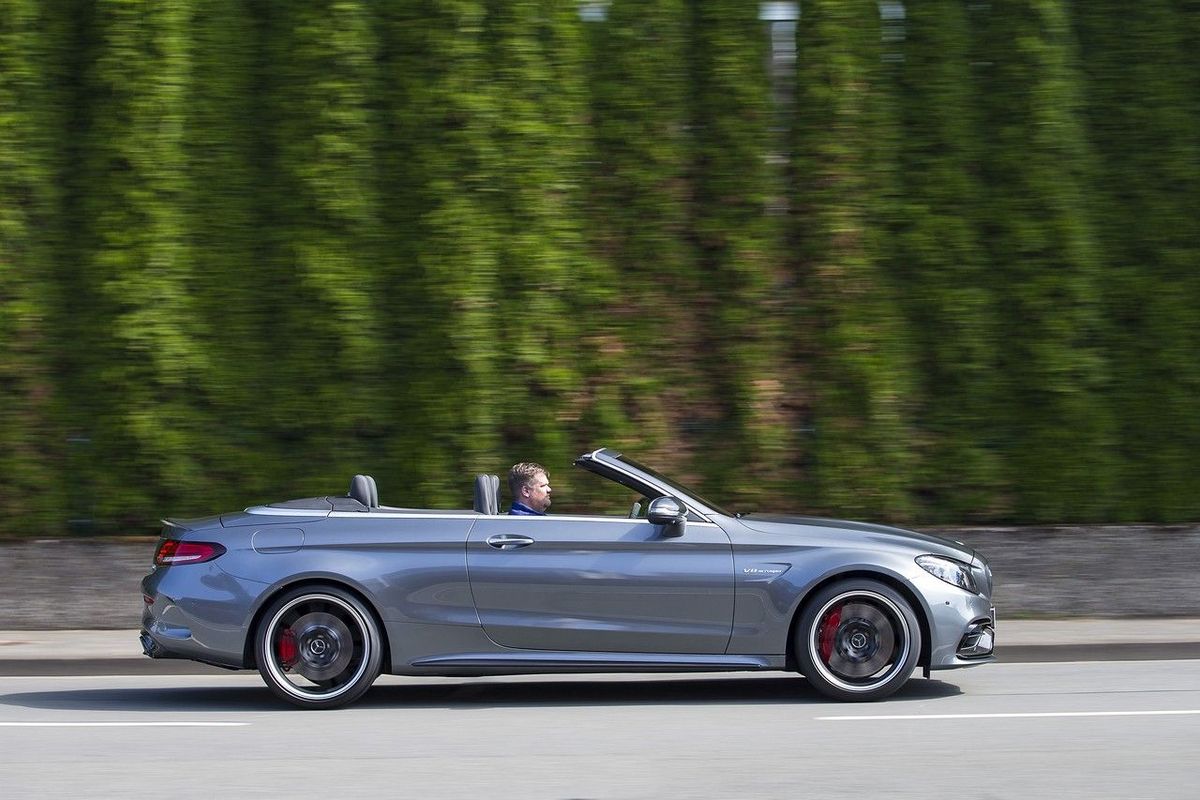
We headed to the speed-limit-free autobahns of Germany to get to grips with the facelifted version of the Mercedes-AMG C63 S, which will be introduced in South Africa before the end of the year in sedan, coupe and cabriolet guises. If these impressions are anything to go by, this very potent road weapon is well worth the wait.
What's new?
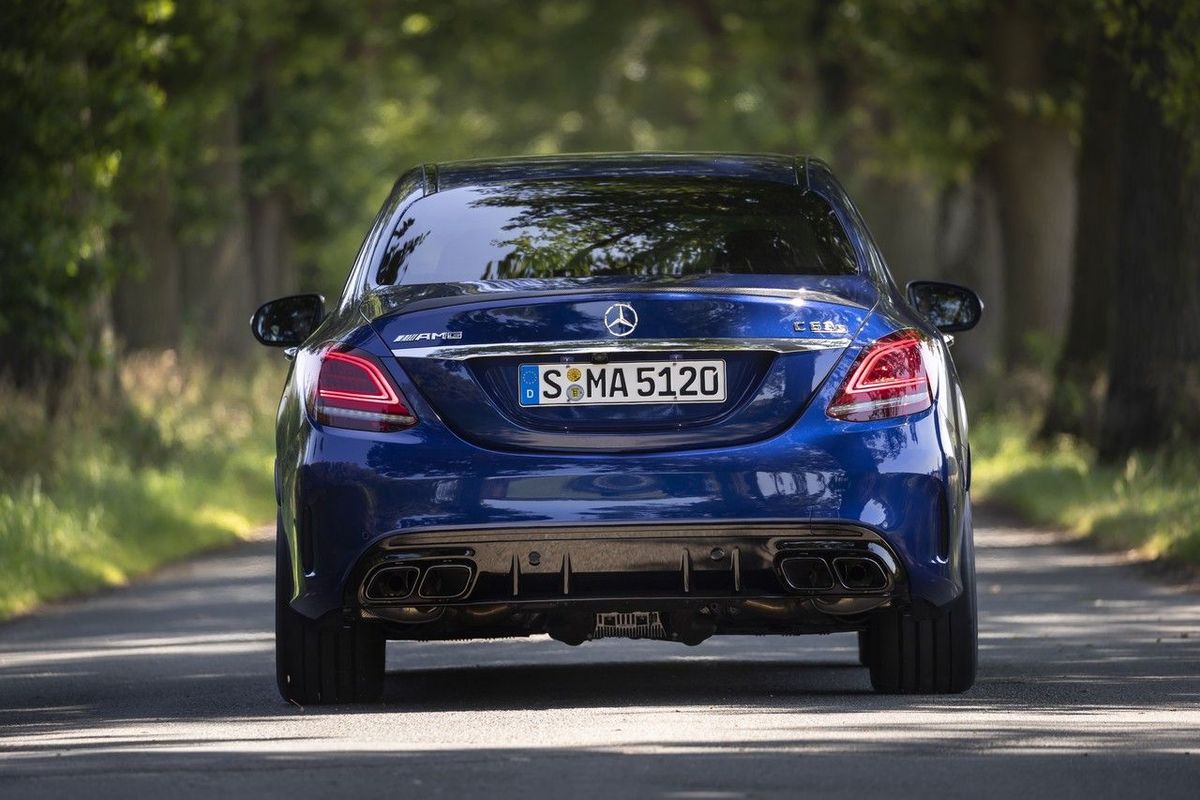
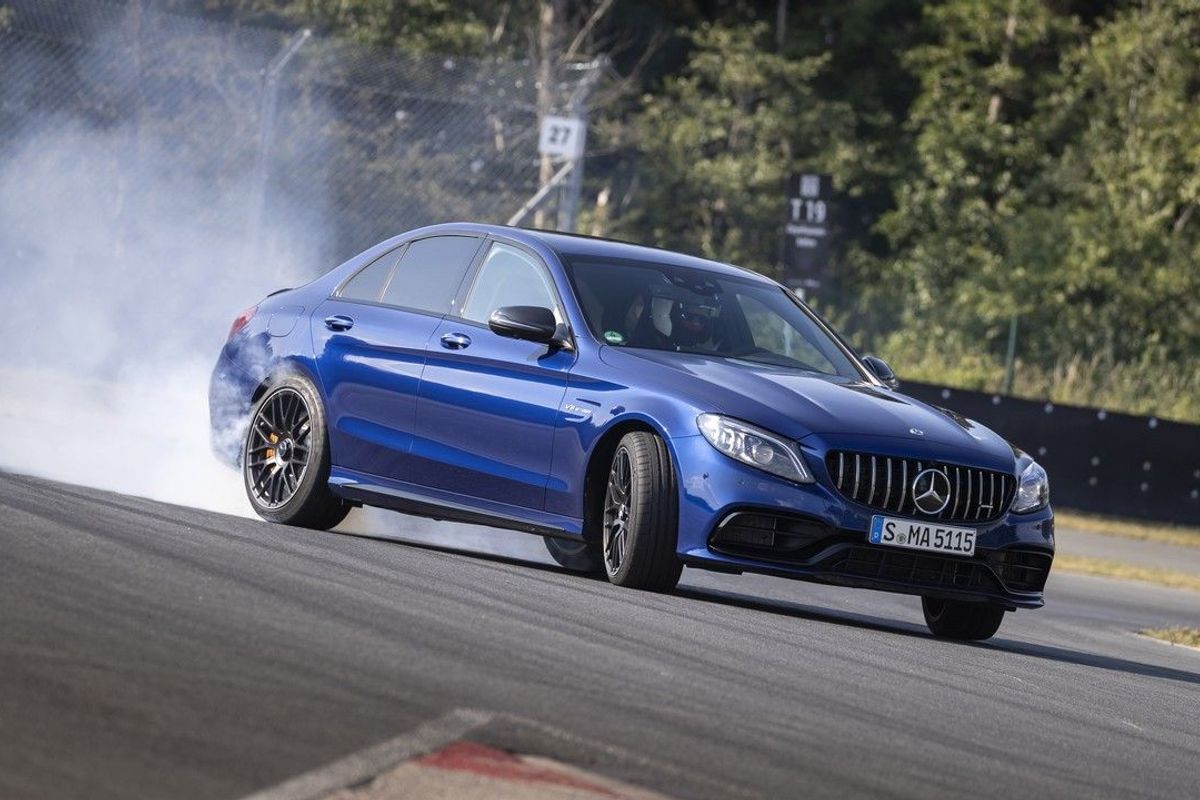
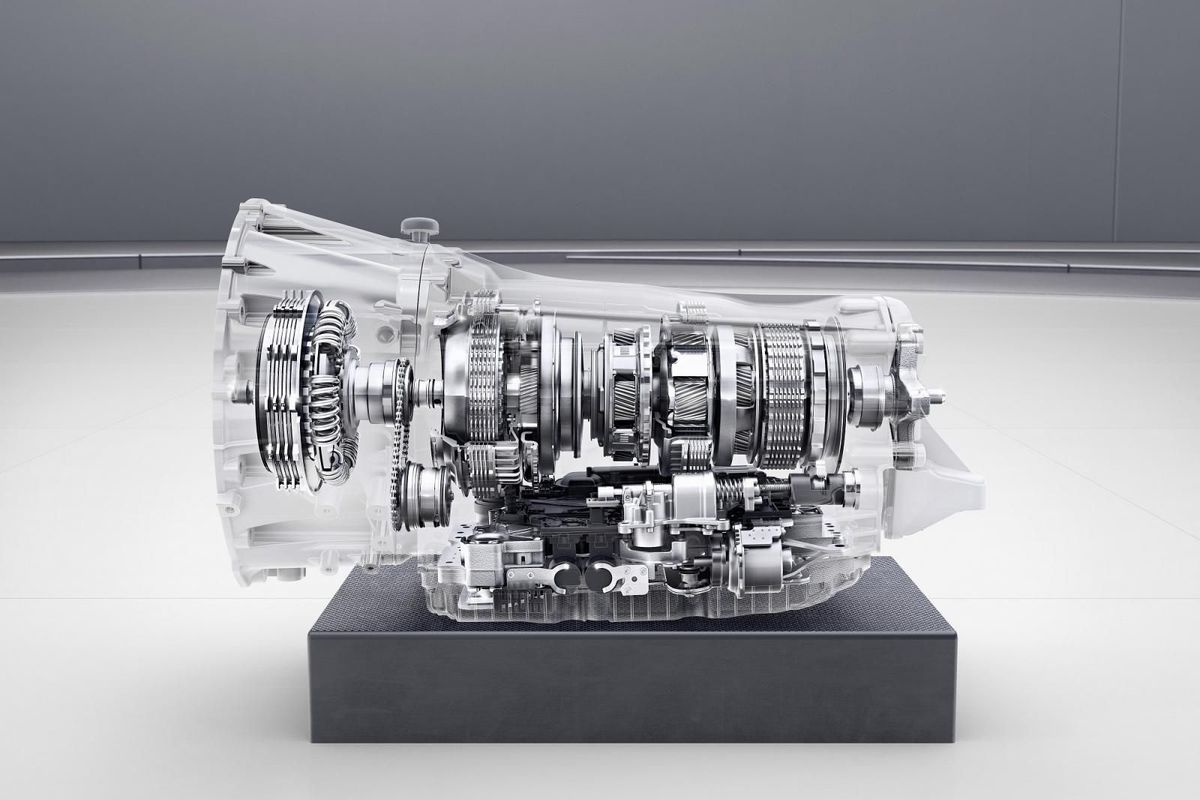
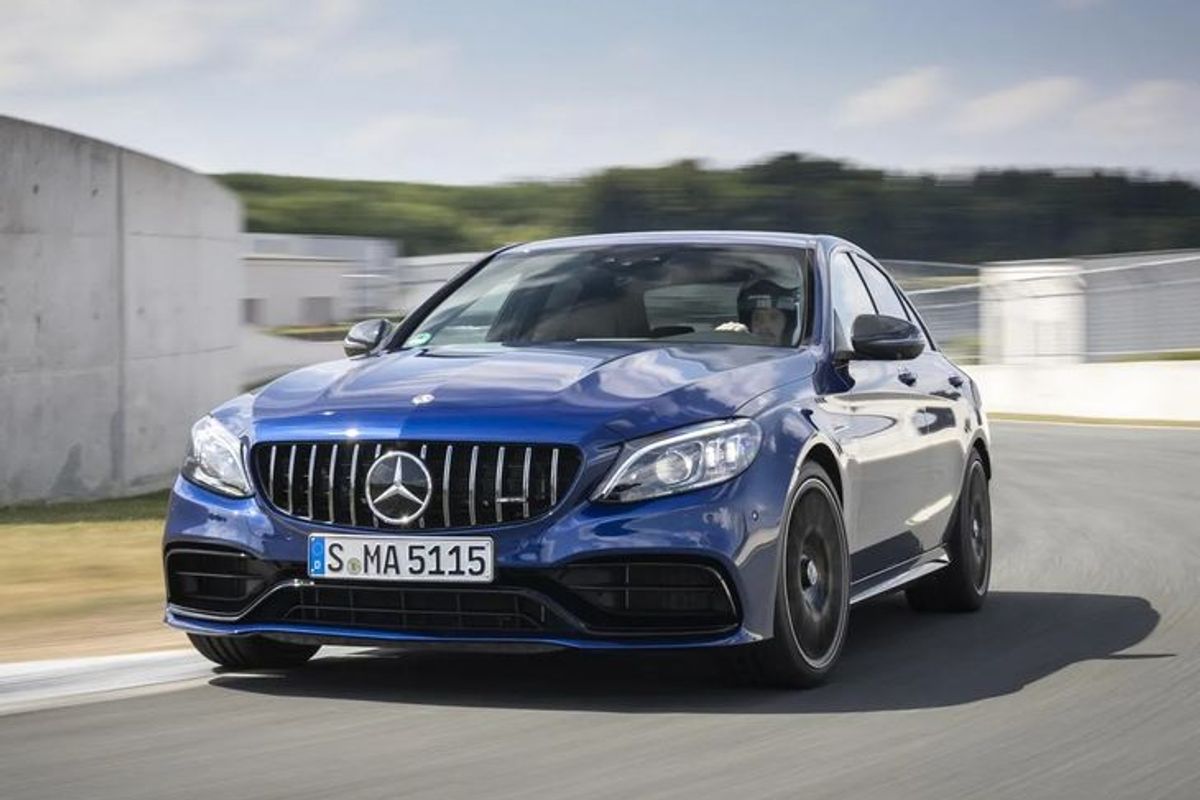
Visually, the biggest changes to the C63 S is the Panamerican grille at the front, some new-look alloy wheels and redesigned tail lights. In terms of engine, the 4.0-litre biturbo V8 has been carried over from the outgoing (pre-facelift) version. There was apparently no need for a power increase, as the Benz already delivers sledgehammer-like performance. For the record, the motor produces 375 kW and 700 Nm – and it's absolutely devastating in terms of the in-gear acceleration that it can deliver. Interestingly, despite the fitment of the new 9-speed transmission, acceleration from 0 to 100 kph remains the same, but we suspect the car simply cannot put its power down more effectively. Even with warm tyres on the track, burying your right foot in 1st or 2nd gear results in a loss of traction as the rear tyres struggle to deal with a 700 Nm surge. Entertaining? Absolutely.
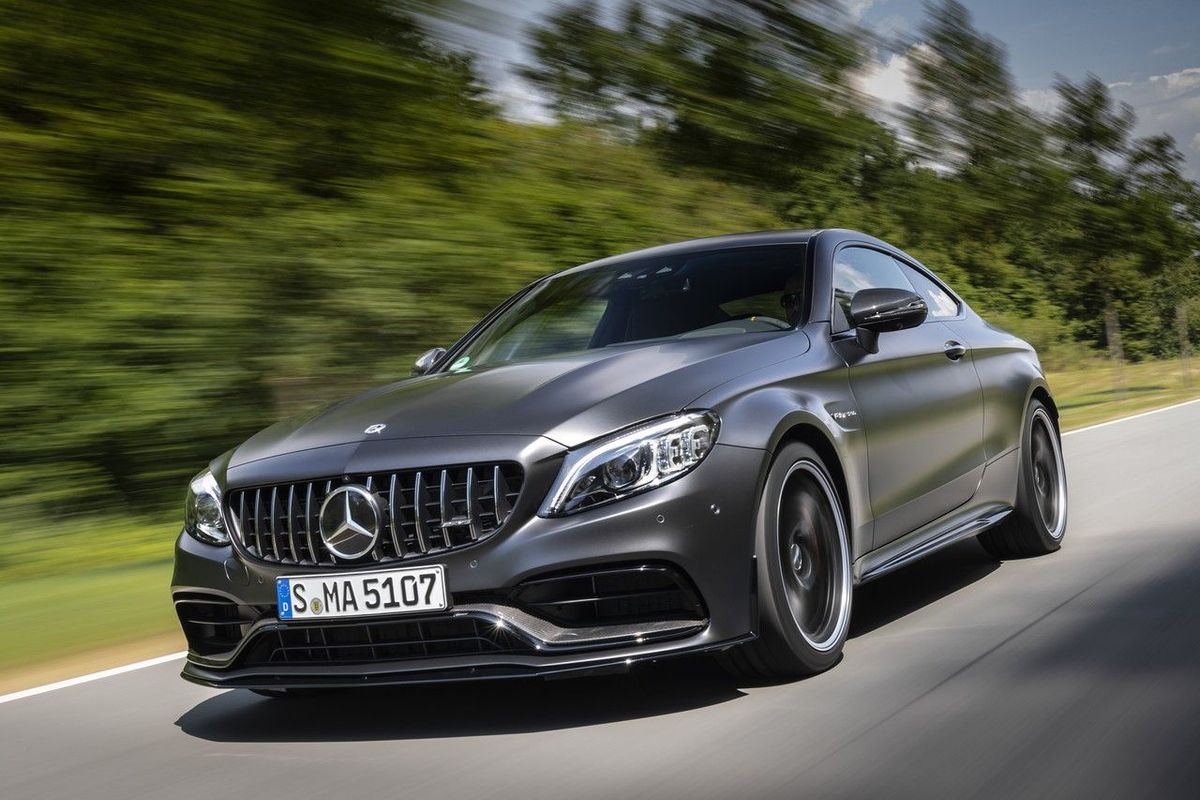
The Panamerican grille dominates the front end.
The main benefit of the 9G-Tronic transmission is that its ratios are closely spaced, which means you have greater access to that sonorous engine's generous spread of torque. Below 3 000 rpm, there's an entertaining noise, but beyond 4 500 rpm the 4.0-litre V8 produces a cacophonous din that would do a Highveld thunderstorm proud. When you come off the throttle and shift down a cog, there's an almighty crack out of the exhaust that is so percussive that you can feel it through the base of the driver's seat. There are also substantial revisions to the suspension (that obviously benefit handling) as well as the introduction of a brake-based torque vectoring system, which Mercedes calls AMG Dynamics, and the top speed has been increased from 250 kph to 290 kph. The electronically controlled rear-axle limited-slip differential is now standard across the range too.
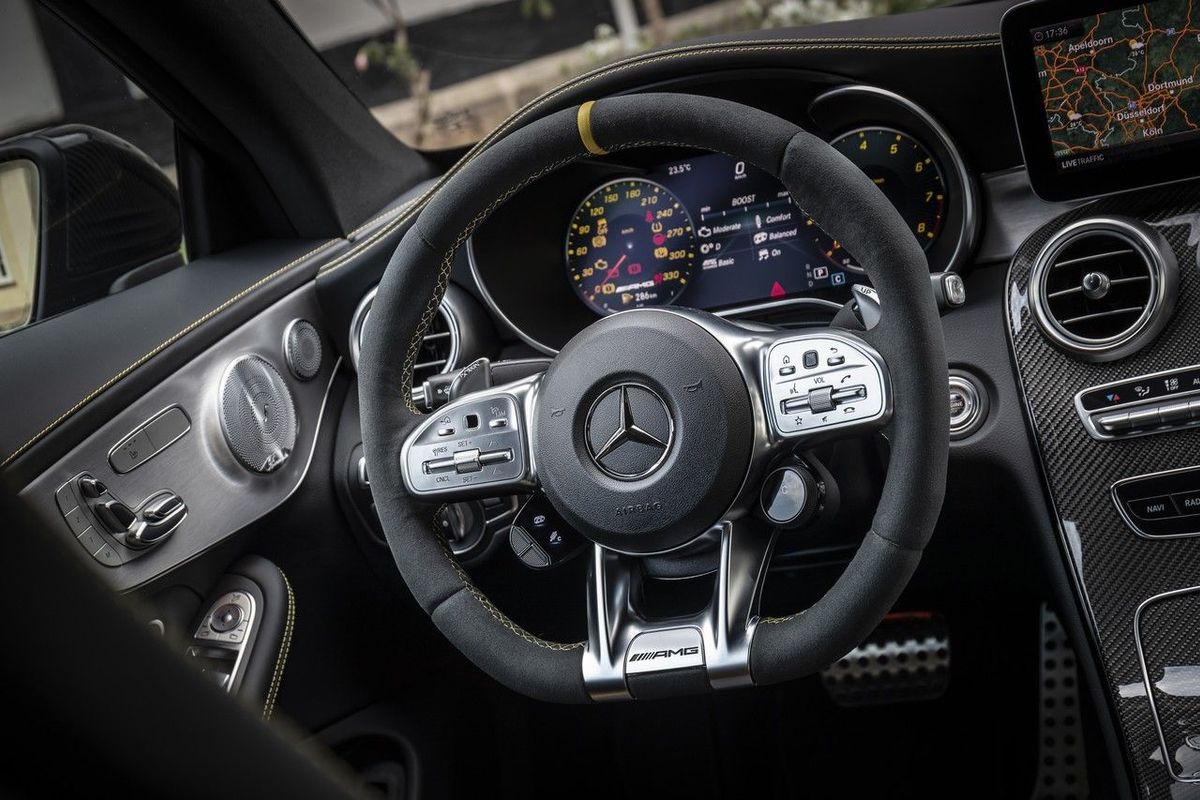
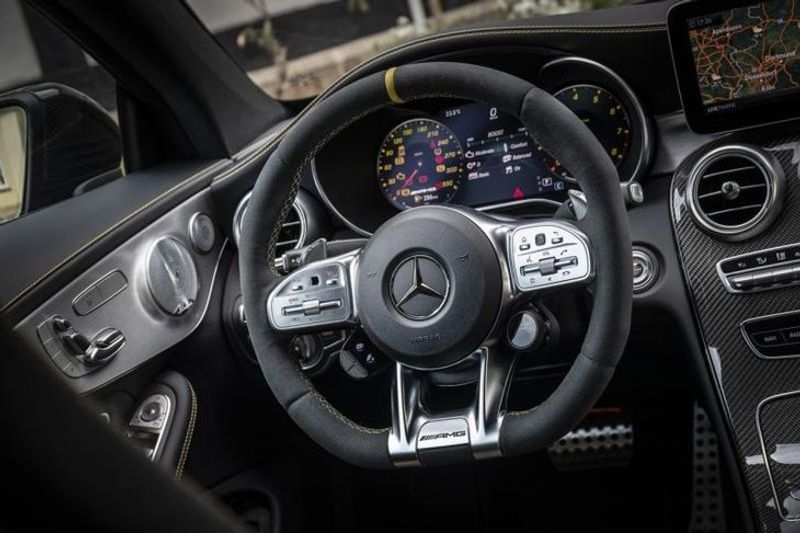
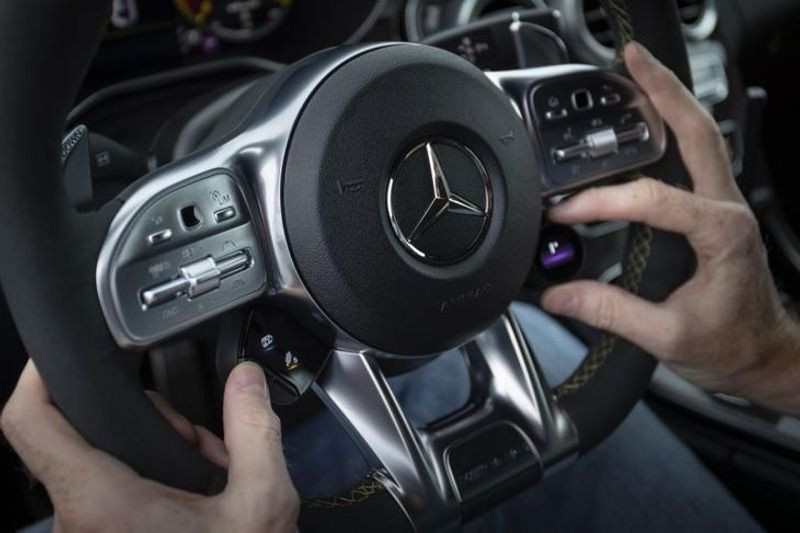
A new steering wheel and digital dashboard. Note the new AMG controllers, which are brilliant
There are numerous changes in the cabin, both from functional and aesthetic points of view. The substantially revised infotainment system not only has a more modern look – it's far more intuitive to use – and the new-look steering wheel, reminiscent of the unit we recently experienced in the Mercedes-AMG E63 S, is glorious to wield. Whether you stick with the standard Nappa-and-microfibre-trimmed 'wheel or opt for the audacious carbon-fibre version, it feels appropriate for a vehicle of this nature. We haven't forgotten the tiller's 2 new rotary controllers; we'll discuss them later.
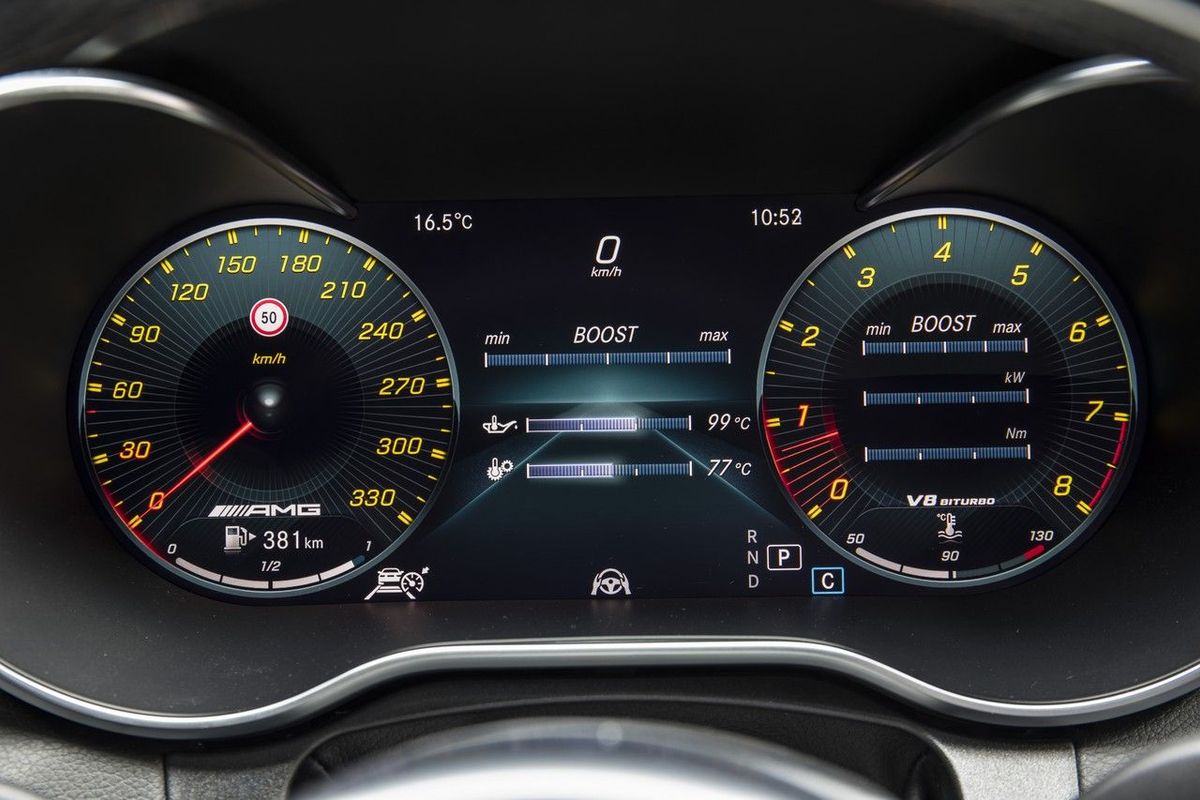
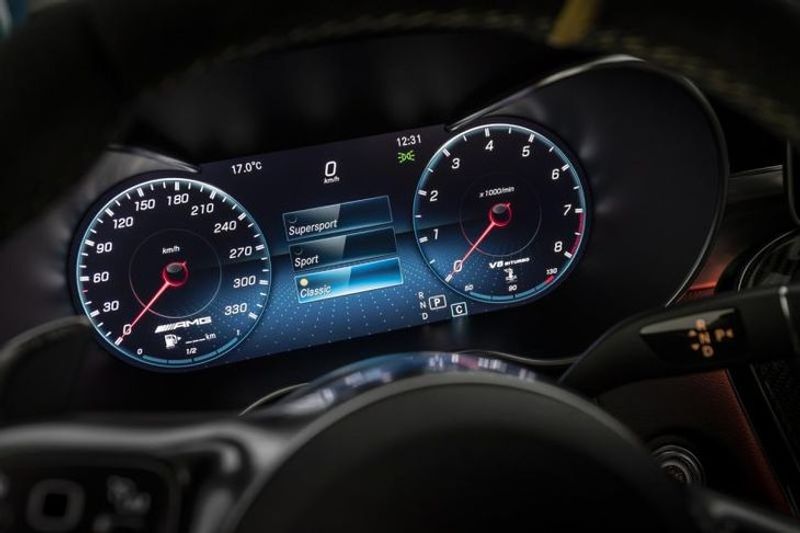
The digital dashboard from the more upmarket Mercedes-Benz products has found its way into the C63
Mercedes-AMG has introduced a 12.3-inch instrument cluster for the C63 S. It looks very similar to that found in the Mercedes-Benz E-Class, which is a system we greatly admire. The graphics are crisp and modern, and customisable with 3 themes. You can further tweak the data displayed and choose what information is critical for your drive. Some may fancy seeing engine data such as gearbox temperature and turbocharger boost, while others may prefer viewing navigation and audio information. As far as cabins go, the new-look Mercedes-AMG C63 S is modern and advanced.
What is it like to drive?
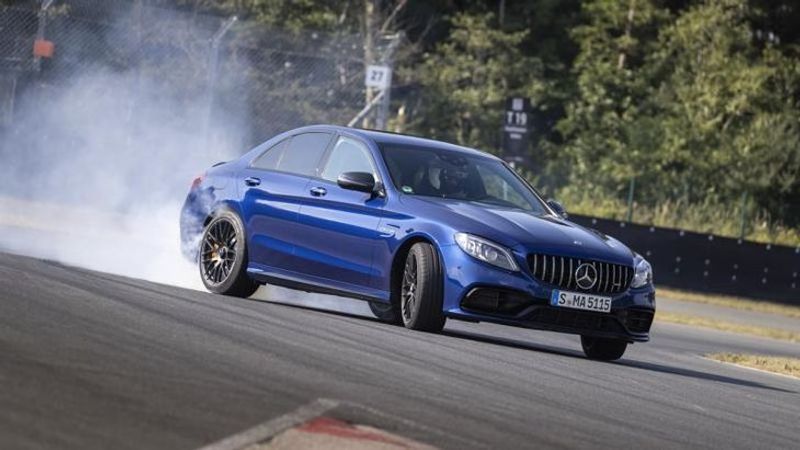
Thanks to 700 Nm, tail sliding action is very possible, but thanks to the 9-stage traction control, it's completely manageable
There's no other way to put this: the ferocity of the 4.0-litre V8 motor makes the C63 S an unsubtle vehicle to pilot. Sure, you can put it in Comfort mode and let it shift gears on its own, but you're constantly reminded that you're piloting a barking, snarling German road weapon. While the new 9-speed transmission is good, in full-automatic mode (in Comfort) the 'box is simply too eager to change up – as if the Benz is trying its utmost to be thrifty and economical. All of which is fine, but when you want to overtake slower traffic, the 'box will quickly kick down 2 or even 3 ratios and it feels fussy for such a powerful car. Fortunately, you can rectify this by putting the car into Sport or Sport+ mode and switching the gearbox into manual mode. Besides, it's quite a treat to hear a reassuring clink-clink with every tug of the handsome, tactile metal paddles located behind the 'wheel.
The C63 S' adaptive damping system is praiseworthy too, because in the more dynamic modes such as Sport, Sport+ and even Race, there's a negligible loss of ride quality between the settings; the real acid test, of course, will be the suspension's performance on South African roads. We really like the in-between setting of Sport+ which gave you a firm, but not jarring, ride. And, the Benz truly shines on the highway… With so much torque available and the new 9-speed transmission eager to give you the perfect gear for maximum effect, the sedan's in-gear shove is immense.
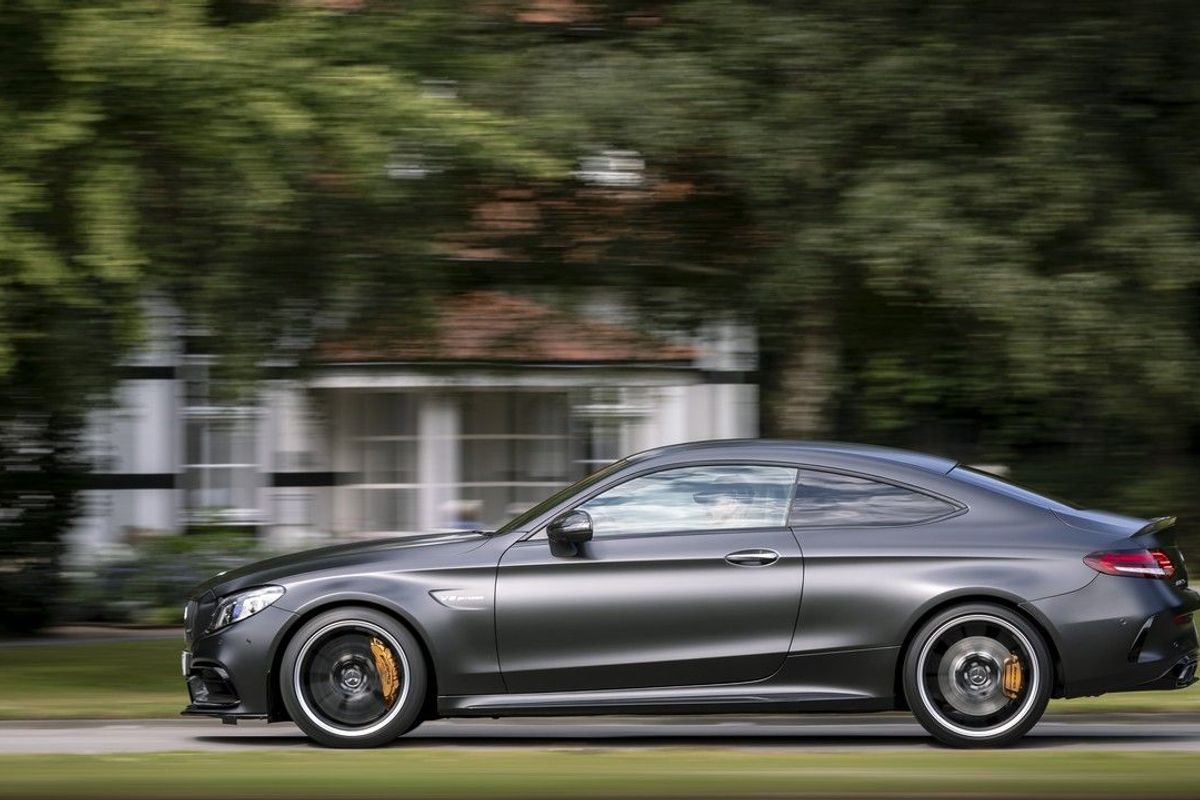
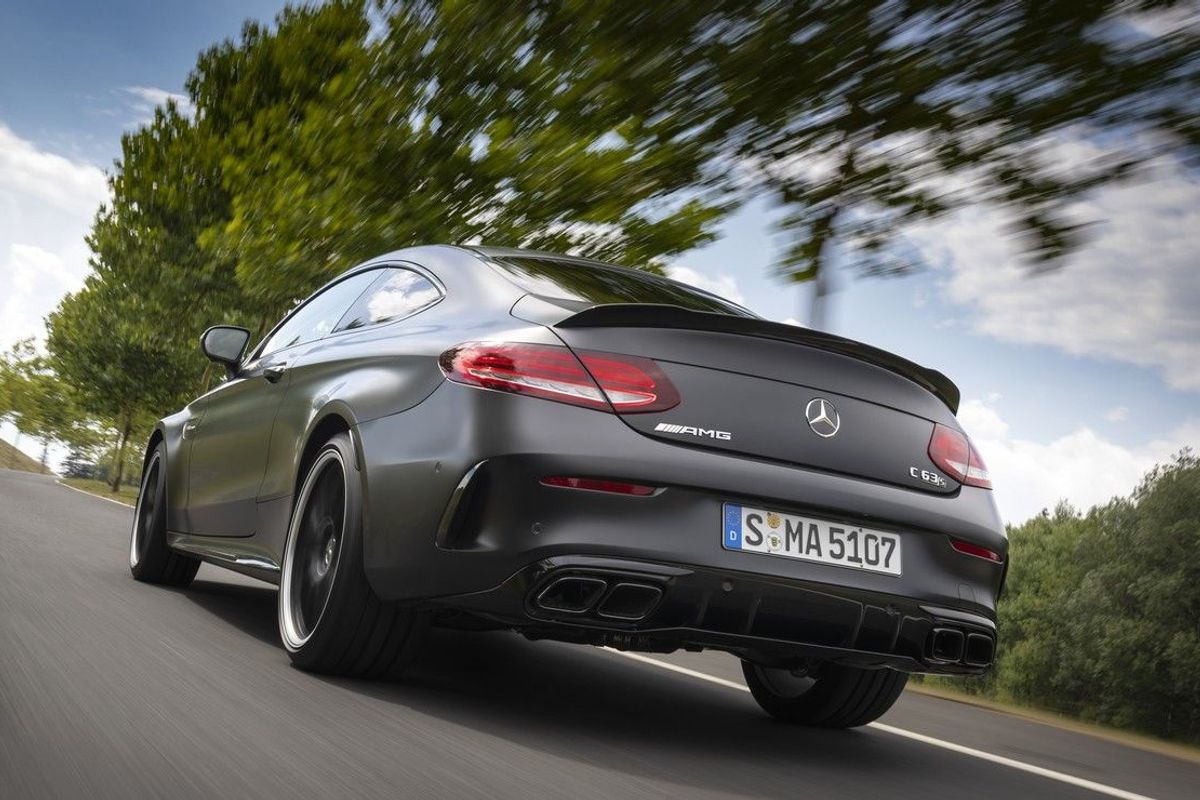
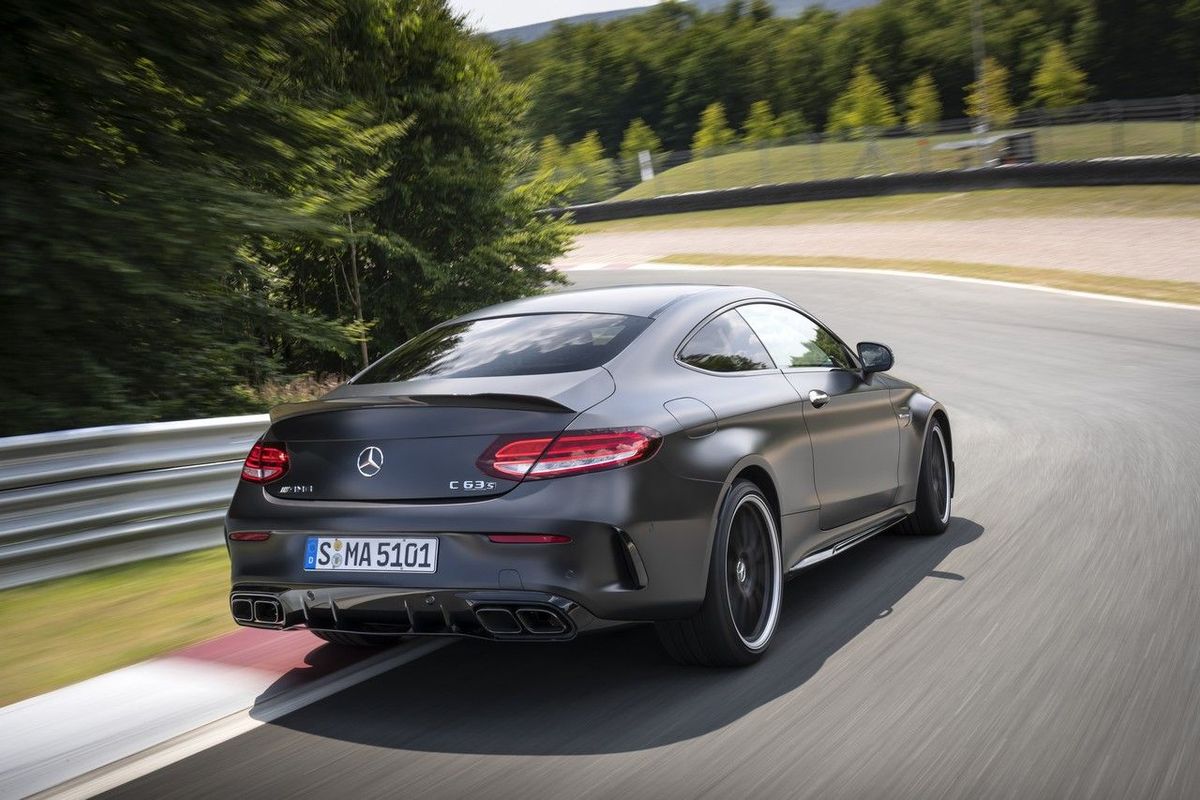
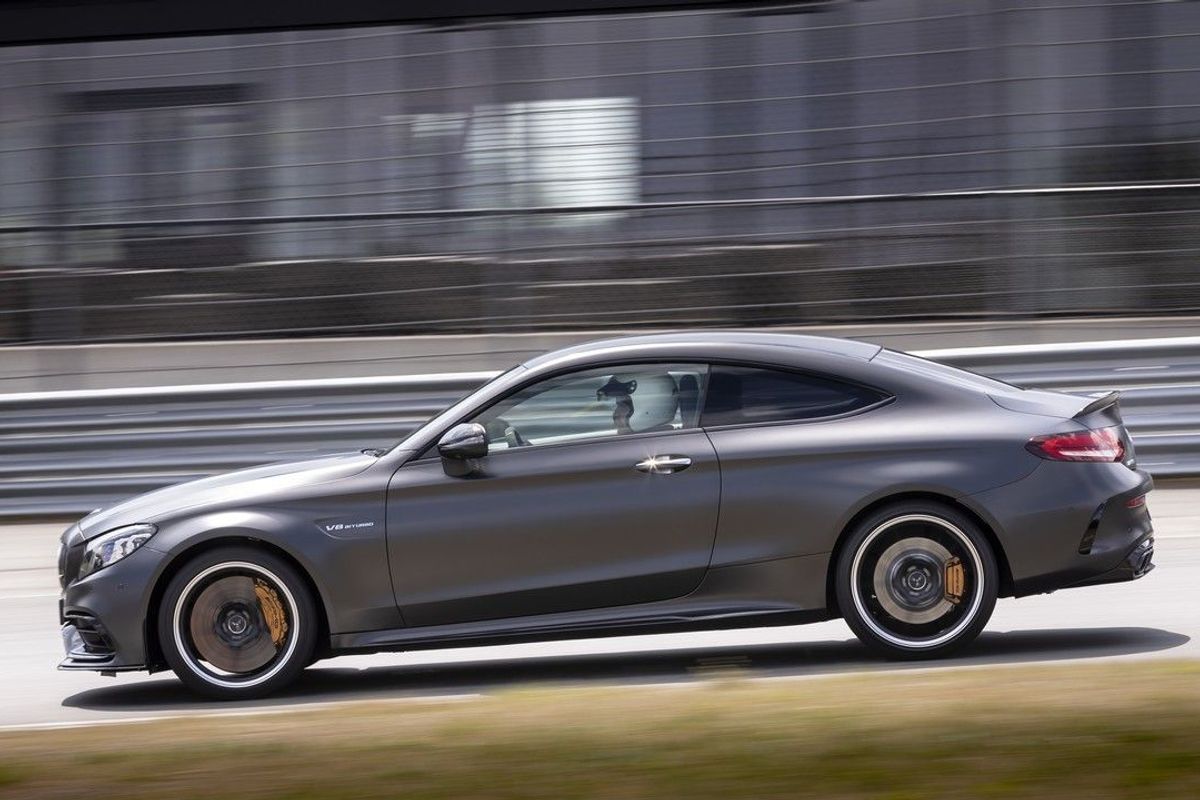
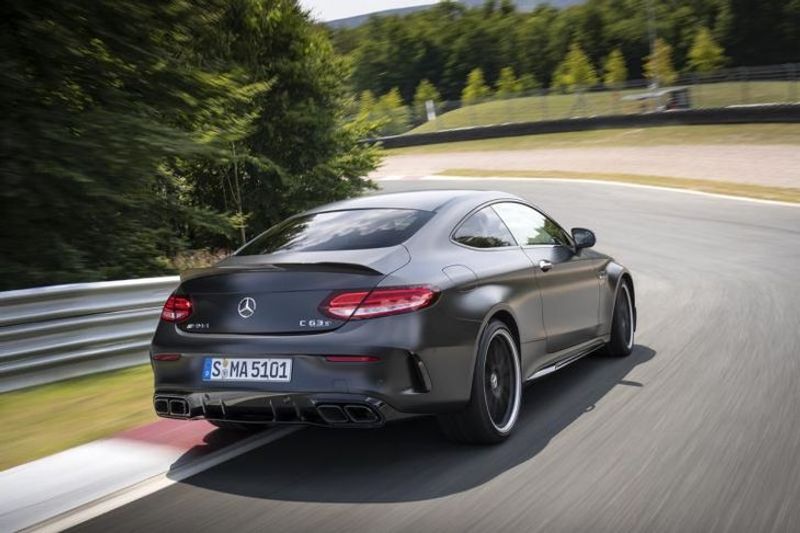
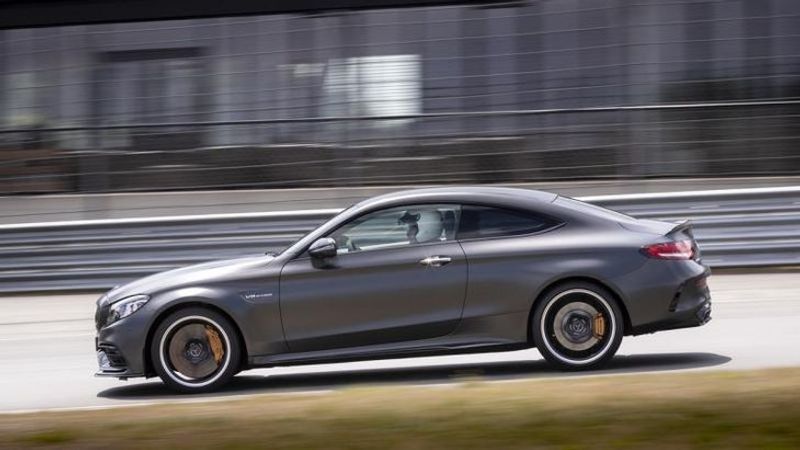
How good does this look? The Mercedes-AMG C63 S coupe, complete in a beautiful matte finish
Track Driving
To really get a feel for the changes Mercedes-AMG made for this version of the C63 S, we turned off the beautiful B-roads around Paderborn and headed for the track at Bilster Berg, which is a highly technical course due to its elevation changes and blind corners. Thankfully we had ample time to get to grips with both the track and the car; our first few sessions focused purely on stringing some corners together in a tidy fashion and then going deeper into the C63's driving modes: Sport became Sport+ and then we found ourselves turning the wheel-mounted dial once more to Race.
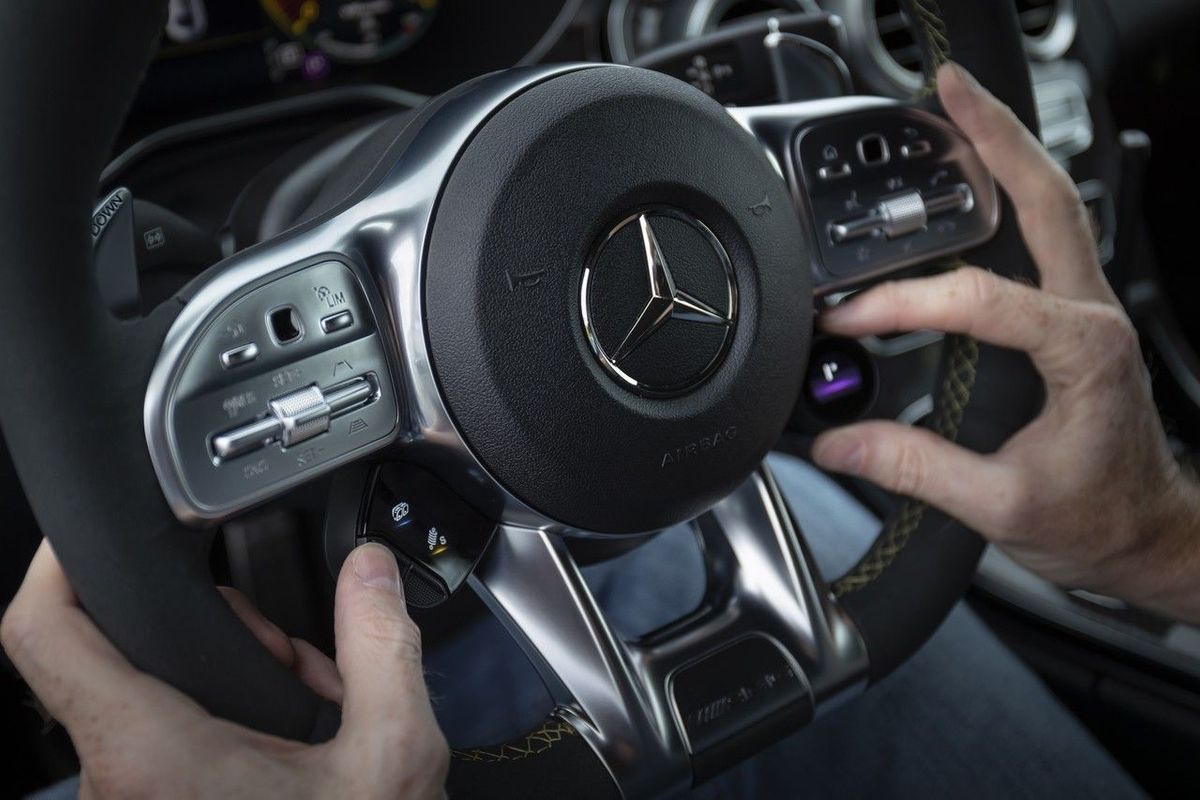
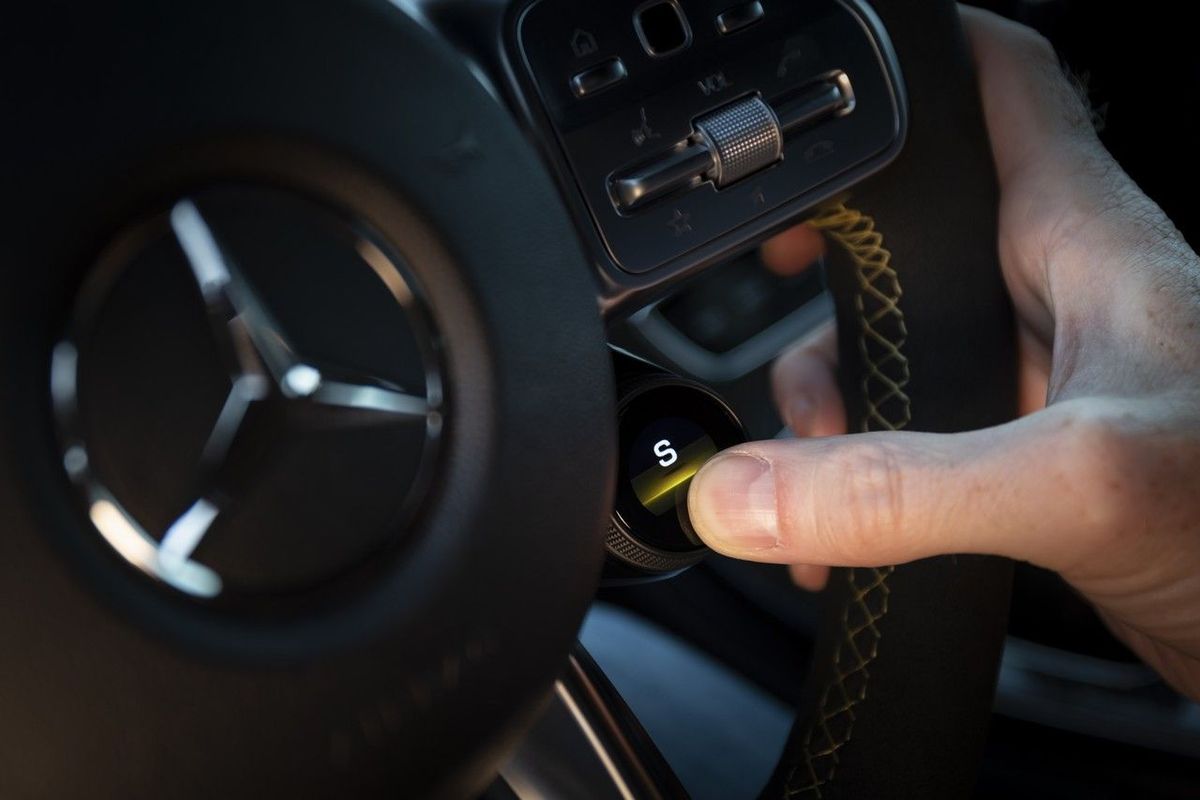
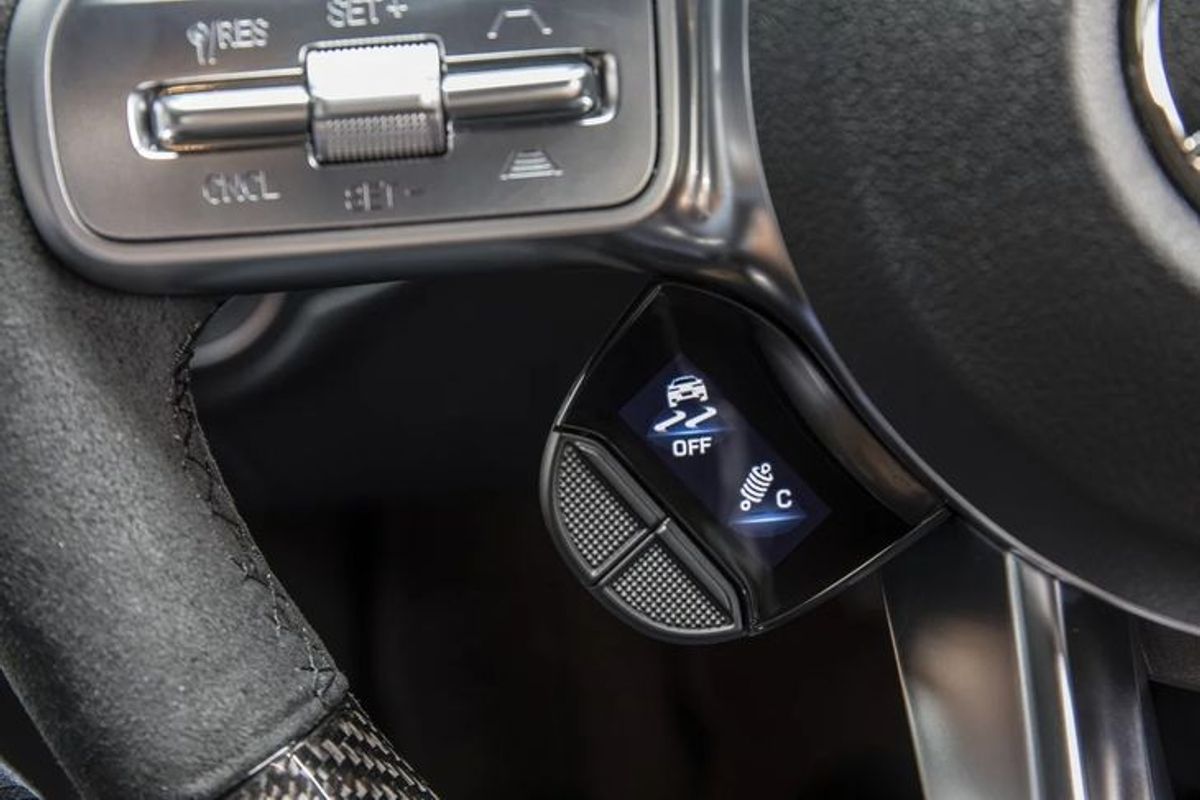
The new AMG controllers, where you can switch driving modes, modify traction control, adjust suspension settings and more
Track fanatics should be very excited by the new Mercedes-AMG C63 S. The driver has been prioritised in the slight redesign of the cabin, and the first adornments you're likely to notice on the new steering wheel are a pair of rotary controllers located under its spokes. These are programmable and instead of having to glance over to the centre stack to change your drive modes, gearbox and suspension settings, you can keep your hands on the wheel and do everything there instead. We appreciate the fact that Race mode no longer affects the stability control. Previously it would activate ESC Sport, which would allow some slip, before catching you in a safety net. Now, you have the option of deactivating the traction control completely and then choosing 1 of 9 traction control stages. 9 is completely off, whereas 2 allowed for gentle tail action before the car intervened.
This technology was first seen in the Mercedes-AMG GT R, where a rotary switch dominated the centre of the dashboard. Fortunately, the AMG designers integrated it into one of the C63 S' rotary controllers, resulting in a cleaner-looking cabin. The result? Well, in full Race mode with the traction control carefully set to "Have Fun, But We Have Your Back", this author was able to turn in some more-than-decent laps and exploit the quick steering and rear-wheel-drive dynamics in pursuit of the AMG GT R pace car, piloted by DTM and F3 professional racer Maximillian Gotz.
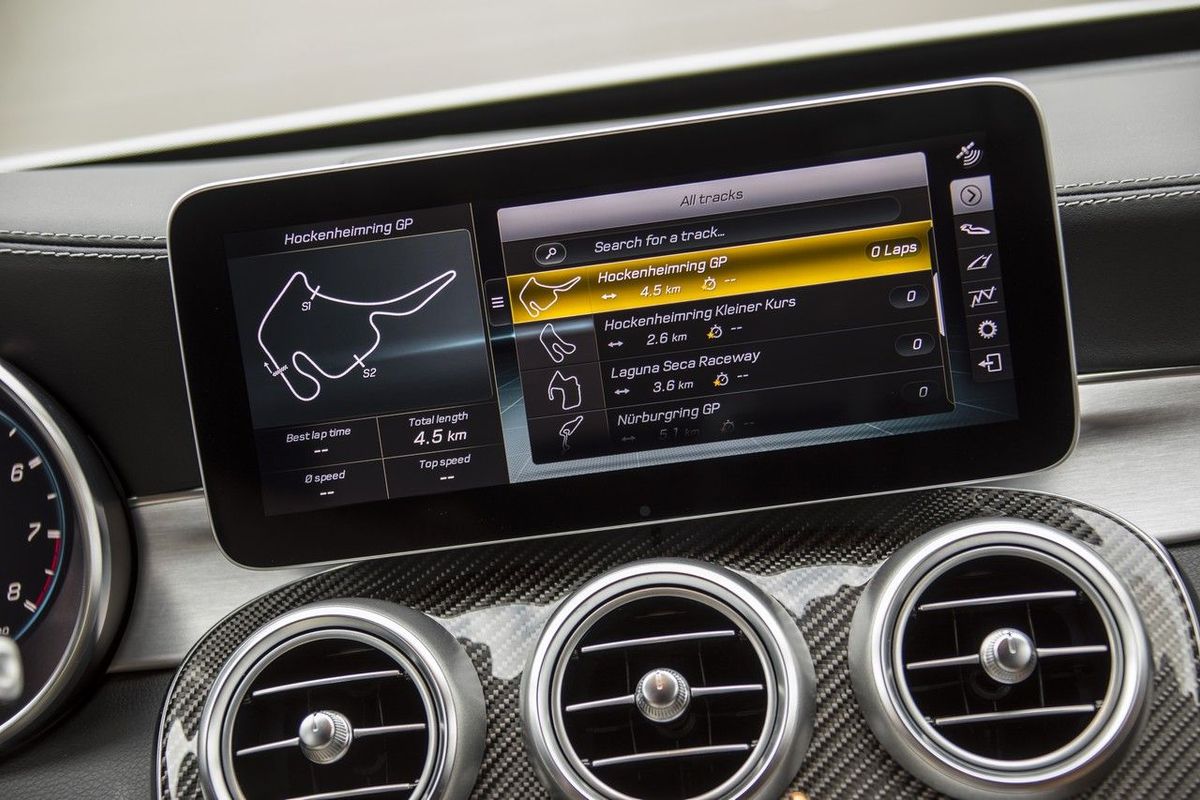
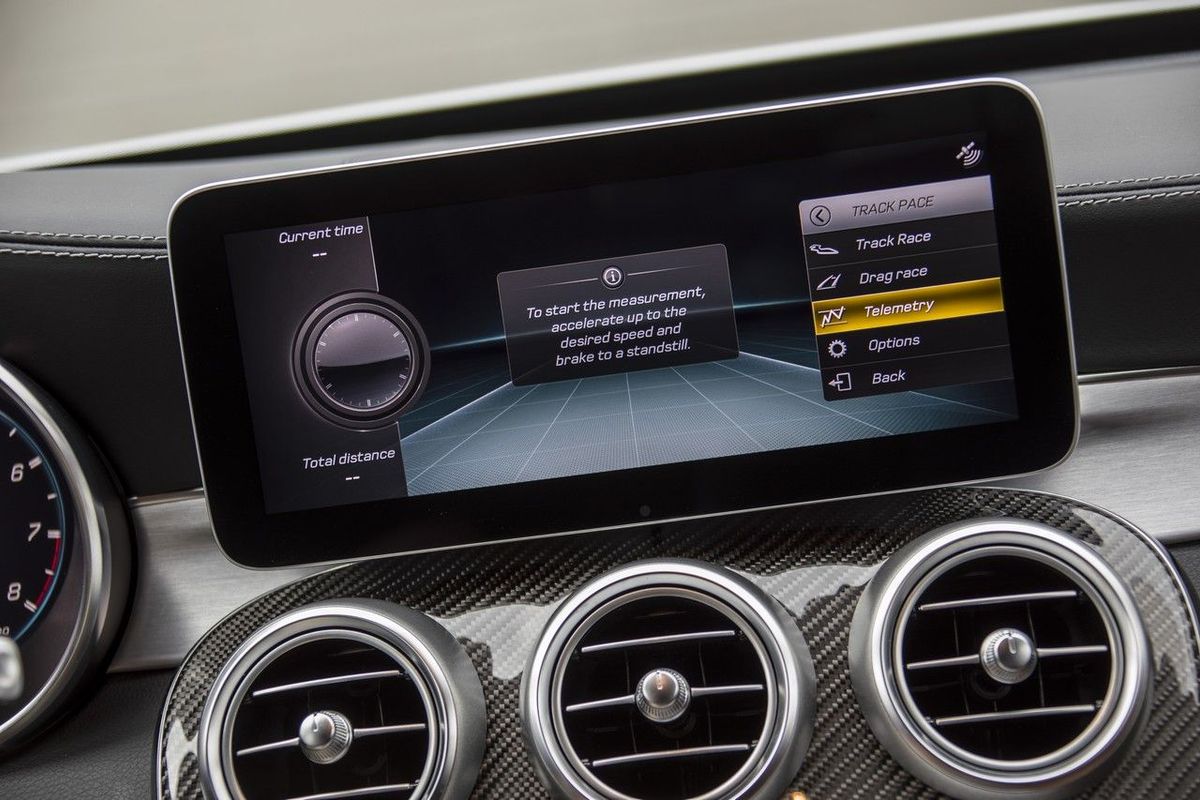
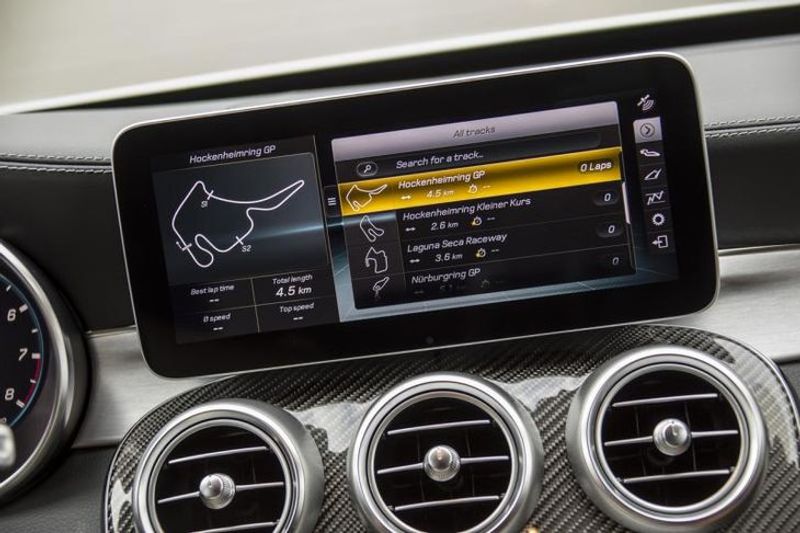
AMG Track Pace is absolutely brilliant if you want racing telemetry. All the major circuits are loaded into the system!
Meanwhile, the optional Mercedes-AMG Track Pace application, underpinned by an integral data-telemetry measuring and capturing system, comes pre-loaded with famous tracks such as Spa Francorchamps and the Nurburgring Nordschleife (but you can record any circuit on it). It records more than 80 sets of data 10 times per second (such as speed, braking, G-forces and acceleration) and saves lap and sector times, so that you can use the app to improve your skills. You are also able to measure acceleration and deceleration performance (0-100 kph, quarter mile and 100-0 kph).
We preferred the flatter-cornering coupe version over the sedan as it looks terrific, particularly in a matte paint finish.
Summary
With the competition downsizing (Audi and Alfa Romeo have opted for 2.9-litre V6s and BMW has reverted to a 3.0-litre straight 6), the brutish Mercedes-AMG remains the sole provider of V8 goodness in the segment. Sure, it's not as precise a tool as a BMW M4 Competition Pack, nor does it have the grand tourer capabilities of the Audi RS5, but it beats both hands down in terms of entertainment and soundtrack. With these latest revisions, the Benz has narrowed the dynamic gap to the outgoing BMW, without compromising its day-to-day driveability. The C63 S reminds you (in an oh-so-unsubtle way) that you need to have your wits about you when pressing on. The engine is still undeniably the star of the show – it's brutal in its power delivery and revs freely, with no trace of turbo lag. Plus, it sounds absolutely glorious. Long live Affalterbach, long live!
The changes implemented for the facelift may be small, but they combine to make the C63 S a little more manageable/easier to drive when you're really pressing on. Mercedes-Benz South Africa will be bringing in the C63 S in coupe, sedan and convertible guises before the end of the year. Sadly the C63 Estate will not be coming, but we're pretty sure that if you ask nicely, they'd make a plan. We preferred the flatter-cornering and slightly wieldier coupe version over the sedan, as it looks terrific, particularly in the matte paint finish, but the sedan is nonetheless impressive.