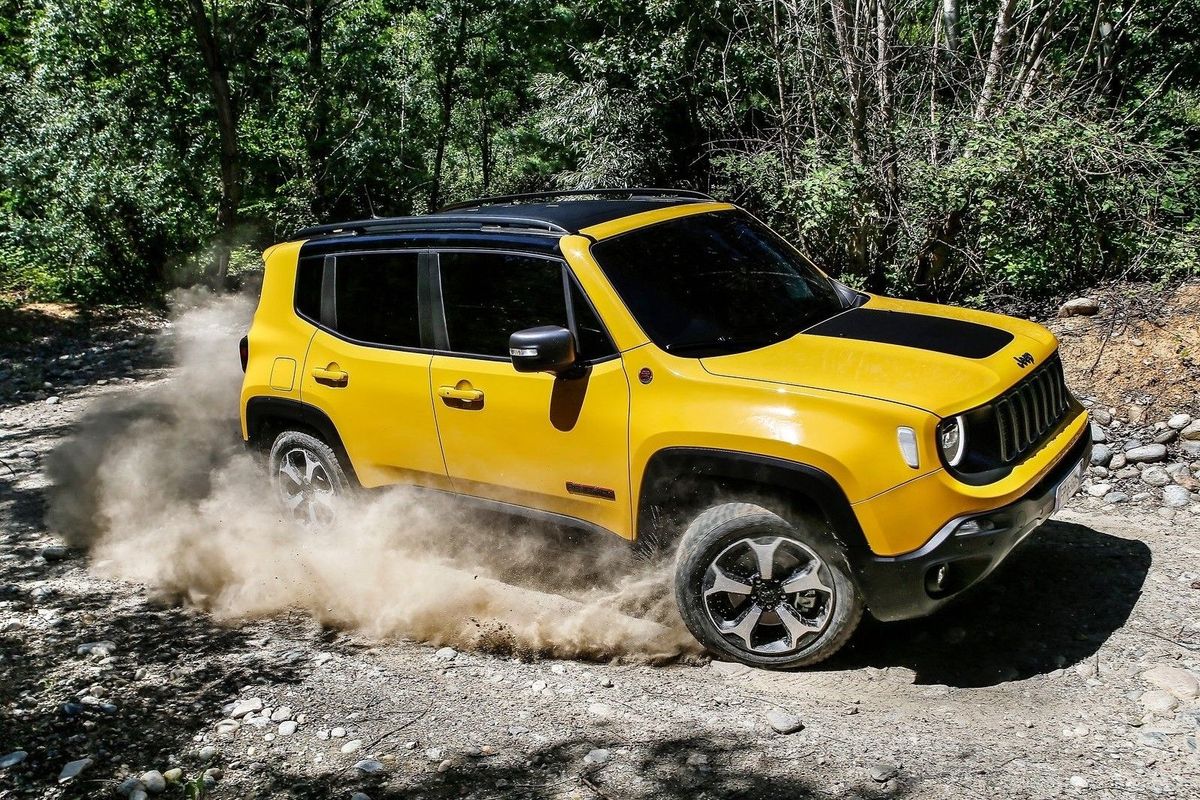
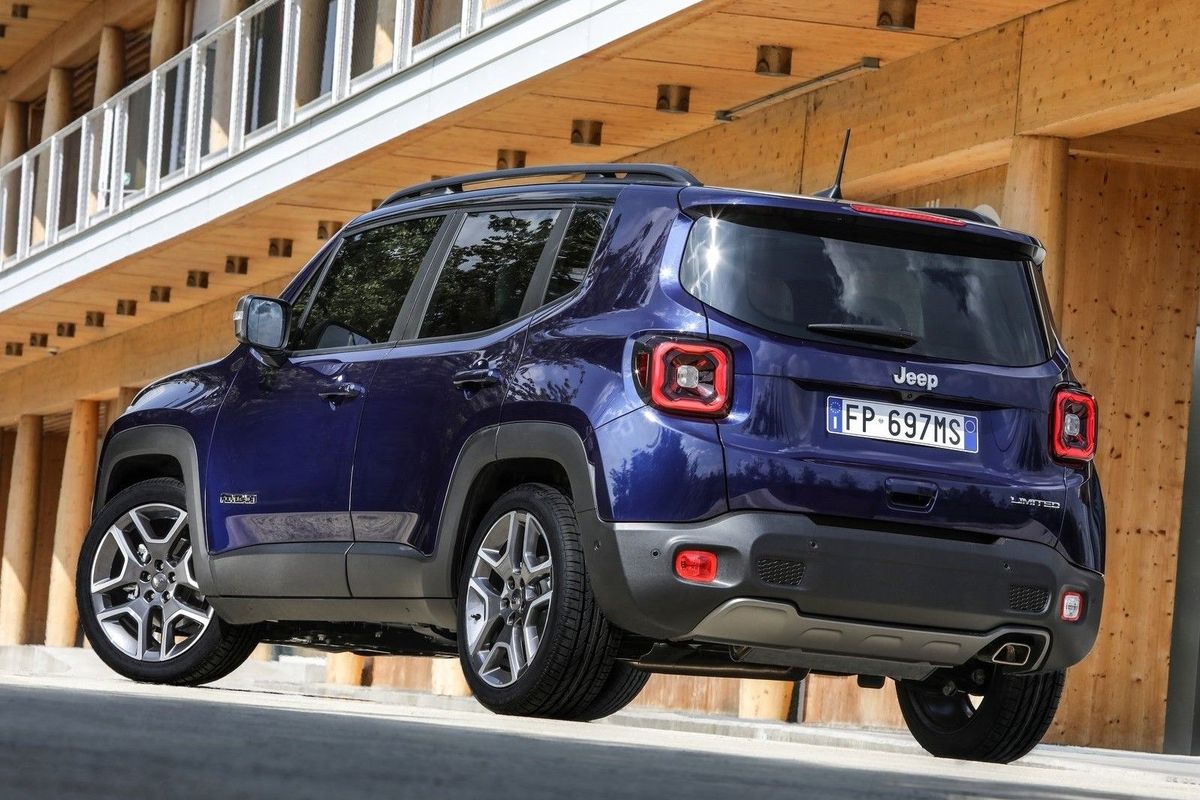
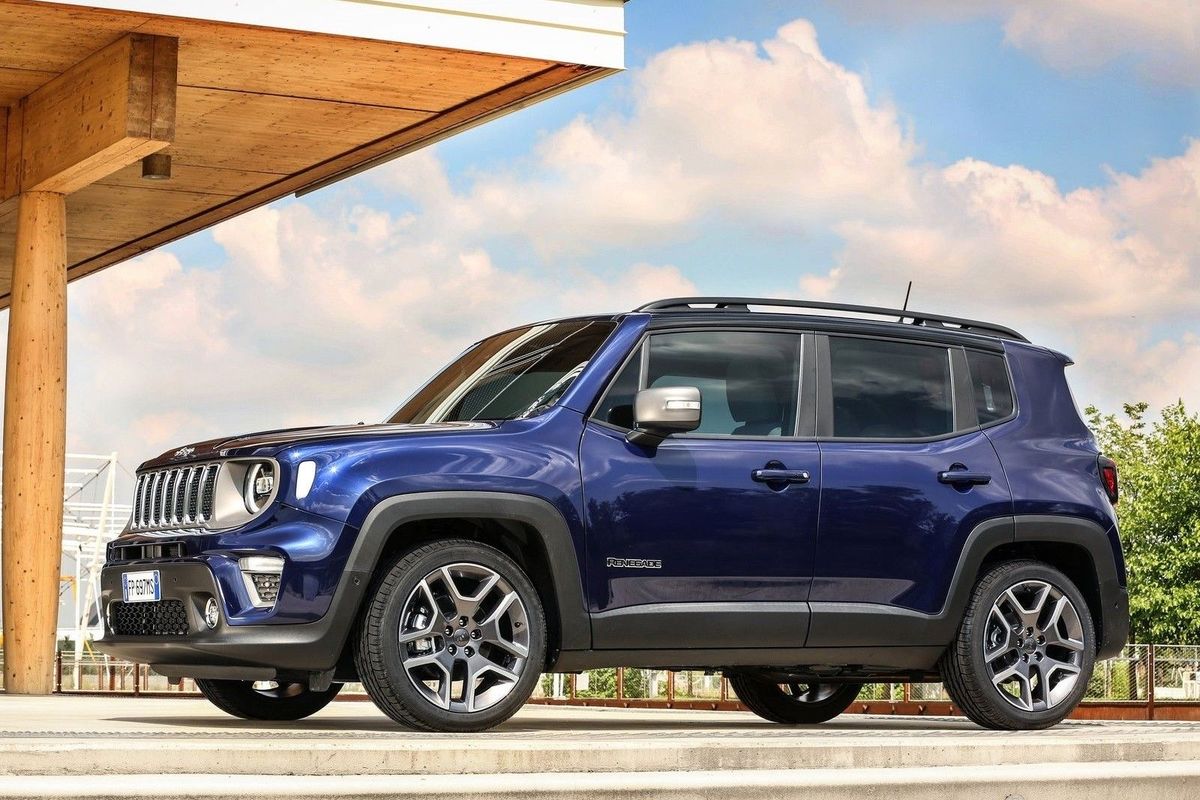
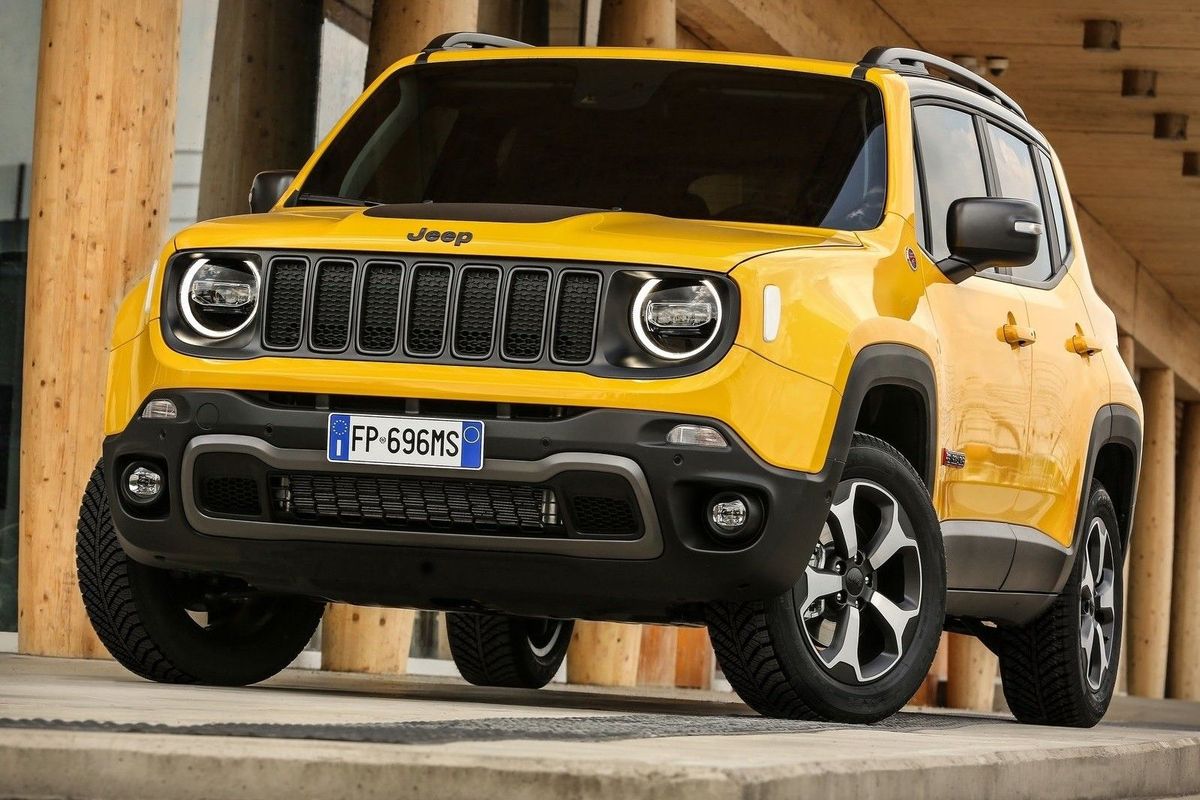
The Jeep Renegade has been facelifted internationally and will be making its way to South Africa in early 2019. Here's what's changed.
The Jeep Renegade was first launched back in 2014 and made its debut in South Africa a year later in 2015. It was a big step forward for Jeep as the Renegade was the brand's first foray into the B-segment and it was the first Jeep to be assembled in Italy. The Fiat 500X also shared a platform with the Renegade, although has not been as successful locally. A facelifted version has been announced and, on the back of record sales for the Jeep brand in Europe, the new-look Renegade will subsequently be rolled out to the rest of the world.
Visually, it has not changed dramatically and still retains those rugged Jeep looks. The key changes include all-new engines, more safety features and updates to the infotainment system. Starting with the engines, there is a new 1.0-litre turbocharged three-cylinder petrol motor pushing out 90 kW and 190 Nm. Next up is a 1.3-litre turbo four-cylinder petrol with 110 kW and 270 Nm. There are revisions to the 1.6-litre and 2.0-litre turbodiesel engines too. All Jeep Renegades can be mated to a six-speed manual gearbox, 6-speed dual-clutch transmission or nine-speed automatic.
The facelifted Jeep Renegade features faster infotainment systems and more safety
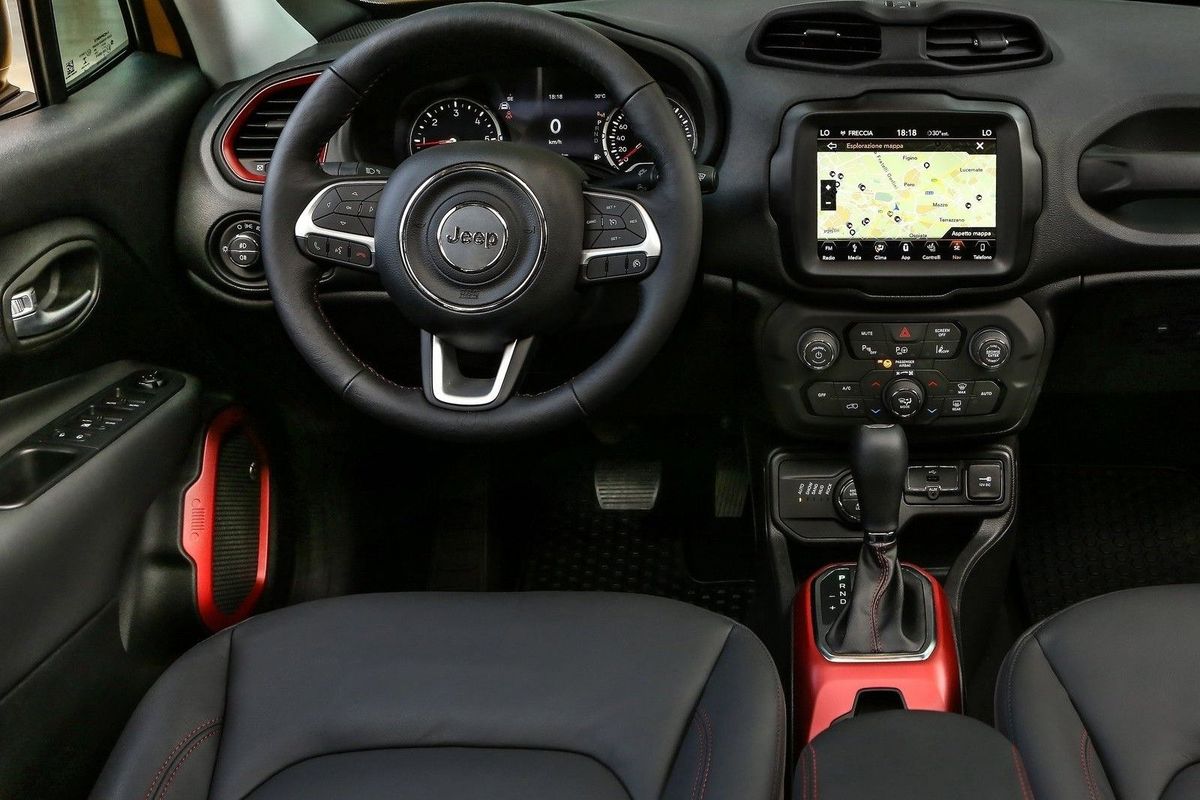
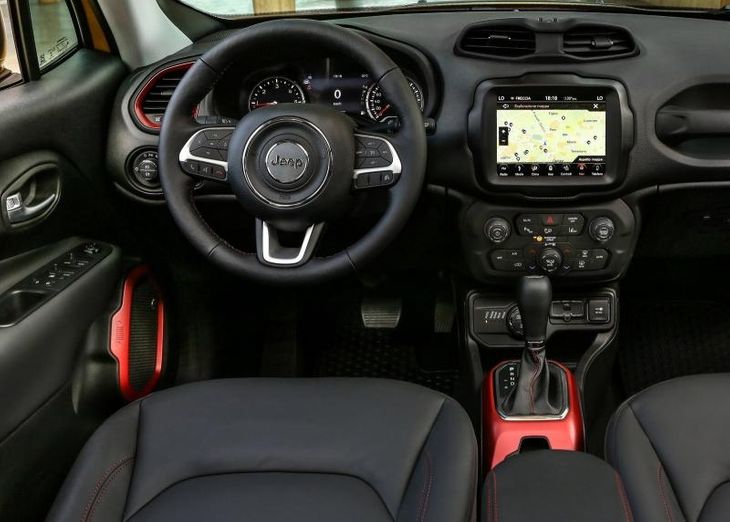
Inside, the new 2019 Jeep Renegade is available with one of three infotainment systems depending on trim. There's a UconnectTM 5-inch, UconnectTM 7-inch or UconnectTM 8.4-inch with navigation. All feature touchscreens and uprated processors for faster responsiveness. The climate control and audio controls have been merged into this system, reducing the number of buttons in the cabin. Apple CarPlay and Android Auto functionality are also available. It'll be one of the safest vehicles in its class and has six airbags and ESC as standard. Also in the mix is ERM (Electronic Rollover Mitigation) which attempts to reduce the chance of the vehicle overturning. The Jeep Renegade now has Lane Sense Departure Warning Plus and Intelligent Speed Assist with Traffic Sign Recognition. It can also park itself automatically. As an option, you can specify some semi-autonomous safety features in the form of Forward Collision Warning with Active Emergency Braking and Adaptive Cruise Control.
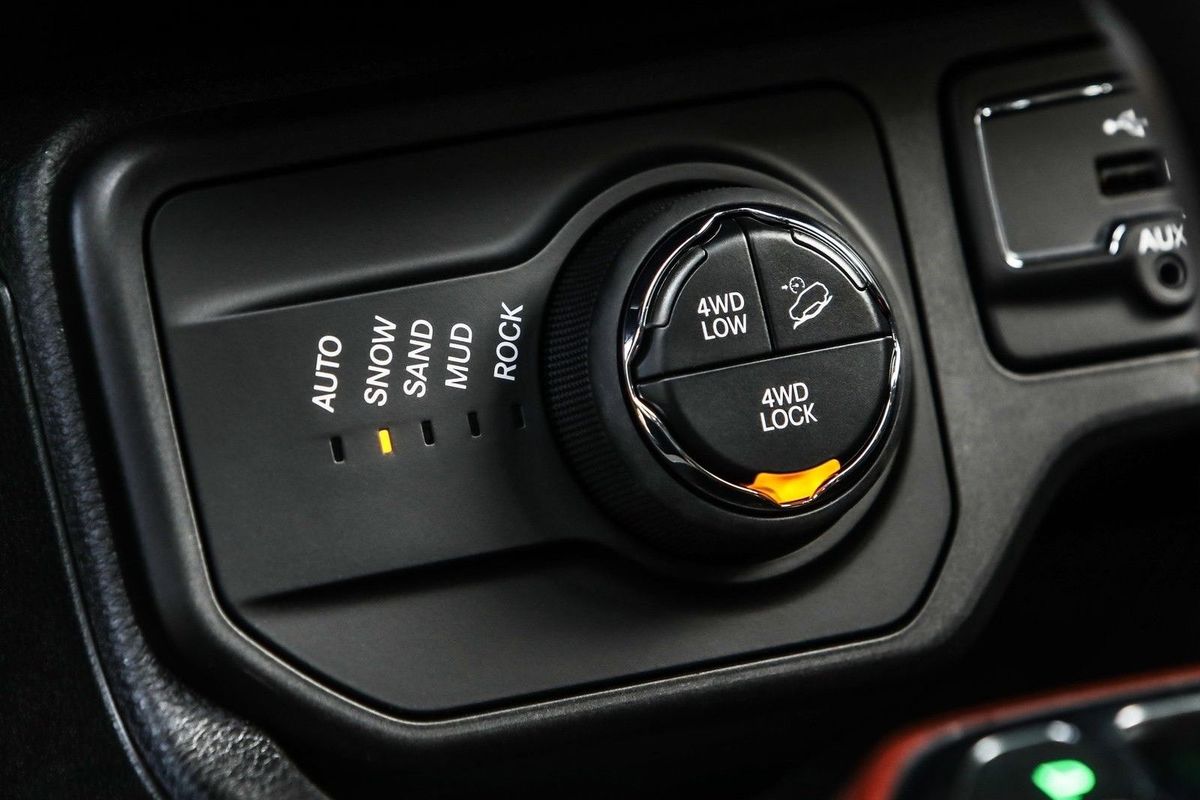
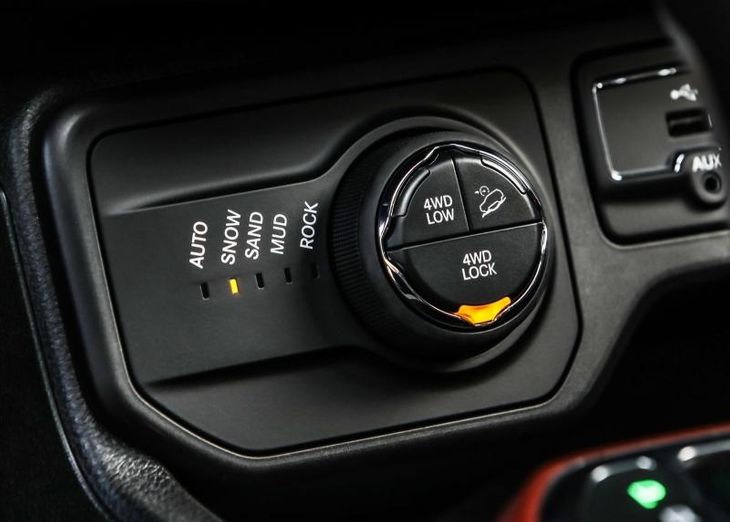
The 2019 Jeep Renegade is available in four flavours: Sport, Longitude, Limited and Trailhawk. The Trailhawk is the most off-road-focused Renegade available and it boasts ground clearance of up to 210 mm as well as dedicated off-road modes. We'll confirm local specifications and details closer to the launch in early 2019.
Despite it being the baby Jeep in the family, it's still exceptionally capable when the going gets tough
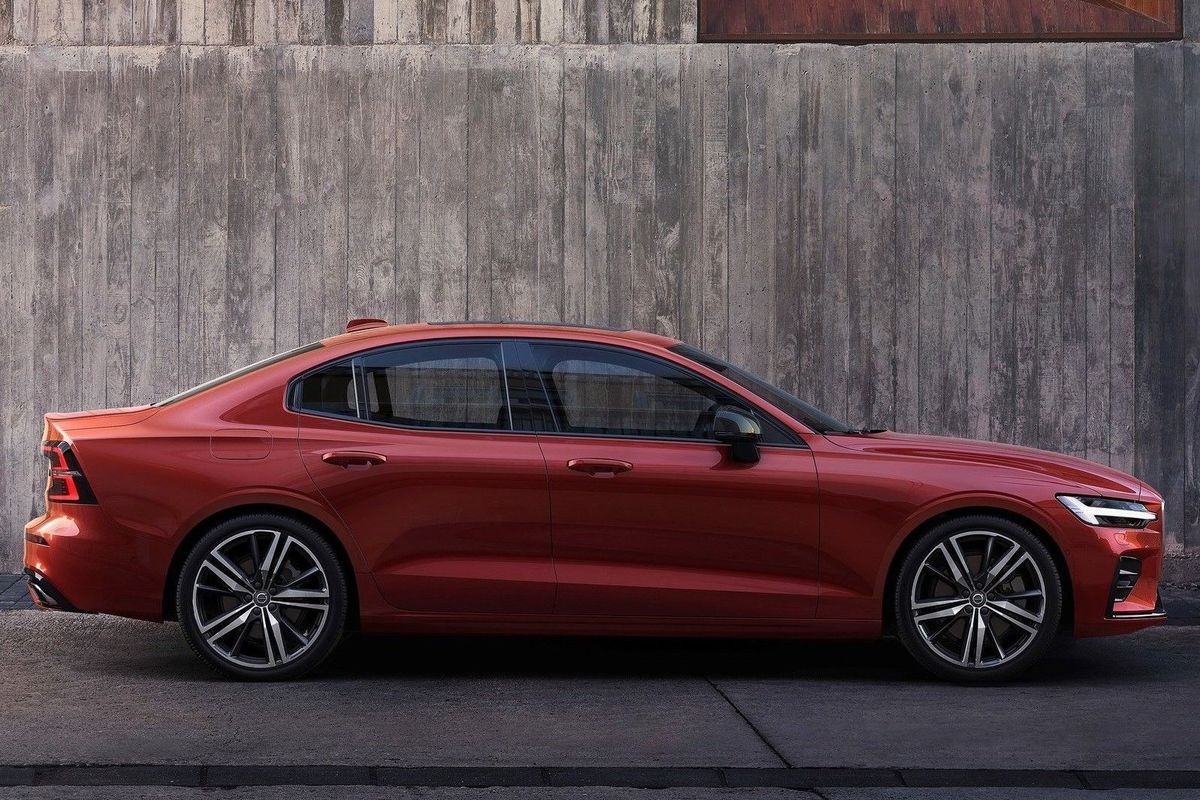
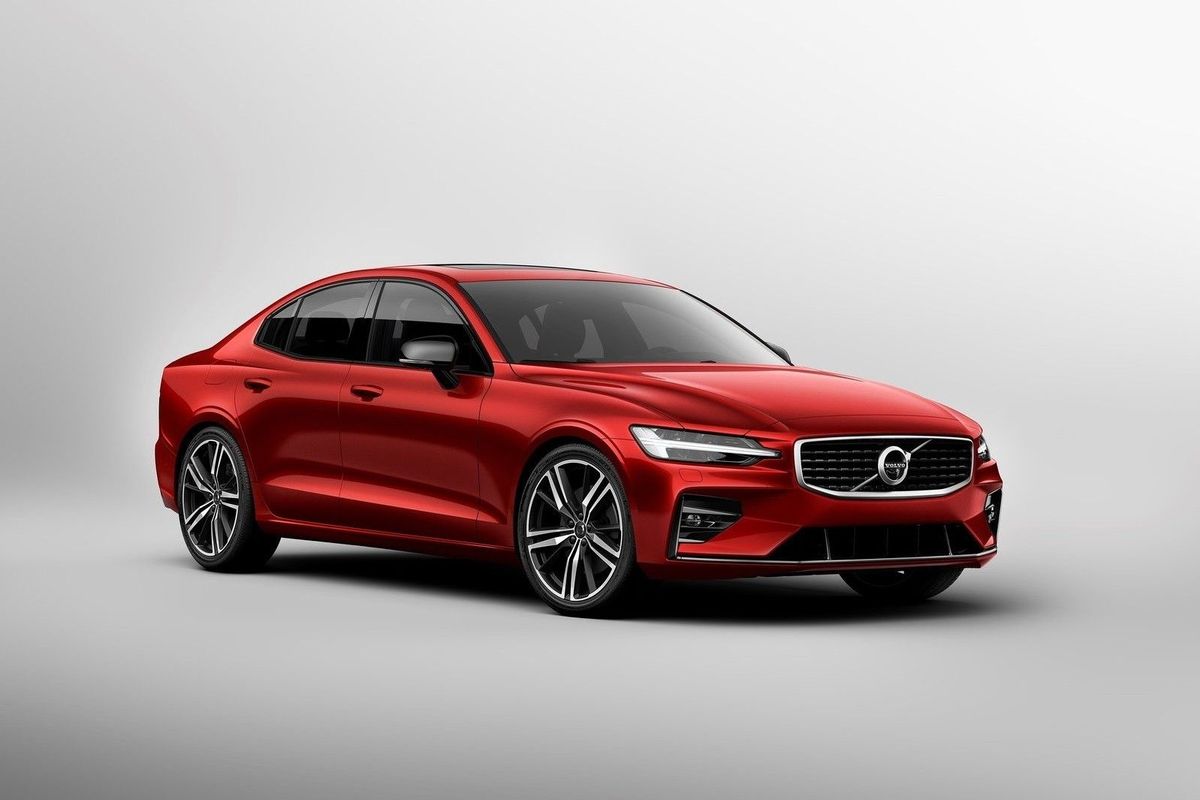
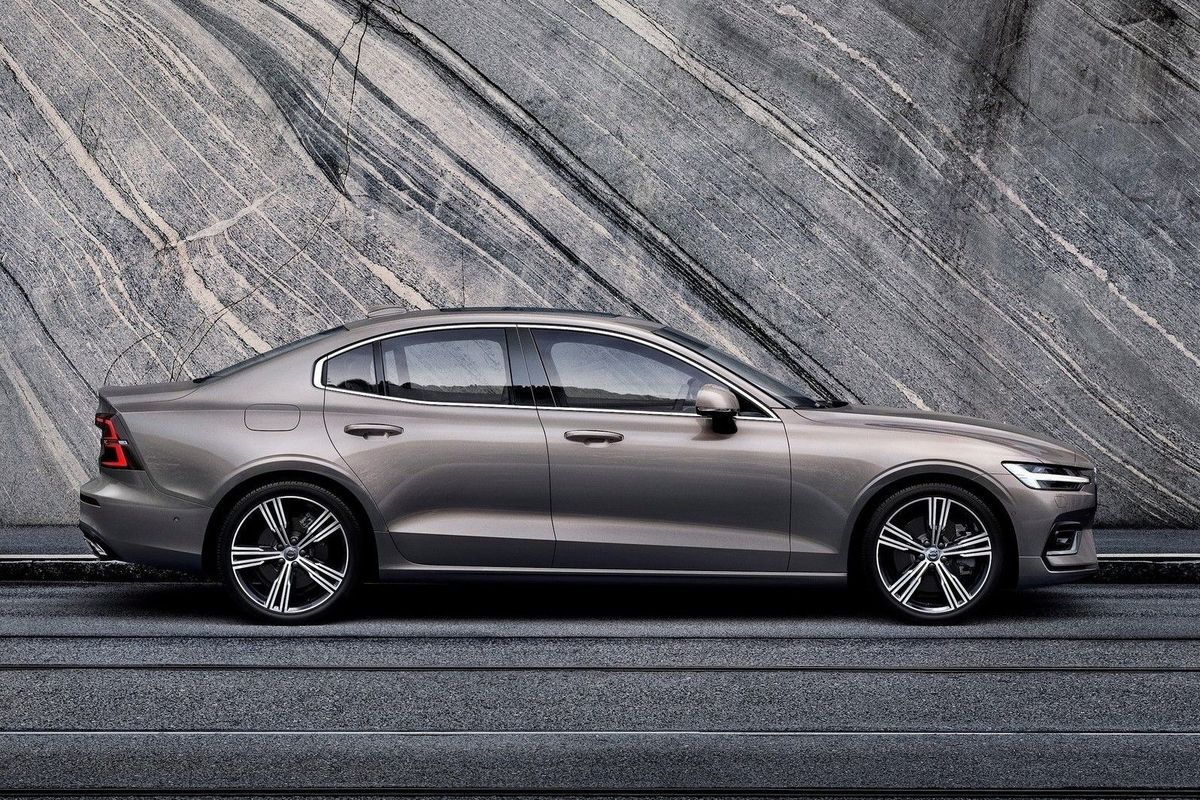
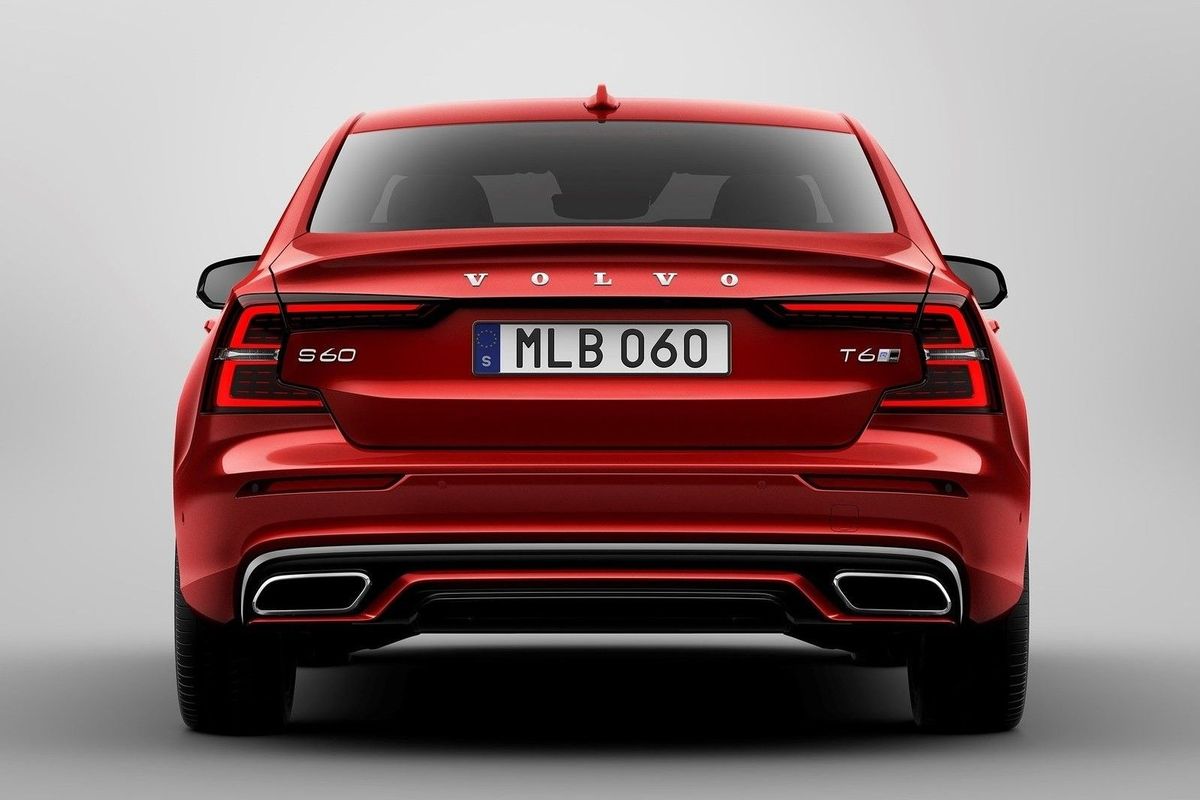
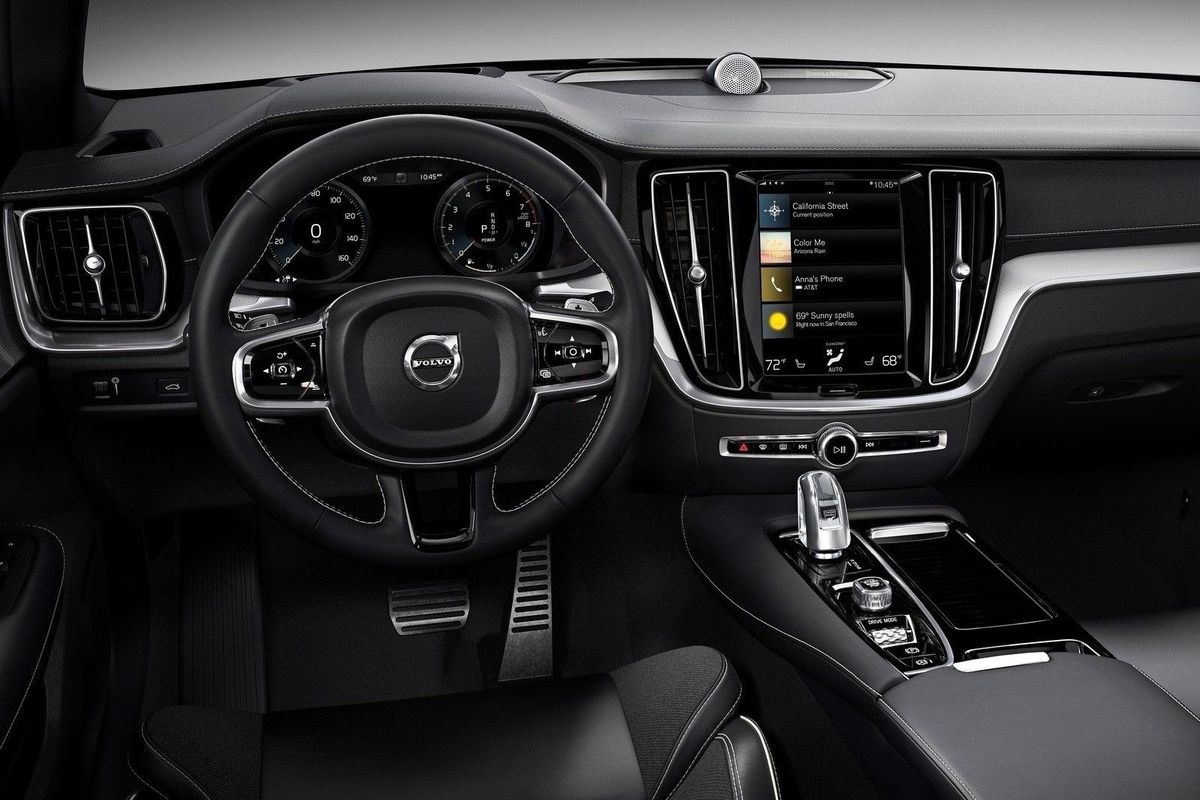
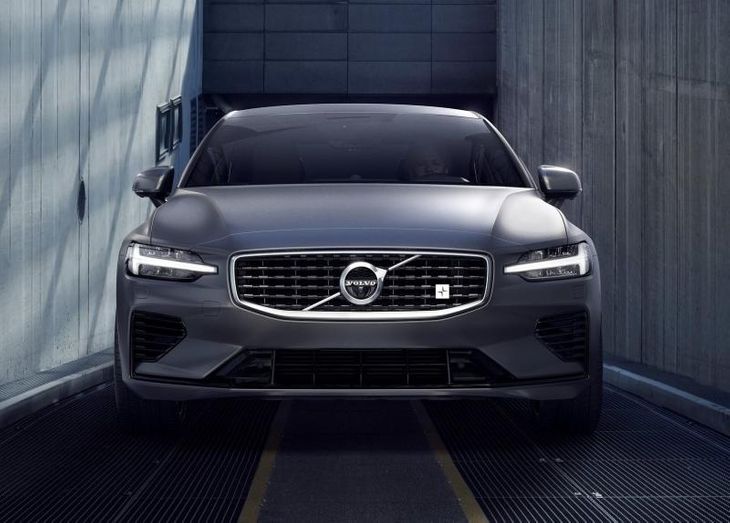
Volvo has revealed an all-new S60 as well as a new factory in the United States. The S60 has also been confirmed for South Africa. Here's what you need to know about the new sexy Swede.
Volvo has built a car factory in Charleston, South Carolina and the new S60 is the first vehicles to roll off the line. This new S60 is the first Volvo to be assembled in the US and it shows that the Swedes are keen to grab a slice of the sedan market out West.
"The new S60 is one of the most exciting cars we've ever made," said Håkan Samuelsson, president and chief executive of Volvo Cars. "It is a true driver's car that gives us a strong position in the US and China sedan markets, creating more growth opportunities for Volvo Cars."
This new Volvo S60 is unique for one main reason. It's the first Volvo to be sold without a diesel engine, showing that the brand is keen to press on with its electrical plans for the future. Assembled on Volvo's Scalable Product Architecture (SPA) which forms the basis of many of the brand's products (XC90, S90 and XC60 to name a few), the new S60 continues the tradition of Volvo products being some of the safest vehicles on the road. There's plenty of semi-autonomous technology which will intervene if the driver doesn't react fast enough.
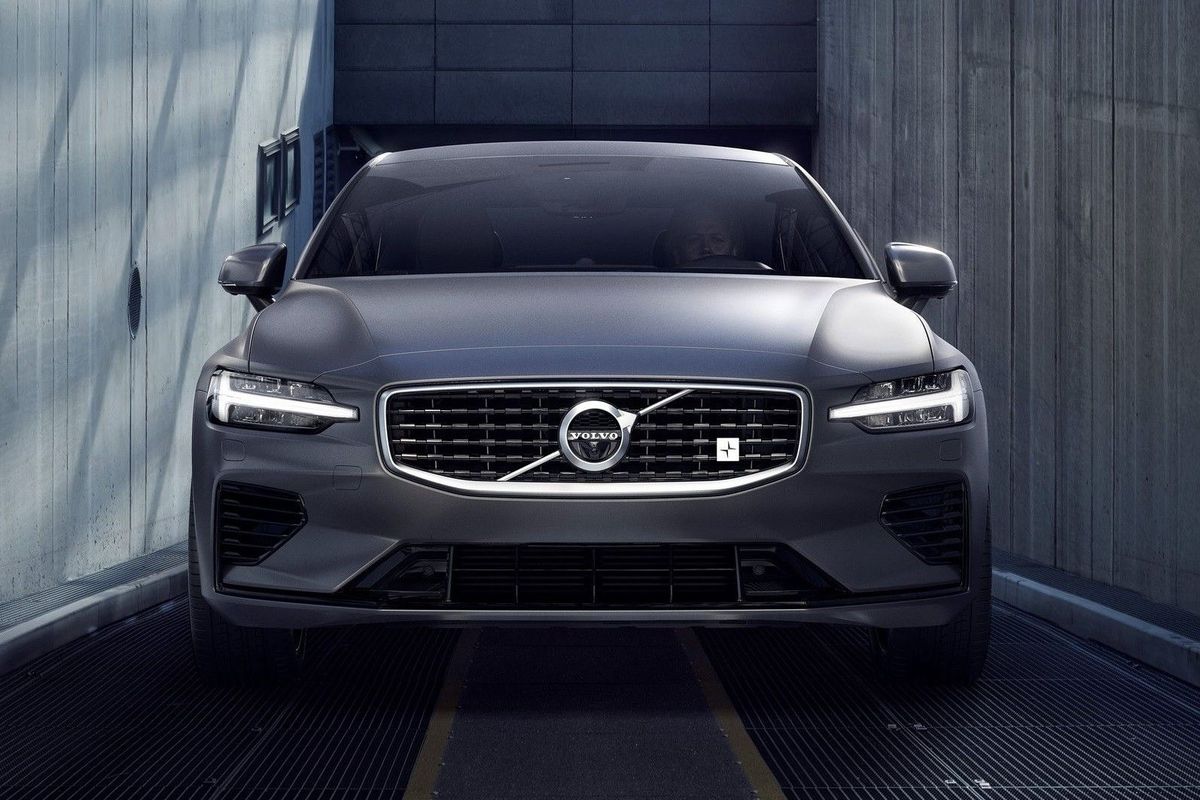
A 305 kW Volvo S60 tuned by Polestar Engineered could be a real alternative to a BMW 340i and Mercedes-AMG C43
Volvo South Africa has expressed interest in bringing the new S60 here. When it comes in 2019, the new Volvo S60 will be offered with two turbocharged petrol engines (T4 and T5) as well as the super-and turbocharged T6 model. The T8 Twin Engine is being looked at and is under consideration. For the performance fans, there will be an S60 with a handling upgrade it calls 'Polestar Engineered', which introduces sportier wheels, uprated brakes, sportier suspension as well as a tweak to the engine's power unit, resulting in a power increase to 305 kW. We hope that Volvo SA greenlights this model!
We'll have more details and specification for the SA market closer to the launch.
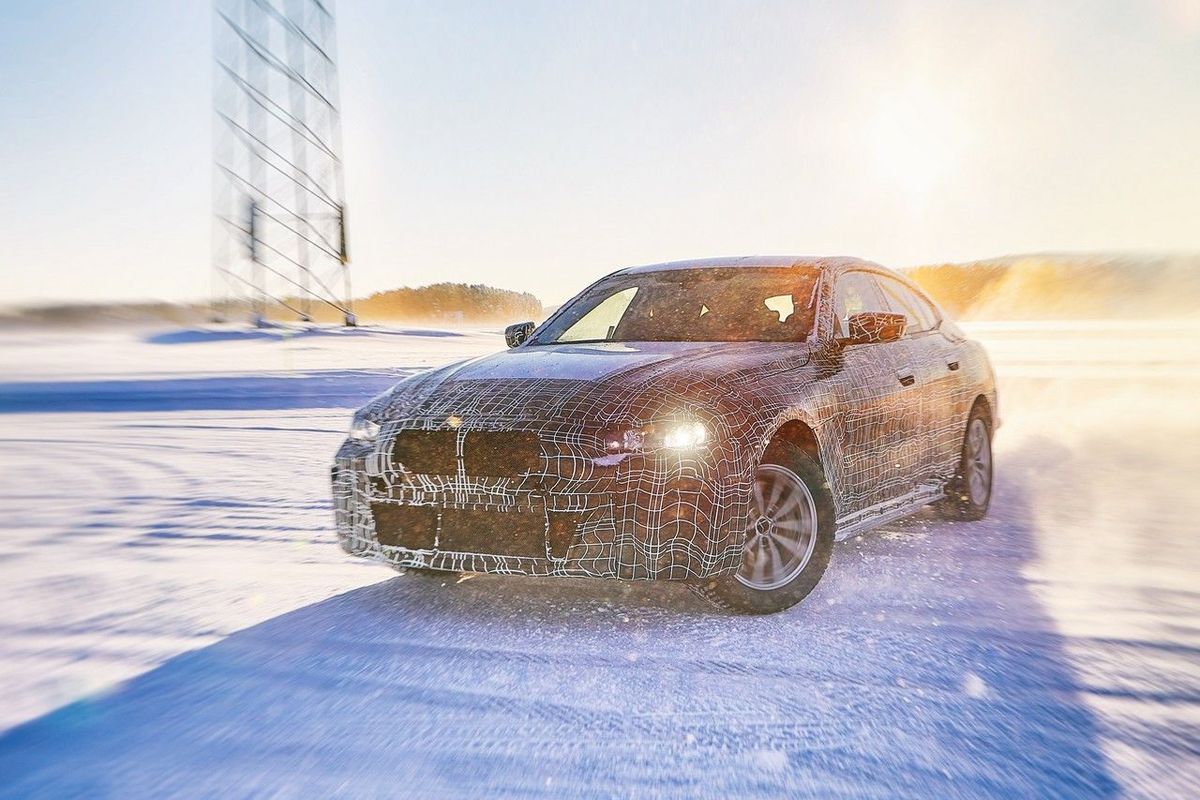
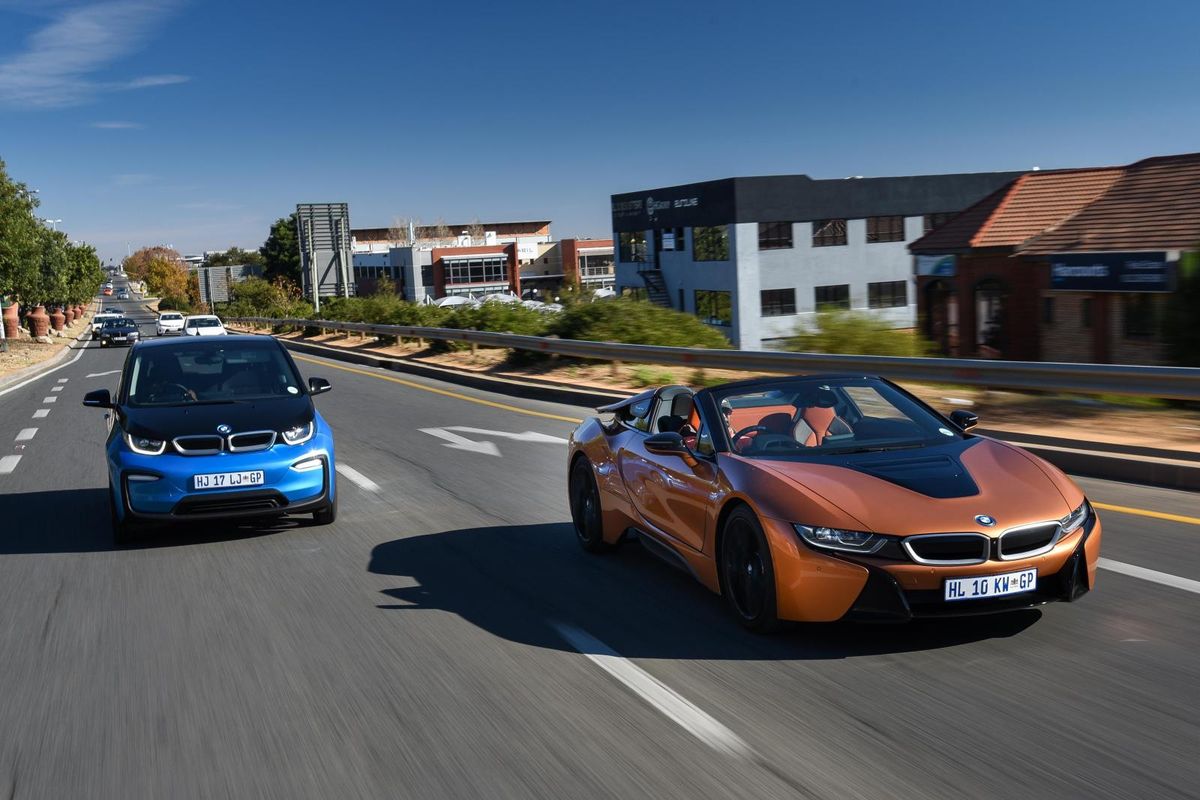
The next chapter of BMW i in South Africa commenced this week when the Munich-based marque launched the facelifted i3 and i8, as well as the eye-catching i8 Roadster, in the Western Cape.
When BMW introduced its i brand in South Africa back in 2015, many were sceptical. Would South Africa's fledgling EV infrastructure be able to support the vehicles? Would they be "too niche" and sell in very limited numbers, primarily on account of their novelty value? We can confidently say that today, 3 years post-launch, the answers to these questions are a resounding YES and NO! South Africa has made substantial progress in terms of establishing support for electric vehicles and several BMW i products have found homes in South Africa. The recently facelifted i3 and i8 have now made landfall in South Africa and they're joined by the i8 Roadster – the sensational looking droptop version of the i8 Coupe.
BMW i3
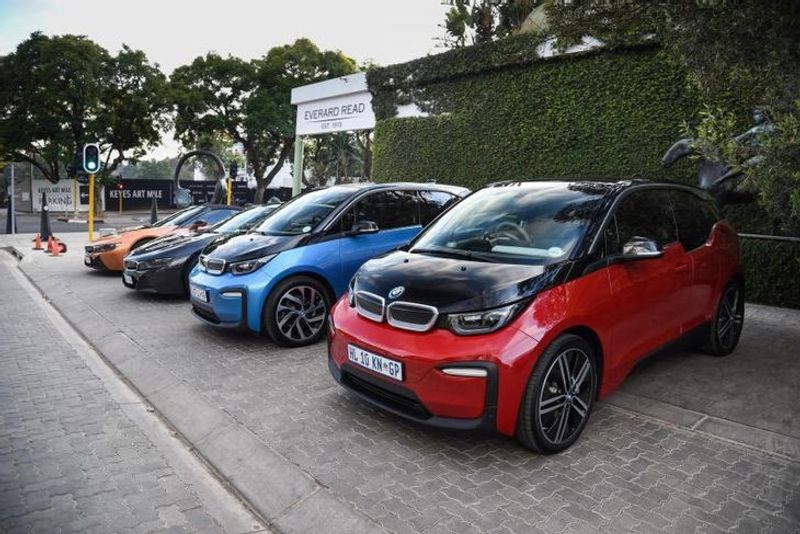
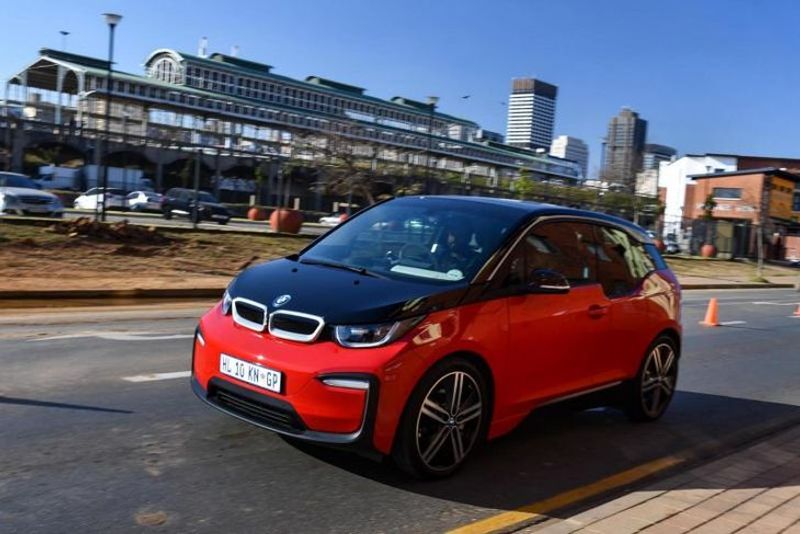
The facelifted BMW i3. Keen-eyed spotters will recognise the LED headlights and LED indicators.
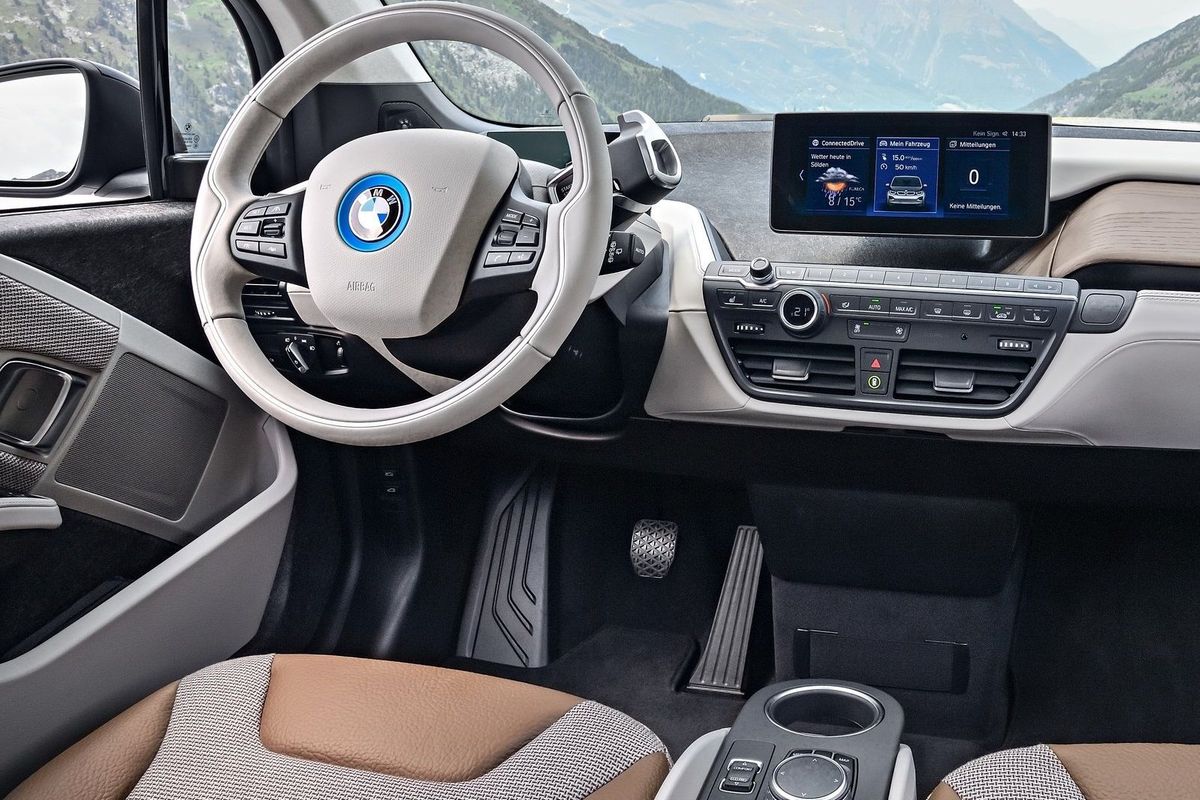
Despite its quirky styling, the i3 has quickly become the best-selling electric car in the premium compact segment – it comfortably outsells the Nissan Leaf, of which the latest version has yet to be released in SA. The facelifted BMW i3 brings with it a number of changes, both inside and out. Visually, you'd be hard-pressed to spot the updates, but upon closer inspection, you can notice some tweaks to the front and rear styling, which give the car a sportier feel; LED headlights are now standard and LED tech has been adopted for all lighting functions in the vehicle. Some new colours are available too, but despite the changes, this is still unmistakably a BMW i3. Inside, there's a revised iDrive system with navigation and ConnectedDrive software developed especially for the i3. The voice recognition system has been upgraded and you can specify Apple CarPlay.
It's available in two flavours, fully electric and Range Extender (Rex). The Range Extender comes with a 28 kW 2-cylinder petrol engine. It is important to note that this petrol engine does not drive the wheels, but rather functions as an onboard generator to provide more electricity when the batteries are flat. So when you're driving and your range runs out, you'll hear a faint hum as the engine kicks in to generate power for the electric motor, which features in both versions and delivers 125 kW and 250 Nm. Thanks to the instant responsiveness, the BMW i3 is capable of sprinting from 0 to 100 kph in 7.3 seconds. The newcomer further features new lithium-ion batteries that are claimed to provide a range of 200 km in general use. The BMW i3 REX will go a bit further and you'll find you should be able to get 250 km out of a full charge and (small) tank of petrol.
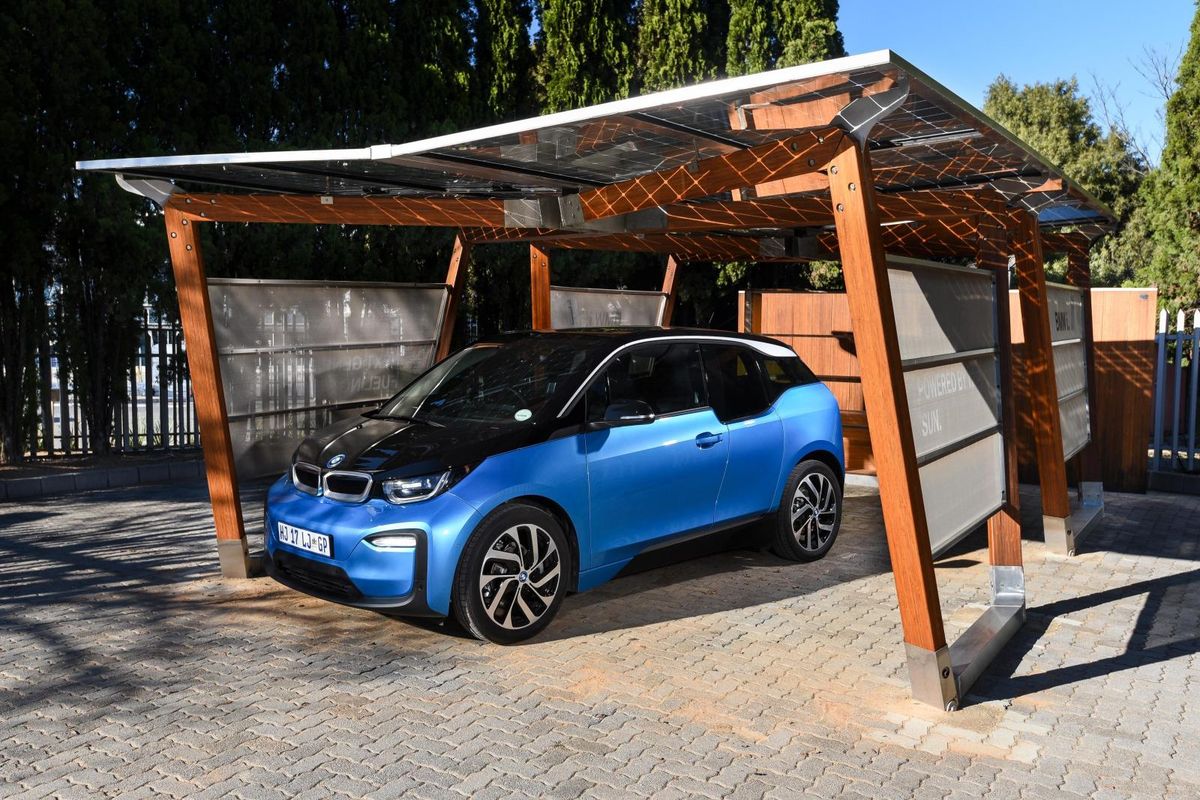
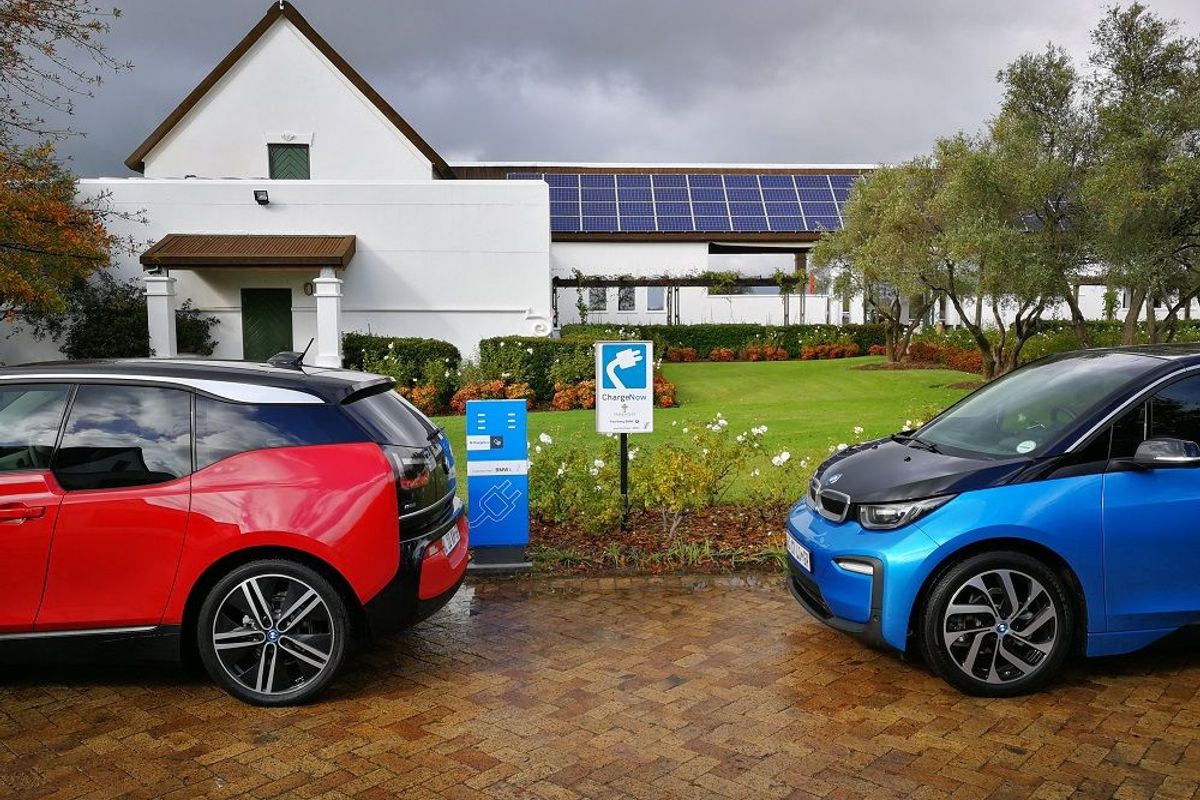
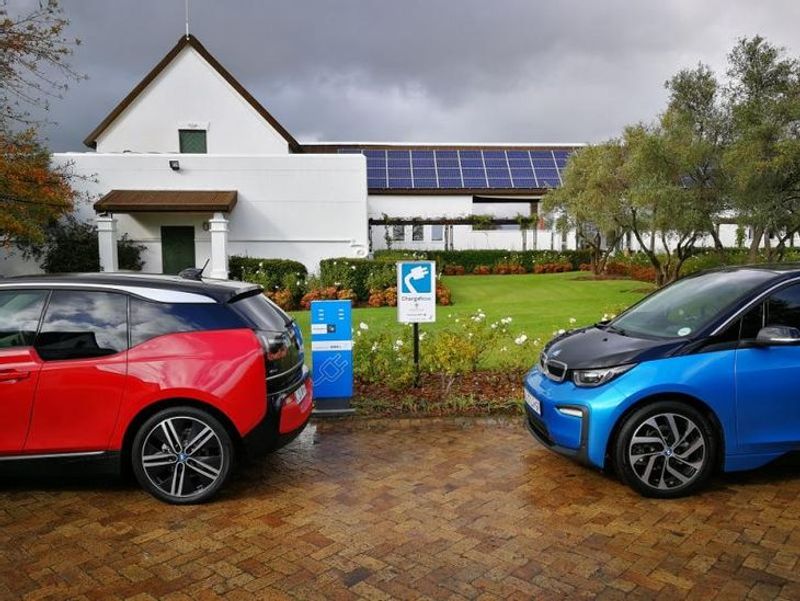
A facelifted BMW i3 charging at one of the solar-powered charging ports.
One of the aspects of the BMW i3 that we really appreciate is the use of recycled materials in its production. Officially, BMW claims more than 80% of the visible surfaces in the i3 are made from either renewable resources or recycled materials such as plastics and fibres.
What's it like to drive? Well, it still offers that addictive instant acceleration (by virtue of having full torque available from a standing start) and, as a result, inner-city driving is a pleasingly simple affair. Over time, the i3 encourages a single-pedal driving style; it has such an aggressive brake recovery system to harvest additional electricity, that the act of releasing the accelerator pedal induces the same feeling as lightly applying the brakes. The deceleration effect is substantial enough for the car to trigger its brake lights to signal that there's a notable reduction in speed.
From a standstill, there are very few conventional vehicles (at least of its size and power output) that can keep pace with a BMW i3, making it amusing to pilot in the city as you rapidly and quietly scoot away from slower traffic. With no gears, there's no hesitation in power delivery and you just ride this lovely wave of (seemingly unburstable) power. The steering is light, with decent weighting at slower speeds and this gives you some confidence when you want to "stretch the car's legs". But remember, the tyres are very narrow (to reduce rolling resistance); as a result, ultimate grip levels aren't very high. Our test route was wet thanks to seasonal rain and careless driving resulted in the traction control having to intervene.
The i3's electric engine makes it most enjoyable to wield around town, with instant acceleration just a stab of the pedal away.
BMW i8 and i8 Roadster
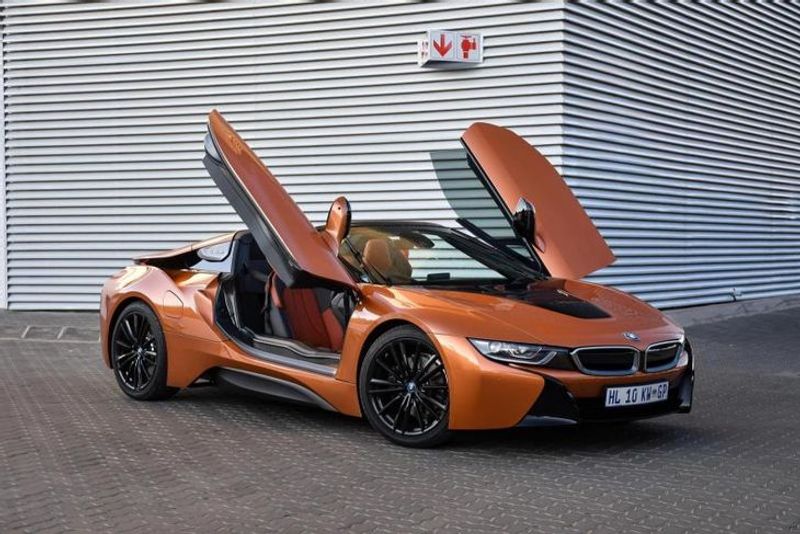
Since its global reveal back in 2014, the distinctive i8 sports hybrid has wowed many with its high-tech powertrain and breathtakingly futuristic looks. That petrol/electric powertrain has garnered International Engine of the Year titles 3 years in a row and the plug-in technology has been shared across the BMW family; the i8 is rightly the talisman of the i Performance range. For those who appreciate the purity of the original design, there are thankfully no dramatic changes on the surface and we're glad to see the stylish gullwing doors have been retained on both coupe and roadster.
Under the skin, there have been substantial revisions to the plug-in hybrid technology, however. There's a higher power output and, as efficiency has been improved, the theoretical range is longer too. BMW claims the battery cell capacity has been increased from 20 to 34 ampere-hours (Ah) and gross energy capacity from 7.1 to 11.6 kilowatt-hours (kWh, net energy capacity: 9.4 kWh). The new numbers make for impressive reading… The revised turbocharged 3-cylinder petrol engine produces peak outputs of 170 kW and 320 Nm, while the electric motor now boasts 105 kW and 250 Nm. Together, they produce 275 kW and 570 Nm, which is enough to see the i8 hurtle to 100 kph in 4.4 seconds – very quick for a plug-in hybrid.
The facelifted i8 and i8 Roadster retains the gullwing doors and the futuristic looks are still as outrageous and awesome as ever
The i8 Roadster is a tad slower at 4.6 seconds. The petrol engine drives the rear wheels and the electric motor works its magic on the front wheels. If you want, you can drive on pure electric power alone and the EV-mode range has been substantially increased to 55 km (53 km for Roadster). Previously, it could only manage around 30 km. It can also drive at speeds of up to 120 kph on electric power only.
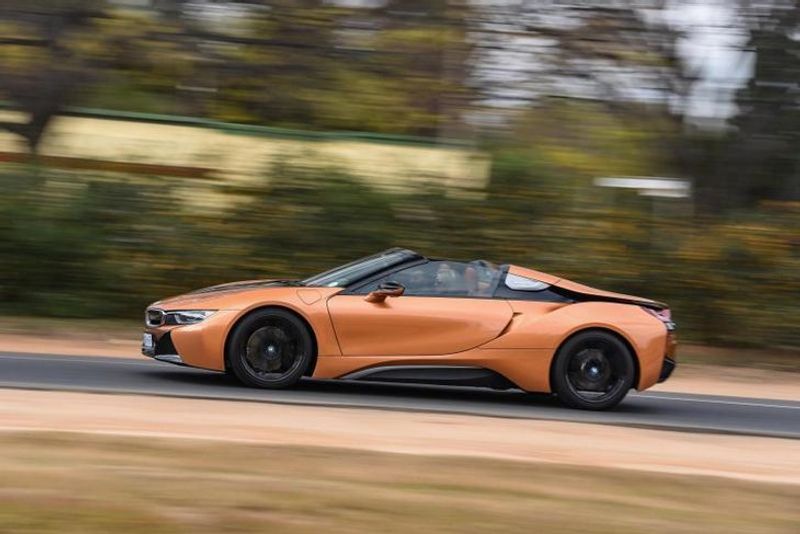
We spent most of our time behind the wheel of the new BMW i8 Roadster and despite the rainy conditions, we felt compelled to put the roof down. It's able to open and close in around 15 seconds at speeds of up to 50 kph, something we put to the test. The Roadster loses its 2+2 seating arrangement due to the roof mechanism and is now strictly a 2-seater with an extended parcel shelf, which is perfect for a brace of laptop bags.
What's the BMW i8 Roadster like to drive? Well, thanks to a combination of lightweight construction, responsive powertrain and low centre of gravity, the BMW i8 is a joy to pilot. You sit low down, which gives you that real sportscar sensation and the quick steering and negligible body roll means the i8 darts around with eagerness. Strangely, we noticed a few hints of scuttle shake in the BMW i8 Roadster, which is strange given the vehicle's solid carbon fibre tub, but on the whole, the vehicle's stiffness and rigidity really make it feel like a hands-on driving machine.
The i8 at at full throttle uses a combination of petrol engine and electric motor for some surprisingly quick performance
Flick through the various drive modes (Eco, Comfort, Sport) and you'll notice the car's demeanour changes dramatically, replete with distinct (and appropriate) colour schemes and themes displayed on the digital dashboard. Sport is intense and urgent, with a soundtrack to match. When you lift off the throttle after hard acceleration, the exhaust emits delightful pops and burbles. For maximum involvement, you can take control of the gear shifts yourself by utilising the well-positioned paddles on the steering wheel. With its "effective" all-wheel-drive configuration, the vehicle is unlikely to be unwieldy; even inexperienced performance drivers will be able to pilot the i8 with confidence…
However, while the i8 and its i8 Roadster sibling are pleasurable to drive, you feel that there could be more on offer. Perhaps BMW i is deliberately holding back and keeping a higher performance version on hold until the technology becomes more widely accepted and proven to be reliable in the long run, but we feel that with a platform as performance-focused as the i8, it has a lot more to give.
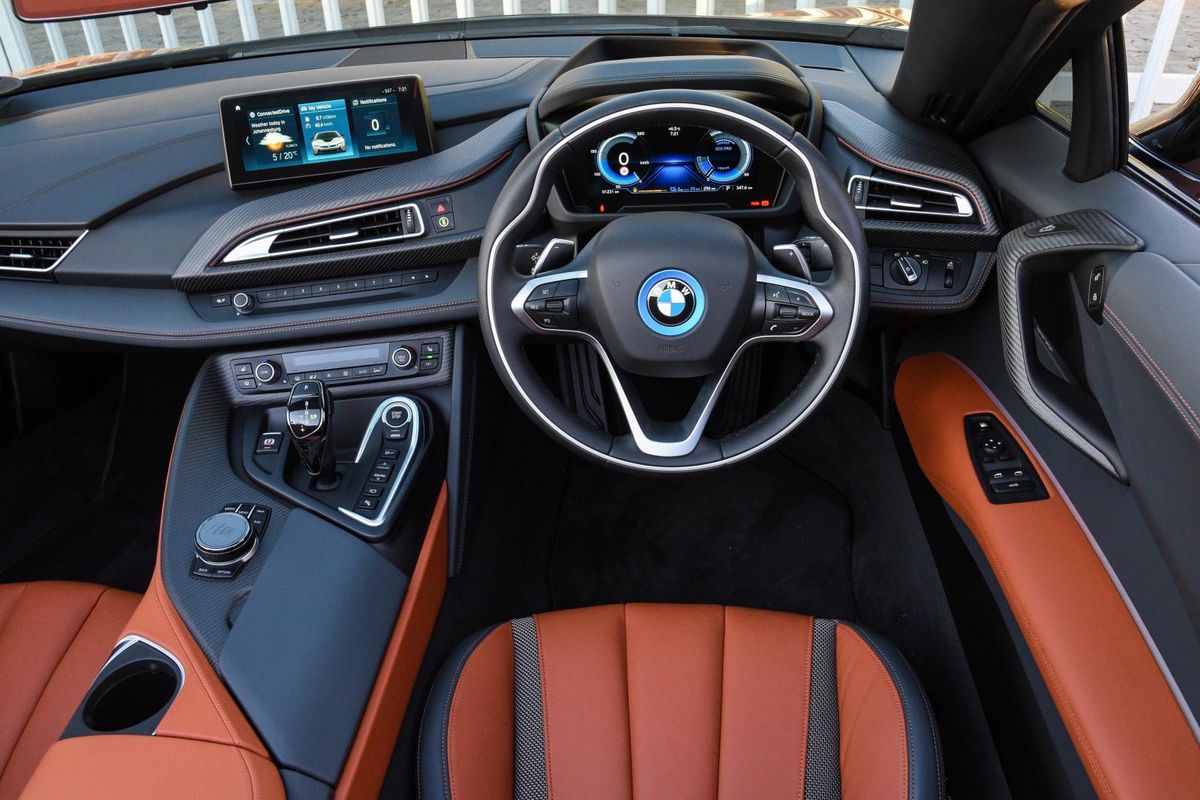
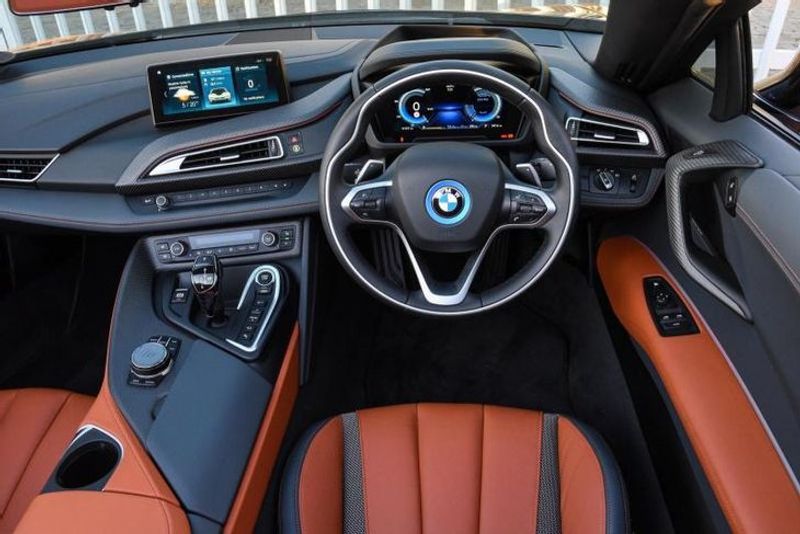
The cabin of the i8 is futuristic, yet ergonomically sound (in the traditional sportscar way…).
Infrastructure future and summary
The continued roll-out of charging stations across South Africa remains critical to the BMW i3 and i8's sustainability. As it stands, there are almost 60 in South Africa, the vast majority of which are in major cities. What's not being counted are the installations where companies and private owners have invested in their own charging stations. Through the agreement between BMW and Nissan, where both manufacturers are rolling out charging stations that can charge the German and Japanese products at the same unit, private entities have opted to install wall boxes at their premises.
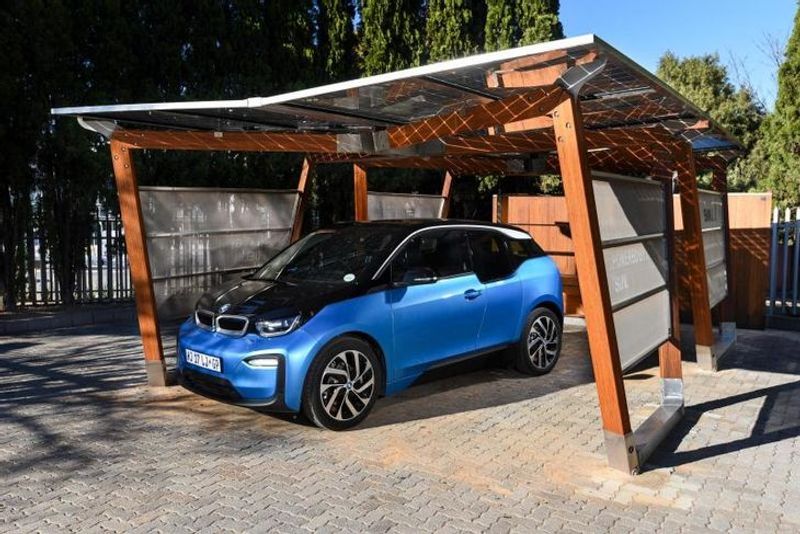
On our launch route, we started at the V&A Waterfront (the shopping complex located in Cape Town's harbour), which has a dedicated electric car charging area, we then proceeded to Constantia Village, where there's a single charger next to the petrol station, before stopping for a coffee at the Rust en Vrede wine farm. This estate has invested substantially in solar panels and these power the BMW/Nissan charger, which is how it should be. Our lunch stop was at Bosjes Estate, near Worcester, which also has invested in some electric car charging infrastructure. It was really impressive to see and if it hadn't been for the readily available chargers, our route would have been dramatically shorter.
A brace of BMW i3 test units at Rust en Vrede wine estate awaiting a charge. Note the solar panels on the roof, which powers the car charger. This is how it should be done!
As for the BMW i3 and i8, both products have been improved significantly enough to remain relevant in our market (the Jaguar I-Pace is waiting in the wings); indeed, they're not novelties. As battery technology advances at such a rapid rate, it wouldn't surprise us to see successors to the i3 and i8 that are capable of even greater ranges. While we'd all love to cruise on a beautiful scenic road in an i8 Roadster with its top down, its target market is tiny. Realistically, the i3 Range Extender is the most practical (range anxiety-proof) option if you want a slice of the future of motoring.
But the BMW i8 has improved and its eco credentials are even higher than before. Sportscar performance with our launch route fuel consumption hovering around the 7.0 L/100 km mark sounds like fiction, doesn't it? On the other side of the coin, despite its hybrid eco skillset, the BMW i8 is still a marvellous vehicle to drive. To think that people were scared that all electric cars and plug-in hybrid vehicles would be boring to drive. Brands like BMW (and Tesla) are determined to prove that driving can still be an enjoyable pastime without negatively impacting on the environment…
I-Pace coming to SA: How Jaguar hopes to make it work
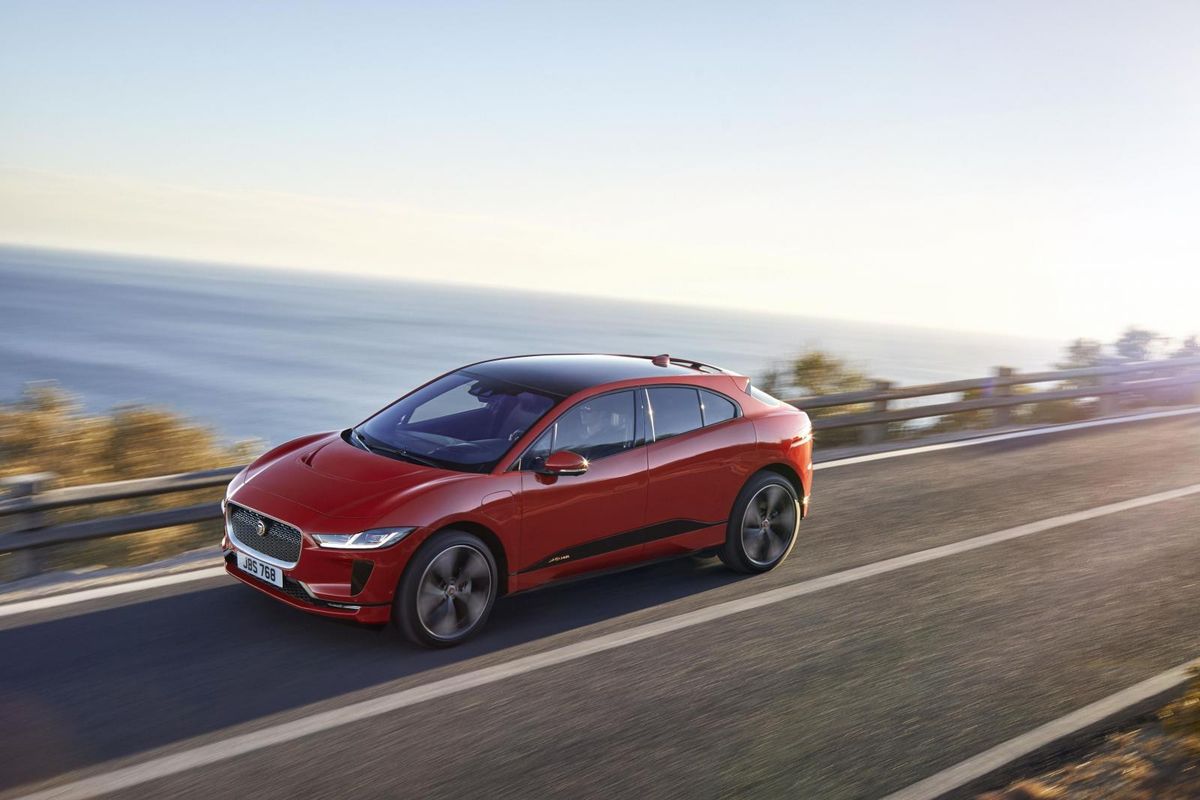
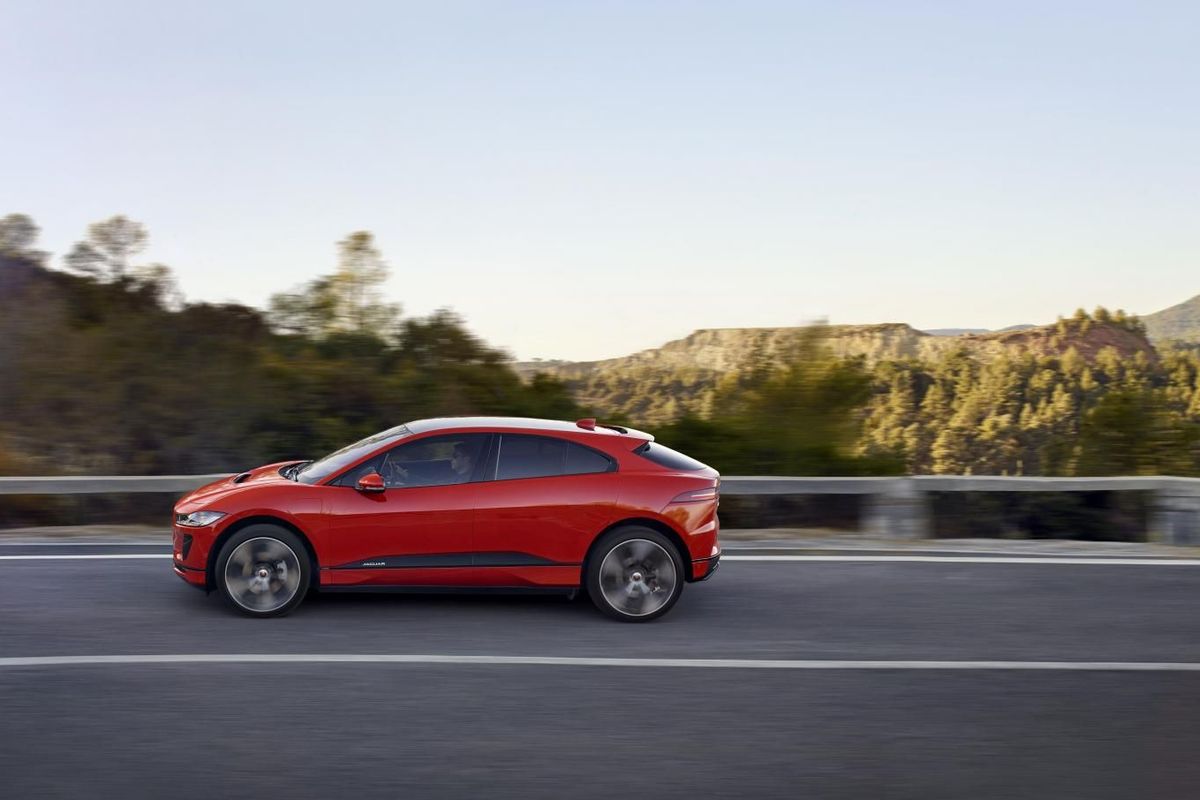
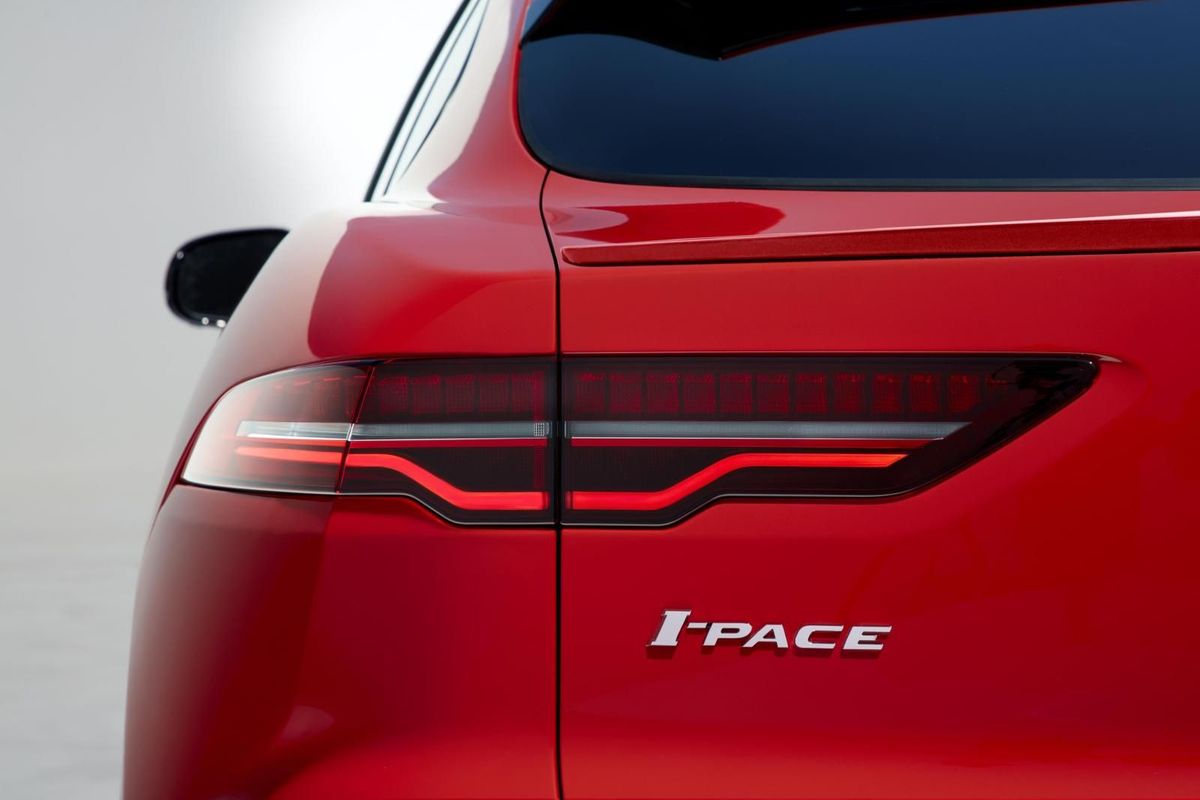
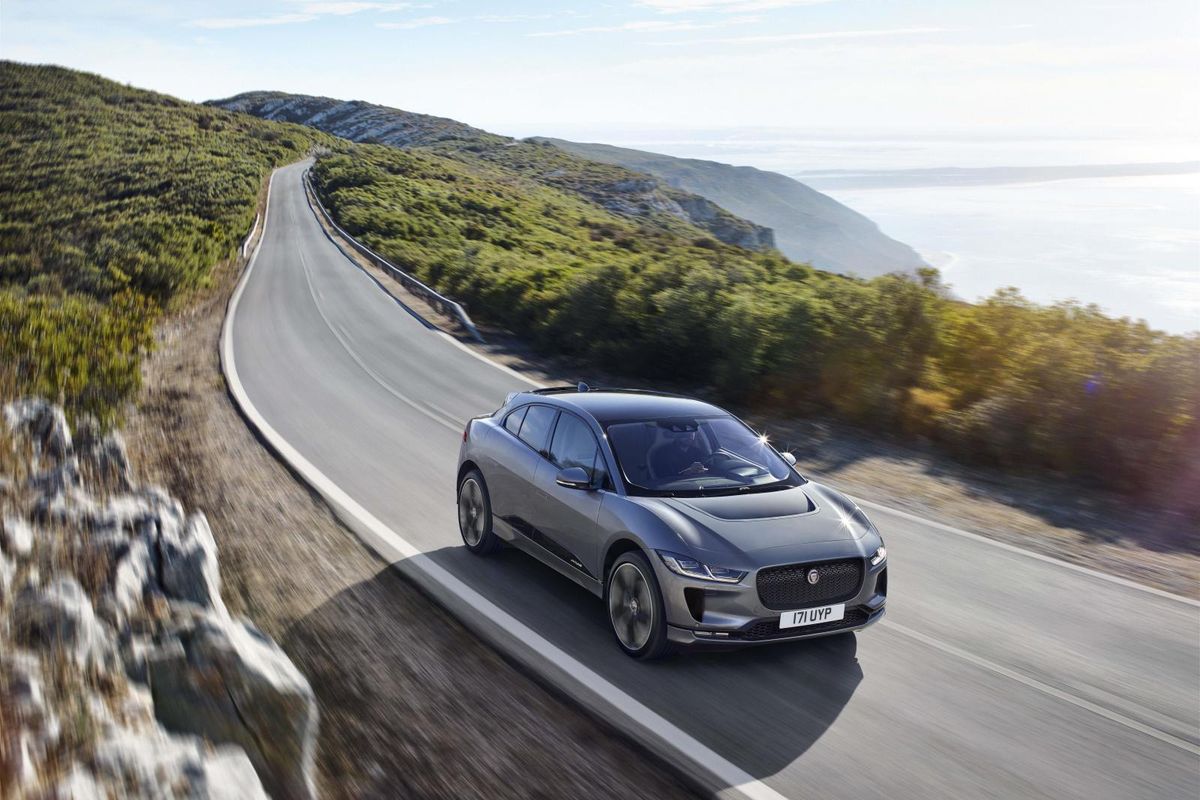
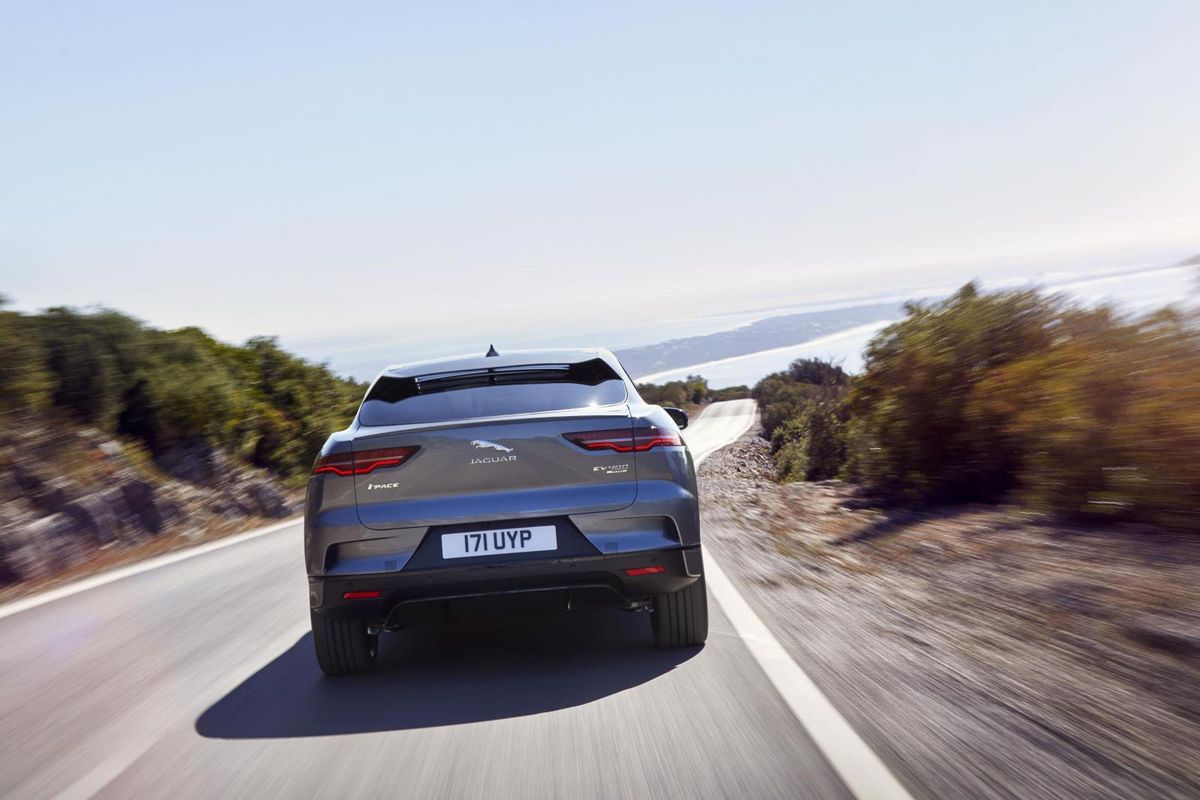
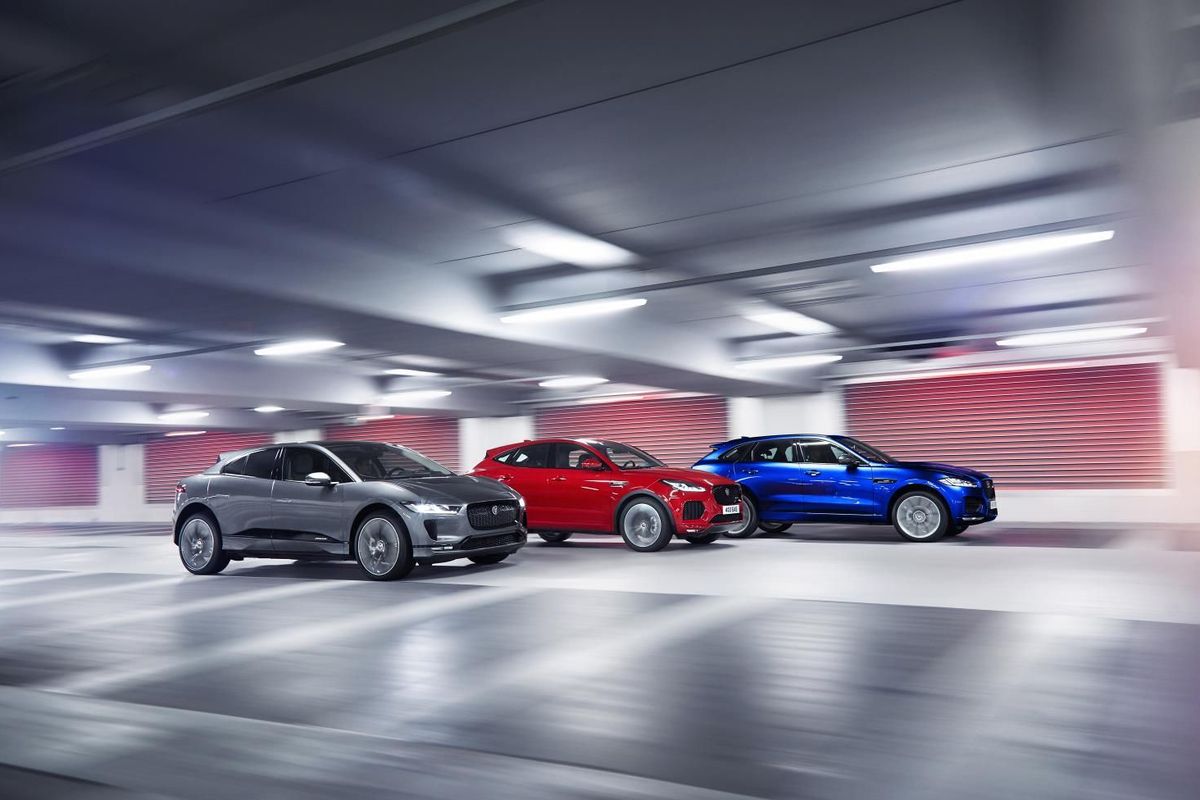
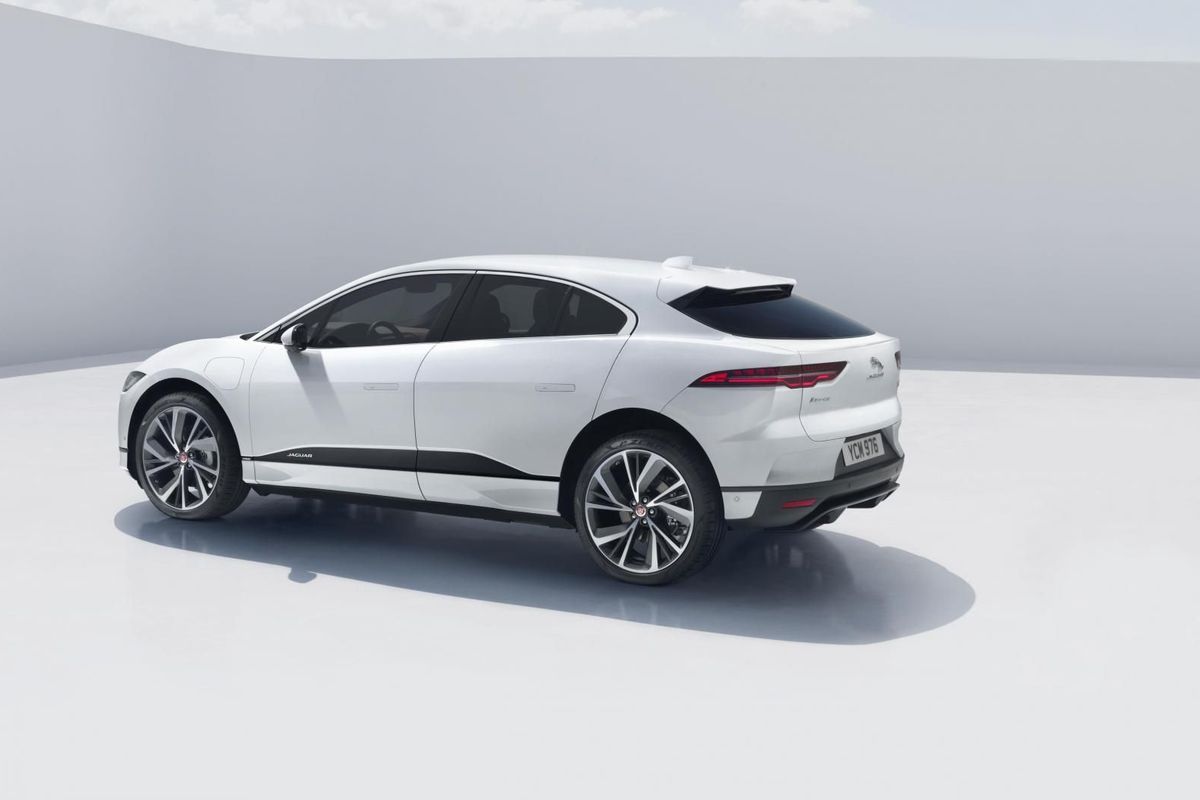
The I-Pace is Jaguar's first all-electric car, but as it has no proprietary recharging infrastructure in place in South Africa (where the newcomer will be launched in 2019), how does the Coventry-based premium brand plan to get the ball rolling and dispel doubts about range anxiety, charging station locations and reliability?
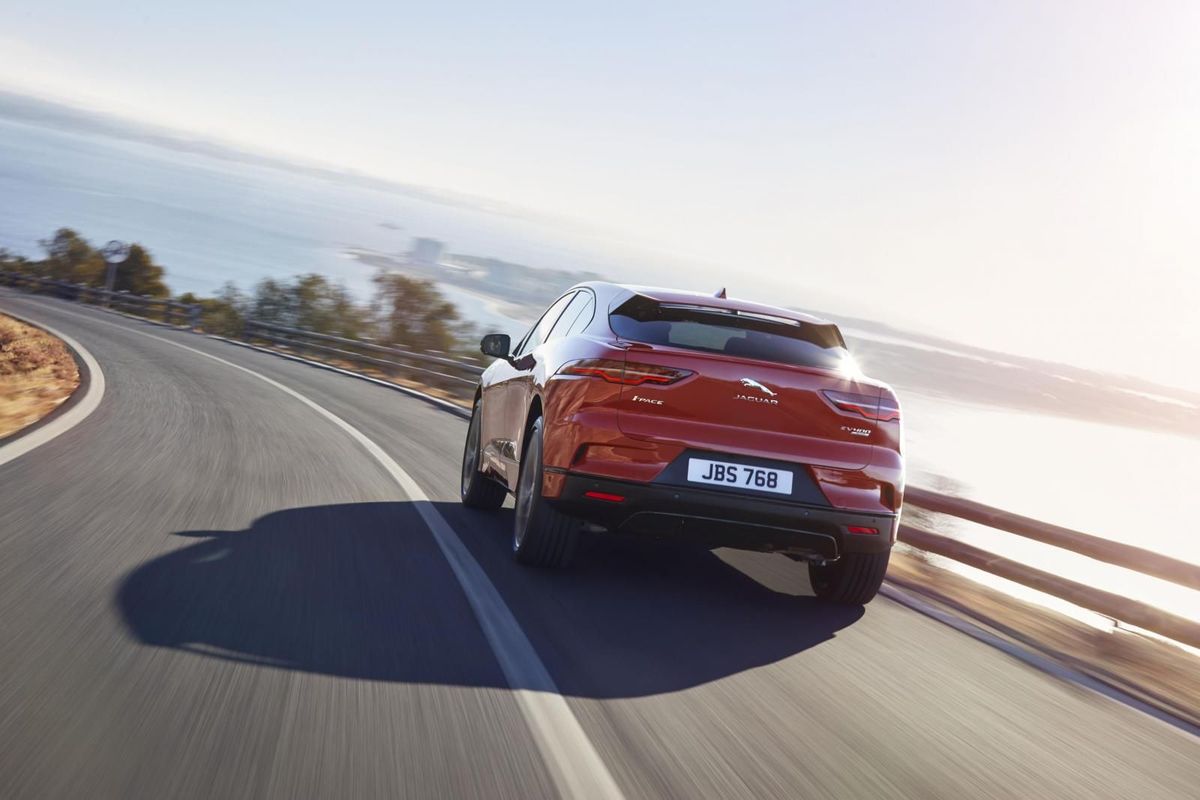
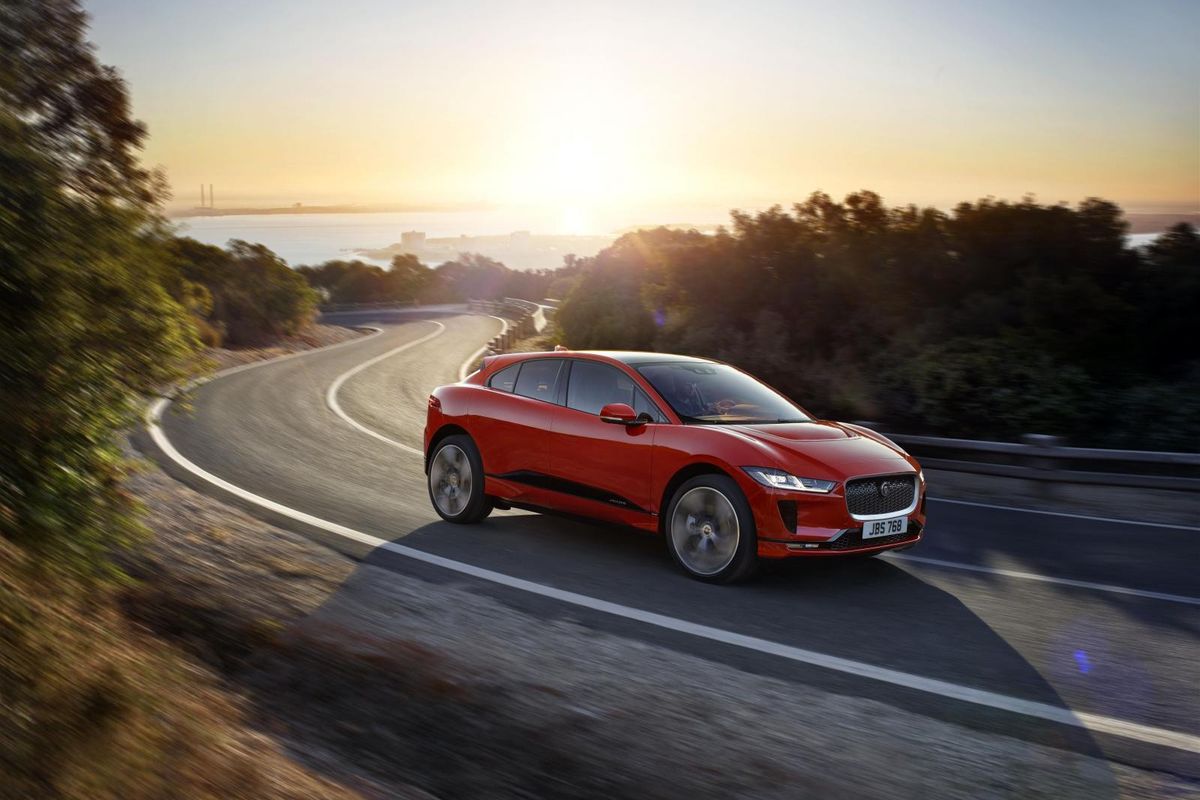
In March this year, Jaguar unveiled its first electric vehicle, the I-Pace at the Geneva Motor Show and via a global livestream. Regarded as the first true competitor to the Tesla Model X, the I-Pace will be fitted with an in-house designed, liquid-cooled 90 kWh Lithium-ion battery that is capable of obtaining an 80% charge in 45 minutes using a DC 100 kW charger. One full charge has a claimed range of 480 km.
The car is expected to arrive in South Africa in the first half of 2019, which is now more or less a year away. And the biggest question that remains, without a doubt, is does the republic have enough infrastructure to sustain growth in the sales of full EVs?
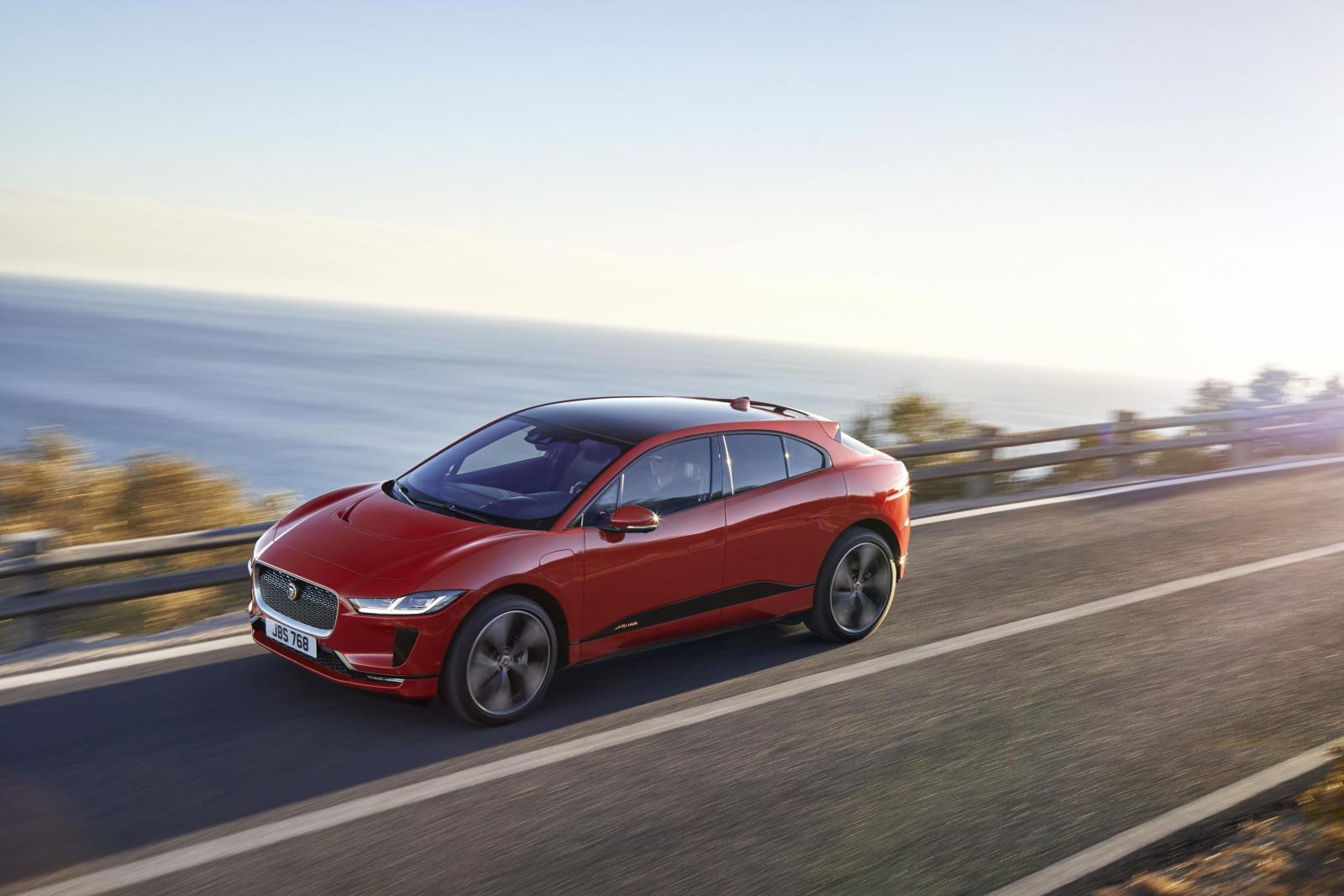
When the I-Pace lands next year, it will have the largest range of any EV on sale in SA.
Jaguar Land Rover South Africa’s public relations officer Izak Louw confirms that the company has invested close to R1 billion in upgrades to dealer facilities in preparation for the arrival of the I-Pace and other electrified vehicles such as the new Range Rover and Range Rover Sport plug-in hybrid (PHEV) models. As a result, by the time the I-Pace arrives, 32 charging points will have been installed at all Jaguar Land Rover retailers.
Britain’s largest vehicle manufacturer has already invested £15 billion (R247 billion) on products and new technology in the last 5 years and aims to offer some degree of electrification on every new Jaguar Land Rover model from 2020 onwards, globally.
In preparation for the introduction to the South African market, Jaguar Land Rover (JLR) has engaged with government, energy providers, and the industry. The success of any new technology depends largely on demand, supported by infrastructure.
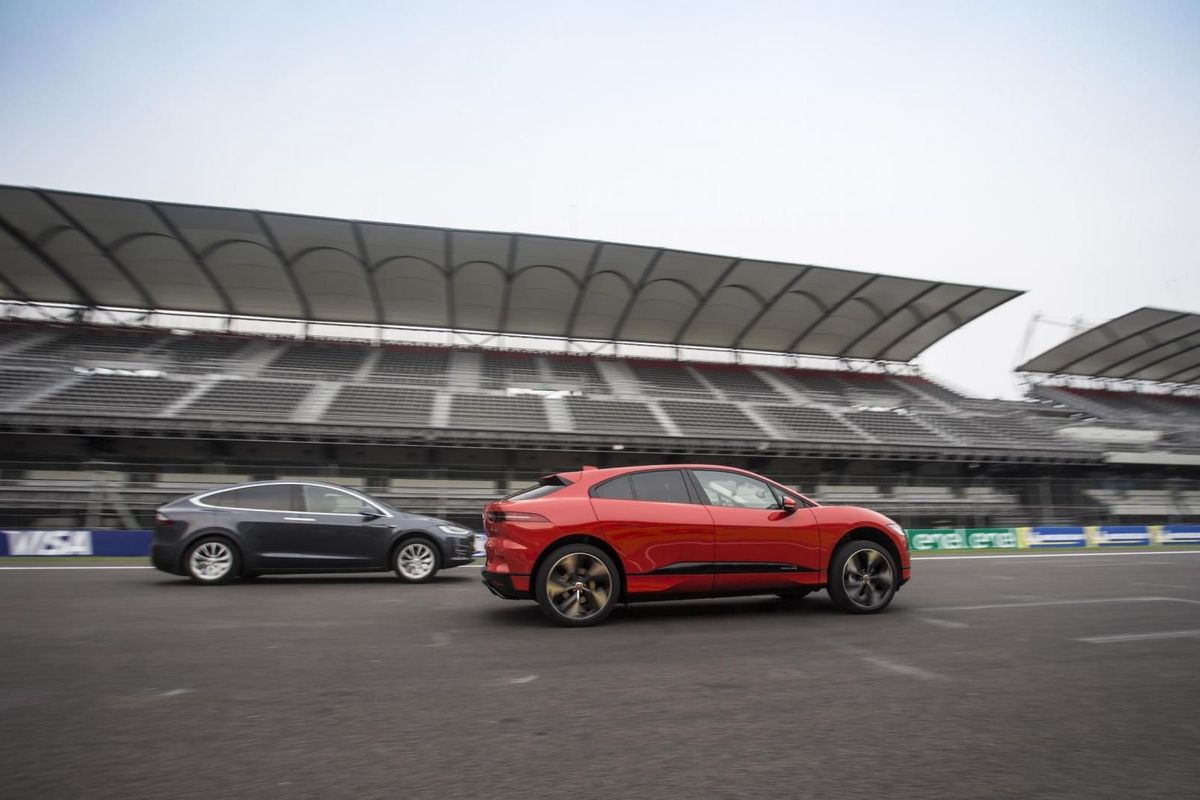
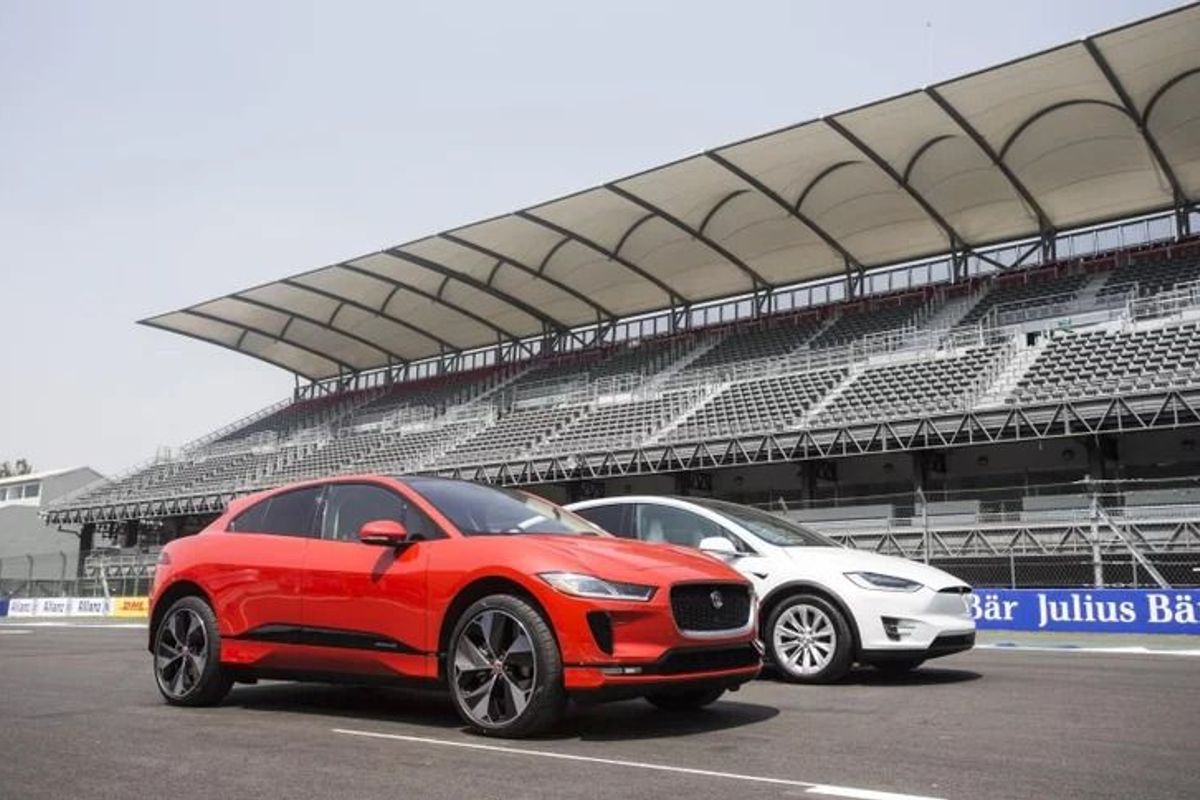
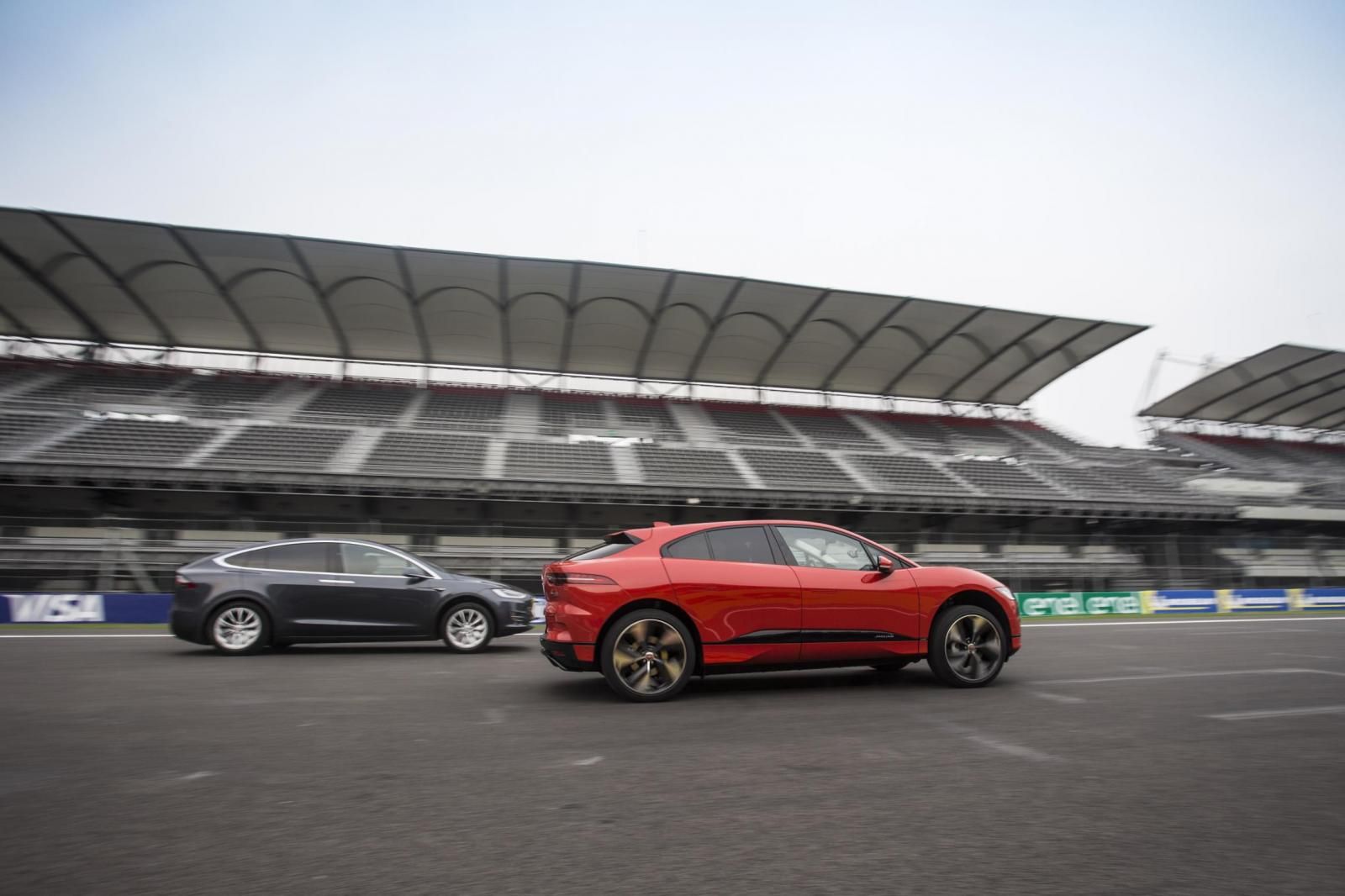
Jaguar showed off the I-Pace's speed by racing it against a Tesla Model X and winning.
“Government has a key role to play, currently electric vehicles do not benefit from trade agreements,” says Louw. “Government can also stimulate the development of, and investment in, the necessary infrastructure for electric vehicles.”
JLR is currently engaging with stakeholders on compliance and legal issues, but cannot comment further about this. However, the company, along with industry partners like the Electric Vehicle Industry Association (EVIA) have lobbied for more favourable duty rates.
“Currently Electric vehicles do not benefit from trade agreements i.e. Internal Combustion (ICE) engines sourced from the UK have an 18% duty rate, but Battery Electric Vehicles (BEV) are subject to 25% duty,” adds Louw.
Hiten Parmar of the EVIA says the processes that define local market introductions would be relative to the respective operating environment for electric vehicles across import duties, taxes, and incentives. “Currently in South Africa, the status taxation of electric vehicles is not conducive for new model introductions due to the high import duty and ad valorem, which totals in the region of 43% and, as such, consumers are faced with additional costs within pricing of electric vehicles in South Africa,” says Parmar.
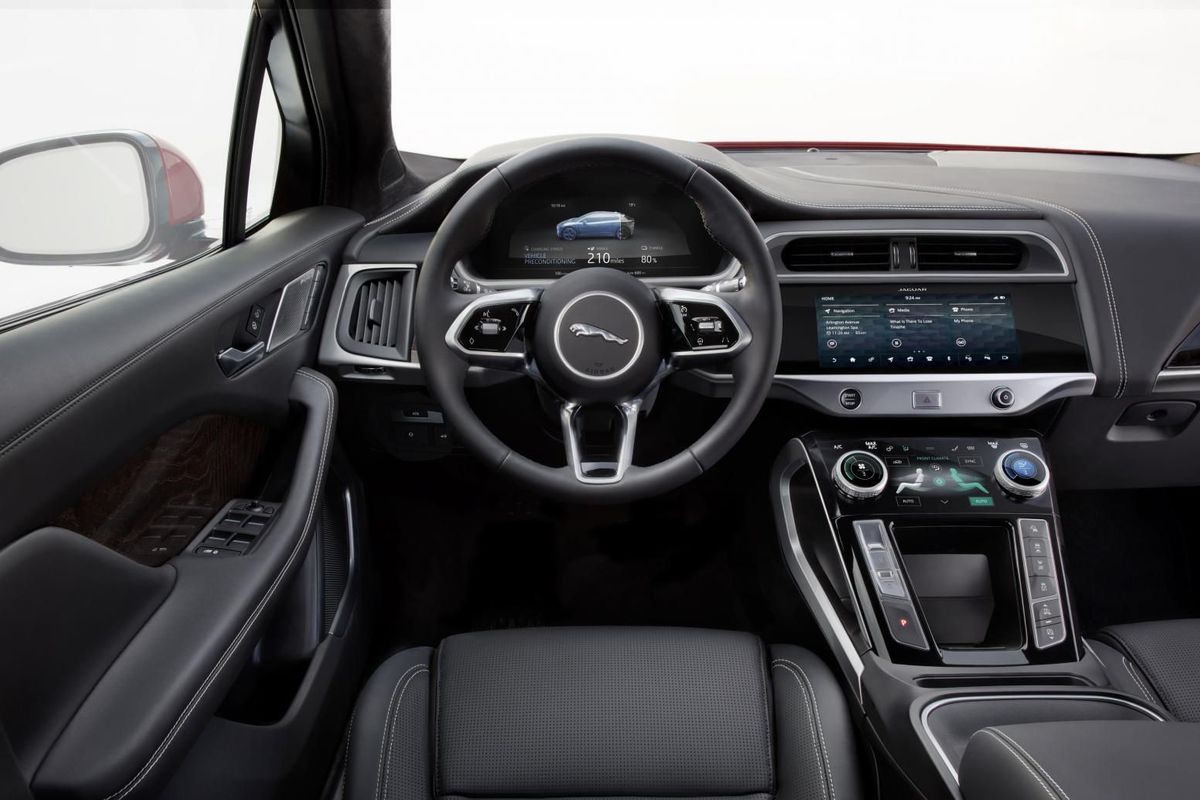
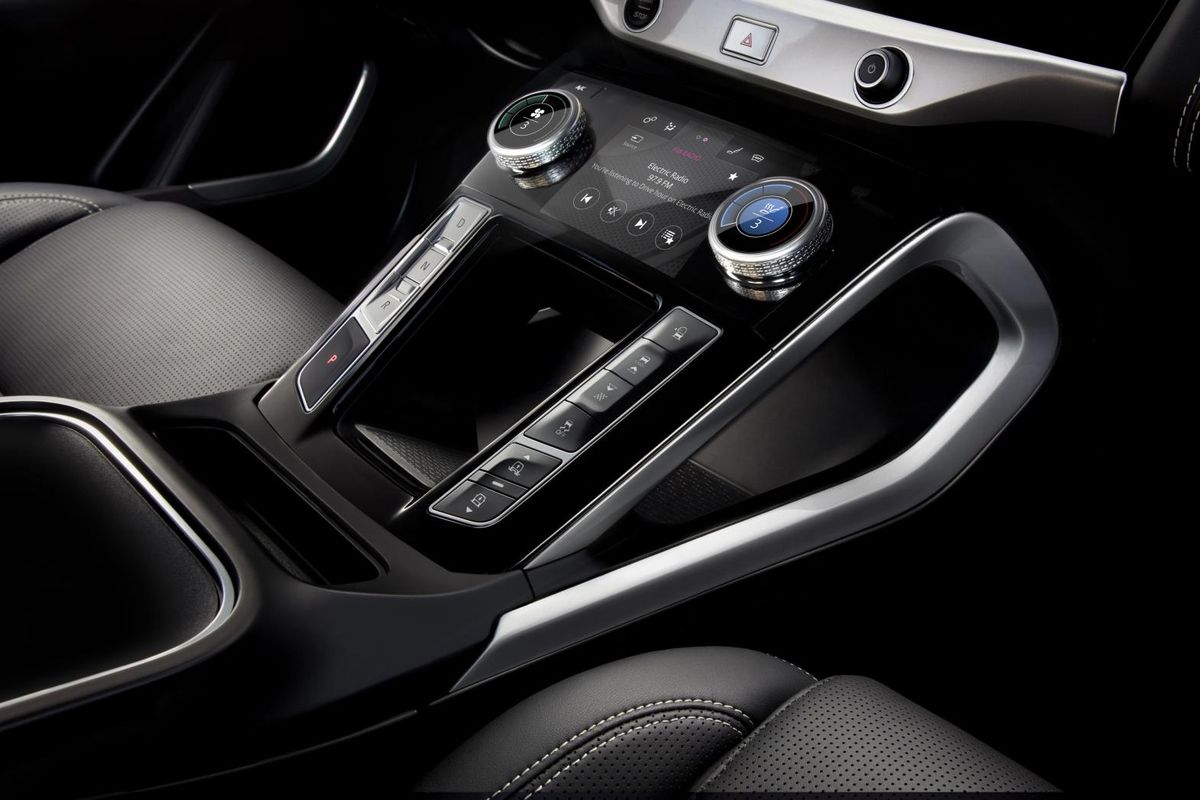
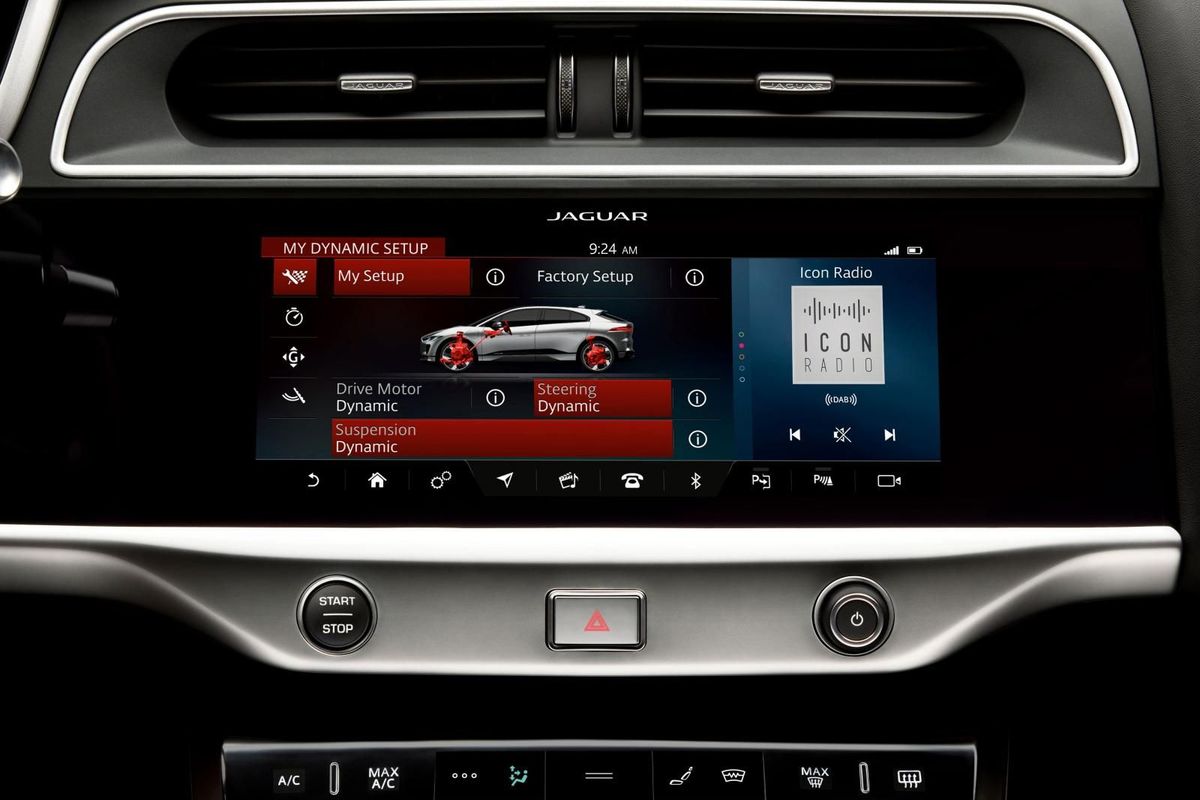
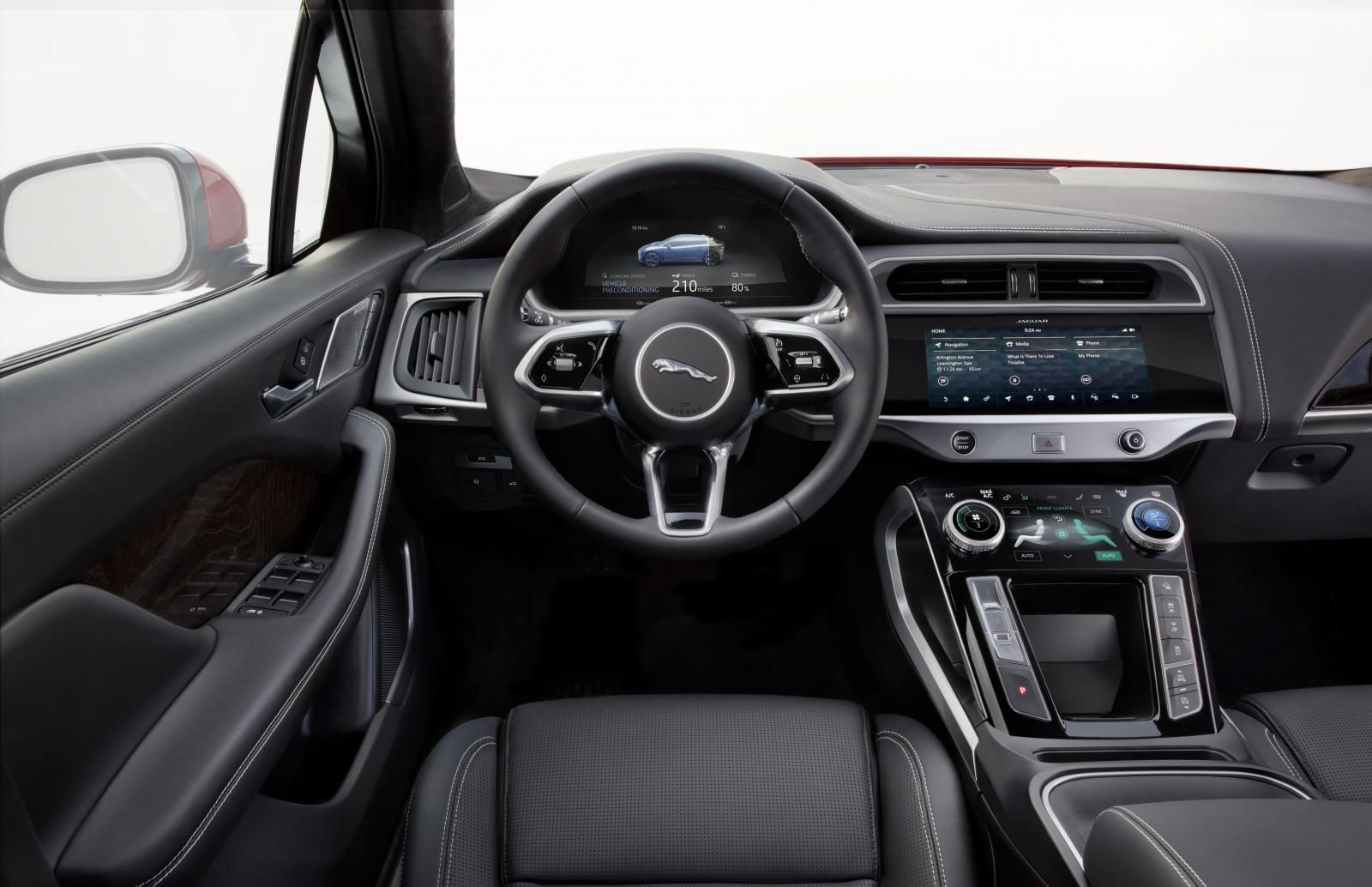
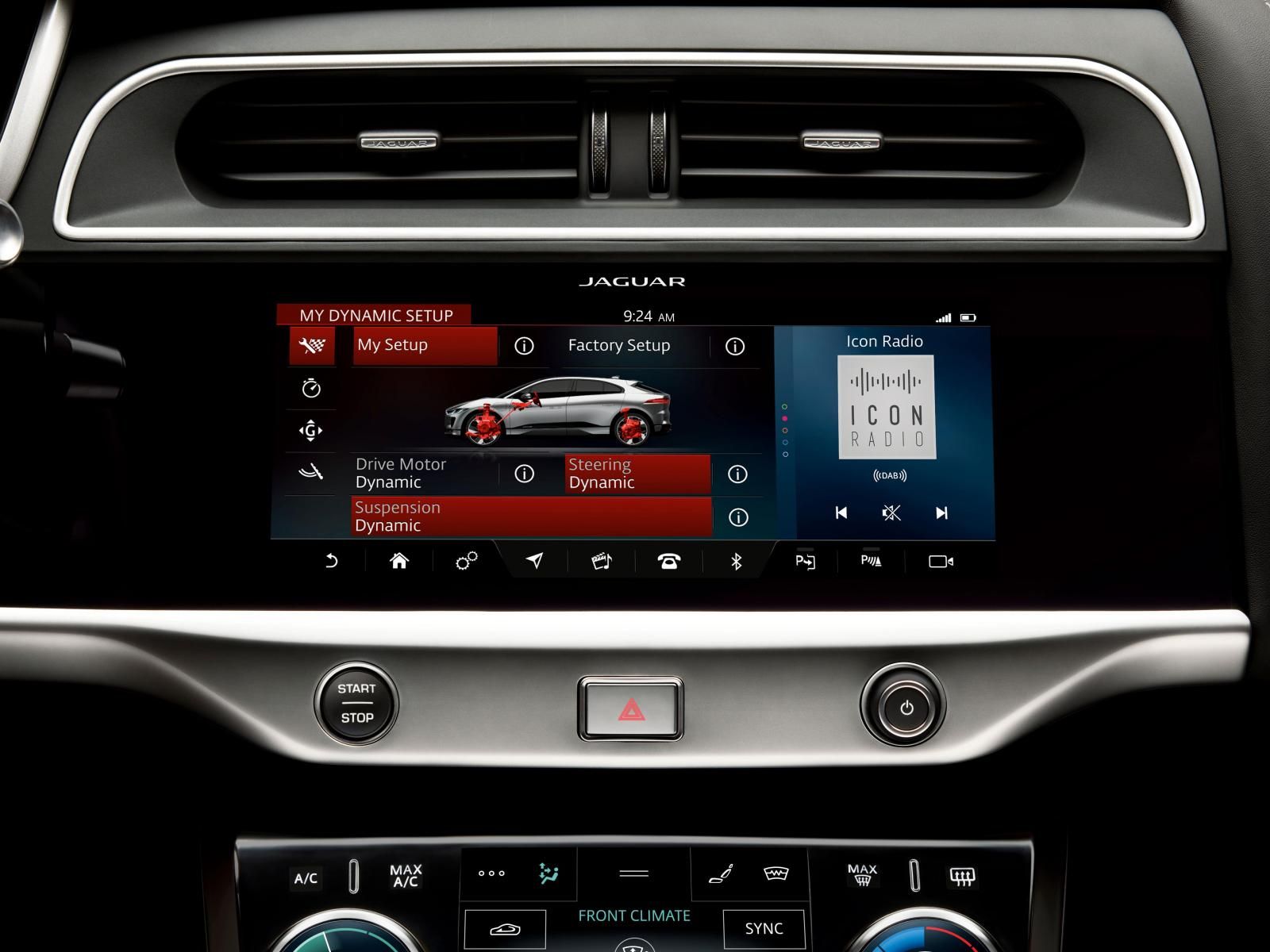
The interior is original to the I-Pace featuring displays that help to get the most out of your electric range.
EVIA says there is a collaborative effort within the respective industry stakeholders for a request to the International Trade Administration Commission (ITAC) of the Department of Trade and Industry for a reduction of the import tariffs imposed on electric vehicles.
While there is no current local manufacturing of electric vehicles in South Africa by any manufacturer, there should ideally be a more favourable import tariff schedule for electric vehicles in order to grow the uptake of electric vehicles. “The high import tariff for electric vehicles is structured to protect a local manufacturing industry that neither builds nor assembles electric vehicles,” Parmar says, quite pointedly.
The I-Pace still needs to stand up to the inherent sportiness of the Jaguar brand, we eagerly await a full test of it.
In the meantime, JLR says its biggest challenge with launching an electric car in South Africa comes down to 3 things: range anxiety, battery life, and infrastructure.
Louw says South Africans have had very limited exposure and experience with BEV, and that range anxiety tends to be a primary question with consumers. “Consumers are used to products with 180 km to 300 km range limit with extended charging times. I-Pace will deliver up to 480 km range and typical 50 kW charger can deliver up to 270 km of range per hour.”
Louw also believes that the likelihood of battery failure is driven by laptop and phone experience and some adverse EV publicity. “Jaguar Land Rover will offer an 8-year or 160 000 km warranty and is redeemable if the battery drops below a 70% state of health. This warranty will provide total peace of mind to all BEV customers.” Comparatively, new Jaguar cars come with a 5-year/100 000 km warranty as standard.
An 8-year/160 000 km warranty on the I-Pace is quite a statement considering all other Jags come with 5-year/100 000 km warranties.
To address the infrastructure issue, the company is aware that consumers are faced with a disjointed public charging infrastructure, and will offer a robust home charging strategy backed up by public charging. The company is also in talks with numerous stakeholders on charging infrastructure, but cannot confirm anything at this stage. The 2 other local players, BMW and Nissan teamed up to provide dual charging stations (stations equipped with 2 different plugs) for consumers. The new I-Pace is compatible with the BMW port and could theoretically be used by both BMW i owners and Jaguar I-Pace owners. This means that Jaguar owners would have access to 86 charging points around the country.
JLR says all its dealerships around the country will be ready for the I-Pace launch next year, offering full sales and service capabilities with charging facilities at all retailers. Louw says they have received “unprecedented levels of interest” for the I-Pace already and those who registered on the website will be contacted first to place their orders next year.
Pricing for the I-Pace has not been announced yet, but Jaguar has indicated that it will include an installed home charging solution.
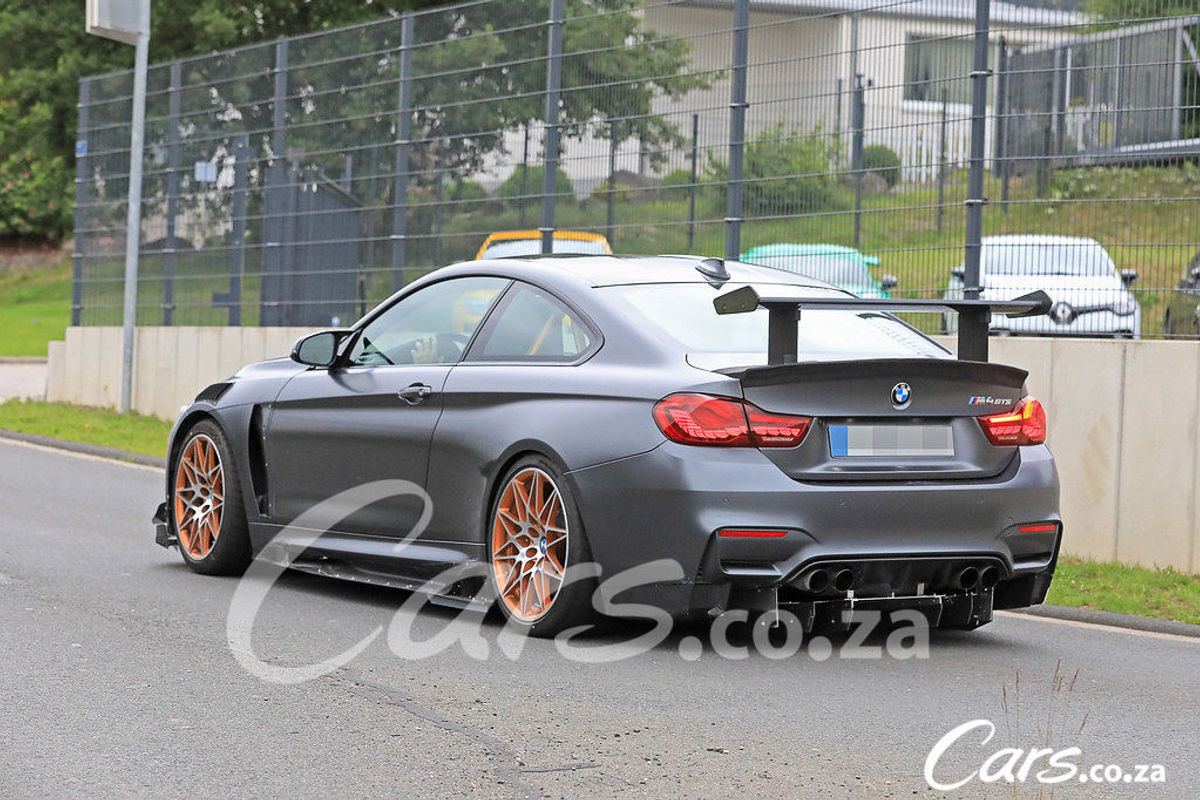
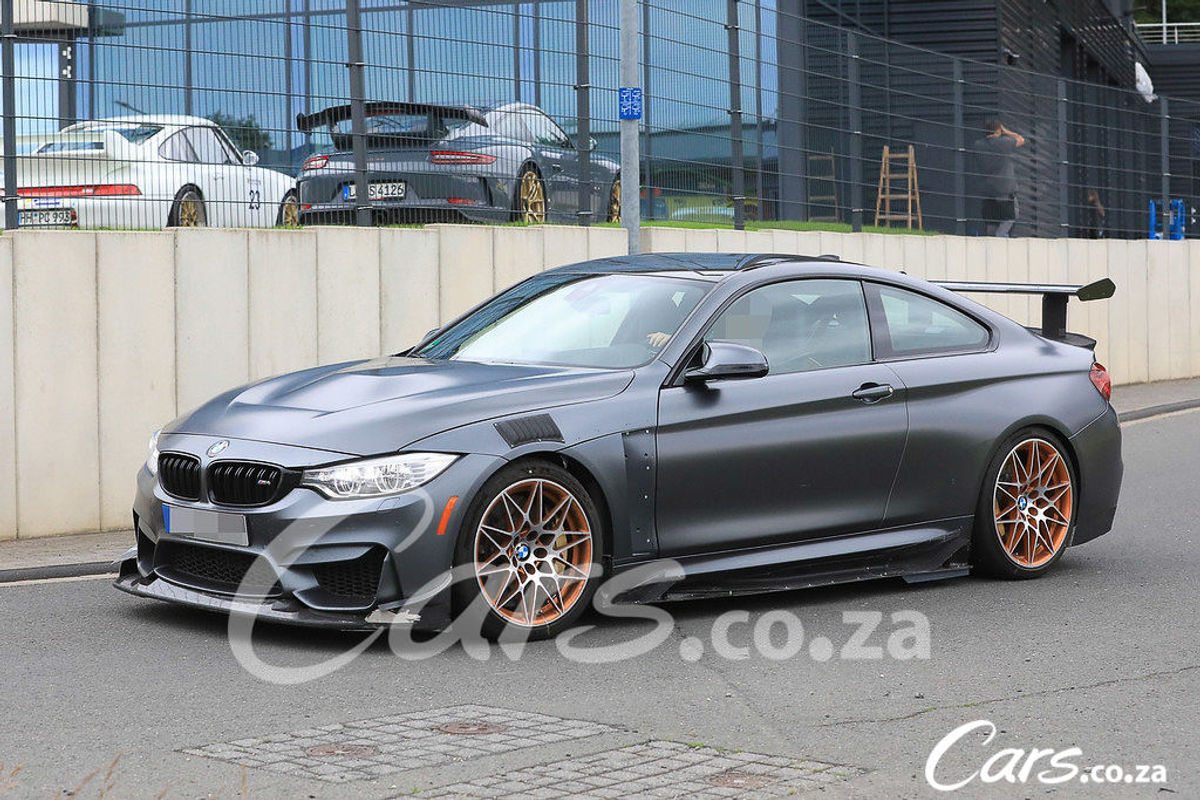
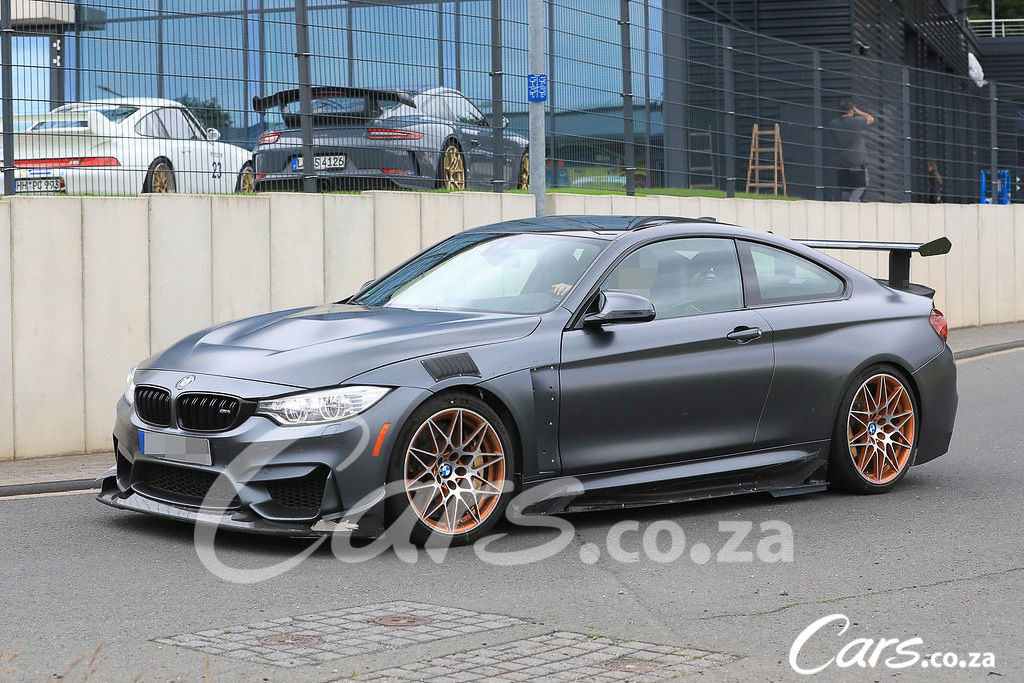
Spy photographers have spotted what looks to be a more track-focused version of the BMW M4 GTS. Could this mean the pinnacle of the M4 range will be getting an upgrade soon?
Image credit: S. Baldauf/SB-Medien
The current BMW M4 GTS is just about as hardcore as a car can get without sticking a set of slicks on it and entering it in a race series. It seems BMW has more in mind for the GTS as these new spy shots show a more hardcore version could be on the way.
These images show an M4 GTS with larger front air intakes and an even higher and bigger rear wing. There also appears to be a bootlid spoiler as well, likely further improving the downforce of the new model. The front also features canards or dive planes on the side adding to front-end downforce. There's also downforce aids along the side skirts and a proper, race car spec rear diffuser.
It's not clear what BMW plans to do with a car this hardcore as it would be unbearable to drive on road and it already has a GT3 race car in the form of the M8 GTE. Further developments will no doubt shed more light on this new development.
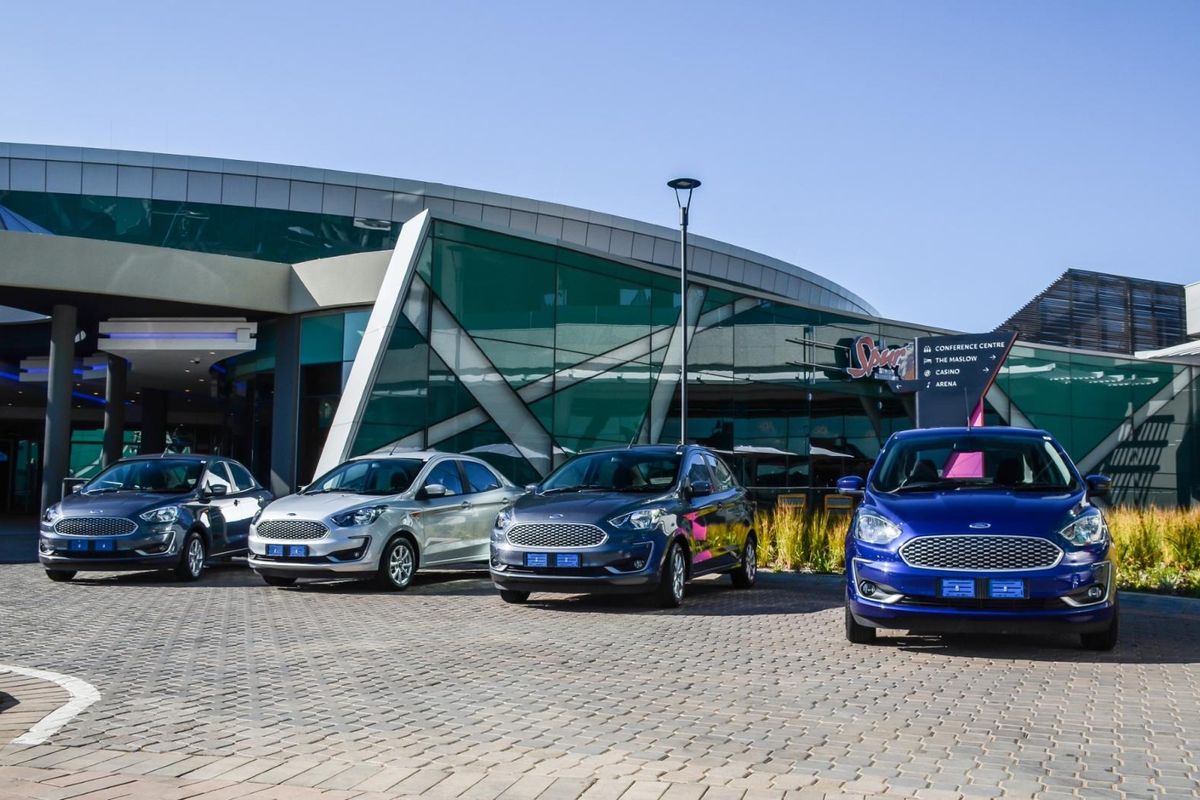
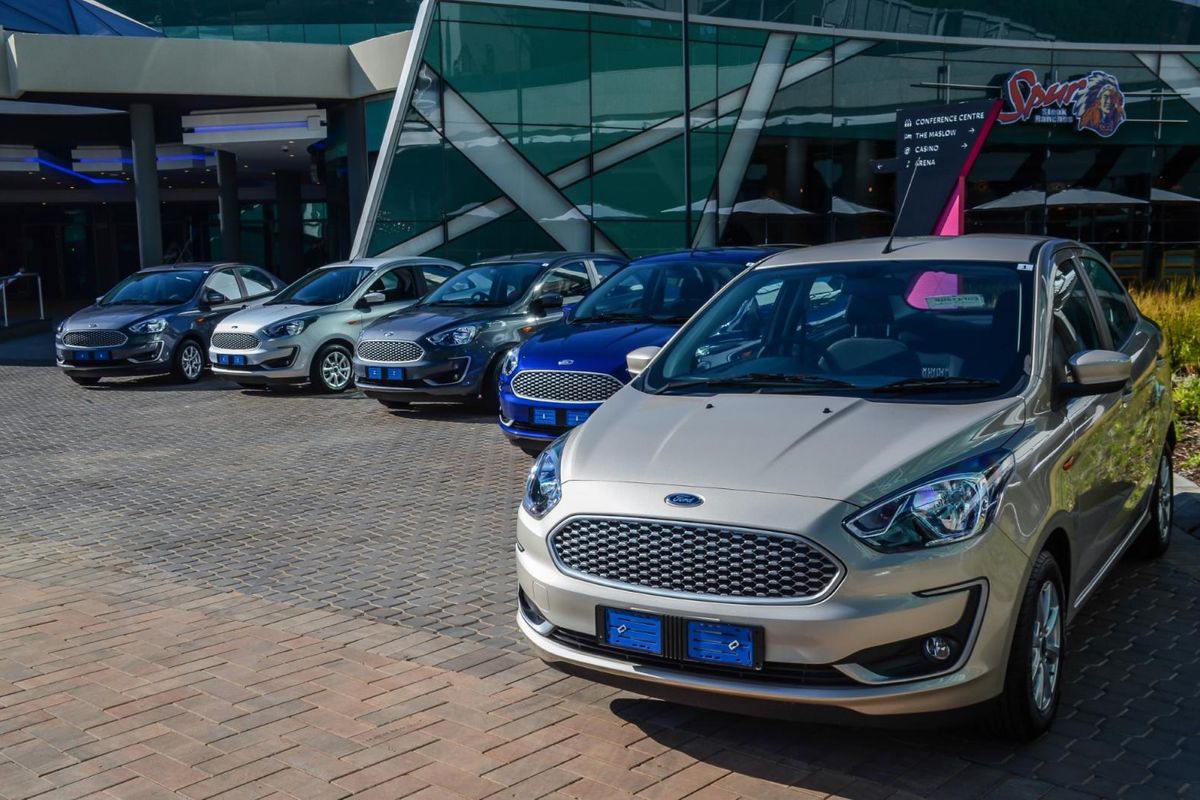
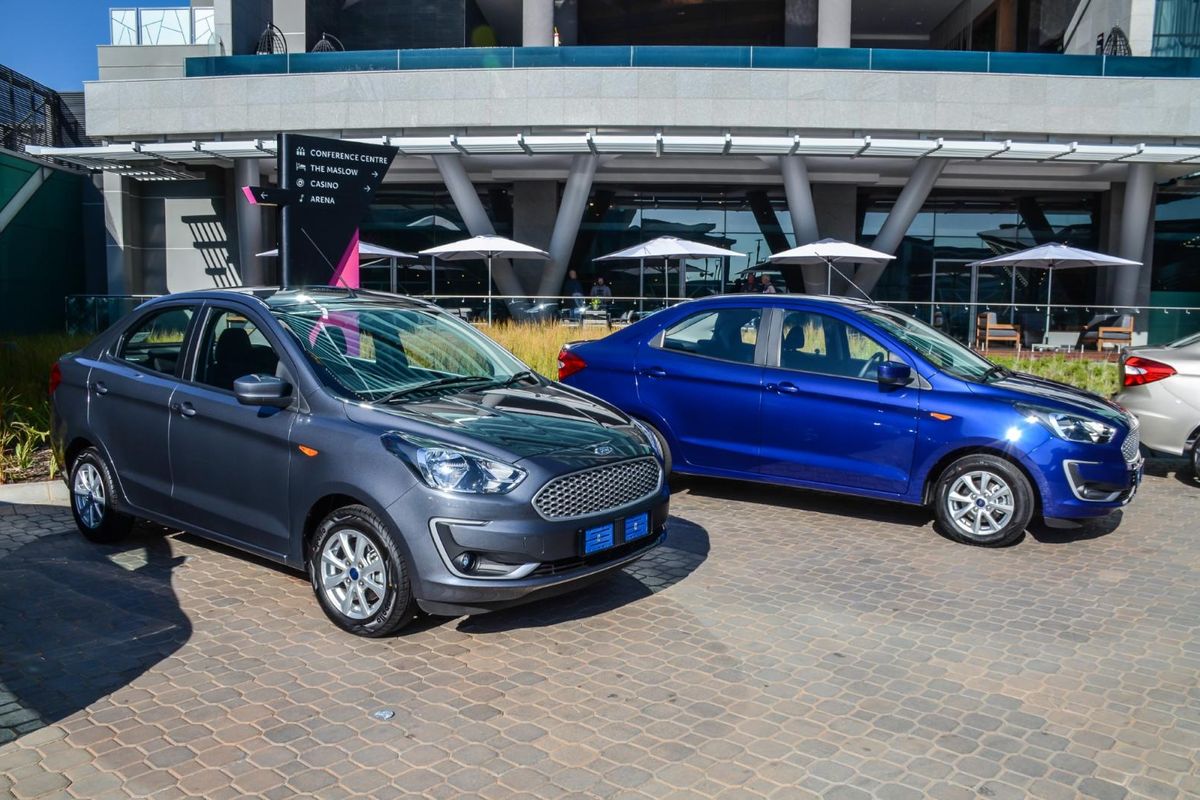
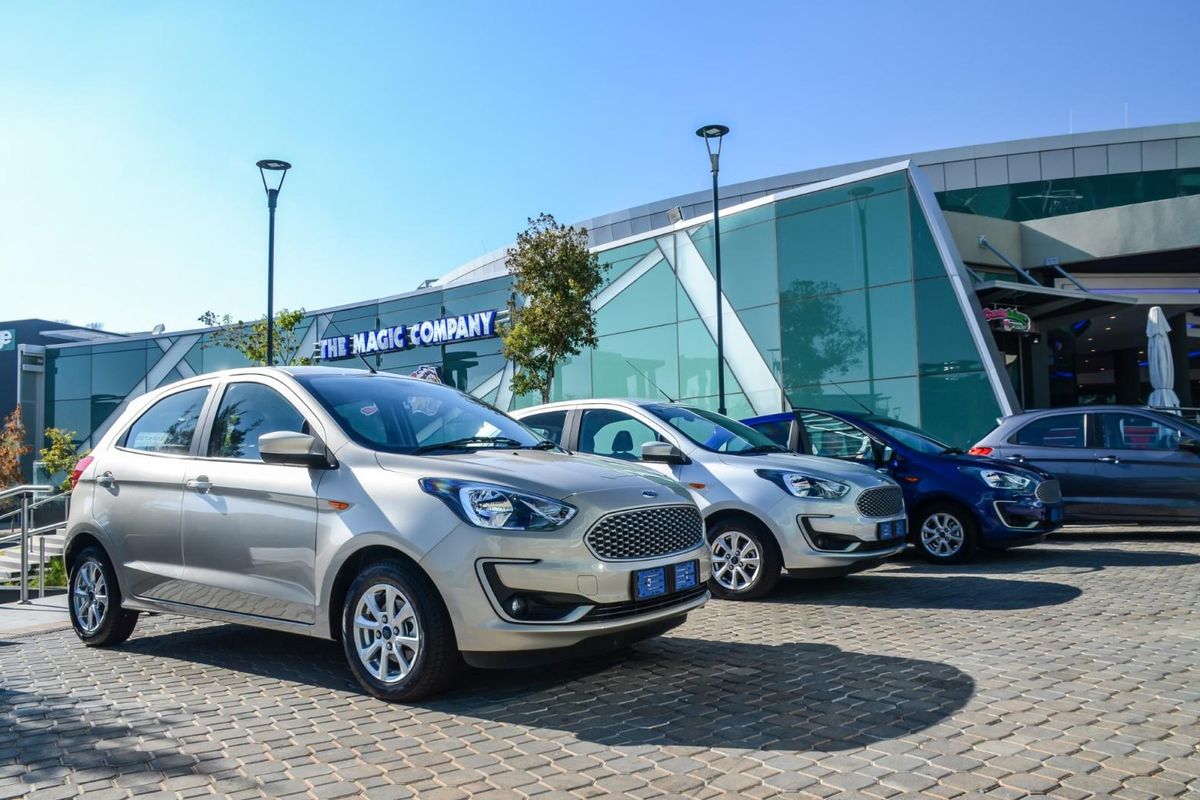
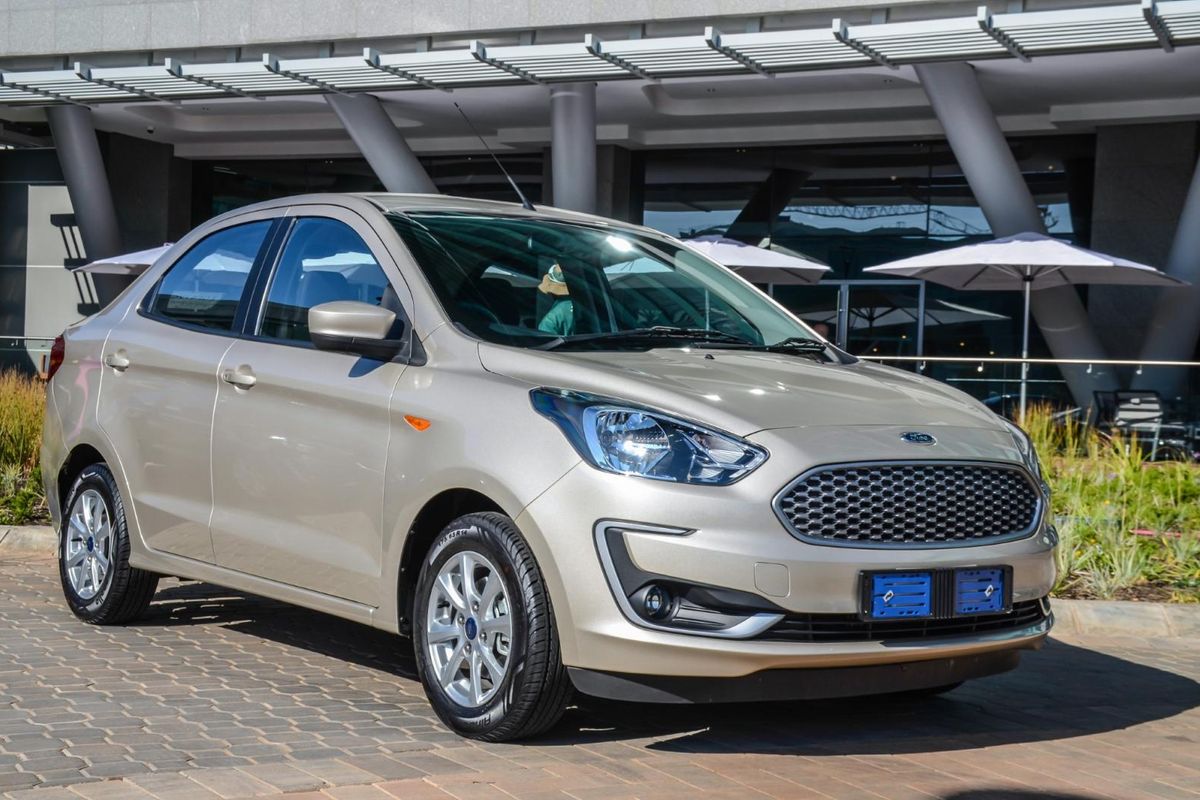
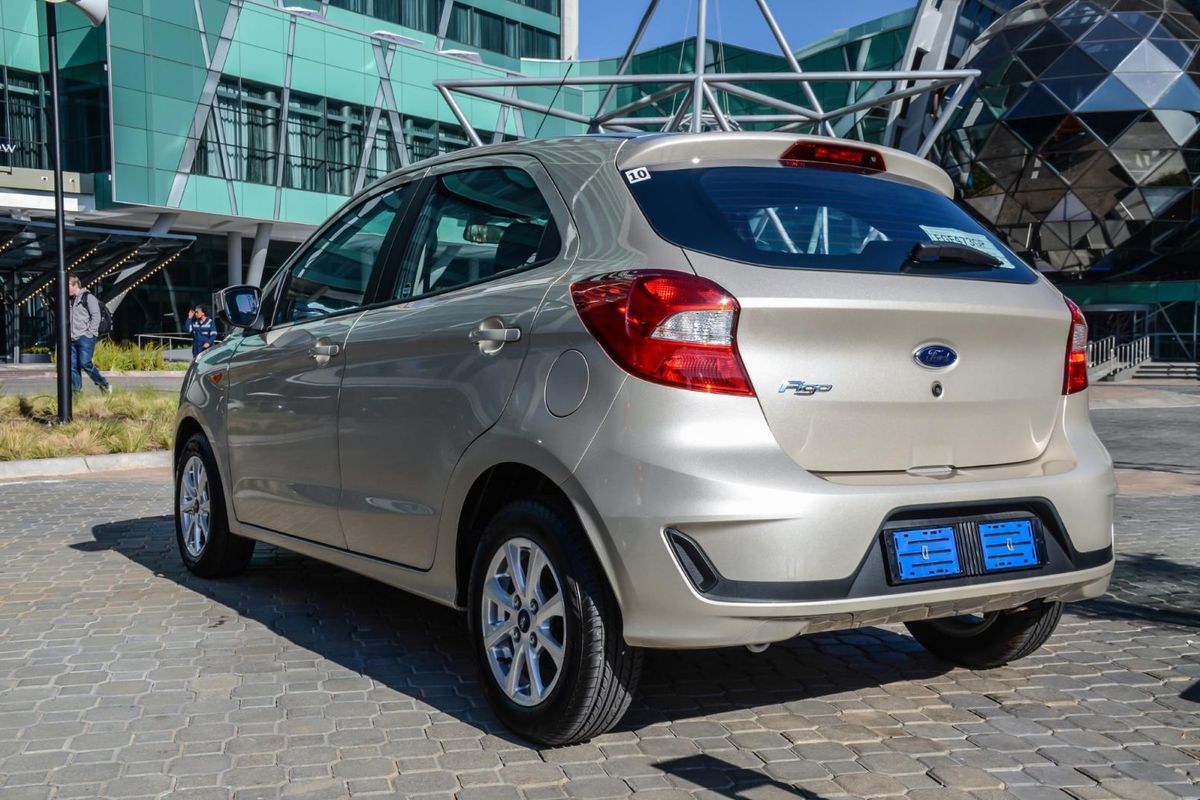
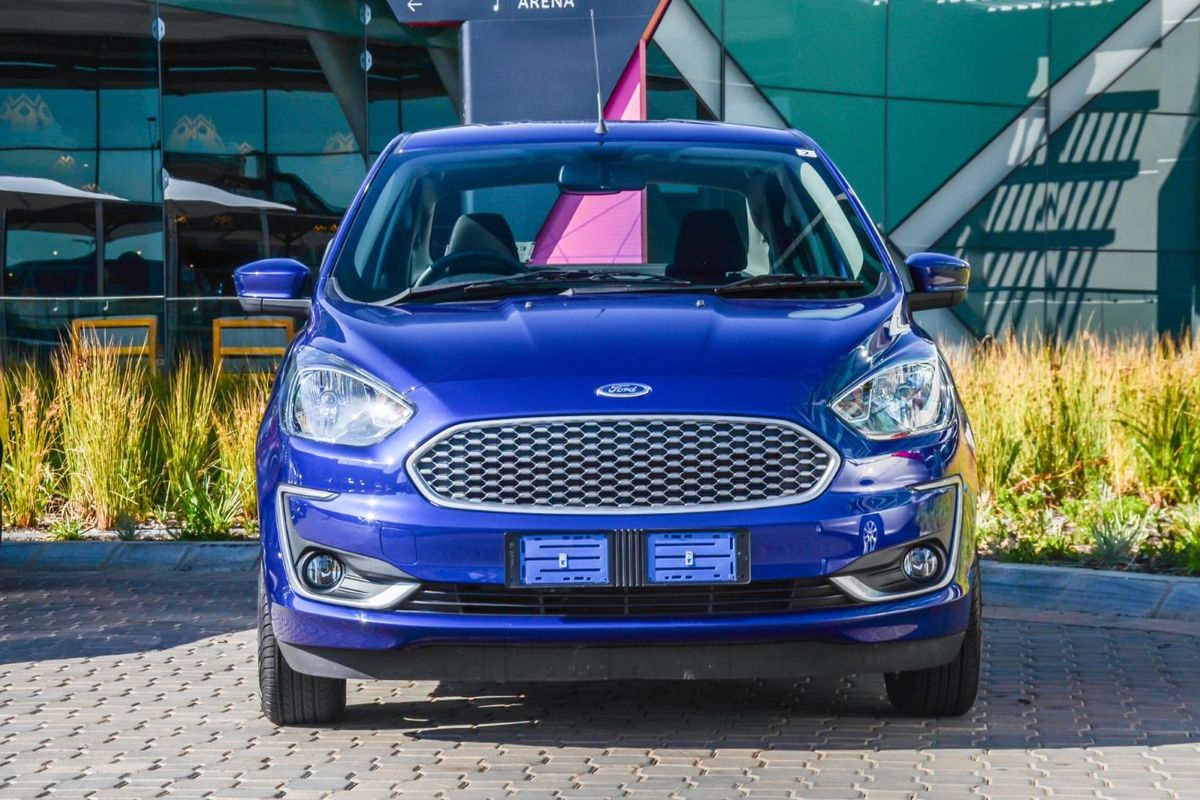
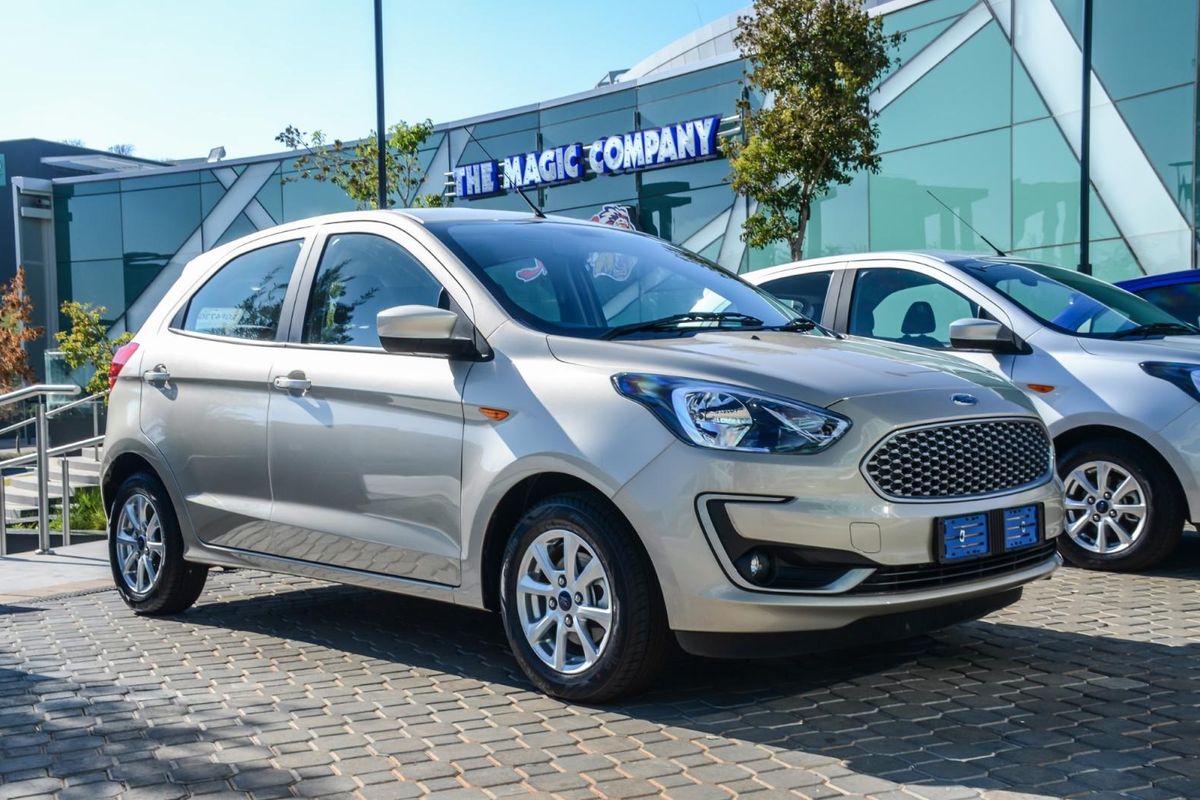
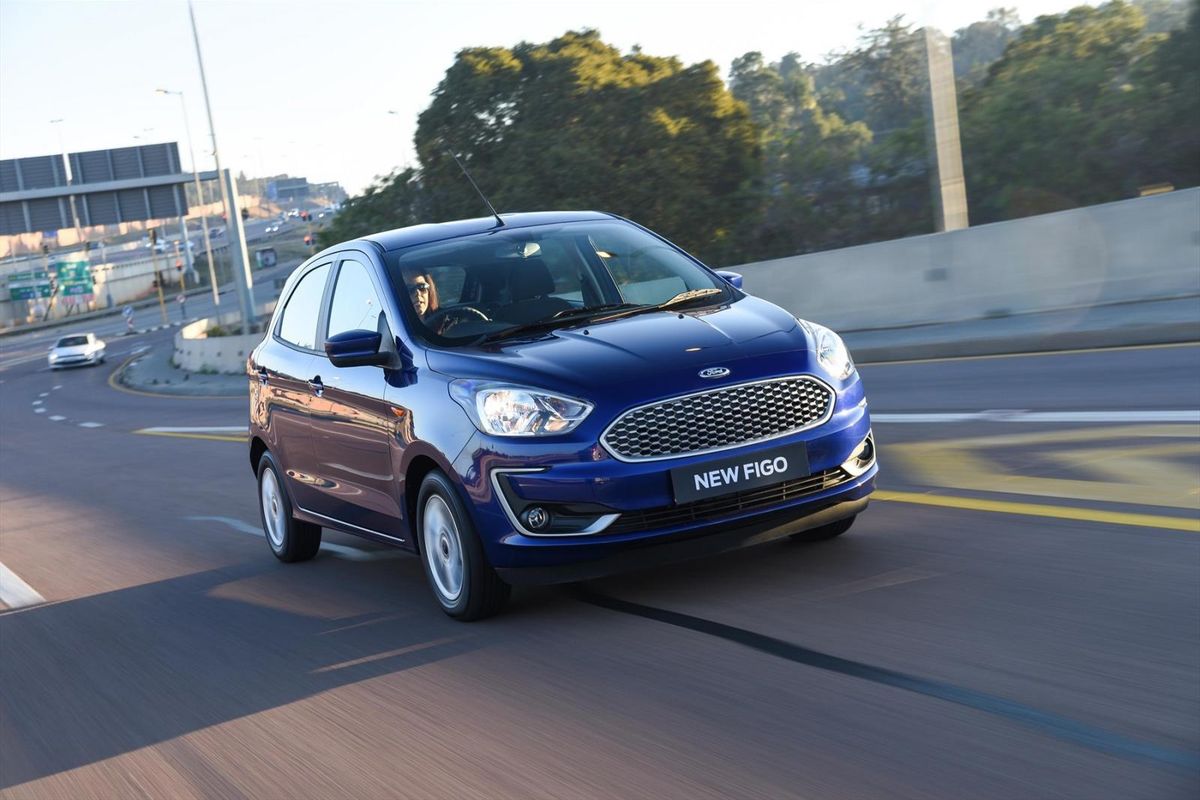
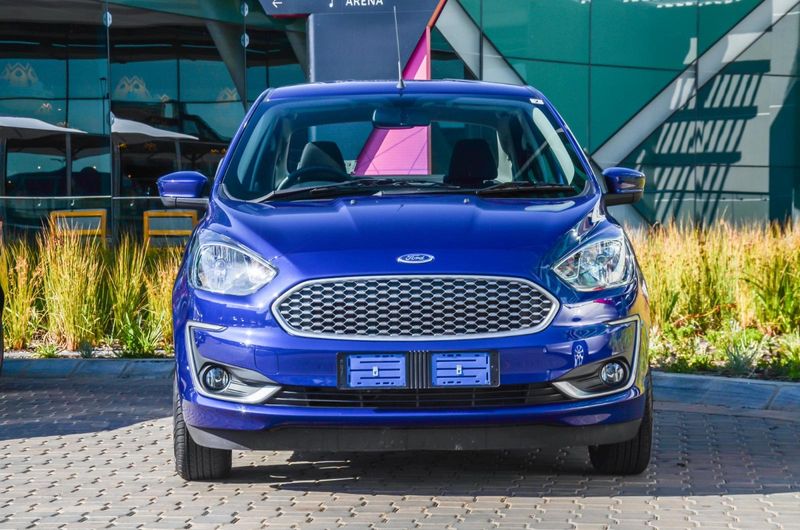
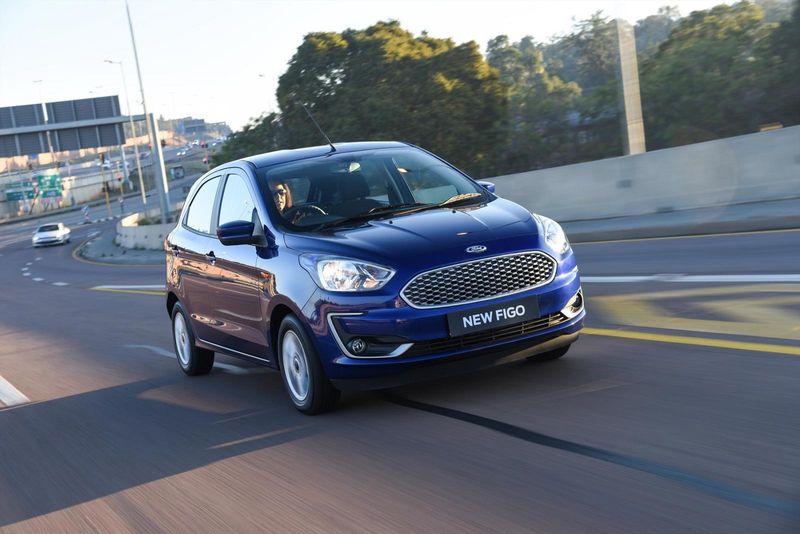
In an effort to stay relevant in South Africa’s ultra-competitive budget car segment, Ford has revitalised its Figo hatchback, which now features improved exterior/interior styling, equipment upgrades and a new engine! We attended the launch in Gauteng this week to experience the changes for ourselves…
The Figo competes with a host of well-established products, including the Suzuki Swift, Toyota Etios, and, of course, the dominant Volkswagen Polo Vivo. Ford holds a 6.0% share in the budget segment and, with this latest Figo, the Blue Oval is aiming to increase that number substantially.
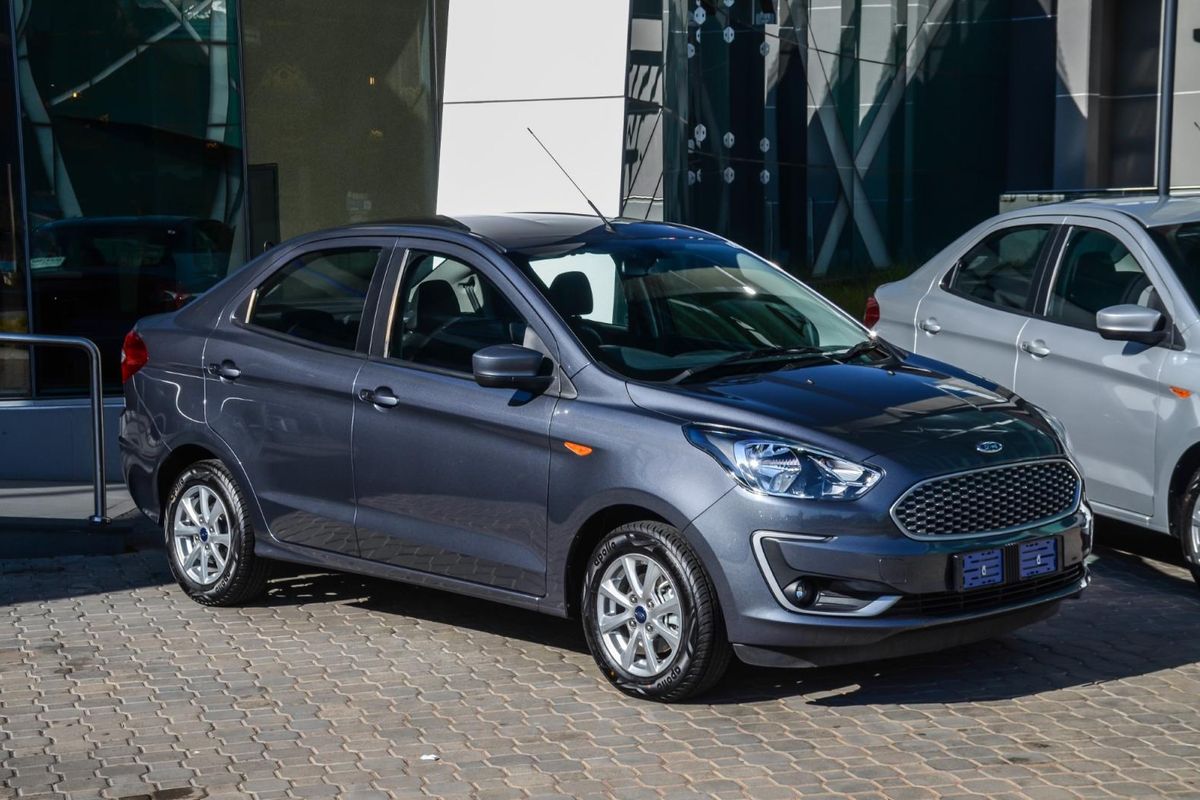
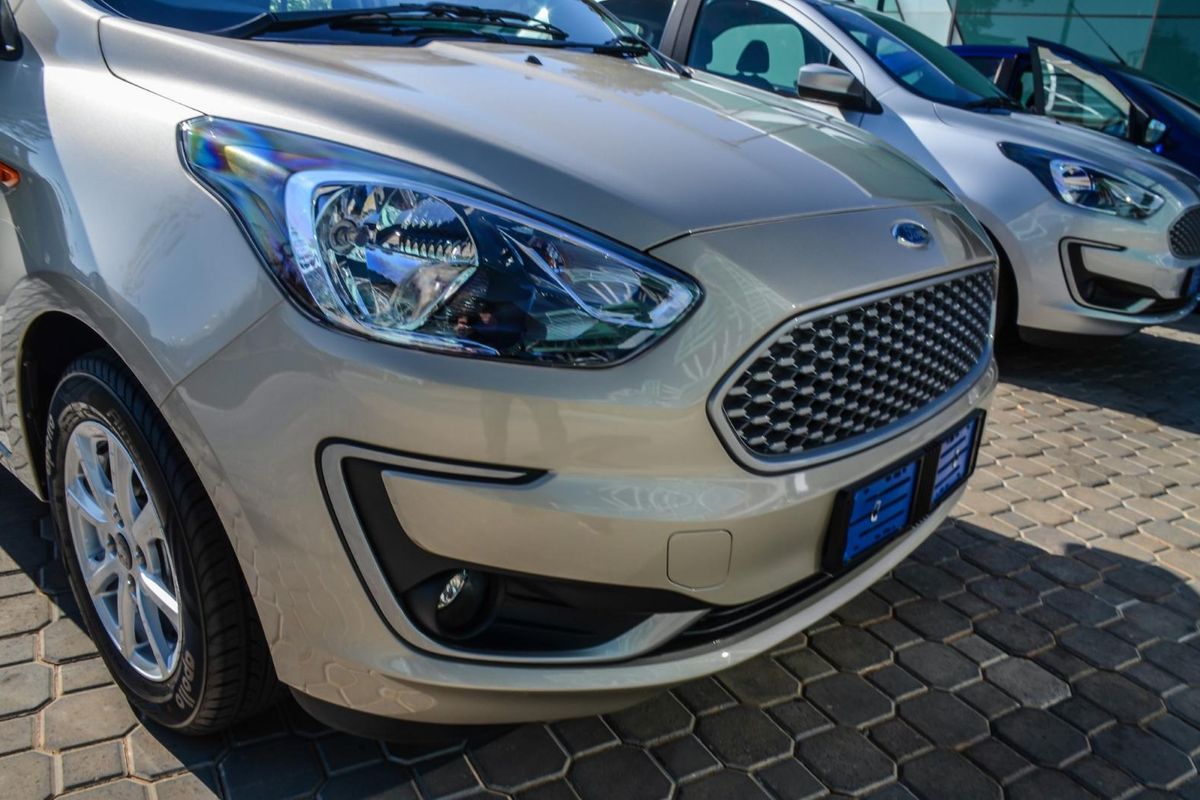
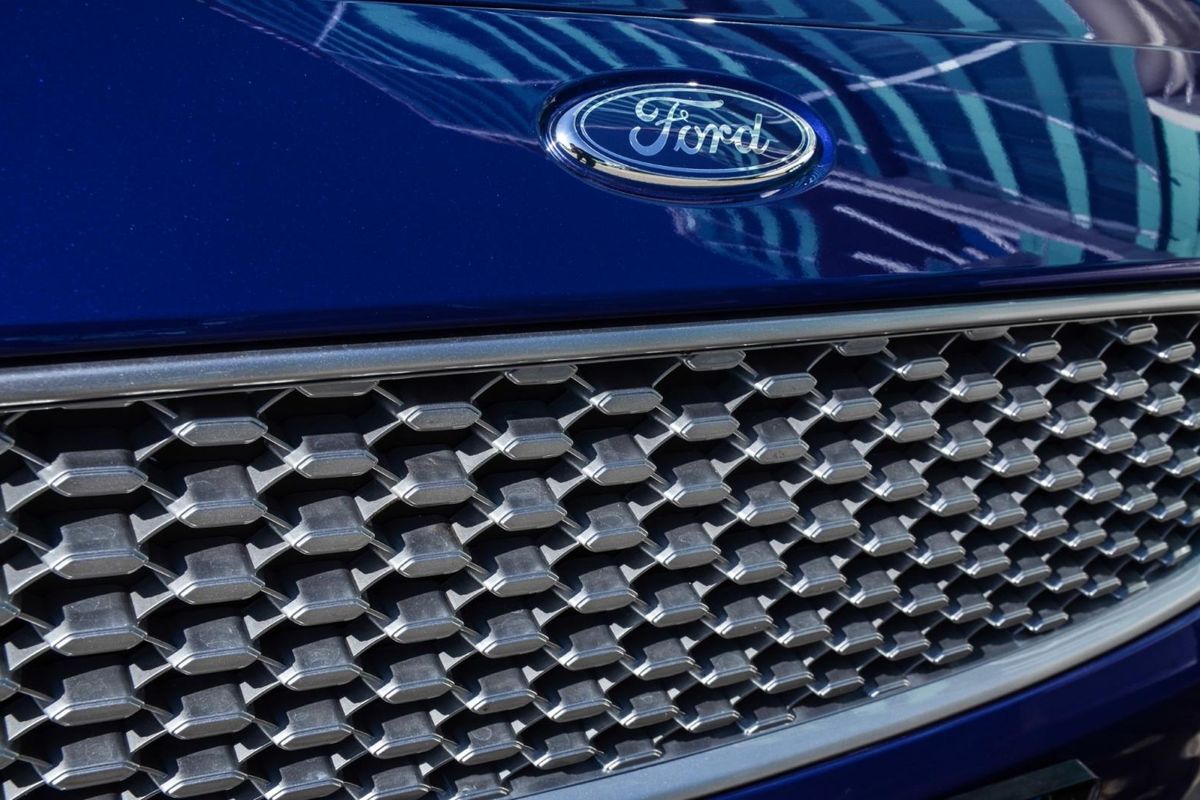
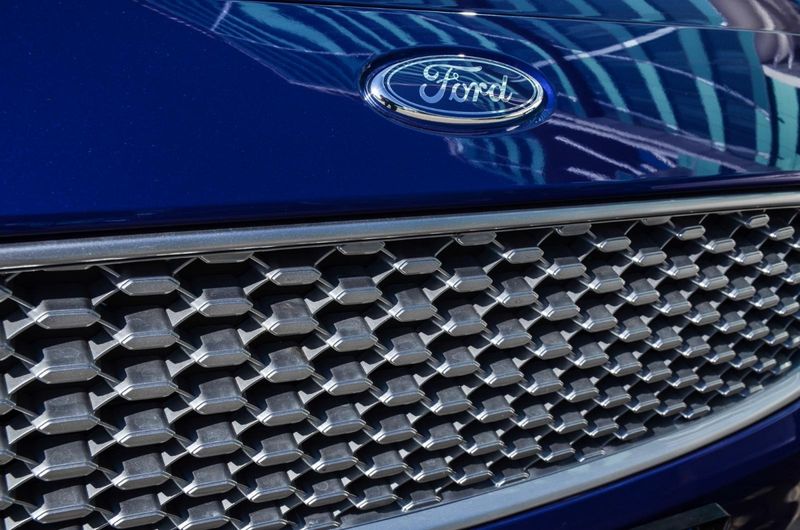
The Figo gains a new grille design that gives it a cleaner, more sophisticated look.
We headed to Pretoria to sample the latest Figo in both hatchback and sedan guises. Although an aesthetic critique is entirely subjective, most people will probably agree that the look of this new Figo represents an improvement over that of the previous version – the new grille design is perhaps its most striking feature. In range-topping Trend specification, the grille is finished in chrome and it gives the Figo a more sophisticated look.
The juicy news, however, comes by way of a new 3-cylinder, 1.5-litre petrol engine that now powers the Figo range and offers a heady 88 kW and 150 Nm of torque. Buyers favour petrol engines in this segment and Ford is therefore no longer offering a turbodiesel engine in the range.
The Figo's new 1.5-litre, 3-cylinder engine offers good performance courtesy of peak outputs of 88 kW and 150 Nm.
Our launch route started behind the wheel of the Figo Trend hatchback fitted with a new 6-speed automatic transmission.
We were delighted with the performance of this perky new engine. The Figo surges forward with purpose and felt punchy from the get-go. Granted, mechanical noise increases substantially under hard acceleration (as the transmission holds on to the gears to squeeze the most out of the engine), but we quickly learnt that feeding power moderately yielded the best results. If you want to achieve smoother, seamless acceleration, the automatic transmission is best driven with a measured approach. Hill Start Assist will help you achieve the perfect pull-away on steep inclines.
The steering, although a tad vague, felt playful and the Figo delivered a relatively pliant general ride quality during our 130-km test drive.
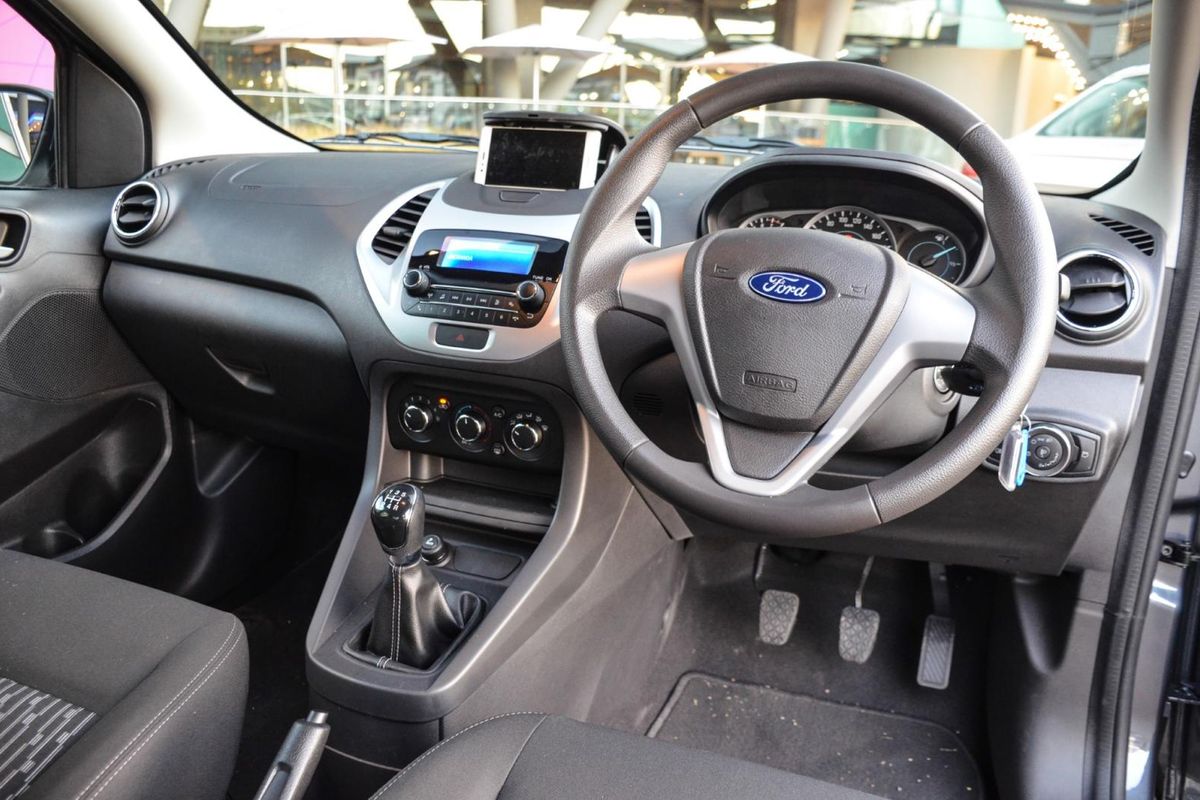
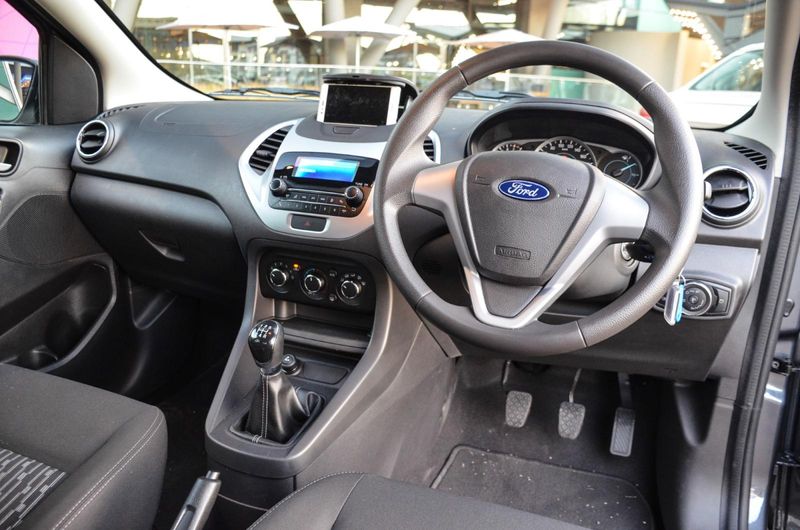
The interior has improved somewhat, but mounted steering wheel controls and steering reach adjustment are not offered.
The launch of the Figo incorporated an interesting tour of Ford’s Silverton production facility, where Ford Ranger and Everest derivatives are built for the local and international market. The facility was recently upgraded in preparation for production of the new Ford Ranger Raptor in 2019. We were soon back on the road and set the Figo on a course for the mining town of Cullinan.
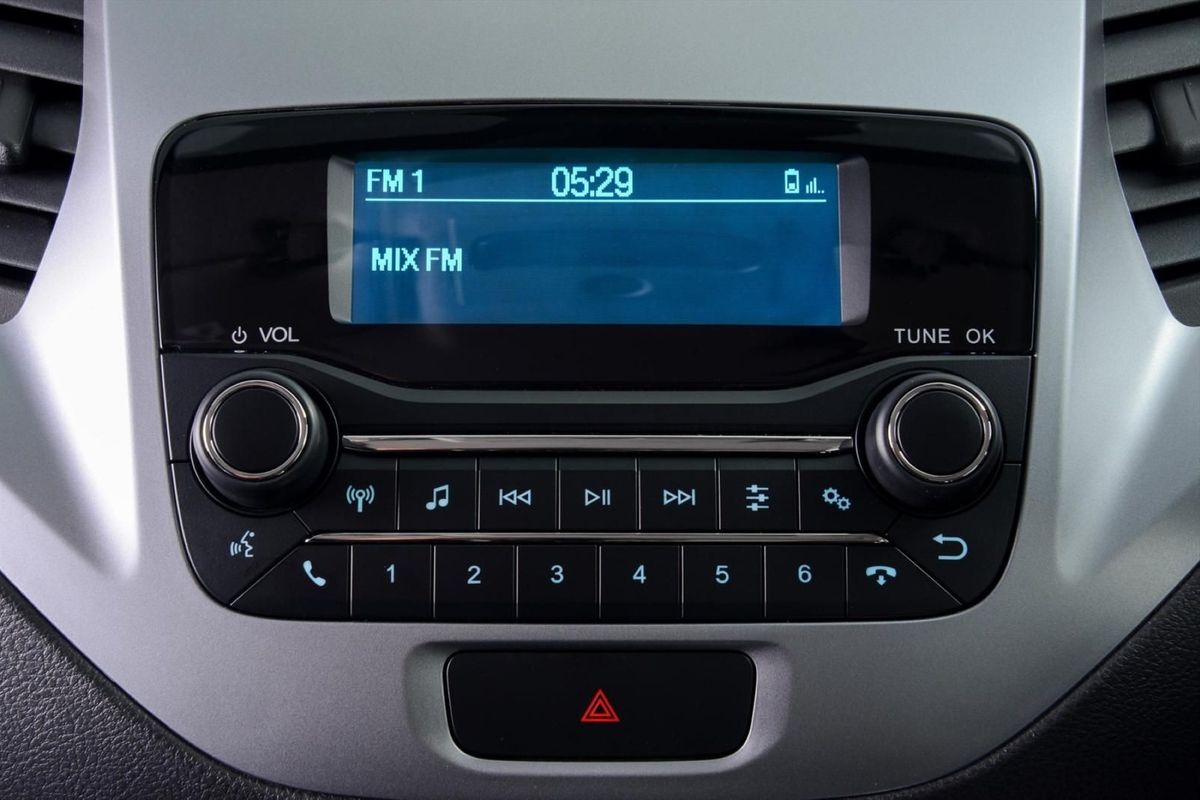
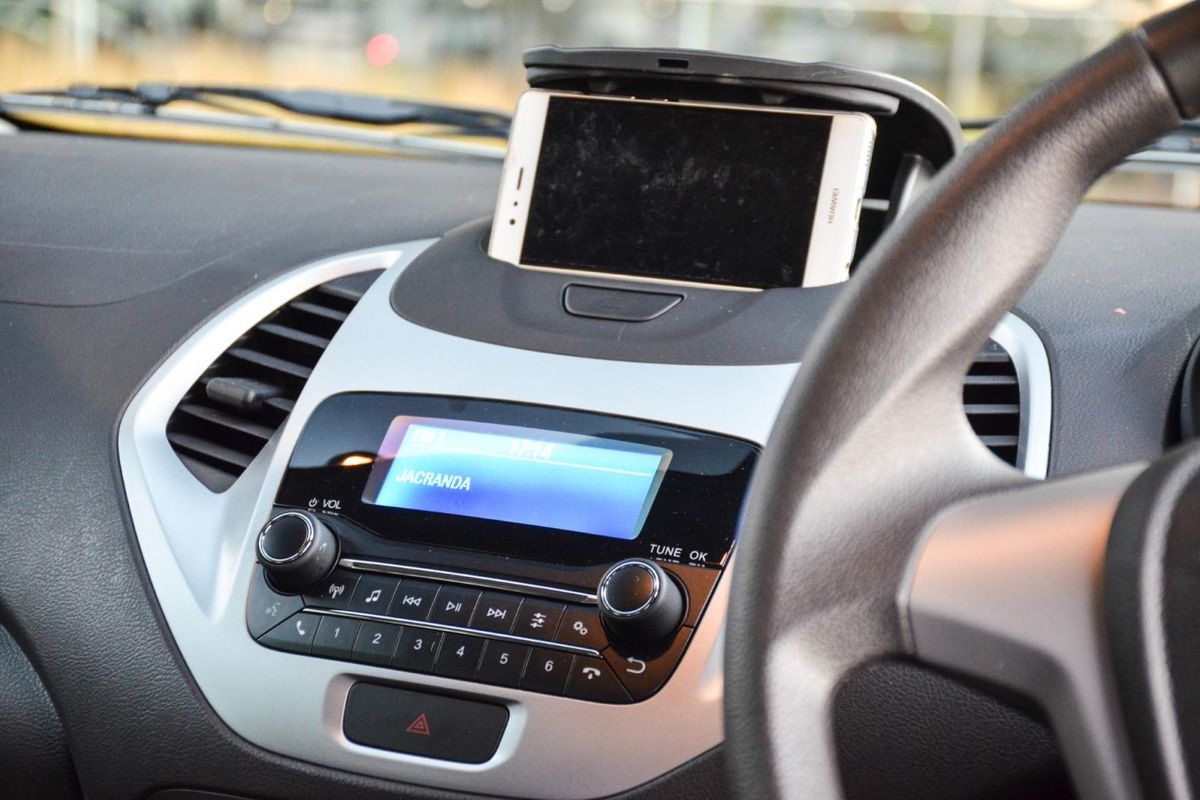
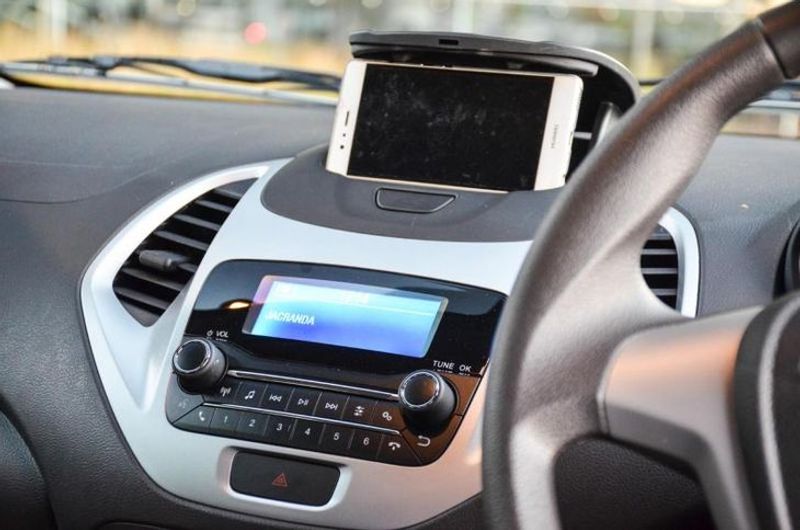
The interior has improved somewhat with a new design for the centre console and we particularly liked the smartphone docking solution seen on the top of the dashboard. You simply plug your smartphone into the USB port provided and then prop it up with the lid, which gives you easy access to your navigation while driving. The standard radio system is basic, but it offers Bluetooth and is connected to 4 speakers. What more do you need?
A smartphone docking station is a useful feature found in the Figo.
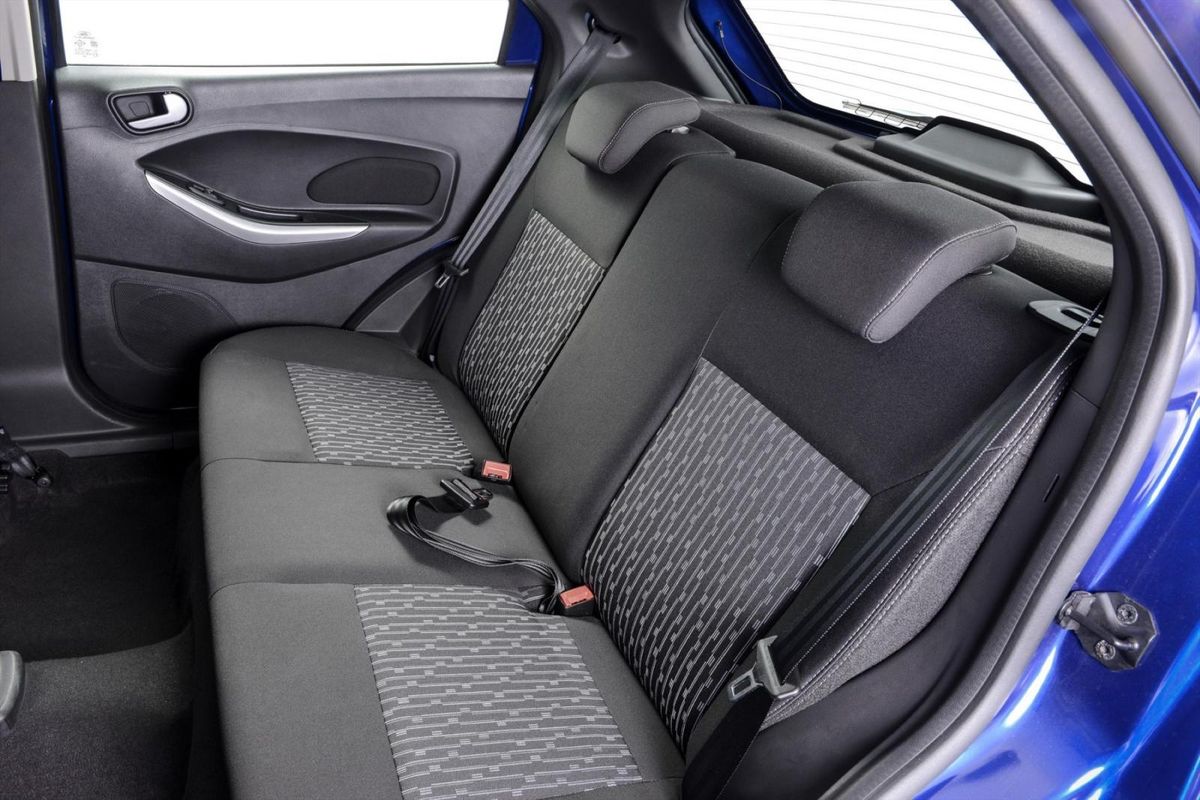
However, the Figo also has its flaws. Firstly, the steering wheel is only adjustable for rake and does not come equipped with mounted steering controls. We also found rear legroom to be tight; taller rear passengers will probably struggle to find comfort on the rear bench.
Also, with a bit of prodding and poking, we discovered that some of the cabin's plastic trims are of marginal quality. The storage area ahead of the gear lever felt fragile and its rubber floor finishing came undone far too easily. What's more, the plastic trim around the gear lever felt poorly finished.
We also spent some time in the Ford Figo sedan on our return to Pretoria, but this time equipped with a 5-speed manual transmission. The manual had a positive action and it seems to make the engine’s potential performance far more accessible. Buyers in this segment prefer manual transmissions and the bulk of Figo sales are expected to be manual derivatives.
In terms of safety, 2 airbags, ABS with EBD are fitted as standard.
Final thoughts
The Ford Figo offers more value than before and features an extended service plan.
We really liked the lively engine in the Figo and we think the stylistic changes will certainly make it more competitive against its newer rivals. Also, buyers should appreciate that Ford now includes a standard 4-year/60 000 km service plan on the Figo, over and above the 4-year/120 000 km warranty, which is included in the purchase price.
However, while this latest Figo is a significant improvement over its predecessor, we are not convinced it has its rivals licked in terms of overall value. Nonetheless, we should have the newcomer on test soon, where we will put it through its paces and make a definitive assessment.
The replacement for the Volkswagen CC has arrived in the form of the Arteon. Is its bold new design enough to sway buyers away from their beloved SUVs? We test the top spec 206 kW model to find out.
It's so refreshing to see a car maker start with a blank sheet of paper. And it has really worked; the new Arteon especially reviewed here in R Line trim, receives an enormous amount of attention. I think we can safely say that right now, the Arteon is the best looking sedan in its segment.
But the luxury sedan market is under huge pressure, mostly from SUVs. Handsome good looks will not be enough to sway buyers away from higher-riding alternatives. And luxury Volkswagen sedans have generally proved unpopular, especially in South Africa. Can the new Arteon turn the tide?
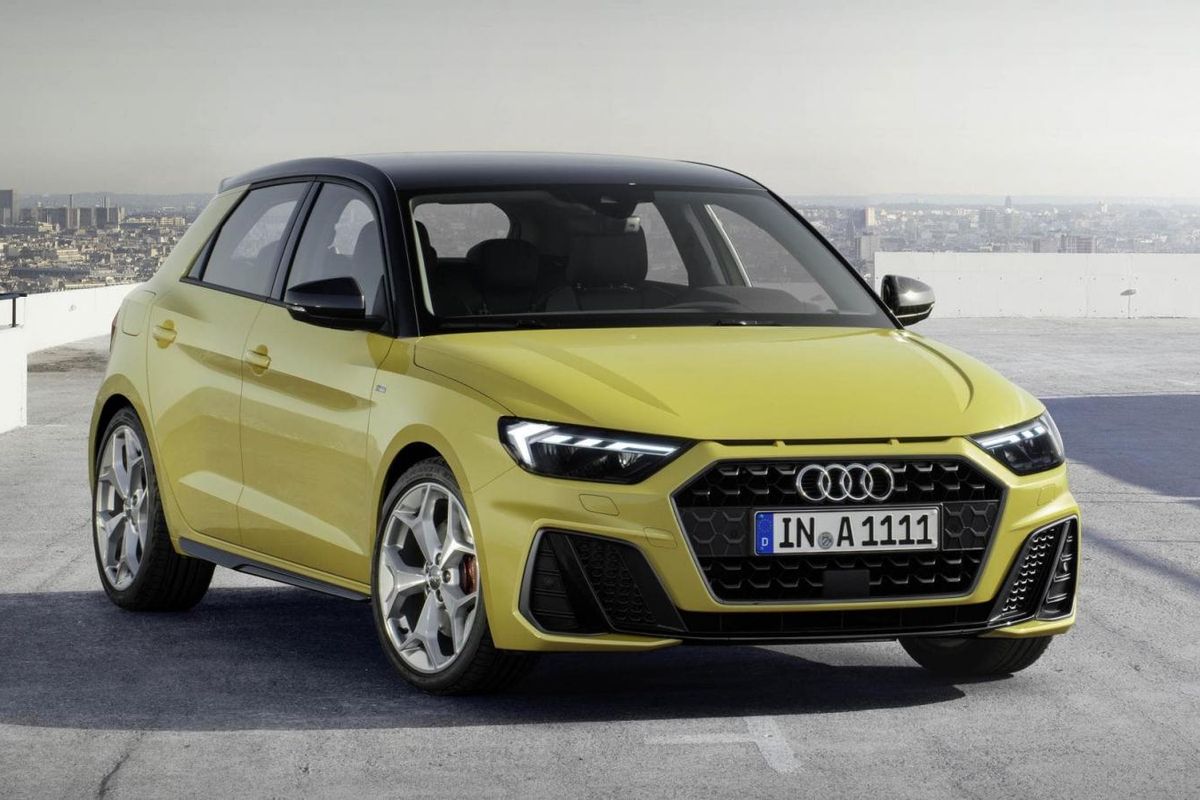
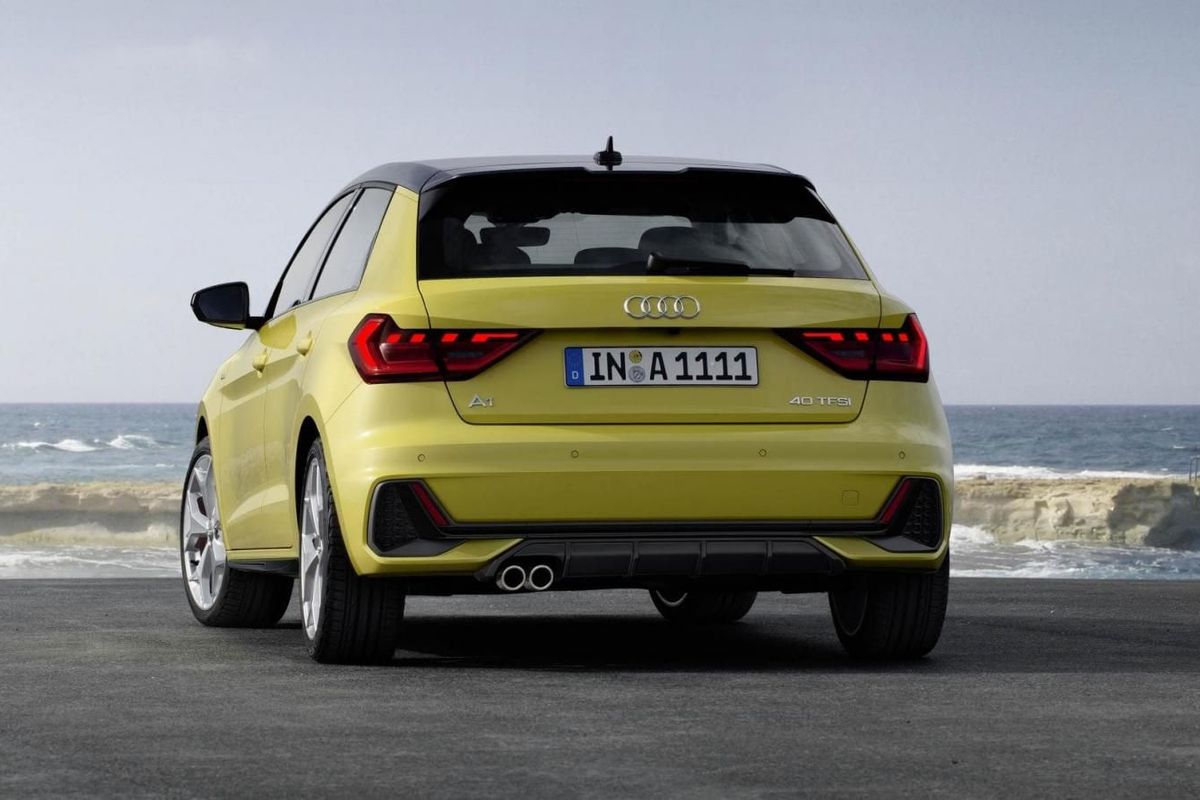
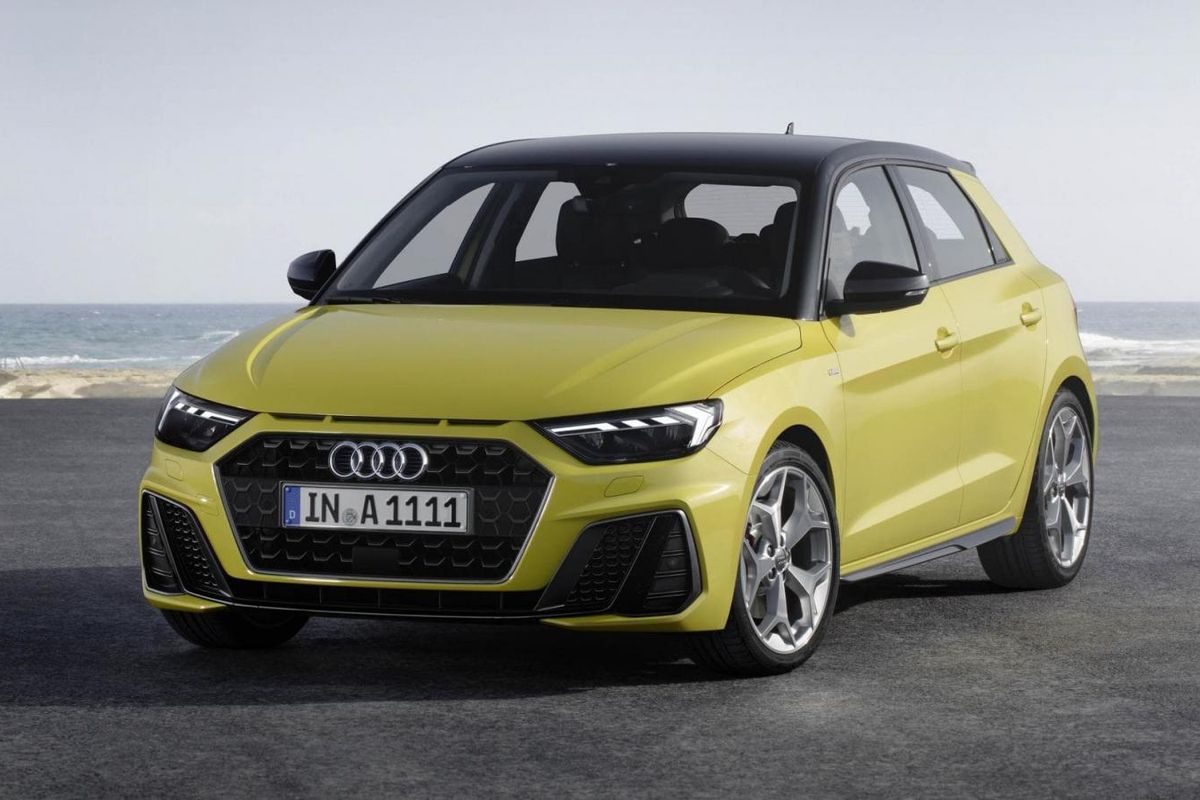
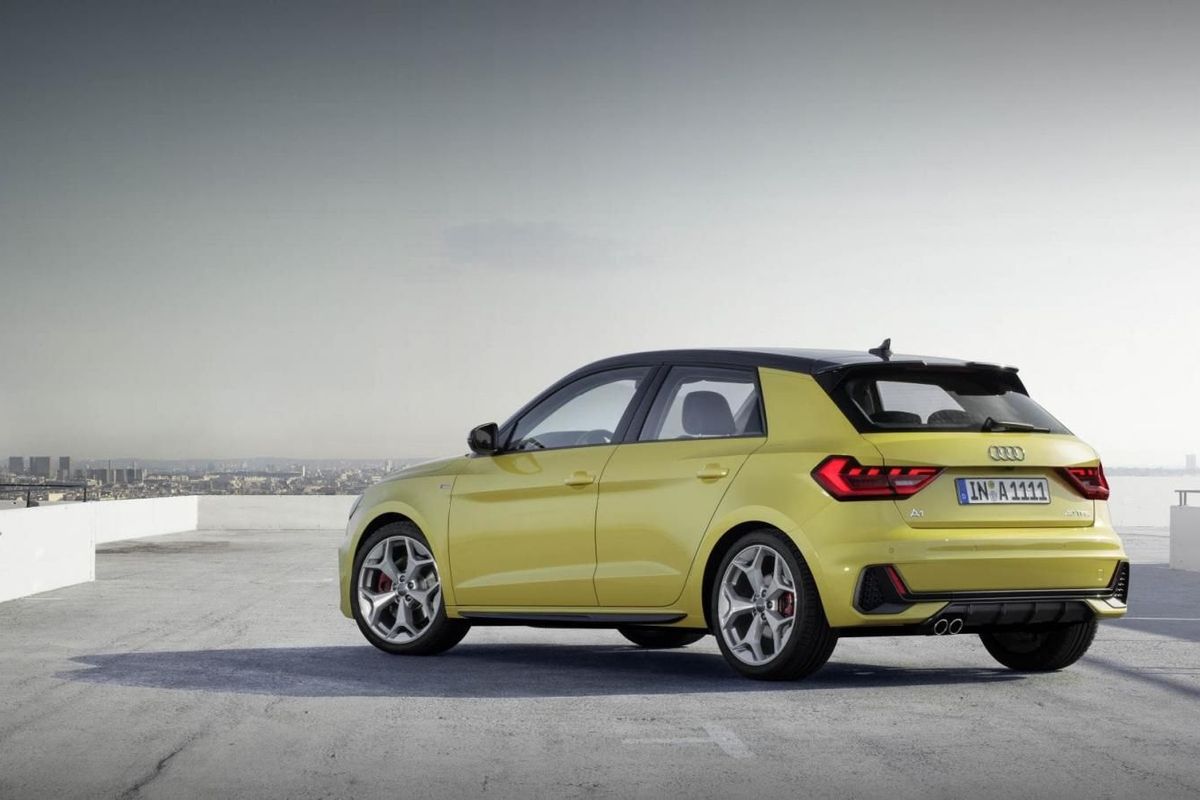
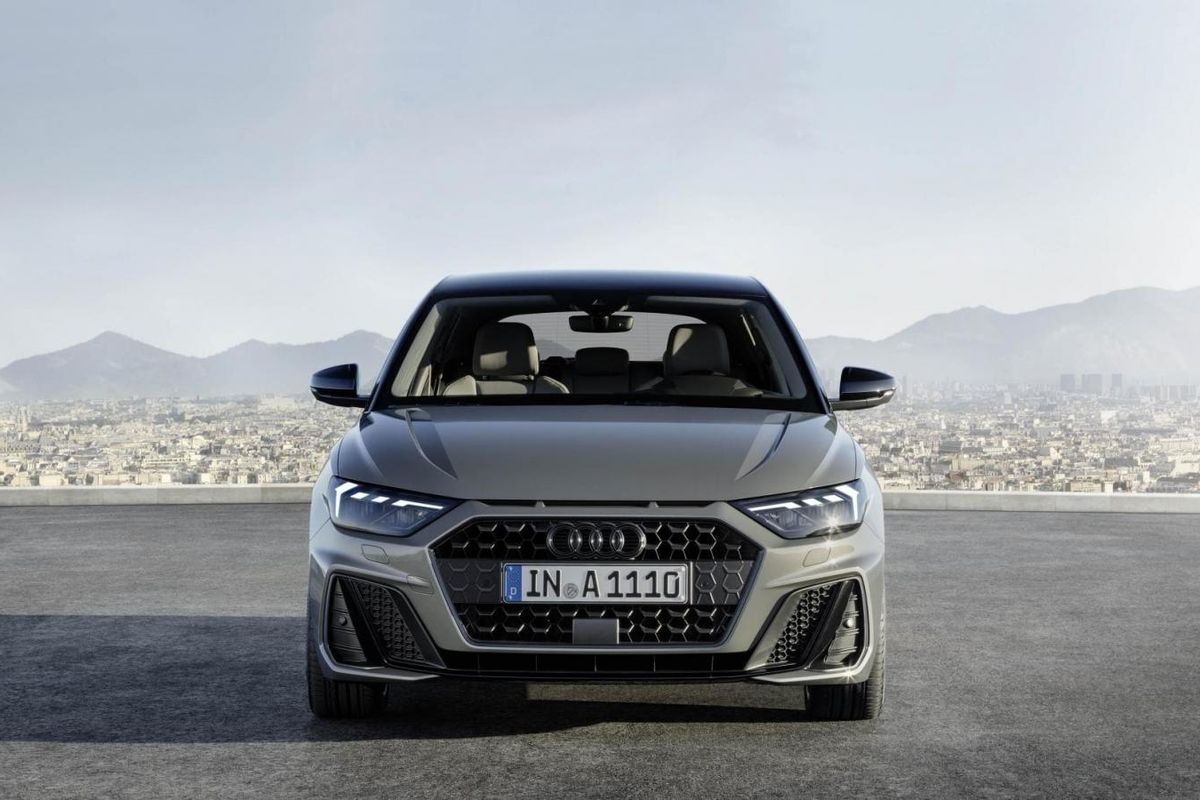
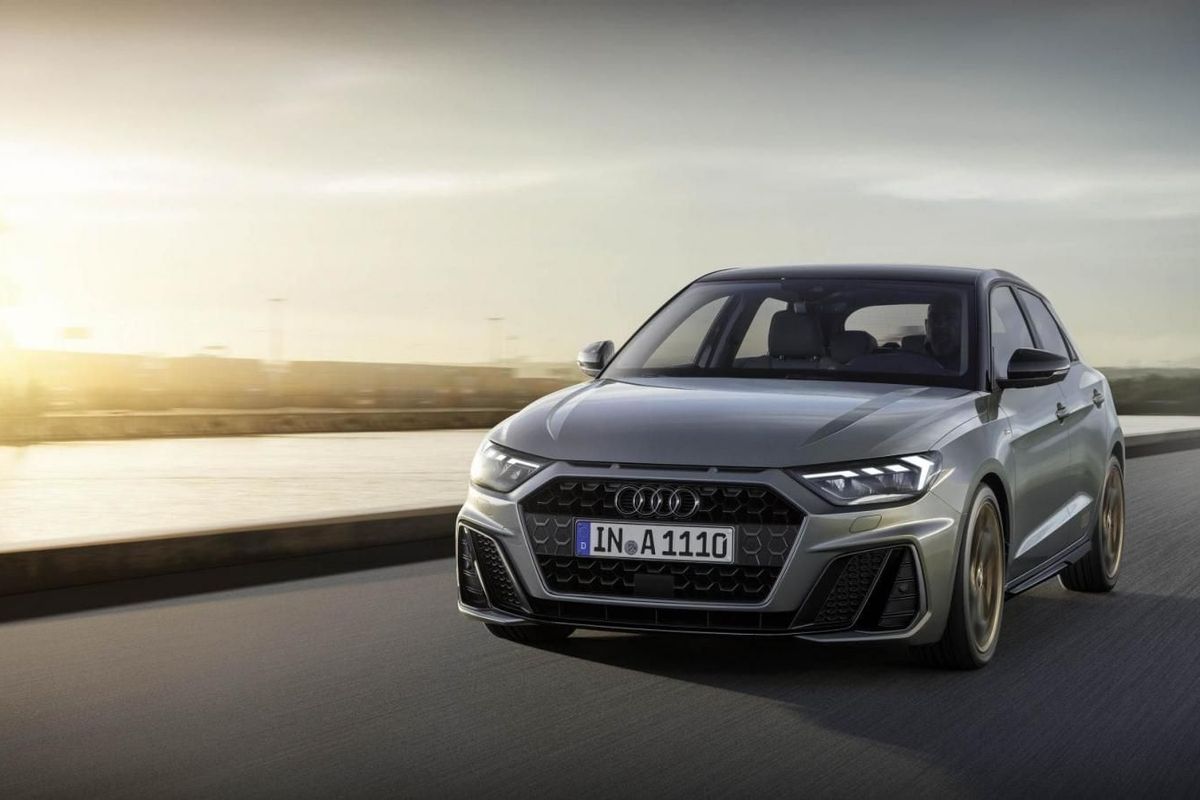
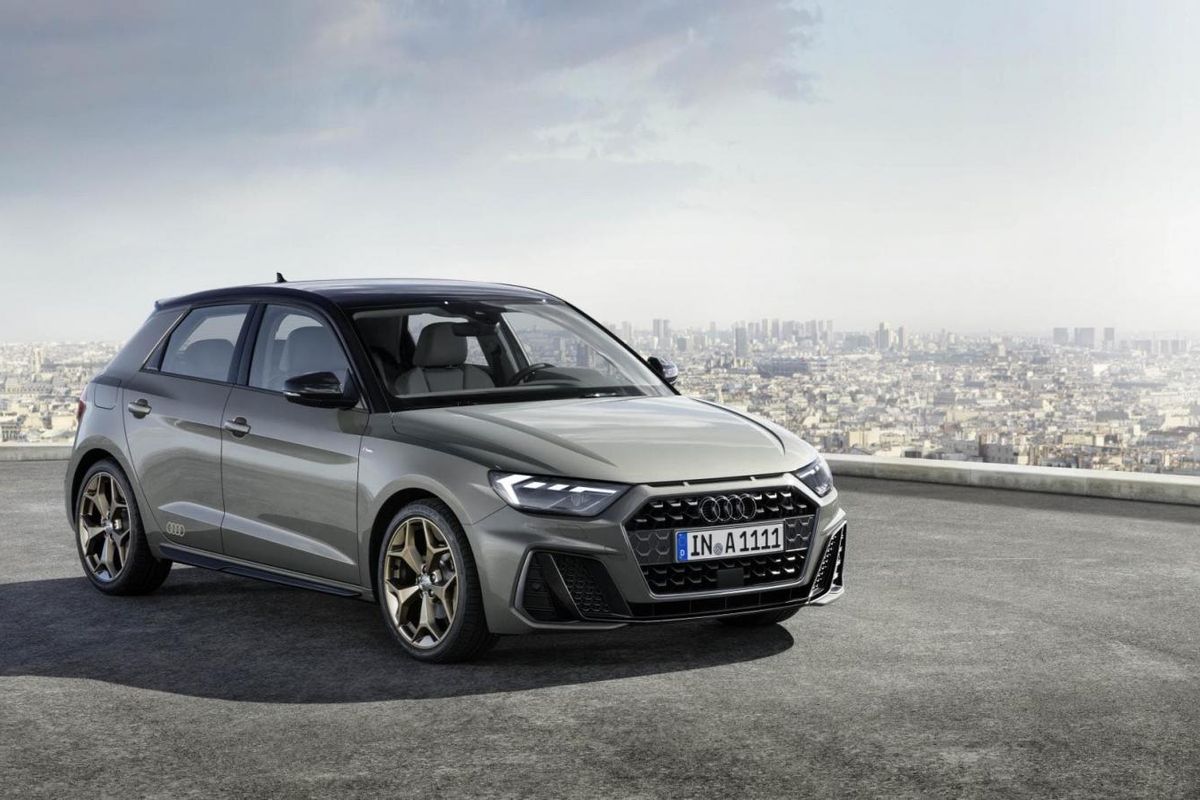
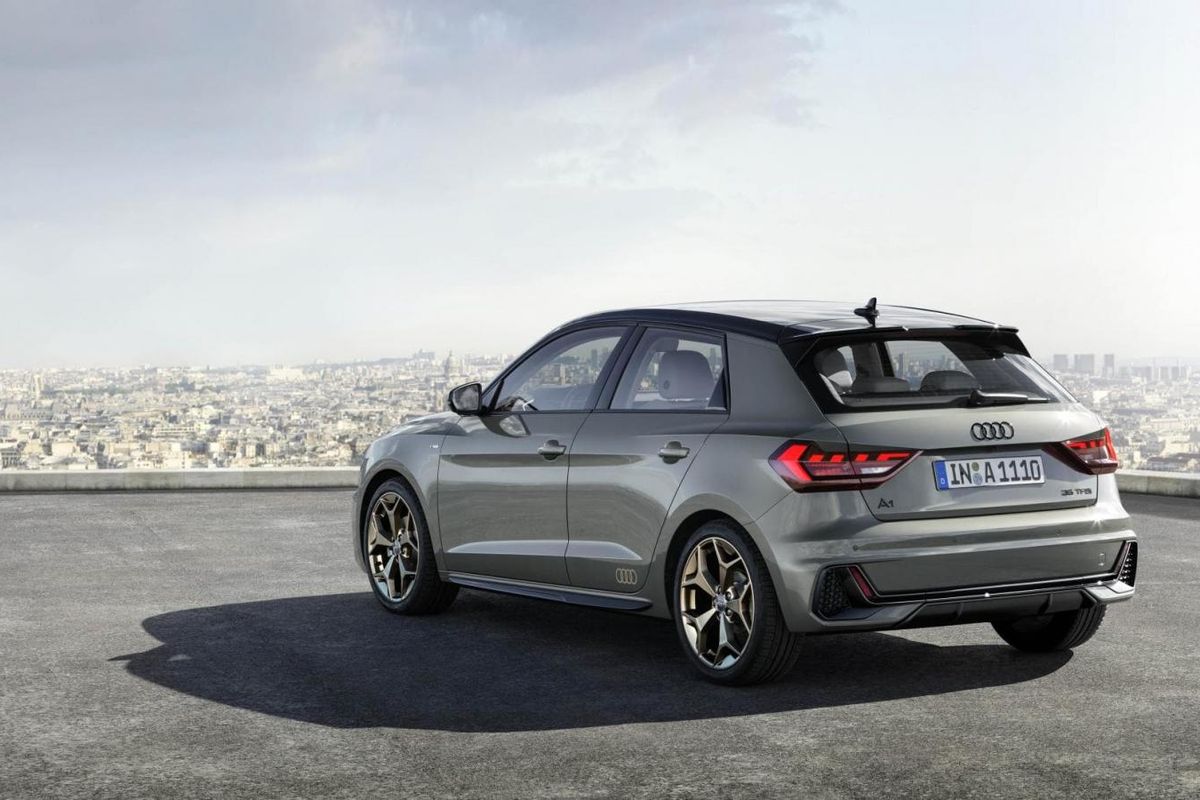
This is the all-new Audi A1, well, most of it. The images and details give us a good idea of what to expect from the new Audi A1, both inside and out.
The Audi A1 is the cheapest way to get into the Audi brand. Riding on the same platform which underpins the new Volkswagen Polo, the new Audi A1 is radically different in the visual stakes when compared to the outgoing model.
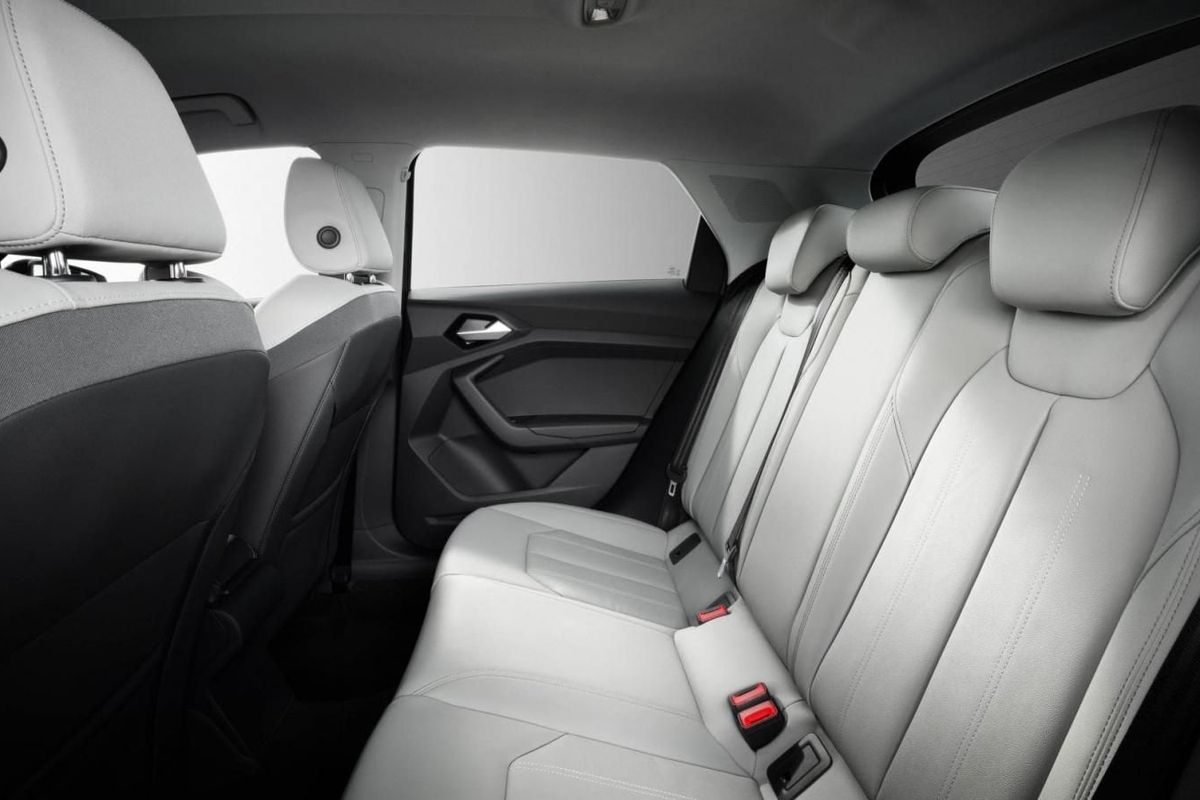
Physically, it's almost as high as the outgoing car but is 6 cm longer and 3 cm wider. The Audi engineers have worked their magic and the wheelbase is 9 cm longer, increasing the boot space and rear legroom. Audi claims the boot can hold 335 litres and when the seats are folded down, capacity is increased to 1 090 litres. Audi says there are new alloy wheel designs and these range from 15- to 18-inches in size.
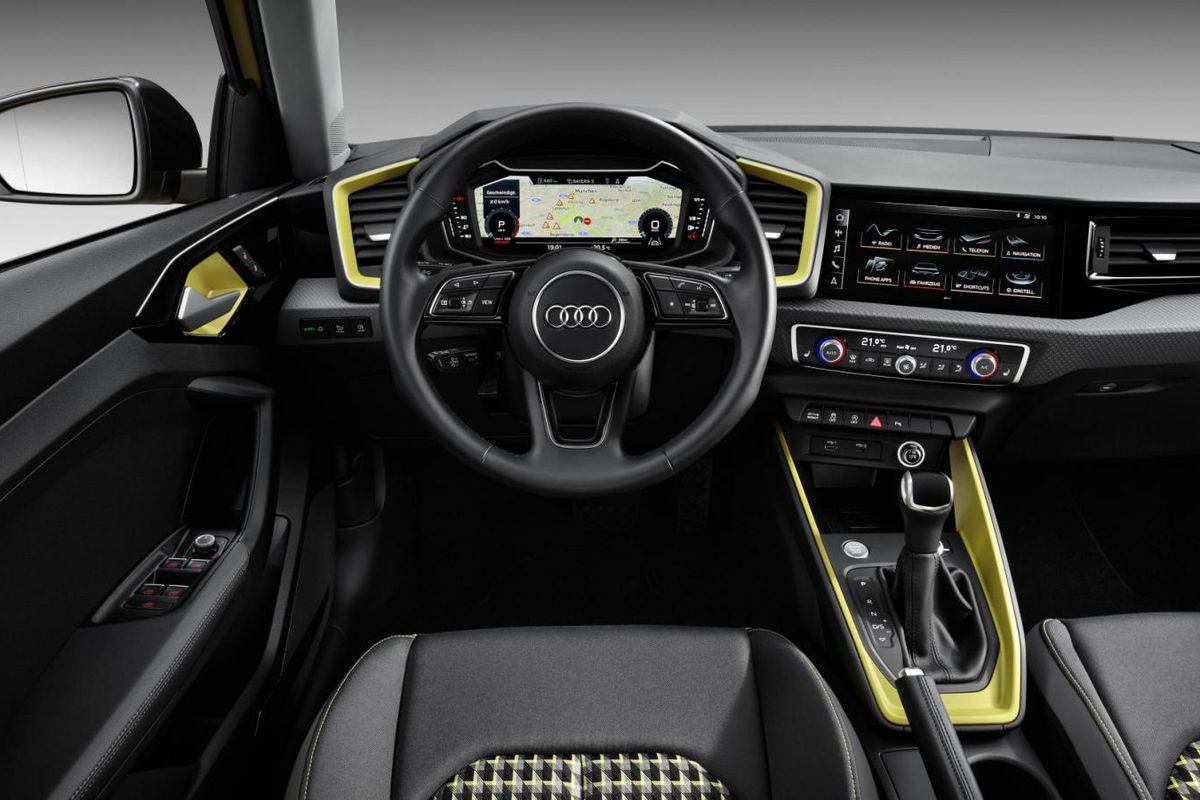
Inside, fans will find a massive upgrade to the Audi A1 interior. The base-spec A1 features a large 10.25-inch digital dashboard and multifunction steering wheel. There are said to be three different interior trim lines available. Naturally, customers will be able to option their Audi A1 to the max with niceties like LED headlamps, S Line body kits, sportier seats, more potent audio systems and more safety spec. There's also plenty of customisation options and buyers will be able to order contrasting colours for the roof and mirrors.
In terms of engines, there will be many engines on offer, ranging from a 1.0-litre three-cylinder motor, a 1.5-litre four-cylinder engine, and a 2.0-litre four-cylinder powerplant. Outputs range from 70 kW to 147 kW, with the option of either a manual gearbox or seven-speed dual-clutch gearbox. There are also three different suspensions on offer, including a sports suspension and a sports suspension with adjustable damping.
We'll have more information and details on the 2019 Audi A1 soon. Audi South Africa confirmed that the new A1 is under consideration for the first quarter of 2019.
The cabin of the 2019 Audi A1 has matured nicely and looks very modern
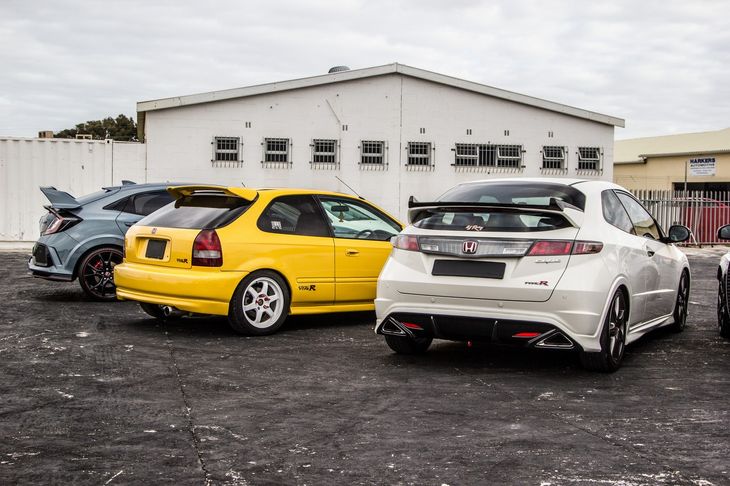
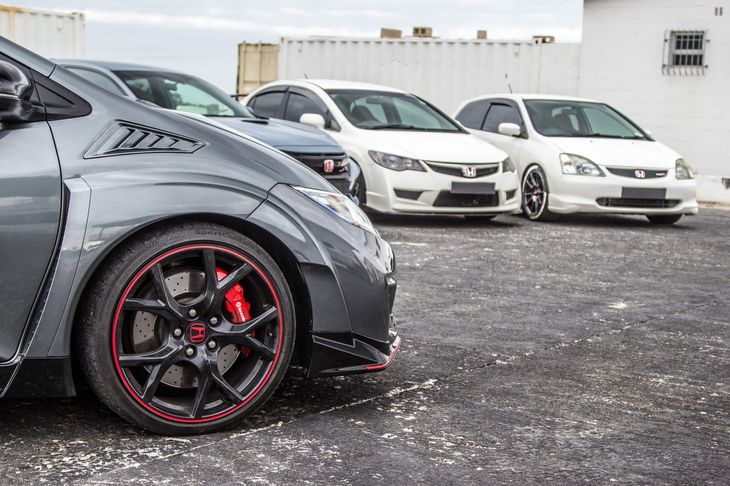
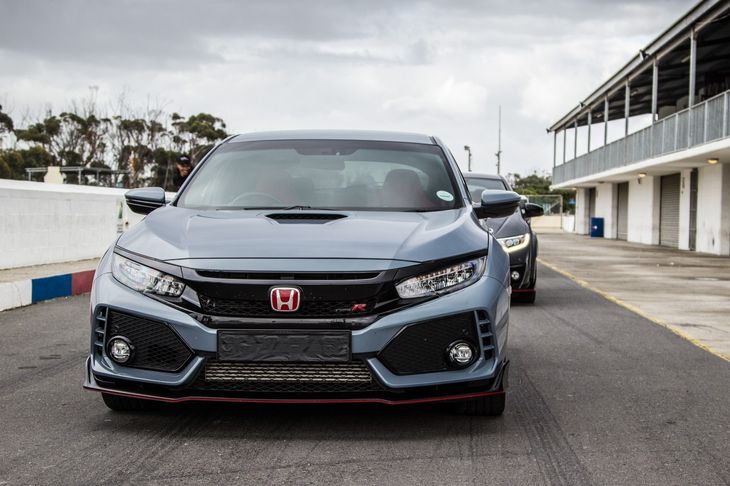
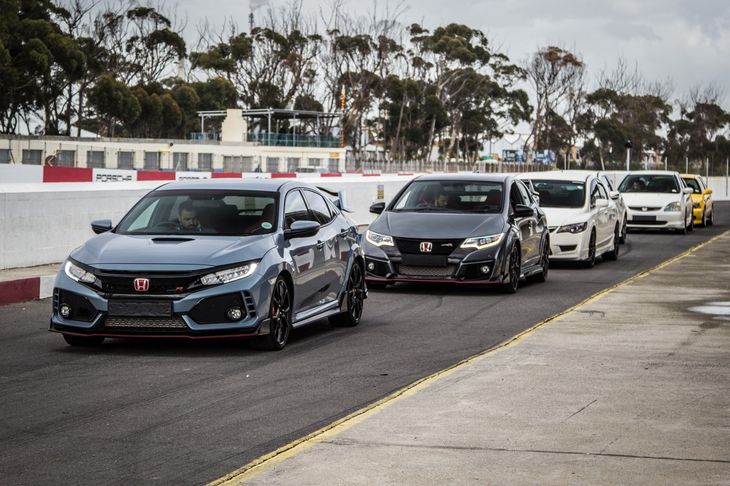
We assembled all 6 versions of the Honda Civic Type R at Killarney to decide which one is best. To give you some more context, herewith a summary of each model we managed to source for our very special Type R track test.
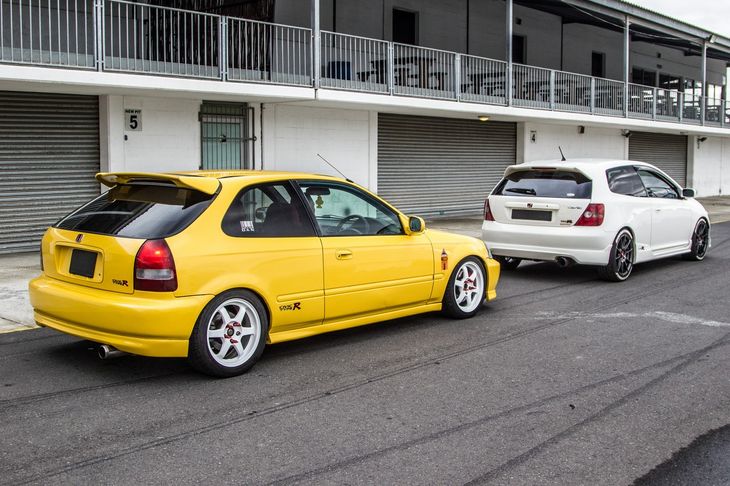
Generation 1: The EK9
Golden yellow seemed an appropriate colour for the golden oldie Civic Type R, which must surely be regarded as a modern classic.
The 1st-generation Civic was a small capacity, high-revving marvel. Its 1.6-litre engine produced 136 kW and although rev counters aren’t always accurate, the example we tested topped out close to an indicated 9 000 rpm. Honda lightened the chassis, added extra welds plus a limited-slip differential, and the result was spectacular.
Having driven the EK9 it feels better than the sum of its parts. It’s a very special little car. Compared with the rest of the field it did lack power and felt slightly slow. But once the motor's Variable Valve Timing & Lift Electronic Control (VTEC) system kicks into full performance mode and it screams its way towards the 9000-rpm redline, the EK9's limited pace will be the last thing on your mind.
Watch this video to see how the VTEC system works:
Generation 2: The EP3
The EP3-generation (right) and its FD2 sedan successor are arguably the least attractive iterations of Honda's Civic Type R.
Despite being billed the ugly sister of the Type R troop, the EP3’s exterior styling has aged… surprisingly well. The EP3 may look a pumped-up minivan and its unorthodox, dash-mounted gear lever was widely frowned upon, including by this author, but its performance wowed aficionados. Once you are seated inside the car, the high visibility and involving ergonomics make the EP3 "shopping trolley" feel like a roadgoing touring car.
The version we had on track was the JDM (Japanese Domestic Market) version, which comes with a trick limited slip differential, uprated suspension and more power (158 kW). On track, the EP3 outperforms some of the newer models thanks to its low dry weight (1 200 kg) and that tuned 2.0-litre 16-valve K20 engine.
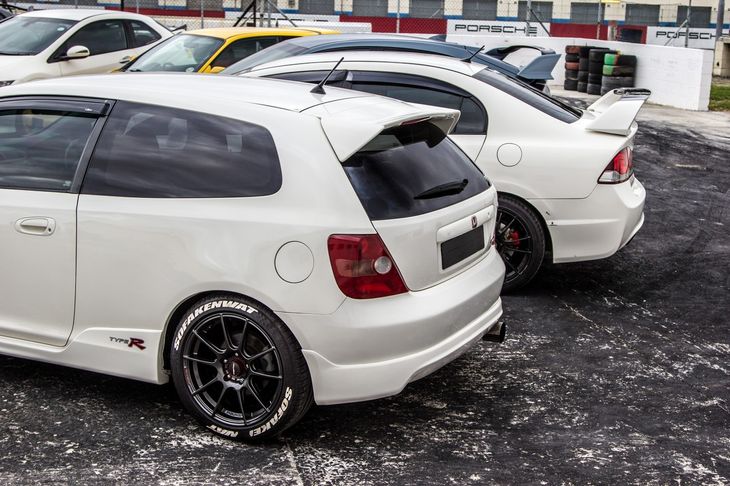
The EP3 looks so understated that it could justifiably be labelled a "sleeper".
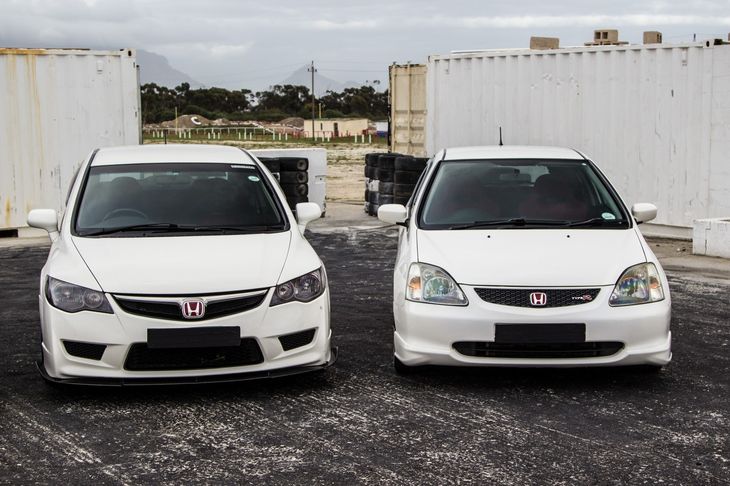
Generation 3: FN2 Euro Spec
The FN2 (right) marked a major design departure from its predecessor's boxy look… its DNA can still be seen in the FK2's front end.
The futuristically-styled FN2 is to Type R what the MK3 Golf is to GTi – the black sheep of the family. Slower than the previous version, and with an inferior suspension setup, the FN2 didn’t generate much fanfare it was launched. It was the first Type R to be made available in South Africa (about a decade ago) and, although not a bad car, in the company of its pedigreed siblings it just didn’t deliver on the hype.
The version we had on track was tuned and fettled to the point where all the inherent issues from the factory were sorted. With its beefed-up suspension, brakes and light engine mods, this version packs the same punch as the Japanese spec, making this FN2 the car we’d all originally hoped for, but ultimately never received.
The translucent strip on the tailgate and triangular exhaust tips are unique to the FN2 (right)… A far cry from the EK9 (middle).
Generation 3: The FD2 (Japanese Spec)
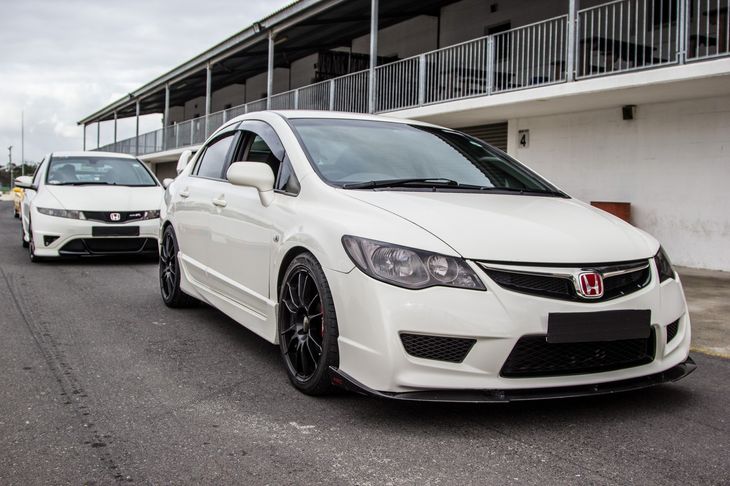
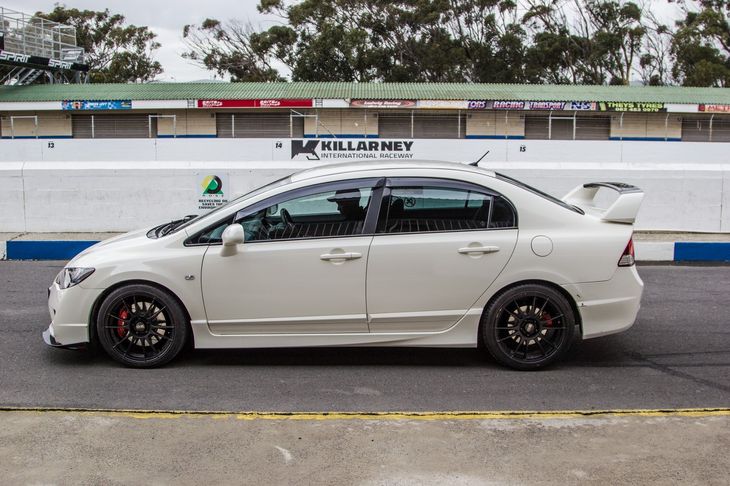
Did you know that the Type R was offered in sedan guise too? Few do.
The FD2 was never offered in South Africa, which means that the example you see here is one of less than a handful in the country privately imported from Japan. It sports a chassis bonded together with a special glue as well as a fully-functional rear diffuser and Honda Japan’s engineers went to great lengths to ensure that the FD2 carried on the Type R name proudly. In spite of understeer at the limit, the Type R FD2 broke numerous records for front-wheel drive cars and was able to compete with much faster turbo cars despite being powered by the same K20 engine found in earlier models. The FD2 was heavily track-biased and the suspension proved to be very harsh on anything other than near-perfect road surfaces.
Even though most offerings in the world of hot hatches had embraced turbocharging by the time the FD2 arrived, it held its own.
Generation 4: The FK2
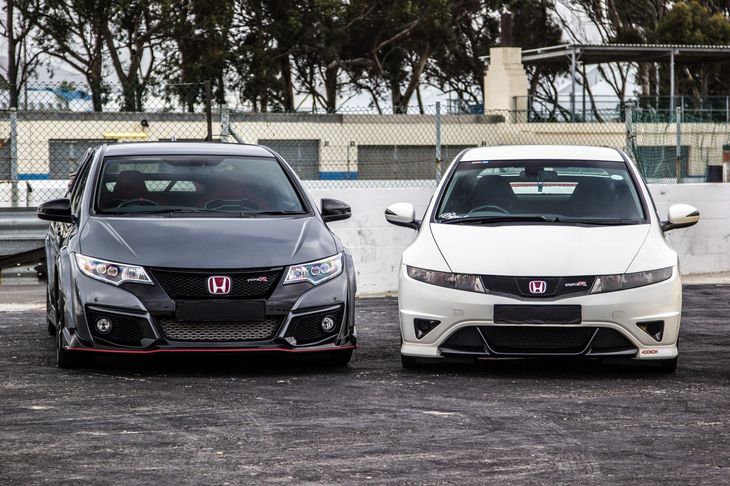
The FN2 (middle) looked like the future, but its naturally aspirated motor was out of time. Enter the record-breaking FK2 (right).
The turbocharged 2.0-litre 16 valve FK2 marked a major departure from the manic VTEC-equipped performance Hondas of the past, including the revered S2000 sports car. Ever since then, the following questions have been asked: Are the newer-generation Type R models worthy of the badge? Even if the FK2 is maniacally fast on any strip of tarmac, does it have the same essence as its celebrated naturally aspirated brothers?
Thanks to the big leap in power (up to 228 kW in standard trim), torque steer became a very real problem and the ride quality was stiff thanks to its (Nürburgring record-breaking) suspension. The bucket-style front seats were supportive and firm, and many felt the car demanded just too much of a compromise. The perfect track day weapon, yes, but remember to pack a kidney belt for the drive home…
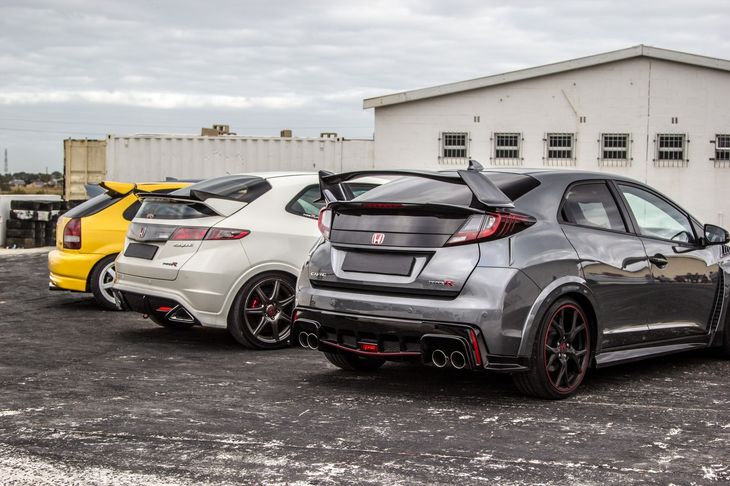
The FK2 was the first Type R to brandish overt aerodynamic addenda (apart from an elaborate rear wing, of course).
Generation 5: The FK8
The current-generation Type R is more practical than its immediate predecessor, but will history remember it with fondness?
With the latest-generation Type R, Honda has made incremental, but nonetheless significant changes. The torque steer is drastically reduced, the pedal placement, interior quality and ergonomics are slightly better, and even the seats are more comfortable. Furthermore, a much better “Drive Mode” has been added to make the new Type R easier to live with. The FK8 Type R (pictured below – at the front of the Civic Type Rs lined up at Killarney) is still astoundingly fast, but now much less compromised. Now, more than ever, the reputation the Type R has been called in question.
And it was with that very question utmost in our minds that we produced the video featured below. Watch the clip to find out if the new Civic Type R lives up to the iconic badge placed upon it, and if the older versions are as good as the Internet says they are…
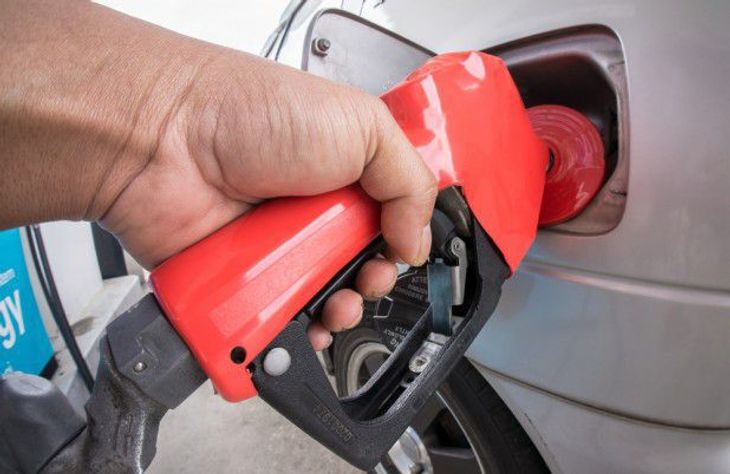
Fuel prices in South Africa continue to climb on the back of a weaker Rand and higher international fuel prices, but how does the cost of petroleum in South Africa compare with the rest of the world? Let's take a look…
At the end of October last year we thought we had seen the worst when it came to the fuel price, how wrong we were. The price of fuel in this country is now at a record high after the cost of petrol rose by 82 cents and diesel by 85 cents at the beginning of June 2018.
When you examine how South Africa compares with 60 other countries around the world with regards to the price of petrol, affordability and income spent on fuel, the results are both interesting and, eye-opening…
So, how does the price of petrol in South Africa compare with the world?
Fuel in South Africa is expensive and we spend a huge portion of our incomes to buy fuel.
Petrol Price
The latest figures from globalpetrolprices.com show that the average price of fuel around the world is 1.17 U.S. Dollar per litre (R15.37).
According to Bloomberg data for the first quarter of 2018, South Africa ranks 20th alongside 60 other countries in terms of the price for 1 litre of petrol. But one needs to consider that, as a general rule, richer countries have higher prices whereas the poorer countries (and those that produce oil) have significantly lower prices. The only exception is the U.S. which has an advanced economy, but low fuel prices. The difference in pricing is due to each country’s taxes and subsidies for fuel so basically, we all pay the same for fuel on the international market, but then decide to impose different taxes.
According to globalpetrolprices.com, the country with the cheapest petrol price is Venezuela, ranked 1st, with a petrol cost of 13 cents per litre. Iran is 2nd with a petrol price of R3.94 per litre. On this list, which lists 167 countries, South Africa is sitting at number 90.
Hong Kong, an autonomous territory in southeastern China, is ranked second to last, with petrol costing them R27.86.
Iceland has the planet's most expensive petrol at R28.12 per litre. What is aggravating to know is that many other African countries are paying far less for fuel than we do. Countries like Algeria, Nigeria, Sudan and Egypt, all pay less than R6 per litre. Other countries like Mozambique, Botswana, Ethiopia, Tunisia and even Lesotho all get their fuel cheaper too.
We are still looking better than places like Zimbabwe though who are having to fork out R18.66 per litre or petrol and if you’re in Mauritius you’re looking at R19.97.
Affordability
Unsurprisingly, South Africa ranks poorly in terms of affordability and is placed at rank 56. According to Bloomberg, South Africa has a daily income of R237.53 and consumers have to fork out 5.98% of that daily income to afford just 1 litre of fuel.
India is the worst in terms of affordability with an average daily income of R70.80 and consumers spend 20.11% of that income to pay for 1 litre of petrol. Venezuela ranks first for affordability. With an average daily income of R613.83, Venezuelans spend less than 0.01% worth of wages to buy 1 litre of petrol.
Income Spent
Yet again, and unsurprisingly, South Africa ranks even worse in terms of total income spent on fuel with a poor ranking of 60. According to Bloomberg, the average motorist in South Africa uses 202.07 litres of petrol a year, which swallows up at least 3.31% of your average salary.
Mexico is the only country that is worse off. The average motorist in Mexico uses 355.48 litres of petrol per year, accounting for 3.82% of the average annual income.
Venezuela ranks 1st with motorists there using 483.76 litres of fuel per year yet only spending 0.00% of their salaries to pay for petrol.